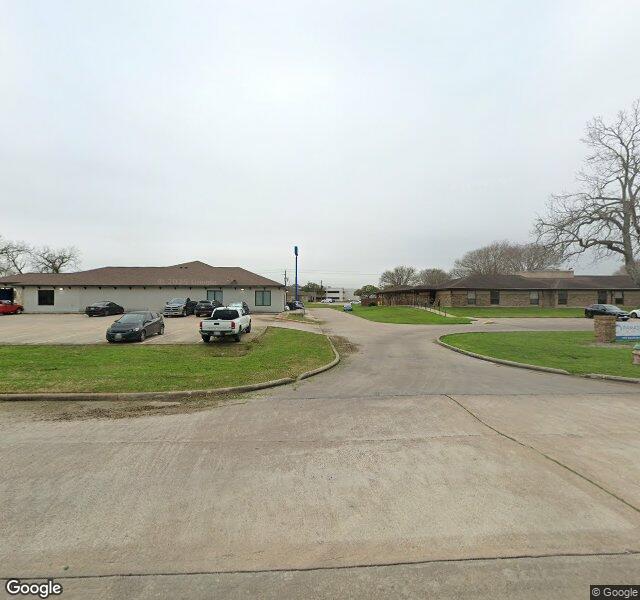
Paradigm at the Creek

1405 Valhalla Dr, Wharton, TX 77488 (979) 532-1244
For profit - Limited Liability company 120 Beds PARADIGM HEALTHCARE Data: November 2025 4 Immediate Jeopardy citations
Trust Grade
0/100
#1077 of 1168 in TX
Last Inspection: March 2024

Within standard 12-15 month inspection cycle. Federal law requires annual inspections.

Overview

Paradigm at the Creek has received a Trust Grade of F, indicating significant concerns about the quality of care provided. Ranking #1077 out of 1168 facilities in Texas places it in the bottom half of the state, and as the lowest-ranked option in Wharton County, families may want to consider other alternatives. Although the facility's trend shows improvement, with issues decreasing from 18 in 2024 to 2 in 2025, the current state remains troubling due to serious past incidents, including a resident suffering rib fractures after multiple falls and instances of abuse among residents that resulted in severe injuries. Staffing is rated poorly with a high turnover rate of 57%, and while RN coverage is average, families should note that the facility has faced fines totaling $48,176, which suggests ongoing compliance issues. Overall, while there are some improvements, the facility's troubling history and current conditions warrant careful consideration.

Trust Score
F
0/100
In Texas
#1077/1168
Bottom 8%
Safety Record
High Risk
Review needed
Inspections
Getting Better
18 → 2 violations
Staff Stability
⚠ Watch
57% turnover. Above average. Higher turnover means staff may not know residents' routines.
Penalties
✓ Good
$48,176 in fines. Lower than most Texas facilities. Relatively clean record.
Skilled Nurses
⚠ Watch
Each resident gets only 23 minutes of Registered Nurse (RN) attention daily — below average for Texas. Fewer RN minutes means fewer trained eyes watching for problems.
Violations
⚠ Watch
35 deficiencies on record. Higher than average. Multiple issues found across inspections.
★☆☆☆☆
1.0
Overall Rating
★☆☆☆☆
1.0
Staff Levels
☆☆☆☆☆
0.0
Care Quality
★☆☆☆☆
1.0
Inspection Score
Stable
2024: 18 issues
2025: 2 issues

The Good

  • Full Sprinkler Coverage · Fire safety systems throughout facility
  • No fines on record

Facility shows strength in fire safety.

The Bad

1-Star Overall Rating

Below Texas average (2.8)

Significant quality concerns identified by CMS

Staff Turnover: 57%

10pts above Texas avg (46%)

Frequent staff changes - ask about care continuity

Federal Fines: $48,176

Above median ($33,413)

Moderate penalties - review what triggered them

Chain: PARADIGM HEALTHCARE

Part of a multi-facility chain

Ask about local staffing decisions and management

Staff turnover is elevated (57%)

9 points above Texas average of 48%

The Ugly 35 deficiencies on record

4 life-threatening 2 actual harm
Aug 2025 1 deficiency 1 IJ (1 affecting multiple)
CRITICAL (K) 📢 Someone Reported This

A family member, employee, or ombudsman was alarmed enough to file a formal complaint

Immediate Jeopardy (IJ) - the most serious Medicare violation

Comprehensive Care Plan (Tag F0656)

Someone could have died · This affected multiple residents

**NOTE- TERMS IN BRACKETS HAVE BEEN EDITED TO PROTECT CONFIDENTIALITY** Based on interview and record review, the facility failed to develop and implement a comprehensive person-centered care plan for...

Read full inspector narrative →
**NOTE- TERMS IN BRACKETS HAVE BEEN EDITED TO PROTECT CONFIDENTIALITY** Based on interview and record review, the facility failed to develop and implement a comprehensive person-centered care plan for each resident that includes measurable objectives and timeframes to meet a resident's medical, nursing, and mental and psychosocial needs that are identified in the comprehensive assessment for 1 (CR#1) of 6 residents reviewed for comprehensive care in that:-The facility failed to ensure CR#1's care plan interventions had not been updated since 2024 despite recent falls including falls with injury. CR#1 had unwitnessed falls on 07/08/25 and another on 07/10/25. CR#1 was transported to the hospital where she was diagnosed with rib fractures and had a chest tube placed.An Immediate Jeopardy (IJ) situation was identified on 8/1/2025 at 3:30pm. While the IJ was removed on 8/4/2025 at 6:45pm, the facility remained out of compliance at a scope of pattern with the potential for more than minimal harm due to the facility's need to evaluate the effectiveness of the corrective systems. These failures could place residents at risk of not having their individual medical, psychological and/or emotional needs met. Findings Included: Record review of CR#1's face sheet revealed a [AGE] year-old female who was admitted to the facility on [DATE]. CR#1 had diagnoses which included unspecified psychosis (a mental disorder characterized by a disconnection from reality), insomnia (persistent problems falling and staying asleep), dementia mild with agitation (agitation in dementia refers to a range of behaviors and sometimes aggression by individuals with cognitive decline), cerebral infarction due to embolism (occurs when blood flow to the brain is blocked, causing brain tissue to die) and brief psychotic disorder (a short-term psychotic condition that involves the sudden onset of at least positive psychotic symptom for more than a day but less than a month). Record review CR#1's quarterly MDS, dated [DATE], revealed:Section C500- Brief Interview of Mental Status was coded as 3, which represented severe cognitive impairment.Section GG- Functional Abilities revealed:Mobility devices was coded as Z. NoneGG0130- C. Toileting, E. shower/bath were coded as (3) for partial moderate assistance needed. Upper and lower dressing was coded as (5)- which required setup assistance. Record review of CR#1's care plan, dated 3/23/2024, revealed: Focus: CR#1 has had an actual fall with minor injury.4/17/24- unwitnessed fall in room-bump on left side of head raised area with bruising.6/18/25: CR#1 found on the floor in her room. Date Initiated: 03/23/2024Goal: CR#1 will be free from further falls and injuries over the next 90 days. Date Initiated: 04/17/2024Target Date: 07/01/2025Interventions: 6/18/25: Head to toe assessment completed, noted bleeding from forehead. NP andDON notified. Transferred to ER for evaluation. Date Initiated: 06/18/2025 Check range of motion twice times daily.Date Initiated: 04/12/2024 Continue interventions on the at-risk plan.Date Initiated: 04/12/2024 Floor mat in place at bedsideDate Initiated: 03/23/2024 For no apparent acute injury, determine and address causative factors of the fall.Date Initiated: 04/12/2024 MD to review for sleep aide 6/18/25Date Initiated: 06/18/2025 Monitor for pain and report to MD if pain is noted.Date Initiated: 05/04/2024 Record review of fall assessments revealed:6/18/2025- Score of 20, she was deemed high risk7/10/2025- Score of 11, she was deemed high risk .Record review of nursing progress note dated 6/18/2025 revealed CR#1 was found in her room bleeding from laceration to left eye. CR#1 was sent out to emergency room due to unwitnessed fall and returned the same day with no new orders.Record review of nursing progress note dated 7/8/2025 revealed RN D noted CR#1 had bruising to her left flank. She was assessed and determined from her grimacing she had pain. SBAR was completed due to the change in condition, PRN Tylenol given, NP and RP notified.Record review of nursing progress note dated 7/10/2025 revealed during room checks CR#1 was heard yelling. Upon entrance CR#1 stated, I fell ma'am. Full assessment, vitals taken, PCP and RP notified. PCP instructed nurse to send CR#1 to ER. Bed was observed to be locked in lowered position, call bell in reach and monitored until EMS arrived.Record review of CR#1's hospital record dated 7/11/2025 revealed she was diagnosed with bruising in various stages, fractures on the left 6th-8th ribs, a mildly displaced fracture to the T11-L-1, and left side pneumothorax with chest tube placed.An observation and interview on 7/14/25 at 11:02 AM, with CR#1 revealed the resident had a sitter provided by the hospital who stated CR#1 was trying to get out of bed and she pulled her chest tube out that was why she was sitting with her. She said someone was sitting with her everyday due to behaviors like trying to get out of bed and yelling. CR#1 was observed with a dark purplish bruise to her left eye. She was asked what happened. She responded she was walking through the door and hit her eye. CR#1 was not interview able. An interview with CR#1's RP on 7/11/2025 at 3:50 PM, she said she was called and told CR#1 must have had a fall and was found with a bloody eye sometime in June 2025 and again last week when observed a bruise on her left side. She said the facility sent CR#1 to the emergency room on about 7/8/2025. But, the facility did an x-ray the same day they saw the bruise on her side, and it said she had no fractures on or about 7/9/2025. She said she was still at the local hospital, they said she had broken ribs and a lung collapse. She said she the falls started after CR#1 had multiple strokes. She said prior to coming to the facility, CR#1was having falls at home, and she realized she should be in a facility and not living alone. She said it got better for a while, she returned to the facility and had been doing pretty good. An interview with the Interim DON on 7/15/2025 at 4:01 PM, revealed she had been the Interim DON for about 1 week. She stated that her expectation was care plans were completed at admission, significant changes, quarterly and as needed. She stated that the MDS Coordinator is responsible for ensuring all care plans are accurate and current.An interview with the ADON on 7/15/2025 at 4:01 PM, revealed he had been employed at the facility since April 2025. He stated the care plans were supposed to be done when a resident was admitted , after a change in condition, quarterly and as needed. He stated during morning meetings care was discussed and the MDS Nurse made necessary changes to the care plan from the meeting and IDT meetings to capture resident changes and ensure adequately was provided. He said CR#1 was unpredictable, sometimes re-directable but other times she was not. He said she was capable of ambulating unassisted. He said: on 7/8/2025- He spoke with the nurse about her and the CNA observing her side to be bruised. She was assessed by the nurse. On 7/9/2024- CR#1's x-ray came back negative for left rib, 2 views. On 7/10/2025, CR#1 was found on the floor again and was sent to the ER due to an unwitnessed fall.During an interview with the Interim DON and ADON on 7/15/2025 at 4:01pm they both stated after record review in PCC there were no updates to CR#1's care plan to include added falls nor were there any interventions that were updated on the care plan since 4/17/2024. An interview with the NP on 7/15/2025 at 5:00 PM, she said CR#1 did not have a fall mat because she was ambulatory, and it was more of a risk for her to have a mat. She said the facility staff was good about informing her about incidents. She said she had a history of falls. She said the fall on 7/8/2025 had been reported that CR#1's flank was bruised. She said she was informed and ordered an x-ray. The x-ray was negative on 7/9/2025. She said that was where it got confusing, CR#1 did not have shortness of breath, she also pressed on that area with the bruise, and she did not grimace or gave her any indication she was in pain. She said she could not feel anything was broken on 7/10/2025. She said her PCP also saw her on 7/9/2025 and CR#1 had no indication of any fractures and was ambulatory. If she had broken ribs, she would not have been able to walk. She stated she felt the staff supervised her well and did not see any issues. An interview with the MDS Coordinator on 7/15/2025 at 6:22 PM, she stated a care plan for CR#1 had been completed. She said it was done after her fall on about 7/10/2025. She said she was not sure about what interventions were updated. She said she completed resident care plans upon admission, significant change, and every 90 days. She said the interventions were reviewed quarterly. She stated if a care plan was not updated the facility could not properly provide adequate care for patients. She said CR#1 had no recent falls and therefore prior to last week an update was not warranted. She said she was driving and the interviewed ended. In an interview with the Administrator on 7/15/2025 at 5:39 PM, she stated she had been the Administrator for about 2 weeks. She stated her expectation was for the MDS coordinator to grab her lap top and during meetings when they discuss interventions, she should make updates immediately. She said she spoke with the MDS Coordinator the day after the fall and noticed the care plan did not appear to have been updated or include new interventions. She said they would work on ensuring all updates are completed. She said the MDS Coordinator was responsible for updating the care plans and would make changes during meetings from now on. An Interview with CNA E on 7/30/2025 at 2:00 PM, she said she worked the 6a-6p shift. She said CR#1 was transferred on the 100 hall since returning from the hospital. CNA E stated she was informed the resident needed a 1-2 person assist, broke her ribs, ensure pads were next to the bed and staff must watch her because she would try and get up and walk. She said if there was drastic change in interventions, they got that information from the nurses. She said if something about the care is not in the care plan, then she gets that information from nurses. The only communication regarding a resident and what to do came from the nurse. She stated after CR#1 was fed; she took her to the rest room then laid her down. She stated there were no instructions to increase rounds, but knowing the resident she ensured she peeked in the resident room to make sure she was okay. She stated she did round every two hours; however, she ensured she checked on residents more often than every two hours. She stated she peeked into CR#1's room hourly .A subsequent interview with the MDS Coordinator on 7/30/2025 at 3:15 PM, she stated she had worked at the facility since Jan or [DATE]. She stated when there were significant changes, which required interventions, the updates she immediately entered the changes into the care plan. She stated updates were needed for residents who had a significant change, or falls, for example. She stated updates in care plans were from significant change, falls, IDT meetings, and interviews . An interview with RN D on 7/30/2025 at 3:24 PM, she said she had been employed at the facility for 2 years. She stated if there were interventions not documented in the care plan, the nurses were responsible for informing the incoming shift of issues. She stated all of CR#1's falls should have been documented in the POC/Kardex. She said all falls should be discussed in morning meeting and MDS coordinator should make changes. She stated the Administrator told all management to keep a close eye on CR#1. She said she made it her business to check on the resident herself throughout the shift if the resident was not in the front area by the nursing station.A telephone interview with CNA D on 7/30/2025 at 5:44 PM, she said she worked the 10p-6a shift. She stated she worked last night on A Hall. CNA D stated she was familiar with CR#1. She said she checked on her frequently and she always tried to maneuver herself out of the bed. She stated last night (7/29/25) there were no issues with the resident. She stated she checked on the resident every 30-45 minutes. She stated her last round was at 5:45 AM. CNA D stated the resident was changed, given water and put back in bed. CNA D stated if there were additional interventions for residents that were not on the care plan, the information came from her nurse. A subsequent interview with the Interim DON on 7/30/2025 at 6:15 PM, she stated she would communicate to staff changes in resident behavior and updated interventions during morning stands up with upper management, IDT, then to nursing staff. She stated she would ensure the MDS Coordinator updated the care plans. She said until the care plans were updated, information would verbally be communicated with the CNAs . She said they could not keep her from falling, but staff tried to prevent injuries by having her bed low, extensive supervision and kept her at the nursing station. She said the MDS Coordinator was responsible for updating the care plan.Record review of the MDS Coordinator job description revealed: -MDS Coordinator primary purpose is to coordinate the resident assessment instrument (RAI), process including completion of an accurate and timely Minimum data set (MDS), developing the interdisciplinary plan of care.-Monitor clinical system changes in residents' condition that may affect the MDS process and scheduling and response to changes in residents' condition by coordinating MDS reassessments and re-evaluations of plan of care. Record review of the facility's care plan revision policy, revised on 5/2022, revealed: Policy:The purpose of this procedure is to provide a consistent process for reviewing and revising the care plan for those residents within the facility.Guidelines:1. The comprehensive care plan will be reviewed and revised every quarter, when a resident experiences a status change and as deemed necessary.2. Procedure for reviewing and revising the care plan is as follows: a. Upon identification of a change in status, the nurse will notify the MDS Coordinator, the physician, and the resident representative, if applicable.b. The MDS Coordinator and the Interdisciplinary Team will discuss the resident condition and collaborate on intervention options.c. The care plan will be updated with the new or modified interventions.d. Staff involved in the care of the resident will report resident response to new or modified interventions. This was determined to be an Immediate Jeopardy (IJ) on 8/1/2025 at 3:30 pm. The Administrator was notified. The Administrator was provided with the IJ and POR templates on 8/1/2025 at 3:40 p.m. The following Plan of Removal submitted by the facility was accepted on 8/2/2025 at 3:35 PM:Immediate Action:Date: 08/02/2025According to the IJ Template, F656 Care Plans. The facility failed to develop and implement a comprehensive person-centered care plan that included measurable objectives and timeframes to meet CR#1's medical, nursing, and mental and psychosocial needs related to her frequent falls. CR#1's care plan was not updated to reflect the current interventions in place.Plan of RemovalResident#1 is receiving Hospice Care and remains restless, even when monitored at the nursing station. Due to cognitive status and poor safety awareness, fall risk remains high. Interventions include frequent monitoring, incontinence checks, and medication as needed.August 2, 2025-MDS Nurse updated CR# 1's care plan to include appropriate interventions related to her frequent falls, including measurable objectives and time framesResponsible: MDS NurseCompletion Date: August 2, 2025.August 2, 2025 - 30-Day Incident ReviewAction: Regional MDS Nurse completed full review of falls from the past 30 days to ensure all related care plans were properly updated with measurable goals and appropriate interventions.There were not any negative findings.Responsible: Regional MDS NurseCompletion Date: August 2, 2025August 2, 2025 - MDS/Licensed Nurses EducationAction: Regional MDS Nurse provided an in-service education to the facility's MDS nurse on developing a comprehensive person-centered care plan, that includes measurable objectives and time frames to meet the resident's needs. The Regional MDS Nurse will re-educate license nurses on capturing falls in the progress notes as the falls occur. Staff will not provide direct resident care until the training has been completed.Responsible: Regional MDS Nurse/designeeCompletion Date: August 2, 2025August 2, 2025 - Facility Medical Director NotifiedAction: The facility's Medical Director was notified of the F-0656 deficiency. The Medical Director stated that he is very familiar with CR#1 and has had multiple conversations during QAPI meetings regarding the residents falls. He added to continue frequent rounds; review medication(s) with psychiatrists as indicated, and to follow MD orders regarding labs to determine if there is any infection related to the falls. CR#1's Care plan was updated to address the recommendations.Responsible: AdministratorCompletion Date: August 2, 2025August 2, 2025 - Daily Fall Review and Care Plan Update MonitoringAction:o The MDS coordinator will review the 24-hour report daily during the morning meeting with the IDT.o The IDT will discuss the appropriate interventions for residents with falls.o The MDS Coordinator will update the care plan(s) during that meeting. In the absence of the MDS Coordinator, the ADON will update the care plans. o Following the IDT meeting The DON will ensure the care plan is updated appropriately.Completion Date: August 2, 2025Responsible: DON/DesigneeAugust 2, 2025 - Care Plan Revision PolicyAction: The Administrator reviewed the care plan revision policy. Upon review, no changes were noted.Responsible: Administrator/DesigneeCompletion Date: August 2, 2025Monitoring of the POR began on 8/2/2025-8/4/2025:Interviews with the Interim DON, MDS Coordinator, LVN's C, D and E, and RN A between 8/2-8/4/2025 on all shifts revealed they understood the importance of updated person-centered care plans, incident reporting and documenting, reporting to NP, and Responsible party. The MDS Coordinator would be updating care plans in the morning meeting and as needed. Clinical staff stated care plans informed direct care staff about changes, what interventions were needed and proper notification of resident care needs.Record review of in-service documentation revealed the facility completed care plan and incident reporting updates on 8/2/2025.Record review of five resident electronic charts reviewed no issues with care plan updates for these Record review of in-services for care plan and incident reporting was provided by the Interim DON for all nursing staff between 8/2-8/4/2025.Record review of in-service on care planning was completed with the MDS Coordinator by the Regional MDS. It covered the importance of measurable objectives and time frames to meet the resident's needs. Record review of the sign-in sheet for the Regional MDS nurse reflected license nurses were re-educated on capturing falls in the progress notes as the falls occurred.The Administrator was informed the Immediate Jeopardy was removed on 8/4/2025 at 6:45pm. The facility remained out of compliance at a severity of no actual harm with potential for more than minimal harm that is not an immediate jeopardy and a scope of pattern due to the facility's need to evaluate the effectiveness of the corrective systems that were put into place.
May 2025 1 deficiency 1 Harm
SERIOUS (G) 📢 Someone Reported This

A family member, employee, or ombudsman was alarmed enough to file a formal complaint

Actual Harm - a resident was hurt due to facility failures

Accident Prevention (Tag F0689)

A resident was harmed · This affected 1 resident

**NOTE- TERMS IN BRACKETS HAVE BEEN EDITED TO PROTECT CONFIDENTIALITY** Based on observation, interview, and record review, the facility failed to ensure that each resident received adequate supervisi...

Read full inspector narrative →
**NOTE- TERMS IN BRACKETS HAVE BEEN EDITED TO PROTECT CONFIDENTIALITY** Based on observation, interview, and record review, the facility failed to ensure that each resident received adequate supervision to prevent and accidents for one (Resident # 1) of 5 residents reviewed for supervision. The facility failed to provide adequate supervision to Resident # 1 to prevent injury of unknown origin (a physical injury where the cause or source is not known, or could not be explained, and raises suspicion of abuse or neglect due to the injury's size, location, or circumstances) which resulted in Resident # 1, who is totally dependent on staff for care, having a mildly displaced fracture of the fourth proximal phalanx (the bone closest to the base of a finger) on 5/7/2025 when a family member visited and noted a swollen finger. Resident # 1 did not leave the facility on an outing and only facility staff provided care to Resident # 1. This deficient practice has the potential to affect all residents in the building by causing resident injuries, such as fractures, falls, and even death due to improper supervision. Findings include: Record review of Resident # 1's face sheet, dated 5/13/2025, revealed a [AGE] year-old male who admitted to the facility on [DATE] (original admission date 9/11/2021) with diagnosies: Toxic Encephalopathy (a condition where brain dysfunction occurs due to exposure to toxic substances), Acute Respiratory Failure with Hypoxia (a condition where the lungs fail to adequately deliver oxygen to the blood), Dementia with Psychotic Disturbance (involves the presence of psychotic features like hallucinations and delusions alongside the cognitive decline of dementia),Chronic Obstructive Pulmonary Disease (a group of lung diseases that cause ongoing inflammation and damage to the airways and lungs), Cerebral Infarction (a condition where blood flow to the brain is interrupted, causing brain tissue damage), Sepsis (a life-threatening medical emergency that occurs when the body's response to an infection harms its own tissues and organs), Mood affective Disorder (mental health conditions characterized by persistent or severe disruptions in emotional state), Muscle Wasting and Atrophy (refers to the decrease in size and weakening of muscle tissue), Record review of Resident # 1's Quarterly MDS , dated 4/15/2025, revealed unclear speech, the resident was rarely/never understood, had severely impaired cognition, no response to resident mood interview questions, behavior not exhibited (physical behaviors, directed towards others, verbal, behavioral symptoms directed to others or other behavioral symptoms not directed towards others, no rejection of care, no wandering, no impairment (upper and lower extremities), mobility device wheelchair (manual or electric), total dependence on all ADL's, total dependence on transfer, always incontinent of both bladder and bowel, medically complexed conditions, and non-traumatic brain dysfunction. Record review of Resident # 1's Care Plan, dated 5/13/2025, revealed: ADL Self Care Deficits, date initiated 3/19/2022: Focus-ADL self-care deficits and is at risk for further decline in ADL functioning and injury. Diagnosis: Dementia CVA. Goal: Resident # 1 will be well dressed, groomed, clean, dignity will be maintained and will have no further decline in ADL functioning or injury over the next 90 day-target date 4/28/2025. Interventions/Tasks-provide extensive assistance of (#1-2- of support persons) for transfers, upper/lower body dressing and bed mobility Mood/Behavior, date initiated 7/28/2022 with target date 4/28/2025: Focus: Resident # 1 has a history of alteration in mood or exhibition of behavioral symptoms: Alzheimer's/Dementia's, Anxiety. Resident # 1 is resistive to care and combative with staff and verbally aggressive at times. Goal: Resident # 1 will be met and will be kept clean, dry, and well-groomed daily within the next review date. Resident # 1 dignity will be preserved, quality of life improved by minimizing the risk of agitation, inappropriate behaviors unmet needs and inappropriate behavioral symptoms will be minimized through the next review period. Goal: Allow resident time to calm down and reapproach later, interact in an empathetic and supportive manner. Communication, date initiated 7/28/2022, Focus: Resident # 1 has impaired communication and is at risk for further declined and injury AEB; Minimal difficulty, Rarely/never understood. Sometimes understands others. Goal with target date 4/28/2025: staff will anticipate and meet needs Resident # 1 is not able to effectively communicate over the next 90 days. Interventions/Tasks: Allow time for resident to digest information-do not rush, anticipate and meet all needs every shift, approach in calm manner using eye contact-call resident by name, and use calm clear voice. Use calm clear voice, use simple/direct communication and repeat as necessary (date initiated 12/6/2022). Safety, date initiated 8/14/2024, Focus: Resident # 1 had an actual fall on 8/14/2024 with no injury r/t /Gait/balance problems. Resident # 1 had an actual fall on 8/14/2024 with no injury r/t. Gait/balance problems. Goal with target date 4/28/2025: Resident # 1 will be free from fall through the review date. Interventions/Tasks: 8/14/2024: head to toe assessment completed, no injury, no signs, or symptoms of pain. NP and DON notified. Left message for representative. Neuro checks in progress. Anticipate and meet the resident's needs. Be sure the resident's call light is within reach and encourage the resident to use it for assistance as needed. The resident needs prompt response to all requests for assistance. Fall facility fall protocol. Record review of Resident # 1's Psychiatry Progress Notes completed by NP B, dated 5/5/2025, revealed [Resident # 1] was dependent for all activities of daily living. [Resident # 1] was seen in the hallway sitting in wheelchair in no apparent distress; awake. Tone: mildly increased tone was noted to right biceps and right forearm muscles specifically, otherwise tone is normal as well in upper and lower body extremities. [Resident # 1] did not have functional ROM in bilateral (pertaining to, involving, or affecting two or both sides) UE or BLE. [Resident # 1] left elbow is limited to about 40 degrees of extension degrees of extension by contracture. His Right elbow can be moved through full ROM, flexion, and extension with passive ROM. All exams were done passive ROM as patient would not follow commands Record review of Resident # 1's Nursing notes, dated 5/7/2025 at 10:55 am, revealed Resident # 1 [ Family Member A ]was in the facility and brought Resident # 1 to the nurse's station and stated that Resident # 1's fourth right finger was swollen, upon observation noted residents finger with swelling and turning outwards, noted during touch, noted with facial grimacing, received new order for Tylenol 325 mg t tabs tid for 7 days and stat Xray, Family Member A stated no I am taking him to the er. Record review of Resident # 1's Nursing notes, dated 5/7/2025 at 6:40 pm revealed The resident returned from a local hospital. Xray findings revealed a mildly displaced fracture of the fourth proximal phalanx with no evidence of dislocation. There is a adjacent soft tissue swelling and joint space narrowing in the interphalangeal (a hinge joint located between two adjacent phalanges, the bones of the fingers) joints. The NP was notified, and no new orders were given. Impression: Mildly displaced fracture of the fourth proximal phalanx. Osteoarthritis of the hand. Record review of Resident #'1's physician's notes signed by NP A, dated 5/8/2025, revealed [Resident # 1] was a [AGE] year-old male with a PMH of CVA, dementia without behavioral disturbances, impulsiveness, hyperlipidemia, HTN, and anxiety. [ Resident # 1 ]is a long-term resident at a NF. Saw patient for ER follow up for mildly displaced fracture of the right fourth proximal phalanx, patient sitting up in long back wheelchair by dining room; alert, eyes open, but not attempting verbalization; keeps eyes contact; no new behavior changes. Current vital signs stable; BP stable, needs total assist with ADL's; limited movements; incontinent; uses wheelchair assistance; occasional resistance to care, frequently redirected by staff each episode, startles easily, incontinent to bowel and bladder. Needs moderate assist with ADL's. Review of Systems: poor historian, denies any complaints; limited verbalization; unable to assess much; reports from staff reports, records, and observation. Musculoskeletal: generalized limitation of range of motion, no paresthesia's, or numbness. No signs of pain noted to right hand. Plan: all above diagnosis reviewed continue current care, medications reviewed and reconciled. Pain management and follow up plan discussed with patient and staff. Assessments:1) Displaced fracture of distal phalanx of right ring finger, subsequent encounter for fracture with routine healing, 2) Unspecified dementia with behavioral disturbance, 3) Personal history of transient ischemic attack and cerebral infarction without residual deficits, and 4) anxiety disorder. Record review of Resident # 1's hospital Radiology report, dated 5/7/2025, revealed Study- 3 views of the right hand. Findings: mildly displaced fracture of the fourth proximal phalanx. No evidence of dislocation. Adjacent soft tissue swelling. Joint Space narrowing of the interphalangeal joints. Impression: 1) Mildly displaced fracture of the fourth proximal thighs and 2) Osteoarthritis of the hand. Record review of Resident # 1's hospital records, dated 5/7/2025, in part revealed [Resident # 1] presented to a local hospital on 5/7/2025 at 12:19 pm. History of Present Illness-chief complaint (including nature, duration, location, onset, progression of symptoms): [AGE] year-old male presents to the ED with [family member] for a chief complaint of right-hand 4th digit pain and swelling. Family Member A states she picked him up from nursing home and asked nursing home if patient had a fall. Patient denies fall but states someone hurt him. Resident told Family Member A someone hit him. Review of Systems- Musculoskeletal: System is negative; positive for Arthralgias (pain in one or more joints); negative for back pain, negative for gait problem, negative for joint swelling; positive for Myalgias(muscle pain or soreness); negative for neck pain. Physical Examination: musculoskeletal -4th digit spiral fracture(a type of bone break that occurs when a twisting force is applied to a long bone, often resulting in a break that winds around the bone). Constitutional-Musculoskeletal upper extremities abnormal: right hand tenderness; right deformity of wrist/hand is noted; right wrist/hand triggering. Imaging-independent interpretation shows Xray mildly displaced fracture. Final diagnosis- right finger fracture 4th digit. Record review of the Nursing Facilities policies and procedures on Abuse, Neglect, and Exploitaion, revised 10/24, read in part The Nursing Facility strictly p prohibits abuse, neglect, exploitation or any mistreatment of residents by anyone at the Facility, including staff, residents, volunteers, visitors, and others. This policy includes 7 key components: Screening, Training Prevention, Identification, Investigation, Protection and Reporting/Response. The Administrator or appointed designee serves at the ANE Prohibition Coordinator overseeing the policy and investigations. Interview with hospital staff on 5/13/2025 at 9:00 am, revealed that Resident # 1 was admitted with a swollen finger on right hand. Resident # 1 was found to have spiral fracture and Resident # 1 was unable to state what happened. She stated that Resident # 1 was transported to the emergency room from the nursing facility with a swollen finger on the right hand. She stated that Resident # 1 was found to have a spiral fracture. Interview with Family Member A on 5/13/2025 at 10:30 am she stated that she visited Resident # 1 at the nursing facility on 5/7/2025 at approximately 10:40 am. She stated that she noticed that Resident # 1's right hand was swollen, and it was green. She stated she asked staff at the nursing facility what happened, and no one could tell her what happened. She stated that she drove Resident # 1 to the hospital. She stated that she was told by the hospital staff that Resident # 1 had a spiral fracture. She stated that the physician at the hospital informed her that the type of injury was consistent with someone twisting the resident's finger. She stated that Resident # 1 was total care, and he needed total assistance from the nursing facility staff. She stated that she's concerned that staff did not observe that her Resident # 1's right hand was swollen, and his middle finger was dislocated. She stated that staff provided ADL's that morning and no one noticed anything. Interview with MA A on 5/13/2025 at 12:58 pm she stated on 05/07/25 she administered medication to Resident # 1. She stated she did not know the time. She stated that prior to administering Resident # 1 his medication he checked Resident #1's blood pressure. She stated that Resident # 1's blood pressure was taken on the left hand. She stated that Resident # 1's right hand was not swollen. MA A stated that she crushed Resident # 1's medication and she administered the medication to Resident # 1. MA stated that Resident # 1 is total care and a 2 person assist. Interview with LVN A on 5/13/2025 at 1:35 pm she stated that Resident #1 was a two-person transfer and total care. She stated she observed Resident # 1 on 5/7/2025 at approximately 6:30 am while making morning rounds. She stated that Resident # 1 was lying in bed and alert, and she did not observe anything wrong with his hands. She stated that she was made aware of Resident # 1's swollen hand when Resident #1's family member mentioned that Resident # 1's hand was swollen on 5/7/2025. She stated she did not know the exact time. She stated that she assessed Resident # 1's right hand. She stated that Resident # 1's hand was swollen. She stated that she did not observe Resident # 1's hand was not discolored or dislocated. She stated that she contacted Resident # 1's NP. She stated that the NP ordered an Xray and Tylenol as needed. She stated that Family Member A stated she did not want to wait for an Xray. She stated Family Member A transported Resident # 1 to the emergency room. She stated that two CNAs assisted with putting Resident # 1 in Family Member A's vehicle. LVN A stated she did not know what how Resident # 1's hand was injured. LVN A stated that Resident # 1's hand possibly was injured while been transferred. She stated that Resident #1 returned from the hospital on 5/7/2025 and he had a splint on his right finger. She stated that Resident # 1 diagnosis was mildly displaced fracture and Osteoarthritis (a degenerative joint disease where the cartilage that cushions the ends of bones in joints wears away over time). Interview with CNA B on 5/13/2025 at 1:57 pm she stated that Resident # 1 is a total care and a 2 person assist. She stated that on 5/7/2025 in the morning she assisted CNA A. She stated that when she arrived Resident # 1 was lying in bed and she assisted CNA A with sitting Resident # 1 up in the bed and transferring Resident # 1 from the bed to the wheelchair. She stated that CNA A was Resident # 1 assigned caregiver. She stated that when she arrived at Resident # 1's room he was dressed and dry. She stated that at the time of the transfer Resident # 1's hand was not swollen. She stated that CNA A rolled Resident # 1 to the dining room in his wheelchair. CNA A stated she was at the nurse's station on 5/7/2025 when Family Member A brought Resident # 1 to the nurse's station and stated that Resident # 1's hand was swollen. CNA B stated that Resident # 1's hand did not hit anything while he was lying in bed. She stated that Resident # 1's hand did not hit anything while being transferred to his wheelchair. CNA B stated that Resident # 1 is total care and a 2 person assist. CNA stated that Resident #1 was compliant with care when she assisted. Interview with CNA A on 5/13/2025 at 2:10 pm she stated she provided care to Resident # 1 on 5/7/2025. CNA A stated that on 5/7/2025 she began her rounds at 6:00 am. She stated that she checked all residents. CNA A stated that once she made her initial rounds she started getting the residents up for breakfast. She stated that on 5/7/2025 she dressed Resident # 1. She stated that she did not change Resident # 1's brief as he was dry. CNA A stated that CNA B assisted with sitting Resident # 1 up in the bed. She stated that CNA B assisted with transferring Resident # 1 to the wheelchair. She stated that she transferred Resident # 1 to the dining area. She stated that Resident # 1's hand was not swollen. CNA A stated she did not know how Resident # 1's hand was injured. She stated while transferring Resident # 1 he did not injure his hand. She denied Resident #'1 hand being caught in the wheelchair wheel while be transported to the dining area. She stated that she was made aware of Resident #1's hand injury when Family Member A brought it to staff attention. She stated that Resident # 1's hand looked normal. She stated that Resident # 1 has arthritis. CNA A stated that she did not shower Resident # 1 as he was bed B and showers were on Tuesday, Thursday, and Saturday. She stated that Resident # 1 was showered on the 5/6/2025 on the second shift. CNA stated that Resident # 1 is total care and a 2 person assist. She stated that Resident # 1 was compliant with care when she assisted on 5/13/2025. Interview with CNA C on 5/13/2025 at 2:30 pm she stated that Resident # 1 is total care. She stated that on 5/7/2025 she did not provide direct care to Resident # 1. She stated that Resident # 1's hand was swollen, and Family Member A wanted to take him to the hospital. She stated that she assisted CNA A with transferring Resident # 1 to the car. She stated that she did not notice anything wrong with his hands. She stated that she worked with Resident # 1 last week. She stated that when transferring Resident # 1 from wheelchair to bed and vice versa he will attempt to grab staff. She stated that Resident # 1 has a strong grip. CNA C stated Resident # 1 is total care and a 2 person assist. She stated Resident # 1 was compliant when she assisted with transferring him to the car. Interview with NP B on 5/13/2025 at 3:00 pm he stated that he is Resident # 1's NP. He stated he was not aware that Resident # 1 was injured. He stated that he was made aware that Resident # 1's was injured on 5/13/2025 while reviewing Resident # 1's chart. NP B stated that nursing facility most likely contacted NP A as NP A is the consulting NP. NP B stated he is not the consulting NP. NP B stated that Resident # 1 is total care, and he has Dementia. He stated that he visited with Resident # 1 on 5/5/2025 and at the time of this visit there were no noted concerns. He stated that Resident # 1's hands were not swollen. NP B stated that Resident # 1's finger fracture most likely caused from him rolling in the bed because Resident # 1 had poor functional ability of the upper extremities. He is very weak in the upper extremities. He stated that he did not have any evidence that Resident # 1 fell. Interview with NP A on 5/13/2025 at 3:10 pm he stated that on 5/7/2025 he was contacted by the nurse at the nursing facility. He stated that the nurse reported that Resident # 1 had swelling to his right hand. He stated that he ordered an Xray and Tylenol as needed for pain. He stated that later the nurse called and stated that Family Member A did not want to have the Xray at the nursing facility and Family Member A was taking Resident # 1 to the emergency room. NP A stated that Resident # 1 has a diagnosis of Dementia, CVA and Arthritis. He stated that Resident # 1 is total care for ADL's and transferring. He stated that he does not know who Resident # 1 injured his hand. He stated that Resident # 1 hand may have been injured during transfer. NP A stated that Resident # 1 was discharged from the emergency room on 5/7/2025 and was diagnosed with mildly displaced fracture of the right fourth proximal phalanx. NP A stated that he completed his weekly wound and follow up ER visit with Resident # 1 on 5/8/2025. He stated that Resident # 1 has a splint on the fourth phalanx. He stated that Resident # 1 fourth phalanx was swollen and little deviated. He stated that Resident # 1 will remain in the splint. He stated that he ordered Tylenol as needed for pain. Interview with DON on 5/13/2025 at 5:16 pm he stated that Resident # 1 is basically total care for the most part and need assistance with everything. He stated that Resident # 1's finger was fractured. He stated that Resident # 1's finger may have gotten fractured as a result of being caught in a wheelchair or bumped into a door. The DON stated he did not know how Resident # 1's finger was injured. He stated that Resident # 1's Xray displayed that Resident # 1 had a displaced fracture. The DON stated that the hospital reported that Resident # 1 had a spiral finger fracture; however, the hospital Xray revealed Resident # 1 had a displaced finger fracture and not a spiral fracture. The DON stated that a spiral fracture is when the circle around the bone is broken. He stated that this would happen if someone twisted the finger. The DON stated that in the past Resident # 1 had a history of combative behavior. The DON stated that Resident # 1's combative behavior has toned down. On 5/13/2025 at 5:30 pm attempted to contact the hospital physician. The hospital physician was not available. In an interview with the Administrator on 5/13/2025 at 6:30 pm she stated she learned of Resident # 1's hand injury on 5/7/2025. She stated on 5/7/2025 Family Member A informed LVN A that Resident # 1's hand was swollen. She stated that LVN A assessed Resident # 1 hand and she contacted NP A. She stated that NP A ordered an Xray of Resident # 1 hand. She stated that Family Member A wanted to take Resident # 1 to the emergency room. She stated that Family Member A took Resident # 1 to the emergency room. She stated that Resident # 1 was a 2-person transfer/lift. The Administrator stated she did not know how Resident # 1 hand was injured. She stated that perhaps when staff was moving or pushing Resident # 1 in the wheelchair his hand got caught in the wheel without staff realizing it. Observation on 5/14/2025 at 1:30 pm revealed Resident # 1 lying in bed. Resident # 1 is non-verbal. Resident # 1 had a splint on his finger.
Sept 2024 3 deficiencies 2 IJ
CRITICAL (J) 📢 Someone Reported This

A family member, employee, or ombudsman was alarmed enough to file a formal complaint

Immediate Jeopardy (IJ) - the most serious Medicare violation

Free from Abuse/Neglect (Tag F0600)

Someone could have died · This affected 1 resident

**NOTE- TERMS IN BRACKETS HAVE BEEN EDITED TO PROTECT CONFIDENTIALITY** Based on observation, interview and record review, the facility failed to ensure each residents had the right to be free of abus...

Read full inspector narrative →
**NOTE- TERMS IN BRACKETS HAVE BEEN EDITED TO PROTECT CONFIDENTIALITY** Based on observation, interview and record review, the facility failed to ensure each residents had the right to be free of abuse for 2 of 9 residents (Resident #2 and Resident #3) reviewed for resident-to-resident abuse. The facility failed to ensure Resident #2 was free from abuse when CR#1 banged Resident #2's head on the floor causing a laceration to the back of his head and requiring 32 staples. The facility failure to ensure residents were free from abuse due to Resident #3 and Resident #4 having an altercation resulting in Resident #3 sustaining a cut to the chin by Resident #4. An Immediate Jeopardy (IJ) was identified on 09/27/2024 at 4:24pm. While the IJ was removed on 09/30/2024 at 2:22pm, the facility remained out of compliance at a scope of Level 2 (E) Although there was IJ for two persons, the potential for more than minimal harm is isolated, the facility continued to monitor the implementation and effectiveness of their corrective systems. These failures could place residents who are dependent on staff for care and supervision at risk for abuse and neglect. Findings Included: Record review of the facility's resident room roster revealed Resident #2 and Resident #3 resided on Hall B (secured unit). Record review of CR#1's face sheet dated 9/25/2024 revealed [AGE] year-old male who was admitted to the facility on [DATE] and discharged [DATE]. His diagnoses included bipolar disorder (episodes of mood swings), schizoaffective disorder (mental health condition), unspecified psychosis (loss of contact with reality), anxiety (mental health disorder that cause fear and worry), essential hypertension (high blood pressure), mood disorder (mental heal disorder that affects emotional state) and insomnia (poor sleeping habits). Record review of CR#1's quarterly Minimum Data Set, dated [DATE] revealed the resident had a BIMS score of 09 indicating he had cognitive issues. For Behavior, the Resident was coded as having no behaviors, was coded as set up or clean up assistance only for activities of daily living and was continent of bowel and bladder. Record review of CR#1's care plan dated 1/24/2024 revealed: . Focus Resident had episodes of inappropriate behaviors and is at risk for further increased episodes and injury resident yells and curses. Goal: Resident has episodes of appropriate behaviors should be reduced to more than two episodes weekly will be free from injury over the next 90 days. Intervention: Encourage the resident to attend social events. Explain procedures using terms/gesture. Give meds as ordered by the doctor. Monitor behavior and chart and report progress/decline to MD. Observe for warning signs of behavior. Record review of nurse's notes written on 09/23/2024 at 4:20am by LVN K revealed Resident #2 was attacked his roommate CR#1 after they had an argument. The fight ended up in the hallway, Resident #2 fell then CR#1 got on top of him and banged his head on the floor, several times which caused a bad cut on the back of Resident #2's head lots of bleeding, called ambulance, CR#1 got hit on the nose, and has a scratch on his back, notified NP A also left message for Resident #2's family. Record review of Resident #2's face sheet dated 9/25/2024 revealed he was a [AGE] year-old male who was admitted to the facility on [DATE] and readmitted on [DATE]. His diagnoses included schizoaffective disorder (mental health condition), unspecified psychosis (loss of contact with reality), anxiety (a mental disorder that cause worry and fear), essential hypertension (high blood pressure) and insomnia (inability to sleep). Record review of Resident #2's quarterly Minimum Data Set, dated [DATE] coded Resident #2 for Cognitive skills for decision making as moderately impaired. For behavior he was coded as delusional and exhibited no behavioral symptoms. For ADL's he was coded as needing supervision and was occasionally incontinent of bowel and bladder. Record review of Resident #2's care plan dated 6/17/2024 revealed: Focus: Resident had episodes of inappropriate behaviors and is at risk for further increased episodes and injury resident wanders throughout the facility, placing gloves on hand and wandering in an out of other resident's room. Took a TV out of another resident room and put it in his room. Goal: Resident has episodes of appropriate behaviors should be reduced to more than two episodes weekly will be free from injury over the next 90 days. Intervention: Encourage the resident to attend social events. Explain procedures using terms/gesture that the resident can understand. Give meds as ordered by the doctor, lab as ordered and report findings to MD. Monitor behavior and chart and report progress/decline to MD. Observe for warning signs of behavior. had impaired cognitive function. Focus: Secure unit: Resident #2 requires secure unit related to cognitive disorder, wandering. Goal: Resident #2's safety will be maintained through appropriate supervision and structured /supportive environment through the review. Intervention: Administered medication as ordered. Behavior control: Utilize techniques such as redirection, distraction and calming. Record review of Nurses Progress Notes dated 9/23/2024 written by LVN K read in part . Resident #2 was attacked by his roommate CR#1 after they had an argument. The fight ended up in the hallway, Resident #2 fell then CR#1 got on top of him and banged his head on the floor, several times which caused a laceration on the back of Resident #2's head and bleeding. 9/23/2024 08:30 written by LVN B read in part . Note Text : resident arrived back to facility via stretcher with EMS x2, resident alert and oriented x1, pleasantly confused, noted ace wrap with gauze to head, assisted resident to bed, resident in sitting position, bp 135/76, pulse 76, c/o discomfort, received new order for Tylenol 650mg bid x7days, assessed back of head and noted laceration in shape of 'Y left side measuring at 6cm and right side measuring at 6.5cm, no active bleeding, no redness noted, 32 staples in place, raised area above laceration, spoke with family and aware of arrival back to facility. 9/23/2024 08:53 Form Summary :Late Entry: by LVN B Form Summary: Change of Condition Identified: laceration to back of head. Vital Signs: BP 148/60 - 9/24/2024 09:54 Position: Sitting l/arm , P 66 - 9/24/2024 09:54 Pulse Type: Regular , R 18.0 - 9/12/2024 00:04, O2 95.0 % - 9/12/2024 00:04 Method: Room Air. What do you think is going on with the resident: altercation with male resident, laceration to back of head with 32 staples in place, new order for Tylenol bid x7days for pain. NP Notified Responsible Party Notified Record review of the hospital report dated 09/23/2024 revealed documentation: Patient comes from nursing home via EMS for head injury. EMS informs us that the patient was assaulted by another patient. The other patient took the patient to the floor and hit his head multiple times on the floor. The patient did not lose consciousness, patient follows command and answer questions appropriately. Patient has laceration to the back of the head with bleeding, pressure wrap applied by EMS. Record review of the hospital event report dated on 09/23/2024 revealed Resident #2 was admitted to the emergency room with a Y shaped 12 cm laceration on the occipital region with minimal bleeding. #50 staples were used to the head. CT of the head was done it showed no acute bleed and no acute fracture. Record review of the Provider's investigation report revealed documentation that CR#1 and Resident #2 altercation were CR#1 banged Resident #2's head on the floor causing a 12 cm laceration to the head back resulting in Resident #2 receiving 32 sutures to the head back was investigated. There were only one CNA on the unit. Observation on 9/25/2024 at 12:20pm revealed Resident #2 in his room, sitting on his bed. He was alert and oriented with some forgetfulness. He was clean and groomed with no offensive odor. He was noted with a laceration to the back of his head with staples. In an interview via interpreter on 9/25/2024 at 12:20pm with Resident #2 he said he did not remember exactly what happened. Resident #2 said he recall CR#1 was in his bed yelling and the next thing his head was hurting. He said he was told that his roommate CR#1 banged his head on the floor. Resident#2 said he and CR#1 had argued before, but CR#1 never hit him. He said he was not really scared of CR#1 but he did not want him to be his roommate again because he did not want a repeat of what happened. He said it was okay for CR#1 to be around but not in his room. He said he did not remember how many staff was working when the incident took place. In an interview with CNA J on 9/25/2024 at 1:25pm she said she was working the 10pm-6am shift on 9/22/2024 on the secure unit when around 4:15am she heard CR#1 yelling, he wanted his roommate out of his room . She said she went to the room and calmed CR#1 down and reminded him that Resident #2 was his roommate. She said when he had calmed down and was back on his side of the room, she left the room. She said, shortly after she left, she heard them yelling and they were on the floor in the hallway and the next thing she saw was CR#1 banging Resident #2's head on the floor and it was bleeding. She said she pulled CR#1 off Resident #2 and put CR #1 in the room and closed the door. She said when she saw the blood coming from his head she called the nurse on her phone, applied pressure to the head until the nurse came and took over. She said 911 was called, physician and family notified, and the resident was, sent to the hospital. Further interview revealed she was the only CNA who was working on the secured unit at the time of the incident. She said 2 aides were schedule to work the unit but there was a call in, and the other aide had to go to another hall. She said it was her first time working the unit. Further interview with CNA J revealed she was trained on abuse/ neglect, managing aggressive residents and reporting abuse and neglect. She said Resident #2 was a very quiet man and he was not aggressive and did not display any behavior issues. Record review of the staff sign in sheet for 09/22/2024 revealed on the 10:00pm to 6:00am only 1 CNA sign in for the shift. Record review of the Facility assessment dated [DATE] read in part . Unit consideration: 200 hall, secure unit: Long term stay requires 2 CNAs all shifts. Night shift is staffed 2 CNAs, Nurses: 2 nurses split 100/200 left and 2 nurses split 200, 300 and 400 halls right. In an interview with CNA L on 9/25/2024 at 4:25pm she said she worked the secure unit and most of the time there were two CNAs on the 200 hall. She said she had never witnessed any abusive behavior on the hall with any resident. She said CR#1 was not physically abusive. She said CR#1 will yell and shout at times but was never physically aggressive toward any resident. She said Resident #2 was not aggressive and had never displayed any aggressive behavior. She said if there were behavior issues, she would defuse the situation. Separate the residents and calm them down. She said she was in-serviced on abuse and neglect. In an interview on 9/25/2024 at 4:40pm with RN A she said she worked with Resident #2 and he was a quiet resident. She said he never displayed any aggressive behavior. She said he never gets mad or gets angry. She said CR#1 yells and screams, he wanders a lot, but he was never physically aggressive to his roommate or any resident. She said she was surprised when she heard there was an altercation between the two residents. She said the CR#1 was in the psych hospital for evaluation. She said Residents #2 was in a room by himself, he did not currently have a roommate. In an interview on 9/25/2024 at 4:45 pm with LVN D she said she worked with both CR#1 and Resident #2. She said she worked with Resident#2 and he never displayed any aggressive behavior. She said the resident was very quiet and spoke mostly Spanish. She said she had never witnessed CR#1 being abusive to any resident. She said CR#1 wanders, will yells and scream but never displayed any aggressive behavior towards any resident. In an interview on 9/26/2024 at 1:00pm with CNA H she said she usually worked on the secure unit., She, said that she had never seen CR#1 physically abusive to anyone. She said he has a behavior of yelling but not physically abusive. She said two staff usually worked the secured unit. She said if a CNA called out then the CNA and the nurses would work the hall. In an interview on 9/27/2024 at 12:20am with LVN C he said he was working the 6:00pm to 6:00am shift on 9/22/2024 the morning when the CR#1 and Resident #2 had the fight. He said he did not actually see what happened but when he went to the unit the resident was on the floor and the nurse was assisting the resident. He said 911 was called and the resident was sent to the hospital. He said usually there would be two aides on the unit, but there was only one aide working the unit that shift. In an interview on 9/27/2024 at 9:34am LVN K revealed she was the nurse in charge of the 6:00pm to 6:00am shift on the secured unit the night the incident took place. She said she was on the unit earlier to calm down a resident who was very agitated and left when he fell asleep. She said when she left the unit the residents were quiet. She said she was on another hall when CNA J called her phone and told her that CR#1 banged Resident #2's head on the floor and it was bleeding. She said she immediately went to the hall, saw the resident on the floor and she assessed the resident, call 911, the family and send the resident to the hospital. She said there was only one aide on the unit that shift. She said when the aide called in on 9/22/2024 she called the on-call staff, but they did not send a replacement. Record review of Resident #3's face sheet dated 9/25/2024 revealed he was a [AGE] year-old male that had been admitted to the facility on [DATE] with diagnoses of unspecified dementia (chronic condition that causes a person to lose the ability to think, learn and remember), diabetes mellitus (disease that result in too much sugar in the blood), essential hypertension(a condition of high blood pressure that is not attributed to another medical condition), unspecified psychosis(a severe mental condition in which thought and emotions are affected), depression(the elevation or lowering of a person's mood), and anxiety disorder(a feeling of worry). Record review of Resident #3's MDS dated [DATE] revealed Section C: BIMS Summary a disease that result score was 02 (which represented severe cognitive impairment). Section E0100- Behavior Z. No delusions or hallucinations. Section E0900 wandering-Presence & frequency was coded 0- behavior not exhibited. Section GG- Functional Abilities and Goals- C. Toileting hygiene was coded as 01- represented dependent (helper does all the effort). D. Sit to stand 04- Supervision or touching assistance (helper provides verbal cues). H0300-Urinary and bowel incontinence was coded as 3-always incontinent. Record review of Resident #3's care plan dated 5/22/2024 revealed: Cognitive impairment: Resident #3 has impaired cognition and is at risk for further decline and injury. Goal: Resident #3 needs will be met, and dignity maintained over the next 90 days. Interventions: Allow time for tasks and responses, explain all procedures. Resident #3 deemed at Risk for Wandering as evidence by: Dementia/Alzheimer, and Resident #3 is ambulatory. Goal: Resident #3 will be able to wander in a safe environment without the occurrence of injury and dignity will be maintained over the next 90 days. Interventions: Maintain resident safety during increased episodes, observe and document resident's location frequently throughout shift, and offer fluids and snacks during increased episodes of wandering. Resident #3 has bowel and bladder incontinence and is at risk for skin break down. Goal: Dry and odor free and no occurrence of skin breakdown will occur over the next 90 days. Intervention: Provide incontinent care after each incontinent episode and prn. Record review of Resident #3's nursing progress note revealed on 9/2/2024 at 8:21 p.m.: CNA called for LVN A stated that resident was hit by another male resident. Resident unable to state what happened. Noted skin tear to forehead and left side of face, noted bruising to left eye and temple, no facial grimacing noted, cleansed, applied Tao. Resident continues to wander hallways and other resident's room, continues to redirect frequently. Notified NP, DON, Administrator, FM aware of incident. Record review of Resident #3's nursing progress note dated 8/10/2024 at 4:41pm: Note Text: CNA reported to nurse this resident #3 went in another male resident's room (Resident 4), and when the other male resident asked this male resident to leave, he began hitting the other male resident. The other male resident then hit him back, and this resident received a small cut to the chin. Residents separated to other areas of unit. Cleansed cut to chin with normal saline, pat dry and apply TAO and band aid. RP, NP, administrator notified of incident. Will continue to monitor. Noted authored by LVN D. Record review of Resident #4's face sheet dated 9/25/2024 revealed he was a [AGE] year-old male that was admitted to the facility on [DATE] with diagnoses of unspecified psychosis a severe mental condition in which thought, and emotions are affected), depression (the elevation or lowering of a person's mood) and benign prostatic hyperplasia (age associated prostate gland enlargement). Record review of Resident #4's quarterly MDS dated [DATE] revealed: Section C0500- BIMS summary score was coded as 7 (which represented severe impairment). Section E0100- Behavior- Z. No delusions or hallucinations Section)-Special treatments coded 0 for Psychological Therapy (by any licensed mental health professional). Record review of nursing progress noted dated 8/10/2014 at 1:18pm. Note Text: Resident was in his restroom when he walked out, he says another resident was standing in his room by his bed. He asked the other resident to get out, then the other resident grabbed his Kleenex off his bed, the resident asked him to put it back, the other resident refused saying no and threw two punches (missing him). The other resident then grabbed this residents' fingers on his left hand and squeezed them together, this was when this resident punched the other resident in the chin. The two parties were separated, and the other resident was escorted out of the room. This resident has no physical injuries at this time and no c/o of pain. Will monitor closely throughout the shift. Note was signed by LVN D. Record review of nursing progress note dated 9/2/2023: Note text: CNA called the nurse stating that she overheard a noise coming from resident #4's room. Resident #4 had become physically aggressive with another resident. Upon observation noted resident sitting in bed, Resident #4 stated that make resident came into his room and he told him to leave and he said no so he punched Resident #3. Resident #4 had no visible signs of injuries. Educated Resident #4 to call for staff instead of being aggressive. Resident understood the education. NP notified, DON, Administrator made aware as well as Resident #4's RP. The notes were signed by LVN A. A telephone interview with FM of Resident #3 on 9/25/24 at 12:03pm revealed that the resident had been in 3 different incidents at the facility. He was reevaluated at local hospital for his medications. She said he had no permanent injuries from the incident, but he had a black eye and bruising. Resident #3 goes in and out of everybody's room and when they want him out, he gets aggressive. He had an incident about two weeks ago and this was the third incident since he had been at the facility (May 2024) and was sent for medication evaluation. He returned around the 20th. He was in another facility before being admitted to the current facility and he was hallucinating and getting very aggressive. The FM stated he was only at a facility for about two weeks before he started breaking mirrors or anything that had his reflection. The FM said he was doing well at first now getting aggressive again. Resident#3 was considered middle to late stage or psychotic dementia diagnosis. The FM said he has anger towards men, and this had been observed. His dementia was causing him to wander and that will not stop, he's been doing that for a while. The FM said his wandering was progressively getting worst. The FM said unfortunately staff must redirect him when he was doing this, and it does not seem like this was being done. The FM stated there was never enough staff when the FM visits. The FM said when CNA was requested to help Resident #3 a few times they were told by unknown CNA that they were the only one on the floor and would get help. Observation and interview with Resident #4 on 9/25/2024 at 12:36pm, revealed he was in his room eating lunch. He was well-dressed in a blue jean shirt and jeans. He stated that he remembered the incident between him and Resident #3. He said that he could not remember the residents name, but a male came in his room, and he asked him to leave. He said he told him no so he whipped his expletive. He said other residents might wander into the room but when he tell them to get out or staff catch them at the door and there were no problems. He said after he asked the resident to leave, he laid in his roommate's bed. He said he told him again and then hit him twice in the face. He said he would never hit a woman, but he will hit a man that comes in his room uninvited. He said he gets along with his roommate well. He said the same resident had been in his room before and he kicked his expletive then, too. An interview with CNA E on 9/25/2024 at 12:54pm, stated she had been employed only a few months. She said Resident #3 wanders a lot. She said when he was awake, he wanders constantly. She said she sometimes placed a chair in the hallway to watch the residents and re-direct the wanderers. She said Resident #3 tries to get into other residents' beds. She said staff must keep a close eye on him. She said there were usually 2 CNA's and 1 nurse on the memory care hall. But sometimes they do not have two because of call-in and no shows. A telephone interview with LVN A on 9/25/2024 at 4:50pm, LVN stated Resident #3 and Resident #4 had an altercation after Resident #3 wandered into Resident #4's room and he asked him to leave. Resident #3 refused and proceeded to lay in his roommates' bed. She said she was the nurse on duty but was not in the unit at the time. She had been called by an unknown CNA after the altercation had been broken up. She said she assessed both residents and documented the bruise to Resident #3's eye. She said she had been employed since 2019 and worked the 6pm-6am shift. She said she worked Halls A (100) and B (200), the right side of B on secure unit. She stated after the incident the DON in-serviced them on Abuse and Neglect. She said wandering residents were redirected with snacks, fluids, and this will usually keep him redirected successfully. Sometimes Resident #3 can become combative and staff were instructed to give him space, offer food which he loves to eat, and this usually distracts him. She said he wanders a lot and staff had to keep a better eye on him. She admitted they were sometimes short-staffed on the secured unit, mostly the 2p-10pm shift. In an interview with the Administrator on 9/27/2024 at 4:15 pm he said CNA J reported that CR#1 and Resident #2 had a resident to resident altercation and CR#1 banged Resident#2's head to the floor. He said he has increased staff by adding an activity assistant, to work in the secured unit. He said incidents have decreased since adding the staff. Record review of the facility's policies and procedures titled Abuse, Neglect and Exploitations dated April 2024 read in part . Policy: The nursing facility strictly opposed abuse, neglect and exploitation or any mistreatment of resident by anyone at the facility including staff, resident, volunteers or visitors and others. The policy contained 7 key components training, screening, prevention, identification, protection, investigation, and reporting/response. Abuse prevention: The facility Administrator or designee serves as the Abuse Prevention Coordinator. Abuse: Any willful infliction of injury, unreasonable confinement, intimidation or punishment with resulting physical harm, pain, or mental anguish. Neglect: The failure of the facility, its employees, service providers to provide goods and services to a resident that are necessary to avoid physical harm, pain, mental anguish, or emotional distress. Neglect may include the failure of the caregiver to provide the necessities of life including protection from harm. The Administrator and DON was notified on 09/27/2024 at 4:24 p.m., an Immediate Jeopardy situation (IJ) was identified due to the above failures. The Administrator was provided the IJ template on 09/27/2024 and a Plan or Removal (POR) was requested. PLAN OF REMOVAL. Immediate Action The SW will complete 100 % safe surveys on residents on the secure unit. The completion date is 9/27/24. The DON/Designee will in-Service all staff on Abuse and neglect policy - Staff absent at the time of in-Service will receive in-service prior to start of their shift. The completion date is 9/27/24. The Administrator held and ad-hoc QAPI meeting on 9/27/24 to address incidents and accidents that occurred in the past 30 days. The charge nurses and resident care specialists will conduct hourly rounds to monitor residents for changes in behavior to prevent resident to resident abuse. The DON/designee will monitor the processes that have been put in place. The abuse prohibition coordinator will ensure that facility staff education and training related to abuse/neglect/exploitation is completed following all allegations of abuse/neglect/exploitation. The Administrator was in-serviced by the RDO on 9/27/24 on the topic's roles and responsibilities of the Abuse Prohibition Coordinator and responding timely to abuse allegations. The policies and procedures were reviewed on 9/27/24 by the Administrator, DON, ADON, and RDO with no changes at this time. The DON and Administrator will ensure that there are always two employees on the secure unit. On 9/28/24 secure unit staff in-serviced on de-escalation techniques, identifying and monitoring residents with agitation and aggression with changes reported to the charge nurse immediately. The in-service was completed by the Senior Director of the Psych hospital]In-Patient Psych. CR#1 and Resident #2 were assessed by the charge nurse prior to their discharges. Skin assessments, pain assessments, SBARs, and incident reports were completed for CR#1 and Resident #2 by the charge nurse. CR#1 was sent out to the Psych hospital In-Patient Psych to be further evaluated and is currently a patient at the In-Patient Psych. Resident #2 was sent to the ER for further evaluation following the incident on 9/23/24 and returned to the facility on 9/23/24 with new physician orders. CR#1 and Resident #2 care plans have been reviewed by the IDT Team and revised by MDS Coordinator. Monitoring the POR on 09/27/2024: During the survey monitoring, the Administrator was interviewed regarding what he believed was the root cause of the IJ. The Administrator believed that there was a staffing issue. He said he was not aware that the unit was not fully staffed. He said there was a plan in place to monitor this issue, and the staff were in-service on checking on residents every two hours in the general population and every hour on the secure unit. During the survey monitoring, the Director of Nursing (DON) was also interviewed regarding what she believed was the root cause of the IJ. The DON believed there was a staffing issue. The DON planned to ensure that two CNAs were on the secure unit, monitoring was done every hour on the secure unit and every two hours on the other units and as needed. The DON's expectation was for the RN's and LVN's to follow the rules and regulations and be in compliance, be at work on time and take care of the residents. On 09/27/2024 In-Service trainings was initiated by the ADON to licensed nurses. In an interview on 9/28/2024 at 1.56pm with CNA M she said she was in-serviced on abuse/ neglect on 9/27/24 and on 9/28/2024. she was in-serviced on resident-to-resident altercation: Separate residents if there was an altercation, talk to the charge nurse and let them know what was going on and what needed to be done. Monitor the residents and allow them to calm down. Redirect them to do something like an activity. She was also in-serviced on Dignity- respecting the resident as individual and, reporting abuse/neglect to the abuse coordinator. She verbalized understanding of the in-services provided. In an interview on 9/28/2024 at 2:05pm with CNA L she said she was in-serviced on abuse /neglect and calling in. Staff related that neglect was: Was when a person put on the light and needs to be changed and the staff said she would be back and never went back that would be neglect and abuse was when a staff cursing a resident would be verbal abuse and physical abuse was when a staff hit a resident. She verbalized understanding of the in-services provided. In an interview on 9/28/2024 at 2:10pm with MA A he said he was in-serviced on abuse/neglect, different types of abuse such as verbal and physical abuse, neglect -not providing care to resident and reporting of abuse. He said he was also in-serviced on communication and who to call if he could not make it to work. The staff verbalized understanding of the in-service provided. In an interview on 9/28/2024 at 2:39pm with RN C she said she was in-serviced on abuse/neglect, Attendance policy and if she has to call in, she must talk to a live person, and they should call in four hours prior to her shift. Staff were supposed to be at work on time: Delay in patient care and relieving staff. If she calls the on-call person and no one answer to call the Administrator, DON and ADON. Staff verbalized understanding of in-service provided. In an interview on 9/28/2024 at 2:30pm with RN B she said she was in-serviced that morning on Abuse/neglect, how to De-escalate residents when they get agitated. Regarding staff call in- If you have to call in 2 hours prior to when you are schedule to work and let the on call person know. Staff verbalized understanding of in-service provided. In an interview on 9/28/2024 at 3:30pm with CNA E she said she was in-serviced on Abuse/Neglect.: Call in's she said they cannot text have to ensure that they talk to a person. Report on time for work wait for relief to get to the building. She said they were in-serviced on abuse/neglect at least once a month. Staff verbalized understanding of in-services provided. In an interview on 9/28/2024 at 3:40pm with Staffing Coordinator she said she was in serviced on abuse and neglect and staff calling in. She said abuse/neglect be reported to the abuse coordinator. She said the types of abuse were verbal abuse saying unkind thing or cursing, physical abuse hitting touching or handling a resident roughly and neglect was not taking care of residents. She said staff should call in: 4 hours before the start of their shift. If they did not get to the on-call person, they should call the administrator or DON. Staff verbalized understanding of the in-service provided. Interviews were conducted between 9/29/2024-9/30/2024 with CNAs B, C and E, LVNs B and D, RN A were all staff from the morning (6a-6p) shift. They all were able to explain the procedure for call-ins, attendance policy, abuse and neglect, when to let manag[TRUNCATED]
CRITICAL (J) 📢 Someone Reported This

A family member, employee, or ombudsman was alarmed enough to file a formal complaint

Immediate Jeopardy (IJ) - the most serious Medicare violation

Deficiency F0725 (Tag F0725)

Someone could have died · This affected 1 resident

**NOTE- TERMS IN BRACKETS HAVE BEEN EDITED TO PROTECT CONFIDENTIALITY** Based on observation, interview, and record review the facility failed to have sufficient nursing staff with the appropriate com...

Read full inspector narrative →
**NOTE- TERMS IN BRACKETS HAVE BEEN EDITED TO PROTECT CONFIDENTIALITY** Based on observation, interview, and record review the facility failed to have sufficient nursing staff with the appropriate competencies and skills sets to provide nursing and related services to assure resident safety and attain or maintain the highest practicable physical, mental, and psychosocial well-being of each resident, as determined by resident assessments and individual plans of care and considering the number, acuity and diagnoses of the facility's resident population in accordance with the facility's assessment tool for 2 of 19 residents (Resident #2 and Resident #3)reviewed for sufficient staff. -The facility failed to ensure adequate supervision was provided for Resident #3's wandering to prevent resident-to resident altercations between Residents #3 and #4 on 8/10/24 and 9/2/2024 in which Resident #3 sustained injuries to his face. -The facility failed to ensure there was sufficient staff on the secured unit overnight shift (10pm-6am) on 9/22/2024 to prevent a resident-to-resident altercation between CR #1 and Resident #2. Resident #2 had to be hospitalized and received 32 staples to the back of his head due to Resident #2 banging his head on the floor. The facility had 1 CNA for 19 residents on the secured unit. An Immediate Jeopardy (IJ) was identified on 09/27/2024 at 4:24 p.m. While the IJ was removed on 9/30/2024 at 2:22 p.m., the facility remained out of compliance at a scope of isolated and a severity level 2 due to the facility's need to monitor the implementation and effectiveness of their corrective systems. These failures could have caused all residents on the secured unit to have injuries, hospitalizations, and pain. Findings Included: Record review of facility's census dated 9/25/2024, revealed there were 19 residents that resided in the secured unit. Record review of facility's resident room roster revealed Resident #2 and Resident #3 resided on Hall B (secured unit). Record review of the facility's nursing schedule revealed CNA B and CNA F were scheduled to work Hall 200 (secured unit) on 9/2/2024 the date of incident between Resident #3 and #4. Further record review of the facility's nursing schedule revealed CNA J, D and H were all on the schedule to work in the secured unit on 9/22/2024 overnight shift (10 p.m.-6 a.m.). CNA J was the only CNA in the secured unit when an altercation occurred between CR#1 and Resident #2. Record review of the incident-by-incident type report provided on 9/27/2024, revealed Residents #3 and Resident #4 had physical altercations on 8/10/2024 and 9/2/2024. Further review of the incident-by-incident type report provided revealed Resident #2 was on the receiving end of physical aggression on 9/23/2024. CR#1 Record review of CR#1's face sheet revealed [AGE] year-old male who was admitted to the facility on [DATE] and discharge 9/24/2024. His diagnoses included bipolar disorder (episodes of mood swings), schizoaffective disorder (mental health condition), unspecified psychosis (loss of contact with reality), anxiety (mental health disorder that cause fear and worry), essential hypertension (high blood pressure), mood disorder(mental heal disorder that affects emotional state) and insomnia(poor sleeping habits). Record review of CR#1's quarterly Minimum Data Set, dated [DATE] revealed the resident as a BIMS score of 09 indicating he had cognitive issues. For Behavior the Resident was coded as having no behaviors, was coded as set up or clean up assistance only for activities of daily living and was continent of bowel and bladder. Record review of CR#1's care plan dated 1/24/2024 . Focus Resident had episodes of inappropriate behaviors and is at risk for further increased episodes and injury resident yells and curses. Goal: Resident has episodes of appropriate behaviors should be reduced to more than two episodes weekly will be free from injury over the next 90 days. Intervention: Encourage the resident to attend social events. Explain procedures using terms/gesture. Give meds as ordered by the doctor. Monitor behavior and chart and report progress/decline to MD Observe for warning signs of behavior. Record review of nurse's notes written on 09/23/2024 at 4:20am by LVN K revealed Resident #2 was attacked his roommate CR#1 after they had an argument. The fight ended up in the hallway, Resident #2 fell then CR#1 got on top of him and banged his head on the floor, several times which caused a bad cut on the back of Resident #2's head lots of bleeding, called ambulance, CR#1 got hit in the nose, and has a scratch on his back, notified NP A also left message Resident #2's family. Resident #2 Record review of Resident #2 face sheet revealed he was a [AGE] year-old male who was admitted to the facility on [DATE] and readmitted on [DATE]. His diagnoses included schizoaffective disorder (mental health condition), unspecified psychosis (loss of contact with reality), anxiety (a mental disorder that cause worry and fear), essential hypertension (high blood pressure) and insomnia (inability to sleep). Observation on 9/25/2024 at 12:20pm revealed Resident #2 in his room, sitting on his bed he was alert and oriented with some forgetfulness. He was clean and groomed with no offensive odor. He was noted with a laceration to the back of his head with staples. In an interview via interpreter on 9/25/2024 at 12:20pm with Resident #2 he said he did not remember exactly what happened. Resident #2 said he recall CR#1 was in his bed yelling and the next thing his head was hurting. He said he was told that his roommate CR#1 bang his head on the floor. Resident#2 said he and CR#1 had argued before, but CR#1 in never hit him. He said he was not really scared of CR#1 but he did not want him to be his roommate again because he did not want a repeat of what happen. He said it was okay for CR#1 to be around but not in his room. He said he did not remember how many staff was working when the incident took place. Record review of Resident #2 quarterly Minimum Set dated 7/5/2024 coded Resident #2 for Cognitive skills for decision making as moderately impaired. For behavior he was coded as delusional and exhibited no behavioral symptoms. For ADL's he was coded as needing supervision and was occasionally incontinent of bowel and bladder. Record review of Resident #2's care plan revealed Resident #2 Record review of Resident #2's care plan dated 6/17/2024 revealed: Focus Resident had episodes of inappropriate behaviors and is at risk for further increased episodes and injury resident wanders throughout the facility, placing gloves on hand and wandering in an out of other resident's room. Took a TV out of another resident room and put it in his room. Goal: Resident has episodes of appropriate behaviors should be reduced to more than two episodes weekly will be free from injury over the next 90 days. Intervention: Encourage the resident to attend social events. Explain procedures using terms/gesture that the resident can understand. Give meds as ordered by the doctor, lab as ordered and report findings to MD. Monitor behavior and chart and report progress/decline to MD. Observe for warning signs of behavior. had impaired cognitive function. Focus: Secure unit: Resident #2 requires secure unit related to cognitive disorder, wandering. Goal: Resident #2's safety will be maintained through appropriate supervision and structured /supportive environment through the review. Intervention: Administered medication as ordered. Behavior control: Utilize techniques such as redirection, distraction and calming. Record review of Nurses Progress Notes dated 9/23/2024 read in part . Resident #2 was attacked by his roommate CR#1 after they had an argument. The fight ended up in the hallway, Resident #2 fell then CR#1 got on top of him and banged his head on the floor, several times which caused a laceration on the back of Resident #2's head and bleeding. 9/23/2024 08:30 Nursing Note Note Text: resident arrived back to facility via stretcher with emts x2, resident alert and oriented x1, pleasantly confused, noted ace wrap with gauze to head, assisted resident to bed, resident in sitting position, bp 135/76, pulse 76, c/o discomfort, received new order for Tylenol 650mg bid x7days, assessed back of head and noted laceration in shape of 'Y left side measuring at 6cm and right side measuring at 6.5cm, no active bleeding, no redness noted, 32 staples in place, raised area above laceration, spoke with family and aware of arrival back to facility. 9/23/2024 08:53 Form Summary: Late Entry: Form Summary: Change of Condition Identified: laceration to back of head Vital Signs: BP 148/60 - 9/24/2024 09:54 Position: Sitting l/arm , P 66 - 9/24/2024 09:54 Pulse Type: Regular , R 18.0 - 9/12/2024 00:04, O2 95.0 % - 9/12/2024 00:04 Method: Room Air. What do you think is going on with the resident: altercation with male resident, laceration to back of head with 32 staples in place, new order for Tylenol bid x7days for pain. NP Notified Responsible Party Notified Record review of hospital report dated 09/23/2024 revealed documentation: Patient comes from nursing home via EMS for head injury. EMS informs us that the patient was assaulted by another patient. The other patient took the patient to the floor and hit his head multiple times on the floor. The patient did not lose consciousness, patient follows command and answer questions appropriately. Patient has laceration to the back of the head with bleeding, pressure wrap applied by EMS. Record review of hospital event report dated on 09/23/2024 revealed Resident #2 was admitted to the emergency room with a Y shaped 12 cm laceration on the occipital region with minimal bleeding. #50 staples were used to the head. CT of the head was done it showed no acute bleed and no acute fracture. Resident #3 Record review of Resident #3's face sheet dated 9/25/2024 revealed he was a [AGE] year-old male that had been admitted to the facility on [DATE] with diagnoses of unspecified dementia (chronic condition that causes a person to lose the ability to think, learn and remember), diabetes mellitus (disease that result in too much sugar in the blood), essential hypertension(a condition of high blood pressure that is not attributed to another medical condition), unspecified psychosis(a severe mental condition in which thought and emotions are affected), depression(the elevation or lowering of a person's mood), and anxiety disorder(a feeling of worry). Record review of Resident #3's MDS dated [DATE] revealed Section C: BIMS Summary a disease that result score was 02 (which represented severe cognitive impairment). Section E0100- Behavior Z. No delusions or hallucinations. Section E0900 wandering-Presence & frequency was coded 0- behavior not exhibited. Section GG- Functional Abilities and Goals- C. Toileting hygiene was coded as 01- represented dependent (helper does all the effort). D. Sit to stand 04- Supervision or touching assistance (helper provides verbal cues). H0300-Urinary and bowel incontinence was coded as 3-always incontinent. Record review of Resident #3's care plan initiated dated 5/22/2024 and target date of 10/31/2024 revealed: Cognitive impairment: Resident #3 has impaired cognition and is at risk for further decline and injury. Goal: Resident #3 needs will be met, and dignity maintained over the next 90 days. Interventions: Allow time for tasks and responses, explain all procedures. Resident #3 deemed at Risk for Wandering as evidence by: Dementia/Alzheimer, and Resident #3 is ambulatory. Goal: Resident #8 will be able to wander in a safe environment without the occurrence of injury and dignity will be maintained over the next 90 days. Interventions: Maintain resident safety during increased episodes, observe and document resident's location frequently throughout shift, and offer fluids and snacks during increased episodes of wandering. Resident #3 has bowel and bladder incontinence and is at risk for skin break down. Goal: Dry and odor free and no occurrence of skin breakdown will occur over the next 90 days. Intervention: Provide incontinent care after each incontinent episode and prn. Record review of Resident #3 nursing progress note revealed on 9/2/2024 at 8:21 p.m.: CNA called for LVN A stated that resident was hit by another male resident. Resident unable to state what happened. Noted skin tear to forehead and left side of face, noted bruising to left eye and temple, no facial grimacing noted, cleansed, applied Tao. Resident continues to wander hallways and other resident's room, continues to redirect frequently. Notified NP, DON, Administrator, FM aware of incident. Note authored by LVN B Record review of Resident #3 nursing progress note dated 8/10/2024 at 4:41pm: Note Text: CNA reported to nurse this resident #3 went in another male resident's room(Resident 34), and when the other male resident asked this male resident to leave, he began hitting the other male resident. The other male resident then hit him back, and this resident received a small cut to the chin. Resident's separated to other areas of unit. Cleansed cut to chin with normal saline, pat dry and apply TAO and bandaid. RP, NP, administrator notified of incident. Will continue to monitor. Noted authored by LVN D. Resident #4 Record review of Resident #4's face sheet dated 9/25/2024 revealed he was a [AGE] year-old male that was admitted to the facility on [DATE] with diagnoses of unspecified psychosis a severe mental condition in which thought and emotions are affected), depression (the elevation or lowering of a person's mood)and benign prostatic hyperplasia (age associated prostate gland enlargement). Record review of Resident #4's quarterly MDS dated [DATE] revealed: Section C0500- BIM summary score was coded as 7 (which represented severe impairment). Section E0100- Behavior- Z. No delusions or hallucinations Section O-Special treatments coded 0 for Psychological Therapy (by any licensed mental health professional). Record review of nursing progress noted dated 8/10/2014 at 1:18pm. Note Text: Resident was in his restroom when he walked out, he says another resident was standing in his room by his bed. He asked the other resident to get out, then the other resident grabbed his Kleenex off his bed, the resident asked him to put it back, other resident refused said no and threw two punches (missing him). The other resident then grabbed this residents' fingers on his left hand and squeezed them together, this is when this resident punched the other resident in the chin. The two parties were separated, and the other resident was escorted out of the room. This resident has no physical injuries at this time and no c/o of pain. Will monitor closely throughout the shift. Note was signed by LVN D. Record review of Resident #4's nursing progress note dated 9/2/2023 revealed: Note text: CNA called the nurse stating that she overheard a noise coming from resident #4's room. Resident #4 had become physically aggressive with another resident. Upon observation noted resident sitting in bed, Resident #4 stated that make resident came into his room and he told him to leave and he said no so he punched Resident #3. Resident #4 had no visible signs of injuries. Educated Resident #4 to call for staff instead of being aggressive. Resident understood the education. NP notified, DON, Administrator made aware as well as Resident #4's RP. The note was signed by LVN A. Record review of SBAR summary for Resident #4: Change in condition Identified: Physically aggression initiated 9/2/2024, vitals taken and NP notified, DON and family. SBAR completed by LVN B. A telephone interview with FM of Resident #3 on 9/25/24 at12:03p.m. stated he had been in 3 different incidents at the facility. He was reevaluated at local hospital for his medications. She said he had no permanent injuries from the incident, but he had a black eye and bruising. Resident #3 goes in and out of everybody's room and when they want him out, he gets aggressive. He had an incident about two weeks ago and this was the third incident since he had been at the facility (May, 2024) and was sent for medication evaluation. He returned around the 20th. He was in a facility in a local town before being admitted to his current facility and he was hallucinating and getting very aggressive. FM stated he was only at a facility for about two weeks before he started breaking mirrors or anything that had his reflection. FM said he was doing well at first and now he was getting aggressive again. She said Resident #3 is considered middle to late stage or has a psychotic dementia diagnosis. FM said he has anger towards men, and this had been observed. His dementia caused him to wander and that will not stop he had been doing that for a while. FM said his wandering was progressively getting worst. FM said unfortunately staff must redirect him when he is doing this, and it does not seem like this is being done. FM stated there never seemed to be enough staff working when the FM visited. Observation on 9/25/2024 at12:43pm revealed Resident #3 was in bed asleep. There was a urine odor in his room. He was the only resident that resided in this room. Observation and interview with Resident #4 on 9/25/2024 at 12:36pm, revealed he was in his room eating lunch. He was well-dressed in a blue jean shirt and jeans. He stated that he remembered the incident between him and Resident #3. He said that he could not remember the residents name, but a male came in to his room and he asked him to leave. He said Resident #3 told him no so he whipped his expletive. He said other residents might wander into the room but when he told them to get out or if staff catch them at the door there were no problems. He said after he asked the resident to leave, he laid in his roommate's bed. He said he told him again and then hit him twice in the face. He said he would never hit a woman, but he will hit a man that comes in his room uninvited. He said he get along with his roommate. He said he the same resident had been in his room before and he kicked his expletive then, too . An interview with CNA E on 9/25/2024 at 12:54pm, CNA stated she had been employed only a few months. She said Resident #3 wanders a lot. She said when he is awake, he wanders constantly. She said she sometimes place a chair in the hallway to watch the residents and re-direct the wanderers. She said Resident #3 tries to get into other residents' beds. She said staff must keep a close eye on him. She said there are usually 2 CNA's and 1 nurse on the memory care hall. But sometimes they do not have two because of call-in and no shows. In an interview with CNA J on 9/25/2024 at 1:25pm she said she was working the 10pm-6am shift on the secure unit when around 4:15am she heard CR#1 yelling, he wanted his roommate out of his room. She said she went to the room and calm CR#1 down and remind him that Resident #2 was his roommate. She said when he was calmed down and was back on his side of the room, she left the room. She said, shortly after she left, she heard them yelling and they were on the floor in the hallway and the next thing she saw was CR#1 banging Resident #2's head on the floor and it was bleeding. She said she pulled CR#1 off Resident #2 and put CR #1 in the room and closed the door. She said when she saw the blood coming from his head she called the nurse on her phone, applied pressure to the head until the nurse came and took over. She said 911 was called, physician and family and the resident was, sent to the hospital. Further interview revealed she was the only CNA who was working on the secured unit at the time of the incident. She said 2 aides were schedule to work the unit but there was a call in, and the other aide had to go to another hall. She said it was her first time working the unit. Further interview with CNA J revealed she was trained on abuse/ neglect, managing aggressive residents and reporting abuse and neglect. She said Resident #2 was a very quiet man and he was not aggressive and did not display any behavior issues. She said she had never witnessed CR#1 being aggressive to any resident. A telephone interview with LVN A on 9/25/2024 at 4:50pm, LVN stated Resident #3 and Resident #4 had an altercation after Resident #3 wandered into Resident #4's room and he asked him to leave. Resident #3 refused and proceeded to lay in his roommates' bed. She said she was the nurse on duty but was not in the unit at the time. She had been called by an unknown CNA after the altercation had been broken up. She said she assessed both residents and documented the bruise to Resident #3's eye. She said she had been employed since 2019 and worked the 6pm-6am shift. She said she worked Halls A (100) and B(200), the right side of B or secure unit. She stated after the incident the DON in-serviced them on Abuse and Neglect She said wandering residents are redirected with snacks, fluids, and this will usually keep him redirected successfully. Sometimes Resident #3 can become combative and staff are instructed to give him space, offer food which he loves to eat, and this usually distracts him. She said he wanders a lot and staff had to eye a better eye on him. She admitted they are sometimes short-staffed on the secured unit. Mostly the 2p-10pm shift. A telephone interview with CNA F on 9/26/2024 at 12:11pm, she stated she did work the lock down unit (Hall 200-secured unit). She said had been employed for 2 years. She stated she no longer worked at the facility and did not know anything about the incident with Resident #3 and Resident #4. She said there was never enough staff to work in the secured unit. She said they were always short staffed. The call ended. In interview on 9/26/2024 at 1:38pm with the staffing Coordinator she stated she had been employed for 13 years off and on at this facility. She stated the Dementia unit (secured unit) normally staff during the daytime with 2 CNA, and the activity director and evenings were staffed normally with 2 aides and hospitality aide and at night 2 CNAs. She stated that staffing was an issue because staff sometimes call in, but she will usually come in to work or stay over or work a double shift when this happens. She said she would cover the shift herself because she was a CNA. She said on 9/2/2024, she was at work. However, she was not working the floor. She said she had CNA's staffed in the secured unit when Resident #3 and Resident #4 had the altercation. She said sometimes these altercations happens really fast and all they can do is break them up. She said she was not on call when the incident between Residents #1 and #2's altercation occurred on 9/23/2024 and she was not at work or on-call that weekend. She said she was not aware that CNAs did not come to work. She denied knowing which staff did not show up. She said she did not have the schedule on her phone and would have to check. She said Sunday (9/2224) overnight shift had two CNA's and a nurse and that was supposed to be sufficient for the overnight shift. In an interview on 9/26/2024 at 5:18pm with the Administrator, he stated there had been Resident to Resident altercations in the locked unit (2 incidents), he had increased staffing in the secured unit by adding two dedicated activity assistants about 3 months ago to keep the residents on the secured unit busy and to increase staff morale. He stated that the residents were a high elopement risk, and this was the reason Residents #1, 2, 3, and 4 were on the secure unit. They do not have a specialized unit (not dementia unit) just at risk of elopement. He said they had lots of PRN staff that pick and choose shifts. He said staffing was difficult and was indeed a challenge. He said he felt they have made some great strides. He stated that he kept 6 CNAs on each shift for all halls and nurses that came in to help out . He stated staffing is an issue, however they have enough staff to pick up shifts in the event of a call-in. An interview on 9/27/2024 at 3:05 p.m., Asst. Activity B/Transportation she said she had been employed for about 5 months. She said she helped to pass coffee in the dining room, socialize with residents and take them out on cigarette breaks. She said she worked 8am-5pm Monday-Friday. She said she worked the front area (A, C, D) Halls 100, 300 and 400. She said Activity Assistant A worked B Hall 200(secured unit). She said she does not have any CNA duties (like changing residents briefs). She was mostly there to socialize and keep the residents in the secured unit busy doing activities. In a subsequent interview with the Administrator on 9/27/2024 at 3:50 p.m. he was asked if he was aware that there was only 1 CNA on the overnight shift (10pm-6am) working on Hall 200 (secured unit) on night of 9/22/2023 into early morning of 9/23/2024. He stated no one had called to inform him as he was the on-call manager that weekend. He said he later learned that CNA's G and H were both no-call no-shows on the overnight shift. He stated that there were 6 other staff at the facility that could have helped the secured unit. He did not know why the decision was not made to move staff to the secured unit. He said the weekend supervisor should have known to move CNA's back to the secured unit as needed. He stated when they were short-staffed from call-ins the BOM, ADON, and DON have all came in to work shifts. He said it was unfortunate that the resident-to-resident altercation occurred that morning (9/23/24). He said the altercation between Resident #3 and #4 was stopped by staff and they had enough back there. He said Resident #3 did get hit by Resident #4 after wandering into his room. Investigator asked if staff should have been able to prevent the altercation?. He said, if they went to get him after learning he went inside someone else's room. He said, he is just a wanderer. An interview with RN C on 9/29/24 at 2:04pm, she said she had been employed about 1 year. She said she was one of the weekend supervisors. She said most of the residents on the secured unit really need 1-1 care. She said management needed to staff by the residents' acuity does not census in the secured unit to be able to take care of the residents' needs. She said there were too many with aggression in the secured unit and not enough staff to handle them. She said redirecting the residents is a very important skill that required staff to pay very close attention to the residents. She said on weekends they are frequently short. She said they make do. She said she pull CNAs from other halls to go to the secured unit. Sometimes the other halls are short too. She stated she was did not work An interview with CNA B on 9/30/2024 at 2:15pm, revealed her to state she had been employed since 2022. She said she worked Hall B (secured unit) on 9/2/2024 day of incident with Resident #3 and #4's incident. She said Resident #3 wandered a lot and he went into Resident #4's room and CNA F said she saw Resident #4 punching Resident #3. She yelled for her to come to help. She helped Resident #3 back to his room and the nurse assessed him. She said they received in-services for ANE, falls, call-ins, behavior training (how to separate residents, signs of agitation or aggression, changes in their behaviors or moods). She said they were usually staffed well in the secured unit but occasionally someone call in and they do not have enough staff. She stated she was not there when the altercation occurred between An interview with the DON on 9/30/2024 at 4:45pm revealed she had been employed since May 2022. When asked about her expectation for her nursing staff she said, all nurses to be incompliance with state regulations, come to work and do what they were supposed to do. She said resident assessments were done by a corporate team and the facility staff does not do assessments prior to being admitted into the facility. She said nurses were now doing rounding every hour for safety of the residents. She said she was not sure why no one called about the two no-call no- show staff. She said even if there was another CNA back there on 9/23/2024 they cannot stop them from having altercations even if they were standing right there. She said they were adequately staffed. She said she came in to work, ADON and all of management if they need them. The residents were taken care of. Record review of the facility assessment tool dated 8/5/2024 revealed the 200 Hall evening shift (2pm-10pm) was staffed with 2 CNas, a nurse and two medication aides-one split between 100/200(left) and one split between200 right/300/400, 2 nurses split between 100/200(left) 200/300/400 (right). Further review stated 200 Hall secure unit, long-term stay, required two CNas all shifts. Record review of the DON's job description revealed : Summary/Objective In keeping with our organization's goals, the primary purpose of the Director of Nursing is to plan, organize, develop, and direct the overall operation of our Nursing Department. Success in this position is measured by compliance with current federal, state, and local standards, guidelines, and regulations that govern the facility. Additionally, success is measured through patient quality outcomes, staff retention, and staff education/performance. Assist in calculating the number of direct nursing care personnel on duty each shift and determine the staffing needs of the nursing service department necessary to meet the total nursing needs of the residents as well as report such information to ensure that accurate staffing information is achieved and communicated. Monitor absenteeism to ensure that an adequate number of nursing care personnel are on duty at all times. An IJ was identified on 9/27/2024 at 4:24 p.m. The IJ template and Plan of removal were provided to the Administrator via email at 4:28 p.m. The following Plan of Removal was submitted by the facility and was accepted on 9/28/2024 at 10:42 a.m. and indicated the following: Plan of Removal F-725 On 9/27/24 The DON verified the current number of staff on the secure unit to assure sufficient staffing for the evening shift. At least two staff members will be present at all times. The completion date is 9/27/24. The DON reviewed the staffing schedule for the next 7 days to assure staffing is adequate. Ensuring at least two staff members are available on the secure unit. The completion date is 9/27/24. The DON/Designee will In-Service all nursing staff on attendance policy including adhering to the schedule. - Staff absent at the time of In-Service will receive in-service prior to start of their shift. The attendance policy states: Employees are expected to report to work as scheduled, on time and prepared to start work. Employees are also expected to remain at work for their entire work schedule, except for meal and rest periods If employees are unable to report for work on any particular day, or at their scheduled starting time, they must call their direct supervisor. In the event of a call in, the staffing coordinator will notify the DON and Administrator to coordinate a replacement. The charge nurses will make hourly rounds to ensure the safety of the residents and document the findings. The completion date is 9/27/24. The Charge Nurse will notify the Administrator and DON immediately or upon notification when staff is not present for their assigned shift. Monitoring of the plan of removal included the following: Interviews were conducted on 9/29/2024 between 12:07pm-4:34 pm and 9/30/2024 between 9:45 -4:30pm with CNA's B, [TRUNCATED]
CONCERN (E) 📢 Someone Reported This

A family member, employee, or ombudsman was alarmed enough to file a formal complaint

Potential for Harm - no one hurt, but risky conditions existed

Assessment Accuracy (Tag F0641)

Could have caused harm · This affected multiple residents

**NOTE- TERMS IN BRACKETS HAVE BEEN EDITED TO PROTECT CONFIDENTIALITY** Based on observation, record review and interview the facility failed to ensure the MDS assessment accurately reflected the resi...

Read full inspector narrative →
**NOTE- TERMS IN BRACKETS HAVE BEEN EDITED TO PROTECT CONFIDENTIALITY** Based on observation, record review and interview the facility failed to ensure the MDS assessment accurately reflected the resident's status for 2 of 6 (Resident #2 and Resident #3) reviewed for MDS assessment accuracy in that: -The facility failed to ensure Resident #2's MDS accurately addressed his wandering. -The facility failed to ensure Resident #3's MDS accurately reflected his wandering. This failure placed residents at risk of not receiving care and services to meet the needs of the residents. Findings Included: Resident #2 Record review of Resident #2's face sheet revealed he was a [AGE] year-old male who was admitted to the facility on [DATE] and readmitted on [DATE]. His diagnoses included schizoaffective disorder (mental health condition), unspecified psychosis (loss of contact with reality), anxiety (a mental disorder that cause worry and fear), essential hypertension (high blood pressure) and insomnia (inability to sleep). Record review of Resident #2's quarterly Minimum Data Set, dated [DATE] coded Resident #2 for Cognitive skills for decision making as moderately impaired. For behavior he was coded as delusional and exhibited no behavioral symptoms. For ADL's he was coded as needing supervision and was occasionally incontinent of bowel and bladder. Record review of Resident #2's care plan dated 6/17/2024 revealed: Focus Resident had episodes of inappropriate behaviors and is at risk for further increased episodes and injury resident wanders throughout the facility, placing gloves on hand and wandering in an out of other resident's room. Took a TV out of another resident room and put it in his room. Goal: Resident has episodes of appropriate behaviors should be reduced to more than two episodes weekly will be free from injury over the next 90 days. Intervention: Encourage the resident to attend social events. Explain procedures using terms/gesture that the resident can understand. Give meds as ordered by the doctor, lab as ordered and report findings to MD. Monitor behavior and chart and report progress/decline to MD. Observe for warning signs of behavior. had impaired cognitive function. Focus: Secure unit: Resident #2 requires secure unit related to cognitive disorder, wandering. Goal: Resident #2's safety will be maintained through appropriate supervision and structured /supportive environment through the review. Intervention: Administered medication as ordered. Behavior control: Utilize techniques such as redirection, distraction and calming. Record review of Nurses Progress Notes dated 9/23/2024 read in part . Resident #2 was attacked by his roommate CR#1 after they had an argument. The fight ended up in the hallway, Resident #2 fell then CR#1 got on top of him and banged his head on the floor, several times which caused a laceration on the back of Resident #2's head and bleeding. 9/23/2024 08:30 Nursing Note Note Text: resident arrived back to facility via stretcher with emts x2, resident alert and oriented x1, pleasantly confused, noted ace wrap with gauze to head, assisted resident to bed, resident in sitting position, bp 135/76, pulse 76, c/o discomfort, received new order for Tylenol 650mg bid x7days, assessed back of head and noted laceration in shape of 'Y left side measuring at 6cm and right side measuring at 6.5cm, no active bleeding, no redness noted, 32 staples in place, raised area above laceration, spoke with family and aware of arrival back to facility. 9/23/2024 08:53 Form Summary: Late Entry: Form Summary: Change of Condition Identified: laceration to back of head Vital Signs: BP 148/60 - 9/24/2024 09:54 Position: Sitting l/arm , P 66 - 9/24/2024 09:54 Pulse Type: Regular , R 18.0 - 9/12/2024 00:04, O2 95.0 % - 9/12/2024 00:04 Method: Room Air. What do you think is going on with the resident: altercation with male resident, laceration to back of head with 32 staples in place, new order for Tylenol bid x7days for pain. NP Notified Responsible Party Notified ' Observation on 9/25/2024 at 12:20 p.m. revealed Resident #2 in his room, sitting on his bed. He was alert and oriented with some forgetfulness. He was clean and groomed with no offensive odor. He was noted with a laceration to the back of his head with staples. Resident #3 Record review of Resident #3's face sheet dated 9/25/2024 revealed he was a [AGE] year-old male that had been admitted to the facility on [DATE] with diagnoses of unspecified dementia (chronic condition that causes a person to lose the ability to think, learn and remember), diabetes mellitus (disease that result in too much sugar in the blood), essential hypertension(a condition of high blood pressure that is not attributed to another medical condition), unspecified psychosis(a severe mental condition in which thought and emotions are affected), depression(the elevation or lowering of a person's mood), and anxiety disorder(a feeling of worry). Record review of Resident #3's MDS dated [DATE] revealed Section C:BIMS Summary score was 02 (which represented severe cognitive impairment). Section E0100- Behavior Z. No delusions or hallucinations. Section E0900 wandering-Presence & frequency was coded 0- behavior not exhibited. Record review of Resident #3's care plan dated 5/22/2024 revealed: Cognitive impairment: Resident #3 has impaired cognition and is at risk for further decline and injury. Goal: Resident #3 needs will be met, and dignity maintained over the next 90 days. Interventions: Allow time for tasks and responses, explain all procedures. Resident #3 deemed at Risk for Wandering as evidence by: Dementia/Alzheimer, and Resident #3 is ambulatory. Goal: Resident #3 will be able to wander in a safe environment without the occurrence of injury and dignity will be maintained over the next 90 days. Interventions: Maintain resident safety during increased episodes, observe and document resident's location frequently throughout shift, and offer fluids and snacks during increased episodes of wandering. A telephone interview with FM of Resident #3 on 9/25/24 at12:03pm stated he had been in 3 different incidents at the facility . He was reevaluated at local hospital for his medications. She said he had no permanent injuries from the incidents, but he had a black eye and bruising. She said Resident #3 went in and out of everybody's room and when they wanted him out, he gets aggressive. He had an incident about two weeks ago and this was the third incident since he had been at the facility (May, 2024) and was sent for medication evaluation. He returned around the 20th. He was in a facility in a local town before being admitted to his current facility and he was hallucinating and getting very aggressive. The FM stated he was only at a facility for about two weeks before he started breaking mirrors or anything that had his reflection. The FM said he was doing well at first now he was getting aggressive again. Resident #3 was considered middle to late stage or psychotic dementia diagnosis. The FM said he has anger towards men, and this had been observed. His dementia was causing him to wander and that will not stop, he's been doing that for a while. The FM said his wandering was progressively getting worse. Observation and interview with Resident #4 on 9/25/2024 at 12:36pm, revealed he was in his room eating lunch. He was well-dressed in a blue jean shirt and jeans. He stated that he remembered the incident on 9/2/2024 between him and Resident #3. He said that he could not remember the residents name, but a male came into his room, and he asked him to leave. He said Resident #3 told him no so he whipped his expletive. He said other residents might wander into the room but when he told them to get out or if staff catch them at the door there were no problems. He said after he asked the resident to leave, he laid in his roommate's bed. He said he told him again and then hit him twice in the face. He said he would never hit a woman, but he will hit a man that comes in his room uninvited. He said he get along with his roommate. He said the same resident had been in his room before and he kicked his expletive then, too on 8/10/2024. An interview with CNA E on 9/25/2024 at 12:54pm, CNA stated she had been employed only a few months. She said Resident #3 wandered a lot. She said when he was awake, he wandered constantly. She said she sometimes place a chair in the hallway to watch the residents and re-direct the wanderers. She said Resident #3 tried to get into other residents' beds. She said staff must keep a close eye on him. A telephone interview with LVN A on 9/25/2024 at 4:50pm, LVN stated Resident #3 and Resident #4 had an altercation after Resident #3 wandered into Resident #4's room and he asked him to leave. Resident #3 refused and proceeded to lay in his roommates' bed. She said she was the nurse on duty but was not in the secured unit at the time. She had been called by an unknown CNA after the altercation had been broken up. She said she assessed both residents and documented the bruise to Resident #3's eye. Sometimes Resident #3 can become combative and staff were instructed to give him space, offer food which he loves to eat, and this usually distracts him. She said he wanders a lot and staff had to keep a better eye on him. An interview with LVN E on 9/30/2024 at 11:53am, she said she had been employed here since January 2024. She said she worked in the secured unit sometimes. She said Resident #3 was ambulatory and he walked a lot. He does go to other rooms and lay in bed. She had to get him out of other residents' beds in the past month. She returned him to his room. She said he was very confused due to his dementia/Alzheimer diagnosis and was not mentally stable. An interview with the MDS Nurse on 9/30/2024 at 3:57pm, revealed she had been the MDS nurse since 2023. She said the Social Services Director was responsible for completing and updating sections C and E. Section C was BIMS summary and section E was behaviors. She said she was not near her computer to check but if Resident #3 was not coded for wandering it might have been because the wandering started after that MDS was completed. She said the SW did the psychosocial, history, mood and helped to develop the care plan. She was asked about CR #1's behavior displayed on 9/23/2024. She said his MDS should have been updated after the event. She said she was not sure why it had not been updated. She would look at it when she was back to work. She said she worked 4-5 days per week. An interview with the DON on 9/30/2024 at 4:45pm revealed she had been employed since May 2022. When asked about her expectation for her nursing staff she said, all nurses to be incompliance with state regulations, come to work and do what they are supposed to do. She said all initial resident assessments were done by a corporate team and the facility staff does not do assessments prior to residents being admitted into the facility. She said the MDS nurse and SW were responsible for keeping the MDS accurate. She stated she managed all clinical staff. She said she would investigate this issue. An interview with the Administrator and DON on 9/30/2024 at 5:15pm, the Administrator stated that their company had central intake which was about 6 marketers that placed all residents at the facility. He stated that after a review of each resident clinicals their IDT team determined if they would accept or deny admission. He stated he was not sure if Resident #3 had wandering and other physical aggression when he was admitted . He said he would have to check his admission paperwork. He stated the facility hired a new Social Services Director as of 1 week ago, but the former SW was still PRN and should be updating MDS sections that she was responsible for such as behaviors. He said his expectation was that all assessments were current and accurate. A MDS assessment policy was requested but not received by exit.
May 2024 1 deficiency 1 IJ
CRITICAL (J) 📢 Someone Reported This

A family member, employee, or ombudsman was alarmed enough to file a formal complaint

Immediate Jeopardy (IJ) - the most serious Medicare violation

Deficiency F0678 (Tag F0678)

Someone could have died · This affected 1 resident

**NOTE- TERMS IN BRACKETS HAVE BEEN EDITED TO PROTECT CONFIDENTIALITY** Based on observation, interview, and record review, the facility failed to ensure personnel provided basic life support, includi...

Read full inspector narrative →
**NOTE- TERMS IN BRACKETS HAVE BEEN EDITED TO PROTECT CONFIDENTIALITY** Based on observation, interview, and record review, the facility failed to ensure personnel provided basic life support, including CPR, to a resident requiring such emergency care prior to the arrival of emergency medical personnel for 1 of 19 residents (CR #1) reviewed for CPR. 1. Laundry Aide D failed to call a code blue or express CR #1 experienced a medical emergency when she requested assistance in the locked memory care unit after CR #1 was noted to be unresponsive on 05/18/2024. This led to a delay of at least three minutes before nursing staff arrived to assess CR #1, who died shortly after arrival to the ER. 2. CNA A initiated CPR with improper chest compressions prior to knowing if CR #1 was full code and prior to checking for a pulse while he was still sitting unresponsive in his wheelchair on 05/18/2024. 3. Staff failed to immediately retrieve and ensure the crash cart and AED were unlocked and readily accessible after CR #1 was noted to be unresponsive. This led to a delay of approximately 3-5 minutes before oxygen was administered to CR #1. 4. CPR was initiated on CR #1 when he still had a pulse and nursing staff stated this was appropriate emergency care. An IJ was identified on 05/23/2024. The IJ template was provided to the facility on [DATE] at 1:14 p.m. While the IJ was removed on 05/24/2024, the facility remained out of compliance at a scope of isolated with the severity level at a potential for more than minimal harm that is not immediate jeopardy because all staff had not been trained on 05/23/2024. These failures placed residents at risk of experiencing worsening of condition, extended pain, and death from possible delays in the initiation of an emergency response and improper implementation of CPR. Findings include: Record review of CR #1's face sheet dated 05/21/2024 revealed he was an [AGE] year-old male who was admitted to the facility on [DATE]. He was diagnosed with COPD (a group of lung conditions that cause breathing difficulties), vascular dementia (brain damage caused by multiple strokes), diabetes (a group of metabolic diseases that cause persistently high blood sugar levels), psychosis (a mental disorder characterized by a disconnection from reality), gastro-esophageal reflux (a digestive disease in which stomach acid or bile irritates the food pipe lining), metabolic encephalopathy (a group of neurological disorders that cause temporary or permanent brain function disturbances), and essential hypertension (high blood pressure that occurs when there is no identifiable cause). He was discharged to a funeral home after he died on [DATE]. Record review of CR #1's quarterly MDS dated [DATE] revealed he had a BIMS score of 6 (severe cognitive impairment); CR #1 ambulated via walker and wheelchair; CR #1 required supervision or touching assistance from staff for eating and oral hygiene; CR #1 required partial/moderate assistance from staff for toileting hygiene, shower/bathing, dressing, and personal hygiene; and CR #1 was frequently incontinent of bowel and bladder. Record review of CR #1's care plan, revised 05/02/2024 revealed the following care areas: * CR #1/Responsible Party have requested a code status of Full Code. Goals included: CR #1's code status will be maintained/honored. Interventions/Tasks included: If the resident's heart stops, initiate CPR, and call 911 for transfer to the hospital. Inform staff of code status. Monitor for any changes in the resident's code status. Monitor for decline or change of condition and report to physician and responsible party. * CR #1 was at risk for respiratory distress/failure and increased episode of shortness of breath due to diagnosis of COPD. Goals included: CR #1 will be free from any respiratory distress/failure and will have minimal/no further episodes of shortness of breath. Interventions/Tasks included: Allow breaks when performing tasks, do not rush. Minimize stress/anxiety and allow him to verbalize feelings when appropriate. * CR #1 Was an elopement risk/wanderer related to history of attempts to leave the facility unattended, impaired safety awareness, and diagnoses of dementia. Goals included: The resident will not leave the facility unattended. Interventions/Tasks included: Distract resident from wandering by offering pleasant diversions, structured activities, food, conversation, television, book. Provide structured activities. The resident's triggers for wandering/eloping are thinking that he wants something from the store. The resident's behaviors are de-escalated by reminding him that staff will assist him with his shopping needs weekly. * CR #1 resided in the Memory Care Unit related to impaired cognition secondary to his diagnosis of dementia, elopement risk, need for controlled environment, need for reduced stimuli, and wandering. Goals included: CR #1's dignity will be maintained, and he will be safe in the memory care secured unit. Interventions/Tasks included: Call resident by name when giving care, involve him in care as much as possible. Keep environment free of possible hazards. Provide activities that accommodate the resident's abilities. * CR #1 required a regular mechanical soft diet with regular thin liquid for nutritional support and was at risk for unplanned weight loss and nutritional complication. Goals included: CR #1 will have adequate nutrition/fluid intake and will be free from unplanned weight loss or other nutritional complication. Interventions/Tasks included: Dietary Manager to monitor/discuss food preferences. Give medications as ordered. Give supplements as ordered by physician. Weigh every month and as needed. Report 5% loss/gain to physician and responsible party. Record review of CR #1's Progress Notes for May 2024 revealed the following: * Effective Date: 05/18/2024 at 1:15 p.m. Type: SBAR Summary. Author: LVN B - Change of Condition Identified: Absence of respirations. Vital Signs: Blood Pressure - 0/0 (05/18/2024 at 1:15 p.m.) - Position: Other. Pulse - 0 (05/18/2024 at 1:15 p.m.) - Pulse Type: unable to determine. Respirations - 0 (05/18/2024 at 1:15 p.m.). Oxygen - 0% (05/18/2024 at 1:15 p.m.) - Method: Room Air. What do you think is going on with the resident? Stopped breathing. Physician Notified: 05/18/2024 at 2:10 p.m. Responsible Party Notified: 05/18/2024 at 1:28 p.m. * Effective Date: 05/18/2024 at 1:15 p.m. Type: Nursing Note. Author: LVN B - Housekeeper notified nursing that CNA needed a nurse and that it was an emergency. Upon assessment noted that resident was unresponsive. Noted with no respirations but resident had a pulse. 1:16 p.m. EMS called, and CPR initiated. AED in place. Shock was not advised. 1:18 p.m. supervisor notified. 1:19 p.m. Weekend nursing supervisor arrived and took over CPR. 1:22 p.m. EMS arrived, and RP notified of change of condition. EMS took over CPR. 1:28 p.m. Administrator and DON notified of change of condition. 1:45 p.m. Resident left facility to hospital. 2:02 p.m. received a phone call from ER stating resident had passed away. 2:05 p.m. RP notified of resident's passing. Stated name of funeral home. 2:06 p.m. spoke with hospital letting them know what funeral home the RP was wanting to use. 2:10 p.m. NP and MD notified of resident passing. 2:14 p.m. Spoke with mortuary/funeral home. Record review of CR #1's EMS Report dated 05/18/2024 revealed: . Primary Impression: Cardiac arrest . Signs and Symptoms: Cardiac arrest . Call Received - 1:13 p.m. Dispatched - 1:15 p.m. On Scene - 1:20 p.m. At Patient - 1:22 p.m. Depart Scene - 1:47 p.m. At Destination - 1:48 p.m. Patient Transferred 1:55 p.m. Condition at Destination - Unchanged. End of Event - Expired in ED. Narrative: Dispatched to facility for a cardiac arrest. Arrived to find the patient supine on the floor of the dining room. CPR was being performed by facility staff, AED was attached, staff stated there were no shocks advised, patient was on a nonrebreather attached to O2. Staff member stated that she went to collect the patient's food tray and found him unresponsive. Staff placed patient on the floor, started CPR and applied the AED. Compressions taken over by EMS, placed pads on patient, rhythm showed asystole (flatline, the heart's electrical and mechanical activity completely stopped). Ventilated patient with bag-valve-mask (a basic airway management technique used to provide oxygenation and ventilation to patients in emergency situations) with oxygen. IV access established in the left proximal tibia and secured. Started normal saline drip. Two unsuccessful intubation attempts were performed, a laryngeal mask airway device was placed, continued ventilations with bag-valve-mask. Patient lifted onto the stretcher via a sheet . Moved patient to ambulance. Scene delay due to treatment . No change in patient status while enroute . Vital Signs: Pulse - (1:25 p.m. - blank), (1:29 p.m. - 101), (1:34 p.m. - 101), (1:43 - 127), 1:49 p.m. - 40), 1:54 p.m. - 98) . ECG: 1:25 p.m. - (Artifact (a signal that is not related to the heart's electrical activity), Asystole), 1:34 p.m. - (Ventricular Fibrillation [a life-threatening heart rhythm that results in a rapid, inadequate heartbeat]), 1:43 p.m. (Pulseless Electrical Activity) . Record review of CR #1's hospital records dated 05/18/2024 revealed he was admitted to the ER on [DATE] at 1:54 p.m. for non-traumatic cardiac arrest. The document read in part, . Patient arrived by EMS from the facility, active CPR in progress . EMS states patient has been unresponsive 20 minutes during active CPR, unknown downtime. Asystole on monitor entire time . Triage start: 05/18/2024 at 1:54 p.m. Triage stop: 05/18/2024 at 1:54 p.m. 05/18/2024 at 1:57 p.m.: Expired . Observation of the facility's crash cart on 05/21/2024 at 2:50 p.m. revealed it was located between the Administrator's office and the employee breakroom, approximately 5-7 yards away from the nurse's station. There was an oxygen tank attached to the outside of the crash cart. The crash cart was unlocked. The oxygen tubing and the AED were located inside the drawers of the crash cart. There was a set of two keys on a small keyring hanging on a hook on the back of the crash cart. After locking the crash cart, neither of the two keys unlocked the crash cart. Unidentified staff who were sitting at the nurse's station stated the keys were located on a keyring which hung from a hook on the wall behind the nurse's station. They key behind the nurse's station unlocked the crash cart. In an interview with CNA A on 05/21/2024 at 11:30 a.m., she stated she always worked in the locked memory care unit. She said she usually worked the night shift (10:00 p.m. - 6:00 a.m.), but she moved to the evening shift (2:00 p.m. - 10:00 p.m.) and also picked up additional shifts. She stated CR #1 was alert and could have a conversation. She said he could walk but used a wheelchair. She said when she arrived for her shift on Saturday (05/18/2024, she worked 6:00 a.m. - 2:00 p.m.) morning, CR #1 was in the shower with a staff from the night shift. She said after CR #1's shower, he went to his room, then he went to the dining room for breakfast, then went back to his room, and then he eventually went back to the dining room for lunch. She said CR #1 ate his lunch with no issues. She said CR #1 ate everything off his lunch tray and he asked her for water after he finished eating. She said CR #1 was on a mechanical soft diet, so he normally had soft meats. She said he required set-up assistance, but he fed himself. She said she only had to watch him to make sure he did not eat too fast. She said she picked up CR #1's lunch tray and gave him water as he requested. She could not recall what time each event occurred that day. CNA A said she left the dining room and went to the hallway (still inside the locked unit) when Housekeeper E said CR #1 was unresponsive. She said she ran back into the dining room and Laundry Aide D, who was in the locked unit closer to the door to the outside, ran to get a nurse. She said CR #1's head was leaned back, and she started CPR. She said CR #1's mouth was open and there was nothing in his mouth. She said she started pressing on CR #1's chest while he was still in his wheelchair. CNA A demonstrated how she pressed on CR #1's chest and it appeared she was pressing underneath his rib cage while she stood in front of him. She said other residents who were nearby kept telling her to keep going (keep doing compressions) because it looked like he was coming back (regaining consciousness). She said while she was doing compressions, CR #1's head and feet started moving. She said when the nurses (LVN B and LVN C) arrived in the dining room, they were just looking around like they did not know what they should do. She said LVN B said they had to determine if CR #1 had a DNR and then asked her if she looked at CR #1's POC. She said she told LVN B she did not have time for that. She said LVN C ran back out to the nurse's station (located outside the locked unit) and looked at CR #1's POC. She said Laundry Aide D told the nurses CR #1's name before they went into the locked unit, so she thought they should have checked his POC before they went in. She said LVN C came back and said CR #1 was full code. She said at that point, she was thinking, Are they going to help me? She said Laundry Aide D told her the nurses were walking and did not react fast when she told them CR #1 needed help. She said more than three minutes, but less than five minutes passed before the nurses arrived in the dining room to assess CR #1. She said one of the nurses ran back out of the unit to get the crash cart and the other said she needed oxygen. She said at the time, CR #1 was still sitting in his wheelchair. CNA A said she kept asking the nurses if they were going to help get CR #1 on the floor, but LVN B said to leave him in his wheelchair because he still had a pulse. She said she thought CR #1 needed CPR, so she ran out of the locked unit to find other CNAs to help get him to the floor. She said when she and the other CNAs (CNA F and CNA G) returned to the unit, they put CR #1 on the floor. She said about three minutes passed from the time LVN C said she needed the crash cart and when returned to the unit with it. She said one of the nurses eventually initiated CPR and the RN (RN Weekend Supervisor) used the AED pads. She said LVN C called 911 and the ambulance and police arrived quickly. She said CR #1 did not cough or choke at all. CNA A said she was certified to do CPR and the Heimlich Maneuver at a class not associated with the facility. She said she was also educated on what to do if a resident was choking at the facility. She said she did not know if CR #1 had a DNR or not, she just acted. She said she did not do any breaths or check his pulse. She said she thought the facility had a mask in the crash cart for the breaths, but the crash cart was locked, and they had to find the key. She said she guessed LVN C had the wrong key when she brought in the crash cart because she was new to the facility. She said the key to the crash cart was located behind nurse station. She said she was told where the key was during training. In an interview with CNA F on 05/21/2024 at 1:10 p.m., she stated she always worked the morning shift (6:00 a.m. - 2:00 p.m.) shift. She said she worked all of the halls, including the locked memory care unit. She stated on Saturday, 05/18/2024, she was doing her last rounds (she could not recall exactly what time it was) when CNA A said she needed help with CR #1 because he was unresponsive. She said when she saw CR #1, his eyes and mouth were wide open. She said CR #1 was not breathing, so she, CNA A and CNA G got him on the floor. She said RN Weekend Supervisor arrived to give CPR. She stated the incident appeared unprofessional because the nurse did not have the key to the crash cart and staff were running back and forth, looking for the key. She said when she arrived in the unit, two nurses, LVN B and LVN C, were there shaking CR #1, trying to get him to respond. She said she thought there was only one crash cart, which was located by the break room and the beauty salon. She said LVN C started CPR and RN Weekend Supervisor took over. She said a few minutes passed after she initially saw CR #1 in his wheelchair and when they started CPR. She said the nurses never tried to get CR #1 to the floor. She said RN Weekend Supervisor said to put the pads on to start shocking CR #1, but the machine said it was not advised to do shock. She said the nurses kept doing CPR until an ambulance arrived. She said if a resident was unresponsive, they should have come with everything they needed, but they did not. She said when she got to CR #1 and saw how he looked, she did not think the nurses moved with urgency. She said the nurses should have gone into the unit prepared or moved with urgency, but there was a lot of confusion. She said she never heard anybody call a code (code blue). She stated she was trained to do CPR and she knew how to start. She said she was pretty sure she had code training at the facility, but she could not recall when. She said when she went to the locked unit, they nurse said CR #1 had a pulse. She said she felt for a pulse, but she did not feel anything there. She said the nurse did not say anything, but that was when they decided to put CR #1 on the floor. She said CR #1 was really stiff and rigid and it was hard to put him on the floor. She said the incident was around 1:00 p.m. because CR #1 ate pretty slow. She said there was no food in CR #1's mouth and he was still warm. In a telephone interview with LVN B on 05/21/2024 at 1:26 p.m., she stated nurses worked 12-hour shifts and she normally worked the 6:00 a.m. - 6:00 p.m. shift. She stated on Saturday, 05/18/2024, she was responsible for D hall, C hall, and the right side of B hall (B hall was the locked memory care unit). She said on that day, she was at the nurse's station charting after lunch when the housekeeper (Laundry Aide D) said they needed a nurse back there in the unit. She said that was all Laundry Aide D said. She said she asked Laundry Aide D what was going on, and she just said they needed a nurse. She said once she got to the dining room, she saw CR #1 laying back in his wheelchair with his mouth and eyes open and he was unresponsive. She said she did her ABC's and saw he was not breathing, but he did have a pulse. She said she asked the other nurse to get the crash cart and AED. She said the other nurse (LVN C) called 911 on her way out of the unit. LVN B said she monitored CR #1's pulse while she waited on the crash cart. She said 1 to 2 minutes passed before the crash cart arrived. She said RN Weekend Supervisor came in and assisted. She said once the crash cart was there, she got the AED out, got O2 on CR #1 and assessed him. She said the AED indicated no shock was advised. She said RN Weekend Supervisor started CPR and then they switched, and she (LVN B) took over. She said the ambulance arrived and the EMS took over CPR. She said shock not advised meant they had to do CPR and there was no shockable heart rhythm. She said there was a CNA on the unit and two additional CNAs came and assisted CR #1 to the floor. She said while the other nurse got the crash cart, the aides assisted CR #1 to the floor. She said they had to get keys for the crash cart because they did not have keys with them. She said someone had to run and get the key. She said the key was now located on the back of the crash cart (the keys located on the back of the crash cart did not open the crash cart). She said on the day of CR #1's incident, the keys were in a drawer at the nurse's station. She said the nurses knew where the keys were located, but she did not know if the CNAs knew because a CNA was running for the crash cart keys and she had to ask where they were. She said a nurse had to help the CNA find them. She said maybe 2-3 minutes passed from when she initially saw CR #1 and when they started CPR. She said a nurse was back in less than a minute with the keys to the crash cart. She said when she and the other nurse walked in, the aides were just standing there. She said when a resident was unresponsive, you have to immediately get them to the floor. She said in this situation, CR #1 was immediately placed on the floor. She said two aides helped her place CR #1 on the floor. She said she had CR #1's two legs and the aides had his trunk on each side. LVN B said she checked CR #1's radial and carotid pulses and he had a faint pulse. She said they had an AED, and they were waiting on that. She said while the AED was being applied, RN Weekend Supervisor started chest compressions. She said they did not normally do CPR on a person with a pulse, but by the time they reassessed CR #1 on the floor, his pulse was gone. She said she looked for a carotid and radial pulse and there was none at all. She said normally, a code was called but everybody except for a few people were already in the room. She stated she was trained on CPR and codes. She said once the EMS arrived, they took over and got an Ambu bag (bag valve mask which is used to provide respiratory support) out. She said she held the mask while the EMS worked. She said the incident started after lunch around 1:15 p.m. or 1:30 p.m. In a follow-up interview with LVN B on 05/22/2024 at 3:00 p.m., she stated on 05/18/2024, she, RN Weekend Supervisor, and LVN C were at the nurse's station when the housekeeper (Laundry Aide D) came out and said they needed a nurse in the unit. She said when they were almost at the locked unit, the housekeeper said it was CR #1, and then she said it was an emergency when they were almost to the dining room where CR #1 was. She said it was not very long before the nurses got up from the nurse's station after the housekeeper told them they needed a nurse. She said they did not walk very fast because the housekeeper did not say it was an emergency. She said she thought CR #1 fell because he fell a lot. She said RN Weekend Supervisor was still sitting at the nurse's station and did not go inside the unit at that time. She said when they approached CR #1, they saw him sitting in his wheelchair with his head back and his mouth and eyes were open. She said if the housekeeper would have said CR #1 was unresponsive, they would have gone in with the crash cart, and they knew where the key was. She said instead, the aides were running around because they did not know what to do or how to handle the situation. She said LVN C ran and made the call to 911 and all the other staff left her in the dining room alone. She said she kept yelling that she needed oxygen for CR #1. She said CR #1's pulse was a little strong but got fainter. She said maybe 3-5 minutes maximum passed before the other staff returned to the unit. She said she did not want to dump CR #1 on the floor, and she could not leave him alone. She said when the aides came back in, they helped her lower CR #1 to the floor. She said they waited for the crash cart, but the key was not with it once it arrived. She said CNA G came back and said she could not find the key, so she told her where it was. She said CNA G came back with the key within 30 seconds. She said if there was a faint pulse, she would do CPR, but if it were a deeper pulse, she would not. She said at first, CR #1 had a pulse, so she would not do CPR, but by the time they lowered him to the floor, and she reassessed him, the pulse was faint, and it was time to do CPR. She said she needed the AED and the oxygen tubing from inside the crash cart. She said the oxygen was administered to CR #1 before they got the key to the crash cart because they found tubing somewhere else. She said they started chest compressions before they got the crash cart key. She said LVN C started chest compressions and after a couple of rounds, RN Weekend Supervisor took over for 4-5 rounds, then she (LVN B) took over. She said maybe 1-2 minutes passed between the time CR #1 was placed on the floor and when the AED came. She said as soon as they had access, they placed oxygen on CR #1. She said once EMS arrived, they tried to intubate twice, but were unsuccessful. She said EMS only suctioned saliva from CR #1's mouth. She said CR #1's mouth was already stiff, and his color changed while they did CPR. She said CNA A did not tell her she started CPR compressions. She said the nursing staff did everything correct and were not slow to respond. In a telephone interview with Housekeeper E on 05/21/2024 at 1:51 p.m., she stated on Saturday, 05/18/2024, she was in the dining room of the locked unit after lunch, and she had just started to clean it. She said the CNA back there (CNA A) looked at the residents, then she walked out to the hall to get trays from other residents. She said not two minutes later, she looked up and saw CR #1 leaned back in his chair with his mouth and eyes open. She said he was unresponsive and other residents were trying to wake him up. She said she went and told the aide and the aide looked at him and told Laundry Aide D to go get a nurse. She said she helped to get the other residents out of the dining room. She said it took the nurses more than 3 minutes to get to the unit. She said one of the nurses had her phone. She said once the nurses got back there, it was not good because none of them brought the crash cart and then they could not find the key. She said the nurses sent a CNA out to look for the key who did not know where they were. She said there was a visitor inside the dining room who said she did not understand what was going on because of all the confusion. She said CR #1 was still in his wheelchair and was not placed on the floor for more than 5 minutes after the nurses were told about CR #1. She said she heard LVN B say to leave CR #1 in his wheelchair because he had a pulse and was breathing, but his chest was not going up and down. She said two aides placed CR #1 on the floor. In an interview with Laundry Aide D on 05/21/2024 at 2:15 p.m., she stated on Saturday, 05/18/2024, she was delivering clothes in the locked unit. She said she heard something was wrong with CR #1 and the CNA ran back there to the dining room. She said the CNA asked for someone to grab a nurse and she was closer to the door. She said she asked both nurses who were at the nurse's station if someone could come back because CR #1 needed assistance and the aide needed help. She said she could not say exactly how many minutes it took the nurses to go to the unit, but they were behind her. She said she was already back down the hall and in the dining room by the time the nurses came. She said she saw CR #1 laying back in his wheelchair with his mouth open. She said they tried to make sure all the residents were out of the dining room and by that time, the more mobile residents started coming back out of their rooms. She said she closed the door to the dining room so the residents could not see inside. She said she recalled seeing CNAs from every hall run down the hall to help each other get CR #1 of his chair and they laid him flat on the floor. She said RN Weekend Supervisor from C hall heard the commotion and she ran down there to assist. She said she had been trained that if there was an emergency, she was supposed to get help. She said she did not recall being trained to call any codes in an emergency. In an interview with the Administrator and DON on 05/21/2024 at 3:00 p.m., the Administrator said on 05/18/2024, he was at a store across the street from the facility, and he received a call from RN Weekend Supervisor who said CR #1 coded. The Administrator said when he arrived at the facility, EMS had just brought CR #1 out and they were still working on him. The Administrator said the EMS told him they could not give a status report on CR #1 because they were still working on him, but they had not pronounced him dead at that time. The Administrator said he spoke to staff, including CNA A and RN Weekend Supervisor. The Administrator said the staff told him they started CPR immediately. The Administrator said LVN C told him the same story as the other staff, that the laundry aide said they needed a nurse to the unit and the nurses went in there and called 911 on the way in. He said the staff told him CNA A was doing CPR and RN Weekend Supervisor grabbed the crash cart and took it the to unit. The Administrator said that is what he got from the staff who were there. The Administrator said nobody told him CR #1 was in his wheelchair when they started CPR. The DON said it was not appropriate to do CPR while a resident was in a wheelchair. The DON said staff should call a code blue to get assistance when a resident was unresponsive. The DON said staff should check for a pulse, check vital signs, get assistance, and place the resident on the floor. The DON said the first person to respond to the unresponsive resident would check vitals and pulse. The DON said the resident should not be left alone and the staff should document the incident later. The DON said anybody could initiate CPR if they were trained. The Administrator said he did not know what time he was called regarding CR #1 but RN Weekend Supervisor called him. The Administrator said he had a lot going on with his phone, so he could not look through his call log to see what time staff called him. The DON said RN Weekend Supervisor called her on 05/18/2024 regarding CR #1's incident, but she could not look through her phone to provide the time she was called. The DON said the crash cart was usually locked because residents had a tendency to go into it. The DON said the key to the crash cart was at the nurse's station. And all staff knew where key was because they had an in-service regarding the crash cart on 04/04/2024. The DON said none of the staff told them they had trouble finding the key to the crash cart on 05/18/2024. In an interview with LVN C on 05/22/2024 at 10:00 a.m., she stated she normally worked the 6:00 a.m. - 6:00 p.m. shift. She said she worked on A hall and half of B hall, but she never cared for CR #1 because he was on the opposite side of B hall. She said on Saturday, 05/18/2024, a housekeeper inside the unit opened the door when she and the other nurse were sitting at the nurse's station. She said the housekeeper said they needed a nurse for CR #1 inside the unit, but she did not say what was wrong. She said she and LVN B both went because the housekeeper had an urgent look on her face. She said they went inside and saw right away that CR #1 was in distress. LVN C said she called 911 before she knew if CR #1 was full code or DNR so EMS could be on the way. She said she then ran to the nurse's station to check CR #1's code status. She said it took her and LVN B about 30 seconds to get to the unit and she observed CR #1 sitting in his wheelchair with his head leaned back. She said CR #1 looked unresponsive and LVN B assessed him while she was on the phone with 911. She said LVN B tried to see if CR #1 had a pulse, and she tried to arouse him, but he looked unresponsive. LVN C said she did not stick around because she wanted to see if CR #1 was full code. She said once she saw CR #1 was full code, she ran back and yelled it out down the hall, but CR #1 was already on the floor out of his wheelchair. She said she told the staff he was full code, then they started CPR. She said someone had already gotten oxygen before that. She said there were a lot of staff back there, including aides from another hall. She said she got the crash cart after she told staff CR #1 was full code. She said she brought the crash cart into the unit, but it was locked. She said the crash cart should be locked because residents could get into it. She said that was [TRUNCATED]
May 2024 8 deficiencies 1 Harm
SERIOUS (G) 📢 Someone Reported This

A family member, employee, or ombudsman was alarmed enough to file a formal complaint

Actual Harm - a resident was hurt due to facility failures

Deficiency F0697 (Tag F0697)

A resident was harmed · This affected 1 resident

**NOTE- TERMS IN BRACKETS HAVE BEEN EDITED TO PROTECT CONFIDENTIALITY** Based on observation, interview and record review the facility failed to ensure pain management was provided to residents who re...

Read full inspector narrative →
**NOTE- TERMS IN BRACKETS HAVE BEEN EDITED TO PROTECT CONFIDENTIALITY** Based on observation, interview and record review the facility failed to ensure pain management was provided to residents who required such services consistent with professional standards of practice, the comprehensive person-centered care plan, and the residents' goals and preferences for 1 of 6 residents (Resident #1) of 6 reviewed for pain management in that: -The facility failed to address Resident #1's pain in her left leg and ankle after falls on 1/31/24, 2/8/24 and 4/2/24 and unresolved pain relief from the Tylenol and Tramadol prescribed. This failure could place residents at risk for unnecessary pain, discomfort, and decreased quality of life. Findings included: Resident #1 Record review of Resident #1's face sheet dated 5/2/2024 revealed she was a [AGE] year old female who was admitted to the facility on [DATE] and re-admitted on [DATE] with diagnoses of critical illness myopathy(generalized weakness involving the muscles of the extremities, trunk, and respiration), chronic obstructive pulmonary disease(refers to a group of diseases that cause airflow blockage and breathing-related problems), epilepsy (is a chronic noncommunicable disease of the brain), acute respiratory failure(is often caused by a disease or injury that affects your breathing), asthma, chronic pain syndrome (when pain lasts for 3 to 6 months or more), hypotension (low blood pressure occurs when blood pressure is much lower than normal), hemiplegia and hemiparesis (Hemiplegia refers to a severe or complete loss of strength, whereas hemiparesis refers to a relatively mild loss of strength) following cerebral infarction (occurs as a result of disrupted blood flow to the brain due to problems with the blood vessels that supply it) affecting left dominant side, anxiety(a feeling of worry or fear that is strong enough to interfere with one's daily activities), heart failure (a chronic condition in which the heart does not pump blood as well as it should), dependent on renal dialysis (process of removing excess water, solutes and toxins from the blood), end stage renal disease(occurs with chronic kidney disease where you gradually lose kidney function and reaches an advanced state), and unsteadiness on feet, cognitive communication deficit (difficulty with thinking or how someone uses language). Record review of Resident #1's Care plan dated 8/23/23 revealed Resident #1 was indicated for pain: Risk for further episodes of increased pain/discomfort and injury with interventions as allow to verbalize feelings of pain/discomfort, assist with ADL's and comfort measures as indicated, encourage socialization and activity attendance as tolerated, Lyrica cap (pregabalin) as ordered, monitor for effectiveness of pain medication or other intervention-report to MD if ineffective, monitor for side effects of pain medication-report to MD of any noted, observation: pain- observe every shift. If pain present, complete pain flow sheet and treat trying non-pharmacologic interventions prior to medicating if appropriate QS, observe for s/sx of increased pain/discomfort-assess resident for possible causes -give pain medications, treatments, relaxation modalities, etc.- check for relief, tramadol HCL as ordered, utilize 0-10 numbers (0)-represented no pain and 10 meaning the worst pain you have felt) scale to assess pain level. Record review of Resident #1's Quarterly MDS assessment signed on 3/7/24 revealed a cognitive BIMS score of 15 indicating cognition is intact. Resident #1's functional abilities and goals revealed partial/moderate assistance with toileting hygiene, shower/bathe self, upper body dressing, lower body dressing, putting on/taking off footwear, personal hygiene, sit to stand, chair/bed-to-chair transfer, and supervision or touching assistance for oral hygiene, roll left and right, sit to lying, lying to sitting on side of bed flat on the bed, and lying to sitting on side of bed. Resident #1 was identified for pain, but pain presence was documented at 0. Record review of Resident #1's Physician Orders dated 4/16/24 revealed: Follow up with orthopedic physician re: left ankle x-ray and splint order dated 2/12/24 Observation: Opioid Medication (Side Effects) Document Y if free from side effects and N if side effects are present, Notify MD as needed for presence of side effects. Every shift side effect: Tolerance, increased sensitivity to pain, constipation, nausea, vomiting, dry mouth, sleepiness, dizziness, confusion, depression features, itching, and sweating Observation: Pain- observe every shift. If pain present, complete pain flow sheet and treat trying non-pharmacologic interventions prior to medicating if appropriate. Document in the Patient notes, every shift Acetaminophen Oral Tablet 325 MG (Acetaminophen) Give 2 tablet by mouth two times a day for Pain -Start Date- 10/14/2023 Acetaminophen Oral Tablet 325 MG (Acetaminophen) Give 2 tablet by mouth every 6 hours as needed for general discomfort or pain started on 11/27/23 Lidocaine External Ointment 5 % (Lidocaine) Apply to right arm topically every 8 hours as needed for pain apply thin layer to fistula area (the tunnel that forms under the skin along the drainage tract) before dialysis and prn started 4/13/24 Lyrica Oral Capsule 50 MG (Pregabalin) Give 1 capsule by mouth at bedtime for neuropathic pain . -Start Date- 01/30/2024 Tramadol HCl tablet 50 mg give 50 mg by mouth every 8 hours as needed for pain related to pain, unspecified started on 10/13/23. Voltaren External Gel 1 % (Diclofenac Sodium (Topical)) Apply to affected areas topically every 6 hours as needed for pain started 4/4/24. Record review of Resident #1's progress note dated 1/31/24 at 5:17 am signed by LVN D revealed Resident heard calling out for help from bedroom, found sitting on floor beside bed on entering room. Resident laughs when staff enters room, states that She was bouncing up and down in a dream and woke up sitting there. Neurological assessments initiated, Transfer x 4 assist to bed. Resident denies pain or discomforts, v/s within acceptable parameters, NP notified. Resident s/p surgical procedure to RUE, no resistance in ROM noted, minimal amount of soreness expressed. Record review of Resident #1's progress notes dated 2/1/24 at 8 pm by LVN B revealed Continues on fall follow up for earlier fall. NO c/o pain or discomfort noted or voiced. No visible injuries or bruising noted. Neuro checks WNL. Able to move all extremities WNL. Will continue to monitor. Record review of Resident #1's progress notes dated 2/8/24 at 4:05 am by LVN D revealed Resident heard yelling out, staff enters room to see Resident sitting on the floor beside her bed, holding 2 bags of cookies. Resident states that She had woken up and was trying to fall back to sleep when her body sat on the floor on its own like the last time. Neurological assessments initiated per facility protocol, pain assessment, Resident transferred back to bed x 2 assist while yelling out, just get me up, just get me up. Resident denies pain or discomfort associated with fall. Resident with non-skid proof socks on, educated on importance of wearing skid proof socks for safety and prevention. Resident declines skid proof socks. Call light not in use at time of event. No new orders received from NP. Record review of Resident #1's Nursing Note dated 2/8/24 at 3:15 pm written by LVN B revealed Seen by NP. New order received. X-ray of left ankle. C/O pain to left ankle due to recent fall. Continues on fall follow up. Neuro checks WNL. Will monitor. Record review of Resident #1's Nursing note dated 2/11/24 at 10:23 am by LVN B revealed This author let resident know that X-ray would be here to do her X-ray at 2pm. Resident states she is going to church and this author could not stop her. Educated on importance of getting x-ray. Resident says she will do x-ray today, but will be staying in bed and not taking medications, going to dialysis, meals, etc. NP notified. Record review of Resident #1's Radiology Results dated 2/11/24 at 1:30 pm revealed left ankle, 2 views x-ray completed on 2/11/24 at 1:30 pm revealed left ankle, 2 views. Findings: There is a suspicious oblique non-displaced hairline fracture of the lateral malleolus of the fibula (is a type of ankle fracture that occurs when the fibula fractures just above the ankle joint), which is only visible on the AP images. This finding is suggestive of a low-energy trauma fracture, consistent with the reported history of fall. Impressions: Suspicious oblique non-displaced hairline fracture of the lateral malleolus of the fibula, likely related to the recent fall. Given the subtlety of the finding, clinical correlation is recommended and consideration for further evaluation with advanced imaging, such as MRI, if clinically indicated by persistent pain or functional limitation. Record review of Resident #1's Nursing note dated 2/11/24 at 9:45 pm revealed left ankle x-ray results in, called NP and received new order to send to ER for further evaluation, called RP, no answer, left message to call back, reported to DON and administrator as well of x-ray results and transport to er, called EMS for transport. Record review of Resident #1's February 2024 MAR revealed: Lidocaine External Patch 5 % (Lidocaine) Apply to Left Shoulder topically one time a day For Chronic Pain Syndrome and remove per Schedule -Start Date- 01/09/2024 8:00 am and D/C date 2/8/24 at 5:29 pm revealed: Meds were administered daily. Lyrica Oral Capsule 50 MG (Pregabalin) Give 1 capsule by mouth at bedtime for neuropathic pain. -Start Date- 01/30/2024 8 pm revealed: 2/1-2/22/24 meds were administered, 2/23-2/25/24 meds were not administered with number 8 to check progress note and it stated awaiting from pharmacy, 2/26-2/29/24 meds were administered. Acetaminophen Oral Tablet 325 MG (Acetaminophen) Give 2 tablet by mouth two times a day for Pain -Start Date- 10/14/2023 08:00 am revealed: pain level was NA all days with the exception of 2/16/24 and resident not in facility at 8 am, and 2/2/24, 2/26-2/27/24 at 6 pm and 2/21/24 was 0 at 6 pm. Observation : Pain - Observe every shift. If pain present, complete pain flow sheet and treat trying non-pharmacologic interventions prior to medicating if appropriate. Document in the Progress notes. every shift -Order Date- 11/20/2023 10:11am. Record review revealed the pain level was 0 at 6 am and 6 pm for 2/1-2/29/24. Tramadol HCL Tablet 50 mg give 50 mg by mouth every 8 hours as needed for pain related to pain, unspecified dated 10/13/23 at 10:44 pm PRN administered on 2/6/24 Voltaren External Gel 1 % (Diclofenac Sodium (Topical)) Apply to left ankle topically two times a day for ankle pain for 7 Days -Order Date- 02/09/2024 10:31 am revealed pain level was 0 on 2/1-2/4/24 at 8 am and 8 pm but medication was administered. On 2/5-2/29/24 the facility marked an X and no medication was administered. Acetaminophen Tablet 325 MG Give 2 tablet by mouth every 6 hours as needed for general discomfort or pain -Order Date- 11/27/2023 1:59 pm revealed no PRN medication was administered as observed to be left blank. Voltaren External Gel 1 % (Diclofenac Sodium (Topical)) Apply to neck /shoulder/knees topically every 12 hours as needed for joint pain/neck pain for 30 Days -Order Date- 01/25/2024 2:09 pm revealed no PRN medication was administered . Voltaren External Gel 1% 02/01/24 8:00 am 2/01/24 8:42 pm topically Neck 02/02/24 8:00 am 2/02/24 8:13 pm topically Neck 02/02/24 8:00 pm 2/02/24 7:31 pm topically Neck 02/03/24 8:00 am 2/03/24 7:06 pm topically Neck 02/03/24 8:00 pm 2/04/24 4:23 am topically Neck 02/04/24 8:00 am 2/04/24 8:14 am topically Neck 02/09/24 8:00 pm 2/09/24 7:41 pm topically Abdomen - LUQ 02/10/24 8:00 am 2/10/24 9:38 am topically Abdomen - LUQ 02/10/24 8:00 pm 2/10/24 7:20 pm topically Abdomen - RLQ 02/11/24 8:00 am 2/11/24 7:13 am topically Abdomen - LLQ 02/11/24 8:00 pm 2/11/24 8:25 pm topically Ankle - outer (left) 02/12/24 8:00 am 2/12/24 9:11 am topically Ankle - outer (left) 02/13/24 8:00 am 2/13/24 9:16 am topically Ankle - outer (left) 02/14/24 8:00 am 2/14/24 9:09 am topically Ankle - outer (left) 02/14/24 8:00 pm 2/14/24 7:36 pm topically Ankle - outer (left) 02/15/24 8:00 am 2/15/24 2:57 pm topically Ankle - outer (left) 02/15/24 8:00 pm 2/15/24 8:09 pm topically Ankle - outer (left) 02/16/24 8:00 am 2/16/24 9:52 am topically Ankle Record review of pain assessment dated [DATE] revealed: Pain presence: Ask resident: Have you had pain or hurting anytime in the last 5 days?'' the answer selected was 1. YES. B. Pain Frequency: Ask resident: How much of the time you experienced pain or hurting in the last 5 days? the answer selected was: 1. Almost constantly C. Pain intensity: Numeric rating Scale (0-10) the answer was 05. Verbal descriptor scale was unanswered or not asked. 2A. Describe administration patterns, any side effects and effectiveness- PRN Tramadol and PRN Tylenol Record review of Resident #1's Pain level Summary dated 4/17/24 at 1:13 pm revealed: 2/8/24- Pain level 0 for the day 2/9/24- Pain level 0 for the day 2/10/24- Pain level 0 for the day 2/11/24- Pain level 0 for the day 2/12/24- Pain level 6 at 4:30 am, but for the remainder of the day was 0. 2/13/24- Pain level 3 at 9:16 am, but 0 for the remainder of the day 2/14/24- Pain level 0 for the day 2/15/24- Pain level 3 at 2:57 pm and 5:06 pm and 0 for the rest of the day 2/16/24-3/1/24- Pain level 0 for each day 4/2/24- Pain level 0 for the day 4/3/24-pain level 6 at 11:55 pm 4/4/24- 4/8/24- pain level 0 for each day 4/9/24- pain level 6 at 4:45 am Record review of Resident #1's April 2024 MAR revealed: Acetaminophen Oral Tablet 325 mg give 2 tablet by mouth two times a day for pain start dated 10/14/23 at 8 am. Pain level on 4/1-4/13/24 were NA or 0, 4/14/24 the pain level was X and resident was stated to away from facility without meds and 4/15-4/16/24 was NA. The pain level at 6 pm was NA or 0 on 4/1-4/15/24 with the exception of 4/8/24, 4/12/24 and 4/14/24 where X was notated and the number 2 was listed stating Resident #1 was away from facility without meds. Observation: Pain-observe every shift. If pain present, complete pain flow sheet and treat trying non-pharmacologic interventions prior to medicating if appropriate. Document in the PN s. Every shift order date 11/20/23 at 10:11 am revealed Pain level on 4/1-4/16/24 was 0 at 6 am and 6 pm. Acetaminophen Tablet 325 mg give 2 tablets by mouth every 6 hours as needed for general discomfort or pain order date 11/27/23 at 1:59 pm. Tramadol HCL Tablet 50 mg give 50 mg by mouth every 8 hours as needed for pain related to pain, unspecified order date 10/13/23 at 10:44 pm revealed 4/3/24 pain level 6, 4/9/24 pain level 6, 4/13/24 level 8, 4/14/24 pain level 7 and 4/16/24 pain level 7 and meds were administered . Voltaren External Gel 1% (Diclofenac Sodium (Topical) Apply to affected areas topically every 6 hours as needed for pain order date 4/4/24 at 3:16 pm revealed nothing administered . In an interview and observation on 4/16/24 at 11:25 am with Resident #1 she was observed with a splint on her left lower leg. Resident #1 stated on 4/2/24 she was laying in the bed and leaned up looking for her glasses, she has left side vision (blindness) that started messing with her and she had bad muscle spasms that day. She stated she went to lay down on her pillow and the muscle spasm threw her to the floor. Resident #1 stated she was in the center of the bed when she fell, and her left leg was bruised real bad. Resident #1 stated her left leg was still hurting from the fall on February 8, 2024 . She stated when she fell, her foot went into the wheelchair, and it took 2 people to get it out. Resident #1 stated she has been asking for an appointment to see an orthopedic doctor. She stated a nurse said she set up the appointment, but the appointment got canceled and she did not know how. Resident #1 stated she asked them to set up the appointment again so she can get the splint off and no one has done it. She stated this has been for about 3 weeks. Resident #1 stated the first appointment was back in February 2024 when she had the hairline fracture. Resident #1 stated she fell when she got dizzy and her stomach started bouncing like a basketball and she was laying in the bed and she went to get against the wall and instead of going backwards, her body went to the floor. Observation revealed Resident #1 did not have a fall mat. She stated they have not given her a fall mat . She stated she was in her room when she fell both times and was not sent out 911 when she hit her head. Resident #1 stated the CNA's got her up off the floor and put her back in the bed. She stated it took 4 CNA's both times to help her off the floor. Resident #1 stated the CNA's who assisted her were CNA A, CNA B and CNA D and another CNA (unknown). Resident #1 stated RN A assisted her on 2/8/24, and the second fall was on 4/2/24 and LVN B was the nurse. Resident #1 stated the fall on 4/2/24 her head was against the nightstand, so she does believe that she did hit her head. She stated the CNA's helped to get her off the floor, they were holding her arms trying to help her get up. Resident #1 stated LVN B did not do anything, did not look at her and did not see if she had bruises or anything. She stated she told the nurse she felt like she had bruises when she fell and LVN B stated she told her it was not there, but she did not even check her out. She stated when she fell on 2/8/24 she blanked out and when she came to her head was on the knob of the nightstand and it was 7:30 am. Resident #1 said she had tenderness on the left temple on the side of her head. She stated that she did have bruises. Resident #1 stated when she screamed, they came and tried to get her off the floor and they had to get the Hoyer lift and put her back in the bed. Resident #1 stated LVN B never came into the room and never checked her out. Resident #1 stated the fall on 1/31/24, she was lying in bed looking at Tv and her stomach started bouncing like a basketball and she called for help and no one ever came over 15 min. She stated she reached for water and went straight to the floor and started screaming again. She stated she tried to reach for the wheelchair to get herself up and she realized her foot was in the wheel. She stated when they tried to get her foot out, it was in between the back wheels of the wheelchair, and it took 2 people (CNA A and CNA B) to get it out. Resident #1 stated she started having real bad pain in her foot on 2/13/24. Resident #1 stated she started having pain in it right after they got her foot out the wheel on 2/8/24 and they did not send her to the hospital or do an x-ray until Sunday, 2/11/24. Resident #1 stated she told RN A and RN A called Resident #1's doctor and her doctor ordered an x-ray and after they did the x-ray on Sunday it came back for a hairline fracture. She stated the nurse sent her out to the hospital on Sunday to get the splint on. She stated RN A did assess her right away and called the NP to get x-rays. Resident #1 stated it took x-ray until Sunday, 2/11/24 to come. Resident #1 stated they started giving her pain medication (Tylenol) prn almost daily beginning 2/8/2024 because her pain level was a 9 . She stated for the first fall on 1/31/24 she did hit her head on the floor and had tenderness on her head. In an interview on 4/17/24 at 3:44 pm with the NP she stated Resident #1 had a fall and they got an x-ray because she had pain . The NP stated it was reported Resident #1 had a fracture. The NP stated Resident #1 went to the ER and they repeated the x-ray, and it said no fracture. The NP stated Resident #1 came back with a splint. She stated there was an x-ray repeated and it was negative. An interview with NP on 5/3/2024 at 12:52pm stated Resident #1 has a long history of neuropathy after therapy she started moving better and had better results. She stated Resident #1 states the resident feels like the Lyrica is not helping, so she will increase. She stated Resident #1 had a fall on 2/8 and she ordered for an x-ray. She said when the results came back with a fracture Resident #1 was sent to the hospital. She stated fractures will cause pain and they do immobilize that is why she has the splint. An interview on 5/5/24 at 12:15pm with Resident#1 revealed she fell on 2/8/24 and had a splint put on at a local hospital after an x-ray done at the facility came back with results of a hairline fracture to her ankle. An interview on 5/6/2024 at 11:30am with the Local Dialysis Company revealed Resident #1 has dialysis on MWF . She had dialysis on 2/7/24 (Wed) and on 2/9/2024 (Fri). She said on 2/9/24 Resident #1's dialysis was ended early. She said the note read, Patient reason for early treatment termination is that she said she was in so much pain. She also stated Resident #1 said she fell the day before (2/8), and she always complains about her pain and the nursing facility does not do anything about it. An interview on 5/7/24 at 12:13pm with LVN C revealed her to state if a resident has a fall she can tell if they are in pain by grimaces, crying out or holding the part of the body that hurts for nonverbal residents. She said Resident #1 was verbal and did tell her she was in pain often after her falls. She said Resident #1 sometimes say pain medication would not work. She would complain about her back, neck, arm and leg. She stated she always have Resident #1 rate her pain and go back and ask if its effective. An interview with anonymous staff member on 5/8/24 at 12:02pm revealed Resident #1 is labeled as a complainer by most of the nurses and Administration. It was stated Resident #1 often complained about being in pain. An interview with the DON on 5/8/24 at 12:40pm, she stated nurses should not be marking O if a Resident stated they were in pain. She stated Resident #1 complained about generalized pain just recently. Pain was 8/10 recently and she asked if she could give her something. She complained of pain of left foot and x-ray ordered 2/9/24. She said she think her Lidocaine order changed. She stated Resident #1 had a x-ray and a fracture was ruled out. She stated Resident #1 never complained about pain until recently and it is being addressed. An interview with the Administrator on 5/8/24 at 1:58pm revealed him to state Resident #1 pain was assessed she said she had no pain after the fall on 2/8/2024 but a SBAR was done. He said the X-ray was done on 2/11/2024. He reviewed notes in PCC and said she had pain medications in here and her NP was notified. He stated her vitals were being monitored and neuro checks completed. He said there was an order for some gel. He said the gel was an anti-inflammatory and was to be applied to the ankle two times a day. He stated he did not see a note with the order for the gel. He said Resident #1 was being monitored, vitals done and an x-ray was done so he does believe the facility met Resident#1's needs. Record review of the Facility Policy on Nursing Policies and Procedures, Subject: Pain Management Policy revised 6/2019: It is the policy of this facility to ensure that residents receive treatment and care in accordance with professional standards of practice, the comprehensive care plan, and the resident's choices, related to pain management. Definition Pain- defined as an unpleasant sensory and emotional experience associated with actual or potential tissue damage, or described in terms of such damage (National Institute of Nursing Research, 1994). It is a complex phenomenon that takes into consideration sensory stimulation that has been modified by the individual's pain memory, expectations and emotions. Pain is whatever the experiencing person says it is, existing whenever the experiencing person says it does. [NAME] & [NAME], 1989 Procedures: 1) Upon admission, readmission, quarterly and with significant change in condition, residents will be evaluated for pain. The evaluation will include but is not limited to: a. History of pain and its treatment (including non-pharmacological and pharmacological treatment and whether each treatment has been effective); b. Characteristics of pain, such as: (intensity, pattern, location, frequency and duration) c. Impact of pain on quality of life (e.g., sleeping, functioning, appetite, and mood) d. Factors such as activities, care, or treatment that precipitate or exacerbate pain as well as those that reduce or eliminate the pain e. Additional symptoms associated with pain (e.g., nausea, anxiety) f. Physical and psychosocial issues (physical examination of the site of the pain, movement, or activity that causes the pain, as well as any discussion with resident about any psychological or psychosocial concerns that may be causing or exacerbating the pain) g. Current medical conditions and medications h. The resident's goals for pain management and his or her satisfaction with the current level of pain control. Residents who are cognitively impaired and unable to verbally express pain will be assessed utilizing the recommended pain evaluation which is specific for cognitively impaired residents. The assessment will include interviews with legal representatives/family, if possible, to identify any resident specific behaviors that may indicate the resident is experiencing pain from history. Examples of possible indicators of pain include, but are not limited to the following: Negative verbalizations and vocalizations (e.g., groaning, crying/whimpering, or screaming); Facial expressions (e.g., grimacing, frowning, fright, or clenching of the jaw) 3) Ongoing evaluations of residents for pain will be completed by staff at least 3 times daily and documented as the fifth vital sign on the residents MAR. This evaluation will include verbal responses of level of pain 0-10, verbal descriptors of pain such as slight, moderate or severe and non-verbal descriptors as noted above. 4) Based on the evaluation, the IDT, resident physician and the resident and/or representative, will develop, implement, monitor and revise as necessary interventions to prevent or manage the resident's pain. 5) The comprehensive care plan to manage the resident's pain will include both pharmacological and non- pharmacological interventions based on the resident's goals, levels of pain, type of pain and activity tolerance. 6) Non-pharmacological interventions may include but are not limited to: a. Altering the environment for comfort (such as adjusting room temperature, tightening and smoothing linens, using pressure redistributing mattress and positioning, comfortable seating, and assistive devices) b. Physical modalities, such as ice packs or cold compresses (to reduce swelling and lessen sensation), mid heat (to decrease joint stiffness and increase blood flow to an area), neutral body alignment and repositioning, baths, transcutaneous electrical nerve stimulation (TENS), massage, acupuncture or acupressure, chiropractic or rehabilitation therapy. c. Exercises to address stiffness and prevent contractures as well as restorative nursing programs to maintain joint mobility d. Cognitive/Behavioral interventions (e.g., relaxation techniques, reminiscing, diversions, activities, music therapy, offering spiritual support and comfort, as well as teaching the resident coping techniques and education about pain).
CONCERN (D) 📢 Someone Reported This

A family member, employee, or ombudsman was alarmed enough to file a formal complaint

Potential for Harm - no one hurt, but risky conditions existed

Deficiency F0553 (Tag F0553)

Could have caused harm · This affected 1 resident

**NOTE- TERMS IN BRACKETS HAVE BEEN EDITED TO PROTECT CONFIDENTIALITY** Based on interview and record review the facility failed to ensure the residents were given the right to participate in the deve...

Read full inspector narrative →
**NOTE- TERMS IN BRACKETS HAVE BEEN EDITED TO PROTECT CONFIDENTIALITY** Based on interview and record review the facility failed to ensure the residents were given the right to participate in the development and implementation of their plans of care for 1 of 6 (Resident #1) residents reviewed for participating in care planning. The facility did not invite Resident #1 to participate in resident care planning meetings or schedule/reschedule the care planning meetings so Resident #1 could be included in discussing her care and appropriate interventions. This failure could place residents at risk for a loss of independence, psychosocial well-being and the opportunity for them or responsible party to participate in the planning of their care. Findings Included: Record review of Resident #1's face sheet dated 5/2/2024 revealed she was a [AGE] year old female who was admitted to the facility on [DATE] and re-admitted on [DATE] with diagnoses of critical illness myopathy(generalized weakness involving the muscles of the extremities, trunk, and respiration), chronic obstructive pulmonary disease(refers to a group of diseases that cause airflow blockage and breathing-related problems), epilepsy (is a chronic noncommunicable disease of the brain), acute respiratory failure(is often caused by a disease or injury that affects your breathing), asthma, chronic pain syndrome (when pain lasts for 3 to 6 months or more), hypotension (low blood pressure occurs when blood pressure is much lower than normal), hemiplegia and hemiparesis (Hemiplegia refers to a severe or complete loss of strength, whereas hemiparesis refers to a relatively mild loss of strength) following cerebral infarction (occurs as a result of disrupted blood flow to the brain due to problems with the blood vessels that supply it) affecting left dominant side, anxiety(a feeling of worry or fear that is strong enough to interfere with one's daily activities), heart failure (a chronic condition in which the heart does not pump blood as well as it should), dependent on renal dialysis (process of removing excess water, solutes and toxins from the blood), end stage renal disease(occurs with chronic kidney disease where you gradually lose kidney function and reaches an advanced state), and unsteadiness on feet, cognitive communication deficit (difficulty with thinking or how someone uses language). Record review of Resident #1's Care plan dated 8/23/23 revealed Resident #1 was indicated for being at risk for falls and injuries AEB impaired vision, impaired mobility, hypertension, dialysis. Resident #1 has had a fall and continues to be at risk for falls: 3/18/22 fall at dialysis during transfer, 12/25/22 Actual fall with interventions as anticipate needs- provide prompt assistance, assist with ADLs every shift, answer call light promptly, encourage resident to lock wheels prior to transfer, encourage resident to request for assistance prior to transferring, and ensure call light is within reach and answer promptly. Record review of Resident #1's care plan in PCC (electronic medical record) revealed no Care plan notes, care conference summary and 2/9/22 was the last care plan conference documented that said they had the care plan meeting. An interview with Resident #1 on 5/5/24 at 12:15pm, she stated she did not have care plan meetings that she was aware of. She stated that she cannot recall when she ever went to a meeting about her care. She stated she does not have a copy of her most recent care plan or notice and did not know when it took place. She denied receiving a notice about a care plan meeting. She stated her family lived out of State. She said she would like for her FM to be in the meetings too. She said it was 100% important to her to be in her own care planning meetings. She denied the SW informed her of care plan meetings. An interview with Resident #1 FM on 5/5/2024 at 12:30pm, revealed she had not been asked to sit in on a care meeting for Resident #1. She stated Resident #1 is her own RP and that might be why. She stated she would like to be a part of it if she was notified of when they would take place. FM stated Resident #1 would probably request that she was a part of the meeting just to talk with her about what was discussed. An interview on 5/7/24 at 1:37 pm with the SW she stated the IDT Care plan meetings generally included the SW, DON, MDS, Dietary Manager, Activities and the Resident and/or RP. She stated she contact RP's and sometimes they attend. The SW said residents who are their own RP attend the meeting. The SW stated the care plan meetings were done quarterly, if there are any changes or revised care plans, and when the family requests they will do a care plan meeting. She stated she did not notify them of changes to the care plan because MDS made the changes. She stated she notified every one of the date and time of the Care Plan meeting and if they are a resident at the facility, she gives them a copy of the letter that was usually sent out 3 weeks before the appointment. The SW stated she does not keep copies of the letter for herself since she gave the resident one. She stated she did not know when Resident #1's last IDT meeting was, but it could be found in PCC. The SW stated the last MDS was done on 2/29/24. She stated she had to go to the facility email to try to find February 2024 care meeting notices. The SW stated she did not recall if Resident #1 had a meeting in February. She reviewed PCC and stated she did not see any notes for resident #1's care plan meeting in PCC. The SW stated if it is not in PCC, it is not anywhere else. She stated she usually put notes in PCC about the outcome of the meetings and they would be under care plan notes. Record review and interview with the SW did not reveal any care plan notes. She had no documentation of Resident #1 care meeting notes and was unable to fid documentation that she was notified about any care plan meetings in 2024. An interview on 5/8/24 at 12:40 p.m., with the DON revealed she had been employed with the facility for 2 years. She stated her role in care plan meetings is to hold an IDT meeting and make changes as needed. She stated the care plan meetings are set up by the SW. The SW is responsible for informing the RP or Residents about the dates of the meetings. She stated the SW called family members. DON stated she personally talked with the Residents that are their own RP. She said the care plan meetings are held quarterly and they try to go around the Residents' schedule, but she relays all information to them if they do not attend for whatever reason. She said she did not know why the facility did not reschedule if the Residents who are their own RP could not attend. She stated the SW calls the family and should be keeping a record. She said the SW documented care planning meeting notes. She stated the SW should be keeping a copy for verification that families and residents were notified. She said herself, Administrator, SW, MDS, PT/OT, ADON attend these meetings. The DON stated she could not recall Resident #1 being in the meetings lately. She said, Probably because Resident #1 is always refusing stuff. She reviewed PCC and stated she did not see any recent notes. She said she always followed-up with Resident#1 about what was discussed in the care plan meetings. She said Resident #1 does have the right to be involved in her own care plan meetings. An interview on 5/8/24 at 1:58pm with Administrator revealed he had been employed at the facility since December 2021. He stated an IDT meeting and updated care plan for Resident #1 was completed on 2/8/24. He stated he would have to check the dates and time to find out if Resident #1 was present for the meeting. He stated Resident #1 had the right to go and be a part of her care planning. He stated the SW kept track of days and times as she schedules and notified the RP and Residents. He stated she typically emailed the families and placed it on the calendar. He searched PCC and reported he did not see any notifications or notes about the last care plan meeting for Resident #1. He stated the SW would have that information. Record review of the facility's care plan policy revised on 5/2022 reflected it did not address residents being present at care plan meetings. Record review of resident Right policy revised 4/2024 revealed: Policy: The facility protects and promotes the rights of each resident. The facility staff will uphold the resident ' s dignity and individuality, providing care that fosters their quality of life in a respectful environment. Conditions: To the extent possible, the resident must be provided opportunities to participate in their care planning process. The resident's wishes and preferences are considered in the exercise of rights by the legal representative.
CONCERN (D) 📢 Someone Reported This

A family member, employee, or ombudsman was alarmed enough to file a formal complaint

Potential for Harm - no one hurt, but risky conditions existed

Deficiency F0558 (Tag F0558)

Could have caused harm · This affected 1 resident

**NOTE- TERMS IN BRACKETS HAVE BEEN EDITED TO PROTECT CONFIDENTIALITY** Based on observation, record review and interviews the facility failed to ensure the right to reside and receive services in the...

Read full inspector narrative →
**NOTE- TERMS IN BRACKETS HAVE BEEN EDITED TO PROTECT CONFIDENTIALITY** Based on observation, record review and interviews the facility failed to ensure the right to reside and receive services in the facility with reasonable accommodations of residents' needs and preferences for 1 of 6 residents(Resident #1) reviewed for resident rights. The facility failed to ensure: 1. Resident #1's orthopedic appointment was scheduled as ordered by the ER physician on 2/11/2024 after a fall that resulted in a fracture to her ankle, delaying necessary evaluation and further treatment. 2. Resident #1 was accompanied by staff to her orthopedic appointment on 3/26/2024, as resident had requested, and instead cancelled it due to no staff being available. This failure placed residents with scheduled appointments at risk of not receiving necessary care that could have caused further injury, pain and infection. Findings included: Record review of Resident #1's face sheet dated 5/2/2024 revealed she was a [AGE] year old female who was admitted to the facility on [DATE] and re-admitted on [DATE] with diagnoses of critical illness myopathy(generalized weakness involving the muscles of the extremities, trunk, and respiration), chronic obstructive pulmonary disease(refers to a group of diseases that cause airflow blockage and breathing-related problems), epilepsy (is a chronic noncommunicable disease of the brain), acute respiratory failure(is often caused by a disease or injury that affects your breathing), asthma, chronic pain syndrome (when pain lasts for 3 to 6 months or more of pain), hypotension (low blood pressure occurs when blood pressure is much lower than normal), hemiplegia and hemiparesis (Hemiplegia refers to a severe or complete loss of strength, whereas hemiparesis refers to a relatively mild loss of strength) following cerebral infarction (occurs as a result of disrupted blood flow to the brain due to problems with the blood vessels that supply it) affecting left dominant side, anxiety(a feeling of worry or fear that is strong enough to interfere with one's daily activities), heart failure (a chronic condition in which the heart does not pump blood as well as it should), dependent on renal dialysis (process of removing excess water, solutes and toxins from the blood), end stage renal disease(occurs with chronic kidney disease where you gradually lose kidney function and reaches an advanced state), and unsteadiness on feet, cognitive communication deficit (difficulty with thinking or how someone uses language). Record review of Resident #1's Quarterly MDS assessment signed on 3/7/24 revealed a cognitive BIMS score of 15 indicating cognition is intact. Section GG- Resident #1's functional abilities and goals revealed toileting hygiene, shower/bathe self, upper body dressing, lower body dressing, putting on/taking off footwear, personal hygiene, sit to stand, chair/bed-to-chair transfer , and supervision or touching assistance for oral hygiene, roll left and right, sit to lying, lying to sitting on side of bed flat on the bed, and lying to sitting on side of bed were coded as (03)-which meant partial/moderate assistance- Helper does less than half the effort. Record review of Resident #1's Care plan dated 8/23/23 revealed Resident #1 was indicated as having cognitive impairment: Resident #1 has impaired cognition and is at risk for further decline and injury AEB: BIMS and has episodes of inattention HX of CVA. Goal: Resident #1's needs will be met, and dignity maintained over the next 90 days. Interventions: Allow time for tasks and responses. Explain all procedures using terms. Gestures the resident can understand. Involved in care to maintain and increase level of independence. Reorient as needed to shift. Repeat. Information as needed. Verbal cues as needed, Q shift. Record review of Resident #1's Radiology Results dated 2/11/24 at 1:30 pm revealed left ankle, 2 views x-ray completed on 2/11/24 at 1:30 pm revealed left ankle, 2 views. Findings: There is a suspicious oblique non-displaced hairline fracture of the lateral malleolus of the fibula (is a type of ankle fracture that occurs when the fibula fractures just above the ankle joint), which is only visible on the AP images. This finding is suggestive of a low-energy trauma fracture, consistent with the reported history of fall. Impressions: Suspicious oblique non-displaced hairline fracture of the lateral malleolus of the fibula, likely related to the recent fall. Given the subtlety of the finding, clinical correlation is recommended and consideration for further evaluation with advanced imaging, such as MRI, if clinically indicated by persistent pain or functional limitation. Record review of Resident #1's Emergency Care record dated 2/11/24 at 11:01 p.m. revealed Resident #1 arrived by ambulance, vitals/measurements respiratory 16 even, and pain score 4 (Numeric foot, left) and the pain assessment score was 3 out of 10. The Complaint was joint swelling, Patient narrative: Patient presents from nursing home which complaints left foot pain. She states that she fell out of her bed early Thursday morning and her left foot got lodged in-between her wheelchair and bed. She denies any LOC or hitting her head. The NH did a x-ray today which showed a left hairline fracture to the ankle. She is currently complaining of 4/10 pain. She states that she took 2 Tylenol today which helped. She does not complain of any numbness or tingling .Onset: 3; Unit Days .presents to the emergency department after a fall. Patient fell 3 days ago x-rays were done today that showed a nondisplaced hairline fracture of the lateral malleolus. She reports she fell out of bed and her leg became stuck in her wheelchair that was next to her bed. She also hit her right shoulder. Only imaging of her left ankle was done. Procedures: Reduction and/or splinting performed; Splinting: Consent obtained; Time 12:09 am; post reduction: neuro intact .No other injuries seen ankle mortise preserved. Splint. Obtain clavicle x-ray. As patient has clot right clavicle her pain and x-ray was not done at nursing home. No clavicle fracture. Splinted. Clinical impressions date/time February 12, 2024 at 2 am .Follow-up appointments: Orthopedic Surgery. [orthopedic name, phone number and address given] Patient Education: Ankle fracture. Record review of Resident appointment schedule revealed Resident #1 was scheduled to have a consultation with an Orthopedic surgeon on 3/26/24 at 1:30pm. In an interview and record review on 4/16/24 at 1:59 pm with LVN B she stated Resident #1 had 2 falls. She stated one fall was on the night shift and Resident #1 was reaching for something and she was found on the floor. She stated she got in report that Resident #1 rolled out the bed and Resident #1 told her that she her foot got caught in the wheelchair somehow when she fell out of bed. LVN B stated Resident #1 had a fracture when she fell on 2/8/24 and the NP ordered Resident #1 to see an orthopedic doctor. LVN B stated she remembered scheduling Resident #1's Orthopedic appointment herself. LVN B stated she thought she wrote a note about it, but she cannot find it. She stated the appointment was supposed to be 3/26/24 and they cancelled it because State Survey was in the building. LVN B stated they relay information to each other, so these things do not get missed too much. She stated the business office and social services schedule appointments and inform the nurses. An interview with the SW on 5/5/24 at 11:46am, revealed Resident #1's insurance company allows her to utilize a local transportation company to take her to appointments. SW stated Resident #1 refused to go to her appointment on 3/26/24. She stated Resident #1 can go alone and other times staff go with her to the appointment. SW stated she did not have staff to go with her to the appointment on 3/26/24. She said on 4/16/24 she called to reschedule the appointment since Resident #1 started complaining about pain. She said Resident #1 did not have any complaints of pain and this is why the appointment was not immediately scheduled. The appointment was rescheduled for 5/7/24 . SW stated Resident #1 complained of pain in her legs. SW stated they(facility) do not send staff if the Resident is alert and oriented. SW stated she notified Resident #1 about the appointment and gave her two weeks to request staff accommodations. She said Resident #1 refused to go. An interview on 5/5/24 at 12:15pm with Resident#1 revealed she fell on 2/8/24 and had a splint put on at a local hospital after an x-ray done at the facility came back with results of a hairline fracture to her ankle. Resident #1 stated she does ask the SW for staff to come with her to appointments all the time because the doctor might say something that she does not understand, and they can explain it to her. She said the SW makes the appointments and she asked her to have staff accompany her. Resident #1 stated she did not refuse to go to her orthopedic appointment which was scheduled on 3/26/2024. She stated she wanted to go to the appointment to have the splint removed. She said she was concerned about not being able to walk on that left foot. She said her appointment was rescheduled for 5/7/24. An interview with local Transportation company dispatcher on 5/5/2024 at 7:35pm, revealed her to state their company transported Resident #1 to dialysis and all appointments. She stated on 3/26/2024 the driver arrived to pick up Resident #1 and he sent a text to dispatch stating, I came to pick up Resident #1, they have me waiting for a good 40 minutes just to tell me they rescheduled. She said he was not there actually 40 minutes but more like 30 minutes. She said the GPS showed the exact time. She said Resident #1 was sometimes accompanied by staff but not all the time. An interview on 5/7/24 at 12:13pm with LVN C revealed her to state Resident #1 was supposed to go to her orthopedic appointment on 3/26/24, but she did not have anyone to go with her. She said Resident#1 said she wanted to go to her appointment, but SW told her she had no escort. LVN C said, I think STATE was here. She said she is not aware of Resident #1 refusing appointments. In a subsequent interview with the SW on 5/7/24 at 1:28pm, revealed she was not aware that Resident #1 had a cognitive and communication deficit. She stated Resident would go to her office and tell her that she wanted staff to come with her to her appointments. The SW stated she did not ask Resident #1 if she wanted someone to come with her for the appointment with the Orthopedic doctor. She stated she told Resident #1 when the appointment is for the neurologist, but she did not ask her if she wanted someone with her. She stated sometimes Resident #1 does say she wants someone with her but going forth she will send someone with her to all appointments. The SW stated the Activity assistant went with Resident #1 to the appointment today. She stated if the resident does not have a POA she tells the residents about their appointment. An interview with anonymous staff member on 5/8/24 at 12:02pm revealed Resident #1 is viewed as a complainer by most of the nurses and Administration. She stated on 3/26/24 HHSC was at the facility for full book survey. She stated the staff were told all hands-on deck. She stated they (management) was upset about Resident #1's appointment. She said Resident #1 told her she wanted to go to her appointment. She said Resident #1 did not refuse to go. She said she is unsure of who told the SW to cancel the appointment or if she took it upon herself. She said there is often miscommunication about labs, x-ray delays, appointments, and procedure prep orders. She said most of the facility issues could be resolved with better communication. She stated that the facility is hostile environment, and she does fear retaliation for speaking up. An interview with the DON on 5/8/24 at 12:40 p.m., revealed her to state Resident #1 refused to go to her appointment on 3/26/24. Resident #1 would not give them any reason. She is very oriented if she asks then they can find someone for her. She stated due to Resident #1's cognitive impairment/communication deficit she does have staff accompany her. She stated sometimes central supply personnel have gone with Resident #1 to appointments as well as activity director goes with her. She stated Resident #1 never complained to her about having staff go with her to her appointments. An interview with the Administrator on 5/8/24 at 1:58pm revealed him to state the determination of whether staff should be sent to appointments is on a case-by-case basis and depended on the level of care and their BIMS scores. Resident #1 does sometimes have staff go with her to appointments. He stated transportation arrived to pick her up on 3/26/24 and she refused to go. He said he talked to Resident #1 about the importance of her going to her appointment. She refused to go. He said he did not ask her why, she just refused to go. He said he did not know she wanted to go with her and that this was the reason she did not want to go. He said they recently hired two activity assistants, and the dietary manager, SW or MAs could go with residents to appointments. Administrator stated he was not aware that Resident #1 had cognitive and communication deficits. He stated at the appointment on yesterday (5/7/24) Resident #1 complained staff was in her business. Record review of Resident Rights policy revised on 4/24 stated: The facility protects and promotes the rights of each resident. The facility staff will uphold the resident's dignity and individuality, providing care that fosters their quality of life in a respectful environment. It did not address doctor appointments.
CONCERN (D) 📢 Someone Reported This

A family member, employee, or ombudsman was alarmed enough to file a formal complaint

Potential for Harm - no one hurt, but risky conditions existed

Comprehensive Care Plan (Tag F0656)

Could have caused harm · This affected 1 resident

**NOTE- TERMS IN BRACKETS HAVE BEEN EDITED TO PROTECT CONFIDENTIALITY** Based on observation, interview, and record review the facility failed to implement a comprehensive person-centered care plan fo...

Read full inspector narrative →
**NOTE- TERMS IN BRACKETS HAVE BEEN EDITED TO PROTECT CONFIDENTIALITY** Based on observation, interview, and record review the facility failed to implement a comprehensive person-centered care plan for each resident, consistent with the resident rights, that includes measurable objectives and timeframes to meet a resident's medical, nursing, and mental and psychosocial needs that are identified in the comprehensive assessment plan of care for 2 of 10 residents (Resident #1, Resident #2) reviewed for comprehensive care plans. The facility failed to: 1. Appropriately care plan for falls when Resident #1 had multiple falls prior to and on 4/2/24. 2. Appropriately care plan for falls when Resident #2 had a fall on 05/06/24. These failures could place residents at risk of not having their care needs met, not being seen by specialty physicians, not receiving treatments, which could cause a decline in physical and psychosocial health. Findings include: Record review of Resident #1's face sheet dated 5/2/2024 revealed she was a [AGE] year old female who was admitted to the facility on [DATE] and re-admitted on [DATE] with diagnoses of critical illness myopathy(generalized weakness involving the muscles of the extremities, trunk, and respiration), epilepsy (is a chronic noncommunicable disease of the brain), hemiplegia and hemiparesis (Hemiplegia refers to a severe or complete loss of strength, whereas hemiparesis refers to a relatively mild loss of strength) following cerebral infarction (occurs as a result of disrupted blood flow to the brain due to problems with the blood vessels that supply it) affecting left dominant side, , and unsteadiness on feet. Record review of Resident #1's Care plan dated 8/23/23 revealed the following care areas: *Resident #1 was indicated for being at risk for falls and injuries AEB impaired vision, impaired mobility, hypertension, dialysis. Resident #1 has had a fall and continues to be at risk for falls: 3/18/22 fall at dialysis during transfer, 12/25/22 Actual fall with interventions as anticipate needs- provide prompt assistance, assist with ADLs every shift, answer call light promptly, encourage resident to lock wheels prior to transfer, encourage resident to request to request for assistance prior to transferring, and ensure call light is within reach and answer promptly. Further review revealed the care plan did not address falls that occurred on 1/31/24, 2/8/24 and 4/2/24. * Resident #1 was indicated for pain and was at risk for further episodes of increased pain/discomfort and injury with interventions as allow to verbalize feelings of pain/discomfort, assist with ADL's and comfort measures as indicated, encourage socialization and activity attendance as tolerated, Lyrica cap (pregabalin) as ordered, monitor for effectiveness of pain medication or other intervention-report to MD if ineffective, monitor for side effects of pain medication-report to MD of any noted, observation: pain- observe every shift. If pain is present, complete pain flow sheet and treat trying non-pharmacologic interventions prior to medicating if appropriate QS, observe for s/sx of increased pain/discomfort-assess resident for possible causes -give pain medications, treatments, relaxation modalities, etc.- check for relief, tramadol HCL as ordered, utilize 0-10 numbers scale to assess pain level. Record review of Resident #1's Quarterly MDS signed on 3/7/24 revealed a cognitive BIMS score of 15 indicating cognition is intact. Resident #1's functional abilities and goals revealed partial/moderate assistance toileting hygiene, shower/bathe self, upper body dressing, lower body dressing, putting on/taking off footwear, personal hygiene, sit to stand, chair/bed-to-chair transfer, and supervision or touching assistance for oral hygiene, roll left and right, sit to lying, lying to sitting on side of bed flat on the bed, and lying to sitting on side of bed. Resident #1 was identified for pain, but pain presence was documented at 0. Resident #1 indicated for falls revealing Injury (except major) - skin tears, abrasions, lacerations, superficial bruises, hematomas and sprains; or any fall-related injury that causes the resident to complain of pain. Record review of Resident #1's Physician Orders dated 4/16/24 revealed: Do not get splint to left lower leg wet every shift dated and started on 2/12/24 Follow up with ortho re: left ankle x-ray and splint order dated 2/12/24 Record review of Resident #1's progress note dated 1/31/24 at 5:17 am signed by LVN D revealed Resident heard calling out for help from bedroom, found sitting on floor beside bed on entering room. Resident laughs when staff enters room, states that She was bouncing up and down in a dream and woke up sitting there. Neurological assessments initiated, Transfer x 4 assist to bed. Resident denies pain or discomforts, v/s within acceptable parameters, NP notified. Resident s/p surgical procedure to RUE, no resistance in ROM noted, minimal amount of soreness expressed. Record review of Resident #1's Nursing Note dated 2/8/24 at 3:15 pm written by LVN B revealed Seen by NP. New order received. X-ray of left ankle. C/o pain to left ankle due to recent fall. Continues on fall follow up. Neuro checks WNL. Will monitor. Record review of Resident #1's SBAR (Change in Condition) dated 2/8/24 4:16 am revealed a fall with diagnosis of localized swelling, mass and lump, right lower limb, unsteadiness on feet, unspecified abnormalities of gait and mobility. Most recent pain level was 0 on 2/8/24 at 4 am. Medication review: anticoagulant (other than coumadin), psychotropic, nebulizer. Assessment: Resident appears to have gotten up without assistance and fell. Record review of Resident #1's Nursing note dated 2/11/24 at 10:23 am by LVN B revealed This author let resident know that X-ray would be here to do her X-ray at 2pm. Resident states she is going to church, and this author could not stop her. Educated on importance of getting x-ray. Resident says she will do x-ray today, but will be staying in bed and not taking medications, going to dialysis, meals, etc. NP notified. Record review of Resident #1's Radiology Results dated 2/11/24 at 1:30 pm revealed left ankle, 2 views x-ray completed on 2/11/24 at 1:30 pm revealed left ankle, 2 views. Findings: There is a suspicious oblique non-displaced hairline fracture of the lateral malleolus (bone on the outside of ) the fibula, which is only visible on the AP images. This finding is suggestive of a low-energy trauma fracture, consistent with the reported history of fall. Impressions: Suspicious oblique non-displaced hairline fracture of the lateral malleolus of the fibula, likely related to the recent fall. Given the subtlety of the finding, clinical correlation is recommended and consideration for further evaluation with advanced imaging, such as MRI, if clinically indicated by persistent pain or functional limitation. Record review of Resident #1's Nursing note dated 2/11/24 at 9:45 pm revealed left ankle x-ray results in, called NP and received new order to send to ER for further evaluation, called rp, no answer, left message to call back, reported to don and administrator as well of x-ray results and transport to er, called Ems for transport. Record review of Resident #1's SBAR Summary on 2/11/24 at 10:41 pm for Change of Condition Identified: suspicious hairline fracture to left fibula .Sending to ER s/p x-ray results. NP notified; RP notified. Record review of SBAR (Change of Condition) dated 2/11/24 at 10:44 pm revealed suspicious hairline fracture to left fibula. Resident diagnoses revealed Critical illness myopathy, Medication review: psychotropic, nebulizer, functional capacity: Fall. Assessment: sending to ER s/p x-ray results. Record review of Resident #1's Local EMS dated 2/11/24 at 10:16 p.m. revealed, Dispatched at [NH] for an x-ray confirmed fracture of the left ankle. Upon arrival the patient was alert and oriented lying in her bed. Her nurse stated that she fell on Thursday and was complaining of pain in her left ankle. The nursing home got an x-ray done today and got the results back shortly before they called us. Upon examination of the patient's ankle there were no deformities or swelling, patient stated it hurts when she puts weight on it. She stated she had a stroke a year ago and is weak on her left side where the injury is. She was able to stand up to move onto the stretcher with assistance. We transported to [Local Hospital] due to possibility of x-ray or casting needed that [Nursing home] cannot provide. Patients condition did not change during transport. Upon arrival to the ED the patient was put into a room. Record review of Resident #1's Emergency Care record dated 2/11/24 at 11:01 p.m. revealed Resident #1 arrived by ambulance, vitals/measurements respiratory 16 even, and pain score 4 (Numeric foot, left) and the pain assessment score was 3 out of 10. The Complaint was joint swelling, Patient narrative: Patient presents from nursing home which complaints left foot pain. She states that she fell out of her bed early Thursday morning and her left foot got lodged in-between her wheelchair and bed. She denies any LOC or hitting her head. The NH did an x-ray today which showed a left hairline fracture to the ankle. She is currently complaining of 4/10 pain. She states that she took 2 Tylenol today which helped. She does not complain of any numbness or tingling .Onset: 3; Unit Days .presents to the emergency department after a fall. Patient fell 3 days ago x-rays were done today that showed a nondisplaced hairline fracture of the lateral malleolus. She reports she fell out of bed and her leg became stuck in her wheelchair that was next to her bed. She also hit her right shoulder. Only imaging of her left ankle was done. Procedures: Reduction and/or splinting performed; Splinting: Consent obtained; Time 12:09 am; post reduction: neuro intact .No other injuries seen ankle mortise preserved. Splint. Obtain clavicle x-ray. As patient has clot right clavicle her pain and x-ray was not done at nursing home. No clavicle fracture. Splinted. Clinical impressions date/time February 12, 2024 at 2 am .Follow-up appointments: Orthopedic Surgery. [orthopedic name, phone number and address given] Patient Education: Ankle fracture. Record review of Resident #1's Nursing note dated 2/12/24 at 4:30 pm written by RN A revealed Resident arrived back to facility via stretcher, splint in place to left lower leg, complained of pain given prn tramadol at this time, received order to follow up with ortho. In an interview and observation on 4/16/24 at 11:25 am with Resident #1 she was observed with a splint on her left lower leg. Resident #1 stated on 4/2/24 she was laying in the bed and leaned up looking for her glasses, she has left side vision (blindness) that started messing with her and she had bad muscle spasms that day. She stated she went to lay down on her pillow and the muscle spasm threw her to the floor. Resident #1 stated she was in the center of the bed when she fell, and her left leg was bruised real bad. Resident #1 stated her left leg was still hurting from the fall on February 8, 2024. She stated when she fell, her foot went into the wheelchair, and it took 2 people to get it out. Resident #1 stated she has been asking for an appointment to see an orthopedic doctor. She stated a nurse said she set up the appointment, but the appointment got canceled and she did not know how. Resident #1 stated she asked them to set up the appointment again so she can get the splint off and no one has done it. She stated this has been for about 3 weeks. Resident #1 stated the first appointment was back in February 2024 when she had the hairline fracture. Resident #1 stated she fell when she got dizzy and her stomach started bouncing like a basketball and she was laying in the bed and she went to get against the wall and instead of going backwards, her body went to the floor. Observation revealed Resident #1 did not have a fall mat. She stated they have not given her a fall mat. She stated she was in her room when she fell both times and was not sent out 911 when she hit her head. Resident #1 stated the CNA's got her up off the floor and put her back in the bed. She stated it took 4 CNA's both times to help her off the floor. Resident #1 stated the CNA's who assisted her were CNA A, CNA B and CNA D and another CNA (unknown). Resident #1 stated RN A assisted her on 2/8/24, and the second fall was on 4/2/24 and LVN B was the nurse. Resident #1 stated the fall on 4/2/24 her head was against the nightstand, so she does believe that she did hit her head. She stated the CNA's helped to get her off the floor, they were holding her arms trying to help her get up. Resident #1 stated LVN B did not do anything, did not look at her and did not see if she had bruises or anything. She stated she told the nurse she felt like she had bruises when she fell and LVN B stated she told her it was not there, but she did not even check her out. She stated when she fell on 2/8/24 she blanked out and when she came to her head was on the knob of the nightstand and it was 7:30 am. Resident #1 said she had tenderness on the left temple on the side of her head. She stated that she did have bruises. Resident #1 stated when she screamed, they came and tried to get her off the floor and they had to get the Hoyer lift and put her back in the bed. Resident #1 stated LVN B never came into the room and never checked her out. Resident #1 stated the fall on 1/31/24, she was lying in bed looking at Tv and her stomach started bouncing like a basketball and she called for help, and no one ever came over 15 min. She stated she reached for water and went straight to the floor and started screaming again. She stated she tried to reach for the wheelchair to get herself up and she realized her foot was in the wheel. She stated when they tried to get her foot out, it was in between the back wheels of the wheelchair, and it took 2 people (CNA A and CNA B) to get it out. Resident #1 stated she started having real bad pain in her foot on 2/13/24. She stated the nurse sent her out to the hospital on Sunday to get the splint on. Resident #1 stated they started giving her pain meds daily because her pain level was a 9. She stated for the first fall on 1/31/24 she did hit her head on the floor and had tenderness on her head. In an interview and record review on 4/16/24 at 1:59 pm with LVN B she stated Resident #1 had 2 falls. She stated one fall was on the night shift and Resident #1 was reaching for something and she was found on the floor. She stated she got in report that Resident #1 rolled out the bed and Resident #1 told her that she got her foot got caught in the wheelchair somehow. LVN B stated this was the fall that Resident #1 had to go out to get it evaluated. LVN B stated Resident #1's last fall was 4/5/24 and it was on day shift pretty close to breakfast like 7:45am. LVN B stated she was getting her day started, and they heard a bump, and they immediately went in to see Resident #1. LVN B stated they found Resident #1 sitting on her behind with her legs in front of her. LVN B stated she asked Resident #1 if anything hurt, did she hit her head and Resident #1 said no. LVN B stated Resident #1 had a fracture when she had the fall before this one In a record review and interview on 4/17/24 at 4:19 pm with the Administrator and DON the Administrator stated Resident #1 was sent to the ER on [DATE] when her x-ray came back with a hair line fracture and Resident #1 came back to the facility on 2/12/24. He stated Resident #1 was sent back out again to the hospital on 2/12/24 to get the right x-ray. The Administrator stated the facility had their annual State Survey coming on 3/26-3/28/24 and Resident #1 was in a mood, so they cancelled the appointment with the Orthopedic doctor. He said Resident #1 was care planned for refusing to go to the ortho appointment. Record Review of care plan with the Administrator revealed there was no care plan update for refusing to go to the ortho appointment. Administrator insisted it was there and stated Resident #1's falls were care planned. Record review of Resident #1's care plan with the Administrator revealed a new care plan in the system dated 4/17/24. This State Surveyor did inform the Administrator that the care plan could not be used due to the care plan being completed on today, 4/17/24 and the Administrator said Oh. This surveyor advised that there was no documentation in the EMR to reflect, and the Administrator provided documentation to surveyor. Record Review of EMR with the Administrator and DON reflected that late entry nursing progress note was entered by DON on 04/16/2024 that resident refused to go to scheduled appointment on 3/26/23. Record review of Resident #1's Care Plan Changes Since Last Review revision date 4/17/2024 by MDS Nurse revealed, Description: Falls: [Resident #1] is at risk for falls and injuries AEB- impaired vision-impaired mobility-HTN -dialysis Resident #1 has had a fall and continues to be at risk for falls 3/18/22 stated fall at dialysis during transfer 12/25/22-Actual fall 1/31/24-Unwitnessed fall- resident found sitting on floor beside bed. No injuries noted or c/o pain. Resident c/o RUE soreness later PRN pain meds offered, and resident refused. 2/8/24-Unwitnessed fall in room rolled out of bed-No injuries observed or c/o pain at time of incident resident later c/o left ankle pain. 4/24/24-Unwittnessed fall-per resident fell while reaching for glasses stated, eyes became blurry No injuries noted. In a record review and interview on 5/8/24 at 10:45 a.m. with MDS Nurse she stated she worked part time at the facility on Mondays, Wednesdays, Thursdays, Fridays and weekends as needed from 8am-3pm. The MDS Nurse stated she was aware of Resident #1. Record review with MDS Nurse of Resident #1's Care plan to check to see when she updated Resident #1's care plan. She said she would need to look at dates because she has had a lot going on. She stated she last updated Resident #1's care plan on 5/3/24 for pain. She said she updates the falls as soon as they happen when they meet in the morning IDT meetings. She stated the last fall was 4/2/24 and she would have updated it on the next day on 4/3/24. She said they would have a morning IDT meeting and the fall would be discussed and then it would be updated the next morning during the week, but on the weekends then it would be on the Monday. The MDS Nurse was asked to show on her computer the updates with the dates, but she only pulled the care plan without updated dates. The MDS Nurse stated Resident #1 started complaining of pain on 5/3/24 and that pain was already care planned. She said there was a fall on 2/8/24. She said it was talked about in the IDT meeting on 2/9/24 and it was updated then. MDS nurse stated that the 1/31/24 fall was updated on 2/1/24. State Surveyor asked MDS Nurse to show the dates of the updates for the care plan, but she said it would not show the date updated, just the initiated date. State Surveyor asked MDS Nurse to click on the H (stands for History). She said oh there it is. Surveyor asked what the date was, and she said .no that was not correct. She stated care plans should be updated every time there was a significant change as soon as they possibly can. She said interventions were discussed and reminding her to ask for assistance and things like that. She stated there was a time Resident #1 had a fall out of bed and the fall interventions were last updated on 4/2/24. The MDS nurse stated she could not say exactly the dates, but she has received the plan. Resident #2 Record review of Resident #2's face sheet dated 5/7/24 revealed she was a [AGE] year-old female admitted to the facility on [DATE] and re-admitted on [DATE] with diagnoses including dementia, Parkinson's disease (progressive disorder that affects the nervous system and the parts of the body), and muscle wasting and atrophy,. Record review of Resident #2's Care plan dated 3/22/23 revealed the following are area: *Resident #2 was at risk for injury from increased tremors and involuntary muscle movements, and injuries due to weakness, unsteadiness, impaired cognition revealed 12/28/22 unwitnessed fall no injury, 1/3/23-actual fall without injury, 2/24/24 unwitnessed fall no injury with interventions as anticipate needs-provide prompt assistance, encourage resident to ask for assistance of staff, encourage resident to lock wheels prior to transfer, ensure call bell system is within reach and answer promptly, and monitor for incontinent episodes-provide peri care as indicated. * Resident #2 has ADL self-care deficits and is at risk for further decline in ADL functioning and injury. Resident #2 was identified for an actual fall with no apparent injury on 8/10/22 fall in room beside bed, abrasion to right knee, 12/4/22 unwitnessed fall with abrasion/redness to bilateral knees, r//t impaired cognition, unsteadiness, 4/5/24 unwitnessed fall in room found sitting on floor against wall. Stated I was trying to push the bed and I fell., 4/18/24: fall outside upon observation noted resident outside patio with residents sitting on buttocks near w/c- resident unable to give description-no injuries noted dated initiated 3/22/24. Interventions: 4/18/24 ROM performed to all extremities, no c/o pain or discomfort noted, assisted resident x 2 to w/c and assisted resident inside facility. 4/5/24 ROM, vital signs, head to toe assessment completed no injuries noted. Anticipate and attempt to meet resident needs every shift (3/22/24), check range of motion and monitor for any signs of pain or injury (3/22/24), cleanse right knees with normal saline and 4x4 gauze, pat dry and apply TOA and cover with dry dressing QD (3/22/24), Educated on importance of using call light for assistance (04/05/2024), NSG, monitor bilateral knees daily until healed, notify MD/RNP of worsening or increased pain (03/22/2024), monitor resident's whereabouts frequently q shift (03/22/2024), RESOLVED: monitor rt. lat. knee abrasion daily for any s/s infection, notify md/rnp if LVN noted (08/10/2022), Monitor/document /report PRN x 72h to MD for s/sx: Pain, bruises, Change in mental status, New onset: confusion, sleepiness, inability to maintain posture, agitation. (3/22/2024), Neuro-checks per protocol (03/22/2024), remind resident not to attempt to ambulate per self. Assist resident with transfers/ambulation as needed q shift (03/22/2024). Further review revealed the residents fall on 5/6/24was not care planned. Record review of Resident #2's Quarterly MDS assessment signed on 4/8/24 revealed a cognitive BIMS score of 8 indicating moderate cognitive impairment. Resident #2's functional abilities and goals revealed she needed partial/moderate assistance with toileting, shower, upper and lower body dressing, putting on/taking off footwear, personal hygiene, roll left and right, sit to lying, lying to sitting, sit to stand, chair/bed transfer, toilet transfer, shower transfer and walking did not occur. Resident #2 was not identified to have received pain medication in the last 5 days. Resident #2 did not identify for pain, but the pain assessment should be done. Resident #2 has had two or more falls with no injury. Record review of Resident #2's physician orders revealed: Send patient to the Hospital ER for evaluation of bilateral hips, left shoulder, and lower back pain r/t fall dated 5/7/24. Stat Bilateral hip x-ray 2 views, r/t pain dated 5/6/24 Assess pain bilateral hip every 4 hours x 48 hours. If pain continues or increases order for x-ray bilateral hips r/t fall dated 5/6/24. Record review of Resident #2's SBAR (Change in Condition) dated 5/6/24 at 12:50 p.m. revealed: Situation: Fall, blood glucose 232 mg/dL, pain level 4, physician notified 5/6/24 at 12:45 p.m., Responsible party 12:55 p.m. Record review of Resident #2's pain assessment dated [DATE] at 1:09 pm revealed: Resident complained of pain occasionally, pain intensity 4 out of 10, acetaminophen 650 mg administered. In an interview on 5/7/24 at 12:22 pm with LVN C stated she sent Resident #2 to the ER and got the x-ray and Resident #2 returned to the facility. She stated the NP said monitor for pain, do neuros and she did that every 4 hours while she was at the facility. The NP stated if Resident #2 complained again of pain to send her out or if she did not stand. Record review of facility policy on Nursing Policies and Procedures: Care Planning Policy revised 6/2019: It is the policy of this facility that the interdisciplinary team (IDT) shall develop a comprehensive care plan for each resident. Procedure: 1. A comprehensive care plan is developed within seven (7) days of completion of the comprehensive assessment. 2. The care plan is developed by the IDT which includes, but is not limited to the following professionals: A. Attending Physician B. Registered Nurse responsible for the resident C. Dietary Supervisor/Dietitian D. Social Services staff member responsible for the resident E. Activity staff member responsible for the resident F. Rehabilitation Specialist physical, occupational, and/or speech therapists as indicated G. Consultants (as appropriate) H. Director of Nursing Services (as applicable) I. Nursing assistants responsible for resident care J. Others as necessary or indicated 3. To the extent possible, the resident, the resident's family and/or responsible party should participate in the development of the care plan 4. Every effort will be made to schedule care plan meetings to accommodate the availability of the resident and family or responsible party . 6. Scheduling and preparation of the care plan meeting calendar is completed by the MDS Coordinator or designee. 7. The MDS Coordinator and/or designee will notify the resident, family and/or responsible party, and other interested parties designated by the resident, of the date and time of the care plan conference at least one (1) week prior to the meeting.
CONCERN (D) 📢 Someone Reported This

A family member, employee, or ombudsman was alarmed enough to file a formal complaint

Potential for Harm - no one hurt, but risky conditions existed

Deficiency F0776 (Tag F0776)

Could have caused harm · This affected 1 resident

**NOTE- TERMS IN BRACKETS HAVE BEEN EDITED TO PROTECT CONFIDENTIALITY** Based on observation, interview and record review, the facility failed to provide diagnostic services to meet the needs of its r...

Read full inspector narrative →
**NOTE- TERMS IN BRACKETS HAVE BEEN EDITED TO PROTECT CONFIDENTIALITY** Based on observation, interview and record review, the facility failed to provide diagnostic services to meet the needs of its residents in a timely manner for 2 of 6 (Resident #1 and Resident #3) residents review for radiology services. -The facility failed to ensure the lab company provided Resident #1's x-ray STAT as ordered by physician on 2/8/2024, causing a delay in treatment and services. The lab company did the x-ray on 2/11/2024, 3 days after the fall. - The facility failed to obtain a chest x-ray for Resident #3 when he was experiencing pain. These failures could place residents at risk of delayed diagnosis and medical treatment to prevent complications and injuries. Findings Included: Resident #1 Record review of Resident #1's face sheet dated 5/2/2024 revealed she was a [AGE] year old female who was admitted to the facility on [DATE] and re-admitted on [DATE] with diagnoses of critical illness myopathy(generalized weakness involving the muscles of the extremities, trunk, and respiration), hypotension (low blood pressure occurs when blood pressure is much lower than normal), hemiplegia and hemiparesis (Hemiplegia refers to a severe or complete loss of strength, whereas hemiparesis refers to a relatively mild loss of strength) following cerebral infarction (occurs as a result of disrupted blood flow to the brain due to problems with the blood vessels that supply it) affecting left dominant side, anxiety(a feeling of worry or fear that ae strong enough to interfere with one's daily activities), , and unsteadiness on feet, cognitive communication deficit (difficulty with thinking or how someone uses language). Record review of Resident #1's Care plan dated 8/23/23 revealed Resident #1 was at risk for falls and injuries AEB impaired vision, impaired mobility, hypertension, dialysis. Resident #1 had a fall and continues to be at risk for falls: 3/18/22 fall at dialysis during transfer, 12/25/22 Actual fall with interventions as anticipate needs- provide prompt assistance, assist with ADLs every shift, answer call light promptly, encourage resident to lock wheels prior to transfer, encourage resident to request to request for assistance prior to transferring, and ensure call light is within reach and answer promptly. Further review revealed she was not care planned for falls that occurred on 1/31/24, 2/8/24 and 4/2/24. Record review of Resident #1's Quarterly MDS assessment signed on 3/7/24 revealed a cognitive BIMS score of 15 indicating cognition is intact. Section GG- Resident #1's functional abilities and goals revealed toileting hygiene, shower/bathe self, upper body dressing, lower body dressing, putting on/taking off footwear, personal hygiene, sit to stand, chair/bed-to-chair transfer , and supervision or touching assistance for oral hygiene, roll left and right, sit to lying, lying to sitting on side of bed flat on the bed, and lying to sitting on side of bed were coded as (03)-which meant partial/moderate assistance- Helper does less than half the effort. Record review of Resident #1's progress notes dated 2/8/24 at 4:05 am by LVN D revealed Resident heard yelling out, staff enters room to see Resident sitting on the floor beside her bed, holding 2 bags of cookies. Resident states that She had woken up and was trying to fall back to sleep when her body sat on the floor on its own like the last time. Neurological assessments initiated per facility protocol, pain assessment, Resident transferred back to bed x 2 assist while yelling out, just get me up, just get me up. Resident denies pain or discomfort associated with fall. Resident with non-skid proof socks on, educated on importance of wearing skid proof socks for safety and prevention. Resident declines skid proof socks. Call light not in use at time of event. No new orders received from NP. Record review of Resident #1's Nursing Note dated 2/8/24 at 3:15 pm written by LVN B revealed Seen by NP. New order received. X-ray of left ankle. C/o pain to left ankle due to recent fall. Continues on fall follow up. Neuro checks WNL. Will monitor. Record review of physician order dated 2/8/2024 at 3:38pm revealed: X-ray of Left ankle D/C Date-02/23/2024 at12:57pm Record review of the online request form for Resident #1's x-ray revealed LVN B requested an x-ray for Resident #1 that was ordered by NP on 2/8/2024 at 3:38pm as ASAP (as soon as possible) for a digital radiography reason: Pain in left ankle and joints of left foot. The form indicated the results were due by 2/8/2024 at 11:38pm. The date of the service was completed on 2/11/2024 at 12:58pm. There were 2 views of left ankle. Record review of Resident #1's Nursing note dated 2/9/24 at 3:33 pm written by LVN B revealed Spoke with x-ray to be here to do x-ray tonight. Record review of Resident #1's Nursing note dated 2/11/24 at 10:23 am by LVN B revealed This author let resident know that x-ray would be here to do her x-ray at 2pm. Resident states she is going to church, and this author could not stop her. Educated on importance of getting x-ray. Resident says she will do x-ray today, but will be staying in bed and not taking medications, going to dialysis, meals, etc. NP notified. Record review of Resident #1's Radiology Results from x-ray company dated 2/11/24 at 1:30 pm revealed left ankle, 2 views x-ray completed on 2/11/24 at 1:30 pm revealed left ankle, 2 views. Findings: There is a suspicious oblique non-displaced hairline fracture of the lateral malleolus of the fibula, which is only visible on the AP images. This finding is suggestive of a low-energy trauma fracture, consistent with the reported history of fall. Impressions: Suspicious oblique non-displaced hairline fracture of the lateral malleolus of the fibula, likely related to the recent fall. Given the subtlety of the finding, clinical correlation is recommended and consideration for further evaluation with advanced imaging, such as MRI, if clinically indicated by persistent pain or functional limitation. Record review of Resident #1's SBAR Summary on 2/11/24 at 10:41 pm for Change of Condition Identified: suspicious hairline fracture to left fibula Sending to ER s/p x-ray results. NP notified; RP notified. Record review of SBAR (Change of Condition) dated 2/11/24 at 10:44 pm revealed suspicious hairline fracture to left fibula. Resident diagnoses revealed Critical illness myopathy, Medication review: psychotropic, nebulizer, functional capacity: Fall. Assessment: sending to ER s/p x-ray results. Record review of Resident #1's Emergency Care record dated 2/11/24 at 11:01 p.m. revealed Resident #1 arrived by ambulance, vitals/measurements respiratory 16 even, and pain score 4 (Numeric foot, left). The complaint was joint swelling, Patient narrative: Patient presents from nursing home which complaints left foot pain. She states that she fell out of her bed early Thursday morning and her left foot got lodged in-between her wheelchair and bed. She denies any LOC or hitting her head. The NH did an x-ray today which showed a left hairline fracture to the ankle. She is currently complaining of 4/10 pain. She states that she took 2 Tylenol today which helped. She does not complain of any numbness or tingling .Onset: 3; Unit Days .presents to the emergency department after a fall. Patient fell 3 days ago x-rays were done today that showed a nondisplaced hairline fracture of the lateral malleolus. She reports she fell out of bed and her leg became stuck in her wheelchair that was next to her bed. She also hit her right shoulder. Only imaging of her left ankle was done. Procedures: Reduction and/or splinting performed; Splinting: Consent obtained; Time 12:09 am; post reduction: neuro intact .No other injuries seen ankle mortise preserved. Follow-up appointments: Orthopedic Surgery. [orthopedic name, phone number and address given] Patient Education: Ankle fracture. In an interview and record review on 5/6/2024 at 2:55pm, with local diagnostic and laboratory company representative stated that on 2/8/2024 at 3:38pm, an x-ray order was called in by LVN B as ASAP. The Representative stated they attempted to do the x-ray on 2/9/2024 but they were told by unknown charge nurse that Resident#1 would not be back from dialysis until about 7pm. They attempted to go back to do the x-ray on 2/10/2024 and was told she was not there. They returned and did the x-ray on 2/11/2024. He said he would send the documentation. Record review of Resident #1's Nursing note dated 2/12/24 at 4:30 pm written by RN A revealed Resident arrived back to facility via stretcher, splint in place to left lower leg, complained of pain given prn tramadol at this time, received order to follow up with orthopaedic physician. In an interview and observation on 4/16/24 at 11:25 am with Resident #1 she was observed with a splint on her left lower leg. Resident #1 stated her left leg was still hurting from the fall on 2/08/24. She stated when she fell, her foot went into the wheelchair, and it took 2 people to get it out. Resident #1 stated she started having pain in it right after they got her foot out the wheel on 2/8/24 and they did not send her to the hospital or do an x-ray until Sunday, 2/11/24. Resident #1 stated she told RN A and RN A called Resident #1's doctor and her doctor ordered an x-ray and after they did the x-ray on Sunday it came back for a hairline fracture. She stated the nurse sent her out to the hospital on Sunday to get the splint on. She stated RN A did assess her right away and called the NP to get x-rays. Resident #1 stated it took x-ray until Sunday, 2/11/24 to come. Resident #1 stated they started giving her pain meds daily because her pain level was a 9 out of 10. In an interview on 4/17/24 at 3:44 pm with the NP she stated Resident #1 had a fall and she ordered an x-ray because she had pain. The NP stated it was reported Resident #1 had a fracture. The NP stated Resident #1 went to the ER and they repeated the x-ray, and it said no fracture. The NP stated Resident #1 came back with a splint. She stated there was an x-ray repeated and it was negative. The NP stated the hospital did not specify how long the splint needed to be there and they were waiting for the orthopedic to clear her. The NP stated Resident #1 had not seen the orthopedic physician, so it will be a new appointment. The NP stated, the length of time for a splint depends on what was going on, maybe 6-8 weeks, it just depends on the orthopedic recommendation. She stated the hospital did not specify. The NP stated she gave orders to go to the orthopedic physician and at one point Resident #1 was ready to go, but they had to cancel for some reason, so they had to reschedule. The NP stated the splint was for mobility and to provide healing. The NP stated if there was a small crack or small fracture, then the splint would help with healing. She stated sometimes the fracture does not show up in x-rays. She stated if the orthopedic screened Resident #1, she would get the CT to scan and remove the splint. In an interview with the Administrator on 5/3/2024 at 2:19pm, he stated the x-ray for Resident #1 was done on 2/11/24 by a mobile x-ray company. He stated the company was having some staffing issues and this was the reason the x-ray was delayed. He stated the facility had QAPI to address this problem . He stated Resident #1 goes out on pass on the weekends too. He thought the resident might have been out of the facility. He stated Resident #1 was not sent to the hospital because she did not complain she had pain. When she did, they had the x-ray done. He said the x-ray results were inconclusive, so then they sent her out to local hospital. He stated they have not experienced any other delays in diagnostics. He stated his expectation of the x-ray company was that they come timely to provide diagnostic services. He said sooner the better. He stated Resident #1 did not have a fracture. Resident #3 Record review of Resident #3's face sheet dated 5/8/24 revealed he was a [AGE] year-old male admitted to the facility on [DATE] with diagnoses including dementia(loss of brain function that occurs with certain diseases), hypertension(when pressure in your blood vessels is too high), hyperlipidemia(is an elevated level of lipids like cholesterol in your blood), Vitamin B12, insomnia(a sleep disorder in which you have trouble falling asleep), unspecified psychosis(a collection of symptoms that affect the mind) not due to a substance or known physiological condition, and depression. Record review of Resident #3's Care plan dated 3/22/24 revealed Resident #3 was identified for falls and injuries. On 3/31/24 Resident #3 noted sitting on hallway floor, no complain of pain or discomfort noted, resident stated I just wanted to sit on the floor. No injuries noted. Interventions/Tasks: Anticipate needs-provide prompt assistance, assure lighting is adequate and areas are free of clutter, educated resident not to sit on the floor, encourage resident to ask for assistance of staff, ensure call light is within reach and answer promptly and head to toe assessment completed-no injuries noted vital signs. Resident #3 had impaired cognition and is at risk for further decline and injury AEB dementia with interventions/tasks as anticipate needs-provide prompt assistance, encourage independent function as able, encourage resident to ask for assistance for ADL cares as needed, ensure call light is within reach and answer in a timely manner, and keep daily preferred routine unchanged. Record review of Resident #3's admission MDS signed 4/8/24 revealed Resident #3's BIMS Summary score was 8 indicating he was cognitively moderately impaired. Section GG revealed Resident #3's functional abilities and goals revealed he needed supervision or touching assistance for upper and lower body dressing, putting on/taking off footwear, personal hygiene, tub shower and walked independently. Resident #3's was identified for pain medication regimen, pain assessment should be conducted, but Resident #3 was indicated to not have pain for the last 5 days. Record review of Resident #3's Physician orders revealed: *Lidocaine External patch 4% apply to bilateral ribs topical dated 5/6/24. *Lidocaine External patch 4% apply to bilateral ribs topical dated 5/5/24. *Chest x-ray (bilateral ribs with post interior chest) dated 5/5/24 *Conduct Weekly skin evaluation. Document UDA under Assessments-Skin observations. *Notify MD of new skin conditions. Every day shift every Monday dated 5/6/24. *Observation: Pain-Observe every shift. If pain present, complete pain flow sheet and treat trying non-pharmacologic interventions prior to medicating if appropriate. Document in the PNs dated 3/29/24. Record review of Resident #3's Progress note dated 5/5/24 at 12:37 a.m. revealed Resident alert, oriented x2, supervision with bed mobility and transfers, and ADLs, set up for meals, continent of bowel and bladder with, no acute distress noted, ambulates without the use of assistive device, no sign or symptoms of pain or distress observed, respiration even and unlabored, bed at lowest position, call light within reach. Record review of Resident #3's Nursing Note dated 5/5/24 at 1:47 p.m. by LVN E revealed new order received per NP for CXR bilateral ribs for pain and lidocaine 4% patch to bilateral ribs daily x 14 days. RP notified. Record review of Resident #3's Nursing Note dated 5/6/24 at 10:19 a.m. by RN B revealed called and spoke with x-ray company to check on the status of the x-rays procedure for resident. X-ray company said a technician will be out today to perform the procedure. Record review of Resident #3's Nursing Note dated 5/6/24 at 1:46 p.m. by RN B revealed x-ray tech here, CXR (bilateral ribs) completed, result pending. Record review of Resident #3's Nursing note dated 5/7/24 at 2:34 a.m. revealed Called NP regarding x-ray results and aware of left anterior 9/10 fx, DON and Administrator made aware, called family member made aware. Record review of Resident #3's Nursing Note dated 5/7/24 at 11:34 am revealed Resident c/o pressure to mid chest area, denies pain/numbness; no apparent acute distress/SOB noted. NP notified new order received to send resident to [Local hospital] for evaluation. Resident notified, but he is refusing to go said he is fine; attempted to reach his family member without success. Non-emergency line called, they and took resident to local hospital for evaluation. In an interview on 5/7/24 at 1:10 pm with Charge Nurse A she stated she orders x-rays for the residents. She stated she called the x-ray company yesterday and they came. She stated she called to check on their status for an x-ray that was ordered for Resident #3. She stated Resident #3 needed a chest x-ray. She stated they came later, she think the lab company run late fulfilling orders. She said it was late morning for the x-ray and the x-ray company came in the evening. She stated Resident #3 came to the facility with a fracture so they were following up with a chest x-ray rib view. Charge Nurse A stated she had not voiced concerned about the x-ray being late because she only worked at the facility PRN working twice a week. She stated she had not observed that much inconsistency. Record review of laboratory testing policy revealed: Policy: To provide laboratory services that are accurate and timely, ensuring the utility of laboratory testing for diagnosis, treatment, prevention or assessment is maximized. Procedures: 1. Requests for diagnostic services must be ordered by the patient/resident's attending physician or physician extender 2. Orders for diagnostic services must be entered into the resident's medical record and signed by the attending physician or physician extender. 3. Orders for diagnostic services will be promptly carried out as directed in the physician's or physician extender order. 4. Emergency requests must be labeled stat to ensure prompt action.
CONCERN (D) 📢 Someone Reported This

A family member, employee, or ombudsman was alarmed enough to file a formal complaint

Potential for Harm - no one hurt, but risky conditions existed

Administration (Tag F0835)

Could have caused harm · This affected 1 resident

**NOTE- TERMS IN BRACKETS HAVE BEEN EDITED TO PROTECT CONFIDENTIALITY** Based on observation, interview, and record review the facility failed to be administered in a manner that enabled it to use its...

Read full inspector narrative →
**NOTE- TERMS IN BRACKETS HAVE BEEN EDITED TO PROTECT CONFIDENTIALITY** Based on observation, interview, and record review the facility failed to be administered in a manner that enabled it to use its resources effectively and efficiently to attain or maintain the highest, practicable physical, mental, and psychosocial well-being of each resident for 1 of 10 residents (Resident #1) reviewed for administration. The Administrator failed to ensure the DON was trained on how to carry out her responsibilities in the areas of staff training/monitoring and supervision, to provide accurate and timely pain assessments, ensure timely x-rays are completed, ensure residents attend physician appointments, ensure residents were properly prepared for their medical procedures, and update care plans in a timely manner. This failure affected residents by placing them in neglect, preventing them from attaining and maintaining their highest practical, physical, mental, and psychosocial well-being. Findings included: Record review of Resident #1's Care plan dated 8/23/23 revealed Resident #1 was indicated for being at risk for falls and injuries, AEB, impaired vision, impaired mobility, hypertension, dialysis. Resident #1 has had a fall and continues to be at risk for falls: 3/18/22 fall at dialysis during transfer, 12/25/22 Actual fall with interventions as anticipate needs- provide prompt assistance, assist with ADLs every shift, answer call light promptly, encourage resident to lock wheels prior to transfer, encourage resident to request to request for assistance prior to transferring, and ensure call light is within reach and answer promptly. Resident #1 was indicated for pain and was at risk for further episodes of increased pain/discomfort and injury with interventions as allow to verbalize feelings of pain/discomfort, assist with ADL's and comfort measures as indicated, encourage socialization and activity attendance as tolerated, Lyrica cap (pregabalin) as ordered, monitor for effectiveness of pain medication or other intervention-report to MD if ineffective, monitor for side effects of pain medication-report to MD of any noted, observation: pain- observe every shift. If pain present, complete pain flow sheet and treat trying non-pharmacologic interventions prior to medicating if appropriate QS, observe for s/sx of increased pain/discomfort-assess resident for possible causes -give pain medications, treatments, relaxation modalities, etc.- check for relief, tramadol HCL as ordered, utilize 0-10 numbers scale to assess pain level. Record review of Resident #1's Care plan dated 8/23/23 revealed she was not care planned for falls that occurred on 1/31/24, 2/8/24 and 4/2/24. Record review of Resident #1's Pain level Summary dated 4/17/24 at 1:13 pm revealed: 1/31/24-Pain level 0 for the day 2/1/24- Pain level 0 for the day 2/2/24- Pain level 0 for the day 2/3/24- Pain level 0 for the day 2/4/24- Pain level 0 for the day 2/5/24- Pain level 0 for the day 2/6/24- Pain level 0 for the day 2/7/24- Pain level 0 for the day 2/8/24- Pain level 0 for the day 2/9/24- Pain level 0 for the day 2/10/24- Pain level 0 for the day 2/11/24- Pain level 0 for the day 2/12/24- Pain level 6 at 4:30 am, but for the remainder of the day was 0. 2/13/24- Pain level 3 at 9:16 am, but 0 for the remainder of the day 2/14/24- Pain level 0 for the day 2/15/24- Pain level 3 at 2:57 pm and 5:06 pm and 0 for the rest of the day 2/16/24-3/1/24- Pain level 0 for each day 4/2/24- Pain level 0 for the day 4/3/24-pain level 6 at 11:55 pm 4/4/24- 4/8/24- pain level 0 for each day 4/9/24- pain level 6 at 4:45 am In an interview and observation on 4/16/24 at 11:25 am with Resident #1 she was observed with a splint on her left lower leg. Resident #1 stated on 4/2/24 she was laying in the bed and leaned up looking for her glasses, she has left side vision (blindness) that started messing with her and she had bad muscle spasms that day. She stated she went to lay down on her pillow and the muscle spasm threw her to the floor. Resident #1 stated she was in the center of the bed when she fell, and her left leg was bruised real bad. Resident #1 stated her left leg was still hurting from the fall on February 8, 2024. She stated when she fell, her foot went into the wheelchair, and it took 2 people to get it out. Resident #1 stated she has been asking for an appointment to see an orthopedic doctor. She stated a nurse said she set up the appointment, but the appointment got canceled and she did not know how. Resident #1 stated she asked them to set up the appointment again so she can get the splint off and no one has done it. She stated this has been for about 3 weeks. Resident #1 stated the first appointment was back in February 2024 when she had the hairline fracture. Resident #1 stated she fell when she got dizzy and her stomach started bouncing like a basketball and she was laying in the bed and she went to get against the wall and instead of going backwards, her body went to the floor. Observation revealed Resident #1 did not have a fall mat. She stated they have not given her a fall mat. She stated she was in her room when she fell both times and was not sent out 911 when she hit her head. Resident #1 stated the CNA's got her up off the floor and put her back in the bed. She stated it took 4 CNA's both times to help her off the floor. Resident #1 stated the CNA's who assisted her were CNA A, CNA B and CNA D and another CNA (unknown). Resident #1 stated RN A assisted her on 2/8/24, and the second fall was on 4/2/24 and LVN B was the nurse. Resident #1 stated the fall on 4/2/24 her head was against the nightstand, so she does believe that she did hit her head. She stated the CNA's helped to get her off the floor, they were holding her arms trying to help her get up. Resident #1 stated LVN B did not do anything, did not look at her and did not see if she had bruises or anything. She stated she told the nurse she felt like she had bruises when she fell and LVN B stated she told her it was not there, but she did not even check her out. She stated when she fell on 2/8/24 she blanked out and when she came to her head was on the knob of the nightstand and it was 7:30 am. Resident #1 said she had tenderness on the left temple on the side of her head. She stated that she did have bruises. Resident #1 stated when she screamed, they came and tried to get her off the floor and they had to get the Hoyer lift and put her back in the bed. Resident #1 stated LVN B never came into the room and never checked her out. Resident #1 stated the fall on 1/31/24, she was lying in bed looking at Tv and her stomach started bouncing like a basketball and she called for help and no one ever came over 15 min. She stated she reached for water and went straight to the floor and started screaming again. She stated she tried to reach for the wheelchair to get herself up and she realized her foot was in the wheel. She stated when they tried to get her foot out, it was in between the back wheels of the wheelchair, and it took 2 people (CNA A and CNA B) to get it out. Resident #1 stated she started having real bad pain in her foot on 2/13/24. Resident #1 stated she started having pain in it right after they got her foot out the wheel on 2/8/24 and they did not send her to the hospital or do an x-ray until Sunday, 2/11/24. Resident #1 stated she told RN A and RN A called Resident #1's doctor and her doctor ordered an x-ray and after they did the x-ray on Sunday it came back for a hairline fracture. She stated the nurse sent her out to the hospital on Sunday to get the splint on. She stated RN A did assess her right away and called the NP to get x-rays. Resident #1 stated it took x-ray until Sunday, 2/11/24 to come. Resident #1 stated they started giving her pain meds daily because her pain level was a 9. She stated for the first fall on 1/31/24 she did hit her head on the floor and had tenderness on her head. In an interview and record review on 4/16/24 at 1:59 pm with LVN B she stated Resident #1 had 2 falls. She stated one fall was on the night shift and Resident #1 was reaching for something and she was found on the floor. She stated she got in report that Resident #1 rolled out the bed and Resident #1 told her that she got her foot got caught in the wheelchair somehow. LVN B stated this was the fall on 2/8/24 that Resident #1 had to go out to get it evaluated. LVN B stated Resident #1's last fall was 4/5/24 and it was on day shift pretty close to breakfast like 7:45am. LVN B stated she was getting her day started, and they heard a bump, and they immediately went in to see Resident #1. She stated they always do neuros and Resident #1 said she did not hit her head. LVN B stated Resident #1 said she was trying to reach for her cell phone charger or something like that and the covers and everything went with her. LVN B stated they found Resident #1 sitting on her behind with her legs in front of her. LVN B stated she asked Resident #1 if anything hurt, did she hit her head and Resident #1 said no. LVN B stated she still treated it like any other fall and did the neuros and Resident #1 was good. Resident #1 was on the 3 days neuro checks and fall follow up to evaluate. She stated she did a head-to-toe assessment and there was nothing other than the soft brace or boot-foot protector on. LVN B stated Resident #1 had a fracture when she had the fall before this one and the NP ordered Resident #1 to see an orthopedic doctor. LVN B stated they had it scheduled, and she was not sure how it got cancelled and now it has to be rescheduled. LVN B stated she remembered scheduling Resident #1's Orthopedic appointment herself. LVN B stated she thought she wrote a note about it, but she cannot find it. She stated the appointment was supposed to be 3/26/24 and they cancelled it because State Survey was in the building. Record review of Resident #1's physician orders with LVN B revealed the order for the orthopedic appointment was for 3/21/24 and LVN B scheduled the appointment for 3/26/24 but cancelled it and it has not been completed yet. LVN B stated the order is on the 24-hour report, but she could not find it on the PO's. LVN B stated they relay information to each other, so these things do not get missed too much. She stated the business office and Social services schedule appointments and lets Nursing know. LVN B stated she worked 6 am to 6 pm and the night nurse comes in at 6 pm. In an interview on 4/17/24 at 11:00 am with CNA A, she stated she went in the room and found Resident #1 on the ground. CNA A stated RN A asked her to get the Hoyer lift. She stated Resident #1 was crying and RN A asked Resident #1 what happened, and she said she was trying to get in wheelchair and her foot got caught in the foot rail. She fell down, and she was screaming for help. She stated the nurses assessed Resident #1 and asked her if she wanted to go to the hospital and she said no just put her back in the bed. CNA A stated it took four people to put Resident #1 back in the bed using a Hoyer lift. She stated Resident #1 did not have any bruises or anything. She stated RN A called the Administrator, the NP and Resident #1's family. She stated RN A told the aides on that hall to give report to the aide saying Resident #1 had a fall and to check on her at least 15 to 30 min. She stated RN A told Resident #1 that she needed to go to the hospital. CNA A stated RN A said if Resident #1 kept complaining of pain she would call the Doctor to do x-rays. CNA A stated later that night Resident #1 was hurting, and RN A said if she complained she would call the doctor to get x-rays on Resident #1. CNA A stated Resident #1's foot went straight in the wheelchair. CNA A stated Resident #1's body was on the ground and her foot was caught on the side of the wheelchair. CNA A stated RN A came to get her and told her that she needed help. CNA A stated this was the fall on 1/31/24. She stated they tell Resident #1 that when she needs help to put the call light on. She stated Resident #1 always says she does not want to bother them, and she told her no they were there to help her. In a phone interview on 4/17/24 at 1:37pm with LVN B she stated she worked the 6am-6pm shift and was assigned Resident #1's hall. LVN B stated that Resident #1's last fall was on her shift, and she said that Resident #1 could be heard yelling and a thump. She stated the aides ran to the room, and she followed. She said that Resident #1 was found on the floor on her bottom leaning up against the bed. She said that Resident #1 told her that she was reaching for something and fell out of the bed, from as seated position. She said that Resident #1 denied that she hit her head when she did her assessment. LVN B stated she conducted Resident #1's neuro's, pain, skin, fall, and SBAR. LVN B stated Resident #1 denied hitting her head or pain any place and she said she asked 3 times. She said that she contacted the NP, and was told to monitor. She said that resident went to dialysis, she believed the next day, Resident #1 told them she had a fall with pain, facility did nothing, and they sent her to the ER. She said that resident returned with no new orders. She said that resident had a fall in February of 2024, but it was not on her shift. She said that the fall took place on night shift with RN A, LVN 6pm-6am. She was told during report that resident had fall during the night while reaching for something. She said that nurse told her that resident was to be monitor via neuros and pain, b/c no orders where given, as resident did not complain of pain, did not hit head, or have issues after the fall. She said that during her shift, resident started complaining of pain to one of the ankles, and she was unsure without looking at notes. She called NP and was given an order for x-ray to ankle (unsure of left or right.) She said that x-ray was ordered stat. She said that stat x-ray would happen in the same day. She said that was when they (x-ray) arrived, and the resident had gone to dialysis. She said that got re-ordered. She said that when she worked that Sunday, x-ray had not been done so she followed up with nursing staff and was told that resident was refusing the x-ray. She said that she got x-ray rescheduled, and she talked to the resident who initially refused the x-ray to her, but she educated her on the importance of getting it if she was having pain. She said that resident agreed to miss church that Sunday and remain at the facility so that the x-ray could be completed. She said she did call to give the results to doctor, and resident was sent to the hospital. In an interview on 4/17/24 at 3:57 pm with the DON, she said the nurses can schedule appointments and the SW does too with transportation. She stated sometimes the nurses cannot schedule the appointments because the SW has more contacts. The DON stated if a resident came back on a night shift with a resident who needed a follow up appointment, they should schedule the appointment in the morning. She stated the Social worker knew when to schedule appointments because the nurses tell the social worker and they had a box where they put the information in the box. The DON stated Resident #1 requested an appointment for the orthopedic doctor. The DON stated Resident #1 said she wanted to see an ortho for her left leg. The DON stated she had been wearing a splint for a long time even when they told her that it had been discontinued. She stated Resident #1 had a fall unknown date January February of this year and Resident #1 did not complain, then the next day Resident #1 complained of pain in her leg. She stated they sent her to the hospital and while there she complained of her clavicle instead of her leg. The DON stated because she complained of leg pain here at facility, they got a stat x-ray order for the pain in her leg. The DON stated they came in on 2/9/24 and did the x-ray and the results came back as a suspicious fracture. She stated they needed more so Resident #1 was sent out to the hospital. The DON stated Resident #1 went to Hospital and complained about something else and the hospital did imaging to the clavicle. She told the hospital she had a fracture, so they put a splint on the leg because of what she told them. The DON stated Resident #1 was having pain. The DON stated when Resident #1 came back she had orders to follow up with ortho and they scheduled it for last week in March. The DON stated that there was a delay in treatment. The DON stated she told the SW to schedule the appointment for the ortho. She stated when the SW was having difficulty scheduling an appointment it should be documented by the SW or whoever does the appointment. The DON stated the SW tells the nurses because the SW cannot enter a note. The DON stated if the resident refuses to go to the appointment it should be documented. In a record review and interview on 4/17/24 at 4:19 pm with the Administrator and DON the Administrator stated Resident #1 was sent to the ER on [DATE] when her x-ray came back with a hair line fracture and Resident #1 came back to the facility on 2/12/24. He stated Resident #1 was sent back out again to the hospital on 2/12/24 to get the right x-ray. The Administrator stated the facility had their annual State Survey coming on 3/26-3/28/24 and Resident #1 was in a mood, so they cancelled the appointment with the Orthopedic. He said Resident #1 was care planned for refusing to go to Ortho appointment. Record Review of care plan with the Administrator revealed there was no care plan update for refusing to go to the ortho appointment. Administrator insisted it was there and stated Resident #1's falls were care planned. Record review of Resident #1's care plan with the Administrator revealed a new care plan in the system dated 4/17/24. This State Surveyor did inform the Administrator that the care plan could not be used due to the care plan being completed on today, 4/17/24 and the Administrator said Oh. This surveyor advised that there was no documentation in EMR to reflect, and the Administrator provided documentation to surveyor. Record Review of EMR with the Administrator and DON reflect that late entry nursing progress note was entered by DON on 04/16/2024 that resident refused to go to scheduled appointment on 3/26/23. In an interview on 5/7/24 at 12:13 pm with LVN C she stated she worked with Resident #1, but she had not been on shift when Resident #1 had a fall. She stated most of the time Resident #1 would say when she was in pain. She stated Resident #1often told her that she needed help after an incident and that she would tell her that she is in pain. LVN C stated Resident #1 had tramadol and she offered her the pain meds but Resident #1 said it was not going to work. She stated the night shift said Resident #1 complained of pain and said the medicine was not going to work (unknown date), but she eventually took the meds. LVN C stated Resident #1 complained of her neck, back, arm and sometimes the back of her head hurting. She stated the facility had to get lidocaine because Resident #1 said it hurt really bad when she went to dialysis. LVN C stated when Resident #1 did complain about pain, she gave the tramadol, and rated the pain on the MAR. LVN C stated before she gave Resident #1 pain meds she rated her pain, administered and then went back and asked if the medicine was effective. LVN C stated Resident #1 shouts, but she told Resident #1 when you shout the pain will get worse and the first time she said that Resident #1 got quiet and she said, ok push me to the dining room. She stated Resident #1 never refused dialysis and that the only time LVN C did not document was when Resident #1 refused to go to the doctor appointment because she did not have an escort. She stated the facility told Resident #1 she could go and wheel herself, but there was no staff available to go with her. LVN C stated when she goes to dialysis, she goes by herself, but with other appointments Resident #1 has had escorts to go to the appointment with her. LVN C stated Resident #1 refused because they could not accommodate her needs, so she told the SW and the SW said she would reschedule. LVN C stated the SW went with Resident #1 to the appointment today. She stated maybe the SW was supposed to go with Resident #1 to the appointment because she normally goes with Resident #1 to the appointments and someone in Activities normally went and a CNA. In an interview on 5/7/24 at 1:37 pm with the SW she stated the IDT Care plan meeting included the SW, DON, MDS, dietary, Activities and the RP. She stated she contacts the RP and sometimes they attend, the resident who are their own RP attends the meeting. The SW stated the care plan meetings were done quarterly and if there are any changes or revised care plans, and when the family requests they will do a care plan meeting. She stated they do not notify them of changes to the care plan because MDS made the changes. She stated she did not know the care plan for Resident #1. She stated she was not aware that Resident #1 has a cognitive and communication deficit because she goes to the office and tells her that she wants someone to come with her to her appointments. The SW stated she did not ask Resident #1 if she wanted someone to come with her. She stated she told Resident #1 when the appointment is for the neurologist, but she did not ask her if she wanted someone with her. She stated sometimes Resident #1 does say she wants someone with her but going forth she will send someone with her to her appointments. The SW stated the Activity assistant went with Resident #1 to the appointment today. She stated she notifies everyone, of the date and time of the Care Plan meeting and if they are a resident at the facility, she gives them a copy of the letter that was usually sent out 3 weeks before the appointment. She stated if the resident does not have a POA she gives them a copy of the appointment. The SW stated she does not keep copies of the letter for herself since she gave the resident one. She stated she did not know when Resident #1's last IDT was, but it was in PCC. The SW stated the last MDS was on 2/29/24. She stated she had to go to their email to find the February 2024 because it was mailed to the department staff. The SW stated she did not recall February 2024 and if Resident #1 had the meeting. Record review of the documentation in the progress notes for the IDT. The SW stated if it is not in PCC, it is not anywhere else. She stated they put in the notes in PCC what came out of the meeting for IDT care plan and it would be under care plan notes. The SW stated she did not document IDT notes, but MDS might. Record review with the SW did not reveal any care plan notes. Record review revealed reviewing the Care plan, notes, care conference summary, and 2/9/22 was the last care plan conference notes that said they had the care plan meeting. The SW stated the facility policy is that if the resident is their own RP they are invited to the meeting. The SW stated Resident #1 refused to go to her Orthopedic appointment because she said she wanted someone to come with her. She stated Resident #1 was at the Nursing station screaming she did not want to go. She stated she did not ask Resident #1 why, but she told her why she needed to go, and she did not question why she did not want to go. The SW stated she could start questioning why they do not want to go to their appointment. In a telephone interview on 5/7/24 at 2:14 pm with Orthopedic Doctor's office revealed they put her leg into a brace. She stated Resident #1 had a splint for quite some time and the doctor put her in a lace up ankle brace. She stated Resident #1 will follow up in 4 weeks by 7/9/24. She stated Resident #1 had a sprain and that is why she got her out of the splint, and she can bear weight as tolerated. She stated the doctor did complete an x-ray. In an interview on 5/7/24 at 2:19 pm with the SW she stated the IDT they had for Resident #1 on 2/9/24 was done because they had an incident there is a different IDT. She stated the DON does the documentation for the IDT meeting. She stated there was no care plan meeting that she saw in Resident #1's records. She stated she could not find documentation of the meeting. The SW stated the meeting documentation would not be in email. The SW stated she had a book shows her transports, but she did not have records of the transports she did before. She stated she was outside with someone, and a resident had a colonoscopy and the van pulled up. The SW stated Resident #4 had an appointment for a colonoscopy and the van was parked behind her. She stated Resident #4 went with transport, but they had to reschedule the colonoscopy because he was having a procedure done, but he ended up eating breakfast. The SW stated he could not do his procedure because he ate. The SW stated the facility did not know that he could not eat before the procedure. She stated now there are signs at the nurse's station saying NPO. She stated transport did arrive to take him; he did not go by himself. The SW stated she could not recall who she took that day on appointment. She stated she had the transport van. She stated she came in and talked to the Nurse about Resident #4 and they called the doctor's office and got is rescheduled through them. She stated the hospital could not reset the appointment and they let the person who was with him know that he could not go through with the procedure. The SW stated Resident #1 could not be rescheduled that day because the nurse reschedules appointments. The SW stated she went somewhere and then came back but she does not recall where she went. The SW stated she puts the appointments on the home screen for the nurses so they will have reference for the month. Record review with SW of Resident #1's IDT revealed she did attend the 2/8/24 IDT care plan meeting and they discussed her fall for this IDT. She stated they put in fall prevention plans. She stated this is the one she rolled out of bed. She stated anytime there is a fall for anyone they discuss putting something in place, like fall mats, anti-tippers, etc. The SW stated she did not believe Resident #1 was there, but she did not know why she was not there. The SW stated Resident #1 should have been there. She stated she would have documented in the IDT about resident, but there was no other documentation for the 2/8/24 fall and it would not be anywhere else. In a record review and interview on 5/8/24 at 10:45 a.m. with MDS Nurse she stated she worked part time at the facility on Mondays, Wednesdays, Thursdays, Fridays and weekends as needed from 8am-3pm. The MDS Nurse stated she was aware of the Resident #1. Record review with MDS Nurse of Resident #1's Care plan to check to see when she updated Resident #1's care plan. She said she would need to look at dates because she has had a lot going on. She stated she last updated Resident #1's care plan on 5/3/24 for pain. She said she updates the falls as soon as they happen when they meet in the morning IDT meetings. She stated the last fall was 4/2/24 and she would have updated it on the next day on 4/3/24. She said they would have a morning IDT meeting and the fall would be discussed and then it would be updated the next morning during the week, but on the weekends then it would be on the Monday. The MDS Nurse was asked to show on her computer the updates with the dates, but she only pulled the care plan without updated dates. The MDS Nurse stated Resident #1 started complaining of pain on 5/3/24 and that pain was already care planned. She said there was a fall on 2/8/24. She said it was talked about in the IDT meeting on the 2/9/24 and it was updated then. MDS nurse stated that the 1/31/24 fall was updated on 2/1/24. State Surveyor #1 asked MDS Nurse to show the dates of the updates for the care plan, but she said it would not show the date updated, just the initiated date. State Surveyor #1 asked MDS Nurse to click on the H (stands for History), she said oh there it is, surveyor asked what the date was, and she said .no that was not correct. She stated care plans should be updated every time there was a significant change as soon as they possibly can. She said interventions were discussed and reminding her to ask for assistance and things like that. She stated there was a time Resident #1 had a fall out of bed and the fall interventions were last updated on 4/2/24. The MDS nurse stated she could not say exactly the dates, but she has received the plan. The MDS Nurse stated Resident #1's last care plan meeting was after the fall; it was an IDT meeting for the 2/8/24 fall. She stated Resident #1 was scheduled for 2/15/24 at 10:45 a.m. but Resident #1 never had the meeting because there was a meeting on the 2/8/24, even though it was not a full care plan meeting. She stated the SW was responsible for sending notices to RP/residents. In an interview on 5/8/24 at 12:41 p.m. with the DON she stated her role when it comes to the care plan was that she attends the interdisciplinary meeting. She stated the Care plan meetings are set by SW; the SW informs them of the dates of the care plan meetings. The DON stated the SW calls the family members and sets up the meeting and the SW will tell residents family and the DON will talk to resident herself sometimes. She stated a resident who was their own RP would be included in the care plan meeting. She stated if the residents are not available or in the building at the time of the meeting, she will get the results of the meeting and tell the patient (residents). DON said they would have the care plan meeting without the resident because sometimes they have appointments. She said she would have to do interventions on falls and in a quarterly meeting they will schedule around the resident. She stated if it was an incident, they will have the meeting without the resident if necessary. She said the social worker should keep records, because if it was not documented it did not happen. She stated the SW completes documentation and progress notes. She said she will do the IDT notes and the IDT meetings are combined of her, administrator, SW, MDS, PT, OT, and ADON. The DON stated Care plans are reviewed quarterly or as needed and she said she could not remember when Resident #1 had her quarterly care plan meeting. She said she could not remember having her in a meeting lately. She said she was not aware Resident #1 did not have a quarterly meeting. She said she should have talked to Resident #1 as she always did. She said she did talk to Resident #1, and she would have talked to her after, and she should have documented it in progress notes. Record review with DON of Resident #1's Care plan she said she saw the 2/8/24 and that it was not documented that she spoke with Resident #1. She said there had not been delays in x ray company coming to do x rays. She said none of the nurses have reported any issues with the x-ray companies or having to constantly call. The DON stated her expectation of the x-ray company was to arrive in a timely manner and timely manner was between 4 and 12 hours. DON stated it depends on the order from the physician (stat or asap). She stated Resident #1 had a fall, she was assessed but did not have a complaint of pain at the time of the assessment, but later that same day an order for x ray was placed because she did complain of pain in her left foot. She said she thinks the order was placed on the 2/9/24 and the x-ray company did not show up until 2/11/24. She stated the interventions were that she had a lidocaine patch, and it could go wherever the affected area was. She said the Resident #1 had a suspicious fracture and she demanded the resident go back to the ER for x-ray and DON complained Resident#1 went to the ER and had an x-ray on her shoulder. The DON stated the hospital put a splint on Resident #1's leg based on her saying she had a fractured foot. The DON stated no one went with Resident #1 because she went with EMS. She stated Resident #1 went to the ER at night and came back in the morning, and she saw it the x-ray of the clavicle that was done and Resident #1 went back to the hospital. She said Resident #1 was on pain medication already this time. The DON stated Resident #1 refused to go to the orthopedic appointment because it was one of those days again and she was screaming; I am not going anywhere. The DON said she [TRUNCATED]
CONCERN (F) 📢 Someone Reported This

A family member, employee, or ombudsman was alarmed enough to file a formal complaint

Potential for Harm - no one hurt, but risky conditions existed

Deficiency F0895 (Tag F0895)

Could have caused harm · This affected most or all residents

Based on interview and record review the facility failed to develop, implement, and maintain an effective compliance and ethics program that is likely to be effective in preventing and detecting crimi...

Read full inspector narrative →
Based on interview and record review the facility failed to develop, implement, and maintain an effective compliance and ethics program that is likely to be effective in preventing and detecting criminal, civil, and administrative violations and promoting quality of care in that: The facility failed to conduct effective training and education to staff. The facility failed to have a designated compliance liaison. The facility failed to have a designated compliance officer that was not a subordinate to a chief operating officer (Regional Director of Operations). The facility failed to have a compliance committee. The facility failed to promote and create an environment where staff are comfortable reporting and talking to State without fear of retaliation. These failures could place residents at risk of diminished quality of care, violation of their rights, and repeated violations. Findings include: Interview and record review on 5/3/2024 at 5:36pm with the Regional Director of Operations and the DON were notified of Immediate Jeopardy situations in the area of neglect and Care planning. In an interview on 5/3/24 @ 5:37pm, the Regional Director of Operations began to refute the allegations and demanded that the surveyor tell her where she got the information. The Regional Director of Operations yelled at investigator because she said she had the right to have a HIPAA before she left for the day. She was informed that surveyor would not be exiting today and therefore a HIPAA was not necessary, and she could refer to the HIPAA provided at exit on 4/17/2024. The DON went to get her laptop to ensure that she had received the IJ templates via email. The DON stated that she had at 5:49pm. Surveyor asked her to provide a confirmation email. The Regional Director of Operations told the DON she did not have to send surveyor a confirmation and Surveyor should have done a read receipt. The Regional Director of Operations proceeded to tell the Surveyor she was very disorganized. In an interview on 5/5/24 at 1:26 p.m., The Regional Director of Operations contacted PM and stated that she spoke to Surveyor sternly, just as she is speaking with PM sternly and the surveyor was nervous, inexperienced and didn't know what she was doing. Interview on 5/5/24 at 2:11 p.m. the Administrator contacted PM by phone and the Regional Director of Operations was also on the same line with the Administrator. The Regional Director of Operations stated that the Administrator was about to be terminated if he was aware of the allegation of neglect being substantiated and cited and he did not report it to her. The Administrator stated that he was unaware of the allegation and findings. In an interview on 5/5/24 at 11:37 a.m. with LVN B, she stated on 2/10/24 at 15:53(3:53pm) the x-ray company was called and they stated they would be at facility that night. He did not call that night. He said they were busy. She said (another facility in the area) had delays with the x-ray company too, as she worked there too. She said the x-ray company does not have the staffing to cover the appointments. In an interview on 5/7/24 at 12:22 pm with LVN C stated she was concerned for the x-ray company, because yesterday she was calling the x-ray company because she should not keep Resident #2 in the facility because she had fallen and was found on her behind. LVN C stated the x-ray company said they would send somebody within 4 hours so when the evening shift came they did not show up. She stated it is a pattern, so she came on this morning and Resident #2 was still at the facility and had not had the x-ray. LVN C stated she sent Resident #2 to the ER and got the x-ray and Resident #2 returned to the facility. LVN C stated they did mention the x-ray company to the Administration, and they said if they wait for a long period of time, they have to send the resident out for the x-ray. She stated the NP said monitor for pain, do neuros and she did that every 4 hours while she was at the facility. She checked this morning and found x-ray did not come. LVN C stated there were delays with the x-ray dept. LVN C stated Resident #2 fell was 12:30 p.m. on yesterday, 5/6/24 and she did the neuro checks until after 6 p.m. and passed it on to the night shift to monitor and she called Resident #2's responsible party to tell them. She stated the x-ray company said they could not come out because of the storm 2 days ago. LVN C said she has discussed it with the Administrator, and she does participate in stand up every morning and this has come up the meetings. In an interview on 5/7/24 at 1:10 pm with Charge Nurse A she stated she orders x-rays for the residents. She stated she called the x-ray company yesterday and they came. She stated she called to check on their status eta for an x-ray that was ordered for Resident #3. She stated Resident #3 needed a chest x-ray. She stated they came later, she thinks they run late sometime. She said it was late morning for the x-ray and the x-ray company came in the evening. She stated Resident #3 came to the facility with a fracture so they were following up with a chest x-ray rib view. In an interview on 5/3/2024 at 2:19pm with the Administrator, he stated the mobile x-ray company was having some staffing issues and, therefore x-rays were delayed. Because of the delay they had a QAPI meeting with the company. Interview on 5/7/24 at 12:54 p.m. with Charge Nurse A, she stated she thought she had an ethics training on the computer on hire date. She questioned if the Administrator would be the compliance officer. She did not know who was the Compliance Liaison but assumed it would be the DON. She stated that the program was just about treating residents with respect, protecting their privacy, rights, and report anything wrong. Interview on 5/7/23 at 1:28 p.m. with the SW, the SW stated that she was not aware of the compliance and ethics program and had not been trained. She stated that she did not know who the compliance officer was. She stated that she thought the compliance liaison was the ombudsman. On 5/7/24 at 2:34 p.m., the Compliance and Ethics Program/Plan notes, the policy, and the training reports for everyone in the building were requested from the Administrator and The Regional Director of Operations. On 5/7/24 at 2:40 p.m. with CNA G, she stated that she was not familiar with the compliance and ethic program or plan. She did not know who the compliance officer was or the liaison. On 5/8/24 at 10:09 a.m., Administrator provided the policy, but not the training. He stated that he was having a hard time finding the employee training for the Compliance and Ethics Program. On 5/8/24 at 10:15 a.m., the Compliance and Ethics Plan was requested from the Administrator. Interview on 5/8/24 at 10:45 a.m. with the MDS Coordinator, she sated that didn't know who the designated officer was, and she said the compliance hotline number is posted. She said she would think the DON or the Administrator would be the liaison in the facility. She was unsure where the hotline number went to. Interview on 5/8/24 at 11:44 a.m. CNA F, she stated that she did not know about the compliance and ethics program or training. She had been at this facility for about 3 years. She stated the Administrator would be the compliance officer, and she has never heard of the compliance liaison. Interview on 5/8/24 at 12:02 p.m. with the Treatment Nurse, she stated that CNA's had come to her about the compliance and ethics plan and program. The CNA's reported that state was asking about the program and plan but they haven't had any in-services on it. She encouraged staff to tell state the truth. She said she has not had the compliance and ethics program training. She stated that the Administrator was the ethics officer, and she would assume that the Administrator was the liaison as well. She would assume that she should follow chain in command if there was anything to report. The Administrator would handle everything or she would call the hotline. The facility didn't have HR in the building to report anything to, they would have to reach out to another community because they don't have another person in the building while their HR individual was out on maternity leave. She said they do not have a compliance person. She said she saw ombudsman line and number and knew she could reach out to the ombudsman for concerns. The Treatment Nurse stated the facility had missed a ton of x-rays. She stated Resident #3 missed his x-ray and they talked about the x-rays in the morning meeting. She stated there was a miscommunication with his x-ray and they would have to reschedule it. In an interview on 5/8/24 at 12:41 p.m. with the DON, she stated she had been employed since 2022. She said she was familiar with the compliance and ethic program, the program was about making sure resident and staff are okay. She said the administrator does the follow up and reviewed the policy. She said the compliance committee was not here they use a hot line. Any concern they call the Administrator if he was not available then they could talk to her. They can call the hotline to corporate. She said she didn't know who the designated compliance officer was, she said she didn't know who the designated liaison. The DON stated there haven't been delays in x-ray company coming to do x-rays. She said none of the nurses have reported any issues with the x-ray companies or having to constantly call. Her expectation of the x-ray company was to arrive in a timely manner. She state arriving timely was 4 to 12 hours. The DON stated the reason for the IJs was miss information and miscommunication, but not on her part. The DON said there was no harm to Resident #1. She stated that surveyor did not understand her when she said it was a suspicious fracture and they ordered the x-ray to rule it out. She stated that they are not short staffed but they have a lot of residents with behaviors and she also has to take residents to psyche wards and go on appointments. She said the type of residents they are admitting is getting to be a lot. Resident #1 keeps complaining that they are not meeting her needs but she won't leave. In an confidential interview it was stated that every day was a hostile environment. Management was rude to staff, and are not truthful about Resident #1. The Administrator does not address issues or concerns reported. The Regional Director of Operations does not speak or greet anyone and walks around with an attitude and treat people like they are beneath them. It was a prison environment, and she fears for retaliation. Other staff members have expressed fear of retaliation. There was not a process for staff to communicate concerns. In an interview on 5/8/24 at 2:00 p.m. with the Administrator, he stated that he had been the administrator of this facility since 2021. He stated he was compliance officer for the facility. He said the DON was the liaison for the program and she was aware she is the liaison. He stated he reviewed the program monthly. He said he reviewed it in the quapi monthly meetings. He said the staff complete the trainings annually. He said he would print the trainings and everyone signed off on it in the quapi monthly meetings. The staff trainings were requested again at this time. Administrator stated that he has the training for the compliance program but the report provides all of the staff for all of the facilities training. Administrator was told that it was ok to provide that report, only the staff for this facility will be reviewed. The Administrator stated that in reference to his initial statement that he was aware of the delays in the x-ray company, this situation with Resident #1 was different because the x-ray was not ordered STAT. He said he was not familiar with the x-ray company taking a while. He said he did a qapi but only for that one specific x-ray and he did adhoc on that Monday when they found out why it was delayed. Resident #1's x-ray was delayed, they recognized it and did a quapi. He said the only concerns brought up reviewing the ethics and compliance program is employees complained about the snack machine in break room, and extra light for the parking lot. He stated that he had not received any complaints from staff about morale, work environment, or burnout. He said the facility offered step up programs for CNAs to get MA certifications, bonus incentives, raffles, gift cards, luncheons and all kinds of stuff. He has added staff for activities assistance and to help with appointments. He said looking at the IJs, they were alleging that he stated that Resident #1 had a fracture and he never said that. He said that the statements were grossly misinterpreted. He said there should not be an IJ because Resident #1 was not in any immediate jeopardy, and she wasn't harmed. He believed his statement and others were purposely misinterpreted. On 5/8/24 at 4:28 p.m. during exit, the Administrator was informed that training reports were never sent. The Administrator asked if he could send the training by 6pm today. Surveyors stated yes. Training reports were never sent by the time the tags were submitted. Record review of Facilities Employee Directory Report generated on 3/21/24 at 4:10 p.m. revealed 57 employees on the report. Record review of personnel files indicated the Administrator, DON, MDS Coordinator nor the Social Worker completed the Compliance and Ethics training. The Administrator, DON, MDS Coordinator nor the Social Worker completed a Compliance Plan acknowledgement form.
CONCERN (F) 📢 Someone Reported This

A family member, employee, or ombudsman was alarmed enough to file a formal complaint

Potential for Harm - no one hurt, but risky conditions existed

Deficiency F0946 (Tag F0946)

Could have caused harm · This affected most or all residents

Based on interview and record review the facility failed to implement a system to effectively communicate the compliance and ethic program's standards, policies, and procedures through a training prog...

Read full inspector narrative →
Based on interview and record review the facility failed to implement a system to effectively communicate the compliance and ethic program's standards, policies, and procedures through a training program for 8 (Administrator, DON, MDS Coordinator, SW, Charge Nurse A, CNA G, CNA F and Treatment Nurse) of 8 employees. The facility failed to ensure compliance and ethics training was provided to the Administrator, DON, MDS Coordinator, SW, Charge Nurse A, CNA G, CNA F and Treatment Nurse. The facility failed to maintain compliance and ethics training records for all employees. This failure could affect residents and place them at risk of poor care or victimization due to lack of staff training. Findings: Record review of personnel files indicated the following staff did not complete the Compliance and Ethics training nor Compliance Plan acknowledgement form : *Administrator hire date (12/20/2021), *DON hire date (05/15/2018), *MDS Coordinator hire date (12/21/2023) and *Social Worker hire date (12/30/2021). Interview on 5/7/24 at 12:54 p.m. with Charge Nurse A, she stated that she thought she had an ethics training on the computer on hire date. She questioned if the Administrator would be the compliance officer. She did not know who was the Compliance Liaison but assumed it would be the DON. She stated that the program is just about treating residents with respect, protecting their privacy, rights, and report anything wrong. Interview on 5/7/23 at 1:28 p.m. with the SW, the SW stated that she was not aware of the compliance and ethics program and had not been trained. She stated that she did not know who the compliance officer was. She stated that she thought the compliance liaison was the ombudsman. Interview on 5/7/24 at 2:34 p.m., with the Administrator and the Regional Director of Operations surveyor requested the Compliance and Ethics Program/Plan notes, the policy, and the training reports for everyone in the building . Interview on 5/7/24 at 2:40 p.m. with CNA G, she stated that she was not familiar with the compliance and ethic program or plan. She did not know who the compliance officer was or the liaison. Interview on 5/8/24 at 10:09 a.m., Administrator provided the policy, but not the training. He stated that he was having a hard time finding the employee training for the Compliance and Ethics Program. Interview on 5/8/24 at 10:15 a.m., the Compliance and Ethics Plan was requested from the Administrator. Interview on 5/8/24 at 10:45 a.m. with the MDS Coordinator, she stated that she cannot say exactly the dates but she believed she received some compliance and ethics plan training. She started with the facility in December of 2023. She stated that she did not know who the designated officer was, and she said the compliance hotline number was posted. She said she would think the DON or the Administrator would be the liaison in the facility. She was unsure where the hotline number went to. Interview on 5/8/24 at 11:44 a.m. CNA F, she stated that she did not know about the compliance and ethics program or training. She had been at this facility for about 3 years. She stated the Administrator would be the compliance officer, and she has never heard of the compliance liaison. Interview on 5/8/24 at 12:02 p.m. with Treatment Nurse, she stated that CNA's had come to her about the compliance and ethics plan and program. The CNA's reported that state was asking about the program and plan but they have not had any in-services on it. She encouraged staff to tell state the truth. She said she has not had the compliance and ethics program training. She stated that the Administrator was the ethics officer, and she would assume that the Administrator was the liaison as well. She would assume that she should follow chain in command if there was anything to report. The Administrator would handle everything or she would call the hotline. The facility didn't have HR in the building to report anything to, they would have to reach out to another community because they don't have another person in the building while their HR individual was out on maternity leave. She said she saw ombudsman line and number and knew she could reach out to the ombudsman for concerns. In an interview on 5/8/24 at 12:41 p.m. with the DON, she stated she had been employed since 2022. She said she was familiar with the compliance and ethic program, the program was about making sure resident and staff are okay. She said the administrator does the follow up and reviewed the policy. She said the compliance committee was not here they used a hot line. She stated if staff had any concern they call the Administrator if he was not available then they could talk to her. She stated staff can call the hotline to corporate. She said she did not know who the designated compliance officer was, she said she did not know who the designated liaison was. In an interview on 5/8/24 at 2:00 p.m. with the Administrator, he stated that he had been the administrator of this facility since 2021. He stated he was compliance officer for the facility. He said the DON was the liaison for the program and she was aware she was the liaison. He stated he reviewed the program monthly. He said he reviewed the ethics program in the QAPI monthly meetings. He said the staff complete the trainings annually. He said he would print the trainings and everyone signed off on it in the quapi monthly meetings. The staff trainings were requested again at this time. Administrator stated that he has the training for the compliance program but the report provided all of the staff for all of the facilities trainings. In an interview on 5/8/24 at 4:28 p.m. during exit, the Administrator was informed that training reports were never sent. The Administrator asked if he could send the training by 6pm today. Surveyors stated yes. Training reports were never sent by the administrator. Record review of Facilities Employee Directory Report generated on 3/21/24 at 4:10 p.m. revealed 57 employees on the report. Record Review of the Compliance and Ethics Policy dated February 7, 2020 revealed in relevant part .The facility staff will receive training on the Compliance and Ethics Plan upon hire and annually thereafter. Record review of the facility Compliance Plan with the last revised date of July 25, 2019 revealed in relevant part, .the compliance officer is designated to implement and oversee the compliance program. The compliance officer validates that facility staff are educated on the compliance and ethics policy and other compliance topics. The facility provides training on the compliance program for facility staff upon hire, and at least annually thereafter. Failure to comply with training requirements may result in disciplinary action, up to and including termination. The compliance Liaison is ultimately responsible for ensuring that facility staff receive the training, although the compliance liaison is not required to actually conduct the training. Documentation of the trainings should include a sign in sheet for the facility staff participating in training, a brief description of the subject matter of the training, the length of training, the time and date of the training, and a copy of the material covered during the training.

Mar 2024 6 deficiencies
CONCERN (D)

Potential for Harm - no one hurt, but risky conditions existed

Quality of Care (Tag F0684)

Could have caused harm · This affected 1 resident

**NOTE- TERMS IN BRACKETS HAVE BEEN EDITED TO PROTECT CONFIDENTIALITY** Based on observation, interview, and record review, the facility failed to ensure that residents received treatment and care in ...

Read full inspector narrative →
**NOTE- TERMS IN BRACKETS HAVE BEEN EDITED TO PROTECT CONFIDENTIALITY** Based on observation, interview, and record review, the facility failed to ensure that residents received treatment and care in accordance with professional standards of practice, the comprehensive person-centerd care plan, and the reisdents' choices, for 1 of 8 (Resident #57)residents feviewed for care. -The NF failed to date Resident #57 IV tubing. -The Wound Care Nurse failed to clean Resident #57's wounds correctly to the lower left extremity to prevent infecting the wounds. -The Wound Care Nurse failed to store the normal saline bottle on the cart, instead took the saline bottle in and out of Resident #57's room during wound dressing changes. These failures placed residents at risk for infections and decrease in quality of life. Record review of Resident #57 face sheet dated 03/27/2024 revealed a [AGE] year old male admitted to the facility on [DATE] with the diagnoses that included the following: cerebrovascular disease (stroke), local infection of the skin and subcutaneous tissue (deepest layer of the skin), depression, chronic (persisting for a long time) atrial fibrillation (irregular heart beat), atherosclerosis (build-up of fats, cholesterol, and other substances in and on the artery walls) of the arteries of other extremities with ulceration (break on the skin). Record review of Resident #57's annual MDS dated [DATE] revealed that resident had a BIMS score of 7 indicating resident cognition was severely impaired. Record review of Resident #57's Comprehensive Care Plan revealed that resident was being care planned for antibiotic Ertapenem sodium 1gm for infection of left leg wound dated 03/21/2024 and revised 03/22/2024 with an intervention that included to follow standard precautions to prevent cross-contamination and spread of infection. Record review of Resident #57's Physician Order Summary Report included the following orders: -Dated 03/20/2024 Venous wound to LT distal leg: cleanse with wound cleanser pat dry, apply collagen powder and alginate calcium sheet (products used to promote wound healing), cover with ABD pad, secure with kerlix and tape daily every day shift. -Dated 03/22/2024 Ertapenem sodium solution reconstituted 1gm intravenously every 24 hours for wound infection for 10 days. Record review of Resident #57's MAR for the month of March 2024 revealed that the facility was administering medications as ordered by the physician. Observation on 03/26/24 at 11:20AM revealed wound care on Resident #57 by the wound care nurse . Resident #57 was resting in bed. Resident #57 had a dressing to his left lower extremity. Further observation was made of an IV pole at the resident's bedside. Hanging on the IV pole was an empty 50ml bag that reflected ertapenem 1 gm/vial. The IV tubing was not dated. The wound care nurse disinfected her workspace and began to gather her supplies for the dressing change that included a small bottle of saline. At 11:30 AM the wound care nurse removed old dressing from wound. Resident #57 had several wounds on the inside of his left leg lower extending to his inner ankle area. The wound beds were a pale pink and yellow in color with sloughing (dead tissue). The old dressing had moderate yellow drainage. The wound care nurse did not start at the center of the wound cleaning around the wound moving outward one wipe at time instead, the wound care nurse cleansed the wound beds with moisten normal saline 4 x 4 gauze starting around the edges of the wound cleaning over the wound bed with the same gauze. The wound care nurse proceeded with the same technique as she changed gauzes moving to the next wound bed. After cleaning the resident's wounds, the wound care nurse applied calcium alginate powder to the wound beds followed with alginate. The wound care nurse then applied an ABD dressing over the wounds wrapping resident's left lower leg with kerlix wrap and securing with tape. The wound care nurse washed her hands and gathered all soiled materials inside of red biohazard removing from the room. The wound care nurse also took the normal saline bottle from the room and placed it inside of her treatment cart. Interview on 03/26/2024 at 12:30PM the Wound Care Nurse said she had just started working at the facility a few weeks ago, less than a month. The wound care nurse said prior to working at the NF, she was working at an ALF as the Director . Interview on 03/27/24 at 8:37AM the DON said the wound care nurse had been working at the facility less than a month and use to work at an ALF. The DON said the Infection Control Nurse in-serviced the Wound Care Nurse on wound care . The DON said Resident #57's wounds to his left lower leg were venous wounds (a wound on the leg or ankle caused by abnormal or damaged veins). Interview 03/28/24 at 9:25AM the Wound Care Nurse said her technique in cleaning wound beds, she wanted to ensure the wound was clean. The Wound Care Nurse said she did not want to waste the saline and therefore placed the saline inside of the treatment cart. The Wound Care Nurse said she realized she should not have taken the normal saline bottle to the resident's and returned to the treatment cart because it was cross contamination. Interview on 03/28/24 at 9:35AM the DON said when cleaning a wound bed, the nurse should clean in the middle of the wound bed cleaning around in a circular motion moving outward one wipe at a time. The DON said the technique was used to prevent infections. The DON said the Infection Control Nurse in-serviced the wound care nurse on how to clean a wound bed. Interview on 03/28/24 at 2:32PM the Infection Control Nurse said IV tubing should be dated and changed every 24 hours for infection control. The Infection Control Nurse said he and the DON checked IV tubing as well as respiratory equipment to ensure that the staff were dating and changing equipment. Record review Competency Training revealed that the Wound Care Nurse had received competency training on of wound care signed by the infection control nurse dated 03/04/2024. Record review of the NF policy for Dressing Changes copyright 2017 revealed in part: .Don gloves, utilizing aseptic (clean) technique moisten gauze pad with wound cleanser or normal saline. Clean wound using circular motion starting from the center towards the outside .
CONCERN (D)

Potential for Harm - no one hurt, but risky conditions existed

Pressure Ulcer Prevention (Tag F0686)

Could have caused harm · This affected 1 resident

**NOTE- TERMS IN BRACKETS HAVE BEEN EDITED TO PROTECT CONFIDENTIALITY** Based on observation, interview, and record review the facility failed to ensure a resident receives care, consistent with profe...

Read full inspector narrative →
**NOTE- TERMS IN BRACKETS HAVE BEEN EDITED TO PROTECT CONFIDENTIALITY** Based on observation, interview, and record review the facility failed to ensure a resident receives care, consistent with professional standards of practice, to prevent pressure ulcers and promote healing, prevent infection or deterioration of pressure ulcer, for 1 of 8 (Resident #7) residents reviewed for pressure ulcers. -The Wound Care Nurse failed to clean Resident #7's wound correctly to the sacrum to prevent infecting the wound. -The Wound Care Nurse failed to store the normal saline bottle on the cart, instead took the saline bottle in and out of resident #7's room during wound dressing change. This failure placed resident at risk for infections and decrease in quality of life. Findings: Record review of Resident #7 face sheet dated 03/28/2024 revealed an [AGE] year old male admitted to the NF on 11/22/2023 with diagnoses that included the following: hematuria (blood in urine), cardiac pacemaker (device used to treat irregular heart beat), heart disease, hemiplegia (paralysis on one side of the body) and hemiparesis (weakness on one side of the body) following cerebral infarction (disrupted blood flow to the brain), gout (form of arthritis that cause severe pain, swelling, redness, and tenderness in the joints). Record review of Resident #7's MDS dated [DATE] revealed the resident had a BIMS score of a 3 which indicated the resident's cognition was severely impaired. Further review revealed that resident had 1 pressure ulcer. Record review of Resident #7's Comprehensive Care Pan dated 02/10/2024 and revised 03/27/2204 revealed that resident was being care planned for pressure ulcer to the sacrum (large flat bone in the lower part of the spine) with interventions that included the following: perform treatments per order. Record review of Resident #7's Physician's Orders revealed the following order: -Dated 03/15/2024 stage 3 pressure wound: Cleanse sacral wound with wound cleanser pat dry, apply alginate calcium with silver, cover with gauze every day shift for wound care. Record review of Resident #7's TAR for the month of March 2024 revealed that the NF was following physician's orders for wound care. Observation on 03/28/24 at 9:20AM revealed wound care for Resident #7 by the Wound Care Nurse with the assistance of CNA's V and CNA W. Both CNA's assisted the resident from the w/c to the bed. The Wound Care Nurse washed her hands, sanitized her workspace, sanitized her hands, and began to gather her wound dressing supplies that included a bottle of normal saline and took the supplies int the resident's room. Resident #7's dressing to the sacral region reflected 03/27/24. Observation of the resident's wound bed to the sacrum was small (less than the size of a coined penny) with no drainage, pink in color. The Wound Care Nurse began to clean the wound bed by wiping over the wound more than once with the same saline gauze before changing gauze. After cleaning the wound bed, the Wound Care Nurse applied to the wound bed silver calcium alginate covering the wound with border dressing. When the Wound Care Nurse had completed the task, she removed the normal saline bottle from the room and placed it inside of the treatment cart. Interview on 03/26/2024 at 12:30PM the Wound Care Nurse said she had just started working at the facility a few weeks ago, less than a month. The wound care nurse said prior to working at the NF, she was working at an ALF as the Director . Interview on 03/27/24 at 8:37AM the DON said the facility had 1 in house pressure wound who was Resident #7 that had a stage III sacral wound that was almost healed. The DON said the wound care nurse had been working at the facility less than a month and use to work at an ALF. The DON said the Infection Control Nurse in-serviced the Wound Care Nurse on wound care. Interview 03/28/24 at 9:25AM the Wound Care Nurse said her technique in cleaning wound beds, she wanted to ensure the wound was clean. The Wound Care Nurse said she did not want to waste the saline and therefore placed the saline inside of the treatment cart. The Wound Care Nurse said she realized she should not have taken the normal saline bottle to the resident's and returned to the treatment cart because it was cross contamination. Interview on 03/28/24 at 9:35AM the DON said when cleaning a wound bed, the nurse should clean in the middle of the wound bed cleaning around in a circular motion moving outward one wipe at a time. The DON said the technique was used to prevent infections. The DON said the Infection Control Nurse in-serviced the wound care nurse on how to clean a wound bed. Interview on 03/28/24 at 2:32PM the Infection Control Nurse said IV tubing should be dated and changed every 24 hours for infection control. The Infection Control Nurse said he and the DON checked IV tubing as well as respiratory equipment to ensure that the staff were dating and changing equipment. Record review Competency Training revealed that the Wound Care Nurse had received competency training on of wound care signed by the infection control nurse dated 03/04/2024. Record review of the NF policy for Dressing Changes copyright 2017 revealed in part: .Don gloves, utilizing aseptic (clean) technique moisten gauze pad with wound cleanser or normal saline. Clean wound using circular motion starting from the center towards the outside .
CONCERN (D) 📢 Someone Reported This

A family member, employee, or ombudsman was alarmed enough to file a formal complaint

Potential for Harm - no one hurt, but risky conditions existed

Incontinence Care (Tag F0690)

Could have caused harm · This affected 1 resident

**NOTE- TERMS IN BRACKETS HAVE BEEN EDITED TO PROTECT CONFIDENTIALITY** Based on observation, interview, and record review the facility failed to ensure a resident who was incontinent of bladder recei...

Read full inspector narrative →
**NOTE- TERMS IN BRACKETS HAVE BEEN EDITED TO PROTECT CONFIDENTIALITY** Based on observation, interview, and record review the facility failed to ensure a resident who was incontinent of bladder received appropriate treatment and services to prevent urinary tract infections for one of one resident reviewed for catheter care ( Resident #63). The facility failed to ensure Resident #63's catheter was secured as ordered by a physician. This failure to secure catheters placed residents with urinary catheters at risk for traumatic removal and catheter acquired infections. Findings included: Review of Resident #63's Face sheet dated 03/27/2024 reflected a 74 years- old male admitted to the facility on [DATE] readmitted [DATE] with the following diagnoses bipolar disorder ( a mental illness that causes unusual shifts in a person's mood, energy, activity levels, and concentration), indwelling catheter, benign prostatic hyperplasia ( a benign ( not cancer) condition in which an overgrowth of prostate tissue pushes against the urethra and the bladder, blocking the flow of urine with lower urinary tract symptoms, retention of urine, type 2 diabetes mellitus with diabetic peripheral ( is a disease that occurs when your blood glucose, also called blood sugar, is too high) angiopathy ( disease of the blood vessels), acute cystitis ( infection of the lower urinary tract, or more specifically, the urinary bladder) without hematuria( blood cells in the urine). Record review of Resident #63 progress notes reflected he was readmitted with slit penis on 5/17/23 from the hospital to the facility. Review of Resident #63's annual assessment dated [DATE] reflected Resident #63 was assessed to have a BIMS score of 13 indicating cognition was not impairment. Resident # 63 was assessed to be dependent on staff for all ADLs. Resident was assessed to have indwelling catheter. Review of Resident #63's comprehensive care plan dated 2/16/23 reflected no plan of care for Resident #63's indwelling catheter and the slit to the penis was not addressed Review of Resident #63's consolidated physician orders reflected an order with a start date 05/17/2023 Maintain urinary catheter. Monitor Cath care every shift and as needed . Monitor urine for odor, color, sediments, and amount of urine, etc. - report, Use catheter securing device to reduce excessive tension on the tubing and facilitate urine flow. Rotate site of securement daily and PRN every shift for Patency, Dislodgement. Review of Resident #63's Nursing MAR dated March 2024 reflected an entry to maintain the urinary catheter and to monitor the catheter every shift and PRN. The nursing MAR did not have any documented signatures for monitoring every shift. Record review of care plan (date initiated 03/28/2024 and revision on 3/28/2024) reflected the resident )had a Foley catheter and is was at risk for increased UTIs and skin break down AEB patient occasionally does dud didown Foley-care. Foley Catheter ( F/C) will remain patent and Resident #63 will not develop an increased incidence of UTIs or have any noted skin break down due to F/C over the next 90 days. Change Foley catheter, tubing and bag per order by the doctor. Resident #63 will not develop increased incidence of UTIs or have any noted skin break down due to F/C over the next 90 days. Change Foley catheter, tubing and bag per order by the doctor. Observation on 03/27/2024 at 4:04 PM revealed Resident # 63 in her room sitting in a wheel chair. Resident #63 transferred to his bed. C.NA BB was setting up to preform indwelling catheter care. C.NA BB removed Resident 63's pant to reveal Resident #63 had a indwelling catheter. No catheter secure device was observed the catheter tubing was not stabilized to Resident # 63's leg. Resident #63 had a slit under the penis. Observation while C.NA BB was cleaning and moving catheter tubing, Resident # 63 said the tubing always irritating when moving it Interview with Resident #63 on 3/27/24 at 4:35 PM, when asked the leg strap for his catheter. He said he does not about the leg strap. In an interview on 03/27/2024 at 4:37 PM C.NA BB stated that Resident #63 always does did things for himself. In an interview with Charge Nurse LVN O on 3/28/24 at 12:05PM she said she was responsible for monitoring the resident's catheters leg strap was in place and she also checkeds for Foley catheter if not leaking and catheter care. Tthe nurses should have a catheter secure device in place to ensure Resident #63's catheter was not pulled on during care which could cause pain, and trauma to the urethra. She said Resident #63 does did not like the indwelling catheter strap and she told the DON about it. LVN O measured penis slit and it was 1cm in length. In an interview on 03/27/2024 at 1:50 PM the DON stated Resident #63 always take off his catheter leg strap and it should be care planned. The DON said the facility had no MDS nurse for couple of months and the corporate nurse was working on the MDS and care plan. She was not aware of the slit to Resident #63's penis. The DON stated she expected residents with indwelling catheters to have physician orders for the catheters, plans of care for the catheter and they should have secure Cath's in place to prevent trauma or infection. In an interview on 03/28/204 at 2:51 PM the MDS Coordinator stated Resident #63 did not have a plan of care for his indwelling catheter. The MDS coordinator stated she just missed the changes and should have updated his care plan to ensure the nursing staff have the correct information to provide the proper care. She stated care could be missed by staff which could lead to a urinary infection. Record review of facility policy of indwelling catheter 6/2019, did not address securing indwelling catheter. Review of the facility's policy Catheter care, indwelling catheter policy and procedure, not dated, reflected Purpose 1. To prevent infection. 2. To reduce irritation .catheter care should be provided daily or as needed. Catheter should be changed according to CDC guidelines or as ordered by the physician Guideline for Prevention of Catheter-Associated Urinary Tract Infections (2009) (cdc.gov) . Review of the CDC guidelines for prevention of catheter associated urinary tract infections referred to in the policy dated 06/06/2019 reflected .Properly secure indwelling catheters after insertion to prevent movement and urethral traction.
CONCERN (D) 📢 Someone Reported This

A family member, employee, or ombudsman was alarmed enough to file a formal complaint

Potential for Harm - no one hurt, but risky conditions existed

Garbage Disposal (Tag F0814)

Could have caused harm · This affected 1 resident

Based on observation and interview the facility failed to dispose of garbage and refuse properly for 1 of 1 dumpster reviewed for Food and nutrition services. -The facility failed to ensure the dump...

Read full inspector narrative →
Based on observation and interview the facility failed to dispose of garbage and refuse properly for 1 of 1 dumpster reviewed for Food and nutrition services. -The facility failed to ensure the dumpster lids and doors were secured. This failure could place residents at risk of infection from improperly disposed garbage. Findings included: Observation on 03-26-24 at 8:30 am, revealed the facility's dumpster area, which was in the lot behind the dietary department had a commercial -size dumpster ¾ full of garbage and the door was wide open. In an interview on 03-26-24 at 8:35 am, with the Food Service Manager, she stated that the dumpster doors must always be closed to keep vermin, pests, and insects out of the dumpster and from entering the facility. Record review of facility's Nutrition Services Policies and Procedures on waste disposal dated 6-2019. Subject: Waste Disposal Policy: Waste will be disposed of in a manner to prevent transmission of disease, nuisance or breeding place for insects and feeding places for rodents and other animals. Procedure: Read in part.5. Cover waste containers and close dumpster at all times.
CONCERN (E) 📢 Someone Reported This

A family member, employee, or ombudsman was alarmed enough to file a formal complaint

Potential for Harm - no one hurt, but risky conditions existed

Comprehensive Care Plan (Tag F0656)

Could have caused harm · This affected multiple residents

**NOTE- TERMS IN BRACKETS HAVE BEEN EDITED TO PROTECT CONFIDENTIALITY** Based on observation, interview, and record review, the facility failed to develop and implement a comprehensive person-centered...

Read full inspector narrative →
**NOTE- TERMS IN BRACKETS HAVE BEEN EDITED TO PROTECT CONFIDENTIALITY** Based on observation, interview, and record review, the facility failed to develop and implement a comprehensive person-centered care plan for each resident that included measurable objectives and time frames to meet residents' mental and psychosocial needs, for 2 (Resident #49, Resident #63) of 8 residents reviewed for care plans. -The facility did not care plan Resident #49 for oxygen via nasal cannula PRN. - The facility failed to ensure Resident #63's Comprehensive Care Plan reflected a revision for his slit penis when he came back to the facility from hospital on 5/17/23 with indwelling Foley catheter. This failure placed resident at risk for not receiving oxygen as needed and decrease in quality of life. Findings: Record review of Resident #49's face sheet dated 03/27/2024 revealed a [AGE] year old male that was admitted to the NF on 12/08/2021 and again on 09/03/2023 with the following diagnosis that included metabolic encephalopathy (chemical imbalance in the blood that effects how the brain functions) and cerebral infarction (disrupted blood flow to the brain). Record review of Resident #49's quarterly MDS dated [DATE] revealed that the resident's BIMS score was 3 indicating the resident's cognition was severely impaired. Further review revealed for special treatments that the resident was not coded for oxygen therapy intermittent. Record review of Resident #49's Physician's Order Summary Report revealed the following order: -Dated 02/09/2022 O2 @ 2-3 LPM via nasal cannula as needed for Sat <90% Record review of Resident #49's MAR for the month of March 2024 reflected that oxygen had not been administered. Record review of Resident #49's Comprehensive Care Plan revised 03/25/2024 did not reflect the resident was care planned for O2 via nasal cannula. Observation on 03/27/24 at 8:46AM revealed Resident #49 was resting in bed awake no distress observed . Interview on 03/27/24 at 4:10 PM the MDS Nurse said she had overlooked Resident #49's care plans for use oxygen. The MDS she tried to go back and review care plans to make sure she had captured all care areas and must have overlooked the resident not being care planned for O2. The MDS nurse said if a resident had an order to receive respiratory treatment, it should be care planned . Interview on 03/27/24 at 4:15PM the DON said it was the Regional MDS Nurse that ensured the MDS Nurse had completed all care plans. The DON was asked for NF policy on Care Plans. 2. Review of Resident #63's Face sheet dated 03/27/2024 reflected a [AGE] year old male admitted to the facility on [DATE], and readmitted [DATE] with the following diagnoses bipolar disorder ( a mental illness that causes unusual shifts in a person's mood, energy, activity levels, and concentration) benign prostatic hyperplasia (a benign ( not cancer) condition in which an overgrowth of prostate tissue pushes against the urethra and the bladder, blocking the flow of urine with lower urinary tract symptoms, retention of urine, type 2 diabetes mellitus with diabetic peripheral ( is a disease that occurs when your blood glucose, also called blood sugar, is too high) angiopathy ( disease of the blood vessels), acute cystitis ( infection of the lower urinary tract, or more specifically, the urinary bladder) without hematuria( blood cells in the urine). Record review of Resident #63's progress notes reflected he was readmitted with slit penis on 5/17/23 from the hospital to the facility. Review of Resident #63's annual assessment dated [DATE] reflected Resident #63 was assessed to have a BIMS score of 13 indicating cognition was impairment. Resident # 63 was assessed to be dependent on staff for all ADLs. Resident #13 was assessed to have an indwelling catheter. Review of Resident #63's comprehensive care plan dated 2/16/23 reflected no plan of care for Resident #63's indwelling catheter and the slit to the penis was addressed Review of Resident #63's consolidated physician's orders reflected an order with a start date 05/17/2023 Maintain urinary catheter. Monitor Cath care every shift and as needed . Monitor urine for odor, color, sediments, and amount of urine, etc. - report, Use catheter securing device to reduce excessive tension on the tubing and facilitate urine flow. Rotate site of securement daily and PRN every shift for Patency, Dislodgement. Review of Resident #63's weekly skin assessment dated [DATE] reflected resident was assessed to not have any skin./ head to toe Observation on 03/27/2024 at 4:04 PM revealed Resident # 63 in her room sitting in a wheel chair. Resident #63 transferred to his bed. C.NA BB was setting up to preform indwelling catheter care. C.NA BB removed Resident #63's pants to reveal Resident #63 had a indwelling catheter. No catheter secure device was observed and the catheter tubing was not stabilized to Resident # 63's leg. Resident #63 had a slit under the penis. Observation while CNA BB was cleaning and moving the catheter tubing, revealed Resident #63 said the tubing always irritating when moving it. Review of Resident #63's comprehensive care plan dated 2/16/23 reflected no plan of care for Resident #63's indwelling catheter and the slit to the penis was addressed. Observation while C.NA BB was cleaning and moving catheter tubing, Resident # 63 said the tubing always irritating when moving it Interview with Resident #63 on 3/27/24 at 4:35 PM, when asked the leg strap for his catheter. He said he does did not about the leg strap. In an interview with Charge Nurse LVN O on 3/28/24 at 12:05PM she said she was responsible for monitoring the resident's catheters leg strap was in place and she also checkeds for Foley catheter if not leaking and catheter care. Tthe nurses should have a catheter secure device in place to ensure Resident #63's catheter was not pulled on during care which could cause pain, and trauma to the urethra. She said Resident #63 does did not like the indwelling catheter strap and she told the DON about it. LVN O measured the penis slit and it was 1cm in length. , LVN O said she was not aware of the penis slit till the surveyor A brought it to her attention. In an interview on 03/27/2024 at 1:50 PM the DON stated Resident #63 always tooktake off his catheter leg strap and it should be care planned. The DON said the facility had no MDS nurse for couple of months and the corporate nurse was working on the MDS and care plan. She was not aware of the slit to Resident #63's penis. The DON stated she expected residents with indwelling catheters to have physician's orders for the catheters, plans of care for the catheter and they should have secure Cath'scatheters secured in place to prevent trauma or infection. DON then checked Resident #63's progress notes dated 05/17/23 that reflected on readmission resident had slit penis. In an interview on 03/29/2024 at 10:15 AM tThe DON stated she expected the resident's care plan to be updated whenever the residents hadve a change in their treatment plan to ensure they wereare receiving the proper care. She stated by not updating the plan of care it could lead to a decline in the resident's skin condition or the spread of infection. In an interview on 03/28/204 at 2:51 PM the MDS Coordinator stated Resident #63 did not have a plan of care for his indwelling catheter. The MDS Ccoordinator stated she just missed the changes and should have updated his care plan to ensure the nursing staff hadve the correct information to provide the proper care. She stated care could be missed by staff which could lead to a urinary infection. Review of the facility's policy Care planning policy and procedure revised date 5/2022 reflected .Each resident's care plan will remains current and inform staff of resident's needs, strengths, goals and approaches Resident's care plan will be reviewed with the resident, responsible party and interdisciplinary team quarterly and as needed .
CONCERN (E)

Potential for Harm - no one hurt, but risky conditions existed

Respiratory Care (Tag F0695)

Could have caused harm · This affected multiple residents

**NOTE- TERMS IN BRACKETS HAVE BEEN EDITED TO PROTECT CONFIDENTIALITY** Based on observation, interview, and record review, the facility failed to ensure that a resident who needs respiratory care, in...

Read full inspector narrative →
**NOTE- TERMS IN BRACKETS HAVE BEEN EDITED TO PROTECT CONFIDENTIALITY** Based on observation, interview, and record review, the facility failed to ensure that a resident who needs respiratory care, including tracheostomy care and tracheal suctioning, is provided such care, consistent with professional standards of practice, the comprehensive person-centered care plan, the residents' goals and preferences for 1 of 8 (Resident #32) residents' reviewed for respiratory care. -The NF failed to date Resident #32's breathing mask and store inside of bag. -The NF failed to dispose of Resident #49 humidifier bottle that was dated 03/05/24. These failures placed residents at risk for infections and decrease in quality of life. Findings: Resident #32 Record review of Resident #32's face sheet date 03/28/2024 revealed a [AGE] year old male admitted to the facility on [DATE] with the diagnoses that included the following: chronic obstructive pulmonary disease (a group of lung diseases that block airflow making it difficult to breathe), heart failure, and Alzheimer's Disease (disease that destroys memory and other important mental functions). Record review of Resident #32's quarterly MDS dated [DATE] revealed resident had a BIMS score of 6 indicating that resident cognition was severely impaired. Record review of Resident #32's Comprehensive Care Plan dated 11/10/2023 and revised 01/19/2024 revealed that resident was being care planned for COPD with the included intervention to give aerosol or bronchodilators (type of medication that makes breathing easier) as ordered. Record review of Resident #32's Physician's Order Summary Report included the following order: -Dated 11/23/2023 Budesonide (medication that reduces the swelling in the airways) inhalation suspension 0.5mg/2ml inhale every 8 hours as needed for COPD. Record review of Resident #32's MAR for the month of April 2024 revealed that resident had received the medication budesonide inhalation suspension 0/5mg/ml on 03/20/2024. Resident #49 Record review of Resident #49's face sheet dated 03/27/2024 revealed a [AGE] year old male that was admitted to the NF on 12/08/2021 and again on 09/03/2023 with the following diagnosis that included metabolic encephalopathy (chemical imbalance in the blood that effects how the brain functions) and cerebral infarction (disrupted blood flow to the brain). Record review of Resident #49's quarterly MDS dated [DATE] revealed that residents BIMS score was 3 indicating that resident's cognition was severely impaired. Further review revealed for special treatments that resident was not coded for oxygen therapy intermittent . Record review of Resident #49's Comprehensive Care Plan revised 03/25/2024 did not reflect the resident was being care planned for O2 via nasal cannula. Record review of Resident #49's Physician's Order Summary Report revealed the following order: -Dated 02/09/2022 O2 @ 2-3 LPM via nasal cannula as needed for Sat <90 %. Observation on 03/26/24 at 8:56AM revealed Resident #49 not in room. Further observation of resident having an oxygen machine in the room with a humidifier bottle connected to the machine. The humidifier bottle was dated 03/05/24 . Observation on 03/26/24 at 9:15AM revealed Resident # 32 was sitting up in w/c at the bedside, dressed in street clothing with the call light in reach. Further observation revealed a breathing mask connected to tubing hanging off resident's nightstand drawer. The breathing mask and tubing was not dated. Interview on 03/27/24 at 2:18PM LVN Z said all respiratory equipment including tubing, mask, and oxygen humidifier bottle had to be changed out once a week on Sundays on the night shift for infection control. LVN A said when the respiratory equipment mask was not in use, it had to be inside of a bag. LVN Z said the mask should be dated. Interview on 03/27/24 at 2:32PM the DON said all respiratory equipment when being used should be changed weekly and dated for infection control. The DON said the respiratory equipment should also be stored inside of a bag when not in use. The DON said it was her herself and the Infection Control Nurse that ensured the practices were being carried out. The DON said IV tubing should be changed daily and dated to prevent being used outside of the parameters. The DON was asked for a policy on storage of respiratory equipment. The DON said she did not think the NF had a policy on maintaining respiratory equipment. Interview on 03/28/24 at 2:32PM the Infection Control Nurse said IV tubing should be dated and changed every 24 hours for infection control. The Infection Control Nurse said he and the DON checked IV tubing as well as respiratory equipment to ensure that the staff were dating and changing equipment.
Aug 2023 1 deficiency
CONCERN (D) 📢 Someone Reported This

A family member, employee, or ombudsman was alarmed enough to file a formal complaint

Potential for Harm - no one hurt, but risky conditions existed

Accident Prevention (Tag F0689)

Could have caused harm · This affected 1 resident

**NOTE- TERMS IN BRACKETS HAVE BEEN EDITED TO PROTECT CONFIDENTIALITY** Based on observation, interview, and record review, the facility failed to ensure the resident environment remains as free of ac...

Read full inspector narrative →
**NOTE- TERMS IN BRACKETS HAVE BEEN EDITED TO PROTECT CONFIDENTIALITY** Based on observation, interview, and record review, the facility failed to ensure the resident environment remains as free of accident hazards as is possible; and each resident receives adequate supervision and assistance devices to prevent accidents for 1 of 1 Resident (Resident #1) reviewed for accident hazards. The facility staff failed to ensure Resident #1's room/egress was free of clutter to avoid a future fall accident. Resident #1's urinal was placed beyond his reach knowing Resident #1 had demonstrated attempts of independence which resulted in a recent fall (7/10/23). This deficient practice could place residents at risk for accidents/hazards resulting in falls with injuries. Findings Included: Record review of Resident #1's Face Sheet not dated revealed a [AGE] year-old male who was admitted on [DATE] and re-admitted on [DATE]. His diagnoses were Peripheral Vascular Disease (slow and progressive circulation disorder), Muscle Wasting and Atrophy (wasting (thinning) or loss of muscle tissue), Lack of Coordination (Impairment of the ability to perform smoothly coordinated voluntary movements), and Reduced Mobility (a disability that affects movement ranging from gross motor skills, such as walking, to fine motor movement, involving manipulation of objects by hand). Record review of Resident #1's Quarterly MDS assessment dated [DATE] revealed Resident #1 had a BIMS of 09 out of 15 indicating the resident was moderately impaired cognitively. He required extensive assistance with one person assist for bed mobility, dressing, and personal hygiene. He required limited assistance with one person assist for transfers, and locomotion on and off unit. He required supervision with setup help for eating. Section G0300: Balance During Transitions and Walking indicated Resident #1 was not steady, only able to stabilize with staff assistance for moving from seated to standing position, walking, and transfer between bed and chair or wheelchair. Resident #1 was coded for a wheelchair. Section H0200: Urinary Continence noted frequently incontinent for bladder and bowel. Resident #1 was not on a toileting program. Record review of Resident #1's Care Plan initiated on 3/5/22 and revised on 5/19/23 read in part . Focus: Falls: Resident #1 is at risk for falls and injuries AEB due to generalized weakness, impaired vision, peripheral vascular disease, muscle weakness and atrophy, lack of coordination, and history of cellulitis. Resident #1 has had a fall and continues to be at risk for falls. On 3/18/22 fall during sit to stand from wheelchair. On 7/30/22 unwitnessed fall in room/bathroom stated he slipped on floor, gait imbalance. On 10/3/22: Fall in BR: I slipped off the commode and sat on the floor while changing my pants. On 2/15/23-Actual fall. On 4/1/23-Actual fall x3. Goal: Resident #1 will be free from falls and injuries over the next 90 days. Interventions: Keep environment free from clutter. Anticipate needs - provide prompt assistance, assure lighting is adequate and areas are free of clutter, Date Initiated: 03/21/2022, Continue with PT/OT, encourage resident to use call light and ask staff to assist with ambulation as needed, Date Initiated: 08/01/2022. Encourage resident to ask for assistance of staff, Date Initiated: 03/05/2022. Ensure call light is within reach and encourage resident to use call light and staff to answer promptly. Keep frequently used items at resident bedside. Record review of the facility's Incident Log dated 6/1/23 to 8/9/23 read in part . Resident #1, fall incident, 7/10/23 . No injuries noted. Observation and interview on 8/9/23 at 8:40 am revealed Resident #1 lying in bed with his covers up to his chin. His bed was in the lowest position. His wheelchair was pressed tightly against his bed (mid-section) in a locked position. There were two pair of shoes (grey and black) both on the floor in front of his bedside dresser drawer positioned about 1/4 foot in front of the wheelchair. The resident's trashcan had a urinal hanging on the edge located beyond the resident's reach. This Surveyor asked Resident #1 to try to reach his urinal. Resident #1 demonstrated he could not reach the urinal without the risk of falling out of bed. The resident said the staff left his urinal out of reach most of the times. He said he always had to reach for it and sometimes he could not so he would have an incontinent accident. He said he had a recent fall sometime in July but, could not remember the exact day. He said he fell trying to get to the restroom in time. He said he could never make it to the restroom on his own on time, so he had to have the urinal by his bedside because he did not want to wet himself. Observation and interview on 8/9/23 at 8:50 am revealed Charge Nurse knocked and walked into Resident #1's room. She told the resident she heard he was looking for her. She overlooked the shoes that were a trip hazard and the urinal out of resident's reach. In an interview on 8/9/23 at 10:21 am with CNA #1, she said Resident #1 required one-person assist for mobility, transfers, toileting, dressing and personal hygiene. She said he could stand alone and self-transfer from chair to bed and bed to chair. She said Resident #1 had a history of falling but she had not been a part of any incidents where he fell. She said Resident #1 called 911 himself when he fell recently on 7/10/23. She said she was on the way out, so she does not know what happened. She said she had not been in Resident #1's room since her arrival because she was working a different hallway. She said she had noticed Resident #1's urinal beyond his reach and she would always take if off the trashcan and place it by his bedside on the bed rail. She said Resident #1 tried to be independent, but he had an unsteady gait and required assistance. Observation and interview on 8/9/23 at 10:50 am revealed Resident #1 lying in bed with his covers up to his chin. His bed was in the lowest position. His call light was by his bedside. His wheelchair was next to his bed in locked position. There were two pair of shoes (grey and black) both on the floor in front of his bedside dresser drawer positioned about 1/4 foot in front of the wheelchair. The resident's trashcan had a half-full urinal hanging on the edge located outside of the resident's reach. In an interview on 8/9/23 at 11:34 am with the DON, she said Resident #1 was on high blood pressure medication which could cause more frequent urinating. She said Resident #1 should have had his urinal always placed by his bedside because the resident tried to be independent often, so it was important to anticipate his needs, make frequent rounds/supervision (every 2 hours) and ensure all his personal items were within reach. She said the risk to the resident was a subsequent fall that could result in injury if Resident #1 continued to reach for personal items that were beyond his reach. Observation and interview on 8/9/23 at 11:45 am with the DON, she said the bedside urinals were supposed to be in the restroom stored in a plastic bag that should hang on the sidebar next to the toilet seat. She said there was an exception for the residents that could not get to the restroom without staff assistance. She said in that circumstance, the bed urinal would be placed on the resident's bed rails. She said Resident #1 had to have his bedside urinal on the bed rails. She said all nursing staff were responsible to ensure Resident #1's bedside urinal was within his reach and placed hanging off the bed rail. She said she had oversight of the nursing staff. She said she always made rounds first thing in the morning when she arrived, mid-day, and prior to leaving the facility. She said she had not had an opportunity to make the rounds in the morning on the side where Resident #1's room was located because she got caught up with State Surveyor and addressing other residents. This Surveyor showed the DON the two pair of shoes in front of Resident #1's wheelchair and the Resident's bedside urinal placed on Resident's trashcan beyond the Resident's reach. She said the shoes were a fall hazard. The DON removed the shoes immediately and placed them in resident's closet. She took the urinal, emptied it, rinsed it, and placed the bedside urinal on resident bed rail. She asked the resident if he could reach it and the resident said he was able to reach it. She checked to ensure the resident's call light was within reach. She said staff had been in-serviced for fall precautions. She said he had a fall on 7/10/23 due to his attempt to self-transfer. She said Resident #1 was a one-person assist for transfers. She said he could be stubborn and non-compliant so that was the reason why he fell. She said anytime an incident had been reported, the facility in-serviced staff for fall prevention/management. She said Resident #1's interventions were bed in lowest position, call lights by bedside, reinforced use of call light to ask for assistance, clutter removed from bedside and room. In an interview on 8/9/23 at 2:13 pm with CNA, #2, she said she had been working at the facility since 2/9/23. She said she worked with Resident #1, and she was familiar with his level of care. She said he required one-person assist with transfers to bed and his restroom. She said he was incontinent at times, and he also used his urinal. She said his urinal was supposed to be stored in a plastic bag and hung on the sidebar next to the toilet seat because the urinal was dirty. She said Resident #1 would go get his urinal from the restroom and place it hanging on the edge of the trashcan. She said when she would see it, she would tell Resident #1 to use his call light when he needed to go to the restroom. She said he did not call her during the evenings for assistance when he got wet. She said he had a fall, but she was off on the day of the incident, so she did not know how he fell. She said the Resident was a fall risk. She said interventions were clutter free environment, ensure his pants were not too long to get caught up in the wheels of his wheelchair, proper footing (shoes, socks) and there was clearance when they transferred him out of bed. She said the resident was also encouraged to use the call light. She said Resident #1 was good about using the call light. She said Resident #1 had never shared with her why he did not push his call light. She said Resident #1 never complained about nursing staff not responding to his call light. She said nursing staff were in-serviced for fall prevention after every fall incident. In an interview on 8/9/23 at 2:33 pm with CNA #3, she said she had been working at the facility for 1 year, 5 months. She said she worked with Resident #1, and she was familiar with his level of care. She said he required one-person assist with transfers to his restroom. He also required one-person assist with bathing, dressing, and personal hygiene. She said he was incontinent at times but not always. She said he was incontinent for bladder and bowel. She said he used his urinal when he did not want to wear a brief. She said if Resident #1 was out of his room, staff would put his urinal in the restroom where it was supposed to be stored. She said it was policy to store urinals in a plastic bag in the restroom for infection control prevention. She said if she saw the resident back in bed, she would take the urinal and place it next to his bedside within reach. She said the resident would go get his urinal from the restroom and place it hanging on the edge of the trashcan. She said when she would see it, she emptied it and asked the resident if he wanted it placed by his bedside and he would say yes. She said he had a fall on 7/10/23, but she was off on the day of the incident, so she did not know how he fell. She said the resident was a fall risk. She said interventions were to ensure his pants were not too long to get caught up in the wheels of his wheelchair. She said staff had to ensure his pathway was clear with no clutter. She said his bed should always be in the lowest position. She said staff was to encourage him to use the call light and it was always placed within reach. She said the resident was good about using the call light. She said nursing staff were in-serviced for fall prevention after every fall incident. She said she checked on the resident around 8:45 am. She said she entered his room, and the wheelchair was placed by the foot of his bed. She said she did not go all the way into the room, so it was her fault for overlooking the two pairs of shoes blocking the resident's pathway while he was in bed because the resident gets out of bed on his own when he should not, and he could have fallen and gotten injured with the two pair of shoes blocking the resident's pathway. In an interview on 8/9/23 at 3:05 pm with Housekeeping Supervisor, she said she had been working at the facility for 4 years. She said she worked with Resident #1, and she was familiar with him because she talked to him all the time to ask him how he was doing. She said staff had to ensure his pathway was clear with no clutter. She said she entered his room, and the wheelchair was placed by the foot of his bed. She said she did not go all the way into the room, so it was her fault for overlooking the two pairs of shoes blocking the resident's pathway while he was in bed because it was everyone's responsibility to ensure Resident #1's room was clutter free. She all staff were in-serviced for fall prevention after every fall incident. She said the worst thing that could have happened to the resident was a subsequent fall with injuries. In an interview on 8/9/23 at 3:15pm with Housekeeper #1, she said she started at the facility on 11/15/96. she said her role was housekeeping. She said she was familiar with Resident #1 because she cleaned his room. She said when she cleaned his room this morning, she placed the trash can on the other side of the resident's bedside dresser because that was where she was trained to place them. She said she noticed Resident #1's pathway was blocked with two pair of shoes so she took them and placed them on the other side of the trash can. She said she did not know how the shoes ended up in the same place after she left. She said everyone was responsible to ensure residents who were fall risk had their rooms free of clutter especially their pathways. She said otherwise, residents could trip, fall, and get injured. In an interview on 8/9/23 at 3:40pm with the Charge Nurse, she said she had worked at the facility for 2 months. She said she was familiar with Resident #1 because she assisted with care. She said she made her rounds when she arrived for her shift but was only able to see two residents because this State Surveyor walked in. She said, another resident told her Resident #1 was looking for her because he was in pain. She said she went to Resident #1's room to assess his level of pain. She said she was so focused on getting Resident #1's pain medication that she did not notice when she entered his room that the wheelchair was placed by the mid-section of his bed and there were two pairs of shoes blocking the resident's pathway while he was in bed. She said she was aware of Resident #1's persistence to attempt at being independent with mobility. She said she did not notice the urinal placed beyond the resident's reach. She said Resident #1 should always have his urinal placed on his bed rail, so he has easy access to it. She said the facility's policy was for all urinals to be stored in a plastic bag and placed on the handrail in the bathroom next to the toilet seat. She said the exception was for residents like Resident #1 who had the ability to use the urinal but could not get to the bathroom on his own. She said Resident #1 had never mentioned any staff not responding to the call light. She said all nursing staff were responsible for making sure his area/room remained clutter free. She said Resident #1 had a recent fall (7/10/23) and he could have fallen again due to the obstruction of his egress and his urinal being placed beyond his reach. She said it could have been that housekeeping changed out the trash and placed his urinal beyond the resident's reach. She said nursing staff needed to exercise extra supervision because Resident #1 would try to be independent, and he required one person assist for mobility, transfers, toileting, dressing, and personal hygiene. She said the failure occurred because everyone that entered Resident #1's room overlooked both the shoes obstructing his path and his urinal being placed beyond his reach. She said she was in-serviced for fall prevention after each resident fall incident/s. She said the worst thing that could have happened to Resident #1 was a subsequent fall with the potential for serious injury. In an interview on 8/9/23 at 4:03pm with the Administrator, he said he started on 12/2021. He said his responsibility was the operation of the facility. He said the DON had oversight of the nursing staff and he had oversight of the DON. He said he was familiar with Resident #1. He said he required one-person assist for transfers, bathing, dressing, and personal hygiene. He said Resident #1 had multiple falls since he had been at the facility. He said he could not recall the specific number but, the resident was care planned for falls. He said inventions for fall prevention were bed in the lowest position, bolstered mattress, and keep means of egress free of clutter. He said Resident #1 did not have fall mats as an intervention because the resident had a history of getting out of bed at night and tripping over the fall mat, so his care plan was updated to remove the fall mat. He said staff had been trained on fall prevention and had been taught to keep rooms free from clutter and to conduct rounds to ensure residents at risk for falls had their specific fall interventions in place. He said it was the responsibility of all staff to know fall interventions for residents at risk of falls. He said it was important for all staff to know, for example when housekeeping went in to clean, they had to know why fall mats and other inventions had to be undisturbed or return the fall mats or any other interventions to its original state. He said the DON made him aware of Resident #1's pathway being obstructed with two pair of shoes. He said the DON told him that she immediately picked up the resident's personal belongings and placed them in the Resident's closet. He said the failure occurred because nursing staff overlooked the potential hazard. He said the Resident could have had a fall resulting in possible injury. He said staff were in-serviced each time they had a self-reporting incident including falls. He said the facility staff conducted customer satisfaction rounds frequently and he had not heard of any resident complain of nursing staff not responding to call lights. The Administrator said he conducted spot checks on the weekends to ensure resident needs were being met. In an interview on 8/9/23 at 4:57 pm with the POA, she said Resident #1 was a fall risk. She said he had fallen at the facility 3 or 4 times. She said Resident #1 was incontinent for bladder and bowel. She said Resident #1 had falls attempting to reach for his personal items or get out of bed. She said he required extra supervision because Resident #1 tried to be independent, but he was not, and she felt his falls were related to his will for independence and trying to reach his urinal when it was not placed by his bedside. She said Resident #1 told her staff did not always respond to call lights promptly, so he took it upon himself to meet his needs. She said his room had clutter by Resident #1's bedside when she visited often in the past. She said his urinal would be placed beyond Resident #1's reach. She said it would hang on his trashcan on the opposite side of his bedside dresser draw. She said Resident #1 would ask her to give him the urinal and he would place it hanging off his bedside where he could reach it. She said she could not say if his room was in the same condition because she had another family member visiting Resident #1 to assist. She said she felt Resident #1 was in a good placement. She said Resident #1 would tell her stories like no one was responding to his call lights and he was falling because he could not get nursing staff to assist him but, she did not know whether to believe some of it because some stories were farfetched. Record review of the facility's in-service training report dated 7/10/23 read in part . Topic: Fall Management, Fall Prevention. Purpose: to identify residents at risk in a timely manner. Investigate cause for attempts to independently ambulate/transfer (pain, hunger, thirst, elimination, etc.). Provide supervision. Bed in low positions. Keep environment free from clutter . Record review of the facility's Fall Prevention policy titled, Accident/Fall Prevention: Identification, Prevention, and Treatment in the Long-Term Care Environment not dated, read in part . Injuries are the sixth leading cause of death among those over 65 with falls being most of those injuries. Fall Prevention Plan: Identifying risk factors, designing a preventative plan based on risk factors and evaluating the plan for effectiveness. Fall Prevention is everyone's job. Nursing staff role: Ensure devices are in place; alert nurses to devices not working. Housekeeping role: notify staff of residents in unsafe situations; Social Service role: monitor for frequent falls; Administration role: Ensure everyone involved in fall prevention. Keep environment free from clutter .
Feb 2023 4 deficiencies
CONCERN (D)

Potential for Harm - no one hurt, but risky conditions existed

Deficiency F0578 (Tag F0578)

Could have caused harm · This affected 1 resident

**NOTE- TERMS IN BRACKETS HAVE BEEN EDITED TO PROTECT CONFIDENTIALITY** Based on observation, interview, and record review, the facility failed to ensure the right to formulate an advance directive wa...

Read full inspector narrative →
**NOTE- TERMS IN BRACKETS HAVE BEEN EDITED TO PROTECT CONFIDENTIALITY** Based on observation, interview, and record review, the facility failed to ensure the right to formulate an advance directive was provided for 1 of 3 residents reviewed for advanced directives. (Resident #25) -The facility did not have a valid Out of Hospital-Do Not Resuscitate (OOH-DNR) for Resident #25. This failure could place residents at risk of lifesaving procedures performed against their wishes resulting in bruising, broken ribs, electrical shocking of the heart, having a tube placed in the throat and provided artificial breathing methods, and possibly being brought back to life in an unaware and unresponsive state. Findings included: Record review of a face sheet dated 02/07/23 indicated Resident #25 was a [AGE] year-old female admitted on [DATE]. Her diagnoses included a disorder of the central nervous system that affects movement, high blood pressure, and a mental disorder characterized by abnormal thought processes and an unstable mood. She was designated as DNR. Record review of the current MDS dated [DATE] indicated Resident #25 was alert to person, place, and time with a BIMS of 12 out of 15. Record review of physician orders for February 2022 indicated Resident #25 had an order dated 10/25/22 for DNR. Record review of the EMR for Resident #25 had a scanned OOH-DNR dated 09/20/22 had no date for one of the witnesses' signatures. On page 2 of 2 of the form was Instructions for Issuing An OOH-DNR In addition, the OOH-DNR Order must be signed and dated by two competent adult witnesses During an observation and interview on 02/05/23 at 12:09 p.m. Resident #25 was sitting up in her wheelchair in the dining room. She said she did not want to be resuscitated if she were to pass. During an interview on 02/07/23 at 02:44 p.m. the DON provided a DNR for Resident #25 and there was no date for the signature of Witness #2. The DON said the SW usually will do the DNRs, but nursing was also responsible for looking at them to ensure they were complete because if they were not complete then the DNR was not valid. She said Resident #25's DNR was not complete with the missing date on the witness signature which made it invalid so she would be considered a full code. Record review of the Advanced Directives policy and procedure revised 06/2019 indicated Policy: It is the policy of this facility to 5. Ensure compliance with State Law respecting Advanced Directives
CONCERN (E)

Potential for Harm - no one hurt, but risky conditions existed

Deficiency F0761 (Tag F0761)

Could have caused harm · This affected multiple residents

Based on observation, interview, the facility failed to ensure the drugs and biologicals used in the facility were secured in locked compartments, labeled in accordance with currently accepted profess...

Read full inspector narrative →
Based on observation, interview, the facility failed to ensure the drugs and biologicals used in the facility were secured in locked compartments, labeled in accordance with currently accepted professional principles, and included the appropriate accessory and cautionary instructions, and the expiration date when applicable for 1 of 1 medication carts (AB Skilled nurse medication cart) and 1 of 1 medication room reviewed for drug labeling and storage. - The facility failed to ensure a previously opened Insulin pen stored on AB Skilled nurse medication cart had an open date labeled on the pen to track expiration of insulin device. - The facility failed to ensure a previously opened Insulin pen stored on AB Skilled nurse medication cart had an expired date labeled on the pen. - The facility failed to ensure the Medication Room did not contain expired oral (by mouth) liquid medicated mouthwash. - The facility failed to ensure the Medication Room did not contain expired injectable (drive or force a liquid drug or vaccine into a person's body with a syringe) liquid medications. These failures could place residents at risk of adverse medication reactions and drug diversions. Findings Included: During an observation and interview on 02/06/2023 at 3:55 pm of AB skilled nurse cart with LVN A revealed: - One (1) open an in-use Insulin Aspar 100u/ml insulin pen dated 11/16/22 (no other numbers) with expiration date 28 days. - One (1) open an in-use Levemir flex touch 100u/ml insulin pen with no open date. LVN A said when insulin vials or pens were removed from the refrigerator or punctured, nursing staff must label the container with the date it was opened. She said the open date was used to track the expiration date and since the insulin pen did not have an open date the expiration dates could not be establish so it could no longer be used because after the beyond use date insulin loses its efficacy and can become contaminated. LVN A said nursing staff were expected to check their medication carts for expired and inappropriately labeled medications such as insulin and once identified they must be discarded in the locked drug disposal cabinet located in the medication storage room. She said the use of expired insulin could place residents at risk of ineffective therapy and infection. In an interview on 02/07/2023 at 8:25 a.m. the Administrator stated, the Director of Nurses is responsible to assure the nursing staff were responsible for auditing the medication carts/rooms, place opened date on medications, responsible to remove any identified expired or inappropriately labeled medications and discarded them in the locked drug disposal cabinet. The Administrator said expired or undated medications, if administered, could place residents at risk for medication errors and adverse reaction. In an observation and interview on 02/07/2023 at 9:37 a.m., inventory of the Medication Room with the Director of Nurses (DON) revealed: - a container of Chlorhexidine Gluco 0.12% a medicated mouthwash with an expiration date of 11/25/22. - a vial of Tuberculin Purified Protein Derivative (Mantoux) Tubersol Solution with top of solution bottle off and with no open date. Injectable (drive or force a liquid drug or vaccine into a person's body with a syringe (A syringe is the tube with a plunger that usually connects to a needle to give medication) liquid medications. The DON stated she is responsible to oversee the nurses, the expired medication should have been discarded, and the nurse that opened the injectable medication should have placed an open date on the bottle. She said administration of expired or undated medications could place residents at risk of adverse reactions. Record review of the facility policy from Pharmscript titled Storage of Medications Policy #4.1 (no date or revision date) revealed: Policy: Medications and biologicals are stored safely, securely, and properly, following manufacturers recommendations or those of the supplier. Procedures: #7. Outdated, contaminated, or deteriorated medications and those in containers that are cracked, soiled, or without secure closures are immediately removed from inventory, disposed of according to procedures for medication disposal and reordered from the pharmacy, if a current order exists. Expiration Dating (Beyond-use dating) #3 Certain medications or package types, such as IV solutions, multiple dose injectable vials, ophthalmic, nitroglycerin tablets, once opened, require an expiration date shorter than the manufacturer's expiration date to insure medication purity and potency. #4 Drugs repackaged by the pharmacy carry an expiration date (beyond use date) as follows: (Note: the pharmacy determines the exact date based upon a number of factors as well as applicable law or regulation). when the beyond use dating for a medication identifies a month and a year, the medication can be used through the last day of the month. b) Drugs dispensed in the manufacturer's original container will carry the manufacturer's expiration date. Once opened, these will be good to use until the manufacturers expiration date is reached unless the medication is: i. In a multi dash dose injectable vial. #5 When the original seal of a manufacturers container or vial is initially broken, the container or vial will be dated. a) The nurse shall place a date opened sticker on the medication and enter the date opened. #6 the nurse will check the expiration date of each medication before administering it. #7 No expired medication will be administered to a resident. #8 all expired medications will be removed from the active supply and destroyed in the facility, regardless of amount remaining. The medication will be destroyed in the usual manner.
CONCERN (E)

Potential for Harm - no one hurt, but risky conditions existed

Deficiency F0805 (Tag F0805)

Could have caused harm · This affected multiple residents

**NOTE- TERMS IN BRACKETS HAVE BEEN EDITED TO PROTECT CONFIDENTIALITY** Based on observation, interview, and record review the facility failed to provide food prepared in a form designed to meet indiv...

Read full inspector narrative →
**NOTE- TERMS IN BRACKETS HAVE BEEN EDITED TO PROTECT CONFIDENTIALITY** Based on observation, interview, and record review the facility failed to provide food prepared in a form designed to meet individual needs for 2 (Resident's #32 and #49) of 2 residents reviewed for food preparation. -The facility failed to prepare food in a form designed to meet Resident's #32 and #49 needs. This failure could place residents at risk of aspiration pneumonia, choking, and diminished resident's quality of life. Findings included: Record review of Resident #32's face sheet dated 8/16/2022 revealed a [AGE] year-old male who was initially admitted to the facility on [DATE] and readmitted on [DATE]. His diagnoses included chronic kidney disease (longstanding disease of the kidney's leading to renal failure), hypertensive heart disease with heart failure (unmanaged high blood pressure for a long period of time), and metabolic encephalopathy (acute condition of global cerebral dysfunction in the absence of primary structural brain disease). Record review of Resident #32's Comprehensive MDS dated [DATE] revealed Resident #32 had a BIMS score of 99 indicating the resident could not complete the interview. The resident required supervision to eat. Record review of Resident #49's face sheet dated 8/11/2022 revealed a [AGE] year-old male who was initially admitted to the facility on [DATE] and readmitted on [DATE]. His diagnoses included diabetes mellitus (condition when the pancreas doesn't produce enough insulin to control the amount of glucose, or sugar in your blood), dementia (a group of conditions characterized by impairment of at least two brain functions, such as memory loss and judgment), and anxiety (intensive, excessive, and persistent worry and fear about everyday situations). Record review of Resident #49's Comprehensive MDS dated [DATE] revealed Resident #49 did not have a BIMS score listed. The resident required extensive assistance and two persons physical assist for eating. Record review of an undated recipe regarding pureed buttered noodles said, place prepared noodles into food processor with hot broth and blind until smooth Record review of an undated recipe regarding pureed grilled cheese sandwich said, place prepared grilled sandwich in food processor with hot milk, and blend to a smooth consistency Record review of an undated recipe regarding pureed Mexican rice said, place cooked rice in food processor. Add liquid and blend until smooth Record review of an undated recipe regarding pureed beans said, mash and puree cooked beans, adding liquid if needed Record Review of the facility dietary roster dated 12/19/2022 reflected Residents #32 and #49's name, location, their diet type as regular, diet texture as puree, and fluid consistency as regular/thin. Resident's #49 and #32 were the only two residents listed, with a pureed diet. During an observation and interview on 02/05/2023 at 12:30p.m. of a pureed diet tray revealed the pureed green beans and the sliced pork were smooth consistency. The pureed pasta was very lumpy. The FSD indicated pureed food was supposed to be served as a smooth consistency. The FSD indicated the pureed pasta was lumpy. She said one of the cooks made the food and used a recipe on how to prepare the puree meals. During an interview on 02/05/2023 at 2:45p.m. Resident #49 said the food was lousy. He said the staff only fed him lousy food. He said everything was bad regarding the food. He said the food did not have any taste. He said he did not want to eat the food anymore. Surveyor asked the resident if food was lumpy, and he said it was bad. During an interview on 02/05/2023 at 2:50p.m. with [NAME] B said [NAME] C made the breakfast and the puree for lunch. She said she made the pureed food for dinner. She said [NAME] C had left for the day. During an interview on 02/05/2023 at 3:06p.m. the Dietician said pureed food was supposed to be exactly like baby food. She said it was supposed to be smooth. She said if the puree was not smoothed the way it was supposed to be, it was possible for a resident to choke. She said the cooks have recipes on how the puree was supposed to be made and they provided in-service training on how to properly make puree food. During an interview on 02/06/2023 at 12:27p.m. with [NAME] C, said she cooked chicken broth with the noodles and blended it in the machine. She said if it was too thin, she would add a food thickener. [NAME] C said only had a few pureed noodles that was left in the pan. She said FSD was rushing her to get a pureed plate and she did not have time to prepare the puree properly. She said the noodles were not as smooth as they usually were. During an observation on 02/06/2023 at 12:31p.m. revealed the puree Mexican rice and refried beans were lumpy. This was the second day the surveyor observed lumpy pureed food that was given to the residents. During an interview on 02/07/2023 at 12:14p.m. the Dietician, said the pureed food was supposed to be smooth, the residents should be able to put their tongue to it, and it should not require chewing. She said the residents should be able to swallow the puree foods. She said if it was not pureed the correct way, the residents could be at risk for aspiration pneumonia. She said the pureed consistency was very important. She said if the puree was too thick you can add juices used to cook the food. She said milk or any nutrition liquids could also be used. She said the person preparing the food was responsible for making sure the pureed food was made the correct way. Record Review of the facility's policy titled Nutrition Services Policies and Procedures revised on 06/2019 read in part . Procedures, serve foods that meet the patient's/resident's individual food preferences. Serves food in a form designed to meet individual needs; chopped, ground, pureed, thickened. Prepare puree foods the consistency of pudding or mashed potatoes as per recipe. Serve puree bread separately; do not puree it with other food items. Serve puree foods on a regular plate whenever possible. Make every effort to ensure the puree foods are appetizing and attractive. Maintain proper food temperatures during preparation, service, and delivery of meals .
CONCERN (E) 📢 Someone Reported This

A family member, employee, or ombudsman was alarmed enough to file a formal complaint

Potential for Harm - no one hurt, but risky conditions existed

Antibiotic Stewardship (Tag F0881)

Could have caused harm · This affected multiple residents

Based on interview and record review, the facility failed to implement an antibiotic stewardship program that included antibiotic use protocols for 9 of 9 months (May 2022 through January 2023) review...

Read full inspector narrative →
Based on interview and record review, the facility failed to implement an antibiotic stewardship program that included antibiotic use protocols for 9 of 9 months (May 2022 through January 2023) reviewed for Infection Control Tracking and Trending. -The facility did not implement the antibiotic orders protocol in their Antibiotic Stewardship policy. -The facility was missing the Tracking and Trending Logs. -The facility had missing information on the Tracking and Trending Logs as to the outcome of the antibiotic use (if the infections were resolved or not). -The facility did not implement the 72-hour Antibiotic Time Out protocol in their Antibiotic Stewardship policy. These failures could place residents with infections at risk for unnecessary antibiotic use and increased infections that are resistant to antibiotics. Findings included: Record review of the Antibiotic Stewardship Policy revised 02/2022 indicated Goals: Prescribers will document a dose, duration, and indication for all antibiotic usage. Policy: Antibiotic Stewardship Program (ASP) Core Elements: 5. Tracking: The Facility monitors at least one process measure of antibiotic use and at least one outcome or training in antibiotic use: a. Process Measure: Medical records are reviewed when a new antibiotic is started to determine whether the clinical assessment, prescription documentation, and antibiotic selection were in accordance with facility antibiotic use policies and practices Antibiotic Stewardship Protocols: 4. Antibiotic Time Out: d. Infection Preventionist or other designated member of the Facility nursing staff notifies the ordering provider of the 3-day expiration and requirement for Antibiotic Time Out: 1. Provider may consult Infectious Disease provider and eliminate need for the Time Out Process. ii. Provider may complete Antibiotic Time Out telephonically with member of the Antibiotic Stewardship Team or clinical designee. iii. If provider fails to complete the Antibiotic Time Out on or prior to Day 3 of treatment, the Antibiotic Stewardship Team in collaboration with Pharmacy Consultant and Medical Director, may complete the process and determine the appropriateness and effectiveness of continuing or discontinuing the medication. Any actions require a valid and complete physician's order. Record review of the Infection Control Tracking and Trending Book for 2022/2023 indicated the following: -May 2022- 1. Log had no indication of 72-hour time out review and no indication of if infections were resolved. 2. A physician order dated 05/04/22 for Cephalexin 500mg every 12 hours for 7 days for infection 3. A physician order dated 05/16/22 for Clindamycin 150mg every 6 hours for 7 days for infection 4. A physician order dated 05/25/22 for Amoxicillin 500mg four times a day for 7 days for dental work 5. A physician order dated 05/22/22 for Amoxicillin 500mg twice daily for 3 days for dental procedure -June 2022 Log had no indication of 72-hour time out review and no indication of if infections were resolved -July 2022- 1. There was no tracking log 2. A physician order dated 07/12/22 for Cefepime 2 GM/100 ml IV for infection for 7 days -August 2022- 1. There was no tracking log 2. A laboratory result dated 08/25/22 indicated a positive blood culture with organism of staphylococcus hominis and sensitivity of doxycycline. There was no indication for pneumonia. A physician order dated 08/26/22 attached to the laboratory result dated 08/25/22 indicated Doxycycline 100mg twice daily for pneumonia for 10 days 3. A physician order dated 08/12/22 for Cipro 500mg twice daily for prophylaxis 4. A physician order dated 08/08/22 for Amoxicillin 500mg four times daily for dental work -September 2022- There was no tracking log -October 2022- Log had no indication of 72-hour time out review and no indication of if infection was resolved -November 2022- 1. Log had no indication of 72-hour time out review and no indication the infections were resolved. 2. A laboratory report dated 11/09/22 indicated a UTI with ESBL. There was no indication in the tracking and trending of isolation being implemented. -December 2022- Log had no indication of 72-hour time out review and no indication the infections were resolved. -January 2023- There was no information in Tracking and Trending Book for January 2023. During an interview on 02/07/23 at 03:35 p.m. the IP said she did not realize the infection being resolved was not on the log and log reports not in the Tracking and Trending Book as she had not been the IP but for a few months so she was following what the previous person was doing. She said she understood if the information was not in the book then it would not show what was done. She said she was still working to finalize information for January 2023 before putting it back into the book because she reviewed at the beginning of the next month to ensure all information was captured. She said all antibiotics should have an appropriate indication for use per the protocol to ensure what infection was being treated or if given prior to a procedure what the resident medical condition was requiring an antibiotic to be given. She said she would be responsible for ensuring the information was in the Tracking and Trending Book and she was still learning. Record review of the CDC's Core Elements of Antibiotic Stewardship for Nursing Homes Appendix A: Policy and practice actions to improve antibiotic use accessed on 02/07/23 at https://www.cdc.gov/antibiotic-use/core-elements/nursing-homes.html Antibiotic prescribing and use policies: Documentation of dose, duration, and indication. Specify the dose (including route), duration (i.e., start date, end date, and planned days of therapy), and indication, which includes both rationale (i.e., prophylaxis vs. therapeutic) and treatment site (i.e., urinary tract, respiratory tract), for every course of antibiotics. This bundle of antibiotic prescribing elements should be documented for both nursing home-initiated antibiotic courses as well as courses continued in the nursing home which were initiated by a transferring facility or emergency department. Documenting and making this information accessible (e.g., verifying indication and planned duration is documented on transfer paperwork) helps ensure that antibiotics can be modified as needed based on additional laboratory and clinical data and/or discontinued in a timely manner Broad interventions to improve antibiotic use: Perform antibiotic time outs. Antibiotics are often started empirically in nursing home residents when the resident has a change in physical or mental status while diagnostic information is being obtained. However, providers often do not revisit the selection of the antibiotic after more clinical and laboratory data (including culture results) become available. An antibiotic time out is a formal process designed to prompt a reassessment of the ongoing need for and choice of an antibiotic once more data is available including: the clinical response, additional diagnostic information, and alternate explanations for the status change which prompted the antibiotic start. Nursing homes should have a process in place for a review of antibiotics by the clinical team two to three days after antibiotics are initiated to answer these key questions: o Does this resident have a bacterial infection that will respond to antibiotics? o If so, is the resident on the most appropriate antibiotic(s), dose, and route of administration? o Can the spectrum of the antibiotic be narrowed or the duration of therapy shortened (i.e., de-escalation)? o Would the resident benefit from additional infectious disease/ antibiotic expertise to ensure optimal treatment of the suspected or confirmed infection?
Nov 2021 10 deficiencies
CONCERN (D)

Potential for Harm - no one hurt, but risky conditions existed

Notification of Changes (Tag F0580)

Could have caused harm · This affected 1 resident

**NOTE- TERMS IN BRACKETS HAVE BEEN EDITED TO PROTECT CONFIDENTIALITY** Based on observation, interview and record review, the facility failed to notify the resident's representative when there was a ...

Read full inspector narrative →
**NOTE- TERMS IN BRACKETS HAVE BEEN EDITED TO PROTECT CONFIDENTIALITY** Based on observation, interview and record review, the facility failed to notify the resident's representative when there was a change in the resident's room assignment for 1 of 16 resident reviewed for notification of changes. (Resident #41) The facility failed to notify Resident #41's representative when he was moved to the secure unit. This failure could place the resident at risk of not receiving the support and advocacy of his family. Findings included: Record review of consolidated physician orders dated 10/10/21-11/10/21 revealed Resident #41 was [AGE] years old male and admitted on [DATE] with diagnoses including pneumonia, atherosclerotic heart disease of native coronary artery (the build-up of fats, cholesterol, and other substances in and on the artery walls), muscle wasting and atrophy (decrease in size of a body part, cell, organ, or other tissue), muscle weakness and Alzheimer's disease. Record review of the MDS dated [DATE] revealed Resident #41 was understood and usually understood others. The MDS revealed Resident #41 was unable to complete the Brief Interview for Mental Status and required extensive assistance with toilet use, bathing, and personal hygiene. The MDS revealed Resident #41 was not steady, only able to stabilize with staff assistance for moving from seated to standing position and surface-to-surface transfer. The MDS revealed Resident #41 lower extremity impairment on one side and required a wheelchair for mobility. The MDS revealed Resident #41 exhibited wandering behavior 1 to 3 days a week. Record review of the care plan dated 11/04/21 revealed Resident #41 had impaired decision making related to Alzheimer's. He had a history of falling with non-compliance to use call light, requires assistance, unsteady gait, confusion, poor safety awareness, alteration in cognition, and impulsiveness. The care plan interventions were scoop mattress to aid in resident's safety and allowing resident to identify tactile boundaries while in bed, give resident verbal reminders not to ambulate/transfer without assistance, keep bed in lowest position with brakes locked, and always keep call light in reach. The care plan revealed Resident #41 had impaired vision. The care plan interventions were providing an environment free of clutter and always keep call light in reach. Record review of the progress notes dated 09/01/2021-11/10/2021 revealed Resident #41 had no documentation of notification to resident's representative of transfer to secure unit. Record review of the observation detail list dated 09/05/2021-10/16/2021 revealed Resident #41 had no documentation of notification to resident's representative of transfer to secure unit. Record review of the resident census dated 11/10/21 revealed Resident #41 was transferred from Hall C to Hall B (secured unit) on 09/08/2021. During an observation 11/08/21 at 10:09 a.m., Resident #41 was on the secured unit in the dayroom asleep in his wheelchair. During an observation on 11/09/21 at 08:29 a.m., Resident #41 was on the secured unit in the dayroom asleep in his wheelchair. During an interview on 11/08/21 at 4:33 p.m., the resident's representative said she had not been able to visit her family member in quite a while due to living 2 hours away from the facility. The resident's representative said she hoped to transfer her family member closer to family. She said she had not been informed her family member had been transferred to the secure unit. The resident's representative said today was the first time she was informed of the transfer by this state surveyor. The resident's representative said she was told by the social worker her family member could not be on the secure unit due to his insurance. During an interview on 11/10/21 at 9:32 a.m., MA A said she had been working at the facility full time for 3 months and normally worked 6am-6pm shift. MA A said she normally worked on the secure unit. She said Resident #41 had been on the secure unit for approximately two months and she had not seen his representative visit since he was moved. MA A said she remembered Resident #41 had a lot of falls when he was not on the secure unit. During an interview on 11/10/21 at 1:30 p.m., the DON said the charge nurse and the physicians are responsible for notifying family of changes. She said the charge nurse should document in the progress note when the transfer occurred and who was notified. The DON said residents transferred to the secure unit receive an elopement assessment, alternative interventions are tried before placing residents on the secure unit, and the resident's representative and physician are notified as soon as possible of the transfer. She said it was the responsibility of the person who transferred the resident to make sure the notification to the family and physician occurred. During an interview on 11/10/21 at 1:48 p.m., the admission director said the staff member who initiates the transfer is responsible to notify the family. She said she recalled Resident #41 being transferred to the secure unit in September of this year. The admission director said Resident #41 was transferred to this current facility from another facility where he was on the secure unit. The admission director said when he was transferred here in July 2021, he was not mobile enough to be an elopement risk so was not placed on the secure unit. She said Resident #41 became more mobile and an elopement risk and was transferred to the secure unit in September 2021. The admission director said an assessment should have been completed and a progress note by the charge nurse should have been documented on the transfer. During an interview on 11/10/21 at 1:57 p.m., the administrator said the resident's representative should always be notified of a resident's transfer to another unit or room. She said we give the resident's representative 72 hours' notice of the pending transfer unless they waive it. The administrator said if a resident becomes exit seeking, the environment they are in is not benefitting them, or they no longer need restrictions, an elopement risk assessment is done, and the resident's representative and physician is notified. She said the admission director was responsible for notify family of changes in September 2021. The administrator said currently the nurses and sometimes the admission director notifies family of changes. She said during morning meetings notification of family members on changes are discussed. The administrator said the facility does chart audits to check for family notification on changes. She said she could not recall when Resident #41 moved to the secure unit. Record review of a facility change in resident's condition or status policy dated February 2014 revealed .our facility shall promptly notify the resident, his or her attending physician, representative (sponsor) of changes in the resident's medical/mental condition and/or status (e.g. changes in level of care .unless otherwise instructed by the resident, the Nurse supervisor/Charge nurse will notify the resident's family or representative (sponsor) when: .c. There is a need to change the resident's room assignment .except in medical emergencies, notification will be made within twenty-four hours of a change occurring in the resident's medical/mental condition or status .
CONCERN (D)

Potential for Harm - no one hurt, but risky conditions existed

Abuse Prevention Policies (Tag F0607)

Could have caused harm · This affected 1 resident

**NOTE- TERMS IN BRACKETS HAVE BEEN EDITED TO PROTECT CONFIDENTIALITY** The facility failed to develop and implement written policies and procedures that prevented abuse, neglect, and exploitation of ...

Read full inspector narrative →
**NOTE- TERMS IN BRACKETS HAVE BEEN EDITED TO PROTECT CONFIDENTIALITY** The facility failed to develop and implement written policies and procedures that prevented abuse, neglect, and exploitation of 1 of 6 residents reviewed for sample (Resident #998) The facility did not develop and implement appropriate intervention to prevent physically abusive behaviors for Resident # 998 despite multiple episodes of physically abusive behavior towards other residents. Resident #39 required hospital intervention from injuries sustained by Resident #998. This failure could place all residents at risk for injury and hospitalization. Findings included: During a record review of a face sheet dated 11/10/2021 Resident #998 was noted to be an [AGE] year-old male that admitted to the facility on [DATE]. Resident# 998 had diagnoses of dementia, psychosis (a severe mental disorder in which thought, and emotions are so impaired that contact is lost with external reality), and diabetes mellitus type II. During a record review of an MDS dated [DATE], Resident #998 has a BIMS (brief interview of mental status) score of 08 which indicated moderate memory impairment. There were no signs and symptoms of depression with a PHQ-9 (patient health questionnaire designed to measure the severity of depression) score of 0. No signs and symptoms of psychosis, behavioral symptoms, rejection of care, or wandering were noted on the MDS. No antipsychotic, antidepressant, or antianxiety medication that required behavior monitoring were administered. During a record review a care plan dated 08/24/2021 is noted with category of Behavioral Symptoms and reads: Resident has socially inappropriate/disruptive behavioral symptoms as evidenced by yelling and cursing in common areas. The interventions include: Assess me for placement in a specially designed therapeutic unit, assess whether the behavior endangers me and/or others. Intervene if necessary. When I become physically or verbally aggressive, please offer me food. No care plans were noted for specific incidents of physical or verbal behavior, or the interventions attempted during these occurrences. During a record review of the incident report dated 10/19/2021 it was noted that Resident #998's verbal behavioral symptoms directed toward others like threating others, screaming at others, and cursing others occurred daily. It was also noted that these behaviors continue to impact other residents and Resident #998 was sent out for psychiatric evaluation after causing physical harm to another resident. It was also noted that Resident #39 had a laceration above his eye and to the bridge of his nose from the dinner plate Resident #998 hit him with. During a record review on 11/09/2021 at 11:00am of nurses notes for the last 12 months that indicated Resident #998's behavioral pattern the following were noted: The nurses note from 10/23/2020 at 8:30am by LVN H indicated Resident was witnessed walking down hallway with thin metal pole but could not be redirected at this time. Resident was upset that other resident was calling him racial slurs causing him to become agitated. Resident approached other resident and both residents became verbally and physically aggressive toward watch other and the resident swung the pole at the other resident. Both residents were kept out of reach of each other by 2 staff. Other resident continued to provoke resident by yelling racial slurs and repeatedly yelled fuck you,. Both residents grabbed a hold of the pole and continued to yell and spit at each other. Residents unable to be redirected but were finally separated x 4 staff. Both residents were then redirected to other rooms. Resident then calmed down and ate breakfast. Will continue to monitor and keep residents distanced from each other. Evidence of monitoring not found. A note by the social service director (SSD) on 11/23/2020 at 8:10 am indicated SSD was called to dining room when resident had a pipe in hand trying to hit another resident. Resident could not be redirected. Resident was able to voice his concerns, Resident stated that another resident had called him a nigga and he was tired of him calling him out of his name. Resident was redirected multiple times to hand over the pipe and sit and eat, resident refused redirection. Other resident was taking out of dining area at this time. This resident constantly tried to keep going after him. This resident stayed in dining room but is still very upset. Resident behaviors will continue to be monitored. Evidence of monitoring not found. Nurses' notes dated 02/03/2021 at 4:33am by LVN F indicated Res woke up stating that he couldn't get any sleep because due to his roommate snoring too loud, CNA and nurse both explained to res that his roommate couldn't help the snoring, res became upset at staffs response and started cursing at them and banging on the walls. Res was asked to calm down and he can talk to someone about the situation in the morning, he was not trying to hear that, he got up off his bed and charged at the nurse then he slammed the door, res requested to be moved to a different room. I informed him that I would let the morning nurse know about his concerns, will continue to monitor. No evidence of intervention found. Nurses' notes dated 3/5/2021 at 10:34pm by LVN F indicated Res was witnessed trying to exit the back door on C Hall. Nurse and CNA tried to redirect him back into the building which he complied. Res then cursed the nurse out stating, why the fuck are you watching me. The nurse tried explaining to res that he could not be exiting the building setting the alarms off. Res became defensive and started cursing at the staff stating fuck all of you all. I am grown. Can't nobody tell me what to do I am a grown ass man Resident was then reminded of the rules. Resident stated fuck the rules I will leave this motherfucker when and if I want, and no one can stop me. Will monitor closely for signs of elopement. Nurses' notes dated 5/21/2021 at 4:27pm by LVN G indicated It was reported to me by the BOM that the Resident was sitting in the hallway in his wheelchair when another resident called him a Nigger. He then threw a cup of water at the resident, hitting him with the water. Both Resident were immediately removed from the area and this resident was educated on not throwing things at another resident. This resident stated that he understands that he cannot do this and agreed to comply. Nurses' notes dated 6/20/2021 at 9:01 am LVN F wrote Res got into a verbal disagreement in the dining room with another res about a seat at a table. Res states I didn't know anyone was sitting at the table because the spot was open and that is where I sit everyday .at this point res picked up the coffee and threw it at the other res barely missing him, res escorted out of the dining room and to his bedroom, then res went down the hallway talking mess and cursing at other res, then charged him and attempt to attack him, other res put his arm up causing a skin tear to his left forearm, the two were separated again and told they had to stay away from each other and both parties agreed that they would drop it . Nurses' notes dated 8/12/2021 by SSD at 5:02pm indicated interviewed resident on encounter with roommate. Resident stated that him and another resident was in his room discussing how he was going to get roommate out of the room. Resident states roommate was sitting on the edge of his bed with foley in hand. That roommate stood up and walked over to this resident swung and missed. This resident stated he swung at resident and hit him Later on, in the day both residents and another resident was still in room. A verbal altercation began, staff overheard the altercation and seen that this resident was going to hit roommate and intervened and separated all resident at this time. The nurse notes for Resident #998 by RN O dated 10/19/2021 at 12:30AM 12:00am CNA heard hollering from Residents room, Nurse heard hollering at station, went down hall to check on Resident. This Resident went to roommate's bedside and had hit his roommate in the face with a dinner plate, causing laceration approximately 1 inch to left eyebrow and approximately ½ inch to bridge of nose. This Resident was calling roommate a stupid mother f****r. This Resident stated if y'all leave me in here I'll kill the mother f****r. Tried to redirect Resident to calm down. 12:15am [NAME] PD here to talk to Resident. Resident told officer I know what I'm doing, and you can take me to jail, but he was hollering and keeping me awake again .if I could of picked up that pole his medicine was on, I would have beat him to death with it. 12:20 am Called NP, called RP/Daughter no answer, left message to call facility, if in am call after 9 am and speak with ADON. 12:50am sent to ER to be cleared to go to Oak Bend Psych for evaluation. During an interview on 11/09/2021 at 9:15am Resident #7 said he was a little scared of Resident #998. Resident #7 said Resident #998 had come at him, in the past trying to hit him. He said the facility finally sent him out for beating the hell out of everyone, staff and residents included. Resident #7 said Resident #998 will curse you out for looking at him and if you try and take up for yourself, he is liable to beat you to death with the nearest thing for him to grab. He is ok sometimes but then gets wild and the staff cannot control him at all. Resident #7 stated I finally feel safe in my own home now that he is gone. During an interview on 11/09/2021 at 3:15pm RA J said she received an in-service about mid-October about working with aggressive residents after Resident #998 hurt another resident. RA J said she had not received an in-service about residents that had behaviors or were aggression prior to that. She was told in the in-service to try and separate two residents that were having an altercation. She was told to talk calmly with them and report it to the nurse immediately. During an interview on 11/09/2021 at 9:50pm LVN G said she received and in-service about working with residents with behaviors in October but did not recall being in-serviced prior to that. She said they have had several residents that have stayed here that were verbally and physically aggressive towards staff and other residents. Resident #998 was identified as one of them. Prior to the in-service she said she would separate the resident, give him a drink or a snack, and try and educate him on resident rights. The interventions did not always work but (she) kept trying. During an interview on 11/10/2021 at 10:00 am DON said it is the practice of the facility to try different interventions when it comes to residents with behaviors. The DON said they separate residents when they have altercations, do education with the residents depending on their level of comprehension, they ask for the psych doctor to make medication adjustments, they draw labs to make sure it isn't a UTI effecting their behavior. When asked at what point are the residents sent out of the facility to protect the safety of the other residents, she said if the resident struck another resident and it caused harm, we would send them out. When asked why the resident was not sent out prior to physically injuring another resident she said, we try not to send our residents out if we can help it. When asked for documentation on increased monitoring, follow-up with the resident's that Resident #998 had verbal and physical altercations within the past, and other interventions tried with this resident, she said I only started August 2nd of this year so I do not know prior to that. It (the follow-up) should be in the incident report and nurses' notes. No documentation showing increased observation, one on one observations, clearing the environment of objects that could be used as weapons or affect the behaviors had on Resident #998 or other residents affected were not provided prior to facility exit. During an interview on 11/10/2021 at 10:10 am the ADON said the computer system for ADL tracking and resident care plans for the CNAs was down and the CNAs did not have a way to look at interventions at the moment. She was working on creating paper care plans for the CNA's. She expected the CNA's to get the information they needed to know about the residents from the previous shifts like fall risk, transfer status, and other interventions the resident might have in place. During an interview on 11/10/2021 at 11:00am the Administrator stated she did an in-service with all staff when the incident occurred between Resident #998 and Resident #39. Prior to the in-service she could not recall the last in-service about working with residents with dementia and behaviors. She said that a new psych NP had just started, and he planned on doing some in-services on residents with behaviors because they have such a large population of residents with psych diagnosis. She stated their process for working with residents with behaviors was to provide the least invasive interventions first and go from there. When asked at what point do you send the resident out of the facility to protect the safety of the other residents she said when the resident is a danger to himself or others, as we did when we sent Resident #998 out to the hospital. When asked if Resident #998 was a danger to himself or others prior to the incident on 10-19-2021, the Administrator said, it is a difficult situation when you are dealing with residents with physically aggressive behaviors, sometimes we would like to not take them back into our facility, but our hands are tied. They have attempted in the past to find alternate placement for residents with behavior issues, but there are not many other facilities that will take the residents. In a policy titled Safety and Supervision of Residents dated December 2007 Our resident-oriented approach to safety addresses safety and accident hazards for individual residents. Staff shall use various sources to identify risk factors, including the information obtained from the medical history, physical exam, observation of the resident and the MDS. The IDT shall analyze information obtained from assessment and observations to identify any specific .risks for that resident. The care team shall target interventions to reduce the potential for accidents. Implementing interventions to reduce accident risk shall include the following: a. communicating specific interventions to relevant staff; assigning responsibility for carrying out interventions' providing training, as necessary; ensuring that interventions are implemented and documenting interventions.
CONCERN (D)

Potential for Harm - no one hurt, but risky conditions existed

Comprehensive Care Plan (Tag F0656)

Could have caused harm · This affected 1 resident

**NOTE- TERMS IN BRACKETS HAVE BEEN EDITED TO PROTECT CONFIDENTIALITY** Based on interview and record review, the facility failed to develop and implement a comprehensive care plan to meet the highest...

Read full inspector narrative →
**NOTE- TERMS IN BRACKETS HAVE BEEN EDITED TO PROTECT CONFIDENTIALITY** Based on interview and record review, the facility failed to develop and implement a comprehensive care plan to meet the highest practicable physical, mental and psychosocial needs for 3 of 16 residents reviewed for care plans. (Resident #13, Resident #41, Resident #43) The facility failed to develop and implement care plans that addressed triggered areas on the Care Area Assessment (CAA) Summary and/or areas for the individual needs for Resident's #13. The facility failed to implement fall prevention intervention for Resident #41. The facility failed to update care plan when Resident #43 was removed from the secure unit. These failures could affect the resident by not addressing their physical, mental, and psychosocial needs for each to attain or maintain their highest practicable physical, mental and psychosocial outcome. Findings included: 1. Record review of the consolidated physician orders dated 10/10/2021-11/10/2021 revealed Resident #13 was [AGE] years old male and admitted on [DATE] with diagnoses including Alzheimer's disease, stage 3 chronic kidney disease, type II diabetes mellitus, cerebral infarction (damage to tissues in the brain due to loss of oxygen to the area), major depressive disorder and pulmonary hypertension (a type of high blood pressure that affects arteries in the lung and in the heart). Record review of the MDS dated [DATE] revealed Resident #13 was usually understood and usually understood others. The MDS revealed Resident #13 had a BIMS of 2 indicating severe cognitive impairment and was independent for toilet use, eating, dressing, and personal hygiene but required supervision for bathing. The MDS revealed Resident #13 exhibited wandering behaviors 1 to 3 days a week. The MDS revealed Resident #13 had falls in the last month and 2-6 months. The MDS revealed Resident #13 received antipsychotic and antidepressant medication. The MDS revealed Resident #13 had triggered care area assessment for cognitive loss/Dementia, visual function, communication, behaviors, falls, nutritional status, and psychotropic drug use. Record review of the care plan dated 11/10/2021 revealed Resident #13 had potential for safety hazard related to smoking. The care plan revealed Resident #13 was a full code. No other areas were identified on the care plan. 2. Record review of consolidated physician orders dated 10/10/21-11/10/21 revealed Resident #41 was [AGE] years old male and admitted on [DATE] with diagnoses including pneumonia, atherosclerotic heart disease of native coronary artery (the build-up of fats, cholesterol, and other substances in and on the artery walls), muscle wasting and atrophy (decrease in size of a body part, cell, organ, or other tissue), muscle weakness and Alzheimer's disease. Record review of the MDS dated [DATE] revealed Resident #41 was understood and usually understood others. The MDS revealed Resident #41 was unable to complete the Brief Interview for Mental Status and required extensive assistance with toilet use, bathing, and personal hygiene. The MDS revealed #41 was not steady, only able to stabilize with staff assistance for moving from seated to standing position and surface-to-surface transfer. The MDS revealed Resident #41 lower extremity impairment on one side and required a wheelchair for mobility. Record review of the care plan dated 11/04/21 revealed Resident #41 had impaired decision making related to Alzheimer's. He had history of falling with non-compliance to use call light, requires assistance, unsteady gait, confusion, poor safety awareness, alteration in cognition, and impulsiveness. The care plan revealed Resident #41 had impaired vision. During an observation on 11/08/21 at 2:47 p.m., Resident #41 was asleep in his bed. Resident #41 was laying towards the foot of the bed and slightly turned sideways. Resident #41 did not have a scoop mattress and bed was not in the lowest position. During an observation on 11/09/21 at 9:33 a.m., Resident #41 did not have a scoop mattress in his room and the bed was not in the lowest position. Resident #41 was in the dayroom asleep in his wheelchair. During an observation on 11/10/21 at 9:18 a.m., Resident #41 did not have a scoop mattress in his room and the bed was not in the lowest position. Resident #41 was in the dayroom asleep in his wheelchair. During an interview on 11/10/21 at 9:32 a.m., MA A said Resident #41 was initially on Hall C but was having a lot of falls and moved to the secured unit to monitor closer. She said he had been on the secure unit for at least two months. MA A said she did not know Resident #41 was supposed to have a scoop mattress and bed in the lowest position. She said it was the nurse's responsibility to implement interventions. During an interview on 11/10/21 at 9:48 a.m., CNA B said Resident #41 had a history of falling. She said he was supposed to be monitored closely when he was in his wheelchair and assist him to lay down in his bed. CNA B said she knew Resident #41 was supposed to have a scoop mattress but thought the facility switched it out when he moved from hall C to the secured unit. 3. Record review of a face sheet dated 10/10/21-11/10/21 revealed Resident #43 was [AGE] years old male and admitted on [DATE] with diagnoses including psychosis (a mental disorder characterized by a disconnection from reality, dementia, and Parkinson's disease (a disorder of the central nervous system that affects movement, often including tremors). An MDS dated [DATE] indicated that Resident #43 had a BIMS of 06 which indicated severe cognitive impairment. He is usually understood and usually understands and requires limited assistance with ADL's. A care plan with a problem date of 3/5/2021 stated: Resident resides in a secure unit and it at risk for injury from wandering in an Insafe environment due to history of dementia. Goal: dignity will be maintained, and resident will wander about unit without the occurrence of injury over the next quarter. During an observation on 11/08/2021 at 9:00 am Resident #43 did not reside on the secured unit. During an interview on 11/10/2021 at 9:45 am the MDS Coordinator said she had only been in this position for about 1 week. She was the MDS Coordinator at another facility prior to this position. She stated when she care planned, she care planned all the diagnosis, medications, ADLs, how they use the bathroom, any behaviors I am aware of, all the major areas. She was unaware of what her part of acute care planning would be. She had not asked yet but the previous facility the nurses did all acute care plans. During an interview on 11/10/2021 at 10:00 am the DON stated she was not aware of the process of care planning at this facility, she only started 3 months prior and had not been trained on the care planning yet. The DON stated she knew some basic things like care plan falls and things that trigger on the MDS. The DON was unaware of when she might receive that training. During an interview on 11/10/2021 at 11:00 am the Administrator stated that care planning was the responsibility of the interdisciplinary team that consisted of the MDS coordinator, the DON, the ADON, the dietary manager, the activities director, the Administrator and the Social Worker. The Administrator stated that staff receives training on how to complete care plans and the responsibilities of each department during their orientation. The previous MDS Coordinator left the facility about 2 months ago and just last week the new one started. The Administrator was aware of the CMS care planning schedule of Baseline care planning and comprehensive care planning. She said acute care planning should be done daily when changes occur with incidents and doctors' orders. The facility discusses these things in the morning meetings, and it is the responsibility of the IDT team to make sure everything is care planned. Record review of the facility's policy Care plans, Comprehensive Person-Centered dated 12/2016 A comprehensive, person-centered care plan that includes measurable objectives and timetables to meet the resident's physical, psychosocial and functional needs is developed and implemented for each resident .Assessments of residents are ongoing and care plans are revised as information about the residents and the residents' conditions change .
CONCERN (D)

Potential for Harm - no one hurt, but risky conditions existed

Quality of Care (Tag F0684)

Could have caused harm · This affected 1 resident

**NOTE- TERMS IN BRACKETS HAVE BEEN EDITED TO PROTECT CONFIDENTIALITY** Based on interview and record review, the facility failed to provide needed care and services that were resident centered, in ac...

Read full inspector narrative →
**NOTE- TERMS IN BRACKETS HAVE BEEN EDITED TO PROTECT CONFIDENTIALITY** Based on interview and record review, the facility failed to provide needed care and services that were resident centered, in accordance with the resident's preferences, goals for care and professional standards of practice that would meet each resident's physical, mental, and psychosocial needs for 1 of 6 residents (Resident #999). The facility did not assist Resident #999 in making transportation arrangements to and from scheduled doctor appointments and did not make the resident available for virtual appointments on 9/28/2021, 10/6/2021, and 10/8/2021. This failure could place residents at risk of not receiving services which would enhance their highest level of functioning and could contribute to residents decline in physical, mental and psychosocial well-being. Findings included: Record review of a face sheet dated 11/10/2021, revealed Resident #999 was a [AGE] year-old male admitted to the facility on [DATE] and discharged on 10/13/2021 with diagnoses which included schizophrenia, anxiety, chronic obstructive pulmonary disease (chronic respiratory illness), and benign prostatic hyperplasia (enlargement of the prostate causing difficult urination). Record review of a MDS dated [DATE], revealed a BIMS (Brief Interview of Mental Status) score of 07 on a scale of 00-15. This scored indicated a severe impairment in cognitive status. The MDS also indicated Resident #999 required limited assistance with ADLs. Record review of the facility's transportation schedule dated September 2021 indicated that Resident# 999 had a scheduled appointment on 9/28/2021 at 11:30am at the Veterans Administration in Houston. The October 2021 schedule revealed Resident #999 had a virtual appointment on 10/6/2021 at 9:30am. The October schedule also revealed Resident #999 had an appointment on 10/8/2021 at 11:00 am at the Veterans Administration in Houston. During a telephone interview with the resident's representative on 11/8/2021 at 8:45am, the resident representative explained that the facility was made aware of three MD appointments prior to admittance into the facility. The resident representative said she told the admissions coordinator and the DON specifically about the appointments and was told they would put them on the calendar for the transportation driver and she would meet them at the doctor's office. She explained the appointment for 10/6/2021 was a virtual appointment with Resident #999's psychiatrist. According to Resident #999's representative none of the appointments were attended by Resident #999. The two appointments at the Houston VA were missed due to no transportation and the virtual visit was missed because the psychiatrist office was left on hold for over 30 minutes after requesting to begin the virtual appointment. She said the facility called to inform her they would not be able to transport the resident to the two VA appointments the day of the appointments. The secretary for the psychiatrist called and informed her of the attempts to contact the facility and told her if she could get the facility to answer, they would reschedule the appointment. The representative for Resident #999 further explained after the 3rd missed appointment, she removed Resident #999 from the facility because he was declining at the facility and she wanted him to be able to see outside doctors that had been a part of his care for the last 20 years. They (VA doctors) were the most familiar with his care needs. She stated she took him, herself to a MD appointment on 10/13/2021 and took him to her home for a few days prior to taking him to another facility that could meet his needs. During a telephone interview with the scheduling department at the VA in Houston on 11/9/2021 at 11:07am, the scheduler read the notes for Resident #999 in their system stating an appointment scheduled on 9/28/2021 for follow-up related to recent hospitalization was missed by the resident due to no transportation. The appointment was rescheduled for 10/8/2021 and that appointment was also missed because the facility was unable to arrange transportation for the resident. The scheduling receptionist stated that the 10/6/2021 virtual appointment had a note attached that stated facility answered the phone and left the nurse on hold for more than 15 minutes, unable to connect patient with the MD. Nurses notes dated 10/8/2021 by LVN D indicated 'VA appt missed due to transportation not set up. pt. family notified, pt. family will reschd appt. DON made aware. During an interview on 11/10/2021 at 10:00 am the DON said the procedure for making appointments with physicians outside of the building was that the facility preferred to make the appointments for the residents, so they can ensure they have the appointment on the transportation schedule. She said in September 2021 the facility started writing all appointments on a transportation calendar to make sure they did not miss any appointments. It was the responsibility of the charge nurse to ensure the appointments were written on the calendar and the van driver was notified they were added. The DON stated she was aware that in the past there were appointments missed and named Resident #999 as one of the missed appointments. The facility was aware of Resident #999's appointments and put them on the transportation calendar. She said the appointments were missed mostly related to the facility not knowing about the appointment prior to it because the family made the appointments without notifying the facility. That is why the calendar system was created. The DON said continuity of care was important to a resident's overall wellbeing. When asked specifically about missed appointments after the calendar system was created, she said she knew some appointments were missed for VA residents but was unsure specifically which residents. During an interview on 11/10/2021 at 11:00 am the Administrator said the procedure for making outside appointments was the duty of the nurses. When they received the information for the appointment, they were to write it on the transportation calendar. She stated they reviewed the appointment book several times per week to make sure the van driver knew when the appointments were. She said she was aware some appointments had been missed when the van was broken down, but she thought the facility made alternate arrangements for those appointments. She said that is was important to ensure that residents attended all appointments scheduled for the residents to ensure they get well rounded care. They do use transportation services at times when they are unable to take the resident in the van. The Administrator stated it was her expectation to get all residents to appointments that are scheduled for them. A facility policy was requested on 11/10/2021 of the Administrator pertaining to the transportation of residents to outside appointments. The administrator said they have no policy related to transporting residents to doctors' appointments outside the facility. No policy was provided.
CONCERN (D)

Potential for Harm - no one hurt, but risky conditions existed

Accident Prevention (Tag F0689)

Could have caused harm · This affected 1 resident

**NOTE- TERMS IN BRACKETS HAVE BEEN EDITED TO PROTECT CONFIDENTIALITY** Based on observation, interview and record review the facility failed to provide supervision, to evaluate risks, and to implemen...

Read full inspector narrative →
**NOTE- TERMS IN BRACKETS HAVE BEEN EDITED TO PROTECT CONFIDENTIALITY** Based on observation, interview and record review the facility failed to provide supervision, to evaluate risks, and to implement interventions to reduce the risk of injury for 1 of 16 residents sampled (Resident #36). The facility did not implement interventions for falls for Resident #36, despite resident having a history of falls and of frequent syncope spells. This failure could place all residents at risk for injury and hospitalization. During a record review a face sheet dated 11/10/2021 revealed Resident #36 was a [AGE] year-old-female that admitted to the facility on [DATE]. Resident #36 has diagnoses of Cerebral infarction (stroke), HTN, and altered mental status (general term used to describe various disorders of mental functioning ranging from slight confusion to coma.). During a record review a MDS dated [DATE] revealed a BIMS score of 00 on a scale of 00 to 15 which indicated severe cognitive impairment. The MDS also revealed Resident #36 required limited to extensive assist with ADL's. Resident #36 required extensive assistance for transfers and mobility. During a record review of Resident #36's care plan dated 9/22/2021 revealed a care plan labeled Falls: I have a history of falling r/t weakness, impulsiveness and forgetfulness. The first intervention dated 11/04/2021 stated: Fall mat to be placed at bedside to aid in resident safety while resident in bed. Another care plan titled Other indicated: I have a history of fainting spells and actual syncopal episodes (A sudden drop-in heart rate and blood pressure leading to sudden fainting). During a record review of Nurses notes it was noted Resident #36 had syncopal episodes in which resident became fainted and became unresponsive on 10/15/2021, 10/31/2021, and 11/04/2021. During an observation on 11/08/2021 at 1:15pm, Resident #36 was in bed. The bed was not in the lowest position and no fall mat was in the room at this time. During an observation on 11/09/2021 at 11:13 am, Resident #36 was sitting on the side of her bed. Bed was not in lowest position. No fall mat in the room at this time. During an interview on 11/09/2021 at 3:00 PM CNA M stated she got all the information she needed on the resident's needs from report from the previous shift. CNA M stated she got information like how they are eating and what they are able to do for themselves. When asked how she knew if Resident #36 was a fall risk and needed other equipment like fall mat or a low bed, she stated the CNA that had her on days would tell her that. During observation at that time there was no fall mat in Resident #36's room. During an interview on 11/10/2021 at 10:00 am DON said she expected the interventions created by the IDT team to be carried out by staff to prevent future accidents and incidents. She said she was aware there was no system in place at the moment for the CNAs to access to know the interventions for the resident but the ADON was working on creating that at this time. The CNA's needed to ask the nurse or the aide they relieved for instruction on interventions until the computer system was up and running or the paper care plan was completed that would list all interventions for each resident. The DON said it was the job of the nurses to ensure the interventions for each resident were followed according to the care plan. During an interview on 11/10/2021 at 11:00 am the Administrator stated it was the job of the nursing staff and IDT team to make sure interventions were followed that were put in place for resident safety. The administrator stated she and the DON were responsible to monitor that the interventions are being implemented by educating the nurses and following up with the nurses to ensure that interventions were in place. In a policy titled Safety and Supervision of Residents dated December 2007 Our resident-oriented approach to safety addresses safety and accident hazards for individual residents. Staff shall use various sources to identify risk factors, including the information obtained from the medical history, physical exam, observation of the resident and the MDS. The IDT shall analyze information obtained from assessment and observations to identify any specific .risks for that resident. The care team shall target interventions to reduce the potential for accidents. Implementing interventions to reduce accident risk shall include the following: a. communicating specific interventions to relevant staff; assigning responsibility for carrying out interventions' providing training, as necessary; ensuring that interventions are implemented and documenting interventions.
CONCERN (D)

Potential for Harm - no one hurt, but risky conditions existed

Unnecessary Medications (Tag F0759)

Could have caused harm · This affected 1 resident

**NOTE- TERMS IN BRACKETS HAVE BEEN EDITED TO PROTECT CONFIDENTIALITY** Based on observation, interview, and record review, the facility failed to ensure a medication error rate of less than 5 percent...

Read full inspector narrative →
**NOTE- TERMS IN BRACKETS HAVE BEEN EDITED TO PROTECT CONFIDENTIALITY** Based on observation, interview, and record review, the facility failed to ensure a medication error rate of less than 5 percent. There were 3 errors out of 32 opportunities, resulting in an 9.38 percent medication error rate for 3 of 7 residents reviewed for medication error. (Resident #22, Resident #32, Resident #53) The facility failed to give Resident #22 the correct milligrams of an antidepressants. The facility failed to hold a medication due to Resident #32's blood pressure being below the set parameters. The facility failed to give Resident #53 the correct micrograms of Vitamin D medication. These failures could place residents at risk for inaccurate drug administration. Findings included: 1. Record review of the consolidated physician orders dated 10/10/2021-11/10/2021 revealed Resident #22 was [AGE] years old male and admitted on [DATE] with diagnoses including type II diabetes mellitus, unspecified dementia without behavioral disturbance, Parkinson's disease, Alzheimer's disease, bipolar disorder, recurrent depressive disorders, mood disorder, anxiety disorder and schizophrenia. The consolidated physician order with prescribed Paxil (antidepressant), 20 milligrams, 1 tablet by mouth once daily. Record review of the MDS dated [DATE] revealed Resident #22 was usually understood and usually understood others. The MDS revealed Resident #22 was unable to complete the Brief Interview for mental status assessment. The MDS revealed Resident #22 had short- and long-term memory loss. The MDS revealed Resident #22 required extensive assistance with dressing and bathing, supervision with eating, and limited assistance with personal hygiene. The MDS revealed Resident #22 had active diagnoses of anxiety disorder, bipolar disorder, psychotic disorder, and schizophrenia. The MDS revealed Resident #22 received antidepressant, antipsychotic, and antianxiety during the last 7 days or sine admission/entry. Record review of the care plan dated 11/10/21 revealed Resident #22 had a diagnosis of depression at risk for fluctuations in mood, little interest or pleasure in doing things and decreased socialization. The care plan interventions were administered medication as ordered, encourage activity participation, encourage frequent socialization, and encourage resident to be an active participant in decision making. The care plan revealed Resident #22 was at risk for fall related to poor safety awareness. The care plan intervention was avoided use of restraints, encourage to assume a standing position slowly and ensure wheelchair is locked when not in use. The care plan revealed Resident #22 was at risk for injury related to identified elopement risk factors and or exit seeking behaviors. The care plan interventions were assessed, record, and report to medical doctor for potential elopement, check device for proper functioning and placement, and consider placement on secure unit if wandering, elopement attempts continue. Record review of the blister pack on 11/9/2021 at 9:20 a.m. revealed Paxil,10 micrograms. Record review of the medication administration record dated 11/1/2021-11/30/2021 revealed MA A initials on 11/9/201 for 9 a.m. administration of Paxil for Resident #22. During an observation on 11/9/2021 at 9:20 a.m., MA A gave Resident #22 one tablet of Paxil, 10 micrograms with other prescribed medication. 2. Record review of the consolidated physician orders dated 10/10/2021-11/10/2021 revealed Resident #32 was [AGE] years old woman and admitted on [DATE] with diagnoses including essential hypertension, secondary hypertension, unspecified dementia with behavioral disturbance, major depressive disorder, recurrent, severe with psychotic symptoms, and paranoid schizophrenia. The consolidated physician order with prescribed Propranolol (treat high blood pressure), 40 milligrams, 1 tablet by mouth. On the consolidated physician order special instruction for propranolol administration, hold if systolic blood pressure less than 110. Record review of the MDS dated [DATE] revealed Resident #32 was understood and understood others. The MDS indicated Resident #32 had intact cognition was independent with dressing, eating, toilet use, and personal hygiene but required supervision for bathing. Record review of the care plan dated 11/10/2021 revealed Resident #32 had delusions, hallucinations, and conversations with voices in her head. The care plan intervention was administered medication as ordered and explain all procedures before starting to help resident adjust to changes. The care plan revealed Resident #32 was at risk for injury related to identified elopement risk factors and or exit seeking behavior. The care plan interventions were access for, document and report to medical doctor and guardian risk factors for potential elopement and develop an activities program to divert attention and meet needs for social, cognitive stimulation. The care plan revealed Resident #32 had potential for complications or signs and symptoms related to diagnosis of hypertension. The care plan interventions were administered medications as ordered and monitor for effectiveness, side effects and monitor and report blood pressure as ordered. Record review of the blister pack on 11/9/2021 at 8:45 a.m. for propranolol revealed administration instructions hold if systolic blood pressure less than 100. Record review of the medication administration record dated 11/1/2021-11/30/2021 revealed MA A initials on 11/9/2021 for 9 a.m. administration of propranolol for Resident #32. During an observation on 11/9/2021 at 8:45 a.m., MA A took Resident #32 blood pressure laying down. Resident #32 blood pressure was 103(systolic)/64 (diastolic) with heart rate of 73 beats per minute. MA A gave Resident #32 one tablet of propranolol, 40 milligrams with other prescribed medications. 3. Record review of the consolidated physician order dated 10/10/2021-11/10/2021 revealed Resident #53 was [AGE] years old male and admitted on [DATE] with diagnoses including unspecified dementia, unspecified mood disorder, alcohol abuse, major depressive disorder, and Vitamin D deficiency. The consolidated physician order with prescribed Vitamin D3 (increase intestinal absorption of calcium, magnesium, and phosphate), 25 micrograms, 2 tablets, by mouth daily. Record review of the MDS dated [DATE] revealed Resident #53 was understood and understood others. The MDS revealed Resident #53 has moderate cognitive impairment and was independent with toilet use, required supervision for eating and personal hygiene, and physical help in part of bathing activity. Record review of the baseline care plan dated 10/15/21 revealed Resident #53 had confused cognitive status related to dementia and hearing impaired. The baseline care plan revealed Resident #53 was at risk for weight loss and had a history of falls and wandering. The baseline care plan revealed Resident #53 was independent for toilet use and eating and set up help for grooming/personal hygiene. Record review of the medication administration record dated 11/1/2021-11/30/2021 revealed MA A initials on 11/9/2021 for 9 a.m. administration of Vitamin D3 for Resident #53. During an observation on 11/9/2021 at 8:55 a.m., MA A gave Resident #53 one tablet of D3, 25 micrograms with other prescribed medication. During an interview on 11/10/2021 at 11:43 a.m., MA A said she did not hold Resident #32 propranolol because the blister pack says, hold if blood pressure less than 100. She said she did not know the physician's order said, hold if blood pressure less than 110. MA A said she could not remember if she gave Resident #53 one tablet of 50 micrograms or one tablet of 25 micrograms of Vitamin D3. She said she remembered going to the medication storeroom for a new bottle 25 micrograms of Vitamin D3. MA A said she should of double verified the bottle before given giving Resident #53 his medication. She said the pharmacy normally sends Resident #22 Paxil in 20 micrograms not 10 micrograms and she did not notice the blister pack had 10 micrograms. MA A said he should have gotten two tablets instead of one tablet. She said she started the medication aide position 3 months ago. MA A said she knows to check the medication administration record against the blister pack or medication bottle. She said she needs to slow down and follow the correct steps in medication administration. MA A said it was important to give the order dosage of medication to keep the resident's medication levels up. During an interview on 11/10/2021 at 1:30 p.m., the DON said she expected MA and nurses to check physician orders before administering medication. She said she expected MA and nurses to double verify the blister packs matches the physician orders. The DON said she believed MAs and nurses had received in-services on proper medication administration but had only been in the DON position for 3 months. She said once a month the pharmacist randomly chooses a staff member to follow during medication pass to verify competency. The DON said the facility was in the process of getting the new hires checked off on medication administration competency. During an interview on 11/10/2021 at 1:57 p.m., the Administrator said she expected MAs and nurses to administer medication correctly by following the 5 rights of medication administration. She said she expected the MAs and nurses to give the right milligrams, right person, follow doctor's orders and make sure doctor's orders and blister pack match. The administrator said new staff need education on passing medications properly. She said staff was checked off for medication administration skills by the DON/ADON and/or the pharmacist. The Administrator said new staff member may have not been checked off yet. She said the pharmacist consultant does medication pass rounding from time to time when they come. Record review of a facility administering medications policy dated December 2010 revealed, medication shall be administered in a safe and timely manner, and as prescribed .the director of nursing services will supervise and direct all nursing personnel who administer medication .medication must be administered in accordance with the orders .the individual administering the medication must check the label three times to verify the right resident, right medication, right dosage, right time and right method of administration before giving the medication .
CONCERN (D)

Potential for Harm - no one hurt, but risky conditions existed

Deficiency F0804 (Tag F0804)

Could have caused harm · This affected 1 resident

**NOTE- TERMS IN BRACKETS HAVE BEEN EDITED TO PROTECT CONFIDENTIALITY** Based on observation, interview, and record review, the facility failed to provide food that was palatable and served at an appe...

Read full inspector narrative →
**NOTE- TERMS IN BRACKETS HAVE BEEN EDITED TO PROTECT CONFIDENTIALITY** Based on observation, interview, and record review, the facility failed to provide food that was palatable and served at an appetizing temperature for 2 of 16 residents reviewed for palatable food. (Resident #28 and #33) The facility failed to provide palatable food served at an appetizing temperature or taste to residents #28 and #33 who complained the food was served cold and did not taste good. This failure could place residents who ate food from the kitchen at risk of weight loss, altered nutritional status, and diminished quality of life. Findings included: 1. Record review of consolidated physician orders dated 11/10/2021 indicated Resident #28 was [AGE] years old and admitted on [DATE] with diagnoses including diabetes, high blood pressure, and anxiety. There was an order for a regular diet. Record review of the MDS dated [DATE] indicated Resident #28 was understood and understood others. The MDS indicated a BIMS (Brief Interview for Mental Status) of 14 for Resident #28, indicating the resident was cognitively intact. The MDS indicated Resident #28 was totally independent for all activities of daily living, including eating. Record review of the care plan revised on 09/22/2021 indicated Resident #28 required a regular diet with an intervention to be provided as much control as possible in routines, food preferences, etc. During an interview on 11/08/2021 at 10:35 a.m., Resident # 28 revealed the food was horrible. She said the vegetables are always mush. She said they are served too many processed foods. She said, they just heat it up in the microwave and pour this awful not seasoned gravy on it and then call it some fancy name. She said the food is always cold. She said her breakfast that morning was cold, and it had to be reheated. She said when it was brought back to her the biscuit was gone and a piece of toast was on her plate. She said she did not eat a bite of her breakfast. During an observation on 11/08/2021 at 10:35 a.m., a meal tray was sitting on the bedside table of Resident #28. There were scrambled eggs, bacon, and toast on the tray. The food appeared to be untouched. 2. Record review of consolidated physician orders dated 11/10/2021 indicated Resident #33 was [AGE] years old and admitted on [DATE] with diagnoses including diabetes, stroke, and anxiety. Record review of the MDS dated [DATE] indicated Resident #33 was usually understood and usually understood others. The MDS indicated a BIMS (Brief Interview for Mental Status) of 8 for Resident #33, indicating moderate cognitive impairment. The MDS indicated Resident #33 required supervision to limited assistance from staff for all activities of daily living, including eating. Record review of the care plan revised on 03/09/2021 indicated Resident #33 was at risk for nutritional impairment and was on a regular diet. During an interview on 11/08/2021 at 10:26 a.m., Resident #33 revealed the food was terrible. When asked about what was specifically wrong with the food he said, it's just terrible. During an observation on 11/09/2021 at 12:21 p.m., a regular test tray was sampled by surveyors and the dietary manager. The menu was baked chicken with gravy, macaroni and cheese, mashed potatoes, mixed vegetables, roll, and strawberry pie. The mixed vegetables were overcooked and mushy. The macaroni and cheese tasted like plain noodles without cheese or seasoning. The roll had been placed on top of the food and was soggy on the bottom. The strawberry pie was cold and dry with very little strawberry filling. During an interview on 11/09/2021 at 12:21 p.m., the dietary manager said the strawberry pies were pre-made. They came in a box from the distributer. Then they were baked prior to meal service and served at room temperature. During an interview on 11/10/2021 at 8:50 a.m., the dietary manager said the menus are made by a food service company. She said she was not able to change the menu except on resident choice days when the residents can pick the foods they want. She said she makes rounds in the dining room and talks to residents about their likes and dislikes. She said residents that do not like the food could stop eating and lose weight. She said if the resident does not like what they are served, there is always a substitute. She said they can always make a burger or sandwich upon request. During an interview on 11/10/2021 at 10:31 a.m., RN C revealed she had worked at the facility for approximately 3 weeks. She said she hears food complaints every day. She said the residents tell her the food is not good, too cold, and they serve repetitive foods. She said she has not reported it to anyone. She said when they complain she offers them something else to eat. She said even that doesn't always make the residents happy. During an interview on 11/10/2021 at 11:10 a.m., the administrator revealed food complaints are heard through grievances and resident council. She said herself, the dietary manager, and the DON go to each resident to resolved issues. She said there are substitutes offered every day. She said the residents can always have a hamburger, quesadilla, or salad. Record review of grievance for the last year revealed the following food grievances: resident states that the quality of food has declined; desserts are often substituted for pears and apples that are hard , .resident states that the baked goods are usually burnt , residents states that there is usually the kitchen runs out of milk. If not ran out, the milk they get is spoiled ., and .they can't reheat their food up in the kitchen, when they receive food that is cold . A Food Palatability facility policy was requested on 11/10/2021 from the dietary manager and was not provided.
CONCERN (D)

Potential for Harm - no one hurt, but risky conditions existed

Deficiency F0807 (Tag F0807)

Could have caused harm · This affected 1 resident

**NOTE- TERMS IN BRACKETS HAVE BEEN EDITED TO PROTECT CONFIDENTIALITY** Based on interview and record review the facility failed to ensure residents received drinks including water and other liquids c...

Read full inspector narrative →
**NOTE- TERMS IN BRACKETS HAVE BEEN EDITED TO PROTECT CONFIDENTIALITY** Based on interview and record review the facility failed to ensure residents received drinks including water and other liquids consistent with need and preference and sufficient to maintain hydration for 1 of 6 residents reviewed for hydration. (Resident #34) The facility did not provide routine ice and water in residents' rooms for Resident #34. This failure could place residents at risk for thirst, dehydration, and decreased quality of life. Findings included: 1. A face sheet dated 11/10/2021 indicated Resident #34 was [AGE] years old, admitted [DATE] with diagnoses including urinary tract infection, constipation, and dehydration. The most recent MDS dated [DATE] indicated Resident #34 was usually understood and usually understands and had moderate cognitive impairment with a BIMS score of 09. The MDS indicated Resident #34 required extensive assist with all ADLs. The care plan updated on 10/07/2021 indicated Resident #34 was had 2 pressure ulcers and had a 10-pound significant weight loss in the past 30 days. The care plan indicated Resident #34 required assistance with ADLs. The care plan did not address Resident #34's need for assistance with hydration related to diagnosis of constipation, dehydration and a history of urinary tract infections. A record review on of a nurse note from 10/23/2021 at 5:30pm, LVN F wrote: New order from NP ½ NS @ 80cc/hr. and monitor V/S q 4 hours Dx: Febrile illness (to have a fever, but the cause is unknow). A nurse note from 10/24/2021 at 6:00am, RN O wrote: 6P-6A shift 10/23/21 7:30 pm-attempted IV start, veins palpable and visual, veins blew. 9pm-IV started with 22-gauge cathlon x 2 attempts per LVN P. IV fluids of ½ NS started at 80 cc/hr. 12 am- remains afebrile 98.2, IV fluids remain infusing, no swelling at site. 4:10am IV came out. 850cc fluids infused. Temp 98/4, [NAME] RNFNP called. Notified that IV came out and 850 cc fluids infused. States not to restart for the remainder 250cc. IV site w/o swelling. Will pass on to day shift nurse. A review of the meal intake documentation for Resident # 34 for October and November of 2021 indicated 50% eaten for most meals. No fluid intake is documented on these records. No hydration cart documentation available. During an observation on 11/08/2021 at 9:50 am, Resident #34 was noted to be sitting in his wheelchair in his room. When asked how he was doing today, he said I'm thirsty. I need a drink, but it is over there. And they have me strapped to the wall so I can't get over there. Resident was noted to have his call light pinned to his shirt and was attempting to wheel to the other side of the bed to get his water pitcher. Resident #34 was unable to get further than the length of the call light. Resident #34 had visibly dry white crusted- cracked lips. When water pitcher was picked up it was noted to be empty. During an observation on 11/08/2021 at 3:15 pm, Resident #34 was noted to be in bed turned on his right side and his water pitcher was on his left side on the dresser, empty. During an interview on 11/08/2021 at 3:30pm, CNA M stated there was no particular time they passed ice it was just whenever they got around to it as long as it was on their shift. CNA M said there was no documentation required as proof that ice was passed. She stated of course I would pass ice and water if the resident said they were thirsty and had none. When asked if Resident #34 could get his own drink, she replied if it is poured for him, he can drink it. During an observation on 11/09/2021 at 9:22am, Resident #34 was in his bed lying on his back and his water pitcher with no straw and no cup was on his bedside table at the foot of his bed out of reach. The pitcher was full of liquid no ice. Resident #34 asked if he could have a cup of water. He stated a cup is easier for him to handle. Staff was made aware of resident's request. During an observation and interview on 11/09/2021 at 3:30pm Resident #34 was lying in bed resting with no water pitcher on his side of the room. Resident #34's essential care giver was in the room with him and stated there have been multiple occasions I have come up here and neither of my parents the resident did not have ice or water. When asked to give a number of how many different occasions that had occurred, she stated half a dozen or so. During an interview on 11/10/2021 at 10:00am the DON stated that there was no particular time that ice and water were passed. The CNA's were just told to do it sometime on their shift. The DON stated that there were plenty of opportunities for hydration for dependent residents. They had snack cart passed by CNA's two to three times per day and they CNA should be offering fluids on rounds and with meals. The DON stated she expected the staff to keep water with cups in reach of all residents that were allowed to have fluids and not on restriction. The potential risk for residents that do not get enough fluids are UTI, dehydration and constipation. During an interview on 11/10/2021 at 11:00am the Administrator stated that there was no specific time she expected the staff to pass ice and water. She stated the hydration cart comes around at 10am, 2pm and 7pm to offer beverages and snacks for everyone that can have it. The dietary staff puts it together and the nursing staff passes it out. The residents look forward to the hydration/snack cart. There is not currently a way to document hydration intake from the snack cart. It is the expectation of the administrator to always have fluids available for each resident and that they should be within reach of the resident. If a resident is dependent and requires assistance with drinking it is expected of the nursing staff to provide the assistance at meals, on rounds, with hydration cart, and anytime the resident requests the drink. A Hydration Policy revised in December 2007 indicated, .each resident receives adequate fluids to maintain proper hydration and health .
CONCERN (E)

Potential for Harm - no one hurt, but risky conditions existed

Resident Rights (Tag F0550)

Could have caused harm · This affected multiple residents

**NOTE- TERMS IN BRACKETS HAVE BEEN EDITED TO PROTECT CONFIDENTIALITY** Based on observation, interview and record review the facility failed to provide respect, dignity and care in a manner and in an...

Read full inspector narrative →
**NOTE- TERMS IN BRACKETS HAVE BEEN EDITED TO PROTECT CONFIDENTIALITY** Based on observation, interview and record review the facility failed to provide respect, dignity and care in a manner and in an environment that promoted maintenance or enhancement of quality of life for 4 of 16 residents reviewed for resident rights. (Resident #22, #37, #56 and #168) The facility failed to treat Resident #22 with respect and dignity when he was pushed backwards in his wheelchair. The facility failed to treat Resident #37 with respect and dignity when he was referred to as a feeder. The facility did not treat Resident's #56 and #168 with respect and dignity when staff stood at residents' bedside to feed. The facility did not treat Resident #168 with respect or dignity when they placed a sign above his bed that read He is a feeder do not move bed forward These failures could place residents at risk for diminished quality of life, loss of dignity and self-worth. Findings included: 1. Record review of the consolidated physician orders dated 10/10/2021-11/10/2021 revealed Resident #22 was [AGE] years old male and admitted on [DATE] with diagnoses including type II diabetes mellitus, unspecified dementia without behavioral disturbance, Parkinson's disease, Alzheimer's disease, bipolar disorder, recurrent depressive disorders, mood disorder, anxiety disorder and schizophrenia. Record review of the MDS dated [DATE] revealed Resident #22 was usually understood and usually understood others. The MDS indicated Resident #22 was unable to complete the Brief Interview for mental status assessment. The MDS revealed Resident #22 had short- and long-term memory loss. The MDS revealed Resident #22 required extensive assistance with dressing and bathing, supervision with eating, and limited assistance with personal hygiene. The MDS revealed Resident #22 normally used a wheelchair for mobility. Record review of the care plan dated 11/10/21 revealed Resident #22 had a diagnosis of depression at risk for fluctuations in mood, little interest or pleasure in doing things and decreased socialization. The care plan revealed Resident #22 was at risk for fall related to poor safety awareness. The care plan revealed Resident #22 was at risk for injury related to identified elopement risk factors and or exit seeking behaviors. During an observation on 11/08/2021 at 12:16 p.m., the charge nurse was pulling Resident #22 in his wheelchair backwards. 2. Record review of the consolidated physician orders dated 10/10/2021-11/10/2021 revealed Resident #37 was [AGE] years old male and admitted on [DATE] with diagnoses including type II diabetes mellitus, conversion disorder with seizures or convulsions, dementia, anxiety disorder and abnormal weight loss. Record review of the MDS dated [DATE] revealed Resident #37 was usually understood and sometimes understood others. The MDS revealed Resident #37 severe cognitive impairment and required extensive assistance with personal hygiene and toilet use, supervision for eating and total dependence for bathing. Record review of the care plan dated 11/10/2021 revealed Resident #37 had cognitive loss/dementia or alternation in thought process. He had a history of falling due to unsteady gait. Resident #37 had impaired expressive and receptive communication. Resident #37 had significant weight loss in one month. During an observation on 11/08/2021 at 11:42 a.m., the DON yelled down the hall to staff, I need Resident #37 to the feeder table in the dining room. During an interview on 11/10/2021 at 9:48 a.m., CNA B said she knew to call residents assisted not feeder when referring to resident who required help eating. During an interview on 11/10/2021 at 9:32 a.m., MA A said she knew not to call residents feeders and not to push resident backwards. She said she could not remember why we do not push resident backwards but was probably told in orientation. During an interview on 11/10/21 at 11:05 AM Administrator said she expected staff not to call residents feeders. She expected residents be pushed forward not backward in their wheelchairs. During an interview on 11/10/2021 at 1:30 p.m., the DON said she called Resident #37 a feeder but now knows is not the appropriate word to use. She said they are called assisted residents. The DON said she realized it was a dignity issue and the facility would be working with staff member to correct the behavior. 3.Consolidated physician orders dated 11/2021 indicated Resident #56 was [AGE] years old and admitted [DATE] with diagnoses including Type 2 diabetes mellitus without complications, and dehydration. The MDS dated [DATE] indicated Resident #56 usually understood and usually made himself understood by others. The MDS indicated Resident #56 required total assistance with eating. The undated care plan indicated Resident #56 had cognitive loss related to dementia. The care plan indicated staff would promote dignity, converse with resident, and provide privacy while providing care. During an observation on 11/09/21 at 08:28 AM Resident Aide Q was standing over Resident #56 while feeding him. Resident #56 was in his bed while Resident Aide Q stood at his bedside feeding him. During an interview on 11/10/21 at 09:33 AM Resident Aide Q said they were trained to sit by resident when assisting a resident with eating. He usually asked to sit by resident. He had seen staff stand to feed residents. During an interview on 11/10/21 at 09:12 AM RN C, said there was no training on feeding a resident. She had never been told to sit or sit at eye level when feeding a resident. During an interview on 11/10/21 at 10:21 AM DON said staff are trained to sit down and engage with residents while they feed them and hold a conversation if they can. During an interview on 11/10/21 at 11:05 AM Administrator, said staff should be seated when feeding resident's that need assistance eating. 4.Consolidated physician orders dated 11/2021 indicated Resident #168 was [AGE] years old and admitted [DATE] with diagnoses including Dysphagia following nontraumatic intracerebral hemorrhage, altered mental status, and hyperlipidemia. The MDS dated [DATE] indicated Resident #168 usually understood and usually made himself understood by others. The MDS indicated Resident #168 required supervision with eating. The undated care plan indicated staff would work with Resident #168 and feed a regular diet. The care plan further indicated Resident #168 would continue with pureed when not being assisted and would be encouraged oral consumption, and spoon feed as well. During an observation on 11/08/21 at 09:51 AM Resident #168 was in bed asleep. Sign posted on the wall above his bed said He is a feeder do not move bed forward During an observation on 11/08/21 at 12:46 PM Resident #168 was in bed and was being fed by Resident Aide Q who was standing beside the bed feeding Resident #168. Sign posted on the wall above his bed said He is a feeder do not move bed forward During an observation on 11/09/21 at 12:27 PM Resident #168 had a sign posted on the wall above his bed that said He is a feeder do not move bed forward During an interview on 11/10/21 at 09:12 AM RN C, said she had worked at facility for one month and When you are hearing staff refer to a resident as a feeder they are talking about residents we have to feed ourselves. Residents with the feeding tubes we refer to as pegs. She said there was no training on feeding a resident. She had never been told to sit or sit at eye level when feeding a resident. She said she had not heard staff call a resident directly by the term feeder or peg but had heard staff talk amongst themselves. She said if a resident knew they were being called that she would just think they knew that they needed help. During an interview on 11/10/21 at 09:33 AM Resident Aide Q, said he had heard staff use the term feeders, but the correct term was dining something. He said they are trained to sit when assisting a resident with eating. He said he had seen staff stand to feed. During an interview on 11/10/21 at 10:21 AM DON said staff referring to a resident as a feeder or having a sign in a room that identified a resident as a feeder were both dignity issues. During an interview on 11/10/21 at 11:05 AM Administrator said she expected staff not to refer to residents as feeders. She said they make rounds every day and said the sign above resident #168 bed should not have been there and there was no excuse for it. She said staff should be seated when feeding residents that need assistance with eating. A Quality of Life-Dignity Policy dated October 2009 indicated Residents shall be always treated with dignity and respect .treated with dignity means the resident will be assisted in maintaining and enhancing his other self-esteem and self-worth .staff shall always speak respectfully to residents .assessing the resident by his or her name of choice and not labeling or referring to the resident by his or her room number, diagnosis, or care needs.
CONCERN (F)

Potential for Harm - no one hurt, but risky conditions existed

Food Safety (Tag F0812)

Could have caused harm · This affected most or all residents

Based on observation, interview, and record review the facility failed to store, prepare, distribute and serve food in accordance with professional standards in 1 of 1 kitchen reviewed for food servic...

Read full inspector narrative →
Based on observation, interview, and record review the facility failed to store, prepare, distribute and serve food in accordance with professional standards in 1 of 1 kitchen reviewed for food service storage and sanitation. The facility failed to ensure all food items were labeled and dated in the freezer, refrigerator and cooler. The facility failed ensure the ice machine was maintained and cleaned. The facility failed to ensure the microwave was maintained and cleaned. These failures could place residents at risk of foodborne illness. Findings include: During an observation on 11/08/2021 at 9:40 a.m. revealed the outside of the ice machine with rust around hinges of door and a white residue from water drainage to the sides. Observation of the inside of the ice machine revealed the white bar across the upper inside to be covered with a black and green slimy substance. The substance wiped off with a tissue. Rust from the hinges was on the inside walls touching the ice. During an interview on 11/08/2021 at 9:40 a.m., the dietary manager revealed the coming weekend the ice machine was due to be cleaned. She agreed the ice machine was dirty and said she would start emptying the ice. During an observation on 11/08/2021 at 9:42 a.m., the coffee maker, microwaves, and toasters were sitting on a metal counter. The hot water from the coffee maker appeared to be leaking. The counter was wet and covered in a white residue. There were white dripping marks down the side of the counter. The coffee maker had splashes of dried coffee. The top microwave had a tray with a brown dried stain and food splashes to the roof of the microwave. During an observation on 11/08/2021 at 9:45 a.m., revealed in the refrigerator an undated box of cucumbers with one moldy cucumber. There was an unlabeled and undated bag containing a light green chopped vegetable. During an observation on 11/08/2021 at 9:46 a.m., revealed in the cooler an unlabeled and undated to-go cup with a red chopped vegetable inside. The container was covered in plastic wrap. In the freezer was 1 bag of undated Brussel sprouts, 3 bags of undated broccoli, 2 undated boxes of frozen scrambled eggs, 1 bag of brown frozen vegetables with no date or label, and 1 bag of round brown food items with no date or label. During an observation on 11/09/2021 at 11:59 a.m., revealed a powdery white residue, left from water leaking from the hot water dispenser, present under the microwave, toaster, and coffee maker. The white residue down the side was the same as on 11/08/2021. The white residue wiped off when rubbed with a finger. Food crumps were on the second shelf. The coffee maker had splashes of dried coffee. During an interview on 11/10/2021 at 8:50 a.m., the dietary manager revealed there is a company that comes to clean the ice machine every 3 months. She said they removed the white bar and power washed the ice machine. She said that in between those 3 months it is the responsibility of maintenance and herself to make sure the ice machine stayed clean. She said other than the company coming out every 3 months there is not a set schedule for cleaning the ice machine. She said the dietary aides and the cook are responsible for cleaning. She said she has an AM and a PM schedule. She said the hot water is leaking on the metal counter with the coffee maker. She said she has not reported it to maintenance because it had just started leaking. She said no one had been specifically assigned to clean the coffee maker, microwave, or counter. She said she expected all equipment to be cleaned by staff as it is used. She said it is her job to make sure the staff is cleaning equipment. She said using dirty equipment could lead to contamination and food borne illness. She said the cooks are responsible for labeling and dating food. She said food should be labeled when it comes in or when something is opened or used. She said that she is responsible for making sure staff is dating and labeling food. During an interview on 11/10/2021 at 9:08 a.m., [NAME] E revealed she is responsible for cleaning equipment in the kitchen. She said all staff should clean equipment and counters as they use them. She said she is responsible for labeling and dating food as she stores the food items. She said this goes for food that just came off the truck or food she had prepared. She said not cleaning equipment or labeling and dating food could affect residents because of bacteria and sickness. During an interview on 11/10/2021 at 11:10 a.m., the administrator revealed all equipment in the kitchen should be cleaned by the kitchen staff. She said there is no schedule for cleaning the ice machine. She said the company does come out and cleans it but there is not a daily cleaning schedule for the ice machine. She said she is the person responsible for making sure the kitchen staff is keeping equipment clean. She said the kitchen should not be using dirty equipment because it could negatively affect the residents. She said kitchen staff should be dating and labeling all foods. She said if it isn't labeled, they don't know how old the food is. Record review of the daily cleaning schedule for the AM cooks indicated, .make sure your area is clean and sanitary .check cooler for out of date foods . Record review of the daily cleaning schedule for the PM cooks indicated, .wipe down counter tops .ensure area is clean and free of spillage .check cooler for out of date foods . Record review of the daily cleaning schedule for the AM and PM dietary aides indicated, .wipe down area . Record review of an undated facility Food Storage policy revealed, .all items should be dated when received, with the month, day, and year, and the food should be rotated on the shelves so that the oldest food will be used first .food not in its original package must be clearly labeled .all foods stored in the refrigerator should be covered, labeled and dated, and kept no more than 48 hours .all frozen foods should be labeled and dated .all leftovers should be covered, labeled and dated . Texas Food and Establishment Rules indicated 228.69. Preventing Contamination From the Premises. Food in packages and working containers may be stored less than 15 cm (6 inches) above the floor on case lot handling equipment .228.79 .Food packaged in a food establishment, shall be labeled as specified in law . Label information shall include: the common name of the food, or absent a common name, an adequately descriptive identity statement . 228.75 .refrigerated, ready-to-eat, TCS food prepared and held in a food establishment for more than 24 hours shall be clearly marked to indicate the date or day by which the food shall be consumed on the premises, sold, or discarded when held at a temperature of 5 degrees Celsius (41 degrees Fahrenheit) or less for a maximum of 7 days. The day of preparation shall be counted as day 1 . the day or date marked by the food establishment may not exceed a manufacturer's use-by date if the manufacturer determined the use-by date based on food safety .A refrigerated, ready-to-eat TCS food ingredient or a portion of a refrigerated, ready-to-eat, TCS food that is subsequently combined with additional ingredients or portions of food shall retain the date marking of the earliest-prepared or first-prepared ingredient .marking the date or day of preparation, with a procedure to discard the food on or before the last date or day by which the food must be consumed on the premises, sold, or discarded .228.104 . Nonfood-contact surfaces shall be free of unnecessary ledges, projections, and crevices, and designed and constructed to allow easy cleaning and to facilitate maintenance .228.113 equipment food-contact surfaces and utensils shall be clean to sight and touch . the food-contact surfaces of cooking equipment and pans shall be kept free of encrusted grease deposits and other soil accumulations. Nonfood-contact surfaces of equipment shall be kept free of an accumulation of dust, dirt, food residue, and other debris.
Understanding Severity Codes (click to expand)
Life-Threatening (Immediate Jeopardy)
J - Isolated K - Pattern L - Widespread
Actual Harm
G - Isolated H - Pattern I - Widespread
Potential for Harm
D - Isolated E - Pattern F - Widespread
No Harm (Minor)
A - Isolated B - Pattern C - Widespread

Questions to Ask on Your Visit

  • "What changes have you made since the serious inspection findings?"
  • "Why is there high staff turnover? How do you retain staff?"
  • "Can I speak with families of current residents?"
  • "What's your RN coverage like on weekends and overnight?"

Our Honest Assessment

Strengths
  • • Licensed and certified facility. Meets minimum state requirements.
Concerns
  • • Multiple safety concerns identified: 4 life-threatening violation(s), 2 harm violation(s), $48,176 in fines. Review inspection reports carefully.
  • • 35 deficiencies on record, including 4 critical (life-threatening) violations. These warrant careful review before choosing this facility.
  • • $48,176 in fines. Higher than 94% of Texas facilities, suggesting repeated compliance issues.
  • • Grade F (0/100). Below average facility with significant concerns.
Bottom line: This facility has 4 Immediate Jeopardy findings. Serious concerns require careful evaluation.

About This Facility

What is Paradigm At The Creek's CMS Rating?

CMS assigns Paradigm at the Creek an overall rating of 1 out of 5 stars, which is considered much below average nationally. Within Texas, this rating places the facility higher than 0% of the state's 100 nursing homes. A rating at this level reflects concerns identified through health inspections, staffing assessments, or quality measures that families should carefully consider.

How is Paradigm At The Creek Staffed?

CMS rates Paradigm at the Creek's staffing level at 1 out of 5 stars, which is much below average compared to other nursing homes. Staff turnover is 57%, which is 10 percentage points above the Texas average of 46%. High turnover can affect care consistency as new staff learn residents' individual needs. RN turnover specifically is 71%, which is notably high. RNs provide skilled clinical oversight, so turnover in this role can affect medical care quality.

What Have Inspectors Found at Paradigm At The Creek?

State health inspectors documented 35 deficiencies at Paradigm at the Creek during 2021 to 2025. These included: 4 Immediate Jeopardy (the most serious level, indicating potential for serious harm or death), 2 that caused actual resident harm, and 29 with potential for harm. Immediate Jeopardy findings are rare and represent the most serious regulatory concerns. They require immediate corrective action.

Who Owns and Operates Paradigm At The Creek?

Paradigm at the Creek is owned by a for-profit company. For-profit facilities operate as businesses with obligations to shareholders or private owners. The facility is operated by PARADIGM HEALTHCARE, a chain that manages multiple nursing homes. With 120 certified beds and approximately 65 residents (about 54% occupancy), it is a mid-sized facility located in Wharton, Texas.

How Does Paradigm At The Creek Compare to Other Texas Nursing Homes?

Compared to the 100 nursing homes in Texas, Paradigm at the Creek's overall rating (1 stars) is below the state average of 2.8, staff turnover (57%) is significantly higher than the state average of 46%, and health inspection rating (1 stars) is much below the national benchmark.

What Should Families Ask When Visiting Paradigm At The Creek?

Based on this facility's data, families visiting should ask: "What changes have been made since the serious inspection findings, and how are you preventing similar issues?" "How do you ensure continuity of care given staff turnover, and what is your staff retention strategy?" "Can you walk me through typical staffing levels on day, evening, and night shifts?" "Can I visit during a mealtime to observe dining assistance and food quality?" These questions are particularly relevant given the facility's Immediate Jeopardy citations, the facility's high staff turnover rate, and the below-average staffing rating.

Is Paradigm At The Creek Safe?

Based on CMS inspection data, Paradigm at the Creek has documented safety concerns. Inspectors have issued 4 Immediate Jeopardy citations (the most serious violation level indicating risk of serious injury or death). The facility has a 1-star overall rating and ranks #100 of 100 nursing homes in Texas. Families considering this facility should ask detailed questions about what corrective actions have been taken since these incidents.

Do Nurses at Paradigm At The Creek Stick Around?

Staff turnover at Paradigm at the Creek is high. At 57%, the facility is 10 percentage points above the Texas average of 46%. Registered Nurse turnover is particularly concerning at 71%. RNs handle complex medical decisions and coordinate care — frequent RN changes can directly impact care quality. High turnover means new staff may not know residents' individual needs, medications, or preferences. It can also be disorienting for residents, especially those with dementia who rely on familiar faces. Families should ask: What is causing the turnover? What retention programs are in place? How do you ensure care continuity during staff transitions?

Was Paradigm At The Creek Ever Fined?

Paradigm at the Creek has been fined $48,176 across 3 penalty actions. The Texas average is $33,561. While any fine indicates a compliance issue, fines under $50,000 are relatively common and typically reflect isolated problems that were subsequently corrected. Families should ask what specific issues led to these fines and confirm they've been resolved.

Is Paradigm At The Creek on Any Federal Watch List?

Paradigm at the Creek is not on any federal watch list. The most significant is the Special Focus Facility (SFF) program, which identifies the bottom 1% of nursing homes nationally based on persistent, serious quality problems. Not being on this list means the facility has avoided the pattern of deficiencies that triggers enhanced federal oversight. This is a positive indicator, though families should still review the facility's inspection history directly.