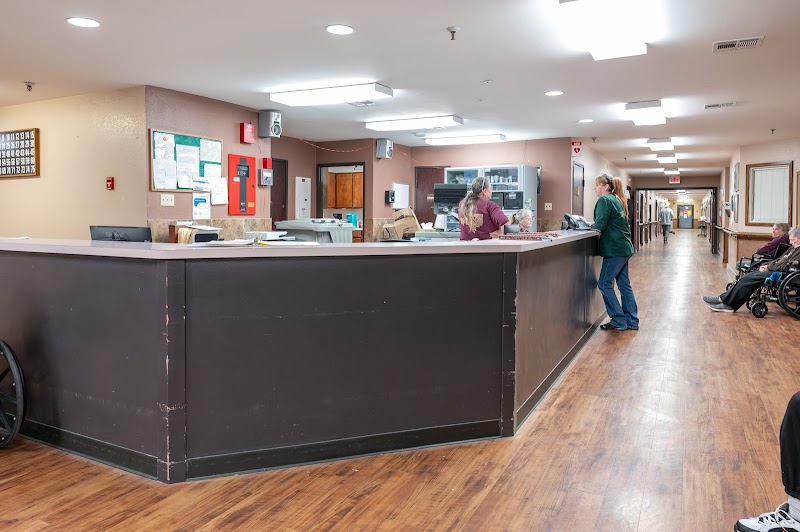
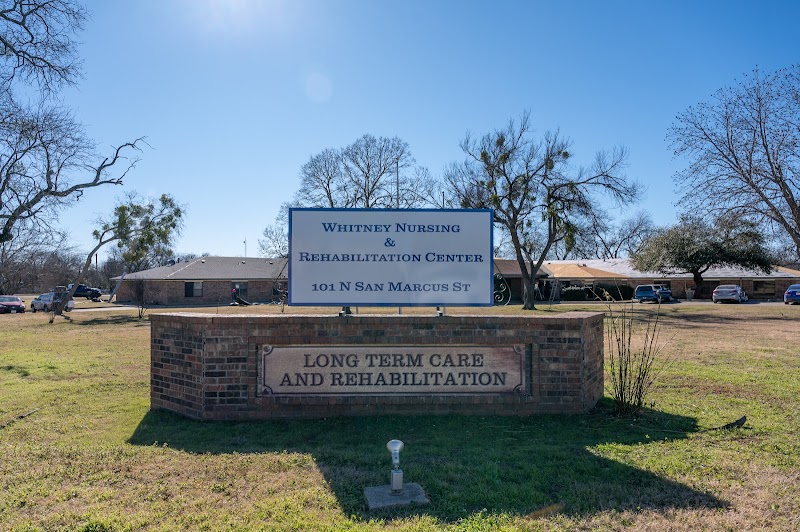
WHITNEY NURSING AND REHABILITATION CENTER

101 SAN MARCUS, WHITNEY, TX 76692 (254) 694-2233
Non profit - Corporation 88 Beds FOURSQUARE HEALTHCARE Data: November 2025 4 Immediate Jeopardy citations
Trust Grade
0/100
#1155 of 1168 in TX
Last Inspection: September 2024

Within standard 12-15 month inspection cycle. Federal law requires annual inspections.

Overview

Whitney Nursing and Rehabilitation Center has received a Trust Grade of F, indicating significant concerns about the quality of care provided. It ranks #1155 out of 1168 facilities in Texas, placing it in the bottom half statewide and at #4 out of 4 in Hill County, meaning there are no better local options. Unfortunately, the facility's performance is worsening, with issues increasing from 2 in 2023 to 11 in 2024. Staffing is a positive aspect, with a turnover rate of 0%, which is well below the Texas average, but the overall quality rating is only 1 out of 5 stars. There are serious concerns as well, including critical incidents where a resident died due to a failure to notify a physician about changes in their condition, highlighting significant risks to resident safety and well-being.

Trust Score
F
0/100
In Texas
#1155/1168
Bottom 2%
Safety Record
High Risk
Review needed
Inspections
Getting Worse
2 → 11 violations
Staff Stability
○ Average
Turnover data not reported for this facility.
Penalties
○ Average
$45,435 in fines. Higher than 68% of Texas facilities. Some compliance issues.
Skilled Nurses
⚠ Watch
Each resident gets only 21 minutes of Registered Nurse (RN) attention daily — below average for Texas. Fewer RN minutes means fewer trained eyes watching for problems.
Violations
⚠ Watch
15 deficiencies on record. Higher than average. Multiple issues found across inspections.
★☆☆☆☆
1.0
Overall Rating
★☆☆☆☆
1.0
Staff Levels
★★★★☆
4.0
Care Quality
★★☆☆☆
2.0
Inspection Score
Stable
2023: 2 issues
2024: 11 issues

The Good

  • 4-Star Quality Measures · Strong clinical quality outcomes
  • Full Sprinkler Coverage · Fire safety systems throughout facility
  • No fines on record

Facility shows strength in quality measures, fire safety.

The Bad

1-Star Overall Rating

Below Texas average (2.8)

Significant quality concerns identified by CMS

Federal Fines: $45,435

Above median ($33,413)

Moderate penalties - review what triggered them

Chain: FOURSQUARE HEALTHCARE

Part of a multi-facility chain

Ask about local staffing decisions and management

The Ugly 15 deficiencies on record

4 life-threatening
Sept 2024 6 deficiencies
CONCERN (D)

Potential for Harm - no one hurt, but risky conditions existed

Assessment Accuracy (Tag F0641)

Could have caused harm · This affected 1 resident

**NOTE- TERMS IN BRACKETS HAVE BEEN EDITED TO PROTECT CONFIDENTIALITY** Based on observation, interview and record review, the facility failed to ensure each resident received an accurate assessment, ...

Read full inspector narrative →
**NOTE- TERMS IN BRACKETS HAVE BEEN EDITED TO PROTECT CONFIDENTIALITY** Based on observation, interview and record review, the facility failed to ensure each resident received an accurate assessment, reflective of the resident's status for two (Residents #24 and #32) of 24 residents reviewed for accuracy of assessments. The facility failed to ensure Resident #24's and Resident #32's most recent comprehensive assessments did not inaccurately reflect the residents each having a urinary catheter (a tube inserted into the body to allow urine to drain). This failure could place residents at risk for not receiving care and services to meet their needs, diminished function of health, and regressions in their overall health. Findings included: Review of Resident #24's admission Record, dated 09/19/24, reflected she was an [AGE] year-old female, admitted on [DATE], with diagnoses of respiratory failure with hypoxia (the body not receiving enough oxygen), unspecified convulsions, dementia, and diabetes. Review of Resident #24's MDS, dated [DATE], reflected she was usually able to understand others and be understood by others. She had a BIMS score of three, and continuous inattention and disorganized thinking, as well as verbal behavioral symptoms on 1-3 days of a 7-day lookback period. The document reflected Resident #24 had an indwelling catheter (including suprapubic catheter or nephrostomy tube). The document was electronically signed by the MDS Coordinator and the DON. Review of Resident #24's EMR on 09/18/2024 reflected no orders related to a catheter. Review of Resident #24's MAR and TAR for 07/01/2024 through 09/17/2024 reflected no orders or treatments related to a catheter. Review of Resident #24's care plans reflected there were none related to a catheter. Review of Resident #32's admission Record, dated 09/17/2024, reflected she was an [AGE] year-old female, admitted on [DATE], with diagnoses of an intestinal obstruction (unspecified as to whether partial or complete), heart failure, cardiac pacemaker, diabetes, and atrioventricular block, complete (a slowed heart rate that occurs because of a malfunction with the heart's electrical system). Review of Resident #32's MDS, dated [DATE], reflected she was usually able to understand others and be understood by others. She had a BIMS score of five and exhibited fluctuating inattention. The document reflected Resident #32 had an indwelling catheter (including suprapubic catheter or nephrostomy tube). The document was electronically signed by the MDS Coordinator and the DON. Review of Resident #32's EMR on 09/18/2024 reflected no orders related to a catheter. Review of Resident #32's MAR and TAR for 07/01/2024 through 09/17/2024 reflected no orders or treatments related to a catheter. Review of Resident #32's care plans reflected there were none related to a catheter. An observation on 09/16/2024 at 12:00 PM revealed Resident #24 in the dining room, seated in her wheelchair, awake, with flat affect. No catheter bag was visible. An interview on 09/17/2024 at 10:55 AM with the ADON revealed Resident #24 did not have a catheter while in the facility. An interview on 09/17/2024 at 10:58 AM with the MDS Coordinator revealed that her soft file (informal record) for Resident #24 had her marked as having a catheter, but she did not know why, and had corrected the MDS, but was going to try to figure out why she was marked that way in her file. An interview and observation on 09/17/2024 at 11:26AM with Resident #32 revealed she did not have a catheter. An interview on 09/18/2024 at 11:18 AM with the MDS Coordinator revealed she was the person who did the MDS for both Residents, #24 and #32. She said they were both marked as having catheters in her soft files. She said she was the one who made the soft files, and she did not know why she had catheters marked on either of them, as neither of them had them. She said she had already corrected the issue, and she did not think the error could directly affect residents, but it could be construed as falsification if they did not correct it. An interview on 09/19/2024 at 12:06 PM with the DON revealed she had been made aware of the MDS errors, and they had been corrected. She said she did the care plans herself, because she wanted to know everything about the residents, and they also had a consultant who reviewed them. She said when she found errors, she pointed them to the MDS Coordinator's attention, and they corrected them immediately. She said they were able to double check things, but they were human, and sometimes made mistakes. She said there would not be any direct consequence to the residents for this error, but it could affect their quality measures (data collected by CMS, related to various areas of resident care, used to show where the facility ranks in each care area compared to all other nursing homes). An interview 0n 09/17/2024 at 12:57 PM with CNA E revealed she was familiar with Residents #24 and #32, and neither had ever had a catheter, that she knew of. She said it was possible Resident #32 might have come back from the hospital with one a few months ago, but if she did it was very short-term, and she did not remember it. Review of the facility's policy Resident Assessment Instrument, revised 09/2010, reflected 7. All persons who have completed any portion of the MDS Resident Assessment Form MUST sign such document attesting to the accuracy of such information. Review of the facility's policy MDS Error Correction, revised 09/2010, reflected Policy Interpretation and Implementation: ( .) 3. If an error in data is discovered within 7 days of the completion of the MDS and before submission to the QIES ASAP system (the encoding and editing period): a. The correction is made to the hard copy of the form using standard editing procedures (cross out, enter correct response, initial and date); b. Corresponding corrections are made to the facility's MDS database. (Note: Software used to encode the MDS runs all standard edits as defined in the CMS data specifications); and c. The resident's care plan is reviewed and modified as necessary. 4. If an error is discovered after the encoding and editing period and the record in error is an Entry, Discharge or PPS Assessment, then correct the record and submit to the QIES ASAP system. 5. If an error is discovered after the encoding period and the record in error is an OBRA Assessment, determine if the error is major or minor. a. A minor error is one related to the coding of the MOS. For minor errors, correct the record and submit to the QIES ASAP system. b. A major error is one that inaccurately reflects the resident's clinical status and/or may result in an inappropriate plan of care. For major errors: (I) Correct the original assessment to reflect the resident's status as of the original Assessment Reference Date and submit the record; AND (2) Perform a new Significant Change in Status (if this has occurred) OR a new Significant Correction to a Prior Assessment with a new observation period and Assessment Reference Date. 6. If an error is discovered in a record that has already been accepted by the QIES ASAP system, implement procedures for either Modification or Inactivation of the information in the system within 14 days of the discovery of the error. 7 o Modification Requests are used when information in the record contains clinical or demographic errors. [Note: The only MOS items that cannot be altered with a Modification Request are: Type of Provider (A0200), Submission Requirement A0410); and the state-assigned facility submission ID (FAC_ID). These items require a Special Manual Record Correction Request.] 8. To modify errors in Entry, PPS, or Discharge records that are not OBRA: a. Create a corrected record with all items included, not just the items in error; b. Complete the Correction Request Section (X) items and include with the corrected record (Item X0IO0 should have a value of 2, indicating a Modification Request.); and c. Submit the Modification Request record. 9. To modify errors in an OBRA Assessment when the errors are minor: a. Create a corrected record with all items included, not just the items in error; b. Complete the Correction Request Section (X) items and include with the corrected record (Item XO I 00 should have a value of 2, indicating a Modification Request.); and c. Submit the Modification Request record. 10. To modify errors in an OBRA Assessment when the errors are major: a. Create a corrected record with all items included, not just the items in error; b. Complete the Correction Request Section (X) items and include with the corrected record (Item XO l 00 should have a value of 2, indicating a Modification Request.); c. Submit the Modification Request record; and d. Perform a new Significant Change in Status Assessment (if this has occurred) OR a new Significant Correction of a Prior Assessment. 11 . Inactivation Requests are used when a record has been accepted to the QJES ASAP system but the corresponding event did not occur (e.g a discharge record was submitted for a resident but there was no discharge). 12. To submit an Inactivation request, complete and submit an MOS record with only Section X items completed.
CONCERN (D)

Potential for Harm - no one hurt, but risky conditions existed

Pharmacy Services (Tag F0755)

Could have caused harm · This affected 1 resident

**NOTE- TERMS IN BRACKETS HAVE BEEN EDITED TO PROTECT CONFIDENTIALITY** Based on observation, interviews, and record review, the facility failed to provide pharmaceutical services (including procedure...

Read full inspector narrative →
**NOTE- TERMS IN BRACKETS HAVE BEEN EDITED TO PROTECT CONFIDENTIALITY** Based on observation, interviews, and record review, the facility failed to provide pharmaceutical services (including procedures that assure the accurate acquiring, receiving, dispensing, and administering of all drugs and biologicals to meet the needs of each resident for 1 (Resident #24) of 8 residents reviewed for pharmacy services. The facility failed to ensure Resident #24's insulin was used within 28 days of opening date [DATE] prior to LVN B administering it. These failures could place residents at risk for medication errors, ineffective relief from pain medication, and drug diversion of controlled substances. Findings included: 1.Resident #24 Review of Resident #24's face sheet, dated [DATE], reflected she was an [AGE] year-old female, admitted to the facility on [DATE]. Her diagnoses included respiratory failure with hypoxia (the body not receiving enough oxygen), unspecified convulsions (seizure like activity), dementia (this is a brain disease that alters brain function causes cognitive decline), and type 2 diabetes mellitus (uncontrolled blood sugar), Review of Resident #24's quarterly MDS, dated [DATE], reflected Resident #24 usually was able to understand others and be understood by others. She had a BIMS score of three, and continuous inattention and disorganized thinking, as well as verbal behavioral symptoms on 1-3 days of a 7-day lookback period. Resident #24 needed staff assistance with self-care, such as bathing, dressing, and toileting. She required staff to do over half the effort in eating, dressing, and hygiene and was dependent on staff for toileting and bathing. Review of Resident #24's care plan dated [DATE] reflected resident had a focus of Diabetes Mellitus: Currently on Metformin (Black Box Warning): Blood sugar checks during the day and at night before bed. Glargine Insulin 20 Units subcutaneous in the morning: Sliding scale insulin started [DATE] due to elevated A1C 7.6 which was high. Date Initiated: [DATE] Revision on: [DATE]. Record review of Resident #24's orders dated [DATE], reflected the following diabetes medication: 1.Insulin Regular Human Injection Solution [short/fast acting insulin]. Inject as per sliding scale: if 200 - 219 = 5 units; 220 - 239 = 6 units; 240 - 259 = 7 units; 260 - 279 = 8 units; 280 - 299 = 9 units; 300 - 319 = 10 units, subcutaneously as needed for diabetes call physician for greater than 320. Start date [DATE]. 2. Black box warning medication (this is an FDA warning for a group of medications that have a potential to cause severe risk associated with the drug); Metformin HCL tablet 500 MG. Give 2 tablet by mouth two times a day for Type 2 diabetes mellitus without complication. Order active [DATE]. 3. Insulin Glargine [long-acting insulin] Solution 100 UNIT/ML Inject 10 unit subcutaneously one time a day for diabetes. Start date [DATE] 0800. Record review of Resident #24's MAR dated from [DATE] to [DATE] reflected blood sugar readings and Regular insulin administration as follows: Inject as per sliding scale: if 200 - 219 = 5 units; 220 - 239 = 6 units; 240 - 259 = 7 units; 260 - 279 = 8 units; 280 - 299 = 9 units; 300 - 319 = 10 units, subcutaneously as needed for diabetes call physician for greater than 320. Start date [DATE]. [DATE] at 11:00 AM blood sugar reading 203, 5 units of sliding scale regular human insulin were administered. [DATE] at 9:00 PM blood sugar reading 278, 8 units of sliding scale regular human insulin were administered. [DATE] at 9:00 PM blood sugar reading 200, no insulin administered. [DATE] at 11:00 AM blood sugar reading 218, no insulin administered. [DATE] at 9:00 PM blood sugar reading 209, no insulin administered. [DATE] at 11:00 AM blood sugar reading 205, no insulin administered. [DATE] at 11:00 AM blood sugar reading 230, no insulin administered. [DATE] at 11:00 AM blood sugar reading 225, 6 units of sliding scale regular human insulin were administered. [DATE] at 4:00 PM blood sugar reading 225, no insulin administered. [DATE] at 9:00 PM blood sugar reading 205, no insulin administered. [DATE] at 11:00 AM blood sugar reading 223, 6 units of sliding scale regular human insulin were administered. [DATE] at 9:00 PM blood sugar reading 211, 5 units of sliding scale regular human insulin were administered. [DATE] at 11:00 AM blood sugar reading 231, no insulin administered. [DATE] at 11:00 AM blood sugar reading 205, no insulin administered. [DATE] at 11:00 AM blood sugar reading 221, no insulin administered. [DATE] at 11:00 AM blood sugar reading 227, 6 units of sliding scale regular human insulin were administered. [DATE] at 9:00 PM blood sugar reading 244, 7 units of sliding scale regular human insulin were administered. [DATE] at 11:00 AM blood sugar reading 249, no insulin administered. [DATE] at 11:00 Am blood sugar reading 265, 8 units of regular human insulin were administered. Observation and interview with LVN B on [DATE] at 10:47 AM, revealed LVN B checked Resident #24's blood sugar by poking her finger and used a small drop of blood to measure her blood sugar. Resident #24's blood sugar reading was 265. LVN B then went to her computer to determine how much insulin was required for Resident #24. LVN B stated she was going to administer 8 units of insulin. In her medication cart LVN B took out an insulin box with Resident #24's name. The insulin was in a white box with small yellow trim read Humulin R, on the front side of insulin box, it read opened [DATE] and on the back side of the insulin box it read opened [DATE]. LVN B stated she did not know which date on the Humulin R was accurate. LVN B did not discard Resident #24's insulin with the two different opening dates out of the medication cart and she did not replace it with new insulin. LVN B then took out a syringe with needle attached and drew from the insulin bottle into the syringe 10 units of Humulin insulin for Resident #24. LVN B proceeded back to Resident #24 to attempt to administer the 10 units of Humulin insulin to Resident #24. Intervention by surveyor was provided and LVN B removed the extra 2 units of Humulin insulin, and she proceeded to administer the 8 units of Humulin insulin to Resident #24. LVN B stated it was the responsibility of the nurses to make sure that all insulins were dated clearly with an open date and residents name if it did not have the pharmacy label on it. She stated the facility expected them to use opened insulin within 28 days of opening it. She stated it was hard for her to see the small numbers on the syringe because the numbers went all the way to 100 ml. She stated she preferred the 50 ml syringes because the numbers were bigger and easier to see. LVN B stated the facility did not have any 50 ml insulin syringes. She stated using expired insulin can have low potency effects on residents and can cause residents not to have the desired effect of controlling their blood sugars. She stated giving too much insulin or too little insulin can cause low blood sugar or higher blood sugars. In an interview with the ADON on [DATE] at 02:24 PM, she stated all nursing staff should check insulin prior to administering to resident. She stated the risk to residents getting expired insulin was potency inaccuracy. The ADON also said that she expected all staff to document when insulin was given or not given. She said all medication administration or refusal need to be charted. The ADON stated vitals should be rechecked if they had been done an hour ago before medication administration. She stated giving BP medication without checking it can cause adverse effects of low BP/hypotension. The ADON stated medication safety will be on her mandatory in-service on [DATE]. Interview with the DON on [DATE] at 02:24 PM, she stated she expected nursing staff and medication Aides to look at the Medication Administration Record (MAR) to verify the residents name, the room number, the medication and to look at the residents' picture. She said that she expects them to look at the medication card or container and verify the name written on it. She said that she expected them to always follow the 5 Rights to medication (Right patient, Right drug, Right time, Right dose, Right route). She said she expected nursing staff and med aides to follow the medication policy. She said medication errors can cause harm to the resident and the wrong dose can over medicate and/or under dose the resident. The DON stated facility medication safety practice was BP medications could be administered within 1 hour of vitals being checked. Review of the facility's policy Administration Procedures for All Medications, revised 08/2020 reflected the following: Policy Medications will be administered in a safe and effective manner. III. 5 Rights (at a minimum) At a minimum, review the 5 rights at each of the following steps of medication administration. 1. Prior to removing the medication package/container from the cart/drawer: a. Check the MAR for the order. 2. Prior to removing the medication from the container: a. Check the label against the order on the MAR. IV. Administration 9. If a resident refuses medication, document refusal on the MAR. Review of insulin manufacturer lilly.com Wash your hands with soap and water. Check the insulin label to make sure you are taking the right type of insulin. This is especially important if you use more than 1 type of insulin. Insulin should look clear and colorless. Do not use Insulin if it is thick, cloudy, or colored, or if you see lumps or particles in it. Do not use past the expiration date printed on the label or 28 days after you first use it. Always use a new syringe and needle for each injection to prevent infections and blocked needles. Do not mix insulin U-100 with other insulins.
CONCERN (E)

Potential for Harm - no one hurt, but risky conditions existed

Deficiency F0700 (Tag F0700)

Could have caused harm · This affected multiple residents

**NOTE- TERMS IN BRACKETS HAVE BEEN EDITED TO PROTECT CONFIDENTIALITY** Based on observations, interviews, and record reviews the facility failed to review the risks and benefits of bed rails and enab...

Read full inspector narrative →
**NOTE- TERMS IN BRACKETS HAVE BEEN EDITED TO PROTECT CONFIDENTIALITY** Based on observations, interviews, and record reviews the facility failed to review the risks and benefits of bed rails and enabler/grab bars (smaller 1/8 size bars affixed to the bed frame used by the person in bed to reposition themselves), with the resident or resident representative and obtain informed consent prior to installation for six (Residents #7, #11, #26, #29, #41, and #143) of six resident rooms observed and reviewed for bed rails/grab bars. The facility failed to have evidence of informed consent, assessment of the resident for risk of entrapment, and care planning for the quarter bed rails/enabler bars for Residents #7, #11, #26, #29, #41, and #143. This failure could affect residents who used bed rails/enabler bars at risk of the resident/responsible party not being aware of the risks, informed consent not being obtained from the resident or responsible party, physician not being aware of use of the enabler/grab bars, and care plan not being properly documented. Findings included: Resident #7: Record review on 09/18/2024 of Resident #7's face sheet, dated 09/16/2024, revealed an [AGE] year old female who was originally admitted to the facility on [DATE]. Resident #7 was noted to have diagnoses including Chronic Obstructive Pulmonary Disease (a common, progressive lung disease that makes it hard to breathe), Epilepsy, unspecified, intractable, without status epilepticus (a chronic brain disorder that causes seizures and continues to occur after a person has taken two or more seizure medications; also known as uncontrolled or drug resistant), Type 2 Diabetes Mellitus (when the body does not respond to insulin properly, resulting in high blood sugar levels), Cerebral Aneurysm (a weak spot in a brain artery that balloons and fills with blood), Essential (Primary) Hypertension (high blood pressure that is multifactorial and does not have one distinct cause), Unsteadiness on Feet, Weakness, Muscle Wasting and Atrophy, Other Lack of Coordination, Contracture of Muscle, Multiple Sites (when muscles, tendons, joints, and other tissues tighten or shorten causing a deformity), and History of Falling. Record Review on 09/16/2024 of Resident #7's Assessments in the EHR, an assessment for safe use of bed rails/grab bars for the resident was not seen. Record Review on 09/16/2024 of Resident #7's Clinical Physician Orders was shown an order for bed rails/grab bars. Record Review on 09/16/2024 of Resident #7's Clinical Miscellaneous documents did not reveal any assessment, consent, order, or care plan addition for bed rail/grab bar usage. Record review on 09/18/2024 of Resident #7's Quarterly MDS assessment dated [DATE], revealed a BIMS score of 9 suggesting moderate cognitive impairment. Section GG Functional Ability indicated that Resident #7 had impairments on both sides of their arms and both legs; used a manual wheelchair; supervision or touching assistance was needed with the following tsks: eating, oral hygiene, rolling left and right; needed substantial assistance with the following tasks: upper body dressing, personal hygiene; and was completely dependent for: toileting, showering/bathing, lower body dressing, and transfers. Section P Restraints and Alarms indicated that Resident #7 used in bed no bed rails, trunk restraint, limb restraint, or other; no restrains or chair that prevented rising was used when in a chair or out of bed; and no alarms used. Section Q Participation in Assessment and Goal Setting indicated that only Resident #7 participated. Record review on 09/18/2024 of Resident #7's Care Plan, last updated 06/24/2024, revealed there was no indication of alternatives attempted prior to grab bars being placed on the resident's bed. Record Review on 09/18/2024 of Resident #7's Clinical Consents did not reveal any consent form related to bed rails to be placed on the resident's bed or that the risks and advantages had been reviewed with the resident or the responsible party. Observation of Resident #7's room on 09/17/2024 at 10:18 AM revealed the resident in bed with grab bars on resident's bed in a raised position . During interview of Resident #7 on 09/17/2024 at 10:18 AM, the resident was laying in the bed with the head of the bed raised, oxygen tube at resident's side.tThe resident stated she had always had the grab bars on her bed at the facility. Resident #7 stated she did not know or remember if someone from the facility discussed dangers, asked for consent, or performed an assessment for the grab bars with her or not. Resident #11 Record review on 9/18/2024 of Resident #11's face sheet, dated 09/18/2024, revealed an [AGE] year old female originally admitted to the facility on [DATE]. Resident #11 was noted to be her own responsible party and have diagnoses including unspecified dementia, mild, with anxiety, Chronic Obstructive Pulmonary Disease (a common, progressive lung disease that makes it hard to breathe), Bell's Palsy (a temporary, unexplained condition that causes facial paralysis on one side of the face), Type 2 Diabetes Mellitus With Diabetic Polyneuropathy (when the body does not respond to insulin properly, resulting in high blood sugar levels; when the peripheral nerves malfunction), adjustment disorder with mixed anxiety and depressed mood, Parkinson's Disease (chronic brain disorder that causes movement problems, mental health issues, and other health concerns), unsteadiness on feet, Essential (Primary) Hypertension (high blood pressure that is multifactorial and does not have one distinct cause), and other reduced mobility. Record review on 9/18/2024 of Resident #11's Care Plan, last updated on 08/30/2024, revealed there was no indication of alternatives attempted prior to grab bars being placed on the resident's bed. The care plan indicated on 01/18/2024 entry for ADL Self Care Performance Deficit r/t Dementia that intervention for Bed Mobility showed The resident is able to turn and reposition with set up and standby assist and Transfer intervention was The resident requires limited assistance by (1) staff to move between surfaces. Record review on 09/18/2024 of Resident #11's Quarterly MDS assessment dated [DATE] revealed a BIMS score of 13, indicating intact cognition. Section GG Functional Ability indicated Resident #11 was noted as having impairment of both lower extremities and utilized a manual wheelchair for mobility. Section P Restraints and Alarms indicated Resident #11 used no bed rails, trunk restraint, limb restraint or other while in bed. Section P also indicated the resident used no restraints or chair that prevented rising was used when in a chair or out of bed; and no alarms used. Section Q Participation in Assessment and Goal Setting indicated that Resident #11 and family participated in the assessment. Record review on 09/18/2024 of Resident #11's Clinical Consents did not reveal any consent form related to bed rails to be placed on the resident's bed or that the risks and advantages had been reviewed with the resident or the responsible party. Record review on 09/18/2024 of Resident #11's Clinical Miscellaneous documents did not reveal any assessment, consent, order, or care plan addition for bed rail/grab bar usage. Record Review on 09/19/2024 of Resident #11's Assessments in the EHR did not show an assessment for safe use of bed rails/grab bars for the resident. Record review on 09/19/2024 of Resident #11's Clinical Physician Orders showed an order for bed rails/grab bars. Observation on 09/16/2024 at 1:20 PM of Resident #11's bed area revealed the resident watching television while sitting in a manual wheelchair beside the bed which had grab bars installed on both sides of the bed. During an interview with Resident #11 on 09/16/2024 at 1:20 PM, the resident expressed that the facility staff help the resident as much as she will let them. Resident #11 shared she was trying to maintain as much independence as possible however her eyes were giving out due to a vision condition that nothing could be done about. Resident #11 stated she did not recall if anyone had spoken to her about the grab bars on the bed or any benefits or risks associated with the bars. Resident #26: Record review on 09/18/2024 of Resident #26's face sheet, dated 09/18/2024, revealed a [AGE] year old female who initially admitted to the facility on [DATE]. Resident #26 is noted to have diagnoses including Alzheimer's Disease (a brain disorder that gradually destroys memory and thinking skills, and eventually the ability to perform even simple tasks), Senile Degeneration of the Brain (progressive decline in cognitive function that can lead to memory loss, impaired thinking, and difficult with daily activities), Generalized Anxiety Disorder (mental health condition that causes people to experience persistent, excessive, and uncontrollable worry), Muscle Weakness, generalized, Unspecified Abnormalities of Gait and Mobility, and Unspecified Lack of Coordination. Record review on 09/18/2024 of Resident #26's Quarterly MDS assessment dated [DATE], revealed a BIMS score of 8 suggesting moderate cognitive impairment. The MDS also indicated the resident hallucinated. Section GG Functional Ability indicated that Resident #26 had no impairment on either side of their arms or legs and used a manual wheelchair. No other information was provided for Resident #26 on self-care abilities or mobility capabilities. Section P Restraints and Alarms indicated that Resident #26 used in bed no bed rails, no trunk restraints, no limb restraints and no other restraints. Resident #26 was also rated as having used in chair or out of bed no bed rails, no trunk restraints, no limb restraints and no chair that prevented raising. Resident #26 was also rated as using no alarms. Section Q Participation in Assessment and Goal Setting indicated that only Resident #26 participated. Record review on 09/18/2024 of Resident #26's Care Plan, last updated on 08/19/2024, revealed there was no indication of alternatives attempted prior to grab bars being placed on the resident's bed. On 08/06/2024 Resident #26's Care Plan had an entry with the Focus of Safety, Goal of Resident Will Remain Safe, and Interventions of Encourage use of prescribed assistive devices and Safety measures - including strategies to reduce the risk of infection, falls, injury initiated as appropriate with target date of 08/20/2024. No further information on what devices or strategies was found. Record Review on 09/18/2026 of Resident #26's Assessments in the EHR did not show an assessment for safe use of bed rails/grab bars for the resident. Record Review on 09/18/2024 of Resident #26's Clinical Consents revealed no Bed Rail Consent form (bed rail/enabler bar consent) for the 1/8 bed rails/enabler bars signed by the resident or resident's responsible party or noted to have verbal permission for the enabler bars. Record Review on 09/18/2024 of Resident #26's Clinical Physician Orders did not show an order for bed rails/grab bars. Record Review on 09/18/2024 of Resident #26's Clinical Miscellaneous documents did not reveal any assessment, consent, order, or care plan addition for bed rail/grab bar usage. Observation of Resident #26's bed area on 09/16/2024 at 12:01 PM revealed the one grab bar raised on the right side of the resident's bed. The resident was not present in the room at the time. Interview with Resident #26 on 9/17/2024 at 10:20 AM revealed that Resident wasis comfortable in the facility. Resident #26 did not remember having discussed anything about the grab bar on her bed with facility staff but that the grab bar had been there a long time. Resident #29: Record review on 09/19/2024 or Resident #29's face sheet revealed an [AGE] year old female originally admitted to the facility on [DATE]. Resident #29 was listed as her own responsible party. Resident #29 had diagnoses including Unspecified Dementia, Unspecified Severity (dementia without a specific diagnosis; mild cognitive impairment), Type 2 Diabetes Mellitus (when the body does not respond to insulin properly, resulting in high blood sugar levels), Essential (Primary) Hypertension (high blood pressure that is multifactorial and does not have one distinct cause ), Angina Pectoris (chest pain or discomfort that happens when the heart muscle does not receive enough oxygen-rich blood), Chronic Atrial Fibrillation (abnormal heart rhythm that causes the upper chambers of the heart to beat irregularly and quickly), Muscle Weakness, Unspecified Lack Of Coordination, Difficulty In Walking, Repeated Falls, Unsteadiness On Feet, Ataxic Gait, Fistula Of Intestine (abnormal connection between the intestine and another organ or surface), Major Depressive Disorder, Anxiety Disorder, and Atherosclerotic Heart Disease Of Native Coronary Artery Without Angina Pectoris (chronic condition that occurs when plaque builds up in the walls of the arteries, narrowing them and potentially blocking blood flow) Record review on 09/18/2024 of Resident #29's Annual Comprehensive MDS assessment dated [DATE], revealed a BIMS score of 3 suggesting severe cognitive impairment. Section GG Functional Ability indicated that Resident #29 had no upper or lower body impairment; used a manual wheelchair; supervision or touching assistance was needed with the following tsks: oral hygiene, upper and lower body dressing, personal hygiene, rolling side to side, sit to lying, sit to stand, lying to sitting, and transfers; and was completely dependent for: toileting and showering/bathing. Section P Restraints and Alarms indicated that Resident #29 used in bed no bed rails, no trunk restraints, no limb restraints and no other restraints. Resident #29 was also rated as having used in chair or out of bed no bed rails, no trunk restraints, no limb restraints and no chair that prevented raising. Resident #29 was also rated as using no alarms. Section Q Participation in Assessment and Goal Setting indicated that only Resident #29 participated. Record review on 09/18/2024 of Resident #29's Care Plan, last updated on 6/24/2024, revealed there was no indication of alternatives attempted prior to grab bars being placed on the resident's bed. In the Bed Mobility sectionsection, it was indicated that the resident requires assistance by 2 staff to turn and reposition in bed as necessary. Record Review on 09/18/2024 of Resident #29's Assessments in the EHR did not show an assessment for safe use of bed rails/grab bars for the resident. Record Review on 09/18/2024 of Resident #29's Clinical Consents revealed no Bed Rail Consent form (bed rail/enabler bar consent) for the 1/8 bed rails/enabler bars signed by the resident or resident's responsible party or noted to have verbal permission for the enabler bars. Record Review on 09/18/2024 of Resident #29's Clinical Physician Orders did show an order for bed rails/grab bars. Record Review on 09/18/2024 of Resident #29's Clinical Miscellaneous documents did not reveal any assessment, consent, order, or care plan addition for bed rail/grab bar usage. Observation of Resident #29's bed area on 09/16/2024 at 10:48 AM revealed both sides of the bed had grab bars attached and in a raised position. Resident was not in the room at the time. Resident #41: Record review on 9/18/2024 of Resident #41's face sheet, dated 09/16/2024, revealed a [AGE] year old female originally admitted to the facility on [DATE]. Resident #41 was listed as her own responsible party. Resident #41 was noted as having diagnoses such as Female Acute Pelvic Peritonitis (an inflammation and infection of the peritoneum, the membrane that lines the abdomen in the pelvic area), Type 2 Diabetes Mellitus (when the body does not respond to insulin properly, resulting in high blood sugar levels), Colostomy (surgical procedure that creates an opening in the abdomen to divert the large intestine, or colon, to an external pouch), Ileostomy (procedure in which part of the small bowel is brought through the abdominal wall via a surgically created opening called a stoma to evacuate stool from the body rather than through the anus), Spinal Enthesopathy (condition that affects the connection points between bones and ligaments in the spine), Unspecified Dementia (mild cognitive impairment has yet to be diagnosed as a specific type), Ventricular Tachycardia (cardiovascular disorder that causes the heart's lower chambers to beat abnormally fast), Generalized Anxiety Disorder (a mental health condition that causes people to experience excessive, persistent, and uncontrollable worry), Essential (Primary) Hypertension (high blood pressure that is multi-factorial and doesn't have one distinct cause), Sciatica, Right Side (condition that affects the sciatic nerve, usually on one side of the body, and can cause pain, numbness, tingling, or muscle weakness), and Low Back Pain. Record review on 09/18/2024 of Resident #41's Quarterly MDS assessment dated [DATE] revealed a BIMS score of 14 suggesting intact cognition. Section GG Functional Ability indicated that Resident #41 had no impairment on upper or lower body; used a walker; supervision or touching assistance was needed with the following tsks: oral hygiene, toileting, upper and lower body dressing, sit to stand, and transfers; needed moderate assistance with shower/bathing. Section P Restraints and Alarms indicated that Resident #41 used in bed no bed rails, no trunk restraints, no limb restraints and no other restraints. Resident #41 was also rated as having used in chair or out of bed no bed rails, no trunk restraints, no limb restraints and no chair that prevented raising. Resident #41 was also rated as using no alarms. Section Q Participation in Assessment and Goal Setting indicated that Resident #41 participated along with other legally authorized representative. Record review on 09/18/2024 of Resident #41's Care Plan, last revised on 09/09/2024, revealed there was no indication of alternatives attempted prior to grab bars being placed on the resident's bed. Focus area of has potential impairment to skin integrity: Pressure relief mattress: Turns self in bed and interventions of Avoid scratching and keep hands and body parts from excessive moisture. Keep fingernails short; Educate resident/family/caregivers of causative factors and measures to prevent skin injury; Encourage good nutrition and hydration in order to promote healthier skin; Identify/document potential causative factors and eliminate/resolve where possible; Monitor/document location, size and treatment of skin injury. Report abnormalities however no mention of grab bars and potential skin injuries. Record Review on 09/18/2024 of Resident #41's Assessments in the EHR did not show an assessment for safe use of bed rails/grab bars for the resident. Record Review on 09/18/2024 of Resident #41's Clinical Consents revealed no Bed Rail Consent form (bed rail/enabler bar consent) for the 1/8 bed rails/enabler bars signed by the resident or resident's responsible party or noted to have verbal permission for the enabler bars. Record Review on 09/18/2024 of Resident #41's Clinical Physician Orders did not show an order for bed rails/grab bars. Record Review on 09/18/2024 of Resident #41's Clinical Miscellaneous documents did not reveal any assessment, consent, order, or care plan addition for bed rail/grab bar usage. Observation of Resident #41's bed area on 09/16/2024 at 1:50 PM revealed grab bars installed an in the the raised position on both sides of resident's bed. Resident was not available for interview at the time. Resident #143: Record review on 09/18/2024 of Resident #143's face sheet revealed a [AGE] year old female who initially admitted to the facility on [DATE]. Resident #143 was listed as her own responsible party. Resident #143 was noted as having diagnoses such as Obstructive And Reflux Uropathy(disorder of the urinary tract that occurs due to obstructed urinary flow and can be either structural or functional), Atherosclerotic Heart Disease Of Native Coronary Artery (common heart condition that occurs when plaque builds up in the arteries that supply blood to the heart), Chronic Kidney Disease (long term condition that occurs when the kidneys are damaged and can not filter blood properly), Type 2 Diabetes Mellitus With Diabetic Neuropathy (when the body does not respond to insulin properly, resulting in high blood sugar levels), Unspecified Dementia (mild cognitive impairment not yet diagnosed as a specific type of dementia), Chronic Atrial Fibrillation (abnormal heart rhythm when the upper chambers of the heart beat irregularly and quickly), Essential (Primary) Hypertension (high blood pressure that is multifactorial and does not have one distinct cause), Chronic Respiratory Failure (long term condition that occurs when the lungs can not exchange oxygen and carbon dioxide effectively), Severe Sepsis With Septic Shock (serious conditions that occur when the body has an extreme response to an infection), History Of Falling, Chronic Kidney Disease, Stage 3b (moderate to severe loss of kidney function), Bipolar Disorder (mental illness that causes extreme mood swings, affecting the person's energy, activity level, and concentration), Chronic Pain Syndrome (condition that involves persistent pain and other symptoms that last longer than the expected healing time for the affected tissue), and Unspecified Systolic (Congestive) Heart Failure (condition where the heart's ventricles are unable to pump enough blood, resulting in a lack of blood supply to the body). Record review on 09/18/2024 of Resident #143's Quarterly MDS assessment dated [DATE], revealed a BIMS score of 15 suggesting no cognitive impairment. Section GG Functional Ability indicated that Resident #143 used a manual wheelchair; supervision or touching assistance was needed with the following tsks: oral hygiene, rolling left and right; needed substantial assistance with the following tasks: personal hygiene; and was completely dependent for: toileting, showering/bathing, and transfers. Record review on 09/18/2024 of Resident #143's Care Plan, last revised o 07/17/2024, revealed there was no indication of alternatives attempted prior to grab bars being placed on the resident's bed. Record Review on 09/18/2024 of Resident #143's Assessments in the EHR did not show an assessment for safe use of bed rails/grab bars for the resident. Record Review on 09/18/2024 of Resident #143's Clinical Consents revealed no Bed Rail Consent form (bed rail/enabler bar consent) for the 1/8 bed rails/enabler bars signed by the resident or resident's responsible party or noted to have verbal permission for the enabler bars. Record Review on 09/18/2024 of Resident #143's Clinical Physician Orders haddid shown an order for bed rails/grab bars. Record Review on 09/18/2024 of Resident #143's Clinical Miscellaneous documents did not reveal any assessment, consent, order, or care plan addition for bed rail/grab bar usage. Observation of Resident #143's bed area on 09/17/2024 at 2:25 PM revealed grab bars attached to resident's bed on both sides and in a raised position. Interview with Resident #143 on 09/17/2024 at 2:25 PM revealed that the resident believed facility staff spoke to her about grab bar hazards when she returned from the last hospitalization however does not recall any consent forms. Resident #143 stated that one of the grab bars was loose at one point and maintenance tightened it after the nursing staff was informed of the issue. Resident #143 informed that the facility has a good staff and no concerns to voice. In an interview on 09/19/2024 at 8:57 AM with CNA F revealed that a restraint was anything where a resident cannot free themselves such as bed rails or tying them down. CNA F stated that a bed rail was a bar that went down the entire length of the bed. According to CNA F a grab bar was what the facility uses and when asked if there was a potential for entrapment with a grab bar she stated probably not and if there were there is the grab bar on the grab bar that could be used for assistance. When CNA F was asked if grab bars were a safety issue, she stated 'Yes, if residents were to fall the grab bar could cause a safety issue but that CNA F had seen the resident do more good than harm with grab bars installed on their bed. While at the facility CNA F stated that there have had some residents request to have the grab bars removed and the facility would do so. In an interview on 09/19/2024 at 9:15 AM with LVN A, the LVN stated that a restraint was holding someone down by something, and that even a bed alarm or wheelchair alarm could be considered a constraint. LVN A stated that a bed rail had different kinds such as a mobility (or M) rail, a safety rail used for repositioning, half and whole rails which were not used at this facility as they are considered restraints. LVN A shared that a grab bar would not feel like entrapment. LVN A stated that having a call light wrapped around any size of bed rail/grab bar was not safe to have as it could have caused a resident to trip or get wrapped around the resident's neck. LVN A stated that other safety risks of a bed rail/grab bar would be if a resident were to fall then the bars would cause a safety issue, however, LVN A had seen grab bars that were more good than harm. When LVN A was asked about a safety assessment for bed rails/grab bars the LVN stated they were not sure about an assessment however believe the facility had done some type of training/orientation/assessment to see if the resident needed the device. LVN A stated that a safety assessment would have been documented but not sure where in the EHR. In an interview on 09/19/2024 at 9:26 AM with the MDS Coordinator, a restraint was stated to have been something that physically kept someone from being able to move about freely like a seat belt that is not a self-release, side rails or bed rails ranging in length from ¼, ½, and full lengths while the ¼ length could have also been used to help a resident with mobility. The MDS Coordinator stated a ¼ rail, or grab bar, could have potentially been a source of entrapment for a resident without mobility who got against it and was not able to get away however had only seen this issue with residents who had some mobility still. When asked if bed rails or grab bars posed a safety risk, the MDS Coordinator stated yes but the grab bars/bed rails could also have been as much risk to a resident as without for example a resident being hurt from hitting face against bar when slipping or with getting an arm stuck and was why residents needed to be monitored closely every 2 hour checks or any time a staff member walked down the hall. The MDS Coordinator was asked if an assessment was completed for bed rails/grab bars and the MDS Coordinator responded they were not sure but that there was an assessment with elopement alarms and that there were quarterly assessments including safety in some form. The MDS Coordinator shared that for grab bars/bed rails to be placed on a resident bed there needed to be a safety assessment, a doctor's order, family or resident consent, and for the bed rails/grab bars to be care planned. In an interview on 09/19/2024 at 9:56 AM with the DON a restraint was said to be something that will keep someone from being as mobile and independent as they possibly could be. The DON stated that a bed rail was something that would keep someone from being able to get out of bed safely and that the facility used the mobility rail to assist patients getting out of bed safely. When asked if mobility or grab bars could have posed as a source of entrapment, the DON stated no. When asked if the mobility or grab bars could have posed a safety risk to residents, the DON stated no, that is why we have them on there (the beds) so patients could have something to hang on to. The DON was asked if a safety assessment was completed with the resident when they admitted to the facility and a mobility/grab bar was on the bed, the DON responded yes, therapy helps with that and that therapy would go over verbally and visually with the resident. When asked if anything was required before a mobility/grab bar were to be installed on the resident bed, the response from the DON was not for a mobility rail; it was used as enable device to help a resident pull up if they need it. In an interview with the ADM on 09/19/2024 at 10:40 AM, when asked what the facility policy was for a resident to have bed rails/grab bars/mobility bars on their bed, the ADM responded that the facility used to have standing orders for grab bars/mobility rails, and that consent was additionally required for bed rails in lengths of ¼ and ½. The ADM stated the facility was planning to review their current policy and add to in-service trainings already scheduled for all nursing staff on 9/20/2024. The ADM indicated that the DON had informed of the mobility rail/grab bar issue and the additional need for each resident with the bars/rails to have included in their EHR doctor's orders, safety assessment, consent, and care planning . Record review of the facility's provided Bed Safety policy from Nursing Services Policy and Procedure Manual for Long Term Care ©2001 MED-PASS INC. (Revised December 2007) states, in part: Policy Interpretation and Implementation 1.The resident's sleeping environment shall be assessed by the interdisciplinary team, considering the resident's safety, medical conditions, comfort, and freedom of movement, as well as input from the resident and family regarding previous sleeping habits and bed environment. 4. The facility's education and training activities will include instruction about risk factors for resident injury due to beds, and strategies for reducing risk factors for injury, including entrapment. 5. If side rails are used, there shall be an interdisciplinary assessment of the resident, consultation with the Attending Physician, and input from the resident and/or legal representative. 6. Staff shall obtain consent for the use of side rails from the resident or resident's legal representative prior to their use. 7. After appropriate review and consent a specified above, side rails may be used at the resident's request to increase the resident's sense of security (e.g. if he/she has a fear of falling, his/her movement is compromised, or he/she is used to sleeping in a larger bed). 8. Side rails may be used if assessment and consultation with the Attending Physician has determined that they are needed to help manage a medical symptom or condition, or to help the resident reposition or move in bed and transfer, and no other reasonable alternatives can be identified. 9. Before using side rails for any reason, the staff shall inform the resident and family about the benefits and potential hazards associated with side rails.
CONCERN (E)

Potential for Harm - no one hurt, but risky conditions existed

Unnecessary Medications (Tag F0759)

Could have caused harm · This affected multiple residents

**NOTE- TERMS IN BRACKETS HAVE BEEN EDITED TO PROTECT CONFIDENTIALITY** Based on observation, interview, and record review, facility failed to ensure the medication error rate was not 5 percent (5%) o...

Read full inspector narrative →
**NOTE- TERMS IN BRACKETS HAVE BEEN EDITED TO PROTECT CONFIDENTIALITY** Based on observation, interview, and record review, facility failed to ensure the medication error rate was not 5 percent (5%) or greater for 2 of 31 opportunities resulting in a 6.14 % medication error rate for two of nine residents observed for medication pass (Resident #24 and Resident #96). 1. The facility failed to ensure Resident #24's insulin was administered according to the sliding scale as physician ordered by LVN B 2. The facility failed to ensure Resident #96's blood pressure medication Metoprolol was held and not administered by MA D as physician had order for blood pressure reading of 105/65. These failures could place residents at risk for significant medication errors and jeopardize the resident health and safety. Finding included: 1.Resident #24 Review of Resident #24's face sheet, dated [DATE], reflected she was an [AGE] year-old female, admitted to the facility on [DATE]. Her diagnoses included respiratory failure with hypoxia (the body not receiving enough oxygen), unspecified convulsions (seizure like activity), dementia (this is a brain disease that alters brain function causes cognitive decline), and type 2 diabetes mellitus (uncontrolled blood sugar), Review of Resident #24's quarterly MDS, dated [DATE], reflected Resident #24 usually was able to understand others and be understood by others. She had a BIMS score of three, and continuous inattention and disorganized thinking, as well as verbal behavioral symptoms on 1-3 days of a 7-day lookback period. Resident #24 needed staff assistance with self-care, such as bathing, dressing, and toileting. She required staff to do over half the effort in eating, dressing, and hygiene and was dependent on staff for toileting and bathing. Review of Resident #24's care plan dated [DATE] reflected resident had a focus of Diabetes Mellitus: Currently on Metformin (Black Box Warning): Blood sugar checks during the day and at night before bed. Glargine Insulin 20 Units subcutaneous in the morning: Sliding scale insulin started [DATE] due to elevated A1C 7.6 which was high. Date Initiated: [DATE] Revision on: [DATE]. Record review of Resident #24's orders dated [DATE], reflected the following diabetes medication: 1.Insulin Regular Human Injection Solution [short/fast acting insulin]. Inject as per sliding scale: if 200 - 219 = 5 units; 220 - 239 = 6 units; 240 - 259 = 7 units; 260 - 279 = 8 units; 280 - 299 = 9 units; 300 - 319 = 10 units, subcutaneously as needed for diabetes call physician for greater than 320. Start date [DATE]. 2. Black box warning medication (this is an FDA warning for a group of medications that have a potential to cause severe risk associated with the drug); Metformin HCL tablet 500 MG. Give 2 tablet by mouth two times a day for Type 2 diabetes mellitus without complication. Order active [DATE]. 3. Insulin Glargine [long-acting insulin] Solution 100 UNIT/ML Inject 10 unit subcutaneously one time a day for diabetes. Start date [DATE] 0800. Record review of Resident #24's MAR dated from [DATE] to [DATE] reflected blood sugar readings and Regular insulin administration as follows: Inject as per sliding scale: if 200 - 219 = 5 units; 220 - 239 = 6 units; 240 - 259 = 7 units; 260 - 279 = 8 units; 280 - 299 = 9 units; 300 - 319 = 10 units, subcutaneously as needed for diabetes call physician for greater than 320. Start date [DATE]. Observation and interview with LVN B on [DATE] at 10:47 AM, revealed LVN B checked Resident #24's blood sugar by poking her finger and used a small drop of blood to measure her blood sugar. Resident #24's blood sugar reading was 265. LVN B then went to her computer to determine how much insulin was required for Resident #24. LVN B stated she was going to administer 8 units of insulin. In her medication cart LVN B took out an insulin box with Resident #24's name. LVN B then took out a syringe with needle attached and drew from the insulin bottle into the syringe 10 units of Humulin insulin for Resident #24. LVN B proceeded back to Resident #24 to attempt to administer the 10 units of Humulin insulin to Resident #24. Intervention by surveyor was provided and LVN B removed the extra 2 units of Humulin insulin, and she proceeded to administer the 8 units of Humulin insulin to Resident #24. She stated it was hard for her to see the small numbers on the syringe because the numbers went all the way to 100 ml. She stated she preferred the 50 ml syringes because the numbers were bigger and easier to see. LVN B stated the facility did not have any 50 ml insulin syringes. She stated giving too much insulin or too little insulin can cause low blood sugar or higher blood sugars. 2.Resident #96 Review of Resident #96's face sheet dated [DATE], reflected a [AGE] year-old female who was admitted to the facility on [DATE]. Her diagnoses included paroxysmal atrial fibrillation (this is a heart disease that causes an irregular heart rhythm), hypertension (high blood pressure), type 2 diabetes mellitus (uncontrolled blood sugar), glaucoma (this is an eye disease that causes vision loss). Chronic kidney diseases, muscle wasting and muscle dying, urinary tract infection, idiopathic peripheral autonomic neuropathy (nerve damage) and bladder cancer. Resident #96's family was her RP. Her advance directive was DNR-Do Not Do CPR. Review of Resident #96's quarterly MDS dated [DATE], reflected a BIMS assessment of 15 indicating Resident #96 was cognitively intact. She could understand others and others could understand her. Resident #96 was dependent on staff for ADL's. Resident #96 required substantial/maximal assist to transfer. The MDS reflected Resident #96 had a diagnoses of high blood pressure. Her prognosis assessment reflected Resident #96 had a condition or chronic diseases that may result in a life expectancy of less than 6 months. Further review of the MDS reflected Resident #96 had a fall in the facility without injury and no change in behavior was noted after the fall. Review of Resident #96's orders dated [DATE], reflected a Black box warning medication: Metoprolol Tartrate Tablet 25 MG, give 1 tablet by mouth two times a day related to essential (primary) hypertension. Hold for SBP less than 120. Order active on [DATE]. Observation and interview with LVN A on [DATE] at 06:34 AM, revealed LVN A checking residents blood pressures. She went into Resident #96 and checked her blood pressure. Reading for Resident #96 was 105/65, pulse 65. LVN A stated she checks vitals for the residents every morning on her shift. Observations and interview with MA D during medication observation on [DATE] at 08:52 AM, revealed MA D took Resident #96's morning medications which included blood pressure Metoprolol 25 mg. The BP medication package read Metoprolol Tartrate Tablet 25 MG, give 1 tablet by mouth two times a day. Hold for SBP less than 120. MA D did not recheck resident #96's blood pressure before administering the BP medication. MA D stated LVN A had already checked Residents #96's blood pressure and the reading was 105/65 with pulse of 65. MA D stated if there was an issue with her requiring to hold a medication, the nurse would have told her. MA D stated if there was risk to the resident, the nurse would have informed her to hold the medication. She stated she only held medications when told by the nurses otherwise she administered them. MA D stated she normally worked evening shift and did not have to do vitals. MA D did not state the risk to Resident #96. In an interview and observation with LVN C on [DATE] at 02:14 PM, She stated she was not aware of BP medication administered to Resident #96 earlier. She went to Resident #96's room and rechecked her BP. Reading was 120/78, pulse 80. LVN C stated it was good practice to check vitals before medication administration. She stated BP can change when a person was lying down and when they get up. She stated BP medication should be administered in 30 minutes to an hour. LVN C stated she would notify the physician of the incident and possibly see if they could change Resident #96's BP perimeters. She stated the risk too that administering medication and not following perimeter can cause BP to drop too low. Interview with LVN A on [DATE] at 10:15 AM she stated the BP vitals were good for medication administration for 2 hours, an hour before medication and another hour after medication administration. LVN A stated after that time frame the blood pressure should be rechecked. LVN A stated the provider for Resident #96's changed her medication perimeters. She stated Resident #96's general BP perimeter was to hold medication when BP was 100/60. LVN A stated it was good practice to look at the MAR and follow the required perimeter or to ask the nurse. LVN A stated it was her responsibility as a nurse to monitor her residents' vitals. She stated she made it her general practice to go back and monitor or recheck questionable vitals. LVN A did not state risk to Resident #96. In an interview with the ADON on [DATE] at 02:24 PM, she stated all nursing staff should check insulin prior to administering to resident. She said all medication administration or refusal need to be charted. The ADON stated vitals should be rechecked if they had been done an hour ago before medication administration. She stated giving BP medication without checking it can cause adverse effects of low BP/hypotension. The ADON stated medication safety will be on her mandatory in-service on [DATE]. Interview with the DON on [DATE] at 02:24 PM, she stated she expected nursing staff and medication Aides to look at the Medication Administration Record (MAR) to verify the residents name, the room number, the medication and to look at the residents' picture. She said that she expects them to look at the medication card or container and verify the name written on it. She said that she expected them to always follow the 5 Rights to medication (Right patient, Right drug, Right time, Right dose, Right route). She said she expected nursing staff and med aides to follow the medication policy. She said medication errors can cause harm to the resident and the wrong dose can over medicate and/or under dose the resident. The DON stated facility medication safety practice was BP medications could be administered within 1 hour of vitals being checked. Record review of facility policy titled labelling of Container, revision date [DATE], reflected policy statement All medications maintained in the facility shall be properly labelled in accordance with current state and federal regulations. Policy interpretation and implementations .read in part 1. Medications labels must be legible at all times. 3. Labels for individual drug containers shall include all necessary information such as a) Residents name, f) Date medication was dispensed, h) Expiration date .7. The individual administering the medication must check the label to verify the right resident, right medication, right dosage, right time and right method (route) of administration before giving the medication .
CONCERN (E)

Potential for Harm - no one hurt, but risky conditions existed

Deficiency F0761 (Tag F0761)

Could have caused harm · This affected multiple residents

**NOTE- TERMS IN BRACKETS HAVE BEEN EDITED TO PROTECT CONFIDENTIALITY** Based on observations, interviews, and record review, the facility failed to in accordance with State and Federal laws, store al...

Read full inspector narrative →
**NOTE- TERMS IN BRACKETS HAVE BEEN EDITED TO PROTECT CONFIDENTIALITY** Based on observations, interviews, and record review, the facility failed to in accordance with State and Federal laws, store all drugs and biologicals in locked compartments under proper temperature controls, and permit only authorized personnel to have access to the keys for one of two nurse medication carts (Cart A) and one of two med aide medications cart (Cart B) that were reviewed for security and storage of drugs and biologicals. The facility failed to ensure nurse medication Cart A had dated insulin and unexpired insulin in it for Resident # 24, and Resident #25 per manufactueres recommendation to be used in 28 days after opening the insulin. The facility failed to ensure MA D locked and secured medication Cart B when it was unattended and out of view while inside Resident # 96's room. This failure could place residents at risk of having access to unauthorized medications, drug diversions, and could lead to possible harm. Findings included: Resident #24 Review of Resident #24's face sheet, dated [DATE], reflected she was an [AGE] year-old female, admitted to the facility on [DATE]. Her diagnoses included respiratory failure with hypoxia (the body not receiving enough oxygen), unspecified convulsions (seizure like activity), dementia (this is a brain disease that alters brain function causes cognitive decline), and type 2 diabetes mellitus (uncontrolled blood sugar). Resident #25 Review of Resident #25's face sheet dated [DATE], reflected a [AGE] year-old male, admitted to the facility on [DATE]. His diagnoses included aphasia (difficulty or loss of ability in speech) due to stroke, chronic kidney disease, diabetes mellitus (uncontrolled blood sugar), dementia (this is a brain disease that alters brain function causes cognitive decline), anxiety disorder, gastronomy status (use of a feeding tube), anxiety disorder, major depressive disorder, bipolar disorder (this is a disorder associated with episodes of mood swings ranging from depressive lows to manic highs), and a below-the-knee amputation. Resident #96 Review of Resident #96's face sheet dated [DATE], reflected a [AGE] year-old female who was admitted to the facility on [DATE]. Her diagnoses included paroxysmal atrial fibrillation (this is a heart disease that causes an irregular heart rhythm), hypertension (high blood pressure), type 2 diabetes mellitus (uncontrolled blood sugar), glaucoma (this is an eye disease that causes vision loss). Chronic kidney diseases, muscle wasting and muscle dying, urinary tract infection, idiopathic peripheral autonomic neuropathy (nerve damage) and bladder cancer. Observations and interview with MA D during medication observation on [DATE] from 08:52 AM to 09:11 AM, revealed MA D took medications from medication Cart B for Resident #96. The medication cart was outside Resident #96's doorway. She closed the drawers and went into Resident #96's room. The privacy curtain was closed, and MA D could not see medication Cart B. Upon examination of medication Cart B, drawers could easily be opened, and the silver lock button was released. A staff member walked by the med cart to go to another room with a resident in a wheelchair. MA D stated she was told it was acceptable to leave the medication cart unlocked when it was in the doorway. MA D stated she could not see the medication Cart B while in Resident #96's room because the privacy curtain was closed blocking doorway view . She stated she could see how not being able to see the medication cart in her view can give access to unauthorized persons. She stated she was responsible for the medication cart when it was in her possession, making sure it was secure. MA D did not state the risk to the residents. Observation and interview with LVN B on [DATE] at 10:47 AM, revealed nurse medication Cart A had an insulin pen named Humalog Kwik pen dated 08/missing number/24. The insulin pen had Resident #25's name on it. Another insulin named glargine last filled on [DATE] belonging to Resident #25 had no open date on it. Another insulin in a box named Humulin R belonging to Resident #24 had two different dates on it. On front side of insulin box, it read opened [DATE] and on the back side of the insulin box it read opened [DATE]. LVN B stated she did not know which date on the Humulin R was accurate. She stated it was the responsibility of the nurses to make sure that all insulin was dated clearly with an open date and residents name if it did not have the pharmacy label. She stated the facility expected them to use opened insulin within 28 days of opening them. She stated using expired insulin can have low potency effects on residents and can cause residents not to have the desired effect of controlling their blood sugars. She stated she would replace Resident #25 glargine insulin. She did not remove Resident #24's insulin out of Medication Cart A. In an interview with the ADON on [DATE] at 02:24 PM, she stated all nursing staff should check insulin prior to administering to resident and she expected all medication carts to be locked when not in use. She stated the risk to residents getting expired insulin was potency inaccuracy. The ADON also said that she expected all staff to document when insulin was given or not given. She said all medication administration or refusal need to be charted. The ADON stated medication safety will be on her mandatory in-service on [DATE]. In an interview with the DON on [DATE] at 02:24 PM, she stated she expected all persons with authorized access to lock medication carts when not in use and when out of sight. The DON stated the medication cart could be placed in doorway and unlocked when in use, but the nurse or medication aide must have it in their view. The DON stated the risk of leaving a medication cart unlocked was a safety and security concern and someone could have access to the medication cart. The DON also stated nurses were responsible for the insulins and making sure that they were dated and had the correct names on them. She stated there was a chart in the medication room that specified how long an insulin was good for after opening. She stated the pharmacist had just done an audit on the medication cart and was not sure how those insulins had been missing. She stated administering expired insulin could have adverse outcomes due to low potency. She stated she was responsible for auditing the medication carts. Interview with the administrator was not possible on exit [DATE] at 12:30 PM due to a medical appointment she had to leave the facility. Record review of facility policy titled, Security of Medication Cart, revision date [DATE], reflected policy statement The medication cart shall be secured during medication passes. Policy interpretation and implementations .4. The medication cart must be securely locked at all times when out of the nurse's view . Record review of facility policy titled labelling of Container, revision date [DATE], reflected policy statement All medications maintained in the facility shall be properly labelled in accordance with current state and federal regulations. Policy interpretation and implementations .read in part 1. Medications labels must be legible at all times. 3. Labels for individual drug containers shall include all necessary information such as a) Residents name, f) Date medication was dispensed, h) Expiration date . Review of insulin manufacturer lilly.com Wash your hands with soap and water. Check the insulin label to make sure you are taking the right type of insulin. This is especially important if you use more than 1 type of insulin. Insulin should look clear and colorless. Do not use Insulin if it is thick, cloudy, or colored, or if you see lumps or particles in it. Do not use past the expiration date printed on the label or 28 days after you first use it. Always use a new syringe and needle for each injection to prevent infections and blocked needles. Do not mix insulin U-100 with other insulins.
CONCERN (E)

Potential for Harm - no one hurt, but risky conditions existed

Infection Control (Tag F0880)

Could have caused harm · This affected multiple residents

**NOTE- TERMS IN BRACKETS HAVE BEEN EDITED TO PROTECT CONFIDENTIALITY** Based on observation, interview, and record review, the facility failed to maintain an infection prevention and control program ...

Read full inspector narrative →
**NOTE- TERMS IN BRACKETS HAVE BEEN EDITED TO PROTECT CONFIDENTIALITY** Based on observation, interview, and record review, the facility failed to maintain an infection prevention and control program designed to provide a safe, sanitary, and comfortable environment and to help prevent the development and transmission of communicable disease and infections for four of ten residents (Residents #1, #6, #17, and #143) reviewed for infection control. 1.The facility failed to ensure MA D sanitized blood pressure cuff in-between residents use on Residents # 1, #6, and Resident #17. 2.The facility failed to ensure LVN A wore PPE for EBP, cleaned bedside table, and performed hand hygiene during catheter care for Resident #143. These failures could place residents at risk of infectious diseases and cross contamination. Findings included: 1. Resident #1 Record review of Resident #1's face sheet dated [DATE], revealed a [AGE] year-old male that was admitted to the facility on [DATE]. His diagnoses included Epilepsy (is a seizure disorder), hypertension (high blood pressure), idiopathic progressive neuropathy ( this is a condition of progressive nerve damage), type 2 diabetes mellitus (uncontrolled blood sugar), cocaine dependence in remission, Bipolar disorder (this is a disorder associated with episodes of mood swings ranging from depressive lows to manic highs), sexual disorder, unspecified allergy initial encounter, hemiplegia affecting left non dominant side (paralyzed on left side). Resident #1 was a full code, and his family was his RP. Resident #1 has no known allergies. Review of Resident #1's quarterly MDS dated [DATE] reflected a BIMS of fifteen, indicating Resident #1 was cognitively intact. He could understand others, and others could understand him. Review of functional status reflected Resident #1 had impaired function on one side, he required supervision when eating and during oral care, he was dependent for transfer, ambulation, toileting, and dressing. Resident #1 was wheelchair dependent for mobility. Review of Resident #1's order summary dated [DATE], reflected Lisinopril 10 mg tablet. Give 1 tablet by mouth daily. Hold for SBP <100 and or DBP <60. Charge nurse to assess and notify MD. Medroxyprogesterone 10 mg tablet. Take 2 tablets by mouth daily. Warning: Hazardous Drug. Review of Resident #1's care plan on [DATE], reflected Resident #1 was had hypertension and taking lisinopril. His goal was to remain free signs and symptoms and complications of hypertension through review date [DATE]. His interventions included giving blood pressure medications as ordered. Monitor for side effects such as orthostatic hypotension [low blood pressure] and increased heart rate. Resident #6 Review of Resident #6's face sheet dated [DATE], reflected a [AGE] year-old female that was admitted to the facility on [DATE]. Resident #6 was allergic to antibiotics clindamycin and sulfa and she was allergic to Benadryl. Her advance directive was DNR- Do Not Do CPR. Her diagnosis included unspecified dementia without behaviors (cognitive decline), chronic atrial fibrillation (this is a heart disease that causes an irregular heart rhythm), coronary artery diseases without angina pectoris (heart diseases without heart pain), pace maker (a small device used to treat irregular heartbeat), hypertension (high blood pressure), functional diarrhea (this is chronic or recurring type of diarrhea), allergic contact dermatitis unspecified cause (allergic reaction caused by contact to something unknown), chronic cough, abnormal weight loss, vitamin D deficiency. Review of Resident #6's quarterly MDS dated [DATE], reflected a BIMS assessment score of seven out of fifteen indicating severe cognitive impairment. Review of the section for functional status reflected Resident # 6 required helper sets up or cleaned up after resident completed ADL activities. Review of Resident #6's orders dated [DATE], reflected Digoxin Tablet 125 MCG Give 1 tablet by mouth one time a day every other day for heart failure related to atherosclerotic heart disease of native coronary artery without angina pectoris. Active [DATE]. Hold for SBP <100 and or DBP <60. Charge nurse to assess and notify MD. Active date [DATE]. Resident #17 Review of Resident #17's face sheet dated [DATE], reflected a [AGE] year-old female that was admitted to the facility on [DATE]. Her advanced directive was full code status. Resident #17's diagnoses included generalized anxiety disorder (this is a mental condition characterized by feeling worry, anxiety, or fear that is strong enough to interfere with one's daily activities), type 2 diabetes mellitus (uncontrolled blood sugar), tachycardia (fast heart rate), gastroesophageal reflex diseases, muscle weakness, unsteady on her feet, dry eye syndrome, cataract (is an eye disease that causes vision loss), hypertension (high blood pressure), and encounter for screening for respiratory Tuberculosis (this is a medical procedure that checks for the presence of TB bacteria in the body). Review of Resident #17's quarterly MDS dated [DATE], reflected a BIMS score of thirteen indicating she was cognitively intact. Resident #17 could understand others and others could understand her. Resident #17 required supervision during ADLs. Resident #17 was independent of mobility in bed and could sit on side of bed independently. Review of order summary dated [DATE], reflected Hydrocortisone acetate 1% cream apply to itching areas on face/chin PRN every 8 hours as needed for itching. Order active [DATE]. Metoprolol Tartrate Oral Tablet 50 MG (Metoprolol Tartrate) Give 1 tablet by mouth two times a day for increased HR related to Tachycardia. Hold for SBP <100 and or DBP <60. Charge nurse to assess and notify MD. Active [DATE]. Review of care plan dated [DATE], reflected Resident #17 had a focus of Hypertension and was taking Metoprolol due to increased heat rate. The goal was Resident #17 would maintain a blood pressure within normal limits through review date. The resident would remain free from s/sx of hypertension through the review date. The resident would remain free of complications related to hypertension through review date [DATE]. Observations and interview with MA D during medication observation on [DATE] from 08:52 AM to 09:44 AM, revealed MA D took out medications for Resident #6, she separated Digoxin Tablet 125 MCG into a separate cup. MA D took the BP cuff and placed it on her own left wrist. MA D then walked to Resident #6's room with three medication cups, after placing medication cups on Resident #6's table, MA D took the BP cuff off her own wrist and placed it on Resident #6 wrist to take her BP. The MA stated she was using the BP cuff to measure Resident #6's pulse. After administering all of Resident #6's medications MA D went back to medication cart and placed the soiled BP cuff on top of the medication cart. Hand hygiene was performed. MA D did not sanitize the BP cuff after use on Resident #6. MA D then wheeled the medication cart to Resident # 17. MA D looked up Resident #17's medications on the computer, she placed Resident #17's medications in a medication cup. She then went into Resident #17's room with the soiled BP cuff and placed the soiled BP cuff on Resident #17's wrist. MA D then came back to the medication cart and put the soiled BP cuff on top of the medication cart. MA D performed hand hygiene after medication administration to Resident #17. BP cuff was not sanitized after use on Resident #17. MA D went to Resident #1's room. Resident #1 was in the doorway. MA D took the soiled BP cuff off the top of medication cart and placed soiled BP cuff on Resident #1's right wrist. MA D placed soiled BP cuff back on top of the Medication cart. MA D performed hand hygiene after she administered medications to Resident #1. MA D attempted to continue with another resident but was intervened to stop by surveyor. Interview with MA D on [DATE] at 09:45 AM, she stated she did not sanitize the BP cuff until after the third resident. She stated she had been a med aide and CNA for 37 years and no one had told her to clean the BP cuff in-between resident use. She stated she had completed in-service training for infection control during Covid-19 outbreak, but she did not associate infection control with cleaning blood pressure after each resident use. MA D stated she did not sanitize the BP cuff in between the residents because she did not know that she was supposed to. She stated she worked evening shift and did not do vitals on the residents, so she was unfamiliar with sanitation of BP cuff in-between resident use. She said she was not paying attention when she placed the BP cuff on her wrist when going into Resident #6's room. She stated her hands were full and that was the only way she could carry the BP cuff. She said that the risk of not sanitizing and cleaning equipment between residents was the spread of infection and placing it on herself was risk for contamination to herself and the residents. In an interview and observation with LVN A on [DATE] at 06:37 AM, LVN A had three BP cuffs on top of her medication cart. LVN A performed hand hygiene and sanitized BP cuff after each resident use. LVN A stated she used three BP cuffs when she was doing residents blood pressures because it gave her time to sanitize the BP cuff and to let the BP cuff cure for five minutes. She stated five minutes was the manufacturer recommendation curing time for sanitization with the purple top cleaning product. LVN A stated she had completed in-service training for infection control during pasthe pasty period. She stated the reason she sanitized equipment between resident use was to prevent the spread of infection. In an interview with the ADON on [DATE] at 02:24 PM, she stated she was the infection control preventionist and she had completed providing staff with training on infection control practices including hand hygiene . The ADON stated she was responsible for monitoring staff following the infection control practice. The ADON stated she expected MA D to sanitize the BP cuff after each resident's use. She stated the risk for not sanitizing BP cuff in-between resident was risk for spread of infection. The ADON stated she will be conducting mandatory in-services in the different areas of deficiency practices including infection control. In an interview with the DON on [DATE] at 02:24 PM, she stated she expected all staff members to sanitize equipment before and after use. The DON stated the purple top was the recommended product to sanitize equipment. The DON stated MA D should not have placed the BP cuff on her own wrist because she contaminated the BP cuff before use on the resident. The DON stated herself and ADON were responsible for making sure all staff were following the infection control policy and that they had completed all in-services. The DON stated the risk to the residents was spread of infection and contamination. 2. Resident #143 Review of Resident #143's face sheet dated [DATE] reflected a [AGE] year-old female with initial admission date of [DATE]. Resident #143 was readmitted on [DATE]. Her diagnoses included unspecified dementia without behavior disturbance, chronic anemia (chronic low red blood cell), personal history of neoplasm of bladder (bladder cancer), Chronic respiratory failure with hypoxia (lack of oxygen), Extended spectrum beta lactamase resistance (this is a bacterial infection resistant to many common antibiotics. bacteria commonly found in urine), severe sepsis shock (this is a life-threatening complication of an infection), chronic kidney diseases, impaired vision, complication of incontinent external stoma of urinary, tract calculus of kidney, chronic pain syndrome, acquired absence of other parts of urinary tract displacement of nephrostomy catheter, initial encounter and neuromuscular dysfunction of bladder (dysfunctional bladder). Resident #143 was her own RP, and she was a full code. Resident #143 was allergic to hydroxyzine [an antihistamine], propoxyphene [Opioid/pain medication], Demerol [Analgesics/pain medication] and Nubain [Opioid/pain medication]. Review of Resident #143's readmission MDS dated [DATE] was not complete. Review of Resident #143's orders dated [DATE], reflected change dressing to bilateral nephrostomy bags as needed for soiled or missing dressing. Change dressing to bilateral nephrostomy bags every day-on-day shift. Active [DATE]. Change urostomy bag and wafer with 1 piece [NAME] system # 8460. May also change PRN for leaking. as needed related to personal history of malignant neoplasm of bladder. Change urostomy bag and wafer with 1 piece [NAME] system # 8460. May also change prn for leaking. every day shift every Friday related to other artificial openings of urinary tract status active dated [DATE]. Wound/Skin Cleanser External Liquid (Wound Cleansers) Apply to bilateral PCN topically every day shift every Mon, Wed, Fri related to chronic kidney disease. Cleanse PCN area with wound cleanser, pat dry and cover with non-stick dressing on shower days and as needed until healed. Order active on [DATE]. Review of Resident #143's care plan on [DATE], revealed Focus Resident #143 had a Kidney infection. Resident #143 returned to facility after hospitalization and rehabilitation with antibiotics, she had urostomy bag (this is a surgical opening in the bladder area created for the urinary tract system), she had two tubes that came from her back in kidney area into leg bags. Dated [DATE], revision date [DATE]. The goal was for Resident #143 to resolve urinary tract infection without complications by review date [DATE]. Interventions included check at least every 2 hours for incontinence. Wash, rinse and dry soiled areas. Further review of the care plan revealed Resident #143 had a urostomy catheter related to bladder cancer and she had a tube coming from her back of each kidney draining into bags. Resident #143 was on Enhanced Barrier Precautions. She also had a fistula to left lower back from kidney/bladder: surgical consult: Date Initiated [DATE], revision date [DATE]. Goals: Resident #143 would be/remain free from catheter-related trauma through review date. The resident will show no s/sx of Urinary infection through review date. Target date [DATE]. Observation with LVN A on [DATE] at 10:21 AM, revealed. LVN A prepared all the items she needed for the catheter for Resident #143 outside the room. LVN A placed a piece of wax paper on top of the treatment cart, she placed some pieces of wet 4X4 gauze in a cup and some pieces of dry 4X4 gauze on the wax paper, 2 pieces of larger sized gauze and some tape. LVN A got a hand full of gloves as she entered Resident #143's room. Signage to Resident #143's room read STOP Enhanced Barrier. Everyone must clean their hands including before and after leaving room. Providers and staff must also: Wear gloves and a gown for the following High Contact Resident Care Activities: Dressing, bathing/showering, transferring, changing linen, providing hygiene, changing briefs or assisting with toileting, Device care or use: Central lines, urinary catheter, feeding tube, tracheostomy, wound care: any skin opening requiring a dressing. Upon entry to the room, Resident #143 was seated in a chair, and she consented to be observed. LVN A placed the wax paper on Resident #143's bedside table. Resident #143's table was visibly soiled with sticky substance and two white straws laid under a small green pillow on the bedside table. LVN A did not clean Resident #143's table before placing the wax paper with the supplies for the catheter care, and she did not remove Resident #143's small green pillow off the table. LVN A washed her hands with soap and water and put on gloves, she did not wear a gown. Resident #143 had two tubes coming from each side of her kidney area attached with black thread at the incision site was observed in place to keep the tubes in place. The two tubes drained into two separate urine bags. LVN A started care by reaching on the bedside table and got some wet gauze and cleaned the right tube and incision area on Resident #143's back and discarded the used gauze in the trash can. She changed her gloves and took some dry gauze and pat dried the tube incision area, discarded the used gauze in the trash can. LVN A changed her gloves again and stated, this is the part I would have used hand sanitizer before putting on new gloves. She stated she did not have hand sanitizer during the catheter care. She reached on the wax paper and got another wet gauze and cleaned the incision site to the left tube. She changed her gloves again and pat dried the left side and discarded the used gauze in the trash can. She put on new gloves and took the larger gauze with a slit and placed it on the left right side with tubing through the slit. LVN A stated Resident #143 might have adhesive allergies there so did not like using a lot of tape. After dating the dressings tubes in Residents #143's back, LVN A removed her gloves and discarded the remainder of supplies. LVN A did not sanitize the bedside table after catheter care. Resident #143 notified LVN A that she had emptied her own urostomy bag during her shower. LVN A went over to the right side to look at the urostomy bag. She touched the outer [NAME] of the urostomy bag without wearing gloves. LVN A performed hand hygiene after touching the urostomy bag. LVN A asked resident about the output and examined the ostomy. The urostomy bag was intact, and it was clean. The stoma was red and had no s/sx of infection. A small amount of urine was in the urostomy bag. LVN A stated she would start carrying some hand sanitizer on her so that it was readily available when she needed it without going outside the room to get some to sanitize her hands. This will help her for infection control . LVN A stated that ADON and DON informed her that per facility policy, she did not need Enhanced barrier Precautions for Resident #143 unless she was emptying the urine bags. LVN A did not state the risk to Resident #143 for not wearing PPE for EBP before catheter care, she did not state the risk for not cleaning bedside table before and after use and for not wearing gloves when touching the urostomy bag. In an interview with the ADON on [DATE] at 02:24 PM, she stated she was the infection control preventionist and she had completed providing staff with infection control practices including hand hygiene. The ADON stated she was responsible for monitoring staff following the infection control practice. The ADON stated she may have confused LVN A with the explanation regarding precautions. She stated the previous day, LVN A and a CNA went to ask about Enhanced Barrier Precautions and ADON had assumed they were asking about standard precautions and PPE therefore, she had informed them that they only needed to do precautions when handling bodily fluids. The ADON stated the risk to residents for not following facility policy for infection control was a risk for spread of infection. The ADON stated she will be conducting mandatory in-services on various areas of deficiency practices including infection control. In an interview with the DON on [DATE] at 02:24 PM, she stated she expected all staff members to follow facility policy for infection. The DON stated herself and ADON were responsible for making sure all staff were following the infection control policy and that they had completed all in-services. The DON stated the risk to the residents was spread of infection and contamination. Interview with the administrator was not possible on exit [DATE] at 12:30 PM due to a medical appointment she had to leave the facility. Review of the facility's policy titled Infection Control Guidelines for All Nursing Procedures revision date [DATE] read in part .the facilities infection control policies and practices are intended to facilitate maintaining a safe, a sanitary and comfortable environment and to help prevent and manage transmission of diseases and infections . Review of facility's policy titled Enhanced Barrier Precaution, date implanted [DATE] reflected . It is the policy of this facility to implement enhanced barrier precautions for the prevention of transmission of multi-drug resistance organisms. Enhanced barrier Precaution (EBP) refer to an infection control intervention designed to reduce the transmission of multi-drug resistance organisms that employs targeted gown, and gloves use during high contact resident care activities read in part .1. All staff receive training on enhanced barrier precautions upon hire and at least annually and are expected to comply with all designated precautions. 2.b, An order for enhanced barrier precautions will be obtained for residents with any of the following: wounds .indwelling medical devices (e.g., central lines, urinary catheters, feeding tubes, tracheostomy/ventilator tubes) even if the resident is not known to be infected or colonized by MDRO .3. a) Make sure gown and gloves available immediately .b) Ensure access to alcohol-based hand rub in every resident's room (ideally both inside and outside the room) .e) The infection Preventionist will incorporate periodic monitoring and assessment of adherence to determine the need for additional training and education. 4. High Contact Resident Care Activities: Dressing, bathing/showering, transferring, changing linen, providing hygiene, changing briefs or assisting with toileting, Device care or use: Central lines, urinary catheter, feeding tube, tracheostomy, wound care: any skin opening requiring a dressing .
May 2024 1 deficiency
CONCERN (D) 📢 Someone Reported This

A family member, employee, or ombudsman was alarmed enough to file a formal complaint

Potential for Harm - no one hurt, but risky conditions existed

Deficiency F0602 (Tag F0602)

Could have caused harm · This affected 1 resident

**NOTE- TERMS IN BRACKETS HAVE BEEN EDITED TO PROTECT CONFIDENTIALITY** Based on interview and record review, the facility failed to ensure each resident had the right to be free from misappropriation...

Read full inspector narrative →
**NOTE- TERMS IN BRACKETS HAVE BEEN EDITED TO PROTECT CONFIDENTIALITY** Based on interview and record review, the facility failed to ensure each resident had the right to be free from misappropriation of property for 2 of 6 residents (Resident #1 and #2) reviewed for misappropriation of property. The facility failed to prevent the misappropriation of Resident #1's morphine sulfate (concentrate) solution 30 mg/ml, a medication to help with pain. This failure placed residents at risk for not receiving prescribed medications. Findings included: Record review of Resident #1's AR, dated 5/6/2024, reflected a [AGE] year-old female, who was admitted to the facility on [DATE]. She was diagnosed with Chronic Obstructive Pulmonary Disease (COPD, which was a respiratory condition characterized by persistent breathlessness and cough,) Alzheimer's Disease (which was a progressive disease having had caused mild memory loss, ability to carry on conversations, or the ability to respond to the environment,) and Heart Failure (which occurred when the heart muscle did not pump blood as well as it should.) Record review of Resident #1's Quarterly MDS, dated [DATE], reflected Section C., Cognitive Patterns: Resident had severe cognitive impairment. Section J., Health Conditions: Resident demonstrated non-verbal sounds, facial expressions, and protective body movements or postures as indicators of pain. Indicators of pain observed daily. Section N., Medications: Resident received anti-anxiety and opioid medications. Section O., Special Treatments: Resident was on Hospice while a resident. Record review of Resident #1's CP reflected a [Focused] area, initiated on 4/18/2024, evidenced for acute/chronic pain. The [Goal,] initiated on 4/18/2024, was that resident will not have interruptions in normal activities due to pain. The [Intervention,] initiated 4/18/2024, was that staff was supposed to anticipate the residents need for pain relief and would respond immediately to any complaint of pain. Staff was supposed to administer analgesia (pain medications) as per orders. Resident #1's CP reflected a second [Focused] area, initiated on 4/18/2024, evidenced with hospice to assist with pain management. The [Goal,] initiated on 4/18/2024, was that resident's comfort was to be maintained. The [Intervention,] initiated 4/18/2024, was that staff was supposed to have observed the resident closely for signs of pain and having had administered pain medications as ordered. Resident #1's CP reflected a third [Focused] area, initiated on 4/18/2024, evidenced with resident having used anti-anxiety medications R/T anxiety disorder. The [Goal,] revised on 5/3/2024, was that resident's comfort was to be free from discomfort or adverse reactions related to anti-anxiety therapy. The [Intervention,] initiated 4/18/2024, was to administer medications as ordered. Record review of Resident #1's Order Summary Report, viewed on 5/6/2024, reflected the resident was ordered 1 (one) hydrocodone-acetaminophen tablet, 5-325 mg by mouth at bedtime, for pain; Ordered 3/01/2024. Resident was ordered .05 ml morphine sulfate (concentrate) solution 20 mg/ml by mouth every 1 hour as needed for pain or shortness of breath, may give sublingual; Ordered 2/26/2024. Resident was ordered 1 ml morphine sulfate (concentrate) solution 30 mg/ml by mouth every 1 hour as needed for pain or shortness of breath, may give sublingual; Ordered 2/26/2024. Resident was ordered 1 (one) lorazepam tablet (Ativan,) .5 mg tablet by mouth at bedtime for anxiety; Ordered 3/1/2024. Record review of Resident #2's AR, dated 5/6/2024, reflected a [AGE] year-old male, who was admitted to the facility on [DATE]. He was diagnosed with Vascular Dementia (which was a disease caused by a lack of blood which carried oxygen and nutrient to the brain,) Muscle Wasting and Atrophy (which was a condition that caused muscle decrease in size and ability,) and, Anxiety Disorder, (which was a mental heal condition marked by heightened responses to certain situations and stimuli.) Record review of Resident #2's Quarterly MDS, dated [DATE] reflected Section C., Cognitive Patterns: Resident had a BIMS Score of 10. A BIMS score of 10 indicated the resident had moderate cognitive impairment. Section N., Medications: Resident received antipsychotic and opioid medications. Section O., Special Treatments: Resident was on Hospice while a resident. Record review of Resident #2's CP reflected a [Focused] area, initiated on 12/25/2022 evidenced by depression R/T disease process. The [Goal,] revised on 11/01/2023, was that resident will remain free from symptoms of depression, anxiety, or sad mood. The [Intervention,] initiated 10/25/2022, was to administer medications as ordered. Record review of Resident #2's Order Summary Report, viewed 5-6-2024, reflected the resident was ordered 1 (one) lorazepam tablet, .5 mg tablet by mouth every 2 hours as needed for anxiety/agitation/restlessness; Ordered 4/9/2024. Record review of the local PD report (W-24-00895), dated 4/20/2024 at 12:24 PM, reflected a call from the facility to the PD related to diversion of a controlled substance for another person's use. The report detailed medications having been reported missing/taken, Morphine and Ativan (Lorazepam,) by the alleged perpetrator, LVN A. The report contained a supplemental narrative, dated 4/24/2024 at 2:52 PM, which indicated LVN A returned a specific medication, the bottle of morphine, to the facility. The medication bottle was returned with the correct amount of liquid, based on amount supposed to be left in the bottle after its last use on 4/19/2024, 29 ML. The supplemental report made no mention of the allegedly missing Lorazepam. The responding and reporting police officer was RRPO. Record review of the facility's PIR, dated 4-26-2024, indicated an allegation of drug diversion occurred on 4/20/2024 at 7:20 AM; reported to the state offices on 4/20/2024 at 2:56 PM. The alleged victims were Resident #1, who allegedly had morphine sulfate and .5 MG lorazepam tablet misappropriated and Resident #2, who allegedly had .5 MG lorazepam tablet misappropriated. The alleged perpetrator was LVN A. LVN A was SKTAE. LVN A denied the allegation. No history of similar allegations; there was not an eyewitness. The PIR indicated no injury or adverse effect. An assessment, Pain in Advanced Dementia, was completed on 4/20/2024 at 3:00 PM by the ADON to determine the severity of pain experienced by the resident, who allegedly had their morphine sulfate misappropriated. Resident #1 displayed: normal breathing, no negative vocalization, smiling or inexpressive facial expression, relaxed body language, and no need to console. The assessment indicated the resident was not in pain. No treatment or transfer was applicable. 16-Safe surveys were completed on 4/25/2024; Pharmacy consultant performed pharmacy audit on 4/26/2024; No negative outcomes found. Police report W24-00895. Timeline for provider response: Confirmed Misappropriation on 4/20/2024, HHSC report started 10:00 AM, SKTAM informed at 11:14 AM, VP of operations informed at 12:10 PM, Hospice informed at 12:19 PM, RP informed at 1:00 PM, Physician and Medical Director informed at 2:43 PM. Statements attached for details of allegation. Record review of Resident #1's Medication Error Report, dated 4/20/2024, and record review of Resident #1 's Narcotic Count Sheet, reflected the resident had bottle of 5 (five) .5 lorazepam and a medication card with 60 (sixty) .5 lorazepam as of 4/18/2024. *After an administration of 2 (two) lorazepam on 4/19/2024 at 1:00 AM from the medication card, the remaining count was allegedly incorrectly marked as 58 (fifty-eight.) The report alleged the card only had 56 (fifty-six) left, with 2 (two) .5 MG lorazepam missing. Count was corrected to reflect 56 remaining. *After an administration of 2 (two) lorazepam on 4/19/2024 at 10:00 PM from the bottle, the remaining count was allegedly incorrectly marked as 2 (two.) The report alleged the bottle only had 2 (two) left, with 1 (one) .5 MG lorazepam missing. Count was corrected to reflect 2 remaining. *After an administration of 1 ML of morphine sulfate (concentrate) solution, the remaining 29 ML bottle was missing from the medication cart. Record review of Resident #2's medication error report, dated 4/20/2024, and record review of Resident #2's Narcotic Count Sheet, reflected the resident had bottle of 11 (eleven) .5 lorazepam as of 4/9/2024. *After an administration of 2 (two) lorazepam on 4/18/2024 at 11:00 PM from the bottle, the remaining count was allegedly incorrectly marked as 9 (nine.) The report alleged the bottle only had 8 (eight) left, with 1 (one) .5 MG lorazepam missing. Count was corrected to 8 remaining. Record review of a staff's statement, written on 4/20/2024 (no time indicated) by CMA B, reflected that LVN A left the facility and that the CMA B retrieved the medication cart keys from the day nurse, RN. While inventorying the med cart, there was a discrepancy, a bottle of morphine sulfate (concentrate) solution 30 mg/ml was missing, and there were count discrepancies with 3 bottles of Lorazepam. The ADON was notified. Record review of a staff's statement, written on 4/20/2024 (no time indicated) by LVN C, reflected that the narcotic count was correct last night (no specific shift indicated.) LVN C stated she did not administer Lorazepam or Morphine to Resident #1 or Resident #2. Record review of a staff's statement, written on 4/20/2024 (no time indicated) by RN, reflected LVN A did not provide a full report from the previous 10-6 shift (no specific times or date indicated.) LVN A gave RN the medication cart keys. RN spoke to CMA B about checking the narcotic cart. Record review of a staff's statement, written on 4/20/2024 (no time indicated) by SM, reflected the SM left the facility at 10:00 PM on 4/19/2024. SM stated the narcotic count was accurate. SM did not administer Morphine or Lorazepam to Resident #1; did not give Resident #2 Lorazepam. Record review of a staff's statement, written on 4/20/2024 (no time indicated) by CNA D, reflected CNA D heard the 300-hallway door alarm making an audible alert. CNA D approached the 300-hallway door to see LVN A at the door. CNA D opened the door. LVN A showed CNA D a bottle of morphine and stated she needed to see the ADON and return it. LVN A went to the nurse's station and talked to the RN and the ADON on the phone. Record review of a staff's statement, written on 4/20/2024 (no time indicated) by RN, reflected LVN A came into the facility through side door, on 4/20/2024 at 9:45 PM, holding a medication bottle having said she wanted to return it. RN called the ADON to inform. Bottle was placed in biobag and placed in lock box. Record review of a staff's statement, written on 4/20/2024 (no time indicated) by LVN E, reflected LVN A came into the facility through side door, on 4/20/2024 at 9:40 PM, with the assistance of CNA D. LVN A walked up to the nurse's station to let them, LVN E and the RN, know that she had accidentally taken the morphine. Record review of a staff's statement, written on 4/22/2024 (no time indicated) by the ADON, reflected a timeline of text messages and calls pertaining to the 10-6 shift on 4/19/2024. On 4/20/2024 at 6:49 AM, received text from RN that LVN A did not sign out her medication. On 4/20/2024 at 7:04 AM, received text from RN that CMA B reported missing morphine. On 4/20/2024 at 7:30 AM, the ADON called LVN A (no call information provided). On 4/20/2024 at 7:47 AM, the ADON texted LVN A about missing narcotics (no call information provided.) On 4/20/2024 at 3:50 PM, the ADON called and spoke with LVN A about missing narcotics. ADON stated that LVN A stated she did medication pass and the morphine was in the med cart. In response, the ADON stated she, the ADON, had watched the videos and did not see her, LVN A, performing med pass. On 4/20/2024 at 9:43 PM, missed a call from LVN A. On 4/20/2024 at 9:45 PM, received a call from RN. RN stated LVN A was at the facility with the bottle of morphine and wanted to speak with the ADON. LVN A [said she found the bottle of morphine in her pocket when she was doing laundry.] The ADON claimed LVN A was trying to justify her actions; The ADON told LVN A, I have already reported to the police and the state, you can tell them. Record review of LVN A Quick Conform License Verification Report, dated 4/20/2024 at 12:57 PM indicated LVN A's license was active and unencumbered to practice by the state board of nursing. Record review of 19 undated safe surveys reflecting responses for 3 questions, to which all posed no concerns for regulatory non-compliance. Questions were: 1. How are you doing? 2. How are you being treated. 3. Have you had any pain recently? If so, did you get relief? Record review of Resident #1's progress note, dated 4/20/2024 at 6:48 PM, reflected a nursed note, which indicated a follow up note with residents who have admitted within 72 hours. The progress noted the resident had been medicated for pain and anxiety per orders. No adverse reaction. Written by RN. Progress note, dated 4-21-2024 at 5:37 AM, reflected a Skilled Evaluation, which reflected the resident displayed no indicators of pain. Written by LVN C. Record review of an email communication from SKTAM, dated 4/24/2024 at 9:46 PM, relayed gratitude to the ADON at the facility for the information pertaining to alleged drug diversion on 4/20/2024. SKTAM wrote that LVN A had been deactivated from SKTA pending state investigation. A drug screen had been ordered for LNV A. Record review of the facility's QAPI team minutes, dated 4/26/2024 at 2:00 PM, reflected the accounts of the alleged drug diversion on 4/20/2024 and drug diversion chosen for a PIP. Chairperson of the QAPI meeting was the ADM. Record review of a Consultant Pharmacist Report, dated 4/26/2024 and signed by PHC, reflected: 1. The facility requested a review of the controlled substances and related documentation; 2. All controlled substances in the two medication carts and the lock box and the medication room refrigerator were counted with the medication aide on duty. No discrepancies were identified; 3. All controlled drug sheets were checked for possible patterns of inappropriate use. No such indications were identified; 4. The DON indicated that in services were performed with staff having regard it to shift change control drug counts, medication administration, medication cart security, and ANE related procedures; 5. All open the morphine that was in use at the time of the possible diversion were replaced with fresh supplies in case of possible adulteration. Record review of Specimen Result Certificate from LC dated 5/1/2024 at 10:35 PM, reflected LVN A submitted a urine sample on 4/30/2024. The results were negative for Marijuana, Cocaine, Amphetamines, Opiates, Propoxyphene, PCP, Barbiturates, Benzodiazepines, Methaqualone, and Methadone. Final Drug Disposition: NEGATIVE. Signed by LCMD on 5-1-2024 at 10:34 PM Observation and interview on 5-6-2024 at 10:15 AM reflected Resident #1 in her wheelchair near the nurse's station. She was fully dressed and well groomed. There were no body odors, urine odors, or bowel odors. When asked, Resident #1 stated she was doing fine. She made eye contact and responded in a pleasant tone. She did not appear to be in any distress; she did not appear to be in any pain. Observation and interview on 5-6-2024 at 10:40 AM with LVN C reflected an accurate count of controlled substances in the medication room. She stated that it was facility policy to count medication at the beginning and the end of each shift for accountability. Interview on 5-6-2024 at 1:20 PM with LVN E revealed she was on shift the night of 4/20/2024. While at the nurse's station, close to 9:40 PM, she stated heard audible tones coming from the side door of the 300-hallway. Moments later, LVN A presented at the nurse's station. She was observed to have removed, what was supposedly a bottle of morphine, from her pocket. She was heard having stated [I have it right here.] LVN E stated she observed, and heard, LVN A talk to the ADON on the telephone. LVN A overheard LVN A state [I realized it was in my pocket while I was doing laundry, brought it here straight away.] Interview on 5-6-2024 at 2:05 PM with the ADON revealed that she received a phone call from the facility on 4/20/2024 close to 9:45 PM from the RN. She was informed that LVN A returned the supposed bottle of morphine to the facility. Then RN put LVN A on the phone with the ADON at that time. The ADON stated LVN A wanted her to know that she had returned the bottle to the facility. Interview on 5-6-2024 at 2:20 PM with CNA D revealed he witnessed LVN A trying to get into the building using the door at the end of the 300 hallway. He assisted her entering the door, where she stuck out her arm in the doorway and in her hand was supposedly a bottle of morphine. CNA D stated she said [I have to return this morphine.] He observed LVN A approach the nurse's station and observed LVN A give the supposed bottle of morphine to the RN. He stated he overheard the phone call conversation between LVN A and the other caller, the ADON, which he heard LVN A state [I was going through my laundry and noticed I had this bottle of morphine.] Interview on 5-6-2024 at 3:00 PM with LVN A revealed she worked the overnight shift from 10:00 PM on 4/19/24 until 6:00 AM on 4/20/2024. She was unable to recall if she had worked the overnight shift from 10:00 PM on 4/18/2024 to 6:00 AM on 4/19/2024. She stated she had observed her resident, Resident #1, having displayed behaviors of pain. She stated she pulled a dose of liquid morphine out of the bottle and placed the bottle in her pocket. She then administered the medication and had gone on about her work for the rest of the shift. She stated she was exhausted from work and went home after her shift and went straight to bed. It was not until later, when she was doing her laundry, that she realized she left the facility with Resident #1's morphine in her possession. LVN A denied consuming any of the morphine and denied taking the morphine for anyone else's use. She did not remember administering lorazepam to any residents. She denied consuming any of the lorazepam. She denied taking any lorazepam for anyone else's use. She took a drug text on 4-30-2024 and it was negative for all substances tested. Interview on 5-6-2024 at 3:30 PM with RN H revealed she was Resident #1's nurse. On 4/20/2024, she was made aware of a staff member allegedly having walked out of the facility with Resident #1's morphine medication. 4/20/2024 was a Saturday and RN H arranged the facility to use their pharmacy to get a new bottle of morphine for Resident #1. The replacement bottle made it to the facility that same day in the evening hours. RN H stated the resident's pain was well controlled with hydrocodone-acetaminophen tablet, 5-325 mg by mouth at bedtime, and the morphine was only on hand for extreme cases. Resident #1 did not have a long-standing history of use with the morphine. The RN H was not concerned for Resident #1's safety at any time because she had her primary medication for pain. If the resident did have an episode of pain, which was uncontrollable with the hydrocodone-acetaminophen tablet, she may have needed the morphine. Without the morphine on hand, Resident #1 risked increased pain, frustration, increased vitals, anger, anxiety, or the need to be taken to the ER. Interview on 5-6-2024 at 4:00 PM with the DON revealed the facility had a policy in place to address medications being used for a different person, being taken for personal use, or even leaving the facility's premises. She stated LVN A violated facility policy by leaving the facility with Resident #1's medication. There were safeguards in place to stop this type of incident from happening, and those safeguards were shift-change medication counts and random counts for medications. The DON stated Resident #1 was not placed in any harm due to the medication being removed from the facility because she had other primary pain medications. If Resident #1 did not have her primary pain medications and her morphine was not at the facility, Resident #1 risked uncontrolled pain, falls, and poorer appetite. Interview on 5-6-2024 at 4:15 PM with the ADM revealed the facility did have policies in place to address controlled substance counts and drug diversion. LVN A did violate facility policy by not counting her medication with the oncoming staff member and by removing Resident # 1's medication from the facility. The ADM did not believe Resident #1 was in any harm, because she had her primary pain medication on hand. Record review of a facility's in-service training for ANE, dated 4-5-2024, reflected misappropriation of property was having taken, having transferred, or having attempted transfer, to any person not entitled to receive any property, real or personal, or anything of value belonging to, or under the legal control of the resident, without the effective consent of the resident or the appropriate legal authority. LVN A's signature was not on the list for employees having attended. Record review of the facility's policy [Controlled Substances,] dated December 2012, indicated nursing staff was supposed to count controlled medications at the end of each shift. Nurses that came on duty, and the nurse going off duty, were supposed to count together; both were supposed to have documented and reported any discrepancies to the DON. The DON was supposed to investigate any discrepancies of narcotic counts, with a written report of such findings given the administrator, then the DON was supposed to consult with the provider, pharmacy, and the administrator to determine whether any further legal action was indicated. Record review of the facility's policy [Drug Diversion,] undated, indicated drug diversion, theft, was prohibited. Suspected drug diversion was supposed to be investigated and in the event that substantial evidence supported a belief the drug diversion had occurred, appropriate disciplinary and reporting actions were supposed to be taken. The facility defined drugs as any substance used in the diagnosis, treatment, or prevention of the disease. The facility defined diversion as theft of facility drugs, having included use, unauthorized possession, or unauthorized removal from the premises.
Mar 2024 4 deficiencies 4 IJ
CRITICAL (J) 📢 Someone Reported This

A family member, employee, or ombudsman was alarmed enough to file a formal complaint

Immediate Jeopardy (IJ) - the most serious Medicare violation

Notification of Changes (Tag F0580)

Someone could have died · This affected 1 resident

**NOTE- TERMS IN BRACKETS HAVE BEEN EDITED TO PROTECT CONFIDENTIALITY** Based on interview and record review, the facility failed to ensure the physician was consulted for a change of condition for 1 ...

Read full inspector narrative →
**NOTE- TERMS IN BRACKETS HAVE BEEN EDITED TO PROTECT CONFIDENTIALITY** Based on interview and record review, the facility failed to ensure the physician was consulted for a change of condition for 1 of 7 residents reviewed for notification of changes. (Resident #1) The facility failed to ensure a UA was collected, notify the physician, family, and provide treatment to Resident #1 died of sepsis and complications of a urinary tract infection because of her change in condition. The facility failed to identify a change in condition and notify her physician including a decline in cognitive status and a fall. On 03/18/24 at 12:00 p.m. an Immediate Jeopardy (IJ) was identified. While the IJ was removed on 3/19/24 at 6:15PM, the facility remained out of compliance at a scope of isolated and severity of actual harm due to the facility continuing to monitor the implementation and effectiveness of their Plan of Removal. These failures could place residents from receiving the adequate care needed to treat their infections leading to sepsis, injuries, hospitalization, or even death. Findings Included: A record review of Resident #1's undated face sheet reflected Resident #1 was an [AGE] year-old female who was admitted to the facility on [DATE] with a diagnosis of Type 2 diabetes mellitus (elevated blood sugar), depression, anorexia, chronic obstructive pulmonary disease (a group of disease that cause airflow blockage), constipation, and glaucoma (a disease that damages the optic nerve causing impaired vision). A record review of admission summary dated [DATE] at 10:30 AM reflected Resident #1 could ambulate short distances with a walker but required a wheelchair for long distances. Resident #1 was alert with some confusions, was able to feed herself and was continent of bowel and bladder. A record review of facility 24-hour change in condition report dated 11/24/23 (a report used to communicate exchange of pertinent information related to resident care between nursing staff) reflected from 6:00AM to 10:00PM signed by LVN#A. Resident #1 was a new admission for 5-day respite (a short stay to provide the family a relief from care). Resident #1 had dentures. She had no skin issues. Resident #1 was eating a regular diet and health shake with meals. Resident #1 was continent of bowel and bladder. She was able to feed herself and was taking the medication Megace (a medication to stimulate appetite). She was confused and used her walker to ambulate short distances. A record review of nursing progress note dated 11/26/24 at 1:36PM by RN#C reflected that she spoke with the doctor regarding Resident #1's intermittent confusion and that Resident #1 was incontinent of urine with increased weakness. RN #C received a new order for Urinalysis with C&S to check for UTI. Family was at the facility and aware of new order. A record review of order recap report reflected an order for urinalysis with C&S one time related to Urinary Tract Infection dated 11/26/23. A record review of facility 24-hour changes of condition report (a report used to communicate exchange of pertinent information related to resident care between nursing staff) dated 11/26/23 time frame from 6:00AM-2:00PM signed by LVN #A reflected that Resident #1 had intermittent confusion and required assistance of 1-2 staff, maximum staff assistance with transfers, was in a wheelchair, and incontinent of bowel and bladder. Resident #1 had attempted to urinate in the trash and had a new order for urinalysis. A record review of facility 24-hour changes of condition report dated 11/26/23 reflected 2-10PM shift, Resident #1 refused urinalysis and was agitated and combative. The report reflected that LVN#B attempted a clean catch specimen and catheter but was unable to collect UA. A Record Review of Resident #1's Nursing Progress notes for date 11/26/23 reflected there were no medical record documentation related to the findings on the 24-hour change in condition report. A record review of facility 24-hour changes of condition report dated 11/27/23 signed by LVN#A reflected 6am-10pm shift Resident #1 had loose stools x2, PCP was notified about the need for urinalysis, and stated will have her come to his office when discharged on 11/28/23. On the same change of condition report 10pm -6 am LVN #B noted that Resident #1 was confused and refused to toilet . A Record Review of Resident #1's Nursing Progress notes for date 11/27/23 reflected there were no medical record documentation related to the findings on the 24-hour change in condition report. A record review of facility 24-hour changes of condition report dated 11/29/23 6am-10pm shift signed by LVN#A reflected Resident #1 was follow-up from fall that was witnessed. A Record Review of Resident #1's Nursing Progress notes for date 11/29/23 reflected there were no medical record documentation related to the findings on the 24-hour change in condition report. A Record Review of the Facility Historical Incident reports reflected there were no documented incident or accident reports related to Resident#1 for date of 11/29/23. A record review of progress note dated 12/01/23 at 12:37PM by LVN#A reflected resident was sitting in front of the nurses ' station and started to vomit. Resident vomited a large amount of chocolate milkshake with undigested food mixed in. The doctor was notified and made aware and a new order for Zofran (a medication for nausea and vomiting) was received. The RP was made aware. Record review of order recap report reflected an order for Ondansetron HCI (Zofran) tablet 4mg every 6 hours as needed for vomiting dated 12/01/23. Record review of nursing progress notes dated 12/01/23 at 3:20PM reflected Resident #1 vomited again a large amount of undigested food and curdled milk. Resident #1 was medicated with Zofran offered Gatorade but resident #1 refused. Record review of nursing progress notes dated 12/01/23 at 6:33PM reflected that Resident #1 vomited more curdled milk. Record review of nursing progress notes dated 12/03/23 at 4:30PM written by LVN#B reflected Resident #1 was sitting across from the nurse's station and appeared to be napping. Resident's oxygen level on room air was 84% (normal oxygen level should be above 90%), Oxygen level 89% on oxygen via nasal cannula at 2 liters per minute. The family stated Resident #1 was not right. Resident #1 was transported to the hospital by ambulance. A record review of the Discharge MDS dated [DATE] reflected Resident #1 was substantial maximal assistance with lying to sitting on the side of the bed, and dependent for chair to bed transfers (the helper does all the effort. Resident does none of the effort to complete the activity). The MDS also indicated Resident #1 was frequently incontinent of urination. Section I of the MDS was coded for infection of UTI. In an interview with Resident #1's RP on 3/15/24 at 12:05PM she stated she arrived at the facility on 12/03/23 and noticed Resident #1 was slumped over at the nurses' station with oxygen on and dried food on her clothes. Resident #1's RP stated she spoke with the facility staff about sending Resident #1 to the hospital and was told by the facility nurse the hospital would do nothing for Resident #1 except for IV fluids and send her back. She said after further discussion, the facility nurse and RP agreed to send Resident #1 to the hospital. She stated Resident #1 was diagnosed with sepsis related to the UTI and aspiration pneumonia. She stated Resident #1 died on [DATE] related to the sepsis from the UTI. She stated Resident #1 was originally scheduled for respite care for five days but then Resident #1's RP extended the stay. She stated she was not notified that Resident #1 was continuing to refuse the UA and she was not notified that Resident #1 had a fall on 11/29/23. She stated she was not notified that Resident #1 needed to be taken to her PCP clinic on the date Resident #1 was supposed to be discharged from the facilities care. In an interview with LVN #A on 3/15/24 at 1:04PM she said Resident #1 was new to her and she was not sure if Resident #1s change in condition (a sudden clinical deviation from a resident's baseline in physical, cognitive, behavioral or functional domains) were from the UTI, she was not sure what the resident's baseline cognitive status was. She stated Resident #1 was able to ambulate with a walker upon admission but then required a wheelchair. She said Resident #1 was supposed to see her PCP upon discharge from respite care, but Resident #1's RP extended her stay. She stated Resident #1's RP was not notified of the need for Resident #1 to be seen by her PCP. There were no further attempts to obtain a urinalysis. Resident #1 had a fall attempting to sit on the trashcan and there was not an incident report completed in the medical record. LVN#A stated she probably didn't do an incident report. LVN #A said she might have been having a difficult day. She stated normal practice for change in condition and falls would be to assess vital signs and call the PCP for further orders. In an interview with LVN #B on 3/15/24 at 1:16PM LVN B said she was the nurse who sent Resident #1 to the ER on [DATE] but could not remember any details regarding Resident #1 . She said a Change of conditions should be assessed by a nurse and documented in the medical record. LVN #B stated with any changes in a residents condition the nurses are report it to the DON, family, and physician. She said if she were unable to obtain a UA on a resident, she would have shipped the resident to the hospital. She said a UTI left untreated could cause serious illness. In an interview with the DON on 3/15/24 at 1:26PM the DON stated Resident #1 refused the UA and it was her right to refuse the treatment. She stated Resident #1 was experiencing a decline prior to being admitted and subsequently passed away. She stated Resident #1's MD was not notified that Resident #1 had continued refusing the UA. She stated she would expect nurses to document if a resident refused labs. The facility did not make any attempts to take Resident #1 into the clinic. The facility did not make any further attempts to obtain the UA. The DON stated the negative outcome for not obtaining an UA would have possibly been becoming septic or worsening of infection. The expectation was for the nurses to report and document and follow up on labs, falls, and changes in condition. The DON stated the PCP, and the family should have notified related to changes of condition, falls, anything related to the patient. The DON said she was responsible for monitoring incident and accidents, both the ADON and the DON monitor the 24-hour report and clinical documentation checked in medical record every 24 hours for changes in condition. The DON said the negative outcome for not reporting the fall could be an injury and no one would know to follow up. In an interview on 3/15/24 at 4:45 PM with Resident #1's PCP, he said if Resident #1 refused the UA the nurse should have contacted him for further instructions. He said he had not seen Resident #1 while at the facility. The PCP stated he was notified by the nurse that Resident #1 vomited, and he prescribed Zofran. He said he was not made aware at that point that the UA had not been completed. He said he was not made aware of the fall. Resident #1's PCP said the nausea and vomiting could have been a symptom of the urinary infection turning into sepsis. Record review of facilities policy and procedure titled Change in a Resident's Condition or Status dated May 2017 reflected: 1) The Nurse will notify the residents attending physician or physician on call when there has been a: Accident or incident involving the resident. Significant change in the residents physical/emotional/mental condition. Need to alter the resident's medical treatment significantly. Need to transfer the resident to a hospital/treatment center. This was determined to be an Immediate Jeopardy (IJ) on 3/18/24 at 12:00PM. The Administrator was notified. The ADM and the DON was provided with the IJ template on 3/18/24 at 12:00PM. The following Plan of Removal was submitted by the facility and was accepted on 03/ 19/2024 at 4:30 PM: Record review of facility plan of removal for F580 reflected: Plan of Removal Immediate Threat On 03/15/2024 an abbreviated survey was initiated at The Facility. On 03/18/2024 the surveyor provided an Immediate Jeopardy (IJ) Template notification that the Regulatory Services has determined that the condition at the facility constitutes an immediate threat to resident health and safety. The notification of Immediate Threat states as follows: F580 The facility must immediately inform the resident, consult with the resident's physician, and notify the resident representative when there is a significant change in the resident's physical, mental, or psychosocial status. All residents could be affected by this. Action: The DON and the ADON will review 24-hour reports, nursing documentation, incidents and accidents, all new orders, and labs daily to ensure change of conditions are handled appropriately. If labs are found missing, the physician will be notified, and labs will be collected per physician orders. This will be an ongoing process. Lab audit was conducted for all residents last 3 months. 1 resident was found that had not received a lab collection due to lab technician quitting without notice. Physician notified and a new req was made. Lab collected and awaiting results. Start Date: 3/15/2024. Completion Date: Ongoing Process Responsible: The DON and the ADON Action: The DON and the ADON will audit orders, labs, documentation and 24-hour reports to ensure no labs are missed for all residents, both long term, and short stay (respite) for the last 3 months and will be an ongoing process. Start Date: 3/15/2024. Completion Date: Ongoing Process Responsible: The DON and the ADON 2) Action: The DON and the ADON have been in-serviced on change of condition upon hire, through The Facility Meeting, QRM, and TMF . In-service all staff about change of condition, notifying the residents attending physician or physician on call, RP and documenting in the medical record when there has been a: Accident or incident involving the resident. Significant change in the residents physical/emotional/mental condition. Need to alter the resident's medical treatment significantly. Need to transfer the resident to a hospital/treatment center. Ensure PCP orders were followed including, PRN , agency, new hires, and staff not currently in the facility before the start of their next shift. Start Date: 3/15/2024. Completion Date: 3/16/2024 Responsible: The [NAME] and ADON 3) Action: The Facility had a QAPI meeting held with the DON, the Administrator, the DM, the MR, the VP of Operations and the ADON. Medical Director notified. The DON and the ADON have been in-serviced on Incidents and Accidents upon hire, through the Facility, QRM, and TMF throughout the year. In-service all staff about incidents and accidents and ensure responsible party and PCP notified, including PRN, agency, new hires, and staff not currently in facility before the start of their next shift. Start Date: 3/15/2024. Completion Date: 3/16/2024 Responsible: The [NAME] and the ADON Action: The DON and the ADON have been in-serviced on Falls, Fall Management, definitions of Falls, upon hire, through the facility Meetings, QRM, and TMF (last one on 3/12/2024). In-service all staff including, PRN, agency, new hires, and staff not currently in facility before the start of their next shift about falls, fall management, definitions of falls and incidents & accidents completion. All staff were also educated about change in conditions related to falls and notification to on call nurse, physician, and resident's responsible party. Start Date: 3/15/2024. Completion Date: 3/16/2024 Responsible: The [NAME] and the ADON Action: the DON and the ADON have been in-serviced on respite care through the National Institute on Aging. In-service all staff including PRN, agency, new hires, and staff not currently in facility before the start of their next shift about respite care and treating them the same as all other residents. Physician will be notified of all changes in condition and physician orders will be followed with notification to resident's responsible party as well as on call nurse. This will be monitored by the DON and the ADON as each respite is admitted for the next 3 months. Start Date: 3/15/2024. Completion Date: 3/16/2024 Responsible: The [NAME] and the ADON Action: Both the DON and the ADON have been in-service through Texas Board of Nursing on documentation. In-service all staff including PRN, agency, new hires, and staff not currently in facility before the start of their next shift about documentation and it is to be completed during shift. This will be monitored by the DON and the ADON Monday - Friday for the next 3 months. Start Date: 3/15/2024. Completion Date: 3/16/2024 Responsible: The [NAME] and the ADON On 3/19/24 the surveyor confirmed the facility implemented their plan of removal sufficiently to remove the Immediate Jeopardy (IJ) by: A lab audit was completed on 03/17/24 for all residents for the last 3 months. 1 (one) resident was found that had not received a lab collection due to lab technician quitting without notice. That residents Physician was notified, and a new requisition was made. The Lab was collected, and the facility is awaiting results. The audit was completed by: DON and ADON. On 03/17/24 A QAPI meeting was held with the Medical Director, the Facility Administrator, Business Office Manager, the Director of Nursing, and Assistant Director of Nursing to review root cause analysis and implement procedure and plan of correction. Staff education was initiated on abuse and neglect, falls, and fall management, incidents and accidents, respite care, collection of urinalyses, and documentation. There were 20 out of 51 staff members interviewed on 3/17/24 between 9:00 a.m. and 4:00 p.m. from a variety of shifts (LVN A, RN C, LVN D, CMA E, CNA F, CNA G, CNA H, CNA J, CNA K, CNA L, Maintenance Man, Housekeeping Supervisor, Laundry Supervisor, Cook, Housekeeper , Kitchen staff) The facility staff confirmed they were in-serviced on abuse and neglect. The staff were able to identify the administrator as the abuse coordinator. The facility staff were able to give examples of different forms of abuse such as neglecting resident care, stealing money, and being verbally aggressive with residents. The staff were in-serviced on change of condition. The staff were able to give examples of changes in condition such as not eating, increased confusion, and how they would report and document changes in condition. The staff confirmed they were in-serviced on incidents and accidents, falls, fall management, the definitions of falls, and were able to give fall prevention interventions such as keeping mobile devices close to resident and pathways clear. The staff could explain the process if they were to find a resident on the floor, they would call for help, not move the resident, and allow the nurse to assess the fall/incident. All staff confirmed they were also educated about change in conditions and notification to on call nurse, physician, and resident's responsible party for any changes in condition. Staff confirmed they were educated on documentation and all documentation was to be completed prior to the end of their shifts. Staff confirmed they had been in-serviced on respite care and treating those residents the same as all other residents. During an interview, on 3/19/24 at 4:45PM the ADON said she was in-serviced on abuse and neglect, change of condition, notification of changes in condition to the RP and PCP, incidents, and accidents, falls, fall management, the definitions of falls, and respite care. All staff were also educated about change in conditions related to falls and notification to on call nurse, physician, and resident's responsible party. She said she had been in-serviced on respite care and treating them the same as all other residents. She said the Physician would be notified of all changes in condition and physician orders would be followed with notification to resident's responsible party as well as the on-call nurse. The ADON said that documentation would be completed during the staffs shift. The ADON was able to describe process in place for prevention of future incidents including the monitoring of the documentation, monitoring of the orders, labs, and 24-hour report daily. The ADON said the management staff would continue to educate staff through in-services. During an interview, on 3/19/24 at 4:50PM the DON said she was in-serviced on abuse and neglect, change of condition, notification of changes in condition to the RP and PCP, incidents, and accidents, falls, fall management, the definitions of falls, and respite care. All staff were also educated about change in conditions related to falls and notification to on call nurse, physician, and resident's responsible party. She said she had been in-serviced on respite care and treating them the same as all other residents. She said the Physician would be notified of all changes in condition and physician orders would be followed with notification to resident's responsible party as well as on call nurse. That documentation would be completed during the shift. The DON was able to describe process in place for prevention of future incidents including the monitoring of the documentation, orders, labs, and 24-hour report. The DON said the management staff would continue to educate staff through in-services. During an interview, the ADM on 3/19/24 at 5:00PM the ADM said she was in-serviced on abuse and neglect, notification of changes to the RP and PCP, Change of Condition, incidents, and accidents, falls, fall management, the definitions of falls, and respite care. All staff were also educated about change in conditions related to falls and notification to on call nurse, physician, and resident's responsible party. She said she had been in-serviced on respite care and treating them the same as all other residents. She said the Physician will be notified of all changes in condition and physician orders will be followed with notification to resident's responsible party as well as on call nurse and that documentation completed during shift. The ADM was able to describe process in place for prevention of future incidents including the monitoring of the documentation, orders, labs, incident reports and 24-hour report to identify changes in condition. Those changes would be communicated to the physician and RP. The ADM said she was confident her staff could recognize and act according to policy related to changes in condition. The Facility was informed the Immediate Jeopardy was removed on 3/19/24 at 6:15PM. The facility remained out of compliance at a severity level of potential for more than minimum harm that is not immediate jeopardy with a scope identified as isolated due to the facility's need to evaluate the effectiveness of the corrective systems that were put into place.
CRITICAL (J) 📢 Someone Reported This

A family member, employee, or ombudsman was alarmed enough to file a formal complaint

Immediate Jeopardy (IJ) - the most serious Medicare violation

Free from Abuse/Neglect (Tag F0600)

Someone could have died · This affected 1 resident

**NOTE- TERMS IN BRACKETS HAVE BEEN EDITED TO PROTECT CONFIDENTIALITY** Based on interviews and record review, the facility failed to ensure that residents are free from abuse, neglect, misappropriati...

Read full inspector narrative →
**NOTE- TERMS IN BRACKETS HAVE BEEN EDITED TO PROTECT CONFIDENTIALITY** Based on interviews and record review, the facility failed to ensure that residents are free from abuse, neglect, misappropriation of resident property, and exploitation; the facility failed to provide goods and services to a resident that were necessary to avoid physical harm, pain, mental anguish, or emotional distress for 1 (Resident #1) of 7 residents reviewed for neglect. The facility failed to ensure a UA was collected and provide treatment to Resident #1 who subsequently died of sepsis and complications of a urinary tract infection. The facility failed to identify a change in condition and notify her physician including a decline in cognitive status and a fall. ON 03/15/2024 an Immediate Jeopardy (IJ) was identified. The POR was accepted on 03/17/2024 at 10:00 AM and verified. Additional IJs were called 03/18/24 and the IJs were removed on 03/19/24 at 6:15PM. Although the IJ was removed, the facility remained out of compliance at an isolated scope of isolated and severity of actual harm due to the facility continuing to monitor the implementation and effectiveness of their Plan of Removal. These failures could lead to sepsis or injury of unknown origin which could require medical intervention in the hospital, and place residents at risk of neglect and not having their needs met to reach their highest practicable mental, physical, and psycho-social wellbeing. Findings included: A record review of Resident #1s undated face sheet Reflected Resident #1 was an [AGE] year-old female who was admitted to the facility on [DATE] with a diagnosis of Type 2 diabetes mellitus (elevated blood sugar), depression, anorexia, chronic obstructive pulmonary disease (a group of disease that cause airflow blockage), constipation, and glaucoma (a disease that damages the optic nerve causing impaired vision). A record review of admission summary dated [DATE] at 10:30 AM reflected Resident #1 could ambulate short distances with a walker but required a wheelchair for long distances. Resident #1 was alert with some confusions, was able to feed herself and was continent of bowel and bladder. A record review of facility 24 hour report change in condition report (a report used to communicate exchange of pertinent information related to resident care between nursing staff) dated 11/24/23 reflected from 6:00AM to 10:00PM signed by LVN#A Resident #1 was a new admission for 5-day respite (a short stay to provide the family a relief from care). Resident #1 had dentures. She had no skin issues. Resident #1 was eating a regular diet and health shake with meals. Resident #1 was continent of bowel and bladder. She was able to feed herself and was taking the medication Megace (a medication to stimulate appetite). She was confused and used her walker to ambulate short distances. A record review of nursing progress note dated 11/26/24 at 1:36PM by RN#C reflected that she spoke with Doctor regarding Resident #1s intermittent confusion and that Resident #1 was incontinent of urine with increased weakness. RN #C received a new order for Urinalysis with C&S to check for UTI. Family was at the facility and aware of new order. A record review of order recap report reflected an order for urinalysis with C&S one time related to Urinary Tract Infection dated 11/26/23. A record review of facility 24-hour report changes of condition report dated 11/26/23 time frame from 6:00AM-2:00PM signed by LVN #A reflected That Resident #1 had intermittent confusion and was requiring assistance of 1-2 staff, maximum staff assistance with transfers was in a wheelchair and incontinent of bowel and bladder. Resident #1 had attempted to urinate in the trash and had a new order for urinalysis. A record review of facility 24-hour report changes of condition report dated 11/26/23 reflected 2-10 shift reflected Resident #1 refused urinalysis and was agitated and combative. The report reflected that LVN#B Attempted a clean catch and catheter. A Record Review of Resident #1s Nursing Progress notes for date 11/26/23 reflected there were no medical record documentation related to the findings on the 24-hour change in condition report. A record review of facility 24-hour report changes of condition report dated 11/27/23 signed by LVN#A reflected 6am-10pm shift Resident #1 had loose stools x2, PCP was notified about need for urinalysis and states will have her come to his office when discharged . On the same change of condition report 10pm -6 am LVN #B noted that Resident #1 is confused refusing to toilet. A Record Review of Resident #1s Nursing Progress notes for date 11/27/23 reflected there were no medical record documentation related to the findings on the 24-hour change in condition report. A record review of facility 24-hour report changes of condition report dated 11/29/23 6am-10pm shift signed by LVN#A reflected Resident #1 was follow up from fall that was witnessed. A Record Review of Resident #1s Nursing Progress notes for date 11/29/23 reflected there were no medical record documentation related to the findings on the 24-hour change in condition report. A Record Review of Facility Historical Incident reports reflected there were no documented incident or accident reports related to Resident#1 for date of 11/29/23. A record review of progress note dated 12/01/23 at 12:37PM by LVN#A reflected Resident was sitting in front of the nurses' station and started to vomit. Vomiting a large amount of chocolate milkshake with undigested food mixed in. Doctor was notified and made aware and a new order for Zofran (a medication for nausea and vomiting) was received. The RP was made aware. Record review of order recap report reflected an order for Ondansetron HCI (Zofran) tablet 4mg every 6 hours as needed for vomiting dated 12/01/23. Record review of nursing progress notes dated 12/01/23 at 3:20PM reflected Resident #1 vomited again a large amount of undigested food and curdled milk Resident #1 was medicated with Zofran offered Gatorade but resident #1 refused. Record review of nursing progress notes dated 12/01/23 at 6:33PM reflected that Resident #1 vomited more curdled milk. Record review of nursing progress notes dated 12/03/23 at 4:30PM Written by LVN#B reflected Resident #1 was sitting across from nurse's station appeared to be napping oxygen level on room air was 84% (normal oxygen level should be above 90%), Oxygen level 89% on oxygen via nasal cannula at 2 liters per minute. Family stated Resident #1 was not right. Resident #1 was transported to the hospital by ambulance. A record review of the Discharge MDS dated [DATE] reflected Resident #1 was substantial maximal assistance with lying to sitting on the side of the bed, and dependent for chair to bed transfers (the helper does all the effort. Resident does none of the effort to complete the activity). The MDS also indicated Resident #1 was frequently incontinent of urination. Section I of the MDS was coded for infection of UTI. In an interview with Resident #1's RP on 3/15/24 at 12:05PM stated she arrived at the facility on 12/03/23 and noticed Resident #1 was slumped over at the nurses' station with oxygen on and dried food on her clothes. Resident #1's RP stated she spoke with facility staff about sending Resident #1 to the hospital and was told by the facility nurse the hospital would do nothing for Resident #1 except for IV fluids and send her back. She said after further discussion, the facility nurse and RP agreed to send Resident #1 to the hospital. She stated Resident #1 was diagnosed with sepsis related to the UTI and aspiration pneumonia. She stated Resident #1 died on [DATE] related to the sepsis from the UTI. She stated Resident #1 was originally scheduled for respite care for five days but then Resident #1's RP extended the stay. She stated she was not notified that Resident #1 was continuing to refuse the UA and she was not notified that Resident #1 had a fall on 11/29/23. She stated she was not notified that Resident #1 needed to be taken to her PCP clinic on the date Resident #1 was supposed to be discharged from the respite care. In an interview with LVN #A on 3/15/24 at 1:04PM she said Resident #1 was new to her and she was not sure if behaviors were from the UTI, she was not sure what the Residents baseline cognitive status was. She stated Resident #1 was able to ambulate with a walker upon admission but then required a wheelchair. She said Resident #1 was supposed to see her PCP upon discharge from respite care, but Resident #1's RP extended her stay. She stated Resident #1's RP was not notified of the need for Resident #1 to be seen by her PCP. There were no further attempts to obtain a urinalysis. Resident #1 had a fall attempting to sit on the trashcan and there was not an incident report completed. LVN#A stated she probably didn't do an incident report. LVN #A said she might have been having a difficult day. She normal practice for change in condition and falls would be assess vital signs and call the PCP for further orders. LVN#A said its policy that an incident report would be completed for falls and documented in nurses' progress notes, notify family, and notify PCP that is policy. In an interview with LVN #B on 3/15/24 at 1:16PM LVN B said she was the nurse who sent Resident #1 to the ER on [DATE] but could not remember any details regarding Resident #1 . She said a Change of conditions should be assessed by a nurse and documented in the medical record. LVN #B stated with any changes in a residents condition the nurses are report it to the DON, family, and physician. She said if she were unable to obtain a UA on a resident, she would have shipped the resident to the hospital. She said a UTI left untreated could cause serious illness. In an interview with the DON on 3/15/24 at 1:26PM the DON stated Resident #1 refused the UA and it was her right to refuse the treatment. She stated Resident #1 was experiencing a decline prior to being admitted and subsequently passed away. She stated Resident #1's MD was not notified that Resident #1 had continued refusing the UA. States she would expect nurses to document if a resident refuses lab. The facility staff did not make any attempts to take Resident #1 into the clinic and the facility staff did not make any further attempts to obtain the UA. The DON stated the negative outcome for not obtain UA would have possibly been becoming septic, worsening of infection. The expectation is for the nurses to report document and follow up on labs, falls, and changes in condition. The DON stated PCP and family should have notified related to changes of condition, falls, anything related to the pt. The [NAME] said she is responsible for monitoring incident and accidents, both the ADON and DON monitor the 24-hour report and clinical documentation checked in medical record every 24 hours for changes in condition. The DON said the negative out for not reporting the fall-could be an injury and no one would know to follow up . In an interview with PCP on 3/15/24 at 4:45 PM with Resident #1's PCP, said if Resident #1 refused the UA the nurse should have contacted him for further instructions. He said he had not seen Resident #1 while at the facility. The PCP stated he was notified that Resident #1 vomiting and he prescribed Zofran. He said he was not made aware at that point that the UA had not been completed. He said he was not made aware of the fall. Resident #1s PCP said the nausea and vomiting could have been a symptom of the urinary infection turning into sepsis . Record review of facilities undated policy and procedure titled Resident Rights reflected the resident has the right not to be abused, neglected, or mistreated. The same policy defined neglect as the failure to provide goods and services which include medical services which are necessary to provide quality of care and quality of life. In a record review of facility policy titled Accidents and Incidents, dated July 2017, reflected all accidents or incidents involving residents, employees, and visitors occurring on our premises shall be investigated and reported to the Administrator. Policy Interpretation reflected: 1. The Nurse Supervisor/Charge nurse and or the department director or supervisor shall promptly initiate and document investigation of the accident or incident. 2. The following data as applicable shall be included on the report of incident/accident form. a) The date of the incident b) The nature of the injury/illness c) The circumstances surrounding the accident or incident. d) The names of witnesses and their accounts of the accident or incident e) The injured persons account of the accident or incident f) The time the attending physician was notified as well as the time the physician responded. g) The date and time the injured persons family was notified and by whom. h) The condition of the injured person including his/her vital signs i) The disposition of the injured person j) Any corrective action taken. k) Other pertinent data as necessary l) The signature and title of the person completing the report. In a record review of facility policy titled Change in Residents Condition or Status dated May 2017 reflected our facility shall promptly notify the resident, his or her attending physician, and representative of changes in the residents medical/mental condition and/or status. 1. The nurse will notify the residents attending physician or on call physician when there has been: a. an accident or incident involving the resident. b. significant change in residents physical/emotional/mental condition c. need to alter the resident's medical treatment. d. refusal of treatment or medications two (2) or more attempts 2. A significant change of condition is a major decline or improvement in the resident's status that: a. will not normally resolve itself without intervention by staff or by implementing standard disease related clinical interventions. b. impacts more than one area of the resident's health status. c. unless otherwise instructed by the resident a nurse will notify the residents representative when: d. the resident is involved in any accident or incident that results in an injury including injuries of unknown origin. e. there is a significant change in the residents physical mental or psychosocial status. In a record review of facility policy titled Lab and Diagnostic Test Results dated November 2018 reflected 1. The physician will identify, and order diagnostic and lab testing based on the resident's diagnostic and monitoring needs. 2. The staff will process test requisitions and arrange for tests. 3. The laboratory, diagnostic radiology provider, or other testing source will report test results to the facility. In a record review of facility policy titled Charting and Documentation dated July 2017 reflected that all services provided to the resident progress towards the care plan goals or any changes in the residents medical, physical, functional, or psychosocial condition shall be documented in the residents' medical record. The medical record should facilitate communication between the interdisciplinary team regarding the resident. The Administrator was notified on 3/15/24 at 6:15PM. that an Immediate Jeopardy situation was identified due to the above failure. The ADM and the DON was provided the Immediate Jeopardy template at that time. On 03/17/24 at 10:00AM the POR was accepted, and Record review of facility plan of removal for F600 reflected: Plan of Removal Immediate Threat On 03/15/2024 an abbreviated survey was initiated at The Facility On 03/15/2024 the surveyor provided an Immediate Threat (IT) Template notification that the Regulatory Services has determined that the condition at the facility constitutes an immediate threat to resident health and safety. The notification of Immediate Threat states as follows: F600 The facility must ensure residents remain free from neglect. All residents could be affected by this. Action: The DON and the ADON will review 24-hour report, nursing documentation, incidents and accidents, all new orders, and labs daily to ensure change of conditions are handled appropriately. If labs are found missing, the physician will be notified, and labs will be collected per physician orders. Start Date: 3/15/2024. Completion Date: 3/16/2024 Responsible: The DON and the ADON Action: The DON and the ADON will audit orders, labs, documentation and 24-hour reports to ensure no labs are missed for all residents, both long term and short stay (respite) for the last 3 months and forward indefinitely. Start Date: 3/15/2024. Completion Date: 3/16/2024 Responsible: The DON and the ADON Action: In-service all staff about Abuse, Neglect, Exploitation and Dignity including PRN, agency, new hires, and staff not currently in facility before the start of their next shift Start Date: 3/15/2024. Completion Date: 3/16/2024 Responsible: The [NAME] and the ADON Action: In-service all staff about Change of Condition and ensure the PCP orders are followed including, PRN, agency, new hires, and staff not currently in facility before the start of their next shift Start Date: 3/15/2024. Completion Date: 3/16/2024 Responsible: The [NAME] and the ADON Action: The Facility had a QAPI meeting held with the DON, the Administrator, the DM, the MR, the VP of Operations and the ADON. Medical Director notified. In-service all staff about Incidents and Accidents and ensure responsible party and PCP notified, including PRN, agency, new hires, and staff not currently in facility before the start of their next shift. Start Date: 3/15/2024. Completion Date: 3/16/2024 Responsible: The [NAME] and the ADON Action: In-service all staff including, PRN, agency, new hires, and staff not currently in facility before the start of their next shift about Falls, Fall Management, Definitions of falls and Incidents & Accidents completion Start Date: 3/15/2024. Completion Date: 3/16/2024 Responsible: The [NAME] and the ADON Action: In-service all staff including, PRN, agency, new hires, and staff not currently in facility before the start of their next shift about Respite Care and treating them the same as all other residents. This will be monitored by the DON and ADON as each respite is admitted for the next 3 months. Start Date: 3/15/2024. Completion Date: 3/16/2024 Responsible: The [NAME] and the ADON Action: In-service all staff including, PRN, agency, new hires, and staff not currently in facility before the start of their next shift about Documentation and it is to be completed during shift. This will be monitored by the DON and ADON Monday - Friday for the next 3 months. Start Date: 3/15/2024. Completion Date: 3/16/2024 Responsible: The [NAME] and the ADON Action: In-service all staff including, PRN, agency, new hires, and staff not currently in facility before the start of their next shift about Collection of labs per physician orders and follow up with physician for new orders. If unable to collect labs or resident refuses labs, physician and Responsible Party are to be notified and all documented by nurse. Start Date: 3/15/2024. Completion Date: 3/16/2024 Responsible: The [NAME] and the ADON On 3/19/24 the surveyor confirmed the facility implemented their plan of removal sufficiently to remove the Immediate Jeopardy (IJ) by: A lab audit was completed on 03/17/24 for all residents over the last 3 months. 1 (one) resident was found that had not received a lab collection due to lab technician quitting without notice. That residents Physician was notified, and a new requisition was made. The Lab was collected, and the facility is awaiting results. The audit was completed by: DON and ADON. On 03/17/24 A QAPI meeting was held with the Medical Director, the Facility Administrator, Business Office Manager, the Director of Nursing, and Assistant Director of Nursing to review root cause analysis and implement procedure and plan of correction. Staff educations were initiated on abuse and neglect, falls, and fall management, incidents and accidents, respite care, collection of urinalyses, and documentation. There were 20 out of 51 staff members interviewed on 3/17/24 between 9:00 a.m. and 4:00 p.m. from a variety of shifts (LVN A, RN C, LVN D, CMA E, CNA F, CNA G, CNA H, CNA J, CNA K, CNA L, Maintenance Man, Housekeeping Supervisor, Laundry Supervisor, Cook, Housekeeper , Kitchen staff) The facility staff confirmed they were in-serviced on abuse and neglect. The staff were able to identify the administrator as the abuse coordinator. The facility staff were able to give examples of different forms of abuse such as neglecting resident care, stealing money, and being verbally aggressive with residents. The staff were in-serviced on change of condition. The staff were able to give examples of changes in condition such as not eating, increased confusion, and how they would report and document changes in condition. The staff confirmed they were in-serviced on incidents and accidents, falls, fall management, the definitions of falls, and were able to give fall prevention interventions such as keeping mobile devices close to resident and pathways clear. The staff could explain the process if they were to find a resident on the floor, they would call for help, not move the resident, and allow the nurse to assess the fall/incident. All staff confirmed they were also educated about change in conditions and notification to on call nurse, physician, and resident's responsible party for any changes in condition. Staff confirmed they were educated on documentation and all documentation was to be completed prior to the end of their shifts. Staff confirmed they had been in-serviced on respite care and treating those residents the same as all other residents. During an interview, the ADON on 3/19/24 at 4:45PM the ADON said she was in-serviced on Abuse and Neglect, Change of Condition, notification of changes in condition to the RP and PCP, Incidents and Accidents, Falls, Fall Management, the Definitions of falls, and Respite Care. All staff were also educated about change in conditions related to falls and notification to on call nurse, physician, and resident's responsible party. She said she had been in-serviced on Respite care and treating them the same as all other residents. She said Physician would be notified of all Changes in Condition and physician orders would be followed with notification to resident's responsible party as well as on call nurse. The ADON said Documentation would be completed during the staffs shift. The ADON was able to describe process in place for prevention of future incidents including the monitoring of the documentation, monitoring of the orders, labs, and 24-hour report daily. The ADON said the management staff would continue to educate staff through in-services. During an interview, the DON on 3/19/24 at 4:50PM the DON said she was in-serviced on Abuse and Neglect, Change of Condition, notification of changes in condition to the RP and PCP, Incidents and Accidents, Falls, Fall Management, the Definitions of falls, and Respite Care. All staff were also educated about change in conditions related to falls and notification to on call nurse, physician, and resident's responsible party. She said she had been in-serviced on Respite care and treating them the same as all other residents. She said Physician would be notified of all Changes in Condition and physician orders would be followed with notification to resident's responsible party as well as on call nurse. Documentation would be completed during the shift. The DON was able to describe process in place for prevention of future incidents including the monitoring of the documentation, orders, labs, and 24-hour report. The DON said the management staff would continue to educate staff through in-services. During an interview, the ADM on 3/19/24 at 5:00PM the ADM said she was in-serviced Abuse and Neglect, Change of Condition, notification of changes in condition to the RP and PCP, Incidents and Accidents, Falls, Fall Management, the Definitions of falls, and Respite Care. All staff were also educated about change in conditions related to falls and notification to on call nurse, physician, and resident's responsible party. She said she had been in-serviced on Respite care and treating them the same as all other residents. She said Physician will be notified of all Changes in Condition and physician orders will be followed with notification to resident's responsible party as well as on call nurse and Documentation completed during shift. The ADM was able to describe process in place for prevention of future incidents including the monitoring of the documentation, orders, labs, incident reports and 24-hour report to identify changes in condition. Those changes would be communicated to the physician and RP. The ADM said she was confident her staff could recognize and act according to policy related to changes in condition. The Facility was informed the Immediate Jeopardy was removed on 3/19/24 at 6:15PM. The facility remained out of compliance at a severity level of potential for more than minimum harm that is not immediate jeopardy with a scope identified as isolated due to the facility's need to evaluate the effectiveness of the corrective systems that were put into place.
CRITICAL (J) 📢 Someone Reported This

A family member, employee, or ombudsman was alarmed enough to file a formal complaint

Immediate Jeopardy (IJ) - the most serious Medicare violation

Quality of Care (Tag F0684)

Someone could have died · This affected 1 resident

**NOTE- TERMS IN BRACKETS HAVE BEEN EDITED TO PROTECT CONFIDENTIALITY** Based on interviews and record review, the facility failed to ensure that residents received treatment and care in accordance wi...

Read full inspector narrative →
**NOTE- TERMS IN BRACKETS HAVE BEEN EDITED TO PROTECT CONFIDENTIALITY** Based on interviews and record review, the facility failed to ensure that residents received treatment and care in accordance with professional standards of practice for one 1 (Resident #1) of 7 residents reviewed for quality of care. The facility failed to ensure a UA was collected and provide treatment to Resident #1 who subsequently died of sepsis and complications of a urinary tract infection. On 03/18/24 at 12:00 p.m. an Immediate Jeopardy (IJ) was identified. While the IJ was removed on 3/19/24 at 6:15PM, the facility remained out of compliance at a scope of isolated and severity of actual harm due to the facility continuing to monitor the implementation and effectiveness of their Plan of Removal. This failure could place residents at risk for decreased quality of care by failing to treat infections which could impact their health causing sepsis and even death. Findings Included: A record review of Resident # 1s undated face sheet Reflected Resident #1 was an [AGE] year-old female who was admitted to the facility on [DATE] with a diagnosis of Type 2 diabetes mellitus (elevated blood sugar), depression, anorexia, chronic obstructive pulmonary disease (a group of disease that cause airflow blockage), constipation, and glaucoma (a disease that damages the optic nerve causing impaired vision). A record review of admission summary dated [DATE] at 10:30 AM reflected Resident #1 could ambulate short distances with a walker but required a wheelchair for long distances. Resident #1 was alert with some confusions, was able to feed herself and was continent of bowel and bladder. A record review of facility 24 hour report change in condition report (a report used to communicate exchange of pertinent information related to resident care between nursing staff) dated 11/24/23 reflected from 6:00AM to 10:00PM signed by LVN#A Resident #1 was a new admission for 5-day respite (a short stay to provide the family a relief from care). Resident #1 had dentures. She had no skin issues. Resident #1 was eating a regular diet and health shake with meals. Resident #1 was continent of bowel and bladder. She was able to feed herself and was taking the medication Megace (a medication to stimulate appetite). She was confused and used her walker to ambulate short distances. A record review of nursing progress note dated 11/26/24 at 1:36PM by RN#C reflected that she spoke with Doctor regarding Resident #1s intermittent confusion and that Resident #1 was incontinent of urine with increased weakness. RN #C received a new order for Urinalysis with C&S to check for UTI. Family was at the facility and aware of new order. A record review of order recap report reflected an order for urinalysis with C&S one time related to Urinary Tract Infection dated 11/26/23. A record review of facility 24-hour report changes of condition report dated 11/26/23 time frame from 6:00AM-2:00PM signed by LVN #A reflected That Resident #1 had intermittent confusion and was requiring assistance of 1-2 staff, maximum staff assistance with transfers was in a wheelchair and incontinent of bowel and bladder. Resident #1 had attempted to urinate in the trash and had a new order for urinalysis. A record review of facility 24-hour report changes of condition report dated 11/26/23 reflected 2-10 shift reflected Resident #1 refused urinalysis and was agitated and combative. The report reflected that LVN#B Attempted a clean catch and catheter. A Record Review of Resident #1s Nursing Progress notes for date 11/26/23 reflected there were no medical record documentation related to the findings on the 24-hour change in condition report. A record review of facility 24-hour report changes of condition report dated 11/27/23 signed by LVN#A reflected 6am-10pm shift Resident #1 had loose stools x2, PCP was notified about need for urinalysis and states will have her come to his office when discharged . On the same change of condition report 10pm -6 am LVN #B noted that Resident #1 is confused refusing to toilet. A Record Review of Resident #1s Nursing Progress notes for date 11/27/23 reflected there were no medical record documentation related to the findings on the 24-hour change in condition report. A record review of facility 24-hour report changes of condition report dated 11/29/23 6am-10pm shift signed by LVN#A reflected Resident #1 was follow up from fall that was witnessed. A Record Review of Resident #1s Nursing Progress notes for date 11/29/23 reflected there were no medical record documentation related to the findings on the 24-hour change in condition report. A Record Review of Facility Historical Incident reports reflected there were no documented incident or accident reports related to Resident#1 for date of 11/29/23. A record review of progress note dated 12/01/23 at 12:37PM by LVN#A reflected Resident was sitting in front of the nurses' station and started to vomit. Vomiting a large amount of chocolate milkshake with undigested food mixed in. Doctor was notified and made aware and a new order for Zofran (a medication for nausea and vomiting) was received. The RP was made aware. Record review of order recap report reflected an order for Ondansetron HCI (Zofran) tablet 4mg every 6 hours as needed for vomiting dated 12/01/23. Record review of nursing progress notes dated 12/01/23 at 3:20PM reflected Resident #1 vomited again a large amount of undigested food and curdled milk Resident #1 was medicated with Zofran offered Gatorade but resident #1 refused. Record review of nursing progress notes dated 12/01/23 at 6:33PM reflected that Resident #1 vomited more curdled milk. Record review of nursing progress notes dated 12/03/23 at 4:30PM Written by LVN#B reflected Resident #1 was sitting across from nurse's station appeared to be napping oxygen level on room air was 84% (normal oxygen level should be above 90%), Oxygen level 89% on oxygen via nasal cannula at 2 liters per minute. Family stated Resident #1 was not right. Resident #1 was transported to the hospital by ambulance. A record review of the Discharge MDS dated [DATE] reflected Resident #1 was substantial maximal assistance with lying to sitting on the side of the bed, and dependent for chair to bed transfers (the helper does all the effort. Resident does none of the effort to complete the activity). The MDS also indicated Resident #1 was frequently incontinent of urination. Section I of the MDS was coded for infection of UTI. In an interview with Resident #1's RP on 3/15/24 at 12:05PM stated she arrived at the facility on 12/03/23 and noticed Resident #1 was slumped over at the nurses' station with oxygen on and dried food on her clothes. Resident #1's RP stated she spoke with facility staff about sending Resident #1 to the hospital and was told by the facility nurse the hospital would do nothing for Resident #1 except for IV fluids and send her back. She said after further discussion, the facility nurse and RP agreed to send Resident #1 to the hospital. She stated Resident #1 was diagnosed with sepsis related to the UTI and aspiration pneumonia. She stated Resident #1 died on [DATE] related to the sepsis from the UTI. She stated Resident #1 was originally scheduled for respite care for five days but then Resident #1's RP extended the stay. She stated she was not notified that Resident #1 was continuing to refuse the UA and she was not notified that Resident #1 had a fall on 11/29/23. She stated she was not notified that Resident #1 needed to be taken to her PCP clinic on the date Resident #1 was supposed to be discharged from the respite care. In an interview with LVN #A on 3/15/24 at 1:04PM she said Resident #1 was new to her and she was not sure if behaviors were from the UTI, she was not sure what the Residents baseline cognitive status was. She stated Resident #1 was able to ambulate with a walker upon admission but then required a wheelchair. She said Resident #1 was supposed to see her PCP upon discharge from respite care, but Resident #1's RP extended her stay. She stated Resident #1's RP was not notified of the need for Resident #1 to be seen by her PCP. There were no further attempts to obtain a urinalysis. Resident #1 had a fall attempting to sit on the trashcan and there was not an incident report completed. LVN#A stated she probably didn't do an incident report. LVN #A said she might have been having a difficult day. She normal practice for change in condition and falls would be assess vital signs and call the PCP for further orders. LVN#A said its policy that an incident report would be completed for falls and documented in nurses' progress notes, notify family, and notify PCP that is policy . In an interview with LVN #B on 3/15/24 at 1:16PM LVN B said she was the nurse who sent Resident #1 to the ER on [DATE] but could not remember any details regarding Resident #1 . She said a Change of conditions should be assessed by a nurse and documented in the medical record. LVN #B stated with any changes in a residents condition the nurses are report it to the DON, family, and physician. She said if she were unable to obtain a UA on a resident, she would have shipped the resident to the hospital. She said a UTI left untreated could cause serious illness. In an interview with the DON on 3/15/24 at 1:26PM the DON stated Resident #1 refused the UA and it was her right to refuse the treatment. She stated Resident #1 was experiencing a decline prior to being admitted and subsequently passed away. She stated Resident #1's MD was not notified that Resident #1 had continued refusing the UA. States she would expect nurses to document if a resident refuses lab. The facility did not make any attempts to take Resident #1 into the clinic. The facility did not make any further attempts to obtain the UA. The DON stated the negative outcome for not obtain UA would have possibly been becoming septic, worsening of infection. The expectation is for the nurses to report, document, and follow up on labs, falls, and changes in condition. The DON stated PCP and family should have notified related to changes of condition, falls, anything related to the pt. The [NAME] said she is responsible for incident and accidents, both the ADON and DON monitor the 24-hour report and clinical documentation checked in medical record every 24 hours for changes in condition. The DON said the negative out for not reporting the fall-could be an injury and no one would know to follow up. In an interview with PCP on 3/15/24 at 4:45 PM with Resident #1's PCP, said if Resident #1 refused the UA the nurse should have contacted him for further instructions. He said he had not seen Resident #1 while at the facility. The PCP stated he was notified that Resident #1 vomiting and he prescribed Zofran. He said he was not made aware at that point that the UA had not been completed. He said he was not made aware of the fall. Resident #1s PCP said the nausea and vomiting could have been a symptom of the urinary infection turning into sepsis . In a record review of the facility policy titled Change in Residents Condition or Status dated May 2017 reflected our facility shall promptly notify the resident, his or her attending physician, and representative of changes in the residents medical/mental condition and/or status. 1) The nurse will notify the residents attending physician or on-call physician when there has been: a. an accident or incident involving the resident. b. significant change in residents physical/emotional/mental condition c. need to alter the resident's medical treatment. d. refusal of treatment or medications two (2) or more attempts 2) A significant change of condition is a major decline or improvement in the resident's status that: e. will not normally resolve itself without intervention by staff or by implementing standard disease related clinical interventions. f. impacts more than one area of the resident's health status. g. unless otherwise instructed by the resident a nurse will notify the residents representative when: h. the resident is involved in any accident or incident that results in an injury including injuries of unknown origin. i. there is a significant change in the residents physical mental or psychosocial status. In a record review of facility policy titled Lab and Diagnostic Test Results dated November 2018 reflected 4. The physician will identify, and order diagnostic and lab testing based on the resident's diagnostic and monitoring needs. 5. The staff will process test requisitions and arrange for tests. 6. The laboratory, diagnostic radiology provider, or other testing source will report test results to the facility. In a record review of facility policy titled Charting and Documentation dated July 2017 reflected that all services provided to the resident progress towards the care plan goals or any changes in the residents medical, physical, functional, or psychosocial condition shall be documented in the residents' medical record. The medical record should facilitate communication between the interdisciplinary team regarding the resident. This was determined to be an Immediate Jeopardy (IJ) on 3/18/24 at 12:00PM. The Administrator was notified. The ADM and the DON was provided with the IJ template on 3/18/24 at 12:00PM. The following Plan of Removal was submitted by the facility and was accepted on 03/ 19/2024 at 4:30 PM: Record review of facility plan of removal for F684 reflected: Plan of Removal Immediate Threat On 03/15/2024 an abbreviated survey was initiated at The Facility On 03/18/2024 the surveyor provided an Immediate Jeopardy (IJ) Template notification that the Regulatory Services has determined that the condition at the facility constitutes an immediate threat to resident health and safety. The notification of Immediate Threat states as follows: F684 The facility must ensure residents, based on the comprehensive assessment (for which the DON was last trained on 10/19/2022 through RUG Online Training, both the DON and the ADON were trained on upon hire and periodically throughout the year through The Facility , QRM, and TMF and staff are trained on upon hire and throughout the year), receive treatment and care in accordance with professional standards of practice, the comprehensive person-centered care plan, and the residents' choices. All residents could be affected by this. Action: The DON and the ADON will review 24-hour report, nursing documentation, incidents and accidents, all new orders, and labs daily to ensure change of conditions are handled appropriately. If labs are found missing, the physician will be notified, and labs will be collected per physician orders. Lab audit was conducted for all residents last 3 months. One resident was found that had not received a lab collection due to lab technician quitting without notice. Physician notified and a new req was made. Lab collected and awaiting results. Start Date: 3/15/2024. Completion Date: 3/16/2024 Responsible: The DON and the ADON Action: The DON and the ADON will audit orders, labs, documentation and 24-hour reports to ensure no labs are missed for all residents, both long term and short stay (respite) for the last 3 months and will be an ongoing process. Start Date: 3/15/2024. Completion Date: 3/16/2024 Responsible: The DON and the ADON Action: Both the DON and the ADON have been previously in-serviced in Abuse, Neglect and Exploitation through Joint Training by HHSC both in person and through webinars. In-service all staff about Abuse, Neglect, Exploitation and Dignity including PRN, agency, new hires, and staff not currently in facility before the start of their next shift. Start Date: 3/15/2024. Completion Date: 3/16/2024 Responsible: The DON and the ADON Action: In-service all staff about Change of Condition and ensure PCP orders followed including, PRN, agency, new hires, and staff not currently in facility before the start of their next shift Start Date: 3/15/2024. Completion Date: 3/16/2024 Responsible: The DON and the ADON Action: The Facility had a QAPI meeting held with the DON, the Administrator, the DM, the MR, the VP of Operations and the ADON. Medical Director notified. In-service all staff about Incidents and Accidents and ensure responsible party and PCP notified, including PRN, agency, new hires, and staff not currently in facility before the start of their next shift. Start Date: 3/15/2024. Completion Date: 3/16/2024 Responsible: The [NAME] and the ADON Action: In-service all staff including, PRN, agency, new hires, and staff not currently in facility before the start of their next shift about Falls, Fall Management, Definitions of falls and Incidents & Accidents completion Start Date: 3/15/2024. Completion Date: 3/16/2024 Responsible: The DON and the ADON Action: In-service all staff including, PRN, agency, new hires, and staff not currently in facility before the start of their next shift about Respite Care and treating them the same as all other residents. This will be monitored by the DON and ADON as each respite is admitted for the next 3 months. Start Date: 3/15/2024. Completion Date: 3/16/2024 Responsible: The DON and the ADON Action: In-service all staff including, PRN, agency, new hires, and staff not currently in facility before the start of their next shift about Documentation and it is to be completed during shift. This will be monitored by the DON and ADON Monday - Friday for the next 3 months. Start Date: 3/15/2024. Completion Date: 3/16/2024 Responsible: The DON and the ADON Action: In-service all staff including, PRN, agency, new hires, and staff not currently in facility before the start of their next shift about Collection of labs per physician orders and follow up with physician for new orders. If unable to collect labs or resident refuses labs, physician and Responsible Party are to be notified and all documented by nurse. Start Date: 3/15/2024. Completion Date: 3/16/2024 Responsible: The DON and the ADON On 3/19/24 the surveyor confirmed the facility implemented their plan of removal sufficiently to remove the Immediate Jeopardy (IJ) by: A lab audit was completed on 03/17/24 for all residents over the last 3 months. 1 (one) resident was found that had not received a lab collection due to lab technician quitting without notice. That residents Physician was notified, and a new requisition was made. The Lab was collected, and the facility is awaiting results. The audit was completed by: DON and ADON. On 03/17/24 A QAPI meeting was held with the Medical Director, the Facility Administrator, Business Office Manager, the Director of Nursing, and Assistant Director of Nursing to review root cause analysis and implement procedure and plan of correction. Staff educations were initiated on abuse and neglect, falls, and fall management, incidents and accidents, respite care, collection of urinalyses, and documentation. There were 20 out of 51 staff members interviewed on 3/17/24 between 9:00 a.m. and 4:00 p.m. from a variety of shifts (LVN A, RN C, LVN D, CMA E, CNA F, CNA G, CNA H, CNA J, CNA K, CNA L, Maintenance Man, Housekeeping Supervisor, Laundry Supervisor, Cook, Housekeeper , Kitchen staff) The facility staff confirmed they were in-serviced on abuse and neglect. The staff were able to identify the administrator as the abuse coordinator. The facility staff were able to give examples of different forms of abuse such as neglecting resident care, stealing money, and being verbally aggressive with residents. The staff were in-serviced on change of condition. The staff were able to give examples of changes in condition such as not eating, increased confusion, and how they would report and document changes in condition. The staff confirmed they were in-serviced on incidents and accidents, falls, fall management, the definitions of falls, and were able to give fall prevention interventions such as keeping mobile devices close to resident and pathways clear. The staff could explain the process if they were to find a resident on the floor, they would call for help, not move the resident, and allow the nurse to assess the fall/incident. All staff confirmed they were also educated about change in conditions and notification to on call nurse, physician, and resident's responsible party for any changes in condition. Staff confirmed they were educated on documentation and all documentation was to be completed prior to the end of their shifts. Staff confirmed they had been in-serviced on respite care and treating those residents the same as all other residents. During an interview, the ADON on 3/19/24 at 4:45PM the ADON said she was in-serviced on Abuse and Neglect, Change of Condition, Incidents and Accidents, Falls, Fall Management, the Definitions of falls, and Respite Care. All staff were also educated about change in conditions related to falls and notification to on call nurse, physician, and resident's responsible party. She said she had been in-serviced on Respite care and treating them the same as all other residents. She said Physician would be notified of all Changes in Condition and physician orders would be followed with notification to resident's responsible party as well as on call nurse. The ADON said Documentation would be completed during the staffs shift. The ADON was able to describe process in place for prevention of future incidents including the monitoring of the documentation, monitoring of the orders, labs, and 24-hour report daily. The ADON said the management staff would continue to educate staff through in-services. During an interview, the DON on 3/19/24 at 4:50PM the DON said she was in-serviced on Abuse and Neglect, Change of Condition, Incidents and Accidents, Falls, Fall Management, the Definitions of falls, and Respite Care. All staff were also educated about change in conditions related to falls and notification to on call nurse, physician, and resident's responsible party. She said she had been in-serviced on Respite care and treating them the same as all other residents. She said Physician would be notified of all Changes in Condition and physician orders would be followed with notification to resident's responsible party as well as on call nurse. Documentation would be completed during the shift. The DON was able to describe process in place for prevention of future incidents including the monitoring of the documentation, orders, labs, and 24-hour report. The DON said the management staff would continue to educate staff through in-services. During an interview, the ADM on 3/19/24 at 5:00PM the ADM said she was in-serviced Change of Condition, Incidents and Accidents, Falls, Fall Management, the Definitions of falls, and Respite Care. All staff were also educated about change in conditions related to falls and notification to on call nurse, physician, and resident's responsible party. She said she had been in-serviced on Respite care and treating them the same as all other residents. She said Physician will be notified of all Changes in Condition and physician orders will be followed with notification to resident's responsible party as well as on call nurse and Documentation completed during shift. The ADM was able to describe process in place for prevention of future incidents including the monitoring of the documentation, orders, labs, incident reports and 24-hour report to identify changes in condition. Those changes would be communicated to the physician and RP. The ADM said she was confident her staff could recognize and act according to policy related to changes in condition. The Facility was informed the Immediate Jeopardy was removed on 3/19/24 at 6:15PM. The facility remained out of compliance at a severity level of potential for more than minimum harm that is not immediate jeopardy with a scope identified as isolated due to the facility's need to evaluate the effectiveness of the corrective systems that were put into place.
CRITICAL (J) 📢 Someone Reported This

A family member, employee, or ombudsman was alarmed enough to file a formal complaint

Immediate Jeopardy (IJ) - the most serious Medicare violation

Laboratory Services (Tag F0770)

Someone could have died · This affected 1 resident

**NOTE- TERMS IN BRACKETS HAVE BEEN EDITED TO PROTECT CONFIDENTIALITY** Based on record review and interviews, the facility failed to maintain clinical laboratory services to meet the needs of each re...

Read full inspector narrative →
**NOTE- TERMS IN BRACKETS HAVE BEEN EDITED TO PROTECT CONFIDENTIALITY** Based on record review and interviews, the facility failed to maintain clinical laboratory services to meet the needs of each resident for 1 of 7 residents (Resident #1) reviewed for laboratory services. The facility failed to ensure a UA was collected and provide treatment to Resident #1 who subsequently experienced a change in condition, died of sepsis and complications of a urinary tract infection. On 03/18/24 at 12:00 p.m. an Immediate Jeopardy (IJ) was identified. While the IJ was removed on 3/19/24 at 6:15PM, the facility remained out of compliance at a scope of isolated and severity of actual harm due to the facility continuing to monitor the implementation and effectiveness of their Plan of Removal. This failure could place residents at risk of failing to treat infections which could impact their health causing sepsis and even death. Findings included: A record review of Resident #1s undated face sheet Reflected Resident #1 was an [AGE] year-old female who was admitted to the facility on [DATE] with a diagnosis of Type 2 diabetes mellitus (elevated blood sugar), depression, anorexia, chronic obstructive pulmonary disease (a group of disease that cause airflow blockage), constipation, and glaucoma (a disease that damages the optic nerve causing impaired vision). A record review of admission summary dated [DATE] at 10:30 AM reflected Resident #1 could ambulate short distances with a walker but required a wheelchair for long distances. Resident #1 was alert with confusions, was able to feed herself and was continent of bowel and bladder. A record review of facility24 hour report change in condition report dated 11/24/23 reflected from 6:00AM to 10:00PM signed by LVN#A Resident #1 was a new admission for 5-day respite (a short stay to provide the family a relief from care). Resident #1 had dentures. She had no skin issues. Resident #1 was eating a regular diet and health shake with meals. Resident #1 was continent of bowel and bladder. She was able to feed herself and was taking the medication Megace (a medication to stimulate appetite). She was confused and used her walker to ambulate short distances. A record review of nursing progress note dated 11/26/24 at 1:36PM by RN#C reflected that she spoke with Doctor regarding Resident #1s intermittent confusion and that Resident #1 was incontinent of urine with increased weakness. RN #C received a new order for Urinalysis with C&S to check for UTI. Family was at the facility and aware of new order. A record review of order recap report reflected an order for urinalysis with C&S one time related to Urinary Tract Infection dated 11/26/23. A record review of facility 24-hour report changes of condition report (a report used to communicate exchange of pertinent information related to Resident care between nursing staff) dated 11/26/23 time frame from 6:00AM-2:00PM signed by LVN #A reflected That Resident #1 had intermittent confusion and was requiring assistance of 1-2 staff, maximum staff assistance with transfers was in a wheelchair and incontinent of bowel and bladder. Resident #1 had attempted to urinate in the trash and had a new order for urinalysis. A record review of facility 24-hour report changes of condition report dated 11/26/23 reflected 2-10 shift reflected Resident #1 refused urinalysis and was agitated and combative. The report reflected that LVN#B Attempted a clean catch and catheter. A Record Review of Resident #1s Nursing Progress notes for date 11/26/23 reflected there were no medical record documentation related to the findings on the 24-hour change in condition report. A record review of facility 24-hour report changes of condition report dated 11/27/23 signed by LVN#A reflected 6am-10pm shift Resident #1 had loose stools x2, PCP was notified about need for urinalysis and states will have her come to his office when discharged . On the same change of condition report 10pm -6 am LVN #B noted that Resident #1 is confused refusing to toilet. A Record Review of Resident #1s Nursing Progress notes for date 11/27/23 reflected there were no medical record documentation related to the findings on the 24-hour change in condition report. A record review of facility 24-hour report changes of condition report dated 11/29/23 6am-10pm shift signed by LVN#A reflected Resident #1 was follow up from fall that was witnessed. A Record Review of Resident #1s Nursing Progress notes for date 11/29/23 reflected there were no medical record documentation related to the findings on the 24-hour change in condition report. A Record Review of Facility Historical Incident reports reflected there were no documented incident or accident reports related to Resident#1 for date of 11/29/23. A record review of progress note dated 12/01/23 at 12:37PM by LVN#A reflected Resident was sitting in front of the nurses' station and started to vomit. Vomiting a large amount of chocolate milkshake with undigested food mixed in. Doctor was notified and made aware and a new order for Zofran (a medication for nausea and vomiting) was received. The RP was made aware. Record review of order recap report reflected an order for Ondansetron HCI (Zofran) tablet 4mg every 6 hours as needed for vomiting dated 12/01/23. Record review of nursing progress notes dated 12/01/23 at 3:20PM reflected Resident #1 vomited again a large amount of undigested food and curdled milk Resident #1 was medicated with Zofran offered Gatorade but resident #1 refused. Record review of nursing progress notes dated 12/01/23 at 6:33PM reflected that Resident #1 vomited more curdled milk. Record review of nursing progress notes dated 12/03/23 at 4:30PM Written by LVN#B reflected Resident #1 was sitting across from nurse's station appeared to be napping oxygen level on room air was 84% (normal oxygen level should be above 90%), Oxygen level 89% on oxygen via nasal cannula at 2 liters per minute. Family stated Resident #1 was not right. Resident #1 was transported to the hospital by ambulance. A record review of the Discharge MDS dated [DATE] reflected Resident #1 was substantial maximal assistance with lying to sitting on the side of the bed, and dependent for chair to bed transfers (the helper does all the effort. Resident does none of the effort to complete the activity). The MDS also indicated Resident #1 was frequently incontinent of urination. Section I of the MDS was coded for infection of UTI. In an interview with Resident #1's RP on 3/15/24 at 12:05PM stated she arrived at the facility on 12/03/23 and noticed Resident #1 was slumped over at the nurses' station with oxygen on and dried food on her clothes. Resident #1's RP stated she spoke with facility staff about sending Resident #1 to the hospital and was told by the facility nurse the hospital would do nothing for Resident #1 except for IV fluids and send her back. She said after further discussion, the facility nurse and RP agreed to send Resident #1 to the hospital. She stated Resident #1 was diagnosed with sepsis related to the UTI and aspiration pneumonia. She stated Resident #1 died on [DATE] related to the sepsis from the UTI. She stated Resident #1 was originally scheduled for respite care for five days but then Resident #1's RP extended the stay. She stated she was not notified that Resident #1 was continuing to refuse the UA and she was not notified that Resident #1 had a fall on 11/29/23. She stated she was not notified that Resident #1 needed to be taken to her PCP clinic on the date Resident #1 was supposed to be discharged from the respite care. In an interview with LVN #A on 3/15/24 at 1:04PM she said Resident #1 was new to her and she was not sure if behaviors were from the UTI, she was not sure what the Residents baseline cognitive status was. She stated Resident #1 was able to ambulate with a walker upon admission but then required a wheelchair. She said Resident #1 was supposed to see her PCP upon discharge from respite care, but Resident #1's RP extended her stay. She stated Resident #1's RP was not notified of the need for Resident #1 to be seen by her PCP. There were no further attempts to obtain a urinalysis. Resident #1 had a fall attempting to sit on the trashcan and there was not an incident report completed. LVN#A stated she probably didn't do an incident report. LVN #A said she might have been having a difficult day. She normal practice for change in condition and falls would be assess vital signs and call the PCP for further orders. LVN#A said its policy that an incident report would be completed for falls and documented in nurses' progress notes, notify family, and notify PCP that is policy. In an interview with LVN #B on 3/15/24 at 1:16PM LVN B said she was the nurse who sent Resident #1 to the ER on [DATE] but could not remember any details regarding Resident #1 . In an interview with the DON on 3/15/24 at 1:26PM the DON stated Resident #1 refused the UA and it was her right to refuse the treatment. She stated Resident #1 was experiencing a decline prior to being admitted and subsequently passed away. She stated Resident #1's MD was not notified that Resident #1 had continued refusing the UA. States she would expect nurses to document if a resident refuses lab. The facility did not make any attempts to take Resident #1 into the clinic. The facility did not make any further attempts to obtain the UA. The DON stated the negative outcome for not obtain UA would have possibly been becoming septic, worsening of infection. The expectation is for the nurses to report document and follow up on labs, falls, and changes in condition. The DON stated PCP and family should have notified related to changes of condition, falls, anything related to the pt. The [NAME] said she is responsible for incident and accidents, both the ADON and DON monitor the 24-hour report and clinical documentation checked in medical record every 24 hours for changes in condition. The DON said the negative out for not reporting the fall-could be an injury and no one would know to follow up. In an interview with PCP on 3/15/24 at 4:45 PM with Resident #1's PCP, said if Resident #1 refused the UA the nurse should have contacted him for further instructions. He said he had not seen Resident #1 while at the facility. The PCP stated he was notified that Resident #1 vomiting and he prescribed Zofran. He said he was not made aware at that point that the UA had not been completed. He said he was not made aware of the fall. Resident #1s PCP said the nausea and vomiting could have been a symptom of the urinary infection turning into sepsis . In a record review of facility policy titled Lab and Diagnostic Test Results dated November 2018 reflected 7. The physician will identify, and order diagnostic and lab testing based on the resident's diagnostic and monitoring needs. 8. The staff will process test requisitions and arrange for tests. 9. The laboratory, diagnostic radiology provider, or other testing source will report test results to the facility. The Administrator was notified on 3/18/24 at 12:00PM. that an Immediate Jeopardy situation was identified due to the above failure. The ADM and DON was provided the Immediate Jeopardy template at that time. The following Plan of Removal was submitted by the facility and was accepted on 03/ 19/2024 at 4:30 PM for F770. Plan of Removal Immediate Threat On 03/15/2024 an abbreviated survey was initiated at The Facility. On 03/18/2024 the surveyor provided an Immediate Threat (IT) Template notification that the Regulatory Services has determined that the condition at the facility constitutes an immediate threat to resident health and safety. The notification of Immediate Threat states as follows: F770 The facility must provide or obtain laboratory services to meet the needs of its residents. All residents could be affected by this. Action: The DON and the ADON will review 24-hour report, nursing documentation, incidents and accidents, all new orders, and labs daily to ensure change of conditions are handled appropriately. If labs are found missing, the physician will be notified, and labs will be collected per physician orders. Lab audit was conducted for all residents last 3 months. 1 resident was found that had not received a lab collection due to lab technician quitting without notice. Physician notified and a new req was made. Lab collected and awaiting results. Start Date: 3/15/2024. Completion Date: 3/16/2024 Responsible: The DON and the ADON Action: The DON and the ADON will audit orders, labs, documentation and 24-hour reports to ensure no labs are missed for all residents, both long term and short stay (respite) for the last 3 months and will be an ongoing process. Start Date: 3/15/2024. Completion Date: 3/16/2024 Responsible: The DON and the ADON Action: Both the DON and the ADON have been previously in serviced in Abuse, Neglect and Exploitation through Joint Training by HHSC both in person and through webinars. In-service all staff about Abuse, Neglect, Exploitation and Dignity including PRN, agency, new hires, and staff not currently in facility before the start of their next shift. Start Date: 3/15/2024. Completion Date: 3/16/2024 Responsible: The DON and the ADON Action: The Facility had a QAPI meeting held with the DON, the Administrator, the DM, the MR, the VP of Operations and the ADON. The Medical Director was notified. In-service all staff about Incidents and Accidents and ensure responsible party and PCP notified, including PRN, agency, new hires, and staff not currently in facility before the start of their next shift. Start Date: 3/15/2024. Completion Date: 3/16/2024 Responsible: The [NAME] and the ADON Action: In-service all staff including, PRN, agency, new hires, and staff not currently in facility before the start of their next shift about Documentation and it is to be completed during shift. This will be monitored by the DON and the ADON Monday - Friday for the next 3 months. Start Date: 3/15/2024. Completion Date: 3/16/2024 Responsible: The DON and the ADON Action: In-service all staff including, PRN, agency, new hires, and staff not currently in facility before the start of their next shift about Collection of labs per physician orders and follow up with physician for new orders. If unable to collect labs or resident refuses labs, physician and Responsible Party are to be notified and all documented by nurse. Start Date: 3/15/2024. Completion Date: 3/16/2024 Responsible: The DON and the ADON On 3/19/24 the surveyor confirmed the facility implemented their plan of removal sufficiently to remove the Immediate Jeopardy (IJ) by: A lab audit was completed on 03/17/24 for all residents over the last 3 months. 1 (one) resident was found that had not received a lab collection due to lab technician quitting without notice. That residents Physician was notified, and a new requisition was made. The Lab was collected, and the facility is awaiting results. On 03/17/24 A QAPI meeting was held with the Medical Director, the Facility Administrator, Business Office Manager, the Director of Nursing, and Assistant Director of Nursing to review root cause analysis and implement procedure and plan of correction. Staff educations were initiated on abuse and neglect, falls, and fall management, incidents and accidents, respite care, collection of urinalyses, and documentation. There were 20 out of 51 staff members interviewed on 3/17/24 between 9:00 a.m. and 4:00 p.m. from a variety of shifts (LVN A, RN C, LVN D, CMA E, CNA F, CNA G, CNA H, CNA J, CNA K, CNA L, Maintenance Man, Housekeeping Supervisor, Laundry Supervisor, Cook, Housekeeper , Kitchen staff) The facility staff confirmed they were in-serviced on abuse and neglect. The staff were able to identify the administrator as the abuse coordinator. The facility staff were able to give examples of different forms of abuse such as neglecting resident care, stealing money, and being verbally aggressive with residents. The staff were in-serviced on change of condition. The staff were able to give examples of changes in condition such as not eating, increased confusion, and how they would report and document changes in condition. The staff confirmed they were in-serviced on incidents and accidents, falls, fall management, the definitions of falls, and were able to give fall prevention interventions such as keeping mobile devices close to resident and pathways clear. The staff could explain the process if they were to find a resident on the floor, they would call for help, not move the resident, and allow the nurse to assess the fall/incident. All staff confirmed they were also educated about change in conditions and notification to on call nurse, physician, and resident's responsible party for any changes in condition. Staff confirmed they were educated on documentation and all documentation was to be completed prior to the end of their shifts. Staff confirmed they had been in-serviced on respite care and treating those residents the same as all other residents. During an interview, the ADON on 3/19/24 at 4:45PM the ADON said she was in-serviced on Abuse and Neglect, Change of Condition, Incidents and Accidents, Falls, Fall Management, the Definitions of falls, and Respite Care. All staff were also educated about change in conditions related to falls and notification to on call nurse, physician, and resident's responsible party. She said she had been in-serviced on Respite care and treating them the same as all other residents. She said Physician would be notified of all Changes in Condition and physician orders would be followed with notification to resident's responsible party as well as on call nurse. The ADON said Documentation would be completed during the staffs shift. The ADON was able to describe process in place for prevention of future incidents including the monitoring of the documentation, monitoring of the orders, labs, and 24-hour report daily. The ADON said the management staff would continue to educate staff through in-services. During an interview, the DON on 3/19/24 at 4:50PM the DON said she was in-serviced on Abuse and Neglect, Change of Condition, Incidents and Accidents, Falls, Fall Management, the Definitions of falls, and Respite Care. All staff were also educated about change in conditions related to falls and notification to on call nurse, physician, and resident's responsible party. She said she had been in-serviced on Respite care and treating them the same as all other residents. She said Physician would be notified of all Changes in Condition and physician orders would be followed with notification to resident's responsible party as well as on call nurse. Documentation would be completed during the shift. The DON was able to describe process in place for prevention of future incidents including the monitoring of the documentation, orders, labs, and 24-hour report. The DON said the management staff would continue to educate staff through in-services. During an interview, the ADM on 3/19/24 at 5:00PM the ADM said she was in-serviced Change of Condition, Incidents and Accidents, Falls, Fall Management, the Definitions of falls, and Respite Care. All staff were also educated about change in conditions related to falls and notification to on call nurse, physician, and resident's responsible party. She said she had been in-serviced on Respite care and treating them the same as all other residents. She said Physician will be notified of all Changes in Condition and physician orders will be followed with notification to resident's responsible party as well as on call nurse and Documentation completed during shift. The ADM was able to describe process in place for prevention of future incidents including the monitoring of the documentation, orders, labs, incident reports and 24-hour report to identify changes in condition. Those changes would be communicated to the physician and RP. The ADM said she was confident her staff could recognize and act according to policy related to laboratory services. The Facility was informed the Immediate Jeopardy was removed on 3/19/24 at 6:15PM. The facility remained out of compliance at a severity level of potential for more than minimum harm that is not immediate jeopardy with a scope identified as isolated due to the facility's need to evaluate the effectiveness of the corrective systems that were put into place.
Jul 2023 2 deficiencies
CONCERN (E) 📢 Someone Reported This

A family member, employee, or ombudsman was alarmed enough to file a formal complaint

Potential for Harm - no one hurt, but risky conditions existed

ADL Care (Tag F0677)

Could have caused harm · This affected multiple residents

**NOTE- TERMS IN BRACKETS HAVE BEEN EDITED TO PROTECT CONFIDENTIALITY** Based on observation, interview, and record review the facility failed to provide the necessary services for residents who are u...

Read full inspector narrative →
**NOTE- TERMS IN BRACKETS HAVE BEEN EDITED TO PROTECT CONFIDENTIALITY** Based on observation, interview, and record review the facility failed to provide the necessary services for residents who are unable to carry out activities of daily living to maintain good grooming and personal hygiene for 3 (Resident #22, Resident #27, Resident #39) of 16 residents reviewed for ADLs (Activities of Daily Living). The facility failed to ensure Resident #22, Resident #27, and Resident #39 had their fingernails and toenails cleaned and trimmed. This failure could place residents who were dependent on staff for ADL care at risk for loss of dignity, risk for infections, and a decreased quality of life. Findings include: A record review of Resident #22's face sheet dated 07/27/2023 reveled: Resident #22 was an [AGE] year-old female admitted to the facility on [DATE] with the diagnoses of: Hypertension, Peripheral vascular disease, depression, dementia (a progressive loss of intellectual functioning, especially with impairment of memory and abstract thinking, and often with personality change, resulting from organic disease of the brain). A record review of Resident #22's Quarterly MDS assessment dated [DATE] reflected Resident #22 was unable to answer the brief mental status questions. The review further reflected the resident was total dependent on staff for the ADL's. A record review of Resident #22's Comprehensive Care Plan dated 07/10/2023 reflected Focus: (Resident #22) has an ADL self-care performance deficit r/t Dementia: Personal hyg (hygiene), ext (extensive) assist x 1 Goal: (Resident#22) will maintain current level of function through the review date. Interventions: BATHING/SHOWERING: Check nail length and trim and clean on bath day and as necessary. Report any changes to the nurse. Observation on 07/27/23 at 11:15 a.m., revealed Resident #22 was laying in her bed wearing daytime attire fingernails on both hands were long with brown matter underneath. Observation on 07/28/23 at 08:32 a.m., revealed Resident #22 in the bed eating breakfast, smiled when greeted. Resident #22 was holding a cup of coffee in her left hand, and her fingernails visibly looked long with brown matter underneath. A record review of Resident #27's face sheet dated 07/27/2023 revealed: Resident #27 was a [AGE] year-old female admitted to the facility on [DATE] with the diagnoses of: type 2 diabetes mellitus, Hypertension, dementia (a progressive loss of intellectual functioning, especially with impairment of memory and abstract thinking, and often with personality change, resulting from organic disease of the brain), bipolar disorder. Review of Resident #27's Comprehensive MDS dated [DATE] revealed the resident's BIMS score of 4 indicating severe cognitive impairment. Review of Resident #27's Care Plan dated 05/23/2023 reflected focus: (Resident #27) has an ADL self-care performance deficit r/t Bi-polar disorder: .: Personal hyg, limited Goal: Resident #27 will maintain current level of function through the review dates. Intervention: BATHING/SHOWERING: Check nail length and trim and clean on bath day and as necessary. Report any changes to the nurse. Observation on 07/26/23 11:17 am reveled Resident#27 sleeping in bed covered with blanket with visible long dirty fingernails. Resident#27 fingernails on both hands were approximately 0.4 centimeter in length extending from the tip of her fingers. A record review of Resident #39 face sheet dated 07/27/2023 revealed: Resident#39 was [AGE] year-old female admitted to the facility on [DATE] with the diagnoses of: type 2 diabetes mellitus, hypertension, dementia (a progressive loss of intellectual functioning, especially with impairment of memory and abstract thinking, and often with personality change, resulting from organic disease of the brain), depression. Review of Resident #39's Comprehensive MDS dated [DATE] revealed the resident's BIMS score of 4 indicating severe cognitive impairment. Review of Resident #39's Care Plan dated 07/19/2023 reflected focus: (Resident #39) has an ADL self-care performance: ., Personal hygiene, ext assist x 1 Goal: Resident #39 will maintain current level of function through the review dates. Intervention: BATHING/SHOWERING: Check nail length and trim and clean on bath day and as necessary. Report any changes to the nurse. Observation on 07/26/2023 at 11:26 a.m., Resident #39 was sitting up in the wheelchair, Resident #39 fingernails visibly long and dirty. Interview/observation on 07/28/23 09:32 a.m., CNA B stated Resident #22's fingernails looked dirty, and needed to be clipped, and this was the first time that she noticed that the resident fingernails were dirty and needed clipping. CNA B further stated that Resident #22 ate with her fingers all the time. CNA B asked Resident #22 Can I trim your fingernails, Resident #22 replied yes will holding her hands up. CNA B stated CNAs were responsible to clean, and to clip resident's fingernails, and nurses are responsible to clip resident's fingernails if residents were diabetic or using blood thinner. CNA B further stated most of the time she performed cleaning and clipping resident's fingernail during the shower, and Resident #22's showers were done by the evening staff. CNA B stated the risk to resident were a lot of things including the development of an infection. CNA B proceeded to clip Resident #22's fingernails. Interview and observation on 07/28/2023 at 09:51 a.m., CNA B stated Resident #27 fingernails should be cleaned, and trimmed, they were long and dirty. CNA B stated the risk to resident was the development of an infection. Interview and observation on 07/28/23 09:46 a.m., revealed CNA B stated Resident #39's fingernails needed to be trimmed, they were long. LVN K stated Resident #39's fingernails were long, and Resident #39 liked them long. Resident #39 responded to LVN K and said she would like her fingernails trimmed. LVN K stated the CNAs were responsible for resident's fingernail care, and to report resident's fingernails status to nurses. LVN K further stated that nurses were responsible to check and follow up with CNAs regarding residents' daily care. LVN K stated the risk to residents was the residents could scratch themselves and the development of infections. Interview on 07/28/23 11:48 a.m., the ADO stated the CNAs were responsible for checking, and cleaning residents' fingernails and toes nails ever time during showers or shower days. The ADON stated the charge nurses should be checking the residents' fingernails and toenails, she stated but, she guessed the charge nurses were behind on that. The ADON stated her expectations for the residents' fingernails and toenail care should be done when it should be done, and if the CNAs, and nurses could not do it; ether her or the DON could do it. The ADON further stated risk to residents was the development of infection. Interview on 07/28/23 at 01:05 p.m., the DON stated the residents' fingernail care should be done; during or after shower when the residents' fingernails are soft; by the CNA. The DON stated for the residents that were diabetic it should be done by the nurses or podiatrist. The DON stated the charge nurses, ADON, and DON were responsible of making sure the residents' fingernail care were done. The DON stated the risk to residents were the development of infection. Review of the facility's policy titled, Fingernails/toenails, Care of with revised date February 2018 reflected, . General Guidelines: 1. Nail care includes daily and regular trimming. 2. Proper nail care can aid in the prevention of skin problems around the nail bed. 3. Unless otherwise permitted, do not trim the nails of diabetic residents or residents with circulatory impairments. 4. Trim and smooth nails prevent the resident from accidentally scratching and injuring his or her skin.
CONCERN (E) 📢 Someone Reported This

A family member, employee, or ombudsman was alarmed enough to file a formal complaint

Potential for Harm - no one hurt, but risky conditions existed

Infection Control (Tag F0880)

Could have caused harm · This affected multiple residents

**NOTE- TERMS IN BRACKETS HAVE BEEN EDITED TO PROTECT CONFIDENTIALITY** Based on observation, interview and record review, the facility failed to maintain an Infection Prevention and Control Program d...

Read full inspector narrative →
**NOTE- TERMS IN BRACKETS HAVE BEEN EDITED TO PROTECT CONFIDENTIALITY** Based on observation, interview and record review, the facility failed to maintain an Infection Prevention and Control Program designed to provide a safe, sanitary, and comfortable environment and to help prevent the development and transmission of communicable diseases and infections for three of five (CNAs B, CNA D, and LVN K) staff observed for infection control. CNAs (Certified Nursing Assistance) B, and D failed to change gloves, and perform hand hygiene during incontinence care for Resident #18. LVN (licensed Vocational Nurse) K failed to change gloves, and perform hand hygiene during blood sugar check for Resident #38 These failures could place residents at risk for infection through cross-contamination. Findings included: Review of Resident #18's face sheet, dated 07/28/2023, reflected she was a [AGE] year-old female admitted to facility 08/18/2018. Her diagnoses included Heart failure, diabetes mellitus, dementia (a progressive loss of intellectual functioning, especially with impairment of memory and abstract thinking, and often with personality change, resulting from organic disease of the brain). Review of Resident #18's most recent Quarterly MDS Assessment, dated 04/07/2023, reflected she had a BIMS score of 08 indicating moderate cognition impairment. The review further reflected the resident was always incontinent of bladder and bowel. Review of Resident #18's Care Plan dated 05/23/2023 reflected the following: Focus: [Resident #18] has an ADL self-care performance deficit r/t COPD (Chronic obstructive pulmonary disease) and tremors; incontinent of bladder and bowel. Goal: Resident#18 will maintain current level of functioning through the review date. Intervention . PERSONAL HYGIENE: The resident requires assistance by (1) staff with personal hygiene and oral care. Review of Resident #38's face sheet, dated 07/28/2023, reflected she was a [AGE] year-old female admitted to facility 06/08/2020. Her diagnoses included diabetes mellites, hypertension (elevated blood pressure), urinary tract infection (UTI). Review of Resident #38's most recent Quarterly MDS Assessment, dated 05/17/2023, reflected she had a BIMS score of 14 indicating cognitively intact. Review of Resident #38's Care Plan dated 04/20/2023 reflected the following: Focus: [Resident #38] has Diabetes Mellitus . Accuchecks QID with ss (sliding scale) insulin Observation on 07/27/23 at 10:25 AM, during incontinence care for Resident #18 in resident's room reveled: CNAs came into Resident#18 room with supplies. CNA B, and CNA D washed their hands in the Residents bathroom sink. CNA B draped table with a towel, and got wipes ready over the draped bedside table, CNA B put on gloves. CNA D got Resident #18 clothes from the closet and put on gloves. CNA B uncovered Resident #18, and draped Resident #18 with a towel. Both CNAs unfastened Resident #18's brief. CNA D cleaned Resident #18 front area using one wipe at a time. Both CNAs turned Resident #18 to her right side. CNA D cleaned Resident #18 buttocks area using one wipe at time then tacked the dirty brief inside the reusable under pad and pushed them underneath Resident #18. CNA B got the clean under pad, sling and clean brief and put them on the bed. CNA D without changing glove, or any form of hand hygiene picked the sling, clean under pad, and the clean brief put them underneath Resident #18. Both CNAs turned Resident to her left side CNA B removed the dry under pad and the dirty brief, and put them to side over the bed, she then unrolled out the sling, the clean reusable under pad, and the clean brief without changing glove, and sanitizing hands. Both CNAs rolled resident to her back, finished putting the clean brief, and fastened it. CNA D removed glove put clean glove without hand hygiene got Resident#18 top wear from the drawer and helped Resident #18 got dressed. CNA D put resident oxygen tubing together in a zip lock bag over the nightstand with the same glove. Interview on 07/27/23 at 10:49 AM, CNA D stated she had been working as a CNA with the facility for two months. CNA D stated she supposed to change gloves when going from dirty to clean, and she know that, but she got nervous. CNA D stated that she supposed to perform hands hygiene before putting on gloves and after removing gloves. She acknowledged that she did not perform hand hygiene when changing glove during Resident #18 peri care. CNA D acknowledged that she used the same gloves, she used for Resident #18 care to put away Resident #18 oxygen tubing. CNA D stated she had in service just few months ago with the ADON on hands hygiene. CNA D stated the risk to residents was cross contamination, and the development of an infection. Interview on 07/27/23 at 10:57 AM, CNA B stated she had been working with the facility for six years. CNA B stated during peri care one of CNAs supposed to do dirty task, and one should do the clean task, but sometimes they forgot, and they made mistakes. She acknowledged that she removed the dirty under pad, and the brief put them over the bed and unrolled the clean ones without changing glove, and cleaning hands. CNA B stated that she supposed to do hand hygiene with gloves change. CNA B stated that she received in service on hands hygiene, and residents' peri care couple of months ago, and the in service was done by ADON and ADON. Observation on 07/27/23 at 11:13 AM, revealed LVN K got to Resident #38's to room check her blood sugar. LVN K washed hands, opened the cart, put on glove, got wipe and wax paper. LVN K wiped bedside table, remove glove, put clean glove, and got the glucometer from a zip lock bag in the cart upper drawer, wiped the glucometer, and put it over the bedside table. LVN K removed glove and put on clean glove. LVN K opened the cart top drawer, and got lancet, blood sugar test strip, and alcohol pad. LVN K wiped Resident#38 finger with alcohol pad and got a blood drop. LVN K picked trash and glucometer, put the trash into trash can, and glucometer over the cart and removed glove. LVN K logged the result in the system (PC: Personal computer) over the medication cart. LVN K put glucometer in the cart, put on glove, got the insulin pen. LVN K gave Resident #38 Insulin. LVN K removed glove and put insulin pen in the cart. LVN K logged the injection information in the PC, closed the PC, and put the paper wax package in the medication cart drawer. LVN K went back to another room changed the trash plastic bag. LVN K got her cart close to the nursing station, picked the PC and went back to the nursing station, put the PC over the counter, then went and picked a half empty soda bottle without hands hygiene, and she was going for a break. Interview on 07/27/23 at 11:28 AM, LVN K stated that she worked in the facility on: Thursdays and Fridays since March 2023, and work in another facility part time. LVN K acknowledge that she did not perform hand hygiene since she went to Resident #38 room to check the Residents blood sugar, and she had been only changing gloves, without hands hygiene. LVN K stated she had in-service on hands hygiene not very long ago. She stated the in-service was done by the ADON. LVN K stated not following proper hands hygiene can lead to residents developing infections, and if she had something in her hands the residents could got it, and she could get contaminated from the residents to. She stated there would be the possibilities of cross contamination. She stated hands hygiene supposed to be done before and after putting and removing glove, and before and after any activity with resident. She further stated that she would work on that. Interview at 07/28/23 at 11:37 AM, with ADON/IP-RN revealed: ADON stated she was responsible for the infection control in the facility, since 2019. ADON stated the staff supposed to sanitize hands before going to residents' room, and after leaving the residents' room. ADON stated the staff supposed to change glove between residents, and any time they touched anything dirty. ADON stated staff supposed to sanitize hands before donning glove and after removing them. She stated that she or the charge nurses were responsible to correct the staff regarding hands hygiene and the charge nurses are responsible to report to her. ADON stated the risk to residents were the possibly of residents developing an infection. Interview at 07/28/23 at 11:44 AM, with the ADON revealed: ADON stated any time the CNAs did resident's peri care and if they worked two of them at the same time with the resident, one of them supposed to handle the dirty task and the other one the dirty task to prevent cross contamination. ADON stated CNAs supposed get the clean brief after they change the gloves and sanitize hands. ADON stated the CNAs, and the charge nurse were just done with the in service, and the in service were done monthly. ADON stated the risk to residents were the possibly of residents developing an infection and UTI (urinary tract infection). Interview on 07/28/23 at 01:05 PM, with DON reveled: DON had been with the facility for 14 years. DON stated the staff supposed to use hand gel between every resident, and to wash hands after the third time of using hand gel. DON stated the staff supposed to wash hands before putting on gloves and when taking the glove off. DON stated the DON and ADON were responsible for making sure the staff followed the proper hands hygiene during residents' care, and contacts. DON stated the staff supposed to wash hands and put on glove any time they move from dirty to clean. The DON stated that in service could be done daily, and once monthly by the state requirements. she further stated the risk to residents was the development of an infection. Record review of the facility policy titled Handwashing/Hand Hygiene revised August 2015 reveled: 1. All personnel shall be trained and regularly in-service on the importance of hand hygiene in preventing the transmission of healthcare-associated infections.7. Use an alcohol-based hand rub .a. Before and after coming on duty. Before and after direct contact with residents .h. Before moving from a contaminated body site to a clean body site during resident care .I After contact with object (e.g., medical equipment) in the immediate vicinity of the resident . m. after removing gloves .8. Hand hygiene is the final step after removing and disposing of protective equipment.9. The use of gloves does not replace hand washing/hand hygiene. Integration of glove use along with routine hand hygiene is recognized as the best practice for preventing healthcare-associated infections.
Jun 2022 2 deficiencies
CONCERN (D)

Potential for Harm - no one hurt, but risky conditions existed

Staffing Information (Tag F0732)

Could have caused harm · This affected 1 resident

Based on observation and interview, the facility failed to post the daily nurse staffing information at the beginning of each shift in a prominent place, readily accessible to residents and visitors t...

Read full inspector narrative →
Based on observation and interview, the facility failed to post the daily nurse staffing information at the beginning of each shift in a prominent place, readily accessible to residents and visitors that included the facility name; the total number of hours worked per shift by the registered nurses, the licensed vocational nurses, and the certified nurse aides directly responsible for resident care for the facility for 1 of 1 days reviewed for nursing staff information posting. The facility failed to post the required staffing with hours worked daily for the public and residents. This failure could place the residents, families, and visitors at risk of not knowing the daily nurse staffing information. Findings included: During an observation on 06/08/22 at 3:35 PM no daily nursing staff information was posted in the lobby, halls to resident's rooms, or at the nurse station with the facility name, number of staff for each category or actual hours worked by RNs, LVNs and CNAs, or the facility's current census. During an observation and interview on 06/08/22 at 3:40 PM, the DON stated the ADON had the daily nurse staffing information on her door. The DON pulled a nursing schedule in a wall pocket on the outside of the ADON's office door. During an interview on 06/08/22 at 3:40 pm, the ADON stated she printed the nursing schedule daily and made it accessible to the staff by putting it in the wall pocket on the office door. Observation on 06/08/22 at 3:40 pm of ADON's door showed nursing staffing schedule did not include the CNAs. During an interview on 06/08/22 at 5:00 pm, the Medical Records Director stated she was told by state surveyors during the past 3 surveys that it was not necessary to post the information. The Medical Records Director was not able to recall the name of the person who made the statement. The Medical Records Director stated state just looked at time clock records. During an interview on 06/09/22 at 9:43 AM a request for a policy on daily nursing staff posting was made to the Administrator. She stated the facility did not have a written policy on posting nurse staffing daily. During an interview on 06/09/22 at 11:25 AM the DON stated during the relicensure/recertification survey in January 2019 the facility administration, responsible for ensuring regulations were being followed, was told that since the facility was reporting direct care staffing and census information electronically every quarter to the government as required, posting staff information daily was not necessary. During an interview on 06/09/22 at 12:13 PM with the DON, ADON, SW, and Admin, the DON stated if anyone wanted to know staffing information, she could access the information online. The SW stated not posting the information may lead to resident families wondering if there was enough staff to care for all the residents.
CONCERN (E)

Potential for Harm - no one hurt, but risky conditions existed

Assessment Accuracy (Tag F0641)

Could have caused harm · This affected multiple residents

**NOTE- TERMS IN BRACKETS HAVE BEEN EDITED TO PROTECT CONFIDENTIALITY** Based on interview and record review, the facility failed to ensure the comprehensive assessment accurately reflected the reside...

Read full inspector narrative →
**NOTE- TERMS IN BRACKETS HAVE BEEN EDITED TO PROTECT CONFIDENTIALITY** Based on interview and record review, the facility failed to ensure the comprehensive assessment accurately reflected the resident's status for 11 of 18 Residents (Resident # 20, Resident # 38, Resident #47, Resident #16, Resident #3, Resident #1, Resident #10, Resident #9, Resident #28, Resident #17, and Resident #4) reviewed for accuracy of assessments, in that: 1. Resident #20's MDS dated [DATE] reflected COVID, when the resident had not had COVID since 01/2022. 2. Resident #38's MDS date 05/13/2022 reflected sepsis, when the resident had not had sepsis since 03/2021. 3. Resident #47's MDS date 05/26/2022 reflected pneumonia and sepsis, when the resident had not had pneumonia or sepsis since 11/2021. 4. Resident #16's MDS date 04/04/2022 reflected sepsis, when the resident had not had sepsis since 04/2021. 5. Resident #3's MDS date 03/08/2022 reflected pneumonia, when the resident had not had pneumonia since 08/2020. 6. Resident #1's MDS date 06/05/2022 reflected pneumonia, when the resident had not had pneumonia since 10/2018. 7. Resident #10's MDS date 03/19/2022 reflected pneumonia and sepsis, when the resident had not had pneumonia or sepsis since 12/2021. 8. Resident #9's MDS dated [DATE] reflected COVID, when the resident had not had COVID since 01/2022. 9. Resident #28's MDS date 03/28/2022 reflected pneumonia, when the resident had not had pneumonia since 09/2021. 10. Resident #17's MDS dated [DATE] reflected COVID and Pneumonia, when the resident had not had COVID since 12/2021 or Pneumonia since 08/2019. 11. Resident #4's MDS dated [DATE] reflected COVID, when the resident had not had COVID since 11/2020 This failure could place residents at risk of inaccurate assessments and not receiving appropriate care according to their current status. Findings include: Resident #20 Record review of the electronic face sheet on 06/09/2022 for Resident #20 revealed an admission date of 08/18/2018. Resident was a [AGE] years old male with diagnoses to include: Dementia, blood pressure, and muscle weakness. Record review of MDS dated [DATE] for Resident #20 reveals a BIMS score of 8 indicating moderately impaired cognitive skills for daily decision making. Further review of MDS Section I Active Diagnoses revealed COVID 19. Record review of electronic physician's orders dated 02/01/2022 to 06/09/2022 for Resident #20 revealed no orders for treatment of COVID. Record review of electronic progress notes from 02/01/2022 to 06/09/2022 for Resident #20 revealed no documentation of COVID and no signs and symptoms of COVID. Record review of lab results from 02/01/2022 to 06/09/2022 for Resident #20 revealed no lab work to diagnosis COVID. Record review of diagnostics test from 02/01/2022 to 06/09/2022 for Resident #20 revealed no test to diagnosis COVID. Record review of active care plan for Resident #20 revealed resident had been diagnosed with COVID on 01/13/2022 and recovered 01/20/2022. Resident #38 Record review of the electronic face sheet on 06/09/2022 for Resident #38 revealed an admission date of 03/02/2021. Resident was an [AGE] year-old female with diagnoses to include: Dementia, stomach bleed, Sepsis (major infection), and low potassium. Record review of MDS date 05/13/2022 for Resident #38 reveals a BIMS score of 09 indicating moderately impaired cognitive skills for daily decision making. Further review of MDS Section I Active Diagnoses revealed Sepsis. Record review of the electronic physician's orders from 01/01/2022 to 06/09/2022 for Resident #38 revealed no orders to test for or to treat sepsis. Record review of electronic progress notes from 01/01/2022 to 06/09/2022 for Resident #38 revealed no documentation of sepsis and signs and symptoms of sepsis. Record review of lab results from 01/01/2022 to 06/09/2022 for Resident #38 revealed no lab work to diagnosis sepsis. Record review of diagnostics test from 01/01/2022 to 06/09/2022 for Resident #38 revealed no test to diagnosis sepsis. Record review of active care plan for Resident #38 revealed no documentation of sepsis or interventions to treat or prevent sepsis. Resident #47 Record review of the electronic face sheet on 06/09/2022 for Resident # 47 revealed an admission date of 11/16/2021. Resident was an [AGE] years old male with diagnoses to include: Pneumonia, Sepsis, Lung disease, and heart failure. Record review of MDS date 05/26/2022 for Resident #47 reveals a BIMS score of 99 indicating severely impaired cognitive skills for daily decision making. Further review of MDS Section I Active Diagnoses revealed Sepsis and Pneumonia. Record review of the electronic physician's orders from 01/01/2022 to 06/09/2022 for Resident #47 revealed no orders to test for or to treat sepsis or pneumonia. Record review of electronic progress notes from 01/01/2022 to 06/09/2022 for Resident #47 revealed no documentation of sepsis or pneumonia and no signs and symptoms of sepsis or pneumonia. Record review of lab results from 01/01/2022 to 06/09/2022 for Resident #47 revealed no lab work to diagnosis sepsis or pneumonia. Record review of diagnostics test from 01/01/2022 to 06/09/2022 for Resident #47 revealed no test to diagnosis sepsis or pneumonia. Record review of active care plan for Resident #47 revealed no documentation of sepsis or pneumonia or interventions to treat or prevent sepsis or pneumonia. Resident #16 Record review of the electronic face sheet on 06/09/2022 for Resident #16 revealed an admission date of 04/12/2021. Resident was a [AGE] years old female with diagnoses to include: Alzheimer's, Respiratory Failure, and fractur of sacrum. Record review of MDS date 04/04/2022 for Resident #16 reveals a BIMS score of 04 indicating severely impaired cognitive skills for daily decision making. Further review of MDS Section I Active Diagnoses revealed Sepsis. Record review of the electronic physician's orders from 01/01/2022 to 06/09/2022 for Resident #16 revealed no orders to test for or to treat sepsis. Record review of electronic progress notes from 01/01/2022 to 06/09/2022 for Resident #16 revealed no documentation of sepsis and no signs and symptoms of sepsis. Record review of lab results from 01/01/2022 to 06/09/2022 for Resident #16 revealed no lab work to diagnosis sepsis. Record review of diagnostics test from 01/01/2022 to 06/09/2022 for Resident #16 revealed no test to diagnosis sepsis. Record review of active care plan for Resident #16 revealed no documentation of sepsis or interventions to treat or prevent sepsis. Resident #3 Record review of the electronic face sheet on 06/09/2022 for Resident #3 revealed an admission date of 06/09/2018. Resident was a [AGE] year-old female with diagnoses to include: heart failure, kidney failure, and diabetes. Record review of MDS date 04/08/2022 for Resident #3 reveals a BIMS score of 12 indicating moderate impaired cognitive skills for daily decision making. Further review of MDS Section I Active Diagnoses revealed Pneumonia. Record review of the electronic physician's orders from 01/01/2022 to 06/09/2022 for Resident #3 revealed no orders to test for or to treat pneumonia. Record review of electronic progress notes from 01/01/2022 to 06/09/2022 for Resident #3 revealed no documentation of pneumonia and no signs and symptoms of pneumonia. Record review of lab results from 01/01/2022 to 06/09/2022 for Resident #3 revealed no lab work to diagnosis pneumonia. Record review of diagnostics test from 01/01/2022 to 06/09/2022 for Resident #3 revealed no test to diagnosis pneumonia. Record review of active care plan for Resident #3 revealed no documentation of pneumonia or interventions to treat or prevent pneumonia. Resident #1 Record review of the electronic face sheet on 06/09/2022 for Resident #1 revealed an admission date of 03/30/2015. Resident was a [AGE] year-old female with diagnoses to include: Dementia, fractured femur, High blood pressure, and depression. Record review of MDS date 06/05/2022 for Resident #1 reveals a BIMS score of 03 indicating severely impaired cognitive skills for daily decision making. Further review of MDS Section I Active Diagnoses revealed Pneumonia. Record review of the electronic physician's orders from 01/01/2022 to 06/09/2022 for Resident #1 revealed no orders to test for or to treat pneumonia. Record review of electronic progress notes from 01/01/2022 to 06/09/2022 for Resident #1 revealed no documentation of pneumonia and no signs and symptoms of pneumonia. Record review of lab results from 01/01/2022 to 06/09/2022 for Resident #1 revealed no lab work to diagnosis pneumonia. Record review of diagnostics test from 01/01/2022 to 06/09/2022 for Resident #1 revealed no test to diagnosis pneumonia. Record review of active care plan for Resident #1 revealed no documentation of pneumonia or interventions to treat or prevent pneumonia. Resident #10 Record review of the electronic face sheet on 06/09/2022 for Resident # 10 revealed admission date 10/02/2019. Resident was a [AGE] year-old female with diagnoses to include: Dementia, difficulty swallowing, left eye vison loss, and heartburn. Record review of MDS date 05/19/2022 for Resident #10 reveals a BIMS score of 02 indicating severely impaired cognitive skills for daily decision making. Further review of MDS Section I Active Diagnoses revealed Sepsis and Pneumonia. Record review of the electronic physician's orders from 01/01/2022 to 06/09/2022 for Resident #10 revealed no orders to test for or to treat sepsis or pneumonia. Record review of electronic progress notes from 01/01/2022 to 06/09/2022 for Resident #10 revealed no documentation of sepsis or pneumonia and no signs and symptoms of sepsis or pneumonia. Record review of lab results from 01/01/2022 to 06/09/2022 for Resident #10 revealed no lab work to diagnosis sepsis or pneumonia. Record review of diagnostics test from 01/01/2022 to 06/09/2022 for Resident #10 revealed no test to diagnosis sepsis or pneumonia. Record review of active care plan for Resident #10 revealed no documentation of sepsis or pneumonia or interventions to treat or prevent sepsis or pneumonia. Resident #9 Record review of the electronic face sheet on 06/09/2022 for Resident #9 reveled admission date 01/02/2021. Resident was a [AGE] years old female with diagnoses to include: Dementia, chest pain, diabetes, and high blood pressure. Record review of MDS dated [DATE] for Resident #9 reveals a BIMS score of 03 indicating severely impaired cognitive skills for daily decision making. Further review of MDS Section I Active Diagnoses reveled COVID 19. Record review of electronic physician's orders dated 02/01/2022 to 06/09/2022 for Resident #9 revealed no orders for treatment of COVID. Record review of electronic progress notes from 02/01/2022 to 06/09/2022 for Resident #9 revealed no documentation of COVID and no signs and symptoms of COVID. Record review of lab results from 02/01/2022 to 06/09/2022 for Resident #9 revealed no lab work to diagnosis COVID. Record review of diagnostics test from 02/01/2022 to 06/09/2022 for Resident #9 revealed no test to diagnosis COVID. Record review of active care plan for Resident #9 revealed resident had been diagnosed with COVID on 01/21/2022 and recovered 02/01/2022. Resident #28 Record review of the electronic face sheet on 06/09/2022 for Resident #28 revealed admission date 09/07/2021. Resident was a [AGE] year-old male with diagnoses to include: low heart rate, pacemaker, lung disease, and heart failure. Record review of MDS date 05/28/2022 for Resident #28 reveals a BIMS score of 12 indicating no impaired cognitive skills for daily decision making. Further review of MDS Section I Active Diagnoses revealed Pneumonia. Record review of the electronic physician's orders from 01/01/2022 to 06/09/2022 for Resident #28 revealed no orders to test for or to treat pneumonia. Record review of electronic progress notes from 01/01/2022 to 06/09/2022 for Resident #28 revealed no documentation of pneumonia and no signs and symptoms of pneumonia. Record review of lab results from 01/01/2022 to 06/09/2022 for Resident #28 revealed no lab work to diagnosis pneumonia. Record review of diagnostics test from 01/01/2022 to 06/09/2022 for Resident #28 revealed no test to diagnosis pneumonia. Record review of active care plan for Resident #28 revealed no documentation of pneumonia or interventions to treat or prevent pneumonia. Resident #17 Record review of the electronic face sheet on 06/09/2022 for Resident #17 revealed admission date 08/21/2019. Resident was a [AGE] year-old male with diagnoses to include: Dementia, Diabetes, depression, and high blood pressure. Record review of MDS date 06/05/2022 for Resident #17 reveals a BIMS score of 99 indicating severely impaired cognitive skills for daily decision making. Further review of MDS Section I Active Diagnoses revealed Pneumonia and COVID. Record review of the electronic physician's orders from 01/01/2022 to 06/09/2022 for Resident #17 revealed no orders to test for or to treat pneumonia or COVID. Record review of electronic progress notes from 01/01/2022 to 06/09/2022 for Resident #17 revealed no documentation of pneumonia or COVID and no signs and symptoms of pneumonia or COVID. Record review of lab results from 01/01/2022 to 06/09/2022 for Resident #17 revealed no lab work to diagnosis pneumonia or COVID. Record review of diagnostics test from 01/01/2022 to 06/09/2022 for Resident #17 revealed no test to diagnosis pneumonia or COVID. Record review of active care plan for Resident #17 revealed no documentation of pneumonia or COVID or interventions to treat or prevent pneumonia or COVID. Resident #4 Record review of the electronic face sheet on 06/09/2022 for Resident #4 revealed admission date 01/13/2018. Resident was a [AGE] years old male with diagnoses to include: Dementia, COVID, blockage of the bladder, and high blood pressure. Record review of MDS date 03/09/2022 for Resident #4 reveals a BIMS score of 13 indicating no impaired cognitive skills for daily decision making. Further review of MDS Section I Active Diagnoses revealed COVID. Record review of the electronic physician's orders from 01/01/2022 to 06/09/2022 for Resident #4 revealed no orders to test for or to treat COVID. Record review of electronic progress notes from 01/01/2022 to 06/09/2022 for Resident #4 revealed no documentation of pneumonia or COVID and no signs and symptoms of COVID. Record review of lab results from 01/01/2022 to 06/09/2022 for Resident #4 revealed no lab work to diagnosis COVID. Record review of diagnostics test from 01/01/2022 to 06/09/2022 for Resident #4 revealed no test to diagnosis COVID. Record review of active care plan for Resident #4 revealed no documentation of COVID or interventions to treat or prevent COVID. During an interview on 06/08/22 at 08:30 AM the MDS Coordinator stated she just copied what carried over each quarter from the computer on to the MDS. She stated all diagnosis carried over. She stated the diagnoses should have been removed every quarter and updated. She stated she did not realize they were not being removed. During a follow up interview on 06/08/22 at 03:00 PM the MDS Coordinator stated MDS are done to submit to Medicare to receive payments. She stated they are done every 90 days to capture new diagnosis and treatments to received proper payment. She stated she gets all of her information for MDS from the computer and the diagnosis are carried over and she reviewed the nurses notes and new orders for any changes. She stated that the importance of the MDS is to get the most amount of money. She stated not removing nonactive diagnosis does not cause any problems and she never has removed them. She stated this has no actual negative impact on residents. She stated it is not a problem if old information is not removed and that it's only a problem if they do not capture new information. During an interview on 06/08/22 at 04:12 PM the DON stated she stated she does not do MDS and does not know much about the process. She stated they are done quarterly to capture any new diagnosis or treatments to get payment for them. She stated that when doing an MDS only current information should be on them. She stated her MDS nurse does not know how to remove old data, she just adds the new data. She stated she was not aware the old diagnoses were not being removed and the MDS Coordinator would learn how. She stated that claiming major infections and inaccurate diagnosis is not a problem because it does not reflect the RUG payment. Record review of the facilities policy titled, Senior Care Centers Operational/Resident Care Policies, with no date, read in part . Accuracy of Assessments: The assessment must accurately reflect the resident's status. Each resident's comprehensive assessment is conducted or coordinated by a registered nurse with the appropriate participation of health professionals. The registered nurse who conducts or coordinates each assessment shall sign and certify the completion of the assessment .
Understanding Severity Codes (click to expand)
Life-Threatening (Immediate Jeopardy)
J - Isolated K - Pattern L - Widespread
Actual Harm
G - Isolated H - Pattern I - Widespread
Potential for Harm
D - Isolated E - Pattern F - Widespread
No Harm (Minor)
A - Isolated B - Pattern C - Widespread

Questions to Ask on Your Visit

  • "What changes have you made since the serious inspection findings?"
  • "Can I speak with families of current residents?"
  • "What's your RN coverage like on weekends and overnight?"

Our Honest Assessment

Strengths
  • • Licensed and certified facility. Meets minimum state requirements.
Concerns
  • • Multiple safety concerns identified: 4 life-threatening violation(s), $45,435 in fines. Review inspection reports carefully.
  • • 15 deficiencies on record, including 4 critical (life-threatening) violations. These warrant careful review before choosing this facility.
  • • $45,435 in fines. Higher than 94% of Texas facilities, suggesting repeated compliance issues.
  • • Grade F (0/100). Below average facility with significant concerns.
Bottom line: This facility has 4 Immediate Jeopardy findings. Serious concerns require careful evaluation.

About This Facility

What is Whitney's CMS Rating?

CMS assigns WHITNEY NURSING AND REHABILITATION CENTER an overall rating of 1 out of 5 stars, which is considered much below average nationally. Within Texas, this rating places the facility higher than 0% of the state's 100 nursing homes. A rating at this level reflects concerns identified through health inspections, staffing assessments, or quality measures that families should carefully consider.

How is Whitney Staffed?

CMS rates WHITNEY NURSING AND REHABILITATION CENTER's staffing level at 1 out of 5 stars, which is much below average compared to other nursing homes.

What Have Inspectors Found at Whitney?

State health inspectors documented 15 deficiencies at WHITNEY NURSING AND REHABILITATION CENTER during 2022 to 2024. These included: 4 Immediate Jeopardy (the most serious level, indicating potential for serious harm or death) and 11 with potential for harm. Immediate Jeopardy findings are rare and represent the most serious regulatory concerns. They require immediate corrective action.

Who Owns and Operates Whitney?

WHITNEY NURSING AND REHABILITATION CENTER is owned by a non-profit organization. Non-profit facilities reinvest revenue into operations rather than distributing to shareholders. The facility is operated by FOURSQUARE HEALTHCARE, a chain that manages multiple nursing homes. With 88 certified beds and approximately 49 residents (about 56% occupancy), it is a smaller facility located in WHITNEY, Texas.

How Does Whitney Compare to Other Texas Nursing Homes?

Compared to the 100 nursing homes in Texas, WHITNEY NURSING AND REHABILITATION CENTER's overall rating (1 stars) is below the state average of 2.8 and health inspection rating (2 stars) is below the national benchmark.

What Should Families Ask When Visiting Whitney?

Based on this facility's data, families visiting should ask: "What changes have been made since the serious inspection findings, and how are you preventing similar issues?" "Can you walk me through typical staffing levels on day, evening, and night shifts?" "Can I visit during a mealtime to observe dining assistance and food quality?" "How do you handle medical emergencies, and what is your hospital transfer rate?" These questions are particularly relevant given the facility's Immediate Jeopardy citations and the below-average staffing rating.

Is Whitney Safe?

Based on CMS inspection data, WHITNEY NURSING AND REHABILITATION CENTER has documented safety concerns. Inspectors have issued 4 Immediate Jeopardy citations (the most serious violation level indicating risk of serious injury or death). The facility has a 1-star overall rating and ranks #100 of 100 nursing homes in Texas. Families considering this facility should ask detailed questions about what corrective actions have been taken since these incidents.

Do Nurses at Whitney Stick Around?

WHITNEY NURSING AND REHABILITATION CENTER has not reported staff turnover data to CMS. Staff turnover matters because consistent caregivers learn residents' individual needs, medications, and preferences. When staff frequently change, this institutional knowledge is lost. Families should ask the facility directly about their staff retention rates and average employee tenure.

Was Whitney Ever Fined?

WHITNEY NURSING AND REHABILITATION CENTER has been fined $45,435 across 1 penalty action. The Texas average is $33,533. While any fine indicates a compliance issue, fines under $50,000 are relatively common and typically reflect isolated problems that were subsequently corrected. Families should ask what specific issues led to these fines and confirm they've been resolved.

Is Whitney on Any Federal Watch List?

WHITNEY NURSING AND REHABILITATION CENTER is not on any federal watch list. The most significant is the Special Focus Facility (SFF) program, which identifies the bottom 1% of nursing homes nationally based on persistent, serious quality problems. Not being on this list means the facility has avoided the pattern of deficiencies that triggers enhanced federal oversight. This is a positive indicator, though families should still review the facility's inspection history directly.