Advanced Rehabilitation and Healthcare of Wichita
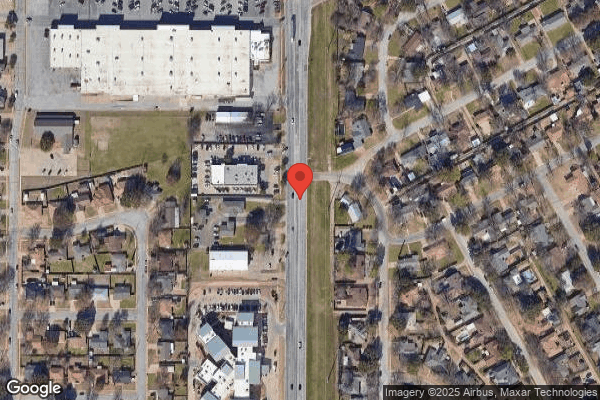
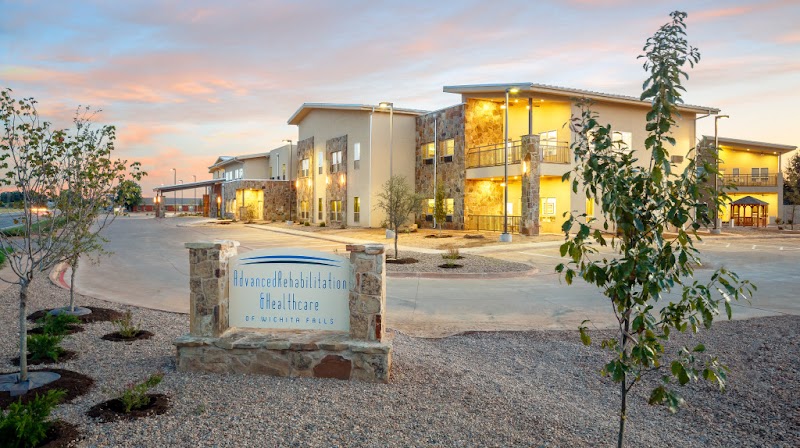
4810 Kemp Blvd, Wichita Falls, TX 76308 (940) 766-0281
For profit - Corporation 180 Beds ADVANCED HEALTHCARE SOLUTIONS Data: November 2025
Trust Grade
70/100
#185 of 1168 in TX
Last Inspection: December 2024

Within standard 12-15 month inspection cycle. Federal law requires annual inspections.

Overview

Advanced Rehabilitation and Healthcare of Wichita has a Trust Grade of B, indicating it is a good choice for families looking for care, as it falls within a solid range. It ranks #185 out of 1,168 nursing homes in Texas, placing it in the top half, and #2 out of 10 in Wichita County, indicating that it is one of the better local options. The facility is improving, with issues decreasing from eight in 2024 to three in 2025. However, staffing is a weakness, rated at only 2 out of 5 stars, although the turnover rate of 38% is below the state average of 50%. While there have been no fines, which is a positive sign, the facility has had some concerning incidents, including improper food safety practices and failure to conduct necessary background checks for staff, which could put residents at risk. Additionally, there were medication errors affecting several residents, suggesting that some aspects of care need improvement. Overall, while there are strengths, particularly in its good trust grade and lack of fines, families should consider these weaknesses when making their decision.
Trust Score
B
70/100
In Texas
#185/1168
Top 15%
Safety Record
Low Risk
No red flags
Inspections
Getting Better
8 → 3 violations
Staff Stability
○ Average
38% turnover. Near Texas's 48% average. Typical for the industry.
Penalties
✓ Good
No fines on record. Clean compliance history, better than most Texas facilities.
Skilled Nurses
⚠ Watch
Each resident gets only 21 minutes of Registered Nurse (RN) attention daily — below average for Texas. Fewer RN minutes means fewer trained eyes watching for problems.
Violations
⚠ Watch
24 deficiencies on record. Higher than average. Multiple issues found across inspections.
★★★★☆
4.0
Overall Rating
★★☆☆☆
2.0
Staff Levels
☆☆☆☆☆
0.0
Care Quality
★★★★☆
4.0
Inspection Score
Stable
2024: 8 issues
2025: 3 issues

The Good

  • Full Sprinkler Coverage · Fire safety systems throughout facility
  • No fines on record
  • Staff turnover below average (38%)

    10 points below Texas average of 48%

Facility shows strength in fire safety.

The Bad

Staff Turnover: 38%

Near Texas avg (46%)

Typical for the industry

Chain: ADVANCED HEALTHCARE SOLUTIONS

Part of a multi-facility chain

Ask about local staffing decisions and management

The Ugly 24 deficiencies on record

Jun 2025 1 deficiency
CONCERN (D) 📢 Someone Reported This

A family member, employee, or ombudsman was alarmed enough to file a formal complaint

Potential for Harm - no one hurt, but risky conditions existed

Deficiency F0627 (Tag F0627)

Could have caused harm · This affected 1 resident

**NOTE- TERMS IN BRACKETS HAVE BEEN EDITED TO PROTECT CONFIDENTIALITY** Based on interviews and record reviews the facility failed to readmit the resident, when the hearing officer determines that the...

Read full inspector narrative →
**NOTE- TERMS IN BRACKETS HAVE BEEN EDITED TO PROTECT CONFIDENTIALITY** Based on interviews and record reviews the facility failed to readmit the resident, when the hearing officer determines that the discharge was inappropriate, the facility, uopn written notification by the hearing officer, must readmit the resident immediately, or to the next availble bed. The facility failed to readmit (Resident #1) of two Residents reviewed for discharge requirement. 1) The facility failed and refused to readmit Resident #1 from the hospital where she was transferred for evaluation and treatment. 2) The facility did not permit resident to return to the facility after the appeal ruled the facility must reverse their decision to discharge the resident. 3) The facility did not permit Resident #1 to remain in the facility for 30 days after giving her 30-day discharge notice as required. 4) There was no documentation from the physician indicating that the resident had specific needs that could not be met in the facility. 5) The facility failed to ensure transfer or discharge was documented in the resident's medical records. 6) The facility failed to establish and follow a written policy on permitting resident to return to the facility after she was hospitalized . These failures affected discharged residents and could place the residents at risk of being discharged and not having access to available advocacy services, discharge/transfer options and appeal process. Findings Included: Record review of the face sheet for Resident #1 dated 06/18/25 revealed a [AGE] year-old female admitted to the facility on [DATE]. Her diagnoses included overactive bladder, right leg below knee amputation, cerebral infarction (stroke), pressure ulcers, hemiplegia (severe or complete loss of strength paralysis on one side of the body), and hemiparesis (one-sided muscle weakness). Review of Resident #1's admission MDS assessment, dated 06/09/23, reflected the resident had a BIMS score of 15, which reflected the resident was cognitively intact. Section BO300 indicated adequate hearing and clear speech. Resident #1 required substantial/maximal assistance with most ADLs. Review of Resident #1's care plan dated 02/17/25 reflected Resident #1 has an ADLs self-care performance deficit and is at risk for not having her needs met in a timely manner. Record review of the appeal decision dated 03/26/25 reflected the following: APPEAL ID: 5329037 Before the Texas Health and Human Services Commission Appeals Division In the Matter § Fair Hearing Of § Decision § Appellant § § I. LEGAL AUTHORITY The fair hearing was conducted under the authority provided by Title 1, Sections 357.1 through 357.25 of the Texas Administrative Code (TAC) and related law. II. HISTORY 1. On January 16, 2025, the Agency notified the Appellant of the discharge. 2. The Appellant disagreed with the discharge and filed an appeal on February 12, 2025. 3. The Appellant did not remain in the facility because the facility refused to accept her back from the hospital she was admitted to. 4. A Notice of Hearing was mailed to Appellant on February 19, 2025, by first class mail, for a hearing scheduled for March 12, 2025. 5. The fair hearing was conducted on March 12, 2025, and the record was closed. III. FINDINGS OF FACT Finding of Fact 1: On August 6, 2024, the Appellant was admitted into the nursing facility. Finding of Fact 2: On January 16, 2025, the nursing facility issued the Appellant a notice of discharge due to nonpayment. Finding of Fact 3: The Agency did not provide the Texas Administrative Code to support the discharge; therefore, did not meet their burden of proof. IV. CONCLUSIONS OF LAW 1 TAG §357.9 states the burden of proof in a fair hearing regarding a specific issue is proof by a preponderance of evidence. The party that bears the burden of proof meets the burden if the stronger evidence, on the whole, favors that party, as determined by the Hearings Officer. The Agency or its designee bears the burden of proof in this case. Based on the findings of fact and applicable authority, the Hearings Officer concludes that: Conclusion of Law 1: Because the Agency Representative did not provide the necessary policy to support the discharge, and based on 1 TAG §357.9, Agency failed. to meet its burden of proof. Therefore, the Agency action is REVERSED. Signed this 26th day of March 2025 Lead Hearings Officer Health and Human Services Commission. Record review of the resident medical records from the month of February 2025 revealed no physician documentation on discharge of Resident #1. Record review of Resident #1 medical records from the month of February 2025 revealed Resident #1was transferred to the hospital on [DATE] for evaluation and treatment for pneumonia. She was ready to be discharge from the hospital on [DATE] but the facility refiused to take her back During interview with the RP for Resident #1 on 06/18/25 at 9:07p.m, she said she was the responsible party for Resident #1. She explained the resident had a change in condition after fall from her wheelchair. According to the resident, she was on the floor for more than an hour before the facility responded to the fall. Resident #1 was transported to the hospital for evaluation and treatment due to severe pain from the fall. The RP stated after resident was stabilized in the hospital, the facility refused to take the resident back from the hospital due to non-payment. She explained the facility failed to fill papers with Medicaid to receive the necessary services. The family was advised to file appeal with HHSC. They filed the appeal which concluded that the facility must readmit Resident #1 to the facility. The facility refused after several attempts to come back to the facility, they decided to go to another facility. The RP explained the facility filed a lawsuit against the resident for non-payment. The RP stated that the Facility Administrator stated, the facility will never take the resident back and he don't care what the State said. In an interview with the BOM on 06/18/25 at 10:31a.m, she said she was the Business Office Manager for the facility. She Stated she was familiar with Resident #1. The BOM explained the resident was given 30-day notice but was transferred to the hospital for evaluation and treatment. She noted the resident was sent to the hospital few days before the 30-day notice ended. She stated the resident was not allowed to return to the facility for non-payment. The resident was owing more than $44,000. The BOM explained the resident and family refused to submit necessary documentation to apply for Medicaid as required. She was made aware that the family sold the resident's house and did not deposit the money on her account. The BOM stated she was not aware resident had an appeal with HHSC until the surveyor brought it to her notice. She noted she was not aware of any attempt to get the resident back to the facility. During interview with the DON on 06/18/25 at 1:41p.m, she stated she was familiar with Resident #1. The DON explained resident fell and was transferred to the hospital for further evaluation and treatment. She stated the facility notified the hospital of their intention not to readmit the resident for non-payment. She noted Resident #1 and family was non-complaint in providing required documentation Medicaid payor source approval. They kept holding information and stated they were switching to private pay. The Family did not make payment and was owing more than $44,000 in non-payment. The DON stated she was not aware of an appeal to stay in the facility by Resident #1. She said the Administrator may know but he was no longer employed by the facility. She noted the resident was given 30-day notice but was transferred before the end of the notice. Record review of notice letter dated 01/16/25 revealed Resident #1 was given a 30-day notice leave the facility. Record review of the facility policy on Admission, Transfer and discharge date d 10/10/17 reflected: Policy Statement This facility complies with federal regulations to permit each resident to remain in the facility, and not transfer or discharge unless the following criteria is met: Fundamental Information 1. The transfer or discharge is necessary for the resident's welfare and the resident's needs cannot be met in the facility. 2. The transfer or discharge is appropriate because the president's health has improved sufficiently so the resident no longer needs the service provided by the facility. 3. The safety of the individuals in the facility is endangered due to the clinical or behavioral status of the resident. 4. The health of individuals in the facility would otherwise be endangered. 5. Respite residents are discharged based upon the agreed length of stay and plan of care 6. The resident has failed, after reasonable and appropriate notice, to pay for (or to have paid under Medicare or Medicaid) a stay at the facility; or 7. The facility ceases to operate. Policy Explanation and Compliance Guidelines: The facility will evaluate and determine the level of care needed for the resident prior to admission to ensure the facility's ability to meet the resident's needs. 2. The facility permits each resident to remain in the facility, and not transfer or discharge the resident from the facility except in limited situations when the health and safety of the individual or other residents are endangered. 3. The facility may initiate transfers or discharges in the following limited circumstances: a. The transfer or discharge is necessary for the resident's welfare and the resident's needs cannot be met in the facility. b. The residents' health has improved sufficiently so that the resident no longer needs the care. and/or services of the facility. c. The safety of the individuals in the facility is endangered due to the clinical or behavioral status of the resident. d. The health of the individuals in the facility would otherwise be endangered. e. The resident has failed, after reasonable and appropriate notice, to pay or have paid under Medicare or Medicaid for his or her stay at the facility. f. The facility ceases to operate. 4. Nonpayment applies if the resident does not submit the necessary paperwork for third party payment or after the third party, including Medicare or Medicaid, denies the claim and the resident refuses to pay for his or her stay. 5. When a resident exercises his or her right to appeal a transfer or discharge, the facility will not transfer or discharge the resident while the appeal is pending, unless the failure to discharge or transfer would endanger the health or safety of the resident or other individuals in the facility.
Feb 2025 2 deficiencies
CONCERN (D) 📢 Someone Reported This

A family member, employee, or ombudsman was alarmed enough to file a formal complaint

Potential for Harm - no one hurt, but risky conditions existed

Free from Abuse/Neglect (Tag F0600)

Could have caused harm · This affected 1 resident

**NOTE- TERMS IN BRACKETS HAVE BEEN EDITED TO PROTECT CONFIDENTIALITY** Based on interview and record review, the facility failed to ensure the right to be free from verbal abuse for 1 of 1 resident r...

Read full inspector narrative →
**NOTE- TERMS IN BRACKETS HAVE BEEN EDITED TO PROTECT CONFIDENTIALITY** Based on interview and record review, the facility failed to ensure the right to be free from verbal abuse for 1 of 1 resident reviewed for mistreatment, (Resident #1). On 02/02/25 at 1:00 pm, LVN A began arguing with Resident #1. LVN A continued arguing after being asked to stop by other staff repeatedly, and continued to anger and upset Resident #1. This failure could place residents at risk for resident mistreatment. Findings included: Record review of Resident #1's Face Sheet dated 2/27/25 revealed a [AGE] year-old female, admitted to facility on 5/23/22 with diagnoses that included Unspecified Dementia, Unspecified Severity, without Behavioral Disturbance, Psychotic Disturbance, Mood Disturbance, and Anxiety (a condition in which a person loses the ability to think, remember, learn, make decisions, and solve problems without behaviors), ); Schizophrenia (a disorder that affects a person's ability to think, feel, and behave clearly), obesity, generalized anxiety disorder (worry, excessively and feel nervous or restless for no obvious reason). Record review of Resident #1's MDS assessment dated [DATE], revealed Resident #1 had BIMS score of 15 (cognitively intact). Record review of Resident #1's Care Plan dated 12/4/24 indicated Resident #1, schizophrenia, ADL deficit-forgetfulness, confusion, behaviors-sexual comments with males, history of false allegations, trauma while in state facility, verbally abusive behaviors, anxiety, anti-psychotic med, psychotropic medications (antidepressants, antipsychotics, anxiolytics, or hypnotics) related to depression, generalized anxiety disorder, schizophrenia- Has EPS from antipsychotic usage-tremors of hands. Interventions are to calm voice when speaking to resident and redirect when resident agitated. Record review of intake On 02/02/25 around 1:00 pm Resident #1 and LVN A had a verbal altercation where Resident #1 called LVN A fat and then LVN A told Resident #1 that she was Fat and Ugly. LVN A was suspended and after facility investigation terminated. Record review of statement provided by LVN A to Administrator dated 02/02/25, LVN A stated that resident called me fat, I did say she was ugly, referring to her calling me fat. I told her God does not like ugly, resident said I bet you and your wife do it doggy style you son of a bitch. Interview on 02/27/25 at 10:00 am, Resident #1 stated she was talking to RN B at nurse's station and LVN A started running his fat mouth. She stated that she said he was a [NAME] and fat, and she called him a bastard. LVN A said she was ugly and flipped me the bird. RN B told him to stop but LVN A kept on talking and calling her ugly, RN B and Resident #1 left. She was so upset, she was shaking. Resident #1 stated that she was doing well since the Administrator got rid of LVN A. Resident stated that she knows her rights and staff are not allowed to call residents names. Interview on 02/27/25 at 10:20 am, RN B stated she was witness to incident on 02/02/25. RN B stated she was at the nurse's station when Resident #1 came up and started taking to RN B. RN B stated all was fine just a general conversation. RN B stated that LVN A just butted in on conversation and that upset Resident #1. She told Resident #1 not to worry about LVN A and then Resident #1 called LVN A a fat [NAME]. LVN A said Resident #1 was ugly, and they both started bickering at one another very loudly. RN B stated she stepped in, tried to redirected Resident #1, and told LVN A to stop, but LVN A continued bickering with Resident #1 even after RN Basked LVN A many times to stop. RN B stated she was able to separate Resident #1 away from LVN A and started walking away, stating LVN A continued bickering and upsetting Resident #1 further. RN B stated protecting resident was her only concern and to stop the bickering. RN B stated it was very loud and disruptive. RN B stated once Resident #1 was calm and safe, RN B stated she immediately reported the incident to Administrator. Interview on 02/27/25 at 10:55 am, CNA C witnessed incident on 02/02/25. CNA C stated she was not positive on how conversation started between LVN A and Resident #1. CNA C stated she heard Resident #1 raising her voice towards LVN A and LVN A raising his voice. CNA C stated she heard LVN A say that Resident #1 was fat & ugly, and Resident #1 called LVN A fat and that he'eats four meals a day CNA stated that RN B was separating Resident #1 and LVN A. RN B asked LVN A several times to stop, but LVN A did not, and keep arguing with Resident #1. CNA C stated Resident #1 was clearly upset and LVN A should have stopped aggravating her. Several attempts made to contact LVN A was unsuccessful. 2/27/25 at 4:15pm, no voice mail, 2/28/25 at 8:55am, no voice mail. 2/28/25 at 2:10pm, no voice mail. Interview on 02/27/25 at 11:50am, Administrator stated that he is the facility's Abuse Coordinator, and the facility does not tolerate staff getting into verbal arguments with residents. Administrator stated his expectation that always for staff to be respectful and professional. Administration stated that LVN A was aggravating Resident #1 with little regards to Resident #1's mental diagnosis. Administrator stated that LVN A was terminated for Verbal Abuse. Record review of LVN A employee file revealed he was hired 4/23/21. There was a disciplinary write-up dated 3/3/23 for 'Speaking to resident in stern voice'. LVN A's annual background check dated 04/03/24 training for Abuse, neglect and Resident's Rights were up-to date. Review of the facility's Abuse, Neglect and Exploitation policy., dated 10/24/22, revised 9/6/24 Reflected, Policy: Verbal Abuse means the use of oral, written, or gestured communication or sounds that willfully includes disparaging and derogatory terms to residents or their families, or within their hearing distance regardless of their age, ability to comprehend, or disability.
CONCERN (D) 📢 Someone Reported This

A family member, employee, or ombudsman was alarmed enough to file a formal complaint

Potential for Harm - no one hurt, but risky conditions existed

Transfer Requirements (Tag F0622)

Could have caused harm · This affected 1 resident

**NOTE- TERMS IN BRACKETS HAVE BEEN EDITED TO PROTECT CONFIDENTIALITY** Based on interviews and record review, the facility failed to permit each resident to remain in the facility, and not transfer o...

Read full inspector narrative →
**NOTE- TERMS IN BRACKETS HAVE BEEN EDITED TO PROTECT CONFIDENTIALITY** Based on interviews and record review, the facility failed to permit each resident to remain in the facility, and not transfer or discharge the resident from the facility unless the discharge was necessary for the resident's welfare and the resident's needs could not be met in the facility for 1 of 1 resident (Resident #2 reviewed for discharge requirements. The facility failed to readmit Resident #2 after being admitted to the hospital, while facility initiated discharge was Pending Appeal. This failure placed residents at risk of not receiving necessary care and services. . Findings included: Record review of Resident #2's Face Sheet dated [DATE], reflected Resident #2 was a [AGE] year-old female, admitted to facility on [DATE]. Diagnoses included aftercare following surgical amputation below right knee, hemiplegia and hemiparesis following cerebral infraction affecting right dominant side (weakness and/or loss of strength to one side), type 2 diabetes (insulin resistance and high blood sugar levels), major depressive disorder (mood disorder that causes persistent feeling of sadness and loss), cerebral infraction (stroke), pressure ulcer of sacral region stage 3 (deeper involvement of underlying tissue with more extensive destruction spine tissue). Record review of Resident #2's MDS assessment dated [DATE] revealed Resident #2 has BIMS score of 15 (cognitively intact). Resident #2 needs extensive assistance with bed mobility, transfers, toileting, and dressing. Record review of Resident #2's Care Plan dated [DATE] revealed the resident had an indwelling catheter, ADL Self Care Performance Deficit, diagnosis of major depressive disorder, diagnosis of diabetes, fall risk, right heel MRSA, Enhanced Barrier Precautions d/t Urinary catheter, psychotropic medications antidepressants, anxiolytics related to depression. Record review of Resident #2's medical record revealed that Resident #2 fell in her room on [DATE], resident was assessed by facility staff and sent to hospital for further evaluation. Resident #2 did not suffer any injury due to fall but was diagnosis with pneumonia. On [DATE] hospital contacted nursing facility stating resident was ready for discharge back to the nursing facility. Facility refused to accept resident back due to non-payment for care at facility. Interview on [DATE] at 11:40 am, BOM stated that Resident #2 admitted to facility on [DATE] from LTAC. Resident #2 had Blue Cross Blue Shield (BCBS) Cobra insurance. Facility was notified by BCBS in September that Resident #2's coverage had expired; Resident #2 had run out of covered days before admitting to facility. Resident #2 and Resident #2's POA were informed that her stay would be private pay until Medicaid, or another payor source was found. BOM stated that POA stated will apply for Medicaid. Resident #2 was denied Medicaid due to 'not meeting eligibility'. BOM stated that Resident #2 must apply for SSI before being approved for Medicaid. BOM stated resident had not applied for SSI and is not MCD pending. BOM stated that the facility does not take SSI pending residents and that BOM informed Resident #2 and POA. BOM stated on [DATE], Resident #2 paid $5456 for [DATE] stay, and on [DATE] paid $4,752 for [DATE] stay. BOM stated that Resident #2 had an outstanding balance of $44, 572.82, which Resident #2 and POA stated they cannot pay. Interview [DATE] at 10:30 am, Resident #2's POA stated that Medicaid was applied for, but was denied on [DATE] due to Medicaid saying Resident #2 owned two houses; one in Dallas and one in Wichita Falls. POA stated the house in Dallas was sold in [DATE], and the money was used to buy house in Wichita Falls. POA stated that Resident #2 did not have Social Security, but they are applying for disability (SSI). POA was informed by facility that resident must have SSI before applying for Medicaid, and that the facility does not take SSI pending, and that the resident must be private pay. POA stated that Resident #2 cannot pay private, that was why they are trying to get Medicaid. POA stated that she and Resident #2 received a 30-day Notice of Discharge from facility on [DATE], with effective discharge date of [DATE]. POA stated an appeal of discharge was made on [DATE], and the Fair Hearing was set for [DATE]. POA stated that the facility has refused to readmit Resident #2 back from the hospital. POA stated they have no place for Resident #2 to go. Interview on [DATE] at 1:20 pm, Administrator stated on [DATE], he issued a 30-Day Discharge Notice to Resident #2, Resident #2 's POA, Resident's primary physician, and Ombudsman. Administrator stated that Resident #2 had an outstanding bill of $44,572.82, has no coverage days with his medical insurance, and is not MCD eligible. He stated Resident #2 is applying for SSI, and they do not accept SSI pending. Administrator stated he was notified that the Discharge Notice was appealed and that the Fair Hearing was set for [DATE] and that he plans to attend hearing. Administrator stated the facility was contacted by the hospital and he refused to readmit Resident #2 back in facility. Administrator stated his reason for denial was Resident #2 has no payor source, an outstanding bill of $44,572.82, and Resident #2 and her POA have stated they cannot pay. Record review of facility's admission Policy dated [DATE], revised [DATE], revealed: Policy Explanation and Compliance Guidelines, 5). When a resident exercises his or her right to appeal a transfer or discharge. That facility will not transfer or discharge the resident while the appeal is pending unless the failure to discharge or transfer would endanger the health or safety of the resident or other individuals in the facility.
Dec 2024 4 deficiencies
CONCERN (D)

Potential for Harm - no one hurt, but risky conditions existed

Infection Control (Tag F0880)

Could have caused harm · This affected 1 resident

**NOTE- TERMS IN BRACKETS HAVE BEEN EDITED TO PROTECT CONFIDENTIALITY** Based on observation, interview, and record review, the facility failed to establish and maintain an infection prevention and co...

Read full inspector narrative →
**NOTE- TERMS IN BRACKETS HAVE BEEN EDITED TO PROTECT CONFIDENTIALITY** Based on observation, interview, and record review, the facility failed to establish and maintain an infection prevention and control program designed to provide a safe, sanitary, and comfortable environment and to help prevent the development and transmission of communicable diseases and infections for 1 of 33 residents (Residents #39) reviewed for infection control. The facility failed to ensure LVN A donned (put on) Personal Protective Equipment (PPE), as required for residents who were on transmission-based precautions (TBP), when she entered Resident #39's room. This failure could place residents at risk for infections. The findings include: 1. Record review of Resident #39's face sheet, dated 12/05/2024, revealed a [AGE] year-old female, who was admitted to the facility on [DATE] with the following diagnoses osteomyelitis (bone infection), essential hypertension (high blood pressure), type 2 diabetes mellitus (diabetes), and chronic obstructive pulmonary disease (lung disease). Record review of Resident #39's MDS assessment dated [DATE] revealed the following: Section O: Special Treatments, Procedures and Programs performed: M1. Isolation or quarantine for active infectious disease while a resident. Record review of Resident #39's Care Plan, initiated on 11/14/24, revealed a care plan for MRSA and resident on contact isolation due to infection. Record review of Resident #39's physician orders, active date of 12/04/2024, revealed Resident #39 had an order for Contact Precautions for diagnosis of MRSA in effect every shift with order start date of 11/14/2024 and no end date. An observation on 12/04/2024 at 2:01 PM revealed, Resident #39's door was closed, there were PPE supplies hanging on the outside of door, and Contact Precaution signage which informed the viewer that the resident was on Contact Precautions. The contact precautions sign revealed: Perform hand hygiene before entering and before leaving room, Wear gloves when entering room or cubicle and when touching patient intact skin, surface, or articles in close proximity, Wear gown when entering room or cubicle and whenever anticipating that clothing will touch patient's items or potential contaminated environment, Use patient-dedicated or single use disposable shared equipment or clean and disinfect shared equipment. LVN A was observed entering Resident #39's room without donning PPE, then closed Resident #39's door. LVN A was then observed leaving Resident #39's room without PPE on 12/4/24 at 2:03 PM. In an interview on 12/4/24 at 2:03 PM, LVN A stated that Resident #39 was on contact precautions due to MRSA in her wound. She further stated that PPE was to be used only when we do care or mess with the wound . She stated that the staff didn't need to put PPE on for entering Resident#39's room for other resident care. Further stating, staff only need to wear PPE such as gown when in contact with the resident's wound . In an interview on 12/4/24 at 2:09 PM, ADON B stated that Resident #39 was on contact precautions. She also stated that her expectation is staff should only put on PPE if in direct contact with resident's wound. In an interview on 12/5/24 at 2:42 PM, the DON stated that Resident #39 is currently on contact precautions. The DON also verified the physician's order, care plan, MDS, and that the sign posted on Resident #39's door is for contact precautions. The DON stated that her expectation, for any resident on contact precautions, is for staff to don (put on) PPE, gown, and gloves, upon entry into resident's room. She also stated that lack of following ordered contact precautions could lead to spread of infection. Record review of facility policy Transmission-Based (Isolation) Precautions dated 10/24/22 revealed the following [in-part]: Contact Precautions - refer to measures that are intended to prevent transmission of infectious agents which are spread by direct or indirect contact with the resident or the resident's environment. 8. Contact Precautions - a. Intended to prevent transmission of pathogens that are spread by direct or indirect contact with the resident or the resident's environment. c. Healthcare personnel caring for residents on Contact Precautions wear a gown and gloves for all interactions that may involve contact with the resident or potentially contaminated areas in the resident's environment. d. Donning PPE upon room entry and discarding before exiting the room is done to contain pathogens.
CONCERN (E)

Potential for Harm - no one hurt, but risky conditions existed

Abuse Prevention Policies (Tag F0607)

Could have caused harm · This affected multiple residents

Based on interviews and record review, the facility failed to implement its policies and procedures to prohibit and prevent abuse, neglect and exploitation of residents and misappropriation of residen...

Read full inspector narrative →
Based on interviews and record review, the facility failed to implement its policies and procedures to prohibit and prevent abuse, neglect and exploitation of residents and misappropriation of resident property for 4 of 4 staff members (ADM, DON, ADON and CNA B) reviewed for abuse protocol. The facility failed to complete annual Criminal Background Checks for the ADM, DON, ADON and CNA B. This failure could place residents at risk for abuse, neglect, and exploitation. Findings included: Record review of the ADM personnel file revealed no annual criminal background check completed for 2024. The ADM had a hire date of 5/9/2016. Record review of the DON personnel file revealed no annual criminal background check completed for 2024. The DON had a hire date of 1/19/10. Record review of the ADON personnel file revealed no annual criminal background check completed for 2024. The ADON had a hire date of 06/23/04. Record review of CNA B personnel file revealed no annual criminal background check completed for 2024. CNA B had a hire date of 12/19/20. In an interview on 12/6/24 at 3:26 PM, ADM stated that annual background checks for 2024 were not completed on any employee with a hire date prior to 1/1/24 by the Human Resources Manager. He stated that he was not aware the checks were not being run and that the Human Resources Manager would run them 12/6/24. He stated that employees hired within year 2024 had background checks completed. In an interview on 12/6/24 at 5:10 pm, the Human Resources Manager stated, I ran them, but I cannot find them referring to annual criminal background checks for year 2024. She stated that it was her responsibility. She stated, I don't know when asked about adverse outcome of checks not being run. She also stated that she was not aware that she needed to keep previous checks on file. She stated that she ran them in January of 2023, but was unsure of the exact date . In an interview on 12/6/24 at 5:23 PM, the ADM stated that criminal background checks should be ran annually in January per policy and completed before hire. He further stated that an adverse outcome of not running employee background checks could lead to having staff with felonies. Record review of facility policy Policy and Procedures: Abuse, Neglect and Exploitation dated 10/24/22 revealed the following [in-part]: Policy Explanation and Compliance Guidelines: .3. The facility provides ongoing oversight and supervision of staff in order to assure that its policies are implemented as written. The components of the facility abuse prohibition plan are discussed herein: I. Screening: A. Potential employees will be screened for a history of abuse, neglect, exploitation, or misappropriation of resident property. 1. Background, reference, and credentials' checks shall be conducted on potential employees, contracted temporary staff, students affiliated with academic institutions, volunteers, and consultants. 3. The facility will maintain documentation of proof that the screening occurred. Record review of facility Human Resources Policies and Procedures Manual revised 07/09, section 7. Safety and Health, Subject-Applicant and Employee Screening revealed the following [in-part]: Policy: All current employees will have annual employee screening conducted. 2. Criminal history check will be completed. Criminal History: Criminal history checks must be completed prior to employment and annually, each January thereafter for all staff and volunteers.
CONCERN (E)

Potential for Harm - no one hurt, but risky conditions existed

Unnecessary Medications (Tag F0759)

Could have caused harm · This affected multiple residents

**NOTE- TERMS IN BRACKETS HAVE BEEN EDITED TO PROTECT CONFIDENTIALITY** Based on observation, interview, and record review, the facility failed to ensure it was free of medication error rates of five ...

Read full inspector narrative →
**NOTE- TERMS IN BRACKETS HAVE BEEN EDITED TO PROTECT CONFIDENTIALITY** Based on observation, interview, and record review, the facility failed to ensure it was free of medication error rates of five percent or greater. There were 4 medication errors out of 28 opportunities, resulting in a medication error rate of 14% involving 4 of 10 residents (Resident #s #151, #113, #39, & #80) reviewed for medication errors. A. On 12/4/24 at 11:29 am, LVN A administered Micafungin Sodium IV to a Resident #151 at the incorrect physician ordered administration time. B. On 12/4/24 at 11:38 am, LVN A failed to prime the insulin needle prior to administering Novolog 100 units/ml via a Flex Pen to Resident #113. C. On 12/4/24 at 11:44 am, LVN A failed to prime the insulin needle prior to administering Humalog 100 units/ml via a Flex Pen to Resident #39. D. On 12/4/24 at 11:51 am, LVN A failed to prime the insulin needle prior to administering Novolog 100 units/ml via a Flex Pen to Resident #80. These deficient practices could place residents at risk of not receiving their medications according to physician's orders and cause a physical decline in health. The findings included: 1. Record review of Resident #151's admission Record dated 12/06/2024 revealed she was a [AGE] year-old-female admitted to the facility on [DATE] with the following diagnoses: Aftercare Following Joint Replacement Surgery, Unspecified Asthma Uncomplicated (airway restriction), Multiple Sclerosis (breakdown of the protective covering of nerves), Other Migraine, Intractable Without Status Migraineurs (severe headaches), Presence of Right Artificial Hip Joint, Other Idiopathic Peripheral Autonomic Neuropathy (nerve pain), Herpes viral Vesicular Dermatitis (skin inflammation), Vitamin Deficiency, Attention Deficit Hyperactivity Disorder (attention difficulty), Gastro Esophageal Reflux Disease without Esophagitis (heart burn), Muscle Spasms, Anemia (low red blood cells), Depression, Anxiety, Insomnia (difficulty sleeping), Hypertension (high blood pressure), and Age Related Osteoporosis Without Current Pathological Fractures (weak and brittle bones). Record review of Residents #151's Physician orders revealed the following medication orders, dated 12/06/2024 revealed: 1. Micafungin Sodium IV Solution 100 mg use 10 mg IV one time a day at 7:00 PM In an observation on 12/4/24 at 11:29 am, LVN A administered Micafungin Sodium IV to a Resident #151. 2. Record review of Resident #113 admission Record dated 12/06/2024 revealed that she was an [AGE] year-old female admitted to the facility on [DATE] with the following diagnoses: Fracture with Routine Healing, Type II Diabetes Mellitus Without Complications (diabetes), Asthma (difficulty breathing), Zoster Without Complications (shingles), Hypothyroidism (underactive thyroid), Hyperlipidemia (elevated lipids in blood), Major Depressive Disorder (chronic depression), Generalized Anxiety Disorder (anxiety), Hypertension (high blood pressure), Allergic Rhinitis (seasonal allergies), Gastro Esophageal Reflux Disease Without Esophagitis (heart burn), and Urinary Tract Infection (infection of the bladder). Record review of Resident #113's physician orders dated 12/06/2024 revealed the following medication orders: 1. NovoLOG FlexPen Subcutaneous Solution Pen injector 100 UNIT/ML Inject 2 unit subcutaneously with meals for diabetes 2. NovoLOG FlexPen Subcutaneous Solution Pen injector 100 UNIT/ML Inject as per sliding scale: if 150 - 224 = 1 unit; 225 - 299 = 2 units; 300 - 374 = 3 units; 375 - 449 = 4 units; 450 - 500 if >450, give 5 units and notify the physician, subcutaneously before meals. In an observation on 12/4/24 at 11:38 am, LVN A failed to prime the insulin needle prior to administering Novolog 100 units/ml via a Flex Pen to Resident #113. Record review of Resident #39's admission Record dated 12/06/2024 revealed that she was a [AGE] year-old female admitted to the facility on [DATE] with the following diagnoses: Depressed (depression), Unspecified Systolic Congestive Heart Failure (heart failure), Hypokalemia (low potassium), Non ST Elevation NSTEMI Myocardial Infarction (heart attack), Mixed Hyperlipidemia (elevated lipids in the blood), Polyneuropathy (nerve pain), Atherosclerotic Heart Disease of Native Coronary Artery Without Angina Pectoris (plaque buildup in arteries), Peripheral Vascular Disease (narrowed blood vessels),Complete Traumatic Amputation At Level Between Knee and Ankle Left Lower Leg Initial Encounter (left leg amputation), Hypertension (high blood pressure). Record review of Resident#39's physician orders dated 12/06/2024 revealed the following medication orders: 1. HumaLOG Injection Solution 100 UNIT/ML 2 unit subcutaneously before meals 2. HumaLOG Injection Solution 100 UNIT/ML as per sliding scale: if 150 - 189 = 1 unit;190 - 229 = 2 units; 230 - 269 = 3 units; 270 - 309 = 4 units; 310 - 349 = 5 units if BBG IS GREATER OR EQUAL TO 350, GIVE 5 UNITS AND ALERT MD, subcutaneously before meals and at bedtime In an observation on 12/4/24 at 11:44 am, LVN A failed to prime the insulin needle prior to administering Humalog 100 units/ml via a Flex Pen to Resident # 39. Record review of Resident #80's admission Record dated 12/06/2024 revealed that he was a [AGE] year-old male admitted to the facility on [DATE] with the following diagnoses: Sepsis Unspecified Organism (blood infection), Insomnia (difficulty sleeping, Iron Deficiency Anemia (low iron), Type II Diabetes Mellitus Without Complications (diabetes), Vitamin D Deficiency (low vitamin D), Hyperlipidemia (elevated lipids in the blood), Hypertension (high blood pressure), Heart Failure, Peripheral Vascular Disease (narrowed blood vessels), Chronic Pulmonary Disease (blocked airflow in the lungs), Gout (arthritis in joints), and COVID -19. Record review of Residents #80's physician orders dated 12/06/2024 documented the following medication orders: 1. NovoLOG FlexPen Subcutaneous Solution Pen injector 100 UNIT/ML 5 unit subcutaneously with meals 2. NovoLOG FlexPen Subcutaneous Solution Pen injector 100 UNIT/ML as per sliding scale: if 150 - 199 = 2 units; 200 - 249 = 4 units; 250 - 299 = 6 units; 300 - 349 = 8 units; 350 - 399 = 10 units; 400 - 450 = 12 units if BBG >400, give 12 units and notify physician, subcutaneously before meals and at bedtime. In an observation on 12/4/24 at 11:51 am, LVN A failed to prime the insulin needle prior to administering Novolog 100 units/ml via a Flex Pen to Resident # 80. In an interview on 12/6/24 at 8:30 AM regarding Residents #113, 39, and 80, LVN A stated, I take off the primed needle then put on a new needle. You prime the needle to make sure the pen is good. There is not insulin in the new needle . She was unable to explain correct medication administration of priming needle with insulin prior to administering. She did not acknowledge that replacing the primed needle with a new needle, and failing to prime that needle, can cause any adverse reactions or that failure to do so, prevents the resident from receiving the entire dose of insulin. She acknowledged that the nurse is responsible for ensuring insulin administration is conducted properly. In an interview with LVN A 12/06/2024 at 11:15 am, when asked if she reviewed the MAR prior to administrating Resident #151's IV on 12/04/2024 at 11:29 am, she stated the medication was on the MAR but had a time order change the day previous. She stated that upon review the medication was scheduled at 7:00 PM. LVN A stated lack of checking orders and following rights of medication administration could cause someone to get something they aren't supposed to get. She further stated to prevent medication errors in the future, you should check the order before giving it. She stated, The nurse who passes the medication are responsible for checking medication and that, missing that final check caused that error. In an interview on 12/6/24 at 3:50 pm, the DON stated, My expectation is for them (staff) to follow their MAR and go by their MAR which is time limit is specific . She further stated that she does acknowledge that the nurse administered the Micafungin at 11:29 am and that the physician order at that time was for 7:00 PM. She stated an adverse outcome of not following a physician's order could lead to anaphylaxis, renal failure, or heart failure. She stated the administering nurse is responsible for checking the MAR and administering medications. The DON stated, The nurses should prime the needles prior to administration. She stated that primed needles should not be replaced prior to injection. They have skills check offs and annual checks off for all of that. She continued to say that she spoke with the nurse who removed the primed needle and replaced it with a non-primed needle and educated her on how to properly prime an insulin needle. She stated hyperglycemia (high blood sugar) could be a result of not priming the insulin pen needle. Record review of the facility's policy and procedure guide labeled Administration of IV Fluids and Medications, dated April 2014, revealed the following [in part]: .Procedure: 1. Verify label on IV bag with prescriber's order . Record review of the facility's policy and procedure labeled License Skill Review for Administration of SQ Insulin via Insulin Pen provided by the DON on 12/6/2024 revealed the following [in part]: .5. Prepares injection: o Attaches the needle o Remove the needle cap o Check the flow of delivery device (air shot) o 2-unit PRIIME every time o Select the dose prescribed .
CONCERN (E)

Potential for Harm - no one hurt, but risky conditions existed

Deficiency F0804 (Tag F0804)

Could have caused harm · This affected multiple residents

Based on observation, interviews, and record reviews, the facility failed to provide an appetizing temperature meal for 3 of 3 residents reviewed for meal palatability. The facility failed to serve me...

Read full inspector narrative →
Based on observation, interviews, and record reviews, the facility failed to provide an appetizing temperature meal for 3 of 3 residents reviewed for meal palatability. The facility failed to serve meals at palatable, attractive, and at an appetizing temperature for residents #105, #25 and #27 served their meals in their rooms. This failure could affect the residents by placing them at risk for malnutrition due to not providing appetizing temperature meal. Findings included: An observation and interview with the Dietary Manager on 12/05/24 at 11:58 AM, in the Satellite Kitchen on the 2nd floor revealed: A. The holding temperatures were as follows: Turkey Entre 169.2 Fahrenheit and Carrots 174.1 Fahrenheit. B. At 11:59 AM, the sample tray was placed on the food cart. C. At 12:07 PM, the food cart left the kitchen. D. At 12:12 PM, the last tray was delivered to the resident. E. At 12:15 PM, the sampled tray was tested with the Dietary Manager. The temperature of the food was as followed: Turkey entre 100 Fahrenheit and the carrots 104 Fahrenheit. The surveyor team and the Dietary Manager all tasted the food. The food was rated as lukewarm The Dietary Manager stated the food was not warm enough. In an observation and interview with the Dietary Manager on 12/05/24 at 12:50 PM, in the Main Kitchen on the 1st floor: A. The holding temperatures were as follows: Turkey Entre 167.2 Fahrenheit and Carrots 158.6 Fahrenheit. B. At 12:52 PM, the sample tray was placed on the food cart. C. At 12:56 PM, the food cart left the kitchen. D. At 1:00 PM, the last tray was delivered to the resident. E. At 1:01 PM, the sampled tray was tested with the Dietary Manager. The temperature of the food was as followed: Turkey entre 132 Fahrenheit and the carrots 131 Fahrenheit. The surveyor team and the Dietary Manager all tasted the food. The food was rated as warm The Dietary Manager stated the food was warmer than the 2nd floor. During an interview on 12/04/24 at 11:35 AM, Resident #105's family member stated Resident #105 ate in his room and the food was cold most of the time. During an interview on 12/04/24 at 11:57 AM, Resident #25 stated she ate mostly in her room and the food was cold. During an interview on 12/04/24 at 11:48 AM, Resident #27 stated she ate in her room most of the time and stated I get cold food quite a bit. Record review of the Resident Council meeting minutes revealed on 10/02/2024, 09/04/24, 08/07/24, 07/03/24, 05/01/24, 04/02/24, and 03/06/24, the residents complained of cold food. In an interview and record review on 12/06/24 at 10:57 AM, the Dietary Manager and Dietician, stated they received reports from Resident Council that the food being served to the residents' rooms was cold. The Dietary Manager stated, as a result, they had been checking food temperatures monthly and that the food temperatures were ok. They said there was no documentation of testing the temperatures of the food. The Dietician said a potential negative outcome of hot foods not being served hot were the residents might not eat their food causing hunger and weight loss. A facility policy was requested regarding food temperatures and was provided the policy Food Safety and Sanitation Plan,. However, the policy failed to address residents receiving cold foods. The Dietary Manager said there was no other policy. In an interview on 12/06/24 at 12:00 PM, the Administrator said cold food had been the number one complaint he received from the residents, and the facility has been working on addressing the cold food temperatures but nothing has worked so far. He said QAPI has identified it, and is currently being worked on. Record review of the facility policy Food Safety and Sanitation Plan, dated as last reviewed on 11/28/17 revealed the policy did not provide any relevant references to the failure.
May 2024 2 deficiencies
CONCERN (D) 📢 Someone Reported This

A family member, employee, or ombudsman was alarmed enough to file a formal complaint

Potential for Harm - no one hurt, but risky conditions existed

Comprehensive Care Plan (Tag F0656)

Could have caused harm · This affected 1 resident

**NOTE- TERMS IN BRACKETS HAVE BEEN EDITED TO PROTECT CONFIDENTIALITY** Based on observations, interviews, and record reviews, the facility failed to implement care interventions in accordance with ea...

Read full inspector narrative →
**NOTE- TERMS IN BRACKETS HAVE BEEN EDITED TO PROTECT CONFIDENTIALITY** Based on observations, interviews, and record reviews, the facility failed to implement care interventions in accordance with each resident's written plan of care for 1 of 3 residents (Resident #s 1) whose care was reviewed in that: The facility failed to implement ADL transfer interventions for Resident #1 as care planned. This failure could affect residents that required assistance with transfers. The findings were: Review of the Resident #1's Facesheet, dated, 05/09/2024, revealed she was admitted on [DATE], with diagnoses that included: hypertension (high blood pressure), Diabetes Melitus (too much sugar in the blood) difficulty in walking, and dementia (loss of memory). Review of Resident #1's admission MDS, dated [DATE] revealed the following: Section C revealed resident's BIMS was a 06 (severe cognitive impairment). Section GG revealed resident partial/moderate assistance with transfers. Review of the Resident #1's Care plan dated 05/06/2024 revealed the following: -Resident #1 has impaired cognition and is at risk for a further decline in cognitive and functional abilities related to: diagnosis of dementia (loss of memory). - Resident #1 has an ADL self-care performance deficit and is at risk for not having their needs met in a timely manner and will require transfers with extensive assist x 1 staff (help resident). During an observation on 05/09/2024 at 11:30 AM, a video clip that was provided from the facility of Resident #1's room revealed that CNA A placed wheelchair to the left of Resident #1 in a 90-degree angle from the bed. CNA A stepped behind the wheelchair. Resident #1 stood from bed without staff assistance and CNA A could be heard asking Resident #1 to turn a little. Resident began turning to the left and fell to the left between the bed and the wheelchair. CNA A immediately called for help and assisted the resident. During an observation on 05/10/2024 at 1:30 PM., Resident #1 was lying in her bed watching TV, she stated that she could transfer without assistance. She stated that, does not remember much but that she lost her balance and fell. She revealed that CNA A was always nice to her and kind and that she liked it when she worked. She stated that she knows how to press her call light, but she does not always press it because she does not always need help. During an interview on 05/10/2024 at 9:00 AM., CNA A revealed that, the day Resident #1 fell the following occurred, the resident had pulled her light, she was sitting up on the side of her bed and was needing to go to the bathroom, the CNA asked if Resident #1 wanted to use her walker or wheelchair. The resident said she wanted to use her wheelchair. CNA A said that she pulled the wheelchair next to Resident #1 and the bed and locked the wheels, but when Resident #1 stood up, she faced the chair. CNA A told Resident #1 that she needed to turn around so she could sit in the chair. She stated that when Resident #1 turned to sit correctly in the chair, that is when Resident #1 fell. She said that after Resident #1 fell, she made sure Resident #1 was okay, and she immediately got the nurse. She said she was sitting with her and making sure she was okay until the nurse got there. CNA A stated that she did not know Resident #1 required assistance with transfers, she thought Resident #1 was supervision because the resident gets up on her own and walks on her own and that is what she was before. She stated that she had not ever looked at her care plan, but she should have. CNA A stated Resident #1 often stands and transfers by herself, so she assumed Resident #1 could still do that. She stated that this failure could result in the resident falling and hurting herself. During an interview on 05/10/2024 at 10:30 AM., CNA B revealed that, Resident #1 had been transferring by herself. Staff had been telling her to call for assistance, but Resident #1 had not been doing that. She stated that the facility staff placed a sign on the resident's wall to even remind her. She stated that she would walk in her room, and Resident #1 would be in her bathroom. She revealed that she often worked the hall that the resident was on, and that Resident #1 thought she was independent. She stated that she knew how to access the care plans for each resident. During an interview on 05/10/2024 at 10:45 AM., CNA C revealed that Resident #1 had been transferring by herself, even though staff asked her not to, she still would. She stated that Resident #1 used to transfer without assistance, and she still thought that she could. She stated that they would take Resident #1 to the bathroom, and she would ask facility staff to leave and then would transfer back to her wheelchair by herself. She stated that she knew how to look up the care plans. During an interview on 05/10/2024 at 11:30 AM., the DON confirmed Resident #1 required assistance x1 with transfers. Her expectations were that all staff review the care plans that are individualized to each resident and that covers their needs. She revealed that this resident was able to transfer with supervision previously, but that she required assistance with transfers at the time of the fall. A copy of the policy related to Care Plans was requested on 05/10/2024 at 1:00 PM, the facility stated that they use the RAI manual for guidance on Care Plans. Record review of CMS RAI Version 3.0 Manual last revised October 2023 revealed: the facility must develop a comprehensive care plan for each resident that includes measurable objectives and timetables to meet a resident's medical, nursing, and mental and psychosocial needs that are identified in the comprehensive assessment. The services that are to be furnished to attain or maintain the resident's highest practicable physical, mental, and psychosocial well-being and any services that would otherwise be required but are not provided due to the resident's exercise of rights including the right to refuse treatment.
CONCERN (D) 📢 Someone Reported This

A family member, employee, or ombudsman was alarmed enough to file a formal complaint

Potential for Harm - no one hurt, but risky conditions existed

Accident Prevention (Tag F0689)

Could have caused harm · This affected 1 resident

**NOTE- TERMS IN BRACKETS HAVE BEEN EDITED TO PROTECT CONFIDENTIALITY** Based on observations, interviews, and record reviews, the facility failed to provide supervision to prevent accidents for 1 of ...

Read full inspector narrative →
**NOTE- TERMS IN BRACKETS HAVE BEEN EDITED TO PROTECT CONFIDENTIALITY** Based on observations, interviews, and record reviews, the facility failed to provide supervision to prevent accidents for 1 of 3 residents (Resident #s 1) whose care was reviewed in that: The facility failed to implement ADL transfer interventions for Resident #1 . This failure could affect residents that required assistance with transfers. The findings were: Review of the Resident #1's Facesheet, dated, 05/09/2024, revealed she was admitted on [DATE], with diagnoses that included: hypertension (high blood pressure), Diabetes Melitus (too much sugar in the blood) difficulty in walking, and dementia (loss of memory). Review of Resident #1's admission MDS, dated [DATE] revealed the following: Section C revealed resident's BIMS was a 06 (severe cognitive impairment). Section GG revealed resident partial/moderate assistance with transfers. Review of the Resident #1's Care plan dated 05/06/2024 revealed the following: -Resident #1 has impaired cognition and is at risk for a further decline in cognitive and functional abilities related to: diagnosis of dementia (loss of memory). - Resident #1 has an ADL self-care performance deficit and is at risk for not having their needs met in a timely manner and will require transfers with extensive assist x 1 staff (help resident). During an observation on 05/09/2024 at 11:30 AM, a video clip that was provided from the facility of Resident #1's room revealed that CNA A placed wheelchair to the left of Resident #1 in a 90-degree angle from the bed. CNA A stepped behind the wheelchair. Resident #1 stood from bed without staff assistance and CNA A could be heard asking Resident #1 to turn a little. Resident began turning to the left and fell to the left between the bed and the wheelchair. CNA A immediately called for help and assisted the resident. During an observation on 05/10/2024 at 1:30 PM., Resident #1 was lying in her bed watching TV, she stated that she could transfer without assistance. She stated that, does not remember much but that she lost her balance and fell. She revealed that CNA A was always nice to her and kind and that she liked it when she worked. She stated that she knows how to press her call light, but she does not always press it because she does not always need help. During an interview on 05/10/2024 at 9:00 AM., CNA A revealed that, the day Resident #1 fell the following occurred, the resident had pulled her light, she was sitting up on the side of her bed and was needing to go to the bathroom, the CNA asked if Resident #1 wanted to use her walker or wheelchair. The resident said she wanted to use her wheelchair. CNA A said that she pulled the wheelchair next to Resident #1 and the bed and locked the wheels, but when Resident #1 stood up, she faced the chair. CNA A told Resident #1 that she needed to turn around so she could sit in the chair. She stated that when Resident #1 turned to sit correctly in the chair, that is when Resident #1 fell. She said that after Resident #1 fell, she made sure Resident #1 was okay, and she immediately got the nurse. She said she was sitting with her and making sure she was okay until the nurse got there. CNA A stated that she did not know Resident #1 required assistance with transfers, she thought Resident #1 was supervision because the resident gets up on her own and walks on her own and that is what she was before. She stated that she had not ever looked at her care plan, but she should have. CNA A stated Resident #1 often stands and transfers by herself, so she assumed Resident #1 could still do that. She stated that this failure could result in the resident falling and hurting herself. During an interview on 05/10/2024 at 10:30 AM., CNA B revealed that, Resident #1 had been transferring by herself. Staff had been telling her to call for assistance, but Resident #1 had not been doing that. She stated that the facility staff placed a sign on the resident's wall to even remind her. She stated that she would walk in her room, and Resident #1 would be in her bathroom. She revealed that she often worked the hall that the resident was on, and that Resident #1 thought she was independent. She stated that she knew how to access the care plans for each resident. During an interview on 05/10/2024 at 10:45 AM., CNA C revealed that Resident #1 had been transferring by herself, even though staff asked her not to, she still would. She stated that Resident #1 used to transfer without assistance, and she still thought that she could. She stated that they would take Resident #1 to the bathroom, and she would ask facility staff to leave and then would transfer back to her wheelchair by herself. She stated that she knew how to look up the care plans. During an interview on 05/10/2024 at 11:30 AM., the DON confirmed Resident #1 required assistance x1 with transfers. Her expectations were that all staff review the care plans that are individualized to each resident and that covers their needs. She revealed that this resident was able to transfer with supervision previously, but that she required assistance with transfers at the time of the fall. A copy of the policy related to Care Plans was requested on 05/10/2024 at 1:00 PM, the facility stated that they use the RAI manual for guidance on Care Plans. Record review of CMS RAI Version 3.0 Manual last revised October 2023 revealed: the facility must develop a comprehensive care plan for each resident that includes measurable objectives and timetables to meet a resident's medical, nursing, and mental and psychosocial needs that are identified in the comprehensive assessment. The services that are to be furnished to attain or maintain the resident's highest practicable physical, mental, and psychosocial well-being and any services that would otherwise be required but are not provided due to the resident's exercise of rights including the right to refuse treatment.
Apr 2024 1 deficiency
CONCERN (D) 📢 Someone Reported This

A family member, employee, or ombudsman was alarmed enough to file a formal complaint

Potential for Harm - no one hurt, but risky conditions existed

Deficiency F0839 (Tag F0839)

Could have caused harm · This affected 1 resident

**NOTE- TERMS IN BRACKETS HAVE BEEN EDITED TO PROTECT CONFIDENTIALITY** Based on interview and record review, the facility failed to ensure professional staff were licensed for 1 of 41 nursing staff (...

Read full inspector narrative →
**NOTE- TERMS IN BRACKETS HAVE BEEN EDITED TO PROTECT CONFIDENTIALITY** Based on interview and record review, the facility failed to ensure professional staff were licensed for 1 of 41 nursing staff (Staff A) reviewed. Staff A's LVN license had not been renewed as of [DATE] causing her LVN license to be delinquent. This deficient practice could place residents at risk of having receiving care from unlicensed staff to provide proper medical care. Findings included: Record review of personnel files indicated Staff A (LVN) nursing license expired on [DATE]. Hire date [DATE]. Staff A had no disciplinary actions against her from the facility. Record review of the License from Texas Board of Nurse Examiners Staff A had an original licensure issue date of [DATE] with a delinquent effective [DATE], with no previous disciplinary actions. Record review Daily Assignment Sheets from [DATE] to [DATE] indicated 21 days in [DATE] days in February 2024, 19 days in [DATE], and 7 days in [DATE]. Staff A was 1 of 4 nurses present on the floor during those times. In an interview on [DATE] at 2:10 pm, the Human Resources Manager (HRM) stated that it was her responsibility for checking the nurses' licenses monthly, stating I'm responsible and just somehow missed this one. In an interview on [DATE] at 4:50 pm the Director of Nursing (DON) stated that the person responsible for checking licensed staff licensure was HRM. The DON stated there was no risk to the residents other than staff having a delinquent license, further expressing that DON believed Staff A was competent in her skills of assessment, medication administration and other nursing duties. The DON said that Staff A told her that she thought her license was expiring next year. In an interview on [DATE] at 7:15 pm, the Administrator (ADM) revealed that the HRM was responsible for checking for expired licenses each month and giving a report to the DON. Record review of facility policy labeled Abuse, Neglect and Exploitation dated [DATE] revealed: Background checks: For any licensed professional applying for a position that may involve direct contact with resident, his/her respective licensing board will be contacted to determine if any sanctions have been assessed against the applicant's license. The policy did not indicate that the professional license would be checked annually for current standing. Staff A could not be reached for interview as of [DATE].
Jan 2024 1 deficiency
CONCERN (E) 📢 Someone Reported This

A family member, employee, or ombudsman was alarmed enough to file a formal complaint

Potential for Harm - no one hurt, but risky conditions existed

Food Safety (Tag F0812)

Could have caused harm · This affected multiple residents

Based on observation, interview, and record review, the facility failed to store, prepare, distribute, and serve food in accordance with professional standards for food service safety in the facility'...

Read full inspector narrative →
Based on observation, interview, and record review, the facility failed to store, prepare, distribute, and serve food in accordance with professional standards for food service safety in the facility's only kitchen reviewed for food and nutrition services. The facility failed to ensure Dietary Aide A wore effective hair restraints while preparing lunch. This failure could affect residents by placing them at risk for food borne illness. Findings included: Observation on 01/25/2024 at 11:00 AM revealed Dietary Aide A preparing the lunch meal trays on the line and placing them on a hall meal cart. Her hair was long, down her back and when she turned it brushed up against the meal cart,; it was not covered by a hair net. Interview with Dietary Aide A on 01/25/2024 at 11:15 AM revealed she forgot to put on a hair restraint while she was serving food. She stated she was supposed to wear a hair restraint in the kitchen and had received training on wearing a hairnet. She revealed that this failure would place the residents at risk for hair in their food. Interview with the Dietary Manager on 01/25/2024 at 11:30 AM, revealed that, her staff was trained and instructed to always wear hair nets when in the kitchen. She reported that she was going to do additional in-service with the staff member. She revealed that this failure was against their policy and that the failure could create unsanitary conditions. Review of the policy, Food and Nutrition Services Policy and Procedures dated February 2018 revealed . Hairnets or hair restraints and beard nets or beard restraints are in place while in the food preparation areas. Review of the US Food and Drug Administration 2017 Food Code reflected, Hair Restraints 2-402.11 Effectiveness .Food employees shall wear hair restraints such as hats, hair coverings or nets, beard restraints, and clothing that covers body hair, that are designed and worn to effectively keep their hair from contacting exposed food; clean equipment, utensils, and linens; and unwrapped single-service and single-use articles
Nov 2023 6 deficiencies
CONCERN (D)

Potential for Harm - no one hurt, but risky conditions existed

Assessment Accuracy (Tag F0641)

Could have caused harm · This affected 1 resident

**NOTE- TERMS IN BRACKETS HAVE BEEN EDITED TO PROTECT CONFIDENTIALITY** Based on Observation, interview and record review the facility failed to ensure the MDS assessment accurately relected the resid...

Read full inspector narrative →
**NOTE- TERMS IN BRACKETS HAVE BEEN EDITED TO PROTECT CONFIDENTIALITY** Based on Observation, interview and record review the facility failed to ensure the MDS assessment accurately relected the resident's status for 1 of 11 resident (Resident #4) reviewed for assessments. The facility failed to address skin conditions under Section M (Skin Conditions) : This failure could place residents at risk of worsening of skin conditions. The findings include: Record review of Resident #4's face sheet reflected a [AGE] year-old male who was admitted to the facility on [DATE]. Resident #4 had diagnoses which included Acute and Chronic Respiratory Failure, (acute respiratory failure is a short-term condition. It occurs suddenly and is typically treated as a medical emergency. Chronic respiratory failure is ongoing. It develops gradually and requires long-term treatment.) Heart Disease, Seizure Disorder, (epilepsy is a chronic brain disorder in which groups of nerve cells, or neurons, in the brain sometimes send the wrong signals and cause seizures.) Obesity, Edema, (swelling caused by too much fluid trapped in the body's tissues.) Anxiety, Paralytic Gait, (a type of spastic gait in which the legs are usually slightly bent at the hip and in an adducted position) and Cerebral Palsy (a group of disorders that affect a person's ability to move and maintain balance and posture.). Resident #4 Record Review of Resident #4's Nursing Home MDS Effective 10/01/2023 in Section C Cognitive Patterns a BIMS summary Score of 13 (cognitively intact). Under Skin Conditions was not checked. Under skin conditions, no skin conditions were present. Interview and observation with Resident #4 on 11/15/2023 at 09:25 AM, Resident #4 said he had skin issues for an extended period. Observation of the skin areas revealed affected skin lesions covering a large majority of his body's torso and private areas which included the peri area, upper back, folds under breasts, groins, abdominal folds, buttock folds, pubic area, lower abdomen, upper inner thighs, right front shoulder and neck fold . Interview and observation on 11/15/2023 at 09:25 AM, CNA #B observed Performing skin and peri care for Resident #4. She showed a tube of cream named: Renew (PERIPROTECT skin Protectant Moisture Barrier Cream). She said she had been using this cream to affected skin areas. CNA #B revealed she had been doing Resident #4's peri and skin care for at least for a couple of months. CNA said she applied this cream to his skin for comfort to all areas which included the peri area, upper back, folds under breasts, groins, abdominal folds, buttock folds, pubic area, lower abdomen, upper inner thighs, right front shoulder and neck fold. In an interview with RN-Case Mix Manager on 11/17/2023 at 11:00 AM said she relied on the staff that do direct care of Resident's to report and maintain records that she would review to update MDS Assessment. She said she was positive that the MDS had not been identified for skin issues.
CONCERN (D)

Potential for Harm - no one hurt, but risky conditions existed

Tube Feeding (Tag F0693)

Could have caused harm · This affected 1 resident

**NOTE- TERMS IN BRACKETS HAVE BEEN EDITED TO PROTECT CONFIDENTIALITY** Based on observation, interview and record review the facility failed to ensure a resident who was fed by enteral means received...

Read full inspector narrative →
**NOTE- TERMS IN BRACKETS HAVE BEEN EDITED TO PROTECT CONFIDENTIALITY** Based on observation, interview and record review the facility failed to ensure a resident who was fed by enteral means received the appropriate treatment and services to restore, if possible, oral eating skills and to prevent complications of enteral feeding which included but not limited to aspiration, pneumonia, diarrhea, vomiting, dehydration, metabolic abnormalities and nasal-pharyngeal ulcers for one of 1 resident (Resident #) reviewed for enteral nutrition. RN D failed to check placement of Resident #17's g-tube before starting the medication administration via g-tube feeding as required to avoid medical complications. This failure could place residents at risk for aspiration pneumonia and ineffective medication absorption. Findings include: Record review of Resident #106's face sheet, dated 11/17/23, reflected a [AGE] year-old male who was admitted to the facility on [DATE]. Resident #106 had diagnoses which included dementia (problems with thinking, memory, and behavior) dysphagia (difficulty swallowing), muscle wasting, severe protein calorie malnutrition (inadequate intake of food as an essential source of protein, calories, and other essential nutrients). Record review of Resident #106's Quarterly MDS assessment, dated 10/18/23, reflected the resident required a g-tube (a tube place through the abdominal wall and directly into the stomach for all his medication administration and nutritional intake). Record review of Resident #106's physician orders, dated 11/17/23, reflected an order to flush Resident 106's g-tube with 30 cc of water via his g-tube prior to and after medications administration. Record review of Resident #17's care plan dated revised 3/22/23, reflected Resident #106 required g-tube feedings related to swallowing difficulties. The goal was for the resident to remain free of complications of tube feeding through the next review date. One intervention was to check placement and patency of feeding tube before each feeding or medication administration. Observation of medication administration for Resident #106 on 11/16/23 at 8:00 a.m. revealed LVN B did not check residual or placement before administering the resident's 30 cc bolus of water. She measured out 30 cc of water in a medication cup. LVN B did not check residual on the g-tube feeding (to avoid the risk of regurgitation and aspiration). LVN B proceeded to give the medication to Resident #106. After the administration of the 30 cc of water LVN B stated he made a mistake and he should have checked for placement of the g-tube before administration of the medication . In an interview with LVN B on 11/16/23 at 8:00 AM, he stated he failed to check placement and residual before he administered Resident #106 medication through the g-tube. He explained the placement should be checked to ensure that the tube was in the resident's stomach . LVN B said he forgot to check for placement because he was nervous. He said failure to do so could result in aspiration or infection . During an interview with the ADON on 11/16/23 at 1:41 p.m., revealed she expected all nurses to follow the facility policy in administering medication via g-tube which included checking placement and residual to ensure the tube was still in the stomach and the resident's stomach was not too full. Record review of the facility policy on g-tube feeding, dated 2/10/2020, reflected, .enteral tube placement must be checked by auscultation (listening to the gastric sound with a stethoscope) checking residual, or both prior to administering a type of medication or fluid into the tube. Record review of Fundamental of Nursing Ninth Edition, , dated 2017, reflected the following: .Steps 14. Assess gastric residual, Draw up 30 cc's of air into a 60 cc syringe, connect to feeding tube, and flush with air. Then pull back slowly to aspirate gastric contents.
CONCERN (D)

Potential for Harm - no one hurt, but risky conditions existed

Pharmacy Services (Tag F0755)

Could have caused harm · This affected 1 resident

Based on observation, interview and record review the facility failed to provide pharmaceutical services, including procedures that assure the accurate acquiring, receiving, dispensing and administeri...

Read full inspector narrative →
Based on observation, interview and record review the facility failed to provide pharmaceutical services, including procedures that assure the accurate acquiring, receiving, dispensing and administering of all drugs and biologicals to meet the needs of each resident for 9 of 9 residents (Residents #40, #33, #36, #130, #68, #49, #26, #124 and #145) reviewed for pharmacy services. The facility failed to accurately monitor and document controlled drugs for 9 residents with medications stored on 1 of 4 Medication carts (2300 hall medication cart) reviewed for narcotic reconciliation. This failure could place residents at risk of medication overdose, medication under-dose, and ineffective therapeutic outcomes, and drug diversion. Findings included : 1. Record review of Resident # 33's physician orders, dated 11/17/23, reflected Pregabalin 100 mg 2 capsules two times a day. Record review of Resident #33 's MAR reflected Resident #40 had received Pregabalin 100 mg 2 tablets at 6:30 AM. Record Review of Resident # 33's narcotic count sheet for Pregabalin (a controlled drug for nerve pain)100 mg reflected the documented count of the Pregabalin 100 mg was 78 capsules. Observation of the medication card on 11/17/23 at 11:00 AM which contained the Pregabalin s revealed a total count of 76 capsules. In an interview with Resident #33 on11/17/23 at 11 :30 AM, she stated she believed she had all of her medications that morning . 2. Record review of Resident # 36 physician orders, dated 11/17/23, reflected Norco 10/325 mg 1 every 4 hours as needed for pain and Alprazolam 0.5 mg 1 tablet 5 times a day. Record review of Resident # 36's medication administration record reflected she received Alprazolam 0.5 mg and Norco 10/325 mg at 6:52 AM. Review of the narcotic count sheets at 10:15 AM revealed Alprazolam 0.5 mg count was 80. Observation of the Card on 11/17/23 at 11:00 AM containing the alprazolam 0.5 mg was 79. Review of the narcotic count sheet for the Narco 10/325 mg was 80 and observation of the medication card containing the narco revealed there were 79 tablets. 3. Record review of Resident # 40's physician orders dated 11/17/23, included the following Methadone10 mg 21/2 tablets every 8 hours. Record review of Resident ID #40 's MAR on 11/17/2023 at 10:15 AM revealed Resident ID #40 had received Methadone 10 mg tablets 2 ½ tablets at 7:30 AM. Record Review of Resident # 40's narcotic count sheet for Methadone 10 mg at revealed the documented count of the Methadone 10 mg was 61 doses (2 ½ tablets). Observation of the medication card containing the Methadone on 11/17/23 at 10:15 AM revealed a total count of 60 prefilled doses. In an interview with Resident ID # 40 at 3:30 PM she stated she believed she had all of her medications that morning. 4. Record review of Resident #130's active physician orders as of 11/17/23, included the following controlled drug Hydrocodone/APAP 10/325 mg 1 by mouth 3 time daily. Record review of the Resident ID #130's MAR on 11/17/23 at 10:15 AM revealed Resident ID #130 had received Hydrocodone 10/325 mg 1 tablet by mouth at 7:37 AM. Record review of Resident ID #130's Narcotic count sheet for Hydrocodone/APAP 10/325 on 11/17/23 at 10/15 AM revealed the documented count of the Hydrocodone/APAP mg was 20 tablets. Observation of the medication card containing the Hydrocodone/APAP 10/325 mg on 11/17/23 at 10:15 AM revealed a total count of 19. 5. Record review of Resident #68's active physician orders as of 11/17/23, included the following controlled drugs Lorazepam 1 mg 1 tablet 3 times a day routinely and every 4 hours as needed for anxiety. Record review of the Resident ID #68's MAR on 11/17/2023 at 10:15 AM revealed Resident # 68 had received 1 Lorazepam 1 mg by mouth at 8:00 AM. Record review of Resident ID #68's narcotic count sheet for Lorazepam 1 mg capsules on 11/17/23 revealed the documented count of the Lorazepam tablets was 49 tablets. Observation of the medication card on 11/17/23 at 10:15 AM containing lorazepam tablets revealed a total count of 48 tablets. 6. Record review of Resident #49's active physician orders as of 11/17/2023, included the following controlled drugs Alprazolam 0.25 mg 1 by mouth 2 times a day and every 4 hours as needed for anxiety. Record review of the Resident ID 49's MAR on 11/17/23 revealed Resident ID #4 had received Alprazolam 0.25 mg at 8:00 AM Record review of Resident #49's narcotic count sheet for lorazepam 0.25 mg tablets on 11/17/2023 at 10:30 AM revealed the documented count was 26 tablets. Observation of the medication card on 11/17/23 at 10:30 AM containing the Alprazolam 0.25 mg tablets revealed a total count of 25 tablets. 7. Record review of Resident # 26's active physician orders dated 11/17/23 revealed orders for Lorazepam 2 mg three times daily and every 4 hours as needed for anxiety and clonazepam 1 mg 2 times a day, and Hydrocodone /APAP 5/325 mg 1 every 6 hours as needed for pain. Record review of Resident # 26's MAR revealed had received: Lorazepam 2 mg at 7:48 AM, Clonazepam 1 mg, at 7:48 AM and Hydrocodone / APAP 5/325 mg at 7:48 AM Review of the narcotic count sheet for Resident #26's Lorazepam 2 mg revealed a count of 52 tablets. Observation on 11/17/23 at 10:15 AM revealed There were 51 tablets of Lorazepam 2 mg in the medication card., Clonazepam Narcotic sheet showed a count of 20 and there were 19 of the Clonazepam tablets in the card. 8. Record review of Resident #124's active physician orders as of 11/17/2023, included the following controlled drugs Lyrica 100 mg 1 tablet 2 times daily. Record review of the Resident 's #124's medication administration record on 11/17/23 at 8:45 AM PM revealed Resident ID #124 had received Lyrica at 8:45 AM. Record review of Resident #124's narcotic count sheet for Lyrica 100 mg tablets on 11/17/2023 at 10:30 AM revealed the documented count was 49 tablets. Observation of the medication card containing Lyrica 100 mg on 11/17/23 at 10:15 AM revealed a total count of 48 tablets. 9. Record review of Resident #145's active physician orders as of 11/17/2023, included the following controlled drugs Alprazolam 5 mg 2 tabs underneath the tongue 2 times daily. Record review of Resident 's #124's medication administration record on 11/17/2020 at 10:30 AM revealed Resident ID #124 had received Alprazolam 5 mg tablet 2 tabs at 8:45 AM. Record review of Resident #124's narcotic count sheet for Alprazolam 5 mg on 11/17/2023 at 10:30 AM revealed the documented count was 78 tablets. Observation of the medication card containing Lyrica 100 mg on 11/17/23 at 10:15 AM revealed a total count of 76. In an interview and observation with LVN at 10:10 AM, she stated she had not signed out for the medication on the narcotic sheet at the time of administration as she should have done, and had only recorded the time of administration when she administered the medications. She stated she was signing for the medications at that time. She stated the proper procedure for administration of any narcotic was to sign out on the narcotic control count sheet for the drug immediately after administering the medication. She stated she was training a new nurse at the facility and had just started at the facility today, and she was in a hurry and failed to sign the controlled drug sheet upon administration of her narcotics during the 8:00 AM medication pass . She stated this could result in a medication error. An interview with the ADON on 6/22/2020 at 3:00 PM revealed she expected nurses to sign for controlled medication immediately when administering them , and to count narcotics with the oncoming nurse at the end each shift. She stated she did not know LVN C had not signed for her controlled drugs when administering them. She stated she did not know why LVN C would not sign for her narcotics immediately upon administering them and would in-service her immediately on the facility's-controlled medication procedure. She stated the failure to sign for narcotics could result in a medication error. In a record review of the facility's Policy and Procedure, , dated 2018, titled Storage of Controlled Medications, documented [in part]: Medications classified by the Drug Enforcement Administration as controlled substances are subject to special handling, storage, disposal, and record keeping in the facility as required by state, federal and other applicable laws and regulations. Agency Disposition of controlled substances is maintained on the sheet supplied by the pharmacy for all schedule 2,3,4, and 5 controlled substances. Entries are to be made in pen each time a controlled substance is used. The nurse administering the medication will record the following information: date and time drug is administered, amount of drug administered, remaining balance of drug, and signature of nurse administering drug. If the pharmacy does not provide a controlled substance audit sheet, the nursing staff will utilize the facility's-controlled drug audit sheet and fill in all of the required information from the prescription label of the medication audited.
CONCERN (D)

Potential for Harm - no one hurt, but risky conditions existed

Deficiency F0761 (Tag F0761)

Could have caused harm · This affected 1 resident

Based on observation, interview and record review the facility failed to ensure, in accordance with State and Federal laws, all drugs and biologicals were in locked compartments under proper temperatu...

Read full inspector narrative →
Based on observation, interview and record review the facility failed to ensure, in accordance with State and Federal laws, all drugs and biologicals were in locked compartments under proper temperature controls, and permitted only authorized personnel to have access to the keys for 1 of 4 medication carts (2300 hall med cart) reviewed for medication storage . The facility failed to ensure the 2300 hall medication cart did not contain loose pills. This failure could place residents at risk of receiving incorrect medications or ineffective therapeutic doses. The findings include: An observation on 11/17/23 at 10:00 AM of the 2300 Hall Medication Cart revealed the second drawer contained several unidentified pills littering the bottom of the drawer. In an interview and observation with LVN C on 11/17/23 at 10:10 AM, she stated it was each nurse's responsibility to see the medication carts were clean and orderly. She stated her cart did not normally contain loose, unidentified pills. She stated she had not checked the cart for cleaning today. She stated she was training a new nurse and had not had time to clean the cart the medications and the loose pills were due to the cart containing so many medication cards. She denied knowledge of what pills were laying in the bottom of the drawer. She stated unidentified pills laying in the med cart could result in a drug diversion, or residents not receiving the correct dosage of medication. In an interview on 11/17/23 at 10:45 AM, ADON B revealed it was each nurse's responsibility to ensure medication carts were kept clean. She stated it was her expectation that drugs should be stored in the original labeled packaging and nurses be responsible for cleaning their own carts. She stated carts were checked by the pharmacy consultant during their monthly visit. Record review of the facility policy titled Storage of Medications, effective March 2011, reflected in part: Procedures: N. Medication storage areas are to be kept clean, well-lit, and free of clutter. O. Medication storage conditions are monitored by the consultant pharmacist.
CONCERN (D)

Potential for Harm - no one hurt, but risky conditions existed

Medical Records (Tag F0842)

Could have caused harm · This affected 1 resident

**NOTE- TERMS IN BRACKETS HAVE BEEN EDITED TO PROTECT CONFIDENTIALITY** Based on observation, interview and record review the facility failed to, in accordance with accepted professional standards and...

Read full inspector narrative →
**NOTE- TERMS IN BRACKETS HAVE BEEN EDITED TO PROTECT CONFIDENTIALITY** Based on observation, interview and record review the facility failed to, in accordance with accepted professional standards and practices, maintain clinical records on each resident that were complete and accurately documented for 1 of 11 residents (Resident #4) reviewed for clinical records. The facility failed to ensure Resident #4's electronic record reflected the residents skin conditions including the appearance, and treatment. This failure could place residents at risk of worsening skin integrity and decline in comfort level . The findings include: Record review of Resident #4's face sheet reflected a [AGE] year-old male who was admitted to the facility on [DATE]. Resident #4 had diagnoses which included Acute and Chronic Respiratory Failure,(acute respiratory failure is a short-term condition. It occurs suddenly and is typically treated as a medical emergency. Chronic respiratory failure is ongoing. It develops gradually and requires long-term treatment.) Heart Disease, Seizure Disorder, (epilepsy is a chronic brain disorder in which groups of nerve cells, or neurons, in the brain sometimes send the wrong signals and cause seizures.) Obesity, Edema, (swelling caused by too much fluid trapped in the body's tissues.) Anxiety, Paralytic Gait, (a type of spastic gait in which the legs are usually slightly bent at the hip and in an adducted position) and Cerebral Palsy (a group of disorders that affect a person's ability to move and maintain balance and posture.). Record review of Resident #4 electronic record for skin assessment and skin conditions reflected no accurate and sufficient information for staff to provide and maintain Resident #4's skin integrity including progress notes, MD orders or MDS Assessment. In a Record Review of Resident #4's Nursing Home Quarterly MDS Effective 10/01/2023, revealed Cognitive Patterns reflected a BIMS summary Score of 13, which indicated the resident was cognitively intact. Under Section M Skin Conditions was checked, no skin conditions were present. Interview and observation on 11/15/2023 at 09:25 AM, CNA #B observed Performing skin and peri care for Resident #4. She showed a tube of cream named: Renew (PERIPROTECT skin Protectant Moisture Barrier Cream). She said she had been using this cream to affected skin areas. CNA #B revealed she had been doing Resident #4's peri and skin care for at least for a couple of months. CNA said she applied this cream to his skin for comfort to all areas which included the peri area, upper back, folds under breasts, groins, abdominal folds, buttock folds, pubic area, lower abdomen, upper inner thighs, right front shoulder and neck fold. In an interview on 11/16/2023 at 4:45 pm, the DON said the barrier cream on his skin areas would not be harmful due to Resident #4 having dry skin. In an interview on 11/16/2023 at 5:00 pm, with Treatment Nurse A revealed she believed he had chronic eczema. When asking for her wound care notes she said she could not provide before exit but had one picture in system from 10/27/2023 of area on top of back. She said did not have measurements or notes regarding Resident #4's skin. Writer requested Policy and procedure on skin care and documentation. The Policy for Skin Care was not provided before exiting facility. In an interview with the RN-Case Mix Manager on 11/17/2023 at 11:00 AM revealed she relied on the staff that do direct care of residents to report and maintain records that she would review to update the MDS Assessment. She said she was positive the MDS had not identified skin issues for Resident #4.
MINOR (C)

Minor Issue - procedural, no safety impact

Staffing Information (Tag F0732)

Minor procedural issue · This affected most or all residents

Based on observation, interview and record review the facility failed to post the nurse staffing data on a daily basis at the beginning of each shift that was in a clear and readable format and in a p...

Read full inspector narrative →
Based on observation, interview and record review the facility failed to post the nurse staffing data on a daily basis at the beginning of each shift that was in a clear and readable format and in a prominent place readily accessible to residents and visitors for 1 of 4 reviewed for nursing services. 4 The facility failed to update and post the daily nurse staffing information on 11/17/2023. This failure could place residents at risk of not having access to information regarding staffing data and facility census. The findings include: Observation on 11/17/2023 at 2:30 PM revealed the daily nurse staffing pattern was not posted on the front door in the location designated for it. In an interview on 11/17/2023 at 2:35 PM, the ADON stated, I'm sorry I failed to change the staffing today because I've been so busy and have not gotten around to it yet. In an interview on 11/17/23 at 2:53 PM, the Administrator stated, My expectation is that the ADON follow our policy regarding staffing posting. he further stated, The staffing posting is checked on a daily basis by the DON, however she's out today and I failed to check it today. He said not posting the information would give the public inaccurate information. Record review of a facility policy titled, Nurse Staffing Posting dated, 11/04/2017 reflected in-part: 1. The nurse staffing information will be posted on a daily basis and will contain the following information. ? the total number and the actual hours worked by the following categories of licensed and unlicensed staff directly responsible for resident care per shift ? Registered Nurses ? Licensed Vocational Nurses ? Certified Nurse Aides 2. The facility will post the nurse staffing data at the beginning of each shift.
Apr 2023 2 deficiencies
CONCERN (D) 📢 Someone Reported This

A family member, employee, or ombudsman was alarmed enough to file a formal complaint

Potential for Harm - no one hurt, but risky conditions existed

Deficiency F0604 (Tag F0604)

Could have caused harm · This affected 1 resident

**NOTE- TERMS IN BRACKETS HAVE BEEN EDITED TO PROTECT CONFIDENTIALITY** Based on observation, interview and record review the facility failed to ensure residents were free from physical or chemical re...

Read full inspector narrative →
**NOTE- TERMS IN BRACKETS HAVE BEEN EDITED TO PROTECT CONFIDENTIALITY** Based on observation, interview and record review the facility failed to ensure residents were free from physical or chemical restraints imposed for purposes of discipline or convenience, and not required to treat the resident's medical symptoms for 1 (Resident #1) of 1 resident reviewed for freedom from physical restraints, in that: On 04/02/2023 at 10:50 PM CNA A found Resident #1 restrained in his bed without physician's orders This failure could place residents at risk for injury, feelings of imprisonment, feelings of isolation, feelings of depression and diminished quality of life. Findings include: Review of Resident #1's undated face sheet revealed he was an [AGE] year-old-male admitted on [DATE] with the diagnoses of: Type 2 diabetes mellitus (a blood sugar abnormality) hypertension, urinary tract infection, pneumonia, and legally blind. Review of admission MDS dated [DATE] revealed Resident #1 had a BIMS score of 12 indicating he had moderate cognitive impairment and able to make his needs known. Resident #1's MDS also revealed Section B (Hearing, Speech, and Vision) indicated he was visually impaired. Section G (Functional Status) revealed bed mobility, transfer, dressing, and toilet use required a two-person physical assistance. Review of Resident #1 Care Plan dated 1/19/2023 and 2/20/2023 revealed: Focus: Loneliness, anxiety, and sadness related to isolation precautions. Goal: Will have support as needed for feelings of loneliness and sadness Interaction: Maintain an environment conducive to rest and sleep Focus: Resident #1 was visual impaired and is at risk for falls, injury and decline in functional ability. Goal: Resident #1 will maintain optimal quality of life and not experience decline in ADLs (activity of daily living) functional ability or injury related to vision loss. Intervention: Anticipate needs and meet them as able. Keep call light in reach when in room. Review of facility self-report worksheet dated 04/03/2023 revealed the following: On 04/03/2023 around 9:30 am, CNA A told DON Resident #1 was found restrained in bed last night 04/02/2023 round 10:45 pm. CNA A stated Resident #1 had a sheet wrapped around him and another strap was also used to restrain resident into bed. There was no injury to resident and by statements gathered it was during a time frame of 1 hour and 15 minutes. No staff admit to restraining resident. During the entrance interview on 04/04/2023 at 10:20 AM Administrator and DON said Resident #1 was found restrained on 04/02/2023 around 10:45 PM. He was put to bed around 9 PM possibly restrained over an hour. He was extremely combative and physically assaulted one of the aids. On 04/03/2023 he was ordered Lorazepam 1 milligram intermuscular (a sedative) by his primary physician for his agitation and combativeness and sent to the hospital for a possible urinary tract infection. DON said Resident #1 may have had a urinary tract infection because he was hallucinating seeing people in his room that was not there. She said he was a fall precaution and was frequently checked on during shifts. When CNA A went to check on him, she pulled back the covers and found him restrained to his bed. DON said CNA did not report the incident until she saw her in the morning. During an interview on 04/04/2023 at 10:20 AM CNA A said she was doing her first round at the change of shift (10 PM to 7AM) passing ice and water on her floor (Hall 2100), Resident #1 was the last resident on the hall. She said she went to check on him as part of her rounds and pulled back his covers revealing he was restrained to his bed with a black strap extended from the middle of the mattress reaching across his midsection (hip area) and tied to the other side of the bed. She said also Resident #1 had a draw sheet wrapped around the bottom half of his pelvic area like a diaper and a portion of the strap knotted around the diaper tight to the extent it was difficult to remove the diaper (draw sheet). During an observation on of Resident #1's room on 04/04/2023 at 10:45 AM revealed a bare mattress with a long black strap approximately 3 to 4 feet long at the head of the bed. The strap was attached to the mattress and securely attached, making it difficult to break or remove. CNA A assisted in the observation by lying on the mattress and indicating there was also another black strap located in the middle of the mattress and stretched across the midsection of Resident #1. The black strap located in the middle of the mattress (left side of the bed away from the wall) was missing, CNA A said she did not know what happened to it. She continued the demonstration by saying Resident #1 had a draw sheet wrapped around his pelvis area like a diaper and said the black strap located in the middle of the mattress (right side of bed near the wall) was knotted around the diaper and she had a hard time removing the knot. She said she unrestrained Resident #1 but did not tell the charge nurse about Resident #1 being restrained. She said she felt she should report her findings directly to the DON when she came in to work in the morning recognizing it was going to be at least 8 hours after finding Resident #1 restrained. She said she waited to tell DON in the morning because she felt that was what she was supposed to do and confirmed she did not report her findings to the charge nurse. CNA A said she was not afraid of her co-workers and not afraid of retribution in reporting Resident #1 restraint. During an interview on 04/04/2023 at 3:30 PM Resident #1 (who was admitted an acute care hospital) said he could not remember what happened prior to his admission to the acute care hospital. He said he was blind and could not tell surveyor Who did what to him and could not remember how he got to the hospital or why. During an interview on 04/05/2023 at 12:45 PM Resident #1's friend who was visiting him said Resident #1 told him he could not remember how or why he was admitted to the hospital. During an interview on 04/05/2023 at 1:00 PM LVN B (charge nurse) said, Resident #1 was up and ambulating in the hallway beginning the 2pm-10pm shift stating he wants to go home and trying to look for his truck. He (charge nurse) fed Resident #1 during dinner and towards the end of the shift the nurse aides put the resident to bed and around 9 PM the Resident #1 was hitting the wall and appeared agitated. He (charge nurse) went to check on Resident #1 and he was laying down covered up with a white sheet. Asked him what the problem was, and he said he wanted to go home. Charge nurse told Resident #1 that the weather was bad, and he should wait till the next day. Resident #1 was satisfied with the answer and quieted down. Charge left him covered in a white sheet with the bed in low position and fall mat in place. He said he did not witness Resident #1 being restrained or see any black straps on or under the bed. During an interview on 04/05/2023 at 1:45 PM CNA C said she was working on the 2 PM to 10 PM shift and Resident #1 was in his wheel chair rolling around and we generally wait till the end of the shift to put him to bed because he was fall precaution and we (staff) were able to keep an eye on him until we put him to bed. She said she was assisted by another aide, and they removed his pants, and he had a small bowel movement. She said she cleaned him up and the other aid was assisting someone else. She said she put on a brief, and he had on a white t-shirt. She said he had a draw sheet under him, and she placed a cover over him and left. She said he was not restrained. She said she did not hear him hitting the wall or being combative at all during her shift. She said she only heard from the other shift the next day Resident #1 was being combative and agitated. During initial tour and investigation on 04/04/2023 (between 10:30 AM and 4:00 PM and 04/05/2023 (between 8:30 AM and 2:00 PM) staff (10 on first floor and 10 second floor) revealed they were in-serviced by administration on reporting immediately to administrator (identified as the abuse coordinator) any resident found to be restrained regardless of if on day, night or weekends. Staff interviewed said there in-servicing occurred after and during 04/03/2023. Interviewed staff also revealed as part of their employment they have training and education regarding the facility was restraint free. During observation (second floor) on 04/05/2023 between 12:30 PM till 1:00 PM, residents (3 identified by staff as being totally dependent) revealed they did not have any signs of restraints to their arms, hands, legs or ankles, 1 resident was interviewable and denied anyone ever attempting to restrain him. During an interview on 04/05/2023 at 1:30 PM Administrator said his expectation for reporting any resident restrained would be immediate and the risk for resident being restrained potentially would be the resident could be injured or failure to evacuate during a fire or emergency. During an interview on 04/05/2023 at 1:40 PM DON said her expectation for reporting any resident restrained would be immediate and the risk for resident being restrained potentially would be the resident could be injured or failure to evacuate during a fire or emergency. Review of facility records revealed all staff being or in the process of being in-service on facility restraint policy. Review of facility policy dated 10/24/2022 titled, Policy and Procedure: Abuse, Neglect and Exploitation revealed the following: Definition: Physical Abuse- includes but is not limited to hitting slapping, punching, biting, and kicking. It also includes controlled behavior through corporal punishment. Involuntary Seclusion - refers to the separation of a resident from other residents or from his/her room or confinement to his/her room against the resident's will . Review of facility policy dated 12/07/2013 titled, Physical Restraint, Side Rail Usage and Seclusion revealed the following: Policy- It is the policy of this facility that physical restraints shall be used as a last resort, through a system interdisciplinary review in the least restrictive manner, and only when it is considered medically necessary to treat a specific medical symptom. Procedure: 1. A licensed nurse will assess residents to identify the need for a device or a restrain quarterly and with a change of condition. Prior to initiating the use of any restraint or side rail, less restrictive devices and alternative intervention will be assessed and/or utilized/trialed.
CONCERN (D) 📢 Someone Reported This

A family member, employee, or ombudsman was alarmed enough to file a formal complaint

Potential for Harm - no one hurt, but risky conditions existed

Report Alleged Abuse (Tag F0609)

Could have caused harm · This affected 1 resident

**NOTE- TERMS IN BRACKETS HAVE BEEN EDITED TO PROTECT CONFIDENTIALITY** Based on observation, interview, and record review the facility failed to ensure that all alleged violations involving abuse, ne...

Read full inspector narrative →
**NOTE- TERMS IN BRACKETS HAVE BEEN EDITED TO PROTECT CONFIDENTIALITY** Based on observation, interview, and record review the facility failed to ensure that all alleged violations involving abuse, neglect, exploitation, or mistreatment, including injuries of unknown source and misappropriation of resident property, are reported immediately, but not later than 2 hours after the allegation are made, if the events that cause the allegation involve abuse or result in serious bodily injury, for 1 (Resident #1) of 1 resident reviewed for abuse and neglect. This failure to report abue and neglect could cause residents to be abused and neglected. Findings included: Review of Resident #1's undated face sheet revealed he was an [AGE] year-old-male admitted on [DATE] with the diagnoses of: Type 2 diabetes mellitus (a blood sugar abnormality) hypertension, urinary tract infection, pneumonia, and legally blind. Review of admission MDS dated [DATE] revealed Resident #1 had a BIMS score of 12 indicating he had moderate cognitive impairment and able to make his needs known. Resident #1's MDS also revealed Section B (Hearing, Speech, and Vision) indicated he was visually impaired. Section G (Functional Status) revealed bed mobility, transfer, dressing, and toilet use required a two-person physical assistance. Review of physician orders dated 04/03/2023 revealed Resident #1 had an order for lorazepam 1 milligram one time only for agitation. Review of Resident #1 Care Plan dated 1/19/2023 and 2/20/2023 revealed: Focus: Loneliness, anxiety, and sadness related to isolation precautions. Goal: Will have support as needed for feelings of loneliness and sadness Interaction: Maintain an environment conducive to rest and sleep Focus: Resident #1 was visual impaired and is at risk for falls, injury and decline in functional ability. Goal: Resident #1 will maintain optimal quality of life and not experience decline in ADLs (activity of daily living) functional ability or injury related to vision loss. Intervention: Anticipate needs and meet them as able. Keep call light in reach when in room. Review of facility self-report worksheet dated 04/03/2023 revealed the following: On 04/03/2023 around 9:30 am, CNA A told DON Resident #1 was found restrained in bed last night 04/02/2023 round 10:45 pm. CNA A stated Resident #1 had a sheet wrapped around him and another strap was also used to restrain resident into bed. There was no injury to resident and bystatements gathered it was during a time frame of 1 hour and 15 minutes. No staff admit to restraining resident. During the entrance interview on 04/04/2023 at 10:20 AM Administrator and DON said Resident #1 was found restrained on 04/02/2023 around 10:45 PM. He was put to bed around 9 PM possibly restrained over an hour. He was extremely combative and physically assaulted one of the aids. On 04/03/2023 he was ordered Lorazepam 1 milligram intermuscular (a sedative) by his primary physician for his agitation and combativeness and sent to the hospital for a possible urinary tract infection. DON said Resident #1 may have had a urinary tract infection because he was hallucinating seeing people in his room that was not there. She said he was a fall precaution and was frequently checked on during shifts. When CNA A went to check on him, she pulled back the covers and found him restrained to his bed. DON said CNA did not report the incident until she saw her in the morning. During an interview on 04/04/2023 at 10:20 AM CNA A said she was doing her first round at the change of shift (10 PM to 7AM) passing ice and water on her floor (Hall 2100), Resident #1 was the last resident on the hall. She said she went to check on him as part of her rounds and pulled back his covers revealing he was restrained to his bed with a black strap extended from the middle of the mattress reaching across his midsection (hip area) and tied to the other side of the bed. She said also Resident #1 had a draw sheet wrapped around the bottom half of his pelvic area like a diaper and a portion of the strap knotted around the diaper tight to the extent it was difficult to remove the diaper (draw sheet) . During an observation on of Resident #1's room on 04/04/2023 at 10:45 AM revealed a bare mattress with a long black strap approximately 3 to 4 feet long at the head of the bed. The strap was attached to the mattress and securely attached, making it difficult to break or remove. CNA A assisted in the observation by lying on the mattress and indicating there was also another black strap located in the middle of the mattress and stretched across the midsection of Resident #1. The black strap located in the middle of the mattress (left side of the bed away from the wall) was missing, CNA A said she did not know what happened to it. She continued the demonstration by saying Resident #1 had a draw sheet wrapped around his pelvis area like a diaper and said the black strap located in the middle of the mattress (right side of bed near the wall) was knotted around the diaper and she had a hard time removing the knot. She said she unrestrained Resident #1 but did not tell the charge nurse about Resident #1 being restrained. She said she felt she should report her findings directly to the DON when she came in to work in the morning recognizing it was going to be at least 8 hours after finding Resident #1 restrained. She said she waited to tell DON in the morning because she felt that was what she was supposed to do and confirmed she did not report her findings to the charge nurse. CNA A said she was not afraid of her co-workers and not afraid of retribution in reporting Resident #1 restraint. During an interview on 04/04/2023 at 3:30 PM Resident #1 (who was admitted an acute care hospital) said he could not remember what happened prior to his admission to the acute care hospital. He said he was blind and could not tell surveyor Who did what to him and could not remember how he got to the hospital or why. During an interview on 04/05/2023 at 12:45 PM Resident #1's friend who was visiting him said Resident #1 told him he could not remember how or why he was admitted to the hospital. During an interview on 04/05/2023 at 1:00 PM LVN B (charge nurse) said, Resident #1 was up and ambulating in the hallway beginning the 2pm-10pm shift stating he wants to go home and trying to look for his truck. He (charge nurse) fed Resident #1 during dinner and towards the end of the shift the nurse aides put the resident to bed and around 9 PM the Resident #1 was hitting the wall and appeared agitated. He (charge nurse) went to check on Resident #1 and he was laying down covered up with a white sheet. Asked him what the problem was, and he said he wanted to go home. Charge nurse told Resident #1 that the weather was bad, and he should wait till the next day. Resident #1 was satisfied with the answer and quieted down. Charge left him covered in a white sheet with the bed in low position and fall mat in place. He said he did not witness Resident #1 being restrained or see any black straps on or under the bed. During an interview on 04/05/2023 at 1:45 PM CNA C said she was working on the 2 PM to 10 PM shift and Resident #1 was in his wheel chair rolling around and we generally wait till the end of the shift to put him to bed because he was fall precaution and we (staff) were able to keep an eye on him until we put him to bed. She said she was assisted by another aide, and they removed his pants, and he had a small bowel movement. She said she cleaned him up and the other aid was assisting someone else. She said she put on a brief, and he had on a white t-shirt. She said he had a draw sheet under him, and she placed a cover over him and left. She said he was not restrained. She said she did not hear him hitting the wall or being combative at all during her shift. She said she only heard from the other shift the next day Resident #1 was being combative and agitated. During initial tour and investigation on 04/04/2023 (between 10:30 AM and 4:00 PM and 04/05/2023 (between 8:30 AM and 2:00 PM) staff (10 on first floor and 10 second floor) revealed they were in-serviced by administration on reporting immediately to administrator (identified as the abuse coordinator) any resident found to be restrained regardless of if on day, night or weekends. Staff interviewed said there in-servicing occurred after and during 04/03/2023. Interviewed staff also revealed as part of their employment they have training and education regarding the facility was restraint free. During observation (second floor) on 04/05/2023 between 12:30 PM till 1:00 PM, residents (3 identified by staff as being totally dependent) revealed they did not have any signs of restraints to their arms, hands, legs or ankles, 1 resident was interviewable and denied anyone ever attempting to restrain him. During an interview on 04/05/2023 at 1:30 PM Administrator said his expectation for reporting any resident restrained would be immediate and the risk for resident being restrained potentially would be the resident could be injured or failure to evacuate during a fire or emergency. During an interview on 04/05/2023 at 1:40 PM DON said her expectation for reporting any resident restrained would be immediate and the risk for resident being restrained potentially would be the resident could be injured or failure to evacuate during a fire or emergency. Review of facility records revealed all staff being or in the process of being in-service on facility restraint policy. Facility policy on reporting abuse and neglect was not provided due to surveyor not requesting the policy. Review of facility policy dated 10/24/2022 titled, Policy and Procedure: Abuse, Neglect and Exploitation revealed the following: Definition: Physical Abuse- includes but is not limited to hitting slapping, punching, biting, and kicking. It also includes controlled behavior through corporal punishment. Involuntary Seclusion - refers to the separation of a resident from other residents or from his/her room or confinement to his/her room against the resident's will . Review of facility policy dated 12/07/2013 titled, Physical Restraint, Side Rail Usage and Seclusion revealed the following: Policy- It is the policy of this facility that physical restraints shall be used as a last resort, through a system interdisciplinary review in the least restrictive manner, and only when it is considered medically necessary to treat a specific medical symptom. Procedure: 1. A licensed nurse will assess residents to identify the need for a device or a restrain quarterly and with a change of condition. Prior to initiating the use of any restraint or side rail, less restrictive devices and alternative intervention will be assessed and/or utilized/trialed.
Mar 2023 1 deficiency
CONCERN (D) 📢 Someone Reported This

A family member, employee, or ombudsman was alarmed enough to file a formal complaint

Potential for Harm - no one hurt, but risky conditions existed

Safe Environment (Tag F0921)

Could have caused harm · This affected 1 resident

**NOTE- TERMS IN BRACKETS HAVE BEEN EDITED TO PROTECT CONFIDENTIALITY** Based on observation, interview and record review the facility failed to provide a safe, functional, sanitary, and comfortable ...

Read full inspector narrative →
**NOTE- TERMS IN BRACKETS HAVE BEEN EDITED TO PROTECT CONFIDENTIALITY** Based on observation, interview and record review the facility failed to provide a safe, functional, sanitary, and comfortable environment for residents, staff and the public for two of four residents (Resident #1 and Resident #2) reviewed for environment. The facility failed to ensure Resident #1 and Resident #2 had a safe, sanitary and comfortable environment when they failed to move the residents to different rooms when rainwater seeped into the room. This failure could place residents in danger of injury. Findings include: 1. Record review of Resident #1's Electronic Medical Record revealed a [AGE] year old female with a history of stroke, head injury and cognitive social or emotional deficit related to traumatic brain injury. Observation on 03/11/2023 at 10:50 AM, revealed Resident #1 laying in her bed with her eyes closed. The floor in front of the outside wall of her side of the room had what appeared to be mud mixed with a white chalky substance in the cracks of the flooring that extended into the room between 3 to 6 inches. There was no water on the floor. 2. Record review of Resident #2's Electronic Medical Record revealed a [AGE] year old female with a history of acute respiratory failure with hypoxia (absence of enough oxygen in tissues to sustain bodily functions) and anxiety. Resident #2 requires 2 person assist with transferring to wheelchair, bed or bedside commode. Observation on 03/11/2023 at 10:53 AM revealed Resident #2 sitting on the edge of her bed. She had oxygen via nasal cannula (tubing connected to the nose) at a low rate of 2 Liters Per Minute from an oxygen concentrator (machine that extracts and concentrates oxygen from the air in the room). The floor along the outside wall to her half of the room had fine particles of what appeared to be sand across an area that was approximately 2 to 3 foot along the wall to 1 to 2 foot from the wall. There was no water on the floor. Observation on 03/11/2023 at 1:00 PM revealed the outside of the building near Resident #2's room revealed a downspout/drain for diverting water from the roof. The downspout was within 10 to 15 feet from the room housing Resident #1 and Resident #2. There was fine sand, gravel and larger rocks spread out around the downspout and the ground was still damp with a small puddle of standing water even though it had not rained for several days. In an interview on 03/11/2023 at 10:53 AM, Resident #2 said every time it rained, water got under her bed. In an interview on 03/11/2023 at 11:08 AM, with Hospice RN A for Resident #2. Hospice RN A said she was in the room with Resident #2 on 03/03/2023 when she noticed water on the floor near the outside wall. She said the resident had her feet on the floor while standing and the floor was damp from the wall and beneath the bed. When she noticed the water was close to the resident's foot, she notified housekeeping to help clean up. She was informed by the facility staff that the resident would not be moved as it got wet all the time and had done so since the building was opened. Hospice RN A stated the resident was a 2 person assist and would require staff assistance to leave the room. In an interview on 03/11/2023 at 11:55 AM, Resident #2's Family Member #1 said when it rained a week ago, she was notified the floor of the room was damp and they were going to move Resident #2 to a different room. Later that day Family Member #1 was called back and said the Director of Nurses (DON) would not move Resident #2 due to the room floor gets damp when it rains sometimes. In an interview on 03/11/2023 at 12:04 PM, Hospice Aide B said she arrived at the facility during a rainstorm and when she entered Resident #2's room, Hospice RN A was already there. Hospice Aide B saw a small amount of water on the floor after a few minutes in the room and thought she had knocked a cup of water on the floor when moving the over the bed table earlier. Then when she looked down again saw the water was moving further into the room. She asked some staff members who were nearby who said the room sometimes gets water on the floor when it rained because the room was near a downspout from the roof. Hospice Aide B said the resident could barely walk and needed assistance to do so. Hospice Aide B said she and Hospice RN A removed Resident #2 from the room in a wheelchair while the water was being cleaned up. Hospice Aide B felt the room was unsafe when it rained because of the water that came in. In an interview on 03/11/2023 at 12:37 PM, the Maintenance Manager said the Resident's room occasionally gets wet when it rains due to the rocks outside the room retaining the water and possible foundation issues such as small cracks or pinholes that allowed water into the affected room. Maintenance Manager said the wall that divides Resident's room into two more private areas acts as a barrier and any water is mostly restricted to Resident #2's side of the room. Maintenance Manager said that he has tried to spread the gravel out to allow more drainage to occur, but it only helped temporarily. In an interview on 03/11/2023 at 01:15 PM , the Administrator said he was aware of the water issue and there was another room which sometimes had some water on the floor near the baseboard that never went beyond the edge of the room in the corner along the outside wall. Residents in the room next to the one that gets water in it were never exposed to any water, and they would check them when they checked on Residents #1 and #2. The Administrator said he thought the rainwater leached along the wall of the building and it has been a problem since the facility opened. The Administrator said that each time water entered the room he would have his maintenance team check for leaks and try to prevent water from entering the building. In an interview on 03/11/2023 at 01:50 PM, the Director of Nurses (DON) said there were a couple of rooms down the 1400 hallway that got water in them when it rained. The DON said on the day in question 03/03/2023 a hospice staff member who took care of Resident #2 approached her about moving the resident, citing safety issues regarding water on the floor when the room had water on the floor. The DON denied excess water being on the floor and said facility staff always kept the room dry during rainstorms. The DON denied Resident #2's family member asking her or any of her staff to move Resident #2 to another room. The DON said she did not feel Resident #2 was in any danger when the room got water in it from the rain. The DON said they told the corporate staff about the water issues but nothing is ever done. In an interview on 03/11/2023 at 02:05 PM, the Regional Director for Operations said water will occasionally enter Resident's #1 and #2 room, and when it did, they had the flashing (thin sheet of material used to prevent penetration or seeping of water) replaced. The Regional Director of Operations said she was aware of the issue as it happened once or twice per year. The Regional Director of Operations said she would shut down the room, relocate the residents and keep the room closed until it was fixed. In an interview on 03/11/2023 at 02:25 PM, Housekeeper C said she worked the day that Resident's #1 and #2 had water on the floor (03/03/2023). Housekeeper C stated she estimated the depth of the water was ¼ inch to ¾ inch from the outside wall to approximately 6 to 7 feet inside on Resident #2's side of the room which was divided by a floor to ceiling wall to give each side some separation. Housekeeper C said the room would get water on the floor occasionally when it rained, especially when it was a heavy rain.
Jan 2023 1 deficiency
CONCERN (E) 📢 Someone Reported This

A family member, employee, or ombudsman was alarmed enough to file a formal complaint

Potential for Harm - no one hurt, but risky conditions existed

Infection Control (Tag F0880)

Could have caused harm · This affected multiple residents

Based on interview and record review the facility failed to establish and maintain an infection prevention and control program designed to provide a safe, sanitary, and comfortable environment and to ...

Read full inspector narrative →
Based on interview and record review the facility failed to establish and maintain an infection prevention and control program designed to provide a safe, sanitary, and comfortable environment and to help prevent the development and transmission of communicable diseases and infection for four (CNA A, CNA B, RT D, and ST E) of twenty-six reviewed for infection control. The facility failed to: Isolate CNA A, CNA B, RT D, and ST E with known covid positive test results for the recommended timeframe set forth by the CDC guidelines of 7 days with a negative test result prior to returning to work. This failure could place residents at risk for spread of infection of Covid 19. Findings included: Record review of the facility's COVID 19 Employee Positive log sheet, undated, provided by the DON on 1/11/2023, revealed the following: [CNA A] Isolation Start 11/28/2022 Off Isolation 12/4/2022 6 days on isolation [CNA B] Isolation Start 12/5/2022 Off Isolation 12/11/2022 6 days on isolation [RT D] Isolation Start 11/28/2022 Off Isolation 12/4/2022 6 days on isolation [ST E] Isolation Start 11/22/2022 Off Isolation 11/27/2022 5 days on isolation During an interview on 1/11/2023 at 10:15 AM CNA A stated that she did get COVID 19 back in November, 2022. She stated that she was only out 6 days total. She stated she did not have to have any positive or negative test to come back to work. She stated she was told by the DON she was allowed to come back to work. During an interview on 1/11/2023 at 10:55 AM CNA B stated she tested positive for COVID 19 in early December, 2022. She stated she was out a total of 6 days she believes. She stated the only test she did was the test that showed positive. She stated the DON said she did not have to have a negative test to come back. She stated she came back to work on day 6. During an interview on 1/11/2023 at 11:55 AM RN C stated he has been working for the facility for a few years. He stated sure on occasion we have call ins that don't show up for the day and some of the staff must work an extra shift of cover for those. He stated but staffing has never been an issue for him. He stated I would not say we are in contingency as a facility, but that is for the DON G and ADMIN H to decide. He stated it is his understanding that staff that test positive for COVID 19 are to stay home for at least 7 days. During an interview on 1/12/2023 at 9:15 AM RT D stated she tested positive when she came back to work on 11/28/2022. She stated that she was feeling sick over that weekend which was around Thanksgiving but was not working in the facility. She stated when she came back to work she tested positive. She stated she was told by the DON that on day 5 she could come back. She stated she came back to work on 12/4/2022. She stated the only test she had was the positive test on 11/28/2022. During an interview on 1/12/2023 at 9:45 AM ST E stated she tested positive on 11/22/2022 and was allowed to come back to work on 11/27/2022. She stated she is not sure why she was allowed to come back after 5 days it was what her director was told by the DON. She stated she did not have to have a negative test to come back. She stated she really has not seen any scheduling issues for staffing even when people were sick. She stated we have always been well staffed. During an interview on 1/12/2023 at 10:30 AM SC F stated I really don't have any scheduling issues at all for staffing, and I do all the scheduling for the nursing staff. She stated it's a big facility and can be difficult to cover everything, but we have been doing a good job of it. She stated the facility has never been in contingency. She stated we do not want any employees to come back to work before their 7 days of isolation is up. She stated I have never seen and don't see this facility as ever being in contingency. She stated that the employees that were out for 5 days, it they were out for the full recommended 7 days it would have been difficult, but she would have made staffing work. During an interview on 1/12/2023 at 10:55 AM DON G stated that the facility has not reached out for help to agency. She stated the call to go into contingency was made by the corporate office. She stated that to her knowledge the facility has not reached out to state for any staffing help. She stated that the facility was approved to offer bonuses to increase scheduling and have staff working extra hours to have everything covered. She stated since the facility increased bonus there have been no staffing issues. She stated corporate office told them they were in contingency and were allowed to bring their COVID 19 positive employees back on day 5 or 6. During an interview on 1/12/2023 at 11:05 AM ADMIN H stated that he has not reached out to any agency for extra help, because corporate does not want to use agency. He stated the facility has not reached out to state for any extra staffing or help because the corporate office approved bonuses to allow staff to take on extra shifts and to bring more staffing into the facility. He stated we are in contingency because we are in somewhat of a crisis mode where staffing and COVID-19 could get bad at any time. He stated he could not confirm if the facility was in contingency because it is what his corporate office told him they are in and that was why they were allowing employees to come back on day 5 or 6. Record review of the Covid-19 Response for Nursing Facilities, version 4.3, updated on 06/27/2022 revealed the following: .Follow the guidance under Control Measures for Staff to determine when staff can return to work after recovering from an illness .page 43 . Work exclusion - Staff who are confirmed or probable to have COVID-19 must stay at home. Read below for guidance on when they may return to work. Staff return to work - After being diagnosed with COVID-19, an employee can return to work per the guidance below. Read table Work Restrictions for HCP with COVID-19 Infection and Exposures for work restrictions under conventional, contingency and crisis capacity strategies. [HCP who were asymptomatic throughout their infection and are not moderately to severely immunocompromised: o At least 7 days if a negative antigen or PCR test is obtained within 48 hours prior to returning to work (or 10 days if testing is not performed or a positive test at day 5-7) have passed since the date of their first positive viral test.] .page 72 .Work Restrictions for HCP with COVID-19 Infection .Vaccination Status Up to Date and Not up to Date .Conventional Staffing .10 days or 7 days with negative test, if asymptomatic or mild to moderate illness (with improving symptoms) . **For calculating day of test: 1) for those with infection consider day of symptom onset (or first positive test if asymptomatic) as day 0; 2) for those with exposure consider day of exposure as day 0 . Accessed on 1/20/2023. According to the CDC Guidelines, Interim Guidance for Managing Healthcare Personnel with SARS-CoV-2 Infection or Exposure to SARS-CoV-2. Updated Jan. 21, 2022, Accessed on 1/20/2023, revealed the following: .HCP with mild to moderate illness who are not moderately to severely immunocompromised: At least 7 days if a negative antigen or NAAT is obtained within 48 hours prior to returning to work (or 10 days if testing is not performed or if a positive test at day 5-7) have passed since symptoms first appeared, and At least 24 hours have passed since last fever without the use of fever-reducing medications, and Symptoms (e.g., cough, shortness of breath) have improved. HCP who were asymptomatic throughout their infection and are not moderately to severely immunocompromised: At least 7 days if a negative antigen or NAAT is obtained within 48 hours prior to returning to work (or 10 days if testing is not performed or a positive test at day 5-7) have passed since the date of their first positive viral test . Accessed on 1/20/2023 https://www.cdc.gov/coronavirus/2019-ncov/hcp/guidance-risk-assesment-hcp.html
Oct 2022 3 deficiencies
CONCERN (D)

Potential for Harm - no one hurt, but risky conditions existed

Assessment Accuracy (Tag F0641)

Could have caused harm · This affected 1 resident

**NOTE- TERMS IN BRACKETS HAVE BEEN EDITED TO PROTECT CONFIDENTIALITY** Based on observations, interviews, and record reviews, the facility failed to ensure that the assessment accurately reflected th...

Read full inspector narrative →
**NOTE- TERMS IN BRACKETS HAVE BEEN EDITED TO PROTECT CONFIDENTIALITY** Based on observations, interviews, and record reviews, the facility failed to ensure that the assessment accurately reflected the resident's status for 1 of 34 (Resident #131) residents whose assessments that were reviewed. Resident #131's quarterly MDS assessment (dated 06/20/2022) revealed that he was coded as being extensive assistance with transfers. The MDS assessment did not show that the resident was using a mechanical lift which would be coded as total dependence. This deficient practice could affect residents who had been at the facility more than 14 days by contributing to and place them at risk of inadequate care based on inaccurate assessments. The findings were: Record review of Resident #131's face sheet (dated 10/06/2022) revealed that he was admitted to the facility on [DATE] and readmitted on [DATE] with diagnoses of Dysphagia (difficulty swallowing), obesity, cerebral palsy (group of movement disorders that appear in early childhood) and chronic pain. Record review of Resident #131's quarterly MDS assessment (dated 06/20/2022) revealed that he was coded as being extensive assistance with transfers. The MDS assessment did not show that the resident was using a mechanical lift which would be coded as total dependence. Record review of Resident #131's care plan, (initiated on 09/23/2016) revealed resident requires a mechanical lift for transfers due to general weakness. Observations of Resident #131 on 10/04/2022 at 10:08 AM, revealed resident was utilizing a mechanical lift for transfers. During an interview with the MDS coordinator on 10/05/2022 at 03:06 PM, she reported that she had seen resident use a mechanical lift for transfers and that it was coded in error. She noticed this error during our interview. She reported that she would be opening the assessment back up as a modification to correct the changes. She reported that this potential failure could place the resident at risk for inadequate care and treatment. She reported that the assessments are delegated to her by the DON and that they are monitored and reviewed frequently. During an interview with the DON on 10/05/2022 at 4:00 PM, she reported that it was the MDS's responsibility to code the assessments accurately. She monitors them frequently. During an interview with the MDS coordinator on 10/06/2022 at 3:45 PM, she reported that they followed the RAI manual, which instructs them how, when and what to code in order to accurately depict the resident's current condition. She was unsure of where to find the policy and procedures for accurate assessments on the MDS. Record review of Resident #131's physician orders and progress notes from June 2022 revealed no documentation pertaining to using a mechanical lift. Request to the MDS coordinator for the policy and procedures pertaining to assessments was not provided by the facility at the time of exit .
CONCERN (E)

Potential for Harm - no one hurt, but risky conditions existed

PASARR Coordination (Tag F0644)

Could have caused harm · This affected multiple residents

**NOTE- TERMS IN BRACKETS HAVE BEEN EDITED TO PROTECT CONFIDENTIALITY** Based on interview and record review, the facility failed to ensure all Pre-admission Screening and Resident Review (PASARR) Lev...

Read full inspector narrative →
**NOTE- TERMS IN BRACKETS HAVE BEEN EDITED TO PROTECT CONFIDENTIALITY** Based on interview and record review, the facility failed to ensure all Pre-admission Screening and Resident Review (PASARR) Level I Screening residents diagnosed with mental illness were provided with a PASARR Level II Screening for 3 of 4 residents (Resident's #18, #31, and #55) reviewed for PASRR screening, in that: Resident's #18, #31, and #55, with diagnoses of mental illness, did not received a PASARR Level II screening. This failure could place residents at risk of not receiving needed care and services, causing a possible decline in mental health. Findings include: Resident ID #18 Record Review of Resident #18's Face Sheet, dated 10/06/22, revealed he was a [AGE] year-old male, initially admitted to the facility on [DATE], with the following diagnoses: schizoaffective disorder (a mental disorder in which a person experiences a combination of symptoms of schizophrenia and mood disorder), unspecified; depression, unspecified; and anxiety disorder, unspecified. All diagnosis had an onset date of 07/11/22. Record Review of the quarterly MDS assessment, dated 09/27/22, revealed Resident #18, (Section I - Active Diagnoses), Psychiatric/Mood Disorder diagnosis had active diagnosis for anxiety disorder, depression, and schizophrenia. Record Review of Resident #18's PASARR Level I Screening (PL1), dated 07/11/22, indicated he had no mental illness. No PASARR Level II Screening (PE) was identified in the clinical record. Resident ID #31 Record Review of Resident #31's Face Sheet, dated 10/06/22, revealed he was a [AGE] year-old male, initially admitted to the facility on [DATE], with the following diagnoses: schizoaffective disorder (a mental disorder in which a person experiences a combination of symptoms of schizophrenia and mood disorder), depressive type; major depressive disorder, single episode, unspecified; and anxiety disorder, unspecified. All diagnosis had an onset date of 10/13/20. Record Review of the quarterly MDS assessment, dated 07/22/22, revealed Resident #31, (Section I - Active Diagnoses), Psychiatric/Mood Disorder diagnosis had active diagnosis for anxiety disorder, depression, and schizophrenia. Record Review of Resident #31's PASARR Level I Screening (PL1), dated 10/13/20 and 10/29/22, indicated he had no mental illness. No PASARR Level II Screening (PE) was identified in the clinical record. Resident ID #55 Record Review of Resident #55's Face Sheet, dated 10/06/22, revealed she was a [AGE] year-old female, initially admitted to the facility on [DATE], with the following diagnoses: schizoaffective disorder (a mental disorder in which a person experiences a combination of symptoms of schizophrenia and mood disorder), unspecified (onset date of 10/23/17); major depressive disorder, recurrent, unspecified (onset date of 11/16/16); bipolar disorder, unspecified (onset date of 03/24/16) and anxiety disorder, unspecified (onset date of 02/02/18). Record Review of the quarterly MDS assessment, dated 08/03/22, revealed Resident #55, (Section I - Active Diagnoses), Psychiatric/Mood Disorder diagnosis had active diagnosis for anxiety disorder, depression, bipolar disorder, and schizophrenia. Record Review of Resident #55's PASARR Level I Screening (PL1), dated 09/29/21, indicated she had no mental illness. No PASARR Level II Screening (PE) was identified in the clinical record. During an interview, on 10/06/22 at 9:49 AM, the Social Worker said she was responsible for completing the PASARR evaluations. She said she enters in the PASARR evaluations how they are completed at the hospital. She was not aware, until recently, that a 1012 form had to be completed to update PASSAR's after a resident received a diagnosis of mental illness. The Social Worker said Resident's #18, #31, #55 all had negative Level I PASSAR Screenings and no Level II PASARR screenings had been completed. She said she would complete a 1012 form for these residents. She said she received her training for corporate. In an interview on 10/06/22 at 3:32 PM, the DON said the Social Workers are responsible for PASSAR's. Record Review of the facility policy Preadmission and Screening Resident Review (PASRR) Rules, dated 04/26/16, revealed the following [in part]: Purpose: The intent of this guideline is to identify residents with Mental Illness (MI), Intellectual Disability (ID) or Development Disability (DD) / Related Conditions (RC) and to ensure they are properly placed, whether in community or in a Nursing Facility (NF) and to ensure they receive the services they require for their MI or ID/DD. Procedure: The PASRR Level 1 screen (PL1): The Social Worker or designee will input the PL1 onto the Simple Portal for transmission on the day of admission . 2. In the event a facility suspects a negative PL1 may result in a PL1 that indicates the individual may have ID/DD or MI, the Social Worker or designee will submit a form 1012 that will change the PL1 from a negative to a positive.
CONCERN (F)

Potential for Harm - no one hurt, but risky conditions existed

Food Safety (Tag F0812)

Could have caused harm · This affected most or all residents

Based on observation, interview, and record review the facility failed to store, prepare, distribute, and serve food in accordance with professional standards for food service safety in one of one kit...

Read full inspector narrative →
Based on observation, interview, and record review the facility failed to store, prepare, distribute, and serve food in accordance with professional standards for food service safety in one of one kitchen reviewed for food sanitation, in that: 1. Dietary aide A failed to wear a hairnet in a manner to cover all areas of hair. 2. The ice scoop was stored in an uncovered container and was exposed to contaminants in the air. 3. The freezer unit did not have an internal thermometer. 4. The stainless-steel shelf units were soiled with spilled spices, food crumbs, and dried liquids. 5. The appliance surfaces were soiled with food, dust and grease build-up. 6. Foods and beverages were not labeled and dated in the refrigerator and freezer units. 7. Opened food item packages were not in stored in approved containers or sealed storage bags. 8. The staff did not document low temperature dish machine wash and rinse water temperatures and sanitizer concentration consistently three times daily per the facility policy. 9. Cleaning tasks in the kitchen were not being completed routinely. These failures could place residents at risk for foodborne illness and a decline in health status. The findings include: Observations and interviews on 10/04/22 beginning at 9:30 AM during the initial tour of the first-floor kitchen revealed the following: - the white colored porcelain surface of the hand washing sink was soiled with brown colored stains; - Dietary aide A was wearing a hairnet which did not entirely cover her hair on one side and long strands of hair were not covered; - a sugar packet and a tea bag packet were on the floor near the beverage station counter; - the juice dispenser surface was soiled; - a live fly was moving throughout the area near the beverage station; - the open meal tray cart/spider cart surfaces were soiled with a dark colored substance on the brackets that held the trays; - the ice machine scoop was in an uncovered plastic bin that contained other unidentified items and was on a cart on the right side of the ice machine; - the freezer unit exterior surface was soiled with smeared food and dried beverage drips; - the interior of the freezer unit did not have a thermometer; Dietary aide A looked inside the freezer unit and she did not find a thermometer; - 4 manufacturer plastic bags were opened and knotted/tied closed and were not labeled and dated; upon inquiry of the bag contents, Dietary aide A stated 2 bags contained breaded chicken strips, 1 bag contained French fries, and 1 bag contained breaded beef patties used for chicken fried steak; - the reach in refrigerator exterior surface was soiled with food and beverage drips; - the reach in refrigerator contained 3 clear plastic pitchers containing juice that were not labeled and dated; 3 large clear plastic containers with lids containing what appeared to be chicken noodle soup, tomato soup, and vegetable soup that were not labeled and dated; - the interior bottom surface of the microwave oven was soiled with what appeared to be spilled tomato soup; - the stainless steel counters were soiled with food crumbs and spilled spices; - 4 plastic bulk storage containers were on a bottom shelf in the food preparation area and the plastic lids were soiled with food crumbs and dust; [NAME] B stated the containers held flour, granulated sugar, food thickener, and bread crumbs and she never used contents from the containers; - the 2 convection ovens had metal tray pans on their interior bottom surfaces that were soiled with black colored/burned spilled food; - the gas stove top surface was soiled with grease build-up and the back-splash surface was soiled with grease build-up; [NAME] B stated the staff only used the gas stove top burners and did not use the gas oven; - 2 plastic cereal/soup bowls were on the floor behind the gas oven; - 1 plastic coffee cup was on floor by the tilt skillet; - 2 electric fryer units were positioned side by side, and were not being used (turned off); the left hand side fryer unit had 2 wire baskets with food in them - one had what appeared to be breaded chicken strips and the other had French fries; food crumbs were floating on the top surface of the fryer oil, which was dark colored, and the fryer unit surfaces and sides were soiled with oil/grease; [NAME] B stated she did not know when the remaining food in the fryer baskets had been cooked; - the top exterior surface of the steam oven was soiled with dust; - a stainless steel counter to the left of the gas stove had a bottom shelf with brown colored paper with a large dark colored grease spot; 3 large pots were stored on it; - the surface of the electric plate warmer was soiled with dried food; - enclosed warmer/cambro cart exterior surface was soiled with dried food smears and beverage drips; - the walk-in freezer had 2 health shake cartons on the floor; - the non-perishable food storage room had wire rack shelf units that contained an open bag of plain potato chips that was rolled to close and was not sealed/dated; opened manufacturer plastic bags not in sealed containers or resealable plastic bags and not labeled and dated for a 5 pound bag of white cake mix that was wrapped with cellophane wrap, a 2 pound bag of brown sugar with the top of bag twisted to close, an open bag with miniature marshmallows in a gallon size resealable bag that was not labeled and dated, and a 25 pound paper bag with raw rice that had been folded over to close. Observation on 10/04/22 beginning at 10:20 AM during the initial tour of the second-floor satellite kitchen revealed the following: - a wire rack shelf unit held clear plastic containers, used to store dry cereal, with the lid surfaces soiled with pieces of dry cereal and dust; - the reach in refrigerator had 3 clear plastic pitchers containing juice that were not labeled and dated, a rectangular metal pan containing grated cheddar cheese that was covered with paper towels and was not labeled and dated, and 2 clear plastic containers with lids, one with luncheon meat slices and one with cheese slices that were not labeled and dated; - the steam table pan lids were soiled with dried food. In an interview on 10/05/22 at 8:45 AM, the Dietary Services Manager stated the dietary department staff were employed by a company contracted with the facility to provide dietary services. In an interview on 10/06/22 at 8:55 AM, [NAME] C stated she was washing the breakfast meal dishes and the dish machine was a low temperature dish machine that used chlorine sanitizer. She stated she had already checked and recorded the water temperatures and sanitizer level on the dish machine log for this morning. Review of dish machine temperature log dated October 2022 revealed [NAME] C had recorded the breakfast meal wash and rinse water temperatures and sanitizer level for 10/06/22. The wash and rinse water temperatures and sanitizer levels had not been recorded for the lunch and dinner meals on 10/05/22. During an interview and observation on 10/06/22 at 1:00 PM, [NAME] D stated there used to be a daily cleaning schedule posted on the door to the right-hand side of the reach-in refrigerator. [NAME] D indicated the location and stated there was not a cleaning schedule form posted for daily use. No form was observed to be posted in any other location in the kitchen. There was no documented evidence that daily cleaning tasks had been completed. In an interview on 10/06/22 at 1:10 PM, the Assistant Food Service Supervisor stated the dietary staff had used cleaning schedules. She stated the form was being revised and she was adding cleaning tasks to the form. She looked in a file drawer for the last documented cleaning schedule forms and was unable to locate any forms. She stated she would keep looking. In an interview on 10/06/22 at 1:11 PM, the Area Manager for Dietary Services stated she had told the dietary staff to start using cleaning schedules when she first came to the facility two months ago. She stated she did not know what the staff had used before that time. During an interview and record review on I0/06/22 at 1:20 PM, the Area Manager for Dietary Services provided a copy of the Daily Cleaning Schedule forms that had been used for the weeks of 9/06/22 - 9/12/22 (Tuesday through Monday), 9/13/22 - 9/21/22 (Tuesday through Wednesday), and 9/22/22 - 9/30/22 (Thursday through Friday of the following week). Review of the forms revealed columns for the days of the week, starting on Monday through and ending on Sunday. The week dates documented at the top of the forms did not coincide with the actual days of the week. No other documented cleaning schedules were provided. There was no documented evidence cleaning tasks had been completed during the month of October 2022. Review of the facility's policy and procedure for Frozen and Refrigerated Foods Storage, dated as revised 11/16/2017, revealed the following [in part]: Policy Potentially hazardous foods/time temperature control for safety foods will be properly refrigerated or frozen to reduce the potential for food borne illness and maintain product integrity. Procedure 1. All refrigerator and freezer units in the facility used to store facility-purchased food for residents must be equipped with an internal thermometer even if an external thermometer is present . 7. Refrigerate cooked foods in shallow containers to speed the cooling process. Proper labeling of cooked foods includes the date placed in the refrigerator, and an expiration or use by date. Refrigerated products that are opened must be labeled with an opened on date. The use by date is 7 days from when the product was opened, unless there is a manufacturer's use by, expiration or sell by date .Foods prepared in the building and properly cooled will be dated as to the date prepared and use by date will be 7 days from the date prepared. 8. Uncooked frozen food which has been thawed will not be re-frozen . 10. Packaged frozen items that are opened and not used in their entirety must be properly sealed, labeled and dated for continued storage. This includes individual bags of frozen vegetables removed from the original box, unless they have a common name and expiration date on the bag. 11. All refrigerated and frozen items in storage will contain a minimum label of common name and dated as noted above . Review of the facility's policy and procedure for Ware Washing, dated as revised 11/2006, revealed the following [in part]: Purpose The purpose of ware washing is to clean and sanitize utensils and equipment that are used during the preparation, handling, and consumption of food. Proper ware washing is one of the most important jobs in food service to prevent food borne illness. Procedure Machine Ware Washing 1. Dish machine will be emptied and cleaned after each meal, including the exterior of dish machine. 2. Make sure detergent and sanitizer dispenser are loaded and working. 3. Check and record temperature of wash and rinse water prior to washing any items. For low temperature machines also check and record concentration of sanitizer . Review of the facility's policy and procedure for Dry Food and Supplies Storage, dated as revised 11/15/2017, revealed the following [in part]: Policy Dry storage may be in a room or area designated for the storage of dry goods, such as single service items, canned goods, and packaged or containerized bulk food that is not potentially hazardous food/time temperature control for safety. The focus of protection for dry storage is to keep non-refrigerated foods, disposable dishware, and napkins in a clean, dry area which is free from contaminants .Dry foods and goods should be handled and stored in a manner that maintains the integrity of packaging until they are ready to use. It is recommended that foods stored in bins (e.g. flour, sugar) be removed from their original packaging .Desirable practices include managing the receipt and storage of dry food, removing foods not safe for consumption, keeping dry food products in closed containers, and rotating supplies. Procedure 7. Bulk food products that are removed from original containers must be placed in plastic or metal food grade containers with tight fitting lids. Each container must be labeled with the common name of the food. Plastic food grade storage bags are also acceptable for storage. All storage bags must also be properly sealed and labeled with the common name of the food . 9. All opened products must be resealed effectively and properly labeled, dated and rotated for use. This may require storage in an approved container or food grade storage bag. 10. Use by, Best by, and Sell by dates should be routinely checked to ensure that items which have expired are discarded appropriately . Review of the facility's policy and procedure for Time and Duty Schedules, dated as revised 6/2012, revealed the following [in part]: Policy The dietary services manager (DSM) will develop a time and duty schedule for each position. The schedules must be revised as needed to be accurate for the current position . Fundamental Information Time and duty schedules provide a breakdown of specific tasks and times for each position. Time and duty schedules provide employees with guidance as to the tasks that need to be accomplished and the times by which they need to be completed . Procedure 1. The DSM will create or review and revise a time and duty schedule for each position in his/her kitchen . Documentation Time and duty schedules - AM (Morning) [NAME] Time and Duty Schedule included: Wash hands, don hairnet, set up sanitizer and scrub buckets . Finish preparation and pull for next day, wash pots and pans, clean work station, sweep and mop work station. Complete all cleaning assignments, clean and sanitize all equipment used. This includes the range and grill, wipe up all spills . - AM (Morning) Diet Aide Time and Duty Schedule included: Wash hands, don hairnet, set up sanitizer and scrub buckets . Clean work station, assist with taking out trash, catch and store clean dishes .Sweep and mop. Complete all cleaning assignments, clean and sanitize all equipment used. This includes the range and grill, wipe up all spills . - Suggested DSM Time and Duty Schedule included: Review and update cleaning schedule, prepare assignments . [No other facility policy and procedure regarding kitchen sanitation and/or cleaning schedules was provided.] Review of the U.S. Food and Drug Administration, 2017 Food Code, specified [in part]: Food storage/labelling 3-501.17 Ready-to-Eat, Time/Temperature Control for Safety Food, Date Marking. FOOD prepared and held in a FOOD ESTABLISHMENT for more than 24 hours shall be clearly marked to indicate the date or day by which the FOOD shall be consumed on the PREMISES, sold, or discarded when held at a temperature of 5ºC (41ºF) or less for a maximum of 7 days. 6-501.12 Cleaning, Frequency and Restrictions. Cleaning of the physical facilities is an important measure in ensuring the protection and sanitary preparation of food. A regular cleaning schedule should be established and followed to maintain the facility in a clean and sanitary manner. Primary cleaning should be done at times when foods are in protected storage and when food is not being served or prepared.
Understanding Severity Codes (click to expand)
Life-Threatening (Immediate Jeopardy)
J - Isolated K - Pattern L - Widespread
Actual Harm
G - Isolated H - Pattern I - Widespread
Potential for Harm
D - Isolated E - Pattern F - Widespread
No Harm (Minor)
A - Isolated B - Pattern C - Widespread

Questions to Ask on Your Visit

  • "Can I speak with families of current residents?"
  • "What's your RN coverage like on weekends and overnight?"

Our Honest Assessment

Strengths
  • • No major safety red flags. No abuse findings, life-threatening violations, or SFF status.
  • • No fines on record. Clean compliance history, better than most Texas facilities.
  • • 38% turnover. Below Texas's 48% average. Good staff retention means consistent care.
Concerns
  • • 24 deficiencies on record. Higher than average. Multiple issues found across inspections.
Bottom line: Mixed indicators with Trust Score of 70/100. Visit in person and ask pointed questions.

About This Facility

What is Advanced Rehabilitation And Healthcare Of Wichita's CMS Rating?

CMS assigns Advanced Rehabilitation and Healthcare of Wichita an overall rating of 4 out of 5 stars, which is considered above average nationally. Within Texas, this rating places the facility higher than 99% of the state's 100 nursing homes. This rating reflects solid performance across the metrics CMS uses to evaluate nursing home quality.

How is Advanced Rehabilitation And Healthcare Of Wichita Staffed?

CMS rates Advanced Rehabilitation and Healthcare of Wichita's staffing level at 2 out of 5 stars, which is below average compared to other nursing homes. Staff turnover is 38%, compared to the Texas average of 46%. This relatively stable workforce can support continuity of care.

What Have Inspectors Found at Advanced Rehabilitation And Healthcare Of Wichita?

State health inspectors documented 24 deficiencies at Advanced Rehabilitation and Healthcare of Wichita during 2022 to 2025. These included: 23 with potential for harm and 1 minor or isolated issues.
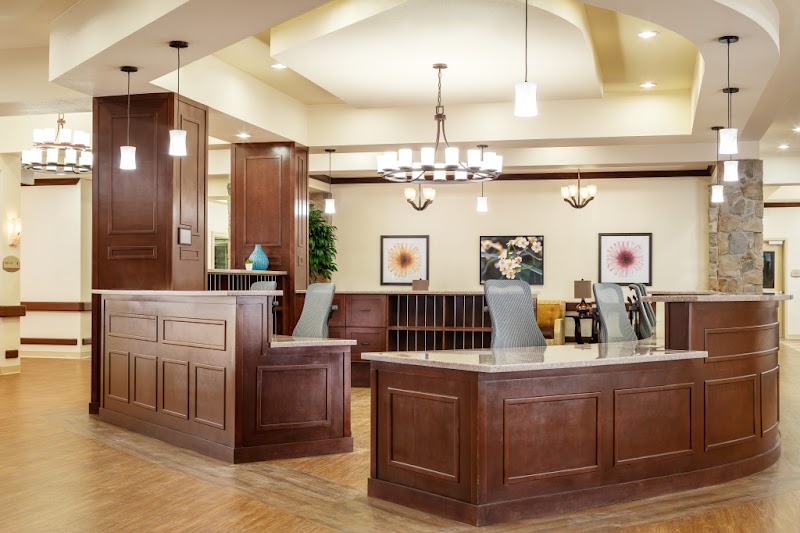
Who Owns and Operates Advanced Rehabilitation And Healthcare Of Wichita?

Advanced Rehabilitation and Healthcare of Wichita is owned by a for-profit company. For-profit facilities operate as businesses with obligations to shareholders or private owners. The facility is operated by ADVANCED HEALTHCARE SOLUTIONS, a chain that manages multiple nursing homes. With 180 certified beds and approximately 166 residents (about 92% occupancy), it is a mid-sized facility located in Wichita Falls, Texas.

How Does Advanced Rehabilitation And Healthcare Of Wichita Compare to Other Texas Nursing Homes?

Compared to the 100 nursing homes in Texas, Advanced Rehabilitation and Healthcare of Wichita's overall rating (4 stars) is above the state average of 2.8, staff turnover (38%) is near the state average of 46%, and health inspection rating (4 stars) is above the national benchmark.

What Should Families Ask When Visiting Advanced Rehabilitation And Healthcare Of Wichita?

Based on this facility's data, families visiting should ask: "Can you walk me through typical staffing levels on day, evening, and night shifts?" "Can I visit during a mealtime to observe dining assistance and food quality?" "How do you handle medical emergencies, and what is your hospital transfer rate?" "Can I speak with family members of current residents about their experience?" These questions are particularly relevant given the below-average staffing rating.

Is Advanced Rehabilitation And Healthcare Of Wichita Safe?

Based on CMS inspection data, Advanced Rehabilitation and Healthcare of Wichita has a clean safety record: no substantiated abuse findings (meaning no confirmed cases of resident harm), no Immediate Jeopardy citations (the most serious violation level indicating risk of serious injury or death), and is not on the Special Focus Facility watch list (a federal program monitoring the lowest-performing 1% of nursing homes). The facility has a 4-star overall rating and ranks #1 of 100 nursing homes in Texas. While no facility is perfect, families should still ask about staff-to-resident ratios and recent inspection results during their visit.

Do Nurses at Advanced Rehabilitation And Healthcare Of Wichita Stick Around?

Advanced Rehabilitation and Healthcare of Wichita has a staff turnover rate of 38%, which is about average for Texas nursing homes (state average: 46%). Moderate turnover is common in nursing homes, but families should still ask about staff tenure and how the facility maintains care continuity when employees leave.

Was Advanced Rehabilitation And Healthcare Of Wichita Ever Fined?

Advanced Rehabilitation and Healthcare of Wichita has no federal fines on record. CMS issues fines when nursing homes fail to meet care standards or don't correct problems found during inspections. The absence of fines suggests the facility has either maintained compliance or corrected any issues before penalties were assessed. This is a positive indicator, though families should still review recent inspection reports for the full picture.

Is Advanced Rehabilitation And Healthcare Of Wichita on Any Federal Watch List?

Advanced Rehabilitation and Healthcare of Wichita is not on any federal watch list. The most significant is the Special Focus Facility (SFF) program, which identifies the bottom 1% of nursing homes nationally based on persistent, serious quality problems. Not being on this list means the facility has avoided the pattern of deficiencies that triggers enhanced federal oversight. This is a positive indicator, though families should still review the facility's inspection history directly.