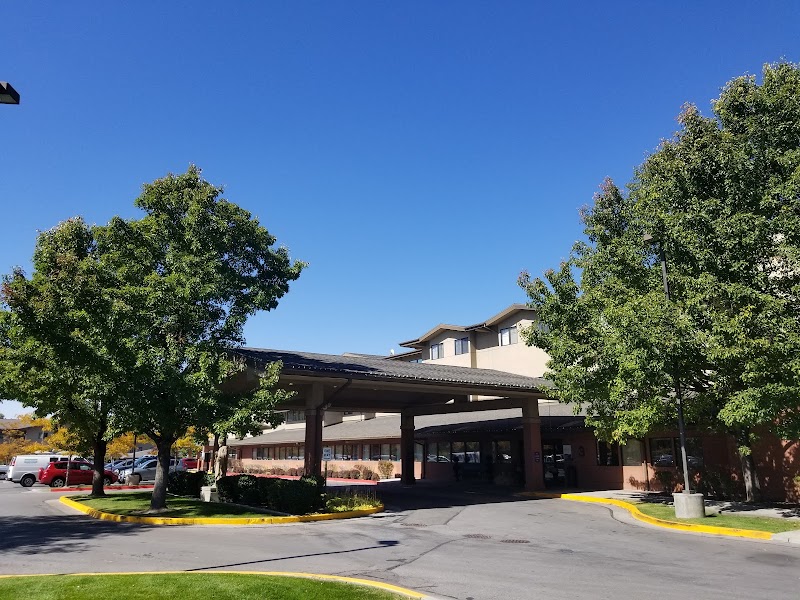
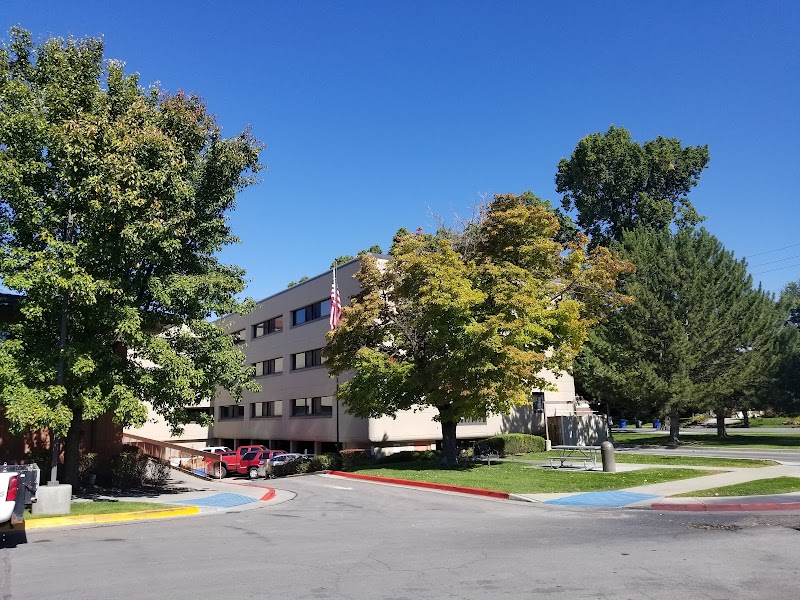
St Joseph Villa

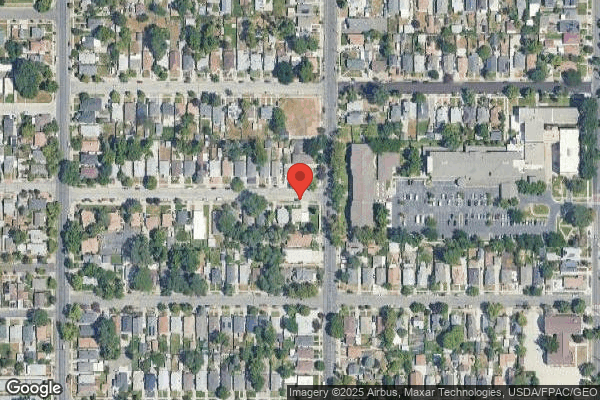
451 East Bishop Federal Lane, Salt Lake City, UT 84115 (801) 487-7557
For profit - Corporation 221 Beds THE ENSIGN GROUP Data: November 2025
Trust Grade
53/100
#63 of 97 in UT
Last Inspection: July 2024

Within standard 12-15 month inspection cycle. Federal law requires annual inspections.

Overview

St. Joseph Villa has a Trust Grade of C, which is average, meaning it sits in the middle of the pack among nursing homes. It ranks #63 out of 97 facilities in Utah, placing it in the bottom half, and #22 out of 35 in Salt Lake County, where only one other option is better. Unfortunately, the facility is showing a worsening trend, with issues increasing from 4 in 2022 to 6 in 2024. Staffing is a relative strength, with a turnover rate of 30%, well below the state average, but the RN coverage is concerning as it is lower than 76% of Utah facilities. While the facility has no fines on record, which is a positive sign, there have been serious incidents including a resident who fell from a Hoyer lift due to inadequate supervision and another resident who developed pressure ulcers that were not treated properly, highlighting some areas that need improvement.

Trust Score
C
53/100
In Utah
#63/97
Bottom 36%
Safety Record
High Risk
Review needed
Inspections
Getting Worse
4 → 6 violations
Staff Stability
✓ Good
30% annual turnover. Excellent stability, 18 points below Utah's 48% average. Staff who stay learn residents' needs.
Penalties
✓ Good
No fines on record. Clean compliance history, better than most Utah facilities.
Skilled Nurses
✓ Good
Each resident gets 50 minutes of Registered Nurse (RN) attention daily — more than average for Utah. RNs are trained to catch health problems early.
Violations
⚠ Watch
14 deficiencies on record. Higher than average. Multiple issues found across inspections.
★★★☆☆
3.0
Overall Rating
★★★☆☆
3.0
Staff Levels
★★★★☆
4.0
Care Quality
★★★☆☆
3.0
Inspection Score
Stable
2022: 4 issues
2024: 6 issues

The Good

  • 4-Star Quality Measures · Strong clinical quality outcomes
  • Low Staff Turnover (30%) · Staff stability means consistent care
  • Full Sprinkler Coverage · Fire safety systems throughout facility
  • No fines on record
  • Staff turnover is low (30%)

    18 points below Utah average of 48%

Facility shows strength in quality measures, staff retention, fire safety.

The Bad

3-Star Overall Rating

Near Utah average (3.3)

Meets federal standards, typical of most facilities

Chain: THE ENSIGN GROUP

Part of a multi-facility chain

Ask about local staffing decisions and management

The Ugly 14 deficiencies on record

3 actual harm
Jul 2024 6 deficiencies 1 Harm
SERIOUS (G) 📢 Someone Reported This

A family member, employee, or ombudsman was alarmed enough to file a formal complaint

Actual Harm - a resident was hurt due to facility failures

Accident Prevention (Tag F0689)

A resident was harmed · This affected 1 resident

**NOTE- TERMS IN BRACKETS HAVE BEEN EDITED TO PROTECT CONFIDENTIALITY** Based on interview and record review, the facility did not ensure that 1 of 89 residents received adequate supervision and assis...

Read full inspector narrative →
**NOTE- TERMS IN BRACKETS HAVE BEEN EDITED TO PROTECT CONFIDENTIALITY** Based on interview and record review, the facility did not ensure that 1 of 89 residents received adequate supervision and assistance devices to prevent accidents. Specifically, a resident was transferred with the help of one staff member using a sit to stand device. This was determined to have occurred at a harm level. However, based on the facility's investigation and corresponding correction, this was cited at past non-compliance. Resident identifier: 217. Findings include: 1. Resident 217 was admitted to the facility on [DATE] and readmitted on [DATE] with diagnoses that included cerebrovascular accident, right bundle branch block, heart failure, and major depressive disorder. Resident 217's medical record was reviewed from 7/8/24 through 7/16/24. On 9/27/23, the facility completed a Functional Performance Evaluation for resident 217. The evaluation indicated that the resident was unable to stand up from a seated position due to medical condition or safety concerns. The evaluation also indicated that the resident was dependent on staff to help him transfer to and from a bed to a chair. On 9/29/23, a Weekly Skin Evaluation was completed for resident 217. The resident's skin was observed to have no bruising or wounds, and was documented to be warm, dry and intact. On 9/30/23, a nurses note documented that at 6:10 PM, aide reported pt's (patient's) L (left) shoulder swollen and bruised. L shoulder very swollen, firm, looks like it/s (sic) further forward than R (right) Shoulder. Bruising on shoulder and down inner and outer upper arm. When I attempted to move arm, pt called out and flinched. An X ray was subsequently ordered. On 10/1/23, a nurses note documented that resident 217 returned from the emergency room with .findings of a fracture of the left humeral surgical neck, including displaced greater and lesser tuberosity . On 10/1/23, the facility submitted form 358 to the State Survey Agency. The form indicated that resident 217 was observed to have bruising on his left shoulder, and the resident had subsequently been sent to the local emergency room for evaluation. On 10/4/23, the facility submitted form 359 to the State Survey Agency. The form indicated that during the course of the investigation, it was determined that CNA 4 used a sit to stand machine to transfer the resident from a chair into bed. CNA 4 stated that while transferring the resident, the resident was unable to bear weight causing his arms to move upward, but was able to finish the transfer. The resident was not noted to be in any pain at that time. A unit manager indicated that on 9/30/23, she was made aware of bruising to resident 217's left shoulder. The resident had an X-ray completed which showed a fracture and was sent to the local emergency room for evaluation. In the emergency room, resident 217 had a confirmation X-ray completed that indicated a comminuted, impacted, and angulated fracture of the left humeral neck. secondary to CVA resident is non verbal and unable to voice how he is feeling. The resident was discharged back to the facility the same day due to poor prognosis secondary to CVA the hospital stated he is not a candidate for surgery at this time. Resident is to remain on hospice care with comfort measures. The facility determined that abuse/neglect was verified, as upon investigation it was determined that the fracture most likely occurred while [resident 217] was being transferred in the sit to stand and was unable to bear weight. The facility's investigation that accompanied form 359 was reviewed. The facility noted that on 9/28/23 CNA 4 worked with resident 217. Also on that day, CNA 3 reported bruising to SM 2. SM 2 reported that there were no complaints of pain from resident 217, and that he observed resident 217's bruising, but thought it was old. [Note: The weekly skin assessment inaccurately documented that there were no skin issues on 9/29/23 even though bruising had been observed the day prior.] The investigation also indicated that resident 217's bruising was not reported to management until 9/30/23, approximately 2 days after the bruising to resident 217's left shoulder was initially observed. The following investigation was provided by the facility: Investigation [resident 217]. admission Date: 10/2/2023, admission DX (diagnoses): CVA (cerebrovascular accident), Right bundle branch block, heart failure, MDD (major depressive disorder). REPORT: [Staff member (SM) 1] phoned to this DON (Director of Nursing) on 9/30/2023 1833 (6:33 PM) Left shoulder with bruising and swollen, change in ROM (Range of Motion). Provider and family made aware order in place for hospital transfer to verify the X ray result. He did come back on 10/1/2028 (sic) with written report of fracture to the left humeral surgical neck. He is not a surgical candidate at this time secondary to poor health condition. He will remain on hospice care PRN (as needed) pain medication and change of condition charting in place. INVESTIGATION: DON came to the building on Sunday 10/1/2023. Multiple staff members were interviewed that worked with resident. [Certified Nursing Assistant (CNA) 3) CNA reported that on Tuesday morning they went into [resident 217's] room where the sit to stand was noted to be in the room. Monday 9/25/2023 staff members were interviewed [CNA 4] stated that on 2-10 shift that did he did use a sit to stand lift to transfer resident. Resident is unable to bear weight his plan of care requires a hoyer transfer. [CNA 4] reported that he (resident 217) did not complain of pain or show any signs of pain at the time he was able to finish the transfer into his bed. He (CNA 4) did report that his (resident 217's) arms moved up while he was in the sit to stand lift. [CNA 4] did not report this to the nurse because he did not believe any injury had occurred. ((CNA 4) was suspended during this investigation). Residents were interviewed to see if they had any care concerns with [CNA 4] they had no concerns. The following residents were interviewed. [Name of 5 residents]. 9/26/2023 . [CNA 3] reported the sit to stand was in the room. No bruising no co (complaints of) pain. 9/28/2023 . [CNA 3] reported bruising to [SM 2]. [SM 2] reports no co pain, no change in ROM . He thought brusing (sic) was old. 9/30/2023 . [SM 3] reported to [SM 4 and SM 1]. Assessment complted (sic) X-ray ordered. Conclusion: Team believes that the fracture occurred when he was transferred with a sit to stand on Monday 9/25/2023 with [CNA 4]. Secondary to [resident 217's] current condition he is a hoyer lift for all transfers. He is not able to bear weight because of his CVA. [CNA 4] reported that he thought he had a change and was able to use the sit to stand. He did transfer him with a one person transfer. [CNA 4] has prior educated on this (sic). [Resident 217] has Q (every) shift monitoring in place with pain monitoring and management. His condition remains poor prior to the incident and stable after. Family and provider are aware of the updated POC (plan of care). 10/4/2023 [CNA 4) was terminated from St. [NAME] Villa secondary to using a sit to stand with a hoyer lift resident and performing the transfer with 1 person. [SM 2] was given 1:1 education regarding following up on change of condition and reports of the bruise. [SM 5] was given 1:1 education regarding skin check that was performed on 9/29. Performance Improvement plan: 1. Audit of all residents with current sit to stand transfers are being evaluated by therapy. This will ensure the current lift that is being used are (sic) appropriate for the resident status. 2. Re education is being performed 1:1 in huddles or over the phone regarding COC (change of condition), bruising ROM. Which lift is appropriate for resident current condition. 3. Audits are being completed with department heads on spot checking rooms to ensure staff members are using the appropriate lift with two-person transfer. 4. Unit managers were made aware of any changes with therapy evaluation with the lifts. Update 10/23/2023 Resident condition remains baseline at this time. Staff audits have been conducted along with re education. No further transfers with one person, staff audits have been completed they are using two person with transfers. Attached to the investigation was a document entitled St. Joes Education Sheet which stated, . If you're (sic) resident is not able to stand up and assist with the transfer, they are NOT able to use a sit to stand lift. The sit to stand lift is only for residents that can help stand. TWO people are required with the sit to stand lifts and hoyer lifts. If you use a lift with one person you will be terminated. If you have a resident with bruising, change in range of motion, complaining of pain you must notify your nurse immediately. Nurses it is your responsibility to do the assessment. You must notify the unit manager of the bruise to ensure that we know how it happened. Any unknown bruise must be reported to [Administrator] and [DON] immediately . On 7/15/24 at 11:25 AM, an interview was conducted with the DON. The DON stated that resident 217 could shake his head yes or no and answer yes and no questions. The DON also stated that resident 217 stated that resident 217 could indicate if he was in pain, but was unable to describe anything specific. The DON stated that resident 217 was supposed to be transferred using a hoyer lift with 2 people. The DON stated that each CNA receives a document that is informally referred to as a brain that they can reference for specific instructions on what assistance each resident requires. The DON stated that resident 217 was listed on the CNA brain as requiring a hoyer lift, and she was unsure why resident 217 was transferred by CNA 4 using a sit to stand instead. The DON stated that she had reviewed video footage, and confirmed that CNA 4 did enter resident 217's room with a sit to stand machine. The DON also confirmed that the Weekly Skin Assessment that was completed on 9/29/23 was inaccurate.
CONCERN (D) 📢 Someone Reported This

A family member, employee, or ombudsman was alarmed enough to file a formal complaint

Potential for Harm - no one hurt, but risky conditions existed

Report Alleged Abuse (Tag F0609)

Could have caused harm · This affected 1 resident

**NOTE- TERMS IN BRACKETS HAVE BEEN EDITED TO PROTECT CONFIDENTIALITY** Based on interview and record review, the facility did not ensure that all alleged violations involving abuse, neglect, exploita...

Read full inspector narrative →
**NOTE- TERMS IN BRACKETS HAVE BEEN EDITED TO PROTECT CONFIDENTIALITY** Based on interview and record review, the facility did not ensure that all alleged violations involving abuse, neglect, exploitation or mistreatment, including injuries of unknown source and misappropriation of resident property, are reported immediately, but not later than 2 hours after the allegation is made, if the events that cause the allegation involve abuse or result in serious bodily injury, or not later than 24 hours if the events that cause the allegation do not involve abuse and do not result in serious bodily injury, to the administrator of the facility and to other officials (including to the State Survey Agency and adult protective services where state law provides for jurisdiction in long-term care facilities) in accordance with State law through established procedures. Specifically, a resident was noted to have bruising on his shoulder, but this was not reported as possible neglect or abuse for approximately 2 days. Resident identifier: 217. Findings include: Resident 217 was admitted to the facility on [DATE] and readmitted on [DATE] with diagnoses that included cerebrovascular accident, right bundle branch block, heart failure, and major depressive disorder. Resident 217's medical record was reviewed from 7/8/24 through 7/16/24. On 9/30/23, a nurses note documented that at 6:10 PM, aide reported pt's (patient's) L (left) shoulder swollen and bruised. L shoulder very swollen, firm, looks like it/s (sic) further forward than R (right) Shoulder. Bruising on shoulder and down inner and outer upper arm. When I attempted to move arm, pt called out and flinched. An X ray was subsequently ordered. On 10/1/23, a nurses note documented that resident 217 returned from the emergency room with .findings of a fracture of the left humeral surgical neck, including displaced greater and lesser tuberosity . On 10/1/23, the facility submitted form 358 to the State Survey Agency. The form indicated that resident 217 was observed to have bruising on his left shoulder, and the resident had subsequently been sent to the local emergency room for evaluation. On 10/4/23, the facility submitted form 359 to the State Survey Agency. The form indicated that during the course of the investigation, it was determined that CNA 4 used a sit to stand machine to transfer the resident from a chair into bed. CNA 4 stated that while transferring the resident, the resident was unable to bear weight causing his arms to move upward, but was able to finish the transfer. The resident was not noted to be in any pain at that time. A unit manager indicated that on 9/30/23, she was made aware of bruising to resident 217's left shoulder. The resident had an X-ray completed which showed a fracture and was sent to the local emergency room for evaluation. In the emergency room, resident 217 had a confirmation X-ray completed that indicated a comminuted, impacted, and angulated fracture of the left humeral neck. secondary to CVA resident is non verbal and unable to voice how he is feeling. The resident was discharged back to the facility the same day due to poor prognosis secondary to CVA the hospital stated he is not a candidate for surgery at this time. Resident is to remain on hospice care with comfort measures. The facility determined that abuse/neglect was verified, as upon investigation it was determined that the fracture most likely occurred while [resident 217] was being transferred in the sit to stand and was unable to bear weight. The facility's investigation that accompanied form 359 was reviewed. The facility noted that on 9/28/23 CNA 4 worked with resident 217. Also on that day, CNA 3 reported bruising to SM 2. SM 2 reported that there were no complaints of pain from resident 217, and that he observed resident 217's bruising, but thought it was old. [Note: The weekly skin assessment inaccurately documented that there were no skin issues on 9/29/23 even though bruising had been observed the day prior.] The investigation also indicated that resident 217's bruising was not reported to management until 9/30/23, approximately 2 days after the bruising to resident 217's left shoulder was initially observed. On 7/15/24 at 11:25 AM, an interview was conducted with the DON. The DON stated that SM 2 was provided with education about timely reporting of possible injuries such as bruises.
CONCERN (D) 📢 Someone Reported This

A family member, employee, or ombudsman was alarmed enough to file a formal complaint

Potential for Harm - no one hurt, but risky conditions existed

Pressure Ulcer Prevention (Tag F0686)

Could have caused harm · This affected 1 resident

**NOTE- TERMS IN BRACKETS HAVE BEEN EDITED TO PROTECT CONFIDENTIALITY** Based on interview and record review, it was found that the facility failed to ensure that a resident received the necessary tre...

Read full inspector narrative →
**NOTE- TERMS IN BRACKETS HAVE BEEN EDITED TO PROTECT CONFIDENTIALITY** Based on interview and record review, it was found that the facility failed to ensure that a resident received the necessary treatment and services, consistent with professional standards of practice, to promote healing, prevent infection and prevent new ulcers from developing for 1 of 89 sampled residents. Specifically, a resident with a pressure injury was not provided dressing changes for 12 days. Resident identifier: 129. Findings include: Resident 129 was admitted to the facility on [DATE], and readmitted on [DATE] with diagnoses which included encephalopathy, bacteremia, fistula of intestine, colostomy, severe protein-calorie malnutrition, hypomagnesemia, hypocalcemia, vitamin D deficiency, anemia, chronic kidney disease stage 3, pressure ulcer of sacral region, depression, and adult failure to thrive. Resident 129's medical record was reviewed from 7/8/24 through 7/16/24. The Quarterly Minimum Data Set (MDS) dated [DATE] revealed resident 129 had a Brief Interview for Mental Status (BIMS) score of 14, which indicated a cognitive status of no impairment. It further indicated the presence of 1 unhealed stage 3 pressure ulcer. An Initial admission Record Section 12 Skin Integrity dated 3/11/24 at 3:42 PM indicated an, open wound to coccyx. A wound consult titled, [Company Name Redacted] Progress Note Details document dated 3/13/24 indicated, Wound Assessment(s) Wound #2 Sacral is an Unstageable Pressure Injury Obscured full-thickness skin and tissue loss Pressure Ulcer and has received a status of Not Healed. Initial wound encounter measurements are 2.27cm [centimeters] length x 1.31cm width, with an area of 2.974 sq cm. There is a Small amount of sero-sanguineous drainage noted which has no odor. Wound bed has 76-100% slough. The periwound skin texture is normal. The periwound skin moisture is normal. The periwound skin color is normal. The temperature of the periwound skin is WNL. Periwound skin does not exhibit signs or symptoms of infection. It further indicated, Procedures Wound #2 (Pressure Ulcer) is located on the sacral. A selective debridement with a total area debrided of 2.86 sq cm. was performed by [Name Redacted], NP [Nurse Practitioner]. to remove devitalized tissue: slough. The following instrument(s) were used: curette. A time out was conducted prior to the start of the procedure. A minimal amount of bleeding was controlled with pressure. The procedure was tolerated well. Post Debridement Measurements: 2.2cm length x 1.3cm width; with an area of 2.86 sq cm. Post debridement Stage noted as Unstageable Pressure Injury Obscured full-thickness skin and tissue loss. It further indicated, Plan Wound Orders: Wound #2 Sacral Wound Cleansing & Periwound Skin Care Clean wound with: - Vashe and allow area to soak for 5 min the pat dry. Apply skin prep to peri-wound and allow to dry then small amount of calmoseptine. Dressing Other: - Apply medihoney to wound bed then cover with cutimed sorbact wcl [wound contact layer]. Then cover with silicone bordered foam. If excess drainage noted then apply calcium alginate overtop of cutimed prior to covering with bordered foam. Dressing to be changed 3x's a week and prn [as needed]. OFF LOAD Off-Loading Facility pressure injury prevention/relief protocol. Other: - Air mattress if she agrees Dietary Other: - RD [Registered Dietitian] to eval [evaluate] and tx [treatment]. The Treatment Administration Record (TAR) dated 3/1/24-3/31/24 indicated, WOUND TO SACRUM: Cleanse w/ Vashe and allow to soak for 5 minutes and pat dry, apply skin prep to periwound and allow to dry. Apply Calmosteptine to periwound. Apply mMedihoney to wound bed cover with Cutimed (cut to size) then cover w/ Mepilex dressing. To be changed QD and PRN. every day shift for WOUND CARE-Order Date-03/27/2024 0933-D/C Date-04/04/2024 1122. The TAR further indicated no dressing changes were documented for the dates of 3/25/24, 3/26/24 or 3/27/24. The TAR dated 4/1/24-4/30/24 indicated, WOUND TO SACRUM: Cleanse w/ Vashe and allow to soak for 5 minutes and pat dry, apply skin prep to periwound and allow to dry. Apply Calmosteptine to periwound. Apply mMedihoney to wound bed cover with Cutimed (cut to size) then cover w/ Mepilex dressing. To be changed 3x/week and PRN. every day shift every Mon, Wed, Fri for WOUND CARE -Order Date- 04/04/2024 1122-Hold Date from 04/30/2024 2135 to 05/01/2024 0000-D/C Date- 05/02/2024 1008. The TAR further indicated no wound care was documented for the dates of 4/18/24, 4/20/24, 4/21/24, 4/23/24, 4/25/24, 4/27/24, 4/28/24 or 4/30/24. A wound consult titled, [Company Name Redacted] Progress Note Details document dated 4/17/24 indicated, Plan Wound Orders: Wound #2 Sacral Wound cleansing with: Vashe and allow area to soak for 5 min the pat dry. Apply skin prep to peri-wound and allow to dry then small amount of calmoseptine. Dressing Other: Apply medihoney to wound bed then lightly pack with calcium alginate. Cover entire area with silicone bordered foam, This is to be changed daily due to location. OFF LOAD. Off-Loading Facility pressure injury prevention/relief protocol. Other: Air mattress if she agrees. A wound consult titled, [Company Name Redacted] Progress Note Details document dated 4/24/24 indicated, Wound Orders: Wound #2 Sacral .Dressing .This is to be changed DAILY due to location . On 7/16/24 at 1:29 PM, an interview was conducted with Unit Manager (UM) 1. UM 1 stated resident 129's wound progression has been up and down since she had been admitted . The UM stated she was seen by the wound consult team every week. The UM stated the unit managers reviewed and updated the orders provided on the wound consult in the electronic medical record and facility staff provided wound care according to those orders. On 7/16/24 at 2:50 PM, an interview was conducted with the Director of Nursing (DON). The DON stated that resident 129 was readmitted to the facility on [DATE] and that she was unable to locate physician orders for wound care upon readmission. The DON stated wound care orders came in on 3/28/24.
CONCERN (D) 📢 Someone Reported This

A family member, employee, or ombudsman was alarmed enough to file a formal complaint

Potential for Harm - no one hurt, but risky conditions existed

Deficiency F0790 (Tag F0790)

Could have caused harm · This affected 1 resident

**NOTE- TERMS IN BRACKETS HAVE BEEN EDITED TO PROTECT CONFIDENTIALITY** Based on observation, interview and record review it was determined, for 1 of 89 sampled residents, that the facility did not pr...

Read full inspector narrative →
**NOTE- TERMS IN BRACKETS HAVE BEEN EDITED TO PROTECT CONFIDENTIALITY** Based on observation, interview and record review it was determined, for 1 of 89 sampled residents, that the facility did not provide or obtain outside resources for routine and emergency dental services to meet the needs of the residents. Specifically, a resident was not provided dental services after requesting to see one. Resident identifier: 38. Findings include: Resident 38 was admitted to the facility on [DATE] and readmitted on [DATE] with diagnoses which included fibromyalgia, systemic lupus erythematosus, chronic pain syndrome, depression, generalized anxiety, and cognitive communication deficit. On 7/10/24 at 1:32 PM, an interview was conducted with resident 38. Resident 38 stated that she has not seen a dentist and would like to see one. Resident 38 stated that she has several missing teeth, and it is hard for her to chew. Resident 38's medical record was reviewed 7/8/23 through 7/16/24. A quarterly Minimum Data Set (MDS) assessment dated [DATE] revealed that resident 38 had a broken or loosely fitting full or partial denture, and mouth or facial pain, discomfort or difficulty with chewing. On 3/11/24 at 8:39 AM, a MDS progress note revealed . She has missing her own natural upper teeth, missing upper partial plate, her own lower teeth and having chewing difficulty Requesting to see dentist. Will inform UM [unit manager] & SS [social service] . On 7/16/24 at 1:05 PM, an interview was conducted with registered nurse (RN) 1. RN 1 stated if a resident makes a request for a dental appointment, she would contact Social Services (SS). RN 1 stated that SS is the one that would set up any dental appointment. On 7/16/24 at 3:00 PM, an interview was conducted with Social Services Director (SSD). The SSD stated that she was not aware of the MDS progress note from 3/11/24, where resident 38 was requesting to see the dentist. The SSD stated that, the MDS coordinator should have sent her a message. The SSD stated she, can't say who dropped the ball on this, but the referral was missed and resident 38 did not get a dental appointment set up.
CONCERN (E) 📢 Someone Reported This

A family member, employee, or ombudsman was alarmed enough to file a formal complaint

Potential for Harm - no one hurt, but risky conditions existed

Deficiency F0801 (Tag F0801)

Could have caused harm · This affected multiple residents

Based on interview, the facility did to employ a clinically qualified full-time dietitian or another clinically qualified nutrition professional to serve as the director of nutrition services. Specifi...

Read full inspector narrative →
Based on interview, the facility did to employ a clinically qualified full-time dietitian or another clinically qualified nutrition professional to serve as the director of nutrition services. Specifically, the facility did not employ a full time Registered Dietitian (RD) and the Dietary Manager (DM) did not meet the requirements to serve as the director of food and nutrition services. Findings include: On 7/8/24 at 8:48 AM, an interview was conducted with the DM. The DM stated she had not completed the required certification to work as the dietary manager. The DM stated the facility had a contracted RD that was at the facility on Mondays, Tuesdays, and Thursdays, and that she was always available by phone. On 7/16/24 at 4:02 PM, a second interview was conducted with the DM. The DM stated she had not completed a course in food service safety and management, a Certified Dietary Manager course, a certified food service manager course, or a nationally recognized certification or associates degree or higher in food service and safety.
CONCERN (E) 📢 Someone Reported This

A family member, employee, or ombudsman was alarmed enough to file a formal complaint

Potential for Harm - no one hurt, but risky conditions existed

Medical Records (Tag F0842)

Could have caused harm · This affected multiple residents

**NOTE- TERMS IN BRACKETS HAVE BEEN EDITED TO PROTECT CONFIDENTIALITY** Based on interview and record review it was determined, for 52 of 89 sampled residents, that the facility did not keep confident...

Read full inspector narrative →
**NOTE- TERMS IN BRACKETS HAVE BEEN EDITED TO PROTECT CONFIDENTIALITY** Based on interview and record review it was determined, for 52 of 89 sampled residents, that the facility did not keep confidential all information contained in the resident's records, regardless of the form or storage method of the records. Additionally, the facility did not maintain the medical records on each resident that were complete, accurately documented, and readily accessible. Specifically, residents' names were included in a different residents medical records, and a resident's medical records from the hospital were not included in the residents electronic medical records at the facility. Resident identifiers: 2, 3, 4, 6, 8, 13, 16, 22, 23, 25, 26, 28, 29, 36, 45, 55, 63, 66, 68, 69, 70, 71, 81, 85, 88, 89, 91, 93, 100, 103, 105, 109, 111, 112, 113, 117, 119, 137, 138, 139, 141, 145, 217, 218, 219, 220, 221, 222, 223, 224, 225 and 363. Findings Included: 1. The following form entitled Orders dated 1/15/24 was located in resident 4, 221, 145, 91, 6, 3, 88, 8, 222, 109, 22, 66 and 103's electronic medical record (EMR). a. (Resident 4): CBC [complete blood count], serum iron, ferritin, total iron binding capacity, CMP [comprehensive metabolic panel], TSH [thyroid stimulating hormone], lipid panel, vitamin B12, hemoglobin A1c. [glycated hemoglobin] b. (Resident 221): CBC, CMP, TSH, vitamin B12, hemoglobin A1c, valproic acid level. Increase donepezil to 10 mg [milligrams] daily at bedtime. c. (Resident 145): CBC, CMP, TSH, lipid panel, vitamin B12, hemoglobin A1c, carbamazepine level, serum iron, fenitin, total iron binding capacity. d. (Resident 91): TSH, vitamin B12, hemoglobin A1c. e. (Resident 6): Reduce lisinopril to 20 mg daily. TSH, T3 [triiodothyronine], free T4 [thyroxine], CBC, serum iron, ferritin, total iron binding capacity. Reduce to Pantoprazole to 40 mg once daily. f. (Resident 3): TSH, lipid panel, hemoglobin A1c, CBC, CMP, serum iron, ferritin, total iron binding capacity. g. (Resident 88): CBC, CMP, vitamin B12, hemoglobin A1c, TSH, phenobarbital. h. (Resident 8): Decrease Tylenol to 650 mg TID [three times a day]. i. (Resident 22): Hemoglobin A1c, CBC, CMP, vitamin B12. j. (Resident 222) : CBC, CMP, vitamin B12, TSH, hemoglobin A1c. k. (Resident 109): Start tramadol 25 mg twice a day when necessary. l. (Resident 66): Discontinue Nexium. Start famotidine 20 mg daily. m. (Resident 103): CBC, CMP, vitamin B12, PSA [prostate specific antigen] 2. The following form entitled Orders dated 1/29/24 was located in resident 105, 218, 219, 6, 112, 89, 63, 70, 2, 139, 68, 71, 45, 13, 100, 69, 220, and 137's EMR. a. (Resident 105): Hemoglobin A1c. Start alloputinol 200 mg daily. b. (Resident 218): CBC, CMP, TSH, lipid panel, vitamin B12, hemoglobin A1c. Start lisinopril 5 mg daily. Discontinue Insulin lispro sliding scale. Decrease omeprazole to 20 mg daily. c. (Resident 219): CBC, CMP, TSH, lipid panel, vitamin B12, hemoglobin A1c. d. (Resident 6): TSH, free T4, T3, CBC, serum iron, ferritin, total iron binding capacity in 4 weeks. Decrease Protonix to 40 mg once daily in 30 days. e. (Resident 112): Vitamin B12, folate, CBC, serum iron, ferritin, total iron binding capacity in 4 weeks. f. (Resident 89): CBC, CMP, vitamin B12, uric acid level. g. (Resident 63): CBC, CMP. h. (Resident 70: TSH, lipid panel, vitamin B12, hemoglobin A1c. Discontinue Macrobid and nitrofurantoin. Start Keflex 500 mg once daily for UTI [urinary tract infection] prophylaxis. i. (Resident 2): CBC, CMP, vitamin B12, hemoglobin A1c. j. (Resident 139): Start lisinopril 10 mg daily. k. (Resident 68): CBC, CMP, TSH, vitamin B12, hemoglobin A1c, serum iron, ferritin, total iron binding capacity, valproic acid level. l. (Resident 71): Decrease Keppra to 750 mg twice a day due to excessive sedation. [handwritten] Spoke to Dr [Name Redacted]. Do Not decrease Keppra, continue current dose .] m. (Resident 45): CBC, CMP, TSH, vitamin B12, hemoglobin A1c. Start tramadol 25 mg TID PRN [as needed]. n. (Resident 13): Continue scheduled Tylenol 1000 mg TID and discontinue the when necessary Tylenol order. Start tramadol 25 mg TID PRN. CBC, serum iron, ferritin, total iron binding capacity. o. (Resident 100): Start fluticasone/salmeterol 250/50 one inhalation twice a day. p. (Resident 69): Discontinue aspirin. CBC, serum iron, ferritin, total iron binding capacity. Decrease pantoprazole to 20 mg daily. q. (Resident 220): TSH, vitamin B12, PSA. EKG [electrocardiogram]. r. (Resident 137) : Start Pioglitazone 30 mg daily. Discontinue ibuprofen, redundant with Celebrex. 3. The following form entitled Orders dated 3/26/24 was located in resident 223, 16, 26, 93, 111, 85, 141, 81, 224, 28, 23, 225, 25, 363, and 117's EMR. a. (Resident 223): Discontinue multivitamin, CBC [complete blood count], serum iron, ferritin, total iron binding capacity in 4 weeks. Start vitamin-D 2000 units daily. b. (Resident 16): Discontinue Insulin glargine 10 units subcutaneous q.h.s [once a day at bedtime]. c. (Resident 26): Clarify Tylenol to 1000 mg [milligrams] t.i.d.[three times daily] scheduled. Start Flonase 1 nasal spray each nostril daily. d. (Resident 93): Start metformin ER [extended release] 500 mg q.h.s. e. (Resident 111): TSH [thyroid stimulating hormone], vitamin B12, CMP [complete metabolic panel], lipid panel, uric acid level. EKG [electrocardiogram], routine (History of atrial fibrillation, no anticoagulation). f. (Resident 85): TSH, lipid panel, vitamin B12. Discontinue Tradjenta. g. (Resident 141): Vitamin B12, hemoglobin A1C. Decrease omeprazole to 40 mg once daily. h. (Resident 81): TSH, lipid panel. i. (Resident 224): Decrease pantoprazole to 40 mg once daily. j. (Resident 28): Valproic acid level. k. (Resident 23): TSH, vitamin B12, hemoglobin A1c, magnesium level. Discontinue Simvastatin. Start atorvastatin 40 mg daily. Decrease omeprazole to 40 mg daily. l. (Resident 225) : Clarify all Tylenol orders to 1000 mg t.i.d. scheduled. m. (Resident 25): A.M.[before noon] cortisol level. Start mirtazapine 7.5 mg q.h.s. n. (Resident 363): TSH, lipid panel, vitamin B12, hemoglobin A1c, CBC [complete blood count], serum iron, ferritin, total iron binding capacity. Discontinue clonidine. Discontinue lisinopril. Decrease metoprolol tartrate 25 mg b.i.d. [twice daily]. Discontinue omeprazole. Start famotidine 20 mg daily. o.[name redacted] Resident 117: TSH, lipid panel, vitamin 12, hemoglobin A1c. Discontinue clonidine. Decrease omeprazole to 20 mg once daily. 4. The following form entitled Orders dated 4/22/24 was located in resident 138, 4, 71, 119, 105, 29, 6, 36, 55, and 113's EMR: a. (Resident 138): CBC, CMP, TSH, lipid panel, vitamin B12, hemoglobin A1c. b. (Resident 4): TSH, lipid panel, vitamin B12, hemoglobin A1c, CBC, serum iron, ferritin, total iron binding capacity, CMP. Discontinue vitamin-D 50000 units weekly. Start vitamin-D 2000 units daily. c. (Resident 71): CBC, CMP, TSH, vitamin B 12, hemoglobin A1c, pre albumin, serum iron, ferritin, total iron binding capacity. Keflex 500 mg q.i.d. [four times a day] for 10 days total treatment, then reduce to 500mg once daily. CMP, TSH, vitamin B12, hemoglobin A1c, pre albumin. [handwritten](Dup. ) d. (Resident 119): TSH, lipid panel, vitamin B12, hemoglobin A1c, CBC, serum iron, ferritin, total iron bindingcapacity, TSH, T3, free T4. Increase Torsemide to 40 mg q.a.m. [every morning] and q.noon [every day at noon] for 5 days, then reduce to torsemide 40 mg daily. Decrease omeprazole to 20 mg once daily. Start DuoNeb nebulized q.i.d. PRN. e. (Resident 105): CBC, CMP, TSH, vitamin B12, hemoglobin A1c. Clarify Tylenol to 1000 mg q.8 hours PRN. Discontinue Percocet. Start oxycodone 10 mg q.h.s. [every night]scheduled and oxycodone 10 mg q.8 hours PRN. f. (Resident 29): Increase metformin to 1000 mg b.i.d. [twice a day]. Start Tradjenta 5 mg daily. Follow up hemoglobin A1c, CBC, serum iron, ferritin, total iron binding capacity. Decrease Protonix to 20 mg daily. g. (Resident 6): Vitamin B12, hemoglobin A1c, TSH, T3, free T4. Discontinue glipizide. Start Tradjenta 5 mg daily. Discontinue ferrous sulfate. Decrease Protonix to 20 mg daily. h. (Resident 36): CBC, ESR [erythrocyte sedimentation rate], CRP [C-reactive protein]. i. (Resident 55): Lipid panel, vitamin B12, PSA. j. (Resident 113): Start DuoNeb q.i.d. for 7 days. 5. Resident 217 was admitted to the facility on [DATE] and readmitted on [DATE] with diagnoses that included cerebrovascular accident, right bundle branch block, heart failure, and major depressive disorder. Resident 217's medical record was reviewed from 7/8/24 through 7/16/24. On 9/30/23, a nurses note documented that at 6:10 PM, aide reported pt's (patient's) L (left) shoulder swollen and bruised. L shoulder very swollen, firm, looks like it/s (sic) further forward than R (right) Shoulder. Bruising on shoulder and down inner and outer upper arm. When I attempted to move arm, pt called out and flinched. An X ray was subsequently ordered. On 10/1/23, a nurses note documented that resident 217 returned from the emergency room with .findings of a fracture of the left humeral surgical neck, including displaced greater and lesser tuberosity . No records from of resident 217's emergency room visit could be located in resident 217's medical record. On 7/15/24 at 10:26 AM, an interview was conducted with the Director of Nursing (DON). The DON stated that she had obtained resident 217's medical records at the surveyor's request that same day. The DON confirmed that the records were not in resident 217's EMR prior to the surveyor's request.
Sept 2022 4 deficiencies 2 Harm
SERIOUS (G)

Actual Harm - a resident was hurt due to facility failures

Pressure Ulcer Prevention (Tag F0686)

A resident was harmed · This affected 1 resident

**NOTE- TERMS IN BRACKETS HAVE BEEN EDITED TO PROTECT CONFIDENTIALITY** Based on observation, interview and record review it was determined, for 1 of 42 sampled residents, that the facility did not en...

Read full inspector narrative →
**NOTE- TERMS IN BRACKETS HAVE BEEN EDITED TO PROTECT CONFIDENTIALITY** Based on observation, interview and record review it was determined, for 1 of 42 sampled residents, that the facility did not ensure that a resident with pressure ulcers (PU) received the necessary treatment and services, consistent with professional standards of practice, to promote healing, prevent infection and prevent new ulcers from developing. Specifically, the resident developed multiple areas of new pressure ulcers after admission to the facility. The deficient practice identified was found to have occurred at a harm level. Resident identifier: 83. Findings included: Resident 83 was admitted to the facility on [DATE] with diagnoses which consisted of incomplete paraplegia, osteomyelitis, neurogenic bowel, type 2 diabetes mellitus, gastro-esophageal reflux, severe protein-calorie malnutrition, atrial fibrillation, hypertension, and major depressive disorder. On 8/29/22 at 1:59 PM, an interview was conducted with resident 83. Resident 83 stated he had a PU on the buttocks. Resident 83 stated he received dressing changes to the wounds every 3 to 4 days. Resident 83 stated that the wound on his buttocks was dry skin that would flake off and then would become raw. Resident 83 stated he was not sure if the wound was treated properly. Resident 83 stated he had been on air mattress since admission. On 9/1/22 resident 83's medical records were reviewed. Review of resident 83's physician orders revealed the following: a. WOUND CARE: LEFT PLANTAR FOOT: 1. Cleanse with Vashe or Dakins 0.25% and soak for 5 minutes 2. Apply skin prep to peri wound 3. Apply Iodosorb to wound bed 4. Cover with Aquacel and with padded dressing. Change Tuesday, Thursday and Sunday and as needed (PRN) if soiled or missing. The order was initiated on 9/1/22. b. WOUND CARE: RIGHT HEEL, RIGHT ANTERIOR LOWER EXTREMITY (LE): Apply Betadine to wound areas and cover right anterior LE with non bordered foam dressing and wrap with Kerlix rolled Gauze and Coban. Change every Tuesday, Thursday and Sunday and as needed if soiled or missing. The order was initiated on 9/1/22. c. WOUND CARE: MOISTURE ASSOCIATED SKIN DAMAGE (MASD) ISCHIUM, SACRUM, BUTTOCKS AND ALL REDNESS TO PERI AREA: Cleanse with Peri cleanser and wipes. Apply Venelex mixed with anti-fungal cream and zinc. Apply to all red areas every Shift and PRN with Brief changes. The order was initiated on 9/1/22. d. WOUND CARE: LEFT LATERAL FOOT, PLANTAR HEEL AND LATERAL MALLEOLUS: Apply Betadine and wrap with Kerlix rolled Gauze and lightly with Coban from toes to 2 finger breadths below knee. Change every Tuesday, Thursday and Sunday and as needed if soiled or missing. The order was initiated on 9/1/22. e. WOUND CARE ANTERIOR NECK: HOLD WOUND VAC UNTIL NEXT VISIT FROM WOUND CARE TEAM- NEW ORDERS WHILE VAC ON HOLD: Cleanse are with Vashe or Dakins solution and soak for 5 minutes. Apply 1/4 inch Iodosorb packing strip at 3 o'clock undermining lightly. Mupirocin topical ointment. Skin Prep peri wound and cover with bordered foam. Change every Tuesday, Thursday and Sunday and as needed if soiled or missing. The order was initiated on 8/31/22. f. Weekly skin checks to be done every day shift on Monday. The order was initiated on 8/22/22. g. Mupirocin Ointment 2 % , apply to anterior neck topically every day shift every Tuesday, Thursday, and Saturday. The order was initiated on 9/1/22. h. Refer to wound team for clavicular wound vac treatment. The order was initiated on 7/18/22. i. Reduced Concentrated Sugar (RCS) diet, regular texture, thin liquids consistency. The order was initiated on 7/18/22. j. Juven Packet, give one packet by mouth in the morning for supplement. The order was initiated on 8/2/22. k. Thiamine 100 mg by mouth in the morning for supplement. The order was initiated on 7/18/22. l. Folic Acid 1 mg by mouth in the morning for supplement. The order was initiated on 7/18/22. m. Cholecalciferol 3000 international units (IU) by mouth in the morning for supplement. The order was initiated on 7/18/22. On 7/25/22, resident 83's Minimum Data Set (MDS) admission assessment documented that the resident was an extensive 2 person assist for bed mobility, transfer, and toilet use. The assessment documented that resident 83 was an extensive 1 person assist for dressing and personal hygiene, and was total dependence with a 1 person physical assist for bathing. The assessment documented that resident 83 had an impairment on both sides to the lower extremities (hip, knee, ankle, foot) in Range of Motion (ROM). The assessment documented that resident 83's Brief Interview for Mental Status (BIMS) score was a 15 out of 15, which indicated cognitively intact. On 7/18/22 at 3:33 PM, resident 83's admission assessment documented the reason for admission was osteomyelitis Thoracic (T) 8 fracture with paraplegia. Supportive devices initiated on admit was an alternating air mattress. The assessment documented that resident 83 was alert and oriented to time, place, person and able to follow simple commands. The assessment documented that resident 83 had an indwelling urinary catheter in place for urinary incontinence. The assessment documented a right heel Stage II PU and a left heel Stage I PU, MASD on the sacrum, and anterior neck wound. The assessment documented, Resident admit with wound area to anterior neck as a result of osteomyelitis of the sternoclavicular joint, requiring wound vac therapy at this time. Stage 2 Pressure ulcer present to R [right] heel, stage 1 pressure ulcer also present to L [left] heel and arch, areas are intact with non blanchable redness present. Sacral area has masd present which is treated with zinc barrier cream. Sent referral for [name of company omitted] wound team to evaluate and treat. Review of resident 83's weekly skin evaluations revealed the following: a. On 7/22/22 at 3:36 PM, the evaluation documented, Patient has a wound vac to upper chest, excoriation to bottom, barrier cream applied as ordered, open area to left heel, dressing applied as ordered, patient has good skin turgor. b. On 7/28/22 at 2:42 PM, the evaluation documented a right heel pressure ulcer. Wound vac present and functioning to anterior neck. R [right] heel pressure ulcer dressing changed per orders. barrier cream applied to excoriation to buttocks area. c. On 8/3/22 at 3:21 PM, the evaluation documented a left heel PU with suspected deep tissue injury and measured 4 centimeters (cm) by (x) 1.5 cm. The evaluation documented a left plantar foot PU that was unstageable and measured 2.5 cm x 2.6 cm x 0.1 cm. Additional comments documented, Resident returned from observation at [name of hospital omitted] from being sent out from Medical Doctor (MD) appointment on 8/1/22 and returned back to facility today 8/3/22. New orders received to dc (discontinue) wound vac and start daily dressing changes to wound area anterior neck. Observed new open pressure area to L plantar foot as well as new DTIs (deep tissue injuries) present to L heel and L lateral foot. see above for measurements. d. On 8/5/22 at 6:21 PM, the evaluation documented, Patient has multiple dressing to heels and upper chest, dressing applied as ordered. e. On 8/11/22 at 5:50 PM the evaluation documented, Skin alteration to right ischium, chest, and bilateral feet. f. On 8/26/22 at 5:55 PM, the evaluation documented, Pt (patient) continues with wound to ischium, rash to chest, wound care as ordered. Review of the Nurse Practitioner (NP) notes revealed the following: a. On 7/19/22 at 10:15 AM, the NP note documented that resident 83's left foot Soft touch and Sharp/dull sensations were present and the right foot Soft touch and Sharp/dull sensation were diminished. The wound head-to-toe exam documented Wound 1 as the anterior neck wound and Wound 2 as the right lateral heel wound. Wound 1 was a full thickness wound with granular, slough and new epithelialization to the wound bed. Wound 1 measured 2.5 cm x 1.2 cm x 1.1 cm and had undermining of 2.5 cm at the 2 to 5 o'clock location. Wound 1 had moderate serosanguineous exudate documented. Wound 2 was a stage 2 PU with partial thickness skin loss. Wound 2 measured 5.5 cm x 4.6 cm x 0.1 cm and no undermining was noted. The surrounding skin of wound 2 was documented as white macerated, friable, with skin breakdown. Wound 2 had moderate serosanguineous exudate documented. The note documented wound orders for the anterior neck, right lateral heel, and left heel. Wound care goals included offloading pressure. b. On 8/16/22 at 1:15 PM, the NP note documented Wound 1 (anterior neck) with a history of osteomyelitis of the sternum. Wound 1 measured 1.0 cm x 0.5 cm x 0.6 cm with undermining of 2.3 cm at the 3 o'clock location. The wound bed was documented as pink or red non-granular, unable to fully visualize the undermining, and slough. Wound 1 had a small amount of serous exudate documented. Wound 2 (right lateral heel) was a stage 3 PU with full thickness skin loss without visible muscle, tendon, or bone. Wound 2 measured 0.3 cm x 0.3 cm and no undermining was noted. The wound bed was documented as pink or red non-granular. The surrounding skin of wound 2 was documented as friable and callus with blanching erythema. Wound 2 had a small amount of serous exudate documented. Wound 4 (left plantar foot) was documented as a diabetic wound. Wound 4 measured 3.0 cm x 3.5 cm with no undermining noted. The wound bed was documented as granular, slough, pin or red non-granular, and dry eschar. The surrounding skin of wound 4 was documented as macerated and maroon/purple in color. Wound 4 had a scant amount of serous exudate documented. Wound 5 (left lateral metatarsal foot) was documented as a deep tissue pressure injury. Wound 5 measured 1.5 cm x 0.3 cm. The wound bed was documented as a deep tissue injury and no exudate was documented. Review of resident 83's progress notes revealed the following: a. On 7/19/22 at 7:35 PM, the skin/wound note documented, Resident was seen today by [name of wound care provider omitted] secondary to pressure sore noted to right heel noted upon admission. Resident with wound vac noted upon admission to wound noted to neck secondary to osteomyelitis of sternum. Dressings are in place for specific's see wound care notes. b. On 7/26/22 at 8:47 PM, the skin/wound note documented, Resident was seen today by [name of wound care provider omitted] secondary to pressure sore noted to right heel noted upon admission. Resident with wound vac noted upon admission to wound noted to neck secondary to osteomyelitis of sternum. Received new orders to cleanse R heel and apply Iodosorb mixed with collagen to wound bed and cover with padded dressing and change dressing every other day. L heel, apply skin prep and cover with bordered foam, change every other day. Wound area anterior neck measurements are smaller than the previous week. c. On 8/9/22 at 10:08 PM, the skin/wound note documented, [Name of wound care provider omitted] continues to address wound to anterior neck secondary to osteomyelitis of sternum. Recently returned from [name of hospital omitted] for observation from 8/1/22- 8/3/22 a few days with new orders to dc [discontinue] wound vac and start daily dressing changes. Wound area evaluated by wound team. Received new orders to obtain wound culture. Cleanse area with veshe and soak for 5 minutes. Reinstate previous wound vac orders and change wound vac every tues, thurs and Sun. New DTIs present to L foot received during observation stat at hospital as well as open dti to L plantar foot. Received new orders to apply betadine to closed DTI areas to L foot and heel and cover with padded dressing. Open area plantar foot, cleanse with wound cleanser and apply iodosorb mixed with collagen to wound bed and cover with padded dressing. Change dressing every other day. L heel, apply skin prep and cover with bordered foam, change every other day. d. On 8/12/22 at 4:50 AM, the NP note documented, .Diagnostic testing ordered with noted consistent with leukocytosis of 21.4, increased platelets level, neutrophil, C-reactive protein. Results consistent with sepsis versus metabolic encephalopathy. e. On 8/13/22 at 10:42 PM, the note documented, Resident taking Zosyn for Leukocytosis and osteomyelitis. Dressing and wound vac intact. Resting and watching tv. f. On 8/17/22 at 6:54 PM, the skin/wound note documented, [Name of wound care provider omitted] continues to address wound to anterior neck secondary to osteomyelitis of sternum. Resident started on zosyn last week via IV [intravenous] r/t [related to] wound culture growing MRSA [Methicillin-resistant Staphylococcus aureus]. Wound area evaluated by wound team. Wound to neck continues to improve slowly, wound vac functioning well. well as open dti to L plantar foot. Received new orders to apply betadine to closed DTI areas to L foot and heel and cover with padded dressing. Open area plantar foot, wound bed is stable, continuing with current treatment orders with frequency changed to tues, thurs and Sun. g. On 8/25/22 at 7:28 PM, the note documented, wound care for this resident was done late last night and did not need to be done today. h. On 8/31/22 at 2:39 PM, the skin/wound note documented, [Name of wound care provider omitted] continues to address wounds to anterior neck, L plantar foot, DTI's to lateral LE [lower extremity], Plantar heel and lateral malleolus as well as DTI's to R Foot and LE. Received new orders to apply betadine to closed DTI areas to L foot and heel and lateral LE, Open area plantar foot: Cleanse with vashe or dakins 0.25% and soak for 5 minutes, then apply iodsorb and aquacel and cover with padded dressing, wrap LLE [left lower extremity] with rolled gauze and coban, lightly change dressings every tues, thurs and Sun. New orders for RLE [right lower extremity], Apply betadine to DTI's Present to R LE as well as fluid filled blister anterior LE, If blister opens and drains apply betadine and if moist apply aquacel over area and cover with foam dressing, wrap with rolled kerlix gauze and then light with Coban. R ischium is no longer open, MASD still present buttocks, coccyx and Sacral area. New order to dc current order for ischium. Cleanse area with peri cleanser and apply mixture of venelex, antifungal cream and zinc to area every shift and brief change. Hold wound vac to anterior neck. New orders to cleanse with vashe or dakins 0.25 % and soak for 5 minutes, lightly pack 3 o clock undermining with 1/4 iniodoform (sic) packing strip. Apply mupirocin ointment to redness, skin prep peri wound and cover with bordered foam change tues, thurs and Sat. Fluid filled blister to R thigh, apply skin prep to area and cover with padded dressing. Review of resident 83's care plan revealed a focus area that resident 82 had the potential for pressure ulcer development and other skin issues related to nontraumatic spinal cord injury, incomplete paraplegia, neurogenic bladder, diabetes mellitus, malnutrition and osteomyelitis to the left sternoclavicular. The care plan documented a pressure sore to the right heel upon admission. Interventions identified were to administer medications as ordered; assess/record/monitor wound healing; educate resident on causes of skin breakdown including transfer/position requirements; encourage fluid intake; monitor nutritional status and serve diet as ordered; notify nurse immediately of any new skin breakdown; out of bed unless contraindicated; resident to be followed by wound care specialist; and weekly head-to-toe skin assessment. The care plan was initiated on 7/20/22. On 9/1/22 at 9:50 AM, an observation was made of resident 83's wound care provided by Licensed Practical Nurse (LPN) 1 and Unit Manager (UM) 1. LPN 1 and UM 1 performed hand hygiene and gloves were donned. LPN 1 stated that the neck and planter foot had to soak for 5 minutes with the Vashe solution. UM 1 cleaned the bedside table with a Sani germicidal bleach wipe. The bedside table was allowed to air dry for 5 minutes prior to all wound supplies being placed on top. LPN 1 removed the dressing to neck wound and discarded in a garbage sack. LPN 1 doffed gloves, performed hand hygiene, and new gloves were donned. LPN 1 poured the Vashe solution inside a 4 x 4 gauze package, and the neck wound was wiped from the center outward two times with two different gauze pads. LPN 1 placed a third Vashe soaked gauze pad on the center of the wound. LPN 1 doffed gloves and washed their hands. UM 1 performed hand hygiene and donned new gloves. LPN 1 donned new gloves and removed the Prevalon boots on the bilateral lower extremities (BLE). LPN 1 removed the old rolled gauze and Coban dressings to the BLE. The left plantar was observed with a bordered adhesive dressing with a date of 8/30/22 written on it. A DTI was observed on the left heel, deep purple coloring. LPN 1 reviewed the wound order; 1/4 inch Iodosorb packing strip at 3 o'clock undermining injury, Mupirocin topical ointment, Skin prep to peri wound, and cover with bordered foam dressing. LPN 1 performed hand hygiene and new gloves were donned. Supplies were laid out on clean bedside table by UM 1. UM 1 performed hand hygiene and new gloves were donned. LPN 1 applied the 1/4 inch Iodosorb packing strip to the neck wound with a sterile cotton tipped applicator. LPN 1 doffed gloves, performed hand hygiene, and new gloves were donned. UM 1 cleaned the left plantar with a gauze soaked in Vashe solution. The gauze was left resting on the left plantar wound. UM 1 doffed gloves, performed hand hygiene and donned new gloves. LPN 1 applied Mupirocin ointment with a sterile cotton tipped applicator to the neck wound bed; cleaned the peri wound with skin prep; and the wound was covered with a Tegaderm foam adhesive dressing. LPN 1 signed and dated the dressing. UM 1 stated that all DTIs were to be cleaned with Betadine. The right heel was observed with 3 DTIs in close proximity and one healed/intact pink wound noted to the heel. LPN 1 doffed gloves, washed hands, and new gloves were applied. UM 1 opened a multipack of Betadine swabs and held the package open for LPN 1 to utilize. LPN 1 cleaned the right heel with Betadine swabs, using a new applicator for each wound. LPN 1 cleaned the right anterior LE wound with a Betadine soaked applicator. UM 1 stated that the right anterior LE wound was a blister that had now opened up. LPN 1 applied a non bordered foam dressing to right anterior LE wound, and the leg was wrapped with Kerlix rolled gauze bandage. UM 1 asked resident 83 if he was ok, and the resident replied with a nod of the head. UM 1 held the right LE while LPN 1 applied the gauze wrap. LPN 1 then applied a cohesive/Coban rolled dressing over the gauze wrap. LPN 1 signed and dated the right leg dressing. LPN 1 reviewed the left plantar wound orders; Vashe soak for 5 minutes; skin prep to periwound; Iodosorb to wound bed; cover with Aquacel and padded dressing. LPN 1 doffed old gloves, performed hand hygiene and new gloves were applied. UM 1 cleaned the left plantar wound with a 4 x 4 gauze soaked with Vashe solution. The left leg was observed with wounds on left lateral LE closed with slough, left lateral malleolus closed, left heel DTI, and left plantar open with granulation tissue noted. UM 1 applied skin prep to periwound of the left plantar wound, and Iodosorb to the wound bed with a sterile cotton tipped applicator. UM 1 doffed gloves, performed hand hygiene, and new gloves were donned. UM 1 cut the Aquacel dressing to the size of the plantar wound. LPN 1 performed hand hygiene and new gloves were applied. LPN 1 applied the Aquacel to the left plantar wound bed and covered with a bordered adhesive dressing. LPN 1 cleaned the left leg, ankle and heel with Betadine swabs. LPN 1 doffed gloves, washed hands and donned new gloves. UM 1 signed and dated the left plantar dressing. Resident 83 was asked if he had any pain, the resident denied pain with a shake of the head. UM 1 doffed gloves, washed hands, and new gloves were applied. LPN 1 held the left leg while UM 1 cleaned the heel, ankle and upper calf wounds with a Betadine swab, utilizing a new swab for each wound. LPN 1 confirmed the order was Betadine, wrap with Kerlix and Coban. UM 1 and LPN 1 doffed gloves, performed hand hygiene, and donned new gloves. UM 1 wrapped the left leg with a rolled Kerlix gauze bandage and then Coban was wrapped over the top. LPN 1 held the leg while UM 1 applied the bandages. LPN 1 dated and signed the left leg dressing. UM 1 applied the bilateral Prevalon boots. LPN 1 doffed gloves, washed hands, and applied new gloves. Resident 83 was able to assist with rolling to the left lateral side by holding onto the left side rail and pulling. UM 1 assisted with positioning resident 83 on his left lateral side by rolling the BLE. UM 1 stated that resident 83 had MASD to buttocks and it was treated with Venelex cream mixed with antifungal cream and zinc. LPN 1 verified the orders for the MASD to ischium, sacrum, buttocks and all redness to peri areas; cleanse with peri cleanser and wipes, apply Venelex mixed with antifungal cream and zinc. UM 1 stated that resident 83 had a fluid filled blister on the upper right thigh that was cleaned with Betadine and covered with a bordered foam dressing. UM 1 stated that the thigh blister was noted on Tuesday with the wound care team and the orders were not in the computer yet. UM 1 stated that the wound team identified that the Foley catheter had caused the thigh pressure wound. UM 1 stated that the resident was probably going to have a suprapubic placed. UM 1 removed the old dressing from the upper right thigh. UM 1 doffed gloves, performed hand hygiene, and donned new gloves. The right thigh blister was cleaned with a Betadine swab and the peri wound was cleaned with skin prep. UM 1 placed a new bordered foam dressing on the right thigh wound. UM 1 signed and dated the right thigh dressing. UM 1 moved the Foley catheter and positioned it over the left leg. UM 1 secured the catheter with a Tegaderm dressing over a Duoderm dressing. LPN 1 doffed gloves, performed hand hygiene, and new gloves were applied. LPN 1 cleansed the buttock, coccyx, and perineum with cleansing wipes and foam wound cleanser. LPN 1 identified a new open area on the coccyx. UM 1 called the provider and notified of the new coccyx wound. LPN 1 doffed gloves, performed hand hygiene and donned gloves. UM 1 informed the provider that the new coccyx wound had granulation tissue with blood, no slough, and measured 1 cm x 0.5 cm. UM 1 stated that the provider's new verbal order for the coccyx wound was apply skin prep to surrounding wound, Medihoney mixed with collagen to wound bed, and cover with a bordered foam dressing, change daily. UM 1 stated that the provider was the NP from the wound care team. UM 1 doffed gloves, gathered supplies coccyx wound supplies, washed hands, and donned new gloves. LPN 1 doffed gloves, performed hand hygiene, and donned new gloves. UM 1 stated that the order was to cleanse with Vashe or wound cleanser first. UM 1 was observed to cleanse the wound with a 4 x 4 gauze soaked with Vashe solution, skin prep was applied to the periwound, a sterile cotton tipped applicator was used to apply the Medihoney with collagen to the wound bed, and the wound was covered with a bordered foam dressing. UM 1 doffed gloves, performed hand hygiene, and donned new gloves. UM 1 applied the Venelex cream mixed with antifungal cream and zinc to the MASD with a cotton tipped applicator. LPN 1 was observed to wipe the cream over the MASD areas with a gloved hand. LPN 1 doffed gloves and washed her hands. UM 1 gathered the remaining supplies and sanitized the side table with another Sani germicidal bleach wipe. An immediate interview was conducted with UM 1. UM 1 stated that resident 83 was admitted with osteomyelitis and he was a known IV drug user. UM 1 stated that resident 83 admitted with a wound vac to the sternum and had some DTIs. UM 1 stated that resident 83 had new pressure wounds on the right anterior LE and the left lateral/posterior LE that was caused when the facility staff had left resident 83's LE crossed. UM 1 stated that the right upper thigh fluid filled blister was caused by the Foley catheter stat lock stabilization device, and they had switched the dressing to Duoderm with an Adaptic overlay. UM 1 stated that the new wounds were identified on Tuesday with the wound care team. UM 1 stated that the NP with the wound care team did not have her visit note in the medical records yet. UM 1 stated that she was going to provide the staff with education on resident 83's care and positioning needs. UM 1 stated that resident 83 had asked today for increased protein with meals. UM 1 stated that resident 83 did not like Medpass and would prefer to have protein needs met with food. UM 1 stated that resident 83 had declined the Prostat supplement for wound healing. UM 1 stated that resident 83 was admitted with orders for an air mattress, and Prevalon boots. UM 1 stated that resident 83 had arrived from the hospital with foam egg crate foot cushions, and they ordered Prevalon boots to prevent any further breakdown. Um 1 stated that resident 83 was compliant with care. UM 1 stated that the cream mixture was applied every shift to the MASD or with every brief change. UM 1 stated the cream was applied every shift or with every brief change. UM 1 stated that the facility acquired pressure wounds were the right LE open blister, left lateral/posterior LE DTI, right thigh fluid filled blister, and the coccyx wound. On 9/1/22 at 12:00 PM, an interview was conducted with the Director of Nursing. The DON stated that resident 83 was only able to use his bilateral upper extremities, and was not familiar with resident 83's lower extremity mobility capabilities and needs. The DON stated that nutritional supplements for wound healing and fortified diets depended on the resident's needs and preferences and that it was not automatically implemented as a standard of practice with wound care. On 9/1/22 at 1:13 PM, an interview was conducted with Certified Nurse Assistant (CNA) 1 and 2. CNA 2 stated that she had worked with resident 83 two times and had provided incontinence care with the use of the hoyer lift. CNA 2 stated that she was still in the orientation process. CNA 1 stated that resident 83 was totally dependent on staff for mobility and could not independently move his legs. CNA 2 stated that resident 83 required extensive assistance for bed mobility and was a total assist for transfers. CNA 1 stated that resident 83 asked for a great deal of pain medication, and the majority of the resident's call lights were for requesting pain medication. CNA 1 stated that he noticed that resident 83 would grimace and say owe when being repositioned and with any movement of the lower extremities.
SERIOUS (G)

Actual Harm - a resident was hurt due to facility failures

Accident Prevention (Tag F0689)

A resident was harmed · This affected 1 resident

**NOTE- TERMS IN BRACKETS HAVE BEEN EDITED TO PROTECT CONFIDENTIALITY** Based on observation, interview, and record review it was determined, for 1 of 42 sampled residents, that the facility did not p...

Read full inspector narrative →
**NOTE- TERMS IN BRACKETS HAVE BEEN EDITED TO PROTECT CONFIDENTIALITY** Based on observation, interview, and record review it was determined, for 1 of 42 sampled residents, that the facility did not provide adequate supervision and assistance devices to prevent accidents. Specifically, a dependent resident sustained a fall from a Hoyer lift after a one person physical assist which resulted in a head lacertion and a tibial fracture. Resident identifier: 44. Findings include: Resident 44 was admitted to the facility on [DATE] and readmitted on [DATE] with diagnoses which included displaced bicondylar fracture of left tibia, subsequent encounter for closed fracture with routine healing, spastic quadriplegic cerebral palsy, severe protein-calorie malnutrition, profound intellectual disabilities, blindness, osteoarthritis and limited range of motion. Resident 44's medical record was reviewed on 9/1/22. A Minimum Data Set, dated [DATE] revealed that resident 44 had limited range of motion to both upper extremities and one side of the lower extremities. Resident 44 required extensive two plus physical assistance with transfers. A care plan initiated on 5/27/22 and updated on 7/27/22 revealed resident 44 .had an actual fall on 5/27/22. Was sent to ED (emergency department) and returned with a dx (diagnosis) of laceration to head. Per hospital documentation page 1 MD (medical doctor) reports no overt signs of trauma no extremity fractures of deformities noted. Patient has otherwise been in his regular state of health. The goal developed was Will resume usual activities without further incident through review date. The intervention developed on 5/27/22 was . resident was sent to the ER (emergency room) secondary to head laceration. Additional interventions developed on 7/27/22 were pillow for proper positioning, brace to remain in place; staff educated, wheelchair removed from room; check range of motion; frequent monitoring of pain.; frequent repositioning. An Activities of Daily Living (ADL) care plan dated 6/10/22 revealed that resident had self care performance deficits related to tibia fracture, Cerebral Palsy, Quadriplegic, seizures, fall. One of the goals developed was [Resident 44] will safely perform (bed mobility, transfers, eating, dressing, grooming, toilet use, and personal hygiene) with (staff assistance) through the review date. One of the interventions dated 6/10/22 was Transfer: Requires (Hoyer) with transferring. Nursing progress notes revealed the following entries: a. On 5/27/22 at 4:02 PM, Registered Nurse (RN) 3 documented, At about 06:30 am CNA came to nurse and asked if this nurse can assist her in this Resident's room. Nurse went quickly in this resident's room and found resident on the floor lying on his back. Nurse assessed for an apparent injuries. Noted laceration of skin on back of Head of about 3.5cm (centimeters) long. Bleeding r/t (related to) this laceration was stopped by applying pressure on the lacerated area. Cleansed lacerated area with wound cleanser. Provider on call was notified. Unit manager notified. This Resident POA [relationship omitted] notified. Provider order to send him to ER (emergency room) at [local hospital] as per [POA's] request. Neurological assessment initiated. He was treated at ER of [local hospital name] with 8 staples on the lacerated skin on the back of his head. Came back at about 11:20 am. Neurological assessment continues he appear on his baseline neurologically at this time. Will continue to monitor for any changes r/t to this fall incident for the next 72 hours. b. On 5/29/22 at 8:03 AM, .staples to the back of the head.Patient is a 2 person transfer with nurse supervision. c. On 6/2/22 at 1:17 PM, Upon assessment, resident left knee is swollen and hot to the touch. Mild grimacing with ROM (range of motion). d. On 6/2/22 at 2:02 PM, New order for STAT x-ray of left knee.swelling of left knee that is hot to touch. e. On 6/2/22 at 6:15 PM, x-ray results revealed a finding of inconclusive. The Director of Nursing (DON) phoned resident 44's POA and reported the x-ray results, and the decision was made to send resident 44 to the local hospital. f. On 6/8/22 at 5:55 PM, [Resident 44] was picked up at 1:45 and taken back to his old room of 1202. He is returning to us on his Medicare Benefit, used 29 days prior to hoyer incident. He was seen at the hospital for Sepsis, left tibial plateau fracture, sacral pressure ulcers with seizures and quadriplegia history. He is non weight bearing with a brace on left leg that should be in locked position at all times. We have agreed with [POA] and facility that he will be fed in his room [ROOM NUMBER]:1. The incident report revealed the same note from RN 3 in the progress notes on 5/27/22. The incident report further revealed Per CNA who assisted this resident to transfer from bed to his w/c this resident slipped of (sic) the sling on the Hoyer lift and fell on the floor. The DON documented she spoke with the aide on 6/3/22 and the CNA was using the tan sling and not the blue sling. The DON documented the CNA reports that bed was above knee level, he slid out of the sling made contact with the floor on his buttocks then made contact with his head. The DON documented the employee was educated in regards to appropriate sling and 2 person transfer with resident. On 8/31/22 at 12:31 PM, an interview was conducted with RN 3. RN 3 stated there was a new CNA and RN 3 told the CNA to ask for help with using the lift. RN 3 stated the CNA asked him to help her and he saw resident 44 was on the floor and found a laceration on the back of his head. RN 3 stated that the CNA stated she was transferring resident 44 from the bed to the wheel chair using a hoyer lift. RN 3 stated that he and the other CNA working had told her she needed to use 2 staff when transferring with a Hoyer lift. RN 3 stated the CNA had reported that resident 44 slid out of the sling onto the floor. RN 3 stated that the CNA reported that the back of resident 44's head hit the grown but nothing else hit the ground. RN 3 stated he completed a full body assessment. RN 3 stated that he looked all over and saw that resident 44's head was bleeding so he treated the head wound. RN 3 stated resident 44 did not have any facial grimacing when he performed ROM to all extremities. RN 3 stated resident 44 was sent to the emergency room right away after calling the physician. RN 3 stated resident 44 received stitches to the back of his head and he returned to the facility. RN 3 stated he completed an incident report. RN 3 stated that the policy of the facility was to always use 2 staff when transferring residents using a Hoyer lift. RN 3 stated if there was only 1 staff member it was hard to get the resident turned while using the lift controls. RN 3 stated resident 44 was unable to reposition or transfer himself. RN 3 stated resident 44 was able to rock his upper body and move his arms but was not aware of his movements. RN 3 stated after the fall resident 44 had increased pain, was groaning and restless. RN 3 stated staff asked the POA if resident 44 could have more pain medication than Tylenol. RN 3 stated the POA did not like him to have pain medication that was stronger than Tylenol. RN 3 stated that a week or so later staff found out resident 44's knee was swollen and an X-ray showed he had a fracture. RN 3 stated resident 44 was sent him back to hospital and he had a brace placed on his left knee. On 8/31/22 at 1:09 PM, an interview was conducted with Physical Therapy Assistant (PTA) 1. PTA 1 stated she was assisting resident 44 with transferred using the Hoyer lift. PTA 1 stated since November 2021, when she started, all transfers with Hoyer lifts were to be done with 2 staff members. PTA 1 stated she did not know about resident 44's fall, but after the fall the facility did a wonderful job. PTA 1 stated the facility management asked PTA 1 to give transfer lift instructions to the CNAs. PTA 1 stated there should always be 2 staff during a transfer with any mechanical lift. PTA 1 stated resident 44 was unable to move all on his own. On 8/31/22 at 1:17 PM, resident 44 was observed to have 2 staff members use a Hoyer lift to transfer him into bed from his wheelchair. On 8/31/22 at 4:04 PM, an interview was conducted with the DON. The DON stated that she went to resident 44's room to talk to the CNA on the date of the incident. The DON stated that all staff were educated on utilizing 2 staff members for all mechanical lift transfers. The DON provided a message dated 5/27/22 at 1:03 PM through a secured application regarding the need for 2 staff members to assist with all lifts. The DON stated the therapy staff also provided education with the Administrator placed in the lift. The DON stated there were slings that were 2 pieces so resident 44's bottom slid through the sling. The DON stated facility staff completed a sweep of the facility to remove all 2 piece slings from use. The DON stated if a staff found one they received a candy bar. The DON stated that resident 44 had a fracture after the fall but it was not discovered for about a week. The DON stated resident 44 was sent to the ER for a laceration to his head and x-rays were obtained at the ER the day of the fall. The DON stated that resident 44's knee was swollen and an x-ray was obtained and resident 44's POA agreed to send him to the hospital. On 9/1/22 at 10:20 AM, DON stated she did not have a policy and procedure for the mechanical lifts. The facility provided a copy of the training information provided to the staff on 5/31/22. The topic was to use 2 people every time a hoyer lift transfer was performed. The education further revealed that Transferring with only one employee puts the resident and you at risk. If another aide if (sic) not available to come and help you. Please ask your nurse, unit manager, or any therapy personnel. If you have any questions or concerns in regards to this please ask thank you. Staff signed their name. Another education was provided on 7/19/22 regarding 2 staff when transferring a resident with a lift. On 8/15/22 another in-service was completed regarding Always use 2 people to transfer with hoyer. On 8/29/22 a fall prevention in-service was completed. The facility provided a Quality Assurance and Performance Improvement plan dated 6/10/22 and ongoing related to fall with fracture. The problem was Resident sustained a fall on 5/27/2022. (Resident was being transfer with the tan sling with one person assist) Per assessment resident had a laceration noted to his head he was immediately sent out to the ER. Resident returned with order for laceration care. On 6/2/2022 during rounds team noticed redness and swelling noted to left leg. Team anticipated this was cellulitis, provider was notified X ray was ordered. X ray results showing fracture to left leg. Resident was sent out to ER for treatment. One of the interventions developed was Resident had post fall monitoring in place Q (every) shift, no concerns were noted with ROM (Range of Motion). DON spoke with aide that was transferring resident that morning 5/27/2022 in regards to the appropriate sling and 2 people transfer with hoyer lift. General education was provided with staff in regards to not using tan slings and 2 people assist with transfers. The follow up was Continue with education in regards to not using the tan slings. Searched the building to discard all tan slings. Continuous education in regards to not transferring with 2 people. All incident reports to be reviewed in IDT (interdisciplinary team) meeting for post assessment documentation and ROM. DON will report to QA (Quality Assurance) monthly in regards to any falls with fracture and concerns noted with falls.
CONCERN (D)

Potential for Harm - no one hurt, but risky conditions existed

Deficiency F0554 (Tag F0554)

Could have caused harm · This affected 1 resident

**NOTE- TERMS IN BRACKETS HAVE BEEN EDITED TO PROTECT CONFIDENTIALITY** Based on observation, record review, and interview it was determined, for 1 of 42 sampled residents, that the facility did not e...

Read full inspector narrative →
**NOTE- TERMS IN BRACKETS HAVE BEEN EDITED TO PROTECT CONFIDENTIALITY** Based on observation, record review, and interview it was determined, for 1 of 42 sampled residents, that the facility did not ensure that the resident's right to self-administer medications was evaluated by the interdisciplinary team and was determined to be clinically appropriate. Specifically, a resident self administered their medications without an evaluation to determine if it was safe for the resident to exercise that right. Resident identifier: 77. Findings included: Resident 77 was admitted to the facility on [DATE] with diagnoses which included chronic obstructive pulmonary disease, morbid obesity, chronic pain, heart failure, hypertension, major depressive disorder, osteoarthritis, cognitive communication deficit, peripheral vascular disease, tremor, and gastro-esophageal reflux disease. On 8/30/22 at 8:24 AM, an interview was conducted with resident 77. Resident 77 stated that she had constant abdominal pain due to kidney stones. Resident 77 stated that she received medication for the pain and then proceeded to show the medication that was located at the bedside. Resident 77 obtained two medication cups located on the bedside table. In the first cup were multiple pills. Resident 77 took a large pill out and stated that it was her potassium pill and she did not like it cut in half because it tasted horrible. Resident 77 then took out another pill and stated it was her water pill. In a second cup resident 77 stated that the medication was Tramadol and that she could have it every 4 hours for her pain. Resident 77 stated that she did not take her medication until her breakfast arrived as she preferred to take them with food. On 9/1/22 resident 77 records were reviewed. Review of resident 77 Medication Administration Record (MAR) revealed that the following medication was scheduled to be administered in the morning: a. Allopurinol 100 milligrams (mg) by mouth in the morning for gout. b. Lasix 80 mg by mouth in the morning for heart failure. c. Omeprazole, Delayed Release 20 mg in the morning for acid indigestion. d. Spironolactone 12.5 mg by mouth in the morning for heart failure. e. Vitamin D3 125 micrograms (mcg) by mouth in the morning for supplement. f. Welchol 625 mg by mouth in the morning for lower cholesterol. g. Zoloft 100 mg by mouth in the morning or major depressive disorder. h. Florastor 1 capsule by mouth two times a day for probiotic. i. Metoprolol Tartrate 12.5 mg by mouth two times a day for hypertension. j. Potassium Chloride Extended Release 10 milliequivalent (mEq) by mouth two times a day for supplement. k. Lactase 1 chewable tablet by mouth before meals for lactose intolerance. l. Tramadol 50 mg by mouth every 6 hours as needed for severe pain. It should be noted that the August 2022 MAR documented that all the scheduled morning medications were administered and were signed by Registered Nurse (RN) 1. Review of resident 77's narcotic log for Tramadol revealed that the medication was documented as administered on 8/30/22 at 7:35 AM. Review of resident 77's records revealed no documentation of a self administration of medications assessment. Review of resident 77's care plan revealed no focus area that addressed the resident's self administration of medications. On 7/20/22, resident 77's Minimum Data Set (MDS) Quarterly assessment documented a Brief Interview for Mental Status (BIMS) score of 15 out of 15, which indicated resident 77 was cognitively intact. The assessment for psychosis documented that resident 77 did not have any hallucinations or delusions. On 9/1/22 at 11:24 AM, an interview was conducted with Unit Manager (UM) 1. UM 1 stated that they needed to fill out a self administration of medication assessment for resident 77 because she was very difficult and would yell at the staff. UM 1 stated that she had instructed the staff to stand by resident 77 for 5 minutes until the resident took the medication. UM 1 stated that RN 1 had informed her that she had left resident 77's medication at the bedside. UM 1 stated that they had not completed a self administration of medication assessment yet. UM 1 stated that they should complete the assessment because resident 77 could get mean with the nurses and she liked to manipulate them. UM 1 stated that she had informed the staff not to take her medication in until the meal was delivered. On 9/1/22 at 12:00 PM, an interview was conducted with the Director of Nursing (DON). The DON stated that resident 77 did not have a self administration of medications assessment completed. The DON stated that she reviewed the medication list and it did not appear to have any narcotics that were left at the bedside. It should be noted that the Tramadol was a Scheduled IV narcotic medication.
CONCERN (D)

Potential for Harm - no one hurt, but risky conditions existed

Deficiency F0604 (Tag F0604)

Could have caused harm · This affected 1 resident

**NOTE- TERMS IN BRACKETS HAVE BEEN EDITED TO PROTECT CONFIDENTIALITY** Based on observation, interview, and record review, it was determined, the facility did not ensure that when the use of restrain...

Read full inspector narrative →
**NOTE- TERMS IN BRACKETS HAVE BEEN EDITED TO PROTECT CONFIDENTIALITY** Based on observation, interview, and record review, it was determined, the facility did not ensure that when the use of restraints was indicated, the facility used the least restrictive alternative for the least amount of time. Specifically, for 1 out of 42 sampled residents, a resident with a seatbelt was unable to release it. Staff were not observed to release the restraint and reposition the resident for over 3 hours. Resident identifier: 12. Findings included: Resident 12 was initially admitted to the facility on [DATE] and readmitted on [DATE] with diagnoses which included cerebral palsy, type 2 diabetes mellitus, neuromuscular dysfunction of bladder, dysphagia, need for assistance with personal care, contracture left hip, limitation of activities due to disability, contracture of muscle right forearm, contracture right knee, contracture left knee, major depressive disorder, contracture unspecified joint, contracture of muscle right hand, muscle weakness, and retention of urine. On 8/29/22 at 2:24 PM, resident 12 was observed in their room in a wheelchair with a seat belt attached to the wheelchair and buckled around resident 12's waist. Resident 12's medical record was reviewed on 8/31/22. A Resident/Family Consent for use of Physical Restraints dated 11/22/17, documented that it would be in the best interest for the resident for the following Seatbelt to wheelchair for positional purposes. Resident unable to self release. Recommend to apply when in wheelchair. A care plan Focus initiated on 3/9/21, documented [Name of resident 12 removed] is at risk for falls r/t [related to] balance problems, spasticity, cerebral palsy, impulsivity, poor safety awareness, use of antidepressant medication. Res [resident] has difficulty maintaining sitting balance, has special wheelchair. Seatbelt to wheelchair for positional purposes. The care plan Interventions initiated on 3/9/21, included: a. Anticipate and meet needs. b. Educate resident, family, and caregivers about safety reminders and what to do if a fall occurs. c. Encourage to participate in activities that promote exercise, physical activity for strengthening and improved mobility. d. Low bed with blue mat. An additional care plan Focus initiated on 3/9/21, documented [Resident 12] has an ADL [activities of daily living] Self Care Performance Deficit r/t cerebral palsy, weakness, decreased mobility, MDD [major depressive disorder], CHF [congestive heart failure], AFIB [atrial fibrillation], DM [diabetes mellitus], contractures, dysarthria, anarthria. He requires total assist with bed mobility, xfers [transfers], toilet use, personal hygiene, eating, propulsion of wc [wheelchair]. He has suprapubic catheter 24FR [French]/10mL [milliliters] r/t neurogenic bladder and has incontinence of bowel. On continuous oxygen. He has contractures to BLE [bilateral lower extremities] knees & hips and B [both]hand. Although he has deficits to LUE [left upper extremity], but has full use of extremity. Contracture noted to BUE [bilateral upper extremities] and BLE. The interventions were initiated on 3/9/21, included, but not limited to: a. Check and change brief before and after meals and as needed. Incontinence brief as needed. b. Seat belt used to WC for proper body positioning while in WC due to poor trunk control r/t cerebral palsy and contractures. Remove every 2 hours for toileting and repositioning. Weekly skin checks. Falls were reviewed from January 2020 to current. Resident 12 had no documented falls. A physician's order dated 3/9/21, documented Seat belt used to WC for proper body positioning while in WC due to poor trunk control r/t cerebral palsey [sic]/contractures. Remove Q [every] 2 hours for toileting and repositioning. Weekly skin checks. A physician's order dated 5/18/22, documented Seatbelt to wheelchair for positional purposes. Resident unable to self-release. Remove seat belt Q 2 hours for repositioning every 2 hours. The Restraint/Enabling Device/Safety Device review dated 8/2/22, documented Continue seat belt for safety and positioning. Seatbelt is effective at keeping resident safe. Resident does not have the ability to safely position self and has spastic movements. Family aware of seat belt and have requested that intervention continue. On 8/31/22 at 9:10 AM, a continuous observation was initiated. Resident 12 was observed in their room in a wheelchair with a seat belt attached to the wheelchair and buckled around resident 12's waist. Resident 12 was positioned with the bed side table between resident 12 and the bed. Resident 12 was watching television and the call light was observed to be within resident 12's reach. On 8/31/22 at 9:46 AM, an Activities staff member was observed to wheel resident 12 from his room to the activity on the second floor. Resident 12's seat belt was not released and resident 12 was not repositioned. On 8/31/22 at 11:04 AM, an Activities staff member was observed to move resident 12 from the activity to resident 12's room on the third floor. Resident 12 was observed in their wheelchair with a seat belt attached to the wheelchair and buckled around resident 12's waist. Resident 12's seat belt was not released and resident 12 was not repositioned. On 8/31/22 at 11:19 AM, Registered Nurse (RN) 2 was observed to enter resident 12's room and administered medications. Resident 12's seat belt was not released and resident 12 was not repositioned. On 8/31/22 at 11:25 AM, Certified Nursing Assistant (CNA) 3 was observed to move resident 12 from his room to the dining room on the third floor for the lunch meal service. Resident 12's seat belt was not released and resident 12 was not repositioned. On 8/31/22 at 12:37 PM, CNA 3 was observed to move resident 12 from the dining room to resident 12's room. Resident 12 was observed in bed with the seat belt released. Resident 12's bed was observed in a high position. The continuous observation was ended. [Note: Resident 12 was observed in the wheelchair with the seat belt in place for three hours and 45 minutes.] On 9/1/22 at 9:49 AM, an interview was conducted with CNA 3. CNA 3 stated that resident 12 had the seat belt to prevent resident 12 from trying to push himself out of the wheelchair to the ground. CNA 3 stated that he had not been provided training on the seat belt. CNA 3 stated that he knew the seat belt was a restraint. CNA 3 stated that he would put the seat belt on resident 12 because everyone else would put the seat belt on resident 12. CNA 3 stated that he was unsure when the seat belt was initiated. CNA 3 stated that he would transfer resident 12 to the wheelchair in the morning and CNA 3 would put the seat belt on resident 12. CNA 3 stated that he would then take resident 12 to the dining room for breakfast. CNA 3 stated that after breakfast he would take resident 12 back to his room and CNA 3 would ask resident 12 if he would like to go to bed. CNA 3 stated if resident 12 wanted to go to bed he would take the seat belt off. CNA 3 stated that he would ask resident 12 throughout the day if he was fine with the seat belt on. CNA 3 stated that a personal alarm was tried for resident 12 but resident 12 would remove it. CNA 3 stated that resident 12 would throw the call light on the floor if the call light was not secured. CNA 3 stated that resident 12 was unable to remove the seat belt but if resident 12 was uncomfortable he would let CNA 3 know. CNA 3 stated that resident 12 had very expressive body language and CNA 3 just knew if resident 12 needed anything. On 9/1/22 at 10:03 AM, an interview was conducted with RN 2. RN 2 stated she would check resident 12 every two hours to make sure the seat belt was not uncomfortable. RN 2 stated if resident 12 did not like something resident 12 would yell. RN 2 stated that her assessment of the seat belt was to ensure that it had a space, the seat belt was not to tight, and the seat belt was where resident 12 wanted it to be placed. RN 2 stated that therapy would check the seat belt also. RN 2 stated that she would check resident 12's seat belt every two hours unless resident 12 was in bed. RN 2 stated that resident 12 would need to be checked to see if he was wet and staff would need to remove the seat belt. [Note: Resident 12 had a Foley catheter in place.] RN 2 stated that resident 12's wheelchair would tilt and resident 12 was unable to fall out of the wheelchair. RN 2 stated the new Director of Nursing (DON) scheduled the seat belt. RN 2 stated that she had mentioned to the Unit Manager that all the years she had worked with resident 12, he had never fallen out of the wheelchair. RN 2 stated that she felt like it did not hurt to have the seat belt. RN 2 stated anything to keep resident 12 safe. RN 2 stated that sometimes resident 12 would try to remove the seat belt but resident 12 was unable. On 9/1/22 at 11:17 AM, an interview was conducted with the DON. The DON stated if a device was implemented for a resident the staff would need to determine if the device was a restraint and if the resident remove the device on command. The DON stated if the resident could not remove the device a restraint evaluation would need to be completed, the device would need to be care planned, and staff would need to talk with the resident's family. The DON stated that resident 12 had the seat belt so he could enjoy the world. The DON stated that resident 12 was unable to release the seat belt on command. The DON stated with toileting and cares the seat belt should be released multiple times a day. The DON stated resident 12's seat belt was assessed quarterly and there was a consent.
Mar 2020 4 deficiencies
CONCERN (E)

Potential for Harm - no one hurt, but risky conditions existed

Deficiency F0583 (Tag F0583)

Could have caused harm · This affected multiple residents

Based on observation and interview it was determined that the facility did not ensure that the resident's medical records were secured and confidential. Specifically, observations were made of compute...

Read full inspector narrative →
Based on observation and interview it was determined that the facility did not ensure that the resident's medical records were secured and confidential. Specifically, observations were made of computer screens left unattended and displaying resident personal information. In addition, residents were observed in the area with the unattended computer screens. Findings include: On 3/3/20 at 8:03 AM, Registered Nurse (RN) 2 was observed to walk away from a computer that was on the medication cart located in the hallway on the northeast side of the 3rd floor. The computer screen was observed to have resident information open and visible. There were five residents observed sitting around the area of the unattended open computer screen. On 3/4/20 at 7:08 AM, RN 1 was observed to walked away from a computer on a medication cart with a residents medical record open and visible. The computer was by the North [NAME] nurses' station on the 2nd floor. The open computer screen was observed to be unattended for 3 minutes. On 3/4/20 at 7:35 AM, RN 3 was observed to leave person identifying information on a computer screen. The computer was located on the medication cart in the public hallway on the first floor. There were no staff observed in the hallway or near the open computer. On 3/4/20 at 7:51 AM, an interview was conducted with Director of Nursing (DON) and RN 3. The DON and RN 3 stated that staff were to protect resident personal identifying information by securing the computer screen before walking away from the computer.
CONCERN (E)

Potential for Harm - no one hurt, but risky conditions existed

Deficiency F0761 (Tag F0761)

Could have caused harm · This affected multiple residents

**NOTE- TERMS IN BRACKETS HAVE BEEN EDITED TO PROTECT CONFIDENTIALITY** Based on observation, interview, and record review it was determined that the facility did not ensure that the drugs were label ...

Read full inspector narrative →
**NOTE- TERMS IN BRACKETS HAVE BEEN EDITED TO PROTECT CONFIDENTIALITY** Based on observation, interview, and record review it was determined that the facility did not ensure that the drugs were label according to accepted professional principles and stored in a locked compartment. Specifically, medications were found in resident's rooms, and medication carts were not kept secured. Findings include: 1. On 3/2/20 at 7:30 AM, an observation was made of room [ROOM NUMBER] with a bottle of Advil and fluticasone nasal spray on the resident's bedside table. 2. On 3/2/20 at 7:34 AM, an observation was made of room [ROOM NUMBER] with an unlabeled medication cup on the resident's shelf; the cup contained a white powder. 3. On 3/4/20 at 7:32 AM, an observation was made of Registered Nurse (RN) 1. RN 1 left the medication cart unlocked and unattended while administering medications to a resident. RN 1 stated he was going to wash his hands. RN 1 was observed to go into the bathroom. RN 1 returned to the cart at 7:34 AM. 4. On 3/4/20 at 8:03 AM, an observation was made of the third East medication cart. RN 4 was observed to walk away from the medication cart to administer medication to a resident, the medication cart keys were observed to be left on top of the cart behind a bottle of hand sanitizer. RN 4 returned to the medication cart at 8:09 AM. 5. On 3/4/20 at 8:04 AM, an observation was made of room [ROOM NUMBER]. There was a Breo inhaler in the resident bedside table. The resident stated I know I'm not supposed to keep it in here, but I do so that I have it whenever I need it. On 3/4/20 room [ROOM NUMBER], room [ROOM NUMBER], and room [ROOM NUMBER]'s medical records were reviewed. There was no documentation that residents were assessed to administer their own medications. On 3/4/20 at 10:24 AM, an interview was conducted with Certified Nursing Assistant (CNA) 2. CNA 2 stated that there were not any residents that she was aware of that were safe to administer their own medications. CNA 2 stated that if medications were found in a resident room, then they needed to be taken to the nurses. On 3/4/20 at 10:25 AM, an interview was conducted with RN 1. RN 1 stated that there were not any residents that he was aware of that were safe to administer their own medications. RN 1 stated that if medications were found in a resident room, they needed to be removed. RN 1 stated that medications in a resident's room were a risk because the resident could overdose or take the medication incorrectly. RN 1 stated that medication carts were to be locked any time the nurse was not at the cart. RN 1 stated that there should be no unlabeled medication cups with creams or powders left in resident rooms because no one would know what the creams or powders were or if they were harmful. RN 1 stated that staff should only take in enough cream or powder for one time use and then throw the rest away. On 3/4/20 at 10:50 AM, an interview was conducted with the Director of Nursing (DON). The DON stated that the resident in room [ROOM NUMBER] had been administering her own inhaler, but that it was not documented or assessed that she was safe to do so. The DON stated that there were not any other resident's that were assessed as safe to administer their own medication. The DON stated that if a medication was found in a resident room, the medication should be removed, and the family should be called to come pick it up. The DON stated that the risk of resident's having medications in their rooms was that they could over medicate. The DON stated that medication carts should be locked any time they were out of the nurses' line of sight. The DON stated that there should not be any unlabeled cups of creams or powers in resident rooms because there would be no way of knowing what was in the cups.
CONCERN (E)

Potential for Harm - no one hurt, but risky conditions existed

Food Safety (Tag F0812)

Could have caused harm · This affected multiple residents

Based on observation, interview and record review it was determined that the facility did not store, prepare, distribute and serve food in accordance with professional standards for food service safet...

Read full inspector narrative →
Based on observation, interview and record review it was determined that the facility did not store, prepare, distribute and serve food in accordance with professional standards for food service safety. Specifically, there were cracked tiles in the dishmachine area that had pooling water, there was pealing paint above the food preparation area, and there were soiled areas behind the equipment. Findings include: 1. On 3/2/20 at 7:40 AM, an initial tour of the kitchen was conducted. The following was observed: a. There were 2 spots of pealing paint on the ceiling in the kitchen. Food was observed to be transported under the pealing paint. b. There was dust and debris behind the ovens, stove, steamer and griddle. c. There were 4 broken tiles in the dishmachine area. There was water pooling in the area that pieces of tiles were missing. 2. On 3/4/20 at approximately 12:30 PM, a follow up kitchen tour was conducted. The following was observed: a. There were 2 spots of pealing pain on the ceiling in the kitchen. Food was observed to be transported under the pealing paint. b. There was dust and debris behind the overs, stove, steamer and griddle. c. There were 4 broken tiles in the dishmachine area. There was water pooling the the area that the pieces of tiles were missing. An interview was immediately conducted with the Dietary Manager (DM). The DM stated that there was a work order for the tiles to be replaced. The DM stated that staff cleaned weekly behind the ovens, stoves, steamers and griddles. The DM stated that she would fill out a work order for the pealing paint on the ceiling. The DM provided a work order for the broken tiles. The work order was started on 11/8/19. The DM stated that it has been a while since the work order had been placed. The DM stated that special tile had to be ordered and it took a while.
CONCERN (E)

Potential for Harm - no one hurt, but risky conditions existed

Infection Control (Tag F0880)

Could have caused harm · This affected multiple residents

**NOTE- TERMS IN BRACKETS HAVE BEEN EDITED TO PROTECT CONFIDENTIALITY** 7. On 3/2/20 at 7:31 AM, an observation was made of room [ROOM NUMBER]'s bathroom. The bathroom was shared with multiple residen...

Read full inspector narrative →
**NOTE- TERMS IN BRACKETS HAVE BEEN EDITED TO PROTECT CONFIDENTIALITY** 7. On 3/2/20 at 7:31 AM, an observation was made of room [ROOM NUMBER]'s bathroom. The bathroom was shared with multiple residents and contained unlabeled resident toothbrushes. 8. On 3/2/20 at 7:34 AM, an observation was made of room [ROOM NUMBER]'s bathroom. The bathroom was shared with multiple residents and contained unlabeled resident toothbrushes. 9. On 3/2/20 at 10:23 AM, an observation was made of room [ROOM NUMBER]'s bathroom. The bathroom was shared with multiple residents and contained unlabeled resident toothbrushes. On 3/4/20 at 10:20 AM, an interview was conducted with CNA 3. CNA 3 stated that hygiene products in shared resident bathroom had to be labeled with the resident name and room number on them. CNA 3 stated that when assisting residents in the dining room, CNA's had to wash their hand first, and use Alcohol based Hand Sanitizer (ABHR) in-between helping 2 residents. CNA 3 stated that if a CNA touched their hair or clothes, they had to wash hands again prior to assisting residents with meals. CNA 3 stated that staff must hold all plates and cups by the bottom, so staff did not touch anywhere that the resident would touch. CNA 3 stated that to cool off resident food you could just give it time or stir it, but never blow on it. On 3/4/20 at 10:46 AM, an interview was conducted with the Director of Nursing (DON). The DON stated that resident hygiene products in shared bathrooms had to be labeled with the resident's name. The DON stated that when CNA's were assisting residents to eat, the CNA should never touch their hair or clothes, and should always use ABHR in-between helping residents. The DON stated that CNA's should not touch the rim of the resident's drinking cup. The DON stated that staff should not blow on the resident's food. Based on observation and interview the facility did not establish and maintain an infection prevention and control program designed to provide a safe, sanitary and comfortable environment and to help prevent the development and transmission of communicable diseases and infections. Specifically, staff were observed to cross contamination while serving residents in the dining room. In addition, hygiene products in shared bathrooms were not labeled. Resident identifiers: 46, 48 Findings include: 1. On 3/2/20 at 8:00 AM, Certified Nursing Assistant (CNA) 2 was observed in the 3rd floor dining room assisting two residents with eating. CNA 2 was observed to finger sweep of resident 48's mouth with her index finger to remove a large amount of chewed but unswallowed food. CNA 2 was not observed to use a glove, CNA 2 was observed to wrap a cloth napkin around her index finger prior to placing her finger in resident 48's mouth. After removing the unswallowed food CNA 2 placed the napkin on the table and began feeding resident 46. CNA 2 was observed to switch between the two residents without sanitizing or washing her hands. On 3/4/20 at 12:45 PM the Director of Nursing (DON) was interviewed. The DON stated that she expected staff to use gloves when putting fingers in residents mouth and then wash their hands before assisting another resident. The DON stated staff should not use a cloth napkin to remove food from a residents mouth and not wash their hands after. 2. On 3/2/20 at 7:49 AM, an observation was made of CNA 3 assisting a resident to eat. CNA 3 used the resident's spoon and fork after the resident had already touched them. CNA 3 then went to assist another resident without sanitizing or washing hands her hands. The other resident then touched her utensils after CNA 3 had assisted her. 3. On 3/2/20 at 7:52 AM, an observation was made of Certified Nursing Assistant (CNA) 4. CNA 4 was observed to assist a resident with eating. CNA 4 touched her hair and scrubs then resumed assisting the resident without sanitizing or washing her hands. 4. On 3/2/20 at 7:58 AM, an observation was made of CNA 6. CNA 6 was observed to grab a resident's juice cup by the top rim to pass it to a resident. 5. On 3/2/20 at 12:06 PM, an observation was made of CNA 4. CNA 4 was observed to stir and blow a resident's soup. 6. On 3/2/20 at 12:06 PM, an observation was made of CNA 3 stirring soup for 2 separate residents and then giving the residents their utensils to use themselves; CNA 3 did not sanitize or wash her hands prior to touching the resident's utensils.
Understanding Severity Codes (click to expand)
Life-Threatening (Immediate Jeopardy)
J - Isolated K - Pattern L - Widespread
Actual Harm
G - Isolated H - Pattern I - Widespread
Potential for Harm
D - Isolated E - Pattern F - Widespread
No Harm (Minor)
A - Isolated B - Pattern C - Widespread

Questions to Ask on Your Visit

  • "Can I speak with families of current residents?"
  • "What's your RN coverage like on weekends and overnight?"

Our Honest Assessment

Strengths
  • • No fines on record. Clean compliance history, better than most Utah facilities.
  • • 30% annual turnover. Excellent stability, 18 points below Utah's 48% average. Staff who stay learn residents' needs.
Concerns
  • • Multiple safety concerns identified: 3 harm violation(s). Review inspection reports carefully.
  • • 14 deficiencies on record, including 3 serious (caused harm) violations. Ask about corrective actions taken.
  • • Grade C (53/100). Below average facility with significant concerns.
Bottom line: Mixed indicators with Trust Score of 53/100. Visit in person and ask pointed questions.

About This Facility

What is St Joseph Villa's CMS Rating?

CMS assigns St Joseph Villa an overall rating of 3 out of 5 stars, which is considered average nationally. Within Utah, this rating places the facility higher than 0% of the state's 100 nursing homes. This mid-range rating indicates the facility meets federal standards but may have areas for improvement.

How is St Joseph Villa Staffed?

CMS rates St Joseph Villa's staffing level at 3 out of 5 stars, which is average compared to other nursing homes. Staff turnover is 30%, compared to the Utah average of 46%. This relatively stable workforce can support continuity of care.

What Have Inspectors Found at St Joseph Villa?

State health inspectors documented 14 deficiencies at St Joseph Villa during 2020 to 2024. These included: 3 that caused actual resident harm and 11 with potential for harm. Deficiencies causing actual harm indicate documented cases where residents experienced negative health consequences.

Who Owns and Operates St Joseph Villa?

St Joseph Villa is owned by a for-profit company. For-profit facilities operate as businesses with obligations to shareholders or private owners. The facility is operated by THE ENSIGN GROUP, a chain that manages multiple nursing homes. With 221 certified beds and approximately 175 residents (about 79% occupancy), it is a large facility located in Salt Lake City, Utah.

How Does St Joseph Villa Compare to Other Utah Nursing Homes?

Compared to the 100 nursing homes in Utah, St Joseph Villa's overall rating (3 stars) is below the state average of 3.3, staff turnover (30%) is significantly lower than the state average of 46%, and health inspection rating (3 stars) is at the national benchmark.

What Should Families Ask When Visiting St Joseph Villa?

Based on this facility's data, families visiting should ask: "Can I visit during a mealtime to observe dining assistance and food quality?" "How do you handle medical emergencies, and what is your hospital transfer rate?" "Can I speak with family members of current residents about their experience?"

Is St Joseph Villa Safe?

Based on CMS inspection data, St Joseph Villa has a clean safety record: no substantiated abuse findings (meaning no confirmed cases of resident harm), no Immediate Jeopardy citations (the most serious violation level indicating risk of serious injury or death), and is not on the Special Focus Facility watch list (a federal program monitoring the lowest-performing 1% of nursing homes). The facility has a 3-star overall rating and ranks #100 of 100 nursing homes in Utah. While no facility is perfect, families should still ask about staff-to-resident ratios and recent inspection results during their visit.

Do Nurses at St Joseph Villa Stick Around?

Staff at St Joseph Villa tend to stick around. With a turnover rate of 30%, the facility is 16 percentage points below the Utah average of 46%. Low turnover is a positive sign. It means caregivers have time to learn each resident's needs, medications, and personal preferences. Consistent staff also notice subtle changes in a resident's condition more quickly. Registered Nurse turnover is also low at 21%, meaning experienced RNs are available to handle complex medical needs.

Was St Joseph Villa Ever Fined?

St Joseph Villa has no federal fines on record. CMS issues fines when nursing homes fail to meet care standards or don't correct problems found during inspections. The absence of fines suggests the facility has either maintained compliance or corrected any issues before penalties were assessed. This is a positive indicator, though families should still review recent inspection reports for the full picture.

Is St Joseph Villa on Any Federal Watch List?

St Joseph Villa is not on any federal watch list. The most significant is the Special Focus Facility (SFF) program, which identifies the bottom 1% of nursing homes nationally based on persistent, serious quality problems. Not being on this list means the facility has avoided the pattern of deficiencies that triggers enhanced federal oversight. This is a positive indicator, though families should still review the facility's inspection history directly.