St. George Rehabilitation
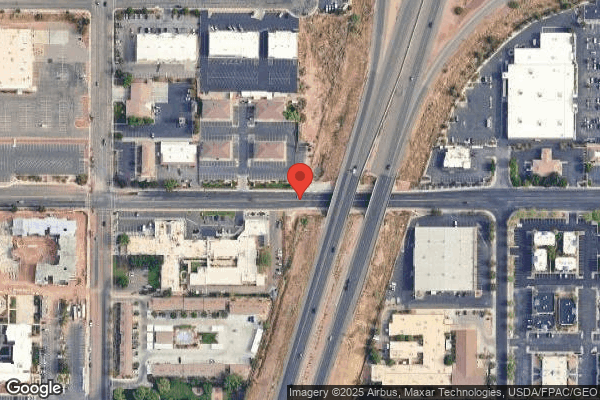
1032 East 100 South, St. George, UT 84770 (435) 628-0488
For profit - Partnership 99 Beds THE ENSIGN GROUP Data: November 2025
Trust Grade
60/100
#64 of 97 in UT
Last Inspection: June 2024

Within standard 12-15 month inspection cycle. Federal law requires annual inspections.

Overview

St. George Rehabilitation has a Trust Grade of C+, which means it is slightly above average but still not exceptional. It ranks #64 out of 97 facilities in Utah, placing it in the bottom half of state options, and #6 out of 8 in Washington County, indicating that only two local facilities are rated better. The facility shows signs of improvement, with the number of reported issues decreasing from 9 in 2023 to 8 in 2024. However, staffing is below average, rated at 2 out of 5 stars, with a turnover rate of 47%, which is better than the state average but still concerning. On a positive note, St. George has no fines on record, which is a good sign, but it has less RN coverage than 96% of Utah facilities, meaning there may be fewer registered nurses available to catch potential issues. Specific incidents of concern include issues with food sanitation, where staff failed to properly date and manage food items, and failed to maintain a clean environment for residents, with reports of leaks and debris in living spaces. In another instance, some residents did not receive their prescribed therapeutic diets, which could have significant health implications. Overall, while there are strengths such as no fines and some good quality measures, there are also notable weaknesses that families should consider.

Trust Score
C+
60/100
In Utah
#64/97
Bottom 35%
Safety Record
Low Risk
No red flags
Inspections
Getting Better
9 → 8 violations
Staff Stability
⚠ Watch
47% turnover. Above average. Higher turnover means staff may not know residents' routines.
Penalties
✓ Good
No fines on record. Clean compliance history, better than most Utah facilities.
Skilled Nurses
○ Average
Each resident gets 30 minutes of Registered Nurse (RN) attention daily — about average for Utah. RNs are the most trained staff who monitor for health changes.
Violations
⚠ Watch
27 deficiencies on record. Higher than average. Multiple issues found across inspections.
★★★☆☆
3.0
Overall Rating
★★☆☆☆
2.0
Staff Levels
★★★★☆
4.0
Care Quality
★★★☆☆
3.0
Inspection Score
Stable
2023: 9 issues
2024: 8 issues

The Good

  • 4-Star Quality Measures · Strong clinical quality outcomes
  • Full Sprinkler Coverage · Fire safety systems throughout facility
  • No fines on record

Facility shows strength in quality measures, fire safety.

The Bad

3-Star Overall Rating

Near Utah average (3.3)

Meets federal standards, typical of most facilities

Staff Turnover: 47%

Near Utah avg (46%)

Higher turnover may affect care consistency

Chain: THE ENSIGN GROUP

Part of a multi-facility chain

Ask about local staffing decisions and management

The Ugly 27 deficiencies on record

Jun 2024 8 deficiencies
CONCERN (D) 📢 Someone Reported This

A family member, employee, or ombudsman was alarmed enough to file a formal complaint

Potential for Harm - no one hurt, but risky conditions existed

Free from Abuse/Neglect (Tag F0600)

Could have caused harm · This affected 1 resident

**NOTE- TERMS IN BRACKETS HAVE BEEN EDITED TO PROTECT CONFIDENTIALITY** Based on interview, record review, document review, and policy review, the facility failed to protect residents' rights to be fr...

Read full inspector narrative →
**NOTE- TERMS IN BRACKETS HAVE BEEN EDITED TO PROTECT CONFIDENTIALITY** Based on interview, record review, document review, and policy review, the facility failed to protect residents' rights to be free from verbal abuse and physical abuse by staff and by a resident for 2 (Resident #33 and Resident #47) of 13 sampled residents reviewed for abuse. On 08/21/2023, Licensed Practical Nurse (LPN) #29 was heard by staff to verbally abuse Resident #47. In addition, Resident #145 physically abused Resident #33 on two occasions, on 04/17/2024 resulting in knuckle marks to the resident's forehead and on 04/28/2024 resulting in scratches to the resident's face. Findings included: A facility policy titled, Abuse: Prevention of and Prohibition Against, revised in 02/2024, indicated, It is the policy of this Facility that each resident has the right to be free from abuse, neglect, misappropriation of resident property, and exploitation. The policy specified, Abuse is the willful infliction of injury, unreasonable confinement, intimidation, or punishment with resulting physical harm, pain, or mental anguish. Per the policy Physical Abuse includes but is not limited to hitting, slapping pinching, and kicking. It also includes controlling behavior through corporal punishment. The policy indicated, Verbal Abuse includes the use of oral, written, or gestured language that willfully includes disparaging and derogatory terms to residents or their representatives, or within their hearing distance, regardless of their age, ability to comprehend, or disability. 1. An admission Record revealed the facility admitted Resident #47 on 07/28/2022. According to the admission Record, the resident had a medical history that included diagnoses of dementia with behavioral disturbance, anxiety disorder, and need for assistance with personal care. An annual Minimum Data Set (MDS), with an Assessment Reference Date (ARD) of 07/30/2023, revealed Resident #47 had a Brief Interview for Mental Status (BIMS) score of 0, which indicated the resident had severe cognitive impairment. The MDS revealed the resident had adequate hearing and used no hearing aid or other hearing appliance. According to the facility's investigation, Certified Nursing Assistant (CNA) #27 reported she heard a nurse, later identified as LPN #29, yell at a resident. Per the investigation, CNA #27 went in the direction of the yelling and saw Resident #47 swing at the nurse and the nurse yell at the resident. The investigation revealed, another CNA, CNA #28, reported she heard yelling from the nurse, but did not remember what was being yelled by the nurse. Per the investigation, LPN #29 stated the resident would not take their medication and as she started to place the resident back in the bed, the resident tried to punch her. According to investigation, LPN #29 stated she tried to communicate with Resident #47 to get them into bed and to stop hitting her. During an interview on 06/04/2024 at 1:35 PM, CNA #28 stated on 08/21/2023 around 7:00 PM/8:00 PM, as she assisted another resident in a room, she heard yelling and overheard LPN #29 raise their voice at Resident #47. According to CNA #28, Resident #47 had no hearing issues and the nurse, LPN #29, was new to the facility. CNA #28 stated the incident was reported to the Abuse Coordinator. Per CNA #38, she felt the incident was verbal abuse. During an interview on 06/04/2024 at 2:36 PM, CNA #27 acknowledged she heard LPN #29 yell at Resident #47. CNA #27 stated she reported what she heard to the Administrator by way of a text message when she got home from work at 10:15 PM. Per CNA #27, she stated based on her training, what she heard was verbal abuse. During a telephone interview on 06/04/2024 at 7:19 PM, LPN #29 stated she felt she did nothing wrong. During an interview on 06/05/2024 at 11:22 AM, the Administrator, also the Abuse Coordinator, stated he received a call from CNA #27, who reported she heard LPN #29 raise their voice at Resident #47. The Administrator stated LPN #29 did admit that she raised her voice at the resident, but only to make sure the resident heard her. The Administrator stated he did not know if the resident had issues with hearing; however, he informed LPN #29 that she should have just walked away from the resident. 2. An admission Record revealed the facility admitted Resident #145 on 09/11/2023. According to the admission Record, the resident had a medical history that included diagnoses of cognitive communication deficit, insomnia, anxiety disorder, major depressive disorder, and unspecified dementia, A quarterly Minimum Data Set (MDS), with Assessment Reference Date (ARD) of 03/29/2024, revealed Resident #145 had a Brief Interview for Mental Status (BIMS) score of 5, which indicated the resident had severe cognitive impairment. The MDS indicated that the resident had hallucinations, physical behavioral symptoms, and wandering behaviors one to three days during the assessment period. Resident #145's Care Plan included a focus area initiated on 09/12/2023, that indicated the resident used psychotropic medications for behavior management (hallucinations and verbalized aggression). Interventions directed staff to monitor and document the effectiveness of the medication (initiated 09/12/2023). Resident #145's Care Plan included a focus area initiated 09/12/2023 that indicated the resident was at risk for elopement and wandering related to disorientation and impaired safety awareness. Interventions directed staff to provide structured activities and reorientation strategies (initiated on 03/05/2024). An admission Record revealed the facility admitted Resident #33 on 09/13/2019. According to the admission Record, the resident had a medical history that included diagnoses of Alzheimer's disease, major depressive disorder, anxiety, stroke, and vascular dementia. A quarterly MDS, with ARD of 03/09/2024, revealed Resident #33 had a BIMS score of 00, which indicated the resident had severe cognitive impairment. The MDS revealed that the resident exhibited verbal behavioral symptoms directed toward others, rejected care, and exhibited wandering behaviors on one to three days during the seven-day assessment look back period. Resident #33's care plan included a focus area revised 06/07/2023, that indicated the resident had the potential for a psychosocial well-being problem related to Alzheimer's disease, anxiety, depression, and post-traumatic stress disorder. Interventions directed staff to allow the resident time to answer questions and to verbalize feelings, perceptions, and fears (initiated 12/23/2022), provide one on one therapy to help balance mood and behaviors (initiated 12/23/2022), and ensure no triggers related to a diagnosis of post-traumatic stress disorder (initiated 02/20/2024). A Facility Reported Incidents report dated 04/17/2024, revealed on 04/17/2024 at 5:45 PM there was an altercation between Resident #145 and Resident #33 on the memory care unit. Resident #145's Progress Notes, dated 04/17/2024, revealed a certified nursing assistant (CNA) reported that Resident #145 came into the dining area and began attacking another resident. The note revealed the other resident tried to stop Resident #145 from hitting them; however, Resident #145 hit the resident on the forehead before staff were able to safely separate the residents. The note revealed the residents were separated safely into their own rooms, and the Administrator and Director of Nursing (DON) were notified of the incident. Resident #33's Progress Notes dated 04/17/2023 revealed another resident hit Resident #33 on the forehead resulting in three small marks to the forehead. Resident #33's care plan included a focus area initiated 09/17/2019 that indicated the resident had the potential for a behavior problem related to dementia, Alzheimer's, anxiety, and depression. The care plan revealed that the resident was in a resident-to-resident altercation on 04/17/2024 and was noted with knuckle marks to [the] forehead at initial evaluation. The facility's Resident to Resident Questionnaire for Staff dated 04/19/2024, revealed CNA #28's interview was completed by text message. According to the document, the CNA witnessed the residents in a small altercation. The document revealed CNA #28 and a coworker were in an office when they saw Resident #145 walk into the dining room and start attempting to hit Resident #33. CNA #28 indicated that her and another coworker ran to intervene immediately and pulled them apart. CNA #28 stated once they pulled them apart, Resident #145 and Resident #33 were taken to their respective rooms. During an interview on 06/07/2024 at 11:58 AM, CNA #26 stated she witnessed Resident #145 hit Resident #33 on 04/17/2024. CNA #26 said staff was in an office area in the dining room and Resident #33 was in the dining room sitting in the recliner. CNA #26 stated Resident #145 stated, You [NAME] me and attempted to hit Resident #33. CNA #26 indicated before they separated the residents, Resident #145 hit Resident #33 on the forehead with their fist. CNA #26 said Resident #33 had a mark on their forehead. The facility's Follow-Up Investigation Report, dated 04/19/2024, revealed the investigation results were inconclusive. The facility's report revealed there was not enough information to determine whether abuse could be substantiated. The report revealed no one witnessed what happened before or after the situation or what led to the incident. According to the report, there was contact between the resident, and even though Resident #33's Progress Notes and care plan revealed the resident sustained injury, according to the facility's Follow-up Investigation Report, no injuries were found. A second Facility Reported Incidents report dated 04/28/2024 revealed that on 04/28/2024 at 4:00 PM there was another resident-to-resident altercation between Resident #33 and Resident #145. According to the report, Resident #33 was yelling and pounding at a door trying to get out of the memory care unit. The report revealed Resident #145's room was next to the exit door and Resident #33's behavior annoyed Resident #145. According to the report, Resident #145 swatted at Resident #33 to try to get the resident to stop. A review of Licensed Practical Nurse (LPN) #2's Resident to Resident Questionnaire for Staff dated 04/30/2024 revealed the LPN witnessed the 04/28/2024 incident. LPN #2's statement revealed she saw Resident #33 hitting the door and yelling and Resident #145 came up and hit Resident #33. Resident #145's Progress Notes, dated 04/28/2024 at 5:22 PM, revealed the resident was witnessed standing in the doorway of their room when the resident suddenly started screaming at another resident who was standing at the doors of the unit. The note revealed Resident #145 crossed the hallway towards the other resident and slapped the resident on the face. The note revealed the other resident put their hands up in defense and both parties were separated immediately and moved safely to their rooms. Resident #33's Progress Notes dated 04/28/2024 at 5:45 PM revealed a resident slapped Resident #33 on the face resulting in a scratch to Resident #33's forehead, the right side of their nose, and the right side of their lip. The facility's Follow-Up Investigation Report, dated 04/30/2024 revealed while it was clear the resident [Resident #33] was 'swatted' by the other resident [Resident #145] it was extremely unclear as to what led to the incident. It was also unclear as to how much contact was made. The report revealed there was one witness that saw the incident, but she was to busy running to break up the pair rather than see how hard the patient [resident] was hit. The facility's report revealed there was no injury or bruising, even though Resident #33's Progress Notes revealed the resident sustained scratches to the forehead, the right side of their nose, and the right side of their lip. Further review of the facility's report revealed there had been a pattern of Resident #145 getting frustrated with other residents and the facility had tried a couple of different things to get the resident to be a little nicer to staff and residents. The report revealed the family agreed that this could not keep happening and agreed to take Resident #145 home. During an interview on 06/07/2024 at 1:47 PM, the DON stated she expected close monitoring and interventions to prevent resident-to-resident altercations. During an interview on 06/07/2024 at 1:47 PM, the Administrator stated his expectation was for the facility to implement interventions to prevent resident-to-resident altercations from happening.
CONCERN (D) 📢 Someone Reported This

A family member, employee, or ombudsman was alarmed enough to file a formal complaint

Potential for Harm - no one hurt, but risky conditions existed

Report Alleged Abuse (Tag F0609)

Could have caused harm · This affected 1 resident

Based on interview, record review, document review, and policy review, the facility failed to ensure an allegation of verbal abuse was reported immediately to the Administrator for 1 (Resident #47) of...

Read full inspector narrative →
Based on interview, record review, document review, and policy review, the facility failed to ensure an allegation of verbal abuse was reported immediately to the Administrator for 1 (Resident #47) of 13 sampled residents reviewed for abuse. Specifically, on 08/21/2023 at approximately 7:00 PM/8:00 PM, Certified Nursing Assistant (CNA) 27 and CNA #28 heard Licensed Practical Nurse (LPN) #29 verbally abuse the resident; however, the staff did not report the allegation of abuse to the Administrator until 10:15 PM. Findings included: A facility policy titled, Abuse: Prevention of and Prohibition Against, revised in 02/2024, indicated, 1. All allegations of abuse, neglect, misappropriation of resident property, or exploitation should be reported immediately to the Administrator. An admission Record revealed the facility admitted Resident #47 on 07/28/2022. According to the admission Record, the resident had a medical history that included diagnoses of dementia with behavioral disturbance, anxiety disorder, and need for assistance with personal care. An annual Minimum Data Set (MDS), with an Assessment Reference Date (ARD) of 07/30/2023, revealed Resident #47 had a Brief Interview for Mental Status (BIMS) score of 0, which indicated the resident had severe cognitive impairment. The MDS revealed the resident had adequate hearing and used no hearing aid or other hearing appliance. According to the facility's investigation, CNA #27 reported she heard a nurse, later identified as LPN #29, yell at a resident. Per the investigation, CNA #27 went in the direction of the yelling and saw Resident #47 swing at the nurse and the nurse yell at the resident. The investigation revealed, another CNA, CNA #28, reported she heard yelling from the nurse, but did not remember what was being yelled by the nurse. Per the investigation, LPN #29 stated the resident would not take their medication and as she started to place the resident back in the bed, the resident tried to punch her. According to investigation, LPN #29 stated she tried to communicate with Resident #47 to get them into bed and to stop hitting her. During an interview on 06/04/2024 at 1:35 PM, CNA #28 stated on 08/21/2023 around 7:00 PM/8:00 PM, as she assisted another resident in a room, she heard yelling and overheard LPN #29 raise their voice at Resident #47. According to CNA #28, Resident #47 had no hearing issues and the nurse, LPN #29, was new to the facility. CNA #28 stated the incident was reported to the Abuse Coordinator. Per CNA #38, she felt the incident was verbal abuse. During an interview on 06/04/2024 at 2:36 PM, CNA #27 acknowledged she heard LPN #29 yell at Resident #47. CNA #27 stated she reported what she heard to the Administrator by way of a text message when she got home from work at 10:15 PM. Per CNA #27, she stated based on her training, what she heard was verbal abuse. During an interview on 06/05/2024 at 11:22 AM, the Administrator stated when staff witnessed abuse, he expected them to first make sure the resident was safe and then call him immediately day or night to report the abuse.
CONCERN (D) 📢 Someone Reported This

A family member, employee, or ombudsman was alarmed enough to file a formal complaint

Potential for Harm - no one hurt, but risky conditions existed

Investigate Abuse (Tag F0610)

Could have caused harm · This affected 1 resident

Based on interview, record review, document review, and policy review, the facility failed to implement their abuse policy for 2 (Resident #47 and Resident #395) of 13 sampled residents reviewed for a...

Read full inspector narrative →
Based on interview, record review, document review, and policy review, the facility failed to implement their abuse policy for 2 (Resident #47 and Resident #395) of 13 sampled residents reviewed for abuse. Specifically, the facility failed to remove the accused staff member rom care of any resident after staff reported to the Administrator they heard Licensed Practical Nurse (LPN) #29 verbally abuse Resident #47 on 08/21/2023. The facility also failed to interview the alleged perpetrator and other residents when it was alleged that Resident #396 poked Resident #395 in the breast in the hallway on 04/09/2023. Findings included: A facility policy titled, Abuse: Prevention of and Prohibition Against, revised in 02/2024, indicated, 2. After receiving the allegation, and during and after the investigation, the Administrator will ensure that all residents are protected from physical and psychosocial harm. Per the policy, 4. All allegations of abuse, neglect, misappropriation of resident property, and exploitation will be promptly and thoroughly investigated by the Administrator or his/her designee. The policy indicated, 5. The investigation will include the following: * An interview with the person(s) reporting the incident; * An interview with the resident(s); *Interviews with any witnesses to the incident, including the alleged perpetrator, as appropriate; * A review of the resident's medical record; * An interview with staff members (on all shifts) who may have information regarding the alleged incident; * Interviews with other residents to who the accused employee provides care or services or who may have information regarding the alleged incident; * An interview with staff members (on all shifts) having contact with the accused employee; and * A review of all circumstances surrounding the incident. According to the policy, 8. The investigation, and the results of the investigation, will be documented, The policy specified, 3. If the allegation of abuse, neglect, misappropriation of resident property, or exploitation involves an employee, the Facility will: * Immediately remove the employee from the care of any resident. 1. An admission Record revealed the facility admitted Resident #47 on 07/28/2022. According to the admission Record, the resident had a medical history that included diagnoses of dementia with behavioral disturbance, anxiety disorder, and need for assistance with personal care. An annual Minimum Data Set (MDS), with an Assessment Reference Date (ARD) of 07/30/2023, revealed Resident #47 had a Brief Interview for Mental Status (BIMS) score of 0, which indicated the resident had severe cognitive impairment. The MDS revealed the resident had adequate hearing and used no hearing aid or other hearing appliance. According to the facility's investigation, Certified Nursing Assistant (CNA) #27 reported she heard a nurse, later identified as LPN #29, yell at a resident. Per the investigation, CNA #27 went in the direction of the yelling and saw Resident #47 swing at the nurse and the nurse yell at the resident. The investigation revealed, another CNA, CNA #28, reported she heard yelling from the nurse, but did not remember what was being yelled by the nurse. Per the investigation, LPN #29 stated the resident would not take their medication and as she started to place the resident back in the bed, the resident tried to punch her. According to investigation, LPN #29 stated she tried to communicate with Resident #47 to get them into bed and to stop hitting her. During an interview on 06/04/2024 at 1:35 PM, CNA #28 stated on 08/21/2023 around 7:00 PM/8:00 PM, as she assisted another resident in a room, she heard yelling and overheard LPN #29 raise their voice at Resident #47. According to CNA #28, Resident #47 had no hearing issues and the nurse, LPN #29, was new to the facility. CNA #28 stated the incident was reported to the Abuse Coordinator. Per CNA #38, she felt the incident was verbal abuse. During an interview on 06/04/2024 at 2:36 PM, CNA #27 acknowledged she heard LPN #29 yell at Resident #47. CNA #27 stated she reported what she heard to the Administrator by way of a text message when she got home from work at 10:15 PM. Per CNA #27, she stated based on her training, what she heard was verbal abuse. During a telephone interview on 06/04/2024 at 7:19 PM, LPN #29 stated she felt she did nothing wrong. LPN #29 stated after the incident, she continued on with her medication pass and continued to watch the staff and other residents for the remainder of her shift. LPN #29's time card for the time period 08/20/2023 to 08/27/2023, revealed on 08/21/2023, she clocked in on 08/21/2023 at 5:59 PM and clocked out on 08/22/2023 at 3:16 AM, then clocked back in 3:47 AM and clocked out at 6:25 AM. During an interview on 06/05/2024 at 11:22 AM, the Administrator, also the Abuse Coordinator, stated he received a call from CNA #27, who reported she heard LPN #29 raise their voice at Resident #47. The Administrator stated LPN #29 did admit that she raised her voice at the resident, but only to make sure the resident heard her. The Administrator stated he did not know if the resident had issues with hearing; however, he informed LPN #29 that she should have just walked away from the resident. According to the Administrator, once an allegation of abuse was made, the accused staff member should be suspended and sent home until the investigation was completed. 2. An admission Record revealed the facility admitted Resident #395 on 01/22/2023. According to the admission Record, the resident had a medical history that included a diagnosis of unspecified dementia. A quarterly Minimum Data Set (MDS), with an Assessment Reference Date (ARD) of 07/30/2023, revealed Resident #395 had a Brief Interview for Mental Status (BIMS) score of 10, which indicated the resident had moderate cognitive impairment. Resident #395's Care Plan included a focus area, initiated on 01/24/2023, that indicated the resident was at risk for re-traumatization r/t [related to] history of trauma (Neglect and emotional). An admission Record revealed the facility admitted Resident #396 on 04/06/2023. According to the admission Record, the resident had a medical history that included diagnoses of history of traumatic brain injury (TBI), cognitive communication deficit, major depressive disorder, and unspecified dementia. Per the admission Record, Resident #386 was discharged to another facility on 04/10/2023. Resident #396's Care Plan, included a focus area, initiated on 04/06/2023, that indicated the resident was at risk for impaired cognitive function/dementia or impaired thought processes related to adjustment to the facility, medications, age, dementia, history of TBI, and cognitive communication deficit. Another focus area, initiated on 04/08/2023, indicated the resident had the potential for a behavior problem related to a history of TBI and dementia. An Initial Report, dated 04/09/2023, completed by the Administrator, revealed the facility reported an allegation of sexual abuse involving Resident #395 and Resident #396 to the state survey agency. Per the report, on 04/09/2023 at 4:30 (AM or PM not specified), Resident #395 reported Resident #396 poked [Resident #395] in the breast. The report indicated the alleged incident occurred in the hallway of the facility. An undated Follow-up Investigation Report revealed that for the portions of the report specific to Summary of interview(s) with the alleged victim, Summary of interview(s) with witness(es), Summary of interview(s) with the alleged perpetrator(s), Summary of interview(s) with other residents who may have had contact with the alleged perpetrator, Summary of interview(s) with staff responsible for oversight and supervision of the location where the alleged victim resides, and Summary of interview(s) with staff responsible for oversight and supervision of the alleged perpetrator reflected, See Attached Paperwork. The attached paperwork, undated, revealed, the 2. Summary of Interviews reflected that as part of their investigation, the facility interviewed Resident #395 (alleged victim), Licensed Practical Nurse (LPN) #3, Certified Nursing Assistant (CNA) #4, and Therapist #7. There was no indication the facility interviewed Resident #396 (alleged perpetrator) or other residents in the area of the alleged incident as directed by the facility's abuse policy. During an interview on 06/06/2024 at 10:24 AM, the Administrator said that when he was notified of abuse allegations, he immediately started an investigation. The Administrator said the investigation process included speaking with staff members, residents, alleged victims, alleged perpetrators, and those who may have seen the incident. The Administrator said they tried to talk with other residents in the same area to determine if they had experienced any similar concerns. During a follow-up interview on 06/06/2024 at 10:24 AM, the Administrator reported he did not interview any of the surrounding residents as per their facility protocol; however, the Administrator said he asked Resident #396 if they touched Resident #395, and Resident #396 denied the allegation, although this information was not reflected in the facility's summary of interviews. During an interview on 06/07/2024 at 9:00 AM, the Director of Nursing (DON) said her expectation regarding abuse investigations was to follow the facility's policy.
CONCERN (D)

Potential for Harm - no one hurt, but risky conditions existed

Comprehensive Care Plan (Tag F0656)

Could have caused harm · This affected 1 resident

Based on observation, interview, record review, and facility policy review, the facility failed to develop a care plan to address the supplemental oxygen usage for 2 (Resident #37 and Resident #76) of...

Read full inspector narrative →
Based on observation, interview, record review, and facility policy review, the facility failed to develop a care plan to address the supplemental oxygen usage for 2 (Resident #37 and Resident #76) of 2 sampled residents reviewed for respiratory care. Findings included: An undated facility policy titled, Care Planning, indicated, It is the policy of this facility that the interdisciplinary team (IDT) shall develop a comprehensive care plan for each resident and care plans will be updated as necessary with resident changes to help promote optimal care to the resident. 1. An admission Record revealed the facility admitted Resident #37 on 09/05/2023. According to the admission Record, the resident had a medical history that included diagnoses of acute respiratory failure with hypoxia and chronic respiratory failure with hypercapnia. A quarterly Minimum Data Set (MDS), with an Assessment Reference Date (ARD) of 05/02/2024, revealed Resident #37 received oxygen therapy. Resident #37's Order Summary Report, for active orders as of 06/04/2024, revealed an order dated 09/05/2023, for supplemental oxygen by way of nasal cannula at 2 liters/minute if oxygen saturation was less than 90%, as needed. Resident #37's comprehensive care plan, with an admission date of 09/05/2023, revealed no evidence to indicate the resident had a care plan that addressed their supplemental oxygen usage. An observation on 06/03/2024 at 11:48 AM, revealed Resident #37 lying in their bed with a nasal cannula properly placed around the resident's head. During an interview on 06/05/2024 at 8:33 AM, Certified Nursing Assistant #9 stated Resident #37 always wore their oxygen nasal cannula while in bed. 2. An admission Record revealed the facility readmitted Resident #76 on 05/16/2024. According to the admission Record, the resident had a medical history that included a diagnosis of acute and chronic respiratory failure with hypoxia. A Minimum Data Set (MDS), with an Assessment Reference Date (ARD) of 05/22/2024, revealed Resident #76 received oxygen therapy. Resident #76's Order Summary Report, for active orders as of 06/04/2024, revealed an order dated 05/16/2024, for supplemental oxygen by way of nasal cannula at 2 liters/minute if oxygen saturation was less than 90%, as needed. Resident #76's comprehensive care plan, with an admission date of 05/16/2024, revealed no evidence to indicate the resident had a care plan that addressed their supplemental oxygen usage. An observation on 06/03/2024 at 10:40 AM, revealed Resident #76 lying in bed with a nasal canula properly placed around their head. During an interview on 06/07/2024 at 11:17 AM, Registered Nurse Supervisor #20 stated if a resident had a physician order for supplemental oxygen, they should have a care plan that listed the resident's diagnosis, a rational for why they received supplemental oxygen, how many liters the resident received, and instructions for changing the nasal cannula tubing. During an interview on 06/06/2024 at 9:44 AM, the Assistant Director of Nursing (ADON) stated every resident who had an order for supplemental oxygen should have a care plan that listed the diagnosis for the use of the supplemental oxygen. The ADON stated the care plan should include interventions related to the monitoring of resident's vital signs, change in condition, respiratory concerns, and instructions for care of the supplemental oxygen machine. During an interview on 06/07/2024 at 11:46 AM, the Director of Nursing stated she would expect a care plan be in place for a resident who had supplemental oxygen.
CONCERN (D)

Potential for Harm - no one hurt, but risky conditions existed

Deficiency F0657 (Tag F0657)

Could have caused harm · This affected 1 resident

Based on interview, record review, and facility policy review, the facility failed to revise the care plan to include added new interventions after a fall for 1 (Resident #86) of 4 sampled residents r...

Read full inspector narrative →
Based on interview, record review, and facility policy review, the facility failed to revise the care plan to include added new interventions after a fall for 1 (Resident #86) of 4 sampled residents reviewed for accidents. Findings included: An undated facility policy titled, Care Planning, indicated, It is the policy of this facility that the interdisciplinary team (IDT) shall develop a comprehensive care plan for each resident and care plans will be updated as necessary with resident changes to help promote optimal care to the resident. The policy indicated, 7. Care plans will be updated with resident changes to promote optimal resident care. An admission Record indicated the facility admitted Resident #86 on 03/29/2024. According to the admission Record, the resident had a medical history that included diagnoses of cerebral infarction (stroke) due to embolism of right middle cerebral artery and essential primary hypertension (high blood pressure). An admission Minimum Data Set (MDS), with an Assessment Reference Date (ARD) of 04/05/2024, revealed Resident #86 had a Brief Interview for Mental Status (BIMS) score of 7, which indicated the resident had severe cognitive impairment. The MDS indicated the resident required partial/moderate assistance with toileting. Resident #86's care plan, initiated on 03/29/2024, indicated the resident was at risk for falls related to weakness, decreased mobility, abnormalities of gait and mobility, and a history of falls. An incident report dated 04/19/2024 at 6:35 PM, revealed as a certified nursing assistant assisted Resident #86 onto the toilet, the resident slid on their buttocks off the wheelchair. Per the incident report, the resident stated their socks were slippery. Resident #86's Fall Committee IDT note dated 04/26/2024 at 1:26 PM, revealed Resident #86 sustained a witnessed fall when they slipped during a transfer to the bathroom. Per the note, the IDT met and the resident's care plan was updated to anticipate and meet the resident's needs with reminders for appropriate footwear with transfers. Resident #86's care plan, initiated on 03/29/2024, indicated the resident was at risk for falls related to weakness, decreased mobility, abnormalities of gait and mobility, and a history of falls. There was no evidence the intervention to anticipate and meet the resident's needs with reminders for appropriate footwear with transfers was added to the resident's care plan. An incident report dated 05/02/2024 at 2:53 PM, revealed Resident #86 attempted to come back inside from the smoking area and their wheelchair rolled out from underneath them. Per the incident report, the resident stated they could not get the brakes on their wheelchair to work and they landed on their buttocks. Resident #86's Fall Committee IDT note dated 05/09/2024 at 11:05 AM, revealed Resident #86 sustained a witnessed fall coming back from smoking. Per the note, the IDT met and the resident's care plan was updated to indicate a non-slip pad was added to the seat of the resident's wheelchair to prevent further slipping. Resident #86's care plan, initiated on 03/29/2024, indicated the resident was at risk for falls related to weakness, decreased mobility, abnormalities of gait and mobility, and a history of falls. There was no evidence the intervention to add a non-slip pad to the resident's wheelchair to prevent further slipping was added to the resident's care plan. During an interview on 06/06/2024 at 11:16 AM, the Director of Nursing (DON) reviewed Resident #86's care plan and stated the intervention to use appropriate footwear and the intervention to add a non-slip pad to the resident's wheelchair were not added to the resident's care plan, but they should have. During an interview on 06/06/2024 at 11:27 AM, the Administrator stated the fall program was a nursing program and he deferred the specifics to the DON; however, he expected the staff to follow the policy.
CONCERN (D)

Potential for Harm - no one hurt, but risky conditions existed

Deficiency F0658 (Tag F0658)

Could have caused harm · This affected 1 resident

Based on observation, interview, record review, and facility policy review, the facility failed to follow a physician's order to hold a nicotine patch when the resident was smoking for 1 (Resident #86...

Read full inspector narrative →
Based on observation, interview, record review, and facility policy review, the facility failed to follow a physician's order to hold a nicotine patch when the resident was smoking for 1 (Resident #86) of 4 sampled residents reviewed accidents. Findings included: An admission Record indicated the facility admitted Resident #86 on 03/29/2024. According to the admission Record, the resident had a medical history that included diagnoses of cerebral infarction (a stroke) due to embolism of right middle cerebral artery and essential primary hypertension (high blood pressure). An admission Minimum Data Set (MDS), with an Assessment Reference Date (ARD) of 04/05/2024, indicated Resident #86 had a Brief Interview for Mental Status (BIMS) score of 7, which indicated the resident had severe cognitive impairment. Resident #86's care plan, initiated on 04/16/2024, indicated the resident had the potential for injury related smoking. Resident #86's Medication Administration Record [MAR], for June 2024, revealed a transcription of an order dated 05/22/2024, for nicotine patch 24 Hour, 7 milligrams (mg) 24 hour, apply one patch one time a day for smoking cessation, hold if smoking. Licensed Practical Nurse (LPN) #1 initialed the MAR to indicate she placed a patch on the resident's right arm on 06/03/2024 at 7:29AM. During an observation on 06/03/2024 at 1:12 PM, Resident #86 was observed outside smoking with a nicotine patch present on their right arm. During an interview on 06/04/2024 at 10:30 AM, Resident #86 stated they smoked one to two times a day. The resident stated they tried to stop smoking, but did not want to stop. During an interview on 06/04/2024 at 11:14 AM, LPN #1 stated on 06/03/2024 was the first time she caught the resident smoking with a nicotine patch on. During an interview on 06/06/2024 at 10:48 AM, the Director of Nursing (DON) stated Resident #86 wore a nicotine patch since 05/22/2024, smoked one to two times a day, and the patch was not held. The DON stated Resident #86 smoked at random times, so staff would not have always been aware the resident smoked while wearing the nicotine patch. During a follow-up interview on 06/06/2024 at 12:59 PM, the DON stated she expected the nurses to administer medication as ordered. During an interview on 06/06/2024 at 12:59 PM, the Administrator stated his expectation was for the medications to be given according to physician orders.
CONCERN (D)

Potential for Harm - no one hurt, but risky conditions existed

Unnecessary Medications (Tag F0759)

Could have caused harm · This affected 1 resident

Based on observation, interview, and review of manufacturer's information, the facility failed to ensure they maintained a medication error rate of less than 5 percent (%). The facility had 2 errors o...

Read full inspector narrative →
Based on observation, interview, and review of manufacturer's information, the facility failed to ensure they maintained a medication error rate of less than 5 percent (%). The facility had 2 errors out of 34 opportunities, resulting in a medication error rate of 5.88 %, affecting 1 (Resident #14) of 3 residents observed during medication administration. Findings included: An admission Record indicated the facility admitted Resident #14 on 03/04/2021. According to the admission Record, the resident had a medical history that included a diagnosis of type two diabetes mellitus with diabetic neuropathy. Resident #14's Order Summary Report, listing active orders as of 06/07/2024, contained an order, dated 07/25/2023, for insulin glargine subcutaneous solution 100 units per milliliter (units/mL), inject 75 units subcutaneously every morning and at bedtime for type two diabetes mellitus. The Order Summary Report also contained an order, dated 03/04/2021, for NovoLog Solution 100 units/mL, inject as per sliding scale (a progressive increase in insulin dose, based upon predefined blood glucose levels): less than 81= no insulin required, 81-150 = 5 units, 151-200 = 9 units, 201-250 = 13 units, 251-300 = 17 units, 301-350 = 21 units, 351-400 = 25 units, and greater than 400 = call physician. Manufacturer's information for insulin glargine revealed Instructions for Use of the prefilled pen specified, after attaching the needle, Step 3. Perform a Safety Test Always perform a safety test before each injection. Performing the safety test ensures that you get an accurate dose by: -ensuring that pen and needle work properly -removing air bubbles A. Selects a dose of 2 units by turning the dosage selector. B. Take off outer needle cap and keep it to remove the used needle after injection. Take off the inner needle cap and discard it. C. Hold the pen with the needle pointing upwards. D. Tap the insulin reservoir so that any air bubbles rise up towards the needle. E. Press the inject button all the way in. Check if insulin comes out of the needle tip. You may have to perform the safety test several times before insulin is seen. -If no insulin comes out, check for air bubbles and repeat the safety test two more times to remove then. -If still no insulin comes out, the needle may be blocked. Change the needle and try again. -If no insulin comes out after changing the needle, your [insulin glargine prefilled pen] may be damaged. The manufacturer's information further specified that when administering the prescribed dose, C. Deliver the dose by pressing the injection button in all the way. The number in the dose window will return to 0 as you inject. D. Keep the injection button pressed all the way in. Slowly count to 10 before you withdraw the needle from the skin. This ensures the full dose will be delivered. Manufacturer's information for NovoLog FlexTouch Pen revealed Instructions for Use of the prefilled pen specified, after attaching the needle, Priming your NovoLog FlexTouch Pen: Step 7: -Turn the dose selector to select 2 units. Step 8: -Hold the Pen with the needle pointing up. Tap the top of the pen gently a few times to let any air bubbles rise to the top. Step 9: -Hold the pen with the needle pointing up. Press and hold in the dose button until the dose counter shows 0. The 0 must line up with the dose pointer. -A drop of insulin should be seen at the needle tip -If you do not see a drop of insulin, repeat steps 7 to 9, no more than 6 times. -If you still do not see a drop of insulin, change the needle and repeat steps 7 to 9. The manufacturer's information further specified then when administering the prescribed dose, Step 13: -Press and hold down the dose button until the dose counter shows 0. -The 0 must line up with the dose pointer. You may then hear or feel a click. -Keep the needle in your skin after the dose counter has returned to 0 and slowly count to 6. -When the dose counter returns to 0, you will not get your full dose until 6 seconds later. During an observation of medication administration on 06/05/2024 beginning at 7:31 AM, Licensed Practical Nurse (LPN) #2 was observed administering medications for Resident #14. When administering Resident #14's insulin glargine and NovoLog, LPN #2 did not prime either insulin pen prior to injection, and LPN #2 immediately removed the needles after administration, instead of waiting the amount of time specified by the manufacturers. During an interview on 06/05/2024 at 10:24 AM, LPN #2 acknowledged there were errors during insulin preparation and administration. During an interview on 06/06/2024 at 12:59 PM, the Director of Nursing (DON) stated she expected the nurses to follow protocol for effective administration of medications. The DON agreed the nurse should have waited after injecting the insulin, instead of immediately removing the needles. The DON further stated she would have to review the manufacturer's information regarding the requirements for priming the insulin pens.
CONCERN (F)

Potential for Harm - no one hurt, but risky conditions existed

Food Safety (Tag F0812)

Could have caused harm · This affected most or all residents

Based on observation, interview, and facility policy review, the facility failed to store, prepare, and serve food in a sanitary manner for 1 of 2 nourishment refrigerators and 1 of 1 kitchen. Specifi...

Read full inspector narrative →
Based on observation, interview, and facility policy review, the facility failed to store, prepare, and serve food in a sanitary manner for 1 of 2 nourishment refrigerators and 1 of 1 kitchen. Specifically, the staff failed to date foods brought in from visitors to be stored in the nourishment refrigerators and discard opened food items that were undated and had been in the nourishment refrigerators for an indeterminate amount of time. Additionally, the staff failed to change gloves and wash their hands after touching high-contact surfaces and before touching food items. This had the potential to affect 96 of 96 residents who received food from the dietary department. Findings included: 1. A facility policy titled, [Facility Name] Policy / Procedure, revised 11/2016. specified, Food or beverage brought in from outside sources for storage in facility pantries, refrigeration units, or personal/resident room refrigeration units will be monitored by designated facility staff for food safety. An undated facility policy titled, Food Storage, specified, Leftover food is stored in covered containers or wrapped carefully and securely. Each item is clearly labeled and dated before being refrigerated. Leftover food is used within 3 days or discarded. An observation of the nourishment refrigerator outside of the 100 Unit on 06/03/2024 at 2:57 PM revealed an opened, undated resealable plastic bag of five hotdogs and an opened, undated jar of pasta sauce. During an interview on 06/04/2024 at 2:22 PM, the Dietary Manager stated that nursing staff were responsible for labeling and dating food items brought in from visitors. During an interview on 06/05/2024 at 11:19 AM, Certified Nursing Assistant (CNA) #18 stated that whoever puts the food in the nourishment refrigerator was responsible for labeling and dating them. During an interview on 06/05/2024 at 11:26 AM, CNA #10 stated that the CNA staff were responsible for labeling and dating foods for the nourishment refrigerators. CNA #10 stated that the dietary staff were responsible for cleaning the refrigerators, including discarding food items that had been in the refrigerator for longer than three days. An observation of the nourishment refrigerator outside of the 100 Unit on 06/06/2024 at 2:27 PM revealed an open, undated resealable bag of three hotdogs. An observation of the nourishment refrigerator outside of the 100 Unit on 06/07/2024 at 8:33 AM revealed a fully cooked rotisserie chicken that had been opened but not dated. During an interview on 06/06/2024 at 4:56 PM, the Director of Nursing (DON) revealed that dietary staff were responsible for cleaning and maintaining the nourishment refrigerators. She stated that all staff were responsible for labeling and dating food items in the nourishment refrigerators. She did not know if it was a concern that an open undated resealable bag of hotdogs had been in the nourishment refrigerator since 06/03/2024. During an interview on 06/06/2024 at 5:01 PM, the Dietary Manager stated that nobody had told her the dietary department was responsible for maintaining the nourishment refrigerators. 2. An undated facility policy titled Meat and Vegetable Preparation, specified, All raw vegetables are thoroughly washed before being cooked or served. An undated facility policy titled Food Safety, specified, Train staff to wash hands prior to working with food, after using the restroom or soiling hands in any way. During an observation of food preparation on 06/04/2024 at 10:30 AM, Dietary Aide (DA) #16 touched her microphone button to call for someone and then, without changing gloves or washing hands, continued to touch the meat to prepare seven sandwiches. At 10:31 AM, DA #16 changed gloves without washing her hands. She then opened the walk-in refrigerator and emerged with three tomatoes. She grabbed a knife and began cutting them. DA #16 did not wash the tomatoes. At 10:32 AM, DA #16 put lettuce on a sandwich without changing gloves or washing her hands. At 10:33 AM, the backdoor rang and DA #16 answered the backdoor. She changed her gloves but did not wash her hands. She then opened the walk-in refrigerator went in and came back out. After this, she touched sandwiches to cut and to wrap them. During an observation of food service on 06/04/2024 at 12:05 PM, DA #17 touched a drawer beneath the food line to retrieve a scoop for serving mashed potatoes. Without changing gloves or washing hands, he handled four rolls of bread. During an interview on 06/04/2024 at 2:15 PM, DA #17 stated he should have washed his hands and changed gloves after touching a high-contact surface and before touching food. During an interview on 06/04/2024 at 2:19 PM, DA #16 stated she should not have touched food/lunchmeat after using the microphone button without changing gloves or washing her hands. She also confirmed she should have washed her hands and changed gloves after opening the walk-in refrigerator and before touching the tomatoes. She did not know if tomatoes should be washed prior to food preparation. During an interview on 06/04/2024 at 2:22 PM, the Dietary Manager stated DA #16 should have washed her hands and changed gloves after touching the microphone button and after touching the refrigerator handle and before touching food items. She also indicated that DA #17 should have used tongs to serve the bread rolls rather than his hands, especially since he had just opened the drawer to get a scoop for serving mashed potatoes. During an interview on 06/05/2024 at 3:31 PM, the Dietary Manager indicated that tomatoes should be washed before being prepared. During an interview on 06/07/2024 at 8:58 AM, both the Administrator and the Director of Nursing (DON) said they expected staff to change gloves and wash their hands after touching high-contact surfaces and before touching foods.
Mar 2023 3 deficiencies
CONCERN (D) 📢 Someone Reported This

A family member, employee, or ombudsman was alarmed enough to file a formal complaint

Potential for Harm - no one hurt, but risky conditions existed

Free from Abuse/Neglect (Tag F0600)

Could have caused harm · This affected 1 resident

**NOTE- TERMS IN BRACKETS HAVE BEEN EDITED TO PROTECT CONFIDENTIALITY** Based on interview and record review it was determined, for 1 out of 6 sampled residents, that the facility did not ensure that ...

Read full inspector narrative →
**NOTE- TERMS IN BRACKETS HAVE BEEN EDITED TO PROTECT CONFIDENTIALITY** Based on interview and record review it was determined, for 1 out of 6 sampled residents, that the facility did not ensure that the resident had the right to be free from abuse. Specifically, a resident reported an allegation of sexual abuse while incontinence care was provided. Resident identifier: 1. Findings included: Resident 1 was re-admitted to the facility on [DATE] with diagnoses which consisted of gastro-espophageal reflux disease, neuromuscular dysfunction of the bladder, rheumatoid arthritis, contracture of the right and left knee, contracture of the right and left ankle, and reduced mobility. On 8/18/22 the Quarterly Minimum Data Set Assessment documented that resident 1 had a Brief Interview for Mental Status score of 15 out of 15, which would indicate that the resident was cognitively intact. The assessment documented that resident 1 did not have any hallucinations or delusions. The assessment documented that resident 1's functional status for bed mobility was an extensive 2-person assist and for toileting was an extensive one-person assist. Resident 1's care plan documented a care area for impairment to skin integrity related to yeast in skin folds of the groin, ulcer to the labia and a history of bullous pemphigoid to right lower extremity. The care plan was initiated on 12/9/21. The interventions identified were to educate the resident of causative factors and measures to prevent skin injury; encourage good nutrition and hydration to promote healthier skin; identify and document causative factors and eliminate/resolve where possible; and monitor/document location, size, and treatment of skin injury. On 10/26/22, a Grievance Resolution Form documented that resident 1's representative reported that a Certified Nurse Assistant (CNA) talked to resident 1 about personal things making her uncomfortable. The department response was, Will educate staff member on appropriate thing to say in resident rooms. The form was signed by the CNA Coordinator, the Executive Director and the Grievance Official on 10/26/22. The grievance log revealed a section Issue and resolution: Concerns with Staff CNA talking to resident about personal things making the resident uncomfortable. Grievance's follow-up: SS [social services] followed up with the Resident regarding concerns; the Resident was notified of staff training and actions taken to resolve the grievance. On 1/11/23 at 11:45 AM, the facility notified the State Survey Agency (SSA) of an allegation of sexual abuse by CNA 1. The initial report documented that Resident 1 had reported the allegation as sexual abuse and that the resident felt uncomfortable. The form documented that resident 1 had reported to the state surveyor that she had feared that CNA 1 would walk into her room at any time. The form documented that the Administrator (ADM) was notified of the incident on 1/11/23 at 11:30 AM. On 1/13/23, the facility final investigation report documented that resident 1 had reported that she filed a grievance that stated CNA 1 was talking about something personal and it made her feel uncomfortable. The facility followed up on the grievance and made sure that the cna would be scheduled on a different hall. The final report documented that while the Annual State Survey was being conducted resident 1 informed the surveyor that not only did the CNA make her feel uncomfortable with the conversation but felt sexually abused. The summary of the events documented, The incident started with the cna talking about personal issues going on in her home life. The resident asked the cna to stop and thought that the cna became offended The resident needed some cream on her female parts. The CNA did not describe what she was doing, and just shoved her fingers up there. She felt like the CNA shoved her fingers to far up there and more than she had to. The report documented that the allegation of abuse was verified and CNA 1 was terminated. On 1/13/23 at 12:44 PM, a Social Service progress note documented that resident 1 was visited regarding the abuse allegations and abuse investigation. The SSW informed resident 1 that they conducted an investigation into the allegation of abuse by a staff member. The SSW informed resident 1 that the facility substantiated the allegation and that the staff member had been terminated. It should be noted that no other progress notes were found for the allegation of abuse on 10/26/22. On 3/21/23 at 3:11 PM, an interview was conducted with resident 1. Resident 1 stated that she had wounds in her perineum area that required cream applications. Resident 1 stated that CNA 1 was applying cream inside her vagina, that it had hurt her, and CNA 1 was doing something that she was not supposed to. Resident 1 stated that it made her feel uncomfortable and she did not want CNA 1 in her room anymore. Resident 1 stated that she believed that the wound nurse mixed up Chamosyn cream to be applied to the perineum area. Resident 1 stated that she was having a personal conversation with CNA 1 at the time of the incontinence care. Resident 1 stated that CNA 1 had said that she loved to watch movies with gay people and was jealous when she would see movies with girls kissing each other. Resident 1 stated that she did not say much of anything to CNA 1 about the topic but that it made her feel uncomfortable. Resident 1 stated that she told the staff that she did not want CNA 1 in her room anymore. Resident 1 stated that other staff had told her that CNA 1 was saying that she did not want her caring for her because she was gay. Resident 1 stated that she did not have any problems with gay people, if that was her lifestyle fine but she did not need to tell her about it. Resident 1 stated that CNA 1 had also said that she did not have problems watching males kiss each other only that she was jealous when she watched females kissing each other. Resident 1 stated that she spoke with the SSW and the CNA Coordinator at the same time about this incident. Resident 1 reported that CNA 1 was putting ointment inside her vagina at the time of the conversation. Resident 1 stated that she had pain in the vaginal area prior to the cream application because she had blisters there. Resident 1 stated that she informed CNA 1 that it was hurting during the application of the cream and CNA 1 had replied that she could cure her Urinary Tract Infection (UTI). Resident 1 stated that she informed the SSW of the incident of inappropriate conversation and the sexual abuse allegation in October. Resident 1 stated that it was not until January 2023 when the state surveyor notified the ADM that any action was taken and CNA 1 was terminated. On 3/21/23 at 3:49 PM, an interview was conducted with the Wound Nurse (WN). The WN stated that resident 1 had barrier cream and nystatin powder that was ordered for her labia and vaginal area. The WN stated that barrier cream was a standing house order and they used A & D ointment. The WN stated that Chamosyn was a hyped up barrier cream with manuka honey in it. The WN stated that the Chamosyn was a barrier cream that the aides could apply with incontinence care. The WN stated that resident 1 was a one-person extensive assist for toileting, perineal care and brief changes. On 3/21/23 at 4:14 PM, an interview was conducted with the Social Service Worker (SSW). The SSW stated that the process for investigating grievances was to fill out the grievance log, forward the complaint to the appropriate department head, and they had 24 hours to have a plan of action to resolve the grievance. The SSW stated that he would then inform the resident of the resolution. The SSW stated initially he would talk to the resident and fill out the grievance form. The SSW stated that he and the CNA Coordinator tried to resolve the problem and come up with a plan of action together. The SSW stated that findings of the grievance investigation were documented in a progress notes. The SSW stated that the incident on 10/26/22 was that CNA 1 was providing resident 1 with care and it made resident 1 feel uncomfortable. The SSW stated that the conversation between CNA 1 and resident 1 was about how CNA 1 was a lesbian and CNA 1 talked about this while she was providing resident 1 with personal cares. The SSW stated that at the time of the conversation about sexual orientation and lifestyle, CNA 1 was cleaning resident 1's genitals and this made resident 1 feel uncomfortable. The SSW stated that he did not discuss the incident with resident 1, and did not ask resident 1 what was said during the conversation. The SSW stated that the CNA Coordinator talked to resident 1 and gathered the details of the conversation between resident 1 and CNA 1. The SSW stated that if the conversation made resident 1 uncomfortable while perineal care was being provided that he would want to gather more information. The SSW stated that the CNA Coordinator reported that she had spoken to CNA 1. The SSW was asked how he determined that the grievance was not an allegation of abuse and the SSW replied, I don't have an answer for that. The SSW stated that if he suspected an allegation of abuse he was supposed to inform the ADM. The SSW stated that he does not recall if he talked to the ADM and informed him of the incident. On 3/21/23 at 4:42 PM, an interview was conducted with the CNA Coordinator. The CNA Coordinator stated that with grievances the SSW would obtain the complaint information and if it pertained to a CNA they would discuss the incident. The CNA Coordinator stated that if it was with a specific aide she would discuss the incident with that aide and provide education if needed. The CNA Coordinator stated that resident 1's grievance in October was reported by the resident representative to the SSW. The CNA Coordinator stated that she spoke with CNA 1 about what was appropriate to talk to residents about. The CNA Coordinator stated that she had determined that CNA 1 was talking to resident 1 about her sexuality and preference for women. The CNA Coordinator stated that she reminded CNA 1 about professional conduct. The CNA Coordinator stated that CNA 1 reported that she and resident 1 had a good relationship, and she understood that what she did was wrong. The CNA Coordinator stated that CNA 1 was assigned to care for other resident's and not resident 1 per the resident's request. The CNA Coordinator stated that CNA 1 did not say what was said in the conversation with resident 1 specifically and the Coordinator stated she did not ask. The CNA Coordinator stated that she reminded CNA 1 to not talk about sexuality with residents. The CNA Coordinator stated that at the time of the conversation between CNA 1 and resident 1, CNA 1 was performing a brief change. The CNA Coordinator stated that resident 1 required heavy cream application to the perineum during incontinence care. The CNA Coordinator stated that she informed CNA 1 to not enter resident 1's room or provide her with care. The CNA Coordinator stated that she informed CNA 1 that resident 1 was uncomfortable, and that CNA 1 did not realize this. The CNA Coordinator stated that CNA 1 thought it was a normal conversation. The CNA Coordinator stated that at the time she did not think it was an allegation of abuse. The CNA Coordinator stated that it was reasonable for resident 1 to think that it was sexual in nature if it was being discussed while perineal care was being provided. The CNA Coordinator stated that it was unprofessional conduct on CNA 1's part. The CNA Coordinator stated that it was a learning situation for the aides, especially those that were 16 to [AGE] years old. The CNA Coordinator stated that she instructed them that they could not talk about whatever they wanted to. The CNA Coordinator stated that resident 1 had every right to address the issue, that it was not an appropriate conversation topic, and they should care for the resident and make them feel comfortable. The CNA Coordinator stated that she informed the SSW specifically what was reported by resident 1. The CNA Coordinator stated that she could not recall if kissing was a part of the conversation, but that the SSW had all of the documentation. The CNA Coordinator stated that it was a sexual conversation that made resident 1 feel uncomfortable, but that she did not feel that was CNA 1's intent. On 3/21/23 at 5:06 PM, an interview was conducted with the ADM. The ADM stated that resident 1's representative had left a voicemail in October that reported that CNA 1 was talking about some things that had made resident 1 feel uncomfortable. The ADM stated that the grievance was investigated by the SSW and was followed up by the CNA Coordinator. The ADM stated that he started at the facility right after the incident occurred and he signed off that the grievance was completed. The ADM stated that the SSW informed him that CNA 1 was saying personal things to make resident 1 feel uncomfortable. The ADM stated that it was not reported to him as an allegation of abuse or something to look into until January 2023. The ADM stated that anything of a sexual nature that made the resident feel uncomfortable needed to be reported to him and he would conduct an abuse investigation. The ADM stated that in regards to a grievance maybe more details would have helped and needed to be included. The ADM stated that when he spoke with resident 1 initially she mentioned that the conversation made her feel uncomfortable. Then the aide applied cream to resident 1's private parts, and resident 1 stated that CNA 1 did not know what they were doing. The ADM stated that initially it was reported as a conversation about personal issues that were going on in CNA 1's life, and then later it changed to putting cream on the genitals that made her feel uncomfortable. The ADM stated that CNA 1 was still employed in October and after the grievance was moved to a different hallway than resident 1. The ADM stated that when they had the additional details about the cream on the genitals making resident 1 uncomfortable, then CNA 1 was terminated on 1/13/23. On 3/21/23 at 5:23 PM, an interview was conducted with the Director of Nursing (DON). The DON stated that she never spoke with resident 1 about the conversation she had with CNA 1. The DON stated that if it was an allegation that was sexual in nature while performing cares in the genital area and made the resident feel uncomfortable, then it should be taken to the abuse coordinator so an investigation could be conducted. The DON stated that resident 1 was completely alert and oriented times 4 (person, place, time, and situation). Review of the facility policy on Abuse: Prevention of and Prohibition Against documented that Sexual abuse was non-consensual sexual contact of any type with a resident. The policy further stated that each resident had the right to be free from abuse. The Facility will provide oversight and monitoring to ensure that its staff, who are agents of the Facility, deliver care and services in a way that promotes and respects the rights of the residents to be from [sic] abuse, neglect, misappropriation of resident property, and exploitation. The policy further stated under Prevention that the facility would act to protect and prevent abuse and neglect from occurring within the facility by Supervising staff to identify and correct any inappropriate or unprofessional behaviors. The policy was last revised on 10/2022.
CONCERN (D) 📢 Someone Reported This

A family member, employee, or ombudsman was alarmed enough to file a formal complaint

Potential for Harm - no one hurt, but risky conditions existed

Report Alleged Abuse (Tag F0609)

Could have caused harm · This affected 1 resident

**NOTE- TERMS IN BRACKETS HAVE BEEN EDITED TO PROTECT CONFIDENTIALITY** Based on interview and record review it was determined, for 1 out of 6 sampled residents, that the facility did not ensure that ...

Read full inspector narrative →
**NOTE- TERMS IN BRACKETS HAVE BEEN EDITED TO PROTECT CONFIDENTIALITY** Based on interview and record review it was determined, for 1 out of 6 sampled residents, that the facility did not ensure that all violations involving abuse were reported immediately, but not later than 2 hours after the allegation was made to the administrator (ADM) of the facility, the State Survey Agency (SSA), adult protective services (APS) and law enforcement. Specifically, a resident reported an allegation of sexual abuse with incontinence care on 10/26/22 and the allegation was not reported to the ADM, SSA or APS until 1/11/23. Resident identifier: 1. Findings included: Resident 1 was re-admitted to the facility on [DATE] with diagnoses which consisted of gastro-esophageal reflux disease, neuromuscular dysfunction of the bladder, rheumatoid arthritis, contracture of the right and left knee, contracture of the right and left ankle, and reduced mobility. On 10/26/22, a Grievance Resolution Form documented that resident 1's representative reported that a Certified Nurse Assistant (CNA) talked to resident 1 about personal things making her uncomfortable. The department response documented, Will educate staff member on appropriate thing to say in resident rooms. The form was signed by the CNA Coordinator, the Executive Director and the Grievance Official on 10/26/22. The grievance log documented under Issue and resolution: Concerns with Staff CNA talking to resident about personal things making the resident uncomfortable. Grievance's follow-up: SS [social services] followed up with the Resident regarding concerns; the Resident was notified of staff training and actions taken to resolve the grievance. On 1/11/23 at 11:45 AM, the facility notified the State Survey Agency (SSA) of an allegation of sexual abuse by CNA 1. The initial report documented that Resident 1 had reported the allegation of sexual abuse and that the resident felt uncomfortable. The form documented that resident 1 had reported to the state surveyor that she had feared that CNA 1 would walk into her room at any time. The form documented that the ADM was notified of the incident on 1/11/23 at 11:30 AM. On 1/13/23, the facility final investigation report documented that resident 1 had reported that she filed a grievance that stated CNA 1 was talking about something personal and it made her feel uncomfortable. The facility followed up on the grievance and made sure that the cna would be scheduled on a different hall. The final report documented that while the Annual State Survey was being conducted resident 1 informed the surveyor that not only did the CNA make her feel uncomfortable with the conversation but felt sexually abused. The summary of the events documented, The incident started with the cna talking about personal issues going on in her home life. The resident asked the cna to stop and thought that the cna became offended The resident needed some cream on her female parts. The CNA did not describe what she was doing, and just shoved her fingers up there. She felt like the CNA shoved her fingers to far up there and more than she had to. The report documented that the allegation of abuse was verified and CNA 1 was terminated. On 1/13/23 at 12:44 PM, a Social Service progress note documented that resident 1 was visited regarding the abuse allegations and abuse investigation. The SSW informed resident 1 that they conducted an investigation into the allegation of abuse by a staff member. The SSW informed resident 1 that the facility substantiated the allegation and that the staff member had been terminated. It should be noted that no other progress notes were found for the allegation of abuse on 10/26/22. On 3/21/23 at 3:11 PM, an interview was conducted with resident 1. Resident 1 stated that she had wounds in her perineum area that required cream applications. Resident 1 stated that CNA 1 was applying cream inside her vagina, that it had hurt her, and CNA 1 was doing something that she was not supposed to. Resident 1 stated that it made her feel uncomfortable and she did not want CNA 1 in her room anymore. Resident 1 stated that she believed that the wound nurse mixed up Chamosyn cream to be applied to the perineum area. Resident 1 stated that she was having a personal conversation with CNA 1 at the time of the incontinence care. Resident 1 stated that CNA 1 had said that she loved to watch movies with gay people and was jealous when she would see movies with girls kissing each other. Resident 1 stated that she did not say much of anything to CNA 1 about the topic but that it made her feel uncomfortable. Resident 1 stated that she told the staff that she did not want CNA 1 in her room anymore. Resident 1 stated that other staff had told her that CNA 1 was saying that she did not want her caring for her because she was gay. Resident 1 stated that she did not have any problems with gay people, if that was her lifestyle fine but she did not need to tell her about it. Resident 1 stated that CNA 1 had also said that she did not have problems watching males kiss each other only that she was jealous when she watched females kissing each other. Resident 1 stated that she spoke with the SSW and the CNA Coordinator at the same time about this incident. Resident 1 reported that CNA 1 was putting ointment inside her vagina at the time of the conversation. Resident 1 stated that she had pain in the vaginal area prior to the cream application because she had blisters there. Resident 1 stated that she informed CNA 1 that it was hurting during the application of the cream and CNA 1 had replied that she could cure her Urinary Tract Infection (UTI). Resident 1 stated that she informed the SSW of the incident of inappropriate conversation and the sexual abuse allegation in October. Resident 1 stated that it was not until January 2023 when the state surveyor notified the ADM that any action was taken and CNA 1 was terminated. On 3/21/23 at 4:14 PM, an interview was conducted with the Social Service Worker (SSW). The SSW stated that the process for investigating grievances was to fill out the grievance log, forward the complaint to the appropriate department head, and they had 24 hours to have a plan of action to resolve the grievance. The SSW stated that he would then inform the resident of the resolution. The SSW stated initially he would talk to the resident and fill out the grievance form. The SSW stated that he and the CNA Coordinator tried to resolve the problem and come up with a plan of action together. The SSW stated that findings of the grievance investigation were documented in a progress notes. The SSW stated that the incident on 10/26/22 was that CNA 1 was providing resident 1 with care and it made resident 1 feel uncomfortable. The SSW stated that the conversation between CNA 1 and resident 1 was about how CNA 1 was a lesbian and CNA 1 talked about this while she was providing resident 1 with personal cares. The SSW stated that at the time of the conversation about sexual orientation and lifestyle, CNA 1 was cleaning resident 1's genitals and this made resident 1 feel uncomfortable. The SSW stated that he did not discuss the incident with resident 1, and did not ask resident 1 what was said during the conversation. The SSW stated that the CNA Coordinator talked to resident 1 and gathered the details of the conversation between resident 1 and CNA 1. The SSW stated that if the conversation made resident 1 uncomfortable while perineal care was being provided that he would want to gather more information. The SSW stated that the CNA Coordinator reported that she had spoken to CNA 1. The SSW was asked how he determined that the grievance was not an allegation of abuse and the SSW replied, I don't have an answer for that. The SSW stated that if he suspected an allegation of abuse he was supposed to inform the ADM. The SSW stated that he does not recall if he talked to the ADM and informed him of the incident. On 3/21/23 at 4:42 PM, an interview was conducted with the CNA Coordinator. The CNA Coordinator stated that with grievances the SSW would obtain the complaint information and if it pertained to a CNA they would discuss the incident. The CNA Coordinator stated that if it was with a specific aide she would discuss the incident with that aide and provide education if needed. The CNA Coordinator stated that resident 1's grievance in October was reported by the resident representative to the SSW. The CNA Coordinator stated that she spoke with CNA 1 about what was appropriate to talk to residents about. The CNA Coordinator stated that she had determined that CNA 1 was talking to resident 1 about her sexuality and preference for women. The CNA Coordinator stated that she reminded CNA 1 about professional conduct. The CNA Coordinator stated that CNA 1 did not say what was said in the conversation with resident 1 specifically and the Coordinator stated she did not ask. The CNA Coordinator stated that she reminded CNA 1 to not talk about sexuality with residents. The CNA Coordinator stated that at the time of the conversation between CNA 1 and resident 1, CNA 1 was performing a brief change. The CNA Coordinator stated that resident 1 required heavy cream application to the perineum during incontinence care. The CNA Coordinator stated that it was reasonable for resident 1 to think that it was sexual in nature if it was being discussed while perineal care was being provided. The CNA Coordinator stated that it was unprofessional conduct on CNA 1's part. The CNA Coordinator stated that resident 1 had every right to address the issue, that it was not an appropriate conversation topic, and they should care for the resident and make them feel comfortable. The CNA Coordinator stated that she informed the SSW specifically what was reported by resident 1. The CNA Coordinator stated that it was a sexual conversation that made resident 1 feel uncomfortable, but that she did not feel that was CNA 1's intent. On 3/21/23 at 5:06 PM, an interview was conducted with the ADM. The ADM stated that resident 1's representative had left a voicemail in October that reported that CNA 1 was talking about some things that had made resident 1 feel uncomfortable. The ADM stated that the grievance was investigated by the SSW and was followed up by the CNA Coordinator. The ADM stated that he started at the facility right after the incident occurred and he signed off that the grievance was completed. The ADM stated that the SSW informed him that CNA 1 was saying personal things to make resident 1 feel uncomfortable. The ADM stated that it was not reported to him as an allegation of abuse or something to look into until January 2023. The ADM stated that anything of a sexual nature that made the resident feel uncomfortable needed to be reported to him and he would conduct an abuse investigation. The ADM stated that in regards to a grievance maybe more details would have helped and needed to be included. On 3/21/23 at 5:23 PM, an interview was conducted with the Director of Nursing (DON). The DON stated that she never spoke with resident 1 about the conversation she had with CNA 1. The DON stated that if it was an allegation that was sexual in nature while performing cares in the genital area and made the resident feel uncomfortable, then it should be taken to the abuse coordinator so an investigation could be conducted. The DON stated that resident 1 was completely alert and oriented times 4 (person, place, time, and situation). Review of the facility policy on Reporting Alleged Violations of Abuse, Neglect, Exploitation or Mistreatment documented that Sexual abuse was non-consensual sexual contact of any type with a resident. The policy further stated in response to allegations of abuse, the facility would ensure that all alleged violations were reported immediately but not later than 2 hours after the allegation was made to the ADM, SSA, and APS. The policy was last revised on 10/2022. [Cross-refer F600]
CONCERN (D) 📢 Someone Reported This

A family member, employee, or ombudsman was alarmed enough to file a formal complaint

Potential for Harm - no one hurt, but risky conditions existed

Investigate Abuse (Tag F0610)

Could have caused harm · This affected 1 resident

**NOTE- TERMS IN BRACKETS HAVE BEEN EDITED TO PROTECT CONFIDENTIALITY** Based on interview and record review it was determined, for 1 out of 6 sampled residents, that the facility did not ensure that ...

Read full inspector narrative →
**NOTE- TERMS IN BRACKETS HAVE BEEN EDITED TO PROTECT CONFIDENTIALITY** Based on interview and record review it was determined, for 1 out of 6 sampled residents, that the facility did not ensure that in response to allegations of abuse that the facility had evidence that all alleged violations were thoroughly investigated. Specifically, a resident reported an allegation of sexual abuse with incontinence care on 10/26/22 and the facility did not have sufficient evidence to demonstrate that the allegation was thoroughly investigated. Resident identifier: 1. Findings included: Resident 1 was re-admitted to the facility on [DATE] with diagnoses which consisted of gastro-esophageal reflux disease, neuromuscular dysfunction of the bladder, rheumatoid arthritis, contracture of the right and left knee, contracture of the right and left ankle, and reduced mobility. On 10/26/22, a Grievance Resolution Form documented that resident 1's representative reported that a Certified Nurse Assistant (CNA) talked to resident 1 about personal things making her uncomfortable. The department response documented, Will educate staff member on appropriate thing to say in resident rooms. The form was signed by the CNA Coordinator, the Executive Director and the Grievance Official on 10/26/22. The grievance log documented under Issue and resolution: Concerns with Staff. CNA talking to resident about personal things making the resident uncomfortable. Grievance's follow-up: SS [social services] followed up with the Resident regarding concerns; the Resident was notified of staff training and actions taken to resolve the grievance. On 1/11/23 at 11:45 AM, the facility notified the State Survey Agency (SSA) of an allegation of sexual abuse by CNA 1. The initial report documented that Resident 1 had reported the allegation of sexual abuse and that the resident felt uncomfortable. The form documented that resident 1 had reported to the state surveyor that she had feared that CNA 1 would walk into her room at any time. The form documented that the Administrator (ADM) was notified of the incident on 1/11/23 at 11:30 AM. On 1/13/23, the facility final investigation report documented that resident 1 had reported that she filed a grievance that stated CNA 1 was talking about something personal and it made her feel uncomfortable. The facility followed up on the grievance and made sure that the cna would be scheduled on a different hall. The final report documented that while the Annual State Survey was being conducted resident 1 informed the surveyor that not only did the CNA make her feel uncomfortable with the conversation but felt sexually abused. The summary of the events documented, The incident started with the cna talking about personal issues going on in her home life. The resident asked the cna to stop and thought that the cna became offended The resident needed some cream on her female parts. The CNA did not describe what she was doing, and just shoved her fingers up there. She felt like the CNA shoved her fingers to far up there and more than she had to. The report documented that the allegation of abuse was verified and CNA 1 was terminated. On 1/13/23 at 12:44 PM, a Social Service progress note documented that resident 1 was visited regarding the abuse allegations and abuse investigation. The SSW informed resident 1 that they conducted an investigation into the allegation of abuse by a staff member. The SSW informed resident 1 that the facility substantiated the allegation and that the staff member had been terminated. It should be noted that no other progress notes were found for the allegation of abuse on 10/26/22. On 3/21/23 at 3:11 PM, an interview was conducted with resident 1. Resident 1 stated that she had wounds in her perineum area that required cream applications. Resident 1 stated that CNA 1 was applying cream inside her vagina, that it had hurt her, and CNA 1 was doing something that she was not supposed to. Resident 1 stated that it made her feel uncomfortable and she did not want CNA 1 in her room anymore. Resident 1 stated that she believed that the wound nurse mixed up Chamosyn cream to be applied to the perineum area. Resident 1 stated that she was having a personal conversation with CNA 1 at the time of the incontinence care. Resident 1 stated that CNA 1 had said that she loved to watch movies with gay people and was jealous when she would see movies with girls kissing each other. Resident 1 stated that she did not say much of anything to CNA 1 about the topic but that it made her feel uncomfortable. Resident 1 stated that she told the staff that she did not want CNA 1 in her room anymore. Resident 1 stated that other staff had told her that CNA 1 was saying that she did not want her caring for her because she was gay. Resident 1 stated that she did not have any problems with gay people, if that was her lifestyle fine but she did not need to tell her about it. Resident 1 stated that CNA 1 had also said that she did not have problems watching males kiss each other only that she was jealous when she watched females kissing each other. Resident 1 stated that she spoke with the SSW and the CNA Coordinator at the same time about this incident. Resident 1 reported that CNA 1 was putting ointment inside her vagina at the time of the conversation. Resident 1 stated that she had pain in the vaginal area prior to the cream application because she had blisters there. Resident 1 stated that she informed CNA 1 that it was hurting during the application of the cream and CNA 1 had replied that she could cure her Urinary Tract Infection (UTI). Resident 1 stated that she informed the SSW of the incident of inappropriate conversation and the sexual abuse allegation in October. Resident 1 stated that it was not until January 2023 when the state surveyor notified the ADM that any action was taken and CNA 1 was terminated. On 3/21/23 at 4:14 PM, an interview was conducted with the Social Service Worker (SSW). The SSW stated that the process for investigating grievances was to fill out the grievance log, forward the complaint to the appropriate department head, and they had 24 hours to have a plan of action to resolve the grievance. The SSW stated that he would then inform the resident of the resolution. The SSW stated initially he would talk to the resident and fill out the grievance form. The SSW stated that he and the CNA Coordinator tried to resolve the problem and come up with a plan of action together. The SSW stated that findings of the grievance investigation were documented in a progress notes. The SSW stated that the incident on 10/26/22 was that CNA 1 was providing resident 1 with care and it made resident 1 feel uncomfortable. The SSW stated that the conversation between CNA 1 and resident 1 was about how CNA 1 was a lesbian and CNA 1 talked about this while she was providing resident 1 with personal cares. The SSW stated that at the time of the conversation about sexual orientation and lifestyle, CNA 1 was cleaning resident 1's genitals and this made resident 1 feel uncomfortable. The SSW stated that he did not discuss the incident with resident 1, and did not ask resident 1 what was said during the conversation. The SSW stated that the CNA Coordinator talked to resident 1 and gathered the details of the conversation between resident 1 and CNA 1. The SSW stated that if the conversation made resident 1 uncomfortable while perineal care was being provided that he would want to gather more information. The SSW stated that the CNA Coordinator reported that she had spoken to CNA 1. The SSW was asked how he determined that the grievance was not an allegation of abuse and the SSW replied, I don't have an answer for that. On 3/21/23 at 4:42 PM, an interview was conducted with the CNA Coordinator. The CNA Coordinator stated that with grievances the SSW would obtain the complaint information and if it pertained to a CNA they would discuss the incident. The CNA Coordinator stated that if it was with a specific aide she would discuss the incident with that aide and provide education if needed. The CNA Coordinator stated that resident 1's grievance in October was reported by the resident representative to the SSW. The CNA Coordinator stated that she spoke with CNA 1 about what was appropriate to talk to residents about. The CNA Coordinator stated that she had determined that CNA 1 was talking to resident 1 about her sexuality and preference for women. The CNA Coordinator stated that she reminded CNA 1 about professional conduct. The CNA Coordinator stated that CNA 1 did not say what was said in the conversation with resident 1 specifically and the Coordinator stated she did not ask. The CNA Coordinator stated that she reminded CNA 1 to not talk about sexuality with residents. The CNA Coordinator stated that at the time of the conversation between CNA 1 and resident 1, CNA 1 was performing a brief change. The CNA Coordinator stated that resident 1 required heavy cream application to the perineum during incontinence care. The CNA Coordinator stated that it was reasonable for resident 1 to think that it was sexual in nature if it was being discussed while perineal care was being provided. The CNA Coordinator stated that it was unprofessional conduct on CNA 1's part. The CNA Coordinator stated that resident 1 had every right to address the issue, that it was not an appropriate conversation topic, and they should care for the resident and make them feel comfortable. The CNA Coordinator stated that she informed the SSW specifically what was reported by resident 1. The CNA Coordinator stated that it was a sexual conversation that made resident 1 feel uncomfortable, but that she did not feel that was CNA 1's intent. On 3/21/23 at 5:06 PM, an interview was conducted with the ADM. The ADM stated that resident 1's representative had left a voicemail in October that reported that CNA 1 was talking about some things that had made resident 1 feel uncomfortable. The ADM stated that the grievance was investigated by the SSW and was followed up by the CNA Coordinator. The ADM stated that he started at the facility right after the incident occurred and he signed off that the grievance was completed. The ADM stated that the SSW informed him that CNA 1 was saying personal things to make resident 1 feel uncomfortable. The ADM stated that it was not reported to him as an allegation of abuse or something to look into until January 2023. The ADM stated that anything of a sexual nature that made the resident feel uncomfortable needed to be reported to him and he would conduct an abuse investigation. The ADM stated that in regards to a grievance maybe more details would have helped and needed to be included. Review of the facility policy on Reporting Alleged Violations of Abuse, Neglect, Exploitation or Mistreatment documented that Sexual abuse was non-consensual sexual contact of any type with a resident. The policy further stated that the facility should Conduct a prompt, thorough and complete investigation in response to reportable allegations of abuse, neglect, mistreatment, exploitation, or misappropriation of resident property. Maintain evidence that all allegations of abuse, neglect mistreatment, exploitation, or misappropriation of resident property are thoroughly investigated. The policy was last revised on 10/2022. [Cross-refer F600]
Jan 2023 6 deficiencies
CONCERN (D)

Potential for Harm - no one hurt, but risky conditions existed

ADL Care (Tag F0677)

Could have caused harm · This affected 1 resident

**NOTE- TERMS IN BRACKETS HAVE BEEN EDITED TO PROTECT CONFIDENTIALITY** Based on observation, interview and record review it was determined, for 1 of 24 sample residents, that a resident who was unabl...

Read full inspector narrative →
**NOTE- TERMS IN BRACKETS HAVE BEEN EDITED TO PROTECT CONFIDENTIALITY** Based on observation, interview and record review it was determined, for 1 of 24 sample residents, that a resident who was unable to carry out activities of daily living received the necessary services to maintain good nutrition. Specifically, a Speech Language Pathologist (SLP) wrote a physician's order to provide a resident with maximum assistance with eating and the resident was observed to be eating in her room without assistance. Resident identifier: 127. Findings include: Resident 127 was admitted to the facility on [DATE] and readmitted [DATE] with diagnoses which included displaced intertrochanteric fracture of right femur, dysphagia, type 2 diabetes mellitus, Alzheimer's disease, dementia, major depressive disorder, anxiety and scabies. On 1/10/23 at 10:00 AM, an interview was conducted with resident 127's family member. The family member stated resident 127 had lost a lot of weight. The family member stated Registered Nurse (RN) 1 told her that resident 127 fed herself. The family member stated that while resident 127 was at the hospital, she was told that resident 127 was unable to feed herself. On 1/10/23 at 8:46 AM, an observation was made of resident 127 in the memory care unit dining room. Resident 127 was observed to be seated at a table in her wheelchair. Resident 127 was observed to have a fork in her hand and was unable to get eggs onto the fork. Resident 127 was observed to pick up scrambled eggs with her fingers and place half of what she picked up into her mouth. The other half of the eggs were observed to fall on the ground. Resident 127 was observed to use her fingers to pick up cereal. At 9:02 AM, the Activities Director (AD) was observed to remove resident 127 from the dining room. Resident 127 was observed to eat food off her lap using her fingers as she was taken out of the dining room. The AD was observed to sweep the food resident 127 dropped on her lap onto the floor. Resident 28 was observed at the same table as resident 127. Resident 28 stated to the AD that there was a lot of food on the floor. On 1/11/23 at 12:37 PM, an observation was made of resident 127. Resident 127 was observed to be eating sitting upright in her bed with her food on an over bed table. Resident 127 was not observed to be provided assistance. Resident 127 was observed to put her pointer finger into her glass and hold the outside of the glass with the rest of her hand to drink the liquids. Resident 127 was observed to feed herself a roll using her fingers. Resident 127 was observed eating rice and meat with her hands. No assistance was observed to be offered. The Certified Nursing Assistant (CNA) Coordinator was observed going in and out of resident 127's room but no assistance was observed to be provided. At 12:49 PM, Nursing Assistant (NA) 1 was observed to pick up food out of resident 127's bed. Resident 127 was observed to be holding the fork tines end of the utensils. NA 1 was observed to use resident 127's fork and feed her a few bites and remove the tray from the room. Resident 127's medical record was reviewed. A quarterly Minimum Data Set (MDS) dated [DATE] revealed that resident 127 extensive 1 person physical assistance with eating. A care plan dated 9/6/19 and revised on 12/29/21 revealed [Resident 127] has ADL (activities of daily living) Self Care Performance Deficit r/t dementia, muscle weakness and abnormalities with gait and mobility, type II DM, depression, anxiety, Asperger's syndrome, cardiac murmur, mild cognitive impairment, sciatica, insomnia. The goal developed was Will maintain current level of function in Bed Mobility, Transfers, Eating, Dressing, Grooming, Toilet Use and Personal Hygiene through the review date. Interventions included Explain all procedures/tasks before starting; Therapy evaluation and treatment as per MD orders and; Encourage to participate to the fullest extent possible with each interaction. A physician's order dated 1/4/23 written by a SLP revealed Carbohydrate Controlled Diet with mechanical soft diet texture and thin liquids. The order further revealed Max assist feeding for safe pacing of intake. Resident 127's weights in pounds were: a. On 7/12/22 was 197.6. b. On 11/9/22 was 193.6. c. On 12/14/22 was 193.4. d. On 1/2/23 was 178.79 Hospital WT (weight) A Registered Dietitian (RD) note dated 1/10/23 revealed Pt's (patients) current wt is 178.8 (BMI-29.8 =overweight). PO (oral) intake of CCHO, mechanical soft diet remains ~90% providing 1776kcals (calories), 79gm (grams) protein, which meets nutrition goals of 1750kcals (25kcals/ABW (actual body weight)), 68gm protein (1.2gm/kg IBW (Ideal body weight) for bone FX (fracture) healing). Continue to monitor pt's wt (weight), intake for adequacy. There was no information regarding resident 127's assistance needed when eating. On 1/11/23 at 12:42 PM, an interview was conducted with the CNA coordinator. CNA coordinator stated that max assist with eating was when the CNA helped the resident with eating the whole time. On 1/11/23 at 12:46 PM, an interview was conducted with NA 1. NA 1 stated that max assist for eating was making sure the resident got the drinks and nutrition they needed because the resident was not able to get the nutrition themselves. NA 1 stated resident 127 did not require max assist with eating. On 1/11/23 at 12:44 PM, an interview was conducted with CNA 3. CNA 3 stated max assist meant a resident was totally dependent and had to be fed. CNA 3 stated staff did everything for the resident including feeding the resident. On 1/11/23 at 12:48 PM, an interview was conducted with RNA (Restorative Nursing Assistant)/CNA 2. RNA/CNA 2 stated resident 127 required minimal assistance with eating in the dining room. RNA/CNA 2 stated that when resident 127 was in bed she required max assistance and needed to be fed her meals. On 1/12/23 at 8:08 AM, an interview was conducted with CNA 1. CNA 1 stated resident 127 was declining in health and needed more assistant sometimes. CNA 1 stated resident 127 did not use utensils to eat anymore. CNA 1 stated resident 127 needed to be supervised and guided when she was eating. CNA 1 stated that max assistance was when a resident had food in front and the resident did not try to eat. On 1/12/23 at 8:59 AM, an interview was conducted with the Director of Nursing (DON). The DON stated resident 127's assistance with eating varied everyday. The DON stated resident 127 sometimes ate 100% independently and other times required full assistance. The DON stated most of the time resident 127's in the dining room for meals and staff provide supervision and cueing. The DON stated she was not aware of the physician's order by the SLP for max assist with eating.
CONCERN (D)

Potential for Harm - no one hurt, but risky conditions existed

Deficiency F0685 (Tag F0685)

Could have caused harm · This affected 1 resident

**NOTE- TERMS IN BRACKETS HAVE BEEN EDITED TO PROTECT CONFIDENTIALITY** Based on observation, interview and record review it was determined, for 1 of 24 sampled residents, that the facility did not en...

Read full inspector narrative →
**NOTE- TERMS IN BRACKETS HAVE BEEN EDITED TO PROTECT CONFIDENTIALITY** Based on observation, interview and record review it was determined, for 1 of 24 sampled residents, that the facility did not ensure proper treatment and assistive devices to maintain vision abilities. Specifically, a resident with dementia's glasses were missing and staff were not aware. Resident identifier: 127. Findings include: Resident 127 was admitted to the facility on [DATE] and readmitted [DATE] with diagnoses which included displaced intertrochanteric fracture of right femur, dysphagia, type 2 diabetes mellitus, Alzheimer's disease, dementia, major depressive disorder, anxiety and scabies. On 1/10/23 at 9:59 AM, a phone interview was conducted with resident 127's family member. The family member stated resident 127's glasses had been missing for over 2 years. The family member stated resident 127 had multiple falls which might have been from not being able to see. On 1/10/23 at 8:46 AM, an observation was made of resident 127 in the memory care unit dining room. Resident 127 did not have glasses on. On 1/11/23 at 12:34 PM, an observation was made of resident 127. Resident 127 was observed in her bed with the head of bed elevated. Resident 127 was eating and was not wearing glasses. Resident 127's medical record was reviewed. A quarterly Minimum Data Set (MDS) dated [DATE] revealed that resident 127's vision was adequate and she did not have corrective lenses. A quarterly assessment dated [DATE] revealed that resident 127 had corrective lenses. Resident 127's MDS's from 8/9/19 until 6/1/22 revealed that resident 127 had corrective lenses. An admission Inventory of Personal Effects form without a date revealed resident 127 had eye glasses and case. An Initial admission Record dated 7/23/19 revealed that resident 127 had adequate vision with corrective lenses and corrective lenses were present on admission. An Initial admission Record dated 1/2/23 revealed that resident 127 had adequate vision and did not wear corrective lenses or have corrective lenses upon admission. Resident 127's progress notes revealed the following entry by the facility Social Worker (SW) on 1/9/23 at 3:42 PM, IDT (interdisciplinary team). [Family members name removed] attended the phone for the IDT [names removed] .[Family member name removed] asked about glasses. SS (social services) will contact the optometrist and have him come to see her and get an Rx (prescription) for glasses. Resident 127's falls were reviewed. A fall occurred on 12/26/22 at 2:00 PM, when resident 127 was ambulating in the dining room and tripped over another resident's foot that was sitting in the dining room. The report revealed the fall was witnessed. It should be noted the fall resulted in a displaced intertrochanteric fracture of the right femur. On 1/11/23 at 1:01 PM, an interview was conducted with Certified Nursing Assistant (CNA) 3. CNA 3 stated she was not sure if resident 127 wore glasses. On 1/11/23 at 1:01 PM, an interview was conducted with Nurse Aide (NA) 1. NA 1 stated she had not seen resident 127 with glasses since she started working at the facility 3 months ago. On 1/11/23 at 1:18 PM, an interview was conducted with Licensed Practical Nurse (LPN) 1. LPN 1 stated that resident 127 had not had glasses in the previous 4 months. LPN 1 stated she did not think glasses were safe for resident 127 because she shuffled her feet when she walked and she would probably take them off. LPN 1 stated resident 127 could take glasses off and break them. LPN 1 stated resident 127 removed socks so she would probably remove glasses. On 1/12/23 at 8:04 AM, an interview was conducted with CNA 1. CNA 1 stated there were cubby's for the residents at the nurses station with personal items. CNA 1 stated resident glasses were kept in the cubby's. CNA 1 was observed to look in resident 127's cubby and there were no glasses. CNA 1 stated resident 127 might have kept her glasses at her bedside. CNA 1 was observed to look in resident 127's night stand and stated there were no glasses. CNA 1 stated she was then going to ask around to staff until they found her glasses. CNA 1 stated she was not sure who to report missing glasses to but would probably ask my supervisor. On 1/12/23 at 7:55 AM, an interview was conducted with the Social Worker (SW). The SW stated that resident 127 had glasses and she lost them. The SW stated he had a new eye doctor coming into the facility to see the residents. The SW stated the eye exam was covered through Medicaid. The SW stated if a resident needed glasses then he reached out to family to buy the glasses. The SW stated he was not sure how long resident 127 was without glasses. The SW stated that he saw resident 127 wearing another resident's glasses. The SW stated that glasses come and go so often that, he had not filled out a grievance form for any residents' glasses. On 1/12/23 at 8:51 AM, a follow-up interview was conducted with the SW. The SW stated he did not have a grievance for resident 127. The SW stated he was not aware that resident 127 was missing glasses. The SW was provided the note from 1/9/23 regarding family asking about glasses. The SW did not have additional information. On 1/12/23 at 9:30 AM, an interview was conducted with the memory care unit Activities Director (AD). The AD stated resident 127 was admitted with glasses and did not wear them very much. The AD stated that resident 127 had dementia and her vision was starting to box which meant she was not able to see as far with her peripheral vision. The AD stated he was not sure the last time he saw her with glasses. The AD stated resident 127 was a wanderer for her gazing. The AD stated if he noticed a resident's glasses were missing he first looked in hiding spots like in pillow cases, shoes, and other residents rooms that have glasses. The AD stated he would then report to the SW if he was unable find them because the SW was in charge of all appointments. On 1/12/23 at 8:59 AM, an interview was conducted with the Director of Nursing (DON). The DON stated resident 127 has had glasses in the past. The DON stated that resident 127 wandered into other residents rooms and took things and left things all over the unit. The DON stated she discussed resident 127's glasses with her family member but resident 127 did not have eye insurance. The DON stated she talked to the SW about resident 127's eye insurance. The DON stated she was not sure how long resident 127's glasses had been gone. The DON stated there were lots of new staff so she did not know why the MDS had corrective lenses until June of 2022 and then no corrective lenses. The DON stated if glasses were lost in the facility, then it was the facilities responsibility to replace them.
CONCERN (D)

Potential for Harm - no one hurt, but risky conditions existed

Medication Errors (Tag F0758)

Could have caused harm · This affected 1 resident

**NOTE- TERMS IN BRACKETS HAVE BEEN EDITED TO PROTECT CONFIDENTIALITY** Based on interview and record review it was determined, for 1 of 24 sampled residents, that the facility did not ensure that res...

Read full inspector narrative →
**NOTE- TERMS IN BRACKETS HAVE BEEN EDITED TO PROTECT CONFIDENTIALITY** Based on interview and record review it was determined, for 1 of 24 sampled residents, that the facility did not ensure that residents were not given psychotropic drugs unless the medication was necessary to treat a specific condition as diagnosed in the clinical record. Specifically, a resident was prescribed an anti-psychotic medication without a supporting clinical diagnosis and no gradual dose reduction. Resident identifier 11. Findings include: Resident 11 was admitted to the facility on [DATE] with diagnoses which include,Cerebral infarction, Major depressive disorder, recurrent, Unspecified dementia, without behavioral disturbance, psychotic disturbance, mood disturbance and anxiety, and Cognitive communication deficit. Review of resident 11's physician's orders revealed the following: a. Quetiapine 25 milligram (mg), give 25 mg by mouth in the evening for major depressive disorder (MDD). The order was initiated on 3/8/22. Review of Quarterly Minimum Data Set (MDS) dated [DATE] revealed resident 11 received antipsychotics on a routine basis. In addition, there were no diagnoses checked on the MDS to indicate resident 11 required a psychotropic medication. Review of the Nursing 2019 Drug Handbook documented under Quetiapine Fumarate Black Box Warning: Drug isn't indicated for use in elderly patients with dementia-related psychosis because of increased risk of death from CV disease or infection. Wolters Kluwer. Nursing 19 Drug Handbook Thirty-ninth Edition. Philadelphia, PA. (2019), pp. 1302 On 1/11/23 at 2:57 PM, the Director of Nursing (DON) was interviewed. The DON stated resident 11 was on Quetiapine because of behaviors. At 3:30 PM, a follow up interview was conducted with the DON. The DON stated that they were unable to locate information regarding rational for resident 11 to be on an psychotropic medication. The DON stated she was changing the psychotropic medication tracking and resident 11 had not been reviewed.
CONCERN (D)

Potential for Harm - no one hurt, but risky conditions existed

Food Safety (Tag F0812)

Could have caused harm · This affected 1 resident

Based on observation and interview, it was determined that the facility did not store, prepare, distribute, and serve food in accordance with professional standards for food service safety. Specifical...

Read full inspector narrative →
Based on observation and interview, it was determined that the facility did not store, prepare, distribute, and serve food in accordance with professional standards for food service safety. Specifically, there was dust in a vent above the food preparation area, food splatter on the ceiling, uncooked bacon stored above ready to eat food, an open beverages was not dated, and another beverage was served after the use by date. Findings included: On 1/11/23 at 11:28 AM, an initial tour of the kitchen was conducted. The following was observed: a. There were food splatters on the ceiling above food preparation areas. b. There was dust in a ceiling vent directly over a food preparation station c. There were food splatters above the clean dish area of the dishwashing room. There was a fan with dust blowing onto the clean dish area. d. There was a package of uncooked bacon stored above butter in the refrigerator. The pack date was listed as November 12th 2022. 2. On 1/11/23 at 12:34 PM, an observation was made of the 200 hallway dining room. There was a container of Soy milk in an ice bath with no open date. There was a pink liquid with an open date of 1/8/23 and a use by date of 1/10/23. On 01/11/2023 at 11:52 AM, the Dietary Manager (DM) was interviewed. The DM stated that the vents above the food preparation area were cleaned as needed, the vents were not on a set cleaning schedule.
CONCERN (D)

Potential for Harm - no one hurt, but risky conditions existed

Deficiency F0914 (Tag F0914)

Could have caused harm · This affected 1 resident

Based on observation and interview it was determined, for 1 of 24 sample residents, that the facility did not ensure that each shared room bed had ceiling suspended curtains, which extend around the b...

Read full inspector narrative →
Based on observation and interview it was determined, for 1 of 24 sample residents, that the facility did not ensure that each shared room bed had ceiling suspended curtains, which extend around the bed to provide full visual privacy in combination with adjacent walls and curtains. Resident identifier 127. Findings included: On 1/11/23 at 1:05 PM, an observation was made of resident 127. Resident 127 was observed in bed with a sheet over her. Certified Nursing Assistant (CNA) 3 was observed to turn and pull resident 127's privacy curtain and there was no privacy curtain. Resident 127's roommate and visitor were in the room. CNA 3 stated she did not know why resident 127 did not have a privacy curtain to cover her bed. CNA 3 was observed to stand between resident 127 and her roommate to try and cover resident 127 while she changed the sheet. Resident 127 was observed in a brief and shirt under the sheet. On 1/12/23 at 8:00 AM, staff were observed changing resident 127 in a shared room. Resident 127 did not have a privacy curtain and resident 127's roommate was in the room during this time. On 1/12/23 at 8:52 AM, the Director of Housekeeping (DOH) was interviewed. The DOH stated that the facility staff were aware that resident 127 did not have a privacy curtain to separate her and her roommate. The DOH explained that there was a laundry backup due to a scabies outbreak in the memory care unit. On 1/12/23 at 8:58 AM the Director of Nursing (DON) was interviewed. The DON stated that every resident should have a privacy curtain or some form of continued privacy if the privacy curtain was taken down.
CONCERN (E) 📢 Someone Reported This

A family member, employee, or ombudsman was alarmed enough to file a formal complaint

Potential for Harm - no one hurt, but risky conditions existed

Safe Environment (Tag F0584)

Could have caused harm · This affected multiple residents

**NOTE- TERMS IN BRACKETS HAVE BEEN EDITED TO PROTECT CONFIDENTIALITY** Based on observation and interview, it was determined, for 4 of 24 sampled residents, that the facility did not provide each res...

Read full inspector narrative →
**NOTE- TERMS IN BRACKETS HAVE BEEN EDITED TO PROTECT CONFIDENTIALITY** Based on observation and interview, it was determined, for 4 of 24 sampled residents, that the facility did not provide each resident with a safe, clean homelike environment. Specifically, a resident had plastic in the corner of her room where the roof had leaked, there were gashes in the drywall behind a resident's bed, wheelchair was soiled, and rooms had trash and debris on the floor. Resident identifiers: 8, 28, 73 and 128. Findings included: 1. On 1/9/23 at 4:16 PM, resident 73 was interviewed. Resident 73 stated that approximately 1 week ago, it had rained and that the wall and ceiling near the window had leaked water. Resident 73 stated that the maintenance stopped by and told her the room was being looked at. Resident 73 stated that the ceiling and wall leaked one more time a few days after the initial leak. Resident 73 stated the facility did not offer a room change. An observation was made of resident 73's room, room [ROOM NUMBER]. The ceiling and wall in the corner of resident 73's room was covered with translucent plastic held in place by blue tape. On 1/11/23 at 10:20 AM, a follow up interview was conducted with resident 73. Resident 73 stated the facility had not offered a room change. Resident 73 stated that the ceiling and wall had leaked one additional time after the initial leak. Resident 73 was residing in the same room with the leak. The wall and ceiling were both covered with plastic. On 1/11/23 at 10:39 AM, the Director of Maintenance (DOM) was interviewed. The DOM stated that he was unaware of whether or not resident 73 had been offered a room change. The DOM stated that he had scraped the ceiling in Resident 73's room and the roof was in the process of being repaired. The DOM stated that initially the resident was a little nervous about the water coming in and was worried about getting wet. The DOM stated there was another room in the 500 hall that was leaking and was offered a room change. On 1/11/23 at 11:14 AM, the Social Worker (SW) was interviewed. The SW stated he did not offer resident 73 a room change when the roof leaked. On 1/11/23 at 2:58 PM, the Director of Nursing (DON) was interviewed. The DON was unaware if resident 73 had been offered a room change. 2. On 1/9/23 at 3:10 PM, an observation was made behind resident 28's bed. There were gashes on the wall behind resident 28's bed. 3. On 1/9/23 at 3:35 PM, an observation was made of resident 8's wheelchair. Resident 8's wheelchair was soiled with a dried white liquid, crumbs, and debris. On 1/10/23 at 8:39 AM, a follow-up observation was made of resident 8's wheelchair. Resident 8's wheelchair was soiled with dried white liquid, crumbs, and debris. 4. On 1/10/23 at 2:35 PM, an interview was conducted with resident 128. Resident 128 stated housekeeping had not cleaned since she threw-up under her bed, on her night stand and over bed table. An observation was made under resident 128's bed. There was observations of debris and dried liquid under her bed. Resident 128 stated that since the facility had flooded housekeeping has not moved her bed and cleaned under it. 5. On 1/10/23 at 8:00 AM, a follow up tour of the facility was completed. room [ROOM NUMBER] was noted to have debris under the bed. room [ROOM NUMBER] was noted to have debris on the floor. room [ROOM NUMBER] was noted to have debris on the floor by the entrance. room [ROOM NUMBER] was noted to have a plastic glove laying in the doorway. room [ROOM NUMBER] was noted to have a scrap of paper laying in the doorway. On 1/12/23 at 8:39 AM, the Director of Housekeeping (DOH) was interviewed. The DOH stated that each resident's room was cleaned daily by whichever housekeeper was assigned to each hall for the day.
May 2021 10 deficiencies
CONCERN (D)

Potential for Harm - no one hurt, but risky conditions existed

Transfer Requirements (Tag F0622)

Could have caused harm · This affected 1 resident

**NOTE- TERMS IN BRACKETS HAVE BEEN EDITED TO PROTECT CONFIDENTIALITY** Based on interview and record review it was determined, for 1 of 34 sampled residents, that the facility did not ensure that the...

Read full inspector narrative →
**NOTE- TERMS IN BRACKETS HAVE BEEN EDITED TO PROTECT CONFIDENTIALITY** Based on interview and record review it was determined, for 1 of 34 sampled residents, that the facility did not ensure that the receiving health care institution had the resident's medical record information including; the contact information of the practitioner responsible for the care of the resident, resident representative information, advance directive information, special instructions for ongoing care, comprehensive care plan, and any other documentation to ensure a safe and effective transition of care. Specifically, the resident was transferred to the local area hospital emergency department (ED) without any accompanying medical records. Resident identifier 4. Findings include: Resident 4 was admitted to the facility on [DATE] and readmitted to the facility on [DATE] with diagnoses which included diabetes mellitus type 2, chronic kidney disease, osteoporosis, major depressive disorder, anxiety disorder, nephropathy, gastro-esophageal reflux disease, neuromuscular dysfunction of the bladder, hyperlipidemia, and hypothyroidism. On 5/17/21 at 3:46 PM, an interview was conducted with resident 4. Resident 4 stated that he recently had a urinary tract infection that required him to go to the hospital. On 4/16/2021 at 3:00 PM, the nursing progress note documented, resident this morning was c/o (complaining of) pain in his lower abdomen closer to his penis, also noted that resident had a low grade temp, pain med given with good relief, resident then got up around 10am to be ready to go to the urologist at 11:20am, resident was in the hallway when he said he felt sick, resident vomited on the floor next to the nurses station, residents temp was checked and it was100, resident said he did not feel like going to the Dr. resident was given Zofran which was ineffective, resident started vomiting's 15mins later, resident started to c/o lower abdominal pain again, asked resident if he wished to go to the ER (emergency room) and he said he did, resident was transferred via facility staff member, called over to the Hospital to see if resident was admitted and they said he was admitted with Sepsis. Review of resident 4's electronic medical records revealed no documentation of a transfer/discharge assessment or paperwork that might have accompanied the resident to the hospital. 05/20/21 at 9:46 AM, an interview was conducted with the Director of Nursing (DON). The DON stated that normally when a resident was transferred to the ED they completed a transfer form that documented the reason for transfer, the resident's diagnoses, current vital signs, the resident's MD information, any current treatments, and medications. The DON stated that resident 4 was getting ready to go to a doctors appointment and then was sent to the ER instead. The DON stated that the licensed nursing staff should have completed the transfer form for the ED so they would have had all the information. The DON confirmed that resident 4 did not have a transfer form completed for the transfer to the ED on 4/16/21.
CONCERN (D)

Potential for Harm - no one hurt, but risky conditions existed

Deficiency F0757 (Tag F0757)

Could have caused harm · This affected 1 resident

**NOTE- TERMS IN BRACKETS HAVE BEEN EDITED TO PROTECT CONFIDENTIALITY** Based on interview and record review it was determined, for 1 of 34 sampled residents, that the facility did not ensure that the...

Read full inspector narrative →
**NOTE- TERMS IN BRACKETS HAVE BEEN EDITED TO PROTECT CONFIDENTIALITY** Based on interview and record review it was determined, for 1 of 34 sampled residents, that the facility did not ensure that the resident's drug regimen was free from unnecessary drugs. An unnecessary drug was any drug when used in excessive dose; or for excessive duration; or without adequate monitoring; or without adequate indications for its use; or in the presence of adverse consequences which would indicate the dose should be reduced or discontinued; or any combinations of these reasons. Specifically, a resident was administered Diltiazem when it should have been held per facility wide physician parameters. Resident identifier 42. Findings include: Resident 42 was admitted to the facility on [DATE] and re-admitted on [DATE] with diagnoses which included hypertension, atrial fibrillation, chronic fatigue, chronic obstructive pulmonary disease, diabetes mellitus, dementia, major depressive disorder, anxiety disorder, and restless leg syndrome. On 5/18/21 resident 42's medical records were reviewed. Review of resident 42's physician orders revealed the following: a. Diltiazem Capsule Extended Release 24 Hour 120 milligram (mg) by mouth one time a day for hypertension. The order was initiated on 7/19/18 and discontinued on 5/5/21. b. Diltiazem Capsule Extended Release 12 Hour 90 mg by mouth one time a day for hypertension. The order was initiated on 5/6/21 and discontinued on 5/6/21. Review of resident 42's April 2021 Medication Administration Record (MAR) revealed that Diltiazem ER 24 Hours 120 mg was documented as administered on the following dates: a. On 4/11/21 the BP was 116/55 and the medication was documented as administered. b. On 4/25/21 the BP was 108/56 and the medication was documented as administered. c. On 4/27/21 the BP was 92/45 and the medication was documented as administered. d. On 4/28/21 the BP was 104/50 and the medication was documented as administered. Review of resident 42's May 2021 MAR revealed that Diltiazem ER 24 Hours 120 mg was documented as administered on the following dates: a. On 5/1/21 the BP was 98/51 and the medication was documented as administered. b. On 5/3/21 the BP was 105/58 and the medication was documented as administered. Review of the facility standing orders for medications with parameters revealed that for Blood Pressure readings with a Systolic less than (<)100 and a Diastolic <60, if on blood pressure medications, to hold the blood pressure medications, and notify the physician. The order was signed by the Medical Director and was dated on 2/28/2020. On 5/19/21 at 8:51 AM, an interview was conducted with Registered Nurse (RN) 1. RN 1 stated that the facility had standing orders to hold hypertensive medications if the BP was below 100 for SBP or below 60 for DBP. RN 1 stated that when the medication was held per these parameters she would document in the progress notes that the BP was low, the medication(s) were held, and that the physician was notified. RN 1 stated that a provider was always in the building so they would let them know who was having any irregularities with the BP. On 5/19/21 at 3:10 PM, an interview was conducted with the Director of Nursing (DON). The DON stated that the facility had standing orders to hold hypertensive medications if the BP was below 100 for SBP and below 60 for DBP. The DON stated that if there was a consistent pattern of medications being held then the MD would ask for a weeks worth of BP readings to monitor. The DON stated that the licensed nursing staff should have held the Diltiazem per the standing orders and notification should have been made to the physician. The DON stated that this was one of the reasons the resident went to the doctors appointment on 5/5/21 and changes were made to the Diltiazem order.
CONCERN (D)

Potential for Harm - no one hurt, but risky conditions existed

Medication Errors (Tag F0758)

Could have caused harm · This affected 1 resident

**NOTE- TERMS IN BRACKETS HAVE BEEN EDITED TO PROTECT CONFIDENTIALITY** Based on interview and record review it was determined, for 1 of 34 sampled residents, that the facility did not ensure that res...

Read full inspector narrative →
**NOTE- TERMS IN BRACKETS HAVE BEEN EDITED TO PROTECT CONFIDENTIALITY** Based on interview and record review it was determined, for 1 of 34 sampled residents, that the facility did not ensure that residents were not given psychotropic drugs unless the medication was necessary to treat a specific condition as diagnosed in the clinical record. Specifically, a resident was prescribed an anti-psychotic medication without a supporting clinical diagnosis. Resident identifier 55. Findings include: Resident 55 was admitted to the facility on [DATE] and re-admitted to the facility on [DATE] with diagnoses which included dementia with behavioral disturbance, cognitive communication deficit, major depressive disorder, unspecified fracture of the right femur, history of falling, pain right ankle, muscle weakness, scoliosis, low back pain, gastro-esophageal reflux disease, chronic pain syndrome, dysphagia, foot drop of right foot, hypothyroidism, hypertension, pain left hip, macular degeneration, syncope and collapse, anemia, and osteoarthritis. Review of resident 55's orders revealed the following: a. Risperidone 0.25 milligram (mg), give 1 tablet at bedtime for hallucinations. The order was initiated on 4/23/21. b. Risperidone 0.25 mg, give 1 tablet in the evening for dementia with hallucinations. The order was initiated on 4/15/21 and discontinued on 4/23/21. c. Risperidone 0.25 mg two times a day for dementia with hallucinations. The order was initiated on 4/1/21 and discontinued on 4/15/21. d. Risperidone 0.25 mg two times a day for hallucinations. Order initiated on 3/4/21 and discontinued on 4/1/21. Review of the May 2021 MAR for monitoring for episodes of hallucinations for Risperdal documented 1 episode from 4/1/21 to 4/20/21 and zero episodes from 4/23/21 to 4/30/21. Review of the April 2021 Medication Administration Record (MAR) documented the following: a. Monitoring for episodes of psychotic behaviors as evidenced by Risperdal every shift. The order was initiated on 3/4/21 and discontinued on 3/12/21 with zero documented episodes. b. Monitoring for episodes of hallucinations for Risperdal documented zero episodes from 3/12/21 to 3/31/21. Review of the Psychotropic Medication review revealed the following: a. On 4/15/21 the medication Risperdal 0.25 mg two times a day for dementia with hallucinations was reviewed. Target behaviors documented hallucinations and zero episodes were documented. The medication was decreased to one time in the evening. b. On 3/10/21 the medication Risperdal 0.25 mg 1 tablet was reviewed. The notes documented that the Risperdal needed a diagnosis. Target behaviors documented that tracking was added. Review of the [NAME] Pharmaceuticals, Inc. package insert for the medication Risperdal (Risperidone) documented that the medication was indicated for the usage to treat Schizophrenia, Bipolar Mania, and Irritability Associated with Autistic Disorder. The medication had a warning that stated, INCREASED MORTALITY IN ELDERLY PATIENTS WITH DEMENTIA-RELATED PSYCHOSIS. See full prescribing information for complete boxed warning. Elderly patients with dementia-related psychosis treated with antipsychotic drugs are at an increased risk of death. Risperdal is not approved for use in patients with dementia-related psychosis. The guidance was revised in 2/2021. https://www.janssenlabels.com/package-insert/product-monograph/prescribing-information/RISPERDAL-pi.pdf On 5/19/21 at 2:19 PM, an interview was conducted with the Certified Nurse Assistant (CNA) Coordinator. The CNA Coordinator stated that resident 55 had behaviors of being emotional and was forgetful sometimes. The CNA Coordinator further stated that she believed that the facility was her home, then confirmed that it was, and that her family was in the house with her. On 5/19/21 at 3:18 PM, an interview was conducted with the Director of Nursing (DON). The DON stated that the resident was first prescribed Risperidone in July 24, 2019. The DON stated, as far as a diagnosis it just says hallucinations. The DON confirmed that the resident did not have a diagnosis of bipolar or schizophrenia, we have the dementia with behavioral disturbances. The DON stated that the resident had a history of hallucinations and was sent out for a gero-psych evaluation. The DON stated that when she returned from the evaluation she was prescribed Risperidone by the provider. The DON stated, For the Risperidone it says hallucinations. I thought we had that changed but apparently not. The only behavior she has is forgetfulness. Its not really a behavior. We just redirect her, talk to her. She doesn't ever act out. When she was having her hallucinations she thought there was a man outside her window and she was tearful.
CONCERN (D)

Potential for Harm - no one hurt, but risky conditions existed

Deficiency F0807 (Tag F0807)

Could have caused harm · This affected 1 resident

**NOTE- TERMS IN BRACKETS HAVE BEEN EDITED TO PROTECT CONFIDENTIALITY** Based on observation, interview, and record review it was determined, for 1 of the 34 sampled residents, the facility did not pr...

Read full inspector narrative →
**NOTE- TERMS IN BRACKETS HAVE BEEN EDITED TO PROTECT CONFIDENTIALITY** Based on observation, interview, and record review it was determined, for 1 of the 34 sampled residents, the facility did not provide each resident with drinks, including water and other liquids consistent with the residents' needs and preferences and sufficient to maintain resident hydration. Specifically, a resident with a physician orders for thickened liquids was observed with regular water and juice at the bedside, and care staff were observed to be unaware of the resident's liquid consistency or the procedure for mixing thickened liquids at meal times. Resident identifier 22. Findings include: 1. Resident 22 was admitted to the facility on [DATE] with medical diagnoses which included hemiplegia and hemiparesis following cerebral infarction, dysarthria following cerebral infarction, dysphagia following cerebral infarction, type 2 diabetes mellitus without complications, chronic obstructive pulmonary disease, chronic respiratory failure, difficulty in walking, cognitive communication deficit, neuromuscular dysfunction of bladder, major depressive disorder, hyperlipidemia, hypokalemia, Parkinson's disease, hypertension, gastro-esophageal reflux disease, muscle weakness, and limitation of activities due to disability. Resident 22's medical records were reviewed. Physician orders regarding diet texture and liquid consistency read, CCHO (Consistent Carbohydrate) diet PUREED texture, NECTAR THICK consistency. The Speech Therapy evaluation and documentation was reviewed. Documentation from Speech Therapy; SLP [Speech Language Pathologist] Evaluation and Plan of Treat dated 3/26/21 stated that resident 22 had mild to moderate oropharyngeal dysphagia characterized by oral residue after the swallow as well as penetration and aspiration of thin liquids with inconsistent sensation for a cough. Speech therapy documentation titled, Speech Therapy; SLP [Speech Language Pathologist] Discharge Summary from 4/23/21 indicated resident 22 had discharge speech therapy services with a recommendation of Diet Recs - Liquids = Nectar thick liquids. On 5/17/21 at 5:33 PM, Certified Nursing Assistant (CNA)1 was observed to place regular juice into resident 22's sippy cup and place approximately 2 teaspoons of powdered thickener into the sippy mug. CNA 1 measured and then mixed the fluids with a plastic spoon. CNA 1 was interviewed regarding resident 22's fluid consistency and reported I do not know [resident's liquid consistency]. On 5/17/21 at 5:33 PM, the tray ticket of resident 22 was observed to state a liquid consistency of thin liquids. On 5/19/21 at 8:43 AM, Registered Nurse (RN) 1 was interviewed regarding how resident 22 was provided medications. She reported resident 22 was provided medications in chocolate pudding. On 5/19/21 at 09:00 AM, directly following interview with RN 1, resident 22 was observed laying upright in his bed. Thin liquids in the form of water and juice were observed at resident 22's bedside. Resident 22 reported the water was leftover from taking his medications. A discussion was had with resident 22 regarding his need for thickened liquids. When asked if he had trouble swallowing resident 22 responded, That's what they tell me. He reported he had a tobacco hack type of cough with drinking thin liquids sometimes. On 5/19/21 at 10:13 AM, the Speech Therapist (ST) who worked with resident 22 was interviewed. The ST reported resident 22 was to be provided nectar-thick liquids because of trouble swallowing following a stroke. The speech therapist reported he had a Modified Barium Swallow Study (MBSS) completed prior to admission which indicated he needed to be provided thickened liquids. The speech therapist reported he would have some coughing fits with thin liquids. The ST also stated he does know some compensatory strategies to use when drinking thin liquids, but he was not always good at using them. On 5/19/21 at 8:59 AM, CNA 2 stated resident 22 was cognitively aware and had thickened fluids. CNA 2 stated he always puts thickener into resident 22's beverages and CNA 2 would add 2 to 3 spoonfuls to make it thick. The package of the Sysco Imperial Instant Food Thickener used by the facility was reviewed on 5/19/21. The package directions include for thickening water to nectar thick, the user should add 1.5 tablespoons of instant food thickener, stirred briskly until dissolved and let sit for at least 1 minute prior to consumption.
CONCERN (D)

Potential for Harm - no one hurt, but risky conditions existed

Medical Records (Tag F0842)

Could have caused harm · This affected 1 resident

**NOTE- TERMS IN BRACKETS HAVE BEEN EDITED TO PROTECT CONFIDENTIALITY** Based on observations, interviews and record review it was determined, for 1 of the 34 sampled residents, the facility did not m...

Read full inspector narrative →
**NOTE- TERMS IN BRACKETS HAVE BEEN EDITED TO PROTECT CONFIDENTIALITY** Based on observations, interviews and record review it was determined, for 1 of the 34 sampled residents, the facility did not maintain medical records on each resident that were complete and readily accessible. Specifically, the facility did not keep a complete, readily-accessible record of a resident's hemodialysis treatment and dialysis communication records. Resident identifier 31. Findings include: Resident 31 was admitted to the facility on [DATE] with medical diagnoses that included Alzheimer's disease, end stage renal disease with dependence on renal dialysis, metabolic encephalopathy, diabetes mellitus, atrial fibrillation, hypertension, acquired absence of right leg below knee, heart disease, dysphagia, attention and concentration deficit, and acute kidney failure. Resident 31's orders within her electronic medical record were reviewed on 05/19/21 at 10:18 AM. Orders indicated, RESIDENT HAS DIALYSIS ON: MWF (Monday, Wednesday, Friday) DIALYSIS CENTER: [name of company] TRANSPORT & PICK-UP TIME: 1100 (sic). On 5/19/21 at 10:27 AM, resident 31's hemodialysis (HD) communication book was reviewed. The book included Dialysis Communication Record sheets from 5/3/21 and 5/14/21. There were no Dialysis Communication Record sheets from 5 of the 7 HD sessions in May 2021 (missing included 5/17/21, 5/12/21, 5/10/21, 5/7/21, and 5/5/21). On 5/19/21 at 10:27 AM, RN 2 stated that resident 31 brought the communication book with her for every HD session and she was to return with the book and completed Dialysis Communication Record sheets following every session. RN 2 stated if the Dialysis Communication Record sheets were not within resident 31's HD communication book they may be with medical records staff. On 5/19/21 at 11:08 AM, medical records staff was interviewed. The staff member reported she only had the Dialysis Communication Record sheets from April 2021. The medical records staff member reported she was recently out for several days to self quarantine following a Coronavirus disease 2019 (COVID-19) exposure. The Director of Nursing (DON) was interviewed on 5/19/21 at 4:36 PM. The DON reported the procedure for sending resident 31 to HD included ensuring resident 31 had a meal before leaving, helping transfer the resident to their electric wheelchair, ensuring the resident was wearing Personal Protective Equipment (PPE) and having the resident take her hemodialysis communication book with her. He reported the communication between the hemodialysis center and the facility occurs mainly through use of the communication book and the Dialysis Communication Record sheets, but if the HD facility had any issues the HD facility does call to provide further report. The DON reported if resident 31 came back to the facility without a communication sheet, then the medical records person would reach out to the HD center. The DON reported while the medical record staff member was out sick due to quarantine no one else was assigned to follow-up on HD communication. On 5/20/21 the Dialysis Communication Record sheets were reviewed further. As of 5/20/21, there were Dialysis Communication Record sheets from 5/3/21, 5/14/21 and 5/19/21. The Dialysis Communication Record sheets included an area labeled, Pre Dialysis Assessment to be completed by facility. This area of the form included a space for vital signs, medications given within last 6 hours prior to dialysis, time of last meal, cognition assessment, access site assessment, breathing pattern assessment and a space for any changes in condition within 24-48 hours. Of the Dialysis Communication Record sheets available from the month of May 2021, 1 of 3 were completed with records from 5/3/21 and 5/19/21 missing the Pre Dialysis Assessment to be completed by facility. A follow-up interview with the DON was held on 5/20/21 at 11:30 AM. The DON reported the benefit of the HD sheets was for staff to know anything additional that may need to be done for resident 31 upon their return to the facility. The DON reported, the nurses should have looked at the Dialysis Communication Record sheets when the resident returned to the facility from their HD session.
CONCERN (D)

Potential for Harm - no one hurt, but risky conditions existed

QAPI Program (Tag F0867)

Could have caused harm · This affected 1 resident

Based on interview and record review, the facility did not ensure that the Quality Assessment and Assurance (QAA) committee developed and implemented plans of action to correct identified quality defi...

Read full inspector narrative →
Based on interview and record review, the facility did not ensure that the Quality Assessment and Assurance (QAA) committee developed and implemented plans of action to correct identified quality deficiencies. Specifically, the facility was found to be in non-compliance for the same deficiencies identified in the last annual recertification survey. Findings include: An annual recertification survey was completed on 4/3/19. During that survey F623, F712, F757, F758, and 761 were cited. An annual recertification survey was completed on 5/20/2021. During that survey F757 and F758 were identified as repeat deficiencies. 1. Based on interview and record review it was determined, for 1 of 34 sampled residents, that the facility did not ensure that the resident's drug regimen was free from unnecessary drugs. An unnecessary drug was any drug when used in excessive dose; or for excessive duration; or without adequate monitoring; or without adequate indications for its use; or in the presence of adverse consequences which would indicate the dose should be reduced or discontinued; or any combinations of these reasons. Specifically, a resident was administered Diltiazem when it should have been held per facility wide physician parameters. Resident identifier 42. [Cross Refer F757] 2. Based on interview and record review it was determined, for 1 of 34 sampled residents, that the facility did not ensure that residents were not given psychotropic drugs unless the medication was necessary to treat a specific condition as diagnosed in the clinical record. Specifically, a resident was prescribed an anti-psychotic medication without a supporting clinical diagnosis. Resident identifier 55. [Cross Refer F758] On 5/20/21 at 10:31 AM, an interview was conducted with the facility Administrator. The Administrator stated that the QAA Committee met monthly with all department heads, the Medical Director, and the Nurse Practitioner. The Administrator stated that the process was to look for opportunities and issues, put team in place to monitor and improve them, and implement interventions. The Administrator stated that deficiencies that were identified during the previous survey had a plan of correction with tracking and that he felt that they were corrected and resolved.
CONCERN (D)

Potential for Harm - no one hurt, but risky conditions existed

Infection Control (Tag F0880)

Could have caused harm · This affected 1 resident

**NOTE- TERMS IN BRACKETS HAVE BEEN EDITED TO PROTECT CONFIDENTIALITY** Based on observation and interview it was determined, for 1 of 34 sampled residents, that the facility failed to establish an in...

Read full inspector narrative →
**NOTE- TERMS IN BRACKETS HAVE BEEN EDITED TO PROTECT CONFIDENTIALITY** Based on observation and interview it was determined, for 1 of 34 sampled residents, that the facility failed to establish an infection prevention and control program designed to prevent the development and transmission of communicable diseases and infection. Specifically, hand hygiene was not performed prior to entering and exiting a resident room, and gloves were not donned prior to performing direct patient care. Resident identifier 48. Findings include: Resident 48 was admitted to the facility on [DATE] with diagnoses which included unspecified intracranial injury, traumatic brain injury, aphasia, anxiety disorder, hypertension, and gastrostomy status. On 05/19/2021 at 8:54 AM, an observation was made of Registered Nurse (RN) 2 performing her morning medication pass. At 8:55 AM, RN 2 entered a resident 48's without hand sanitizing or donning gloves. RN 2 turned off the resident's feeding pump and disconnected the feeding tube from the resident. RN 2 hung the feeding tube on the intravenous (IV) pole then flushed the residents' Percutaneous endoscopic gastrostomy (peg) tube with a large needle-less syringe. RN 2 was asked by this surveyor if she ever wears gloves when having direct patient contact. She stated, When I'm disconnecting [patients' name] tube feed I don't wear gloves. If I'm doing something more like direct cares I'll wear gloves. It was observed that RN 2 did not hand sanitize upon exiting the room. On 5/20/21 at 7:20 AM, RN 3 was observed performing her morning medication pass to the same residents' room. RN 3 hand sanitized and donned gloves prior to any contact with the medical equipment or the resident. When asked if she always dons gloves prior to direct patient contact, RN 3 stated, Anytime I have any sort of patient contact I'll put gloves on. On 05/20/2021 at 11:21 AM, the Director of Nursing (DON) was interviewed and told about the lack of gloves and hand hygiene. The DON stated, The expectation is that the nurse always wears gloves when handling the peg tube, every time.
CONCERN (D)

Potential for Harm - no one hurt, but risky conditions existed

Deficiency F0883 (Tag F0883)

Could have caused harm · This affected 1 resident

**NOTE- TERMS IN BRACKETS HAVE BEEN EDITED TO PROTECT CONFIDENTIALITY** Based on interview and record review it was determined, for 2 of 34 sampled residents, that the facility did not ensure that eac...

Read full inspector narrative →
**NOTE- TERMS IN BRACKETS HAVE BEEN EDITED TO PROTECT CONFIDENTIALITY** Based on interview and record review it was determined, for 2 of 34 sampled residents, that the facility did not ensure that each resident was offered an Influenza and Pneumococcal immunization and that the medical records included documentation that the resident either received the immunization or did not due to contraindications or refusal. Specifically, one resident did not have Influenza immunization documentation in the medical record. Additionally, a second resident did not receive a Pneumococcal immunization until after the survey had started and the facility was asked about it. Resident identifiers: 42 and 47. Findings include: On 5/18/21 at approximately 10:38 AM, an interview was conducted with the facility's Infection Preventionist (IP). The IP reviewed her computer spreadsheets for immunization information on 5 current residents selected for review. Information about resident 42's Influenza immunization and resident 47's Pneumococcal immunization could not be found in the IP's immunization spreadsheets. The IP stated she would continue to look for the information. On 5/18/21 at 10:43 AM, the medical records for resident 42 and 47 were reviewed. 1. Resident 42 was admitted to the facility initially on 2/2/17 and re-admitted on [DATE] with diagnoses that included chronic obstructive pulmonary disease, ataxia following cerebral infarction, dementia, diabetes mellitus, major depressive disorder, anxiety, and acute and chronic respiratory failure. No documentation could be found for resident 42's Influenza immunization. 2. Resident 47 was admitted to the facility on [DATE] with diagnoses that included Alzheimer's disease, and hypothyroidism. No documentation could be found for resident 47's Pneumococcal immunization. On 5/18/21 at approximately 2:48 PM, an interview was conducted with the facility's IP. The IP stated she could not find any documentation of resident 42 being offered or having received the Influenza immunization. The IP stated she was certain resident 42 had received the Influenza immunization. The IP further stated that she remembered giving the paper work to the nurse, however, she was unable to find it. On 5/19/21 at approximately 1:45 PM, a follow-up interview was conducted with the facility's IP. The IP stated that resident 47 was given the Pneumococcal immunization on 5/18/21 at 10:36 PM.
CONCERN (E)

Potential for Harm - no one hurt, but risky conditions existed

Deficiency F0808 (Tag F0808)

Could have caused harm · This affected multiple residents

**NOTE- TERMS IN BRACKETS HAVE BEEN EDITED TO PROTECT CONFIDENTIALITY** Based on observations, interviews and record reviews it was determined, for 4 of the 34 residents, that the facility did not pro...

Read full inspector narrative →
**NOTE- TERMS IN BRACKETS HAVE BEEN EDITED TO PROTECT CONFIDENTIALITY** Based on observations, interviews and record reviews it was determined, for 4 of the 34 residents, that the facility did not provide therapeutic diets prescribed by the attending physician or licensed dietitian. Specifically, 4 residents had orders in their electronic medical record for consistent carbohydrate diet (CCHO) and were provided a regular diet per their meal tray tickets. Resident identifiers: 22, 32, 51, 257. Findings include: 1. On 5/17/21 at 5:33 PM, during dinner meal tray pass resident 22's tray ticket was observed to read, Diet Order: *REGULAR. On review of resident's electronic medical record his diet order read CCHO diet. 2. Tray tickets, diet orders and nutrition evaluation notes were reviewed for consistency in diet orders. a. Resident 22 was admitted to the facility on [DATE] with medical diagnoses that included hemiplegia and hemiparesis following cerebral infarction, dysarthria following cerebral infarction, dysphagia following cerebral infarction, type 2 diabetes mellitus without complications, chronic obstructive pulmonary disease, chronic respiratory failure, difficulty in walking, cognitive communication deficit, neuromuscular dysfunction of bladder, major depressive disorder, hyperlipidemia, hypokalemia, Parkinson's disease, hypertension, gastro-esophageal reflux disease, muscle weakness, and limitation of activities due to disability. i. On 5/19/21 resident 22's tray ticket read, Diet Order: *REGULAR. ii. On 5/19/21 resident 22's physician diet order within his medical record read, CCHO diet. iii. On 5/19/21 resident 22's most recent nutrition assessment, titled Nutrition- admission Evaluation from 3/31/21 was reviewed. Resident 22's diet was documented as CCHO Puree w/ (with) Nectar Thick Liquids. b. Resident 32 was admitted to the facility on [DATE] with medical diagnoses that included chronic inflammatory demyelinating polyneuritis, type 2 diabetes mellitus with diabetic neuropathy, hypertension, atrial fibrillation, hyperlipidemia, dorsalgia, and pain in right hip and right knee. i. On 5/19/21 resident 32's tray ticket read, Diet Order: *REGULAR. ii. On 5/19/21 resident 32's physician diet order within his medical record read, CCHO diet. iii. On 5/19/21 resident 32's most recent nutrition assessment, titled Nutrition- admission Evaluation from 4/06/21 was reviewed. Resident 32's diet order was documented as CCHO. c. Resident 51 was admitted to the facility on [DATE] with medical diagnoses that included type 2 diabetes mellitus with diabetic peripheral angiopathy without gangrene, osteomyelitus of left ankle and foot, toxic encephalopathy, acquired absence of left and right toes, chronic obstructive pulmonary disease, morbid obesity due to excess calories, congestive heart failure, B-cell lymphoma, anemia, major depressive disorder, chronic pain syndrome, heart disease, acute kidney failure, hypertension, and atrial fibrillation. i. On 5/19/21 resident 51's tray ticket read, Diet Order: *REGULAR. ii. On 5/19/21 resident 51's physician diet order within his medical record read, CCHO diet. iii. On 5/19/21 resident 51's most recent nutrition assessment, titled Nutrition- admission Evaluation from 4/20/21 was reviewed. Resident 51's diet order was documented as CCHO. d. Resident 257 was admitted to the facility on [DATE] with medical diagnoses that included type 2 diabetes mellitus with hyperglycemia, hyperkalemia, chronic kidney disease, rhabdomyolysis, insomnia, pneumonia, acute respiratory failure, acute kidney injury, and systemic inflammatory response syndrome. i. On 5/19/21 resident 257's tray ticket read, Diet Order: *REGULAR. ii. On 5/19/21 resident 257's physician diet order within his medical record read, CCHO diet. iii. On 5/19/21 resident 257's most recent nutrition assessment, titled Nutrition- admission Evaluation from 5/11/21 was reviewed. Resident 257's diet order was documented as CCHO. 3. On 5/19/21 at 9:27 AM, the Dietary Manager (DM) was interviewed regarding the diets printed on the tray tickets versus diets prescribed and ordered by the physician and documented in the patients electronic medical record. The DM reported he does follow the diets as they are prescribed by the physician, but the facility provides a liberalized diet. He reported he had the ability to place a resident on a CCHO diet. The DM also reported there was a Quality Assurance (QA) in place regarding trying to develop standards for CCHO diets in the future. 4. On 5/19/21 at 12:19 PM, the Registered Dietitian (RD) was interviewed. The RD reported that not a lot of residents were on therapeutic diets, and having tray tickets match the electronic medical record is definitely something we [the facility] can improve upon. She also stated the DM was in charge of developing and printing tray tickets, and she was not allowed within the system used for developing and printing tray tickets.
CONCERN (E)

Potential for Harm - no one hurt, but risky conditions existed

Food Safety (Tag F0812)

Could have caused harm · This affected multiple residents

Based on observation and interview it was determined the facility did not store, distribute and serve food in accordance with professional standards for food service safety. Specifically, the facility...

Read full inspector narrative →
Based on observation and interview it was determined the facility did not store, distribute and serve food in accordance with professional standards for food service safety. Specifically, the facility's resident refrigerator had items stored without being labeled with names and/or dates, the facility's kitchen had items not dated and labeled or left open to air in the refrigerators with an observation of a used rag found within the refrigerator next to an opened package or deli meat, and beverages and salad dressings on residents trays were observed being transported from the meal cart to resident rooms without being covered. Findings Include: 1. The resident refrigerators were inspected on 5/19/21 and 5/20/21. The following observations and interviews were conducted regarding the resident refrigerator: a. On 5/19/21 at 4:05 PM, the resident fridge near 500 hall contained a take-out Chinese food box without a date in which it had been placed in the fridge. b. On 5/19/21 at 4:05 PM, the resident fridge near 500 hall contained a panda express take out container with the resident's name label but no date indicated as to when it had been placed in the fridge. c. On 5/19/21 at 4:14 PM, Licensed Practical Nurse (LPN) 1 reported the kitchen was in charge of cleaning and maintaining the resident refrigerator on the unit. She stated that for a resident to be able to place an item in the refrigerator it must be labeled with their name and room number. In response to being prompted regarding how long items can stay within the refrigerator LPN 1 also stated the items must be dated when they are placed in the refrigerator. d. On 5/19/21 at 4:52 PM, the Dietary Manager (DM) reported he was unsure who took care of the resident refrigerators on the units. e. On 5/19/21 at 5:01 PM, the Director of Nursing (DON) reported housekeeping staff clean and maintain the resident refrigerators and microwave on the unit. f. On 5/20/21 at 8:54 AM, a follow-up observation was made of the unit refrigerator near the 500 hall. The panda express take out container observed without a date on 5/19/21 remained within the refrigerator, and was not labeled with a date. A Tupperware container of leftover rice and greens was now observed within the refrigerator without a resident name, room number or date labeled on the container. A bag which contained a Tupperware container of food and a piece of fruit were observed in the refrigerator without a labeled name, room number or date. g. On 5/20/21 at 8:59 AM, LPN 2 was interviewed. LPN 2 stated the dietary staff clean the resident refrigerator on the unit. LPN 2 reported the refrigerator was for resident use only and items placed in the refrigerator must be labeled with the resident name and room number, as well as dated based on when it entered the refrigerator. h. On 5/20/21 at 9:03 AM, housekeeper 1 was interviewed. Housekeeper 1 reported she does clean the resident refrigerator near the 500 hall. Housekeeper 1 reported for items to enter the refrigerator they must be labeled with a resident name or room number and be dated based on when they entered the refrigerator. 2. An initial tour of the facility kitchen was conducted on 5/17/21 and on 5/19/21 a follow-up kitchen tour was conducted. The following were observed during the two tours of the facility kitchen: a. On 5/17/21 at 1:33 PM, a package of shredded cheese was observed in the refrigerator without an open date labeled. A margarine container was also within the refrigerator and not dated. In a different refrigerator a package of tortillas was not dated and left open to air in the refrigerator. b. During the initial facility kitchen tour, a container of peanut butter placed on a preparation table was not labeled with the date it had been opened. c. During the follow-up tour of the kitchen on 5/19/21 at 8:38 AM a wet, used rag was observed to be within a refrigerator sitting next to an open package of deli meat. 3. Observations were made of dinner meal trays being passed on 5/17/21 at 5:07 PM. The following observations were made during the passing of meal trays. a. Certified Nursing Assistant (CNA) 1 was observed to pour 3 beverages for a resident's tray and then transport these beverages down the hall without placing covers on the beverage cups. b. On 5/17/21 the dinner trays were observed to include a small condiment cup of salad dressing. The condiment cups of salad dressing present on resident trays were left open to air while on the tray cart and while being transported to resident rooms during tray passing.
Understanding Severity Codes (click to expand)
Life-Threatening (Immediate Jeopardy)
J - Isolated K - Pattern L - Widespread
Actual Harm
G - Isolated H - Pattern I - Widespread
Potential for Harm
D - Isolated E - Pattern F - Widespread
No Harm (Minor)
A - Isolated B - Pattern C - Widespread

Questions to Ask on Your Visit

  • "Can I speak with families of current residents?"
  • "What's your RN coverage like on weekends and overnight?"

Our Honest Assessment

Strengths
  • • No major safety red flags. No abuse findings, life-threatening violations, or SFF status.
  • • No fines on record. Clean compliance history, better than most Utah facilities.
Concerns
  • • 27 deficiencies on record. Higher than average. Multiple issues found across inspections.
Bottom line: Mixed indicators with Trust Score of 60/100. Visit in person and ask pointed questions.

About This Facility

What is St. George Rehabilitation's CMS Rating?

CMS assigns St. George Rehabilitation an overall rating of 3 out of 5 stars, which is considered average nationally. Within Utah, this rating places the facility higher than 0% of the state's 100 nursing homes. This mid-range rating indicates the facility meets federal standards but may have areas for improvement.

How is St. George Rehabilitation Staffed?

CMS rates St. George Rehabilitation's staffing level at 2 out of 5 stars, which is below average compared to other nursing homes. Staff turnover is 47%, compared to the Utah average of 46%.

What Have Inspectors Found at St. George Rehabilitation?

State health inspectors documented 27 deficiencies at St. George Rehabilitation during 2021 to 2024. These included: 27 with potential for harm.

Who Owns and Operates St. George Rehabilitation?

St. George Rehabilitation is owned by a for-profit company. For-profit facilities operate as businesses with obligations to shareholders or private owners. The facility is operated by THE ENSIGN GROUP, a chain that manages multiple nursing homes. With 99 certified beds and approximately 95 residents (about 96% occupancy), it is a smaller facility located in St. George, Utah.

How Does St. George Rehabilitation Compare to Other Utah Nursing Homes?

Compared to the 100 nursing homes in Utah, St. George Rehabilitation's overall rating (3 stars) is below the state average of 3.3, staff turnover (47%) is near the state average of 46%, and health inspection rating (3 stars) is at the national benchmark.

What Should Families Ask When Visiting St. George Rehabilitation?

Based on this facility's data, families visiting should ask: "Can you walk me through typical staffing levels on day, evening, and night shifts?" "Can I visit during a mealtime to observe dining assistance and food quality?" "How do you handle medical emergencies, and what is your hospital transfer rate?" "Can I speak with family members of current residents about their experience?" These questions are particularly relevant given the below-average staffing rating.

Is St. George Rehabilitation Safe?

Based on CMS inspection data, St. George Rehabilitation has a clean safety record: no substantiated abuse findings (meaning no confirmed cases of resident harm), no Immediate Jeopardy citations (the most serious violation level indicating risk of serious injury or death), and is not on the Special Focus Facility watch list (a federal program monitoring the lowest-performing 1% of nursing homes). The facility has a 3-star overall rating and ranks #100 of 100 nursing homes in Utah. While no facility is perfect, families should still ask about staff-to-resident ratios and recent inspection results during their visit.

Do Nurses at St. George Rehabilitation Stick Around?

St. George Rehabilitation has a staff turnover rate of 47%, which is about average for Utah nursing homes (state average: 46%). Moderate turnover is common in nursing homes, but families should still ask about staff tenure and how the facility maintains care continuity when employees leave.

Was St. George Rehabilitation Ever Fined?

St. George Rehabilitation has no federal fines on record. CMS issues fines when nursing homes fail to meet care standards or don't correct problems found during inspections. The absence of fines suggests the facility has either maintained compliance or corrected any issues before penalties were assessed. This is a positive indicator, though families should still review recent inspection reports for the full picture.

Is St. George Rehabilitation on Any Federal Watch List?

St. George Rehabilitation is not on any federal watch list. The most significant is the Special Focus Facility (SFF) program, which identifies the bottom 1% of nursing homes nationally based on persistent, serious quality problems. Not being on this list means the facility has avoided the pattern of deficiencies that triggers enhanced federal oversight. This is a positive indicator, though families should still review the facility's inspection history directly.