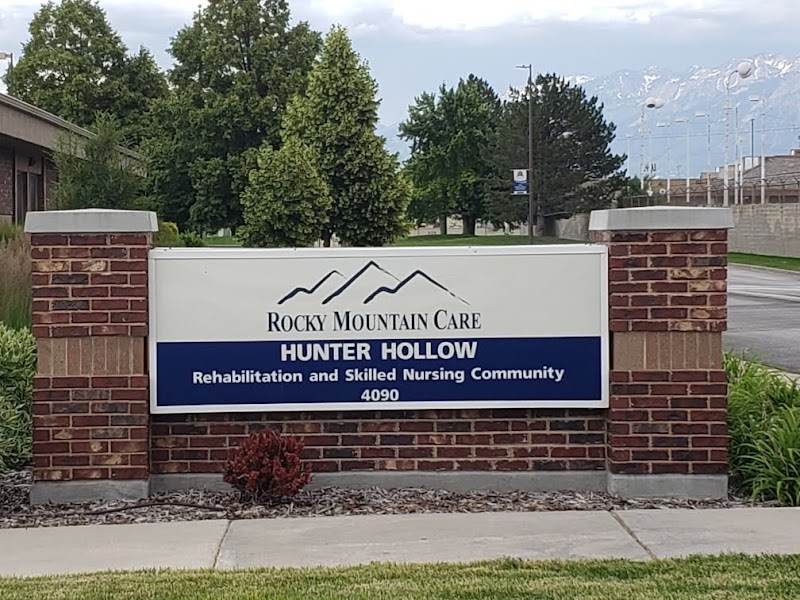
Rocky Mountain Care - Hunter Hollow
4090 West Pioneer Parkway, West Valley City, UT 84120 (801) 397-4400
For profit - Limited Liability company 124 Beds ROCKY MOUNTAIN CARE Data: November 2025 3 Immediate Jeopardy citations
Trust Grade
0/100
#86 of 97 in UT
Last Inspection: January 2024

Within standard 12-15 month inspection cycle. Federal law requires annual inspections.

Overview

Rocky Mountain Care - Hunter Hollow has a Trust Grade of F, indicating poor performance with significant concerns. It ranks #86 out of 97 facilities in Utah, placing it in the bottom half, and #30 out of 35 in Salt Lake County, meaning there are only a few facilities in the area that are better. The facility's trend is improving, as issues decreased from five in 2024 to one in 2025, but it still faced serious problems, including incidents of abuse where residents were not protected from known risks. Staffing is a relative strength with a 3/5 star rating and a turnover rate of 43%, which is lower than the state average, but the facility has faced $41,232 in fines, which is concerning and suggests ongoing compliance issues. Additionally, while RN coverage is average, there were critical incidents involving failure to report and prevent abuse, leading to immediate jeopardy situations for residents. Overall, families should weigh these serious weaknesses against the facility's slight improvements and staffing stability.
Trust Score
F
0/100
In Utah
#86/97
Bottom 12%
Safety Record
High Risk
Review needed
Inspections
Getting Better
5 → 1 violations
Staff Stability
○ Average
43% turnover. Near Utah's 48% average. Typical for the industry.
Penalties
✓ Good
$41,232 in fines. Lower than most Utah facilities. Relatively clean record.
Skilled Nurses
✓ Good
Each resident gets 64 minutes of Registered Nurse (RN) attention daily — more than 97% of Utah nursing homes. RNs are the most trained staff who catch health problems before they become serious.
Violations
⚠ Watch
33 deficiencies on record. Higher than average. Multiple issues found across inspections.
★★☆☆☆
2.0
Overall Rating
★★★☆☆
3.0
Staff Levels
★★★★☆
4.0
Care Quality
★★☆☆☆
2.0
Inspection Score
Stable
2024: 5 issues
2025: 1 issues

The Good

  • 4-Star Quality Measures · Strong clinical quality outcomes
  • Full Sprinkler Coverage · Fire safety systems throughout facility
  • No fines on record
  • Staff turnover below average (43%)

    5 points below Utah average of 48%

Facility shows strength in quality measures, fire safety.

The Bad

2-Star Overall Rating

Below Utah average (3.3)

Below average - review inspection findings carefully

Staff Turnover: 43%

Near Utah avg (46%)

Typical for the industry

Federal Fines: $41,232

Above median ($33,413)

Moderate penalties - review what triggered them

Chain: ROCKY MOUNTAIN CARE

Part of a multi-facility chain

Ask about local staffing decisions and management

The Ugly 33 deficiencies on record

3 life-threatening 4 actual harm
Jun 2025 1 deficiency
CONCERN (E) 📢 Someone Reported This

A family member, employee, or ombudsman was alarmed enough to file a formal complaint

Potential for Harm - no one hurt, but risky conditions existed

Infection Control (Tag F0880)

Could have caused harm · This affected multiple residents

Based on interview, observation, and record review, it was determined that the facility failed to adhere to its established infection prevention and control program. Specifically, a staff member was o...

Read full inspector narrative →
Based on interview, observation, and record review, it was determined that the facility failed to adhere to its established infection prevention and control program. Specifically, a staff member was observed not to wash or sanitize their hands between resident rooms. On June 26, 2025 at 10:50 AM, the surveyor observed certified nursing assistant (CNA) 1. CNA 1 exited a resident's room designated by posted signage for enhanced barrier precautions. The displayed signage required hand hygiene upon entry and exit, as well as the use of gowns and gloves for high-contact resident care, including tasks such as dressing, bathing, transferring, linen changes, hygiene, and toileting assistance. CNA 1 was observed to be carrying a bag of garbage, which appeared to be soiled briefs or linens, and a water mug. After CNA 1 handed the mug to another staff member and discarded the garbage, CNA 1 did not perform hand hygiene. Subsequently, CNA 1 entered a different resident's room without sanitizing hands prior to entry. The surveyor interviewed CNA 1 on June 26, 2025, at 1:05 PM. CNA 1 stated that the room with enhanced barrier precautions was for a resident with a wound, and CNA 1 stated that the wound had healed and she did not think the resident required the enhanced barrier precautions. CNA 1 stated that she did not wear a gown or gloves when providing cares to the resident in that room. The surveyor interviewed the Director of Nursing (DON) on June 26, 2025, at 1:30 PM. The DON stated that the resident in the room with enhanced barrier precautions had a wound, so if staff were to enter the room and provide cares, the staff member should be wearing a gown and gloves. The surveyor reviewed the facility's Enhanced Barrier Precaution policy, which was last updated in April of 2025. The policy stated that enhanced barrier precautions are initiated for residents with wounds. The policy stated that all staff are expected to comply with all designated precautions. The surveyor reviewed the facility's Hand Hygiene Policy, which was last updated in April of 2025. The Hand Hygiene Policy stated that staff must either clean their hands with soap and water or an alcohol based hand rub between resident contacts, after handling contaminated objects, and before and after handling clean or soiled dressings.
Jan 2024 5 deficiencies
CONCERN (D)

Potential for Harm - no one hurt, but risky conditions existed

Deficiency F0554 (Tag F0554)

Could have caused harm · This affected 1 resident

Based on observation, interview, record review, and facility policy review, it was determined the facility failed to assess 1 (Resident #74) of 10 sampled residents to ensure the resident was safe to ...

Read full inspector narrative →
Based on observation, interview, record review, and facility policy review, it was determined the facility failed to assess 1 (Resident #74) of 10 sampled residents to ensure the resident was safe to self-administer inhaled medications. Finding included: A review of a facility policy titled, Resident Self-Administration of Medication, revised in June 2023, revealed, It is the policy of this facility to support the resident's right to self-administer medication. A resident may only self-administer medications after the facility's interdisciplinary team has determined which medications may be self-administered safely. The policy revealed 1. Each resident is offered the opportunity to self-administer medications during routine assessment by the facility's interdisciplinary team. 2. Resident's preference will be documented on the appropriate form and placed in the medical record. 3. When determining if self-administration is clinically appropriate for a resident, the interdisciplinary team should at a minimum consider the following: a. The medications appropriate and safe for self-administration; b. The resident's physical capacity to: swallow without difficulty, open medication bottles, administer injections; c. The resident's cognitive status, including their ability to correctly name their medications and know what conditions they are taken for; d. The resident's capability to follow directions and tell time to know when medications need to be taken; e. The resident's comprehension of instructions for the medications they are taking, including the dose, timing, and signs of side effects, and when to report to facility staff. f. The resident's ability to understand what refusal of medications, and the appropriate steps taken by staff to educate when this occurs. g. The resident's ability to ensure that medication is stored safely and securely. The policy also revealed 12. The care plan must reflect resident self-administration and storage arrangements for such medications. During an interview on 01/09/2024 at 2:27 PM, the Director of Nursing (DON) stated the facility did not have any residents who were allowed to self-administer medications or inhalers. She stated the facility had a policy that prohibited residents to keep medicines and inhalers in their rooms. A review of Resident #74's Resident Face Sheet revealed the facility admitted Resident #74 on 12/03/2023. The resident had diagnoses that included chronic obstructive pulmonary disease, chronic respiratory failure, shortness of breath-air hunger, and dependence on supplemental oxygen. A review of Resident #74's quarterly Minimum Data Set (MDS), with an Assessment Reference Date (ARD) of 12/10/2023, revealed Resident #74 had a Brief Interview for Mental Status (BIMS) score of 12, which indicated the resident had moderately impaired cognition. Per the MDS, the resident's vision and hearing were adequate. The MDS revealed the resident required setup or clean up assistance with oral hygiene and supervision or touching assistance with transfers and bed mobility. A review of Resident #74's Care Plan problem area, dated 12/03/2023, revealed the resident required respiratory support secondary to a history of subdural hematoma and chronic respiratory failure with hypoxia. The goal was for Resident #74 to have no unaddressed complications secondary to respiratory needs. The facility developed interventions that directed staff to monitor oxygen levels every shift and as needed and to administer oxygen as prescribed. Resident #74's Care Plan did not address the self-administration of medications. A review of Resident #74's physician Active Orders revealed an order dated 01/09/2024 for Ventolin HFA (albuterol sulfate was an inhaled medication used to treat spasms or narrowing of the airways in the lungs) two puffs every six hours as needed. Further review of the Active Orders revealed an order started on 12/05/2023 for budesonide suspension for nebulization (medication used to prevent asthma attacks), 0.5 milligram/2 milliliter inhalation, twice a day. On 01/09/2024 at 2:11 PM, Resident #74 was observed to have three inhalers labeled albuterol and one single dose ampule of budesonide on the bedside table. The resident stated the inhaler marked 12-14-23 indicated that was the date the nurse left the inhaler at the bedside. The resident stated they used the inhalers when they were short of breath. The resident stated nurses brought the resident the inhalers and no nurse was present when they self-administered the inhalers. The resident further stated they did not notify a nurse when the inhalers were self-administered. On 01/10/2024 at 8:43 AM, during the medication administration pass with Licensed Practical Nurse (LPN) #10, an observation revealed Resident #74 had an inhaler on the bedside table. An interview with LPN #10 revealed she was aware Resident #74 kept inhalers at the bedside. However, she noted she was unaware of the facility's procedure for a resident to self-administer medications. She stated if a resident reported they had used an inhaler, she documented that she administered the medication but made a note that the resident reported the medication was self-administered. LPN #10 stated she did not know whether the resident was informing nurses when the inhalers were used. Further interview with the LPN revealed Resident #74 had a physician order to administer an inhaler but she did not see an order for the resident to self-administer medications. LPN #10 stated she did not know whether the facility had assessed the resident for self-administration of medications. A review of Resident #74's January 2024 Medication Administration Record [MAR] revealed staff documented budesonide treatments were provided twice daily from 01/01/2024 through 10:00 AM on 01/11/2024. There was no note indicating the resident had self-administered the medication. Further review of the January 2024 MAR revealed staff documented an X for the albuterol inhaler from 01/09/2024 through 01/11/2024, and there was no indication the resident had self-administered the medication. During an interview on 01/10/2024 at 8:50 AM, LPN #11 verbalized she was aware Resident #74 had inhalers at the bedside. She stated if the resident was alert and had a care plan, it was okay to have inhalers at the bedside. LPN #11 stated she did not know if a care plan for self-administration had been developed, if there was a physician order for self-administration, or if an assessment for the self-administration of medications had been conducted for Resident #74. She stated the resident was alert and could use the inhaler but did not know whether the resident notified nurses when the inhalers were used. She stated if the resident told a nurse they had used the inhaler, the nurse would sign off the medication and add a note that the resident had self-administered the inhaler. During an interview on 01/10/2024 at 9:00 AM, the DON stated staff should have informed her that a resident was self-administering inhalers and nebulizer treatments. She stated that, in order for the resident to self-administrator medications, there should be a physician's order, an assessment, resident training, and a care plan, noting the inhalers should also be secured in a locked box. During an interview on 01/10/2024 at 3:13 PM, the Administrator stated she would have expected staff to inform the DON about Resident #74 being allowed to keep inhalers/medicines at the bedside so the facility could initiate the proper procedures to allow the resident to safely self-administrator medications. During an interview on 01/11/2024 at 10:07 AM, the nurse practitioner stated she had not previously written an order for Resident #74 to self-administer inhalers.
CONCERN (D)

Potential for Harm - no one hurt, but risky conditions existed

Comprehensive Care Plan (Tag F0656)

Could have caused harm · This affected 1 resident

Based on observation, interview, record review, and policy review, it was determined the facility failed to develop a care plan for 1 (Resident #80) of 7 sampled residents who were dependent on respir...

Read full inspector narrative →
Based on observation, interview, record review, and policy review, it was determined the facility failed to develop a care plan for 1 (Resident #80) of 7 sampled residents who were dependent on respiratory ventilators. Findings included: A review of a facility policy titled, Comprehensive Care Plans, revised in June 2023, revealed, It is the policy of this facility to develop and implement a comprehensive person-centered care plan for each resident, consistent with resident rights, that includes measurable objectives and timeframes to meet a resident's medical, nursing, and mental and psychosocial needs that are identified in the residents' comprehensive assessment. An observation of Resident #80 on 01/08/2024 at 10:58 AM revealed the resident had a tracheostomy and was utilizing a mechanical ventilator. A review of Resident #80's Face Sheet revealed the facility admitted the resident on 06/11/2022. Per the Face Sheet, the resident had diagnoses that included acute respiratory failure, dependence on a respiratory ventilator, a tracheostomy (a surgical opening through the neck into the trachea to provide an airway to the lungs), and cognitive communication deficit. A review of Resident #80's significant change Minimum Data Set (MDS), with an Assessment Reference Date of 08/25/2023, revealed the resident had severely impaired cognitive skills for daily decision making. Per the MDS, the resident was totally dependent on staff to provide activities of daily living (ADLs). The MDS also revealed Resident #80 was dependent on an invasive mechanical ventilator. A review of Resident #80's physician Orders revealed orders, dated 08/18/2023, directing staff to conduct ventilator respiratory rounds every four hours, to change the ventilator as needed, and to provide ventilator weaning as needed. There were also physician orders, dated 06/11/2022, directing staff to provide tracheostomy care twice per day, change the tracheostomy supplies on the twenty-fifth of every third month, provide respiratory equipment/cleaning/maintenance on the tenth of every month, and to change all disposable respiratory supplies on the fifth of every month. A review of Resident #80's Care Plan, dated 03/25/2022, revealed Resident #80 required respiratory support secondary to acute respiratory failure and a tracheostomy. The listed goal was for the resident to have no unaddressed complications due to respiratory needs. The facility developed interventions that directed staff to monitor the resident's oxygen level, administer oxygen as prescribed, change the oxygen tubing and supplies as prescribed, and suction the resident airway as needed. There was no documented evidence the facility developed a care plan for Resident #80 that addressed the care of the resident's tracheostomy or the use of an invasive mechanical ventilator. During an interview on 01/10/2024 at 1:00 PM, MDS Coordinator #12 stated she and nursing staff were responsible for developing care plans. MDS Coordinator #12 stated nursing staff should have reported that Resident #80 was on a ventilator and a care plan should have been developed. During an interview on 01/10/2024 at 2:30 PM, the Director of Nursing (DON) stated a care plan had not been created for the use of a ventilator for Resident #80. During an interview on 01/10/2024 at 3:13 PM, the Administrator stated she expected staff to develop a care plan to address Resident #80's ventilator dependency.
CONCERN (D)

Potential for Harm - no one hurt, but risky conditions existed

ADL Care (Tag F0677)

Could have caused harm · This affected 1 resident

2. A review of Resident #98's Resident Face Sheet revealed the facility admitted the resident on 12/01/2023 with diagnoses that included contracture of the muscle of the right upper arm and hemiplegia...

Read full inspector narrative →
2. A review of Resident #98's Resident Face Sheet revealed the facility admitted the resident on 12/01/2023 with diagnoses that included contracture of the muscle of the right upper arm and hemiplegia and hemiparesis (paralysis and weakness) following a cerebrovascular disease affecting the right dominant side. A review of Resident #98's admission Minimum Data Set (MDS), with an Assessment Reference Date (ARD) of 12/08/2023, revealed the resident had a Brief Interview for Mental Status (BIMS) score of 3, which indicated the resident had severely impaired cognition. The MDS indicated the resident required partial/moderate assistance with personal hygiene. According to the MDS, showers/bathing had not been attempted during the assessment period due to the resident's medical condition or safety concerns. A review of Resident #98's Care Plan problem area, dated 12/01/2023, revealed the resident was at risk for altered activities of daily living (ADL) function secondary to weakness, debility, and a history of cerebral vascular accident (CVA; stroke) with right-sided weakness/hemiparesis. The facility developed care plan interventions that directed staff to assist Resident #98 with completing ADL tasks each day. On 01/08/2024 at 1:39 PM, Resident #98 was observed with long fingernails on both hands. An observation on 01/09/2024 at 3:30 PM revealed Resident #98 had long, dirty nails on both hands. Observations on 01/10/2024 at 8:50 AM and on 01/10/2024 at 3:33 PM revealed Resident #98's fingernails were long. A review of Resident #98's Shower Sheet/Skin Observation forms, dated 01/06/2024, revealed staff documented the resident's nails were clipped. However, during an observation of Resident #98's fingernails on 01/10/2024 at 3:51 PM, the Assistant Director of Nursing (ADON) stated it appeared Resident #98's nails were not trimmed on 01/06/2024. During an interview on 01/10/2024 at 7:15 AM with Registered Nurse (RN) #4, she stated the certified nursing assistants (CNA) were responsible for trimming the fingernails of residents who did not have a diagnosis of diabetes. According to RN #4, a podiatrist trimmed the fingernails for residents who had a diagnosis of diabetes. During an interview on 01/10/2024 at 7:28 AM, CNA #5 stated trimming fingernails was included in ADL care for residents without a diagnosis of diabetes. She said if a resident refused nail care, she documented the refusal on the resident's shower sheets. CNA #5 also stated a podiatrist trimmed the fingernails and toenails for residents who had a diabetes diagnosis. During an interview on 01/10/2024 at 1:25 PM, CNA #6 stated that nail trimming/cleaning was provided during showers for residents who did not have a diagnosis of diabetes. CNA #6 stated he did not trim residents' nails if they were too long. He stated if a resident refused to have their nails trimmed, the refusal was documented on the resident's shower sheets. During an interview on 01/10/2024 at 1:30 PM, CNA #7 stated she asked residents about trimming their fingernails during showers. CNA #7 stated Resident #98 did not normally refuse nail care. She stated she was unsure how long it had been since the resident's nails were trimmed, but stated they needed to be trimmed. During an interview on 01/11/2024 at 8:57 AM, the ADON she stated she expected staff to trim residents' fingernails on days the resident received a shower and as needed. She stated she expected nurses to monitor to ensure residents' fingernails were trimmed and to review the shower sheets to ensure they were accurate. She stated she expected residents' nails to be trimmed and cleaned. During an interview on 01/11/2024 at 9:24 AM, the Administrator stated she expected staff to keep residents' nails trimmed on a consistent basis. Based on observation, interview, record review, and policy review, the facility failed to provide nail care for 2 (Resident #76 and Resident #98) of 10 residents who were dependent on staff for personal hygiene. Findings included: A review of a facility policy titled, Nail Care, revised June 2023, indicated, 4. Routine nail care, to include trimming and filing, will be provided on a regular schedule and as needed. Nail care will be provided between scheduled occasions as the need arises. 1. A review of Resident #76's Resident Face Sheet revealed the facility admitted the resident on 08/27/2022 with diagnoses that included dementia with other behavioral disturbance, anxiety, and need for assistance with personal care. A review of Resident #76's quarterly Minimum Data Set (MDS), with an Assessment Reference Date (ARD) of 10/19/2023, revealed the resident could not complete a Brief Interview for Mental Status (BIMS) assessment. A Staff Assessment for Mental Status (SAMS) indicated the resident had severely impaired cognitive skills for daily decision making. The MDS indicated Resident #76 required significant/maximum assistance with showering and required partial/moderate assistance with personal hygiene. A review of Resident #76's Care Plan problem area, dated 08/27/2022, revealed the resident was at risk for altered activities of daily living (ADL) function secondary to weakness and dementia. The facility developed care plan approaches that directed staff to assist the resident in completing ADL tasks each day. A review of Resident #76's Shower Sheet/Skin Observation forms revealed staff could choose Yes or No to answer whether the resident's nails had been clipped. The forms revealed staff documented No to indicate the resident's nails were not clipped on 12/11/2023, 12/20/2023, 12/22/2023, 12/27/2023, 01/03/2024, or 01/05/2024. The forms revealed staff did not document whether nail care was provided on 12/13/2023, 12/18/2023, 12/29/2023, 01/01/2024, 01/08/2024, or 01/10/2024. During a telephone interview on 01/08/2024 at 4:02 PM, Resident #76's family member stated Resident #76 was not aware of the need to complete personal hygiene tasks. The resident's family member expressed that staff needed to be more observant of Resident #76's personal hygiene. Resident #76's family member stated the resident's fingernails needed to be trimmed more frequently. Observation on 01/09/2024 at 12:21 PM revealed Resident #76 was in the dining room eating lunch. The observation revealed Resident #76's fingernails were long. The resident's right thumb nail was approximately one-fourth inch long. Observation on 01/10/2024 at 11:14 AM revealed Resident #76 sat in a hallway. Resident #76's fingernails continued to be long, with a light brown substance underneath the right thumb nail and right pointer finger nail. The resident stated they thought they received showering assistance that morning. During an interview on 01/10/2024 at 11:18 AM, Registered Nurse (RN) #1 stated Resident #76 received a shower that morning, noting she usually cut Resident #76's fingernails. RN #1 stated she had observed Resident #76's nails and identified they needed to be clipped. She stated she needed time to sit and talk to the resident when she cut the resident's nails but was discharging another resident at the time. RN #1 stated the certified nursing assistants (CNAs) could also cut Resident #76's fingernails. During an interview on 01/10/2024 at 1:25 PM, CNA #2 stated a nurse usually trimmed residents' fingernails but, if the CNAs had time, they could also trim them. CNA #2 stated that Resident #76 usually had long nails and it had probably been approximately two weeks since Resident #76's nails had been clipped. During an interview on 01/10/2024 at 1:43 PM, CNA #3 stated she offered to trim residents' fingernails when she provided showers if the resident did not have a diagnosis of diabetes. During an interview on 01/11/2024 at 8:56 AM, the Director of Nursing (DON) stated the Assistant Director of Nursing (ADON) was responsible for monitoring to ensure residents' nails were trimmed. The DON stated residents' nails should be trimmed on days the resident received a shower. The DON stated her expectation was for a resident's fingernails to be trimmed and cleaned and, if a resident refused nail trimming, it should be documented. During an interview on 01/11/2024 at 9:23 AM, the Administrator stated residents' fingernails should be trimmed on a consistent basis while respecting a resident's right to refuse. The Administrator stated if a resident refused nail care, it should be documented by staff.
CONCERN (D)

Potential for Harm - no one hurt, but risky conditions existed

Tube Feeding (Tag F0693)

Could have caused harm · This affected 1 resident

Based on observation, interview, record review, and policy review, the facility failed to ensure 1 (Resident #91) of 10 residents receiving tube feeding received appropriate treatment and services to ...

Read full inspector narrative →
Based on observation, interview, record review, and policy review, the facility failed to ensure 1 (Resident #91) of 10 residents receiving tube feeding received appropriate treatment and services to prevent complications. Specifically, observations revealed the tube feeding formula bottle for Resident #91 was not dated or timed when it was initiated to ensure the formula was not administered beyond 24 hours. Findings included: Review of a facility policy titled, Enteral Medication Administration, dated March 2022, revealed, Supplies should be dated when opened and must be replaced every 24 hours. Review of a facility policy titled, Care and Treatment of Feeding Tubes, revised in June 2023, revealed, 9. Direction for staff regarding nutritional products and meeting the resident's nutritional needs will be provided: e. Ensuring that the administration of enteral nutrition is consistent with and follows the practitioner's orders. f. Ensuring that the product has not exceeded the expiration date. A review of Resident #91's Resident Face Sheet indicated the facility admitted Resident #91 on 04/12/2023 with diagnoses that included dysphagia (difficulty swallowing foods or liquids) and dysarthria (slurred speech) following a cerebral infarction (stroke). A review of Resident #91's admission Minimum Data Set (MDS), with an Assessment Reference Date (ARD) of 04/18/2023, revealed Resident #91 had a Brief Interview for Mental Status (BIMS) score of 9, which indicated the resident had moderate cognitive impairment. The MDS revealed the resident had difficulty swallowing or pain when swallowing. The MDS also revealed the resident utilized a feeding tube and received 51 percent or more calories and liquids through tube feeding. A review of Resident #91's Care Plan problem area, initiated 04/12/2023, revealed the resident required a feeding tube, which put the resident at risk for nutritional deficits and other medical complications. The facility developed interventions that directed staff to ensure the tube feeding supplies, formula, and tubing were changed as ordered. A review of Resident #91's physician Orders revealed an order started on 01/03/2024 for Jevity 1.2 Cal (lactose-reduced tube feeding formula with fiber) to run at 60 milliliters per hour (ml/hr) via gastric tube and a water flush at 20 ml/hr, continuously, 24 hours per day. The order indicated the tube feeding may be disconnected for therapy as needed. A review of Resident #91's Medication Administration Record [MAR], dated 01/01/2024 through 01/11/2024, revealed staff documented that Jevity tube feeding was administered as ordered. On 01/08/2024 at 2:35 PM, an observation revealed Resident #91's Jevity tube feeding formula was infusing at 60 ml/hr. The observation revealed the tube feeding formula was not labeled with the date or time the formula was initiated. On 01/10/2024 at 8:55 AM, an observation revealed Resident #91's Jevity tube feeding formula was infusing at 60 ml/hr and a bag of water was present. There was no label with the date or time the tube feeding formula was initiated. During an interview on 01/10/2024 at 9:00 AM, Registered Nurse (RN) #8 indicated both the tube feeding formula and the water bag were changed every 24 hours. RN #8 noted that, once the formula and water bag were changed, it was documented in the resident's electronic health record (EHR). RN #8 indicated the date and time was also documented on the formula container and the water bag. RN #8 stated the documentation of the date and time was important because the formula was only good for 24 hours. RN #8 indicated she remembered she changed Resident #91's formula and water bag at approximately 6:30 AM because the infuser was beeping when she came in for her shift. However, RN #8 indicated she forgot to document the date or time on Resident #91's formula container or water bag. During an interview on 01/11/2024 at 9:03 AM, RN #9 indicated the frequency to change a tube feeding was dependent on the physician's order. RN #9 indicated all residents were currently on a continuous feeding 24 hours per day. RN #9 stated once the feeding was changed, staff documented in the EHR and documented the date and time on the formula container and water bag. RN #9 indicated it was important to document the date and time because staff needed to know how long the feeding had been running because it was only good for 24 hours. During an interview on 01/11/2024 at 9:47 AM, the Director of Nursing (DON) indicated the resident's name, the date and time the tube feeding formula started, and the flow rate should be documented on a tube feeding formula container. During a follow up interview on 01/11/2024 at 10:16 AM, the DON indicated her expectation was for staff to follow physician orders for tube feedings. The DON stated there should be a label on the tube feeding container that indicated what type of formula was being used, the ordered rate, and the date and time it was started. She stated the information was important because the tube feeding was only good for 24 hours. During an interview on 01/11/2024 at 10:25 AM, the Administrator indicated her expectation was for a tube feeding to be labeled when it was started, noting this was important because they did not want the feeding to infuse beyond its expiration. The Administrator indicated the time an infusion started could not be tracked if it was not labeled.
CONCERN (D)

Potential for Harm - no one hurt, but risky conditions existed

Respiratory Care (Tag F0695)

Could have caused harm · This affected 1 resident

Based on observation, interview, record review, and policy review, the facility failed to obtain a physician order for 1 (Resident #30) of 3 sampled residents receiving supplemental oxygen administrat...

Read full inspector narrative →
Based on observation, interview, record review, and policy review, the facility failed to obtain a physician order for 1 (Resident #30) of 3 sampled residents receiving supplemental oxygen administration. Findings included: A review of a facility policy titled, Oxygen Administration, last revised in June 2023, indicated, 1. Oxygen is administered under orders of a physician, except in the case of an emergency. The policy also revealed 4. The resident's care plan shall identify the interventions for oxygen therapy, based upon the resident's assessment and orders. A review of Resident #30's Resident Face Sheet revealed the facility admitted the resident on 11/16/2023 with diagnoses that included acute respiratory failure, chronic obstructive pulmonary disease (COPD), and dependence on supplemental oxygen. A review of Resident #30's 5-day Minimum Data Set (MDS), with an Assessment Reference Date (ARD) of 11/22/2023, revealed the resident had a Brief Interview for Mental Status (BIMS) score of 15, which indicated the resident had intact cognition. The MDS indicated the resident utilized oxygen therapy while a resident at the facility. A review of Resident #30's Care Plan problem area, dated 11/16/2023, revealed the resident required respiratory support secondary to hypoxic episodes. The facility developed interventions that directed staff to provide oxygen as prescribed. A review of Resident #30's active physician Orders, with orders dated 11/16/2023 through 01/09/2024, revealed no orders for oxygen administration. A review of Resident #30's Treatment Administration History, dated 12/17/2023 through 01/11/2024, revealed that, despite no active physician order for supplemental oxygen, the resident had a treatment listed for staff to assess the resident's oxygen saturation level every shift and to titrate the oxygen flow rate between zero to five liters per minute (LPM) via nasal cannula to keep the resident's oxygen saturation above 90 percent. The oxygen treatment history revealed staff did not administer oxygen to the resident on 01/08/2024 or on 01/09/2024. The record had an x documented for the resident's oxygen saturation and oxygen flow rate for those dates. During observations of Resident #30 on 01/08/2024 at 11:20 PM, 01/09/2024 at 8:31 AM, and 01/09/2024 at 3:55 PM, the resident was observed wearing oxygen at 2 LPM. During an interview on 01/10/2024 at 7:28 AM, Certified Nursing Assistant (CNA) #5 stated Resident #30 had utilized supplemental oxygen since admission to the facility. During an interview on 01/10/2024 at 8:40 AM, Registered Nurse (RN) #1 stated a physician's order was required for supplemental oxygen. During an interview on 01/10/2024 at 8:00 AM, RN #4 stated Resident #30 had worn supplemental oxygen since admission to the facility. She stated all residents who received supplemental oxygen should have a physician's order. After reviewing the resident's electronic medical record, RN #4 confirmed Resident #30 did not have an order for supplemental oxygen administration. During an interview on 01/11/2024 at 8:56 AM, the Director of Nursing (DON) revealed a physician's order was required for supplemental oxygen. The DON stated that, upon admission from the hospital, Resident #30 requested oxygen. The DON stated the resident had been utilizing supplemental oxygen, but noted the facility did not have a physician's order to administer supplemental oxygen to the resident until 01/10/2024. During an interview on 01/11/2024 at 9:24 AM, the Administrator stated she expected staff to have a physician order before administering supplemental oxygen.
Nov 2023 1 deficiency 1 Harm
SERIOUS (G) 📢 Someone Reported This

A family member, employee, or ombudsman was alarmed enough to file a formal complaint

Actual Harm - a resident was hurt due to facility failures

Accident Prevention (Tag F0689)

A resident was harmed · This affected 1 resident

**NOTE- TERMS IN BRACKETS HAVE BEEN EDITED TO PROTECT CONFIDENTIALITY** Based on observation, interview, and record review, it was determined, the facility failed to ensure that the resident environme...

Read full inspector narrative →
**NOTE- TERMS IN BRACKETS HAVE BEEN EDITED TO PROTECT CONFIDENTIALITY** Based on observation, interview, and record review, it was determined, the facility failed to ensure that the resident environment remained as free of accident hazards as was possible and each resident received adequate supervision and assistance devices to prevent accidents. Specifically, for 1 out of 3 sampled residents, a resident that was a quadriplegic received second degree burns on his body after being served hot water by a Certified Nursing Assistant (CNA) and the resident was not supervised while drinking the hot water. Resident identifier: 1. Findings included: Resident 1 was admitted to the facility on [DATE] with diagnoses which included, but were not limited to, quadriplegia, type 1 diabetes mellitus, neuromuscular dysfunction of bladder, anxiety disorder, and burn of unspecified body region. Resident's medical record was reviewed on 11/8/23. On 11/18/22, a Hot Beverage Evaluation documented that resident 1 DOES NOT demonstrate the ability to self serve hot liquids, but wishes to have hot liquids and can do so with interventions. The interventions included, Staff will assist to serve hot liquids and assist with proper positioning during hot beverage consumption. A quarterly Minimum Data Set assessment dated [DATE], documented a brief interview for mental status (BIMS) score of 15. A BIMS score of 13 to 15 would suggest cognitive intactness. On 11/3/23 at 11:58 PM, a Nursing Progress Note documented Date 11/3/2023 reported at 2300 [11:00 PM]: [Resident 1] sustained burns to right upper chest, right inner arm, right posterior lateral back, left groin, left hip and abdomen. CNA on PM shift reported to nurse at 2300 that [resident 1] had blisters and would I look at them. I spoke with [resident 1], he stated, his CNA filled his mug with water at approx [approximately]. 10 PM. [Resident 1] states as he was drinking his water, it was so hot that he pushed the straw from his mouth so that it would not burn him. [Resident 1] explained that when taking a drink out of his personal straw set up for his water, it is like siphoning gas, only stops when he puts his tongue back on the straw to stop it from flowing. [Resident 1] said due to it being so hot, he was not able to put his tongue on the straw to stop it. That's when the water poured out of the mug it went all over his chest & body. [Resident 1] could not feel the water as he has not [sic] feeling from the neck down. CNA's and nurse removed clothing and linens and changed to new gown and linens. Body check was completed. NP [Nurse Practitioner] [name removed] was notified; orders were given to clean burns with NS [normal saline], and apply Bacitracin, keep wounds clean and dry. Monitor patient closely for any changes or concerns. [Resident 1] denies pain at this time. temperature 98.1 [degrees Fahrenheit (F)], refused any additional vital signs. Education given, verbalizes understanding. Call light within reach. Hydration encouraged-CNA's informed to keep [resident 1] with fluids, no hot water. Staff education provided. On 11/4/23 at 12:10 AM, a Nursing Progress Note documented [Resident 1] sustained burns from hot water-order for Clean with NS, pat dry, apply bacitracin cream and protect with gauze. Monitor for infection. Do not apply cover [sic] blisters. This has been completed, nursing will continue to monitor patient condition-vital signs refused per patient, temp [temperature] 98.1 [degrees F]-No pain r/t [related to] quadriplegic-staff will be vigilant to monitor through the night-Linens, gown C/D [clean and dry]. [Resident 1] is aware of the situation, drinking well at this time. On 11/4/23 at 2:07 AM, a Nursing Progress Note documented Patient during bs [blood sugar] check dressings changed per order. Patient drinking well and urine output is good. Mucous membranes moist. VSS [vital signs stable] at this time patient is afebrile 98.4 [degrees F]. Patient pulse 88 bp [blood pressure] 103/71. Patient offered at this time to be evaluated at hospital related to surface area. Patient content with POC [plan of care]. Hydration and nutritional needs reinforced. Patient spent whole time telling pirate jokes. WCTM [will continue to monitor]. On 11/4/23 at 4:10 AM, a Nursing Progress Note documented Patient mugged [sic] filled with tap water per his request. Patient dressing changed and reinforced per order. Patient has had serous drainage from distal and posterior chest. Patient dressings otherwise intact and without irritation. Patient resting at this time. WCTM. On 11/4/23 at 6:13 AM, a Nursing Progress Note documented Patient bs 114 temp 98.5 [degrees F]. Mucous membranes moist. Patient urine is clear yellow. Patient has had no further drainage thus far. Patient dressing are intact without s/s [signs and symptoms] of irritation. Patient educated on need to continue fluids and to increase protein to promote healing. Patient educated on s/s to report. Discussed ways patient his [sic] body expresses infection ie increased bs, inability to maintain body temp, decreased intake and output. Patient content with care and progress thus far. Patient demonstrated ability to push call light. WCTM. On 11/4/23 at 9:29 AM, a Hot Beverage Evaluation documented that resident 1 was able to drink lukewarm beverages with straw. DOES NOT demonstrate the ability to self serve hot liquids, but wishes to have hot liquids and can do so with interventions. The interventions included, Staff will assist to serve hot liquids and assist with proper positioning during hot beverage consumption. Provide cups with lids, Use only mugs appropriate for hot liquids, DO NOT refill resident's cup while they are holding it, Educated on safe handling techniques, and Other - only lukewarm beverages, per pt [patient]. On 11/4/23 at 10:37 AM, a Nursing Progress Note documented new order per NP to Clean burns with chlorohexidine (NO ALCHOLOL [sic]), Apply silvadene to red and blistered areas BID [twice daily], Cover with Adaptic or xeroform, then place non adherent pad on top and wrap with kerlix, and secure with dry dressing on the unable to wrap areas of the body BID and PRN [as needed] and to have wound team evaluate for further treatment and monitoring. Res [Resident] aware. On 11/4/23 at 11:04 AM, a Nursing Progress Note documented Skin assessment done with wound nurse. Resident with second degree burns d/t [due to] scalding from hot liquid R [right] inner arm measurements 14x7 [centimeters (cm)] R back side posterior lateral measurements 22x18 [cm] Chest measurements 20x20 [cm] Abdomen 20x32 [cm] with a large blister on R side measuring 8.0x7.0 [cm] L [left] groin multiple small blisters measuring 3.0x13.0 [cm] L hip blister 1.0x1.5 [cm] All scaled areas are red with some denuded areas, and multiple blisters. Wound team and NP notified. New orders in place. On 11/4/23 at 11:49 AM, a Nursing Progress Note documented Resident in good mood this morning. Temperature check this morning 98.0 [degrees F]. Resident denies any pain. Repositioned for comfort. Offered prn pain medications resident refused. Skin treatment done. Continue monitoring for any changes. Continue staff education about hot beverages to be mindful and careful of the temperature when assisting a resident with food or drinks. For [resident 1] serve only lukewater per [resident 1] request. On 11/4/23 at 12:06 PM, a Nursing Progress Note documented Follow up with resident related to burns sustained from warm water and ask resident if he wants to go to the hospital. Resident refused, stating he wants to be treated here in facility, agrees with skin treatment order. Resident stated that he feel [sic] safe in facility, and that nobody hurt or abuse him, and complimented staff for prompt action and providing exceptional care. On 11/4/23 at 12:41 PM, a Nursing Progress Note documented New order received from NP to monitor and encourage hydration, monitor vitals and notify provider with any concerns. Resident notified. Fluids encouraged as tolerated. On 11/4/23 at 4:46 PM, a Nursing Progress Note documented [Resident 1] burn wounds changed per order/[resident 1] states he feels a little weak/Midodrine given prn as ordered to elevate BP of 60's-next BP 79 systolic-after second dosing of Midodrine, BP > [greater than] 130. [Resident 1] is increasing his fluids. Tylenol for general well being-no temp at this time/call light within reach. On 11/4/23 at 9:10 PM, a Nursing Progress Note documented [Resident 1] states he is a little cold-some mild shivering-no temperature,vss. NP [name removed] notified of BP improving with Midodrine and increaseing [sic] fluids as well as his overal [sic] fatigue. Dressings to burns C/D/I [clean, dry, and intact] call light within reach-repositioned as requested. On 11/5/23 at 3:15 PM, a Nursing Progress Note documented Resident received Tx [treatment] for burn on torso, front/inner lateral, right arm, right posterior lateral back, left groin and L hip per order BID wound care. Not [sic] c/o [complaints of] pain or discomfort noted. Fluids intake as tolerated. Recorded as Late Entry on 11/5/23 at 9:17 PM. On 11/5/23 at 9:00 PM, a Nursing Progress Note documented Resident's burn dressing change BID. Not [sic] c/o pain at this time. Resident is encourage to drinks fluids. Reposition done. assist with feeding, appetite is fair to good. Not [sic] fever noted. WCM [will continue monitor]. Recorded as Late Entry on 11/6/23 at 6:02 PM. On 11/6/23 at 5:03 PM, a Nursing Progress Note documented Resident received partial bed bath. Burn dressing changed. Not [sic] s/s of infection. Not [sic] c/o pain noted. Fluids [sic] intakes is tolerated well. Supra Foley in place DD [down drain] well. Resident participated in therapy session . Appetite is good. WCM. Recorded as Late Entry on 11/6/23 at 6:06 PM. On 11/6/23 at 9:55 PM, a Nursing Progress Note documented Dressings changed to burns this evening. Tolerated well. No s/s of infection noted. All needs met at this time. Call light within reach. On 11/7/23 at 12:15 PM, a Nursing Progress Note documented New order received from wound team and approved by NP: Silvadene (silver sulfadiazine) cream; 1 %; amt [amount]: 1 application; topical Special Instructions: Clean burns with chlorohexidine (NO ALCHOLOL), Apply silvadene to red and blistered areas daily, Cover with Adaptic, then place non adherent pad on top and wrap with kerlix, and secure with dry dressing on the unable to wrap areas of the body daily and PRN. Avoid areas drying out. Resident made aware. Wound burn dressing done by wound team. Resident tolerated dressing change well. Recorded as Late Entry on 11/8/23 at 9:16 AM. On 11/7/23 at 4:37 PM, a Nursing Progress Note documented Resident remain in bed. Wound burn dressing changed. Not [sic] c/o pain at this time. Resident is encourage to drink fluids. Foley Cath [catheter] in place DD well. Encourage to use call light within to reach. WCM. Recorded as Late Entry on 11/7/23 at 6:38 PM. On 11/7/23 at 11:43 PM, a Nursing Progress Note documented Resident resting in bed this shift. He is A&O [alert and oriented] at his baseline. Compliant with medication administration and cares offered. Dressing in place, CDI. He has no c/o pain. Resident encouraged to use call light. Within reach. Will continue with current plan of care. On 11/8/23 at 9:16 AM, a Nursing Progress Note documented Spoke with resident this morning. Resident is in good spirit and making jokes and laughing. Wound burn dressing in place, intact. Resident denies any pain or discomfort. Encouraged fluids as tolerated. Educated resident to use call light and ask for help if needed. On 11/8/23 at 10:35 AM, an interview was conducted with CNA 1. CNA 1 stated that resident 1 asked for the hot water and not thinking any thing of it CNA 1 gave resident 1 the hot water and the straw. CNA 1 stated that she came back later and resident 1 stated that the water was to hot. CNA 1 stated that she had noticed the blisters on resident 1 and told the nurse. CNA 1 stated that she was doing cares for resident 1 when she noticed the blisters. CNA 1 stated the Creamery was where she usually got the hot water for residents. CNA 1 stated there was a tap by the hot chocolate machine labeled Hot Water. CNA 1 stated that she had put the hot water in resident 1's water mug and could not remember if there was a lid for the mug. CNA 1 stated that resident 1 had a personal drinking straw that was hooked up to suction. CNA 1 stated the suction helped resident 1 to drink from the straw. CNA 1 stated that she had given resident 1 hot water in the past. CNA 1 stated she did not know if the protocol was to temp the water prior to giving the hot water to a resident. CNA 1 stated she did not temp the hot water prior to giving the mug to resident 1. On 11/8/23 at 10:47 AM, an interview was conducted with resident 1. Resident 1 stated that suction had nothing to do with the drinking straw. An observation was conducted of resident 1's water mug. A long straw that appeared to be suction tubing came out of the water mug and was attached to a arm device that resident 1 could reach with his mouth. The suction canister tubing was observed to be attached to the same arm device but separate from the drinking straw. Resident 1 stated that he would request warm water when he was cold. Resident 1 stated that he was a quadriplegic and when he got cold the warm water would warm him up. Resident 1 stated the other CNAs would get the hot water from the nurses station and would fill his water mug with half hot water and half cold water. Resident 1 stated that CNA 1 was his CNA the night he got burned. Resident 1 stated he did not specify on the water and when he got a drink it was burning hot water. Resident 1 stated that he tried to blow the water back in the straw but the water was to hot and it came out of the straw and he felt the hot water on his chest. Resident 1 stated that he thought the water was only on the blanket but it had poured onto his skin. Resident 1 stated the water had burned under the side of his right arm, right side of his genitals, and along side the right of his hip. Resident 1 stated that he had blistered and the blisters bursted for two nights. Resident 1 stated the NP which was the wound nurse seen him once a week. Resident 1 stated he had a racking headache over the weekend after the incident. Resident 1 stated that he was not sure if the headache was a response to the pain. Resident 1 stated by Monday he was feeling better and yesterday the NP described the wound areas were looking much better. Resident 1 stated the NP had prescribed saline and silvadene cream for the burns and to cover the burns with protective pads. Resident 1 stated that yesterday the NP changed the dressing order to once a day. Resident 1 stated that he has not had a headache for two days. Resident 1 stated that he had received compassionate and effective care from the facility since the hot water incident. Resident 1 stated that CNA 1 had not brought him hot water before. Resident 1 stated that though it was a mistake it was out of ignorance or lack of communication. Resident 1 stated that the hot water was not out of negligence. On 11/8/23 at 11:24 AM, an interview was conducted with Registered Nurse (RN) 1. RN 1 stated that resident 1 was a quadriplegic. RN 1 stated that resident 1 had been at the facility for four years. RN 1 stated that resident 1 was respectful but sarcastic and very specific with cares. RN 1 stated that resident 1 did not like ice water and the CNAs have told RN 1 that resident 1 would ask for hot water. RN 1 stated that the CNAs have told RN 1 that they would mix hot and cold water so the water was warm. RN 1 stated that resident 1's suction was for congestion and respiratory would see resident 1 twice a day and empty the canister if needed. On 11/8/23 at 11:29 AM, resident 1's wound dressing change was observed with RN 2. RN 2 was observed to remove the dressings from the right lower back and right side. RN 2 stated she would clean the wounds in sections. The edges of the burns were observed to be bright red and the center was a creamy off-white color. RN 2 cleansed the burn areas with Hibiclens. A silver dollar sized area of skin came off near the lower back during the cleaning. RN 2 applied silvadene, covered the area with oil emulsion dressings, abdomen pads, and tapped the pads to resident 1's skin. Resident 1's right arm was observed to have some drainage on the bandage. The burn on resident 1's right side was observed to cover half way down the right side to the hip area and angled towards the middle of resident 1's back. RN 2 was observed to remove the dressings from the chest area and abdomen. The burn was observed to cover resident 1's chest and down toward resident 1's left side around the colostomy site. The burn was observed in the left hip crease area and towards the top of the pelvic area. The edges of the burns were observed to be bright red and the centers were a creamy off-white color. Blisters were observed on resident 1's left side near resident 1's ostomy. Resident 1's belly button was observed to be red. RN 2 was observed to remove the dressings from resident 1's right arm. The burn area covered under the bicep from the elbow to half way up the arm. RN 2 stated that the skin was starting to come off. On 11/8/23 at 12:50 PM, an observation of the hot water was conducted. In the Creamery the hot water tap was observed to be connected to the coffee machine. A resident coffee mug was filled with hot water. The temperature was obtained with a digital thermometer and read 158.7 F. On 11/8/23 at 12:54 PM, an interview was conducted with CNA 2. CNA 2 stated if a resident requested hot water she could get the hot water at the nurses station or the Creamery. CNA 2 stated that she would get the resident a new cup and a new straw. CNA 2 stated that she never used the hot water in the Creamery. CNA 2 stated if the resident was coherent she would remind them that the water was hot. CNA 2 stated if the resident was not coherent or oriented she would dilute the hot water. On 11/8/23 at 1:00 PM, an interview was conducted with CNA 3. CNA 3 was observed in the main dining area near the Creamery. CNA 3 stated that when dining was finished there was a chain that was put up so the residents were not able to access the Creamery. CNA 3 stated that during dining a staff member would be present and the residents would ask for what they needed. A resident was observed to wander into the Creamery and filled her water mug with ice. CNA 3 was observed to assist the resident and escorted her out of the Creamery. On 11/8/23 at 1:12 PM, an interview was conducted with the Administrator (Admin). The Admin stated that he had tested the hot water on Saturday and it was coming out at 176 F. The Admin stated the company that owns the coffee machine came to the facility on Monday and the coffee machine was set at 196 F. The Admin stated he was told by the company that the coffee machine needed to be set in the 180's to be able to make coffee. The Admin stated the company made adjustments on the coffee machine for 180 F. The Admin stated the kitchen staff were temping the coffee mugs before the mugs went to the residents and monitoring was conducted once a day. On 11/8/23 at 1:39 PM, an interview was conducted with the Director of Nursing (DON). The DON stated there had not been any other burns in the facility. The DON stated the residents usually rarely ask for hot water, but the residents would usually ask for tea or coffee. The DON stated the staff were to pour the water and if the water was hot the staff would put cold water or ice in the cup. The DON stated the staff should make sure the temperature was good and the water was in a proper cup with a lid. The DON stated when the staff bring the warm water to the resident room the staff need to reposition the residents and ask the resident how they would like to drink. The DON stated the staff need to supervise the resident. The DON stated that resident 1 was the only resident that would ask for hot water. The DON stated she did education for the entire facility regarding hot water. The DON stated that resident 1 at this moment has requested luke warm water and the care plan had been updated.
Oct 2023 3 deficiencies 3 IJ (2 affecting multiple)
CRITICAL (J) 📢 Someone Reported This

A family member, employee, or ombudsman was alarmed enough to file a formal complaint

Immediate Jeopardy (IJ) - the most serious Medicare violation

Report Alleged Abuse (Tag F0609)

Someone could have died · This affected 1 resident

**NOTE- TERMS IN BRACKETS HAVE BEEN EDITED TO PROTECT CONFIDENTIALITY** Based on confidential and non-confidential interviews with administrative staff, therapy staff, licensed and unlicensed nursing ...

Read full inspector narrative →
**NOTE- TERMS IN BRACKETS HAVE BEEN EDITED TO PROTECT CONFIDENTIALITY** Based on confidential and non-confidential interviews with administrative staff, therapy staff, licensed and unlicensed nursing staff, and record review, it was determined, for 1 of 9 sampled residents, the facility failed to ensure that all suspected or alleged violations involving abuse were reported immediately to the administrator and other officials in accordance with State law through established procedures. Specifically, when interviewed by surveyors, multiple staff reported observing Certified Occupational Therapy Assistant (COTA) 1 interacting with resident 1 in a suspicious manner and did not report their concerns, thereby, allowing COTA 1 ongoing access to resident 1. The facility's noncompliance relative to identifing and reporting abuse was determined to be at the severity level of immediate jeopardy. Due to the repeated occurrence and number of staff who failed to report their concern, the scope was determined to be a pattern. Resident identifier: 1. NOTICE On 10/25/23 at 3:30 PM, an Immediate Jeopardy was identified when the facility failed to implement Centers for Medicare and Medicaid Services (CMS) recommended practices to prevent various forms of abuse. Notice of the IJ was given verbally and in writing to the facility Administrator (ADM), the Skilled Nursing Facility Social Work Director for Quality, the [NAME] President of Clinical Quality, the Regional Director, the Director of Nursing, and the Assistant Director of Nursing. On 10/26/23 at 1:24 PM, the Regional Director provided the following abatement plan for the removal of the Immediate Jeopardy effective on 10/26/23 at 2:30 PM. Allegation of Compliance to abate immediate jeopardy: RE: Complaint Survey 10/24/23 Survey findings: COTA [Certified Occupational Therapy Assistant] 1 was not supposed to be working with resident 1, but was seen on multiple occasions in her room. These incidents were not reported to the facility administration. In addition, COTA 1 was allowed to work with resident 1 in June 2023. An investigation completed 7/6/22 was incomplete and safeguards not followed. We respectfully assert that we have removed the immediate jeopardy on 10/26/23 at 2:30 pm. Immediate corrective action: F600 Freedom from Abuse Protection of Resident from alleged perpetrator: Suspended COTA 1 immediately on 9/21/2023 and terminated. Involvement with Police and investigators and according to investigator on 10/25/23 was arrested. Responsible Person: Administrator Date of Completion: 9/21/23 Resident 1 was interviewed by Social Service Staff and determined to not show signs of psychosocial distress. Social services offered to Resident 1's mother to set up counseling and her mother declined at that time. Social Services will continue to partner for counseling with Resident 1 and advocate for this to occur with her mothers consent. Responsible Person: Social Services Date of completion: 9/22/23 and 10/26/23 at 1:30 pm. COTA 1 has been arrested and charged. Staff have signs posted at nursing area's and at the front desk with COTA 1's picture to deny visit's and call the police. Pictures posted on 10/25/23 at 3:30 pm At the time it was discovered that COTA 1 had violated the trespass order police were immediately called and a staff member was placed outside of Resident 1's room until it was assured that COTA 1 was arrested. Staff member placed outside of room on 10/25/23 at 8:45 am Director of Therapy has been suspended and will no longer be allowed to be a Director or Therapist in the facility. Inserviced therapy staff to report abuse and any concerns such as these immediately to the Administrator. Responsible Person: Regional Director of Therapy Date of Completion: 10/26/23 at 9:00 am Female Residents that COTA 1 had treated and other female residents were interviewed about abuse to ensure they felt safe and ensure other issues similar were identified. No other concerns were raised. Responsible Person: Director of Nursing or Designee Date of Completion: 9/22/23 and again on 10/25/23 All other residents in the facility interviewed about abuse to ensure issues similar with abuse were not evident with any other resident. Responsible Person: Director of Nursing or Designee Date of Completion 10/26/23 at 2:00 pm Abuse, neglect training completed for staff including therapy which included situational concerns similar to Resident 1 and COTA 1 this included exploitative behaviors such as taking advantage of a resident for personal gain or having relationships that appear inappropriate. Responsible person: Director of Nursing or Designee Date of Completion: 9/27/23, 9/26/23, 9/28/23 Abuse and Grooming signs to our staff with Abuse training for staff completed to include: Victim selection: Abusers often observe possible victims and select them based on ease of access to them or their perceived vulnerability.Gaining access and isolating the victim: Abusers will attempt to physically or emotionally separate a victim from those protecting them and often seek out positions in which they have contact with minors.Trust development and keeping secrets: Abusers attempt to gain trust of a potential victim through gifts, attention, sharing secrets and other means to make them feel that they have a caring relationship and to train them to keep the relationship secret. Desensitization to touch and discussion of sexual topics: Abusers will often start to touch a victim in ways that appear harmless, such as hugging, wrestling and tickling, and later escalate to increasingly more sexual contact, such as massages or showering together. Abusers may also show the victim pornography or discuss sexual topics with them, to introduce the idea of sexual contact.Attempt by abusers to make their behavior seem natural, to avoid raising suspicions. For teens, who may be closer in age to the abuser, it can be particularly hard to recognize tactics used in grooming. Be alert for signs that your teen has a relationship with an adult that includes secrecy, undue influence or control, or pushes personal boundaries. Most importantly to report any concerns immediately to the Administrator. Responsible Person: Administrator Date of Completion: 10/26/23 these were completed in small groups with discussion at 11:30 am F609-Reporting Abuse Abuse identification and reporting, neglect training completed for staff including therapy which included situational concerns similar to Resident 1 and COTA 1 this included exploitative behaviors such as taking advantage of a resident for personal gain or having relationships that appear inappropriate. Responsible person: Director of Nursing or Designee Date of Completion: 9/27/23, 9/26/23, 9/28/23 Director of Therapy has been suspended and will no longer be allowed to be a Director or Therapist in the facility. Inserviced therapy staff to report abuse and any concerns such as these immediately to the Administrator. Responsible Person: Regional Director of Therapy Date of Completion: 10/26/23 at 9:00 am Female Residents that COTA 1 had treated and other female residents were interviewed about abuse to ensure they felt safe and ensure other issues similar were identified. No other concerns were raised. Responsible Person: Director of Nursing or Designee Date of Completion: 9/22/23 and again on 10/25/23 All other residents in the facility interviewed about abuse to ensure issues similar with this abuse situation was identified. Date of Completion: 10/26/23 at 2:30 pm Abuse and Grooming signs to our staff with Abuse training for staff completed to include: Victim selection: Abusers often observe possible victims and select them based on ease of access to them or their perceived vulnerability.Gaining access and isolating the victim: Abusers will attempt to physically or emotionally separate a victim from those protecting them and often seek out positions in which they have contact with minors.Trust development and keeping secrets: Abusers attempt to gain trust of a potential victim through gifts, attention, sharing secrets and other means to make them feel that they have a caring relationship and to train them to keep the relationship secret. Desensitization to touch and discussion of sexual topics: Abusers will often start to touch a victim in ways that appear harmless, such as hugging, wrestling and tickling, and later escalate to increasingly more sexual contact, such as massages or showering together. Abusers may also show the victim pornography or discuss sexual topics with them, to introduce the idea of sexual contact.Attempt by abusers to make their behavior seem natural, to avoid raising suspicions. For teens, who may be closer in age to the abuser, it can be particularly hard to recognize tactics used in grooming. Be alert for signs that your teen has a relationship with an adult that includes secrecy, undue influence or control, or pushes personal boundaries. Staff inserviced if they see any of these signs to report to the Administrator immediately. Responsible Person: Administrator Date of Completion: 10/26/23 these were completed in small groups with discussion at 11:30 am. F610-Investigation Correction for incomplete investigation: Former Administrator who was engaged with prior investigation dated July 2022 no longer works with Rocky Mountain Care. Responsible Person: Regional [NAME] President of Rocky Mountain Care: Date of Completion: 5/1/2023 Current Facility management who completes abuse investigations were inserviced on the completing abuse training and assuring that interventions are implemented and effective to prevent abuse. Responsible Person: [NAME] President of Quality with Rocky Mountain Care Date of Completion: 10/26/23 at 8:30 am All Abuse files were reviewed for completion and to ensure interventions have been implemented. Responsible Person: Administrator Date of Completion: 10/25/2023 at 9:00 pm Monitoring: Administrator or designee will audit all abuse reports monthly for four months reviewing interventions and investigation material to assure appropriate interventions are being followed to ensure prevention of abuse. Nursing Administration will interview 10% of active employees and therapy staff each week for four months to determine if they have witnessed staff who may have an inappropriate relationship with other residents and if so ensuring they had been reported. Audits will be reviewed monthly in QAPI for sustained substantial compliance. On 10/26/23, while completing an abbreviated complaint survey, and an extended survey, surveyors conducted an onsite revisit to verify that the Immediate Jeopardy had been removed. The surveyors determined that the Immediate Jeopardy was removed as alleged on 10/26/23. Findings include: Immediate Jeopardy Resident 1 was admitted to the facility on [DATE] and readmitted on [DATE] with diagnoses that included anoxic brain damage, quadriplegia, epilepsy, and anxiety disorder. Resident 1's medical record was reviewed on 10/25/23. On 9/26/23, a Montreal Cognitive Assessment (MOCA) was completed for resident 1. The MOCA indicated that resident was oriented to the correct month, date, place, and city; but not the year. The MOCA also indicated that resident 1 had a score of 8 out of 22, indicating severe cognitive impairment. On 8/31/22, a quarterly minimum data set (MDS) revealed resident 1 completed a brief interview for mental status (BIMS). Resident 1's scored a BIMS of 14 out of 15 meaning resident 1 had intact cognition. The MDS also revealed that resident 1 required extensive two person assistance with bed mobility. The MDS indicated that resident 1 was totally dependent on 2 staff for transfers. The MDS also indicated that resident 1 required extensive one person assistance with dressing, toileting, and personal hygiene. Per the MDS, the resident also required limited one person assistance with eating. The MDS indicated that resident 1 was totally dependent on one staff member for bathing. The MDS additionally indicated that resident 1 required the use of a wheelchair, and had an impairment in her range of motion on both the upper and lower right and left extremeties. Two separate allegations of abuse were investigated by the facility regarding COTA 1's actions with resident 1. Those allegations are described as follows: ALLEGATION 1: An initial entity report was filed with the State Survey Agency (SSA) on 7/7/22 at 12:05 PM. The initial entity report revealed that on an unknown date and time an incident allegedly occurred between resident 1 and COTA 1. The initial entity report indicated that Registered nurse (RN) 1 observed COTA 1 in resident 1's room and COTA 1 had his hand on her leg and when RN 1 came in to provide cares COTA 1 left. The incident was reported to Social Services Worker (SSW) 2. In a separate observation reported to SSW 2, a certified nursing assistant (CNA) 1 observed COTA 1's arm around resident 1's top area. The entity report documented the dates of incident's (sic) are under investigation. [Note: The initial entity report date is 7/7/22 at 12:05 PM, over 11 hours after the concern form was filed.] A review of the final investigation dated 7/14/22 revealed the following: a. A documented witness summary revealed, RN 1 stated on 7/5/22, [RN 1] walked by [resident 1's room] and saw COTA [1] sitting on [resident 1's] bed. Resident 1 was sitting in her wheelchair. [RN 1] saw COTA [1] touching [resident 1's] legs, like a massage her left thigh. [RN 1] does not know if that is part of therapy or not. RN 1 informed the nurse over that hall. [Upon review of the witness statement, RN 2 stated that this incident had occurred on 7/5/23 at 12:00 PM.] b. A second witness summary revealed, [CNA 1] stated on two occasions has seen [COTA 1] getting a little close to [resident 1]. First occasion on 7/5/22, [CNA 1] saw [COTA 1's] hand on [resident 1's] thigh. Second occasion on 7/6/22, she walked in the room and saw [COTA 1] squatting next to [resident 1] and had his arm wrapped around [resident 1's] waist. [Resident 1] was laying in bed with a T-shirt and brief and when [CNA 1] returned, [COTA 1] had left and forgotten his laptop. c. An account of the resident involved revealed, on 7/7/22, SSW 2 interviewed resident 1. Resident 1 said she felt safe in the facility and denied any staff touching her inappropriately. On 7/12/22 resident 1 was re-interviewed and again stated she felt safe in the facility and staff members are nice to her and feels safe with everyone who cares for her. Denied any staff member touching her inappropriately and is comfortable around all staff. [Note: The investigation did not indicate if direct questions were asked of resident 1, or if she was simply asked about inappropriate touch and feeling safe. It is unclear if direct questions about COTA 1 and his behaviors were asked of resident 1.] d. An interview was conducted with COTA 1 on 7/12/22. COTA 1 denied touching resident 1 in a non-therapeutic way. COTA 1 reports that when he works with patients with poor cognition, he will tell them what he is doing and is respectful. When interacting with [resident 1] he will ask her if it is okay to do something before he does anything and she has never disagreed or reacted adversely during their interactions.[COTA 1] reported he has touched her on the thigh, poked her and tickled her jokingly but is cautious in not touching her in an inappropriate way. [COTA 1] said he has a tendency of resting his hands on her legs but is cautious to not move it where it does not belong. Stated he has hugged her and in the presence of her mom and there had not been an adverse reaction. When he interacts with her in her room, he always leaves the door open. e. A summary of evidence documented based on witness accounts and alleged perpetrators statements the abuse allegation is unsubstantiated. f. The corrective action summary stated COTA 1 will not be assigned to work with resident 1 and education will be provided on professional boundaries and appropriate ways to interact with residents. g. The administrative decision stated, at this time, we believe that the allegation of abuse is unsubstantiated, as it does not rise to the level of abuse. [It should be noted that upon review of COTA 1's assignments, COTA 1 was not assigned to work with resident 1 during this time period of June and July 2022. Therefore, the intervention of instructing COTA 1 to not work with resident 1 was not an effective intervention.] [Note: The investigation into the allegation of abuse in July 2022 did not include interviews with other staff members regarding interactions between COTA 1 and resident 1.] A review of the corrective action document dated 7/20/22, written by COTA 1's supervisor/manager the director of therapy (DoT), the document revealed. In reviewing the events and investigation outcomes, we have determined professional boundaries have been crossed and need to be addressed . The action plan to correct the incident documented: a. Employee will complete additional training on the [therapy group] abuse policies. b. Employee will no longer work with the patient as a therapist. c. Employee will complete additional training regarding creating and maintaining professional boundaries in a healthcare setting. d. Employee will demonstrate professional behavior and use professional language with patients, staff and other at all times in compliance with our sexual abuse, abuse, and professional ethics policies. [It should be noted COTA 1 refused to sign the corrective action plan.] e. Employee comments revealed an attached letter from COTA 1. The letter read as follows: No record of an interview that was conducted in person with COTA 1 could be located in the facility's abuse investigation documents. [Note: It should be noted that the corrective action document and COTA 1's letter was in COTA 1's HR file with the therapy department. The documents were not included in the final abuse investigation.] [Note: Review of resident 1's therapy service records revealed that resident 1 was on therapy services from 10/1/21 through 6/3/22 then started services again 9/1/22. Resident 1 was without therapy services July and August 2022. No evidence could be located to indicate that the staff members investigating the abuse allegation verified if resident 1 was on therapy services at the time of the allegation.] [Note: A review of therapy staff that worked with resident 1 documented COTA 1 was scheduled to work with resident 1 on the following dates despite being specifically instructed not to work with her: 6/9/23, 6/1/23, 6/14/23, 6/15/23.] On 10/26/23 at 2:18 PM, an interview was conducted with SSW 2. SSW 2 stated that after the allegation in July 2022 resident 1 was taken off of COTA 1's therapy schedule and COTA 1 was required to complete an abuse training. SSW 2 stated that the Director of Therapy (DoT) would arrange COTA 1's hours to be in the facility during the day. SSW 2 stated that she was not aware of who was informed that COTA 1 was not supposed to be working with resident 1. SSW 2 stated that the DoT would oversee the corrective action since DoT was COTA 1's direct supervisor. Multiple staff stated that they had witnessed COTA 1 interacting with resident 1 after the first allegation had been made in July 2022. Those interviews are as follows: On 10/24/23 at 1:40 PM, an interview was conducted with RN 2. RN 2 stated she had noticed COTA 1 would visit resident 1 in her room and bring her cheetos. RN 2 stated that she had not witnessed any inappropriate behavior between COTA 1 and resident 1. On 10/25/23 at 8:55 AM, an interview was conducted with the nursing scheduler (NS) 1. NS 1 stated she had seen COTA 1 in residents 1 room multiple times and had seen him taking resident 1 to the therapy room. NS 1 stated the therapy team was usually out of the facility by 4:00 PM, and that NS 1 would see COTA 1 in the facility around 6:00 PM. ALLEGATION 2: On 9/21/23 at 6:09 PM, the facility submitted a form 358, initial entity report, indicating that earlier that day, at 2:30PM, CNA 2 witnessed COTA 1 in resident 1's room touching the resident inappropriately. On 9/22/23 at 10:31 AM, the facility submitted a form 359, that alleged that Resident 1 stated that COTA 1 had touched her breast, twice before and over her shirt, kisses her on the lips and tells her that he loves her. [Resident 1] also confirms that [COTA 1] does not make her feel uncomfortable, and that he visits her every day. The form 359 indicated that on 9/21/23, CNA 2 reported that she saw COTA 1 in resident 1's room when CNA 2 went in to answer resident 1's roommate's call light. When CNA 2 entered the room, she saw COTA 1 with his hand on resident 1's hand caressing it. CNA 2 left the room and returned with coffee for resident 1's roommate, when she returned she saw [COTA 1] sitting on her (resident 1's) bed with his hand on [resident 1's] breast and the other hand still on hers. [CNA 2] confronted [COTA 1] and told him that what he is doing is not appropriate, and he should not be touching her like that. At that time [COTA 2] was walking by and asked [CNA 2] if everything was ok. [CNA 2] told her what she observed. [COTA 2] also went in to confront [COTA 1], and he agreed to leave the room. [COTA 2] reports that she was walking down the 100 hall and could hear [CNA 2] questioning [COTA 1] in [resident 1's] room, and was really upset. She stood outside the door and waited for [CNA 2] to come out of the room, and asked her if everything was ok? [CNA 2] told [COTA 2] what she had observed and asked [COTA 2] if [COTA 1] should be in there. [COTA 2] told her 'no he shouldn't be in there, [resident 1] is my patient, and she had already been seen that day ' . [COTA 2] went into the room with [CNA 2] and asked [COTA 1] what he was doing (she saw him standing on [resident 1's] left side stretching her left arm), and he said that he was trying to get her thumb out (it was contracted). [COTA 2] told him that he shouldn't be in here, she is my patient and I have already seen her today. He agreed to leave. [CNA 2] and [COTA 2] to [Physical Therapist (PT) 1] a PT covering for the therapy director that day. When [COTA 2] returned to the therapy office, [COTA 1] went in and sat down on the counter and said to her just what was it you are accusing me of? He then said the reason I was leaning across her breast was because I was doing therapy and needed to, which made no sense to [COTA 2] because [resident 1's] affected arm is on the left, and there's no reason to lay across her chest. The form 359 indicated that abuse had been verified. In a second witness statement, COTA 2 stated . Sometimes when I am working with [resident 1], [COTA 1] will walk by and she will ask him for Cheetos. (He gives her Cheetos). He always tells her I will bring them to your room later. Facility staff documented an interview with resident 1 on 9/22/23. During the interview, resident 1 indicated that COTA 1 touched me. Resident 1 indicated that COTA 1 just came in to her room, and that it did not make her feel uncomfortable. Resident 1 also indicated that COTA 1 comes in to visit her every day, and shut her door so no one would see him in her room. Resident 1 stated that COTA 1 had kissed her on the lips, touched her on the breast multiple times, and had told her he loved her. INTERVIEWS On 10/24/23 at 11:38 AM, an interview was conducted with resident 1. When resident 1 was asked about a guy she liked, she responded that it was COTA 1. Resident 1 stated that COTA 1 had kissed her on the lips. When asked if he had touched her anywhere inappropriately she stated yes he touched me on my boobs. under my shirt .inside my bra. he was rubbing them. Resident 1 further stated that COTA 1 touched her boobs a lot. Resident 1 stated that COTA 1 touched under her pants and put 2 fingers inside. She said that she consented and he touched her vagina just once. She said COTA 1 would come into her room when her roommate was asleep and he would close the door. Resident 1 stated that COTA 1 told her that he loved her. Resident 1 stated the thing she loved most about COTA 1 was the Cheetos. When asked if she had ever told anyone about COTA 1 touching her, she stated that she had not because she did not want him to get in trouble. On 10/25/23 at 9:08 AM, an interview was conducted with CNA 2. CNA 2 stated that she had been working in the facility for about a month prior to her reporting the 9/21/23 incident. CNA 2 stated leading up to the incident on 9/21/23, COTA 1 would frequently be seen sitting in resident 1's room with her. COTA 1 would be seen touching resident 1's upper arm or face. CNA 2 stated that when she saw COTA 1 sitting with resident 1 it didn't feel right to her. CNA 2 stated that she did not know that COTA 1 was not resident 1's therapist because he was with her a lot. CNA 2 stated that she told two of the nurses that she worked with about her concerns, and they said just keep an eye on her and watch her. CNA 2 stated that on 9/21/23 she saw COTA 1 sitting on resident 1's right side, COTA 1 had his left hand on top of resident 1's breast and COTA 1's right hand was touching resident 1's left hand. CNA 2 stated that she asked COTA 1 to perform her therapy on resident 1's left side and not sit to the right of her. CNA 1 stated she said you should not be touching her that way. CNA 2 stated she told CNA 3, and RN 2 about what was happening. CNA 2 stated that COTA 2 came into resident 1's room and said what are you doing here [COTA 1], you are not her therapist. CNA 2 stated that COTA 1's face turned red and that he did not say anything and left the room. On 10/25/23 at 9:30 AM, an interview was conducted with CNA 3. CNA 3 stated that she was often assigned the hall resident 1 was in. CNA 3 stated that when she saw COTA 1 in resident 1's room, COTA 1 would be in there alone and would seem closer than a normal therapist is when working with a resident. CNA 3 stated on 9/21/23 CNA 2 asked her to check on resident 1. CNA 3 stated that when she entered resident 1's room she saw COTA 1's sitting on the bed near resident 1, his hand was placed on her upper thigh and could see they were talking. CNA 3 stated that she and CNA 2 reported what they had seen to resident 1's nurse, RN 2. CNA 3 stated that since the incident in September, the staff have received abuse training, including what to report and to report as soon as possible. On 10/25/23 at 12:49 PM, an interview was conducted with COTA 2. COTA 2 stated that she currently worked with resident 1 as her therapist, and had worked with her on 9/21/23. COTA 2 stated that on 9/21/23 she was walking near resident 1's room and could hear CNA 2 speaking and CNA 2 sounded upset. She stated she could hear CNA 2 asking someone are you her therapist? Do you need to be in here right now?. COTA 2 stated that she saw CNA 2 leave resident 1's room and asked her if she was okay, CNA 2 stated she could not get that therapy man out of resident 1 room. COTA 2 stated she went into resident 1's room and saw COTA 1. She asked COTA 1 what he was doing in resident 1's room, COTA 2 stated she had done therapy with resident 1 earlier that day. COTA 2 stated that COTA 1 said he was working on her thumb, it is really tight. COTA 2 replied I know she lost her brace, I'm working on that, but she is my patient and I have already worked with her today. COTA 2 stated that she told COTA 1 that he should not be in her room at that time since she had already worked with resident 1 that day. COTA 2 stated that COTA 1 stood up and said I guess they want me to leave and left the room. COTA 2 stated that she was never informed that COTA 1 was not supposed to be with resident 1. COTA 2 stated on a few occasions while working with resident 1 in the therapy room, resident 1 would ask COTA 1 for cheetos, COTA 1 would state that he would bring them to her room. COTA 2 also stated she witnessed COTA 1 touching resident 1's hair and rubbing her shoulders while she was working with resident 1 in the therapy room. At that time COTA 2 asked him what he was doing and he left the room. COTA 2 stated that COTA 1 was often in the facility later than any of the other therapy staff. COTA 2 stated that she had spoken with the DoT regarding COTA 1 being in the facility late, and that the DoT had informed COTA 1 multiple times to come in earlier. COTA 2 stated COTA 1 did not change the times he worked. COTA 2 stated that she had often seen resident 1 and COTA 1 talking near the nursing station and asked the DoT about it. COTA 2 stated that the DoT told her that as long as COTA 1 and resident 1 were in a public area, it was allowed. COTA 2 stated that if she would have known that COTA 1 was not supposed to be with resident 1 she would have spoken up sooner about her concerns. COTA 2 stated that she was concerned about COTA 1 doing inappropriate things with resident 1. COTA 2 stated that resident 1 was mentally disabled, cognitively impaired and is very vulnerable and could easily be taken advantage of. On 10/26/23 at 11:47 AM, an interview was conducted with COTA 3. COTA 3 stated that in approximately February 2023, a nurse had informed him that COTA 1 had been seen rubbing resident 1's leg in July 2022. COTA 3 stated that at the time he found out about the allegation, he was resident 1's therapist, and had been working with resident 1 every day. COTA 3 stated that in February 2023 he approached the DoT and said, this is what I heard, is this true, because this is my patient. Is there something I need to be aware of? COTA 3 stated that the DoT told him that there had been issues in the past and that COTA 1 could not be one on one with resident 1. COTA 3 stated that he had never seen anything inappropriate between COTA 1 and resident 1, I had only seen that they were good friends. COTA 3 stated that COTA 1 was constantly bringing cheetos and ice cream to resident 1. COTA 3 further stated that he had witnessed COTA 1 rubbing resident 1 on her leg, shoulders and head. COTA 3 stated that COTA 1 typically arrived for work between 11:00 AM and 12:00 PM, so he assumed COTA 1 would stay until at least 9:00 PM in order to work a full day. COTA 3 stated he was unaware of any restrictions placed on COTA 1 regarding staying after typical work hours. COTA 3 stated that COTA 1 treated the majority of his patients in their room, instead of bringing them to the therapy room like other therapists did. COTA 3 stated lots of times, we wouldn't be able to find COTA 1, because he was working with patients in their room behind closed doors. On 10/26/23 an interview was conducted with Staff Member (SM) 1. SM 1 stated that they felt like the DoT looked the other way on COTA 1's behaviors as long as COTA 1 got his hours and they got the numbers. On 10/25/23 at 12:30 PM, an interview was conducted with the director[TRUNCATED]
CRITICAL (K) 📢 Someone Reported This

A family member, employee, or ombudsman was alarmed enough to file a formal complaint

Immediate Jeopardy (IJ) - the most serious Medicare violation

Free from Abuse/Neglect (Tag F0600)

Someone could have died · This affected multiple residents

**NOTE- TERMS IN BRACKETS HAVE BEEN EDITED TO PROTECT CONFIDENTIALITY** Based on observation, interview and record review it was determined, for 1 of 9 sampled residents, that the facility failed to ...

Read full inspector narrative →
**NOTE- TERMS IN BRACKETS HAVE BEEN EDITED TO PROTECT CONFIDENTIALITY** Based on observation, interview and record review it was determined, for 1 of 9 sampled residents, that the facility failed to protect residents form abuse. Specifically, a resident was sexually abused without ongoing interventions to prevent further abuse. Additionally, the facility had prior knowledge of the alleged perpetrators behaviors and the facility failed to provide protection for the resident thereby allowing ongoing access and abuse of the resident by the alleged perpetrator. This requirement was determine to be out of compliance at the severity level of immediate jeopardy. Due to the ongoing access to resident 1, by the alleged perpetrator, the scope of the noncompliance is determined to be a pattern. Resident identifier: 1. NOTICE On 10/25/23 at 3:30 PM, an Immediate Jeopardy was identified when the facility failed to implement Centers for Medicare and Medicaid Services (CMS) recommended practices to prevent various forms of abuse. Notice of the IJ was given verbally and in writing to the facility Administrator (ADM), the Skilled Nursing Facility Social Work Director for Quality, the [NAME] President of Clinical Quality, the Regional Director, the Director of Nursing, and the Assistant Director of Nursing. On 10/26/23 at 1:24 PM, the Regional Director provided the following abatement plan for the removal of the Immediate Jeopardy effective on 10/26/23 at 2:30 PM. Allegation of Compliance to abate immediate jeopardy: RE: Complaint Survey 10/24/23 Survey findings: COTA [Certified Occupational Therapy Assistant] 1 was not supposed to be working with resident 1, but was seen on multiple occasions in her room. These incidents were not reported to the facility administration. In addition, COTA 1 was allowed to work with resident 1 in June 2023. An investigation completed 7/6/22 was incomplete and safeguards not followed. We respectfully assert that we have removed the immediate jeopardy on 10/26/23 at 2:30 pm. Immediate corrective action: F600 Freedom from Abuse Protection of Resident from alleged perpetrator: Suspended COTA 1 immediately on 9/21/2023 and terminated. Involvement with Police and investigators and according to investigator on 10/25/23 was arrested. Responsible Person: Administrator Date of Completion: 9/21/23 Resident 1 was interviewed by Social Service Staff and determined to not show signs of psychosocial distress. Social services offered to Resident 1's mother to set up counseling and her mother declined at that time. Social Services will continue to partner for counseling with Resident 1 and advocate for this to occur with her mothers consent. Responsible Person: Social Services Date of completion: 9/22/23 and 10/26/23 at 1:30 pm. COTA 1 has been arrested and charged. Staff have signs posted at nursing area's and at the front desk with COTA 1's picture to deny visit's and call the police. Pictures posted on 10/25/23 at 3:30 pm At the time it was discovered that COTA 1 had violated the trespass order police were immediately called and a staff member was placed outside of Resident 1's room until it was assured that COTA 1 was arrested. Staff member placed outside of room on 10/25/23 at 8:45 am Director of Therapy has been suspended and will no longer be allowed to be a Director or Therapist in the facility. Inserviced therapy staff to report abuse and any concerns such as these immediately to the Administrator. Responsible Person: Regional Director of Therapy Date of Completion: 10/26/23 at 9:00 am Female Residents that COTA 1 had treated and other female residents were interviewed about abuse to ensure they felt safe and ensure other issues similar were identified. No other concerns were raised. Responsible Person: Director of Nursing or Designee Date of Completion: 9/22/23 and again on 10/25/23 All other residents in the facility interviewed about abuse to ensure issues similar with abuse were not evident with any other resident. Responsible Person: Director of Nursing or Designee Date of Completion 10/26/23 at 2:00 pm Abuse, neglect training completed for staff including therapy which included situational concerns similar to Resident 1 and COTA 1 this included exploitative behaviors such as taking advantage of a resident for personal gain or having relationships that appear inappropriate. Responsible person: Director of Nursing or Designee Date of Completion: 9/27/23, 9/26/23, 9/28/23 Abuse and Grooming signs to our staff with Abuse training for staff completed to include: Victim selection: Abusers often observe possible victims and select them based on ease of access to them or their perceived vulnerability.Gaining access and isolating the victim: Abusers will attempt to physically or emotionally separate a victim from those protecting them and often seek out positions in which they have contact with minors. Trust development and keeping secrets: Abusers attempt to gain trust of a potential victim through gifts, attention, sharing secrets and other means to make them feel that they have a caring relationship and to train them to keep the relationship secret. Desensitization to touch and discussion of sexual topics: Abusers will often start to touch a victim in ways that appear harmless, such as hugging, wrestling and tickling, and later escalate to increasingly more sexual contact, such as massages or showering together. Abusers may also show the victim pornography or discuss sexual topics with them, to introduce the idea of sexual contact. Attempt by abusers to make their behavior seem natural, to avoid raising suspicions. For teens, who may be closer in age to the abuser, it can be particularly hard to recognize tactics used in grooming. Be alert for signs that your teen has a relationship with an adult that includes secrecy, undue influence or control, or pushes personal boundaries. Most importantly to report any concerns immediately to the Administrator. Responsible Person: Administrator Date of Completion: 10/26/23 these were completed in small groups with discussion at 11:30 am F609-Reporting Abuse Abuse identification and reporting, neglect training completed for staff including therapy which included situational concerns similar to Resident 1 and COTA 1 this included exploitative behaviors such as taking advantage of a resident for personal gain or having relationships that appear inappropriate. Responsible person: Director of Nursing or Designee Date of Completion: 9/27/23, 9/26/23, 9/28/23 Director of Therapy has been suspended and will no longer be allowed to be a Director or Therapist in the facility. Inserviced therapy staff to report abuse and any concerns such as these immediately to the Administrator. Responsible Person: Regional Director of Therapy Date of Completion: 10/26/23 at 9:00 am Female Residents that COTA 1 had treated and other female residents were interviewed about abuse to ensure they felt safe and ensure other issues similar were identified. No other concerns were raised. Responsible Person: Director of Nursing or Designee Date of Completion: 9/22/23 and again on 10/25/23 All other residents in the facility interviewed about abuse to ensure issues similar with this abuse situation was identified. Date of Completion: 10/26/23 at 2:30 pm Abuse and Grooming signs to our staff with Abuse training for staff completed to include: Victim selection: Abusers often observe possible victims and select them based on ease of access to them or their perceived vulnerability.Gaining access and isolating the victim: Abusers will attempt to physically or emotionally separate a victim from those protecting them and often seek out positions in which they have contact with minors.Trust development and keeping secrets: Abusers attempt to gain trust of a potential victim through gifts, attention, sharing secrets and other means to make them feel that they have a caring relationship and to train them to keep the relationship secret. Desensitization to touch and discussion of sexual topics: Abusers will often start to touch a victim in ways that appear harmless, such as hugging, wrestling and tickling, and later escalate to increasingly more sexual contact, such as massages or showering together. Abusers may also show the victim pornography or discuss sexual topics with them, to introduce the idea of sexual contact.Attempt by abusers to make their behavior seem natural, to avoid raising suspicions. For teens, who may be closer in age to the abuser, it can be particularly hard to recognize tactics used in grooming. Be alert for signs that your teen has a relationship with an adult that includes secrecy, undue influence or control, or pushes personal boundaries. Staff inserviced if they see any of these signs to report to the Administrator immediately. Responsible Person: Administrator Date of Completion: 10/26/23 these were completed in small groups with discussion at 11:30 am. F610-Investigation Correction for incomplete investigation: Former Administrator who was engaged with prior investigation dated July 2022 no longer works with Rocky Mountain Care. Responsible Person: Regional [NAME] President of Rocky Mountain Care: Date of Completion: 5/1/2023 Current Facility management who completes abuse investigations were inserviced on the completing abuse training and assuring that interventions are implemented and effective to prevent abuse. Responsible Person: [NAME] President of Quality with Rocky Mountain Care Date of Completion: 10/26/23 at 8:30 am All Abuse files were reviewed for completion and to ensure interventions have been implemented. Responsible Person: Administrator Date of Completion: 10/25/2023 at 9:00 pm Monitoring: Administrator or designee will audit all abuse reports monthly for four months reviewing interventions and investigation material to assure appropriate interventions are being followed to ensure prevention of abuse. Nursing Administration will interview 10% of active employees and therapy staff each week for four months to determine if they have witnessed staff who may have an inappropriate relationship with other residents and if so ensuring they had been reported. Audits will be reviewed monthly in QAPI for sustained substantial compliance. On 10/26/23, while completing an abbreviated complaint survey, and an extended survey, surveyors conducted an onsite revisit to verify that the Immediate Jeopardy had been removed. The surveyors determined that the Immediate Jeopardy was removed as alleged on 10/26/23. Findings include: Immediate Jeopardy Resident 1 was admitted to the facility on [DATE] and readmitted on [DATE] with diagnoses that included anoxic brain damage, quadriplegia, epilepsy, and anxiety disorder. Resident 1's medical record was reviewed on 10/25/23. On 9/26/23, a Montreal Cognitive Assessment (MOCA) was completed for resident 1. The MOCA indicated that resident was oriented to the correct month, date, place, and city; but not the year. The MOCA also indicated that resident 1 had a score of 8 out of 22, indicating severe cognitive impairment. On 8/31/22, a quarterly minimum data set (MDS) revealed resident 1 completed a brief interview for mental status (BIMS). Resident 1's scored a BIMS of 14 out of 15 meaning resident 1 had intact cognition. The MDS also revealed that resident 1 required extensive two person assistance with bed mobility. The MDS indicated that resident 1 was totally dependent on 2 staff for transfers. The MDS also indicated that resident 1 required extensive one person assistance with dressing, toileting, and personal hygiene. Per the MDS, the resident also required limited one person assistance with eating. The MDS indicated that resident 1 was totally dependent on one staff member for bathing. The MDS additionally indicated that resident 1 required the use of a wheelchair, and had an impairment in her range of motion on both the upper and lower right and left extremities. Two separate allegations of abuse were investigated by the facility regarding COTA 1's actions with resident 1. Those allegations are described as follows: ALLEGATION 1: A Concern Form dated 7/6/22 at 4:45 PM was completed by RN 2. The Concern Form staff members reported to [RN 2] the following: [RN 1] observed [COTA 1] was in [resident 1's] room and had his hand on her leg and when the nurse came in for cares he left. In a separate observation, [CNA 1] observed [COTA 1's] arm around [resident 1's] top/around area . The immediate actions taken: COTA 1 has been removed from her (resident 1's) cares. The concern form documented the concern was reported to the administrator, DON (director of nursing)/ unit manager, social services, and therapy. The area of the form titled Actions taken to prevent recurrence was left blank. An initial entity report was filed with the State Survey Agency (SSA) on 7/7/22 at 12:05 PM. The initial entity report revealed that on an unknown date and time an incident allegedly occurred between resident 1 and COTA 1. The initial entity report indicated that Registered nurse (RN) 1 observed COTA 1 in resident 1's room and COTA 1 had his hand on her leg and when RN 1 came in to provide cares COTA 1 left. The incident was reported to Social Services Worker (SSW) 2. In a separate observation reported to SSW 2, a certified nursing assistant (CNA) 1 observed COTA 1's arm around resident 1's top area. The entity report documented the dates of incident's (sic) are under investigation. [Note: The initial entity report date is 7/7/22 at 12:05 PM, over 11 hours after the concern form was filed.] On 7/8/22, RN 2 wrote a statement of what he witnessed. RN 2 stated that COTA 1 was seated on resident 1's bed, and resident 1 was seated in her wheelchair, in a slightly reclined position. RN 2 stated that he witnessed COTA 1 massaging resident 1's left leg. RN 1 stated that this had occurred on 7/5/22 at 12:00 PM. On 7/12/23, CNA 1 wrote the following statement, I [CNA 1] on two occasions seen (sic) [COTA 1] getting a little to (sic) close to [resident 1], On the first occasion which was on July, 5, 2022 right before dinner I notice (sic) [COTA 1] hand on [resident 1] thigh. Then on July 6, 2022 I do not recall around what time I walk (sic) in [resident 1] room because her roommate (sic) called for help. As I am walking in I seen (sic) [COTA 1] squatting over [resident 1] and he had his arm wrapped around her waist. [Resident 1] was laying in her bed with a T-shirt and brief. When I went back to see what was going (sic) [COTA 1] had left and he had forgot his laptop. A review of the final investigation dated 7/14/22 revealed the following: a. A documented witness summary revealed, RN 1 stated on 7/5/22, [RN 1] walked by [resident 1's room] and saw COTA [1] sitting on [resident 1's] bed. Resident 1 was sitting in her wheelchair. [RN 1] saw COTA [1] touching [resident 1's] legs, like a massage her left thigh. [RN 1] does not know if that is part of therapy or not. RN 1 informed the nurse over that hall. [Upon review of the witness statement, RN 2 stated that this incident had occurred on 7/5/23 at 12:00 PM.] b. A second witness summary revealed, [CNA 1] stated on two occasions has seen [COTA 1] getting a little close to [resident 1]. First occasion on 7/5/22, [CNA 1] saw [COTA 1's] hand on [resident 1's] thigh. Second occasion on 7/6/22, she walked in the room and saw [COTA 1] squatting next to [resident 1] and had his arm wrapped around [resident 1's] waist. [Resident 1] was laying in bed with a T-shirt and brief and when [CNA 1] returned, [COTA 1] had left and forgotten his laptop. c. An account of the resident involved revealed, on 7/7/22, SSW 2 interviewed resident 1. Resident 1 said she felt safe in the facility and denied any staff touching her inappropriately. On 7/12/22 resident 1 was re-interviewed and again stated she felt safe in the facility and staff members are nice to her and feels safe with everyone who cares for her. Denied any staff member touching her inappropriately and is comfortable around all staff. [Note: The investigation did not indicate if direct questions were asked of resident 1, or if she was simply asked about inappropriate touch and feeling safe. It is unclear if direct questions about COTA 1 and his behaviors were asked of resident 1.] d. An interview was conducted with COTA 1 on 7/12/22. COTA 1 denied touching resident 1 in a non-therapeutic way. COTA 1 reports that when he works with patients with poor cognition, he will tell them what he is doing and is respectful. When interacting with [resident 1] he will ask her if it is okay to do something before he does anything and she has never disagreed or reacted adversely during their interactions.[COTA 1] reported he has touched her on the thigh, poked her and tickled her jokingly but is cautious in not touching her in an inappropriate way. [COTA 1] said he has a tendency of resting his hands on her legs but is cautious to not move it where it does not belong. Stated he has hugged her and in the presence of her mom and there had not been an adverse reaction. When he interacts with her in her room, he always leaves the door open. e. A summary of evidence documented based on witness accounts and alleged perpetrators statements the abuse allegation is unsubstantiated. f. The corrective action summary stated COTA 1 will not be assigned to work with resident 1 and education will be provided on professional boundaries and appropriate ways to interact with residents. g. The administrative decision stated, at this time, we believe that the allegation of abuse is unsubstantiated, as it does not rise to the level of abuse. [It should be noted that upon review of COTA 1's assignments, COTA 1 was not assigned to work with resident 1 during this time period of June and July 2022. Therefore, the intervention of instructing COTA 1 to not work with resident 1 was not an effective intervention.] [Note: The investigation into the allegation of abuse in July 2022 did not include interviews with other staff members regarding interactions between COTA 1 and resident 1.] A review of the corrective action document dated 7/20/22, written by COTA 1's supervisor/manager the director of therapy (DoT), the document revealed. In reviewing the events and investigation outcomes, we have determined professional boundaries have been crossed and need to be addressed . The action plan to correct the incident documented: a. Employee will complete additional training on the [therapy group] abuse policies. b. Employee will no longer work with the patient as a therapist. c. Employee will complete additional training regarding creating and maintaining professional boundaries in a healthcare setting. d. Employee will demonstrate professional behavior and use professional language with patients, staff and other at all times in compliance with our sexual abuse, abuse, and professional ethics policies. [It should be noted COTA 1 refused to sign the corrective action plan.] e. Employee comments revealed an attached letter from COTA 1. The letter read as follows: To whom it may concern: This letter is in answer to your incident action plan in relation to [resident 1]. First, let me say that I hold no ill feelings for whomever reported what they thought they saw as abuse, reporting assumed abuse is not easy, but knowing that other's (sic) care enough about our pt's [patients], especially [resident 1], to report anything they see as a potential wrong, is to be admired, not (criticized). [Resident 1] means a lot to me, I have always told her she is like the granddaughter I have always wanted, but did not have, or even like a daughter. I have never, in any way, abused my children nor have I ever taken advantage of or abused [resident 1]. However, to understand the relationship I have had with [resident 1], you need to learn from the beginning. I do not remember who was here first, [resident 1] or myself, all I know is that [resident 1] was torn away from her kids, her mom and her grandma, mostly because she needed more assistance than they were able to provide, and put into a foreign place filled with 'older people' that were not family. So every or nearly every night she was initially here, she would lie in her bed and weep and wail and cry out for her kids and family, it was one of the most gut-wrenching sound (sic) I have ever heard, but I seldom ever saw anyone go in and try to comfort her, so I started going in when I could and sit on the side of her bed and talk to her, wipe away her tears and hold her hand or rub her shoulders or back, to give her some comfort and let her know she was loved and cared for. Sometimes it helped and sometimes not, but I tried to help! But since that time, [resident 1] and I seemed to have a connection. At some point along the way, I heard she liked Cheetos, so I started bringing in big bags to share with her and anyone else that wanted some. so I became the 'Cheeto man!' Along the way I became acquainted with her mom and grandma, occasionally getting hugs and thanks for being here for her. Then the 'nightmare of nightmares' hit 'Covid!' Covid is and was a rough time for everyone, but especially the patients and especially the first two years when no one knew for sure what we were dealing with, so many were dying, and the 'so called experts' changed the rules every other day, it seemed. They, our patients were suddenly 'physically' cut off from their families and eventually from even leaving their rooms. Everybody stepped up and did what they could for all the patients, within the limitations and stress that were also on us, (some of us more than others), and despite taking every precaution, both at work and at home, some of us were unfortunately unlucky enough to get it anyway, including me. While I never needed to be hospitalized , it kicked my butt for more than a month and it had a profound and lasting affect (sic) on me, and I still have lingering affects (sic) from it to this very day (the doctor calls it 'long covid'). I still have a naggy cough, fatigue easily, more frequent and severe headaches and memory loss/concentration. However, it was the second bout that brings us to today. While the second time was much less severe, it still messed with my head, not only do I struggle at times with my concentration, but I get distracted really easy and it can be tough to refocus. When I would lose my focus, I often went for a walk, on one occasion, I ran into [resident 1], still not sure why, but just being with her and talk to her (maybe it's because she is hard to understand so you really have to concentrate), I don't know, I only know that it helped to get my head back together so I could go and finish my work. That became my routine, when I got distracted, I would go and find [resident 1] and she would help me refocus. Once refocused, I would go back to work. Often before leaving, I would do something that I feel like I have been doing my entire life, I have done it with my kids, my wife, even my parents (I remember my father doing it to us kids and get it from his father and so on), namely, drum or slap our hands on the knees/distal thighs, then rub it better. I have never touched [resident 1] without asking if it is alright if I touch her, rarely do I touch anybody without permission. I can only assume that (the drumming and rubbing) is what was observed, to me it has always been a simple sign of affection, nothing more and nothing cynical about it. The first time [resident 1] told me she loved me, I asked her if this means she wanted to be my girlfriend, Her reply was 'You ' re too old!' I repled 'You are so right there!' It has become somewhat of a joke between us. [Resident 1] is like a daughter or granddaughter to me, as I have told her many times. I have always belived (sic) that Hell is, being somewhere without our families and those we love. Telling me that I can have no contact with her is like a stab in the heart, I can follow most everything you suggested, i.e. not being alone or visit her in her room, not drum and rub her legs/knees, etc., but telling me that I cannot have her as a patient, I cannot touch her face or hair and tell her I care, I cannot hug her if she wants one or anyone else for that matter, will be Hell! I probably do get too involved and/or close to my people (especially the residents), but that is how I have always been, I do not apologise (sic) for loving my patients, they are my family away from my family who are away from their family. You told me, after your investigation that I was exonerated, yet, you continue treating me like I am really guilty or at least you think I am, putting me on a 3 month probation, restricting my movements, 'telling me when I can breathe and where' and since covid, it is all quite suffocating! I am not saying I will not follow your rules, if you insist, I will try my best, but 26 years of being this way as a therapist is a tough habit to break and I feel your rules are unfair, especially to my pt's (patients) and to anyone that is found 'Not Guilty!' It is like any relationship, it is never instantaneous, it takes time to grow and develop. Talk to [resident 1], talk to her mother or grandmother. If you insist on this course of action it will be like ripping my heart out and then stomping on it! Sincerely, [COTA 1]. No record of an interview that was conducted in person with COTA 1 could be located in the facility's abuse investigation documents. [Note: It should be noted that the corrective action document and COTA 1's letter was in COTA 1's HR file with the therapy department. The documents were not included in the final abuse investigation.] [Note: Review of resident 1's therapy service records revealed that resident 1 was on therapy services from 10/1/21 through 6/3/22 then started services again 9/1/22. Resident 1 was without therapy services July and August 2022. No evidence could be located to indicate that the staff members investigating the abuse allegation verified if resident 1 was on therapy services at the time of the allegation.] [Note: A review of therapy staff that worked with resident 1 documented COTA 1 was scheduled to work with resident 1 on the following dates despite being specifically instructed not to work with her: 6/9/23, 6/1/23, 6/14/23, 6/15/23.] On 10/26/23 at 2:18 PM, an interview was conducted with SSW 2. SSW 2 stated that she conducted the investigation for the incident with COTA 1 and resident 1 in July 2022. SSW 2 stated that she asked resident 1 screening questions about abuse. SSW 2 stated that if she asked screening questions regarding abuse and the resident says no then she would not ask any other questions, but if the resident says yes she would follow up. SSW 2 stated that in July 2022, she asked resident 1 if she had been abused or neglected by staff, and resident 1 answered no. When SSW 2 was asked if she thought resident 1 knew what abuse was, SSW 2 said yes. SSW 2 stated that she suspected that resident 1's understanding of abuse was someone hitting her and not giving her what she wanted. SSW 2 stated that COTA 1 was nice to resident 1 and would give her cheetos. SSW 2 stated she conducted an interview with COTA 1 in July 2022 and when SSW 2 was asked about the statement regarding COTA 1 tickling and poking resident 1, SSW 2 stated that the context was stated in a playing around manner. SSW 2 stated that if the resident consented to it, but if it was in a private setting then it would not be okay. SSW 2 stated that after the allegation in July 2022 resident 1 was taken off of COTA 1's therapy schedule and COTA 1 was required to complete an abuse training. SSW 2 stated that the Director of Therapy (DoT) would arrange COTA 1's hours to be in the facility during the day. SSW 2 stated that she was not aware of who was informed that COTA 1 was not supposed to be working with resident 1. SSW 2 stated that the DoT would oversee the corrective action since DoT was COTA 1's direct supervisor. When SSW 2 was asked how an abuse investigation was determined inconclusive or not, she stated it is substantiated if a victim says there is something going on or if there is proof. SSW 2 stated that she informed the previous administrator ADM 2 of the findings for the July 2022 incident. SSW 2 stated that when she presented the information to ADM 2, he said to unsubstantiate the allegation because there was no proof of abuse. SSW 2 stated that she also contacted the corporate social services (CSS) regarding the incident, and the CSS stated there was not enough evidence to substantiate the allegation. Multiple staff stated that they had witnessed COTA 1 interacting with resident 1 after the first allegation had been made in July 2022. Those interviews are as follows: On 10/24/23 at 1:40 PM, an interview was conducted with RN 2. RN 2 stated she had noticed COTA 1 would visit resident 1 in her room and bring her cheetos. RN 2 stated that she had not witnessed any inappropriate behavior between COTA 1 and resident 1. On 10/25/23 at 8:55 AM, an interview was conducted with the nursing scheduler (NS) 1. NS 1 stated she had seen COTA 1 in residents 1 room multiple times and had seen him taking resident 1 to the therapy room. NS 1 stated the therapy team was usually out of the facility by 4:00 PM, and that NS 1 would see COTA 1 in the facility around 6:00 PM. ALLEGATION 2: On 9/21/23 at 6:09 PM, the facility submitted a form 358, initial entity report, indicating that earlier that day, at 2:30PM, CNA 2 witnessed COTA 1 in resident 1's room touching the resident inappropriately. On 9/22/23 at 10:31 AM, the facility submitted a form 359, that alleged that Resident 1 stated that COTA 1 had touched her breast, twice before and over her shirt, kisses her on the lips and tells her that he loves her. [Resident 1] also confirms that [COTA 1] does not make her feel uncomfortable, and that he visits her every day. The form 359 indicated that on 9/21/23, CNA 2 reported that she saw COTA 1 in resident 1's room when CNA 2 went in to answer resident 1's roommate's call light. When CNA 2 entered the room, she saw COTA 1 with his hand on resident 1's hand caressing it. CNA 2 left the room and returned with coffee for resident 1's roommate, when she returned she saw [COTA 1] sitting on her (resident 1's) bed with his hand on [resident 1's] breast and the other hand still on hers. [CNA 2] confronted [COTA 1] and told him that what he is doing is not appropriate, and he should not be touching her like that. At that time [COTA 2] was walking by and asked [CNA 2] if everything was ok. [CNA 2] told her what she observed. [COTA 2] also went in to confront [COTA 1], and he agreed to leave the room. [COTA 2] reports that she was walking down the 100 hall and could hear [CNA 2] questioning [COTA 1] in [resident 1's] room, and was really upset. She stood outside the door and waited for [CNA 2] to come out of the room, and asked her if everything was ok? [CNA 2] told [COTA 2] what she had observed and asked [COTA
CRITICAL (K) 📢 Someone Reported This

A family member, employee, or ombudsman was alarmed enough to file a formal complaint

Immediate Jeopardy (IJ) - the most serious Medicare violation

Investigate Abuse (Tag F0610)

Someone could have died · This affected multiple residents

**NOTE- TERMS IN BRACKETS HAVE BEEN EDITED TO PROTECT CONFIDENTIALITY** Based on observation, interview and record review it was determined, for 1 of 9 sampled residents, that the facility failed to p...

Read full inspector narrative →
**NOTE- TERMS IN BRACKETS HAVE BEEN EDITED TO PROTECT CONFIDENTIALITY** Based on observation, interview and record review it was determined, for 1 of 9 sampled residents, that the facility failed to protect residents form abuse. Specifically, a staff member had an allegation of sexual abuse toward resident 1 that was not thoroughly investigated in July 2022. An additional allegation of sexual abuse of resident 1 was made against the same staff member in September 2023 that substantiated abuse. Additionally, the facility had prior knowledge of the alleged perpetrators behaviors and the facility failed to provide protection for the resident thereby allowing ongoing access to the resident by the alleged perpetrator. This was found to have occurred at an immediate jeopardy (IJ) level. Resident identifier: 1. NOTICE On 10/25/23 at 3:30 PM, an Immediate Jeopardy was identified when the facility failed to implement Centers for Medicare and Medicaid Services (CMS) recommended practices to prevent various forms of abuse. Notice of the IJ was given verbally and in writing to the facility Administrator (ADM), the Skilled Nursing Facility Social Work Director for Quality, the [NAME] President of Clinical Quality, the Regional Director, the Director of Nursing, and the Assistant Director of Nursing. On 10/26/23 at 1:24 PM, the Regional Director provided the following abatement plan for the removal of the Immediate Jeopardy effective on 10/26/23 at 2:30 PM. Allegation of Compliance to abate immediate jeopardy: RE: Complaint Survey 10/24/23 Survey findings: COTA [Certified Occupational Therapy Assistant] 1 was not supposed to be working with resident 1, but was seen on multiple occasions in her room. These incidents were not reported to the facility administration. In addition, COTA 1 was allowed to work with resident 1 in June 2023. An investigation completed 7/6/22 was incomplete and safeguards not followed. We respectfully assert that we have removed the immediate jeopardy on 10/26/23 at 2:30 pm. Immediate corrective action: F600 Freedom from Abuse Protection of Resident from alleged perpetrator: Suspended COTA 1 immediately on 9/21/2023 and terminated. Involvement with Police and investigators and according to investigator on 10/25/23 was arrested. Responsible Person: Administrator Date of Completion: 9/21/23 Resident 1 was interviewed by Social Service Staff and determined to not show signs of psychosocial distress. Social services offered to Resident 1's mother to set up counseling and her mother declined at that time. Social Services will continue to partner for counseling with Resident 1 and advocate for this to occur with her mothers consent. Responsible Person: Social Services Date of completion: 9/22/23 and 10/26/23 at 1:30 pm. COTA 1 has been arrested and charged. Staff have signs posted at nursing area's and at the front desk with COTA 1's picture to deny visit's and call the police. Pictures posted on 10/25/23 at 3:30 pm At the time it was discovered that COTA 1 had violated the trespass order police were immediately called and a staff member was placed outside of Resident 1's room until it was assured that COTA 1 was arrested. Staff member placed outside of room on 10/25/23 at 8:45 am Director of Therapy has been suspended and will no longer be allowed to be a Director or Therapist in the facility. Inserviced therapy staff to report abuse and any concerns such as these immediately to the Administrator. Responsible Person: Regional Director of Therapy Date of Completion: 10/26/23 at 9:00 am Female Residents that COTA 1 had treated and other female residents were interviewed about abuse to ensure they felt safe and ensure other issues similar were identified. No other concerns were raised. Responsible Person: Director of Nursing or Designee Date of Completion: 9/22/23 and again on 10/25/23 All other residents in the facility interviewed about abuse to ensure issues similar with abuse were not evident with any other resident. Responsible Person: Director of Nursing or Designee Date of Completion 10/26/23 at 2:00 pm Abuse, neglect training completed for staff including therapy which included situational concerns similar to Resident 1 and COTA 1 this included exploitative behaviors such as taking advantage of a resident for personal gain or having relationships that appear inappropriate. Responsible person: Director of Nursing or Designee Date of Completion: 9/27/23, 9/26/23, 9/28/23 Abuse and Grooming signs to our staff with Abuse training for staff completed to include: Victim selection: Abusers often observe possible victims and select them based on ease of access to them or their perceived vulnerability.Gaining access and isolating the victim: Abusers will attempt to physically or emotionally separate a victim from those protecting them and often seek out positions in which they have contact with minors.Trust development and keeping secrets: Abusers attempt to gain trust of a potential victim through gifts, attention, sharing secrets and other means to make them feel that they have a caring relationship and to train them to keep the relationship secret. Desensitization to touch and discussion of sexual topics: Abusers will often start to touch a victim in ways that appear harmless, such as hugging, wrestling and tickling, and later escalate to increasingly more sexual contact, such as massages or showering together. Abusers may also show the victim pornography or discuss sexual topics with them, to introduce the idea of sexual contact.Attempt by abusers to make their behavior seem natural, to avoid raising suspicions. For teens, who may be closer in age to the abuser, it can be particularly hard to recognize tactics used in grooming. Be alert for signs that your teen has a relationship with an adult that includes secrecy, undue influence or control, or pushes personal boundaries. Most importantly to report any concerns immediately to the Administrator. Responsible Person: Administrator Date of Completion: 10/26/23 these were completed in small groups with discussion at 11:30 am F609-Reporting Abuse Abuse identification and reporting, neglect training completed for staff including therapy which included situational concerns similar to Resident 1 and COTA 1 this included exploitative behaviors such as taking advantage of a resident for personal gain or having relationships that appear inappropriate. Responsible person: Director of Nursing or Designee Date of Completion: 9/27/23, 9/26/23, 9/28/23 Director of Therapy has been suspended and will no longer be allowed to be a Director or Therapist in the facility. Inserviced therapy staff to report abuse and any concerns such as these immediately to the Administrator. Responsible Person: Regional Director of Therapy Date of Completion: 10/26/23 at 9:00 am Female Residents that COTA 1 had treated and other female residents were interviewed about abuse to ensure they felt safe and ensure other issues similar were identified. No other concerns were raised. Responsible Person: Director of Nursing or Designee Date of Completion: 9/22/23 and again on 10/25/23 All other residents in the facility interviewed about abuse to ensure issues similar with this abuse situation was identified. Date of Completion: 10/26/23 at 2:30 pm Abuse and Grooming signs to our staff with Abuse training for staff completed to include: Victim selection: Abusers often observe possible victims and select them based on ease of access to them or their perceived vulnerability.Gaining access and isolating the victim: Abusers will attempt to physically or emotionally separate a victim from those protecting them and often seek out positions in which they have contact with minors.Trust development and keeping secrets: Abusers attempt to gain trust of a potential victim through gifts, attention, sharing secrets and other means to make them feel that they have a caring relationship and to train them to keep the relationship secret. Desensitization to touch and discussion of sexual topics: Abusers will often start to touch a victim in ways that appear harmless, such as hugging, wrestling and tickling, and later escalate to increasingly more sexual contact, such as massages or showering together. Abusers may also show the victim pornography or discuss sexual topics with them, to introduce the idea of sexual contact.Attempt by abusers to make their behavior seem natural, to avoid raising suspicions. For teens, who may be closer in age to the abuser, it can be particularly hard to recognize tactics used in grooming. Be alert for signs that your teen has a relationship with an adult that includes secrecy, undue influence or control, or pushes personal boundaries. Staff inserviced if they see any of these signs to report to the Administrator immediately. Responsible Person: Administrator Date of Completion: 10/26/23 these were completed in small groups with discussion at 11:30 am. F610-Investigation Correction for incomplete investigation: Former Administrator who was engaged with prior investigation dated July 2022 no longer works with Rocky Mountain Care. Responsible Person: Regional [NAME] President of Rocky Mountain Care: Date of Completion: 5/1/2023 Current Facility management who completes abuse investigations were inserviced on the completing abuse training and assuring that interventions are implemented and effective to prevent abuse. Responsible Person: [NAME] President of Quality with Rocky Mountain Care Date of Completion: 10/26/23 at 8:30 am All Abuse files were reviewed for completion and to ensure interventions have been implemented. Responsible Person: Administrator Date of Completion: 10/25/2023 at 9:00 pm Monitoring: Administrator or designee will audit all abuse reports monthly for four months reviewing interventions and investigation material to assure appropriate interventions are being followed to ensure prevention of abuse. Nursing Administration will interview 10% of active employees and therapy staff each week for four months to determine if they have witnessed staff who may have an inappropriate relationship with other residents and if so ensuring they had been reported. Audits will be reviewed monthly in QAPI for sustained substantial compliance. On 10/26/23, while completing an abbreviated complaint survey, and an extended survey, surveyors conducted an onsite revisit to verify that the Immediate Jeopardy had been removed. The surveyors determined that the Immediate Jeopardy was removed as alleged on 10/26/23. Findings include: Immediate Jeopardy Resident 1 was admitted to the facility on [DATE] and readmitted on [DATE] with diagnoses that included anoxic brain damage, quadriplegia, epilepsy, and anxiety disorder. Resident 1's medical record was reviewed on 10/25/23. On 9/26/23, a Montreal Cognitive Assessment (MOCA) was completed for resident 1. The MOCA indicated that resident was oriented to the correct month, date, place, and city; but not the year. The MOCA also indicated that resident 1 had a score of 8 out of 22, indicating severe cognitive impairment. On 8/31/22, a quarterly minimum data set (MDS) revealed resident 1 completed a brief interview for mental status (BIMS). Resident 1's scored a BIMS of 14 out of 15 meaning resident 1 had intact cognition. The MDS also revealed that resident 1 required extensive two person assistance with bed mobility. The MDS indicated that resident 1 was totally dependent on 2 staff for transfers. The MDS also indicated that resident 1 required extensive one person assistance with dressing, toileting, and personal hygiene. Per the MDS, the resident also required limited one person assistance with eating. The MDS indicated that resident 1 was totally dependent on one staff member for bathing. The MDS additionally indicated that resident 1 required the use of a wheelchair, and had an impairment in her range of motion on both the upper and lower right and left extremeties. Two separate allegations of abuse were investigated by the facility regarding COTA 1's actions with resident 1. Those allegations are described as follows: ALLEGATION 1: A Concern Form dated 7/6/22 at 4:45 PM was completed by RN 2. The Concern Form staff members reported to [RN 2] the following: [RN 1] observed [COTA 1] was in [resident 1's] room and had his hand on her leg and when the nurse came in for cares he left. In a separate observation, [CNA 1] observed [COTA 1's] arm around [resident 1's] top/around area . The immediate actions taken: COTA 1 has been removed from her (resident 1's) cares. The concern form documented the concern was reported to the administrator, DON (director of nursing)/ unit manager, social services, and therapy. The area of the form titled Actions taken to prevent recurrence was left blank. An initial entity report was filed with the State Survey Agency (SSA) on 7/7/22 at 12:05 PM. The initial entity report revealed that on an unknown date and time an incident allegedly occurred between resident 1 and COTA 1. The initial entity report indicated that Registered nurse (RN) 1 observed COTA 1 in resident 1's room and COTA 1 had his hand on her leg and when RN 1 came in to provide cares COTA 1 left. The incident was reported to Social Services Worker (SSW) 2. In a separate observation reported to SSW 2, a certified nursing assistant (CNA) 1 observed COTA 1's arm around resident 1's top area. The entity report documented the dates of incident's (sic) are under investigation. [Note: The initial entity report date is 7/7/22 at 12:05 PM, over 11 hours after the concern form was filed.] On 7/8/22, RN 2 wrote a statement of what he witnessed. RN 2 stated that COTA 1 was seated on resident 1's bed, and resident 1 was seated in her wheelchair, in a slightly reclined position. RN 2 stated that he witnessed COTA 1 massaging resident 1's left leg. RN 1 stated that this had occurred on 7/5/22 at 12:00 PM. On 7/12/23, CNA 1 wrote the following statement, I [CNA 1] on two occasions seen (sic) [COTA 1] getting a little to (sic) close to [resident 1], On the first occasion which was on July, 5, 2022 right before dinner I notice (sic) [COTA 1] hand on [resident 1] thigh. Then on July 6, 2022 I do not recall around what time I walk (sic) in [resident 1] room because her roomate (sic) called for help. As I am walking in I seen (sic) [COTA 1] squatting over [resident 1] and he had his arm wrapped around her waist. [Resident 1] was laying in her bed with a T-shirt and brief. When I went back to see what was going (sic) [COTA 1] had left and he had forgot his laptop. A review of the final investigation dated 7/14/22 revealed the following: a. A documented witness summary revealed, RN 1 stated on 7/5/22, [RN 1] walked by [resident 1's room] and saw COTA [1] sitting on [resident 1's] bed. Resident 1 was sitting in her wheelchair. [RN 1] saw COTA [1] touching [resident 1's] legs, like a massage her left thigh. [RN 1] does not know if that is part of therapy or not. RN 1 informed the nurse over that hall. [Upon review of the witness statement, RN 2 stated that this incident had occurred on 7/5/23 at 12:00 PM.] b. A second witness summary revealed, [CNA 1] stated on two occasions has seen [COTA 1] getting a little close to [resident 1]. First occasion on 7/5/22, [CNA 1] saw [COTA 1's] hand on [resident 1's] thigh. Second occasion on 7/6/22, she walked in the room and saw [COTA 1] squatting next to [resident 1] and had his arm wrapped around [resident 1's] waist. [Resident 1] was laying in bed with a T-shirt and brief and when [CNA 1] returned, [COTA 1] had left and forgotten his laptop. c. An account of the resident involved revealed, on 7/7/22, SSW 2 interviewed resident 1. Resident 1 said she felt safe in the facility and denied any staff touching her inappropriately. On 7/12/22 resident 1 was re-interviewed and again stated she felt safe in the facility and staff members are nice to her and feels safe with everyone who cares for her. Denied any staff member touching her inappropriately and is comfortable around all staff. [Note: The investigation did not indicate if direct questions were asked of resident 1, or if she was simply asked about inappropriate touch and feeling safe. It is unclear if direct questions about COTA 1 and his behaviors were asked of resident 1.] d. An interview was conducted with COTA 1 on 7/12/22. COTA 1 denied touching resident 1 in a non-therapeutic way. COTA 1 reports that when he works with patients with poor cognition, he will tell them what he is doing and is respectful. When interacting with [resident 1] he will ask her if it is okay to do something before he does anything and she has never disagreed or reacted adversely during their interactions.[COTA 1] reported he has touched her on the thigh, poked her and tickled her jokingly but is cautious in not touching her in an inappropriate way. [COTA 1] said he has a tendency of resting his hands on her legs but is cautious to not move it where it does not belong. Stated he has hugged her and in the presence of her mom and there had not been an adverse reaction. When he interacts with her in her room, he always leaves the door open. e. A summary of evidence documented based on witness accounts and alleged perpetrators statements the abuse allegation is unsubstantiated. f. The corrective action summary stated COTA 1 will not be assigned to work with resident 1 and education will be provided on professional boundaries and appropriate ways to interact with residents. g. The administrative decision stated, at this time, we believe that the allegation of abuse is unsubstantiated, as it does not rise to the level of abuse. [It should be noted that upon review of COTA 1's assignments, COTA 1 was not assigned to work with resident 1 during this time period of June and July 2022. Therefore, the intervention of instructing COTA 1 to not work with resident 1 was not an effective intervention.] [Note: The investigation into the allegation of abuse in July 2022 did not include interviews with other staff members regarding interactions between COTA 1 and resident 1.] A review of the corrective action document dated 7/20/22, written by COTA 1's supervisor/manager the director of therapy (DoT), the document revealed. In reviewing the events and investigation outcomes, we have determined professional boundaries have been crossed and need to be addressed . The action plan to correct the incident documented: a. Employee will complete additional training on the [therapy group] abuse policies. b. Employee will no longer work with the patient as a therapist. c. Employee will complete additional training regarding creating and maintaining professional boundaries in a healthcare setting. d. Employee will demonstrate professional behavior and use professional language with patients, staff and other at all times in compliance with our sexual abuse, abuse, and professional ethics policies. [It should be noted COTA 1 refused to sign the corrective action plan.] e. Employee comments revealed an attached letter from COTA 1. The letter read as follows: To whom it may concern: This letter is in answer to your incident action plan in relation to [resident 1]. First, let me say that I hold no ill feelings for whomever reported what they thought they saw as abuse, reporting assumed abuse is not easy, but knowing that other's (sic) care enough about our pt's [patients], especially [resident 1], to report anything they see as a potential wrong, is to be admired, not (criticized). [Resident 1] means a lot to me, I have always told her she is like the granddaughter I have always wanted, but did not have, or even like a daughter. I have never, in any way, abused my children nor have I ever taken advantage of or abused [resident 1]. However, to understand the relationship I have had with [resident 1], you need to learn from the beginning. I do not remember who was here first, [resident 1] or myself, all I know is that [resident 1] was torn away from her kids, her mom and her grandma, mostly because she needed more assistance than they were able to provide, and put into a foreign place filled with 'older people' that were not family. So every or nearly every night she was initially here, she would lie in her bed and weep and wail and cry out for her kids and family, it was one of the most gut-wrenching sound (sic) I have ever heard, but I seldom ever saw anyone go in and try to comfort her, so I started going in when I could and sit on the side of her bed and talk to her, wipe away her tears and hold her hand or rub her shoulders or back, to give her some comfort and let her know she was loved and cared for. Sometimes it helped and sometimes not, but I tried to help! But since that time, [resident 1] and I seemed to have a connection. At some point along the way, I heard she liked Cheetos, so I started bringing in big bags to share with her and anyone else that wanted some. so I became the 'Cheeto man!' Along the way I became acquainted with her mom and grandma, occasionally getting hugs and thanks for being here for her. Then the 'nightmare of nightmares' hit 'Covid!' Covid is and was a rough time for everyone, but especially the patients and especially the first two years when no one knew for sure what we were dealing with, so many were dying, and the 'so called experts' changed the rules every other day, it seemed. They, our patients were suddenly 'physically' cut off from their families and eventually from even leaving their rooms. Everybody stepped up and did what they could for all the patients, within the limitations and stress that were also on us, (some of us more than others), and despite taking every precaution, both at work and at home, some of us were unfortunately unlucky enough to get it anyway, including me. While I never needed to be hospitalized , it kicked my butt for more than a month and it had a profound and lasting affect (sic) on me, and I still have lingering affects (sic) from it to this very day (the doctor calls it 'long covid'). I still have a naggy cough, fatigue easily, more frequent and severe headaches and memory loss/concentration. However, it was the second bout that brings us to today. While the second time was much less severe, it still messed with my head, not only do I struggle at times with my concentration, but I get distracted really easy and it can be tough to refocus. When I would lose my focus, I often went for a walk, on one occasion, I ran into [resident 1], still not sure why, but just being with her and talk to her (maybe it's because she is hard to understand so you really have to concentrate), I don't know, I only know that it helped to get my head back together so I could go and finish my work. That became my routine, when I got distracted, I would go and find [resident 1] and she would help me refocus. Once refocused, I would go back to work. Often before leaving, I would do something that I feel like I have been doing my entire life, I have done it with my kids, my wife, even my parents (I remember my father doing it to us kids and get it from his father and so on), namely, drum or slap our hands on the knees/distal thighs, then rub it better. I have never touched [resident 1] without asking if it is alright if I touch her, rarely do I touch anybody without permission. I can only assume that (the drumming and rubbing) is what was observed, to me it has always been a simple sign of affection, nothing more and nothing cynical about it. The first time [resident 1] told me she loved me, I asked her if this means she wanted to be my girlfriend, Her reply was 'You ' re too old!' I repled 'You are so right there!' It has become somewhat of a joke between us. [Resident 1] is like a daughter or granddaughter to me, as I have told her many times. I have always belived (sic) that Hell is, being somewhere without our families and those we love. Telling me that I can have no contact with her is like a stab in the heart, I can follow most everything you suggested, i.e. not being alone or visit her in her room, not drum and rub her legs/knees, etc., but telling me that I cannot have her as a patient, I cannot touch her face or hair and tell her I care, I cannot hug her if she wants one or anyone else for that matter, will be Hell! I probably do get too involved and/or close to my people (especially the residents), but that is how I have always been, I do not apologise (sic) for loving my patients, they are my family away from my family who are away from their family. You told me, after your investigation that I was exonerated, yet, you continue treating me like I am really guilty or at least you think I am, putting me on a 3 month probation, restricting my movements, 'telling me when I can breathe and where' and since covid, it is all quite suffocating! I am not saying I will not follow your rules, if you insist, I will try my best, but 26 years of being this way as a therapist is a tough habit to break and I feel your rules are unfair, especially to my pt's (patients) and to anyone that is found 'Not Guilty!' It is like any relationship, it is never instantaneous, it takes time to grow and develop. Talk to [resident 1], talk to her mother or grandmother. If you insist on this course of action it will be like ripping my heart out and then stomping on it! Sincerely, [COTA 1]. No record of an interview that was conducted in person with COTA 1 could be located in the facility's abuse investigation documents. [Note: It should be noted that the corrective action document and COTA 1's letter was in COTA 1's HR file with the therapy department. The documents were not included in the final abuse investigation.] [Note: Review of resident 1's therapy service records revealed that resident 1 was on therapy services from 10/1/21 through 6/3/22 then started services again 9/1/22. Resident 1 was without therapy services July and August 2022. No evidence could be located to indicate that the staff members investigating the abuse allegation verified if resident 1 was on therapy services at the time of the allegation.] [Note: A review of therapy staff that worked with resident 1 documented COTA 1 was scheduled to work with resident 1 on the following dates despite being specifically instructed not to work with her: 6/9/23, 6/1/23, 6/14/23, 6/15/23.] On 10/26/23 at 2:18 PM, an interview was conducted with SSW 2. SSW 2 stated that she conducted the investigation for the incident with COTA 1 and resident 1 in July 2022. SSW 2 stated that she asked resident 1 screening questions about abuse. SSW 2 stated that if she asked screening questions regarding abuse and the resident says no then she would not ask any other questions, but if the resident says yes she would follow up. SSW 2 stated that in July 2022, she asked resident 1 if she had been abused or neglected by staff, and resident 1 answered no. When SSW 2 was asked if she thought resident 1 knew what abuse was, SSW 2 said yes. SSW 2 stated that she suspected that resident 1's understanding of abuse was someone hitting her and not giving her what she wanted. SSW 2 stated that COTA 1 was nice to resident 1 and would give her cheetos. SSW 2 stated she conducted an interview with COTA 1 in July 2022 and when SSW 2 was asked about the statement regarding COTA 1 tickling and poking resident 1, SSW 2 stated that the context was stated in a playing around manner. SSW 2 stated that if the resident consented to it, but if it was in a private setting then it would not be okay. SSW 2 stated that after the allegation in July 2022 resident 1 was taken off of COTA 1's therapy schedule and COTA 1 was required to complete an abuse training. SSW 2 stated that the Director of Therapy (DoT) would arrange COTA 1's hours to be in the facility during the day. SSW 2 stated that she was not aware of who was informed that COTA 1 was not supposed to be working with resident 1. SSW 2 stated that the DoT would oversee the corrective action since DoT was COTA 1's direct supervisor. When SSW 2 was asked how an abuse investigation was determined inconclusive or not, she stated it is substantiated if a victim says there is something going on or if there is proof. SSW 2 stated that she informed the previous administrator ADM 2 of the findings for the July 2022 incident. SSW 2 stated that when she presented the information to ADM 2, he said to unsubstantiate the allegation because there was no proof of abuse. SSW 2 stated that she also contacted the corporate social services (CSS) regarding the incident, and the CSS stated there was not enough evidence to substantiate the allegation. Multiple staff stated that they had witnessed COTA 1 interacting with resident 1 after the first allegation had been made in July 2022. Those interviews are as follows: On 10/24/23 at 1:40 PM, an interview was conducted with RN 2. RN 2 stated she had noticed COTA 1 would visit resident 1 in her room and bring her cheetos. RN 2 stated that she had not witnessed any inappropriate behavior between COTA 1 and resident 1. On 10/25/23 at 8:55 AM, an interview was conducted with the nursing scheduler (NS) 1. NS 1 stated she had seen COTA 1 in residents 1 room multiple times and had seen him taking resident 1 to the therapy room. NS 1 stated the therapy team was usually out of the facility by 4:00 PM, and that NS 1 would see COTA 1 in the facility around 6:00 PM. ALLEGATION 2: On 9/21/23 at 6:09 PM, the facility submitted a form 358, initial entity report, indicating that earlier that day, at 2:30PM, CNA 2 witnessed COTA 1 in resident 1's room touching the resident inappropriately. On 9/22/23 at 10:31 AM, the facility submitted a form 359, that alleged that Resident 1 stated that COTA 1 had touched her breast, twice before and over her shirt, kisses her on the lips and tells her that he loves her. [Resident 1] also confirms that [COTA 1] does not make her feel uncomfortable, and that he visits her every day. The form 359 indicated that on 9/21/23, CNA 2 reported that she saw COTA 1 in resident 1's room when CNA 2 went in to answer resident 1's roommate's call light. When CNA 2 entered the room, she saw COTA 1 with his hand on resident 1's hand caressing it. CNA 2 left the room and returned with coffee for resident 1's roommate, when she returned she saw [COTA 1] sitting on her (resident 1's) bed with his hand on [resident 1's] breast and the other hand still on hers. [CNA 2] confronted [COTA 1] and told him that what he is doing is not appropriate, and he should not be touching her like that. At that time [COTA 2] was walking by and asked [CNA 2] if everything was ok. [CNA 2] told her what she observed. [COTA 2] also went in to confront [COTA 1], and he agreed to leave the room. [COTA 2] reports that she was walking down the 100 hall and could hear [CNA 2] questioning [COTA 1] in [resident 1's] room, and was really upset. She stood outside the door and waited for [CNA 2] to come out of the room, and asked her if everything was ok? [CNA 2] told [COTA 2] what she had observed and asked [COTA 2] if [COTA 1] should be in there. [COTA 2] told her 'no he shouldn't be in there, [resident 1] is my patient, and she[TRUNCATED]
Mar 2023 4 deficiencies 2 Harm
SERIOUS (G) 📢 Someone Reported This

A family member, employee, or ombudsman was alarmed enough to file a formal complaint

Actual Harm - a resident was hurt due to facility failures

Free from Abuse/Neglect (Tag F0600)

A resident was harmed · This affected 1 resident

**NOTE- TERMS IN BRACKETS HAVE BEEN EDITED TO PROTECT CONFIDENTIALITY** Based on interview and record review it was determined, for 3 of 6 sampled residents, that the facility did not ensure each resi...

Read full inspector narrative →
**NOTE- TERMS IN BRACKETS HAVE BEEN EDITED TO PROTECT CONFIDENTIALITY** Based on interview and record review it was determined, for 3 of 6 sampled residents, that the facility did not ensure each resident was free from verbal, mental, sexual, or physical abuse. Specifically, a male resident entered female resident rooms without their permission. One female resident was touched by the male resident during the night and another female resident expressed to staff she would use [NAME] on the male resident if he entered her room again. The female resident later maced the male resident when he tried to enter her room. This resulted in the finding of harm for two residents. Resident identifiers: 1, 2 and 3. Findings include: 1. Resident 1 was admitted to the facility on [DATE] with diagnoses which included cerebral infarction due to unspecified occlusion or stenosis of right posterior cerebral artery, hemiplegia and hemiparesis, dysarthria and dysphagia follow cerebral infarction, and sexual dysfunction not due to a substance or known physiological condition. Resident 1's medical record was reviewed on 3/2/23. A Pre-admission Screening Applicant/Resident Review (PASRR) dated 7/2/22 revealed that resident 1 had hypersexual behaviors. The comment and notes section revealed New medication started on 9/17/2022 for hypersexuality. Resident 1 was screened out for a level II because the diagnosis was not considered to be a serious mental illness. A quarterly Minimum Data Set (MDS) dated [DATE] revealed resident 1 had a Brief Interview of Mental Status (BIMS) score of 10 which indicated moderately impaired cognition. The MDS further revealed resident 1 was not steady but able to stabilized without human assistance when moving from seated to standing, walking, turning around and facing the opposite direction while walking and transferring from surface to surface. A care plan dated 9/9/22 and edited on 12/7/22 revealed behavioral symptoms because resident 1 made sexually inappropriate comments/actions toward staff and others. The goal was that resident 1 would not exhibit inappropriate comments/actions. An approach dated 9/9/22 revealed Remind [resident 1] that his comments can make others uncomfortable, but do not alienate him. Two approaches with start dates of 10/28/22 revealed to Let resident know those types of comments are unwelcome, and to please stop. Make sure he is being appropriate around other residents. Praise resident for appropriate behaviors and [Resident 1] stated he will go to his room if he has an urge. An approach dated 12/5/22 was one on one supervision related to an incident on 12/5/22. A care plan dated 12/5/22 with a created date of 12/6/22 revealed that resident 1 had behavioral symptoms of making other residents feel unsafe by entering their rooms. The goal was to make other residents in the building feel safer and the approach was one on one care in place. Resident 1's progress notes were reviewed and revealed the following: a. On 9/4/22 at 5:43 AM, [Resident 1] had been trying all night to entice [name removed] the CNA [Certified Nursing Assistant] into his room. [Name removed] said he asked her if she can undress and do the 'nasty'. [Name removed] had refused to go into his room after which he got into his wheelchair and was wheeling himself in the hallway. [Resident 1] also approached me and asked me if [name removed] is allowed to go into his room. I said she is if there is a need for [name removed] to perform CNA duties. He asked if [name removed] is allowed to do sex I emphatically said NO. b. On 9/9/22 at 2:20 AM, CNA on 400 hall reported patient asked for sex, patient was assessed He agreed to ask staff member for sex [sic] and he apologized. An intervention was taken as to have a different CNA check on him for the rest of the night if he heeds help. c. On 9/12/22 at 7:28 AM, recorded as a late entry on 9/13/22 at 7:28 AM, the Nurse Practitioner (NP) documented .He has been more sexually inappropriate with staff and have more behaviors over the weekend. Treatment plan: .Add paroxetine and monitor behaviors. d. On 10/14/22 at 12:30 AM, Patient had incident of inappropriate behavior with CNA this evening. He asked CNA if she 'wanted to play nasty with him.' Resident was told this behavior is inappropriate and he is not to speak like this to the staff who are here to assist him. e. On 10/19/22 at 5:10 AM, '[Resident 1] has had multiple inappropriate behaviors with both nursing staff and residents stating he is 'looking for sex' Patient has been advised numerous times that his behavior will not be tolerated and continues to roam the hallways making sexual comments to CNA's and nurse and making multiple attempts to go into several patients rooms. f. On 10/19/22 at 3:45 PM, recorded as late entry on 10/20/22 at 1:47 AM revealed, Spoke with patient about inappropriate behaviors toward staff, explained that he was making staff and visitors uncomfortable. Patient verbalized understanding and agreed to stop behavior, MD [Medical Doctor] was notified. Social services to follow up. g. On 10/19/22 at 7:47 PM, SS [Social Services] spoke with resident this evening in regards to his recent sexual comments to staff, he says that 'he is sorry, and will stop'. Resident was also notified of a room change that will take place tomorrow. h. On 10/20/22 at 10:30 AM, Resident found in another residents room showing her his penis. SS reached out to his daughter [name removed], she sats [sic] that he has been a very sexual person his whole life. She is unsure what to do at this time. She states that she will come in and speak to him. SS has contacted police, they are on the way. Daughter is planning on coming by as well, she is questioning his mental state at this point and would like us to send him out for a psyche [psychological] eval [evaluation]. She states that he has been trying to leave the facility, and since his stroke she feels that he is not in his normal mental state. i. On 10/20/22 at 10:47 AM, Resident is on 1:1 care right now. k. On 10/20/22 at 11:51 AM, .She [daughter] had a conversation with her father today about his behavior and she says that he has agreed to stop, but she feels that he is not 'with it.' l. On 10/20/22 at 7:15 PM, Dipped urine that was collected and all values are within normal limits.Patient continues one on one but has made inappropriate comments to her. He stated to her that, he was waiting for a [NAME]. m. On 10/24/22 at 12:21 PM, Staff reports that resident continues to make inappropriate/sexual comments and advances towards them, and offers them money for sex. He is still 1:1 with staff. n. On 10/24/22 at 2:05 PM, resident was sent to local hospital for a psych evaluation. o. On 10/24/22 at 3:40 PM, was recorded as a late entry on 10/27/22 at 3:41 PM, Resident was offered a counseling referral, and refused it. He states that he doesn't need counseling. p. On 10/24/22 at 6:38 PM, resident returned from hospital. r. On 10/25/22 at 1:27 PM, resident was one on one. s. On 10/25/22 at 9:30 PM, Resident continues to have a one on one cna due to inappropriate sexual behaviors. Per CNA no inappropriate behaviors or comments made this shift. Resident currently in bed resting. t. On 10/26/22 at 5:09 PM, Psychotropic review.Per pharmacist recommendation and NP no changes at this time. u. On 10/26/22 at 6:24 PM, Resident continues to have one on one cna due to inappropriate sexual behaviors. Per CNA inappropriate behaviors or comments made this shift to staff started around 1800 (6:00 PM). Per CNA resident made comments such as 'Can you find a black [NAME]' and 'where are the chocolate girls at.' Educated [resident 1] on inappropriate comments and behaviors. Pt stated he understands. v. On 10/27/22 at 4:38 PM, MSW [Masters of Social Work] asked to consult on this [AGE] year old long term resident who has been making sexually inappropriate comments to staff and others. Pt was awake and alert when MSW entered room. Pt explained that he is a 'sex addict' and that he has been married 4 times. Pt states that he has been making sexually related comments in hopes of 'hooking up' with staff. MSW countered that would not occur in this building. Pt also stated that he enjoys making such comments because if [sic] makes people upset and gets 'a rise' out of them. MSW talked with pt about consequences of his behavior and how that could effect his long term placement. MSW reviewed with pt ways he could curb his behavior and the pt was able to come up by himself ways in which he could re-direct his sexual urges. The pt has had a change in his medication in hopes of reducing his urges. The staff have stated that they have seen minimal effects. w. On 11/2/22 at 1:12 PM and recorded as a late entry on 11/4/22 at 1:12 PM the NP documented, .Paxil helping with hypersexualy [sic] . x. On 11/10/22 at 6:45 AM, Aide answered patient's call light and he was partially undressed in his bed and his privates exposed. Patient asked aide to finish undressing him. Nurse reoriented patient and educated him on remaining as independent as possible, patient agreed he could undress himself and that he would alert nurse if he needed anything else. y. On 11/11/22 at 4:59 PM, Staff agency aide answered call light at 3AM [3:00 AM] and patient took off his blankets exposing himself and asked her to shower him. Nurse reoriented patient and reminded him that showers usually take place after 6am [6:00 AM] patient agreed with waiting until later in the morning and went back to bed. z. On 11/15/22 at 4:17 PM, SS went to talk with resident in regard to him continuing to offer staff money for sex, and trying to touch staffs bottoms. He was reminded that he cannot be doing that, and that if that type of harassment continues, we will be calling the police. aa. On 12/1/22 at 7:09 PM and was edited by the nurse on 12/13/22 at 10:34 AM revealed, Resident has been inappropriate all shift. Asking staff if 'anyone wants to hook up and if we can find someone to hook up with him he will be in room [ROOM NUMBER]'. Educated [resident 1] about inappropriate comments and behaviors. Staff will continue to monitor, documented, and educated [resident 1] on this behavior. No falls or injuries this shift. bb. On 12/1/22 at 9:39 PM and was edited by the nurse on 12/9/22 at 12:27 PM revealed, .Pt has been making inappropriate comments this shift. LN [Licensed Nurse] educated resident on making inappropriate comments. He verbalized understanding . cc. On 12/3/22 at 8:19 AM, Nurse went to patients room in 501 to administer medications to patient. Patient reports that [resident 1] was in here [sic] room pulling her covers off while she was asleep. Resident in 501 states she yelled 'get out of my room.' Nurse told patient in 501 she will talk to [resident 1] about the issue. After leaving 501 room, patient in 503 opened her door and reports that [resident 1] was in her room trying to mover [sic] her bedside table. Patient states she yelled at him to get out. Nurse told patient in 503 she will talk to patient. Administrator, DON, and MD notified. dd. On 12/5/22 at 7:17 AM, recorded as a late entry on 12/6/22 at 7:17 AM by the NP revealed, .Had pepper spray to eyes earlier today. He is resolved with eye wash. He continues to be inappropriate with other staff and residents requesting sex. ee. On 12/5/22 at 9:27 AM, LN was notified by another LN that resident was outside a room at the end of the hall with what appears to be orange colored substance on his glasses. LN went to assess and immediately started choking from something in the air. A nearby CNA informed LN that a [sic] this patient had attempted to enter the patients room uninvited and was sprayed with something. LN immediately knocked on the door and asked the patient what the substance was and was told it was pepper spray. This LN and another LN took him back to his room and started washing his face and eyes with saline. Patient recovered quickly. LN notified DON and administrator of event. The patient down the hall then called police. MD and daughter has been notified of event. Order to monitor for any side effects from pepper spray in the eyes for 3 days. Order carried out. ff. On 12/5/22 at 10:29 AM, SS called residents daughter and asked about a discharge plan, she is comfortable with her dad discharging home to her house today. Resident is a threat to other residents safety and well being here [name of facility]. gg. On 12/5/22 at 10:36 AM, the physician documented I was informed that [resident 1] entered a female patient's room uninvited and unwelcome. She warned him not to enter. The police were called and he is being charged with a misdemeanor trespassing. DHS [Department of Health Services], the ombudsman, and APS [Adult Protective Services] were also notified. It is my professional opinion that [resident 1] poses a threat to the patients at our facility and should be removed ASAP [as soon as possible]. hh. On 12/5/22 at 11:08 AM, Resident is currently on 1:1 supervision. ii. On 12/5/22 at 1:58 PM, SS has been working with daughter and his Utah Case management team, if he leaves today he will lose his New Choice Waiver. His daughter has teenage daughters, so him discharging to his daughters is not ideal. I then called mobile crisis unit and spoke to [name removed], they could not help either. jj. On 12/5/22 at 3:09 PM, SS and business office went down to issue resident discharge notice. he signed it and understood. 2. Resident 3 was admitted to the facility on [DATE] with diagnoses which included urinary tract infection, hypo-osmolality and hyponatremia, chronic pain, fibromyalgia, and personal history of a transient ischemic attack. Resident 3's medical record was reviewed on 3/2/23. Resident 3's progress notes revealed the following entries: a. On 11/3/22 at 1:45 PM, Patient arrived via stretcher . Oriented to place, time, place [sic] and situation. Patient can't hear on the right ear and able to on the left ear. Patient has on hearing aide with case and charger .Patient states she only lays on left side because it hurts her to lay on her right side and on her back . b. On 11/17/22 at 5:03 PM, Type of MDS Assessment: Admit.She has adequate hearing in right ear. She is deaf in lef [Sic] ear and has hearing aides. She has clear speech. She is understood and she understands others. Her cognition is intact aeb [as evidenced by] BIMS score of 15/15 .Pt requires extensive assist of staff for most ADLs . c. On 12/3/22 at 8:29 AM, Residents discharge was pushed out to the 10th due to Covid +, however resident wants to leave the 12/3/22 as originally planned. SS reached out to [name of assisted living], they are fine with taking her Covid + . d. On 12/3/22 at 6:31 PM, Resident discharged today. e. On 12/5/22 at 3:20 PM, DON and SS went to [name of assisted living] where [resident 3] discharged to from facility to follow up with resident's report of male resident entering room on 12/3/22 and pulling down covers while resident was sleeping. [Resident 3] reported to DON and SS that while [resident 3] was in bed facing window a male resident in wheelchair stroked her back twice. On the first time she could not see anyone after turning head to look back after the second time she turned around to the other side facing the door and saw male resident in wheelchair next to bed who proceeded to touch her leg inappropriately and up to her breast. She then yelled for him to get out of her room and resident left. Resident did not report extent of abuse to nurse on Saturday before discharging. [Local police department] was called to report abuse and SS is reporting to state agency. It should be noted that there was a no note regarding the incident on 12/3/22 in resident 3's medical record but there was a note in resident 1's medical record. 3. Resident 2 was admitted to the facility on [DATE] with diagnoses which included infection following a procedure, sepsis, fusion of spine, diabetes mellitus, generalized anxiety disorder and depression. Resident 2's medical record was reviewed on 3/2/23. Resident 2's progress notes revealed the following entries: a. On 11/4/22 at 8:30 AM, .Patient is alert and oriented to person, place, time and situation. Hear [sic] adequate ob [sic] both sides no hearing aides. Has glasses. b. On 11/21/22 at 3:27 PM, Type of MDS Assessment: Admit .Her cognition is intact aeb BIMS score of 15/15 . c. On 11/29/22 at 8:45 AM, SS reached out to [name of behavioral health company] to follow up on referral for a psyche eval, [name removed] was going to come and complete it last Friday, however she has been very ill. [Name removed] responded to me this morning stating that she is not a provider for [resident 2's] insurance, and said that it may be best to refer her somewhere when she discharges. In the meantime, SS has received no reports of resident having any behaviors in the past week or so. She seems to have settled in, and spends a lot of time working on the puzzle in the dining area. d. On 11/30/33 at 12:09 AM, .Rapid COVID test done, with positive results . e. On 12/5/22 at 8:19 AM, recorded as late entry on 12/9/22 at 12:24 PM, LN went in to administer morning medications and asked resident how she was feeling about the situation. Resident stated she was angry that it happened. LN notified resident that the other patient would have a 1:1 supervision aide and she stated she felt better about that. Resident said she just wanted to go back to sleep. f. On 12/5/22 at 10:53 AM, LN was notified of an incident involving another resident this morning. LN went in to talk to this resident about what happened. Resident stated that another resident opened her door and tried to come in her room so she sprayed him with pepper spray. She stated she was fearful of what he might do so she called the police. LN assured resident that we will do all we can to prevent the other resident from going into her room. g. On 12/5/22 at 2:46 PM, recorded as a late entry on 12/5/22 at 6:56 PM, SS went to speak with resident in regards to the incident that happened this morning. SS asked resident how she was feeling, she started telling me that nobody cares about how she is feeling. I reassured resident that I care, and that's why I am here. I asked her if she feels safe and secure, she stated that she hasn't felt safe or secure since she arrived. I asked what I could do to help her feel safe, and her response was 'nothing could be done or it would be done already'. I offered her a counseling referral and she argued with me about how she would be able to do it, said she did not have correct technology for virtual visits . h. On 12/6/22 at 11:12 AM, Spoke with daughter [name removed] about how we could help [resident 2] feel safe in our facility, daughter stated she feels the best option is to have resident transferred to another facility. Ensured daughter and resident that we are taking every step to ensure resident feels safe, multiple options were refused by resident, SS working on finding facility that resident will approve. i. On 12/6/22 at 1:38 PM, UM [Unit Manager] went to check in with patient on how she was feeling after yesterdays events. Expressed that we want to make sure that she feels safe here and address any emotional concerns she may have at this time. Her reply was 'I'm fine, I'm fine.' . j. On 12/7/22 at 6:10 AM, Referral to LCSW [Licensed Clinical Social Worker] sent, SS will assist resident with choosing a counseling place today. k. On 12/7/22 at 2:16 PM, Due to recent events it was discovered that residents daughter had brought her in pepper spray because resident reported to daughter that she did not feel safe. However, resident and daughter failed to report that pepper spray was [NAME] [sic] in, or that [resident 2] felt unsafe during her stay. SS had been in [resident 2's] room over the past couple of weeks, and she had not said anything to me. Staff have not reported to myself or any other management that resident has not felt safe. It should be noted that there was a no note regarding the incident on 12/3/22 in resident 2's medical record but there was a note in resident 1's medical record. l. On 12/16/22 at 1:33 PM, Patient discharged home today. A review of the facility reported incidents to the State Survey Agency revealed the facility reported on 12/5/22 at 10:39 AM, the following incident. The initial report revealed on 12/5/22 with no time indicated, resident 1 tried to enter resident 2's room. The report revealed resident 2 told him no and sprayed him with pepper spray. The follow-up investigation report revealed that resident 1 was interviewed. [Resident 1] admitts [sic] to atempting [sic] to enter [resident 2's] room where she warned him and told him to leave. When he did not leave [resident 2] sprayed him. Through the day [resident 1] was on a one on one with staff and did not report or display any psychological harm or disstress [sic] as a result. According to the summary of interviews, [Resident 2] was interviewed. [Resident 2] stated she warned [resident 1] not to go into her room when [resident 1] did not leave she sprayed him with pepper spray. This was done is [sic] self defense. [Resident 1] reports that her daughter brought in the pepper spray and the daughter verified she did bring in the pepper spray. Staff were not notified that pepper spray was brought into the facility. The Summary of interviews with other residents who have had contact with the alleged perpetrator revealed During the course of this investigation another allegation came to light. It was reported by [resident 2] that a recently discharged resident [resident 3] told [resident 2] that [resident 1] had entered [resident 3's] room and touched her inappropiately [sic]. This was reported as a separate allegation. The conclusion was that the allegation was verified, It is verified that [resident 2] did spray [resident 1] in the face with a pepper spray like substance, but it was done out of self defense. The form further revealed that abuse training and in-service with staff sine [sic] incident. A review of the facility reported incident to the State Survey Agency revealed on 12/5/22 at 4:59 PM, the following incident occurred. The initial report revealed that on 12/3/22 at an unknown time resident 3 reported that resident 1 had allegedly entered her room and pulled her covers off. The follow-up investigation report revealed [Resident 3] accused [resident 1] of touching her inappropriately. [Resident 3] says that she feels safe and secure in her new home . The form further revealed [Resident 1] confirms that he was in [resident 3's] room, and that she was 'teasing him.' He confirms that he did touch her, and that he won't do it again. The allegation was verified The allegation of innapropriate [sic] touching was verified as evidenced by [resident 1] admitting to the action. The form further revealed that resident 1 was given a discharge notice but then passed away. Resident 3 was offered counseling services but felt safe in her new home. The systemic actions were Reviewed and provided abuse inservice. The facility provided abuse training and reporting with staff signatures from 12/7/22, 12/20/22, 1/19/23, 1/30/23, 2/21/23, 2/23/23 and 2/28/23. There was no specific education information provided. On 3/2/23 at 2:11 PM, an interview was conducted with Registered Nurse (RN) 1. RN 1 stated resident 1 was alert and oriented to person, place, time and sometimes situation. RN 1 stated resident 1 did have times of confusion. RN 1 stated resident 1 was provided one on one supervision for being inappropriate with female staff. RN 1 stated resident 2 resided in room [ROOM NUMBER] and resident 3 resided in room [ROOM NUMBER]. RN 1 stated the first time she heard about any interactions, was on 12/3/22 when resident 2 told her that a man in an orange hat came into her room and moved her bedside table in the middle of the night. RN 1 stated resident 2 told her if he entered her room again she had [NAME]. RN 1 stated that resident 2 told her that her daughter brought her the [NAME]. RN 1 stated she reported what resident 2 had told her to the DON and Administrator (ADM). RN 1 stated that happened on 12/3/22. RN 1 stated resident 3 had told her that someone entered her room and tugged on her blanket in the middle of the night and she nudged him with her leg. RN 1 stated when she reported to the DON, she thought resident 1 was provided with one on one supervision after that incident but could not remember. RN 1 provided a text message sent to the DON on 12/3/22 with the nurses note from resident 1's medical record. The text message further revealed This is my note about [resident 1]. This was this morning. And awhile ago when I was discharging 501, I hear 503 [resident 2] yelling 'get out of here! I will [NAME] [sic] you if you come near my door or come in my room and call the cops after' While she was yelling at him, [resident 1] was holding his fist at her! I told [resident 1] to leave and while telling him to leave, [resident 3] 501 tells family members that, that was the guy I told was in my room this morning. Family member started to tell me you guys can't have him going into peoples room and that he shouldn't be here. Told them we are dealing with the issue. On 3/2/23 at 4:42 PM, a phone interview was conducted with RN 2. RN 2 stated resident 1 went into other resident rooms. RN 2 stated resident 1 lost his cell phone and went into everyone's room looking for it. RN 2 stated around 12/1/22 several residents told resident 1 to get out of their rooms. RN 2 stated resident 2 was aware that resident 1 was entering resident rooms. RN 2 stated she was working the morning that resident 1 was maced by resident 2. RN 2 stated he opened resident 2's door and she was ready and sprayed resident 1 in the doorway. RN 2 stated prior to resident 1 being maced resident 2 had complained that he had gone into her room because the information had been passed onto her in report by other nurses. RN 2 stated resident 1 was maced between 6:00 AM and 6:45 AM. On 3/2/23 at 2:42 PM, an interview was conducted with the Resident Advocate (RA) and the DON. The RA stated resident 1 had some behaviors/incidents. The RA stated resident 1 went into female rooms. The RA stated that he had entered 3 different female resident rooms including resident 2 and resident 3. The RA stated resident 1 exposed himself to a female resident in October 2022. The RA stated that resident 1 attempted to touch the female residents when he went into their rooms. The RA stated resident 2 and resident 3 were in rooms next to each other. The RA stated they found out resident 1 had entered resident 3's room and touched her from resident 2. The RA stated resident 1 entered resident 3's room and touched her leg or back and pulled the blankets off. The DON stated that she remembered the pepper spray happened on Monday 12/5/22 before their 9:00 AM meeting. The DON stated that the Saturday (12/2/22) before, Registered Nurse (RN) 1 reached out to her about resident 2 having [NAME] and was going to [NAME] resident 1 if he entered her room. The DON stated she was not sure why resident 2 needed [NAME]. The DON stated she instructed RN 1 to report it to the Administrator (ADM) who was the abuse coordinator. The DON stated resident 1 was moved to his own room and his behaviors calmed down a lot. The DON stated then his behaviors started again and he was put on one on one supervision. The DON stated resident 1 was placed on one on one on 10/20/22 after he exposed himself to a resident and did not come off of one one one supervision until he went to the hospital on [DATE]. The DON was asked how resident 1 had been maced if he was provided one on one supervision. The DON stated if it was during shift change, a CNA might be late and the nurses should have kept an eye on him. The DON stated she did not know how long resident 1 was without a one on one on 12/5/22. The DON stated after resident 1 was maced, staff washed his eyes out and one on one supervision was continued. The RA stated she talked to resident 2 on 12/5/22 and resident 2 reported that resident 1 tried to go in and touch her beside table and she threw him out. The RA stated that resident 2 stated resident 1 tried to enter her room on 12/3/22 and told resident 1 she would pepper spray him if he entered her room again. The RA stated that resident 1 had been removed from one on one supervision at one point from the ADM. The DON stated there should have been a physician's order for residents to receive one on one supervision. The DON stated according to resident 1's medical record he received one one one supervision from 10/20/22 until 11/4/22. The DON stated resident 1's daughter reported that resident 1 had always been a sexual person. The DON stated that resident 1 had an increase in his medication Paxil on 10/14/22 because of hypersexual behaviors. On 3/2/23 at 3:55 PM, an interview was conducted with the ADM. The ADM stated he was the facility abuse coordinator. The ADM stated resident 1 had issues and was provided one on one supervision until his behavior improved and was taken off. The ADM stated there was another incident and resident 1 was put back on one on one supervision. The ADM stated resident 1's daughter informed staff that resident 1 had a history of being sexually inappropriate. The ADM stated he was notified that resident 1 tried to go into resident 2's room but resident 2 did not say anything prior to spraying resident 1 with [NAME]. The ADM stated police came to the facility and did not press charges against resident 2 because resident 1 was in her doorway, and she acted in self defense. The ADM stated after resident 1 was maced he was provided one on one supervision. The ADM stated that resident 2 told staff that resident 1 entered resident 3's room prior. The ADM stated he was not notified that resident 2 had [NAME] or that resident 1 had entered other residents' rooms prior to 12/5/22. The ADM stated even if he had been notified that resident 2 had [NAME], he would not have completed an abuse investigation but would probably have talked to resident 2 regarding why she needed it. On 3/6/23 at 12:28 PM, a follow up interview was conducted with the ADM. The ADM stated he was not aware of any events on 12/3/22 with resident 1 or that resident 2 had [NAME]. The ADM stated he was out to eat for his wife's birthday on 12/3/22. The ADM stated staff were probably not bugging him because of that. The ADM stated the DON did not know how to fill out the abuse reporting to the State Survey Agency. The ADM stated that the Social Service Director had completed abuse reporting and investigating in the past but he had taken that over so he was aware of issues in the facility. The ADM stated he looked back at his text messages and his tiger texts on 12/3/22 and there were no notification from RN 1 or the DON. On 3/7/23 at 2:33 PM, a phone interview was conducted with resident 2. Resident 2 stated that a few days after she was admitted , resident 1 came up to her in the dining room and asked her to have sex with him. Resident 2 stated she complained resident 1 was going in and out of her room for 2 weeks straight. Resident 2 stated he either entered her room or was knocking on the door between midnight and 2:00 AM most nights. Resident 2 stated he molested the resident i[TRUNCATED]
SERIOUS (G) 📢 Someone Reported This

A family member, employee, or ombudsman was alarmed enough to file a formal complaint

Actual Harm - a resident was hurt due to facility failures

Investigate Abuse (Tag F0610)

A resident was harmed · This affected 1 resident

**NOTE- TERMS IN BRACKETS HAVE BEEN EDITED TO PROTECT CONFIDENTIALITY** Based on interview and record review it was determined, for 3 of 6 sampled residents, that in response to allegations of abuse, ...

Read full inspector narrative →
**NOTE- TERMS IN BRACKETS HAVE BEEN EDITED TO PROTECT CONFIDENTIALITY** Based on interview and record review it was determined, for 3 of 6 sampled residents, that in response to allegations of abuse, neglect, exploitation, or mistreatment, the facility did not have evidence that all alleged violations were thoroughly investigated to prevent further potential abuse, neglect, exploitation, or mistreatment while the investigation was in progress. Specifically, allegations of abuse were not thoroughly investigated and staff did not prevent further abuse after a male resident entered female resident rooms without their permission. One female resident was touched by the male resident during the night and another female residents expressed to staff she would use [NAME] the male resident if he entered her room again. The female resident later maced the male resident when he tried to enter her room. This resulted in the finding of harm for two residents. Resident identifiers: 1, 2 and 3. Findings include: 1. Resident 1 was admitted to the facility on [DATE] with diagnoses which included cerebral infarction due to unspecified occlusion or stenosis of right posterior cerebral artery, hemiplegia and hemiparesis, dysarthria and dysphagia follow cerebral infarction, and sexual dysfunction not due to a substance or known physiological condition. Resident 1's medical record was reviewed on 3/2/23. A Pre-admission Screening Applicant/Resident Review (PASRR) dated 7/2/22 revealed that resident 1 had hypersexual behaviors. The comment and notes section revealed New medication started on 9/17/2022 for hypersexuality. Resident 1 was screened out for a level II because the diagnosis was not considered to be a serious mental illness. A quarterly Minimum Data Set (MDS) dated [DATE] revealed resident 1 had a Brief Interview of Mental Status (BIMS) score of 10 which indicated moderately impaired cognition. The MDS further revealed resident 1 was not steady but able to stabilized without human assistance when moving from seated to standing, walking, turning around and facing the opposite direction while walking and transferring from surface to surface. A care plan dated 9/9/22 and edited on 12/7/22 revealed behavioral symptoms because resident 1 made sexually inappropriate comments/actions toward staff and others. The goal was that resident 1 would not exhibit inappropriate comments/actions. An approach dated 9/9/22 revealed Remind [resident 1] that his comments can make others uncomfortable, but do not alienate him. Two approaches with start dates of 10/28/22 revealed to Let resident know those types of comments are unwelcome, and to please stop. Make sure he is being appropriate around other residents. Praise resident for appropriate behaviors and [Resident 1] stated he will go to his room if he has an urge. An approach dated 12/5/22 was one on one supervision related to an incident on 12/5/22. A care plan dated 12/5/22 with a created date of 12/6/22 revealed that resident 1 had behavioral symptoms of making other residents feel unsafe by entering their rooms. The goal was to make other residents in the building feel safer and the approach was one on one care in place. Resident 1's progress notes were reviewed and revealed the following: a. On 10/20/22 at 10:30 AM, Resident found in another residents room showing her his penis. SS reached out to his daughter [name removed], she sats [sic] that he has been a very sexual person his whole life. She is unsure what to do at this time. She states that she will come in and speak to him. SS has contacted police, they are on the way. Daughter is planning on coming by as well, she is questioning his mental state at this point and would like us to send him out for a psyche [psychological] eval [evaluation]. She states that he has been trying to leave the facility, and since his stroke she feels that he is not in his normal mental state. b. On 10/20/22 at 10:47 AM, Resident is on 1:1 care right now. c. On 12/1/22 at 7:09 PM and was edited by the nurse on 12/13/22 at 10:34 AM revealed, Resident has been inappropriate all shift. Asking staff if 'anyone wants to hook up and if we can find someone to hook up with him he will be in room [ROOM NUMBER]'. Educated [resident 1] about inappropriate comments and behaviors. Staff will continue to monitor, documented, and educated [resident 1] on this behavior. No falls or injuries this shift. d. On 12/1/22 at 9:39 PM and was edited by the nurse on 12/9/22 at 12:27 PM revealed, .Pt has been making inappropriate comments this shift. LN [Licensed Nurse] educated resident on making inappropriate comments. He verbalized understanding . e. On 12/3/22 at 8:19 AM, Nurse went to patients room in 501 to administer medications to patient. Patient reports that [resident 1] was in here [sic] room pulling her covers off while she was asleep. Resident in 501 states she yelled 'get out of my room.' Nurse told patient in 501 she will talk to [resident 1] about the issue. After leaving 501 room, patient in 503 opened her door and reports that [resident 1] was in her room trying to mover [sic] her bedside table. Patient states she yelled at him to get out. Nurse told patient in 503 she will talk to patient. Administrator, DON, and MD notified. f. On 12/5/22 at 7:17 AM, recorded as a late entry on 12/6/22 at 7:17 AM by the NP revealed, .Had pepper spray to eyes earlier today. He is resolved with eye wash. He continues to be inappropriate with other staff and residents requesting sex. g. On 12/5/22 at 9:27 AM, LN was notified by another LN that resident was outside a room at the end of the hall with what appears to be orange colored substance on his glasses. LN went to assess and immediately started choking from something in the air. A nearby CNA informed LN that a [sic] this patient had attempted to enter the patients room uninvited and was sprayed with something. LN immediately knocked on the door and asked the patient what the substance was and was told it was pepper spray. This LN and another LN took him back to his room and started washing his face and eyes with saline. Patient recovered quickly. LN notified DON and administrator of event. The patient down the hall then called police. MD and daughter has been notified of event. Order to monitor for any side effects from pepper spray in the eyes for 3 days. Order carried out. h. On 12/5/22 at 10:29 AM, SS called residents daughter and asked about a discharge plan, she is comfortable with her dad discharging home to her house today. Resident is a threat to other residents safety and well being here [name of facility]. i. On 12/5/22 at 10:36 AM, the physician documented I was informed that [resident 1] entered a female patient's room uninvited and unwelcome. She warned him not to enter. The police were called and he is being charged with a misdemeanor trespassing. DHS [Department of Health Services], the ombudsman, and APS [Adult Protective Services] were also notified. It is my professional opinion that [resident 1] poses a threat to the patients at our facility and should be removed ASAP [as soon as possible]. j. On 12/5/22 at 11:08 AM, Resident is currently on 1:1 supervision. k. On 12/5/22 at 1:58 PM, SS has been working with daughter and his Utah Case management team, if he leaves today he will lose his New Choice Waiver. His daughter has teenage daughters, so him discharging to his daughters is not ideal. I then called mobile crisis unit and spoke to [name removed], they could not help either. l. On 12/5/22 at 3:09 PM, SS and business office went down to issue resident discharge notice. he signed it and understood. 2. Resident 3 was admitted to the facility on [DATE] with diagnoses which included urinary tract infection, hypo-osmolality and hyponatremia, chronic pain, fibromyalgia, and personal history of a transient ischemic attack. Resident 3's medical record was reviewed on 3/2/23. Resident 3's progress notes revealed the following entries: a. On 11/3/22 at 1:45 PM, Patient arrived via stretcher . Oriented to place, time, place [sic] and situation. Patient can't hear on the right ear and able to on the left ear. Patient has on hearing aide with case and charger .Patient states she only lays on left side because it hurts her to lay on her right side and on her back . b. On 11/17/22 at 5:03 PM, Type of MDS Assessment: Admit.She has adequate hearing in right ear. She is deaf in lef [Sic] ear and has hearing aides. She has clear speech. She is understood and she understands others. Her cognition is intact aeb [as evidenced by] BIMS score of 15/15 .Pt requires extensive assist of staff for most ADLs . c. On 12/3/22 at 8:29 AM, Residents discharge was pushed out to the 10th due to Covid +, however resident wants to leave the 12/3/22 as originally planned. SS reached out to [name of assisted living], they are fine with taking her Covid + . d. On 12/3/22 at 6:31 PM, Resident discharged today. e. On 12/5/22 at 3:20 PM, DON and SS went to [name of assisted living] where [resident 3] discharged to from facility to follow up with resident's report of male resident entering room on 12/3/22 and pulling down covers while resident was sleeping. [Resident 3] reported to DON and SS that while [resident 3] was in bed facing window a male resident in wheelchair stroked her back twice. On the first time she could not see anyone after turning head to look back after the second time she turned around to the other side facing the door and saw male resident in wheelchair next to bed who proceeded to touch her leg inappropriately and up to her breast. She then yelled for him to get out of her room and resident left. Resident did not report extent of abuse to nurse on Saturday before discharging. [Local police department] was called to report abuse and SS is reporting to state agency. It should be noted that there was a no note regarding the incident on 12/3/22 in resident 3's medical record but there was a note in resident 1's medical record. 3. Resident 2 was admitted to the facility on [DATE] with diagnoses which included infection following a procedure, sepsis, fusion of spine, diabetes mellitus, generalized anxiety disorder and depression. Resident 2's medical record was reviewed on 3/2/23. Resident 2's progress notes revealed the following entries: a. On 11/4/22 at 8:30 AM, .Patient is alert and oriented to person, place, time and situation. Hear [sic] adequate ob [sic] both sides no hearing aides. Has glasses. b. On 11/21/22 at 3:27 PM, Type of MDS Assessment: Admit .Her cognition is intact aeb BIMS score of 15/15 . c. On 11/29/22 at 8:45 AM, SS reached out to [name of behavioral health company] to follow up on referral for a psyche eval, [name removed] was going to come and complete it last Friday, however she has been very ill. [Name removed] responded to me this morning stating that she is not a provider for [resident 2's] insurance, and said that it may be best to refer her somewhere when she discharges. In the meantime, SS has received no reports of resident having any behaviors in the past week or so. She seems to have settled in, and spends a lot of time working on the puzzle in the dining area. d. On 11/30/33 at 12:09 AM, .Rapid COVID test done, with positive results . e. On 12/5/22 at 8:19 AM, recorded as late entry on 12/9/22 at 12:24 PM, LN went in to administer morning medications and asked resident how she was feeling about the situation. Resident stated she was angry that it happened. LN notified resident that the other patient would have a 1:1 supervision aide and she stated she felt better about that. Resident said she just wanted to go back to sleep. f. On 12/5/22 at 10:53 AM, LN was notified of an incident involving another resident this morning. LN went in to talk to this resident about what happened. Resident stated that another resident opened her door and tried to come in her room so she sprayed him with pepper spray. She stated she was fearful of what he might do so she called the police. LN assured resident that we will do all we can to prevent the other resident from going into her room. g. On 12/5/22 at 2:46 PM, recorded as a late entry on 12/5/22 at 6:56 PM, SS went to speak with resident in regards to the incident that happened this morning. SS asked resident how she was feeling, she started telling me that nobody cares about how she is feeling. I reassured resident that I care, and that's why I am here. I asked her if she feels safe and secure, she stated that she hasn't felt safe or secure since she arrived. I asked what I could do to help her feel safe, and her response was 'nothing could be done or it would be done already'. I offered her a counseling referral and she argued with me about how she would be able to do it, said she did not have correct technology for virtual visits . h. On 12/6/22 at 11:12 AM, Spoke with daughter [name removed] about how we could help [resident 2] feel safe in our facility, daughter stated she feels the best option is to have resident transferred to another facility. Ensured daughter and resident that we are taking every step to ensure resident feels safe, multiple options were refused by resident, SS working on finding facility that resident will approve. i. On 12/6/22 at 1:38 PM, UM [Unit Manager] went to check in with patient on how she was feeling after yesterdays events. Expressed that we want to make sure that she feels safe here and address any emotional concerns she may have at this time. Her reply was 'I'm fine, I'm fine.' . j. On 12/7/22 at 6:10 AM, Referral to LCSW [Licensed Clinical Social Worker] sent, SS will assist resident with choosing a counseling place today. k. On 12/7/22 at 2:16 PM, Due to recent events it was discovered that residents daughter had brought her in pepper spray because resident reported to daughter that she did not feel safe. However, resident and daughter failed to report that pepper spray was [NAME] [sic] in, or that [resident 2] felt unsafe during her stay. SS had been in [resident 2's] room over the past couple of weeks, and she had not said anything to me. Staff have not reported to myself or any other management that resident has not felt safe. It should be noted that there was a no note regarding the incident on 12/3/22 in resident 2's medical record but there was a note in resident 1's medical record. l. On 12/16/22 at 1:33 PM, Patient discharged home today. A review of the facility reported incidents to the State Survey Agency revealed the facility reported on 12/5/22 at 10:39 AM, the following incident. The initial report revealed on 12/5/22 with no time indicated, resident 1 tried to enter resident 2's room. The report revealed resident 2 told him no and sprayed him with pepper spray. The follow-up investigation report revealed that resident 1 was interviewed. [Resident 1] admitts [sic] to atempting [sic] to enter [resident 2's] room where she warned him and told him to leave. When he did not leave [resident 2] sprayed him. Through the day [resident 1] was on a one on one with staff and did not report or display any psychological harm or disstress [sic] as a result. According to the summary of interviews, [Resident 2] was interviewed. [Resident 2] stated she warned [resident 1] not to go into her room when [resident 1] did not leave she sprayed him with pepper spray. This was done is [sic] self defense. [Resident 1] reports that her daughter brought in the pepper spray and the daughter verified she did bring in the pepper spray. Staff were not notified that pepper spray was brought into the facility. The Summary of interviews with other residents who have had contact with the alleged perpetrator revealed During the course of this investigation another allegation came to light. It was reported by [resident 2] that a recently discharged resident [resident 3] told [resident 2] that [resident 1] had entered [resident 3's] room and touched her inappropiately [sic]. This was reported as a separate allegation. The conclusion was that the allegation was verified, It is verified that [resident 2] did spray [resident 1] in the face with a pepper spray like substance, but it was done out of self defense. The form further revealed that abuse training and in-service with staff sine [sic] incident. A review of the facility reported incident to the State Survey Agency revealed on 12/5/22 at 4:59 PM, the following incident occurred. The initial report revealed that on 12/3/22 at an unknown time resident 3 reported that resident 1 had allegedly entered her room and pulled her covers off. The follow-up investigation report revealed [Resident 3] accused [resident 1] of touching her inappropriately. [Resident 3] says that she feels safe and secure in her new home . The form further revealed [Resident 1] confirms that he was in [resident 3's] room, and that she was 'teasing him.' He confirms that he did touch her, and that he won't do it again. The allegation was verified The allegation of innapropriate [sic] touching was verified as evidenced by [resident 1] admitting to the action. The form further revealed that resident 1 was given a discharge notice but then passed away. Resident 3 was offered counseling services but felt safe in her new home. The systemic actions were Reviewed and provided abuse inservice. The facility provided abuse training and reporting with staff signatures from 12/7/22, 12/20/22, 1/19/23, 1/30/23, 2/21/23, 2/23/23 and 2/28/23. There was no specific education information provided. It should be noted that resident 1 had a progress note on 12/3/22 regarding resident 1 going in and out of resident 2 and 3's room. There was no invesitgation until 12/5/22 after resident 1 had been maced. On 3/2/23 at 2:11 PM, an interview was conducted with Registered Nurse (RN) 1. RN 1 stated resident 1 was alert and oriented to person, place, time and sometimes situation. RN 1 stated resident 1 did have times of confusion. RN 1 stated resident 1 was provided one on one supervision for being inappropriate with female staff. RN 1 stated resident 2 resided in room [ROOM NUMBER] and resident 3 resided in room [ROOM NUMBER]. RN 1 stated the first time she heard about any interactions, was on 12/3/22 when resident 2 told her that a man in an orange hat came into her room and moved her bedside table in the middle of the night. RN 1 stated resident 2 told her if he entered her room again she had [NAME]. RN 1 stated that resident 2 told her that her daughter brought her the [NAME]. RN 1 stated she reported what resident 2 had told her to the DON and Administrator (ADM). RN 1 stated that happened on 12/3/22. RN 1 stated resident 3 had told her that someone entered her room and tugged on her blanket in the middle of the night and she nudged him with her leg. RN 1 stated when she reported to the DON, she thought resident 1 was provided with one on one supervision after that incident but could not remember. RN 1 provided a text message sent to the DON on 12/3/22 with the nurses note from resident 1's medical record. The text message further revealed This is my note about [resident 1]. This was this morning. And awhile ago when I was discharging 501, I hear 503 [resident 2] yelling 'get out of here! I will [NAME] [sic] you if you come near my door or come in my room and call the cops after' While she was yelling at him, [resident 1] was holding his fist at her! I told [resident 1] to leave and while telling him to leave, [resident 3] 501 tells family members that, that was the guy I told was in my room this morning. Family member started to tell me you guys can't have him going into peoples room and that he shouldn't be here. Told them we are dealing with the issue. On 3/2/23 at 4:42 PM, a phone interview was conducted with RN 2. RN 2 stated resident 1 went into other resident rooms. RN 2 stated resident 1 lost his cell phone and went into everyone's room looking for it. RN 2 stated around 12/1/22 several residents told resident 1 to get out of their rooms. RN 2 stated resident 2 was aware that resident 1 was entering resident rooms. RN 2 stated she was working the morning that resident 1 was maced by resident 2. RN 2 stated he opened resident 2's door and she was ready and sprayed resident 1 in the doorway. RN 2 stated prior to resident 1 being maced resident 2 had complained that he had gone into her room because the information had been passed onto her in report by other nurses. RN 2 stated resident 1 was maced between 6:00 AM and 6:45 AM. On 3/2/23 at 2:42 PM, an interview was conducted with the Resident Advocate (RA) and the DON. The RA stated resident 1 had some behaviors/incidents. The RA stated resident 1 went into female rooms. The RA stated that he had entered 3 different female resident rooms including resident 2 and resident 3. The RA stated resident 1 exposed himself to a female resident in October 2022. The RA stated that resident 1 attempted to touch the female residents when he went into their rooms. The RA stated resident 2 and resident 3 were in rooms next to each other. The RA stated they found out resident 1 had entered resident 3's room and touched her from resident 2. The RA stated resident 1 entered resident 3's room and touched her leg or back and pulled the blankets off. The DON stated that she remembered the pepper spray happened on Monday 12/5/22 before their 9:00 AM meeting. The DON stated that the Saturday (12/2/22) before, Registered Nurse (RN) 1 reached out to her about resident 2 having [NAME] and was going to [NAME] resident 1 if he entered her room. The DON stated she was not sure why resident 2 needed [NAME]. The DON stated she instructed RN 1 to report it to the Administrator (ADM) who was the abuse coordinator. The DON stated resident 1 was moved to his own room and his behaviors calmed down a lot. The DON stated then his behaviors started again and he was put on one on one supervision. The DON stated resident 1 was placed on one on one on 10/20/22 after he exposed himself to a resident and did not come off of one one one supervision until he went to the hospital on [DATE]. The DON was asked how resident 1 had been maced if he was provided one on one supervision. The DON stated if it was during shift change, a CNA might be late and the nurses should have kept an eye on him. The DON stated she did not know how long resident 1 was without a one on one on 12/5/22. The DON stated after resident 1 was maced, staff washed his eyes out and one on one supervision was continued. The RA stated she talked to resident 2 on 12/5/22 and resident 2 reported that resident 1 tried to go in and touch her beside table and she threw him out. The RA stated that resident 2 stated resident 1 tried to enter her room on 12/3/22 and told resident 1 she would pepper spray him if he entered her room again. The RA stated that resident 1 had been removed from one on one supervision at one point from the ADM. The DON stated there should have been a physician's order for residents to receive one on one supervision. The DON stated according to resident 1's medical record he received one one one supervision from 10/20/22 until 11/4/22. The DON stated resident 1's daughter reported that resident 1 had always been a sexual person. The DON stated that resident 1 had an increase in his medication Paxil on 10/14/22 because of hypersexual behaviors. On 3/2/23 at 3:55 PM, an interview was conducted with the ADM. The ADM stated he was the facility abuse coordinator. The ADM stated resident 1 had issues and was provided one on one supervision until his behavior improved and was taken off. The ADM stated there was another incident and resident 1 was put back on one on one supervision. The ADM stated resident 1's daughter informed staff that resident 1 had a history of being sexually inappropriate. The ADM stated he was notified that resident 1 tried to go into resident 2's room but resident 2 did not say anything prior to spraying resident 1 with [NAME]. The ADM stated police came to the facility and did not press charges against resident 2 because resident 1 was in her doorway, and she acted in self defense. The ADM stated after resident 1 was maced he was provided one on one supervision. The ADM stated that resident 2 told staff that resident 1 entered resident 3's room prior. The ADM stated he was not notified that resident 2 had [NAME] or that resident 1 had entered other residents' rooms prior to 12/5/22. The ADM stated even if he had been notified that resident 2 had [NAME], he would not have completed an abuse investigation but would probably have talked to resident 2 regarding why she needed it. On 3/6/23 at 12:28 PM, a follow up interview was conducted with the ADM. The ADM stated he was not aware of any events on 12/3/22 with resident 1 or that resident 2 had [NAME]. The ADM stated he was out to eat for his wife's birthday on 12/3/22. The ADM stated staff were probably not bugging him because of that. The ADM stated the DON did not know how to fill out the abuse reporting to the State Survey Agency. The ADM stated that the Social Service Director had completed abuse reporting and investigating in the past but he had taken that over so he was aware of issues in the facility. The ADM stated he looked back at his text messages and his tiger texts on 12/3/22 and there were no notification from RN 1 or the DON. On 3/7/23 at 2:33 PM, a phone interview was conducted with resident 2. Resident 2 stated that a few days after she was admitted , resident 1 came up to her in the dining room and asked her to have sex with him. Resident 2 stated she complained resident 1 was going in and out of her room for 2 weeks straight. Resident 2 stated he either entered her room or was knocking on the door between midnight and 2:00 AM most nights. Resident 2 stated he molested the resident in the room next to her who was resident 3. Resident 2 stated the nurses knew he was in and out of rooms. Resident 2 stated resident 3 told her that resident 1 entered resident 3's room in the middle of the night and put his hand on her leg and up her body to her breast. Resident 2 stated the next morning she was in her doorway and told resident 1 to stay away and resident 1 shook his fist at her. Resident 2 stated she had warned him that if he came in her room again she would [NAME] him. Resident 2 stated she was very worried he would enter her room and try to do something with her and she would hurt her back trying to get him away. Resident 2 stated she had recently had back surgery. Resident 2 stated she was concerned he would get into her bed when she was not awake. Resident 2 stated she slept during the day and had a note on her door to not disturb because that was the only time she could get rest. Resident 2 stated another resident reported to her that when the resident was at lunch, resident 1 went into her room, got naked, and was in her bed. Resident 2 stated she became a light sleeper and a couple of times he caught her sleeping, she woke up and told him to get out. Resident 2 stated that staff did not care and would come ask her if she was okay and she responded by saying I'm fine, I'm fine because they did not do anything. Resident 2 stated she asked to talk to a therapist and was told she was not there long term, so she could not have counseling. Resident 2 stated she told her daughter about resident 1 coming in her room, so her daughter brought her [NAME] to protect herself. Resident 2 stated resident 1 was in her doorway, opened her door and she sprayed him with [NAME] on 12/5/22 and called the police. On 3/7/23 at 3:13 PM, a phone interview was conducted with resident 3. Resident 3 stated she was at the facilty for about a month. Resident 3 stated there was a guy who went around in his wheelchair through the hallway. Resident 3 stated the last morning she was there at about 7:00 AM, after the nurse brought her medications in, she felt someone behind her scratching at her back. Resident 3 stated she asked what was going on and there was no response. Resident 3 stated she was unable to turn in bed or sleep on the right side because of back surgery. Resident 3 stated she had to sleep with her back to the door. Resident 3 stated she felt the scratching on her back again with a rub touch with the finger. Resident 3 stated she turned a little more and saw a man in a wheelchair behind her. Resident 3 stated he touched her leg and ran his hand all the way up to her breast. Resident 3 stated there was a lot of COVID-19 in the facility, so she yelled that she had COVID and he was going to get sick. Resident 3 stated he went to the doorway and just sat there and looked at her so she yelled it again. Resident 3 stated she told the nurse she had been assaulted and the nurse responded that was not the first time he was in another resident's rooms. Resident 3 stated he talked to the neighbor, who was resident 2, and the same man had come into her room and scared her. Resident 3 stated resident 2 was so terrified of him coming in again, she was sleeping during the day and her daughter brought in pepper spray. Resident 3 stated she discharged from the facility on 12/3/23. Resident 3 stated when she was leaving the facility, resident 1 was physically being stopped by staff because he was trying to get into her room. Resident 3 stated that staff took him to another area of the facility. Resident 3 stated she did not have hearing in one ear and had a hearing aide for the other ear but it was broken. Resident 3 stated she was so scared because of the assault, staff at her assisted living installed a loud doorbell. Resident 3 stated that the Social Worker and DON came to her assisted living to get a statement about what happened. Resident 3 stated her and resident 2 were back away from the main hall and we were more accessible for this guy to enter their rooms. Resident 3 stated resident 1 had not entered her room previously. Resident 3 stated that detectives from the local police department came to talk to her and informed her that resident 1 had died. The facility's Abuse, Neglect and Exploitation Policy with a reviewed/revised date of 9/30/22 and implemented on 10/24/22 revealed the following: Policy: It is the policy of this facility to provide protections for the health, welfare and rights of each resident by developing and implementing written policies and procedures that prohibit and prevent abuse, neglect, exploitation and misappropriation of resident property. Definitions: .'Abuse' means the willful infliction of injury, unreasonable confinement, intimidation, or punishment with resulting in physical harm, pain or mental anguish, which can include staff to resident abuse and certain resident to resident altercations. Abuse also including the deprivation by an individual, including a care taker, of foods or services that are necessary to attain or maintain physical, mental, and psychosocial well-being. Instances of abuse of all residents, irrespective of any mental or physical condition, cause physical harm, pain or mental anguish. It includes verbal abuse, sexual abuse, physical abuse, and mental abuse including abuse facilitated or enabled through the use of technology. .'Sexual Abuse' is non-consensual sexual contact of any type with resident. V. Investigation on Alleged Abuse, Neglect and Exploitation A. An immediate investigation is warranted when suspicion of abuse, neglect or exploitation, or reports of abuse, neglect or exploitation occur. B. Written procedures for investigations include: 1. Identifying staff responsible for [TRUNCATED]
CONCERN (D) 📢 Someone Reported This

A family member, employee, or ombudsman was alarmed enough to file a formal complaint

Potential for Harm - no one hurt, but risky conditions existed

Report Alleged Abuse (Tag F0609)

Could have caused harm · This affected 1 resident

**NOTE- TERMS IN BRACKETS HAVE BEEN EDITED TO PROTECT CONFIDENTIALITY** Based on interview and record review it was determined, for 3 of 6 sampled residents, that in response to allegations of abuse, ...

Read full inspector narrative →
**NOTE- TERMS IN BRACKETS HAVE BEEN EDITED TO PROTECT CONFIDENTIALITY** Based on interview and record review it was determined, for 3 of 6 sampled residents, that in response to allegations of abuse, neglect, exploitation, or mistreatment the facility did not ensure all alleged violations were reported immediately, but not later than 2 hours after the allegation was made. Specifically, the facility did not report to the State Survey Agency that a resident reported to facility staff that a male resident was in her room and touched her. In addition, another resident reported the same male resident had been in her room. Resident identifiers: 1, 2 and 3. Findings include: 1. Resident 1 was admitted to the facility on [DATE] with diagnoses which included cerebral infarction due to unspecified occlusion or stenosis of right posterior cerebral artery, hemiplegia and hemiparesis, dysarthia and dysphagia follow cerebral infarction, and sexual dysfunction not due to a substance or known physiological condition. Resident 1's medical record was reviewed on 3/2/23. A Pre-admission Screening Applicant/Resident Review (PASRR) dated 7/2/22 revealed that resident had hypersexuality. The comment and notes section revealed New medication started on 9/17/2022 for hypersexuality. Resident 1 was screened out for a level II because the diagnosis was not considered to be a serious mental illness. A quarterly Minimum Data Set (MDS) dated [DATE] revealed resident 1 had a Brief Interview of Mental Status (BIMS) score of 10 which indicated moderately impaired cognition. The MDS further revealed resident 1 was not steady but able to stabilized without human assistance when moving from seated to standing, walking, turning around and facing the opposite direction while walking and transferring from surface to surface. A care plan dated 9/9/22 and edited on 12/7/22 revealed behavioral symptoms because resident 1 made sexually inappropriate comments/actions toward staff and others. The goal was that resident 1 will not exhibit inappropriate comments/actions. An approach dated 9/9/22 revealed Remind [resident 1] that his comments can make other uncomfortable, but do not alienate him. Two approaches with start dates of 10/28/22 revealed to Let resident know those types of comments are unwelcome, and to please stop. Make sure he is being appropriate around other residents. Praise resident for appropriate behaviors and [Resident 1] stated he will go to his room if he has an urge. An approach dated 12/5/22 was one on one supervision related to incident on 12/5/22. A care plan dated 12/5/22 with a created date of 12/6/22 revealed that resident 1 had behavioral symptoms of making other residents feel unsafe by entering their rooms. The goal was to make other residents in the building feel safer and the approach was one on one care in place. Resident 1's progress notes were reviewed and revealed the following: a. On 12/3/22 at 8:19 AM, Nurse went to patients room in 501 to administer medications to patient. Patient reports that [resident 1] was in here [sic] room pulling her covers off while she was asleep. Resident 501 states she yelled 'get out of my room.' Nurse told patient in 501 she will talk to [resident 1] about the issue. After leaving 501 room, patient in 503 open her door and reports that [resident 1] was in her room trying to mover [sic] her bedside table. Patient states she yelled at him to get out. Nurse told patient in 503 she will talk to patient. Administrator, DON, and MD notified. b. On 12/5/22 at 7:17 AM, recorded as a late entry on 12/6/22 at 7:17 AM by the NP revealed, .Had pepper spray to eyes earlier today. He is resolved with eye wash. He continues to be inappropriate with other staff and residents requesting sex. c. On 12/5/22 at 9:27 AM, LN [Licensed Nurse] was notified by another LN that resident was outside a room at the end of the hall with what appears to be orange colored substance on his glasses. LN went to assess and immediately started choking from something in the air. A nearby CNA informed LN that a [sic] this patient had attempted to enter the patients room uninvited and was sprayed with something. LN immediately knocked on the door and asked the patient what the substance was and was told it was pepper spray. This LN and another LN took him back to his room and started washing his face and eyes with saline. Patient recovered quickly. LN notified DON and administrator of event. The patient down the hall then called police. MD and daughter has been notified of event. Order to monitor for any side effects from pepper spray in the eyes for 3 days. Order carried out. d. On 12/5/22 at 10:29 AM, SS called residents daughter and asked about a discharge plan, she is comfortable with her dad discharging home to her house today. Resident is a threat to other residents safety and well being here [name of facility]. e. On 12/5/22 at 10:36 AM, the physician documented I was informed that [resident 1] entered a female patient's room uninvited and unwelcome. She warned him not to enter. The police were called and he is being charged with a misdemeanor trespassing. DHS [Department of Health Services], the ombudsman, and APS [Adult Protective Services] were also notified. It is my professional opinion that [resident 1] poses a threat to the patients at our facility and should be removed ASAP [as soon as possible]. f. On 12/5/22 at 11:08 AM, Resident is currently on 1:1 supervision. g. On 12/5/22 at 1:58 PM, SS has been working with daughter and his Utah Case management team, if he leaves today he will lose his New Choice Waiver. His daughter has teenage daughters, so him discharging to his daughters is not ideal. I then called mobile crisis unit and spoke to [name removed], they could not help either. h. On 12/5/22 at 3:09 PM, SS and business office went down to issue resident discharge notice. he signed it and understood. 2. Resident 3 was admitted to the facility on [DATE] with diagnoses which included urinary tract infection, hypo-osmolality and hyponatremia, chronic pain, fibromyalgia, and personal history of a transient ischemic attack. Resident 3's medical record was reviewed on 3/2/23. Resident 3's progress notes revealed the following entries: a. On 12/3/22 at 6:31 PM, Resident discharged today. b. On 12/5/22 at 3:20 PM, DON and SS went to [name of assisted living] where [resident 3] discharged to from facility to follow up with resident's report of male resident entering room on 12/3/22 and pulling down covers while resident was sleeping. [Resident 3] reported to DON and SS that while [resident 3] was in bed facing window a male resident in wheelchair stroked her back twice. On the first time she could not see anyone after turning head to look back after the second time she turned around to the other side facing the door and saw male resident in wheelchair next to bed who proceeded to touch her leg inappropriately and up to her breast. She then yelled for him to get out of her room and resident left. Resident did not report extent of abuse to nurse on Saturday before discharging. [local police department] was called to report abuse and SS is reporting to state agency. It should be noted that there was a note regarding the incident on 12/3/22 in resident 1's medical record. 3. Resident 2 was admitted to the facility on [DATE] with diagnoses which included infection following a procedure, sepsis, fusion of spine, diabetes mellitus, generalized anxiety disorder and depression. Resident 2's medical record was reviewed on 3/2/23. Resident 2's progress notes revealed the following entries: a. On 12/5/22 at 8:19 AM, recorded as late entry on 12/9/22 at 12:24 PM, LN went in to administer morning medications and asked resident how she was feeling about the situation. Resident stated she was angry that it happened. LN notified resident that the other patient would have a 1:1 supervision aide and she stated she felt better about that. Resident said she just wanted to go back to sleep. b. On 12/5/22 at 10:53 AM, LN was notified of an incident involving another resident this morning. LN went in to talk to this resident about what happened. Resident stated that another resident opened her door and tried to come in her room so she sprayed him with pepper spray. She stated she was fearful of what he might do so she called the police. LN assured resident that we will do all we can to prevent the other resident from going into her room. c. On 12/5/22 at 2:46 PM, recorded as a late entry on 12/5/22 at 6:56 PM, SS went to speak with resident in regards to the incident that happened this morning. SS asked resident how she was feeling, she started telling me that nobody cares about how she is feeling. I reassured resident that I care, and that's why I am here. I asked her if she feels safe and secure, she stated that she hasn't felt safe or secure since she arrived. I asked what I could do to help her feel safe, and her response was 'nothing could be done or it would be done already'. I offered her a counseling referral and she argued with me about how she would be able to do it, said she did not have correct technology for virtual visits . d. On 12/6/22 at 11:12 AM, Spoke with daughter [name removed] about how we could help [resident 2] feel safe in our facility, daughter stated she feels the best option is to have resident transferred to another facility. Ensured daughter and resident that we are taking every step to ensure resident feels safe, multiple options were refused by resident, SS working on finding facility that resident will approve. e. On 12/7/22 at 2:16 PM, Due to recent events it was discovered that residents daughter had brought her in pepper spray because resident reported to daughter that she did not feel safe. However, resident and daughter failed to report that pepper spray was [NAME] [sic] in, or that [resident 2] felt unsafe during her stay. SS had been in [resident 2's] room over the past couple of weeks, and she had not said anything to me. Staff have not reported to myself or any other management that resident has not felt safe. It should be noted that there was documentation in resident 1's medical record on 12/3/22 about resident being in her room during the night. f. On 12/16/22 at 1:33 PM, Patient discharged home today. A review of the facility reported incidents to the State Survey Agency revealed the facility reported on 12/5/22 at 10:39 AM, the following incident. The initial report revealed on 12/5/22 with no time resident 1 tried to enter resident 2's room. The report revealed resident 2 told him no and sprayed him with pepper spray. The follow-up investigation report revealed that resident 1 was interviewed. [Resident 1] admitts [sic] to atempting [sic] to enter [resident 2's] room where she warned him and told him to leave. When he did not leave [resident 2] sprayed him. Through the day [resident 1] was on a one on one with staff and did not report or display any psychological harm or disstress [sic] as a result. According to the summary of interviews, [Resident 2] was interviewed. [Resident 2] stated she warned [resident 1] not to go into her room when [resident 1] did not leave she sprayed him with pepper spray. This was done is [sic] self defense. [Resident 1] reports that her daughter brought in the pepper spray and the daughter verified she did bring in the pepper spray. Staff were not notified that pepper spray was brought into the facility. The Summary of interviews with other residents who have had contact with the alleged perpetrator revealed During the course of this investigation another allegation came to light. It was reported by [resident 2] that a recently discharged resident [resident 3] told [resident 2] that [resident 1] had entered [resident 3's] room and touched her inappropiately [sic]. This was reported as a separate allegation. The conclusion was that the allegation was verified, It is verified that [resident 2] did spray [resident 1] in the face with a pepper spray like substance, but it was done out of self defense. The form further revealed that abuse training and in-service with staff sine [sic] incident. A review of the facility reported incident to the State Survey Agency revealed on 12/5/22 at 4:59 PM, the following incident occurred. The initial report revealed that on 12/3/22 at an unknown time resident 3 reported that resident 1 had allegedly entered her room and pulled her covers off. The follow-up investigation report revealed [Resident 3] accused [resident 1] of touching her inappropriately. [Resident 3] says that she feels safe and secure in her new home . The form further revealed [Resident 1] confirms that he was in [resident 3's] room, and that she was 'teasing him.' He confirms that he did touch her, and that he won't do it again. The allegation was verified The allegation of innapropriate [sic] touching was verified as evidence by [resident 1] admitting to the action. The form further revealed that resident 1 was given a discharge notice but then passed away. Resident 3 was offered counseling services but felt safe in her new home. The systemic actions were Reviewed and provided abuse inservice. On 3/2/23 at 2:11 PM, an interview was conducted with Registered Nurse (RN) 1. RN 1 stated resident 1 was alert and oriented to person, place, time and sometimes situation. RN 1 stated resident 1 did have times of confusion. RN 1 stated resident 1 was provided one on one supervision for being inappropriate with female staff. RN 1 stated resident 2 resided in room [ROOM NUMBER] and resident 3 resided in room [ROOM NUMBER]. RN 1 stated the first time she heard about any interactions, was on 12/3/22 resident 2 told her that a man in an orange hat came into her room and moved her bedside table in the middle of the night. RN 1 stated resident 2 told her if he entered her room again she had [NAME]. RN 1 stated that resident 2 told her that her daughter brought her the [NAME]. RN 1 stated she reported what resident 2 had told her to the DON and Administrator (ADM). RN 1 stated that happened on 12/3/22. RN 1 stated resident 3 had told her that someone entered her room and tugged on her blanket in the middle of the night and she nudged him with her leg. RN 1 stated when she reported to the DON, she thought resident 1 was provided with one on one supervision after that incident but could not remember. RN 1 provided a text message sent to the DON on 12/3/22 with the nurses note from resident 1's medical record on 12/3/22. The text message further revealed This is my note about [resident 1]. This was this morning. And awhile ago when I was discharging 501, I hear 503 [resident 2] yelling 'get out of here! I will [NAME] [sic] you if you come near my door or come in my room and call the cops after' While she was yelling at him, [resident 1] was holding his fist at her! I told [resident 1] to leave and while telling him to leave, [resident 3] 501 tells family members that, that was the guy I told was in my room this morning. Family member started to tell me you guys can't have him going into peoples room and that he shouldn't be here. Told them we are dealing with the issue. On 3/2/23 at 4:42 PM, a phone interview was conducted with RN 2. RN 2 stated resident 1 went into other resident rooms. RN 2 stated resident 1 lost his cell phone and went into everyone's room looking for it. RN 2 stated around 12/1/22 several residents told resident 1 to get out of their rooms. RN 2 stated resident 2 was aware that resident 1 was entering resident rooms. RN 2 stated she was working the morning that resident 1 was maced by resident 2. RN 2 stated he opened resident 2's door and she was ready and sprayed resident 1 in the doorway. RN 2 stated prior to resident 1 being maced resident 2 had complained that resident 1 had gone into her room because the information had been passed onto her in report by other nurses. RN 2 stated resident 1 was maced between 6:00 AM and 6:45 AM. It should be noted that the facility did not report the incident until 12/5/22 at 10:39 AM, almost 4 hours after resident 1 was sprayed with [NAME]. On 3/2/23 at 2:42 PM, an interview was conducted with the Resident Advocate (RA) and the DON. The RA stated resident 1 had some behaviors/incidents. The RA stated resident 1 went into female rooms. The RA stated that he had entered 3 different female resident rooms including resident 2 and resident 3. The RA stated resident 1 exposed himself to a female resident in October 2022. The RA stated that resident 1 attempted to touch the female residents when he went into their rooms. The RA stated resident 2 and resident 3 were in rooms next to each other. The RA stated they found out resident 1 had entered resident 3's room and touched her from resident 2. The RA stated resident 1 entered resident 3's room and touched her leg or back and pulled the blankets off. The DON stated that she remembered the pepper spray happened on Monday 12/5/22 before their 9:00 AM meeting. The DON stated that the Saturday (12/2/22) before, Registered Nurse (RN) 1 reached out to her about resident 2 having [NAME] and was going to [NAME] resident 1 if he entered her room. The DON stated she was not sure why resident 2 needed [NAME]. The DON stated she instructed RN 1 to report it to the Administrator (ADM) who was the abuse coordinator. It should be noted the incident on 12/3/22 of resident 1 entering resident 3's room and removing her blanket was not reported to the State Survey Agency until 12/5/22 at 4:59 PM. On 3/2/23 at 3:55 PM, an interview was conducted with the ADM. The ADM stated he was the facility abuse coordinator. The ADM stated he was notified that resident 1 tried to go into resident 2's room but resident 2 did not say anything prior to spaying resident 1 with [NAME]. The ADM stated police came to the facility and did not press charges again resident 2 because resident 1 was in her doorway. The ADM stated after resident 1 was maced he was provided one on one supervision. The ADM stated that resident 2 told staff that resident 1 entered resident 3's room prior. The ADM stated he was not notified that resident 2 had [NAME] or that resident 1 had entered other residents rooms prior to 12/5/22. The ADM stated even if he had been notified that resident 2 had [NAME], he would not have completed an abuse investigation but would probably have talked to resident 2 regarding why she needed it. On 3/6/23 at 12:28 PM, a follow up interview was conducted with the ADM. The ADM stated he was not aware of any events on 12/3/22 with resident 1 or that resident 2 had [NAME]. The ADM stated he was out to eat for his wife's birthday on 12/3/22. The ADM stated staff were probably not bugging him because of that. The ADM stated the DON did not know how to fill out the abuse reporting to the State Survey Agency. The ADM stated that the Social Service Director had completed abuse reporting and investigating in the past but he had taken that over so he was aware of issues in the facility. The ADM stated he looked back at his text messages and his tiger texts on 12/3/22 and there were no notification from RN 1 or the DON. The facilities Abuse, Neglect and Exploitation Policy with a reviewed/revised date of 9/30/2022 and implemented on 10/24/2022 revealed the following: Policy: It is the policy of this facility to provide protections for the health, welfare and rights of each resident by developing and implementing written policies and procedures that prohibit and prevent abuse, neglect, exploitation and misappropriation of resident property. Definitions: .'Abuse' means the willful infliction of injury, unreasonable confinement, intimidation, or punishment with resulting in physical harm, pain or mental anguish, which can include staff to resident abuse and certain resident to resident altercations. Abuse also including the deprivation by an individual, including a care taker, of foods or services that are necessary to attain or maintain physical, mental, and psychosocial well-being. Instances of abuse of all residents, irrespective of any mental or physical condition, cause physical harm, pain or mental anguish. It includes verbal abuse, sexual abuse, physical abuse, and mental abuse including abuse facilitated or enabled through the use of technology. .'Sexual Abuse' is non-consensual sexual contact of any type with resident. .VII. Reporting/Response A. The facility will have written procedures that include: 1. Reporting of all alleged violations to the Administrator, state agency, adult protective services and to all other required agencies (e.g., law enforcement when applicable) within specified timeframes: a. Immediately, but not later than 2 hours after the allegation is made, if the events that cause the allegation involve abuse or result in serious bodily injury, or b. Not later than 24 hours if the events that cause the allegation do not involve abuse and do not result in serious bodily injury. 2. Assuring that reports are free from retaliation or reprisal; 3. Promoting a culture of safety and open communication in the work environment prohibiting retaliation against any employee who reports a suspicion of a crime. This facility will post conspicuous notice of employee right, including the right to file a complaint with the State Survey Agency if the employee believes the facility has retaliated against him/her for reporting a suspected crime and how to file such a complaint. 4 B. The Administrator or Designees may follow up with government agencies, to confirm the initial report was received, and to report the results of the investigation when finalized within 5 working days of the incident, as required by state agencies. VIII. Coordination with QAPI A. The facility has written policies and procedures that define how staff will communicate and coordinate situations of abuse, neglect, misappropriation of resident property, and exploitation with the QAPI program. 1. All reports of abuse, neglect, misappropriation of resident property and exploitation, whether by staff or residents, will be reviewed for and receive corrective action and tracking by the QAA Committee. This coordinated effort results in the QAA Committee determining: a. If a thorough investigation is conducted; b. Whether the resident is protected; c. Whether an analysis was conducted as to why the situation occurred; d. Risk factors that contributed to the abuse (e.g., history of aggressive behaviors, environmental factors); and e. Whether there is further need for systemic action such as: i. Insight on needed revisions to the policies and procedures that prohibit and prevent abuse/neglect/misappropriation/exploitation, ii. Increased training on specific components of identifying and reporting that staff may not be aware of or are confused about, iii. Efforts to educate residents and their families about how to report any alleged violations without fear of repercussions, iv. Measures to verify the implementation of corrective actions and timeframes, and v. Tracking patterns of similar occurrences.
CONCERN (D) 📢 Someone Reported This

A family member, employee, or ombudsman was alarmed enough to file a formal complaint

Potential for Harm - no one hurt, but risky conditions existed

Deficiency F0624 (Tag F0624)

Could have caused harm · This affected 1 resident

**NOTE- TERMS IN BRACKETS HAVE BEEN EDITED TO PROTECT CONFIDENTIALITY** Based on interview and record review it was determined, for 1 of 6 sampled residents, that the facility did not provide and docu...

Read full inspector narrative →
**NOTE- TERMS IN BRACKETS HAVE BEEN EDITED TO PROTECT CONFIDENTIALITY** Based on interview and record review it was determined, for 1 of 6 sampled residents, that the facility did not provide and document sufficient preparation and orientation to a resident to ensure a safe and orderly discharge from the facility. Specifically, a homeless resident was discharged to the streets and did not receive the recommended home health services they needed after discharge. Resident identifier: 4. Findings include: Resident 4 was admitted to the facility on [DATE] and discharged on 1/12/23 with diagnoses which included multiple fractures of pelvis, multiple fractures of ribs, acute pain due to trauma, and bilateral frontal lobe contusion. Resident 4's medical records were reviewed on 3/2/23. A Discharge Minimum Data Set (MDS) dated [DATE] documented that resident 4 had a Brief Interview Mental Status (BIMS) of 15. This indicated that resident 4 was cognitively intact. The MDS also documented resident 4 required supervision assist while doing her activities of daily living (ADLs) in the function status section. Supervision assist in the MDS was defined as requiring oversight, encouragement or cueing. Resident 4's progress notes were documented as follows: a. A nursing note dated 12/14/22 stated, New admit: [Resident 4] is a [AGE] year old female with, DMII [diabetes mellitus type 2]. admitted to [name of facility] for rehab. Does not wear glasses, adequate hearing without hearing aides and clear speech. She is understood and she understands others. Her cognition is intact. Pt [patient] is oriented x4 [person, place time and situation]. Pt was hit by a school bus and has multiple injuries including super [sic] pubic fracture, left sacral fracture, L [left] 3-6, R [right] rib fracture. Bilateral frontal lobe contusion, left knee joint effusion. Resident is homeless and has a daughter that lives in [NAME]. Resident is full code. Pt requires set up only for eating, one person assist for bathing and locomotion on the unit. Otherwise she is independent for all ADLs. She is occasionally incontinent of bladder and occasionally incontinent of bowel. No recent falls in the past 6 months. Pt has no SOB [shortness of breath] and no terminal diagnosis. She has no chewing or swallowing problems. Skin evaluation: [resident 4] does not have any skin issues besides bruising from being hit by the bus. She has bruising on both sides of her buttocks, Bruising on her R hip and her R upper leg. She does have some skin discoloration spots on her face. Skin is C/D/I [clean/dry/intact] and pink, no pitting edema. She does not have advanced directive and does not have all her emergency contact info as she lost her cell phone. b. A Nursing note dated 12/28/22 stated, Patient returned from ortho f/u [follow up] with [name of physician removed] with the following note: L3 [lumbar] FX [fracture] stable XR [x-ray]-anticipate 6 weeks to heal. Pelvic fx f/u 1/10/23 anticipate 6-12 weeks to heal. Continue with bending, lifting, twisting restrictions. Lifting 1 lbs [pounds] to <10lbs. ADL and ambulation training. F/u repeat XR in 4 weeks. 1/25/2023 at 1130 [11:30 AM]. No new orders noted. All needs met at this time. c. An MDS note dated 12/29 stated, ARD [assessment reference date]: 12/21/2022 Type of MDS Assessment: Admit .Pt plans to dc [discharge] to prior living arrangement which is to homeless shelter when covered days are over. Alternate dc plans are being reviewed. d. Social services note dated 1/5/23 at 12:50 PM stated, Called [name of local homeless shelter] and Resource Center per residents request to try and find her placement for discharge. They said they cannot reserve beds. She can call the morning of discharge and see what is available. e. Social services note dated 1/5/23 at 2:30 PM stated, Spoke with [resident 4] regarding discharge plan. Said she can't stay with either of her daughters. One of her daughters can't have her stay with her because of the rules of the place she is in doesn't permit anyone else to live there. Has not heard from her son who was living with her in the streets, but once she leaves she will know where to find him. She has nowhere else to go and said 'I was homeless when I got here and I'll be homeless when I leave.' f. An MDS note dated 1/9/23 stated, NOMNC [notice of Medicare non-coverage] not required for discharge as resident does not have a Medicare plan. anticipated dc date 1/12/23. g. Social services note dated 1/9/23 stated, SS [social services] still continues to help resident find placement. Called the Homeless resource line and spoke with [name omitted], she states that for the shelters it is first come first serve. Show up at the shelter at 8:30am to see about bed availability. If none available, she can go to sign up for overflow at the [name of local homeless shelter] at 1:30PM [street address omitted]. h. Social services note dated 1/10/23 stated, SS called the [name of local homeless shelter] and spoke with [name omitted], I told her [resident 4's] situation, and needs. They opened a new referral for her which can take up to 14 days, and they will reach out when they have availability. Even if she discharges, they will still reach out to her. i. Nursing note dated 1/10/23 stated, Patient went to ortho f/u with the following note: Pelvic fracture is healing well. She may weight bear as tolerated on the left leg. She would benefit from continued in patient physical therapy until safely ambulating with a front wheel walker. F/U 4 weeks 02/07/23 at 1315 [1:15 PM]. All needs met at this time. Call light within reach. j. Social services note dated 1/11/23 stated, Spoke with resident to ask which shelter she would like to go to, she said that she doesn't go to the shelters, and she would try to find her son who is also homeless. I told her that we need to know how to find her so that the [name of local homeless shelter] can reach out to her if they do have availability for her, and she said that her phone only has Wifi, and that she would call them periodically. I also let her know that if the [name of local homeless shelter] cannot take her, they have several other resources that they will be giving her. I offered to help arrange her a ride for discharge tomorrow, and she said 'don't worry, I will have a ride to leave tomorrow, and I will leave quietly'. I told her to let me know if there's anything that she needs before she goes. k. Nursing note dated 1/12/23 stated, Patient was discharged today to Home (sic) Shelter around 1650 (4:50 PM), All medications, Personal belongings and discharged Paperworks (sic) was signed by patient. Daughter was here to help resident pack all her personal belongings. Education provided and printed medication list. Patient was stable in condition upon discharged (sic). No changes to baseline. l. Social services note dated 2/1/23 stated, Got a call from [name omitted] at the [name of local homeless shelter], they are admitting [resident 4], and she is currently at a hotel provided by her primary care. Sent her DC summary. [Note: This is 20 days after resident 4 had been discharged from the facility.] A Social Services Discharge planning document dated 12/19/22 noted resident 4's possible discharge services needs as home health, and post discharge equipment need was a wheelchair. An Orthopedic Nurse practitioner (NP) clinic note dated 1/10/23 documented the following: [Resident 4]'s fracture is healing well but she continues to have significant limitations in her mobility. She requires a walker or wheelchair to get around. Her condition is expected to improve over next 6-8 weeks . She would benefit from access to a medical shelter bed once discharged from rehab for the next 6 weeks. A physician order documented as followed, Discharge to homeles [sic] shelter with no home health. Transfer care to pcp [primary care provider]. Continue all medications as ordered. The order had a start date of 1/10/23 and a discontinue date of 1/12/23. A Physical Therapy (PT) Discharge summary dated [DATE] had documented recommendations that included the need for an assistive device for safe functional mobility and the need for a home exercise program and home health services. An Occupational Therapy (OT) Discharge summary dated [DATE] included the following recommendations: assistance with ADLS, Assistive device for safe functional mobility, Home exercise program, Home health services, Long handled shower head, Long handled sponge, Reacher, Remove environmental barriers and Shower chair with back. A Discharge summary dated [DATE] documented resident 4's discharge destination as followed: Homeless- Given shelter info. Needs wheelchair order, no home health (no address for them to go), PCP [primary care provider]. On 3/2/23 at 12:20 PM, an interview was conducted with Resident Advocate (RA) and the Director of Nursing (DON). The RA stated that the discharge process was started as soon as the resident was admitted . The RA stated that every resident's situation was different. The RA stated that the discharge planning was a team effort. The RA stated they strived for a safe discharge for every resident. The DON and RA stated that the discharge process for a resident who was homeless was tricky because sometimes the resident's only option was to discharge back to homelessness. The DON and the RA stated that if a resident wanted to and was able to safely be homeless, then the resident was allowed to be discharged back to homelessness. The RA and DON stated they always made sure the resident was safe. The RA stated that homeless residents were given other options before they returned back to homelessness. The RA stated that resident 4 was homeless and she wanted to be discharged back to the tent encampment to find her son. The RA and DON stated that resident 4 wanted to stick with her son. The RA stated the local homeless shelter did not have any open beds for resident 4 to discharge to on 1/12/23. The RA stated resident 4 was discharged to her family member's (FM) care when resident 4 was picked up. The RA stated she was unsure what happened to resident 4 from there. The RA stated the local homeless shelter reached out to resident 4 and admitted her after she had been discharged from the facility a week later. [Note: The RA made a progress note 19 days later stating resident 4 had been admitted to the local homeless shelter.] On 3/2/23 at 12:36 PM, a phone interview was conducted with resident 4's FM. The FM stated that resident 4 had been discharged to the streets. The FM stated the facility had called her the day before resident 4 was discharged and informed her she needed to pick resident 4 up since her insurance had run out. The FM stated the facility had told her, resident 4 was no longer their problem. The facility notified the FM that resident 4 had the option to wheel herself to the streets if she had not picked up resident 4. The FM stated the facility never offered resident 4 any kind of transportation option at the time of her discharge. The FM stated she had picked resident 4 up and took her back to the streets. The FM stated the facility was aware she was not able to take her mom in because of her current living arrangements. The FM stated the facility told them during resident 4's admission process that they were going to help resident 4 apply for Medicare/Medicaid. The FM stated resident 4 was never helped in obtaining any kind of additional insurance. The FM stated that resident 4 had fallen out of her wheelchair while she was on the streets with her son. The FM stated she had no way of reaching resident 4 once she left her in the streets. The FM stated she had to look for resident 4 in the streets to get her to the local clinic. The FM stated the local clinic helped resident 4 stay in a hotel room and speed up the process to get resident 4 into the local homeless shelter. The FM stated resident 4 stayed in a hotel room for under two weeks until the local shelter had space for her. A follow up interview was conducted with the RA on 3/2/23 at 3:21 PM. The RA stated the homeless resident had several options for them to discharge to such as a long term stay hotel, return back with family, and a homeless shelter. The RA stated if a resident discharged back to homelessness, it was because they chose that option. The RA stated the local homeless shelter was a place for residents that had no a place to go and had not met skilled nursing home requirements. The RA stated that home health and hospice services were provided at the homeless shelters. The RA stated she hoped resident 4 was able to go somewhere to obtain the therapy she needed and get out of the cold. The RA stated resident 4 needed physical and occupational therapy. The RA stated that resident 4 had a 30 day benefit and her 30 days were up. The RA stated the discharge plan from the beginning was for resident 4 to discharge back to the tent encampment to find her son. The RA stated they hoped resident 4 and her son still had a tent there but truly did not know what she had been expecting. The RA stated resident 4's FM had picked her up and hoped that the FM felt bad about resident 4's situation and took her home. The RA stated she was unaware of what happened to resident 4 after the FM had picked her up. The RA stated the FM was given information for the local homeless shelter and had been told it would take a week for resident 4 to get a spot there. The RA stated that resident 4 had been offered outpatient therapy but turned them down since she had no transportation. The RA stated that resident 4 did not get the services she needed. On 3/6/23 at 12:38 PM, an interview was conducted with the Administrator (ADM). The ADM stated he was not involved in discharge planning. The ADM stated the only part he played in the discharge process was, he kept track of how many empty available beds he had at the facility when a resident discharged . The ADM stated he knew resident 4 wanted to find her son who was also homeless. The ADM described resident 4's situation as a daughter who did not want anything to do in taking care of her mom. The ADM stated that in his previous facility in a different state, residents were allowed to be discharged back to homelessness and home health would come out to see them. The ADM stated more low-income housing needed to be available to help residents out.
May 2022 8 deficiencies 1 Harm
SERIOUS (G)

Actual Harm - a resident was hurt due to facility failures

Accident Prevention (Tag F0689)

A resident was harmed · This affected 1 resident

**NOTE- TERMS IN BRACKETS HAVE BEEN EDITED TO PROTECT CONFIDENTIALITY** Based on interview and record review, it was determined, the facility did not ensure each resident received adequate supervision...

Read full inspector narrative →
**NOTE- TERMS IN BRACKETS HAVE BEEN EDITED TO PROTECT CONFIDENTIALITY** Based on interview and record review, it was determined, the facility did not ensure each resident received adequate supervision and services to prevent accidents. Specifically, for 1 out of 34 sampled residents, one resident sustained a skin tear to his face after falling off the bed during wound care. Resident identifier: 75. Findings include: Resident 75 was admitted to the facility on [DATE] with diagnoses which included, but were not limited to, osteomyelitis of vertebra, sacral and sacrococcygeal region, stage 4 pressure ulcer, acute respiratory failure, contracture of muscle (multiple sites), dependence on respiratory (ventilatory) status, tracheostomy status, severe protein-calorie malnutrition, need for assistance with personal care, bed confinement status, and cognitive communication deficit. Resident 75's medical records were reviewed on 5/18/22. A quarterly Minimum Data Set assessment dated [DATE], revealed that resident 75 required total dependence with two plus persons physical assistance for bed mobility. A review of resident 75's physician's orders revealed the following wound care orders: a. L (Left) hip wound tx (treatment): Cleanse with NS (normal saline) or wound spray. Apply collagen to wound bed, cover with regular alginate . Cover with bordered foam dressing. Daily and PRN (as needed). Order initiated on 5/12/22. b. R (Right) hip wound tx: Cleanse with NS or wound spray. Apply medical grade honey to wound bed. cover with foam dressing. Daily and PRN. Order initiated on 5/5/22. c. R upper back inferior wound tx: cleanse with NS or wound spray. Apply medical grade honey. Cover with foam dressing. Daily and PRN. Order initiated on 5/17/22. d. R upper back superior wound tx: Cleanse with NS or wound spray. Apply medical grade honey. Cover with foam dressing. Daily and PRN. Order initiated on 5/17/22. e. Sacrum wound vac (vacuum): Clean with NS or wound spray. Oil emulsion to exposed bone. Pack undermining with collagen powder, and apply collagen powder to wound bed . Change vac 3 times week, Tu (Tuesday), Th (Thursday), Sat (Saturday) and PRN. Order initiated on 5/17/22. A progress note dated 4/21/22, written by Nurse Practitioner (NP) 1 and signed by the Wound Care Nurse (WCN) revealed that resident 75, has severe contractures and remains in the fetal position and is very stiff. An Event report created on 5/17/22, revealed that resident 75 had a witnessed fall during wound care treatment. The following was located within the Event Details. a. A progress note dated 5/17/22 at 2:21 PM, revealed that resident 75 had sustained a fall during wound care. The progress note read, During wound care, resident [75] was on his side, as wound nurse turned ¾ turn to reach for a sponge, resident [75] slipped off the bed, and onto the floor, bed in low position. He [resident 75] received a skin tear to his R lateral face, near his eye. Steri strips put in place. Resident [75] examined from head to toe with no other issues noted .MD (Medical Director), DON (Director of Nursing), floor nurse, and family notified . b. A progress note dated 5/17/22 at 11:41 PM, revealed, patient assessed often. Patient has no decline from fall . right eye has steri strips intact. c. A progress note dated 5/18/22 at 4:10 PM, revealed, continue to monitor [resident 75] after recent witnessed fall no changes from baseline or change in LOC (level of consciousness). [Resident 75] is contracted and very frail. On 5/19/22 at 9:05 AM, an interview was conducted with the WCN. The WCN stated that resident 75 was unable to move by himself, and he always required at least two people during his cares. The WCN stated that resident 75 was severely contracted in a fetal position. The WCN stated that she and NP 1 were conducting a dressing change for resident 75's wounds, located on his backside. The WCN stated that she and NP 1 were holding resident 75 on his side, and as the WCN took a hand off resident 75 to reach for gauze, resident 75 slid off the bed and onto the floor. On 5/19/22 at 9:30 AM, an interview was conducted with Certified Nursing Assistant (CNA) 1 and CNA 2. CNA 1 stated that resident 75 required at least two people for all of resident 75's care. CNA 2 stated that resident 75 could not move at all by himself and required two or more people to keep him safe during cares. On 5/23/22 at 1:00 PM, an interview was conducted with NP 1. NP 1 stated she was conducting wound care with the WCN on the day resident 75 fell on 5/17/22. NP 1 stated that she and the WCN were on opposite sides of resident 75's bed, with resident 75's backside facing NP 1. Resident 75's front side was facing the WCN. NP 1 stated that resident 75 was positioned on his side, and resident 75 was, closer to the left side of the bed, with the bed being in the lowest position. NP 1 stated that resident 75 was being held up by herself and the WCN. NP 1 stated that she was attempting to write the date on the new bandages for resident 75's backside wounds, and at the same time the WCN took a hand off resident 75 to reach for gauze. NP 1 stated that once the WCN took her hand off resident 75, he slid off the bed and onto the floor. NP 1 stated that once resident 75 slid off the bed, the WCN and NP 1 got resident 75 back into the bed, conducted neurological checks, assessed resident 75's head, and started vital signs. NP 1 stated that usually there were three people in the room during wound care, however NP 1 stated they did not think it was unreasonable to have two people in the room for resident 75's wound care. NP 1 stated wound care for resident 75 had been done with two people in the past.
CONCERN (D)

Potential for Harm - no one hurt, but risky conditions existed

ADL Care (Tag F0677)

Could have caused harm · This affected 1 resident

**NOTE- TERMS IN BRACKETS HAVE BEEN EDITED TO PROTECT CONFIDENTIALITY** Based on observation, interview, and record review, it was determined, the facility did not ensure that residents who were unabl...

Read full inspector narrative →
**NOTE- TERMS IN BRACKETS HAVE BEEN EDITED TO PROTECT CONFIDENTIALITY** Based on observation, interview, and record review, it was determined, the facility did not ensure that residents who were unable to carry out activities of daily living (ADL) received the necessary services to maintain good grooming and personal hygiene. Specifically, for 2 out of 34 sampled residents, residents were not provided assistance with showers. Resident identifiers: 58 and 152. Findings included: 1. Resident 152 was admitted to the facility on [DATE] with diagnoses which included, but not limited to, paroxysmal atrial fibrillation, bradycardia, atrioventricular block, acute kidney failure, chronic kidney disease stage 3, cerebral infarction, type 2 diabetes mellitus with hyperglycemia, peripheral vascular disease, pulmonary hypertension, muscle weakness, pneumonia, anxiety disorder due to known physiological condition, difficulty in walking, and chronic pain. Resident 152's medical record was reviewed on 5/17/22. A care plan Problem started on 3/11/22, documented Category: ADL Functional / Rehabilitation Potential [name of resident 152 removed] is at risk for altered ADL function secondary to Symptomatic Bradycardia, Acute on Chronic Renal Failure, PMHx (past medical history) CVA (cerebrovascular accident), OSA (obstructive sleep apnea). A care plan Approach started on 3/11/22, documented Assist in completing ADL tasks each day. Provide dignity and respect, and encourage independence. An admission Minimum Data Set (MDS) assessment dated [DATE], documented that resident 152 required extensive assistance of one person for personal hygiene and total dependence in bathing activity of one person physical assistance. The Point of Care History was reviewed for ADLs. The following were documented when resident 152 received a bath: [Note: According to the posted shower days based on the resident room number, resident 152 should have received a shower every Monday, Wednesday, and Friday from 3/11/22 to 3/12/22. In addition, resident 152 should have received a shower every Tuesday, Thursday, and Saturday from 3/13/22 to 4/9/22.] a. On 3/12/22, a complete bed bath was provided. b. On 3/15/22, resident 152 did not receive bathing. c. On 3/17/22, resident 152 did not receive bathing. d. On 3/19/22, resident 152 did not receive bathing. e. On 3/22/22, a complete bed bath was provided. f. On 3/24/22, resident 152 did not receive bathing. g. On 3/26/22, resident 152 did not receive bathing. h. On 3/29/22, resident 152 did not receive bathing. i. On 3/31/22, resident 152 did not receive bathing. j. On 4/2/22, resident 152 did not receive bathing. k. On 4/5/22, resident 152 did not receive bathing. l. On 4/7/22, a partial bed bath was provided. An admission Care Conference dated 3/24/22, documented . NURSING-spoke with patient earlier in the week where she c/o (complains of) of (sic) not having a shower and that she would prefer to use a bedpan vs (versus) going in her brief. Patient was given her bed bath per her request. [Note: According to the documentation resident 152 did not receive bathing until 4/7/22.] On 5/18/22 at 11:13 AM, an interview was conducted with the Assistant Director of Nursing (ADON). The ADON stated that shower sheets were implemented on 4/26/22. The ADON stated that prior to the implementation of the shower sheets staff were only completing shower sheets for refusals. The ADON stated that she knew the staff needed to be better with their documentation. The ADON stated showers were identified as a concern in the Quality Assurance meeting. The ADON stated there were no specific refusal sheets for resident 152. 2. Resident 58 was admitted to the facility on [DATE] with diagnoses which included, but not limited to, urinary tract infection, sepsis, muscle weakness, essential hypertension, schizoaffective disorder, pain in unspecified hip, anxiety disorder due to known physiological condition, major depressive disorder, Parkinson's disease, and legal blindness. On 5/16/22 at 1:59 PM, an interview was conducted with resident 58. Resident 58 stated that showers and being clean were very important to her. Resident 58 stated that she wished there was some consistency with the staff at the facility. Resident 58 stated that a new Certified Nursing Assistant (CNA) was at the facility the other day and the CNA did not know how to shower her so she had to wait. Resident 58's medical record was reviewed on 5/19/22. A care plan Problem started on 3/12/21, documented Category: ADL Functional / Rehabilitation Potential [name of resident 58 removed] is at risk for altered ADL function secondary to Medical condition of weakness/Parkinson's/HTN (hypertension)/muscle weakness. A care plan Approach started on 3/12/21, documented Assist in completing ADL tasks each day. Provide dignity and respect, and encourage independence. An annual MDS assessment dated [DATE], documented that resident 58 required total dependence of one person for personal hygiene and bathing activity. The Point of Care History was reviewed for ADLs and the Shower Sheet/Skin Observation forms were reviewed. The following were documented when resident 58 received a bath: [Note: According to the posted shower days based on the resident room number, resident 58 should have received a shower every Monday, Wednesday, and Friday.] a. On 3/2/22, a shower was provided. b. On 3/4/22, a shower was provided. c. On 3/7/22, a shower was provided. d. On 3/9/22, a shower was provided. e. On 3/11/22, a shower was provided. f. On 3/14/22, resident 58 did not receive bathing. g. On 3/16/22, resident 58 did not receive bathing. h. On 3/18/22, a shower was provided. i. On 3/22/22, a shower was provided. j. On 3/25/22, a partial bed bath was provided. k. On 3/26/22, a shower was provided. l. On 3/28/22, a complete bed bath was provided. m. On 3/30/22, a complete bed bath was provided. n. On 4/1/22, resident 58 did not receive bathing. o. On 4/4/22, a shower was provided. p. On 4/6/22, a shower was provided. q. On 4/8/22, resident 58 did not receive bathing. r. On 4/11/22, resident 58 did not receive bathing. s. On 4/13/22, resident 58 did not receive bathing. t. On 4/15/22, a shower was provided. u. On 4/18/22, a complete bed bath was provided. v. On 4/20/22, resident 58 did not receive bathing. w. On 4/22/22, resident 58 did not receive bathing. x. On 4/25/22, a complete bed bath was provided. y. On 4/27/22, resident 58 did not receive bathing. z. On 4/29/22, a shower was provided. aa. On 5/2/22, resident 58 refused bathing per the shower sheet. bb. On 5/4/22, a shower was provided. cc. On 5/6/22, a shower was provided. dd. On 5/9/22, resident 58 did not receive bathing. ee. On 5/11/22, resident 58 did not receive bathing. ff. On 5/14/22, a complete bed bath was provided. gg. On 5/16/22, a shower was provided. hh. On 5/18/22, a bed bath was provided per the shower sheet. On 5/18/22 at 12:55 PM, an interview was conducted with CNA 3. CNA 3 stated there was a posting at the nurses station that listed what days of the week the resident was to be showered. CNA 3 stated the days of the week were identified by what room the resident was in. CNA 3 stated that showers were documented on the ipad that communicated with the resident medical record. CNA 3 stated if a resident refused a shower the resident would sign the shower sheet and CNA 3 would have the nurse sign also. On 5/18/22 at 1:07 PM, a follow up interview was conducted with the ADON. The ADON stated the CNA staff were to fill out a shower sheet every time a resident was bathed. The ADON stated the staff were to ask if the resident was cognitive to sign. The ADON stated the resident, the CNA, and the nurse would sign the shower sheet. The ADON stated the CNA would chart the shower or refusal in the resident's electronic medical record. On 5/23/22 at 1:43 PM, an interview was conducted with CNA 4. CNA 4 stated that resident 58 was an extensive assistance with showers, changing, and bed mobility. CNA 4 stated resident 58 was a set up for oral care and meals. CNA 4 stated that resident 58 would refuse showers if resident 58 did not know you, if the CNA was agency staff, or certain male CNAs. CNA 4 stated that there were days that resident 58 just did not feel like a shower. CNA 4 stated that showers were documented in the computer and on a shower sheet.
CONCERN (D)

Potential for Harm - no one hurt, but risky conditions existed

Deficiency F0697 (Tag F0697)

Could have caused harm · This affected 1 resident

**NOTE- TERMS IN BRACKETS HAVE BEEN EDITED TO PROTECT CONFIDENTIALITY** Based on interview and record the review, it was determined, the facility did not ensure that pain management was provided to re...

Read full inspector narrative →
**NOTE- TERMS IN BRACKETS HAVE BEEN EDITED TO PROTECT CONFIDENTIALITY** Based on interview and record the review, it was determined, the facility did not ensure that pain management was provided to residents who require such services, consistent with professional standards of practice, the comprehensive person-centered care plan, and the residents' goals and preferences. Specifically, for 1 out of 34 sampled residents, a resident that had chronic pain was admitted to the facility with half the dose of a fentanyl patch than had been received at home. The same resident complained of pain and was unable to get a change in pain relief . Resident identifier: 152. Findings included: Resident 152 was admitted to the facility on [DATE] with diagnoses which included, but not limited to, paroxysmal atrial fibrillation, bradycardia, atrioventricular block, acute kidney failure, chronic kidney disease stage 3, cerebral infarction, type 2 diabetes mellitus with hyperglycemia, peripheral vascular disease, pulmonary hypertension, muscle weakness, pneumonia, anxiety disorder due to known physiological condition, difficulty in walking, and chronic pain. Resident 152's medical record was reviewed on 5/17/22. A care plan Problem started on 3/11/22, documented Category: Pain [name of resident 152 removed] is a risk for pain secondary to CVA (cerebrovascular accident), CKD (chronic kidney disease), Peripheral vascular disease. A care plan Goal documented [Name of resident 152 removed] will have no unaddressed pain, through next review. The care plan Approaches started on 3/11/22, included: a. Education to the resident on newly prescribed medications. b. Monitor for side effects of pharmacological pain interventions and notify physician with positive signs or symptoms of side effects. Medications as prescribed. c. Monitor pain as prescribed. d. Offer non pharmacological approaches to pain management including massage, ice, reposition, etc. An admission Minimum Data Set (MDS) assessment dated [DATE], documented that resident 152 had a Brief Interview for Mental Status (BIMS) score of 13. A BIMS score of 13 to 15 indicates intact cognition. In addition, the MDS assessment documented that resident 152 had scheduled pain medications and non-medication interventions for pain. A pain assessment interview was completed and revealed that resident 152 had frequent pain. Resident 152's pain intensity was a numeric rating of a 6 on a scale of 00 to 10. The hospital discharge orders dated 3/11/22, documented Fentanyl patch dosing has been decreased to 50 MCG (micrograms) at this time. In addition, an unchanged order documented Fentanyl patch 100 mcg every 72 hours. [Note: According to the hospital records resident 152's home medication Fentanyl patch was dosed at 100 mcg.] The March and April 2022 Medication Administration Record was reviewed and documented the following physician's orders related to pain: a. On 3/11/22 to 3/16/22, gabapentin 100 milligrams (mg) three times a day (TID) related to neuropathy pain. b. On 3/16/11 to 3/22/22, gabapentin 200 mg TID related to pain. c. On 3/11/22, hydrocodone-acetaminophen 7.5-325 mg every 6 hours as needed (PRN) related to moderate pain. [Note: Out of 84 opportunities in March 2022, the pain medication was administered on 41 occasions. Resident 152's average pain score was a 6 on a scale of 00 to 10. Out of 32 opportunities in April 2022, the pain medication was administered on 8 occasions. Resident 152's average pain score was a 7 on a scale of 00 to 10.] d. On 3/13/22 to 3/30/22, Fentanyl 50 mcg per hour. Administer one patch transdermal every three days related to pain. e. On 3/31/22, Fentanyl 50 mcg per hour. Administer one patch transdermal every three days related to pain. f. On 4/4/22, morphine concentrate solution 20 mg/milliliter (ml). Administer 0.25 to 1 ml every hour PRN related to shortness of breath and pain. [Note: Out of 120 opportunities in April 2022, the pain medication was administered on 5 occasions. Resident 152's average pain score was a 6 on a scale of 00 to 10.] On 3/16/22 at 3:54 PM, a Nursing Note documented Res (resident) c/o (complains of) uncontrolled leg, nerve pain with current pain regimen. NP (Nurse Practitioner) [name of NP removed] notified. New order to increase Gabapentin to 20 mg PO (by mouth) TID. On 3/22/22 at 1:24 PM, a Nursing Note documented Res refusing gabapentin, reports increased shakiness when she takes it. NP notified. New order to d/c (discontinue) as requested On 3/22/22 at 2:55 PM, a Physical Therapy Treatment Encounter Note documented Response to Tx (treatment) Response to Session Interventions: actively participates with skilled interventions and observably less pain. On 3/24/22 at 1:21 PM, a Physical Therapy Treatment Encounter Note documented Response to Tx Response to Session Interventions: observably less pain and actively participates with skilled interventions. On 3/30/22 at 4:19 PM, a Nursing Note documented . Resident daughter notified of chest X ray results, new orders, also discussed about pain management, d/t (due to) resident voiced that her pain is not managed well with current pain meds (medications) and requested Norco to be scheduled instead PRN. NP reviewed meds, NP recommended to increase Fentanyl patch and keep Norco PRN, resident daughter in agreement with recommendation. New order: Fentanyl patch increased to 75 mcg/hr (hour) Q (every) 72 hours. Orders carry (sic) out. [Note: Resident 152's Fentanyl patch was not increased to 75 mcg.] On 3/31/22 at 3:35 PM, a Nursing Note documented NP spoke with a patient regarding Fentanyl patch increase. He recommended to her to continue with 50 mcg q 3 days, and hold off on increase and she agreed with him. New order: Continue with Fentanyl 50 mcg q 3 days. Order carried out. On 4/4/22 at 5:57 PM, an Occupational Therapy Treatment Encounter Note documented Response to Tx Response to Session Interventions: Pt (patient) had a difficult time participating d/t weakness, confusion & pain. On 5/18/22 at 10:51 AM, an interview was conducted with Registered Nurse (RN) 1. RN 1 stated the floor nurse would complete the resident admission. RN 1 stated that central intake and the Unit Managers would deal with the medication and treatment orders. On 5/18/22 at 10:53 AM, an interview was conducted with Unit Manager (UM) 2. UM 2 stated that the admission orders would be obtained from the hospital and input as inactive orders. UM 2 stated the admission Nurse and central intake would activate and clarify the admission orders. UM 2 stated the UMs would double check the admission orders. UM 2 stated the discrepancy with resident 152's Fentanyl patch being 100 mcg or 50 mcg would need clarification. UM 2 stated if clarification was obtained it would be documented in a progress note. UM 2 stated when resident 152 was first admitted to the facility her pain was not bad but before resident 152 discharged her pain had increased. On 5/18/22 at 11:05 AM, an interview was conducted with Licensed Practical Nurse (LPN) 1. LPN 1 stated the hospital would send the referral orders to central intake for a potential admission. LPN 1 stated that he would review the referral and would question and clarify the admission orders. LPN 1 stated that central intake would enter the admission orders into the electronic medical record as pending orders and LPN 1 would review the pending orders and activate them. LPN 1 stated the UM would audit the new admission orders. LPN 1 stated that central intake would clarify the admission orders and would communicate with the hospital. LPN 1 stated that central intake would document in a progress note if an order received clarification. LPN 1 stated the hospital would send new paper work with updated orders. LPN 1 stated that anything that deviated from the admission orders should have a progress note. On 5/18/22 at 12:02 PM, a follow up interview was conducted with LPN 1. LPN 1 stated that central intake had called to get the scripts for resident 152. LPN 1 stated the hospital instructed central intake to hold on because the physician had made some changes and the hospital was sending over new discharge orders. LPN 1 stated that central intake stated the old discharge orders were discarded and the new discharge orders noted the 50 mcg patch at discharge. LPN 1 stated that central intake was told the physician had discharged resident 152 with the 50 mcg patch. LPN 1 stated that central intake had requested scripts and the hospital told central intake that the facility physician would need to write the scripts. LPN 1 stated that there should have been documentation and LPN 1 understood the confusion with the discharge orders. On 5/18/22 at 12:48 PM, an interview was conducted with the Director of Nursing (DON). The DON stated that resident 152's daughter was complaining that resident 152's pain was not managed. The DON stated that she spoke with the NP and the NP agreed to increase the Fentanyl patch. The DON stated that resident 152 was having a change of condition and the staff thought the increase of the Fentanyl patch would be to much for resident 152 so the NP was going to assess resident 152 in the morning. The DON stated that resident 152 was having respiratory issues. On 5/23/22 at 8:16 AM, an interview was conducted with the Physical Therapy Assistant (PTA). The PTA stated that resident 152 had bradycardia and renal failure. The PTA stated that resident 152 was not able to go straight home from the hospital so resident 152 was admitted to the facility. The PTA stated that resident 152 required maximum assistance when she admitted to the facility and resident 152 was not doing a whole lot. The PTA stated when resident 152 discharged she had transitioned to hospice and still required moderate assistance with transfers. The PTA stated that resident 152 had a health decline towards the end. The PTA stated that resident 152 did have pain concerns and would ask for help. The PTA stated that resident 152 had to be reminded about her pain management and when she had the last doses of pain medication. The PTA stated that resident 152 was limited due to pain but resident 152 would try. The PTA stated that resident 152 had shoulder issues. The PTA stated that he had worked with resident 152 on edge of bed trunk control and self transfers. The PTA stated that resident 152 did have a lot of pain and would participate as much as she could but resident 152 was very limited. On 5/23/22 at 8:47 AM, a follow up interview was conducted with the DON. The DON stated that resident 152's daughter felt that resident 152's pain was not managed properly and resident 152's Fentanyl patch was higher in the hospital. The DON stated that she had reached out to the NP to increase the Fentanyl patch but the staff had concerns. The DON stated the NP assessed the next day and did not increase the Fentanyl patch.
CONCERN (D)

Potential for Harm - no one hurt, but risky conditions existed

Pharmacy Services (Tag F0755)

Could have caused harm · This affected 1 resident

**NOTE- TERMS IN BRACKETS HAVE BEEN EDITED TO PROTECT CONFIDENTIALITY** Based on interview and record review, it was determined, that the facility did not provide routine and emergency drugs and biolo...

Read full inspector narrative →
**NOTE- TERMS IN BRACKETS HAVE BEEN EDITED TO PROTECT CONFIDENTIALITY** Based on interview and record review, it was determined, that the facility did not provide routine and emergency drugs and biologicals to its residents. Specifically, for 1 out of 34 sampled residents, a residents medications were not administered as ordered by the physician due to the medications not being available by the pharmacy. Resident identifier: 81. Findings included: Resident 81 was admitted to the facility on [DATE] with diagnoses which included, but not limited to, pneumonia, chronic respiratory failure, type 2 diabetes mellitus with diabetic chronic kidney disease, morbid obesity due to excess calories, persistent affective mood disorder, anxiety disorder due to known physiological condition, muscle weakness, chronic pain, heart failure, chronic kidney disease stage 3, low back pain, post traumatic stress disorder, cognitive communication deficit, essential hypertension, and mood disorder due to known physiological condition with depressive features. Resident 81's medical record was reviewed on 5/19/22. The May 2022 Medication Administration Record (MAR) was reviewed. The following entries were documented: a. On 5/13/22 between the hours of 6:00 AM to 10:00 AM, Prostat Active liquid 30 milliliters was not administered due to Drug/Item Unavailable. b. On 5/14/22 between the hours of 6:00 PM to 10:00 PM, clonazepam 2 milligrams was not administered due to Drug/Item Unavailable. [Note: A review of the May 2022 MAR documented that resident 81 had not received the Prostat Active liquid and clonazepam as ordered by the physician.] On 5/19/22 at 11:03 AM, an interview was conducted with Registered Nurse (RN) 1. RN 1 stated that there were 2 ways to refill resident medications. RN 1 stated that she could either refill the medications on line through the pharmacy and use her login or she could fill out the medication refill sheet, remove the sticker from the medication card, and fax the refill sheet to the pharmacy. RN 1 stated she had no issues with refilling medications or receiving them timely from the pharmacy. RN 1 stated that she would sometimes call the pharmacy and confirm they had received the fill request. RN 1 stated the pharmacy was pretty quick to respond. RN 1 stated the facility had an emergency medication system that had medications like antibiotics, blood pressure medications, and blood thinners but RN 1 would usually use the system for antibiotics. On 5/23/22 at 8:49 AM, an interview was conducted with the Director of Nursing (DON). The DON stated the provider would call the pharmacy if it was a new medication and would send the scripts for two or three refills. The DON stated there were not a lot of occasions when resident medications were not available. The DON stated the facility had an emergency medication system that the staff were able to retrieve medications from if they did not have the medications available. The DON further stated the pharmacy had immediate (STAT) deliveries if needed. On 5/23/22 at 8:50 AM, an interview was conducted with Unit Manager (UM) 1. UM 1 stated that STAT refill deliveries from the pharmacy were delivered within four hours unless it was a specialty medication.
CONCERN (D)

Potential for Harm - no one hurt, but risky conditions existed

Drug Regimen Review (Tag F0756)

Could have caused harm · This affected 1 resident

**NOTE- TERMS IN BRACKETS HAVE BEEN EDITED TO PROTECT CONFIDENTIALITY** Based on interview and record review, it was determined, the facility did not ensure any irregularities reported by a pharmacist...

Read full inspector narrative →
**NOTE- TERMS IN BRACKETS HAVE BEEN EDITED TO PROTECT CONFIDENTIALITY** Based on interview and record review, it was determined, the facility did not ensure any irregularities reported by a pharmacist to the attending physician, the facility's Medical Director (MD), and Director of Nursing (DON), were acted upon. Specifically, for 2 out of 34 sampled residents, the facility did not implement recommendations, which were made on the Pharmacist Consultation Report and approved by the resident's physician. Resident identifiers: 49 and 92. Findings included: 1. Resident 49 was admitted to the facility on [DATE] with medical diagnoses that included, but were not limited to, intracranial injury with loss of consciousness, motor-vehicle accident, cognitive communication deficit, major depressive disorder, anxiety disorder, pseudobulbar affect, dysphagia, muscle weakness, hypertension, alcohol abuse, and sleep disorder. On 5/23/22, a review of resident 49's medical record was completed. The following were noted; A recommendation made on a Pharmacy Consultation Report dated 2/22/22, read, [Name of resident 49 removed], a resident with Major Depressive Disorder, Anxiety, Focal TBI (traumatic brain injury), Pseudobulbar Affect, and Mood Disorder, has demonstrated to be refractory to her current psychotropic medication regimen . Recommendation: [Name of resident 49 removed] may benefit from inpatient psychiatric care with a goal to achieve optimal psychotropic medication management. On this Pharmacy Consultation Report, resident 49's physician, had indicated, I accept the recommendation(s) above. A Psychotropic Medication Review form dated 2/23/22, read, SS (Social Services) to attempt placement in psych (psychiatric) controled (sic) setting to adjust or re-eval (reevaluate) psych meds (medications) as none has (sic) been working. Resident 49's physician had signed the form. At the base of this Psychotropic form read, MD signature signifies agreement with recommended changes unless otherwise noted. A Progress Note dated 2/23/22, read, Psychotropic review: Medications, diagnoses, s/e (side effects) and behavior reviewed. No improvement in behavior. Per pharmacist recommendation and NP (Nurse Practitioner)- SS to attempt to schedule placement in psych controlled setting to adjust/re-evaluate psycho (psychotic) meds as none has been working so far. [Name of resident 49 removed] insurance might approve as this is a new year. No changes in medications at this time. Will review in 90 days. On 5/23/22 at 12:54 PM, SS 1 was interviewed. SS 1 stated they did work at the building at the time the recommendation was made for resident 49 to go to an inpatient psych facility. SS 1 stated they did not know any details about resident 49's recommendation to be placed in an inpatient psych facility. On 5/23/22 at 1:07 PM, SS 2 was interviewed. SS 2 stated they were aware of the recommendation made for resident 49 to be admitted to an inpatient psych facility for medication adjustment. SS 2 stated they had sent referrals for resident 49 to be admitted , but SS 2 stated they did not develop any progress notes regarding their efforts following the 2/23/22, psychotropic meeting recommendation, and SS 2 was not able to locate any indication that a referral was sent to an inpatient psych facility. 2. Resident 92 was admitted to the facility on [DATE] with diagnoses which included, but not limited to, quadriplegia, epilepsy, major depressive disorder recurrent severe without psychotic features, conversion disorder with seizures or convulsions, and anxiety disorder due to known physiological condition. Resident 92's medical record was reviewed on 5/18/22. The pharmacy Consultation Report dated 3/29/22, documented [Name of resident 92 removed] received Divalproex Sodium DR (delayed release) and does not have orders for routine therapeutic drug monitoring. The recommendation from the pharmacist documented Please monitor a valproic Acid trough concentration on the next convenient lab day. The Physician's Response documented I accept the recommendation(s) above, please implement as written. The physician signed the report on 3/31/22. On 3/30/22 at 4:14 PM, a Nursing Note documented Monthly pharmacist chart review: '[Name of resident 92 removed] received Divalproex Sodium DR and does not have orders for routine therapeutic drug monitoring. Recommendation: Please monitor a valproic Acid trough concentration on the next convenient lab day' NP aware of recommendation and he will review on his next visit. Patient aware. On 3/31/22 at 4:07 PM, a Nursing Note documented Monthly pharmacist chart review follow up: Check Valproic Acid lab (laboratory) on next convenient day. Order carried out. The March and April 2022 Medication Administration Record (MAR) was reviewed. No documentation was located indicating the Valproic Acid lab was completed as recommended by the pharmacist and accepted by the physician. On 5/19/22 at 11:03 AM, an interview was conducted with Registered Nurse (RN) 1. RN 1 stated if a resident was scheduled for a lab draw the order would pop up on the MAR screen and RN 1 stated that she would make sure the lab slip was in the lab book. RN 1 stated the out side lab would draw the routine labs and the immediate labs would be drawn by the facility staff. RN 1 stated that resident 92 had refused labs in the past. RN 1 stated she would be able to look back on the orders to see if resident 92 refused. On 5/19/22 at 12:24 PM, an interview was conducted with the DON. The DON stated that one of the Unit Managers (UM) would keep track of the scheduled labs on a log. The DON stated the date of the last Valproic Acid lab for resident 92 was in November 2021. The DON stated she did not make a note regarding the lab. The DON stated the pharmacist did not review the prior labs for the residents and the pharmacist was not aware that resident 92 had a Valproic Acid lab in the medical record. The DON stated she had called the physician and asked if he wanted the Valproic Acid lab scheduled and the DON stated she did not make a note. The DON stated that resident 92 did not need a Valproic Acid lab draw until May 2022. The DON stated that she would followup on the pharmacist recommendations. The DON stated if the pharmacist recommendation was a lab she would make the telephone order and the DON would give the order to the Unit Manger to schedule the lab. [Note: On 5/19/22 at 11:48 AM, UM 1 entered a one time order for a Valproic Acid lab to be completed for resident 92.]
CONCERN (D)

Potential for Harm - no one hurt, but risky conditions existed

Medication Errors (Tag F0758)

Could have caused harm · This affected 1 resident

**NOTE- TERMS IN BRACKETS HAVE BEEN EDITED TO PROTECT CONFIDENTIALITY** Based on interview and record review, it was determined, the facility did not ensure that a resident who used psychotropic drugs...

Read full inspector narrative →
**NOTE- TERMS IN BRACKETS HAVE BEEN EDITED TO PROTECT CONFIDENTIALITY** Based on interview and record review, it was determined, the facility did not ensure that a resident who used psychotropic drugs was not given these drugs unless the medication was necessary to treat a specific condition as diagnosed and documented in the clinical record. Residents who use psychotropic drugs receive gradual dose reductions (GDR), and behavioral interventions, unless clinically contraindicated, in an effort to discontinue these drugs. Specifically, for 1 out of 34 sampled residents, a resident did not receive a GDR on a benzodiazepine medication for anxiety that was initiated on 12/13/20. Resident identifier: 81. Findings included: Resident 81 was admitted to the facility on [DATE] with diagnoses which included, but not limited to, pneumonia, chronic respiratory failure, type 2 diabetes mellitus with diabetic chronic kidney disease, morbid obesity due to excess calories, persistent affective mood disorder, anxiety disorder due to known physiological condition, muscle weakness, chronic pain, heart failure, chronic kidney disease stage 3, low back pain, post traumatic stress disorder, cognitive communication deficit, essential hypertension, and mood disorder due to known physiological condition with depressive features. Resident 81's medical record was reviewed on 5/19/22. A care plan Problem started on 10/23/20 and edited on 4/13/22, documented Category: Psychotropic Drug Use [name of resident 81 removed] is at risk for adverse side effects secondary to Psychotropic medication use. The care plan Approaches created on 10/23/20, included: a. Monitor and review with the Interdisciplinary Team (IDT) during psychotropic meeting per facility schedule. b. Monitor for and document adverse side effects and notify physician of positive signs or symptoms of complications. c. Reduce doses gradually per facility IDT psychotropic meeting orders, as prescribed. The physician's orders were reviewed and the following were documented: a. On 12/13/20, clonazepam 1 milligram (mg). Administer 2 mg twice a day (BID) related to anxiety disorder due to known physiological condition. On 1/30/22, clonazepam was discontinued. b. On 1/30/22, clonazepam 2 mg BID related to anxiety disorder due to known physiological condition. The Medication Administration Record was reviewed. A physician's order dated 10/27/21, documented Monitor for verbalized anxious statements Anxiolytic Drug use Twice A Day. The following were documented: a. October 2021, 80 verbalized anxious statements were documented. b. November 2021, 35 verbalized anxious statements were documented. a. December 2021, 24 verbalized anxious statements were documented. b. January 2022, 80 verbalized anxious statements were documented. c. February 2022, 19 verbalized anxious statements were documented. d. March 2022, 43 verbalized anxious statements were documented. e. April 2022, 43 verbalized anxious statements were documented. f. May 2022, 76 verbalized anxious statements were documented. [Note: Resident 81 was not provide nonpharmacological behavior interventions.] The Psychotropic Medication Review forms were reviewed and the following were documented: a. November 2020, a recommended action to maintain the clonazepam was documented. There were no behaviors documented for resident 81. b. February 2021, 46 verbalizations of anxiety were documented. No recommended action was documented for the clonazepam. c. May 2021, 49 verbalizations of anxiety were documented. No recommended action was documented for the clonazepam. d. August 2021, 19 verbalizations of anxiety were documented. No recommended action was documented for the clonazepam. e. November 2021, 25 verbalizations of anxiety were documented. No recommended action was documented for the clonazepam. f. February 2022, 32 verbalizations of anxiety were documented. No recommended action was documented for the clonazepam. [Note: The Psychotropic Medication Review forms did not document the date of the last dose reduction or the date of the last failed reduction. There was not a failed reduction form in place and there was not a GDR contraindication in place.] A pharmacy Consultation Report dated 1/25/22, documented that resident 81 recently experienced a fall. A comprehensive review of the medical record was conducted, identifying the following medications which may contribute to falls: clonazepam 2 mg BID, melatonin 3 mg at bedtime, pramipexole 0.25 mg at bedtime, sertraline 100 mg once daily, tizanidine 4 mg BID as needed, and tramadol 50 mg every six hours as needed. The pharmacist recommended that the medications be evaluated as possibly causing or contributing to the fall and if deemed appropriate consider a trial medication reduction or discontinuation. The Nurse Practitioner (NP) signed and dated the Consultation Report on 1/31/22. The NP marked the box I have re-evaluated this therapy and DO NOT wish to implement any changes due to the reasons below. [Note: The NP did not document a rationale for not wanting to implement the changes recommended by the pharmacist.] No documentation was located in resident 81's medical record documenting the clonazepam was clinically contraindicated for a GDR. No documentation was located to show that facility staff attempted to reduce the clonazepam since the ordered was initiated on 12/13/20. On 5/23/22 at 8:44 AM, an interview was conducted with Registered Nurse (RN) 2. RN 2 stated that resident 81 had a behavior of shouting out and a mood behavior. RN 2 stated on the Treatment Administration Record she would track how many behaviors resident 81 had and would make a comment regarding the behavior so the behaviors could be followed up with. On 5/23/22 at 8:53 AM, an interview was conducted with the Director of Nursing (DON). The DON stated the pharmacist, social services, and NP meet for the psychotropic meetings or they would meet over the phone. The DON stated they would go through all of the resident's medications and based on behaviors they would increase or decrease the medications. The DON stated that the pharmacist was new and when the pharmacist did the monthly resident pharmacy review the pharmacist would make recommendations and changes but the pharmacist would refer to the psychotropic meeting. The DON stated that the pharmacist was on top of GDRs. The DON stated if it was time to attempt a GDR the staff would follow up to see if the GDR was successful. The DON stated if the Medical Director (MD) did not agree with the recommendation to GDR the MD would put a note in the resident medical record. The DON stated that without the clonazepam resident 81 would have behaviors. The DON stated that she would have the NP put a progress note in resident 81's medical record.
CONCERN (D)

Potential for Harm - no one hurt, but risky conditions existed

QAPI Program (Tag F0867)

Could have caused harm · This affected 1 resident

Based on interview and record review, it was determined, that the facility did not ensure that the Quality Assessment and Assurance (QAA) committee developed and implemented appropriate plans of actio...

Read full inspector narrative →
Based on interview and record review, it was determined, that the facility did not ensure that the Quality Assessment and Assurance (QAA) committee developed and implemented appropriate plans of action to correct identified quality deficiencies. Specifically, the facility was found to be in non-compliance with F689 which were cited within the facility's 2018 and 2019 recertification survey. Findings included: An annual recertification survey was completed on 1/24/19. During the survey deficiencies F583, F584, F677, F689, F758, F759, and F791 were cited. An annual recertification survey was completed on 2/10/20. During the survey, deficiencies F580, F623, F636, F638, F689, F692, F760, F761, F801, F812, and F908 were cited. Based on interview and record review, it was determined, the facility did not ensure each resident received adequate supervision and services to prevent accidents. Specifically, for 1 out of 34 sampled residents, one resident sustained a skin tear to his face after falling off the bed during wound care. Resident identifier: 75. [Cross Reference F689] On 5/23/22 at 2:37 PM, and interview was conducted with the Executive Director (ED). The ED stated the QAA meetings were held monthly and the committee members included the ED, the Director of Nursing, the Minimum Data Set nurses, the Infection Preventionist, the Therapy Director, the Maintenance Director, and the Assistant Director of Nursing. The ED stated representatives from the pharmacy and laboratory were invited, as well as other facility staff members as deemed appropriate. The ED stated the facility had a new Medical Director who had been invited to attend. The ED stated the meeting was changed to a day and time that accommodated the Medical Director. The ED stated that some items were reviewed monthly, such as the Centers for Medicare & Medicaid Services quality measures where the facility was not meeting the threshold. The ED stated that this month the committee discussed rehospitalizations, discharges, urinary tract infections, and bowel and bladder issues. The ED stated he had changed the forms used in the QAA meeting from a narrative to a table format. The ED stated the new forms allowed the committee to address different issues more thoroughly. The ED stated that some of the issues to be addressed were medication errors, employee engagement, physician visit compliance, customer satisfaction, and resident council. The ED stated the QAA committee prioritized and focused on three areas each month. The ED stated the committee always looked at quality measures, weight loss, falls, and infection control. The ED stated employee issues, such as training on documentation, were important as well.
CONCERN (E)

Potential for Harm - no one hurt, but risky conditions existed

Deficiency F0804 (Tag F0804)

Could have caused harm · This affected multiple residents

**NOTE- TERMS IN BRACKETS HAVE BEEN EDITED TO PROTECT CONFIDENTIALITY** Based on observation and interview, it was determined, the facility did not ensure each resident received and the facility provi...

Read full inspector narrative →
**NOTE- TERMS IN BRACKETS HAVE BEEN EDITED TO PROTECT CONFIDENTIALITY** Based on observation and interview, it was determined, the facility did not ensure each resident received and the facility provided, food and drink that was palatable, attractive, and at a safe and appetizing temperature. Specifically, several residents complained of cold meals, and on two separate meal observations the temperature of the food meant to be hot was served cold. Resident identifiers: 46, 85, and 252. Findings included: 1. Resident 46 had a most recent readmission to the facility on 4/4/22, with medical diagnoses that included, but were not limited to, type 2 diabetes mellitus with diabetic neuropathy, left above the knee amputation with infection following a procedure, acute osteomyelitis, pain, muscle weakness, morbid obesity, reduced mobility, hyperlipidemia, hypertension, major depressive disorder, and osteoarthritis. On 5/16/22 at 2:20 PM, resident 46 was interviewed. Resident 46 stated the facility had rotten food. Resident 46 stated he threw away more than he ate, and resident 46 stated the flavor, texture and temperature of meals were all issues. Resident 46 stated the food was typically cold at every meal. 2. Resident 85 was admitted to the facility on [DATE], with medical diagnoses that included, but not limited to, displaced intertrochanteric fracture of the right femur, encounter for orthopedic aftercare, atrioventricular block, bradycardia, type 2 diabetes mellitus with diabetic neuropathy, dementia, major depressive disorder, chronic pain syndrome, muscle weakness, dorsalgia, repeated falls, hypertension, obesity, anxiety disorder, and obstructive sleep apnea. On 5/16/22 at 1:15 PM, resident 85 was interviewed. Resident 85 stated the food at the facility was cold. Resident 85 stated the food would be cold if it was served on a regular plate or on Styrofoam. Resident 85 stated they were served their meals on Styrofoam while they were in isolation due to Coronavirus Disease 2019 (COVID-19) exposure. 3. Resident 252 was admitted to the facility on [DATE] with medical diagnoses that included, but were not limited to, COVID-19 acute respiratory disease, pneumonia due to COVID-19, anxiety disorder, pain, stage II pressure ulcer of the right buttocks and unstageable left heel pressure ulcer, abnormal weight loss, weakness, open wound to the upper arm, personal history of transient ischemic attack, osteoarthritis, dysphagia, hypothyroidism, hyperlipidemia, mood disorder, sleep disorder, hypertension, nicotine dependence, cerebrovascular disease, and chronic obstructive pulmonary disease. On 5/16/22 at 10:47 AM, resident 252 was interviewed. Resident 252 stated the facility's food at all meals was served cold. Resident 252 stated the food that should be hot was served cold. On 5/18/22 at 11:41 AM, the facility's tray line was observed. At 12:06 PM, the facility's open to air cart which contained a test tray for the surveyor left the kitchen area. At 12:11 PM, the Certified Nursing Assistant (CNA) staff began to serve the resident's their lunch meal trays. On 5/18/22 at 12:28 PM, the final resident was provided with their lunch tray and the test tray was tasted and food temperatures were gathered. The meal included Swiss steak with gravy, garden rice, garlic roasted fresh cauliflower, a roll with butter, and sliced canned apples. The temperature of the rice was 112 degrees Fahrenheit (F); the temperature of the cauliflower was 102 degrees F, and the Swiss steak was 108.7 degrees F. The rice, steak, and cauliflower were cold to taste at the time of the observation. On 5/19/22 at 11:54 AM a second test tray was requested. At 11:59 AM, the enclosed cart which contained the test tray left the kitchen and set outside the kitchen door. At 12:01 AM, a CNA came to collect the unit's food cart. At 12:02 PM, service of the unit's meal trays began. At 12:24 PM, the final resident was served their lunch meal and the test tray was collected. [Note: The time from the first tray service until the final resident was served was 23 minutes.] The meal included fettuccine pasta with [NAME] sauce and mushrooms, a side Caesar salad, and a chocolate chip cookie. On observation the sauce was separating into a watery texture at the edges of the pasta dish, the mushrooms had a brownish gray color and had a rubbery texture. The temperature of the pasta dish was 102.8 degrees F. Upon observation, the taste of the pasta dish was cold to taste. On 5/19/22 the facility's Food Temperature logs were reviewed. The food temperatures were collected by the facility's kitchen staff prior to the beginning of tray line service. The Food Temperature log from the lunch service on 5/18/22, read that the entree, sauces, vegetables and starch were all at a temperature of 167 degrees F. The Food Temperature log from the lunch service on 5/19/22, read that the entree temperature was 162 degrees F, the sauce was 170 degrees F, and the starch was 153 degrees F. On 5/19/22 at 12:54 PM, the Dietary Manager (DM) and Assistant Dietary Manager were interviewed. The DM stated the facility had recently switched their plate warmers. In the past, the facility had metal plate warmers, but those warmers were replaced with a plastic version for durability. The Assistant Dietary Manager added that the plate warming device had broken down often and this initiated the facility's switch to a different plate warming system. The Assistant Dietary Manager then stated the facility would begin to collect test trays more often to ensure quality of the facility's meals for taste, texture and temperature.
Feb 2020 11 deficiencies
CONCERN (D)

Potential for Harm - no one hurt, but risky conditions existed

Notification of Changes (Tag F0580)

Could have caused harm · This affected 1 resident

**NOTE- TERMS IN BRACKETS HAVE BEEN EDITED TO PROTECT CONFIDENTIALITY** Based on interview and record review it was determined, for 1 of 46 sample residents, that the facility did not immediately info...

Read full inspector narrative →
**NOTE- TERMS IN BRACKETS HAVE BEEN EDITED TO PROTECT CONFIDENTIALITY** Based on interview and record review it was determined, for 1 of 46 sample residents, that the facility did not immediately inform the resident's physician when there was a need to alter the resident's treatment and commence a new form of treatment. Specifically, when a resident's wound worsened, the physician was not notified. Resident identifier: 7. Findings include: Resident 7 was admitted to the facility on [DATE] and readmitted on [DATE], with diagnoses which included Hodgkin's lymphoma, respiratory failure, paraneoplastic neuromyopathy and neuropathy, and adjustment disorder with depression. On 2/4/20, an observation was made of resident 7's room. Resident 7 had darkened areas in the carpet between the bed and the restroom. On 2/4/20, resident 7's family member was interviewed. The resident's family member (RFM) stated that some of the Certified Nursing Assistants (CNAs) had scraped resident 7's feet across the carpet and caused wounds on his feet, which resulted in a bone infection and subsequent amputation. The RFM stated that the darkened carpet was resident 7's blood, which was not able to be removed after repeated cleanings. On 2/10/20, a review of resident 7's electronic medical record was completed. On 5/31/19, a nurse note revealed that resident 7 was being transferred from his wheelchair to the shower chair by two CNAs when resident 7's left foot caught and patient sustained skin tear to the top of left great toe Pressure applied to skin tear immediately. Skin tear cleansed and treatment applied . Additional nursing notes revealed that resident 7 had chronic toe wounds that were resolved on 5/7/19. On 7/16/19, a nursing note revealed that resident 7 received wound care to both the left and right great toes. The resident reported that his toes were scraped during a transfer to the shower chair. The Left great toe excoriation measures 0.8x0.5. The Right great toe excoriation measures 1x1 [centimeters]. There was no drainage noted on either toe. No s/s (signs/symptoms) of infection noted. The order is to clean w/ NS (normal saline), pat dry and apply Hydrocolloid dressing - change on shower days. Resident tolerated wound care well. He reported no pain. He is aware he will be rounded on weekly for wound care . [Note: Excoriation means repeated scratching or picking at a wound, which resident 7 was unable to do.] On 8/6/19, nursing notes revealed wound measurements. The left great toe was 0.6x0.3x0.2 [centimeters] and the right great toe wound measured 0.8x0.6x0.2 [centimeters]. On 9/7/19, a nursing note revealed that one of resident 7's toes appears somewhat red. No c/o (complaint of) or concerns of infection. There was no evidence that resident 7's attending physician was contacted. On 10/1/19, the In House Facility Wounds log revealed that resident 7 received a dressing with alginate on the left great toe wound. [Note: According to the NIH, alginates are used for drainage absorption. Additionally, WoundSource.com reports, alginate is used for wound with heavy exudate (drainage). Generally, alginates are used to drain wet wounds. They can also be used to provide hemostasis. Often, if a wound is bleeding, applying an alginate dressing to the affected area will stop the bleeding due to the ion exchange between the wound bed, the wound fluid, and the dressing Alginates are generally not used for dry wounds because they'll only desiccate the wound bed further.] [Note: There was no documentation that resident 7's physician was contacted about wound drainage.] On 11/14/19, the In House Facility Wound log revealed that resident 7's right great toe was covered with alginate. There was no documentation that resident 7's physician was contacted. On 12/17/19, the In House Facility Wound log revealed that resident 7's toe wounds measured 1x0.8 on the left (with no depth recorded) and 0.6x1 on the right with no depth recorded. These wounds had first decreased during the previous weeks, then increased. There was no documentation that resident 7's physician was contacted. On 12/30/19, a nursing note revealed that resident 7's physician ordered a dressing with silver nitrate, which was on hold. The resident's family member would have the toe examined in the emergency room of a local hospital. [Note: Silver nitrate was utilized for wound overgrowth.] On 1/2/20, a nursing note revealed that a certified wound specialist nurse had evaluated resident 7's great toes and bone palpated in base of right hallux (great toe) which may indicate osteomyelitis. The physician was contacted and an MRI (magnetic resonance image) was obtained. On 1/3/20, MRI results, as recorded in a nursing note dated 1/5/20, revealed that resident 7 had: a. Cellulitis of the foot, most prominent dorsally. There is a focal soft tissue ulcer at the dorsal aspect of the great toe at the level of the first interpharangeal joint. No abscess is identified. b. Osteomyelitis of the mid to distal first proximal phalanx and the first distal phalanx. c. Hammertoe deformity of the great toe at the level of the first interphalangeal joint as well as osteoarthropathy of the first MTP joint (metatarsalpharangeal). d. Muscle changes suggesting myositis and denervation. The nursing note revealed that resident 7 was prescribed intravenous (IV) antibiotics. However, resident 7 was scheduled to see a podiatric (foot) surgeon, so the antibiotic was not started. On 1/14/20, a nursing note revealed that resident 7 had an MRI on 1/13/20. Resident 7 was examined by the podiatrist on 1/14/20. A follow-up nursing note at 4:33 PM revealed that resident 7 was having his right and left great toe amputation tomorrow. Nursing notes revealed that resident 7 had both great toes amputated on 1/15/20. On 2/10/20 at 11:30 AM, an interview was conducted with the Director of Nursing (DON) and Corporate Resource Nurse (CRN). The DON stated that the wound nurse reported that when resident 7 returned from a leave of absence, he had a new wound on his right toe. The DON stated that staff were unable to state where the wound came from, and no investigation was completed by the facility to determine if the wound was caused by staff or another source. The DON stated that resident 7 reported that he was scraped on the floor of his room. The DON stated that no incident report was created for the right toe wound. The DON stated that the report of the left toe being red on 9/7/19 was not reported to the physician, and the cause of the redness was unknown, but not investigated. The DON stated that the wound nurse was updating orders, and could not state where a new order for wound care would have been obtained, because the family did not want the facility's medical director following the resident and did not want an external wound care company to evaluate and treat resident 7. The DON stated that facility staff did not always pass along information to the facility's medical director to honor the wishes of the family. The DON further stated that when another physician was contacted to get reports and results, that physician's office related that they were no longer going to be providing care for resident 7. The CRN stated that resident 7 spoke slowly, and was difficult to understand, so staff was not positive if resident 7 was referencing a new or previous scraping of his feet when he complained of staff injuring his feet. The CRN stated that no investigation was completed for the resident's complaint. The CRN stated that resident 7 was being transferred by Hoyer lift (a mechanical lift), so no scraping of his feet would occur during transfer to the shower chair. The CRN stated that resident 7's family took him to external physicians who did not pass along information, so there was a lack of communication with the physicians. The CRN stated that the family did not want the facility's medical director treating resident 7. The CRN stated that the wound care order for alginate was initiated in the system by the wound care nurse, and no further physician order was associated with the wound care order. It should be noted that the facility medical director was the listed attending physician in resident 7's medical record.
CONCERN (D)

Potential for Harm - no one hurt, but risky conditions existed

Accident Prevention (Tag F0689)

Could have caused harm · This affected 1 resident

**NOTE- TERMS IN BRACKETS HAVE BEEN EDITED TO PROTECT CONFIDENTIALITY** 2. Resident 7 was admitted to the facility on [DATE] and readmitted on [DATE], with diagnoses which included Hodgkin's lymphoma,...

Read full inspector narrative →
**NOTE- TERMS IN BRACKETS HAVE BEEN EDITED TO PROTECT CONFIDENTIALITY** 2. Resident 7 was admitted to the facility on [DATE] and readmitted on [DATE], with diagnoses which included Hodgkin's lymphoma, respiratory failure, paraneoplastic neuromyopathy and neuropathy, and adjustment disorder with depression. On 2/4/20, an observation was made of resident 7's room. Resident 7 had darkened areas in the carpet between the bed and the restroom. On 2/4/20, resident 7's family member was interviewed. The resident's family member (RFM) stated that some of the CNAs had scraped resident 7's feet across the carpet and caused wounds on his feet, which resulted in bone infection and subsequent amputation. The RFM stated that CNAs reported that they had bumped resident 7's feet on the walls and garbage can. The RFM stated that the darkened carpet was resident 7's blood, which was not able to be removed after repeated cleanings. On 2/10/20, a review of resident 7's electronic medical record was completed. On 5/31/19, a nurse note revealed that resident 7 was being transferred from his wheelchair to the shower chair by two CNAs when resident 7's left foot caught and patient sustained skin tear to the top of left great toe Pressure applied to skin tear immediately. Skin tear cleansed and treatment applied . Additional nursing notes revealed that resident 7 had chronic toe wounds that were resolved on 5/7/19. On 7/16/19, a nursing note revealed that resident 7 received wound care to both the left and right great toes. The resident reported that his toes were scraped during a transfer to the shower chair. The Left great toe excoriation measures 0.8x0.5. The Right great toe excoriation measures 1x1 [centimeters]. There was no drainage noted on either toe. No s/s (signs/symptoms) of infection noted. The order is to clean w/ NS (normal saline), pat dry and apply Hydrocolloid dressing - change on shower days. Resident tolerated wound care well. He reported no pain. He is aware he will be rounded on weekly for wound care . On 8/6/19, nursing notes revealed wound measurements. The left great toe was 0.6x0.3x0.2 [centimeters] and the right great toe wound measured 0.8x0.6x0.2 [centimeters]. On 9/7/19, a nursing note revealed that one of resident 7's toes appears somewhat red. No c/o (complaint of) or concerns of infection. There was no evidence that resident 7's attending physician was contacted and no new orders were obtained. On 10/1/19, the In House Facility Wounds log revealed that resident 7 received a dressing with alginate on the left great toe wound. [Note: According to The National Institutes of Health at https://www.ncbi.nlm.nih.gov/pmc/articles/PMC6027439/, alginate enhances absorption of wound exudates (drainage). [Note: There was no documentation that resident 7's physician was contacted about wound drainage and no documentation was provided that a physician had ordered the alginate dressing.] On 11/14/19, the In House Facility Wound log revealed that resident 7's right great toe was also covered with alginate, in addition to the left great toe. There was no documentation that resident 7's physician was contacted and no orders from a physician were obtained to utilize alginate on the right toe. On 12/17/19, the In House Facility Wound log revealed that resident 7's toe wounds measured 1x0.8 on the left (with no depth recorded) and 0.6x1 on the right with no depth recorded. These wounds had decreased during the previous weeks, then increased. There was no documentation that resident 7's physician was contacted, and no changes were made in resident 7's wound care. On 12/30/19, a nursing note revealed that resident 7's physician ordered a dressing with silver nitrate, which was on hold. The resident's family member would have the toe examined in the emergency room of a local hospital. [Note: Silver nitrate was utilized for wound overgrowth.] On 1/2/20, a nursing note revealed that a certified wound specialist nurse had evaluated resident 7's great toes and bone palpated in base of right hallux (great toe) which may indicate osteomyelitis. The physician was contacted and an MRI (magnetic resonance image) was obtained. On 1/3/20, MRI results, as recorded in a nursing note dated 1/5/20, revealed that resident 7 had: a. Cellulitis of the foot, most prominent dorsally. There is a focal soft tissue ulcer at the dorsal aspect of the great toe at the level of the first interpharangeal joint. No abscess is itentified. b. Osteomyelitis of the mid to distal first proximal phalanx and the first distal phalanx. c. Hammertoe deformity of the great toe at the level of the first interphalangeal joint as well as osteoarthropathy of the first MTP joint (metatarsalpharangeal). d. Muscle changes suggesting myositis and denervation. The nursing note revealed that resident 7 was prescribed intravenous (IV) antibiotics. However, resident 7 was scheduled to see a podiatric (foot) surgeon, so the antibiotic was not started. On 1/14/20, a nursing note revealed that resident 7 had an MRI on 1/13/20. Resident 7 was examined by the podiatrist on 1/14/20. A follow-up nursing note at 4:33 PM revealed that resident 7 was having his right and left great toe amputation tomorrow. Nursing notes revealed that resident 7 had both great toes amputated on 1/15/20. On 2/6/20 at 10:13 AM, Certified Nursing Assistant (CNA) 4 was interviewed. CNA 4 stated that resident 7 did not do anything for himself but push his call light with his chin. CNA 4 stated that resident 7 refused to allow staff to assist him a lot, but not daily. CNA 4 stated that resident 7 relied on staff for all personal cares and transfers. On 2/6/20 at 10:15 AM, the CNA Coordinator (CNAC) was interviewed. The CNAC stated that resident 7 required assistance with all activities of daily living, including eating, repositioning, and transfers. On 2/6/20 at 10:28, CNA 5 was interviewed. CNA 5 stated that resident 7 did not do anything for himself. CNA 5 stated that resident 7 had no intentional movements, and was unable to assist his caregivers. CNA 5 stated that resident 7 did not twitch or jerk when moved, and he had never reported pain to her. CNA 5 stated that he was able to move his head and was able to speak for himself. On 2/6/20 at 1:38 PM, Registered Nurse (RN) 4 was interviewed. RN 4 stated that resident 7 was able to raise his elbows to his shoulders and scratch his face, but otherwise had no purposeful movements in his extremities. RN 4 stated that resident 7 was unable to reposition himself. RN 4 stated that resident 7 had some foot wounds that were difficult to heal, and had heard that resident 7 received them from staff transfers. On 2/6/20 at 1:45 PM, a Wound Nurse (WN) was interviewed. The WN stated that resident 7 had great toe wounds that were treated for months. The WN stated that resident 7's family did not want to engage another wound care company, so there was no wound physician consulting for resident 7. On 2/10/20 at 8:35 AM, RN 5 was interviewed. RN 5 stated that new wounds would be identified during weekly skin checks, often when a resident showers. RN 5 stated that new wounds would have been reported to the Unit Manager and investigated by the management staff. RN 5 stated that when a resident was able to report how they received a wound, the information would be put into the report. RN 5 stated that if a resident was consistent in their reporting of an incident, such as resident 7 stating that his feet were scraped across his carpet, and there was no alternative cause, it was usually determined that the resident was telling the truth. RN 5 stated that incident reports were created to remedy the cause. On 2/10/20 at 8:39 AM, Unit Manager (UM) 3 was interviewed. UM 3 stated that new skin tears or injuries should have had an incident report. UM 3 stated that the resident would be questioned to determine if they were able to state the cause of the injury, and even if the injury was of unknown origin, there would be an incident report and investigation. UM 3 stated that staff would believe the resident's report. UM 3 stated that the social worker for the appropriate hall would also assist with the investigation and speak with the resident and possible witnesses. On 2/10/20 at 11:30 AM, an interview was conducted with the Director of Nursing (DON) and Corporate Resource Nurse (CRN). The DON stated that when resident 7 had wounds, they were difficult to heal. The DON stated that resident 7 had decreased feeling in his toes and had little control over his lower extremities. The DON stated that the CNAs had created a skin tear on 5/31/19 for resident 7's toe, and that resident 7 could not bear weight. The DON stated that resident 7 was slow to heal, and the in-house wound nurse was treating resident 7. The DON stated that the wound nurse reported that when resident 7 returned from a leave of absence, he had a new wound on his right toe. The DON stated that staff were unable to state where the wound came from, and no investigation was completed by the facility to determine if the wound was caused by staff or another source. The DON stated that resident 7 reported that he was scraped on the floor of his room. The DON stated that no incident report was created for the right toe wound. The DON stated that the report of the left toe being red on 9/7/19 was not reported to the physician, and the cause of the redness was unknown, but not investigated. The DON stated that the wound nurse was updating orders, and could not state where a new order for wound care would have been obtained, because the family did not want the facility's medical director following the resident and did not want an external wound care company to evaluate and treat resident 7. The DON stated that facility staff did not always pass along information to the facility's medical director to honor the wishes of the family. The DON further stated that when another physician was contacted to get reports and results, that physician's office related that they were no longer going to be providing care for resident 7. The DON stated that the resident's family had also transferred resident 7, but had not caused wounds. The CRN stated that resident 7 had [NAME] lymphoma, and other problems that complicated resident 7's care. She stated that resident 7 was non-compliant with some interventions. The CRN stated that resident 7 required assistance to sit, and could not stand, because of lack of control over his lower body. The CRN stated that resident 7 spoke slowly, and was difficult to understand, so staff was not positive if resident 7 was referencing a new or previous scraping of his feet when he complained of staff injuring his feet. The CRN stated that no investigation was completed for the resident's complaint. The CRN stated that resident 7 was being transferred by Hoyer lift (a mechanical lift), so no scraping of his feet would occur during transfer to the shower chair. The CRN stated that resident 7's family took him to external physicians who did not pass along information, so there was a lack of communication between the physicians. The CRN stated that the family did not want the facility's medical director treating resident 7. The CRN stated that the wound care order for alginate was initiated in the system by the wound care nurse, and no further physician order was associated with the wound care order. It should be noted that the facility medical director was the listed attending physician in resident 7's medical record. Based on observation, interview and record review, it was determined the facility did not ensure that each resident received adequate supervision and services to prevent accidents for 2 of 46 sample residents. Specifically, one resident sustained a femur fracture during a transfer with staff. A second resident sustained an abrasion while being transferred by staff. Resident identifiers: 7 and 76. Findings include: 1. Resident 76 was admitted to the facility on [DATE] with diagnoses which included left sided hemiparesis, anxiety disorder, cerebral Infarction, and pain. Resident 76 was discharged from the facility on 12/14/19 and readmitted on [DATE] with a new diagnoses of displaced spiral fracture of shaft of left femur, subsequent encounter for closed fracture with routine healing, and age-related osteoporosis with current pathological fracture of left femur. On 2/6/20 at 2:09 PM, resident 76 was interviewed. Resident 76 stated she had been in the facility since 2014. Resident 76 stated she went to the hospital in December 2019 because staff broke her leg. Resident 76 stated that she always had concerns trusting agency staff to assist her with transfers because she felt that they did not know what they were doing. Resident 76 stated that after her fracture she did not let any agency staff assist her with transfers at all. Resident 76 stated that on 12/14/19 she was in her bed and needed to go to the bathroom. Resident 76 stated that 2 agency staff members asked her how she transferred. It should be noted that per subsequent staff interviews the CNAs were CNA 1 (a new facility CNA) and CNA 2 (an agency CNA). Resident 76 stated that another agency staff member transferred her from her electric wheelchair to bed earlier and everything was fine. Resident 76 stated that the staff transferred her by placing their arms under each of her armpits. Resident 76 stated that her leg got stuck between the nightstand and bed. Resident 76 stated I kept telling them 'my leg, my leg'. Resident 76 stated that they continued to transfer her and put her in the wheelchair. Resident 76 stated that pain was immediately at a 10 out of 10. Resident 76 stated that the facility quickly got her an x-ray, within about 20 minutes. Resident 76 stated she did not hear any sounds during her transfer. Resident stated she had a rod placed in her leg. Resident 76 stated at her doctors appointment a week and a half ago she saw the x-ray where the rod was in her leg. Resident 76 stated that she required a lift or a 2 person transfer prior to her leg breaking. Resident 76's progress notes documented that staff assessed resident 76 as alert and oriented times 3-4. On resident 76's most recent Minimum Data Set (MDS) dated [DATE] she scored a 15 out of 15 on the Brief Interview Mental Status (BIMS); indicating that she was cognitively intact. The Activities of Daily Living (ADLs) information for CNAs stated the resident 76 used a hoyer and two person assist. The information did not specify exactly what two person assistance was needed; or provide information regarding resident 76's impaired mobility. Resident 76's care plan included the intervention that resident 76 required 1-2 person extensive assistance with transfers. Resident 76's progress notes documented the following information. a. On 12/14/19 at 2:32 PM, at 10:00 AM the CNA enter resident 76's room and resident 76 complained of leg pain. The CNA assessed the resident for safety then notified the nurse who assessed vital signs, level of consciousness which was within normal baseline for this res (resident), upon visual exam it appeared res left leg to be broken, MD (medical doctor) notified - ordered mobile x-ray- results showed leg fx (fracture), res sent to [emergency room], Supervisor, DON (Director of Nursing), Medical Director, Responsible Party notified. b. On 12/14/19 at 2:59 PM, resident 76's x-ray results showed Acute, mildly comminuted spiral fracture through the distal femoral diaphysis with posterior lateral angulation of the distal fracture moiety and up to 2.5 cm (centimeters) cortical displacement at the fracture margins Severe diffuse osteopenia/osteoporosis. No joint subluxation or dislocation seen. MD, DON, Responsible Party notified. c. On 12/18/19 at 3:35 PM, resident 76 readmitted from the hospital with a diagnoses of a fracture at the distal end of the left femur. Resident 76 had orders for ice to the operative site for swelling and an upcoming follow-up appointment with the surgeon on 12/27/19. d. On 12/20/19 at 5:12 PM, the SW documented that staff were addressing fears that resident 76 was having with regards to transferring after the fall. Resident 76's hospital notes were reviewed and documented the following information .preexisting history of left-sided hemiplegia secondary to a cerebrovascular accident unable to put weight on either of her lower extremities. She does not do independent transfers and was apparently being transferred by staff at the facility today when her left leg became caught in her electric wheelchair. She was unable to extricate her leg from the obstruction and sustained a twisting type injury to her left thigh. She experienced immediate and severe pain. She was brought to our facility where radiographs were obtained demonstrating a fracture of her left distal femur She states that she does not put any weight on either of her legs, is unable to perform independent transfers . Resident 76 had operative reduction and stabilization using a retrograde intramedullary nail. On 2/6/20 at 10:00 AM, Licensed Practical Nurse (LPN) 1 was interviewed. LPN 1 stated that on 12/14/19, there was an agency CNA (CNA 2) and a brand new facility CNA (CNA 1) who were putting resident 76 to bed. LPN 1 stated that she was called to resident 76's room by a CNA. LPN 1 did not remember who the CNA was. LPN 1 stated that when she assessed resident 76 the resident reported to her that while she was being transferred she kept stated my leg, my leg and the staff did not listen. LPN 1 stated that resident 76 had reported to her that they lifted her and she began screaming, resident 76 stated that she started to fall and the staff then yanked her to her bed. LPN 1 stated that resident 76's leg appeared offset and an x-ray was obtained. On 2/10/20 at 8:45 AM, CNA 1 was interviewed. CNA 1 stated that on 12/14/19 she was new to the facility. CNA 1 stated that she had not transferred resident 76 previously. CNA 1 stated that she had previously worked nights and they did not have to transfer residents very often at night. CNA 1 stated that CNA 2 instructed her on how to transfer resident 76. CNA 1 stated that it did not seem like resident 76 was capable of supporting any of her own body weight because she kept going down. CNA 1 stated that she and CNA 2 were transferring resident 76 from her bed to her wheelchair and resident 76 kept going down. CNA 1 stated that they were on opposite sides of resident 76 holding her under her armpits and by the back of her pants. CNA 1 stated that when they turned her towards her chair resident 76 started screaming about her leg. CNA 1 stated that they tried to pull her up again and resident 76 continued to yell about her leg. CNA 1 stated that resident 76 kept pushing down and screaming when they attempted to lift her so they moved her back to her bed. CNA 1 stated that the resident stated that she wanted to be left alone. CNA 1 stated they asked resident 76 if she wanted the nurse and she did not answer so they left. The facility's incident report for 12/14/19 included the following information in a statement by CNA 1 and CNA 2. The CNAs statement documented that CNA 1 and CNA 2 were attempting to transfer resident 76 from her wheelchair to her bed. The CNAs attempted 2 times. The CNAs stated that resident 76 resisted with helping by pushing against gravity in a downward motion as they were trying to lift her. The CNAs stated that as they were trying to lift her she complained that her foot hurt. The CNAs stated that they got her on the bed and noticed her leg had a slight bend in it as they were holding her. The CNA thought that was her legs natural stance. The CNAs got her on the bed and positioned her legs and head with a pillow. The CNAs reported that the resident did not want anymore help and seemed upset. The CNAs reported that the resident did not answer when asked if she wanted the nurse. The CNAs stated that they left the room and told CNA 3 that resident 76 might still need help and to go check on her. On 2/6/19 at 12:03 PM, the DON was interviewed. The DON stated that on 12/14/19 there was an agency CNA, a brand new CNA, and a CNA who often worked with resident 76. The DON stated that the CNA who usually worked with resident 76 was on a break when CNA 2 and CNA 1 went to transfer resident 76. The DON stated that both aides were assisting her. The DON stated that one of the aides recalled that resident 76's leg appeared offset, but she assumed that was resident 76's normal position. The DON stated that as the aides started to move resident 76 she began yelling and placed her back on the bed. The DON stated that the aides offered to get the nurse but resident 76 did not answer them. The DON stated that when the aides were done CNA 3 had returned from her break and checked on resident 76. The DON stated that CNA 3 then got the nurse who called for an x-ray and to send the resident to the hospital. On 2/10/19 at 12:11 PM, the DON was re-interviewed. The DON stated that due to resident 76's history of a stroke she did not have movement in her left leg. The DON stated that staff who typically worked with resident 76 knew to reposition her leg when they were transferring her. The DON stated that after the incident with resident 76 all staff were retrained on proper transferring techniques and positioning of residents. The DON stated that therapy did a one-on-one training with CNA 1. The DON stated that she was not in the facility on 12/14/19 but asked staff to get statements from the CNAs and the nurse. The DON stated that they were not able to get a statement from resident 76 as she was out for a couple of days. The DON stated that she had not interviewed resident 76 after she returned from the hospital. On 2/10/20 at 1:07 PM, the DON stated that they did an intense training with staff on being careful, being gentle, repositioning residents, getting help if needed and making the resident safe and comfortable. The DON stated that during the all staff meet they demonstrated transfers. The DON stated that physical therapy did a one-on-one training with CNA 1. When asked what the facility had determined caused the fracture the DON stated that resident 76 was unable to move her leg and staff who knew resident 76 knew to reposition her leg for her as they transferred her. The DON further stated that resident 76 had a diagnoses of osteoporosis, did not walk at all, and did not move her left leg very much so it would have been very weak. On 2/10/20 at 2:25 PM, the Corporate Resource Nurse (CRN) provided a copy of resident 76's care plan for activities of daily living prior to her discharge. The ADLs information for CNAs stated the resident 76 used a hoyer, two person assist. The CRN was uncertain what two person assist referred to. Resident 76's care plan included the intervention that resident 76 required 1-2 person extensive assistance with transfers. The CRN also stated that resident had been working with restorative on transfers in December. A restorative program review note dated 8/23/19 documented that resident 76 was on a program for passive range of motion and bed mobility. On 2/10/20 at 2:38 PM, Restorative Nursing Assistant (RNA) 1 was interviewed. RNA 1 stated that the therapist sent restorative referrals for either active or passive range of motion (ROM), transfers, ambulation depending on the patients ability. RNA 1 stated that in December 2019 they were working with resident 76 on passive ROM and bed mobility. RNA 1 stated that resident 76 moved her right leg pretty well but could not do very much with her left leg. RNA 1 stated that with her left leg resident 76 needed at least moderate to extensive assistance. RNA 1 stated that they did not work with resident 76 on transfers.
CONCERN (D)

Potential for Harm - no one hurt, but risky conditions existed

Deficiency F0692 (Tag F0692)

Could have caused harm · This affected 1 resident

**NOTE- TERMS IN BRACKETS HAVE BEEN EDITED TO PROTECT CONFIDENTIALITY** Based on observation, interview and record review it was determined for, 1 of 46 sample residents, that the facility did not off...

Read full inspector narrative →
**NOTE- TERMS IN BRACKETS HAVE BEEN EDITED TO PROTECT CONFIDENTIALITY** Based on observation, interview and record review it was determined for, 1 of 46 sample residents, that the facility did not offered sufficient fluid intake to maintain proper hydration and health. Specifically, a resident was admitted with orders for free water flushes. The facility Registered Dietitian (RD) decreased the fluid intake by half and resident's laboratory values were not check to ensure proper hydration. Resident identifier: 86. Findings include: Resident 86 was admitted to the facility on [DATE] and readmitted on [DATE] with diagnoses which included myoclonus, chronic respiratory failures, dysphagia and Parkinson's. On 2/04/20 at 11:29 AM, an interview was conducted with resident 86's family member. Resident 86's family member stated that resident 86 went to the hospital about a month ago for dehydration. Resident 86's tube feeding was observed to be infusing at 65 milliliters per hour (ml/hr). On 2/6/20 at 9:44 AM, an observation was made with Registered Nurse (RN) 1. RN 1 stated that resident 86's tube feeing put was infusing free water at 84 milliliters (mls) every 2 hours and 65 mls of formula for 22 hours a day. RN 1 stated Glucerna 1.5 was infusing through the feeding tube pump. Resident 86's medical record was reviewed on 2/8/20. An admission Minimum Data Set (MDS) dated [DATE] revealed that resident 86 was receiving more that 51% of total calories from tube feeding. In addition, resident 86 was more than 501cc/day of fluid from a tube feeding or IV. A nutrition care plan dated 1/14/20 revealed that resident 86's goals were Nutritional intake meets needs, NPO (nothing by mouth) status w/ (with) need for EN (enteral nutrition). An intervention developed was Evaluate Eating Limitations: Dentures, Oral pain. Two additional interventions developed were Will monitor weights, intake, EN tolerance, labs and skin integrity.EN, H2O flush, medications, as ordered. Resident 86's admission orders from the hospital on [DATE] revealed continuous Glucerna 1.5 ml/hr with free water rate at 83 ml q 2 hours x 24 hours. The orders further revealed to have a complete blood count (CBC) and a comprehensive metabolic panel completed on 12/10/19. Another physician's order dated 12/11/29 revealed to administer 40 ml every 2 hours of free water. [Note: Both of the physician's orders with different amount of free water were signed by nursing staff as administered until 1/12/20.] Resident 86's CBC and CMP were not accessible in the medical record. Unit Manager (UM) 1 provided a copy of the laboratory results on 2/5/20 at 2:00 PM. Resident 86's Blood Urea Nitrogen (BUN) was high at 21 milligrams per deciliter (mg/dL) with a reference range of 7-18. Resident 86's creatinine was 0.400 mg/dL with a reference range of 0.700-1.300. Resident 86's BUN/Creatinine Ratio 52.0 which was high 7.0-24.0 An RD note dated 12/11/19 revealed, Team Meeting Notes Weight Variance : 12/11/19 Admit. [Resident 86] is a [AGE] year male w/dx (diagnosis), Acquired Absence of parts of digestive tract, Acute Respiratory Failure, Decreased [NAME] blood cell count, Dep. (dependent) on ventilator, Drug induced constipation, Dry Mouth, Functional Dyspepsia, Hyperglycemia, Hyperosmolality, Hypernatremia, Metabolic Encephalopathy, Mild Protein-Calorie malnutrition, Mood Disorder w/depressive features, Other megaloblastic Anemias (sic), Pain, Parkinson's, Pneumonia, PU (pressure ulcer) sacrum, Sepsis, UTI (urinary tract infection), Enteral TF (tube feeding), GI (gastrointestinal)complication, Pain,. Integrity at risk. [Resident 86] w/CBW (current body weight) 12/9-104.4# (pounds) w/BMI (Body Mass Index) 17.3. IBW (Ideal Body Weight) range 123-149#. Diet: NPO. [Resident 86] is tolerating Glucerna 1.5 @ 50ml/hr cont. along w/free water rate @ 83ml q 2hrs which is providing ~ 1200ml, 1800kcals, 99g protein, 910ml H20 tf +120ml H20 w/meds + 996ml H20 = 2026ml 2042.7ml/kg) Labs 12/10/19 Albumin-2.6(L), Prealbumin-18.8(L), BUN-21(H), Creatinine-.4(L).BMI 17.3 suggests underweight status. Est. Needs: Calories 1660-1898kcals/day(35-40kcal/kg) Protein 71-94g/day(1.5-2g/kg) Fluids ~1500(31.6ml/kg) Albumin suggests moderate protein depletion, with Prealbumin suggesting mild protein depletion. BUN elevated and Creatinine low. Will recommend to discontinue Active Protein as res. needs are met w/EN. Also will recommend reducing free water rate to 40ml q 2hrs X 24hrs which will provide ~ 480ml H20 + 120ml H20 + 910ml H20 w/tf=1510ml/day(31.8ml/kg) and will meet fluid needs att (at this time). Current tf rate is appropriate to meet est. (estimated) needs att. Will follow progress for now. Assist further as needed/requested. An addendum revealed, 12/11/2019: NAR (nutrition at risk) meeting held on 12/11/2019. NAR IDT (Interdisciplinary Team) in agreement with the above assessment. [Resident 86] is NPO status, feeding tube only. Tracheostomy and ostomy care. All preventive measures implemented. Continue to monitoring. A nursing progress note dated 1/12/20 at 11:45 AM revealed, Patient transported to ED (emergency department) by [local transport company]. Family present and will f/u (follow up). The History and Physical Reports from the local hospital for resident 86 dated 1/12/20 revealed, This is a [AGE] year-old male who is full code who has a history of Parkinson's disease who has been admitted in the past with encephalopathy . The Assessment and Plan revealed, 1. Encephalopathy which may be related to dehydration his BUN is slightly elevated . Most of the work-up has been negative. His labs have been fairly normal. An ammonia is pending . His respiratory status is normal . Recommendation . 5. IV hydration. Resident 86's laboratory values from the hospital admission dated 1/12/20 at 12:22 PM were BUN 32 which was high with a reference range of 6-24 mg/dL. The Creatinine level was 0.56 mg/dL which was low with a reference range on 0.60 - 1.30. Resident 86's BUN/Crea ratio was 57.1 with a reference range of 9.0-21.0. Resident 86's chloride level was 109 millimoles per Liter (mmol/L) which was high with a reference range of 98-107. An RD note dated 1/13/20 revealed, [Resident 86] w/CBW week of 1/9-104.2# w/BMI 17.3. 12/9-104.4#. Diet: NPO. [Resident 86] is tolerating Glucerna 1.5 @ 50ml/hr with free water rate @ 40ml q 2hrs which is providing. 1800kcals, 99g protein, .1510ml H20 (31.8ml/kg). No edema per nsg. No wounds per nsg as of 11/13/20 (sic). 12/10 Prealbumin-18.8(wnl) BMI 17.3 suggests underweight status. New Estimated Needs: Calories 1894-2178kcals/day(40-46kcal/kg) Protein 47-56g/day(1-1.2g/kg) Fluids 1894-2131ml/day(40-45ml/kg prealbumin wnl. Increased fluid needs r/t (related to) colostomy w/fluid losses. Will increase tf rate of Glucerna 1.5 given no increase in wt. gain since admit to 65ml/hr X 22hrs(off from 1200-1400hrs) w/free water rate @ 84ml q 2hrs, which will provide 1430ml, 2145kcals, 117g protein, 1085ml H20 + 120ml H20 w/meds + 924ml H20 free water rate= 2129ml H20(45ml/kg) and will meet est. needs att. Will follow progress for now. Assist further as needed/requested. On 2/6/20 at 1:30 PM, an interview was conducted with Registered Nurse (RN) 1. RN 1 stated that on January 12th resident 86 was lethargic with tremors. RN 1 stated that family member stated to him that resident 86 was at baseline. RN 1 stated that resident 86 was unable to rouse and had a change in level of consciousness. RN 1 stated that he checked resident 86's vitals and reported the change in condition to the Nurse Practitioner (NP). RN 1 stated that the NP told RN 1 to send resident 86 to the hospital. RN 1 stated that prior to resident 86 discharging to the hospital he was thought he was administering 40 mls of free water every 2 hours because when resident 86 was readmitted his free water was doubled. On 2/6/20 at 2:07 PM, a follow up interview was conducted with RN 1 and Unit Manager (UM) 2. RN 1 and UM 2 stated that resident 86 would not be able to be administered both 40 ml of water every 2 hour and 83 ml of water every 2 hours. RN 1 stated he was almost positive that resident 86 was running at 40 mls of free water every 2 hours because when he returned from the hospital the free water was almost double. RN 1 stated that when the free water flushes were changed to 40 mls every 2 hours the comment section of the tube feeding order was not changed. RN 1 stated that since there was an order for specific 40 mls of free water that was administered. On 2/10/20 at 11:02 AM, an interview was conducted with the RD. The RD stated that she was hired for 24 hours per week but was able to work more if she was needed. The RD stated resident 86 was admitted with physician's orders for Glucerna 1.5 at 50 ml/hr with 83mls of free water every 2 hours. The RD stated that the free water was decreased on 12/11/19 from 42 ml/kg to 31.8 mls/kg. The RD stated that she dropped the water because a normal amount would be 25-30 mls/kg of actual BW. The RD stated that she dropped him down to the 31.6 mls/kg. The RD stated that resident 86's BMI was 17.3 which was low and actual body weight was used for calculations. The RD stated that she used adjusted body weight if a resident was 120% above ideal body weight. The RD stated that she recommends a minimum of 1500 mls free water for anyone. The RD stated that she decided to go with 1500 mls per day because resident 86 was So little. The RD stated labs were encouraged to be checked more frequently. The RD stated she was not sure if the facility had a policy for when to check laboratory values for resident with tube feeding. The RD stated that she monitored weekly weights. The RD stated that her last building physicians ordered labs more frequently than at the facility. The RD stated to assess for hydration she reviewed labs like the BUN and sodium for hydration. The RD stated other things to assess for hydration was color of urine and output of urine. The RD stated she had not observed resident 86's urine and was not sure if nurses documented urine color or skin turgor. The RD stated that resident 86 had a colostomy which she was not aware of when she decreased the fluids by over half. The RD stated that Licensed Practical Nurse (LPN) 2 approached her about resident 86 needing more fluid so she increased the fluid. The RD stated that she increased the free fluid. The RD stated she thought it was before he was discharged to the hospital, but after reviewing the order it was after resident 86 returned from the hospital. On 2/10/20 at 12:10 PM, an interview was conducted with LPN 2. LPN 2 stated resident's with tube feeding usually had weekly laboratory results depending on physician orders. LPN 2 stated that resident's skin turgor, secretions, urine output and skin integrity were observed for hydration status. LPN 2 stated if there was a concern with hydration status of a resident then labs were drawn. LPN 2 stated she talked to the RD regarding resident 86's hydration and asked to triturate resident 86's fluid up because of his colostomy. LPN 2 stated she did not document and did not remember when she talked to the RD. On 2/10/20 at 12:12 PM, an interview was conducted with Respiratory Therapist (RT) 1. RT 1 stated she was at the facility caring for resident 86 the day he was sent to the hospital. RT 1 stated that resident had mental status, urine out put was normal, and secretions were normal. RT 1 stated that if a resident had too much fluid or not enough secretions changed. RT 1 stated resident 86 was fidgety and jerking his head to the side. RT 1 stated that resident 86's family member stated he was having hallucinations. RT 1 stated she was having a harder time ventilating him. On 2/10/20 at 12:50 PM, a follow up interview was conducted with the RD. The RD stated that there was a nurses note on 1/1/20 that resident 86's mucus membranes were moist. The RD stated that nurses chart by exception for resident hydration, so if something was wrong then it was documented. The RD stated that there was no laboratory protocol, because the physician's ordered laboratory. The RD stated that she was able to recommend laboratory results. The RD stated that laboratory values were helpful to assess hydration status.
CONCERN (D)

Potential for Harm - no one hurt, but risky conditions existed

Deficiency F0760 (Tag F0760)

Could have caused harm · This affected 1 resident

**NOTE- TERMS IN BRACKETS HAVE BEEN EDITED TO PROTECT CONFIDENTIALITY** Based on interview and record review, it was determined for 1 of 46 sample residents, that the facility did not ensure the resid...

Read full inspector narrative →
**NOTE- TERMS IN BRACKETS HAVE BEEN EDITED TO PROTECT CONFIDENTIALITY** Based on interview and record review, it was determined for 1 of 46 sample residents, that the facility did not ensure the resident was free of significant medication errors. Specifically, medications were administered to the wrong resident. Resident Identifier: 101 Findings include: Resident 101 was admitted to the facility on [DATE] with diagnoses which included cerebral infarction. Resident 101's most recent quarterly Minimum Data Set (MDS) dated [DATE] documented that resident 101 had a Brief Interview Mental Status (BIMS) score of 15 out of 15, indicating that resident 101 was cognitively intact. On 2/4/20 at 2:01 PM, resident 101 was interviewed. Resident 101 stated that she had received the wrong medications the previous week by a nursing student. The resident stated that she had known she had already taken her pills that morning but that the nursing student insisted they were hers. Resident 101 stated that she did not want any more nursing students working with her. Resident 101 stated that that day was the worst day and she felt terrible all day. Resident 101 stated that she felt extremely tired, and kind of fuzzy. Resident 101 stated that she felt okay the next morning after she woke up. Resident 101 stated that the nursing student did not tell her what pills she was giving her. Resident 101 stated that she did not remember whether or not the nursing student said her name or attempted to verify her identity; but that they usually did not. Resident 101 stated that usually she knew the staff pretty well; except for when agency staff or students were in. On 1/29/20 at 11:59 AM, a nursing note documented that resident 101 was given the wrong medications by a nursing student. The note documented that the physician anticipated that the resident would be more lethargic during the day but would not have additional side effects. The physician ordered for resident 101's vitals to be monitored for 24 hours, and for staff to notify her of changes. The note documented that the Director of Nursing (DON), resident, and resident's family were also notified. On 1/29/20 at 2:02 PM, a nursing progress note documented that the physician had ordered for resident 101 to have a basic metabolic panel and magnesium levels drawn on 1/30. The note documented that resident 101's 2:00 PM doses of potassium chloride and baclofen were to be held. On 2/6/20 at 12:18 PM, Registered Nurse (RN) 3 was interviewed. RN 3 stated that nursing students can check blood sugars, pop pills, administer medications and learn how to document in the medical record. RN 3 stated that when working with students the nurse working with them should observe the nursing students at all times. On 2/6/20 at 1:06 PM, RN 2 was interviewed. RN 2 stated in the morning on 1/29/20 she went with a nursing student to administer medications to resident 66. RN 2 stated that resident 66 only took a few of her medications, so the medication cup was labeled and placed in the medication cart. RN 2 stated that often, resident 66 would refuse part of her medications but would accept them on future attempts. RN 2 stated that normally if resident 66 only took part of her pills she would document which pills had been taken in the electronic medical record and then leave the remaining pills in the medication cart, labeled, to try again later. RN 2 stated on this day, resident 66 had only taken a few of her pills and it would have taken too long to determine which ones were taken, so she did not mark off which medications had been administered prior to putting the medication cup in the medication cart. RN 2 stated that on 1/29/20 she had two nursing students working with her. RN 2 stated that one of the nursing students had experience as a med tech and was very anxious to do more. RN 2 stated the the nursing student teacher had previously told her that nursing students can administer medications, except narcotics. RN 2 stated that a few minutes later she told one of the nursing students to take resident 66 the rest of her medications, but gave her resident 101's room number. RN 2 stated that a nearby staff member corrected RN 2 on the room number, and RN 2 went down the hall to catch the nursing student. RN 2 stated that by the time she made it to resident 101's room the nursing student had administered the medications. RN 2 stated that she should have gone with the nursing student to observe her administer the medications. RN 2 stated she usually would go to the resident's room with both nursing students; one would administer medications and the other would watch. RN 2 stated that she recalled telling the nursing student several times to make sure it was resident 66. RN 2 stated that she had previously observed nursing students verify the resident before administering medications and since the nursing student had experience as a med tech she assumed the the nursing student would have done this. RN 2 stated that she reviewed with nursing students to look at the picture in the medical record and verify the name on the door. RN 2 stated that she took responsibility for the incident and had given the wrong room number and should have followed her. RN 2 stated that when she spoke with resident 101's family member; the family member reported that the resident had told her she had already taken her medications and the nursing student did not listen to her. On 2/6/20 at 1:31 PM, the DON was interviewed. The DON stated that RN 2 had two nursing students with her on 1/29/20. The DON stated that RN 2 had given resident 66's medications to the nursing student who then administered them to resident 101. The DON stated that they did not know for certain which medications resident 101 received. The DON stated they reviewed all of resident 66's morning medications and evaluated the situation as if resident 101 had taken all of them. The DON stated that they narrowed it down to the medications that would like have the greatest impact on resident 101. The DON stated that education was provided to the nurse on staying with nursing students. The DON stated that protocols were requested from all nursing schools with students in the facility.
CONCERN (D)

Potential for Harm - no one hurt, but risky conditions existed

Deficiency F0761 (Tag F0761)

Could have caused harm · This affected 1 resident

Based on observation and interview it was determined that the facility did not ensure safe and secure storage of drugs and biologicals in accordance with accepted professional principles; or include t...

Read full inspector narrative →
Based on observation and interview it was determined that the facility did not ensure safe and secure storage of drugs and biologicals in accordance with accepted professional principles; or include the appropriate accessory and cautionary instructions, and the expiration date on the medication. Specifically, two multi-dose vials of influenza vaccine were expired and available for use. Findings include: 1. On 2/10/20 at 9:10 AM, an observation was made of the medication room for the 500 and 600 rooms. In the refrigerator, a multi-dose vial of influenza quadravalent was observed with an open date in December, 2019. The date appeared to be 12/7/19. The observation was made with Registered Nurse (RN) 6. RN 6 could not state how long a multi-use vial could be opened before it needed to be discarded and called RN 7 to the room. RN 7 could not state how long a multi-use vial could be open before needing to be discarded. RN 7 stated that staff from central supply went through the carts, but did not go through the medication room refrigerator and that all staff were responsible to throw away expired medications. RN 6 and RN 7 stated that they believed the night shift nurse was the staff member responsible to go through the fridge and discard old medications every day. RN 6 was then observed to put the vial back into the refrigerator before locking it. 2. On 2/10/20 at 9:30 AM, an observation was made of the 400 hall medication room. In the refrigerator, an open multi-dose vial of influenza quadravalent was observed with an open date of 12/9/19. The vial was observed with RN 5. RN 5 identified that the vial had exceeded the 28 day expiration and discarded the vial. RN 5 stated that multi-use vials were only to be used for 28 days, and could not state who in the facility was responsible to discard expired medications from the medication room refrigerators. On 2/10/20 at 9:50 AM, an interview was conducted with the Director of Nursing (DON). The DON stated that the vials were expired and should have been discarded by staff.
CONCERN (E)

Potential for Harm - no one hurt, but risky conditions existed

Transfer Notice (Tag F0623)

Could have caused harm · This affected multiple residents

**NOTE- TERMS IN BRACKETS HAVE BEEN EDITED TO PROTECT CONFIDENTIALITY** Based on interview and record review, it was determined for 3 of 46 sampled residents that the facility did not ensure the Offic...

Read full inspector narrative →
**NOTE- TERMS IN BRACKETS HAVE BEEN EDITED TO PROTECT CONFIDENTIALITY** Based on interview and record review, it was determined for 3 of 46 sampled residents that the facility did not ensure the Office of the State Long-Term Care Ombudsman was notified of their transfer. Specifically, three residents were transferred to the hospital and the Ombudsman was not notified. Resident identifiers: 21, 76, and 86. Findings include: 1. Resident 21 was admitted to the facility on [DATE] and readmitted on [DATE] with diagnoses which included sick sinus syndrome, osteoporosis, viral hepatitis, and communication impairment. On 2/4/20, resident 21's medical record was reviewed. Resident 21's progress notes revealed the following: a. 6/8/19 1:18 PM. Patient appear (sic) to be Lethargic and weak, Afebrile (sic) 101.2 (degrees) this morning .Patient state (sic) I Have a Headache, PRN (as needed) Tylenol 650 mg (milligrams) PO (by mouth) for fever. Notified daughter [name] around 1240 (sic) and called [physician's assistant] change in condition and order to send patient to [local hospital] per family request. Patient was transported via [local transport] around 1340 (1:40 PM) in a stretcher. Resident 21 was admitted to the hospital on [DATE] and was readmitted to the facility on [DATE]. 2. On 2/10/20, a review of resident 76's medical record was completed. Resident 76 was initially admitted to the facility on [DATE]. On 12/14/19, resident 76 sustained a leg fracture and had an emergency transfer to the hospital. Resident 76 readmitted from the hospital to the facility on [DATE]. 3. Resident 86 was admitted to the facility on [DATE] and readmitted on [DATE] with diagnoses which included myoclonus, chronic respiratory failures, dysphagia and Parkinson's. Resident 86's medical record was reviewed on 2/8/20. A nursing progress note dated 1/12/20 at 11:45 AM revealed, Patient transported to ED (emergency department) by [local transport company]. Family present and will f/u (follow up). On 2/10/20 at 1:03 PM, an interview was conducted with the Director of Nursing (DON). The DON stated that the staff did not notify the Ombudsman's office because Sometimes they don't even notify me. The DON stated that she was not aware that the Ombudsman needed to be notified. The DON stated that she had not notified the Ombudsman of any resident transfers to the hospital. On 2/10/20 at 1:23 PM, an interview was conducted with Social Worker (SW) 1. SW 1 stated that the department of social services did not notify the Ombudsman of residents that discharged to the hospital. SW 1 stated that the department of social services notified the Ombudsman of resident that were provided a 30 day discharge. SW 1 stated that the Business Office Manager should send a list of resident's that discharged to the hospital to the Ombudsman. On 2/10/20 at 1:24 PM, an interview was conducted with the Business Office Manager. The Business Office Manager stated I didn't know I was supposed to do that, when asked if she notified the Ombudsman of residents that discharged to the hospital.
CONCERN (E)

Potential for Harm - no one hurt, but risky conditions existed

Comprehensive Assessments (Tag F0636)

Could have caused harm · This affected multiple residents

**NOTE- TERMS IN BRACKETS HAVE BEEN EDITED TO PROTECT CONFIDENTIALITY** Based on interview and record review it was determined, for 3 of 46 sample residents, that the facility did not conduct a timely...

Read full inspector narrative →
**NOTE- TERMS IN BRACKETS HAVE BEEN EDITED TO PROTECT CONFIDENTIALITY** Based on interview and record review it was determined, for 3 of 46 sample residents, that the facility did not conduct a timely comprehensive, accurate, standardized reproducible assessment (Minimum Data Set (MDS)) of each resident's functional capacity. Specifically residents' annual assessments were not completed timely. Resident identifiers: 6, 14, and 15. Findings include: a. Resident 6's most recent completed Quarterly MDS had an ARD date of 8/30/19. Resident 6's Annual MDS had an ARD date of 11/30/19. The MDS was opened but not submitted or completed. b. Resident 15's most recent completed Quarterly MDS had an ARD date of 9/13/19. Resident 15's Annual MDS had an ARD date of 12/419. The MDS was opened but not submitted or completed. c. Resident 14's most recently completed MDS was a Quarterly MDS dated [DATE]. Resident 14's next Annual MDS ARD date was 12/8/19. This MDS was opened but not submitted or completed. On 2/10/20 at 9:25 AM, the MDS-Coordinator (MDS-C) was interviewed. The MDS-C stated that she started working with MDSs as an assistant in October 2019. The MDS-C stated that some of the MDSs in question may be late and that she took over in the middle of a mess. The MDS-C stated that after they brought on another staff member for MDSs in December 2019 she took for the previous MDS director. The MDS-C stated that the electronic medical record system alerted staff of pending MDSs assessments. The MDS-C stated that she had also started her own separate list to assist in tracking. The MDS-C confirmed that the above residents had MDSs open and not submitted from November and December of 2019. On 2/10/20 at 12:30 PM, the Director of Nursing (DON) was interviewed. The DON stated that during a Quality Assurance meeting in December 2019 they had identified a problem with MDS timliness. The DON provided the plan outlined below. The DON stated that they completed a full audit of missing MDSs in January 2020 and had planned for all MDSs to be caught up in February 2020. a. PROBLEM: Missing Quarterly MDSs PLAN; Complete and accurate MDSs. C. GOAL: To have all MDSs done-audit to be completed by end of January and MDS completed by February 17th. d. TIMEFRAME: February 17th, 2020. Medical Records: (Medical Records Supervisor) 1. Audit Findings 2. Re-certification reviewed 3. Review physician visits and orders On 2/10/20 at 12:51 PM, the MDS-C was re-interviewed. The MDS-C stated that when going through the regular cycle of MDSs they had noticed several that were open that should have been completed. The MDS-C stated that they had completed a full audit for all residents and set a completion date of 2/17/20. The MDS-C stated that they had completed a good bit of the late MDSs but there were still a lot.
CONCERN (E)

Potential for Harm - no one hurt, but risky conditions existed

Deficiency F0638 (Tag F0638)

Could have caused harm · This affected multiple residents

**NOTE- TERMS IN BRACKETS HAVE BEEN EDITED TO PROTECT CONFIDENTIALITY** Based on interview and record review, it was determined for 18 of 46 sample residents, the facility did not assess a resident us...

Read full inspector narrative →
**NOTE- TERMS IN BRACKETS HAVE BEEN EDITED TO PROTECT CONFIDENTIALITY** Based on interview and record review, it was determined for 18 of 46 sample residents, the facility did not assess a resident using the quarterly review instrument specified by the State and approved by Centers for Medicare and Medicaid Services not less frequently than once every three months. Specifically, a quarterly Minimum Data Set (MDS) assessment was not completed timely. Resident identifier: 2, 3, 4, 5, 7, 8, 9, 10, 11, 12, 13, 16, 17, 18, 19, 20, 21, 57 Findings include: a. Resident 57's most recently completed MDS was an Annual MDS dated [DATE]. Resident 57's next Quarterly MDS ARD date was 11/23/19. This MDS was opened but not submitted or completed. b. Resident 5's most recently completed MDS was a Quarterly MDS dated [DATE]. Resident 5's next Quarterly MDS ARD date was 11/29/19. This MDS was opened but not submitted or completed. c. Resident 16's most recently completed MDS was a Quarterly MDS dated [DATE]. Resident 16's next Quarterly MDS ARD date was 12/20/19. This MDS was opened but not submitted or completed. d. Resident 4's most recently completed MDS was a Quarterly MDS dated [DATE]. Resident 4's next Quarterly MDS ARD date was 11/28/19. This MDS was opened but not submitted or completed. e. Resident 13's most recently completed MDS was a Quarterly MDS dated [DATE]. Resident 13's next Quarterly MDS ARD date was 12/7/19. This MDS was opened but not submitted or completed. f. Resident 10's most recently completed MDS was a Quarterly MDS dated [DATE]. Resident 10's next Quarterly MDS ARD date was 12/2/19. This MDS was opened but not submitted or completed. g. Resident 21's most recently completed MDS was a Quarterly MDS dated [DATE]. Resident 21's next Quarterly MDS ARD date was 12/13/19. This MDS was opened but not submitted or completed. h. Resident 2's most recently completed MDS was a Quarterly MDS dated [DATE]. Resident 2's next Quarterly MDS ARD date was 11/30/19. This MDS was opened but not submitted or completed. i. Resident 19's most recently completed MDS was a Quarterly MDS dated [DATE]. Resident 19's next Quarterly MDS ARD date was 12/21/19. This MDS was opened but not submitted or completed. j. Resident 17's most recently completed MDS was a Quarterly MDS dated [DATE]. Resident 17's next Quarterly MDS ARD date was 12/20/19. This MDS was opened but not submitted or completed. k. Resident 8's most recently completed MDS was an admission MDS dated [DATE]. Resident 8's next Quarterly MDS ARD date was 12/6/19. This MDS was opened but not submitted or completed. l. Resident 12's most recently completed MDS was a Quarterly MDS dated [DATE]. Resident 12's next Quarterly MDS ARD date was 12/6/19. This MDS was opened but not submitted or completed. m. Resident 3's most recently completed MDS was a Quarterly MDS dated [DATE]. Resident 3's next Quarterly MDS ARD date was 11/27/19. This MDS was opened but not submitted or completed. n. Resident 20's most recently completed MDS was an admission MDS dated [DATE]. Resident 20's next Quarterly MDS ARD date was 12/24/19. This MDS was opened but not submitted or completed. o. Resident 9's most recently completed MDS was an Annual MDS dated [DATE]. Resident 9's next Quarterly MDS ARD date was 12/2/19. This MDS was opened but not submitted or completed. p. Resident 11's most recently completed MDS was a Quarterly MDS dated [DATE]. Resident 11's next Quarterly MDS ARD date was 12/5/19. This MDS was opened but not submitted or completed. q. Resident 7's most recently completed MDS was an Annual MDS dated [DATE]. Resident 7's next Quarterly MDS ARD date was 11/30/19. This MDS was opened but not submitted or completed. r. Resident 18's most recently completed MDS was a Quarterly MDS dated [DATE]. Resident 18's next Quarterly MDS ARD date was 12/20/19. This MDS was opened but not submitted or completed. On 2/10/20 at 9:25 AM, the MDS-Coordinator (MDS-C) was interviewed. The MDS-C stated that she started working with MDSs as an assistant in October 2019. The MDS-C stated that some of the MDSs in question may be late and that she took over in the middle of a mess. The MDS-C stated that after they brought on another staff member for MDSs in December 2019 she took for the previous MDS director. The MDS-C stated that the electronic medical record system alerted staff of pending MDSs assessments. The MDS-C stated that she had also started her own separate list to assist in tracking. The MDS-C confirmed that the above residents had MDSs open and not submitted from November and December of 2019. On 2/10/20 at 12:30 PM, the Director of Nursing (DON) was interviewed. The DON stated that during a Quality Assurance meeting in December 2019 they had identified a problem with MDS timliness. The DON provided the plan outlined below. The DON stated that they completed a full audit of missing MDSs in January 2020 and had planned for all MDSs to be caught up in February 2020. a. PROBLEM: Missing Quarterly MDSs PLAN; Complete and accurate MDSs. C. GOAL: To have all MDSs done-audit to be completed by end of January and MDS completed by February 17th. d. TIMEFRAME: February 17th, 2020. Medical Records: (Medical Records Supervisor) 1. Audit Findings 2. Re-certification reviewed 3. Review physician visits and orders On 2/10/20 at 12:51 PM, the MDS-C was re-interviewed. The MDS-C stated that when going through the regular cycle of MDSs they had noticed several that were open that should have been completed. The MDS-C stated that they had completed a full audit for all residents and set a completion date of 2/17/20. The MDS-C stated that they had completed a good bit of the late MDSs but there were still a lot.
CONCERN (E)

Potential for Harm - no one hurt, but risky conditions existed

Deficiency F0801 (Tag F0801)

Could have caused harm · This affected multiple residents

Based on interview and record review it was determined that the facility did not employ a clinically qualified full-time dietitian or another clinically qualified nutrition professional to serve as th...

Read full inspector narrative →
Based on interview and record review it was determined that the facility did not employ a clinically qualified full-time dietitian or another clinically qualified nutrition professional to serve as the director of food and nutrition services. Specifically, the facility did not a employee a full time Registered Dietitian (RD) and the Dietary Manager (DM) did not meet the requirements to serve as the director of food and nutrition services. Findings include: On 2/10/20 at 11:02 AM, an interview was conducted with the RD. The RD stated that she was hired for 24 hours per week but was able to work more if she was needed. On 2/10/20 at 1:33 PM, an interview was conducted with the Dietary Manager (DM). The DM stated that she was enrolled in a Certified Dietary Manager (CDM) course. The DM stated that she was hired as the DM in 2018. The DM stated that the RD was at the facility 24-32 hours per week. The DM stated that the RD did clinical and was not in the kitchen. The DM stated that an outside company came to the kitchen and did a review every 3 months. On 2/10/20 at 3:09 PM, an interview was conducted with the Administrator. The Administrator stated that the DM was hired as a Dietary Aide 6/1/13, changed to a prep cook on 2/1/15, and became the DM on 4/1/18. The Administrator stated that he thought that the RD had been getting greater than 30 hours per week. The Administrator provided time sheets for the RD. The RD worked 113.94 hours from 1/1/20-1/31/20 which was approximately 25 hours per week.
CONCERN (E)

Potential for Harm - no one hurt, but risky conditions existed

Food Safety (Tag F0812)

Could have caused harm · This affected multiple residents

**NOTE- TERMS IN BRACKETS HAVE BEEN EDITED TO PROTECT CONFIDENTIALITY** Based on observation, interview and record review it was determined that the facility did not store, prepare, distribute and ser...

Read full inspector narrative →
**NOTE- TERMS IN BRACKETS HAVE BEEN EDITED TO PROTECT CONFIDENTIALITY** Based on observation, interview and record review it was determined that the facility did not store, prepare, distribute and serve food in accordance with professional standards for food service safety. Specifically, areas of the kitchen were soiled. Findings include: 1. On 2/4/20 at 8:01 AM, an initial kitchen tour was conducted. The following was observed: a. Behind the ovens, fryer, griddle and stove there was crumbs and debris. b. The small deli fridge was soiled under the lid. c. The [NAME] freezer floor was soiled. 2. On 2/4/20 at approximately 12:00 PM, an observation was made of the 300 hall. Desserts were observed to be transported through the hall on trays that were uncovered. On 2/10/20 at 12:06 PM, an observation was made of staff transporting resident's meal trays from the 300 hall to the 200 hall. The desserts were observed to be uncovered. On 2/10/20 at 12:19 PM, an observation was made of staff transporting uncovered desserts through the 100 hall. 3. On 2/10/20 at 1:33 PM, a follow up tour of the kitchen was conducted. The following was observed: a. Behind the ovens, fryer, griddle and stove there was crumbs and debris. b. The small deli fridge was soiled under the lid. c. The walk in freezer floor was soiled. d. The ice machine had white substance on the front of it. e. The food warmer was soiled with crumbs and debris. f. The steam table wells were observed to have a white substance in the water. An interview was immediately conducted with the Dietary Manager (DM). The DM stated that all food transported in the halls needed to be covered. The DM stated that refrigerators and freezers were cleaned Monday and Thursday. The DM stated that behind the stoves and grills were cleaned monthly. The DM stated that the food warmer was wiped down daily and deep cleaned weekly. The DM stated that the steam table wells were emptied and cleaned weekly. The DM stated that the deli refrigerator was cleaned weekly and if the staff did not clean it then she unplugged it.
CONCERN (E)

Potential for Harm - no one hurt, but risky conditions existed

Room Equipment (Tag F0908)

Could have caused harm · This affected multiple residents

Based on observation and interview it was determined that the facility did not maintain all mechanical equipment in safe operating condition. Specifically, a cover was missing over wires and pilot lig...

Read full inspector narrative →
Based on observation and interview it was determined that the facility did not maintain all mechanical equipment in safe operating condition. Specifically, a cover was missing over wires and pilot light on a stove in the kitchen and the ice machine was leaking. In addition, the dishmachine curtains were cut short and the dishmachine was squirting out hot water. Findings include: 1. On 2/4/20 at 8:01 AM, an initial tour was conducted of the kitchen. There was a cover on the stove missing. There were wires exposed with crumbs and debris around the wires. 2. On 2/10/20 at 1:33 PM, a follow up tour was conducted of the kitchen. The following were observed: a. There was a cover on the stove missing. There were wires exposed with crumbs and debris around the wires. b. The dishmachine was observed. Dietary Aide (DA) 1 was observed to push a basket with dishes into the dishmachine. DA 1 was observed to pick up a black plastic trash bag and place it over the opening that the basket was pushed into. c. The ice machine was observed to be leaking water onto the counter. There was a rag on the counter that was saturated with water. The Dietary Technician (DT) was interviewed. The DT stated that the plastic bag was used to cover the opening of the dishmachine. The DT stated that DAs use the plastic bag to keep from getting burned by the water. The DT stated that there was an order in to get the curtains fixed but the company told the DM that the curtains were on backorder. The DT stated that the cover had been missing on the oven for a while. The DM was interviewed. The DM stated that the ice machine had been leaking since 2/9/20. The DM stated that the curtains to the dishmachine were cut by an intern with the maintenance company. The DM stated that the intern cut the curtains about 1 inch too short. The DM stated that new curtains were ordered but were on back order. The DM stated that she had not tried to order from another company. The DM stated that the cover on the stove had been missing for a long time.
Understanding Severity Codes (click to expand)
Life-Threatening (Immediate Jeopardy)
J - Isolated K - Pattern L - Widespread
Actual Harm
G - Isolated H - Pattern I - Widespread
Potential for Harm
D - Isolated E - Pattern F - Widespread
No Harm (Minor)
A - Isolated B - Pattern C - Widespread

Questions to Ask on Your Visit

  • "What changes have you made since the serious inspection findings?"
  • "Can I speak with families of current residents?"
  • "What's your RN coverage like on weekends and overnight?"

Our Honest Assessment

Strengths
  • • 43% turnover. Below Utah's 48% average. Good staff retention means consistent care.
Concerns
  • • Multiple safety concerns identified: 3 life-threatening violation(s), 4 harm violation(s), $41,232 in fines. Review inspection reports carefully.
  • • 33 deficiencies on record, including 3 critical (life-threatening) violations. These warrant careful review before choosing this facility.
  • • $41,232 in fines. Higher than 94% of Utah facilities, suggesting repeated compliance issues.
  • • Grade F (0/100). Below average facility with significant concerns.
Bottom line: This facility has 3 Immediate Jeopardy findings. Serious concerns require careful evaluation.

About This Facility

What is Rocky Mountain Care - Hunter Hollow's CMS Rating?

CMS assigns Rocky Mountain Care - Hunter Hollow an overall rating of 2 out of 5 stars, which is considered below average nationally. Within Utah, this rating places the facility higher than 0% of the state's 100 nursing homes. A rating at this level reflects concerns identified through health inspections, staffing assessments, or quality measures that families should carefully consider.
How is Rocky Mountain Care - Hunter Hollow Staffed?
CMS rates Rocky Mountain Care - Hunter Hollow's staffing level at 3 out of 5 stars, which is average compared to other nursing homes. Staff turnover is 43%, compared to the Utah average of 46%. This relatively stable workforce can support continuity of care.

What Have Inspectors Found at Rocky Mountain Care - Hunter Hollow?

State health inspectors documented 33 deficiencies at Rocky Mountain Care - Hunter Hollow during 2020 to 2025. These included: 3 Immediate Jeopardy (the most serious level, indicating potential for serious harm or death), 4 that caused actual resident harm, and 26 with potential for harm. Immediate Jeopardy findings are rare and represent the most serious regulatory concerns. They require immediate corrective action.

Who Owns and Operates Rocky Mountain Care - Hunter Hollow?

Rocky Mountain Care - Hunter Hollow is owned by a for-profit company. For-profit facilities operate as businesses with obligations to shareholders or private owners. The facility is operated by ROCKY MOUNTAIN CARE, a chain that manages multiple nursing homes. With 124 certified beds and approximately 103 residents (about 83% occupancy), it is a mid-sized facility located in West Valley City, Utah.

How Does Rocky Mountain Care - Hunter Hollow Compare to Other Utah Nursing Homes?

Compared to the 100 nursing homes in Utah, Rocky Mountain Care - Hunter Hollow's overall rating (2 stars) is below the state average of 3.3, staff turnover (43%) is near the state average of 46%, and health inspection rating (2 stars) is below the national benchmark.

What Should Families Ask When Visiting Rocky Mountain Care - Hunter Hollow?

Based on this facility's data, families visiting should ask: "What changes have been made since the serious inspection findings, and how are you preventing similar issues?" "Can I visit during a mealtime to observe dining assistance and food quality?" "How do you handle medical emergencies, and what is your hospital transfer rate?" "Can I speak with family members of current residents about their experience?" These questions are particularly relevant given the facility's Immediate Jeopardy citations.

Is Rocky Mountain Care - Hunter Hollow Safe?

Based on CMS inspection data, Rocky Mountain Care - Hunter Hollow has documented safety concerns. Inspectors have issued 3 Immediate Jeopardy citations (the most serious violation level indicating risk of serious injury or death). The facility has a 2-star overall rating and ranks #100 of 100 nursing homes in Utah. Families considering this facility should ask detailed questions about what corrective actions have been taken since these incidents.

Do Nurses at Rocky Mountain Care - Hunter Hollow Stick Around?

Rocky Mountain Care - Hunter Hollow has a staff turnover rate of 43%, which is about average for Utah nursing homes (state average: 46%). Moderate turnover is common in nursing homes, but families should still ask about staff tenure and how the facility maintains care continuity when employees leave.

Was Rocky Mountain Care - Hunter Hollow Ever Fined?

Rocky Mountain Care - Hunter Hollow has been fined $41,232 across 2 penalty actions. The Utah average is $33,491. While any fine indicates a compliance issue, fines under $50,000 are relatively common and typically reflect isolated problems that were subsequently corrected. Families should ask what specific issues led to these fines and confirm they've been resolved.

Is Rocky Mountain Care - Hunter Hollow on Any Federal Watch List?

Rocky Mountain Care - Hunter Hollow is not on any federal watch list. The most significant is the Special Focus Facility (SFF) program, which identifies the bottom 1% of nursing homes nationally based on persistent, serious quality problems. Not being on this list means the facility has avoided the pattern of deficiencies that triggers enhanced federal oversight. This is a positive indicator, though families should still review the facility's inspection history directly.