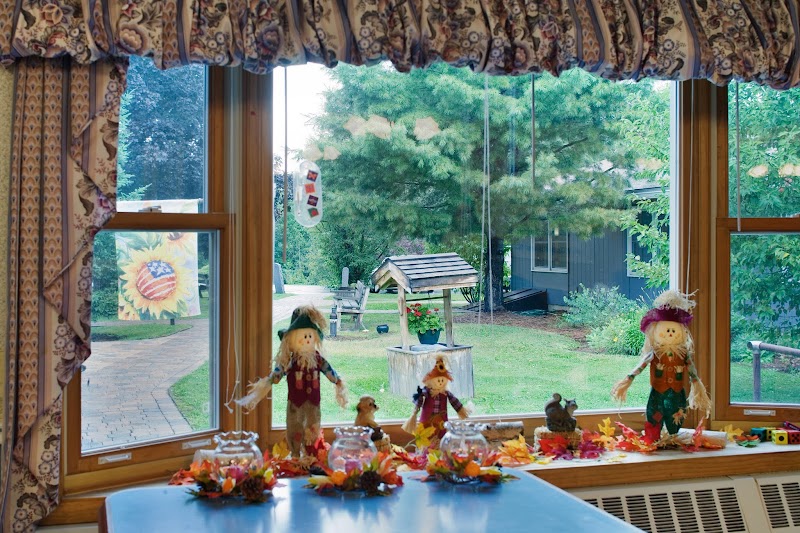
Bel Aire Center

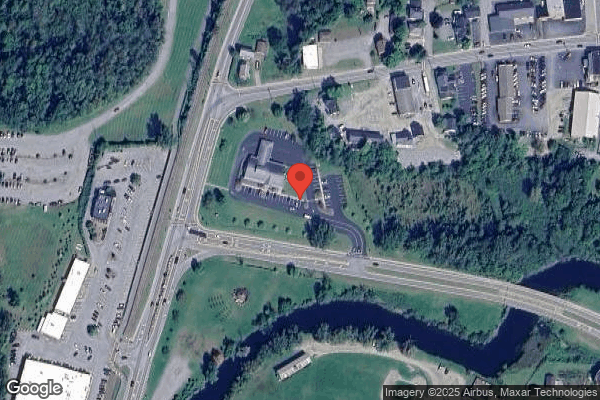
35 Bel-Aire Drive, Newport, VT 05855 (802) 334-2878
For profit - Corporation 58 Beds GENESIS HEALTHCARE Data: November 2025
Trust Grade
55/100
#10 of 33 in VT
Last Inspection: July 2025

Inspected within the last 6 months. Data reflects current conditions.

Overview

Bel Aire Center in Newport, Vermont, has a Trust Grade of C, which means it is average and falls in the middle of the pack for nursing homes. It ranks #10 out of 33 facilities in the state, placing it in the top half, and is #1 of 4 in Orleans County, indicating it is the best option locally. The facility is improving, with issues decreasing from 14 in 2024 to 8 in 2025. Staffing is a strength here, earning a 4/5 star rating with a turnover rate of 50%, which is better than the state average. While there were no fines, a serious incident occurred where a resident developed a blood clot due to significant medication errors, and there were concerns regarding infection control measures and accident prevention for some residents. Overall, Bel Aire Center has both strengths and weaknesses that potential residents should consider.

Trust Score
C
55/100
In Vermont
#10/33
Top 30%
Safety Record
Moderate
Needs review
Inspections
Getting Better
14 → 8 violations
Staff Stability
⚠ Watch
50% turnover. Above average. Higher turnover means staff may not know residents' routines.
Penalties
✓ Good
No fines on record. Clean compliance history, better than most Vermont facilities.
Skilled Nurses
✓ Good
Each resident gets 57 minutes of Registered Nurse (RN) attention daily — more than average for Vermont. RNs are trained to catch health problems early.
Violations
⚠ Watch
26 deficiencies on record. Higher than average. Multiple issues found across inspections.
★★★☆☆
3.0
Overall Rating
★★★★☆
4.0
Staff Levels
★★★☆☆
3.0
Care Quality
★★★☆☆
3.0
Inspection Score
Stable
2024: 14 issues
2025: 8 issues

The Good

  • 4-Star Staffing Rating · Above-average nurse staffing levels
  • Full Sprinkler Coverage · Fire safety systems throughout facility
  • No fines on record

Facility shows strength in staffing levels, fire safety.

The Bad

3-Star Overall Rating

Near Vermont average (2.8)

Meets federal standards, typical of most facilities

Staff Turnover: 50%

Near Vermont avg (46%)

Higher turnover may affect care consistency

Chain: GENESIS HEALTHCARE

Part of a multi-facility chain

Ask about local staffing decisions and management

The Ugly 26 deficiencies on record

1 actual harm
Sept 2025 1 deficiency 1 Harm
SERIOUS (G) 📢 Someone Reported This

A family member, employee, or ombudsman was alarmed enough to file a formal complaint

Actual Harm - a resident was hurt due to facility failures

Deficiency F0760 (Tag F0760)

A resident was harmed · This affected 1 resident

**NOTE- TERMS IN BRACKETS HAVE BEEN EDITED TO PROTECT CONFIDENTIALITY** Based on interview and record review, the facility failed to ensure one resident (Resident #1) of three sampled residents was fr...

Read full inspector narrative →
**NOTE- TERMS IN BRACKETS HAVE BEEN EDITED TO PROTECT CONFIDENTIALITY** Based on interview and record review, the facility failed to ensure one resident (Resident #1) of three sampled residents was free from significant medication errors which resulted in a resident developing DVT [Deep Vein Thrombosis] and being transferred to the emergency department. Findings include: Per record review of Resident #1's EMR [Electronic Medical Record] Resident #1 has diagnoses of a right femur fracture, muscle weakness, anxiety, and atrial fibrillation [a condition where the heart beats irregularly]. Resident #1 has a BIMS [Brief Interview of Mental Status] score of 7 as of 8/4/25, indicating Resident #1 has cognitive impairment. The resident is dependent on staff for ADLs [Activities of Daily Living] and hygiene.Per record review, Resident #1 was admitted to the hospital on [DATE] for a hip fracture and was discharged on 8/1/25.Per record review of Resident #1's discharge summary from the hospital on 8/1/25 contains a medication reconciliation section with the order Enoxaparin 40 mg [milligram/ 0.4 mL [milliliter] injectable solution 0.4 milliliters subcutaneous (under the skin) every 24 hours for 30 days.Per record review of Resident #1's August 2025 MAR [Medication Administration Record] Resident #1 was prescribed Enoxaparin Sodium Solution 40 mg [milligrams]/ 0.4 ml [milliliter]: Inject 40 mg subcutaneously one time a day for prevent blood clotting for 10 days. The order is written to start 8/2/25. S/he was administered the medication from 8/2/25 to 8/11/25. Three licensed nursing staff members administered this medication over the 10-day period.Per record review of the facility's OPS424 Medication Reconciliation policy [last revised 12/16/24] states, 3. For patients admitted from the hospital: 3.1 obtain and review copies of the Medication Administration Records (MARs), Treatment Administration Records (TARs), transfer forms, and Physician's Order Sheets (POS). 3.1.1 Verify MAR/TAR information with transfer forms and POS, if available.3 Clarify medication orders with clinical staff from transferring hospital, when necessary 5.4 Any discrepancies discovered during reconciliation will be reported to the physician/APP [Advanced Practice Physician] before finalizing the current list of medications.Per record review of Resident #1's progress note written by the NP [Nurse Practitioner] on 8/26/25 at 11:44 AM states, Acute visit for DVT [Deep Vein Thrombosis] documented by ultrasound after ER [Emergency Room] transfer on 8/24 with reported 10 cm x 5.5 cm area of pain and redness which was enlarging. It was additionally noted that Lovenox [an injection that is used to help prevent blood clots] therapy was ordered for 30 days on discharge summary and given for 10 days; lapse of expected therapy for 12 days.Per record review of the ultrasound performed on 8/24/25 at the emergency department states, Impression: There is superficial thrombophlebitis involving a subcutaneous vein in the anterior right thigh as well as the great saphenous vein at the saphenofemoral junction. The latter extends into the anterior aspect of the common femoral vein, as an equivalent to deep venous thrombosis.An interview with the NP was conducted on 9/2/25 at 10:02 AM. The NP stated that the discharge order is checked when reconciling medication. She stated two nurses are supposed to check the order. She discussed she was called the morning of the visit to the emergency department visit by staff discussing the thigh swelling with a bruise type area. She stated, This was a med [medication] error. This should not have happened.An interview was conducted with LPN [Licensed Practice Nurse] #1 on 9/2/25 at 10:09 AM. LPN#1 stated she transcribed the orders from the resident's discharge papers. She stated, I did not hand off the check to the next person. I'm not sure if I should have. I wasn't alone that day but I'm not sure what happened. I don't know the process.[After the resident was sent to the hospital] They did an in-service education with a quiz.I still don't know the process. I'm trying to figure it out myself.An interview was conducted with the DON [Director of Nursing] on 9/2/25 at 10:50 AM. The DON stated, Most days orders come in and unit clerk puts them in. She wasn't here that day. Then [the medication is] recheck [ed] from admitting nurse, checked again by a second time.The order was not checked a second time.
Jul 2025 7 deficiencies
CONCERN (D)

Potential for Harm - no one hurt, but risky conditions existed

Resident Rights (Tag F0550)

Could have caused harm · This affected 1 resident

Based on observation and interview, the facility failed to ensure one resident [Resident #4] of 3 sampled residents was treated with respect and dignity regarding personal medical equipment. Findings ...

Read full inspector narrative →
Based on observation and interview, the facility failed to ensure one resident [Resident #4] of 3 sampled residents was treated with respect and dignity regarding personal medical equipment. Findings include:Per record review of the facility's OPS206 Resident Rights Under Federal Law policy [last revised 2/1/23] states, Purpose: to treat each resident with respect and dignity and care for each resident in a manner and in an environment that promotes maintenance or enhancement of their self-esteem and self-worth.The resident has a right to a dignified existence, self-determination, and communication with and access to persons and services inside and outside the facility.Per record review, Resident #4 has major diagnoses of BPH [Benign Prostatic Hyperplasia, a condition that causes an enlargement of the prostate), Type II Diabetes Mellitus, and spinal stenosis (a condition that causes a narrowing of spaces in the spinal canal). Resident #4's MDS [Minimum Data Set] states that Resident #4 is dependent on staff for ADLs [Activities of Daily Living] and hygiene. Resident's BIMS [Brief Interview of Mental Status] score was 15, indicating Resident #4 was not cognitively impaired.Per record review of Resident #4's care plan states, Monitor [foley catheter] for odor, color, consistency, and amount .provide privacy and comfort.provide privacy bag. This section of the care plan was last revised on 6/25/25. Per observation on 7/15/25 at 10:30 AM, Resident #4's foley bag was not covered with a privacy bag. The foley was draining yellow urine. An interview was conducted with LPN#1 on 7/15/25 at 2:38 PM. LPN #1 confirmed that the foley bag had no privacy bag and stated, I'll go do that now.Per observation on 7/16/25 at 9:51 AM, Resident #4's foley bag still did not have a privacy bag over it and the foley was draining yellow urine.Per interview with Resident #4 on 7/16/25 at 10:03 AM, Resident #4 stated I would like it properly covered, especially if I were in public.Per observation on 7/17/25 at 10:40 AM, Resident #4's foley bag was not covered with a privacy bag and was draining yellow urine.
CONCERN (D)

Potential for Harm - no one hurt, but risky conditions existed

Deficiency F0697 (Tag F0697)

Could have caused harm · This affected 1 resident

Based on interview and record review, the facility failed to treat and manage 1 of 2 sampled resident's pain [Resident #40] per physician orders and plan of care. Findings include:Per record review, R...

Read full inspector narrative →
Based on interview and record review, the facility failed to treat and manage 1 of 2 sampled resident's pain [Resident #40] per physician orders and plan of care. Findings include:Per record review, Resident #40 was admitted to the facility with diagnoses that include Arthritis: multiple sites. Per interview with the resident on 7/15/2025 at 11:33 AM, Resident #40 stated I have pain in my neck [a pinched nerve]. I have pain patches for my neck. I had them for 2 days, then none yesterday and none yet today. They told me they don't have an order for one.Per review of Physician Orders for Resident #40, an order dated 7/11/25 reads Lidocaine External Patch (4 % Lidocaine). Apply to Left side of posterior neck topically in the morning for neck muscle/skeletal issues for 10 Days -Start Date 7/11/2025 8:00 AM.Review of Resident #40's Medication Administration Record [MAR] for July 2025 reveals on 7/14/25 a marking for NN [Nursing Note] for the pain patch administration. Review of Nursing Notes dated 7/14/25 at 11:46 AM regarding the pain patch reveal the notation unavailable. Further review of Nursing Notes on 7/14/25 record Ask resident if they are having pain. Document pain level and new onset in supplementary documentation and document location of pain. If not new initiate non-pharmacological interventions and document interventions and effectiveness. Nursing documentation notes Resident #40 complaining of posterior neck pain with no non-pharmacological interventions attempted to relieve it. Review of Resident #40's Care Plan reveals interventions that include Administer medications as ordered and observe for effectiveness and side effects and report to Physician as indicated. An interview was conducted with the Director of Nursing [DON] on 7/16/2025 at 1:55 PM. The DON stated that if a medication is unavailable the resident's physician should be notified to order a hold or a substitute. The DON confirmed there was no documentation that the physician was notified Resident #40 did not receive h/her pain medication as ordered and no attempt to relieve the pain through non-pharmacological interventions.
CONCERN (D)

Potential for Harm - no one hurt, but risky conditions existed

Deficiency F0887 (Tag F0887)

Could have caused harm · This affected 1 resident

Based on record review and interview the facility failed to have a consent form for 1 [Resident 42] out of 5 residents for Covid-19 vaccination. Findings include:Per record review of Resident #42's im...

Read full inspector narrative →
Based on record review and interview the facility failed to have a consent form for 1 [Resident 42] out of 5 residents for Covid-19 vaccination. Findings include:Per record review of Resident #42's immunization records, the Resident did not have a covid vaccine consent form.Per interview, on 7/17/2025 at 12:44 PM it was confirmed by the Director of Nursing (DON) that it wasn't completed and needed to be done.
CONCERN (E) 📢 Someone Reported This

A family member, employee, or ombudsman was alarmed enough to file a formal complaint

Potential for Harm - no one hurt, but risky conditions existed

Accident Prevention (Tag F0689)

Could have caused harm · This affected multiple residents

**NOTE- TERMS IN BRACKETS HAVE BEEN EDITED TO PROTECT CONFIDENTIALITY** Based on interview and record review, the facility failed to ensure residents received adequate interventions to prevent acciden...

Read full inspector narrative →
**NOTE- TERMS IN BRACKETS HAVE BEEN EDITED TO PROTECT CONFIDENTIALITY** Based on interview and record review, the facility failed to ensure residents received adequate interventions to prevent accidents for 2 residents [Residents #25 & #35] of 4 sampled residents. Findings include:1) Per review of Resident #25 medical record, Resident #25 has medical diagnoses of COPD [Chronic Obstructive Pulmonary Disease], history of a TIA [Transient Ischemic Attack, a transitory blockage of blood to the brain], muscle weakness, and anxiety. Resident #25’s BIMS [Brief Interview of Mental Status, a tool to assess cognitive function in residents] score was 3, indicating the resident is cognitively impaired. Resident #25’s MDS [Minimum Data Set, an assessment tool for clinical evaluation of residents] states that Resident #25 is dependent on staff for ADLs [Activities of Daily Living] and hygiene and is occasionally incontinent of bowels. Per record review of a physician progress note written on 7/7/25 at 12:00 AM states, “Per nursing documentation [s/he] had a fall around 22:30 on 7/2/25 and another at 03:00 on 7/3/25. [Resident #25] was noted to have a skin tear of [his/her] right forearm after the first fall. Later in the morning on 7/3/25, [s/he] was noted to have a large hematoma over the left scapula and appeared short of breath. SpO2 [Oxygen Saturation level] at the time was 79% on RA [room air] so home nocturnal oxygen was applied with improvement, and provider was contacted to request to send pt [patient] to ED [Emergency Department]. In the ED, it was also apparently reported that someone had seen bleeding from [Resident #25]’s left ear. No blood was noted on exam. FAST ultrasound of thorax was performed and demonstrated right and left pleural effusions (an accumulation of fluid in the pleural space of the lungs) but no other abnormalities. Chest x-ray showed chronic left pleural effusion and possible tiny right pleural effusion…CT of head demonstrated acute intra-axial hemorrhage of left frontal lobe measuring 1.8 x 1.6 cm without associated midline shift or upward or downward herniation, with a small subarachnoid component present superficial to intra-axial hemorrhage.” Per record of Resident #25’s care plan states, “Resident is at risk for falls r/t [related to] weakness and deconditioning. History of frequent falls and poor safety awareness.” This was added on 6/19/25. Interventions after the fall on 7/2/25 were added and included the following: “Send to ED for evaluation, Observe for changes in medical status, pain status, mental status and medication side effects that may contribute to cognitive loss/dementia/delirium and can lead to increase fall risk. report MD as indicated .Implement the following safety precautions: Remind resident often not to self transfer and to use [his/her] call bell to ring for assistance. Ensure resident has call bell within reach at all times, and Resident now resides in the room closest to the nurse's station for increased safety monitoring.” Per record review of a nurse progress note written 7/12/25 at 5:04 AM states, “Staff heard a noise at 0415, found [Resident #25] on the floor between [his/her] bed and the wall. Assessed for injuries, small laceration above right eye, raised area above left eye, 2 skin tears on left shin, areas both bleeding, bleeding stopped, areas cleansed, dressing applied, two assist up off the floor, called lumina [physician], updated, she ordered to send to ER for evaluation and treatment.” Per record review of a physician note written on 7/14/25 at 2:23 AM states, “Called regarding [Resident #25], who sustained a fall. Reports a recent history of a fall that resulted in a brain bleed. The current fall involved hitting [his/her] head again, causing a bleeding scalp laceration. Advised to send the patient to the hospital for evaluation due to the new head injury in the context of a recent intracranial hemorrhage…The patient [Resident #25], experienced a fall today, 07/12/2025. This fall resulted in a head injury with an associated bleeding laceration. This event is concerning given a recent history of another fall that caused a brain bleed. Due tothe [sic] repeat head trauma and active bleeding, immediate transfer to a hospital for emergency assessment was done. Vital signs could not be obtained at the time of the call given patient was transported to ed [Emergency Department].” Per record review, there were no additional medical documents from the Emergency Department found in the EMR [Electronic Medical Record]. Resident #25’s care plan was not updated after the fall on 7/12/25. Per record review of the facility’s “OPS416 Person-Cenetered Care Plan” policy [last revised 10/24/22] states, “7. Care plans will be:…7.2 Reviewed and revised by the interdisciplinary team after each assessment, including both the comprehensive and quarterly assessments, and as needed to reflect the response to care and changing needs and goals; and 7.3 Documented on the Care Plan Evaluation Note.” Per record review of the facility’s “NSG215 Falls Management” policy [last revised 3/15/24] states, “Patients experiencing a fall will receive appropriate care and post-fall interventions will be implemented…PURPOSE to ensure the patient-centered care plan is reviewed and revised according to the patient’s fall risk status. 2. Implement and document patient-centered interventions according to individual risk factors in the patient’s plan of care. 2.1 Adjust and document individualized intervention strategies as patient condition changes.” An interview was conducted with the DON [Director of Nursing] on 7/16/25 at 2:02 PM. The DON confirmed Resident #25 did not have any additional interventions in his/her care plan after second fall. The DON was unable to produce any additional neurological checks. She was unable to provide any additional documentation related to the fall on 7/12/25 in the patient’s medical record. Works Cited: Pleural Effusion. Cleveland Clinic. https://my.clevelandclinic.org/health/ diseases/17373-pleural-effusion. Accessed 7/24/25. Transient Ischemic Attack. Mayo Clinic. https://www.mayoclinic.org/diseases- conditions/transient-ischemic-attack/symptoms-causes/syc-20355679. Accessed 7/22/25. 2) Per record review, Resident #35 was admitted to the facility with diagnoses that include weakness, cognitive impairment, and a history of falling. Review of Resident #35’s Care Plan reveals the resident is identified as “at risk for falls: Impaired mobility, history of stroke, and left-sided weakness.” Per interview with the resident and h/her sister on 7/15/25 at 1:01 PM, the sister stated the resident has had multiple falls since admission and was recently found on the bathroom floor. Per review of Progress Notes for Resident #35 dated 6/3/25, “Registered Nurse asked this writer to check on [Resident #35] because she heard a bang. This writer found [Resident #35] sitting on [h/her] bottom leaning against the closet door. [S/he] was assisted to sitting position then assisted to the bed to sit on.” An interview was conducted with the Director of Nursing [DON] on 7/16/2025 at 1:55 PM. The DON stated that a new intervention should have been added to the resident's care plan to prevent future falls after the fall on 6/3/25 but was not. The DON reported that DON stated intervention for the 6/3/25 fall was listed in an incident report but not included in the care plan. The Incident report lists a Physical Therapy screen/evaluation to be conducted for the resident on 6/5/25. An interview was conducted with the Physical Therapist [PT] on 7/17/2025 at 12:49 PM. The PT reported that a screening had been attempted with Resident #35 after the fall on 6/3/25 but the resident had refused to be evaluated or participate in any therapy sessions that may have prevented future falls. The therapist confirmed that without a therapy evaluation nothing about the resident's care or treatment was changed. Per interview with the DON on 7/17/25 at 1:30 PM, the DON confirmed the therapy screening and evaluation was the only new intervention to be attempted to prevent future falls and was rejected by the resident. The DON confirmed the facility failed to evaluate the effectiveness of the intervention, and no other alternative interventions were considered or implemented to prevent future falls for the resident.
CONCERN (E) 📢 Someone Reported This

A family member, employee, or ombudsman was alarmed enough to file a formal complaint

Potential for Harm - no one hurt, but risky conditions existed

Deficiency F0725 (Tag F0725)

Could have caused harm · This affected multiple residents

Based upon observation, interview, and record review, the facility failed to provide sufficient nursing staff to maintain the highest practical physical, mental, and psychosocial wellbeing of the faci...

Read full inspector narrative →
Based upon observation, interview, and record review, the facility failed to provide sufficient nursing staff to maintain the highest practical physical, mental, and psychosocial wellbeing of the facility's residents. Findings include:Per observation on 7/16/25 at 11:53 AM, Resident #4 was observed in his bed when s/he was delivered his/her breakfast. S/he rang his/her call light at 11:53 AM. Resident #4's call light was answered at 12:15 PM. It took 23 minutes for the call light to be answered. S/he discussed with the nursing staff who entered the room that s/he needed to use the restroom.Per observation on 7/17/25 at 9:27 AM, a call light went off for Resident #6. The call light was answered at 9:58 AM. The call light was not answered for 31 minutes. Per observation at 9:58 AM Resident #1 stated to the licensed nursing staff member that s/he needed hygiene care.An interview was conducted with Resident #40 on 7/15/25 at 11:36 AM. S/he stated, Sometimes I have to wait so long it soaks through my briefs into my clothes. I can't get up to go; if I could, I would. It usually happens around 4:00 PM. S/he discussed this is usually the change of shift. S/he stated, They [the nursing staff] tell me 'There's only two of us' or 'I'm covering this side all by myself.' Resident #40 has a BIMS [Brief Interview of Mental Status] score of 14, indicating s/he has no cognitive impairment.An interview was conducted with Resident #5 on 7/15/25 at 1:05 PM. Resident #5 discussed that s/he does not feel the facility has enough staff. S/he discussed that s/he has had to wait up to 45 minutes to an hour for his/her call light to be answered and that this happens several times a week. S/he discussed that they have had episodes of incontinence in bed from having to wait for staff to answer his/her call light. Resident #5 had a BIMS score of 15, indicating they have no cognitive impairment.An interview was conducted with Resident #4 on 7/16/25 at 11:41 AM. Resident #4 stated, There is not enough staff. Resident #4 discussed that nursing staff often say We are busy when answering his/her call light. S/he discussed that it often takes over ten minutes for call lights to be answered. Resident #4 had a BIMS score of 15, indicating they did not have any cognitive impairment.An interview was conducted with LPN [Licensed Practical Nurse] #1 on 7/16/2025 at 1:06 PM. She stated she smelled odors due to lack of care. She discussed that she had to work overtime or pick up extra shifts on a weekly basis. She discussed that she could not get her work done stating, I tried everything just to stay afloat. LPN #1 discussed that numerous family members have complained about the staffing. She stated that she often did not take breaks, and when she did they were between five and ten minutes.An interview was conducted with LNA #1 [Licensed Nursing Assistant] #1 on 7/17/25 at 9:08 AM. She stated she must work extra shifts several times a month. She stated working extra shifts and overtime was aggravating. LNA #1 stated some days the nursing staff do not get breaks because LNAs are helping with breakfast. She discussed that breakfast interferes with hygiene care, such as showers. She discussed that care is late due to working at breakfast. She discussed that meals often come late because nursing staff are attending to other job duties prior to breakfast such as residents' personal care. She stated because of giving care prior to breakfast, it often comes from approximately 10:00 AM to 10:30 AM. She discussed that lunch starts at 11:30 AM and thus residents do not have an adequate amount of time between meals. LNA #1 stated residents have made comments about low staffing. An interview was conducted with Resident #31's family representative on 7/17/25 at 10:20 AM. S/he stated Resident #31 does not always get the help he/she needs. S/he stated, They [the staff] tell us don't worry but the family representative was worrisome. S/he stated there was an issue with staffing. The family representative discussed that s/he is at the facility with Resident #31 a couple of hours a day and does not see staff repositioning the resident in wheelchair. The family representative stated an LNA stated to him/her I did a 14 hour shift today because I know that if I didn't stay, the elders on the floor wouldn't get the care they needed. The LNA also discusses they do not always have two staff available to operate the Hoyer lift.Per record review of grievances, Residents #3, #6 #9 #13 #15 #18 #35 and #42 wrote grievances for 6/3/25 that stated that two licensed nursing staff members refused to answer call lights the previous night. Resident #6's grievance says that they [the two licensed nursing staff members] stated, It's a rule to not help them [residents] at night. The residents continued to have concerns with staffing even after the grievances were filed.
CONCERN (E)

Potential for Harm - no one hurt, but risky conditions existed

Deficiency F0761 (Tag F0761)

Could have caused harm · This affected multiple residents

Based upon observation and interview, the facility failed to ensure expired medications were stored or disposed of properly, and medications were secured. Findings include:Findings include:1) On 07/15...

Read full inspector narrative →
Based upon observation and interview, the facility failed to ensure expired medications were stored or disposed of properly, and medications were secured. Findings include:Findings include:1) On 07/15/2025 at 3:12 PM, two medications were observed to be expired in 1 of 3 medication carts. The medications were Docusate Sodium (a medication to alleviate constipation) 100 mg [milligram] tab which expired on 1/2025. The other medication was Guaifenesin (a medication used to alleviate coughing) 16 fl oz [ounce] with an expiration date of 5/2025. The nurse assigned to the med cart confirmed that both medications were expired.2) Per review of the facility's policy titled Medication Storage Storage of Medication reviewed on 1/25, it states that Medication rooms, cabinets and medication supplies should remain locked when not in use or attended to by persons with authorized assess. Per review of the facility's policy titled Medication Administration General Guidelines reviewed on 1/25, it states During administration of medications, the medication cart is kept closed and locked when out of sight of the medication nurse. No medications are kept on top of the cart. The cart must be clearly visible to the personnel administering medications when unlocked. On 07/15/2025 at 10:51 AM, the medication treatment cart was observed to be unlocked. At 10:59 AM the Director of Nursing (DON) who was assigned to the medication cart confirmed that it should have been locked.On 07/16/2025 at 9:25 AM, a Registered Nurse (RN) was observed dropping a Senna pill (medication to help alleviate constipation) on her medication cart and then walking away to the other medication cart to get more Senna pills, leaving behind the Senna pill unattended along with a medication pack of Benzonatate 100 mg tablets (a medication used to help alleviate coughing). The RN then walked past the medications left out on the cart (the Senna pill and Benzonatate pack) to a resident's room. When the RN returned from giving medications she confirmed that she had left out the Senna pill on the medication cart and the whole packet of Benzonatate pills.On 7/17/2025 at 11:24 AM, the medication treatment cart directly in front of the nurses' station was observed to be unlocked and one of the drawers partially opened on A-Wing. There were three staff in the hallway and two self-propelling residents in the hallway, both with a diagnosis of dementia. At 11:31 AM, the nurse was approached whose medication treatment cart was unlocked. She confirmed that it should have been locked.
CONCERN (E)

Potential for Harm - no one hurt, but risky conditions existed

Deficiency F0883 (Tag F0883)

Could have caused harm · This affected multiple residents

Based on record review and interview, the facility failed to obtain required consents and maintain accurate records regarding influenza and pneumococcal vaccines for 3 out of 5 residents [Residents #2...

Read full inspector narrative →
Based on record review and interview, the facility failed to obtain required consents and maintain accurate records regarding influenza and pneumococcal vaccines for 3 out of 5 residents [Residents #2, 15, 50]. Findings include:1) Per record review of Resident #2's immunization records, Resident #2's representative declined having the administration of the influenza vaccine with the representative and the provider signing and dating the Influenza Vaccine Informed Consent document on 9/12/2024. On 10/10/2024, Resident #2 received the Influenza vaccination and there was no updated consent form in the Residents Electronic Health Records.2) Per record review of Resident #15's immunization records, the Resident did not sign the pneumococcal vaccine form, nor was it indicated whether the Resident wished to receive the vaccination. The provider, however, did sign and date the form and it is dated 4/22/2025.3) Per record review of Resident #50's immunization records, the Resident did not sign the pneumococcal vaccine form. A nurse signed where Resident #50 should have signed, and in the signature of a licensed nurse, the nurse had signed their name again.Per interview, it was confirmed by the DON on 7/17/2025 at 12:44 PM that Resident #2 did not have an Influenza vaccine consent form in the chart and that the pneumococcal vaccine for both Resident #15 and #50 was filled out incorrectly and needed to be updated.
Aug 2024 3 deficiencies
CONCERN (D) 📢 Someone Reported This

A family member, employee, or ombudsman was alarmed enough to file a formal complaint

Potential for Harm - no one hurt, but risky conditions existed

Report Alleged Abuse (Tag F0609)

Could have caused harm · This affected 1 resident

**NOTE- TERMS IN BRACKETS HAVE BEEN EDITED TO PROTECT CONFIDENTIALITY** Based upon interview and record review, the facility failed to report allegations of abuse to the appropriate agencies and respo...

Read full inspector narrative →
**NOTE- TERMS IN BRACKETS HAVE BEEN EDITED TO PROTECT CONFIDENTIALITY** Based upon interview and record review, the facility failed to report allegations of abuse to the appropriate agencies and responsible parties in the required timeframes for 1 resident [Resident #1] of 4 sampled residents. Findings include: Per review of the facility's Abuse Prohibition Policy [revised 10/24/22]: - Anyone who witnesses an incident of suspected abuse, neglect, involuntary seclusion, injuries of unknown origin, or misappropriation of patient property is to tell the abuser to stop immediately and report the incident to his/her supervisor immediately, regardless of shift worked. - The notified supervisor will report the suspected abuse immediately to the Administrator or designee and other officials in accordance with state law - All reports of suspected abuse must also be reported to the patient's family and attending physician. -Anyone who witnesses an incident of suspected abuse, neglect, involuntary seclusion, injury of unknown origin, or misappropriation of patient property must also report to outside agencies, if required. -Staff are obligated to report reasonable suspicion of a crime against the elderly to the state agency and local law enforcement. Administrators and Directors of Nursing must assist in reporting. Per record review, Licensed Nurse's Aide [LNA] #1 provided a witness statement on 7/19/24 regarding an incident that had occurred 4 days earlier on 7/15/24 involving Res.#1 and another LNA [LNA #2]. Per LNA #1's statement: I was working on A wing with [LNA #2] . [LNA #2] did not ask [Res.#1] if [s/he] would like care done, instead [LNA #2] grabbed [Res.#1] by [h/her] arm and made [h/her] walk to the bathroom. [Res.#1] wanted to go to the sink to start, [LNA #2] grabbed [Res.#1] by [h/her] arm and attempted to force [h/her] to walk backwards toward the toilet. [LNA #2] also raised [h/her] voice at [Res.#1] when [s/he] did not cooperate. [Res.#1] said ouch and other things like you're hurting me multiple times .I tried to speak softly to [Res.#1] as [s/he] asked questions like 'why were we trying to kill [h/her]' and why [h/her] daughter would put [h/her] in a place like this, although I really did not have much to say because I was in disbelief. LNA #1's statement continues with after witnessing the alleged resident abuse, I couldn't find a nurse to report this incident to until much later and there was too much going on. The next day, while the Nurse Educator and I were talking, [s/he] asked me how the previous evening had went (working with [LNA #2]) and I told [h/her] about the incident and that I didn't really know the proper steps to take, and [s/he] told me that I can go online and make a report or that I could call a number to report it. Per review of facility records, the Nurse Educator did not report the abuse allegation to the facility's DON or Administrator [ADM] and did not follow up with LNA #1 to verify the allegation had been reported to the required agencies. An interview was conducted with the Director of Nursing [DON] on 8/12/24 at 10:19 AM. The DON reported [s/he] first became aware of abuse allegations on 7/18/24 when an Adult Protective Services investigator arrived at facility. The DON stated that the Abuse Procedure is to immediately report to the charge nurse, if charge nurse is not present, to call the DON day and night regardless. The DON stated the Nurse Educator 'absolutely should' have reported the abuse allegations after speaking with LNA #1 and informed the DON and Administrator [ADM] but did not. The DON stated there was a disconnect with following the proper procedure, and the Nurse Educator dropped the ball. Per review of a report form received at the Division of Licensing and Protection on Thursday, July 18, 2024, at 2:22 PM, [3 days after the incident] the DON reported Today at around noon Adult Protective Services showed up to [NAME] Aire Center after they received a report of a LNA [#2] yelling loudly and dragging resident [Res.#1] to the toilet . There have been no reports in the building of anything like this, no documentation in the resident's chart of any situation. The DON confirmed that facility staff failed to report the allegation of abuse on 7/15/24 to the facility's DON, ADM, and the appropriate agencies and responsible parties in the required timeframes.
CONCERN (D) 📢 Someone Reported This

A family member, employee, or ombudsman was alarmed enough to file a formal complaint

Potential for Harm - no one hurt, but risky conditions existed

Investigate Abuse (Tag F0610)

Could have caused harm · This affected 1 resident

**NOTE- TERMS IN BRACKETS HAVE BEEN EDITED TO PROTECT CONFIDENTIALITY** Based upon interview and record review, in response to allegations of abuse the facility failed to Immediately investigate the ...

Read full inspector narrative →
**NOTE- TERMS IN BRACKETS HAVE BEEN EDITED TO PROTECT CONFIDENTIALITY** Based upon interview and record review, in response to allegations of abuse the facility failed to Immediately investigate the allegations and to prevent further potential abuse for 1 resident [Resident #1] of 4 sampled residents. Findings include: Per review of the facility's Abuse Prohibition Policy [revised 10/24/22]: -Initiate an investigation within 24 hours of an allegation of abuse that focuses on: whether abuse or neglect occurred and to what extent. -The employee alleged to have committed the act of abuse will be immediately removed from duty, pending investigation. Per record review, Licensed Nurse's Aide [LNA] #1 provided a witness statement on 7/19/24 regarding an incident that had occurred 4 days earlier on 7/15/24 involving Res.#1 and another LNA [LNA #2]. Per LNA #1's statement: I was working on A wing with [LNA #2] . [LNA #2] did not ask [Res.#1] if [s/he] would like care done, instead [LNA #2] grabbed [Res.#1] by [h/her] arm and made [h/her] walk to the bathroom. [Res.#1] wanted to go to the sink to start, [LNA #2] grabbed [Res.#1] by [h/her] arm and attempted to force [h/her] to walk backwards toward the toilet. [LNA #2] also raised [h/her] voice at [Res.#1] when [s/he] did not cooperate. [Res.#1] said ouch and other things like you're hurting me multiple times.I tried to speak softly to [Res.#1] as [s/he] asked questions like 'why were we trying to kill [h/her]' and why [h/her] daughter would put [h/her] in a place like this, although I really did not have much to say because I was in disbelief. LNA #1's statement continues with after witnessing the alleged resident abuse, I couldn't find a nurse to report this incident to until much later and there was too much going on. LNA #1 stated that s/he reported the abuse allegation the next day during a conversation with the facility's Nurse Educator. Per review of facility records, the Nurse Educator did not report the abuse allegation to the facility's DON or Administrator [ADM] and did not follow up with LNA #1 to verify the allegation had been reported to the required agencies. An interview was conducted with the Director of Nursing [DON] on 8/12/24 at 10:19 AM. The DON reported [s/he] first became aware of abuse allegations on 7/18/24 when an Adult Protective Services investigator arrived at facility. Per review of a report form received at the Division of Licensing and Protection on Thursday, July 18, 2024, at 2:22 PM, [3 days after the incident] the DON reported Today at around noon Adult Protective Services showed up to [NAME] Aire Center after they received a report of a LNA [#2] yelling loudly and dragging resident [Res.#1] to the toilet . There have been no reports in the building of anything like this, no documentation in the resident's chart of any situation. The DON reported that it was after this occurred that the facility launched an investigation into the abuse allegation. Per record review, during the time of the witnessed alleged abuse, and the start of the investigation 3 days later on 7/18/24, LNA #2 was not immediately taken off duty or taken off the schedule after the incident on 7/15/24. Review of the facility's LNA schedule and LNA task record reveals that LNA #2 was assigned to and provided care to Res.#1 again on 7/17/24. The DON confirmed that an investigation into the abuse allegation should have been initiated immediately on 7/15/24 after the alleged event occurred, and that the staff member involved, LNA #2, should immediately have been taken off duty and taken off the schedule to prevent further potential abuse but was not.
CONCERN (D) 📢 Someone Reported This

A family member, employee, or ombudsman was alarmed enough to file a formal complaint

Potential for Harm - no one hurt, but risky conditions existed

Comprehensive Care Plan (Tag F0656)

Could have caused harm · This affected 1 resident

**NOTE- TERMS IN BRACKETS HAVE BEEN EDITED TO PROTECT CONFIDENTIALITY** Based upon interview and record review, the facility failed to implement care plan interventions regarding medications and physi...

Read full inspector narrative →
**NOTE- TERMS IN BRACKETS HAVE BEEN EDITED TO PROTECT CONFIDENTIALITY** Based upon interview and record review, the facility failed to implement care plan interventions regarding medications and physician orders for 1 resident [Res.#1] of 4 sampled residents. Findings include: Review of Res.#1's medical record reveals the resident was admitted to the facility on [DATE], with Physician Orders that included an order for 'Metoprolol: Give 1 tablet by mouth two times a day for blood pressure. Hold Metoprolol if Systolic Blood Pressure is less than 110 or Heart Rate is less than 65.' [Metoprolol is a medication that affects the heart and circulation and is used to treat angina (chest pain) and hypertension (high blood pressure)] (https://www.drugs.com/mtm/metoprolol-succinate-er.html) [ A blood pressure reading has two numbers. The top number is called the Systolic Blood Pressure. The top number measures the pressure in the arteries when the heart beats.] (https://www.mayoclinic.org/diseases-conditions/high-blood-pressure/in-depth/blood-pressure) Review of Res.#1's Care Plan reveals the resident is identified as exhibits or is at risk for cardiovascular symptoms or complications related to heart failure. Care Plan interventions include Administer meds as ordered Review of Res.#1's medical record and Medication Administration Record [MAR] beginning on 7/13/24 and continuing through the day of the complaint investigation on 8/12/24 reveals that Res.#1's Systolic Blood Pressure and/or Heart Rate were below the physician prescribed parameters 16 times, yet the blood pressure medicine Metoprolol was still administered. Further review reveals no documentation in Res.#1's medical record of why the medication was given in error or that the physician was notified of the medication order not being followed. An interview was conducted with the Director of Nursing [DON] on 8/12/24 at 10:19 AM. The DON confirmed that the Metoprolol medication order requires the medication to be held when below certain parameters, and despite the physician ordered parameters, the medication was not administered as ordered per the resident's Care Plan on 16 occasions between 7/13 and 8/12/24.
Apr 2024 11 deficiencies
CONCERN (D) 📢 Someone Reported This

A family member, employee, or ombudsman was alarmed enough to file a formal complaint

Potential for Harm - no one hurt, but risky conditions existed

Report Alleged Abuse (Tag F0609)

Could have caused harm · This affected 1 resident

Based on staff interviews and record review, the facility failed to ensure that an allegation of staff to resident abuse was reported to the State Licensing Agency as required. Findings include: Per ...

Read full inspector narrative →
Based on staff interviews and record review, the facility failed to ensure that an allegation of staff to resident abuse was reported to the State Licensing Agency as required. Findings include: Per interview on 4/24/24 at approximately 11:30 AM, a Licensed Nursing Assistant stated that a few weeks ago, Resident #14 reported to him/her that the night aide had ripped her necklaces off of him/her and broke them. S/He explained that s/he had reported this to the Director of Nursing (DON). Record review reveals that Resident #14 was assessed on 3/13/2024 to have a BIMS of 14 (brief interview for mental status, indicating cognitive intactness). Per interview on 4/24/24 at 11:52 AM, Resident #14 explained that a couple weeks ago a staff member had ripped off his/her necklaces because they were mad at me. A review of the investigation of this incident did not include evidence that this allegation of abuse was reported to the State Licensing Agency. Per interview at on 4/24/24 at approximately 2:30 PM, the DON explained that s/he was unaware that s/he was required to report the allegation to the State Licensing Agency but has been educated and understands that s/he should have reported the allegation to the State Licensing Agency.
CONCERN (D)

Potential for Harm - no one hurt, but risky conditions existed

Deficiency F0655 (Tag F0655)

Could have caused harm · This affected 1 resident

**NOTE- TERMS IN BRACKETS HAVE BEEN EDITED TO PROTECT CONFIDENTIALITY** 2. Per record review, Resident #3 was admitted to the facility on [DATE] with diagnoses that include anxiety and depression. A 4...

Read full inspector narrative →
**NOTE- TERMS IN BRACKETS HAVE BEEN EDITED TO PROTECT CONFIDENTIALITY** 2. Per record review, Resident #3 was admitted to the facility on [DATE] with diagnoses that include anxiety and depression. A 4/2/2024 nursing note reveals that Resident #3 was admitted for short term rehabilitation related to management of diabetes and dementia. Review of Resident #3's care plan reveals that the facility did not develop a baseline care plan related to mood and dementia within the first 48 hours of his/her stay. The following care plans were created on 4/23/2024, 21 days after Resident #3 was admitted to the facility: Resident/patient exhibits or is at risk for distressed/fluctuating mood symptoms related to: dementia .Resident/Patient exhibits or is at risk for limited and/or meaningful engagement related to: Cognitive loss/dementia .Resident/patient has impaired/decline in cognitive function or impaired thought processes related to a condition other than delirium: Dementia (other than Alzheimer's disease). Per interview on 4/24/24 at 3:20 PM, the Director of Nursing confirmed that Resident #3 should have had care plans for mood and dementia in his/her baseline care plan and did not. Based on interview and record review the facility failed to develop and implement a baseline care plan within 48 hours of admission that included the instructions needed to provide effective and person-centered care for 2 of 9 residents in the sample (Resident #49 and Resident #3). Findings include: 1. Per record review Resident #49 was admitted to the facility on [DATE] with skin breakdown that required treatment to sacrum and bilateral feet. Resident #49's baseline care plan that was created on 1/26/24, the day of admission, states Resident at risk for skin breakdown related to CKD (chronic kidney disease], oxygen dependent COPD [Chronic Obstructive Pulmonary Disease] with a goal of The resident will not show signs of skin breakdown through review. The base line care plan does not reflect the actual skin breakdown, nor does it identify interventions needed to care for actual skin breakdown on Resident's sacrum and bilateral feet. On 1/29/2024 Resident #49's care plan was updated to reflect Resident at risk for skin breakdown related to CKD, oxygen dependent COPD, T2DM [Type 2 Diabetes Mellitus] and has breakdown to sacrum, left lateral and medial foot, left great toe, and right lateral foot. During an interview on 4/24/2024 at 11:20 the Registered Nurse confirmed that Resident #49's baseline care plan should have identified actual skin breakdown and provided interventions that addressed the care needs related to actual skin breakdown however, it did not.
CONCERN (D)

Potential for Harm - no one hurt, but risky conditions existed

Quality of Care (Tag F0684)

Could have caused harm · This affected 1 resident

**NOTE- TERMS IN BRACKETS HAVE BEEN EDITED TO PROTECT CONFIDENTIALITY** Based on record review and interview, the facility failed to provide treatment and care to an existing non-pressure-related inju...

Read full inspector narrative →
**NOTE- TERMS IN BRACKETS HAVE BEEN EDITED TO PROTECT CONFIDENTIALITY** Based on record review and interview, the facility failed to provide treatment and care to an existing non-pressure-related injury in accordance with professional standards of practice and the person-centered care plan consistent with the facility policy for 1 of 6 residents (Resident # 11). Findings Include: Per record review, Resident #11 was admitted to the facility on [DATE] with the following diagnoses: Acute osteomyelitis (infection in the bone) of left ankle and foot, acquired absence of left great toe (amputation), Type 2 Diabetes, and peripheral artery disease (PAD), (the narrowing or blockage of the vessels that carry blood from the heart to the legs.) Per record review, a care plan entry was dated 3/28/24 with an intervention of weekly wound assessment to include measurements and description of wound status. Per record review, a skin assessment dated [DATE] and 4/12/2024 states, Left foot, surgical toe amputation. Dressing C/D/I [clean/dry/intact]. Per record review, a skin assessment dated [DATE] has a note entry: Left foot, surgical toe amputation. Great toe sutures have dehisced [partial or total separation of previously approximated wound edges due to failure of proper wound healing], and great toe is currently open. Per record review, a clinical office note from the attending surgeon dated 4/23/24 indicates dead tissue was removed from the wound to expose the bone, given [his/her] diabetes and PAD, [s/he] will have difficulty healing this wound and may ultimately need a BKA [below the knee amputation]. Facility policy titled NSG236 Skin Integrity and Wound Management, last reviewed 2/1/23, states: A comprehensive initial and ongoing nursing assessment of intrinsic and extrinsic factors that influence skin health, skin/wound impairment, and the ability of a wound to heal will be performed. The plan of care for the patient will be reflective of assessment findings from the comprehensive patient assessment and wound evaluation. Staff will continually observe and monitor patients for changes and implement revisions to the plan of care as needed. Practice Standards include: 6 A licensed nurse will: 6.4 Perform and document skin inspection on all newly admitted /readmitted patients weekly thereafter and with any change in condition. 6.5 complete wound evaluation upon admission /readmission, new in-house acquired weekly and with unanticipated decline in wounds. 6.6 Perform daily monitoring of wounds or dressings for the presence of complications or declines. 6.6.1.4 Signs of decline in wound status. 6.6.1.4.1 If unanticipated decline in the wound, surrounding tissue, or new or increased wound-associated pain, complete a wound re-evaluation, change in condition. Per an interview on 4/23/24 at approximately 1:30 PM with the facility's wound care nurse, s/he stated that the facility does not assess surgical wounds on admission, and the responsibility of documenting the condition of the wound falls to the nurse changing the dressings. S/he stated s/he did not assess the wound until the skin check dated 4/19/2024 when the wound was assessed to have necrotic (dead tissue) in it. S/he had not assessed the wound since 4/19/2023 and has not followed facility policy 6.6, perform daily monitoring of wounds or dressings for the presence of complications or declines. Per record review, Resident # 11's care plan has no documentation of revisions to reflect the 4/19/24 assessment of necrotic tissue in the wound. Per an interview on 4/24/24 at approximately 11:15 AM with the Director of Nursing, s/he confirmed that the facility failed to perform an initial wound assessment after the resident was admitted to the facility as per the facility's policy. Additionally, the facility failed to assess and document the status of the wound weekly, as the resident's care plan indicated. There is no evidence that the wound was assessed during dressing changes in the medical record until 4/19/2024; s/he confirmed that there was no evidence of documentation of the condition of the wound from 4/19/2024 until 4/23/2024 when the surgeon removed the dead tissue from the wound. S/he also confirmed that the facility failed to revise Resident #11's care plan after the assessment on 4/19/2024. [NAME], R. D. 2023, (November 3). National Library of Medicine ( NLM). National Institute of Health. https://www.nih.gov/about-nih/what-we-do/hih-almanac/national-library-medicine-nlm Accessed 30 April 2024 [NAME],J.(2023,July 5).PAD: The other arterial disease-mayo clinic news network. Mayo Clinic.https://newsnetwork.mayoclinic.org/discussion/pad-the-other-arterial-disease/ Accessed 30 April 2024 Momodu, I. I. (2023, May 31). Osteomyelitis. StatPearls [Internet]. https://www.ncbi.nlm.nih.gov/books/NBK532250/#:~:text=Osteomyelitis%20is%20a%20serious%20infection,bloodstream%2C%20fractures%2C%20or%20surgery. Accessed 30 April 2024
CONCERN (D)

Potential for Harm - no one hurt, but risky conditions existed

Deficiency F0697 (Tag F0697)

Could have caused harm · This affected 1 resident

**NOTE- TERMS IN BRACKETS HAVE BEEN EDITED TO PROTECT CONFIDENTIALITY** Based on interview and record review, the facility failed to ensure that pain management is provided to residents who require su...

Read full inspector narrative →
**NOTE- TERMS IN BRACKETS HAVE BEEN EDITED TO PROTECT CONFIDENTIALITY** Based on interview and record review, the facility failed to ensure that pain management is provided to residents who require such services, consistent with professional standards of practice, and the comprehensive person-centered care plan for 1 of 21 sampled residents (Resident #3). Findings include: Per record review, Resident #3 was admitted to the facility on [DATE] for rehabilitation services following repeated falls at home. Resident #3's care plan reveals Resident exhibits or is at risk for alterations in comfort related to advanced age, [history] of falls, created 4/02/2024 with interventions that include Evaluate pain characteristics: quality, severity, location, precipitating/relieving Factors, created on 4/2/24 and Monitor for pain. Attempt non-pharmacologic interventions to alleviate pain and document effectiveness, created on 4/16/24. Review of Resident #3's Medication Administration Record (MAR) reveals that following physician orders for as needed (PRN) pain medications were administered: Acetaminophen Oral Tablet 500 MG (Acetaminophen) Give 2 tablet by mouth every 8 hours as needed for pain TID as needed -Start Date- 04/02/2024, administered on 4/16/24, 4/18/24, 4/19/24, and 4/23/24; and Lidoderm Patch 5 % (Lidocaine) Apply to back topically as needed for back pain daily as needed -Start Date- 04/10/2024, administered on 4/17/24. In addition to the above medications, Resident #3's MAR reveals the following order Non-Pharmacological Intervention(s) used before PRN Pain Medication. Record Non-Pharm intervention in Supplementary Documentation. Document Effectiveness. If pain continues follow providers direction which may include pain medication. as needed -Start Date- 04/02/2024. The MAR does not show documentation that non-pharmacological interventions were used prior to the administration of the above PRN medications. A review of pain assessments in both the MAR and under vitals, Resident #3's pain is documented as being 0 for the entirety of their stay. There is no pain assessment indicating the use of the above PRN pain medications. Per interview on 4/24/24 at 3:58 PM, the Director of Nursing confirmed that if Resident #3 was receiving PRN medications, there would need to be both an indication for the need based on a pain assessment and documentation that non-pharmacological interventions were attempted before and there was not.
CONCERN (E)

Potential for Harm - no one hurt, but risky conditions existed

Deficiency F0561 (Tag F0561)

Could have caused harm · This affected multiple residents

3. Per record review, Resident # 15's care plan reveals the following focus [Resident #15] is at risk for decreased ability to perform ADL(s) in bathing, grooming, personal hygiene, dressing, eating, ...

Read full inspector narrative →
3. Per record review, Resident # 15's care plan reveals the following focus [Resident #15] is at risk for decreased ability to perform ADL(s) in bathing, grooming, personal hygiene, dressing, eating, bed mobility, transfer, locomotion, toileting) related to: weakness, acute renal failure, right great toe amputated; created 05/15/2023. Interventions reveal that Resident # 15 needs assistance with ADL's. Another care area focus states: While in the facility, [Resident # 15] states that it is important that [s/he] has the opportunity to engage in daily routines that are meaningful relative to their preferences. Intervention includes I like to get up in the morning between 7am-9am. During an interview with Resident # 15 on 04/22/2024 approximately 11:30 AM, Resident # 15 states I have to be removed from my room when the staff care for my roommate. I then wait for my care in the hall outside of the room. I don't get to eat breakfast until 10:00 or 11:00 am which is too late. I would prefer to eat at 7:00 am when I am awake. I have complained to staff, but no one seems to be doing anything about it. Per observation and interview at approximately 8:45 am on 4/23/2024 Resident # 15 was outside his/her room, in the wheelchair with a night gown on, open back, and blanket on his/her lap. Resident # 15 stated I have been up since 7:00 am ready to be bathed and dressed but nobody would assist me in getting up. Now I have to wait in the hall for my turn to take a bath and get dressed. I won't get to today until 10:00 or 11:00 which happens all the time. Per interview with the Social Service Director on 04/23/2024 at approximately 4:00 pm she/he stated they were aware of Resident # 15 concerns related to being moved out of his/her room. The Social Service Director confirmed Resident # 15 has complained several times to her/him about being left in the hall while they move the roommate around. Social Service Director confirmed that there has been no resolution to this issue. Based on interview and record review the facility failed to provide activities of daily living care based on resident preference for 3 of 21 residents sampled (Residents #43, #209, and #15). Findings include: 1. Per record review, Resident #43's care plan reveals the following focus [Resident #43] is at risk for decreased ability to perform ADL(s) [activities of daily living] in bathing, grooming, personal hygiene, dressing, eating, bed mobility, transfer, locomotion, toileting related to: CVA [stroke], created 3/2/2023. Interventions include Provide resident/patient with extensive assist of 1 for dressing; Provide resident/patient with extensive assist of 2 for transfers using a mechanical lift; Provide resident/patient with extensive assist of 1 for eating. Per observation and interview on 4/23/24 at 8:33 AM, Resident #43 was awake and in bed. S/He stated that s/he would like to be up and in the dining room eating breakfast right now but has to wait until there is enough staff to get him/her up. Per observation at 10:45 AM, staff brought Resident #43 to the dining room for breakfast in his/her wheelchair. Per interview at 11:48 AM, Resident #43 explained that s/he is not able to get out of bed and eat breakfast when s/he wants to because staff are too busy. S/He said that s/he is hungry and by the time s/he eats breakfast, lunch is shortly after. S/He explained this happens almost every day. 2. Per record review, Resident #209's care plan reveals the following focus [Resident #209] is at risk for decreased ability to perform ADL(s) in bathing, grooming, personal hygiene, dressing, eating, bed mobility, transfer, locomotion, toileting related to: Limited mobility, L hip fx s/p ORIF [left hip fracture status post open reduction and internal fixation], created 4/06/2024. Interventions include: Provide resident/patient with extensive assist of 2 for ambulation using a walker, gait belt, and nonskid footwear. Follow with [wheelchair]; Provide resident/patient with extensive assist of 1 with [bedside commode] over toilet; Provide resident/patient with extensive assist of 1 for bathing. Per observation and interview on 4/23/24 at 8:30 AM, Resident #209 was sitting in his/her chair in his/her room. S/He stated that s/he would like to be up and eating breakfast right now but s/he has to use the bathroom first. S/He explained that the aides know that s/he is waiting to use the bathroom but they are going to come back when they are not as busy. At 9:20 AM, Resident #209 received their breakfast. At 11:57 AM Resident #209 said that s/he never got help using the bathroom this morning. S/He explained that she would like to use the bathroom before s/he eats breakfast in the morning and that never happened because staff did not have enough time. S/He was frustrated that s/he also had to wait so long for breakfast. Per interview on 4/23/24 at 8:40 AM, a Registered Nurse explained that it is typical for residents to be waiting in bed for am care and breakfast at this time of day because there are only 2 aides on. The staff try their best to get the residents up when they want to but with only two aides on, some residents have to wait a long time after they ask to get up. Per interview on 4/24/24 at 3:20 PM the Director of Nursing confirmed that all residents have the right to make their own choices, including when to get out of bed and eat meals.
CONCERN (E)

Potential for Harm - no one hurt, but risky conditions existed

Deficiency F0657 (Tag F0657)

Could have caused harm · This affected multiple residents

**NOTE- TERMS IN BRACKETS HAVE BEEN EDITED TO PROTECT CONFIDENTIALITY** 3. Per record review, Resident # 47 was admitted to the facility on [DATE] and has diagnoses that include history of falls, lumb...

Read full inspector narrative →
**NOTE- TERMS IN BRACKETS HAVE BEEN EDITED TO PROTECT CONFIDENTIALITY** 3. Per record review, Resident # 47 was admitted to the facility on [DATE] and has diagnoses that include history of falls, lumbar spine fracture and orthostatic hypotension (low blood pressure drops when standing). Resident # 47 has the following care plan initiated on 08/11/2023 which states resident at risk for falls related to impaired mobility, lumber fracture, stroke with left sided weakness. Interventions include toilet after meals, offer resident to go to the bathroom every 2-3 hours, obtain resident input and anticipate needs to prevent future falls, provide verbal cues for safety, place walking device within reach to enable use of walker, and place the call bell within reach. Per record review from 08/11/2023 through 4/22/2024, Resident # 47 had 22 documented falls. Resident # 47's care plan was revised only 4 of the 22 times after a fall. Per facility policy Falls Management last revised 03/24/2024 states patients experiencing a fall will receive appropriate care and post fall interventions will be implemented. The purpose is to identify risk for falls, minimize the risk of recurrence of falls, and to ensure patient centered care plan is reviewed and revised. Per interview with a Licensed Nursing Assistant (LNA) familiar with Resident # 47's care on 4/23/2024 at approximately 2:30 pm, he/she stated that they were concerned that there isn't enough staff to keep Resident # 47 from falling. The LNA stated that often Resident # 47 has falls multiple times a day, and there are not enough interventions including adequate supervision to prevent falls and keep Resident # 47 safe. Based upon observation, interview, and record review, the facility failed to review and revise resident Care Plans related to falls for 3 Residents (Res.# 36, #37, and #47) of 28 sampled residents. Findings include: 1). Per record review, Res. #36 was admitted to the facility with diagnoses that include Alzheimer's Disease, repeated falls, lack of coordination, and abnormalities of gait and mobility. Res. #36 was assessed as at risk for falls related to a history of falls, poor safety awareness and unsteady gait, and a Care Plan was developed with interventions to prevent falls upon their admission to the facility in 2022. Review of Res. #36's medical record reveals the resident suffering multiple falls while at the facility, with the most recent falls on 2/17/24 and 3/8/24. Per nursing notes dated 2/17/24, Res. #36 was found on bedroom floor next to the door laying on [h/her] side. A Change in Condition form for the resident was completed regarding the fall, noting that the resident's Primary Care Provider responded with the following feedback: follow fall protocol. Review of the facility's 'Falls Management' policy [revision date 3/15/24] includes Implement and document patient-centered interventions according to individual risk factors in the patient's plan of care. Review of the resident's Care Plan after the fall on 2/17/24 revealed no new interventions added to prevent future falls. Further review of Res.#36's medical record reveals on 3/8/24 Res. #36 suffered another fall, resulting in a contusion and facial bruising. Nursing notes after the fall record the resident 'has a history of mental health disorders, falls, impulsiveness, wandering, anxiety about surroundings, and left and right leg extremity weakness'. Review of the resident's Care Plan after the fall on 3/8/24 revealed no new interventions added to prevent future falls. 2). Per record review, Res. #37 was admitted to the facility with diagnoses that include Alzheimer's Disease, dementia, psychotic disturbances, and fractures of the right arm, right femur [leg], and right pubis [hip]. Res. #37 was assessed as at risk for falls related to a history of falls, impaired mobility, and unsteady gait, and a Care Plan was developed with interventions to prevent falls upon their admission to the facility in 2022. Review of Res. #37's medical record reveals the resident suffering multiple falls while at the facility, including 3 falls in 3 weeks, from 3/13/24 to 4/3/24. Per review of Res.#37's medical record, a Change in Condition note dated 3/13/24 records Resident found on floor on [h/her] right side between [h/her] bed and [h/her] recliner chair .Resident hoyered [mechanical lift] off the floor onto [h/her] bed. On 3/25/24, a Change in Condition note for Res.#37 records Resident found to be sitting upright on floor at bedside. States [s/he] was trying to get into bed and slid down to floor. On 4/3/24, Nursing notes document Res.#37 was laying on right side of body, on the floor, directly by bed .Assisted from floor to wheelchair with 2 person assist. Review of the resident's Care Plan after 3 consecutive falls on 3/13, 3/25, & 4/3/24 revealed no new interventions added to prevent future falls. An interview was conducted with the facility's Director of Nursing [DON] and the Corporate Compliance Director on 4/24/24 at 10:56 AM. The DON and the Corporate Compliance Director confirmed that after multiple falls, the care plans for both Res.#36 and #37 were not updated with new interventions to prevent future falls, resulting in both residents suffering additional falls, including Res. #36 who suffered a contusion and facial bruising.
CONCERN (E)

Potential for Harm - no one hurt, but risky conditions existed

Deficiency F0699 (Tag F0699)

Could have caused harm · This affected multiple residents

**NOTE- TERMS IN BRACKETS HAVE BEEN EDITED TO PROTECT CONFIDENTIALITY** 2.) Per interview on 4/22/24 at approximately 1:40 PM, Resident #11 revealed that s/he has post-traumatic stress disorder PTSD. ...

Read full inspector narrative →
**NOTE- TERMS IN BRACKETS HAVE BEEN EDITED TO PROTECT CONFIDENTIALITY** 2.) Per interview on 4/22/24 at approximately 1:40 PM, Resident #11 revealed that s/he has post-traumatic stress disorder PTSD. S/he is a [NAME] with a history of live combat. S/he states sudden loud noises and loud male voices all trigger him/her causing panic and a need to hide. Per record review, Resident #11 was admitted to the facility on [DATE] with diagnoses of Major Depressive Disorder and Traumatic Stress Disorder. A care plan with a date of 4/10/24 indicates an entry: Resident /Patient reports past experience of trauma as evidenced by PTSD, with an intervention of Encourage Resident/Patient to identify personal trauma and triggers and take steps to eliminate/minimize. Resident #11 has no triggers identified in his/her medical record or care plan. Per the record review, a social service assessment used to screen for PTSD was completed on 4/3/24; the assessment coded Resident #11 as positive for trauma. The screening tool used is a two-question assessment that asks the residents if they have experienced any consequences from trauma in the past month. It does not ask the resident if they have experienced trauma at any point in their past. Per interview on 4/24/24 at approximately 2:30 PM, the Director of Social Services confirmed that the only screening that s/he used for trauma was to ask the two questions above. S/he confirmed there are no other screening tools s/he uses. S/he reveals that she/he learns of a resident's PTSD by their medical record or the two-question assessment. Based on interview and record review, the facility failed to identify a resident's past history of trauma, and/or triggers which may cause re-traumatization for 2 applicable residents (Residents #26 and #11). Findings include: 1. Record review reveals that Resident #26 was admitted to the facility on [DATE] and has diagnoses that include mood disorder, major depressive disorder, and delusional disorder. Per review of Resident #26's physician orders, Resident #26 is taking Olanzapine, an antipsychotic medication, for post traumatic stress disorder (PTSD). Nurse Practitioner notes from 3/28/24, 4/3/24, and 4/11/24 reveal in the list of medications reviewed and updated that Resident #26 is taking OLANZapine Oral Tablet 5 MG (Olanzapine) Give 5 mg by mouth two times a day for PTSD. Per review of Resident #26's care plan, neither PTSD or trauma is addressed as a care plan focus or within care plan interventions. Per interview on 4/24/24 at 9:55 AM, a Licensed Nursing Assistant (LNA) explained that Resident #26 sometimes has flashbacks from being in the service. The LNA said s/he didn't think s/he was care planned for this. Per interview on 4/24/24 at 1:38 PM, the Nurse Practitioner explained s/he recently attempted a gradual dose reduction for Resident #26's Olanzapine but was not successful because s/he received reports that Resident #26 was having aggressive behaviors and flashbacks. A social service assessment used to screen for PTSD was completed 7/19/23. The assessment coded Resident #26 as negative for trauma. The screening tool used is a two question assessment that asks the resident if they have experienced any consequences from trauma in the past month. It does not ask the resident if they have experienced trauma at any point in their past. Per interview on 4/23/24 4:02 PM, the Social Service Director explained that s/he was not aware that Resident #26 had a history of PTSD. S/He confirmed that the only screening that s/he did for trauma was to ask the two questions above. S/He explained that there are no other screening tools that s/he uses to assess for trauma.
CONCERN (E)

Potential for Harm - no one hurt, but risky conditions existed

Deficiency F0725 (Tag F0725)

Could have caused harm · This affected multiple residents

4.) The following observations were made during dinner service on 4/22/24. At 4:11 PM, there were 13 residents in the dining room waiting for dinner. Dinner started to be plated at 4:30 PM and a few m...

Read full inspector narrative →
4.) The following observations were made during dinner service on 4/22/24. At 4:11 PM, there were 13 residents in the dining room waiting for dinner. Dinner started to be plated at 4:30 PM and a few more residents were brought into the dining area. At 4:39 PM, Resident #51 was sitting at the dining table with food in from of him/her. A Licensed Practical Nurse (LPN) approached him/her and said that they need him/her for a minute because s/he hadn't had his/her sugars done yet. The nurse brought Resident #51 back to the unit. Staff approached Resident #35 at 4:43 PM, Resident #25 at 4:45 PM, and Resident #36 at 4:56 PM, all during dinner service because they had not had their blood sugars checked before eating the meal. Per interview on 4/22/24 at 5:01 PM, this LPN explained that s/he has at least 7 blood sugars to check before dinner and was unable to check the above residents because s/he was busy with another resident. S/He explained that staffing is low and there are resident safety concerns because of it, like not being able to get to all the residents in time to do their blood sugars as one example. 5.) Per observation on B hall on 4/23/24 from 8:30 AM through 8:45 AM, most residents are in their rooms in their beds or in their chairs. Most residents are not dressed. Per observation on 4/23/24 at 8:30 AM, Resident #209 was sitting in his/her chair in his/her room. S/He stated that s/he would like to be up and eating breakfast right now but s/he has to use the bathroom first. S/He explained that the aides know that s/he is waiting to use the bathroom but they are going to come back when they are not as busy. At 8:36 AM, Resident #15, who is in the hall in a johnny, stated that s/he will probably have to wait until 10:00 AM now to get dressed because of how busy staff are. Per interview on 4/23/24 at 8:40 AM, a Registered Nurse explained that it is typical for residents to be waiting in bed for am care and breakfast at this time of day because there are only 2 aides on. The staff try their best to get the residents up when they want to but with only two aides on, some residents have to wait a long time after they ask to get up. Per interview on 4/23/24 at 2:23 PM with two Licensed Nursing Assistants (LNAs), one LNA stated that there are not enough staff to meet the needs of the residents. This LNA explained that there are not enough staff to get residents up in the morning and to the dining room at the time they want to eat, monitor residents that are at risk for falls, get to residents to help them to the bathroom before they soil themselves, and help residents with eating. The second LNA confirmed the above information. Based upon interview and record review, the facility failed to provide sufficient nursing staff related to resident care and treatment for Res.#20, #36, #8, #51and #209 of 28 sampled residents. Findings include: 1.) Review of Res.#20's Care Plan reveals the resident is assessed as at risk for decreased ability to perform Activities of Daily Living [ADLs] in bed mobility, transfer, and toileting related to impaired mobility and generalized weakness. Interventions to be provided by staff include Provide resident with extensive assist of 1 for toileting. Ambulate into bathroom with rolling walker and extensive assist of 1 with gait belt. The Care Plan also assessed the resident as at risk for falls and at risk for skin breakdown related to incontinence. An interview was conducted with Res.#20 on 4/22/24 at 4:53 PM. Res.#20 stated that staff have been 'wonderful' but sometimes I have to wait and wait. Once in a while I couldn't wait any longer, and I was embarrassed [wet myself]. I was told I have to wait for staff for assistance- with transfers to the bedside commode. Per observation, a notice next to Res.#20's bedside instructs the resident to wait for staff before toileting. 2.) Review of Res.#36's Care Plan reveals the resident is assessed as at risk for decreased ability to perform Activities of Daily Living [ADLs] in bed mobility, transfer, and toileting related to altered mental status. Interventions to be provided by staff include Provide resident with extensive assist of 2 for toileting. The Care Plan also assessed the resident as at risk for falls related to a history of falls, poor safety awareness and unsteady gait, and at risk for skin breakdown related to incontinence. An interview was conducted with Res.#20 on 4/22/24 at 1:26 PM. Res.#26 stated sometimes s/he have to wait and wait and wait and sometimes you can't wait any longer [soil him/herself]. Res.#36 said, then you need even more help and you are still waiting. 3.) Review of Res.#8's Care Plan reveals the resident is assessed as at risk for decreased ability to perform Activities of Daily Living [ADLs] in bed mobility, transfer, and toileting related to a history of a left leg fracture and altered mental status. Interventions to be provided by staff include Provide resident with supervision of 1 for toileting. The Care Plan also assessed the resident as at risk for falls related to a impaired mobility and impaired cognition and to monitor and assist with toileting. An interview was conducted with Res.#8 on 4/22/24 at 11:55 AM. Res.#8 stated they have to wait a long time for staff to respond to the call bell at night. Two times no one came. I ended up peeing in my pants. It's degrading.
CONCERN (E)

Potential for Harm - no one hurt, but risky conditions existed

Deficiency F0726 (Tag F0726)

Could have caused harm · This affected multiple residents

Based on interview and record review the facility failed to ensure that 4 of 5 sampled licensed nursing assistants (LNAs) and 4 of 5 nurses were assessed for competency in the skills required to care ...

Read full inspector narrative →
Based on interview and record review the facility failed to ensure that 4 of 5 sampled licensed nursing assistants (LNAs) and 4 of 5 nurses were assessed for competency in the skills required to care for the resident needs based on resident care plans. Findings include: Review of 5 LNA training and competency files revealed the following: * 2 LNA files had no evidence of competency evaluation. * 1 LNA file had no evidence of competency since 2022. * 1 LNA file had only hand hygiene and personal protective equipment (PPE) competencies completed on 5/9/2024. There was no evidence in their file of any other resident care competency evaluations. Review of 4 staff nurse's training and competency file revealed the following: * 2 nurse files had no evidence of competency evaluation since 2022. * 1 nurse file had evidence of a Medication Pass and an IV (intra venous) therapy competency dates 7/10/23 only. There was no evidence that the nurse had been assessed for competencies related to other skills since 3/28/22. Per review of the designated wound care nurse's training and competency file there is no evidence that wound care competency evaluations have been completed since 2020. During an interview on 4/24/24 at 9:35 AM the Market Clinical Lead confirmed that nursing competencies have not been completed per regulation. During an interview on 4/24/24 at 11:30 AM the Market Operations Advisor confirmed that nursing staff have not been assessed for competency as required by regulation. The Market Operations Advisor also confirmed that the designated wound care nurse has not been assessed for competency since 2020.
CONCERN (E)

Potential for Harm - no one hurt, but risky conditions existed

Medication Errors (Tag F0758)

Could have caused harm · This affected multiple residents

**NOTE- TERMS IN BRACKETS HAVE BEEN EDITED TO PROTECT CONFIDENTIALITY** 4. Per record review, Resident #6 was admitted to the facility on [DATE] and has diagnoses of delusions and agoraphobia. Per rec...

Read full inspector narrative →
**NOTE- TERMS IN BRACKETS HAVE BEEN EDITED TO PROTECT CONFIDENTIALITY** 4. Per record review, Resident #6 was admitted to the facility on [DATE] and has diagnoses of delusions and agoraphobia. Per record review Resident #6 has the following care plan initiated 09/11/2020 which states Resident at risk for complications related to the use of psychotropic drugs. Interventions include complete behavior monitoring, monitor for continued need of medication as related to behavior and mood, monitor for side effects, and consult physician and or pharmacist as needed. Resident #6's MAR reveals the following physician orders for psychotropic medications Risperidone 1 milligram by mouth two times a day. There is no documentation of behavior monitoring in the MAR. Per interview on 4/24/24 at 11:16 AM, a Licensed Practical Nurse (LPN) explained that Resident #6 has behaviors almost daily as s/he is typically having hallucinations. While Resident #6's behaviors are monitored by the licensed nursing assistants (LNAs), they are not accurately monitored by the LNAs. Per record review, behavior flow sheets, completed by the LNAs, did not start until 3/5/24 and in March 2024 and April 2024, Resident #6 is documented to have behaviors only 10 times from March 5, 2024, through April 23, 2024. This behavior monitoring sheet does not reflect actual behaviors as per the LPN above. Per interview on 4/24/24 at 9:57 AM, the Market Clinical Lead confirmed that behavior monitoring for Resident #6 was not being completed by the licensed nursing staff, rather it was being done by the LNAs. 5. Per record review Resident #47 was admitted to the facility on [DATE] with a diagnosis of depression. Per record review Resident #47 has the following care plan initiated 8/11/2023 which states Resident at risk for complications related to the use of psychotropic drugs. Interventions include complete behavior monitoring, gradual dose reduction, monitor for continued need of medication as related to behavior and mood, monitor for side effects, and consult physician and or pharmacist as needed. Resident #47's MAR reveals the following physician orders for psychotropic medications Paroxetine 30 mg by mouth twice a day for depression, start date 03/24/2024. There is no documentation of behavior monitoring in the MAR and monitoring for psychotropic medication side effects was not added to the MAR until 4/24/24. Per interview on 4/24/24 at 11:16 AM, a Licensed Practical Nurse (LPN) explained that Resident #47 is typically sad daily and s/he is frequently having hallucinations. While Resident #47's behaviors are monitored by the licensed nursing assistants (LNAs), they are not accurately monitored by the LNAs. Per record review, behavior flow sheets, completed by the LNAs, did not start until 4/6/24 and in April 2024, Resident #47 is documented to have behaviors only 9 times from April 6, 2024, through April 23, 2024. This behavior monitoring sheet does not reflect actual behaviors as per the LPN above. Per interview on 4/24/24 at 9:57 AM, the Market Clinical Lead confirmed that behavior monitoring for Resident #47 was not being completed by the licensed nursing staff, rather it was being done by the LNAs and confirmed that side effect monitoring was added to Resident #47's MAR today (4/24/24). Based on interview and record review, the facility failed to ensure that residents who use psychotropic drugs are accurately monitored for behaviors and/or side effects for 5 of 5 sampled residents (Residents #3, #26, #36, #6 and #47). Findings include: [NAME]-Aire policy titled Psychotropic Medication Use, last revised 10/24/2022, states all medications used to treat behaviors must have a clinical indication and be used in the lowest possible dose to achieve the desired therapeutic effect. All medications used to treat behaviors should be monitored for efficacy, risks, benefits and harm or adverse consequences. Facility policy also states staff should monitor the resident's behavior triggers, episodes and symptoms and document in the medical record. 1. Per record review, Resident #26 on 7/29/22 and has diagnoses that include mood disorder, major depressive disorder, and delusional disorder. Resident #26 has the following care plan focus [Resident #26] is at risk for complications related to the use of psychotropic drugs, revised 4/21/24. Interventions include Complete behavior monitoring flow sheet. Monitor for continued need of medication as related to behavior and mood. Resident #26's Medication Administration Record (MAR) reveals the following physician orders for psychotropic medications: OLANZapine Oral Tablet 5 MG (Olanzapine) Give 5 mg by mouth in the afternoon for PTSD [post traumatic stress disorder], psychosis GDR [gradual dose reduction] on 3/5/24 -Start Date- 03/06/2024 through- 04/11/2024 . OLANZapine Oral Tablet 5 MG (Olanzapine) Give 5 mg by mouth two times a day for PTSD, psychosis GDR on 3/5/24 failed -Start Date- 04/11/2024. There is no documentation of behavior monitoring in the MAR. Per interview on 4/24/24 at 11:30 AM, a Licensed Practical Nurse explained that Resident #26 has behaviors daily and s/he is typically angry, yelling, refusing care, and aggressive with staff. While Resident #26's behaviors are monitored by the licensed nursing assistants (LNAs), they are not accurately monitored by the LNAs. Per review of the behavior flow sheets for March 2024 and April 2024, Resident #26 is documented to have behaviors only 3 times from March 1, 2024 through April 23, 2024. This behavior monitoring sheet does not reflect actual behaviors as per the LPN above. Per interview on 4/24/24 at 9:57 AM, the Market Clinical Lead confirmed that behavior monitoring for Resident #26 was not being completed by the licensed nursing staff, rather it was being done by the LNAs. 2. Per record review, Resident #3 was admitted to the facility on [DATE] and has diagnoses that include anxiety and depression. Resident #3 has the following care plan focus Resident is at risk for complications related to the use of psychotropic drugs Medication: antidepressant, antianxiety, created 4/2/24. Interventions include Monitor for side effects and consult physician and/or pharmacist as needed. Resident #3's MAR reveals the following physician orders for psychotropic medications: clonazePAM Oral Tablet 0.5 MG(Clonazepam) Give 1 tablet by mouth at bedtime for anxiety -Start Date- 04/03/2024. Sertraline HCl Tablet 50 MG Give 1 tablet by mouth one time a day for Depression -Start Date- 04/03/2024. Monitoring for psychotropic medication side effects was not added to the MAR until 4/24/24. Per interview on 4/24/24 at 9:57 AM, the Market Clinical Lead confirmed that side effect monitoring was added to Resident #3's MAR today (4/24/24). 3. Per record review, Resident #36 was admitted to the facility on [DATE] and has diagnoses that include major depressive disorder. Resident #36 has the following care plan focus [Resident #36] is at risk for complications related to the use of psychotropic drugs antidepressant, created 2/10/2022. Interventions include Monitor for side effects and consult physician and/or pharmacist as needed. Resident #3's MAR reveals the following physician orders for psychotropic medications: DULoxetine HCl Capsule Delayed Release Particles 60 MG Give 1 capsule by mouth one time a day for depression -Start Date- 12/15/2022. Monitoring for psychotropic medication side effects was not added to the MAR until 4/24/24. Per interview on 4/24/24 at 9:57 AM, the Market Clinical Lead confirmed that side effect monitoring was added to Resident #36's MAR today (4/24/24).
CONCERN (F)

Potential for Harm - no one hurt, but risky conditions existed

Infection Control (Tag F0880)

Could have caused harm · This affected most or all residents

Based upon observation, interview, and record review, the facility failed to implement an infection prevention and control program designed to help prevent the development and transmission of communic...

Read full inspector narrative →
Based upon observation, interview, and record review, the facility failed to implement an infection prevention and control program designed to help prevent the development and transmission of communicable diseases and infections related to Enhanced Barrier Precautions (EBP) and residents identified as at risk. Findings include: 1.) Per the Centers for Disease Control and Prevention: Enhanced Barrier Precautions (EBP) are an infection control intervention designed to reduce transmission of resistant organisms that employs targeted gown and glove use during high contact resident care activities. EBP may be indicated for residents with . wounds or indwelling medical devices and Effective implementation of EBP requires staff training on the proper use of personal protective equipment (PPE) and the availability of PPE and hand hygiene supplies at the point of care. (https://www.cdc.gov/hai/containment/PPE-Nursing-Homes.html.) Per observation on 4/22/24 at 11:30 AM, there were no residents on Enhanced Barrier Precautions (EBP) on any of the facility's resident units. Per observation, interview, and record review, it was revealed that Residents #26, #51, #17, #37, #36, #19, all were identified as having either wounds or indwelling medical devices which indicated that EBP should be implemented. Per interview on 4/22/24, staff were unaware of any requirement for Enhanced Barrier Precautions for the above listed residents and were not observed using PPE during direct care on the residents. Per observation on 4/23/24 at 8:00 AM, resident rooms #12, #13, #15, #17, #18, and #21 had EBP signs on the doors that were not on the doors the previous day. Per interview on 4/23/24 at approximately 8:10 AM, a Licensed Nursing Assistant explained that the signs were on doors of residents with wounds or catheters and they were just put there last night. Per interview on 4/23/24 at 9:05 AM, the Infection Preventionist confirmed that the signs were not up yesterday; the facility had put up the signs and started education with the staff regarding the precautions last night. Per interview with the facility's Infection Preventionist on 4/23/24 at 2:30 PM, Enhanced Barrier Precautions [EBP] including signage, staff education, placement of PPE, and resident notification were conducted after the survey team arrived on-site on the morning of 4/22/24. The Infection Preventionist confirmed that EBP should have been in place for any residents having either wounds or indwelling medical devices but was not. The Infection Preventionist stated signage, education, and notification was conducted in the afternoon of 4/22/24.
Apr 2023 4 deficiencies
CONCERN (D)

Potential for Harm - no one hurt, but risky conditions existed

Deficiency F0657 (Tag F0657)

Could have caused harm · This affected 1 resident

**NOTE- TERMS IN BRACKETS HAVE BEEN EDITED TO PROTECT CONFIDENTIALITY** Based upon interview and record review, the facility failed to revise the Care Plan to prevent future falls for 1 resident [Resi...

Read full inspector narrative →
**NOTE- TERMS IN BRACKETS HAVE BEEN EDITED TO PROTECT CONFIDENTIALITY** Based upon interview and record review, the facility failed to revise the Care Plan to prevent future falls for 1 resident [Resident #111] of 21 sampled residents. Findings include: Per record review, Res. #111 was admitted to the facility on [DATE] with diagnoses that included weakness, mental disorders due to known physiological condition, delusional disorder, altered mental status, glaucoma, and a history of falls, including a fall the day before admission to the facility. Review of the resident's Care Plan reveals the resident was identified as 'at risk for falls related to advanced age, impaired cognition'. Review of the facility's 'Incident Description' dated 4/2/23 records LNA [Licensed Nurse's Aide] went to [Res. #111's] room after hearing a crash. Resident was found by LNA laying on left side on floor near bed . Resident was weak, drowsy at the time and oriented x2. Resident had been drowsy prior to fall although less so . Resident not able to answer questions without falling asleep . Review of the facility's Falls Management Policy, revised 6/15/22, includes A fall is defined as unintentionally coming to rest on the ground, floor, or other lower level, but not as a result of an overwhelming external force (e.g., patient pushes another patient). An episode where a patient lost their balance and would have fallen if not for another person or if they had not caught themselves is considered a fall. Incident Description notes dated 4/2/23 continue with At [3:30 PM] resident was noted to be out of bed again and falling against wall. This writer caught resident and guided resident to the recliner nearby. Resident not able to ambulate due to dizziness and weakness . Physician Notes dated 4/2/23 record Due to low blood pressure, [Res. #111] has had 2 falls in the last 6 hours. The Incident notes conclude with At [7:00 PM] resident noted to be too weak to stand and was finally agreeable to Emergency Department transport. Per review of Nursing Notes, Res. #111 returned from the hospital on 4/3/23 at 12:15 PM with diagnoses of dehydration and Urinary Tract Infection. Per record review, Res. #111's Care Plan after the 2 falls, dated 4/3/23, revealed no new interventions added related to Res.#111's risk for falls after 2 falls within 6 hours on 4/2/23. Review of the facility's Falls Management Policy, revised 6/15/22, includes Patients experiencing a fall will receive appropriate care and post-fall interventions will be implemented. Under 'Practice Standards' in the policy is listed Implement and document patient-centered interventions according to individual risk factors in the patient's plan of care. On 4/4/23, Nursing documentation records Res. #111 fell again. The resident was assessed as showing signs and symptoms of delirium [e.g. inability to pay attention, disorganized thinking]. An interview was conducted with the facility's Director of Nursing [DON] on 4/4/23 at 11:24 AM. The DON confirmed that Res. #111 had suffered 2 falls on 4/2/23 and was subsequently hospitalized overnight. Regarding the resident's Care Plan and h/her risk for falls, the DON stated that after the 2 falls on 4/2/23 the resident's Care Plan under Cardiovascular symptoms was updated, not under the resident's risk for falls. Review of Res. #111's Care Plan under Cardiovascular symptoms reveals the single word hypotension added to the focus area, with no new interventions added to address either cardiovascular symptoms or fall risk. Additionally, during the interview the DON reported that Res. #111 had fallen again that morning, on 4/4/23. Per record review later on 4/4/23, Res. #111's Care Plan regarding 'At Risk for Falls' was revised to include history of hypotension in the focus area, and interventions added listing 'Encourage resident to consume all fluids during meals' and 'Monitor for signs/symptoms of dehydration (increase temp, decrease output, mental status changes, dry mucous membranes, tachycardia) as resident allows'. The Care Plan revision was added after the interview with the DON on 4/4/23 in which the DON was informed of the lack of new fall prevention interventions after the 2 falls on 4/2/23, and after the DON reported that the resident had suffered another fall earlier that day on 4/4/23. Review of the resident's Care Plan revealed identical interventions ['Encourage resident to consume all fluids during meals' and 'Monitor for signs/symptoms of dehydration (increase temp, decrease output, mental status changes, dry mucous membranes, tachycardia)] were added on 4/3/23 regarding the resident's risk for dehydration, not to prevent future falls, and the resident fell again on 4/4/23. Despite the interventions already being in place, the identical hydration interventions were added as 'new' fall interventions on the Care Plan on 4/4/23 after the DON interview. The 4/3/23 interventions failed to prevent the fall on 4/4/23, but were added as 'new' interventions on 4/4/23 to prevent future falls after proving inadequate.
CONCERN (D)

Potential for Harm - no one hurt, but risky conditions existed

Accident Prevention (Tag F0689)

Could have caused harm · This affected 1 resident

**NOTE- TERMS IN BRACKETS HAVE BEEN EDITED TO PROTECT CONFIDENTIALITY** Based upon interview and record review, the facility failed to ensure that the resident environment remains as free of accident ...

Read full inspector narrative →
**NOTE- TERMS IN BRACKETS HAVE BEEN EDITED TO PROTECT CONFIDENTIALITY** Based upon interview and record review, the facility failed to ensure that the resident environment remains as free of accident hazards as is possible, including implementing interventions to reduce hazards and risks, and monitoring for effectiveness and modifying interventions when necessary for 1 resident [Resident #111] of 21 sampled residents. Findings include: Per record review, Res. #111 was admitted to the facility on [DATE] with diagnoses that included weakness, mental disorders due to known physiological condition, delusional disorder, altered mental status, glaucoma, and a history of falls, including a fall the day before admission to the facility. Review of the resident's Care Plan reveals the resident was identified as 'at risk for falls related to advanced age, impaired cognition'. Review of the facility's 'Incident Description' dated 4/2/23 records LNA [Licensed Nurse's Aide] went to [Res. #111's] room after hearing a crash. Resident was found by LNA laying on left side on floor near bed . Resident was weak, drowsy at the time and oriented x2. Resident had been drowsy prior to fall although less so . Resident not able to answer questions without falling asleep . Review of the facility's Falls Management Policy, revised 6/15/22, includes A fall is defined as unintentionally coming to rest on the ground, floor, or other lower level, but not as a result of an overwhelming external force (e.g., patient pushes another patient). An episode where a patient lost their balance and would have fallen if not for another person or if they had not caught themselves is considered a fall. Incident Description notes dated 4/2/23 continue with At [3:30 PM] resident was noted to be out of bed again and falling against wall. This writer caught resident and guided resident to the recliner nearby. Resident not able to ambulate due to dizziness and weakness . Physician Notes dated 4/2/23 record Due to low blood pressure, [Res. #111] has had 2 falls in the last 6 hours. The Incident notes conclude with At [7:00 PM] resident noted to be too weak to stand and was finally agreeable to Emergency Department transport. Per review of Nursing Notes, Res. #111 returned from the hospital on 4/3/23 at 12:15 PM with diagnoses of dehydration and Urinary Tract Infection. Per record review, Res. #111's Care Plan after the 2 falls, dated 4/3/23, reveal a resident focus area added At risk for dehydration as evidenced by infection. Interventions included Encourage resident to consume all fluids during meals and Monitor for signs/symptoms of dehydration (increase temp, decrease output, mental status changes, dry mucous membranes, orthostatic hypotension, tachycardia. Further review revealed no new interventions added related to Res.#111's risk for falls after 2 falls within 6 hours on 4/2/23. Review of the facility's Falls Management Policy, revised 6/15/22, includes Patients experiencing a fall will receive appropriate care and post-fall interventions will be implemented. Under 'Practice Standards' in the policy is listed Implement and document patient-centered interventions according to individual risk factors in the patient's plan of care. Nursing Assessment for Res. #111 for the next morning, 4/4/23, records the resident as Confused. Oriented only to person [not to place or time] Decision making capacity: Severely Impaired - rarely/ never makes decisions- staff needs to anticipate and meet patient needs. Mental health behavior observation: agitation/restlessness, anxiety about surroundings, hallucinations, impulsive Additionally, the resident was noted to exhibit shortness of breath with both lying flat and with exertion and have weakness in both right and left legs with limited weight bearing. On 4/4/23, Nursing documentation records Res. #111 fell again. The resident was assessed as showing signs and symptoms of delirium [e.g. inability to pay attention, disorganized thinking]. Review of Res. #111's blood pressure reading after the 3rd fall in 3 days on 4/4/23 reveal the resident did not have low blood pressure which resulted in the fall. [Low blood pressure is generally considered a blood pressure reading lower than 90 millimeters of mercury (mm Hg) for the top number (systolic) or 60 mm Hg for the bottom number (diastolic).] (https://www.mayoclinic.org/diseases-conditions/low .) An interview was conducted with the facility's Director of Nursing [DON] on 4/4/23 at 11:24 AM. The DON confirmed that Res. #111 had suffered 2 falls on 4/2/23 and was subsequently hospitalized overnight. Regarding the resident's Care Plan and h/her risk for falls, the DON stated that after the 2 falls on 4/2/23 the resident's Care Plan under Cardiovascular symptoms was updated, not under the resident's risk for falls. Review of Res. #111's Care Plan under Cardiovascular symptoms reveals the single word hypotension added to the focus area, with no new interventions added to address either cardiovascular symptoms or fall risk. Additionally, during the interview the DON reported that Res. #111 had fallen again that morning, on 4/4/23. Per record review later on 4/4/23, Res. #111's Care Plan regarding 'At Risk for Falls' was revised to include history of hypotension in the focus area, and interventions added listing 'Encourage resident to consume all fluids during meals' and 'Monitor for signs/symptoms of dehydration (increase temp, decrease output, mental status changes, dry mucous membranes, tachycardia) as resident allows'. The Care Plan revision was added after the interview with the DON on 4/4/23 in which the DON was informed of the lack of new fall prevention interventions after the 2 falls on 4/2/23, and after the DON reported that the resident had suffered another fall earlier that day on 4/4/23. Review of the resident's Care Plan revealed identical interventions ['Encourage resident to consume all fluids during meals' and 'Monitor for signs/symptoms of dehydration (increase temp, decrease output, mental status changes, dry mucous membranes, tachycardia)] were added on 4/3/23 regarding the resident's risk for dehydration, not to prevent future falls, and the resident fell again on 4/4/23. Despite the interventions already being in place, the identical hydration interventions were added as 'new' fall interventions on the Care Plan on 4/4/23 after the DON interview. The 4/3/23 interventions failed to prevent the fall on 4/4/23, but were added as 'new' interventions on 4/4/23 to prevent future falls after proving inadequate.
MINOR (C)

Minor Issue - procedural, no safety impact

Deficiency F0865 (Tag F0865)

Minor procedural issue · This affected most or all residents

**NOTE- TERMS IN BRACKETS HAVE BEEN EDITED TO PROTECT CONFIDENTIALITY** Based on interview and review of limited Quality Assurance and Performance Improvement (QAPI) program documentation, the facilit...

Read full inspector narrative →
**NOTE- TERMS IN BRACKETS HAVE BEEN EDITED TO PROTECT CONFIDENTIALITY** Based on interview and review of limited Quality Assurance and Performance Improvement (QAPI) program documentation, the facility failed to address all systems of care in a comprehensive manner by identifying problems and opportunities for improvement. Findings include: On 04/05/23 at 10:30 am an interview with the administrator of [NAME] Air Center, reveals verbal confirmation that the facility tried to hold regular monthly Virtual QAPI meetings over the past year as it has been difficult to have in person meetings, due to COVID, staffing issues and changes with medical directors. The nurse practitioner, physician and pharmacist do not always attend, but does report monthly. Verbal report from the administrator indicates some of the topics for discussion have been, infection control, falls with injury, pharmacy reviews, anti-psychotic use and have recently started looking at behavior trends and Licensed Nurse Assistant (LNA) coding along with interventions for such behaviors as a Performance Improvement Project (PIP). The administrator could not supply documentation of meeting dates, attendees or agendas for verification during survey and little documentation was provided via E mail the day after survey on 04/06/23. This documentation consists of the following: Quality Improvement Committee Meeting sign in Sheets (04/12/22), four attendees with the following titles: Medical Director, CNE also IP, CEO, NP. Discussion: Review of 03/30/22 recertification survey citations. Quality Improvement Committee Meeting sign in Sheets (05/10/22), four attendees with the following titles: Medical Director, DNP, CNE also IP, CEO. Discussion: Review of [NAME] Report. Quality Improvement Committee Meeting sign in Sheets (10/12/22), ten attendees with the following titles: Administrator, LPN, LPN/CRC, SSD, LPN, LPN, RD, GPS, RN, and Central Supply. There is no documentation to reflect what the agenda was for this meeting. Other documentation supplied includes an Improvement Action Plan about falls dated (12/10/22) and quarter three & 4 Falls numbers and percentages. An in-service sign-in sheet was also provided about Abuse prohibition and falls paperwork (12/10 &12/13) which included twelve staff signatures. Per the facilities Quality Assessment and Performance Improvement Plan (updated - 01/12/23) on page 1. (2.3) states Meets at least 10 times annually and all members [NAME] sign the QAPIC Sing-in Sheet, and on page 2. Documentation of Quality Assurance Performance Improvement activities is filed by month for a period of one year in the QAPI Binder. The facility does not have a QAPI Binder containing documentation of dates and meeting agendas. The administrator confirmed on 04/05/23 at 10:30 am that documentation of QAPI meeting agendas is not in an organized fashion to include reviews, analysis of data, implementation and outcomes of performance and improvement projects and that it is difficult to gain access to the virtual platform to verify other participants. Meeting dates do not reflect consistent quarterly meetings to meet the regulatory requirement and it is difficult to assess for a comprehensive QAPI program. See crossover tag F868.
MINOR (C)

Minor Issue - procedural, no safety impact

Deficiency F0868 (Tag F0868)

Minor procedural issue · This affected most or all residents

**NOTE- TERMS IN BRACKETS HAVE BEEN EDITED TO PROTECT CONFIDENTIALITY** Based on interview and review of limited Quality Assurance and Performance Improvement (QAPI) program documentation, the facilit...

Read full inspector narrative →
**NOTE- TERMS IN BRACKETS HAVE BEEN EDITED TO PROTECT CONFIDENTIALITY** Based on interview and review of limited Quality Assurance and Performance Improvement (QAPI) program documentation, the facility did not hold consistent quarterly meetings and without all the proper attendees to address all systems of care in a comprehensive manner by identifying problems and opportunities for improvement. Findings include: On 04/05/23 at 10:30 am an interview with the administrator of [NAME] Air Center, reveals verbal confirmation that the facility tried to hold regular monthly Virtual QAPI meetings over the past year as it has been difficult to have in person meetings, due to COVID, staffing issues and changes with medical directors. The nurse practitioner, physician and pharmacist do not always attend, but does report monthly. The facility could not supply documentation of meeting dates, attendees or agendas for verification during survey and little documentation was provided via E mail the day after survey on 04/06/23. This documentation consists of the following: Quality Improvement Committee Meeting sign in Sheets (04/12/22), four attendees with the following titles: Medical Director, CNE also IP, CEO, NP. Quality Improvement Committee Meeting sign in Sheets (05/10/22), four attendees with the following titles: Medical Director, DNP, CNE also IP, CEO. Quality Improvement Committee Meeting sign in Sheets (10/12/22), ten attendees with the following titles: Administrator, LPN, LPN/CRC, SSD, LPN, LPN, RD, GPS, RN, and Central Supply. Per the facilities Quality Assessment and Performance Improvement Plan (updated - 01/12/23) on page 1. (2.3) states Meets at least 10 times annually and all members [NAME] sign the QAPIC Sing-in Sheet, and on page 2. Documentation of Quality Assurance Performance Improvement activities is filed by month for a period of one year in the QAPI Binder. The facility does not have a QAPI Binder containing documentation of dates and meeting agendas. The administrator confirmed on 04/05/23 at 10:30 am that documentation of QAPI meeting agendas is not in an organized fashion to include reviews, analysis of data, implementation and outcomes of performance and improvement projects and that it is difficult to gain access to the virtual platform to verify other participants. Meeting dates do not reflect consistent quarterly meetings to meet the regulatory requirement and it is difficult to assess for a comprehensive QAPI program. See crossover tag F865.
Understanding Severity Codes (click to expand)
Life-Threatening (Immediate Jeopardy)
J - Isolated K - Pattern L - Widespread
Actual Harm
G - Isolated H - Pattern I - Widespread
Potential for Harm
D - Isolated E - Pattern F - Widespread
No Harm (Minor)
A - Isolated B - Pattern C - Widespread

Questions to Ask on Your Visit

  • "Can I speak with families of current residents?"
  • "What's your RN coverage like on weekends and overnight?"

Our Honest Assessment

Strengths
  • • No fines on record. Clean compliance history, better than most Vermont facilities.
Concerns
  • • 26 deficiencies on record, including 1 serious (caused harm) violation. Ask about corrective actions taken.
  • • Grade C (55/100). Below average facility with significant concerns.
Bottom line: Mixed indicators with Trust Score of 55/100. Visit in person and ask pointed questions.

About This Facility

What is Bel Aire Center's CMS Rating?

CMS assigns Bel Aire Center an overall rating of 3 out of 5 stars, which is considered average nationally. Within Vermont, this rating places the facility higher than 99% of the state's 100 nursing homes. This mid-range rating indicates the facility meets federal standards but may have areas for improvement.

How is Bel Aire Center Staffed?

CMS rates Bel Aire Center's staffing level at 4 out of 5 stars, which is above average compared to other nursing homes. Staff turnover is 50%, compared to the Vermont average of 46%.

What Have Inspectors Found at Bel Aire Center?

State health inspectors documented 26 deficiencies at Bel Aire Center during 2023 to 2025. These included: 1 that caused actual resident harm, 23 with potential for harm, and 2 minor or isolated issues. Deficiencies causing actual harm indicate documented cases where residents experienced negative health consequences.

Who Owns and Operates Bel Aire Center?

Bel Aire Center is owned by a for-profit company. For-profit facilities operate as businesses with obligations to shareholders or private owners. The facility is operated by GENESIS HEALTHCARE, a chain that manages multiple nursing homes. With 58 certified beds and approximately 46 residents (about 79% occupancy), it is a smaller facility located in Newport, Vermont.

How Does Bel Aire Center Compare to Other Vermont Nursing Homes?

Compared to the 100 nursing homes in Vermont, Bel Aire Center's overall rating (3 stars) is above the state average of 2.8, staff turnover (50%) is near the state average of 46%, and health inspection rating (3 stars) is at the national benchmark.

What Should Families Ask When Visiting Bel Aire Center?

Based on this facility's data, families visiting should ask: "Can I visit during a mealtime to observe dining assistance and food quality?" "How do you handle medical emergencies, and what is your hospital transfer rate?" "Can I speak with family members of current residents about their experience?"

Is Bel Aire Center Safe?

Based on CMS inspection data, Bel Aire Center has a clean safety record: no substantiated abuse findings (meaning no confirmed cases of resident harm), no Immediate Jeopardy citations (the most serious violation level indicating risk of serious injury or death), and is not on the Special Focus Facility watch list (a federal program monitoring the lowest-performing 1% of nursing homes). The facility has a 3-star overall rating and ranks #1 of 100 nursing homes in Vermont. While no facility is perfect, families should still ask about staff-to-resident ratios and recent inspection results during their visit.

Do Nurses at Bel Aire Center Stick Around?

Bel Aire Center has a staff turnover rate of 50%, which is about average for Vermont nursing homes (state average: 46%). Moderate turnover is common in nursing homes, but families should still ask about staff tenure and how the facility maintains care continuity when employees leave.

Was Bel Aire Center Ever Fined?

Bel Aire Center has no federal fines on record. CMS issues fines when nursing homes fail to meet care standards or don't correct problems found during inspections. The absence of fines suggests the facility has either maintained compliance or corrected any issues before penalties were assessed. This is a positive indicator, though families should still review recent inspection reports for the full picture.

Is Bel Aire Center on Any Federal Watch List?

Bel Aire Center is not on any federal watch list. The most significant is the Special Focus Facility (SFF) program, which identifies the bottom 1% of nursing homes nationally based on persistent, serious quality problems. Not being on this list means the facility has avoided the pattern of deficiencies that triggers enhanced federal oversight. This is a positive indicator, though families should still review the facility's inspection history directly.