Mayo Healthcare Inc.
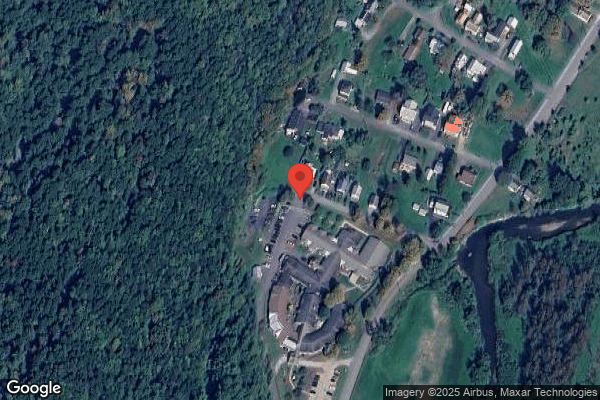

71 Richardson Avenue, Northfield, VT 05663 (802) 485-3161
Non profit - Corporation 50 Beds Independent Data: November 2025
Trust Grade
70/100
#16 of 33 in VT
Last Inspection: May 2025

Inspected within the last 6 months. Data reflects current conditions.

Overview

Mayo Healthcare Inc. in Northfield, Vermont, has a Trust Grade of B, which indicates it is a good choice for families seeking care, as it falls solidly within the good range of quality. It ranks #16 out of 33 facilities in Vermont, placing it in the top half, and #1 out of 3 in Washington County, meaning there are only two local options, and this one is the best. The facility is improving, with issues decreasing from 6 in 2024 to just 2 in 2025. Staffing is a strength here, as evidenced by a 0% turnover rate, which is well below the Vermont average of 59%, and the facility offers more RN coverage than 75% of state facilities, ensuring residents receive attentive care. However, the facility has faced some challenges, including a concern over food safety practices with expired items found in the kitchen and lapses in infection control protocols, which could pose risks to resident health. Overall, while there are notable strengths, families should be aware of these weaknesses as they consider their options.
Trust Score
B
70/100
In Vermont
#16/33
Top 48%
Safety Record
Low Risk
No red flags
Inspections
Getting Better
6 → 2 violations
Staff Stability
○ Average
Turnover data not reported for this facility.
Penalties
✓ Good
No fines on record. Clean compliance history, better than most Vermont facilities.
Skilled Nurses
✓ Good
Each resident gets 63 minutes of Registered Nurse (RN) attention daily — more than 97% of Vermont nursing homes. RNs are the most trained staff who catch health problems before they become serious.
Violations
⚠ Watch
12 deficiencies on record. Higher than average. Multiple issues found across inspections.
★★★☆☆
3.0
Overall Rating
★★★☆☆
3.0
Staff Levels
★☆☆☆☆
1.0
Care Quality
★★★★☆
4.0
Inspection Score
Stable
2024: 6 issues
2025: 2 issues

The Good

  • Full Sprinkler Coverage · Fire safety systems throughout facility
  • No fines on record

Facility shows strength in fire safety.

The Bad

3-Star Overall Rating

Near Vermont average (2.8)

Meets federal standards, typical of most facilities

The Ugly 12 deficiencies on record

May 2025 2 deficiencies
CONCERN (F)

Potential for Harm - no one hurt, but risky conditions existed

Food Safety (Tag F0812)

Could have caused harm · This affected most or all residents

Based on observation and interview, it was determined that the facility failed to store food in accordance with professional standards for food service safety and failed to maintain a sanitary kitchen...

Read full inspector narrative →
Based on observation and interview, it was determined that the facility failed to store food in accordance with professional standards for food service safety and failed to maintain a sanitary kitchen. Findings include: Per observation of the kitchen on 5/5/25 at 6:20 AM, the floor was observed to be coated with a sticky substance. There was a food serving station that had dried peas and onions on it. Per observation of the walk-in freezer on 5/5/25 at approximately 6:30 AM, a container of frozen pesto was dated to be used by 4/28/25. Per observation of the walk-in refrigerator there was a bag of pepperoni that had a use by date of 5/4/25. There was a bowl of chocolate pudding that had an expiration date of 5/4/25. There was a hot dog placed on a plate that had an expiration date of 5/3/25. Per observation of dry kitchen area there was a bowl of granola that had an expiration date of 4/25/25. There was a bowl of chocolate chips with a use by date of 4/30/25. An interview was conducted with Kitchen Staff Member #1 on 5/5/25 at 6:46 AM. Kitchen Staff Member #1 confirmed these items had expired and were not disposed. Kitchen Staff Member #1 confirmed that the floor of the kitchen was sticky and that the serving tray had food debris on it from the previous day's meal. Kitchen staff member #1 stated, I use this [serving station] for breakfast.
CONCERN (F)

Potential for Harm - no one hurt, but risky conditions existed

Staffing Data (Tag F0851)

Could have caused harm · This affected most or all residents

Based on interview and record review the facility failed to meet the requirement for Payroll Based Journal (PBJ) data submission for the first quarter of the facility's fiscal year 2025, October-Decem...

Read full inspector narrative →
Based on interview and record review the facility failed to meet the requirement for Payroll Based Journal (PBJ) data submission for the first quarter of the facility's fiscal year 2025, October-December 2024. Findings include: Per record review of the PBJ Data Report for the first quarter of the fiscal year 2025 provided by Centers for Medicare & Medicaid Services (CMS), the report identifies areas of concern specific to the facility. The concerns reported for the first quarter of the 2025 fiscal year were: failure to submit data for the first quarter, a one-star rating for staffing, excessively low weekend staffing, no registered nurse hours, and failure to have Licensed Nursing Coverage 24 Hours/Day. During an interview on 5/7/25 at 10:03 AM with the facility Administrator and the Director of Nursing, it was confirmed that the Payroll Based Journal data was not submitted for the first quarter of the facility's fiscal year. The facility was made aware of the error in February 2025 when they discovered, online, that their Nurse rating had dropped to one and that facility's PBJ was not being reported. They contacted the new, current payroll system administrator to correct the data submission problem; the new systems' team was not successful in correcting the data submission problem. During the time of changing over to a new payroll system, the facility was keeping a log of all staffing hours and schedules They continue to keep this log. The data submission problem was reviewed by the Quality Assurance/Quality Improvement team and was reported to the Board. The Board approved the request to change back to the previous payroll system. The facility switched back to their previous payroll system and has had no further issues with noncompliance for Payroll Based Journal data submissions. Corrective action was completed by 2/25/25. Based on the facility submitting evidence of corrective action, the findings are cited as past noncompliance.
Mar 2024 6 deficiencies
CONCERN (D)

Potential for Harm - no one hurt, but risky conditions existed

Deficiency F0578 (Tag F0578)

Could have caused harm · This affected 1 resident

**NOTE- TERMS IN BRACKETS HAVE BEEN EDITED TO PROTECT CONFIDENTIALITY** Based on record reviews and interviews, the facility failed to clarify code status and review care plan instructions and determi...

Read full inspector narrative →
**NOTE- TERMS IN BRACKETS HAVE BEEN EDITED TO PROTECT CONFIDENTIALITY** Based on record reviews and interviews, the facility failed to clarify code status and review care plan instructions and determine if the resident wishes to change or continue these instructions related to Advanced Directives, for 1 of 25 Residents in the sample. (Resident #15). Findings include: Per a record review, Resident #15 has resided at the facility since 12/13/2016 with the following diagnoses: Hemiplegia and Hemiparesis (A severe or complete loss of strength or paralysis on one side of the body) following a cerebral infarction (a stroke) and Dysphagia (Difficulty swallowing) related to the cerebral infarction. Another record review indicates a COLST (clinician orders for life-sustaining treatment) form that is dated 2/13/24 and signed by the Nurse Practitioner (NP) and Resident# 15's Power of Attorney (POA). The form indicates that the resident should be resuscitated, including chest compression, intubation, mechanical ventilation, defibrillation, and transfer to the hospital. Another record review reveals the Medication Administration Record (MAR) indicates Resident #15 is a Full Code (If the heart stops beating and/or breathing stops, all resuscitation procedures will be implemented to sustain life) A record review of Resident 15's care plan revealed the following entry: [name] has an advance directive of DNR/DNI (Do not resuscitate/Do not intubate), with an entry date of 1/24/24. Per an interview with the Unit Manager on 3/13/24 at 8:51 AM, s/he confirmed there is a discrepancy in the medical record; the care plan does not match the COLST or the MAR, s/he indicated Resident # 15 had a procedure that required her to have a code status that allowed resuscitation, and the correct status was not updated to reflect the resident's wishes of DNR/DNI.
CONCERN (D)

Potential for Harm - no one hurt, but risky conditions existed

Deficiency F0660 (Tag F0660)

Could have caused harm · This affected 1 resident

**NOTE- TERMS IN BRACKETS HAVE BEEN EDITED TO PROTECT CONFIDENTIALITY** Based upon interview and record review, the facility failed to develop a discharge care plan to identify goals and needs prior t...

Read full inspector narrative →
**NOTE- TERMS IN BRACKETS HAVE BEEN EDITED TO PROTECT CONFIDENTIALITY** Based upon interview and record review, the facility failed to develop a discharge care plan to identify goals and needs prior to discharge for 1 resident [Res.#40] of 4 residents reviewed. Findings include: Per review of Physician notes dated 12/5/23, Res. #40 was admitted to Mayo initially after a fall and femur fracture in September. [S/he] was discharged home in early November. A few days later [s/he] had a fall and went back to the Emergency Department. Res. #40 was admitted back to Mayo on 11/17/23, where the physician noted Res.#40 is making some progress with physical therapy and plan is to return home. Review of Res.#40's medical record after their admission on [DATE] reveals no documentation involving the resident and/or a resident representative in the development of the discharge plan. Review of Res.#40's Care Plan reveals no mention of discharge or that the discharge needs of the resident were identified and the resident or representative informed of a final plan. Per review of Res. #40's medical record, there are no Social Services notes after h/her admission to the facility on [DATE]. Res.#40 was discharged from the facility on 12/20/23. Physician notes prior to the resident's discharge recommend on-going Physical Therapy after discharge, along with blood pressure monitoring related to h/her recent hospitalization due to blood pressure issues, and additional support at home for safety concerns related to the resident's diagnosis of Alzheimer's dementia with mood disturbance. Review of Res.#40's discharge summary contains only a referral to a local Home Health Agency made on the day of discharge, with no listing of the recommended services in place. Further review of the Discharge Summary reveals Occupational Therapy recommendations for meals on wheels and a 'Life Alert' telecommunication system. The Discharge Summary lists meals on wheels, Lifeline, as well as the physician's recommendation for Outpatient Therapy as support services available, with none marked as arranged prior to discharge. An interview was conducted with the Director of Nursing [DON] on 3/13/24 at 9:59 AM. The DON reported they would investigate Res.#40's Care Plan regarding discharge planning. The DON was unable to produce any documentation that the discharge needs of the resident were identified and a discharge plan developed to address the resident's discharge goals and needs.
CONCERN (E)

Potential for Harm - no one hurt, but risky conditions existed

Comprehensive Care Plan (Tag F0656)

Could have caused harm · This affected multiple residents

3. Per an interview on 3/12/23 at approximately 9:00 AM, Resident #17's family indicated Resident# 17 had been refusing food and medications for several days. The decision was made to start end-of-lif...

Read full inspector narrative →
3. Per an interview on 3/12/23 at approximately 9:00 AM, Resident #17's family indicated Resident# 17 had been refusing food and medications for several days. The decision was made to start end-of-life care. The family did not want complete Hospice care; rather, they felt the facility could provide adequate pain control and allow the family to be present. The resident was moved to a designated space that the facility provided for end-of-life care. Per record review, Resident #17 has a diagnosis of Alzheimer's Dementia and chronic pain related to spinal stenosis (when the space inside the backbone is too small, putting pressure on the spinal cord and nerves that travel through the spine). A progress note written by the Nurse Practitioner (NP) on 3/4/24 reveals a discussion with Resident 17's family regarding the recent decline and the family's decision to move Resident #17 to end-of-life care. A record review of Resident#17's care plan reveals no evidence of a comprehensive care plan developed specifically for end-of-life care. Per an interview on 3/12/24 at approximately 1:30 PM with the Unit Manager, a Licensed Practical Nurse (LPN), when asked about the care plan, s/he indicated the nursing staff knew how to care for the resident because [s/he] was in that room. Per an interview with the Director of Nursing on 3/13/24 at approximately 1:10 PM, s/he confirmed that the care plan was not developed to reflect Resident#17's care change. S/he agreed the care plan should have been updated to reflect the resident's person-centered goals at the end of life. 2. Per Record review, Resident #31 has a provider order started on 3/5/24 for Stage 2 (an open wound) sacral region (the area at the top of the buttocks); Cleanse with soap and water, pat dry apply collagen powder (a treatment used to encourage healing) to 2 open areas, and cover with Mepliex foam border dressing every day shift every 3 days for stage 2 wound care and as need for soiled or dislodged dressing. A progress note written by the Nurse Practitioner (NP) on 3/4/24 reveals there are 2 small round open areas. The note indicates these are stage 2 pressure ulcers with 100% epithelial tissue which is a thin, continuous, protective layer of compactly packed cells. The note includes measurements of 1.62 centimeters (cm) in length and 0.61 cm in width and scant depth. Further record review reveals a skin and wound evaluation dated 3/4/24 related to the stage 2 pressure ulcers, including the above wound measurements. Per an interview with the Unit Manager Licensed Practical Nurse on 3/13/24 at 12:22 p.m. s/he confirms that there was not a care plan for Resident# 31 pressure ulcers, the care plan was added after the facility was made aware that there was not one in place earlier this morning 3/13/24. Based on observation, interview, and record review the facility failed to ensure that there was a care plan in place related to behaviors for 1 of the 3 sampled residents (#28), related to pressure ulcers for 1 of 4 sampled residents (Resident #31), and related to end-of-life care for 1 of 2 sampled residents (Resident #17). findings included: 1. Per observation of an interaction on 3/11/24 at approximately 12:00 PM, Resident #28 was overheard saying I'm going to deck you! to a nurse while staff attempted to draw blood from them. Per observation of an interaction on 3/12/24 at approximately 11:00 AM, Resident #28 was observed making a gesture toward a nurse giving them medications as if they would dump water on the nurse. Per record review, Resident #28 has exhibited a pattern of aggressive and labile behaviors since their initial admission to the facility on 9/13/2023. The following progress notes were found in Resident #28's chart: - 11/3/2023 15:14 Activity Note When writer was assisting [Resident #28] to make a phone call [Resident #28] hollered several times to 'get that Goddamn mask of my face' she also hollered that the operator knew where to find the 'goddamn number' [Resident #28] flailed [their] arms around in a way that made me leave to diffuse the situation. - 11/17/2023 13:42 Activity Note Activity Assistant was playing cards with [Resident #28] and another resident. [Resident #28] started to get disruptive with activity assistant, grabbing at her hands and cards. [Resident #28] used profanity and called the activity assistant names, activity assistant stopped the game and had to walk away to give [Resident #28] space. Social worker was made aware of the situation. - 11/21/2023 05:01 Behavior Note Resident was heard slamming the door over and over and screaming for help, when this scribe went to resident's door, bottom half was closed and resident stated open this damn door before I break it down door opened and resident sitting in wheelchair without [their] oxygen at this time. Resident was asked to put oxygen back on where [they] became agitated and stated 'when will you people understand, i don't need to wear that all the time'. - 12/3/2023 02:43 Nursing/Health Status Note . Resident hitting [their] bed and flailing [their] arms and body around and grabbing at this writer . - 1/25/2024 15:54 Activity Note [Resident #28] was in the hallway stating that she was very mad, using profanity, that [their] new roommate has 'a lot of junk in the room' . [Resident #28] was raising [their] voice in anger about having a roommate. - 2/11/2024 16:05 Behavior Note [Resident #28] was playing cards with other resident, where [they] began to yell at [other] resident saying [they weren't] smart enough to be playing so [they] shouldn't play anymore. Per interview on 3/12/2024 at approximately 12:00 PM, an LPN who works with Resident #28 regularly stated that Resident #28 generally has a gruff and dry sense of humor, but at times can smack and grab staff when upset. When they first started working with Resident #28, they needed a lot of help from other staff who knew Resident #28 well in order to learn how to effectively manage Resident #28's behaviors. Per review of Resident #28's care plan, Resident #28 has no care plan focus or care plan interventions that address Resident #28's behaviors or what interventions can be used by staff when Resident #28 exhibits maladaptive behaviors. Per interview on 3/13/24 at approximately 1:00 PM, The Director of Nursing confirmed that Resident #28 does not have a care plan for behaviors despite exhibiting a pattern of behaviors.
CONCERN (E)

Potential for Harm - no one hurt, but risky conditions existed

Deficiency F0712 (Tag F0712)

Could have caused harm · This affected multiple residents

**NOTE- TERMS IN BRACKETS HAVE BEEN EDITED TO PROTECT CONFIDENTIALITY** Based on staff interview and record review, the facility failed to ensure that every resident is seen by a provider, who assesse...

Read full inspector narrative →
**NOTE- TERMS IN BRACKETS HAVE BEEN EDITED TO PROTECT CONFIDENTIALITY** Based on staff interview and record review, the facility failed to ensure that every resident is seen by a provider, who assesses the residents' total program of care, once every 30 days for the first 90 days after admission and then every 60 days thereafter for 6 of 25 sampled residents (Residents #28, #38, #30, #31, #29, and #22). Findings include: 1. Per record review, Resident #28 was admitted on [DATE]. Records of physician visits, during which they assessed the Resident's total program of care, were found for the dates of 9/29/23 and 3/10/24. A Nurse Practitioner note is also present with a date of 1/2/24. There were no other physician visit notes of this type in Resident #28's record. Per interview on 3/12/24 at approximately 1:45 PM, The Unit Manager confirmed that there were not enough provider visit notes in Resident #28's chart to meet the regulation. 2. Per record review, Resident #38 was admitted on [DATE]. No physician notes that contained a review of the total program of care could be located in Resident #38's record. 3. Per record review, Resident #30 was admitted on [DATE]. Only one physician/provider note that contained a review of the total program of care could be located in the chart on 1/3/24. 4. Per record review, Resident #31 was admitted on [DATE]. No physician notes that contained a review of the total program of care could be located in Resident #31's record. 5. Per record review, Resident #29 was admitted on [DATE]. No physician notes that contained a review of the total program of care could be located in Resident #29's record. 6. Per record review, Resident #22 was admitted on [DATE]. No physician notes that contained a review of the total program of care could be located in Resident #22's record. Per interview on 3/13/24 at approximately 1:00 PM, the Administrator confirmed that resident records did not reflect the appropriate amount of physician/provider visit notes that include a review of the total program of care for each Resident.
CONCERN (E) 📢 Someone Reported This

A family member, employee, or ombudsman was alarmed enough to file a formal complaint

Potential for Harm - no one hurt, but risky conditions existed

Deficiency F0761 (Tag F0761)

Could have caused harm · This affected multiple residents

Based on observation, interview, and record review, the facility failed to ensure that all drugs and biologicals are stored and labeled according to accepted professional principles for expiration dat...

Read full inspector narrative →
Based on observation, interview, and record review, the facility failed to ensure that all drugs and biologicals are stored and labeled according to accepted professional principles for expiration dates. Findings include: 1. Per observation of medications stored in the Turkey Hill Medication cart on 3/11/24 at approximately 2:00 PM, the following products were found with expiration date concerns: - A Lantus Solostar long-acting insulin pen for a resident was opened with no date of opening specified on the pen or pen bag. The insulin pen was not full and had been used for an undetermined number of days. The manufacturer specifies that the remaining insulin be discarded 28 days after opening. - A bottle of Latanoprost eye drops for a resident was opened with no date of opening specified on the bottle or the packaging. The packaging from the manufacturer specified that the remaining solution was to be discarded within 60 days of opening. - A bottle of Deep Sea Nasal Spray for a resident was labeled with an expiration date of 1/11/2024 per the manufacturer. - A bottle of Aspirin for multi-resident use had a manufacturer's expiration date of January 2024. - A package of Benadryl for multi-resident use had a manufacturer's expiration date of December 2023. - A box of safety lancets used for resident Point of Care Testing was labeled with an expiration date in the year 2022. Per interview on 3/11/24 at approximately 2:15 PM, the Unit Manager confirmed that the above products were not stored according to expiration dates and/or appropriately labeled with expiration dates. Per record review, the facility policy titled Storage of Medication states, Insulin products should be stored in the refrigerator until opened, Note the date on the label for insulin vials and pens when first used. The policy also states, Outdated, contaminated, discontinued, or deteriorated medications and those in containers that are cracked, soiled, or without secure closures are immediately removed from stock .
CONCERN (F)

Potential for Harm - no one hurt, but risky conditions existed

Infection Control (Tag F0880)

Could have caused harm · This affected most or all residents

**NOTE- TERMS IN BRACKETS HAVE BEEN EDITED TO PROTECT CONFIDENTIALITY** Per observation, interview, and record review, the facility failed to maintain an Infection, Prevention, and Control Program (IP...

Read full inspector narrative →
**NOTE- TERMS IN BRACKETS HAVE BEEN EDITED TO PROTECT CONFIDENTIALITY** Per observation, interview, and record review, the facility failed to maintain an Infection, Prevention, and Control Program (IPCP) that reduces the risk of Residents contracting communicable diseases to the greatest extent possible as evidenced by an IPCP that is not updated annually, a lack of transmission-based precaution signage, and a lack of a water management program for Legionella. Findings include: 1. Per review of the provided IPCP polices and procedures, all policies and procedures had a last revised date in the year 2022. Per interview on 3/13/24 at approximately 12:00 PM, the Administrator confirmed that the facility's IPCP has not been reviewed or updated within the last year as required. 2. Per observation on 3/12/24 at approximately 11:00 AM, there was a Personal Protective Equipment (PPE) cart outside of Resident #3's room. A sign on the door said check with nurse prior to entering and another sign said wash hands with soap and water. A housekeeper inside the resident room is wearing PPE (gown, gloves). There is no signage on the door to indicate which type of transmission-based precautions staff/visitors should use or what PPE to use in the room. Per observation on 3/13/24 at approximately 9:00 AM, Resident #3's room had no change in signage. Per record review, Resident #3 is currently diagnosed with Clostridioides Difficile (a gastrointestinal infection that is very contagious and that resists common treatments) and contact precautions are to be used when in the room or providing Resident #3 with care. Per interview on 3/13/24 at approximately 1:30 PM, the Director of Nursing confirmed that the proper signage to indicate which PPE items to use in Resident #3's room was missing. 3. Per interview on 3/13/24 at approximately 1:20 PM, the facility Maintenance Manager stated that they have been in the role since the summer of 2023. When they came on board, they decided to test the water for legionella at 16 previously identified risk sites within their water system. In August 2023, two of these tests came back positive for Legionella. The access points at the positive sites were shut off and disconnected. All other areas that had not tested positive for legionella remained accessible to staff and residents. The Maintenance Director confirmed that there were no additional measures implemented to treat the water system. The Maintenance Director stated that the facility uses water from the town's Department of Public Works. The Maintenance Director stated that he believes that the town water is chlorinated by the Department of Public Works, but confirms that the facility does not monitor the town's chlorination levels or testing and cannot validate that the town's mitigation measures are within acceptable parameters to prevent growth of Legionella. They were not aware of the facility having any formal Water Management Program or policy. Per review of the facility policy titled Water Management Program, the policy states the following: II) [The Facility's] building water system description includes: a) Water originates from the Town of Northfield's Department of Public Works b) Testing and treatment (chlorination) is performed at the DPW facility . The policy also describes the following procedure in the event of legionella in the water system: PROCEDURE: 1. Upon notification that a resident has been diagnosed with Legionnaires' disease, notify the [NAME] Department of Health for direction. 2. If [The facility]'s water system is suspected as having Legionella, the [NAME] Department of Health will work with Mayo to collect samples of water for them to test. (Typically, test results take 10 days). 3. Notify DLP (Division of Licensing and Protection) 4. Until test results are available the following steps will be taken: a. Restrict bathing in all century tubs and showers b. Restrict use of all ice machines; empty all ice machines and discard all ice stock from the machine. c. Ask the Dept of Health if we should move to using bottled water versus tap water 5. Call [contracted services] to schedule an eradication of the building's water system. If possible, schedule this in advance of the results on a contingency basis. Here is a sample process that is followed when eradication) occurs. When scheduled, this should be reviewed and agreed on with the firm doing the eradication. In addition, all managers and staff need to be alerted in advance. The evening of the eradication: 1. 5:00pm: [Facility] Maintenance Staff, including director, are scheduled to work overnight. The maintenance director increases water temperature on water heaters to 170 degrees and bypasses the mixing valve. All water use in building is secured except for toileting. To secure the water supply, we post signs over all faucets and on any equipment to note use the water. 2. At the same time, the technician from the eradication group arrives and begin: preparations, installing a chemical feed pump to the main infeed of town water. 3. 5:30pm -The eradication group begins pumping a 12.5% sodium hypochlorite solution (or equivalent) into the water infeed. [Facility] Maintenance staff proceed to run water at the end of each water branch through the building until chlorine is detected in both hot and cold water lines. Water is run at preceding fixtures to ensure chlorine is present at all points of the branches. Chlorine levels were monitored by serial dilution method as instructed by the eradication group. 4. 6:00pm-5:00am - Every hour on the hour, Maintenance Staff run water at all fixtures for 2 minutes introducing a fresh chlorine solution into the system at all points. The eradication group continues to monitor solution injection and running water in fixtures and plumbing in basement. 5. Next Morning, 5:30 am - The eradication group stops chlorine injection. [Facility] Maintenance Staff begin flushing the water system, ensuring there is less than .1 mg/l of chlorine at all fixtures using serial dilution method. 6. 6:30 am - Maintenance Staff adjust water heaters down to normal temperature of 160 degrees and mixing valve adjusted to provide normal temperature of 110 degrees. Water use is returned to normal. 7. 3:00 pm - Maintenance Director collects water samples and swabs from all fixtures/areas that tested positive at earlier testing done by [NAME] Department of Health. Samples are then driven to lab for testing. Lab testing must be arranged in advance.
Oct 2023 1 deficiency
CONCERN (D) 📢 Someone Reported This

A family member, employee, or ombudsman was alarmed enough to file a formal complaint

Potential for Harm - no one hurt, but risky conditions existed

Resident Rights (Tag F0550)

Could have caused harm · This affected 1 resident

Based on staff interviews and record review, the facility failed to ensure 2 of 2 applicable residents (Residents #1 & #2) were treated with respect and dignity. Findings include: Per record review an...

Read full inspector narrative →
Based on staff interviews and record review, the facility failed to ensure 2 of 2 applicable residents (Residents #1 & #2) were treated with respect and dignity. Findings include: Per record review and confirmed via interview, a Licensed Nursing Aide (LNA) verbally abused Residents #1 & #2 on 10/17/23. Per review of the facility's own investigation and confirmed by witness statements, a LNA told Resident #1 to shut up and called Resident #2 a fool. These incidents were done while other staff members were present, and the remarks were heard by these staff members. Staff did intervene by speaking with the offending LNA and telling them this was inappropriate behavior. It is not known if the residents heard these remarks, but because of their cognitive status, they could not recall the incident. Both residents remain at their baseline, with no negative outcomes. When the LNA was interviewed by the Administrator, the LNA denied saying shut up but did confirm that s/he called the resident a fool after the resident called them a fool. However, they said it was done so in a joking manner and not in a mean way. Based on corrective actions completed prior to the onsite, this citation is designated as past non-compliance. The following actions were completed by the facility: 1. A report was made to The Agency as required on 10/18/23 and notification was made to Adult Protective Services (APS) on 10/18/23. 2. The LNA was terminated before their shift started on 10/18/23. 3. On 10/18/23, residents involved were assessed by a Registered Nurse (RN) and residents were determined to be at their baseline. 4. On 10/19/23 the Advance Practice Registered Nurse (APRN) assessed the residents in question and no negative outcomes were found. 5. Notifications were made to The Board of Nursing (BON) and the LNA's school, as s/he is still in high school and became an LNA through a technical center program at their high school. 6. Education regarding abuse prohibition, abuse reporting and dementia training was provided to staff on 10/18/23. 7. On 10/18/23 a discussion was held with the leadership team, and it will be brought forth at the next QAPI meeting on 10/31/23. 8. The facility interviewed 6 additional residents to determine if they had ever had a negative interaction with any staff member and whether or not they felt safe in the facility. All indicated they were always treated with dignity and respect and felt safe.
Feb 2023 3 deficiencies
CONCERN (F)

Potential for Harm - no one hurt, but risky conditions existed

Food Safety (Tag F0812)

Could have caused harm · This affected most or all residents

Based on record review, observation and interview the facility failed to clean dishes and utensils under sanitary conditions as evidenced by: A review of the dish machine temperature record from Dece...

Read full inspector narrative →
Based on record review, observation and interview the facility failed to clean dishes and utensils under sanitary conditions as evidenced by: A review of the dish machine temperature record from December 6, 2022 through February 6, 2023, reveals that on 33 occasions, the wash temperature was recorded as less than 150 degrees. Per observation on February 7, 2023, at 2:15 pm the dishwasher was viewed and noted to be a one-level machine with 2 hoses connected to it, one of which was connected to a container marked Heavy Duty Plus Dish Machine Detergent, the second connected to a container labeled Special Rinse Aid, there are no additional sanitizing agents. The Dining Manager provided a demonstration by running the machine twice, the first temperature reading was 146 degrees the second time it was 147 degrees. There is a sticker located on the side of the machine labeled Champion Industries Wash Temperature Minimum 150 degrees. On February 7, 2023, at 2:30 the Dining Manager was interviewed and confirmed the temperatures recorded are below the recommended temperature required to sanitize the dishes and utensils.
MINOR (B)

Minor Issue - procedural, no safety impact

Transfer Notice (Tag F0623)

Minor procedural issue · This affected multiple residents

**NOTE- TERMS IN BRACKETS HAVE BEEN EDITED TO PROTECT CONFIDENTIALITY** 2. Resident #24 was transfered to an acute care hospital on [DATE] and 11/17/22. There is no indication in Resident #24's clinic...

Read full inspector narrative →
**NOTE- TERMS IN BRACKETS HAVE BEEN EDITED TO PROTECT CONFIDENTIALITY** 2. Resident #24 was transfered to an acute care hospital on [DATE] and 11/17/22. There is no indication in Resident #24's clinical record that staff notified the resident and/or representative in writing as required by regulation. On 2/7/23 at 1:02 PM, the Director of Nursing confirmed neither the Notice of Discharge or bed hold notice was provided for Resident #24's 10/21/22 and 11/17/22 discharge to the hospital as required by regulation. Based on staff interview and record review, the facility failed to notify the 2 applicable residents (Residents #16 and #24) and the resident's representative(s) of a transfer or discharge. Findings include: 1. Resident #16 was transferred to an acute care hospital on [DATE]. There is no indication in the clinical record that staff notified the resident and/or representative regarding transfer or discharge in writing as required by regulation. On 02/07/23 at 01:07 PM, the Director Of Nursing confirmed neither Notice of Discharge or bed hold notice was provided for Resident #16's 10/13/22 discharge to the hospital as required by regulation.
MINOR (B)

Minor Issue - procedural, no safety impact

Deficiency F0625 (Tag F0625)

Minor procedural issue · This affected multiple residents

**NOTE- TERMS IN BRACKETS HAVE BEEN EDITED TO PROTECT CONFIDENTIALITY** 2. Resident #24 was transfered to an acute care hospital on [DATE] and 11/17/22. There is no indication in Residnet #24's clinic...

Read full inspector narrative →
**NOTE- TERMS IN BRACKETS HAVE BEEN EDITED TO PROTECT CONFIDENTIALITY** 2. Resident #24 was transfered to an acute care hospital on [DATE] and 11/17/22. There is no indication in Residnet #24's clinical record that staff notified the resident and/or representative in writing as required by regulation. On 2/7/23 at 1:02 PM, the Director of Nursing confirmed neither the Notice of Discharge or bed hold notice was provided for Resident #24's 10/21/22 or 11/17/22 discharge to the hospital as required by regulation. Based on staff interview and record review, the facility failed to provide a written bed-hold notice upon transfer to 2 applicable residents (Residents #16 and #24) and the resident's representative(s). Findings include: 1. Resident # 16 was transferred to an acute care hospital on [DATE]. There is no indication in the clinical record that staff notified the resident and/or representative regarding bed holds in writing as required by regulation. On 02/07/23 at 01:07 PM, the Director Of Nursing confirmed neither Notice of Discharge or bed hold notice was provided for Resident # 16's 10/13/22 discharge to the hospital as required by regulation.
Understanding Severity Codes (click to expand)
Life-Threatening (Immediate Jeopardy)
J - Isolated K - Pattern L - Widespread
Actual Harm
G - Isolated H - Pattern I - Widespread
Potential for Harm
D - Isolated E - Pattern F - Widespread
No Harm (Minor)
A - Isolated B - Pattern C - Widespread

Questions to Ask on Your Visit

  • "Can I speak with families of current residents?"
  • "What's your RN coverage like on weekends and overnight?"

Our Honest Assessment

Strengths
  • • No major safety red flags. No abuse findings, life-threatening violations, or SFF status.
  • • No fines on record. Clean compliance history, better than most Vermont facilities.
Concerns
  • • 12 deficiencies on record. Higher than average. Multiple issues found across inspections.
Bottom line: Mixed indicators with Trust Score of 70/100. Visit in person and ask pointed questions.

About This Facility

What is Mayo Healthcare Inc.'s CMS Rating?

CMS assigns Mayo Healthcare Inc. an overall rating of 3 out of 5 stars, which is considered average nationally. Within Vermont, this rating places the facility higher than 99% of the state's 100 nursing homes. This mid-range rating indicates the facility meets federal standards but may have areas for improvement.

How is Mayo Healthcare Inc. Staffed?

CMS rates Mayo Healthcare Inc.'s staffing level at 3 out of 5 stars, which is average compared to other nursing homes.

What Have Inspectors Found at Mayo Healthcare Inc.?

State health inspectors documented 12 deficiencies at Mayo Healthcare Inc. during 2023 to 2025. These included: 10 with potential for harm and 2 minor or isolated issues.

Who Owns and Operates Mayo Healthcare Inc.?

Mayo Healthcare Inc. is owned by a non-profit organization. Non-profit facilities reinvest revenue into operations rather than distributing to shareholders. The facility operates independently rather than as part of a larger chain. With 50 certified beds and approximately 42 residents (about 84% occupancy), it is a smaller facility located in Northfield, Vermont.

How Does Mayo Healthcare Inc. Compare to Other Vermont Nursing Homes?

Compared to the 100 nursing homes in Vermont, Mayo Healthcare Inc.'s overall rating (3 stars) is above the state average of 2.8 and health inspection rating (4 stars) is above the national benchmark.

What Should Families Ask When Visiting Mayo Healthcare Inc.?

Based on this facility's data, families visiting should ask: "Can I visit during a mealtime to observe dining assistance and food quality?" "How do you handle medical emergencies, and what is your hospital transfer rate?" "Can I speak with family members of current residents about their experience?"

Is Mayo Healthcare Inc. Safe?

Based on CMS inspection data, Mayo Healthcare Inc. has a clean safety record: no substantiated abuse findings (meaning no confirmed cases of resident harm), no Immediate Jeopardy citations (the most serious violation level indicating risk of serious injury or death), and is not on the Special Focus Facility watch list (a federal program monitoring the lowest-performing 1% of nursing homes). The facility has a 3-star overall rating and ranks #1 of 100 nursing homes in Vermont. While no facility is perfect, families should still ask about staff-to-resident ratios and recent inspection results during their visit.

Do Nurses at Mayo Healthcare Inc. Stick Around?

Mayo Healthcare Inc. has not reported staff turnover data to CMS. Staff turnover matters because consistent caregivers learn residents' individual needs, medications, and preferences. When staff frequently change, this institutional knowledge is lost. Families should ask the facility directly about their staff retention rates and average employee tenure.

Was Mayo Healthcare Inc. Ever Fined?

Mayo Healthcare Inc. has no federal fines on record. CMS issues fines when nursing homes fail to meet care standards or don't correct problems found during inspections. The absence of fines suggests the facility has either maintained compliance or corrected any issues before penalties were assessed. This is a positive indicator, though families should still review recent inspection reports for the full picture.

Is Mayo Healthcare Inc. on Any Federal Watch List?

Mayo Healthcare Inc. is not on any federal watch list. The most significant is the Special Focus Facility (SFF) program, which identifies the bottom 1% of nursing homes nationally based on persistent, serious quality problems. Not being on this list means the facility has avoided the pattern of deficiencies that triggers enhanced federal oversight. This is a positive indicator, though families should still review the facility's inspection history directly.