THE LAURELS OF BON AIR

9101 BON AIR CROSSINGS DRIVE, BON AIR, VA 23235 (804) 521-9980
For profit - Limited Liability company 124 Beds CIENA HEALTHCARE/LAUREL HEALTH CARE Data: November 2025
Trust Grade
45/100
#225 of 285 in VA
Last Inspection: June 2024

Within standard 12-15 month inspection cycle. Federal law requires annual inspections.

Overview

The Laurels of Bon Air has received a Trust Grade of D, indicating below-average performance with some significant concerns. It ranks #225 out of 285 facilities in Virginia, placing it in the bottom half, and #3 out of 6 in Chesterfield County, meaning only two local options are better. Unfortunately, the facility is worsening, with issues increasing from 4 in 2023 to 19 in 2024. Staffing is a concern, with a rating of 2 out of 5 stars and a turnover rate of 61%, which is higher than the Virginia average of 48%. While there have been no fines recorded, the facility has reported several critical incidents, including failing to implement care plans for residents, such as leaving a catheter bag hanging on the floor and not notifying a physician about missed medication doses for a resident. Overall, while there are no fines and some average RN coverage, the numerous issues and high turnover paint a troubling picture for potential residents and their families.

Trust Score
D
45/100
In Virginia
#225/285
Bottom 22%
Safety Record
Low Risk
No red flags
Inspections
Getting Worse
4 → 19 violations
Staff Stability
⚠ Watch
61% turnover. Above average. Higher turnover means staff may not know residents' routines.
Penalties
✓ Good
No fines on record. Clean compliance history, better than most Virginia facilities.
Skilled Nurses
○ Average
Each resident gets 34 minutes of Registered Nurse (RN) attention daily — about average for Virginia. RNs are the most trained staff who monitor for health changes.
Violations
⚠ Watch
65 deficiencies on record. Higher than average. Multiple issues found across inspections.
★★☆☆☆
2.0
Overall Rating
★★☆☆☆
2.0
Staff Levels
★★★☆☆
3.0
Care Quality
★★☆☆☆
2.0
Inspection Score
Stable
2023: 4 issues
2024: 19 issues

The Good

  • Full Sprinkler Coverage · Fire safety systems throughout facility
  • No fines on record

Facility shows strength in fire safety.

The Bad

2-Star Overall Rating

Below Virginia average (3.0)

Below average - review inspection findings carefully

Staff Turnover: 61%

15pts above Virginia avg (46%)

Frequent staff changes - ask about care continuity

Chain: CIENA HEALTHCARE/LAUREL HEALTH CARE

Part of a multi-facility chain

Ask about local staffing decisions and management

Staff turnover is elevated (61%)

13 points above Virginia average of 48%

The Ugly 65 deficiencies on record

Dec 2024 2 deficiencies
CONCERN (D) 📢 Someone Reported This

A family member, employee, or ombudsman was alarmed enough to file a formal complaint

Potential for Harm - no one hurt, but risky conditions existed

Quality of Care (Tag F0684)

Could have caused harm · This affected 1 resident

**NOTE- TERMS IN BRACKETS HAVE BEEN EDITED TO PROTECT CONFIDENTIALITY** 2. For Resident #11 (R11), the facility failed to initiate Coumadin (a blood thinner) in a timely manner. A review of R11's clin...

Read full inspector narrative →
**NOTE- TERMS IN BRACKETS HAVE BEEN EDITED TO PROTECT CONFIDENTIALITY** 2. For Resident #11 (R11), the facility failed to initiate Coumadin (a blood thinner) in a timely manner. A review of R11's clinical record revealed she was admitted to the facility on [DATE] at 5:33 p.m. R11's admitting diagnoses included a history of a heart valve replacement and atrial fibrillation (1). A review of R11's hospital discharge records revealed the following as part of a list of the resident's discharge medications: Warfarin (Coumadin) 5 mg (milligram) tab (tablet) .Daily dosage based on INR (2). A review of R11's provider's orders revealed no order for R11's Coumadin until 12/15/24, a delay of approximately 48 hours since the resident's previous dose. On 12/19/24 at 11:59 a.m., ASM (administrative staff member) #3, an attending physician, was interviewed. She stated when a resident is admitted , a facility nurse is responsible for entering the orders into the facility's electronic medical record software. She stated a second nurse (the unit manager or someone else) is responsible for reviewing the orders for accuracy. She stated the facility nurses use the discharge medication list sent with each resident from the hospital. She stated the facility nurses do not call her to verify orders for each resident prior to entering them into the computer and implementing them. She stated she is in the facility Mondays, Wednesdays, and Fridays to see residents, and she reviews medications and signs the orders at that time. She stated it is not a standard for the facility nurses to call her for the purpose of reconciling medications on admission. She stated she was aware that R11 was admitted on Friday, 12/13/24, but did not receive orders for Coumadin until 12/15/24. She stated this resident had just had heart surgery, and that without the daily Coumadin, the resident was at high risk of developing a blood clot. On 12/20/24 at 9:00 a.m., ASM #1, the administrator, ASM #2, the interim director of nursing, and ASM #5, the regional director of clinical services, were informed of these concerns. No additional information was provided prior to exit. References (1) Atrial fibrillation is one of the most common types of arrhythmias, which are irregular heart rhythms. Atrial fibrillation causes your heart to beat much faster than normal. Also, your heart's upper and lower chambers do not work together as they should. When this happens, the lower chambers do not fill completely or pump enough blood to your lungs and body. This can make you feel tired or dizzy, or you may notice heart palpitations or chest pain. Blood also pools in your heart, which increases your risk of forming clots and can leads to strokes or other complications. Atrial fibrillation can also occur without any signs or symptoms. Untreated fibrillation can lead to serious and even life-threatening complications. This information is taken from the website https://www.nhlbi.nih.gov/health-topics/atrial-fibrillation. (2) Prothrombin time (PT) and the associated international normalized ratio (INR) are routinely tested to assess the risk of bleeding or thrombosis and to monitor response to anticoagulant therapy in patients. This information is taken from the National Institutes of Health website https://www.ncbi.nlm.nih.gov/pmc/articles/PMC5569083/. 3. For Resident #9 (R9), the facility staff failed to initiate the monitoring of blood glucose or administration of insulin in a timely manner. A review of R9's clinical record revealed she was admitted [DATE] at 5:17 p.m. The resident was admitted with a diagnosis of diabetes. A review of R11's hospital discharge records revealed an order for short acting insulin to be given on a sliding scale, according to blood glucose monitoring levels. A review of R11's provider's orders revealed no order for R9's glucose monitoring or insulin administration until 12/15/24 at 7:30 a.m. On 12/19/24 at 9:15 a.m., LPN (licensed practical nurse) #1, a unit manager, was interviewed. She stated the admitting nurse needs to make sure the medication list provided from the hospital is actually the discharge medications (not a home medication list). She stated the nurse should call the provider for the purpose of reconciling the medications, and to make certain that the facility provider wants all the medications on the discharge list. She stated the facility nurses enter the medication orders in the computer, and the provider reviews the orders the next day. She stated sometimes the admitting nurses are extremely busy and cannot reach the provider right away. She stated any order clarifications are listed in a book which the provider reviews on their next visit. She stated medication reconciliation with the facility provider should happen as soon as the resident gets to the building. On 12/19/24 at 11:59 a.m., ASM (administrative staff member) #3, an attending physician, was interviewed. She stated when a resident is admitted , a facility nurse is responsible for entering the orders into the facility's electronic medical record software. She stated a second nurse (the unit manager or someone else) is responsible for reviewing the orders for accuracy. She stated the facility nurses use the discharge medication list sent with each resident from the hospital. She stated the facility nurses do not call her to verify orders for each resident prior to entering them into the computer and implementing them. She stated she is in the facility Mondays, Wednesdays, and Fridays to see residents, and she reviews medications and signs the orders at that time. She stated it is not a standard for the facility nurses to call her for the purpose of reconciling medications on admission. She stated if a resident has been getting insulin in the hospital, they should have blood glucose levels checked at least twice a day, and as much as four times a day, depending on the resident's condition. No additional information was provided prior to exit. Based on staff interview, facility document review, and clinical record review, the facility staff failed to provide care and services to maintain residents' high level of well-being for three of 14 residents in the survey sample, Residents #4, #11, and #9. The findings include: 1. For Resident #4 (R4), the facility staff failed to verify and transcribe physician's orders in a timely manner upon admission. This resulted in a failure to initiate ceftriaxone (an antibiotic), insulin (used to treat diabetes), and blood sugar monitoring in a timely manner. A review of R4's clinical record revealed the resident was admitted to the facility on [DATE] at 5:14 p.m., with diagnoses that included but were not limited to bacterial meningitis and diabetes. A review of R4's hospital discharge medication list dated 11/18/24 revealed the following orders: -ceftriaxone 2 g (grams) IV (intravenous) every 12 hours through 11/23/24. -insulin glargine (used to treat diabetes) 100 units/ml- inject 8 units into the skin nightly. -insulin lispro (used to treat diabetes) 100 units/ml- inject 0-4 units into the skin four times daily (before meals and nightly). A review of facility physician's orders revealed the following orders: 11/19/24 ceftriaxone 2 g IV every 12 hours. 11/19/24 insulin glargine 100 units/ml- eight units at bedtime. 11/20/24 accuchecks (blood sugar checks) before meals and at bedtime. A review of R4's November 2024 MAR (medication administration record) revealed the resident did not receive ceftriaxone, insulin, or blood sugar monitoring. A nurse's note dated 11/20/24 at 9:47 p.m. documented, Patient husband approached RN (registered nurse) and stated that his wife (patient) had not been given her antibiotic during dayshift. Husband was concerned and stated 'She seems different today and I think its [sic] because of her infection and not receiving the antibiotic.' This RN investigated and found that patient had not been given her morning dose as it was rescheduled. Patient assessed and VSS (vital signs stable), but patient was very confused, notable to be reoriented and unable to follow directions. This RN spoke with husband and husband stated 'I want her to get her antibiotic and then we will see how she dose [sic]. Pm dose given at 7pm and family educated. Husband stated 'I don't feel comfortable with her staying here. Im [sic] so worried about her. I want her to go to (name of hospital) Ed. Provider notified at 8pm after speaking with husband. EMS (Emergency Medical Services) arrived at 2030 (8:30 p.m.) and patient and husband left unit at 2100 (9:00 p.m.). A note signed by the nurse practitioner on 11/19/24 at 11:59 p.m. documented, #Assessment and Plan# DM2 (type two diabetes) FBG (fasting blood glucose [blood sugar check]) not recorded in patient chart. per MAR patient has not received ordered insulin. accuchecks (blood sugar checks) AC/HS (before meals and at night). discharged on glargine 8u (units) sc (subcutaneous) qHS (every night). SSI (sliding scale insulin) orders incomplete thus not transcribed. monitor FBG as ordered and add SSI if warranted. A note signed by the physician on 11/20/24 documented, Discussed at clinical mtg this am- did not receive ceftriaxone- order not entered initially, then when entered not here from pharmacy. Discussed w/admin, nurse and UM. We have 1 gr in stock but not 2 gr- can order for future- was established that I should have been called re issue. On 12/19/24 at 9:15 a.m., LPN (licensed practical nurse) #1, a unit manager, was interviewed. She stated the admitting nurse needs to make sure the medication list provided from the hospital is actually the discharge medications (not a home medication list). She stated the nurse should call the provider for the purpose of reconciling the medications, and to make certain that the facility provider wants all the medications on the discharge list. She stated the facility nurses enter the medication orders in the computer, and the provider reviews the orders the next day. She stated sometimes the admitting nurses are extremely busy and cannot reach the provider right away. She stated any order clarifications are listed in a book which the provider reviews on their next visit. She stated medication reconciliation with the facility provider should happen as soon as the resident gets to the building. On 12/19/24 at 11:59 a.m., ASM (administrative staff member) #3, an attending physician, was interviewed. She stated when a resident is admitted , a facility nurse is responsible for entering the orders into the facility's electronic medical record software. She stated a second nurse (the unit manager or someone else) is responsible for reviewing the orders for accuracy. She stated the facility nurses use the discharge medication list sent with each resident from the hospital. She stated the facility nurses do not call her to verify orders for each resident prior to entering them into the computer and implementing them. She stated she is in the facility Mondays, Wednesdays, and Fridays to see residents, and she reviews medications and signs the orders at that time. She stated it is not a standard for the facility nurses to call her for the purpose of reconciling medications on admission. She stated she was not aware R4 did not receive ceftriaxone until after the resident was discharged , she was not aware R4 did not receive insulin glargine, and anyone receiving insulin should have his or her blood sugar monitored at least twice a day. On 12/20/24 at approximately 9:00 a.m., ASM #1, the administrator, ASM #2, the interim director of nursing, and ASM #5, the regional director of clinical services, were informed of these concerns. The facility policy titled, Physician's Order documented, Physician orders are obtained to provide a clear direction in the care of the resident .A physician or state permitted health care professional must write orders on a Physician Order Sheet and/or prescription pad. If the facility is using an electronic medical record the order will be entered into the EMR (electronic medical record) system .Once the order is verified, the receiving nurse documents the word 'noted' next to the order along with his or her signature, title, and the date the order is noted at the bottom of the interim order sheet as applicable in the facility. Immediately after noting an order, the receiving nurse transcribes it in permanent ink on the MAR . The facility policy titled, Diabetic Management documented, Upon admission the interdisciplinary team evaluates the diabetic resident and implements a plan of care to ensure: Orders are received and are accurate related to blood glucose monitoring and anti-diabetic agents. Blood glucose orders should include parameters to follow and when to notify the physician. No additional information was provided prior to exit.
CONCERN (D) 📢 Someone Reported This

A family member, employee, or ombudsman was alarmed enough to file a formal complaint

Potential for Harm - no one hurt, but risky conditions existed

Laboratory Services (Tag F0770)

Could have caused harm · This affected 1 resident

**NOTE- TERMS IN BRACKETS HAVE BEEN EDITED TO PROTECT CONFIDENTIALITY** Based on staff interview, facility document review, and clinical record review, the facility staff failed to obtain a physician-...

Read full inspector narrative →
**NOTE- TERMS IN BRACKETS HAVE BEEN EDITED TO PROTECT CONFIDENTIALITY** Based on staff interview, facility document review, and clinical record review, the facility staff failed to obtain a physician-order laboratory test for one of 14 residents in the survey sample, Resident #12. The findings include: For Resident #12 (R12), the facility staff failed to perform a PT/INR (1) blood test on 12/12/24. A review of R12's clinical record revealed she was admitted to the facility on [DATE] at 5:33 p.m. R11's admitting diagnoses included a history of a heart valve replacement and atrial fibrillation (2). A review of R12's hospital discharge records revealed the following as part of a list of the resident's discharge medications: Warfarin (Coumadin, a blood thinner) 5 mg (milligram) tab (tablet) .Daily dosage based on INR. A review of R12's provider's orders revealed the following order dated 12/2/24: PT/INR one time only for anticoagulant monitoring .Start dated 12/12/24. Further review of R12's clinical record failed to reveal evidence that the laboratory test was completed on 12/12/24. On 12/20/24 at 8:38 a.m., LPN (licensed practical nurse) #1, a unit manager, was interviewed. She stated night shift nurses check to make sure laboratory orders have been entered correctly by the day and evening nurses, based on interactions with providers. She stated each morning, she does a secondary check to make sure all of the lab tests have been completed. She added: I am the last check. She stated on the date R12's PT/INR was due, circumstances prevented her from checking to make sure it had been completed as ordered. She stated the lab was not done as originally ordered by the provider. On 12/20/24 at 9:00 a.m., ASM #1, the administrator, ASM #2, the interim director of nursing, and ASM #5, the regional director of clinical services, were informed of these concerns. A review of the facility policy, Anticoagulant Therapy, revealed, in part: Confirm with the physician the desired INR and/or PT testing schedule and therapeutic range .Initiate and order anticoagulant therapy labs per physician's order. No additional information was provided prior to exit. REFERENCE (1) Prothrombin time (PT) and the associated international normalized ratio (INR) are routinely tested to assess the risk of bleeding or thrombosis and to monitor response to anticoagulant therapy in patients. This information is taken from the National Institutes of Health website https://www.ncbi.nlm.nih.gov/pmc/articles/PMC5569083/. (2) Atrial fibrillation is one of the most common types of arrhythmias, which are irregular heart rhythms. Atrial fibrillation causes your heart to beat much faster than normal. Also, your heart's upper and lower chambers do not work together as they should. When this happens, the lower chambers do not fill completely or pump enough blood to your lungs and body. This can make you feel tired or dizzy, or you may notice heart palpitations or chest pain. Blood also pools in your heart, which increases your risk of forming clots and can leads to strokes or other complications. Atrial fibrillation can also occur without any signs or symptoms. Untreated fibrillation can lead to serious and even life-threatening complications. This information is taken from the website https://www.nhlbi.nih.gov/health-topics/atrial-fibrillation.
Jun 2024 17 deficiencies
CONCERN (D) 📢 Someone Reported This

A family member, employee, or ombudsman was alarmed enough to file a formal complaint

Potential for Harm - no one hurt, but risky conditions existed

Notification of Changes (Tag F0580)

Could have caused harm · This affected 1 resident

Based on clinical record review, staff interview and facility document review, it was determined that the facility staff failed to evidence notification of the responsible party of a fall for 1 of 43 ...

Read full inspector narrative →
Based on clinical record review, staff interview and facility document review, it was determined that the facility staff failed to evidence notification of the responsible party of a fall for 1 of 43 residents in the survey sample, Resident #323. The findings include: For Resident #323 (R323), the facility staff failed to evidence notification of the responsible party of a fall on 4/2/2024. The admission record for R323 documented a designated responsible party/power of attorney/emergency contact person for the resident with phone number listed. On the most recent MDS (minimum data set), an admission assessment with an ARD (assessment reference date) of 04/3/2024, the resident scored 4 out of 15 on the BIMS (brief interview for mental status) assessment, indicating the resident was severely impaired for making daily decisions. Section J documented R323 having one fall with fracture prior to admission and one fall since admission to the facility with injury but not major injury. The comprehensive care plan for R323 documented in part, [Name of R323] is at risk for fall related injury and falls R/T (related to) fall hx (history), generalized weakness, decreased functional mobility. Date Initiated: 03/28/2024. Review of R323's progress notes revealed the following: - 4/2/2024 23:27 (11:27 p.m.) Note Text: Resident found lying on her right side near the toilet she seemed to be trying to transfer herself to the bathroom. Resident vitals and neurological status taken, resident redirected and taken into bed. She was re educated on using her call bell before trying to transfer. She was noted to have a skin tear to left shin as well as well as a small skin tear and bruising to right rib. The progress notes failed to evidence notification of the responsible party for the fall on 4/2/2024. Review of the fall investigation for R323 documented the physician notified of the fall on 4/2/2024 at 23:23 (11:23 p.m.). On 6/26/2024 at 10:04 a.m., an interview was conducted with LPN (licensed practical nurse) #1. LPN #1 stated that when a resident had a fall they assessed the resident for injury, assisted them back to bed or the chair and notified the responsible party, the director of nursing and the physician. She stated that the responsible party was notified at the same time the physician was notified unless it was in the middle of the night and not emergent and then they notified the responsible party the next morning. On 6/26/2024 at 1:45 p.m., an interview was conducted with LPN #3. LPN #3 stated that he remembered R323 vaguely but did not recall the fall on 4/2/2024 or the progress note written. He stated that if a resident was found on the floor they assessed range of motion, take vital signs, do a skin assessment, check the residents head and assess for any injury. LPN #3 stated that they notified the responsible party and the physician any time a resident fell and documented in the progress notes. On 6/26/2024 at 2:00 p.m., an interview was conducted with LPN #4. LPN #4 stated that when a resident had a fall they assessed them for injury, checked their vital signs, and contacted the physician for further orders. LPN #4 stated that they also notified the responsible party of the fall and documented it in the progress notes. The facility policy Fall Management dated 9/22/2023 documented in part, . The licensed nurse will notify the attending physician and the responsible party of the fall, and document the notification in the medical record . On 6/27/2024 at approximately 4:30 p.m., ASM (administrative staff member) #1, the administrator, ASM #2, the director of nursing and ASM #3, the regional clinical coordinator were made aware of the findings. No further information was provided prior to exit.
CONCERN (D)

Potential for Harm - no one hurt, but risky conditions existed

Assessment Accuracy (Tag F0641)

Could have caused harm · This affected 1 resident

Based on staff interview and clinical record review, the facility staff failed to maintain an accurate MDS (minimum data set) assessment for one of 43 residents in the survey sample, Resident #121. Th...

Read full inspector narrative →
Based on staff interview and clinical record review, the facility staff failed to maintain an accurate MDS (minimum data set) assessment for one of 43 residents in the survey sample, Resident #121. The findings include: For Resident #121 (R121), the facility staff failed to code the resident's discharge as, planned on the discharge MDS assessment with an ARD (assessment reference date) of 4/5/24. Section A0310 of R121's discharge MDS assessment with an ARD of 4/5/24 documented, F. Entry/discharge reporting: 10. Discharge-return not anticipated. G. Type of discharge: 2. Unplanned. A review of R121's clinical record revealed a nurse's note dated 4/6/24 that documented the resident discharged home. On 6/26/24 at 11:11 a.m., an interview was conducted with RN (registered nurse) #1 (the MDS coordinator). RN #1 stated she had documented in her book that R121's discharge was planned but she accidentally coded the discharge as unplanned on the MDS assessment. RN #1 stated this was a coding error and she follows the CMS (Centers for Medicare and Medicaid Services) RAI (Resident Assessment Instrument) manual when completing MDS assessments. On 6/26/24 at 2:47 p.m., ASM (administrative staff member) #1 (the administrator) and ASM #2 (the director of nursing) were made aware of the above concern. The CMS RAI manual documented, Coding Instructions for A0310G. Code 1: if type of discharge is a planned discharge. Code 2: if type of discharge is unplanned. No further information was presented prior to exit.
CONCERN (D)

Potential for Harm - no one hurt, but risky conditions existed

Deficiency F0655 (Tag F0655)

Could have caused harm · This affected 1 resident

**NOTE- TERMS IN BRACKETS HAVE BEEN EDITED TO PROTECT CONFIDENTIALITY** Based on observation, resident interview, staff interview, facility document review, and clinical record review, the facility st...

Read full inspector narrative →
**NOTE- TERMS IN BRACKETS HAVE BEEN EDITED TO PROTECT CONFIDENTIALITY** Based on observation, resident interview, staff interview, facility document review, and clinical record review, the facility staff failed to implement the baseline care plan for one of 43 residents in the survey sample, Resident #76. The findings include: For Resident #76 (R76), the facility staff failed to implement the resident's baseline care plan for oxygen administration. A review of R76's clinical record revealed a baseline care plan dated 6/11/24 that documented, (Name of R76) has a potential for difficulty breathing and risk for respiratory complications R/T (Related To): COPD (Chronic Obstructive Pulmonary Disease) exacerbation, chronic hypoxic respiratory failure, use of O2 (oxygen). Apply O2 per physician's orders. A Brief Interview for Mental Status assessment dated [DATE] documented R76 was cognitively intact, scoring a 15 out of 15. Further review of R76's clinical record revealed a physician's order dated 6/24/24 for continuous oxygen at two liters per minute. On 6/24/24 at 3:13 p.m., R76 was observed receiving oxygen via nasal cannula at a rate between three and half and four liters per minute, as evidenced by the middle of the ball in the oxygen concentrator flowmeter positioned between the three and half and four-liter lines. On 6/25/24 at 10:46 a.m., R76 was observed receiving oxygen via nasal cannula at a rate between one and half and two liters per minute, as evidenced by the middle of the ball in the oxygen concentrator flowmeter positioned between the one and half and two-liter lines. R76 stated he doesn't know how to adjust his oxygen and he does not adjust his oxygen concentrator flowmeter. On 6/26/24 at 10:03 a.m., an interview was conducted with LPN (licensed practical nurse) #1. LPN #1 stated the purpose of the care plan is so staff can figure out how to best care for the patient. LPN #1 stated nurses can look at the care plan any time to ensure they are implementing it. LPN #1 stated nurses administer oxygen per the physician's orders and should check the rate of oxygen any time they are in the resident's room. LPN #1 stated the middle of the ball in the oxygen concentrator flowmeter should be on the two-liter line if the physician's order is for two liters. On 6/26/24 at 2:47 p.m., ASM (administrative staff member) #1 (the administrator) and ASM #2 (the director of nursing) were made aware of the above concern. The facility policy titled, Care Planning documented, Every resident in the facility will have a person-centered Plan of Care developed and implemented . No further information was presented prior to exit.
CONCERN (D)

Potential for Harm - no one hurt, but risky conditions existed

Deficiency F0657 (Tag F0657)

Could have caused harm · This affected 1 resident

Based on observation, staff interview, clinical record review and facility document review, it was determined that the facility staff failed to review and revise the comprehensive care plan for two of...

Read full inspector narrative →
Based on observation, staff interview, clinical record review and facility document review, it was determined that the facility staff failed to review and revise the comprehensive care plan for two of 43 residents in the survey sample; Residents #22 and #19. The findings include: 1. For Resident #22, the facility staff failed to review and revise the comprehensive care plan to include the use of side rails once the facility implemented the use of side rails. A review of the clinical record revealed a Physical Device Evaluation dated 12/18/22. This document documented that the type of safety device to be used was Bed against the wall and the reason was for Safety awareness. The options for any type of side rails were not checked. On 6/24/24 at 12:42 PM and at 2:54 PM, 6/25/24 at 10:17 AM and on 6/27/24 at 9:13 AM, Resident #22 was observed in bed. Quarter length sized side rails were observed on both sides of the bed in the upright position. A review of the comprehensive care plan failed to reveal any evidence that the current use of the side rails was care planned. On 6/27/24 at 9:28 AM, an interview was conducted with LPN #5 (Licensed Practical Nurse). She stated the care plan should have been revised to reflect the current use of side rails. On 6/27/24 at 10:18 AM an interview was conducted with LPN #7. She also stated that the care plan should have been revised to reflect the current use of side rails. The facility policy, Care Planning documented, 1. Resident's will be assessed as they are admitted and re-admitted to the nursing facility to determine their physical, psychological, emotional, medical and psychosocial needs. The results of interdisciplinary assessments will be used to develop, review and revise the resident's comprehensive care plans On 6/27/24 at 12:10 PM, ASM #1 (Administrative Staff Member) the Administrator, ASM #2 the Director of Nursing, and ASM #3, the Regional Clinical Coordinator, were made aware of the findings. No further information was provided by the end of the survey. 2. For Resident #19, the facility staff failed to review and revise the comprehensive care plan to include the use of side rails once the facility implemented the use of side rails. A review of the Physical Device Evaluation dated 7/19/22 documented, Bed Against the wall. None of the options for side rails were checked. On 6/24/24 at 12:48 PM, 6/25/24 at 10:30 AM and 6/27/24 at 9:22 AM, Resident #19 was noted in bed asleep with quarter length sized side rails on both sides of the bed in the upright position. A review of the comprehensive care plan failed to reveal any evidence that the current use of the side rails was care planned. On 6/27/24 at 9:28 AM, an interview was conducted with LPN #5 (Licensed Practical Nurse). She stated the care plan should have been revised to reflect the current use of side rails. On 6/27/24 at 10:18 AM an interview was conducted with LPN #7. She also stated that the care plan should have been revised to reflect the current use of side rails. The facility policy, Care Planning documented, 1. Resident's will be assessed as they are admitted and re-admitted to the nursing facility to determine their physical, psychological, emotional, medical and psychosocial needs. The results of interdisciplinary assessments will be used to develop, review and revise the resident's comprehensive care plans On 6/27/24 at 12:10 PM, ASM #1 (Administrative Staff Member) the Administrator, ASM #2 the Director of Nursing, and ASM #3, the Regional Clinical Coordinator, were made aware of the findings. No further information was provided by the end of the survey.
CONCERN (D) 📢 Someone Reported This

A family member, employee, or ombudsman was alarmed enough to file a formal complaint

Potential for Harm - no one hurt, but risky conditions existed

Deficiency F0658 (Tag F0658)

Could have caused harm · This affected 1 resident

**NOTE- TERMS IN BRACKETS HAVE BEEN EDITED TO PROTECT CONFIDENTIALITY** Based on resident interview, clinical record review, staff interview and facility document review, it was determined the facilit...

Read full inspector narrative →
**NOTE- TERMS IN BRACKETS HAVE BEEN EDITED TO PROTECT CONFIDENTIALITY** Based on resident interview, clinical record review, staff interview and facility document review, it was determined the facility staff failed to follow professional standards of practice for two of 43 residents in the survey sample, Resident #26 and Resident #323. The findings include: 1. For Resident #26 (R26), the facility staff failed to clarify the physician orders for Tramadol (1) and acetaminophen (2) with numerical pain parameters for administration that were not being followed. On the most recent MDS (minimum data set), a quarterly assessment, with an ARD (assessment reference date) of 6/2/2024, the resident scored a 15 out of 15 on the BIMS (brief interview for mental status) assessment, indicating the resident was cognitively intact for making daily decisions. The assessment documented R26 having almost constant pain and receiving scheduled and as needed pain medications. On 6/24/2024 at approximately 2:15 p.m., an interview was conducted with R26. R26 stated that they managed their pain with medication they took as needed. R26 stated that sometimes they took Tylenol and when they had muscle spasms they took Tramadol. The physician orders documented in part, - Acetaminophen Oral Tablet 325 MG (milligram) (Acetaminophen) Give 2 tablet by mouth every 8 hours as needed for pain 1-4. Order Date: 11/27/2023. - Tramadol HCl Oral Tablet 50 MG (Tramadol HCl) Give 2 tablet by mouth every 6 hours as needed for pain level 5-10. Order Date: 12/07/2023. The eMAR (electronic medication administration record) dated 6/1/2024-6/30/2024 documented the Acetaminophen given on the following dates and times with the pain levels documented. - On 6/1/2024 at 5:55 a.m. for a pain level of 8 and 1:27 p.m. for a pain level of 7. - On 6/2/2024 at 6:21 a.m. for a pain level of 6 and at 6:48 p.m. for a pain level of 8. - On 6/3/2024 at 1:04 p.m. for a pain level of 6 and 10:15 p.m. for a pain level of 8. - On 6/4/2024 at 1:08 p.m. for a pain level of 8. - On 6/7/2024 at 1:19 p.m. for a pain level of 6 and at 10:08 p.m. for a pain level of 7. - On 6/8/2024 at 1:30 p.m. for a pain level of 6 and at 6:55 p.m. for a pain level of 8. - On 6/9/2024 at 3:32 p.m. for a pain level of 9. - On 6/10/2024 at 1:56 p.m. for a pain level of 6 and 10:12 p.m. for a pain level of 7. - On 6/11/2024 at 10:05 p.m. for a pain level of 7. - On 6/12/2024 at 1:29 p.m. for a pain level of 6. - On 6/14/2024 at 9:21 p.m. for a pain level of 6. - On 6/15/2024 at 9:51 p.m. for a pain level of 8. - On 6/16/2024 at 11:40 a.m. for a pain level of 9. - On 6/18/2024 at 1:40 p.m. for a pain level of 5. - On 6/19/2024 at 1:37 p.m. for a pain level of 8. - On 6/20/2024 at 1:44 p.m. for a pain level of 6 and 9:59 p.m. for a pain level of 7. - On 6/21/2024 at 2:01 p.m. for a pain level of 7. - On 6/23/2024 at 8:43 p.m. for a pain level of 7. - On 6/24/2024 at 1:53 p.m. for a pain level of 7. - On 6/25/2024 at 1:57 p.m. for a pain level of 6. The eMAR (electronic medication administration record) dated 6/1/2024-6/30/2024 documented the Tramadol given on the following dates and times with the pain levels documented. - On 6/5/2024 at 5:30 a.m. for a pain level of 1. - On 6/6/2024 at 5:30 a.m. for a pain level of 1. - On 6/8/2024 at 5:30 a.m. for a pain level of 1. - On 6/9/2024 at 5:30 a.m. for a pain level of 1. - On 6/11/2024 at 6:00 a.m. for a pain level of 1. - On 6/13/2024 at 5:30 a.m. for a pain level of 1. - On 6/14/2024 at 5:30 a.m. for a pain level of 1. - On 6/15/2024 at 5:30 a.m. for a pain level of 1. - On 6/17/2024 at 5:30 a.m. for a pain level of 1. - On 6/18/2024 at 5:30 a.m. for a pain level of 1. - On 6/19/2024 at 5:30 a.m. for a pain level of 1. - On 6/20/2024 at 5:30 a.m. for a pain level of 1. - On 6/21/2024 at 5:30 a.m. for a pain level of 1. - On 6/22/2024 at 5:30 a.m. for a pain level of 1. - On 6/23/2024 at 5:30 a.m. for a pain level of 1. - On 6/24/2024 at 5:30 a.m. for a pain level of 1. - On 6/25/2024 at 5:30 a.m. for a pain level of 1. - On 6/26/2024 at 5:30 a.m. for a pain level of 1. On 6/26/2024 at 10:04 a.m., an interview was conducted with LPN (licensed practical nurse) #1. LPN #1 stated pain medications were given as ordered. She stated that if a resident requested pain medication for a pain level that was outside of the ordered pain parameters for the medication she would have to call the physician to clarify the order. She stated that she would call the physician to clarify because it was an order and they would need to decide if it was ok to give. The facility policy, Physician's Order dated 10/20/2023 documented in part, .Physician orders are obtained to provide a clear direction in the care of the resident . In Fundamentals of Nursing 6th edition, 2005; [NAME] A. [NAME] and [NAME] Perry; Mosby, Inc; Page 419. The physician is responsible for directing medical treatment. Nurses are obligated to follow physician's orders unless they believe the orders are in error or would harm clients. Therefore all orders must be assessed if one is found to be erroneous or harmful further clarification from the physician is necessary On 6/26/2024 at approximately 4:30 p.m., ASM (administrative staff member) #1, the administrator, ASM #2, the director of nursing and ASM #3, the regional clinical coordinator were made aware of the findings. No further information was provided prior to exit. Reference: (1) Tramadol immediate-release tablets and oral solution are used as a short-term treatment to relieve severe pain (pain that begins suddenly, has a specific cause, and is expected to go away when the cause of the pain is healed) in people who are expected to need an opioid pain medication and who cannot be controlled by the use of alternative pain medications. Tramadol extended-release tablets and capsules are used to relieve severe and persistent pain in people who are expected to need an opioid pain medication to relieve pain around-the-clock for a long time and who cannot be treated with other pain medications. Tramadol extended-release tablets and capsules should not be used to treat mild or moderate pain, short-term pain, or pain that can be controlled by medication that is taken as needed. Tramadol is in a class of medications called opiate (narcotic) analgesics. It works by changing the way the brain and nervous system respond to pain. This information was obtained from the website: https://medlineplus.gov/druginfo/meds/a695011.html (2) Acetaminophen is used to relieve mild to moderate pain from headaches, muscle aches, menstrual periods, colds and sore throats, toothaches, backaches, reactions to vaccinations (shots), and to reduce fever. Acetaminophen may also be used to relieve the pain of osteoarthritis (arthritis caused by the breakdown of the lining of the joints). Acetaminophen is in a class of medications called analgesics (pain relievers) and antipyretics (fever reducers). It works by changing the way the body senses pain and by cooling the body. This information was obtained from the website: https://medlineplus.gov/druginfo/meds/a681004.html 2. For Resident #323 (R323), the facility staff failed to properly transcribe and monitor blood glucose levels. R323 was admitted to the facility with diagnoses that included but were not limited to Type 2 Diabetes Mellitus (1) and dementia. On the most recent MDS (minimum data set), an admission assessment, with an ARD (assessment reference date) of 4/3/2024, the resident scored a 4 out of 15 on the BIMS (brief interview for mental status) assessment, indicating the resident was severely impaired for making daily decisions. The assessment documented R323 having a diagnosis of diabetes mellitus, not taking insulin and taking a hypoglycemic medication. Review of the physician orders documented in part, - Blood sugars BID (twice a day). Order Date: 03/27/2024. End Date: 04/16/2024 . - Glipizide tablet 5mg (milligram) Give 1 tablet by mouth one time a day for diabetes. Order Date: 03/27/2024. Start Date: 03/28/2024. End Date: 04/16/2024 . The progress notes documented a physician progress note dated 4/3/2024 which documented in part, .Chief Complaint/Reason for this Visit: follow-up post fall . Diabetes Type 2: blood glucose levels not available in record, continue glipizide 5mg po daily. Check fasting blood glucose daily. CMP (comprehensive metabolic panel), Hgb (hemoglobin) A1c 4/4 . Review of the clinical record for R323 documented a blood glucose (sugar) reading of 149 on 4/4/2024 at 5:42 a.m. The clinical record failed to evidence documentation of a blood glucose reading prior to 4/4/2024. Review of the eMAR (electronic medication record) dated 3/1/2024-3/31/2024 and 4/1/2024-4/30/2024 documented in Unscheduled other orders: Blood sugars BID however the eMAR's failed to evidence documentation of any blood glucose results. On 6/26/2024 at 2:00 p.m., an interview was conducted with LPN (licensed practical nurse) #4. LPN #4 stated that when a resident had an order for a blood glucose check it populated on the eMAR and then popped up when it was due during the medication pass. She stated that the nurse obtained the blood glucose and documented it in the eMAR which recorded it in the medical record. She stated that the blood glucose should not be an unscheduled order and may not have been entered correctly and should be clarified. She stated that she did not remember R323 but if there were glucose levels recorded they would populate on the eMAR. On 6/26/2024 at approximately 4:30 p.m., ASM (administrative staff member) #1, the administrator, ASM #2, the director of nursing and ASM #3, the regional clinical coordinator were made aware of the findings. No further information was provided prior to exit. Reference: (1) diabetes mellitus A chronic disease in which the body cannot regulate the amount of sugar in the blood. This information was obtained from the website: https://www.nlm.nih.gov/medlineplus/ency/article/001214.htm.
CONCERN (D)

Potential for Harm - no one hurt, but risky conditions existed

Quality of Care (Tag F0684)

Could have caused harm · This affected 1 resident

**NOTE- TERMS IN BRACKETS HAVE BEEN EDITED TO PROTECT CONFIDENTIALITY** 2. For Resident #133 (R133), the facility staff failed to provide assessment of and care for two incisions on the resident's leg...

Read full inspector narrative →
**NOTE- TERMS IN BRACKETS HAVE BEEN EDITED TO PROTECT CONFIDENTIALITY** 2. For Resident #133 (R133), the facility staff failed to provide assessment of and care for two incisions on the resident's leg. On 6/24/24 at 2:19 p.m., R133 was observed sitting up in a wheelchair in his room. The resident stated he was concerned about two incisions on his right leg, both of which were currently closed with staples. He stated these incisions were the result of a surgical procedure he received while he was in the hospital prior to his admission in the facility. R133 showed the surveyor his right leg. An incision along the inner aspect of the resident's right shin measured approximately four inches long, and was closed with staples. A second incision along the inner aspect of his right thigh measured approximately two inches long, and was also closed with staples. The resident stated he was not aware of any staff member assessing the incisions at any time, or of any appointment to have the staples removed. A review of R133's admission nursing assessment dated [DATE] revealed, in part: Location of skin conditions/wounds .right inner thigh has 7 staples intact .right lower shin has 13 staples intact. Further review of R133's clinical record revealed no evidence of regular nursing assessment of these wounds, and no evidence of a plan for the staples to be removed. On 6/26/24 at 11:44 a.m., LPN (licensed practical nurse) #4 was interviewed. She stated she has been taking care of R133 since his admission on [DATE]. She stated she had seen the two incisions once when she performed his weekly skin assessment. She stated: I'm not sure where the staples or from, or what we are doing for them. She stated she believed there should be some kind of orders for regular assessment, and that facility nursing staff should be assessing the incisions regularly to make sure they are intact, and that there are no signs or symptoms of infection. On 6/26/24 at 2:44 p.m., ASM (administrative staff member) #1, the administrator, ASM #2, the director of nursing, and ASM #3, the regional clinical coordinator, were informed of these concerns. No further information was provided prior to exit. Based on observation, resident interview, staff interview, facility document review, and clinical record review, the facility staff failed to provide care and services to maintain residents' highest level of well-being for two of 43 residents in the survey sample, Residents #104 and #133. The findings include: 1. For Resident #104 (R104), the facility staff failed to initiate and implement treatment for toe wounds that were identified on 6/12/24. A review of R104's clinical record revealed a note signed by the wound care physician on 6/12/24 that documented the resident presented with a wound on the right first toe that measured 1.5 x 0.6 x 0.3 cm (centimeters) and a wound on the left first toe that measured 1.5 x 0.5 x 0.2 cm. The note further document dressing treatment plans to apply a primary dressing of Xeroform gauze three times per week. Further review of R104's clinical record (including physician's orders, the June 2024 treatment administration record, and nurses' notes) failed to reveal any physician's orders for treatments to the R104's toes and failed to reveal evidence that any treatments were implemented for the resident's toes. On 6/26/24 at 2:17 p.m., an interview was conducted with LPN (licensed practical nurse) #2 (the wound care nurse). LPN #2 stated that when the wound care physician writes treatment plans, she or another nurse enters the orders into the computer system then the orders are generated onto the treatment administration record so they can be signed off by a nurse when the treatments are done. LPN #2 reviewed R104's clinical record and stated that she did not see any physician's orders for treatment to the resident's toes but there was supposed to be orders for Xeroform once a week. On 6/26/24 at 2:47 p.m., ASM (administrative staff member) #1 (the administrator) and ASM #2 (the director of nursing) were made aware of the above concern. The facility policy titled, Skin Management documented, Residents with wounds and/or pressure injury and those at risk for skin compromise are identified, evaluated and provided appropriate treatment to promote prevention and healing. No further information was presented prior to exit.
CONCERN (D)

Potential for Harm - no one hurt, but risky conditions existed

Deficiency F0687 (Tag F0687)

Could have caused harm · This affected 1 resident

Based on observation, family interview, facility document review, and clinical record review, the facility staff failed to provide foot care for one of 43 residents in the survey sample, Resident #27....

Read full inspector narrative →
Based on observation, family interview, facility document review, and clinical record review, the facility staff failed to provide foot care for one of 43 residents in the survey sample, Resident #27. The findings include: For Resident #27 (R27), the facility staff failed to trim the resident's toenails. On 6/24/24 at 1:07 p.m., R27 was observed sitting in a chair in his room. R27was unable to carry on a coherent conversation. R27's daughter was sitting in the room, and expressed concerns about the length of the resident's toenails. R27's daughter removed the shoe and sock from the resident's left foot. The resident's great toe, second toe, and third toenails all extended greater than one inch past the tip of the resident's toes. A review of R27's clinical record revealed no documentation of diagnoses of diabetes or other conditions that would indicate a lack of blood flow to the feet. This review also revealed no orders for foot care, and no documentation of offering for the resident to be sent out for a podiatry consultation. On 6/26/24 at 9:10 a.m., LPN (licensed practical nurse) #3 was interviewed. She stated CNAs are responsible for clipping toenails for residents who are not diabetic, and who do not have a condition contributing to vascular insufficiency in a resident's feet. She stated R27 is on the list to see the podiatrist, but is not sure how long it will be until the podiatrist comes to the facility to see resident. She stated: If his toenails are too long, he shouldn't have to wait. She stated she has not looked at R27's toenails. On 6/26/24 at 9:47 a.m., CNA (certified nursing assistant) #1 was interviewed. She stated she is not allowed to cut a resident's toenails. She stated she has not looked at R27's toenails recently. On 6/26/24 at 2:44 p.m., ASM (administrative staff member) #1, the administrator, ASM #2, the director of nursing, and ASM #3, the regional clinical coordinator, were informed of these concerns. On 6/26/24 at 3:10 p.m., ASM (administrative staff member) #2, the director of nursing was interviewed. She stated facility CNAs are not allowed to trim toenails. She further stated that nurses are allowed to trim toenails of nondiabetic residents if they feel comfortable doing so. She stated it is always an option for a resident to be sent out to a podiatrist if the need is urgent or requested. On 6/26/24 at 3:34 p.m., LPN #5 was interviewed. She stated she took care of R27 when he was initially admitted to the facility, but had not seen him in the past week or two. She stated she put the resident on the list to be seen by the podiatrist. She stated she was not sure how long it would be until the podiatrist comes to the facility. A review of the facility policy, Personal Hygiene, revealed, in part: Nail care .Nails should be kept neatly trimmed. No further information was provided prior to exit.
CONCERN (D)

Potential for Harm - no one hurt, but risky conditions existed

Accident Prevention (Tag F0689)

Could have caused harm · This affected 1 resident

Based on observation, staff interview, facility document review, and clinical record review, the facility staff failed to provide a safe environment for three of 43 residents in the survey sample, Res...

Read full inspector narrative →
Based on observation, staff interview, facility document review, and clinical record review, the facility staff failed to provide a safe environment for three of 43 residents in the survey sample, Residents #56, #22, and #19. The findings include: 1. For Residents #56 (R56) and #123 (R123), the facility staff failed to store portable oxygen tanks safely in the residents' room. On 6/24/24 at 12:07 p.m. and 6/25/24 at 8:17 a.m., observations were made in the room shared by R56 and R123. Two freestanding portable oxygen tanks were observed along the wall. Neither tank was secured in a rolling cart or any other device. One tank measured 1000 psi (pounds per square inch) of oxygen; the second tank measured just under 1000 psi. On 6/26/24 at 9:10 a.m., LPN (licensed practical nurse) #3 was interviewed. She stated portable oxygen tanks should always be secured in a secure storage rack in the supply room, or on rolling carts if they are any other place in the facility. She stated portable tanks should never be unsecured at all. She stated: Anything could happen. It could fall over, or turn on, or possibly catch on fire. She stated this is a safety concern for residents. On 6/26/24 at 9:47 a.m., CNA (certified nursing assistant) #1 was interviewed. She stated a portable oxygen tank should be stored out of the way. She stated if a tank is empty, it should never be in a resident's room. She stated if the tank has any oxygen remaining in it, the tank should be secured either in a storage bag on the back of a resident's wheelchair, or in a rolling cart. On 6/26/24 at 2:44 p.m., ASM (administrative staff member) #1, the administrator, ASM #2, the director of nursing, and ASM #3, the regional clinical coordinator, were informed of these concerns. A review of the facility policy, Oxygen Storage and Assembly, revealed, in part: Oxygen Tank Safety .Secure each tank individually, by a chain, on a cart, or on a stand. No further information was provided prior to exit. 2. For Resident #22, facility staff failed to implement the physician-ordered fall prevention of a fall mat; and failed to implement the facility assessed intervention of having the bed against the wall. A review of the physician's orders revealed one dated 4/29/23 for Fall mat to the right side of bed while guest is in bed. A review of the clinical record revealed a Physical Device Evaluation dated 12/18/22. This evaluation documented that the type of safety device to be used was Bed against the wall and the reason was for Safety awareness. A review of the Siderail Informed Consent dated 12222 (incorrect date format which made it difficult to determine what was the intended date) documented, Bed against (the wall) Left side of the bed. No rails. On 6/24/24 at 12:42 PM and at 2:54 PM, 6/25/24 at 10:17 AM and on 6/27/24 at 9:13 AM, Resident #22 was observed in bed. There was no fall mat next to the right side of the bed per physician's order. In addition, the bed was noted to be approximately 12 to 18 inches away from the wall on the left side. The bed was not against the wall, per the facility's individualized assessment to implement this safety measure for Resident #22. On 6/27/24 at 10:18 AM an interview was conducted with LPN #7. She stated that the physician order and care plan for the fall mat was not being followed as required. Regarding the bed against the wall, she stated that having the bed against the wall helps prevent the resident from rolling out of the bed. She stated that this facility-assessed safety measure was not being implemented. She stated that staff were told not to put any beds against the walls. Further review of the clinical record failed to reveal any evidence of an updated Physical Device Evaluation and informed consent, or any nurse's notes, indicating that Resident #22 was individually evaluated to determine that the safety measure of having the bed against the wall was no longer required. A review of the comprehensive care plan revealed one dated 11/22/22 for (Resident #22) is at risk for fall related injury and falls . An intervention dated 5/1/23 documented, Fall matt to right side of bed. Further review of the comprehensive care plan, including cancelled and resolved items, failed to reveal any evidence of the assessed need of the bed against the wall being care planned. On 6/27/24 at 12:10 PM, ASM #1 (Administrative Staff Member) the Administrator, ASM #2 the Director of Nursing, and ASM #3, the Regional Clinical Coordinator, were made aware of the findings. On 6/27/24 at approximately 12:45 ASM #2 stated that the facility removed the intervention from all residents for the bed against the wall, and that the care plans were updated to remove this. She stated that she didn't think about updating the siderail assessments and consents to reflect this change or to document in nurse's notes to reflect that the beds were to no longer be against the wall. As there was no updated individualized reassessment of Resident #22 to determine if she no longer required having the bed against the wall, this remained a concern that facility assessed intervention was not being implemented. The facility policy, Fall Management documented, Each resident is assisted in attaining/maintaining his or her highest practical level of function by providing the resident adequate supervision, assistive devices, and/or functional programs as appropriate to minimize the risk for falls. Residents will be evaluated by the interdisciplinary team for their risk for falls. A plan of care is developed and implemented based on this evaluation with ongoing review 1. The licensed nurse will evaluate residents for fall risk upon admission, re-admission, quarterly, annually and with a significant change in condition. 2. Residents identified at risk for falls will have an initial plan of care developed to meet each resident's needs. Interventions should be related to the risk factors as well as incorporating resident choice to help minimize the risk of a fall 3. For Resident #19, facility staff failed to maintain the bed against the wall per the comprehensive care plan and side rail evaluation and consent. A review of the Physical Device Evaluation dated 7/19/22 documented, Bed Against the wall. A review of the Siderail Informed Consent dated 7/19/22 documented, Bed by the wall. A review of the comprehensive care plan revealed one dated 1/22/20 for (Resident #19) is at risk for fall related injury and falls . This care plan included an intervention dated 4/13/21 for May have one side of bed against wall. On 6/24/24 at 12:48 PM, 6/25/24 at 10:30 AM and 6/27/24 at 9:22 AM, Resident #19 was noted in bed asleep. The bed was noted to be approximately 12 to 18 inches from the wall one side. The bed was not against the wall, per the facility's individualized assessment to implement this safety measure for Resident #19. On 6/27/24 at 10:18 AM an interview was conducted with LPN #7. She stated that having the bed against the wall helps prevent the resident from rolling out of the bed. She stated that the facility-assessed safety measure was not being implemented. She stated that staff were told not to put any beds against the walls. Further review of the clinical record failed to reveal any evidence of an updated Physical Device Evaluation and informed consent, or any nurse's notes, indicating that Resident #19 was individually evaluated to determine that the safety measure of having the bed against the wall was no longer required. On 6/27/24 at 12:10 PM, ASM #1 (Administrative Staff Member) the Administrator, ASM #2 the Director of Nursing, and ASM #3, the Regional Clinical Coordinator, were made aware of the findings. On 6/27/24 at approximately 12:45 ASM #2 stated that the facility removed the intervention from all residents for the bed against the wall, and that the care plans were updated to remove this. She stated that she didn't think about updating the siderail assessments and consents to reflect this change or to document in nurse's notes to reflect that the beds were to no longer be against the wall. As there was no updated individualized reassessment of Resident #19 to determine if she no longer required having the bed against the wall, this remained a concern that facility assessed intervention was not being implemented. The facility policy, Fall Management documented, Each resident is assisted in attaining/maintaining his or her highest practical level of function by providing the resident adequate supervision, assistive devices, and/or functional programs as appropriate to minimize the risk for falls. Residents will be evaluated by the interdisciplinary team for their risk for falls. A plan of care is developed and implemented based on this evaluation with ongoing review 1. The licensed nurse will evaluate residents for fall risk upon admission, re-admission, quarterly, annually and with a significant change in condition. 2. Residents identified at risk for falls will have an initial plan of care developed to meet each resident's needs. Interventions should be related to the risk factors as well as incorporating resident choice to help minimize the risk of a fall
CONCERN (D)

Potential for Harm - no one hurt, but risky conditions existed

Incontinence Care (Tag F0690)

Could have caused harm · This affected 1 resident

Based on observation, staff interview, clinical record review and facility document review, it was determined that the facility staff failed to maintain a Foley catheter in a sanitary manner for one o...

Read full inspector narrative →
Based on observation, staff interview, clinical record review and facility document review, it was determined that the facility staff failed to maintain a Foley catheter in a sanitary manner for one of 43 residents in the survey sample; Resident #97. The findings include: On 6/25/24 at 10:21 AM, Resident #97 was observed in her room up in the wheelchair. The Foley catheter bag was hanging under the wheelchair, with the bag mostly laying on the floor. On 6/25/24 at 10:32 AM Resident #97 was observed sitting in the doorway just outside of her room asking a staff member for water. The Foley bag was still noted to be dragging the floor. The staff member did not address the Foley bag on the floor. On 6/25/24 at 10:37 AM, Resident #97 was back in her room. Upon passing by the resident's room, it was noted that the resident was sitting in her wheelchair approximately three quarters of the way to the opposite side of the room from the door, with the Foley catheter bag laying on the floor several feet behind her wheelchair, with the tubing fully stretched from the bag to the resident. On 6/27/24 at 9:28 AM, an interview was conducted with LPN #5 (Licensed Practical Nurse). She stated that the Foley bag should not be on the floor. She stated that risks would include urinary tract infections and urethral trauma. On 6/27/24 at 10:18 AM an interview was conducted with LPN #7. She stated that the resident likes to have the tubing in her pant leg and that makes it difficult to keep the Foley off the floor. She stated that it should be hung higher up on the wheelchair to keep it off the floor. A review of the comprehensive care plan revealed one dated 2/12/24 for (Resident #97) is at risk for urinary tract infection and catheter-related trauma: has Indwelling Catheter 16F r/t (related to) chronic obstructive uropathy. This care plan included the intervention, dated 2/13/24 for Ensure the drainage bag is secured properly with a dignity cover in place. The facility policy, Catheter Associated Urinary Tract Infection Prevention documented, .9. Keep the collection bag and tubing off the floor . On 6/27/24 at 12:10 PM, ASM #1 (Administrative Staff Member) the Administrator, ASM #2 the Director of Nursing, and ASM #3, the Regional Clinical Coordinator, were made aware of the findings. No further information was provided by the end of the survey.
CONCERN (D)

Potential for Harm - no one hurt, but risky conditions existed

Deficiency F0691 (Tag F0691)

Could have caused harm · This affected 1 resident

Based on staff interview, facility document review, and clinical record review, the facility staff failed to provide colostomy care and services for one of 43 residents in the survey sample, Resident ...

Read full inspector narrative →
Based on staff interview, facility document review, and clinical record review, the facility staff failed to provide colostomy care and services for one of 43 residents in the survey sample, Resident #127. The findings include: For Resident #127 (R127), the facility staff failed to obtain physician's orders and provide care for the resident's colostomy (1). A review of R127's clinical record revealed a nurse's note dated 6/11/24 that documented the resident was admitted with a colostomy. A review of R127's June 2024 physician's orders failed to reveal any orders regarding the resident's colostomy. Further review of R127's clinical record (including the June 2024 treatment administration record and June 2024 nurses' notes) failed to reveal colostomy care was provided (except for a nurse's note dated 6/14/24 that documented the colostomy bag was intact and changed on 6/13/24, and a nurse's note dated 6/17/24 that documented the colostomy bag was intact and emptied once during that shift). On 6/26/24 at 10:03 a.m., an interview was conducted with LPN (licensed practical nurse) #1. LPN #1 stated there should be physician's orders for colostomy care so nurses know the care is done. LPN #1 stated the orders should consist of checking the colostomy stoma site daily, completing colostomy care every shift, and as needed, and when to change the colostomy wafer and bag. On 6/26/24 at 2:47 p.m., ASM (administrative staff member) #1 (the administrator) and ASM #2 (the director of nursing) were made aware of the above concern. A facility policy regarding colostomy care was not provided. The American Cancer Society documented, The skin around your stoma should always look the same as skin anywhere else on your abdomen. But ostomy output can make this skin tender or sore. Here are some ways to help keep your skin healthy: Use the right size pouch and skin barrier opening. An opening that's too small can cut or injure the stoma and may cause it to swell. If the opening is too large, output could get to and irritate the skin. In both cases, change the pouch or skin barrier and replace it with one that fits well. Change the pouching system regularly to avoid leaks and skin irritation. It's important to have a regular schedule for changing your pouch. Don't wait for leaks or other signs of problems, such as itching and burning. This information was obtained from the website: https://www.cancer.org/cancer/managing-cancer/treatment-types/surgery/ostomies/colostomy/management.html No further information was presented prior to exit. Reference: (1) A colostomy is an opening in the belly (abdominal wall) that's made during surgery. It's usually needed because a problem is causing the colon to not work properly, or a disease is affecting a part of the colon and it needs to be removed. The end of the colon (large intestine) is brought through this opening in the skin to form a stoma. This information was obtained from the website: https://www.cancer.org/cancer/managing-cancer/treatment-types/surgery/ostomies/colostomy/what-is-colostomy.html
CONCERN (D)

Potential for Harm - no one hurt, but risky conditions existed

Respiratory Care (Tag F0695)

Could have caused harm · This affected 1 resident

**NOTE- TERMS IN BRACKETS HAVE BEEN EDITED TO PROTECT CONFIDENTIALITY** Based on observation, resident interview, staff interview, facility document review, and clinical record review, the facility st...

Read full inspector narrative →
**NOTE- TERMS IN BRACKETS HAVE BEEN EDITED TO PROTECT CONFIDENTIALITY** Based on observation, resident interview, staff interview, facility document review, and clinical record review, the facility staff failed to provide respiratory care and services for one of 43 residents in the survey sample, Resident #76. The findings include: For Resident #76 (R76), the facility staff failed to administer oxygen at the physician prescribed rate of two liters per minute. A review of R76's clinical record revealed a Brief Interview for Mental Status assessment dated [DATE] that documented the resident was cognitively intact, scoring a 15 out of 15. Further review of R76's clinical record revealed a physician's order dated 6/24/24 for continuous oxygen at two liters per minute. On 6/24/24 at 3:13 p.m., R76 was observed receiving oxygen via nasal cannula at a rate between three and half and four liters per minute, as evidenced by the middle of the ball in the oxygen concentrator flowmeter positioned between the three and half and four-liter lines. On 6/25/24 at 10:46 a.m., R76 was observed receiving oxygen via nasal cannula at a rate between one and half and two liters per minute, as evidenced by the middle of the ball in the oxygen concentrator flowmeter positioned between the one and half and two-liter lines. R76 stated he doesn't know how to adjust his oxygen and he does not adjust his oxygen concentrator flowmeter. On 6/26/24 at 10:03 a.m., an interview was conducted with LPN (licensed practical nurse) #1. LPN #1 stated nurses administer oxygen per the physician's orders and should check the rate of oxygen any time they are in the resident's room. LPN #1 stated the middle of the ball in the oxygen concentrator flowmeter should be on the two-liter line if the physician's order is for two liters. On 6/26/24 at 2:47 p.m., ASM (administrative staff member) #1 (the administrator) and ASM #2 (the director of nursing) were made aware of the above concern. A facility policy regarding oxygen administration was not provided. The oxygen concentrator manufacturer's instructions documented, Note: To properly read the flowmeter, locate the prescribed flowrate line on the flowmeter. Next, turn the flow knob until the ball rises to the line. Now, center the ball on the L/min (liter per minute) line prescribed. No further information was presented prior to exit.
CONCERN (D)

Potential for Harm - no one hurt, but risky conditions existed

Deficiency F0700 (Tag F0700)

Could have caused harm · This affected 1 resident

Based on observation, staff interview, clinical record review and facility document review, it was determined that the facility staff failed to ensure that a current evaluation and consent, including ...

Read full inspector narrative →
Based on observation, staff interview, clinical record review and facility document review, it was determined that the facility staff failed to ensure that a current evaluation and consent, including risks and benefits, were in place prior to implementing side rails, for three of 43 residents in the survey sample; Residents #22, #19 and #86. The findings include: 1. For Resident #22, the facility staff failed to ensure that a side rail evaluation and consent, to include risks and benefits, that determined side rails were needed, was completed prior to implementing side rails. On 6/24/24 at 12:42 PM and at 2:54 PM, 6/25/24 at 10:17 AM and on 6/27/24 at 9:13 AM, Resident #22 was observed in bed. Quarter length sized side rails were observed on both sides of the bed in the upright position. A review of the clinical record revealed a Physical Device Evaluation dated 12/18/22. This document documented that the type of safety device to be used was Bed against the wall and the reason was for Safety awareness. The options for any type of side rails were not checked. A review of the Siderail Informed Consent dated 12222 (incorrect date format documented, which made it difficult to determine what was the intended date) documented, Bed against (the wall) Left side of the bed. No rails. None of the options for side rails were checked. Further review failed to reveal any updated evaluation and consent, including risks and benefits, to reflect the use of side rails was determined to be needed. A review of the comprehensive care plan failed to reveal any evidence that the use of the side rails was care planned. On 6/27/24 at 9:28 AM, an interview was conducted with LPN #5 (Licensed Practical Nurse). She stated that there should be a current evaluation and consent for the use of side rails. She stated that if an initial assessment determined side rails were not needed, and then later side rails were implemented, there should have been a reassessment and updated consent before implementing side rails. She stated that the use of side rails should be on the care plan. On 6/27/24 at 10:18 AM an interview was conducted with LPN #7. She also stated that there should be a current evaluation and consent for the use of side rails and that if an initial assessment determined side rails were not needed, and then later side rails were implemented, there should have been a reassessment and updated consent before implementing side rails. She stated that the use of side rails should be on the care plan. The facility policy, Restraint Management documented, 3. A Physical Device Evaluation will be completed prior to initiating a device by a licensed nurse or the interdisciplinary team 5. Any guest/resident using a physical restraint or side rails must have a current, signed restraint consent in the medical record. The facility will explain how the use of the restraint would treat the guest's/resident's medical symptoms and assist the guest/resident in attaining or maintaining his/her highest practicable level of physical and psychosocial well-being. In addition, the facility will explain the potential risks and benefits of that specific restraint in use by the guest/resident, and the least restrictive alternatives that have been attempted. If the responsible party/legal representative is not able to provide signed authorization for use of the restraint, telephone authorization will be documented until written consent is obtained 10. Any guest/resident using side rails will have a current order with the following components: Type of side rails (1/2, ¾, full, assist bars); Number of side rails to be raised; Reason for use / medical symptom; Guest/resident request for use of side rails (if applicable) . On 6/27/24 at 12:10 PM, ASM #1 (Administrative Staff Member) the Administrator, ASM #2 the Director of Nursing, and ASM #3, the Regional Clinical Coordinator, were made aware of the findings. No further information was provided by the end of the survey. 2. For Resident #19, the facility staff failed to ensure that a side rail evaluation and consent, to include risks and benefits, that determined side rails were needed, was completed prior to implementing side rails. On 6/24/24 at 12:48 PM, 6/25/24 at 10:30 AM and 6/27/24 at 9:22 AM, Resident #19 was noted in bed asleep with quarter length sized side rails on both sides of the bed in the upright position. A review of the Physical Device Evaluation dated 7/19/22 documented, Bed Against the wall. None of the options for side rails were checked. A review of the Siderail Informed Consent dated 7/19/22 documented, Bed by the wall. None of the options for side rails were checked. Further review failed to reveal any updated evaluation and consent, including risks and benefits, to reflect the use of side rails was determined to be needed. A review of the comprehensive care plan failed to reveal any evidence that the use of the side rails was care planned. On 6/27/24 at 9:28 AM, an interview was conducted with LPN #5 (Licensed Practical Nurse). She stated that there should be a current evaluation and consent for the use of side rails. She stated that if an initial assessment determined side rails were not needed, and then later side rails were implemented, there should have been a reassessment and updated consent before implementing side rails. She stated that the use of side rails should be on the care plan. On 6/27/24 at 10:18 AM an interview was conducted with LPN #7. She also stated that there should be a current evaluation and consent for the use of side rails and that if an initial assessment determined side rails were not needed, and then later side rails were implemented, there should have been a reassessment and updated consent before implementing side rails. She stated that the use of side rails should be on the care plan. The facility policy, Restraint Management documented, 3. A Physical Device Evaluation will be completed prior to initiating a device by a licensed nurse or the interdisciplinary team 5. Any guest/resident using a physical restraint or side rails must have a current, signed restraint consent in the medical record. The facility will explain how the use of the restraint would treat the guest's/resident's medical symptoms and assist the guest/resident in attaining or maintaining his/her highest practicable level of physical and psychosocial well-being. In addition, the facility will explain the potential risks and benefits of that specific restraint in use by the guest/resident, and the least restrictive alternatives that have been attempted. If the responsible party/legal representative is not able to provide signed authorization for use of the restraint, telephone authorization will be documented until written consent is obtained 10. Any guest/resident using side rails will have a current order with the following components: Type of side rails (1/2, ¾, full, assist bars); Number of side rails to be raised; Reason for use / medical symptom; Guest/resident request for use of side rails (if applicable) . On 6/27/24 at 12:10 PM, ASM #1 (Administrative Staff Member) the Administrator, ASM #2 the Director of Nursing, and ASM #3, the Regional Clinical Coordinator, were made aware of the findings. No further information was provided by the end of the survey. 3. For Resident #86, the facility staff failed to ensure that a side rail evaluation and consent, to include risks and benefits, that determined side rails were needed, was completed prior to implementing side rails. On 6/25/24 at 10:16 AM and on 6/27/24 at 9:08 AM, Resident #86 was observed in bed with bilateral quarter length side rails up. A review of the clinical record revealed a Siderail Informed Consent dated 12/15/22 that documented, Has no rails at this time. Further review failed to reveal an assessment for the use of the side rails that were observed, and an updated informed consent for the use of the side rails. A review of the comprehensive care plan revealed one dated 5/4/23 for (Resident #86) is at risk for complications due to they require the use of bilateral enabler bars, does not restrict movement, guest has impaired mobility. This care plan include an intervention dated 5/4/23 for Discuss and record with resident and family, the risks and benefits of bilateral enabler bar use. On 6/27/24 at 9:28 AM, an interview was conducted with LPN #5 (Licensed Practical Nurse). She stated that there should be a current evaluation and consent for the use of side rails. She stated that if an initial assessment determined side rails were not needed, and then later side rails were implemented, there should have been a reassessment and updated consent before implementing side rails. She stated that the care plan was not followed. On 6/27/24 at 10:18 AM an interview was conducted with LPN #7. She also stated that there should be a current evaluation and consent for the use of side rails and that if an initial assessment determined side rails were not needed, and then later side rails were implemented, there should have been a reassessment and updated consent before implementing side rails. She stated that the care plan was not followed. The facility policy, Restraint Management documented, 3. A Physical Device Evaluation will be completed prior to initiating a device by a licensed nurse or the interdisciplinary team 5. Any guest/resident using a physical restraint or side rails must have a current, signed restraint consent in the medical record. The facility will explain how the use of the restraint would treat the guest's/resident's medical symptoms and assist the guest/resident in attaining or maintaining his/her highest practicable level of physical and psychosocial well-being. In addition, the facility will explain the potential risks and benefits of that specific restraint in use by the guest/resident, and the least restrictive alternatives that have been attempted. If the responsible party/legal representative is not able to provide signed authorization for use of the restraint, telephone authorization will be documented until written consent is obtained 10. Any guest/resident using side rails will have a current order with the following components: Type of side rails (1/2, ¾, full, assist bars); Number of side rails to be raised; Reason for use / medical symptom; Guest/resident request for use of side rails (if applicable) . On 6/27/24 at 12:10 PM, ASM #1 (Administrative Staff Member) the Administrator, ASM #2 the Director of Nursing, and ASM #3, the Regional Clinical Coordinator, were made aware of the findings. No further information was provided by the end of the survey.
CONCERN (D)

Potential for Harm - no one hurt, but risky conditions existed

Drug Regimen Review (Tag F0756)

Could have caused harm · This affected 1 resident

Based on clinical record review, staff interview and facility document review it was determined that the facility staff failed to ensure that pharmacy recommendations were reviewed and implemented in ...

Read full inspector narrative →
Based on clinical record review, staff interview and facility document review it was determined that the facility staff failed to ensure that pharmacy recommendations were reviewed and implemented in a timely manner for three of 43 residents in the survey sample, Resident #26, Resident #75 and Resident #29. The findings include: 1. For Resident #26 (R26), the facility staff failed to ensure pharmacy recommendations were reviewed and implemented as needed for the 9/2/2023, 11/3/2023 and 12/5/2023 monthly medication regimen reviews. A review of the monthly pharmacy medication regimen reviews for R26 documented monthly consultations documented in progress notes. The progress notes dated 9/2/2023, 11/3/2023 and 12/5/2023 all documented .See report for any noted irregularities and/or recommendations . On 6/26/2024 at approximately 10:27 a.m., a request was made to ASM (administrative staff member) #1, the administrator for evidence of the pharmacy recommendations with physician and/or facility response for the dates listed above. On 6/26/2024 at approximately 2:25 p.m., ASM #2, the director of nursing provided documentation for additional dates requested and stated that was what she had to provide. The documents provided failed to evidence the recommendations on the dates listed above. On 6/27/2024 at 9:27 a.m., an interview was conducted with ASM #2, the director of nursing. ASM #2 stated that the pharmacist completed the reviews monthly and emailed them to her and the unit manager. She stated that after they printed them out, she and the unit manager worked together to get them completed and then after completion they should be scanned into the medical record. She stated that there were ones that were missing and she could not say with certainty whether or not they had been reviewed. She stated that the purpose of monthly reviews was for the pharmacy to monitor the medications for their appropriateness for the guest and to make sure that monitoring was in place. The facility policy Timeliness of Medication Regimen Review (MRR) Reports dated 9/7/2023, documented in part, .3. The consultant will provide monthly MRR reports addressed to the Medical Director, Director of Nursing and Attending Physician within 3-5 days of completion via secure e-mail or hard copy. 4. The attending physician is expected to review the resident's individual MRR and document and sign the he/she has reviewed the pharmacist's identified recommendations within 14 days of receipt. 5. If the attending Physician does not respond to the resident's MRR report within 14 days, the Director of Nursing will notify the physician of pending MRR reports. 6. If by the 21st day, the attending physician has not yet responded to the resident's individual MRR report, the Director of Nursing will notify the Medical Director to review and respond to the pending MRR reports. 7. If the Medical Director is also the attending physician, the Director of Nursing will escalate the issue to the facility Administrator . On 6/27/2024 at approximately 12:01 p.m., ASM #1, the administrator, ASM #2, the director of nursing and ASM #3, the regional clinical coordinator were made aware of the findings. No further information was provided prior to exit. 2. For Resident #75 (R75), the facility staff failed to ensure pharmacy recommendations were reviewed and implemented as needed for the 9/3/2023, 11/3/2023 and 12/6/2023 monthly medication regimen reviews. A review of the monthly pharmacy medication regimen reviews for R75 documented monthly consultations documented in progress notes. The progress notes dated 9/3/2023, 11/3/2023 and 12/6/2023 all documented .See report for any noted irregularities and/or recommendations . On 6/26/2024 at approximately 10:27 a.m., a request was made to ASM (administrative staff member) #1, the administrator for evidence of the pharmacy recommendations with physician and/or facility response for the dates listed above. On 6/26/2024 at approximately 2:25 p.m., ASM #2, the director of nursing provided documentation for additional dates requested and stated that was what she had to provide. The documents provided failed to evidence the recommendations on the dates listed above. On 6/27/2024 at 9:27 a.m., an interview was conducted with ASM #2, the director of nursing. ASM #2 stated that the pharmacist completed the reviews monthly and emailed them to her and the unit manager. She stated that after they printed them out, she and the unit manager worked together to get them completed and then after completion they should be scanned into the medical record. She stated that there were ones that were missing and she could not say with certainty whether or not they had been reviewed. She stated that the purpose of monthly reviews was for the pharmacy to monitor the medications for their appropriateness for the guest and to make sure that monitoring was in place. On 6/27/2024 at approximately 12:01 p.m., ASM #1, the administrator, ASM #2, the director of nursing and ASM #3, the regional clinical coordinator were made aware of the findings. No further information was provided prior to exit. 3. For Resident #29 (R29), the facility staff failed to ensure pharmacy recommendations were reviewed and implemented as needed for the 7/7/2023, 8/4/2023, 9/4/2023, 11/4/2023, 1/8/2024, 2/5/2024, 3/7/2024 and 5/6/2024 monthly medication regimen reviews. A review of the monthly pharmacy medication regimen reviews for R29 documented monthly consultations documented in progress notes. The progress notes dated 7/7/2023, 8/4/2023, 9/4/2023, 11/4/2023, 1/8/2024, 2/5/2024, 3/7/2024 and 5/6/2024 all documented .See report for any noted irregularities and/or recommendations . On 6/26/2024 at approximately 11:29 a.m., a request was made to ASM (administrative staff member) #1, the administrator for evidence of the pharmacy recommendations with physician and/or facility response for the dates listed above. On 6/27/2024 at approximately 8:20 a.m., ASM #2, the director of nursing provided documentation for additional dates requested and stated that was what she had to provide. The documents provided failed to evidence the recommendations on the dates listed above. On 6/27/2024 at 9:27 a.m., an interview was conducted with ASM #2, the director of nursing. ASM #2 stated that the pharmacist completed the reviews monthly and emailed them to her and the unit manager. She stated that after they printed them out, she and the unit manager worked together to get them completed and then after completion they should be scanned into the medical record. She stated that there were ones that were missing and she was not sure if the ones for R29 had been reviewed. She stated that the purpose of monthly reviews was for the pharmacy to monitor the medications for their appropriateness for the guest and to make sure that monitoring was in place. On 6/27/2024 at approximately 12:01 p.m., ASM #1, the administrator, ASM #2, the director of nursing and ASM #3, the regional clinical coordinator were made aware of the findings. No further information was provided prior to exit.
CONCERN (D)

Potential for Harm - no one hurt, but risky conditions existed

Deficiency F0757 (Tag F0757)

Could have caused harm · This affected 1 resident

Based on staff interview, clinical record review and facility document review, it was determined that the facility staff failed to ensure that one of 43 residents was free of unnecessary medication; R...

Read full inspector narrative →
Based on staff interview, clinical record review and facility document review, it was determined that the facility staff failed to ensure that one of 43 residents was free of unnecessary medication; Resident #22. The findings include: For Resident #22, the facility staff failed to evidence that consistent ongoing monitoring for the use of an anticoagulant medication was conducted. A review of the clinical record revealed a physician's order dated 2/25/24 for Eliquis (1) Oral Tablet 2.5 MG (milligrams) (Apixaban) Give 1 tablet by mouth two times a day for a fib (atrial fibrillation). There were no orders for consistent (daily or every shift) monitoring of the use of this medication. A review of the comprehensive care plan revealed one dated 11/23/22 for Administer medication as ordered. Observe for ineffectiveness and side effects. A second intervention dated 11/23/22 documented, (Resident #22) is at risk for abnormal bleeding/bruising r/t (related to) Medication use: -Anticoagulant. Dx (diagnosis) A Fib. An intervention dated 11/23/22 documented, Observe and report to physician PRN (as needed) s/sx (signs and symptoms) of complications: blood tinged/frank blood in urine, black tarry stools, dark or bright red blood in stools, sudden severe headaches, nausea, vomiting, , diarrhea, muscle joint pain, lethargy, bruising , blurred vision, SOB (shortness of breath), Loss of appetite, sudden changes in mental status, significant or sudden changes in v/s (vital signs), bleeding gums, petechiae, back or abdominal pain and nosebleeds. A review of the MAR (Medication Administration Record) and TAR (Treatment Administration Record) for February through June, 2024, failed to reveal any evidence of this ongoing monitoring, from the date of the order (2/25/24) through the date of the survey (6/27/24). On 6/27/24 at 11:18 AM an interview was conducted with LPN #7 (Licensed Practical Nurse). She stated that monitoring should be done daily and that it should be documented in the progress notes or on the MAR. She stated that risks of anticoagulant medication includes bleeding. When asked what signs of bleeding would she look for, she was not able to identify any. The facility policy, Anticoagulant Therapy documented, .5. Throughout anticoagulant therapy monitor the resident for signs and symptoms of bleeding. If signs and symptoms of bleeding are noted, hold anticoagulant medication and notify physician immediately On 6/27/24 at 12:10 PM, ASM #1 (Administrative Staff Member) the Administrator, ASM #2 the Director of Nursing, and ASM #3, the Regional Clinical Coordinator, were made aware of the findings. No further information was provided by the end of the survey. References: (1) Eliquis is used to help prevent strokes or blood clots in people who have atrial fibrillation and to prevent deep vein thrombosis and pulmonary embolism. Information obtained from https://medlineplus.gov/druginfo/meds/a613032.html
CONCERN (D) 📢 Someone Reported This

A family member, employee, or ombudsman was alarmed enough to file a formal complaint

Potential for Harm - no one hurt, but risky conditions existed

Medical Records (Tag F0842)

Could have caused harm · This affected 1 resident

**NOTE- TERMS IN BRACKETS HAVE BEEN EDITED TO PROTECT CONFIDENTIALITY** Based on clinical record review, staff interview and facility document review, it was determined that the facility staff failed ...

Read full inspector narrative →
**NOTE- TERMS IN BRACKETS HAVE BEEN EDITED TO PROTECT CONFIDENTIALITY** Based on clinical record review, staff interview and facility document review, it was determined that the facility staff failed to maintain a complete and accurate medical record for 1 of 43 residents in the survey sample, Resident #323. The findings include: For Resident #323 (R323), the facility staff failed to maintain a complete and accurate medical record documenting the reason for transfer to the emergency room on 4/4/2024. Review of R323's progress notes revealed the following: - 4/4/2024 08:37 (8:37 a.m.) Nurses Notes. Note Text: Res. (resident) left via ambulance with emergency services, res. was alert at time of departure, res. POA (power of attorney) called and notified of res. transfer to hospital, res. POA to meet res. at hospital. - 4/4/2024 14:15 (2:15 p.m.) Nurses Notes. Note Text: Writer called [Name of hospital] and was notified that res. was admitted to ICU (intensive care unit). Review of clinical record failed to evidence documentation regarding a change in condition or the reason why R323 was transferred to the hospital on 4/4/2024. On 6/25/2024 at approximately 4:10 p.m., a request was made to ASM (administrative staff member) #1, the administrator for evidence of documentation for the reason why R323 was sent out to the emergency room on 4/4/2024. On 6/26/2024 at 9:39 a.m., ASM #2, the director of nursing stated that they did not have anything to provide to evidence why R323 was sent to the hospital. ASM #2 stated that the nurse who sent R323 out to the hospital no longer worked at the facility and could not be interviewed. On 6/26/2024 at 10:04 a.m., an interview was conducted with LPN (licensed practical nurse) #1. LPN #1 stated that when a resident was sent to the emergency room the nurse did an SBAR (situation, background, assessment, recommendation) assessment, a transfer to the hospital nurses note and a change in condition assessment which documented what was going on with the resident. She stated that if the nurses note did not detail what was going on with the resident there should be an assessment documenting what was happening to show why they sent them to the hospital. She stated that this was done for continuity of care for the other staff to know what happened to the resident. The facility policy Medical Records Management dated 3/1/2022 documented in part, . The facility must maintain medical records on each guest/resident, in accordance with accepted professional standards and practice and state and federal law. Medical records must be complete, accurately documented, readily accessible, systematically organized, and maintained in a safe and secure environment. This includes medical records that are kept in an Electronic Medical Record (EMR) format . A complete medical record contains an accurate and functional representation of the guest's/resident's actual experience in the facility . [NAME]-[NAME], Fundamentals of Nursing, 6th edition, [NAME] and [NAME]; page 480, was used as a reference regarding assessments and documentation. The record needs to describe exactly what happened to a client. Nurses need to indicate all assessments, interventions, client responses, instructions, and referrals in the medical record. On 6/27/2024 at approximately 4:30 p.m., ASM #1, the administrator, ASM #2, the director of nursing and ASM #3, the regional clinical coordinator were made aware of the findings. No further information was provided prior to exit.
CONCERN (D)

Potential for Harm - no one hurt, but risky conditions existed

Infection Control (Tag F0880)

Could have caused harm · This affected 1 resident

Based on observation, staff interview, facility document review, and clinical record review, the facility staff failed to follow infection control procedures for one of 43 residents in the survey samp...

Read full inspector narrative →
Based on observation, staff interview, facility document review, and clinical record review, the facility staff failed to follow infection control procedures for one of 43 residents in the survey sample, Resident #93. The findings include: For Resident #93 (R93), the facility staff failed to use proper hand hygiene to prevent the spread of infection. On 6/24/24 at 2:33 p.m., CNA (certified nursing assistant) #2 was observed entering R93's room. R93's door had a sign indicating anyone entering the room should observe contact precautions (1). Prior to entering R93's room, CNA #2 donned gloves; she did not put on an isolation gown. CNA #2 assisted the resident to transfer to the wheelchair, and pushed the resident into the bathroom. CNA #2 closed the resident's bathroom door, removed her gloves, and left R93's room without washing her hands. She then entered the room of another resident and closed the door. On 6/24/24 at 2:44 p.m., CNA #2 was interviewed. She stated she did not wear an isolation gown because she merely assisted the resident into the wheelchair, and pushed her into the bathroom. She stated she did not provide any direct care to the resident. She stated she could not remember whether or not she washed her hands after removing her gloves in R93's room and before entering the next resident's room. She stated: It's my first day here. On 6/26/24 at 9:10 a.m., LPN (licensed practical nurse) #3 was interviewed. She stated anyone entering a room with contact isolation precautions should wear gown and gloves. She stated once the staff member is finished in that room, gloves should be removed, and the staff member should wash her hands before going into another resident's room. On 6/26 24 at 9:47 a.m., CNA #1 was interviewed. She stated that any staff member leaving a resident's room should wash hands after removing gloves and before entering another resident's room. On 6/26/24 at 2:44 p.m., ASM (administrative staff member) #1, the administrator, ASM #2, the director of nursing, and ASM #3, the regional clinical coordinator, were informed of these concerns. A review of the facility policy, Hand Hygiene, revealed, in part: Policy: To decrease the risk of transmission of infection by appropriate hand hygiene. Hand washing/hand hygiene is generally considered the most important single procedure for preventing healthcare-associated infections .Hand hygiene should be performed .after removing personal protective equipment. No further information was provided prior to exit. Reference (1) Contact Precautions are intended to prevent transmission of infectious agents, including epidemiologically important microorganisms, which are spread by direct or indirect contact with the patient or the patient's environment .Healthcare personnel caring for patients on Contact Precautions wear a gown and gloves for all interactions that may involve contact with the patient or potentially contaminated areas in the patient's environment. Donning PPE upon room entry and discarding before exiting the patient room is done to contain pathogens, especially those that have been implicated in transmission through environmental contamination. This information is taken from the website https://www.cdc.gov/infectioncontrol/guidelines/isolation/precautions.html.
CONCERN (E)

Potential for Harm - no one hurt, but risky conditions existed

Comprehensive Care Plan (Tag F0656)

Could have caused harm · This affected multiple residents

Based on observation, staff interview, clinical record review and facility document review, it was determined that the facility staff failed to develop and/or implement the comprehensive care plan for...

Read full inspector narrative →
Based on observation, staff interview, clinical record review and facility document review, it was determined that the facility staff failed to develop and/or implement the comprehensive care plan for four of 43 residents; Residents #97, #22, #19, and #86. The findings include: 1. For Resident #97, the facility staff failed to implement the comprehensive care plan related to the Foley catheter. A review of the comprehensive care plan revealed one dated 2/12/24 for (Resident #97) is at risk for urinary tract infection and catheter-related trauma: has Indwelling Catheter 16F r/t (related to) chronic obstructive uropathy. This care plan included the intervention, dated 2/13/24 for Ensure the drainage bag is secured properly with a dignity cover in place. On 6/25/24 at 10:21 AM, Resident #97 was observed in her room up in the wheelchair. The Foley catheter bag was hanging under the wheelchair, with the bag mostly laying on the floor. On 6/25/24 at 10:32 AM Resident #97 was observed sitting in the doorway just outside of her room asking a staff member for water. The Foley bag was still noted to be dragging the floor. The staff member did not address the Foley bag on the floor. On 6/25/24 at 10:37 AM, Resident #97 was back in her room. Upon passing by the resident's room, it was noted that the resident was sitting in her wheelchair approximately three quarters of the way to the opposite side of the room from the door, with the Foley catheter bag laying on the floor several feet behind her wheelchair, with the tubing fully stretched from the bag to the resident. On 6/27/24 at 9:28 AM, an interview was conducted with LPN #5 (Licensed Practical Nurse). She stated that the Foley bag should not be on the floor. She stated that risks would include urinary tract infections and urethral trauma. When asked if the care plan intervention to ensure the drainage bag was secured properly was being followed, she stated that it was not. On 6/27/24 at 10:18 AM an interview was conducted with LPN #7. She stated that the resident likes to have the tubing in her pant leg and that makes it difficult to keep the Foley off the floor. She stated that it should be hung higher up on the wheelchair to keep it off the floor. When asked if the care plan intervention to ensure the drainage bag was secured properly was being followed, she stated that it was not. The facility policy, Care Planning documented, Every resident in the facility will have a person-centered Plan of Care developed and implemented that is consistent with the resident rights, based on the comprehensive assessment that includes measurable objectives and time frames to meet a residents medical, nuring, and mental and psychosocial needs . On 6/27/24 at 12:10 PM, ASM #1 (Administrative Staff Member) the Administrator, ASM #2 the Director of Nursing, and ASM #3, the Regional Clinical Coordinator, were made aware of the findings. No further information was provided by the end of the survey. 2. For Resident #22, the facility staff failed to implement the comprehensive care plan to monitor for the use of an anticoagulant medication; and failed to implement the comprehensive care plan to have a fall matt by the bed; and failed to develop a comprehensive care plan for the safety intervention of having the bed by the wall. A. Anticoagulant medication: A review of the clinical record revealed a physician's order dated 2/25/24 for Eliquis (1) Oral Tablet 2.5 MG (milligrams) (Apixaban) Give 1 tablet by mouth two times a day for a fib (atrial fibrillation). There were no orders for consistent (daily or every shift) monitoring of the use of this medication. A review of the MAR (Medication Administration Record) and TAR (Treatment Administration Record) for February through June, 2024, failed to reveal any evidence of this ongoing monitoring. On 6/27/24 at 11:18 AM an interview was conducted with LPN #7 (Licensed Practical Nurse). She stated that monitoring should be done daily and that it should be documented in the progress notes or on the MAR. She stated that risks of anticoagulant medication includes bleeding. When asked what signs of bleeding would she look for, she was not able to identify any. A review of the comprehensive care plan revealed one dated 11/23/22 for Administer medication as ordered. Observe for ineffectiveness and side effects. A second intervention dated 11/23/22 documented, (Resident #22) is at risk for abnormal bleeding/bruising r/t (related to) Medication use: -Anticoagulant. Dx (diagnosis) A Fib. An intervention dated 11/23/22 documented, Observe and report to physician PRN (as needed) s/sx (signs and symptoms) of complications: blood tinged/frank blood in urine, black tarry stools, dark or bright red blood in stools, sudden severe headaches, nausea, vomiting, , diarrhea, muscle joint pain, lethargy, bruising , blurred vision, SOB (shortness of breath), Loss of appetite, sudden changes in mental status, significant or sudden changes in v/s (vital signs), bleeding gums, petechiae, back or abdominal pain and nosebleeds. The facility policy, Care Planning documented, Every resident in the facility will have a person-centered Plan of Care developed and implemented that is consistent with the resident rights, based on the comprehensive assessment that includes measurable objectives and time frames to meet a residents medical, nuring, and mental and psychosocial needs . On 6/27/24 at 12:10 PM, ASM #1 (Administrative Staff Member) the Administrator, ASM #2 the Director of Nursing, and ASM #3, the Regional Clinical Coordinator, were made aware of the findings. No further information was provided by the end of the survey. References: (1) Eliquis is used to help prevent strokes or blood clots in people who have atrial fibrillation and to prevent deep vein thrombosis and pulmonary embolism. Information obtained from https://medlineplus.gov/druginfo/meds/a613032.html B. Fall matt: A review of the physician's orders revealed one dated 4/29/23 for Fall mat to the right side of bed while guest is in bed. A review of the comprehensive care plan revealed one dated 11/22/22 for (Resident #22) is at risk for fall related injury and falls . An intervention dated 5/1/23 documented, Fall matt to right side of bed. On 6/24/24 at 12:42 PM and at 2:54 PM, 6/25/24 at 10:17 AM and on 6/27/24 at 9:13 AM, Resident #22 was observed in bed. There was no fall mat next to the right side of the bed per physician's order. On 6/27/24 at 10:18 AM an interview was conducted with LPN #7. She stated that the physician order and care plan for the fall mat was not being followed as required. The facility policy, Care Planning documented, Every resident in the facility will have a person-centered Plan of Care developed and implemented that is consistent with the resident rights, based on the comprehensive assessment that includes measurable objectives and time frames to meet a residents medical, nuring, and mental and psychosocial needs . On 6/27/24 at 12:10 PM, ASM #1 (Administrative Staff Member) the Administrator, ASM #2 the Director of Nursing, and ASM #3, the Regional Clinical Coordinator, were made aware of the findings. No further information was provided by the end of the survey. C. Bed by the wall: A review of the clinical record revealed a Physical Device Evaluation dated 12/18/22. This evaluation documented that the type of safety device to be used was Bed against the wall and the reason was for Safety awareness. A review of the Siderail Informed Consent dated 12222 (incorrect date format which made it difficult to determine what was the intended date) documented, Bed against (the wall) Left side of the bed. No rails. On 6/24/24 at 12:42 PM and at 2:54 PM, 6/25/24 at 10:17 AM and on 6/27/24 at 9:13 AM, Resident #22 was observed in bed. The bed was noted to be approximately 12 to 18 inches away from the wall on the left side. The bed was not against the wall, per the facility's individualized assessment to implement this safety measure for Resident #22. A review of the comprehensive care plan, including cancelled and resolved items, failed to reveal any evidence of the assessed need of the bed against the wall being care planned. On 6/27/24 at 10:18 AM an interview was conducted with LPN #7. She stated that having the bed against the wall helps prevent the resident from rolling out of the bed and that it should be care planned. She stated that this facility-assessed safety measure was not being implemented. She stated that staff were told not to put any beds against the walls. Further review of the clinical record failed to reveal any evidence of an updated Physical Device Evaluation and informed consent, or any nurse's notes, indicating that Resident #22 was individually evaluated to determine that the safety measure of having the bed against the wall was no longer required. On 6/27/24 at 12:10 PM, ASM #1 (Administrative Staff Member) the Administrator, ASM #2 the Director of Nursing, and ASM #3, the Regional Clinical Coordinator, were made aware of the findings. On 6/27/24 at approximately 12:45 ASM #2 stated that the facility removed the intervention from all residents for the bed against the wall, and that the care plans were updated to remove this. She stated that she didn't think about updating the siderail assessments and consents to reflect this change or to document in nurse's notes to reflect that the beds were to no longer be against the wall. As there was no updated individualized reassessment of Resident #22 to determine if she no longer required having the bed against the wall, this remained a concern that facility assessed intervention was not being implemented and care planned. 3. For Resident #19, facility staff failed to implement the comprehensive care plan to maintain the bed against the wall. On 6/24/24 at 12:48 PM, 6/25/24 at 10:30 AM and 6/27/24 at 9:22 AM, Resident #19 was noted in bed asleep with quarter length sized siderails on both sides of the bed in the upright position. The bed was noted approximately one foot from the wall one side. A review of the Physical Device Evaluation dated 7/19/22 documented, Bed Against the wall. A review of the Siderail Informed Consent dated 7/19/22 documented, Bed by the wall. A review of the comprehensive care plan revealed one dated 1/22/20 for (Resident #19) is at risk for fall related injury and falls . This care plan incldued an intervention dated 4/13/21 for May have one side of bed against wall. The facility policy, Care Planning documented, Every resident in the facility will have a person-centered Plan of Care developed and implemented that is consistent with the resident rights, based on the comprehensive assessment that includes measurable objectives and time frames to meet a residents medical, nuring, and mental and psychosocial needs . On 6/27/24 at 12:10 PM, ASM #1 (Administrative Staff Member) the Administrator, ASM #2 the Director of Nursing, and ASM #3, the Regional Clinical Coordinator, were made aware of the findings. No further information was provided by the end of the survey. On 6/27/24 at approximately 12:45 ASM #2 stated that the facility removed the intervention from all residents for the bed against the wall, and that the care plans were updated to remove this. She stated that she didn't think about updating the siderail assessments and consents to reflect this change or to document in nurse's notes to reflect that the beds were to no longer be against the wall. As there was no updated individualized reassessment of Resident #19 to determine if she no longer required having the bed against the wall, and this intervention remained on the care plan, this remained a concern that facility assessed intervention was not being implemented as care planned. 4. For Resident #86, the facility staff failed to implement the comprehensive care plan to Discuss and record with resident and family, the risks and benefits of bilateral enabler bar use. On 6/25/24 at 10:16 AM, 6/27/24 at 9:08 AM and on 6/27/24 at 9:13 AM, Resident #86 was observed in bed with bilateral quarter length side rails up. A review of the comprehensive care plan revealed one dated 5/4/23 for (Resident #86) is at risk for complications due to they require the use of bilateral enabler bars, does not restrict movement, guest has impaired mobility. This care plan include an intervention dated 5/4/23 for Discuss and record with resident and family, the risks and benefits of bilateral enabler bar use. A review of the clinical record revealed a Siderail Informed Consent dated 12/15/22 that documented, Has no rails at this time. Further review failed to reveal an assessment for the use of the siderails that were observed, and an updated informed consent for the use of the siderails. In addition, there was no evidence that the care planned intervention to Discuss and record with resident and family, the risks and benefits of bilateral enabler bar (side rail) use. was followed, as there was no updated reassessment and consent for the use of the side rails. The facility policy, Care Planning documented, Every resident in the facility will have a person-centered Plan of Care developed and implemented that is consistent with the resident rights, based on the comprehensive assessment that includes measurable objectives and time frames to meet a residents medical, nuring, and mental and psychosocial needs . On 6/27/24 at 12:10 PM, ASM #1 (Administrative Staff Member) the Administrator, ASM #2 the Director of Nursing, and ASM #3, the Regional Clinical Coordinator, were made aware of the findings. No further information was provided by the end of the survey.
Jul 2023 4 deficiencies
CONCERN (D) 📢 Someone Reported This

A family member, employee, or ombudsman was alarmed enough to file a formal complaint

Potential for Harm - no one hurt, but risky conditions existed

Deficiency F0658 (Tag F0658)

Could have caused harm · This affected 1 resident

**NOTE- TERMS IN BRACKETS HAVE BEEN EDITED TO PROTECT CONFIDENTIALITY** Based on staff interview, clinical record review and facility document review, it was determined that the facility staff failed ...

Read full inspector narrative →
**NOTE- TERMS IN BRACKETS HAVE BEEN EDITED TO PROTECT CONFIDENTIALITY** Based on staff interview, clinical record review and facility document review, it was determined that the facility staff failed to follow professional standards of practice for medication management for one of six residents in the survey sample; Resident #1. The findings include: For Resident #1, the facility staff failed to reconcile hospital discharge orders for insulin, resulting in two missed doses. Resident #1 was admitted to the facility on [DATE] and discharged on 12/8/22. The resident had the diagnoses of but not limited to diabetes, chronic kidney disease, and high blood pressure. On the admission MDS (Minimum Data Set) dated 11/29/22, the resident coded as being cognitively intact in ability to make daily life decisions, scoring a 15 out of a possible 15 on the BIMS (Brief Interview for Mental Status). The resident was coded as having received insulin on 5 of the last 7 days. A review of the clinical record revealed the hospital Discharge summary dated [DATE] that documented the resident was on Insulin Glargine (1) 25 units every night at bedtime. A review of the facility admission orders for 11/23/22 failed to reveal that the insulin was transcribed and ordered. A review of the November 2022 (Medication Administration Record) revealed that the resident was not administered any doses of insulin on 11/23/22 or 11/24/22. A pharmacy recommendation dated 11/25/22 documented that the hospital discharge orders differed from the facility orders in that Insulin Glargine had not been ordered. The insulin Lantus (same as glargine) was ordered on 11/25/22 after this recommendation. On 7/26/23 at 4:42 PM, an interview was conducted with LPN #1 (Licensed Practical Nurse). She stated that the nurse who admitted the resident missed this medication. She stated that normally she would have reviewed the new admission record the next day to ensure all the orders were in. She stated that because the next day was a holiday and she was off, it did not get done and the order for the insulin was missed until the day after the holiday [11/25/22], resulting in the resident missing two doses. A review was conducted of the facility policy, Physician's Order. This policy documented, .Transcribing the written order: Once the order is verified, the receiving licensed nurse documents the word noted next to the order along with his or her signature, title, and the date the order is noted .Immediately after noting an order, the receiving licensed nurse transcribes it . On 7/27/23 at 11:09 AM, ASM #1 (Administrative Staff Member) the Administrator, ASM #2 the Director of Nursing, and ASM #3 the Regional Clinical Coordinator were made aware of the findings. No further information was provided by the end of the survey. (1) Insulin Glargine is used to treat diabetes. Brand names include Lantus. Information obtained from https://medlineplus.gov/druginfo/meds/a600027.html
CONCERN (D) 📢 Someone Reported This

A family member, employee, or ombudsman was alarmed enough to file a formal complaint

Potential for Harm - no one hurt, but risky conditions existed

Deficiency F0710 (Tag F0710)

Could have caused harm · This affected 1 resident

**NOTE- TERMS IN BRACKETS HAVE BEEN EDITED TO PROTECT CONFIDENTIALITY** Based on staff interview, clinical record review and facility document review, it was determined that the facility staff failed ...

Read full inspector narrative →
**NOTE- TERMS IN BRACKETS HAVE BEEN EDITED TO PROTECT CONFIDENTIALITY** Based on staff interview, clinical record review and facility document review, it was determined that the facility staff failed to provide practitioner supervision of the resident's medications for one of six residents in the survey sample; Resident #1. The findings include: The nurse practitioner documented on 11/24/22 to continue with lantus (insulin), but failed to recognize that the facility failed to transcribe the hospital order and failed to write an order for the medication, thus, the resident did not get the medication on 11/23/22 and 11/24/22. The order was not written until 11/25/22 after a pharmacy review. Resident #1 was admitted to the facility on [DATE] and discharged on 12/8/22. The resident had the diagnoses of but not limited to diabetes, chronic kidney disease, and high blood pressure. A review of the clinical record revealed on the hospital Discharge summary dated [DATE] that documented the resident was on Insulin Glargine (1) 25 units every night at bedtime. A review of the facility admission orders for 11/23/22 failed to reveal that the insulin was transcribed and ordered. A review of the November 2022 (Medication Administration Record) revealed that the resident was not administered any doses of insulin on 11/23/22 or 11/24/22. Review of the clinical record also revealed a nurse practitioner note dated 11/24/22 and it documented DM (diabetes mellitus)-ongoing-continue lantus . However, the nurse practitioner did not recognize that the insulin had not been ordered and that the resident was not getting it, and therefore, did not write an order for it on 11/24/22. A pharmacy recommendation dated 11/25/22 documented that the hospital discharge orders differed from the facility orders in that Insulin Glargine had not been ordered. The insulin Lantus (same as glargine) was ordered on 11/25/22 after this recommendation. On 7/26/23 at 4:42 PM, an interview was conducted with LPN #1 (Licensed Practical Nurse). She stated that the nurse who admitted the resident missed this medication. She stated that normally she would have reviewed the new admission record the next day to ensure all the orders were in. She stated that because the next day was a holiday and she was off, it did not get done and the order for the insulin was missed until the day after the holiday (11/25/22). On 7/27/23 at 11:09 AM, ASM #2 (Administrative Staff Member) the Director of Nursing, contacted the nurse practitioner, who was on the road out of town, and asked about the order. She relayed that the nurse practitioner stated that she recalled seeing the resident on Thanksgiving Day (11/24/22) but most likely reviewed the hospital discharge orders instead of the facility orders and so she did not pick up on the missed insulin order. The order being missed at the time of admission on [DATE] and the nurse practitioner not verifying the orders on 11/24/22 resulted in the resident missing two bedtime doses of the insulin. A review was conducted of the facility policy, Physician Services. This policy documented, .2. Physician services include but are not limited to: .b. A medical evaluation of the guest/resident and review of orders for care and treatment . On 7/27/23 at 11:09 AM, ASM #1 (Administrative Staff Member) the Administrator, ASM #2 the Director of Nursing, and ASM #3 the Regional Clinical Coordinator were made aware of the findings. No further information was provided by the end of the survey. (1) Insulin Glargine is used to treat diabetes. Brand names include Lantus. Information obtained from https://medlineplus.gov/druginfo/meds/a600027.html
CONCERN (D) 📢 Someone Reported This

A family member, employee, or ombudsman was alarmed enough to file a formal complaint

Potential for Harm - no one hurt, but risky conditions existed

Deficiency F0760 (Tag F0760)

Could have caused harm · This affected 1 resident

**NOTE- TERMS IN BRACKETS HAVE BEEN EDITED TO PROTECT CONFIDENTIALITY** Based on staff interview, clinical record review and facility document review, it was determined that the facility staff failed ...

Read full inspector narrative →
**NOTE- TERMS IN BRACKETS HAVE BEEN EDITED TO PROTECT CONFIDENTIALITY** Based on staff interview, clinical record review and facility document review, it was determined that the facility staff failed to ensure that one of six residents in the survey sample, Resident #1, was free of a significant medication error. The findings include: For Resident #1, the facility staff failed to transcribe and order the resident's hospital discharge orders for Insulin Glargine on 11/23/22; and the nurse practitioner failed to review the admission medications and thus did not identify that the order was missed, on 11/24/22. This error resulted in the resident missing two doses of insulin, on 11/23/22 and 11/24/22, which constitutes a significant medication error. Resident #1 was admitted to the facility on [DATE] and discharged on 12/8/22. The resident had the diagnoses of but not limited to diabetes, chronic kidney disease, and high blood pressure. A review of the clinical record revealed on the hospital Discharge summary dated [DATE] that documented the resident was on Insulin Glargine (1) 25 units every night at bedtime. A review of the facility admission orders for 11/23/22 failed to reveal that the insulin was transcribed and ordered. A review of the November 2022 (Medication Administration Record) revealed that the resident was not administered any doses of insulin on 11/23/22 or 11/24/22. Review of the clinical record also revealed a nurse practitioner note dated 11/24/22 and it documented DM (diabetes mellitus)-ongoing-continue lantus . However, the nurse practitioner did not recognize that the insulin had not been ordered and that the resident was not getting it, and therefore, did not write an order for it on 11/24/22. The order being missed at the time of admission on [DATE] and the nurse practitioner not verifying the orders on 11/24/22 resulted in the resident missing two bedtime doses of the insulin. A pharmacy recommendation dated 11/25/22 documented that the hospital discharge orders differed from the facility orders in that Insulin Glargine had not been ordered. The insulin Lantus (same as glargine) was ordered on 11/25/22 after this recommendation. On 7/26/23 at 4:42 PM, an interview was conducted with LPN #1 (Licensed Practical Nurse). She stated that the nurse who admitted the resident missed this medication. She stated that normally she would have reviewed the new admission record the next day to ensure all the orders were in. She stated that because the next day was a holiday and she was off, it did not get done and the order for the insulin was missed until the day after the holiday [11/25/22]. On 7/27/23 at 11:09 AM, ASM #2 (Administrative Staff Member) the Director of Nursing, contacted the nurse practitioner. She relayed that the nurse practitioner stated that she recalled seeing the resident on Thanksgiving Day [11/24/22] but most likely reviewed the hospital discharge orders instead of the facility orders and so she did not pick up on the missed insulin order. A review was conducted of the facility policy, Medication Administration. This policy did not address new admission orders, however it did document, .Medications are administered in accordance with written orders Begin new medication orders timely . On 7/27/23 at 11:09 AM, ASM #1 (Administrative Staff Member) the Administrator, ASM #2 the Director of Nursing, and ASM #3 the Regional Clinical Coordinator were made aware of the findings. No further information was provided by the end of the survey. (1) Insulin Glargine is used to treat diabetes. Brand names include Lantus. Information obtained from https://medlineplus.gov/druginfo/meds/a600027.html
CONCERN (D) 📢 Someone Reported This

A family member, employee, or ombudsman was alarmed enough to file a formal complaint

Potential for Harm - no one hurt, but risky conditions existed

Medical Records (Tag F0842)

Could have caused harm · This affected 1 resident

**NOTE- TERMS IN BRACKETS HAVE BEEN EDITED TO PROTECT CONFIDENTIALITY** Based on staff interview, clinical record review and facility document review, it was determined that the facility staff failed ...

Read full inspector narrative →
**NOTE- TERMS IN BRACKETS HAVE BEEN EDITED TO PROTECT CONFIDENTIALITY** Based on staff interview, clinical record review and facility document review, it was determined that the facility staff failed to ensure a complete and accurate clinical record for two of six residents in the survey sample; Residents #2 and #3. The findings include: 1. For Resident #2, the facility staff failed to document ADL care across multiple shifts, multiple days, and in multiple categories of ADL care. Resident #2 was admitted to the facility on [DATE] and readmitted on [DATE]. An admission MDS had not been completed as of the time of the survey. The admission nursing assessment dated [DATE] documented the resident as independent with ADL care and the admission nursing assessment dated [DATE] documented the resident as requiring assistance with ADL care. A review of the July 2023 ADL record revealed the following missing documentation. The resident was in the facility from 7/14/23 through 7/18/23 and 7/20/23 through 7/26/23 (date of survey review). ADL Care Statement was not documented for day shift on 7/15/23 and 7/24/23; evening shift on 7/16/23; and night shift on 7/14/23, 7/15/23, 7/18/23, 7/20/23, 7/22/23, 7/23/23, and 7/25/23. Bed mobility was not documented for day shift on 7/15/23 and 7/24/23; evening shift on 7/16/23; and night shift on 7/14/23, 7/15/23, 7/18/23, 7/20/23, 7/22/23, 7/23/23, and 7/25/23. Behavior monitoring (CNA documentation) was not documented for day shift on 7/15/23 and 7/24/23; evening shift on 7/16/23; and night shift on 7/14/23, 7/15/23, 7/18/23, 7/20/23, 7/22/23, 7/23/23, and 7/25/23. Personal Hygiene was not documented for day shift on 7/15/23 and 7/24/23; evening shift on 7/16/23; and night shift on 7/14/23, 7/15/23, 7/18/23, 7/20/23, 7/22/23, 7/23/23, and 7/25/23. Toilet Use and Continence was not documented was not documented on day shift for 7/15/23 and 7/24/23; evening shift on 7/16/23; and night shift on 7/14/23, 7/15/23, 7/18/23, 7/20/23, 7/22/23, 7/23/23, and 7/25/23. Transferring was not documented on day shift for 7/15/23/22 and 7/24/23; evening shift on 7/15/23; and night shift on 7/14/23, 7/15/23, 7/18/23, 7/20/23, 7/22/23, 7/23/23, and 7/25/23. Weekly weights was not documented for day, evening, or night shift for 7/17/23 and 7/24/23. Eating / Food Acceptance was not documented for breakfast or lunch for 7/15/23 and 7/24/23; and dinner was not documented for on 7/16/23 and 7/21/23. Resident Snack was not documented for evening shift on 7/16/23, 7/21/23 and 7/23/23. There was no schedule for day or night shift snacks. On 7/26/23 at 2:04 PM, an interview was conducted with CNA #1 (Certified Nursing Assistant). She stated that ADL care should be documented every shift. On 7/27/23 at 10:38 AM, an interview was conducted with OSM #2, activities assistant, who was previously a temporary nurse aide. She stated that ADL care should be documented, and that there are ways to document if something was not applicable or if the resident refused. She stated there should not be blanks on the ADL record. On 7/27/23 at 10:58 AM, an interview was conducted with CNA #2. She stated that ADL documentation should be done on every shift, regardless of if the care was done, refused, or not applicable, even if the resident was independent to do their own, it should be documented. A review was conducted of the facility policy, Daily Nurse Aide Documentation. This policy documented, Daily documentation of the resident's/guest's care and status is a requirement .Supportive documentation is the responsibility of the entire care team, including the Certified Nurse Aide The Certified Nurse Aide who is assigned to the resident will be responsible for completing the ADL Flow Record or POC (point of care) prior to the end of their shift . On 7/27/23 at 11:09 AM, ASM #1 (Administrative Staff Member) the Administrator, ASM #2 the Director of Nursing, and ASM #3 the Regional Clinical Coordinator were made aware of the findings. No further information was provided by the end of the survey. 2. For Resident #3, the facility staff failed to document ADL care across multiple shifts, multiple days, and in multiple categories of ADL care. Resident #3 was admitted to the facility on [DATE]. An admission MDS had not been completed as of the time of the survey. The admission nursing assessment dated [DATE] documented the resident required assistance with ADL care. A review of the July 2023 ADL record revealed the following missing documentation. The resident was admitted [DATE] and the below review is through 7/26/23 (date of survey). ADL Care Statement was not documented for day shift on 7/19/23 and 7/20/23; evening shift on 7/20/23 and 7/26/23; and night shift on 7/18/23, 7/20/23, 7/21/23, 7/24/23, and 7/25/23. Bed mobility was not documented for day shift on 7/19/23 and 7/20/23; evening shift on 7/20/23 and 7/26/23; and night shift on 7/18/23, 7/20/23, 7/21/23, 7/24/23, and 7/25/23. Behavior monitoring (CNA documentation) was not documented for day shift on 7/19/23 and 7/20/23; evening shift on 7/20/23 and 7/26/23; and night shift on 7/18/23, 7/20/23, 7/21/23, 7/24/23, and 7/25/23. Personal Hygiene was not documented for day shift on 7/19/23 and 7/20/23; evening shift on 7/20/23 and 7/26/23; and night shift on 7/18/23, 7/20/23, 7/21/23, 7/24/23, and 7/25/23. Shower / Bath was not documented for day shift for 7/20/23. Toilet Use and Continence was not documented for day shift on 7/19/23 and 7/20/23; evening shift on 7/20/23 and 7/26/23; and night shift on 7/18/23, 7/20/23, 7/21/23, 7/24/23, and 7/25/23. Transferring was not documented for day shift on 7/19/23 and 7/20/23; evening shift on 7/20/23 and 7/26/23; and night shift on 7/18/23, 7/20/23, 7/21/23, 7/24/23, and 7/25/23. Weekly weights were not documented for day, evening, or night shift for 7/24/23. Resident Snack was not documented for evening shift on 7/20/23. There was no schedule for day or night shift snacks. On 7/26/23 at 2:04 PM, an interview was conducted with CNA #1 (Certified Nursing Assistant). She stated that ADL care should be documented every shift. On 7/27/23 at 10:38 AM, an interview was conducted with OSM #2, activities assistant, who was previously a temporary nurse aide. She stated that ADL care should be documented, and that there are ways to document if something was not applicable or if the resident refused. She stated there should not be blanks on the ADL record. On 7/27/23 at 10:58 AM, an interview was conducted with CNA #2. She stated that ADL documentation should be done on every shift, regardless of if the care was done, refused, or not applicable, even if the resident was independent to do their own, it should be documented. A review was conducted of the facility policy, Daily Nurse Aide Documentation. This policy documented, Daily documentation of the resident's/guest's care and status is a requirement .Supportive documentation is the responsibility of the entire care team, including the Certified Nurse Aide The Certified Nurse Aide who is assigned to the resident will be responsible for completing the ADL Flow Record or POC (point of care) prior to the end of their shift . On 7/27/23 at 11:09 AM, ASM #1 (Administrative Staff Member) the Administrator, ASM #2 the Director of Nursing, and ASM #3 the Regional Clinical Coordinator were made aware of the findings. No further information was provided by the end of the survey.
Nov 2022 30 deficiencies
CONCERN (D)

Potential for Harm - no one hurt, but risky conditions existed

Resident Rights (Tag F0550)

Could have caused harm · This affected 1 resident

**NOTE- TERMS IN BRACKETS HAVE BEEN EDITED TO PROTECT CONFIDENTIALITY** 3. For Resident #309 (R309), the facility staff failed to administer medications in a timely manner in response to the resident'...

Read full inspector narrative →
**NOTE- TERMS IN BRACKETS HAVE BEEN EDITED TO PROTECT CONFIDENTIALITY** 3. For Resident #309 (R309), the facility staff failed to administer medications in a timely manner in response to the resident's ringing the call bell. R309 was admitted to the facility on [DATE]. The admission MDS (minimum data set) had not been completed at the time of survey entrance. A review of the Nursing Comprehensive Evaluation dated 10/22/22 revealed R309 was oriented to person, place, and time. On 10/31/22 at 2:08 p.m., R309 was sitting in a chair beside their bed. At 2:11 p.m., R309 rang the call bell. At 2:14 p.m., CNA (certified nursing assistant) #9 entered R309's room and turned off the call bell. CNA #9 asked R309 what they needed. R309 told CNA #9 they needed pain medication for their leg. CNA #9 stated: The nurse will be here in a minute. CNA #9 went to the nurse station where LPN (licensed practical nurse) #11 was sitting. CNA #9 informed LPN #11 that R309 had rung the bell, and needed pain medication. LPN #11 nodded her head, said, Okay, and continued to sit at the nurse station, talking with another staff member. LPN #11 was not working on the computer. LPN #11 continued to sit at the nurse station, talking to other staff members until 2:29 p.m. At 2:29 p.m., LPN #11 stood up and went around the desk to a medication cart. LPN #11 began opening drawers and removing expired medications from the medication cart. At 2:33 p.m., LPN was interviewed. She stated: I did not hear the CNA say anything about [R309]. I'll go check. LPN #11 administered pain medication to R309 at 2:42 p.m. She stated: [R309] wanted me to look at [their] leg. I ended up giving two Tylenol. A review of R309's clinical record revealed the following order, dated 10/22/22: Tylenol 650 mg (milligrams) [every six hours] po (by mouth) for pain. On 10/31/22 at 2:41 p.m., CNA #9 was asked if she was certain LPN #11 had heard her when she informed her about R309's need for pain medication. She stated: She absolutely heard me. On 10/31/22 at 2:52 p.m., R309 was interviewed. She stated: That's what they usually do; they tell me they are coming in a minute, but then they don't come for a long time. She stated she felt like the staff members did not really care about her, and that the staff members were ignoring her. She stated: I feel like I don't really matter. On 11/2/22 at 1:13 p.m., CNA #3 was interviewed. She stated if a resident rings the call bell, she responds as soon as possible. She stated if the resident needs the nurse, she reports the need to the nurse assigned to the resident. She stated: I don't make any promises about when the nurse will come. She stated sometimes nurses are busy and cannot get to the resident right away. She stated she would be upset if someone told her the nurse would be there right away, and then did not come for a long while. She stated this is not treating a resident with dignity or respect for their needs. On 11/2/22 at 1:37 p.m., LPN #3 was interviewed. She stated if a CNA informed her of a resident's need, she would go to the resident right away. If she was unable to go right away, she would ask the CNA to inform the resident that the nurse was aware of the need, and would see the resident as soon as possible. She stated to do anything else would not be respectful of the resident's needs. On 11/2/22 at 3:55 p.m., ASM (administrative staff member) #1, the administrator, ASM #2, the director of nursing, and ASM #4, the regional clinical coordinator, were informed of these concerns. No further information was provided prior to exit. Based on observation, resident interview, staff interview and clinical record review, it was determined that facility staff failed to promote resident's dignity for three of 52 residents in the survey sample, Resident #26 (R26), #217(R217) and #309 (R309). The findings include: 1. For (R26), the facility staff failed to serve their meal at the same time as another resident seated at the same table. (R26) was admitted to the facility with diagnoses that included but were not limited to: quadriplegia (1). On the most recent MDS (minimum data set), a quarterly assessment with an ARD (assessment reference date) of 09/22/2022, the resident scored 15 out of 15 on the BIMS (brief interview for mental status), indicating the resident is cognitively intact for making daily decisions. Section G Activities of Daily Living (ADL) Assessment coded (R26) as requiring extensive assistance of one staff member for eating. On 10/31/2022, an observation of lunch meal being served in the second floor resident dining room, revealed (R26) received their meal approximately five minutes after another resident seated at the same table was served and eating their meal. On 10/31/2022 at approximately 1:45 p.m., an interview was conducted with CNA (certified nursing assistant) #1. When informed of the observation regarding (R26) having to wait for their meal while another resident sitting at the same table had been served and was eating their meal, CNA #1 stated that it was not proper. When asked if it was dignified for a resident to wait for their meal while another resident was sitting at the same table had been served and was eating their meal, CNA #1 stated no. On 11/01/2022 at approximately 11:10 a.m., an interview was conducted with (R26). When asked how they felt about waiting for their meal during lunch the day before, (on 10/31/2022) while another resident sitting at the same table had been served and was eating their meal, (R26) stated, I don't like it but I have to deal with it. When asked if they thought it was dignified (R26) stated no. On 11/02/2022 at approximately 5:00 p.m., ASM (administrative staff member) # 1, administrator, ASM # 2, director of nursing and ASM # 4, regional clinical coordinator were made aware of the above findings. No further information was provided prior to exit. References: (1) The loss of muscle function in part of your body. Paralysis of the lower half of your body, including both legs, is called paraplegia. Paralysis of the arms and legs is quadriplegia. This information was obtained from the website: https://medlineplus.gov/paralysis.html. 2. For (R217), the facility staff failed to provide privacy bag or cover for an indwelling catheter urine collection bag. (R217) was admitted to the facility with diagnoses that included but were not limited to: neuromuscular dysfunction of the bladder (1). The admission MDS (minimum data set) was not due at the time of the survey. The facility's Nursing Comprehensive Evaluation for (R217) dated 10/21/2022 documented in part, Neurological. Oriented To: person; Genitourinary (relating to the genital and urinary organs). Appliances: Indwelling Catheter. On 10/31/22 at 2:22 p.m., an observation of (R217's) room from the hallway revealed the catheter collection bag and the urine contents could be seen. Further observation failed to evidence a privacy cover or privacy bag to the catheter collection bag. On 10/31/22 at 4:28 p.m., an observation of (R217's) room from the hallway revealed the catheter collection bag and the contents could be seen. Further observation failed to evidence a privacy cover or privacy bag to the catheter collection bag. On 11/01/2022 at 8:20 a.m., an observation of (R217's) room from the hallway revealed the catheter collection bag and the urine contents could be seen. Further observation failed to evidence a privacy cover or privacy bag to the catheter collection bag. On 11/01/22 at 12:12 p.m., an interview was conducted with LPN (licensed practical nurse) #1 at the nurse's station. When asked if the contents of a catheter collection bag should be visible to others LPN #1 stated, No and that it should be placed in a privacy bag for discretion. LPN # 1 was then asked to look at (R217's) room. When asked if they could clearly view (R217's) catheter collection bag and the contents LPN # 1 stated yes. The facility's policy Guest/resident Dignity & Personal Privacy documented in part, 4. Maintain guest/resident privacy during toileting, bathing, and other activities of personal hygiene. On 11/02/2022 at approximately 5:00 p.m., ASM (administrative staff member) # 1, administrator, ASM # 2, director of nursing and ASM # 4, regional clinical coordinator were made aware of the above findings. No further information was provided prior to exit. References: (1) A problem in which a person lacks bladder control due to a brain, spinal cord, or nerve condition. This information was obtained from the website: https://medlineplus.gov/ency/article/000754.htm.
CONCERN (D) 📢 Someone Reported This

A family member, employee, or ombudsman was alarmed enough to file a formal complaint

Potential for Harm - no one hurt, but risky conditions existed

Deficiency F0558 (Tag F0558)

Could have caused harm · This affected 1 resident

2. For Resident #15 (R15), the facility staff failed to keep the call bell within their reach. (R15) was admitted to the facility with a diagnosis that included by not limited to: muscle weakness and ...

Read full inspector narrative →
2. For Resident #15 (R15), the facility staff failed to keep the call bell within their reach. (R15) was admitted to the facility with a diagnosis that included by not limited to: muscle weakness and osteoarthritis (1) On the most recent MDS (minimum data set), a significant change assessment with an ARD (assessment reference date) of 10/15/2022, the resident scored 15 out of 15 on the BIMS (brief interview for mental status), indicating (R15) was cognitively intact for making daily decisions. On 11/01/2022 at 9:00 a.m., an observation of (R15's) call bell revealed it was attached to the side of the mattress on the resident's right side of the bed approximately six to eight inches from the corner of the mattress. 11/01/2022 at 9:30 a.m., an observation of (R15's) call bell revealed it was attached to the side of the mattress on the resident's right side of the bed approximately six to eight inches from the corner of the mattress. When asked to locate and activate their call bell, (R15) was observed attempting to reach for the call bell but was unable to locate and grasp it. The comprehensive care plan for (R15) dated 05/18/2022 documented in part, Need. (R15) has hip fracture r/t (related to) fall. Date Initiated: 05/18/2022. Under Interventions it documented in part, Anticipate and meets needs. Be sure call light is within reach and respond promptly to all requests for assistance. Date Initiated: 05/18/2022. On 11/03/22 at 8:14 a.m., an interview was conducted with LPN (licensed practical nurse) #4. When informed of the above observation LPN # 4 stated that they were familiar with (R15) and that (R15) did not have the range of motion to reach where the call bell was located and further stated that the call bell should have been positioned within (R15's) reach. On 11/03/2022 at approximately 4:02 p.m., ASM (administrative staff member) # 1, administrator, ASM # 2, director of nursing and ASM # 4, regional clinical coordinator were made aware of the above findings. No further information was provided prior to exit. References: (1) The most common form of arthritis. It causes pain, swelling, and reduced motion in your joints. It can occur in any joint, but usually it affects your hands, knees, hips or spine. This information was obtained from the website: https://medlineplus.gov/osteoarthritis.html. Based on observation, staff interview, facility document review, it was determined the facility staff failed to place calls within reach for two of 52 residents in the survey sample, Resident #79 and Resident #15. The findings include: 1. For Resident #79 (R79), the facility staff failed to ensure the call bell was within the resident's reach; it was observed on the floor. \On the most recent MDS (minimum data set) assessment, an annual assessment, with an assessment reference date of 9/15/2022, the resident scored a 10 of out 15 on the BIMS (brief interview for mental status) score, indicating the resident is moderately cognitively impaired for making daily decisions. Observation was made on 10/31/2022 at approximately 12:30 p.m. of R79's room. R79 was in bed, asleep, the call bell was on the floor, out of the reach of the resident. On 11/1/2022 at 8:52 a.m. the resident was observed in his room, in his wheelchair, the call bell was on the floor, out of the reach of the resident. The comprehensive care plan dated, 6/28/2022, documented in part, Need: [R79] is at risk for fall related injury and falls, R/T (related to) impaired mobility, H/O (history of) falls. The Interventions documented in part, Put the resident's call light within reach and encourage him/her to sue it for assistance as needed. An interview was conducted with CNA (certified nursing assistant) #3, on 11/2/2022 at 10:03 a.m. When asked where are call bells supposed to be, CNA #3 stated, within the reach of the patient. When asked if the call bells should be on the floor, CNA #3 stated, No, that isn't within reach. An interview was conducted with LPN (licensed practical nurse) #1, on 11/2/2022 at 10:17 a.m. When asked where are call bells supposed to be, LPN #1 stated within the reach of the resident. When asked if it was okay to be on the floor, LPN #1 stated, no. The facility policy, Call Lights documented in part, Policy - Call lights will be placed within the guest's/resident's reach and answered in a timely manner .3. When a guest/resident is in bed or confined to a chair be sure the call light is within easy reach of the guest/resident. ASM (administrative staff member) #1, the administrator, ASM #2, the director of nursing, and ASM #4, the regional clinical coordinator, were made aware of the above concern on 11/2/2022 at 5:14 p.m. No further information was provided prior to exit.
CONCERN (D)

Potential for Harm - no one hurt, but risky conditions existed

Deficiency F0578 (Tag F0578)

Could have caused harm · This affected 1 resident

Based on clinical record review, staff interview and facility document review, it was determined that the facility staff failed to obtain or offer information of an advance directive for one of 52 res...

Read full inspector narrative →
Based on clinical record review, staff interview and facility document review, it was determined that the facility staff failed to obtain or offer information of an advance directive for one of 52 residents in the survey sample, Resident #96 (R96). The finding include: For (R96), the facility staff failed to evidence an advance directive or documentation of providing information regarding an advance directive. On the most recent MDS (minimum data set), an admission assessment with an ARD (assessment reference date) of 10/05/2022, (R96) scored 14 out of 15 on the BIMS (brief interview for mental status), indicating the resident was cognitively intact for making daily decisions. Review of the facility's Care Conference Minutes dated 10/25/2022 for (R96) failed to evidence of having obtain and advance directive or documentation of providing information regarding an advance directive. The POS (physician's order sheet) for (R96) dated September 2022 documented in part, Do Not Resuscitate (DNR). Order Date: 12/06/20. On 11/02/22 at approximately 3:40 p.m., an interview was conducted with OSM (other staff member) #2, director of social services. When asked to describe the process for a resident's advance directive OSM #2 stated that upon admission they (social services) obtains a copy of the resident's advance directive and if they do not have one, the resident and /or the responsible party are asked and /or offered information on how to develop an advance directive. When asked where that information is documented OSM #2 stated that it is documented on the care conference minutes. After reviewing the care conference minutes for (R96) OSM #2 stated that the form was initiated by the facility's other social worker and that they had not completed the form and obtain all the information. When asked to speak with the social worker, OSM #2 stated that they were on leave and could not be reached. On 11/03/2022 at approximately 4:02 p.m., ASM (administrative staff member) #1, administrator, ASM #2, director of nursing and ASM #4, regional clinical coordinator were made aware of the above findings. No further information was provided prior to exit.
CONCERN (D)

Potential for Harm - no one hurt, but risky conditions existed

Transfer Requirements (Tag F0622)

Could have caused harm · This affected 1 resident

**NOTE- TERMS IN BRACKETS HAVE BEEN EDITED TO PROTECT CONFIDENTIALITY** Based on staff interview, clinical record review and facility document review, it was determined the facility staff failed to pr...

Read full inspector narrative →
**NOTE- TERMS IN BRACKETS HAVE BEEN EDITED TO PROTECT CONFIDENTIALITY** Based on staff interview, clinical record review and facility document review, it was determined the facility staff failed to provide evidence that all required information was provided to the hospital staff when three of 52 residents in the survey sample were transferred to the hospital; Residents # 95, #15 and #31. The findings include: 1. The facility staff failed to evidence provision of required resident information to a receiving facility at the time of discharge for Resident #95. Resident #95 was transferred to the hospital on 9/22/22. Resident #95 was admitted to the facility on [DATE] with diagnosis that included but were not limited to: anemia, hypertension, and malnutrition. The most recent MDS (minimum data set) assessment, a 5-day Medicare assessment, with an ARD (assessment reference date) of 10/10/22, coded the resident as scoring a 12 out of 15 on the BIMS (brief interview for mental status) score, indicating the resident was moderately cognitively impaired. A review of the MDS Section G-functional status coded the resident as being totally dependent for bed mobility, transfer, dressing, bathing and hygiene; extensive assistance for eating. A review of the comprehensive care plan with a revision date of 9/7/22, revealed, FOCUS: Resident is at risk for nutritional and/or dehydration risk related to: wounds, severe protein malnutrition, anemia. INTERVENTIONS: Provide supplements as ordered. Document consumption. Provide diet preferences and offer substitutes as needed. There was no evidence of hospital transfer documents sent with the resident to the hospital on 9/22/22. A request for clinical documents sent to the facility with the resident was made on 11/3/22 at 10:00 AM. An interview was conducted on 11/3/22 at 11:15 AM, with RN (registered nurse) #2. When asked what documents are sent with the resident to the hospital, RN #2 stated, Nursing sends out transfer documents, we are supposed to send out labs, SBAR (situation/background/assessment/recommendation), vital signs and care plan. When asked how do you evidence what was sent to the hospital, RN #2 stated, It is documented that I gave the verbal report. On 11/3/22 at 1:00 PM, ASM (administrative staff member) #1, the administrator stated, We do not have any of the requested information for this resident. On 11/3/22 at 3:30 PM, ASM #1, the administrator, ASM #2, the director of nursing and ASM #4, the regional clinical coordinator were made aware of the findings. A review of the facilities Transfer and Discharge policy, dated 9/20222, revealed the following: A transfer form is completed, a list of medications and a copy of the care plan goals is sent to the receiving hospital. Nursing documents the transfer in the medical record. No further information was provided prior to exit. 3. For Resident #31 (R31), the facility staff failed to provide evidence that required clinical documents related to the continuity of care were sent to the receiving facility when R31 was transferred to the hospital on 8/24/22 and 9/16/22. On the most recent MDS (minimum data set), a quarterly assessment with an ARD (assessment reference date) of 10/25/22, R31 was coded as having no cognitive impairment for making daily decisions, having scored 15 out of 15 on the BIMS (brief interview for mental status). A review of R31's clinical record revealed the following progress notes: 8/24/22 6:47 a.m. Spoke with ER (emergency room) nurse at [name of local hospital], [Resident] admitted with dx (diagnosis) of CHF (congestive heart failure) exacerbation, still running some diagnostics at this time. 9/16/22 .This morning at 9:45 a.m., resident requested to go back to the ER, stated he felt off, difficulty breathing, and pain .Called non-emergency number and was taken to [name of local hospital]. Further review of the clinical record failed to reveal evidence of any clinical documentation related to the continuity of care for R31 that was sent to the receiving facility for the transfers on 8/24/22 and 9/16/22. On 11/2/22 at 11:50 a.m., ASM (administrative staff member) #1, the administrator, stated the facility could not produce evidence of the clinical documents that were sent to the hospital for R31 on 8/24/22 and 9/16/22. On 11/2/22 at 1:37 p.m., LPN (licensed practical nurse) #3 stated it is the nurse's responsibility to send clinical documentation related to the continuity of care to the hospital when a resident is being transferred. She stated this includes a bed hold notice, care plan goals, medication list, face sheet, advance directive, and recent laboratory test results. She stated the nurse documents which items were sent to the receiving facility in a progress note or on a transfer form. She stated if a resident's family member is present, the nurse usually gives the family member the information about the facility's bed hold policy. On 11/2/22 at 3:55 p.m., ASM #1, ASM #2, the director of nursing, and ASM #4, the regional clinical coordinator, were informed of these concerns. No further information was provided prior to exit. 2. For (R15), the facility staff failed to evidence required documentation was provided to the receiving facility for a facility-initiated transfer on 06/12/2022. (R15) was admitted to the facility with diagnoses that included but were not limited to: a history of falling. On the most recent MDS (minimum data set), a significant change assessment with an ARD (assessment reference date) of 10/15/2022, the resident scored 15 out of 15 on the BIMS (brief interview for mental status), indicating (R15) was cognitively intact for making daily decisions. The facility's progress noted for (R15) dated 09/23/2022 documented in part, Situation: The Change in Condition/s (CIC) reported on this CIC Evaluation are/were: Falls Pain .Outcome of Physical Assessment: Positive findings reported on the resident/patient evaluation for this change in condition were: Functional Status Evaluation: Fall .Primary Care Provider Fedback (sic): Recommendations: Send resident to hospital. Review of the EHR (electronic health record) failed to evidence documentation of required information provided to the hospital on [DATE] for (R15). On 11/03/22 at approximately 10:30 a.m., ASM (administrative staff member) #1, the administrator stated that the facility did not have evidence that the required documentation was provided to the hospital for (R15's) transfer on 09/23/2022. On 11/03/22 at approximately 2:24 p.m., an interview was conducted with LPN (licensed practical nurse) #4. When asked to describe the procedure they follow when a resident is transferred to a hospital LPN # 4 stated that they complete a form entitled E-Interact Transfer Form that is sent to the hospital and includes the resident's medication, physician's orders, the care plan and goals, bed hold form, the name of the physician and/or the nurse practitioner, name of the hospital and who report was given to. After reviewing the electronic health record for (R15), LPN #4 stated that there was evidence of an E-Interact Transfer Form for (R15's) transfer to the hospital on [DATE]. After reviewing the nursing progress notes for (R15) dated 09/23/2022 LPN #4 stated that there was no documentation of what documents were sent to the hospital for (R15). On 11/03/2022 at approximately 4:02 p.m., ASM (administrative staff member) #1, administrator, ASM #2, director of nursing and ASM #4, regional clinical coordinator were made aware of the above findings. No further information was provided prior to exit.
CONCERN (D)

Potential for Harm - no one hurt, but risky conditions existed

Deficiency F0645 (Tag F0645)

Could have caused harm · This affected 1 resident

Based on staff interview and clinical record review, it was determined the facility staff failed to obtain a PASARR (preadmission screening and resident review) for one of 52 residents in the survey s...

Read full inspector narrative →
Based on staff interview and clinical record review, it was determined the facility staff failed to obtain a PASARR (preadmission screening and resident review) for one of 52 residents in the survey sample, Resident #79 (R79). The findings include: For R79, the facility staff failed to obtain a PASARR upon admission to the facility. On the most recent MDS (minimum data set) assessment, an annual assessment, with an assessment reference date of 9/15/2022, the resident scored a 10 of out 15 on the BIMS (brief interview for mental status) score, indicating the resident is moderately cognitively impaired for making daily decisions. R79 was admitted to the facility 10/13/2021. The review of the clinical record failed to evidence documentation of a PASARR. A request for the PASARR was made on 10/31/2022 at approximately 3:30 p.m. On 11/1/2022 at 3:27 p.m. ASM (administrative staff member) #1, the administrator, stated they did not have a PASARR for R79. An interview was conducted on 11/2/2022 at 8:44 a.m. with OSM (other staff member) #3. When asked the process for obtaining or completing a PASARR, OSM #3 stated they ask the case manager at the hospital for a PASARR on all residents. If there is not one, she asked the hospital to complete one. OSM #3 stated sometimes they can get it through the community portal. OSM #3 stated she had just started at the facility in May. The facility policy, Pre-admission Screening and Guest/Resident Review, documented in part, The process begins with the completion of a screening, Level 1/3877. The screening is generally completed by a hospital or community provider. If the responses to the Level 1/3877 screening indicate the presence of a mental illness and/or intellectually/developmental disability or related condition, the person is referred to the local community mental health program for a comprehensive screening, Level 2. ASM (administrative staff member) #1, the administrator, ASM #2, the director of nursing, and ASM #4, the regional clinical coordinator, were made aware of the above concern on 11/2/2022 at 5:14 p.m. No further information was provided prior to exit.
CONCERN (D) 📢 Someone Reported This

A family member, employee, or ombudsman was alarmed enough to file a formal complaint

Potential for Harm - no one hurt, but risky conditions existed

Deficiency F0657 (Tag F0657)

Could have caused harm · This affected 1 resident

**NOTE- TERMS IN BRACKETS HAVE BEEN EDITED TO PROTECT CONFIDENTIALITY** 2. For Resident #23 (R23), the facility staff failed to revise a care plan for the administration of oxygen. R23 was admitted to...

Read full inspector narrative →
**NOTE- TERMS IN BRACKETS HAVE BEEN EDITED TO PROTECT CONFIDENTIALITY** 2. For Resident #23 (R23), the facility staff failed to revise a care plan for the administration of oxygen. R23 was admitted to the facility on [DATE]. On the most recent MDS (minimum data set), an admission assessment with an ARD (assessment reference date) of [DATE], R23 was coded as being moderately cognitively impaired for making daily decisions, having scored seven out of 15 on the BIMS (brief interview for mental status. The resident was coded as having received oxygen prior to admission to the facility, but not since admission to the facility. On the following dates and times, R23 was lying in bed, with oxygen being delivered by nasal cannula at a rate of 1.5 lpm (liters per minute) by way of an oxygen concentrator: [DATE] at 8:42 a.m., and [DATE] at 8:45 a.m. A review of R23's physician's orders revealed no evidence of an order for oxygen. A review of R23's care plan dated [DATE] revealed no information related to the resident's use of oxygen. On [DATE] at 12:53 p.m., RN (registered nurse) #1, the MDS coordinator, was interviewed. She stated she initiates resident care plans on admission. She stated she uses multiple sources of information to develop the care plan, including nursing assessments, physician's orders, ADL (activities of daily living) needs, and other personalized information for each resident. After reviewing R23's care plan, she stated: There's nothing about oxygen. I must have missed it, or there wasn't an order. She stated R23 was not receiving oxygen when he was first admitted to the facility, and the oxygen must have been added since admission. On [DATE] at 3:55 p.m., ASM (administrative staff member) #1, the administrator, ASM #2, the director of nursing, and ASM #4, the regional clinical coordinator, were informed of these concerns. No further information was provided prior to exit. Based on observation, staff interview, facility document review, clinical record review, and in the course of a complaint investigation, it was determined the facility staff failed to review and revise the comprehensive care plan for two of 52 residents in the survey sample, Resident #160 and Resident #23. The findings include: 1. For Resident #160, the facility staff failed to review and revise the comprehensive care plan after four falls. On the most recent MDS (minimum data set) assessment, a significant change assessment, with an assessment reference date of [DATE], the resident scored a 4 out of 15 on the BIMS (brief interview for mental status) score, indicating the resident was severely cognitively impaired for making daily decisions. In Section G - Functional Status, R160 was coded as requiring extensive assistance of two or more staff members for all of her activities of daily living. In Section J - Health Conditions, the resident was coded as having had two falls with no injury during the lookback period. The care plan initiated on [DATE] documented in part, Need: [R160] is at risk for fall related injury and falls R/T (related to) abnormality of gait, cervical radicular pain, anxiety, depression, use of anti-depressant mediations, takes Melatonin for insomnia. The Goal documented, Will be free from injury related to falls through the next review date. The Interventions documented in part, Administer meds (medications) as ordered. Anticipate and meet needs PRN (as needed). Assess the risk level for falls on admission and as needed. Complete fall risk per protocol. Do no leave resident unattended in bathroom. Encourage resident to wear non-skid foot ware when out of bed. Encourage resident to wear appropriate footwear as needed. Follow facility fall protocol. Keep resident's environment as safe as possible with: even floors free from spills and/or clutter; adequate lighting, call light within reach, commonly used items within reach, avoid repositioning furniture and keep the bed in the appropriate position. Labs (laboratory test) and diagnostics as ordered. Lock wheels on wheelchair prior to transfers. Observe for ineffectiveness and side effects R/T psychotropic drug use, report abnormal findings to the physician. Observe resident for side effects related to: anti-depressant medication that increases the risk for falls. Provide [R160] with activities that minimize the potential for falls while providing diversion and distraction. PT/OT (physical therapy/occupational therapy) evaluate and treat as ordered PRN. Put the resident's call light within reach and encourage her to use it for assistance as needed. Request dose reduction for hydrocodone and Ativan. will educate guest Re: (regarding) wheelchair safety and reaching. Review of the clinical record revealed R160 had had 10 falls between [DATE] and the time of their death on [DATE]. The falls were on the following dates: [DATE], [DATE], [DATE], [DATE], [DATE], [DATE], [DATE], [DATE], [DATE] and [DATE]. Review of the care plan and the falls documented, the following dates of falls did not have a new intervention on the care plan and no evidence the care plan had been reviewed: [DATE], [DATE], [DATE], and [DATE]. An interview was conducted with ASM (administrative staff member) #2, the director of nursing, on [DATE] at 3:13 p.m. When asked about the above dates of falls and interventions, ASM #2 stated for [DATE] and [DATE], the previous director of nursing, said if the resident is found on the fall mat, then the goal was met because the resident had no injury. For the falls of [DATE] and [DATE], ASM #2 stated there was definitely no new interventions put in place. When asked the process for when a resident falls, ASM, #2 stated first you assess the resident, write an incident report, perform a post fall assessment, notify the doctor and responsible party. The nurse then puts in a new intervention on the care plan. The fall and new intervention are reviewed in clinical meeting the next day. For the above falls there were not reviewed or a new intervention initiated. The facility policy, Care Planning documented in part, Every resident in the facility will have a person-centered Plan of Care developed and implemented that is consistent with the resident rights, based on the comprehensive assessment that includes measurable objectives and time frames to meet a residents medical, nursing and mental and psychosocial needs identified in the comprehensive assessments and prepared by an interdisciplinary team The results of interdisciplinary assessments will be used to develop, review and revise the resident's comprehensive care plans. ASM #1, the administrator, ASM #2, and ASM #4, the regional clinical coordinator, were made aware of the above concern on [DATE] at 4:30 p.m. No further information was provided prior to exit.
CONCERN (D) 📢 Someone Reported This

A family member, employee, or ombudsman was alarmed enough to file a formal complaint

Potential for Harm - no one hurt, but risky conditions existed

ADL Care (Tag F0677)

Could have caused harm · This affected 1 resident

Based on staff interview, facility document review, clinical record review and in the course of a complaint investigation, the facility staff failed to provide ADL (activities of daily living) care to...

Read full inspector narrative →
Based on staff interview, facility document review, clinical record review and in the course of a complaint investigation, the facility staff failed to provide ADL (activities of daily living) care to dependent residents for one of 52 residents in the survey sample, Resident #162. The findings include: For Resident #162 (R162), the facility staff failed to provide a shower or bath on 6/23/2022, 6/27/2022, and 7/7/2022. On the most recent MDS (minimum data set), an admission assessment with an ARD (assessment reference date) of 6/29/2022, the resident scored 4 out of 15 on the BIMS (brief interview for mental status), indicating the resident was severely impaired for making daily decisions. Section G documented R162 requiring extensive assistance of one person for personal hygiene and bathing not occurring during the 7 day assessment period. Review of the ADL (activities of daily living) documentation for R162 dated 6/1/2022-6/30/2022 documented in part, Shower/Bath. It documented the shower or bath scheduled on day shift 6/23/2022, 6/27/2022 and 6/30/2022. A shower or bath was documented as given on 6/30/2022. The documentation failed to evidence a shower or bath provided on 6/23/2022 or 6/27/2022. Review of the ADL documentation for R162 dated 7/1/2022-7/31/2022 documented in part, Shower/Bath. It documented the shower or bath scheduled on day shift 7/4/2022, and 7/7/2022. A shower or bath was documented as given on 7/4/2022. The documentation failed to evidence a shower or bath provided on 7/7/2022. The comprehensive care plan for R162 documented in part, [R162] has an ADL Self Care Performance Deficit and requires assistance with ADL's and mobility r/t (related to): Hip fracture left hip with hemiarthroplasty, Limited Mobility, Pain, bilateral superior and inferior pubic fractures. Date Initiated: 06/23/2022. Revision on: 07/20/2022. Under Interventions it documented in part, .Provide Resident with a sponge bath when a full bath or shower cannot be tolerated. Date Initiated: 06/23/2022. Offer a tub bath or shower two times per week and prn (as needed). Date Initiated: 06/23/2022 . On 11/3/2022 at 10:39 a.m., an interview was conducted with CNA (certified nursing assistant) #8. CNA #8 stated that showers were given twice a week and documented in the computer that they were given or refused. CNA #8 stated that if a resident refused their shower they attempted reported it to the nurse and attempted to offer it later in the shift. CNA #8 stated that all of the care they provided to the residents was documented in the computer to evidence that it was done. CNA #8 stated that if there was no documentation then it meant that the work was not done because you have to document what you do. The facility policy, Routine Guest/Resident Care last revised 6/16/2021 documented in part, Guests/residents receive the necessary assistance to maintain good grooming and personal/oral hygiene .Showers, tub baths, and/or shampoos are scheduled according to person centered care or state specific guideliens [sic]; bed linens are changed at this time. Additional showers are given as requested .Incontinence care is provided timely according to each guest's/resident's needs . On 11/3/2022 at 4:00 p.m., ASM (administrative staff member) #1, the administrator, ASM #2, the director of nursing and ASM #4, the regional clinical coordinator were made aware of the above concern. No further information was presented prior to exit. Complaint deficiency.
CONCERN (D) 📢 Someone Reported This

A family member, employee, or ombudsman was alarmed enough to file a formal complaint

Potential for Harm - no one hurt, but risky conditions existed

Pressure Ulcer Prevention (Tag F0686)

Could have caused harm · This affected 1 resident

**NOTE- TERMS IN BRACKETS HAVE BEEN EDITED TO PROTECT CONFIDENTIALITY** 2. For Resident #19 (R19), the facility staff failed to document a complete wound assessment of a newly identified wound and fai...

Read full inspector narrative →
**NOTE- TERMS IN BRACKETS HAVE BEEN EDITED TO PROTECT CONFIDENTIALITY** 2. For Resident #19 (R19), the facility staff failed to document a complete wound assessment of a newly identified wound and failed to follow the wound physician's orders for treatment of the wound. On the most recent MDS (minimum data set), an annual assessment with an ARD (assessment reference date) of 8/1/2022, the resident scored 12 out of 15 on the BIMS (brief interview for mental status), indicating the resident was moderately impaired for making daily decisions. Section M (skin condition) of the assessment documented R19 having a pressure ulcer/injury, a scar over bony prominence, or a non-removable dressing/device. It further documented R19 at risk of developing pressure ulcer/injuries and not having any unhealed pressure ulcer/injuries. A total body skin assessment dated [DATE] at 9:01 a.m. documented one new wound identified. The document failed to identify the location or describe the wound identified. The skin assessment was completed by RN (registered nurse) #4. The clinical record failed to evidence documentation describing the wound identified on 10/13/2022. The Wound Evaluation & Management Summary from the wound physician, for R19 dated 10/26/2022 documented in part, .Patient presents with a wound on her sacrum. History of Present Illness: At the request of the referring provider, [Name of physician], a thorough wound care assessment and evaluation was performed to day. She has a stage 3 pressure wound (1) sacrum for at least 1 days duration .Wound Size (LxWxD) (length by width by depth): 1.4x1.4x0.2 cm (centimeter) .[Age and sex] w (with) Hx (history) of HIV (human immunodeficiency virus), DM (diabetes mellitus) presents with a new wound over old scar tissue, continue Medihoney (2) as she has done well with this in the past. Dressing Treatment Plan: Primary Dressing(s): Leptospermum honey apply once daily for 30 days. Secondary Dressing(s): Superabsorbent silicone bdr (border) & faced apply once daily for 30 days .This patient's care was discussed with another health provider Nursing Staff Member during this visit . The physician's order summary report dated 11/2/2022 documented in part, Cleanse areas to sacrum w/ (with) ns (normal saline), apply protective cream and a border dressing every evening shift. Order Date: 09/22/2022. The physician's order summary for R19 failed to evidence an order for the Medihoney treatment plan documented in the wound evaluation and summary on 10/26/2022. The TAR (treatment administration record) for R19 dated 10/1/2022-10/31/2022 documented, Cleanse areas to sacrum w/ ns, apply protective cream and a border dressing every evening shift. Start Date: 09/22/2022 1500 (3:00 p.m.). The TAR documented R19 receiving the treatment each evening shift during the month of October 2022. The TAR failed to evidence the treatment ordered by the wound physician on 10/26/2022. The comprehensive care plan for R19 documented in part, [R19] has the potential for skin breakdown and pressure ulcers related to impaired mobility and urine incontinence. Actual skin impairment: wound to sacrum and blisters to left upper thigh. Date Initiated: 08/08/2019; Revision on: 08/25/2022. Under Interventions it documented in part, .provide treatment as ordered. Date Initiated: 08/28/2019 . On 11/2/2022 at 3:22 p.m., an interview was conducted with LPN (licensed practical nurse) #6, unit manager. LPN #6 stated that weekly skin assessments were scheduled in the computer system and came up on the medication administration record screen in the computer so the nurse would know that it was due. LPN #6 stated that staging and measurements of wounds were done by the wound physician, the assistant director of nursing or a registered nurse. LPN #6 stated that each morning they printed out a list of weekly skin assessments that were due for the nurses and provided it to them. LPN #6 stated that R19 had a sacral wound previously which had healed and it had reopened either last week or the week before that. LPN #6 stated that they had been notified of the wound reopening by a CNA (certified nursing assistant) who reported it to them. LPN #6 stated that they had spoken with the wound physician and had R19 placed back on the list to be followed. LPN #6 stated that when a new wound was discovered the nurse should write a progress note describing the wound, notify the responsible party, the resident and the physician. LPN #6 reviewed R19's clinical record and stated that it appeared that 10/13/2022 was the first time the reopening of the wound was identified. On 11/02/2022 at 3:55 p.m., an observation was made of ASM (administrative staff member) #6, wound physician and LPN #4 providing care and assessment to R19's sacral pressure ulcer. There were no concerns with wound care observed. ASM #6 measured R19's sacral pressure ulcer as 1.2x1.2x0.2 cm (length by width by depth) and a stage 3 pressure ulcer. ASM #6 stated that R19's sacral pressure ulcer had improved and gotten smaller. ASM #6 stated that R19 had previously had a wound in the same area that was treated with Medihoney and responded very well to it. ASM #6 stated that they were treating R19's wound with the Medihoney again for this reason since the initial evaluation on 10/26/2022 and would have the staff continue with the treatment. ASM #6 stated that due to R19's previous healed wound in the area, scar tissue and lack of tissue between the skin and bone underneath, the area could open up easily and become a stage 3 pressure ulcer very quickly. On 11/03/2022 at 7:58 a.m., an interview was conducted with LPN #4. LPN #4 stated that normally the unit manager rounded with the wound physician. LPN #4 stated that the wound physician came in on Wednesday and completed his wound notes after rounding. LPN #4 stated that every Thursday morning they printed out the wound notes and gave them to the unit manager to review. LPN #4 stated that the unit manager was responsible for going through the notes and reviewing the wound details to see if there were any changes to the wound treatments. LPN #4 stated that if there were any changes to the wound treatments the unit manager changed the orders to reflect the new treatment. LPN #4 stated that all of the wound notes were reviewed by someone every Thursday morning. LPN #4 reviewed the wound note dated 10/26/2022 written by ASM #6 for R19 and the current physician orders and stated that there was no order in place for the Medihoney. LPN #4 stated that there was only an active order for the protective cream and a border dressing every evening shift. LPN #4 stated that there should have been an order in place for the Medihoney treatment after the 10/26/2022 wound evaluation by the wound physician. On 11/03/2022 at 10:17 a.m., an interview was conducted with RN (registered nurse) #4. RN #4 stated that they completed the total body skin assessment dated [DATE] for R19. RN #4 stated that they had found the area on the sacrum when they went to do the ordered treatment to the sacral area. RN #4 stated that they had documented the area as a new wound but had not done anything else because there was a treatment already in place. RN #4 stated that there was a small open area with no bleeding at that time. RN #4 stated that they did not complete a change in condition form, contact the physician or nurse practitioner or call to get an order. RN #4 stated that if they observe a new wound and did not have a treatment order in place they completed the change in condition form, called the physician or nurse practitioner to get a treatment order, notified the unit manager and wrote a progress note. RN #4 stated that they were not sure how residents got on the wound physicians list that they thought the unit manager was responsible for that. On 11/03/2022 at 1:15 p.m., an interview was conducted with ASM #5, nurse practitioner. ASM #5 stated that they had not examined R19 after their pressure ulcer reopened. ASM #5 stated that they saw R19 on 10/12/2022 and they were not aware of the sacral wound reopening at that point. ASM #5 stated that they did not see R19 again until after the wound physician had examined them. The facility policy, Skin Management last revised 7/14/2021 documented in part, .1. Upon admission/re-admission all guests/residents are evaluated for skin integrity be completing a baseline total body skin evaluation documented in the electronic medical record .4. Guests/residents admitted with any skin impairment will have: Appropriate interventions implemented to promote healing, A physician's order for treatment, and Wound location, measurements and characteristics documented. 5. The licensed nurse will initiate documentation in the electronic health record, which includes a description of the skin impairment as follows: In Electronic Health Record (EHR) facilities, the licensed nurse will document on the skin and wound evaluation for pressure injury and vascular ulcers. Document weekly until the area is resolved .12. If a new area of skin impairment is identified, notify the guest/resident, responsible party, attending physician, DON (director of nursing)/designee and treatment team, if applicable .14. The licensed nurse will notify the attending physician with any changes as needed . On 11/3/2022 at 4:00 p.m., ASM #1, the administrator, ASM #2, the director of nursing and ASM #4, the regional clinical coordinator were made aware of the above concern. No further information was presented prior to exit. (1) Pressure Ulcer A pressure sore is an area of the skin that breaks down when something keeps rubbing or pressing against the skin. Pressure sores are grouped by the severity of symptoms. Stage I is the mildest stage. Stage IV is the worst. Stage I: A reddened, painful area on the skin that does not turn white when pressed. This is a sign that a pressure ulcer is forming. The skin may be warm or cool, firm or soft. Stage II: The skin blisters or forms an open sore. The area around the sore may be red and irritated. Stage III: The skin now develops an open, sunken hole called a crater. The tissue below the skin is damaged. You may be able to see body fat in the crater. Stage IV: The pressure ulcer has become so deep that there is damage to the muscle and bone, and sometimes to tendons and joints. This information was obtained from the website: https://medlineplus.gov/ency/patientinstructions/000740.htm. (2) Medihoney Applying honey preparations directly to wounds or using dressings containing honey seems to improve healing. Honey seems to reduce odors and pus, help clean the wound, reduce infection, reduce pain, and decrease time to healing. This information was obtained from the website: https://medlineplus.gov/druginfo/natural/738.html 3. For Resident #162 (R162), the facility staff failed to complete an accurate skin assessment on admission, document a pressure injury at the time of identification, and obtain a physician order for treatment. On the most recent MDS (minimum data set), an admission assessment with an ARD (assessment reference date) of 6/29/2022, the resident scored 4 out of 15 on the BIMS (brief interview for mental status), indicating the resident was severely impaired for making daily decisions. Section M documented R162 having one Stage 3 pressure ulcer present upon admission/entry or reentry. The comprehensive care plan for R162 documented in part, [R162] is at risk for impaired skin integrity/pressure injury R/T (related to): Impaired cognition, impaired mobility, fall with fractures, Left hip hemiarthroplasty, bilateral superior and inferior pubic fractures, Date Initiated: 06/23/2022. Revision on: 07/20/2022. Under Interventions it documented in part, Conduct weekly head to toe skin assessments, document and report abnormal findings to the physician. Date Initiated: 06/23/2022 .Observe skin with showers/care. Notify nurse immediately of any new areas of skin breakdown: Redness, Blisters, Bruises, discoloration noted during bath or daily care. Date Initiated: 06/23/2022 .Provide incontinence care with each incontinent episode and as needed and apply moisture barrier cream/ointment per facility policy/orders. Date Initiated: 06/23/2022 . The care plan further documented, [R162] has an actual impaired skin integrity related to Pressure injury. Site: coccyx Stage: 3, Date Initiated: 07/06/2022. Revision on: 07/20/2022. The Nursing Comprehensive Evaluation dated 6/22/2022 for R162, documented in part, .Location of skin conditions/wounds: .Surgical incision with dermabond; CDI (clean, dry, intact) no bruising and +1 (plus one) edema, scattered bruising to extremities . The physician orders for R162 documented in part, - Cleanse Coccyx area with normal saline. Apply calcium alginate and dry dressing in the evening for stage 3. Order Date: 06/29/2022. Start Date: 06/29/2022 . - Cleanse Coccyx area with normal saline. Apply calcium alginate and dry dressing in the evening for stage 3. Order Date: 06/29/2022. Start Date: 06/30/2022 . - Cleanse Coccyx area with normal saline. Apply calcium alginate and dry dressing in the evening for stage 3. Order Date: 07/08/2022. Start Date: 07/09/2022 . The physician orders failed to evidence an order for the pressure ulcer prior to 6/29/2022. The TAR (treatment administration record) dated 6/1/2022-6/30/2022 for R162 documented in part, Cleanse coccyx area with normal saline. Apply calcium alginate and dry dressing in the evening for stage 3. Start Date: 06/29/2022. D/C (discontinue) Date: 06/29/2022. The TAR documented the treatment completed on 6/29/2022. The TAR failed to evidence documentation of a treatment to the pressure ulcer prior to 6/29/2022. The TAR dated 7/1/2022-7/31/2022 for R162 documented in part, Cleanse coccyx area with normal saline. Apply calcium alginate and dry dressing every evening shift for stage 3. Start Date: 06/30/2022. D/C Date: 07/08/2022. The TAR documented the treatment completed on 7/1/2022-7/7/2022. The TAR further documented, Cleanse coccyx area with normal saline. Apply calcium alginate and dry dressing every day shift for stage 3. Start Date: 07/09/2022. D/C Date: 07/09/2022. The TAR documented the treatment completed on 7/9/2022. The progress notes for R162 documented in part, - 6/22/2022 18:35 (6:35 p.m.) Nursing Summary .skin intact with surgical incision to left hip closed with dermabond, denies pain. - 6/29/2022 16:26 (4:26 p.m.) Nurses Notes. Note Text: new order for woundcare per md (medical doctor). rp (responsible party) notified of new orders. - 6/29/2022 18:49 (6:49 p.m.) Total Body Skin Assessment . Number of new skin conditions: 0. - 7/6/2022 18:49 (6:49 p.m.) Total Body Skin Assessment .Number of new skin conditions:1, Comments: skin audit performend [sic], presented with MASD (moisture associated skin damage) to buttocks, treatment placed for alginate and dry dressing . Review of the ADL (activities of daily living) documentation for R162 dated 6/1/2022-6/30/2022 documented in part, ADL Care Statement: 1. Have you provided routine standard care which includes evaluating skin daily and reporting changes . The report documented skin evaluations by CNA (certified nursing assistant) staff 6/23/2022-6/30/2022. The Skin & Wound Evaluation dated 6/29/2022 for R162 documented in part, .Type: Pressure; Stage: Stage 3: Full-thickness skin loss; Location: Coccyx; Acquired: Present on Admission; How long has the wound been present? (wound age when first assessed, after that it is auto calculated): Unknown; Wound Measurements: Area: 6.7 cm2 (centimeters squared), Length: 2.7 cm (centimeters), Width: 3.6 cm, Depth: Not applicable, Undermining: Not applicable, Tunneling: Not applicable . The Initial Wound Evaluation & Management Summary dated 6/29/2022 for R162 completed by the wound physician documented in part, .Stage 3 Pressure Wound Coccyx Full Thickness .Wound Size (L (length) x W (width) x D (diameter)): 4.2 x 5.3 x 0.1 cm (centimeters) .Treatment options-risks-benefits and the possible need for subsequent additional procedures on this wound were explained on 06/29/2022 to the patient and health care surrogate; husband, [Name of husband]; who indicated agreement to proceed with the procedure(s) . The Wound Evaluation & Management Summary dated 7/6/2022 for R162 completed by the wound physician documented in part, .Stage 3 Pressure Wound Coccyx Full Thickness .Wound Size (L x W x D): 3.8 x 3.2 x 0.1 cm .smaller, spoke w (with) patient, husband [Name of husband] and nursing staff, all at bedside, addressed all questions and concerns about her wound . On 11/2/2022 at approximately 10:40 a.m., ASM (administrative staff member) #2, the director of nursing stated that the unit manager who completed the Skin & Wound Evaluation on 6/29/2022, the ADON (assistant director of nursing) who completed the admission nursing comprehensive assessment on 6/22/2022, and the unit manager who completed the Total body skin assessment on 7/6/2022, no longer worked at the facility and could not be interviewed. On 11/2/2022 at 1:46 p.m., an interview was conducted with ASM #6, wound physician. ASM #6 stated that they did not remember R162. After reviewing their wound notes dated 6/29/2022 and 7/6/2022, ASM #6 stated that based on their documentation the Stage 3 pressure injury could have developed quickly due to R162's low weight, co-morbidities and cognitive status. ASM #6 stated that the wound was not deep when first assessed. On 11/2/2022 at 3:22 p.m., an interview was conducted with LPN (licensed practical nurse) #6, unit manager. LPN #6 stated that all new admission had full skin assessments completed. LPN #6 stated that staging and measurements of wounds were done by the wound physician, the assistant director of nursing or a registered nurse. LPN #6 stated that when a new wound was discovered the nurse should write a progress note describing the wound, notify the responsible party, the resident and the physician. On 11/3/2022 at 10:39 a.m., an interview was conducted with CNA (certified nursing assistant) #8. CNA #8 stated that incontinence care was provided every two hours and as needed to residents. CNA #8 stated that barrier cream was applied to residents after each incontinent episode and care provided. CNA #8 stated that skin was assessed during resident care including bathing and incontinence care and any new redness or open areas were reported to the nurse immediately for assessment. On 11/3/2022 at 11:00 a.m., an interview was conducted with ASM #2, the director of nursing. ASM #2 stated that R162's daughter had called them and was upset about several issues. ASM #2 stated that the former administrator and they had met with the daughter and the daughter had mentioned an area on the resident's buttocks to them. ASM #2 stated that they had gotten another nurse to go with them and had assessed R162's skin. ASM #2 stated that they had found a dressing on the coccyx area covering a small open area which appeared to be a Stage 2 pressure injury at that time. ASM #2 stated that they questioned the staff about the dressing and found that they had been treating the area without an order. ASM #2 stated that they were not sure what the staff were treating the area with. ASM #2 stated at that point, they contacted the physician and obtained a physician's order for wound treatment. ASM #2 stated that they had determined that the area was present on admission and the admitting nurse had not documented it or gotten and order for the area at that time. ASM #2 stated that afterwards they did a skin sweep of all residents in the building and did not find any new open pressure areas. ASM #2 stated that they had put a plan in place for new admissions to have a second person look at skin. ASM #2 stated that the ADON who admitted R162 no longer worked at the facility. ASM #2 stated that LPN (licensed practical nurse) #9 was one of the nurses who had been treating the wound without an order and they still worked at the facility. On 11/3/2022 at 11:44 a.m., an interview was conducted with LPN #9. LPN #9 stated that they did not remember R162 or the wound care treatment. On 11/3/2022 at 12:23 p.m., an interview was conducted with LPN #8. LPN #8 stated that skin assessments were completed on newly admitted residents by the nurse admitting the resident. LPN #8 stated that an RN (registered nurse) reviewed the assessment and signed it off also. LPN #8 stated that this process ensured that there were two sets of eyes assessing the skin. On 11/3/2022 at 12:27 p.m., an interview was conducted with RN (registered nurse) #2. RN #2 stated that the admission nurse completed the skin assessment. RN #2 stated that they took a CNA with them when they completed the skin assessment to have another set of eyes during the assessment. RN #2 stated that the next day, the unit manager conducted a repeat skin assessment to ensure that nothing was missed. On 11/3/2022 at 4:00 p.m., ASM #1, the administrator, ASM #2, the director of nursing and ASM #4, the regional clinical coordinator were made aware of the above concern. No further information was presented prior to exit. Complaint deficiency. Based on observation, staff interview, facility document review and clinical record review, it was determined the facility staff failed to provide care and services for the assessment and treatment of pressure injuries for three of 52 residents in the survey sample, Residents #13, #19, and #162. The findings include: 1. For Resident #13 (R13) the facility staff failed to complete a full wound assessment of a newly identified wound DTI (deep tissue injury (2)) once identified. The wound was not measured until six days after its discovery. On the most recent MDS (minimum data set) assessment, an admission assessment, with an assessment reference date of 10/11/2022, the resident scored a zero out of 15 on the BIMS (brief interview for mental status) score, indicating the resident was severely cognitively impaired for making daily decisions. In Section M - Skin Conditions, the resident was coded as not having any pressure injuries. R13 was readmitted to the facility on [DATE] after a fractured hip repair. The Nursing Comprehensive Evaluation dated 10/5/2022 documented in part, Section K - Skin - category - no risk. Score 0.0. Does resident have any skin conditions - yes. Actual Skin breakdown Care Plan - [R13] has actual skin impairment to skin integrity r/t (related to) reddened area .Site: R(right) hip fracture had surgery, incision dry and intact a bandage is on. Buttocks have a dressing on but no open wound on (their) buttock, it on for precaution. The Skin & Wound - Total Body Skin Assessment dated, 10/20/2022, documented in part, Turgor - poor elasticity; Skin color - normal for ethnic group; Temperature - warm (normal); Moisture - moist; Condition - Normal. Enter # of New Wounds - 1. There were no Skin & Wound - Total Body Skin Assessments documented between 10/5/2022 and 10/20/2022. Review of the nurse's notes between 10/5/2022 and 10/20/2022, failed to evidence any documentation related to the skin. The nurse's note dated 10/20/2022 at 3:22 p.m. documented in part, Resident has an open area to top of sacrum. No bleeding noted. NP (nurse practitioner) made aware. New order for A&D (ointment) to the area. RP (responsible party) made aware of new ordered. The nurse's note dated 10/27/2022 at 9:26 a.m. documented, PT (physical therapy) asked this writer if she could observe this guest rt (right) heel, noted lg (large) darken harden purple area, no drainage noted, skin prepped, ankle edematous, tender to touch, informed NP. The nurse practitioner's note dated 10/28/2022 documented in part, R (right) heel - DTI (deep tissue injury) - acute - betadine to heel, monitor. The comprehensive care plan dated 9/21/2022 and revised on 10/23/2022, documented in part, [R13] has actual skin impairment to skin integrity r/t reddened area. 10/5/2022 fractured right hip, 10/20/2022, open area to sacrum. The Interventions documented, 9/21/2022 - Encourage good nutrition and hydration in order to promote healthier skin. Provide dietary supplements as ordered. Observe location, size, and treatment of skin injury. Report abnormalities, failure to heal, s/sx (signs and symptoms) of infection, maceration etc. to physician. Treatment to skin impairment per order. Turn and reposition during rounds and PRN (as needed). 10/7/2022 - WBAT (weight bearing as tolerated). The CNA ADL (activities of daily living) Care Statement for October 2022, documented in part, Question 1 - have you provided routine standard care which includes evaluating skin daily and reporting changes, shaving and nail care as needed, turning and repositioning, oral care, washing face and hands, hair care, clean clothes and linens, ROM (range of motion), offering fluids, utilizing resident specific devices, dignity and respect, universal precautions, observing and reporting changes in behavior, keeping call light within reach, observing and notifying for pain and encouraging and assisting to activities? A yes was documented from 10/5/2022 through 11/2/2022. The physician order dated 10/30/2022, documented, Air Mattress, check placement and function qs (every shift). The physician order dated, 10/28/2022, documented, Clean right heel with NS (normal saline), apply betadine-soaked gauze, cover with abd (abdominal) and wrap with Kling every day shift. The October TAR (treatment administration record) documented the above order. The treatment was documented as having been done on 10/29/2022 through 10/31/2022. The wound physician notes dated, 11/2/2022, documented in part, Focused Wound Exam: Unstageable (3) (due to necrosis) of the right heel full thickness. Etiology - pressure; MDS stage - unstageable necrosis; duration > (greater than) 1 day; wound size - 8.2 x 11.1 x 0.1 (centimeters); exudate - light serosanguinous; thick adherent black necrotic tissue (eschar) - 50%; other visible tissues - 50%. An addendum to the above note was documented on 11/3/2022. The addendum documented, Yesterday, 11/2/2022, was the first time I had seen this patient and her wound. Given the wound's appearance, being a combination of DTI and newly forming eschar, it is my opinion that this wound is at least three days old, but not older than one week. The DTI portion was still soft and pliable and the eschar half was evolving, starting to harden, but not completely dried out/mature. The physical therapy notes for 10/27/2022 failed to evidence documentation of the wound on the right heel. Review of the occupational therapy notes dated, 10/27/2022, failed to evidence documentation of the wound on the right heel. Observations were made of R13 on 10/31/2022 at approximately 1:00 p.m. The resident was in bed, with the head of the bed elevated, lying on her back, heel boots in place. A second observation was made on 11/1/2022 at 8:57 a.m. R13 was in bed, on her back, with their heel boots in place. Observation was made of the R13's right heel on 11/1/2022 at 11:39 a.m. with LPN (licensed practical nurse) #4. The right heel had a large necrotic area on the inner aspect of the right heel, the outer aspect of the heel had deep purple tissue. LPN #4 applied the physician ordered treatment. The resident was in their bed on their back with green puffy heel boots on both feet. An interview was conducted with ASM (administrative staff member) #6, the wound doctor, on 11/2/2022 at 1:34 p.m. ASM #6 stated he had not seen this resident. His last visit to the facility was on 10/26/2022. An interview was conducted with LPN #5 on 11/2/2022 at 3:11 p.m. LPN #5 was asked to review her nurse's note of 10/27/2022 at 9:26 a.m. Once reviewed, LPN #5 was asked to describe what she saw, LPN #5 stated it was a darkened area on the heel with dead skin around it. LPN #5 stated she let the unit manager of the wound. She (unit manager) would inform the nurse practitioner and get treatment orders for it. When asked the process when a resident has a new wound, LPN #5 stated she lets the unit manager know. When/who does the measurements of a new wound, LPN #5 stated she was told LPNs could not measure wounds, only the wound care nurse. When asked if they had a wound care nurse, LPN #5 stated, not now. Did the unit manager look at the wound, LPN #5 stated at that time, she (LPN #5) left her at the nurse's station. When asked if she had ever done a skin assessment on R13, LPN #5 stated - no. When asked how often skin assessments are done, LPN #5 stated she tries to look at them daily but if not daily at least three to four times a week. LPN #5 stated 10/27/2022 was the first day she had cared for R13. An interview was conducted with OSM (other staff member) #8, the occupational therapist who worked with R13 on 10/27/2022. When asked how often she was providing therapy to R13, OSM #8 stated approximately two weeks. OSM #8 stated that with R13's dementia, she was usually seen with physical therapy at the same time. When asked if she had documented the wound in her notes, OSM #8 stated, no. When asked what she saw, OSM #8 stated her heel was darkened, I didn't touch it. An interview was conducted with OSM #9, the physical therapist, on 11/2/2022 at approximately 3:25 p.m. When asked if she discovered the wound on R13's heel, OSM #9 stated she was getting the resident dressed, R13 had the heel boots on. OSM #9 stated she must have been changing her socks and saw it. When asked if that was the first time, she had seen it, OSM #9 stated, yes, and we went directly to the nurse. When asked if R13 had had the green heel lift boots on while they were treating R13, OSM #9 stated she couldn't recall but they had been there for a while. An interview was conducted with LPN # 6, the unit manager, on 11/2/2022 at 3:37 p.m. When asked what she did when LPN #5 informed her of the wound on R13's heel, LPN #6 stated, we are not allowed to measure wounds, only an RN (registered nurse) and (name of ASM #6 - wound doctor) can measure. When asked if she notified the RN, LPN #6 stated ASM #3, the assistant director of nursing (ADON), was in a meeting. (Name of ASM #2) the director of nursing was in a meeting. LPN #6 stated she talked about it in clinical meeting. When asked if any RN in the building looked at it, LPN #6 stated she contacted the nurse practitioner, who was not in the building and told her she would see it the next day. LPN #6 further stated, she asked LPN #4 to look at it, and she looked at it on the 27th (10/27/2022) and treatment was not initiated until the 28th. LPN #6 stated the process when a staff person finds an unusual skin observation, is it is reported to the nurse practitioner, the RP (responsible party), the unit manager, and the ADON. The nurse practitioner gives an order to refer to (name of wound doctor). If she doesn't refer to wound doctor, them she puts a treatment in place. When asked where a treatment was put in place on 10/27/2022, LPN #6 stated, [LPN #5] told me she put a treatment in place. I was at home. When I spoke with nurse practitioner, she told me she would see it in the morning. LPN #6 restated only an RN and (name of wound care doctor) can measure wounds in this facility. When asked if the staff were elevating R13's heels, LPN #6 stated R13 had elevating boots. Observation was made of R13's heel wound with ASM #6, the wound care doctor, on 11/2/2022 at 4:23 p.m. ASM #6 stated the wound was truly pressure, it was not diabetic wound. ASM #6 stated the resident still had feeling when he started to scrape the wound. The wound was measured at 8.2 x 11.1[TRUNCATED]
CONCERN (D)

Potential for Harm - no one hurt, but risky conditions existed

Incontinence Care (Tag F0690)

Could have caused harm · This affected 1 resident

Based on observation, staff interview, clinical record review, and facility document review, it was determined that facility staff failed to provide care and services for an indwelling catheter for on...

Read full inspector narrative →
Based on observation, staff interview, clinical record review, and facility document review, it was determined that facility staff failed to provide care and services for an indwelling catheter for one of 52 residents in the survey sample, Residents # 217 (R217). The findings include: For (R217), the facility staff failed to keep the indwelling urinary catheter collection bag off the floor. (R217) was admitted to the facility with diagnoses that included but were not limited to: neuromuscular dysfunction of the bladder (1). The admission MDS (minimum data set) was not due at the time of the survey. The facility's Nursing Comprehensive Evaluation for (R217) dated 10/21/2022 documented in part, Neurological. Oriented To: person; Genitourinary (relating to the genital and urinary organs). Appliances: Indwelling Catheter. The physician's orders for (R217) documented in part, Routine catheter care every shift. Order date: 10/24/2022. Start Date: 10/24/2022. On 10/31/22 at 4:28 p.m., an observation of (R217's) room from the hallway revealed the indwelling urinary catheter collection bag laying on the floor next to the bed. On 11/01/22 at 12:12 p.m., an interview was conducted with LPN (licensed practical nurse) #1 at the nurse's station. When asked to describe the placement of a resident's catheter collection bag LPN #1 stated that it should be attached to the side of the bed. When the resident is in the bed and not touching the floor. When asked why it was important to keep the catheter collection bag from making contact with the floor LPN #1 stated that it prevented contamination. When informed of the observation stated above LPN #1 stated that the collection bag should not been laying on the floor. The facility's policy Catheter Associated Urinary Tract Infection (CAUTI) Prevention documented in part, 9. Keep the collection bag and tubing off the floor. On 11/02/2022 at approximately 5:00 p.m., ASM (administrative staff member) #1, administrator, ASM #2, director of nursing and ASM #4, regional clinical coordinator were made aware of the above findings. No further information was provided prior to exit. References: (1) A problem in which a person lacks bladder control due to a brain, spinal cord, or nerve condition. This information was obtained from the website: https://medlineplus.gov/ency/article/000754.htm.
CONCERN (D)

Potential for Harm - no one hurt, but risky conditions existed

Respiratory Care (Tag F0695)

Could have caused harm · This affected 1 resident

Based on observation, staff interview, facility document review, and clinical record review, the facility staff failed to maintain complete respiratory services per professional standards for one of 5...

Read full inspector narrative →
Based on observation, staff interview, facility document review, and clinical record review, the facility staff failed to maintain complete respiratory services per professional standards for one of 52 residents in the survey sample, Resident #23. The findings include: For Resident #23 (R23), the facility staff failed to obtain a physician's order to administer oxygen. On the most recent MDS (minimum data set), an admission assessment with an ARD (assessment reference date) of 10/11/22, R23 was coded as being moderately cognitively impaired for making daily decisions, having scored seven out of 15 on the BIMS (brief interview for mental status. R23 was coded as not receiving oxygen during the look back period. On 10/31/22 at 8:42 a.m., and 11/1/22 at 8:45 a.m., R23 was observed lying in bed, with oxygen being delivered by nasal cannula at a rate of 1.5 lpm (liters per minute) by way of an oxygen concentrator. A review of R23's physician's orders revealed no evidence of an order for oxygen. A review of R23's care plan dated 10/5/22 revealed no information related to the resident's use of oxygen. On 11/2/22 at 1:37 p.m., LPN (licensed practical nurse) #3 was interviewed. She stated oxygen should not be administered to any resident without a physician's order. She stated: Oxygen is a medication like any other medication. After reviewing R23's physician's orders, she stated: No, I don't see an order for [oxygen]. On 11/2/22 at 3:55 p.m., ASM (administrative staff member) #1, the administrator, ASM #2, the director of nursing, and ASM #4, the regional clinical coordinator, were informed of these concerns. A review of the facility policy, Use of Oxygen, failed to reveal any information related to obtaining a physician's order for the use of oxygen. No further information was provided prior to exit.
CONCERN (D)

Potential for Harm - no one hurt, but risky conditions existed

Deficiency F0700 (Tag F0700)

Could have caused harm · This affected 1 resident

3. For Resident #58 (R58), the facility failed to evidence a consent for the use of bed rails. On the most recent MDS (minimum data set) assessment, a quarterly assessment, with an assessment referen...

Read full inspector narrative →
3. For Resident #58 (R58), the facility failed to evidence a consent for the use of bed rails. On the most recent MDS (minimum data set) assessment, a quarterly assessment, with an assessment reference date of 8/8/2022, the resident scored 11 out of 15 on the BIMS (brief interview for mental status) assessment, indicating they were moderately impaired to make daily decisions. The resident was coded as requiring supervision of one person for bed mobility and supervision with setup help only from staff for transfers. On 10/31/2022 at approximately 2:30 p.m., an observation was made of R58 in bed with bilateral bar shaped bed rails in place. An additional observation of R58 was made on 11/1/2022 at 8:28 a.m. of R58 in bed with bilateral bar shaped bed rails in place. An interview was conducted with R58. R58 stated that they used the bed rails on the sides of the bed to grab onto when turning in the bed. R58 stated that they did not remember whether or not they had signed a consent because they were on the bed when they got it. The comprehensive care plan for R58 documented in part, [R58] is at risk of complications related to use of bilateral enabler bars, does not restrict movement, guest has impaired mobility. Date Initiated: 04/13/2021. Revision on: 04/13/2021. The physician orders for R58 documented in part, Order Date: 4/13/2021 14:18 (2:18 p.m.). Bilateral enabler bars to assist with bed mobility . A Physical Device Evaluation dated 5/10/2022 for R58 documented an assessment for the use of assist bars as an enabler for repositioning/support, to enable/increase bed mobility and to enhance mobility. Further review of R58's clinical record failed to evidence consent for the use of side rails. On 11/02/2022 at approximately 8:00 a.m., a request was made via written list to ASM (administrative staff member) #1, the administrator, for evidence of consent for use of bed rails for R58. On 11/03/2022 at 8:42 a.m., ASM #1 stated that they did not have a consent for R58's bed rails and they had completed one on 11/2/2022. On 11/3/2022 at 11:00 a.m., an interview was conducted with ASM (administrative staff member) #2, the director of nursing. ASM #2 stated that residents who had bed rails were supposed to have an evaluation for appropriateness. ASM #2 stated that if bed rails were appropriate they obtained an order for them, educated the guest and/or the responsible party and obtained a consent for them. ASM #2 stated that the consent was a written process and after it was signed by the guest or the responsible party it was scanned into the medical record. ASM #2 stated that this process should be completed on admission or prior to putting rails on the bed. On 11/3/2022 at 4:00 p.m., ASM #1, the administrator, ASM #2, the director of nursing and ASM #4, the regional clinical coordinator were made aware of the above concern. No further information was provided prior to exit. 3. For Resident #23 (R23), the facility staff failed to evidence assessment for the need for side rails, education regarding the risks and benefits of side rail use, and consent for the use of side rails. On the most recent MDS (minimum data set), an admission assessment with an ARD (assessment reference date) of 10/11/22, R23 was coded as being moderately cognitively impaired for making daily decisions, having scored seven out of 15 on the BIMS (brief interview for mental status. R 23 was coded as requiring the extensive assistance of facility staff for bed mobility. On the following dates and times, R23 was observed lying in bed with quarter side rails up: 10/31/22 at 8:42 a.m., and 11/1/22 at 8:45 a.m. A review of R23's clinical record failed to reveal evidence of an assessment of the resident's need for the use of side rails, of education for the resident/RP (responsible party) regarding the potential risks and benefits of side rail use, and a signed consent for the use of side rails for R23. A review of R23's care plan dated 10/5/22 revealed no information related to the resident's use of side rails. On 11/2/22 at 10:58 a.m., ASM (administrative staff member) #1, the administrator, stated there was no side rail assessment, education, or consent for R23. On 11/2/22 at 1:37 p.m., LPN (licensed practical nurse) #3 was interviewed. She stated side rails should not be implemented unless a resident has been assessed, educated, and a consent has been signed. She stated the admission nurse is responsible for completing these tasks. She stated if the resident is using the side rails, they should go on the care plan. On 11/2/22 at 3:55 p.m., ASM #1, ASM #2, the director of nursing, and ASM #4, the regional clinical coordinator, were informed of these concerns. No further information was provided prior to exit. Based on observation, staff interview, facility document review and clinical record review, it was determined the facility staff failed to evidence assessment, education and consent for the use of side rails for three of 52 residents in the survey sample, Resident #62, Resident #23, and Resident #58. The findings include: 1. For Resident #62 (R62), the facility staff failed to complete an assessment, provide education and obtain a consent for the use of side rails. On the most recent MDS (minimum data set) assessment, a quarterly assessment, with an assessment reference date of 8/16/2022, the resident scored a 14 out of 15 on the BIMS (brief interview for mental status) score, indicating the resident was not cognitively impaired for making daily decisions. In Section G - Functional Status, the resident was coded as requiring extensive assistance of one person for moving in the bed. R62 was observed on 10/31/2022 at approximately 1:00 p.m. in bed with bilateral assist rails on the bed. A second observation was made of R62 on 11/1/2022 at 11:33 a.m. in bed with bilateral assist rails. Review of the physician orders on 11/2/2022, failed to evidence a physician order for the use of assist rails. The comprehensive care plan dated 4/12/2022 documented in part, Need: [R62] is at risk for complication due to Bilateral assist bars to assist with mobility. Does not restrict mobility. The Interventions documented in part, Utilize device as ordered. Device: Bilateral assist rails. Discuss and record with resident and family, the risks and benefits of bilateral assist rails use. Review of the clinical record, failed to evidence documentation of an assessment for the use of rails, education for the use of the assist rails (bars). On 11/3/2022 11:00 a.m., an interview was conducted with ASM (administrative staff member) #2, the director of nursing. When asked the process for the use of bed rails, ASM #2 stated when a resident has rails, they are supposed to have an evaluation for appropriateness. She stated they get an order, get a consent and educate the guest or RP (responsible party). It is a written consent process that gets scanned in the medical record. We should do this on admission if they have rails or prior to putting rails on the bed. Facility policy titled, Restraint Management dated effective 10/14/22 read in part: .Guidelines .5. Any guest/resident using a physical restraint or side rails must have a current, signed restraint consent in the medical record. The facility will explain how the use of the restraint would treat the guest's/residents medical symptoms and assist the guest/resident in attaining or maintaining his/her highest practicable level of physical and psychosocial well-being. In addition, the facility will explain the potential risks and benefits of that specific restraint in use by the guest/resident, and the least restrictive alternatives that have been attempted. If the responsible party/legal representative is not able to provide signed authorization for use of the restraint, telephone authorization will be documented until written consent is obtained . ASM #1, the administrator, ASM #2, and ASM #4, the regional clinical coordinator, were made aware of the above concern on 11/3/2022 at 4:30 p.m.
CONCERN (D)

Potential for Harm - no one hurt, but risky conditions existed

Staffing Information (Tag F0732)

Could have caused harm · This affected 1 resident

Based on observation, staff interview, and facility document review, it was determined the facility staff failed to post daily nurse staffing for two of four days reviewed. The findings include: Durin...

Read full inspector narrative →
Based on observation, staff interview, and facility document review, it was determined the facility staff failed to post daily nurse staffing for two of four days reviewed. The findings include: During the Sufficient and Competent Staffing facility task review started on 10/31/22 and ending on 11/3/22, a review of the daily nurse staffing evidenced the following: On 10/31/22 at approximately 11:00 AM the surveyors entered the facility. On the bulletin board in the main lobby was the staff posting with a date of 10/27/22. On 11/1/22 at 7:15 AM, the bulletin board in the main lobby had the staff posting with a date of 10/27/22. On 11/2/22 at 8:15 AM the bulletin board in the main lobby had the staff posting with a date of 11/2/22. On 11/3/22 at 8:15 AM the bulletin board in the main lobby there is staff posting with a date of 11/3/22. On 11/2/22 at 8:15 AM, an interview was conducted with ASM (administrative staff member) #2, the director of nursing. When asked who was responsible for posting the daily staffing, ASM #2 stated, the staffing and scheduling coordinator is responsible for posting the daily staffing. ASM #2 stated, I have not followed behind to make sure it is being done. On 11/2/22 at 10:15 AM an interview was conducted with CNA (certified nursing assistant) #2, the scheduling coordinator. When asked who was responsible for posting the daily staffing, CNA #2 stated, During the week, I am responsible, on the weekends it is the nursing supervisor. When asked the process to post staffing, CNA #2 stated, It is posted by 7:00 AM when I am here. I get here at 6:30 AM during the week. On 11/3/22 at 3:30 PM, ASM #1, the administrator, ASM #2, the director of nursing and ASM #4, the regional clinical coordinator were made aware of the findings. According to the facility's Required Regulatory Postings policy, dated 4/19/22, included, The following information will be posted on a daily basis by the facility: Data requirements: facility name, current date, total number and actual hours worked of the following categories of licensed and unlicensed nursing staff directly responsible for guest/resident care per shift (registered nurses, licensed practical nurses, certified nursing aides and medication aides) and resident census. No further information was provided prior to exit.
CONCERN (D)

Potential for Harm - no one hurt, but risky conditions existed

Deficiency F0757 (Tag F0757)

Could have caused harm · This affected 1 resident

Based on staff interview, clinical record review, and facility document review, it was determined that the facility staff failed to ensure a resident was free of unnecessary medications for one of 52 ...

Read full inspector narrative →
Based on staff interview, clinical record review, and facility document review, it was determined that the facility staff failed to ensure a resident was free of unnecessary medications for one of 52 residents in the survey sample, Resident #15 (R15). The findings include: For (R15), the facility staff administered a prn (as needed) pain medication Roxicodone (1) outside of the physician ordered pain level parameters. (R15) was admitted to the facility with a diagnosis that included but was not limited to: right leg fracture. On the most recent MDS (minimum data set), a significant change assessment with an ARD (assessment reference date) of 10/15/2022, the resident scored 15 out of 15 on the BIMS (brief interview for mental status), indicating (R15) was cognitively intact for making daily decisions. Section J0400 Pain Frequency coded (R15) as Occasionally. Under J0600. Pain Intensity it documented, A. Numeric Rating Scale (00-10). (R15) was coded a 4 (four). The physician's order for (R15) documented in part, Roxicodone Tablet 5 (five) MG (milligram). Give 1 (one) tablet by mouth every 6 (six) hours as needed for pain. Order Date: 09/30/2022. Start Date: 09/30/2022. The (Name of Pharmacy) admission Medication Regimen Review Report for (R15) dated September 30, 2022 through October 7, 2022 documented in part, Roxicodone Tablet 5 mg 1 tab (tablet) po (by mouth) every 6 hours as needed for pain discharge summary states for pain 6-10 (should be 7-10) since ibuprofen (2) is for pain 4-6). Further review of the medication regimen review revealed the signature by the nurse practitioner dated 10-10-22 (October 10, 2022). The eMAR (electronic medication administration record) for (R15) dated October 2022 documented the physician order as stated above. Further review of the eMAR revealed that (R15) received five milligrams of roxicodone for a pain level of five on 10/18/2022. The comprehensive care plan for (R15) dated 09/18/2022 documented in part Need: (R15) is at risk for pain and has pain related to neuropathy, C2 fracture (fracture of the second cervical vertebra) with fusion, post concussion headache with Odontaoid fracture (a toothlike upward projection at the back of the second vertebra of the neck), OA, (osteoarthritis) fracture of femur (leg). Date Initiated: 09/18/2022. Under Interventions it documented in part, Administer medications as ordered. Date Initiated: 06/30/2021. On 11/03/22 at approximately 8:19 a.m., an interview was conducted with LPN (licensed practical nurse) #4. After reviewing (R15's) medication regimen review, the October 2022 eMAR LPN # 4 stated that (R15) should have not received the roxicodone on 10/18/2022. On 11/03/22 at approximately 11:37 a.m., an interview was conducted with ASM (administrative staff member) #2, director of nursing. After reviewing (R15's) medication regimen review, and the October 2022 eMAR ASM # 2 stated that the medication was administered outside of the pain parameters. When asked if it was an unnecessary medication ASM # 2 stated yes. The facility's policy Pain Management documented in part, Procedure: 8. Following the pain evaluation notify the physician if indicated and implement new orders as received. On 11/03/2022 at approximately 4:02 p.m., ASM #1, administrator, ASM #2, director of nursing and ASM #4, regional clinical coordinator, were made aware of the above findings. No further information was provided prior to exit. References: (1) Are an immediate-release oral formulation of oxycodone hydrochloride indicated for the management of moderate to severe pain where the use of an opioid analgesic is appropriate. This information was obtained from the website: https://dailymed.nlm.nih.gov/dailymed/drugInfo.cfm?setid=d48c22ff-bbb4-4a93-a35b-6eebff7b8e53. (2) Prescription ibuprofen is used to relieve pain, tenderness, swelling, and stiffness caused by osteoarthritis (arthritis caused by a breakdown of the lining of the joints) and rheumatoid arthritis (arthritis caused by swelling of the lining of the joints). It is also used to relieve mild to moderate pain, including menstrual pain (pain that happens before or during a menstrual period). This information was obtained from the website: https://medlineplus.gov/druginfo/meds/a682159.html.
CONCERN (D) 📢 Someone Reported This

A family member, employee, or ombudsman was alarmed enough to file a formal complaint

Potential for Harm - no one hurt, but risky conditions existed

Deficiency F0773 (Tag F0773)

Could have caused harm · This affected 1 resident

Based on staff interview, facility document review, clinical record review and in the course of a complaint investigation, the facility staff failed to notify the physician of critical lab results in ...

Read full inspector narrative →
Based on staff interview, facility document review, clinical record review and in the course of a complaint investigation, the facility staff failed to notify the physician of critical lab results in a timely manner for one of 52 residents in the survey sample, Resident #162. The findings include: For Resident #162 (R162), the facility staff failed to act upon critical lab results reported to the facility on 7/8/2022; the facility staff did not report the critical lab results to the physician until 7/9/2022 after R162's family member inquired about them. On the most recent MDS (minimum data set), an admission assessment with an ARD (assessment reference date) of 6/29/2022, the resident scored 4 out of 15 on the BIMS (brief interview for mental status), indicating the resident was severely impaired for making daily decisions. Section I documented R162 having an active diagnosis of anemia. Section O documented R162 receiving transfusions while not a resident of the facility and within the last 14 days. The progress notes documented in part, - 6/24/2022 12:56 (12:56 a.m.) Physician Note.[R162] was admitted to [Name of hospital] on 6/18/2022 following ground-level fall. [R162] was found to have a left femoral neck fracture and underwent a left hip hemiarthroplasty. [R162] required 1 unit of packed red cells transfusion . - 7/7/2022 18:49 (6:49 p.m.) Nurses Notes. Note Text: Patient and family requesting labs due to patient's history of anemia. Practitioner notified and new order received. Husband, [Name of husband] made aware. - 7/9/2022 08:35 (8:35 a.m.) Nurses Notes. Note Text: daughter [Name of daughter] called looking for results on labs, .HEMOGLOBIN 5.8 g/dL (grams per deciliter) (R162's test result); 12.0-16.0 (normal range); LL (Critical Low) Final . CALL TO PRIMARY : [Name of physician] reported results awaiting orders. - 7/9/2022 09:06 (9:06 a.m.) Nurses Notes. Late Entry: Note Text: Guest is going to the ER (emergency room) due to critical labs, Hemoglobin was elevated. Daughter requested for [R162] to be sent to [Name of hospital]. Patient was pale in color did not complain of any pain. Will continue to monitor. The physician orders for R162 documented in part, - CBC (complete blood count) with diff (differential) and BMP (basic metabolic panel) in the next 3 days one time only for anemia for 3 days. Order Date: 07/07/2022. The laboratory report included in R162's electronic medical record documented a basic metabolic panel and a complete blood count with differential collected on 7/8/2022 at 01:46 (1:46 a.m.), received on 7/8/2022 at 07:25 (7:25 a.m.) and reported on 7/8/2022 at 17:08 (5:08 p.m.). The report documented the critical low Hemoglobin of 5.8 g/dl highlighted in red text and a red stop sign at the top of the report under lab information/Flag. The report legend documented the red stop sign meaning the report contains critical results (results with red text). On 11/2/2022 at 8:08 a.m., an interview was conducted with ASM #7, medical doctor. ASM #7 stated that critical lab results were called to the facility by the lab to the nurse. ASM #7 stated that the nurses called the physician or nurse practitioner on call regarding the labs. ASM #7 stated that they did not recall staff contacting them about critical labs but the documentation stated that they did on 7/9/2022. On 11/2/2022 at approximately 10:40 a.m., ASM (administrative staff member) #2, the director of nursing stated that the LPN (licensed practical nurse) who obtained the lab results after the daughter called for them on 7/9/2022 no longer worked at the facility and could not be interviewed. ASM #2 stated that the LPN who sent R162 to the emergency room on 7/9/2022 was not working and provided a phone number to contact them. Attempts were made to reach the LPN with no answer and the voice mail full. On 11/2/2022 at 2:57 p.m., an interview was conducted with RN (registered nurse) #3. RN #3 stated that they had spoken with R162's family member when they requested to have lab work done due to their history of anemia. RN #3 stated that they had contacted the physician and relayed the request from the family and received an order for routine lab work. RN #3 stated that the lab work was not ordered as stat (right away) but ordered to be done within the next 3 days. RN #3 stated that R162's lab work was ordered on 7/7/2022 and drawn the next day. RN #3 stated that they contracted an outside lab for blood work which sent a phlebotomist in early in the morning to draw the blood. RN #3 stated that the lab called the facility and spoke to the nurse with any critical lab results. RN #3 stated that when the nurse received critical lab results over the telephone from the lab they should verify the lab value with the lab, obtain their name, notify the physician or nurse practitioner, notify the responsible party and document everything in the medical record. On 11/3/2022 at 8:11 a.m., an interview was conducted with LPN (licensed practical nurse) #7. LPN #7 stated that an outside lab came to the facility to draw the blood early on the night shift. LPN #7 stated that there was a lab book kept at each nurses station documenting what lab work needed obtaining that the lab staff member used. LPN #7 stated that the nurse assisted the lab member with verifying the resident name and date of birth as needed. LPN #7 stated that the routine lab work was drawn the next draw after the order was placed. LPN #7 stated that if there were any critical lab results that the lab called the facility and notified the nurse who called the doctor or the nurse practitioner to report it. On 11/3/2022 at 11:00 a.m., an interview was conducted with ASM #2, the director of nursing. ASM #2 stated that they had received a phone call on 7/9/2022 which was a Saturday saying that R162's daughter was irate because there were labs drawn and the results had not been called to the physician. ASM #2 stated that they had been informed of the critical hemoglobin and advised the nurse to send the resident to the hospital for evaluation and contacted the nurse practitioner. ASM #2 stated that they had investigated and discovered that the labwork had been drawn the day before and resulted the same day around 5:00 p.m. ASM #2 stated that they had found out that a nurse had notified the former ADON (assistant director of nursing) of the critical lab result on 7/8/2022 and the physician or nurse practitioner were not notified. ASM #2 stated that they had educated the nurses on the units regarding prompt physician notification of critical lab results and completed a 30 day audit of labs to ensure that all results had been reviewed by the physician and/or the nurse practitioner. On 11/3/2022 at 12:23 p.m., an interview was conducted with LPN #8. LPN #8 stated that critical lab results were called to the facility to the nurse. LPN #8 stated that any critical labs were to be called to the physician immediately. On 11/3/2022 at 12:27 p.m., an interview was conducted with RN #2. RN #2 stated that the lab called any critical results to the facility to the nurse. RN #2 stated that the critical labs should be called to the physician immediately. On 11/3/2022 at 3:26 p.m., ASM #2 stated that they were unable to find evidence of the education that they had completed regarding the notification of critical lab results. On 11/3/2022 at 4:00 p.m., ASM #1, the administrator, ASM #2, the director of nursing and ASM #4, the regional clinical coordinator were made aware of the above concern. No further information was presented prior to exit. Complaint deficiency.
CONCERN (D)

Potential for Harm - no one hurt, but risky conditions existed

Deficiency F0839 (Tag F0839)

Could have caused harm · This affected 1 resident

Based on staff interview, facility document review and employee record review, it was determined that the facility staff failed to evidence maintenance of required certification for one of five CNAs (...

Read full inspector narrative →
Based on staff interview, facility document review and employee record review, it was determined that the facility staff failed to evidence maintenance of required certification for one of five CNAs (certified nursing assistants), CNA #7. The findings include: The facility staff failed to provide evidence of required certification for one of five CNAs that were employed for greater than one year, CNA #7. During the Sufficient and Competent Staffing facility task review on 11/2/22 at 2:00 PM, CNA #7's employee record contained a certification verification from the Virginia Department of Health Professions on 5/27/22. CNA #7 was hired on 12/17/20. There was no evidenced of CNA certification verification prior to 5/27/22. On 11/2/22 at 4:15 PM, an interview was conducted with ASM (administrative staff member) #2, the director of nursing. When asked who is responsible for pulling certifications, ASM #2 stated, The staffing and scheduling coordinator and unit managers are responsible for pulling the certifications. I have not followed behind to make sure it is being done. On 11/3/22 at 3:30 PM, ASM #1, the administrator, ASM #2, the director of nursing and ASM #4, the regional clinical coordinator were made aware of the findings. According to the ASM #1, the administrator, there is no facility policy regarding CNA certification verification. No further information was provided prior to exit.
CONCERN (D)

Potential for Harm - no one hurt, but risky conditions existed

Infection Control (Tag F0880)

Could have caused harm · This affected 1 resident

**NOTE- TERMS IN BRACKETS HAVE BEEN EDITED TO PROTECT CONFIDENTIALITY** 2. Licensed Practical Nurse (LPN) #2 did not wear the appropriate face mask per facility protocol during medication administrati...

Read full inspector narrative →
**NOTE- TERMS IN BRACKETS HAVE BEEN EDITED TO PROTECT CONFIDENTIALITY** 2. Licensed Practical Nurse (LPN) #2 did not wear the appropriate face mask per facility protocol during medication administration on 10/31/22 at 4:10 AM. Upon entry to the facility on [DATE] at approximately 11:00 AM, ASM (administrative staff member) #1, the administrator stated, We are all wearing N95 face masks when we are in the patient units. We have four COVID positive residents and residents on observation. Observations on day shift 10/31/22, night shift 11/1/22, day/evening/night shift 11/2/22 and day/night shift on 11/3/22 evidenced staff wearing N95 masks except for one LPN on the evening shift, on 10/31/22. On 10/31/22 at 4:10 PM, LPN (licensed practical nurse) #2 was observed administering medications. The room LPN #2 was in was identified as an enhanced isolation room. LPN #2 was observed wearing a surgical mask. Upon exit from room, LPN #2 was asked what face masks they were required to wear in patient areas, LPN stated, it keeps changing. We have some Covid positive residents so I believe it is a N95 mask. When asked if she had been informed of what mask to wear, LPN #2 stated, Yes, the N95. I have one in the car. I will go get it now. An interview was conducted on 11/2/22 at 7:30 AM with ASM #2, the director of nursing. When asked what PPE is to be worn in a resident's room with enhanced precautions, ASM #2 stated, Enhanced precautions are used with anyone with wound or other infections, then we do enhanced precautions, if going to perform care the staff must wear complete PPE (personal protective equipment). If it is just an interview, then just wear the N95 mask. On 11/3/22 at 3:30 PM, ASM #1, the administrator, ASM #2, the director of nursing and ASM #4, the regional clinical coordinator were made aware of the findings. No further information was provided prior to exit. Based on observation, staff interview and facility document review, it was determined that the facility staff failed to maintain an effective infection control program in 5 of 14 rooms; and one of ten staff members failed to wear PPE (personal protective equipment) per facility protocol. The findings included: 1. The facility staff failed to wash hands after doffing (removing) PPE (personal protective equipment) in transmission-based precaution isolation rooms during meal tray delivery to 5 of 14 rooms in the survey sample. On 10/31/2022 at 12:23 p.m., an observation was made of staff delivering meal trays to residents in rooms on the first floor of the facility. - At 12:34 p.m., CNA (certified nursing assistant) #9 was observed outside of room [ROOM NUMBER] wearing a mask and donning a faceshield, gown, and gloves. CNA #9 was observed to take a meal tray off of the cart in the hallway and take it into room [ROOM NUMBER] to the resident. CNA #9 doffed the gown and gloves at the door and disposed of them in the trash can in the resident room. CNA #9 then closed the door to the room and proceeded to the meal cart. CNA #9 failed to wash or sanitize their hands. - At 12:37 p.m., CNA #9 was observed outside of room [ROOM NUMBER] wearing a mask and a faceshield, and donning a gown, and gloves. CNA #9 was observed to take a meal tray off of the cart in the hallway and take it into room [ROOM NUMBER] to the resident. CNA #9 doffed the gown and gloves at the door and disposed of them in the trash can in the resident room. CNA #9 then closed the door to the room and proceeded to the meal cart. CNA #9 failed to wash or sanitize their hands. - At 12:40 p.m., CNA #9 was observed outside of room [ROOM NUMBER] wearing a mask and a faceshield, and donning a gown, and gloves. CNA #9 was observed to take a meal tray off of the cart in the hallway and take it into room [ROOM NUMBER] to the resident. CNA #9 doffed the gown and gloves at the door and disposed of them in the trash can in the resident room. CNA #9 then proceeded to the meal cart. CNA #9 failed to wash or sanitize their hands. - At 12:43 p.m., CNA #9 was observed outside of room [ROOM NUMBER] wearing a mask and a faceshield, and donning a gown, and gloves. CNA #9 was observed to take a meal tray off of the cart in the hallway and take it into room [ROOM NUMBER] to the resident. CNA #9 doffed the gown and gloves at the door and disposed of them in the trash can in the resident room. CNA #9 then closed the door to the room and proceeded to the meal cart. CNA #9 failed to wash or sanitize their hands. - At 12:46 p.m., CNA #9 was observed outside of room [ROOM NUMBER] wearing a mask and a faceshield, and donning a gown, and gloves. CNA #9 was observed to take a meal tray off of the cart in the hallway and take it into room [ROOM NUMBER] to the resident. CNA #9 doffed the gown and gloves at the door and disposed of them in the trash can in the resident room. CNA #9 then closed the door to the room and proceeded to the meal cart. CNA #9 failed to wash or sanitize their hands. Observation of the doors of rooms 112, 111, 113 and 115 all documented Droplet and Contact Precautions (1). A sign posted on the doors documented in part, Droplet and Contact Precautions, Wash hands before entering and when leaving room, Clean hands with A) Hand Sanitizer or B) soap and water . On 10/31/2022 at 12:48 p.m., an interview was conducted with CNA #9. CNA #9 stated that residents on droplet and contact precautions required the mask, faceshield, gown and gloves prior to going in the room and they removed the gown and gloves prior to exiting the room. CNA #9 stated that there were trash cans in the rooms to dispose of the PPE after they removed it. CNA #9 stated that handwashing should be performed every time they leave any residents room. CNA #9 stated that they normally kept hand sanitizer in their pocket and did not have it with them. On 11/2/2022 at 10:22 a.m., an interview was conducted with LPN (licensed practical nurse) #5. LPN #5 stated that handwashing was done prior to entering and exiting a residents room and after removing gloves. LPN #5 stated that this was done to prevent the spread of infection. The facility policy, Hand Hygiene last revised 9/9/2022 documented in part, Hand washing/hand hygiene is generally considered the most important single procedure for preventing healthcare-associated infections .Hand hygiene should be performed: Before and after contact with the guest/resident; .After removing personal protective equipment (e.g., gloves, gown, facemask); . On 11/02/2022 at approximately 5:00 p.m., ASM (administrative staff member) #1, the administrator, ASM #2, the director of nursing and ASM #4, the regional clinical coordinator were informed of these concerns. No further information was provided prior to exit. Reference: (1) Contact Precautions are intended to prevent transmission of infectious agents, including epidemiologically important microorganisms, which are spread by direct or indirect contact with the patient or the patient ' s environment as described in I.B.3.a. The specific agents and circumstance for which Contact Precautions are indicated are found in Appendix A. The application of Contact Precautions for patients infected or colonized with MDROs is described in the 2006 HICPAC/CDC MDRO guideline.927 Contact Precautions also apply where the presence of excessive wound drainage, fecal incontinence, or other discharges from the body suggest an increased potential for extensive environmental contamination and risk of transmission. A single-patient room is preferred for patients who require Contact Precautions. When a single-patient room is not available, consultation with infection control personnel is recommended to assess the various risks associated with other patient placement options (e.g., cohorting, keeping the patient with an existing roommate). In multi-patient rooms, =3 feet spatial separation between beds is advised to reduce the opportunities for inadvertent sharing of items between the infected/colonized patient and other patients. Healthcare personnel caring for patients on Contact Precautions wear a gown and gloves for all interactions that may involve contact with the patient or potentially contaminated areas in the patient ' s environment. Donning PPE upon room entry and discarding before exiting the patient room is done to contain pathogens, especially those that have been implicated in transmission through environmental contamination (e.g., VRE, C. difficile, noroviruses and other intestinal tract pathogens; RSV). This information is taken from the website https://www.cdc.gov/infectioncontrol/guidelines/isolation/precautions.html#IIIb.
CONCERN (D) 📢 Someone Reported This

A family member, employee, or ombudsman was alarmed enough to file a formal complaint

Potential for Harm - no one hurt, but risky conditions existed

Deficiency F0887 (Tag F0887)

Could have caused harm · This affected 1 resident

**NOTE- TERMS IN BRACKETS HAVE BEEN EDITED TO PROTECT CONFIDENTIALITY** Based on clinical record review, staff interview, facility document review, and in the course of a complaint investigation, it w...

Read full inspector narrative →
**NOTE- TERMS IN BRACKETS HAVE BEEN EDITED TO PROTECT CONFIDENTIALITY** Based on clinical record review, staff interview, facility document review, and in the course of a complaint investigation, it was determined the facility staff failed to offer and/or administer the COVID-19 vaccination to one of 9 residents reviewed for immunizations in the survey sample, Resident #162. The findings include: For Resident #162 (R162), the facility staff failed to offer the COVID-19 (1) vaccination after admission to the facility or document a contraindication for not offering the vaccination. On the most recent MDS (minimum data set), an admission assessment with an ARD (assessment reference date) of 6/29/2022, the resident scored 4 out of 15 on the BIMS (brief interview for mental status), indicating the resident was severely impaired for making daily decisions. The comprehensive care plan for R162 documented in part, COVID-19, [R162] has the potential for developing COVID-19 infection r/t (related to) current pandemic, Has diagnosis of dementia/Alzheimer's with decreased safety awareness and is unable to understand the need for a mask. Date Initiated: 06/23/2022. Revision on: 07/20/2022. The nursing comprehensive evaluation for R162 dated 6/22/2022 on admission to the facility documented in part, .Resident/Guest COVID-19 Vaccine Status: Partially vaccinated, received only 1 of 2 doses. Type of COVID-19 vaccine (i.e. Moderna, Pfizer-BioNTech, [NAME]) and dates received: Pfizer 1.17.22 . The assessment was completed by the former assistant director of nursing (ADON). The clinical record further documented a printed copy of the Virginia Immunization Information System dated 6/22/22 for R162 which documented the resident receiving dose 1 of 2 of the Pfizer COVID-19 Vaccine (2) on 1/17/2022. It further documented R162 with a recommended date of 2/3/2022 and a past due date of 3/14/2022 for the COVID-19 Vaccine. The clinical record failed to evidence documentation of the COVID-19 vaccine being offered during R162's stay at the facility or a contraindication for not offering the vaccine to them. On 11/2/2022 at approximately 8:00 a.m., a request was made via written list to ASM (administrative staff member) #1, the administrator for evidence of the COVID-19 vaccine being offered and/or administered to R162. On 11/2/2022 at 10:40 a.m., ASM #1 stated that they did not have evidence to provide of the facility offering or administering the COVID-19 vaccine to R162 and/or their responsible party. On 11/3/2022 at 11:00 a.m., an interview was conducted with ASM #2, the director of nursing. ASM #2 stated that the former ADON was responsible for resident COVID-19 vaccination when R162 resided at the facility and no longer worked there. ASM #2 stated that new admissions were assessed for vaccination status and offered the vaccine if it was due. ASM #2 stated that R162 should have been offered the COVID-19 vaccine when they were admitted to the facility. According to Centers for Disease Control, documented in part, .People ages 12 years and older, especially those at higher risk of myocarditis associated with mRNA COVID-19 vaccines, may receive the second primary dose of the COVID-19 vaccine by Pfizer BioNTech 3-8 weeks after the first primary dose. The second dose should not be received earlier than 3 weeks after the first dose. People ages 12 years and older who recently had SARS-CoV-2 infection may receive a second primary dose after a deferral period of 3 months from symptom onset or positive test (if infection was asymptomatic). (3) The facility policy, Guests/Resident COVID-19 Vaccination dated effective 9/12/2022 documented in part, .All new and re-admissions will be evaluated by the nurse and/or physician for previous immunization and will be offered the vaccine if appropriate and available. The policy further documented, .The vaccine administrator will identify guests/residents that would qualify to receive the additional dose or booster dose of COVID-19 Vaccine. This can be accomplished by: Review of medical record for copy of vaccine card, state immunization report or documentation of administration of COVID-19 Vaccine . On 11/3/2022 at 4:00 p.m., ASM #1, the administrator, ASM #2, the director of nursing and ASM #4, the regional clinical coordinator were made aware of the above concern. No further information was presented prior to exit. Complaint deficiency. Reference: (1) COVID-19 COVID-19 is caused by a coronavirus called SARS-CoV-2. Coronaviruses are a large family of viruses that are common in people and may different species of animals, including camels, cattle, cats, and bats. Rarely, animal coronaviruses can infect people and then spread between people. This occurred with MERS-CoV and SARS-CoV, and now with the virus that causes COVID-19. The SARS-CoV-2 virus is a betacoronavirus, like MERS-CoV and SARS-CoV. All three of these viruses have their origins in bats. The sequences from U.S. patients are similar to the one that China initially posted, suggesting a likely single, recent emergence of this virus from an animal reservoir. However, the exact source of this virus is unknown. This information was obtained from the website: https://www.cdc.gov/coronavirus/2019-ncov/faq.html#How-COVID-19-Spreads (2) Pfizer COVID-19 vaccine On August 23, 2021, FDA announced the first approval of a COVID-19 vaccine. The vaccine has been known as the Pfizer-BioNTech COVID-19 Vaccine, and the approved vaccine is marketed as Comirnaty, for the prevention of COVID-19 in individuals [AGE] years of age and older. Comirnaty is a monovalent COVID-19 vaccine that is approved for use as a two-dose primary series for the prevention of COVID-19 in individuals [AGE] years of age and older. It is also authorized for emergency use to provide a third primary series dose to individuals [AGE] years of age and older with certain kinds of immunocompromise. This information was obtained from the website: https://www.fda.gov/emergency-preparedness-and-response/coronavirus-disease-2019-covid-19/pfizer-biontech-covid-19-vaccines (3) This information was obtained from the website: https://www.cdc.gov/vaccines/covid-19/eui/downloads/Pfizer-Caregiver.pdf.
CONCERN (D)

Potential for Harm - no one hurt, but risky conditions existed

Deficiency F0947 (Tag F0947)

Could have caused harm · This affected 1 resident

Based on staff interview, facility document review and employee record review, it was determined that the facility staff failed to provide annual required training for one of five CNAs (certified nurs...

Read full inspector narrative →
Based on staff interview, facility document review and employee record review, it was determined that the facility staff failed to provide annual required training for one of five CNAs (certified nursing assistants). The findings include: The facility staff failed to provide the required mandatory training for abuse, neglect and dementia training for one of five CNAs that were employed for greater than one year, CNA #6. During the Sufficient and Competent Staffing facility task review conducted on 11/2/22 at 2:00 PM, there was no evidence of mandatory training for CNA #6. CNA #6 had a date of hire of 10/20/20, there was no evidence of dementia or abuse training. An interview was conducted on 11/2/22 at 4:00 PM with ASM #1, the administrator. When asked for the education record for CNA #6, ASM #1 stated, we do our training in the Relias system but evidently this CNA did not complete their education this year. On 11/3/22 at 3:30 PM, ASM #1, the administrator, ASM #2, the director of nursing and ASM #4, the regional clinical coordinator were made aware of the findings. A review of the facility's policy Staff Development policy dated 4/2022, revealed, The annual training schedule should include programs relating to but not limited to: fire prevention and safety, emergency disaster procedures and drills, infection prevention, chemical hazards, quality assessment performance improvement, compliance program, resident rights and responsibilities, care program, abuse prohibition, areas of weakness identified inn nurse aide performance reviews, special guest/resident needs, dementia care and quality of care problems. No further information was provided prior to exit.
CONCERN (E)

Potential for Harm - no one hurt, but risky conditions existed

Notification of Changes (Tag F0580)

Could have caused harm · This affected multiple residents

Based on clinical record review, staff interview and facility document review, and it was determined that the facility staff failed to notify the physician that a resident's medications were not admin...

Read full inspector narrative →
Based on clinical record review, staff interview and facility document review, and it was determined that the facility staff failed to notify the physician that a resident's medications were not administered for one of 52 residents in the survey sample, Resident #2 (R2). The findings include: For (R2), the facility staff failed to notify the physician that the physician ordered antibiotic, ceftriaxone [1] was not administered on 10/27/2022, 10/28/2022, 10/31/2022, 11/01/2022 and on 11/02/2022 and vancomycin [2] was not administered on 10/18/2022, 10/19/2022 and 10/28/2022. On the most recent MDS (minimum data set), an admission assessment with an ARD (assessment reference date) of 09/20/2022, the resident scored 9 (nine) out of 15 on the BIMS (brief interview for mental status), indicating (R2) was moderately impaired of cognition for making daily decisions. The physician's orders for (R2) documented in part, Ceftriaxone Sodium Solution Reconstituted 1 (one GM (gram). Inject 1 gram intramuscularly every 12 hours for infection for 5 (five) days. Start Date: 10/27/2022. D/C (discontinue) Date: 10/27/2022. Ceftriaxone Sodium Solution Reconstituted 1 (one GM (gram). Inject 1 gram intramuscularly every 12 hours for infection for 5 (five) days. Start Date: 10/28/2022. Vancomycin HCL (hydrochloride) Solution 50 MG/ML (milligram/milliliter). Give 5 ml by mouth every 6 (six) hours for c-diff (3) for 14 days. Start Date: 10/15/2022. The comprehensive care plan for (R2) dated 10/27/2022 documented in part, Need. (R2) is at risk for discomfort for adverse side effects: receives Antibiotic Therapy r/t (related to) for infection CDiff. Vancomycin 10/27/2022, Ceftriaxone until 11/2/22. Date initiated: 10/18/2022. The eMAR [electronic medication administration record] dated October 2022 for (R2) documented the physician's orders as stated above. For ceftriaxone, the eMAR revealed a number five documented on 10/27/2022 at 9:00 p.m., a blank on 10/28/2022 at 9:00 a.m. and an X documented on 10/31/2022 at 9:00 p.m. For the vancomycin, the eMAR revealed a number five documented on 10/18/2022 at 6:00 p.m., number five documented on 10/19/2022 at 12:00 p.m. and at 6:00 p.m., and a blank on 10/28/2022 at 12:00 p.m. Further review of the eMAR revealed a legend that documented in part, Chart Codes / Follow Up Codes: 5=Hold/See Nurse's Notes. The eMAR dated November 2022 for (R2) failed to evidence documentation of the physician's order for Ceftriaxone. Further review of the eMAR failed to evidence (R2) received Ceftriaxone on 11/01/2022 or 11/02/2022. The nurse's Progress Notes for (R2) failed to evidence documentation for ceftriaxone being held on 10/27/22 at 9:00 p.m. or for the vancomycin being held on 10/18/2022 at 6:00 p.m., 10/19/2022 at 12:00 p.m. and at 6:00 p.m. Further review of the progress notes failed to evidence documentation regarding the blanks for ceftriaxone on 10/28/2022 at 9:00 a.m. and the X on 10/31/2022 at 9:00 p.m. and the blank on 10/28/2022 at 12:00 p.m. for vancomycin. Further review of the progress notes failed to evidence documentation of physician notification for the medications not being administer on the dates listed above. The nurse's Progress Notes failed to evidence documentation for ceftriaxone not being administered or the physician being notified. On 11/03/22 at 9:55 a.m., an interview was conducted with ASM (administrative staff member) #2, director of nursing. After reviewing (R2's) October eMAR, and progress notes dated above ASM #2 stated that (R2) did not receive the medications listed above according to the physician's orders. When asked about the dates coded with a number five ASM #2 stated that the dates coded as a five refer to NN, DON stated that there was no documentation why the medication was held therefore nurse's notes. ASM #2 further stated that the nurse's notes failed to evidence documentation as to why the medications were held on the dated notes above and failed to evidence documentation that the physician was notified of (R2) not receiving their medications on the dates listed above. On 11/03/2022 at approximately 3:20 p.m., an interview was conducted with LPN (licensed practical nurse) #4. When asked to describe the procedure a nurse follows when a medication is not administered to a resident LPN #4 stated that the physician is notified why the medication was not administered. After reviewing the nursing progress notes for (R2) dated in regard to Ceftriaxone on 10/27/2022, 10/28/2022, 10/31/2022, and in regard to Vancomycin on 10/18/2022, 10/19/2022 and on 10/28/2022, LPN #4 stated that there was no documentation that the physician was notified that Ceftriaxone was not administered on 10/27/2022, 10/28/2022 and 10/31/2022 and Vancomycin was not administered on 10/18/2022, 10/19/2022 and on 10/28/2022. On 11/03/2022 at approximately 4:02 p.m., ASM (administrative staff member) # 1, administrator, ASM # 2, director of nursing and ASM # 4, regional clinical coordinator were made aware of the above findings. No further information was provided prior to exit. References: (1) Used to treat certain infections caused by bacteria such as gonorrhea (a sexually transmitted disease), pelvic inflammatory disease (infection of the female reproductive organs that may cause infertility), meningitis (infection of the membranes that surround the brain and spinal cord), and infections of the lungs, ears, skin, urinary tract, blood, bones, joints, and abdomen. This information was obtained from the website: https://medlineplus.gov/druginfo/meds/a685032.html. (2) Used to treat colitis (inflammation of the intestine caused by certain bacteria) that may occur after antibiotic treatment. This information was obtained from the website: https://medlineplus.gov/druginfo/meds/a604038.html. (3) A bacterium that causes diarrhea and more serious intestinal conditions such as colitis. Symptoms include watery diarrhea (at least three bowel movements per day for two or more days), fever, loss of appetite, nausea, abdominal pain or tenderness. This information was obtained from the website: https: https://medlineplus.gov/clostridiumdifficileinfections.html.
CONCERN (E)

Potential for Harm - no one hurt, but risky conditions existed

Transfer Notice (Tag F0623)

Could have caused harm · This affected multiple residents

**NOTE- TERMS IN BRACKETS HAVE BEEN EDITED TO PROTECT CONFIDENTIALITY** Based on staff interview, clinical record review and facility document review, it was determined the facility staff failed to pr...

Read full inspector narrative →
**NOTE- TERMS IN BRACKETS HAVE BEEN EDITED TO PROTECT CONFIDENTIALITY** Based on staff interview, clinical record review and facility document review, it was determined the facility staff failed to provide evidence that the RP (responsible party) and/or Long Term Care Ombudsman was notified of a transfer to the hospital for four out of 52 residents in the survey sample; Residents # 95, #15, #31 and #81. The findings include: 1. The facility staff failed to evidence written RP (responsible party) and/or ombudsman notification at the time of discharge for Resident #95. Resident #95 was transferred to the hospital on 9/22/22. Resident #95 was admitted to the facility on [DATE] with diagnosis that included but were not limited to: anemia, hypertension, and malnutrition. The resident was transferred to the hospital on 9/22/22. A request for written RP or ombudsman notification for the resident was made on 11/3/22 at 10:00 AM. An interview was conducted on 11/3/22 at 11:15 AM, with RN (registered nurse) #2. When asked what notification is provided when the resident is sent to the hospital, RN #2 stated, Nursing calls the family. I do not know who informs the ombudsman. When asked how do you the RP has been informed, RN #2 stated, it is in the progress note that I called them. On 11/3/22 at 1:00 PM, ASM (administrative staff member) #1, the administrator stated, they did not have any of the requested information for this resident. On 11/3/22 at 3:30 PM, ASM #1, the administrator, ASM #2, the director of nursing and ASM #4, the regional clinical coordinator were made aware of the findings. A review of the facilities Transfer and Discharge policy, dated 9/20222, revealed the following: When a guest/resident is transferred on an emergency basis to an acute care facility, notice of the transfer is provided to the guest/resident and the guest/resident representative as soon as practicable. The Ombudsman is notified. A list of guest/residents can be sent to the ombudsman on a monthly basis. No further information was provided prior to exit. 4. For Resident #81 (R81), the facility staff failed to provide evidence that written notification of transfer was provided to the resident and/or responsible party and the ombudsman for a facility-initiated transfer on 8/10/2022. On the most recent MDS (minimum data set), a quarterly assessment with an ARD (assessment reference date) of 9/27/2022, R81 was coded as being cognitively intact for making daily decisions, having scored 15 out of 15 on the BIMS (brief interview for mental status) assessment. A review of R81's clinical record revealed the following progress note: 8/10/2022 07:41 (7:41 a.m.) Note Text: resident presented with a worsening wound to the left foot [Name of physician] called his foot doctor and stated to send the resedent [sic] to the ed (emergency department) for eval (evaluation) and treat np (nurse practitioner) [Name of NP] and patient emergency contact, ex wife aware. Further review of the clinical record failed to reveal evidence that written notification of transfer was provided to the resident and/or responsible party and the long-term care ombudsman for the transfer on 8/10/2022. On 11/02/2022 at approximately 8:00 a.m., a request was made via written list to ASM (administrative staff member) #1, the administrator, for evidence of written notification of transfer provided to the resident and/or responsible party and notification of the ombudsman for the facility-initiated transfer on 8/10/2022. On 11/02/2022 at 10:40 a.m., ASM #1 stated that they did not have evidence of ombudsman notification for the transfer on 8/10/2022 and provided the progress note documented above which documented verbal notification of the responsible party. On 11/02/2022 at 10:22 a.m., an interview was conducted with LPN (licensed practical nurse) #5. LPN #5 stated that the nursing staff did not provide any written notification of transfer to the resident or the responsible party when they went to the hospital. LPN #5 stated that they spoke with the responsible party over the telephone to notify them that the resident was going to the hospital. On 11/2/2022 at 1:04 p.m., an interview was conducted with OSM (other staff member) #2, the director of social services. OSM #2 stated that they did not have any role in providing a written notification of transfer to the resident or responsible party when they went to the hospital. OSM #2 stated that they had not been notifying the ombudsman of transfers and were not aware that it was their responsibility until 11/2/2022. On 11/02/2022 at approximately 5:00 p.m., ASM #1, the administrator, ASM #2, the director of nursing and ASM #4, the regional clinical coordinator were informed of these concerns. No further information was provided prior to exit. 3. For Resident #31 (R31), the facility staff failed to evidence written notification to the resident/RP (responsible party) and to the ombudsman when R31 was transferred to the hospital on 8/24/22 and 9/16/22. On the most recent MDS (minimum data set), a quarterly assessment with an ARD (assessment reference date) of 10/25/22, R31 was coded as having no cognitive impairment for making daily decisions, having scored 15 out of 15 on the BIMS (brief interview for mental status). A review of R31's clinical record revealed the following progress notes: 8/24/22 6:47 a.m. Spoke with ER (emergency room) nurse at [name of local hospital], [Resident] admitted with dx (diagnosis) of CHR (congestive heart failure) exacerbation, still running some diagnostics at this time. 9/16/22 .This morning at 9:45 a.m., resident requested to go back to the ER, stated he felt off, difficulty breathing, and pain .Called non-emergency number and was taken to [name of local hospital]. Further review of the clinical record failed to reveal evidence that the resident/RP and ombudsman were notified of R31's discharges to the hospital on 8/24/22 and 9/16/22. On 11/2/22 at 11:50 a.m., ASM (administrative staff member) #1, the administrator, stated the facility could not produce evidence that the resident/RP and ombudsman were notified for R31's discharges to the hospital on 8/24/22 and 9/16/22. On 11/2/22 at 1:05 p.m., OSM (other staff member) #2, the social services director, was interviewed regarding written notifications at the time of a resident's discharge to the hospital. She stated she had not previously been aware of her role in providing written notification to the resident/RP and ombudsman when a resident is discharged to the hospital. She stated she had just become aware of this responsibility. On 11/2/22 at 3:55 p.m., ASM #1, ASM #2, the director of nursing, and ASM #4, the regional clinical coordinator, were informed of these concerns. No further information was provided prior to exit. 2. For (R15), the facility staff failed to evidence written notification was provided to the ombudsman, (R15) and (R15's) responsible party for a facility-initiated transfer on 09/23/2022. (R81) was admitted to the facility with diagnoses that included but were not limited to: a history of falling. On the most recent MDS (minimum data set), a significant change assessment with an ARD (assessment reference date) of 10/15/2022, the resident scored 15 out of 15 on the BIMS (brief interview for mental status), indicating (R15) was cognitively intact for making daily decisions. The facility's progress noted for (R15) dated 09/23/2022 documented in part, Situation: The Change in Condition/s (CIC) reported on this CIC Evaluation are/were: Falls Pain .Outcome of Physical Assessment: Positive findings reported on the resident/patient evaluation for this change in condition were: Functional Status Evaluation: Fall .Primary Care Provider Fedback (sic): Recommendations: Send resident to hospital. Review of the EHR (electronic health record) for (R15) failed to evidence written notification of transfer was provided to the ombudsman, (R15) and (R15's) representative for the facility-initiated transfer on 09/23/2022. On 11/02/22 at 10:22 a.m., an interview was conducted with LPN (licensed practical nurse) # 5. When asked if they provide written notification to the resident and/or the resident's responsible party when the resident is transferred to the hospital LPN # 5 stated that they do not provide a written notice of the transfer. LPN # 5 stated that they call the responsible party on the phone. On 11/2/2022 at approximately 1:04 p.m., an interview was conducted with OSM (other staff member) # 2, director of social services. When asked to describe their role and what documentation is completed when a resident is transferred to the hospital OSM # 2 stated that if a resident is discharged to hospital they have no role in written notification to the resident and/or the resident's responsible party. When asked if they notify the Ombudsman of a resident's transfer to the hospital OSM # 2 stated that the facility told them on this day (11/02/2022) today that they were supposed to send a notice to the ombudsman for a resident transfer. OSM # 2 further stated that this was something they were not doing. On 11/03/2022 at approximately 4:02 p.m., ASM (administrative staff member) # 1, administrator, ASM # 2, director of nursing and ASM # 4, regional clinical coordinator were made aware of the above findings. No further information was provided prior to exit.
CONCERN (E)

Potential for Harm - no one hurt, but risky conditions existed

Deficiency F0625 (Tag F0625)

Could have caused harm · This affected multiple residents

**NOTE- TERMS IN BRACKETS HAVE BEEN EDITED TO PROTECT CONFIDENTIALITY** Based on staff interview, clinical record review and facility document review, it was determined the facility staff failed to pr...

Read full inspector narrative →
**NOTE- TERMS IN BRACKETS HAVE BEEN EDITED TO PROTECT CONFIDENTIALITY** Based on staff interview, clinical record review and facility document review, it was determined the facility staff failed to provide evidence that bed hold notifications were provided to four out of 52 residents in the survey sample that were transferred to the hospital; Residents # 95, #15, #31 and #81. The findings include: 1. The facility staff failed to evidence bed hold notification was provided at the time of transfer to Resident #95 and/or resident responsible party. Resident #95 was transferred to the hospital on 9/22/22. Resident #95 was admitted to the facility on [DATE] with diagnosis that included but were not limited to: anemia, hypertension, and malnutrition. The most recent MDS (minimum data set) assessment, a 5-day Medicare assessment, with an ARD (assessment reference date) of 10/10/22, coded the resident as scoring a 12 out of 15 on the BIMS (brief interview for mental status) score, indicating the resident was moderately cognitively impaired. A review of the comprehensive care plan with a revision date of 9/7/22, revealed, FOCUS: Resident is at risk for nutritional and/or dehydration risk related to: wounds, severe protein malnutrition, anemia. INTERVENTIONS: Provide supplements as ordered. Document consumption. Provide diet preferences and offer substitutes as needed. There was no evidence of bed hold notification for Resident #95 when sent to the hospital on 9/22/22. A review of the nursing progress note dated 10/3/22 revealed, [AGE] year-old woman transferred to facility for wound care and rehab. Records indicate significant cognitive issues during her stay in hospital. Since her stay here she has experienced hallucinations and has episodic screaming and yelling. She was treated for urinary tract infection. Visited in her room and found resting in bed. She is clearly confused and talking about playing with children on the floor. A request for bed hold notification for the resident was made on 11/3/22 at 10:00 AM. An interview was conducted on 11/3/22 at 11:15 AM, with RN (registered nurse) #2. When asked what notification regarding a bed hold is provided when the resident is sent to the hospital, RN #2 stated, we give them a paper. When asked how do you evidence that a bed hold has been provided, RN #2 stated, there is no documentation. On 11/3/22 at 1:00 PM, ASM (administrative staff member) #1, the administrator stated, we do not have any of the requested information for this resident. On 11/3/22 at 3:30 PM, ASM #1, the administrator, ASM #2, the director of nursing and ASM #4, the regional clinical coordinator were made aware of the findings. A review of the facilities Bed Hold policy, dated 9/20222, revealed the following: Within 24 hours of a hospital transfer, the admission director or designee will contact the resident or RP regarding possible length of transfer and possible bed hold. Document bed hold offer and resident or RP decision in the medical record. No further information was provided prior to exit. 4. For Resident #81 (R81), the facility staff failed to provide evidence that a bedhold notice was provided to the resident and/or responsible party for a facility-initiated transfer on 8/10/2022. On the most recent MDS (minimum data set), a quarterly assessment with an ARD (assessment reference date) of 9/27/2022, R81 was coded as being cognitively intact for making daily decisions, having scored 15 out of 15 on the BIMS (brief interview for mental status) assessment. A review of R81's clinical record revealed the following progress note: 8/10/2022 07:41 (7:41 a.m.) Note Text: resident presented with a worsening wound to the left foot [Name of physician] called his foot doctor and stated to send the resedent [sic] to the ed (emergency department) for eval (evaluation) and treat np (nurse practitioner) [Name of NP] and patient emergency contact, ex wife aware. The progress notes further documented, 8/14/2022 14:45 (2:45 p.m.) Late Entry: Note Text: readmit from [Name of hospital] A&O X 3 (alert and oriented to person, place and time); observation remains in place r/t (related to) infection and treatments in place to heels; will continue plan of care. Further review of the clinical record failed to reveal evidence that bedhold notice was provided to the resident and/or responsible party for the transfer on 8/10/2022. On 11/02/2022 at approximately 8:00 a.m., a request was made via written list to ASM (administrative staff member) #1, the administrator, for evidence of bed hold notice provided to the resident and/or responsible party for the facility-initiated transfer on 8/10/2022. On 11/02/2022 at 10:40 a.m., ASM #1 stated that they did not have evidence of bed hold notice being provided to the resident and/or responsible party for R81's transfer on 8/10/2022. On 11/02/2022 at 10:22 a.m., an interview was conducted with LPN (licensed practical nurse) #5. LPN #5 stated that when residents were sent out to the hospital they sent a bed hold policy with the resident. LPN #5 stated that this would be documented in the progress notes. On 11/2/2022 at 1:04 p.m., an interview was conducted with OSM (other staff member) #2, the director of social services. OSM #2 stated that they were not responsible for providing a bed hold notice. On 11/02/2022 at approximately 5:00 p.m., ASM #1, the administrator, ASM #2, the director of nursing and ASM #4, the regional clinical coordinator were informed of these concerns. No further information was provided prior to exit. 3. For Resident #31 (R31), the facility staff failed to provide evidence that they issued a bed hold notice to the resident/RP (responsible party) when R31 was discharged to the hospital on 8/24/22 and 9/16/22. On the most recent MDS (minimum data set), a quarterly assessment with an ARD (assessment reference date) of 10/25/22, R31 was coded as having no cognitive impairment for making daily decisions, having scored 15 out of 15 on the BIMS (brief interview for mental status). A review of R31's clinical record revealed the following progress notes: 8/24/22 6:47 a.m. Spoke with ER (emergency room) nurse at [name of local hospital], [Resident] admitted with dx (diagnosis) of CHF (congestive heart failure) exacerbation, still running some diagnostics at this time. 9/16/22 .This morning at 9:45 a.m., resident requested to go back to the ER, stated he felt off, difficulty breathing, and pain .Called non-emergency number and was taken to [name of local hospital]. Further review of the clinical record failed to reveal evidence that R31/RP were provided a bed hold notice for the discharges on 8/24/22 and 9/16/22. On 11/2/22 at 11:50 a.m., ASM (administrative staff member) #1, the administrator, stated the facility could not produce evidence that bed hold notices were provided to R31/RP when R31 was sent to the hospital on 8/24/22 and 9/16/22. On 11/2/22 at 1:37 p.m., LPN (licensed practical nurse) #3 stated it is the nurse's responsibility to send clinical documentation related to the continuity of care to the hospital when a resident is being transferred. She stated this includes a bed hold notice, care plan goals, medication list, face sheet, advance directive, and recent laboratory test results. She stated the nurse documents which items were sent to the receiving facility in a progress note or on a transfer form. She stated if a resident's family member is present, the nurse usually gives the family member the information about the facility's bed hold policy. On 11/2/22 at 3:55 p.m., ASM #1, ASM #2, the director of nursing, and ASM #4, the regional clinical coordinator, were informed of these concerns. No further information was provided prior to exit. 2. For (R15), the facility staff failed to provide evidence that they issued a bed hold notice to the resident/RP (responsible party) when (R15) was sent to the hospital on [DATE]. (R15) was admitted to the facility with diagnoses that included but were not limited to: a history of falling. On the most recent MDS (minimum data set), a significant change assessment with an ARD (assessment reference date) of 10/15/2022, the resident scored 15 out of 15 on the BIMS (brief interview for mental status), indicating (R15) was cognitively intact for making daily decisions. The facility's progress noted for (R15) dated 09/23/2022 documented in part, Situation: The Change in Condition/s (CIC) reported on this CIC Evaluation are/were: Falls Pain .Outcome of Physical Assessment: Positive findings reported on the resident/patient evaluation for this change in condition were: Functional Status Evaluation: Fall .Primary Care Provider Fedback (sic): Recommendations: Send resident to hospital. Review of the EHR (electronic health record) for (R15) failed to evidence documentation that the bed hold policy was provided to (R15) or (R15's) responsible party in regard to the transfer to the hospital on [DATE]. On 11/02/2022 at 10:22 a.m., an interview was conducted with LPN (licensed practical nurse) #5. LPN #5 stated that when residents were sent out to the hospital they sent a bed hold policy with the resident. LPN #5 stated that this would be documented in the progress notes. On 11/2/2022 at 1:04 p.m., an interview was conducted with OSM (other staff member) #2, the director of social services. OSM #2 stated that they were not responsible for providing a bed hold notice. On 11/03/22 at approximately 10:30 a.m., ASM (administrative staff member) # 1, the administrator stated that the facility did not have evidence that a bed hold policy was provided to (R15) or (R15's) responsible party for (R15's) transfer on 09/23/2022. On 11/03/2022 at approximately 4:02 p.m., ASM (administrative staff member) # 1, administrator, ASM # 2, director of nursing and ASM # 4, regional clinical coordinator were made aware of the above findings. No further information was provided prior to exit.
CONCERN (E) 📢 Someone Reported This

A family member, employee, or ombudsman was alarmed enough to file a formal complaint

Potential for Harm - no one hurt, but risky conditions existed

Deficiency F0655 (Tag F0655)

Could have caused harm · This affected multiple residents

**NOTE- TERMS IN BRACKETS HAVE BEEN EDITED TO PROTECT CONFIDENTIALITY** Based on resident interview, responsible party interview, staff interview, facility document review, clinical record review and ...

Read full inspector narrative →
**NOTE- TERMS IN BRACKETS HAVE BEEN EDITED TO PROTECT CONFIDENTIALITY** Based on resident interview, responsible party interview, staff interview, facility document review, clinical record review and in the course of complaint investigations, the facility staff failed to provide residents with a summary of the baseline care plan for five of 52 residents in the survey sample, Residents #162, #309, #72, #111 and #109. The findings include: 1. For Resident #162 (R162), the facility staff failed to provide the responsible party with a summary of the baseline care plan. R162 was admitted to the facility on [DATE]. On the most recent MDS (minimum data set), an admission assessment with an ARD (assessment reference date) of 6/29/2022, the resident scored 4 out of 15 on the BIMS (brief interview for mental status), indicating the resident was severely impaired for making daily decisions. The 72 Hour admission Conference dated 6/26/2022 for R162 failed to evidence the responsible party being provided a summary of the baseline care plan. A review of R162's clinical record failed to evidence R162's responsible party being provided a summary of the baseline care plan. On 11/2/2022 at approximately 8:00 a.m., a request was made to ASM (administrative staff member) #1, the administrator for evidence that the baseline care plan was provided to R162's responsible party. On 11/2/2022 at 10:40 a.m., ASM #1 stated that they did not have evidence of the responsible party being give a copy of the baseline care plan. On 11/2/2022 at 12:53 p.m., an interview was conducted with RN (registered nurse) #1, MDS coordinator. RN #1 stated that they started the assessment and care planning process for newly admitted residents. RN #1 stated that they reviewed the nursing evaluations and collected information on the activities of daily living, any wounds, any skin conditions, pain and other things that related to the resident. RN #1 stated that they reviewed the orders, diagnoses and auxiliary documents and then started the care plan process. On 11/2/2022 at 1:04 p.m., an interview was conducted with OSM (other staff member) #2, the director of social services. OSM #2 stated that the admissions staff scheduled the 72 hour admission conference meeting for newly admitted residents and they or the other social worker documented the conference. OSM #2 stated that the 72 hour admission conference was a welcome meeting where everyone introduced themselves and they discussed discharge plans and any nursing or therapy questions. OSM #2 stated that they did not provide a written summary of the care plan but would provide it if requested by the resident or responsible party. OSM #2 stated that the conference was normally completed by telephone. On 11/2/2022 at 1:37 p.m., an interview was conducted with LPN (licensed practical nurse) #3. LPN #3 stated that the purpose of the care plan was to show the overall care of the resident, what they were doing for them, document their goals, behaviors and falls. On 11/3/2022 at 8:06 a.m., an interview was conducted with ASM #2, the director of nursing. ASM #2 stated that the process for care planning at the facility was for the MDS nurse to review the medical record provided from the hospital and the assessment completed upon admission and complete the baseline and comprehensive care plan at that time. ASM #2 stated that they did not wait two weeks to do the comprehensive assessment and they updated it as needed. ASM #2 stated that they had not been providing a copy of the care plan to the responsible parties. The facility policy, Care Planning last revised 6/24/2021 documented in part, .2. A Baseline Care Plan will be developed within 48 hours identifying any immediate needs, initial goals and interventions needed to provide effective and person-centered care. 3. The facility will provide the resident and their representative with a summary of the baseline care plan that includes the following: Initial goals of the resident; A summary of the resident's medications and dietary instructions; Any services and treatments to be administered by the facility and the personnel acting on behalf of the facility; Any updated information based on the details of the comprehensive care plan as necessary . On 11/3/2022 at 4:00 p.m., ASM #1, the administrator, ASM #2, the director of nursing and ASM #4, the regional clinical coordinator were made aware of the above concern. No further information was presented prior to exit. Complaint deficiency. 2. For Resident #309 (R309), the facility staff failed to provide the resident and/or RR (resident representative) with a summary of the baseline care plan. R309 was admitted to the facility on [DATE]. The admission MDS (minimum data set) had not been completed at the time of survey entrance. A review of the Nursing Comprehensive Evaluation dated 10/22/22 revealed R309 was oriented to person, place, and time. On 10/31/22 at 2:52 p.m., R309 stated they were not aware that they had received a copy of the baseline care plan summary. A review of R309's clinical record failed to reveal evidence that the resident or RR ever received a summary of baseline care plan. On 11/2/22 at 1:05 p.m., OSM (other staff member) #2, the social services director was interviewed. She stated within 72 hours of a resident's admission, a meeting is scheduled with the interdisciplinary team and the resident/RR. She stated the purpose of this meeting is to welcome the resident, to begin a discussion about discharge planning, and to ask questions of nursing, therapy, and other departments. She stated there is nothing she regularly offers to the resident/RR in writing, unless she someone asks for something specific. She stated that most of the RRs attend by telephone. She stated she does not ordinarily offer a summary of the baseline care plan to the resident/RR. On 11/2/22 at 1:52 p.m., OSM #3, the director of marketing was interviewed. She stated the admissions staff sets an admission meeting with the family once the resident is settled into the facility. She stated the family members may either come in to the facility and meet in person, or the meeting occurs by teleconference. On 11/2/22 at 3:55 p.m., ASM (administrative staff member) #1, the administrator, ASM #2, the director of nursing, and ASM #4, the regional clinical coordinator, were informed of these concerns. On 11/3/22 at 8:06 a.m., ASM #2 stated when a resident is admitted , the MDS coordinator reviews the medical record from the discharging facility, and the facility staff completes an assessment. She stated the facility develops and implements a care plan at that time, and does not distinguish between the baseline care plan and the comprehensive care plan. She stated the facility staff has not been providing the resident/RR with a copy of the care plan. No further information was provided prior to exit. 3. For Resident #72 (R72), the facility staff failed to provide the resident and/or RR (resident representative) a baseline care plan summary. R72 was admitted to the facility on [DATE]. On the most recent MDS (minimum data set), an admission assessment with an ARD (assessment reference date) of 10/4/22, R72 was coded as having no cognitive impairment for making daily decisions, having scored 13 out of 15 on the BIMS (brief interview for mental status). A review of R72's clinical record failed to reveal evidence that the resident or RR ever received a summary of baseline care plan goals. On 11/2/22 at 1:05 p.m., OSM (other staff member) #2, the social services director was interviewed. She stated within 72 hours of a resident's admission, a meeting is scheduled with the interdisciplinary team and the resident/RR. She stated the purpose of this meeting is to welcome the resident, to begin a discussion about discharge planning, and to ask questions of nursing, therapy, and other departments. She stated there is nothing she regularly offers to the resident/RR in writing, unless she someone asks for something specific. She stated that most of the RRs attend by telephone. She stated she does not ordinarily offer a summary of the baseline care plan to the resident/RR. On 11/2/22 at 1:52 p.m., OSM #3, the director of marketing was interviewed. She stated the admissions staff sets an admission meeting with the family once the resident is settled into the facility. She stated the family members may either come in to the facility and meet in person, or the meeting occurs by teleconference. On 11/3/22 at 8:06 a.m., ASM #2 stated when a resident is admitted , the MDS coordinator reviews the medical record from the discharging facility, and the facility staff completes an assessment. She stated the facility develops and implements a care plan at that time, and does not distinguish between the baseline care plan and the comprehensive care plan. She stated the facility staff has not been providing the resident/RR with a copy of the care plan. No further information was provided prior to exit. 4. For Resident #111 (R111), the facility staff failed to provide the resident and/or RR (resident representative) with a summary of the baseline care plan. R111 was admitted to the facility on [DATE]. An admission MDS (minimum data set) had not yet been completed at the time of survey entrance. A review of the Nursing Comprehensive Evaluation dated 10/25/22 revealed the resident was oriented to time and person only. On 11/1/22 at 11:58 a.m., R111's spouse was interviewed. R111's spouse stated they were not aware of R111's care plan goals, and had never received a summary of the resident's baseline care plan. A review of R111's clinical record failed to reveal evidence that the resident or RR ever received a summary of baseline care plan goals. On 11/2/22 at 1:05 p.m., OSM (other staff member) #2, the social services director was interviewed. She stated within 72 hours of a resident's admission, a meeting is scheduled with the interdisciplinary team and the resident/RR. She stated the purpose of this meeting is to welcome the resident, to begin a discussion about discharge planning, and to ask questions of nursing, therapy, and other departments. She stated there is nothing she regularly offers to the resident/RR in writing, unless she someone asks for something specific. She stated that most of the RRs attend by telephone. She stated she does not ordinarily offer a summary of the baseline care plan to the resident/RR. On 11/2/22 at 1:52 p.m., OSM #3, the director of marketing was interviewed. She stated the admissions staff sets an admission meeting with the family once the resident is settled into the facility. She stated the family members may either come in to the facility and meet in person, or the meeting occurs by teleconference. On 11/3/22 at 8:06 a.m., ASM #2 stated when a resident is admitted , the MDS coordinator reviews the medical record from the discharging facility, and the facility staff completes an assessment. She stated the facility develops and implements a care plan at that time, and does not distinguish between the baseline care plan and the comprehensive care plan. She stated the facility staff has not been providing the resident/RR with a copy of the care plan. No further information was provided prior to exit. 5. For Resident #103 (R103), the facility staff failed to provide the resident and/or RR (resident representative) with a summary of the baseline care plan. R103 was admitted to the facility on [DATE]. On the most recent MDS (minimum data set), an admission assessment with an ARD (assessment reference date) of 10/21/22, R103 was coded as having no cognitive impairment for making daily decisions, having scored 15 out of 15 on the BIMS. On 11/1/22 at 10:00 a.m., R103 was interviewed. The resident stated they did not remember having received a copy of a summary of the baseline care plan. A review of R103's clinical record failed to reveal evidence that the resident or RR ever received a summary of baseline care plan goals. On 11/2/22 at 1:05 p.m., OSM (other staff member) #2, the social services director was interviewed. She stated within 72 hours of a resident's admission, a meeting is scheduled with the interdisciplinary team and the resident/RR. She stated the purpose of this meeting is to welcome the resident, to begin a discussion about discharge planning, and to ask questions of nursing, therapy, and other departments. She stated there is nothing she regularly offers to the resident/RR in writing, unless she someone asks for something specific. She stated that most of the RRs attend by telephone. She stated she does not ordinarily offer a summary of the baseline care plan to the resident/RR. On 11/2/22 at 1:52 p.m., OSM #3, the director of marketing was interviewed. She stated the admissions staff sets an admission meeting with the family once the resident is settled into the facility. She stated the family members may either come in to the facility and meet in person, or the meeting occurs by teleconference. On 11/3/22 at 8:06 a.m., ASM #2 stated when a resident is admitted , the MDS coordinator reviews the medical record from the discharging facility, and the facility staff completes an assessment. She stated the facility develops and implements a care plan at that time, and does not distinguish between the baseline care plan and the comprehensive care plan. She stated the facility staff has not been providing the resident/RR with a copy of the care plan. No further information was provided prior to exit.
CONCERN (E)

Potential for Harm - no one hurt, but risky conditions existed

Comprehensive Care Plan (Tag F0656)

Could have caused harm · This affected multiple residents

**NOTE- TERMS IN BRACKETS HAVE BEEN EDITED TO PROTECT CONFIDENTIALITY** 5. For Resident #19 (R19), the facility staff failed to implement the comprehensive care plan to provide pressure ulcer treatmen...

Read full inspector narrative →
**NOTE- TERMS IN BRACKETS HAVE BEEN EDITED TO PROTECT CONFIDENTIALITY** 5. For Resident #19 (R19), the facility staff failed to implement the comprehensive care plan to provide pressure ulcer treatments as ordered. On the most recent MDS (minimum data set), an annual assessment with an ARD (assessment reference date) of 8/1/2022, the resident scored 12 out of 15 on the BIMS (brief interview for mental status), indicating the resident was moderately impaired for making daily decisions. Section M (skin condition) of the assessment documented R19 having a pressure ulcer/injury, a scar over bony prominence, or a non-removable dressing/device. It further documented R19 at risk of developing pressure ulcer/injuries and not having any unhealed pressure ulcer/injuries. The comprehensive care plan for R19 documented in part, [R19] has the potential for skin breakdown and pressure ulcers related to impaired mobility and urine incontinence. Actual skin impairment: wound to sacrum and blisters to left upper thigh. Date Initiated: 08/08/2019; Revision on: 08/25/2022. Under Interventions it documented in part, .provide treatment as ordered. Date Initiated: 08/28/2019 . A total body skin assessment dated [DATE] at 9:01 a.m. documented one new wound identified. The document failed to identify the location or describe the wound identified. The skin assessment was completed by RN (registered nurse) #4. The progress notes failed to evidence documentation describing the wound identified on 10/13/2022. The Wound Evaluation & Management Summary for R19 dated 10/26/2022 documented in part, .Patient presents with a wound on her sacrum. History of Present Illness: At the request of the referring provider, [Name of physician], a thorough wound care assessment and evaluation was performed to day. She has a stage 3 pressure wound (1) sacrum for at least 1 days duration .Wound Size (LxWxD) (length by width by depth): 1.4x1.4x0.2 cm (centimeter) .[Age and sex] w (with) Hx (history) of HIV (human immunodeficiency virus), DM (diabetes mellitus) presents with a new wound over old scar tissue, continue Medihoney (2) as she has done well with this in the past. Dressing Treatment Plan: Primary Dressing(s): Leptospermum honey apply once daily for 30 days. Secondary Dressing(s): Superabsorbent silicone bdr (border) & faced apply once daily for 30 days .This patient's care was discussed with another health provider Nursing Staff Member during this visit . The physician's order summary report dated 11/2/2022 documented in part, Cleanse areas to sacrum w/ (with) ns (normal saline), apply protective cream and a border dressing every evening shift. Order Date: 09/22/2022. The physician's order summary for R19 failed to evidence an order for the Medihoney treatment plan documented in the wound evaluation and summary on 10/26/2022. The TAR (treatment administration record) for R19 dated 10/1/2022-10/31/2022 documented, Cleanse areas to sacrum w/ ns, apply protective cream and a border dressing every evening shift. Start Date: 09/22/2022 1500 (3:00 p.m.). The TAR documented R19 receiving the treatment each evening shift during the month of October 2022. On 11/2/2022 at 1:37 p.m., an interview was conducted with LPN (licensed practical nurse) #3. LPN #3 stated that the purpose of the care plan was to show the overall care of the resident, what they were doing for them, document their goals, behaviors and falls. LPN #3 stated that it was the whole facilities responsibility for implementing the care plan. On 11/2/2022 at 3:22 p.m., an interview was conducted with LPN (licensed practical nurse) #6, unit manager. LPN #6 stated that weekly skin assessments were scheduled in the computer system and came up on the medication administration record screen in the computer so the nurse would know that it was due. LPN #6 stated that staging and measurements of wounds were done by the wound physician, the assistant director of nursing or a registered nurse. LPN #6 stated that each morning they printed out a list of weekly skin assessments that were due for the nurses and provided it to them. LPN #6 stated that R19 had a sacral wound previously which had healed and it had reopened either last week or the week before that. LPN #6 stated that they had been notified of the wound reopening by a CNA (certified nursing assistant) who reported it to them. LPN #6 stated that they had spoken with the wound physician and had R19 placed back on the list to be followed. LPN #6 stated that when a new would was discovered the nurse should write a progress note describing the wound, notify the responsible party, the resident and the physician. LPN #6 reviewed R19's clinical record and stated that it appeared that 10/13/2022 was the first time the re-opening of the wound was identified. On 11/02/2022 at 3:55 p.m., an observation was made of ASM (administrative staff member) #6, wound physician and LPN #4 providing care and assessment to R19's sacral pressure ulcer. There were no concerns with wound care observed. ASM #6 measured R19's sacral pressure ulcer as 1.2x1.2x0.2 cm (length by width by depth) and a stage 3 wound. ASM #6 stated that R19's sacral pressure ulcer had improved and gotten smaller. ASM #6 stated that R19 had previously had a wound in the same area that was treated with Medihoney and responded very well to it. ASM #6 stated that they were treating R19's wound with the Medihoney again for this reason since the initial evaluation on 10/26/2022 and would have the staff continue with the treatment. ASM #6 stated that due to R19's previous healed wound in the area, scar tissue and lack of tissue between the skin and bone underneath, the area could open up easily and become a stage 3 pressure ulcer very quickly. On 11/03/2022 at 7:58 a.m., an interview was conducted with LPN #4. LPN #4 stated that normally the unit manager rounded with the wound physician. LPN #4 stated that they had been going with them recently. LPN #4 stated that the wound physician came in on Wednesday and completed his wound notes after rounding. LPN #4 stated that every Thursday morning they printed out the wound notes and gave them to the unit manager to review. LPN #4 stated that the unit manager was responsible for going through the notes and reviewing the wound details to see if there were any changes to the wound treatments. LPN #4 stated that if there were any changes to the wound treatments the unit manager changed the orders to reflect the new treatment. LPN #4 stated that all of the wound notes were reviewed by someone every Thursday morning. LPN #4 reviewed the wound note dated 10/26/2022 written by ASM #6 for R19 and the current physician orders and stated that there was no order in place for the Medihoney. LPN #4 stated that there was only an active order for the protective cream and a border dressing every evening shift. LPN #4 stated that there should have been an order in place for the Medihoney treatment after the 10/26/2022 wound evaluation by the wound physician. On 11/03/2022 at 10:17 a.m., an interview was conducted with RN (registered nurse) #4. RN #4 stated that they completed the total body skin assessment dated [DATE] for R19. RN #4 stated that they had found the area on the sacrum when they went to do the ordered treatment to the sacral area. RN #4 stated that they had documented the area as a new wound but had not done anything else because there was a treatment already in place. RN #4 stated that there was a small open area with no bleeding at that time. RN #4 stated that they did not complete a change in condition form, contact the physician or nurse practitioner or call to get an order. RN #4 stated that if they observe a new wound and did not have a treatment order in place they completed the change in condition form, called the physician or nurse practitioner to get a treatment order, notified the unit manager and wrote a progress note. RN #4 stated that they were not sure how residents got on the wound physicians list that they thought the unit manager was responsible for that. On 11/3/2022 at 11:00 a.m., an interview was conducted with ASM #2, the director of nursing. ASM #2 stated that the purpose of the care plan was to have a written plan of care for their guests. ASM #2 stated that the care plan was implemented by being reviewed quarterly, as needed and with any significant change. ASM #2 stated that R19's care plan was not being implemented to provide wound treatment as ordered. On 11/03/2022 at 1:15 p.m., an interview was conducted with ASM #5, nurse practitioner. ASM #5 stated that they had not examined R19 after their pressure ulcer reopened. ASM #5 stated that they saw R19 on 10/12/2022 and they were not aware of the sacral wound reopening at that point. ASM #5 stated that they did not see R19 again until after the wound physician had examined them. On 11/3/2022 at 4:00 p.m., ASM #1, the administrator, ASM #2, the director of nursing and ASM #4, the regional clinical coordinator were made aware of the above concern. No further information was presented prior to exit. Reference: (1) Pressure Ulcer A pressure sore is an area of the skin that breaks down when something keeps rubbing or pressing against the skin. Pressure sores are grouped by the severity of symptoms. Stage I is the mildest stage. Stage IV is the worst. Stage I: A reddened, painful area on the skin that does not turn white when pressed. This is a sign that a pressure ulcer is forming. The skin may be warm or cool, firm or soft. Stage II: The skin blisters or forms an open sore. The area around the sore may be red and irritated. Stage III: The skin now develops an open, sunken hole called a crater. The tissue below the skin is damaged. You may be able to see body fat in the crater. Stage IV: The pressure ulcer has become so deep that there is damage to the muscle and bone, and sometimes to tendons and joints. This information was obtained from the website: https://medlineplus.gov/ency/patientinstructions/000740.htm. (2) Medihoney Applying honey preparations directly to wounds or using dressings containing honey seems to improve healing. Honey seems to reduce odors and pus, help clean the wound, reduce infection, reduce pain, and decrease time to healing. This information was obtained from the website: https://medlineplus.gov/druginfo/natural/738.html 4. For Resident #23 (R23), the facility staff failed to develop a care plan for the use of side rails. On the most recent MDS (minimum data set), an admission assessment with an ARD (assessment reference date) of 10/11/22, R23 was coded as being moderately cognitively impaired for making daily decisions, having scored seven out of 15 on the BIMS (brief interview for mental status. R 23 was coded as requiring the extensive assistance of facility staff for bed mobility. On the following dates and times, R23 was observed lying in bed with quarter side rails up: 10/31/22 at 8:42 a.m., and 11/1/22 at 8:45 a.m. A review of R23's care plan dated 10/5/22 revealed no information related to the resident's use of side rails. On 11/2/22 at 12:53 p.m., RN (registered nurse) #1, the MDS coordinator, was interviewed. She stated she initiates resident care plans on admission. She stated she uses multiple sources of information to develop the care plan, including nursing assessments, physician's orders, ADL (activities of daily living) needs, and other personalized information for each resident. After reviewing R23's care plan, she stated: There is nothing about side rails here. She stated side rails should be included in a resident's care plan. On 11/2/22 at 1:37 p.m., LPN (licensed practical nurse) #3 was interviewed. She stated if the resident is using the side rails, they should go on the care plan. On 11/2/22 at 3:55 p.m., ASM (administrative staff member) #1, the administrator, ASM #2, the director of nursing, and ASM #4, the regional clinical coordinator, were informed of these concerns. No further information was provided prior to exit.Based on observation, resident interview, staff interview, clinical record review and facility document review, it was determined that the facility staff failed to develop and/or implement the comprehensive care plan for six of 52 residents in the survey sample, Residents #15 (R15), #21 (R21), #2 (R2), #23 (R23), #19 (R19), and #13 (R13). The findings include: 1a. For (R15), the facility staff failed to implement the comprehensive care plan for the placement of a fall mat. (R15) was admitted to the facility with a diagnosis that included but was not limited to: muscle weakness and a history of falling. On the most recent MDS (minimum data set), a significant change assessment with an ARD (assessment reference date) of 10/15/2022, the resident scored 15 out of 15 on the BIMS (brief interview for mental status), indicating (R15) was cognitively intact for making daily decisions. On 11/01/2022 at approximately 9:00 a.m. and 9:30 a.m., (R15) was observed lying in the bed. Further observation failed to evidence a fall mat on the floor next to the bed. The physician's orders for (R15) documented in part, Fall mat to right side of bed every shift. Order Date: 09/30/2022. Start Date: 09/30/2022. The comprehensive care plan for (R15 dated 09/18/2022 documented in part, Need: (R15) is at risk for fall related injury and falls R/T (related to): orthostatic hypotension, hx (history) falls, peripheral neuropathy. Date Initiated: 09/18/2022. Under Interventions it documented in part, Fall mat to right side of bed. Date Initiated: 10/04/2022. The facility's policy care Planning documented in part, Every resident in the facility will have a person-centered Care Plan developed and implemented that is consistent with resident rights, based on the comprehensive assessment that includes measurable objectives and time frames to meet a resident medical, nursing, and mental and psychosocial needs identified in the comprehensive assessments and prepared by an interdisciplinary team On 11/03/2022 at approximately 4:02 p.m., ASM (administrative staff member) # 1, administrator, ASM # 2, director of nursing and ASM # 4, regional clinical coordinator were made aware of the above findings. No further information was provided prior to exit. 1b. For (R15), the facility staff failed to implement the comprehensive care plan to prevent the administration of unnecessary medications. On the most recent MDS (minimum data set), a significant change assessment with an ARD (assessment reference date) of 10/15/2022, the resident scored 15 out of 15 on the BIMS (brief interview for mental status), indicating (R15) was cognitively intact for making daily decisions. Section J0400 Pain Frequency coded (R15) as Occasionally. Under J0600. Pain Intensity it documented, A. Numeric Rating Scale (00-10). (R15) was coded a 4 (four). The physician's order for (R15) documented in part, Roxicodone Tablet 5 (five) MG (milligram). Give 1 (one) tablet by mouth every 6 (six) hours as needed for pain. Order Date: 09/30/2022. Start Date: 09/30/2022. The (Name of Pharmacy) admission Medication Regimen Review Report for (R15) dated September 30, 2022 through October 7, 2022 documented in part, Roxicodone Tablet 5 mg 1 tab (tablet) po (by mouth) every 6 hours as needed for pain discharge summary states for pain 6-10 (should be 7-10) since ibuprofen (2) is for pain 4-6). Further review of the medication regimen review revealed the signature by the nurse practitioner dated 10-10-22 (October 10, 2022). The eMAR (electronic medication administration record) for (R15) dated October 2022 documented the physician order as stated above. Further review of the eMAR revealed that (R15) received five milligrams of roxicodone for a pain level of five on 10/18/2022. The comprehensive care plan for (R15) dated 09/18/2022 documented in part Need: (R15) is at risk for pain and has pain related to neuropathy, C2 fracture (fracture of the second cervical vertebra) with fusion, post concussion headache with Odontaoid fracture (a toothlike upward projection at the back of the second vertebra of the neck), OA, (osteoarthritis) fracture of femur (leg). Date Initiated: 09/18/2022. Under Interventions it documented in part, Administer medications as ordered. Date Initiated: 06/30/2021. On 11/03/22 at approximately 8:19 a.m., an interview was conducted with LPN (licensed practical nurse) # 4. After reviewing (R15's) medication regimen review, the October 2022 eMAR LPN # 4 stated that (R15) should have not received the roxicodone on 10/18/2022. After reviewing the care plan LPN # 4 stated that the care plan was not being followed. On 11/03/2022 at approximately 4:02 p.m., ASM (administrative staff member) # 1, administrator, ASM # 2, director of nursing and ASM # 4, regional clinical coordinator were made aware of the above findings. No further information was provided prior to exit. References: (1) Are an immediate-release oral formulation of oxycodone hydrochloride indicated for the management of moderate to severe pain where the use of an opioid analgesic is appropriate. This information was obtained from the website: https://dailymed.nlm.nih.gov/dailymed/drugInfo.cfm?setid=d48c22ff-bbb4-4a93-a35b-6eebff7b8e53. (2) Prescription ibuprofen is used to relieve pain, tenderness, swelling, and stiffness caused by osteoarthritis (arthritis caused by a breakdown of the lining of the joints) and rheumatoid arthritis (arthritis caused by swelling of the lining of the joints). It is also used to relieve mild to moderate pain, including menstrual pain (pain that happens before or during a menstrual period). This information was obtained from the website: https://medlineplus.gov/druginfo/meds/a682159.html. 1c. For (R15), the facility staff failed to implement the comprehensive care plan to maintain the call bell within reach. On 11/01/2022 at 9:00 a.m., an observation of (R15's) call bell revealed it was attached to the side of the mattress on the resident's right side of the bed approximately six to eight inches from the corner of the mattress. On 11/01/2022 at 9:30 a.m., an observation of (R15's) call bell revealed it was attached to the side of the mattress on the resident's right side of the bed approximately six to eight inches from the corner of the mattress. When asked to locate and activate their call bell, (R15) was observed attempting to reach for the call bell but was unable to locate and grasp it. The comprehensive care plan for (R15) dated 05/18/2022 documented in part, Need. (R15) has hip fracture r/t (related to) fall. Date Initiated: 05/18/2022. Under Interventions it documented in part, Anticipate and meets needs. Be sure call light is within reach and respond promptly to all requests for assistance. Date Initiated: 05/18/2022. On 11/03/22 at 8:14 a.m., an interview was conducted with LPN (licensed practical nurse) #4. When informed of the above observation LPN # 4 stated that they were familiar with (R15) and that (R15) did not have the range of motion to reach where the call bell was located and further stated that the call bell should have been positioned within (R15's) reach. After reviewing the care plan LPN # 4 stated that the care plan was not being followed. On 11/03/2022 at approximately 4:02 p.m., ASM (administrative staff member) # 1, administrator, ASM # 2, director of nursing and ASM # 4, regional clinical coordinator were made aware of the above findings. No further information was provided prior to exit. 1d. For (R15), the facility staff failed to implement the comprehensive care plan for the use non-pharmacological interventions prior to the administration of as needed pain medication. The physician's order for (R15) documented in part, Roxicodone Tablet 5 (five) MG (milligram). Give 1 (one) tablet by mouth every 6 (six) hours as needed for pain. Order Date: 09/30/2022. Start Date: 09/30/2022. Acetaminophen Extra Strength Tablet 500 MG. Give 2 (two) tablets by mouth every 6 hours needed for pain 1-5 (one to five). Order Date: 10/10/2022. Start Date: 10/10/2022. The eMAR (electronic medication administration record) for (R15) dated October 2022 documented the physician's order as stated above. The eMAR revealed that (R15) received 5 mgs of roxicodone on the following dates and times, with no evidence of non-pharmacological interventions being attempted on: 10/01/2022 at 1:12 p.m., 10/02/2022 at 1:44 p.m., 10/06/2022 at 10:00 a.m., and on 10/18/2022 at 8:31 p.m. Further review of the eMAR revealed that (R15) received 1000 mg of acetaminophen on the following dates and times, with no evidence of non-pharmacological interventions being attempted on: 10/26/2022 at 10:29 a.m. and on 10/27/2022 at 7:46 p.m. The comprehensive care plan for (R15) dated 09/18/2022 documented in part Need: (R15) is at risk for pain and has pain related to neuropathy, C2 fracture (fracture of the second cervical vertebra) with fusion, post concussion headache with Odontaoid fracture (a toothlike upward projection at the back of the second vertebra of the neck), OA, (osteoarthritis) fracture of femur (leg). Date Initiated: 09/18/2022. Under Interventions it documented in part, Offer Non-Pharmacological Interventions: 1) Massage; 2) Meditation/relaxation; 3) Positioning; 4) Ice/cold pack; 5) Diversional Activity; 6) Guided Imagery; 7) Rest; 8) Social Interaction; 9) Other. Date Initiated: 06/30/2021. Review of the facility's nurse's notes for (R15) dated 10/01/2022 through 10/31/2022 failed to evidence non-pharmacological interventions being attempted on the dates and times listed above. On 11/02/22 at approximately 2:15 p.m., an interview was conducted with (R15). When asked if the staff attempt to alleviate their pain before administering their as needed pain medication, (R15) stated no and that they give them the pain medication. On 11/03/22 at approximately 8:19 a.m., an interview was conducted with LPN (licensed practical nurse) # 4. After review of (R15's) eMAR and progress notes dated 10/01/2022 through 10/31/2022 for non-pharmacological interventions prior to the administration of roxicodone and acetaminophen to (R15), LPN # 4 was asked about the missing documentation. LPN # 4 stated that they could not say non-pharmacological interventions were attempted because it was not documented. After reviewing the care plan LPN # 4 stated that the care plan was not being followed. On 11/03/2022 at approximately 4:02 p.m., ASM (administrative staff member) # 1, administrator, ASM # 2, director of nursing and ASM # 4, regional clinical coordinator were made aware of the above findings. No further information was provided prior to exit. 2. For (R21), the facility staff failed to implement the comprehensive care plan for the use non-pharmacological interventions prior to the administration of as needed pain medication. (R21) was admitted to the facility with a diagnosis that included but was not limited to: low back pain. On the most recent MDS (minimum data set), an admission assessment with an ARD (assessment reference date) of 09/19/2022, (R21) scored 14 out of 15 on the BIMS (brief interview for mental status), indicating (R21) was cognitively intact for making daily decisions. Section J0400 Pain Frequency coded (R21) as Frequently. Under J0600. Pain Intensity it documented, A. Numeric Rating Scale (00-10). (R21) was coded a 5 (five). The physician's order for (R21) documented in part, Oxycodone-Acetaminophen Tablet 5-325 MG (milligram). Give 1 (one) tablet by mouth every 12 hours as needed for pain. Order Date: 09/15/2022. Start Date: 09/15/2022. The eMAR (electronic medication administration record) for (R21) dated October 2022 documented the physician's order as stated above. The eMAR revealed that (R21) received 5-325 mgs of oxycodone-acetaminophen on the following dates and times, with no evidence of non-pharmacological interventions being attempted on: 10/01/2022 at 9:02 p.m., 10/05/2022 at 7:58 p.m., 10/07/2022 at 3:48 p.m., 10/08/2022 at 2:17 p.m., 10/09/2022 at 4:06 p.m., and on 10/10/2022 at 8:05 p.m. The comprehensive care plan for (R21) dated 09/14/2022 documented in part Need: (R21) is at risk for pain and/or has acute/chronic pain r/t (related to) age related changes, recent fall with compression fracture .Date Initiated: 09/14/2022. Under Interventions it documented in part, Offer Non-Pharmacological Interventions: 1) Massage; 2) Meditation/relaxation; 3) Positioning; 4) Ice/cold pack; 5) Diversional Activity; 6) Guided Imagery; 7) Rest; 8) Social Interaction; 9) Other. Date Initiated: 06/30/2021. Review of the facility's nurse's notes for (R21) dated 10/01/2022 through 10/31/2022 failed to evidence non-pharmacological interventions being attempted on the dates and times listed above. On 11/02/2022 at approximately 2:25 p.m., an interview was conducted with (R21). When asked if they receive as needed pain medication (R21) stated yes. When asked of the nurse attempts to alleviate their pain by other means before administering their pain medication (R21) stated that the nurses don't always attempt to alleviate their pain by other means. On 11/03/22 at approximately 8:19 a.m., an interview was conducted with LPN (licensed practical nurse) # 4 regarding the implementation and documentation of non-pharmacological interventions prior to the administration of as needed pain medication to (R21). After review of (R21's) eMAR and progress notes dated 10/01/2022 through 10/31/2022 for non-pharmacological interventions prior to the administration of oxycodone-acetaminophen to (R21), LPN # 4 was asked about the missing documentation. LPN # 4 stated that they could not say non-pharmacological interventions were attempted because it was not documented. After reviewing the care plan LPN # 4 stated that the care plan was not being followed. On 11/03/2022 at approximately 4:02 p.m., ASM # 1, administrator, ASM # 2, director of nursing and ASM # 4, regional clinical coordinator, were made aware of the above findings. No further information was provided prior to exit. References: (1) Indicated for the management of pain severe enough to require an opioid analgesic and for which alternative treatments are inadequate. This information was obtained from the website: https://dailymed.nlm.nih.gov/dailymed/drugInfo.cfm?setid=f2137f1a-b49a-40bd-97ac-cd6b36e295f4. 3. For (R2), the facility staff failed to implement the comprehensive care plan for physician ordered medications. On the most recent MDS (minimum data set), an admission assessment with an ARD (assessment reference date) of 09/20/2022, the resident scored 9 (nine) out of 15 on the BIMS (brief interview for mental status), indicating (R2) was moderately impaired of cognition for making daily decisions. The physician's orders for (R2) documented in part, Ceftriaxone Sodium Solution Reconstituted 1 (one GM (gram). Inject 1 gram intramuscularly every 12 hours for infection for 5 (five) days. Start Date: 10/27/2022. D/C (discontinue) Date: 10/27/2022. Ceftriaxone Sodium Solution Reconstituted 1 (one GM (gram). Inject 1 gram intramuscularly every 12 hours for infection for 5 (five) days. Start Date: 10/28/2022. Vancomycin HCL (hydrochloride) Solution 50 MG/ML (milligram/milliliter). Give 5 ml by mouth every 6 (six) hours for c-diff (3) for 14 days. Start Date: 10/15/2022. The comprehensive care plan for (R2) dated 10/27/2022 documented in part, Need. (R2) is at risk for discomfort for adverse side effects: receives Antibiotic Therapy r/t (related to) for infection CDiff. Vancomycin 10/27/2022, Ceftriaxone until 11/2/22. Date initiated: 10/18/2022. Under Interventions it documented in part, Administer medications as ordered. Date initiated: 10/18/2022. The eMAR [electronic medication administration record] dated October 2022 for (R2) documented the physician's orders as stated above. For ceftriaxone, the eMAR revealed a number five documented on 10/27/2022 at 9:00 p.m., a blank on 10/28/2022 at 9:00 a.m. and an X documented on 10/31/2022 at 9:00 p.m. For the vancomycin, the eMAR revealed a number five documented on 10/18/2022 at 6:00 p.m., number five documented on 10/19/2022 at 12:00 p.m. and at 6:00 p.m., and a blank on 10/28/2022 at 12:00 p.m. Further review of the eMAR revealed a legend that documented in part, Chart Codes / Follow Up Codes: 5=Hold/See Nurse's Notes. The eMAR dated November 2022 for (R2) failed to evidence documentation of the physician's order for Ceftriaxone. Further review of the eMAR failed to evidence (R2) received Ceftriaxone on 11/01/2022 or 11/02/2022. The nurse's Progress Notes failed to evidence documentation for ceftriaxone being held on 10/27/2022 at 9:00 p.m. or for the vancomycin being held on 10/18/2022 at 6:00 p.m., 10/19/2022 at 12:00 p.m. and at 6:00 p.m. Further review of the progress notes failed to evidence documentation regarding the blanks for ceftriaxone on 10/28/2022 at 9:00 a.m. and the X on 10/31/2022 at 9:000 p.m. and the blank on 10/28/2022 at 12:00 p.m. for vancomycin. The nurse's Progress Notes dated 11/01/2022 through 11/03/2022 for (R2) failed to evidence documentation that ceftriaxone was administered on 11/01/2022 and 11/02/2022. On 11/03/22 at 9:55 a.m., an interview was conducted with ASM (administrative staff member) # 2, director of nursing. After reviewing (R2's) October and November eMAR, and progress notes dated above ASM # 2 stated that (R2) did not receive the medications listed above according to the physician's orders. After reviewing the care plan LPN # 4 stated that the care plan was not being followed. On 11/03/2022 at approximately 4:02 p.m., ASM (administrative staff member) # 1, administrator, ASM # 2, director of nursing and ASM # 4, regional clinical coordinator were made aware of the above findings. No further information was provided prior to exit. References: (1) Used to treat certain infections caused by bacteria such as gonorrhea (a sexually transmitted disease), pelvic inflammatory disease (infection of the female reproductive organs that may cause infertility), meningitis (infection of the membranes that surround the brain and spinal cord), and infections of the lungs, ears, skin, urinary tract, blood, bones, joints, and abdomen. This information was obtained from the website: https://medlineplus.gov/druginfo/meds/a685032.html. (2) Used to treat colitis (inflammation of the intestine caused by certain bacteria) that may occur after antibiotic treatment. This information was obtained from the website: https://medlineplus.gov/druginfo/meds/a604038.html 6. For Resident #13 (R13), The facility staff failed to implement the comprehensive care plan for the preventions and treatment of a pressure injury. On the most recent MDS (minimum data set) assessment, an admission assessment, with an assessment reference date of 10/11/2022, the resident scored a zero out of 15 on the BIMS (brief interview for mental status) score, indicating the resident was severely cognitively impaired for making daily decisions. In Section M - Skin Conditions, the resident was coded as not having any pressure injuries. The comprehensive care plan dated, 9/21/2022 and revised on 10/6/2022 documented in part, Need: [R13] is at risk for impaired skin integrity/pressure injury R/T (related to): impaired mobility, gout, recent UTI (urinary tract infection), right hip fracture. The Interventions documented in part, 9/21/2022 - Braden scare per protocol. Conduct week[TRUNCATED]
CONCERN (E) 📢 Someone Reported This

A family member, employee, or ombudsman was alarmed enough to file a formal complaint

Potential for Harm - no one hurt, but risky conditions existed

Quality of Care (Tag F0684)

Could have caused harm · This affected multiple residents

Based on staff interview, facility document review, clinical record review and in the course of a complaint investigation, the facility staff failed to follow professional standards of care for qualit...

Read full inspector narrative →
Based on staff interview, facility document review, clinical record review and in the course of a complaint investigation, the facility staff failed to follow professional standards of care for quality resident care for two of 52 residents in the survey sample, Resident #162 and Resident #2. The findings include: 1. For Resident #162 (R162), the facility staff failed to timely act upon critical lab results reported to the facility on 7/8/2022. On the most recent MDS (minimum data set), an admission assessment with an ARD (assessment reference date) of 6/29/2022, the resident scored 4 out of 15 on the BIMS (brief interview for mental status), indicating the resident was severely impaired for making daily decisions. Section I documented R162 having an active diagnosis of anemia. Section O documented R162 receiving transfusions while not a resident of the facility and within the last 14 days. The physician orders for R162 documented in part, - CBC (complete blood count) with diff (differential) and BMP (basic metabolic panel) in the next 3 days one time only for anemia for 3 days. Order Date: 07/07/2022. The progress notes documented in part, - 6/24/2022 12:56 (12:56 a.m.) Physician Note.[R162] was admitted to [Name of hospital] on 6/18/2022 following ground-level fall. [R162] was found to have a left femoral neck fracture and underwent a left hip hemiarthroplasty. [R162] required 1 unit of packed red cells transfusion . - 7/7/2022 18:49 (6:49 p.m.) Nurses Notes. Note Text: Patient and family requesting labs due to patient's history of anemia. Practitioner notified and new order received. Husband, [Name of husband] made aware. - 7/9/2022 08:35 (8:35 a.m.) Nurses Notes. Note Text: daughter [Name of daughter] called looking for results on labs, .HEMOGLOBIN 5.8 g/dL (grams per deciliter) (R162's test result); 12.0-16.0 (normal range); LL (Critical Low) Final . CALL TO PRIMARY : [Name of physician] reported results awaiting orders. - 7/9/2022 09:06 (9:06 a.m.) Nurses Notes. Late Entry: Note Text: Guest is going to the ER (emergency room) due to critical labs, Hemoglobin was elevated. Daughter requested for [R162] to be sent to [Name of hospital]. Patient was pale in color did not complain of any pain. Will continue to monitor. The laboratory report included in R162's electronic medical record documented a basic metabolic panel and a complete blood count with differential collected on 7/8/2022 at 01:46 (1:46 a.m.), received on 7/8/2022 at 07:25 (7:25 a.m.) and reported on 7/8/2022 at 17:08 (5:08 p.m.). The report documented the critical low Hemoglobin of 5.8 g/dl highlighted in red text and a red stop sign at the top of the report under Lab information/Flag. The report legend documented the red stop sign meaning the report contains critical results (results with red text). On 11/2/2022 at 8:08 a.m., an interview was conducted with ASM #7, medical doctor. ASM #7 stated that critical lab results were called to the facility by the lab to the nurse. ASM #7 stated that the nurses called the physician or nurse practitioner on call regarding the labs. ASM #7 stated that they did not recall staff contacting them about critical labs but the documentation stated that they did on 7/9/2022. On 11/2/2022 at approximately 10:40 a.m., ASM (administrative staff member) #2, the director of nursing stated that the LPN (licensed practical nurse) who obtained the lab results after the daughter called for them on 7/9/2022 no longer worked at the facility and could not be interviewed. ASM #2 stated that the LPN who sent R162 to the emergency room on 7/9/2022 was not working and provided a phone number to contact them. Attempts were made to reach the LPN with no answer and the voice mail full. On 11/2/2022 at 2:57 p.m., an interview was conducted with RN (registered nurse) #3. RN #3 stated that they had spoken with R162's family member when they requested to have lab work done due to their history of anemia on 7/7/2022. RN #3 stated that they had contacted the physician and relayed the request from the family and received an order for routine lab work. RN #3 stated that the lab work was not ordered as stat (right away) but ordered to be done within the next 3 days. RN #3 stated that R162's lab work was ordered on 7/7/2022 and drawn the next day. RN #3 stated that they contracted an outside lab for blood work which sent a phlebotomist in early in the morning to draw the blood. RN #3 stated that the lab called the facility and spoke to the nurse with any critical lab results. RN #3 stated that when the nurse received critical lab results over the telephone from the lab they should verify the lab value with the lab, obtain their name, notify the physician or nurse practitioner, notify the responsible party and document everything in the medical record. On 11/3/2022 at 8:11 a.m., an interview was conducted with LPN (licensed practical nurse) #7. LPN #7 stated that an outside lab came to the facility to draw the blood early on the night shift. LPN #7 stated that there was a lab book kept at each nurses station documenting what lab work needed obtaining that the lab staff member used. LPN #7 stated that the nurse assisted the lab member with verifying the resident name and date of birth as needed. LPN #7 stated that the routine lab work was drawn the next draw after the order was placed. LPN #7 stated that if there were any critical lab results that the lab called the facility and notified the nurse who called the doctor or the nurse practitioner to report it. On 11/3/2022 at 11:00 a.m., an interview was conducted with ASM #2, the director of nursing. ASM #2 stated that they had received a phone call from the nurse on Saturday, 7/9/2022 saying that R162's daughter was irate because there were labs drawn and the results had not been called to the physician. ASM #2 stated that they had been informed of the critical hemoglobin and advised the nurse to send the resident to the hospital for evaluation and they contacted the nurse practitioner. ASM #2 stated that they had investigated and discovered that the labwork had been drawn the day before and resulted the same day around 5:00 p.m. ASM #2 stated that they had found out that a nurse had notified the former ADON (assistant director of nursing) of the critical lab result on 7/8/2022 and the physician or nurse practitioner was not notified. ASM #2 stated that they had educated the nurses on the units regarding prompt physician notification of critical lab results and completed a 30 day audit of labs to ensure that all results had been reviewed by the physician and/or the nurse practitioner. On 11/3/2022 at 12:23 p.m., an interview was conducted with LPN #8. LPN #8 stated that critical lab results were called to the facility to the nurse. LPN #8 stated that any critical labs were to be called to the physician immediately. On 11/3/2022 at 12:27 p.m., an interview was conducted with RN #2. RN #2 stated that the lab called any critical results to the facility to the nurse. RN #2 stated that the critical labs should be called to the physician immediately. On 11/3/2022 at 3:26 p.m., ASM #2 stated that they were unable to find evidence of the education that they had completed regarding the notification of critical lab results. On 11/3/2022 at 4:00 p.m., ASM #1, the administrator, ASM #2, the director of nursing and ASM #4, the regional clinical coordinator were made aware of the above concern. No further information was presented prior to exit. Complaint deficiency. 2. For (R2), the facility staff failed to administer ceftriaxone [1] per physician's orders on 10/27/2022, 10/28/2022 and 10/31/2022, 11/01/2022 and 11/02/2022 and failed to administer vancomycin [2] on 10/18/2022, 10/19/2022 and 10/28/2022 per physician's orders. On the most recent MDS (minimum data set), an admission assessment with an ARD (assessment reference date) of 09/20/2022, the resident scored 9 (nine) out of 15 on the BIMS (brief interview for mental status), indicating (R2) was moderately impaired of cognition for making daily decisions. The physician's orders for (R2) documented in part, Ceftriaxone Sodium Solution Reconstituted 1 (one GM (gram). Inject 1 gram intramuscularly every 12 hours for infection for 5 (five) days. Start Date: 10/27/2022. D/C (discontinue) Date: 10/27/2022. Ceftriaxone Sodium Solution Reconstituted 1 (one GM (gram). Inject 1 gram intramuscularly every 12 hours for infection for 5 (five) days. Start Date: 10/28/2022. Vancomycin HCL (hydrochloride) Solution 50 MG/ML (milligram/milliliter). Give 5 ml by mouth every 6 (six) hours for c-diff (3) for 14 days. Start Date: 10/15/2022. The comprehensive care plan for (R2) dated 10/27/2022 documented in part, Need. (R2) is at risk for discomfort for adverse side effects: receives Antibiotic Therapy r/t (related to) for infection CDiff. Vancomycin 10/27/2022, Ceftriaxone until 11/2/22. Date initiated: 10/18/2022. Under Interventions it documented in part, Administer medications as ordered. Date initiated: 10/18/2022. The eMAR [electronic medication administration record] dated October 2022 for (R2) documented the physician's orders as stated above. For ceftriaxone, the eMAR revealed a number five documented on 10/27/2022 at 9:00 p.m., a blank on 10/28/2022 at 9:00 a.m. and an X documented on 10/31/2022 at 9:00 p.m. For the vancomycin, the eMAR revealed a number five documented on 10/18/2022 at 6:00 p.m., number five documented on 10/19/2022 at 12:00 p.m. and at 6:00 p.m., and a blank on 10/28/2022 at 12:00 p.m. Further review of the eMAR revealed a legend that documented in part, Chart Codes / Follow Up Codes: 5=Hold/See Nurse's Notes. The eMAR dated November 2022 for (R2) failed to evidence documentation of the physician's order for Ceftriaxone. Further review of the eMAR failed to evidence (R2) received Ceftriaxone on 11/01/2022 or 11/02/2022. The nurse's Progress Notes failed to evidence documentation for ceftriaxone being held on 10/27/2022 at 9:00 p.m. or for the vancomycin being held on 10/18/2022 at 6:00 p.m., 10/19/2022 at 12:00 p.m. and at 6:00 p.m. Further review of the progress notes failed to evidence documentation regarding the blanks for ceftriaxone on 10/28/2022 at 9:00 a.m. and the X on 10/31/2022 at 9:000 p.m. and the blank on 10/28/2022 at 12:00 p.m. for vancomycin. The nurse's Progress Notes dated 11/01/2022 through 11/03/2022 for (R2) failed to evidence documentation that ceftriaxone was administered on 11/01/2022 and 11/02/2022. On 11/03/22 at 9:55 a.m., an interview was conducted with ASM (administrative staff member) # 2, director of nursing. After reviewing (R2's) October and November eMAR, and progress notes dated above ASM # 2 stated that (R2) did not receive the medications listed above according to the physician's orders. On 11/03/2022 at approximately 3:20 p.m., an interview was conducted with LPN (licensed practical nurse) # 4. After reviewing the nursing progress notes for (R2) dated 10/27/2022, 10/28/2022, 10/31/2022, 10/18/2022, 10/19/2022 and on 10/28/2022, 11/01/2022 and 11/02/2022, LPN # 4 stated that there was no documentation that the physician was notified that ceftriaxone was not administered on 10/27/2022, 10/28/2022 and 10/31/2022, 11/01/2022 and 11/02/2022 and vancomycin was not administered on 10/18/2022, 10/19/2022 and on 10/28/2022. When asked if the physician's order was followed for the administration of ceftriaxone and vancomycin LPN # 4 stated no. On 11/03/2022 at approximately 4:02 p.m., ASM (administrative staff member) # 1, administrator, ASM # 2, director of nursing and ASM # 4, regional clinical coordinator were made aware of the above findings. No further information was provided prior to exit. References: (1) Used to treat certain infections caused by bacteria such as gonorrhea (a sexually transmitted disease), pelvic inflammatory disease (infection of the female reproductive organs that may cause infertility), meningitis (infection of the membranes that surround the brain and spinal cord), and infections of the lungs, ears, skin, urinary tract, blood, bones, joints, and abdomen. This information was obtained from the website: https://medlineplus.gov/druginfo/meds/a685032.html. (2) Used to treat colitis (inflammation of the intestine caused by certain bacteria) that may occur after antibiotic treatment. This information was obtained from the website: https://medlineplus.gov/druginfo/meds/a604038.html. (3) A bacterium that causes diarrhea and more serious intestinal conditions such as colitis. Symptoms include watery diarrhea (at least three bowel movements per day for two or more days), fever, loss of appetite, nausea, abdominal pain or tenderness. This information was obtained from the website: https: https://medlineplus.gov/clostridiumdifficileinfections.html.
CONCERN (E)

Potential for Harm - no one hurt, but risky conditions existed

Deficiency F0692 (Tag F0692)

Could have caused harm · This affected multiple residents

**NOTE- TERMS IN BRACKETS HAVE BEEN EDITED TO PROTECT CONFIDENTIALITY** Based on observation, resident interview, facility document review, and clinical record review, it was determined the facility s...

Read full inspector narrative →
**NOTE- TERMS IN BRACKETS HAVE BEEN EDITED TO PROTECT CONFIDENTIALITY** Based on observation, resident interview, facility document review, and clinical record review, it was determined the facility staff failed to monitor a physician ordered fluid restriction for one of 52 residents in the survey sample, Resident #6 (R6). The findings include: For Resident #6 the facility staff failed to evidence documentation of the monitoring of physician ordered fluid restriction. There was no documentation to show the total amount of fluids the resident had daily and no documented review if the fluids amounts were within the physician ordered fluid restriction. On the most recent MDS (minimum data set) assessment, a quarterly assessment with an assessment reference date of 10/4/2022, coded the resident as scoring a 15 out of 15, indicating the resident is not cognitively impaired for making daily decisions. R6 has a diagnosis of congestive heart failure (CHF). Observation was made on 10/31/2022 at 2:31 p.m. The resident was sitting in their wheelchair. On the bedside table was a water container with a straw. The container held 550 cc (cubic centimeters) of fluid. The container was empty. An interview was conducted with R6. When asked how much water they drink a day, R6 stated she was told to drink two of these containers (water container) each day. Observation was made on 10/31/2022 at 4:16 p.m., of a staff member coming into the resident's room and refilled the resident's container with fresh water and ice. The physician order dated, 9/27/2022, documented, Fluid restriction - 1800 ml (milliliters) - for nursing - 300 ml 7-3 (7:00 a.m. to 3:00 p.m. shift), 300 ml for 3-11 (3:00 p.m. to 11:00 p.m.) and 120 ml for night (11:00 p.m. to 7:00 a.m.) every shift. The comprehensive care plan dated, 9/15/2022, documented in part, Need: [R6] is at nutritional and/or dehydration risk R/T (related to) CHF .potential for weight fluctuations r/t CHF & diuretic tx (treatment). Resident is non-compliant with fluid restriction. The Interventions documented in part, 1800 cc fluid restriction. The TAR (treatment administration record) for September 2022 documented the above order. The following was documented: 9/27/2022 - 11-7 shift = 100 cc 9/28/2022 - 7-3 shift = 300 cc, nothing documented for 3-11 shift, 100 cc for 11-7 shift. 9/29/2022 - 7-3 shift = 300 cc, 3-11 shift = 300 cc, 11-7 = 120 cc. 9/30/2022 - 7-3 shift = 300 cc, 3-11 shift = 300 cc, 11-7 shift = 100 cc. The TAR for October 2022 documented the above order. The following was documented: For all days of October for 7-3 shift, it was documented the resident received 300 cc, except on 10/3/2022 and 10/21/2022, there was no documentation. On 10/4/2022 for 7-3 shift, the resident only received 100 cc. On 10/7/2022, the resident only received 120 cc. For all the days for October for the 3-11 shift, it was documented the resident received 300 cc, except on 10/5/2022, the resident received 250 cc. On 10/7/2022, it was documented the resident received 240 cc. 10/2/2022, 10/11/2022 and 10/30/2022, nothing was documented for the 3-11 shift. For all the days in October for the 11-7 shift, it was documented the resident received 100 cc. On 10/17/2033, 10/22/2022, 10/23/2022 and 10/27/2022, it was documented the resident received 120 cc. The TAR for November 2022, documented the above order. The following was documented: For 11/1/2022 and 11/2/2022, for 7-3 shift, it was documented the resident received 300 cc. For 11/1/2022 and 11/2/2022, for the 3-11 shift, it was documented the resident received 300 cc. For 11/1/2022 and 11/2/2022, for the 11-7 shift, it was documented the resident received 100 cc. The CNA (certified nursing assistant) [NAME] documented in part, Encourage fluids, offer preferred fluids .Encourage resident to drink fluids of choice. Provide diet as ordered. There was no documentation related to the fluid restriction. The CNA documentation for October 2022, documented in part, Eating/Fluid Acceptance. The following was documented the amount for each day what the resident received: 10/1/2022 = 940 cc 10/2/2022 = 480 cc - no dinner meal fluids documented 10/3/2022 = nothing was documented for the entire day 10/4/2022 = 440 cc - no dinner meal fluids documented 10/5/2022 = 240 cc - no breakfast or lunch meal documented 10/6/2022 = 240 cc - no breakfast or lunch meal documented 10/7/2022 = 440 cc - no dinner meal fluids documented 10/8/2022 = 1550 cc 10/9/2022 = 420 cc - no breakfast or lunch meal documented 10/10/2022 = 1200 cc - no breakfast or lunch meal documented 10/11/2022 - 240 cc - no breakfast or lunch meal documented 10/12/2022 = nothing documented for the entire day 10/13/2022 = 1200 cc - no breakfast or lunch meal documented. 10/14/2022 = nothing documented for the entire day 10/15/2022 = 160 cc - no breakfast or lunch meal documented 10/16/2022 = nothing documented for the entire day 10/17/2022 = 960 cc 10/18/2022 = 594 cc 10/19/2022 = 346 cc - nothing documented for the dinner meal. 10/20/2022 - 1200 - no breakfast or lunch meal documented 10/21/2022 - 210 cc 10/22/2022 = nothing documented for the entire day. 10/23/2022 - nothing documented for the entire day. 10/24/2022 = 360 cc - no breakfast or lunch meal documented 10/25/2022 = 594 cc 10/26/2022 = 236 cc - no lunch or dinner meal documented 10/27/2022 = 175 cc - no breakfast or lunch meal documented 10/28/2022 = nothing documented for the entire day 10/29/2022 = nothing documented for the entire day 10/30/2022 = nothing documented for the entire day 10/31/2022 = nothing documented for the entire day. The CNA documentation for November 2022, documented in part, Eating/Fluid Acceptance. The following was documented the amount for each day what the resident received: 11/1/2022 = nothing documented for the entire day 11/2/2022 = nothing documented for the entire day. If added together, what the kitchen provides, the amount the nurses provide and the amount the resident states she drinks every day, the resident is over their fluid restriction. Kitchen gives 840 cc/day, nursing gives 720 cc/day and the resident states she drinks every day, the resident is receiving 2640 cc/day. Review of the nurse's notes failed to evidence documentation of the resident refusing to follow the physician ordered fluid restriction. The nurse practitioner notes of 10/20/2922 documented in part, A/P (Approach/Plan): 1. CHF - ongoing - continue fluid restriction. The nurse practitioner note dated, 10/28/2022 documented in part, A/P (Approach/Plan): 1. CHF - ongoing - continue fluid restriction. The nurse practitioner notes dated 10/31/2022, documented in part, A/P (Approach/Plan): 1. CHF - ongoing - continue fluid restriction. An interview was conducted on 11/03/2022 at 9:19 a.m. with OSM (other staff member) #6, the director of food and nutrition services. When asked if R6 was on a fluid restriction, OSM #6 stated yes. OSM #6 presented a food tray ticket that documented the 1800 cc fluid restriction. OSM #6 explained the kitchen puts the following amounts on the food trays: 360 cc on the breakfast tray, 240 cc on the lunch tray and 240 cc on the dinner tray. An interview was conducted with R6 on 11/3/2022 at 9:54 a.m. When asked if they are aware of being on a fluid restriction, R6 stated, yes. R6 stated they drink the two containers of water and points to the 18-ounce mark on the container. R6 stated the staff told her she had to drink two of these containers each day. When asked if they get fluids on their meal trays, R6 stated they get two drinks in the morning and iced tea on their lunch and dinner tray. When asked if she follows the fluid restriction prescribed by the physician, R6 stated, I follow what they told me to drink. An interview was conducted with LPN (licensed practical nurse) #5 on 11/3/2022 at 10:06 a.m. When asked how she knows what amount of fluids R6 drinks and where is it documented the total amount of fluids the resident has received each day, LPN #5 stated she measures what she gives her. LPN #5 stated the resident has a water pitcher and the family comes in and gets her water. LPN #5 stated the resident receives breakfast and lunch fluids on her tray and the kitchen only gives her what she can have. When asked if anyone totals the amount of fluids the resident drinks in each day? LPN #5 reviewed the TAR, and was then asked if that was the total the resident get for the day, LPN #5 stated, no. LPN #5 stated she mixes one of her medications in 180 cc in the morning and then can also give her 300 cc for the shift. When asked if the 180 cc is counted in the 300 cc she gives the resident, LPN #5 stated, no. When asked who is monitoring the total the resident gets in a day, LPN #5 stated, I don't know. An interview was conducted with ASM (administrative staff member) #2, the director of nursing, on 11/3/2022 at 10:52 a.m. When asked the purpose of a fluid restriction, ASM #2 stated [R6] has a history of heart failure. When asked who monitors the 1800 fluid restriction for R6, ASM #2 stated the dietician, the doctor and the nurse on the unit. ASM #2 stated she is aware of the concern. ASM #2 stated they only have documented what the nurse gives the resident. The TARs and CNA documentation was reviewed with ASM #2. When asked if someone should be checking to see if the resident stays within her fluid restriction, ASM #2 stated the documentation speaks for themselves. There is no daily intake for the resident. The facility policy, Fluid Restriction documented in part, Purpose: To ensure guests/residents ordered fluid restrictions receive the proper allocation .Guidelines: 1. Upon notification of a fluid restriction via physician order, the Dietary Manager meets with the Charge Nurse to determine the amount of total fluid that will be provided by each department, medication pass, meals, snacks, supplements, and guest/resident beverage preferences are considered in the fluid allocation. 2. The Dietary Manager visits with the guest/resident and adjusts their beverage preferences to adhere to he fluid restriction. The guest/resident and family are education on the fluid restriction and documented in the medical record. The fluid restriction is entered into the dietary software, noted on the tray ticket and snack labels, and clearly identifies the type and amount of fluids to be served. Documentation: None. ASM #1, the administrator, ASM #2, and ASM #4 the regional clinical coordinator, were made aware of the above concern on 11/3/2022 at 4:30 p.m. No further information was provided prior to exit.
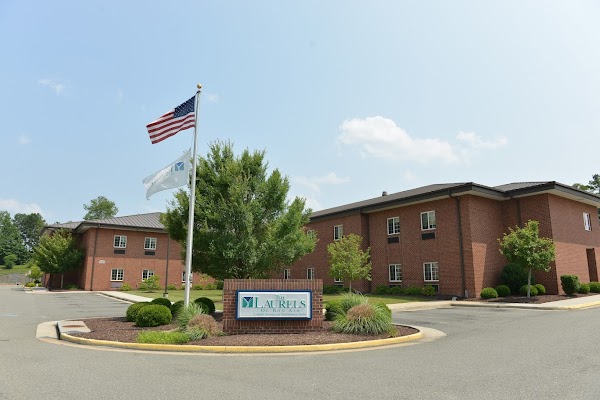
CONCERN (E)

Potential for Harm - no one hurt, but risky conditions existed

Deficiency F0697 (Tag F0697)

Could have caused harm · This affected multiple residents

Based on resident interview, staff interview, clinical record review and facility document review, it was determined that the facility staff failed to implement a complete pain management program for ...

Read full inspector narrative →
Based on resident interview, staff interview, clinical record review and facility document review, it was determined that the facility staff failed to implement a complete pain management program for three of 52 residents in the survey sample, Residents # 15 (R15), (R21) and (R96). The findings include: 1. For (R15) the facility staff failed to attempt non-pharmacological interventions prior to the administration of a prn (as needed) pain medications, roxicodone (1) and acetaminophen (2) (R15) was admitted to the facility with a diagnosis that included but was not limited to: right leg fracture. On the most recent MDS (minimum data set), a significant change assessment with an ARD (assessment reference date) of 10/15/2022, (R15) scored 15 out of 15 on the BIMS (brief interview for mental status), indicating (R15) was cognitively intact for making daily decisions. Section J0400 Pain Frequency coded (R15) as Occasionally. Under J0600. Pain Intensity it documented, A. Numeric Rating Scale (00-10). (R15) was coded a 4 (four). The physician's order for (R15) documented in part, Roxicodone Tablet 5 (five) MG (milligram). Give 1 (one) tablet by mouth every 6 (six) hours as needed for pain. Order Date: 09/30/2022. Start Date: 09/30/2022. Acetaminophen Extra Strength Tablet 500 MG. Give 2 (two) tablets by mouth every 6 hours needed for pain 1-5 (one to five). Order Date: 10/10/2022. Start Date: 10/10/2022. The eMAR (electronic medication administration record) for (R15) dated October 2022 documented the physician's order as stated above. The eMAR revealed that (R15) received 5 mgs of roxicodone on the following dates and times, with no evidence of non-pharmacological interventions being attempted on: 10/01/2022 at 1:12 p.m., 10/02/2022 at 1:44 p.m., 10/06/2022 at 10:00 a.m., and on 10/18/2022 at 8:31 p.m. Further review of the eMAR revealed that (R15) received 1000 mg of acetaminophen on the following dates and times, with no evidence of non-pharmacological interventions being attempted on: 10/26/2022 at 10:29 a.m. and on 10/27/2022 at 7:46 p.m. The comprehensive care plan for (R15) dated 09/18/2022 documented in part Need: (R15) is at risk for pain and has pain related to neuropathy, C2 fracture (fracture of the second cervical vertebra) with fusion, post concussion headache with Odontaoid fracture (a toothlike upward projection at the back of the second vertebra of the neck), OA, (osteoarthritis) fracture of femur (leg). Date Initiated: 09/18/2022. Under Interventions it documented in part, Offer Non-Pharmacological Interventions: 1) Massage; 2) Meditation/relaxation; 3) Positioning; 4) Ice/cold pack; 5) Diversional Activity; 6) Guided Imagery; 7) Rest; 8) Social Interaction; 9) Other. Date Initiated: 06/30/2021. Review of the facility's nurse's notes for (R15) dated 10/01/2022 through 10/31/2022 failed to evidence non-pharmacological interventions being attempted on the dates and times listed above. On 11/02/22 at approximately 2:15 p.m., an interview was conducted with (R15). When asked if the staff attempt to alleviate their pain before administering their as needed pain medication, (R15) stated no and that they give them the pain medication. On 11/03/22 at approximately 8:19 a.m., an interview was conducted with LPN (licensed practical nurse) # 4. When asked to describe the procedure when administering as needed pain medication LPN # 4 stated that the nurse assesses the resident's pain by obtaining the severity of the resident's pain on a scale of zero to ten, with ten being the worse pain, the location of the pain and the type of pain such as throbbing or stabbing. LPN # 4 stated that the nurse would then start with non-pharmacological interventions such as repositioning, ice pack, or heat, and if that does not alleviate the resident's pain, they would administer the prescribe medication. When asked how often non-pharmacological interventions LPN # 4 stated that it should be attempted each time before the as needed pain medication is administered. When asked where it would be documented that the location of pain, type of pain and non-pharmacological interventions were attempted LPN # 4 stated that it would be documented in the nurse's notes or the eMAR. When asked why it is important to attempt non-pharmacological interventions prior to the administration of as needed pain medication LPN # 4 stated that it could decrease use of pain medication. After review of (R15's) eMAR and progress notes dated 10/01/2022 through 10/31/2022 for non-pharmacological interventions prior to the administration of roxicodone and acetaminophen to (R15), LPN # 4 was asked about the missing documentation. LPN # 4 stated that they could not say non-pharmacological interventions were attempted because it was not documented. The facility's policy Pain Management documented in part, Procedure: 14. The staff will implement the care plan, monitor the guest/resident, and administer therapeutic interventions for pain, if ordered. On 11/03/2022 at approximately 4:02 p.m., ASM # 1, administrator, ASM # 2, director of nursing and ASM # 4, regional clinical coordinator, were made aware of the above findings. No further information was provided prior to exit. References: (1) Are an immediate-release oral formulation of oxycodone hydrochloride indicated for the management of moderate to severe pain where the use of an opioid analgesic is appropriate. This information was obtained from the website: https://dailymed.nlm.nih.gov/dailymed/drugInfo.cfm?setid=d48c22ff-bbb4-4a93-a35b-6eebff7b8e53. (2) Used to relieve mild to moderate pain from headaches, muscle aches, menstrual periods, colds and sore throats, toothaches, backaches, and reactions to vaccinations (shots), and to reduce fever. Acetaminophen may also be used to relieve the pain of osteoarthritis (arthritis caused by the breakdown of the lining of the joints). This information was obtained from the website: https: https://medlineplus.gov/druginfo/meds/a681004.html. 2. For (R21) the facility staff failed to attempt non-pharmacological interventions prior to the administration of a prn a(as needed) pain medications, oxycodone-acetaminophen (1). (R21) was admitted to the facility with a diagnosis that included but was not limited to: low back pain. On the most recent MDS (minimum data set), an admission assessment with an ARD (assessment reference date) of 09/19/2022, (R21) scored 14 out of 15 on the BIMS (brief interview for mental status), indicating (R21) was cognitively intact for making daily decisions. Section J0400 Pain Frequency coded (R21) as Frequently. Under J0600. Pain Intensity it documented, A. Numeric Rating Scale (00-10). (R21) was coded a 5 (five). The physician's order for (R21) documented in part, Oxycodone-Acetaminophen Tablet 5-325 MG (milligram). Give 1 (one) tablet by mouth every 12 hours as needed for pain. Order Date: 09/15/2022. Start Date: 09/15/2022. The eMAR (electronic medication administration record) for (R21) dated October 2022 documented the physician's order as stated above. The eMAR revealed that (R21) received 5-325 mgs of oxycodone-acetaminophen on the following dates and times, with no evidence of non-pharmacological interventions being attempted on: 10/01/2022 at 9:02 p.m., 10/05/2022 at 7:58 p.m., 10/07/2022 at 3:48 p.m., 10/08/2022 at 2:17 p.m., 10/09/2022 at 4:06 p.m., and on 10/10/2022 at 8:05 p.m. The comprehensive care plan for (R21) dated 09/14/2022 documented in part Need: (R21) is at risk for pain and/or has acute/chronic pain r/t (related to) age related changes, recent fall with compression fracture .Date Initiated: 09/14/2022. Under Interventions it documented in part, Offer Non-Pharmacological Interventions: 1) Massage; 2) Meditation/relaxation; 3) Positioning; 4) Ice/cold pack; 5) Diversional Activity; 6) Guided Imagery; 7) Rest; 8) Social Interaction; 9) Other. Date Initiated: 06/30/2021. Review of the facility's nurse's notes for (R21) dated 10/01/2022 through 10/31/2022 failed to evidence non-pharmacological interventions being attempted on the dates and times listed above. On 11/02/2022 at approximately 2:25 p.m., an interview was conducted with (R21). When asked if they receive as needed pain medication (R21) stated yes. When asked of the nurse attempts to alleviate their pain by other means before administering their pain medication (R21) stated that the nurses don't always attempt to alleviate their pain by other means. On 11/03/22 at approximately 8:19 a.m., an interview was conducted with LPN (licensed practical nurse) #4 regarding the implementation and documentation of non-pharmacological interventions prior to the administration of as needed pain medication to (R21). After review of (R21's) eMAR and progress notes dated 10/01/2022 through 10/31/2022 for non-pharmacological interventions prior to the administration of oxycodone-acetaminophen to (R21), LPN #4 was asked about the missing documentation. LPN #4 stated that they could not say non-pharmacological interventions were attempted because it was not documented. On 11/03/2022 at approximately 4:02 p.m., ASM #1, administrator, ASM #2, director of nursing and ASM #4, regional clinical coordinator, were made aware of the above findings. No further information was provided prior to exit. References: (1) Indicated for the management of pain severe enough to require an opioid analgesic and for which alternative treatments are inadequate. This information was obtained from the website: https://dailymed.nlm.nih.gov/dailymed/drugInfo.cfm?setid=f2137f1a-b49a-40bd-97ac-cd6b36e295f4. 3. For (R96) the facility staff failed to attempt non-pharmacological interventions prior to the administration of a prn (as needed) pain medications, tramadol (1). (R96) was admitted to the facility with a diagnosis that included but was not limited to: low back pain. On the most recent MDS (minimum data set), an admission assessment with an ARD (assessment reference date) of 10/05/2022, the (R96) scored 14 out of 15 on the BIMS (brief interview for mental status), indicating (R96) was cognitively intact for making daily decisions. Section J0400 Pain Frequency coded (R96) as Frequently. Under J0600. Pain Intensity it documented, A. Numeric Rating Scale (00-10). (R96) was coded an 8 (eight). The physician's order for (R96) documented in part, Tramadol Tablet 50 MG (milligram). Give 50 mg by mouth every 6 hours as needed for back pain. Order Date: 09/29/2022. Start Date: 09/29/2022. The eMAR (electronic medication administration record) for (R96) dated October 2022 documented the physician's order as stated above. The eMAR revealed that (R96) received 50 mgs of tramadol on the following dates and times, with no evidence of non-pharmacological interventions being attempted on: 10/01/2022 at 4:01 a.m., 10/07/2022 at 8:11 p.m., 10/09/2022 at 2:10 a.m., 10/10/2022 at 4:00 a.m., 10/12/2022 at 12:19 a.m., 10/10/2022 at 8:05 p.m. and at 11:10 p.m., 10/13/2022 at 8:55 a.m., 10/15/2022 at 10:47 p.m., 10/19/2022 at 9:34 a.m., 10/21/2022 at 12:22 a.m., 10/26/2022 at 4:13 p.m., 10/27/2022 at 5:45 a.m. and at 11:47 a.m., 10/28/2022 at 5:11 a.m., 10/30/2022 at 8:24 p.m. and on 10/31/2022 at 6:17 a.m. Review of the facility's nurse's notes for (R96) dated 10/01/2022 through 10/31/2022 failed to evidence non-pharmacological interventions being attempted on the dates and times listed above. On 11/02/2022 at approximately 2:20 p.m., an interview was conducted with (R96). When asked if they receive as needed pain medication (R96) stated yes. When asked of the nurse attempts to alleviate their pain by other means before administering their pain medication (R96) stated that nurse just gives them their medication. On 11/03/22 at approximately 8:19 a.m., an interview was conducted with LPN (licensed practical nurse) #4 regarding the implementation and documentation of non-pharmacological interventions prior to the administration of as needed pain medication to (R96). After review of (R96's) eMAR and progress notes dated 10/01/2022 through 10/31/2022 for non-pharmacological interventions prior to the administration of oxycodone-acetaminophen to (R), LPN #4 was asked about the missing documentation. LPN # 4 stated that they could not say non-pharmacological interventions were attempted because it was not documented. On 11/03/2022 at approximately 4:02 p.m., ASM #1, administrator, ASM #2, director of nursing and ASM #4, regional clinical coordinator, were made aware of the above findings. No further information was provided prior to exit. References: (1) Used to relieve moderate to moderately severe pain. Tramadol extended-release tablets and capsules are only used by people who are expected to need medication to relieve pain around-the-clock. Tramadol is in a class of medications called opiate (narcotic) analgesics. This information was obtained from the website: https://medlineplus.gov/druginfo/meds/a695011.html.
CONCERN (E)

Potential for Harm - no one hurt, but risky conditions existed

Deficiency F0698 (Tag F0698)

Could have caused harm · This affected multiple residents

Based on staff interview, facility document review, and clinical record review, the facility staff failed to maintain a complete dialysis program for one of 52 residents in the survey sample, Resident...

Read full inspector narrative →
Based on staff interview, facility document review, and clinical record review, the facility staff failed to maintain a complete dialysis program for one of 52 residents in the survey sample, Resident #36. The findings include: For Resident #36 (R36), the facility staff failed to evidence communication and coordination with the resident's dialysis provider. On the most recent MDS (minimum data set), a quarterly assessment with an ARD (assessment reference date) of 9/23/22, R36 was coded as being cognitively intact for making daily decisions, having scored 13 out of 15 on the BIMS (brief interview for mental status). R36 was coded as receiving dialysis services during the look back period. A review of R36's clinical record revealed the following physician order dated 5/23/22: Dialysis Thursday, Thursday, Saturday. Further review of the clinical record revealed the resident had consistently received the dialysis services as ordered in September and October 2022. A review of R36's dialysis communication book revealed only one hemodialysis communication sheet. It was dated 9/13/22. This document contained information from the facility to the dialysis center, and information from the dialysis provider to the facility. The book contained no additional evidence of communication between the facility and the dialysis center. A review of R36's care plan dated 10/30/19 and revised on 10/4/22 revealed, in part: Encourage resident to go for scheduled dialysis appointments. Resident receives dialysis on Tuesday, Thursday, and Saturday. On 11/2/22 at 1:37 p.m., LPN (licensed practical nurse) #3 was interviewed. She stated the facility uses a communication book to exchange information about residents with the dialysis center. She stated the facility sends information to the dialysis center on each dialysis day. This information includes resident's weight, vital signs, any changes in medications, and other pertinent information. She stated the facility nurse sends the dialysis communication book with the resident to the dialysis center. The dialysis center staff records information the facility needs to know, including any fluid volumes, laboratory test results, medications administered, weight, and any other important information. The dialysis center sends the book back to the facility staff. She stated if a resident returns from dialysis without the dialysis communication book, she calls the dialysis center to get what the information she needs to continue to take care of the resident. She stated she would also call if the dialysis center portion of the form is blank. On 11/2/22 at 3:55 p.m., ASM (administrative staff member) #1, the administrator, ASM #2, the director of nursing, and ASM #4, the regional clinical coordinator, were informed of these concerns. A review of the facility policy, Hemodialysis, revealed, in part: The facility completes the appropriate section of the hemodialysis communication form prior to guest/resident receiving each dialysis session, and again when the guest/resident returns from hemodialysis. No further information was provided prior to exit.
CONCERN (E)

Potential for Harm - no one hurt, but risky conditions existed

Deficiency F0730 (Tag F0730)

Could have caused harm · This affected multiple residents

Based on staff interview, clinical record review and facility document review, it was determined the facility staff failed to provide performance evaluations for four of five CNA's (certified nursing ...

Read full inspector narrative →
Based on staff interview, clinical record review and facility document review, it was determined the facility staff failed to provide performance evaluations for four of five CNA's (certified nursing assistants). The findings include: During the Sufficient and Competent Staffing facility task review on 11/2/22 at 2:00 PM there was no evidence of performance evaluations and mandatory training for four of five CNA's (certified nursing assistants) reviewed. On 11/2/22 at 9:00 AM, ASM (administrative staff member) #1, the administrator was provided a list of five CNA's with a request for evidence of performance reviews. On 11/2/22 at 10:00 AM, ASM #2, the director of nursing stated, April is when I started. I do not know if some of these performance reviews have been done. 1. CNA #4 with a date of hire of 12/15/08, evidenced no annual performance evaluation. 2. CNA #6 with a date of hire of 10/20/20, evidenced no annual performance evaluation. 3. CNA #7 with a date of hire of 12/17/20, evidenced no annual performance evaluation. 4. CNA #8 with a date of hire of 9/3/21, evidenced no annual performance evaluation. On 11/02/22 at 5:06 PM, ASM #2, the director of nursing stated, We do not have any more performance reviews. ASM #2 was informed that 4 out of 5 performance reviews were missing. On 11/3/22 at 3:30 PM, ASM #1, the administrator, ASM #2, the director of nursing and ASM #4, the regional clinical coordinator were made aware of the findings. A review of the facility's policy Staff Development policy dated 4/2022, revealed, A competency evaluation will be completed annually for certified nurse aides. No further information was provided prior to exit.
CONCERN (E)

Potential for Harm - no one hurt, but risky conditions existed

Food Safety (Tag F0812)

Could have caused harm · This affected multiple residents

Based on observation and staff interview, it was determined that the facility staff failed to serve food in a sanitary manner in one of one resident dining rooms. The findings include: The facility st...

Read full inspector narrative →
Based on observation and staff interview, it was determined that the facility staff failed to serve food in a sanitary manner in one of one resident dining rooms. The findings include: The facility staff failed to keep their thumbs from touching the food surfaces of the resident's plates while serving the resident's lunch in the second-floor dining room. On 10/31/2022 at approximately 12:30 p.m., an observation of the second-floor dining room was conducted. CNA (certified nursing assistant) #1 was observed with gloved hands sorting resident meal tickets on top of the ice chest, then placing the meal ticket on top of the steam table and placing their open gloved hands on top of the steam table. CNA #1 was then observed placing their thumb on the surface edge resident lunch plates when serving them to eight residents. On 10/31/2022 at approximately 1:45 p.m., an interview was conducted with CNA #1. When asked why they wore gloves when serving the resident's lunch that day CNA #1 stated that they were told to wear them. After informed of the above observation CNA #1 stated that they should have not placed their hand on the ice chest and steam table surfaces and that they should have placed their hands on the bottom of the resident's plate to prevent their thumb from touching the surface edge of the plates. On 11/02/2022 at approximately 5:00 p.m., ASM (administrative staff member) #1, administrator, ASM #2, director of nursing and ASM #4, regional clinical coordinator were made aware of the above findings. No further information was provided prior to exit.
CONCERN (E)

Potential for Harm - no one hurt, but risky conditions existed

Medical Records (Tag F0842)

Could have caused harm · This affected multiple residents

2. For Resident #58 (R58), the facility failed to maintain a complete and accurate medical record. On the most recent MDS (minimum data set) assessment, a quarterly assessment, with an assessment ref...

Read full inspector narrative →
2. For Resident #58 (R58), the facility failed to maintain a complete and accurate medical record. On the most recent MDS (minimum data set) assessment, a quarterly assessment, with an assessment reference date of 8/8/2022, the resident scored 11 out of 15 on the BIMS (brief interview for mental status) assessment, indicating they were moderately impaired to make daily decisions. On 11/1/2022 at 8:28 a.m., an interview was conducted with R58. R58 stated that they did not see the physician often and wanted to speak with them regarding their prostate. R58 stated that they did not remember the last time they saw their doctor. Review of R58's clinical record documented a physician 60-day recertification note dated 7/20/2022. Further review of R58's clinical record failed to evidence any physician or nurse practitioner progress notes between 7/21/2022-11/3/2022. On 11/3/2022 at 8:50 a.m., an interview was conducted with ASM (administrative staff member) #1, the administrator. ASM #1 stated that physician's saw residents at the facility alternating with the nurse practitioners per the regulations every 60 days. ASM #1 stated that they would look into R58 not having a physician or nurse practitioner progress note between 7/21/2022-11/3/2022. On 11/3/2022 at approximately 10:45 a.m., ASM #1 provided a printed document of progress notes for R58 from the nurse practitioner for visits on 8/30/2022, 9/7/2022, 9/26/2022, 10/5/2022, 10/10/2022, 10/19/2022, and 10/24/2022. Review of the progress notes in R58's electronic medical record all documented Late Entry with a Created Date: 11/3/2022. On 11/3/2022 at 11:00 a.m., an interview was conducted with ASM #2, the director of nursing. ASM #2 stated that R58's nurse practitioner writes their progress notes in their system and then transfers them over to R58's medical record at the facility. ASM #2 stated that the progress notes provided were added to the record that morning and prior to that the record was not complete. The facility policy Medical Records Management last revised 1/31/2022, documented in part, .A complete medical record contains an accurate and functional representation of the guest's/resident's actual experience in the facility. The electronic medical record is defined as containing the following items: .Any document that has been scanned and attached to the resident's electronic medical record (i.e. physician consults, laboratory and diagnostic reports, history and physicals). The medical record must contain enough information to show that the facility knows the status of the guest/resident, has adequate plans of care, and provides sufficient evidence of the effects of care provided . On 11/3/2022 at 4:00 p.m., ASM #1, the administrator, ASM #2, the director of nursing and ASM #4, the regional clinical coordinator were made aware of the above concern. No further information was provided prior to exit. Based on staff interview, facility document review and clinical record review, it was determined the facility staff failed to maintain a complete and accurate clinical record for two of 52 residents in the survey sample, Residents #6 and Resident #58. The findings include: 1. For Resident #6 (R6) the facility failed to document on the TAR (treatment administration record) the fluids provided to R6; and the CNAs (certified nursing assistants) failed to document the fluids consumed during the meals. On the most recent MDS (minimum data set) assessment, a quarterly assessment with an assessment reference date of 10/4/2022, coded the resident as scoring a 15 out of 15, indicating the resident is not cognitively impaired for making daily decisions. R6 has a diagnosis of congestive heart failure (CHF). The physician order dated, 9/27/2022, documented, Fluid restriction - 1800 ml (milliliters) - for nursing - 300 ml 7-3 (7:00 a.m. to 3:00 p.m. shift), 300 ml for 3-11 (3:00 p.m. to 11:00 p.m.) and 120 ml for night (11:00 p.m. to 7:00 a.m.) every shift. Review of the TAR for September 2022 documented the above physician order. On the following days, the blocks to document the consumed fluids were blank: 9/28/2022 for 3-11 (3:00 p.m to 11:00 p.m.) shift. Review of the TAR for October 2022 documented the above physician order. On the following days, the blocks to document the consumed fluids were blank: 10/2/2022 for the 3-11 shift 10/3/2022 for the 7-3 (7:00 a.m. to 3:00 p.m.) shift 10/11/2022 for the 3-11 shift 10/21/2022 for the 7-3 shift 10/30/2022 for the 3-11 shift. Review of the CNA documentation for October 2022, documented the fluids taken during a meal except on the following dates, the blocks were empty for meal consumption and fluid intake: 10/2/2022 - dinner 10/3/2022 - breakfast, lunch and dinner 10/4/2022 - dinner 10/5/2022 - breakfast and lunch 10/6/2022 - breakfast and lunch 10/7/2022 - dinner 10/9/2022 - breakfast and lunch 10/10/2022 - breakfast and lunch 10/11/2022 - breakfast and lunch 10/12/2022 - breakfast, lunch and dinner 10/13/2022 - breakfast and lunch 10/14/2022 - breakfast, lunch and dinner 10/15/2022 - breakfast and lunch 10/16/2022 - breakfast, lunch and dinner 10/19/2022 - dinner 10/20/2022 - breakfast and lunch 10/22/2022 - breakfast, lunch and dinner 10/23/2022 - breakfast, lunch and dinner 10/24/2022 - breakfast and lunch 10/26/2022 - lunch and dinner 10/27/2022 - breakfast and lunch 10/28/2022 - breakfast, lunch and dinner 10/29/2022 - breakfast, lunch and dinner 10/30/2022 - breakfast, lunch and dinner 10/31/2022 - breakfast, lunch and dinner Review of the CNA documentation for November 2022, documented the fluids taken during a meal except on the following dates, the blocks were empty for meal consumption and fluid intake: 11/1/2022 - breakfast, lunch, and dinner 11/2/2022 - breakfast, lunch, and dinner. The above documentation was shared with ASM (administrative staff member) #2, the director of nursing, on 11/3/2022 at 10:52 a.m. When asked what the blanks on the TAR and the CNA documentation indicate, ASM #2 stated, nobody documented. Should there be documentation, ASM #2 stated, yes. The facility policy, Medical Records Management documented in part, Policy: The facility must maintain medical records on each guest/resident, in accordance with accepted professional standards and practice and state and federal law. Medical records must be complete, accurately documented, readily accessible, systematically organized and maintained in a safe and secure environment. ASM #1, the administrator, ASM #2, and ASM #4 the regional clinical coordinator, were made aware of the above concern on 11/3/2022 at 4:30 p.m. No further information was provided prior to exit.

Jun 2021 12 deficiencies
CONCERN (D)

Potential for Harm - no one hurt, but risky conditions existed

Resident Rights (Tag F0550)

Could have caused harm · This affected 1 resident

**NOTE- TERMS IN BRACKETS HAVE BEEN EDITED TO PROTECT CONFIDENTIALITY** Based on observation, staff interview, and facility document review, it was determined that the facility staff failed to maintai...

Read full inspector narrative →
**NOTE- TERMS IN BRACKETS HAVE BEEN EDITED TO PROTECT CONFIDENTIALITY** Based on observation, staff interview, and facility document review, it was determined that the facility staff failed to maintain a resident's dignity for two of 53 residents in the survey sample, Resident #32 and Resident #3. The facility staff were observed feeding Resident #32 and Resident #3 while standing beside the residents. The findings include: Resident #32 was admitted to the facility on [DATE], and readmitted on [DATE] with diagnoses including history of a stroke, a hip fracture, and COPD (chronic obstructive pulmonary disease) (1). The most recent MDS (minimum data set), an admission assessment with an ARD (assessment reference date) of 3/23/21, coded Resident #32 as severely cognitively impaired for making daily decisions, having scored five out of 15 on the BIMS (brief interview for mental status). She was coded as requiring the assistance of one staff member for eating. On 6/1/21 at 1:90 p.m., Resident #32 was observed sitting up in her bed. CNA (certified nursing assistant) #1 was standing up next to the resident's bed. Observation revealed CNA #1 fed Resident #32 lunch while standing over the resident. On 6/3/21 at 10:20 a.m., CNA (certified nursing assistant) #1 was interviewed. When asked if she had fed Resident #32 at lunch on 6/1/21, she stated she had. When asked if she was standing up to feed the resident, CNA #1 stated, Oh, I was. I should not have done that. CNA #1 stated she knows she should sit down in the chair, and be at eye level with the resident. She stated it is a matter of the resident's dignity. She stated it was her mistake, but she was so busy, and has so many things to do. On 6/3/21 at 1:27 p.m., CNA #3 was interviewed. CNA #3 was asked how she positions herself when she feeds a resident. CNA #3 stated she sits beside the resident and slides the overbed table in front of the resident. She stated when she stands to feed a resident, it does not maintain the resident's dignity. On 6/3/21 at 1:37 p.m., LPN (licensed practical nurse) #4 was interviewed. She stated a staff member should always sit beside a resident when feeding the resident. When asked why this is important, she stated the resident could feel demeaned if a staff member stands over them. On 6/3/21 at 3:30 p.m., ASM (administrative staff member) #1, the administrator, ASM #2, the director of nursing, and ASM #3, the regional director of operations, were informed of these concerns. A review of the facility policy, Feeding, long-term care, revealed, in part, the following: Position a chair next to the resident's bed so you can sit comfortably if you need to provide cues or maximum assistance with feeding .Face the resident during feeding, make eye contact, and use a gentle tone of voice. No further information was provided prior to exit. REFERENCES (1) COPD is a general term for chronic, nonreversible lung disease that is usually a combination of emphysema and chronic bronchitis. Barron's Dictionary of Medical Terms for the Non-Medical Reader, 5th edition, Rothenberg and [NAME], page 124. #2. Resident #3 was admitted to the facility on [DATE] with diagnoses that included but were not limited to: intellectual disability (1), anemia (condition in which the hemoglobin content of the blood is below normal limits) (2) and anoxic brain damage (occurs when there is not enough oxygen getting to the brain. The brain needs a constant supply of oxygen and nutrients to function.) (3) The most recent MDS (minimum data set) assessment, a quarterly assessment, with an assessment reference date of 5/6/2021, coded the resident as scoring a 0 on the BIMS (brief interview for mental status) score, indicating the resident was not capable of making daily cognitive decisions. In Section G - Functional Status, the resident was coded as requiring extensive assistance of one staff member for eating. Observation revealed CNA (certified nursing assistant) #1, assisting Resident #3 with her lunch meal on 6/2/2021 at 12:58 p.m., CNA #1 was standing next to the resident who was sitting in her wheelchair. An interview was conducted with LPN (licensed practical nurse) # 5 on 6/3/2021 at 8:15 a.m. When asked how a staff member should assist a resident with eating, LPN # 5 stated you should sit side by side with the resident. It's a big dignity issue. An interview was conducted with ASM (administrative staff member) #2, the director of nursing, on 6/3/2021 at 9:05 a.m. When asked how staff should feed a resident seated in a chair, ASM #2 stated they should sit next to them, never stand. An interview was conducted with CNA #1 on 06/03/2021 at 10:20 a.m., regarding feeding a resident. CNA #1 stated you sit down in a chair and provide dignity. When informed of the above observation on the day before, of her assisting Resident #3 with her lunch, CNA #1 stated that she was not (sitting) it was her mistake, she was busy. ASM #1, the administrator, ASM #2, and ASM #3, regional director of operations, were made aware of the above concern on 6/3/2021 at 3:40 p.m. No further information was provided prior to exit. (1) Intellectual disability: Refers to a group of disorders characterized by a limited mental capacity and difficulty with adaptive behaviors such as managing money, schedules and routines, or social interactions. Intellectual disability originates before the age of 18 and may result from physical causes, such as autism or cerebral palsy, or from nonphysical causes, such as lack of stimulation and adult responsiveness.) This information was obtained from the website: https://www.report.nih.gov/NIHfactsheets/ViewFactSheet.aspx?csid=100 (2) Barron's Dictionary of Medical Terms for the Non-Medical Reader, 5th edition, Rothenberg and [NAME], page 33. (3) This information was obtained from the following website: https://medlineplus.gov/ency/article/001435.htm.
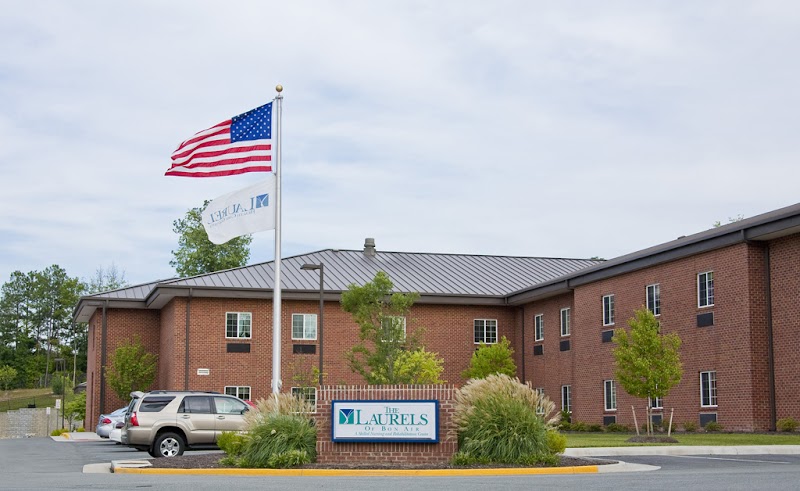
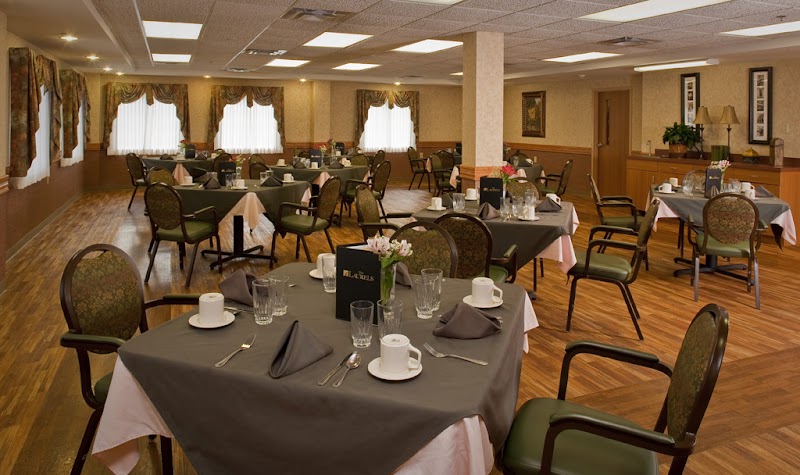
CONCERN (D)

Potential for Harm - no one hurt, but risky conditions existed

Notification of Changes (Tag F0580)

Could have caused harm · This affected 1 resident

**NOTE- TERMS IN BRACKETS HAVE BEEN EDITED TO PROTECT CONFIDENTIALITY** Based on staff interview, facility document review, and clinical record review, it was determined that the facility staff failed...

Read full inspector narrative →
**NOTE- TERMS IN BRACKETS HAVE BEEN EDITED TO PROTECT CONFIDENTIALITY** Based on staff interview, facility document review, and clinical record review, it was determined that the facility staff failed to notify the physician of a resident's documented significant weight gain for one of 53 residents in the survey sample, Resident #32. The facility staff failed to notify the physician of Resident #32's documented significant weight gain, as documented in the May 2021 clinical record. The findings include: Resident #32 was admitted to the facility on [DATE], and readmitted on [DATE] with diagnoses including history of a stroke, a hip fracture, and COPD (chronic obstructive pulmonary disease) (1). The most recent MDS (minimum data set), an admission assessment with an ARD (assessment reference date) of 3/23/21, coded Resident #32 as severely cognitively impaired for making daily decisions, having scored five out of 15 on the BIMS (brief interview for mental status). She was coded as having no significant weight gain or loss prior to her admission to the facility. A review of Resident #32's clinical record revealed the following weights and dates: 3/20/21 - 98 lbs. (pounds); 4/15/21 - 103.2 lbs.; 5/3/21 - 103.2 lbs.; 5/14/21 - 163.6 lbs.; 5/17/21 - 163.8 lbs. The weight gain from 4/15/21 to 5/14/21 represents a 58.72 % gain. Further review of Resident #32's clinical record revealed no progress notes or subsequent information, including notification of the dietician or physician, regarding Resident #32's documented weight gain. A review of Resident #32's comprehensive care plan dated 3/17/21 and updated 5/15/21 revealed, in part: Obtain weight at a minimum of monthly. Report significant weight changes of 5% (percent) X (for) 1 month, 7.5% X 3 months, or 10% X 6 months to the physician and dietician. On 6/3/21 at 9:53 a.m., OSM (other staff member) #4, the registered dietician, and OSM #5, the dietary manager, were interviewed. OSM #4 stated that if Resident #32 is observed, she has not gained weight. This weight gain is not possible. The 164 was an error. She stated she knows she is making an assumption, but Resident #32 simply does not appear to weigh 163 pounds. OSM #4 stated 103 is a more appropriate weight for the resident. She stated she reviews weights weekly, and that she was aware of the documented weight gain prior to the start of the survey. When asked what action she had taken in light of the weight gain, OSM #4 stated she had requested a re-weight. OSM #4 was asked if the 5/17/21 weight of 163.8 lbs. represented the re-weight she had requested. She stated it was not. When asked about her process for following up on such a large documented weight gain, OSM #4 stated her next step is to visualize the resident to see if the documented weight is accurate. When asked if she had done this, or had followed up in any way with the resident, OSM #4 stated she had. When asked to evidence this follow up, OSM #4 stated she could not. She stated she did not document anything or contact the physician until she felt like she had all the correct information. She stated her next step should be to contact the physician. OSM #4 stated, I would hope nursing would do that, as well. On 6/3/21 at 10:20 a.m., CNA (certified nursing assistant) #1 was interviewed. When asked if it is part of her responsibility to weight a resident, she stated it is. When asked what she does if she notices a large weight gain for a resident, CNA #1 stated she lets the charge nurse know. She stated if a re-weight is requested, the nurse will alert her and she will take care of it. On 6/3/21 at 10:47 a.m., RN (registered nurse) #3, a unit manager, was interviewed. When asked about the process she follows if a resident demonstrates a significant weight gain, she stated she talks to the dietician. She stated she also may reach out to the family to see if they are desiring a weight gain for the resident. When shown Resident #32's weights since admission, RN #3 stated, With that kind of gain, I would let the nutritionist know. She stated she and the registered dietician talk frequently. RN #3 stated the physician should have been notified. She stated the physician is in the building every day, and she would put something like a significant weight gain on the list for the physician to address the following day. On 6/3/21 at 3:30 p.m., ASM (administrative staff member) #1, the administrator, ASM #2, the director of nursing, and ASM #3, the regional director of operations, were informed of these concerns. A review of the facility policy, Weight Management, revealed, in part: Guests/residents will be monitored for significant weight changes on a regular basis .the evaluation of significant weight gain or loss over a specific time period is an important part of the assessment process .any guest/resident with unintended weight loss/gain will be evaluated by the interdisciplinary team and interventions will be implemented to prevent further weight loss/gain .Re-weights are initiated for a five-pound variance if the guest/resident is > (greater than) 100 lbs .Re-weights will be done within 48-72 hours .Guests/residents determined to be at risk or have significant weight changes will be weighed on a daily basis .Dietary Manager, Unit Manager and/or RD (registered dietician) are to communicate weight changes to the IDT (interdisciplinary team), attending physician, and guest's/resident's responsible party. This is documented in the medical record. REFERENCES (1) COPD is a general term for chronic, nonreversible lung disease that is usually a combination of emphysema and chronic bronchitis. Barron's Dictionary of Medical Terms for the Non-Medical Reader, 5th edition, Rothenberg and [NAME], page 124.
CONCERN (D)

Potential for Harm - no one hurt, but risky conditions existed

Safe Environment (Tag F0584)

Could have caused harm · This affected 1 resident

**NOTE- TERMS IN BRACKETS HAVE BEEN EDITED TO PROTECT CONFIDENTIALITY** Based on observation, staff interview, and facility document review, it was determined that the facility staff failed to maintai...

Read full inspector narrative →
**NOTE- TERMS IN BRACKETS HAVE BEEN EDITED TO PROTECT CONFIDENTIALITY** Based on observation, staff interview, and facility document review, it was determined that the facility staff failed to maintain a clean, comfortable, home like environment for one of 53 residents in the survey sample, Resident #84. The facility staff failed to clean up a spill, which caused Resident #84's floor to be sticky, for more than 24 hours. The findings include: Resident #84 was admitted to the facility on [DATE] with diagnoses including a subdural hemorrhage (1), history of a stroke, and paranoid personality disorder (2). The most recent MDS (minimum data set), a quarterly assessment with an ARD (assessment reference date) of 4/30/21, coded Resident #84 as severely cognitively impaired for making daily decisions. On 6/1/21 at 12:16 p.m., Resident #84 was observed lying in bed. On the floor beside her bed, several large patches of dried liquid were observed. The floor in these areas was sticky. On 6/1/21 at 3:42 p.m., Resident #84 was observed sitting in the wheelchair beside her bed. The spots on the floor beside her bed remained and were still sticky. On 6/2/21 at 8:26 a.m., Resident #84 was observed lying in her bed. Observation revealed the spots beside her bed remained and were still sticky. On 6/2/21 at 12:35 p.m., LPN (licensed practical nurse) also observed Resident #84. The resident was sitting in her wheelchair beside her bed. The same spots on the floor beside the resident's bed remained and were still sticky. LPN #1 stated she would call housekeeping right away. She stated the resident frequently spills soft drinks on her floor. She stated the sticky substance should be cleaned off the resident's floor. On 6/2/21 at 12:42 p.m., ASM (administrative staff member) #2, the director of nursing, stated there is a problem in some rooms of the facility due to sticky floors. She stated the stickiness has to do with a substance on the floor and the humidity. ASM #2 stated the floor company is planning to go back in a rinse the floors. When asked if a spill causing a sticky floor should have been cleaned up, ASM #2 stated, Yes, it should. On 6/2/21 at 2:23 p.m., OSM (other staff member) #3, the director of housekeeping, was interviewed. He stated resident floors are mopped every day, usually in the mornings. He stated the rooms and floors are checked twice more in the afternoon before housekeepers go home for the day. He stated the sticky floor in Resident #84's room should have been caught and re-mopped on 6/1/21. He stated Resident #84's room may also be sticky due to the humidity. He stated that staff members have been asked to clean off their shoes regularly to prevent making the stickiness worse, but few of them do so. He stated that if a resident spills a substance on the floor, the nursing staff is able to call a housekeeper and ask the housekeeper to mop the floor at any time during the day. On 6/3/21 at 3:30 p.m., ASM (administrative staff member) #1, the administrator, ASM #2, the director of nursing, and ASM #3, the regional director of operations, were informed of these concerns. A review of the facility policy, Explanation of Guest Room Cleaning, revealed, in part: Daily - This cleaning involves the daily removal of trash, dusting furniture, cleaning guest restroom and floors to provide our guest with a safe, clean and healthy controlled environment. No further information was provided prior to exit. REFERENCES (1) A subdural hematoma, as its name implies, forms because of an abnormal collection of blood under the dura mater. This is one of the intracranial injuries associated with abusive head trauma, especially in pediatric patients. A small bleed may resolve spontaneously. This information is taken from the website https://www.ncbi.nlm.nih.gov/books/NBK532970/#:~:text=A%20subdural%20hematoma%2C%20as%20its,small%20bleed%20may%20resolve%20spontaneously. (2) Paranoid personality disorder (PPD) is characterized by a pervasive distrust and suspicion of others such that their motives are interpreted as malevolent, beginning by early adulthood and present in a variety of contexts. This information is taken from the website https://www.ncbi.nlm.nih.gov/pmc/articles/PMC4176679/.
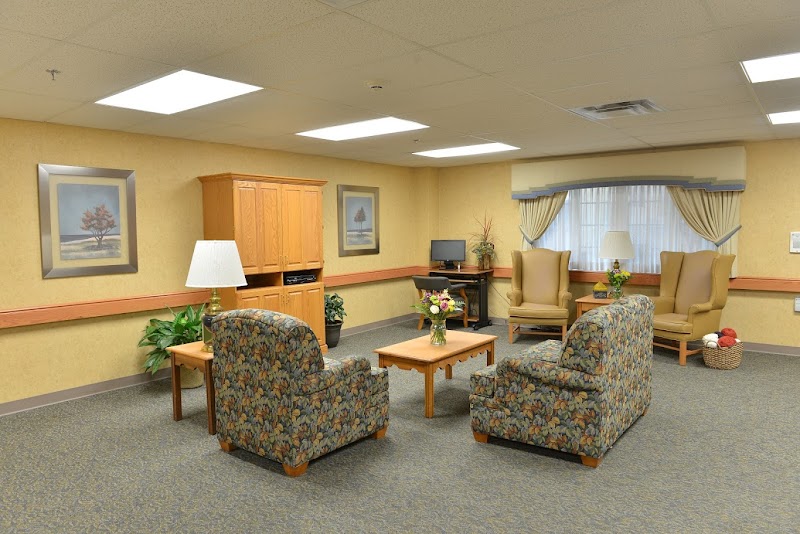
CONCERN (D)

Potential for Harm - no one hurt, but risky conditions existed

Comprehensive Care Plan (Tag F0656)

Could have caused harm · This affected 1 resident

**NOTE- TERMS IN BRACKETS HAVE BEEN EDITED TO PROTECT CONFIDENTIALITY** Based on observation, resident interview, staff interview, facility document review, and clinical record review, it was determin...

Read full inspector narrative →
**NOTE- TERMS IN BRACKETS HAVE BEEN EDITED TO PROTECT CONFIDENTIALITY** Based on observation, resident interview, staff interview, facility document review, and clinical record review, it was determined that the facility staff failed to develop and/or implement the comprehensive care plan for three of 53 residents in the survey sample, Residents #32, #49, and #61. 1a The facility staff failed to implement Resident #32's comprehensive care plan to place fall mats on the floor beside the bed when Resident #32 is in bed. b. The facility staff also failed to implement Resident #32's care plan to notify the physician of a documented significant weight gain 2. The facility staff failed to develop a comprehensive care plan to address Resident #49's left leg prostheses. 3. The facility staff failed to develop a comprehensive care plan to address activities for Resident #61. The findings include: 1. The facility staff failed to implement Resident #32's care plan for safety from falls. The staff did not place fall mats beside Resident #32's bed while she was occupying the bed. The facility staff also failed to implement Resident #32's care plan to notify the physician of a documented significant weight gain. a. Resident #32 was admitted to the facility on [DATE], and readmitted on [DATE] with diagnoses including history of a stroke, a hip fracture, and COPD (chronic obstructive pulmonary disease) (1). The most recent MDS (minimum data set), an admission assessment with an ARD (assessment reference date) of 3/23/21, coded Resident #32 as severely cognitively impaired for making daily decisions, having scored five out of 15 on the BIMS (brief interview for mental status). She was coded as having no significant weight gain or loss prior to her admission to the facility. She was coded as having had one fall with injury during the look back period. On the following dates and times, 6/1/21 at 3:54 p.m., 6/2/21 at 8:35 a.m., and 6/2/21 at 10:24 a.m., Resident #32 was observed lying in bed. During each of these observations, a fall mat was not observed on the floor beside the resident's bed. A review of Resident #32's comprehensive care plan, dated 3/16/21 and updated 5/20/21, revealed, in part: [Resident #32] is at risk for fall related injury and falls .Mat to the floor next to the bed Left side. On 6/3/21 at 10:20 a.m., CNA (certified nursing assistant) #1 was interviewed. When asked how she knows when a resident should have fall mats in place beside the bed, CNA #1 stated a tab in the electronic record tells her everything a resident needs, including fall mats. She stated she does her best to follow the resident's care plan. She stated the nurses or other CNAs give updates on changes in resident needs. On 6/3/21 at 1:27 p.m., CNA #3 was interviewed. When asked how she knows if a resident needs fall prevention interventions, CNA #3 stated she can look these up on the kiosk containing the resident's electronic record. She stated she only checks the electronic record if a new resident has been admitted . She stated the nurses give updates on residents who have been at the facility for a while. On 6/3/21 at 1:37 p.m., LPN (licensed practical nurse) #4 was interviewed. She stated it is the nurse's responsibility to make sure fall prevention interventions are in place for a resident. LPN #4 stated the CNAs generally take care of these interventions. She stated a resident's care plan information is available to the nurse on the electronic record. LPN #4 stated if a resident has a care plan for fall mats, the mats should be in place at all times while the resident is in bed. When asked if Resident #32's care plan for falls was being followed when no fall mats were in place beside the bed, LPN #4 stated, No, it wasn't. On 6/3/21 at 3:30 p.m., ASM (administrative staff member) #1, the administrator, ASM #2, the director of nursing, and ASM #3, the regional director of operations, were informed of these concerns. A review of the facility policy, Interdisciplinary Care Plan, revealed, in part, the following: The Interdisciplinary Care Plan Team, in accordance with the guest, his/her family, or representative, develops and maintains a comprehensive care plan for each guest. The interdisciplinary care plan will: .Reflect treatment goals and objectives in measurable outcomes .Identify the professional services that are responsible for each element of care and frequency of services provided .Reflect the medical regimen and physician's plan of treatment. b. A review of Resident #32's clinical record revealed the following weights and dates: 3/20/21 - 98 lbs. (pounds); 4/15/21 - 103.2 lbs.; 5/3/21 - 103.2 lbs.; 5/14/21 - 163.6 lbs.; 5/17/21 - 163.8 lbs. The weight gain from 4/15/21 to 5/14/21 represents a 58.72 % gain. Further review of Resident #32's clinical record revealed no progress notes or subsequent information, including notification of the dietician or physician, regarding Resident #32's documented weight gain. A review of Resident #32's comprehensive care plan dated 3/17/21 and updated 5/15/21 revealed, in part: Obtain weight at a minimum of monthly. Report significant weight changes of 5% (percent) X (for) 1 month, 7.5% X 3 months, or 10% X 6 months to the physician and dietician. On 6/3/21 at 9:53 a.m., OSM (other staff member) #4, the registered dietician, and OSM #5, the dietary manager, were interviewed. OSM #4 stated that if Resident #32 is observed, she has not gained weight. This weight gain is not possible. The 164 was an error. She stated she knows she is making an assumption, but Resident #32 simply does not appear to weigh 163 pounds. OSM #4 stated 103 is a more appropriate weight for the resident. She stated she reviews weights weekly, and that she was aware of the documented weight gain prior to the start of the survey. When asked what action she had taken in light of the weight gain, OSM #4 stated she had requested a re-weight. OSM #4 was asked if the 5/17/21 weight of 163.8 lbs. represented the re-weight she had requested. She stated it was not. When asked about her process for following up on such a large documented weight gain, OSM #4 stated her next step is to visualize the resident to see if the documented weight is accurate. When asked if she had done this, or had followed up in any way with the resident, OSM #4 stated she had. When asked to evidence this follow up, OSM #4 stated she could not. She stated she did not document anything or contact the physician until she felt like she had all the correct information. She stated her next step should be to contact the physician. OSM #4 stated, I would hope nursing would do that, as well. On 6/3/21 at 10:20 a.m., CNA (certified nursing assistant) #1 was interviewed regarding the purpose of a comprehensive care plan. CNA #1 stated a care plan identifies a resident's issues, and gives the staff a road map for taking care of residents. On 6/3/21 at 1:27 p.m., CNA #3 was interviewed. She stated a resident's care plan lets the staff know what is going on with the resident. She stated she can see the care plan information on the computer kiosk. She stated if she is not sure what is on a resident's care plan, she asks the nurse. On 6/3/21 at 1:37 p.m., LPN (licensed practical nurse) #4 was interviewed. She stated a resident's care plan pulls together a global stream of the actions the facility staff will take for a resident. She stated the care plan includes all the disciplines, and also includes family, nursing, and the resident. LPN #4 stated the resident's care plan is readily available to nurses and to all staff by way of the electronic medical record. When asked if Resident #32's care plan for nutrition had been followed, LPN #4 stated it had not been followed. On 6/3/21 at 3:30 p.m., ASM (administrative staff member) #1, the administrator, ASM #2, the director of nursing, and ASM #3, the regional director of operations, were informed of these concerns. No further information was provided prior to exit. REFERENCES (1) COPD is a general term for chronic, nonreversible lung disease that is usually a combination of emphysema and chronic bronchitis. Barron's Dictionary of Medical Terms for the Non-Medical Reader, 5th edition, Rothenberg and [NAME], page 124. 2. The facility staff failed to develop a comprehensive care plan to address Resident #49's left leg prosthesis. Resident #49 was admitted to the facility on [DATE] with diagnoses including atrial fibrillation (1) and lung cancer. The most recent MDS (minimum data set), a quarterly assessment with an ARD (assessment reference date) of 3/25/21, coded Resident #49 as cognitively intact for making daily decisions, having scored 13 out of 15 on the BIMS (brief interview for mental status). He was coded as not using a prosthesis during the look back period. On 6/1/21 at 3:50 p.m., Resident #49 was observed lying in his bed. He was awake and watching television. A lower leg prosthesis was observed positioned next to his bed on the right side. An interview was conducted at this time and when Resident #49 was asked about the prosthesis, he stated his left leg had been amputated below the knee. Resident #49 stated he used the prosthesis sometimes. A review of Resident #49's clinical record revealed a physical therapy evaluation and treatment plan dated 4/29/21. Review of this evaluation and plan revealed, in part: Short-term goals .Pt (patient) to ambulate 50 feet (L [left] BKA [below knee amputation] prosthesis donned.) A review of Resident #49's comprehensive care plan, dated 2/27/21 and updated 5/15/21, revealed no information related to Resident #49's left leg prosthesis. On 6/3/21 at 8:56 a.m., RN (registered nurse) #1, the MDS Coordinator, was interviewed. She stated she is responsible for developing a comprehensive care plan. RN #1 stated Resident #49's prosthesis should have been included in his comprehensive care plan. RN #1 stated, I did not know he had a prosthesis until yesterday. She stated she was in the process of updating Resident #49's care plan to include the prosthesis. On 6/3/21 at 10:20 a.m., CNA (certified nursing assistant) #1 was interviewed. When asked about Resident #49's left leg prosthesis, she stated the resident manages it on his own, and has only recently started to work with it with therapy. When asked what the facility staff needs to be aware of with the prosthesis, CNA #1 stated they need to watch for anything on the floor that might cause the resident to fall. She stated special attention should be paid to the resident's skin where the prosthesis meets the skin. CNA #1 stated the resident also needs to have the stump moisturized regularly. On 6/3/21 at 1:27 p.m., CNA #3 was interviewed. She stated if a resident has and uses a prosthesis, the facility staff should check the resident's skin every day to make sure there are no problems at the contact site. On 6/3/21 at 1:37 p.m., LPN (licensed practical nurse) #4 was interviewed. When asked what particular interventions should be in place for a resident with a leg prosthesis, LPN #4 stated the facility staff must make certain the prosthesis fits well, and that it is not cutting into the resident's skin. She stated a resident's prosthesis should be included on the resident's comprehensive care plan. On 6/3/21 at 3:30 p.m., ASM (administrative staff member) #1, the administrator, ASM #2, the director of nursing, and ASM #3, the regional director of operations, were informed of these concerns. No further information was provided prior to exit. REFERENCES (1) Atrial fibrillation is one of the most common types of arrhythmias, which are irregular heart rhythms. Atrial fibrillation causes your heart to beat much faster than normal. Also, your heart's upper and lower chambers do not work together as they should. When this happens, the lower chambers do not fill completely or pump enough blood to your lungs and body. This can make you feel tired or dizzy, or you may notice heart palpitations or chest pain. Blood also pools in your heart, which increases your risk of forming clots and can leads to strokes or other complications. Atrial fibrillation can also occur without any signs or symptoms. Untreated fibrillation can lead to serious and even life-threatening complications. This information is taken from the website https://www.nhlbi.nih.gov/health-topics/atrial-fibrillation. 3. The facility staff failed to develop a comprehensive care plan to address activities for Resident #61. Resident #61 was admitted to the facility on [DATE] with diagnoses that included but were not limited to: congestive heart failure (1), atrial fibrillation (2), and dementia (a progressive state of mental decline, especially memory function and judgement, often accompanied by disorientation.) (3). The most recent MDS (minimum data set) assessment, an admission assessment, with an assessment reference date of 4/15/2021, coded Resident #61 as scoring a 4 on the BIMS (brief interview for mental status) score, indicating the resident was severely impaired to make daily cognitive decisions. The resident was coded as requiring limed to extensive assistance of staff for all of her activities of daily living, except eating in which she required supervision after set up assistance was provided. In Section M - Skin Conditions, the resident was coded as having no pressure injuries. Resident #61 was observed on 6/1/2021 at 12:19 p.m. She was sitting on the side of her bed, with her hands on the privacy curtain, talking to the curtain. There was no television on, no signs of any activities in the room. A review of the comprehensive care plan dated 4/8/21, failed to evidence a comprehensive care plan to address the resident's activity needs. An Activity Evaluation dated 4/15/2021 documented in part the resident's past and current interests. The items checked were watching TV and listening to radio. The form documented, how important is it to you to listen to music you like? The form documented it was somewhat important. What type of music, it documented the resident like's old classics. A copy of Resident #61's Individual Activity logs for April, May and June were requested on 6/3/2021 at approximately 11:30 a.m. The activity logs presented were for May 2021. The resident had activities on 5/5/21, 5/6/21 and 5/9/21. There were no other activities documented and no logs for April or June 2021 were presented. An interview was conducted with OSM (other staff member) #6, the activities director, on 6/3/2021 at 10:36 a.m. When asked if a resident with dementia should have a care plan regarding activities, OSM #6 stated, Yes. Resident #61's comprehensive care plan was reviewed with OSM #6. OSM #6 stated that there was no care plan for activities for this resident. OSM #6 stated the day she started the assessment, she had to emergently leave the facility, and (ASM #2) the director of nursing finished it. An interview was conducted on 6/3/21 at 2:39 p.m. with ASM (administrative staff member) #2, the director of nursing. When asked if a resident with dementia should have a comprehensive care plan addressing activities, ASM #2 stated, Of course. I closed it (Resident #61's care plan) and she (OSM #6) didn't finish the care plan, I closed it out while she was away, finished her assessment. When asked if she created a comprehensive care plan for Resident #61 addressing activities for the resident. ASM #2 stated, No, we missed it. I know that with conversations with the family, she doesn't have hobbies and doesn't watch TV not even at home. She does have visits from activities, arranged family visits. Her son works down the street and is here frequently. ASM (administrative staff member) #1, the administrator, ASM #2, the director of nursing, and ASM #3, the regional director of operations, were made aware of the above concern on 6/3/2021 at 3:40 p.m. No further information was provided prior to exit. (1) Congestive Heart Failure is an abnormal condition characterized by circulatory congestion and retention of salt and water by the kidneys. Barron's Dictionary of Medical Terms for the Non-Medical Reader, 5th edition, Rothenberg and [NAME], page 138. (2) Atrial fibrillation is a condition characterized by rapid and random contraction of the atria of the heart causing irregular beats of the ventricles and resulting in decreased heart output and frequently clot formation in the atria. Barron's Dictionary of Medical Terms for the Non-Medical Reader, 5th edition, Rothenberg and [NAME], page 55. (3) Barron's Dictionary of Medical Terms for the Non-Medical Reader, 5th edition, Rothenberg and [NAME], page 124.
CONCERN (D)

Potential for Harm - no one hurt, but risky conditions existed

Deficiency F0657 (Tag F0657)

Could have caused harm · This affected 1 resident

**NOTE- TERMS IN BRACKETS HAVE BEEN EDITED TO PROTECT CONFIDENTIALITY** Based on observation, staff interview, facility document review and clinical record review, it was determined the facility staff...

Read full inspector narrative →
**NOTE- TERMS IN BRACKETS HAVE BEEN EDITED TO PROTECT CONFIDENTIALITY** Based on observation, staff interview, facility document review and clinical record review, it was determined the facility staff failed to review and revise the care plan for one of 53 residents in the survey sample, Resident # 61. The findings include: Resident #61 was admitted to the facility on [DATE] with diagnoses that included but were not limited to: congestive heart failure (abnormal condition characterized by circulatory congestion and retention of salt and water by the kidneys) (1), atrial fibrillation(a condition characterized by rapid and random contraction of the atria of the heart causing irregular beats of the ventricles and resulting in decreased heart output and frequently clot formation in the atria)(2), and dementia (a progressive state of mental decline, especially memory function and judgement, often accompanied by disorientation.) (3). The most recent MDS (minimum data set) assessment, an admission assessment, with an assessment reference date of 4/15/2021, coded the resident as scoring a 4 on the BIMS (brief interview for mental status) score, indicating the resident was severely impaired to make daily cognitive decisions. The resident was coded as requiring limed to extensive assistance of staff for all of her activities of daily living, except eating in which she required supervision after set up assistance was provided. In Section M - Skin Conditions, the resident was coded as having no pressure injuries. The physician order dated 5/27/2021 documented, Clean Sacrum with NS (normal saline) apply Calcium Ag (alginate) (Calcium alginate is a highly absorbent, biodegradable alginate dressing derived from seaweed. Alginate dressings maintain a physiologically moist microenvironment that promotes healing and the formation of granulation tissue cover with dry dressing.)(4) The nurse's note dated 5/27/2021 at 3:33 p.m. documented, Number of new skin conditions: Comments: excoriation noted. A review of the comprehensive care plan was conducted on 6/2/2021. The care plan dated 4/8/2021 documented, Need: (Resident #61) is at risk for impaired skin integrity/pressure injury R/T (related to) impaired mobility with functional decline, R/T hospitalization with dx (diagnosis) Sepsis, cellulitis to face herpes zoster, aspiration pneumonia. The Interventions all were dated 4/8/2021. Braden scale per protocol. Conduct weekly head to toe skin assessments, document and report abnormal findings to the physician. Cue to reposition self as needed. Follow facility policies/protocols for the prevention/treatment of impaired skin integrity. Provide diet as ordered. Observe and document food acceptance and offer substitutes as needed. An interview was conducted on 6/3/2021 at 8:15 a.m. with LPN (licensed practical nurse) #5, regarding review and revision to the comprehensive care plan. LPN #5 stated the MDS nurses review and revise the care plans. When asked about the timeframe for adding a new treatment to a resident's comprehensive care plan, LPN #5 stated, The very next day. At this time LPN #5 was asked to review the comprehensive care plan for Resident #61 to locate where the new treatment ordered on 5/27/2021. LPN #5 reviewed the care plan and then stated she did not see it [the treatment ordered on 5/27/21] on the care plan. An interview was conducted with RN (registered nurse) # 1 on 6/3/2021 at 10:34 a.m. When asked who updates the care plans, RN #1 stated that the MDS nurses do that. When asked about new treatments and revisions to the comprehensive care plan, RN #1 stated that during the week, the care plan would be updated and revised the next day. On Monday they run the orders and care plan accordingly. RN #1 was asked if she was aware of the change in Resident #61's skin condition, RN #1 stated that she was not made aware until a few minutes ago. RN #1 stated the other MDS nurse did not complete the review and revision and it [Resident #61's care plan] has now been updated. Review of Resident #61's comprehensive care plan dated 6/2/2021, revealed a new intervention dated, 6/3/2021, that documented, Treatment to skin impairment clean sacrum with NS, apply Calcium AG, and cover with dry dressing per order. Observation was made of Resident #61's wound on 6/3/2021. ASM (administrative staff member) #2, the director of nursing, stated the wound was a stage III wound as you cannot clearly see the wound bed. The facility document, Medical Records Manual documented in part, The CP (care plan) should reflect the current status of the guest at all times and clearly demonstrate that the guest's needs and problems are being addressed from an interdisciplinary approach in correlation with the comprehensive resident assessment. ASM (administrative staff member) #1, the administrator, ASM #2, the director of nursing, and ASM #3, the regional director of operations, were made aware of the above concern on 6/3/2021 at 3:40 p.m. No further information was provided prior to exit. (1) Barron's Dictionary of Medical Terms for the Non-Medical Reader, 5th edition, Rothenberg and [NAME], page 138. (2) Barron's Dictionary of Medical Terms for the Non-Medical Reader, 5th edition, Rothenberg and [NAME], page 55. (3) Barron's Dictionary of Medical Terms for the Non-Medical Reader, 5th edition, Rothenberg and [NAME], page 124. (4) This information was obtained from the following website: https://www.o-wm.com/content/wonder-calcium-alginate.
CONCERN (D)

Potential for Harm - no one hurt, but risky conditions existed

Deficiency F0658 (Tag F0658)

Could have caused harm · This affected 1 resident

**NOTE- TERMS IN BRACKETS HAVE BEEN EDITED TO PROTECT CONFIDENTIALITY** Based on staff interview, clinical record review, and facility document review, it was determined that the facility staff failed...

Read full inspector narrative →
**NOTE- TERMS IN BRACKETS HAVE BEEN EDITED TO PROTECT CONFIDENTIALITY** Based on staff interview, clinical record review, and facility document review, it was determined that the facility staff failed to follow professional standards of practice for a Registered Nurse's assessment and declaration of the death of a resident to be documented in the clinical record by the Registered Nurse, for one of 53 residents in the survey sample, Resident #113. The findings include: Resident #113 was admitted to the facility on [DATE] and expired at the facility on [DATE]. The resident had the diagnoses of but not limited to left femur fracture, atrial fibrillation, morbid obesity, COVID-19, acute respiratory failure, anxiety, psychosis, insomnia, high blood pressure and dementia. The admission MDS (Minimum Data Set) with an ARD (Assessment Reference Date) of [DATE] coded the resident as being severely cognitively impaired in ability to make daily life decisions. The resident was coded as requiring total care for bathing and extensive assistance for all other areas of activities of daily living. A review of the clinical record revealed a nurse's note dated [DATE], which documented, Entered room for rounds, noticed guest not breathing, notified (name of RN #2 - Registered Nurse) who was still present on unit, RN pronounced at 1934. Notified RP (responsible party) at 1948 of fathers passing, he stated that he was already on the way and would pick up personal items. No funeral arrangements have been made at time of this note. NP on call notified of passing at 2010. This note was written by LPN #3 (Licensed Practical Nurse). Further review of the clinical record failed to reveal any evidence that RN #2 documented her own assessment and declaration of Resident #113's death. On [DATE] at 2:35 PM in an interview with RN #3, she stated that an RN has to assess a resident for signs of life and pronounce a resident as expired and has to write their own assessment and declaration of death note. RN #3 stated that an LPN cannot assess and pronounce a resident as expired. On [DATE] at 3:05 PM in an interview with ASM #2 (Administrative Staff Member) the DON (Director of Nursing) she stated that an RN gets called to assess the resident who expired. She stated that the RN pronounces the death and the RN documents their own assessment and pronouncement. ASM #2 stated that it is not an acceptable standard of practice to document someone else's assessment. ASM #2 stated the LPN can document their observation but each nurse should document their own assessment. ASM #2 stated that RN #2 should have documented her own note that she assessed and pronounced the resident's death. A review of the facility policy Death of a Guest/Resident documented, Each state is specific in its direction for the pronouncement of death. Each facility should follow the state guidelines Documentation: 1. The nurse documents in the progress notes: Absence of audible/palpable blood pressure; Absence of audible/palpable heartbeat; Absence of respirations; Absence of pupillary response to light; General observations such as degree of cyanosis or pallor, skin temperature (warm or cool), stiffness or pooling of blood in the extremities, and any other pertinent information leading to the determination of death. No further information was provided by the end of the survey. Chapter 92, Section 54.1-2972 of the Code of Virginia, sets forth when a person is deemed medically and legally dead, the determination of death, and nurses' authority to pronounce death under certain circumstances. While a registered nurse may pronounce death, providing certain criteria as set forth in Section 54.1-2972 are satisfied, there is no provision for the pronouncement of death by a Licensed Practical Nurse. According to Fundamental Nursing Skills and Concepts: Eighth edition, Chapter 9, pg. 100 read: The chart is considered a legal document . Therefore, written entries in the medical record must follow legally defensible criteria. When making an entry on a client's medical record the nurse should: Chart promptly after providing care; Never chart for someone else .
CONCERN (D)

Potential for Harm - no one hurt, but risky conditions existed

Accident Prevention (Tag F0689)

Could have caused harm · This affected 1 resident

**NOTE- TERMS IN BRACKETS HAVE BEEN EDITED TO PROTECT CONFIDENTIALITY** Based on observation, staff interview, clinical record review and review of facility documentation the facility staff failed to ...

Read full inspector narrative →
**NOTE- TERMS IN BRACKETS HAVE BEEN EDITED TO PROTECT CONFIDENTIALITY** Based on observation, staff interview, clinical record review and review of facility documentation the facility staff failed to implement preventative measures to ensure a safe environment for one of 53 residents in the survey sample, Resident #32. The facility staff failed to place a fall mat beside Resident #32's bed to prevent falls/injury per the comprehensive care plan. Multiple observations revealed Resident #32 in bed without a fall mat on the floor. The findings include: Resident #32 was admitted to the facility on [DATE], and readmitted on [DATE] with diagnoses including history of a stroke, a hip fracture, and COPD (chronic obstructive pulmonary disease) (1). On the most recent MDS (minimum data set), an admission assessment with an ARD (assessment reference date) of 3/23/21, Resident #32 was coded as being severely cognitively impaired for making daily decisions, having scored five out of 15 on the BIMS (brief interview for mental status). She was coded as having had one fall with major injury. On the following dates and times, 6/1/21 at 3:54 p.m., 6/2/21 at 8:35 a.m., and 6/2/21 at 10:24 a.m., Resident #32 was observed lying in bed. During each of these observations, a fall mat was not observed on the floor beside the resident's bed. A review of Resident #32's comprehensive care plan, dated 3/16/21 and updated 5/20/21, revealed, in part: [Resident #32] is at risk for fall related injury and falls .Mat to the floor next to the bed Left side. On 6/3/21 at 10:20 a.m., CNA (certified nursing assistant) #1 was interviewed regarding fall interventions for residents'. CNA #1 stated a tab in the electronic record tells her everything a resident needs, including fall mats. She stated she does her best to follow the resident's care plan. CNA #1 stated the nurses or other CNAs give updates on changes in resident needs. On 6/3/21 at 1:27 p.m., CNA #3 was interviewed. When asked how she knows if a resident needs fall prevention interventions, CNA #2 stated she can look these up on the kiosk containing the resident's electronic record. She stated she only checks the electronic record if a new resident has been admitted . She stated the nurses give updates on residents who have been at the facility for a while. On 6/3/21 at 1:37 p.m., LPN (licensed practical nurse) #4 was interviewed. She stated it is the nurse's responsibility to make sure fall prevention interventions are in place for a resident. LPN #4 stated the CNAs generally take care of these interventions. She stated the information is available to the nurse on the electronic record. LPN #4 stated if a resident has a care plan for fall mats, the mats should be in place at all times while the resident is in bed. On 6/3/21 at 3:30 p.m., ASM (administrative staff member) #1, the administrator, ASM #2, the director of nursing, and ASM #3, the regional director of operations, were informed of these concerns. A review of the facility policy, Fall Management, revealed, in part: The facility will identify hazards and guest/resident risk factors and implement interventions to minimize falls and risk of injury related to falls. No further information was provided prior to exit. REFERENCES (1) COPD is a general term for chronic, nonreversible lung disease that is usually a combination of emphysema and chronic bronchitis. Barron's Dictionary of Medical Terms for the Non-Medical Reader, 5th edition, Rothenberg and [NAME]
CONCERN (D)

Potential for Harm - no one hurt, but risky conditions existed

Deficiency F0692 (Tag F0692)

Could have caused harm · This affected 1 resident

Based on observation, resident interview, staff interview, and facility document review it was determined that the facility staff failed to monitor and implement interventions to prevent a significant...

Read full inspector narrative →
Based on observation, resident interview, staff interview, and facility document review it was determined that the facility staff failed to monitor and implement interventions to prevent a significant weight loss for one 53 residents in the survey sample, Resident #24. The facility staff failed to prevent a significant weight loss for Resident #24 between 11/16/2020 and 2/9/2021. On 11/16/2020, Resident #24 weighed 207.9 lbs (pounds) and on 2/9/2021, Resident #24 weighed 177.4 for a 30.5 lb (pound) (14.67 %) weight loss. The findings include: Resident #24 was admitted to the facility with diagnoses that included but were not limited to heart failure (1), adult failure to thrive (2), and diabetes (3). Resident #24's most recent MDS (minimum data set), a quarterly assessment with an ARD (assessment reference date) of 3/15/2021, coded Resident #24 as scoring a 4 (four) on the staff assessment for mental status (BIMS) of a score of 0 - 15, 4- being severely impaired for making daily decisions. Section G coded Resident #24 requiring extensive assistance of one person for eating. Section K coded Resident #24 having a weight loss of 5% or more in the last month or 10% or more in the last six months. On 6/1/2021 at approximately 1:00 p.m., an observation was made of Resident #24 in their room. Resident #24 was observed in bed with bilateral half bed rails up. Resident #24 did not respond verbally when questioned. An interview was conducted with Resident #24's responsible party who stated that Resident #24 had lost weight recently and that staff had to feed her now. The physician's orders for Resident #24 documented in part, Regular diet Mechanical Soft texture, Thin consistency, Pureed meat. Order Date: 03/09/2021. and Sugar Free Health Shake with meals for supplement. Order Date: 04/19/2021. The Weight summary for Resident #24 documented in part, - 11/6/2020 10:28 (10:28 a.m.) 207.9 lbs lift scale. - 11/9/2020 18:59 (6:59 p.m.) 207.9 lbs lift scale. - 11/16/2020 13:12 (1:12 p.m.) 207.9 lbs lift scale. - 11/16/2020 18:59 (6:59 p.m.) 207.2 lbs sitting. - 2/9/2021 13:40 (1:40 p.m.) 177.4 lbs mechanical lift. - 2/10/2021 10:25 (10:25 a.m.) 176.8 lbs mechanical lift. - 3/4/2021 07:40 (7:40 a.m.) 174.5 lbs mechanical lift. - 5/7/2021 08:47 (8:47 a.m.) 168.6 lbs. - 5/14/2021 14:48 (2:48 p.m.) 170.1 lbs. - 5/17/2021 14:12 (2:12 p.m.) 170.8 lbs lift scale. - 5/31/2021 11:59 (11:59 a.m.) 170.8 lbs lift scale. The Nutritional Re-evaluation for Resident #24 dated 2/3/2021, documented in part, .Current weight trend. No new weight since 11/16 (11/16/2020) to assess . The Nutritional Re-evaluation for Resident #24 dated 3/15/2021, documented in part, .She has had a significant weight loss between November & February & her weight has remained relatively stable since the initial loss. No clear etiology (cause) for the weight loss, which occurred between November & February & there are no weights available for December & January . The progress notes for Resident #24 failed to evidence documentation of weights between 11/16/2020 and 2/9/2021. The comprehensive care plan for Resident #24 documented in part, [Resident #24] is at nutritional and/or dehydration risk r/t (related to) morbid obesity, DM (diabetes mellitus), CAD (coronary artery disease) (4). 3/9/21- Mechanically altered diet. She has had a significant weight loss between November & February & her weight has remained relatively stable since the initial loss. Dated Initiated: 11/01/2019. Revision on: 03/28/2021. On 6/2/2021 at approximately 4:45 p.m., a request was made in writing for any additional information regarding the significant weight loss for Resident #24 to ASM (administrative staff member) #2, the director of nursing. On 6/2/2021 at approximately 7:00 p.m., ASM #2 provided via secure email a nutritional evaluation dated 3/9/2021, a nutritional re-evaluation dated 4/19/2021 and a nurse practitioner progress note dated 3/5/2021. The documents failed to evidence a weight between 11/16/2020 and 2/9/2021. On 6/3/2021 at approximately 9:52 a.m., an interview was conducted with OSM (other staff member) #4, registered dietician. OSM #4 stated that they reviewed all resident weights weekly. OSM #4 stated that every resident was weighed monthly at a minimum. OSM #4 stated that when a significant weight loss was observed they requested weekly weights and reviewed the current diet and made recommendations for changes as needed. OSM #4 stated that they did not know the reason why Resident #24 did not have a weight recorded between 11/16/2020 and 2/9/2021. OSM #4 stated that when the significant weight loss was found in February they liberalized Resident #24's diet, added supplements and staff became more involved in feeding her. OSM #4 stated that Resident #24's weight loss had stabilized, she was consuming 75-100% of meals now and was being weighed weekly. On 6/3/2021 at approximately 10:19 a.m., an interview was conducted with CNA (certified nursing assistant) #1. CNA #1 stated that all residents were weighed monthly at a minimum. CNA #1 stated that this was to monitor for weight loss or gain. CNA #1 stated that weights were documented in the medical record under the weights section. CNA #1 stated that if a resident refused to be weighed it was documented in the computer and it was also care planned. CNA #1 stated that if a weight change was observed they reported it to the charge nurse. On 6/3/2021 at approximately 10:46 a.m., an interview was conducted with RN (registered nurse) #3, unit manager. RN #3 stated that all residents were weighed monthly. RN #3 stated that if there was a significant weight change they notified the dietician and the patient. RN #3 stated that weights were documented in the medical record and refusals were documented in the medical record also. On 6/3/2021 at approximately 2:58 p.m., an interview was conducted with ASM #2, the director of nursing. ASM #2 stated that all residents were weighed monthly at a minimum. ASM #2 stated that refusals would be documented in the progress notes. ASM #2 stated that they did not have weights for Resident #24 between 11/16/2020 and 2/9/2021 but would check the nursing care sheets to be sure and provide them if anything was found. On 6/2/2021 at approximately 5:00 p.m., a request was made to ASM #1, the administrator for the facility policy for resident weights. The facility policy, Weight Management dated 10/2019 documented in part, Guests/residents will be monitored for significant weight changes on a regular basis .Since ideal body weight charts have not yet been validated for the institutionalized elderly, weight loss (or gain) is a guide for determining nutritional status. Therefore, the evaluation of significant weight gain or loss over a specific time period is an important part of the assessment process .Guest/residents will be weighed upon admission/readmission; weekly x 4, then monthly or as indicated by the physician/ and/or the medical status of the guest/resident and document the results in the medical record. The policy further documented, .Re-weights are initiated for a five-pound variance if the guest/resident is > than 100 lbs and for a three-pound variance if < 100 lbs. If a guest/resident's weight is > than 200 lbs, a re-weight will be done for a weight loss or gain of 3% or consult with the Dietary manager or RD/designee (registered dietician). Re-weighs will be done within 48-72 hours. Monthly weights will be completed by the 10th day of each month and documented in the medical record . It also documented, .Dietary Manager, Unit Manager and/or RD are to communicate weight changes to the IDT (inter-disciplinary team), attending physician and guest/resident's responsible part. This is documented in the medical record . On 6/3/2021 at approximately 3:30 p.m., ASM (administrative staff member) #1, the administrator, ASM #2, the director of nursing and ASM #3, the regional director of operations were made aware of the findings. No further information was provided prior to exit. References: 1. Heart failure: A condition in which the heart can't pump enough blood to meet the body's needs. Heart failure does not mean that your heart has stopped or is about to stop working. It means that your heart is not able to pump blood the way it should. It can affect one or both sides of the heart. This information was obtained from the website: https://medlineplus.gov/heartfailure.html 2. Failure to thrive: In elderly patients, failure to thrive describes a state of decline that is multifactorial and may be caused by chronic concurrent diseases and functional impairments. Manifestations of this condition include weight loss, decreased appetite, poor nutrition, and inactivity. This information was taken from the website https://www.ncbi.nlm.nih.gov/pubmed/15291092. 3. Diabetes mellitus: A chronic disease in which the body cannot regulate the amount of sugar in the blood. This information was obtained from the website: https://www.nlm.nih.gov/medlineplus/ency/article/001214.htm. 4. Coronary artery disease: A common type of heart disease. This information was obtained from the website: https://www.nlm.nih.gov/medlineplus/coronaryarterydisease.html.
CONCERN (E)

Potential for Harm - no one hurt, but risky conditions existed

Assessment Accuracy (Tag F0641)

Could have caused harm · This affected multiple residents

**NOTE- TERMS IN BRACKETS HAVE BEEN EDITED TO PROTECT CONFIDENTIALITY** 5. The facility staff failed to complete an accurate MDS assessment, in Section H bowel and bladder on Resident #4's 3/18/21 dis...

Read full inspector narrative →
**NOTE- TERMS IN BRACKETS HAVE BEEN EDITED TO PROTECT CONFIDENTIALITY** 5. The facility staff failed to complete an accurate MDS assessment, in Section H bowel and bladder on Resident #4's 3/18/21 discharge assessment. Resident #4 was inaccurately coded as having an indwelling catheter. Resident #4 was admitted to the facility on [DATE]. Resident #4's diagnoses included but were not limited to: diabetes mellitus (the inability of insulin to function normally in the body) (1), chronic kidney disease (decreased function of the kidneys frequently as a complication of diabetes) (2) and cerebral infarction (hemorrhage of blockage of the blood vessels of the brain leading to a lack of oxygen) (3). Resident #4's most recent MDS, a discharge assessment with an ARD (assessment reference date) of 3/18/21, coded the resident as scoring a 1 out of 15 on the BIMS (brief interview for mental status) score, indicating the resident is severely cognitively impaired. A review of the MDS Section G-functional status coded the resident as extensive assistance for bed mobility, transfer, locomotion, dressing, hygiene, bathing and supervision for eating. Walking did not occur. A review of MDS Section H- bowel and bladder coded the resident as always incontinent for bowel and for bladder, and indwelling catheter Yes. A review of the physician's orders from 3/1/21-3/31/21 did not document any orders for an indwelling catheter for Resident #4. A review of the nursing progress notes dated 3/18/21 at 1:33 PM, documented in part, Urinalysis to be collected. A review of the INTERACT (Interventions to Reduce Acute Care Transfer) Hospital Transfer Form dated 3/18/21 at 1:45 PM, documented in part, Bladder function-incontinent. Urinary catheter in place-not checked. An interview was conducted on 6/03/21 at 1:03 PM with RN (registered nurse) #1, the MDS coordinator. When asked about the coding on Section H, indwelling catheter 'Yes', RN #1 stated, That was in error. You have to be careful when you click. I will look at her orders to see if there is an order. No, there is not an order for the Foley. A review of the MDS, dated [DATE] evidenced modification of Section H, indwelling catheter 'No' dated 6/3/21 at 1:23 PM. On 6/3/21 at 3:30 PM, ASM (administrative staff member) #1, the administrator, ASM #2, the director of nursing, ASM #3, the regional director of operations and ASM #4, the regional director of clinical services were made aware of the above concern. No further information was presented prior to exit. References: (1) Barron Dictionary of Medical Terms, 7th edition, Rothenberg and Kaplan, page 160. (2) Barron Dictionary of Medical Terms, 7th edition, Rothenberg and Kaplan, page 119. (3) Barron Dictionary of Medical Terms, 7th edition, Rothenberg and Kaplan, page 111. Based on clinical record review, staff interview, and facility document review, it was determined that the facility staff failed to complete and/or ensure an accurate MDS (Minimum Data Set) assessment for five of 53 residents in the survey sample; Residents #48, #1, #2, #13, and #4. 1. The facility staff failed to ensure Resident #48's quarterly MDS assessment with an ARD (assessment reference date) of 3/17/21, was accurately coded to reflect the provision of dialysis services. 2. The facility staff failed to complete a discharge MDS assessment for Resident #1's discharge to home on 1/11/21. 3. The failed to complete a discharge to the hospital MDS assessment when Resident #2 was discharged to the hospital on 2/24/21. 4. The failed to complete a discharge to the hospital MDS assessment when Resident #13 was discharged to the hospital on 2/23/21. 5. The facility staff failed to complete an accurate MDS assessment, in Section H bowel and bladder on Resident #4's 3/18/21 discharge assessment. Resident #4 was inaccurately coded as having an indwelling catheter. The findings include: 1. The facility staff failed to accurately code Resident #48's most recent MDS assessment, a quarterly assessment dated [DATE], for the provision of dialysis services. Resident #48 was admitted to the facility on [DATE], with the diagnoses of but not limited to end stage renal disease, congestive heart failure, pancreatitis, chronic obstructive pulmonary disease, dysphagia, atrial fibrillation, high blood pressure, diabetes, dialysis, glaucoma and stroke. The most recent MDS (Minimum Data Set), a quarterly assessment with an ARD (Assessment Reference Date) of 3/17/21, coded Resident #48 as cognitively intact in ability to make daily life decisions. The resident was coded as requiring extensive assistance for all areas of activities of daily living except for eating which required supervision only. A review of the clinical record revealed a physician's order dated 2/18/21 for Hemodialysis: Monday, Wednesday, Friday . A review of the above MDS assessment failed to evidence coding for dialysis services for Resident #48. On 6/3/21 at 8:55 AM in an interview with RN #1 (Registered Nurse), the MDS nurse, RN #1 stated, It was my error. It has been corrected and submitted as a modification to the MDS. It was clearly a mistake. When asked what policy is used to complete the MDS, RN #1 stated, The RAI manual. (Resident Assessment Instrument [NAME]). A review of the RAI manual Version 1.17.1, October 2019, documented on page O-4 for Section O0100: Special Treatments, Procedures, and Programs: • O0100J, Dialysis Code peritoneal or renal dialysis which occurs at the nursing home or at another facility, record treatments of hemofiltration, Slow Continuous Ultrafiltration (SCUF), Continuous Arteriovenous Hemofiltration (CAVH), and Continuous Ambulatory Peritoneal Dialysis (CAPD) in this item. On 6/3/21 at approximately 3:45 PM, ASM #1 (the Administrator) and ASM #2 (the Director of Nursing) were made aware of the findings. No further information was provided by the end of the survey. 2. The facility staff failed to complete a discharge MDS assessment for Resident #1's discharge to home on 1/11/21. Resident #1 was admitted to the facility on [DATE] and discharged to home on 1/11/21. The resident had the diagnoses of but not limited to COVID-19, stroke, chronic obstructive pulmonary disease, lung cancer, insomnia, kidney disease, high blood pressure, and osteoporosis. The most recent MDS (Minimum Data Set) prior to discharge was an admission assessment with an ARD (Assessment Reference Date) of 1/1/21. Resident #1 was coded as significantly cognitively impaired in ability to make daily life decisions. The resident was coded as requiring extensive care for bathing and hygiene; limited assistance for dressing, transfers and toileting; and supervision for eating. A review of the clinical record revealed a nurse's note dated 1/11/21 that documented, Pt. (patient) discharged at 8:00 am. No s/s (signs or symptoms) or c/o (complaints of) pain. All belongings with resident. Res. (resident) propelled self to front lobby with nurse. Further review of the clinical record failed to evidence a discharge MDS assessment for Resident #1 was completed. On 6/03/21 at 8:50 AM, in an interview with RN #1 (Registered Nurse), the MDS nurse, RN #1 stated, They were totally missed but have been completed and submitted now. We get a discharge list from the social worker and complete the discharge MDS based on the list of planned discharges. When asked about unplanned discharges, RN #1 stated, We identify unplanned ones from the dashboard on (the electronic health record) and in the morning meeting and census meeting. When asked about her procedure, RN #1 stated, I have a notebook for the meeting, write down all admissions and discharges, and check off each one when I am done, but I missed these and did not double check. When asked what policy is used to complete the MDS, RN #1 stated, The RAI manual. (Resident Assessment Instrument [NAME]). A review of the RAI manual Version 1.17.1, October 2019, documented on page 2-17 on the Required Assessment Summary table was documented that a Discharge Assessment - Return not anticipated is due to be completed discharge date + (plus) 14 calendar days. A discharge MDS should have been completed on Resident #1's 1/11/21 discharge to home, by 1/25/21. On 6/3/21 at approximately 3:45 PM, ASM #1 (the Administrator) and ASM #2 (the Director of Nursing) were made aware of the findings. No further information was provided by the end of the survey. 3. The facility staff failed to complete a discharge to the hospital MDS assessment when Resident #2 was discharged to the hospital on 2/24/21. Resident #2 was admitted to the facility on [DATE] and discharged to the hospital on 2/24/21. The resident had the diagnoses of but not limited to COVID-19, congestive heart failure, pneumonia, diabetes, chronic kidney disease, and high blood pressure. The most recent MDS (Minimum Data Set) prior to discharge was an admission assessment with an ARD (Assessment Reference Date) of 1/20/21. Resident #2 was coded as mildly cognitively impaired in ability to make daily life decisions. The resident was coded as requiring extensive assistance for all areas of activities of daily living except for eating, which required supervision only. A review of the clinical record revealed a nurse's note dated 2/24/21 that documented, At 830 guest threw up a small amount of green vomit. Writer went into guest room to assess guest skin felt cold/clammy. BS (blood sugar) obtained again from 220 to 304. At 0845 guest BP (blood pressure) was 75/50. Guest was placed back in bed placed in trandelenburg position to raise BP. CNA (Certified Nursing Assistant) at bedside. Writer left room to call MD (medical doctor) when guest began to shake and turned blue, guest HOB (head of bed) raised, BP obtained again 66/52 pulse 79 weak and thready. O2 (oxygen) placed on patient. 911 (emergency services) called. Guest was A&O x2 (alert and oriented to two spheres) when she left facility The resident did not return to the facility. Further review of the clinical record failed to evidence a discharge MDS assessment for Resident #2 was completed. On 6/03/21 at 8:50 AM, in an interview with RN #1 (Registered Nurse), the MDS nurse, RN #1 stated, They were totally missed but have been completed and submitted now. We get a discharge list from the social worker and complete the discharge MDS based on the list of planned discharges. When asked about unplanned discharges, RN #1 stated, We identify unplanned ones from the dashboard on (the electronic health record) and in the morning meeting and census meeting. When asked about her procedure, RN #1 stated, I have a notebook for the meeting, write down all admissions and discharges, and check off each one when I am done, but I missed these and did not double check. When asked what policy is used to complete the MDS, RN #1 stated, The RAI manual. (Resident Assessment Instrument [NAME]). A review of the RAI manual Version 1.17.1, October 2019, documented on page 2-18 on the Required Assessment Summary table was documented that a Discharge Assessment - Return anticipated is due to be completed discharge date + (plus) 14 calendar days. A discharge MDS should have been completed on Resident #2's 2/24/21 discharge to the hospital, by 3/10/21. On 6/3/21 at approximately 3:45 PM, ASM #1 (the Administrator) and ASM #2 (the Director of Nursing) were made aware of the findings. No further information was provided by the end of the survey. 4. The facility staff failed to complete a discharge to the hospital MDS assessment, when Resident #13 was discharged to the hospital on 2/23/21. Resident #13 was admitted to the facility on [DATE] and discharged to the hospital on 2/23/21. The resident had the diagnoses of but not limited to femur and rib fracture, COVID-19, pneumonia, dementia, chronic kidney disease, high blood pressure, psychosis, and anxiety. The most recent MDS (Minimum Data Set) prior to discharge was an admission assessment with an ARD (Assessment Reference Date) of 1/25/21. Resident #13 was coded as severely cognitively impaired in ability to make daily life decisions. The resident was coded as requiring extensive assistance for all areas of activities of daily living except for eating which required supervision only. A review of the clinical record revealed a nurse's note dated 2/24/21 that documented, Noted at the beginning of the shift, guest was agitated at the nurses station attempting to get out of w/c (wheel chair) standing at med (medication) cart taking items off the cart and throwing on the floor. Attempted to re-direct and guest became combative towards staff members. Previous nurse notify np (nurse practitioner) on call at 2300 with N.O. (new order) Send to ER (emergency room) to eval (evaluate) and tx (treat) for increase agitation and combativeness, noted, received (Resident #13) is being transferred to the hospital for ER evaluation of behaviors unable to be managed at facility The resident did not return to the facility. Further review of the clinical record failed to evidence a discharge MDS assessment for Resident #13 was completed. On 6/03/21 at 8:50 AM, in an interview with RN #1 (Registered Nurse), the MDS nurse, RN #1 stated, They were totally missed but have been completed and submitted now. We get a discharge list from the social worker and complete the discharge MDS based on the list of planned discharges. When asked about unplanned discharges, RN #1 stated, We identify unplanned ones from the dashboard on (the electronic health record) and in the morning meeting and census meeting. When asked about her procedure, RN #1 stated, I have a notebook for the meeting, write down all admissions and discharges, and check off each one when I am done, but I missed these and did not double check. When asked what policy is used to complete the MDS, RN #1 stated, The RAI manual. (Resident Assessment Instrument [NAME]). A review of the RAI manual Version 1.17.1, October 2019, documented on page 2-18 on the Required Assessment Summary table was documented that a Discharge Assessment - Return anticipated is due to be completed discharge date + (plus) 14 calendar days. A discharge MDS should have been completed on Resident #13's 2/23/21 discharge to the hospital, by 3/9/21. On 6/3/21 at approximately 3:45 PM, ASM #1 (the Administrator) and ASM #2 (the Director of Nursing) were made aware of the findings. No further information was provided by the end of the survey.
CONCERN (E)

Potential for Harm - no one hurt, but risky conditions existed

Deficiency F0700 (Tag F0700)

Could have caused harm · This affected multiple residents

**NOTE- TERMS IN BRACKETS HAVE BEEN EDITED TO PROTECT CONFIDENTIALITY** 4. Resident #52 was admitted to the facility on [DATE] with diagnoses that included but were not limited to: diabetes mellitus (...

Read full inspector narrative →
**NOTE- TERMS IN BRACKETS HAVE BEEN EDITED TO PROTECT CONFIDENTIALITY** 4. Resident #52 was admitted to the facility on [DATE] with diagnoses that included but were not limited to: diabetes mellitus (the inability of insulin to function normally in the body) (1), cerebral infarction (hemorrhage of blockage of the blood vessels of the brain leading to a lack of oxygen) (2) and chronic obstructive pulmonary disease (chronic, irreversible lung disease) (3). Resident #52's most recent MDS (minimum data set) assessment, a quarterly assessment, with an assessment reference date of 4/4/21, coded the resident as scoring 14 out of 15 on the BIMS (brief interview for mental status) score, indicating the resident was cognitively intact. MDS Section G- Functional Status, coded the resident as requiring supervision in bed mobility, transfers, walking, locomotion, dressing, eating, bathing, toileting and personal hygiene. A review of MDS Section H- bowel and bladder coded the resident as occasionally incontinent for bowel and for bladder. On 6/1/21 at 11:20 AM and 6/2/21 at 7:30 AM, observations of Resident #52 revealed the resident resting in bed with bilateral one-fourth rails raised on bed. A review of the clinical record revealed a Device Assessment form dated 4/13/21 for the use of assist bars. A review of Resident #52's comprehensive care plan revealed one dated 4/12/21, NEED: is at risk of complications related to use of bilateral assist bars, does not restrict mobility. INTERVENTIONS: Discuss and record with resident/family, the risks and benefits of bilateral assist rails use. Further review of the clinical record failed to reveal any evidence of an informed consent for the use of the assist bars. An interview was conducted on 6/1/21 at 3:30 PM with Resident #52. When asked if she used the rails, Resident #52 stated, I use the rails to turn in bed and use the rails to get in and out of bed. I am afraid of falling out of the bed. I can't get into bed without them. On 6/1/21 at 4:30 PM, a request was made to administration for the bed rail inspections for all the beds in the facility and bedrail consent, risks and benefits for Resident #52. A Side rail Informed Consent form was provided on 6/1/21 (no time documented); after the request for evidence that one was completed was made on 6/1/21 at 4:30 PM. This consent was not completed prior to 6/1/21. On 6/3/21 at 12:00 PM, the ASM #2 (Administrative Staff Member) the DON (Director of Nursing) stated that the consent was not done and that she did not know why it was not done, but that there should be a consent for the use of the assist bars. On 6/3/21 at 3:30 PM, ASM (administrative staff member) #1, the administrator, ASM #2, the director of nursing, ASM #3, the regional director of operations and ASM #4, the regional director of clinical services were made aware of the above concern. No further information was presented prior to exit. References: (1) Barron's Dictionary of Medical Terms for the Non-Medical Reader, 5th edition, Rothenberg and [NAME], page 160. (2) Barron's Dictionary of Medical Terms for the Non-Medical Reader, 5th edition, Rothenberg and [NAME], page 111. (3) Barron's Dictionary of Medical Terms for the Non-Medical Reader, 5th edition, Rothenberg and [NAME], page 120. 5. Resident #99 was admitted to the facility on [DATE] with diagnoses that included but were not limited to: Parkinson's disease (slowly progressive neurological disorder with tremors) (1), chronic kidney disease (decreased function of the kidneys frequently as a complication of diabetes) (2) and dementia (progressive state of mental decline especially memory function) (3). Resident #99's most recent MDS (minimum data set) assessment, a quarterly assessment, with an assessment reference date of 5/8/21, coded the resident as scoring 4 out of 15 on the BIMS (brief interview for mental status) score, indicating the resident was severely cognitively impaired. MDS Section G- Functional Status, coded the resident as requiring extensive assistance in bed mobility, transfers, locomotion, dressing, bathing, toileting and personal hygiene; supervision for eating and walking did not occur. A review of MDS Section H- bowel and bladder coded the resident as always incontinent for bowel and for bladder. On 6/1/21 at 11:35 AM and 6/1/21 at 3:40 PM, observations of Resident #99 revealed the resident resting in bed with bilateral assist rails raised on bed. A review of the clinical record revealed a Device Assessment form dated 4/13/21 for the use of assist bars. A review of Resident #99's comprehensive care plan revealed one dated 5/18/21, NEED: is at risk of complications related to use of bilateral enabler bars, does not restrict mobility. INTERVENTIONS: Discuss and record with resident/family, the risks and benefits of bilateral assist rails use. Further review of the clinical record failed to reveal any evidence of an informed consent for the use of the assist bars. An interview was conducted on 6/1/21 at 3:40 PM with Resident #99. When asked if she used the rails, Resident #99 stated, Yes. On 6/1/21 at 4:30 PM, a request was made to administration for the bed rail inspections for all the beds in the facility and bedrail consent, risks and benefits for Resident #99. A Side rail Informed Consent form was provided on 6/1/21 (no time documented); after the request for evidence that one was completed was made on 6/1/21 at 4:30 PM. This consent was not completed prior to 6/1/21. On 6/3/21 at 12:00 PM, the ASM #2 (Administrative Staff Member) the DON (Director of Nursing) stated that the consent was not done and that she did not know why it was not done, but that there should be a consent for the use of the assist bars. On 6/3/21 at 3:30 PM, ASM (administrative staff member) #1, the administrator, ASM #2, the director of nursing, ASM #3, the regional director of operations and ASM #4, the regional director of clinical services were made aware of the above concern. No further information was presented prior to exit. References: (1) Barron's Dictionary of Medical Terms for the Non-Medical Reader, 5th edition, Rothenberg and [NAME], page 435. (2) Barron's Dictionary of Medical Terms for the Non-Medical Reader, 5th edition, Rothenberg and [NAME], page 119. (3) Barron's Dictionary of Medical Terms for the Non-Medical Reader, 5th edition, Rothenberg and [NAME], page 120. 6. Resident #15 was admitted to the facility on [DATE] with diagnoses that included but were not limited to: diabetes mellitus (the inability of insulin to function normally in the body) (1), systemic lupus erythematosus (chronic autoimmune disease of unknown cause symptoms include arthritis, fatigue and weakness) (2) and rheumatoid arthritis (chronic destructive disease characterized by joint inflammation) (3). Resident #15's most recent MDS (minimum data set) assessment, a quarterly assessment, with an assessment reference date of 5/6/21, coded the resident as scoring 14 out of 15 on the BIMS (brief interview for mental status) score, indicating the resident was cognitively intact. MDS Section G- Functional Status, coded the resident as requiring extensive assistance for bed mobility, dressing, bathing, toileting and personal hygiene; limited assistance with transfers; supervision for locomotion and eating. A review of MDS Section H- bowel and bladder coded the resident as always incontinent for bowel and for bladder. On 6/1/21 at 11:45 AM and 6/1/21 at 4:00 PM, observations of Resident #15 revealed the resident resting in bed with bilateral one-fourth rails raised on bed. A review of the clinical record revealed a Device Assessment form dated 4/13/21 for the use of assist bars. A review of Resident #15's comprehensive care plan revealed one dated 4/12/21, NEED: is at risk of complications related to use of bilateral assist bars, does not restrict mobility. INTERVENTIONS: Discuss and record with resident/family, the risks and benefits of bilateral assist rails use. Further review of the clinical record failed to reveal any evidence of an informed consent for the use of the assist bars. An interview was conducted on 6/1/21 at 4:00 PM with Resident #15. When asked if she used the rails, Resident #15 stated, I use the rails to turn in bed. On 6/1/21 at 4:30 PM, a request was made to administration for the bed rail inspections for all the beds in the facility and bedrail consent, risks and benefits for Resident #15. A Side rail Informed Consent form was provided on 6/1/21 (no time documented); after the requested evidence that one was completed was made on 6/1/21 at 4:30 PM. This consent was not completed prior to 6/1/21. On 6/3/21 at 12:00 PM, the ASM #2 (Administrative Staff Member) the DON (Director of Nursing) stated that the consent was not done and that she did not know why it was not done, but that there should be a consent for the use of the assist bars. On 6/3/21 at 3:30 PM, ASM (administrative staff member) #1, the administrator, ASM #2, the director of nursing, ASM #3, the regional director of operations and ASM #4, the regional director of clinical services were made aware of the above concern. No further information was presented prior to exit. References: (1) Barron's Dictionary of Medical Terms for the Non-Medical Reader, 5th edition, Rothenberg and [NAME], page 160. (2) Barron's Dictionary of Medical Terms for the Non-Medical Reader, 5th edition, Rothenberg and [NAME], page 553. (3) Barron's Dictionary of Medical Terms for the Non-Medical Reader, 5th edition, Rothenberg and [NAME], page 507. Based on observation, resident interview, staff interview, clinical record review and facility document review, it was determined that the facility staff failed to obtain informed consent for the use of positioning / assist bars prior to use for six of 53 residents in the survey sample; Residents #94, #78, #106, #52, #99, and #15. The findings include: A review of the facility policy, Side rail / Bed / Mattress Spacing documented, Facilities will ensure that all beds are free from areas of possible entrapment which may pose a risk of hazards or serious injury. Procedure: 1. A Physical Device Evaluation will be completed if the facility determines a side rail is needed to evaluate for the risk of entrapment. 2. If a side rail is implemented the facility must obtain informed consent from the guest/resident, or if applicable, the resident representative for the use of side rails 1. Resident #94 was admitted to the facility on [DATE] with the diagnoses of but not limited to dementia, psychosis, insomnia, high blood pressure, osteoporosis, and rhabdomyolysis. The most recent MDS (Minimum Data Set) assessment, a quarterly assessment with an ARD (Assessment Reference Date) of 5/3/21, coded Resident #94 as severely cognitively impaired in ability to make daily life decisions. The resident was coded as requiring extensive assistance for hygiene and supervision for all other areas of activities of daily living. On 6/2/21 at 10:53 AM, Resident #94 was observed in bed with bilateral positioning/assist bars up. A review of the clinical record revealed a Device Assessment form dated 4/13/21 for the use of assist bars. A review of the comprehensive care plan revealed one dated 12/1/20 for (Resident #94) is at risk for complications due to bilateral assist bars to assist with mobility. Does not restrict mobility. This care plan included the intervention, dated 4/12/21, to Discuss and record with resident and family, the risks and benefits of assist rail use. Further review of the clinical record failed to reveal any evidence of an informed consent for the use of the assist bars. On 6/3/21 at 12:00 PM, the ASM #2 (Administrative Staff Member) the DON (Director of Nursing) stated that there should be a consent for the use of the assist bars and that they were sure one was done for this resident but were unable to locate evidence it was done. On 6/3/21 at approximately 3:45 PM, ASM #1 (the Administrator) and ASM #2 were made aware of the findings. No further information was provided by the end of the survey. 2. Resident #78 was admitted to the facility on [DATE] with the diagnoses of but not limited to spinal stenosis, anxiety, atrial fibrillation, peripheral neuropathy, chronic kidney disease, peripheral vascular disease, overactive bladder, depression, insomnia, high blood pressure, and stroke. The most recent MDS (Minimum Data Set) assessment, a quarterly assessment with an ARD (Assessment Reference Date) of 4/23/21, coded Resident #78 as significantly cognitively impaired in ability to make daily life decisions. The resident was coded as requiring total care for bathing and toileting; extensive assistance for transfers, dressing, and hygiene; and supervision for eating. On 6/2/21 at 10:52 AM, Resident #78 was observed in bed with the bilateral positioning/assist bars up. A review of the clinical record revealed a Device Assessment form dated 4/13/21 for the use of assist bars. A review of the comprehensive care plan revealed one dated 4/13/21 for (Resident #78) is at risk of complications related to use of bilateral enabler bars, does not restrict movement, guest has impaired mobility. This care plan included the intervention, dated 4/13/21, to Discuss and record with resident/family, the risks and benefits of enabler bars use. Further review of the clinical record failed to reveal any evidence of an informed consent for the use of the assist bars. On 6/3/21 at 12:00 PM, the ASM #2 (Administrative Staff Member) the DON (Director of Nursing) stated that the consent was not done and that she did not know why it was not done, but that there should be a consent for the use of the assist bars. A Siderail Informed Consent form was provided on 6/3/21 at 12:48 PM, after requested evidence that one was done had been made, and was dated 6/3/21. This consent was not completed prior to 6/3/21. On 6/3/21 at approximately 3:45 PM, ASM #1 (the Administrator) and ASM #2 were made aware of the findings. No further information was provided by the end of the survey. 3. Resident #106 was admitted to the facility on [DATE] with the diagnoses of but not limited to Parkinson's disease, diabetes, encephalopathy, anxiety, psychosis, obstructive sleep apnea, high blood pressure, and hallucinations. The most recent MDS (Minimum Data Set) assessment, a quarterly assessment with an ARD (Assessment Reference Date) of 5/3/21, coded the resident as severely cognitively impaired in ability to make daily life decisions. Resident # 106 was coded as requiring total care for bathing and extensive assistance for all other areas of activities of daily living. On 6/2/21 at 10:49 AM, Resident #106 was observed in bed with the bilateral positioning/assist bars up. A review of the clinical record revealed a Device Assessment form dated 4/13/21 for the use of assist bars. A review of the comprehensive care plan revealed one dated 4/12/21 for (Resident #106) is at risk for complications related to the use of enabler bars to improve bed mobility, does not restrict movement, guest has impaired mobility related to Parkinson's disease. This care plan included the intervention, dated 4/12/21, to Discuss and record with resident and family, the risks and benefits of bilateral enabler bars use. Further review of the clinical record failed to reveal any evidence of an informed consent for the use of the assist bars. On 6/3/21 at 12:00 PM, the ASM #2 (Administrative Staff Member) the DON (Director of Nursing) stated that the consent was not done and that she did not know why it was not done, but that there should be a consent for the use of the assist bars. A Siderail Informed Consent form was provided on 6/3/21 at 12:48 PM, after the request was made for evidence that one was completed, and was dated 6/3/21. This consent was not completed prior to 6/3/21. On 6/3/21 at approximately 3:45 PM, ASM #1 (the Administrator) and ASM #2 were made aware of the findings. No further information was provided by the end of the survey.
CONCERN (E)

Potential for Harm - no one hurt, but risky conditions existed

Medical Records (Tag F0842)

Could have caused harm · This affected multiple residents

Based on clinical record review, facility document review and staff interviews it was determined that the facility failed to maintain a complete and accurate clinical record for one of 53 residents in...

Read full inspector narrative →
Based on clinical record review, facility document review and staff interviews it was determined that the facility failed to maintain a complete and accurate clinical record for one of 53 residents in the current resident sample, Resident #3. The facility staff failed to maintain a complete and accurate clinical record documenting treatments completed for Resident #3. The findings include: Resident #3 was admitted to the facility with diagnoses that included but were not limited to pressure ulcer (1), adult failure to thrive (2) and intellectual disabilities (3). Resident #3's most recent MDS (minimum data set), a quarterly assessment with an ARD (Assessment Reference Date) of 5/6/21 coded Resident #3 as scoring a 0 (zero) on the staff assessment for mental status (BIMS) of a score of 0 - 15, 0- being severely impaired for making daily decisions. Section G coded Resident #3 as requiring extensive assistance of one person for bed mobility, eating and personal hygiene and two or more staff for transfers and toilet use. Section M coded Resident #3 having two stage 4 pressure ulcers, one being present on admission. The physician order summary for Resident #3 documented in part, - Clean Sacrum (4) with Dakins 1/4 solution (antiseptic solution) apply Anasept wound gel (medicated gel) cover with dry dressing qd (every day) one time a day wound. Order Date: 01/26/2021. Start Date: 01/27/2021. - WOUND CARE: Left Hip - Dakins 1/4 solution - apply Anasept wound gel QD (every day) and PRN (as needed) - cover with dry dressing one time a day for Wound related to PRESSURE ULCER OF LEFT HIP, STAGE 4. Order Date: 01/26/2021. Start Date: 01/27/2021. - Apply Skin prep (protective skin wipe) to Bilateral heels for prevention every shift for prevention. Order Date: 03/27/2019. Start Date: 03/27/2019. The eTAR (electronic treatment administration record) dated 3/1/2021-3/31/2021 for Resident #3 failed to evidence documentation for the following treatments on the following dates: - Clean Sacrum with Dakins 1/4 solution apply Anasept wound gel cover with dry dressing qd one time a day wound. On 3/8/21, 3/9/21, 3/13/21, 3/17/21, 3/18/21, 3/19/21, 3/22/21, 3/24/21, 3/25/21 and 3/26/21. - WOUND CARE: Left Hip - Dakins 1/4 solution - apply Anasept wound gel QD and PRN - cover with dry dressing one time a day for Wound related to PRESSURE ULCER OF LEFT HIP, STAGE 4. On 3/8/21, 3/9/21, 3/13/21, 3/17/21, 3/18/21, 3/19/21, 3/22/21, 3/24/21, 3/25/21 and 3/26/21. - Apply Skin prep to Bilateral heels for prevention every shift for prevention. On 3/2/21 evening, 3/8/21 day, 3/9/21 day, 3/13/21 day, 3/17/21 day, 3/18/21 day, 3/19/21 day and evening, 3/22/21 day, 3/24/21 day and evening, 3/25/21 day and 3/26/21 day. The eTAR (electronic treatment administration record) dated 4/1/2021-4/30/2021 for Resident #3 failed to evidence documentation for the following treatments on the following dates: - Clean Sacrum with Dakins 1/4 solution apply Anasept wound gel cover with dry dressing qd one time a day wound. On 4/5/21 and 4/26/21. - WOUND CARE: Left Hip - Dakins 1/4 solution - apply Anasept wound gel QD and PRN - cover with dry dressing one time a day for Wound related to PRESSURE ULCER OF LEFT HIP, STAGE 4. On 4/5/21 and 4/26/21. - Apply Skin prep to Bilateral heels for prevention every shift for prevention. On 4/5/21 day and 4/26/21 day. The eTAR (electronic treatment administration record) dated 5/1/2021-5/31/2021 for Resident #3 failed to evidence documentation for the following treatments on the following dates: - Clean Sacrum with Dakins 1/4 solution apply Anasept wound gel cover with dry dressing qd one time a day wound. On 5/2/21, 5/8/21, 5/10/21, 5/13/21, 5/16/21, 5/23/21 and 5/28/21. - WOUND CARE: Left Hip - Dakins 1/4 solution - apply Anasept wound gel QD and PRN - cover with dry dressing one time a day for Wound related to PRESSURE ULCER OF LEFT HIP, STAGE 4. On 5/2/21, 5/8/21, 5/10/21, 5/13/21, 5/16/21, 5/23/21 and 5/28/21. - Apply Skin prep to Bilateral heels for prevention every shift for prevention. On 5/8/21 day, 5/13/21 day, 5/23/21 day and 5/25/21 evening. The comprehensive care plan for Resident #3 dated 5/29/2021 documented in part, [Resident #3] has an actual impaired skin integrity related to pressure injury. Site: Sacrum and left hip. Stage: both Stage 4. Guest will remove dressing and place in her mouth. Date Initiated: 02/14/2020. Revision on: 08/17/2020 . On 6/3/2021 at approximately 10:45 a.m., an interview was conducted with RN (registered nurse) #3, unit manager. RN #3 stated that treatments were evidenced as completed by signing off on the eTAR (electronic treatment administration record). RN #3 stated that there should not be any blank boxes on the eTARs and that if a resident refused their treatment it would be documented. RN #3 stated that if the eTAR was blank the nurse probably forgot to sign it after completing the treatment. RN #3 stated that they had a lot of agency staff working in the building and they frequently forgot to document. On 6/3/2021 at approximately 1:10 p.m., an interview was conducted with LPN (licensed practical nurse) #6, the wound nurse. LPN #6 stated that they worked Monday through Friday normally and completed the wound care for Resident #3 when they were there. LPN #6 stated when they were not working the nurse assigned to Resident #3 completed the wound care. LPN #6 stated that the wound care was evidenced as completed by the staff documenting on the eTAR. LPN #6 stated that if there were blanks on the eTAR the nurse forgot to go back and document the care that was given. On 6/3/2021 at approximately 3:00 p.m., an interview was conducted with ASM (administrative staff member) #2, the director of nursing. ASM #2 stated that staff documented wound care on the eTAR. ASM #2 stated that if there were blanks on the eTAR the staff forgot to document the care provided. ASM #2 reviewed Resident #3's eTARs for March, April and May of 2021 and stated that the medical record was incomplete with the multiple blanks on the eTARs. On 6/3/2021 at approximately 11:00 a.m., a request was made by written list to ASM #1, the administrator for the facility policy on documentation in the medical record. The facility policy, Medical Records Manual dated 12/12 documented in part, The clinical record is the primary source document for complete and accurate information regarding an individual's stay in a nursing facility. The record shall contain sufficient information to properly identify the guest, to justify diagnosis and treatment, and to document testing results accurately . It further documented, .All staff within the facility has a responsibility for quality documentation . On 6/3/2021 at approximately 3:30 p.m., ASM (administrative staff member) #1, the administrator, ASM #2, the director of nursing and ASM #3, the regional director of operations were made aware of the findings. No further information was provided prior to exit. Reference: 1. Pressure ulcer: A pressure sore is an area of the skin that breaks down when something keeps rubbing or pressing against the skin. Pressure sores are grouped by the severity of symptoms. Stage I is the mildest stage. Stage IV is the worst. Stage I: A reddened, painful area on the skin that does not turn white when pressed. This is a sign that a pressure ulcer is forming. The skin may be warm or cool, firm or soft. Stage II: The skin blisters or forms an open sore. The area around the sore may be red and irritated. Stage III: The skin now develops an open, sunken hole called a crater. The tissue below the skin is damaged. You may be able to see body fat in the crater. Stage IV: The pressure ulcer has become so deep that there is damage to the muscle and bone, and sometimes to tendons and joints. This information was obtained from the website: https://medlineplus.gov/ency/patientinstructions/000740.htm. 2. Failure to thrive: In elderly patients, failure to thrive describes a state of decline that is multifactorial and may be caused by chronic concurrent diseases and functional impairments. Manifestations of this condition include weight loss, decreased appetite, poor nutrition, and inactivity. This information was taken from the website https://www.ncbi.nlm.nih.gov/pubmed/15291092. 3. Intellectual disability: Refers to a group of disorders characterized by a limited mental capacity and difficulty with adaptive behaviors such as managing money, schedules and routines, or social interactions. Intellectual disability originates before the age of 18 and may result from physical causes, such as autism or cerebral palsy, or from nonphysical causes, such as lack of stimulation and adult responsiveness. This information was obtained from the website: https://www.report.nih.gov/NIHfactsheets/ViewFactSheet.aspx?csid=100 4. Sacral: The sacrum is a shield-shaped bony structure that is located at the base of the lumbar vertebrae and that is connected to the pelvis. This information was obtained from the website: https://medlineplus.gov/ency/imagepages/19464.htm
CONCERN (E)

Potential for Harm - no one hurt, but risky conditions existed

Deficiency F0909 (Tag F0909)

Could have caused harm · This affected multiple residents

**NOTE- TERMS IN BRACKETS HAVE BEEN EDITED TO PROTECT CONFIDENTIALITY** 5. The facility staff failed to perform bed rail inspections for the use of positioning / assist bars for Resident #81 to identi...

Read full inspector narrative →
**NOTE- TERMS IN BRACKETS HAVE BEEN EDITED TO PROTECT CONFIDENTIALITY** 5. The facility staff failed to perform bed rail inspections for the use of positioning / assist bars for Resident #81 to identify areas of possible entrapment. Resident #81 was admitted to the facility on [DATE] with diagnoses that included but were not limited to: diabetes mellitus (the inability of insulin to function normally in the body) (1), peripheral vascular disease (abnormal condition including atherosclerosis affecting blood vessels outside of the heart) (2) and atrial fibrillation (rapid and random contractions of the atria of the heart) (3). Resident #81's most recent MDS (minimum data set) assessment, an annual assessment, with an assessment reference date of 4/24/21, coded the resident as scoring 15 out of 15 on the BIMS (brief interview for mental status) score, indicating the resident was cognitively intact. MDS Section G- Functional Status, coded the resident as requiring extensive assistance in bed mobility, transfers, locomotion, dressing, bathing, toileting and personal hygiene; supervision for eating. On 6/1/21 at 11:40 AM and 6/1/21 at 3:50 PM, observations of Resident #81 revealed the resident resting in bed with bilateral rails raised on the bed. A review of the clinical record revealed a Device Assessment form dated 3/10/21 for the use of assist bars. A review of Resident #81's comprehensive care plan revealed one dated 8/6/20, NEED: is at risk of complications related to use of bilateral enabler bars to assist with bed mobility, does not restrict mobility. INTERVENTIONS: Discuss and record with resident/family, the risks and benefits of bilateral assist rails use. An interview was conducted on 6/1/21 at 3:50 PM with Resident #81. When asked if he used the rails, Resident #81 stated, I use the rails to turn in bed and to position myself. On 6/1/21 at 4:30 PM, a request was made to administration for the bed rail inspections for all the beds in the facility. On 6/2/21 at 7:25 AM, the facility provided the bed rail inspections for the facility dated 4/7/20, 8/25/20 and 3/24/21. The forms had the following thirteen column headers across the top of the page: Bed number, Location of device (indicates where device is located (Evaluate each side separately.), Inspection date, ZONE 1: open space within perimeter of rail (less than 4 3/4), ZONE 2: under the rail, between the rail supports or next to a single rail supper (less than 4 3/4), ZONE 3: between the rail and mattress (less than 4 3/4), ZONE 4: under the rail at the ends of the rail (less than 2 3/8 and V-shaped opening greater than 60 degrees), ZONE 5 (between split rails, if any), ZONE 6: between the end of the rail and the side edge of the head or the foot board (no less than 4 3/4 or greater than 12), ZONE 7: distance from mattress to head and foot board combined does not exceed 4 3/4), Mattress and bed frame are in good condition Y/N, Bed is mechanically sound and devices are firmly attached, aligned, smooth and easily cleaned Y/N and Initials. A review of the forms indicated that some beds had P across the columns and many beds had blanks. On 6/2/21 at 7:25 AM, an interview was conducted with ASM (administrative staff member) #2, the director of nursing. When asked to clarify the documentation on the form, ASM #2 stated, The P is for passing and the blanks are no resident or no bed rail. On 6/2/21 at 8:30 AM, an extensive list from all surveyors was submitted to administration for bedrail-evidence of regular inspection. On 6/2/21 at 8:47 AM, an interview was conducted with OSM (other staff member) #2, the director of maintenance. When asked to describe the annual bed inspection, OSM #2 stated, We inspect the beds a few times a year. I check the position rails, the side rails, mattress, anything mechanical, the remotes and the cords. When asked to review the documentation on the bed inspection forms provided, OSM #2 stated, If there are blanks that means there are no rails including position rails or no resident in the bed. When asked when all beds were inspected for regular maintenance and functioning, OSM #2 stated, If I receive a work order then I would check the bed and if I didn't have the part, I would order the part and keep going. When asked about the documentation for columns #11 (Mattress and bed frame are in good condition Y/N) and column #12 (Bed is mechanically sound and devices are firmly attached, aligned, smooth and easily cleaned Y/N), OSM #2 stated, I have no documentation of inspection of bed except for entrapment. A review of the bed rail inspection reports dated 3/24/21, 8/25/20, and 4/7/20, revealed Resident #81's positioning/assist bars were not inspected. Resident #81's positioning/assist bars were inspected on 6/2/21 after the request was made for evidence that they were inspected. An interview was conducted on 6/03/21 at 9:31 AM, with OSM #2, the maintenance director. When asked about records provided for periodic inspection on 6/2/21, and why there were bed inspections after his interview on 6/2/21, OSM #2 stated, I didn't know I had to inspect the position bars and they were subject to inspection. I had not been documenting the information in those columns you asked about (Mattress and bed frame are in good condition Y/N and Bed is mechanically sound and devices are firmly attached, aligned, smooth and easily cleaned Y/N). When asked to review the manufacturer's guidelines for Resident #81's bed, ASM #2, the director of nursing stated, We do not know have that information. On 6/3/21 at 3:30 PM, ASM (administrative staff member) #1, the administrator, ASM #2, the director of nursing, ASM #3, the regional director of operations and ASM #4, the regional director of clinical services were made aware of the above concern. No further information was presented prior to exit. References: (1) Barron's Dictionary of Medical Terms for the Non-Medical Reader, 5th edition, Rothenberg and [NAME], page 160. (2) Barron's Dictionary of Medical Terms for the Non-Medical Reader, 5th edition, Rothenberg and [NAME], page 445. (3) Barron's Dictionary of Medical Terms for the Non-Medical Reader, 5th edition, Rothenberg and [NAME], page 54. 6. The facility staff failed to perform bed rail inspections for the use of positioning / assist bars for Resident #52 to identify areas of possible entrapment. Resident #52 was admitted to the facility on [DATE] with diagnoses that included but were not limited to: diabetes mellitus (the inability of insulin to function normally in the body) (1), cerebral infarction (hemorrhage of blockage of the blood vessels of the brain leading to a lack of oxygen) (2) and chronic obstructive pulmonary disease (chronic, irreversible lung disease) (3). Resident #52's most recent MDS (minimum data set) assessment, a quarterly assessment, with an assessment reference date of 4/4/21, coded the resident as scoring 14 out of 15 on the BIMS (brief interview for mental status) score, indicating the resident was cognitively intact. MDS Section G- Functional Status, coded the resident as requiring supervision in bed mobility, transfers, walking, locomotion, dressing, eating, bathing, toileting and personal hygiene. A review of MDS Section H- bowel and bladder coded the resident as occasionally incontinent for bowel and for bladder. On 6/1/21 at 11:20 AM and 6/2/21 at 7:30 AM, observations of Resident #52 revealed the resident resting in bed with bilateral one-fourth rails raised on bed. A review of the clinical record revealed a Device Assessment form dated 4/13/21 for the use of assist bars. A review of Resident #52's comprehensive care plan revealed one dated 4/12/21, NEED: is at risk of complications related to use of bilateral assist bars, does not restrict mobility. INTERVENTIONS: Discuss and record with resident/family, the risks and benefits of bilateral assist rails use. An interview was conducted on 6/1/21 at 3:30 PM with Resident #52. When asked if she used the rails, Resident #52 stated, I use the rails to turn in bed and use the rails to get in and out of bed. I am afraid of falling out of the bed. I can't get into bed without them. On 6/1/21 at 4:30 PM, a request was made to administration for the bed rail inspections for all the beds in the facility and bedrail consent, risks and benefits for Resident #52. On 6/2/21 at 7:25 AM, the facility provided the bed rail inspections for the facility dated 4/7/20, 8/25/20 and 3/24/21. The forms had the following thirteen column headers across the top of the page: Bed number, Location of device (indicates where device is located (Evaluate each side separately.), Inspection date, ZONE 1: open space within perimeter of rail (less than 4 3/4), ZONE 2: under the rail, between the rail supports or next to a single rail supper (less than 4 3/4), ZONE 3: between the rail and mattress (less than 4 3/4), ZONE 4: under the rail at the ends of the rail (less than 2 3/8 and V-shaped opening greater than 60 degrees), ZONE 5 (between split rails, if any), ZONE 6: between the end of the rail and the side edge of the head or the foot board (no less than 4 3/4 or greater than 12), ZONE 7: distance from mattress to head and foot board combined does not exceed 4 3/4), Mattress and bed frame are in good condition Y/N, Bed is mechanically sound and devices are firmly attached, aligned, smooth and easily cleaned Y/N and Initials. A review of the forms indicated that some beds had P across the columns and many beds had blanks. On 6/2/21 at 7:25 AM, an interview was conducted with ASM (administrative staff member) #2, the director of nursing. When asked to clarify the documentation on the form, ASM #2 stated, The P is for passing and the blanks are no resident or no bed rail. On 6/2/21 at 8:30 AM, an extensive list from all surveyors was submitted to administration for bedrail-evidence of regular inspection. On 6/2/21 at 8:47 AM, an interview was conducted with OSM (other staff member) #2, the director of maintenance. When asked to describe the annual bed inspection, OSM #2 stated, We inspect the beds a few times a year. I check the position rails, the side rails, mattress, anything mechanical, the remotes and the cords. When asked to review the documentation on the bed inspection forms provided, OSM #2 stated, If there are blanks that means there are no rails including position rails or no resident in the bed. When asked when all beds were inspected for regular maintenance and functioning, OSM #2 stated, If I receive a work order then I would check the bed and if I didn't have the part, I would order the part and keep going. When asked about the documentation for columns #11 (Mattress and bed frame are in good condition Y/N) and column #12 (Bed is mechanically sound and devices are firmly attached, aligned, smooth and easily cleaned Y/N), OSM #2 stated, I have no documentation of inspection of bed except for entrapment. A review of the bed rail inspection reports dated 3/24/21, 8/25/20, and 4/7/20, revealed Resident #52's positioning/assist bars were not inspected. Resident #52's positioning/assist bars were inspected on 6/2/21 after the request was made for evidence that they were inspected. An interview was conducted on 6/03/21 at 9:31 AM, with OSM #2, the maintenance director. When asked about records provided for periodic inspection on 6/2/21, and why there were bed inspections after his interview on 6/2/21, OSM #2 stated, I didn't know I had to inspect the position bars and they were subject to inspection. I had not been documenting the information in those columns you asked about (Mattress and bed frame are in good condition Y/N and Bed is mechanically sound and devices are firmly attached, aligned, smooth and easily cleaned Y/N). When asked to review the manufacturer's guidelines for Resident #52's bed, ASM #2, the director of nursing stated, We do not know have that information. On 6/3/21 at 3:30 PM, ASM (administrative staff member) #1, the administrator, ASM #2, the director of nursing, ASM #3, the regional director of operations and ASM #4, the regional director of clinical services were made aware of the above concern. No further information was presented prior to exit. References: (1) Barron's Dictionary of Medical Terms for the Non-Medical Reader, 5th edition, Rothenberg and [NAME], page 160. (2) Barron's Dictionary of Medical Terms for the Non-Medical Reader, 5th edition, Rothenberg and [NAME], page 111. (3) Barron's Dictionary of Medical Terms for the Non-Medical Reader, 5th edition, Rothenberg and [NAME], page 120. 7. The facility staff failed to perform bed rail inspections for the use of positioning / assist bars for Resident #99 to identify areas of possible entrapment. Resident #99 was admitted to the facility on [DATE] with diagnoses that included but were not limited to: Parkinson's disease (slowly progressive neurological disorder with tremors) (1), chronic kidney disease (decreased function of the kidneys frequently as a complication of diabetes) (2) and dementia (progressive state of mental decline especially memory function) (3). Resident #99's most recent MDS (minimum data set) assessment, a quarterly assessment, with an assessment reference date of 5/8/21, coded the resident as scoring 4 out of 15 on the BIMS (brief interview for mental status) score, indicating the resident was severely cognitively impaired. MDS Section G- Functional Status, coded the resident as requiring extensive assistance in bed mobility, transfers, locomotion, dressing, bathing, toileting and personal hygiene; supervision for eating and walking did not occur. A review of MDS Section H- bowel and bladder coded the resident as always incontinent for bowel and for bladder. On 6/1/21 at 11:35 AM and 6/1/21 at 3:40 PM, observations of Resident #99 revealed the resident resting in bed with bilateral assist rails raised on bed. A review of the clinical record revealed a Device Assessment form dated 4/13/21 for the use of assist bars. A review of Resident #99's comprehensive care plan revealed one dated 5/18/21, NEED: is at risk of complications related to use of bilateral enabler bars, does not restrict mobility. INTERVENTIONS: Discuss and record with resident/family, the risks and benefits of bilateral assist rails use. An interview was conducted on 6/1/21 at 3:40 PM with Resident #99. When asked if she used the rails, Resident #99 stated, Yes. On 6/1/21 at 4:30 PM, a request was made to administration for the bed rail inspections for all the beds in the facility and bedrail consent, risks and benefits for Resident #52. On 6/2/21 at 7:25 AM, the facility provided the bed rail inspections for the facility dated 4/7/20, 8/25/20 and 3/24/21. The forms had the following thirteen column headers across the top of the page: Bed number, Location of device (indicates where device is located (Evaluate each side separately.), Inspection date, ZONE 1: open space within perimeter of rail (less than 4 3/4), ZONE 2: under the rail, between the rail supports or next to a single rail supper (less than 4 3/4), ZONE 3: between the rail and mattress (less than 4 3/4), ZONE 4: under the rail at the ends of the rail (less than 2 3/8 and V-shaped opening greater than 60 degrees), ZONE 5 (between split rails, if any), ZONE 6: between the end of the rail and the side edge of the head or the foot board (no less than 4 3/4 or greater than 12), ZONE 7: distance from mattress to head and foot board combined does not exceed 4 3/4), Mattress and bed frame are in good condition Y/N, Bed is mechanically sound and devices are firmly attached, aligned, smooth and easily cleaned Y/N and Initials. A review of the forms indicated that some beds had P across the columns and many beds had blanks. On 6/2/21 at 7:25 AM, an interview was conducted with ASM (administrative staff member) #2, the director of nursing. When asked to clarify the documentation on the form, ASM #2 stated, The P is for passing and the blanks are no resident or no bed rail. On 6/2/21 at 8:30 AM, an extensive list from all surveyors was submitted to administration for bedrail-evidence of regular inspection. On 6/2/21 at 8:47 AM, an interview was conducted with OSM (other staff member) #2, the director of maintenance. When asked to describe the annual bed inspection, OSM #2 stated, We inspect the beds a few times a year. I check the position rails, the side rails, mattress, anything mechanical, the remotes and the cords. When asked to review the documentation on the bed inspection forms provided, OSM #2 stated, If there are blanks that means there are no rails including position rails or no resident in the bed. When asked when all beds were inspected for regular maintenance and functioning, OSM #2 stated, If I receive a work order then I would check the bed and if I didn't have the part, I would order the part and keep going. When asked about the documentation for columns #11 (Mattress and bed frame are in good condition Y/N) and column #12 (Bed is mechanically sound and devices are firmly attached, aligned, smooth and easily cleaned Y/N), OSM #2 stated, I have no documentation of inspection of bed except for entrapment. A review of the bed rail inspection reports dated 3/24/21, 8/25/20, and 4/7/20, revealed Resident #99's positioning/assist bars were not inspected. Resident #99's positioning/assist bars were inspected on 6/2/21 after the request was made for evidence that they were inspected. An interview was conducted on 6/03/21 at 9:31 AM, with OSM #2, the maintenance director. When asked about records provided for periodic inspection on 6/2/21, and why there were bed inspections after his interview on 6/2/21, OSM #2 stated, I didn't know I had to inspect the position bars and they were subject to inspection. I had not been documenting the information in those columns you asked about (Mattress and bed frame are in good condition Y/N and Bed is mechanically sound and devices are firmly attached, aligned, smooth and easily cleaned Y/N). When asked to review the manufacturer's guidelines for Resident #99's bed, ASM #2, the director of nursing stated, We do not know have that information. On 6/3/21 at 3:30 PM, ASM (administrative staff member) #1, the administrator, ASM #2, the director of nursing, ASM #3, the regional director of operations and ASM #4, the regional director of clinical services were made aware of the above concern. No further information was presented prior to exit. References: (1) Barron's Dictionary of Medical Terms for the Non-Medical Reader, 5th edition, Rothenberg and [NAME], page 435. (2) Barron's Dictionary of Medical Terms for the Non-Medical Reader, 5th edition, Rothenberg and [NAME], page 119. (3) Barron's Dictionary of Medical Terms for the Non-Medical Reader, 5th edition, Rothenberg and [NAME], page 120. 8. The facility staff failed to perform bed rail inspections for the use of positioning / assist bars for Resident #15 to identify areas of possible entrapment. Resident #15 was admitted to the facility on [DATE] with diagnoses that included but were not limited to: diabetes mellitus (the inability of insulin to function normally in the body) (1), systemic lupus erythematosus (chronic autoimmune disease of unknown cause symptoms include arthritis, fatigue and weakness) (2) and rheumatoid arthritis (chronic destructive disease characterized by joint inflammation) (3). Resident #15's most recent MDS (minimum data set) assessment, a quarterly assessment, with an assessment reference date of 5/6/21, coded the resident as scoring 14 out of 15 on the BIMS (brief interview for mental status) score, indicating the resident was cognitively intact. MDS Section G- Functional Status, coded the resident as requiring extensive assistance for bed mobility, dressing, bathing, toileting and personal hygiene; limited assistance with transfers; supervision for locomotion and eating. A review of MDS Section H- bowel and bladder coded the resident as always incontinent for bowel and for bladder. On 6/1/21 at 11:45 AM and 6/1/21 at 4:00 PM, observations of Resident #15 revealed the resident resting in bed with bilateral one-fourth rails raised on bed. A review of the clinical record revealed a Device Assessment form dated 4/13/21 for the use of assist bars. A review of Resident #15's comprehensive care plan revealed one dated 4/12/21, NEED: is at risk of complications related to use of bilateral assist bars, does not restrict mobility. INTERVENTIONS: Discuss and record with resident/family, the risks and benefits of bilateral assist rails use. An interview was conducted on 6/1/21 at 4:00 PM with Resident #15. When asked if she used the rails, Resident #15 stated, I use the rails to turn in bed. On 6/1/21 at 4:30 PM, a request was made to administration for the bed rail inspections for all the beds in the facility and bedrail consent, risks and benefits for Resident #15. On 6/2/21 at 7:25 AM, the facility provided the bed rail inspections for the facility dated 4/7/20, 8/25/20 and 3/24/21. The forms had the following thirteen column headers across the top of the page: Bed number, Location of device (indicates where device is located (Evaluate each side separately.), Inspection date, ZONE 1: open space within perimeter of rail (less than 4 3/4), ZONE 2: under the rail, between the rail supports or next to a single rail supper (less than 4 3/4), ZONE 3: between the rail and mattress (less than 4 3/4), ZONE 4: under the rail at the ends of the rail (less than 2 3/8 and V-shaped opening greater than 60 degrees), ZONE 5 (between split rails, if any), ZONE 6: between the end of the rail and the side edge of the head or the foot board (no less than 4 3/4 or greater than 12), ZONE 7: distance from mattress to head and foot board combined does not exceed 4 3/4), Mattress and bed frame are in good condition Y/N, Bed is mechanically sound and devices are firmly attached, aligned, smooth and easily cleaned Y/N and Initials. A review of the forms indicated that some beds had P across the columns and many beds had blanks. On 6/2/21 at 7:25 AM, an interview was conducted with ASM (administrative staff member) #2, the director of nursing. When asked to clarify the documentation on the form, ASM #2 stated, The P is for passing and the blanks are no resident or no bed rail. On 6/2/21 at 8:30 AM, an extensive list from all surveyors was submitted to administration for bedrail-evidence of regular inspection. On 6/2/21 at 8:47 AM, an interview was conducted with OSM (other staff member) #2, the director of maintenance. When asked to describe the annual bed inspection, OSM #2 stated, We inspect the beds a few times a year. I check the position rails, the side rails, mattress, anything mechanical, the remotes and the cords. When asked to review the documentation on the bed inspection forms provided, OSM #2 stated, If there are blanks that means there are no rails including position rails or no resident in the bed. When asked when all beds were inspected for regular maintenance and functioning, OSM #2 stated, If I receive a work order then I would check the bed and if I didn't have the part, I would order the part and keep going. When asked about the documentation for columns #11 (Mattress and bed frame are in good condition Y/N) and column #12 (Bed is mechanically sound and devices are firmly attached, aligned, smooth and easily cleaned Y/N), OSM #2 stated, I have no documentation of inspection of bed except for entrapment. A review of the bed rail inspection reports dated 3/24/21, 8/25/20, and 4/7/20, revealed Resident #15's positioning/assist bars were not inspected. Resident #15's positioning/assist bars were inspected on 6/2/21 after the request was made for evidence that they were inspected. An interview was conducted on 6/03/21 at 9:31 AM, with OSM #2, the maintenance director. When asked about records provided for periodic inspection on 6/2/21, and why there were bed inspections after his interview on 6/2/21, OSM #2 stated, I didn't know I had to inspect the position bars and they were subject to inspection. I had not been documenting the information in those columns you asked about ((Mattress and bed frame are in good condition Y/N and Bed is mechanically sound and devices are firmly attached, aligned, smooth and easily cleaned Y/N). When asked to review the manufacturer's guidelines for Resident #15's bed, ASM #2, the director of nursing stated, We do not know have that information. On 6/3/21 at 3:30 PM, ASM (administrative staff member) #1, the administrator, ASM #2, the director of nursing, ASM #3, the regional director of operations and ASM #4, the regional director of clinical services were made aware of the above concern. No further information was presented prior to exit. References: (1) Barron's Dictionary of Medical Terms for the Non-Medical Reader, 5th edition, Rothenberg and [NAME], page 160. (2) Barron's Dictionary of Medical Terms for the Non-Medical Reader, 5th edition, Rothenberg and [NAME], page 553. (3) Barron's Dictionary of Medical Terms for the Non-Medical Reader, 5th edition, Rothenberg and [NAME], page 507. 12. The facility staff failed to evidence an inspection of the bed rails that were in use on Resident #24's bed to identify areas of possible entrapment. Resident #24 was admitted to the facility with diagnoses that included but were not limited to heart failure (1), adult failure to thrive (2), and diabetes (3). Resident #24's most recent MDS (minimum data set), a quarterly assessment with an ARD (assessment reference date) of 3/15/2021, coded Resident #24 as scoring a 4 (four) on the staff assessment for mental status (BIMS) of a score of 0 - 15, 4- being severely impaired for making daily decisions. Section G coded Resident #24 requiring extensive assistance of two or more persons for bed mobility, toilet use and personal hygiene. On 6/1/2021 at approximately 1:00 p.m., an observation was made of Resident #24 in their room. Resident #24 was observed in bed with bilateral half bed rails up on both sides of the bed. Resident #24 did not respond verbally when questioned if they used the bed rails. Additional observations on 6/1/2021 at approximately 3:45 p.m. and 6/2/2021 at approximately 8:45 a.m. revealed Resident #24 in bed with bilateral 1/2 bed rails up on both sides of the bed. The physician's orders for Resident #24 documented in part, Bilateral 1/2 side rails to assist with bed mobility. Monitor every shift for safety Dx: HF (heart failure), DM (diabetes mellitus) every shift for safety. Order Date: 04/12/2021. The Physical Device Evaluation dated 4/13/21 for Resident #24 documented in part, Side Rails/Assist Bars .The device is an enabler. Reason for Enabler Device Use- Repositioning/Support . The Siderail Informed Consent dated 1/27/20 for Resident #24 documented in part, 1/2 Rail . The comprehensive care plan for Resident #24 dated 4/20/2021 documented in part, [name of Resident #24] is at risk for complications r/t (related to) use of 1/2 siderails for assistance with turning, repositioning, impaired mobility. Date Initiated: 04/12/2021. Revision on: 04/12/2021. On 6/1/2021 at 4:30 PM, a request was made to administration for the bed rail inspections for all the beds in the facility. On 6/2/21 at 7:25 AM, the facility provided the bed rail inspections for the facility dated 4/7/20, 8/25/20 and 3/24/21. A review of the bed rail inspection reports provided failed to evidence documentation of a bed rail inspection completed for Resident #24's bed. On 6/2/2021 at 7:25 AM, an interview was conducted with ASM (administrative staff member) #2, the director of nursing. When asked to clarify the documentation on the form, ASM #2 stated, The P is for passing and the blanks are no resident or no bed rail. On 6/2/21 at 8:30 AM, a request was made in writing to ASM #1, the administrator for the bed rail inspection for Resident #24's bed rails. On 6/3/21 at 9:33 AM, an interview was conducted with OSM (Other Staff Member) #2, the Director of Maintenance, regarding inspection of bed rails. When asked why the assist bars were not inspected, OSM #2 stated, I didn't know I needed to inspect the positioning bars. I know now that when I do the side rail inspection, to also inspect the positioning bars. On 6/3/2021 at approximately 3:30 p.m., ASM (administrative staff member) #1, the administrator, ASM #2, the director of nursing and ASM #3, the regional director of operations were made aware of the findings. No further information was provided prior to exit. References: 1. Heart failure: A condition in which the heart can't pump enough blood to meet the body's needs. This information was obtained from the website: https://medlineplus.gov/heartfailure.html 2. Failure to thrive: In elderly patients, failure to thrive describes a state of decline that is multifactorial and may be caused by chronic concurrent diseases and functional impairments. Manifestations of this condition include weight loss, decreased appetite, poor nutrition, and inactivity. This information was taken from the website https://www.ncbi.nlm.nih.gov/pubmed/15291092. 3. Diabetes mellitus: A chronic disease in which the body cannot regulate the amount of sugar in the blood. This information was obtained from the website: https://www.nlm.nih.gov/medlineplus/ency/article/001214.htm. 13. The facility staff failed to evidence an inspection of the bed rails that were in use on Resident #60's bed to identify areas of possible entrapment. Resident #60 was admitted to the facility with diagnoses that included but were not limited to schizophrenia (1) and chronic kidney disease (2). Resident #60's most recent MDS (minimum data set), an admission assessment with an ARD (assessment reference date) of 4/14/2021, coded Resident #60 as scoring a 13 on the staff assessment for mental status (BIMS) of a score of 0 - 15, 13- being cognitively intact for making daily decisions. Section G documented Resident #60 requiring extensive assistance of one person for bed mobility, toilet use and personal hygiene. On 6/1/2021 at approximately 1:10 p.m., an observation was made of Resident #60 in their room. Resident #60 was observed in bed with bilateral half bed rails up on both sides of the bed. Resident #60 stated that they used the bed rails to turn in bed. Additional observations on 6/1/2021 at approximately 3:50 p.m. revealed Resident #60 in bed with bilateral 1/2 bed rails up on both sides of the bed. The physician's orders for Resident #60 documented in part, Bilateral 1/2 side rails to bed to aide in mobility every night shift. Order Date: 04/13/2021. The Physical Device Evaluation dated 4/13/21 for Resident #60 documented in part, 1/2 Side Rail . The device is an enabler. Reason for Enabler Device Use- Repositioning/Support . The Siderail Informed Consent dated 4/7/21 for Resident #60 documented 0 (no) rails and was signed by Resident #60. The comprehensive care plan for Resident #24 dated 4/20/2021 documented in part, [Resident #60] is at risk of complications related to use of 1/2 side rails, does not restrict movement, guest has impaired mobility. Date Initiated: 04/13/2021. Revision on: 04/13/2021."[TRUNCATED]
Understanding Severity Codes (click to expand)
Life-Threatening (Immediate Jeopardy)
J - Isolated K - Pattern L - Widespread
Actual Harm
G - Isolated H - Pattern I - Widespread
Potential for Harm
D - Isolated E - Pattern F - Widespread
No Harm (Minor)
A - Isolated B - Pattern C - Widespread

Questions to Ask on Your Visit

  • "Why is there high staff turnover? How do you retain staff?"
  • "Can I speak with families of current residents?"
  • "What's your RN coverage like on weekends and overnight?"

Our Honest Assessment

Strengths
  • • No major safety red flags. No abuse findings, life-threatening violations, or SFF status.
  • • No fines on record. Clean compliance history, better than most Virginia facilities.
Concerns
  • • 65 deficiencies on record. Higher than average. Multiple issues found across inspections.
  • • Grade D (45/100). Below average facility with significant concerns.
  • • 61% turnover. Above average. Higher turnover means staff may not know residents' routines.
Bottom line: Trust Score of 45/100 indicates significant concerns. Thoroughly evaluate alternatives.

About This Facility

What is The Laurels Of Bon Air's CMS Rating?

CMS assigns THE LAURELS OF BON AIR an overall rating of 2 out of 5 stars, which is considered below average nationally. Within Virginia, this rating places the facility higher than 0% of the state's 100 nursing homes. A rating at this level reflects concerns identified through health inspections, staffing assessments, or quality measures that families should carefully consider.

How is The Laurels Of Bon Air Staffed?

CMS rates THE LAURELS OF BON AIR's staffing level at 2 out of 5 stars, which is below average compared to other nursing homes. Staff turnover is 61%, which is 15 percentage points above the Virginia average of 46%. High turnover can affect care consistency as new staff learn residents' individual needs. RN turnover specifically is 56%, which is notably high. RNs provide skilled clinical oversight, so turnover in this role can affect medical care quality.

What Have Inspectors Found at The Laurels Of Bon Air?

State health inspectors documented 65 deficiencies at THE LAURELS OF BON AIR during 2021 to 2024. These included: 65 with potential for harm. While no single deficiency reached the most serious levels, the total volume warrants attention from prospective families.

Who Owns and Operates The Laurels Of Bon Air?

THE LAURELS OF BON AIR is owned by a for-profit company. For-profit facilities operate as businesses with obligations to shareholders or private owners. The facility is operated by CIENA HEALTHCARE/LAUREL HEALTH CARE, a chain that manages multiple nursing homes. With 124 certified beds and approximately 112 residents (about 90% occupancy), it is a mid-sized facility located in BON AIR, Virginia.

How Does The Laurels Of Bon Air Compare to Other Virginia Nursing Homes?

Compared to the 100 nursing homes in Virginia, THE LAURELS OF BON AIR's overall rating (2 stars) is below the state average of 3.0, staff turnover (61%) is significantly higher than the state average of 46%, and health inspection rating (2 stars) is below the national benchmark.

What Should Families Ask When Visiting The Laurels Of Bon Air?

Based on this facility's data, families visiting should ask: "How do you ensure continuity of care given staff turnover, and what is your staff retention strategy?" "Can you walk me through typical staffing levels on day, evening, and night shifts?" "Can I visit during a mealtime to observe dining assistance and food quality?" "How do you handle medical emergencies, and what is your hospital transfer rate?" These questions are particularly relevant given the facility's high staff turnover rate and the below-average staffing rating.

Is The Laurels Of Bon Air Safe?

Based on CMS inspection data, THE LAURELS OF BON AIR has a clean safety record: no substantiated abuse findings (meaning no confirmed cases of resident harm), no Immediate Jeopardy citations (the most serious violation level indicating risk of serious injury or death), and is not on the Special Focus Facility watch list (a federal program monitoring the lowest-performing 1% of nursing homes). The facility has a 2-star overall rating and ranks #100 of 100 nursing homes in Virginia. While no facility is perfect, families should still ask about staff-to-resident ratios and recent inspection results during their visit.

Do Nurses at The Laurels Of Bon Air Stick Around?

Staff turnover at THE LAURELS OF BON AIR is high. At 61%, the facility is 15 percentage points above the Virginia average of 46%. Registered Nurse turnover is particularly concerning at 56%. RNs handle complex medical decisions and coordinate care — frequent RN changes can directly impact care quality. High turnover means new staff may not know residents' individual needs, medications, or preferences. It can also be disorienting for residents, especially those with dementia who rely on familiar faces. Families should ask: What is causing the turnover? What retention programs are in place? How do you ensure care continuity during staff transitions?

Was The Laurels Of Bon Air Ever Fined?

THE LAURELS OF BON AIR has no federal fines on record. CMS issues fines when nursing homes fail to meet care standards or don't correct problems found during inspections. The absence of fines suggests the facility has either maintained compliance or corrected any issues before penalties were assessed. This is a positive indicator, though families should still review recent inspection reports for the full picture.

Is The Laurels Of Bon Air on Any Federal Watch List?

THE LAURELS OF BON AIR is not on any federal watch list. The most significant is the Special Focus Facility (SFF) program, which identifies the bottom 1% of nursing homes nationally based on persistent, serious quality problems. Not being on this list means the facility has avoided the pattern of deficiencies that triggers enhanced federal oversight. This is a positive indicator, though families should still review the facility's inspection history directly.