CHESAPEAKE HEALTH AND REHABILITATION CENTER

688 KINGSBOROUGH SQUARE, CHESAPEAKE, VA 23320 (757) 547-9111
For profit - Individual 180 Beds LIFEWORKS REHAB Data: November 2025 1 Immediate Jeopardy citation
Trust Grade
1/100
#242 of 285 in VA
Last Inspection: December 2021

Over 2 years since last inspection. Current conditions may differ from available data.

Overview

Chesapeake Health and Rehabilitation Center has a Trust Grade of F, indicating significant concerns about the quality of care provided. With a state rank of #242 out of 285 in Virginia, they fall in the bottom half of facilities, and they are #3 out of 4 in Chesapeake City County, meaning only one local option is better. The facility is worsening, with reported issues increasing from 1 in 2023 to 2 in 2024. Staffing is rated poorly, with a turnover rate of 57%, which is higher than the state average. They also face concerning fines of $24,577, higher than 82% of Virginia facilities, suggesting repeated compliance problems. There is average RN coverage, which is essential for monitoring resident health effectively. Specific incidents include a failure to ensure that a resident received the necessary two-person assistance during care, leading to a fall that resulted in major injuries and contributed to the resident's death. Additionally, staff did not provide adequate treatment to prevent a pressure ulcer, resulting in harm to another resident. While there are some strengths, such as good quality measures, the overall picture reflects serious weaknesses that families should consider.

Trust Score
F
1/100
In Virginia
#242/285
Bottom 16%
Safety Record
High Risk
Review needed
Inspections
Getting Worse
1 → 2 violations
Staff Stability
⚠ Watch
57% turnover. Above average. Higher turnover means staff may not know residents' routines.
Penalties
✓ Good
$24,577 in fines. Lower than most Virginia facilities. Relatively clean record.
Skilled Nurses
⚠ Watch
Each resident gets only 27 minutes of Registered Nurse (RN) attention daily — below average for Virginia. Fewer RN minutes means fewer trained eyes watching for problems.
Violations
⚠ Watch
50 deficiencies on record. Higher than average. Multiple issues found across inspections.
★☆☆☆☆
1.0
Overall Rating
★☆☆☆☆
1.0
Staff Levels
★★★★☆
4.0
Care Quality
★☆☆☆☆
1.0
Inspection Score
Stable
2023: 1 issues
2024: 2 issues

The Good

  • 4-Star Quality Measures · Strong clinical quality outcomes
  • Full Sprinkler Coverage · Fire safety systems throughout facility
  • No fines on record

Facility shows strength in quality measures, fire safety.

The Bad

1-Star Overall Rating

Below Virginia average (3.0)

Significant quality concerns identified by CMS

Staff Turnover: 57%

11pts above Virginia avg (46%)

Frequent staff changes - ask about care continuity

Federal Fines: $24,577

Below median ($33,413)

Minor penalties assessed

Chain: LIFEWORKS REHAB

Part of a multi-facility chain

Ask about local staffing decisions and management

Staff turnover is elevated (57%)

9 points above Virginia average of 48%

The Ugly 50 deficiencies on record

1 life-threatening 4 actual harm
Jan 2024 2 deficiencies 1 Harm
SERIOUS (G) 📢 Someone Reported This

A family member, employee, or ombudsman was alarmed enough to file a formal complaint

Actual Harm - a resident was hurt due to facility failures

Accident Prevention (Tag F0689)

A resident was harmed · This affected 1 resident

**NOTE- TERMS IN BRACKETS HAVE BEEN EDITED TO PROTECT CONFIDENTIALITY** Based on family interviews, staff interviews, and a clinical record review, the facility staff failed to ensure residents receiv...

Read full inspector narrative →
**NOTE- TERMS IN BRACKETS HAVE BEEN EDITED TO PROTECT CONFIDENTIALITY** Based on family interviews, staff interviews, and a clinical record review, the facility staff failed to ensure residents received two person assistance during care and bed mobility per care plan and the bed mobility assessment binder to prevent accidents for one (1) of six (6) residents in the survey sample, Resident #1 which resulted in a fall with major injuries. The findings included: Resident #1 was originally admitted to the facility [DATE] and readmitted [DATE] after an acute care hospital stay. The resident died in the facility on [DATE]. The diagnoses included metastatic cancer, heart failure, renal insufficiency and malnutrition. The quarterly Minimum Data Set (MD) assessment with an assessment reference date (ARD) of [DATE] coded the resident as completing the Brief Interview for Mental Status (BIMS) and scoring 8 out of a possible 15. This indicated Resident #1's cognitive abilities for daily decision making were moderately impaired. A review of the Resident's care plan revealed an intervention dated [DATE] which indicated the resident required two-person assistance with bed mobility; also, the information in the bed mobility book included an intervention that stated the resident required two-person assistance with bed mobility. On [DATE] at approximately 9:26 AM an interview was conducted with the resident's Power-of-attorney (POA). The POA stated on [DATE] at approximately 10:45 PM she received a call from a nurse at the facility stating Resident #1 experienced a fall during care. The POA stated she requested the resident be transferred to the hospital for further evaluation. On [DATE] at 11:03 AM an interview was also conducted with Family Member (FM) #3. FM stated because the resident's condition was declining so he decided to stay with her at the facility as much as possible and sometimes almost 24 hours per day to monitor her care and do what he could. FM #3 stated after meeting with the administrative staff concerning the resident's care, he was informed that the resident should receive care every two hours by two persons. FM #3 stated most of the time when staff came to render care there was only one person and he would explain that he was informed care was to be rendered by two people and the staff would go out and return 30 minutes later or more with a second person. FM #3 further stated on [DATE] at approximately 10:00 PM, Certified Nursing Assistant (CNA) #4 entered the resident's room to render care and he reminded her that the administrative staff told him that the resident's care was to be provided by two persons. FM #3 stated he thought she would get another person as all others had done but she did not. FM #3 stated that CNA #4 told him it was time for her to get off and there was no one else available to help her, therefore she proceeded to render the resident's care alone. FM #3 stated CNA #4 was in a hurry and she snatched the sheet and the resident fell from the bed to the floor hitting the floor like a ton of bricks. FM #3 stated CNA #4 ran out the room to get help and returned with of 6 or 7 other people. He stated the 6 -7 staff members were unable to lift the resident off the floor therefore after approximately 30 minutes they used the lift to successfully get the resident off of the floor. FM #3 stated the resident complained of great pain and was transferred to the hospital. A review of the hospital's Discharge summary dated [DATE] at 12:37 PM read that Resident #1 was admitted to the hospital on [DATE] after a fall from the bed in the nursing facility resulting in a head contusion, a subdural hematoma and a displace or dislocated left knee joint prothesis was later identified. An interview was conducted with CNA #4 on [DATE] at 4:40 PM. CNA #4 stated she had worked with the resident before, but she was not working on her normal assignment for she normally worked a different unit. CNA #4 stated prior to assuming care for the Resident #1 she failed to review the bed mobility binder so she would know how much assistance was required during care/bed mobility. CNA #4 also stated that the CNA she received report from did not inform her that the resident was to have two people assistance with care/bed mobility. CNA #4 stated Family Member #3 called for assistance to change the resident and she went in alone to provide care. CNA #4 stated she positioned the resident on her right side and she placed one hand on the resident and was using the other hand to open the brief, when the resident rolled off the bed on to the floor. An interview was also conducted with the Director of Nursing (DON) on [DATE] at 11:30 AM. The DON stated after a review she identified the resident had experienced nine falls since admission to the facility and eight of the falls were a result of poor decision making (self transfers) by the resident and the ninth falls was a result of staff no utilizing two people when rendering care/bed mobility. The DON stated the Interdisciplinary team developed a four point Performance Improvement Plan on [DATE] when they identified the resident's fall was a result of not following the two person assistance plan. A review of the Resident's care plan revealed an intervention dated [DATE] which stated the resident required two person assistance with bed mobility. The Facility's Action Plan dated [DATE] indicated the following: 1. Staff failed to follow two persons bed mobility that was put in place. 2. Resident was sent to the emergency department for evaluation and treatment. CNA was re-educated on two persons bed mobility with another staff member. QAPI meeting. 3. Education of nursing staff as it relates to residents as it relates to two persons bed mobility. 4. Weekly audits conducted by Nurse Managers times four weeks the weekly thereafter. CNA education ongoing. An onsite review of the Facility's Performance Improvement Plan was validated through resident observations during bed mobility, staff interviews, and resident record reviews on [DATE] and [DATE]. Residents who were assessed and required two-person assistance with care were validated through assessments, care plans, and random observations. The survey sample was expanded to ensure no other resident that were assessed to require two person assistance experienced a fall secondary to not having two persons assistance with care/bed mobility. Four random residents were observed to received two person assistance as care planned. The random observations results were 100%. Three CNAs were interviewed to determine how they identified resident's who required two person assistance with bed mobility with 100% accurate responses. Four resident bed mobility status were reviewed in the binder for bed mobility status with 100% compliance validated by the care plan. The survey sample was expanded to ensure the Facility's Action Plan had been implemented. No new deficient practices in the area of F689 were identified during the onsite review, thus Past-Non Compliance (G) PNC was issued to the facility dated [DATE]. On [DATE] at approximately 5:47 PM a final interview was conducted with the Administrator, the DON and the Nurse Consultant. The above information was reviewed and the Facility's administration offered no further comments.
CONCERN (D) 📢 Someone Reported This

A family member, employee, or ombudsman was alarmed enough to file a formal complaint

Potential for Harm - no one hurt, but risky conditions existed

Notification of Changes (Tag F0580)

Could have caused harm · This affected 1 resident

**NOTE- TERMS IN BRACKETS HAVE BEEN EDITED TO PROTECT CONFIDENTIALITY** Based on a family interview, staff interviews, a clinical record review, and review of facility documents, the facility staff fa...

Read full inspector narrative →
**NOTE- TERMS IN BRACKETS HAVE BEEN EDITED TO PROTECT CONFIDENTIALITY** Based on a family interview, staff interviews, a clinical record review, and review of facility documents, the facility staff failed to ensure the Power-of-attorney (POA) and/or a designated representative was notified of the identification of a sacral pressure ulcer on [DATE] and of the deterioration of the same sacral pressure on [DATE] for 1 of 15 residents (Resident #1), in the survey sample. The findings included: Resident #1 was originally admitted to the facility [DATE] and readmitted [DATE] after an acute care hospital stay. The resident died in the facility on [DATE]. The diagnoses included metastatic cancer, heart failure, renal insufficiency and malnutrition. The quarterly Minimum Data Set (MD) assessment with an assessment reference date (ARD) of [DATE] coded the resident as completing the Brief Interview for Mental Status (BIMS) and scoring 8 out of a possible 15. This indicated Resident #1's cognitive abilities for daily decision making were moderately impaired. On [DATE] at approximately 9:00 AM an interview was conducted with the resident's POA. The POA stated she was unaware that the resident had a huge pressure ulcer to her sacrum until she was admitted to the hospital on [DATE] and the hospital's staff allowed her to view the pressure ulcer. The POA further stated she was frequently in the facility as well as the resident's son and the facility's staff failed to notify either of them of the pressure ulcer. A review of the clinical record revealed on [DATE] at 19:02 a skin observation identified a Stage 2 sacral pressure ulcer which was covered with a border gauze. No measurements or tissue type was identified on this skin observation document. On [DATE] a wound assessment was conducted by the contracted wound assessor. The sacral pressure ulcer was confirmed to be a stage 2 and it measured 6 centimeters by 2 centimeters and presented with 100 percent (%) epithelial tissue. Another wound assessment was conducted on [DATE] by the contracted wound assessor. This assessment revealed the sacral pressure ulcer had worsened and it was determined to be unstageable because of a depth of 0.2 cm and it contained 75-99% slough (dead tissue, which needs to be removed for healing to take place). An interview was conducted with the wound care nurse on [DATE] at approximately 3:41 PM. The wound care nurse stated the above-mentioned pressure ulcer documentation was accurate. The wound care nurse further stated it is the responsibility of the charge nurse or Unit Manager to notify the POA and/or other designated representative of changes in the resident. The wound care nurse stated after the contracted wound assessor leaves the facility a report is forwarded to the facility to be reviewed by the Unit Managers, the Director of Nursing and her of all findings during the wound care rounds. An interview was also conducted with the DON on [DATE] at approximately 11:30 AM. The DON stated the wound care assessment information is used to update the care plan, review during meetings and to develop action plans. The DON stated after a review of Resident #1's clinical record she was unable to identify documentation that the POA and/or a designated representative was notified of the initial sacral pressure ulcer observation on [DATE] or of the deterioration identified on [DATE]. On [DATE] at approximately 5:47 PM a final interview was conducted with the Administrator, the DON and the Nurse Consultant. The above information was reviewed and the Facility's administration offered no further comments.
Oct 2023 1 deficiency 1 IJ
CRITICAL (J) 📢 Someone Reported This

A family member, employee, or ombudsman was alarmed enough to file a formal complaint

Immediate Jeopardy (IJ) - the most serious Medicare violation

Accident Prevention (Tag F0689)

Someone could have died · This affected 1 resident

**NOTE- TERMS IN BRACKETS HAVE BEEN EDITED TO PROTECT CONFIDENTIALITY** Based on a family interview, staff interviews, clinical record review, and review of documents provided by the family, the facil...

Read full inspector narrative →
**NOTE- TERMS IN BRACKETS HAVE BEEN EDITED TO PROTECT CONFIDENTIALITY** Based on a family interview, staff interviews, clinical record review, and review of documents provided by the family, the facility's staff failed to ensure Resident #2 received total assistance of two or more people during care/bed mobility and the needed assistive device (a 47-inch wide bariatric bed) was in use to prevent a fall on [DATE] which resulted in multiple blunt force injuries which contributed to the resident's death resulting in immediate jeopardy. The findings included: Resident # 2 was no longer a resident of the facility; therefore, a closed record review was conducted. Resident #2 was admitted to the facility on [DATE] and expired in the facility on [DATE]. Resident #2's diagnoses included atherosclerosis, hypertensive cardiovascular disease, dementia, CHF, COPD, Diabetes type 2, strokes with right hemiparesis, hypothyroidism, atrial fibrillation, and severe obesity. The quarterly Minimum Data Set (MDS) assessment with an assessment reference date (ARD) of [DATE] coded the resident as completing the Brief Interview for Mental Status (BIMS) and scoring 11 out of a possible 15. This indicated Resident #2's cognitive abilities for daily decision-making were moderately impaired. In section G (Functional Status) the resident was coded as requiring total care of two or more people with bathing, personal hygiene, dressing, toileting, bed mobility and transfers, and supervision after set-up with eating. Locomotion was coded as occurring only once or twice. A review of a nurse's note dated [DATE] at 4:51 AM read that CNA #1 was in the process of changing Resident #2 and the resident was pulling herself over too much to the side of the bed and fell off. According to the nurse's note, the resident sustained an abrasion underneath her left eye, a laceration on the left side of her mouth, and a skin tear on her left forearm. There were new orders on the Hospital's After-visit summary dated [DATE]: Ice to swollen areas, Tylenol as needed for discomfort, and Norco for severe pain if the Tylenol was not adequate. Dermabond had been applied to the superficial lacerations. Dermabond instructions were supplied, gauze as needed if further bleeding from the dental socket, and return if there were further problems. An interview was conducted with the Responsible Party (RP) of Resident #2 on [DATE] at 1:59 PM. The RP stated that the room Resident #2 resided in was being renovated starting [DATE] or [DATE] therefore, Resident #2 was moved from Unit One to Unit Four. The RP stated she received a call from the facility on [DATE] stating that the resident had fallen from the bed during care. The RP stated she came to the facility to visit Resident #2 after she returned from the hospital, and she was groggy because she had received Vicodin (a narcotic pain medication) at the hospital therefore, the resident was unable to tell her specifics relating to the fall. The RP stated as a result of the fall, Resident #2 sustained lacerations and abrasions under the left eye and to both hands and arms, a left upper lip laceration, and expelled a left upper tooth, as well as left hip pain with leg swelling. During the interview with the RP on [DATE] at 1:59 PM, the RP stated while visiting with Resident #2 on [DATE], she noticed that the Resident had no personal items in the room on Unit Four, therefore, she went to Unit One to obtain some of the Resident's items. She discovered that the bariatric bed with the low air loss mattress on it was still in the room on Unit One and the bed the Resident was utilizing and had fallen from earlier that day, on Unit Four, was a standard bed. The RP stated after she alerted the Facility's staff of the bed concerns, they placed Resident #2 on the appropriate bed (Bariatric bed). The RP stated she was later told by the Administrator and Director of Nursing (DON) that a certified nursing assistant (CNA) #1 was changing the Resident alone when she fell from the bed and that the Resident required two-person assistance when care was being rendered. The RP also stated that the Administrator and Director of Nursing (DON) informed her that the Resident should have been on the bariatric bed at the time of the fall on [DATE] and they had made an error. On [DATE], a comparison was made to determine the differences between the two beds by the Administrator. The results revealed that the bed the Resident was on at the time of the fall was 35 inches wide and the bariatric bed the Resident normally reclined on which held a low air loss mattress was 47 inches wide. A difference of 12 inches in width. An interview was conducted with Certified Nursing Assistant (CNA) #1 on [DATE] at 4:12 PM. CNA #1 stated the Resident's fall on [DATE] happened so fast. She stated she was using a pull sheet to pull the resident to her, and then roll the resident away from her, but the Resident jerked while holding the side rail. CNA #1 stated the jerk action and the resident's weight caused the resident to fall from the bed to the floor with her (CNA #1) landing on top of the resident. CNA #1 stated she was working with the resident alone because there was no alert that she required the care of two or more people, and she was unaware that the Resident was not on the appropriate bed. CNA #1 stated the resident hit her head on the nightstand when she fell, and she remained conscious. CNA #1 also stated she rang the call bell and yelled for help and the licensed nurse came into the resident's room. CNA #1 stated after the licensed nurse observed the scene, she called 911 and the Emergency Medical Technicians (EMT) got the resident off the floor. CNA #1 stated the Facility staff nor the EMTs used a Hoyer (mechanical lift brand name) lift to move the Resident. The resident was transported to a local hospital by EMTs on [DATE] at approximately 4:51 AM and returned to the facility on [DATE] at approximately 12:49 PM. A late entry nurse's note dated [DATE] at approximately 5:49 PM read: 9:03 AM the nurse (RN 1) was notified by CNA #2 that the Resident was complaining of pain. RN #1 entered the Resident's room to medicate her with one dose of Oxycodone. The resident was educated that if the pain did not cease immediately to notify the nurse. CNA #2 was on duty and informed RN #1 that she was a regular staff member in the resident's hall and that she would make repeated checks on her to ensure that she was okay. At approximately 10:20 AM, CNA #2 notified this nurse that the resident was not alert and appeared to be having difficulty breathing. RN #1 entered the room and observed the same and informed CNA #2 to contact the DON, the ADON, and all clinical staff to come and assist. Once all hands were on deck, increased oxygen was given, vital signs were taken and the staff were able to get an oxygen level of 97% and a heart rate of 57 beats per minute, although the resident's heart rate was very weak. The Resident was unresponsive and observed to have Cheyne-Stokes breathing, 911 was called immediately after the vital signs were taken. RN #1 called the [resident's representative name] and left a non-detailed message requesting that she contact this nurse on her personal cellular device. At 10:38 AM emergency Medical Services (EMS) and the local police department arrived. EMS was escorted to the resident's room, and they began their assessment, the resident was still having difficulty breathing, they applied the Ambu air bag to assist the resident with taking in more air. The nurse witnessed EMS start CPR. They performed 30 minutes of unsuccessful manipulations of CPR. The lead EMS notified nursing and present staff that they were pronouncing the time of death at 11:10 a.m. This nurse contacted the [resident representative] again from her cellular device and left a message requesting a call back at 11:20 am. A review of the autopsy report dated [DATE] at 9:00 AM indicated the following: 1. External Wounds: a right forehead purple bruise, right upper cheek curved abrasion, and bruising to the jawline extending to the corner of the mouth, posterior right forearm two red abrasions with bruising, posterior medial right hand is an abrasion with slough. 2. Multiple Blunt Force Injuries: a recent left femoral fracture with surrounding soft tissue hemorrhage. A left posterior 1st and 2nd rib fractures with hemorrhage. Bruising and abrasions to the face with a recently absent left upper incisor, right forearm, and left hand. Subgaleal hematoma, right scalp (Subgaleal hematomas (SGHs) result from the accumulation of blood in the subgaleal space after a minor head trauma; radial or tangential forces applied to the scalp during minor trauma can cause hemorrhage in the subgaleal space.) The autopsy report stated the multiple blunt force injuries contributed to her death and documented the cause of death accident. On [DATE] at approximately 4:05 p.m., an interview was conducted with the Nurse Consultant. The Nurse Consultant stated the Facility staff developed an Action plan secondary to Resident #2's fall. She stated the Facility's staff determined during their investigation that the resident should had two staff members during care, but only one was present at the time of the fall and they determined that the proper bed (Bariatric) was not in use at the time of the fall on [DATE]. The Nurse Consultant stated the Action plan dated [DATE] provided staff education and put in place options to consider prior to moving a Resident from one unit to another. The Nurse Consultant also stated the fall and the Action plan were reviewed in the Quality Assurance Meeting on the same day and the audits were completed to validate that no further incidents were identified related to a failure of not using bariatric beds or two-person assistance when required. The Facility's Action Plan dated [DATE] indicated the following: Resident fell during provision of care. For Residents requiring two-person assistance - 1. CNAs and Nurses were educated on the provision of two-person assistance, and review tasks. This will be monitored by printing the task listing report weekly. 2. Audit completed to identify to identify those needing two-person assistance. This will be monitored by printing the device list and monitoring the presence of devices for all. 3. Audit of care plans completed to ensure the need for two-person assistance for bed mobility is included in the proper care plan. This will be monitored by random observation of the provision of care for bed mobility weekly to ensure the proper number of staff is providing care. 4. Remove the two-person assist signs from rooms (focus on use of the task listing). This will be monitored by random monitoring of documentation for bed mobility to ensure documentation reflects accurate provision of care. 5. Print Task Listing for bed mobility and keep it at the nurse's station for staff to review and identify those needing two-person assistance. The resident moved to a different room without the proper-sized bed and her belongings. Residents requiring a room change are at risk- Obtain a listing of residents moved within the past 30 days. This will be monitored by the Unit managers (UM) checking the Resident orders and care plan after room changes are done. The UM should compare the Resident and environment to ensure that proper bed and belongings are present. 2. Visually check Residents to ensure that the proper bed is in place and belongings are in the current room. 3. Educate staff that room changes from unit to unit will be avoided if possible. An onsite review of the Facility's Action plan was validated via resident and staff interviews, resident observations, and resident record reviews. All residents who were assessed to require Bariatric beds had a Bariatric bed and a care plan for the use of the Bariatric bed. Residents who were assessed and required two-person assistance with care were validated through assessments, care plans, and random observations. The survey sample was expanded to ensure the Facility's Action Plan had been implemented. No new deficient practices in the area of F689 were identified during the onsite review, thus Immediate Jeopardy (IJ) PNC was issued to the facility dated [DATE]. A final interview was conducted with the Administrator, the Assistant Administrator, the Director of Nursing, and the Nurse Consultant on [DATE] at approximately 5:00 PM regarding the above information and was informed that the incident resulted in Immediate Jeopardy-J PNC. The facility's staff had no additional information to offer and voiced no further concerns.
Dec 2021 17 deficiencies 2 Harm
SERIOUS (G)

Actual Harm - a resident was hurt due to facility failures

Pressure Ulcer Prevention (Tag F0686)

A resident was harmed · This affected 1 resident

**NOTE- TERMS IN BRACKETS HAVE BEEN EDITED TO PROTECT CONFIDENTIALITY** 3.The facility staff failed to ensure the necessary treatment, care and services were provided to prevent development of a press...

Read full inspector narrative →
**NOTE- TERMS IN BRACKETS HAVE BEEN EDITED TO PROTECT CONFIDENTIALITY** 3.The facility staff failed to ensure the necessary treatment, care and services were provided to prevent development of a pressure ulcer that was initially identified at an advanced stage, resulting in harm. Resident #90 was originally admitted to the facility on [DATE] and readmitted on [DATE] after an acute care hospital stay. The resident has been discharged multiple times from the facility to the community. The admission, Minimum Data Set (MDS) assessment with an assessment reference date (ARD) of 11/04/2021 coded the resident as completing the Brief Interview for Mental Status (BIMS) and scoring 15 out of a possible 15. This indicated Resident #90 cognitive abilities for daily decision making were intact. In sectionG(Physical functioning) of the admission MDS, the resident was coded as requiring extensive assistance of one person with bed mobility, transfers, dressing, toilet use and personal hygiene. Requires one person assist with locomotion on and off the unit and with eating. Requiring total dependence of one person with bathing. The admission MDS in section M (Skin Conditions) M0100 Determination of Pressure Ulcer/Injury Risk: Section A reads: Resident has a pressure ulcer/injury, a scar over bony prominence, or a non-removable dressing/device. =Yes. Section B reads: Formal assessment instrument/tool (e.g., Braden, [NAME], or other) = Yes. Section C reads: Clinical assessment= Yes. M0150 Risk of Pressure Ulcers/Injuries. Is this resident at risk of developing pressure ulcers/injuries? =Yes. M0210. Unhealed Pressure Ulcers/Injuries. Does this resident have one or more unhealed pressure ulcers/injuries stage 1 or higher? = Yes. M0300 (Current number of unhealed pressure ulcers at each stage. G. unstageable deep tissue: Suspected deep tissue injury. Number of unstageable pressure ulcers suspected with deep tissue injury: 1. Number of unstageables present on admission: 1 M01030-Number of venous and arterial ulcers: 1 M1040-Other ulcers, wounds and skin problems: None M1200-Skin and Ulcer Treatments: Pressure reducing device for chair, Pressure reducing device for bed, Pressure ulcer care and application of dressings to feet. The MDS above only list Skin problems before the new unstageable ulcer on the left heel was identified. Braden Scale for Predicting Pressure Ulcers dated 11/02/16. Score is 16. SCORING: AT RISK 15-18. MODERATE RISK 13-14. HIGH RISK 10-12. VERY HIGH RISK 9 or below. The care plan dated 11/15/21 reads: Focus-The resident has an ADL self-care performance deficit r/t Activity Intolerance. Goals: The resident will improve current level of function in ADLs through the review date. Interventions: Staff to assist with ADL's (Activity of Daily Living) as needed. Provide sponge bath when a full bath or shower cannot be tolerated. A review of the MDS and Care Plan reveal no refusals for bed baths or bathing The Self Care assessment dated on 11/03/21 indicated that the Resident was dependent on staff to put on and take off footwear. The ability to put on and take off socks and shoes or other footwear that is appropriate for safe mobility; including fasteners, if applicable. The care plan dated 11/15/21 reads: Focus-Actual skin impairment r/t limited mobility, muscle weakness, and DM (Diabetes Mellitus) II, admitted with surgical incision to Right hip with staples, skin tears to Right lower leg, and Right Forearm, and skin breakdown to Right lateral ankle and Right buttock. Goals: Resident will have no evidence of skin impairment through next review. Keep skin clean and dry. Lotion to dry skin. Moisture barrier cream as needed for protection of skin. Pericare with incontinence episodes. Pressure reduction mattress. Treatments to all areas as ordered. Notify MD as needed. Weekly Skin Assessment. A review of the ADL (Activity of Daily Living) sheet note dated 12/13/21 reads: Resident prefers bed baths and is scheduled for baths/showers on Tuesday, Thursday and Saturday. The ADL sheets indicated that he took bed baths. There was no documentation to indicate that feet and legs were excluded during from bathing during bed baths. On 12/06-12/07/21, the resident took a bed bath and, according to facility documentation there was no indication of staff identifying a new unstageable ulcer to Resident's left ankle. A review of the CNA skin observations dated 12/04/21-12/07/21 was checked off showing none of the above were observed (scratches,red areas, discolorations and open areas) no check marks were placed. The Admissions Summary Note dated 11/02/21 at 16:42 (4:42 PM) reads: The Resident arrived from Hospital. The reason for the admission per the resident/POA (Power of Attorney) is UTI (Urinary Tract Infection)/ Dehydration. The Admissions note dated 11/2/2021 at 23:14 (3:14 AM) reads: Patient has a pressure area to sacrum. Open area also noted to Right outer ankle. Patient denies pain to either area. Patient able to make needs known. Chief Complaint: Comprehensive skin and wound evaluation for readmission to facility for DTI (Deep Tissue Injury) to sacrum, arterial ulcer to right lateral ankle. Patient has edema of bilateral lower extremities. There was no documentation about a left heel ulcer. A review of the Skin/Wound assessment note dated on 12/07/21 reveal that Resident #90 has a new unstageable ulcer to the left heel identified during the Comprehensive skin and wound evaluation by OSM (Other Staff Member)/Wound Care Nurse Practitioner #9. Wound plan of care reads: Recommend elevating patient's feet every couple hours and wearing compression stockings to decrease edema . Recommend frequent position changes to decrease pressure on sacrum. With a new unstageable found on left heel recommend patient not use his foot to propel himself around in his wheelchair as it is putting too much pressure on his foot. The POS (Physicians Order Summary) reads: Left Heel: Cleanse with NACL (Normal Saline) apply honey fiber and wrap with Kerlix every day shift Order date: 12/07/2021 Start date: 12/08/2021. A review of the TAR (Treatment Administration Record) show that Resident #90 received his wound care treatments to his left heel once identified. A review of progress note dated 12/9/2021 at 10:43 AM., reveal that wife was notified and asked about bringing resident in more clothing and slippers to help relieve pressure off heel when in w/c (wheel chair). Also confirmed that she updated about new wound to heel with her stating she was aware. Family member stated that she will bring him clothes and slippers as soon as she can because she has been sick herself. A review of progress notes dated 12/09/21 at 11:25 AM., reads: Spoke with Resident about using footrests on his WC (Wheel Chair) to aid in healing of his foot wounds and prevent further wounds. Therapy Director has educated him on avoiding crossing of his legs when he is sitting. He agreed that he will utilize the footrests and will allow staff to place pillows under his legs to elevate his feet when in bed. Advised to eat well and drink well and he stated that he does both. A review of progress notes dated 12/13/21 at 4:52 PM reads: Pt is suggested to float his heels while in bed which he did for 3 hours and requested me to take off pillows because he was uncomfortable. I did remove the pillows. Pt is in the bed now and call button with in reach. Weekly Skin Evaluation: 11/09/21 with a lock date of 11/14/21. Did not identify an unstageable wound to left ankle. 11/19/21 with a lock date of 11/19/21. Did not identify an unstageable wound to left ankle. 11/29/21 with a lock date of 11/29/21. Did not identify an unstageable wound to left ankle. 12/06/21 with a lock date of 12/13/21-left heel pressure unstageable (no notation in nurse's note that physician was made aware of this new area on 12/6/21). 12/13/21 (Weekly skin evaluation) with a lock date of 12/13/21 read: Left Heel Pressure Ulcer. On 12/08/21 at 5:40 PM during the initial visit buy this surveyor, Resident #90 was observed sitting in his wheel chair. No footrest were attached. Resident voiced that he prefers bed baths over showers. An interview was conducted on 12/09/21 at approximately 5:10 PM with LPN (Licensed Practical Nurse) #6 concerning Resident #90. She stated, The area on Resident #90's left heel is due to him digging his heels on the floor while propelling in the wheel chair. The area is blackened and swollen. We're floating his heels, providing foot pedals to his wheel chair and encouraging resident to wheel with his hands. We've asked his wife to bring in slippers. On 12/09/21 at approximately 8:40 PM., an interview was conducted with OSM (Other Staff Member/Wound Care Nurse Practitioner) #9 over the telephone concerning the new unstageable ulcer found on Resident #90's left ankle. She stated, I went to do my wound assessment on resident (12/7/21), I just happen to look at the right ankle when he told me 'my heel (Left Heel) hurts', that's when I saw it. It is currently unstageable with loose skin and black Skin. He has an arterial wound on his right ankle hard to heal. I recommend something on wheel chair so he won't propel himself around. I talked to him on Tuesday (12/07/21) about not putting pressure on his heel. The Wound Care Nurse Practicioner stated she was not made aware of the left heel by the nursing staff prior to her assessment. On 12/10/21 at approximately 9:15 AM, wound care observation was made with LPN (Licensed Practical Nurse) #7. The newly unstageable area on the left heel appeared to be blackened with eschar, large serosanguous drainage was noted. no odor was present. Resident tolerated wound care without difficulty. Wound care was conducted per wound care orders. On 12/10/21 at approximately 1:15 PM an interview was conducted with PA/OSM #4 (Physician Associates) concerning Resident #90 concerning his newly found unstageable on his left ankle. She stated, I was told through the nursing staff that he will walk in the wheel chair with heel toe push. OSM #9 had observed him on his heel. He need to keep his feet elevated. Normally the CNA's (Certified Nurses Assistants) will dress the patients. On 12/10/21 at approximately 1:30 PM an interview was conducted with CNA #3. She stated, I've worked with him twice. He was already dressed and bathed this morning. Normally when he's in bed he keeps his feet propped up. Whenever we see a new area we let the nurse know and we chart it in the kiosk. The nurses and CNA's do skin assessments together. After the shower we chart if there are any open areas. It's been a couple of weeks ago since I took care of him. Showers are given twice a week. Bed baths are given everyday. The facility's policy, Pressure Ulcer Monitoring and Documentation Dated: 11/01/2019. Reads: All Pressure Ulcers will be monitored. Procedure: 1. A licensed nurse will assess patients for the presence of pressure ulcers/injuries; if a pressure ulcer/injury is present, the nurse will evaluate for complications. 2. Provide pain management prior to pressure ulcer/injury treatment as indicated. 3.The Skin Wound Evaluation will be completed weekly by a licensed nurse for any patient with pressure ulcers/injuries. 4. There will be a Wound Evaluation for each site. On 12/14/2021 at approximately 3:10 PM, the above findings were shared with the Administrator, Director of Nursing and Corporate Consultant. An opportunity was offered to the facility's staff to present additional information but no additional information was provided. 2. The facility staff failed to identify Resident #65's right lateral ankle pressure ulcer prior to it being found at an advanced stage resulting in harm. The pressure injury was found as a stage III with 40% granulation tissue and 60% slough/eschar. Resident #65 was originally admitted to the facility on [DATE]. Diagnosis for Resident #65 included but are not limited to Quadriplegia (paralysis of all four limbs), morbid (severe) obesity, Cerebral Infarction (stroke). Resident #65's Minimum Data Set (MDS-an assessment protocol) a quarterly assessment with an Assessment Reference Date of 10/22/21 coded Resident #65 a 06 out of a possible score of 15 indicating severe cognitive impairment. The MDS coded Resident #65 requiring total dependence of two with bathing, bed mobility, toilet use, hygiene and dressing, extensive assistance of one with transfer and eating for Activities of Daily Living care. Under section G0400 - Functional Limitation in Range of Motion (ROM) coded Resident #65 with impairment on both sides to her upper and lower extremity. Resident #65 was coded as having no mood, rejection of care or behavioral problems. The MDS with an ARD of 10/22/21 under section M (Skin Condition - M0100) was coded for the using a Formal Assessment Instrument/tool (e.g., Braden, [NAME] or other) for the determination of Pressure Ulcer Risk. Under section (M0150) for Risk of Pressure Ulcers coded Resident #65 at risk for developing pressure ulcers and under section (M1200) for skin and treatments was coded for having pressure reducing device bed, turning/repositioning program and pressure ulcer care. Resident #65's care plan with a created date of 06/23/21 identified the resident with the potential for skin impairment and actual skin impairment to the left heel, left outer ankle, right lateral foot and left buttocks. The goal set for the resident by the staff was that the resident will have no evidence of skin impairment through next review date. Some of the interventions/approaches the staff would use to accomplish this goal is to keep skin clean and dry, lotion dry skin, moisture barrier cream as needed for protection of skin and weekly skin assessment. Resident #65's care plan with a revision date of 11/16/21 identified the resident with another pressure ulcer located to the right outer ankle. Some of the interventions/approaches the staff would use to accomplish this goal is for Healing Partners to provide skin/wound care as needed, turn and reposition, wedge foam, air loss mattress and wound care as ordered. A Braden Risk Assessment Report was completed on 10/20/21; resident scored a 10 indicating high risk for the development of pressure ulcers. Sensory perception is the ability to respond meaningfully to pressure-related discomfort. Resident #65 is very limited with sensory perception and only responds to painful stimuli and cannot communicate discomfort except by moaning or restlessness or has a sensory impairment which limits the ability to feel pain or discomfort over 1/2 of body. Activity (degree of physical activity) is chair fast, Mobility is completely immobile (does not make even slight changes in body or extremity position without assistance) and Friction & Shear with a problem requiring moderate to maximum assistance in moving, frequently slides down in bed or chair, requiring frequent repositioning with maximum assistance. Spasticity, contractures or agitation leads to almost constant friction. Review of Resident #65's bi-weekly skin assessments were reviewed from 06/23/21 through 11/02/21 with no skin issues to the right lateral ankle until identified at an advance stage (stage III) by the Wound Specialist (NP) on 11/02/21. The Wound Care Specialist/Nurse Practitioner documented the following on a Tissue Analytics Form: -11/02/21 at 9:11 a.m., a new Stage III pressure ulcer was identified to right lateral ankle measuring 1.75 cm x 2.03 cm with 40% granulation tissue and 60% slough/eschar (dead) tissue with a moderate amount of serosanquinous drainage with unattached edges. The stage III pressure ulcer was documented as facility acquired. A treatment started to apply Honey Fiber to wound bed and wrap with kling/kerlix daily. -11/11/21 -stage III pressure ulcer to right lateral ankle measuring 1.91 cm x 1.94 cm with 10% granulation tissue and 90% slough/eschar with scant amount of serosanquinous drainage. Wound status documented as improving. A new treatment was started for Betadine three times daily, wrap with kling/kerlix. - 11/23/21 - Stage III pressure ulcer to right lateral ankle measuring 3.29 cm x 3.33 cm with 100% slough/eschar with scant amount of serosanquinous drainage with attached edges. Wound status documented as stable. Recommendation: offloading heels wearing foot protectors and frequently positioning. Ensure compliance with turning protocol, elevate legs regularly, wedge/foam cushion for offloading and specialty bed. Offloading heels by wearing foot protectors and frequent positioning. Dressing is Betadine with Kling/Kerlix. -11/30/21 - Stage III pressure ulcer to right lateral ankle measuring 3.05 cm x 2.65 cm with 40% granulation and 60% slough/eschar with moderate amount of serosanquinous drainage and bleeding also present from wound bed with unattached edges. Wound status documented as worsening. Recommendation: offloading heels wearing foot protectors and frequently positioning. Ensure compliance with turning protocol, elevate legs regularly, wedge/foam cushion for offloading and specialty bed. Treatment changed to Honey fiber - apply to wound bed daily and wrap with kling/kerlix. -12/14/21 - Stage III pressure ulcer to right lateral ankle measuring 3.68 cm x 2.88 cm with moderate amount of sersanquinous drainage and bleeding also present from wound bed with unattached edges. Wound status documented as worsening but without odor. Recommendation: offloading heels wearing foot protectors and frequently positioning. Ensure compliance with turning protocol, elevate legs regularly, wedge/foam cushion for offloading and specialty bed. Treatment changed to Collagen Ag daily. The current treatment as of 12/09/21 is to cleanse right lateral ankle with normal saline, pat dry, apply medihoney, cover with gauze and wrap with kerlix. On 12/09/21 at approximately 12:20 p.m., wound care observation was conducted with License Practical Nurse (LPN) #1. Resident #65 was lying in bed, positioned on her right side lying on an alternating low air loss pressure mattress. LPN #1 perform wound care with the assistance of another nurse. Prior to starting wound care to the Resident #65, LPN #1 washed her hands x 31 seconds, used hand sanitizer and donned a new pair of gloves. The LPN removed the dressing from the resident's right lateral ankle wound with a large amount of sersanquinous drainage present on dressing removed. The right lateral ankle wound bed noted with red granulation and yellow tissue present; no odor present. LPN #1 removed her gloves, applied hand sanitizer then applied a new pair of gloves. The wound was cleansed with normal saline in a circular motion x 2, gloves removed, hand sanitizer applied, new gloves applied, Manuk-ahd honey coated dressing applied to wound bed, covered with gauze and wrapped with kling. A phone interview was conducted with the Wound Specialist/Nurse Practitioner (NP) on 12/10/21 at approximately 1:16 p.m. When asked if the staff had informed her prior to performing wound care to Resident #65 on 11/02/21 that the resident had a stage III to her right lateral ankle, she replied, No. The NP stated, While providing routine wound care with the assistance of a nurse on 11/02/21, I observed a new stage III pressure ulcer to the right lateral ankle. The NP said the wound had been there then for a while due to the fact that the wound bed had some granulation tissue present as well as slough and eschar. Review of Resident #65's clinical record revealed a weekly skin evaluation entered by LPN #1 on 11/02/21 at approximately 3:03 p.m. The document included the following: wound to right outer ankle. An interview was conducted with LPN #1 on 12/13/21 at approximately 10:14 a.m. When asked if she identified the pressure ulcer on Resident #65 on 11/02/21, she replied, It was found on 11/02/21 by the NP. She said the NP need assistance with positioning Resident #65 and while positioning the resident, the NP found the pressure ulcer to the resident's right outer ankle. LPN stated, I do the resident's wounds often and to be perfectly honest, I never say the wound the right outer ankle until it was identified by the NP on 11/02/21. A debriefing was conducted with the Administrator, Director of Nursing and Regional Director of Clinical Services on 12/14/21 at approximately 12:35 p.m. When asked, At what stage do you expect for the nurses to first identify a pressure ulcer she replied, They should be found when there is a difference in the color of their skin; at a stage I. Definitions *Pressure Injury: A pressure injury is localized damage to the skin and underlying soft tissue usually over a bony prominence or related to a medical or other device. The injury can present as intact skin or an open ulcer and may be painful. The injury occurs as a result of intense and/or prolonged pressure or pressure in combination with shear (http://www.npuap.org/resources/educational-and-clinical-resources/npuap-pressure-injury-stages/). * Stage 3 Pressure Injury: Full-thickness skin loss - Full-thickness loss of skin, in which adipose (fat) is visible in the ulcer and granulation tissue and epibole (rolled wound edges) are often present. Slough and/or eschar may be visible. The depth of tissue damage varies by anatomical location; areas of significant adiposity can develop deep wounds. Undermining and tunneling may occur. Fascia, muscle, tendon, ligament, cartilage and/or bone are not exposed. If slough or eschar obscures the extent of tissue loss this is an Unstageable Pressure Injury. (http://www.npuap.org/resources/educational-and-clinical-resources/npuap-pressure-injury-stages). *Low air loss mattress is an alternating pressure mattress systems are designed to heal and prevent bedsores (http://www.medicalairmattress.com/deluxe.html). *MANUK-Ahd is a honey impregnated super absorbent gelling fiber dressing that maintains a balanced moist environment conducive to wound healing. Dressing properties cause honey to gel with wound fluid and allows for easy removal. Benefits from using Manuk-ahd honey gel include the following: easily conforms to any wound type, gels with exudate, high strength and integrity, super absorbent for moderate to heavy exuding wounds, high sugar levels in the honey results in osmotic pressure, promoting autolytic debridement and wound odor reduction (https://www.woundsource.com/product/manukahd-lite). Based on observations, resident interviews, staff interviews, clinical record reviews, and review of facility documents, the facility staff failed to provide necessary care and service to prevent deterioration for 1 of 58 resident's (Resident #92) who had stage IV pressure ulcer to the coccyx. The coccyx pressure ulcer on admission to the facility measured length 9.96 centimeters by width 3.89 centimeters by depth 0.30 centimeters and on 12/2/21 the coccyx pressure ulcer measured 16.00 centimeters by 7.66 centimeters by 2.0 centimeters with a tunneling at six o'clock measuring 5.50 centimeters, and it presented malodorous with heavy drainage which constituted harm. For 2 of 11 residents with facility acquired pressure ulcers in a survey sample of 58 residents, the facility staff failed to initially identify them prior to an advanced stage. Resident #65's right lateral ankle pressure ulcer was initially identified by the facility staff as a stage III with 40% granulation tissue and 60% slough/eschar. For Resident #90, the facility staff initially identified a left heel pressure ulcer as unstageable on 12/7/21, which constituted harm. The findings included: 1. Resident #92 was originally admitted to the facility 11/1/21 after an acute care hospital stay and has never been discharged from the facility. The current diagnoses included; neurofibromatosis, neurosarcoidosis, diabetes and a neurogenic bladder with a right urethral stone. The admission Minimum Data Set (MDS) assessment with an assessment reference date (ARD) of 11/7/21 coded the resident as completing the Brief Interview for Mental Status (BIMS) and scoring 15 out of a possible 15. This indicated Resident #92's cognitive abilities for daily decision making were intact. In section G (Physical functioning) the resident was coded as requiring extensive assistance of two people with bed mobility, transfers, and toileting, extensive assistance of one person with personal hygiene, bathing, and dressing, limited assistance of one person with locomotion, and supervision after set-up with eating. On 12/7/21 at approximately 3:45 p.m., an interview was conducted with Resident #92. The resident stated the wound care Nurse Practitioner (NP) was disappointed with the condition of the coccyx pressure ulcer because it showed significant deterioration during the 12/2/21 assessment but it was worse on 12/7/21, even with the ordered change in the treatment on 12/2/21. The resident also stated the wound care NP instructed him on 12/2/21 to ensure the staff repositioned him frequently and provided incontinence care timely to prevent further wound deterioration. The resident further stated the suprapubic catheter eliminated most moisture but as a result of anal cancer he was unaware of when or if he had a bowel movement. The resident also stated he is able to assist the staff when he is positioned and can hold on to the bed rail while care is rendered. Review of the Braden Scale for Predicting Pressure Sore Risk revealed the resident had a potential for pressure ulcer development secondary to sensory loss, for he was unable to feel pain or discomfort in 1 to 2 extremities, chairfastness; for his ability to walk was severely limited or non-existent, unable to bear weight and/or must be assisted into a chair or wheelchair, limitations in mobility; makes occasional slight changes in body or extremity position but unable to make frequent or significant changes independently and friction and shear; requires moderate to maximum assistance in moving. Complete lifting without sliding against sheets is impossible. Frequently slides down in bed or chair, requiring frequent repositioning with maximum assistance. The resident score 15 on the Braden Predictor which classified him as At Risk. A moderate risk was 13-14, high risk 10-21 and a very high risk was 9 or below. Review of Resident #92's current care plan dated 11/16/21 read; the resident has pressure ulcers (Coccyx, heels) or potential for pressure ulcer development related to decreased functional mobility. The goal read; the resident's Pressure ulcer will show signs of healing and remain free from infection by/through review date. The interventions included; monitor nutritional status. Provide supplements as ordered, monitor intake and record and position resident as needed. The clinical record revealed Resident #92 had no weekly skin assessments or wound care evaluation between 11/9/21 and 11/24/21, recommendation offered by the wound care NP were not instituted from 11/4/21 through 12/2/21 and there was no evidence the the facility staff informed the NP of the not carrying out the recommendation, and wound care treatments were not documented as completed on the Treatment Administration Record for the following days; 11/2/21, 11/3/21, 11/21/21, 11/23/21, 12/3/21 and 12/8/21 and a Certified Nursing Assistant was given the responsibility to round with the wound care NP and write verbal orders to be transcribed into nurse documentation and recommendations for orders to treat wounds. The wound care NP Wound Tissue Analytics document of the coccyx pressure ulcer recommended a Specialty bed, ensure compliance with turning and elevate the legs regularly. Observations were make of the Resident #92 in bed 12/7/21 at approximately 3:45 p.m., 12/8/21 at approximately 11:55 a.m., 12/9/21 at approximately 1:35 p.m., 12/10/21 at approximately 2:40 p.m. and 12/13/21 at approximately 5:15 p.m. During each of the observations the resident's legs were not elevated as recommended. Review of the Clinical Record revealed the following documentation: The nurse's weekly skin evaluation dated 11/1/21 listed a stage IV sacral pressure ulcer present on admission to the facility without measurements or description. A Wound Tissue Analytics document dated 11/2/21, which stated Resident #92 was admitted to the facility with a stage IV coccyx pressure ulcer measuring length 9.96 centimeters by width 3.89 centimeters by depth 0.30 centimeters and presented with 20 percent granulation tissue and 80 percent eschar, no odor and moderate serosanguious drainage. The treatment was cleanse with normal saline and Medihoney and silicone dressing. Specialty bed, ensure compliance with turning and elevate the legs regularly. The weekly skin evaluation dated 11/8/21 listed the coccyx pressure ulcer and referred the reader to the wound care NP notes. There wasn't a wound care NP note until 11/9/21. A Wound Tissue Analytics document dated 11/9/21, revealed the coccyx pressure ulcer had stalled. It measured 7.51 centimeters by 9.43 centimeters by depth 0.20 centimeters and presented with 50% granulation tissue and 50% eschar, no odor and moderate serosanguious drainage. The treatment was cleanse with Dakins and Dakins moist to dry and silicone dressing. Specialty bed, ensure compliance with turning and elevate the legs regularly. There was no further weekly skin evaluations between 11/8/21 and 11/19/21. There was no weekly wound assessments between 11/9/21 and 11/24/21. The weekly skin evaluation dated 11/19/21 listed the coccyx pressure ulcer and referred the reader to the wound care NP notes. There wasn't a new wound care NP note until 11/24/21. A Wound Tissue Analytics document dated 11/24/21, revealed the coccyx pressure ulcer was worsening. It measured 15.23 centimeters by 7.79 centimeters by depth 0.30 centimeters and presented with 30% granulation tissue and 70% eschar, no odor and moderate serosanguious drainage. The treatment remained cleanse with Dakins and Dakins moist to dry and a silicone dressing. Specialty bed, ensure compliance with turning and elevate the legs regularly. The weekly skin evaluation dated 11/27/21, listed the coccyx pressure ulcer and referred the reader to the wound care NP notes. A Wound Tissue Analytics document dated 12/2/21, revealed the coccyx pressure ulcer was worsening. It measured 16.00 centimeters by 7.66 centimeters by depth 2.00 centimeters, and a tunneling at six o'clock measuring 5.50 centimeters and the coccyx pressure ulcer presented with 30% granulation tissue and 70% eschar, malodorous, and with heavy serosanguious drainage. The treatment remained cleanse with Dakins and Santyl and a super- absorbent dressing. Specialty bed, ensure compliance with turning and elevate the legs regularly. A Wound assessment dated [DATE], revealed the coccyx pressure ulcer was worsening. It measured 16.16 centimeters by 7.71 centimeters by depth 2.00 centimeters, and a tunneling at six o'clock measuring 5.50 centimeters and the coccyx pressure ulcer presented with 10% granulation tissue and 90% eschar, malodorous, and with heavy purulent drainage. The treatment remained cleanse with Dakins and Santyl and a super-absorbent dressing. An amended note written by the wound care NP dated 12/8/21 read; discussed possible debridement of the sacral wound as well as needing to send the resident out to have surgical debridement done. This was tried by me (NP) on Tuesday but the eschar was too adherent to the wound bed. Will look at attempting debridement when rounding on 12/14/21 if the eschar is loosen enough by the Santyl. The next weekly skin evaluation was dated 12/12/21, and listed the coccyx pressure ulcer and referred the reader to the wound care NP notes. Review of the Treatment Administration Record revealed the following orders for the coccyx pressure ulcer: 11/1/21 - 11/2/21;cleanse sacral area with dermal wound cleanser, pat dry. Apply hydrogel and cover with a dry dressing daily and as needed if soiled, [TRUNCATED]
SERIOUS (G)

Actual Harm - a resident was hurt due to facility failures

Incontinence Care (Tag F0690)

A resident was harmed · This affected 1 resident

**NOTE- TERMS IN BRACKETS HAVE BEEN EDITED TO PROTECT CONFIDENTIALITY** Based on staff interviews, clinical record review and facility's documentation, the facility staff failed to provide the necessa...

Read full inspector narrative →
**NOTE- TERMS IN BRACKETS HAVE BEEN EDITED TO PROTECT CONFIDENTIALITY** Based on staff interviews, clinical record review and facility's documentation, the facility staff failed to provide the necessary care and services to 1 of 58 residents (Resident #170) for the prevention and complication of a Urinary Tract Infection (UTI) and sepsis. The facility staff failed to notify the physician or Physician Assistant (PA) when orders were given for a UA with C&S, and that they were never obtained, over five days. The resident became unresponsive, with oxygen saturation levels of 83% (normal=95-100%), and was transferred via 911 (emergent) to the local hospital and admitted on [DATE] with a diagnosis of severe sepsis, hypothermia at 88 degrees, complicated UTI and Acute Kidney Injury (AKI); which constitutes harm. The findings included: Resident #170 was originally admitted the nursing facility on 12/13/17. The resident was discharged to the local hospital on [DATE] and did not return to the nursing facility. Diagnoses for Resident #170 included but not limited to Hematuria (blood in the urine) and Urinary Tract Infection (UTI). The most recent Minimum Data Set (MDS) was a significant change assessment with an Assessment Reference Date (ARD) of 07/22/21 coded the resident on the Brief Interview for Mental Status (BIMS) a 13 of 15 indicating no cognitive impairment. Resident #170 was coded total dependence of two with dressing, total dependence of one with bathing and toilet use, extensive assistance of two with bed mobility and supervision with one assist with hygiene for Activities of Daily Living (ADL). Under section H - (Bladder and Bowel) was coded for always incontinent of bladder and bowel. The care plan with a created date on 05/11/18 and a revision date of 10/17/21 identified Resident #170 at risk for UTI related to has history of UTI's. The goal set for the resident by the staff was that the resident's UTI will resolve without complications by the review date. One of the interventions/approaches the staff would use to accomplish this goal is monitor/document/report to MD as needed for signs and symptoms of UTI: frequency urgency, malaise, foul smelling urine, dysuria, fever, nausea and vomiting, flank pain, supra-pubic pain, hematuria, cloudy urine, altered mental status and behavioral changes. On 10/11/21, Physician Assistant (PA) progress revealed the following information: Resident #170 is being seen today possible UTI symptoms per nursing staff. Per nursing, there are concerns that the resident may have a UTI and states his catheter was recently removed by urology. Resident was recently sent to the emergency room (ER) for hematuria and treated for UTI. Under general information revealed the following: incontinent of bowel and bladder, penile discharge present and with no visible hematuria in his brief. The PA wrote to obtain UA with C&S if symptoms develop. On 10/13/21, PA progress note dated 10/13/21 revealed the following information: Resident #170 is being seen today for evaluation of hematuria and confusion per nursing staff. Resident has a significant history of recurring UTI's and recently had catheter removed per urology order. Under general information revealed the following: report hematuria with confusion; change from baseline. The PA wrote an order for UA with C&S and to continue monitoring and supportive care. During the review of Resident #170's clinical record did not reveal lab results for UA with C&S after being ordered on 10/13/21. On 12/09/21 at approximately 5:29 p.m., an interview was conducted with the Regional Director of Clinical Services. The Regional Director said if the nurse was not able to obtain the urine specimen as ordered by the physician, PA or Nurse Practitioner (NP) then the nurse should have communicated to oncoming shift that Resident #170 still needed to have urine obtain for a UA with C&S. She said if the nurses were still not able to obtain the urine then the physician, PA or NP should have been notified and to possibly get an order for a straight Cath to obtain the urine sample. She said the nurse's should have been monitoring the resident for s/s of UTI and a change in condition and to notify the physician, NP or PA right away if such symptoms occurred and to document in the information in the resident's clinical record. On 12/09/21 at approximately 5:40 p.m., an interview was conducted with the Medical Director. He said if the nurses were not able to obtain the labs as ordered for UA with C&S, myself the NP or PA should have been notified. The Medical Director was informed by the surveyor that the resident was having signs of UTI to include confusion and hematuria. He stated, If the resident was having signs of UTI and the staff were not able to obtain the labs as ordered, an order would have been given to straight Cath to obtain the urine specimen. He said the resident could have been treated prophylactically with antibiotics until the C&S was received. License Practical Nurse (LPN) #9 documented in the resident's nurses note on 10/13/21 at approximately 3:13 p.m., that the resident was informed several times during the shift a urine sample has been ordered. The resident replied several times I don't have to go yet. The urine sample was not collected on the 7-3 shift. The nurses note did not indicate the NP/PA or physician were made aware the UA with C&S was not obtained as ordered. An interview was conducted with the LPN #9 on 12/10/21 at approximately 11:17 a.m. The LPN stated, The 11-7 shift reported off to me that Resident #170 need a UA with C&S. The nurse said she was not able to obtain the urine specimen so it was passed on the oncoming nurse for the 3-11 shift on 10/13/21. On 12/10/21 at approximately 11:25 a.m., a phone interview was conducted with LPN #10. The LPN was assigned to provide care and services to Resident #170 on 10/13/21 (3-11 shift). The LPN stated, I don't recall ever being told in report that Resident #170 need a urine sample but I know for sure, I did not obtain a urine specimen from Resident #170. Review of Resident #170's clinical record revealed the following documentation entered on 10/17/21 at approximately 3:22 p.m. Resident #170 noted with altered mental status, unresponsiveness with oxygen saturation at 83% on room air. A new order was obtained to send to the ER for evaluation and treatment. Resident #170 was admitted to the hospital and placed in Intensive Care Unit (ICU), the resident did not return to the nursing facility. Review of the hospital records revealed the following: Resident #170 presented in the emergency room (ER) on 10/17/21 from (name of nursing facility) for further evaluation due to Altered Mental Status (AMS). The 911 transport revealed the following: Resident #170 was transferred from (name of nursing home) where he was found unresponsive and hypoxic. The resident was placed on non-breather mask and transported to the ER. On the evaluation work-up at (name of hospital), in the ER Resident #170 was awake but sluggish and continues on non-breather mask. Upon arrival to the hospital, the ER records indicated Resident #170's body temperature @ 88 degrees F (hypothermia - low body temperature) with a Bair Hugger and warming lights. The white blood count was 16,000, urinalysis with large leukocyte esterase, positive nitrites and WBC too numerous to count with 4+ bacteria. The ER records indicated the resident was admitted to Intensive Care Unit (ICU). Intravenous Fluids (IV), IV antibiotic (Vancomycin and Aztreonam) was started. The resident was diagnosis but not limited to severe sepsis, complicated UTI, Acute Kidney Injury (AKI), hypothermia and Acute Metabolic Encephalopathy. A debriefing was conducted with the Administrator, Director of Nursing and Regional Director of Clinical Services on 12/14/21 at approximately 12:35 p.m., Resident #170's issues was presented again. The facility did not present any further information about the findings. Definitions -Urinary tract infection occurs when there is compromise of host defense mechanisms and a virulent microbe adheres, multiplies, and persists in a portion of the urinary tract. Most commonly, UTI is caused by bacteria, but fungi and viruses are possible. Urine culture and sensitivity are the gold standards for diagnosis of bacterial UTI (https://www.ncbi.nlm.nih.gov). -Sepsis is a serious medical condition. It's caused by an overwhelming immune response to infection. The body releases immune chemicals into the blood to combat the infection. Those chemicals trigger widespread inflammation, which leads to blood clots and leaky blood vessels. As a result, blood flow is impaired, and that deprives organs of nutrients and oxygen and leads to organ damage. In severe cases, one or more organs fail. In the worst cases, blood pressure drops, the heart weakens, and the patient spirals toward septic shock (https://www.nigms.nih.gov/education/Documents/Sepsis.pdf). -Severe sepsis symptoms may include but not limited to organ failure, such as kidney (renal dysfunction resulting in less urine) low platelet count and change in mental status, pain in the lower abdomen and blood in the urine. Systolic pressure is equal to or less than 100 millimeters of mercury (mmhg) and abnormal white blood cell count (either too high or too low). In some cases, sepsis may turn into septic shock, which is a drastic drop in blood pressure that can increase the risk of death. Signs of septic shock include but not limited to: needing medication to maintain systolic blood pressure equal to or greater than 64 mmHG and high levels of lactic acid in your blood, which means your cells aren't using oxygen in the right way. To prevent urosepsis, get treated as soon as possible. The longer you delay treating UTI, the more likely to develop urosepsis, septic shock, renal failure and death (https://webmd.com). -Acute Kidney Injury occurs when your kidneys suddenly become unable to filter waste products from your blood. When your kidneys lose their filtering ability, dangerous levels of wastes may accumulate, and your blood's chemical makeup may get out of balance. Acute kidney failure - also called acute renal failure or acute kidney injury - develops rapidly, usually in less than a few days (https://www.mayoclinic.org/diseases-conditions/kidney-failure/symptoms-causes). -Urine Analysis (UA) is a test to find germs (such as bacteria) in the urine that can cause an infection. Urine in the bladder. This means it does not contain any bacteria or other organisms (such as fungi) but bacteria can enter the urethra and cause a UTI (http://www.webmd.com/a-to-z-guides/urine-culture). -Culture and Sensitivity (C&S) is sample of urine is added to a substance that promotes the growth of germs. If no germs grow, the culture is negative. If germs grow, the culture is positive. The type of germ may be identified using a microscope or chemical tests. Sometimes other tests are done to find the right medicine for treating the infection. This is called sensitivity testing (http://www.webmd.com/a-to-z-guides/urine-culture). -[NAME] system is a temperature management system used in a hospital or survey center to maintain a patient's core body temperature (https://www.bairhugger.com). -Hypothermia is a medical emergency that occurs when your body loses heat faster than can produce heat, causing a dangerously low body temperature. Normal body temperature is around 98.6. Hypothermia occurs as your body temperature falls below 95 degrees Fahrenheit (https://www.mayoclinic.org). -Oxygen saturation levels are considered normal between 95-100%. Levels that fall to 88% or lower, seek immediate attention (medlineplus.gov).
CONCERN (D)

Potential for Harm - no one hurt, but risky conditions existed

Dental Services (Tag F0791)

Could have caused harm · This affected 1 resident

Based on resident interview, staff interviews and clinical record review, the facility staff failed to promptly provide 1 out of 58 resident's (Resident #27) the services needed to meet their dental n...

Read full inspector narrative →
Based on resident interview, staff interviews and clinical record review, the facility staff failed to promptly provide 1 out of 58 resident's (Resident #27) the services needed to meet their dental needs after knowing about broken dentures. The findings included: Resident #27 was originally admitted the nursing facility on 07/10/18. Diagnosis for Resident #27 included but not limited to Gastro-Esophageal Reflex Disease (GERD) and Iron Deficiency Anemia. The most recent Minimum Data Set (MDS) was a quarterly assessment with an Assessment Reference Date (ARD) of 09/16/21 coded the resident on the Brief Interview for Mental Status (BIMS) with a score of 15 out of a possible score of 15, which indicated no cognitive impairment for daily decision-making. The MDS coded Resident #27 supervision with eating. A significant change MDS was completed on 02/05/21. Under section L0200 (Dental) was coded for no natural teeth or tooth fragment(s) (edentulous). Review of Resident 27's admission Assessment/Screening document dated 07/10/18 documented the following under mouth: gums are pink/moist with upper and lower dentures present. The care plan with a revision date of 02/22/21 identified Resident #27 has the potential for oral health problems related to (r/t) edentulous. The goal set for the resident by the staff will be free of infection, pain or bleeding in the oral cavity by the review date of 12/15/21. Some of the interventions/approaches the staff would use to accomplish this goal is to coordinate arrangements for dental care, transportation as needed and diet as ordered; consult with dietitian and change if chewing/swallowing problems are noted. An interview was conducted with Resident #27 on 12/07/21 at approximately 12:33 p.m. Resident #27 said her dentures (full and lower) were in a denture cup on the overbed table when the Certified Nursing Assistant (CNA) accidently bumped into my overbed table causing my denture cup to fall off the table breaking my bottom denture in half. Observed on the overbed table was a denture cup with upper denture only. She said the nurse spoke with me (not sure of her name) but was informed that I could not get my dentures right now due to issues with transportation. An interview was conducted with CNA #1 on 12/09/21 at approximately 5:45 p.m. She said about a week ago, Resident #27's dentures were on her overbed table. She stated, I'm not really sure what happened but the denture cup containing both Resident's 27's upper and lower dentures fell off the table breaking the lower denture in half. When asked, what happen to the broken lower dentures, she replied, I placed them back in the denture cup and reported the incident to License Practical Nurse (LPN) #4. On 12/10/21, the Administrator provided a nurse's note entered on 12/10/21 at 2:32 p.m., that read: Resident #27 will go to affordable dentures on 12/14/21 at 7:30 a.m. A debriefing was conducted with the Administrator, Director of Nursing and Regional Director of Clinical Services on 12/14/21 at approximately 12:35 p.m. The facility did not present any further information about the findings. The facility's policy titled Dental Service Needs (effective date 11/01/19). Policy: In the event of a patient is in need of routine or emergency dental services, a licensed nurse will initiate and coordinate the necessary care. Procedure read in part: 1. Nursing will notify the attending physician and secure a consult recommendation. 6. In the event of a patient's dentures are lost or damaged the nursing will promptly, within three days, refer the patient for dental services. If the referral does not occur within three (3) days, nursing will provide documentation of what has been done to ensure that the resident can still eat/drink adequately while awaiting dental services and will describe the reasons of the delay. 8. In the event any patient's dentures are lost or damaged by the staff during or as a direct results of providing a direct care service the patient will not be charged for replacement or repairs.
CONCERN (D)

Potential for Harm - no one hurt, but risky conditions existed

Medical Records (Tag F0842)

Could have caused harm · This affected 1 resident

**NOTE- TERMS IN BRACKETS HAVE BEEN EDITED TO PROTECT CONFIDENTIALITY** Based on staff interview, clinical record review, review of facility documents and during the course of a complaint investigatio...

Read full inspector narrative →
**NOTE- TERMS IN BRACKETS HAVE BEEN EDITED TO PROTECT CONFIDENTIALITY** Based on staff interview, clinical record review, review of facility documents and during the course of a complaint investigation, the facility's staff failed to accurately document in one residents medical record for 1 of 58 residents (Resident #167), a closed record, in the survey sample. The findings included: Resident #167 was originally admitted to the facility 06/15/21 and discharged on 06/26/21 to an acute care hospital. The current diagnoses included; Cerebral Infarction and Aphasia. The discharge, Minimum Data Set (MDS) assessment with an assessment reference date (ARD) of 6/26/21 coded the resident as not having the ability to complete the Brief Interview for Mental Status (BIMS). The staff interview was coded for short term memory problems as well as moderately impaired for daily decision making. In section G(Physical functioning) the resident was coded as requiring extensive assistance with bed mobility and eating. Requires total dependence with transfers, locomotion on the unit, dressing, toilet use and personal hygiene. Requiring total care with bathing. A review of the weekly skin assessment dated [DATE] reveal that Resident #167's skin is intact. A review of the weekly skin assessment dated [DATE] reveal that Resident #167 has an abrasion on his chest. Measuring 7.4 cm (Length) x 7.0 cm (Width). Note reads: Pt. (Patient) has open area to chest, appears to be from him rubbing on his chest with his hand. MD (Medical Doctor) notified. Date acquired: 6/20/21. A review of progress notes dated 6/20/2021 at 22:14 (10:14 PM) Reads: Open area to pt (patient) chest noted, appears to be a stage 2 from pt rubbing his hand repeatedly across his chest. Area was cleaned and dried and dressing placed over area. Note placed in communication book asking provider to assess and give treatment order. Pt wife notified. On 12/10/21 at approximately, 3:00 PM an interview was conducted with the DON (Director of Nursing) concerning documentation on Resident # 167. She stated, The nurse documented that she notified the family but she didn't. She said she got busy and forgot to call the RP (Responsible Party). A copy of an Employee Corrective Action was received from the DON concerning LPN #4 dated 7/01/21. It reads: A resident was found with a wound, you charted that the family was updated. Family was in for a visit, noticed the wound and was upset that nobody had notified them. When speaking to you about the documentation you stated that you meant to update the family but did not. On 12/14/21 at approximately 10:35 AM an interview was conducted with LPN #4 concerning Resident #167 medical record and an area found on his chest. She stated, He was anxious when he came from the hospital. I work the 3-11 shift. He kept rubbing his hand across his chest a lot. The doctor was notified and a treatment was put in for it. It looked pink like top layer of skin came off. I asked her to assess to make sure we were providing the correct treatment. I found the area. He didn't come in with it. The family was notified the following day but I didn't personally notify them. I found it late at night. I was going to notify her but it was late and I forgot to go back and change my note. I think I said that provider and RP were notified. But I only notified provider by putting a note in the communication book. I should have gone back and fixed my note. On 12/14/2021 at approximately 3:10 PM, the above findings were shared with the Administrator, Director of Nursing and Corporate Consultant. An opportunity was offered to the facility's staff to present additional information but no additional information was provided.
CONCERN (D)

Potential for Harm - no one hurt, but risky conditions existed

Deficiency F0887 (Tag F0887)

Could have caused harm · This affected 1 resident

**NOTE- TERMS IN BRACKETS HAVE BEEN EDITED TO PROTECT CONFIDENTIALITY** Based on resident interview, staff interview, and clinical record review, the facility staff failed to provide documentation in ...

Read full inspector narrative →
**NOTE- TERMS IN BRACKETS HAVE BEEN EDITED TO PROTECT CONFIDENTIALITY** Based on resident interview, staff interview, and clinical record review, the facility staff failed to provide documentation in the resident's clinical record of the COVID-19 vaccine administration or the refusal of or medical contraindications to vaccines for 1 of 58 residents (Resident #129), in the survey sample. The findings included: Resident #129 was originally admitted to the facility 11/11/21 and was discharged home 12/9/21. The current diagnoses included; COPD, hypertension, coronary, artery disease and a major depression disorder. The admission Minimum Data Set (MDS) assessment with an assessment reference date (ARD) of 11/17/21 coded the resident as completing the Brief Interview for Mental Status (BIMS) and scoring 12 out of a possible 15. This indicated Resident #129's cognitive abilities for daily decision making were moderately impaired. An interview was conducted with Resident #129 on 12/8/21 at approximately 11:25 a.m. The resident stated she would be discharged home on [DATE] after 5:00 p.m. The resident further stated she had asked for the COVID-19 vaccine but hadn't received it and she really desired to have it prior to going home. Resident #129 stated she had been hospitalized prior to coming to the rehabilitation center for falling multiple times and shortness of breath after not having her inhalers for several days. Review of Resident #129's 11/11/21 hospital discharge summary revealed the resident requested the COVID-19 vaccine prior to the discharge to the rehabilitation facility but there was no documentation the hospital staff administered it prior to her leaving the hospital. The clinical record revealed no COVID-19 immunization information therefore; an interview was conducted with the MDS Coordinator on 12/13/21 at approximately 3:00 p.m. The MDS Coordinator stated she thought the resident received the COVID-19 vaccine at the hospital because of the resident's request for it but she saw no documentation to support her thoughts and they hadn't successful in get additional documentation from the hospital. An interview was also conducted with the Admission's Director on 12/13/21 at approximately 3:10 p.m. The Admission's Director stated it is her responsibility to obtain COVID-19 vaccination and testing status prior to admissions to the facility but she failed to gain the vaccination status for Resident #129. An interview was conducted with the Director of Nursing on 12/13/21 at approximately 3:34 p.m. The Director of Nursing stated vaccination options begin at the time of admissions and if a resident decides they would like an immunization nursing provides the education, obtains consents, the order and administer the vaccine. The Director of Nursing stated they keep a record of resident's requesting the COVID-19 vaccine because they are unable to obtain it until ten residents are to be vaccinated. On 12/14/21 at approximately 5:30 p.m., the above findings were shared with the Administrator, Director of Nursing and Corporate Consultant. The Corporate Consultant stated the facility has two vaccination clinic each month and Resident #129 was vaccinated while she was in the facility and or arrangements were made on her behalf to receive the COVID-19 vaccine in the community.
CONCERN (E)

Potential for Harm - no one hurt, but risky conditions existed

Resident Rights (Tag F0550)

Could have caused harm · This affected multiple residents

**NOTE- TERMS IN BRACKETS HAVE BEEN EDITED TO PROTECT CONFIDENTIALITY** Based on observation, record review and staff interview, the facility staff failed to provide care and services to one resident ...

Read full inspector narrative →
**NOTE- TERMS IN BRACKETS HAVE BEEN EDITED TO PROTECT CONFIDENTIALITY** Based on observation, record review and staff interview, the facility staff failed to provide care and services to one resident (Resident #28) during wound care treatment to promote dignity and respect and failed to remind and assist 3 Residents (#146, #132 and #103) to vote in the November 2021 general election in the survey sample of 58 residents. The findings included: 1.Resident #28 was originally admitted to the facility on [DATE] and re-admitted on [DATE] with diagnoses which included hyperlipidemia, ischemic cardiomyopathy, a fib, hypertensive, dementia, pressure ulcer of right heel, insomnia, and muscle weakness. Resident received wound treatment on 12/08/21 from Licence Practical Nurse (LPN) LPN #11. Resident #28 was assessed having a Basis Interview of Mental Status (BIMS) score of (7) seven. A Quarterly Minimum Data Set (MDS) dated [DATE] indicated this resident had ADL (activities of daily living) deficits in self care, physical mobility, and maintaining adequate nutritional status. A revised care plan dated 10/23/21 indicated: Potential for skin impairment and or pressure ulcer: Goal: Resident will have no evidence of skin impairment; interventions- keep skin clean and dry. Moisture barrier cream as needed for protection of skin. A physician order dated 10/23/21 indicated: Current Treatment Plan - Skin prep. On 12/08/21 at 1:15 P.M. LPN #11 was observed to provided wound care to the right heel of Resident #28. After removal of old dressing and applying the new wound care per physician's orders, LPN #11 was observed to date the new wound dressing by writing on the right top ankle of Resident #28. Following the wound dressing disposal and washing of hands, LPN #11 asked how she had performed. LPN #11 was reminded that she wrote the date of the dressing change on the resident. LPN #11 stated, yes I did. I should not have done that. 2. The facility staff failed to remind and assist Resident #146, to vote in the November 2021 general election. Resident #146 was originally admitted to the facility 7/12/18. The current diagnoses included; stroke, diabetes and coronary artery disease. The quarterly Minimum Data Set (MDS) assessment with an assessment reference date (ARD) of 11/15/21 coded the resident as completing the Brief Interview for Mental Status (BIMS) and scoring 15 out of a possible 15. This indicated Resident #146's cognitive abilities for daily decision making were intact. On 12/7/21 at approximately 4:00 p.m., an interview was conducted with the Resident Council group. During this interview Resident #146 stated she didn't get to vote in the November 2021 election and it was her desire to vote. The resident stated no one talked about the upcoming election or asked if she wanted or needed assistance to obtain an absentee ballot. 3. The facility staff failed to remind and assist Resident #132, to vote in the November 2021 general election. Resident #132 was originally admitted to the facility 12/22/16 and readmitted [DATE] after an acute care hospital stay. The current diagnoses included; a-fibrillation, diabetes and coronary artery disease. The significant change Minimum Data Set (MDS) assessment with an assessment reference date (ARD) of 11/14/21 coded the resident as completing the Brief Interview for Mental Status (BIMS) and scoring 15 out of a possible 15. This indicated Resident #132's cognitive abilities for daily decision making were intact. On 12/7/21 at approximately 4:00 p.m., an interview was conducted with the Resident Council group. During this interview Resident #132 stated she didn't get to vote in the November 2021 election and she has always voted. The resident stated no one talked about the upcoming election or asked if she wanted or needed assistance to participate in the November 2021 election. 4. The facility staff failed to remind and assist Resident #103, to vote in the November 2021 general election. Resident #103 was originally admitted to the facility 12/27/16 and readmitted [DATE] after an acute care hospital stay. The current diagnoses included; right lung cancer with metastases, prostatic hyperplasia and COPD. The quarterly Minimum Data Set (MDS) assessment with an assessment reference date (ARD) of 11/7/21 coded the resident as completing the Brief Interview for Mental Status (BIMS) and scoring 12 out of a possible 15. This indicated Resident #103's cognitive abilities for daily decision making were intact. On 12/7/21 at approximately 4:00 p.m., an interview was conducted with the Resident Council group. During this interview Resident #146 stated he didn't get to vote in the November 2021 election and he would have liked to vote. The resident stated no one talked about the upcoming election or asked if he desired an absentee ballot. On 12/9/21 at approximately 3:10 p.m., an interview was conducted with the Discharge Planner. The Discharge Planner stated it is her duty to manage all voting activities but she aware it included talking with the residents and assisting those not registered or in need of obtaining application and absentee ballots. The Discharge Planner stated she assisted all ballots addressed to residents to ensure they were received and returned to the local registration office. The Discharge Planner stated going forward she would ensure all activities related to voting are carried out. On 12/14/21 at approximately 5:30 p.m., the above findings were shared with the Administrator, Director of Nursing and Corporate Consultant. No additional information was offered.
CONCERN (E)

Potential for Harm - no one hurt, but risky conditions existed

Deficiency F0578 (Tag F0578)

Could have caused harm · This affected multiple residents

**NOTE- TERMS IN BRACKETS HAVE BEEN EDITED TO PROTECT CONFIDENTIALITY** Based on clinical record reviews, staff interviews and facility documentation review, the facility staff failed to ensure reside...

Read full inspector narrative →
**NOTE- TERMS IN BRACKETS HAVE BEEN EDITED TO PROTECT CONFIDENTIALITY** Based on clinical record reviews, staff interviews and facility documentation review, the facility staff failed to ensure residents were afforded the opportunity to formulate advance directives, and the advance directive was maintained in the clinical record, readily accessible to the direct care staff to convey upon transfer to the emergency medical personnel and/or the hospital for 5 of 58 residents (123, 55, 77, 146 and 170), in the survey sample The findings include: 1. Resident #123 was originally admitted to the facility [DATE] and readmitted [DATE] after an acute care hospital stay. The current diagnoses included; diabetes, heart failure, renal insufficiency and status post left great toe amputation. The admission Minimum Data Set (MDS) assessment with an assessment reference date (ARD) of [DATE] coded the resident as completing the Brief Interview for Mental Status (BIMS) and scoring 7 out of a possible 15. This indicated Resident #123's cognitive abilities for daily decision making were severely impaired. A review of the Resident #123's clinical record didn't reveal a written Advance Directive which would have included what to do if the resident becomes incapacitated, a designated health care surrogate, medical/surgical treatments, feeding restrictions, organ donation, autopsy request or other but; a scanned DO NOT RESUSCITATE (DNR) form dated [DATE], was in noticed in miscellaneous records. This form read as follows; I, the undersigned, state that I have a [NAME] fide physician/patient relationship with the patient named above. I have certified in the patient's medical record that he/she or a person authorized to consent on the patient's behalf has directed that life-prolonging procedures be withheld or withdrawn in the event of cardiac or respiratory arrest. I further certify: The patient is CAPABLE of making an informed decision about providing, withholding, or withdrawing a specific medical treatment or course of medical treatment. (Signatures of the physician and patient were on the document.) The Physician's Order Summary revealed an order written [DATE] for DNR. It read verified from medical records only. There was no evidence of a discussion with the resident and/or responsible party neither was there evidence the NP provided information to the resident and/or responsible party regarding his right to refuse medical or surgical treatment or to formulate an advance directive. The clinical record further evidenced a nurse's note dated [DATE] at 2:36 p.m., which read; per nurse KB copies of the Medication Administration Record/Treatment Administration Record and the bed hold policy were faxed to the hospital. There was no evidence the DNR form or an advance directive was conveyed to the hospital along with the other documents. An interview was conducted with the Unit Manager UM) for Resident #123's unit on [DATE] at approximately 4:40 p.m., she wasn't sure where to locate an advance directive for she had only been the UM for five days but she was aware of how important such a document would be to the direct care staff during a life threatening emergency. An interview was conducted with the Admission's Director on [DATE] at approximately 4:50 p.m. The Admission's Director stated if the documents are sent from the hospital with other medical records she makes them available to nursing but it is nursing responsible to discuss advance directives with the resident and/or their responsible party. On [DATE] at approximately 5:30 p.m., the above findings were shared with the Administrator, Director of Nursing and Corporate Consultant. The Director of Nursing stated they be putting together a training plan relating to Advance Directives. 2. Resident #55 was originally admitted to the facility [DATE] and readmitted [DATE] after an acute care hospital stay. The current diagnoses included; diabetes, a stroke with left hemiparesis and Methicillin Susceptible Staphylococcus Aureus (MSSA) related to a left arm abscess. The admission Minimum Data Set (MDS) assessment with an assessment reference date (ARD) of [DATE] coded the resident as completing the Brief Interview for Mental Status (BIMS) and scoring 14 out of a possible 15. This indicated Resident #55's cognitive abilities for daily decision making were intact A review of the Resident #55's clinical record didn't reveal a written Advance Directive which would have included what to do if the resident becomes incapacitated, a designated health care surrogate, medical/surgical treatments, feeding restrictions, organ donation, autopsy request or other but; a scanned document dated [DATE] from the Palliative Medicine team read; Advance Directives: The Palliative Care Interdisciplinary Team has updated the Navigator with Health Care Agent and any associated documents. Medical Power of Attorney, Living Will, Physician orders for life-sustaining treatment form (POLST). There is no POLST form on file for this patient. No Advance Directive, Surrogate Decision Maker, son (name) awaiting contact. The Physician's Order Summary revealed an order written [DATE] for FULL CODE. There was no evidence information was provided to the resident and/or responsible party regarding his right to refuse medical or surgical treatment or to formulate an advance directive and the person-centered care plan didn't contain information on advance directives. The clinical record further evidenced a nurse's note dated [DATE] at 10:36 p.m., which read; Writer spoke with 5 east nurse to get an update on the resident. The nurse stated the resident was having an esophagogastroduodenoscopy (EGD) procedure completed and afterwards he would be admitted for bleeding. The progress note further stated the Family was notified and the Care plan goals and bed hold policy was faxed over to hospital. There was no evidence advance directives were conveyed to the hospital along with the above documents. An interview was conducted with the Unit Manager UM) for Resident #55's unit on [DATE] at approximately 4:40 p.m., she wasn't sure where to locate an advance directive for she had only been the UM for five days but she was aware of how important such a document would be to the direct care staff during a life threatening emergency. An interview was conducted with the Admission's Director on [DATE] at approximately 4:50 p.m. The Admission's Director stated if the documents are sent from the hospital with other medical records she makes them available to nursing but it is nursing responsible to discuss advance directives with the resident and/or their responsible party. On [DATE] at approximately 5:30 p.m., the above findings were shared with the Administrator, Director of Nursing and Corporate Consultant. The Director of Nursing stated they be putting together a training plan relating to Advance Directives. 3. The facility staff failed to provide Resident #77 with the opportunity to formulate an advance directive. Resident #77 was admitted to the facility on [DATE] with diagnoses which included; kidney failure, COPD, depression, and diabetes. A Quarterly Minimum Data Set (MDS) dated [DATE] assessed this resident as having a Basic Interview for Mental Status (BIMS) score of 9. Resident #77 was coded as having Activities of Daily Living (ADL's) deficits in mobility, and at risk for falls. A revised care plan dated [DATE] indicated: Focus: Nutrition Risk r/t Recent hospitalization, chewing/swallowing difficulty with mechanically altered diet in place. A review of the clinical records did not indicate Resident #77 was provided with the opportunity to develop an advance directive. During an interview on [DATE] at 3:00 P.M. with the Director of Nursing (DON) she was asked if Resident #77 had an advance directive. The DON stated no, Resident #77 had not formulated an advance directive. 4. The facility staff failed to provide Resident #146 with the opportunity to formulate an advance directive. Resident #146 was admitted to the facility on [DATE] with diagnoses which included cerebral ischemic, diabetes, heart disease, dysphagia, bipolar II, Parkinson's Disease, and depression. A Quarterly MDS dated [DATE] assessed resident as having a BIMS score of 15. Resident #146 was coded as having ADL deficits with balance, and limited physical mobility. A revised care plan dated [DATE] indicated: Focus: Resident is/has potential to be physically aggressive r/t irritability and anger issues. A review of the clinical records did not indicate Resident #146 was provided with the opportunity to develop an advance directive. During an interview on [DATE] at 3:10 P.M. with the Director of Nursing (DON) she was asked if Resident #77 had an advance directive. The DON stated no, Resident #146 had not formulated an advance directive. 5. The facility staff failed to ensure that Resident #170's Advanced Directive/DNR was sent upon transfer/discharge to the hospital on [DATE]. Resident #170 was originally admitted to the facility on [DATE]. Diagnosis for Resident #170 included but not limited to Type II Diabetes and Chronic Diastolic Congestive Heart Failure. The most recent Minimum Data Set (MDS) was a significant change assessment with an Assessment Reference Date (ARD) of [DATE] coded the resident on the Brief Interview for Mental Status (BIMS) a 13 of 15 indicating no cognitive impairment. Review of Resident #170's Order Summary for [DATE] revealed the following order: Do not resuscitate (DNR) effective as of [DATE]. On [DATE] at approximately 3:22 p.m., an eINTERACT change in condition document was completed by License Practical Nurse (LPN) #2. The document revealed the following information: send Resident #170 to the hospital due to being unresponsive, experiencing shortness of breath, labored or rapid breathing and oxygen saturation at 83% on room air. The clinical record did not show evidence that Resident #170's Advanced Directive/Do Not Resuscitate (DNR) was sent with him when transferred to the hospital. A nurse's note entered by LPN #2 on [DATE] (3-11) shift at approximately 9:45 p.m., revealed the following: (name of hospital) Emergency Department (ER) physician called and spoke with LPN #2. The physician requested for Resident #170's DNR form to be faxed to the ER department. The note further revealed that Resident #170's DNR form was faxed to the hospital as requested by the ER physician. An interview was conducted with LPN #2 on [DATE] at approximately 11:11 a.m., who stated, I was not assigned to Resident #170 but did assist with his transfer to the hospital on [DATE]. When asked if the Resident's Advance Directive or DNR form was sent with the resident when he was transferred to the hospital on [DATE], she replied, No, the DNR form was sent later after being requested by the ER physician. A debriefing was conducted with the Administrator, Director of Nursing (DON) and Regional Director of Clinical Services on [DATE] at approximately 12:35 p.m. The DON said the expectation is for the resident's Advance Directive/DNR form to be sent with the resident when is transferred to the hospital. The facility's policy titled Advance Directive with an effective date [DATE]. 1. A copy of the Center's policies governing the implementation of self-determination of rights is present upon admission by the admission Office and the Notification/Acknowledgement Form verifying all communication regarding advance directives is to be placed in the Medical Record at the time of admission. 2. Upon admission a licensed nurse must immediately review the advance medical directive documents provided. If the Living Will specifies or declares the withholding of Cardiopulmonary resuscitation (CPR) or specifies that they do not want to be resuscitated, a license nurse must immediately notify the attending physician an secure a valid DNR.
CONCERN (E)

Potential for Harm - no one hurt, but risky conditions existed

Notification of Changes (Tag F0580)

Could have caused harm · This affected multiple residents

**NOTE- TERMS IN BRACKETS HAVE BEEN EDITED TO PROTECT CONFIDENTIALITY** 4. The facility staff failed to notify the Resident Representative of an open area found on Resident #167's chest. Resident #167...

Read full inspector narrative →
**NOTE- TERMS IN BRACKETS HAVE BEEN EDITED TO PROTECT CONFIDENTIALITY** 4. The facility staff failed to notify the Resident Representative of an open area found on Resident #167's chest. Resident #167 was originally admitted to the facility 06/15/21 and discharged on 06/26/21 to an acute care hospital. The current diagnoses included; Cerebral Infarction and Aphasia. The discharge, Minimum Data Set (MDS) assessment with an assessment reference date (ARD) of 6/26/21 coded the resident as not having the ability to complete the Brief Interview for Mental Status (BIMS). The staff interview was coded for short term memory problems as well as moderately impaired for daily decision making. In section G(Physical functioning) the resident was coded as requiring extensive assistance with bed mobility and eating. Requires total dependence with transfers, locomotion on the unit, dressing, toilet use and personal hygiene. Requiring total care with bathing. A review of the TAR (Treatment Authorization Record) reads: dressing changes to chest daily, clean with dermal wound cleanser apply Xeroform and cover with dry dressing every day shift for chest abrasion -Order Date 06/22/2021 5:14 PM -D/C (discontinue) Date 06/26/2021 12:04 PM. (Resident received wound care treatment as ordered). A review of the weekly skin assessment dated [DATE] reveal that Resident #167's skin is intact. A review of the weekly skin assessment dated [DATE] reveal that Resident #167 has an abrasion on his chest. Measuring 7.4 cm (Length) x 7.0 cm (Width). Note reads: Pt. (Patient) has open area to chest, appears to be from him rubbing on his chest with his hand. MD notified. Date acquired: 6/20/21. A review of progress notes dated 6/20/2021 at 22:14 (10:14 PM) Reads: Open area to pt. (patient) chest noted, appears to be a stage 2 from pt. rubbing his hand repeatedly across his chest. Area was cleaned and dried and dressing placed over area. Note placed in communication book asking provider to assess and give treatment order. Pt. wife notified. On 12/10/21 at approximately, 3:00 PM an interview was conducted with the DON (Director of Nursing) concerning Resident #167. She stated, The nurse documented that she notified the family but she didn't. She said she got busy and forgot to call the RP (Responsible Party). A copy of an Employee Corrective Action was received from the DON concerning LPN #4 dated 7/01/21. It reads: A resident was found with a wound, you charted that the family was updated. Family was in for a visit, noticed the wound and was upset that nobody had notified them. When speaking to you about the documentation you stated that you meant to update the family but did not. On 12/14/21 at approximately 10:35 AM an interview was conducted with LPN #4 concerning Resident #167 concerning an area found on his chest. She stated, He was anxious when he came from the hospital. I worked the 3-11 shift. He kept rubbing his hand across his chest a lot. The doctor was notified and a treatment was put in for it. It looked pink like the top layer of skin came off. I asked her to assess the area to make sure we were providing the correct treatment. I found the area. He didn't come in with it. The family was notified the following day but I didn't personally notify them. I found it late at night. I was going to notify her but it was late and I forgot to go back and change my note. I think I said that provider and RP were notified. But I only notified the provider by putting a note in the communication book. I should have gone back and fixed my note. On 12/14/2021 at approximately 3:10 PM, the above findings were shared with the Administrator, Director of Nursing and Corporate Consultant. An opportunity was offered to the facility's staff to present additional information but no additional information was provided. COMPLAINT DEFICIENCY Based on complaint investigation, staff interviews, facility document review, and clinical record review, the facility staff failed to notify the physician and resident's representative of missed laboratory services for 3 residents (Resident #13, Resident #17 and Resident #170), and they failed to notify one representative of a change in condition for one resident (Resident #167), a closed record resident in the survey sample of 58 residents. The findings included: 1. The facility staff failed to notify the physician and resident representative of missed blood work ordered on 11/01/21 for Complete Blood Count (CBC) and Basic Metabolic Panel (BMP) for Resident #13. Resident #13 was originally admitted the nursing facility on 07/27/21. Diagnosis for Resident #13 included but not limited to Type II Diabetes and long term use of anticoagulants (blood thinner). The most recent Minimum Data Set (MDS) was a quarterly assessment with an Assessment Reference Date (ARD) of 08/29/21 coded the resident on the Brief Interview for Mental Status (BIMS) a 03 of 15 indicating severe cognitive impairment. Resident #13 was coded total dependence of one with bathing, extensive assistance of one with transfer, dressing, hygiene, bed mobility and toilet use and supervision with setup with eating for Activities of Daily Living (ADL) care. Review of Resident #13's clinical record revealed the following order dated 11/01/21: labs for CBC and BMP every Tuesday for 3 weeks. During the review of Resident #13's clinical record on 12/08/21 did not reveal lab results for CBC and BMP for 11/02/21 or 11/16/21. On the same day, the Director of Nursing stated she was not able to locate in the clinical record lab results for the CBC or BMP for the two dates mentioned above. A debriefing was conducted with the Administrator, Director of Nursing (DON) and Regional Director of Clinical Services on 12/14/21 at approximately 12:35 p.m. The DON was asked if the physician and the resident's representative should have been notified of the missed labs for CBC and BMP, the DON stated, Yes. 2. The facility staff failed to notify the physician and resident representative of missed blood work ordered on 11/24/21 for Complete Blood Count (CBC) and Basic Metabolic Panel (BMP) for Resident #17. Resident #17 was admitted the nursing facility on 09/03/21. Diagnosis for Resident #17 included but not limited to Type II Diabetes, Cardiac Arrest and Pulmonary Embolism (blood clot in the lungs). The most recent Minimum Data Set (MDS) was an annual assessment with an Assessment Reference Date (ARD) of 09/10/21 coded the resident on the Brief Interview for Mental Status (BIMS) a 15 of 15 indicating no cognitive impairment. Resident #17 was coded supervision with limited assistance of one with transfer, dressing, hygiene, bed mobility and toilet use and supervision with eating and bathing Activities of Daily Living (ADL) care. Review of Resident #17's clinical record revealed the following order dated 11/24/21: labs for CBC with diff and BMP to be drawn on 11/26/21. During the review of Resident #17's clinical record on 12/08/21 did not reveal lab results for CBC with diff and BMP. On the same day, the Director of Nursing stated she was not able to locate in the clinical record lab results for the CBC with diff and BMP for 11/26/21. A debriefing was conducted with the Administrator, Director of Nursing (DON) and Regional Director of Clinical Services on 12/14/21 at approximately 12:35 p.m. The DON was asked if the physician and the resident's representative should have been notified of the missed labs for CBC with diff and BMP, the DON stated, Yes. Definitions: -CBC is a blood test that measures the number and types of cells in your blood. This helps doctor's check on your overall health. The tests can also help to diagnose diseases and conditions such as anemia, infections, clotting problems, blood cancers, and immune system disorders (https://medlineplus.gov/bloodcounttests.html). -BMP is a test that measures eight different substances in your blood. It provides important information about your body's chemical balance and metabolism. Metabolism is the process of how the body uses food and energy. A BMP includes tests for the following: Glucose, a type of sugar and your body's main source of energy (https://medlineplus.gov/lab-tests/basic-metabolic-panel-bmp). -Urine Analysis (UA) is a test to find germs (such as bacteria) in the urine that can cause an infection. Urine in the bladder. This means it does not contain any bacteria or other organisms (such as fungi) but bacteria can enter the urethra and cause a UTI (http://www.webmd.com/a-to-z-guides/urine-culture). -Culture and Sensitivity (C&S) is sample of urine is added to a substance that promotes the growth of germs. If no germs grow, the culture is negative. If germs grow, the culture is positive. The type of germ may be identified using a microscope or chemical tests. Sometimes other tests are done to find the right medicine for treating the infection. This is called sensitivity testing (http://www.webmd.com/a-to-z-guides/urine-culture). - Urinary Tract Infection (UTI) is an infection involving any part of the urinary system, including urethra, bladder, ureters, and kidney (http://www.cdc.gov/HAI/ca_uti/uti.html). 3. The facility staff failed to notify the physician and resident representative of missed lab work for UA/C&S ordered on 10/13/21 for Resident #170. Resident #170 was admitted the nursing facility on 09/03/21. Diagnosis for Resident #170 included but not limited to Hematuria (blood in the urine) and Urinary Tract Infection (UTI). The most recent Minimum Data Set (MDS) was a significant change assessment with an Assessment Reference Date (ARD) of 07/22/21 coded the resident on the Brief Interview for Mental Status (BIMS) a 13 of 15 indicating no cognitive impairment. Resident #170 was coded total dependence of two with dressing, total dependence of one with bathing and toilet use, supervision with one assist with hygiene with Activities of Daily Living (ADL) care. The MDS coded the resident as always incontinent of bladder and bowel. Review of Resident #170's clinical record revealed the following order dated 10/13/21: obtain labs for UA with C&S for hematuria. During the review of Resident #170's clinical record on 12/09/21 did not reveal lab results for UA with C&S. On the same day, the Regional Director of Clinical Services stated she was not able to locate in the clinical record lab results for the UA with C&S. A debriefing was conducted with the Administrator, Director of Nursing (DON) and Regional Director of Clinical Services on 12/14/21 at approximately 12:35 p.m. The DON was asked if the physician and the resident's representative should have been notified of the missed UA with C&S, the DON stated, Yes.
CONCERN (E)

Potential for Harm - no one hurt, but risky conditions existed

Safe Environment (Tag F0584)

Could have caused harm · This affected multiple residents

**NOTE- TERMS IN BRACKETS HAVE BEEN EDITED TO PROTECT CONFIDENTIALITY** Based on observation, resident interview and staff interviews the facility staff failed to provide reasonable care for the prote...

Read full inspector narrative →
**NOTE- TERMS IN BRACKETS HAVE BEEN EDITED TO PROTECT CONFIDENTIALITY** Based on observation, resident interview and staff interviews the facility staff failed to provide reasonable care for the protection of residents' property from loss and to return laundry in a timely manner for 3 of 58 residents (Resident #50, Resident #90 and Resident #138) in the survey sample. The findings included; 1.The facility staff failed to return Residents laundry in a timely manner and protect Resident's laundry from loss. Resident #50 was originally admitted to the facility 05/14/2021 and readmitted [DATE] after an acute care hospital stay. The current diagnoses included; Non-displaced Fracture and Obesity. The quarterly, Minimum Data Set (MDS) assessment with an assessment reference date (ARD) of 10/11/2021 coded the resident as completing the Brief Interview for Mental Status (BIMS) and scoring 15 out of a possible 15. This indicated Resident #50 cognitive abilities for daily decision making were intact. In section G(Physical functioning) the resident was coded as requiring supervision of one person assistance with bed mobility, transfers and toilet use. Resident is independent with no set-up help or assistance with walking in the room or corridor. Independent with locomotion on and off the unit. Requires extensive assistance of one person with dressing. Requires independence set-up help only with eating. The care plan dated 6/02/21 reads: The resident has an ADL self-care performance deficit r/t Limited Mobility, Limited ROM, Musculoskeletal impairment, fractures. Goal: The resident will improve current level of function in ADLs through the review date. Interventions: Assist with all ADL's as needed. On 12/08/21 at approximately 11:55 AM during the initial tour an interview was conducted with Resident #50 concerning personal belongings. She stated, My laundry has been in the laundry for over two months. They say the laundry is behind and the washer stays broken. I had to go out and buy clothes because I didn't have any. I'm missing 6 pairs of sweats, 5 T- shirts and underwear. I did get a pair of sweats back yesterday (12/07/21). I gave the receipt to the administrator yesterday. My name is written in my clothes. On 12/09/21 at approximately, 12:54 PM an interview was conducted with the administrator concerning missing personal belongings for Resident #50. He stated, I just received this receipt from her on yesterday for lost clothing. I will reimburse her $56.24. Received an invoice from the facility administrator on 12/09/21 at 4:00 PM. It reads: Please send payment of $58.24 to Resident #50 for reimbursement of missing clothing. 2. The facility staff failed to return Residents laundry in a timely manner and protect Resident's laundry from loss. Resident #90 was originally admitted to the facility on [DATE] and readmitted on [DATE] after an acute care hospital stay. The resident has been discharged multiple times from the facility to the community. The current diagnoses included; Fracture of unspecified part, History of falling and an unstageable ulcer of the left heel. The admission, Minimum Data Set (MDS) assessment with an assessment reference date (ARD) of 11/04/2021 coded the resident as completing the Brief Interview for Mental Status (BIMS) and scoring 15 out of a possible 15. This indicated Resident #90 cognitive abilities for daily decision making were intact. In section G(Physical functioning) the resident was coded as requiring extensive assistance of one person with bed mobility, transfers, dressing, toilet use and personal hygiene. Requires one person assist with locomotion on and off the unit and with eating. Requiring total dependence of one person with bathing. The care plan dated 11/15/21 reads: Focus-The resident has an ADL self-care performance deficit r/t Activity Intolerance. Goals: The resident will improve current level of function in ADLs through the review date. Interventions: Staff to assist with ADL's (Activity of Daily Living) as needed. Provide sponge bath when a full bath or shower cannot be tolerated. On 12/08/21 at approximately 5:36 PM an interview was conducted with Resident #90 concerning missing clothing. He stated, I had three shirts, three pair pants washed 4 four weeks ago on a Wednesday and I haven't gotten them back. I told everybody. They said they'd call. My name was written in these clothes. 3. The facility staff failed to return Residents laundry in a timely manner and protect Resident's laundry from loss. Resident #138 was originally admitted to the facility 02/07/2021 after an acute care hospital stay. The resident has never been discharged from the facility. The current diagnoses included; Chronic Pain Syndrome and Pain Unspecified. The quarterly, Minimum Data Set (MDS) assessment with an assessment reference date (ARD) of 11/12/2021 coded the resident as completing the Brief Interview for Mental Status (BIMS) and scoring 15 out of a possible 15. This indicated Resident #138 cognitive abilities for daily decision making were intact. In section G(Physical functioning) the resident was coded as independent set-up help only with transfers, walking in the room, locomotion on and off the unit, eating and bathing. Requiring supervision after set-up help only with dressing and personal hygiene. Requiring supervision one person physical assistance with toileting. On 12/08/21 at approximately 3:37 PM an interview was conducted with Resident #138 concerning missing laundry. She stated, I'm missing pieces of laundry (Clothing). Several shirts and pants. I notified the administrator. I gave him a copy of my receipts in early November. On 12/09/21 at approximately 4:00 PM the facility administrator presented the surveyor with a handwritten list of missing clothing that he received from the resident. The administrator also presented surveyor with an invoice dated 12/09/21 reading: Please send payment of $97.48 to Resident #138 for reimbursement of missing clothes. On 12/13/21 at approximately 1:00 PM an interview was conducted with Laundry Aide (OSM/Other Staff Member) #3 concerning missed clothing on the above residents. She stated, I talked to him (Resident #90). I've been looking for his clothes and nothing is back there anymore. I was down and washer and dryer and worked by myself for two weeks. Today I found a white shirt and PJ's (Pajama Bottoms) He said he didn't want us to do his laundry anymore. I pulled Resident #138's clothes, washed and dried them separately. I haven't seen any of her items. The other attendant has her (Resident #50). Surveyor asked to speak with the other attendant in question but was not able to speak with her. On 12/14/2021 at approximately 3:10 PM, the above findings were shared with the Administrator, Director of Nursing and Corporate Consultant. An opportunity was offered to the facility's staff to present additional information but no additional information was provided.
CONCERN (E)

Potential for Harm - no one hurt, but risky conditions existed

Quality of Care (Tag F0684)

Could have caused harm · This affected multiple residents

**NOTE- TERMS IN BRACKETS HAVE BEEN EDITED TO PROTECT CONFIDENTIALITY** Based on clinical record review, staff interviews and facility record review, the facility staff failed to recognize, assess and...

Read full inspector narrative →
**NOTE- TERMS IN BRACKETS HAVE BEEN EDITED TO PROTECT CONFIDENTIALITY** Based on clinical record review, staff interviews and facility record review, the facility staff failed to recognize, assess and intervene (to follow physician orders for obtaining daily weights and act upon the spouse's concerns regarding edema to the resident's legs) on behalf of a resident presenting with an acute change in condition for 1 of 58 residents in the survey sample (Resident #123). The findings included: Resident #123 was originally admitted to the facility 9/28/21 and readmitted [DATE] after an acute care hospital stay. The current diagnoses included; diabetes, heart failure, renal insufficiency and status post left great toe amputation. The admission Minimum Data Set (MDS) assessment with an assessment reference date (ARD) of 10/4/21 coded the resident as completing the Brief Interview for Mental Status (BIMS) and scoring 7 out of a possible 15. This indicated Resident #123's cognitive abilities for daily decision making were severely impaired. In section G (Physical functioning) the resident was coded as requiring total care of one person with bathing, extensive assistance of two people with transfers, extensive assistance of one person with bed mobility, dressing, and toileting, limited assistance of one person with walking and locomotion, supervision of one person after set-up with eating and personal hygiene. The Physician's Order Summary (POS) revealed an order dated 11/8/21 for daily weights related to congestive heart failure every day shift related to acute diastolic congestive heart failure with a discontinue order for 12/2/21, a new weight order for 12/02/2021 which read daily weights related to congestive heart failure every day shift. The 12/2/21 order was discontinued on 12/10/21 when a new order was received for daily weights related to congestive heart failure one time a day related to acute diastolic congestive heart failure. Notify the Physician/Nurse Practitioner of a weight gain of 2 pounds in one day or 5 pounds in one week. The POS also had an order for Basic Metabolic Panel (BMP) every Monday. The resident's diet order dated 11/5/21 read, Heart Healthy Diabetic diet, Level 7 - Regular texture, Regular Liquids consistency. The current care plan had a problem dated 11/5/21 which read; The resident has Congestive Heart Failure. The goal read; The resident will have clear lung sounds, heart rate and rhythm within normal limits through the review date and the resident will be free of peripheral edema through the review date. The interventions included; encourage proper/ordered diet. Give cardiac medications as ordered. Monitor for edema. Oxygen at 2 liters per minute via nasal cannula. Vital signs as ordered. Report abnormal findings as needed. Weights as ordered. An interview was conducted with Resident #2's spouse on 12/7/21 at approximately 2:35 p.m. The spouse stated there was concern with the meals the resident receives because of the disease processes of diabetes and heart failure. The spouse stated the resident currently had great edema to the legs and there was facial edema and she thought the resident was receiving Bumex (a diuretic) daily, was to be weighed daily and should be receiving a low carbohydrate (carb) and low salt diet because of his medical conditions. On 12/7/21 at approximately 2:38 p.m., Resident #92 stated there was tightness of his chest and he was short of breath. On 12/7/21 at approximately 2:45 p.m., an observation was made of the resident legs; the left was with plus 4 swelling and the right with plus 3 swelling. Both legs presented tight and shiny. Review of the oxygen concentrator revealed the resident was receiving 2 liters of oxygen at that time. Review of the clinical record revealed the Bumex was discontinued during the resident's last hospitalization but the order for a daily weight was active. The Medication Administration Record (MAR) had an order beginning 11/9/21 for daily weights. The weight obtained ranged from 236.6 to 222.8 then to 229.1, with no documented notification to the responsible party or practitioner. From 12/1/21 through 12/9/21 no weights were documented. On 12/10/21 a weight of 199.1, was obtained and a new order was given for daily weight on 12/10/21. No weight was obtained on 12/11/21, the 12/12/21 weight was 228 (there was no documentation the practitioner or family was notified of the 29 pound weight gain), the 12/13/21 weight was documented as not applicable, and the 12/14/21 weight was recorded as 228.1. All recorded weights after administration of the diuretic on 12/9/21 were greater than the pre-diuretic weight of 199.1, with no notifications documented. On 12/9/21 at approximately 4:40 p.m., an interview was conducted with the Unit Manager (UM) for the Unit Resident #123 resided on. The above information was shared with the UM and she stated an assessment would be made of the resident's status and the practitioner would be made know if there were negative findings. On 12/10/21 at approximately 11:40 a.m., the UM stated a significant change in condition was documented 12/9/21 on behalf of Resident #123 for the resident presented with new or worsening edema. The UM stated a one time dose of Lasix was administered 12/9/21, a venous Doppler examination to bilateral lower extremities was ordered and the resident was followed-up by the in house provider that day. The Nurse Practitioner's documentation revealed the following; Chief Complaint/ Nature of Presenting Problem: left lower extremity swelling, congestive heart failure and shining bilateral lower extremities, the resident had chronic congestive heart failure; start Bumex 2 milligrams daily and obtain a BMP & Complete Blood Count (CBC) with differential on 12/13/21. On 12/14/21 at approximately 5:30 p.m., the above findings were shared with the Administrator, Director of Nursing and Corporate Consultant. The Corporate Consultant stated when the weights indicated a discrepancy another weight should have been obtained and the practitioner should have been notified of the edema had it been observed. No additional information was offered. Heart failure signs and symptoms may include: Shortness of breath with activity or when lying down, fatigue and weakness, swelling in the legs, ankles and feet, rapid or irregular heartbeat, swelling of the belly area (abdomen), very rapid weight gain from fluid buildup . (https://www.mayoclinic.org/diseases-conditions/heart-failure/symptoms-causes/syc-20373142). The above information was obtained 12/17/21.
CONCERN (E)

Potential for Harm - no one hurt, but risky conditions existed

Deficiency F0697 (Tag F0697)

Could have caused harm · This affected multiple residents

**NOTE- TERMS IN BRACKETS HAVE BEEN EDITED TO PROTECT CONFIDENTIALITY** Based on observation, resident interview, staff interview, clinical record review, and review of facility documents, the facilit...

Read full inspector narrative →
**NOTE- TERMS IN BRACKETS HAVE BEEN EDITED TO PROTECT CONFIDENTIALITY** Based on observation, resident interview, staff interview, clinical record review, and review of facility documents, the facility's staff failed to treat, monitor and manage pain for 1 of 58 residents (Resident #138), in the survey sample. The findings included: Resident #138 was originally admitted to the facility 02/07/2021 after an acute care hospital stay. The resident has never been discharged from the facility. The current diagnoses included; Chronic Pain Syndrome and Pain Unspecified. The quarterly, Minimum Data Set (MDS) assessment with an assessment reference date (ARD) of 11/12/2021 coded the resident as completing the Brief Interview for Mental Status (BIMS) and scoring 15 out of a possible 15. This indicated Resident #138 cognitive abilities for daily decision making were intact. In section G(Physical functioning) the resident was coded as independent set-up help only with transfers, walking in the room, locomotion on and off the unit, eating and bathing. Requiring supervision after set-up help only with dressing and personal hygiene. Requiring supervision one person physical assistance with toileting. In section J J0100 (Pain Management, dated 11/12/21) the resident was coded as Received scheduled pain medication regimen? Yes. Received PRN pain medications or was offered and declined? No. Received non-medication intervention for pain? No. J0200. Should Pain Assessment Interview be conducted? Yes. J0300. Pain Presence. Ask resident: Have you had pain or hurting at any time in the last 5 days? Yes. J0400. Pain Frequency. Ask resident: How much of the time have you experienced pain or hurting over the last 5 days? Almost constantly. J0500. Pain Effect on Function. Ask resident: Over the past 5 days, has pain made it hard for you to sleep at night? Yes. The care plan dated 11/12/21 reads: Focus: Pain. Goal: Resident will have no/decreased complaints of pain through next review. Interventions: Attempt non-pharmacological interventions as needed. Interventions utilized before use of PRN pain medication (reposition, dim lights, locate to calm environment, diversional activities). Medicate as ordered. Notify MD for pain not relieved with medication or with new complaints of pain. Premedicate in anticipation of painful procedures. The POS (Physician Order Summary) reads: All Narcotic Pain medication Refills to come from Doctor's office every shift for Pain Management. Active 08/24/2021. TiZANidine HCl Capsule 6 MG Give 1 capsule by mouth three times a day for back spasms per Pain management center Phone Active 11/18/2021. Tylenol Tablet 325 MG (Acetaminophen) Give 2 tablet by mouth every 6 hours as needed for pain Verbal Active 02/07/2021. Tylenol with Codeine #4 Tablet 300-60 MG (Acetaminophen-Codeine) Give 1 tablet by mouth three times a day for back pain per doctor pain management center Verbal Active 03/04/2021. The MAR (Medication Administration Record) reads: All Narcotic Pain medication Refills to come from Doctor's office every shift for (Evening and Night) Pain Management -Order Date 08/24/2021 1337. Initialed by staff from 12/01/21-12/14/21. TiZANidine HCl Capsule 6 MG Give 1 capsule by mouth three times a day for back spasms per Pain management center -Order Date11/18/2021 1336 Tylenol with Codeine #4 Tablet 300-60 MG (Acetaminophen Codeine) Give 1 tablet by mouth three times a day for back pain per Doctors pain management center -Order Date 03/04/2021 0857 (8:57 AM). According to the [DATE] doses of Tylenol with Codeine #4 Tablets 300-60 MG were not administered. The chart code indicating 9 was written = Other/See Progress Notes. Missed doses on the following days: 12/13/21 missed doses at 1300 (1:00 PM) and 1700 (5:00 PM) and on 12/14/21 missed doses at 0900 (9:00 AM), 1300 (1:00 PM) and 1700 (5:00 PM). Tylenol Tablet 325 MG (Acetaminophen) Give 2 tablet by mouth every 6 hours as needed for pain -Order Date 02/07/2021 0954 (9:54 AM). No doses of as needed Tylenol 325 MG was given per MAR. Percocet Tablet 5-325 MG (oxyCODONE-Acetaminophen) Give 1 tablet by mouth every 8 hours for pain for 2 Days DC when Tylenol #3 arrives -Order Date 12/14/2021 1054 (10:54 AM) -D/C Date 12/15/2021 0045 (12:45 AM). The First dose of Percocet Tablet 5-325 MG (oxyCODONE-Acetaminophen) Give 1 tablet by mouth one time only for pain for 1 Day -Order Date 12/14/2021 9:15 AM. Was administered at 10:20 AM. The Second dose of Percocet 5-325 MG was administered on 12/14/21 at 4:00 PM. A review of nursing notes reveal the following on 12/13/2021 at 14:32 (2:32 PM) concerning Resident #138's pain medication. Called patients MD, it was on automated message so left the message regarding her being positive of COVID and a request to refill her (acetaminophen-codeine). Per LPN #7. On 12/08/21 at approximately 3:44 PM a telephone interview was conducted with Resident #138 concerning her pain medication. I didn't receive Tylenol # 4 from a nurse. On 12/14/21 at 8:28 AM a follow up phone call was made to resident #138. She states she's having pain in her lower back. When asked to rate her pain level she stated. I'm an 8 out of 10. I've been out of Tylenol #4 since Yesterday. A review of the MAR (Medication Administration Record) reveal that resident did not receive her scheduled Tylenol #4 at 1300 (1:00 PM) and 1700 (5:00 PM). On 12/14/21 at approximately 9:05 AM surveyor spoke to the DON (Director of Nursing) concerning Resident not receiving her pain medications. She was asked to contact the said surveyor after investigating the pain medication concerns. On 12/14/21 at 9:10 AM an interview was conducted with LPN #7 (via telephone/LPN #7 states she's not working today) concerning Resident #138's Tylenol #4. She stated, She gets that from her pain doctor. We don't order for her. I tried calling him. There was an automatic voice message. The resident told me to call the office. I told LPN #6 (Unit Manager) about it. She's aware. I haven't given any replacements for her. She said that she was fine. I had no idea that I had to order it. That doctor will send the medication. I asked her if she wanted a Tylenol. She wasn't in any pain yesterday. On 12/14/21 at 9:50 AM., an interview was conducted with the DON concerning Resident #138. She stated, She is out of the medication but the nurse at the pain office said her physician did not sign the script. The physician was out and didn't sign her script. It did not fax to pharmacy but faxing it this morning. She received Percocet this morning. The surveyor asked, what she received on yesterday as a substitute for her Tylenol #4. She stated, I think she has a prn (as needed) order for Tylenol but did not receive it. It was ordered this morning. Someone should have followed up but the nurse said she received the script and sent to it to Pharma script on yesterday but the physician didn't sign it. When medications run low we would fax the script to the pharmacy. When running low, renew the medication. The pain doctor is notified. I would have had the nurse follow up. I did call Pharma script to add it to the Omnicell (Drug Dispensing System). On 12/14/21 at approximately 12:30 PM a telephone interview was conducted with The Pharmacist at Pharmascript (OSM #1/Director of Quality and Pharmacist). Concerning Resident #138. She stated, Currently, Omnicell now list Tylenol#4. This was added as of today. The request is to add Tylenol #4 to their Omnicell which was added today 12/14/21. The original script is from October 22, 2021. We had a prescription on file based on the dispensing timeline we dispensed on 12/01/21 for 30 tablets a 10 day supply. The next was refilled on 12/14/21 today. There was quantity remaining. Meaning they could have called to request another supply. We need an original valid prescription on file. Set up to dispense 30 tablets at a time. 12/01/21 should have been active only a 10 day supply, if they needed more there was quantity remaining to get more from us. They should order more. Let me call you back. The next fill after 12/01/21 is today. 12/14/21 at approximately, 12:45 PM a phone call was make to LPN #6 concerning Resident #138. She stated, She follows pain management our NP (Nurse Practitioner) don't do anything here for narcotics. We have to actually call the doctor's office, then he faxes the script into pharmacy. Normally we do 3-5 days because pharmacy won't refill if over 5 days. I told her (LPN #7) to call the doctor's office. I didn't know anything until the evening. The said surveyor asked LPN #6 if the facility's Omnicell had Tylenol #4 available. She stated, No it doesn't. If we had known that the NP could supply it we would have her pain medication if I had an order for it. The NP had to issue a verbal order on the phone to pharmacy so they could issue a code. The Doctor's office had the script because we called. He wasn't available to sign off until today. Every week I will personally look at her supply and reorder it (Tylenol #4) as it goes. We will stock it in our Omnicell. On 12/14/21 at approximately 1:05 PM a returned phone call was received from the Pharmacist (OSM #1). She stated, We did have a prescription on file that could have been refilled on 12/01/21. We didn't have a refill request until today. We had a valid prescription on file. They could have called us or went through point click care. We will sit up refresher courses for them so they could know how to request from us. On 12/14/21 at approximately 3:00 PM a phone call was received from Resident #138. She stated, they gave me pain medications this morning and they said my pain medication is not in. My pain still an 8 out of 10. The Percocet brought my pain down to a 5. I was hurting bad. I take Tylenol 4 plus Terzanidine together. I don't know how often I'm supposed to take the Percocet. No policies were available per facility staff. On 12/14/2021 at approximately 3:10 PM, the above findings were shared with the Administrator, Director of Nursing and Corporate Consultant. The Corporate Consultant stated, We thought we had to obtain a new prescription.
CONCERN (E)

Potential for Harm - no one hurt, but risky conditions existed

Pharmacy Services (Tag F0755)

Could have caused harm · This affected multiple residents

**NOTE- TERMS IN BRACKETS HAVE BEEN EDITED TO PROTECT CONFIDENTIALITY** Based on record review, resident interview and staff interviews, the facility staff failed to procure narcotics timely for one r...

Read full inspector narrative →
**NOTE- TERMS IN BRACKETS HAVE BEEN EDITED TO PROTECT CONFIDENTIALITY** Based on record review, resident interview and staff interviews, the facility staff failed to procure narcotics timely for one resident (Resident #138) in a survey sample of 58 residents. The findings included: Resident #138 was originally admitted to the facility 02/07/2021 after an acute care hospital stay. The resident has never been discharged from the facility. The current diagnoses included; Chronic Pain Syndrome and Pain Unspecified. The quarterly, Minimum Data Set (MDS) assessment with an assessment reference date (ARD) of 11/12/2021 coded the resident as completing the Brief Interview for Mental Status (BIMS) and scoring 15 out of a possible 15. This indicated Resident #138 cognitive abilities for daily decision making were intact. In section G(Physical functioning) the resident was coded as independent set-up help only with transfers, walking in the room, locomotion on and off the unit, eating and bathing. Requiring supervision after set-up help only with dressing and personal hygiene. Requiring supervision one person physical assistance with toileting. In section J J0100 (Pain Management, dated 11/12/21) the resident was coded as Received scheduled pain medication regimen? Yes. Received PRN pain medications or was offered and declined? No. Received non-medication intervention for pain? No. J0200. Should Pain Assessment Interview be conducted? Yes. J0300. Pain Presence. Ask resident: Have you had pain or hurting at any time in the last 5 days? Yes. J0400. Pain Frequency. Ask resident: How much of the time have you experienced pain or hurting over the last 5 days? Almost constantly. J0500. Pain Effect on Function. Ask resident: Over the past 5 days, has pain made it hard for you to sleep at night? Yes. The care plan dated 11/12/21 reads: Focus: Pain. Goal: Resident will have no/decreased complaints of pain through next review. Interventions: Attempt non-pharmacological interventions as needed. Interventions utilized before use of PRN pain medication (reposition, dim lights, locate to calm environment, diversional activities). Medicate as ordered. Notify MD for pain not relieved with medication or with new complaints of pain. Premedicate in anticipation of painful procedures. The POS (Physician Order Summary) reads: All Narcotic Pain medication Refills to come from Doctor's office every shift for Pain Management. Active 08/24/2021. TiZANidine HCl Capsule 6 MG Give 1 capsule by mouth three times a day for back spasms per Pain management center Phone Active 11/18/2021. Tylenol Tablet 325 MG (Acetaminophen) Give 2 tablet by mouth every 6 hours as needed for pain Verbal Active 02/07/2021. Tylenol with Codeine #4 Tablet 300-60 MG (Acetaminophen-Codeine) Give 1 tablet by mouth three times a day for back pain per doctor pain management center Verbal Active 03/04/2021. The MAR (Medication Administration Record) reads: All Narcotic Pain medication Refills to come from Doctor's office every shift for (Evening and Night) Pain Management -Order Date 08/24/2021 1337. Initialed by staff from 12/01/21-12/14/21. TiZANidine HCl Capsule 6 MG Give 1 capsule by mouth three times a day for back spasms per Pain management center -Order Date11/18/2021 1336 (1:36 PM). Tylenol with Codeine #4 Tablet 300-60 MG (Acetaminophen Codeine) Give 1 tablet by mouth three times a day for back pain per Doctors pain management center -Order Date 03/04/2021 8:57 AM). According to the [DATE] doses of Tylenol with Codeine #4 Tablets 300-60 MG were not administered. The chart code indicating 9 was written = Other/See Progress Notes. Missed doses on the following days: 12/13/21 missed doses at 1300 (1:00 PM) and 1700 (5:00 PM) and on 12/14/21 missed doses at 0900 (9:00 AM), 1300 (1:00 PM) and 1700 (5:00 PM). Tylenol Tablet 325 MG (Acetaminophen) Give 2 tablet by mouth every 6 hours as needed for pain -Order Date 02/07/2021 0954 (9:54 AM). No doses of as needed Tylenol 325 MG was given per the MAR. Percocet Tablet 5-325 MG (oxyCODONE-Acetaminophen) Give 1 tablet by mouth every 8 hours for pain for 2 Days DC when Tylenol #3 arrives -Order Date 12/14/2021 1054 (10:54 AM) -D/C Date 12/15/2021 0045 (12:45 AM). The First dose of Percocet Tablet 5-325 MG (oxyCODONE-Acetaminophen) Give 1 tablet by mouth one time only for pain for 1 Day -Order Date 12/14/2021 9:15 AM. Was administered at 10:20 AM. The Second dose of Percocet 5-325 MG was administered on 12/14/21 at 4:00 PM. A review of nursing notes reveal the following on 12/13/2021 at 14:32 (2:32 PM) concerning Resident #138's pain medication. Called patients MD (Medical Doctor), it was on automated message so left the message regarding her being positive of COVID and a request to refill her (acetaminophen-codeine). Per LPN #7. On 12/08/21 at approximately 3:44 PM a telephone interview was conducted with Resident #138 concerning her pain medication. I didn't receive Tylenol #4 from a nurse. On 12/14/21 at 8:28 AM a follow up phone call was made to resident #138. She states she's having pain in her lower back. When asked to rate her pain level she stated. I'm an 8 out of 10. I've been out of Tylenol #4 since Yesterday. A review of the MAR (Medication Administration Record) reveal that resident did not receive her scheduled Tylenol #4 at 1300 (1:00 PM) and 1700 (5:00 PM). On 12/14/21 at approximately 9:05 AM surveyor spoke to the DON (Director of Nursing) concerning Resident not receiving her pain medications. She was asked to contact the said surveyor after investigating the pain medication concerns. On 12/14/21 at 9:10 AM an interview was conducted with LPN #7 (via telephone/LPN #7 states she's not working today) concerning Resident #138's Tylenol #4. She stated, She gets that from her pain doctor. We don't order for her. I tried calling him. There was an automatic voice message. The resident told me to call the office. I told LPN #6 (Unit Manager) about it. She's aware. I haven't given any replacements for her. She said that she was fine. I had no idea that I had to order it. That doctor will send the medication. I asked her if she wanted a Tylenol. She wasn't in any pain yesterday. On 12/14/21 at 9:50 AM., an interview was conducted with the DON concerning Resident #138. She stated, She is out of the medication but the nurse at the pain office said her physician did not sign the script. The physician was out and didn't sign her script. It did not fax to pharmacy but faxing it this morning. She received Percocet this morning. The surveyor asked, what she received on yesterday as a substitute for her Tylenol #4. She stated, I think she has a prn (as needed) order for Tylenol but did not receive it. It was ordered this morning. Someone should have followed up but the nurse said she received the script and sent to it to Pharma script on yesterday but the physician didn't sign it. When medications run low we would fax the script to the pharmacy. When running low, renew the medication. The pain doctor is notified. I would have had the nurse follow up. I did call Pharma script to add it to the Omnicell (Drug Dispensing System). On 12/14/21 at approximately 12:30 PM a telephone interview was conducted with The Pharmacist at Pharmascript (OSM #1/Director of Quality and Pharmacist). Concerning Resident #138. She stated, Currently, Omnicell now list Tylenol#4. This was added as of today. The request is to add Tylenol #4 to their Omnicell which was added today 12/14/21. The original script is from October 22, 2021. We had a prescription on file based on the dispensing timeline we dispensed on 12/01/21 for 30 tablets a 10 day supply. The next was refilled on 12/14/21 today. There was quantity remaining. Meaning they could have called to request another supply. We need an original valid prescription on file. Set up to dispense 30 tablets at a time. 12/01/21 should have been active only a 10 day supply, if they needed more there was quantity remaining to get more from us. They should order more. Let me call you back. The next fill after 12/01/21 is today. 12/14/21 at approximately, 12:45 PM a phone call was make to LPN #6 concerning Resident #138. She stated, She follows pain management our NP (Nurse Practitioner) don't do anything here for narcotics. We have to actually call the doctor's office, then he faxes the script into pharmacy. Normally we do 3-5 days because pharmacy won't refill if over 5 days. I told her (LPN #7) to call the doctor's office. I didn't know anything until the evening. The said surveyor asked LPN #6 if the facility's Omnicell had Tylenol #4 available. She stated, No it doesn't. If we had known that the NP could supply it we would have her pain medication if I had an order for it. The NP had to issue a verbal order on the phone to pharmacy so they could issue a code. The Doctor's office had the script because we called. He wasn't available to sign off until today. Every week I will personally look at her supply and reorder it (Tylenol #4) as it goes. We will stock it in our Omnicell. On 12/14/21 at approximately 1:05 PM a returned phone call was received from the Pharmacist (OSM #1). She stated, We did have a prescription on file that could have been refilled on 12/01/21. We didn't have a refill request until today. We had a valid prescription on file. They could have called us or went through point click care. We will sit up refresher courses for them so they could know how to request from us. On 12/14/21 at approximately 3:00 PM a phone call was received from Resident #138. She stated, they gave me pain medications this morning and they said my pain medication is not in. My pain still an 8 out of 10. The Percocet brought my pain down to a 5. I was hurting bad. I take Tylenol #4 plus Terzanidine together. I don't know how often I'm supposed to take the Percocet. No policies were available per facility staff. On 12/14/2021 at approximately 3:10 PM, the above findings were shared with the Administrator, Director of Nursing and Corporate Consultant. The Corporate Consultant stated, We thought we had to obtain a new prescription.
CONCERN (E)

Potential for Harm - no one hurt, but risky conditions existed

Deficiency F0760 (Tag F0760)

Could have caused harm · This affected multiple residents

**NOTE- TERMS IN BRACKETS HAVE BEEN EDITED TO PROTECT CONFIDENTIALITY** Based on resident interview, clinical record review, and staff interviews, the facility staff failed to ensure the resident was ...

Read full inspector narrative →
**NOTE- TERMS IN BRACKETS HAVE BEEN EDITED TO PROTECT CONFIDENTIALITY** Based on resident interview, clinical record review, and staff interviews, the facility staff failed to ensure the resident was free from significant medication error (the staff failed to administer the intravenous (IV) antibiotic (Cefazolin 2 grams IV every 8 hours) as ordered from 11/16/21 through 12/2/21 for 1 of 58 residents (#55), in the survey sample The findings include: Resident #55 was originally admitted to the facility 10/14/21 and readmitted [DATE] after an acute care hospital stay. The current diagnoses included; diabetes, a stroke with left hemiparesis and Methicillin Susceptible Staphylococcus Aureus (MSSA) related to a left arm abscess. The admission Minimum Data Set (MDS) assessment with an assessment reference date (ARD) of 10/18/21 coded the resident as completing the Brief Interview for Mental Status (BIMS) and scoring 14 out of a possible 15. This indicated Resident #55's cognitive abilities for daily decision making were intact. In section G (Physical functioning) the resident was coded as requiring total care of one person with bathing, extensive assistance of one person with bed mobility, transfers, dressing, eating, toileting, and personal hygiene and limited assistance of one person with walking and locomotion. An interview was conducted with Resident #55 on 12/8/21 at approximately 12:15 p.m. Resident #55 stated one day he woke up one day with a painful left upper arm, draining from a hole in it and he had no idea how it occurred. The resident stated he was hospitalized and received surgery related to the left upper arm and after leaving the hospital and returning to the rehabilitation facility, he was to receive IV antibiotics but he didn't start receiving them until last Friday, 12/3/21. A review of the Resident #55's discharge records from the local hospital to the rehabilitation facility included the following orders written on a document from the Infectious Disease practitioner's office; Cefazolin 2 grams IV every 8 hours. Stop date-12/11/21. Indication- High grade MSSA Bacteremia. Peripherally inserted central catheter (PICC) line care per protocol (10 milliliters (ml) flush with normal saline pre and post infusion. 3 ml heparin flush (10 units/ml) post infusion or every 24 hours). Discontinue PICC line after completion of antibiotic. If the patient has a port -use 5 ml (100 units/ml) heparin. Port care per protocol. The following blood test were requested; Complete Blood Count (CBC) with differential, Comprehensive Metabolic Panel (CMP), Erythrocyte sedimentation rate (ESR) and C-reactive protein (CRP) every week while on the IV antibiotic. Lab results to be faxed to (number). Follow-up in Infectious Disease office 12/2/21 at 1440. Office address. The Physician's Order Summary for November 2021, didn't reveal the above orders and there was no evidence the resident received the ordered antibiotic. The Physician's Order Summary had an ordered dated 12/2/21 to start the following order on 12/3/21; ceFAZolin Sodium-Dextrose Solution 2-4 GM/100ML- % Use 2 gram intravenously every 8 hours for MSSA bacteremia for 28 Days. Another physician's order dated 12/2/21 read; CBC with differential, CMP, ESR, CRP one time a day every Friday. The clinical record provided no evidence regarding the IV antibiotic administration or information informing the resident/responsible party or Practitioner of the delay in beginning the IV therapy. A review of miscellaneous documents revealed an appointment with the Infectious Disease practitioner dated 12/2/21. The document revealed the visit was related to the infection of the left humerus; hospital stay 11/9/21 through 11/16/21, IV Cefazolin day 19, End of the IV therapy will be 12/11/21. A large left upper extremity abscess, unclear how he obtained wounds to the left arm, unless due to pressure measuring 27 by 7 by 3.8 centimeters and mixed attenuation with fluid, gas and enhancing periphery, no destructive lesion of bone, no definite joint involvement. Bacteremia of the left upper arm likely to the abscess. The progress note further read; the resident unfortunately has not been on IV Cefazolin since discharged from the hospital at which time he was on day 4 of a planned 28 day. The Practitioner further stated the rehabilitation facility was contacted and the nurse confirmed the resident had not been on antibiotic since admission to the facility. The progress note further read; a follow-up call was made to the Case Manager at the hospital who stated the order was indeed entered and confirmed the order was the rehabilitation facility had received the order. The Practitioner's decided to restart the antibiotic therapy and provided the order to the rehabilitation facility. An interview was conducted with the Director of Nursing on 12/8/21 at approximately 2:20 p.m. The Director of Nursing stated the primary admission orders didn't include the IV therapy orders and the admission Director failed to provide the document from the ID office with the IV information to the admitting nurse therefore; it was omitted. The Director of Nursing provided a document dated 12/3/21, acknowledging the medication error. A plan wasn't developed to help prevent further admission medication errors. On 12/14/21 at approximately 5:30 p.m., the above findings were shared with the Administrator, Director of Nursing and Corporate Consultant. No additional information was offered.
CONCERN (E)

Potential for Harm - no one hurt, but risky conditions existed

Laboratory Services (Tag F0770)

Could have caused harm · This affected multiple residents

Based on staff interviews, clinical record review and the facility's policy, the facility staff failed to follow physician orders for laboratory services for 3 out of 58 residents (Resident #13, Resid...

Read full inspector narrative →
Based on staff interviews, clinical record review and the facility's policy, the facility staff failed to follow physician orders for laboratory services for 3 out of 58 residents (Resident #13, Resident #17 and Resident #170) in the survey sample. The findings included: 1. The facility staff failed to obtain Resident #13's blood work ordered on 11/01/21 for Complete Blood Count (CBC) and Basic Metabolic Panel (BMP). Resident #13 was originally admitted the nursing facility on 07/27/21. Diagnosis for Resident #13 included but not limited to Type II Diabetes and long term use of anticoagulants (blood thinner). The most recent Minimum Data Set (MDS) was a quarterly assessment with an Assessment Reference Date (ARD) of 08/29/21 coded the resident on the Brief Interview for Mental Status (BIMS) a 03 of 15 indicating severe cognitive impairment. Resident #13 was coded total dependence of one with bathing, extensive assistance of one with transfer, dressing, hygiene, bed mobility and toilet use and supervision with setup with eating for Activities of Daily Living (ADL) care. Review of Resident #13's clinical record revealed the following order dated 11/01/21: labs for CBC and BMP every Tuesday for 3 weeks. During the review of Resident #13's clinical record on 12/08/21 did not reveal lab results for CBC and BMP for 11/02/21 or 11/16/21. On the same day, the Director of Nursing stated she was not able to locate in the clinical record lab results for the CBC or BMP for 11/02/21 or 11/16/21. A debriefing was conducted with the Administrator, Director of Nursing (DON) and Regional Director of Clinical Services on 12/14/21 at approximately 12:35 p.m. The above findings were presented again; no further information was provided prior to exit. 2. The facility staff failed to obtain Resident #17's blood work ordered on 11/24/21 for CBC and BMP. Resident #17 was admitted the nursing facility on 09/03/21. Diagnosis for Resident #17 included but not limited to Type II Diabetes, Cardiac Arrest and Pulmonary Embolism (blood clot in the lungs). The most recent Minimum Data Set (MDS) was an annual assessment with an Assessment Reference Date (ARD) of 09/10/21 coded the resident on the Brief Interview for Mental Status (BIMS) a 15 of 15 indicating no cognitive impairment. Resident #17 was coded supervision with limited assistance of one with transfer, dressing, hygiene, bed mobility and toilet use and supervision with eating and bathing Activities of Daily Living (ADL) care. Review of Resident #17's clinical record revealed the following order dated 11/24/21: labs for CBC with diff and BMP to be drawn on 11/26/21. During the review of Resident #17's clinical record on 12/08/21 did not reveal lab results for CBC with diff and BMP. On the same day, the Director of Nursing stated she was not able to locate in the clinical record lab results for the CBC with diff and BMP. A debriefing was conducted with the Administrator, Director of Nursing and Regional Director of Clinical Services on 12/14/21 at approximately 12:35 p.m. The above findings were presented again; no further information was provided prior to exit. 3. The facility staff failed to obtain lab work for UA with C&S ordered on 10/13/21. Resident #170 was admitted the nursing facility on 09/03/21. Diagnosis for Resident #170 included but not limited to Hematuria (blood in the urine) and Urinary Tract Infection (UTI). The most recent Minimum Data Set (MDS) was a significant change assessment with an Assessment Reference Date (ARD) of 07/22/21 coded the resident on the Brief Interview for Mental Status (BIMS) a 13 of 15 indicating no cognitive impairment. Resident #170 was coded total dependence of two with dressing, total dependence of one with bathing and toilet use, supervision with one assist with hygiene with Activities of Daily Living (ADL) care. The MDS coded the resident as always incontinent of bladder and bowel. Review of Resident #170's clinical record revealed the following order dated 10/13/21: obtain labs for UA with C&S for hematuria. During the review of Resident #170's clinical record on 12/09/21 did not reveal lab results for UA & C/S. On the same day, the Regional Director of Clinical Services stated she was not able to locate in the clinical record lab results for the UA with C&S. The Regional Director said the physician and responsible party should have been notified of the missed UA with C&S. A debriefing was conducted with the Administrator, Director of Nursing (DON) and Regional Director of Clinical Services on 12/14/21 at approximately 12:35 p.m. The DON was asked if the physician and the resident's representative should have been notified of the missed UA with C&S, the DON stated, Yes. The facility's policy titled: Laboratory/Diagnostic Testing with an effective date of 11/01/19. Policy: Laboratory, radiology and other diagnostic services are provided to the Center by way of written contractual agreements. The contracted service vendor is to provide services to the Center that ensure safe and effective patient testing and timely delivery of laboratory, radiology and other diagnostics testing results. -Procedure: 1. A licensed nurse will obtain laboratory, radiology, or other diagnostic services to meet the needs of its patients as ordered the physician or physician extender. 2. A license nurse will monitor and track all physician or physician extender ordered laboratory, radiology, and other diagnostic tests; ensure that tests are complete as ordered and communicate results to the physician in a timely manner. Definitions: 1. CBC is a blood test that measures the number and types of cells in your blood. This helps doctor's check on your overall health. The tests can also help to diagnose diseases and conditions such as anemia, infections, clotting problems, blood cancers, and immune system disorders (https://medlineplus.gov/bloodcounttests.html). 2. BMP is a test that measures eight different substances in your blood. It provides important information about your body's chemical balance and metabolism. Metabolism is the process of how the body uses food and energy. A BMP includes tests for the following: Glucose, a type of sugar and your body's main source of energy (https://medlineplus.gov/lab-tests/basic-metabolic-panel-bmp). 3. Urine Analysis (UA) is a test to find germs (such as bacteria) in the urine that can cause an infection. Urine in the bladder. This means it does not contain any bacteria or other organisms (such as fungi) but bacteria can enter the urethra and cause a UTI (http://www.webmd.com/a-to-z-guides/urine-culture). 4. Culture and Sensitivity (C&S) is sample of urine is added to a substance that promotes the growth of germs. If no germs grow, the culture is negative. If germs grow, the culture is positive. The type of germ may be identified using a microscope or chemical tests. Sometimes other tests are done to find the right medicine for treating the infection. This is called sensitivity testing (http://www.webmd.com/a-to-z-guides/urine-culture). 5. Urinary Tract Infection (UTI) is an infection involving any part of the urinary system, including urethra, bladder, ureters, and kidney (http://www.cdc.gov/HAI/ca_uti/uti.html).
CONCERN (E)

Potential for Harm - no one hurt, but risky conditions existed

Deficiency F0806 (Tag F0806)

Could have caused harm · This affected multiple residents

**NOTE- TERMS IN BRACKETS HAVE BEEN EDITED TO PROTECT CONFIDENTIALITY** Based on resident interview, family interview, staff interview, and clinical record review, the facility staff failed to accommo...

Read full inspector narrative →
**NOTE- TERMS IN BRACKETS HAVE BEEN EDITED TO PROTECT CONFIDENTIALITY** Based on resident interview, family interview, staff interview, and clinical record review, the facility staff failed to accommodate the resident's foods preferences to meet nutritional needs for 1 of 58 residents (Resident #123), in the survey sample. The findings included: Resident #123 was originally admitted to the facility 9/28/21 and readmitted [DATE] after an acute care hospital stay. The current diagnoses included; diabetes, heart failure, , renal insufficiency and status post left great toe amputation. The admission Minimum Data Set (MDS) assessment with an assessment reference date (ARD) of 10/4/21 coded the resident as completing the Brief Interview for Mental Status (BIMS) and scoring 7 out of a possible 15. This indicated Resident #123's cognitive abilities for daily decision making were severely impaired. In section G (Physical functioning) the resident was coded as requiring total care of one person with bathing, extensive assistance of two people with transfers, extensive assistance of one person with bed mobility, dressing, and toileting, limited assistance of one person with walking and locomotion, supervision of one person after set-up with eating and personal hygiene. The resident's diet order dated 11/5/21 read, Heart Healthy Diabetic diet, Level 7 - Regular texture, Regular Liquids consistency. The current care plan had a problem dated 11/29/21 which read; Nutrition Risk related to a recent hospitalization, diagnosis diabetes, heart failure, and a surgical wound with need for a therapeutic diet. The goal read; The resident will maintain adequate nutritional status as evidenced by no significant weight change by next review. The interventions included; provide and serve diet as ordered. Monitor intake and record every meal. Weekly weights. An interview was conducted with Resident #2's spouse on 12/7/21 at approximately 2:35 p.m. The spouse stated there was concern with the meals the resident receives related to his disease processes of diabetes and heart failure. The spouse stated the resident currently had great edema to the legs he should be receiving a low carbohydrate (carb) low salt diet because of his medical conditions. The spouse further stated the resident receives too many carbs and his meals often are the same as the roommate's meal. The stated spouse also stated the lunch meal served that day was Salisbury steak with gravy (there is too much gravy served) rice and corn (too many carbs) and a roll (another high carb food). The spouse stated the resident is served green vegetables (low carbs) about twice weekly. On 12/7/21 at approximately 2:45 p.m., an observation was made of the resident legs; the left was with plus 4 swelling and the right with plus 3 swelling. Both legs appeared tight and were shiny. On 12/8/21 at approximately 2:00 p.m., an interview was conducted with the District Dining Services Manager (DDSM) regarding responsibilities for obtaining resident likes/dislikes, preferences, substitutions, and variation between the regular diet and specialty diet for Resident #123. The DDSM stated it is the Culinary Services Manager's (CSM) responsible to obtain the above information from the resident and/or resident representative with in twenty-four hours of admission but; the resident was missed because of the weekend admission. The DDSM stated the the CSM had received disciplinary action regarding the oversight and an interview had been conducted and the dietary card updated with likes/dislikes and preferences. On 12/14/21 at approximately 5:30 p.m., the above findings were shared with the Administrator, Director of Nursing and Corporate Consultant. An opportunity was offered to the facility's staff to present additional information but no additional information was provided.
CONCERN (E)

Potential for Harm - no one hurt, but risky conditions existed

Deficiency F0883 (Tag F0883)

Could have caused harm · This affected multiple residents

**NOTE- TERMS IN BRACKETS HAVE BEEN EDITED TO PROTECT CONFIDENTIALITY** 2. The facility staff failed to ensure Resident #112 was given the opportunity to receive her influenza vaccination. Resident #1...

Read full inspector narrative →
**NOTE- TERMS IN BRACKETS HAVE BEEN EDITED TO PROTECT CONFIDENTIALITY** 2. The facility staff failed to ensure Resident #112 was given the opportunity to receive her influenza vaccination. Resident #112 was originally admitted to the nursing facility on 02/06/20. Diagnosis for Resident #112 included but not limited to Palliative Care. The most Minimum Data Set (MDS) with an Assessment Reference Date (ARD) of 11/07/21 on Resident #112's Brief Interview for Mental Status (BIMS) scored a 99 indicating short and long term memory problems and with severe cognitive impairment - never/rarely made decisions. The MDS coded Resident #112 under section O Special Treatments and Programs (O0300) section (A) asked if the resident receive the influenza vaccine in this facility for this year's influenza vaccination season; was coded No. Review of Resident #112's immunization record did not display the influenza vaccine was either offered or declined. Review of Resident #112 Order Summary Report revealed the following order: Flu vaccine annually as indicated starting on 09/22/20. An interview was conducted with the Infection Preventionist (IP) on 12/13/21 at approximately 02/18/21 at approximately 2:15 p.m. When asked if Resident #112 was offered the influenza vaccine, she replied, No, it was missed. On 12/14/21, the facility provided an updated immunization report with the following: Resident #112 was given the influenza vaccination on 12/13/21 at 11:00 a.m. The Administrator, Director of Nursing and Regional Director of Clinical Services were informed of the finding during a briefing on 12/14/21 at approximately 12:35 p.m. The facility did not present any further information about the findings. The facility's policy titled Influenza and Pneumococcal Vaccinations. -Policy: Vaccination against influenza will be offered to Center patients and staff annually. admission Physician Orders must be provided for every patient at the time of admission or readmission to activate a medical plan of care. Procedure - read in part: 1a. An effective influenza vaccine program offers a two-fold defense against influenza in a nursing center. It can prevent an outbreak in inducing resistance of the group to spread of influenza and to reduce the impact of an outbreak when it does occur. 1c. Influenza vaccine should be given annually. According to the CDC, the timing flu is unpredictable and can vary from season to season. The optimal time to administer influenza vaccine is in the late September or early October of each year. The flu vaccine can be given after the flu season. Definitions Palliative Care is treatment of the discomfort, symptoms, and stress of serious illness. Palliative care provides relief from symptoms including pain, shortness of breath, fatigue, constipation, nausea, loss of appetite, problems with sleep, and many other symptoms. It can also help you deal with the side effects of the medical treatments you're receiving. Perhaps most important, palliative care can help improve your quality of life and provide help to your family as well (https://www.ninr.nih.gov/newsandinformation/what-is-palliative-care). Based on resident interview, staff interview, and clinical record review, the facility staff failed to provide documentation in the resident's clinical record of the influenza vaccine administration or the refusal of or medical contraindications to vaccines for 2 of 58 residents (Resident #129 and 112), in the survey sample. The findings included: 1. Resident #129 was originally admitted to the facility 11/11/21 and was discharged home 12/9/21. The current diagnoses included; COPD, hypertension, coronary, artery disease and a major depression disorder. The admission Minimum Data Set (MDS) assessment with an assessment reference date (ARD) of 11/17/21 coded the resident as completing the Brief Interview for Mental Status (BIMS) and scoring 12 out of a possible 15. This indicated Resident #129's cognitive abilities for daily decision making were moderately impaired. An interview was conducted with Resident #129 on 12/8/21 at approximately 11:25 a.m. The resident stated she would be discharged home on [DATE] after 5:00 p.m. The resident further stated she had asked for the influenza vaccine but hadn't received it and she really desired to have it prior to going home. Resident #129 stated she had been hospitalized prior to coming to the rehabilitation center for falling multiple times and shortness of breath after not having her inhalers for several days. Review of Resident #129's 11/11/21 hospital discharge summary revealed the resident requested the influenza vaccine prior to the discharge to the rehabilitation facility but there was no documentation that the hospital staff administered it prior to her leaving the hospital. Review of the resident 11/17/21 admission MDS assessment revealed at O0250A that the resident didn't receive the influenza vaccine in this facility for this year's Influenza vaccination season because at O0250C read; the influenza vaccine was received outside facility. The clinical record revealed the resident's last influenza immunization was administered 10/5/2020. An interview was conducted with the MDS Coordinator on 12/13/21 at approximately 3:00 p.m. The MDS Coordinator stated she thought the resident received the influenza vaccine at the hospital because of the resident's request for it but she saw no documentation to support her thoughts and they hadn't been successful in getting additional documentation from the hospital. An interview was also conducted with the Admission's Director on 12/13/21 at approximately 3:10 p.m. The Admission's Director stated it is her responsibility to obtain COVID-19 vaccination and testing status prior to admissions to the facility but not influenza and pneumococcal immunization status. An interview was conducted with the Director of Nursing on 12/13/21 at approximately 3:34 p.m. The Director of Nursing stated vaccination options begin at the time of admissions and if a resident decides they would like an influenza immunization nursing provides the education, obtains consents, the order and administer the vaccine. The Director of Nursing further stated the influenza vaccine is readily available and are offered to all. On 12/14/21 at approximately 5:30 p.m., the above findings were shared with the Administrator, Director of Nursing and Corporate Consultant. The Corporate Consultant stated Resident #129 was not administer the influenza vaccinated while she was in the facility.
CONCERN (E)

Potential for Harm - no one hurt, but risky conditions existed

Deficiency F0886 (Tag F0886)

Could have caused harm · This affected multiple residents

Based on staff interviews and facility documentation, the facility staff failed to provide evidence of the facility's COVID-19 recommended frequency of twice a week staff testing to include agency emp...

Read full inspector narrative →
Based on staff interviews and facility documentation, the facility staff failed to provide evidence of the facility's COVID-19 recommended frequency of twice a week staff testing to include agency employees based on the level of community transmission. The findings included: An interview was conducted with the Infection Preventionist (IP) and Director of Nursing (DON) on 12/09/21 at approximately 3:30 p.m. The DON said, there's no COVID-19 cases in the building. The DON stated, Vaccinated staff does not require testing but all unvaccinated staff are to be tested twice a week based on the community transmission. When asked if the facility has agency staffing in the building, the DON replied, Yes. When asked if they have their vaccination status, the DON replied, No, it's been requested from the agency but have not yet been received. The (IP) and DON were asked to provide the last 2 weeks of the as-worked schedule to include all agency staffing and to provide a copy of their vaccination status or their twice a week COVID-19 testing. On 12/10/21 at approximately 10:35 a.m., and again at 4:10 p.m., an interview was conducted with the IP. She (IP) said she was still working on gathering the information that was requested on 12/09/21 at approximately 3:30 p.m. An interview was conducted with the IP on 12/13/21 at approximately 3:05 p.m. She (IP) stated, I do not have evidence that any of the agency staffing COVID-19 vaccination status nor do I have documentation that they are being tested twice a week. When asked, who is responsible of the twice a week testing, she replied, Me, but I have never tested the agency staff. The IP provided the as-worked schedule for the past 2 weeks but not provide evidence of their vaccination status or that they were tested twice a week based on the community transmission. On 12/13/21 at approximately 3:10 p.m., an interview was conducted with all the agency staff on the (3-11 shift) who were able to provide evidence of their vaccination status via presenting their vaccination card. Review of the as-worked schedule revealed the number of agency staff working in the facility without having their COVID-19 vaccination status or the required COVID-19 twice a week testing based on the level of community transmission on the following days: 12/12/21 @ 7, 12/11/21 @ 11, 12/10/21 @ 18, 12/09/21 @ 10, 12/08/21 @, 12/07/21 @ 7, 12/06/21 @ 11, 12/05/21 @ 10, 12/04/21 @ 6, 12/03/21 @ 10, 12/02/21 @ 13, 12/01/21 @ 13, 11/30/21 @ 11 and 11/29/21 @ 14 agency staff working. On 12/13/21 at approximately 3:40 p.m., Corporate provided a letter that was dated for 11/30/21 that included but not limited to the following information: Per CMS regulation, we continue to conduct routine testing of all unvaccinated employees based on your center's level of community transmission. Unfortunately, at this time, all counties in which our centers reside are either in substantial community transmission (orange) or high community transmission (red), which both require routine twice a week. The Administrator, Director of Nursing and Regional Director of Clinical Services were informed of the finding during a briefing on 12/14/21 at approximately 12:35 p.m. The facility did not present any further information about the findings. The facility policy titled COVID-19 Testing, effective date of 09/21/21. Policy: COVID-19 testing will be performed by trained personnel following CMS recommendations for testing. Procedure: a. Routine testing is not recommended for fully vaccinated employees. (Fully vaccinated refers to greater or equal to 2 weeks following receipt of the second dose in a 2-dose series, or greater than or equal to 2 weeks following receipt of one dose of a single-dose vaccine, there is currently no post-vaccination time limited on fully vaccinated status). b. Unvaccinated employees are to be routinely tested based on the center's county level of community transmission.
Jun 2019 22 deficiencies 1 Harm
SERIOUS (G)

Actual Harm - a resident was hurt due to facility failures

Pressure Ulcer Prevention (Tag F0686)

A resident was harmed · This affected 1 resident

**NOTE- TERMS IN BRACKETS HAVE BEEN EDITED TO PROTECT CONFIDENTIALITY** 2. Resident #122 was admitted on [DATE]. Diagnosis included but were not limited to, right tibial and fibular fracture and Muscl...

Read full inspector narrative →
**NOTE- TERMS IN BRACKETS HAVE BEEN EDITED TO PROTECT CONFIDENTIALITY** 2. Resident #122 was admitted on [DATE]. Diagnosis included but were not limited to, right tibial and fibular fracture and Muscle Weakness. Resident #122's Minimum Data Set (an assessment protocol) with an Assessment Reference Date of 05/03/2019 coded Resident #122 with a BIMS (Brief Interview for Mental Status) score of 15 indicating no cognitive impairment. In addition, the Minimum Data Set coded Resident #122 as requiring limited assistance of 1 for bed mobility, toilet use and personal hygiene, extensive assistance of 1 for transfer and dressing, physical help of 1 in part of bathing activity and independent with set up help only for eating. On 06/05/2019 at approximately 12:00 p.m., review of Resident #122's clinical record revealed the following: Discharge Summary from the hospital revealed Discharge Diagnosis which included but was not limited to, Right Tibia fracture S/P (Status Post) Right Tibial ORIF (Open Reduction Internal Fixation) on 03/31. Skin and Wound Evaluation for Resident #122 dated 04/05/2019 revealed that the resident had a Surgical Incision on the Right Shin closed with Steri-Strips, present on admission. Wound Measurements: Area: 4.9 cm2., Length: 20.8 cm., Width: 0.4 cm. The Braden Scale For Predicting Pressure Sore Risk dated 04/05/2019 revealed a score of 15. Physician Orders dated 04/05/2019 revealed treatment order for: Xeroform Petrolat Patch 4 x 4 Pad (Bismuth Tribromoph - Petrolatum) Apply to right foot surgical area topically every evening shift for surgical incision. Cleanse area with NACL (Sodium Chloride) apply Xeroform and dry dressing. Review of the Nurse Practitioner Progress Note dated 04/30/2019 revealed a note under the History of Present Illness with a date of 04/17/2019, it was documented in part, as follows: Nursing also states that he is having some redness to his incision area. This writer observed his incision where it is very slightly erythematous but with out any signs and symptoms of infection. Review of the Nurse Practitioner Progress note dated 05/01/2019 revealed the following, it was documented in part, as follows: [AGE] year old white male who is a skilled resident of the facility for right tibial and fibular fracture was reporting pain to therapist for approximately 2 days. Therapist uncover his boot to find out patient had increased erythema to right lower extremity linear open wounds directly from stabilization boot. Patient stabilization boot will be discontinuing, Ortho will be contacted. Patient reports increased pain. Again he is noted with erythema and sloughing to the area where he will be started on Santyl and Keflex. Skin and Wound Evaluation for Resident #122 dated 05/01/2019 revealed information identifying a new Pressure Ulcer-Medical Device Related Pressure Ulcer, *Stage 3: Full-thickness skin loss located on the Right Shin with 100% slough in wound bed It was documented that the Pressure Ulcer was acquired in - house. The question on the form asked, How long has the wound been present? It was answered, New. Wound Measurements were documented as follows: Area: 4.2 cm2., Length: 3.1 cm., Width: 1.9 cm. Wound Pain was documented in part, as follows, Pain Frequency: Intermittent. Medication Administration Record for May 2019 had an order dated 05/01/2019 and is documented in part, as follows: Hold camboot usage and call ortho to make them aware and if they want to order something else for stability of right ankle fracture one time only for open skin wound / right ankle fracture for 1 day. Treatment Administration Record revealed that Xeroform Petrolat Patch had a D/C (Discontinue) date of 05/01/2019. Treatment Administration Record revealed an order dated 05/02/2019 and is documented in part, as follows: Santyl Ointment 250 Unit/GM (Collagenase) Apply to Right shin topically every evening for wound healing. Clean right shin wound with NS. Apply Santyl and dressing daily. D/C Date 05/07/2019. Review of Nurse Practitioner Progress Note dated 05/07/2019 revealed the following, and is documented in part, as follows, Orthopedic office states that it is okay to keep the boot off at this time. In reassessment of patient's wounds, erythema has lessened and his wounds are not draining but scabbed over. At this time Santyl will be discontinued. Patient did complete Keflex on today. Patient will start Bacitracin to linear leg wound. Treatment Administration Record revealed an order dated 05/07/2019 and is documented in part, as follows, Bacitracin Zinc Ointment 500 Unit/GM Apply to right leg topically every evening shift for leg wound for 10 days clean with DWC (Dakins Wound Cleanser) and apply Bacitracin to right leg wound, kerlix and the ace wrap. Last date treatment documented on [NAME] dated 05/17/2019. Skin and Wound Evaluation dated 05/08/2019 revealed Pressure Ulcer, Stage 3 on Right Shin had improved. It is documented, Wound Bed - Epithelial - 100% of wound covered, surface intact. Wound Measurements: Area: 1.0 cm2., Length: 1.8 cm., Width: 0.8 cm. Skin and Wound Evaluation dated 05/14/2019 revealed Pressure Ulcer, Stage 3 on Right Shin had improved. It is documented, Wound Bed - Epithelial - 100% of wound covered, surface intact. Wound Measurements: Area: 0.5 cm2., Length: 1.2 cm., Width: 0.6 cm. Review of Care Plan focus created on 05/17/2019 revealed and is documented in part, as follows: The resident has pressure ulcer (R Shin) R/T (Related To) use of fracture boot. Review of Nurse Progress Note dated 05/21/2019 revealed and is documented in part, as follows: Surgical and mechanical device related pressure wound to right shin healed over at time of wound assessment. Tx (Treatment) ordered discontinued. On 06/07/2019 at approximately 9:15 a.m., the unit nurse was asked to show Resident #122's right shin to the surveyor. The surveyor observed a dry, scabbed linear area on the right shin that was the incision site. The nurse pointed to a tan circular area next to the incision site where the pressure ulcer had been before it healed. The Surveyor observed a boot with velcro straps in the residents room. On 06/07/2019 at 9:45 a.m., an interview was conducted with Registered Nurse (RN) #2 Unit Manager concerning the Pressure Ulcer identified on Resident #122's right shin and she was asked, Has Resident #122 had the same boot since admission? RN #2 stated, Yes. RN #2 was asked, Could the boot be removed? RN #2 stated, Yes. RN #2 was asked, When did the staff remove the boot? RN #2 stated, Resident #122 has a surgical incision on the right leg. The staff removed the boot daily, it was taken off for his treatment on 3-11 shift and he did not sleep in it at night. RN #2 was asked, What can you tell me about the Stage 3 pressure ulcer on the right shin? Did he have 1 or 2 areas on the right shin? RN #2 stated, He had 2 areas. He had a incision site and a pressure ulcer from the boot. The boot rubbed a superficial area with slough on his leg. The Nurse Practitioner saw the wound and ordered antibiotics to include Keflex and Santyl and within a week it was healed. RN #2 was asked, Why wasn't the wound identified before it became a Stage 3? RN #2 stated, The nurse may have not cleansed the wound before staging the area. On 06/07/2019 at 11:20 a.m., an interview was conducted with the Nurse Practitioner and she was asked, What can you tell me about the wound on Resident #122's right shin? The Nurse Practitioner stated, Next to the incision line the skin was red, warm to touch. The incision line had scabbed and in the breaks of the incision line it was draining yellow slough. I ordered Santyl and Keflex, monitored a couple times, asked therapy about the boot not being worn for a bit because they thought the wound was from the boot. I diagnosed it as Cellulitis. On 06/10/2019 at 11:00 a.m., an interview was conducted with the Director of Nursing (DON) and the Nurse Consultant. The DON was asked, What caused the wound next to the incision line? The DON stated, Thinking it was Cellulitis, coming from infection. I don't think the nurse assessed it correctly. The DON was asked. Are your nurses trained to assess? The DON stated, Yes. The DON was asked, Do your nurses know how to assess wounds? The DON stated, Yes. The Surveyor stated, The wound was assessed at a Stage 3 when it was identified. The DON was asked, Who assessed the wound? The DON stated, The nurse. The DON was asked, At what stage would you expect the nurses to identify a wound? The DON stated, At a Stage 1. The DON was asked, Do you think the boot caused the wound? The DON stated,Not sure, some of the staff thought so, not sure. Staff documented that the boot caused the wound. On 06/10/2019 at approximately 8:30 p.m. at pre-exit meeting the Administrator, Director of Nursing and Nurse Consultant was informed of the findings. The facility did not present any further information about the finding. *Guidance from www.npuap.org The National Pressure Ulcer Advisory Panel (NPUAP) includes: Stage 3 Pressure Injury (ulcer): Full-thickness skin loss Full-thickness loss of skin, in which adipose (fat) is visible in the ulcer and granulation tissue and epibole (rolled wound edges) are often present. Slough and/or eschar may be visible. The depth of tissue damage varies by anatomical location; areas of significant adiposity can develop deep wounds. Undermining and tunneling may occur. Fascia, muscle, tendon, ligament, cartilage and/or bone are not exposed. If slough or eschar obscures the extent of tissue loss this is an Unstageable Pressure Injury Based on staff interviews, clinical record review and facility documentation review the facility staff failed to ensure 2 residents (Residents #99 & Resident #122) of 63 residents in the survey sample received care, consistent with professional standards of practice, to identify a pressure ulcer prior to an advanced stage constituting harm for Resident #99; and inaccurately assessed and documented a pressure ulcer to the shin for Resident #122. 1. The facility staff failed to identify Resident #99's left heel pressure ulcer prior to it being found at an advanced stage resulting in harm. The pressure ulcer was first identified found as an unstageable with 100% eschar (hard black dead tissue). 2. For Resident #122, the facility staff failed to accurately assess and document an area of cellulitis at a surgical incision wound on the right shin. The facility staff inaccurately assessed and documented the area as a stage 3 pressure ulcer. The findings included: 1. Resident #99 was admitted to the facility on [DATE]. Diagnosis for Resident #99 included but not limited to *Type II Diabetes and *Congestive Heart Failure Resident #99's Minimum Data Set (MDS-an assessment protocol) with an Assessment Reference Date of 04/24/19 coded the resident with a 15 out of a possible score of 15 on the Brief Interview for Mental Status (BIMS), indicating no cognitive impairment. In addition, the MDS coded Resident #99 total dependent of one with toilet use, dressing, personal hygiene and transfer, extensive assistance of two with bed mobility and extensive assistance of one with bathing. Under section M Under section (M0150) at risk for developing pressure ulcers was coded yes. Under section (M1200) for skin and treatments was coded for having pressure reducing device for bed. Resident #99's person-centered comprehensive care plan revised on 06/06/19 documented Resident #99 with pressure ulcer and at risk for further skin impairment due to decreased mobility and incontinence. The goal: will have not further skin impairment through the next review. Some of the intervention/approaches to manage the goal included to provide *keep skin clean and dry, moisture barrier cream as needed for protection of skin, pressure reduction mattress and pressure reduction surface to wheelchair. A Braden Risk Assessment Report was completed on 03/29/19; resident scored a 16 indicating at risk for the development of pressure ulcers. Mobility is very limited; makes occasional slight changes in body or extremity position but unable to make frequent or significant changes independently. Review of Resident #99's Medication Administration Record (MAR) for June 2019 included the following order written on 05/31/19: *Santyl ointment-apply to left heel topically every night shift for wound healing. Cleanse with dermal wound cleanser, apply Santyl, cover with dry dressing. On 06/05/19 at approximately 10:35 a.m., a wound care observation was conducted with License Practical Nurse (LPN) #13. Resident #99 was lying in bed, positioned in a supine position (on her back). Prior to starting wound care, LPN #13 washed her hands and donned a pair of gloves. The LPN removed the old dressing from the left heel wound, removed her gloves, used hand sanitizer, and then applied a new pair of gloves. The left heel wound dressing observed with small amount of yellow drainage with no odor. The left heel wound bed observed with yellow slough; no odor present. The wound was cleansed with wound cleanser in a circular motion x 2; gloves removed, hand sanitizer applied, a new pair of gloves applied, Santyl ointment applied to wound bed with a q-tip, covered with 2 x 2 gauze, covered with coversite, gloves removed, hands washed x 32 seconds. Weekly skin and wound-Total Body Skin Assessment was completed on on 05/30/19 by LPN #12. Under the section for number of new wounds was coded for no new wounds. Review of Resident #99's the clinical record written by LPN #5 revealed the following: - 05/31/19 Resident seen by the Podiatrist with LPN #5; Deep Tissue Injury (DTI), to left heel, cleanse with DWC, apply Santyl, cover with dry dressing. -Clinical note dated 6/3/19 included the following: Left heel wound originally found by podiatry and charge nurse on 05/31/19. Left heel originally a DTI but debrided that day on 05/31/19. Orders received on 05/31/19 for Santyl treatment. Wound assessed by unit manager. Wound bed with minimal slough, and predominant granulated tissue, EP and moist. Wound measurement at time of assessment 3.0 cm x 2.0 cm x 0.1 cm, with moderate drainage noted. The clinical note was written by the RN-Clinical Manager on Unit 3. An interview was conducted with the RN-Clinical Manager on Unit 3 on 06/10/19 at approximately 2:09 p.m., who stated, I did not see Resident #99's pressure ulcer to his heel on 05/31/19. The area was found by the podiatrist and LPN #5; you will need to speak with LPN #5 for further details. She stated, I only documented what was told to me by LPN #5. The review of progress note written by the podiatrist on 05/31/19 at 1:06 p.m., revealed the following information: -Black eschar has formed to the left heel (3 cm x 3 cm (centimeter) and necrotic). -Plan: Debride ulcer to left heel with number 10 blade, apply santyl-treated with santyl and dry dressing applied. Skin & Wound Evaluation completed on 06/05/19 included the following: -Type (Pressure) -Stage (Unstageable: Obsured (sic) full-thickness skin and tissue loss). -Due to (Slough and/or eschar) -Location (Left Heel) -Acquired (In-House Acquired) -How long has the wound been present (05/31/19) -Wound Measurements (0.9 cm x 0.8 cm) -Wound bed (Slough) -% Slough (90% of wound filled) An interview was conducted with LPN #5 on 06/10/19 at approximately 2:42 p.m., who assisted the podiatrist with Resident #99 on 05/31/19. The LPN stated, I was holding Resident #99's foot for the podiatrist when I felt something hard to his left heel. She said the podiatrist looked at the area to his heel. The surveyor asked, When did you first realize that Resident #99 had an unstageable wound to his left heel she replied, I did not know Resident #99 had an area to his left heel until I found it on that day (05-31-19) while assisting the podiatrist. A phone interview was conducted with the *podiatrist on 06/07/19 at approximately at 3:45 p.m. The surveyor asked, On 05/31/19, an area was noted on Resident #99's left heel; can you tell me what you observed? The podiatrist said he was doing a follow up assessment on Resident #99 current wounds (arterial) to his left foot with LPN #5 assisting. He said the nurse was holding the resident's left foot in her hand when she asked me to look because she felt something hard on his heel. The podiatry stated, I observed a hard black pressure ulcer to the heel. The surveyor asked, What stage was the pressure ulcer he replied, The pressure ulcer was an unstageable wound because it was covered with hard black eschar that required debridement. He stated, The wound was debrided, the hard covering was removed with a scalpel blade and after the debridement was done, there was still some eschar present. The podiatrist said he started Santyl ointment to continue with the chemical treatment of the left heel wound. A phone interview was conducted with LPN #12 on 06/10/19 at approximately 5:10 p.m The LPN completed the weekly skin and wound assessment on 05/30/19 that read no new wounds. The LPN stated, I did the resident's skin assessment that day and I did not notice any new areas. The surveyor asked, How long does it take for eschar to develop she replied, It takes a while but it was not there on 05/30/19; that's all I can tell you. An interview was conducted with the Director of Nursing (DON) and Cooperate Nurse on 06/10/19 at approximately 5:35 p.m. The surveyor asked, At what stage do you expect for your nurses to first identify a pressure ulcer she replied, When the skin is red and blanchable but at least by a stage I. A pre-exit meeting was held with the Administrator, Director of Nursing and Cooperate Nurse on 06/10/19 at approximately 8:25 p.m. The facility did not present any further information about the findings at the time of exit. A pressure ulcer prevention policy was requested from the DON and Cooperate Nurse on 06/10/19 at approximately 11:12 a.m. The Cooperate Nurse said the facility does not have a policy on pressure ulcer prevention but did provide a policy on General Wound care/Dressing Changes. The policy was reviewed but did not contain any information on preventing pressure ulcers. Definitions: -Podiatrist is a health professional who diagnoses and treats disorders of the feet (Mosby's Dictionary of Medicine, Nursing & Health Professions). *Diabetes Mellitus Type II is a lifelong (chronic) disease in which there is a high level of sugar (glucose) in the blood (https://medlineplus.gov/ency/article/007365.htm). *Heart failure is a condition in which the heart cannot pump enough blood to meet the body's needs. Heart failure does not mean that your heart has stopped or is about to stop working. It means that your heart is not able to pump blood the way it should. It can affect one or both sides of the heart. The weakening of the heart's pumping ability causes blood and fluid to back up into the lungs, the buildup of fluid in the feet, ankles and legs - called edema (mayoclinic.org). *A pressure injury is localized damage to the skin and underlying soft tissue usually over a bony prominence or related to a medical or other device. The injury can present as intact skin or an open ulcer and may be painful. The injury occurs as a result of intense and/or prolonged pressure or pressure in combination with shear. The tolerance of soft tissue for pressure and shear may also be affected by microclimate, nutrition, perfusion, co-morbidities and condition of the soft tissue (http://www.npuap.org/resources/educational-and-clinical-resources/npuap-pressure-injury-stages/). *Unstageable Pressure Injury: Obscured full-thickness skin and tissue loss. Full-thickness skin and tissue loss in which the extent of tissue damage within the ulcer cannot be confirmed because it is obscured by slough or eschar. If slough or eschar is removed, a Stage 3 or Stage 4 pressure injury will be revealed. Stable eschar (i.e. dry, adherent, intact without erythema or fluctuance) on the heel or ischemic limb should not be softened or removed (http://www.npuap.org/resources/educational-and-clinical-resources/npuap-pressure-injury-stages/). *Santyl is used to help the healing of burns and ulcers. Collagenase is an enzyme. It works by helping to break up and remove dead skin and tissue. This effect may also help to work better and speed up your body's natural healing process (antibiotics <http://www.webmd.com/cold-and-flu/rm-quiz-antibiotics-myths-facts. *Pressure Injury-Deep Tissue (Persistent non-blanchable deep red, maroon or purple discoloration) Intact or non-intact skin with localized area of persistent non-blanchable deep red, maroon, purple discoloration or epidermal separation revealing a dark wound bed or blood filled blister. Pain and temperature change often precede skin color changes. Discoloration may appear differently in darkly pigmented skin. This injury results from intense and/or prolonged pressure and shear forces at the bone-muscle interface. The wound may evolve rapidly to reveal the actual extent of tissue injury, or may resolve without tissue loss. If necrotic tissue, subcutaneous tissue, granulation tissue, fascia, muscle or other underlying structures are visible, this indicates a full thickness pressure injury (Unstageable, Stage 3 or Stage 4). Do not use DTPI to describe vascular, traumatic, neuropathic, or dermatologic conditions (http://www.npuap.org/resources/educational-and-clinical-resources/npuap-pressure-injury-stages).
CONCERN (D)

Potential for Harm - no one hurt, but risky conditions existed

Resident Rights (Tag F0550)

Could have caused harm · This affected 1 resident

Based on observation, resident interview, staff interview, facility documentation review, clinical record review, and in the course of a complaint investigation, the facility staff failed to enhance a...

Read full inspector narrative →
Based on observation, resident interview, staff interview, facility documentation review, clinical record review, and in the course of a complaint investigation, the facility staff failed to enhance and promote dignity for 7 residents during the dining experience in the Day Room on Unit 2 in the following ways: 1. Meals were served in an institutional manner to Residents on trays. 2. Certified Nursing Assistant #2 (CNA) was standing with her hands on her hips while feeding a resident. 3. CNA #1, CNA #2, CNA #3 stood while feeding Residents. 4. CNAs placed clothing protectors on Residents without asking their permission. 5. CNA #2 turned off the TV because she felt a resident wasn't eating due to the TV being on. 6. CNA #2 was putting too much food on a spoon to feed a resident and not waiting for the resident to chew and swallow her food before giving her something to drink or eat. The findings included: On 06/07/2019 at approximately 1:08 PM, a Resident's family member approached surveyor in the conference room with concerns that her mother, Resident #124, would be left alone in the Day Room on unit 2 with other residents waiting for their lunch. She stated there was no staff present when she left the Day Room. My mom need supervision when eating. I stopped by the nurses station to tell them no staff was in the Day Room. On 06/07/19 at approximately 1:12 PM the surveyor entered the Day Room on Unit 2, there were five residents present with CNA #4 (Certified Nursing Assistant) sitting beside Resident #124, (the resident had received her tray earlier from her daughter who was eating). CNA #4 was interviewed concerning residents sitting in the Day Room. She stated that I usually get help, I just can't leave them here unattended. CNA #1 was asked what time are the trays usually delivered to the Day Room? She said Usually before now. The trays arrived around 1:25 PM for the now six residents who were in the Day Room. Three CNAs were present and handed out trays to the residents. CNA #4 was asked how long does it usually take for the resident's trays to arrive? She stated that the trays are usually here by now but are sometimes late getting here. On 06/07/19 at approximately 1:40 PM, the unit manager was asked to come down to the Day Room on Unit 2 to speak to surveyor; staff were observed standing up while feeding residents. Once Unit Manager, LPN #9 (Licensed Practical Nurse) entered the Day Room, the staff continued to feed resident's standing up. No interventions were made by LPN #9. The following observations were made: Meals were served in an institutional manner to Residents on trays; Certified Nursing Assistant #2 (CNA) was standing with her hands on her hips while feeding a resident; CNA #1, CNA #2, CNA #3 stood while feeding Residents; CNAs placed clothing protectors on Residents without asking their permission; CNA #2 turned off the TV because she felt a resident wasn't eating due to the TV being on; CNA #2 was putting too much food on a spoon to feed a resident and not waiting for the resident to chew and swallow her food before giving her something to drink or eat. On 06/07/19 at approximately 2:06 PM an interview was conducted with Unit Manager, LPN #9. The concerns involving Resident #124 and issues with staff in the Day Room were discussed. LPN #9 said that Resident #124 Daughter will visit her knowing that she needs assistance and will usually sit in the room and wait for staff to get there. Staff have asked daughter in the past not to leave her in there. Sometimes the daughter doesn't let staff know when she leaves. Resident #124 is a very slow eater. LPN #9 was asked what should have been done to ensure the residents were treated with dignity and respect? The Day Room is an assistive dining area for Residents that need coaxing or feeding. The Nurse's aide turned off the TV because the Resident was watching it rather than eating. Everyone had their trays in front of them. It would look better if they took the trays off. The CNAs should have sat down and fed them at eye level. CNA standing with hands on hip was not acceptable. LPN #9 stated it was a Dignity Issue. On 06/07/2019 at approximately 2:30 PM interviews were conducted with CNA #1 and CNA #2. They were interviewed separately in the conference room concerning the above issues. CNA #1 stated that she was nervous that she was being looked at in the dining room and would normally not stand while feeding or assisting a resident. When asked if meals should be served on trays CNA #1 stated that it's okay to keep food on trays for restorative care residents. CNA #2 stated that she didn't realize that she had her hands on her hips while feeding a resident but she usually stands with her hands on her hips at other moments not realizing it. She also said that the resident eats slow so she was putting extra food on her spoon. I usually keep the meals on the trays because the food stays on their trays when they eat in their rooms. I realize now that it's a dignity issue. Policy received from Corporate Nurse entitled Meal Delivery: Effective Date: 09/20/18. Policy: Patients will be served meals in a courteous and dignified manner. Procedure: All Patients shall be encouraged to consume meals in the dining room to provide stimulation. The decision will be based upon the patient's medical status and personal preferences. Meal items should be removed from trays in group dining areas. On 06/07/19 at approximately 3:15 PM a pre-exit meeting was conducted with the Nurse Consultant, Director Of Nursing and the Administrator present. The above findings were discussed. No further information was provided by facility staff.
CONCERN (D)

Potential for Harm - no one hurt, but risky conditions existed

Safe Environment (Tag F0584)

Could have caused harm · This affected 1 resident

Based on observation and staff interview, the facility staff failed to provide a homelike environment during the dining observation on 06/07/19 in the Day room on unit two. Facility staff served resi...

Read full inspector narrative →
Based on observation and staff interview, the facility staff failed to provide a homelike environment during the dining observation on 06/07/19 in the Day room on unit two. Facility staff served resident meals on trays during the dining observation in the Day Room on unit one for lunch. The findings include: On 06/07/19 at 1:08 p.m., observation of dining in the Day Room was conducted. Seven residents were observed sitting in the activity room waiting for their meals. On 06/07/19 at 1:25 p.m., six residents were served their meals on trays. On 06/07/19 at approximately 2:06 PM an interview was conducted with LPN #9 (Unit Manager). Who stated Everyone had their trays in front of them. It would look better if they took the trays off. LPN #9 stated it was a Dignity Issue. On 06/07/2019 at approximately 2:30 PM interviews were conducted with CNA #1 and CNA #2. They were interviewed separately in the conference room concerning the above issues: CNA #1 was asked if meals should be served on trays? She stated that It's okay to keep food on trays for restorative care residents. CNA #2 was asked if meals should be served on trays; she stated that I usually keep the meals on the trays because the food stays on their trays when they eat in their rooms. I realize now that it's a dignity issue. Policy received from Corporate Nurse entitled Meal Delivery: Effective Date: 09/20/18. Policy: Patients will be served meals in a courteous and dignified manner. Procedure: All Patients shall be encouraged to consume meals in the dining room to provide stimulation. The decision will be based upon the patient's medical status and personal preferences. Meal items should be removed from trays in group dining areas. On 06/07/19 at approximately 3:15 PM a pre-exit meeting was conducted with the Nurse Consultant, Director Of Nursing and the Administrator was present. The above findings were discussed. No additional information was presented by facility staff.
CONCERN (D)

Potential for Harm - no one hurt, but risky conditions existed

Deficiency F0645 (Tag F0645)

Could have caused harm · This affected 1 resident

**NOTE- TERMS IN BRACKETS HAVE BEEN EDITED TO PROTECT CONFIDENTIALITY** Based on staff interview and clinical record review, the facility staff failed to ensure that 1 resident (Resident #148) of 63 r...

Read full inspector narrative →
**NOTE- TERMS IN BRACKETS HAVE BEEN EDITED TO PROTECT CONFIDENTIALITY** Based on staff interview and clinical record review, the facility staff failed to ensure that 1 resident (Resident #148) of 63 residents in the survey sample, had a Preadmission Screening and Resident Review (PASRR). The findings included: Resident #148 was admitted to the facility on [DATE]. Diagnoses included but were not limited to, Diffuse Large B-Cell Lymphoma, unspecified site and Type 2 Diabetes Mellitus. Resident #148's Minimum Data Set (an assessment protocol) with an Assessment Reference Date of 05/22/2019 was coded with a BIMS (Brief Interview of Mental Status) score of 05 indicating severe cognitive impairment. In addition, the Minimum Data Set coded Resident #148 as requiring extensive assistance of 1 for eating and dressing, extensive assistance of 2 for bed mobility, transfer and toilet use and total dependence of 1 for personal hygiene and bathing. On 06/06/2019 at approximately 4:40 p.m., an interview was conducted with the Social Worker and she was asked, Does Resident #148 have a PASRR level 1? The Social Worker stated, No, I was told that residents who came in to the facility short term did not need a PASRR. I now know that one needs to be completed. The Administrator, Director of Nursing and the Nurse Consultant was informed of the finding on 06/10/2019 at approximately 8:30 p.m. at the pre-exit meeting. The facility did not present any further information about the finding.
CONCERN (D)

Potential for Harm - no one hurt, but risky conditions existed

Comprehensive Care Plan (Tag F0656)

Could have caused harm · This affected 1 resident

**NOTE- TERMS IN BRACKETS HAVE BEEN EDITED TO PROTECT CONFIDENTIALITY** Based on staff interview and clinical record review the facility staff failed to develop a comprehensive person-centered care pl...

Read full inspector narrative →
**NOTE- TERMS IN BRACKETS HAVE BEEN EDITED TO PROTECT CONFIDENTIALITY** Based on staff interview and clinical record review the facility staff failed to develop a comprehensive person-centered care plan for 1 resident (Resident #148) of 63 residents in the survey sample. The facility staff failed to develop a comprehensive person-centered care plan to include Diabetes Mellitus for Resident #148. The findings included: Resident #148 was admitted to the facility on [DATE]. Diagnoses included but were not limited to, *Type 2 Diabetes Mellitus and Diffuse Large B-Cell Lymphoma, unspecified site. Resident #148's Minimum Data Set (MDS - an assessment protocol) with an Assessment Reference Date of 05/22/2019 coded the resident with a BIMS (Brief Interview of Mental Status) score of 05 indicating severe cognitive impairment. In addition, the MDS coded Resident #148 as requiring extensive assistance of 1 for eating and dressing, extensive assistance of 2 for bed mobility, transfer and toilet use and total dependence of 1 for personal hygiene and bathing. Resident #148's MDS was also coded for the usage of Insulin. Section N on the MDS under Insulin read as follows: Insulin Injections-Record the number of days that insulin injections were received during the last 7 days. The MDS was coded for receiving insulin for 7 days. The review of Resident Physician Order Summary indicated the following insulin order: *Toujeo SoloStar Solution Pen-Injector 300 Unit/ML (Insulin Glargine) Inject 10 unit subcutaneously one time a day for DM (Diabetes Mellitus). The review of Resident #148's comprehensive care plan did not include a care plan for Diabetes Mellitus with the use of insulin, a diabetic medication. On 06/07/2019 at 2:30 p.m., an interview was conducted with the Registered Nurse (RN) #4, MDS Coordinator, and she was asked, Does Resident #148 have a diagnosis of Diabetes? RN #4 stated, Yes. RN #4 was asked, Is Diabetes addressed in Resident #148's care plan? RN #4 stated, No. RN #4 was asked, Should his diagnosis of Diabetes be included in his care plan? RN #4 stated, Yes, I will put it in now. RN #4 was asked, What is the purpose of the care plan? RN #4 stated, To guide what the plan of care is for the resident. The Administrator, Director of Nursing and the Nurse Consultant was informed of the findings on 06/10/2019 at approximately 8:30 p.m. at the pre-exit meeting. The facility did not present any further information about the finding. Definitions: * Type 2 Diabetes Mellitus - Diabetes means your blood glucose, or blood sugar, levels are to high. With Type 2 diabetes, the more common type, your body does not make or use insulin well. Insulin is a hormone that helps glucose get into your cells to give them energy. Without insulin, too much glucose stays in your blood. Overtime, high blood glucose can lead to serious problems with your heart, eyes, kidneys, nerves, and gums and teeth. (https://medlineplus.gov/diabetes.html) * Toujeo SoloStar Solution Pen-Injector 300 Unit/ML (Insulin Glargine) - Toujeo is the brand name for Insulin glargine. Insulin glarine is used to treat people with type 2 diabetes (condition in which the body does not use insulin normally and, therefore, cannot control the amount of sugar in the blood) who need insulin to control their diabetes. (https://medlineplus.gov/druginfo/meds/a600027.html)
CONCERN (D)

Potential for Harm - no one hurt, but risky conditions existed

Deficiency F0657 (Tag F0657)

Could have caused harm · This affected 1 resident

**NOTE- TERMS IN BRACKETS HAVE BEEN EDITED TO PROTECT CONFIDENTIALITY** 3. Resident #78 was admitted to the facility on [DATE]. Diagnosis included but were not limited to, Cerebral Palsy and Autistic ...

Read full inspector narrative →
**NOTE- TERMS IN BRACKETS HAVE BEEN EDITED TO PROTECT CONFIDENTIALITY** 3. Resident #78 was admitted to the facility on [DATE]. Diagnosis included but were not limited to, Cerebral Palsy and Autistic Disorder. Resident #78's Minimum Data Set (an assessment protocol) with an Assessment Reference Date of 01/14/2019 coded Resident #78 with short-term memory problems, long-term memory problems and with severely impaired cognitive skills for daily decision making. In addition, the Minimum Data Set coded Resident #78 as requiring total dependence of 2 with transfers and total dependence of 1 for bed mobility, dressing, eating, toilet use, personal hygiene, bathing and locomotion on unit. Resident #78's comprehensive care plan was reviewed on 06/10/2019 and revealed that the resident has a seat belt as an Assistive Device. The Focus area on the comprehensive care plan read as follows: The resident is at risk for falls R/T (Related To) unaware of safety needs, confusion, spastic movements. Review of the Interventions area of the comprehensive care plan read as follows: Assistive Devices: closed safety bed with concave mattress, high-back wheelchair with ischial step cushion, SEAT BELT, bilateral arm rolls, lateral supports calf board/foot pad. On 06/10/2019 at 5:25 p.m., an interview was conducted with the Director of Nursing and she was asked, Can Resident #78 remove his seat belt? The DON stated, No. The DON was asked, Is the seat belt a restraint? The DON stated, No. He was assessed and the seat belt was determined to be an assistive device. Resident #78 has Cerebral Palsy and has spastic movements. The seat belt was not be considered to be restrictive. The DON was asked, Who assessed Resident #78? The DON stated, He was assessed by nursing. The DON was asked, How often should he be repositioned? The DON stated, Every 2 hours. The DON was asked, Should that be care planned? The DON stated, Yes. The Administrator, Director of Nursing and Nurse Consultant was informed of the finding on 06/10/2019 at approximately 8:30 p.m. at the pre-exit meeting. The facility staff did not present any further information about the finding. Based on observation, staff interview, facility document review and clinical record review, it was determined that facility staff failed to review and revise the care plan for three of 63 residents in the survey sample, Residents #47, 35 and 78. 1. For Resident #47, facility staff failed to review and revise the care plan when she acquired two blisters to her right medial and dorsum foot on 5/17/19, when the blisters had opened with a new treatment order, and when the blisters had resolved. 2. For Resident #35, facility staff failed to revise his care plan with a new diagnosis of COPD (chronic obstructive pulmonary disease) and his new order for oxygen. 3. The facility staff failed to revise the comprehensive care plan to to include how often to release a wheel chair seat belt used for Resident #78. The findings include: 1. Resident #47 was admitted to the facility on [DATE] and readmitted on [DATE] with diagnoses that included but not limited to heart failure, chronic obstructive pulmonary disease, type two diabetes and muscle weakness. Resident #47's most recent MDS (minimum data set) was a quarterly assessment with an ARD (assessment reference date) of 5/21/19. Resident #47 was coded as being intact in cognitive function scoring 15 out of 15 on the BIMS (Brief Interview for Mental Status) exam. Review of Resident #47's clinical record revealed that she had been hospitalized for acute hypoxic respiratory failure and arrived back to the facility on 5/14/19. The admission nursing note dated 5/14/19 documented in part, the following: Skin clear of open areas and intact. Review of Resident #47's clinical record revealed an initial skin and wound evaluation assessment for blisters to her right medial and dorsum foot (top of foot). The following was documented on the skin assessment for her right medial foot: 5/17/19 Type: Blister Location: Right Medial Foot Present on Admission 1. Area: 14.9 cm2 (centimeters squared) Length: 6.5 cm Width: 3.5 cm Depth: Not Applicable. Exudate: none .Edema: Pitting edema extends > (greater) than 4 cm (centimeters) around wound. Primary Dressing: None. Additional Care: None. (Name of NP (nurse practitioner)) notified. The following was documented on the skin assessment for her dorsum foot: 5/17/19 Type: Blister Location: Dorsum Right Foot Present on Admission 1. Area 5.0 cm2 Length: 3.4 cm x Width: 2.1 cm Depth: Not Applicable. Exudate: none .Edema: Pitting edema extends > (greater) than 4 cm (centimeters) around wound. Goals of Care: Monitor/Manage: wound healing not achievable due to underlying condition. Treatment: none. Additional Care: None. (Name of NP (nurse practitioner)) notified. Further review of the weekly skin assessments revealed an assessment dated [DATE]. This assessment documented Resident #47's blisters as resolved on 5/22/19. Review of a note from the Nurse Practitioner (NP) dated 5/23/19 documented the following: Patient seen today status post hospitalization and for follow-up weight gain /CHF (congestive heart failure), open areas to right foot .This is a [AGE] year old female who was admitted to the hospital secondary to altered mental status with confusion. According to the patient's daughter who was present at bedside it appeared that the patient was noted to be hypoxic (not receiving enough oxygen) with elevated blood pressures .On further questioning patient has also been noted to have worsening lower extremity edema (swelling) . Hospitalization was further complicated by development of acute diastolic CHF exacerbation requiring IV (intravenous) Lasix (1) with improvement of her symptoms. Due to her lower extremity edema she underwent PVL (Peripheral Vascular Laboratory) (2) which were positive for acute right lower extremity DVT (deep venous thrombosis) (3) for which she was started on Eliquis (4) .5/23/19. Patient seen today for follow-up post hospitalization for open area right .She has blisters to her right dorsal foot per staff. Skin was applied in last 24 hours. This a.m. noted open ulcers with pink wound bed. No drainage noted. She has moderate edema to both her extremities. I have given orders for Xeroform (5) and dry dressing to the daily staff should ACE (6) wrap both extremities daily. I have educated patient not to wear footwear until wounds are resolved. Review of Resident #47's June 2019 POS (physician order summary) revealed a current physician's order initiated on 5/23/19. The following order was documented: Clean right foot ulcers with NS (normal saline), pat dry, apply Xerofoam (sic) and civer (sic) with dry dressing and kerlix (dry bandage roll) daily and prn (as needed) if soiled. Do not wear shoes, only grip socks until ulcer heals. Review of Resident #47's comprehensive care plan with revisions dated 5/14/19 failed to evidence that it was updated to reflect the blisters to her right medial and dorsum foot, failed to reflect when the blisters had opened and a treatment order was obtained, and failed to reflect when the blisters were healed. On 6/6/19 at 11:29 a.m., an interview was conducted with LPN (licensed practical nurse) #6, Resident #47's nurse. When asked the process if a new skin area is found on a resident such a wound, LPN #6 stated that she will do an assessment and measure and stage the wound. LPN #6 stated that they have an electronic device that helps with measuring and staging. LPN #6 stated that they would then notify the medical doctor and obtain orders for treatment. LPN #6 stated that those orders get put into the computer system and then will show up on the MARS and/or TARS to alert nursing staff to complete those treatments. When asked how often wounds are assessed, LPN #6 stated that nurses look at the wounds every day during the dressing change but that the staff do weekly measurements on wounds. LPN #6 then added that staff even do this process for blisters. LPN #6 stated that skin/wound assessments are documented under the assessment tab in PointClickCare (electronic record). When asked if Resident #47 had any pressure areas to her feet; LPN #6 stated that she had blisters but that the blisters were from her fluid overload and edema, not pressure. LPN #6 stated that they were not classifying her blisters as pressure. When asked if she still had blisters to her right foot, LPN #6 stated, They are resolved. When asked when the blisters resolved, LPN #6 looked at the 5/22/19 skin assessment and stated, I think 5/22. When asked why the nurse practitioner would then write an order on 5/23/19 for a treatment to the blisters, LPN #6 stated, No, it must have been found on 5/22/19 and then it opened and we got an order and it was resolved on 5/24. When asked where she was getting that the blisters had resolved on 5/24/19 if there was a current order for treatments to be done, LPN #6 stated that the order should have been discontinued. LPN #6 then stated, Let me look into this. This doesn't make sense. LPN #6 and LPN #2, the unit manager were then asked to show this writer a timeline of when the blisters were found, when they had opened and when the blister had officially been resolved. At this time LPN #6 had discontinued the current Xeroform order. On 6/6/19 at 3:00 p.m., an interview was conducted with LPN #2, the unit manager. LPN #2 stated that on 5/17/19 both blisters were found to the right medial and dorsum foot. LPN #7 stated that the staff were to monitor the areas and no treatments orders were given. LPN #2 stated that on 5/22, the fluid seeped out of the blisters leaving leathery skin behind but at this point the blisters were not opened. LPN #2 stated that this is when staff documented the blisters as healed. LPN #2 stated the the nurse practitioner had seen Resident #47 on 5/23/19 and had noticed the two blisters turned into one big open area. LPN #2 stated that this is when the NP wrote orders for the Xeroform treatment. When asked if nursing documented an assessment of the open area including measurements etc., LPN #2 stated that she couldn't find an assessment. LPN #2 could not determine when the open area officially healed. An assessment could not be found in the clinical record. LPN #2 also clarified that the blisters were not classified as pressure areas due to the resident's pitting edema and DVT in her right lower leg. When asked LPN #2 the purpose of the care plan, LPN #2 stated that the purpose of the care plan was to determine patient goals, interventions and diagnoses for each resident. When asked if it was important that it was accurate, LPN #2 stated that it was. When asked who was responsible for updating the care plan, LPN #2 stated that any nurse can. When asked if the care plan was updated for any new skin issue, LPN #2 stated that it was. When asked if Resident #47's care plan should have reflected her blisters, new treatment orders and when it resolved, LPN #2 stated, That should have been there. LPN #2 confirmed that Resident #47's care plan was never revised to reflect her blisters, when it had opened with the new treatment order and when it resolved. On 6/6/19 at 4:15 p.m., observation was conducted of Resident #47's foot. The blisters to her right foot were healed. On 6/7/19 at 3:26 p.m., ASM (administrative staff member) #1, the Administrator, ASM #2, the DON (Director of Nursing) and Corporate staff member #1, the clinical nurse consultant were made aware of the above concerns. Facility policy titled, Care Planning, documents in part, the following: Computerized care plans will be updated by each discipline on an ongoing basis as changes in the patient occur, and reviewed quarterly with the quarterly assessment. (1) Lasix used to decrease edema (excess fluid) in patients with heart failure, liver impairment or kidney disease. This information was obtained from Davis's Drug Guide for Nurses, 11th edition, p. 587. (2) PVL is an ultrasound that looks at blood flow in the major arteries and veins in the limbs. This is used to detect PVD (peripheral vascular disease) or disease in which plaque builds up in the arteries that carry blood to your head, organs, and limbs. Plaque is made up of fat, cholesterol, calcium, fibrous tissue, and other substances in the blood. This information was obtained from The National Institutes of Health. https://www.nhlbi.nih.gov/health-topics/peripheral-artery-disease. (3) DVT- is a blood clot that forms in a vein deep in the body. Most deep vein clots occur in the lower leg or thigh. This information was obtained from The National Institutes of Health. https://medlineplus.gov/deepveinthrombosis.html. (4) Eliquis-is indicated for the treatment of DVT (blood clot). This information was obtained from The National Institutes of Health. https://dailymed.nlm.nih.gov/dailymed/drugInfo.cfm?setid=e9481622-7cc6-418a-acb6-c5450daae9b0. (5) Xeroform- Petrolatum dressing used to cover and protect low to non-exudating wounds. This information was obtained from https://www.performancehealth.com/xeroform-5x9. (6) ACE wrap- compression bandage used to reduce swelling and provide support. This information was obtained from https://www.acebrand.com/3M/en_US/ace-brand/. 2. Resident #35 was admitted to the facility on [DATE] and readmitted on [DATE] with diagnoses that included but were not limited to stroke, paralysis of the left side of the body, heart disease, and COPD (chronic obstructive pulmonary disease). Resident #35's most recent comprehensive MDS (minimum data set) assessment was an annual assessment with an ARD (assessment reference date) of 3/14/19. Resident #35 was coded as being intact in cognitive function scoring 15 out of possible 15 on the BIMS (Brief Interview for Mental Status) exam. Review of Resident #35's clinical record revealed that he was transferred to the hospital on 5/15/19 and readmitted back to the facility on 5/21/19. The following nursing note documented in part, the following on 5/21/19: Resident returned to facility via medical transport @ (at) 2:02 (P.M.) Discharge DX (diagnoses): COPD exacerbation. Review of Resident #35's June 2019 POS (physician order summary) documented the following order: Oxygen therapy-Oxygen at 2 liters per minute via nasal cannula as needed for SOB (shortness of breath). This order was initiated on 5/21/19. Review of Resident #35's comprehensive care plan dated 5/23/17 and revised 5/21/19 failed to evidence that it was updated to reflect his diagnosis of COPD exacerbation and current physician's order for supplemental oxygen as needed at 2 liters. On 6/6/19 at 3:00 p.m., an interview was conducted with LPN (Licensed Practical Nurse) #2, the unit manager. When asked LPN #2 the purpose of the care plan, LPN #2 stated that the purpose of the care plan was to determine patient goals, interventions and diagnoses for each resident. When asked if it was important that it was accurate, LPN #2 stated that it was. When asked who was responsible for updating the care plan, LPN #2 stated that any nurse can. When asked if Resident #35 was still to receive supplemental oxygen on an as needed basis, LPN #2 confirmed that his order was current and that he had arrived to the hospital with a diagnoses of COPD. When asked if she could find oxygen on his care plan, LPN #2 stated that it should be part of his respiratory care plan. LPN #2 then confirmed that Resident #35 did not have a current respiratory care plan that reflected his diagnosis of COPD and use for supplemental oxygen. On 6/7/19 at 3:26 p.m., ASM (administrative staff member) #1, the administrator, ASM #2, the DON (Director of Nursing) and Corporate staff member #1, the clinical nurse consultant were made aware of the above concerns. According to Fundamentals of Nursing [NAME] and [NAME] 2007 pages 65-77 documented, A written care plan serves as a communication tool among health care team members that helps ensure continuity of care .The nursing care plan is a vital source of information about the patient's problems, needs, and goals. It contains detailed instructions for achieving the goals established for the patient and is used to direct care .expect to review, revise and update the care plan regularly, when there are changes in condition, treatments, and with new orders .
CONCERN (D)

Potential for Harm - no one hurt, but risky conditions existed

ADL Care (Tag F0677)

Could have caused harm · This affected 1 resident

**NOTE- TERMS IN BRACKETS HAVE BEEN EDITED TO PROTECT CONFIDENTIALITY** Based on observations, resident interview, staff interviews, medical record review, and facility documentation review the facili...

Read full inspector narrative →
**NOTE- TERMS IN BRACKETS HAVE BEEN EDITED TO PROTECT CONFIDENTIALITY** Based on observations, resident interview, staff interviews, medical record review, and facility documentation review the facility staff failed to ensure that activities of daily living necessary to maintain personal grooming was provided for 1 of 63 residents in the survey sample, Resident #48. The facility staff failed to ensure that fingernail and facial hair care was provided to Resident #48 who was unable to carry out these activity of daily grooming tasks independently. The findings included: Resident #48 was a [AGE] year old admitted to the facility on [DATE] with diagnoses to include but not limited to, generalized muscle weakness, legal blindness and dementia. The most recent comprehensive Minimum Data Set (MDS) assessment is a Significant Change with an Assessment Reference Date (ARD) of 3/18/19. Resident #48's Brief Interview for Mental Status (BIMS) was a a 6 out of a possible 15 indicating the resident was cognitively impaired but capable of some daily decision making. Under Section B Hearing, Speech, and Vision Resident #48 was coded as (3) Highly Impaired in reference to Ability to see in adequate light. Under Section G Functional Status Resident #48 was coded a 4/2 indicating the resident was totally dependent requiring one person physical assist Personal Hygiene. Resident #48's Comprehensive Care Plan was reviewed and is documented in part, as follows: Focus: The resident has an ADL (Activities of Daily Living) self-care performance deficit related to deconditioning. ADL decline related to diagnosis of muscle weakness, adult failure to thrive and dementia. Created on: 10/10/2017 Revision on: 09/20/2018 Interventions: AM ROUTINE: assist/provide ADL care as needed Created on: 10/10/2017 Revision on: 10/10/2017 On 06/05/19 at 11:36 AM Resident #48 was observed sitting up in his wheelchair. Resident #48's fingernails on both hands were noted to be over 1/2 inch long with dark debris noted under them. The resident was asked if he thought his fingernails were too long and if he thought they would should be shorter and if would he like them cut. Resident #48 stated, Yes they are long and need to be cut. Resident #48 was also observed to have a least a 2 day beard. On 06/06/19 at 11:26 AM Resident #48 was observed in bed. The Resident's fingernails were still long with dark debris remaining under the nails. The Resident's facial hair still remained unshaven. On 06/07/19 at 10:37 AM Resident #48 was observed up in his wheelchair in the dining room watching television. Resident #48 remained unshaven and fingernails remained long with debris noted under them. The Director of Nursing was asked to observe Resident #48 with surveyor and asked if she noticed anything about the resident. The Director of Nursing stated, Well he needs to be shaved and his nails need to be trimmed. Resident #48's left hand was opened and 2 indentations were noted in his hand from his long nails being embedded in his hand. The Director of Nursing was asked what are her expectations for activities of daily living for the facilities dependent residents. The Director of Nursing stated, I expected for the resident to be shaved and nails to be trimmed, his will be done right now. The Director of Nursing asked resident #48 if he wanted to grow a beard, Resident #48 stated, No. On 6/7/19 at 5:00 P.M. Resident #48 was observed up in his wheelchair and noted to have clipped clean fingernails and was clean shaven. On 6/7/19 at 12:24 P.M. an interview was conducted with the Assistant Director of Nursing. The Assistant Director of Nursing was asked when should dependent residents have nail care and be shaven. The Assistant Director of Nursing stated, The residents should be shaved as needed with ADL care, at least every other day. The CNA's (Certified Nursing Assistants) should look at the resident's nails daily during daily care and provide nail care as needed. Nails should be kept just above the skin tip of the finger. The facility policy titled Ancillary Nursing Care and Services effective 2/1/15 was reviewed and is documented in part, as follows: POLICY: Nursing personnel will provide basic nursing care and services following accepted standards of practice guidelines recognized by state boards of nursing as informed by national nursing organizations and as evidenced by hiring individuals who graduate from and approved nursing school and/or nurse aide curriculum and have successfully passed a licensing and/or certification examination. PROCEDURE: Nursing staff may utilize Mosby's Textbook for Long-Term Care Assistants, current edition, or an approved fundamental skills and concept textbook as directed by the [NAME] President of Clinical Services, as a reference for nursing services not otherwise provided in the MFA (Medical Facilities of America) Nursing Policies and Procedures Manual. On 6/10/19 at 8:23 P.M. during a pre-exit debriefing with the Administrator, the Director of Nursing and the Nurse Consultant the above information was shared. Prior to exit no further information was provided.
CONCERN (D)

Potential for Harm - no one hurt, but risky conditions existed

Quality of Care (Tag F0684)

Could have caused harm · This affected 1 resident

**NOTE- TERMS IN BRACKETS HAVE BEEN EDITED TO PROTECT CONFIDENTIALITY** Based on staff interviews and clinical record review the facility staff failed to ensure 1 resident (Resident #122) of 63 reside...

Read full inspector narrative →
**NOTE- TERMS IN BRACKETS HAVE BEEN EDITED TO PROTECT CONFIDENTIALITY** Based on staff interviews and clinical record review the facility staff failed to ensure 1 resident (Resident #122) of 63 residents in the survey sample received care in accordance with professional standards of practice. The facility staff failed to obtain an order for a stabilization/fracture boot which resulted in cellulitis to a surgical incision wound; and the facility staff inaccurately assessed and documented the cellulitis as a Stage 3 pressure ulcer. The findings included: Resident #122 was admitted on [DATE]. Diagnoses included but were not limited to, right tibial and fibular (lower leg) fracture and muscle weakness. Resident #122's Minimum Data Set (an assessment protocol) with an Assessment Reference Date of 05/03/2019 coded Resident #122 with a BIMS (Brief Interview for Mental Status) score of 15 indicating no cognitive impairment. In addition, the Minimum Data Set coded Resident #122 as requiring limited assistance of 1 for bed mobility, toilet use and personal hygiene, extensive assistance of 1 for transfer and dressing, physical help of 1 in part of bathing activity and independent with set up help only for eating. On 06/05/2019 at approximately 12:00 p.m., review of Resident #122's Skin and Wound Evaluation dated 05/01/2019 revealed that the resident was identified as having a new Pressure Ulcer-Medical Device Related Pressure Ulcer. The Pressure Ulcer was staged at a Stage 3 with 100% slough. Guidance from www.npuap.org The National Pressure Ulcer Advisory Panel (NPUAP) includes: Stage 3 Pressure Injury (ulcer): Full-thickness skin loss Full-thickness loss of skin, in which adipose (fat) is visible in the ulcer and granulation tissue and epibole (rolled wound edges) are often present. Slough and/or eschar may be visible. The depth of tissue damage varies by anatomical location; areas of significant adiposity can develop deep wounds. Undermining and tunneling may occur. Fascia, muscle, tendon, ligament, cartilage and/or bone are not exposed. If slough or eschar obscures the extent of tissue loss this is an Unstageable Pressure Injury Physician Orders dated 04/05/2019 revealed treatment order for: Xeroform Petrolat Patch 4 x 4 Pad (Bismuth Tribromoph-Petrolatum) Apply to right foot surgical area topically every evening shift for surgical incision. Cleanse area with NACL (Sodium Chloride) apply Xeroform and dry dressing. Review of the Nurse Practitioner Progress Note dated 04/30/2019 revealed a note under the History of Present Illness with a date of 04/17/2019, it was documented in part, as follows: Nursing also states that he is having some redness to his incision area. This writer observed his incision where it is very slightly erythematous but with out any signs and symptoms of infection. Review of the Nurse Practitioner Progress note dated 05/01/2019 revealed the following documented in part, as follows: [AGE] year old white male who is a skilled resident of the facility for right tibial and fibular fracture was reporting pain to therapist for approximately 2 days. Therapist uncover his boot to find out patient had increased erythema to right lower extremity linear open wounds directly from stabilization boot. Patient stabilization boot will be discontinuing, Ortho will be contacted. Patient reports increased pain. Again he is noted with erythema and sloughing to the area where he will be started on Santyl and Keflex. Skin and Wound Evaluation for Resident #122 dated 05/01/2019 revealed information identifying a new Pressure Ulcer-Medical Device Related Pressure Ulcer, Stage 3: Full-thickness skin loss located on the Right Shin with 100% slough in wound bed It was documented that the Pressure Ulcer was acquired in - house. The question on the form asked, How long has the wound been present? It was answered, New. Wound Measurements were documented as follows: Area: 4.2 cm2., Length: 3.1 cm., Width: 1.9 cm. Wound Pain was documented in part, as follows, Pain Frequency: Intermittent. Medication Administration Record for May 2019 had an order dated 05/01/2019 and is documented in part, as follows: Hold camboot usage and call ortho to make them aware and if they want to order something else for stability of right ankle fracture one time only for open skin wound / right ankle fracture for 1 day. Treatment Administration Record revealed that Xeroform Petrolat Patch had a D/C (Discontinue) date of 05/01/2019. Treatment Administration Record revealed an order dated 05/02/2019 and is documented in part, as follows: Santyl Ointment 250 Unit/GM (Collagenase) Apply to Right shin topically every evening for wound healing. Clean right shin wound with NS. Apply Santyl and dressing daily. D/C Date 05/07/2019. Review of Nurse Practitioner Progress Note dated 05/07/2019 revealed the following, and is documented in part, as follows, Orthopedic office states that it is okay to keep the boot off at this time. In reassessment of patient's wounds, erythema has lessened and his wounds are not draining but scabbed over. At this time Santyl will be discontinued. Patient did complete Keflex on today. Patient will start Bacitracin to linear leg wound. Treatment Administration Record revealed an order dated 05/07/2019 and is documented in part, as follows, Bacitracin Zinc Ointment 500 Unit/GM Apply to right leg topically every evening shift for leg wound for 10 days clean with DWC (Dakins Wound Cleanser) and apply Bacitracin to right leg wound, kerlix and the ace wrap. Last date treatment documented on [NAME] dated 05/17/2019. Skin and Wound Evaluation dated 05/08/2019 revealed Pressure Ulcer, Stage 3 on Right Shin had improved. It is documented, Wound Bed - Epithelial - 100% of wound covered, surface intact. Wound Measurements: Area: 1.0 cm2., Length: 1.8 cm., Width: 0.8 cm. Skin and Wound Evaluation dated 05/14/2019 revealed Pressure Ulcer, Stage 3 on Right Shin had improved. It is documented, Wound Bed - Epithelial - 100% of wound covered, surface intact. Wound Measurements: Area: 0.5 cm2., Length: 1.2 cm., Width: 0.6 cm. Review of Care Plan focus created on 05/17/2019 revealed and is documented in part, as follows: The resident has pressure ulcer (R Shin) R/T (Related To) use of fracture boot. Review of Nurse Progress Note dated 05/21/2019 revealed and is documented in part, as follows: Surgical and mechanical device related pressure wound to right shin healed over at time of wound assessment. Tx (Treatment) ordered discontinued. On 06/05/2019 at approximately 12:30 p.m., the Physician Order Summary for Resident #122 for the periods of 04/05/2019 through 04/30/2019 and 05/01/2019 through 05/12/2019 was reviewed. No order for the boot was found. An order on the Physician Order Summary with an order dated of 05/13/2019 read: Toe touch weight bearing to right leg with boot on every shift. On 06/07/2019 at approximately 9:15 a.m., the unit nurse was asked to show Resident #122's right shin to the surveyor. The surveyor observed a dry, scabbed linear area on the right shin that was the incision site. The nurse pointed to a tan circular area next to the incision site where the pressure ulcer had been before it healed. The Surveyor observed a boot with velcro straps in the residents room. On 06/07/2019 at 9:45 a.m., an interview was conducted with Registered Nurse (RN) #2 Unit Manager concerning the Pressure Ulcer identified on Resident #122's right shin and she was asked, Has Resident #122 had the same boot since admission? RN #2 stated, Yes. RN #2 was asked, Could the boot be removed? RN #2 stated, Yes. RN #2 was asked, When did the staff remove the boot? RN #2 stated, Resident #122 has a surgical incision on the right leg. The staff removed the boot daily, it was taken off for his treatment on 3-11 shift and he did not sleep in it at night. RN #2 was asked, What can you tell me about the Stage 3 pressure ulcer on the right shin? Did he have 1 or 2 areas on the right shin? RN #2 stated, He had 2 areas. He had a incision site and a pressure ulcer from the boot. The boot rubbed a superficial area with slough on his leg. The Nurse Practitioner saw the wound and ordered antibiotics to include Keflex and Santyl and within a week it was healed. RN #2 was asked, Why wasn't the wound identified before it became a Stage 3? RN #2 stated, The nurse may have not cleansed the wound before staging the area. On 06/07/2019 at 11:20 a.m., an interview was conducted with the Nurse Practitioner and she was asked, What can you tell me about the wound on Resident #122's right shin? The Nurse Practitioner stated, Next to the incision line the skin was red, warm to touch. The incision line had scabbed and in the breaks of the incision line it was draining yellow slough. I ordered Santyl and Keflex, monitored a couple times, asked therapy about the boot not being worn for a bit because they thought the wound was from the boot. I diagnosed it as Cellulitis. On 06/07/2019 at approximately 3:00 p.m., the Surveyor asked the Director of Nursing (DON), Does Resident #122 have an order for the stabilization/fracture boot? The DON stated, I will check. On 06/10/2019 at approximately 10:00 a.m., the DON stated, Here's a copy of the last page of the discharge summary from Resident #122's discharge from the hospital on [DATE]. Orders for the boot were on the last page and I didn't receive it until this morning. Review of the information provided revealed as documented in part, as follows: Discharge Instructions-Non Weight bearing Right lower extremity; Daily dry dressing change as needed to R (Right) lower extremity; Fixed ankle walker to R leg to protect healing fracture. OK to remove for bathing / hygiene . On 06/10/2019 at 11:00 a.m., an interview was conducted with the DON and she was asked, Was the resident admitted with the boot? The DON stated, Yes. The DON was asked, Do you expect the staff to have an order for the boot? The DON stated, Yes. The DON was asked, When should the staff have notified the doctor concerning the resident having the boot and no order? The DON stated, They should have called the doctor by the next day for an order. The DON was asked, Did the nurse call the doctor for an order? The DON stated, No. The DON was asked, Should the boot have been care planned? The DON stated, Yes. The DON was asked, Was the boot care planned? The DON stated, No. The DON was asked, What is the purpose of a care plan? The DON stated, To define the care of the resident. During the interview conducted with the Director of Nursing (DON) and the Nurse Consultant. The DON was asked, What caused the wound next to the incision line? The DON stated, Thinking it was Cellulitis, coming from infection. I don't think the nurse assessed it correctly. The DON was asked. Are your nurses trained to assess? The DON stated, Yes. The DON was asked, Do your nurses know how to assess wounds? The DON stated, Yes. The Surveyor stated, The wound was assessed at a Stage 3 when it was identified. The DON was asked, Who assessed the wound? The DON stated, The nurse. The DON was asked, At what stage would you expect the nurses to identify a wound? The DON stated, At a Stage 1. The DON was asked, Do you think the boot caused the wound? The DON stated, Not sure, some of the staff thought so, not sure. Staff documented that the boot caused the wound. On 06/10/2019 at approximately 8:30 p.m., at the pre-exit meeting the Administrator, Director of Nursing and Nurse Consultant were informed of the findings. The facility did not present any further information about the findings.
CONCERN (D)

Potential for Harm - no one hurt, but risky conditions existed

Deficiency F0687 (Tag F0687)

Could have caused harm · This affected 1 resident

**NOTE- TERMS IN BRACKETS HAVE BEEN EDITED TO PROTECT CONFIDENTIALITY** Based on observation, staff interviews and clinical record review the facility staff failed to ensure 1 of 63 residents (Residen...

Read full inspector narrative →
**NOTE- TERMS IN BRACKETS HAVE BEEN EDITED TO PROTECT CONFIDENTIALITY** Based on observation, staff interviews and clinical record review the facility staff failed to ensure 1 of 63 residents (Resident #164) in the survey sample who was unable to carry out activities of daily living, received the necessary services to maintain toenail care. The facility staff failed to ensure that podiatry services/nail care was provided to Resident #164. The findings included: Resident #164 was originally admitted to the facility on [DATE] with a readmission date of 03/05/19. Diagnoses for Resident #164 included but not limited to, Cerebral Infarction and heart failure. The most recent Minimum Data Set (MDS) was a quarterly assessment with an Assessment Reference Date (ARD) of 01/13/19 coded the resident on the Brief Interview for Mental Status as not able to complete the interview. Resident coded as having Short term and Long term memory problems. Indicating a moderate impairment for daily decision-making. Resident #164 was coded total dependence, two person physical assistance with personal hygiene. During the initial tour on 06/04/19 at approximately 3:51 PM an interview was conducted with Resident #164's daughter and granddaughter. The family was asked by surveyor if the resident received podiatry services. She stated that usually she will trim and paint her grandmother's toenails but didn't have the time recently. The surveyor asked the family if they could show her the Resident's feet. The daughter and granddaughter said her toenails needed to be cut and trimmed. The granddaughter removed resident's sock on her left foot only. The resident's toenails were long and thick, extending over the nailbed. Surveyor was unable to determine the color of Resident's toenails because they were painted with reddish nail polish. On 06/06/19 at approximately 3:18 PM License Practical Nurse (LPN) #11 had assessed resident's toenails. The LPN stated, Her toenails need to be cut. The surveyor asked, What is your process for getting resident's toenails cut and trimmed? She said that the Resident has weekly skin checks by the nurses and Certified Nursing Assistants (CNAs). The CNAs would report to the nurse, the nurse would assess the resident toenails and if they needed to be cut then their name would be placed on the podiatry list. This surveyor and LPN #11 confirmed that the resident has not received podiatry care since her admission. On 06/07/2019 an interview was conducted with the Administrator, Director of Nursing (DON) and Corporate Nurse Consultant at approximately 3:15 PM. The surveyor asked, What are your expectations to ensure residents receive podiatry services when needed. The DON replied, The nurses and the CNAs (Certified Nursing Assistants) should be assessing toenails daily while performing ADL care and if a resident requires their toenails to be cut and trimmed, they are to informed the nurse.
CONCERN (D)

Potential for Harm - no one hurt, but risky conditions existed

Accident Prevention (Tag F0689)

Could have caused harm · This affected 1 resident

**NOTE- TERMS IN BRACKETS HAVE BEEN EDITED TO PROTECT CONFIDENTIALITY** Based on observations, staff interviews, and clinical record review, the facility staff failed to ensure 1 of 63 residents in th...

Read full inspector narrative →
**NOTE- TERMS IN BRACKETS HAVE BEEN EDITED TO PROTECT CONFIDENTIALITY** Based on observations, staff interviews, and clinical record review, the facility staff failed to ensure 1 of 63 residents in the survey sample, (Resident #78) was transferred according to the comprehensive care plan to prevent potential accidents. The facility staff failed to transfer Resident #78 with a mechanical lift per the resident's plan of care. The findings included: Resident #78 was admitted to the facility on [DATE]. Diagnosis included but were not limited to, Cerebral Palsy and Autistic Disorder. Resident #78's Minimum Data Set (an assessment protocol) with an Assessment Reference Date of 01/14/2019 coded Resident #78 with short-term memory problems, long-term memory problems and with severely impaired cognitive skills for daily decision making. In addition, the Minimum Data Set coded Resident #78 as requiring total dependence of 2 with transfers and total dependence of 1 for bed mobility, dressing, eating, toilet use, personal hygiene, bathing and locomotion on unit. On 06/10/2019 at 2:05 p.m., the Surveyor observed Certified Nursing Assistant (CNA) #2 and CNA #3 manually lift Resident #78 under the arms, while gripping a gait belt that was around the resident's waist, and manually lift and transfer the resident from the wheelchair to the bed. Resident #78's feet were noted to be approximately a foot off of the floor during transfer. There was another CNA present in room during transfer, CNA #1. CNA #2 looked over to the Surveyor and stated, This is how we have to transfer Resident #78 because he is so stiff and heavy. CNA #1 stated, We are suppose to use the lift to transfer Resident #78 but I don't know why they have the lift ordered to use. We can't use the lift, we can't get him in the bed because the lift hits the top of the bed frame. CNA #1 was asked, Have you reported to the nurse that you can't use the lift? CNA #1 stated, Yes, many times. Review of Resident #78's comprehensive care plan revealed the following: The resident is at risk for falls R/T (Related To) unaware of safety needs, confusion, spastic movements. One of the interventions listed in the care plan is, and is documented in part, as follows: Vanderlift transfers with two person assist. On 06/10/2019 at 5:25 p.m., an interview was conducted with the Director of Nursing (DON) and the Nurse Consultant and the observations were discussed. The DON was asked, How is Resident #78 transferred in and out of bed? The DON stated, He is a Total Assist. Should be a mechanical lift and 2 staff for all transfers. The DON was asked, What is the purpose of a gait belt? The DON stated, The gait belt helps to stabilize. The DON was asked, Is a gait belt a lifting device? The DON stated, No, the resident should be able to pivot when the staff use a gait belt. The DON added, If a resident can not stand when transferred the resident can be injured. The DON was asked, Should the staff have used the mechanical lift to transfer the resident? The DON stated, Yes, they should have used the lift. The Administrator, Director of Nursing and the Nurse Consultant was informed of the finding on 06/10/2019 at approximately 8:30 p.m. at the pre-exit meeting. The facility staff did not present any further information about the finding.
CONCERN (D)

Potential for Harm - no one hurt, but risky conditions existed

Tube Feeding (Tag F0693)

Could have caused harm · This affected 1 resident

**NOTE- TERMS IN BRACKETS HAVE BEEN EDITED TO PROTECT CONFIDENTIALITY** Based on observation, staff interview, and clinical record review the facility staff failed to ensure one Resident (Resident #78...

Read full inspector narrative →
**NOTE- TERMS IN BRACKETS HAVE BEEN EDITED TO PROTECT CONFIDENTIALITY** Based on observation, staff interview, and clinical record review the facility staff failed to ensure one Resident (Resident #78) of 63 resident's in the survey sample, received appropriate treatment to prevent complications from enteral feeding. The facility staff failed to ensure safety precautions were followed to prevent potential complications from enteral feeding for Resident #78 during ADL (Activities of Daily Living) care. The findings included: Resident #78 was admitted to the facility on [DATE]. Diagnoses included but were not limited to, Cerebral Palsy and Autistic Disorder. Resident #78's Minimum Data Set (MDS-an assessment protocol) with an Assessment Reference Date of 01/14/2019 coded Resident #78 with short-term memory problems, long-term memory problems and with severely impaired cognitive skills for daily decision making. In addition, the Minimum Data Set coded Resident #78 as requiring total dependence of 2 with transfers and total dependence of 1 for bed mobility, dressing, eating, toilet use, personal hygiene, bathing and locomotion on unit. Review of resident #78's Minimum Data Set revealed that Feeding Tube was checked under Section K0510 Nutritional Approaches. On 06/10/2019 at approximately 3:30 p.m., Certified Nursing Assistant (CNA) #7 and CNA #8 were observed providing Resident #78 incontinent care and changing his brief. Resident #78 was observed to be lying flat in his bed and receiving a continuous tube feeding via a feeding pump which was going at a rate of 60 cc/hr. ( cubic centimeters per hour). On 06/10/2019 at approximately 3:40 p.m., an interview was conducted with CNA #7 and CNA #8 and they were asked, What should you do when you need to provide care to a resident who is receiving a tube feeding, the tube feeding pump is going, and you need to put the resident's head of bed down? The CNA's responded and said they didn't know, they thought they were suppose to put the feeding on hold. CNA #7 then stated, No, I don't think we are suppose to mess with it. I think we are suppose to tell the nurse and they turn the machine on and off. On 06/10/2019 at approximately 5:35 p.m., an interview was conducted with the Director of Nursing (DON) and discussed the surveyors observation and the risk for possible aspiration when the HOB (head of bed) is down and tube feeding is running. The DON was asked, What do you expect the nursing staff to do when they need to provide care to a resident and the resident is receiving a tube feeding? The DON stated, The head of the resident's bed should be up when the tube feeding is running. If the head of the bed needs to be lowered to change a resident the CNA needs to get a nurse to turn the feeding off and then get the nurse when they are finished providing care so the nurse can restart the feeding. Review of the Order Summary Report for Resident #78 revealed an Enteral Feeding Order dated 12/19/2018 which read as follows: Enteral Feed Order: every shift for Nutrition Jevity 1.2 at 60 ml (milliliters) per hour continuous via PEG (Percutaneous Endoscopic Gastrostomy). May hold T/F (Tube Feeding) 1-2 hours per day for ADL's, Therapy, etc. The Order Summary Report also revealed an order dated for 10/14/2014 which read as follows: [Enteral] Elevate HOB (Head of Bed) 30 to 45 degrees at all times during feeding and at least 1 hour after the feeding is stopped every shift. Review of Resident #78's Person Centered Care Plan revealed an intervention created on 02/20/2014 which read as follows: The resident needs the HOB elevated 30-45 degrees during and thirty minutes after tube feed. The Administrator, Director of Nursing and the Nurse Consultant was informed of the finding on 06/10/2019 at approximately 8:30 p.m. at the pre-exit meeting. The facility staff did not present any further information about the finding. Definitions: PEG (Percutaneous Endoscopic Gastrostomy) Tube - a procedure in which a flexible feeding tube is placed through the abdominal wall and into the stomach. PEG allows nutrition, fluids and/or medications to be put directly into the stomach, bypassing the mouth and esophagus. Source ( https://www.asge.org/home/for-patients/patient-information/understanding-peg)
CONCERN (D)

Potential for Harm - no one hurt, but risky conditions existed

Deficiency F0698 (Tag F0698)

Could have caused harm · This affected 1 resident

**NOTE- TERMS IN BRACKETS HAVE BEEN EDITED TO PROTECT CONFIDENTIALITY** Based on resident interview, staff interviews, clinical record review and facility documentation review the facility staff faile...

Read full inspector narrative →
**NOTE- TERMS IN BRACKETS HAVE BEEN EDITED TO PROTECT CONFIDENTIALITY** Based on resident interview, staff interviews, clinical record review and facility documentation review the facility staff failed to communicate an ongoing assessment for one (Resident #421) of 63 residents in the survey sample, for monitoring of complications before after dialysis treatment. The facility staff failed to communicate an ongoing assessment with the dialysis center where Resident #421 attended outpatient dialysis three days per week every Monday, Wednesday and Friday. The findings included: Resident #421 was admitted to the facility on [DATE]. Diagnosis for Resident #421 included but not limited to *End Stage Renal Disease (ESRD) (Chronic irreversible kidney failure). The resident was receiving *hemodialysis treatments three times a week on Monday, Wednesday and Friday. The resident's Minimum Data Set (MDS) assessment was not due therefore no information was obtained from an MDS. The admission Assessment completed on 05/30/19 included the following: alert to person, place, time and situation with intact cognition. The interim care plan created on 05/31/19 documented Resident #421 needs hemodialysis every Monday, Wednesday and Friday related to renal failure. The goal set for the resident included: the resident will have immediate attention should any signs/symptoms of complications from dialysis. Some of the intervention/approaches to manage goal include to monitor/document/report as needed any signs/symptoms of infection to access site; redness, swelling, warmth or drainage, lab work as ordered, do not draw blood or take blood pressure in arm with graft and check and change dressing as ordered at access site. Resident #421's physician orders contained the following orders (active as of 06/06/19): Dialysis at (local dialysis center) every Monday, Wednesday and Friday. An interview was conducted with Resident #421 on 06/05/19 at approximately 12:00 p.m. The resident stated I do not remember anyone giving me any papers to take to dialysis. Resident #421 was admitted to the facility on [DATE]. Resident #421's clinical record was missing dialysis communication forms for the following days: 05/31/19, 06/03/19 and 06/05/19. An interview was conducted with RN-Clinical Manager on Unit 3 on 06/06/19 at approximately 10:42 a.m. The RN said she was unable to locate any of Resident #421's Dialysis Communication Forms in his clinical record since his admission. The RN stated, We complete section A of the Dialysis Communication Form and the dialysis center is to complete the remaining sections of the form. She said the dialysis center does not always complete the communication form sent over by the resident. The RN said they are to call the dialysis center right away and request the dialysis communication form to be completed then faxed to the facility but it does not always happen. The surveyor asked, What is the purpose of the Dialysis Communication Form she replied, To receive the resident's pre and post weight, vital signs and any issues that may have occurred while at dialysis. She said without the communication form being completed; we really don't know what occurred doing Resident #421's stay while he was at dialysis. An interview was conducted with the Director of Nursing (DON) and Cooperate Nurse on 06/10/19 at approximately 11:05 a.m., who stated, The nurses are to fill out the top portion of the Dialysis Communication Form then scan the form in the resident's clinical record. She said the form is sent to dialysis and given to the dialysis center. The dialysis center is to complete the communication form and return it back to the facility. The DON said if the communication form does not return with the resident, the staff are to call the dialysis center for the completed form. Once the form is received then they staff is to scan the form into the residents clinical record. A pre-exit meeting was held with the Administrator, Director of Nursing and Cooperate Nurse on 06/10/19 at approximately 8:25 p.m. The facility did not present any further information about the findings. The facility's policy titled Hemodialysis Care (Effective 09/20/18). -Policy: A license nurse will be responsible for monitoring access grafts/devices as ordered by the physician. Procedure include but not limited to: -7. The Dialysis Communication Form will be initiated prior to sending patient for dialysis. A dialysis center's designated form may be used in pace of MFA's Dialysis Communication Form. -8. Patient reports received from dialysis center will be uploaded to the patient's Electronic Health Record (EHR). Definitions: *Hemodialysis-cleans blood by removing it from the body and passing it through a dialyzer, or artificial kidney. The process of removing blood from the body, filtering it and returning it takes time. Hemodialysis treatment usually takes three to five hours and is repeated three times a week. *For dialysis, a catheter is inserted into a large vein in either the neck or chest. A catheter is usually a short-term option; however, in some cases a catheter is used as a permanent access. With most dialysis catheters, a cuff is placed under the skin to help hold the catheter in place. The blood flow rate from the catheter to the dialyzer may not be as fast as for an AV graft or AV fistula; therefore, the blood may not be cleaned as thoroughly as with an arteriovenous access (https://www.davita.com/kidney-disease/dialysis/treatment/arteriovenous-av-fistula-%2597-the-gold-standard-hemodialysis-access/e/1301).
CONCERN (D)

Potential for Harm - no one hurt, but risky conditions existed

Pharmacy Services (Tag F0755)

Could have caused harm · This affected 1 resident

**NOTE- TERMS IN BRACKETS HAVE BEEN EDITED TO PROTECT CONFIDENTIALITY** Based on the facility's medication storage review/inspection of 4 medication carts and 2 medication rooms, the facility staff fa...

Read full inspector narrative →
**NOTE- TERMS IN BRACKETS HAVE BEEN EDITED TO PROTECT CONFIDENTIALITY** Based on the facility's medication storage review/inspection of 4 medication carts and 2 medication rooms, the facility staff failed to dispose of Resident #471's medications after the resident was discharged , and failed to ensure accountability for controlled medications awaiting final disposition. The findings include: Resident #471 was admitted to the facility from an acute care facility with diagnoses that included but not limited to Diabetes mellitus, hyperlipidemia, and chronic pain. The resident was discharged on [DATE]. On [DATE] at approximately 10:56 AM an inspection was made in the medication storage room with Licensed Practical Nurse #6 (LPN). LPN #6 was not able to get into a locked cabinet that she stated that expired narcotics or medications were put. She said that the only staff members that have a key to the cabinet is the Director Of Nurses (DON). She was asked to have the DON unlock the cabinet for inspection. On [DATE] at approximately 11:09 AM the unit manager LPN #2 returned with the key and unlocked the cabinet. She stated that they keep narcotics that will be destroyed. She stated that once a resident is discharged from the facility they will keep the resident's medications for thirty days. The medication has been here for three weeks, since resident was discharged . I was going to call the Resident's family to pick up the medications. LPN#2 stated there is a policy to keep resident medications once they are discharged for thirty days and it's been three weeks now. Located on the top shelf was a large storage bag filled with the following medications: alprazolam 0.5 MG 1 tab po twice daily. Citalopram 20 mg, Bisoprolol Fumara HCTZ 5-6.25 MG Atorvastatin 40 MG. Synthroid 150 MCG. Pantoprazole 40 MG, Nasal Solution Azelastine HCL and [NAME] Aspirin. There was no control sheet for the alprazolam or citaloprm. When the unit manager was asked for it she stated there wasn't any. When asked how would she know if some of the medicine wasn't missing by not having a control count sheet, she said she didn't know. On [DATE] at approximately 11:35 AM, LPN #2 stated There is no policy. On [DATE] at approximately, 3:15 PM a pre-exit interview was conducted with the Nurse Consultant, the Director Of Nursing and the Administrator. The Nurse Consultant stated that there wasn't a policy available.
CONCERN (D)

Potential for Harm - no one hurt, but risky conditions existed

Medical Records (Tag F0842)

Could have caused harm · This affected 1 resident

**NOTE- TERMS IN BRACKETS HAVE BEEN EDITED TO PROTECT CONFIDENTIALITY** Based on observation, staff interview, clinical record review and facility document review, it was determined that facility staf...

Read full inspector narrative →
**NOTE- TERMS IN BRACKETS HAVE BEEN EDITED TO PROTECT CONFIDENTIALITY** Based on observation, staff interview, clinical record review and facility document review, it was determined that facility staff failed to maintain a complete and accurate clinical record for two of 17 residents in the survey sample, Residents #102 and #107. The findings include: 1. For Resident #102, facility staff failed to document any monitoring of her skin tear obtained on 7/27/19; and failed to document when her skin tear had healed. Resident #102 was admitted to the facility on [DATE] and readmitted on [DATE] with diagnoses that included but were not limited to anemia, heart failure, high blood pressure, and diabetes. Resident #102's most recent MDS (minimum data set) assessment was a quarterly assessment with an ARD (assessment reference date) of 7/30/19. Resident #102 was coded as being intact in cognitive function scoring 15 out of 15 on the BIMS (Brief Interview for Mental Status) exam. Review of Resident #102's nursing notes revealed that she had a fall on 7/27/19. The following nursing note was written: Resident was found on the floor in front of chair. Resident stated she didn't think she was hurt bad she just felt pain in her right hand. Resident was assisted up and sat in chair. Skin tear noted to right upper arm. Steri Strips applied. On call was called and made aware .Will continue to monitor. There was no evidence in the clinical record of any monitoring of her skin tear. Resident #102's comprehensive care plan dated 12/18/18 failed to reflect her skin tear obtained on 7/27/19. On 8/13/19 an observation was made of Resident #102. She did not have any skin areas to her right upper arm. Resident #102 stated that her skin tear had healed not too long ago. Further review of Resident #102's clinical record failed to evidence that her skin tear had healed. On 8/14/19 at 10:31 a.m., an interview was conducted with LPN (Licensed Practical Nurse) #2, Resident #102's nurse. When asked the process when a resident obtains a skin tear from a fall, LPN #2 stated that she would notify the medical doctor and monitor the skin tear until steri strips fall off. When asked if monitoring of the skin tear would be documented anywhere in the clinical record, LPN #2 stated Not necessarily. LPN #2 stated that nurses would not write orders to monitor the skin tear, that nurses would know to do it. When asked how nurses were made aware to monitor a skin tear, LPN #2 stated that it was passed down in report. When asked if the skin tear should be on the care plan, LPN #2 stated that it should. When asked if a nursing note should be documented if the skin tear heals, LPN #2 stated that she would expect to see a note documenting that the skin tear had healed. LPN #2 stated that Resident #102's skin tear had healed the next day after her fall (7/28/19). LPN #2 confirmed that there was no nursing note documenting when Resident #102's skin tear had healed. LPN #2 confirmed that she did not update the care plan after the skin tear was obtained on 7/27/19. On 8/14/19 at approximately 11:20 a.m., ASM (administrative staff member) #2, the Director of Nursing and ASM #3, the corporate nurse, were made aware of the above concerns. Facility policy titled, Nursing Policies and Procedures, documents in part, the following: Licensed Nurses and CNAs (certified nursing assistants) will document all pertinent nursing assessments, care interventions, and follow up actions in the medical record .Every change in the patient's condition or significant patient care issues will be noted and charted until the condition is resolved or stabilized. Documentation that provides evidence of follow-through is critical. 2. For Resident #107, facility staff failed to ensure an accurate care plan and document the correct location of her skin graft site. Resident #107 was admitted to the facility on [DATE] with diagnoses that included but were not limited to high blood pressure, oral cancer, and muscle weakness. Resident #107's most recent MDS (minimum data set) assessment was a 14 day scheduled assessment with an ARD (assessment reference date) of 7/29/19. Resident #107 was coded as being intact in cognitive function scoring 15 out of 15 on the BIMS (Brief Interview for Mental Status) exam. Review of Resident #107's clinical record revealed that she was admitted to the facility with a skin graft wound to her left inner arm. The following in part, was documented: .skin graft site to left forearm with wound care in place. Review of Resident #107's wound evaluation dated 7/2/19 documented the following: Type: Surgical .Location: Left Inner forearm. Review of Resident #107's comprehensive care plan dated 7/19/19, documented the following: The resident has a non-pressure related surgical incision site of the right forearm .The resident will have no complications r/t (related to) surgical site of the right forearm through the next review date. On 8/14/19 at 8:49 a.m., an observation was made of Resident #107. She did not have any skin areas to her right inner arm. Resident #107 had a healed area to her left inner forearm from the previous skin graft site. On 8/14/19 at 10:36 a.m., an interview was conducted with LPN (licensed practical nurse) #5, Resident #107's nurse. When asked the purpose of the care plan, LPN #5 stated that the purpose of the care plan was to serve as a care guide for the whole interdisciplinary team. When asked if it was important that it was accurate, LPN #5 stated that it was. When asked where Resident #107's surgical site was located, LPN #5 stated that her skin graft site was to her left inner arm and that it had healed on Monday (8/12/19). LPN #5 confirmed that Resident #107's care plan was inaccurate. On 8/14/19 at approximately 11:20 a.m., ASM (administrative staff member) #2, the Director of Nursing and ASM #3, the corporate nurse, were made aware of the above concerns.
CONCERN (D)

Potential for Harm - no one hurt, but risky conditions existed

Infection Control (Tag F0880)

Could have caused harm · This affected 1 resident

**NOTE- TERMS IN BRACKETS HAVE BEEN EDITED TO PROTECT CONFIDENTIALITY** Based on observations and staff interviews the facility staff failed to follow infection control practices therefore, increasing...

Read full inspector narrative →
**NOTE- TERMS IN BRACKETS HAVE BEEN EDITED TO PROTECT CONFIDENTIALITY** Based on observations and staff interviews the facility staff failed to follow infection control practices therefore, increasing the chance of spreading infections, illnesses and diseases for 3 of 63 residents in the survey sample (Residents #39, 113, &104) and 7 dining room residents. 1. The Facility staff failed to perform hand hygiene before assisting 7 Residents during mealtime. 2. The facility staff failed to ensure Resident #39's indwelling catheter was managed in a manner to minimize the risk of cross-contamination and infections. 3. For Resident #113, facility staff failed to maintain his Foley catheter in a sanitary manner. 4. For Resident #104, facility staff failed to maintain respiratory equipment in a sanitary manner. The Findings Included; 1. On 06/07/19 at approximately 1:25 PM during a dining room observation in the Dayroom on unit two, three Certified Nursing Assistants (CNAs) were observed serving, feeding and assisting seven residents during mealtime without performing hand hygiene in between residents. On 06/07/2019 at approximately 2:30 PM interviews were conducted with CNA #1 and CNA #2. They were interviewed separately in the conference room concerning the observation of not performing hand hygiene as they assisted or fed the residents in the Day Room on Unit 2. They both said that there's no dispenser or hand sanitizer available in the Day Room. On 06/07/19 at approximately 3:15 PM a Pre-exit interview was conducted with the Nurse Consultant, Director Of Nursing and the Administrator was present. The above findings were discussed. No comments were made. 2. Resident #39 was originally admitted to the facility on [DATE]. Diagnosis includes but limited to *Neuromuscular Dysfunction of Bladder, *Urinary Tract Infection (UTI) and Gross *Hematuria. The current Minimum Data Set (MDS) a quarterly assessment with an Assessment Reference Date (ARD) of 03/19/19 coded the resident with a 13 out of a possible score of 15 on the Brief Interview for Mental Status (BIMS), indicating no cognitive impairment. In addition, the MDS coded Resident #39 as dependent of one staff with bathing, toilet use and transfer, extensive assistance of two with bed mobility, extensive assistance of one with dressing and personal hygiene. In addition, under section H (Bladder and Bowel) was coded for the use of indwelling *Foley catheter. *Foley catheter is a tube placed in the body to drain and collect urine from the bladder (https://medlineplus.gov/druginfo/meds/a682514.html). The review of Resident #39's Physician Order Sheet for June 2019 revealed the following orders: Suprapubic catheter #16/10cc (cubic centimeters) every shift related to Neuromuscular Dysfunction of Bladder, Foley care every shift and Flush Foley with 100 cc normal saline every evening shift for recurrent hematuria. Resident #39's care plan with a revision date of 05/13/19 documented resident with indwelling, suprapubic Foley catheter related to neuromuscular dysfunction of the bladder. The goal: resident will be/remain free from catheter-related trauma. Some of the intervention/approaches to manage goal include; catheter change as ordered by the urology, position catheter bag and tubing below the level of the bladder and flush Foley catheter twice weekly as ordered. During the initial tour on 06/04/19 at 4:38 p.m., Resident #39's was observed lying bed with bed in low position. The Foley catheter bag and tubing were observed resting on the floor mat beside his bed. The Foley catheter tubing was observed with sediment. On 06/05/19 at approximately 2:49 p.m., resident's Foley catheter bag and tubing remained unchanged; the catheter bag and tubing were on the floor mat. On 06/06/19 at approximately 10:15 a.m., Resident #39's Foley catheter bag and tubing remained on the floor mat beside the bed. On 06/06/19 at approximately 10:15 a.m., an interview was conducted with License Practical Nurse (LPN) #8 who stated, Resident #39's catheter bag and tubing should be attached to the bed but not position on the floor. She said this could lead to an infection control issue. The LPN raised Resident #39's bed so the Foley catheter bag and tubing would not be touching the floor/mat. An interview was conducted with the Director of Nursing (DON) on 06/06/19 at approximately 10:24 a.m. The DON said Resident #39 has a low bed with mats. She said the nurses had been instructed to put Resident #39's Foley catheter bag inside a drainage bag cover. She said the Foley catheter bag or tubing cannot touch the floor; this is an infection control issue. On 06/10/19 at approximately 10:45 a.m., an interview was conducted with the Staffing Development Coordinator (SDC). He said the Foley catheter bag and tubing should not touch the floor and or mat. He said this is an infection control problem. A pre-exit meeting was held with the Administrator, Director of Nursing and Nurse Consultant on 06/10/19 at approximately 8:25 p.m. The facility did not have any further questions or present any further information about the findings. The Center of Disease Control (CDC) - Guidelines for Prevention of Catheter-Associated Urinary Tract Infections Proper Techniques for Urinary Catheter Maintenance -Maintain unobstructed urine flow. -Keep the catheter and collecting tube free from kinking. -Keep the collecting bag below the level of the bladder at all times. Do not rest the bag on the floor. 3. For Resident #113, facility staff failed to maintain his Foley catheter in a sanitary manner. Resident #113 was readmitted on [DATE] with diagnoses that included but were not limited to, neuromuscular dysfunction of the bladder, muscle weakness, stroke with hemiplegia of the right side, and heart disease. Resident #113's most recent MDS (Minimum Data Set) assessment was a significant change assessment with an ARD (Assessment Reference Date) of 4/29/19. Resident #113 was coded as being moderately impaired in cognitive function scoring 12 out of possible 15 on the BIMS (Brief Interview for Mental Status) exam. Resident #113 was coded in Section H (Bladder and Bowel) as having a urinary catheter. Review of Resident #113's June 2019 POS (physician order summary) revealed the following order: Foley catheter 16 F (French)/5 cc every shift related to NEUROMUSCULAR DYSFUNCTION OF BLADDER. On 6/4/19 at 3:15 and 3:51 p.m., (during tour) observations were made of Resident #113's catheter. Resident #113's bed was lowered all the way to the ground. His catheter bag was touching the ground. The catheter was not in a privacy/dignity bag, the catheter had a privacy flap that covered the catheter bag on one side. On 6/6/19 at 5:15 p.m., an observation was made of Resident #113's catheter. Resident #113's bed was lowered all the way to the ground. His catheter bag was touching the ground. The catheter was not in a privacy/dignity bag, the catheter had a privacy flap that covered the catheter bag on one side. On 6/6/19 at 5:18 p.m., an interview was conducted with CNA (Certified Nursing Assistant) #6, a CNA on the unit. CNA #6 confirmed that Resident #113's catheter was touching the ground. CNA #6 stated that Resident #113 had to have his bed lowered due to him being a fall risk. CNA #6 stated that she was not sure how she would raise the bag or what she could do to prevent it from touching the floor. When asked why the catheter bag should not be touching the floor, CNA #6 stated that it was not sanitary. When asked if she was Resident #113's CNA that shift, CNA #6 stated that she will assist him at times but that his assigned CNA had put him into bed that shift. CNA #6 stated that his assigned CNA was currently busy in the dining room. On 6/7/19 at 3:26 p.m., ASM (administrative staff member) #1, the administrator, ASM #2, the DON (Director of Nursing) and Corporate staff member #1, the clinical nurse consultant were made aware of the above concerns. Facility policy titled, Infection Prevention and Control Practices and Procedures, did not address the above concerns. 4. For Resident #104, facility staff failed to maintain respiratory equipment in a sanitary manner. Resident #104 was admitted to the facility on [DATE] and readmitted on [DATE] with diagnoses that included but were not limited to abdominal hernia with obstruction, muscle weakness, congestive heart failure, COPD (chronic obstructive pulmonary disease), and high blood pressure. Resident #104's most recent MDS (Minimum Data Set) assessment was an annual assessment with an ARD (Assessment Reference Date) of 4/28/19. Resident #104 was coded as being severely impaired in cognitive function scoring 99 out of possible 15 on the BIMS (Brief Interview for Mental Status) exam. Resident #104 was coded in Section O. Special Treatment and Programs, as receiving oxygen therapy. On 6/4/19 at 4:27 p.m. an observation was made of Resident #104. She was lying in bed with her oxygen in use set at 3 liters via nasal cannula. Her oxygen tubing was very long and most of the tubing was lying on the ground. On 6/4/19 at 4:28 p.m. a nurse entered her room to give Resident #104 her inhaler. This nurse exited her room after administering the inhaler and did not notice the oxygen tubing. On 6/5/19 at 9:21 a.m., an observation was made of Resident #104. She was lying up in bed eating breakfast. Her oxygen was on via nasal cannula at 3 liters. Her oxygen tubing was very long and most of the tubing was lying on the ground. On 6/7/19 at 9:10 a.m. and 10:21 a.m., an observation was made of Resident #104. She was lying in bed with her oxygen on at 3 liters via nasal cannula in place. Her oxygen tubing was very long and most of the tubing was lying on the ground. On 6/7/19 at 9:53 a.m., an interview was conducted with LPN (Licensed Practical Nurse) #2, the unit manager. When asked how oxygen tubing should be kept to maintain infection control, LPN #2 stated that tubing should never be touching the floor. LPN #2 stated that all of the tubing should be kept up off the floor. When told LPN #2 about the above observations, LPN #2 stated that Resident #104 mostly stays in bed and that she could use shorter oxygen tubing. LPN #2 stated, I'll check that. On 6/7/19 at 3:26 p.m., ASM (Administrative Staff Member) #1, the Administrator, ASM #2, the DON (Director of Nursing) and Corporate staff member #1, the clinical nurse consultant were made aware of the above concerns. Facility policy titled,Respiratory/Oxygen Equipment, did not address the above concerns.
CONCERN (E)

Potential for Harm - no one hurt, but risky conditions existed

Transfer Requirements (Tag F0622)

Could have caused harm · This affected multiple residents

**NOTE- TERMS IN BRACKETS HAVE BEEN EDITED TO PROTECT CONFIDENTIALITY** 6. Resident #86 was discharged to the hospital on [DATE] and readmitted to the facility on [DATE]. Diagnoses included but were n...

Read full inspector narrative →
**NOTE- TERMS IN BRACKETS HAVE BEEN EDITED TO PROTECT CONFIDENTIALITY** 6. Resident #86 was discharged to the hospital on [DATE] and readmitted to the facility on [DATE]. Diagnoses included but were not limited to, Dependence on Renal Dialysis and Hypertension. Resident #86's Minimum Data Set (an assessment protocol) with an Assessment Reference Date of 04/16/2019 coded Resident #86 with a BIMS (Brief Interview for Mental Status) score of 15 indicating no cognitive impairment. In addition, the Minimum Data Set coded Resident #86 as requiring extensive assistance of 1 with bed mobility, transfer, dressing, toilet use and personal hygiene, supervision with set up help only for eating and total dependence of 1 with bathing. On 06/05/2019 at approximately 10:00 a.m., the Director of Nursing and was asked, Can you provide documentation that the care plan summary goals were sent with Resident #86 upon discharge to the hospital on [DATE]? On 06/05/2019 at approximately 1:00 p.m., the Director of Nursing stated, I was unable to find any documentation that the care plan was sent with Resident #86 to the hospital. The Director of Nursing had stated earlier that she had instructed the staff to send the bed hold policy and care plan with residents when discharged to the hospital and to document in the resident's progress note. The Administrator, Director of Nursing and Nurse Consultant was informed of the finding on 06/10/2019 at approximately 8:30 p.m. at the pre-exit meeting. The facility did not present any further information about the finding. 2. Resident #39 was originally admitted to the facility on [DATE]. Diagnoses for Resident #39 included but not limited to Neuromuscular dysfunction of the bladder. The current Minimum Data Set (MDS), a quarterly assessment with an Assessment Reference Date (ARD) of 03/19/19 coded the resident with a 13 out of a possible score of 15 on the Brief Interview for Mental Status (BIMS) indicating no cognitive impairment. In addition, the MDS coded Resident #39 with dependent of one with bathing, toilet use and transfer, extensive assistance of two with bed mobility, extensive assistance of one with dressing and personal hygiene. In addition, under section H (Bladder and Bowel) was coded for the use of indwelling Foley catheter. The Discharge MDS assessments was dated for 05/10/19-discharge return anticipated. Resident #39 was re-admitted to the facility on [DATE]. On 05/10/19, according to the facility's documentation, Resident #39 was noted with abdominal tenderness, decreased urine output and worsening of chronic pain. Resident #39 was transported to the local ER via Emergency Medical Services (EMS). Resident returned to the facility on [DATE]. The review of Resident #39's clinical record did not include documentation the care plan was sent during the time of discharge or faxed to the local hospital shortly after discharge. On 06/05/19 at 12:10 p.m., a request was made to the Director of Nursing (DON) and Cooperate Nurse for documentation that Resident #39's care plan was sent at the time of his discharge to the hospital or shortly after his discharge on [DATE]. On the same day approximately 12:17 p.m., the DON said they were unable to locate documentation in Resident #39's clinical record that the care plan was sent at the time of his discharge to the hospital on [DATE]. The DON said the nursing staff were educated to send the care plan when a resident is being discharged to the hospital. She said if it is a 911 emergency transport then the care plan could be faxed shortly after to the emergency room (ER). She also stated the nurses are to document the care plan was sent or faxed in the resident's clinical record. A pre-exit meeting was held with the Administrator, Director of Nursing and Nurse Consultant on 06/10/19 at approximately 8:25 p.m. The facility did not have any further questions or present any further information about the findings. 3. Resident #422 was originally admitted to the facility on [DATE]. Diagnoses for Resident #422 included but not limited to Benign Prostatic Hyperplasia (BPH). The current Minimum Data Set (MDS), a PPS 14-day with an Assessment Reference Date (ARD) of 04/10/19 coded the resident with an 11 out of a possible score of 15 on the Brief Interview for Mental Status (BIMS) indicating moderate cognitive impairment. In addition, the MDS coded Resident #422 with dependent of one with bathing, extensive assistance of two with toilet use, extensive assistance dressing and limited assistance of one with bed mobility, transfer and personal hygiene. In addition, under section H (Bladder and Bowel) was coded frequently incontinent of bowel and bladder. The Discharge MDS assessments was dated for 05/20/19-discharge return anticipated. Resident #422 was re-admitted to the facility on [DATE]. On 05/20/19, according to the facility's documentation, Resident #422 had a planned discharge to the local hospital for surgery. Resident #422 was re-admitted to the facility on [DATE]. The review of Resident #422's clinical record did not include documentation the care plan was sent during the time of discharge or faxed to the local hospital shortly after discharge. On 06/05/19 at 12:10 p.m., a request was made to the Director of Nursing (DON) and Cooperate Nurse for documentation that Resident #422's care plan was sent at the time of his discharge to the hospital or shortly after his discharge on [DATE]. On the same day approximately 12:17 p.m., the DON said they were unable to locate documentation in Resident #422's clinical record that the care plan was sent at the time of his discharge to the hospital on [DATE]. The DON said the nursing staff were educated to send the care plan when a resident is being discharged to the hospital. She said, if it is a 911 emergency transport then the care plan could be faxed shortly after to the emergency room (ER). She also stated the nurses are to document the care plan was sent or faxed in the resident's clinical record. A pre-exit meeting was held with the Administrator, Director of Nursing and Nurse Consultant on 06/10/19 at approximately 8:25 p.m. The facility did not have any further questions or present any further information about the findings. Based on staff interview, facility document review, and clinical record review, it was determined that facility staff failed to send the required documents for a facility transfer for six of 63 residents in the survey sample, Resident #47, 39, 422, 86, 139, 170, & 86. 1. The facility failed to send Resident #47's comprehensive care plan and/or care plan goals upon transfer to the hospital on 5/6/19. 2. The facility staff failed to send Resident #39's care plan summary to include their goals when discharged to the hospital on [DATE]. 3. The facility staff failed to send Resident #422's care plan summary to include their goals when discharged to the hospital on [DATE]. 4. The facility staff failed to send Resident #139's care plan summary goals upon discharge to the hospital on 5/9/19. 5. The facility staff failed to send Resident #170's care plan summary goals upon discharge to the hospital on 5/28/19. 6. The facility staff failed to send Resident #86's care plan summary goals when discharged to the hospital on [DATE]. The findings include: 1. Resident #47 was admitted to the facility on [DATE] and readmitted on [DATE] with diagnoses that included but not limited to, heart failure, chronic obstructive pulmonary disease, type two diabetes and muscle weakness. Resident #47's most recent MDS (minimum data set) was a quarterly assessment with an ARD (assessment reference date) of 5/21/19. Resident #47 was coded as coded as being intact in cognitive function scoring 15 out of 15 on the BIMS (Brief Interview for Mental Status) exam. Review of Resident #47's clinical record revealed that she had been transferred to the hospital on 5/6/19. The following nursing note was written: Resident received and alert and oriented resting in bed @ (at) 2 L (liters). Resident and daughter (Name of Dtgr) was concerned and said she is going to take her to ER (emergency room) to be seen. MD (medical doctor) office was called and made aware of situation will continue to monitor. The next note dated 5/7/19 documented the following: Patient admitted for Acute Hypoxic Respiratory Failure. Further review of the clinical record revealed that she was admitted back to the facility on 5/14/19. There was no evidence that Resident #47's care plan goals were sent with the resident upon transfer to the hospital. On 6/7/19 at 9:24 a.m., an interview was conducted with LPN (Licensed Practical Nurse) #2, the unit manager. When asked what documents were sent with the resident upon transfer to the hospital, LPN #2 stated that the face sheet, medication list, pertinent labs, the bed hold policy and care plan was sent with the resident upon transfer. When asked if Resident #47's care plan was sent with her upon transfer to the hospital on 5/6/19, LPN #2 checked the nursing notes and her INTERACT (Interventions to Reduce Acute Care Transfers) form checklist and stated that she did not see it. LPN #2 stated that there was no way of knowing if these items were sent if it was not documented. On 6/7/19 at 3:26 p.m., ASM (administrative staff member) #1, the administrator, ASM #2, the DON (Director of Nursing) and Corporate staff member #1, the clinical nurse consultant were made aware of the above concerns. No further information was presented prior to exit. 4. Resident #139 was a [AGE] year old admitted originally to the facility on 4/30/19 and readmitted on [DATE]. resident #139's diagnoses included but were not limited to, Congestive Heart Failure and Chronic Kidney Disease. The most recent comprehensive Minimum Data Set (MDS) assessment was a admission 5 Day with an Assessment Reference date (ARD) of 5/27/19. The Brief Interview for Mental Status (BIMS) was an 11 out of a possible 15 indicating Resident #139 was cognitively intact and capable of daily decision making. Resident #139's MDS transmit history was reviewed and is documented as follows: 5/9/2019 Discharge Assessment-Return Anticipated, Unplanned. 5/20/19 Re-Entry from Acute Hospital. Resident #139's Progress Notes were reviewed and are documented in part, as follows: 5/9/2019 at 12:43 P.M.: Change of Condition: CNA (Certified Nursing Assistant) went in to give patient lunch tray. Patient called for nurse, on observation patient had uncontrollable tremors. he stated he could not get warm. NP (Nurse Practitioner) was informed and joined in the room to assess patient. Order received to send patient to Name (hospital). Life Care transported patient at 1400 (2:00 P.M.) 5/9/2019 20:13 P.M. (8:13): Resident admitted to Name (hospital), diagnosis still unknown. Wife in facility to collect his belongings. On 6/7/19 at 2:32 P.M. an interview was conducted with Unit Manager RN (Registered Nurse) #2 regarding documents that are sent with residents when they go out to the hospital. Unit Manager RN #2 stated, We send the discharge summary, the history and physical, any labs, progress notes, the bed-hold policy and a copy of the resident's care plan. Then usually we document in the resident's progress notes what we sent and that it was sent with them to the hospital. Unit Manager RN #2 was asked if the above documents were sent with Resident #139 upon discharge to the hospital on 5/9/2018. Unit Manager RN #2 stated, I don't see where it was documented that the bed-hold policy or the resident's care plan was sent when he was discharged . On 6/10/19 at 8:23 P.M. during a pre-exit debriefing with the Administrator, the Director of Nursing and the Nurse Consultant the above information was shared. Prior to exit no further information was provided. 5. Resident #170 was originally admitted to the facility on [DATE] and readmitted on [DATE] with diagnoses to include but not limited to, Major Depression and Hypertension. The most recent comprehensive Minimum Data Set (MDS) assessment was a admission 5 Day with an Assessment Reference date (ARD) of 5/23/19. The Brief Interview for Mental Status (BIMS) was an 15 out of a possible 15 indicating Resident #170 was cognitively intact and capable of daily decision making. Resident #170's MDS transmit history was reviewed and is documented as follows: 5/28/2019 Discharge Assessment-Return Anticipated, Unplanned. 6/3/19 Re-Entry from Acute Hospital. Resident #170's Progress Notes were reviewed and are documented in part, as follows: 5/28/19 11:41 A.M.: patient out to ID (Infectious Disease) appointment at 8:50. family provided transportation. family returned to facility with wheelchair stating patient was sent to ER (emergency room) for low blood pressure. 5/28/19 15:08 P.M. (3:08): patient admitted to Name (hospital) with no diagnosis at this time, daughter aware. On 6/7/19 at 2:32 P.M. an interview was conducted with Unit Manager RN #2 regarding documents that are sent with residents when they go out to the hospital. Unit Manager RN #2 stated, We send the discharge summary, the history and physical, any labs, progress notes, the bed-hold policy and a copy of the resident's care plan. Then usually we document in the resident's progress notes what we sent and that it was sent with them to the hospital. Unit Manager RN #2 was asked if the above documents were sent with Resident #170 upon discharge to the hospital on 5/29/2018. Unit Manager RN #2 stated, I don't see where it was documented that the bed-hold policy or the resident's care plan was sent when he was discharged . On 6/10/19 at 8:23 P.M. during a pre-exit debriefing with the Administrator, the Director of Nursing and the Nurse Consultant the above information was shared. Prior to exit no further information was provided.
CONCERN (E)

Potential for Harm - no one hurt, but risky conditions existed

Deficiency F0625 (Tag F0625)

Could have caused harm · This affected multiple residents

**NOTE- TERMS IN BRACKETS HAVE BEEN EDITED TO PROTECT CONFIDENTIALITY** 7. Resident #86 was discharged to the hospital on [DATE] and readmitted on [DATE]. Diagnoses included but were not limited to, D...

Read full inspector narrative →
**NOTE- TERMS IN BRACKETS HAVE BEEN EDITED TO PROTECT CONFIDENTIALITY** 7. Resident #86 was discharged to the hospital on [DATE] and readmitted on [DATE]. Diagnoses included but were not limited to, Dependence on Renal Dialysis and Hypertension. Resident #86's Minimum Data Set (an assessment protocol) with an Assessment Reference Date of 04/16/2019 coded Resident #86 with a BIMS (Brief Interview for Mental Status) score of 15 indicating no cognitive impairment. On 06/05/2019 at approximately 10:00 a.m., the Director of Nursing and was asked, Can you provide documentation that the Bed Hold Notice was sent with Resident #86 upon discharge to the hospital on [DATE]? On 06/05/2019 at approximately 1:00 p.m., the Director of Nursing stated, I was unable to find any documentation that the Bed Hold policy was sent with Resident #86 to the hospital. The Director of Nursing had stated earlier that she had instructed the staff to send the bed hold policy and care plan with residents when discharged to the hospital and to document in the resident's progress note. The Administrator, Director of Nursing and Nurse Consultant was informed of the finding on 06/10/2019 at approximately 8:30 p.m. at the pre-exit meeting. The facility did not present any further information about the finding. 3. Resident #39 was originally admitted to the facility on [DATE]. Diagnoses for Resident #39 included but not limited to, Neuromuscular dysfunction of the bladder. The current Minimum Data Set (MDS), a quarterly assessment with an Assessment Reference Date (ARD) of 03/19/19 coded the resident with a 13 out of a possible score of 15 on the Brief Interview for Mental Status (BIMS) indicating no cognitive impairment. The Discharge MDS assessments was dated for 05/10/19-discharge return anticipated. Resident #39 was re-admitted to the facility on [DATE]. On 05/10/19, according to the facility's documentation, Resident #39 was noted with abdominal tenderness, decreased urine output and worsening of chronic pain. Resident #39 was transported to the local ER via Emergency Medical Services (EMS). Resident returned to the facility on [DATE]. The review of Resident #39's clinical record did not include documentation that the bed hold policy was issued during the time of discharge or faxed to the local hospital shortly after discharge. On 06/05/19 at 12:10 p.m., a request was made to the Director of Nursing (DON) and Cooperate Nurse for documentation that Resident #39 was issued the bed hold policy at the time of his discharge to the hospital or shortly after his discharge on [DATE]. On the same day approximately 12:17 p.m., the DON said they were unable to locate documentation in Resident #39's clinical record that the bed hold policy was issued at the time of his discharge to the hospital on [DATE]. The DON said the nursing staff were educated to send the bed hold policy when a resident is being discharged to the hospital but if it is a 911 emergency transport then the bed hold policy could be faxed shortly after to the emergency room (ER). She also stated the nurses are to document the bed hold policy was sent or faxed in the resident's clinical record. A pre-exit meeting was held with the Administrator, Director of Nursing and Nurse Consultant on 06/10/19 at approximately 8:25 p.m. The facility did not have any further questions or present any further information about the findings. 4. Resident #422 was originally admitted to the facility on [DATE]. Diagnosis for Resident #422 included but not limited to Benign Prostatic Hyperplasia (BPH). The current Minimum Data Set (MDS), a PPS 14-day with an Assessment Reference Date (ARD) of 04/10/19 coded the resident with an 11 out of a possible score of 15 on the Brief Interview for Mental Status (BIMS) indicating moderate cognitive impairment. The Discharge MDS assessments was dated for 05/20/19-discharge return anticipated. Resident #422 was re-admitted to the facility on [DATE]. On 05/20/19, according to the facility's documentation, Resident #422 had a planned discharge to the local hospital for surgery. Resident #422 was readmitted to the facility on [DATE]. The review of Resident #422's clinical record did not include documentation that the bed hold policy was issued during the time of discharge or faxed to the local hospital shortly after discharge. On 06/05/19 at 12:10 p.m., a request was made to the Director of Nursing (DON) and Cooperate Nurse for documentation that Resident #422 was issued the bed hold policy at the time of his discharge to the hospital or shortly after his discharge on [DATE]. On the same day approximately 12:17 p.m., the DON said they were unable to locate documentation in Resident #422's clinical record that the bed hold policy was issued at the time of his discharge to the hospital on [DATE]. The DON said the nursing staff were educated to send the bed hold policy when a resident is being discharged to the hospital but if it is a 911 emergency transport then the bed hold policy could be faxed shortly after to the emergency room (ER). She also stated the nurses are to document the bed hold policy was sent or faxed in the resident's clinical record. A pre-exit meeting was held with the Administrator, Director of Nursing and Nurse Consultant on 06/10/19 at approximately 8:25 p.m. The facility did not have any further questions or present any further information about the findings. Based on resident interview, staff interview, facility document review, and clinical record review, it was determined that facility staff failed to provide written bed hold notification for a hospital transfer for seven of 63 residents in the survey sample, Resident #47, 30, 39, 422, 139, 170, & 86, 1. For Resident #47, facility staff failed to provide written bed hold notification for a hospital transfer on 5/6/19. 2. For Resident #30, facility staff failed to provide written bed hold notification for a hospital transfer on 3/1/19. 3. The facility staff failed to provide Resident #39 and/or resident's representative with a written or resident's representative a copy of the bed hold policy when discharged to the hospital on [DATE]. 4. The facility staff failed to provide Resident #422 and/or resident's representative with a written or resident's representative a copy of the bed hold policy when discharged to the hospital on [DATE] 5. The facility staff failed to provide Resident #139 and/or resident's representative with a written or resident's representative a copy of the bed hold policy when discharged to the hospital on 5/9/19. 6. The facility staff failed to provide Resident #170 and/or resident's representative with a written or resident's representative a copy of the bed hold policy when discharged to the hospital on 5/28/19. 7. Resident #86 was discharged to the hospital on [DATE] and the facility staff failed to provide the Resident and/or Resident Representative a written bed hold notice. The findings include: 1. Resident #47 was admitted to the facility on [DATE] and readmitted on [DATE] with diagnoses that included but not limited to heart failure, chronic obstructive pulmonary disease, type two diabetes and muscle weakness. Resident #47's most recent MDS (minimum data set) was a quarterly assessment with an ARD (assessment reference date) of 5/21/19. Resident #47 was coded as coded as being intact in cognitive function scoring 15 out of 15 on the BIMS (Brief Interview for Mental Status) exam. Review of Resident #47's clinical record revealed that she had been transferred to the hospital on 5/6/19. The following nursing note was written: Resident received and alert and oriented resting in bed @ (at) 2 L (liters). Resident and daughter (Name of Dtgr) was concerned and said she is going to take her to ER (emergency room) to be seen. MD (medical doctor) office was called and made aware of situation will continue to monitor. The next note dated 5/7/19 documented the following: Patient admitted for Acute Hypoxic Respiratory Failure. Further review of the clinical record revealed that she was admitted back to the facility on 5/14/19. There was no evidence that written bed hold notification was sent with the resident upon transfer to the hospital. On 6/6/19 at 4:45 p.m., an interview was conducted with OSM (other staff member) #4, the Director of Admissions. When asked her role when a resident is sent to the hospital for an acute transfer, OSM #4 stated that the bed hold notice is sent with the resident upon transfer to the hospital. OSM #4 stated that to her knowledge nursing sends the bed hold policy. OSM #4 stated that she will then follow up with the resident and/or responsible party (RP) to see if they would like the bed held. OSM #4 stated that she will follow up with the resident/(RP) 24 hours after transfer. On 6/7/19 at 9:24 a.m., an interview was conducted with LPN (licensed practical nurse) #2 , the unit manager. When asked what documents were sent with the resident upon transfer to the hospital, LPN #2 stated that the face sheet, medication list, pertinent labs, the bed hold policy and care plan was sent with the resident upon transfer. When asked if the bed hold policy was sent with Resident #47 upon transfer to the hospital, LPN #2 checked the nursing notes and her INTERACT (Interventions to Reduce Acute Care Transfers) form checklist and stated that she did not see it. LPN #2 stated that there was no way of knowing if these items were sent if it was not documented. On 6/7/19 at 3:26 p.m., ASM (administrative staff member) #1, the administrator, ASM #2, the DON (Director of Nursing) and Corporate staff member #1, the clinical nurse consultant were made aware of the above concerns. No further information was presented prior to exit. 2. Resident #30 was admitted to the facility on [DATE] and readmitted on [DATE] with diagnoses that included but were not limited to urinary tract infection, syncope and collapse, and atrial fibrillation. Resident #30's most recent MDS (minimum data set) assessment was a significant change assessment with an ARD (assessment reference date) of 3/15/19. Resident #30 was coded as being intact in cognitive function scoring 15 out of possible 15 on the BIMS (Brief Interview for Mental Status) exam. Review of Resident #30's clinical record revealed that she had been transferred to the hospital on 3/1/19 for syncope and collapse. The following note was written on 3/4/19: Patient went out to the hospital on 3/1/19. Notice of transfer/dc (discharge) was written up and mailed out to her son on 3/4/19. Review of Resident #30's notice of transfer/dc dated 3/4/19 did not evidence a written bed hold policy. Review of Resident #30's INTERACT (Interventions to Reduce Acute Care Transfers) form dated 3/1/19 did not evidence that the written bed hold notification was sent with the resident upon transfer to the hospital. Further review of Resident #30's clinical record revealed that she was admitted back to the facility on 3/8/19. On 6/5/19 at 4:15 p.m., an interview was conducted with Resident #30. Resident #30 stated that she could not remember receiving a bed hold policy because she was unconscious. On 6/6/19 at 4:45 p.m., an interview was conducted with OSM (other staff member) #4, the Director of Admissions. When asked her role when a resident is sent to the hospital for an acute transfer, OSM #4 stated that the bed hold notice is sent with the resident upon transfer to the hospital. OSM #4 stated that to her knowledge nursing sends the bed hold policy. OSM #4 stated that she will then follow up with the resident and/or responsible party (RP) to see if they would like the bed held. OSM #4 stated that she will follow up with the resident/(RP) 24 hours after transfer. On 6/7/19 at 9:24 a.m., an interview was conducted with LPN (licensed practical nurse) #2 , the unit manager. When asked what documents were sent with the resident upon transfer to the hospital, LPN #2 stated that the face sheet, medication list, pertinent labs, the bed hold policy and care plan was sent with the resident upon transfer. When asked if the bed hold policy was sent with Resident #30 upon transfer to the hospital, LPN #2 checked the nursing notes and her INTERACT (Interventions to Reduce Acute Care Transfers) form checklist and stated that she did not see it. LPN #30 stated that there was no way of knowing if these items were sent if it was not documented. On 6/7/19 at 3:26 p.m., ASM (administrative staff member) #1, the administrator, ASM #2, the DON (Director of Nursing) and Corporate staff member #1, the clinical nurse consultant were made aware of the above concerns. No further information was presented prior to exit. 5. Resident #139 was a [AGE] year old admitted originally to the facility on 4/30/19 and readmitted on [DATE]. Resident #139's diagnoses included but were not limited to, Congestive Heart Failure and Chronic Kidney Disease. The most recent comprehensive Minimum Data Set (MDS) assessment was a admission 5 Day with an Assessment Reference date (ARD) of 5/27/19. The Brief Interview for Mental Status (BIMS) was an 11 out of a possible 15 indicating Resident #139 was cognitively intact and capable of daily decision making. Resident #139's MDS transmit history was reviewed and is documented as follows: 5/9/2019 Discharge Assessment-Return Anticipated, Unplanned. 5/20/19 Re-Entry from Acute Hospital. Resident #139's Progress Notes were reviewed and are documented in part, as follows: 5/9/2019 at 12:43 P.M.: Change of Condition: CNA (Certified Nursing Assistant) went in to give patient lunch tray. Patient called for nurse, on observation patient had uncontrollable tremors. he stated he could not get warm. NP (Nurse Practitioner) was informed and joined in the room to assess patient. Order received to send patient to Name (hospital). (Name of Transport company) transported patient at 1400 (2:00 P.M.) 5/9/2019 20:13 P.M. (8:13): Resident admitted to Name (hospital), diagnosis still unknown. Wife in facility to collect his belongings. On 6/7/19 at 2:32 P.M. an interview was conducted with Unit Manager RN #2 regarding documents that are sent with residents when they go out to the hospital. Unit Manager RN #2 stated, We send the discharge summary, the history and physical, any labs, progress notes, the bed-hold policy and a copy of the resident's care plan. Then usually we document in the resident's progress notes what we sent and that it was sent with them to the hospital. Unit Manager RN #2 was asked if the above documents were sent with Resident #139 upon discharge to the hospital on 5/9/2018. Unit Manager RN #2 stated, I don't see where it was documented that the bed-hold policy or the resident's care plan was sent when he was discharged . On 6/10/19 at 8:23 P.M. during a pre-exit debriefing with the Administrator, the Director of Nursing and the Nurse Consultant the above information was shared. Prior to exit no further information was provided. 6. Resident #170 was originally admitted to the facility on [DATE] and readmitted on [DATE] with diagnoses to include but not limited to Major Depression and Hypertension. The most recent comprehensive Minimum Data Set (MDS) assessment was a admission 5 Day with an Assessment Reference date (ARD) of 5/23/19. The Brief Interview for Mental Status (BIMS) was an 15 out of a possible 15 indicating Resident #170 was cognitively intact and capable of daily decision making. Resident #170's MDS transmit history was reviewed and is documented as follows: 5/28/2019 Discharge Assessment-Return Anticipated, Unplanned. 6/3/19 Re-Entry from Acute Hospital. Resident #170's Progress Notes were reviewed and are documented in part, as follows: 5/28/19 11:41 A.M.: patient out to ID (Infectious Disease) appointment at 8:50. family provided transportation. family returned to facility with wheelchair stating patient was sent to ER (emergency room) for low blood pressure. 5/28/19 15:08 P.M. (3:08): patient admitted to Name (hospital) with no diagnosis at this time, daughter aware. On 6/7/19 at 2:32 P.M. an interview was conducted with Unit Manager RN #2 regarding documents that are sent with residents when they go out to the hospital. Unit Manager RN #2 stated, We send the discharge summary, the history and physical, any labs, progress notes, the bed-hold policy and a copy of the resident's care plan. Then usually we document in the resident's progress notes what we sent and that it was sent with them to the hospital. Unit Manager RN #2 was asked if the above documents were sent with Resident #170 upon discharge to the hospital on 5/29/2018. Unit Manager RN #2 stated, I don't see where it was documented that the bed-hold policy or the resident's care plan was sent when he was discharged . On 6/10/19 at 8:23 P.M. during a pre-exit debriefing with the Administrator, the Director of Nursing and the Nurse Consultant the above information was shared. Prior to exit no further information was provided.
CONCERN (E)

Potential for Harm - no one hurt, but risky conditions existed

Deficiency F0658 (Tag F0658)

Could have caused harm · This affected multiple residents

**NOTE- TERMS IN BRACKETS HAVE BEEN EDITED TO PROTECT CONFIDENTIALITY** Based on observation, Resident interview, staff interviews, facility document review, and clinical record review, the facility s...

Read full inspector narrative →
**NOTE- TERMS IN BRACKETS HAVE BEEN EDITED TO PROTECT CONFIDENTIALITY** Based on observation, Resident interview, staff interviews, facility document review, and clinical record review, the facility staff failed to follow professional standards of nursing practices for 3 out of 63 residents (Residents #99, 421 and 47). 1. The facility staff failed to follow the physician orders for the administration of [NAME] hose for Resident #99. 2. The facility staff failed to obtain daily weights per physician orders starting on 06/06/19 for Resident #421. 3a. For Resident #47, facility staff failed to notify the physician for weight gain greater than 2 pounds on 5/29/19 per physician's order. 3b. For Resident #47, facility staff failed to accurately assess blisters to her right foot and implement a physician ordered treatment. The findings included: 1. Resident #99 was admitted to the facility on [DATE]. Diagnoses for Resident #99 included but not limited to *Type II Diabetes, *Congestive Heart Failure, *Edema and *Embolism. The current Minimum Data Set (MDS), a quarterly assessment with an Assessment Reference Date (ARD) of 04/24/19 coded the resident with a 15 out of a possible score of 15 on the Brief Interview for Mental Status (BIMS) indicating no cognitive impairment. In addition, the MDS coded Resident #99 total dependence of one with transfer, dressing, toilet use and personal hygiene, extensive assistance of two with bed mobility and extensive assistance of one with Activities of Daily Living care. On 06/04/19 at 4:12 p.m., Resident #99 was observed lying in bed watching television. During the observation, resident had his feet out of the covers, edema (swelling) was observed to his bilateral lower extremities; [NAME] hose (compression stockings) were not on his lower extremities. On 06/05/19 at approximately 10:23 a.m., the resident was in bed watching television; feet uncovered; bilateral lower extremities remained with edema; [NAME] hose not on lower extremities. On 06/06/19 at approximately 11:05 a.m., Resident #99 was observed in bed watching television without [NAME] hose applied to bilateral lower extremities. On the same day at 11:06 a.m., an interview was conducted with Resident #99. The surveyor asked, When are your [NAME] hose stockings applied to your legs he stated, No one has ever put any stocking to my legs. The review of Resident #99's Physician Order Sheet for June 2019 revealed the following order: -Ted hose to lower extremity bilateral and daily for times a day for lower extremity edema with an order date of 01/26/18 and starting on 01/27/18. The review of Resident #39's Treatment Administration Record (TAR) and Medication Administration Record (MAR) for June 2019, did not include the order for the [NAME] hose to be applied to bilateral lower extremities daily. On 06/06/19 at approximately 4:30 p.m., a request was made to the Director of Nursing (DON) and Cooperate Nurse for a copy of Resident #99's June 2019's TAR. On the same day at approximately 4:43 p.m., an interview was conducted with the DON and Cooperate Nurse in the DON's office. The Cooperate Nurse said the nurse who put the [NAME] hose order in the computer is no longer employed here. She said the nurse did not transcribe the order correctly; she did not schedule the treatment. The Cooperate Nurse said the order was not put in computer as a medication or treatment but instead it was put in as other. She said by the nurse putting the order in as other; the [NAME] hose order will only show up on the Physician Order Form but it will not show up on the TAR or MAR. She said the nurses had no way of knowing the order was ever written. A pre-exit meeting was held with the Administrator, Director of Nursing and Nurse Consultant on 06/10/19 at approximately 8:25 p.m. The facility did not have any further questions or present any further information about the findings. Definitions: *Ted hose are stockings that help prevent blood clots and swelling in your legs (https://www.drugs.com/cg/ted-hose.html). *Diabetes Mellitus Type II is a lifelong (chronic) disease in which there is a high level of sugar (glucose) in the blood (https://medlineplus.gov/ency/article/007365.htm). *Heart failure is a condition in which the heart cannot pump enough blood to meet the body's needs. Heart failure does not mean that your heart has stopped or is about to stop working. It means that your heart is not able to pump blood the way it should. It can affect one or both sides of the heart. The weakening of the heart's pumping ability causes blood and fluid to back up into the lungs, the buildup of fluid in the feet, ankles and legs - called edema (mayoclinic.org). *Edema is swelling caused by excess fluid trapped in the body's tissues. Although edema can affect any part of the body, you may notice in it more in the hands, arms, feet, ankles and legs (mayoclinic.org). *Embolism is an abnormal condition in which a blood clot travels through the bloodstream and becomes lodged in a blood vessel (Mosby's Dictionary of Medicine, Nursing & Health Professions 7th edition). 2. Resident #421 was admitted to the facility on [DATE]. Diagnoses for Resident #421 included but not limited to, *End Stage Renal Disease (ESRD) (Chronic irreversible kidney failure). The resident's Minimum Data Set (MDS) assessment was not due. The admission Assessment completed on 05/30/19 included the following: alert to person, place, time and situation with intact cognition. The review of Resident #421's Physician Order Sheet for June 2019 revealed the following order: 1). Fluid Restriction: 1500 ml/24 hours every shift. Dining services to provide 1080 ml divided among three meals trays. Nursing to provide 120 ml each shift starting on 06/04/19. 2). Daily weight: notify MD if greater than 2 pounds weight gain in 24 hours every day shift for *Congestive Heart Failure for 30 days starting on 06/06/19. The review of Resident #421's Medication Administration Record (MAR) revealed a missing weight for 06/08/19. On the same day, the clinical record was reviewed with no documentation for weight being obtained on 06/08/19. An interview was conducted with RN-Clinical Manager on Unit 3 on 06/10/19 at approximately 5:19 p.m. The UM reviewed the clinical record for 06/08/19 and was unable to locate a weight. The UM stated, If it is not documented then I can't say it was done. The UM reviewed the units communication report sheet then stated, Resident #421's room number is not listed for the Certified Nursing Assistant (CNA's) to get his weight. She said if the room number is not written under the weight section on the communication form then the CNA's is not aware the weights need to be done. A pre-exit meeting was held with the Administrator, Director of Nursing and Nurse Consultant on 06/10/19 at approximately 8:25 p.m. The facility did not have any further questions or present any further information about the findings. Definitions: *Heart failure is a condition in which the heart cannot pump enough blood to meet the body's needs. Heart failure does not mean that your heart has stopped or is about to stop working. It means that your heart is not able to pump blood the way it should. It can affect one or both sides of the heart. The weakening of the heart's pumping ability causes blood and fluid to back up into the lungs, the buildup of fluid in the feet, ankles and legs - called edema (mayoclinic.org). 3a. For Resident #47, facility staff failed to notify the physician for weight gain of greater than 2 pounds on 5/30/19 per physician's order. Resident #47 was admitted to the facility on [DATE] and readmitted on [DATE] with diagnoses that included but not limited to, heart failure, chronic obstructive pulmonary disease, type two diabetes and muscle weakness. Resident #47's most recent MDS (minimum data set) was a quarterly assessment with an ARD (assessment reference date) of 5/21/19. Resident #47 was coded as coded as being intact in cognitive function scoring 15 out of 15 on the BIMS (Brief Interview for Mental Status) exam. Review of Resident #47's June 2019 POS (physician order summary) revealed the following order: daily weights notify NP (nurse practitioner)/MD (medical doctor) of 2 LB (pound) weight gain in 24 hr (hours). This order was initiated on 5/21/19. Review of Resident #47's May 2019 MAR (medication administration) record revealed that Resident #47 had a 6.4 weight gain on 5/30/19. Her weight on 5/29/19 was documented as 142.6. Her weight on 5/30/19 was documented as 149.0. Review of the May 2019 nursing notes failed to show evidence that the physician was made aware of this weight gain on 5/30/19 per physician's order. There was no evidence in the clinical record that the physician was made aware of this weight gain on 5/30/19. There was no negative outcome with Resident #47's weight gain on 5/30/19. On 6/7/19 at 9:24 a.m., an interview was conducted with LPN (licensed practical nurse) #2, the unit manager. When asked why a resident would be on daily weights, LPN #2 stated that a resident would be on daily weights if they had a diagnosis of CHF (congestive heart failure). When asked the point of obtaining daily weights, LPN #2 stated that daily weights were obtained to see if the resident was retaining fluid. LPN #2 stated that most orders were to monitor for weight gain of 2 pounds in a 24 hour period. When asked if the MD /NP would be notified of any weight gain, LPN #2 stated that they should in case the resident is having an exacerbation of their condition. LPN # 2 stated that MD/NP notification should be documented in a nursing note. LPN #2 stated that if notification was not documented than it was not done. LPN #2 could not find where the MD or NP were notified regarding Resident #47's weight gain. LPN #2 stated that the NP will normally give orders for a couple of doses of diuretics (fluid pills) or a reweigh for Resident #47 when she retains fluid. On 6/7/19 at 3:26 p.m., ASM (administrative staff member) #1, the administrator, ASM #2, the DON (Director of Nursing) and Corporate staff member #1, the clinical nurse consultant were made aware of the above concerns. On 6/10/19 at 5:43 p.m., ASM #2 stated that the facility uses [NAME] and facility policies as professional standards/references for guiding nursing care. ASM #2 could not provide a professional reference from [NAME] regarding the above concern. Facility policy titled, Weight Monitoring and Tracking did not address weight gain for a resident with CHF. In [NAME] and Perry's, Basic Nursing, Essential for Practice, 6th edition, pages 56-59 documents the following information: Failure to monitor the patient's condition appropriately and communicate that information to the physician or health care provider are causes of negligent acts. The best way to avoid being liable for negligence is to follow standards of care, to give competent health care, and to communicate with other health care providers. The physician or health care provider is responsible for directing the medical treatment of a patient. 3b. For Resident #47, facility staff failed to accurately assess blisters to her right foot and implement a physician ordered treatment. Review of Resident #47's clinical record revealed that she had been hospitalized for acute hypoxic respiratory failure and arrived back to the facility on 5/14/19. The admission nursing note dated 5/14/19 documented in part, the following: Skin clear of open areas and intact. Review of Resident #47's clinical record revealed an initial skin and wound evaluation assessment for blisters to her right medial and dorsum foot (top of foot). The following was documented on the skin assessment for her right medial foot: 5/17/19 Type: Blister Location: Right Medial Foot Present on Admission 1. Area: 14.9 cm2 (centimeters squared) Length: 6.5 cm Width: 3.5 cm Depth: Not Applicable. Exudate: none .Edema: Pitting edema extends > (greater) than 4 cm (centimeters) around wound. Primary Dressing: None. Additional Care: None. (Name of NP (nurse practitioner)) notified. The following was documented on the skin assessment for her dorsum foot: 5/17/19 Type: Blister Location: Dorsum Right Foot Present on Admission 1. Area 5.0 cm2 Length: 3.4 cm x Width: 2.1 cm Depth: Not Applicable. Exudate: none .Edema: Pitting edema extends > (greater) than 4 cm (centimeters) around wound. Goals of Care: Monitor/Manage: wound healing not achievable due to underlying condition. Treatment: none. Additional Care: None. (Name of NP (nurse practitioner)) notified. Further review of the weekly skin assessments revealed an assessment dated [DATE]. This assessment documented Resident #47's blisters as resolved on 5/22/19. Review of a note from the Nurse Practitioner (NP) dated 5/23/19 documented the following: Patient seen today status post hospitalization and for follow-up weight gain /CHF (congestive heart failure), open areas to right foot .This is a [AGE] year old female who was admitted to the hospital secondary to altered mental status with confusion. According to the patient's daughter who was present at bedside it appeared that the patient was noted to be hypoxic (not receiving enough oxygen) with elevated blood pressures .On further questioning patient has also been noted to have worsening lower extremity edema (swelling) . Hospitalization was further complicated by development of acute diastolic CHF exacerbation requiring IV (intravenous) Lasix (1) with improvement of her symptoms. Due to her lower extremity edema she underwent PVL (Peripheral Vascular Laboratory) (2) which were positive for acute right lower extremity DVT (deep venous thrombosis) (3) for which she was started on Eliquis (4) .5/23/19. Patient seen today for follow-up post hospitalization for open area right .She has blisters to her right dorsal foot per staff. Skin was applied in last 24 hours. This a.m. noted open ulcers with pink wound bed. No drainage noted. She has moderate edema to both her extremities. I have given orders for Xeroform (5) and dry dressing to the daily staff should ACE (6) wrap both extremities daily. I have educated patient not to wear footwear until wounds are resolved. Review of Resident #47's June 2019 POS (physician order summary) revealed a current physician's order initiated on 5/23/19. The following order was documented: Clean right foot ulcers with NS (normal saline), pat dry, apply Xerofoam (sic) and civer (sic) with dry dressing and kerlix (dry bandage roll) daily and prn (as needed) if soiled. DO not wear shoes, only grip socks until ulcer heals. Review of Resident #47's June and May 2019 MARS (medication administration record) and TARS (treatment administration record) failed to evidence that this order was implemented. On 6/6/19 at 11:29 a.m., an interview was conducted with LPN (licensed practical nurse) #6, Resident #47's nurse. When asked the process if a new skin area is found on a resident such a wound, LPN #6 stated that she will do an assessment and measure and stage the wound. LPN #6 stated that they have an electronic device that helps with measuring and staging. LPN #6 stated that they would then notify the medical doctor and obtain orders for treatment. LPN #6 stated that those orders get put into the computer system and then will show up on the MARS and/or TARS to alert nursing staff to complete those treatments. When asked how often wounds are assessed, LPN #6 stated that nurses look at the wounds every day during the dressing change but that the staff do weekly measurements on wounds. LPN #6 then added that staff even do this process for blisters. LPN #6 stated that skin/wound assessments are documented under the assessment tab in PointClickCare (electronic record). When asked if Resident #47 had any pressure areas to her feet; LPN #6 stated that she had blisters but that the blisters were from her fluid overload and edema, not pressure. LPN #6 stated that they were not classifying her blisters as pressure. When asked if she still had blisters to her right foot, LPN #6 stated, They are resolved. When asked when the blisters resolved, LPN #6 looked at the 5/22/19 skin assessment and stated, I think 5/22. When asked why the nurse practitioner would then write an order on 5/23/19 for a treatment to the blisters, LPN #6 stated, No, it must have been found on 5/22/19 and then it opened and we got an order and it was resolved on 5/24. When asked where she was getting that the blisters had resolved on 5/24/19 if there was a current order for treatments to be done, LPN #6 stated that the order should have been discontinued. LPN #6 then stated, Let me look into this. This doesn't make sense. LPN #6 and LPN #2, the unit manager were then asked to show this writer a timeline of when the blisters were found, when they had opened and when the blister had officially been resolved. At this time LPN #6 had discontinued the current Xeroform order. On 6/6/19 at 3:00 p.m., an interview was conducted with LPN #2, the unit manager. LPN #2 stated that on 5/17/19 both blisters were found to the right medial and dorsum foot. LPN #2 stated that the staff were to monitor the areas and no treatments orders were given. LPN #2 stated that on 5/22, the fluid seeped out of the blisters leaving leathery skin behind but at this point the blisters were not opened. LPN #2 stated that this is when staff documented the blisters as healed. LPN #2 stated the the nurse practitioner had seen Resident #47 on 5/23/19 and had noticed the two blisters turned into one big open area. LPN #2 stated that this is when the NP wrote orders for the Xeroform treatment. When asked if nursing documented an assessment of the open area including measurements etc., LPN #2 stated that she couldn't find an assessment. LPN #2 could not determine when the open area officially healed. An assessment could not be found in the clinical record. LPN #2 also clarified that the blisters were not classified as pressure areas due to the resident's pitting edema and DVT in her right lower leg. When asked if staff were completing the ordered Xerofoam treatments to her right foot, LPN #2 stated, Probably not because it was never on the MAR or TAR. On 6/6/19 at 4:15 p.m., observation was conducted of Resident #47's foot. The blisters to her right foot were healed. When asked if staff had ever applied a dressing to her right foot blisters, Resident #47 stated that staff had only ever applied her bilateral leg wraps. On 6/7/19 at 10:30 a.m., an interview was conducted with the nurse practitioner OSM (Other staff member) #5. OSM #5 stated that Resident #47's blisters were healed because the staff were applying the Xeroform dressing. OSM #5 stated that it had healed quickly since she had ordered the dressing on 5/23. When asked if she was made aware that the staff had never applied this dressing, OSM #5 stated that she was not aware. When asked when the blisters had healed, OSM #5 stated she thought staff told her Thursday 6/6 (during survey). When asked the cause of Resident #46's blisters, OSM #5 stated that her blisters were caused by her severe edema. On 6/7/19 at 3:26 p.m., ASM (administrative staff member) #1, the administrator, ASM #2, the DON (Director of Nursing) and Corporate staff member #1, the clinical nurse consultant were made aware of the above concerns. Facility policy titled, Wound Care, documents in part, the following: A licensed nurse will provide wound care/dressing change(s) as ordered by the physician Document findings on Ulcer Record, until healed. (1) Lasix used to decrease edema (excess fluid) in patients with heart failure, liver impairment or kidney disease. This information was obtained from Davis's Drug Guide for Nurses, 11th edition, p. 587. (2) PVL is an ultrasound that looks at blood flow in the major arteries and veins in the limbs. This is used to detect PVD (peripheral vascular disease) or disease in which plaque builds up in the arteries that carry blood to your head, organs, and limbs. Plaque is made up of fat, cholesterol, calcium, fibrous tissue, and other substances in the blood. This information was obtained from The National Institutes of Health. https://www.nhlbi.nih.gov/health-topics/peripheral-artery-disease. (3) DVT- is a blood clot that forms in a vein deep in the body. Most deep vein clots occur in the lower leg or thigh. This information was obtained from The National Institutes of Health. https://medlineplus.gov/deepveinthrombosis.html. (4) Eliquis-is indicated for the treatment of DVT (blood clot). This information was obtained from The National Institutes of Health. https://dailymed.nlm.nih.gov/dailymed/drugInfo.cfm?setid=e9481622-7cc6-418a-acb6-c5450daae9b0. (5) Xeroform- Petrolatum dressing used to cover and protect low to non-exudating wounds. This information was obtained from https://www.performancehealth.com/xeroform-5x9. (6) ACE wrap- compression bandage used to reduce swelling and provide support. This information was obtained from https://www.acebrand.com/3M/en_US/ace-brand/.
CONCERN (E)

Potential for Harm - no one hurt, but risky conditions existed

Incontinence Care (Tag F0690)

Could have caused harm · This affected multiple residents

**NOTE- TERMS IN BRACKETS HAVE BEEN EDITED TO PROTECT CONFIDENTIALITY** Based on information during a complaint investigation, clinical record review, staff interviews the facility staff failed to en...

Read full inspector narrative →
**NOTE- TERMS IN BRACKETS HAVE BEEN EDITED TO PROTECT CONFIDENTIALITY** Based on information during a complaint investigation, clinical record review, staff interviews the facility staff failed to ensure 1 of 63 residents (Resident #174) in the survey sample maintained a normal bowel elimination pattern. The facility staff failed to ensure Resident #174 maintained a normal bowel elimination at least every 3 days. Resident #174 went 6 days without having a bowel movement. The findings included: Resident #174 was originally admitted to the facility on [DATE]. Diagnosis for Resident #174 included but not limited to *Amotrophic lateral Sclerosis (ALS), Constipation, Neurogenic Bladder and Small Bowel Obstruction. Resident #174's Minimum Data Set (MDS) with an Assessment Reference Date of 06/09/18 coded Resident # 174 Brief Interview for Mental Status (BIMS) score of 15 out of a possible score of 15 indicating no cognitive impairment. In addition, the MDS coded Resident #174 total dependence of two with bed mobility, dressing, personal hygiene, bathing and toilet use, total dependence of one with eating for Activities of Daily Living care. Under section H (Bladder and Bowel) was coded for the use of Indwelling Foley catheter and and always incontinent of bowel. Resident #174's Comprehensive care plan documented resident with potential for constipation related to decreased mobility, use/side effects of medications (opiods), and decreased mobility due to ALS. The goal: resident will pass soft, formed stool through the next review period (09/14/18). Some of the intervention/approaches to manage goal included: Assess bowel sounds as needed and document results, monitor medication for side effects of constipation. Keep physician informed of any problems and record bowel movements pattern each day; describe amount, color and consistency. Bowel/Bladder Elimination Flow sheet indicating the number of Bowel Movements (BM's). The report documented BM's on the following dates of September 2016: -09/03/16 - Returned to the facility No Bowel Movement (BM). -09/04/16 - No BM -09/05/16 - No BM -09/06/16 - No BM -09/07/16 - No BM -09/08/16 - No BM -09/09/16 - No BM -09/10/16 - Large BM at 2:03 p.m. The Medication Administration Record (MAR) for September 2016 include Resident #174 was taking Fentanyl Patch - apply transdermally every 72 hours for pain, Ferrous Sulfate 220 mg/5 ml-give 5 ml via G-tube daily as supplement, Morphine Sulfate-give 20 ml via G-tube every 6 hours for chronic pain. These drugs are known to contribute to constipation. The MAR for September 2016 included an as needed medication for constipation: -Dulcolax tablet 5 mg-give 1 tablet via G-Tube every 24 hours as needed for constipation. Review of Resident #174's clinical record did not include documentation that the Dulcolax was offered, administered or refused from 09/03/16 through 09/09/16. An interview was conducted with the Director of Nursing on 06/07/19 at approximately 2:19 p.m. The DON stated, If Resident #174 refused to take any medication to help aide in helping to have a bowel movement then the nurse should have documented the medication was offered or refused in the residents medical record. An interview was conducted with the Nurse Practitioner on 06/10/19 at approximately 4:48 p.m., she stated, Due to the resident diagnosis of ALS it is hard prevent recurrent UTI's and constipation. She said Resident #174 has had multiple hospitalization due to UTI's with sepsis and bowel obstructions. She said the hospital had documented numerous times that the resident could actually die due the multiple UTI's with sepsis. She said Resident #174's UTI's were treated each time she received abnormal lab values. The NP said Resident #174's UTI's comes on acute and sudden. She stated, ALS comes with constipation due to her limitation of movement (quadriplegia) and medication to control her pain. The resident was on a bowel regimen but unfortunately this part of her disease process. She said when the resident is assessed and if the resident has bowel sounds, without nausea/vomiting, abnormal distention or abnormal pain, I would not order anything else because she will usually have a bowel movement within 4 to 5 days with no other intervention. The NP stated, Resident #174 should never go more than 5 days without having a bowel movement. She said the facility should have notified me if the resident had refused to take her scheduled bowel regimen medication or her as needed medications. She said I could have intervened by speaking with the resident or by calling her brother. She said sometimes she might have a smear bowel movement. The surveyor asked, Is a smear or small considered a bowel movement she replied, No, a smear is not a real bowel movement but a small is to be considered a normal BM. The surveyor asked, Should someone from the facility had notified you or the Primary Care Physician of Resident refusing her medication to avoid constipation or have not had a bowel movement in 5 days. The NP replied, Yes, absolutely, I need to know of the resident's refusal to take her bowel regimen medication for preventing constipation, Resident #174 should not exceed 5 days without having a bowel movement, I should have been notified. A pre-exit meeting was held with the Administrator, Director of Nursing and Cooperate Nurse on 06/10/19 at approximately 8:25 p.m. The facility did not present any further information about the findings. The facility's policy titled Constipation Prevention (Effective date 02/01/15). -Policy: Patients will be monitored for regular bowel elimination as evidenced by a bowel movement every three days or as determined by individual assessment, medical condition or function status. Definitions: *Amyotrophic Lateral Sclerosis (ALS) is a nervous system disease that attacks nerve cells called neurons in your brain and spinal cord. These neurons transmit messages from your brain and spinal cord to your voluntary muscles - the ones you can control, like in your arms and legs . At first may notice speech problems Eventually, you lose your strength and cannot move. When muscles in your chest fail, you cannot breathe. A breathing machine can help, but most people with ALS die from respiratory failure (https://medlineplus.gov/amyotrophiclateralsclerosis.html#summary). *Constipation is described as having fewer than three bowel movements a week, having hard or lumpy stools, straining to have a bowel movement, and feeling as though you can't completely empty the stool from your rectum. Risk factors include a diet low in fiber, and older female, dehydration, and use of certain medications such as; sedatives, narcotics or certain medications to the lower blood pressure. (http://www.mayoclinic.org/diseases-conditions/constipation/basics/risk-factors/con-20032773). *Neurogenic bladder is a problem in which a person lacks bladder control due to a brain, spinal cord, or nerve condition (https://medlineplus.gov/ency/article/000754.htm). *Small Bowel Obstruction is a blockage in the small intestine. An obstruction can cause the material inside the bowel to back up into the stomach (Mayoclinic.com). Complaint deficiency.
CONCERN (E)

Potential for Harm - no one hurt, but risky conditions existed

Deficiency F0697 (Tag F0697)

Could have caused harm · This affected multiple residents

**NOTE- TERMS IN BRACKETS HAVE BEEN EDITED TO PROTECT CONFIDENTIALITY** Based on resident interview, staff interview, facility document review and clinical record review, it was determined that facili...

Read full inspector narrative →
**NOTE- TERMS IN BRACKETS HAVE BEEN EDITED TO PROTECT CONFIDENTIALITY** Based on resident interview, staff interview, facility document review and clinical record review, it was determined that facility staff failed to ensure pain management was provided to 2 of 63 residents in the survey sample (Residents #30 and #47) consistent with professional standards of practice, and the comprehensive person-centered care plan. 1a. For Resident #30, facility staff failed to document the location of pain; and attempt non-pharmacological pain interventions prior to the administration of PRN (as needed) pain medication on several occasions in May and June 2019. 1b. For Resident #30, facility staff failed to clarify two different orders for as needed (PRN) pain medications. 2. For Resident #47, facility staff failed to document the location of pain; and failed to attempt non-pharmacological pain interventions prior to the administration of PRN (as needed) pain medication on several occasions in May of 2019. The findings include: 1a. Resident #30 was admitted to the facility on [DATE] and readmitted on [DATE] with diagnoses that included but were not limited, to urinary tract infection, syncope and collapse, and atrial fibrillation. Resident #30's most recent MDS (Minimum Data Set) assessment was a significant change assessment with an ARD (Assessment Reference Date) of 3/15/19. Resident #30 was coded as being intact in cognitive function scoring 15 out of possible 15 on the BIMS (Brief Interview for Mental Status) exam. Resident #30 was coded in Section J as having pain on occasion. Review of Resident #30's June 2019 physician order summary documented the following orders for pain medication: 1) Hydrocodone-Acteminophen (1) Tablet 5-325 mg (milligrams) Give 0.5 tablet by mouth every 8 hours as needed for pain. 2) Acetaminophen (2) Tablet 325 mg Give 2 tablet by mouth every 4 hours as needed for pain. Review of Resident #30's clinical record revealed that she received Tylenol on the following dates and times: 5/3/19 at 12:05 p.m., 5/23/19 at 1:47 p.m., 5/28/19 at 8:45 a.m. and 5/29/19 at 8:03 a.m. Review of the May 2019 MAR (Medication Administration Record) and the nursing notes revealed the facility staff failed to evidence the location of pain for all four dates. There was no evidence that non-pharmacological pain relief interventions were offered or attempted prior to the administration of pain medication. Further review of Resident #30's May and June 2019 MARs revealed that she received Hydrocodone-Acetaminophen on the following dates and times: 5/24/19 at 9:12 a.m., 5/25/19 at 8:00 a.m. and 4:33 p.m., 5/26/19 at 11:54 a.m., 5/27/19 at 1:58 p.m., 5/28/19 at 11:45 p.m., 5/29/19 at 1:30 p.m., and 11:30 p.m., 5/30/19 at 10:04 p.m., 5/31/19 at 5:00 a.m., and 1:05 p.m., 6/1/19 at 2:04 p.m., 6/3/19 at 2:35 p.m., 6/4/19 at 5:00 a.m., 6/5/19 at 4:40 a.m., 6/6/19 at 4:05 a.m. Only two notes could be found in the clinical record documenting the location of pain on 5/25/19 at 4:33 p.m., 5/30/19 at 10:04 p.m. and 6/6 at 4:05 a.m. There was no evidence that non-pharmacological pain relief interventions were offered or attempted prior to the administration of pain medication. Review of Resident #30's comprehensive care plan for pain dated 1/29/14 and revised 3/9/19, documented in part, the following: The resident has chronic pain r/t (related to) Fibromyalgia (3) and hx (history) of knee replacement .administer analgesia per order, Encourage to try different pain relieving methods such as i.e. positioning, relaxation therapy, bathing, heat and cold application, muscle stimulation, stretch out leg, sit on the side of the bed . On 6/7/19 at 9:24 a.m., an interview was conducted with LPN (Licensed Practical Nurse) #2, the unit manager. When asked the process if a resident complains of pain, LPN #2 stated that nursing should first complete a pain assessment by assessing the location of pain and intensity on a scale from 1-10 (10 being the worst possible pain). LPN #2 stated that if the resident cannot give a verbal descriptor of pain she would look for non-verbal cues for pain. LPN #2 stated that she would also attempt non-pharmacological pain relief interventions prior to administering pain medication such as repositioning, standing etc. LPN #2 stated that if non-pharmacological interventions were not effective, she would then administer prn pain medication. LPN #2 stated that some residents request pain medication and non-pharmacologicals would not be attempted in that situation. When asked if non-pharmacological interventions should still be offered, LPN #2 stated that nursing should still be offering non-pharmacological interventions. When asked if the pain assessment should be documented anywhere in the clinical record, LPN #2 stated that the pain assessment and non-pharmacological interventions attempted should be documented on the MAR or in a nursing note. When asked if it was important for location of pain to be documented, LPN #2 stated that location of pain should be documented in order to track pain complaints and any new areas of pain. LPN #2 confirmed that she could not find the location of pain for the above administration times and non-pharmacological interventions attempted. On 6/7/19 at 12:30 p.m., an interview was conducted with Resident #30. When asked if staff offered or attempted things like repositioning, massage etc. when she complains of pain, Resident #30 stated that she usually requests pain medication and the staff will give it to her. Resident #30 stated the staff never offer her non-pharmacological pain relief interventions. On 6/7/19 at 3:26 p.m., ASM (Administrative Staff Member) #1, the Administrator, ASM #2, the DON (Director of Nursing) and Corporate staff member #1, the clinical nurse consultant were made aware of the above concerns. (1) Hydrocodone-Acetaminophen 5/325 (Norco)- Indicated for the management of moderate to moderately severe pain severe enough to require an opioid analgesic and for which alternative treatments are inadequate. This information was obtained from The National Institutes of Health. https://dailymed.nlm.nih.gov/dailymed/fda/fdaDrugXsl.cfm?setid=d08cc0ab-4cb5-4290-8d46-5d8b66e8472e. (2) Tylenol Tablet 325 mg (Acetaminophen)- Treats minor aches and pains and also reduces fever. This information was obtained from The National Institutes of Health. https://www.ncbi.nlm.nih.gov/pubmedhealth/PMHT0008785/?report=details. (3) Fibromyalgia- Is a disorder that causes muscle pain and fatigue. People with fibromyalgia have tender points on the body. Tender points are specific places on the neck, shoulders, back, hips, arms, and legs. These points hurt when pressure is put on them. This information was obtained from The National Institutes of Health. https://medlineplus.gov/fibromyalgia.html. 1b. For Resident #30, facility staff failed to clarify two different orders for PRN (as needed) pain medications. Review of Resident #30's June 2019 physician order summary documented the following orders for pain medication: 1) Hydrocodone-Acteminophen Tablet 5-325 mg (milligrams) Give 0.5 tablet by mouth every 8 hours as needed for pain. This order was initiated on 5/21/19. 2) Acetaminophen Tablet 325 mg Give 2 tablet by mouth every 4 hours as needed for pain. This order was initiated on 3/8/19. Review of Resident #30's clinical record revealed that she received Tylenol on the following dates and times: 5/3/19 at 12:05 p.m., 5/23/19 at 1:47 p.m., 5/28/19 at 8:45 a.m. and 5/29/19 at 8:03 a.m. Review of Resident #30's May and June 2019 MARs revealed that she received Hydrocodone-Acetaminophen on the following dates and times: 5/24/19 at 9:12 a.m., 5/25/19 at 8:00 a.m. and 4:33 p.m., 5/26/19 at 11:54 a.m., 5/27/19 at 1:58 p.m., 5/28/19 at 11:45 p.m., 5/29/19 at 1:30 p.m., and 11:30 p.m., 5/30/19 at 10:04 p.m., 5/31/19 at 5:00 a.m., and 1:05 p.m., 6/1/19 at 2:04 p.m., 6/3/19 at 2:35 p.m., 6/4/19 at 5:00 a.m., 6/5/19 at 4:40 a.m., 6/6/19 at 4:05 a.m. Further review of the May and June 2019 MARS revealed that Resident #30 received Hydrocodone-Acetaminophen for a pain level of 4 (on a scale of 1-10, 10 being the worst possible pain) on 5/25/19, 5/29/19, and 5/30/19. There was no clarification or parameters (i.e. for mild, moderate, severe pain levels) identified on when to administer the appropriate pain medication. On 6/7/19 at 9:24 a.m., an interview was conducted with LPN (Licensed Practical Nurse) #2, the unit manager. When asked what pain medication she would give if a resident had two different orders for pain medication (Tylenol or Norco), LPN #2 stated, I would generally go for Tylenol first but some patients are aware of their medications and ask for the stronger medication. When asked if she would administer Tylenol first if a resident's pain was at a level of 10 on a scale from 1-10, LPN #2 stated that she would administer the Norco first. When asked at what point would she administer one medication over the other, LPN #2 stated that she would administer Tylenol for mild pain or pain at a level of 1-4 and Norco at a pain level of 6 and greater. When asked if all nurses had the same perception of what constitutes mild, moderate and severe pain, LPN #2 stated yes. When asked if it was possible for a nurse to administer Norco for pain level of 2 or 4, LPN #2 stated that it was possible especially if the resident requests a certain pain medication. LPN #2 stated that the nurses could not argue with the resident if they wanted Norco for a pain level of 2. LPN #2 stated that the facility was so geared to pleasing the patients. When asked if the above orders should have parameters on when to give which one, LPN #2 stated that parameters probably should be in place because Resident #30 has chronic pain and will always want the stronger medication. On 6/7/19 at 3:26 p.m., ASM (administrative staff member) #1, the Administrator, ASM #2, the DON (Director of Nursing) and Corporate staff member #1, the clinical nurse consultant were made aware of the above concerns. 2. For Resident #47, facility staff failed to document the location of pain; and failed to attempt non-pharmacological pain interventions prior to the administration of PRN (as needed) pain medication on several occasions in May of 2019. Resident #47 was admitted to the facility on [DATE] and readmitted on [DATE] with diagnoses that included but not limited to heart failure, chronic obstructive pulmonary disease, type two diabetes and muscle weakness. Resident #47's most recent MDS (minimum data set) was a quarterly assessment with an ARD (assessment reference date) of 5/21/19. Resident #47 was coded as coded as being intact in cognitive function scoring 15 out of 15 on the BIMS (Brief Interview for Mental Status) exam. Resident #47 was coded in Section J as frequently having pain. Review of Resident #47's June 2019 physician order summary documented the following orders for pain medication: Percocet (1) Tablet 5-325 mg Give 1 tablet by mouth every 6 hours as needed for pain. This order was initiated on 5/14/19. Review of Resident #30's May 2019 MAR (Medication Administration Record) revealed that she received Percocet on the following dates and times: 5/14/19 at 10:09 a.m., 5/16/19 at 3:50 p.m., 5/17/19 at 3:20 p.m. and 11:15 p.m., 5/18/19 at 8:17 a.m., 5/19/19 at 8:16 a.m., 5/20/19 at 7:55 a.m., 5/21/19 at 8:07 a.m., 5/22/19 at 3:34 p.m., 5/23/19 at 10:14 p.m., 5/24/19 at 8:00 a.m., and 1:50 p.m., 5/25/19 at 8:00 a.m. and 10:06 a.m., 5/28/19 at 4:25 p.m., 5/29/19 at 8:06 a.m., and 2:55 p.m., 5/30/19 at 8:23 a.m., and 5/31/19 at 8:42 a.m. Further review of Resident #47's clinical record revealed that location of pain was documented in the nursing notes for only 7 out of the 19 administration times of PRN Percocet. Location of pain was documented on 5/16/19 at 3:50 p.m., 5/17/19 at 3:20 p.m., 5/20/19 at 7:55 a.m., 5/22/19 at 3:34 p.m., 5/23/19 at 10:14 p.m., 5/25/19 at 10:06 a.m., and 5/30/19 at 8:23 a.m. There was no evidence that non-pharmacological pain relief interventions were attempted prior to the administration of Percocet on all above dates. On 6/7/19 and 6/9/19 several attempts were made to interview Resident #47. She could not be reached for an interview. On 6/7/19 at 9:24 a.m., an interview was conducted with LPN (Licensed Practical Nurse) #2, the unit manager. When asked the process if a resident complains of pain, LPN #2 stated that nursing should first complete a pain assessment by assessing the location of pain and intensity on a scale from 1-10 (10 being the worst possible pain). LPN #2 stated that if the resident cannot give a verbal descriptor of pain she would look for non-verbal cues for pain. LPN #2 stated that she would also attempt non-pharmacological pain relief interventions prior to administering pain medication such as repositioning, standing etc. LPN #2 stated that if non-pharmacological interventions were not effective, she would then administer prn pain medication. LPN #2 stated that some residents request pain medication and non-pharmacologicals would not be attempted in that situation. When asked if non-pharmacological interventions should still be offered, LPN #2 stated that nursing should still be offering non-pharmacological interventions. When asked if the pain assessment should be documented anywhere in the clinical record, LPN #2 stated that the pain assessment and non-pharmacological interventions attempted should be documented on the MAR or in a nursing note. When asked if it was important for location of pain to be documented, LPN #2 stated that location of pain should be documented in order to track pain complaints and any new areas of pain. LPN #2 confirmed that she could not find the location of pain for the above administration times and non-pharmacological interventions attempted. On 6/7/19 at 3:26 p.m., ASM (Administrative Staff Member) #1, the Administrator, ASM #2, the DON (Director of Nursing) and Corporate staff member #1, the clinical nurse consultant were made aware of the above concerns. (1) Percocet- (Oxycodone/Acetaminophen) opioid used to treat moderate to severe pain. This information was obtained from The National Institutes of Health. https://dailymed.nlm.nih.gov/dailymed/drugInfo.cfm?setid=3af57f54-117e-43fc-b0ae-21ef772d854e.
CONCERN (E)

Potential for Harm - no one hurt, but risky conditions existed

Deficiency F0757 (Tag F0757)

Could have caused harm · This affected multiple residents

**NOTE- TERMS IN BRACKETS HAVE BEEN EDITED TO PROTECT CONFIDENTIALITY** Based on resident interview, staff interview, and facility document review, it was determined that facility staff failed to ensu...

Read full inspector narrative →
**NOTE- TERMS IN BRACKETS HAVE BEEN EDITED TO PROTECT CONFIDENTIALITY** Based on resident interview, staff interview, and facility document review, it was determined that facility staff failed to ensure residents were free from unnecessary pain medications for two of 63 residents in the survey sample, Resident #30 and #47. 1. For Resident #30, facility staff failed to attempt and/or offer non-pharmacological interventions prior to the administration of pain medication on several occasions in May and June of 2019. 2. For Resident #47, facility staff failed to attempt and/or offer non-pharmacological interventions prior to the administration of pain medication on several occasions in May of 2019. The findings include: 1. Resident #30 was admitted to the facility on [DATE] and readmitted on [DATE] with diagnoses that included but were not limited to urinary tract infection, syncope (fainting) and collapse, and atrial fibrillation. Resident #30's most recent MDS (minimum data set) assessment was a significant change assessment with an ARD (assessment reference date) of 3/15/19. Resident #30 was coded as being intact in cognitive function scoring 15 out of possible 15 on the BIMS (Brief Interview for Mental Status) exam. Review of Resident #30's June 2019 physician order summary documented the following orders for pain medication: 1) Hydrocodone-Acteminophen (1) Tablet 5-325 mg (milligrams) Give 0.5 tablet by mouth every 8 hours as needed for pain. 2) Acetaminophen (Tylenol) (2) Tablet 325 mg Give 2 tablet by mouth every 4 hours as needed for pain. Review of Resident #30's clinical record revealed that she received Tylenol on the following dates and times: 5/3/19 at 12:05 p.m., 5/23/19 at 1:47 p.m., 5/28/19 at 8:45 a.m. and 5/29/19 at 8:03 a.m. There was no evidence that non-pharmacological pain relief interventions were offered or attempted prior to the administration of pain medication. Further review of Resident #30's May and June 2019 MARs revealed that she received Hydrocodone-Acetaminophen on the following dates and times: 5/24/19 at 9:12 a.m., 5/25/19 at 8:00 a.m. and 4:33 p.m., 5/26/19 at 11:54 a.m., 5/27/19 at 1:58 p.m., 5/28/19 at 11:45 p.m., 5/29/19 at 1:30 p.m., and 11:30 p.m., 5/30/19 at 10:04 p.m., 5/31/19 at 5:00 a.m., and 1:05 p.m., 6/1/19 at 2:04 p.m., 6/3/19 at 2:35 p.m., 6/4/19 at 5:00 a.m., 6/5/19 at 4:40 a.m., 6/6/19 at 4:05 a.m. There was no evidence that non-pharmacological pain relief interventions were offered or attempted prior to the administration of pain medication. Review of Resident #30's comprehensive care plan for pain dated 1/29/14 and revised 3/9/19, documented in part, the following: The resident has chronic pain r/t (related to) Fibromyalgia (3) and hx (history) of knee replacement .administer analgesia per order, Encourage to try different pain relieving methods such as i.e. positioning, relaxation therapy, bathing, heat and cold application, muscle stimulation, stretch out leg, sit on the side of the bed . On 6/7/19 at 9:24 a.m., an interview was conducted with LPN (licensed practical nurse) #2, the unit manager. When asked the process if a resident complains of pain, LPN #2 stated that nursing should first complete a pain assessment by assessing the location of pain and intensity on a scale from 1-10 (10 being the worst possible pain). LPN #2 stated that if the resident cannot give a verbal descriptor of pain she would look for non-verbal cues for pain. LPN #2 stated that she would also attempt non-pharmacological pain relief interventions prior to administering pain medication such as repositioning, standing etc. LPN #2 stated that if non-pharmacological interventions were not effective, she would then administer prn pain medication. LPN #2 stated that some residents request pain medication and non-pharmacologicals would not be attempted in that situation. When asked if non-pharmacological interventions should still be offered, LPN #2 stated that nursing should still be offering non-pharmacological interventions. When asked if the pain assessment should be documented anywhere in the clinical record, LPN #2 stated that the pain assessment and non-pharmacological interventions attempted should be documented on the MAR or in a nursing note. LPN #2 confirmed that she could not find non-pharmacological interventions attempted prior to the administration of pain medications. On 6/7/19 at 12:30 p.m., an interview was conducted with Resident #30. When asked if staff offered or attempted things like repositioning, massage et. when she complains of pain, Resident #30 stated that she usually requests pain medication and the staff will give it to her. Resident #30 stated the staff never offer her non-pharmacological pain relief interventions. On 6/7/19 at 3:26 p.m., ASM (administrative staff member) #1, the administrator, ASM #2, the DON (Director of Nursing) and Corporate staff member #1, the clinical nurse consultant were made aware of the above concerns. (1) Hydrocodone-Acetaminophen 5/325 (Norco)- Indicated for the management of moderate to moderately severe pain severe enough to require an opioid analgesic and for which alternative treatments are inadequate. This information was obtained from The National Institutes of Health. https://dailymed.nlm.nih.gov/dailymed/fda/fdaDrugXsl.cfm?setid=d08cc0ab-4cb5-4290-8d46-5d8b66e8472e. (2) Tylenol Tablet 325 mg (Acetaminophen)- Treats minor aches and pains and also reduces fever. This information was obtained from The National Institutes of Health. https://www.ncbi.nlm.nih.gov/pubmedhealth/PMHT0008785/?report=details. (3) Fibromyalgia- Is a disorder that causes muscle pain and fatigue. People with fibromyalgia have tender points on the body. Tender points are specific places on the neck, shoulders, back, hips, arms, and legs. These points hurt when pressure is put on them. This information was obtained from The National Institutes of Health. https://medlineplus.gov/fibromyalgia.html. 2. For Resident #47, facility staff failed to attempt and/or offer non-pharmacological interventions prior to the administration of pain medication on several occasions in May of 2019. Resident #47 was admitted to the facility on [DATE] and readmitted on [DATE] with diagnoses that included but not limited to, heart failure, chronic obstructive pulmonary disease, type two diabetes and muscle weakness. Resident #47's most recent MDS (minimum data set) was a quarterly assessment with an ARD (assessment reference date) of 5/21/19. Resident #47 was coded as coded as being intact in cognitive function scoring 15 out of 15 on the BIMS (Brief Interview for Mental Status) exam. Review of Resident #30's June 2019 physician order summary documented the following orders for pain medication: Percocet (1) Tablet 5-325 mg Give 1 tablet by mouth every 6 hours as needed for pain. This order was initiated on 5/14/19. Review of Resident #30's May 2019 MAR (Medication Administration Record) revealed that she received Percocet on the following dates and times: 5/14/19 at 10:09 a.m., 5/16/19 at 3:50 p.m., 5/17/19 at 3:20 p.m. and 11:15 p.m., 5/18/19 at 8:17 a.m., 5/19/19 at 8:16 a.m., 5/20/19 at 7:55 a.m., 5/21/19 at 8:07 a.m., 5/22/19 at 3:34 p.m., 5/23/19 at 10:14 p.m., 5/24/19 at 8:00 a.m., and 1:50 p.m., 5/25/19 at 8:00 a.m. and 10:06 a.m., 5/28/19 at 4:25 p.m., 5/29/19 at 8:06 a.m., and 2:55 p.m., 5/30/19 at 8:23 a.m., and 5/31/19 at 8:42 a.m. There was no evidence that non-pharmacological pain relief interventions were attempted prior to the administration of Percocet on ALL above dates. On 6/7/19 and 6/9/19 several attempts were made to interview Resident #47. She could not be reached for an interview. On 6/7/19 at 9:24 a.m., an interview was conducted with LPN (licensed practical nurse) #2, the unit manager. When asked the process if a resident complains of pain, LPN #2 stated that nursing should first complete a pain assessment by assessing the location of pain and intensity on a scale from 1-10 (10 being the worst possible pain). LPN #2 stated that if the resident cannot give a verbal descriptor of pain she would look for non-verbal cues for pain. LPN #2 stated that she would also attempt non-pharmacological pain relief interventions prior to administering pain medication such as repositioning, standing etc. LPN #2 stated that if non-pharmacological interventions were not effective, she would then administer prn pain medication. LPN #2 stated that some residents request pain medication and non-pharmacologicals would not be attempted in that situation. When asked if non-pharmacological interventions should still be offered, LPN #2 stated that nursing should still be offering non-pharmacological interventions. When asked if the pain assessment should be documented anywhere in the clinical record, LPN #2 stated that the pain assessment and non-pharmacological interventions attempted should be documented on the MAR or in a nursing note. LPN #2 confirmed that she could not find non-pharmacological interventions attempted prior to the administration of the above pain medications. LPN #2 then stated that Resident #47 was a resident who always had chronic pain with walking. LPN #2 stated that staff are always telling her to lay down and rest and that the staff should be taking credit for those interventions and documenting in the clinical record. On 6/7/19 at 3:26 p.m., ASM (administrative staff member) #1, the administrator, ASM #2, the DON (Director of Nursing) and Corporate staff member #1, the clinical nurse consultant were made aware of the above concerns. A policy could not be provided addressing the above concerns. (1) Percocet- (Oxycodone/Acetaminophen) opioid used to treat moderate to severe pain. This information was obtained from The National Institutes of Health. https://dailymed.nlm.nih.gov/dailymed/drugInfo.cfm?setid=3af57f54-117e-43fc-b0ae-21ef772d854e.
CONCERN (E)

Potential for Harm - no one hurt, but risky conditions existed

Food Safety (Tag F0812)

Could have caused harm · This affected multiple residents

The facility staff failed to store, prepare, distribute and serve food in accordance with professional standards for food service safety. The facility staff failed to store and label food in a safe, s...

Read full inspector narrative →
The facility staff failed to store, prepare, distribute and serve food in accordance with professional standards for food service safety. The facility staff failed to store and label food in a safe, sanitary manner. The findings included: On 06/04/2019 at 3:05 p.m., during the initial tour of the kitchen, the surveyor was escorted into the walk in freezer and the following observations were made: an open box of Tilapia Fillets, uncovered and not labeled; an opened, unsealed, and unlabeled bag of broccoli sitting on top of egg patties in a box; an opened box of egg patties not dated; and a second box of egg patties also observed to be opened, unsealed and not dated. The Dietary Aide stated, That's crazy. Broccoli, egg patties and Tilapia should be covered. On 06/10/2019 at 10:20 a.m., an interview was conducted with the Dietary Manager and he was asked, What should happen when a case of food is opened? The Dietary Manager stated, The box should be dated when it is opened and when it is to be used by. The Dietary Manager was asked, Should the bag of broccoli have been closed? The Dietary Manager stated, Yes, bags should be closed, wrapped and dated. The Dietary Manager stated, Error on our behalf. The frozen broccoli should have been closed. The boxes should have been closed. The Administrator, Director of Nursing and the nurse Consultant was informed of the finding on 06/10/2019 at approximately 8:30 p.m. The facility staff did not present any further information about the finding.
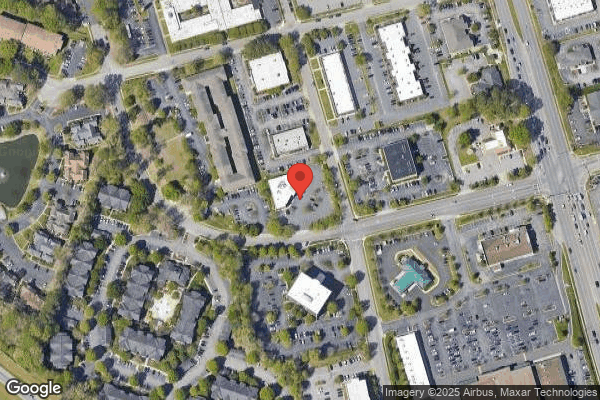
Sept 2017 8 deficiencies
CONCERN (D)

Potential for Harm - no one hurt, but risky conditions existed

Deficiency F0176 (Tag F0176)

Could have caused harm · This affected 1 resident

**NOTE- TERMS IN BRACKETS HAVE BEEN EDITED TO PROTECT CONFIDENTIALITY** Based on observation, resident interview, staff interview, facility documentation review, clinical record review, and the facili...

Read full inspector narrative →
**NOTE- TERMS IN BRACKETS HAVE BEEN EDITED TO PROTECT CONFIDENTIALITY** Based on observation, resident interview, staff interview, facility documentation review, clinical record review, and the facility staff failed to assess one of 26 Residents in the survey sample (Resident #15) ability to self administer Voltaren Gel. The findings included: Resident #15 was admitted to the facility on [DATE]. Diagnoses for Resident #15 included but are not limited to Chronic Pain. Resident #15's Quarterly Minimum Data Set (MDS-an assessment protocol) with an Assessment Reference Date of 5/28/17, coded Resident #15 with a BIMS (Brief Interview for Mental Status) of 15 of 15 indicating no cognitive impairment. In addition, the Quarterly MDS coded Resident #15 as being independent in Dressing, Eating, Toilet use and Hygiene. Resident #15 was coded as not being observed ambulating and having a wheel chair and walker as mobility devices. On 9/6/17 at approximately 9:45 a.m., an observation was made of Resident #15 sitting on her bed with a tube of Voltaren* Gel lying on the bed beside her. On 9/7/17 at approximately 1:00 p.m., an observation was made of Resident #15's room. Resident #15 was out of the room. No observation was made of Voltaren Gel within sight in Resident #15's room. On 9/7/17 at approximately 9:40 a.m., Resident #15 was asked about her pain control. Resident #15 stated, I get pain pills and they help me very much. Resident #15 was asked if she uses any topical medications. Resident #15 stated, Yes, I use .I can't think of the name of it. Let me show you. Resident #15 then obtained a tube of Voltaren Gel from her unlocked belongings. Resident #15 was asked to tell me about Voltaren Gel. Resident #15 stated, About all I can tell you is I use it for pain of my knees. On 9/17/17 at approximately 9:40 a.m., The Unit 1 LPN #1-UM (Licensed Practical Nurse - Unit Manager) was asked to show a copy of a Medication Self Administer Assessment for Resident #15 to have Voltaren Gel at bedside. The Unit 1, Unit Manager LPN #1, provided a copy of the Physician order to have Voltaren Gel at bedside. The Unit Manager was asked to provide a copy of the Resident #15's ability to safely administer Voltaren Gel. The Unit Manager LPN #1, stated, I do not see an assessment for that. Resident #15's 4/10/17 Physician Order documented the following: Voltaren Gel 1% Apply 1 application unsupervised transdermally (on skin) every day and evening shift for pain apply to bilateral knees. Resident #15's 9/8/17 Physician Order documented the following: May Keep Voltaren 1# Gel at bedside. Staff to educate patient on BID (twice daily) application to knees. Resident #15's 8/26/17 Current Care Plan documented a Focus Area for Potential for pain. Interventions included but were not limited to: Administer medications per Medical Doctor order. Medline Plus documented potential side effects of Voltaren Gel 1% are as follows: severe or do not go away: dryness, redness, itching, swelling, pain, hardness, irritation, swelling, scaling, or numbness at application site acne stomach pain constipation gas dizziness numbness, burning, or tingling in the hands, arms, feet, or legs Some side effects can be serious. If you experience any of these symptoms or those listed in the IMPORTANT WARNING section, call your doctor immediately: hives itching difficulty swallowing swelling of the face, throat, arms, or hands unexplained weight gain shortness of breath or difficulty breathing swelling in the abdomen, ankles, feet, or legs wheezing worsening of asthma yellowing of the skin or eyes nausea extreme tiredness unusual bleeding or bruising lack of energy loss of appetite pain in the upper right part of the stomach flu-like symptoms dark-colored urine rash blisters on skin fever pale skin fast heartbeat excessive tiredness Diclofenac gel (Voltaren) or liquid (Pennsaid) may cause other side effects. Call your doctor if you have any unusual problems while using this medication. The Facility Policy and Procedure titled, Self-Administration of Medication at Bedside with an effective date of 2/1/15 documented the following: The patient may request to keep medications at bedside for self-administration in a lock box. Verify physician's order in the patient's chart for self-administration of specific medications under consideration. Complete Self-Medication Request/Evaluation form. A licensed nurse will monitor and chart self-administered drugs, and will monitor for proper storage on each med pass. The facility administration was informed of the findings during a briefing on 9/8/17 at approximately 12:00 noon The facility did not present any further information about the findings. DEFINITIONS Voltaren Gel 1%: Medline Plus documented the following: Diclofenac topical gel (Voltaren) is used to relieve pain from osteoarthritis (arthritis caused by a breakdown of the lining of the joints) in certain joints such as those of the knees, ankles, feet, elbows, wrists, and hands. Diclofenac topical liquid (Pennsaid) is used to relieve osteoarthritis pain in the knees. Diclofenac is in a class of medications called nonsteroidal anti-inflammatory drugs (NSAIDs). It works by stopping the body's production of a substance that causes pain.
CONCERN (D)

Potential for Harm - no one hurt, but risky conditions existed

Deficiency F0278 (Tag F0278)

Could have caused harm · This affected 1 resident

**NOTE- TERMS IN BRACKETS HAVE BEEN EDITED TO PROTECT CONFIDENTIALITY** Based on observation, staff interviews, clinical record review, and review of the facility's policy the facility staff failed to...

Read full inspector narrative →
**NOTE- TERMS IN BRACKETS HAVE BEEN EDITED TO PROTECT CONFIDENTIALITY** Based on observation, staff interviews, clinical record review, and review of the facility's policy the facility staff failed to accurately code the Minimum Data Set (MDS) assessment for one of 26 residents (Resident #17), in the survey sample. The facility staff failed to code Resident #17's MDS assessment correctly at section A1500 through A1550. The findings included: Resident #17 was originally admitted to the facility 10/15/1998 and readmitted [DATE] after an acute illness resulting in hospitalization. The current diagnoses included; a developmental disorder, cerebral palsy, an autistic disorder and mental retardation (MR). The quarterly MDS assessment with an assessment reference date (ARD) of 7/14/17 coded the resident as not having the ability to complete the Brief Interview for Mental Status (BIMS). The staff interview was coded for long and short term memory problems as well as severely impaired daily decision making abilities. The resident was also coded as having no speech, rarely to never understands what's said to him and rarely to never can make himself understood. Resident #17 was coded as having no mood or behavior problems and requiring total care of 1-2 people with all activities of daily living. A Physician's progress note dated 7/13/17, listed past medical history as follows; infantile cerebral palsy, mental retardation, severe autism, and cerebral anoxia at birth. Review of Resident #17's clinical record revealed a document titled Screening for Mental Illness, Mental Retardation/Intellectual Disability, or Related Conditions dated 1/20/16. The document stated Resident #17 does not have a diagnosis of a developmental disorder, cerebral palsy, an autistic disorder or mental retardation which was manifested prior to age [AGE]; therefore, no active treatment needs were required and the resident doesn't meet the applicable criteria for serious mental illness, or MR/ID or related condition. Review of the 1/14/17 Annual MDS assessment coded the resident at A1500 as not having a serious mental illness and/or intellectual disability (mental retardation) or a related condition The no answer at A1500 allowed the staff to skip to question A1550, where the staff again failed to code the resident for organic conditions A1550b Autism and A1550e other organic condition which would have included cerebral palsy. If the appropriate coding had been made at A1500 then A1510b and A1510c mental retardation/intellectual disability and other other related conditions could have been coded. An interview was conducted with the Discharge Planner on 9/7/17 at approximately 11:00 a.m., who was responsible for coordinating the screening assessments. The Discharge Planner stated the facility staff conducted an audit of the Screening for Mental Illness, Mental Retardation/Intellectual Disability, or Related Conditions assessments and the assessments were completed 10-15 at a time until all were completed. After review of Resident #17's screening assessment for Mental Illness, Mental Retardation/Intellectual Disability the Discharge Planner stated it was inaccurate and she was responsible for reviewing the assessment for accuracy after the intern completed it. The above findings were shared with the Administrator, Director of Nursing and Corporate Nurse Consultant on 9/7/17 at approximately 11:30 a.m. The Corporate Nurse Consultant stated the screening assessment was incorrect and the MDS assessment was not accurate therefore; a new screening assessment would be completed and the MDS assessment would be modified to reflect the resident's status.
CONCERN (D)

Potential for Harm - no one hurt, but risky conditions existed

Deficiency F0280 (Tag F0280)

Could have caused harm · This affected 1 resident

**NOTE- TERMS IN BRACKETS HAVE BEEN EDITED TO PROTECT CONFIDENTIALITY** Based on staff interviews, facility documentation review and clinical record review the facility staff failed to update a compre...

Read full inspector narrative →
**NOTE- TERMS IN BRACKETS HAVE BEEN EDITED TO PROTECT CONFIDENTIALITY** Based on staff interviews, facility documentation review and clinical record review the facility staff failed to update a comprehensive person centered care plan after a fall for one of 26 residents (Resident #10) in the survey sample. The facility staff failed to revise Resident #10's comprehensive care plan to include a fall on 02/12/17. The findings included: Resident #10 was originally admitted to the facility on [DATE]. Diagnosis for Resident #10 included but not limited to muscle weakness (1) and Alzheimer's (2). The current Minimum Data Set (MDS), a comprehensive assessment with an Assessment Reference Date (ARD) of 08/15/17 coded the resident with a 6 out of a possible score of 15 on the Brief Interview for Mental Status (BIMS) indicating severe cognitive impairment. In addition, the MDS coded Resident #10 with extensive assistance of two with bed mobility, dressing, toilet use and personal hygiene and extensive assistance of one with bathing. The comprehensive care plan was reviewed on 12/12/16; the care plan did not address Resident #10's fall on 2/12/17 to include new interventions to prevent another fall. An interview was conducted with LPN #2 on 09/07/17 at approximately 2:45 p.m., who stated, The nurse who is actually involved with the resident's fall is responsible for care planning their fall. The facility's administration was informed of the finding during a briefing on 09/08/17. The surveyor asked the Director of Nursing (DON), what is your expectations for care planning falls, she replied, I expect for my unit manager to educate the floor nurses on how to care plan falls because they are not here 24 - 7. The DON proceeded to say, she expects the unit managers to follow up the very next business day to make sure all falls have been care planned and if they are not care planned; to care plan them. The facility's policy: Resident Assessment and Care Planning (Effective 11/28/16). Procedure: 4. Computerized care plans will be updated by each discipline on an ongoing basis as changes in the patient occur, and reviewed quarterly with the quarterly assessment. Falls Management Program (Effective 02/01/15). Falls Committee: 5. The Unit Manager verifies care plan revisions, patient monitoring, appropriate referrals, and communication to staff for all recommendations. Definitions: 1). Muscles weakness is reduced strength in one or more muscles (https://medlineplus.gov/ency/article/007365.htm). 2). Alzheimer's is the common form of dementia. A progressive disease beginning with mild memory loss possibly leading to loss of the ability to carry on a conversation and respond to the environment (Source: http://www.cdc.gov/aging/aginginfo/alzheimers.htm).
CONCERN (D)

Potential for Harm - no one hurt, but risky conditions existed

Deficiency F0431 (Tag F0431)

Could have caused harm · This affected 1 resident

**NOTE- TERMS IN BRACKETS HAVE BEEN EDITED TO PROTECT CONFIDENTIALITY** Based on observation, staff interviews and facility documentation review the facility staff failed to date two open multidose vi...

Read full inspector narrative →
**NOTE- TERMS IN BRACKETS HAVE BEEN EDITED TO PROTECT CONFIDENTIALITY** Based on observation, staff interviews and facility documentation review the facility staff failed to date two open multidose vials of insulin for 2 out of 26 residents (Resident #19 and Resident #20) in the survey sample. 1. The facility staff failed to date an opened multidose vial of Novolog (1) insulin (Resident #19). 2. The facility staff failed to date an opened multidose vial of Humalog (2) insulin (Resident #20). The findings included: 1. Resident #19 was originally admitted to the facility on [DATE] with diagnosis to include but not limited to Type 2 Diabetes Mellitus (3) (DM). The current Minimum Data Set (MDS) a quarterly assessment with an Assessment Reference Date (ARD) of 08/19/17 coded the resident with a score of 99 indicating severely impaired with daily decision making. On 09/7/17 at 9:10 a.m., during inspection of the medication room on Unit 1, located in the medication refrigerator was one unlabeled multidose vial of Novolog insulin. The surveyor asked LPN #1, when was the insulin opened, she replied I don't see an open date; there should be a date written on the vial once opened. On 09/07/17 at approximately 10:45 a.m., an interview was conducted with the Corporate Nurse who stated all insulin should be dated once open. 2. Resident #20 was admitted to the facility on [DATE] with diagnosis to include but not limited to Type 2 Diabetes Mellitus (DM). The current Minimum Data Set (MDS) a quarterly assessment with an Assessment Reference Date (ARD) of 07/26/17 coded the resident with a 09 out of a possible score of 15 on the Brief Interview for Mental Status (BIMS), indicating moderate cognitive impairment. On 09/7/17 at 9:25 a.m., during inspection of the medication room on Unit 3, located in the medication refrigerator was one unlabeled multidose vial of Humalog insulin. The surveyor asked RN #1 should the vial of Humalog have an open date, she replied, Yes, it should have been dated once open. The surveyor asked, How long in Humalog good for once open RN replied, Good for 28 days after it's opened. On 09/07/17 at approximately 10:45 a.m., an interview was conducted with the Corporate Nurse who stated all insulin should be dated once opened. The facility administration was informed of the findings during a briefing on 09/08/17. The facility did not present any further information about the findings. The facility's policy: 5.3 Storage and Expiration Dating of Medications, Biologicals, Syringes and Needles (Revision Date: 05/10/10). Procedure: 5. Once any medication or biological package is opened. Facility should follow manufacture/suppliers guidelines with respect to expiration date for opened medications. Facility should record the date opened on the medication container when the medication has a shortened expiration date once opened. Definitions: 1). Novolog is used to treat diabetes (condition in which the body does not produce insulin and therefore cannot control the amount of sugar in the blood) (https://medlineplus.gov/druginfo/meds/a605013.html). 2). Humalog is used to treat diabetes (condition in which the body does not produce insulin and therefore cannot control the amount of sugar in the blood) (https://medlineplus.gov/druginfo/meds/a605013.html). 3). Type 2 Diabetes Mellitus is a lifelong (chronic) disease in which there is a high level of sugar (glucose) in the blood (https://medlineplus.gov/ency/article/007365.htm).
CONCERN (D)

Potential for Harm - no one hurt, but risky conditions existed

Deficiency F0504 (Tag F0504)

Could have caused harm · This affected 1 resident

**NOTE- TERMS IN BRACKETS HAVE BEEN EDITED TO PROTECT CONFIDENTIALITY** Based on clinical record review, staff interviews and facility documentation the facility staff failed to ensure labs were obtai...

Read full inspector narrative →
**NOTE- TERMS IN BRACKETS HAVE BEEN EDITED TO PROTECT CONFIDENTIALITY** Based on clinical record review, staff interviews and facility documentation the facility staff failed to ensure labs were obtained as ordered for one out of 26 residents (Resident #1) in the survey sample. The facility staff failed to ensure labs were obtained as ordered for the following: Basic Metabolic Panel (BMP) (1) and Hemoglobin A1C (2) for the month of August 2017. The findings included: Resident #1 was originally admitted to the facility on [DATE]. Diagnosis for Resident #1 included but not limited to Type 2 Diabetes Mellitus (3) and Heart Failure (4). Resident #1's most recent MDS assessment was a comprehensive assessment with an ARD of 5/31/17. The Resident was coded with a Brief Interview for Mental Status (BIMS) score of 15 out of a possible 15, indicating no cognitive impairment. In addition, the MDS coded Resident #1 requiring total dependence of one with bathing, extensive assistance of two with transfers, extensive assistance of one with bed mobility, dressing, toilet use and personal hygiene. Resident #1's comprehensive care plan documented Resident #1 with a diagnosis of DM. The goal: the resident will have no complications related to diabetes. Some of the intervention to manage goal included but not limited to: Labs as ordered. The clinical record revealed the most recent physician order to draw labs of the following: BMP every 6 months in February and August and HGB A1C every 3 months in February, May, August and November. During medical record review, the surveyor was unable to locate the BMP and HGB A1C for the month of August on Resident #1's chart or in the medical record. An interview was conducted LPN #1 on 09/07/17 at approximately 12:25 p.m., who stated she was unable to locate the BMP and HGB A1C in Resident's #1's clinical record. The surveyor asked what is the process and procedure for drawing upcoming labs, the LPN replied We have a lab book and inside the lab book is a tracking form where we put the resident's name and the date the labs needs to be obtain. The surveyor asked who draws the labs, she replied, (name of company) pharmacy comes over; reviews the lab book and draws all the labs. During the review of the lab tracking form for August 2017 did not have Resident #1's name listed to have labs drawn. The facility's Administration was informed of the findings during a briefing on 09/08/17. The facility did not present any further information about the findings. The facility's policy: Laboratory/Diagnostic Testing (Effective Date: 11/21/16). Policy: Laboratory, radiology and diagnostic services are provided to the Center by way of written contractual agreements. The contracted service vendor is to provide services to the Center that ensure safe and effective patient testing and timely delivery of laboratory, radiology and other diagnostic testing results. Procedure: -A licensed nurse will obtain laboratory, radiology, or other diagnostic services to meet the needs of its patients as ordered by the physician or physician extender. -A licensed nurse will monitor and track all physicians or physician extender ordered laboratory, radiology, and other diagnostic test; ensure that test are complete as ordered and communicate results to the physician in a timely manner. Definitions: 1). BMP is used to check the status of a person's kidneys and their electrolyte and acid/base balance, as well as their blood glucose level - all of which are related to a person's metabolism (https://medlineplus.gov/ency/article/007365.htm). 2). Hemoglobin A1C is a blood test for type 2 diabetes and prediabetes. It measures your average blood glucose, or blood sugar, level over the past 3 months (https://medlineplus.gov/ency/article/007365.htm). 3). Diabetes Mellitus Type II is a lifelong (chronic) disease in which there is a high level of sugar (glucose) in the blood (https://medlineplus.gov/ency/article/007365.htm). 4). Heart failure is a condition in which the heart can't pump enough blood to meet the body's needs. Heart failure does not mean that your heart has stopped or is about to stop working. It means that your heart is not able to pump blood the way it should. It can affect one or both sides of the heart (https://medlineplus.gov/ency/article/007365.htm
CONCERN (D)

Potential for Harm - no one hurt, but risky conditions existed

Deficiency F0514 (Tag F0514)

Could have caused harm · This affected 1 resident

**NOTE- TERMS IN BRACKETS HAVE BEEN EDITED TO PROTECT CONFIDENTIALITY** Based on staff interview and clinical record review the facility staff failed to accurately document medical record information ...

Read full inspector narrative →
**NOTE- TERMS IN BRACKETS HAVE BEEN EDITED TO PROTECT CONFIDENTIALITY** Based on staff interview and clinical record review the facility staff failed to accurately document medical record information for one of 26 residents (Resident #17), in the survey sample. The facility staff failed to accurately document information on Resident #17's Screening for Mental Illness, Mental Retardation/Intellectual Disability, or Related Conditions assessments. The findings included: Resident #17 was originally admitted to the facility 10/15/1998 and readmitted [DATE] after an acute illness resulting in hospitalization. The current diagnoses included; a developmental disorder, cerebral palsy, an autistic disorder and mental retardation (MR). The quarterly MDS assessment with an assessment reference date (ARD) of 7/14/17 coded the resident as not having the ability to complete the Brief Interview for Mental Status (BIMS). The staff interview was coded for long and short term memory problems as well as severely impaired daily decision making abilities. The resident was also coded as having no speech, rarely to never understands what's said to him and rarely to never can make himself understood. Resident #17 was coded as having no mood or behavior problems and requiring total care of 1-2 people with all activities of daily living. A Physician's progress note dated 7/13/17, listed past medical history as follows; infantile cerebral palsy, mental retardation, severe autism, and cerebral anoxia at birth. Review of Resident #17's clinical record revealed a document titled Screening for Mental Illness, Mental Retardation/Intellectual Disability, or Related Conditions dated 1/20/16. The document stated Resident #17 does not have a a diagnosis of a developmental disorder, cerebral palsy, an autistic disorder or mental retardation which was manifested prior to age [AGE]; therefore, no active treatment needs were required and the resident doesn't meet the applicable criteria for serious mental illness, or MR/ID or related condition. Review of the 1/14/17 Annual MDS assessment coded the resident at A1500 as not having a serious mental illness and/or intellectual disability (mental retardation) or a related condition The no answer at A1500 allowed the staff to skip to question A1550, where the staff again failed to code the resident for organic conditions A1550b Autism and A1550e other organic condition which would have included cerebral palsy. If the appropriate coding had been made at A1500 then A1510b and A1510c mental retardation/intellectual disability and other other related conditions could have been coded. An interview was conducted with the Discharge Planner on 9/7/17 at approximately 11:00 a.m., who was responsible for coordinating the screening assessments. The Discharge Planner stated the facility staff conducted an audit of the Screening for Mental Illness, Mental Retardation/Intellectual Disability, or Related Conditions assessments and the assessments were completed 10-15 at a time until all were completed. After review of Resident #17's screening assessment for Mental Illness, Mental Retardation/Intellectual Disability the Discharge Planner stated it was inaccurate and she was responsible for reviewing the assessment for accuracy after the intern completed it. The above findings were shared with the Administrator, Director of Nursing and Corporate Nurse Consultant on 9/7/17 at approximately 11:30 a.m. The Corporate Nurse Consultant stated the screening assessment was incorrect and the MDS assessment was not accurate therefore; a new screening assessment would be completed and the MDS assessment would be modified to reflect the resident's status.
CONCERN (E)

Potential for Harm - no one hurt, but risky conditions existed

Deficiency F0371 (Tag F0371)

Could have caused harm · This affected multiple residents

Based on observations, facility document review and staff interviews the facility staff failed to prepare, store, distribute and serve food in a safe, sanitary manner. The facility staff failed to en...

Read full inspector narrative →
Based on observations, facility document review and staff interviews the facility staff failed to prepare, store, distribute and serve food in a safe, sanitary manner. The facility staff failed to ensure that the kitchen was free from pests to include roaches and drain flies, maintain a clean stove and oven that were free from copious amounts of grease and burnt debris, and ensure that an air gap was in place from the two food steamer units drain pipe to the floor drain. The findings included: On 9/6/17 at 7:55 a.m. during the initial kitchen tour the following observations were made: The two kitchen food steamer units were connected to one water drain pipe that was flush with and touching the floor drain. There was no visible air gap present. The six burner stove was noted to have large pieces of crusty burnt debris and a thick grease layer on and around all the burner. The three ovens were observed to have burnt/spillage debris on the oven floors and the oven racks were coated in thick black grease with raised areas of burnt food debris visible. One dead roach was observed on the floor between a three sink compartment unit and the pan drying rack. Also two live roaches were observed crawling up the wall in the main kitchen area under the sinks and crawling on the walls. In the dishwasher area five gray drain flies were observed crawling on the top and inside of the grease trap drain. There was also a large amount of dirt and debris present on the floors up under the dishwasher and the coffee maker table. The six well food steam table in the resident dining room was noted to have have debris and dirty water in all six wells and the heat lights above the food wells were covered in burnt food debris. On 7/6/17 at 11:30 a.m. the above findings were shared with the Dietary Manager. The Dietary manager was asked when and how often are the kitchen floors and ovens cleaned. The Dietary Manager stated, We deep clean and mop every Wednesday, but we have been slacking lately. I have been working 14 hour shifts myself and my staff are doing double shifts. It's hard to find staff and keep them. The Dietary Manager provided the operation manual for the two steamer units titled Vulcan Installation & Operation Manual dated 2/06 which documented in part, as follows: Drain Connections: The drain connection must be 1 1/2 inches down, preferably with one elbow only, maximum length of 6 inches and piped to an open gap type drain. CAUTION: In order to avoid any back pressure in the steamer, do not make a solid connection to any drain. FAILURE TO DO SO CAN DAMAGE THE STEAMER AND VOIDS THE WARRANTY. A vent must be installed to avoid creating a vacuum or pressure in the cooking chamber. The facility policy titled General Cleaning effective date 4/27/16 is documented in part, as follows: Policy: Routine cleaning will be done to maintain a sanitary work environment. A cleaning schedule will be posted in the department. Procedure: 1. The Dining Services Manager/designee is responsible for posting a cleaning schedule to designate items to be cleaned on a daily, weekly, or monthly basis. 3. The Dining Services Manager/designee will check the cleaning schedule at the end of each shift to assure assignments have been completed. The facility policy titled Sanitation effective date 4/27/16 is documented in part, as follows: Policy: Storage areas and premises shall be free from rodent and insect infestations, odors, dust and other sources of contamination. Procedure: 1. The kitchen and storage areas shall be regularly sprayed and maintained by an exterminating company for insects and rodents as often as deemed necessary. 2. Food is stored in a manner that protects food at all times from dust, flies, rodents, and other vermin. 6. Any food spilled shall be cleaned up immediately. 7. The floors shall be kept free from any debris or liquids at all times. On 9/7/17 at 3:00 p.m. the Administrator was made aware of the above findings and was asked what he would have expected in the kitchen. The Administrator stated, I have known the sanitary inspection to be good so that's hard for me to answer. We have reinstated the cleaning schedule and we have a company that cleans the oven hoods and we are going to contract with them to clean the drains and deep clean the floors. We are also going to have the exterminator come more often. Prior to exit no further information was shared.
CONCERN (E)

Potential for Harm - no one hurt, but risky conditions existed

Deficiency F0469 (Tag F0469)

Could have caused harm · This affected multiple residents

Based on observations, facility document review and staff interviews the facility staff failed to maintain an effective pest control program to ensure the facility is free of pests. 1. The facility s...

Read full inspector narrative →
Based on observations, facility document review and staff interviews the facility staff failed to maintain an effective pest control program to ensure the facility is free of pests. 1. The facility staff failed to ensure that the kitchen was free from pests to include roaches and drain flies. 2. The facility staff failed to ensure the facility was free from ants. The findings included: On 9/6/17 at 7:55 a.m. during the initial kitchen tour the following observations were made: One dead roach was observed on the floor between a three sink compartment unit and the pan drying rack. Also two live roaches were observed crawling on the floor in the main kitchen area under the sinks and crawling on the walls. In the dishwasher area five gray drain flies were observed crawling on the top and inside of the grease trap drain. On 9/6/17 at 8:15 a.m. an interview was conducted with the Dietary Aide. The Dietary Aide was asked if there are issues with roaches and pests in the kitchen. The Dietary Aide stated, We have them every now and then. The bug man comes in and sprays. On 7/6/17 at 11:30 a.m. the above findings were shared with the Dietary Manager. The Dietary manager was asked when and how often are the kitchen floors and ovens cleaned. The Dietary Manager stated, We deep clean and mop every Wednesday, but we have been slacking lately. I have been working 14 hour shifts myself and my staff are doing double shifts. It's hard to find staff and keep them. The facility policy titled Sanitation effective date 4/27/16 is documented in part, as follows: Policy: Storage areas and premises shall be free from rodent and insect infestations, odors, dust and other sources of contamination. Procedure: 1. The kitchen and storage areas shall be regularly sprayed and maintained by an exterminating company for insects and rodents as often as deemed necessary. 2. Food is stored in a manner that protects food at all times from dust, flies, rodents, and other vermin. 6. Any food spilled shall be cleaned up immediately. 7. The floors shall be kept free from any debris or liquids at all times. On 9/7/17 at 3:00 p.m. the Administrator was made aware of the above findings and was asked what he would have expected in the kitchen. The Administrator stated, I have known the sanitary inspection to be good so that's hard for me to answer. We have reinstated the cleaning schedule and we have a company that cleans the oven hoods and we are going to contract with them to clean the drains and deep clean the floors. We are also going to have the exterminator come more often. Prior to exit no further information was shared. 2. Ants were observed in the conference room during the three days of the survey. Ants were observed in the window sills and crawling along the radiators in the conference room. Ants were also observed on the conference room table and cabinet like vanity. During an interview on 9/7/17 at 11:00 A.M. with the administrator he stated he was not aware ants were in the window. The facility staff failed to have an effective pest control program.
Understanding Severity Codes (click to expand)
Life-Threatening (Immediate Jeopardy)
J - Isolated K - Pattern L - Widespread
Actual Harm
G - Isolated H - Pattern I - Widespread
Potential for Harm
D - Isolated E - Pattern F - Widespread
No Harm (Minor)
A - Isolated B - Pattern C - Widespread

Questions to Ask on Your Visit

  • "What changes have you made since the serious inspection findings?"
  • "Why is there high staff turnover? How do you retain staff?"
  • "Can I speak with families of current residents?"
  • "What's your RN coverage like on weekends and overnight?"

Our Honest Assessment

Strengths
  • • Licensed and certified facility. Meets minimum state requirements.
Concerns
  • • Multiple safety concerns identified: 1 life-threatening violation(s), 4 harm violation(s). Review inspection reports carefully.
  • • 50 deficiencies on record, including 1 critical (life-threatening) violation. These warrant careful review before choosing this facility.
  • • $24,577 in fines. Higher than 94% of Virginia facilities, suggesting repeated compliance issues.
  • • Grade F (1/100). Below average facility with significant concerns.
Bottom line: Trust Score of 1/100 indicates significant concerns. Thoroughly evaluate alternatives.

About This Facility

What is Chesapeake Center's CMS Rating?

CMS assigns CHESAPEAKE HEALTH AND REHABILITATION CENTER an overall rating of 1 out of 5 stars, which is considered much below average nationally. Within Virginia, this rating places the facility higher than 0% of the state's 100 nursing homes. A rating at this level reflects concerns identified through health inspections, staffing assessments, or quality measures that families should carefully consider.

How is Chesapeake Center Staffed?

CMS rates CHESAPEAKE HEALTH AND REHABILITATION CENTER's staffing level at 1 out of 5 stars, which is much below average compared to other nursing homes. Staff turnover is 57%, which is 11 percentage points above the Virginia average of 46%. High turnover can affect care consistency as new staff learn residents' individual needs.

What Have Inspectors Found at Chesapeake Center?

State health inspectors documented 50 deficiencies at CHESAPEAKE HEALTH AND REHABILITATION CENTER during 2017 to 2024. These included: 1 Immediate Jeopardy (the most serious level, indicating potential for serious harm or death), 4 that caused actual resident harm, and 45 with potential for harm. Immediate Jeopardy findings are rare and represent the most serious regulatory concerns. They require immediate corrective action.

Who Owns and Operates Chesapeake Center?

CHESAPEAKE HEALTH AND REHABILITATION CENTER is owned by a for-profit company. For-profit facilities operate as businesses with obligations to shareholders or private owners. The facility is operated by LIFEWORKS REHAB, a chain that manages multiple nursing homes. With 180 certified beds and approximately 171 residents (about 95% occupancy), it is a mid-sized facility located in CHESAPEAKE, Virginia.

How Does Chesapeake Center Compare to Other Virginia Nursing Homes?

Compared to the 100 nursing homes in Virginia, CHESAPEAKE HEALTH AND REHABILITATION CENTER's overall rating (1 stars) is below the state average of 3.0, staff turnover (57%) is significantly higher than the state average of 46%, and health inspection rating (1 stars) is much below the national benchmark.

What Should Families Ask When Visiting Chesapeake Center?

Based on this facility's data, families visiting should ask: "What changes have been made since the serious inspection findings, and how are you preventing similar issues?" "How do you ensure continuity of care given staff turnover, and what is your staff retention strategy?" "Can you walk me through typical staffing levels on day, evening, and night shifts?" "Can I visit during a mealtime to observe dining assistance and food quality?" These questions are particularly relevant given the facility's Immediate Jeopardy citations, the facility's high staff turnover rate, and the below-average staffing rating.

Is Chesapeake Center Safe?

Based on CMS inspection data, CHESAPEAKE HEALTH AND REHABILITATION CENTER has documented safety concerns. Inspectors have issued 1 Immediate Jeopardy citation (the most serious violation level indicating risk of serious injury or death). The facility has a 1-star overall rating and ranks #100 of 100 nursing homes in Virginia. Families considering this facility should ask detailed questions about what corrective actions have been taken since these incidents.

Do Nurses at Chesapeake Center Stick Around?

Staff turnover at CHESAPEAKE HEALTH AND REHABILITATION CENTER is high. At 57%, the facility is 11 percentage points above the Virginia average of 46%. High turnover means new staff may not know residents' individual needs, medications, or preferences. It can also be disorienting for residents, especially those with dementia who rely on familiar faces. Families should ask: What is causing the turnover? What retention programs are in place? How do you ensure care continuity during staff transitions?

Was Chesapeake Center Ever Fined?

CHESAPEAKE HEALTH AND REHABILITATION CENTER has been fined $24,577 across 2 penalty actions. This is below the Virginia average of $33,325. While any fine indicates a compliance issue, fines under $50,000 are relatively common and typically reflect isolated problems that were subsequently corrected. Families should ask what specific issues led to these fines and confirm they've been resolved.

Is Chesapeake Center on Any Federal Watch List?

CHESAPEAKE HEALTH AND REHABILITATION CENTER is not on any federal watch list. The most significant is the Special Focus Facility (SFF) program, which identifies the bottom 1% of nursing homes nationally based on persistent, serious quality problems. Not being on this list means the facility has avoided the pattern of deficiencies that triggers enhanced federal oversight. This is a positive indicator, though families should still review the facility's inspection history directly.