TYLER'S RETREAT AT IRON BRIDGE
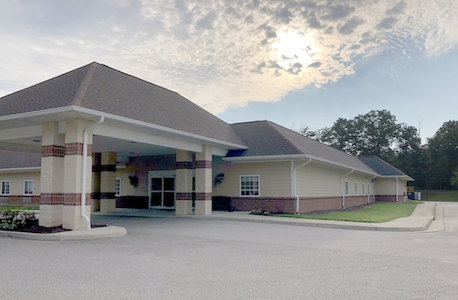
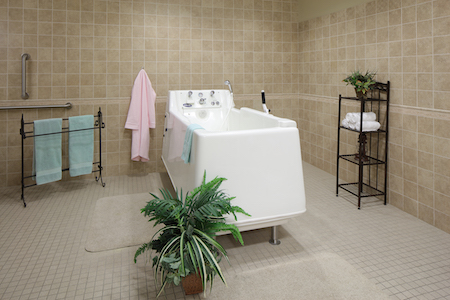
12001 IRON BRIDGE RD, CHESTER, VA 23831 (804) 706-1023
For profit - Corporation 90 Beds SABER HEALTHCARE GROUP Data: November 2025
Trust Grade
45/100
#229 of 285 in VA
Last Inspection: January 2023

Over 2 years since last inspection. Current conditions may differ from available data.

Overview

Tyler's Retreat at Iron Bridge has received a Trust Grade of D, which means it is below average and has some concerns that families should consider. It ranks #229 out of 285 nursing homes in Virginia, placing it in the bottom half of facilities statewide, and #5 out of 6 in Chesterfield County, indicating limited better options nearby. The facility is showing signs of improvement, with issues reported decreasing from 6 in 2024 to 1 in 2025. Staffing is average with a rating of 2 out of 5 stars and a turnover rate of 57%, which is slightly higher than the state average, suggesting some staff stability but room for improvement. Notably, there have been no fines, which is a positive sign, and the RN coverage is average, meaning they have a reasonable number of registered nurses available to monitor resident care. However, there are significant weaknesses to be aware of. Recent inspections found that a resident was transferred to the hospital without proper notification to them or their representative, and another resident did not receive required pressure ulcer treatment or fall prevention measures. Additionally, there was a failure to create a care plan addressing the use of bed rails for a resident with Alzheimer's disease, which raises concerns about the overall attention to individualized care. Families should weigh these strengths and weaknesses carefully when considering this facility for their loved ones.

Trust Score
D
45/100
In Virginia
#229/285
Bottom 20%
Safety Record
Low Risk
No red flags
Inspections
Getting Better
6 → 1 violations
Staff Stability
⚠ Watch
57% turnover. Above average. Higher turnover means staff may not know residents' routines.
Penalties
✓ Good
No fines on record. Clean compliance history, better than most Virginia facilities.
Skilled Nurses
○ Average
Each resident gets 37 minutes of Registered Nurse (RN) attention daily — about average for Virginia. RNs are the most trained staff who monitor for health changes.
Violations
⚠ Watch
51 deficiencies on record. Higher than average. Multiple issues found across inspections.
★★☆☆☆
2.0
Overall Rating
★★☆☆☆
2.0
Staff Levels
★★★☆☆
3.0
Care Quality
★★☆☆☆
2.0
Inspection Score
Stable
2024: 6 issues
2025: 1 issues

The Good

  • Full Sprinkler Coverage · Fire safety systems throughout facility
  • No fines on record

Facility shows strength in fire safety.

The Bad

2-Star Overall Rating

Below Virginia average (3.0)

Below average - review inspection findings carefully

Staff Turnover: 57%

11pts above Virginia avg (46%)

Frequent staff changes - ask about care continuity

Chain: SABER HEALTHCARE GROUP

Part of a multi-facility chain

Ask about local staffing decisions and management

Staff turnover is elevated (57%)

9 points above Virginia average of 48%

The Ugly 51 deficiencies on record

Aug 2025 1 deficiency
CONCERN (D) 📢 Someone Reported This

A family member, employee, or ombudsman was alarmed enough to file a formal complaint

Potential for Harm - no one hurt, but risky conditions existed

Deficiency F0628 (Tag F0628)

Could have caused harm · This affected 1 resident

**NOTE- TERMS IN BRACKETS HAVE BEEN EDITED TO PROTECT CONFIDENTIALITY** Based on staff interview, facility document review, and clinical record review, the facility staff failed to implement hospital ...

Read full inspector narrative →
**NOTE- TERMS IN BRACKETS HAVE BEEN EDITED TO PROTECT CONFIDENTIALITY** Based on staff interview, facility document review, and clinical record review, the facility staff failed to implement hospital transfer requirements for two of 36 residents in the survey sample, Residents #96 and #5.The findings include:1. For Resident #96 (R96), the facility staff failed to provide a bed hold notice when the resident transferred to the hospital on [DATE]. A review of R96's clinical record revealed a nurse's note dated 12/27/24 that documented, MD (Medical Doctor) made this nurse aware of need to send resident to ER for evaluation of right jaw swelling. Resident noted to have increased edema of right jaw and MD concerned re: cellulitis or an abscess . Further review of R96's clinical record failed to reveal the resident/resident representative was provided a written notice of the bed hold policy. On 8/12/25 at 3:12 p.m., an interview was conducted with LPN (licensed practical nurse) #1. LPN #1 stated a copy of the bed hold policy is supposed to go with the resident when a resident is sent to the hospital and the nurse should document a note this was done. On 8/12/25 at 4:49 p.m., ASM (administrative staff member) #1 (the administrator) and ASM #2 (the director of nursing) were made aware of the above concern. The facility policy titled, Resident Discharge/Transfer Letter Policy documented, G) The resident or responsible party will receive a bed hold notice along with the discharge/transfer letter, when applicable. No further information was presented prior to exit. 2. For R5, the facility staff failed to evidence that written notification was provided to R5’s responsible party in a practicable timeframe for a facility-initiated transfer on 03/03/2025 and on 03/25/2025. On the most recent MDS (minimum data set), a quarterly assessment with an ARD (assessment reference date) of 07/05/2025, R5 scored 15 out of 15 on the BIMS (brief interview for mental status), indicating the R5 was cognitively intact for making daily decisions. The facility’s nurse’s note dated 03/03/2025 at 1:34 p.m., for R5 documented in part, “Resident was received by writer with report of consistent pain to abdomen during the night and nausea (PRN (as needed) Tylenol) administered during 11-7 (11:00 p.m. to 7:00 a.m. shift)). Resident remains consistent with c/o (complaint of) pain during medication administration. Writer notified NP (nurse practitioner) and MD (medical doctor) of resident's discomfort and condition. MD in to assess resident with writer. Findings of tenderness to right abdomen w/o distention. Resident reported last BM (bowel movement) was 3/2/25. MD ordered for resident to be sent to EM (emergency room) for further evaluation. Writer contacted 911 for transport. EMT (emergency medical technician) arrived at facility at 1050am (10:50 a.m.) and transported resident safely from w/c (wheelchair) to stretcher by only contact assist (assistance) . The resident's needs cannot be meet [sic] at the facility at this time after several attempts to meet resident's needs. Resident was oriented and prepared for transfer.” The facility’s nurse’s note dated 03/25/25 documented in part, “Pt (patient) left via (by) EMS (emergency medical services) at 1155 (11:55 a.m.) for worsening right upper quadrant pain unrelieved by pain meds…” Review of the clinical record and the EHR (electronic health record) for R5 failed to evidence written notification of the discharge was provided to R5’s responsible party for the facility-initiated transfers on 03/03/2025 and on 03/25/2025. On 08/12/2025 at approximately 11:45 a.m., a request was made to ASM (administrative staff member) #1, administrator, for evidence that the facility provided R5’s responsible party written notification of R5’s transfers on 03/03/2025 and on 03/25/2025. On 08/12/2025 at approximately 1:00 p.m. OSM (other staff member) #5, social worker, provide the surveyor with copies of two “U. S. Postal Service Certified Mail Receipts” for the written notifications sent to R5’s responsible party for the transfers on 03/03/2025 and on 03/25/2025. Further review of the receipts revealed postage dates of 03/20/2025 and 04/01/2025 indicating that the notification letters were sent 17 and seven days following R5’s transfers on 03/03/2025 and on 03/25/2025. On 08/12/2025 at approximately 3:41 p.m. an interview was conducted with OSM #5. When asked if the written notifications to R5's responsible party were sent within a practical time frame she stated no. OSM #5 stated that an acceptable time frame to send the written notification to a responsible party would be within 24 hours on a weekday. She further stated if the resident was sent out on a Friday the written notification to the party responsible would be sent the following Monday. On 08/12/2025 at approximately 4:35 p.m. ASM #1, ASM #2, director of nursing, and RN (registered nurse) #1, assistant director of nursing, were made aware of the above findings. No further information was provided prior to exit.
Jun 2024 6 deficiencies
CONCERN (D) 📢 Someone Reported This

A family member, employee, or ombudsman was alarmed enough to file a formal complaint

Potential for Harm - no one hurt, but risky conditions existed

Notification of Changes (Tag F0580)

Could have caused harm · This affected 1 resident

Based on staff interview, facility document review, and clinical record review, it was determined the facility staff failed to notify the physician of a change in condition for one of 11 residents in ...

Read full inspector narrative →
Based on staff interview, facility document review, and clinical record review, it was determined the facility staff failed to notify the physician of a change in condition for one of 11 residents in the survey sample, Resident #1. The findings include: For Resident #1 (R1), the facility staff failed to notify the physician of a change in condition reported by physical therapy to the nurse. R1 was admitted to the facility with diagnoses with diagnoses that included but were not limited to diarrhea, unspecified and aftercare following joint replacement surgery. A physical therapy note dated 5/13/2024 documented in part, .Patient supine in bed upon arrival, reports that she is thirsty but cannot seem to take a sip of water and states she is spilling it on herself, nursing notified with BP (blood pressure) assessed 100/60, patient requested therapist to return later to complete session after therapist provided positioning with pillows in the bed with max A (maximal assistance). Call button in hand . A physician progress note dated 5/13/2024 documented in part, .Chief Complaint/Reason for this Visit: follow-up on the followings: patient reporting multiple issues and concerns health related: #1 diarrhea, persistent, watery, no hematochezia (1), no fever. I am not getting Imodium because nurses told me I can only have once a day. #2 persistent decreased oral intake. Decreased water intake. My mouth is dry. #3 GERD (gastroesophageal reflux disease). Currently taking omeprazole 40mg daily. Pepcid discontinued. Patient stated it is helping. #4 and my appetite is not good. #5 Rehabilitation team reported blood pressure lying in bed is 100/60. #6 Feeling weak and dry mouth . Assessment and Plan: 1. dehydration/dry mucous membrane/poor skin turgor: patient currently not on any diuretics. Clinically dehydrated. Associated hypotension. Patient is given education regarding her current condition and the need for hydration. Starting patient on normal saline 125cc per hour x 3L (liters) . 2. diarrhea, etiology unknown, recent use of antibiotics due to UTI (urinary tract infection): rule of C. difficile (2) associated diarrhea. Stool sample was sent this morning .Start patient on empirical oral vancomycin 250mg 4 times a day for 10 days. Start probiotics as well. Encourage fluids . A physical therapy note dated 5/13/2024 documented in part, .Patient supine in bed upon arrival, initially stating she is weak and cannot get up, requested not to stand up today .BP assessed 88.76, PTA (physical therapy assistant) collaborated with nursing RE: low blood pressure, patient's dry mouth and generalized weakness, therapist encouraged fluids during session, call button in hand upon departure of therapist . Review of the nursing notes and skilled nursing observations failed to evidence documentation on 5/13/2024. A nursing note dated 5/14/2024 documented, Resident noted with acute distress, unable to convey her needs to staff, which is not her baseline. Daughter at bedside, MD (medical doctor) notified of chance [sic]. The medical record failed to evidence documentation of an assessment of R1 after the physical therapy observations on 5/13/2024 or notification of the physician of the change in blood pressure. On 6/11/2024 at 2:54 p.m., an interview was conducted with LPN (licensed practical nurse) #2. LPN #2 stated that R1 had a history of c-dificile infection prior to admission and started having diarrhea off and on not long after admission. She stated that she had started the clysis infusion on 5/13/2024 because they were dehydrated and normally would have documented that in the progress notes. She stated that she did not recall therapy reporting any change in R1's blood pressure to them on 5/13/2024. She stated that residents were assessed every shift by the nurses and notes were documented in the medical record. On 6/11/2024 at 2:54 p.m., an interview was conducted with LPN #3. LPN #3 stated that she did not recall any staff reporting any change in R1's blood pressure to them on 5/13/2024. She stated that she remembered the physician seeing R1 that day and ordering the fluids and antibiotic. She stated that she assessed residents vital signs, oxygen levels and lung sounds every shift for changes. On 6/12/2024 at 10:55 a.m., an interview was conducted with OSM (other staff member) #3, physical therapy assistant. OSM #3 stated that they worked with R1 during their stay at the facility. OSM #3 stated that they saw R1 on 5/13/2024 twice. She stated that when she first saw R1 on 5/13/2024 the resident was unable to drink out of the straw and was spilling water on themselves and requested that they come back later to attempt therapy. She stated that she reported R1's condition to the nurse and the unit manager at that time. She stated that the second visit she made to R1 on 5/13/2024 she had again collaborated with the nursing staff regarding R1's condition and low blood pressure. She stated that R1 had started having diarrhea right after admission and had progressively gotten weaker and weaker but had significantly declined over the weekend from the Friday to Monday when she saw her again and she had been a loud whistle when reporting her decline to the nursing staff. On 6/12/2024 at 11:04 a.m., an interview was conducted with ASM (administrative staff member) #4, medical doctor. ASM #4 stated that they cared for R1 when they were at the facility. He stated that it was a struggle to get R1 to drink fluids. He stated that he saw R1 on 5/10/2024 and encouraged her to increase the fluid intake at that time and was disappointed when he saw them on Monday 5/13/2024. He stated that when he saw R1 on 5/13/2024 it was in the morning and he spoke with the resident and the daughter regarding starting IV (intravenous) fluids and the Vancomycin. On 6/12/2024 at 1:50 p.m., an interview was conducted with ASM #2, interim director of nursing. ASM #2 stated that the expectation for nursing staff was to notify the physician if there was a change in the residents blood pressure reported to them especially when the resident was being treated for acute dehydration at the time. ASM #2 stated that they would expect to see documentation of assessing the resident and monitoring them for improvement or notification of the physician of a lack of response to the treatment provided. The facility policy, Resident Change in Condition Policy revised 2/9/2024, documented in part, The licensed nurse will recognize and intervene in the event of a change in resident condition. The Physician/Provider and the Family/Responsible Party will be notified as soon as the nurse has identified the change in condition and the resident is stable . The nurse will record the information related to the change in condition and subsequent events and notifications in the resident's health record . On 6/12/2024 at 2:55 p.m., ASM #1, the administrator, ASM #2, the interim director of nursing, ASM #3, the regional director of clinical services and ASM #6, the administrator of a sister facility were made aware of the findings. No further information was obtained prior to exit. Reference: (1) Rectal bleeding is when blood passes from the rectum or anus. Bleeding may be noted on the stool or be seen as blood on toilet paper or in the toilet. The blood may be bright red. The term hematochezia is used to describe this finding. This information was obtained from the website: https://medlineplus.gov/ency/article/007741.htm (2) C. diff bacteria are commonly found in the environment, but people usually only get C. diff infections when they are taking antibiotics. That's because antibiotics not only wipe out bad germs, but they also kill the good germs that protect your body against infections. The effect of antibiotics can last as long as several months. If you come in contact with C. diff germs during this time, you can get sick. You are more likely to get a C. diff infection if you take antibiotics for more than a week. This information was obtained from the website: https://vsearch.nlm.nih.gov/vivisimo/cgi-bin/query-meta?v%3Aproject=medlineplus&v%3Asources=medlineplus-bundle&query=c.+diff+infections
CONCERN (D) 📢 Someone Reported This

A family member, employee, or ombudsman was alarmed enough to file a formal complaint

Potential for Harm - no one hurt, but risky conditions existed

Comprehensive Care Plan (Tag F0656)

Could have caused harm · This affected 1 resident

1B. For Resident #4 (R4), the facility staff failed to implement the comprehensive care plan to assist with ADL's to provide incontinence care. On the most recent MDS (minimum data set), a quarterly ...

Read full inspector narrative →
1B. For Resident #4 (R4), the facility staff failed to implement the comprehensive care plan to assist with ADL's to provide incontinence care. On the most recent MDS (minimum data set), a quarterly assessment with an ARD (assessment reference date) of 3/15/2024, the resident scored 5 out of 15 on the BIMS (brief interview for mental status) assessment, indicating the resident was severely impaired for making daily decisions. Section GG documented R4 having impairment on one side in the upper and lower extremity and being dependent for toileting. On 6/10/2024 at 1:18 p.m., an interview was conducted with R4's responsible party (RP). R4's RP voiced concerns regarding the resident being left soiled for extended periods of time and being found wet when they arrived to visit frequently. R4's RP stated that when they found R4 soiled they would usually have to go out to find someone to come in to clean them up. R4's RP stated that the facility refused to provided underpads for the residents and only put briefs on the residents and the urine would frequently soak through the brief onto the bed so they had purchased underpads specifically for R4's use which they took home to wash and return. R4's RP stated that they had discarded several of the underpads due to the urine being so saturated into the underpads that they were unable to get the smell out of them. R4's RP stated that these were normally the night shift underpads that were soaked with urine. The comprehensive care plan for R4 documented in part, Resident has ADL/self-care deficit related to CVA (cerebrovascular accident) with right hemiparesis, dysphagia, dysarthria, HTN (hypertension), DM (diabetes) w/PN (pneumonia), GERD (gastroesophageal reflux disease), BPH (benign prostatic hypertrophy), HLD (hyperlipidemia), a-fib (atrial fibrillation). Date Initiated: 06/22/2023. Under Interventions/Tasks it documented in part, *Assist with activities of daily living, dressing, grooming, toileting, feeding, oral care. 1-2 staff assist. Date Initiated: 06/22/2023 . Toileting with total assist of one. Date Initiated: 12/27/2023 . Review of the ADL (activities of daily living) documentation for 5/1/2024- 5/31/2024 and 6/1/2024-6/11/2024 failed to evidence incontinence care provided to R4 on the following dates. On day shift on 5/6/24, 5/7/24, 5/9/24, 5/10/24, 5/13/24, 5/14/24, 5/15/24, 5/16/24, 4/17/24, 5/20/24, 5/21/24, 5/23/24, 5/24/24, 5/27/24, 5/28/24, 5/29/24, 6/1/24, 6/2/14, 6/7/24, and 6/10/24. On evening shift on 5/6/24, 5/7/24, 5/10/24, 5/20/24, and 6/1/24. On night shift on 5/5/24, 5/6/24, 5/7/24, 5/8/24, 5/10/24, 5/13/24, 5/14/24, 5/15/24, 5/18/24, 5/26/24, 5/30/24, 6/3/24, 6/4/24 and 6/6/24. On 6/11/2024 at 4:30 p.m., a request was made to ASM (administrative staff member) #1, the administrator, for evidence of incontinence care provided to R4 on the dates and shifts listed above. On 6/12/2024 at 9:55 a.m., ASM #1 provided ADL documentation from R4's record and stated that was all they had to provide. The documentation provided failed to evidence incontinence care provided on the dates/shifts listed above. On 6/11/2024 at 6:38 a.m., an interview was conducted with CNA (certified nursing assistant) #2. CNA #2 stated that they normally cared for about 15-16 residents on the night shift and felt that they were able to get their work completed and care for the residents in a timely manner. CNA #2 stated that residents were rounded on every two hours for incontinence care during the night and turned and repositioned at that time. CNA #2 stated that incontinence care provided was evidenced by their documentation every shift in the computer. On 6/11/2024 at 7:05 a.m., an interview was conducted with CNA #4. CNA #4 stated that they cared for about 18 to 20 residents during their shift and felt that they were able to complete their work in a timely manner to meet the needs of the residents. CNA #4 stated that they rounded for incontinence care every two hours and as needed. CNA #4 stated that incontinence care was evidenced as done by the documentation in the computer completed every shift. On 6/12/2024 at 1:50 p.m., an interview was conducted with ASM #2, the interim director of nursing. ASM #2 stated that the purpose of the care plan was to help them care for the residents. ASM #2 stated that they put interventions in place to try to prevent things from happening or set goals for the resident and it was specific to the resident. She stated that the care plan should be implemented because that was the reason that it was put into place. On 6/12/2024 at 2:55 p.m., ASM #1, the administrator, ASM #2, the interim director of nursing, ASM #3, the regional director of clinical services and ASM #6, the administrator of a sister facility were made aware of the findings. No further information was provided prior to exit. 2. For Resident #11 (R11), the facility staff failed to trim their fingernails in a timely manner. On the most recent MDS (minimum data set), a quarterly assessment with an ARD (assessment reference date) of 4/17/2024, the resident scored 15 out of 15 on the BIMS (brief interview for mental status) assessment, indicating the resident was cognitively intact for making daily decisions. Section GG documented R11 requiring partial/moderate assistance with bathing and supervision or touching assistance with personal hygiene. On 6/11/2024 at 7:38 a.m., an interview was conducted with R11 in their room. R11 was observed sitting in a wheelchair beside their bed. R11 stated that their fingernails needed trimming down and they had been asking the nurses for a few weeks now but it had done it yet. R11's nails were observed to be clean, with the free edge on each finger extending approximately one-quarter inch from the nail bed. When asked who trimmed their nails normally, R11 stated that they were not able to trim them and the nurses had to do it for them due to the swelling and weakness in their hands. The comprehensive care plan for R11 documented in part, Resident has ADL(activities of daily living)/self-care deficit related to GERD (gastroesophageal reflux disease), HTN (hypertension), COPD (chronic obstructive pulmonary disease), CHF (congestive heart failure), depression, prostate CA (cancer), PN (pneumonia), cervical myopathy, hx (history) of spinal cord injury/quadriparesis. Date Initiated: 12/01/2023. Under Interventions/Tasks it documented in part, *Assist with activities of daily living, dressing, grooming, toileting, feeding, oral care. Date Initiated: 12/01/2023 . On 6/12/2024 at 1:34 p.m., an interview was conducted with CNA (certified nursing assistant) #1. CNA #1 stated that the CNA's were responsible for trimming the residents fingernails. She stated that they checked and trimmed the nails on the residents shower days and as needed. She stated that if a resident was unable to trim their nails themselves the CNA did it for them. On 6/12/2024 at 1:50 p.m., an interview was conducted with ASM (administrative staff member) #2, the interim director of nursing. ASM #2 stated that the purpose of the care plan was to help them care for the residents. ASM #2 stated that they put interventions in place to try to prevent things from happening or set goals for the resident and it was specific to the resident. She stated that the care plan should be implemented because that was the reason that it was put into place. ASM #2 stated that the CNA staff trimmed residents fingernails unless the resident was diabetic and then the nurses trimmed them after reviewing the residents history. She stated that she was not aware of any concerns regarding R11's fingernails needing trimming. ASM #2 observed R11's fingernails and stated that they needed to be trimmed. ASM #2 advised R11 that she would send someone down to trim their nails or she would come do them herself. On 6/12/2024 at 2:55 p.m., ASM #1, the administrator, ASM #2, the interim director of nursing, ASM #3, the regional director of clinical services and ASM #6, the administrator of a sister facility were made aware of the findings. Based on observations, staff interview, clinical record review, the facility staff failed to follow the comprehensive care plan for two of 11 residents in the survey sample, Resident #4 (R4) and R11. The findings include: 1a. For R4, facility staff failed to follow the comprehensive care plan for the placement of fall mats. R4 was admitted to the facility with a diagnosis that included but was not limited to hemiplegia (1) and hemiparesis (2). On the most recent MDS (minimum data set), a quarterly assessment with an ARD (assessment reference date) of 03/15/2023, R4 scored 5 (five) out of 15 on the BIMS (brief interview for mental status), indicating R4 was severely impaired of cognition for making daily decisions. On 06/11/2024 at 1:35 p.m., an observation of R4 revealed he was laying on his bed in his room. Observation of the fall mats in the room revealed one fall mat was on the floor next to the left side of the bed and the other fall mat was folded in half, standing on edge at the foot of the bed. The comprehensive care plan for R4 dated 06/22/2023 documented in part, Focus. Resident is at risk for further falls related to CVA (cerebral vascular disease - stroke) with right hemiparesis . Date Initiated: 06/22/2023. Under Interventions/Tasks it documented in part, Floors mats on both sides of bed when in bed. Date Initiated: 10/06/2023. On 06/12/2024 at approximately 1:57 p.m., an interview was conducted with ASM (administrative staff member) #2, interim director of nursing regarding fall precautions for R4. ASM #2 stated that R4 should have fall mats on the floor, next to the bed every time. After reviewing the comprehensive care plan for R4 dated 06/22/2023y, ASM # 2 stated that R4 should have two fall mats on the floor when he is in bed, one on each side of the bed. When asked to describe the purpose of the care plan ASM #2 stated it can be a guide for taking care of the resident. After informed of the observation stated above, ASM #2 was asked if the care plan was followed for the use of fall mats, ASM #2 stated no. On 06/12/2024 at approximately 2;58 p.m., ASM #1, administrator, ASM #2, interim director of nursing, ASM #3, regional director of clinical services, and ASM #6, administrator for sister facility, were made aware of the above findings. No further information was provided prior to exit. References: (1) Also called: Palsy, Paraplegia, Quadriplegia. Paralysis is the loss of muscle function in part of your body. It can occur on one or both sides of your body. It can also occur in just one area, or it can be widespread. This information was obtained from the website: https://medlineplus.gov/paralysis.html. (2) Paralysis is the loss of muscle function in part of your body. This information was obtained from the website: https://medlineplus.gov/paralysis.html.
CONCERN (D) 📢 Someone Reported This

A family member, employee, or ombudsman was alarmed enough to file a formal complaint

Potential for Harm - no one hurt, but risky conditions existed

Deficiency F0658 (Tag F0658)

Could have caused harm · This affected 1 resident

**NOTE- TERMS IN BRACKETS HAVE BEEN EDITED TO PROTECT CONFIDENTIALITY** Based on staff interview, facility document review, and clinical record review, it was determined the facility staff failed to f...

Read full inspector narrative →
**NOTE- TERMS IN BRACKETS HAVE BEEN EDITED TO PROTECT CONFIDENTIALITY** Based on staff interview, facility document review, and clinical record review, it was determined the facility staff failed to follow professional standards of quality for one of 11 residents in the survey sample, Resident #1. The findings include: For Resident #1 (R1), the facility staff failed to evidence insertion and monitoring of a hypodermoclysis (1) infusion on 5/13/24-5/14/24. R1 was admitted to the facility with diagnoses with diagnoses that included but were not limited to diarrhea, unspecified and aftercare following joint replacement surgery. A physician progress note dated 5/13/2024 documented in part, .Chief Complaint/Reason for this Visit: follow-up on the followings: patient reporting multiple issues and concerns health related: #1 diarrhea, persistent, watery, no hematochezia, no fever . #2 persistent decreased oral intake. Decreased water intake. My mouth is dry. #4 and my appetite is not good. #5 Rehabilitation team reported blood pressure lying in bed is 100/60. #6 Feeling weak and dry mouth . Assessment and Plan: 1. dehydration/dry mucous membrane/poor skin turgor: patient currently not on any diuretics. Clinically dehydrated. Associated hypotension. Patient is given education regarding her current condition and the need for hydration. Starting patient on normal saline 125cc per hour x 3L (liters) . 2. diarrhea, etiology unknown, recent use of antibiotics due to UTI (urinary tract infection): rule of C. difficile (2) associated diarrhea. Stool sample was sent this morning .Start patient on empirical oral vancomycin 250mg 4 times a day for 10 days. Start probiotics as well. Encourage fluids . The physician orders documented an order dated 5/13/2024 at 3:41 p.m. for Sodium Chloride 0.9% 1000ml via clysis (hypodermoclysis) at 60ml/hr x 3L and an order dated 5/13/2024 at 3:32 p.m. for Vancomycin 250mg four times a day to start on 5/14/2024 at 8:00 a.m. Both orders were entered by LPN (licensed practical nurse) #2. The eMAR (electronic medication administration record) for R1 dated 5/1/2024-5/31/2024 documented the resident starting the Vancomycin on 5/14/2024 at 8:00 a.m. and the Sodium Chloride 0.9% 1000ml via clysis at 60ml/hr on day shift starting on 5/13/2024. The eMAR failed to evidence documentation of insertion procedure, toleration of the procedure, failed IV (intravenous) attempts, time of procedure, time of start of fluids, or monitoring of the insertion site. Review of the nursing notes and skilled nursing observations failed to evidence documentation on 5/13/2024. The medical record failed to evidence documentation of insertion of the clysis insertion procedure, failed IV attempts, time of start of fluids, time of procedure or monitoring of the infusion site. On 6/11/2024 at 2:54 p.m., an interview was conducted with LPN (licensed practical nurse) #2. LPN #2 stated that R1 had a history of c-dificile infection prior to admission and started having diarrhea off and on not long after admission. She stated that she had started the clysis infusion on 5/13/2024 because they were dehydrated and normally would have documented that in the nursing notes. On 6/12/2024 at 10:45 a.m., an interview was conducted with LPN #1. LPN #1 stated that when clysis fluids were started on a resident the nurse documented in the nurses note the location of the clysis infusion, the type of fluids started, the rate and tolerance of the procedure. She stated that this was done to show that the physician's order was completed and because it had to be done. She stated that it evidenced the care that was provided to the resident. On 6/12/2024 at 1:50 p.m., an interview was conducted with ASM (administrative staff member) #2, interim director of nursing. ASM #2 stated that they would expect to see documentation of the insertion of the clysis infusion, location of the clysis infusion, and tolerance of the procedure in the nursing notes. She stated that she would also expect to see monitoring of the clysis site and tolerance of the fluids being administered documented in the medical record during the treatment period every shift. According to Fundamentals of Nursing Made Incredibly Easy [NAME] and [NAME], Philadelphia PA page 23: Nursing documentation is a highly significant issue since documentation is a fundamental feature of nursing care. Patient records are legally valid, and need to be accurate and comprehensive so that care can be communicated effectively to the health care team. Unless the content of documentation provides an accurate depiction of patient and family care, quality of care may not be possible. Many nurses do not realize that what they document or fail to record can produce an enormous effect on the care that is provided by other members of the health care team. The following quotation is found in [NAME] and Perry's Fundamentals of Nursing 6th edition (2005, p. 477): Documentation is anything written or printed that is relied on as record or proof for authorized persons. Documentation within a client medical record is a vital aspect of nursing practice. Nursing documentation must be accurate, comprehensive, and flexible enough to retrieve critical data, maintain continuity of care, track client outcomes, and reflect current standards of nursing practice. Information in the client record provides a detailed account of the level of quality of care delivered to the clients. On 6/12/2024 at 2:55 p.m., ASM #1, the administrator, ASM #2, the interim director of nursing, ASM #3, the regional director of clinical services and ASM #6, the administrator of a sister facility were made aware of the findings. No further information was obtained prior to exit. Reference: (1) How does hypodermoclysis work? A bag of fluid is connected to a long needle by a plastic tube. The needle is put under the skin and taped in place, usually on the chest, abdomen, or thighs. The fluid drips from the bag, through the tube and needle, and into the skin. The skin then absorbs the fluid into the body. This information was obtained from the website: https://familydoctor.org/artificial-hydration-and-nutrition/?adfree=true (2) C. diff bacteria are commonly found in the environment, but people usually only get C. diff infections when they are taking antibiotics. That's because antibiotics not only wipe out bad germs, but they also kill the good germs that protect your body against infections. The effect of antibiotics can last as long as several months. If you come in contact with C. diff germs during this time, you can get sick. You are more likely to get a C. diff infection if you take antibiotics for more than a week. This information was obtained from the website: https://vsearch.nlm.nih.gov/vivisimo/cgi-bin/query-meta?v%3Aproject=medlineplus&v%3Asources=medlineplus-bundle&query=c.+diff+infections
CONCERN (D) 📢 Someone Reported This

A family member, employee, or ombudsman was alarmed enough to file a formal complaint

Potential for Harm - no one hurt, but risky conditions existed

ADL Care (Tag F0677)

Could have caused harm · This affected 1 resident

Based on observation, resident and/or representative interview, clinical record review, staff interview, and facility document review it was determined that the facility staff failed to provide ADL (a...

Read full inspector narrative →
Based on observation, resident and/or representative interview, clinical record review, staff interview, and facility document review it was determined that the facility staff failed to provide ADL (activities of daily living) care to dependent residents for two of 11 residents in the survey sample, Resident #4 and Resident #11. The findings include: 1. For Resident #4 (R4), the facility staff failed to provide incontinence care. On the most recent MDS (minimum data set), a quarterly assessment with an ARD (assessment reference date) of 3/15/2024, the resident scored 5 out of 15 on the BIMS (brief interview for mental status) assessment, indicating the resident was severely impaired for making daily decisions. Section GG documented R4 having impairment on one side in the upper and lower extremity and being dependent for toileting. On 6/10/2024 at 1:18 p.m., an interview was conducted with R4's responsible party (RP). R4's RP voiced concerns regarding the resident being left soiled for extended periods of time and being found wet when they arrived to visit frequently. R4's RP stated that when they found R4 soiled they would usually have to go out to find someone to come in to clean them up. R4's RP stated that the facility refused to provided underpads for the residents and only put briefs on the residents and the urine would frequently soak through the brief onto the bed so they had purchased underpads specifically for R4's use which they took home to wash and return. R4's RP stated that they had discarded several of the underpads due to the urine being so saturated into the underpads that they were unable to get the smell out of them. R4's RP stated that these were normally the night shift underpads that were soaked with urine. Review of the ADL (activities of daily living) documentation for 5/1/2024- 5/31/2024 and 6/1/2024-6/11/2024 failed to evidence incontinence care provided to R4 on the following dates. On day shift on 5/6/24, 5/7/24, 5/9/24, 5/10/24, 5/13/24, 5/14/24, 5/15/24, 5/16/24, 4/17/24, 5/20/24, 5/21/24, 5/23/24, 5/24/24, 5/27/24, 5/28/24, 5/29/24, 6/1/24, 6/2/14, 6/7/24, and 6/10/24. On evening shift on 5/6/24, 5/7/24, 5/10/24, 5/20/24, and 6/1/24. On night shift on 5/5/24, 5/6/24, 5/7/24, 5/8/24, 5/10/24, 5/13/24, 5/14/24, 5/15/24, 5/18/24, 5/26/24, 5/30/24, 6/3/24, 6/4/24 and 6/6/24. The comprehensive care plan for R4 documented in part, Resident has ADL/self-care deficit related to CVA (cerebrovascular accident) with right hemiparesis, dysphagia, dysarthria, HTN (hypertension), DM (diabetes) w/PN (pneumonia), GERD (gastroesophageal reflux disease), BPH (benign prostatic hypertrophy), HLD (hyperlipidemia), a-fib (atrial fibrillation). Date Initiated: 06/22/2023. Under Interventions/Tasks it documented in part, *Assist with activities of daily living, dressing, grooming, toileting, feeding, oral care. 1-2 staff assist. Date Initiated: 06/22/2023 . Toileting with total assist of one. Date Initiated: 12/27/2023 . On 6/11/2024 at 4:30 p.m., a request was made to ASM (administrative staff member) #1, the administrator, for evidence of incontinence care provided to R4 on the dates and shifts listed above. On 6/12/2024 at 9:55 a.m., ASM #1 provided ADL documentation from R4's record and stated that was all they had to provide. The documentation provided failed to evidence incontinence care provided on the dates/shifts listed above. On 6/11/2024 at 6:38 a.m., an interview was conducted with CNA (certified nursing assistant) #2. CNA #2 stated that they normally cared for about 15-16 residents on the night shift and felt that they were able to get their work completed and care for the residents in a timely manner. CNA #2 stated that residents were rounded on every two hours for incontinence care during the night and turned and repositioned at that time. CNA #2 stated that incontinence care provided was evidenced by their documentation every shift in the computer. On 6/11/2024 at 7:05 a.m., an interview was conducted with CNA #4. CNA #4 stated that they cared for about 18 to 20 residents during their shift and felt that they were able to complete their work in a timely manner to meet the needs of the residents. CNA #4 stated that they rounded for incontinence care every two hours and as needed. CNA #4 stated that incontinence care was evidenced as done by the documentation in the computer completed every shift. The facility policy ADL Documentation Policy revised 8/12/2020 documented in part, Provision of ADL (activities of daily living) care will be documented each shift by staff providing the care. This shall include, but not be limited to, documentation of food intake, toileting, ambulation, bathing, dressing, and transferring. PROCEDURE: In facilities where an electronic health record (EHR) is utilized, ADLs will be documented with the Point of Care (POC) module of the record . On 6/12/2024 at 2:55 p.m., ASM #1, the administrator, ASM #2, the interim director of nursing, ASM #3, the regional director of clinical services and ASM #6, the administrator of a sister facility were made aware of the findings. No further information was provided prior to exit. 2. For Resident #11 (R11), the facility staff failed to trim their fingernails in a timely manner. On the most recent MDS (minimum data set), a quarterly assessment with an ARD (assessment reference date) of 4/17/2024, the resident scored 15 out of 15 on the BIMS (brief interview for mental status) assessment, indicating the resident was cognitively intact for making daily decisions. Section GG documented R11 requiring partial/moderate assistance with bathing and supervision or touching assistance with personal hygiene. On 6/11/2024 at 7:38 a.m., an interview was conducted with R11 in their room. R11 was observed sitting in a wheelchair beside their bed. R11 stated that their fingernails needed trimming down and they had been asking the nurses for a few weeks now but it had done it yet. R11's nails were observed to be clean, with the free edge on each finger extending approximately one-quarter inch from the nail bed. When asked who trimmed their nails normally, R11 stated that they were not able to trim them and the nurses had to do it for them due to the swelling and weakness in their hands. The comprehensive care plan for R11 documented in part, Resident has ADL(activities of daily living)/self-care deficit related to GERD (gastroesophageal reflux disease), HTN (hypertension), COPD (chronic obstructive pulmonary disease), CHF (congestive heart failure), depression, prostate CA (cancer), PN (pneumonia), cervical myopathy, hx (history) of spinal cord injury/quadriparesis. Date Initiated: 12/01/2023. Under Interventions/Tasks it documented in part, *Assist with activities of daily living, dressing, grooming, toileting, feeding, oral care. Date Initiated: 12/01/2023 . On 6/12/2024 at 1:34 p.m., an interview was conducted with CNA (certified nursing assistant) #1. CNA #1 stated that the CNA's were responsible for trimming the residents fingernails. She stated that they checked and trimmed the nails on the residents shower days and as needed. She stated that if a resident was unable to trim their nails themselves the CNA did it for them. On 6/12/2024 at 1:50 p.m., an interview was conducted with ASM (administrative staff member) #2, the interim director of nursing. ASM #2 stated that the CNA staff trimmed residents fingernails unless the resident was diabetic and then the nurses trimmed them after reviewing the residents history. She stated that she was not aware of any concerns regarding R11's fingernails needing trimming. ASM #2 observed R11's fingernails and stated that they needed to be trimmed. ASM #2 advised R11 that she would send someone down to trim their nails or she would come do them herself. The facility policy Morning Care/AM Care revised 11/08/2023 documented in part, Morning care will be offered each day to promote resident comfort, cleanliness, grooming, and general wellbeing. Residents who are capable of performing their own personal care are encouraged to do so but will be provided with setup assistance if needed. Showers and baths are scheduled two times weekly or more or less often according resident preference . 9. Provide fingernail care . On 6/12/2024 at 2:55 p.m., ASM #1, the administrator, ASM #2, the interim director of nursing, ASM #3, the regional director of clinical services and ASM #6, the administrator of a sister facility were made aware of the findings.
CONCERN (D) 📢 Someone Reported This

A family member, employee, or ombudsman was alarmed enough to file a formal complaint

Potential for Harm - no one hurt, but risky conditions existed

Quality of Care (Tag F0684)

Could have caused harm · This affected 1 resident

2. For Resident #1 (R1), the facility staff failed to assess and monitor for a further decline in condition. R1 was admitted to the facility with diagnoses with diagnoses that included but were not l...

Read full inspector narrative →
2. For Resident #1 (R1), the facility staff failed to assess and monitor for a further decline in condition. R1 was admitted to the facility with diagnoses with diagnoses that included but were not limited to diarrhea, unspecified and aftercare following joint replacement surgery. A physical therapy note dated 5/13/2024 documented in part, .Patient supine in bed upon arrival, reports that she is thirsty but cannot seem to take a sip of water and states she is spilling it on herself, nursing notified with BP (blood pressure) assessed 100/60, patient requested therapist to return later to complete session after therapist provided positioning with pillows in the bed with max A (maximal assistance). Call button in hand . A physician progress note dated 5/13/2024 documented in part, .Chief Complaint/Reason for this Visit: follow-up on the followings: patient reporting multiple issues and concerns health related: #1 diarrhea, persistent, watery, no hematochezia (1), no fever . #2 persistent decreased oral intake. Decreased water intake. My mouth is dry. #4 and my appetite is not good. #5 Rehabilitation team reported blood pressure lying in bed is 100/60. #6 Feeling weak and dry mouth . Assessment and Plan: 1. dehydration/dry mucous membrane/poor skin turgor: patient currently not on any diuretics. Clinically dehydrated. Associated hypotension. Patient is given education regarding her current condition and the need for hydration. Starting patient on normal saline 125cc per hour x 3L (liters) . 2. diarrhea, etiology unknown, recent use of antibiotics due to UTI (urinary tract infection): rule of C. difficile (2) associated diarrhea. Stool sample was sent this morning .Start patient on empirical oral vancomycin 250mg 4 times a day for 10 days. Start probiotics as well. Encourage fluids . A physical therapy note dated 5/13/2024 documented in part, .Patient supine in bed upon arrival, initially stating she is weak and cannot get up, requested not to stand up today .BP assessed 88.76, PTA (physical therapy assistant) collaborated with nursing RE: low blood pressure, patient's dry mouth and generalized weakness, therapist encouraged fluids during session, call button in hand upon departure of therapist . Review of the nursing notes and skilled nursing observations failed to evidence documentation of a nursing assessment completed on 5/13/2024. A note dated 5/14/2024 documented, Resident noted with acute distress, unable to convey her needs to staff, which is not her baseline. Daughter at bedside, MD (medical doctor) notified of chance [sic]. The physician orders documented an order dated 5/13/2024 at 3:41 p.m. for Sodium Chloride 0.9% 1000ml via clysis (3) at 60ml/hr x 3L and an order dated 5/13/2024 at 3:32 p.m. for Vancomycin 250mg four times a day to start on 5/14/2024 at 8:00 a.m. Both orders were entered by LPN (licensed practical nurse) #2. The eMAR (electronic medication administration record) for R1 dated 5/1/2024-5/31/2024 documented the resident starting the Vancomycin on 5/14/2024 at 8:00 a.m. and the Sodium Chloride 0.9% 1000ml via clysis at 60ml/hr on day shift starting on 5/13/2024. The eMAR failed to evidence documentation of insertion procedure, toleration of the procedure, failed IV (intravenous) attempts, time of procedure, time of start of fluids, or assessment and monitoring of the insertion site. The medical record failed to evidence documentation of an assessment of R1 after the physical therapy observations on 5/13/2024, or assessment and monitoring of the clysis insertion site. On 6/11/2024 at 2:54 p.m., an interview was conducted with LPN (licensed practical nurse) #2. LPN #2 stated that R1 had a history of c-difficile infection prior to admission and started having diarrhea off and on not long after admission. She stated that she had started the clysis infusion on 5/13/2024 because they were dehydrated and normally would have documented that in the progress notes. She stated that she did not recall therapy reporting any change in R1's blood pressure to them on 5/13/2024. She stated that residents were assessed every shift by the nurses and notes were documented in the medical record. On 6/11/2024 at 2:54 p.m., an interview was conducted with LPN #3. LPN #3 stated that she did not recall any staff reporting any change in R1's blood pressure to them on 5/13/2024. She stated that she assessed residents vital signs, oxygen levels and lung sounds every shift for changes. LPN #3 stated that R1 had a sudden change in condition on 5/14/2024 and they had notified the physician and nurse practitioner who had sent them out to the emergency room. She stated that she had worked with R1 over the weekend prior and R1 was alert and oriented and at their baseline and she thought the diarrhea had started the day before they went to the hospital. On 6/12/2024 at 10:55 a.m., an interview was conducted with OSM (other staff member) #3, physical therapy assistant. OSM #3 stated that they worked with R1 during their stay at the facility. OSM #3 stated that they saw R1 on 5/13/2024 twice. She stated that when she first saw R1 on 5/13/2024 the resident was unable to drink out of the straw and was spilling water on themselves and requested that they come back later to attempt therapy. She stated that she reported R1's condition to the nurse and the unit manager at that time. She stated that the second visit she made to R1 on 5/13/2024 she had again collaborated with the nursing staff regarding R1's condition and low blood pressure. She stated that R1 had started having diarrhea right after admission and had progressively gotten weaker and weaker but had significantly declined over the weekend from the Friday to Monday when she saw her again and she had been a loud whistle when reporting her decline to the nursing staff. On 6/12/2024 at 1:50 p.m., an interview was conducted with ASM (administrative staff member) #2, interim director of nursing. ASM #2 stated that they would expect nursing to monitor a resident receiving fluids for dehydration closely for improvement or lack of response to treatment and would expect documentation of assessments to be in the medical record each shift. On 6/12/2024 at 2:55 p.m., ASM #1, the administrator, ASM #2, the interim director of nursing, ASM #3, the regional director of clinical services and ASM #6, the administrator of a sister facility were made aware of the findings. No further information was obtained prior to exit. Reference: (1) Rectal bleeding is when blood passes from the rectum or anus. Bleeding may be noted on the stool or be seen as blood on toilet paper or in the toilet. The blood may be bright red. The term hematochezia is used to describe this finding. This information was obtained from the website: https://medlineplus.gov/ency/article/007741.htm (2) C. diff bacteria are commonly found in the environment, but people usually only get C. diff infections when they are taking antibiotics. That's because antibiotics not only wipe out bad germs, but they also kill the good germs that protect your body against infections. The effect of antibiotics can last as long as several months. If you come in contact with C. diff germs during this time, you can get sick. You are more likely to get a C. diff infection if you take antibiotics for more than a week. This information was obtained from the website: https://vsearch.nlm.nih.gov/vivisimo/cgi-bin/query-meta?v%3Aproject=medlineplus&v%3Asources=medlineplus-bundle&query=c.+diff+infections (3) How does hypodermoclysis work? A bag of fluid is connected to a long needle by a plastic tube. The needle is put under the skin and taped in place, usually on the chest, abdomen, or thighs. The fluid drips from the bag, through the tube and needle, and into the skin. The skin then absorbs the fluid into the body. This information was obtained from the website: https://familydoctor.org/artificial-hydration-and-nutrition/?adfree=true Based on clinical record review staff interview, and facility document review, it was determined that the facility staff failed to maintain the resident's highest level of well-being for 2 (two) of 11 residents in the survey sample, Resident #2 (R2) and R1. The findings include: 1. For R2, the facility staff failed to obtain physician orders for the treatment of a surgical wound in a timely manner. R2 was admitted to the facility with a diagnosis that included but was not limited to surgical aftercare following surgery on the digestive system. On the most recent MDS (minimum data set), a quarterly assessment with an ARD (assessment reference date) of 09/13/2023, R2 scored 8 (eight) out of 15 on the BIMS (brief interview for mental status), indicating R2 was moderately impaired of cognition for making daily decisions. The physician's order for R2 documented in part, Change dressing to abd (abdomen) daily on evening shift. Every evening shift for Wound care. Order Date: 06/13/2023 Start Date: 06/14/2023. The eTAR (electronic treatment administration record) dated June 2023 for R2 documented the physician's order for abdominal daily dressing changes as stated above. The eTAR also documented dressing changes were done on 06/14/2024, 06/15/2024, 06/16/2024, 06/17/2024 and on 06/18/2024. The nursing note for R2 dated 06/18/2023 documented in part, 1935 (7:35 p.m.) Type: Discharge Summary. Late Entry. Nursing Summary: Resident was admitted follow [sic] hospital stay, came back on dialysis, sent out to ER (emergency room) for chest pain and re-admitted to hospital. discharge date /time: 06/18/2023 10:00 AM (a.m.). The nursing note for R2 dated 06/20/2023 at 7:20 p.m., documented in part, Text: Resident Arrival Date and Time: 06/20/2023 at 7:20 p.m. Resident Admitting From: (Name of Hospital). Resident returned to the facility at 7:20 pm. Resident is alert and responsive no distress noted at this time. The facility's Weekly Wound Assessment dated 06/27/2023 for R2 documented in part, 1. Wound Type: surgical incision. 2. Wound Location: Abdomen. 3. Date wound identified: 06/20/2023. The physician's order for R2 documented in part, Cleanse with wound cleanser or NS normal saline), pat dry. -Apply hydrocortisone 1% cream to wound bed x7 days. (tx (treatment) for moist wound healing and/or autolytic debridement). -Cover with dry dressing. -Change dressing QD and as needed for saturation or soilage. Every day shift for Wound Care. Order Date 06/27/2023. Start Date: 06/28/2023. The facility's wound care note for R2 dated 06/26/2024 documented in part, Wound care to abdomen as follows: -Cleanse with wound cleanser or NS (normal saline), pat dry. -Apply alginate (2) to proximal (close to) and distal (away from) dehiscence (open wound) -Cover with foam dressing. As needed for saturation and soilage. The eTAR (electronic treatment administration record) dated June 2023 for R2 documented the physician's order for the use of wound cleanser or normal saline as stated above. Further review of the eTAR failed to evidence wound treatments were conducted from 08/21/2023 through 08/25/2023 for R2. Review of the facility's nursing notes dated 08/21/2023 through 08/25/2023 failed to document evidence that wound treatments were conducted for R2. Further review of the notes failed to evidence notification to the physician and responsible party of documentation to continue the wound treatment the lack of wound treatment for R2. Review of R2's ehr (electronic heal record) failed to evidence documentation of a physician's order for wound treatment from 08/21/2023 through 08/27/2023. Review of the nurse practitioner notes dated 06/23/2024, 06/25/2024 and 06/28/2024 failed to evidence documentation of R2's surgical wound and wound treatments. On 06/12/2024 at 1:34 p.m., an interview was conducted with ASM (administrative staff member) #2, interim director of nursing. When asked to describe the procedure to continue the treatments of a resident's surgical wound if it was interrupted by the resident's hospitalization ASM #2 stated she would notify the physician and family for the need of treatment orders, re-assess the wound and document the treatment and notification progress notes. When asked if timely continuation of R2's wound treatment was provided she stated no. When asked about effects of a delay in treatment of a wound ASM #2 stated it is a risk of infection or worsening of the wound. On 06/12/2024 at approximately 2;58 p.m., ASM #1, administrator, ASM #2, interim director of nursing, ASM #3, regional director of clinical services, and ASM #6, administrator for sister facility, were made aware of the above findings. No further information was provided prior to exit.
CONCERN (D) 📢 Someone Reported This

A family member, employee, or ombudsman was alarmed enough to file a formal complaint

Potential for Harm - no one hurt, but risky conditions existed

Deficiency F0710 (Tag F0710)

Could have caused harm · This affected 1 resident

Based on clinical record review staff interview, and facility document review, it was determined that the physician failed to oversee the resident's plan of care for 3 (three) of 5 (five) days for Res...

Read full inspector narrative →
Based on clinical record review staff interview, and facility document review, it was determined that the physician failed to oversee the resident's plan of care for 3 (three) of 5 (five) days for Resident #2. The findings include: For R2, the physician to provide assessments and treatments for a surgical wound. R2 was admitted to the facility with a diagnosis that included but was not limited to surgical aftercare following surgery on the digestive system. On the most recent MDS (minimum data set), a quarterly assessment with an ARD (assessment reference date) of 09/13/2023, R2 scored 8 (eight) out of 15 on the BIMS (brief interview for mental status), indicating R2 was moderately impaired of cognition for making daily decisions. The physician's order for R2 documented in part, Change dressing to abd (abdomen) daily on evening shift. Every evening shift for Wound care. Order Date: 06/13/2023 Start Date: 06/14/2023. The eTAR (electronic treatment administration record) dated June 2023 for R2 documented the physician's order for abdominal daily dressing changes as stated above. The eTAR also documented dressing changes were done on 06/14/2024, 06/15/2024, 06/16/2024, 06/17/2024 and on 06/18/2024. The nursing note for R2 dated 06/18/2023 documented in part, 1935 (7:35 p.m.) Type: Discharge Summary. Late Entry. Nursing Summary: Resident was admitted follow [sic] hospital stay, came back on dialysis, sent out to ER (emergency room) for chest pain and re-admitted to hospital. discharge date /time: 06/18/2023 10:00 AM (a.m.). The nursing note for R2 dated 06/20/2023 at 7:20 p.m., documented in part, Text: Resident Arrival Date and Time: 06/20/2023 at 7:20 p.m. Resident Admitting From: (Name of Hospital). Resident returned to the facility at 7:20 pm. Resident is alert and responsive no distress noted at this time. The facility's Weekly Wound Assessment dated 06/27/2023 for R2 documented in part, 1. Wound Type: surgical incision. 2. Wound Location: Abdomen. 3. Date wound identified: 06/20/2023. The physician's order for R2 documented in part, Cleanse with wound cleanser or NS normal saline), pat dry. -Apply hydrocortisone 1% cream to wound bed x7 days. (tx (treatment) for moist wound healing and/or autolytic debridement). -Cover with dry dressing. -Change dressing QD and as needed for saturation or soilage. Every day shift for Wound Care. Order Date 06/27/2023. Start Date: 06/28/2023. The facility's wound care note for R2 dated 06/26/2024 documented in part, Wound care to abdomen as follows: -Cleanse with wound cleanser or NS (normal saline), pat dry. -Apply alginate (2) to proximal (close to) and distal (away from) dehiscence (open wound) -Cover with foam dressing. As needed for saturation and soilage. The eTAR (electronic treatment administration record) dated June 2023 for R2 documented the physician's order for the use of wound cleanser or normal saline as stated above. Further review of the eTAR failed to evidence wound treatments were conducted from 08/21/2023 through 08/25/2023 for R2. Review of the facility's nursing notes dated 08/21/2023 through 08/25/2023 failed to document evidence that wound treatments were conducted for R2. Further review of the notes failed to evidence notification to the physician and responsible party of documentation to continue the wound treatment the lack of wound treatment for R2. Review of R2's ehr (electronic heal record) failed to evidence documentation of a physician's order for wound treatment from 08/21/2023 through 08/27/2023. Review of the nurse practitioner notes dated 06/21/2024, 06/23/2023 and 06/25/2024 failed to evidence documentation of assessments and monitoring of R2's surgical wound. Review of the facility nurse's notes for R2 dated 06/20/2024 through 06/025/2024 failed to evidence documentation of treatment for R2's surgical wound. Review of R2's EHR (electronic heal record) failed to evidence documentation of physician's treatment order for R2's surgical wound from 08/21/2023 through 08/25/2023. On 06/12/2024 at 11:03 a.m., an interview was conducted with ASM (administrative staff member) #4, physician. When asked if he recalled R2 and his abdominal surgery ASM #4 stated that he did. When asked about monitoring of the surgical site/wound ASM #4 stated he would expect daily monitoring of the site for infection and ensure the dressing was intact. When asked about documentation of R2's surgical site/wound ASM #4 stated that the wound should be mentioned. After reviewing the nurse practitioner notes for R2 dated 06/21/2024, 06/23/2024 and 06/25/2024 ASM #4 stated that there was no documentation of the surgical site/wound that it was major surgery, and it should have been mentioned. On 06/12/2024 at approximately 11:30 a.m., a request was made to ASM #1, administrator, to speak with ASM #7, previous nurse practitioner. ASM #1 stated that ASM #7 no longer worked at the facility. On 06/12/2024 at 12:12 p.m., an interview was conducted with ASM (administrative staff member) #5, nurse practitioner. When asked if she would document about a resident's surgical wound and what would be included in that documentation ASM #5 stated yes and the note would include any abnormalities, such as redness, or drainage, if the wound was open or closed and the current treatment. When asked to describe the procedure she would follow if the treatment of a resident's surgical wound if it was interrupted by the resident's hospitalization ASM #5 stated she would check the previous orders, assess the wound refer the resident to the wound NP and continue care. After reviewing the nurse practitioner notes for R2 dated 06/21/2024, 06/23/2024 and 06/25/2024 ASM #4 stated that there was no documentation of the surgical site/wound. When asked why it was important to continue timely care of the surgical wound ASM #4 to prevent infections. On 06/12/2024 at 1:34 p.m., an interview was conducted with ASM (administrative staff member) #2, interim director of nursing. When asked to describe the procedure to continue the treatments of a resident's surgical wound if it was interrupted by the resident's hospitalization ASM #2 stated she would notify the physician and family for the need of treatment orders, re-assess the wound and document the treatment and notification progress notes. When asked if timely continuation of R2's wound treatment was provided she stated no. When asked about effects of a delay in treatment of a wound ASM #2 stated it is a risk of infection or worsening of the wound. On 06/12/2024 at approximately 2;58 p.m., ASM #1, administrator, ASM #2, interim director of nursing, ASM #3, regional director of clinical services, and ASM #6, administrator for sister facility, were made aware of the above findings. No further information was provided prior to exit.
Oct 2023 2 deficiencies
CONCERN (D) 📢 Someone Reported This

A family member, employee, or ombudsman was alarmed enough to file a formal complaint

Potential for Harm - no one hurt, but risky conditions existed

Comprehensive Care Plan (Tag F0656)

Could have caused harm · This affected 1 resident

**NOTE- TERMS IN BRACKETS HAVE BEEN EDITED TO PROTECT CONFIDENTIALITY** Based on staff interview, clinical record review and facility document review, it was determined that the facility staff failed ...

Read full inspector narrative →
**NOTE- TERMS IN BRACKETS HAVE BEEN EDITED TO PROTECT CONFIDENTIALITY** Based on staff interview, clinical record review and facility document review, it was determined that the facility staff failed to follow the comprehensive care plan for one of four residents in the survey sample; Resident #3. The findings include: For Resident #3, the facility staff failed to obtain weights per the comprehensive care plan. Resident #3 was admitted to the facility on [DATE] and had the diagnoses of but not limited to protein-calorie malnutrition and nutritional/metabolic disease. The most recent MDS (Minimum Data Set) was a quarterly assessment with an ARD (Assessment Reference Date) of 7/26/23 and coded the resident as severely cognitively impaired in ability to make daily life decisions, scoring a 5 out of a possible 15 on the BIMS (Brief Interview for Mental Status). The resident was coded as requiring supervision for eating. The facility policy, Comprehensive Care Planning Policy was reviewed. This policy documented, .D. All staff must be familiar with each resident's Care Plan and all approaches must be implemented . A review of the comprehensive care plan revealed one dated 8/9/22 for Resident has increased malnutrition/dehydration risk related to: Moderate nutritional risk with altered nutrition related lab values and inability to manage self care. A therapeutic diet is provided. Interventions included one dated 8/9/22 for Monitor weight per protocol. The facility policy, Weights Policy was reviewed. This policy documented, Weights will be obtained routinely in order to monitor parameters of nutrition over time. Each individual's weight will be determined upon admission /readmission to the facility, weekly for the first four weeks after admission/readmission, and monthly or more often if risk is identified A review of the physician's orders revealed one dated 8/3/22 for Weight on admission and then weekly x 4 one time a day every Thu (Thursday) for monitor weight for 4 weeks. There were no further orders for weights once this order was completed. There were no current orders for weight monitoring at the time of the survey. A review of the weight log revealed that monthly weights were obtained from August 2022 through July 2023. On 7/4/23 the resident's weight was 132.0 pounds. There were no further weights until 10/2/23, at which time the resident was 122.0 pounds, a ten pound (7.6%) weight loss over approximately 90 days. A review of the progress notes revealed one by the dietician dated 10/3/23 that documented, Data : WEIGHT WARNING: Value: 122.0. Vital Date: 2023-10-02 -3.0% change from last weight [ 7.6%, 10.0 ]. -7.5% change [ 7.6%, 10.0 ]. Comments : Wts (weights), intakes variable 2/2 (secondary to) food preferences. Will add magic cup, discussed in IDT (interdisciplinary team) meeting. A review of the progress notes revealed one by the nurse practitioner dated 10/3/23 that documented, .Weight loss from 132 - 122 lbs (pounds) - consider restarting Mirtazapine (1) 7.5mg (milligrams) PO (by mouth) at bedtime for depression and weight loss. At risk for malnutrition BMI (body mass index) of 24.1 - continue nutritional and dietary support. Monitor oral intake and weight. continue multivitamins. RD (Registered Dietician) consult as needed. Treatment plan discussed with patient and assigned nurse. We'll continue to follow-up with patient on as needed basis. On 10/17/23 at 3:44 PM, an interview was conducted with ASM #2 (Administrative Staff Member) the Director of Nursing. She stated that Resident #3 often refuses to eat, and most of the time peanut butter and jelly sandwich is the only thing they can get her to eat. On 10/17/23 at 4:07 PM in a follow up interview ASM #2 stated that upon review, there were no weights for August and September 2023. She stated that it would appear that when the order for weights dated 8/3/22 (above) fell off, it did not roll over to obtaining weights monthly. She stated that there was a CNA (Certified Nursing Assistant) that normally obtained monthly weights and got them on all residents on the long term care unit, but that the resident was moved to another unit (on 7/26/23) and the other unit did not continue to obtain monthly weights since it wasn't on the orders. She stated there was no way to determine if the weight loss was gradual or sudden. Without monthly monitoring, there was a potential that interventions were delayed. On 10/17/23 at 4:21 PM, in a follow up interview with ASM #2, she stated that the care plan is the guideline for how to take care of the resident for following, tracking and documenting their care. When asked if the care plan was followed for Resident #3, she stated that it was not. No further information was provided by the end of the survey. Reference: 1. Mirtazapine is used to treat depression. Information obtained from https://medlineplus.gov/druginfo/meds/a697009.html
CONCERN (D) 📢 Someone Reported This

A family member, employee, or ombudsman was alarmed enough to file a formal complaint

Potential for Harm - no one hurt, but risky conditions existed

Deficiency F0692 (Tag F0692)

Could have caused harm · This affected 1 resident

**NOTE- TERMS IN BRACKETS HAVE BEEN EDITED TO PROTECT CONFIDENTIALITY** Based on staff interview, clinical record review and facility document review, it was determined that the facility staff failed ...

Read full inspector narrative →
**NOTE- TERMS IN BRACKETS HAVE BEEN EDITED TO PROTECT CONFIDENTIALITY** Based on staff interview, clinical record review and facility document review, it was determined that the facility staff failed to monitor a resident's weight to ensure nutritional status was maintained for one of four residents in the survey sample; Resident #3. The findings include: Resident #3 was admitted to the facility on [DATE] and had the diagnoses of but not limited to protein-calorie malnutrition and nutritional/metabolic disease. The most recent MDS (Minimum Data Set) was a quarterly assessment with an ARD (Assessment Reference Date) of 7/26/23 and coded the resident as severely cognitively impaired in ability to make daily life decisions, scoring a 5 out of a possible 15 on the BIMS (Brief Interview for Mental Status). The resident was coded as requiring supervision for eating. A review of the physician's orders revealed one dated 8/3/22 for Weight on admission and then weekly x 4 one time a day every Thu (Thursday) for monitor weight for 4 weeks. There were no further orders for weights once this order was completed. There were no current orders for weight monitoring at the time of the survey. A review of the weight log revealed that monthly weights were obtained from August 2022 through July 2023. On 7/4/23 the resident's weight was 132.0 pounds. There were no further weights until 10/2/23, at which time the resident was 122.0 pounds, a ten pound (7.6%) weight loss over approximately 90 days. A review of the progress notes revealed one by the dietician dated 10/3/23 that documented, Data : WEIGHT WARNING: Value: 122.0. Vital Date: 2023-10-02 -3.0% change from last weight [ 7.6%, 10.0 ]. -7.5% change [ 7.6%, 10.0 ]. Comments : Wts (weights), intakes variable 2/2 (secondary to) food preferences. Will add magic cup, discussed in IDT (interdisciplinary team) meeting. A review of the progress notes revealed one by the nurse practitioner dated 10/3/23 that documented, .Weight loss from 132 - 122 lbs (pounds) - consider restarting Mirtazapine (1) 7.5mg (milligrams) PO (by mouth) at bedtime for depression and weight loss. At risk for malnutrition BMI (body mass index) of 24.1 - continue nutritional and dietary support. Monitor oral intake and weight. continue multivitamins. RD (Registered Dietician) consult as needed. Treatment plan discussed with patient and assigned nurse. We'll continue to follow-up with patient on as needed basis. On 10/17/23 at 1:20 PM, Resident #3 was observed feeding herself without any issues identified. On 10/17/23 at 3:44 PM, an interview was conducted with ASM #2 (Administrative Staff Member) the Director of Nursing. She stated that Resident #3 often refuses to eat, and most of the time peanut butter and jelly sandwich is the only thing they can get her to eat. On 10/17/23 at 4:07 PM in a follow up interview ASM #2 stated that upon review, there were no weights for August and September 2023. She stated that it would appear that when the order for weights dated 8/3/22 (above) fell off, it did not roll over to obtaining weights monthly. She stated that there was a CNA (Certified Nursing Assistant) that normally obtained monthly weights and got them on all residents on the long term care unit, but that the resident was moved to another unit (on 7/26/23) and the other unit did not continue to obtain monthly weights since it wasn't on the orders. She stated there was no way to determine if the weight loss was gradual or sudden. Without monthly monitoring, there was a potential that interventions were delayed. A review of the comprehensive care plan revealed one dated 8/9/22 for Resident has increased malnutrition/dehydration risk related to: Moderate nutritional risk with altered nutrition related lab values and inability to manage self care. A therapeutic diet is provided. Interventions included one dated 8/9/22 for Monitor weight per protocol. The facility policy, Weights Policy was reviewed. This policy documented, Weights will be obtained routinely in order to monitor parameters of nutrition over time. Each individual's weight will be determined upon admission /readmission to the facility, weekly for the first four weeks after admission/readmission, and monthly or more often if risk is identified No further information was provided by the end of the survey. Reference: (1) Mirtazapine is used to treat depression. Information obtained from https://medlineplus.gov/druginfo/meds/a697009.html
Jan 2023 17 deficiencies
CONCERN (D)

Potential for Harm - no one hurt, but risky conditions existed

Deficiency F0578 (Tag F0578)

Could have caused harm · This affected 1 resident

**NOTE- TERMS IN BRACKETS HAVE BEEN EDITED TO PROTECT CONFIDENTIALITY** Based on clinical record review, staff interview and facility document review it was determined that the facility staff failed t...

Read full inspector narrative →
**NOTE- TERMS IN BRACKETS HAVE BEEN EDITED TO PROTECT CONFIDENTIALITY** Based on clinical record review, staff interview and facility document review it was determined that the facility staff failed to provide one of 30 residents in the survey sample the opportunity to formulate an advance directive (1); Resident #11. The findings include: For Resident #11 (R11), the facility staff failed to fully review advance directives with the resident and/or the representative, and provide an opportunity to formulate an advanced directive. R11 was admitted to the facility on [DATE]. On the most recent MDS (minimum data set), an annual assessment with an ARD (assessment reference date) of 12/16/2022, the resident scored 13 out of 15 on the BIMS (brief interview for mental status) assessment, indicating the resident was cognitively intact for making daily decisions. Review of R11's clinical record failed to evidence documentation of advanced directive review. The progress notes documented periodic review of DNR (do not resuscitate) status. The comprehensive care plan for R11 documented in part, Resident/Responsible party has chosen DNR (do not resuscitate). Date Initiated: 02/16/2019 .Interventions/Tasks: .Review code status annually, quarterly and/or PRN (as needed) Date Initiated: 02/16/2019 . On 1/18/2023 at approximately 11:50 a.m., a request was made to ASM (administrative staff member) #1, the administrator, for evidence of review of advanced directive for R11. On 1/18/2023 at 12:49 p.m., an interview was conducted with OSM (other staff member) #3, social services. OSM #3 stated that they reviewed advance directives when they did the quarterly or annual assessments. OSM #3 stated that they interviewed the resident and discussed the code status and asked them if they wanted to change it. OSM #3 stated that as far as the bigger picture of advance directives they did not have those conversations. On 1/19/2023 at 8:00 a.m., ASM #1 provided a social service initial assessment dated [DATE] for R11. The assessment documented in part, .DNR . The section which documented, Advanced directives have been reviewed was observed to be blank. On 1/19/2023 at approximately 9:10 a.m., a follow up interview was conducted with OSM #3, social services. When asked about the assessment dated [DATE] for R11, OSM #3 stated that it evidenced that the DNR was reviewed. The facility policy, Advance Directives Protocol documented in part, .Advance directives will be reviewed at minimum annually according to MDS schedule .Different types of advance directives: Living will .Durable power of attorney .Code Status . On 1/18/2023 at 4:33 p.m., ASM (administrative staff member) #1, the administrator, ASM #2, the director of nursing, ASM #3, the assistant director of nursing, ASM #4, the regional director of clinical services and ASM #5, the regional vice president of operations were made aware of the concern. No further information was presented prior to exit. (1) Advance directive What kind of medical care would you want if you were too ill or hurt to express your wishes? Advance directives are legal documents that allow you to spell out your decisions about end-of-life care ahead of time. They give you a way to tell your wishes to family, friends, and health care professionals and to avoid confusion later on. A living will tells which treatments you want if you are dying or permanently unconscious. You can accept or refuse medical care. You might want to include instructions on: The use of dialysis and breathing machines. If you want to be resuscitated if your breathing or heartbeat stops. Tube feeding. Organ or tissue donation. A durable power of attorney for health care is a document that names your health care proxy. Your proxy is someone you trust to make health decisions for you if you are unable to do so. This information was obtained from the website: https://medlineplus.gov/advancedirectives.html
CONCERN (D) 📢 Someone Reported This

A family member, employee, or ombudsman was alarmed enough to file a formal complaint

Potential for Harm - no one hurt, but risky conditions existed

Notification of Changes (Tag F0580)

Could have caused harm · This affected 1 resident

**NOTE- TERMS IN BRACKETS HAVE BEEN EDITED TO PROTECT CONFIDENTIALITY** Based on staff interview, facility document review, clinical record review, and in the course of a complaint investigation, it w...

Read full inspector narrative →
**NOTE- TERMS IN BRACKETS HAVE BEEN EDITED TO PROTECT CONFIDENTIALITY** Based on staff interview, facility document review, clinical record review, and in the course of a complaint investigation, it was determined the facility staff failed to notify the physician when physician ordered medications were not administered for one of 30 residents in the survey sample, Resident #123 (R123). The findings include: The facility staff failed to notify the physician when antibiotics, antidepressants and medications for cholesterol were not administered per the physician order for R123. On the most recent MDS (minimum data set) assessment, a Medicare five-day assessment, with an assessment reference date of 9/8/2022, the resident scored a 7 on the BIMS (brief interview for mental status) score, indicating the resident was severely impaired for making daily decisions. In Section N - Medications the resident was coded as receiving antidepressants and antibiotics during the look back period. The physician orders dated 8/17/2022, documented the following: Lipitor (Atorvastatin) (used to treat high cholesterol) (1) 80 mg (milligrams); give 1 tablet by mouth at bedtime for cholesterol. Mirtazapine (Remeron) (used to treat depression) (2) 7.5 mg; give 1 tablet by mouth at bedtime for Adult Failure to Thrive. Sertraline HCL (hydrochloride) (used to treat depression and anxiety disorders) (3) Capsule 150 mg; give 1 capsule by mouth at bedtime related to anxiety disorder. Ceftriaxone Sodium Solution Reconstituted 2 GM (grams) (used to treat infections) (4), Use 2000 milligrams intravenously every 24 hours related to abscess of liver for 23 days. The August 2022 MAR (medication administration record) documented the above orders. On 8/17/2022, the Lipitor, Mirtazapine and Sertraline were scheduled to be administered at 9:00 p.m. The nurse documented a 19 on the block where it is documented as administered. A 19 indicated, Other/See Nurses Notes. The August MAR also documented the above order for Ceftriaxone with a scheduled time of 24h. There was no scheduled time for the administration of the medication. On 8/17/2022, the nurse documented a 19 on the block where it is documented as administered. A 19 indicated, Other/See Nurses Notes. The EMAR (electronic medication administration record) note dated 8/17/2022 at 8:45 p.m. documented for all the Lipitor, Sertraline and Mirtazapine, Awaiting delivery. The EMAR note dated 8/17/2022, for the Ceftriaxone at 7:36 p.m. documented, Just admitted . R123 was readmitted to the facility on [DATE]. The physician orders documented: Lipitor 80 mg; give 1 tablet by mouth at bedtime for cholesterol Sertraline HCL capsule 150 mg; give 1 capsule by mouth at bedtime related to anxiety disorder. Flagyl (metronidazole) Tablet 500 mg (used to treat infections) (5), Give 1 tablet my mouth every 8 hours related to abscess of liver for 23 days. The September 2022 MAR documented the above orders. The Lipitor and Sertraline were scheduled to be administered at 9:00 p.m. on 9/2/2022. The nurse documented a 19 on the block where it is documented as administered. A 19 indicated, Other/See Nurses Notes. The Flagyl was scheduled to be administered on 9/3/2022 at 12:00 a.m. The nurse documented a 19 on the block where it is documented as administered. The EMAR note dated 9/2/2022 at 8:28 p.m. documented for the Sertraline and Lipitor medications, On order. The EMAR note for the Flagyl, dated 9/3/2022 at 12:07 a.m. documented, Awaiting delivery. The comprehensive care plan dated 8/18/2022, documented in part, Resident has altered cardiac status. The Interventions documented in part, Administer medications as directed by the physician. The care plan further documented in part, Focus: Resident is on antianxiety therapy related to Anxiety disorder. The Interventions documented in part, Administer antianxiety medications as prescribed by the physician. The care plan further documented in part, Resident has infection, liver abscess, PICC line. The Interventions documented in part, Administer antibiotics/anti-viral per physician order and monitor side effect. The on-site emergency pharmacy dispensing machine inventory list was reviewed. The following was documented as being in the pharmacy machine on site: Atorvastatin 40 mg tablets - PAR level is 10 tablets. Mirtazapine 7.5 mg tablets - PAR level is 10 tablets. Sertraline 100 mg tablets - PAR level is 10 tablets. Sertraline 50 mg tablets - PAR level is 10 tablets. Metronidazole 500 mg tablets - PAR level is 10 tablets. Ceftriaxone 1 GM vial 1 EA (each) - PAR level - 5. An interview was conducted with LPN (licensed practical nurse) #4, the nurse that didn't give the above medications on 9/2/2022, on 1/19/2023 at 9:25 a.m. When asked the process when a new admission comes and it's time for the resident to receive their medications, LPN #4 stated you look at the computer, verify the medication, if you don't have the medication you go to the (name of pharmacy dispensing machine. LPN #4 stated if the medications are not in there, you call the doctor and follow their instructions and then notify the responsible party. When asked where the above actions are documented, LPN #4 stated it should be in a nurse's note in (name of computer program). The above medications were reviewed with LPN #4. When asked if these medications would be in the dispensing machine, LPN #4 stated, they are normal medications, they are in the machine. An interview was conducted with ASM (administrative staff member) #2, the director of nursing, on 1/19/2023 at 9:36 a.m. When asked the process for a new admission's medications, ASM #2 stated, if the medications have not been delivered by the pharmacy yet, the nurse is to go to the (name of pharmacy dispensing machine) and get which ones she can. If the medications are not in the (name of pharmacy dispensing machine) the nurse must call the physician and see what steps they want to take, hold till available or maybe give a substitute that is available, then the nurse calls the responsible party to inform them what actions they have taken. When asked where is all this documented, ASM #2 stated it should be in a nurse's note. A request for a policy for notifying the physician when medications were not available was requested on 1/19/2023 at approximately 10:15 a.m. The facility stated they had no policy on notifying the physician when medications were not available for administration. One of the responsibilities of the nurse administering medications is to check to ensure the medications are available for administration at the times ordered .verify the physician's order and check the drugs to be sure they are correct . if medications are not given for any reason the physician must be notified (6). ASM #1, the administrator, and ASM #2, were made aware of the above on 1/19/2023 at 9:49 a.m. No further information was obtained prior to exit. (1) This information was obtained from the following website: https://medlineplus.gov/druginfo/meds/a600045.html (2) This information was obtained from the following website: https://medlineplus.gov/druginfo/meds/a697009.html (3) This information was obtained from the following website: https://medlineplus.gov/druginfo/meds/a697048.html (4) This information was obtained from the following website: https://medlineplus.gov/druginfo/meds/a685032.html (5) This information was obtained from the following website: https://medlineplus.gov/druginfo/meds/a689011.html. (6) [NAME] Handbook of Nursing Procedures Bethlehem Pa 2008 page 569-570.
CONCERN (D)

Potential for Harm - no one hurt, but risky conditions existed

Transfer Requirements (Tag F0622)

Could have caused harm · This affected 1 resident

**NOTE- TERMS IN BRACKETS HAVE BEEN EDITED TO PROTECT CONFIDENTIALITY** 3. For Resident #72 (R72), the facility staff failed to provide evidence that comprehensive care plan goals and medication list ...

Read full inspector narrative →
**NOTE- TERMS IN BRACKETS HAVE BEEN EDITED TO PROTECT CONFIDENTIALITY** 3. For Resident #72 (R72), the facility staff failed to provide evidence that comprehensive care plan goals and medication list were sent to the receiving hospital on [DATE] for a facility-initiated transfer. On the most recent MDS (minimum data set), an admission assessment with an ARD (assessment reference date) of 11/2/2022, the resident scored 15 out of 15 on the BIMS (brief interview for mental status) assessment, indicating the resident was cognitively intact for making daily decisions. The progress notes for R72 documented in part, - 11/3/2022 22:10 (10:10 p.m.) Note Text: Resident admitted to [Name of hospital]. - 11/3/2022 13:22 (1:22 p.m.) Physician/PA/NP (physician assistant/nurse practitioner) progress note .Sent to ER (emergency room) for hypotension, chest pain and SOB (shortness of breath) . - 11/3/2022 10:54 (10:54 a.m.) Nursing note. Note Text: PT (patient) transported to [Name of hospital] by EMS (emergency medical services) @ 1048 (10:48 a.m.). Bed policy discussed, Bed hold refused. Husband took patient belongings. Further review of the clinical record failed to reveal evidence that the medication list or care plan goals were sent to the receiving facility. On 1/19/2023 at 8:33 a.m., a request was made to ASM (administrative staff member) #1, the administrator for evidence of documents sent to the receiving provider for the facility-initiated transfer on 11/3/2022 for R72. On 1/19/2023 at 9:25 a.m., ASM #3, the assistant director of nursing provided the progress note documented above dated 11/3/2022 10:54 a.m. and stated that was all they had. At that time an interview was conducted with ASM #3. ASM #3 stated that the process was for staff to complete a change in condition and transfer form and send those with the resident. ASM #3 stated that the staff were also supposed to write a progress note documenting when the resident left the facility, how they were transported, which hospital they went to, that a bed hold notice, facesheet, care plan, medication list and progress notes were sent with the resident. ASM #3 stated that they did not have any documentation to show that the care plan or medication list were sent with R72. On 1/19/2023 at 9:58 a.m., ASM #1, the administrator, ASM #2, the director of nursing and ASM #3, the assistant director of nursing were made aware of the above finding. No further information was provided prior to exit. Based on staff interview, clinical record review, and facility document review, it was determined that the facility staff failed to evidence that all required documentation was provided to the receiving facility for hospital transfers for three of 30 residents in the survey sample; Residents #1, #8, and #72. The findings include: 1. For Resident #1, the facility staff failed to evidence that all, if any, required documentation was provided to the receiving facility upon a hospital transfer on 12/8/22. A review of the clinical record was conducted for Resident #1. Resident #1 was transferred to the emergency room on [DATE] for further evaluation and treatment for uncontrolled abdominal pain. Further review of the clinical record failed to reveal any evidence that the required documentation was provided to the receiving facility. On 1/19/23 at 9:36 AM an interview was conducted with ASM #2 (Administrative Staff Member) the Director of Nursing. She stated that there was no evidence of what documentation was sent. On 1/19/23 at 10:00 AM an interview was conducted with LPN #2 (Licensed Practical Nurse). She stated that upon a hospital transfer, the facility sends the change of condition note, the facesheet, the transfer form, the care plan, the medication list, a bed hold notice, the Do Not Resuscitate form (if applicable) and the current lab results. She stated that what was sent should be documented in the nurse's notes. She stated that a copy should be retained and left in the unit manager's box. A review of the facility policy Discharge Planning that was provided, was conducted. This policy documented, .6. Information to the Receiving Provider. Information provided to the receiving provider must include a minimum of the following: a. Contact information of the practitioner responsible for the care of the resident. b. Resident representative information including contact information. c. Advance Directive information. d. All special instructions or precautions for ongoing care, as appropriate. e. Comprehensive care plan goals. f. All other necessary information, including a copy of the residents discharge summary, as applicable, and any other documentation, as applicable, to ensure a safe and effective transition of care. On 1/19/23 at approximately 10:30 AM, ASM #1 (the Administrator) and ASM #2 were made aware of the findings. No further information was provided by the end of the survey. 2. For Resident #8, the facility staff failed to evidence that all, if any, required documentation was provided to the receiving facility upon a hospital transfer on 12/17/22. A review of the clinical record was conducted for Resident #8. Resident #8 was transferred to the emergency room on [DATE] for further evaluation and treatment for possible injury after a fall. Further review of the clinical record failed to reveal any evidence that the required documentation was provided to the receiving facility. On 1/19/23 at 9:36 AM an interview was conducted with ASM #2 (Administrative Staff Member) the Director of Nursing. She stated that there was no evidence of what documentation was sent. On 1/19/23 at 10:00 AM an interview was conducted with LPN #2 (Licensed Practical Nurse). She stated that upon a hospital transfer, the facility sends the change of condition note, the facesheet, the transfer form, the care plan, the medication list, a bed hold notice, the Do Not Resuscitate form (if applicable) and the current lab results. She stated that what was sent should be documented in the nurse's notes. She stated that a copy should be retained and left in the unit manager's box. A review of the facility policy Discharge Planning that was provided, was conducted. This policy documented, .6. Information to the Receiving Provider. Information provided to the receiving provider must include a minimum of the following: a. Contact information of the practitioner responsible for the care of the resident. b. Resident representative information including contact information. c. Advance Directive information. d. All special instructions or precautions for ongoing care, as appropriate. e. Comprehensive care plan goals. f. All other necessary information, including a copy of the residents discharge summary, as applicable, and any other documentation, as applicable, to ensure a safe and effective transition of care. On 1/19/23 at approximately 10:30 AM, ASM #1 (the Administrator) and ASM #2 were made aware of the findings. No further information was provided by the end of the survey.
CONCERN (D)

Potential for Harm - no one hurt, but risky conditions existed

Deficiency F0657 (Tag F0657)

Could have caused harm · This affected 1 resident

**NOTE- TERMS IN BRACKETS HAVE BEEN EDITED TO PROTECT CONFIDENTIALITY** Based on staff interview, facility document review and clinical record review, it was determined the facility staff failed to re...

Read full inspector narrative →
**NOTE- TERMS IN BRACKETS HAVE BEEN EDITED TO PROTECT CONFIDENTIALITY** Based on staff interview, facility document review and clinical record review, it was determined the facility staff failed to review and revise the comprehensive care plan for one of 30 residents in the survey sample, Resident #10. The findings include: For Resident #10 (R10), the facility staff failed to review and revise the comprehensive care plan after a self-harm incident on 7/22/2022. On the most recent MDS (minimum data set) assessment, a quarterly assessment with an ARD (assessment reference date) of 12/23/2022, the resident scored 5 of 15 on the BIMS (brief interview for mental status) assessment, indicating the resident was severely impaired for making daily decisions. Section E documented no behaviors. The progress notes for R10 documented in part, - 7/22/2022 21:30 (9:30 p.m.) Nursing note. Note Text: While doing rounds CNA (certified nursing assistant) found patient in his room crying and making an apparent attempt to commit suicide. Patient had a small cutting tool resembling a pocket knife and had cut two superficial wounds into his left forearm. Patient was visibly upset, crying and shaking and yelling I just want to go! I just want to go! I'm going to kill myself! EMS (emergency medical services) was notified and patient assessed for other injuries. No other injuries noted; Vital signs stable. T (temperature) 97.3 P (pulse) 88 R (respirations) 22 BP (blood pressure) 164/70. After assessing resident, EMS left facility but police officers remained on scene. Officers then stated that they were waiting to hear back from [Name of county] Mental Health Crisis Center. After several minutes, police stated they spoke with the crisis center and were told that [R10] does not meet the criteria for removal from the facility. DON (director of nursing) and administrator immediately notified of situation and resident placed on 1:1 (one to one) observation to maintain safety. Son [Name of son] notified. ADON (assistant director of nursing) on site to follow up with crisis center for possible evaluation. - 7/22/2022 23:47 (11:47 p.m.) Nursing note. Note Text: ADON stated that there will not be any intervention from crisis center at his [sic] time. Resident will remain on 1:1 observation in order to maintain safety until further notice. Will continue to monitor. - 7/23/2022 05:59 (5:59 a.m.) Nursing note. Note Text: Resident rested well, no c/o (complaints of) voiced, continue on 1:1 supervision due to suicide attempt no problems noted will continue to monitor. - 7/23/2022 10:25 (10:25 a.m.) Nursing note. Note Text: Resident's son in to transport resident to hospital. Resident was on 1:1 until son arrived. - 7/29/2022 14:36 (2:36 p.m.) Physician/PA/NP (physician assistant/nurse practitioner) Progress note .readmitted on [DATE] after being sent out due to suicidal attempt where he cut his wrist. States he had romantic feelings toward a staff member and reportedly felt depressed after he was told the staff is married with children and has plans on moving to another state. He was sent to [Name of psychiatric hospital] for observation - medications adjusted and behavior improved and was sent back to to the facility . Review of the facility investigation dated 7/22/2022 documented a summary of the incident, staff statements, nursing notes, social services contact, the psychiatric evaluation dated 7/25/2022 and behavioral health assessments for R10 dated 8/11/2022, 8/25/2022 and 9/1/2022. The comprehensive care plan for R10 failed to evidence a review or revision related to the self-harm attempt on 7/22/2022. Review of the clinical record failed to evidence any self-harming behavior prior to 7/22/2022. On 1/18/2023 at 2:51 p.m., an interview was conducted with LPN (licensed practical nurse) #3. LPN #3 stated that the purpose of the care plan was to let staff know what was needed to care for the resident. LPN #3 stated that the care plan was there to help them take care of the residents and help to avoid any incidents. On 1/18/2023 at 3:47 p.m., an interview was conducted with RN (registered nurse) #3, unit manager. RN #3 stated that the purpose of the care plan was to plan the residents care and to have a document for staff to reference to help prevent incidents. RN #3 stated that they used the care plans to alert the staff to the resident's individualized needs. RN #3 stated reviewed R10's care plan and stated that they did not see any information regarding the self-harm attempt on 7/22/2022 and that the care plan should have been revised after the incident. On 1/18/2023 at 3:10 p.m., an interview was conducted with ASM (administrative staff member) #3, the assistant director of nursing. ASM #3 stated that they were the staff member on call on 7/22/2022 and they had come in when staff had called them. ASM #3 stated that they had checked R10's room to make sure there was nothing in the room that they could use to hurt themselves with. ASM #3 stated that R10 was already on 1:1 when they arrived and they had spoken with the police officers and the local mental health authority but they had advised that the resident could not be taken for evaluation. ASM #3 stated that they had made sure a staff member was with R10 the entire night and the son had come to take them for evaluation at the psychiatric hospital the next morning. ASM #3 stated that the onsite psychiatry services and social worker followed R10 closely. On 1/18/2023 at 4:09 p.m., an interview was conducted with OSM (other staff member) #3, social services. OSM #3 stated that they followed R10 closely. OSM #3 stated that when the incident happened on 7/22/2022 they focused on keeping the resident safe and getting them the help they needed and had forgotten to update the care plan when they came back from the hospital. OSM #3 stated that it needed to be done. The facility policy, Comprehensive Care Planning Policy revised 7/19/2019 documented in part, .Residents who have returned from the hospital in the past week. Their previous MDS and Care Plan must be reviewed and updated . On 1/18/2023 at 4:33 p.m., ASM (administrative staff member) #1, the administrator, ASM #2, the director of nursing, ASM #3, the assistant director of nursing, ASM #4, the regional director of clinical services and ASM #5, the regional vice president of operations were made aware of the concern. No further information was obtained prior to exit.
CONCERN (D) 📢 Someone Reported This

A family member, employee, or ombudsman was alarmed enough to file a formal complaint

Potential for Harm - no one hurt, but risky conditions existed

Deficiency F0658 (Tag F0658)

Could have caused harm · This affected 1 resident

**NOTE- TERMS IN BRACKETS HAVE BEEN EDITED TO PROTECT CONFIDENTIALITY** Based on staff interview, clinical record review, and in the course of a complaint investigation, it was determined the facility...

Read full inspector narrative →
**NOTE- TERMS IN BRACKETS HAVE BEEN EDITED TO PROTECT CONFIDENTIALITY** Based on staff interview, clinical record review, and in the course of a complaint investigation, it was determined the facility staff failed to follow professional standards of practice for medication administration. to clarify a physician order for one of 30 residents in the survey sample, Resident #123 (R123). The findings include: The facility staff failed to clarify a physician order for the administration time of an IV (intravenous) antibiotic for Resident #123 (R123). On the most recent MDS (minimum data set) assessment, a Medicare five-day assessment, with an assessment reference date of 9/8/2022, the resident scored a 7 on the BIMS (brief interview for mental status) score, indicating the resident was severely impaired for making daily decisions. In Section N - Medications the resident was coded as receiving antidepressants and antibiotics during the look back period. The physician order dated, 8/17/2022, documented, Ceftriaxone Sodium Solution Reconstituted 2 GM (grams) (used to treat infections) (1), Use 2000 milligrams intravenously every 24 hours related to abscess of liver for 23 days. The August 2022 MAR documented the above order with a scheduled time of 24h. There was no scheduled time for the administration of the medication. The comprehensive care plan dated 8/18/2022, documented in part, Resident has infection, liver abscess, PICC line. The Interventions documented in part, Administer antibiotics/anti-viral per physician order and monitor side effect. An interview was conducted with LPN (licensed practical nurse) #4, on 1/19/2023 at 9:25 a.m. When asked if a new admission arrives with an order for intravenous antibiotics, how does the order get onto the MAR, LPN #4 stated she would have looked on the paperwork from the hospital to see when it was last given and then assign that time on the MAR at the facility. The above MAR was reviewed with LPN #4. When asked if the order needed to be clarified, LPN #4 stated, yes. An interview was conducted with ASM (administrative staff member) #2, the director of nursing, on 1/19/2023 at 9:36 a.m. When asked the process for when a new admission comes with physician orders for IV antibiotics, ASM #2 stated if the medication is scheduled and it hasn't come in from the pharmacy, ASM #2 stated they check the (name of pharmacy dispensing machine). If it's not there you call the doctor and follow their instructions. When asked where this is documented, ASM #2 stated it should be in a nurse's note. The time documented on the MAR for the above medication was reviewed with ASM #2, ASM #2 stated there should be a time documented for the administration. When asked what time should be documented, ASM #2 stated, if it's given every 24 hours then our scheduled time is 9:00 a.m. but I would have checked when it was last given at the hospital prior to transfer and follow that time. Per Fundamentals of Nursing, [NAME], [NAME] & [NAME], Always clarify with the prescriber any medication order that is unclear or seems inappropriate. (2) ASM #1, the administrator, and ASM #2, were made aware of the above on 1/19/2023 at 9:49 a.m. No further information was obtained prior to exit. (1) This information was obtained from the following website: https://medlineplus.gov/druginfo/meds/a685032.html (2) Fundamentals of Nursing, [NAME], [NAME] & [NAME], page 553.
CONCERN (D)

Potential for Harm - no one hurt, but risky conditions existed

Deficiency F0661 (Tag F0661)

Could have caused harm · This affected 1 resident

**NOTE- TERMS IN BRACKETS HAVE BEEN EDITED TO PROTECT CONFIDENTIALITY** Based on staff interview, facility document review, and clinical record review, it was determined that the facility staff failed...

Read full inspector narrative →
**NOTE- TERMS IN BRACKETS HAVE BEEN EDITED TO PROTECT CONFIDENTIALITY** Based on staff interview, facility document review, and clinical record review, it was determined that the facility staff failed to evidence a complete discharge summary for one of 30 residents in the survey sample, Resident #70. The findings include: For Resident #70 (R70), the facility staff failed to evidence a discharge summary that included a recapitulation of the resident's stay, a final summary of the resident's status at the time of discharge, reconciliation of all pre-discharge medications with the resident's post discharge medications, and a post discharge plan of care for the discharge on [DATE]. On the most recent MDS (minimum data set), a discharge assessment with an ARD (assessment reference date) of 10/27/2022, the resident was coded as being severely impaired for making daily decisions. The progress notes for R70 documented in part, 10/27/2022 11:31 (11:31 a.m.) Note Text: Resident discharged home left via transportation van with attendant. Resident took all her belongings with her at discharge. The comprehensive care plan for R70 documented in part, Canceled: Resident plans to return to the community. Date Initiated: 10/24/2022 .Interventions/Tasks: CANCELED: Provide resident/family with written instructions upon discharge. Date Initiated: 10/24/2022 .CANCELED: Upon discharge resident/family will receive written discharge instructions to enable a safe return to the community. Date Initiated: 10/24/2022 . Further review of the clinical record failed to evidence a discharge summary that included a recapitulation of the resident's stay, a final summary of the resident's status at the time of discharge, reconciliation of all pre-discharge medications with the resident's post discharge medications and a post discharge plan of care for the discharge on [DATE]. On 1/19/2023 at 8:33 a.m., a request was made to ASM (administrative staff member) #1, the administrator for evidence of discharge instructions provided to the resident and the discharge summary that included a recapitulation of the resident's stay for the discharge on [DATE]. On 1/19/2023 at 9:47 a.m., ASM #3, the assistant director of nursing stated that they did not have any evidence of discharge instructions or a recapitulation of the resident's stay for the discharge on [DATE]. At that time an interview was conducted with ASM #3. ASM #3 stated that the process was for the discharge nurse to educate the resident and/or the representative on the medications and discharge instructions using the discharge summary completed under assessments in the computer. ASM #3 stated that the nurse should document a progress note regarding who they educated and what they educated them on, when and how they went home and whether they had any questions or concerns about the discharge instructions. ASM #3 reviewed R70's clinical record and stated that there was no discharge assessment completed for them. The facility policy, Discharge planning policy revised 9/24/2020 documented in part, .4. Discharge Summary/Instructions. When a discharge is anticipated, [Facility] will develop a discharge summary/instructions that includes, but is not limited to, the following: a. Summary of Stay. A summary of the resident's stay that includes, but is not limited to, diagnoses, course of illness/treatment or therapy, and pertinent lab, radiology, and consultation results. b. Final Summary Available for Release. A final summary of the resident's status to include, the resident's needs, strengths, goals, life history and preferences (as identified in the MDS) at the time of the discharge that is available for release to authorized persons and agencies, with the consent of the resident or resident's representative. c. Medication Reconciliation. Reconciliation of all pre-discharge medications with the resident's postdischarge medications (both prescribed and over-the-counter). d. Post-Discharge Plan of Care. A post-discharge plan of care that is developed with the participation of the resident and, with the resident's consent, the resident representative(s), which will assist the resident to adjust to his or her new living environment. The post-discharge plan of care will indicate where the individual plans to reside, any arrangements that have been made for the resident's follow up care and any post-discharge medical and non-medical services. A copy of the post-discharge plan will be provided to the resident and, with the resident's consent, the resident representative(s), the receiving provider, if applicable, and a copy will be filed in the resident's medical record . On 1/19/2023 at 9:58 a.m., ASM #1, the administrator, ASM #2, the director of nursing and ASM #3, the assistant director of nursing were made aware of the above finding No further information was provided prior to exit.
CONCERN (D)

Potential for Harm - no one hurt, but risky conditions existed

Pressure Ulcer Prevention (Tag F0686)

Could have caused harm · This affected 1 resident

Based on clinical record review, staff interview and facility document review it was determined that the facility staff failed to obtain a physician order and provide treatment to promote non-recurren...

Read full inspector narrative →
Based on clinical record review, staff interview and facility document review it was determined that the facility staff failed to obtain a physician order and provide treatment to promote non-recurrence of a healed pressure injury for one of 30 residents in the survey sample, Resident #23. The findings include: For Resident #23 (R23), the facility staff failed to transcribe orders and provide treatment for a healed Stage 3 pressure injury (1). On the most recent MDS (minimum data set) assessment, a quarterly assessment with an ARD (assessment reference date) of 12/15/2022, the resident scored 3 out of 15 on the BIMS (brief interview for mental status), indicating the resident was severely impaired for making daily decisions. Section M documented R23 having one Stage 3 pressure injury. The progress notes for R23 documented in part, - 1/10/2023 07:00 (7:00 a.m.) Note Text: Wound type is pressure. Stage: 3 Wound Location L (left) heel .Treatment: Wound care to left heel as follows: apply skin prep q (every) shift. Area is resolved skin prep q shift ppx (prophylaxis). The weekly wound assessment for R23 documented in part, - 1/10/2023 07:00 (7:00 a.m.) .Wound Type: Pressure; Stage: 3; Wound Location: L heel .Area is resolved skin prep q shift ppx. The wound physician progress note dated 1/10/2023 for R23 documented in part, .Resolved stage 3 PI (pressure injury) at left heel -- contributing factors are poor mobility, poor intake, dementia, restless legs causing friction, fragile skin. Care for prevention x2/weeks (for two weeks) to left heel as follows: - Apply skin prep/barrier film to wound bed. - Provide this care daily . The weekly skin assessment for R23 dated 1/17/2023 documented in part, Left heel scar tissue . Review of the physician orders failed to evidence an order for the skin prep to the left heel as documented in the wound physician progress note on 1/10/2023. Review of the eTAR (electronic treatment administration record) dated 1/1/2023-1/31/2023 for R23 failed to evidence a treatment to the left heel after 1/11/2023. The eTAR documented R23's use of heel lift boots at all times, no shoe on the left foot and heels floated while in bed. The comprehensive care plan for R23 documented in part, Risk for impaired skin integrity r/t (related to) impaired mobility and peripheral neuropathy. Actual impaired skin integrity: Hx of Chronic rash under abd (abdominal) fold. 6/3/22 DTI (deep tissue injury) left heel (resolved 1/10/23) . On 1/18/2023 at 3:47 p.m., an interview was conducted with RN (registered nurse) #3, unit manager. RN #3 stated that the wound physician came in once a week and they rounded with them. RN #3 stated that the wound physician sent them their progress notes with new orders for treatments in them by email and they reviewed them and made changes to the orders based on the notes. RN #3 stated that they were not able to transcribe the orders during the wound physician rounds as they moved quickly from room to room so they waited to have the progress note in front of them to go through and make the changes. RN #3 stated that R23's left heel pressure injury had healed and the wound physician had recommended they use skin prep as a prophylactic treatment to the area. RN #3 reviewed the wound physician progress note dated 1/10/2023, R23's physician orders and eTAR and stated that there was no order put in for the skin prep. RN #3 stated that they must have missed the order and did not put it in. The facility policy Skin and Wound Care Best Practices revised 6/10/2022 documented in part, .Purpose: To provide evidence based preventive skin care and wound treatment to prevent unavoidable skin complications Pressure injuries and wounds will be treated with evidence-based interventions as ordered by the provider . On 1/18/2023 at 4:33 p.m., ASM (administrative staff member) #1, the administrator, ASM #2, the director of nursing, ASM #3, the assistant director of nursing, ASM #4, the regional director of clinical services and ASM #5, the regional vice president of operations were made aware of the concern. No further information was provided prior to exit. (1) Pressure Ulcer A pressure sore is an area of the skin that breaks down when something keeps rubbing or pressing against the skin. Pressure sores are grouped by the severity of symptoms. Stage I is the mildest stage. Stage IV is the worst. Stage I: A reddened, painful area on the skin that does not turn white when pressed. This is a sign that a pressure ulcer is forming. The skin may be warm or cool, firm or soft. Stage II: The skin blisters or forms an open sore. The area around the sore may be red and irritated. Stage III: The skin now develops an open, sunken hole called a crater. The tissue below the skin is damaged. You may be able to see body fat in the crater. Stage IV: The pressure ulcer has become so deep that there is damage to the muscle and bone, and sometimes to tendons and joints. This information was obtained from the website: https://medlineplus.gov/ency/patientinstructions/000740.htm.
CONCERN (D)

Potential for Harm - no one hurt, but risky conditions existed

Accident Prevention (Tag F0689)

Could have caused harm · This affected 1 resident

2. For Resident #23 (R23), the facility staff failed to implement fall mats as ordered. On the most recent MDS (minimum data set) assessment, a quarterly assessment with an ARD (assessment reference ...

Read full inspector narrative →
2. For Resident #23 (R23), the facility staff failed to implement fall mats as ordered. On the most recent MDS (minimum data set) assessment, a quarterly assessment with an ARD (assessment reference date) of 12/15/2022, the resident scored 3 out of 15 on the BIMS (brief interview for mental status), indicating the resident was severely impaired for making daily decisions. The assessment documented R23 not having any falls since the prior assessment. On 1/17/2023 at 11:49 a.m., an observation was made of R23 in bed in their room however no fall mat was observed to the left side of R23's bed. Additional observations on 1/17/2023 at 3:52 p.m. and 1/18/2023 at 8:48 a.m. revealed R23 in bed with no fall mat on the left side of the bed. The physician orders for R23 documented in part, Fall mat on left side of resident bed when resident in bed every shift for for safety. Order Date: 03/27/2022. The comprehensive care plan for R23 documented in part, Hx of actual falls- Risk for further falls related to weakness, visual/hearing impairment, and dementia. Date Initiated: 05/11/2016 . Under Interventions/Tasks it documented in part, .Fall mat on left side of bed when in bed. Date Initiated: 03/28/2022 . On 1/18/2023 at 2:51 p.m., an interview was conducted with LPN (licensed practical nurse) #3. LPN #3 stated that staff were made aware of residents needs for fall mats by physician orders and their care plans. LPN #3 stated that they kept a list of residents who utilized fall mats at the nurses station and the supervisor would check the rooms at times to ensure that the mats were in place as ordered. LPN #3 stated that residents were assessed for fall risk and the care plan was updated when there were any falls. LPN #3 stated that they implemented interventions like fall mats for residents who were at risk for falls or had a history of falls. LPN #3 was made aware of the observations on 1/17/2023 and 1/18/2023 at 8:48 a.m. and stated that the mat should have been in place at all times when the resident was in bed. On 1/18/2023 at 4:33 p.m., ASM (administrative staff member) #1, the administrator, ASM #2, the director of nursing, ASM #3, the assistant director of nursing, ASM #4, the regional director of clinical services and ASM #5, the regional vice president of operations were made aware of the concern. No further information was provided prior to exit. Based on observation, staff interview, clinical record review, and facility document review, it was determined that the facility staff failed to implement fall interventions per the plan of care for two of 30 residents in the survey sample; Residents #21 and #23. The findings include: 1. For Resident #21, the facility staff failed to ensure bilateral fall mats were in place per the plan of care. A review of the comprehensive care plan revealed one dated 3/23/21 for Actual fall; Risk for further falls . This care plan included an intervention dated 7/19/21 for Fall mats on both sides of bed. A review of the clinical record revealed the January 2023 eTAR (electronic treatment administration record) which included an item dated 7/20/21 for Fall Matts [sic] to each side of the bed for safety while in bed every shift for preventative. This document identified Day Evening and Night as three opportunities each day for staff to sign off that placement of the fall mats had been verified. Staff had completed this sign off each day through 1/18/23 (the date of survey review). Observations of Resident #21 on 1/17/23 at 10:57 AM, 1/17/23 at 2:30 PM, 1/18/23 at 11:49 AM, 1/18/23 at 3:51 PM, and 1/19/23 at 8:38 AM, revealed Resident #21 in the bed however there were no fall mats next to the bed and no evidence of fall mats anywhere in the room. On 1/19/23 at 10:00 AM an interview was conducted with LPN #2 (Licensed Practical Nurse). She stated that the fall mats should have been down. She stated that it was her fault because she had taken them up over the weekend to have them cleaned and never replaced them. A review of the facility policy Fall Prevention and Management Policy that was provided, was conducted. This policy documented, Residents will be assessed for fall risk[s] on admission, quarterly, after any fall, and as needed. If risks are identified, preventive measures will be put in place and care planned. All falls will be reviewed and investigated .Individualized interventions will be implemented based on this assessment and care planned accordingly . On 1/19/23 at approximately 10:30 AM, ASM #1 (the Administrator) and ASM #2 (the Director of Nursing) were made aware of the findings. No further information was provided by the end of the survey.
CONCERN (D)

Potential for Harm - no one hurt, but risky conditions existed

Respiratory Care (Tag F0695)

Could have caused harm · This affected 1 resident

Based on observation, staff interview, clinical record review, and facility document review, it was determined that the facility staff failed to administer oxygen per physician's orders for one of 30 ...

Read full inspector narrative →
Based on observation, staff interview, clinical record review, and facility document review, it was determined that the facility staff failed to administer oxygen per physician's orders for one of 30 residents in the survey sample; Resident #1. The findings include: For Resident #1, the facility staff failed to administer oxygen at 3 liters per minute as per the physician's order. A review of the clinical record revealed a physician's order dated 10/20/22 for Oxygen 3LPM (liters per minute) via nasal cannula every shift . On 1/17/23 at 12:00 PM and at 2:25 PM, observations of the resident revealed the oxygen rate on the oxygen concentrator flow meter was set at 1.5 liters as evidenced by the ball of the flow meter centered on the line between the 1 and 2 liter marks. A review of the comprehensive care plan revealed one dated 8/27/21 for Resident is receiving continuous oxygen therapy. This care plan included an intervention dated 8/27/21 for Administer oxygen as ordered. On 1/19/23 at 10:00 AM an interview was conducted with LPN (Licensed Practical Nurse) #2 . She stated that when she checked, the oxygen was set at the correct rate. She stated that if it was not at 3 liters when it was observed, then the physician's orders were not being followed. She stated that for this resident, it is important the oxygen be at the right rate because the resident gets hypoxic. A review of the facility policy Oxygen Administration that was provided, was conducted. This policy documented, Licensed clinicians with demonstrated competence will administer oxygen via the specified route as ordered by a provider. On 1/19/23 at approximately 10:30 AM, ASM #1 (the Administrator) and ASM #2 (the Director of Nursing) were made aware of the findings. No further information was provided by the end of the survey .
CONCERN (D)

Potential for Harm - no one hurt, but risky conditions existed

Deficiency F0698 (Tag F0698)

Could have caused harm · This affected 1 resident

**NOTE- TERMS IN BRACKETS HAVE BEEN EDITED TO PROTECT CONFIDENTIALITY** Based on staff interview, resident interview, clinical record review and facility document review, it was determined the facilit...

Read full inspector narrative →
**NOTE- TERMS IN BRACKETS HAVE BEEN EDITED TO PROTECT CONFIDENTIALITY** Based on staff interview, resident interview, clinical record review and facility document review, it was determined the facility staff failed to provide dialysis care and services for one of 30 residents in the survey sample, Resident #68. The findings include: The facility failed to provide communication to the dialysis facility for 1 of 1 visits in December 2022 (12/30/22) and 3 of 7 visits in January 2023 (1/2/23, 1/4/23 and 1/6/23); and failed to evidence monitoring of the bruit (swishing sound) and thrill (vibration) in the left upper arm fistula. Resident #68 was admitted to the facility on [DATE] with diagnosis that included but were not limited to: end stage renal disease, diabetes mellitus, heart failure and paroxysmal atrial fibrillation. The most recent MDS (minimum data set) assessment, a Medicare five-day assessment, with an ARD (assessment reference date) of 1/3/23, coded the resident as scoring a 15 out of 15 on the BIMS (brief interview for mental status) score, indicating the resident was not cognitively impaired. Section O-special procedures/treatments coded the resident as dialysis yes. A review of the comprehensive care plan dated 12/29/22, which revealed, FOCUS: Resident receives dialysis treatments 3 times weekly. ESRD (end stage renal disease). LUE (left upper extremity) fistula. INTERVENTIONS: Bleeding occurs from dialysis site, apply pressure. Call 911, if needed. Fluid restrictions as ordered. Meds as ordered. Monitor labs and report to physician any abnormalities. Monitor shunt/vascular catheter site for bleeding or signs /symptoms of infection. No labs/BP (blood pressure) in shunt arm. Assess/monitor dressing to shunt. Replace dressing if dressing should come off while not in dialysis. Assess/Monitor for signs /symptoms of bleeding due to anticoagulant therapy. Assist with transfer needs when going to dialysis. Maintain communication with dialysis staff and physician per routine. Dialysis per orders. Report any changes in condition to the nursing/physician. A review of physician orders, dated 12/29/22, revealed the following, Dialysis three times a week, Monday/Wednesday/Friday at 11 AM. A review of Resident #68's dialysis communication book revealed missing communication to the dialysis facility for 4 of 8 visits from 12/30/22-1/16/23. The missing dates were 12/30/22, 1/2/23, 1/4/23 and 1/6/23. A review of Resident #68's MAR-TAR (medication administration record-treatment administration record) for December 2022 and January 2023 revealed no evidence of monitoring of bruit/thrill/bleeding at the site. An interview was conducted on 1/17/23 at 2:15 PM with Resident #68. When asked if she takes her dialysis communication book with her to the dialysis center, Resident #68 stated, I do not take the book with me all the time. When asked whether staff monitor her fistula, Resident #68 stated, no, they do not monitor it here. They do at the dialysis center. An interview was conducted on 1/18/23 at 2:00 PM with LPN (licensed practical nurse) #2. When asked the purpose of the dialysis communication forms, LPN #2 stated, it is to provide and receive pertinent information about the resident. We take they vital signs and note if there are any changes in labs or medications and send it to the dialysis center. When asked what care is provided to the dialysis resident, LPN #2 stated, we monitor them for bleeding and if they have a fistula, we monitor it for bruit and thrill. When asked where this would be documented, LPN #2 stated it is documented on the MAR-TAR. A review of the dialysis contract on 1/18/23 at approximately 10:00 AM, revealed the following, Review of dialysis contract: Facility shall ensure that all appropriate medical, social, administrative and other information accompany all designated residents at the time of transfer to the center. This information, shall include but is not limited to, where appropriate the following: 1. Designated resident's name, address, date of birth and social security number. 2. Name/address/phone number of next of kin. 3. Appropriate medical records including history of resident's illness, including labs and x-ray findings. 4. Treatment presently being provided to the designated resident, including medications and any changes in a patient's condition, change of medication, diet or fluid intake. On 1/18/23 at approximately 4:30 PM, ASM (administrative staff member) #1, the administrator, ASM #2, the director of nursing, ASM #3, assistant director of nursing, ASM #4, the regional director of clinical services and ASM #5, the regional vice president for operations were made aware of the findings. On 1/19/23 at 8:00 AM, communication from the dialysis facility was provided, no additional dialysis communication forms were found. A review of the facility's Hemodialysis Care Policy dated 4/22, revealed the following, Document assessment in the Dialysis Communication Tool. Assessment includes vital signs, pre-treatment weight (unless performed at dialysis), medications administered before treatment, time of last meal, fluid intake, any additional alerts or information and print the tool and send with resident to dialysis (if off-site). No further information was provided prior to exit.
CONCERN (D)

Potential for Harm - no one hurt, but risky conditions existed

Deficiency F0727 (Tag F0727)

Could have caused harm · This affected 1 resident

Based on staff interview and facility document review, it was determined that the facility staff failed to ensure eight consecutive hours of RN (registered nurse) coverage on three of 34 days reviewed...

Read full inspector narrative →
Based on staff interview and facility document review, it was determined that the facility staff failed to ensure eight consecutive hours of RN (registered nurse) coverage on three of 34 days reviewed. The findings include: The facility staff failed to ensure eight consecutive hours of RN coverage for three days, 8/13/2022, 9/4/2022 and 9/18/2022. Review of the PBJ Staffing Data Report for 7/1/2022-9/30/2022 revealed concerns related to the facility's requirement to have a Registered Nurse on duty for at least 8 consecutive hours a day. The report documented no RN hours on 7/31/2022, 8/13/2022, 8/14/2022, 9/4/2022 and 9/18/2022. On 1/17/2023 at approximately 11:14 a.m., during entrance conference, ASM (administrative staff member) #1, the administrator stated that the facility did not have any staffing waivers in place in the facility. On 1/17/2023 at approximately 12:00 p.m., a request was made to ASM #1 for evidence of RN coverage for the dates listed above. On 1/17/2023 at 12:52 p.m., ASM #1 provided time card reports for the dates listed above and stated that they did not have evidence of an RN that clocked in on those dates and would continue to look. Review of the time card reports documented no RN on 7/31/2022, 8/13/2022, 9/4/2022, 9/18/2022. The timecard report documented bonus pay for an RN on 8/14/2022. On 1/18/2023 at 11:30 a.m., an interview was conducted with OSM (other staff member) #2, staffing coordinator. OSM #2 stated that they normally had an RN staffed on the 7:00 a.m.-3:00 p.m. shift each day during the week and on the weekends had an RN on the day shift or either the 11:00 p.m.-7:00 a.m. shift. OSM #2 stated that they also had the unit managers and the assistant director of nursing on call who rotated a schedule and were the last resort to cover staffing as needed if they could not cover with part time staff. OSM #2 stated that they would review the dates above and see if there was an RN on duty. On 1/18/2023 at 1:23 p.m., OSM #2 stated that they had reviewed the timecards and schedules for the dates listed above and provided a timecard evidencing an RN working 8 hours on 7/31/2022. OSM #2 stated that they did not have evidence of an RN for 8 hours on 8/13/2022, 9/4/2022 or 9/18/2022. The facility policy, Payroll Based Journal Reporting undated, documented in part, .If a salary RN employee works the floor as a nurse, ensure the employee has completed the Weekend Salary RN Transfer form (Attachment 4). You can then move the hours on the time card to reflect the day they worked. Please remember, you cannot pay a salary person over 40 hours per week There needs to be 8 hours of one of the following job codes 7 days week, DON, ADONRN, MDSRN, RN, VRN, RESTRN, and SUPERRN. There is a report in Time Trak called PBJ Hours 5-7 (RN Only). This report will show you if you have an RN missing. If you do not have an RN in payroll for that day, ensure you meet with the DON to see if a salary day needs adjusted and/or you had an agency RN, in which case that would be tracked on your excel tracking log . On 1/18/2023 at 4:33 p.m., ASM (administrative staff member) #1, the administrator, ASM #2, the director of nursing, ASM #3, the assistant director of nursing, ASM #4, the regional director of clinical services and ASM #5, the regional vice president of operations were made aware of the concern. No further information was presented prior to exit.
CONCERN (D) 📢 Someone Reported This

A family member, employee, or ombudsman was alarmed enough to file a formal complaint

Potential for Harm - no one hurt, but risky conditions existed

Deficiency F0760 (Tag F0760)

Could have caused harm · This affected 1 resident

**NOTE- TERMS IN BRACKETS HAVE BEEN EDITED TO PROTECT CONFIDENTIALITY** Based on staff interview, facility document review, clinical record review and in the course of a complaint investigation, it wa...

Read full inspector narrative →
**NOTE- TERMS IN BRACKETS HAVE BEEN EDITED TO PROTECT CONFIDENTIALITY** Based on staff interview, facility document review, clinical record review and in the course of a complaint investigation, it was determined the facility staff failed to ensure one of 30 residents in the survey sample was free of a significant mediation error, Resident #123 (R123). The findings include: For R123, the facility staff failed to administer an intravenous (IV) antibiotic on 8/17/2022. On the most recent MDS (minimum data set) assessment, a Medicare five-day assessment, with an assessment reference date of 9/8/2022, the resident scored a 7 on the BIMS (brief interview for mental status) score, indicating the resident was severely impaired for making daily decisions. In Section N - Medications the resident was coded as receiving antidepressants and antibiotics during the look back period. The physician order dated, 8/17/2022, documented, Ceftriaxone Sodium Solution Reconstituted 2 GM (grams) (used to treat infections) (1), Use 2000 milligrams intravenously every 24 hours related to abscess of liver for 23 days. The August 2022 MAR documented the above order with a scheduled time of 24h. There was no scheduled time for the administration of the medication. On 8/17/2022, the nurse documented a 19 on the block where it would be documented as administered. A 19 indicated, Other/See Nurses Notes. The EMAR (electronic medication administration record) note dated 8/17/2022 at 7:36 p.m. documented, Just admitted . The MAR from the hospital from which the resident was admitted from, documented the above order. The last dose documented was on 8/16/2022 at 2:00 p.m. There was no documentation of the medication being administered at 2:00 p.m. on 8/17/2022. The comprehensive care plan dated 8/18/2022, documented in part, Resident has infection, liver abscess, PICC line. The Interventions documented in part, Administer antibiotics/anti-viral per physician order and monitor side effect. The on-site emergency pharmacy dispensing machine inventory list was reviewed. The following was documented as being in the pharmacy machine on site: Ceftriaxone 1 GM vial 1 EA (each) - PAR level - 5. An interview was conducted with LPN (licensed practical nurse) #4, on 1/19/2023 at 9:25 a.m. When asked about the process when a new admission comes and it's time for the resident to receive their medications, LPN #4 stated you look at the computer, verify the medication, if you don't have the medication you go to the (name of pharmacy dispensing machine). LPN #4 stated if the medications are not in there, you call the doctor and follow their instructions and then notify the responsible party. When asked where the above actions are documented, LPN #4 stated it should be in a nurse's note in (name of computer program). The above medication was reviewed with LPN #4. LPN #4 stated she believed the medication is in the (name of computer program). An interview was conducted with ASM (administrative staff member) #2, the director of nursing, on 1/19/2023 at 9:36 a.m. When asked the process for a new admission comes with physician orders for IV antibiotics, ASM #2 stated if the medication is scheduled and it hasn't come in from the pharmacy, ASM #2 stated they check the (name of pharmacy dispensing machine). If it's not there you call the doctor and follow their instructions. When asked where this is documented, ASM #2 stated it should be in a nurse's note. The time documented on the MAR for the above medication was reviewed with ASM #2, ASM #2 stated there should be a time documented for the administration. When asked what time should be documented, ASM #2 stated, if it's give every 24 hours then our scheduled time is 9:00 a.m. but I would have checked when it was last given at the hospital prior to transfer and follow that time. When asked if the IV antibiotic is considered a significant medication, ASM #2 stated yes, if the resident is requiring IV antibiotics, then it's significant for that resident. The facility policy, General Dose Preparation and Medication Administration, failed to evidence documentation related to the administration of intravenous medications and/or medications not available. [NAME] Handbook of Nursing Procedures included: One of the responsibilities of the nurse administering medications is to check to ensure the medications are available for administration at the times ordered .verify the physician's order and check the drugs to be sure they are correct . if medications are not given for any reason the physician must be notified (2). ASM #1, the administrator, and ASM #2, were made aware of the above on 1/19/2023 at 9:49 a.m. No further information was obtained prior to exit. Complaint deficiency. (1) This information was obtained from the following website: https://medlineplus.gov/druginfo/meds/a685032.html (2) [NAME] Handbook of Nursing Procedures Bethlehem Pa 2008 page 569-570.
CONCERN (D)

Potential for Harm - no one hurt, but risky conditions existed

Medical Records (Tag F0842)

Could have caused harm · This affected 1 resident

Based on observation, staff interview, and clinical record review, it was determined that the facility staff failed to ensure a complete and accurate clinical record for one of 30 residents in the sur...

Read full inspector narrative →
Based on observation, staff interview, and clinical record review, it was determined that the facility staff failed to ensure a complete and accurate clinical record for one of 30 residents in the survey sample; Resident #21. The findings include: For Resident #21, the facility staff failed to ensure accurate documentation regarding the placement of fall mats. Observations of Resident #21 on 1/17/23 at 10:57 AM, 1/17/23 at 2:30 PM, 1/18/23 at 11:49 AM, 1/18/23 at 3:51 PM, and 1/19/23 at 8:38 AM, all revealed Resident #21 in the bed. There were no fall mats down and no evidence of fall mats anywhere in the room. A review of the clinical record revealed the January 2023 eTAR (electronic treatment administration record.) This document included an item dated 7/20/21 for Fall Matts [sic] to each side of the bed for safety while in bed every shift for preventative. This document identified Day Evening and Night as three opportunities each day for staff to sign off that placement of the fall mats had been verified. Staff had completed this sign off each day through 1/18/23. On 1/19/23 at 10:00 AM an interview was conducted with LPN #2 (Licensed Practical Nurse). She stated that the fall mats should have been down. When asked about documenting that mats were in place when in fact there were not any mats in the room, she stated that it was her fault because she had taken them up over the weekend to have them cleaned and never replaced them. A review of the comprehensive care plan revealed one dated 3/23/21 for Actual fall; Risk for further falls . This care plan included an intervention dated 7/19/21 for Fall mats on both sides of bed. On 1/19/23 at approximately 10:30 AM, ASM #1 (the Administrator) and ASM #2 (the Director of Nursing) were made aware of the findings. No further information was provided by the end of the survey.
CONCERN (D)

Potential for Harm - no one hurt, but risky conditions existed

Infection Control (Tag F0880)

Could have caused harm · This affected 1 resident

Based on observation, staff interview and facility document review, it was determined that the facility staff failed to maintain a bedpan in a clean and sanitary manner for one of 30 residents in the ...

Read full inspector narrative →
Based on observation, staff interview and facility document review, it was determined that the facility staff failed to maintain a bedpan in a clean and sanitary manner for one of 30 residents in the survey sample; Resident #35. The findings include: Observations were made of Resident #35 on 1/17/23 at 11:36 AM, 1/17/23 at 2:30 PM, 1/18/23 at 11:49 AM, 1/18/23 at 3:51 PM, and 1/19/23 at 8:38 AM. In the resident's bathroom was a bedpan, unlabeled (whether for Resident #35 or for their roommate), and unbagged, sitting directly on the floor. On 1/18/23 at 4:22 PM, an interview was conducted with LPN #4 (Licensed Practical Nurse). She stated that Resident #35 started using the bedpan upon return from a hospital visit after surgery a couple months prior, and still used it sometimes. On 1/19/23 at 10:00 AM an interview was conducted with LPN #2 (Licensed Practical Nurse). She stated that the bedpan should be in plastic bag in the bathroom, and should be labeled. She stated that being on the floor, not in a plastic bag, is not sanitary. She stated that she does not check the bedpan every day for being bagged and labeled. A review of the facility policy Bedpan Cleaning that was provided, was conducted. This policy documented, To ensure that cleaning is performed after resident bed pan use to reduce and prevent infections. The following procedure will be performed after resident bed pan use .7. Cover clean and dried bedpan with plastic bag or paper towel . On 1/19/23 at approximately 10:30 AM, ASM #1 (the Administrator) and ASM #2 (the Director of Nursing) were made aware of the findings. No further information was provided by the end of the survey.
CONCERN (E)

Potential for Harm - no one hurt, but risky conditions existed

Transfer Notice (Tag F0623)

Could have caused harm · This affected multiple residents

**NOTE- TERMS IN BRACKETS HAVE BEEN EDITED TO PROTECT CONFIDENTIALITY** 4. For Resident #72 (R72), the facility staff failed to provide evidence that written notification of transfer was provided to t...

Read full inspector narrative →
**NOTE- TERMS IN BRACKETS HAVE BEEN EDITED TO PROTECT CONFIDENTIALITY** 4. For Resident #72 (R72), the facility staff failed to provide evidence that written notification of transfer was provided to the resident and/or the representative for a facility-initiated transfer on 11/3/2022. On the most recent MDS (minimum data set), an admission assessment with an ARD (assessment reference date) of 11/2/2022, the resident scored 15 out of 15 on the BIMS (brief interview for mental status) assessment, indicating the resident was cognitively intact for making daily decisions. The progress notes for R72 documented in part, - 11/3/2022 10:54 (10:54 a.m.) Nursing note. Note Text: PT (patient) transported to [Name of hospital] by EMS (emergency medical services) @ 1048 (10:48 a.m.) . Further review of the clinical record failed to reveal evidence that written notification of transfer was provided to the resident and/or the representative for a facility-initiated transfer on 11/3/2022 On 1/19/2023 at 8:33 a.m., a request was made to ASM (administrative staff member) #1, the administrator for evidence of written notification of transfer was provided to R72 and/or the representative for a facility-initiated transfer on 11/3/2022. On 1/19/2023 at 9:25 a.m., ASM #3, the assistant director of nursing provided the progress note documented above dated 11/3/2022 10:54 a.m. and stated that was all they had. At that time an interview was conducted with ASM #3. ASM #3 stated that they did not have any documentation to show that written notification of transfer was provided to R72 and/or the representative for a facility-initiated transfer on 11/3/2022. ASM #3 stated that nursing had not been sending a written notice of discharge and they had begun discussing a new process to put into place. ASM #3 stated that no one in the facility had been providing a written notice of discharge to the resident or the representative, that it was only verbal notification. On 1/19/2023 at 9:58 a.m., ASM #1, the administrator, ASM #2, the director of nursing and ASM #3, the assistant director of nursing were made aware of the above finding. No further information was provided prior to exit. Based on staff interview, clinical record review, and facility document review, it was determined that the facility staff failed to provide written notice of a hospital transfer to the Resident Representative and/or State Long Term Care Ombudsman office for four of 30 residents in the survey sample; Residents #1, #8, #35, and #72. The findings include: 1. For Resident #1, the facility staff failed to evidence a written notification of a hospital transfer was provided to the resident representative and to the State Long Term Care Ombudsman office for a hospital transfer on 10/19/22; and failed to evidence a written notification of a hospital transfer was provided to the resident representative for a hospital transfer on 12/8/22. A. A review of the clinical record was conducted for Resident #1. Resident #1 was transferred to the emergency room on [DATE] for further evaluation and treatment of anemia. The clinical record failed to reveal any evidence that a written notification of this hospital transfer was provided to the resident's legal representative and to the State Long Term Care Ombudsman office. Further review of the clinical record revealed Resident #1 was transferred to the emergency room on [DATE] for further evaluation and treatment for uncontrolled abdominal pain. The clinical record failed to reveal any evidence that a written notification of this hospital transfer was provided to the resident's legal representative. On 1/19/23 at 9:06 AM, an interview was conducted with ASM #2 (Administrative Staff Member) the Director of Nursing. She stated that the written notification to the resident's (legal representative / responsible party) was not something that the facility had been doing. On 1/19/23 at 9:27 AM, an interview was conducted with OSM #7 (Other Staff Member), the social worker. She stated that she did not have a written notice to the Ombudsman for 10/19/22, as it was overlooked but should have been done. A review of the facility policy Discharge Planning that was provided, was conducted. This policy did not include any direction for the regulatory requirement of notifying, in writing, the resident representative and State Long Term Care Ombudsman office of a hospital transfer. On 1/19/23 at approximately 10:30 AM, ASM #1 (the Administrator) and ASM #2 were made aware of the findings. No further information was provided by the end of the survey. 2. For Resident #8, the facility staff failed to evidence that a written notification of a hospital transfer was provided to the resident representative for a hospital transfer on 12/17/22. A review of the clinical record was conducted for Resident #8. Resident #8 was transferred to the emergency room on [DATE] for further evaluation and treatment for possible injury after a fall. Further review of the clinical record failed to reveal any evidence that a written notification of this hospital transfer was provided to the resident's legal representative. On 1/19/23 at 9:06 AM, an interview was conducted with ASM #2 (Administrative Staff Member) the Director of Nursing. She stated that the written notification to the resident's (legal representative / responsible party) was not something that the facility had been doing. A review of the facility policy Discharge Planning that was provided, was conducted. This policy did not include any direction for the regulatory requirement of notifying, in writing, the resident representative and State Long Term Care Ombudsman office of a hospital transfer. On 1/19/23 at approximately 10:30 AM, ASM #1 (the Administrator) and ASM #2 were made aware of the findings. No further information was provided by the end of the survey. 3. For Resident #35, the facility staff failed to evidence that a written notification of a hospital transfer was provided to the resident representative for a hospital transfer on 10/25/22. A review of the clinical record was conducted for Resident #8. Resident #8 was transferred to the emergency room on [DATE] for further evaluation and treatment for possible injury after a fall. Further review of the clinical record failed to reveal any evidence that a written notification of this hospital transfer was provided to the resident's legal representative. On 1/19/23 at 9:06 AM, an interview was conducted with ASM #2 (Administrative Staff Member) the Director of Nursing. She stated that the written notification to the resident's (legal representative / responsible party) was not something that the facility had been doing. A review of the facility policy Discharge Planning that was provided, was conducted. This policy did not include any direction for the regulatory requirement of notifying, in writing, the resident representative and State Long Term Care Ombudsman office of a hospital transfer. On 1/19/23 at approximately 10:30 AM, ASM #1 (the Administrator) and ASM #2 were made aware of the findings. No further information was provided by the end of the survey.
CONCERN (E)

Potential for Harm - no one hurt, but risky conditions existed

Comprehensive Care Plan (Tag F0656)

Could have caused harm · This affected multiple residents

**NOTE- TERMS IN BRACKETS HAVE BEEN EDITED TO PROTECT CONFIDENTIALITY** 2. For Resident #23 (R23), the facility staff failed to implement the comprehensive care plan to A. provide pressure ulcer treat...

Read full inspector narrative →
**NOTE- TERMS IN BRACKETS HAVE BEEN EDITED TO PROTECT CONFIDENTIALITY** 2. For Resident #23 (R23), the facility staff failed to implement the comprehensive care plan to A. provide pressure ulcer treatment as ordered and B. place a fall mat to the left side of the bed. On the most recent MDS (minimum data set) assessment, a quarterly assessment with an ARD (assessment reference date) of 12/15/2022, the resident scored 3 out of 15 on the BIMS (brief interview for mental status), indicating the resident was severely impaired for making daily decisions. The assessment documented R23 having one Stage 3 pressure injury and not having any falls since the prior assessment. A. The comprehensive care plan for R23 documented in part, Risk for impaired skin integrity r/t (related to) impaired mobility and peripheral neuropathy. Actual impaired skin integrity: Hx of Chronic rash under abd (abdominal) fold. 6/3/22 DTI (deep tissue injury) left heel (resolved 1/10/23) . Under Interventions/Tasks it documented in part, .Treatments per order. Date Initiated: 03/19/2015. The wound physician progress note dated 1/10/2023 for R23 documented in part, .Resolved stage 3 PI (pressure injury) at left heel -- contributing factors are poor mobility, poor intake, dementia, restless legs causing friction, fragile skin. Care for prevention x2/weeks (for two weeks) to left heel as follows: - Apply skin prep/barrier film to wound bed. - Provide this care daily . Review of the physician orders failed to evidence an order for the skin prep to the left heel as documented in the wound physician progress note on 1/10/2023. Review of the eTAR (electronic treatment administration record) dated 1/1/2023-1/31/2023 for R23 failed to evidence a treatment to the left heel after 1/11/2023. On 1/18/2023 at 3:47 p.m., an interview was conducted with RN (registered nurse) #3, unit manager. RN #3 stated that the purpose of the care plan was to plan the residents care and to have a document for staff to reference to help prevent incidents. RN #3 stated that they used the care plans to alert the staff to the resident's individualized needs. RN #3 reviewed the wound physician progress note dated 1/10/2023, R23's physician orders and eTAR and stated that there was no order put in for the skin prep. RN #3 stated that they must have missed the order and did not put it in. B. On 1/17/2023 at 11:49 a.m., an observation was made of R23 in bed in their room. No fall mat was observed to the left side of R23's bed. Additional observations on 1/17/2023 at 3:52 p.m. and 1/18/2023 at 8:48 a.m. revealed R23 in bed with no fall mat on the left side of the bed. The comprehensive care plan for R23 documented in part, Hx of actual falls- Risk for further falls related to weakness, visual/hearing impairment, and dementia. Date Initiated: 05/11/2016 . Under Interventions/Tasks it documented in part, .Fall mat on left side of bed when in bed. Date Initiated: 03/28/2022 . The physician orders for R23 documented in part, Fall mat on left side of resident bed when resident in bed every shift for for safety. Order Date: 03/27/2022. On 1/18/2023 at 2:51 p.m., an interview was conducted with LPN (licensed practical nurse) #3. LPN #3 stated that the purpose of the care plan was to let staff know what was needed to care for the resident. LPN #3 stated that the care plan was there to help them take care of the residents and help to avoid any incidents. LPN #3 stated that the care plan was updated when there were any incidents like a fall or any new interventions or orders put into place. LPN #3 stated that they were not implementing the care plan if they were not keeping the fall mat down when R23 was in bed. On 1/18/2023 at 4:33 p.m., ASM (administrative staff member) #1, the administrator, ASM #2, the director of nursing, ASM #3, the assistant director of nursing, ASM #4, the regional director of clinical services and ASM #5, the regional vice president of operations were made aware of the concern. No further information was provided prior to exit. 3. For Resident #1, the facility staff failed to implement the comprehensive care plan for the administration of oxygen per the physician's order. A review of the clinical record revealed a physician's order dated 10/20/22 for Oxygen 3LPM (liters per minute) via nasal cannula every shift . On 1/17/23 at 12:00 PM and at 2:25 PM, observations of the resident revealed the oxygen rate on the oxygen concentrator flow meter was set at 1.5 liters as evidenced by the ball of the flow meter centered on the line between the 1 and 2 liter marks. A review of the comprehensive care plan revealed one dated 8/27/21 for Resident is receiving continuous oxygen therapy. This care plan included an intervention dated 8/27/21 for Administer oxygen as ordered. On 1/19/23 at 10:00 AM an interview was conducted with LPN #2 (Licensed Practical Nurse). She stated that when she checked, the oxygen was set at the correct rate. She stated that if it was not at 3 liters when it was observed, then the care plan was not being followed. She stated that for this resident, it is important the oxygen be at the right rate because the resident gets hypoxic. A review of the facility policy Comprehensive Care Planning Policy that was provided, was conducted. This policy documented, .D) All staff must be familiar with each resident's Care Plan and all approaches must be implemented On 1/19/23 at approximately 10:30 AM, ASM #1 (the Administrator) and ASM #2 (the Director of Nursing) were made aware of the findings. No further information was provided by the end of the survey 4. For Resident #21, the facility staff failed to implement the comprehensive care plan to ensure that bilateral fall mats were in place. A review of the comprehensive care plan revealed one dated 3/23/21 for Actual fall; Risk for further falls . This care plan included an intervention dated 7/19/21 for Fall mats on both sides of bed. A review of the clinical record revealed the January 2023 eTAR (electronic treatment administration record.) This document included an item dated 7/20/21 for Fall Matts [sic] to each side of the bed for safety while in bed every shift for preventative. This document identified Day Evening and Night as three opportunities each day for staff to sign off that placement of the fall mats had been verified. Staff had completed this sign off each day through 1/18/23. Observations of Resident #21 on 1/17/23 at 10:57 AM, 1/17/23 at 2:30 PM, 1/18/23 at 11:49 AM, 1/18/23 at 3:51 PM, and 1/19/23 at 8:38 AM, all revealed Resident #21 in the bed. There were no fall mats down and no evidence of fall mats anywhere in the room. On 1/19/23 at 10:00 AM an interview was conducted with LPN #2 (Licensed Practical Nurse). She stated that the fall mats should have been down. She stated that it was her fault because she had taken them up over the weekend to have them cleaned and never replaced them. When asked if the care plan was being followed, she stated it was not. A review of the facility policy Comprehensive Care Planning Policy that was provided, was conducted. This policy documented, .D) All staff must be familiar with each resident's Care Plan and all approaches must be implemented On 1/19/23 at approximately 10:30 AM, ASM #1 (the Administrator) and ASM #2 (the Director of Nursing) were made aware of the findings. No further information was provided by the end of the survey. 5. The facility failed to develop a complete comprehensive care plan for dialysis fistula functioning monitoring for Resident #68. Resident #68 was admitted to the facility on [DATE] with diagnosis that included but not limited to: end stage renal disease The most recent MDS (minimum data set) assessment, a Medicare five-day assessment, with an ARD (assessment reference date) of 1/3/23, coded Section O-special procedures/treatments coded the resident as dialysis yes. A review of the comprehensive care plan dated 12/29/22, revealed, FOCUS: Resident receives dialysis treatments 3 times weekly. ESRD (end stage renal disease). LUE (left upper extremity) fistula. INTERVENTIONS: Bleeding occurs from dialysis site, apply pressure. Call 911, if needed. Fluid restrictions as ordered. Meds as ordered. Monitor labs and report to physician any abnormalities. Monitor shunt/vascular catheter site for bleeding or signs /symptoms of infection. No labs/BP (blood pressure) in shunt arm. Assess/monitor dressing to shunt. Replace dressing if dressing should come off while not in dialysis. Assess/Monitor for signs /symptoms of bleeding due to anticoagulant therapy. Assist with transfer needs when going to dialysis. Maintain communication with dialysis staff and physician per routine. Dialysis per orders. Report any changes in condition to the nursing/physician. An interview was conducted on 1/17/23 at 2:15 PM with Resident #68. When asked whether staff monitor her fistula, Resident #68 stated, No, they do not monitor it here. They do at the dialysis center. An interview was conducted on 1/18/23 at 2:00 PM with LPN (licensed practical nurse) #2. When asked the purpose of the baseline care plan, LPN #2 stated, it is to initiate the plan of care for the resident based on their needs. When asked what should be included on the baseline care plan for a dialysis resident, LPN #2 stated, it should include monitoring their fistula for bleeding, bruit and thrill. If they are on a fluid restriction, monitoring the intake and to communicate with the dialysis center and physician if any changes occur. When asked if the care plan did not include monitoring the fistula for bruit and thrill, was it a complete care plan, LPN #2 stated it was not. On 1/18/23 at approximately 4:30 PM, ASM (administrative staff member) #1, the administrator, ASM #2, the director of nursing, ASM #3, assistant director of nursing, ASM #4, the regional director of clinical services and ASM #5, the regional vice president for operations were made aware of the findings. No further information was provided prior to exit. Based on observation, staff interview, facility document review, clinical record review, and in the course of a complaint investigation, it was determined the facility staff failed to develop and/or implement a comprehensive care plan for five of 30 residents in the survey sample, Residents #123, #23, #1, #21 and #68. The findings include: 1. For R123, the facility staff failed to implement the comprehensive care plan for the administration of medications per the physician order. On the most recent MDS (minimum data set) assessment, a Medicare five-day assessment, with an assessment reference date of 9/8/2022, the resident scored a 7 on the BIMS (brief interview for mental status) score, indicating the resident was severely impaired for making daily decisions. In Section N - Medications the resident was coded as receiving antidepressants during the look back period. The comprehensive care plan dated 8/18/2022, documented in part, Resident has altered cardiac status. The Interventions documented in part, Administer medications as directed by the physician. The care plan further documented in part, Focus: Resident is on antianxiety therapy related to anxiety disorder. The Interventions documented in part, Administer antianxiety medications as prescribed by the physician. The care plan further documented in part, Resident has infection, liver abscess, PICC line. The Interventions documented in part, Administer antibiotics/anti-viral per physician order and monitor side effect. The physician orders dated 8/17/2022, documented the following: Lipitor (Atorvastatin) (used to treat high cholesterol) (1) 80 mg (milligrams); give 1 tablet by mouth at bedtime for cholesterol. Mirtazapine (Remeron) (used to treat depression) (2) 7.5 mg; give 1 tablet by mouth at bedtime for Adult Failure to Thrive. Sertraline HCL (hydrochloride) (used to treat depression and anxiety disorders) (3) Capsule 150 mg; give 1 capsule by mouth at bedtime related to anxiety disorder. Ceftriaxone Sodium Solution Reconstituted 2 GM (grams) (used to treat infections) (4), Use 2000 milligrams intravenously every 24 hours related to abscess of liver for 23 days. R123 was readmitted to the facility on [DATE]. The physician orders documented: Lipitor 80 mg; give 1 tablet by mouth at bedtime for cholesterol Sertraline HCL capsule 150 mg; give 1 capsule by mouth at bedtime related to anxiety disorder. Flagyl (metronidazole) Tablet 500 mg (used to treat infections) (5), Give 1 tablet my mouth every 8 hours related to abscess of liver for 23 days. The August 2022 MAR (medication administration record) documented the above orders. On 8/17/2022, the Lipitor, Mirtazapine and Sertraline were scheduled to be administered at 9:00 p.m. The nurse documented a 19 on the block where it is documented as administered. A 19 indicated, Other/See Nurses Notes. The August MAR also documented the above order for Ceftriaxone with a scheduled time of 24h. There was no scheduled time for the administration of the medication. On 8/17/2022, the nurse documented a 19 on the block where it is documented as administered. A 19 indicated, Other/See Nurses Notes. The EMAR (electronic medication administration record) note dated 8/17/2022 at 8:45 p.m. documented for all the Lipitor, Sertraline and Mirtazapine, Awaiting delivery. The EMAR note dated 8/17/2022, for the Ceftriaxone at 7:36 p.m. documented, Just admitted . The September 2022 MAR documented the above orders. The Lipitor and Sertraline were scheduled to be administered at 9:00 p.m. on 9/2/2022. The nurse documented a 19 on the block where it is documented as administered. A 19 indicated, Other/See Nurses Notes. The Flagyl was scheduled to be administered on 9/3/2022 at 12:00 a.m. The nurse documented a 19 on the block where it is documented as administered. The EMAR note dated 9/2/2022 at 8:28 p.m. documented for the Sertraline and Lipitor medications, On order. The EMAR note for the Flagyl, dated 9/3/2022 at 12:07 a.m. documented, Awaiting delivery. The on-site emergency pharmacy dispensing machine inventory list was reviewed. The following was documented as being in the pharmacy machine on site: Atorvastatin 40 mg tablets - PAR level is 10 tablets. Mirtazapine 7.5 mg tablets - PAR level is 10 tablets. Sertraline 100 mg tablets - PAR level is 10 tablets. Sertraline 50 mg tablets - PAR level is 10 tablets. Metronidazole 500 mg tablets - PAR level is 10 tablets. Ceftriaxone 1 GM vial 1 EA (each) - PAR level - 5. On 1/18/2023 at 2:51 p.m., an interview was conducted with LPN (licensed practical nurse) #3. LPN #3 stated the purpose of the care plan was to let staff know what was needed to care for the resident. LPN #3 stated that the care plan was there to help them take care of the residents and help to avoid any incidents. On 1/18/2023 at 3:47 p.m., an interview was conducted with RN (registered nurse) #3, unit manager. RN #3 stated that the purpose of the care plan was to plan the residents care and to have a document for staff to reference to help prevent incidents. RN #3 stated that they used the care plans to alert the staff to the resident's individualized needs. The facility policy, Comprehensive Care Planning Policy, documented in part, PROCEDURE: A) The facility must develop a comprehensive Person Centered Care Plan for each resident that includes measurable objectives and timetables to meet the resident's medical, nursing, and mental and psychosocial needs that are identified in the comprehensive assessments .D) All staff must be familiar with each resident's Care Plan and all approaches must be implemented. ASM #1, the administrator, and ASM #2, the director of nursing, were made aware of the above on 1/19/2023 at 9:49 a.m. No further information was obtained prior to exit. (1) This information was obtained from the following website: https://medlineplus.gov/druginfo/meds/a600045.html (2) This information was obtained from the following website: https://medlineplus.gov/druginfo/meds/a697009.html (3) This information was obtained from the following website: https://medlineplus.gov/druginfo/meds/a697048.html (4) This information was obtained from the following website: https://medlineplus.gov/druginfo/meds/a685032.html (5) This information was obtained from the following website: https://medlineplus.gov/druginfo/meds/a689011.html.
MINOR (C)

Minor Issue - procedural, no safety impact

Staffing Information (Tag F0732)

Minor procedural issue · This affected most or all residents

Based on observation, staff interview and facility document review, it was determined that the facility staff failed to post daily nurse staffing information prior to the start of the shift for one of...

Read full inspector narrative →
Based on observation, staff interview and facility document review, it was determined that the facility staff failed to post daily nurse staffing information prior to the start of the shift for one of three days observed. The findings include: The facility staff failed to post nurse staffing information on 1/18/2023 prior to the beginning of the nursing staff work shift. On 1/18/2023 at 8:03 a.m., and 8:29 a.m., observations of the posted nurse staffing information in the entrance hallway revealed staffing information dated 1/17/2023. On 1/18/2023 at 11:30 a.m., an interview was conducted with OSM (other staff member) #2, staffing coordinator. OSM #2 stated that the nursing schedules were 7:00 a.m.-3:00 p.m., 3:00 p.m.-11:00 p.m. and 11:00 p.m.-7:00 a.m. OSM #2 stated that they worked Monday through Friday beginning at 8:00 a.m. OSM #2 stated that when they came in each day they reviewed the census in the facility, looked at the schedule for the day and filled out the daily staff posting and placed it in the hallway. OSM #2 stated that they did not post it prior to the beginning of the first shift and was not aware of the requirement. OSM #2 stated that when they were not working the manager on duty was responsible for posting the information. The facility policy, Daily Nurse Staffing Posting Policy with a revision date of 8/13/2020 documented in part, .The facility will post the following information on a daily basis, at the beginning of each shift: Facility name; The current date; Resident census; The total number and the actual hours worked by the following categories of licensed and unlicensed nursing staff directly responsible for resident care per shift: (a) Registered nurses (b) Licensed practical nurses or licensed vocational nurses (as defined under State law) (c) Certified nurse aides . On 1/18/2023 at 4:33 p.m., ASM (administrative staff member) #1, the administrator, ASM #2, the director of nursing, ASM #3, the assistant director of nursing, ASM #4, the regional director of clinical services and ASM #5, the regional vice president of operations were made aware of the concern. No further information was presented prior to exit.
Aug 2021 16 deficiencies
CONCERN (D)

Potential for Harm - no one hurt, but risky conditions existed

Deficiency F0558 (Tag F0558)

Could have caused harm · This affected 1 resident

**NOTE- TERMS IN BRACKETS HAVE BEEN EDITED TO PROTECT CONFIDENTIALITY** Based on observation, staff interview, facility document review, and clinical record review, it was determined that the facility...

Read full inspector narrative →
**NOTE- TERMS IN BRACKETS HAVE BEEN EDITED TO PROTECT CONFIDENTIALITY** Based on observation, staff interview, facility document review, and clinical record review, it was determined that the facility staff failed to ensure the accommodation of needs for one of 37 residents in the survey sample, Resident #29. The facility staff failed to place Resident #29's call bell within reach on 8/3/21 and 8/4/21. The findings include: Resident #29 was admitted to the facility on [DATE] with diagnoses including dementia (1) and bipolar disorder (2). On the most recent MDS (minimum data set), an admission assessment with an ARD (assessment reference date) of 6/22/21, Resident #29 was coded as being severely cognitively impaired for making daily decisions, having scored five out of 15 on the BIMS (brief interview for mental status). She was coded as having had a fall in the month prior to admission, and as having had no falls since admission to the facility. Observations conducted on the following dates and time: 8/3/21 at 12:47 p.m. and 4:00 p.m.; 8/4/21 at 9:53 a.m., revealed Resident #29 was observed lying in bed. During each observation, Resident #29's call bell was lying on the floor behind the head of her bed. Further observation revealed there were no fall mats on the floor beside the resident's bed. A review of Resident #29's comprehensive care plan, dated 6/22/21, updated on 7/22/21, revealed, in part: Minimize risks for falls/minimize injuries related to falls: Fall mat to right side of bed .Implement preventative fall interventions/devices .Maintain call light within reach. Educate resident to use call light. On 8/4/21 at 12:53 p.m., LPN (licensed practical nurse) # 2 was interviewed. When asked where call bells should be placed in resident rooms, she stated the call bells should always be within a resident's reach. When asked who is responsible for making sure the call bells are in reach, LPN #2 stated, It is everybody's responsibility. Everyone who enters the room. On 8/4/21 at 3:44 p.m., RN (registered nurse) #3 was interviewed. She stated call bells should always be placed within a resident's reach. When asked if Resident #29 is capable of using her call bell, RN #3 stated, Yes. She uses it from time to time. On 8/4/21 at 4:54 p.m., ASM (administrative staff member) #1, the administrator, ASM #2, the DON (director of nursing), ASM #3, the regional vice-president of operations, and ASM #4, the regional nurse consultant, were informed of these concerns. On 8/5/21 at 8:43 a.m., CNA #5 was interviewed. When asked where a resident's call bell should be located, she stated it should be located within a resident's reach. When asked if Resident #29 is capable of using her call bell, she stated yes. She stated it is everyone's responsibility to make sure a resident's call bell is within reach. When asked why it is important for a resident's call bell to be within reach, CNA #5 stated, Safety. A review of the facility policy, Resident Communication System and Call Light Policy, revealed, in part: When the resident is in bed or confined to a chair, be sure the call light is within easy reach. No further information was provided prior to exit. REFERENCES (1) Dementia is a gradual and permanent loss of brain function. This occurs with certain diseases. It affects memory, thinking, language, judgment, and behavior. This information is taken from the website https://medlineplus.gov/ency/article/000746.htm. (2) Bipolar disorder (formerly called manic-depressive illness or manic depression) is a mental disorder that causes unusual shifts in mood, energy, activity levels, concentration, and the ability to carry out day-to-day tasks. This information is taken from the website https://www.nimh.nih.gov/health/topics/bipolar-disorder/index.shtml.
CONCERN (D)

Potential for Harm - no one hurt, but risky conditions existed

Abuse Prevention Policies (Tag F0607)

Could have caused harm · This affected 1 resident

**NOTE- TERMS IN BRACKETS HAVE BEEN EDITED TO PROTECT CONFIDENTIALITY** Based on staff interview, facility document review and clinical record review, it was determined that the facility staff failed ...

Read full inspector narrative →
**NOTE- TERMS IN BRACKETS HAVE BEEN EDITED TO PROTECT CONFIDENTIALITY** Based on staff interview, facility document review and clinical record review, it was determined that the facility staff failed to implement the facility abuse policy to immediately report an allegation of abuse to the administrator/ abuse coordinator for one of 37 residents in the survey sample, Resident #31. Resident #31 reported an allegation of abuse to facility staff on 1/16/21. The facility staff failed to immediately report this allegation to the facility administrator, ASM #1. ASM #1 stated he did not report Resident #31's allegation of abuse to the SA (state agency) and other officials until 1/19/21, because he was not made aware of the allegation until that date. The findings include: The facility abuse policy documented, Facility staff must immediately report all such allegations to the Administrator/Abuse Coordinator. The Administrator/Abuse Coordinator will immediately begin an investigation and notify the applicable local and state agencies in accordance with the procedures in this policy. 6) Initial Reports a. Timing. All allegations of Abuse, Neglect, Involuntary Seclusion, Injuries of Unknown Source, and Misappropriation of resident property must be reported immediately to the Administrator, Director of Nursing (DON) and to the applicable State Agency . Resident #31 was admitted to the facility on [DATE]. Resident #31's diagnoses included but were not limited to stroke, chronic kidney disease and anxiety disorder. Resident #31's quarterly minimum data set assessment with an assessment reference date of 6/23/21, coded the resident's cognition as severely impaired. A nurse's note dated 1/16/21 documented, resident refused medication stated this evening while other staff was around that she was beat up by this person that she named HR sec heard not close i to her name but also said that she was hiding from her husband all shift she was saying strange things like saying calling her name on the tv. A FRI (facility reported incident) submitted to the SA on 1/19/21 documented, Report Date: 1/19/21. Incident Date: 1/16/21. Residents Involved: (Resident #31). Injuries: No. Allegation of abuse/mistreatment. Incident was reported to Administrator regarding statement from resident (Resident #31) to her nurse. The resident stated that she had been beaten up and was hiding from her husband. A full body assessment was completed and the resident showed no signs of injury . The final report was completed on 1/25/21 and no abuse was found. The nurse who documented the 1/16/21 nurse's note was no longer employed at the facility. On 8/4/21 at 3:24 p.m., an interview was conducted with RN (registered nurse) #2 regarding a resident's allegation of abuse. RN #2 stated she is going to make sure the resident is safe, conduct a full body assessment, check the resident's skin, obtain vital signs then report an allegation of abuse to the director of nursing or administrator immediately after her assessment. RN #2 stated she would report an allegation of abuse within 20 to 30 minutes and no later than one hour. On 8/4/21 at 5:01 p.m., an interview was conducted with ASM (administrative staff member) #1 (the administrator). ASM #1 stated an allegation of abuse must be reported to the SA within two hours. ASM #1 and ASM #2 (the director of nursing) were made aware of the above concern. On 8/5/21 at approximately 9:00 a.m., ASM #1 stated he did not report Resident #31's allegation of abuse until 1/19/21 because he was not made aware of the allegation until that date.
CONCERN (D)

Potential for Harm - no one hurt, but risky conditions existed

Report Alleged Abuse (Tag F0609)

Could have caused harm · This affected 1 resident

**NOTE- TERMS IN BRACKETS HAVE BEEN EDITED TO PROTECT CONFIDENTIALITY** Based on staff interview, facility document review and clinical record review, it was determined that the facility staff failed ...

Read full inspector narrative →
**NOTE- TERMS IN BRACKETS HAVE BEEN EDITED TO PROTECT CONFIDENTIALITY** Based on staff interview, facility document review and clinical record review, it was determined that the facility staff failed to report an allegation of abuse was reported immediately but no later than two hours for one of 37 residents in the survey sample, Resident #31. Resident #31 reported an allegation of abuse on 1/16/21. The facility staff failed to report this allegation to the SA (state agency) until 1/19/21. The findings include: Resident #31 was admitted to the facility on [DATE]. Resident #31's diagnoses included but were not limited to stroke, chronic kidney disease and anxiety disorder. Resident #31's quarterly minimum data set assessment with an assessment reference date of 6/23/21, coded the resident's cognition as severely impaired. A nurse's note dated 1/16/21 documented, resident refused medication stated this evening while other staff was around that she was beat up by this person that she named HR sec heard not close i to her name but also said that she was hiding from her husband all shift she was saying strange things like saying calling her name on the tv. A FRI (facility reported incident) submitted to the SA on 1/19/21 documented, Report Date: 1/19/21. Incident Date: 1/16/21. Residents Involved: (Resident #31). Injuries: No. Allegation of abuse/mistreatment. Incident was reported to Administrator regarding statement from resident (Resident #31) to her nurse. The resident stated that she had been beaten up and was hiding from her husband. A full body assessment was completed and the resident showed no signs of injury . The final report was completed on 1/25/21 and no abuse was found. The nurse who documented the 1/16/21 nurse's note was no longer employed at the facility. On 8/4/21 at 3:24 p.m., an interview was conducted with RN (registered nurse) #2 regarding a resident's allegation of abuse. RN #2 stated she is going to make sure the resident is safe, conduct a full body assessment, check the resident's skin, obtain vital signs then report an allegation of abuse to the director of nursing or administrator immediately after her assessment. RN #2 stated she would report an allegation of abuse within 20 to 30 minutes and no later than one hour. On 8/4/21 at 5:01 p.m., an interview was conducted with ASM (administrative staff member) #1 (the administrator). ASM #1 stated an allegation of abuse must be reported to the SA within two hours. ASM #1 and ASM #2 (the director of nursing) were made aware of the above concern. On 8/5/21 at approximately 9:00 a.m., ASM #1 stated he did not report Resident #31's allegation of abuse until 1/19/21 because he was not made aware of the allegation until that date. The facility abuse policy documented, Facility staff must immediately report all such allegations to the Administrator/Abuse Coordinator. The Administrator/Abuse Coordinator will immediately begin an investigation and notify the applicable local and state agencies in accordance with the procedures in this policy. 6) Initial Reports a. Timing. All allegations of Abuse, Neglect, Involuntary Seclusion, Injuries of Unknown Source, and Misappropriation of resident property must be reported immediately to the Administrator, Director of Nursing (DON) and to the applicable State Agency . No further information was presented prior to exit.
CONCERN (D)

Potential for Harm - no one hurt, but risky conditions existed

Transfer Requirements (Tag F0622)

Could have caused harm · This affected 1 resident

**NOTE- TERMS IN BRACKETS HAVE BEEN EDITED TO PROTECT CONFIDENTIALITY** Based on staff interview, facility document review, and clinical record review, it was determined that the facility staff failed...

Read full inspector narrative →
**NOTE- TERMS IN BRACKETS HAVE BEEN EDITED TO PROTECT CONFIDENTIALITY** Based on staff interview, facility document review, and clinical record review, it was determined that the facility staff failed to provide all required documents to the receiving facility upon transfer for two of 37 residents in the survey sample, Residents #64 and #25. 1. The facility staff failed to evidence Resident #64's comprehensive care plan goals and other documents required to care for the resident were sent to the hospital when Resident #64 was transferred and discharged there on 7/23/21. 2. The facility staff failed to provide evidence Resident #25's comprehensive care plan goals were provided to receiving hospital staff when the resident was transferred to the hospital on 6/26/21. The findings include: 1. Resident #64 was admitted to the facility on [DATE] with diagnoses including atrial fibrillation (1) and generalized weakness. On the most recent MDS (minimum data set), an admission assessment with an ARD (assessment reference date) of 7/22/21, Resident #64 was coded as being moderately impaired for making daily decisions, having scored nine out of 15 on the BIMS (brief interview for mental status). A review of Resident #64's clinical record revealed the following progress note, dated 7/23/21: Called the on-call dr (doctor) due to [Resident #64] stating his chest was hurting .she stated to send out to the ED (emergency department) .Resident left with EMS (emergency medical services) at 3:15 a.m .Spoke with the ED Nurse and she stated that he was being admitted .Patient is being admitted for a possible blood clot. Further review of Resident #64's clinical record failed to reveal any evidence that the resident's comprehensive care plan goals or physicians' orders had been sent to the receiving hospital on 7/23/21. On 8/4/21 at 3:24 p.m., RN (registered nurse) #2 was interviewed. When asked what information she provides to the hospital staff when a resident is sent to the hospital, she stated she sends the resident's face sheet, a transfer sheet, a change of condition report, a list of physicians' orders, MAR (medication administration record), and care plan goals. She stated she sends this information in an envelope. When asked if any of this is documented in the clinical record, RN #2 stated, It should be. On 8/4/21 at 4:54 p.m., ASM (administrative staff member) #1, the administrator, ASM #2, the DON (director of nursing), ASM #3, the regional vice-president of operations, and ASM #4, the regional nurse consultant, were informed of these concerns. On 8/5/21, ASM #2 was interviewed. When asked whether or not Resident #64's clinical record contained evidence that the required documentation had been sent to the hospital on 7/23/21, she stated she had not been able to locate it. When asked if this information should be included in the clinical record, ASM #2 stated it should. On 8/5/21 at 8:35 a.m., LPN (licensed practical nurse) #5 was interviewed. When asked what documents should be sent to the hospital when a resident is transferred there, she stated the hospital should receive all physicians' orders, the MAR, care plan goals, and the transfer form. LPN #5 stated all of this should be documented in a progress note. A review of the facility policy, Discharge/Transfer Letter Policy, revealed no information related to documentation that should be sent to the hospital when a resident is discharged . No further information was provided prior to exit. REFERENCES (1) Atrial fibrillation is one of the most common types of arrhythmias, which are irregular heart rhythms. Atrial fibrillation causes your heart to beat much faster than normal. Also, your heart's upper and lower chambers do not work together as they should. When this happens, the lower chambers do not fill completely or pump enough blood to your lungs and body. This can make you feel tired or dizzy, or you may notice heart palpitations or chest pain. Blood also pools in your heart, which increases your risk of forming clots and can leads to strokes or other complications. Atrial fibrillation can also occur without any signs or symptoms. Untreated fibrillation can lead to serious and even life-threatening complications. This information is taken from the website https://www.nhlbi.nih.gov/health-topics/atrial-fibrillation 2. Resident #25 was admitted to the facility on [DATE]. Resident #25's diagnoses included but were not limited to muscle weakness, chronic kidney disease and pneumonia. Resident #25's admission minimum data set assessment with an assessment reference date of 6/20/21, coded the resident's cognition as severely impaired. Review of Resident #25's clinical record revealed the resident was transferred to the hospital on 6/26/21 because he removed his Foley catheter [a tube inserted into the bladder that drains urine] and staff had difficulty inserting a new catheter. Further review of Resident #25's clinical record including nurses' notes and a transfer form dated 6/26/21 failed to evidence that the facility staff provided the resident's comprehensive care plan goals to hospital staff. On 8/4/21 at 3:24 p.m., an interview was conducted with RN (registered nurse) #2. RN #2 stated nurses are supposed to send a face sheet, transfer sheet, change of condition eInteract form, a copy of the physician order sheet, medication administration record and a copy of the physician's order for transfer when a resident is transferred to the hospital. RN #2 stated nurses should document that all this information was sent in a nurse's note. On 8/4/21 at 5:01 p.m., ASM (administrative staff member) #1 (the administrator) and ASM #2 (the director of nursing) were made aware of the above concern. No further information was presented prior to exit.
CONCERN (D)

Potential for Harm - no one hurt, but risky conditions existed

Transfer Notice (Tag F0623)

Could have caused harm · This affected 1 resident

**NOTE- TERMS IN BRACKETS HAVE BEEN EDITED TO PROTECT CONFIDENTIALITY** Based on staff interview, facility document review, and clinical record review, it was determined that the facility staff failed...

Read full inspector narrative →
**NOTE- TERMS IN BRACKETS HAVE BEEN EDITED TO PROTECT CONFIDENTIALITY** Based on staff interview, facility document review, and clinical record review, it was determined that the facility staff failed to notify the resident and or RR (resident representative), and ombudsman in writing of the resident's discharge to the hospital for three of 37 residents in the survey sample, Residents #69, #64, and #25. The findings include: 1. The facility staff failed to notify the resident and or the RR in writing when Resident #69 was transferred and discharged to the hospital on 7/16/21. Resident #69 was admitted to the facility on [DATE] with diagnoses including endocarditis (1), COPD (chronic obstructive pulmonary disease) (2), and dementia (3). On the most recent MDS (minimum data set), an admission assessment with an ARD (assessment reference date) of 7/26/21, Resident #69 was coded as being moderately cognitively impaired for making daily decisions. A review of Resident #69's clinical record revealed the following progress note dated 7/16/21: Contacted [name of local hospital] to f/u (follow up) .resident was admitted for aspiration PNA (pneumonia). Further review of Resident #69's record failed to reveal any evidence that the resident and or the RR (resident representative) was notified in writing of the transfer. On 8/4/21 at 3:24 p.m., RN (registered nurse) #2 was interviewed. When asked how she notifies a resident or the RR of a discharge from the facility to the hospital, RN #2 stated, You are supposed to call them. When asked if she ever provides written notification, RN #2 stated, I have never heard of that. On 8/4/21 at 4:54 p.m., ASM (administrative staff member) #1, the administrator, ASM #2, the DON (director of nursing), ASM #3, the regional vice-president of operations, and ASM #4, the regional nurse consultant, were informed of these concerns. On 8/5/21, ASM #2 was interviewed. When asked if she had been able to locate evidence that Resident #69 or the RR had been notified in writing of the discharge to the hospital on 7/16/21, she stated she had not. A review of the facility policy, Discharge/Transfer Letter Policy, revealed, in part: The Facility will complete discharge letters appropriately and according to all federal, state, and local regulations. REFERENCES (1) Infectious endocarditis is the inflammation of the endocardium, the inner lining of the heart, as well as the valves that separate each of the four chambers within the heart. It is primarily a disease caused by bacteria and has a wide array of manifestations and sequelae. This information is taken from the website https://www.ncbi.nlm.nih.gov/books/NBK557641/. (2) COPD is a general term for chronic, nonreversible lung disease that is usually a combination of emphysema and chronic bronchitis. Barron's Dictionary of Medical Terms for the Non-Medical Reader, 5th edition, Rothenberg and [NAME], page 124. (3) Dementia is a gradual and permanent loss of brain function. This occurs with certain diseases. It affects memory, thinking, language, judgment, and behavior. This information is taken from the website https://medlineplus.gov/ency/article/000746.htm. 2. The facility staff failed to notify the resident/RR in writing when Resident #64 was discharged to the hospital on 7/23/21. Resident #64 was admitted to the facility on [DATE] with diagnoses including atrial fibrillation (1) and generalized weakness. On the most recent MDS (minimum data set), an admission assessment with an ARD (assessment reference date) of 7/22/21, Resident #64 was coded as being moderately impaired for making daily decisions, having scored nine out of 15 on the BIMS (brief interview for mental status). A review of Resident #64's clinical record revealed the following progress note, dated 7/23/21: Called the on-call dr (doctor) due to [Resident #64] stating his chest was hurting .she stated to send out to the ED (emergency department) .Resident left with EMS (emergency medical services) at 3:15 a.m .Spoke with the ED Nurse and she stated that he was being admitted .Patient is being admitted for a possible blood clot. Further review of Resident #64's clinical record failed to reveal evidence that Resident #64 or the RR had been notified in writing of the discharge to the hospital on 7/23/21. On 8/4/21 at 3:24 p.m., RN (registered nurse) #2 was interviewed. When asked how she notifies a resident or the RR of a discharge from the facility to the hospital, she stated: You are supposed to call them. When asked if she ever provides written notification, she stated: I have never heard of that. On 8/4/21 at 4:54 p.m., ASM (administrative staff member) #1, the administrator, ASM #2, the DON (director of nursing), ASM #3, the regional vice-president of operations, and ASM #4, the regional nurse consultant, were informed of these concerns. On 8/5/21, ASM #2 was interviewed. When asked if she had been able to locate evidence that Resident #64 and or the RR had been notified in writing of the discharge to the hospital on 7/16/21, she stated she had not. No further information was provided prior to exit. REFERENCES (1) Atrial fibrillation is one of the most common types of arrhythmias, which are irregular heart rhythms. Atrial fibrillation causes your heart to beat much faster than normal. Also, your heart's upper and lower chambers do not work together as they should. When this happens, the lower chambers do not fill completely or pump enough blood to your lungs and body. This can make you feel tired or dizzy, or you may notice heart palpitations or chest pain. Blood also pools in your heart, which increases your risk of forming clots and can leads to strokes or other complications. Atrial fibrillation can also occur without any signs or symptoms. Untreated fibrillation can lead to serious and even life-threatening complications. This information is taken from the website https://www.nhlbi.nih.gov/health-topics/atrial-fibrillation. 3. Resident #25 was transferred to the hospital on 6/26/21. The facility staff failed to provide written notification of the transfer to the ombudsman and Resident #25's representative. Resident #25 was admitted to the facility on [DATE]. Resident #25's diagnoses included but were not limited to muscle weakness, chronic kidney disease and pneumonia. Resident #25's admission minimum data set assessment with an assessment reference date of 6/20/21, coded the resident's cognition as severely impaired. Review of Resident #25's clinical record revealed the resident was transferred to the hospital on 6/26/21 because he removed his Foley catheter (a tube inserted into the bladder that drains urine) and staff had difficulty inserting a new catheter. Further review of Resident #25's clinical record (including nurses' notes and a transfer form dated 6/26/21) revealed the resident's representative was notified of the transfer but failed to reveal that written notification of the transfer was provided to Resident #25's representative. Also, the clinical record failed to contain evidence that written notification of the transfer was provided to the ombudsman. On 8/4/21 at 3:24 p.m., an interview was conducted with RN (registered nurse) #2. RN #2 stated nurses do not notify the ombudsman when a resident is transferred to the hospital. RN #2 further stated that nurses call the representative but she had never heard of providing written notification of transfer to representatives. On 8/4/21 at 5:01 p.m., ASM (administrative staff member) #1 (the administrator) and ASM #2 (the director of nursing) were made aware of the above concern. On 8/4/21 at 5:24 p.m., an interview was conducted with OSM (other staff member) #1 (the social services director and person responsible for notifying the ombudsman of hospital transfers). OSM #1 stated she did not send notice of Resident #25's hospital transfer on 6/26/21 to the ombudsman because she did not know the resident had been transferred to the hospital. No further information was presented prior to exit.
CONCERN (D)

Potential for Harm - no one hurt, but risky conditions existed

Assessment Accuracy (Tag F0641)

Could have caused harm · This affected 1 resident

**NOTE- TERMS IN BRACKETS HAVE BEEN EDITED TO PROTECT CONFIDENTIALITY** Based on staff interview and clinical record review, it was determined that the facility staff failed to maintain a complete and...

Read full inspector narrative →
**NOTE- TERMS IN BRACKETS HAVE BEEN EDITED TO PROTECT CONFIDENTIALITY** Based on staff interview and clinical record review, it was determined that the facility staff failed to maintain a complete and accurate MDS (minimum data set) assessment for one of 37 residents in the survey sample, Resident #21. The facility staff failed to complete assessments for sections B0700, B0800 and section C of Resident #21's quarterly MDS with an ARD (assessment reference date) of 6/12/21. The findings include: Resident #21 was admitted to the facility on [DATE]. Resident #21's diagnoses included but were not limited to high blood pressure, chronic respiratory failure and pain. Review of Resident #21's quarterly MDS with an ARD of 6/12/21 revealed sections B0700 and B0800 (assessments of whether the resident can make self-understood and whether the resident can understand others) were not completed. Also, section C (a cognition assessment) was not completed with the resident or with staff. On 8/5/21 at 7:53 a.m., an interview was conducted with RN (registered nurse) #4 (the MDS coordinator and person responsible for completing section B). RN #4 stated she was trained to code section B based on section C and Resident #21's cognition was not assessed for section C on the 6/12/21 MDS so she did not assess the resident for B0700 and B0800. On 8/5/21 at 7:56 a.m., an interview was conducted with OSM (other staff member) #1, the social services director and person responsible for completing section C. OSM #1 stated the cognitive assessment for section C of Resident #21's 6/12/21 MDS was missed and not done. On 8/5/21 at 9:36 a.m., ASM (administrative staff member) #1 (the administrator) and ASM #2 (the director of nursing) were made aware of the above concern. The Centers for Medicare and Medicaid Services Resident Assessment Instrument manual documented the following, B0700: Makes Self Understood Health-related Quality of Life ·Problems making self-understood can be very frustrating for the resident and can contribute to social isolation and mood and behavior disorders. · Unaddressed communication problems can be inappropriately mistaken for confusion or cognitive impairment. Steps for Assessment 1. Assess using the resident's preferred language or method of communication. 2. Interact with the resident. Be sure he or she can hear you or have access to his or her preferred method for communication. If the resident seems unable to communicate, offer alternatives such as writing, pointing, sign language, or using cue cards. 3. Observe his or her interactions with others in different settings and circumstances. 4. Consult with the primary nurse assistants (over all shifts) and the resident's family and speech-language pathologist . B0800: Ability to Understand Others Health-related Quality of Life ·Inability to understand direct person-to-person communication - Can severely limit association with others. - Can inhibit the individual's ability to follow instructions that can affect health and safety. Planning Steps for Assessment 1. Assess in the resident's preferred language or preferred method of communication. 2. If the resident uses a hearing aid, hearing device or other communications enhancement device, the resident should use that device during the evaluation of the resident's understanding of person-to-person communication. 3. Interact with the resident and observe his or her understanding of other's communication. 4. Consult with direct care staff over all shifts, if possible, the resident's family, and speech-language pathologist (if involved in care). 5. Review the medical record for indications of how well the resident understands others . SECTION C: COGNITIVE PATTERNS Intent: The items in this section are intended to determine the resident's attention, orientation and ability to register and recall new information. These items are crucial factors in many care-planning decisions . No further information was presented prior to exit.
CONCERN (D)

Potential for Harm - no one hurt, but risky conditions existed

Deficiency F0655 (Tag F0655)

Could have caused harm · This affected 1 resident

**NOTE- TERMS IN BRACKETS HAVE BEEN EDITED TO PROTECT CONFIDENTIALITY** Based on observation, staff interview, facility document review, and clinical record review, it was determined that the facility...

Read full inspector narrative →
**NOTE- TERMS IN BRACKETS HAVE BEEN EDITED TO PROTECT CONFIDENTIALITY** Based on observation, staff interview, facility document review, and clinical record review, it was determined that the facility staff failed to develop a baseline care plan for two of 37 residents in the survey sample, (Residents #59 and #69). For Resident #59, the facility staff failed to develop a base line care plan for the use of side rails. For Resident #69, the facility staff failed to develop a care plan for the use of side rails. The findings include: 1. Resident #59 was admitted to the facility on [DATE] with diagnoses including history of a heart attack and heart failure. On the most recent MDS (minimum data set), an admission assessment with an ARD (assessment reference date) of 7/19/21, Resident #59 was coded as being moderately impaired for making daily decisions, having scored nine out of 15 on the BIMS (brief interview for mental status). She was coded as requiring the assistance of two staff members for bed mobility. On the following dates and times: 8/3/21 at 12:22 p.m. and 3:48 p.m.; 8/4/21 at 9:48 a.m. and 4:05 p.m. observations revealed Resident #59 was observed lying in bed with her eyes closed. At each of these observations, bilateral side rails were up at the head of the resident's bed. A review of Resident #59's clinical record revealed a Side Rail Evaluation form dated 7/13/21. The form documented the resident's assessment for the use of side rails, the explanation of risks and benefits, and the date of informed consent for the use of the side rails. A review of Resident #59's baseline care plan dated 7/14/21 revealed no evidence of any information related to her use of side rails. On 8/4/21 at 12:53 p.m., LPN (licensed practical nurse) #2 was interviewed. When asked if side rails should be included on a resident's care plan, LPN #2 stated, Yes, if it is necessary for resident safety, it should be care planned. On 8/4/21 at 3:15 p.m., RN (registered nurse) #1, the MDS nurse, was interviewed. When asked if side rails should be included on a resident's baseline care plan, RN #1 stated the facility used to put side rails on every resident's bed, and it was up to the individual resident whether or not they wanted to use them. She stated most recently, the facility has only been attaching them to beds for residents who are assessed for them and agree to them. When asked if side rails should be included on a resident's baseline care plan, RN #1 stated, In my mind, they came on the beds when we opened this building. If they didn't need them, they didn't use them. She added if it does not impede the resident's functioning, it is not a restraint. They are not something I would think needed to be on the care plan. When asked who develops the baseline care plan, RN #1 stated that on admission, the MDS nurse or the floor nurse initiates the care plan. On 8/4/21 at 4:54 p.m., ASM (administrative staff member) #1, the administrator, ASM #2, the DON (director of nursing), ASM #3, the regional vice-president of operations, and ASM #4, the regional nurse consultant, were informed of these concerns. A review of the facility policy, Comprehensive Care Planning, revealed, in part: An Interim Baseline Care plan must be developed within 48 hours of admission to insure that the resident's needs are met appropriately until the Comprehensive Care Plan is completed. No further information was provided prior to exit. 2. Resident #69 was admitted to the facility on [DATE] with diagnoses including endocarditis (1), COPD (chronic obstructive pulmonary disease) (2), and dementia (3). On the most recent MDS (minimum data set), an admission assessment with an ARD (assessment reference date) of 7/26/21, Resident #69 was coded as being moderately cognitively impaired for making daily decisions. He was coded as requiring the assistance of two staff members for bed mobility and transfers. On the following dates and times: 8/3/21 at 12:36 p.m. and 3:45 p.m.; 8/4/21 at 9:49 a.m., observations revealed, Resident #69 was observed lying in bed. At each of these observations, bilateral side rails were up at the head of the resident's bed. A review of Resident #69's clinical record revealed a Side Rail Evaluation form dated 7/20/21. The form documented the resident's assessment for the use of side rails, the explanation of risks and benefits, and the date of informed consent for the use of the side rails. A review of Resident #69's baseline care plan dated 7/21/21 revealed no evidence of any information related to his use of side rails. On 8/4/21 at 12:53 p.m., LPN (licensed practical nurse) #2 was interviewed. When asked if side rails should be included on a resident's care plan, LPN #2 stated, Yes, if it is necessary for resident safety, it should be care planned. On 8/4/21 at 3:15 p.m., RN (registered nurse) #1, the MDS nurse, was interviewed. When asked if side rails should be included on a resident's baseline care plan, RN #1 stated the facility used to put side rails on every resident's bed, and it was up to the individual resident whether or not they wanted to use them. She stated most recently, the facility has only been attaching them to beds for residents who are assessed for them and agree to them. When asked if side rails should be included on a resident's baseline care plan, RN #1 stated, In my mind, they came on the beds when we opened this building. If they didn't need them, they didn't use them. She added if it does not impede the resident's functioning, it is not a restraint. They are not something I would think needed to be on the care plan. When asked who develops the baseline care plan, RN #1 stated that on admission, the MDS nurse or the floor nurse initiates the care plan. On 8/4/21 at 4:54 p.m., ASM (administrative staff member) #1, the administrator, ASM #2, the DON (director of nursing), ASM #3, the regional vice-president of operations, and ASM #4, the regional nurse consultant, were informed of these concerns. No further information was provided prior to exit. REFERENCES (1) Infectious endocarditis is the inflammation of the endocardium, the inner lining of the heart, as well as the valves that separate each of the four chambers within the heart. It is primarily a disease caused by bacteria and has a wide array of manifestations and sequelae. This information is taken from the website https://www.ncbi.nlm.nih.gov/books/NBK557641/. (2) COPD is a general term for chronic, nonreversible lung disease that is usually a combination of emphysema and chronic bronchitis. Barron's Dictionary of Medical Terms for the Non-Medical Reader, 5th edition, Rothenberg and [NAME], page 124. (3) Dementia is a gradual and permanent loss of brain function. This occurs with certain diseases. It affects memory, thinking, language, judgment, and behavior. This information is taken from the website https://medlineplus.gov/ency/article/000746.htm.
CONCERN (D)

Potential for Harm - no one hurt, but risky conditions existed

Deficiency F0675 (Tag F0675)

Could have caused harm · This affected 1 resident

**NOTE- TERMS IN BRACKETS HAVE BEEN EDITED TO PROTECT CONFIDENTIALITY** Based on observation, family interview, staff interview, facility document review, and clinical record review, it was determined...

Read full inspector narrative →
**NOTE- TERMS IN BRACKETS HAVE BEEN EDITED TO PROTECT CONFIDENTIALITY** Based on observation, family interview, staff interview, facility document review, and clinical record review, it was determined that the facility staff failed to provide care and services to promote a resident's quality of life for one of 37 residents in the survey sample, Resident #59. The facility staff failed to get Resident #59 out of bed into a chair from her admission on [DATE] through 8/3/21. The findings include: Resident #59 was admitted to the facility on [DATE] with diagnoses including history of a heart attack and heart failure. On the most recent MDS (minimum data set), an admission assessment with an ARD (assessment reference date) of 7/19/21, Resident #59 was coded as being moderately impaired for making daily decisions, having scored nine out of 15 on the BIMS (brief interview for mental status). She was coded as requiring the assistance of two staff members for bed mobility. She was coded as not having transferred from her bed to any other surface during the look back period. She was coded as not having normally used any mobility devices during the look back period. On the following dates and times: 8/3/21 at 12:22 p.m. and 3:48 p.m.; 8/4/21 at 9:48 a.m. and 4:05 p.m., observations revealed Resident #59 lying in bed with her eyes closed. On 8/3/21 at 12:22 p.m., Resident #59's daughter was interviewed. She stated she is concerned that Resident #59 has not been out of bed in a chair since her admission to the facility. She stated she and her sister are with the resident each day from approximately 9:00 a.m. until approximately 5:30 p.m. She stated neither she nor her sister had seen their mother up in a chair. She stated she told a staff member last week that she wanted to wash her mother's hair. She stated the staff member told her that her mother is too weak to get out of bed, and that the therapy staff had told the nursing staff that Resident #59 should remain in bed at all times. Resident #59's daughter could not recall which specific staff member with which she had spoken. She stated she managed to wash her mother's hair while her mother was lying in bed, but noted it was really hard. She stated her mother had been ambulatory for brief times each day before her heart attack. She stated her mother loves flowers, and she would just love for her mother to be able to be in a chair of some kind and be rolled to the bed room window to see the beautiful flowers in the facility's courtyard. A review of Resident #59's clinical record contained no physician's orders regarding the resident's ability to get out of bed. A review of Resident #59's Physical Therapy Discharge summary dated [DATE] revealed, in part: D/C (discharge) reason: Highest Practical Level Achieved .Prognosis to Maintain CLOF (current level of functioning) = Good with consistent staff follow-through Functional Bed Mobility = Max (maximum) A (assistance); Transfers = Max A; Level Surfaces = Total Dependence w/o (without) attempts to initiate; W/C (wheelchair) mobility + DNT (did not try) .Discharge Recommendations: 24 hour care. A review of Resident #59's CNA (certified nursing assistant) POC (point of care charting) revealed no evidence that Resident #59 had been out of bed since her admission on [DATE]. A review of Resident #59's baseline care plan dated 7/14/21, revealed, in part: Assist with activities of daily living, dressing, grooming, toileting, feeding, oral care . [Resident #59] enjoys spending time with her family. In the past she enjoyed oil painting, quilting, and working in her vegetable garden . [Resident #59] will participate in activities of interest over the next 90 days .Assist to and from activities of interest. On 8/4/21 at 12:53 p.m., LPN (licensed practical nurse) #2 was interviewed. When asked how the nursing staff knows how to transfer a new resident, or if a new resident is safe for transfer, LPN #2 stated she communicates with the CNAs (certified nursing assistants) to determine their comfort level with transferring a resident safely. She stated if the nursing staff is not comfortable transferring a resident, they will ask someone from therapy to come and help them. She stated every resident should be up in a chair out of bed every day unless a physician's order states otherwise. She stated sometimes the nursing staff asks therapy to evaluate a resident before they ever even try to move them. She stated this is true primarily for residents who have had joint replacement surgery. On 8/4/21 at 2:31 p.m., OSM (other staff member) #8, a physical therapist, was interviewed. When asked therapy's role with determining a newly admitted resident's transfer status, OSM #8 stated she gets an order to evaluate the resident, and reviews the chart, including history, hospital records, and any other pertinent information. She stated she goes to assess the resident. She stated she talks with the resident about their goals. When asked about Resident #59's therapy course, OSM #8 stated Resident #59 came in from the hospital with significant hear failure after a heart attack. She stated the resident is [AGE] years old, and her family wanted her to have aggressive care and therapy. She stated the resident required maximum assistance for bed mobility and transfers. She stated when worked with therapy between 7/14/21 and 7/28/21. OSM #8 stated Resident #59 was discharged because she had met her maximum therapy potential. She stated the resident's main impediments to improvement were weakness and fatigue. When asked if she ever got Resident #59 out of bed, she stated she did not. She stated she assisted the resident to sit on the side of the bed, but the resident did not have stamina to sit for more than 10 or 15 minutes. When asked if she communicated with staff about transferring Resident #59 out of bed and into a chair, OSM #8 stated she told staff members to use a mechanical lift to move the resident from bed to a chair. She stated she told staff the resident needed to be supervised at all times when she was out of bed. She stated she had not worked with Resident #59 since 7/28/21, and no staff members had asked for her assistance with the resident since that date. On 8/4/21 at 3:44 p.m., RN (registered nurse) #3 was interviewed. When asked if she is familiar with the care of Resident #59, she stated she is. When asked if she has ever seen Resident #59 out of bed, or if she has ever assisted another staff member to get Resident #59 out of bed, RN #3 stated she has not. RN #3 stated, I don't think I have ever seen her out of bed. She stated she did not know any reason why the resident had not been out of bed. She stated Resident #59's family is very involved. She stated if the resident has not been getting out of bed, it must be because that is the family's choice. RN #3 stated it is nursing's responsibility to make sure resident's get out of bed especially once therapy has stopped working with them. When asked if Resident #59's quality of life could be improved by getting out of bed into a rolling recliner for a few minutes each day so she could see flowers outside, RN #3 stated, Yes. On 8/4/21 at 4:54 p.m., ASM (administrative staff member) #1, the administrator, ASM #2, the DON (director of nursing), ASM #3, the regional vice-president of operations, and ASM #4, the regional nurse consultant, were informed of these concerns. Evidence that Resident #59 had been out of bed since her admission on [DATE] was requested. Facility policies related to quality of life and getting residents out of bed were requested. ASM #1 stated the facility does not have a policy regarding getting residents out of bed. On 8/5/21 at 8:19 a.m., ASM #2 was interviewed. When asked if the facility staff had located any evidence that Resident #59 had been out of bed since her admission, ASM #2 stated, Only the therapy note. She stated ASM #5, the nurse practitioner, would be able to speak more to this concern. On 8/5/21 at 8:43 a.m., CNA #5 was interviewed. She stated if a resident is new to her, she checks with the nurse about the resident's transfer status. She stated all residents need to be out of the bed and in a chair if they are able to be transferred. When asked whether she had ever gotten Resident #59 out of bed into a chair, CNA #5 stated the last time therapy tried to get her out of bed, the therapy staff said the resident was a little weak. She stated when therapy says that, she does not try to get the resident up for safety reasons. She stated she had never gotten the resident out of bed during any of her day shifts. When asked if Resident #59's quality of life could be improved by getting out of bed into a rolling recliner for a few minutes each day so she could see flowers outside, CNA #5 stated, Absolutely. On 8/5/21 at 10:06 a.m., OSM #8 was interviewed. When asked why the therapy discharge summary referenced above does not contain written instructions for the staff, OSM #8 stated, I verbalized it to a CNA, and the nurse working the hall. She stated she has frequent communication with nursing staff, and she remembers telling the CNA and the nurse that the resident could be transferred using a mechanical lift, and placed into a reclining wheelchair. When asked if Resident #59 is safe to transfer, OSM #8 stated, Her family wants her to be up in the chair. She stated she has not transferred the resident into a rolling recliner because that is not something she assesses a resident's ability to do. OSM #8 stated, She needs maximum assistance. On 8/5/21 at 11:21 a.m., ASM #5, the NP (nurse practitioner) was interviewed. She stated the nursing staff asked her about getting the resident out of bed on the previous afternoon (8/4/21). ASM #5 stated, The staff is scared to get her up. They haven't even tried to get her up. She stated the staff at this facility ordinarily needs an order because they are very task oriented, so she wrote an order last evening for the staff to get the resident out of bed. She stated the resident's daughter has told her multiple times that the staff says they cannot get the resident out of bed, and that they have not tried. When asked if Resident #59's quality of life could be improved by getting out of bed into a rolling recliner for a few minutes each day so she could see flowers outside, ASM #5 stated, I would think so. Yes. A review of the facility-provided policy, Life Enrichment Vendor/Entertainer Policy, revealed no information related to concerns regarding improving a resident's quality of life by getting her out of bed. No further information was provided prior to exit.
CONCERN (D)

Potential for Harm - no one hurt, but risky conditions existed

Accident Prevention (Tag F0689)

Could have caused harm · This affected 1 resident

**NOTE- TERMS IN BRACKETS HAVE BEEN EDITED TO PROTECT CONFIDENTIALITY** Based on observation, staff interview, facility document review, and clinical record review, it was determined that the facility...

Read full inspector narrative →
**NOTE- TERMS IN BRACKETS HAVE BEEN EDITED TO PROTECT CONFIDENTIALITY** Based on observation, staff interview, facility document review, and clinical record review, it was determined that the facility staff failed to implement interventions to prevent a resident's injury from a fall for one of 37 residents in the survey staff, Resident #29. The facility staff failed to place Resident #29's call bell within reach and to place fall mats beside the resident's bed on 8/3/21 and 8/4/21. The findings include: Resident #29 was admitted to the facility on [DATE] with diagnoses including dementia (1) and bipolar disorder (2). On the most recent MDS (minimum data set), an admission assessment with an ARD (assessment reference date) of 6/22/21, Resident #29 was coded as being severely cognitively impaired for making daily decisions, having scored five out of 15 on the BIMS (brief interview for mental status). She was coded as having had a fall in the month prior to admission, and as having had no falls since admission to the facility. Observations conducted on the following dates and time: 8/3/21 at 12:47 p.m. and 4:00 p.m.; 8/4/21 at 9:53 a.m., revealed Resident #29 was observed lying in bed. During each observation, Resident #29's call bell was lying on the floor behind the head of her bed and there were no fall mats on the floor beside the resident's bed. A review of Resident #29's clinical record revealed she had sustained falls without injury on 7/1/21, 7/2/21, and 7/21/21. A review of Resident #29's comprehensive care plan, dated 6/22/21 and updated 7/22/21, revealed, in part: Minimize risks for falls/minimize injuries related to falls: Fall mat to right side of bed .Implement preventative fall interventions/devices .Maintain call light within reach. Educate resident to use call light. On 8/4/21 at 12:53 p.m., LPN (licensed practical nurse) # 2 was interviewed. When asked where call bells should be placed in resident rooms, she stated the call bells should always be within a resident's reach. When asked who is responsible for making sure the call bells are in reach, LPN #2 stated, It is everybody's responsibility. Everyone who enters the room. When asked how staff members know which interventions should be implemented to prevent injury from a fall, she stated the information and interventions are passed on in report and are always on the care plan. LPN #2 stated she makes sure CNAs (certified nursing assistants) working on her shift know if any residents have specific fall prevention measures to be implemented. On 8/4/21 at 3:44 p.m., RN (registered nurse) #3 was interviewed. When asked how makes certain fall prevention interventions are implemented, she stated it is all staff's responsibility. She stated fall prevention measures are usually listed on the care plan. RN #3 stated any updates or changes to the care plan are passed along in report, and she passes this information along to CNAs and other staff who are caring for a resident. She stated fall prevention measures help lessen the chance for a resident sustaining injury. On 8/4/21 at 4:54 p.m., ASM (administrative staff member) #1, the administrator, ASM #2, the DON (director of nursing), ASM #3, the regional vice-president of operations, and ASM #4, the regional nurse consultant, were informed of these concerns. On 8/5/21 at 8:43 a.m., CNA #5 was interviewed. When asked where a resident's call bell should be located, she stated it should be located within a resident's reach. When asked if she is aware of any fall prevention interventions in place for Resident #29, she stated she would have to check with the nurse. When asked who is responsible for making sure fall prevention interventions are in place for residents, CNA #5 stated, I am. And I guess all of us. A review of the facility policy, Fall Prevention and Management Policy, revealed, in part: Falls will be reviewed by an interdisciplinary team and any new interventions identified will be implemented and the care plan updated as necessary. Such review should include results of the new fall risk assessment, discussion with resident and/or any witnessing parties as to potential causal factors, review of the environment where the fall occurred, and discussion as to any new interventions which may help to prevent further falls. No further information was provided prior to exit. REFERENCES (1) Dementia is a gradual and permanent loss of brain function. This occurs with certain diseases. It affects memory, thinking, language, judgment, and behavior. This information is taken from the website https://medlineplus.gov/ency/article/000746.htm. (2) Bipolar disorder (formerly called manic-depressive illness or manic depression) is a mental disorder that causes unusual shifts in mood, energy, activity levels, concentration, and the ability to carry out day-to-day tasks. This information is taken from the website https://www.nimh.nih.gov/health/topics/bipolar-disorder/index.shtml.
CONCERN (D)

Potential for Harm - no one hurt, but risky conditions existed

Respiratory Care (Tag F0695)

Could have caused harm · This affected 1 resident

**NOTE- TERMS IN BRACKETS HAVE BEEN EDITED TO PROTECT CONFIDENTIALITY** The facility staff failed to provide respiratory care, consistent with professional standards of practice, and the comprehensive...

Read full inspector narrative →
**NOTE- TERMS IN BRACKETS HAVE BEEN EDITED TO PROTECT CONFIDENTIALITY** The facility staff failed to provide respiratory care, consistent with professional standards of practice, and the comprehensive person-centered plan of care for one of 37 residents in the survey sample, Resident #17. The facility staff failed to replace Resident #17's nebulizer tubing (1) as ordered by the physician. The findings include: Resident #17 was admitted to the facility with diagnoses that included but were not limited to chronic obstructive pulmonary disease (COPD) (2) and atrial fibrillation (3). Resident #17's most recent MDS (minimum data set), an admission assessment with an ARD (assessment reference date) of 6/8/2021, coded Resident #17 as scoring a 12 on the staff assessment for mental status (BIMS) of a score of 0 - 15, 12- being moderately impaired for making daily decisions. Section G coded Resident #6 as requiring extensive assistance from two staff members for bed mobility, transfers and toilet use. On 8/3/2021 at approximately 1:20 p.m., an observation was made of Resident #17 in bed in her room. A nebulizer machine was observed on Resident #17's nightstand beside the bed. A mask nebulizer delivery device with tubing was observed plugged into the machine. The mask delivery device was observed in a plastic bag labeled with Resident #17's name, room number and dated 6/16/21. The tubing of the nebulizer deliver device contained a label with the date 6/16/21 on it. At this time, an interview was attempted with Resident #17. Resident #17 did not answer appropriately when asked about the nebulizer. Additional observations of Resident #17's room on 8/3/2021 at 4:05 p.m. and 8/4/2021 at 8:30 a.m. revealed the nebulizer mask delivery device in the bag dated 6/16/21 and the mask nebulizer delivery device dated 6/16/21. The physician orders for Resident #17 documented in part, - Neb (nebulizer) tubing changed every Wednesday and prn (as needed). Order Dated 6/3/2021 . - Albuterol Sulfate Nebulization Solution 2.5 MG (milligram)/0.5 ML (milliliter) 3 ml inhale orally via (by way of) nebulizer every 6 (six) hours as needed for COPD. Order Date: 06/02/2021 . - Brovana Nebulization Solution 15 MCG (micrograms)/2 ML, 2 ML inhale orally via nebulizer two times a day for COPD rinse mouth with water after each use. Order Date: 06/03/2021 . The eMAR (electronic medication administration record) for Resident #17 dated 6/1/2021-6/30/2021 documented Resident #17 receiving the Brovana Nebulization Solution on 6/3/2021 through 6/8/2021, 6/12/2021 through 6/13/202021, 6/15/2021 through 6/16/2021 at 5:00 p.m., and 6/19/2021 through 6/30/2021. The eMAR for Resident #17 dated 7/1/2021-7/31/2021 documented Resident #17 receiving the Brovana Nebulization Solution each day except for 7/22/2021 and 7/26/2021. The eMAR for Resident #17 dated 8/1/2021-8/31/2021 documented Resident #17 receiving the Brovana Nebulization Solution on 8/1/2021 and 8/2/2021. The comprehensive care plan for Resident #17 dated 6/3/2021 documented in part, Resident has COPD-potential for impaired airway. Date Initiated: 06/03/2021 . On 8/4/2021 at approximately 12:44 p.m., an interview was conducted with LPN (licensed practical nurse) #2. LPN #2 stated that nebulizer tubing and sets were changed every week on Tuesday night. LPN #2 stated that nebulizers were stored in a plastic bag with the resident's name, room number and the date on them. LPN #2 stated that the nebulizer tubing set was also dated. LPN #2 stated that the nebulizers were changed to keep them clean. On 8/4/2021 at approximately 1:30 p.m., an interview was conducted with LPN #3. LPN #3 stated that nebulizer's were changed weekly and as needed when soiled. LPN #3 stated that the nebulizer was stored in a bag when not in use with the resident's name, room number and the date on them. LPN #3 stated that the purpose of changing the nebulizer weekly was for infection control purposes. On 8/4/2021 at approximately 1:35 p.m., LPN #3 observed the nebulizer mask delivery device in Resident #17's room dated 6/16/21 and stated that they could not say why the date was back in June because it should have been changed on 8/3/2021. On 8/3/2021 at approximately 2:30 p.m., ASM (administrative staff member) #1, provided a title page from the Lippincott Manual of Nursing Practice, Eleventh Edition via email as their nursing standard of practice requested during entrance. According to The Lippincott Manual of Nursing Practice 10th Edition, 2014, page 236, Procedure Guidelines 10-11 documented in part, Follow-up phase 1. Record medication used and description of secretions. 2. Disassemble and clean nebulizer after each use. Keep this equipment in the patient's room. The equipment is changed according to facility policy. Each patient has own breathing circuit (nebulizer, tubing and mouthpiece). Through proper cleaning, sterilization, and storage of equipment, organisms can be prevented from entering the lungs. On 8/5/2021 at approximately 11:00 a.m., a request was made to ASM #1 for the facility policy for the use of nebulizers. The facility policy Nebulizer Administration Policy dated 12/16/2019 failed to evidence guidance on frequency of replacing the nebulizer mask delivery device. On 8/4/2021 at approximately 4:55 p.m., ASM #1, the administrator, ASM #2, the director of nursing, ASM #3, the regional vice president of operations and ASM #4, the regional nurse consultant were notified of the findings. No further information was provided prior to exit. References: 1. Nebulizer: A device used to aerosolize medications for delivery to patients. Taken from Encyclopedia & Dictionary of Medicine, Nursing & Allied Health -Seventh Edition, [NAME]-[NAME], page 1182. 2. Chronic obstructive pulmonary disease (COPD): Disease that makes it difficult to breath that can lead to shortness of breath. This information was obtained from the website: https://www.nlm.nih.gov/medlineplus/copd.html. 3. Atrial fibrillation: A problem with the speed or rhythm of the heartbeat. This information was obtained from the website: <https://www.nlm.nih.gov/medlineplus/atrialfibrillation.html>.
CONCERN (D)

Potential for Harm - no one hurt, but risky conditions existed

Deficiency F0700 (Tag F0700)

Could have caused harm · This affected 1 resident

**NOTE- TERMS IN BRACKETS HAVE BEEN EDITED TO PROTECT CONFIDENTIALITY** 2. The facility staff failed to evidence Resident #67 was assessed for risk of entrapment, failed to review risks / benefits and...

Read full inspector narrative →
**NOTE- TERMS IN BRACKETS HAVE BEEN EDITED TO PROTECT CONFIDENTIALITY** 2. The facility staff failed to evidence Resident #67 was assessed for risk of entrapment, failed to review risks / benefits and failed to obtain informed consent prior to the use of bed rails. Resident #67 was admitted to the facility on [DATE]. Resident #67's diagnoses included but were not limited to: Alzheimer's disease (progressive loss of mental ability and function often accompanied by personality changes) (1), fracture of left femur (break in left thighbone) (2) and degeneration of discs (physical decline that involves tissue and cellular changes of the cushioning tissue between the vertebrae) (3). Resident #67's most recent MDS (minimum data set) assessment, a quarterly assessment, with an assessment reference date of 7/25/21, coded the resident as scoring 99 out of 15 on the BIMS (brief interview for mental status) score, indicating the resident was unable to complete the interview. MDS Section G- Functional Status: coded the resident, as extensive assistance with bed mobility, transfers, dressing, eating, personal hygiene and bathing; walking and locomotion did not occur. A review of MDS Section H- Bowel and Bladder: coded the resident as always incontinent for bowel and for bladder. Resident #67 was observed in bed with bilateral side rails up on 8/3/21 at 11:30 AM and 8/4/21 at 8:05 AM. A review of the physician orders documented Bilateral side bars for assist. A review of Resident #67's medical record, failed to evidence, assessment for risk of entrapment, failed to review risks / benefits and failed to obtain informed consent. A review of the bed rail inspection was completed for 2021, with the bed and rails passing. A review of Resident #67's comprehensive care plan dated 12/21/20 and revised on 6/15/21, documents in part, FOCUS-The resident has self-care deficit. INTERVENTIONS-Assist with activities of daily living, dressing, grooming, toileting, feeding and oral care. Evaluate needs for adaptive equipment. There was no documented evidence of bed rails on the comprehensive care plan when reviewed on 8/3/21 and 8/4/21. A review of Resident #67's comprehensive care plan on 8/5/21, documented in part, the following revision to the care plan on 8/4/21 Two assist rails to bed. A review of Resident #67's medical record, failed to evidence, an assessment for risk of entrapment, failed to evidence a review of the risks / benefits for the use of bed rails with Resident #67 and or the resident s representative, and failed to reveal informed consent was obtained prior to the use of bed rails. A request was made on 8/5/21 at 9:20 AM for the evidence of assessment for risk of entrapment, risks / benefits and informed consent for the bedrails for Resident #67. On 8/5/21 at 9:55 AM, ASM (administrative staff member) #1, the administrator, returned and stated, We do not have any of the documentation you requested for Resident #67. An interview was conducted on 8/4/21 at 11:01 AM with LPN (Licensed practical nurse) #1. When asked what documentation is needed for bedrails, LPN #1 stated, You need a risk assessment, discussion of risks and benefits and a consent. An interview was conducted on 8/4/21 at 3:24 PM with RN (registered nurse) #2. When asked what documentation is needed for bedrails, RN #2 stated, You need a bed rail assessment which is completed on admission, with risks and benefits. When asked if you have to get consent, RN #2 stated, You're supposed to. On 8/05/21 at 11:30 AM, ASM #1, the administrator, ASM #2, the director of nursing and ASM, the regional VP of operations were informed of the concern. A review of the facility's Bed Rails policy dated 4/2/18, documents in part, If a bed or side rail is used, the facility will: assess the potential risks associated with the use of bed rails including the risk of entrapment, prior to bed rail installation. Assess the risk versus benefits of using a bed rail and review them with the resident. Obtain informed consent for the use of the bed rails prior to installation. No further information was provided prior to exit. References: (1) Barron's Dictionary of Medical Terms for the Non-Medical Reader, 7th edition, Rothenberg and [NAME], page 25. (2) Barron's Dictionary of Medical Terms for the Non-Medical Reader, 7th edition, Rothenberg and [NAME], page 218/232. (3) Barron's Dictionary of Medical Terms for the Non-Medical Reader, 7th edition, Rothenberg and [NAME], page 153. Based on observation, staff interview, facility document review and clinical record review, it was determined that the facility staff failed to implement bed rail requirements for two of 37 residents in the survey sample, (Residents #31 and #67). 1. The facility staff implemented bed rails for Resident #31 without a documented clinical need and failed to obtain informed consent for the use of bed rails. 2. The facility staff failed to evidence Resident #67 was assessed for risk of entrapment, failed to review risks / benefits and failed to obtain informed consent prior to the use of bed rails. The findings include: 1. Resident #31 was admitted to the facility on [DATE]. Resident #31's diagnoses included but were not limited to stroke, chronic kidney disease and anxiety disorder. Resident #31's quarterly minimum data set assessment with an assessment reference date of 6/23/21, coded the resident's cognition as severely impaired. Review of Resident #31's clinical record revealed a bed rail assessment dated [DATE] that documented, Medical need(s) for the side rail (bed rail) being considered: Resident hasn't shown any clinical need for side rails at this time. Informed consent obtained from resident/resident representative: NA . Review of Resident #31's comprehensive care plan initiated on 1/6/20 failed to reveal documentation regarding the use of bed rails. On 8/3/21 at 11:22 a.m. and 8/4/21 at 8:01 a.m., Resident #31 was observed in bed with bilateral U bar bed rails up. On 8/5/21 at 8:35 a.m., an interview was conducted with LPN (licensed practical nurse) #5. LPN #5 stated some residents use bed rails for turning and repositioning but an assessment must be done to determine the need for bed rails and to determine if bed rails are safe. LPN #5 stated consent for the use of bed rails also has to be obtained. LPN #5 stated that if an assessment determines no need for bed rails then the resident should not have them. LPN #5 reviewed Resident #31's bed rail assessment dated [DATE]. LPN #5 stated that the assessment documented no need for bed rails and no consent. LPN #5 stated she thought Resident #31 currently did need bed rails. On 8/5/21 at 9:36 a.m., ASM (administrative staff member) #1 (the administrator) and ASM #2 (the director of nursing) were made aware of the above concern. The facility bed rail policy documented, 1. The facility will attempt to use appropriate alternatives prior to installing a side or bed rail. 2. If a bed or side rail is used, the facility will: a. Assess the potential risks associated with the use of bed rails including the risk of entrapment, prior to bed rail installation. b. Assess the risk versus benefits of using a bed rail and review them with the resident or if applicable, the resident's representative. c. Obtain informed consent for the installation and use of bed rails prior to the installation . No further information was presented prior to exit.
CONCERN (D)

Potential for Harm - no one hurt, but risky conditions existed

Deficiency F0757 (Tag F0757)

Could have caused harm · This affected 1 resident

Based on resident interview, staff interviews, clinical record reviews and facility document reviews it was determined that the facility staff failed to ensure one of 37 residents in the survey sample...

Read full inspector narrative →
Based on resident interview, staff interviews, clinical record reviews and facility document reviews it was determined that the facility staff failed to ensure one of 37 residents in the survey sample was free of unnecessary medications, Resident #58. The facility staff failed to implement non-pharmacological interventions prior to the administration of as needed pain medication for Resident #58. The findings include: Resident #58 was admitted to the facility with diagnoses that included but were not limited to encephalopathy (1) and cirrhosis of the liver (2). Resident #58's most recent MDS (minimum data set), an admission assessment with an ARD (assessment reference date) of 7/18/2021, coded Resident #58 as scoring a 13 on the staff assessment for mental status (BIMS) of a score of 0 - 15, 13- being cognitively intact for making daily decisions. Section J coded Resident #58 as receiving scheduled and as needed pain medications. Section J further coded Resident #58 as not receiving non-medication interventions for pain and having pain almost constantly. On 8/3/2021 at approximately 4:15 p.m., an interview was conducted of Resident #58 in their room. When asked about pain management, Resident #58 stated that pain medications had to be requested to the nurses when needed. Resident #58 stated that the nurses assessed his pain by asking him what number his pain was and provided the medication. When asked if staff attempted non-pharmacological interventions to relieve his pain prior to administering the medication, Resident #58 stated that they just gave him the medication. The physician orders for Resident #58 documented in part, - oxyCODONE HCL [hydrochloride] Tablet 5 MG, Give 2 (two) tablet by mouth every 4 (four) hours as needed for pain. Order Date: 07/13/2021. End Date: 07/16/2021. - Dilaudid Tablet 2 MG (milligram) (HYDROmorphone HCL) Give 1 (one) tablet by mouth every 4 (four) hours as needed for pain. Order Date: 07/16/2021. The eMAR (electronic medication administration record) dated 7/1/2021-7/31/2021 documented the Oxycodone was administered to Resident #58 on: 7/13/2021 at 4:08 p.m. for a pain level of seven, on 7/14/2021 at 4:02 p.m. for a pain level of seven and on 7/16/2021 at 1:39 a.m. for a pain level of seven. The eMAR dated 7/1/2021-7/31/2021 documented the Dilaudid was administered to Resident #58 on 7/17/2021 at 6:20 a.m. for a pain level of five and at 12:13 p.m. for a pain level of five. The eMAR further documented Resident #58 receiving the Dilaudid on 7/18/2021 at 12:10 p.m. for a pain level of eight, on 7/20/21 at 8:38 p.m. for a pain level of eight, on 7/22/21 at 1:23 a.m. for a pain level of eight and on 7/26/21 at 9:52 a.m. for a pain level of five. The eMAR dated 7/1/2021-7/31/2021 failed to evidence documentation of non-pharmacological interventions attempted or offered to Resident #58 prior to the administration of the as needed pain medication on the dates and times listed above. The progress notes for Resident #58 failed to evidence documentation of non-pharmacological interventions attempted or offered to Resident #58 prior to the administration of the as needed pain medication on the dates and times listed above. The comprehensive care plan for Resident #58 dated 7/13/2021 documented in part, Resident has reported episodes of pain with potential for further pain. Date Initiated: 07/13/2021. Revision Date: 07/27/2021 . Under Interventions/Tasks it documented in part, .Implement non pharmacological interventions to release the pain like Distraction techniques, relaxation and breathing exercises, music therapy, re-position. Date Initiated: 07/13/2021; Revision on : 07/27/2021 . On 8/5/2021 at approximately 8:35 a.m., an interview was conducted with LPN (licensed practical nurse) #5, unit manager. LPN #5 stated that when a resident complained of pain they assessed the resident to determine the level of pain and the possible cause of the pain. LPN #5 stated that interventions other than medication were attempted first to see if they could relieve the pain. LPN #5 stated that a resident's pain may be relieved by repositioning them and they would not require the pain medication. LPN #5 stated that if the non-pharmacological interventions were not successful in relieving the pain, then they would administer the ordered pain medication. LPN #5 stated that this was to minimize the amount of medications administered to the resident unless needed. LPN #5 stated that they utilized non-pharmacological interventions such as relaxation techniques, turning and repositioning to attempt to relieve pain. LPN #5 stated that non-pharmacological interventions were documented on the eMAR (electronic medication administration record) or in the nurse's notes. LPN #5 reviewed the eMAR for Resident #58 dated 7/1/2021-7/31/2021 and progress notes and stated that they did not see documentation that non-pharmacological interventions were attempted prior to the administration of the as needed pain medications documented above. On 8/5/2021 at approximately 9:20 a.m., an interview was conducted with ASM (administrative staff member) #2, the director of nursing. ASM #2 stated that staff were expected to implement non-pharmacological interventions like turning and repositioning or offering a cold pack prior to administering as needed pain medications. ASM #2 stated that staff were expected to document the non-pharmacological interventions with their effectiveness in the nurse's notes. ASM #2 was asked to provide evidence of staff offering/implementing non-pharmacological interventions prior to the administration of the as needed pain medications as listed above. On 8/5/2021 at approximately 10:10 a.m., ASM #2 stated that there were no non-pharmacological interventions documented for Resident #58 on the dates/times listed above. On 8/5/2021 at approximately 11:00 a.m., a request was made to ASM #1 for the facility policy on pain management. The facility policy Pain Management and Pain Protocol dated 5/21/2015 documented in part, . Non-pharmacological intervention will be attempted prior to the administration of PRN (as needed) pain medications . On 8/5/2021 at approximately 11:30 a.m., ASM #1, the administrator, ASM #2, the director of nursing and ASM #3 the regional vice president of operations were made aware of the concern. No further information was provided prior to exit. References: 1. Encephalopathy is a general term describing a disease that affects the function or structure of your brain. This information is taken from the website https://www.healthline.com/health/hepatic-encephalopathy. 2. Cirrhosis is scarring of the liver. Scar tissue forms because of injury or long-term disease. Scar tissue cannot do what healthy liver tissue does - make protein, help fight infections, clean the blood, help digest food and store energy. This information was obtained from the website: https://vsearch.nlm.nih.gov/vivisimo/cgi-bin/query-meta?v%3Aproject=medlineplus&v%3Asources=medlineplus-bundle&query=cirrhosis&_ga=2.73159383.513196122.1626311381-1838772440.1562936034
CONCERN (D)

Potential for Harm - no one hurt, but risky conditions existed

Medication Errors (Tag F0758)

Could have caused harm · This affected 1 resident

**NOTE- TERMS IN BRACKETS HAVE BEEN EDITED TO PROTECT CONFIDENTIALITY** Based on observation, staff interview, facility document review, and clinical record review, it was determined the facility staf...

Read full inspector narrative →
**NOTE- TERMS IN BRACKETS HAVE BEEN EDITED TO PROTECT CONFIDENTIALITY** Based on observation, staff interview, facility document review, and clinical record review, it was determined the facility staff failed to ensure a resident did not receive an unnecessary psychotropic medication for one of 37 residents in the survey sample, Resident #59. The facility staff failed to document adequate indications for the use of the anti-anxiety medication Alprazolam, failed to offer non-pharmacological interventions prior to the administration of the medication to Resident #59 and failed to monitor Resident #59 for side effects of the Alprazolam(1). The findings include: Resident #59 was admitted to the facility on [DATE] with diagnoses including history of a heart attack and heart failure. On the most recent MDS (minimum data set), an admission assessment with an ARD (assessment reference date) of 7/19/21, Resident #59 was coded as being moderately impaired for making daily decisions, having scored nine out of 15 on the BIMS (brief interview for mental status). She was coded as not having received medications to treat anxiety during the look back period. On the following dates and times, Resident #59 was observed lying in bed with her eyes closed: 8/3/21 at 12:22 p.m. and 3:48 p.m.; 8/4/21 at 9:48 a.m. and 4:05 p.m. A review of Resident #59's clinical record revealed the following order, dated 7/26/21: Alprazolam Tablet 0.25 MG (milligrams) Give 1 tablet by mouth at bedtime for Anxiety. The order was signed by ASM (administrative staff member) #5, the NP (nurse practitioner). A review of Resident #59's diagnosis list failed to reveal evidence of an anxiety diagnosis. A review of Resident #59's July 2021 and August 2021 MARs (medication administration records) revealed she received the Alprazolam as ordered each day. The MARs contained no evidence of monitoring for side effects of the Alprazolam once the resident began receiving it. Further review of Resident #59's clinical record failed to reveal evidence in the progress notes or behavior monitoring records that facility staff had observed Resident #59 to exhibit signs or symptoms requiring an anxiolytic. A review of ASM #5's progress notes revealed the following note, dated 7/26/21: Patient seen and examined in room today - remains weak looking and responding poorly in therapy .Daughter c/o (complains of) patient being more anxious at bedtime. The review of the progress notes failed to review evidence that the staff had attempted any other interventions to address Resident #59's reported anxiety prior to initiating the Alprazolam. A review of Resident #59's baseline care plan dated 7/14/21 did not contain information related to Resident #59's Alprazolam administration. The comprehensive care plan was not due until 8/3/21. On 8/4/21 at 12:53 p.m., LPN (licensed practical nurse) #2 was interviewed. When asked what she would do for a resident who was exhibiting new signs of anxiety, she stated she would attempt to redirect the resident, and to try to make the resident more comfortable. She stated the sometimes she will place a phone call to family to let the resident hear the family member's voice. When asked if she would request an anxiolytic for the resident, LPN #2 stated, Only if they already have a known diagnosis of anxiety or agitation - not just because they are confused. On 8/4/21 at 3:44 p.m., RN (registered nurse) #3 was interviewed and asked about Resident #59's Alprazolam. RN #3 stated she assumes the resident gets it for anxiety. She stated the resident is asleep much of the day and night, but always arouses easily. RN #3 stated the resident does try to crawl out of bed sometimes. When asked what side effects might be present in a resident who receives Alprazolam, RN #3 stated, Mostly too sleepy. RN #3 was asked to review Resident #59's record for evidence that she is being monitored for side effects of receiving Alprazolam. After reviewing Resident #59's clinical record, RN #3 stated, No. Not that I can see. On 8/4/21 at 4:54 p.m., ASM (administrative staff member) #1, the administrator, ASM #2, the DON (director of nursing), ASM #3, the regional vice-president of operations, and ASM #4, the regional nurse consultant, were informed of these concerns. On 8/5/21 at 8:19 a.m., ASM #2 was interviewed. She stated ASM #5 could provide more information regarding the indications and reason for starting the resident on Alprazolam. ASM #2 stated she could not find evidence that the resident was being monitored for side effects of Alprazolam prior to the time of survey entrance. She stated the staff usually begins side effect monitoring immediately when a resident starts on a new anxiolytic. ASM #2 stated it is important to monitor for side effects because [Alprazolam] is contraindicated in the elderly. On 8/5/21 at 11:21 a.m., ASM #5 was interviewed. She stated Resident #59's daughters told her the resident had taken Alprazolam at home before her hospital admission. ASM #5 stated the daughter had reported the symptoms of anxiety at bedtime, and that is why she started Alprazolam for the resident. She stated the primary side effect is sedation. A review of the facility policy, Psychoactive Medication Policy, revealed, in part: Residents receiving psychoactive medication will have a Behavior/Intervention Flow Record (BFR) Initiated on admission or whenever psychoactive meds [medication] are ordered using the batch order process in the electronic record (other/behavior flow, both interventions and side effects) or paper flow records: a. Each psychoactive medication will be entered on BFR b. Resident specific behaviors related to medication use will be entered on BFR c. Diagnosi[e]s supporting the use of psychoactive medication will be documented in the medical record. B. Nurses will document on the following each shift: a. Number of behavior episodes b. Specific non-medication interventions used - enter code as indicated on BFR c. Outcome of interventions - use code key listed on BFR i. Behavior Interventions - individualized non-pharmacological approaches (including direct care and activities) that are provided as part of a supportive physical and psychological environment and are directed toward preventing, relieving or accommodating a resident's distressed behavior. d. Any side effect(s) observed-use code key listed on BFR. No further information was provided prior to exit. REFERENCES (1) Alprazolam is used to treat anxiety disorders and panic disorder (sudden, unexpected attacks of extreme fear and worry about these attacks). Alprazolam is in a class of medications called benzodiazepines. It works by decreasing abnormal excitement in the brain. This information was taken from the website https://medlineplus.gov/druginfo/meds/a684001.html.
CONCERN (E)

Potential for Harm - no one hurt, but risky conditions existed

Comprehensive Care Plan (Tag F0656)

Could have caused harm · This affected multiple residents

**NOTE- TERMS IN BRACKETS HAVE BEEN EDITED TO PROTECT CONFIDENTIALITY** 5. The facility failed to develop a comprehensive care plan to address the use of bed rails for Resident #67. Resident #67 was ...

Read full inspector narrative →
**NOTE- TERMS IN BRACKETS HAVE BEEN EDITED TO PROTECT CONFIDENTIALITY** 5. The facility failed to develop a comprehensive care plan to address the use of bed rails for Resident #67. Resident #67 was admitted to the facility on [DATE]. Resident #67s diagnoses included but were not limited to: Alzheimer's disease (progressive loss of mental ability and function often accompanied by personality changes) (1), fracture of left femur (break in left thighbone) (2) and degeneration of discs (physical decline that involves tissue and cellular changes of the cushioning tissue between the vertebrae) (3). Resident #67's most recent MDS (minimum data set) assessment, a quarterly assessment, with an assessment reference date of 7/25/21, coded the resident as scoring 99 out of 15 on the BIMS (brief interview for mental status) score, indicating the resident was unable to complete the interview. MDS Section G- Functional Status: coded the resident, as extensive assistance with bed mobility, transfers, dressing, eating, personal hygiene and bathing; walking and locomotion did not occur. A review of MDS Section H- Bowel and Bladder: coded the resident as always incontinent for bowel and for bladder. Resident #67 was observed in bed with bilateral side rails up on 8/3/21 at 11:30 AM and 8/4/21 at 8:05 AM. A review of Resident #67's comprehensive care plan dated 12/21/20 and revised on 6/15/21, documents in part, FOCUS-The resident has self-care deficit. INTERVENTIONS-Assist with activities of daily living, dressing, grooming, toileting, feeding and oral care. Evaluate needs for adaptive equipment. The comprehensive care plan failed to evidence documentation addressing the use of bed rails when reviewed 8/3/21 and 8/4/21. A review of Resident #67's comprehensive care plan on 8/5/21, documented in part, the following revision to the care plan on 8/4/21 Two assist rails to bed. An interview was conducted on 8/4/21 at 1:01 PM with LPN (Licensed practical nurse) #2 regarding the purpose of the comprehensive care plan. LPN #2 stated, It gives you the idea of a resident's need and how to take care of them. When asked who is responsible for implementing care plan, LPN #2 stated, The MDS coordinator is responsible, the care plan is updated/revised after significant change or based on progress notes. When asked who is responsible to make sure care plan is followed, LPN #2 stated, Nursing is responsible for the care plan is followed. When asked if the side rails should be care planned, LPN #2 stated, Yes, they should be. If it is necessary for resident safety, it should be care planned. An interview was conducted on 8/04/21 at 3:15 PM with RN (registered nurse) #1, the MDS Coordinator regarding the purpose of the comprehensive care plan. RN #1 stated, The purpose of care plan is to let staff know how to care for them. Generally, I would say not the bed rails are not considered a restraint because they are an assist bar. The bedrails came on the beds when we got them. I am not going to guarantee that bedrails are on every care plan. We update the care plan when there is a change. I don't necessarily know to add the bedrails. On 8/05/21 at 11:30 AM, ASM (administrative staff member) #1, the administrator, ASM #2, the director of nursing and ASM, the regional VP of operations were informed of the concern. A review of the facility's Comprehensive Care Plan policy dated 7/19/19, documents in part, The MDS Coordinator is to review the 24- Hour Report daily for significant changes or changes in resident's ADL status. The Care Planning Coordinator will add minor changes in resident's status to the existing Care Plans on daily basis. No further information was provided prior to exit. References: (1) Barron's Dictionary of Medical Terms for the Non-Medical Reader, 7th edition, Rothenberg and [NAME], page 25. (2) Barron's Dictionary of Medical Terms for the Non-Medical Reader, 7th edition, Rothenberg and [NAME], page 218/232. (3) Barron's Dictionary of Medical Terms for the Non-Medical Reader, 7th edition, Rothenberg and [NAME], page 153. 6. The facility failed to develop a comprehensive care plan to address the use of bed rails for Resident #28. Resident #28 was admitted to the facility on [DATE]. Resident #28's diagnoses included but were not limited to: congestive heart failure (circulatory congestion and retention of salt and water by the kidneys) (4), aortic valve stenosis (narrowing or stricture of the aortic valve) (5) and lymphedema (accumulation of lymph in the tissues) (6). Resident #28's most recent MDS (minimum data set) assessment, a quarterly assessment, with an assessment reference date of 6/21/21, coded the resident as scoring 99 out of 15 on the BIMS (brief interview for mental status) score, indicating the resident was unable to complete the interview. MDS Section G- Functional Status: coded the resident as extensive assistance with bed mobility, transfers, dressing, personal hygiene and bathing; eating required supervision and walking and locomotion did not occur. A review of MDS Section H- Bowel and Bladder: coded the resident as frequently incontinent for bowel and for bladder. Resident #28 was observed in bed with bilateral side rails up on 8/3/21 at 11:20 AM and 8/4/21 at 8:00 AM. A review of Resident #28's comprehensive care plan dated 6/16/21, documents in part, FOCUS-The resident has self-care deficit. INTERVENTIONS-Assist with activities of daily living, dressing, grooming, toileting, feeding and oral care. Evaluate needs for adaptive equipment. Educate/direct the use of assistive devices. Promote independence; provide positive reinforcement for all activities attempted. The comprehensive care plan failed to evidence documentation addressing the use of bed rails reviewed on 8/3/21 and 8/4/21. A review of Resident #28's comprehensive care plan on 8/5/21, documented in part, the following revision on 8/4/21 Two assist rails to bed. An interview was conducted on 8/4/21 at 1:01 PM with LPN (Licensed practical nurse) #2 regarding the purpose of the comprehensive care plan. LPN #2 stated, It gives you the idea of a resident's need and how to take care of them. When asked who is responsible for implementing care plan, LPN #2 stated, The MDS coordinator is responsible, the care plan is updated/revised after significant change or based on progress notes. When asked who is responsible to make sure care plan is followed, LPN #2 stated, Nursing is responsible for the care plan is followed. When asked if the side rails should be care planned, LPN #2 stated, Yes, they should be. If it is necessary for resident safety, it should be care planned. An interview was conducted on 8/04/21 at 3:15 PM with RN (registered nurse) #1, the MDS Coordinator regarding the purpose of the comprehensive care plan. RN #1 stated, The purpose of care plan is to let staff know how to care for them. Generally, I would say not the bed rails are not considered a restraint because they are an assist bar. The bedrails came on the beds when we got them. I am not going to guarantee that bedrails are on every care plan. We update the care plan when there is a change. I don't necessarily know to add the bedrails. On 8/05/21 at 11:30 AM, ASM (administrative staff member) #1, the administrator, ASM #2, the director of nursing and ASM, the regional VP of operations were informed of the concern. A review of the facility's Comprehensive Care Plan policy dated 7/19/19, documents in part, The MDS Coordinator is to review the 24- Hour Report daily for significant changes or changes in resident's ADL status. The Care Planning Coordinator will add minor changes in resident's status to the existing Care Plans on daily basis. No further information was provided prior to exit. . References: (4) Barron's Dictionary of Medical Terms for the Non-Medical Reader, 7th edition, Rothenberg and [NAME], page 133. (5) Barron's Dictionary of Medical Terms for the Non-Medical Reader, 7th edition, Rothenberg and [NAME], page 43. (6) Barron's Dictionary of Medical Terms for the Non-Medical Reader, 7th edition, Rothenberg and [NAME], page 344. Based on observation, resident interviews, staff interviews, clinical record reviews and facility document reviews it was determined that the facility staff failed to develop and/or implement the comprehensive care plan for eight of 37 residents in the survey sample, (Residents #58, #6, #17, #48, #67, #28, #53 and #29). The findings include: 1. The facility staff failed to implement Resident #58's comprehensive pain care plan for the use of non-pharmacological interventions prior to the administration of as needed pain medication. Resident #58 was admitted to the facility with diagnoses that included but were not limited to encephalopathy (1) and cirrhosis of the liver (2). Resident #58's most recent MDS (minimum data set), an admission assessment with an ARD (assessment reference date) of 7/18/2021, coded Resident #58 as scoring a 13 on the staff assessment for mental status (BIMS) of a score of 0 - 15, 13- being cognitively intact for making daily decisions. Section J coded Resident #58 receiving scheduled and as needed pain medications. Section J further coded Resident #58 not receiving non-medication interventions for pain and having pain almost constantly. On 8/3/2021 at approximately 4:15 p.m., an interview was conducted with Resident #58 in their room. When asked about pain management, Resident #58 stated that pain medications had to be requested to the nurses when needed. Resident #58 stated that the nurses assessed his pain by asking him what number his pain was and provided the medication. When asked if staff attempt or offer non-pharmacological interventions prior to administering the medication, Resident #58 stated that they just gave him the medication. The comprehensive care plan for Resident #58 dated 7/13/2021 documented in part, Resident has reported episodes of pain with potential for further pain. Date Initiated: 07/13/2021. Revision Date: 07/27/2021 . Under Interventions/Tasks it documented in part, .Implement non pharmacological interventions to release the pain like Distraction techniques, relaxation and breathing exercises, music therapy, re-position. Date Initiated: 07/13/2021; Revision on: 07/27/2021 . The physician orders for Resident #58 documented in part, - oxyCODONE HCL [hydrochloride] Tablet 5 MG, Give 2 (two) tablet by mouth every 4 (four) hours as needed for pain. Order Date: 07/13/2021. End Date: 07/16/2021. - Dilaudid Tablet 2 MG (milligram) (HYDROmorphone HCL) Give 1 (one) tablet by mouth every 4 (four) hours as needed for pain. Order Date: 07/16/2021. The eMAR (electronic medication administration record) dated 7/1/2021-7/31/2021 documented the Oxycodone administered to Resident #58 on 7/13/2021 at 4:08 p.m. for a pain level of seven, on 7/14/2021 at 4:02 p.m. for a pain level of seven and on 7/16/2021 at 1:39 a.m. for a pain level of seven. The eMAR dated 7/1/2021-7/31/2021 documented the Dilaudid administered to Resident #58 on 7/17/2021 at 6:20 a.m. for a pain level of five and at 12:13 p.m. for a pain level of five. The eMAR further documented Resident #58 receiving the Dilaudid on 7/18/2021 at 12:10 p.m. for a pain level of eight, on 7/20/21 at 8:38 p.m. for a pain level of eight, on 7/22/21 at 1:23 a.m. for a pain level of eight and on 7/26/21 at 9:52 a.m. for a pain level of five. The eMAR dated 7/1/2021-7/31/2021 failed to evidence documentation of non-pharmacological interventions prior to the administration of the as needed pain medication on the dates and times listed above. The progress notes for Resident #58 failed to evidence documentation of non-pharmacological interventions prior to the administration of the as needed pain medication on the dates and times listed above. On 8/4/2021 at approximately 1:00 p.m., an interview was conducted with LPN (licensed practical nurse) #2. LPN #2 stated that the care plan gives an idea of a resident's needs and how to take care of them. LPN #2 stated that nursing was responsible for ensuring that the care plan was followed. On 8/5/2021 at approximately 8:35 a.m., an interview was conducted with LPN #5, unit manager. LPN #5 stated that when a resident complained of pain they assessed the resident to determine the level of pain and the possible cause of the pain. LPN #5 stated that interventions other than medication were attempted first to see if they could relieve the pain. LPN #5 stated that if the non-pharmacological interventions were not successful in relieving the pain, then they would administer the ordered pain medication. LPN #5 stated that this was to minimize the amount of medications administered to the resident unless needed. LPN #5 stated that they utilized non-pharmacological interventions such as relaxation techniques, turning and repositioning to attempt to relieve pain. LPN #5 stated that non-pharmacological interventions were documented on the eMAR (electronic medication administration record) or in the nurses' notes. LPN #5 reviewed the eMAR for Resident #58 dated 7/1/2021-7/31/2021 and progress notes and stated that they did not see documentation that non-pharmacological interventions were attempted prior to the administration of the as needed pain medications documented above. LPN #5 stated that staff were not implementing Resident #58's care plan if non-pharmacological interventions were not attempted. On 8/5/2021 at approximately 9:20 a.m., an interview was conducted with ASM (administrative staff member) #2, the director of nursing. ASM #2 stated that staff were expected to implement non-pharmacological interventions like turning and repositioning or offering a cold pack prior to administering as needed pain medications. ASM #2 stated that staff were expected to document the non-pharmacological interventions with their effectiveness in the nurses' notes. ASM #2 was asked to provide evidence of staff offering/implementing non-pharmacological interventions prior to the administration of the as needed pain medications as listed above. On 8/5/2021 at approximately 10:10 a.m., ASM #2 stated that there were no non-pharmacological interventions documented for Resident #58 on the dates/times listed above. On 8/3/2021 at approximately 2:30 p.m., ASM #1, the administrator, provided a title page from the Lippincott Manual of Nursing Practice, Eleventh Edition via email as their nursing standard of practice requested upon survey entrance. According to Fundamentals of Nursing [NAME] and [NAME] 2007 pages 65-77 documented, A written care plan serves as a communication tool among health care team members that helps ensure continuity of care .The nursing care plan is a vital source of information about the patient's problems, needs, and goals. It contains detailed instructions for achieving the goals established for the patient and is used to direct care .expect to review, revise and update the care plan regularly, when there are changes in condition, treatments, and with new orders . On 8/5/2021 at approximately 11:00 a.m., a request was made to ASM #1 for the facility policy on developing and implementing the care plan. The facility policy Comprehensive Care Planning dated 7/19/2019 documented in part, An interdisciplinary plan of care will be established for every resident and updated in accordance with state and federal regulatory requirements and on an as needed basis . The policy further documented, .All direct care staff must always know, understand and follow their Resident's Care Plan. If unable to implement any part of the plan, notify your Charge Nurse or MDS Coordinator, so that this can be documented or the Care Plan changed if necessary . On 8/5/2021 at approximately 11:30 a.m., ASM #1, the administrator, ASM #2, the director of nursing and ASM #3 the regional vice president of operations were made aware of the concern. No further information was provided prior to exit. References: 1. Encephalopathy is a general term describing a disease that affects the function or structure of your brain. This information is taken from the website https://www.healthline.com/health/hepatic-encephalopathy. 2. Cirrhosis is scarring of the liver. Scar tissue forms because of injury or long-term disease. Scar tissue cannot do what healthy liver tissue does - make protein, help fight infections, clean the blood, help digest food and store energy. This information was obtained from the website: https://vsearch.nlm.nih.gov/vivisimo/cgi-bin/query-meta?v%3Aproject=medlineplus&v%3Asources=medlineplus-bundle&query=cirrhosis&_ga=2.73159383.513196122.1626311381-1838772440.1562936034 2. The facility staff failed to develop and implement a comprehensive care plan for the use of side rails for Resident #6. Resident #6 was admitted to the facility with diagnoses that included but were not limited to chronic obstructive pulmonary disease (COPD) (1) and dysphagia (2). Resident #6's most recent MDS (minimum data set), a quarterly assessment with an ARD (assessment reference date) of 7/28/2021, coded Resident #6 as scoring a 9 on the staff assessment for mental status (BIMS) of a score of 0 - 15, 9- being moderately impaired for making daily decisions. Section G coded Resident #6 requiring extensive assistance from two staff members for bed mobility and extensive assistance of one staff member for transfers, toilet use and personal hygiene. On 8/3/2021 at approximately 1:10 p.m., an observation was made of Resident #6 in bed eating lunch. Resident #6 was observed lying in bed with bilateral upper side rails in place. At this time, an interview was conducted with Resident #6. Resident #6 stated that he used the side rails on the bed to assist him to turn and move up in the bed. Additional observations on 8/3/2021 at 4:00 p.m. and 8/4/2021 at 8:45 a.m. revealed the bilateral side rails in place and Resident #6 in bed. The comprehensive care plan for Resident #6 dated 4/8/2021 documented in part, Resident has self-care deficit. Date Initiated: 04/08/2021 . The care plan failed to evidence a documentation for the use of side rails. The physician order's for Resident #6 failed to evidence an order for the use of side rails. The document, Evaluation for use of Side Rails for Resident #6 dated 7/20/2021 documented in part, .Side rail(s) are recommended at all times when resident is in bed. Side rail precautions have been discussed with Resident, Family/Resident Representative. Alternatives to side rails have been discussed with Resident, Family, Resident representative . On 8/4/2021 at approximately 1:00 p.m., an interview was conducted with LPN (licensed practical nurse) #2. LPN #2 stated that the care plan gives an idea of a resident's needs and how to take care of them. LPN #2 stated that nursing was responsible for ensuring that the care plan was followed. LPN #2 stated that side rails should be on the care plan because they were necessary for resident safety. On 8/4/21 at 3:15 p.m., an interview was conducted with RN (registered nurse) #1, MDS (minimum data set) coordinator, regarding the purpose of the care plan and if care plans should be reviewed and revised for the use of bed rails. RN #1 stated, Purpose of care plan is to let staff know how to care for them .Most recently we are having orders for them [bed rails/side rails], they came on the beds when we got them, so we didn't always have orders. I'm not going to guarantee that bed rails are on every care plan. We update the care plan when there is a change. I don't necessarily know to add the bedrails. If the bedrails are not on the care plan, it should be on the kardex. On 8/4/21 at 3:57 p.m., an interview was conducted with LPN #1 regarding the purpose of the care plan. LPN #1 stated, To let you know what the residents' needs are, how you meet their goals. LPN #1 stated bed rails are used to assist residents with turning and repositioning and the use of bed rails should be care planned because the use is something nurses have to keep re-assessing, for safety and to see if there is a continued need for the bed rails. On 8/5/2021 at approximately 11:30 a.m., ASM (administrative staff member) #1, the administrator, ASM #2, the director of nursing and ASM #3, the regional vice president of operations were notified of the findings. No further information was provided prior to exit. References: 1. Chronic obstructive pulmonary disease (COPD): Disease that makes it difficult to breath that can lead to shortness of breath. This information was obtained from the website: https://www.nlm.nih.gov/medlineplus/copd.html. 2. Dysphagia: A swallowing disorder. This information was obtained from the website: https://www.nlm.nih.gov/medlineplus/swallowingdisorders.html 3. The facility staff failed to develop and implement a comprehensive care plan for the use of side rails for Resident #17. Resident #17 was admitted to the facility with diagnoses that included but were not limited to chronic obstructive pulmonary disease (COPD) (1) and atrial fibrillation (2). Resident #17's most recent MDS (minimum data set), an admission assessment with an ARD (assessment reference date) of 6/8/2021, coded Resident #17 as scoring a 12 on the staff assessment for mental status (BIMS) of a score of 0 - 15, 12- being moderately impaired for making daily decisions. Section G coded Resident #6 requiring extensive assistance from two staff members for bed mobility, transfers and toilet use. On 8/3/2021 at approximately 1:20 p.m., an observation was made of Resident #17 in bed with bilateral upper side rails in place. At this time, an interview was attempted with Resident #17. Resident #17 did not answer appropriately when asked about the side rails. Additional observations on 8/3/2021 at 4:05 p.m. and 8/4/2021 at 8:30 a.m. revealed the bilateral side rails in place and Resident #17 in bed. The comprehensive care plan for Resident #17 dated 6/3/2021 documented in part, Resident has self-care deficit. Date Initiated: 06/03/2021 . The care plan failed to evidence documentation addressing the use of side rails. The physician order's for Resident #17 failed to evidence an order for the use of side rails. The document, Saber Bed Rail Assessment dated 6/2/2021 for Resident #17 documented in part, .to assist in repositioning .Informed consent obtained from resident/resident representative . On 8/4/2021 at approximately 1:00 p.m., an interview was conducted with LPN (licensed practical nurse) #2. LPN #2 stated that the care plan gives an idea of a resident's needs and how to take care of them. LPN #2 stated that nursing was responsible for ensuring that the care plan was followed. LPN #2 stated that side rails should be on the care plan because they were necessary for resident safety. On 8/4/21 at 3:15 p.m., an interview was conducted with RN (registered nurse) #1, MDS (minimum data set) coordinator, regarding the purpose of the care plan and if care plans should be reviewed and revised for the use of bed rails. RN #1 stated, Purpose of care plan is to let staff know how to care for them .Most recently we are having orders for them [bed rails/side rails], they came on the beds when we got them, so we didn't always have orders. I'm not going to guarantee that bed rails are on every care plan. We update the care plan when there is a change. I don't necessarily know to add the bedrails. If the bedrails are not on the care plan, it should be on the kardex. On 8/4/21 at 3:57 p.m., an interview was conducted with LPN #1 regarding the purpose of the care plan. LPN #1 stated, To let you know what the residents' needs are, how you meet their goals. LPN #1 stated bed rails are used to assist residents with turning and repositioning and the use of bed rails should be care planned because the use is something nurses have to keep re-assessing, for safety and to see if there is a continued need for the bed rails. On 8/5/2021 at approximately 11:30 a.m., ASM (administrative staff member) #1, the administrator, ASM #2, the director of nursing and ASM #3, the regional vice president of operations were notified of the findings. No further information was provided prior to exit. References: 1. Chronic obstructive pulmonary disease (COPD): Disease that makes it difficult to breath that can lead to shortness of breath. This information was obtained from the website: https://www.nlm.nih.gov/medlineplus/copd.html. 2. Atrial fibrillation: A problem with the speed or rhythm of the heartbeat. This information was obtained from the website: <https://www.nlm.nih.gov/medlineplus/atrialfibrillation.html>. 4. The facility staff failed to develop and implement a comprehensive care plan for the use of side rails for Resident #48. Resident #48 was admitted to the facility with diagnoses that included but were not limited to dysphagia (1) and dementia (2). Resident #48's most recent MDS (minimum data set), a quarterly assessment with an ARD (assessment reference date) of 7/13/2021, coded Resident #48 as scoring a 4 on the staff assessment for mental status (BIMS) of a score of 0 - 15, 4- being severely impaired for making daily decisions. Section G coded Resident #48 requiring extensive assistance from two staff members for bed mobility and totally dependent of one staff member for toileting and personal hygiene. On 8/4/2021 at approximately 8:30 a.m., an observation was made of Resident #48 in bed with bilateral upper side rails in place. Additional observations on 8/4/2021 at 11:30 a.m. and 2:00 p.m. revealed the bilateral side rails in place and Resident #48 in bed. The comprehensive care plan for Resident #48 dated 4/8/2021 documented in part, Resident has self-care deficit. Date Initiated: 04/08/2021 . The care plan failed to evidence documentation addressing the use of side rails. The physician order's for Resident #48 failed to evidence an order for the use of side rails. The document, Saber Bed Rail Assessment dated 7/23/2021 for Resident #48 documented in part, .mobility .Informed consent obtained from resident/resident representative . On 8/4/2021 at approximately 1:00 p.m., an interview was conducted with LPN (licensed practical nurse) #2. LPN #2 stated that the care plan gives an idea of a resident's needs and how to take care of them. LPN #2 stated that nursing was responsible for ensuring that the care plan was followed. LPN #2 stated that side rails should be on the care plan because they were necessary for resident safety. On 8/4/21 at 3:15 p.m., an interview was conducted with RN (registered nurse) #1, MDS (minimum data set) coordinator, regarding the purpose of the care plan and if care plans should be reviewed and revised for the use of bed rails. RN #1 stated, Purpose of care plan is to let staff know how to care for them .Most recently we are having orders for them [bed rails/side rails], they came on the beds when we got them, so we didn't always have orders. I'm not going to guarantee that bed rails are on every care plan. We update the care plan when there is a change. I don't necessarily know to add the bedrails. If the bedrails are not on the care plan, it should be on the kardex. On 8/4/21 at 3:57 p.m., an interview was conducted with LPN #1 regarding the purpose of the care plan. LPN #1 stated, To let you know what the residents' needs are, how you meet their goals. LPN #1 stated bed rails are used to assist residents with turning and repositioning and the use of bed rails should be care planned because the use is something nurses have to keep re-assessing, for safety and to see if there is a continued need for the bed rails. On 8/5/2021 at approximately 11:30 a.m., ASM (administrative staff member) #1, the administrator, ASM #2, the director of nursing and ASM #3, the regional vice president of operations were notified of the findings. No further information was provided prior to exit. References 1. Dysphagia: A swallowing disorder. This information was obtained from the website: https://www.nlm.nih.gov/medlineplus/swallowingdisorders.html. 2. Dementia: A loss of brain function that occurs with certain diseases. It affects memory, thinking, language, judgment, and behavior. This information was obtained from the website: https://medlineplus.gov/ency/article/000739.htm. 7. The facility staff failed to develop a comprehensive care plan to address Resident #53's use of side rails. Resident #53 was admitted to the facility on [DATE] with diagnoses including a shoulder infection and diabetes (1). On the most recent MDS (minimum data set), an admission assessment with an ARD (assessment reference date) of 7/15/21, Resident #53 was coded as being moderately impaired for making daily decisions, having scored nine out of 15 on the BIMS (brief interview for mental status). He was coded as requiring the extensive assistance of staff for bed mobility. On the following dates and times: 8/3/21 at 1:02 p.m. and 4:02 p.m.; 8/4/21 at 9:55 a.m., Resident #53 was observed lying in his bed. At all observations, bilateral side rails were raised at the hood of the resident's bed. A review of Resident #53's record revealed Side Rail Evaluation form dated 7/9/21. The form documented the resident's assessment for the use of side rails, the explanation of risks and benefits, and the date of informed consent for the use of the side rails. A review of Resident #53's comprehensive care plan, dated 7/13/21 and updated 7/27/21, revealed no evidence of any information related to the use of side rails. On 8/4/21 at 12:53 p.m., LPN (licensed practical nurse) #2 was interviewed. When asked if side rails should be included on a resident's care plan, she stated: Yes, if it is necessary for resident safety, it should be care planned. On 8/4/21 at 3:15 p.m., RN (registered nurse) #1, the MDS nurse, was interviewed. Shen asked if side rails should be included on a resident's care plan, she stated the facility used to put side rails on every resident's bed, and it was up to the individual resident whether or not they wanted to use them. RN #1 stated most recently, the facility has only been attaching them to beds for residents who are assessed for them and agree to them. When asked if side rails should be included on a resident's baseline care plan, RN #1 stated, In my mind, they came on the beds when we opened this building. If they didn't need them, they didn't use them. She added if it does not impede the resident's functioning, it is not a restraint. They are not something I would think needed to be on the care plan. On 8/4/21 at 4:54 p.m., ASM (administrative staff member) #1, the administrator, ASM #2, the DON (director of nursing), ASM #3, the regional vice-president of operations, and ASM #4, the regional nurse consultant, were informed of these concerns. No further information was provided prior to exit. REFERENCES (1) Diabetes (mellitus) is a disease in which your blood glucose, or blood sugar, levels are too high. This information is taken from the website https://medlineplus.gov/diabetes.html. 8. The facility staff failed to implement Resident #29's comprehensive care plan to place the residents call bell within reach and to place fall mats beside the resident's bed. Resident #29 was admitted to the facility on [DATE] with diagnoses including dementia (1) and bipolar disorder (2). On the most recent MDS (minimum data set), an admission assessment with an ARD (assessm[TRUNCATED]
CONCERN (E)

Potential for Harm - no one hurt, but risky conditions existed

Deficiency F0657 (Tag F0657)

Could have caused harm · This affected multiple residents

**NOTE- TERMS IN BRACKETS HAVE BEEN EDITED TO PROTECT CONFIDENTIALITY** Based on observation, staff interview, facility document review and clinical record review, it was determined that the facility ...

Read full inspector narrative →
**NOTE- TERMS IN BRACKETS HAVE BEEN EDITED TO PROTECT CONFIDENTIALITY** Based on observation, staff interview, facility document review and clinical record review, it was determined that the facility staff failed to review and revise the comprehensive care plan for four of 37 residents in the survey sample, Residents #31, #25, #37 and #21. The findings include: 1. The facility staff failed to review and revise Resident #31's comprehensive care plan for the use of bed rails. Resident #31 was admitted to the facility on [DATE]. Resident #31's diagnoses included but were not limited to stroke, chronic kidney disease and anxiety disorder. Resident #31's quarterly minimum data set assessment with an assessment reference date of 6/23/21, coded the resident's cognition as severely impaired. Review of Resident #31's clinical record revealed a bed rail assessment dated [DATE] that documented the resident had not shown any clinical need for side rails (bed rails) at that time. On 8/3/21 at 11:22 a.m. and 8/4/21 at 8:01 a.m., Resident #31 was observed in bed with bilateral U bar bed rails. Review of Resident #31's comprehensive care plan initiated on 1/6/20 failed to reveal documentation regarding the use of bed rails. On 8/4/21 at 3:15 p.m., an interview was conducted with RN (registered nurse) #1 (the MDS [minimum data set] coordinator) regarding the purpose of the comprehensive care plan and if comprehensive care plans should be reviewed and revised for the use of bed rails. RN #1 stated, Purpose of care plan is to let staff know how to care for them .Most recently we are having orders for them [bed rails], they came on the beds when we got them, so we didn't always have orders. I'm not going to guarantee that bed rails are on every care plan. We update the care plan when there is a change. I don't necessarily know to add the bedrails. If the bedrails are not on the care plan, it should be on the [NAME]. On 8/4/21 at 3:57 p.m., an interview was conducted with LPN (licensed practical nurse) #1 regarding the purpose of the care plan. LPN #1 stated, To let you know what the residents' needs are, how you meet their goals. LPN #1 stated bed rails are used to assist residents with turning and repositioning and the use of bed rails should be care planned because the use is something nurses have to keep re-assessing, for safety and to see if there is a continued need for the bed rails. On 8/4/21 at 5:01 p.m., ASM (administrative staff member) #1 (the administrator) and ASM #2 (the director of nursing) were made aware of the above concern. The facility policy titled, Comprehensive Care Planning documented, An interdisciplinary plan of care will be established for every resident and updated in accordance with state and federal regulatory requirements and on an as needed basis. 2. The facility staff failed to review and revise Resident #25's comprehensive care plan for the use of bed rails. Resident #25 was admitted to the facility on [DATE]. Resident #25's diagnoses included but were not limited to muscle weakness, chronic kidney disease and pneumonia. Resident #25's admission minimum data set assessment with an assessment reference date of 6/20/21, coded the resident's cognition as severely impaired. Review of Resident #25's clinical record revealed a bed rail assessment dated [DATE] that documented bed rails were needed for assistance with mobility. On 8/3/21 at 12:47 p.m. and 8/3/21 at 4:42 p.m., Resident #25 was observed in bed with bilateral U bar bed rails. Review of Resident #25's comprehensive care plan initiated on 6/17/21 failed to reveal documentation regarding the use of bed rails. On 8/4/21 at 3:15 p.m., an interview was conducted with RN (registered nurse) #1 (the MDS [minimum data set] coordinator) regarding the purpose of the care plan and if care plans should be reviewed and revised for the use of bed rails. RN #1 stated, Purpose of care plan is to let staff know how to care for them .Most recently we are having orders for them [bed rails], they came on the beds when we got them, so we didn't always have orders. I'm not going to guarantee that bed rails are on every care plan. We update the care plan when there is a change. I don't necessarily know to add the bedrails. If the bedrails are not on the care plan, it should be on the [NAME]. On 8/4/21 at 3:57 p.m., an interview was conducted with LPN (licensed practical nurse) #1 regarding the purpose of the care plan. LPN #1 stated, To let you know what the residents' needs are, how you meet their goals. LPN #1 stated bed rails are used to assist residents with turning and repositioning and the use of bed rails should be care planned because the use is something nurses have to keep re-assessing, for safety and to see if there is a continued need for the bed rails. On 8/4/21 at 5:01 p.m., ASM (administrative staff member) #1 (the administrator) and ASM #2 (the director of nursing) were made aware of the above concern. 3. The facility staff failed to review and revise Resident #37's comprehensive care plan for the use of bed rails. Resident #37 was admitted to the facility on [DATE]. Resident #37's diagnoses included but were not limited to convulsions, major depressive disorder and high blood pressure. Resident #37's quarterly minimum data set assessment with an assessment reference date of 7/2/21, coded the resident's cognitive skills for daily decision making as severely impaired. Review of Resident #37's clinical record revealed a bed rail assessment dated [DATE] that documented bed rails were needed for turning and repositioning. On 8/3/21 at 11:29 a.m. and 8/4/21 at 8:03 a.m., Resident #37 was observed in bed with bilateral U bar bed rails. Review of Resident #37's comprehensive care plan initiated on 7/22/20 failed to reveal documentation regarding the use of bed rails. On 8/4/21 at 3:15 p.m., an interview was conducted with RN (registered nurse) #1 (the MDS [minimum data set] coordinator) regarding the purpose of the care plan and if care plans should be reviewed and revised for the use of bed rails. RN #1 stated, Purpose of care plan is to let staff know how to care for them .Most recently we are having orders for them [bed rails], they came on the beds when we got them, so we didn't always have orders. I'm not going to guarantee that bed rails are on every care plan. We update the care plan when there is a change. I don't necessarily know to add the bedrails. If the bedrails are not on the care plan, it should be on the [NAME]. On 8/4/21 at 3:57 p.m., an interview was conducted with LPN (licensed practical nurse) #1 regarding the purpose of the care plan. LPN #1 stated, To let you know what the residents' needs are, how you meet their goals. LPN #1 stated bed rails are used to assist residents with turning and repositioning and the use of bed rails should be care planned because the use is something nurses have to keep re-assessing, for safety and to see if there is a continued need for the bed rails. On 8/4/21 at 5:01 p.m., ASM (administrative staff member) #1 (the administrator) and ASM #2 (the director of nursing) were made aware of the above concern. 4. The facility staff failed to review and revise Resident #21's comprehensive care plan for the use of bed rails. Resident #21 was admitted to the facility on [DATE]. Resident #21's diagnoses included but were not limited to high blood pressure, chronic respiratory failure and pain. Resident #21's quarterly minimum data set assessment with an assessment reference date of 6/12/21, failed to code the resident's cognition. Review of Resident #21's clinical record revealed a bed rail assessment dated [DATE] that documented bed rails were needed for impaired mobility. On 8/3/21 at 11:27 a.m. and 8/4/21 at 8:03 a.m., Resident #21 was observed in bed with bilateral U bar bed rails. Review of Resident #21's comprehensive care plan initiated on 5/28/20 failed to reveal documentation regarding the use of bed rails. On 8/4/21 at 3:15 p.m., an interview was conducted with RN (registered nurse) #1 (the MDS [minimum data set] coordinator) regarding the purpose of the care plan and if care plans should be reviewed and revised for the use of bed rails. RN #1 stated, Purpose of care plan is to let staff know how to care for them .Most recently we are having orders for them [bed rails], they came on the beds when we got them, so we didn't always have orders. I'm not going to guarantee that bed rails are on every care plan. We update the care plan when there is a change. I don't necessarily know to add the bedrails. If the bedrails are not on the care plan, it should be on the [NAME]. On 8/4/21 at 3:57 p.m., an interview was conducted with LPN (licensed practical nurse) #1 regarding the purpose of the care plan. LPN #1 stated, To let you know what the residents' needs are, how you meet their goals. LPN #1 stated bed rails are used to assist residents with turning and repositioning and the use of bed rails should be care planned because the use is something nurses have to keep re-assessing, for safety and to see if there is a continued need for the bed rails. On 8/4/21 at 5:01 p.m., ASM (administrative staff member) #1 (the administrator) and ASM #2 (the director of nursing) were made aware of the above concern.
CONCERN (E)

Potential for Harm - no one hurt, but risky conditions existed

Food Safety (Tag F0812)

Could have caused harm · This affected multiple residents

Based on observation, staff interview, and facility document review it was determined facility staff failed to store food and failed to to maintain dietary equipment in a sanitary manner. The facility...

Read full inspector narrative →
Based on observation, staff interview, and facility document review it was determined facility staff failed to store food and failed to to maintain dietary equipment in a sanitary manner. The facility failed to dispose of tomatoes in the walk-in refrigerator with visible black spots and signs of spoilage and observation of the round blade on the kitchens electric food slicer revealed a rust-colored area on the surface and edging of the blade approximately one-quarter inch in size. The findings include: 1. On 8/3/2021 at approximately 11:15 a.m., an observation was conducted in the kitchen of the facility with OSM (other staff member) #2, the dietary manager. Observation of the kitchen's walk in refrigerator revealed a 25 pound cardboard box of tomatoes with a date of 7/26/21 hand-written on the lid. Upon removal of the lid from the box, four tomatoes were observed with visible signs of spoilage on them. Two tomatoes were observed with black colored spots on the surface of the outer skin and two tomatoes were observed with a white colored substance at the stem area of the tomato. On 8/3/2021 at approximately 11:30 a.m., an interview was conducted with OSM #2. OSM #2 observed the tomatoes in the walk-in refrigerator and stated that they normally received much smaller boxes of tomatoes and that normally they did not keep so many in the refrigerator. OSM #2 stated that when they pulled produce out to use it, they discarded any produce that had signs of spoilage on it. OSM #2 stated that normally they checked the produce daily but due to staffing only two employees in the kitchen currently they were unable to check them like they used to. OSM #2 stated that they had modified their process to discard any spoiled items when they pulled things out to cook meals. OSM #2 stated that the date 7/26/21 written on the lid of the box was the date that it was received in the facility and that they thought they kept produce for 14 days but had to check their policy to confirm. On 8/4/2021 at approximately 8:10 a.m., a request was made to OSM #2 for the facility policy on storage of produce in the walk-in refrigerator. On 8/4/2021 at approximately 10:05 a.m., OSM #2 provided the policy Use-by Guide-Quick Reference and stated that the produce was kept for seven days. OSM #2 stated that the tomatoes were received on 7/26/21. OSM #2 stated that seven days after receipt would be 8/2/2021. The facility policy Use-By Guide - Quick Reference documented in part, .Note: Storage guidelines above are meant as a general guide- Be alert for food spoilage; anything that looks or smells suspicious should be discarded immediately. On 8/4/2021 at approximately 4:55 p.m., ASM #1, the administrator, ASM #2, the director of nursing, ASM #3, the regional vice president of operations and ASM #4, the regional nurse consultant were notified of the findings. On 8/5/2021 at approximately 8:00 a.m., ASM #1, the administrator provided a typed memo which documented, Spoiled Produce. 8/4/2021. All produce was checked in the walk in dietary refrigerator. Spoiled tomatoes were disposed of and no other issues were found with the remaining produce. [Signature of ASM #1]. No further information was provided prior to exit. 2. On 8/3/2021 at approximately 11:15 a.m., an observation was conducted in the kitchen of the facility with OSM (other staff member) #2, the dietary manager. Observation revealed the kitchen's electric food slicer covered with a plastic bag. OSM #2 stated that the slicer was clean and ready for use. Observation of the round blade on the slicer revealed a rust-colored area on the surface and edging of the blade approximately one-quarter inch in size. On 8/3/2021 at approximately 12:15 p.m., OSM #2 was observed slicing turkey for lunch service on the electric food slicer. On 8/4/2021 at approximately 8:10 a.m., an interview was conducted with OSM #2. OSM #2 observed the blade on the electric food slicer and stated that they saw the rust-colored area on the blade on 8/3/2021 when they took it apart to clean it after use at the lunch service. OSM #2 stated that maintenance would have to come to look at the blade and see if they could remove the area because they were unable to remove it by washing it. OSM #2 stated that the area appeared to be rust. OSM #2 proceeded to call maintenance to report the area on the blade at that time. On 8/4/2021 at approximately 10:05 a.m., OSM #2 stated that maintenance had removed the rust from the blade on the slicer and they were checking with them to see if they had a policy on maintenance of the slicer. On 8/5/2021 at approximately 11:00 a.m., a request was made to ASM (administrative staff member) #1 for the facility policy on maintenance and care of the electric food slicer. On 8/5/2021 at approximately 12:06 p.m., ASM #3, the regional vice president of operations provided the policy Resource- Cleaning Instructions- Food processor/Blender. The facility policy Resource- Cleaning Instructions- Food Processor/Blender documented in part, It will be cleaned as needed and according to the cleaning schedule .Maintenance: Replace notched or broken blade. Report dull blade to the Maintenance Department. On 8/4/2021 at approximately 4:55 p.m., ASM #1, the administrator, ASM #2, the director of nursing, ASM #3, the regional vice president of operations and ASM #4, the regional nurse consultant were notified of the findings. On 8/5/2021 at approximately 8:00 a.m., ASM #1, the administrator provided a typed memo which documented, Berkel 827A Meat Slicer. The meat slicer in the kitchen at [Name of Facility] was taken by Maintenance Director to the Maintenance office to clean for possible rust on the blade. The blade is stainless steel and therefore does not rust. The blade was cleaned with a cloth to clean debris off, and polish blade, which came out looking new. Completed on 8/4/2021. Attached is the info (information) on the meat slicer for reference. [Signature of OSM #6, director of maintenance]. On 8/5/2021 at approximately 9:15 a.m., an interview was conducted with OSM #6, the director of maintenance. OSM #6 stated that they inspected the equipment in the kitchen quarterly and as needed when dietary staff reported any concerns. OSM #6 stated that they had removed the rust-colored debris from the blade on the electric food slicer by using a rough cloth. No further information was provided prior to exit.
May 2019 9 deficiencies
CONCERN (D)

Potential for Harm - no one hurt, but risky conditions existed

Deficiency F0583 (Tag F0583)

Could have caused harm · This affected 1 resident

**NOTE- TERMS IN BRACKETS HAVE BEEN EDITED TO PROTECT CONFIDENTIALITY** Based on observation, staff interview and clinical record review, it was determined that the facility staff failed to maintain c...

Read full inspector narrative →
**NOTE- TERMS IN BRACKETS HAVE BEEN EDITED TO PROTECT CONFIDENTIALITY** Based on observation, staff interview and clinical record review, it was determined that the facility staff failed to maintain confidentiality of a clinical record for one of 37 residents in the survey sample, Resident #23. LPN (Licensed practical nurse) #2 failed to maintain confidentiality of Resident #23's MAR (medication administration record) on 5/15/19. LPN #2 left the resident's MAR open on the medication cart in the hall while in a resident's room. The findings include: Resident #23 was admitted to the facility on [DATE]. Resident #23's diagnoses included but were not limited to muscle weakness, anxiety disorder and repeated falls. Resident #23's most recent MDS (minimum data set), a quarterly assessment with an ARD (assessment reference date) of 3/22/19, coded the resident as being cognitively intact. Resident #23's comprehensive care plan dated 6/26/18 failed to document specific information regarding confidentiality of the clinical record. On 5/15/19 at 8:37 a.m., LPN #2 was observed preparing and administering medications. LPN #2 left Resident #23's MAR open on the medication cart in the hall while in another resident's room. The MAR contained information such as Resident #23's prescribed medications and diagnoses. Other staff were observed in the hall. On 5/15/19 at 8:56 a.m., an interview was conducted with LPN #2. LPN #2 was asked what should be done with the MAR on top of the medication cart in the hall when she leaves the medication cart to enter a resident's room. LPN #2 stated, You always close it. When asked why, LPN #2 stated, HIPAA (heath insurance portability and accountability act) (1). When made aware of the above observation, LPN #2 stated she thought she closed the MAR before entering the resident's room. On 5/15/19 at 5:41 p.m., ASM (administrative staff member) #1 (the administrator), ASM #2 (the director of nursing) and ASM #3 (the regional director of clinical services) were made aware of the above concern. The facility policy titled, HIPAA Privacy Policy Overview and Definitions failed to document specific information regarding maintaining confidentiality of the MAR. No further information was presented prior to exit. (1) The Health Insurance Portability and Accountability Act of 1996 (HIPAA) required the Secretary of the U.S. Department of Health and Human Services (HHS) to develop regulations protecting the privacy and security of certain health information.1 To fulfill this requirement, HHS published what are commonly known as the HIPAA Privacy Rule and the HIPAA Security Rule. The Privacy Rule, or Standards for Privacy of Individually Identifiable Health Information, establishes national standards for the protection of certain health information. The Security Standards for the Protection of Electronic Protected Health Information (the Security Rule) establish a national set of security standards for protecting certain health information that is held or transferred in electronic form . This information was obtained from the website: https://www.hhs.gov/hipaa/for-professionals/security/laws-regulations/index.html
CONCERN (D)

Potential for Harm - no one hurt, but risky conditions existed

Comprehensive Care Plan (Tag F0656)

Could have caused harm · This affected 1 resident

**NOTE- TERMS IN BRACKETS HAVE BEEN EDITED TO PROTECT CONFIDENTIALITY** Based on observation, staff interview, facility document review and clinical record review, it was determined that the facility ...

Read full inspector narrative →
**NOTE- TERMS IN BRACKETS HAVE BEEN EDITED TO PROTECT CONFIDENTIALITY** Based on observation, staff interview, facility document review and clinical record review, it was determined that the facility staff failed to implement the comprehensive care plan for three of 37 residents in the survey sample, Residents #11, #64 and #10. 1. The facility staff failed to implement Resident #11's comprehensive care plan for the administration of constipation medication. 2. The facility staff failed to implement Resident #64's comprehensive care plan for the administration of constipation medication. 3. The facility staff failed to implement Resident #10's comprehensive care plan for the use of Dycem (1) in the wheelchair to prevent a fall on 2/6/19. The findings include: 1. The facility staff failed to implement Resident #11's comprehensive care plan for the administration of constipation medication. Resident #11 was admitted to the facility on [DATE]. Resident #11's diagnoses included but were not limited to high blood pressure, anxiety disorder and chronic pain syndrome. Resident #11's most recent MDS (minimum data set), a quarterly assessment with an ARD (assessment reference date) of 2/27/19, coded the resident's cognition as severely impaired. Resident #11's comprehensive care plan dated 6/28/18 documented, At risk for constipation/dehydration r/t (related to) decreased mobility, weakness .Interventions: meds (medications) as ordered . On 5/15/19 at 8:25 a.m., LPN #1 was observed preparing and administering medications to Resident #11. LPN #1 prepared and administered to Resident #11 two tablets of Colace with Senna 50 mg/8.6 mg. Review of Resident #11's clinical record revealed a physician's order dated 7/14/17 for Colace 100 mg- one cap by mouth twice daily for constipation. Further review of physician's orders failed to reveal an order for Senna. Review of Resident #11's May 2019 MAR (medication administration record) revealed a physician's order dated 7/14/17 for Colace 100 mg- one cap by mouth twice daily for constipation. Further review of the MAR failed to reveal an order for Senna. On 5/15/19 at 12:41 p.m., an interview was conducted with LPN #1. LPN #1 was asked about the facility process for ensuring the correct medication is administered. LPN #1 stated, You compare the medication to the MAR, make sure it's the correct patient, make sure it's the correct dose. LPN #1 was made aware Resident #11 had a physician order for 100 mg of Colace but she was observed preparing and administering two tablets of Colace with Senna to the resident. LPN #1 confirmed she should not have administered the Colace with Senna. When asked what medication should have been administered, LPN #1 stated she should have administered 100 mg of Colace without Senna. LPN #1 was asked about the facility process to ensure nurses implement residents' care plans for medication administration. LPN #1 stated, There is certain particular times we have; again, make sure it's the correct resident, right time, right dose, right frequency and sometimes we will reference to the pos (physician order summary) if we have any questions or concerns. On 5/15/19 at 5:41 p.m., ASM (administrative staff member) #1 (the administrator), ASM #2 (the director of nursing) and ASM #3 (the regional director of clinical services) were made aware of the above concern. The facility policy titled, Care Plan documented, D) All staff must be familiar with each resident's Care Plan and all approaches must be implemented. No further information was presented prior to exit. (1) Colace is a stool softener used to relieve constipation. This information was obtained from the website: https://medlineplus.gov/druginfo/meds/a601113.html (2) Colace with Senna is a combination medication containing Colace (a stool softener) and Senna (a laxative) and is used to treat constipation. This information was obtained from the websites: https://medlineplus.gov/druginfo/meds/a601113.html and https://medlineplus.gov/druginfo/meds/a6011122.html 2. The facility staff failed to implement Resident #64's comprehensive care plan for the administration of constipation medication. Resident #64 was admitted to the facility on [DATE]. Resident #64's diagnoses included but were not limited to muscle weakness, difficulty swallowing and anxiety disorder. Resident #64's most recent MDS (minimum data set), a quarterly assessment with an ARD (assessment reference date) of 5/1/19, coded the resident's cognition as moderately impaired. Resident #64's comprehensive care plan dated 4/15/19 documented, At risk for constipation/dehydration r/t (related to) decreased mobility, weakness .Interventions: meds (medications) as ordered . On 5/15/19 at 8:17 a.m., LPN #1 was observed preparing and administering medications to Resident #64. LPN #1 prepared and administered to Resident #64, two tablets of Colace with Senna 50 mg/8.6 mg. Review of Resident #64's clinical record revealed a physician's order dated 4/3/19 for Colace 100 mg- one cap by mouth twice daily for constipation. Further review of physician's orders failed to reveal an order for Senna. Review of Resident #64's May 2019 MAR (medication administration record) revealed a physician's order dated 4/3/19 for Colace 100 mg- one cap by mouth twice daily for constipation. Further review of the MAR failed to reveal an order for Senna. On 5/15/19 at 12:41 p.m., an interview was conducted with LPN #1. LPN #1 was asked about the facility process for ensuring the correct medication is administered. LPN #1 stated, You compare the medication to the MAR, make sure it's the correct patient, make sure it's the correct dose. LPN #1 was made aware Resident #11 had a physician order for 100 mg of Colace but she was observed preparing and administering two tablets of Colace with Senna to the resident. LPN #1 confirmed she should not have administered the Colace with Senna. When asked what medication should have been administered, LPN #1 stated she should have administered 100 mg of Colace without Senna. LPN #1 was asked about the facility process to ensure nurses implement residents' care plans for medication administration. LPN #1 stated, There is certain particular times we have; again, make sure it's the correct resident, right time, right dose, right frequency and sometimes we will reference to the pos (physician order summary) if we have any questions or concerns. On 5/15/19 at 5:41 p.m., ASM (administrative staff member) #1 (the administrator), ASM #2 (the director of nursing) and ASM #3 (the regional director of clinical services) were made aware of the above concern. No further information was presented prior to exit. (1) Colace is a stool softener used to relieve constipation. This information was obtained from the website: https://medlineplus.gov/druginfo/meds/a601113.html (2) Colace with Senna is a combination medication containing Colace (a stool softener) and Senna (a laxative) and is used to treat constipation. This information was obtained from the websites: https://medlineplus.gov/druginfo/meds/a601113.html and https://medlineplus.gov/druginfo/meds/a6011122.html 3. The facility staff failed to implement Resident #10's comprehensive care plan for the use of Dycem (1) in the wheelchair to prevent a fall on 2/6/19. Resident #10 was admitted to the facility on [DATE] with the diagnoses of, but not limited to, depression, irritable bowel syndrome, and chronic kidney disease. The most recent MDS (Minimum Data Set) was a quarterly assessment with an ARD (Assessment Reference Date) of 2/22/19. The resident was coded as severely cognitively impaired in ability to make daily life decisions. The resident was coded as requiring extensive care for all areas of activities of daily living and was coded as incontinent of bowel and bladder. A review of the physician's orders revealed one dated 1/7/19 for Dycem to w/c (wheelchair) dx (diagnosis): fall prevention. A review of the comprehensive care plan revealed one dated 9/3/18 for falls, which included the intervention, Dycem in w/c. This intervention was dated 1/17/19. A nurse's note dated 2/6/19 at 10:05am, written by RN #1 (Registered Nurse) which documented the following: Resident was noted on the floor in front of her wheelchair apparently slid from the wheelchair, no injuries visible Resident has dementia with confusion and is unable to say what she was attempting at the time of her fall. Resident was assisted off the floor by staff x 2 with gait belts. RP (Responsible Party) and MD (Medical Doctor) are aware. Immediate Intervention: Resident was brought to the nurses station for supervision Resident has full range of motion to all extremities. Neurological checks are within normal limits. Resident has no c/o (complaints of) pain. Pain level is 0 out of 10. Resident skin tone normal. Skin is warm and dry no visible injury Further review revealed another nurse's note dated 2/6/19 at 11:43am, also written by RN #1, which documented, Resident was noted on the floor in front of her chair apparently slid from her wheelchair. Resident had dementia with confusion and impulsiveness. She is unable to state what she was attempting at the time of her fall. ROM (range of motion) is within limits VSS (vital signs stable). Resident was placed back into her wheelchair by staff assistance x 2 with gait belts. No visible injury noted. RP and MD are aware. A review of the facility incident report for the above fall on 2/6/19 documented, Resident was noted on the floor in her room apparently slid from her wheel chair. Resident does not know what she was attempting to do dycem {sic} was not noted to her wheelchair. On 5/16/19 at 12:00 p.m., in an interview with RN (registered nurse) #1. When asked about the physician ordered intervention of Dycem in the wheelchair to prevent falls not being in place at the time of this fall, RN #1 stated that the resident is impulsive and picks at things and might have removed it before she was transferred to her chair. When asked if staff should be checking for the placement of the Dycem before transferring the resident to the wheelchair, RN #1 stated, We don't check with every transfer. When asked about the process staff are to follow for checking for the Dycem, RN #1 stated, I believe the expectation is to check when we clean the chairs every week. When asked if it is an expectation to ensure a physician ordered device for the prevention of a fall is in place prior to transferring the resident, RN #1 stated, It isn't ordered to be checked with every transfer. When asked if the care plan was followed regarding the use of the Dycem, RN #1 stated, I can't say that it wasn't followed. On 5/16/19 at 12:14pm in an interview with ASM #1 (Administrative Staff Member - the Administrator) and ASM #2 (the Director of Nursing), ASM #2 stated that the placement of the Dycem should be checked with each transfer. When asked if the physician's order for the use of Dycem to prevent falls was followed, ASM #2 stated it was not. When asked if the care plan intervention for the use of the Dycem to prevent falls was followed, ASM #2 stated it was not. A review of the facility policy, Care Plan documented, D) All staff must be familiar with each resident's Care Plan and all approaches must be implemented. No further information was provided by the end of the survey. 1. Dycem is a polymer with very high grip properties .that can be used on seats to help prevent the patient sliding off seats which can result in injury or fractured hips. This information obtained from https://dycem-ns.com/about-us and https://dycem-ns.com/uses-for-dycem-non-slip
CONCERN (D)

Potential for Harm - no one hurt, but risky conditions existed

Quality of Care (Tag F0684)

Could have caused harm · This affected 1 resident

**NOTE- TERMS IN BRACKETS HAVE BEEN EDITED TO PROTECT CONFIDENTIALITY** Based on staff interview, facility documentation and clinical review, it was determined that the facility staff failed to ensure...

Read full inspector narrative →
**NOTE- TERMS IN BRACKETS HAVE BEEN EDITED TO PROTECT CONFIDENTIALITY** Based on staff interview, facility documentation and clinical review, it was determined that the facility staff failed to ensure that residents receive treatment and care in accordance with professional standards of practice, the comprehensive person-centered care plan for one of 37 residents in the survey sample: Resident #419. The facility staff failed to administer physician prescribed medications to Resident #419 per the physician's orders on 5/12/19 and 5/13/19. The findings include: Resident #419 was admitted to the facility on [DATE]. Resident #419's diagnoses included but were not limited to: muscle weakness, retention of urine and high cholesterol. Resident #419's most recent MDS (minimum data set), an admission and 5-day Medicare assessment with an ARD (assessment reference date) of 5/2/19, coded the resident's cognition as moderately impaired. Review of Resident #419's clinical record revealed a physician's order summary signed by the physician on 5/12/19. The summary contained the following physician order: 5/2/19 - Aminocaproic Acid (1) 500 mg (milligram) - two tabs (tablets) by mouth every six hours for bleeding prevention. Review of Resident #419's May 2019 medication administration record (MAR) revealed Aminocaproic Acid was not administered to Resident #419 on 5/12/19 at 12:00 a.m., 12:00 p.m. and 6:00 p.m. and 5/13/19 at 12:00 a.m. 6:00 a.m., 12:00 p.m. and 6 p.m. On 5/12/19, the medication administration notes documented, Need order to be checked with urology. On 5/13/19, the MAR (medication administration record) notes documented, Not covered. Nurse Practitioner made aware. Review of the pharmacy manifest revealed that this medication (quantity 40 tablets) was delivered to the facility on 5/3/19. Resident #419's comprehensive care plan with a reference date of 5/10/19 failed to document specific information regarding the above medication. On 5/16/19 at 9:30 a.m., an interview was conducted with LPN #2 (the nurse responsible for administering Aminocaproic Acid to Resident #419 on 5/12/19 at 12:00 p.m. and 5/13/19 at 12:00 p.m.) LPN #2 was asked why the medication was not administered when the medication was delivered to the facility on 5/3/19. LPN #2 stated that the medications were misplaced with another resident's medication and later found on 5/15/19. The nurses responsible for administering medication on 5/12/19 at 6:00 p.m. and 5/13/19 at 12:00 a.m. and 6:00 p.m. were unavailable for interview. A review of the facility policy titled, General Dose Preparation and Medication Administration documented, Medications should be administered within timeframes specified by facility policy. On 5/16/19 at 10 a.m., ASM (administrative staff member) #2 (the director of nursing) was made aware of the above concern. No information was presented prior to exit. (1) Aminocaproic Acid - a medication used to control bleeding that occurs when clots are broken down too quickly. This information was obtained from the website: https://medlineplus.gov/druginfo/meds/a608023.html
CONCERN (D)

Potential for Harm - no one hurt, but risky conditions existed

Accident Prevention (Tag F0689)

Could have caused harm · This affected 1 resident

**NOTE- TERMS IN BRACKETS HAVE BEEN EDITED TO PROTECT CONFIDENTIALITY** Based on staff interview, clinical record review, and facility document review, it was determined that the facility staff failed...

Read full inspector narrative →
**NOTE- TERMS IN BRACKETS HAVE BEEN EDITED TO PROTECT CONFIDENTIALITY** Based on staff interview, clinical record review, and facility document review, it was determined that the facility staff failed to prevent accidents and hazards for 1 of 37 residents in the survey sample; Resident #10. The facility staff failed to follow physician's orders and the comprehensive care plan for the use of Dycem (1) in Resident #10's wheelchair to prevent a fall on 2/6/19. The findings include: Resident #10 was admitted to the facility on [DATE] with the diagnoses of, but not limited to, depression, irritable bowel syndrome, and chronic kidney disease. The most recent MDS (Minimum Data Set) was a quarterly assessment with an ARD (Assessment Reference Date) of 2/22/19. The resident was coded as severely cognitively impaired in ability to make daily life decisions. The resident was coded as requiring extensive care for all areas of activities of daily living and was coded as incontinent of bowel and bladder. A review of the physician's orders revealed one dated 1/7/19 for Dycem to w/c (wheelchair) dx (diagnosis): fall prevention. A review of the comprehensive care plan revealed one dated 9/3/18 for falls, which included the intervention, Dycem in w/c. This intervention was dated 1/17/19. A nurse's note dated 2/6/19 at 10:05am, written by RN #1 (Registered Nurse) which documented the following: Resident was noted on the floor in front of her wheelchair apparently slid from the wheelchair, no injuries visible Resident has dementia with confusion and is unable to say what she was attempting at the time of her fall. Resident was assisted off the floor by staff x 2 with gait belts. RP (Responsible Party) and MD (Medical Doctor) are aware. Immediate Intervention: Resident was brought to the nurses station for supervision Resident has full range of motion to all extremities. Neurological checks are within normal limits. Resident has no c/o (complaints of) pain. Pain level is 0 out of 10. Resident skin tone normal. Skin is warm and dry no visible injury Further review revealed another nurse's note dated 2/6/19 at 11:43am, also written by RN #1, which documented, Resident was noted on the floor in front of her chair apparently slid from her wheelchair. Resident had dementia with confusion and impulsiveness. She is unable to state what she was attempting at the time of her fall. ROM (range of motion) is within limits VSS (vital signs stable). Resident was placed back into her wheelchair by staff assistance x 2 with gait belts. No visible injury noted. RP and MD are aware. A review of the facility incident report for the above fall on 2/6/19 documented, Resident was noted on the floor in her room apparently slid from her wheel chair. Resident does not know what she was attempting to do dycem {sic} was not noted to her wheelchair. On 5/16/19 at 12:00 p.m., in an interview with RN (registered nurse) #1. When asked about the physician ordered intervention of Dycem in the wheelchair to prevent falls not being in place at the time of this fall, RN #1 stated that the resident is impulsive and picks at things and might have removed it before she was transferred to her chair. When asked if staff should be checking for the placement of the Dycem before transferring the resident to the wheelchair, RN #1 stated, We don't check with every transfer. When asked about the process staff are to follow for checking for the Dycem, RN #1 stated, I believe the expectation is to check when we clean the chairs every week. When asked if it is an expectation to ensure a physician ordered device for the prevention of a fall is in place prior to transferring the resident, RN #1 stated, It isn't ordered to be checked with every transfer. When asked if the care plan was followed regarding the use of the Dycem, RN #1 stated, I can't say that it wasn't followed. On 5/16/19 at 12:14pm in an interview with ASM #1 (Administrative Staff Member - the Administrator) and ASM #2 (the Director of Nursing), ASM #2 stated that the placement of the Dycem should be checked with each transfer. When asked if the physician's order for the use of Dycem to prevent falls was followed, ASM #2 stated it was not. When asked if the care plan intervention for the use of the Dycem to prevent falls was followed, ASM #2 stated it was not. A review of the facility policy, Care Plan documented, D) All staff must be familiar with each resident's Care Plan and all approaches must be implemented. No further information was provided by the end of the survey. 1. Dycem is a polymer with very high grip properties .that can be used on seats to help prevent the patient sliding off seats which can result in injury or fractured hips.
CONCERN (D)

Potential for Harm - no one hurt, but risky conditions existed

Food Safety (Tag F0812)

Could have caused harm · This affected 1 resident

Based on observation, staff interview, and facility document review, it was determined that the facility staff failed to prepare and serve food in a sanitary manner. The facility staff failed to prepa...

Read full inspector narrative →
Based on observation, staff interview, and facility document review, it was determined that the facility staff failed to prepare and serve food in a sanitary manner. The facility staff failed to prepare and serve food in a sanitary manner during the tray line observation on 5/15/19. The facility staff were observed touching multiple items while wearing gloves, then without changing gloves handled food items served to residents. The findings include: On 5/15/19 at 11:42 AM, an observation was made of the lunch meal tray-line service in the kitchen. OSM (Other staff member) #11, a cook, was preparing each meal tray with the assistance of OSM #9, another cook. Both staff were observed with gloves on. OSM #11 was observed handling plates, serving spoon handles, tongs, and other items potentially contaminating her gloves. As OSM #11 prepared each tray, she lifted the plates from the plate warmer. OSM #11 was then observed handling buns with the same gloved hands after handling the plates and service spoons without changing her gloves. OSM #11 was observed putting the bags of buns directly on top of the opened cheese slices after the first round of tray-line service was completed. Throughout tray-line, OSM #9 was observed setting up the plates for OSM #11 with buns, lettuce, tomato slices, pickles, and cheese. OSM #9 was observed touching tongs, plates, bowls, and plastic bags of buns with the same gloves on potentially contaminating them. OSM #9 was observed removing buns from the bags and placing them on the plates, then removed sliced cheese with her gloved hands and placed the cheese on the buns, all with the same gloves on. On 5/15/19 at 12:36 PM, tray-line service was then switched from preparing trays for the units to preparing trays for the dining room. OSM #11 was preparing each meal tray with the assistance of OSM #9. OSM #11 was observed opening a bag of plastic rectangle Styrofoam divided plates for serving residents cook out style per the special event in the facility for the day. She removed the plastic plates from the bag and placed them on the plate warmer with her gloved hands. Throughout tray-line, OSM #9 was observed setting up the Styrofoam plates for OSM #11 with buns, lettuce, tomato slices, pickles, and cheese. OSM #9 was observed touching tongs, Styrofoam plates, bowls, and plastic bags of buns with the same gloves on. OSM #9 was observed removing buns from the bags and placing them on the Styrofoam plates, then removed sliced cheese with her gloved hands and placed the cheese on the buns, all with with the same gloves on. On 5/15/19 at 1:40 PM, an interview was conducted with OSM #2, the Dietary Service Manager. When OSM #2 was asked if staff should handle food with gloved hands, if they had touched multiple potentially contaminated items with those gloves, OSM #2 she stated, No. It shouldn't be that way. A review of the facility's policy Food Preparation and Handling with a revision date of February 20, 2019 that documented in part, Policy: Food items are prepared by methods designed to .avoid cross-contamination, prevent food borne illness .Equipment .Silverware is stored in such a manner as to encourage contact with handles only .Handle utensils, cups, glasses, and dishes in such a way as to avoid touching the surfaces that food or drink will come in contact with. Use tongs, or other serving utensils to serve breads or other items. Never touch food directly with bare hands . On 5/15/19 at 1:50 PM, ASM (Administrative Staff Member) #1, the Administrator was made aware of the findings. No further information was provided by the end of the survey.
CONCERN (D)

Potential for Harm - no one hurt, but risky conditions existed

Medical Records (Tag F0842)

Could have caused harm · This affected 1 resident

**NOTE- TERMS IN BRACKETS HAVE BEEN EDITED TO PROTECT CONFIDENTIALITY** Based on staff interview, clinical review and review of facility documentation, it was determined that the facility staff failed...

Read full inspector narrative →
**NOTE- TERMS IN BRACKETS HAVE BEEN EDITED TO PROTECT CONFIDENTIALITY** Based on staff interview, clinical review and review of facility documentation, it was determined that the facility staff failed to maintain an accurate clinical record for two of 37 residents in the survey sample, Residents #44 and #417. 1. The facility staff failed to document Resident #44's medication after it was administered on 5/12/19. 2. The facility staff failed to document Resident #417's treatment after it was administered on 5/9/19. The findings include: 1. The facility staff failed to document Resident #44's physician ordered medication after it was administered. Resident #44 was admitted to the facility on [DATE]. Resident #44's diagnoses included but were not limited to: heart failure, respiratory failure and muscle weakness. Resident #44's most recent MDS (minimal data set), a quarterly assessment with an ARD (assessment reference date) of 4/17/19, coded the resident's cognition as cognitively intact. Review of Resident #44's clinical record revealed a physician order dated 2/27/18 that documented, Bumex (1) 0.5 mg tablet - take 1 tablet by mouth every day for heart failure. Review of Resident #44's May 2019 MAR (medication administration record) revealed Bumex was not documented as administered on 5/12/19. On 5/16/19 at 9:30 a.m., an interview was conducted with LPN (licensed practical nurse) #2. LPN #2 was asked about the process staff follows for documenting in the resident's clinical record. LPN #2 stated, You document after you have finished administering medications, treatments or if there is some type of change in condition so other clinical staff will know the status of the resident. LPN #2 was asked if she administered Resident #44's Bumex on 5/12/19 at 9:00 a.m. LPN #2 stated, Yes but, I forgot to sign on the MAR (medication administration record). The facility policy titled, Physician Orders Documentation, did not document any information regarding documentation on the (MAR) medication administration record. On 5/16/19 at 10 a.m., ASM (administrative staff member) #2 (the director of nursing) was made aware of the above concern. No information was presented prior to exit. 2. The facility staff failed to document Resident #417's treatment after it was administered on 5/9/19. Resident #417 was admitted to the facility on [DATE]. Resident #417's diagnoses included but were not limited to: seizure disorder, hyperlipidemia and Parkinson's disease. An MDS (minimal data set) had not been completed yet for Resident #417. Resident 417's cognition was documented as, Sometimes understood per the 5/6/19 admission assessment. Review of Resident #417's clinical record revealed a physician order dated 5/6/19 that documented, Nystatin powder (2) 10000 units per gram, apply to right breast two times a day for ten days. Review of Resident #417's May 2019 treatment administration record revealed Nystatin had not been documented as being administered on 5/9/19. On 5/16/19 at 9:30 a.m., an interview was conducted with LPN (licensed practical nurse) #2. LPN #2 was asked what the process is for documenting in the resident's clinical record. LPN #2 stated, You document after you have finished administering medications, treatments or if there is some type of change in condition so other clinical staff will know the status of the resident. LPN #2 was asked if she administer Resident #417's treatment order. LPN #2 stated, Yes but, I forgot to sign on the TAR (treatment administration record). The facility policy titled, Physician Orders Documentation, did not document any information regarding documentation on the (TAR) treatment administration record. On 5/16/19 at 10 a.m., ASM (administrative staff member) #2 (the director of nursing) was made aware of the above concern. No information was presented prior to exit. (1) Bumex - a medication used to treat edema (fluid retention; excess fluid held in body tissues) caused by various medical problems, including heart, kidney, and liver disease. This information was obtained from the website: https://medlineplus.gov/druginfo/meds/a684051.html (2) Nystatin - a medication used to treat fungal infections of the skin.
CONCERN (D)

Potential for Harm - no one hurt, but risky conditions existed

Infection Control (Tag F0880)

Could have caused harm · This affected 1 resident

**NOTE- TERMS IN BRACKETS HAVE BEEN EDITED TO PROTECT CONFIDENTIALITY** Based on observation, staff interview and clinical record review, it was determined that the facility staff failed to implement ...

Read full inspector narrative →
**NOTE- TERMS IN BRACKETS HAVE BEEN EDITED TO PROTECT CONFIDENTIALITY** Based on observation, staff interview and clinical record review, it was determined that the facility staff failed to implement infection control practices for one of 37 residents in the survey sample, Resident #9. LPN (Licensed practical nurse) #2 failed to handle Resident #9's medication cup containing pills in a clean and sanitary manner to prevent the spread of infection and communicable diseases. The findings include: Resident #9 was admitted to the facility on [DATE]. Resident #9's diagnoses included but were not limited to pneumonia, heart failure and high blood pressure. Resident #9's most recent MDS (minimum data set), a 14 day Medicare assessment with an ARD (assessment reference date) of 2/26/19, coded the resident as being cognitively intact. Resident #9's comprehensive care plan dated 2/13/19 failed to document specific information regarding the handling of medication cups. On 5/15/19 at 8:38 a.m., LPN #2 was observed preparing and administering Resident #9's medications. While preparing the medications, LPN #2 touched the handle of the medication cart with her left hand while opening a drawer then immediately placed her left index finger inside of the medication cup containing pills while picking the cup up. That medication cup containing pills was administered to Resident #9. On 5/15/19 at 8:56 a.m., an interview was conducted with LPN #2. LPN #2 was asked how she should handle a medication cup containing pills. LPN #2 stated, You hold it at the bottom, not at the tip. LPN #2 described the tip as the top rim of the medication cup. When asked why, LPN #2 stated, So you don't contaminate the top part. When LPN #2 was made aware of the above observation LPN #2 stated she did not know that she had placed her finger inside of the medication cup. On 5/15/19 at 5:41 p.m., ASM (administrative staff member) #1 (the administrator), ASM #2 (the director of nursing) and ASM #3 (the regional director of clinical services) were made aware of the above concern. The facility pharmacy policy titled, 6.0 General Dose Preparation and Medication Administration failed to document specific information regarding the handling of medication cups. No further information was presented prior to exit.
CONCERN (E)

Potential for Harm - no one hurt, but risky conditions existed

Unnecessary Medications (Tag F0759)

Could have caused harm · This affected multiple residents

**NOTE- TERMS IN BRACKETS HAVE BEEN EDITED TO PROTECT CONFIDENTIALITY** Based on observation, staff interview, facility document review and clinical record review, it was determined that the facility ...

Read full inspector narrative →
**NOTE- TERMS IN BRACKETS HAVE BEEN EDITED TO PROTECT CONFIDENTIALITY** Based on observation, staff interview, facility document review and clinical record review, it was determined that the facility staff failed to ensure that three of five residents in the medication administration observation (Residents #11, #64 and #9) were free of a medication error rate of five percent or less. There were three (3) errors out of 27 opportunities and the medication error rate was 11.11%. 1. LPN (Licensed practical nurse) #1 failed to solely administer the physician prescribed 100 mg (milligrams) of Colace to Resident #11. Instead, LPN #1 administered two tablets of Colace with Senna 50 mg/8.6 mg. 2. LPN (Licensed practical nurse) #1 failed to solely administer the physician prescribed 100 mg (milligrams) of Colace to Resident #64. Instead, LPN #1 administered two tablets of Colace with Senna 50 mg/8.6 mg. 3. LPN (Licensed practical nurse) #2 failed to administer the correct physician prescribed dose of Vitamin D to Resident #9 on 5/15/19. The findings include: 1. LPN (Licensed practical nurse) #1 failed to solely administer the physician prescribed 100 mg (milligrams) of Colace (1) to Resident #11 on 5/15/19. Instead, LPN #1 administered two tablets of Colace with Senna (2) 50 mg/8.6 mg. Resident #11 was admitted to the facility on [DATE]. Resident #11's diagnoses included but were not limited to high blood pressure, anxiety disorder and chronic pain syndrome. Resident #11's most recent MDS (minimum data set), a quarterly assessment with an ARD (assessment reference date) of 2/27/19, coded the resident's cognition as severely impaired. On 5/15/19 at 8:25 a.m., LPN #1 was observed preparing and administering medications to Resident #11. LPN #1 prepared and administered to Resident #11 two tablets of Colace with Senna 50 mg/8.6 mg. Review of Resident #11's clinical record revealed a physician's order dated 7/14/17 for Colace 100 mg- one cap by mouth twice daily for constipation. Further review of physician's orders failed to reveal an order for Senna. Review of Resident #11's May 2019 MAR (medication administration record) revealed a physician's order dated 7/14/17 for Colace 100 mg- one cap by mouth twice daily for constipation. Further review of the MAR failed to reveal an order for Senna. On 5/15/19 at 12:41 p.m., an interview was conducted with LPN #1. LPN #1 was asked about the facility process for ensuring the correct medication is administered. LPN #1 stated, You compare the medication to the MAR, make sure it's the correct patient, make sure it's the correct dose. LPN #1 was made aware Resident #11 had a physician order for 100 mg of Colace but she was observed preparing and administering two tablets of Colace with Senna to the resident. LPN #1 confirmed she should not have administered the Colace with Senna. When asked what medication should have been administered, LPN #1 stated she should have administered 100 mg of Colace without Senna. Resident #11's comprehensive care plan dated 6/28/18 documented, At risk for constipation/dehydration r/t (related to) decreased mobility, weakness .Interventions: meds as ordered . On 5/15/19 at 5:41 p.m., ASM (administrative staff member) #1 (the administrator), ASM #2 (the director of nursing) and ASM #3 (the regional director of clinical services) were made aware of the above concern. The facility pharmacy policy titled, 6.0 General Dose Preparation and Medication Administration documented, 4.1 Facility staff should: 4.1.1 Verify each time a medication is administered that it is the correct medication, at the correct dose, at the correct route, at the correct rate, at the correct time, for the correct resident . No further information was presented prior to exit. (1) Colace is a stool softener used to relieve constipation. This information was obtained from the website: https://medlineplus.gov/druginfo/meds/a601113.html (2) Colace with Senna is a combination medication containing Colace (a stool softener) and Senna (a laxative) and is used to treat constipation. This information was obtained from the websites: https://medlineplus.gov/druginfo/meds/a601113.html and https://medlineplus.gov/druginfo/meds/a6011122.html 2. LPN (Licensed practical nurse) #1 failed to solely administer the physician prescribed 100 mg (milligrams) of Colace (1) to Resident #64. Instead, LPN #1 administered two tablets of Colace with Senna (2) 50 mg/8.6 mg. Resident #64 was admitted to the facility on [DATE]. Resident #64's diagnoses included but were not limited to muscle weakness, difficulty swallowing and anxiety disorder. Resident #64's most recent MDS (minimum data set), a quarterly assessment with an ARD (assessment reference date) of 5/1/19, coded the resident's cognition as moderately impaired. On 5/15/19 at 8:17 a.m., LPN #1 was observed preparing and administering medications to Resident #64. LPN #1 prepared and administered to Resident #64, two tablets of Colace with Senna 50 mg/8.6 mg. Review of Resident #64's clinical record revealed a physician's order dated 4/3/19 for Colace 100 mg- one cap by mouth twice daily for constipation. Further review of physician's orders failed to reveal an order for Senna. Review of Resident #64's May 2019 MAR (medication administration record) revealed a physician's order dated 4/3/19 for Colace 100 mg- one cap by mouth twice daily for constipation. Further review of the MAR failed to reveal an order for Senna. On 5/15/19 at 12:41 p.m., an interview was conducted with LPN #1. LPN #1 was asked about the facility process for ensuring the correct medication is administered. LPN #1 stated, You compare the medication to the MAR, make sure it's the correct patient, make sure it's the correct dose. LPN #1 was made aware Resident #64 had a physician order for 100 mg of Colace but she was observed preparing and administering two tablets of Colace with Senna to the resident. LPN #1 confirmed she should not have administered the Colace with Senna. When asked what medication should have been administered, LPN #1 stated she should have administered 100 mg of Colace without Senna. Resident #64's comprehensive care plan dated 4/15/19 documented, At risk for constipation/dehydration r/t (related to) decreased mobility, weakness .Interventions: meds as ordered . On 5/15/19 at 5:41 p.m., ASM (administrative staff member) #1 (the administrator), ASM #2 (the director of nursing) and ASM #3 (the regional director of clinical services) were made aware of the above concern. No further information was presented prior to exit. (1) Colace is a stool softener used to relieve constipation. This information was obtained from the website: https://medlineplus.gov/druginfo/meds/a601113.html (2) Colace with Senna is a combination medication containing Colace (a stool softener) and Senna (a laxative) and is used to treat constipation. This information was obtained from the websites: https://medlineplus.gov/druginfo/meds/a601113.html and https://medlineplus.gov/druginfo/meds/a6011122.html 3. LPN (Licensed practical nurse) #2 failed to administer the correct physician prescribed dose of Vitamin D (1) to Resident #9 on 5/15/19. Resident #9 was admitted to the facility on [DATE]. Resident #9's diagnoses included but were not limited to pneumonia, heart failure and high blood pressure. Resident #9's most recent MDS (minimum data set), a 14 day Medicare assessment with an ARD (assessment reference date) of 2/26/19, coded the resident as being cognitively intact. On 5/15/19 at 8:38 a.m., LPN #2 was observed preparing and administering Resident #9's medications. LPN #2 prepared and administered one tablet of Vitamin D 400 units to Resident #9. Review of Resident #9's clinical record revealed a physician's order dated 2/12/19 for Vitamin D3 1,000 units- one tablet by mouth every day. Review of Resident #9's May 2019 MAR (medication administration record) revealed a physician's order dated 2/12/19 for Vitamin D3 1,000 units- one tablet by mouth every day. On 5/15/19 at 12:49 p.m., an interview was conducted with LPN #2. LPN #2 was asked about the facility process for ensuring the correct medication is administered. LPN #2 stated, Look at the orders, doctor's orders and compare the doctor's orders with the medication. LPN #2 was made aware Resident #9 had a physician's order for 1,000 units of Vitamin D but she was observed preparing and administering 400 units of Vitamin D to the resident. LPN #2 obtained and reviewed a bottle of Vitamin D 1,000 units and a bottle of Vitamin D 400 units. LPN #2 confirmed she administered 400 units when she should have administered 1,000 units. Resident #9's comprehensive care plan dated 2/13/19 failed to document specific information regarding Vitamin D administration. On 5/15/19 at 5:41 p.m., ASM (administrative staff member) #1 (the administrator), ASM #2 (the director of nursing) and ASM #3 (the regional director of clinical services) were made aware of the above concern. No further information was presented prior to exit. (1) Vitamins are substances that your body needs to grow and develop normally. Vitamin D helps your body absorb calcium. Calcium is one of the main building blocks of bone. A lack of vitamin D can lead to bone diseases such as osteoporosis or rickets. Vitamin D also has a role in your nerve, muscle, and immune systems. This information was obtained from the website: https://vsearch.nlm.nih.gov/vivisimo/cgi-bin/query-meta?v%3Aproject=medlineplus&v%3Asources=medlineplus-bundle&query=vitamin+d&_ga=2.149763826.57397498.1558355764-1667741437.1550160688
MINOR (C)

Minor Issue - procedural, no safety impact

Garbage Disposal (Tag F0814)

Minor procedural issue · This affected most or all residents

Based on observation, staff interview, and facility document review, it was determined that the facility staff failed to maintain the dumpster area in a clean and sanitary manner to prevent pests. On ...

Read full inspector narrative →
Based on observation, staff interview, and facility document review, it was determined that the facility staff failed to maintain the dumpster area in a clean and sanitary manner to prevent pests. On 5/14/19, a pile of debris was observed on the ground approximately a foot from the dumpster. The pile contained two used non-latex gloves, paper and plastic medicine cups, bottle caps, plastic spoon, straws, food foil wrapper, aluminum drink can, and a Styrofoam bowl. The findings include: On 5/14/19 at 12:39 PM, an inspection of the facility dumpster area was conducted with OSM (Other Staff Member) #2, the Dietary Service Manager. A pile of debris was observed on the ground approximately a foot from the dumpster. The pile contained two used non-latex gloves, paper and plastic medicine cups, bottle caps, plastic spoon, straws, food foil wrapper, aluminum drink can, and a Styrofoam bowl. On 5/14/19 at 12:41 PM, an interview with OSM #2 was conducted. When OSM #2 was asked if the pile should be on the ground, she stated, No. But everyone uses it. I will get someone to clean it. When OSM #2 was asked who is responsible for keeping the dumpster area clean, she stated, I don't want to say. It is maintenance but it should be everyone's job. When OSM #2 was asked if maintenance is responsible, she stated Yes. On 5/14/19 at 2:05 PM, an interview was conducted with OSM #3, the Maintenance Director. When OSM #3 was asked who is responsible for the upkeep of the dumpster, he stated, Me and another guy, we usually clean the area on Monday, Wednesday, and Friday. The trash is dumped every day. Normally I try to clean it every morning. It might be that I just hadn't gotten out here. We generally try to keep it looking good. A review of the facility's policy Waste Disposal with a revised date of June 5, 2018 that documented in part, Policy: Trash and garbage will be disposed of as needed throughout the day and at the end of each day. Procedure .Trash will be deposited into a sealed container outside the premises . The policy did not address the area surrounding the dumpster. On 5/15/19 at 1:50 PM, ASM (Administrative Staff Member) #1, the Administrator was made aware of the findings. No further information was provided by the end of the survey.
Understanding Severity Codes (click to expand)
Life-Threatening (Immediate Jeopardy)
J - Isolated K - Pattern L - Widespread
Actual Harm
G - Isolated H - Pattern I - Widespread
Potential for Harm
D - Isolated E - Pattern F - Widespread
No Harm (Minor)
A - Isolated B - Pattern C - Widespread

Questions to Ask on Your Visit

  • "Why is there high staff turnover? How do you retain staff?"
  • "Can I speak with families of current residents?"
  • "What's your RN coverage like on weekends and overnight?"

Our Honest Assessment

Strengths
  • • No major safety red flags. No abuse findings, life-threatening violations, or SFF status.
  • • No fines on record. Clean compliance history, better than most Virginia facilities.
Concerns
  • • 51 deficiencies on record. Higher than average. Multiple issues found across inspections.
  • • Grade D (45/100). Below average facility with significant concerns.
  • • 57% turnover. Above average. Higher turnover means staff may not know residents' routines.
Bottom line: Trust Score of 45/100 indicates significant concerns. Thoroughly evaluate alternatives.

About This Facility

What is Tyler'S Retreat At Iron Bridge's CMS Rating?

CMS assigns TYLER'S RETREAT AT IRON BRIDGE an overall rating of 2 out of 5 stars, which is considered below average nationally. Within Virginia, this rating places the facility higher than 0% of the state's 100 nursing homes. A rating at this level reflects concerns identified through health inspections, staffing assessments, or quality measures that families should carefully consider.

How is Tyler'S Retreat At Iron Bridge Staffed?

CMS rates TYLER'S RETREAT AT IRON BRIDGE's staffing level at 2 out of 5 stars, which is below average compared to other nursing homes. Staff turnover is 57%, which is 11 percentage points above the Virginia average of 46%. High turnover can affect care consistency as new staff learn residents' individual needs. RN turnover specifically is 62%, which is notably high. RNs provide skilled clinical oversight, so turnover in this role can affect medical care quality.

What Have Inspectors Found at Tyler'S Retreat At Iron Bridge?

State health inspectors documented 51 deficiencies at TYLER'S RETREAT AT IRON BRIDGE during 2019 to 2025. These included: 49 with potential for harm and 2 minor or isolated issues. While no single deficiency reached the most serious levels, the total volume warrants attention from prospective families.
Who Owns and Operates Tyler'S Retreat At Iron Bridge?

TYLER'S RETREAT AT IRON BRIDGE is owned by a for-profit company. For-profit facilities operate as businesses with obligations to shareholders or private owners. The facility is operated by SABER HEALTHCARE GROUP, a chain that manages multiple nursing homes. With 90 certified beds and approximately 85 residents (about 94% occupancy), it is a smaller facility located in CHESTER, Virginia.
How Does Tyler'S Retreat At Iron Bridge Compare to Other Virginia Nursing Homes?

Compared to the 100 nursing homes in Virginia, TYLER'S RETREAT AT IRON BRIDGE's overall rating (2 stars) is below the state average of 3.0, staff turnover (57%) is significantly higher than the state average of 46%, and health inspection rating (2 stars) is below the national benchmark.

What Should Families Ask When Visiting Tyler'S Retreat At Iron Bridge?

Based on this facility's data, families visiting should ask: "How do you ensure continuity of care given staff turnover, and what is your staff retention strategy?" "Can you walk me through typical staffing levels on day, evening, and night shifts?" "Can I visit during a mealtime to observe dining assistance and food quality?" "How do you handle medical emergencies, and what is your hospital transfer rate?" These questions are particularly relevant given the facility's high staff turnover rate and the below-average staffing rating.

Is Tyler'S Retreat At Iron Bridge Safe?

Based on CMS inspection data, TYLER'S RETREAT AT IRON BRIDGE has a clean safety record: no substantiated abuse findings (meaning no confirmed cases of resident harm), no Immediate Jeopardy citations (the most serious violation level indicating risk of serious injury or death), and is not on the Special Focus Facility watch list (a federal program monitoring the lowest-performing 1% of nursing homes). The facility has a 2-star overall rating and ranks #100 of 100 nursing homes in Virginia. While no facility is perfect, families should still ask about staff-to-resident ratios and recent inspection results during their visit.

Do Nurses at Tyler'S Retreat At Iron Bridge Stick Around?

Staff turnover at TYLER'S RETREAT AT IRON BRIDGE is high. At 57%, the facility is 11 percentage points above the Virginia average of 46%. Registered Nurse turnover is particularly concerning at 62%. RNs handle complex medical decisions and coordinate care — frequent RN changes can directly impact care quality. High turnover means new staff may not know residents' individual needs, medications, or preferences. It can also be disorienting for residents, especially those with dementia who rely on familiar faces. Families should ask: What is causing the turnover? What retention programs are in place? How do you ensure care continuity during staff transitions?

Was Tyler'S Retreat At Iron Bridge Ever Fined?

TYLER'S RETREAT AT IRON BRIDGE has no federal fines on record. CMS issues fines when nursing homes fail to meet care standards or don't correct problems found during inspections. The absence of fines suggests the facility has either maintained compliance or corrected any issues before penalties were assessed. This is a positive indicator, though families should still review recent inspection reports for the full picture.

Is Tyler'S Retreat At Iron Bridge on Any Federal Watch List?

TYLER'S RETREAT AT IRON BRIDGE is not on any federal watch list. The most significant is the Special Focus Facility (SFF) program, which identifies the bottom 1% of nursing homes nationally based on persistent, serious quality problems. Not being on this list means the facility has avoided the pattern of deficiencies that triggers enhanced federal oversight. This is a positive indicator, though families should still review the facility's inspection history directly.