HIGHLAND RIDGE REHAB CENTER
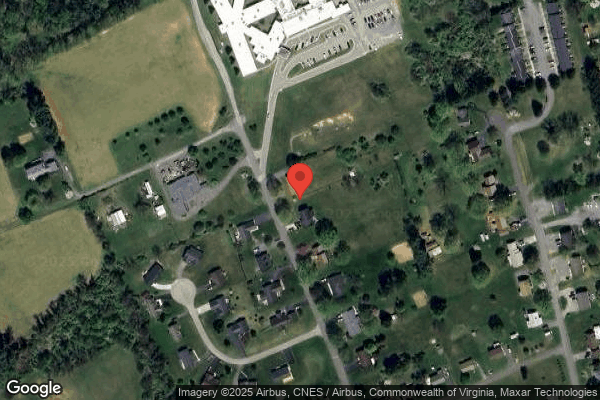
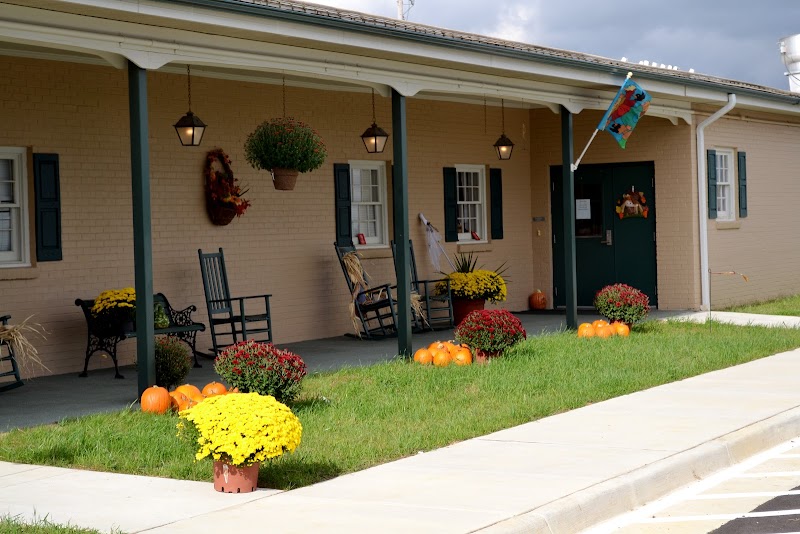
5872 HANKS STREET, DUBLIN, VA 24084 (540) 674-4193
For profit - Corporation 132 Beds HILL VALLEY HEALTHCARE Data: November 2025
Trust Grade
30/100
#258 of 285 in VA
Last Inspection: April 2023

Over 2 years since last inspection. Current conditions may differ from available data.

Overview

Highland Ridge Rehab Center in Dublin, Virginia, has a Trust Grade of F, indicating significant concerns about the quality of care provided. It ranks #258 out of 285 facilities in the state, placing it in the bottom half, and #2 out of 2 in Pulaski County, meaning only one local option is worse. While the facility is improving, with a decrease in issues from 12 in 2024 to 4 in 2025, it has a high staffing turnover rate of 65%, which is concerning compared to the state average of 48%. Notably, there have been serious incidents, such as a resident suffering second-degree burns due to improper care, and failures in infection control, with staff lacking the necessary training for critical roles. While there are no fines reported, which is positive, the low RN coverage and poor overall rating raise red flags for families considering this facility for their loved ones.

Trust Score
F
30/100
In Virginia
#258/285
Bottom 10%
Safety Record
Moderate
Needs review
Inspections
Getting Better
12 → 4 violations
Staff Stability
⚠ Watch
65% turnover. Above average. Higher turnover means staff may not know residents' routines.
Penalties
✓ Good
No fines on record. Clean compliance history, better than most Virginia facilities.
Skilled Nurses
⚠ Watch
Each resident gets only 23 minutes of Registered Nurse (RN) attention daily — below average for Virginia. Fewer RN minutes means fewer trained eyes watching for problems.
Violations
⚠ Watch
48 deficiencies on record. Higher than average. Multiple issues found across inspections.
★☆☆☆☆
1.0
Overall Rating
★☆☆☆☆
1.0
Staff Levels
★★★☆☆
3.0
Care Quality
★★☆☆☆
2.0
Inspection Score
Stable
2024: 12 issues
2025: 4 issues

The Good

  • Full Sprinkler Coverage · Fire safety systems throughout facility
  • No fines on record

Facility shows strength in fire safety.

The Bad

1-Star Overall Rating

Below Virginia average (3.0)

Significant quality concerns identified by CMS

Staff Turnover: 65%

19pts above Virginia avg (46%)

Frequent staff changes - ask about care continuity

Chain: HILL VALLEY HEALTHCARE

Part of a multi-facility chain

Ask about local staffing decisions and management

Staff turnover is elevated (65%)

17 points above Virginia average of 48%

The Ugly 48 deficiencies on record

1 actual harm
Sept 2025 4 deficiencies
CONCERN (D) 📢 Someone Reported This

A family member, employee, or ombudsman was alarmed enough to file a formal complaint

Potential for Harm - no one hurt, but risky conditions existed

Deficiency F0558 (Tag F0558)

Could have caused harm · This affected 1 resident

Based on observation, staff interview, resident interview and facility document review the facility staff failed to provide a reasonable accommodation of needs for 1 of 16 residents, Resident #15.The ...

Read full inspector narrative →
Based on observation, staff interview, resident interview and facility document review the facility staff failed to provide a reasonable accommodation of needs for 1 of 16 residents, Resident #15.The findings included:For Resident #15 the facility staff failed to answer the resident's call bell in a timely manner. Resident #15's clinical record listed diagnoses which included but not limited to chronic obstructive pulmonary disease, dysphagia, and major depressive disorder.Resident #15's most recent minimum data set with an assessment reference date of 07/17/25 assigned the resident a brief interview for mental status score of 15 out of 15 in section C, cognitive patterns. This indicates that the resident is cognitively intact.Surveyor spoke with Resident #15 on 09/05/25 at 11:05 am regarding call bell response times. Resident stated that call bell response has been addressed at resident council meetings, but times never get any better, and they have waited up to an hour after ringing call bell. Resident stated that their call bell is currently on, and they thought surveyor was facility staff coming in to answer the call bell. Surveyor asked resident how long their call bell had been on, and resident stated, about 5 minutes. Surveyor thanked resident and exited room. Surveyor observed light over resident's door for call bell on. Surveyor walked to end of hallway and observed several staff at nurse's station and could hear call bell from behind nurse's station. Surveyor waited until 11:20 am, observing multiple staff members walking by Resident #15's room without acknowledging call bell. At 11:20 am, surveyor spoke with assistant director of nursing (ADON) regarding call bell response times, and what their expectations are for response time. ADON stated their expectation would be 5ish minutes or so. Surveyor informed ADON of resident's call bell being on for at least 20 minutes. ADON exited their office, walked by Resident #15's room, and went to the nurse's station and asked which certified nurse's aide was responsible for Resident #15.Surveyor spoke with the director of nursing (DON)/interim administrator on 09/05/25 at 12:20 pm regarding call bell response times. DON stated their expectations would be 20 minutes or less. Surveyor asked DON who can answer call bells and DON stated anyone who sees the light on can answer, because resident's needs are not always clinical. DON stated that resident's light should not be turned off until resident's needs are met. Surveyor informed DON of observing several staff walking by Resident #15's room without acknowledging call bell.Surveyor requested and was provided with a facility policy entitled, Answering the Call Light which read in part, The facility will maintain a functional call light system and will make all reasonable efforts to ensure timely response to the resident's requests and needs. DEFINATIONS: 'Timely Response': is not defined by a 'pre-set' measure of minutes but rather is defined that the response time was appropriate t situation and/or need. Response time varies based on each situation and is impacted from the resident's need and perception/understanding of the urgency and time lapse. General Guidelines-1. Call lights may be answered by any staff member; if the resident needs assistance that cannot be provided by the staff member answering the light, the staff member will promptly notify a staff member who can assist the resident.The concern of not answering the resident's call bell in a timely manner was discussed with DON, ADON, regional director of clinical services, UM/LPN #1, UM/LPN #3, and UM/LPN #4 on 09/05/25 at 3:35 pm. No further information was provided prior to exit.
CONCERN (D) 📢 Someone Reported This

A family member, employee, or ombudsman was alarmed enough to file a formal complaint

Potential for Harm - no one hurt, but risky conditions existed

Quality of Care (Tag F0684)

Could have caused harm · This affected 1 resident

Based on staff interview and clinical record review, the facility staff failed to follow the medical provider orders for medication administration for 1 of 16 sampled residents (Resident #6). The find...

Read full inspector narrative →
Based on staff interview and clinical record review, the facility staff failed to follow the medical provider orders for medication administration for 1 of 16 sampled residents (Resident #6). The findings included:For Resident #6, the facility staff failed to administer the oral medication, Cyclobenzaprine as ordered by the medical provider. Cyclobenzaprine is a muscle relaxant used to treat skeletal muscle conditions such as pain and injury. Resident #6's diagnosis list indicated diagnoses, which included, but not limited to Encephalopathy, Hemiplegia and Hemiparesis, Congestive Heart Failure, Epilepsy, Multiple Rib Fractures Left Side, Fracture of Nasal Bones, Fracture of Left Thumb, and Fracture of Shaft of Left Clavicle. The most recent minimum data set (MDS) with an assessment reference date (ARD) of 1/23/25 assigned the resident a brief interview for mental status (BIMS) summary score of 15 out of 15 indicating the resident was cognitively intact. Resident #6's clinical record included a medical provider order for Cyclobenzaprine HCL 10 mg by mouth three times a day for muscle spasms. A review of Resident #6's September 2024 Medication Administration Record (MAR) revealed an omission for the administration of Cyclobenzaprine on 9/08/24 at 6:00 AM. On 9/05/25 at 12:25 PM, surveyor spoke with the Interim Administrator concerning the Cyclobenzaprine omission. She stated the medication was not signed off and she would assume that meant it was not given. No further information regarding this concern was presented to the survey team prior to the exit conference on 9/05/25.
CONCERN (D) 📢 Someone Reported This

A family member, employee, or ombudsman was alarmed enough to file a formal complaint

Potential for Harm - no one hurt, but risky conditions existed

Infection Control (Tag F0880)

Could have caused harm · This affected 1 resident

Based on observation, staff interview, resident interview, clinical record review and facility document review the facility staff failed to follow and established infection control program for 3 of 10...

Read full inspector narrative →
Based on observation, staff interview, resident interview, clinical record review and facility document review the facility staff failed to follow and established infection control program for 3 of 10 residents, Resident #15, Resident #12, and Resident #16.The findings included:1.For Resident #15 the facility staff failed to provide and don personal protective equipment (PPE) while providing incontinence care. Resident #15's clinical record listed diagnoses which included but not limited to personal history of urinary (tract) infections and resistance to multiple antimicrobial drugs. Resident #15's most recent minimum data set with an assessment reference date 07/17/25 assigned the resident a brief interview for mental status score of 15 out of 15 in section C, cognitive patterns. This indicates that the resident is cognitively intact. Resident #15's comprehensive care plan was reviewed and contained a plan for ISOLATION: the resident requires Enhanced Barrier precautions (EBP) due to colonization of MDRO (multi drug-resistant organism). Interventions for this plan include appropriate PPE (personal protective equipment) per policy. Resident #15's clinical record was reviewed and contained a physician's order summary which read in part, Enhanced Barrier precautions due to MDRO colonization. Surveyor observed Resident #15's room from hallway on 09/05/25 at 1:15 pm and no EBP signage was seen, nor was any PPE observed to be in the general area of resident's room. Surveyor went to speak with Resident #15 on 09/05/25 at 1:20 pm and observed certified nurse's aide (CNA) #4 and CNA #5 providing incontinence care for resident. Both CNAs were wearing gloves, but neither one was wearing a gown. Surveyor spoke with CNA #4 and CNA #5 on 09/05/25 at 1:55 pm. Surveyor asked CNAs what type of PPE they were wearing while caring for Resident #15, and both stated they were wearing gloves. Surveyor asked both CNA's if they had been wearing a gown, and both stated they were not. CNA #4 stated, Nobody told me I was supposed to. Surveyor asked CNA's if they knew that resident was on enhanced barrier precautions, and both stated they did not. CNA #5 stated, I always dress out when I know someone is on precautions, I have a baby at home and then asked if there is a sign for EBP. Surveyor requested and was provided with a facility policy entitled Enhanced Barrier Precautions (EBP) Process which read in part, To ensure proper implementation of Enhanced Barrier Precautions (EBP) to prevent the spread of multidrug-resistant organisms (MDROs) while maintaining resident dignity. Procedure: 1. Identification of Resident on EBP: *When a resident is determined to require EBP, the designated staff member (e.g., nurse or infection preventionist) will initiate the protocol. 2. Visual Identification: *A colored dot sticker will be placed on the nameplate outside the resident's door to discretely indicate EBP status. *This ensures staff awareness without compromising resident privacy. 3. Resident Room Signage: *An EBP sign will be hung over the resident's bed rather than on the door to protect their dignity while ensuring compliance. 4. EBP Supply Storage: *Gowns and other necessary EBP supplies with be stored on the linen carts located on the unit. *Staff must ensure adequate supply availability and replenish as needed .5. *All staff must follow EBP guidelines, including donning appropriate PPE (gowns and gloves) before performing high-contact resident care activities .7. Education and Reinforcement: *Staff will receive ongoing education on EBP, including when and how to implement precautions . Surveyor observed Resident #15's room on 09/05/25 at 2:05 pm. Surveyor observed a green dot sticker on the resident's nameplate and EBP sign above the resident's bed. Surveyor observed two linen carts on the unit on 09/05/25 at 2:10 pm. Neither linen cart contained PPE. Surveyor spoke with Resident #15 on 09/05/25 at 2:15 pm. Surveyor asked Resident #15 is staff were wearing gowns while providing care for them, and resident stated, No, why would they? Surveyor observed the two linen carts along with unit manager, licensed practical nurse (LPN) #1 on 09/05/25 at 2:40 pm. LPN#1 confirmed there was no PPE on either cart. The concern of not following and established infection control plan was discussed with the DON/interim administrator, assistant director of nursing, regional director of clinical services, LPN #1, LPN #3, and LPN #4 on 09/05/25 at 3:35 pm. No further information was provided prior to exit. 2. For Resident #12 the facility staff failed to follow the facility established Enhanced Barrier Precautions (EBP) process. Resident #12's clinical record included diagnoses which included but not limited to urinary tract infection, site not specified. Resident #12's most recent minimum data set with an assessment reference date of 08/29/25 assigned the resident a brief interview for mental status score of 15 out of 15 in section C, cognitive patterns. This indicates that the resident is cognitively intact. Resident #12's comprehensive care plan was reviewed and contained a care plan for Catheter: .Catheter for post op urinary retention until follow up. Interventions for this care plan included enhanced barrier precautions. Resident #12's clinical record was reviewed and contained a physician's order summary which read in part, Enhanced Barrier Precautions secondary to Foley Catheter. Resident #12's room was observed on 09/05/25 at 2:10 pm. There was no sticker on the nameplate, nor any signage in the room to indicate that resident is on EBP. Surveyor requested and was provided with a facility policy entitled Enhanced Barrier Precautions (EBP) Process which read in part, To ensure proper implementation of Enhanced Barrier Precautions (EBP) to prevent the spread of multidrug-resistant organisms (MDROs) while maintaining resident dignity. Procedure: 1. Identification of Resident on EBP: *When a resident is determined to require EBP, the designated staff member (e.g., nurse or infection preventionist) will initiate the protocol. 2. Visual Identification: *A colored dot sticker will be placed on the nameplate outside the resident's door to discretely indicate EBP status. *This ensures staff awareness without compromising resident privacy. 3. Resident Room Signage: *An EBP sign will be hung over the resident's bed rather than on the door to protect their dignity while ensuring compliance. 4. EBP Supply Storage: *Gowns and other necessary EBP supplies with be stored on the linen carts located on the unit. *Staff must ensure adequate supply availability and replenish as needed .5. *All staff must follow EBP guidelines, including donning appropriate PPE (gowns and gloves) before performing high-contact resident care activities .7. Education and Reinforcement: *Staff will receive ongoing education on EBP, including when and how to implement precautions . Surveyor observed two linen carts on the unit on 09/05/25 at 2:10 pm. Neither linen cart contained PPE. Surveyor observed the two linen carts along with unit manager, licensed practical nurse (LPN) #1 on 09/05/25 at 2:40 pm. LPN #1 confirmed there was no PPE on either cart. The concern of not following the facility established Enhanced Barrier Precautions (EBP) process was discussed with the DON/interim administrator, assistant director of nursing, regional director of clinical services, LPN #1, LPN #3, and LPN #4 on 09/05/25 at 3:35 pm. No further information was provided prior to exit. 3. For Resident #16 the facility staff failed to maintain an infection prevention and control program designed to provide a safe and sanitary environment to help prevent the transmission of communicable diseases and infection by failing to follow the facility Transmission-Based Precautions (TBP) process for the resident due to an active infection of Acinetobacter (a common environmental bacterium that can cause various infections, including UTIs, and can pose a serious health threat, especially in healthcare settings due to its increasing antibiotic resistance) in the urine. Resident #16's diagnosis list indicated diagnoses, which included, but not limited to Venous Thrombosis and Embolism, Edema, Overactive Bladder, Hypertension, Chronic Pain, Metabolic Encephalopathy, Atrial Fibrillation, Urinary Tract Infection, and Weakness. The most recent MDS (minimum data set) with an assessment reference date (ARD) of 8/19/25 assigned the resident a brief interview for mental status (BIMS) summary score of 11 out of 15 for cognitive abilities, indicating the resident was moderately impaired in cognition. A review of the clinical record disclosed a medical provider order with a start date of 8/8/25 which read in part, “…Contact isolation for positive Acinetobacter in the urine…” A review of the person-centered comprehensive care plan revealed a focus which read in part, “…ISOLATION…Contact isolation precautions due to VRE (Vancomycin-Resistant Enterococci-a type of antibiotic-resistant infection enterococcus bacteria that can cause infections in healthcare settings)…” An intervention related to the focus read in part, “…appropriate PPE (personal protective equipment) per policy…” On 9/5/25 at 1:42 PM, surveyor observed Resident #16 and did not observe the resident's room to have any signage or PPE available outside the room. On 9/5/25 at 2:12 PM, surveyor observed certified nursing assistant #3 (CNA#3) enter and exit Resident #16's room without donning or doffing appropriate PPE. On 9/5/25 at 2:15 PM, surveyor spoke with licensed practical nurse #5 (LPN#5) and inquired if Resident #16 was on precautions and she informed surveyor she believed the resident to be on EBP (enhanced barrier precautions) because the resident had a catheter. Surveyor and LPN#5 reviewed Resident #16's medical provider orders together and the orders disclosed Resident #16 was on contact isolation (TBP) with an order start date of 8/8/25. Surveyor asked LPN#5 the protocol for someone on TBP and she stated an isolation cart should be placed outside of door, PPE should be available, and a sign should be placed on the door for residents on TBP. On 9/5/25 at 2:18 PM, surveyor observed a male nursing staff member sitting at Resident #16's bedside without PPE and surveyor observed licensed practical nurse #3 (LPN#3) enter Resident #16's room without donning PPE. Surveyor spoke with LPN#3 and informed her Resident #16 is on contact precautions, she stated she would take care of this right away. This concern was discussed on 9/5/25 at 2:54 PM in a meeting with interim administrator, interim director of nursing, regional director of clinical services, and licensed practical nurse #1. Regional director of clinical services informed the survey team that the issues are corrected now and there are signs and PPE carts available outside the resident rooms. Surveyor requested and received a facility policy titled, “Transmission-Based Precautions” which read in part, “…The facility will ensure systems and processes are in place for the prevention and spread of infectious diseases…Contact Precautions may be implemented for resident's known or suspected to be infected with microorganisms that can be transmitted by direct contact with the resident or indirect contact with environmental surfaces or resident-care items in the resident's environment…1. Signs will be placed outside to each resident's room requiring transmission-based precautions…the signs will identify the type of PPE and special instructions…2. An adequate supply of PPE will be accessible and maintained outside of each resident room for staff and visitor use…” No further information was provided to the survey team prior to exit on 9/5/25.
CONCERN (F) 📢 Someone Reported This

A family member, employee, or ombudsman was alarmed enough to file a formal complaint

Potential for Harm - no one hurt, but risky conditions existed

Deficiency F0882 (Tag F0882)

Could have caused harm · This affected most or all residents

Based on observations, staff interview, and facility document review, the facility staff failed to employ an infection preventionist with the required training prior to assumption of the role.The find...

Read full inspector narrative →
Based on observations, staff interview, and facility document review, the facility staff failed to employ an infection preventionist with the required training prior to assumption of the role.The findings included:On 9/5/25, members of the survey team made multiple observations of residents requiring EBP (enhanced barrier precautions) and/or TBP (transmission-based precautions) without proper notification/signage and PPE available to staff, residents and/or visitors. On 9/5/25 at 2:54 PM-surveyors met with interim administrator (ADM), interim director of nursing (DON), regional director of clinical services and licensed practical nurse #1 (LPN#1). This surveyor inquired about the facility IP (infection preventionist) and the DON informed surveyor the previous IP left employment at the facility on 7/4/25 and she and the ADM are acting IPs and both agreed neither of them has an IP certification. LPN#1 has an IP certification from 2022 and she agreed that she does not perform the IP role at the facility. Surveyor requested evidence of staff education on infection control procedures for EBP/TBP and was provided evidence of staff education. Surveyor requested and received a facility job description for Infection Preventionist which read in part, .Infection Prevention Responsibilities.Education.Be able to obtain certification in Infection Control. No further information was provided to the survey team prior to exit on 9/5/25.
Jan 2024 12 deficiencies
CONCERN (D) 📢 Someone Reported This

A family member, employee, or ombudsman was alarmed enough to file a formal complaint

Potential for Harm - no one hurt, but risky conditions existed

Deficiency F0558 (Tag F0558)

Could have caused harm · This affected 1 resident

Based on observation, resident interview, staff interview, and clinical record review, the facility staff failed to ensure the residents call system was within reach for 1 of 13 current residents, Res...

Read full inspector narrative →
Based on observation, resident interview, staff interview, and clinical record review, the facility staff failed to ensure the residents call system was within reach for 1 of 13 current residents, Resident #1. The findings included: The facility staff failed to ensure Resident #1's call system was in reach. Resident #1 was observed up in their wheelchair the call system was placed on the bed and out of reach of this resident. Resident #1's diagnoses included, but were not limited to, repeated falls, diabetes, hearing loss, and difficulty in walking. Section C (cognitive patterns) of Resident #1's admission minimum data set (MDS) assessment with an assessment reference date (ARD) of 11/28/23 included a brief interview for mental status (BIMS) summary score of 14 out of a possible 15 points. Resident #1's comprehensive care plan included the interventions encourage the resident to use bell to call for assistance, ensure/provide a safe environment, and call light in reach. On 01/02/24 at 10:59 a.m., two surveyors observed Resident #1 up in their wheelchair in their room. Resident #1's call light was observed to be on their bed and was not in reach of this resident. Resident #1 asked the surveyors to assist them to the bathroom. On 01/02/24 at 12:13 p.m., Resident #1 was observed up in their wheelchair, their call light was out of reach, Resident #1 requested a drink from the other side of the room when the surveyor entered the room. When asked about their call light Resident #1 stated staff did not answer it timely. On 01/02/24 at 3:00 p.m., during an end of the day meeting with the Director of Nursing (DON) and Administrator the issue with the call light being out of reach was reviewed. No further information regarding this issue was provided to the survey team prior to the exit conference.
CONCERN (D) 📢 Someone Reported This

A family member, employee, or ombudsman was alarmed enough to file a formal complaint

Potential for Harm - no one hurt, but risky conditions existed

Safe Environment (Tag F0584)

Could have caused harm · This affected 1 resident

Based on observation and staff interview the facility staff failed to ensure a clean, comfortable, and homelike environment for 1 of 13 current residents, Resident #17. The findings included: For Resi...

Read full inspector narrative →
Based on observation and staff interview the facility staff failed to ensure a clean, comfortable, and homelike environment for 1 of 13 current residents, Resident #17. The findings included: For Resident #17 the facility staff failed to ensure a clean environment. Resident #17's face sheet listed diagnoses which included but not limited to adult failure to thrive and other specified disorders of the skin and subcutaneous tissues related to radiation. Resident #17's most recent minimum data set with an assessment reference date of 10/13/23 assigned the resident brief interview for mental status score of 5 out of 15 in section C, cognitive patterns. This indicates that the resident is severely cognitively impaired. Surveyor observed Resident #17 in his room on 01/03/24 at 4:30 pm. Resident was resting in bed with family member at bedside. Resident's room was clean in appearance at this time. Surveyor asked resident and family member if room was cleaned regularly, and family member stated that at times there was debris (food scraps) on the floor when they came to visit. Surveyor observed the over bed table and family member stated, They just came in and cleaned it off. While surveyor was in the room, staff development coordinator (SDC) entered the room and began wiping the overbed table. At this time, surveyor observed a white cloth on the bottom of the resident's overbed table frame. Surveyor asked SDC what the cloth was, and SDC stated it was a wet wipe, and they had put it there. SDC stated, I had to wet it and let it set, because it looks like someone spilled a berry magic cup. It's so dry, I about need a scraper to get it off. It might be strawberry ice cream, because I think I just found a strawberry. Resident then stated, it's probably ice cream because I had some a couple of days ago. When the wet wipe was removed, surveyor observed a dried reddish substance on the bottom of the overbed table. The concern of ensuring a clean environment was discussed with the administrator, director of nursing, and nurse consultant on 01/04/24 at 11:50 a.m. No further information was provided prior to exit.
CONCERN (D) 📢 Someone Reported This

A family member, employee, or ombudsman was alarmed enough to file a formal complaint

Potential for Harm - no one hurt, but risky conditions existed

Grievances (Tag F0585)

Could have caused harm · This affected 1 resident

Based on staff interview, clinical record review, and facility document review, the facility staff failed to follow up on a grievance for 1 of 5 closed record reviews, Resident #2. The findings inclu...

Read full inspector narrative →
Based on staff interview, clinical record review, and facility document review, the facility staff failed to follow up on a grievance for 1 of 5 closed record reviews, Resident #2. The findings included: The facility staff failed to follow up on a grievance filed by the Resident #2's Responsible Party (RP). Resident #2's diagnoses included, but were not limited to, Alzheimer's disease, muscle weakness, depressive disorder, and dementia. Section C (cognitive patterns) of Resident #2's admission minimum data set (MDS) assessment with and assessment reference date (ARD) of 11/02/23 included a brief interview for mental status (BIMS) score of 3 out of a possible 15 points. On 01/02/24 at 4:05 p.m., the surveyor requested from the Social Worker (SW) any grievances regarding Resident #2. The SW stated they had taken a grievance from the family of this resident; they had given the grievance concerns to the Director of Nursing (DON) who gave it to the previous Unit Manager. The SW stated this grievance was not followed up on. The SW provided the surveyor a copy of this form. The section titled action taken and the area for the Administrator/DON to sign and date was blank. On 01/03/24 at 9:30 a.m., during an interview with the previous Unit Manager this staff stated if they had seen a grievance on this resident, they would have followed up on it. On 01/03/24 at 10:25 a.m., during an interview with the DON this staff stated they would have given the grievance to the Unit Manager, and they would have been expected to follow up on it. The facility staff provided the survey team with a copy of a policy titled, Grievances/Complaints, Recording and Investigating. This policy read in part, .All grievances and complaints filed with the facility will be investigated and corrective actions will be taken to resolve the grievance(s) . On 01/04/24 at 11:50 a.m., during a meeting with the Administrator, Nurse Consultant, and DON the issue with the grievance/concern not being followed up on was reviewed. No further information regarding this issue was provided to the survey team prior to the exit conference.
CONCERN (D) 📢 Someone Reported This

A family member, employee, or ombudsman was alarmed enough to file a formal complaint

Potential for Harm - no one hurt, but risky conditions existed

Deficiency F0658 (Tag F0658)

Could have caused harm · This affected 1 resident

Based on resident interview, staff interview, clinical record review and facility document review the facility staff failed to follow professional standards of practice for the administration of medic...

Read full inspector narrative →
Based on resident interview, staff interview, clinical record review and facility document review the facility staff failed to follow professional standards of practice for the administration of medications for 1 of 13 current residents, Resident #14. The findings included: For Resident #14 the facility staff documented medications as administered when they were not. Resident #14's face sheet listed diagnoses which included but not limited to type 2 diabetes mellitus, pain in unspecified joint, and chronic pain syndrome. Resident #14's most recent minimum data set with an assessment reference date of 10/16/23 assigned the resident a brief interview for mental status score of 14 out of 15 in section C, cognitive patterns. This indicates that the resident is cognitively intact. Surveyor spoke with Resident #14 on 01/03/23 at 4:45 pm. Surveyor asked Resident #14 if they ever had any problems getting their scheduled medications, and resident stated the nurse practitioner was supposed to be ordering them a pain patch and some ointment for pain, but the nurse had told them that it hadn't been ordered yet. Resident #14's clinical record was reviewed and contained physician's orders which read in part, Diclofenac Sodium External Gel 1 % (Diclofenac Sodium (Topical)). Apply to R (right) shoulder topically two times a day for pain for 14 days 2 grams topical. Order Date: 01/03/24. Start Date: 01/03/24 and Lidocan External Patch 5 % (Lidocaine). Apply to R should topically one time a day for pain for 10 days and remove per schedule. Order Date: 01/03/24. Start Date: 01/04/24. Resident #14's electronic medication administration record (eMAR) for the month of January 2024 was reviewed and contained entries as above. The entry for Diclofenac was initialed as administered on 01/03/24 at 9 pm. The entry for Lidocan was initialed as administered 01/04/24 at 6 am. Surveyor spoke with Resident #14 on 01/04/24 at 10:25 am. Surveyor asked Resident #14 if they had gotten their pain patch and ointment, and resident stated they had not. Surveyor spoke with unit manager (UM) on 01/04/24 at 10:45 am. Surveyor asked UM to look in the medication cart with surveyor to confirm if Resident #14's Lidocan and Diclofenac were in cart. UM manager stated, It's probably not came from pharmacy yet. I just ordered it last night. Observation of the medication cart confirmed medication not on cart. Surveyor showed the UM Resident #14's eMAR and asked UM what the checks on the eMAR for the medications indicated, and UM stated, Looks like she put it on him, looks like she done it. Unit manager then stated, Let's go look and see if he has a patch on. UM, along with surveyor, spoke with Resident #14. UM manager confirmed that resident did not have a Lidocan patch on, and Resident #14 informed UM that they had not received the Diclofenac gel the previous evening. UM informed resident that the medications had been ordered from the pharmacy and should arrive on this day. Resident stated to UM, Long as you ordered it, that's all I care about. Surveyor requested and was provided with a facility policy entitled Medication Administration General Guidelines which read in part, Documentation: 1. The individual who administers the medication dose, records the administration on the resident's MAR (medication administration record) immediately following the medication being given. 2. If a dose of regularly scheduled medication is withheld, refused, or given at other than the scheduled time (for example, the resident is not in the nursing care center at scheduled dose time, or a started dose of antibiotic is needed), the space provided on the front of the MAR for that dosage administration is initialed and circled. An explanatory note is entered on the reverse side of the record provided for PRN (as needed) documentation. Surveyor spoke with the director of nursing (DON) on 01/04/24 at 11:50 am. Surveyor asked DON if Resident #14's medications should have been initialed as administered when they were not, and DON stated, They should not have been signed off on if not administered. The concern of not following professional standards of practice was discussed with the administrator, DON, and risk management nurse during a meeting on 01/04/24 at 11:50 am. No further information was provided prior to exit.
CONCERN (D) 📢 Someone Reported This

A family member, employee, or ombudsman was alarmed enough to file a formal complaint

Potential for Harm - no one hurt, but risky conditions existed

Quality of Care (Tag F0684)

Could have caused harm · This affected 1 resident

Based on staff interview, clinical record review and facility document review the facility staff failed to follow physician's orders for 1 of 13 current residents, Resident #14. The findings included:...

Read full inspector narrative →
Based on staff interview, clinical record review and facility document review the facility staff failed to follow physician's orders for 1 of 13 current residents, Resident #14. The findings included: For Resident #14 the facility staff failed to follow physician's orders for the administration of the medication gabapentin. Resident #14's face sheet listed diagnoses which included but not limited to type 2 diabetes mellitus, pain in unspecified joint, and chronic pain syndrome. Resident #14's most recent minimum data set with an assessment reference date of 10/16/23 assigned the resident a brief interview for mental status score of 14 out of 15 in section C, cognitive patterns. This indicates that the resident is cognitively intact. Resident #14's comprehensive care plan was reviewed and contained a care plan for the resident has acute and chronic pain r/t (related to) Lt (left) BKA (below knee amputation), Morbid Obesity, Neuropathy, Osteoarthritis, Gout. Interventions for this care plan include Administer analgesia as per orders. Resident #14's clinical record was reviewed and contained a physician's order summary which read in part, Gabapentin Oral Tablet 800 mg (Gabapentin). Give 1 tablet by mouth three time a day for pain. Resident #14's electronic medication administration record for the months of October, November and December 2023 were reviewed and contained an entry as above. For the month of October 2023, the gabapentin was not initialed as administered on10/04/23 at 6 am an on 10/12/23 at 2 pm. For the month of December 2023, the gabapentin was not initialed as administered on 12/11/23 and 12/14/23 at 2 pm. Surveyor requested and was provided with a facility policy entitled Medication Administration General Guidelines which read in part, Documentation: 1. The individual who administers the medication dose, records the administration on the resident's MAR (medication administration record) immediately following the medication being given. Surveyor spoke with the director of nursing (DON) on 01/04/24 at 11:50 am. Surveyor asked the DON if the resident's medication had been administered and the DON stated, If it's not initialed, it's not done. The concern of not following physician's orders for the administration of medications was discussed with the administrator, DON, and risk management nurse on 01/104/24 at 11:50 am. No further information was provided prior to exit.
CONCERN (D) 📢 Someone Reported This

A family member, employee, or ombudsman was alarmed enough to file a formal complaint

Potential for Harm - no one hurt, but risky conditions existed

Pharmacy Services (Tag F0755)

Could have caused harm · This affected 1 resident

Based on staff interview and clinical record review the facility staff failed to ensure medications were available for administration for 1 of 13 current residents, Resident #14. The findings included...

Read full inspector narrative →
Based on staff interview and clinical record review the facility staff failed to ensure medications were available for administration for 1 of 13 current residents, Resident #14. The findings included: For Resident #14 the facility staff failed to ensure the medications gabapentin and methadone were available for administration. Resident #14's face sheet listed diagnoses which included but not limited to type 2 diabetes mellitus, pain in unspecified joint, and chronic pain syndrome. Resident #14's most recent minimum data set with an assessment reference date of 10/16/23 assigned the resident a brief interview for mental status score of 14 out of 15 in section C, cognitive patterns. This indicates that the resident is cognitively intact. Resident #14's comprehensive care plan was reviewed and contained a care plan for the resident has acute and chronic pain r/t (related to) Lt (left) BKA (below knee amputation), Morbid Obesity, Neuropathy, Osteoarthritis, Gout. Interventions for this care plan include Administer analgesia as per orders. Resident #14's clinical record was reviewed and contained a physician's order summary which read in part, Gabapentin Oral Tablet 800 mg (Gabapentin). Give 1 tablet by mouth three time a day for pain and Methadone HCl Oral Tablet 10 MG (Methadone HCl). Give 15 tablet by mouth one time a day for pain. Resident #14's electronic medication administration record for the month of September 2023 was reviewed and contained entries as above. The entry for gabapentin was coded 9 on 09/03/23 at 2 pm and 10 pm, and on 09/04/23 at 6 am. The entry for Methadone was coded 9 on 09/06/23 and 09/14/23. Chart code 9 is equivalent to other/see nurse's notes. Resident #14's nurses' progress notes were reviewed and contained notes which read in part, 09/14/2023 05:51 Note Text: Methadone HCl Oral Tablet 10 MG. Give 15 tablet by mouth one time a day for pain. awaiting delivery from pharmacy, 09/06/2023 06:11 Note Text: Methadone HCl Oral Tablet 10 MG. Give 15 tablet by mouth one time a day for pain, 09/04/2023 05:41 Note Text: Gabapentin Oral Tablet 800 MG. Give 1 tablet by mouth three times a day for pain, 09/03/2023 21:44 Note Text: Gabapentin Oral Tablet 800 MG. Give 1 tablet by mouth three times a day for pain, and 09/03/2023 14:02 Note Text: Gabapentin Oral Tablet 800 MG. Give 1 tablet by mouth three times a day for pain. medication unavailable, contacted pharmacy. they stated medication will be delivered on next medication run . The concern of not having the resident's medications available for administration was discussed with the administrator, director of nursing, and risk management nurse on 01/04/24 at 11:50 am. Director of Nursing stated they have been in discussion with the pharmacy regarding the issue, and stated the facility can use a local pharmacy for back-up, if needed. No further information was provided prior to exit.
CONCERN (D) 📢 Someone Reported This

A family member, employee, or ombudsman was alarmed enough to file a formal complaint

Potential for Harm - no one hurt, but risky conditions existed

Deficiency F0760 (Tag F0760)

Could have caused harm · This affected 1 resident

Based on staff interview, clinical record review, and facility document review the facility staff failed to ensure 1 of 13 current residents was free of significant medication error, Resident #14. The...

Read full inspector narrative →
Based on staff interview, clinical record review, and facility document review the facility staff failed to ensure 1 of 13 current residents was free of significant medication error, Resident #14. The findings included: For Resident #14 the facility staff failed to administer the antibiotic medication, Cefepime per the physician's orders. Resident #14's face sheet listed diagnoses which included but not limited to type 2 diabetes mellitus, pain in unspecified joint, and chronic pain syndrome. Resident #14's most recent minimum data set with an assessment reference date of 10/16/23 assigned the resident a brief interview for mental status score of 14 out of 15 in section C, cognitive patterns. This indicates that the resident is cognitively intact. Resident #14's clinical record was reviewed and contained a physician's order summary which read in part, Cefepime HCl Injection Solution Reconstituted 1 GM (gram) (Cefepime HCl). Use 1 gram intravenously every 8 hours to wound infection for 7 days -Start Date- 08/30/2023. Resident #14's electronic medication administration record for the month of September 2023 was reviewed and contained an entry as above. This entry was not initialed as administered on 09/01/23 and 09/05/23 at 6 am. Surveyor requested and was provided with a facility policy entitled Medication Administration General Guidelines which read in part, Documentation: 1. The individual who administers the medication dose, records the administration on the resident's MAR (medication administration record) immediately following the medication being given. Surveyor spoke with the director of nursing (DON) on 01/04/24 at 11:50 am. Surveyor asked the DON if the resident's antibiotic had been administered and the DON stated, If it's not initialed, it's not done. The concern of not ensuring resident was free of significant medication error was discussed with the administrator, DON, and risk management nurse on 01/04/24 at 11:50 am. No further information was provided prior to exit.
CONCERN (D) 📢 Someone Reported This

A family member, employee, or ombudsman was alarmed enough to file a formal complaint

Potential for Harm - no one hurt, but risky conditions existed

Dental Services (Tag F0791)

Could have caused harm · This affected 1 resident

Based on resident interview, staff interview, clinical record review, and facility document review, the facility staff failed to assist residents in obtaining dental care from an outside source for 1 ...

Read full inspector narrative →
Based on resident interview, staff interview, clinical record review, and facility document review, the facility staff failed to assist residents in obtaining dental care from an outside source for 1 of 13 current residents in the survey sample, Resident #15. The findings included: For Resident #15, the facility staff delayed scheduling a dental consult for three (3) months and failed to obtain an appointment with an oral surgeon as requested by the referring dentist. Resident #15's diagnosis list indicated diagnoses, which included, but not limited to Type 2 Diabetes Mellitus, Congestive Heart Failure, Chronic Kidney Disease Stage 2, and Chronic Obstructive Pulmonary Disease. The most recent quarterly minimum data set (MDS) with an assessment reference date (ARD) of 10/12/23 assigned the resident a brief interview for mental status (BIMS) summary score of 15 out of 15 indicating the resident was cognitively intact. On 1/03/24 at 4:30 PM, surveyor spoke with Resident #15 who stated they had a fall in the bathroom when the support bar gave way and fell from the wall causing them to fall and hit their mouth on the toilet paper holder and then on the toilet. Resident #15 stated the fall caused two dental fillings to come out and chipped a front tooth. The resident stated it took five to six months before going out to see a dentist. Resident #15 stated they have also had abscessed teeth. Surveyor reviewed Resident #15's clinical record and noted a fall on 4/29/23 in which the resident fell hitting their left cheek. Resident #15 was seen by the nurse practitioner (NP) on 5/01/23, the progress note read in part . also has a chip to [their] front left tooth. We will make a dental referral for traumatic chipping of [their] left upper tooth. Resident #15 was again seen by the NP on 5/23/23, the progress note read in part . Please make sure the patient got a dentist appointment scheduled. [They] had a recent fall and busted out [their] front left tooth . Resident was seen by the NP on 6/16/23, the progress note read in part .will request a dental appointment again for resident to have a consult . Resident #15 was seen by the NP on 9/05/23 for a dental abscess and antibiotic orders were provided. Resident #15 was seen by a dentist on 9/18/23 with recommendations to refer to an oral surgeon. Surveyor was unable to locate evidence of an oral surgeon appointment scheduled for the resident. Resident #15 was seen by the NP on 10/06/23 for a dental abscess, the progress note read in part . The patient continues to complain of dental pain. (He/she) has been referred to an oral surgeon . On 1/04/24 at 9:46 AM, surveyor spoke with the Unit Secretary (US) responsible for scheduling outside appointments regarding Resident #15's dental appointments. Surveyor requested the date that Resident #15's initial dental appointment was scheduled. US was able to locate an email notification dated 8/10/23 notifying facility staff of a dental appointment scheduled for 9/11/23 for Resident #15. US provided notes indicating other dental practices were not accepting Resident #15's insurance or were not accepting new patients, however, these notes were not dated, and the US was unable to provide the dates of the notes. US stated transport did not arrive on 9/11/23 to take the resident to the dental appointment and at that time they received confirmation that the facility would be paying for the dental appointment, and they were able to get the resident an appointment with a local dentist for 9/18/23. The US stated when the resident returned from the dental appointment with a referral to an oral surgeon, they reached out to the Administrator and waited for confirmation of the payer source and when the administrator notified them that the facility would not be paying for the oral surgery appointment, they did not do anything after that, and no appointment was made. On 1/04/24 at 10:28 AM, surveyor spoke with the Administrator, Director of Nursing (DON), and Corporate Nurse and discussed the concern of the delay in scheduling Resident #15's initial dental appointment and lack of scheduling an appointment with an oral surgeon as recommended. The Administrator stated the facility had tried to set up the oral surgery appointment, but the resident would not agree due to payment concerns. On 1/04/24 at 11:25 AM, surveyor spoke with the resident who stated no one had spoken to him about going to an oral surgeon until this morning and they had never refused to see an oral surgeon. Surveyor requested and received the facility policy titled Dental Consult which read in part . The facility may make a referral to a Consult Dentist who is responsible for: a. Providing consultation to physicians and providing other services relative to dental matters . On 1/04/24 at 11:52 AM, the survey team met with the Administrator, DON, and Corporate Nurse and discussed the concern of staff failing to obtain a timely dental appointment and failing to obtain an oral surgery appointment for Resident #15. On 1/04/24 at 12:51 PM, the Administrator returned to the survey team and stated they had no additional information to provide regarding Resident #15. No further information regarding this concern was presented to the survey team prior to the exit conference on 1/04/24.
CONCERN (D) 📢 Someone Reported This

A family member, employee, or ombudsman was alarmed enough to file a formal complaint

Potential for Harm - no one hurt, but risky conditions existed

Deficiency F0836 (Tag F0836)

Could have caused harm · This affected 1 resident

**NOTE- TERMS IN BRACKETS HAVE BEEN EDITED TO PROTECT CONFIDENTIALITY** Based on staff interview, clinical record review, and facility document review, the facility staff failed to operate in complian...

Read full inspector narrative →
**NOTE- TERMS IN BRACKETS HAVE BEEN EDITED TO PROTECT CONFIDENTIALITY** Based on staff interview, clinical record review, and facility document review, the facility staff failed to operate in compliance with all applicable Virginia state regulations as evidenced by failing to determine if a potential resident was a registered sex offender prior to admission for 1 of 13 current residents in the survey sample, Resident #8. The findings included: According to Virginia Code 12VAC5-371-150 (H): Prior to admission, each nursing facility shall determine if a potential resident is a registered sex offender when the potential resident is anticipated to have a length of stay: 1. Greater than three days; or 2. In fact stays longer than three days. For Resident #8, the facility staff verified the resident's sex offender status six days following admission to the facility. Resident #8's diagnosis list indicated diagnoses, which included, but not limited to Hemiplegia and Hemiparesis following Cerebral Infarction affecting Left Dominant Side, Adult Failure to Thrive, Chronic Obstructive Pulmonary Disease, and Chronic Kidney Disease. Resident #8's 12/28/23 Brief Interview for Mental Status (BIMS) Summary score of 13 out of 15 indicated the resident was cognitively intact. According to Resident #8's clinical record, the resident was admitted to the facility on [DATE] following an acute care hospital stay. Resident #8's clinical record revealed a printout from the Virginia State Police sex offender registry with the search date of 12/28/23, six days following admission, indicating Resident #8 was present on the registry. On 1/03/24 at 11:00 am, surveyor met with the Admissions Director (AD) who stated the facility received Resident #8's referral on a Sunday and the admission Coordinator (AC) was on call and checked the sex offender registry on their phone and did not see that Resident #8 was present on the registry. The AD stated while catching up on forms to be uploaded to the resident's clinical record on 12/28/23, the AC checked the sex offender registry to print verification of Resident #8's registry check and at that time discovered Resident #8 was listed as a registered sex offender. Surveyor requested any documented evidence of the initial registry check prior to admission. Surveyor requested and received the facility policy titled Abuse which read in part .Sex offender registry will be checked for employees and/or potential residents in accordance with state law and/or organizational policy . On 1/04/24 at 11:52 am, surveyor spoke with the Administrator and discussed the concern of staff being unable to provide evidence of checking the sex offender registry prior to admission for Resident #8 and surveyor requested any additional supporting evidence. On 1/04/24 at 12:51 pm, the administrator returned to the surveyor and stated they had no additional information to provide regarding Resident #8. No further information regarding this concern was presented to the survey team prior to the exit conference on 1/04/24.
CONCERN (D) 📢 Someone Reported This

A family member, employee, or ombudsman was alarmed enough to file a formal complaint

Potential for Harm - no one hurt, but risky conditions existed

Medical Records (Tag F0842)

Could have caused harm · This affected 1 resident

**NOTE- TERMS IN BRACKETS HAVE BEEN EDITED TO PROTECT CONFIDENTIALITY** Based on staff interview and clinical record review, the facility staff failed to maintain a complete and accurate clinical reco...

Read full inspector narrative →
**NOTE- TERMS IN BRACKETS HAVE BEEN EDITED TO PROTECT CONFIDENTIALITY** Based on staff interview and clinical record review, the facility staff failed to maintain a complete and accurate clinical record for 1 of 13 current residents, Resident #1. The findings included: Resident #1's clinical record included conflicting information regarding their current code status. Resident #1's diagnoses included, but were not limited to, repeated falls, diabetes, hearing loss, and difficulty in walking. Section C (cognitive patterns) of Resident #1's admission minimum data set (MDS) assessment with an assessment reference date (ARD) of [DATE] included a brief interview for mental status (BIMS) summary score of 14 out of a possible 15 points. Resident #1's clinical record included the following documents: Face sheet that included the documentation CPR. Physician orders dated [DATE] code status was CPR. A DDNR order form dated [DATE] indicating the resident was a DNR (do not resuscitate). Progress note dated [DATE] and signed by the Nurse Practitioner (NP) documenting Resident #1's code status a DNR/no CPR. On [DATE] at 12:08 p.m., Licensed Practical Nurse (LPN) #2 was asked the code status of Resident #1. LPN #2 stated they would do CPR per their report sheet. After a review of the clinical record LPN #2 stated the DNR was obtained after the residents admit to the facility. On [DATE] at 12:10 p.m., the Unit Manager reviewed the clinical record and stated they would get the CPR status clarified. On [DATE] Resident #1's physicians orders were updated to read this residents code status was a DNR. On [DATE] at 3:00 p.m., during a meeting with the Administrator and Director of Nursing (DON) the DON stated they had completed a 100% audit of the resident DNR's, and no further issues were found. No further information regarding this issue was provided to the survey team prior to the exit conference.
CONCERN (D) 📢 Someone Reported This

A family member, employee, or ombudsman was alarmed enough to file a formal complaint

Potential for Harm - no one hurt, but risky conditions existed

Infection Control (Tag F0880)

Could have caused harm · This affected 1 resident

Based on observation, resident interview, staff interview, clinical record review, and facility document review, the facility staff failed to follow established infection control guidelines for 2 of 1...

Read full inspector narrative →
Based on observation, resident interview, staff interview, clinical record review, and facility document review, the facility staff failed to follow established infection control guidelines for 2 of 13 current residents, Resident #1 and #13. The findings included: 1. For Resident #1, the surveyor observed dirty linen in the floor of Resident #1's bathroom. Resident #1's diagnoses included, but were not limited to, repeated falls, diabetes, hearing loss, and difficulty in walking. Section C (cognitive patterns) of Resident #1's admission minimum data set (MDS) assessment with an assessment reference date (ARD) of 11/28/23 included a brief interview for mental status (BIMS) summary score of 14 out of a possible 15 points. On 01/02/24 at 10:59 a.m., the surveyor observed dirty linen in the corner of Resident #1's bathroom. This resident was in a private room. On 01/02/24 at 12:13 p.m., during a second observation the surveyor again observed the dirty linen in the bathroom floor. On 01/02/24 at 1:30 p.m., the dirty linen was observed to remain in the bathroom floor. On top of the linen was a used brief. Certified Nursing Assistant (C.N.A.) #2 was asked about the linen and stated they had not changed the residents bed today maybe the linen was from last night. Regarding the brief this staff stated they had not taken this resident to the bathroom. On 01/02/24 at 3:00 p.m., during an end of the day meeting with the Director of Nursing (DON) and Administrator the issue with linen in the bathroom floor was reviewed. On 01/04/24 at 9:30 a.m., during an interview with the infection preventionist this staff stated the linen should not have been in the floor it should have been bagged up and placed in the dirty linen cart. The facility staff provided the surveyor with a copy of their policy titled, Prevention of Infection-Laundry and Linen. This policy read in part, .Bagging and Handling Soiled Linen .All soiled linen must be placed directly into a covered laundry hamper which can contain the moisture . No further information regarding this issue was provided to the survey team prior to the exit conference. 2. For Resident #13, the surveyor observed dirty linen in the bathroom floor. Resident #13's diagnoses included, but were not limited to, dementia and depressive disorder. Section C (cognitive patterns) of Resident #13's quarterly minimum data set (MDS) assessment with an assessment reference date (ARD) of 11/28/23 included a brief interview for mental status (BIMS) summary score of 10 out of a possible 15 points. Due to the residents decline the surveyor was unable to interview Resident #13. On 01/04/24 at approximately 8:15 a.m., the surveyor observed used linen in Resident #13's bathroom floor. Resident #13's roommate stated neither of them used this bathroom. On 01/04/24 at 9:30 a.m., during an interview with the infection preventionist this staff stated the linen should not have been in the floor it should have been bagged up and placed in the dirty linen cart. The facility staff provided the surveyor with a copy of their policy titled, Prevention of Infection-Laundry and Linen. This policy read in part, .Bagging and Handling Soiled Linen .All soiled linen must be placed directly into a covered laundry hamper which can contain the moisture . On 01/04/24 at 11:50 a.m., during a meeting with the Administrator, Nurse Consultant, and Director of Nursing (DON) the issue with Resident #13's linen being in the bathroom floor was reviewed. No further information regarding this issue was provided to the survey team prior to the exit conference.
CONCERN (E) 📢 Someone Reported This

A family member, employee, or ombudsman was alarmed enough to file a formal complaint

Potential for Harm - no one hurt, but risky conditions existed

ADL Care (Tag F0677)

Could have caused harm · This affected multiple residents

5. For Resident #17 the facility staff failed to provide nail care. Resident #17's face sheet listed diagnoses which included but not limited to adult failure to thrive and other specified disorders ...

Read full inspector narrative →
5. For Resident #17 the facility staff failed to provide nail care. Resident #17's face sheet listed diagnoses which included but not limited to adult failure to thrive and other specified disorders of the skin and subcutaneous tissues related to radiation. Resident #17's most recent minimum data set with an assessment reference date of 10/13/23 assigned the resident brief interview for mental status score of 5 out of 15 in section C, cognitive patterns. This indicates that the resident is severely cognitively impaired. Section GG, functional abilities and goals, coded the resident as dependent in personal hygiene. Resident #17's comprehensive care plan was reviewed and contained a care plan for The resident has an ADL (activities of daily living) self-care performance deficit AEB (as evidence by) Malnutrition, Adult FTT (failure to thrive), Hx (history) of CVA (cerebrovascular accident [stroke]). Interventions for this care plan included Physical assist as needed with ADL's. Surveyor observed Resident #17 in his room on 01/03/24 at 4:30 pm. Resident was resting in bed with family member at bedside. Resident appeared clean and was dressed in clean hospital gown at this time. Surveyor observed that Resident #17's fingernails had a brownish debris underneath them. Staff Development Coordinator was in the room, and stated, I came and soaked and trimmed his nails about a month ago. Surveyor requested and was provided with a facility policy entitled Activities of Daily Living (ADLs) which read in part, Residents will be provided with care, treatment, and services as appropriate to maintain or improve their ability to carry out activities of daily living (ADLs). Residents who are unable to carry out activities of daily living independently will receive the services necessary to maintain good nutrition, grooming and personal and oral hygiene. 3. Each resident shall be given proper daily personal attention and care, including skin, nail, hair, and oral hygiene, in addition to any specific care ordered by the attending physician. The concern of not providing nail care was discussed with the administrator, director of nursing, and risk management nurse on 01/04/24 at 11:50 am. No further information was provided prior to exit. Based on observation, staff interview, clinical record review, and facility document review, the facility staff failed to provide Activity of Daily Living (ADL) care for 5 of 18 dependent care residents, Resident's #2, #1, #12, #13 and #17. The findings included: 1. For Resident #2, the facility staff failed to provide ADL care regarding bathing. Resident #2 was at the facility for 21 days. During this 21 day timeframe the facility staff documented the resident had received 1 shower. This was a closed record review. Resident #2's diagnoses included, but were not limited to, Alzheimer's disease, muscle weakness, depressive disorder, and dementia. Section C (cognitive patterns) of Resident #2's admission minimum data set (MDS) assessment with and assessment reference date (ARD) of 11/02/23 included a brief interview for mental status (BIMS) score of 3 out of a possible 15 points. Section GG (functional abilities and goals) was coded to indicate Resident #2 was dependent in the area of shower/bathe self. Resident #2's comprehensive care plan included the focus area has ADL care self-care performance deficit. Interventions included physical assist as needed for ADL's. A review of Resident #2's clinical record revealed Resident #2 received a shower on 10/30/23, a partial bath on 10/29/23, 10/30/23, and 11/07/23. A bed bath was documented for 11/10/23 and 11/14/23. The facility staff documented the resident refused on 11/17/23. On 01/02/24 at 3:30 p.m., during a meeting with the Director of Rehab this staff stated the rehab department had worked with this resident on the components of bathing but did not provide any actual bath(s). On 01/04/24 at 11:50 a.m., during a meeting with the Administrator, Nurse Consultant, and DON the issue regarding Resident #2's ADL assistance regarding bathing was reviewed. The DON stated the residents should receive 2 showers/baths a week at a minimum. The facility staff provided the survey team with a copy of a policy titled, Activities of Daily Living (ADLs). This policy read in part, .Residents who are unable to carry out activities of daily living independently will receive the services necessary to maintain good nutrition, grooming and personal and oral hygiene .each resident shall receive tub or shower baths as often as needed, but not less than twice weekly or as required by state law . No further information regarding this issue was provided to the survey team prior to the exit conference. 2. For Resident #1, the facility staff failed to provide ADL care regarding bathing. In a 30-day period Resident #1 had not received any baths. Resident #1's diagnoses included, but were not limited to, repeated falls, diabetes, hearing loss, and difficulty in walking. Section C (cognitive patterns) of Resident #1's admission minimum data set (MDS) assessment with an assessment reference date (ARD) of 11/28/23 included a brief interview for mental status (BIMS) summary score of 14 out of a possible 15 points. Section GG (functional abilities and goals) was coded with a (2) to indicate Resident #1 required substantial/maximal assistance for shower/bathe self and personal hygiene. Resident #1's care plan included the focus area resident has an ADL self-care performance deficit, impaired mobility, weakness/deconditioning. Interventions included, physical assist as needed with ADLs and requires total assistance by staff to move between surfaces as necessary. The surveyor reviewed the last 30 days of showers/baths. Per the clinical record Resident #1 had been provided with (3) bed baths and had (2) refusals. There were no documented showers/baths. On 01/04/24 at 11:50 a.m., during a meeting with the Administrator, Nurse Consultant, and DON the issue regarding Resident #1's ADL assistance in the area of bathing was reviewed. The DON stated the residents should receive 2 showers/baths a week at a minimum. The facility staff provided the survey team with a copy of a policy titled, Activities of Daily Living (ADLs). This policy read in part, .Residents who are unable to carry out activities of daily living independently will receive the services necessary to maintain good nutrition, grooming and personal and oral hygiene .each resident shall receive tub or shower baths as often as needed, but not less than twice weekly or as required by state law . No further information regarding this issue was provided to the survey team prior to the exit conference. 3. For Resident #12, the facility failed to provide ADL care. Resident #12's fingernails were observed to be long with debris observed under the nails. Resident #12's diagnoses included, but were not limited to, diabetes, hemiplegia and hemiparesis, difficulty in walking, age-related macular degeneration, and muscle weakness. Section C (cognitive patterns) of Resident #12's quarterly minimum data (MDS) assessment with an assessment reference date (ARD) of 11/04/23 included a brief interview for mental status (BIMS) summary score of 4 out of a possible 15 points. Resident #12's care plan included the focus area has an ADL self-care performance deficit activity intolerance, impaired balance, hemiplegia, and visual impairment. Interventions included physical assist as needed with ADL's. On 01/03/24 at 4:25 p.m., the surveyor observed Resident #12 up in their wheelchair. Resident #12 was observed to have long nails with debris present underneath the nails. Resident #12 was asked about their nails and stated their nails needed cutting. On 01/03/24 at 4:40 p.m. during an end of the day meeting with the Administrator, Director of Nursing, and Nurse Consultant the issue with Resident #12's nails was reviewed. On 01/04/24 at 8:24 a.m., Resident #12 was observed up in their wheelchair. Resident #12 stated the facility staff had cut their nails and then added that's the way I use to keep them. No further information regarding this issue was provided to the survey team prior to the exit conference. 4. For Resident #13, the facility staff failed to provide ADL in the area of bathing. In a 30-day period Resident #13 received 1 partial bath and 6 bed baths. Resident #13's diagnoses included, but were not limited to, dementia, chronic obstructive pulmonary disease, depressive disorder, and osteoarthritis. Section C (cognitive patterns) of Resident #13's quarterly minimum data set (MDS) assessment with an assessment reference date (ARD) of 11/28/23 included a brief interview for mental status (BIMS) summary score of 10 out of a possible 15 points. Resident #13's comprehensive care plan included the focus area has an ADL self-care performance deficit and impaired visual function. Interventions included physical assist as needed with ADLs. The surveyor reviewed the last 30 days of showers/baths. Per the clinical record Resident #13 had 1 partial bath on 12/25/23 and 6 bed baths in the last 30 days 12/07/23, 12/11/23, 12/14/23, 12/21/23, 12/28/23, and 01/01/24. Due to the residents decline the surveyor was unable to interview this resident. On 01/04/24 at 11:50 a.m., during a meeting with the Administrator, Nurse Consultant, and Director of Nursing (DON) the issue regarding Resident #13's ADL assistance regarding bathing was reviewed. The DON stated the residents should receive 2 showers/baths a week at a minimum. The facility staff provided the survey team with a copy of a policy titled, Activities of Daily Living (ADLs). This policy read in part, .Residents who are unable to carry out activities of daily living independently will receive the services necessary to maintain good nutrition, grooming and personal and oral hygiene .each resident shall receive tub or shower baths as often as needed, but not less than twice weekly or as required by state law . No further information regarding this issue was provided to the survey team prior to the exit conference.
Apr 2023 11 deficiencies
CONCERN (D)

Potential for Harm - no one hurt, but risky conditions existed

Safe Environment (Tag F0584)

Could have caused harm · This affected 1 resident

Based on observation, staff interview, and resident interview the facility staff failed to ensure a clean, comfortable, homelike environment for 1 of 4 shower rooms in the facility. The findings inclu...

Read full inspector narrative →
Based on observation, staff interview, and resident interview the facility staff failed to ensure a clean, comfortable, homelike environment for 1 of 4 shower rooms in the facility. The findings included: For the shower room on C-wing of the facility, there was an odor of urine and mildew, a cabinet labeled Keep cabinet locked at all times!!! was found unlocked, shampoo and body wash were lying on the shower stretcher, and a shoe was lying in the bathroom floor. On 04/24/23 at 3:15 pm, surveyor interviewed Resident #62. Resident #62 stated to surveyor that the shower room on C-wing was dirty and smells like mildew. Resident #62's most recent minimum data set with an assessment reference date of 03/10/23 assigned the resident a brief interview for mental status score of 14 out of 15 in section C, cognitive patterns. This indicates that the resident is cognitively intact. Surveyor observed the shower room on C-wing on 04/25/23 at 1:35 pm. Surveyor noted a strong odor of urine in the shower room at this time. Surveyor observed the shower room on C-wing on 04/26/23 at 8:30 am. Surveyor noted an odor of mildew in the area, a used pair of gloves lying in the floor, a bottle of shampoo and a bottle of body wash lying on a shower stretcher, a shoe in the bathroom floor, and an unlocked cabinet containing toiletry items labeled Keep cabinet locked at all times. Surveyor, along with director of nursing (DON), observed shower room on 04/26/23 at 8:40 am. DON stated it should not look this way, and immediately asked a staff member to clean the area. The concern of the not providing a clean, comfortable environment was discussed with the administrator, DON, and assistant director of nursing on 04/26/23 at 4:15 pm. No further information provided prior to exit.
CONCERN (D)

Potential for Harm - no one hurt, but risky conditions existed

Comprehensive Care Plan (Tag F0656)

Could have caused harm · This affected 1 resident

Based on observation, staff interview, resident interview, clinical record review, and facility document review, the facility staff failed to develop and implement a comprehensive person-centered care...

Read full inspector narrative →
Based on observation, staff interview, resident interview, clinical record review, and facility document review, the facility staff failed to develop and implement a comprehensive person-centered care plan to meet the needs of the resident for 1 of 26 residents in the survey sample. The findings include: For resident #376, the facility staff failed to develop a care plan to address pressure ulcer risk and wound care. Resident #376 diagnoses included, but were not limited to, congested heart failure, chronic obstructive pulmonary disease, cellulitis of the left lower limb, atrial fibrillation, pneumonia and malnutrition. The admission Minimum Date Set Assessment (MDS), with an Assessment Reference Date (ARD) of 4/12/23 assigned the resident a Brief Interview for Mental Status (BIMS) score of 14 out of a possible 15 indicating that resident #376 was cognitively intact. Resident #376 was coded in section G of the MDS as requiring extensive assistance of one or two people with bed mobility, transfers, toileting and personal hygiene. In section H of the MDS, resident #376 was coded as being occasionally incontinent of urine and mostly incontinent of bowel. Under section M of the MDS, the resident was coded as being at risk for developing pressure ulcers and was coded as requiring daily application of non-surgical dressings. There were no pressure ulcers or venous/arterial ulcers coded. A review of resident #376's orders revealed the following entered on 4/7/2023, Cleanse sacrum with facility approved wound cleanser, cover with hydrofera blue and mepliex everyday and PRN (as needed), and another entered on 4/10/23, Cleanse abrasion to LLE (left lower extremity) with wound cleanser, pat dry. Apply honey fiber. Cover with a foam dressing every day shift Monday, Wednesday and Friday for wound care. The treatment administration record (TAR) was reviewed, and facility staff had been signing off on these orders daily indicating that the orders were being carried out. On 4/26/23 at 9:50 AM, surveyor interviewed resident #376 to inquire about the wound on her sacrum. Resident informed surveyor that there was no wound on her sacrum. Resident denied any wound care being performed on her sacrum. Resident stated that she had a wound on her left leg that the nurses were treating but no others on her body. On 4/26/23 surveyor reviewed resident #376's comprehensive care plan. Surveyor was unable to locate a care plan for wound care or for resident being at risk for pressure ulcers. Surveyor interviewed LPN #1 on 4/26/23 at 10:00 AM. Surveyor asked if a resident who gets daily wound care should have a care plan for wound/skin care. LPN stated, yes, they should. Surveyor asked LPN #1 to look at resident #376's orders and asked if they could locate a care plan for the wound care being provided, they stated, I don't see one. When asked about the process for care planning wounds, LPN #1 stated that the wound nurse typically added wounds to the care plan. On 4/26/23 at 12:40 PM, surveyor interviewed the wound nurse LPN # 9. When asked who care plans wounds, they stated, I do if it's a wound I follow. When asked if Resident #376 should have a care plan for wound care they stated, yes, but it's not pressure so I don't do those. Surveyor asked if pressure ulcers were the only wounds that should be care planned and LPN #9 stated that they would not care plan all wound care. On 4/26/23 at 12:45 PM surveyor interviewed the Assistant Director of Nursing (ADON) and asked if they would expect a resident getting routine wound care to have a care plan for wound care and they stated, Yes, I would. On 4/26/23 at 2:24 PM surveyor interviewed RN #1 about resident being at risk for pressure ulcers and not having a skin or wound care plan. RN #1 stated that they would initiate care plans based on the MDS assessment but that resident #376's admission assessment had not yet been complete so they would not have care planned anything yet. On 4/26/23 at 2:43 PM RN #1 returned to surveyor and stated that they were mistaken and that the admission MDS had already been completed. Surveyor requested and received the policy entitled, Care Planning- Interdisciplinary Team. The policy stated in part, Our facility's Care Planning/Interdisciplinary Team is responsible for the development of an individualized comprehensive care plan for each resident, and A comprehensive care plan for each resident is developed within seven (7) days of completion of the resident assessment (MDS). The policy went on to say, the care plan is based on the resident's comprehensive assessment. On 4/26/23 at 4:17 PM the survey team met with the Administrator and Director of Nursing; they were informed of this concern. No further information was provided to the survey team prior to the exit conference.
CONCERN (D)

Potential for Harm - no one hurt, but risky conditions existed

Deficiency F0658 (Tag F0658)

Could have caused harm · This affected 1 resident

2. For resident #376, the facility staff signed off on wound care to the sacrum that they were not providing. Resident #376 diagnoses included, but were not limited to, congested heart failure, chron...

Read full inspector narrative →
2. For resident #376, the facility staff signed off on wound care to the sacrum that they were not providing. Resident #376 diagnoses included, but were not limited to, congested heart failure, chronic obstructive pulmonary disease, cellulitis of the left lower limb, atrial fibrillation, pneumonia and malnutrition. The admission Minimum Date Set Assessment (MDS), with an Assessment Reference Date (ARD) of 4/12/23 assigned the resident a Brief Interview for Mental Status (BIMS) score of 14 out of a possible 15 indicating that resident #376 was cognitively intact. Resident #376 was coded in section G of the MDS as requiring extensive assistance of one or two people with bed mobility, transfers, toileting and personal hygiene. In section H of the MDS, resident #376 was coded as being occasionally incontinent of urine and mostly incontinent of bowel. Under section M of the MDS, the resident was coded as being at risk for developing pressure ulcers and was coded as requiring daily application of non-surgical dressings. There were no pressure ulcers or venous/arterial ulcers coded. A review of resident #376's orders revealed the following entered on 4/7/2023, Cleanse sacrum with facility approved wound cleanser, cover with hydrofera blue and mepliex every day and PRN (as needed). The treatment administration record (TAR) was reviewed, and facility staff had been signing off on this order daily from April 8, 2023 to April 25, 2023, indicating that the order was being carried out. There was one blank on the TAR for April 17, 2023 indicating that the treatment had not been done on that date. On 4/26/23 at 9:50 AM, surveyor interviewed resident #376 to inquire about the wound on her sacrum. Resident informed surveyor that there was no wound on her sacrum. Resident denied any wound care being performed on her sacrum. Resident stated that she had a wound on her left leg that the nurses were treating but no others on her body. Surveyor interviewed LPN #1 on 4/26/23 at 10:00 AM. Surveyor asked why resident #376 had orders for wound care to her sacrum as the resident stated she had no wound, and no wound care was being provided. LPN #1 stated that they had put the order in on admission so the hospital must have sent the order and that they were positive resident #376 had a pressure area in the hospital. Surveyor asked if nurses were signing off on an order that they were not administering, and LPN #1 stated she was not sure and maybe they were applying just a regular foam dressing because there's an order for a dressing. LPN #1 informed the surveyor that they were discontinuing the order, right now. LPN #1 was unable to produce any documentation from the hospital giving an order for wound care to the sacrum or documentation to support that resident #376 had a pressure area in the hospital. On 4/26/23 at 12:40 PM, surveyor interviewed the wound nurse LPN # 9. LPN #9 stated that they were not aware of any wound to resident #376 sacrum. On 4/26/23 at 3:50 PM surveyor interviewed LPN # 7. Surveyor asked if they were familiar with resident #376 and they stated, Yes, I am. Surveyor asked if LPN # 7 had performed wound care to resident #376's sacrum to which they stated, No, I've never done any wound care to (name omitted) sacrum. LPN # 7 went on to state, (name omitted) has never had a dressing on her sacrum. I gave her a shower the other day, there was no dressing. I have seen her bottom multiple times, never any dressing there. Surveyor requested and received the policy entitled, Charting and Documentation on 4/26/23 from the Director of Nursing (DON). The policy read in part, All services provided to the resident, progress toward the care plan goals, or any changes in the resident's medical, physical, functional, or psychosocial condition, will be documented in the resident's medical record. The medical record will facilitate communication between the interdisciplinary team regarding the resident's condition and response to care. On 4/26/23 at 4:17 PM the survey team met with the Administrator and Director of Nursing and this concern was reviewed. No further information was provided to the survey team prior to the exit conference. Based on staff interview, resident interview, clinical record review and facility document review the facility staff failed to follow professional standards of practice for physician notifications and documentation of medications and/or treatments for 2 of 26 residents, Resident #99, and Resident #376. The findings included: 1. For Resident #99 the facility staff failed to notify the physician and document medication refusals in the clinical record. Resident #99's face sheet listed diagnoses which included but not limited to type II diabetes mellitus. The most recent minimum data set with an assessment reference date of 03/01/23 assigned the resident a brief interview for mental status score of 14 out of 15 in section C, cognitive status. This indicates that the resident is cognitively intact. Resident #99's comprehensive care plan was reviewed and contained a care plan for the resident has Diabetes Mellitus. Interventions for this care plan included Diabetes medication as ordered by doctor. Monitor/document for side effects and effectiveness. Resident #99's clinical record was reviewed and contained a physician's order summary which read in part, Semglee solution 100 unit/ml (Insulin glargine). Inject 18 units subcutaneously at bedtime for DM (diabetes mellitus). Resident #99's electronic medication administration records (eMAR) for the months of March and April 2023 were reviewed and contained entries as above. The eMAR was coded 2 on 03/02/23, 03/04/23 and 03/10/23 for the insulin administration. There is no equivalent for chart code 2. The eMAR was coded 9 on 03/14/23, 03/23/23, 03/25/23, 03/26/23, 03/27/23 and 04/01/23 for the insulin administration. Chart coded 9 is the equivalent of other/see nurses notes. The eMAR was coded 15 on 04/02/23 and 04/05/23 for the insulin administration. Chart code 15 is the equivalent of No insulin required. Resident #99's clinical record contained nurse's progress notes, which read in part, 03/14/2023 14:08 Semglee solution 100 unit/ml. Inject 18 units subcutaneously at bedtime for DM. Refused., 03/23/2023 19:49:04 Semglee solution 100 unit/ml. Inject 18 units subcutaneously at for DM. resident refused. BS (blood sugar) 98., 03/25/2023 20:47 Semglee solution 100 unit/ml. Inject 18 units subcutaneously at for DM. refused., 03/26/2023 20:08 Semglee solution 100 unit/ml. Inject 18 units subcutaneously at for DM. Drug refused. Resident states he/she does not need it with bloodsugar 148., 04/01/2023 21:43 Semglee solution 100 unit/ml. Inject 18 units subcutaneously at for DM. Resident declined to take lantus r/t (related to) risk of low glucose., and 04/05/2023 20:03 Semglee solution 100 unit/ml. Inject 18 units subcutaneously at for DM. There were no corresponding notes for 03/02/23, 03/04/23 and 04/02/23. There was no documentation that the physician had been notified of the refusals. Surveyor spoke with the director of nursing (DON) on 04/26/23 at 12:05 pm regarding Resident #99's insulin. Surveyor asked DON if the physician should have been notified of the resident's refusals and DON stated, Just good nursing practice to, so yeah. DON later stated to surveyor that 15 coded on eMAR were resident refusals, and that they were going to start education on notifying physician and charting refusals. Surveyor requested and was provided with a facility policy entitled Requesting, Refusing, and/or Discontinuing Care or Treatment, which read in part Residents have the right to request, refuse, and/or discontinue treatment prescribed by his or her healthcare practitioner, as well as care routines outline on the resident's assessment and plan of care. 3. The resident is not forced to accept any medical care and may refuse or discontinue care or treatment at any time. This includes treatment prescribed by the physician, care or treatment that has been administered previously, and/or care or treatment that the resident previously agreed to but has not yet been administered. 13. The healthcare practitioner will be notified of refusal of treatment, in a time frame determined by the resident's condition and potential serious consequences of the request . The concern of not following professional standards of practice was discussed with the administrator, DON, and assistant director of nursing on 04/26/23 at 4:15 pm. No further information was provided prior to exit.
CONCERN (D)

Potential for Harm - no one hurt, but risky conditions existed

Deficiency F0660 (Tag F0660)

Could have caused harm · This affected 1 resident

Based on staff interviews, clinical record review, and facility document review, the facility staff failed to develop and implement an effective discharge planning process for 1 of 4 residents in the ...

Read full inspector narrative →
Based on staff interviews, clinical record review, and facility document review, the facility staff failed to develop and implement an effective discharge planning process for 1 of 4 residents in the closed record sample. The findings include: For resident #325, the facility staff failed to involve the resident representative in the development of the discharge plan and inform the resident representative of the final plan to transfer the resident to another facility. Resident #325's diagnoses included but were not limited to unspecified dementia, insomnia, anxiety disorder, macular degeneration, hypertension and muscle weakness. The most recent Minimum Data Set (MDS) Assessment with an Assessment Reference Date (ARD) of 1/24/23 assigned resident #325 a Brief Interview for Mental Status (BIMS) score of 3 out of 15 indicating severe cognitive impairment. The MDS also revealed that resident had no signs or symptoms of delirium and no behavior symptoms during the assessment review period. Resident #325 was documented as requiring supervision to limited assistance with mobility and activities of daily living such as toileting, eating and hygiene. Review of resident 325's clinical record on 4/25/23 revealed that they were discharged to another long-term care facility on 3/30/23. A physician's progress note dated 3/30/23 read in part, Will d/c (discharge) to inpatient rehab with resolution of rhabdomyolysis. Patient became combative overnight on 12/7/22 and was given Haldol, unable to d/c to facility due to this. Patient is now medically stable and afebrile on room air. Patient is not oriented today and is confused secondary to (omitted) history of dementia. The note went on to say, The patient is discharging today. The clinical record also included an assessment entitled Discharge Planning Review v1.1. The assessment was comprised of 5 sections with only Section 1 entitled, Discharge Goals/General Information being partially completed. Section 2 entitled, Self Care Evaluation and Equipment was blank. Section 3 entitled, Learning and Care Needs was blank. Section 4 entitled, Contacts and Discharge Information was blank. Section 5 entitled signatures had one staff member signature for the social worker that was dated 3/30/23. The lines in section 5 for resident signature and resident representative signature were blank. Surveyor was unable to locate a note in the clinical record that a resident representative had been notified of resident #325's discharge on or prior to 3/30/23. There is an adult child listed on resident #325's demographic sheet as responsible party and care conference person. On 4/25/23 at 1:20 PM surveyor interviewed the facility social work assistant. When asked who would have notified resident #325's family of their discharge, they stated, It would have been myself. I was under the impression that Adult Protective Services (APS) was getting guardianship and I had notified them. I didn't know I still needed to notify (name omitted). They went on to state that resident #325's responsible party had attended a care plan meeting on 3/3/23 via Zoom call in which the need for a locked unit had been discussed and that the family member had instructed them to begin searching for a facility, so the family was aware that resident #325 was going to be leaving but they were not notified when. Social worker assistant was not able to produce documentation of the care plan meeting or definitive proof that a family member had attended. On 4/25/23 at 2:35 PM surveyor interviewed the Director of Nursing (DON) who stated, During the last care plan conference we discussed memory care with the family. (omitted) came to us as an open APS case, so (name omitted) notified APS of the discharge and thought that they would notify the family. The DON was unable to produce documentation of the care plan conference. When asked about the Discharge Planning Review in the medical record the DON did state that each section of the form should be completed by the Interdisciplinary Team, each team member and the resident or resident representative should sign and date it and a copy should be sent to the accepting facility. DON acknowledged that this did not happen in the case of resident #325 and stated that the facility was working on a 4 point plan to correct the issue. Surveyor requested and received a copy of the policy entitled, Discharge Planning which read in part, The facility will develop and implement an effective discharge planning process that focuses on the resident's discharge goals, the preparation of residents to be active partners and effectively transition them to post-discharge care, and the reduction of factors leading to preventable readmissions. Under the section entitled, Specific Procedures/Guidance, item #3 read in part, The discharge plan will: a. involve the resident and resident representative in the development of the discharge plan and inform the resident and resident representatives of the final plan; c. Ensure that the discharge needs of each resident are identified. d. Incorporate caregiver/support person availability. Under item #6, the policy read in part, If a resident is transferred to another skilled nursing facility c. Document timely in the clinical record, the evaluation of the resident's discharge needs and discharge plan. The results of the evaluation will be discussed with the resident or resident's representative. All relevant information must be incorporated into the discharge plan to facilitate its implementation and to avoid unnecessary delays in the resident's discharge or transfer. The policy went on in section #7, When the facility anticipates discharge, the facility will prepare discharge summary that includes, but is not limited to a recapitulation of the resident's diagnoses, course of illness/treatment or therapy, and pertinent lab, radiology, and consultation results. The survey team met with the Administrator and DON on 4/26/23 at 4:17 PM and this concern was discussed. No further information was provided to the survey team prior to the exit conference.
CONCERN (D)

Potential for Harm - no one hurt, but risky conditions existed

Deficiency F0661 (Tag F0661)

Could have caused harm · This affected 1 resident

Based on clinical record review, facility document review and staff interviews, the facility staff failed to complete a discharge summary for one of 4 residents in the closed record sample. The findi...

Read full inspector narrative →
Based on clinical record review, facility document review and staff interviews, the facility staff failed to complete a discharge summary for one of 4 residents in the closed record sample. The findings include: For resident #325 the facility staff failed to complete a discharge summary that included a recapitulation of the resident's stay, diagnoses, course of illness/treatment, a summary of the resident's status, reconciliation of all medications, a post-discharge plan of care developed with the participation of the resident and/or resident representative. Resident #325's diagnoses included but were not limited to unspecified dementia, insomnia, anxiety disorder, macular degeneration, hypertension and muscle weakness. The most recent Minimum Data Set (MDS) Assessment with an Assessment Reference Date (ARD) of 1/24/23 assigned resident #325 a Brief Interview for Mental Status (BIMS) score of 3 out of 15 indicating severe cognitive impairment. The MDS also revealed that resident had no signs or symptoms of delirium and no behavior symptoms during the assessment review period. Resident #325 was documented as requiring supervision to limited assistance with mobility and activities of daily living such as toileting, eating and hygiene. Review of resident 325's clinical record on 4/25/23 revealed that they were discharged to another long-term care facility on 3/30/23. A physician's progress note dated 3/30/23 read in part, Will d/c (discharge) to inpatient rehab with resolution of rhabdomyolysis. Patient became combative overnight on 12/7/22 and was given Haldol, unable to d/c to facility due to this. Patient is now medically stable and afebrile on room air. Patient is not oriented today and is confused secondary to (omitted) history of dementia. The note went on to say, The patient is discharging today. The clinical record also included an assessment entitled Discharge Planning Review v1.1. The assessment was comprised of 5 sections with only Section 1 entitled, Discharge Goals/General Information being partially completed. Section 2 entitled, Self Care Evaluation and Equipment was blank. Section 3 entitled, Learning and Care Needs was blank. Section 4 entitled, Contacts and Discharge Information was blank. Section 5 entitled signatures had one staff member signature for the social worker that was dated 3/30/23. The lines in section 5 for resident signature and resident representative signature were blank. Surveyor was unable to locate a note in the clinical record that a resident representative had been notified of resident #325's discharge on or prior to 3/30/23. There is an adult child listed on resident #325's demographic sheet as responsible party and care conference person. On 4/25/23 at 1:20 PM surveyor interviewed the facility social work assistant. When asked who would have notified resident #325's family of their discharge, they stated, It would have been myself. I was under the impression that Adult Protective Services (APS) was getting guardianship and I had notified them. I didn't know I still needed to notify (name omitted). They went on to state that resident #325's responsible party had attended a care plan meeting on 3/3/23 via Zoom call in which the need for a locked unit had been discussed and that the family member had instructed them to begin searching for a facility, so the family was aware that resident #325 was going to be leaving but they were not notified when. Social worker assistant was not able to produce documentation of the care plan meeting or definitive proof that a family member had attended. On 4/25/23 at 2:35 PM surveyor interviewed the Director of Nursing (DON) who confirmed that the document in the clinical record entitled Discharge Planning Review v1.1 is the discharge summary. When asked about the Discharge Planning Review being incomplete the DON did state that each section of the form should be completed by the Interdisciplinary Team, each team member and the resident or resident representative should sign and date it and a copy should be sent to the accepting facility. DON acknowledged that this did not happen in the case of resident #325 and stated that the facility was working on a 4-point plan to correct the issue. Surveyor requested and received a copy of the policy entitled, Discharge Planning which read in part, When the facility anticipates discharge, the facility will prepare discharge summary that includes, but is not limited to a recapitulation of the resident's diagnoses, course of illness/treatment or therapy, and pertinent lab, radiology, and consultation results. The survey team met with the Administrator and DON on 4/26/23 at 4:17 PM and this concern was discussed. No further information was provided to the survey team prior to the exit conference.
CONCERN (D)

Potential for Harm - no one hurt, but risky conditions existed

Quality of Care (Tag F0684)

Could have caused harm · This affected 1 resident

**NOTE- TERMS IN BRACKETS HAVE BEEN EDITED TO PROTECT CONFIDENTIALITY** 2. For Resident #66, the side rail assessment, physician's orders, and comprehensive person-centered care plan indicated the nee...

Read full inspector narrative →
**NOTE- TERMS IN BRACKETS HAVE BEEN EDITED TO PROTECT CONFIDENTIALITY** 2. For Resident #66, the side rail assessment, physician's orders, and comprehensive person-centered care plan indicated the need for grab bars/side rails, however, none were present on the resident's bed. Resident #66's diagnosis list indicated diagnoses, which included, but not limited to Alzheimer's Disease, Major Depressive Disorder, Anxiety Disorder, and Epilepsy. The most recent quarterly minimum data set (MDS) with an assessment reference date (ARD) of 3/02/23 coded the resident as being moderately impaired in cognitive skills for daily decision making with short term and long term memory problems. Resident #66 was coded as requiring extensive assistance with bed mobility, transfers, dressing, toilet use, and personal hygiene. A review of Resident #66's clinical record revealed a current physician's order dated 12/20/22 for grab bars x 2 for bed mobility and safety in transferring. The resident's comprehensive person-centered care plan included an intervention dated 12/21/22 for the use of side rails to maximize independence with turning and repositioning in bed. Resident #66's clinical record also included a Side Rail and Entrapment Risk assessment dated [DATE] stating in part that the resident would benefit from the use of grab bars by helping with bed mobility and transferring. On 4/25/23 at 9:00 am, surveyor observed Resident #66 in bed with the left side of the bed against the wall with no grab bars or side rails attached to the bed. On 4/26/23 at 1:40 pm, surveyor spoke with licensed practical nurse (LPN) #8 and asked what type of rails should be in place on Resident #66's bed. LPN #8 reviewed the resident's orders and stated the resident should have grab bars in place and went on to say that they recently changed the resident's bed by placing it against the wall. Surveyor then asked if Resident #66 needed grab bars and LPN #8 stated honestly no and further stated that the resident's dementia has increased and does not think the grab bars would assist them at this point. LPN #8 stated they were going to discontinue the order for the grab bars. On 4/26/23 at 4:17 pm, the survey team met with the administrator, director of nursing, and the assistant director of nursing and discussed the concern of Resident #66 not having grab bars in place. No further information regarding this concern was presented to the survey team prior to the exit conference on 4/26/23. Based on observation, resident interview, staff interviews, clinical record review, and facility document review the facility staff failed to ensure residents received treatment and care in accordance with provider orders and the comprehensive person-centered care plan for 2 of 26 current residents, Resident #88 and #66. The findings were: 1. Facility staff failed to ensure Resident #88 received a medication, Gabapentin, on 3/22/23 and 3/23/23 as scheduled per a provider order. Resident #88's face sheet listed diagnoses included but were not limited to spinal stenosis, chronic pain, scoliosis, low back pain, osteoarthritis, fibromyalgia, and post laminectomy syndrome. The minimum data set with an assessment reference date of 01/19/23 coded the resident's brief interview for mental status a 15 out of 15 in Section C (cognitive patterns). Resident #88's clinical record included a provider's order for Gabapentin Capsule 100 mg by mouth at bedtime for pain. The medication order started on 12/13/22. Upon meeting Resident #88 on 4/24/23, she reported having missed some doses of pain medication in the recent past. Staff told the resident the medication had run out and the pharmacy would not provide the code needed to obtain the medication. The resident had spoken to the nurse practitioner (NP) about the issue and stated the NP was trying to take care of the problem. The resident's medication administration record (MAR) for March 2023 showed the number nine documented for the 9:00 p.m. dose of Gabapentin on both 3/22/23 and 3/23/23 which meant Other/See Progress Notes. A licensed practical nurse (LPN) wrote on 3/22/23 at 9:01 p.m. the pharmacy was contacted regarding the Gabapentin and was told the resident needed a signed prescription. The LPN printed the prescription and placed it in the MD folder for signature. Resident #88 was made aware. The same LPN wrote the next evening, 3/23/23 at 9:17 p.m., the pharmacy was called numerous times for a code to pull the Gabapentin but the pharmacy did not answer. The LPN was unable to pull the medication without the code from the pharmacy and the resident was notified of the issue. On 4/26/23 at 2:15 p.m., the director of nursing (DON), assistant director of nursing (ADON) and the D wing unit manager (an LPN) were interviewed in person regarding Resident #88's Gabapentin missed doses. The ADON acknowledged the resident did not receive Gabapentin as scheduled on 3/22/23 and 3/23/23. The DON reported when a medication runs out, staff must call the pharmacy to obtain a code in order to retrieve the medication from the Pyxis machine. When the medication was a narcotic (such as Gabapentin), the pharmacy required a signed, paper prescription. The facility's on-call provider service will not sign a prescription for a narcotic. The expectation was the printed prescription would be placed in the MD folder for the provider to sign when they return. The DON stated their on-call provider was a corporation who had providers all over the place and the staff have a phone number they call but the staff never knows who will call back. The on-call provider service would be called during any hours the facility's NP was not onsite. The DON acknowledged the ball was dropped by nursing, there should have been a script printed and left for the NP to sign before they ran out of medication. The DON said the ADON was currently educating staff to make checks in the medication cart every Wednesday to see whether there was enough medication to last through the weekend. If not, the staff were to print a prescription and leave it for the NP to sign prior to the weekend. The DON also stated the NP was trying to work with the on-call company to see whether they would agree to sign prescriptions for narcotics the residents were already taking on a scheduled basis. The facility's policy titled, 3.3 ORDERING AND RECEIVING CONTROLLED MEDICATIONS read in part for refill requests, .requested from the pharmacy a minimum of 3 days in advance of need to assure an adequate supply is on hand. The administrator, DON and ADON were informed of the above-described concern on 4/26/23 at 4:17 p.m. summary meeting.
CONCERN (D)

Potential for Harm - no one hurt, but risky conditions existed

Deficiency F0727 (Tag F0727)

Could have caused harm · This affected 1 resident

Based on interviews and facility document review, the facility staff failed to ensure a registered nurse was working at the facility for two (2) of 30 days reviewed for nursing staffing. The findings ...

Read full inspector narrative →
Based on interviews and facility document review, the facility staff failed to ensure a registered nurse was working at the facility for two (2) of 30 days reviewed for nursing staffing. The findings include: The facility staff failed to have a registered nurse (RN) working at the facility for the following two days: 4/8/23 and 4/22/23. Review of the facility's posted staffing information forms failed to show a RN working at the facility on the following four (4) days: 4/4/23, 4/8/23, 4/14/23, and 4/22/23. The administrator was able to provide evidence of a RN working on 4/4/23 and 4/14/23. On 4/25/23 at 3:37 p.m., the Administrator reported no RN was working at the facility on 4/8/23 and 4/22/23; the Administrator reported an RN should have been working at the facility on those days. On 4/25/23 at 3:50 p.m., the Director of Nursing (DON) confirmed the aforementioned dates did not have a RN coverage; the DON stated it could have been due to a call out. On 4/26/23 at 4:17 p.m., the survey team met with the Administrator, Director of Nursing, and Assistant Director Nursing. The failure of the facility staff to ensure a RN was working on 4/8/23 and 4/22/23 was discussed.
CONCERN (D)

Potential for Harm - no one hurt, but risky conditions existed

Drug Regimen Review (Tag F0756)

Could have caused harm · This affected 1 resident

Based on staff interviews, clinical record review, and facility document review, the facility staff failed to ensure a medical provider approved medication regimen review (MRR) recommendation was impl...

Read full inspector narrative →
Based on staff interviews, clinical record review, and facility document review, the facility staff failed to ensure a medical provider approved medication regimen review (MRR) recommendation was implemented for one (1) of five (5) residents sampled for MRRs. The MRR recommendation had to be requested by the pharmacist a second time prior to it being implemented. The findings include: The facility staff failed to perform and/or implement monitoring for abnormal movements as recommended by a pharmacist, as part of Resident #108's MRR dated 12/10/23. This MRR was signed by a medical provider with the request to add AIMS to nursing tasks. (The Abnormal Involuntary Movement Scale (AIMS) is used to evaluate/monitor individuals who are receiving medications whose side effect include abnormal body movements.) Resident #108's minimum data set (MDS) assessment, with an assessment reference date (ARD) of 4/9/23, was signed as completed on 4/17/23. Resident #108 was assessed as sometimes being able to make self understood and as sometimes being able to understand others. Resident #108's Brief Interview for Mental Status (BIMS) summary score was documented as a seven (7) out of 15; this indicated severe cognitive impairment. Resident #108 was assessed as requiring assistance with bed mobility, dressing, toilet use, and personal hygiene. Resident #108's MRR dated 1/8/23 indicated the AIMS assessment was not found in the resident's chart; the pharmacist who completed this MRR included a 2nd Request for the abnormal movement test/monitoring. The AIMS was documented as completed on 2/21/23. On 4/26/23 at 4:17 p.m., the survey team met with the Administrator, Director of Nursing, and Assistant Director Nursing. The failure of facility staff to timely implement a medical provider approved MRR pharmacist recommendation was discussed.
CONCERN (D)

Potential for Harm - no one hurt, but risky conditions existed

Laboratory Services (Tag F0770)

Could have caused harm · This affected 1 resident

Based on staff interview, clinical record review, and facility document review, the facility staff failed to provide laboratory services to meet the needs of the resident for 1 of 26 residents in the ...

Read full inspector narrative →
Based on staff interview, clinical record review, and facility document review, the facility staff failed to provide laboratory services to meet the needs of the resident for 1 of 26 residents in the survey sample, Resident #78. The findings included: For Resident #78, the facility staff failed to perform a flu test as ordered by the medical provider. Resident #78's diagnosis list indicated diagnoses, which included, but not limited to Dementia, Chronic Kidney Disease Stage 5, Essential Hypertension, and Type 2 Diabetes Mellitus. The most recent quarterly minimum data set (MDS) with an assessment reference date (ARD) of 2/09/23 assigned the resident a brief interview for mental status (BIMS) summary score of 5 out of 15 indicating the resident was severely cognitively impaired. A review of Resident #78's clinical record revealed a nursing progress note dated 4/10/23 at 5:56 pm which read in part This nurse was called to the dining room by CNA [certified nursing assistant] staff while attempting to assist resident in eating [their] dinner. Staff report increased lethargy. VS [vital signs] obtained at this time .axillary temp found to be 102.8. Resident also noted to have a course cough .Call placed to [name omitted], NP [nurse practitioner], with new orders given for rapid COVID and Flu swab and STAT CBC [complete blood count] and CMP [complete metabolic panel] .Will notify [name omitted] once labs and swabs are completed. Surveyor reviewed Resident #78's clinical record and was unable to locate results for the flu swab test. On 4/25/23 at approximately 10:15 am, surveyor spoke with the assistant director of nursing (ADON) who stated they did not have Resident #78's flu swab results because it was not collected. On 4/25/23 at 11:22 am, surveyor spoke with the NP who stated they also could not locate the flu swab results and they only ordered it to cover all bases but Resident #78 was symptomatic for a urinary tract infection. Surveyor attempted to interview the nurse who received the order for the flu swab test, however, they were no longer employed by the facility. Surveyor requested and received the facility policy entitled Lab and Diagnostic Test Results which read in part . The staff will process test requisitions and arrange for tests as ordered . On 4/25/23 at 4:47 pm, the survey team met with the administrator and director of nursing and discussed the concern of staff failing to complete a flu swab test on Resident #78 as ordered by the provider. No further information regarding this concern was presented to the survey team prior to the exit conference on 4/26/23.
CONCERN (D)

Potential for Harm - no one hurt, but risky conditions existed

Medical Records (Tag F0842)

Could have caused harm · This affected 1 resident

Based on interviews, clinical record review, and facility document review, the facility staff failed to maintain complete and/or accurate clinical record/documentation for three (3) of 26 sampled curr...

Read full inspector narrative →
Based on interviews, clinical record review, and facility document review, the facility staff failed to maintain complete and/or accurate clinical record/documentation for three (3) of 26 sampled current residents (Resident #25, Resident #105, and Resident #108). The findings include: 1. Documentation of a resident-to-resident altercation involving Resident #105 was noted to be incomplete and/or accurate. Resident #105's minimum data set (MDS) assessment, with an assessment reference date (ARD) of 1/16/23, was signed as completed on 1/23/23. Resident #105 was documented as able to make self understood and as able to understand others. Resident #8's Brief Interview for Mental Status (BIMS) summary score was documented as an eight (8) out of 15; this indicated moderate cognitive impairment. Resident #105 was documented as requiring assistance with bed mobility, transfers, dressing, toilet use, and personal hygiene. Resident #105's clinical documentation included a progress note with an effective date and time of 4/14/23 at 9:49 a.m. This note indicated Resident #105 had allegedly slapped another resident in the face. The facility's administrative team provided the surveyor with a Facility Reported Incident (FRI) and investigation for an event dated 4/13/23 in which Resident #105 was alleged to have slapped a resident's hand. On 4/25/23 at 4:45 p.m., the survey team met with the Administrator and Director of Nursing (DON). The surveyor requested any additional information related the aforementioned alleged event or events involving Resident #105 which either occurred on 4/13/23 and/or 4/14/23. On 4/26/23 at 11:17 a.m., Licensed Practical Nurse (LPN) #8 reported they did not recall an alleged facial slap; LPN #8 stated they did recall an alleged slap to a hand. After reviewing the aforementioned progress note (4/14/23 at 9:49 a.m.) LPN #8 confirmed the electronic/computerized note appeared to be their documentation. LPN #8 reported they did not recall documenting about a facial slap. On 4/26/23 at 11:20, the Director of Nursing (DON) reported there was only one event which occurred on 4/13/23. The DON stated the resident, that was allegedly slapped, was interviewed and denied being slapped in the face. The DON reported they believe the event was documented as a late entry on 4/14/23 and that the facility staff member failed to change the effective date to the correct date. The following information was found in a facility document titled Charting and Documentation (this document was not dated): - All services provided to the resident, progress toward the care plan goals, or any changes in the resident's medical, physical, functional, or psychosocial condition, will be documented in the resident's medical record. The medical record will facilitate communication between the interdisciplinary team regarding the resident's condition and response to care. - The following information is to be documented in the resident medical record: . Objective observations . Treatments or services performed . Events, incidents, or accidents involving the resident . - Documentation in the medical record will be objective (not opinionated or speculative), complete, and accurate. On 4/26/23 at 4:17 p.m., the survey team met with the Administrator, Director of Nursing, and Assistant Director Nursing. The failure of Resident #105's clinical documentation being complete and/or accurate was discussed. 2. Resident #25's clinical documentation failed to consistently include documentation of monthly medication regimen reviews (MRRs). Resident #25's minimum data set (MDS) assessment, with an assessment reference date (ARD) of 3/19/23, was signed as completed on 3/23/23. Resident #25 was assessed as usually being able to make self understood and as usually being able to understand others. Resident #25's Brief Interview for Mental Status (BIMS) summary score was documented as a 14 out of 15; this indicated intact and/or borderline cognition. Resident #25 was assessed as requiring assistance with bed mobility, dressing, toilet use, and personal hygiene. Resident #25's clinical documentation failed to include evidence of a MRR being completed by a pharmacist for the months of January 2023 and April 2023. The surveyor was provided copies of forms titled Consultant Pharmacist's Medication Regimen Review: Listing of Residents Reviewed with No Recommendations for January of 2023 and April of 2023. Resident #25's name appeared on the forms for both months. This information was not part of Resident #25's clinical record. 3. Resident #108's clinical documentation failed to consistently include documentation of monthly medication regimen reviews (MRRs). Resident #108's minimum data set (MDS) assessment, with an assessment reference date (ARD) of 4/9/23, was signed as completed on 4/17/23. Resident #108 was assessed as sometimes being able to make self understood and as sometimes being able to understand others. Resident #108's Brief Interview for Mental Status (BIMS) summary score was documented as a seven (7) out of 15; this indicated severe cognitive impairment. Resident #108 was assessed as requiring assistance with bed mobility, dressing, toilet use, and personal hygiene. Resident #108's MRR dated 3/8/23 included a request for an evaluation of psychotropic medications for a potential gradual dose reduction. This was declined by a medical provider based on the resident's response to the medication. This MRR and the medical provider rational for declining the pharmacist's recommendations were not part of Resident #108's clinical record. The MRR and the provider's documentation were part of a document which contained information about another resident, in addition to the information about Resident #108. On 4/26/23 at 10:10 a.m., the Director of Nursing (DON) and a Regional Nurse Consultant (RNC), confirmed that MRR information, completed by the reviewing pharmacist, was not entered into specific resident clinical records/charts when the MRR information of more than one (1) resident was included on the same page. On 4/26/23 at 4:17 p.m., the survey team met with the Administrator, Director of Nursing, and Assistant Director Nursing. The failure of facility staff to ensure pharmacist MRRs and/or provider responses to the MRR recommendations were documented as part of residents' clinical documentation was discussed.
CONCERN (D)

Potential for Harm - no one hurt, but risky conditions existed

Infection Control (Tag F0880)

Could have caused harm · This affected 1 resident

Based on observations, staff interviews, and document review, the facility staff failed to ensure gloves were worn by a staff member when completing a finger stick blood sugar (FSBS) test for one (1) ...

Read full inspector narrative →
Based on observations, staff interviews, and document review, the facility staff failed to ensure gloves were worn by a staff member when completing a finger stick blood sugar (FSBS) test for one (1) of 26 sampled current residents (Resident #58). The findings include: On 4/25/23 at 9:05 a.m., Licensed Practical Nurse (LPN) #2 was observed to perform a FSBS test for Resident #58 without wearing gloves. LPN #2 confirmed they should have been wearing gloves. Resident #58's minimum data set (MDS) assessment, with an assessment reference date (ARD) of 4/5/23, was dated as completed on 4/7/23. Resident #58 was assessed as able to make self understood and as able to understand others. Resident #58's Brief Interview for Mental Status (BIMS) summary score was documented as a 13 out of 15; this indicated intact and/or borderline cognition. Resident #58 was assessed as requiring assistance with bed mobility, transfers, dressing, eating, and personal hygiene. Resident #58's diagnoses included diabetes. The following information was found in a facility document titled Point Of Care Devices (Blood Glucose Meters/PT/lNR Meters) Use and Cleaning (this document was dated 3/11/19): - The facility will maintain processes to prevent the spread of infection and disease and to ensure that Point of Care Devices are utilized safely when used on multiple residents by properly cleaning the devices between each resident. - Standard precautions will be used when handling the device and performing tests. The following information was found in a document titled Isolation Precautions under the heading of Standard Precautions on the Centers for Disease Control and Prevention (CDC) website (downloaded on 4/28/23): - Wear PPE . when the nature of the anticipated patient interaction indicates that contact with blood or body fluids may occur. (PPE is personal protective equipment which includes gloves.) - Wear gloves when it can be reasonably anticipated that contact with blood or other potentially infectious materials, mucous membranes, nonintact skin, or potentially contaminated intact skin (e.g., of a patient incontinent of stool or urine) could occur. On 4/26/23 at 4:17 p.m., the survey team met with the Administrator, Director of Nursing (DON), and Assistant Director Nursing. The failure of LPN #2 to wear gloves when performing a FSBS sample collection and test was discussed. The DON confirmed LPN #2 should have worn gloves when performing the FSBS test.
Feb 2023 6 deficiencies
CONCERN (D) 📢 Someone Reported This

A family member, employee, or ombudsman was alarmed enough to file a formal complaint

Potential for Harm - no one hurt, but risky conditions existed

Resident Rights (Tag F0550)

Could have caused harm · This affected 1 resident

**NOTE- TERMS IN BRACKETS HAVE BEEN EDITED TO PROTECT CONFIDENTIALITY** Based on observation, staff interview, and facility documentation review, the facility staff failed to provide care and services...

Read full inspector narrative →
**NOTE- TERMS IN BRACKETS HAVE BEEN EDITED TO PROTECT CONFIDENTIALITY** Based on observation, staff interview, and facility documentation review, the facility staff failed to provide care and services in a manner to promote a dignified existence and maintain resident dignity, for three residents, (Resident #2, #3, and #6) in a survey sample of 6 Residents. The findings included: 1. For Resident #2 the facility staff failed to provide care and services in a manner to promote the resident's dignity and a dignified existence during meals. On 2/21/23, following the survey team's entry to the facility, the facility administration provided the survey team with a list of residents who required assistance with meals. Resident #2 was noted on the list and was therefore put into the survey sample. On 2/21/23 at 1:03 PM, Resident #2 was visited in their room. Resident #2 was observed in bed and was crying, the Resident said, I need help, I'm hungry. Resident #2 asked the surveyor if she could get someone to help feed her. The surveyor then approached CNA #4 and CNA #7. CNA's #4 and #7 were made aware that Resident #2 was requesting assistant with her meal and said she needed someone to feed her. Both CNA #4 and #7 reported that Resident #2 could feed herself and stated, It is behavioral. On 2/21/23 at 1:10 PM, the surveyor returned to Resident #2's room. The Resident asked if the surveyor found someone to help her. When asked if she normally feeds herself, the Resident said, I usually do but my butt hurts. CNA #4 and #7 then entered the room and told Resident #2, We are going to get you situated so you can eat. The CNA's then stepped out of the room and CNA #4 told the surveyor, We got her situated. This writer then entered the room again and observed Resident #2 having difficulty getting her vegetables onto her utensil. The meal tray ticket was observed, and it read, Note: Feeder. On 2/21/23 at 1:35 PM, Resident #2's meal tray was observed on the tray cart in the hallway and appeared uneaten. On 2/21/23 at 2:05 PM, Resident #2 was visited in her room again. She was observed sitting in her wheelchair with a 1/2 eaten sandwich on her over bed table. When asked if she didn't like the food served at lunch, Resident #2 said, I liked it, but I couldn't get it on my spoon, I may could have done it on a good day, but not today. Review of the clinical record revealed Resident #2 had been recorded as having ate 75% of her lunch meal. On 2/21/23 at approximately 5:56 PM, Resident #2 was visited in her room. Resident #2 was in bed, CNA #4 brought in the Resident's food tray, set it up, and prior to leaving told the Resident she would be back after awhile because they had a date. Resident #2 acknowledged this and said, Yes, with the bathroom. Resident #2 then attempted to feed herself and told this writer that it was hard to eat when she needed to go to the bathroom to have a bowel movement. Resident #2 was observed to have difficulty getting food onto her utensil and started to pick up food items with her fingers. Resident #2 went on to say, I get real hungry, I just can't get it in my mouth, so I eat cakes and [NAME] butters, my sister brings me. I'm going to tell her to bring me things I can eat with my hands Parkinson's is doing a number on me. A review of Resident #2's clinical record was conducted. Resident #2 had an active physician order, effective 3/7/22 which read, CCHO [consistent carbohydrates] diet, Regular texture, Regular/Thin consistency [referring to regular consistency liquids], Directions: FEEDER. Review of Resident #2's most recent MDS (minimum data set) (an assessment tool) with an assessment reference date of 1/12/23, coded Resident #2 as having required extensive assistance of one staff for eating. The facility policy titled, Dignity was received and reviewed. This policy had no date with regards to the origination or revision. The policy read, .1. Residents will be treated with dignity and respect at all times. 2. The facility culture supports dignity and respect for residents by honoring resident goals, choices, preferences, values, and beliefs . 5. When assisting with care, residents are supported in exercising their rights. For example, residents are: . e. provided with a dignified dining experience . 8. Staff speak respectfully to residents at all times, including addressing the resident by his or her name of choice and not labeling or referring to the resident by his or her room number, diagnosis, or care needs . On 2/22/23, during an end of day meeting, the facility Administration was made aware of the above findings and concern for Resident dignity/dignified existence with regards to having to eat a sandwich versus a hot well-balanced meal, having to eat while needing to go to the bathroom and being referred to as a feeder. The Corporate Nurse Consultant acknowledged that they [Administrative staff] had already discussed not referring to Resident's as feeders. No further information was provided. 2. For Resident #6, the facility staff failed to promote the resident's dignity by failing to provide care in a manner to prevent food from spilling onto the resident and the resident's clothing while eating and failed to assist the resident to clean up at the time the spillage was observed. On 2/22/23 at approximately 8:30 AM, an observation was made of Resident #6 while eating breakfast. Resident #6 was attempting to feed self but had spilled a significant amount of oatmeal onto her chest and gown. Resident #6 stated to the surveyor, I'm messy. On 2/22/23 at approximately 8:45 AM, LPN #3 accompanied the surveyor to the room of Resident #6. LPN #3 confirmed that Resident #6 had a significant amount of food spilled onto her chest. LPN #3 made no attempts to clean up Resident #6, nor provide anything to catch the food spillage. On 2/22/23 at approximately 8:46 AM, an interview was conducted with CNA #2. CNA #2 reported that Resident #6 had refused assistance and wanted to feed self. CNA #2 reported that she had not seen any clothing protectors available or in use since she has been working at the facility. The facility policy titled, Dignity was received and reviewed. This policy had no date with regards to the origination or revision. The policy read, .5. When assisting with care, residents are supported in exercising their rights. For example, residents are: . e. provided with a dignified dining experience . On 2/22/23, during an end of day meeting, the facility Administration was made aware of the above findings and concern for Resident dignity. No further information was provided.3. For Resident #3 (R3), the facility staff failed to provide dignity to the resident while assisting the resident with eating. On the most recent MDS (minimum data set), a quarterly assessment with an ARD (assessment reference date) of 2/9/23, the resident was coded as being severely cognitively impaired for making daily decisions, having scored four out of 15 on the BIMS (brief interview for mental status). On 2/21/23 at 5:15 p.m., R3 was sitting up in bed. CNA (certified nursing assistant) #1 stood at R3's bedside and fed the resident. On 2/22/23 at 8:45 a.m., CNA #8 was standing beside R3's bed to feed the resident. On 2/22/23 at 11:23 a.m., CNA #8 was interviewed. When asked if she remembered how she was positioned to feed R3 breakfast earlier in the day, she stated she was standing up beside the resident's bed. When asked if she could think of another way she might have positioned herself to do this, she stated: I guess I could have sat down. That might have made her more comfortable. When asked if sitting beside the resident would have afforded the resident more dignity, she stated: Yes, for sure. On 2/22/23 at 2:37 p.m., LPN (licensed practical nurse) #2, a unit manager, was interviewed. When asked if a CNA standing over a resident to assist with feeding was the most dignified positioning, LPN #2 stated: A lot of times they do better if you sit down beside them. She added: It could be taken as a dignity issue. On 2/2/23 at 2:50 p.m., ASM (administrative staff member) #1, the administrator, ASM #2, the assistant director of nursing, and ASM #3, the regional nurse consultant, were informed of these concerns. A review of the facility policy, Dignity, revealed, in part: Each resident shall be cared for in a manner that promotes and enhances his or her sense of well-being, level of satisfaction with life, and feelings of self-worth and self-esteem .Residents will be treated with dignity and respect at all times. No further information was provided prior to exit.
CONCERN (D) 📢 Someone Reported This

A family member, employee, or ombudsman was alarmed enough to file a formal complaint

Potential for Harm - no one hurt, but risky conditions existed

Deficiency F0553 (Tag F0553)

Could have caused harm · This affected 1 resident

**NOTE- TERMS IN BRACKETS HAVE BEEN EDITED TO PROTECT CONFIDENTIALITY** Based on staff interview, facility document review, and clinical record review, the facility staff failed to provide evidence th...

Read full inspector narrative →
**NOTE- TERMS IN BRACKETS HAVE BEEN EDITED TO PROTECT CONFIDENTIALITY** Based on staff interview, facility document review, and clinical record review, the facility staff failed to provide evidence that the resident and/or resident representative received an invitation to participate in care plan meetings for one of six residents in the survey sample, Resident #3. The findings include: For Resident #3 (R3), the facility staff failed to invite the resident and/or resident representative to two of four care plan meetings in 2022. R3 was admitted to the facility on [DATE]. A review of R3's clinical record revealed evidence that the resident and resident representative was invited to participate in care plan meetings held on 9/29/22 and 11/10/22. The record review failed to reveal evidence of invitations to any other care plan meetings in 2022. On 2/22/23 at 9:44 a.m., OSM (other staff member) #4, the social services assistant, was interviewed. She stated she was not employed at the facility during the part of 2022 when R3 should have received two additional care plan meeting invitations. She stated she was not sure how care plan meetings invitations were handled prior to her employment at the facility. She stated currently, the MDS (minimum data set) coordinator provides her with a list of care plan meetings that are due for the next few weeks. She states she then reaches out to the resident/representative to invite them to the meeting. She stated sometimes she calls the representative, or sometimes she sees them in person at the facility to issue the invitation. She stated if the resident is their own RP (responsible party), she always reaches out to the first contact designated in the resident's record. She stated she does not document the invitation anywhere in the resident's clinical record. On 2/2/23 at 2:50 p.m., ASM (administrative staff member) #1, the administrator, ASM #2, the assistant director of nursing, and ASM #3, the regional nurse consultant, were informed of these concerns. A review of the facility policy, Care Planning - Interdisciplinary Team, revealed, in part: The resident, resident's family and/or the resident's legal representative/guardian or surrogate are encouraged to participate in the development of and revisions to the resident's care plan .Every effort will be made to schedule care plan meetings at the best time of the day for the resident and family. No further information was provided prior to exit.
CONCERN (D) 📢 Someone Reported This

A family member, employee, or ombudsman was alarmed enough to file a formal complaint

Potential for Harm - no one hurt, but risky conditions existed

Deficiency F0655 (Tag F0655)

Could have caused harm · This affected 1 resident

Based on resident interview, staff interview, facility document review, and clinical record review, the facility staff failed to evidence they provided a summary of the baseline care plan to one of si...

Read full inspector narrative →
Based on resident interview, staff interview, facility document review, and clinical record review, the facility staff failed to evidence they provided a summary of the baseline care plan to one of six residents in the survey sample, Resident #4. The findings include: For Resident #4 (R4), the facility staff failed to provide the resident with a summary of the baseline care plan. On the most recent MDS (minimum data set), an admission assessment with an ARD (assessment reference date) of 1/18/23, R4 was coded as having no cognitive impairment for making daily decisions, having scored 14 out of 15 on the BIMS (brief interview for mental status). On 2/21/23 at 1:35 p.m., R4 was asked if the staff had provided a copy of the resident's baseline care plan to them. The resident stated she could not remember having received a copy of the baseline care plan at any point in time. On 2/22/23 at 9:44 a.m., ASM (administrative staff member) #1, the administrator, stated she could provide any evidence that R4 had received a copy of the baseline care plan. On 2/22/23 at 11:31 a.m., RN (registered nurse) #1, the MDS coordinator was interviewed. She stated the admitting nurse is responsible for the baseline care plan. She stated she uses the baseline care plan as a starting point to build the comprehensive care plan. On 2/22/23 at 2:37 p.m., LPN (licensed practical nurse) #2, a unit manager, was interviewed. She stated the baseline care plan is formulated as a part of the admission assessment process. She stated the admitting nurse is responsible for developing the baseline care plan. When asked who is responsible for giving the resident/RR (resident representative) a copy of the baseline copy, she stated: The nurse who develops it. She stated she did not know if floor nurses are aware of this responsibility. On 2/2/23 at 2:50 p.m., ASM #1, ASM #2, the assistant director of nursing, and ASM #3, the regional nurse consultant, were informed of these concerns. A review of the facility policy, Baseline Care Plans, revealed, The resident and their representative will be provided a summary of the baseline care plan. No further information was provided prior to exit.
CONCERN (D) 📢 Someone Reported This

A family member, employee, or ombudsman was alarmed enough to file a formal complaint

Potential for Harm - no one hurt, but risky conditions existed

Deficiency F0692 (Tag F0692)

Could have caused harm · This affected 1 resident

**NOTE- TERMS IN BRACKETS HAVE BEEN EDITED TO PROTECT CONFIDENTIALITY** Based on staff interview, clinical record review and facility documentation review, the facility staff failed to provide care an...

Read full inspector narrative →
**NOTE- TERMS IN BRACKETS HAVE BEEN EDITED TO PROTECT CONFIDENTIALITY** Based on staff interview, clinical record review and facility documentation review, the facility staff failed to provide care and services to prevent weight loss for two residents (Resident #1 & Resident #3) in a survey sample of six residents. The findings included: 1. For Resident #1, the facility staff failed to implement interventions to prevent further weight decline, following the identification of a significant weight loss. On 2/21/23 and 2/22/23, a record review was conducted of Resident #1's closed electronic health record (EHR). Review of Resident #1's weights revealed that on 3/4/2020, the resident weighed 166.8 lbs., on 3/13/2020, the resident weighed 160.0 lbs., on 3/18/2020, the resident weighed 157.6 lbs., on 3/25/2020, the resident weighed 156.8 lbs., and on 4/1/2020, the resident weighed 155 lbs. The following progress notes were noted: 1. Resident #1 was seen by the registered dietitian (RD) on 3/18/2020, who noted, CBW: (current body weight) 157.6 lb.- weight loss of 5.5% x ~ 2 weeks (5.5% weight loss in approximately 2 weeks) . Plan: add magic cup with lunch and dinner . 2. On 4/4/2020, there was a weight change note that read, 7% (11.8 pounds) loss x 30 days. CBW- 155.0 . Will request magic cup bid (twice a day) for added caloric intake . 3. On 4/8/2020, an additional weight change note was recorded that read, RD follow up. Sig wt. (significant weight) loss of 7.1% x 30 days. sig wt. loss of 7.7% x 90 days. RD in agreement r/t (related to) adding magic cup BID . The dietician and dietary manager who made the above entries with regards to Resident #1's significant weight loss, were not employed at the facility at the time of survey and were unable to be interviewed. Review of the physician orders revealed that a physician order for magic cups wasn't ordered until 4/9/2020. There weren't any notes from the provider (physician or nurse practitioner) with regards to the weight loss and/or implementation of any interventions for the weight loss. On 2/22/23, mid-morning, an interview was conducted with the RD (Other Staff #3). The RD explained during this interview, that she sees residents based on priority basis because her time in the facility is limited. When asked about recommendations, the RD stated she sends her report and recommendations to the facility administration and nurse practitioner via email and usually her recommendations are carried out within the week. When asked if she follows up to see if her recommendations are carried out, she stated that her allotted time at the facility doesn't really permit her the time to do such follow-up. On 2/21/23, the facility administrator was asked to provide the survey team with evidence of Resident #1 being provided the magic cups. The facility provided evidence of Resident #1 being provided magic cups in February 2019 but submitted no evidence for April 2020. Review of the facility policy titled, Weight Assessment and Intervention was conducted. The policy read, Significant Unplanned and Undesired Weight Change will be based on the following criteria . 1 month- 5% weight change is significant; greater than 5% is severe. 3 months- 7.5% weight change is significant; greater than 7.5% is severe. 6 months- 10% weight change is significant; greater than 10% is severe .4. Any weight change of 5% or more since the last weight will be retaken for confirmation. If the weight is verified, nursing will immediately notify the physician/practitioner and dietary team . 7. The physician/practitioner, resident and resident representative will be informed of significant weight change . The policy included: Interventions: 1. Interventions for undesirable weight change shall be based on careful consideration . 2. The Dietitian/designated interdisciplinary team will discuss undesired weight change with the resident and/or family. 3. The interdisciplinary team may make recommendations for additional evaluations as needed; such evaluation may include referrals to rehabilitative therapy, dental consult . 4. If a Resident declines to accept the recommendations from the interdisciplinary team regarding the unplanned weight change, the Dietitian/designee will educate the resident/resident representative on the risk of the not accepting the recommendation will document the resident's wishes, and those wishes will be respected. On 2/22/23, an interview was conducted with the facility Administrator and Director of Nursing (DON). When asked how they document the delivery of magic cups, the DON said they document on the MAR [medication administration record]. They were notified that the survey team had not been provided any evidence that Resident #1 was provided with magic cups from 4/9/2020 through his discharge on [DATE]. The DON stated they did not have anything further to provide the survey team. 2. For Resident #3, the facility staff failed to implement timely interventions following the identification of a significant weight loss. On 2/21/23 and 2/22/23, observations were made of Resident #3 during meals and the Resident was being fed by staff. Resident #3 was noted to have confusion and not able to be interviewed. Review of the clinical record for Resident #3 revealed the following: Resident #3 was dependent upon facility staff for activities of daily living to include eating. Resident #3 was noted on 9/28/22, to weigh 167.4 lbs. There was a progress note written by the Registered Dietitian (RD) on 9/28/22, that read, .baseline wt. (weight) 1/13/21 262# (262 lbs.), 95# (95 lbs.) weight loss in 20 months; severe and steady wt. loss .Rsd [Resident] with severe wt loss, likely malnourished with continued risk due to Alzheimer's dx (diagnosis) . Goal: stabilize wt and prevent further loss through next assessment. Recommendation: 1. Add Glucerna 120 cc TID (three times per day) between meals. 2. Weigh weekly x 4 wks or until stable. On 11/1/22, Resident #3 weighed 155.6 lbs., which was an additional loss of 11.8 lbs since the weight obtained 9/28/22. On 11/8/22, the RD made a note that read, weight change note. Value: 155.6 . Add Glucerna 120 cc TID between meals. Review of the physician orders revealed that Resident #3 was not ordered Glucerna, or any other supplements to increase caloric intake, upon the identification of the significant weight loss in September. Glucerna was not ordered until 11/9/22. On 2/22/23, mid-morning, an interview was conducted with the RD (Other Staff #3). The RD explained during this interview, that she sees Residents based on priority basis because her time in the facility is limited. When asked about recommendations, the RD stated she sends her report and recommendations to the facility administration and nurse practitioner via email and usually her recommendations are carried out within the week. When asked if she follows up to see if her recommendations are carried out, she reported that her allotted time at the facility doesn't really permit her the time to do such follow-up. Review of the facility policy titled, Weight Assessment and Intervention was conducted. The policy read, Significant Unplanned and Undesired Weight Change will be based on the following criteria . 1 month- 5% weight change is significant; greater than 5% is severe. 3 months- 7.5% weight change is significant; greater than 7.5% is severe. 6 months- 10% weight change is significant; greater than 10% is severe .4. Any weight change of 5% or more since the last weight will be retaken for confirmation. If the weight is verified, nursing will immediately notify the physician/practitioner and dietary team . 7. The physician/practitioner, resident and resident representative will be informed of significant weight change . The policy included: Interventions: 1. Interventions for undesirable weight change shall be based on careful consideration . 2. The Dietitian/designated interdisciplinary team will discuss undesired weight change with the resident and/or family. 3. The interdisciplinary team may make recommendations for additional evaluations as needed; such evaluation may include referrals to rehabilitative therapy, dental consult . 4. If a Resident declines to accept the recommendations from the interdisciplinary team regarding the unplanned weight change, the Dietitian/designee will educate the resident/resident representative on the risk of the not accepting the recommendation will document the resident's wishes, and those wishes will be respected. On 2/22/23, during an end of day meeting, the facility Administrator and Director of Nursing were made aware of the above findings. No additional information was provided.
CONCERN (D) 📢 Someone Reported This

A family member, employee, or ombudsman was alarmed enough to file a formal complaint

Potential for Harm - no one hurt, but risky conditions existed

Medication Errors (Tag F0758)

Could have caused harm · This affected 1 resident

**NOTE- TERMS IN BRACKETS HAVE BEEN EDITED TO PROTECT CONFIDENTIALITY** Based on staff interview and facility document review, the facility staff failed to monitor for side effects of a psychoactive m...

Read full inspector narrative →
**NOTE- TERMS IN BRACKETS HAVE BEEN EDITED TO PROTECT CONFIDENTIALITY** Based on staff interview and facility document review, the facility staff failed to monitor for side effects of a psychoactive medication to prevent unnecessary medication administration for one of six residents in the survey sample, Resident #5. The findings include: For Resident #5 (R5), the facility staff failed to monitor the resident for side effects of Risperdal (1) in December 2022, January 2023, and February 2023. R5 was admitted to the facility with a diagnosis of dementia with behavioral disturbances. A review of the resident's clinical record revealed multiple, frequent episodes of anxious, disruptive, self-injurious behaviors. A review of R5's physician orders revealed, in part: Risperdal Tablet 0.25 MG (risperidone) Give 0.25 mg by mouth at bedtime for agitation and aggression .Order date 12/29/22. Further review of R5's clinical record revealed no evidence of monitoring for side effects of Risperdal. On 2/22/23 at 2:37 p.m., LPN (licensed practical nurse) #12, a unit manager, was interviewed. When asked how the facility staff prevents a resident from receiving unnecessary psychoactive medications, she stated the nurses should be monitoring for behaviors by the resident, and for any signs or symptoms of medication side effects. She stated these side effects could be sedation, appetite changes, skin irritations, or involuntary movements on the resident's part. She stated nurses should be charting on both behaviors and side effects every shift for any resident receiving an antipsychotic [medication]. LPN #12 reviewed R5's clinical record, including MARs (medication administration records) and TARs (treatment administration records). She stated there was no evidence that R5 was being monitored for side effects of the psychoactive medications the resident had been receiving. On 2/2/23 at 2:50 p.m., ASM (administrative staff member) #1, the administrator, ASM #2, the assistant director of nursing, and ASM #3, the regional nurse consultant, were informed of these concerns. A review of the facility policy, Antipsychotic Medication Use, revealed, in part: Nursing staff shall monitor for and report any of the following side effects and adverse consequences of antipsychotic medications to the Attending Physician/practitioner: General/anticholinergic: constipation, blurred vision, dry mouth, urinary retentions, sedation; Cardiovascular: orthostatic hypotension, arrhythmias; Metabolic: increase in total cholesterol triglycerides, unstable or poorly controlled blood sugar, weight gain; Neurologic: Akathisia, dystonia, extrapyramidal side effects, akinesia, tardive dyskinesia, stroke. No further information was provided prior to exit. (1) Risperidone is used to treat the symptoms of schizophrenia (a mental illness that causes disturbed or unusual thinking, loss of interest in life, and strong or inappropriate emotions) in adults and teenagers [AGE] years of age and older. It is also used to treat episodes of mania (frenzied, abnormally excited, or irritated mood) or mixed episodes (symptoms of mania and depression that happen together) in adults and in teenagers and children [AGE] years of age and older with bipolar disorder (manic depressive disorder; a disease that causes episodes of depression, episodes of mania, and other abnormal moods). This information is taken from the website https://medlineplus.gov/druginfo/meds/a694015.html.
CONCERN (D) 📢 Someone Reported This

A family member, employee, or ombudsman was alarmed enough to file a formal complaint

Potential for Harm - no one hurt, but risky conditions existed

Deficiency F0805 (Tag F0805)

Could have caused harm · This affected 1 resident

Based on observation, staff interview, facility document review, and clinical record review, it was determined that the facility staff failed to serve food at the physician-ordered consistency for one...

Read full inspector narrative →
Based on observation, staff interview, facility document review, and clinical record review, it was determined that the facility staff failed to serve food at the physician-ordered consistency for one of six residents in the survey sample, Resident #3. The findings include: For Resident #3 (R3), the facility staff failed to serve pureed eggs at breakfast on 2/22/23. On 2/22/23 at 8:45 a.m., CNA (certified nursing assistant) #8 was observed assisting R3 with eating breakfast. R3's plate contained scrambled eggs which had not been pureed. A review of R3's meal ticket revealed the resident was to receive pureed food. A review of R3's clinical record revealed the following order, dated 11/2/22: Diet Puree texture, Regular/Thin consistency, fortified food with meals. On 2/22/23 at 10:40 a.m., OSM (other staff member) #3, the registered dietitian, was interviewed. When asked if scrambled eggs are considered to be a pureed food, she stated: I would have to refer back to the contract the dietary manager is on; they do the menus, and how the food is prepared. That is outside my scope of responsibility. On 2/22/23 at 11:11 a.m., OSM #2, the dietary manager, was interviewed. She stated scrambled eggs are not considered pureed food. She stated if a resident should have pureed food, the scrambled eggs are placed in the blender and pureed before being served to the resident. On 2/2/23 at 2:50 p.m., ASM (administrative staff member) #1, the administrator, ASM #2, the assistant director of nursing, and ASM #3, the regional nurse consultant, were informed of these concerns. A review of the facility policy, Specialized Diets, revealed, in part: Diet order should include the type of diet and texture modification if applicable, and the consistency of food and fluids .Meals will be prepared and served according to the prescribed diet. No further information was provided prior to exit.
Jan 2023 6 deficiencies
CONCERN (D) 📢 Someone Reported This

A family member, employee, or ombudsman was alarmed enough to file a formal complaint

Potential for Harm - no one hurt, but risky conditions existed

Report Alleged Abuse (Tag F0609)

Could have caused harm · This affected 1 resident

Based on staff interview, clinical record review, and facility document review, the facility staff failed to report an incident of alleged resident abuse within two (2) hours of being aware the allega...

Read full inspector narrative →
Based on staff interview, clinical record review, and facility document review, the facility staff failed to report an incident of alleged resident abuse within two (2) hours of being aware the allegation for two (2) of 12 sampled residents, Resident #4 and Resident #10. The findings included: 1. The facility staff failed to report, with in the required time frame, an allegation of a bed-control remote striking Resident #4 in the face when it was tossed to them by a facility staff member. Resident #4 had a minimum data set (MDS) assessment, with an assessment reference date (ARD) of 12/9/22, dated as completed on 12/16/22. Resident #4 was assessed as able to make self understood and as able to understand others. Resident #4's Brief Interview for Mental Status (BIMS) summary score was documented as a 14 out of 15; this indicated intact and/or borderline cognition. Resident #4 was assessed as requiring assistance with bed mobility, transfers, dressing, toilet use, and personal hygiene. On 1/27/23 at 8:46 a.m., the facility's Regional Director of Operations (RDO) notified the survey team of a new facility reported incident (FRI). The RDO reported there was a delay in reporting this allegation. Documentation provided to the survey team indicated, on the morning of 1/25/23, Resident #4 reported a staff member had tossed a remote control to her resulting in the remote control striking them in the face. The surveyor interviewed Certified Nurse Aide (CNA) #6 on 1/30/23 at 3:45 p.m. CNA #6 reported on the morning of 1/25/23 (CNA #6 was unsure of the time) that Resident #4 alleged CNA #6 had hit the resident with a remote. CNA #6 reported they had handed the remote to the resident; CNA #6 denied tossing the remote to the resident. On 1/27/23 at 9:13 a.m., the surveyor interviewed Resident #4 about the alleged event. Resident #4 stated a staff member was angry with them and tossed them a remote control that struck them in the face. On 1/27/23 at 9:43 a.m., Administrative Staff Member (ASM) #6 reported they became aware of Resident #4's aforementioned allegation on 1/25/23 at approximately 7:00 a.m. ASM #6 reported they obtained statements from the facility staff members involved prior to them leaving the building after their shift. The following information was found in a facility document titled Abuse Investigation and Reporting (this document was not dated): An alleged violation of abuse, neglect, exploitation, or mistreatment (including injuries of unknown source and misappropriation or resident property) will be reported immediately, but not later than: a. Two (2) hours if the alleged violation involves abuse . The facility staff provided the survey team with evidence of the aforementioned allegation being reported to the required individuals/agencies on 1/26/23 at approximately 6:45 p.m. On 1/31/23 at 11:18 a.m., the survey team met with the facility's Regional Director of Operations, Regional Nurse Consultant, and Assistant Director of Nursing. The delay in reporting the aforementioned allegation of abuse was discussed for a final time; no additional information was provided to the survey team. 2. The facility staff failed to report, with in the required time frame, an allegation of Resident #10 being place in and prevented from leaving a room in the facility. Resident #10 had a minimum data set (MDS) assessment completed, with an assessment reference date (ARD) of 11/18/22. Resident #10 was assessed as usually able to make self understood and as usually able to understand others. Resident #10 Brief Interview for Mental Status (BIMS) summary score was documented as a three (3) out of 15; this indicated severe cognitive impairment. Resident #10 was assessed as requiring assistance with bed mobility, toileting, dressing, transfers, and personal hygiene. The following information was found in a facility document titled Abuse Investigation and Reporting (this document was not dated): An alleged violation of abuse, neglect, exploitation, or mistreatment (including injuries of unknown source and misappropriation or resident property) will be reported immediately, but not later than: a. Two (2) hours if the alleged violation involves abuse . On 1/26/23 at 9:10 a.m., Administrative Staff Member (ASM) #6 was interviewed about an allegation that facility staff members were keeping Resident #10 from exiting a room against the Resident #10's wishes. ASM #6 reported Licensed Practical Nurse (LPN) #6 notified them on 11/7/22 at approximately 10:00 a.m., that another resident had reported seeing a staff member block Resident #10 from leaving a room by placing a chair between Resident #10 and the door exiting the room. ASM #6 stated they had reported this to the Assistant Director of Nursing (ADON). On 1/26/23 at 9:45 a.m., LPN #6 confirmed they had reported this allegation to ASM #6. The facility staff provided the survey team with evidence of the aforementioned allegation being reported to the required individuals/agencies on 11/16/22. The surveyor interviewed the facility's Regional Director of Operations and Director of Nursing (DON) about the delay in reporting the allegation that Resident #10 had been prevented from exiting a room at the facility. The DON acknowledged the allegation should have been reported within the two (2) hour time frame. On 1/31/23 at 11:18 a.m., the survey team met with the facility's Regional Director of Operations, Regional Nurse Consultant, and Assistant Director of Nursing. The delay in reporting the aforementioned allegation of abuse was discussed for a final time; no additional information was provided to the survey team.
CONCERN (D) 📢 Someone Reported This

A family member, employee, or ombudsman was alarmed enough to file a formal complaint

Potential for Harm - no one hurt, but risky conditions existed

Comprehensive Care Plan (Tag F0656)

Could have caused harm · This affected 1 resident

Based on staff interview and clinical record review, the facility staff failed to develop a comprehensive care plan (CCP) regarding refusal of Activity of Daily Living care (ADL's) for 1 of 12 residen...

Read full inspector narrative →
Based on staff interview and clinical record review, the facility staff failed to develop a comprehensive care plan (CCP) regarding refusal of Activity of Daily Living care (ADL's) for 1 of 12 residents, Resident #4. The findings included: The facility staff failed to develop a CCP when the resident refused ADL care regarding bathing/showers. Resident #4's diagnoses included, but were not limited to, unspecified dementia and need for assistance with personal care. Section C (cognitive patterns) of Resident #4's annual minimum data set (MDS) assessment with an assessment reference date (ARD) of 12/09/22 included a brief interview for mental status (BIMS) summary score of 14 out of a possible 15 points. Indicating the resident was alert and orientated. Section G (functional status) had been coded 3/3 extensive assistance of 2 people for transfers, 3/2 extensive assistance of one person for personal hygiene. Bathing was coded 8/8 activity itself did not occur. Resident #4's CCP included the focus area has ADL self-care performance deficit. Interventions included, but were not limited to, physical assist as needed with ADL's and requires staff assistance with personal hygiene and oral care. A review of Resident #4's clinical record revealed that for the month of January 2023, the facility staff had documented Resident #4 had received a shower on 01/17/23, refusals were documented on 01/03, 01/10, 01/13, and 01/25/23. The facility staff had documented not applicable for 01/07, 01/21, and 01/28/23. For the month of December 2022, the facility nursing staff documented Resident #4 had refused a bath on 12/07, 12/10, 12/14, 12/16, and 12/20/22. The nursing staff documented not applicable for 12/03, 12/23, 12/28, 12/30/22. 01/31/23 8:33 a.m., Licensed Practical Nurse (LPN) #7 was asked why the refusals for bathing had not been care planned (CP) and stated anything episodic the nurses would complete. 01/31/23 at approximately 9:00 a.m., LPN #8 (agency nurse) stated they did not do CCP. 01/31/23 10:55 a.m., LPN #7 stated Resident #4's refusals of ADL care should have been care planned. 01/31/23 11:20 a.m., the Regional Nurse Consultant, Assistant Director of Nursing, and Regional Director of Operations were made aware of the issue with the development of the CCP regarding bathing/showering refusals. 01/31/23 11:37 a.m., Registered Nurse (RN) #3 stated they would only do what the care area assessment (CAA) flagged and if the unit manager was aware of an issue with bathing it should have been CP. 01/31/23 11:50 a.m., Administrative Staff #6 reviewed Resident #4's CCP, stated it wasn't individualized, and the refusals should have been CP. No further information regarding this issue was provided to the survey team prior to the exit conference.
CONCERN (D) 📢 Someone Reported This

A family member, employee, or ombudsman was alarmed enough to file a formal complaint

Potential for Harm - no one hurt, but risky conditions existed

ADL Care (Tag F0677)

Could have caused harm · This affected 1 resident

**NOTE- TERMS IN BRACKETS HAVE BEEN EDITED TO PROTECT CONFIDENTIALITY** Based on clinical record review, staff interview, resident interview and during the course of a complaint investigation, the fac...

Read full inspector narrative →
**NOTE- TERMS IN BRACKETS HAVE BEEN EDITED TO PROTECT CONFIDENTIALITY** Based on clinical record review, staff interview, resident interview and during the course of a complaint investigation, the facility staff failed to provide Activities of Daily Living care to three of 12 residents. Residents #2, #7, and #4. The findings included: 1. For resident #2 the facility staff failed to provide activity of daily living (ADL) care, specifically bathing. Resident #2's diagnoses include but are not limited to; nondisplaced unspecified condyle fracture of the lower end of the right femur, dysphagia, generalized muscle weakness, difficulty walking and other reduced mobility. Resident #2 was interviewed during the initial tour of the facility on 1/24/23 at 2:30 P.M. Surveyor asked if they were getting showers since admission and they replied, not too many. She reported that she enjoyed her showers when she was able to get them. Resident stated that she thought she would be getting one on 1/24/23, but so far no one had come to do it. She stated that Occupational Therapy had assisted her with maintaining her hygiene during the course of her stay and that she was able wash off at the sink as she needed to. Resident #2 had a neat, clean appearance. On 1/25/23 at 9:42 A.M. surveyor asked resident if she had gotten a shower the previous day and she said she had not. On 1/26/23 at 10:14 A.M. resident reported that she did get a shower the afternoon of 1/25/23. The admission minimum data set (MDS) with an assessment reference date (ARD) of 12/20/22 assigned resident #2 a brief interview for mental status (BIMS) score of 15 which indicates they are cognitively intact. Under section G resident #2 was coded as needing physical assistance in part of the bathing activity. Resident #2's care plan included a focus area for ADL self-care performance deficit as evidenced by impaired physical mobility due to right femur fracture with surgical repair. Interventions included physical assistance as needed with ADL's. Clinical record review revealed that no showers or baths were scheduled or documented for resident #2 in the month of December 2022. There was one refusal documented for 12/29/22. Resident #2 was admitted to the facility on [DATE]. For the month of January, a shower for 1/13/23 was scheduled but not given, a shower for 1/24/23 was scheduled but not given. A refusal for 1/2/23 was documented as well as for 1/6/23. LPN #2 was interviewed on 1/26/23 at 8:33 A.M. regarding the expectation for showers on the unit. They replied, It's twice per week and as needed. If time and staffing permit and they ask for more, we do more. If a shower is missed, it's put on for the next day. If a shower is refused, the nurse is to document it and the physician and responsible party are notified. Surveyor asked for and received a copy of the policy entitled, Activities of Daily Living (ADLs). The policy is not dated and reads in part, Each resident shall receive tub or shower baths as often as needed, but not less than twice weekly or as required by state law. Residents' preference and/or whose medical conditions prohibit tub or shower baths shall have a sponge bath daily. The surveyor met with and discussed this issue with the acting Administrator, Regional Nurse Consultant and Assistant Director of Nursing on 1/30/23 at 4:02 P.M. and again 1/31/23 at 11:18 A.M. No further information was provided to the surveyor team prior to exit. 2. For resident #7 the facility staff failed to provide ADL care, specifically bathing. This was a closed record review. Resident #7's diagnoses included but were not limited to heart failure, chronic obstructive pulmonary disease, morbid obesity, other chronic pain, bipolar disorder without psychotic features, depression, anxiety, spinal stenosis and generalized muscle weakness. The most recent Minimum Date Set (MDS) with an Assessment Reference Date (ARD) of 8/11/22 was reviewed. In section C, Cognitive Patterns, resident #7 was assigned a Brief Interview for Mental Status (BIMS) score of 15 indicating they were cognitively intact. Under section G, functional status, for bathing resident #7 was coded an 8/8 which means the activity did not occur. The comprehensive care plan for resident #7 included a focus area for an ADL self-care performance deficit as evidenced by impaired mobility. Interventions included physical assistance as needed with ADLs. On 1/25/23 the surveyor asked for and received a printed copy of resident #7's bathing documentation for July and August 2022. Resident was scheduled for baths on Tuesdays and Fridays. There were blanks noted on the record for Friday August 5, Friday August 26, and Tuesday August 30. There were no refusals documented. LPN #2 was asked about the expectation for showers on 1/26/23 at 8:33 A.M. and stated, it's twice per week and as needed, if time and staffing permit and they ask for more, we do more. LPN #2 was asked if there was anywhere other than the medical record that showers would be documented, and she stated no, a daily shower assignment sheet has been recently implemented but was not in place at the time resident #7 was in the facility. The policy entitled, Activities of Daily Living (ADLs), was asked for and received 1/26/23. The policy was not dated and reads in part, Each resident shall receive tub or shower baths as often as needed, but not less than twice weekly or as required by state law. Residents whose preference and/or whose medical conditions prohibit tub or shower baths shall have a sponge bath daily. These issues were discussed with the acting Administrator, Regional Nurse Consultant and Assistant Director of Nursing on 1/30/23 at 4:02 P.M. and again 1/31/23 at 11:18 A.M. No further information was provided to the surveyor team prior to exit. 3. For Resident #4, the facility staff failed to provide bathing assistance. Resident #4 did not receive a bath/shower in December 2022 and had only received 1 bath/shower in January 2023. Resident #4's diagnoses included, but were not limited to, unspecified dementia and need for assistance with personal care. Section C (cognitive patterns) of Resident #4's annual minimum data set (MDS) assessment with an assessment reference date (ARD) of 12/09/22 included a brief interview for mental status (BIMS) summary score of 14 out of a possible 15 points. Indicating the resident was alert and orientated. Section G (functional status) had been coded 3/3 extensive assistance of 2 people for transfers, 3/2 extensive assistance of one person for personal hygiene. Bathing was coded 8/8 activity itself did not occur. Resident #4's comprehensive care plan (CCP) included the focus area has activities of daily living (ADL) self-care performance deficit. Interventions included, but were not limited to, physical assist as needed with ADL's and requires staff assistance with personal hygiene and oral care. A review of Resident #4's clinical record revealed for the month of January 2023, the facility staff had documented Resident #4 had received a shower on 01/17/23, refusals were documented on 01/03, 01/10, 01/13, and 01/25/23. The facility staff had documented not applicable for 01/07, 01/21, and 01/28/23. For the month of December 2022, the facility nursing staff documented Resident #4 had refused a bath on 12/07, 12/10, 12/14, 12/16, and 12/20/22. The nursing staff documented not applicable for 12/03, 12/23, 12/28, 12/30/22. Indicating Resident #4 did not receive any bath/showers in December 2022. 01/30/23 1:45 p.m., Resident #4 was observed up in their wheelchair. When asked if they received baths and/or showers Resident #4 stated they currently had pneumonia and was unable to shower. When asked if they were receiving baths and/or showers prior to being diagnosed with pneumonia Resident #4 stated off and on. Review of the clinical record revealed that on 01/26/23 the provider began treatment for pneumonia. 01/30/23 4:00 p.m., the Regional Nurse Consultant, Regional Director of Operations, and Assistant Director of Nursing were made aware that Resident #4 did not receive a bath/shower in December 2022 and only received 1 shower in January 2023. 01/31/23, the facility provided the surveyor with a copy of their policy titled, Shower/Tub Bath this policy read in part, .At a minimum, the resident will be offered at least 2 full baths or showers per week . No further information regarding this issue was provided to the survey team prior to the exit conference. `
CONCERN (D) 📢 Someone Reported This

A family member, employee, or ombudsman was alarmed enough to file a formal complaint

Potential for Harm - no one hurt, but risky conditions existed

Food Safety (Tag F0812)

Could have caused harm · This affected 1 resident

Based on observations, interviews, and facility document review, the facility staff failed to serve food in a manner that would decrease the risk of resident food becoming contaminated for two (2) of ...

Read full inspector narrative →
Based on observations, interviews, and facility document review, the facility staff failed to serve food in a manner that would decrease the risk of resident food becoming contaminated for two (2) of 12 sampled residents, Resident #11 and Resident #12. The findings include: On 1/25/23 at 11:58 a.m., the surveyor observed Certified Nurse Aide (CNA) #4 filling up resident drinking cups with ice. CNA #4 held two (2) resident drinking cups against their shirt while using a scoop to fill the cups with ice. On 1/25/23 at 12:02 p.m., the surveyor observed CNA #3 setting up Resident #12's mid-day meal. CNA #3 was observed to touch Resident #12's dinner roll with the their (CNA #3's) bare hands. On 1/25/23 at 12:37 p.m., the surveyor observed CNA #3 setting up Resident #11's mid-day meal. CNA #3 was observed to touch Resident #11's sandwich with their (CNA #3's) bare hands. The following information was found in a facility document titled Food Preparation and Service (this document was not dated): Bare hand contact with food is prohibited. Gloves are worn when handling food directly and changed between tasks. The surveyor discussed the aforementioned meal service observations during a survey team meeting with the Regional Director of Operation, the Director of Nursing (DON), and the Assistant Director of Nursing on 1/25/23 at 3:55 p.m. The DON reported the ice should have been scooped into the cups while the cups were sitting on the tray (instead of the staff member holding them against their shirt). The DON reported staff members should wear gloves or use the food item packaging when touching/manipulating a resident food items.
CONCERN (D) 📢 Someone Reported This

A family member, employee, or ombudsman was alarmed enough to file a formal complaint

Potential for Harm - no one hurt, but risky conditions existed

Medical Records (Tag F0842)

Could have caused harm · This affected 1 resident

Based on staff interview, clinical record review, and facility document review, the facility staff failed to ensure a complete and accurate clinical record for two (2) of 12 sampled residents, Residen...

Read full inspector narrative →
Based on staff interview, clinical record review, and facility document review, the facility staff failed to ensure a complete and accurate clinical record for two (2) of 12 sampled residents, Resident #6 and Resident #10. The findings included: 1. The facility staff failed to document Resident #10's behaviors occurring on 11/6/22. Resident was having behaviors which resulting in a staff member providing one-on-one supervision and attempting to distract the resident. Resident #10 had a minimum data set (MDS) assessment completed, with an assessment reference date (ARD) of 11/18/22. Resident #10 was assessed as usually able to make self understood and as usually able to understand others. Resident #10 Brief Interview for Mental Status (BIMS) summary score was documented as a three (3) out of 15; this indicated severe cognitive impairment. Resident #10 was assessed as requiring assistance with bed mobility, toileting, dressing, transfers, and personal hygiene. On 1/26/23 at 9:10 a.m., the surveyor interviewed Administrative Staff Member (ASM) #6 about Resident #10's documentation. ASM #6 confirmed documented for 11/6/22 and 11/7/22 failed to include evidence of Resident #10 exhibiting behaviors. Resident #10 medication administration records (MARs) included an area for staff members to document the monitoring of behaviors. The staff was to document either: (1) Y if monitored and no identified behaviors were observed or (2) N if monitored and identified behaviors were observed. Resident #10's November 2022 MAR was reviewed. No Y or N were documented for the behavior monitoring; each shift had a check mark documented instead of the directed Y or N. On 1/30/23 at 3:21 p.m., the surveyor interviewed CNA #5 related to Resident #10's behaviors on 11/6/22. CNA #5 stated Resident #10 was going toward exit doors and becoming agitated. CNA #5 stated the resident was redirected to an office to attempt to decrease the agitation. CNA #5 stated Resident #10 threw a box of tissues at them (CNA #5). CNA #5 reported Resident #10 slammed themselves (Resident #10) back in a chair they were sitting in resulting in the door to the office closing. CNA #5 denied keeping Resident #10 from exiting the office/room. CNA #5 stated they did not document Resident #10's aforementioned behaviors but acknowledged they should have documented the behaviors. The following information was found in a facility document titled Charting and Documentation (this document was not dated): - All services provided to the resident, progress toward the care plan goals, or any changes in the resident's medical, physical, functional, or psychosocial condition, will be documented in the resident's medical record. The medical record will facilitate communication between the interdisciplinary team regarding the resident's condition and response to care. - Documentation in the medical record will be objective (no opinionated or speculative), complete, and accurate. The following information was found in a facility document titled Behavioral Assessment, Intervention and Monitoring (this document was not dated): The nursing staff and/or (interdisciplinary team) will identify, document, and inform the physician about specific details regarding changes in an individual's mental status, behavior, and cognition, including: a. Onset, duration, intensity, and frequency of behavioral symptoms . On 1/26/23 at 2:45 p.m., the Director of Nursing (DON) confirmed there were no behaviors documented for Resident #10 on 11/6/22. On 1/31/23 at 11:18 a.m., the survey team met with the facility's Regional Director of Operations, Regional Nurse Consultant, and Assistant Director of Nursing. The failure of facility staff to document Resident #10's behaviors on 11/6/22 was discussed for a final time; no additional information was provided to the survey team. 2. The facility staff failed to document changes in Resident #6's assessment for the time leading up to the resident's death. Resident #6 was reported to have experienced vomiting blood just prior to their death. Resident #6 had a Do Not Resuscitate (DNR) order. Resident #6's minimum data set (MDS) assessment, with an assessment reference date (ARD) of 12/25/22, was dated as being completed on 1/3/23. Resident #6 was assessed as being able to make self understood and as being able to understand others. Resident #6's Brief Interview for Mental Status (BIMS) summary score was documented as a 15 out of 15; this indicated intact and/or borderline cognition. Resident #6 was documented as requiring supervision with bed mobility, transfers, dressing, eating, and personal hygiene. Resident #6 was documented as receiving hospice care. The following nursing documentation related to Resident #6's death was found in the resident' clinical record: This nurse called to patient room due to change in condition, upon entering room, patient sitting in (wheelchair), no (respirations) noted, unable to obtain (a blood pressure), and no apical pulse (times three) minutes noted, pronounced at (time of death omitted), charge nurse notified, and will notify hospice. This note did not detail the resident's change in condition. On 1/27/23 at 8:36 a.m., the facility Social Worker (SW) reported just prior to Resident #6's death, the resident had vomited blood. On 1/30/23 at 5:01 p.m., the surveyor interviewed Registered Nurse (RN) #1 related to Resident #6's death. RN #1 reported that just prior to Resident #6's death, Resident #6 had vomited a copious amount of blood. The following information was found in a facility document titled Charting and Documentation (this document was not dated): - All services provided to the resident, progress toward the care plan goals, or any changes in the resident's medical, physical, functional, or psychosocial condition, will be documented in the resident's medical record. The medical record will facilitate communication between the interdisciplinary team regarding the resident's condition and response to care. - Documentation in the medical record will be objective (no opinionated or speculative), complete, and accurate. On 1/31/23 at 11:18 a.m., the survey team met with the facility's Regional Director of Operations, Regional Nurse Consultant, and Assistant Director of Nursing. The failure of facility staff to document Resident #6's change in condition (vomiting blood) prior to death was discussed; no additional information was provided to the survey team.
CONCERN (D) 📢 Someone Reported This

A family member, employee, or ombudsman was alarmed enough to file a formal complaint

Potential for Harm - no one hurt, but risky conditions existed

Infection Control (Tag F0880)

Could have caused harm · This affected 1 resident

2. For resident #5 the facility staff failed to implement appropriate transmission-based precautions for clostridium difficile (C-Diff). A complaint referring to resident # 5 reported that the residen...

Read full inspector narrative →
2. For resident #5 the facility staff failed to implement appropriate transmission-based precautions for clostridium difficile (C-Diff). A complaint referring to resident # 5 reported that the resident had C-Diff and that staff were not using PPE while in the room caring for resident and there were no bio-hazard trash and/or laundry bins in the room. This was a closed record review. Resident #5's diagnoses included, but were not limited to: C-Diff, dementia, hypertension, chronic anemia, emphysema, atrial fibrillation, generalized weakness and anxiety. The most recent minimum data set (MDS) with an assessment reference date (ARD) of 12-11-22 assigned a brief interview for mental status (BIMS) score of 6 out of 15 indicating moderate cognitive impairment. The comprehensive care plan for resident #5 was reviewed. There was no focus for transmission-based precautions or for C-Diff noted in the care plan. Lab results indicating resident was positive for C-Diff were noted in the clinical record and dated 9/25/22, and a second positive result was noted on 12/7/22. There was a physician's order written on 12/7/22 that read, Contact precautions for C-Diff, every shift. Surveyor was not able to locate a previous order for precautions. LPN #2 was interviewed on 1/27/23 at 8:37 am and stated that she had been the nurse to put in the order for precautions on 12/7/22. She stated that the lab had called the positive results to the facility and that is what prompted them to put in the order. Surveyor asked about the process for initiating precautions once an order is obtained. LPN #2 stated that as the nurse, they would have then gone to set the room up appropriately with PPE, signs, and bio-hazard bins. LPN #2 was asked why precautions were not in place prior to 12/7/22 when resident #5 was first diagnosed in September, they were unable to answer as this was not their normal assignment in the facility. LPN #2 also stated that she felt as though precautions were already in place if the resident had been positive that long but could not definitively recall if that was so. Surveyor asked if precautions were already in place, would there need to be an order put in, they stated the order should have already been there if that was the case. Regional nurse consultant was interviewed on 1/27/23 at 11:04 A.M. Surveyor asked if they would expect to see a physician's order for contact precautions put in when a resident tests positive for C-Diff, they replied yes. When asked if they would expect to see precautions on the comprehensive care plan, they replied, yes. Administration staff #10 was interviewed on 1/26/23 at 9:45 A.M. Surveyor asked if she recalled resident #5 being on precautions for C-Diff. They replied that they did recall but was unsure when precautions were put in place. Stated that typically as soon as positive results are known the room would then be set up and equipped. Surveyor received the policy entitled, Transmission-Precautions on 1/27/23. The policy is not dated and reads in part, The facility will ensure systems and processes are in place for the prevention and spread of infectious diseases, and Contact Precautions may be implemented for residents with known or suspected to be infected with microorganisms that can be transmitted by direct contact with the resident or indirect contact with the environmental surfaces or resident care items in the resident's environment. This concern was discussed with the acting Administrator, Regional Nurse Consultant and Assistant Director of Nursing on 1/30/23 at 4:02 P.M. and again 1/31/23 at 11:18 A.M. No further information was provided to the surveyor team prior to exit. 3. For resident #9, the facility staff failed to maintain processes to prevent the spread of infection and disease, and to ensure that Point of Care Devices are utilized safely, when used on multiple residents, by properly cleaning a glucose monitor between patients. On 1/26/23 at 10:48 A.M. and during a medication pass observation for insulin administration, the surveyor observed LPN #4 obtain a blood glucose level on resident #9. LPN #4 utilized an alcohol prep pad to clean the glucose monitor before and after the procedure and then returned the meter to the medication cart. Surveyor asked for the policy for cleaning glucose meters and received the policy entitled, Point of Care Devices (Blood Glucose Meters/PT/INR Meters) Use and Cleaning. The policy is not dated and reads in part, Point of Care Devices will be cleaned /disinfected utilizing an EPA approved chemical disinfectant solution or wipe per the device's manufacturer's recommendation or a solution of 10% bleach. Alcohol wipe will not be used for cleaning or disinfecting a point of care device. Surveyor asked for the User Instruction Manual for the device used in the procedure and received the booklet entitled, Assure Prism Blood Glucose Monitoring System User Manual. The manual read in part, The meter should be cleaned and disinfected after use on each patient. This blood glucose monitoring system may only be used for testing multiple patients when standard precautions and the manufacturer's disinfection procedures are followed. We have validated Clorox Healthcare Bleach Wipes, Dispatch Hospital Disinfectant Towels with Bleach, CaviWipes1, and PDI Super Sani-Cloth Germicidal Disposable Wipe for disinfecting the Assure Prism multi meter. This concern was discussed with the acting Administrator, Regional Nurse Consultant and Assistant Director of Nursing on 1/30/23 at 4:02 P.M. and again 1/31/23 at 11:18 A.M. No further information was provided to the surveyor team prior to exit. Based on observations, staff interviews, facility document review, clinical record review, and during the course of a complaint investigation, the facility staff failed to maintain an infection control and prevention program that ensured a safe, sanitary environment to decrease the risk of the development and/or transmission of communicable diseases and/or infections for three (3) of 12 residents in the survey sample, Resident #1, Resident #5, and Resident #9. The findings include: 1. The facility staff failed to ensure that an insulin pen, used to provide Resident #1's provider ordered insulin, had not been used on another resident. Resident #1's minimum data set (MDS) assessment, with an assessment reference date (ARD) of 10/19/22, was dated as being completed on 10/27/22. Resident #1 was assessed as able to make self understood and as able to understand others. Resident #1's Brief Interview for Mental Status (BIMS) summary score was documented as a 14 out of 15; this indicated intact and/or borderline cognition. Resident #1 was documented as requiring assistance with bed mobility, transfers, dressing, toilet use, and personal hygiene. On 1/25/23 at 9:31 a.m., the facility's Director of Nursing (DON) reported an insulin pen, belonging to another resident, had been used to provide Resident #1 an insulin injection. On 1/25/23 at 12:37 p.m., the facility's DON stated Resident #1's family member reported, on 11/28/22, an insulin pen had been used on 11/25/22 and questioned why the insulin pen had not been used on 11/28/22. The DON stated they interviewed Registered Nurse (RN) #1 and discovered insulin had been administered to Resident #1 on 11/25/22 by RN #1 using an insulin pen that had not been labeled with a resident's name. (The DON reported on 11/28/22 a new insulin pen was ordered for the resident whose insulin pen was suspected to have been used for Resident #1.) On 1/25/23 at 2:14 p.m., the surveyor interviewed RN #1 via telephone. RN #1 reported they had provided, on 11/25/22, an insulin injection to Resident #1 using an insulin pen that was not labeled with a resident's name. RN #1 reported the insulin pen used was next to Resident #1's other insulin which had been labeled. RN #1 reported the insulin pen's seal had been broken and a small amount of the medication was missing. RN #1 stated they did not label the insulin pen and they did not return the insulin pen to the medication cart. RN #1 stated they placed the insulin pen on a shelf in the medication room (this was a locked room). RN #1 reported they had later discarded the insulin pen into a sharps box. RN #1 was unsure as to when they had discarded the insulin pen into a sharps box; RN #1 stated it could have been a couple of days later. On 1/25/23 at 2:55 p.m., the facility's DON confirmed a document provided to the survey team titled NovoLog® insulin aspart injection 100 Units/mL provided information on the type insulin pen referenced in this report. This document included the following information: Never share a NOVOLOG® FlexPen® or a NOVOLOG® FlexTouch®, PenFill® cartridge or PenFill® cartridge device between patients, even if the needle is changed. The following information was found as part of a Centers for Disease Control and Prevention (CDC) document titled CDC Clinical Reminder: Insulin Pens Must Never Be Used for More than One Person (this page was documented as last reviewed on January 4, 2012): Insulin pens are pen-shaped injector devices that contain a reservoir for insulin or an insulin cartridge. These devices are designed to permit self-injection and are intended for single-person use. In healthcare settings, these devices are often used by healthcare personnel to administer insulin to patients. Insulin pens are designed to be used multiple times, for a single person, using a new needle for each injection. Insulin pens must never be used for more than one person. Regurgitation of blood into the insulin cartridge can occur after injection creating a risk of bloodborne pathogen transmission if the pen is used for more than one person, even when the needle is changed. On 1/31/23 at 11:18 a.m., the survey team met with the facility's Regional Director of Operations, Regional Nurse Consultant, and Assistant Director of Nursing. The administration of insulin to Resident #1 using a previously used insulin pen which was not labeled with a resident's name was discussed; no additional information was provided to the survey team.
Oct 2021 6 deficiencies
CONCERN (D)

Potential for Harm - no one hurt, but risky conditions existed

Deficiency F0583 (Tag F0583)

Could have caused harm · This affected 1 resident

Based on observation, Resident interview, staff interview and facility document review the facility staff failed to protect personal privacy for 1 of 25 residents, Resident #48. The findings included:...

Read full inspector narrative →
Based on observation, Resident interview, staff interview and facility document review the facility staff failed to protect personal privacy for 1 of 25 residents, Resident #48. The findings included: For Resident #48 the facility staff failed to protect the resident's personal privacy while toileting. Resident #48's face sheet listed diagnoses which included but not limited to asthma, arthritis, depression, anxiety, type II diabetes, gout, morbid obesity, and hypertension. The most recent quarterly MDS (minimum data set) with an ARD (assessment reference date) of 07/29/21 assigned the resident a BIMS (brief interview for mental status) score of 15 out of 15 in section C, cognitive patterns. This indicates that the resident is cognitively intact. Section G, functional status, coded the resident as needing extensive assistance of one person in the area of toileting. Surveyor observed Resident #48 from hallway on 10/06/21 at 2:30 pm. Resident was seated on bedside commode. The privacy curtain was not pulled, the door to the resident's room was open. Resident's roommate was lying on their bed. Resident was clearly visible from hallway. There was a male resident ambulating in the hallway outside resident's room. Surveyor spoke with Resident #48 on 10/06/21 at 2:45 pm. Resident was lying on bed at this time. Surveyor asked resident if it bothered them that the curtain was not pulled or the door was not closed while they were using commode, and Resident #48, stated Sometimes. Resident also stated that they were afraid if the door was closed, staff would forget about them and leave them on the commode. Surveyor requested and was provided a copy of facility policy entitled Confidentiality of Information and Personal Privacy which read in part, Our facility will protect and safeguard resident confidentiality and personal privacy. 2. The facility will strive to protect the resident's privacy regarding his or her: d. personal care Surveyor spoke with the administrative team (administrator, director of nursing, assistant director of nursing, regional nurse consultant) on 10/06/21 at 4:30 pm regarding not having the curtain pulled/door closed while resident was seated on bedside commode. Surveyor spoke with the administrative team again on 10/07/21 at 2:20 pm. Director of nursing stated they had spoken with resident #48, and they said they did not want the curtain pulled around them while using the bedside commode. Director of nursing provided the surveyor with an updated care plan for Resident #48 dated 10/07/21, which read in part The resident refuses to let staff close door while on bedside commode. Resident is often on bedside commode while others walking by. No further information was provided prior to exit.
CONCERN (D)

Potential for Harm - no one hurt, but risky conditions existed

Deficiency F0657 (Tag F0657)

Could have caused harm · This affected 1 resident

Based on observation, staff interview, clinical record review, and facility document review, the facility staff failed to review and revise the comprehensive person-centered care plan for 2 of 25 resi...

Read full inspector narrative →
Based on observation, staff interview, clinical record review, and facility document review, the facility staff failed to review and revise the comprehensive person-centered care plan for 2 of 25 residents in the survey sample, Resident #76 and #74. The findings included: 1. For Resident #76, the facility staff failed to revise the care plan for the use of a hand bell. Resident #76's diagnosis list indicated diagnoses, which included, but not limited to Schizoaffective Disorder Bipolar Type, Chronic Obstructive Pulmonary Disease Unspecified, Chronic Viral Hepatitis C, and Dysphagia following Unspecified Cerebrovascular Disease. The most recent quarterly MDS (minimum data set) with an ARD (assessment reference date) of 8/30/21 assigned the resident a BIMS (brief interview for mental status score) of 13 out of 15 in section C, Cognitive Patterns. A review of Resident #76's current comprehensive person-centered care plan on 10/07/21 revealed a focus area stating (Resident #76) uses psychotropic medications r/t (related to) Behavior management, hallucinations - Hears voices telling (him/her) to harm (him/her) self with an intervention dated 3/19/21 stating Remove call bell with cord and provide resident with hand held call bell. On 10/07/21 at 8:23 am, surveyor observed Resident #76 in bed with a corded call light within reach. Surveyor then spoke with the DON (director of nursing) and inquired if Resident #76 should have a corded call light in their room as the current care plan states the resident should only have a hand held call bell. The DON stated the resident is no longer considered a suicide risk and may have a call light. On 10/08/21 at 12:15 pm, surveyor spoke with the MDS Coordinator and discussed Resident #76's care plan for use of a hand held call bell. The MDS Coordinator stated they have corrected the care plan. Surveyor received a copy of Resident #76's current comprehensive person-centered care plan and the intervention stating Remove call bell with cord and provide resident with hand held call bell was resolved on 10/07/21. Surveyor requested and received the facility policy entitled, Care Plans, Comprehensive Person-Centered which states in part, Assessments of residents are ongoing and care plans are revised as information about the residents and the residents' conditions change. On 10/08/21 at 4:06 pm, surveyor met with the administrator, DON, assistant DON, and the Regional Nurse Consultant and discussed the concern of the facility staff failing to revise Resident #76's comprehensive person-centered care plan. No further information regarding this issue was presented to the survey team prior to the exit conference on 10/08/21. 2. The facility staff failed to address Resident #74's Resident Representative's request to change the resident's care related to the medication gabapentin. Resident #74's minimum data set (MDS) assessment, with an assessment reference date (ARD) of 9/10/21, was dated as being completed on 9/22/21. Resident #74 was assessed as able to make self understood and as able to understand others. Resident #74's Brief Interview for Mental Status (BIMS) summery score was a 10 out of 15. Resident #74 was assessed as requiring assistance with bed mobility, transfers, and toilet use. Resident #74 was assessed as being totally dependent on others for personal hygiene, dressing, and bathing. Resident #74's diagnoses included, but were not limited to: dementia, difficulty swallowing, lung disease, anxiety, and depression. The following information was found documented by the facility's Administrator in Resident #74's clinical record: Meeting held with resident, resident representative (relationship omitted), Administrator, Social Worker, ADON and Unit Manager. Resident states this place has been good to (them) and nothing we could do any better for (them). This note did not address the discussion related to the resident's falls and/or medications. This note had an effective date of 7/2/21 at 1:40 p.m. Resident #74's Resident Representative (RR) reported attending a meeting on 7/2/21 with the facility's Administrator, Assistant Director of Nursing (ADON), a Unit Manager, and a Social Services employee. The RR reported they had asked for one of Resident #74's medications to be discontinued, gabapentin. (The RR stated they had discussed the medication with the resident's neurology provider; this discussion resulted in the request to discontinue Resident #74's gabapentin being made during the 7/2/21 meeting.) The following written information was provided to the surveyor on 10/6/21 at 3:48 p.m.: July 2, 2021 (Resident name omitted) Meeting held with resident, resident representative, Administrator, Social Worker, ADON (assistant director of nursing) and Unit Manager. Resident Representative (name and relationship to resident omitted) verbalized expectation that (the resident) should not have falls. Staff explained we cannot guarantee (the resident) will not fall. Resident Representative (RR) requests essentially one on one care; staff explained that one on one wouldn't be able to prevent every fall. Staff also discussed that we are unable to meet (the RR's) expectations and referred (the RR) to a higher level of care, but (the RR) declined and said, we take good care of (the resident). Resident states this place has been good to (them) and nothing we could do any better for (them). This document was signed by the Administrator. The Administrator reported the Social Worker (SW) would have kept the minutes from the meeting but that the SW was no longer an employee and the minutes were not available. The Administrator reported this documentation was written on 10/6/21. On 10/6/21 at 4:28 p.m., the ADON and the (former) Unit Manager who were present during the aforementioned 7/2/21 meeting were interviewed. The Unit Manager reported the RR had asked for the gabapentin dose to be decreased. Both the Unit Manger and the ADON denied recalling the RR asking for the gabapentin to be discontinued. Review of Resident #74's clinical documentation failed to include details of the 7/2/21 meeting between facility staff members and Resident #74's RR. No evidence was found by or provided to the surveyor to indicated the RR's request to change the resident's gabapentin had been communicated to a medical provider. A facility Nurse Practitioner (NP) was interviewed, via telephone, about Resident #74's RR requesting the resident's gabapentin be discontinued. The NP reported they were asked by Resident #74's RR to discontinue the gabapentin; the gabapentin was discontinued on 7/14/21. The facility's ADON provided the surveyor with evidence that Resident #74 was placed on the Acute Concern Log to be seen by a medical provider for 7/2/21; the Concern documented was x-ray results. The ADON reported Resident #74 was not on the list for review of the gabapentin order. The following information was found in a facility policy/procedure titled Comprehensive Person-Centered Care Planning (with an approval date of 2/27/17): - The resident/resident representative(s) is encouraged to participate in the development of and revisions to the resident's care plan. - The resident/resident representative will be encouraged to exercise his or her right to: . Participate in the planning process, including the right to identify individuals or roles to be included in the planning process, the right to request meetings and the right to request revisions to the person centered plan of care. On 10/8/21 at 10:19 a.m., the failure of the facility staff to communicate Resident #74's RR's request for a change to the resident's gabapentin order to a medical provider was discussed with the facility's Director of Nursing, Assistant Director of Nursing, and Corporate Nurse.
CONCERN (D)

Potential for Harm - no one hurt, but risky conditions existed

ADL Care (Tag F0677)

Could have caused harm · This affected 1 resident

Based on resident interview, staff interview, and clinical record review, the facility staff failed to ensure that residents who are unable to carry out ADLs (activities of daily living) receive the n...

Read full inspector narrative →
Based on resident interview, staff interview, and clinical record review, the facility staff failed to ensure that residents who are unable to carry out ADLs (activities of daily living) receive the necessary care and services to maintain personal hygiene and grooming for 1 of 25 residents in the survey sample, Resident #19. The findings included: For Resident #19, the facility staff failed to provide assistance with bathing per the resident's preference of twice weekly. Resident #19's diagnosis list indicated diagnoses, which included, but not limited to Cerebral Infarction Unspecified, Hemiplegia Unspecified Affecting Left Non-dominant Side, Parkinson's Disease, Acute Combined Systolic (Congestive) and Diastolic (Congestive) Heart Failure, and Chronic Obstructive Pulmonary Disease Unspecified. The most recent quarterly MDS (minimum data set) with an ARD (assessment reference date) of 7/06/21 assigned the resident a BIMS (brief interview for mental status) score of 15 out of 15 in section C, Cognitive Patterns. In section G, Functional Status, Resident #19 was coded as being totally dependent on staff for personal hygiene and bathing. On 10/06/21 at 9:42 am, surveyor spoke with Resident #19 who stated sometimes (he/she) goes a week and a few days without a shower. A review of Resident #19's clinical record indicated the resident was provided a shower on 9/03/21, 9/07/21, 9/17/21, 9/21/21, 10/01/21, and 10/05/21. Resident #19's current comprehensive person-centered care plan included an intervention dated 7/12/17 stating Bathing/Showering: The resident requires assistance by staff with bathing/showering. Surveyor requested and received the facility policy entitled, Showering a Resident which states in part, The purposes of this procedure are to promote cleanliness, provide comfort to the resident and to observe the condition of the resident's skin. On 10/08/21 at 4:06 pm, surveyor met with the administrator, director of nursing, assistant director of nursing, and the regional nurse consultant and discussed the concern of Resident #19 not being assisted with showers twice weekly. No further information regarding this issue was presented to the survey team prior to the exit conference on 10/08/21.
CONCERN (D)

Potential for Harm - no one hurt, but risky conditions existed

Quality of Care (Tag F0684)

Could have caused harm · This affected 1 resident

Based on staff interview and clinical record review, the facility staff failed to follow physician's orders for 1 of 25 residents in the survey sample, Resident #76. The findings included: For Reside...

Read full inspector narrative →
Based on staff interview and clinical record review, the facility staff failed to follow physician's orders for 1 of 25 residents in the survey sample, Resident #76. The findings included: For Resident #76, the facility staff failed to follow the physician's order for a Modified Barium Swallow, a procedure to assess swallowing. Resident #76's diagnosis list indicated diagnoses, which included, but not limited to Schizoaffective Disorder Bipolar Type, Chronic Obstructive Pulmonary Disease Unspecified, Chronic Viral Hepatitis C, and Dysphagia following Unspecified Cerebrovascular Disease. The most recent quarterly MDS (minimum data set) with an ARD (assessment reference date) of 8/30/21 assigned the resident a BIMS (brief interview for mental status score) of 13 out of 15 in section C, Cognitive Patterns. In section K, Swallowing/Nutritional Status, Resident #76 was coded as receiving 51% or more total calories received through parenteral or tube feeding and 501 cc/day or more of average fluid intake per day by IV or tube feeding while a resident of the facility and within the entire last 7 days. Resident #76's current physician's orders included an active order dated 6/22/21 stating Modified Barium Swallow to be scheduled 6-8 weeks. Surveyor was unable to locate evidence of a Modified Barium Swallow for this time period. On 10/08/21 at 1:35 pm, surveyor spoke with the DON (director of nursing) who stated the modified barium swallow was not done and believes it was due to the resident being in and out of the ER (emergency room). The DON further stated that if the resident eats anything, they aspirate. On 10/08/21 at 4:06 pm, surveyor spoke with the administrator, DON, assistant DON, and the regional nurse consultant and discussed the concern of the facility staff failing to follow the physician's order for the Modified Barium Swallow for Resident #76. No further information regarding this issue was presented to the survey team prior to the exit conference on 10/08/21.
CONCERN (E)

Potential for Harm - no one hurt, but risky conditions existed

Deficiency F0761 (Tag F0761)

Could have caused harm · This affected multiple residents

Based on observation, staff interview and facility document review the facility staff failed to properly store and label medications for 1 of 7 medication carts and dispose of expired medications for ...

Read full inspector narrative →
Based on observation, staff interview and facility document review the facility staff failed to properly store and label medications for 1 of 7 medication carts and dispose of expired medications for 1 of 7 medication carts and 1 of 4 medication rooms. The findings included: For medication cart on C-wing, the facility staff failed to ensure insulin pen was labeled with an opened on date and failed to dispose of an expired bottle of aspirin and an expired bottle of Super B complex. For the medication room on A-wing, the facility staff failed to dispose of expired Afluria Quadrivalent flu vaccine. Surveyor observed the medication cart on C-wing, along with LPN (licensed practical nurse) #1, on 10/07/21 at 1:30 pm. Surveyor observed an opened Novolog insulin pen in the top drawer of the cart. The insulin pen was not labeled with an opened on date. Surveyor asked LPN #1 how they knew how long the pen had been in use and when to discard, and LPN #1 stated there was no way to know without a date, and that they would dispose of pen and get a new one. Surveyor also observed a bottle of aspirin 325 mg with an expiration date on 09/2021 and a bottle of Super B Complex vitamins with an expiration date of 05/2021 in the medication cart. LPN #1 removed both medications from the cart. Surveyor observed the medication room on A-wing, along with LPN #2, on 10/07/21 at 1:45 pm. Surveyor observed a box with multiple vials of Afluria Quadrivalent flu vaccine in the refrigerator in the medication room, with an expiration date of 06/2021. Surveyor asked LPN #2 to confirm expiration date, which they did. LPN #2 stated they would dispose of flu vaccine. The DON (director of nursing) provided a facility policy entitled Storage, Labeling, Expiration Dates & Disposal of Insulin and Refrigerated Multi-Dose Vials/Bottles which read in part, Insulin vials will be labeled with the current date when opened and disposed of in a Sharp's Container upon expiration 1. The nurse opening a new vial of insulin will date and initial the vial at the time of opening The DON also provided the surveyor a facility policy entitled Medication Storage which read in part, 4. The facility shall not use discontinued, outdated, or deteriorated drugs or biologicals. All such drugs shall be returned to the dispensing pharmacy or destroyed. The concern of insulin pen not being labeled and the expired medications was discussed with the administrative team during a meeting on 10/07/21 at 2:20 pm. No further information was provided prior to exit.
CONCERN (E)

Potential for Harm - no one hurt, but risky conditions existed

Medical Records (Tag F0842)

Could have caused harm · This affected multiple residents

**NOTE- TERMS IN BRACKETS HAVE BEEN EDITED TO PROTECT CONFIDENTIALITY** Based on resident interview, staff interview, clinical record review, and facility document review, the facility staff failed to...

Read full inspector narrative →
**NOTE- TERMS IN BRACKETS HAVE BEEN EDITED TO PROTECT CONFIDENTIALITY** Based on resident interview, staff interview, clinical record review, and facility document review, the facility staff failed to ensure a complete and accurately documented clinical record for 4 of 25 residents in the survey sample, Resident #19, #87, #108, and #74. The findings included: 1. For Resident #19, the facility staff failed to document treatments provided to the resident's buttocks and upper back. Resident #19's diagnosis list indicated diagnoses, which included, but not limited to Cerebral Infarction Unspecified, Hemiplegia Unspecified Affecting Left Non-dominant Side, Parkinson's Disease, Acute Combined Systolic (Congestive) and Diastolic (Congestive) Heart Failure, and Chronic Obstructive Pulmonary Disease Unspecified. The most recent quarterly MDS (minimum data set) with an ARD (assessment reference date) of [DATE] assigned the resident a BIMS (brief interview for mental status) score of 15 out of 15 in section C, Cognitive Patterns. Resident #19's current physician's orders included an active order dated [DATE] stating Cleanse buttocks with soap and water, pat dry, apply calcium alginate to area, and cover with bordered foam dressing every day shift for wound care. An additional active order dated [DATE] states Cleanse upper back healed pressure area with wound cleanse, pat dry, apply skin prep to peri wound area, apply xeroform, ABD pad and secure with hypofix tape. Moisten ABD pad with NS (normal saline) prior to removal to avoid skin injury every day shift for wound care. A review of Resident #19's [DATE] and [DATE] TAR (treatment administration record) revealed the aforementioned physician's orders were not initialed as being completed on [DATE], [DATE], [DATE], [DATE], [DATE], [DATE], [DATE], and [DATE]. On [DATE] at approximately 12:30 pm, Surveyor spoke with the DON (director of nursing) who stated the same nurse did complete the treatments to Resident #19's buttocks and upper back on [DATE], [DATE], [DATE], [DATE], [DATE], [DATE], [DATE], and [DATE] but failed to sign the TAR each time. On [DATE] at 12:55 pm, surveyor spoke with Resident #19 and asked if the facility staff provide treatments and dressing changes every day and the resident stated they usually do it every day. Surveyor then asked the resident if the staff have missed any treatments recently and the resident stated no, I don't think so. Surveyor requested and received the facility policy entitled, Medication and Treatment Record Documentation which states in part, The Licensed Nurse completes the MAR (medication administration record)/TAR documentation as soon as possible after administering medications or treatments. The nurse will signify completion by placing their initials in the appropriate box. The concern of Resident #19's treatment omissions on the TAR were discussed with the administrator, DON, assistant DON, and the regional nurse consultant during a meeting on [DATE] at 4:06 pm. No further information regarding this issue was presented to the survey team prior to the exit conference on [DATE]. 2. For Resident #87, the facility staff failed to document medications as administered on [DATE]. Resident #87's diagnosis list indicated diagnoses, which included, but not limited to Wedge Compression Fracture of T11-T12 Vertebra Sequela, Unspecified Displaced Fracture of Seventh Cervical Vertebra Sequela, Wedge Compression Fracture of T5-T6 Vertebra Sequela, Trigeminal Neuralgia, Enterocolitis due to Clostridium Difficile Recurrent, Hypothyroidism Unspecified, and Gastro-Esophageal Reflux Disease without Esophagitis. The most recent quarterly MDS (minimum data set) with an ARD (assessment reference date) of [DATE] assigned the resident a BIMS (brief interview for mental status) score of 15 out of 15 in section C, Cognitive Patterns. Resident #87's current physician's orders included the following active orders: Gabapentin 100 mg by mouth three times a day for neuralgia, Protonix Tablet Delayed Release 40 mg by mouth one time a day for GERD (gastro-esophageal reflux disease), and Synthroid 112 mcg tablet by mouth one time a day for hypothyroidism. Resident #87's clinical record included a completed order for Vancomycin HCL 125 mg by mouth every 6 hours for C-diff for 10 days which began on [DATE]. A review of Resident #87's [DATE] MAR (medication administration record) revealed Gabapentin, Protonix, Synthroid, and Vancomycin were not initialed on the MAR as being administered on [DATE] at 6:00 am as scheduled. On [DATE] at 9:56 am, surveyor spoke with the DON (director of nursing) and the assistant DON who stated the nurse stated they did give the medications but did not sign them off on the MAR. At 10.01 am, the DON provided the surveyor with a copy of Resident #87's Controlled Drug Record for Gabapentin 100 mg with documentation of one Gabapentin 100 mg capsule signed out as administered on [DATE] at 0600 (6:00 am). Surveyor requested and received the facility policy entitled, Medication and Treatment Record Documentation which states in part, The Licensed Nurse completes the MAR/TAR (treatment administration record) documentation as soon as possible after administering medications or treatments. The nurse will signify completion by placing their initials in the appropriate box. The concern of Resident #87's MAR omissions were discussed with the administrator, DON, assistant DON, and the Regional Nurse Consultant during a meeting on [DATE] at 4:06 pm. No further information regarding this issue was presented to the survey team prior to the exit conference on [DATE]. 3. For Resident #108, the facility staff documented a skilled evaluation, including vital signs and mental status on the resident after they had expired. Resident #108's face sheet listed diagnoses which included but not limited to congestive heart failure, pulmonary fibrosis, type II diabetes mellitus, hypertension, dysphagia, respiratory failure, urinary tract infection, and dysphagia. The admission MDS (minimum data set) with an ARD (assessment reference date) of [DATE] assigned the resident a BIMS (brief interview for mental status) score of 14 out of 15 in section C, cognitive patterns. This indicates that the resident was cognitively intact. Resident #108's clinical record was reviewed on [DATE] and contained a nurses' progress note dated [DATE], which read in part Alerted by .(name omitted) that pt (patient) was unresponsive. Found pt supine in bed apneic and pulseless. No apical pulse. Pt is DNR (do not resuscitate). TOD (time of death) 7:51 AM Contacted Hospice on call and pt son. This note was signed by RN (registered nurse) #1. Resident #108's clinical record also contained a nurses' progress note dated [DATE], which read in part Skilled Evaluation. Vitals: Temperature: T 97.7-[DATE] 12:45 Route: Forehead (non-contact) .Neurologic: Resident obeys commands. Denies weakness, tremors, numbness or tingling. Mental Status: Alert & Oriented x3, communicated verbally, speech is clear, is able to understand and be understood when speaking . This note was also signed by RN #1. Surveyor requested and was provided with a facility policy entitled Health Information Management, which read in part The purpose of these guidelines and an accurate/complete medical record is to provide: 1. A complete account of the resident's care, treatment, response to the care, signs, symptoms, etc., as well as the progress of the resident's care. 7. A legal record that protects the resident, physician, nurse, and the facility. The concern of the inaccurate clinical record was discussed with the administrative team during a meeting on [DATE] at 4:00 pm. No further information was provided prior to exit. 4. The facility staff failed to ensure Resident #74's clinical documentation included details of a facility staff meeting with the resident's RR (Resident Representative). During this meeting, a change in medication and/or medication dosing as related to Resident #74's fall risk was discussed; these details were not included in the resident's clinical documentation. Resident #74's minimum data set (MDS) assessment, with an assessment reference date (ARD) of [DATE], was dated as being completed on [DATE]. Resident #74 was assessed as able to make self understood and as able to understand others. Resident #74's Brief Interview for Mental Status (BIMS) summery score was a 10 out of 15. Resident #74 was assessed as requiring assistance with bed mobility, transfers, and toilet use. Resident #74 was assessed as being totally dependent on others for personal hygiene, dressing, and bathing. Resident #74's diagnoses included, but were not limited to: dementia, difficulty swallowing, lung disease, anxiety, and depression. Resident #74's RR reported attending a meeting on [DATE] with the facility's Administrator, Assistant Director of Nursing (ADON), a Unit Manager, and a Social Services employee. Resident #74's RR reported they had asked for one of Resident #74's medications to be discontinued, gabapentin. (The RR stated they had previously discussed the medication with the resident's neurology provider; this discussion resulted in the request to discontinue Resident #74's gabapentin being made on [DATE].) The following information was found documented by the facility's Administrator in Resident #74's clinical record: Meeting held with resident, resident representative (relationship omitted), Administrator, Social Worker, ADON and Unit Manager. Resident states this place has been good to (them) and nothing we could do any better for (them). This note did not address the discussion related to the resident's falls and/or medications. This note had an effective date of [DATE] at 1:40 p.m. The following written information was provided to the surveyor on [DATE] at 3:48 p.m.: [DATE] (Resident name omitted) Meeting held with resident, resident representative, Administrator, Social Worker, ADON (assistant director of nursing) and Unit Manager. Resident Representative (name and relationship to resident omitted) verbalized expectation that (the resident) should not have falls. Staff explained we cannot guarantee (the resident) will not fall. Resident Representative (RR) requests essentially one on one care; staff explained that one on one wouldn't be able to prevent every fall. Staff also discussed that we are unable to meet (the RR's) expectations and referred (the RR) to a higher level of care, but (the RR) declined and said, we take good care of (the resident). Resident states this place has been good to (them) and nothing we could do any better for (them). This document was signed by the Administrator. The Administrator reported the Social Worker (SW) would have kept the minutes from the meeting but that the SW was no longer an employee and the minutes were not available. The Administrator reported this documentation was written on [DATE]. On [DATE] at 4:28 p.m., the ADON and the (former) Unit Manager who were present during the [DATE] meeting were interviewed. The Unit Manager reported the RR had asked for the gabapentin dose to be decreased. Both the Unit Manger and the ADON denied recalling the RR asking for the gabapentin to be discontinued. Review of Resident #74's clinical documentation failed to include details of the [DATE] meeting between facility staff members and Resident #74's RR. No evidence was found by or provided to the survey to indicate the RR's request to change the resident's gabapentin was communicated to a medical provider. A facility Nurse Practitioner (NP) was interviewed, via telephone, about Resident #74's RR requesting the resident's gabapentin be discontinued. The NP reported they had been asked by Resident #74's RR to discontinue the gabapentin; the gabapentin was discontinued on [DATE]. The following information was found in a facility document titled HEALTH INFORMATION MANAGEMENT . CHARTING GUIDELINES (this document was not dated): The purpose of these guidelines and an accurate/complete medical record is to provide: . Guidance to the physician in prescribing appropriate medications and treatments . Assistance in the development of a plan of care for each resident . On [DATE] at 10:19 a.m., the surveyor met with the facility's Director of Nursing, Assistant Director of Nursing, and the Corporate Nurse. During this meeting, the failure of the facility staff to document, in the resident's clinical record, the concerns voiced by Resident #74's adult child during the meeting on [DATE] was discussed. These concerns included issues with resident falls and the medication gabapentin. On [DATE] at 2:30 p.m., the failure of the facility staff to document details of the [DATE] meeting with Resident #74's RR was shared, for a final time, with the facility's DON (the QA Coordinator was present during this interaction).
Feb 2020 3 deficiencies 1 Harm
SERIOUS (G)

Actual Harm - a resident was hurt due to facility failures

Accident Prevention (Tag F0689)

A resident was harmed · This affected 1 resident

**NOTE- TERMS IN BRACKETS HAVE BEEN EDITED TO PROTECT CONFIDENTIALITY** 2. The facility staff failed to follow the comprehensive plan of care for Resident # 10, which resulted in Resident # 10 spillin...

Read full inspector narrative →
**NOTE- TERMS IN BRACKETS HAVE BEEN EDITED TO PROTECT CONFIDENTIALITY** 2. The facility staff failed to follow the comprehensive plan of care for Resident # 10, which resulted in Resident # 10 spilling coffee and sustaining second-degree burns to inner thighs. This is harm. Resident # 10 had diagnoses that included but were not limited to dementia, Alzheimer's disease, and Parkinson's disease. The most recent MDS (minimum data set) assessment for Resident # 10 was a significant change assessment with an ARD (assessment reference date) of 11/21/19. Section C of the MDS assesses cognitive patterns. In Section C0500, the facility staff documented that Resident # 10 had a BIMS (brief interview for mental status) score of 04 out of 15, which indicated that Resident # 10's cognitive status was severely impaired. Section G of the MDS assesses functional status. In Section G0110, the facility staff documented that Resident # 10 required set up assistance and supervision with eating. The comprehensive plan of care for Resident # 10 was reviewed and revised on 2/10/20. The facility staff documented a focus area for Resident # 10 as, Resident # 10 is at risk for injury/burns due to spilling hot liquids related to dementia/cognitive loss, Parkinson's disease. Interventions included but were not limited to, Serve hot beverages in mug with sip lid, and Provide supervision with meals. Resident # 10 had orders that included but were not limited to, Santyl Ointment 259 unit/GM (gram) Apply to right medial thigh topically every day shift for wound healing Irrigate area with wound cleanse or sterile water, do not scrub, or wipe area, pat dry, apply thin layer of Santyl to yellow/necrotic tissue only, Apply Gentamicin oint (ointment) to pink/granulation tissue and surrounding skin, and wrap with roll gauze and apply to right medial thigh topically as needed for soiled or dislodged dressing, which was initiated by the physician on 1/17/20. Resident # 10 also had orders for Santyl Ointment 259 unit/GM (gram) Apply to left medial thigh topically every day shift for wound healing Irrigate area with wound cleanse or sterile water, do not scrub, or wipe area, pat dry, apply thin layer of Santyl to yellow/necrotic tissue only, Apply Gentamicin oint to pink/granulation tissue and surrounding skin, which was initiated by the physician on 1/17/20. On 2/13/20 at 1:45 pm, the surveyor observed a nurse's note in Resident # 10's clinical record that has been documented on 1/7/2020 at 5:20 pm. The nurse's note was documented as, While in dining room resident poured half a cup of hot coffee into her lap due to shaking in hands. Rsd (resident) has blistering bilaterally on inner thighs, she also has redness on her right breast. Sent to (Hospital name withheld) ER (emergency room) with appropriate transfer documentation in place, Rp (responsible party) notified. The surveyor observed a progress note from the facility nurse practitioner that reflected the date of service was 1/8/2020. The nurse practitioner's progress note contained documentation that included but was not limited to, .History of Present Illness: Pt (patient) is seen today after reportedly spilling a cup of hot coffee on her lap yesterday at dinner. Staff report that skin to inner thighs started to blister almost immediately. Verbal orders were given to send pt to ER for evaluation. Dx (diagnosis) with second degree burns and discharged back to the facility with new orders for Neomycin ointment. Pt does not endorse pain today, states, I have been through it. Pt is a very poor historian at baseline 2/2 (secondary to) advanced dementia. Currently has no medications ordered for pain. The surveyor reviewed the clinical record for Resident # 10 and observed that the most recent Hot Liquid/Risk Assessment prior to the incident on 1/7/20 had been conducted on 4/10/19. The Hot Liquid/Risk Assessment for Resident # 10 contained documentation that included but was not limited to, .A. Decision Making/Behavior 1. Resident has moderate/severe cognitive loss a. Yes B. Functionality/Sensation/Vision 1. Resident has tremors in upper extremities that create risk for spillage a. Yes 3 Resident has weakness in upper extremities that create risk for spillage a. Yes 8. Resident requires supervision for eating a. Yes . The facility policy for Hot Liquid Assessment contained documentation that included but was not limited to, .Specific Procedures/Requirements: 1) On admission/readmission, quarterly and with significant change, the resident will be assessed for risk of use of hot liquids [i.e. beverages, soups, etc.] by a licensed nurse or therapist. 2) If the resident is determined to be at risk of spillage and/or injury from hot liquids, the interdisciplinary team will make recommendations to minimize the resident's risk. Recommendation to the physician for referral to therapy for screening/and or evaluation for improved skills or assessment of appropriate equipment/devices to promote resident safety will be made as appropriate. On 2/13/20 at 3:30 pm, the surveyor spoke with the acting director of nursing and the administrator. The surveyor asked the acting director of nursing for any investigative information the facility had regarding Resident # 10 spilling coffee on 1/7/2020. On 2/13/20 at 4:02 PM, the acting director of nursing provided the surveyor with a copy of the facility investigation and a copy of a Record of Verbal Warning form for a CNA (certified nursing assistant). The record of verbal warning contained documentation that included but was not limited to, .Description of Education Provided: Be careful when administering hot liquids to residents. Place several ice cubes in liquid to ensure safe temperature. Ensure lid is in place. Monitor residents for safety while consuming hot liquids. The acting director of nursing stated, The CNA did not follow the plan of care in this situation, and was counseled. Along with the facility investigation, the acting director of nursing provided a QAPI (quality assurance performance improvement) ACTION PLAN. The QAPI action plan contained documentation that included but was not limited to, .Correction: 3. Staff education on hot liquid policy. The acting director of nursing presented the surveyor two in-service logs dated 1/8/2020 with a subject Hot Liquid Safety. The surveyor observed that the one in-service log contained 12 CNA signatures, and the other in-service log contained 11 CNA signatures. The surveyor asked the acting director of nursing if CNAs were the only staff members that supervised or assisted residents with meals. The acting director of nursing stated, No, our nurses assist with feeding as well. The surveyor explained that the QAPI plan did not have sufficient evidence that reflected that the necessary staff had been educated. The acting director of nursing voiced understanding in the presence of the administrator and the survey team. On 2/14/20 at 1:10 PM, the surveyor interviewed CNA # 1 via telephone. The surveyor asked CNA # 1 if he/she was responsible for providing care to Resident # 10 on 1/7/20. CNA # 1 stated that he/she had been responsible for providing care to Resident # 10 on 1/7/20. CNA # 1 stated that Resident # 10 had requested more coffee. CNA # 1 stated that he/she had poured a half cup of coffee and added milk to the coffee for Resident # 10. CNA # 1 stated that when he/she turned around, Resident # 10 grabbed the cup of coffee and the coffee spilled on Resident # 10. The surveyor asked CNA # 1 if the coffee cup that had been prepared for Resident # 10 had a lid on it. CNA # 1 stated, No it did not. On 2/14/20 at 1:40 PM, the administrator, acting director of nursing, assistant director of nursing, and regional director of clinical services were made aware of the findings as stated above. No further information regarding these issues was presented to the survey team prior to the exit conference on 2/14/20. Based on clinical record review, staff interview, facility document review and during the course of a complaint investigation, the facility staff failed to ensure that two of 26 residents in the survey sample received adequate supervision and assisted devices to prevent accidents. (Resident #4, and Resident #10) The findings included: 1. Resident #4 was transferred from the bed to the wheelchair by one CNA which resulted in the resident falling and received fractures of both legs from this incident on 12/20/2018. Resident #4 was admitted to the facility with the following diagnoses of, but not limited to high blood pressure, end stage renal disease, stroke, dementia, anxiety and depression. On the MDS (Minimum Data Sheet) that was completed before the resident fell on [DATE], the resident was coded as being totally dependent on 2 staff members for transfers. Resident #4 was also coded as requiring extensive assistance of 2 staff members for toilet use and personal hygiene. A complaint was received in the Office of Licensure and Certification on 6/24/2019 in which the complainant questioned why this resident was being transferred by one CNA when the resident was in such a weakened state. During the course of a complaint investigation, the surveyor reviewed the clinical record of Resident #4 on 2/13 and 2/14/2020. On 12/20/2018 at 21:03 (9:03 PM) the following was documented in the nurses notes' which read, .Resident admitted to _____ (name of hospital) . The surveyor reviewed the comprehensive care plan and noted the following interventions: .Assist _____ (name of resident) with transfers and mobility . Red dot fall system: red dot on door to identify resident as a fall risk to staff . Assist resident w/ADLs (with activities of daily living) as needed (CNA) (certified nursing assistant) . Encourage the resident to participate to the fullest extent possible with each interaction . The surveyor interviewed the interim DON (director of nursing) on 2/13/2020 at 2 PM in the conference room. The surveyor asked the interim DON what the findings were from investigation of Resident #4's fall on 12/20/2018. The interim DON stated Let me go pull that investigation on this fall. I wasn't the DON at the time this occurred. The interim DON returned to the conference room with the investigation tool that the facility used to investigate this fall. On this tool, the surveyor noted the following documentation: .Resident should have been a 2-person transfer-but was being transferred by one CNA . Traumatic injury from fall . admission Diagnoses to the hospital was .Bilateral Distal femur Prosthetic fractures r/t (related to) fall . The surveyor could not interview the CNA that transferred Resident #4 because she was no longer working at the facility. The interim DON also stated We started a QAPI plan on this fall. The surveyor requested to review this plan. The interim DON provided the surveyor with a copy of this plan on 2/14/2020 at 1 PM. The surveyor noted the following documentation on this quality improvement plan which was dated for 1/4/2019: .Resident had a fall on 12/20/2018 while being transferred from the bed to the wheelchair resulting in bilateral femur fractures .One CNA was transferring the resident at the time of the fall. Resident was assessed as a high fall risk but did not have a red dot on the door to signify . The surveyor requested copies of any education and evidence to show that this plan was completed. The interim DON stated, This is all I have. I have only been in this position for 2 days and I cannot find what you are asking for. The surveyor notified the administrator, interim DON, ADON (assistant director of nursing) and the regional nurse consultant on 2/14/2020 at 2 PM. The administrative team was provided time to give any further information to the survey team prior to the exit conference. The administrator stated, We don't have any further information to provide.
CONCERN (D)

Potential for Harm - no one hurt, but risky conditions existed

Deficiency F0578 (Tag F0578)

Could have caused harm · This affected 1 resident

Based on staff interview and clinical record review, the facility staff failed to ensure the right to formulate an advanced directive as evidence by the advanced directive in the resident record not c...

Read full inspector narrative →
Based on staff interview and clinical record review, the facility staff failed to ensure the right to formulate an advanced directive as evidence by the advanced directive in the resident record not completed accurately for one of 26 residents, Resident #89. The findings: The facility staff failed to accurately complete Resident #89's Durable Do Not Resuscitate (DDNR) Order. Both Section 1 and Section 2 of the DDNR were left blank. Resident #89's clinical record was reviewed on 2/13/2020. The admission record listed the resident's diagnoses to include but not limited to, orthopedic aftercare following surgical amputation, type 2 diabetes mellitus, depressive episodes, prosthetic heart valve, cardiac pacemaker, peripheral vascular disease, and methicillin resistant staphylococcus aureaus. Section C of the resident's admission MDS (minimum data set) assessment with an ARD (assessment reference date) of 01/23/2020 included a BIMS (brief interview for mental status) summary score of 13 out of 15 points. Resident #89's clinical record contained a physician order for a dnr (do not resuscitate) dated 01/20/2020. The clinical record also included a scanned form; a Durable Do Not Resuscitate (DDNR) Order from Virginia Department of Health dated 01/17/2020. The DDNR had two sections (section 1 and section 2) that required a check beside which option was selected. Section 1 read, in part, I further certify (must check 1 or 2). The second section read, in part, If you checked 2 above, check A, B, or C below: Both sections 1 and 2 were left blank; no checks noted. Without a choice marked within Section 1, it would be impossible to determine whether Section 2 should have a choice marked. The facility's administrator was informed of the above concern on 02/13/2020 at approximately 5:30 p.m. On 02/14/2020 at 10:40 a.m., the facility administrator provided the surveyor with a printed copy of Resident #89's DDNR. The administrator acknowledged the form was not filled out properly. On 02/14/2020 at 1:37 p.m., the administrative team to include the administrator, regional clinical services director, the acting director of nursing, and the assistant director of nursing were informed of the DDNR concern. No further information was provided to the survey team prior to exit.
CONCERN (D)

Potential for Harm - no one hurt, but risky conditions existed

Deficiency F0657 (Tag F0657)

Could have caused harm · This affected 1 resident

**NOTE- TERMS IN BRACKETS HAVE BEEN EDITED TO PROTECT CONFIDENTIALITY** Based on clinical record review, staff interview and during the course of a complaint investigation, the facility staff failed t...

Read full inspector narrative →
**NOTE- TERMS IN BRACKETS HAVE BEEN EDITED TO PROTECT CONFIDENTIALITY** Based on clinical record review, staff interview and during the course of a complaint investigation, the facility staff failed to review and revise the comprehensive care plan for one of 26 residents in the survey sample as evidenced by failing to update and follow the plan of care for Resident # 4 following a fall. The findings included: The facility staff failed to update and follow the plan of care after Resident #4 had a fall which occurred on 12/20/2018. Resident #4 was admitted to the facility with the following diagnoses of, but not limited to high blood pressure, end stage renal disease, stroke, dementia, anxiety and depression. On the MDS (Minimum Data Sheet) that was completed before the resident fell on [DATE], the resident was coded as being totally dependent on 2 staff members for transfers. Resident #4 was also coded as requiring extensive assistance of 2 staff members for toilet use and personal hygiene. The Office of Licensure and Certification received a complaint on 6/24/2019 in which the complainant questioned why the resident was being transferred by one CNA (certified nursing assistant) when the resident was in such a weakened state. The surveyor reviewed Resident #4's clinical record on 2/13/2020 through 2/14/2020. During this review the surveyor noted that the MDS that was documented on prior to the fall coded the resident as totally dependent on 2 or persons for transfers. The surveyor reviewed the nursing notes dated for 12/20/2018 and noted the following documentation: .12/20/2018 21:03 (9:03 PM) Resident admitted to _____ (name of hospital) . The comprehensive resident centered care plan was also reviewed at this time. Resident #4 was deemed as having risks of injury related to falls. The interventions were as follow: .Assist _____ (name of resident) with transfers and mobility . Encourage as much independence with ADL (activities of daily living as to ____ (name of resident) abilities . Encourage the resident to participate to the fullest extent possible with each interaction . The surveyor notified the interim DON (director of nursing) of the above documented findings on 2/13/2020 at approximately 2 PM. The interim DON stated that this fall was investigated and the findings were that a CNA had transferred the resident from the bed to the wheelchair without further assistance of another staff member. The interim DON also stated, During the investigation the resident was being assisted from the bed to the wheelchair by one CNA only. The CNA did not get a second person to assist her in this transfer. The interim DON reviewed the resident's care plan with the surveyor. The interim DON stated, We have interventions in place for the resident being a high fall risk but I cannot find where the care plan states that the resident is a 2 person assist with transfers. The administrator and director of nursing was notified of the above documented findings on 2/14/2020 at approximately 11 am. No further information was provided to the surveyor prior to the exit conference on 2/14/2020.
Understanding Severity Codes (click to expand)
Life-Threatening (Immediate Jeopardy)
J - Isolated K - Pattern L - Widespread
Actual Harm
G - Isolated H - Pattern I - Widespread
Potential for Harm
D - Isolated E - Pattern F - Widespread
No Harm (Minor)
A - Isolated B - Pattern C - Widespread

Questions to Ask on Your Visit

  • "Why is there high staff turnover? How do you retain staff?"
  • "Can I speak with families of current residents?"
  • "What's your RN coverage like on weekends and overnight?"

Our Honest Assessment

Strengths
  • • No fines on record. Clean compliance history, better than most Virginia facilities.
Concerns
  • • 48 deficiencies on record, including 1 serious (caused harm) violation. Ask about corrective actions taken.
  • • Grade F (30/100). Below average facility with significant concerns.
  • • 65% turnover. Above average. Higher turnover means staff may not know residents' routines.
Bottom line: Trust Score of 30/100 indicates significant concerns. Thoroughly evaluate alternatives.

About This Facility

What is Highland Ridge Rehab Center's CMS Rating?

CMS assigns HIGHLAND RIDGE REHAB CENTER an overall rating of 1 out of 5 stars, which is considered much below average nationally. Within Virginia, this rating places the facility higher than 0% of the state's 100 nursing homes. A rating at this level reflects concerns identified through health inspections, staffing assessments, or quality measures that families should carefully consider.
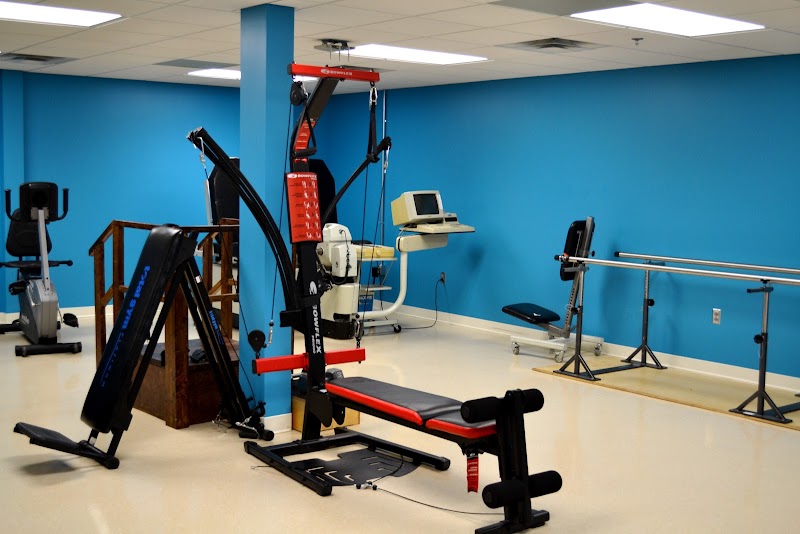
How is Highland Ridge Rehab Center Staffed?

CMS rates HIGHLAND RIDGE REHAB CENTER's staffing level at 1 out of 5 stars, which is much below average compared to other nursing homes. Staff turnover is 65%, which is 19 percentage points above the Virginia average of 46%. High turnover can affect care consistency as new staff learn residents' individual needs. RN turnover specifically is 92%, which is notably high. RNs provide skilled clinical oversight, so turnover in this role can affect medical care quality.

What Have Inspectors Found at Highland Ridge Rehab Center?

State health inspectors documented 48 deficiencies at HIGHLAND RIDGE REHAB CENTER during 2020 to 2025. These included: 1 that caused actual resident harm and 47 with potential for harm. Deficiencies causing actual harm indicate documented cases where residents experienced negative health consequences.
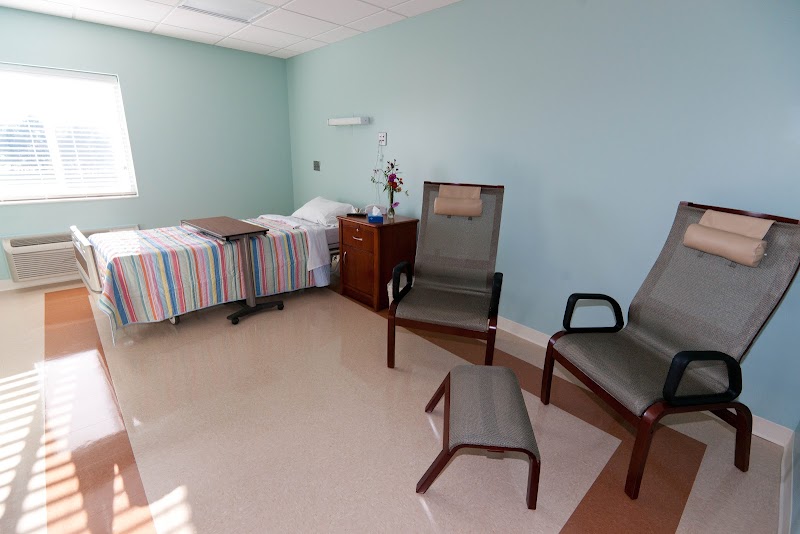
Who Owns and Operates Highland Ridge Rehab Center?

HIGHLAND RIDGE REHAB CENTER is owned by a for-profit company. For-profit facilities operate as businesses with obligations to shareholders or private owners. The facility is operated by HILL VALLEY HEALTHCARE, a chain that manages multiple nursing homes. With 132 certified beds and approximately 115 residents (about 87% occupancy), it is a mid-sized facility located in DUBLIN, Virginia.
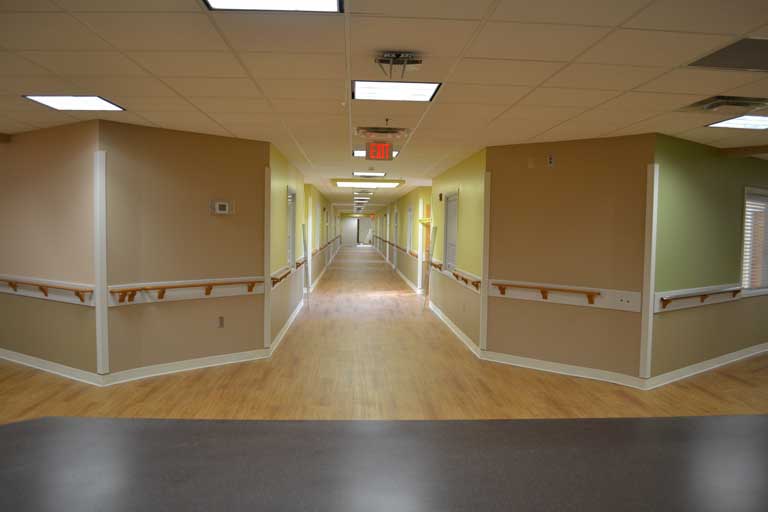
How Does Highland Ridge Rehab Center Compare to Other Virginia Nursing Homes?

Compared to the 100 nursing homes in Virginia, HIGHLAND RIDGE REHAB CENTER's overall rating (1 stars) is below the state average of 3.0, staff turnover (65%) is significantly higher than the state average of 46%, and health inspection rating (2 stars) is below the national benchmark.

What Should Families Ask When Visiting Highland Ridge Rehab Center?

Based on this facility's data, families visiting should ask: "How do you ensure continuity of care given staff turnover, and what is your staff retention strategy?" "Can you walk me through typical staffing levels on day, evening, and night shifts?" "Can I visit during a mealtime to observe dining assistance and food quality?" "How do you handle medical emergencies, and what is your hospital transfer rate?" These questions are particularly relevant given the facility's high staff turnover rate and the below-average staffing rating.

Is Highland Ridge Rehab Center Safe?

Based on CMS inspection data, HIGHLAND RIDGE REHAB CENTER has a clean safety record: no substantiated abuse findings (meaning no confirmed cases of resident harm), no Immediate Jeopardy citations (the most serious violation level indicating risk of serious injury or death), and is not on the Special Focus Facility watch list (a federal program monitoring the lowest-performing 1% of nursing homes). The facility has a 1-star overall rating and ranks #100 of 100 nursing homes in Virginia. While no facility is perfect, families should still ask about staff-to-resident ratios and recent inspection results during their visit.

Do Nurses at Highland Ridge Rehab Center Stick Around?

Staff turnover at HIGHLAND RIDGE REHAB CENTER is high. At 65%, the facility is 19 percentage points above the Virginia average of 46%. Registered Nurse turnover is particularly concerning at 92%. RNs handle complex medical decisions and coordinate care — frequent RN changes can directly impact care quality. High turnover means new staff may not know residents' individual needs, medications, or preferences. It can also be disorienting for residents, especially those with dementia who rely on familiar faces. Families should ask: What is causing the turnover? What retention programs are in place? How do you ensure care continuity during staff transitions?

Was Highland Ridge Rehab Center Ever Fined?

HIGHLAND RIDGE REHAB CENTER has no federal fines on record. CMS issues fines when nursing homes fail to meet care standards or don't correct problems found during inspections. The absence of fines suggests the facility has either maintained compliance or corrected any issues before penalties were assessed. This is a positive indicator, though families should still review recent inspection reports for the full picture.

Is Highland Ridge Rehab Center on Any Federal Watch List?

HIGHLAND RIDGE REHAB CENTER is not on any federal watch list. The most significant is the Special Focus Facility (SFF) program, which identifies the bottom 1% of nursing homes nationally based on persistent, serious quality problems. Not being on this list means the facility has avoided the pattern of deficiencies that triggers enhanced federal oversight. This is a positive indicator, though families should still review the facility's inspection history directly.