CARRIAGE HILL HEALTH & REHAB CENTER
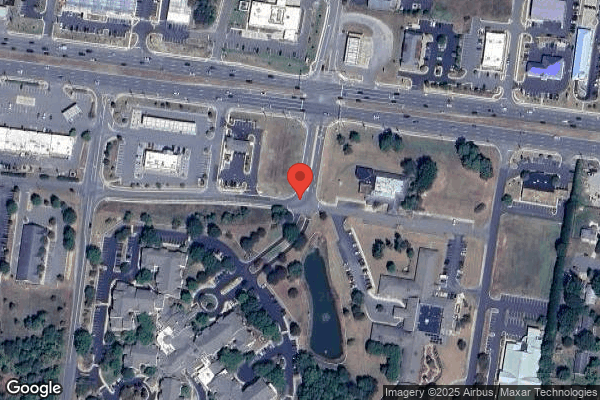
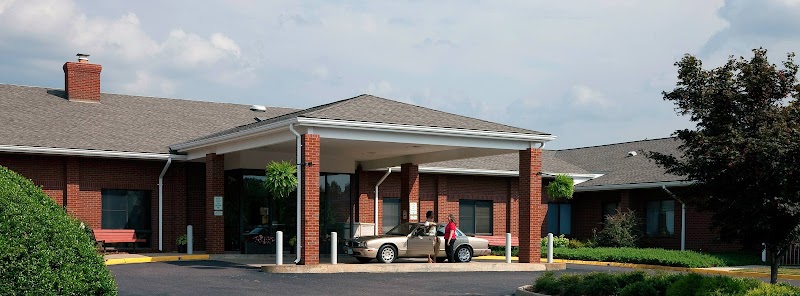
6106 HEALTH CENTER LANE, FREDERICKSBURG, VA 22407 (540) 785-1120
For profit - Limited Liability company 150 Beds COMMONWEALTH CARE OF ROANOKE Data: November 2025
Trust Grade
43/100
#182 of 285 in VA
Last Inspection: June 2023

Over 2 years since last inspection. Current conditions may differ from available data.

Overview

Carriage Hill Health & Rehab Center has a Trust Grade of D, indicating below-average performance with some concerns regarding resident care. Ranked #182 out of 285 nursing homes in Virginia, this facility is in the bottom half of state options and is the second-best in Spotsylvania County, meaning only one local facility is rated higher. The facility is on an improving trend, as it reduced critical issues from 10 in 2023 to just 3 in 2024. However, staffing is a weakness, with a 54% turnover rate, which is average compared to the state. Recent inspector findings highlighted serious concerns, including failures to prevent pressure injuries for vulnerable residents and inadequate visitor access, which could impact family connections. While they have average RN coverage, the presence of serious and potential harm issues raises some red flags for prospective families.

Trust Score
D
43/100
In Virginia
#182/285
Bottom 37%
Safety Record
Moderate
Needs review
Inspections
Getting Better
10 → 3 violations
Staff Stability
⚠ Watch
54% turnover. Above average. Higher turnover means staff may not know residents' routines.
Penalties
⚠ Watch
$9,311 in fines. Higher than 84% of Virginia facilities, suggesting repeated compliance issues.
Skilled Nurses
○ Average
Each resident gets 30 minutes of Registered Nurse (RN) attention daily — about average for Virginia. RNs are the most trained staff who monitor for health changes.
Violations
⚠ Watch
40 deficiencies on record. Higher than average. Multiple issues found across inspections.
★★☆☆☆
2.0
Overall Rating
★★☆☆☆
2.0
Staff Levels
★★★☆☆
3.0
Care Quality
★★☆☆☆
2.0
Inspection Score
Stable
2023: 10 issues
2024: 3 issues

The Good

  • Full Sprinkler Coverage · Fire safety systems throughout facility
  • No fines on record

Facility shows strength in fire safety.

The Bad

2-Star Overall Rating

Below Virginia average (3.0)

Below average - review inspection findings carefully

Staff Turnover: 54%

Near Virginia avg (46%)

Higher turnover may affect care consistency

Federal Fines: $9,311

Below median ($33,413)

Minor penalties assessed

Chain: COMMONWEALTH CARE OF ROANOKE

Part of a multi-facility chain

Ask about local staffing decisions and management

The Ugly 40 deficiencies on record

1 actual harm
Dec 2024 3 deficiencies
CONCERN (D) 📢 Someone Reported This

A family member, employee, or ombudsman was alarmed enough to file a formal complaint

Potential for Harm - no one hurt, but risky conditions existed

Notification of Changes (Tag F0580)

Could have caused harm · This affected 1 resident

Based on staff interview, facility document review, and clinical record review, the facility staff failed to notify the provider of a need to assess a resident for one of eleven residents in the surve...

Read full inspector narrative →
Based on staff interview, facility document review, and clinical record review, the facility staff failed to notify the provider of a need to assess a resident for one of eleven residents in the survey sample, Resident #10. The findings include: For Resident #10 (R10), the facility staff failed to notify the provider of a assess a resident identified as having a change in status on 7/31/24. A review of R10's clinical record revealed the following: 7/29/24 6:15 p.m. New Order O2 (oxygen) at 2 liters/min (per minute) via NC (nasal canula) prn (as needed) for SOB (shortness of breath). The resident received oxygen as ordered for her shortness of breath. 7/31/24 8:38 a.m .Pt (patient) noted to be quieter on this shift and appeared lethargic. Vitals wnl (within normal limits). Pt denies any discomfort but verbalized that she does not feel good. Pls (please) assess. The nurse who wrote this note was not available during the survey. A review of R10's clinical record failed to reveal notification of a provider of the need for an assessment of the resident, or reveal further physical assessment by another nurse or provider for more than 29 hours. On 8/1/24 at 1:25 p.m., R10 tested positive for COVID-19. On 12/12/24 at 12:01 a.m., ASM (administrative staff member) #3, a nurse practitioner, was interviewed. When asked her how often she is physically present in the facility, she stated either she or another NP (nurse practitioner) or physician is in the facility five days a week, and extending over most business hours. She stated she was unaware of any request to assess R10 until after the resident was diagnosed with COVID-19. She stated she assessed the resident in the afternoon on 8/2/24. She stated if she had been requested to assess the resident on 7/29/24, she would have done so. She stated sometimes nurses will verbally report this request, or will put the resident's name on a list to be seen by a provider. She stated she checks this list regularly throughout the day. On 12/12/24 at 1:59 p.m., LPN (licensed practical nurse) #1 was interviewed. She stated if she felt a resident needed to be assessed for a physical status change, she would document it in a progress note, and document which provider she notified about the need. She stated she would also document the provider's response to her request. On 12/12/24 at 4:00 p.m., ASM #1, the administrator, ASM #2, the director of nursing, and ASM #5, the regional director of clinical services were informed of these concerns. A review of the facility policy, Notification of Changes, revealed, in part: The purpose of this policy is to ensure the Center promptly informs the patient, consults the patient's physician/physician extender; and notifies .the patient's legal representative when there is a change requiring notification. No additional information was provided prior to exit.
CONCERN (D) 📢 Someone Reported This

A family member, employee, or ombudsman was alarmed enough to file a formal complaint

Potential for Harm - no one hurt, but risky conditions existed

Safe Environment (Tag F0921)

Could have caused harm · This affected 1 resident

**NOTE- TERMS IN BRACKETS HAVE BEEN EDITED TO PROTECT CONFIDENTIALITY** Based on observation, staff interview, facility document review, and clinical record review, the facility staff failed to mainta...

Read full inspector narrative →
**NOTE- TERMS IN BRACKETS HAVE BEEN EDITED TO PROTECT CONFIDENTIALITY** Based on observation, staff interview, facility document review, and clinical record review, the facility staff failed to maintain resident safety equipment in working order for one of 11 residents in the survey sample, Resident #2. The findings include: For Resident #2 (R2), the facility staff failed to maintain the resident's pacemaker monitor in working order at the resident's bedside. On the following dates and times, R2's room was observed. At each observation, the resident's pacemaker monitor was positioned on her bedside table, and the green light was illuminated, indicating proper functioning: [DATE] at 9:35 a.m. and 4:12 p.m.; [DATE] at 8:18 a.m. A review of R2's provider's orders revealed the following order dated [DATE]: Check pacemaker monitor for function q shift every shift. On [DATE] at 10:21 a.m., LPN (licensed practical nurse) #3, a unit manager, was interviewed. She stated on Monday, [DATE], she returned to work after a week's vacation. She stated R2's daughter was visiting the resident and approached her with questions about R2's pacemaker monitor. The daughter told LPN #3 that the monitor was not on the resident's bedside table, and had not been for some time. LPN #3 stated she could not verify how long the monitor had not been at the resident's bedside, but LPN #3 discovered the monitor in her office when she first entered her office after vacation. She stated that usually the cardiology office calls the facility immediately if they detect that the monitor is not functioning properly. She stated she asked staff if anyone knew how the monitor came to be located in her office, but no one had any information to provide. On [DATE] at 1:59 p.m., LPN #1 was interviewed. She stated she regularly cared for R2 and her roommate. R2's roommate died while LPN #1 was on vacation, and the staff moved items in the room around before and after the resident's death. She stated a day after she returned to work from her vacation in [DATE], she noticed R2's pacemaker monitor was missing from the room. She stated LPN #3 was just returning from vacation that day, and they located the pacemaker monitor in LPN #3's office. The immediately returned the machine to R2's bedside, plugged it in, and the light turned green, indicating the device was functioning correctly. She stated she did not understand why the cardiology office had not called the facility to alert the staff that there was a problem with the pacemaker monitor's functioning. On [DATE] at 4:00 p.m., ASM (administrative staff member) #1, the administrator, ASM #2, the director of nursing, and ASM #5, the regional director of clinical services were informed of these concerns. A review of the facility policy, Physical Environment: Electrical Equipment, revealed, in part: The facility will maintain all mechanical, electrical, and patient care equipment in safe operating condition. No additional information was provided prior to exit.
CONCERN (E) 📢 Someone Reported This

A family member, employee, or ombudsman was alarmed enough to file a formal complaint

Potential for Harm - no one hurt, but risky conditions existed

Quality of Care (Tag F0684)

Could have caused harm · This affected multiple residents

Based on staff interview, facility document review, and clinical record review, the facility staff failed to provide care and services to promote the highest level of well-being for five of eleven res...

Read full inspector narrative →
Based on staff interview, facility document review, and clinical record review, the facility staff failed to provide care and services to promote the highest level of well-being for five of eleven residents in the survey sample, Residents #10, #4, #5, #6, and #2. The findings include: 1. For Resident #10 (R10), the facility staff failed to assess a resident identified as having a change in status on 7/31/24. A review of R10's clinical record revealed the following: 7/29/24 6:15 p.m. New Order O2 (oxygen) at 2 liters/min (per minute) via NC (nasal canula) prn (as needed) for SOB (shortness of breath). The resident received oxygen as ordered for her shortness of breath. 7/31/24 8:38 a.m .Pt (patient) noted to be quieter on this shift and appeared lethargic. Vitals wnl (within normal limits). Pt denies any discomfort but verbalized that she does not feel good. Pls (please) assess. The nurse who wrote this note was not available during the survey. Further review of R10's clinical record failed to reveal further physical assessment by another nurse or provider for more than 29 hours. On 8/1/24 at 1:25 p.m., R10 tested positive for COVID-19. On 12/12/24 at 12:01 a.m., ASM (administrative staff member) #3, a nurse practitioner, was interviewed. When asked her how often she is physically present in the facility, she stated either she or another NP (nurse practitioner) or physician is in the facility five days a week, and extending over most business hours. She stated she was unaware of any request to assess R10 until after the resident was diagnosed with COVID-19. She stated she assessed the resident in the afternoon on 8/2/24. On 12/12/24 at 1:59 p.m., LPN (licensed practical nurse) #1 was interviewed. She stated if she felt a resident needed to be assessed for a physical status change, she would document it in a progress note, and document which provider she notified about the need. She stated she would also document the provider's response to her request. On 12/12/24 at 4:00 p.m., ASM #1, the administrator, ASM #2, the director of nursing, and ASM #5, the regional director of clinical services were informed of these concerns. On 12/12/24 at 4:25 p.m., ASM #1 stated there was no facility policy regarding notifying a provider for the need of a physical assessment for a resident. No additional information was provided prior to exit. 2. For Resident #4 (R4), the facility staff failed to follow physician's orders to administer medications in a timely manner. A review of R4's medication administration records for August 2024 revealed she received the following medications late, resulting in a failure to follow the physician's orders: Mupirocin (an antibacterial ointment) ordered 8/8/24 at 8:00 a.m., given at 10:23 a.m.; ordered 8/9/24 at 12:00 noon, given at 2:03 p.m.; ordered 8/10/24 at 12:00 noon, given at 1:58 p.m.; ordered 8/9/24 at 8:00 p.m., given at 5:48 p.m. Apixaban (anticoagulant) ordered 8/0/24 at 4:00 p.m., given at 5:48 p.m. Tylenol ordered 8/9/24 at 9:00 p.m., given at 11:38 p.m. Cefdinir (antibiotic) ordered 8/9/24 at 4:00 p.m., given at 5:48 p.m.; ordered 8/10/24 at 4:00 a.m., given at 5:43 a.m. On 12/12/24 at 10:21 a.m., LPN (licensed practical nurse) #3, a unit manager, was interviewed. She stated to comply with a physician's order, a medication should be administered within 60 minutes before or after it is listed as due. She stated if a medication is given late, the nurse is not following the physician's order. On 12/12/24 at 1:56 p.m., LPN #2 was interviewed. She stated all medications should be given within an hour before or after the medication is due. She stated the physician's orders are not followed if the nurse is later than hour after the due time administering the medication. On 12/12/24 at 4:00 p.m., ASM #1, the administrator, ASM #2, the director of nursing, and ASM #5, the regional director of clinical services were informed of these concerns. A review of the facility policy, Medication Administration, failed to reveal information about the timing of medication administration. No additional information was provided prior to exit. 3. For Resident #5 (R5), the facility staff failed to follow physician's orders to administer medications in a timely manner. A review of R5's medication administration records for August and November 2024 revealed she received the following medications late, resulting in a failure to follow the physician's orders: Sevelamer (kidney function supplement) ordered 8/20/24 at 8:00 a.m., given at 9:22 a.m.; ordered 11/30/24 at 12:00 noon, given at 2:13 p.m. Carvedilol (for high blood pressure) ordered 8/20/24 at 8:00 a.m., given at 9:21 a.m. Cromolyn (eyedrops) ordered 8/20/24 at 8:00 a.m., given at 9:21 a.m. Augmentin (antibiotic) ordered 8/20/24 at 8:00 a.m., given at 9:20 a.m. Risperidone (antipsychotic) ordered 8/20/24 at 8:00 a.m., given at 9:22 a.m. Aspirin ordered 8/20/24 at 8:00 a.m., given at 9:20 a.m. Sodium Bicarbonate (kidney function supplement) ordered 8/20/24 at 8:00 a.m., given at 9:23 a.m. On 12/12/24 at 10:21 a.m., LPN (licensed practical nurse) #3, a unit manager, was interviewed. She stated to comply with a physician's order, a medication should be administered within 60 minutes before or after it is listed as due. She stated if a medication is given late, the nurse is not following the physician's order. On 12/12/24 at 1:56 p.m., LPN #2 was interviewed. She stated all medications should be given within an hour before or after the medication is due. She stated the physician's orders are not followed if the nurse is later than hour after the due time administering the medication. On 12/12/24 at 4:00 p.m., ASM #1, the administrator, ASM #2, the director of nursing, and ASM #5, the regional director of clinical services were informed of these concerns. No additional information was provided prior to exit. 4. For Resident #6 (R6), the facility staff failed to follow physician's orders to administer medications in a timely manner. A review of R6's medication administration records for 9/28/24 revealed he received the following medication late, resulting in a failure to follow the physician's orders: Lidocaine Patch (for pain) ordered 9/28/24 at 8:00 a.m., given at 10:46 a.m. On 12/12/24 at 10:21 a.m., LPN (licensed practical nurse) #3, a unit manager, was interviewed. She stated to comply with a physician's order, a medication should be administered within 60 minutes before or after it is listed as due. She stated if a medication is given late, the nurse is not following the physician's order. On 12/12/24 at 1:56 p.m., LPN #2 was interviewed. She stated all medications should be given within an hour before or after the medication is due. She stated the physician's orders are not followed if the nurse is later than hour after the due time administering the medication. On 12/12/24 at 4:00 p.m., ASM #1, the administrator, ASM #2, the director of nursing, and ASM #5, the regional director of clinical services were informed of these concerns. No additional information was provided prior to exit. 5. For Resident #2 (R2), the facility staff failed to follow physician's orders to administer medications in a timely manner. A review of R2's medication administration records for August and September 2024 revealed she received the following medications late, resulting in a failure to follow the physician's orders: Tramadol (for pain) ordered 8/10/24 at 8:00 a.m., given at 9:12 a.m.; ordered 9/22/24 at 8:00 a.m., given at 12:19 p.m. Memantine (for dementia) ordered 8/10/24 at 8:00 a.m., given at 11:25 a.m.; ordered 9/22/24 at 8:00 a.m., given at 12:16 p.m. Hiprex (to prevent urinary tract infections) ordered 8/10/24 at 8:00 a.m., given at 11:25 a.m.; ordered 9/22/24 at 8:00 a.m., given at 12:17 p.m. Sennosides (stool softener) ordered 8/10/24 at 8:00 a.m., given at 11:25 a.m.; ordered 9/22/24 at 8:00 a.m., given at 12:17 p.m. On 12/12/24 at 10:21 a.m., LPN (licensed practical nurse) #3, a unit manager, was interviewed. She stated to comply with a physician's order, a medication should be administered within 60 minutes before or after it is listed as due. She stated if a medication is given late, the nurse is not following the physician's order. On 12/12/24 at 1:56 p.m., LPN #2 was interviewed. She stated all medications should be given within an hour before or after the medication is due. She stated the physician's orders are not followed if the nurse is later than hour after the due time administering the medication. On 12/12/24 at 4:00 p.m., ASM #1, the administrator, ASM #2, the director of nursing, and ASM #5, the regional director of clinical services were informed of these concerns. No additional information was provided prior to exit.
Jun 2023 10 deficiencies 1 Harm
SERIOUS (G) 📢 Someone Reported This

A family member, employee, or ombudsman was alarmed enough to file a formal complaint

Actual Harm - a resident was hurt due to facility failures

Pressure Ulcer Prevention (Tag F0686)

A resident was harmed · This affected 1 resident

Based on staff interview, facility document review, and clinical record review, the facility staff failed to provide care and services to identify and prevent pressure ulcers/injuries, resulting in ha...

Read full inspector narrative →
Based on staff interview, facility document review, and clinical record review, the facility staff failed to provide care and services to identify and prevent pressure ulcers/injuries, resulting in harm for two of 41 residents in the survey sample, Residents #47 and #15. The findings include: 1. For Resident #47 (R47), the facility staff failed to identify and prevent pressure injuries until stage three pressure injuries (1) developed on the resident's right buttock and sacrum on 4/12/23. On the most recent MDS (minimum data set), a quarterly assessment with an ARD (assessment reference date) of 4/10/23, the resident's cognitive skills for daily decision making were coded as severely impaired. Section G coded R47 as requiring extensive assistance of two or more staff with bed mobility and as being totally dependent on two or more staff with transfers. A review of R47's clinical record revealed a Braden scale for predicting pressure sore risk dated 1/19/23 that documented the resident was at very high risk for developing a pressure injury. R47's comprehensive care plan dated 1/15/20 documented, (R47) has the potential for alteration in skin integrity d/t (due to) impaired mobility, urinary and bowel incontinence. Multiple interventions including barrier cream, keeping the skin clean and dry, a pressure reduction support surface and turning and repositioning frequently were documented. A review of R47's clinical record revealed a Braden scale for predicting pressure sore risk dated 1/19/23 that documented the resident was at very high risk for developing a pressure injury. A review of R47's clinical record revealed a body audit dated 4/6/23 that documented redness to the groin but no other skin impairments. Further review of R47's clinical record failed to reveal documentation regarding the resident's skin until 4/12/23. A nurse's note dated 4/12/23 documented, redness noted to buttock and intergluteal cleft. N.O. (New Order) Apply Thera Calazinc Body Shield to buttock as needed for Altered skin integrity AND every shift for Altered skin integrity. RP (Responsible Party) aware. MD (Medical Doctor) notified. A wound care physician note dated 4/12/23 documented, Wound #1 Right Buttock is a Stage 3 Pressure Injury Pressure Ulcer and has received a status of Not Healed. Initial wound encounter measurements are 2.3cm (centimeters) length x (times) 1cm width x 0.1 cm depth, with an area of 2.3 sq cm (square centimeters) and a volume of 0.23 cubic cm. There is a Light amount of serous drainage noted which has no odor. The wound margin is flat and intact. Wound bed has 76-100%, granulation. The periwound skin texture is normal. The periwound skin moisture is normal. The periwound skin color is normal. Wound #2 Sacral is a Stage 3 Pressure Injury Pressure Ulcer and has received a status of Not Healed. Initial wound encounter measurements are 1.5cm length x 0.5 cm width x 0.1 cm depth, with an area of 0.75 sq cm and a volume of 0.075 cubic cm. There is a Light amount of serous drainage noted which has no odor. The wound margin is flat and intact. Wound bed has 76-100%, granulation. The periwound skin texture is normal. The periwound skin moisture is normal. The periwound skin color is normal. On 6/7/23 at 1:09 p.m., an interview was conducted with LPN (licensed practical nurse) #2 (the wound care nurse) and ASM (administrative staff member) #2 (the director of nursing). LPN #2 stated that it was accurate that there was no documentation of skin impairment to R47's right buttock or sacrum until the stage three pressure injuries were identified on 4/12/23. LPN #2 stated Braden assessments are completed on admission, quarterly and when skin issues are identified. ASM #2 stated weekly body audits are completed by nurses and residents' skin is observed daily during care provided by the CNAs (certified nursing assistants). ASM #2 stated CNAs should alert nurses of any skin issues then nurses should speak with the doctor and obtain a treatment order. On 6/7/23 at 2:14 p.m., an interview was conducted with LPN #2, ASM #2 and ASM #3 (the clinical services specialist). LPN #2 stated she had no additional information regarding the development of R47's pressure injuries on 4/12/23. ASM #3 stated an action plan was created and nurses were educated. ASM #3 stated that during the development of the plan, they learned that nurses were not communicating excoriation, incontinence associated dermatitis, redness, or even open skin areas that may have been a stage two pressure injury. ASM #3 stated that if barrier cream was in place, then the nurses did not communicate those skin impairments. (Note: an action plan was created on 12/13/22 with an allegation of compliance date of 3/20/23 and another action plan was created on 5/22/23 with an allegation of compliance date of 6/6/23. R47's stage three pressure injuries were identified on 4/12/23). On 6/7/23 at 3:19 p.m., an interview was conducted with ASM #4 (the wound care physician). ASM #4 stated he tells all staff to tell him or management if they see any skin alterations. ASM #4 stated he only sees a wound when he is told about a wound. ASM #4 stated R47 is at high risk for developing pressuring injuries because the resident requires maximum assistance and is bed bound. ASM #4 stated he could not provide additional information about R47's pressure injuries before he first saw them. On 6/7/23 at 3:34 p.m., ASM #1 (the administrator) and ASM #2 were made aware of the concern for harm. The facility policy titled Body Audit documented, Policy: It is our policy to perform a full body audit as part of the systematic approach to pressure injury prevention and management. Policy Explanation: 1. A full body, or head to toe, body audit will be conducted by a licensed or registered nurse upon admission/re-admission and weekly thereafter. The body audit may also be performed after a change of condition or after any newly identified pressure injury. 2. Documentation of the body audit in the EHR (electronic health record) includes but it not limited to: a. Include date and time of the assessment, your name, and position title. b. Document observations (e.g. skin conditions, how the patient tolerated the procedure, etc.). c. Document type of wound. d. Describe wound (measurements, color, type of tissue in wound bed, drainage, odor, pain). e. Document if patient refused assessment and why. f. Document other information as indicated or appropriate. Reference: (1) A stage three pressure injury Full-thickness loss of skin, in which adipose (fat) is visible in the ulcer and granulation tissue and epibole (rolled wound edges) are often present. This information was obtained from the website: https://cdn.ymaws.com/npiap.com/resource/resmgr/online_store/npiap_pressure_injury_stages.pdf 2. For Resident #15 (R15), the facility staff failed to identify a pressure injury to the sacrum prior to it being an unstageable pressure injury (1) with eschar (black necrotic [dead] tissue). On the MDS (minimum data set) assessment, prior to the discovery of the pressure injury, a quarterly/significant change assessment, with an assessment reference date of 1/17/2023, the resident was coded as having both short- and long-term memory difficulties. In Section G - Functional Status, R15 was coded as requiring extensive assistance of two or more staff members for moving in the bed. In Section H - Bladder and Bowel, the resident was coded as always being incontinent of both bowel and bladder. In Section M - Skin Conditions, the resident was not coded as having any pressure injuries. The nurse's note dated, 2/14/2023 at 5:30 a.m. documented Staff reports to this writer that when provided care this morning, observed resident scratching her buttocks causing an open area on right buttock. Open area clean [sic] with wound cleanser and Medihoney applied and covered with foam dressing. Resident tolerated well and denies pain. Resident refusing to allow this nurse to clip fingernails. Resident in bed at this time, MD/NP (medical doctor/nurse practitioner) notified. The physician orders, dated 2/15/2023, documented, Clean open area to right buttock with wound cleanser, apply TAO (topical antibiotic ointment) and cover with foam dressing every day shift for altered skin integrity. The February 2023 MAR (medication administration record) documented the above over. The treatment was documented as performed on 2/15/23 through 2/17/2023. The physician order dated, 2/18/2023, documented, Cleanse right buttock with wound cleanser, pat dry, apply betadine topically BID (twice a day), til resolved, two times a day. The February 2023 MAR documented the above over. The treatment was documented as performed on 2/18/2023 through 2/21/2023. The Body Audit form on 2/11/2023 at 2:14 p.m. documented, Skin integrity intact? no. Right heel - Discoloration/blister, TX (treatment) in place. The Body Audit form for 2/19/2023 at 4:23 a.m. documented, Skin integrity intact? no. Right buttock - wound on upper right buttock, dressing intact. A second Body Audit form for 2/19/2023 at 6:50 a.m. documented, Skin integrity intact? no. Right buttock, tx (treatment) initiated. The nurse's note dated 2/22/2023 at 10:00 a.m. documented, New pressure injury noted to sacrum. Unable to stage due to slough/eschar coverage of wound bed. Length 6/1 cm (centimeters) X width 3.9 cm, with surface area of 13.8cm2. No measurement of depth noted. No pain/discomfort. Air mattress ordered to be placed on bed, heels were elevated, pillow between knew and ankles for pressure relief. Dietician noted significant weight loss this month. Contractures prevention full ROM (range of motion) and making positioning in bed and chair difficult. Therapy screen request ordered. Wound MD (doctor) to assess on next round date. The Skin & Wound Evaluation dated, 2/22/2023, documented in part, Describe: pressure. Stage: unstageable - obscured full-thickness skin and tissue loss. Due to: Slough and/or eschar. Location: Sacrum. Acquired: In-house acquired. How long has wound been present? New. Wound measurements: Area - 13.8 cm2. Length: 6.1.cm. Width: 3.9 cm. Wound bed: eschar. % of eschar: 100% of wound filled. Surrounding tissue: Excoriated: superficial loss of tissue. The Therapy Screening Request dated, 2/22/2023, documented in part, A. Resident has had a change in status or function and may benefit from therapy services .Other: Difficulty with or maintaining positioning in bed or chair. Loss of joint mobility/contracture risk. Skin integrity issues .Additional Information: New Pressure Injury to sacrum, has contractures, difficult to maintain position in bed/chair. Ordered air mattress for bed. The comprehensive care plan dated, 10/14/2023 and last revised on 3/23/2023, documented in part, Focus: (R15) is at risk for skin breakdown r/t (related to) fragile skin, actual impaired skin to bilateral arms, blister to right heel, discolored areas to left foot (resolved) area to sacrum, discolored area to chest. Stage 4 pressure injury to sacrum. The Interventions documented in part, 6/6/2023 - air mattress. 10/17/2022 - assess skin thoroughly and implement precautions and/or treatment as indicated. Encourage frequent position changes for pressure relief. Observe for moisture and incontinence issues that affect skin. Report for further assessment, if noted. Provide pressure reduction surfaces as ordered/indicated. Report changes in skin integrity or condition for further assessment and treatment. 3/13/2023 - Reposition resident often while in bed. An interview was conducted with ASM (administrative staff member) #2, the director of nursing and ASM #3, the clinical services specialist, on 6/7/2023 at 8:33 a.m. When asked to clarify the right buttock wound and the sacral wound, ASM #2 stated the facility has recently had education on anatomical positioning as the floor nurses were incorrect in their description of body part. ASM #3 stated the open area on the right buttock was cause by a scratch that was self-inflicted by the resident. Treatment was put in place. Then the sacral pressure injury was noted on 2/22/2023. An interview was conducted with LPN (licensed practical nurse) #2, the wound nurse, ASM #2 and ASM #3, on 6/7/2023 at 11:14 a.m. When asked to clarify the location of the scratch wound and the sacral wound, LPN #2 stated the right buttock wound was on the right upper outer quadrant of the buttock. When asked, if a nurse is applying a treatment to the right buttock, how did they miss a large sacral wound, ASM #3 stated, they would have expected someone to notify someone about a new area. LPN #2 stated that as soon as she was made aware of the area, she went and assessed it and put treatment orders in place. She further stated the resident was noted to be having a decline and they spoke with the family. ASM #2 stated they recognized that they had a process with skin and they have been aggressively working on skin since 5/24/2023. When stated that this happened prior to 5/24/2023, ASM #2 stated they had a previous action plan in place for skin assessments. The action plan dated, 12/31/2022, documented in part, Area of Concern: Body audit and Treatment in place. Corrective Action: 1. Licensed nursing staff failed to complete timely wound assessment and initiate treatment on admission for (other resident initials) 2. Any resident is at risk for not having a complete and accurate body audit on admission. Any resident that has a wound is at risk for not have treatment in place on admission. Date of Compliance: 3/20/2023. The plan was reviewed with ASM #2 and ASM #3 and it was verified that R15 did not appear on any audit forms. An interview was conducted with LPN #6 on 6/7/2023 at 12:57 p.m. LPN #6 stated that she had observed the resident's skin on 2/20/2023 and the sacral wound was not there. An interview was conducted with CNA (certified nursing assistant) #1 on 6/7/2023 at 1:07 p.m. When asked when she looks at a resident's skin, CNA #1 stated she checks it when she is changing them, showers, baths or providing any care to them. CNA #1 was asked what she does when she finds any new breakdown on the resident's skin, CNA #1 stated she goes to the nurse and tells them. When asked if she documents skin assessments/observations anywhere, CNA #1 stated she documents in the computer program. An interview was conducted with ASM #4, the wound doctor, on 6/7/2023. When asked what he found when he saw R15 on 2/22/2023. ASM #4 reviewed his progress notes then stated, it was an unstageable due to necrosis wound on the sacrum, it had hard eschar. When asked if a pressure injury like that could develop overnight, ASM #4 stated, with what he saw, it couldn't have developed overnight. ASM #4 stated he was surprised that the wound didn't take the resident's condition in a decline as the wound had done remarkedly well. ASM #1, the administrator, ASM #2 and ASM #3 were made aware of the concern for harm for R15 on 6/7/2023 at 3:33 p.m. No further information was provided prior to exit. Reference: (1) Unstageable Pressure Injury: Obscured full-thickness skin and tissue loss Full-thickness skin and tissue loss in which the extent of tissue damage within the ulcer cannot be confirmed because it is obscured by slough or eschar. If slough or eschar is removed, a Stage 3 or Stage 4 pressure injury will be revealed. Stable eschar (i.e. dry, adherent, intact without erythema or fluctuance) on the heel or ischemic limb should not be softened or removed. This information was obtained from the website: https://cdn.ymaws.com/npiap.com/resource/resmgr/online_store/npiap_pressure_injury_stages.pdf
CONCERN (D)

Potential for Harm - no one hurt, but risky conditions existed

Deficiency F0578 (Tag F0578)

Could have caused harm · This affected 1 resident

Based on staff interview, facility document review and clinical record review, it was determined the facility staff failed to offer information related to developing an advance directive for one of 41...

Read full inspector narrative →
Based on staff interview, facility document review and clinical record review, it was determined the facility staff failed to offer information related to developing an advance directive for one of 41 residents in the survey sample, Resident #123. The findings include: For Resident #123 (R123), the facility staff failed to evidence that information related to developing an advance directive was offered to the resident. On the most recent MDS (minimum data set) assessment, an admission assessment, with an assessment reference date of 5/26/2023, the resident score a 15 out of 15 on the BIMS (brief interview for mental status) score, indicating the resident was not cognitively impaired for making daily decisions. The Social Services admission Assessment, dated 5/25/2023, documented in part, Advance Directive and Code Status documented the resident did not have an advance directive, or durable DNR (do not resuscitate). The form further documented, If no Advanced Directives exist, information and assistance to complete Advance Directives has been offer. This part of the form was blank. Nothing was documented in the answers of Yes, No or Not offered due to cognitive status of resident. On 6/7/2023 at 2:10 p.m. an interview was conducted with OSM (other staff member) #3, the social services case coordinator, who stated the process for determining if the resident has an advance directive upon admission is it is discussed during the safe transition meeting. OSM #3 was asked where it was documented, OSM #3 stated on the social services admission assessment. The above social services admission assessment was reviewed with OSM #3. OSM #3 stated she must have missed that question and cannot recall if she offered information about advance directives to R123. The facility policy, Advance Directives documented in part, If an Advance Directive does not exist, the Resident or legal representative will be informed of and given the opportunity to formulate an Advance Directive. ASM #1, the administrator, ASM #2, and ASM # 3, the clinical services specialist, were made aware of the above concern on 6/7/2023 at 1:46 p.m. No further information was obtained prior to exit.
CONCERN (D)

Potential for Harm - no one hurt, but risky conditions existed

Transfer Requirements (Tag F0622)

Could have caused harm · This affected 1 resident

Based on staff interview, facility document review and clinical record review, it was determined the facility staff failed to evidence the required documents were sent to the receiving facility, upon ...

Read full inspector narrative →
Based on staff interview, facility document review and clinical record review, it was determined the facility staff failed to evidence the required documents were sent to the receiving facility, upon transfer to the hospital for 2 of 41 residents in the survey sample, Residents #51 and #83. The findings include: 1. For Resident #51, the facility staff failed to evidence the documents sent with the resident upon transfer to the hospital on 5/15/2023. The nurse's note dated, 5/15/2023 at 2:50 p.m. documented in part, Fall at 1426 (2:46 p.m.), resident landed on head with a hard thump. Blood noted to resident left elbow, skin tear. NP (nurse practitioner) notified at 1428 (2:28 p.m.), verbal order to send resident out . The SNF/NF to Hospital Transfer Form dated, 5/15/2023, failed to evidence what documents were sent with the resident to the hospital. The section, Acute Care Transfer Document Checklist was blank. An interview was conducted with LPN (licensed practical nurse) #6 on 6/7/2023 at 10:37 a.m. When asked what documents are sent to the hospital with the resident for an acute change in condition, LPN #6 stated, they should send the face sheet, labs (laboratory tests) if related to why going out, doctor notes, and medication list. When asked if they send the care plan goals with the resident, LPN #6 stated she would have to check on that. She stated they send the eInteract transfer form that collects information and send that with the resident. When asked where what documents you send, are documented in the clinical record, LPN #6 stated in the nurse's notes. The facility policy, Emergency Transfer to Acute Care Hospital documented in part, 3. The Transfer Envelope and designated EHR copies (current labs/consults/progress notes, e-Interact Transfer Form, face sheet, etc.) are completed and should accompany the patient to the hospital. 4. Medical records pertinent to the acute episode should be included with Emergency Transfer packet to aide in medical history information for the receiving health care center to review. 5. The transfer process may include but it not limited to: a. Obtain an order to transfer the patient, when possible and obtaining the order does not delay lifesaving interventions at a higher level of care. b. Call ambulance for emergency (911). c. Notify the patient and/or legal representative of reason for transfer and document in the HER. d. Complete the Emergency Transfer/e-Interact Transfer Form from the EMR. e. The e-Interact Transfer form should accompany the patient to the Acute Care Hospital. f. The patient's DDNR (Advanced Directive) must accompany the patient if one has been executed. 6. A PRE-PRINTED Transfer envelope with the Transfer and Treatment Checklist and Bed Hold Policy attached should accompany the patient to any outside transfers with completed contents inside which coincide with the listed components on the checklist. ASM (administrative staff member) #1, the administrator, ASM #2, the director of nursing, and ASM #3, the clinical services specialist, were made aware of the above findings on 6/7/2023 at 1:46 p.m. No further information was provided prior to exit. 2. For Resident #83, the facility staff failed to document what documents were sent with the resident upon transfer on 2/25/2023. The nurse's notes dated 2/24/2023 at 4:33 p.m. documented, This nurse witnessed resident walking across the common area. As writer was approaching resident, to guide (them) back to the chair, (they) fell and landed on (their) left side . The nurse's note dated, 2/24/2023 at 11:45 p.m. documented, X-ray is - intertrochanteric fracture without shortening. (Name of Doctor). order received to send to ED (emergency department) . On 6/7/2023 at 10:00 a.m., ASM (administrative staff member) #3, the clinical services specialist, stated they have no evidence of documents sent with the resident upon transfer to the hospital. An interview was conducted with LPN (licensed practical nurse) #6 on 6/7/2023 at 10:37 a.m. When asked what documents are sent to the hospital with the resident for an acute change in condition, LPN #6 stated, they should send the face sheet, labs (laboratory tests) if related to why going out, doctor notes, and medication list. When asked if they send the care plan goals with the resident, LPN #6 stated she would have to check on that. She stated they send the eInteract transfer form that collects information and send that with the resident. When asked where what documents you send, are documented in the clinical record, LPN #6 stated in the nurse's notes. ASM (administrative staff member) #1, the administrator, ASM #2, the director of nursing, and ASM #3, the clinical services specialist, were made aware of the above findings on 6/7/2023 at 1:46 p.m. The facility policy, Emergency Transfer to Acute Care Hospital documented in part, 3. The Transfer Envelope and designated EHR copies (current labs/consults/progress notes, e-Interact Transfer Form, face sheet, etc.) are completed and should accompany the patient to the hospital. 4. Medical records pertinent to the acute episode should be included with Emergency Transfer packet to aide in medical history information for the receiving health care center to review. 5. The transfer process may include but it not limited to: a. Obtain an order to transfer the patient, when possible and obtaining the order does not delay lifesaving interventions at a higher level of care. b. Call ambulance for emergency (911). c. Notify the patient and/or legal representative of reason for transfer and document in the HER. d. Complete the Emergency Transfer/e-Interact Transfer Form from the EMR. e. The e-Interact Transfer form should accompany the patient to the Acute Care Hospital. f. The patient's DDNR (Advanced Directive) must accompany the patient if one has been executed. 6. A PRE-PRINTED Transfer envelope with the Transfer and Treatment Checklist and Bed Hold Policy attached should accompany the patient to any outside transfers with completed contents inside which coincide with the listed components on the checklist. No further information was provided prior to exit.
CONCERN (D)

Potential for Harm - no one hurt, but risky conditions existed

Deficiency F0625 (Tag F0625)

Could have caused harm · This affected 1 resident

Based on staff interview, facility document review and clinical record review, it was determined the facility staff failed to provide a bed hold notice upon transfer to the hospital, for three of 41 r...

Read full inspector narrative →
Based on staff interview, facility document review and clinical record review, it was determined the facility staff failed to provide a bed hold notice upon transfer to the hospital, for three of 41 residents in the survey sample, Residents #51, #83 and #23. The findings include: 1. For Resident #51, the facility staff failed to provide a bed hold notice/policy to the resident and/or responsible party, upon transfer to the hospital on 5/15/2023. The nurse's note dated, 5/15/2023 at 2:50 p.m. documented in part, Fall at 1426 (2:46 p.m.), resident landed on head with a hard thump. Blood noted to resident left elbow, skin tear. NP (nurse practitioner) notified at 1428 (2:28 p.m.), verbal order to send resident out . The SNF/NF to Hospital Transfer Form dated, 5/15/2023, failed to evidence what documents were sent with the resident to the hospital. The section, Acute Care Transfer Document Checklist was blank. An interview was conducted with LPN (licensed practical nurse) #6 on 6/7/2023 at 10:37 a.m. When asked what documents are sent to the hospital with the resident for an acute change in condition, LPN #6 stated, they should send the face sheet, labs (laboratory tests) if related to why going out, doctor notes, and medication list. LPN #6 was asked if they send the care plan goals with the resident, LPN #6 stated she would have to check on that. LPN #6 stated they send the EInteract transfer form that collects information and send that with them. When asked where what documents are sent are documented in the clinical record, LPN #6 stated in the nurse's notes. LPN #6 was asked if a bed hold notice is provided to the resident upon transfer, LPN #6 stated, the eInteract transfer form collects information and send with them, however she didn't think there was a section for the bed hold. The facility policy, Bed Hold Prior to Transfer documented in part, It is the policy of this Center to provide written information to the patient and/or the patient's legal representative regarding bed hold policies prior to transferring a patient to the hospital or the patient goes on therapeutic leave. ASM (administrative staff member) #1, the administrator, ASM #2, the director of nursing, and ASM #3, the clinical services specialist, were made aware of the above findings on 6/7/2023 at 1:46 p.m. No further information was provided prior to exit. 2. For Resident #83, the facility staff failed to provide a bed hold notice/policy to the resident and/or responsible party, upon transfer to the hospital on 2/25/2023. The nurse's notes dated 2/24/2023 at 4:33 p.m. documented, This nurse witnessed resident walking across the common area. As writer was approaching resident, to guide (them) back to the chair, (they) fell and landed on (their) left side . The nurse's note dated, 2/24/2023 at 11:45 p.m. documented, X-ray is - intertrochanteric fracture without shortening. (Name of Doctor). order received to send to ED (emergency department), RP (responsible party) notified. 911 called. An interview was conducted with LPN (licensed practical nurse) #6 on 672023 at 10:37 a.m. When asked what documents are sent to the hospital with the resident for an acute change in condition, LPN #6 stated, they should send the face sheet, labs (laboratory tests) if related to why going out, doctor notes, and medication list. LPN #6 was asked if they send the care plan goals with the resident, LPN #6 stated she would have to check on that. LPN #6 stated they send the eInteract transfer form that collects information and send that with them. When asked where what documents you send, are documented in the clinical record, LPN #6 stated in the nurse's notes. LPN #6 was asked if a bed hold notice is provided to the resident upon transfer, LPN #6 stated, the eInteract transfer form collects information and send with them, however she didn't think there was a section for the bed hold. On 6/7/2023 at 10:00 a.m., ASM (administrative staff member) #3, the clinical services specialist, stated they have no evidence of documents sent with the resident or a bed hold notice provided. ASM #1, the administrator, ASM #2, the director of nursing, and ASM #3, were made aware of the above findings on 6/7/2023 at 1:46 p.m. No further information was provided prior to exit. 3. For Resident #23, the facility staff failed to provide the resident and/or responsible party, with a bed hold notice upon transfer to the hospital on 3/26/2023. The nurse's note dated, 3/26/2023 at 12:06 a.m. documented in part, Reason for transfer and requires higher level of care: Resident having increased episodes of emesis and decreased BP (blood pressure), last taken was 67/40 .Bed Hold Provided: No, left with rescue squad. ASM #3, the clinical services specialist, stated on 6/7/2023 at 12:57 p.m., the facility did not have any documentation of a bed hold notice when sent to the hospital on 3/26/2023. ASM #1, the administrator, ASM #2, the director of nursing, and ASM #3, were made aware of the above findings on 6/7/2023 at 1:46 p.m. No further information was provided prior to exit.
CONCERN (D)

Potential for Harm - no one hurt, but risky conditions existed

Deficiency F0657 (Tag F0657)

Could have caused harm · This affected 1 resident

Based on staff interview, clinical record review and facility document review, the facility staff failed to review and revise the comprehensive care for two of 41 residents in the survey sample, Resid...

Read full inspector narrative →
Based on staff interview, clinical record review and facility document review, the facility staff failed to review and revise the comprehensive care for two of 41 residents in the survey sample, Residents #23 and #83. The findings include: 1. For Resident #23 (R23), the facility staff failed to review and review the comprehensive care plan after the resident was hospitalized with a small bowel obstruction. The resident's diagnoses included but was not limited to: personal history of malignant carcinoid tumor of large intestine. The nurse's note dated, 3/26/2023 at 12:06 a.m. documented in part, Reason for transfer and requires higher level of care: Resident having increased episodes of emesis and decreased BP (blood pressure), last taken was 67/40 .left with rescue squad. The comprehensive care plan dated, 3/30/2023, failed to evidence documentation related to the resident's bowel conditions. An interview was conducted with 6/7/2023 at 10:37 a.m. with LPN (licensed practical nurse) #6. When asked who updates the care plans, LPN #6 stated she does on her unit, each department does their section and the MDS (minimum data set) nurse reviews the care plans with each assessment. When asked if a resident returns from the hospital after suffering a small bowel obstruction and having a history of colon cancer, would she expect to see a care plan to address bowel regimen, LPN #6 stated, since it was a new change in condition for the resident, it should be addressed on the care plan to monitor her bowels, and make sure medications are in place, if needed. The facility policy, Comprehensive Care Planning Process documented in part, Additionally, the care plan is a fluid document and shall be reviewed and updated at any time the resident, family or representative or member of the ID team determines a need for additional interventions or care areas to be addressed. ASM (administrative staff member) #1, the administrator, ASM #2, the director of nursing, and ASM #3, the clinical services specialist, were made aware of the above findings on 6/7/2023 at 1:46 p.m. No further information was provided prior to exit. 2. For Resident #83 (R83), the facility staff failed to review and revise the comprehensive care plan after the resident suffered a fall with a broken hip. The nurse's notes dated 2/24/2023 at 4:33 p.m. documented, This nurse witnessed resident walking across the common area. As writer was approaching resident, to guide (them) back to the chair, (they) fell and landed on (their) left side. Resident did not hit (their) head . The nurse's note dated, 2/24/2023 at 11:45 p.m. documented, X-ray is - intertrochanteric fracture without shortening. (Name of Doctor). order received to send to ED (emergency department), RP (responsible party) notified. 911 called. Review of the comprehensive care plan, revised on 2/27/2023, documented in part, Focus: (R83) had actual falls and continues to be at risk for further falls r/t (related to) unsteady gait, impaired cognition and muscle weakness, fell while attempting to transfer self, fall when ambulating self. The Interventions documented in part, dated 2/24/2023, ER (emergency room). X-ray. The Fall Analysis/Investigation dated 2/24/2023, documented at the bottom of the first page there was a section, Care Plan/Individualized Service Plan Review: NEW Recommendations to minimize recurrent fall. Change/modify Care Plan. Care plan Remains Effective, No change Indicated. There were boxes to check off next to each of those statements, however there were no check marks. An interview was conducted with LPN (licensed practical nurse) #6 on 6/7/2023 at 10:37 a.m. When asked who updates the care plans, LPN #6 stated she did on her unit. When asked if ER and X-ray are interventions to prevent further falls, LPN #6 stated it's an intervention of what is being done at that moment in time. LPN #6 concurred that the care plan should be an reviewed and updated after a resident has suffered a fall with a broken hip, after they return to the facility. On 6/7/2023 at 11:13 a.m. ASM (administrative staff member) #2, the director of nursing, stated there was no review or update to the care plan after (R83's) fall. ASM #1, the administrator, ASM #2, the director of nursing, and ASM #3, the clinical services specialist, were made aware of the above findings on 6/7/2023 at 1:46 p.m. No further information was provided prior to exit.
CONCERN (D)

Potential for Harm - no one hurt, but risky conditions existed

Quality of Care (Tag F0684)

Could have caused harm · This affected 1 resident

Based on staff interview, facility document review and clinical record review, it was determined the facility staff failed to perform blood sugar checks per the physician order for one of 41 residents...

Read full inspector narrative →
Based on staff interview, facility document review and clinical record review, it was determined the facility staff failed to perform blood sugar checks per the physician order for one of 41 residents in the survey sample, Resident #4. The findings include: For Resident #4 (R4) the facility staff failed to obtain weekly fingerstick blood sugar on two out of four Wednesdays in the month of May 2023. The physician order dated, 3/15/2023 documented, Check BS (blood sugar) at HS (bedtime) on Wednesdays (Wed) at bedtime every Wed for DM (diabetes mellitus). Notify MD (medical doctor) if BS greater than 250 or less than 60. The May 2023 Medication Administration Record (MAR) documented the above order. On 5/24/2023 and 5/31/2023, there was no documented blood sugar, just the nurse's initials with a check mark. Review of the Blood Sugar Summary, failed to evidence the blood sugar reading for 5/24/2023 and 5/31/2023. Review of the nurse's notes failed to evidence documentation of the blood sugar readings on 5/24/2023 and 5/31/2023. An interview was conducted with LPN (licensed practical nurse) #6 on 6/7/2023 at 4:08 p.m. When asked if its not documented on the MAR, where would the blood sugar be documented, LPN #6 stated maybe in the nurse's notes. All the above documents were reviewed with LPN #6. LPN #6 was asked how you could tell the blood sugar was completed on those days; LPN #6 stated I don't know how the nurses bypassed the scheduled blocks to document the blood sugar. We can't tell what the readings were for those days. The facility policy, Blood Glucose Monitoring, documented in part, It is the policy of this Center to perform blood glucose monitoring per physician/physician extender's orders. ASM (administrative staff member) #1, the administrator, ASM #2, the director of nursing, and ASM #3, the clinical services specialist, were made aware of the above findings on 6/7/2023 at 4:35 p.m. No further information was provided prior to exit.
CONCERN (D) 📢 Someone Reported This

A family member, employee, or ombudsman was alarmed enough to file a formal complaint

Potential for Harm - no one hurt, but risky conditions existed

Accident Prevention (Tag F0689)

Could have caused harm · This affected 1 resident

**NOTE- TERMS IN BRACKETS HAVE BEEN EDITED TO PROTECT CONFIDENTIALITY** Based on observation, resident interview, staff interview, facility document review and clinical record review, the facility sta...

Read full inspector narrative →
**NOTE- TERMS IN BRACKETS HAVE BEEN EDITED TO PROTECT CONFIDENTIALITY** Based on observation, resident interview, staff interview, facility document review and clinical record review, the facility staff failed to implement safety interventions and/or maintain a safe environment for three of 41 residents in the survey sample, Residents #130, #278 and #4. The findings include: 1. For Resident #130 (R130), the facility staff failed to transfer the resident with a Hoyer lift, per the resident's plan of care on 3/8/23. R130's comprehensive care plan revised on 3/2/23 documented, (R130) demonstrates the need for ADL (activities of daily living) assistance r/t (related to) weakness d/t (due to) cerebral infarction (stroke), Stage IV breast cancer, medication, and medical deficit. Interventions/Tasks: Resident Hoyer lift/two person assist with transfers . R130's CNA (certified nursing assistant) [NAME] dated 3/8/23 documented, Transferring 2 person/Hoyer . On 6/6/23 at 10:22 a.m., an interview was conducted with LPN (licensed practical nurse) #3. LPN #3 stated that on 3/8/23, she entered R130's room and two CNAs were attempting to transfer the resident [without a Hoyer lift] from the bed to a shower chair. LPN #3 stated the CNAs were struggling, so she assisted with the transfer. LPN #3 stated that at the time, she and the CNAs were not aware that they were supposed to use a Hoyer lift. LPN #3 stated R130's transfer status must have recently changed prior to 3/8/23. LPN #3 stated R130's [family member], who was present in the room, complained after R130's transfer to the shower chair. LPN #3 stated that after R130's [family member] complained, she looked at R130's [NAME] (a document that gives a brief overview of the resident) and saw that the transfer without a Hoyer lift was an error on her and the CNAs part. (A review of nurses' notes for 3/8/23 failed to reveal documentation regarding the transfer). The CNAs who transferred R130 to the shower chair on 3/8/23 were not available for interview during the survey. On 6/6/23 at 2:47 p.m., an interview was conducted with CNA #1. CNA #1 stated CNAs are made aware of residents' need for a Hoyer lift via the [NAME], dialog with therapy staff, dialog with the unit manager, and in the CNA verbal report. On 6/7/23 at 1:48 p.m., ASM (administrative staff member) #1 (the administrator) and ASM #2 (the director of nursing) were made aware of the above concern. The facility did not have a policy regarding resident transfers. 2. For Resident #278, the facility staff failed to ensure disinfectant wipes were not out in the open in the resident's room. A nurse's note dated 6/4/23 documented, Resident confused this shift. Resident knows how old she is but states that her mother is 91 and that she has three babies to take care of, 2 girls and a boy. She was concerned about her mother taking care of the babies and that she stated that she needed to get home. Multiple attempts of reality orientation . On 6/5/23 at 12:49 p.m., R278 was lying on the bed and stated she needed to get out to check on the her mother and she needed to get a babysitter for her children. At that time, a container of disinfectant wipes was observed on R278's windowsill. A nurse's note dated 6/6/23 documented R278's preliminary urinalysis results were indicative of a urinary tract infection and antibiotic therapy was started. It was documented that R278 required extensive assistance with bed mobility and transfers and did not ambulate. On 6/6/23 at 9:34 a.m., R278 and an employee was observed in the resident's room. The container of disinfectant wipes remained on the windowsill. On 6/6/23 at 3:57 p.m., an interview as conducted with RN (registered nurse) #3. RN #3 stated disinfectant wipes cannot be kept in residents' rooms because, It has some kind of chemical component to it. RN #3 stated that usually the nurses have access to disinfectant wipes and can get them if they need them for a resident. On 6/7/23 at 1:48 p.m., ASM (administrative staff member) #1 (the administrator) and ASM #2 (the director of nursing) were made aware of the above concern. The facility did not have a policy regarding disinfectant wipes. 3. For Resident #4 (R4), the facility staff failed to have fall mats on the floor when the resident was in bed. Observation was made of R4 on 6/6/2023 at 9:41 a.m. and at 9:54 a.m. R4 was lying in their bed, on their side, and appeared to be asleep. Two fall mats were located behind the headboard against the wall. The physician orders dated 6/2/2023, documented, Fall mats on both sides of the bed while in bed. The comprehensive care plan dated, 8/23/2022, documented in part, Focus: (R4) has had actual fall with injury. Cognitive impairment impacting ability to understand own physical limitations. Poor balance, unsteady gain. Resident has had an unwitnessed fall from the bed to the floor with no injury. (R4) fell after attempting to self-ambulate with no injuries, injured when transferring self. The Interventions dated 8/23/2022, documented in part, Fall Mat. An interview was conducted with CNA (certified nursing assistant) #4 on 672023 at 2:04 p.m. When asked where she can look to see what safety interventions a resident needs, CNA #4 stated, it is in the [NAME]. The [NAME] for R4 documented in part, Fall mat on left side of bed while in bed every shift. May have bed side on mats on each side of bed. On 6/7/2023 at 3:53 p.m. ASM (administrative staff member) #2, the director of nursing, was asked should interventions for the prevention of falls be put in place, ASM #2 stated, yes. The facility policy, Fall Prevention Program documented in part, 5. High Risk Protocols: a. The patient will be evaluated by the IDT (interdisciplinary team) for intervention management. b. Provide interventions that address unique risk factors measured by the risk assessment tool: medications, psychological, cognitive status, or recent change in functional status. 6. Each patient's risk factors, and environmental hazards will be evaluated when developing the patient's comprehensive plan of care. a. Interventions will be monitored for effectiveness. ASM #1, the administrator, ASM #2, and ASM # 3, the clinical services specialist, were made aware of the above concern on 6/7/2023 at 3:33 p.m. No further information was obtained prior to exit.
CONCERN (D)

Potential for Harm - no one hurt, but risky conditions existed

Incontinence Care (Tag F0690)

Could have caused harm · This affected 1 resident

Based on observation, staff interview, clinical record review and facility document review, it was determined that the facility staff failed to provide appropriate care and services for an indwelling ...

Read full inspector narrative →
Based on observation, staff interview, clinical record review and facility document review, it was determined that the facility staff failed to provide appropriate care and services for an indwelling urinary catheter, for one of 41 residents in the survey sample; Resident #121. The findings include: For Resident #121 the facility staff failed to ensure the Foley catheter was maintained off the floor to prevent infections. A Foley catheter is a common type of indwelling catheter. It has soft, plastic or rubber tube that is inserted into the bladder to drain the urine (1). On 6/6/23 at 8:38 AM, Resident #121 was observed sitting on the side of the bed awaiting his breakfast tray. The Foley catheter bag was noted on the floor under the edge of the bed, the tubing was laying on the floor and the resident was stepping on the tubing. A review of the physician's orders revealed one dated 5/20/23 for catheter care every shift. On 6/7/23 at 11:50 AM an interview was conducted with CNA (Certified Nursing Assistant) #2 who stated that the catheter bag should be hanging on the side of the bed and the bag and the tubing should not be on the floor. On 6/7/23 at 11:52 AM an interview was conducted with LPN (Licensed Practical Nurse) #4 who stated that neither the bag nor the tubing should be on the floor and the bag should be hanging on the side of the bed. A review of the comprehensive care plan dated 5/21/23 for the use of a Foley catheter included the intervention dated 5/21/23 for Provide catheter care per order and protocol and PRN (as-needed). On 6/7/23 at 1:45 PM ASM #1 (Administrative Staff Member) the Administrator, ASM #2 the Director of Nursing and ASM #3 Clinical Services Specialist, were made aware of the findings. On 6/7/23 at 2:00 PM the facility policy, Urinary Catheterization/Irrigation was provided and reviewed. This policy documented, .Indwelling urinary catheters will be secured with use of an anchor to prevent excessive tension on the catheter, prevent accidental dislodgement, prevent kinks in the tubing and facilitate adequate flow of urine . The policy did not specify the need for the bag and tubing to be maintained off the floor to prevent infections. No further information was provided by the end of the survey. Reference: (1) The Foley catheter information was obtained from: https://medlineplus.gov/ency/article/003981.htm#:~:text=A%20Foley%20catheter%20is%20a,smallest%20catheter%20that%20is%20appropriate.
CONCERN (E) 📢 Someone Reported This

A family member, employee, or ombudsman was alarmed enough to file a formal complaint

Potential for Harm - no one hurt, but risky conditions existed

Comprehensive Care Plan (Tag F0656)

Could have caused harm · This affected multiple residents

**NOTE- TERMS IN BRACKETS HAVE BEEN EDITED TO PROTECT CONFIDENTIALITY** 3. For Resident #76, the facility staff failed to develop the comprehensive care plan for CPAP (continuous positive airway press...

Read full inspector narrative →
**NOTE- TERMS IN BRACKETS HAVE BEEN EDITED TO PROTECT CONFIDENTIALITY** 3. For Resident #76, the facility staff failed to develop the comprehensive care plan for CPAP (continuous positive airway pressure) use. Resident #76 was admitted to the facility on [DATE] with diagnoses that included but were not limited to: congestive heart failure (CHF), and chronic obstructive pulmonary disease (COPD). A review of the comprehensive care plan dated 11/30/22 revealed, FOCUS: Resident has respiratory problems (COPD) related to acute illness or chronic condition. INTERVENTIONS: Provide oxygen as ordered. Report changes in breathing patterns or difficulty breathing including wheezing, shortness of breath, rales, rhonchi, note on observation and/or auscultation for further assessment by nurse or physician/physician assistant/nurse practitioner. A review of the physician orders dated 11/29/22, revealed, Oxygen at 2 liters/minute via Nasal cannula every shift. CPAP with oxygen at 2L. Apply at HS (bedtime), remove in AM (morning) every shift. An interview was conducted on 6/7/23 at 10:50 AM with RN (registered nurse) #1. Asked to describe the purpose of the care plan, RN #1 stated, the purpose is to outline the specific care and interventions for a resident. Asked if CPAP (continuous positive airway pressure) should be on the care plan, RN #1 stated, yes, it should be. On 6/7/23 at approximately 1:35 PM, ASM (administrative staff member) #1, the administrator, ASM #2, the director of nursing and ASM #3, the clinical services specialist was made aware of the findings. No further information was provided prior to exit. 4. For Resident #29, the facility staff failed to implement the comprehensive care plan for dialysis communication. Resident #29 was admitted to the facility on [DATE] with diagnoses that included but were not limited to: end stage renal disease (ESRD) with dialysis. A review of the comprehensive care plan dated 4/22/23 revealed, FOCUS: Resident has renal disease requiring dialysis. INTERVENTIONS: Coordinate with Dialysis center for dialysis treatments as ordered. Communicate with dialysis provider regularly via pre/post treatment notes. A review of the physician orders dated 4/24/23, revealed, Resident receives Dialysis as follows: Tuesday, Thursday and Saturday with a 5:00 AM chair time. Diagnosis ESRD. The facility failed to provide communication to the dialysis facility for 4 out of 20 visits in April and May 2023 specifically on 4/25/23, 4/27/23, 5/6/23 and 5/9/23. An interview was conducted on 6/6/23 at 3:00 PM with LPN (licensed practical nurse) #1. When asked to describe the purpose of the care plan, LPN #1 stated, the purpose is to outline the specific care and interventions for a resident. When asked if the care plan was being followed when the dialysis communication forms are not completed for each dialysis treatment, LPN #1 stated, no, the care plan is not being followed. On 6/7/23 at approximately 1:35 PM, ASM (administrative staff member) #1, the administrator, ASM #2, the director of nursing and ASM #3, the clinical services specialist was made aware of the findings. No further information was provided prior to exit. 5. For Resident #130 (R130), the facility staff failed to implement the resident's comprehensive care plan for a Hoyer lift transfer on 3/8/23. R130's comprehensive care plan revised on 3/2/23 documented, (R130) demonstrates the need for ADL (activities of daily living) assistance r/t (related to) weakness d/t (due to) cerebral infarction (stroke), Stage IV breast cancer, medication, and medical deficit. Interventions/Tasks: Resident Hoyer lift/two person assist with transfers . R130's CNA (certified nursing assistant) [NAME] dated 3/8/23 documented, Transferring 2 person/Hoyer . On 6/6/23 at 10:22 a.m., an interview was conducted with LPN (licensed practical nurse) #3. LPN #3 stated that on 3/8/23, she entered R130's room and two CNAs were attempting to transfer the resident (without a Hoyer lift) from the bed to a shower chair. LPN #3 stated the CNAs were struggling, so she assisted with the transfer. LPN #3 stated that at the time, she and the CNAs were not aware that they were supposed to use a Hoyer lift. LPN #3 stated R130's transfer status must have recently changed prior to 3/8/23. LPN #3 stated R130's son, who was present in the room, complained after R130's transfer to the shower chair. LPN #3 stated that after R130's son complained, she looked at R130's [NAME] and saw that the transfer without a Hoyer lift was an error on her and the CNAs part. (A review of nurses' notes for 3/8/23 failed to reveal documentation regarding the transfer). The CNAs who transferred R130 to the shower chair on 3/8/23 were not available for interview during the survey. On 6/6/23 at 2:47 p.m., an interview was conducted with CNA #1. CNA #1 stated CNAs are made aware of residents' need for a Hoyer lift via the [NAME], dialog with therapy staff, dialog with the unit manager, and in the CNA verbal report. On 6/7/23 at 1:05 p.m., an interview was conducted with LPN #6 regarding the implementation of care plans. LPN #6 stated the CNAs can look up information on the [NAME] and go to their nurses for clarification, and nurses can look at the care plan. On 6/7/23 at 1:48 p.m., ASM (administrative staff member) #1 (the administrator) and ASM #2 (the director of nursing) were made aware of the above concern. Based on observation, staff interview, clinical record review, and facility document review, it was determined that the facility staff failed to develop and/or implement the comprehensive care plan for five of 41 residents in the survey sample; Residents #121, #4, #76, #29, #130. The findings include: 1. For Resident #121 the facility staff failed to follow the comprehensive care plan for indwelling catheter care. On 6/6/23 at 8:38 AM, Resident #121 was observed sitting on the side of the bed awaiting his breakfast tray. The catheter drainage bag was noted on the floor under the edge of the bed with the tubing also laying on the floor and the resident stepping on the tubing. A review of the comprehensive care plan revealed one dated 5/21/23 for the use of a Foley catheter which included the intervention, Provide catheter care per order and protocol and PRN (as-needed). A review of the physician's orders revealed one dated 5/20/23 for catheter care every shift. On 6/7/23 at 10:37 AM, an interview was conducted with LPN (Licensed Practical Nurse) #6 on. When asked the purpose of the care plan, LPN #6 stated it's to be able to look at it to see what care is to be provided to the resident and the care plan should always be followed; that's the purpose of the care plan. On 6/7/23 at 11:50 AM an interview was conducted with CNA (Certified Nursing Assistant) #2. She stated that the catheter bag should be hanging on the side of the bed and neither the bag nor the tubing should be on the floor. On 6/7/23 at 11:52 AM an interview was conducted with LPN (Licensed Practical Nurse) #4. She also stated that neither the bag nor the tubing should be on the floor and the bag should be hanging on the side of the bed. On 6/7/23 at 2:03 PM in a follow up interview with LPN #4 when asked if the care plan documented to provide Foley care per protocol and the bag and tubing was on the floor, was the care plan being followed, she stated it was not. When asked what was the purpose of the care plan was, she stated it is to guide care to meet the resident's goals. On 6/7/23 at 2:00 PM the facility policy, Urinary Catheterization/Irrigation was provided and reviewed. This policy documented, The plan of care will address the use of an indwelling/external urinary catheter, including strategies to prevent complications Indwelling urinary catheters will be secured with use of an anchor to prevent excessive tension on the catheter, prevent accidental dislodgement, prevent kinks in the tubing and facilitate adequate flow of urine . The policy did not specify the need for the bag and tubing to be maintained off the floor to prevent infections. On 6/7/23 at 2:10 PM, after a review of the above policy ASM #2 (Administrative Staff Member) the Director of Nursing and ASM #3, Clinical Services Specialist, were made aware of the findings. When asked what complication is the resident at risk for with the Foley catheter and bag being on the floor, ASM #2 stated, Infections. No further information was provided by the end of the survey. 2. For Resident #4 (R4), the facility staff failed to implement fall mats when the resident was in bed per the care plan. The comprehensive care plan dated, 8/23/2022, documented in part, Focus: (R4) has had actual fall with injury. Cognitive impairment impacting ability to understand own physical limitations. Poor balance, unsteady gain. Resident has had an unwitnessed fall from the bed to the floor with no injury. (R4) fell after attempting to self-ambulate with no injuries, injured when transferring self. The Interventions dated 8/23/2022, documented in part, Fall Mat. Observations were made of R4 on 6/6/2023 at 9:41 a.m. and at 9:54 a.m. R4 was lying in their bed, on their side, and appeared to be asleep. Two fall mats were located behind the headboard against the wall. The physician orders dated, 6/2/2023, documented, Fall mats on both sides of the bed while in bed. The [NAME] for R4 documented in part, Fall mat on left side of bed while in bed every shift. May have bed side on mats on each side of bed. An interview was conducted with LPN (licensed practical nurse) #6 on 6/7/2023. When asked the purpose of the care plan, LPN #6 stated it's to be able to look at it to see what care is to be provided to the resident, and stated the care plan should always be followed, since that's the purpose of the care plan. ASM #1, the administrator, ASM #2, and ASM # 3, the clinical services specialist, were made aware of the above concern on 6/7/2023 at 3:33 p.m. No further information was obtained prior to exit.
CONCERN (E) 📢 Someone Reported This

A family member, employee, or ombudsman was alarmed enough to file a formal complaint

Potential for Harm - no one hurt, but risky conditions existed

Deficiency F0698 (Tag F0698)

Could have caused harm · This affected multiple residents

**NOTE- TERMS IN BRACKETS HAVE BEEN EDITED TO PROTECT CONFIDENTIALITY** Based on resident interview, staff interview, clinical record review and facility document review, it was determined the facilit...

Read full inspector narrative →
**NOTE- TERMS IN BRACKETS HAVE BEEN EDITED TO PROTECT CONFIDENTIALITY** Based on resident interview, staff interview, clinical record review and facility document review, it was determined the facility staff failed to provide dialysis care and services per the comprehensive care plan, for one of 41 residents in the survey sample, Resident #29. The findings include: The facility failed to provide communication to the dialysis facility for 4 out of 20 dialysis center visits in April and May 2023. Resident #29 was admitted to the facility on [DATE] with a diagnosis that included but was not limited to, end stage renal disease (ESRD) with dialysis. The most recent MDS (minimum data set) assessment, a quarterly assessment, with an ARD (assessment reference date) of 5/23/23, coded the resident as scoring a 15 out of 15 on the BIMS (brief interview for mental status) score, indicating the resident was not cognitively impaired. A review of the comprehensive care plan dated 4/22/23, which revealed, FOCUS: Resident has renal disease requiring dialysis. INTERVENTIONS: Coordinate with Dialysis center for dialysis treatments as ordered. Communicate with dialysis provider regularly via pre/post treatment notes. A review of the physician orders dated 4/24/23 revealed, Resident receives Dialysis as follows: Tuesday, Thursday and Saturday with a 5:00 AM chair time. Diagnosis ESRD. An interview was conducted on 6/7/23 at 9:30 AM with Resident #29. When asked if he takes his dialysis communication book to the dialysis center, Resident #29 stated, Yes, the book goes with me. It is in the bag in my room. A review of Resident #29's dialysis communication book revealed missing communication to the dialysis facility on 4/25/23, 4/27/23, 5/6/23, and 5/9/23. An interview was conducted on 6/7/23 at 10:50 AM with RN (registered nurse) #1. When asked the purpose of the dialysis communication sheets, RN #1 stated, to provide communication about the resident's current condition, vital signs and maybe labs or medications. When asked if there is missing documentation, is the facility communicating with the dialysis center, RN #1 stated, No, we would not be communicating on those days. On 6/7/23 at approximately 1:35 PM, ASM (administrative staff member) #1, the administrator, ASM #2, the director of nursing and ASM #3, the clinical services specialist was made aware of the findings. A review of the dialysis contract dated 2012, revealed, The nursing facility shall ensure that all appropriate medical and administrative information accompanies all ESRD residents at the time of transfer or referral to the ESRD Dialysis unit. This information, shall include, but is not limited to, where appropriate, the following: appropriate medical records, including history of ESRD resident's illness, laboratory and x-ray findings. Collaboration of care: The nursing facility shall ensure that there is documented evidence of collaboration of care and communication between the nursing facility and ESRD dialysis unit. No further information was provided prior to exit.
Jan 2022 13 deficiencies
CONCERN (D)

Potential for Harm - no one hurt, but risky conditions existed

Free from Abuse/Neglect (Tag F0600)

Could have caused harm · This affected 1 resident

Based on interview, clinical record review, facility documentation and in the course of a complaint investigation, the facility staff failed to ensure Residents were free from neglect for 3 Residents ...

Read full inspector narrative →
Based on interview, clinical record review, facility documentation and in the course of a complaint investigation, the facility staff failed to ensure Residents were free from neglect for 3 Residents (#'s 310, 311, and 312) in a survey sample of 52 Residents. The findings included: For Resident #'s 310, 311, and 312 the facility staff neglected to ensure that Fentanyl patches remained on the Resident for the appropriate length of time. The 3 Residents involved were all on comfort care measures and receiving Fentanyl patches every three days to manage pain. The facility submitted 2 documents related to the diversion of narcotics by a former employee (RN D). The documents included a letter reporting the incident to the board of nursing, and a document entitled Summary of Findings in the Investigation of Suspected Diversion of Fentanyl at [name of facility redacted]. Per the above mentioned documents, it was found that the RN D admitted to diverting medications and did overdose at the facility, on Fentanyl patches. The RN involved denied removing patches prior to the scheduled times however there was evidence that the patches were not on the Residents' and the MD/ NP nor DON was not always documented as being notified. On 1/27/21 an interview was conducted with the DON who stated she was working at the facility at the time of the incident, however she was not in the roll of DON at that time. The Administrator was also working at the facility, however he was an AIT (Administrator in Training) at that time. Both the Administrator and the DON remember the incident of narcotics missing and the subsequent overdose of RN D while at work. On 1/26/22 a review of the clinical record for Resident #310 revealed documentation of Fentanyl patches missing from her body prior to scheduled date of removal on 8 occasions between 2/19/20 and 4/9/20. On 3/23/20 at 4:21 PM again progress notes documented Fentanyl patch was not found on the Resident however they did document the Nurse Practitioner (NP) was notified. On 3/24/20 a Fentanyl patch was not found and the MD notified. On 3/29/20 and on 3/30/20 the documentation reflects no Fentanyl patch being found and the MD/NP notified. On 4/7/20, 4/8/20 and 4/9/20 the documentation reflects no Fentanyl patch found on the Resident. (Please note that on 2/19/20, 4/7/20, 4/8/20 and 4/9/20 the progress notes do not indicate notification of MD / NP or DON.) A review of the clinical record for Resident #311 revealed that on 2/28/20 at 4:28 AM no Fentanyl Patch was found on the Resident's body and the supervisor was made aware. On 3/6/20 once again an entry was made in the progress notes that no Fentanyl patch was found on the resident and the MD and RP were made aware. A review of the clinical record for Resident #312 revealed that on 3/3/20 an entry was made in the progress notes that no patch was found on the Resident and the NP was made aware. On 3/4/20 the notes indicate once again no patch was found. On 4/2/20 again an entry was made in the progress notes that no patch was found on the Resident. On 4/9/20 and 4/12/20 entries were made in the progress notes that no Fentanyl patch was found on the Resident. (Please note on 4/2/20, 4/9/20 and 4/12/20 no documentation of notification of DON / MD / NP was present) On 1/27/22 at approximately 2:00 PM a copy of the facility policy for Controlled Substance Loss, Diversion and Impairment was reviewed and read as follows: Page 2 C -Internal Notifications 1. Supervisor will Immediately notify the Unit Manager and or Director of Nursing and Center Human Resources. If not previously notified the Unit Manager will notify the DON 2. DON will Immediately notify the Administrator. 3. The Administrator will immediately notify the Regional Director of Operations as well as the Compliance Officer or the Director of Legal Services. 4. The DON will immediately report the theft to the Clinical Services Specialist and the Pharmacy Vendor's Pharmacist-in-Charge. On 1/27/22 at approximately 4:15 PM an interview was conducted with the DON who was asked why the facility did not act on the missing patches prior to 4/12/20 she stated We acted as soon as we found out on 4/12/20. When asked what the expectation was for acting on Diversion of medication and she stated that it should be immediately reported to the DON and Administrator. When asked if this was done she stated that it was done on 4/12/20. When asked why it was not acted upon on several occasions when the MD / NP /and supervisor were notified of patches were missing from these 3 Residents, she stated again that the facility acted on it when they found out on the 4/12/20 after a staff member (RN D) overdosed on Fentanyl while on duty. On 1/27/22 during the end of day meeting the Administrator was made aware of this concern and no further information was provided. Complaint Deficiency
CONCERN (D)

Potential for Harm - no one hurt, but risky conditions existed

Abuse Prevention Policies (Tag F0607)

Could have caused harm · This affected 1 resident

Based on Resident interview, staff interview and facility documentation review, the facility staff failed to implement their abuse policy for one Resident (Resident #410) in a survey sample of 52 Resi...

Read full inspector narrative →
Based on Resident interview, staff interview and facility documentation review, the facility staff failed to implement their abuse policy for one Resident (Resident #410) in a survey sample of 52 Residents. For Resident #410, who reported an allegation of abuse to the facility staff, the facility staff failed to carry out their abuse policy with regards to protecting the Resident while an investigation was being conducted and failing to report an allegation of abuse. The findings included: On the afternoon of 1/25/22, Surveyor C conducted an interview with Resident #410. During the interview Resident #410 reported that in the past CNA B had poured a pan of hot water onto her back while bathing her. Review of the facility grievances revealed that a grievance form dated 12/6/21, read, Resident reported her CNA, [CNA B name redacted], threw hot water on her back while assisting her with getting cleaned up and bed bath [sic]. The facility conducted an investigation, which included a head to toe assessment of the Resident, checking the water temperature in the room and obtaining statements from staff. There was no indication that during the investigation process, that the facility staff removed CNA B from providing care to or having access to Resident #410, while a determination of if abuse had taken place. On 1/25/22, a request for all FRI's (facility reported incidents) was requested and received. The FRI's were reviewed with no report of Resident #410's allegation being noted being sent to the State Agency. On 1/26/22, an interview was conducted with the facility Administrator and Corporate Clinical Consultant. The facility Administrator confirmed that a neither a report nor follow-up report had been submitted to the State Agency, Adult Protective Services or other agencies as required. The Administrator and Corporate Clinical Consultant were made aware that there was no evidence of CNA B being removed from having access to Resident #410, in an effort to protect the Resident, during the course of the investigation. Both of them (Administrator and Corporate Clinical Consultant) confirmed this. A review of the facility policy titled, Abuse Prevention was conducted. This policy read, .VI. Protection: A. The Center will immediately assess the resident, notify the physician and Responsible Party, and take steps to protect the resident from further harm or incident .VII. Reporting/Response: A. Allegations of Abuse, Neglect, Misappropriation of Property, Exploitation: The Center Administrator, DON, or designee must timely report all alleged incidents of abuse, neglect, exploitation or mistreatment including injuries of unknown origin, misappropriation of property and unusual occurrences using the Virginia Office of Licensure & Certification Facility Reported Incident form to the (OLC) and to all other required agencies including Adult Protective Services (APS), and local law enforcement A final report with results of the investigation is filed with the OLC within 5 working days of the alleged incident. If the allegation involves a licensee, the Department of Health Professions should be notified only after the investigation has been completed and in accordance with section B. The Administrator should consult the [corporate company name redacted] Legal Team when reporting a licensee No further information was provided.
CONCERN (D)

Potential for Harm - no one hurt, but risky conditions existed

Investigate Abuse (Tag F0610)

Could have caused harm · This affected 1 resident

Based on Resident interview, staff interview, facility documentation review and clinical record review, the facility staff failed to implement measures to protect the Resident while an abuse investiga...

Read full inspector narrative →
Based on Resident interview, staff interview, facility documentation review and clinical record review, the facility staff failed to implement measures to protect the Resident while an abuse investigation was conducted, for one Resident (Resident #410) in a survey sample of 52 Residents. For Resident #410, who reported an allegation of abuse, the facility staff failed to protect the Resident by not allowing the alleged perpetrator to have continued access to the Resident while an investigation was being conducted. The findings included: On 1/25/22, an interview was conducted with Resident #410. During this interview, the Resident verbalized that previously she had reported that CNA B dumped a pan of hot water on her during a bath. Review of the facility grievances revealed that a grievance form dated 12/6/21, read, Resident reported her CNA, [CNA B name redacted], threw hot water on her back while assisting her with getting cleaned up and bed bath [sic]. The facility conducted an investigation, which included a head to toe assessment of the Resident, checking the water temperature in the room and obtaining statements from staff. There was no indication that during the investigation process, that the facility staff removed CNA B from providing care to or having access to Resident #410, while a determination of if abuse had taken place or not. On 1/26/22, an interview was conducted with the facility Administrator and Corporate Clinical Consultant. Both, the Administrator and Corporate Clinical Consultant were made aware that there was no evidence of CNA B being removed from having access to Resident #410, in an effort to protect the Resident, during the course of the investigation. Both of them (Administrator and Corporate Clinical Consultant) confirmed this. A review of the facility policy titled, Abuse Prevention was conducted. This policy read, .VI. Protection: A. The Center will immediately assess the resident, notify the physician and Responsible Party, and take steps to protect the resident from further harm or incident . No further information was provided.
CONCERN (D)

Potential for Harm - no one hurt, but risky conditions existed

Transfer Notice (Tag F0623)

Could have caused harm · This affected 1 resident

Based on resident interview, staff interviews, facility documentation review and clinical record review, the facility staff failed to provide notice in writing before a facility transfer or discharge ...

Read full inspector narrative →
Based on resident interview, staff interviews, facility documentation review and clinical record review, the facility staff failed to provide notice in writing before a facility transfer or discharge of a Resident to the Resident and Resident Representative (RP) for 1 Residents (Resident #410) in a survey sample of 52 Residents. The findings included: On 1/25/22 at 3:00 PM, Surveyor C interviewed Resident #410. Resident #410 stated she recalled going to the hospital and actually requested the transfer herself. Review of the clinical record for Resident #410 revealed on the census tab of the electronic health record (EHR), Resident #410 had discharged on 1/16/22. There was no further indication in the clinical record to indicate Resident #410 and/or her representative had received reason for the transfer in writing, prior to, or at the time of transfer/discharge. Review of the progress notes for Resident #410 revealed the following entry on 1/16/22, Resident c/o [complained of] nausea/vomiting around 2030, chest pain started at approx. 0400. VS: BP = 105/52, pulse = 139, Temp = 97.3, Resp = 18, O2 = 97%. Color pale, skin warm and dry. [Doctor Name redacted] called. Order received to send to ER [emergency room]. Two attempts made to reach emergency contacts [Resident #410's family member names redacted], sons. Message left to call facility. Res. [Resident] left via stretcher/911 at approx. 0500. NP [nurse practitioner] notified. Review of the miscellaneous tab of the EHR revealed a Notice of Transfer or Discharge dated 1/16/22. This form further indicated that verbal notification was made to Resident #410. The line reading, date of written notification was blank. On 1/26/22 at 11:20 AM, Surveyor C met with the Corporate Clinical Consultant. The Corporate Clinical Consultant was asked about the Notice of Transfer or Discharge form. The Corporate clinical consultant said, The social worker fills it out if it is a planned discharge. If not planned, then nursing does it and the social worker sends to the ombudsman. On 1/26/22 at approximately 11:30 AM, Surveyor C met with Employee D, the social worker. Employee D said, If verbal notice is given they went to the hospital, if written they went home. Employee D further confirmed that the written notice is only given to the Resident and/or family in the event of a planned/scheduled discharge. On 1/27/22 at 9:42 AM, an interview was conducted with RN F. RN F stated that when Residents are transferred or discharged to the hospital, items [clinical records] to include the bed hold policy, face sheet, DNR (do not resuscitate), medication list, etc. are put into a brown envelope and given to the transport personnel. RN F confirmed that the documents are for the hospital staff and not the Resident. RN F was shown the Notice of Transfer or Discharge form in the EHR for Resident #410 and said she wasn't familiar with the form and didn't provide such forms to Residents. On 1/27/22 at approximately 10:00 AM, Surveyor C met with LPN C, the unit manager. LPN C stated when Residents are transferred out to the hospital that various items [forms/documents] are put into an envelope and given to the transport. LPN C confirmed that the documents are important so that the receiving facility [hospital] would know information about the Resident. LPN C was shown the Notice of Transfer or Discharge form in the EHR for Resident #410 and was not able to confirm if such notices are given to Residents and their RP's. On 1/27/22 at 2:06 PM, Surveyor C attempted to call and speak to the responsible person (RP) for Resident #410. The RP for Resident #410 was not able to be reached prior to the conclusion of the survey. On 1/27/22, Surveyor C met with Resident #410 and asked if she had received a notice of transfer prior to her being sent to the hospital. Resident #410 said she wasn't given any paperwork. Review of the facility policy titled, Resident Transfer (Emergent or Planned), with an effective date of 12/14/21, was reviewed. This policy read, . 3. The Resident Transfer Envelope and designated EHR copies (current labs/consults/progress notes, e-Interact Transfer form, face sheet, bed hold policy, care plan goals, advanced directives, etc.) Are to be completed and accompany the resident to the hospital. 4. Medical records pertinent to the acute episode or consultation visit should be included with transfer envelope to aide in medical history information for the receiving facilities review . On 1/27/22 at approximately 2:30 PM, Surveyor C met with the facility Administrator, Director of Nursing and Corporate Clinical Consultant and notified them of the lack of Resident #410 and her RP being provided a written notice of transfer at the time of transfer/discharge. No further information was received.
CONCERN (D)

Potential for Harm - no one hurt, but risky conditions existed

Deficiency F0625 (Tag F0625)

Could have caused harm · This affected 1 resident

Based on resident interview, staff interviews, facility documentation review and clinical record review, the facility staff failed to provide written information about bed-hold policy before the trans...

Read full inspector narrative →
Based on resident interview, staff interviews, facility documentation review and clinical record review, the facility staff failed to provide written information about bed-hold policy before the transfer of a Resident (Resident #410) to the hospital in a survey sample of 52 Residents. The findings included: On 1/25/22 at 3:00 PM, Surveyor C interviewed Resident #410. Resident #410 stated she recalled going to the hospital and actually requested the transfer herself. Review of the clinical record for Resident #410 revealed on the census tab of the electronic health record (EHR), Resident #410 had discharged on 1/16/22. There was no further indication in the clinical record to indicate Resident #410 and/or her representative had received in writing information regarding the facility bed-hold policy. Review of the progress notes for Resident #410 revealed the following entry on 1/16/22, Resident c/o [complained of] nausea/vomiting around 2030, chest pain started at approx. 0400. VS: BP = 105/52, pulse = 139, Temp = 97.3, Resp = 18, O2 = 97%. Color pale, skin warm and dry. [Doctor Name redacted] called. Order received to send to ER [emergency room]. Two attempts made to reach emergency contacts [Resident #410's family member names redacted], sons. Message left to call facility. Res. [Resident] left via stretcher/911 at approx. 0500. NP [nurse practitioner] notified. There were no further notes in the progress notes that made any mention of a bed hold policy being discussed and provided. Review of the miscellaneous tab of the EHR revealed no indication of a bed-hold policy/notice being discussed or provided to Resident #410. On 1/26/22 at 11:20 AM, Surveyor C met with the Corporate Clinical Consultant. The Corporate Clinical Consultant was asked about the bed hold notice at the time of transfer. The Corporate clinical consultant said they have an envelope that has the policy printed on the outside and the paperwork accompanying the Resident is put inside the envelope. On 1/27/22 at 9:42 AM, an interview was conducted with RN F. RN F stated that when Residents are transferred or discharged to the hospital, items [clinical records] to include the bed hold policy, face sheet, DNR (do not resuscitate), medication list, etc. are put into a brown envelope and given to the transport personnel. RN F confirmed that they tell the Resident of the bed hold policy at the time of transfer and if they have any questions they are to call the Admissions office. RN F further confirmed that all paperwork is given to the transport providers to give the hospital staff and are not given to the Resident. On 1/27/22 at approximately 10:00 AM, Surveyor C met with LPN C, the unit manager. LPN C stated when Residents are transferred out to the hospital that various items [forms/documents] are put into an envelope and given to the transport. LPN C confirmed that the documents are important so that the receiving facility [hospital] would know information about the Resident. LPN C was unable to locate a bed hold policy on her unit. LPN C then went to the other nursing station within the facility and showed Surveyor C an envelope which had the printed bed hold policy on the exterior of the envelope. LPN C confirmed that the envelope of paperwork is given to the transport providers. On 1/27/22 at 2:06 PM, Surveyor C attempted to call and speak to the responsible person (RP) for Resident #410. The RP for Resident #410 was not able to be reached prior to the conclusion of the survey. On 1/27/22, Surveyor C met with Resident #410 and asked if she had received a notice of bed hold policy prior to her being sent to the hospital. Resident #410 said she wasn't told or provided anything with regards to her room while she was gone and/or her ability to return to the same room. Review of the facility policy titled, Notice of bed hold policy, with an effective date of 1/13/22, was reviewed. This policy read, .Policy Explanation and Compliance Guidelines: Nursing Services is responsible for: 1. providing policy to resident BEFORE the resident goes to the receiving hospital, appointment, etc. Admissions/Designee is responsible for: 1. admission Director or designee will follow up with patient/resident or resident agent by the next business day following admission to an acute setting, to inquire about a bed hold. 2. admission Director or designee will document Patient/resident or resident agent choice to accept or deny bed hold in PCC under the Residents general note tab in PCC. 3. If patient/resident or resident agent accepts bed hold, a bed hold agreement will be issued, and a signed copy will be located under the Resident's Misc. tab in PCC. 4. Notifying Business Office if the resident or Responsible Party would like to execute a Bed Hold. On 1/27/22 at approximately 2:30 PM, Surveyor C met with the facility Administrator, Director of Nursing and Corporate Clinical Consultant and notified them of the lack of Resident #410 and her RP being provided a written notice of bed hold policy at the time of transfer/discharge. No further information was received.
CONCERN (D)

Potential for Harm - no one hurt, but risky conditions existed

Deficiency F0657 (Tag F0657)

Could have caused harm · This affected 1 resident

**NOTE- TERMS IN BRACKETS HAVE BEEN EDITED TO PROTECT CONFIDENTIALITY** 3. For Resident #64, the facility staff failed to revise the care plan to include interventions pertaining to Resident #64's fis...

Read full inspector narrative →
**NOTE- TERMS IN BRACKETS HAVE BEEN EDITED TO PROTECT CONFIDENTIALITY** 3. For Resident #64, the facility staff failed to revise the care plan to include interventions pertaining to Resident #64's fistula management, specifically, to ensure blood pressures were not taken on the left arm where the fistula was located. On 01/25/2022 at approximately 1:15 P.M., Resident #64 was interviewed. When asked about receiving dialysis, Resident #64 nodded 'yes' and lifted her left sleeve to reveal 2 small white dressings (clean, dry and intact) covered with tape on the left upper extremity. On 01/25/2022 and 01/26/2022, Resident #64's clinical record was reviewed. A physician's order dated 08/18/2021 documented, Monitor LUE [left upper extremity] fistula for bruit/thrill [sound/vibration] Qshift [every shift]. A physician's order dated 08/18/2021 documented, Monitor LUE fistula for s/s [signs and symptoms] of infection Qshift [every shift]. There was no physician's order prohibiting obtaining blood pressures in the left upper extremity where Resident #64's fistula was located. The care plan was reviewed. A focus initiated on 08/06/2021 entitled, [Resident #64] needs hemodialysis r/t [related to] ESRD [end stage renal disease]. Interventions listed for this focus did not include monitoring for bruit/thrill of fistula and prohibiting blood pressures in the left upper extremity where the fistula was located. The vital signs flowsheet for blood pressures from December 2021 through January 2022 were reviewed. Of the 12 blood pressures recorded, there were 2 occurrences of the blood pressure taken in the left arm (12/15/2021 and 12/29/2021). On 01/27/2022 at 11:30 A.M., the Regional Nurse Consultant was interviewed. When asked about the expectations on the care plan for dialysis management, the regional nurse consultant expected that monitoring for bruit and thrill and prohibiting blood pressures in the extremity where the hemodialysis access was located would be included on the care plan. On 01/27/2022 at 5:55 P.M., the regional nurse consultant stated they had no further information or documentation to submit. Based on observation, Resident interview, staff interview, clinical record review, and facility document review, the facility staff failed to revise the care plan for for three Residents (Resident #55, #97, and #64) of the 52 residents in the survey sample. The findings included; 1. For Resident #55, the staff failed to revise the care plan for pressure sore interventions. Resident #55 was originally admitted on [DATE]. Diagnoses for Resident #55 included but were not limited to; acute pubic and lumbar fracture resulting from a fall at home. Resident #55's admission Minimum Data Set (an assessment protocol) with an Assessment Reference Date of 10-22-21 coded Resident #55 as alert, oriented to person, place, time and situation, with a BIMS (brief Interview for Mental status score of 14 out of a possible 15 points indicating no cognitive impairment. The Minimum Data Set further coded Resident #55 as being extensively dependent, on 1-2 staff members for all Activities of Daily Living care. The Resident was coded as completely independent physically and mentally prior to the fractures which were the result of a fall at home. The Resident was coded as always incontinent of bowel and bladder, and at risk for developing pressure sores, however, had none upon admission to the facility. A Braden scale for ascertaining pressure sore risk was completed upon admission and revealed a score of 12 indicating High Risk. A review of Resident #55's clinical record was conducted during the survey. The review revealed a progress note from the staff on the following date and time that revealed the initial identification and initial treatment of the coccyx pressure sore. 11-17-21 Nursing progress notes revealed intact sacral, also the physician was in to evaluate the Resident and those documents notates no concerns in regard to skin issues found, nor brought to the attention of the physician by nursing staff's assessment. Body Audit forms were reviewed and documented the first observation of sacral skin alteration on this form in the clinical record was on 10-23-21, and documented Sacrum red. and signed by a traveling nurse. Skin and Wound Evaluation forms were reviewed and documented the first observation of skin alteration on this form in the clinical record was on 11-23-21, four days after identification of the unstageable pressure sore identification and documented Pressure/sacrum/unstageable/100% of wound filled with slough. and the document had no signature to denote who completed the evaluation. The original admission baseline care plan dated 10-16-21 obtained and reviewed by electronic health care (EHR) computer copy and was found to be entirely canceled on 11-30-21. A new care plan was devised on 12-11-21 revealing no active care plan between the 2 care plans for 12 days. Physician ordered resident centered treatments, PICC central line catheter care, and antibiotic infusion orders with descriptions of how to provide the care were not documented on the care plan. No instruction was given in the care plan as to how the treatments should be completed. No direction was given as to use of the an ordered air mattress, nor an ordered wound vac. The facility Administrator, regional RN (Registered Nurse) consultant, and DON (Director of Nursing) were informed of the findings during an end of day briefing on 1-26-22 at approximately 5:00 p.m. They were again notified of findings on 1-27-22 at the end of day debrief at approximately 5:00 p.m The facility stated they had no further information to present at the time of exit at 6:30 p.m. on 1-27-22. 2. For Resident #97, the staff failed to revise the care plan for pressure sore interventions. Resident #97 was originally admitted on [DATE]. Diagnoses for Resident #97 included but were not limited to; COVID -19 pneumonia, Osteoarthritis, Chronic Hyponatremia, malnutrition, and viral hepatitis C. Resident #97's admission Minimum Data Set (an assessment protocol) with an Assessment Reference Date of 12-28-21 coded Resident #97 as alert, and oriented to person, and place, with a BIMS (brief Interview for Mental status score of 7 out of a possible 15 points indicating moderate dementia. The Minimum Data Set further coded Resident #97 as being extensively dependent, on 1-2 staff members for all Activities of Daily Living care. The Resident was coded as frequently incontinent of bowel and bladder, and at risk for developing pressure sores, however, had none upon admission to the facility. A Braden scale for ascertaining pressure sore risk was completed upon admission and revealed a score of 11 indicating High Risk. The following physician orders with start dates and discontinuance dates for malnutrition are as follows; Regular diet with thin liquids for the entire stay. 12-23-21 Hi Cal supplement two times per day. Discontinued 1-1-22 when discharged to the hospital. 12-24-21 Boost plus supplement once per day at lunch. Discontinued 1-1-22 when discharged to the hospital. Start 1-11-22 Active Liquid protein sugar free 30 cc (cubic centimeters = milliliters) every morning. Continued through survey. Start 1-11-22 Hi Cal supplement three times per day. Continued through survey. Start 1-10-22 Boost Breeze supplement once per day with lunch. Continued through survey. Start 1-11-22 multi vitamin once per day. Continued through survey. Body Audit forms after the Residents readmission on [DATE] were reviewed and revealed that on 1-7-22 neither heel exhibited any problem on the document. On 1-14-22 the document denoted neither heel exhibited any problem, and finally on 1-21-22, bilateral heel DTI (deep tissue injury), was documented. No further description was given. The Resident's only care plan was obtained and reviewed by electronic health care (EHR) computer copy. None of the person centered physician ordered wound treatments and supplements for malnutrition were found to have been described on the care plan. No direction instruction given as to descriptive modalities for off loading pressure on the Residents heels. The facility Administrator, regional RN (Registered Nurse) consultant, and DON (Director of Nursing) were informed of the findings during an end of day briefing on 1-26-22 at approximately 5:00 p.m. They were again notified of findings on 1-27-22 at the end of day debrief at approximately 5:00 p.m The facility stated they had no further information to present at the time of exit at 6:30 p.m. on 1-27-22.
CONCERN (D)

Potential for Harm - no one hurt, but risky conditions existed

Deficiency F0658 (Tag F0658)

Could have caused harm · This affected 1 resident

**NOTE- TERMS IN BRACKETS HAVE BEEN EDITED TO PROTECT CONFIDENTIALITY** Based on observation, staff interview, and clinical record review, the facility staff failed to transcribe orders for 2 Resident...

Read full inspector narrative →
**NOTE- TERMS IN BRACKETS HAVE BEEN EDITED TO PROTECT CONFIDENTIALITY** Based on observation, staff interview, and clinical record review, the facility staff failed to transcribe orders for 2 Residents (Resident #64, Resident #2) in a sample size of 52 Residents. The findings included: 1. For Resident #64, the facility staff failed to transcribe the wound physician's wound treatment orders into the facility's electronic health record on 01/24/2022 resulting in the wrong wound treatment on 01/26/2022 and 01/27/2022. On 01/25/2022 and 01/26/2022, Resident #64's clinical was reviewed. An active physician's order dated 01/10/2022 documented, left heel DM [diabetic mellitus] ulcer. clean with normal saline. pat dry. skin prep wound edges apply small piece of calcium Alginate over wound bed secure with DD [dry dressing] Q MWF and PRN [every Monday, Wednesday, and Friday and as needed]. The Treatment Administration Record for the above order with a start date of 01/12/2022 was signed off as administered as ordered including on 01/24/2022 and 01/26/2022. The wound physician document dated 01/24/2022 under the header Assessment/Plan documented the following headers and input: Cleanser: wound cleanser; Primary dressing: hydrofera blue; Secondary dressing: foam; Frequency: QMWF & prn [every Monday, Wednesday, Friday & as needed]. On 01/27/2022 at 11:00 A.M., this surveyor observed Registered Nurse C (RN C) perform wound care on Resident #64's left heel. RN C checked the orders in the electronic health record and gathered supplies from the treatment cart. After removing the old outer dressing, RN C rinsed the wound with normal saline, applied skin prep around the wound, placed calcium alginate on the wound and covered it with a foam dressing. On 01/27/2022 at 12:20 P.M., the administrator was notified that the wound physician wound treatment order was not the same as the wound treatment order in the electronic health record. At approximately 12:45 P.M., the regional nurse consultant indicated that the wound physician changed the wound treatment on 01/24/2022 but that it was not updated in the electronic health record. When asked about the process for transcribing wound physician orders, the regional nurse stated that the nurse that accompanies the wound physician on rounds was responsible for entering the orders into the electronic health record. The regional nurse consultant also stated that the wound treatment would now be updated in the electronic health record and the nurse would be notified to apply the dressing as ordered by the wound physician. According to a [NAME] publication entitled, Taylor's Clinical Nursing Skills, 5th Edition, 2019, Chapter 8, page 431, an excerpt under the sub-header Assessment documented, Confirm any prescribed orders relevant to wound care and any wound care included in the nursing care plan. On 01/27/2022 at 5:55 P.M., the regional nurse consultant indicated they had no further information or documentation to submit. 2. For Resident #2, the facility staff failed to transcribe a verbal order to decrease the dosage of a Celexa (Citolpram, an anti-depressant), resulting in the medication being discontinued. On 1/28/22 at 10:30 A.M., an observation was made of Resident #2 on the memory unit. Resident #2 was sitting in the activity area of the unit with her daughter. Resident #2 appeared to be clean and well-groomed. On 1/28/22, a review was conducted of Resident #2's clinical record. An excerpt from a Medication Error Report, dated 1/18/22 read, [Resident #2] last received Celexa on 8/4/21. This medication was discontinued by NP (nurse practitioner) on 8/4/21. This discontinuation of the medication was not put in the que. On 8/4/21 a call was placed to the responsible party stating physician (Employee O) wanted to decrease medication to 10 mg instead of 20 mg to have a dose reduction. The Celexa 10 mg order was not activated resulting in a medication error. Resident has not had adverse effects related to medication error. On 1/28/22, a review was conducted of facility documentation. The charge nurse (Employee C) received in-service education on 1/19/22. An excerpt from the Individual In-service document read, [Charge Nurse - Employee C] received order from (Physician- Employee O) to reduce Citolpram on 8/4/21. Nurse failed to update the chart as documented. Reviewed verbal orders policy. An excerpt from the Verbal Orders policy, dated 6/21/21 read, 1. Repeat any prescribed orders back to the physician .Use clarification questions to avoid misunderstandings .Enter the order into the electronic record .The physician should sign the order electronically .Follow through with orders by making appropriate contact or notification . On 1/28/22 at approximately 2:20 P.M., an interview was conducted with the Director of Nursing (DON- Employee B) in the conference room. When asked about the importance of this anti-depressant medication, she stated, [Charge Nurse - Employee C] did not input the verbal order. A patient not receiving ordered medication, an anti-depressant, could become more depressed. It could cause anxiety, more depression, change of appetite, change in mental state. I don't believe it had an ill effect on (Resident #2). We got lucky. Yeah, cause it could have been much worse. Guidance for professional standards of nursing for documentation of medication administration was identified. Document all medications administered in the patient's MAR or EMAR. If a medication wasn't administered, document the reason why, any interventions taken, practitioner notification, and the patient's response to interventions. [NAME] Solutions Safe Medication Administration Practices, General 10/02/2015.
CONCERN (D)

Potential for Harm - no one hurt, but risky conditions existed

ADL Care (Tag F0677)

Could have caused harm · This affected 1 resident

4. The facility staff neglected to provide ADL assistance to include incontinence care, for a period of six (6) hours, for Resident #410. On 1/25/22 at approximately 1:00 PM, during initial tour Resi...

Read full inspector narrative →
4. The facility staff neglected to provide ADL assistance to include incontinence care, for a period of six (6) hours, for Resident #410. On 1/25/22 at approximately 1:00 PM, during initial tour Resident #410 and her roommate's call bell was observed to be engaged. While an interview with the roommate of Resident #410 was being conducted, Surveyor C observed a staff member [who was later identified as CNA B] to enter the room and exit shortly thereafter. On 1/25/22 at approximately 1:10 PM, Surveyor C then went over to talk to Resident #410. Resident #410 was observed lying in bed, with no covers, wearing a hospital gown. Resident #410 immediately told Surveyor C that she was soaking wet and needed to be changed, and had not been provided any care on this shift. Surveyor C was able to see Resident #410's incontinence brief and noted that it appeared wet and the blue indicator line was visible to indicate the brief was wet. Resident #410 reported that she asked CNA B who was her assigned CNA because she needed to be changed and CNA B told her, she was but that Resident #410 didn't like her and then left the room. Resident #410 said the nurse had told her she would change her when she was done with her medication pass. On 1/25/22 at approximately 1:25 PM, Surveyor C then interviewed CNA B who said Resident #410 had asked, who her assigned CNA was and CNA B knew she didn't like her so she was going to get another CNA but that person was busy, so she told the nurse. CNA B didn't provide care because she knew Resident #410 had requested that she not provide her care. On 1/25/22 at approximately 1:30 PM, Surveyor C talked with LPN B who was at the medication cart. LPN B stated she was aware that Resident #410 needed incontinence care and was going to provide her care as soon as she finished her medication pass. LPN B further confirmed that Resident #410 had last been provided care on the overnight shift which ended at 7:00 AM. LPN B confirmed that about a month or two ago Resident #410 had a complaint about CNA B and that is why she, [LPN B] was going to assist Resident #410. On 1/25/22 at approximately 1:35 PM, LPN B then stopped her medication administration task and went to provide incontinence care to Resident #410. Resident #410 confirmed that she was not afraid of CNA B, but didn't like conflict and would just prefer that she not provide for her care needs. Review of the clinical record for Resident #410 revealed on the ADL (activities of daily living) sheets that she [Resident #410] required limited to extensive assistance of facility staff, for her daily care needs. On 1/25/22 at approximately 1:40 PM, Surveyor C met with the facility Administrator and Director of Nursing to share the concerns of Resident #410 not having any care provided from 7 AM until after 1:30 PM. Both acknowledged that Resident #410 had a history of lodging complaints against staff and 2 staff should be present when providing care. Both further indicated that a Resident should not go this long without having care needs provided for. On 1/26/22 and again on 1/27/22, Resident #410 was visited in her room mid-morning around 9:30-10:30 AM. Each time, Resident #410 stated staff had come in to check on her and see if she needed anything. She denied having any skin breakdown or burning sensation as a result of not being changed timely on 1/25/22. Review of the facility policy titled incontinence was reviewed. This policy read, .4. Residents that are incontinent of bladder or bowel will receive appropriate treatment to prevent infections and to restore continence to the extent possible. On 1/27/22 at approximately 2:30 PM, the facility Administrator, Director of Nursing and Corporate Clinical Consultant were made aware of the findings. No further information was provided. Based on interview, clinical record review and facility documentation the facility staff failed to ensure that Residents receive assistance to carry out Activities of Daily Living necessary to maintain good grooming and personal hygiene for 4 Residents (# 's 45, 43, 14, and 410) in a survey sample of 52 Residents The findings included: 1. For Resident #45, the facility staff failed to provide the resident's preference of 2 showers per week. A review of the minutes from the 12/21/21 Resident Council meeting read: Residents reporting baths/ showers are not getting done 2x a week and some of the more dependant Residents (roommates of Council Members) were not being toileted promptly. On 1/26/22 at approximately 2:30 PM a Resident Council meeting was held and the subject of not getting 2 showers per week was brought up. The Residents complained of not getting 2 showers per week. They stated they believe it is due to lack of staff. They stated that had been told this by CNAs but declined to mention anyone by name. When asked if this issue has gotten any better since it was brought up in the December meeting, they all agreed that it had not gotten any better. On 1/26/22 a review of the care plan for Resident #45 revealed that Resident #45 requires assistance with transfers and ADL care this Resident is not independent with ADL care. A review of the ADL records for Resident # 45 revealed that between 12-28-21 and 1-26-22 the Resident had received showers on the following dates: 12/28/21, 1/14/22, 1/18/22 and 1/25/22. There were no documented refusals of showers. On 1/26/22 at approximately 11:30 AM the DON interviewed and she was asked what the minimum number of baths a Resident should receive each week. The DON stated that each Resident should be bathed or showered at least 2 times per week. When asked what should happen if they do not want a shower or bath she stated they should be given a complete bed bath and document in the notes that they refused their shower. On 1/27/22 during the end of day meeting the Administrator was made aware of this concern and no further information was provided. 2. For Resident #43, the facility staff failed to provide the resident's preference of 2 showers per week. A review of the minutes from the 12/21/21 Resident Council meeting read: Residents reporting baths/ showers are not getting done 2x a week and some of the more dependant Residents (roommates of Council Members) were not being toileted promptly. On 1/26/22 at approximately 2:30 PM a Resident Council meeting was held and the subject of not getting 2 showers per week was brought up. The Residents complained of not getting 2 showers per week. They stated they believe it is due to lack of staff. They stated that had been told this by CNAs but declined to mention anyone by name. When asked if this issue has gotten any better since it was brought up in the December meeting, they all agreed that it had not gotten any better. A review of the care plan for Resident # 43 revealed that Resident #43 requires assistance with bathing. A review of the ADL records for Resident # 43 revealed that during the month of January 2022 Resident # 43 received showers on 1/7/22, 1/11/22, 1/18/22 and 1/25/22. There were no documented refusals for this Resident. On 1/26/22 at approximately 11:30 AM the DON interviewed and she was asked what the minimum number of baths a Resident should receive each week. The DON stated that each Resident should be bathed or showered at least 2 times per week. When asked what should happen if they do not want a shower or bath she stated they should be given a complete bed bath and document in the notes that they refused their shower. On 1/27/22 during the end of day meeting the Administrator was made aware of this concern and no further information was provided. 3. For Resident #14, the facility staff failed to provide the resident's preference of 2 showers per week. A review of the minutes from the 12/21/21 Resident Council meeting read: Residents reporting baths/ showers are not getting done 2x a week and some of the more dependant Residents (roommates of Council Members) were not being toileted promptly. On 1/26/22 at approximately 2:30 PM a Resident Council meeting was held and the subject of not getting 2 showers per week was brought up. The Residents complained of not getting 2 showers per week. They stated they believe it is due to lack of staff. They stated that had been told this by CNAs but declined to mention anyone by name. When asked if this issue has gotten any better since it was brought up in the December meeting, they all agreed that it had not gotten any better. A review of Resident #14's care plan revealed that the Resident requires assistance with all aspects of ADL Care. A review of the ADL record for January 2022 revealed that Resident #14 received showers on 1/6/22, 1/10/22, 1/13/22 and 1/17/22. On 1/26/22 at approximately 11:30 AM the DON interviewed and she was asked what the minimum number of baths a Resident should receive each week. The DON stated that each Resident should be bathed or showered at least 2 times per week. When asked what should happen if they do not want a shower or bath she stated they should be given a complete bed bath and document in the notes that they refused their shower. On 1/27/22 during the end of day meeting the Administrator was made aware of this concern and no further information was provided.
CONCERN (D)

Potential for Harm - no one hurt, but risky conditions existed

Deficiency F0698 (Tag F0698)

Could have caused harm · This affected 1 resident

Based on staff interview and clinical record review, the facility staff failed to provide appropriate dialysis care for one Resident (Resident #64) in a sample size of 52 Residents. Specifically, the ...

Read full inspector narrative →
Based on staff interview and clinical record review, the facility staff failed to provide appropriate dialysis care for one Resident (Resident #64) in a sample size of 52 Residents. Specifically, the facility staff obtained blood pressures in the same arm where Resident #64's fistula was located which is contraindicated. The findings included: On 01/25/2022 at approximately 1:15 P.M., Resident #64 was interviewed. When asked about receiving dialysis, Resident #64 nodded 'yes' and lifted her left sleeve to reveal 2 small white dressings (clean, dry and intact) covered with tape. On 01/25/2022 and 01/26/2022, Resident #64's clinical record was reviewed. A physician's order dated 08/18/2021 documented, Monitor LUE [left upper extremity] fistula for bruit/thrill [sound/vibration] Qshift [every shift]. A physician's order dated 08/18/2021 documented, Monitor LUE fistula for s/s [signs and symptoms] of infection Qshift [every shift]. There was no physician's order prohibiting obtaining blood pressures in the left upper extremity where Resident #64's fistula was located. The care plan was reviewed. A focus initiated on 08/06/2021 entitled, [Resident #64] needs hemodialysis r/t [related to] ESRD [end stage renal disease]. Interventions listed for this focus did not include monitoring for bruit/thrill of fistula and prohibiting blood pressures in the left upper extremity where the fistula is located. The vital signs flowsheet for blood pressures from December 2021 through January 2022 were reviewed. Of the 12 blood pressures recorded, there were 2 occurrences of the blood pressure taken in the left arm (12/15/2021 and 12/29/2021). On 01/27/2022 at 11:30 A.M., the Regional Nurse Consultant was interviewed. When asked about the expectations on the care plan for dialysis management, the regional nurse consultant expected that monitoring for bruit and thrill would be included. When asked about blood pressures, the regional nurse consultant expected blood pressures would not be taken in the extremity where the hemodialysis access was located. When asked why, the regional nurse consultant stated the blood pressure would not be accurate and there's a risk of clotting the shunt. The facility staff provided a copy of their policy entitled, Hemodialysis. In Section 12, it was documented, The resident will not receive blood pressures or laboratory sticks on the arm where the dialysis access device is located. According to the Lippincott Nursing Procedures, 7th edition, 2016, in the section entitled, Blood Pressure Assessment and sub-header entitled, Nursing Alert, an excerpt documented, Don't measure blood pressure in an extremity that has an arteriovenous fistula or hemodialysis shunt (because blood flow through the vascular device might become compromised). On 01/27/2022 at approximately 4:20 P.M., the administrator and Director of Nursing were notified of findings. At 5:55 P.M., the regional nurse consultant stated they had no further information or documentation to submit.
CONCERN (D)

Potential for Harm - no one hurt, but risky conditions existed

Pharmacy Services (Tag F0755)

Could have caused harm · This affected 1 resident

Based on staff interview, clinical record review, and facility documentation review, the facility staff failed, for one resident (Resident # 105) in the survey sample of 52 residents, to administer ph...

Read full inspector narrative →
Based on staff interview, clinical record review, and facility documentation review, the facility staff failed, for one resident (Resident # 105) in the survey sample of 52 residents, to administer physician-ordered medication. The facility staff failed to administer Levothyroxine Sodium Tablet 25 mcg. On 1/27/22 at 2:00 P.M., an observation was conducted of Resident #105. She was in the activity area of the memory unit. Resident #105 was dressed appropriately, and appeared to be clean and well-groomed. On 1/27/22, a review was conducted of Resident #105's clinical record. The Medication Administration Record (MAR) dated December, 2022 was reviewed. On 12/11/22 at 6:00 A.M., Levothyroxine Sodium Tablet 25 mcg. was not documented as having been administered. There was no documentation regarding why it had not been administered on the MAR. In addition, the Nurse's Progress note dated 12/11/21 did not document the reason that the medication had not been administered. The signed physician's order was reviewed. It read,12/1/21. Levothroid Sodium Tablet 25 mcg. Give 1 tablet by mouth in the morning for Hypothyroidism. The current Medication Administration Policy (5.3) was reviewed. An excerpt read, Medications will be administered by legally-authorized and trained persons in accordance to applicable State, Local, and Federal laws and consistent with accepted standards of practice. On 1/27/22 at approximately 2:25 P.M., an interview was conducted with the Director of Nursing (Employee B) in the conference room. When asked about the importance of administering this medication as ordered, she stated, It's important to maintain the thyroid. No further information was received.
CONCERN (D)

Potential for Harm - no one hurt, but risky conditions existed

Infection Control (Tag F0880)

Could have caused harm · This affected 1 resident

**NOTE- TERMS IN BRACKETS HAVE BEEN EDITED TO PROTECT CONFIDENTIALITY** Based on observation, family interview, staff interview, clinical record review, and in the course of a complaint investigation,...

Read full inspector narrative →
**NOTE- TERMS IN BRACKETS HAVE BEEN EDITED TO PROTECT CONFIDENTIALITY** Based on observation, family interview, staff interview, clinical record review, and in the course of a complaint investigation, the facility staff failed to adhere to infection control standards of practice for one Resident (Resident #64) in a sample size of 52 Residents. Specifically, 1) Resident #64 was on Contact Precautions for Klebsiella in the urine and the family was allowed to enter and remain in Resident #64's room without wearing the proper personal protective equipment (PPE) on 01/27/2022 and 2) the nurse failed to wash hands between glove changes during wound care on 01/27/2022. The findings included: 1) On 01/25/2022 and 01/26/2022, Resident #64's clinical record was reviewed. A physician's order dated 01/20/2022 documented, Contact Isolation - ESBL [extended-spectrum beta-lactamase]. A urine culture laboratory results with a report date of 01/19/2022 under the header Organism documented the following excerpt, Klebsiella pneumoniae [opportunistic pathogen], ESBL. On 01/27/2022 at 9:50 A.M., this surveyor and RN C were standing outside Resident #64's room. A sign for Contact Isolation was observed on the wall next to the room door and a PPE supply cart outside the room door. Two family members arrived and walked into the room without donning PPE. RN C did not talk with the family about wearing the proper PPE when entering the room. On 01/27/2022 at 10:43 A.M., this surveyor observed that the family was still visiting Resident #64 in the room and not wearing proper PPE. One of the visitors identified herself as Resident #64's daughter. When asked if [Resident #64] was on isolation, the family member answered that her mom had a urinary tract infection and was on antibiotics and on isolation because of the infection. When asked if they were told about wearing PPE when visiting, the daughter stated, No, they didn't tell me that. On 01/27/2022 at 10:50 A.M., RN C was interviewed. When asked why Resident #64's visitors were allowed to be in the room without donning proper PPE, RN C stated she should've told them about that. When asked why it's important to adhere to Transmission-based precautions, RN C stated to prevent the spread of infection. At approximately 10:55 A.M., RN C donned a gown and gloves and entered Resident #64's room. RN C stated to the visitors that she forgot to mention to put on gown and gloves to contain the infection. RN C explained to the visitors to put a gown on first then gloves. RN C also instructed the visitors to throw away the gown and gloves in the red trash bag before leaving the room and wash their hands. The facility staff provided a copy of their policy entitled, Infection Prevention and Control Program. In Section 11 entitled, Resident/Family/Visitor Education it was documented, a. Residents, family members, and visitors are provided information relative to the rationale for the isolation, behaviors required of them in observing these precautions, and conditions for which to notify the nursing staff. b. Information on various infectious diseases is available from our Infection Preventionist. c. Isolation signs are used to alert staff, family members, and visitors of isolation precautions. d. Reminders are posted in the facility to alert family members and visitors to adhere to handwashing, respiratory etiquette and other infection control principles so as to limit spread of infection from family members and visitors. 2) On 01/25/2022 and 01/26/2022, Resident #64's clinical record was reviewed. A physician's order dated 01/10/2022 documented, left heel DM [diabetic mellitus] ulcer. clean with normal saline. pat dry. skin prep wound edges apply small piece of calcium Alginate over wound bed secure with DD [dry dressing] Q MWF and PRN [every Monday, Wednesday, and Friday and as needed]. The Treatment Administration Record for the above order with a start date of 01/12/2022 was signed off as administered as ordered. On 01/27/2022 at 11:00 A.M., this surveyor observed Registered Nurse C (RN C) perform wound care on Resident #64's left heel. After removing the old outer dressing, RN C removed her gloves, lifted the lid of the red bag trash receptacle, and disposed of the gloves and old dressing. RN C then donned a new pair of non-sterile gloves and rinsed the wound with normal saline as she removed the calcium alginate dressing from the wound. RN C then removed her gloves and disposed of the gloves and inner dressing into a trash bag on the tray table. RN C then donned a new pair of non-sterile gloves, opened the packaging for the new calcium alginate, cut it to size, opened the outer dressing package, and reached into her pocket to date the outer dressing. RN C then removed her gloves and donned a new pair of non-sterile gloves. RN C then applied skin prep around the wound, calcium alginate on the wound and covered it with a foam dressing. Each time RN C removed her gloves, she did not wash her hands before putting new gloves on. RN C then removed gloves for the final time and washed her hands. In a follow-up interview at 11:20 A.M., RN C was asked if she would do anything differently. RN C stated she would have opened all the packages at first so she wouldn't have to change gloves so often. RN C did not mention washing hands between glove changes. When asked if it was her usual practice to wash hands between glove changes, RN C stated yes. When asked why, RN C explained she would want to wash off any germs that may be on her hands. According to a [NAME] publication entitled, Taylor's Clinical Nursing Skills, 5th Edition, 2019, Chapter 8, page 421, excerpts under the sub-header, Clean (non-sterile) Technique and Wound Care documented, The aim of the use of clean technique in wound care is to ensure that contamination of the wound, any supplies and the environment is minimized. Clean technique in wound care involves: Meticulous hand hygiene before initiating care and before/after glove changes. Sterile gloves should be worn if direct contact with the wound is necessary. On 01/27/2022 at 12:25 P.M., the administrator and Director of Nursing were notified of findings.
CONCERN (E)

Potential for Harm - no one hurt, but risky conditions existed

Report Alleged Abuse (Tag F0609)

Could have caused harm · This affected multiple residents

For Resident #410, who reported an allegation of abuse, the facility staff failed to report the allegation or investigation results to the state survey agency (Office of Licensure and Certification), ...

Read full inspector narrative →
For Resident #410, who reported an allegation of abuse, the facility staff failed to report the allegation or investigation results to the state survey agency (Office of Licensure and Certification), adult protective services and other officials as required. On the afternoon of 1/25/22, an interview was conducted with Resident #410. During this interview, the Resident verbalized that previously she had reported that CNA B dumped a pan of hot water on her during a bath. Review of the facility grievances revealed that a grievance form dated 12/6/21, read, Resident reported her CNA, [CNA B name redacted], threw hot water on her back while assisting her with getting cleaned up and bed bath [sic]. The facility conducted an investigation, which included a head to toe assessment of the Resident, checking the water temperature in the room and obtaining statements from staff. On 1/25/22, a request for all FRI's (facility reported incidents) was requested and received. The FRI's were reviewed with no report of Resident #410's allegation being sent to the State Agency. On 1/26/22, an interview was conducted with the facility Administrator and Corporate Clinical Consultant. The facility Administrator confirmed that neither a report nor follow-up report had been submitted to the state survey agency, adult protective services or other agencies as required. A review of the facility policy titled, Abuse Prevention was conducted. This policy read, .VII. Reporting/Response: A. Allegations of Abuse, Neglect, Misappropriation of Property, Exploitation: The Center Administrator, DON, or designee must timely report all alleged incidents of abuse, neglect, exploitation or mistreatment including injuries of unknown origin, misappropriation of property and unusual occurrences using the Virginia Office of Licensure & Certification Facility Reported Incident form to the (OLC) and to all other required agencies including Adult Protective Services (APS), and local law enforcement A final report with results of the investigation is filed with the OLC within 5 working days of the alleged incident. If the allegation involves a licensee, the Department of Health Professions should be notified only after the investigation has been completed and in accordance with section B. The Administrator should consult the [corporate company name redacted] Legal Team when reporting a licensee No further information was provided. Based on interview, clinical record review, facility documentation and in the course of a complaint investigation, the facility staff failed to report the allegation of neglect for 4 Residents (#'s 310, 311, 312, and 410) in a survey sample of 52 Residents. The findings included: For Resident #'s 310, 311, and 312 the facility staff failed to report missing Fentanyl for three Residents, the incident of RN D overdosing at the facility on Fentanyl and the investigation that ensued. The 3 Residents involved were all on comfort care measures and receiving Fentanyl patches every three days to manage pain. The facility submitted 2 documents related to the diversion of narcotics by a former employee. The documents included a letter reporting the incident to the board of nursing, and a document entitled Summary of Findings in the Investigation of Suspected Diversion of Fentanyl at [facility name redacted]. Per the above mentioned documents, it was found that the RN D admitted to diverting medications and did overdose at the facility, on Fentanyl patches. The RN involved denied removing patches prior to the scheduled times, however there was evidence that the patches were not on the Residents' and the MD/ NP nor DON was not always documented as being notified. On 1/27/21 an interview was conducted with the DON who stated she was working at the facility at the time of the incident, however she was not in the roll of DON at the time. The Administrator was also working in facility, in the capacity of AIT (Administrator in Training) at that time. Both the Administrator and the DON remember the incident of narcotics missing and the subsequent overdose of RN D while at work. The Regional nurse consultant provided a copy of the letter notifying the Board of Nursing of the incident of drug diversion. They also provided a document entitled Summary of Findings in the investigation of suspected diversion of Fentanyl at [facility name redacted] (see excerpt below). During an interview with [RN D] on 4/17/20, she acknowledged that she had been diverting controlled substances from the center since February 2020. [RN D] reported that she diverted medications that were pulled from the medication carts which were intended for destruction, including the 3 Fentanyl patches she consumed on April 12th. Page 2. CDR/MAR Documentation A center wide audit was conducted of CDR's and MAR's for PRN controlled substances and revealed [Information redacted by facility] medication doses that were documented as having been pulled from the medication cart but were not documented as being administered to patients on their MAR's [Facility redacted information]. The complaint names 3 Residents that were found to have Fentanyl patches missing prior to the scheduled removal dates. A review of the clinical records for Resident #310 revealed documentation of Fentanyl patches missing from her body prior to scheduled date of removal on 8 occasions between 2/19/20 and 4/9/20. The progress notes revealed that on 2/19/20 at 9:29 PM that the Fentanyl patch was not found on the Resident. On 3/23/20 at 4:21 PM again progress notes documented Fentanyl patch was not found on the Resident and the NP was notified. On 3/24/20 again the Fentanyl patch was not found and the MD notified. On 3/29/20 and on 3/30/20 the documentation reflects no Fentanyl patch being found and the MD/NP notified. On 4/7/20, 4/8/20 and 4/9/20 the documentation reflects no Fentanyl patch found on the Resident. (Please note that on 2/19/20, 4/7/20, 4/8/20 and 4/9/20 the progress notes to not indicate notification of MD / NP or DON). A review of the clinical record for Resident #311 revealed that on 2/28/20 at 4:28 AM no Fentanyl Patch was found on the Resident's body and the supervisor was made aware. On 3/6/20 once again an entry was made in the progress notes that no Fentanyl patch was found on the resident and the MD and RP were made aware. A review of the clinical record for Resident #312 revealed that on 3/3/20 an entry was made in the progress notes that no patch was found on the Resident and the NP was made aware. On 3/4/20 the notes indicate once again no patch was found. On 4/2/20 again an entry was made in the progress notes that no patch was found on the Resident. On 4/9/20 and 4/12/20 entries were made in the progress notes that no Fentanyl patch was found on the Resident. (Please note on 4/2/20, 4/9/20 and 4/12/20 no documentation of notification of DON / MD / NP was present) On 1/27/22 at approximately 2:00 PM a copy of the facility policy for Controlled Substance Loss, Diversion and Impairment was reviewed and read as follows: Page 2 C -Internal Notifications 1. Supervisor will immediately notify the Unit Manager and or Director of Nursing and Center Human Resources. If not previously notified the Unit Manager will notify the DON 2. DON will immediately notify the Administrator. 3. The Administrator will immediately notify the Regional Director of Operations as well as the Compliance Officer or the Director of Legal Services. 4. The DON will immediately report the theft to the Clinical Services Specialist and the Pharmacy Vendor's Pharmacist-in-Charge. On 1/27/22 at approximately 4:15 PM an interview was conducted with the DON who was asked why the facility did not act on the missing patches prior to 4/12/20 she stated We acted as soon as we found out on 4/12/20. When asked what the expectation was for acting on Diversion of medication and she stated that it should be immediately reported to the DON and Administrator. When asked if this was done she stated that it was done on 4/12/20. When asked why it was not acted upon on several occasions when the MD / NP /and supervisor were notified of patches were missing from these 3 Residents, she stated again that the facility acted on it when they found out on the 4/12/20 after a staff member overdosed on Fentanyl while on duty. On 1/27/22 during the end of day meeting the Administrator was made aware of this concern and no further information was provided. Complaint Deficiency
CONCERN (F)

Potential for Harm - no one hurt, but risky conditions existed

Deficiency F0563 (Tag F0563)

Could have caused harm · This affected most or all residents

Based on observation, staff interview, and facility documentation review, the facility staff failed to allow all residents to receive visitors from 7:00 P.M. through 10 A.M. for an undetermined length...

Read full inspector narrative →
Based on observation, staff interview, and facility documentation review, the facility staff failed to allow all residents to receive visitors from 7:00 P.M. through 10 A.M. for an undetermined length of time. The findings included: On 01/25/2022 at 12:15 P.M. upon survey entrance, a sign was observed on the front door of the facility which read: Visiting Hours 10AM to 7PM Please wear a face mask, sanitize hands upon entry and departure, and social distance during your visit. If you have any questions or concerns, please ask the Charge Nurse. The sign was also observed on the front door on the morning and afternoon of 01/26/2022. On 01/26/2022 at 2:05 P.M., an interview with Employee G, the front desk receptionist, was conducted. Employee G verified that she worked from 11:00 A.M. through 7 P.M. When asked when visiting hours were, the receptionist stated the visiting hours were from 10:00 A.M. through 7 P.M. The receptionist also stated that the front doors get locked around 7:00-7:05 P.M. nightly. When asked why visiting was limited to that time frame, the receptionist stated she didn't know why. On 01/26/2022 at 2:20 P.M., the regional nurse consultant was interviewed. When asked about their visitation policy, the regional nurse consultant stated they go by the CMS (Centers for Medicare and Medicaid) guidance. A copy of the facility policy pertaining to visitation was requested. At 3:50 P.M., the administrator provider a copy of their policy with a review/revise date of 12/31/2021 entitled, COVID-19 Visitation. In Section 6(a), it was documented, Indoor visitation will be conducted in a manner that reduces the risk of COVID-19 transmission based on the following guidelines: (a) The facility will allow indoor visitation at all times for all residents and will not limit the frequency and length of visits, the number of visitors, or require advanced scheduling of visits. When asked about visiting hours, the administrator stated that visitation is allowed at all times. When asked about the sign on the door that states visiting hours are from 10:00 A.M.-7:00 P.M., the administrator stated that those are recommended hours but that visitors could also come before or after those times. On 01/26/2022 at 4:00 P.M., there were 3 visitors at the bedside of a resident. The Resident was identified and placed in the sample as Resident #42. The visitors identified themselves as friends of Resident #42. When asked about when visiting hours were, one of the visitors stated that visiting hours were from 10:00 A.M. through 7:00 P.M. When asked how long the visiting hours were restricted to that time frame, the visitor stated they did not know. The visitor then stated that they were in to visit around the end of December to assist their friend (Resident #42) to remove Christmas decorations and the visiting hours at that time were also 10:00 A.M. through 7:00 P.M. On 01/26/2022 at 4:45 P.M., the administrator and DON were notified of findings. At 5:00 P.M., the visitation sign was no longer on the front door. On 01/27/2022 at 4:20 P.M., the administrator and Director of Nursing were interviewed. When asked when the visitation sign was posted on the door, the administrator stated he didn't know how long the sign was there and suggested maybe since December (2021). On 01/27/2022 at 5:55 P.M., the regional nurse consultant stated they had no further information or documentation to submit.
Aug 2019 14 deficiencies
CONCERN (D)

Potential for Harm - no one hurt, but risky conditions existed

Notification of Changes (Tag F0580)

Could have caused harm · This affected 1 resident

**NOTE- TERMS IN BRACKETS HAVE BEEN EDITED TO PROTECT CONFIDENTIALITY** Based on observation, resident interview, staff interview and clinical record review, the facility staff failed to notify the ph...

Read full inspector narrative →
**NOTE- TERMS IN BRACKETS HAVE BEEN EDITED TO PROTECT CONFIDENTIALITY** Based on observation, resident interview, staff interview and clinical record review, the facility staff failed to notify the physician that one of 31 residents (Resident #241) was not wearing a cervical collar prescribed due to spinal fractures. The findings include: Resident #241 was admitted to the facility on [DATE] with diagnoses that included metastatic breast cancer, heart failure, pathological spinal fractures, anemia and gastroesophageal reflux disease. The admission nursing assessment dated [DATE] assessed Resident #241 as alert and oriented. Resident #241's clinical record documented the resident was admitted to the facility on [DATE] following a hospitalization due to bilateral lower extremity weakness and numbness. The hospital discharge report dated 7/26/19 documented the resident had breast cancer with metastasis to the thoracic and cervical spine. The discharge diagnoses included, Pathological fractures of T3, T5, T7, T11 [thoracic vertebrae] with paraplegia without evidence of cord compression and C6 - C7 [cervical vertebrae] pathological fracture due to metastasis . A cervical collar was placed on the resident in the hospital prior to her discharge to the facility. Upon admission to the nursing facility, Resident #241's clinical record documented a physician's order dated 7/26/19 for, Cervical collar - check skin q [each] shift. On 8/6/19 at 11:13 a.m., Resident #241 was observed in bed without a cervical collar in place. Resident #241 was asked about the collar at this time. Resident #241 stated she had not been wearing the collar all the time. Resident #241 stated, I choose to wear or not to wear [cervical collar]. Resident #241's clinical record made no mention the resident was refusing and/or not wearing the prescribed cervical collar. There was no notification to the physician and/or nurse practitioner of Resident #241's refusal to wear the cervical collar. Resident #241's interim plan of care (dated 7/27/19) made no mention of the resident's pathological spinal fractures or the prescribed cervical collar. On 8/7/19 at 8:08 a.m., the licensed practical nurse unit manager (LPN #3) was interviewed about physician notification of Resident #241's cervical collar refusal. LPN #3 looked through the clinical record and stated she did not see anything about the cervical collar. LPN #3 stated when the nurses tried to put the collar on, the resident attempted to take it off. LPN #3 stated the resident was at one time wearing the collar. On 8/7/19 at 8:16 a.m., the nurse caring for Resident #241 (LPN #5) was interviewed about the cervical collar. LPN #5 stated the resident did not wear the collar all the time. LPN #5 stated the collar was not placed due to injury but was for stabilization of her neck and pain relief due to a deteriorated spine. LPN #5 stated the resident complained the collar was uncomfortable and rubbed under her chin. LPN #5 stated she positioned pillows around the resident when the collar was not in place. When asked if the physician and/or nurse practitioner were informed that the resident was not wearing the collar, LPN #5 stated she had not notified the physician about the collar refusals. On 8/7/19 at 11:00 a.m., the unit manager (LPN #3) was interviewed again about notification to the physician regarding Resident #241's collar refusals. LPN #3 stated she expected the nurses to notify the physician or nurse practitioner when orders were not followed or refused for some reason. LPN #3 stated the nurse practitioners were in the facility Monday through Friday and physicians were on call each weekend. LPN #3 stated the resident's refusals of the cervical collar should have been documented in the clinical record. These findings were reviewed with the administrator and director of nursing during a meeting on 8/7/19 at 3:45 p.m.
CONCERN (D)

Potential for Harm - no one hurt, but risky conditions existed

Deficiency F0655 (Tag F0655)

Could have caused harm · This affected 1 resident

**NOTE- TERMS IN BRACKETS HAVE BEEN EDITED TO PROTECT CONFIDENTIALITY** Based on observation, resident interview, staff interview and clinical record review, the facility staff failed develop a baseli...

Read full inspector narrative →
**NOTE- TERMS IN BRACKETS HAVE BEEN EDITED TO PROTECT CONFIDENTIALITY** Based on observation, resident interview, staff interview and clinical record review, the facility staff failed develop a baseline care plan that included immediate problems, goals and/or interventions for care of spinal fractures for one of 31 residents in the survey sample (Resident #241). The findings include: Resident #241 was admitted to the facility on [DATE] with diagnoses that included metastatic breast cancer, heart failure, pathological spinal fractures, anemia and gastroesophageal reflux disease. The admission nursing assessment dated [DATE] assessed Resident #241 as alert and oriented. Resident #241's clinical record documented the resident was admitted to the facility on [DATE] following a hospitalization due to bilateral lower extremity weakness and numbness. The hospital discharge report dated 7/26/19 documented the resident had breast cancer with metastasis to the thoracic and cervical spine. The discharge diagnoses included, Pathological fractures of T3, T5, T7, T11 [thoracic vertebrae] with paraplegia without evidence of cord compression and C6 - C7 [cervical vertebrae] pathological fracture due to metastasis . A cervical collar was placed on the resident in the hospital prior to her discharge to the facility. Upon admission to the nursing facility, Resident #241's clinical record documented a physician's order dated 7/26/19 for, Cervical collar - check skin q [each] shift. On 8/6/19 at 11:13 a.m., Resident #241 was observed in bed without a cervical collar in place. Resident #241 was asked about the collar at this time. Resident #241 stated she had not been wearing the collar all the time. Resident #241 stated, I choose to wear or not to wear [cervical collar]. Resident #241's baseline plan of care (dated 7/27/19) included no problems, goals and/or interventions regarding the resident's spinal fractures or use and/or refusal of the physician ordered cervical collar. On 8/7/19 at 8:08 a.m., the licensed practical nurse unit manager (LPN #3) was interviewed about Resident #241's cervical collar and plan of care. LPN #3 reviewed the plan of care and stated she did not see anything on the care plan about the fractures, cervical collar or the resident's refusal to wear the collar. On 8/7/19 at 10:39 a.m., the MDS coordinator (LPN #6) was interviewed about any plan of care in place regarding Resident #241's spine fractures and cervical collar. LPN #6 stated the resident was considered a new admission and an interim care plan was in place for her until the comprehensive assessment was completed. LPN #6 stated the unit managers were responsible for initiating the baseline care plan. These findings were reviewed with the administrator and director of nursing during a meeting on 8/7/19 at 3:45 p.m.
CONCERN (D)

Potential for Harm - no one hurt, but risky conditions existed

Comprehensive Care Plan (Tag F0656)

Could have caused harm · This affected 1 resident

**NOTE- TERMS IN BRACKETS HAVE BEEN EDITED TO PROTECT CONFIDENTIALITY** Based on observation, staff interview, and clinical record review, the facility failed to develop a comprehensive care plan for ...

Read full inspector narrative →
**NOTE- TERMS IN BRACKETS HAVE BEEN EDITED TO PROTECT CONFIDENTIALITY** Based on observation, staff interview, and clinical record review, the facility failed to develop a comprehensive care plan for 2 of 31 residents. Resident #86 did not have a care plan for prevention of a urinary tract infection, and Resident #121 did not have a care plan for emotional distress. The Findings Include: 1. Resident #86 was admitted to the facility on [DATE]. Diagnoses for Resident #86 included; Urinary tract infection, muscle weakness, and hypertension. The most current MDS (minimum data set) was an initial assessment with an ARD (assessment reference date) of 7/10/19. Resident #86 was assessed with a score of 9 indicating moderately cognitively intact. During an interview with Resident #86, conducted on 8/6/19 at 9:47 AM, Resident #86 stated that she was admitted to the facility with a severe UTI (urinary tract infection) and felt that she was getting another UTI and had told the night shift nurse and that the night shift nurse was supposed to be getting an order for a urine sample to send to the lab. Review of Resident #86 medical record indicated that Resident #86 was admitted with a primary diagnoses of acute UTI. Resident #86's care plan was then reviewed and did not indicate a care plan was put in place for the prevention of a UTI. On 08/07/19 at 10:32 AM, licensed practical nurse (LPN #5, unit manager) was interviewed. LPN #5 stated that she was responsible for developing care plans. LPN #5 was asked if a care plan for UTIs should have been developed for Resident #86. LPN #5 reviewed Resident #86's care plan and stated that a care plan should have been developed as Resident #86's primary diagnoses on admission was acute UTI. 08/07/19 04:15 PM the above information was presented to the director of nursing and administrator. No other information was presented prior to exit conference on 8/8/19.2. Resident #121 was admitted to the facility on [DATE] with diagnoses that included chronic kidney disease, hypothyroidism, depression, anxiety, chronic obstructive pulmonary disease, diabetes and history of hip fracture. The minimum data set (MDS) dated [DATE] assessed Resident #121 with moderately impaired cognitive skills. On 8/6/19 at 9:38 a.m., Resident #121 was interviewed about quality of life and care in the facility. Resident #121 was tearful and stated she wanted to go home. Resident #121 stated she was upset because her insurance coverage for therapy was stopped and she if she did not get therapy then she would not get well enough to go home. Resident #121 stated an appeal with her insurance was denied and she did not want to stay in the facility. Resident #121 stated she was on medication for anxiety and she tried to stay busy with activities but was upset that she was not able to go home. Resident #121's clinical record included a nursing note dated 7/16/19 that documented, Resident has been very emotional this evening kept her call light on requesting if staff could stay in the room with her and that she wants to go home. Resident .call and talk to her daughter but stated that didn't help. Resident also requested to talk to social worker d/t [due to] her d/c [discharge] home. Resident was assured this writer will get the social worker for her. she was thankful and stated she will try to go to sleep. will continue to monitor. (sic) Resident #121's plan of care (revised 6/6/19) included no problems, goals and/or interventions regarding the resident's emotional distress related to her discontinued therapy or discharge plans. The care plan listed the resident planned to transition to home after her nursing home stay but made no mention of the resident's difficulty related to discontinued therapy services and the possibility of a long-term stay. On 8/7/19 at 8:48 a.m., the social worker assigned to Resident #121 (other staff #5) was interviewed about Resident #121. The social worker stated she did not recall any request or notification about Resident #121's emotional distress assessed by nursing on 7/16/19. The social worker stated she made daily contact with Resident #121 but entered no notes and/or documentation regarding those visits. The social worker stated she was aware a recent insurance appeal was denied but was not aware the resident was tearful and upset about her discharge and/or therapy status. On 8/7/19 at 10:33 a.m., the licensed practical nurse MDS coordinator (LPN #5) was interviewed about any plan of care regarding Resident #121's emotional distress related to her therapy and discharge status. LPN #5 stated the resident's tearfulness and concerns had not been brought to his attention so had not been entered on the care plan. LPN #5 stated the unit managers or social workers usually informed him when emotional concerns needed to be added to the care plan. On 8/7/19 at 10:50 a.m., the licensed practical nurse unit manager (LPN #3) was interviewed about a plan of care regarding the resident's emotional distress related to her discharge status. LPN #3 reviewed the care plan and stated she did not see anything on the care plan regarding emotional difficulty with the discharge status. LPN #3 stated she was not aware the resident was tearful and upset about therapy/discharge. LPN #3 stated she was not aware of the nursing assessment dated [DATE] indicating the resident was emotional and requested to see a social worker. This finding was reviewed with the administrator and director of nursing during a meeting on 8/7/19 at 3:45 p.m.
CONCERN (D)

Potential for Harm - no one hurt, but risky conditions existed

Deficiency F0657 (Tag F0657)

Could have caused harm · This affected 1 resident

**NOTE- TERMS IN BRACKETS HAVE BEEN EDITED TO PROTECT CONFIDENTIALITY** Based on observation, staff interview, and clinical record review, the facility staff failed to review and revise the comprehens...

Read full inspector narrative →
**NOTE- TERMS IN BRACKETS HAVE BEEN EDITED TO PROTECT CONFIDENTIALITY** Based on observation, staff interview, and clinical record review, the facility staff failed to review and revise the comprehensive care plan (CCP) for one of 31 residents in the survey sample. Resident #47's CCP was not reviewed and revised for the use of TED (Thrombo-Embolic Deterrent) hose. The findings include: Resident #47 was admitted to the facility on [DATE] with diagnoses that included urinary tract infection (UTI), muscle weakness, dementia without behavioral disturbance, hypertension, gastro-esophageal reflux disease (GERD), and angina. The minimum data set (MDS) dated [DATE] which was an admission assessment assessed Resident #47 as severely cognitively impaired for daily decision making with a score of 3 out of 15. During the initial tour on 08/06/19 at 8:30 a.m., Resident #47 was observed sitting at a table near the nurses station on the 400 hall. Resident #47 was observed wearing white TED hose to her bilateral lower extremities. On 8/06/19 at 12:59 p.m., Resident #47's clinical record was reviewed. Observed on the order summary report were the following orders: TED hose for bil. lower ext. (bilateral lower extremities), edema/venous stasis, every day shift Apply .TED hose for bil lower ext. (bilateral lower extremities), edema/venous stasis, every night shift Remove. The order date was 07/09/19 with a start date of 07/10/19 for both orders. A review of Resident #47's care plans did not include information regarding TED hose. On 08/07/19 at 1:30 p.m., the director of nursing (DON) was interviewed about Resident #47's care plan. The DON stated the TED hose should have been included on the care plan. These findings were reviewed with the administrator, director of nursing and unit manager on 08/07/19 at 3:40 p.m.
CONCERN (D)

Potential for Harm - no one hurt, but risky conditions existed

Quality of Care (Tag F0684)

Could have caused harm · This affected 1 resident

**NOTE- TERMS IN BRACKETS HAVE BEEN EDITED TO PROTECT CONFIDENTIALITY** Based on observation, staff interview, and clinical record review, facility staff failed to follow physician orders for the use ...

Read full inspector narrative →
**NOTE- TERMS IN BRACKETS HAVE BEEN EDITED TO PROTECT CONFIDENTIALITY** Based on observation, staff interview, and clinical record review, facility staff failed to follow physician orders for the use of a bed alarm for one of 31 residents in the survey sample, Resident #74 and failed to follow physician orders for the use of TED (Thrombo-Embolic Deterrent) stockings for one of 31 residents, Resident #105. Findings included: Resident #74 was admitted on [DATE] with diagnoses including, but not limited to: Dementia with Behaviors, Chronic Kidney Disease - Stage 4, BPH (Benign Prostatic Hypertrophy), Diabetes - Type II, and Anxiety. The most recent MDS (minimum data sheet) was an initial assessment with an ARD (assessment reference date) of 07/08/2019. Resident #74 was assessed as severely impaired in his cognitive status with a total cognitive score of four (04) out of 15. Resident #74's clinical record was reviewed on 08/06/2019 at 10:19 a.m. Review of the POS (physician order sheet) dated August 2019 included, .Bed alarm-check placement and function Q [every] shift every shift for fall precaution . Order Date: 07/02/2019. Resident #74 was observed on 08/06/2019 at 10:42 a.m. lying in bed on his right side with eyes closed. A wanderguard in place on his right wrist. A bed alarm lying was across room on nightstand, unplugged. RN #1 (registered nurse) was interviewed on 08/06/2019 at 10:45 a.m. Regarding this resident's bed alarm RN #1 stated, He was care planned for one in the beginning, but I don't think he really needs one now since we have gotten to know him. Where is it now? CNA #1 (certified nursing assistant) was interviewed 08/06/2019 at 10:55 a.m. regarding Resident #74's bed alarm. CNA #1 stated, I am not sure. I would have to ask. The CNA was asked if the box on the nightstand was a bed alarm. CNA #1 stated, Yes. The Administrator and DON (director of nursing) was informed of the above findings during a meeting with the survey team on 08/07/2019 at approximately 4:45 p.m. No further information was received prior to the exit conference on 08/08/2019.2. Resident #105 was admitted to the facility on [DATE]. Diagnoses for Resident #105 included; Chronic obstructive pulmonary disease, respiratory failure, and difficulty walking. The most current MDS (minimum data set) was a 30 day assessment with an ARD (assessment reference date) of 7/26/19. Resident #105 was assessed with a score of 15 indicating cognitively intact. On 08/06/19 at 9:14 AM, Resident #105 was interviewed. During the interview Resident #105 was asked about edema. Resident #105 stated that she has had edema in her legs for a long time. Her legs were observed and were edematous and without TED hose in place. Resident #105 was sitting in a wheelchair at the time of the interview. Resident #105's medical record was reviewed, a physician's order dated 7/23/19 read TED hose to BLE [bilateral lower extremities] ON in AM OFF in PM. On 08/6/19 at 3:00 PM, Resident #105 was was interviewed regarding the TED hose. Resident #105 stated that she has not had any TED hose put on for quite sometime. On 08/06/19 at 3:09 PM, licensed practical nurse (LPN #5, assigned to Resident #105) was interviewed concerning Resident #105's TED hose. LPN #5 went to Resident #105's room and stated that she didn't know that the TED hose were not on and would put TED hose on Resident #105. On 08/07/19 at 4:15 PM, the above information was presented to the director of nursing and administrator. No other information was presented prior to exit conference on 8/8/19.
CONCERN (D)

Potential for Harm - no one hurt, but risky conditions existed

Deficiency F0745 (Tag F0745)

Could have caused harm · This affected 1 resident

**NOTE- TERMS IN BRACKETS HAVE BEEN EDITED TO PROTECT CONFIDENTIALITY** Based on observation, resident interview, staff interview and clinical record review, the facility staff failed to provide socia...

Read full inspector narrative →
**NOTE- TERMS IN BRACKETS HAVE BEEN EDITED TO PROTECT CONFIDENTIALITY** Based on observation, resident interview, staff interview and clinical record review, the facility staff failed to provide social services regarding assessed emotional distress for one of 31 residents in the survey sample (Resident #121). The findings include: Resident #121 was admitted to the facility on [DATE] with diagnoses that included chronic kidney disease, hypothyroidism, depression, anxiety, chronic obstructive pulmonary disease, diabetes and history of hip fracture. The minimum data set (MDS) dated [DATE] assessed Resident #121 with moderately impaired cognitive skills. On 8/6/19 at 9:38 a.m., Resident #121 was interviewed about quality of life/care in the facility. Resident #121 was tearful and stated she wanted to go home. Resident #121 stated she was upset because her insurance coverage for therapy had been stopped and if she did not get therapy then she would not get well enough to go home. Resident #121 stated an appeal with her insurance was denied and she did not want to stay in the facility. Resident #121 stated she was on medication for anxiety and she tried to stay busy with activities but was upset that she was not able to go home. Resident #121's clinical record included a nursing note dated 7/16/19 that documented, Resident has been very emotional this evening kept her call light on requesting if staff could stay in the room with her and that she wants to go home. Resident .call and talk to her daughter but stated that didn't help. Resident also requested to talk to social worker d/t [due to] her d/c [discharge] home. Resident was assured this writer will get the social worker for her. she was thankful and stated she will try to go to sleep. will continue to monitor. (sic) Resident #121's clinical record documented no follow-up or assessment by the social worker after 7/16/19. Clinical notes from 7/16/19 through 8/6/19 had not entries by social services. Resident #121's plan of care (revised 6/6/19) included no problems, goals and/or interventions regarding the resident's emotional distress related to her discontinued therapy or discharge plans. The care plan listed the resident planned to transition to home after her nursing home stay but made no mention of the resident's difficulty related to discontinued therapy services and the possibility of a long-term stay. On 8/7/19 at 8:48 a.m., the social worker assigned to Resident #121 (other staff #5) was interviewed about Resident #121. The social worker stated she did not recall any request or notification about Resident #121's emotional distress assessed by nursing on 7/16/19. The social worker stated she made daily contact with Resident #121 but entered no notes and/or documentation regarding those visits. The social worker stated she had not done a formal assessment or follow-up in response to the 7/16/19 nursing assessment. The social worker stated she was aware the resident's therapy appeal was recently denied but was not aware the resident was tearful and upset. These findings were reviewed with the administrator and director of nursing during a meeting on 8/7/19 at 3:45 p.m.
CONCERN (D)

Potential for Harm - no one hurt, but risky conditions existed

Unnecessary Medications (Tag F0759)

Could have caused harm · This affected 1 resident

Based on medication pass and pour observation, staff interview, clinical record review, and facility document review, facility staff failed to ensure a medication error rate of less than 5 percent. Th...

Read full inspector narrative →
Based on medication pass and pour observation, staff interview, clinical record review, and facility document review, facility staff failed to ensure a medication error rate of less than 5 percent. There were 3 errors observed from 28 opportunities, resulting in an error rate of 10.71 percent. Findings were: A medication pass and pour observation was conducted on 08/06/2019 beginning at approximately 8:20 a.m. RN (registered nurse) #1 removed two packets from the medication cart. The packets (called Paxit) were labeled with Resident #74's name, medications in the packet, and dosage instructions. Each medication in the packet was in a bubble pack and individually labeled. Three medications in the packet, Aspirin EC (enteric coated), Divalproex (Depakote), and Alfuzosin ER (extended release), were labeled with pharmacy instructions Do Not Crush. RN #1 compared each medication in the packet to the electronic MAR (medication administration record). RN #1 was asked if she reviewed the packets to ensure the medications and labeling were correct. She stated, No, I look at the MAR, those are the current orders. She then crushed all the medications and mixed them with applesauce. Resident #74 was observed taking his medications. He slightly opened his mouth when RN #1 placed the spoon to his mouth. After the medication administration, the instructions on the packet were pointed out to RN #1. She stated, I'm not sure what I am supposed to do .you saw how he doesn't open his mouth very far .he won't take them whole .I guess I could get them to change his Depakote to either liquid or sprinkles, and his aspirin to chewable .I don't know about the other one. I'll need to call the doctor. On 08/07/2019, a policy for crushing of medications was requested from the DON (director of nursing). A policy CRUSHING OF MEDICATIONS was received. Per the policy, The crushing of medications requires a prescriber order; [Name of pharmacy] .places labels on medications with a cautionary Do Not Crush as indicated; Medications which are enteric coated, extended release, sublingual or otherwise noted by manufacturer as inappropriate for crushing, may not be crushed . The POS (physician order sheet) was reviewed and there were no instructions on the POS or the MAR to not crush the medications as indicated on the Paxit. There was also no order that all medications could be crushed. RN # 4 was in the conference room and was asked what the nurses were expected to do when giving medications. She stated, The nurses check the Paxit and the medications against the orders; it's all part of their checklists. She was asked if the there was a policy for medication administration using the Paxits. A policy, PAXIT MED-PASS PROCEDURE, was presented and contained the following information: Verify that the following information on the bag matches the information on the MAR: a. Resident's name; b. Room Number; c. Administration date; d. Administration time; Read all orders from the MAR for that resident to identify which medications are to be administered during the current med pass time; Verify that the following information for each medication in the bag (1st med check) matches the information on the MAR: a. Med name, b. Med strength, c. Med quantity .; reread each order on the resident's MAR and locate the blister(s) that contains the specified medication to verify the matching for (2nd med check): a. Med name, b. Med strength, c. Med quantity . There was no information regarding the pharmacy instructions on the Paxit. The DON (director of nursing) was interviewed on 08/07/2019 at approximately 12:50 p.m., regarding the pharmacy instructions on the Paxit. She stated, The nurses have a do not crush list to refer to . the instructions aren't necessarily on the MAR or part of the order, but the nurses are supposed to be looking at the Paxit and follow whatever instructions are on there from the pharmacy. The above information was reviewed with the administrator and the DON (director of nursing) during an end of the day meeting on 08/07/2019. No further information was obtained prior to the exit conference on 08/08/2019.
CONCERN (D)

Potential for Harm - no one hurt, but risky conditions existed

Deficiency F0761 (Tag F0761)

Could have caused harm · This affected 1 resident

**NOTE- TERMS IN BRACKETS HAVE BEEN EDITED TO PROTECT CONFIDENTIALITY** Based on observation, staff interview and facility document review, facility staff failed to date opened insulin on 2 of 6 medic...

Read full inspector narrative →
**NOTE- TERMS IN BRACKETS HAVE BEEN EDITED TO PROTECT CONFIDENTIALITY** Based on observation, staff interview and facility document review, facility staff failed to date opened insulin on 2 of 6 medication carts. Findings included: During the inspection of a medication cart on the CD (skilled) Unit on 08/07/2019 at 10:25 a.m., a Lantus Insulin Pen 100u/ml (100 units per milliliter), total of 3ml, was observed as opened without an opened date. LPN#1 (licensed practical nurse) stated, Can I label it now? Look, here is the sticker right here. LPN#1 pointed to the Opened Date sticker located on the plastic bag storing an insulin pen. When asked if she knew when the pen had been opened, LPN #1 stated, No, I don't. A bottle of Humalog Insulin 100u/ml, total of 3ml was opened and not dated. LPN #1 inspected the bottle and stated, She isn't even here anymore. This doesn't even need to be in the cart. Regarding dating of opened medications LPN #1 stated, All medications should be dated when opened. The Administrator and DON (director of nursing) was informed of the above information during a meeting with the survey team on 08/07/2019. No further information was received by the survey team prior to the exit conference on 08/08/2019.2. On 8/7/19 at 9:18 a.m., accompanied by registered nurse (RN) #6, a medication cart on the B wing was inspected. Stored and available for use was an opened pen of Basaglar insulin (glargine) labeled for a current resident. There was no date opened written or marked in any manner on the pen. RN #6 was interviewed at this time about the opened insulin pen. RN #6 stated insulin pens were supposed to be date marked when opened and discarded after 28 days. The facility's policy titled Insulin Administration (effective 6/21/17) stated, .Ensure that the opened date is documented on the vial or pen, refer to Policy 6.2 Dating and discarding of Multidose Vials . The facility's policy titled Dating and discarding of Multidose Parenteral Vials (effective 6/21/17) documented, When initially entering a multidose vial, nursing staff shall date the vial when first entered. If a multi-dose has been opened or accessed (e.g., needle-punctured) the vial should be dated and discarded within 28 days unless the manufacturer recommendation or available literature specifies a different (shorter or longer) date for that opened vial .Nursing staff is responsible for inspecting medications and their expiration date on a regular basis . The Nursing 2017 Drug Handbook on page 786 describes glargine insulin as a long-acting diabetic agent used for treatment of diabetes. Page 787 of this reference states concerning storage of glargine insulin, .Opened pens shouldn't be refrigerated but should be kept at room temperature .discard opened pens kept at room temperature after 28 days. (1) This finding was reviewed with the administrator and director of nursing during a meeting on 8/7/19 at 3:45 p.m. (1) [NAME], [NAME], [NAME] and [NAME]. Nursing 2017 Drug Handbook. Philadelphia: Wolters Kluwer, 2017.
CONCERN (D)

Potential for Harm - no one hurt, but risky conditions existed

Deficiency F0800 (Tag F0800)

Could have caused harm · This affected 1 resident

**NOTE- TERMS IN BRACKETS HAVE BEEN EDITED TO PROTECT CONFIDENTIALITY** Based on resident interview, staff interview, clinical record review and facility document review, the facility staff failed to ...

Read full inspector narrative →
**NOTE- TERMS IN BRACKETS HAVE BEEN EDITED TO PROTECT CONFIDENTIALITY** Based on resident interview, staff interview, clinical record review and facility document review, the facility staff failed to provide food and supplement preferences for one of 31 residents in the survey sample, Resident #40. Findings include: Resident #40 was originally admitted to the facility on [DATE], with the most current readmission on [DATE]. The resident's diagnoses included, but were not limited to: history of stroke, with hemiplegia, major depression, hypothyroidism, and dysphagia. The most current MDS was an annual assessment dated [DATE]. This MDS assessed the resident as having a cognitive score of 4, indicating the resident had severe impairment in daily decision making skills. The resident was also assessed as requiring supervision (oversight, encouragement or cueing) with one person physical assist for eating. On 08/06/19 at 1:13 PM, Resident #40 was observed in her room eating lunch. Resident #40 stated that she will ask for coffee and that staff bring her tea. She stated that she ate a piece of cake with chocolate icing and was putting butter on a roll to eat. Resident #40 stated that she wasn't going to eat the remainder of her lunch, which was ground meat with gravy, mashed potatoes and cooked, mixed vegetables. The resident stated, There's nothing else, it's either that or that [pointing to the meat and vegetables]. The resident's meal ticket was observed and documented the resident's dislikes as: vegetables, peas, green beans, greens, broccoli, cauliflower, fruits and vegetables (raw or cooked), no spinach, no peas, no cabbage. Resident #40 also had a mighty shake and a magic cup on her tray and was asked if she wanted that and she stated, That isn't even good. When asked about the Boost chocolate drink the resident stated that it didn't taste like chocolate. The resident's current CCP (comprehensive care plan) was reviewed and documented, .Altered nutritional needs .diet as ordered .discuss food preferences with resident/family .honor food requests as possible .provide high calorie foods/supplement per RD (Registered Dietitian) . On 08/07/19 at 8:00 AM, Resident #40 was observed in her bed sitting in an upright position with her bedside table over her bed. Resident #40 stated that she was supposed to get breakfast and was waiting on it. On 08/07/19 at 8:25 AM, Resident #40 was observed again with her tray in front of her. She had coffee, a carton of fat free milk, a packet of syrup, butter, cream of wheat, a carton of chocolate Boost, and orange juice. She was asked if she was going to eat. Resident #40 stated that she didn't like cream of wheat, and that she received bacon this morning, but no toast. The carton of fat free milk was not opened. Resident #40 stated that she did not like milk in general just to drink, and that she would only use if for cream of wheat or something like that, but doesn't like cream of wheat. Resident #40's meal ticket documented, .cream of wheat, toast x [times] 2, bacon - daily no eggs, no pancakes, no sausage, 1 carton of Boost glucose control Dislikes: Oatmeal . Resident #40 again stated that she received bacon this morning, but no toast. She stated that she did not want any toast now. On 08/07/19 at 8:57 AM, the registered dietitian (RD), was interviewed and was informed of the above information. The RD stated that she did not know why the resident did not receive her toast as indicated on the meal ticket. The RD also stated that she did not know when the last time the resident had her food preferences updated, but would check. The resident's clinical record was reviewed and the last documented food preference update found for Resident #40 was completed on 8/26/17, which did not list any dislikes for the resident. The last RD assessment dated [DATE] documented, that the resident was being supplemented with boost glucose control. No information regarding any other supplements or information regarding likes or dislikes was documented on the assessment. On 08/7/19 at 11:08 AM, the RD was was interviewed again and stated that she did not know why the resident received fat free milk, that the resident should have received whole milk or at least 2%, unless the resident requested something different. The RD stated that she did not know why the resident received items that she did not like and would get a policy on food preferences and diet history. The RD stated that the resident is being supplemented with boost, magic cup and mighty shakes and that a physician's order was not needed for that. The RD was made aware that the resident stated that she did not like the supplements provided and was asked what good are the supplements if the resident isn't going to consume them. The RD agreed. The RD did not know why the resident didn't get toast and stated that it got missed in the kitchen. The RD stated that the facility will put in a resident detail history into the computer and typically if the resident goes out to the hospital the information will be saved and stay the same for when the resident returns. The RD was was made aware that when a resident is readmitted from the hospital there may be things that change with the resident's diet and/or preferences and that it did not make sense, not to do a food preference update each time a resident is readmitted to the facility. The RD agreed. The RD stated that food preferences should be done on admission and quarterly. On 08/7/19 at 12:45 PM, the RD presented the Food Preferences and Diet History policy that documented, .diet information is obtained on admission in order to meet resident needs and requests .responsible for interviewing a newly admitted resident .in order to obtain food preferences and basic diet history information .conducted within 24-48 hours following admission .entered into EMR [electronic medical record] .preferences .restrictions .personal food and beverage choices as much as possible .food preferences for long term care residents are reassessed as needed . The RD presented a policy on Tray Identification that documented, .assure accuracy of resident meal delivery .information for the tray card is obtained from food preferences interview as well as EMR and is entered into the software program .includes the prescribed diet, food and beverage preferences .allergies .special food request . The RD was made aware that this resident was being supplemented, but the facility was not ensuring that the supplements were in accordance with the resident's food and drink preferences, likes and/or dislikes. The RD stated, I agree, we should be doing more. No further information and/or documentation was presented prior to the exit conference on 8/8/19.
CONCERN (D)

Potential for Harm - no one hurt, but risky conditions existed

Infection Control (Tag F0880)

Could have caused harm · This affected 1 resident

Based on observation, staff interview, and facility document review staff failed to follow infection control practices in a resident room during a medication pass and pour observation. Findings inclu...

Read full inspector narrative →
Based on observation, staff interview, and facility document review staff failed to follow infection control practices in a resident room during a medication pass and pour observation. Findings include: On 8/6/19 beginning at 9:45 a.m. a medication pass and pour observation was conducted with RN (registered nurse) # 2. After administering medications to a resident, RN # 2 went to the sink in the resident's room, and proceeded to wash her hands. She briefly washed her hands, turned off water faucet with her bare hands, then dried hands with paper towel and discarded the paper towel in the trash. When asked about turning the water off with her bare hands after washing, RN # 2 stated Uh oh .yeah, you're supposed to turn it off with paper towel and wash 30 seconds .I didn't do that .I'm really nervous On 8/6/19 at approximately 10:15 a.m. the DON (director of nursing) was asked for a copy of the facility policy for handwashing. The policy Hand Hygiene included POLICY: Staff involved in direct resident contact will perform proper hand hygiene procedures to prevent the spread of infection to other personnel, residents, and visitors. Under Policy Explanation and Compliance Guidelines item # 5 documented .e. Dry (hands) thoroughly with a single-use towel. f. Use towel to turn off the faucet. The administrator, DON, and ADON (assistant director of nursing) were informed of the above findings during an end of the day meeting 8/7/19 beginning at 3:45 p.m. No further information was provided prior to the exit conference.
CONCERN (E)

Potential for Harm - no one hurt, but risky conditions existed

Deficiency F0658 (Tag F0658)

Could have caused harm · This affected multiple residents

**NOTE- TERMS IN BRACKETS HAVE BEEN EDITED TO PROTECT CONFIDENTIALITY** Based on observation, staff interview, facility document review, and clinical record review, facility staff administered normal ...

Read full inspector narrative →
**NOTE- TERMS IN BRACKETS HAVE BEEN EDITED TO PROTECT CONFIDENTIALITY** Based on observation, staff interview, facility document review, and clinical record review, facility staff administered normal saline and heparin IV (intravenous) flushes through a Midline access without a physician order for one (1) of 31 residents in the survey sample, Resident #74. Findings included: Resident #74 was admitted on [DATE] with diagnoses including, but not limited to: Dementia with Behaviors, Chronic Kidney Disease - Stage 4, BPH (Benign Prostatic Hypertrophy), Diabetes - Type II, and Anxiety. The most recent MDS (minimum data sheet) was an initial assessment with an ARD (assessment reference date) of 07/08/2019. Resident #74 was assessed as severely impaired in his cognitive status with a total cognitive score of four (4) out of 15. Resident #74's clinical record was reviewed on 08/06/2019 at 10:19 a.m. During review of the MAR (medication administration record) the following entries were noted, Sodium Chloride Solution 0.45%. Use 100ml/hr [milliliters per hour] intravenously every shift for increased Cr [creatinine] BUN [blood urea nitrogen] for 2 liters. Start Date: 08/02/2019 1500 [3:00 p.m.]. D/C [discontinue] Date: 08/05/2019 0443 [4:43 a.m.]. Sodium Chloride Solution 0.9%. Use 100ml/hr intravenously every shift for Abnormal Labs Run 100ml/hr x1 [times one] Liter, D/C when completed. Start Date: 08/05/2019 0700 [7:00 a.m.]. D/C Date: 08/06/2019 0713 [7:13 a.m.]. Review of the POS (physician order sheet) dated August 2019 included, .Sodium Chloride solution 0.45% Use 100ml/hr intravenously every shift for increased Cr and BUN for 2 liters .Order Date: 08/02/2019 .Sodium Chloride Solution 0.9% Use 100ml/hr intravenously every shift for Abnormal Labs Run 100ml/hr x1 liter, D/C when completed .Order Date: 08/05/2019 . No further physician orders were located in the clinical record concerning Resident #74's Midline IV access maintenance or care. Subsequent review of Progress Notes included: 08/01/2019 23:01 (11:01 p.m.) - Late Entry - Note Text: attempted to start i.v site on resident times two but was unable to established a live. (sic) resident resisting pulling arm when attempting to start i.v line. (sic) md aware (sic) 08/02/2019 11:32 a.m. - .New orders for midline and 2 liters of 0.45NS IV received . 08/03/2019 06:26 a.m. - Resident finally allowed staff to start the IV med and started at 0520 [5:20 a.m.] and running at 100cc/hr and IV port flushing with out (sic) difficulty . 08/04/2019 02:51 a.m. - .Sodium Chloride Solution 0.45% infusing at 100 ml/hr via Mid line to right upper arm. 08/04/2019 07:12 a.m. - .IV fluids running as ordered .Flushing with no difficulty . 08/04/2019 18:31 (6:31 p.m.) - Receive res [resident] in bed, sodium chloride 0.45% infusing at 100 ml/hr as ordered .unable to keep infusing as ordered r/t [related to] patient moving around on the unit with rolling walker and attempts to playwith (sic) the IV tubing, redirection is ineffective. Will resume when the res is able to keep the fluids infusing as ordered . 08/05/2019 02:21 a.m. - .sodium chloride 0.45% infusing at 100 ml/hr via med line to right upper arm .IV port flushing with no difficulty . 08/05/2019 04:35 a.m. - Telemedicine Note .Nurse Assessment/Reason for Call: Ordered IV fluids unavailable Sodium Chloride Solution 0.45% Running at 100ml/hr. New Orders Received: New order to start Sodium Chloride Solution 0.9% and D/C previous order. Additional Instructions: Run at 100ml/hr x1 Liter then D/C when completed. Second bag started at 0500 and resident is tolerating . 08/05/2019 05:19 a.m. - Resident completed first bag of Sodium Chloride solution 0.45%. Unable to start 2nd bag due to none in house. Pharmacy called to sat (sic) medication spoke with {Name} pharmacy tech who says she does not have orders for IV fluids and will put a note to the IV department to call facility in morning before delivering Meds. {Name} Dr. [doctor] called spoke with Dr. {Name} who gave an order to D/C previous order of IV fluids and start Sodium Chloride Solution 0.9% at 100ml/hr x1 Liter and then D/C when completed. IV fluids started at 0500 and resident is tolerating well . 08/05/2019 19:30 (7:30 p.m.) - Res continues on Bag #2 sodium chloride 0.9% infusing at 100ml/hr during shift and tolerated well . 08/06/2019 02:55 a.m. - .Bag #2 of Sodium chloride 0.9% infusing at 100ml/hr as ordered and resident is tolerating well .Midline is intact and patent, flushing with ease . 08/06/2019 06:56 a.m. - Bag #2 of Sodium chloride 0.9% infusing at 100ml/hr is completed at 0530 . Resident #74 was observed on 08/06/2019 at 10:42 a.m. lying in bed on his right side with eyes closed. A Midline IV in his right upper arm was noted, covered with loose Kerlix. RN #1 (registered nurse) was interviewed on 08/06/2019 at 10:45 a.m. regarding Resident #74's IV access and care. RN #1 stated, His midline was put in on Friday because he was a hard stick. He has CKD (chronic kidney disease) and his BUN and creatinine were elevated so the doctor ordered 2 liters of IV fluids. His site is wrapped up so he doesn't pull it out. The residents back here tend to pick at things and shop in each other's rooms. It is a dementia unit. I know there aren't any orders for his IV. It is everyone's responsibility to get care orders, but they haven't. I have been flushing it once per shift, using Saline 10cc's and then Heparin. I am not sure of the of the strength. It is Hep Lock solution. I don't know without looking at the syringe. It is either 3 or 5cc's. We recently changed companies. I have been getting his Heparin from the house stock on the CD (skilled) unit. All the nurse's work 12 hour shifts. I worked Friday and Saturday during the day. At approximately 12:30 p.m. on 08/06/2019, RN #1 provided two pre-filled syringes obtained from her medication cart. The first syringe was a 10cc syringe filled with 5cc 0.9% Sodium Chloride. The second syringe was a 10cc syringe filled with 5cc 100u/ml Heparin. RN #1 stated, these are what I use to flush his [Resident #74] Midline. A pharmacist (Other #2) from the facility's pharmacy was interviewed on 08/06/2019 at 1:05 p.m., via phone regarding Heparin flush concentrations used in Resident #74's Midline access. Other #2 stated, We don't have any orders for flushes. We don't always send saline and heparin flushes. We send if they are getting IV medications. Regarding whether use of 100u/ml versus 10u/ml Heparin flushes could cause an adverse outcome for the resident, Other #2 stated, I would say yes. The NP (nurse practitioner) (Other #1) was interviewed at 1:10 p.m. regarding how she would order care and maintenance of a Midline IV. Other #1 stated, I would write flush per facility protocol. Regarding the use of 100u/ml vs. 10u/ml Heparin flushes Other #1 stated, I would worry with any bleeding. I will research adverse outcomes and let you know. I do remember bruising on his right arm from when they were trying to get an IV on Friday. At 2:55 p.m. Other #1 stated, I researched under clinical pharm and 10u/ml is generally used in Peds [pediatrics]. 100u/ml is okay to use and you can use 3-5ml without any adverse reactions. Since he had the bruising prior to the line being placed and has had no bleeding from the insertion site, I don't feel he has had any adverse outcomes. The website: http://clinicalpharmacology-ip.com included regarding Heparin included, .For intravascular catheter occlusion prophylaxis: to maintain patency of single and multiple-lumen catheters: Intravenous catheter: Adults: Use heparin 100 units/mL. Instill enough volume to fill the lumen of the catheter (usually 2 to 5 mL) to the tip. Catheters should be flushed daily, with additional flushes when stagnant blood is observed in the catheter. this solution should be replaced each time the catheter or lumen is used for drug or blood administration, and after blood withdrawal from the catheter .Infants and Children weighing less than 10 kg [kilograms]: In general, heparin 10 units/mL is used for infants and small children. [49232] . (2) The facility policy documented the following: 5.10 Flushing Midline and Central Line IV Catheters .Effective Date: October 1, 2010 .Last Review Date: June 1, 2015 .Midline and Central Line IV catheters (CVADs) will be flushed to maintain patency; to prevent mixing of incompatible medications and solutions; and to ensure entire dose of solution or medication is administered into the venous system .Flushing Solutions: .5. Use 10unit/mL heparin for flushing midline .For flushes of implanted port devices use 100 unit/mL heparin .Documentation: The following should be recorded in the resident's medical record: 1. The date and time the medication was administered. 2. Type of solution used for flushing and amount administered . The Administrator and DON (director of nursing) were informed of the above findings during a meeting with the survey team on 08/07/2019 at approximately 4:45 p.m. No further information was received prior to the exit conference on 08/08/2019. Fundamentals of Nursing 6th Edition on pages 419 states concerning physician orders for medication administration, The physician is responsible for directing medical treatment. Page 837 of this reference includes, The physician, nurse practitioner, or physician's assistant prescribes the client's medications . Page 846 of this reference includes, A medication order is required for any medication to be administered by a nurse . (1) (1) [NAME], [NAME] A. and [NAME], [NAME] Fundamentals of Nursing. St. Louis, MO: Mosby, 2005 (2) [NAME] P, [NAME] A, [NAME] NA, et al. Antithrombotic therapy in neonates and children: American College of Physicians Evidence-Based Clinical Practice Guidelines (9th Edition). Chest 2012; 141:e737S-801S.
CONCERN (E)

Potential for Harm - no one hurt, but risky conditions existed

Deficiency F0725 (Tag F0725)

Could have caused harm · This affected multiple residents

**NOTE- TERMS IN BRACKETS HAVE BEEN EDITED TO PROTECT CONFIDENTIALITY** Based on observation, resident interview, staff interview, and facility document review, the facility staff failed to answer cal...

Read full inspector narrative →
**NOTE- TERMS IN BRACKETS HAVE BEEN EDITED TO PROTECT CONFIDENTIALITY** Based on observation, resident interview, staff interview, and facility document review, the facility staff failed to answer call bells in a timely manner for three of 31 residents in the survey sample, Resident #58, Resident #44 and Resident #121. Findings include: 1. Resident #58 was admitted to the facility originally on 6/11/18. Diagnoses for Resident #58 included, but were not limited to: COPD (chronic obstructive pulmonary disease), DM (diabetes mellitus), anxiety and depression. The most current MDS (minimum data set) was an annual assessment dated [DATE]. This MDS assessed the resident with a cognitive score of 15, indicating the resident was cognitively intact for daily decision making skills. The resident was also assessed as requiring extensive of one staff person for bed mobility, toilet use and personal hygiene. On 08/06/19 at 9:30 AM, Resident #58, was observed in her room, laying in bed, eating breakfast. The resident stated that the staff didn't have time to get her up this morning and that they are short staffed. At 08/06/19 at 10:09 AM, Resident #58 was again interviewed. The resident was sitting in her wheelchair in her gown. The resident asked, Is my call light on, the light outside of my room, I pushed it about 30 minutes ago. The call light notification light outside of the resident's room was viewed and it was lit up. The light was not flashing and was not sounding any type of alarm. Resident #58 stated that the facility has poor service and that she had to use the restroom. She stated that she pushed the call bell and no one came and that she pushed the call light about 30 minutes ago. Resident #58 stated that the staff will often come and tell you they will back in a few minutes and they don't come back. The resident was asked if she was supposed to get up out of the bed by herself. She stated, No, but when they don't come .[the resident threw up her hands in a manner of what else can be done]. Resident #58 stated that when they don't come she has to get herself up. The resident stated that she feels sorry for the residents that can't do much for themselves. At approximately 08/06/19 at 10:12 AM, RN (Registered Nurse) #5 was informed that Resident #58 was requesting assistance with toileting. RN #5 looked around and then walked toward the nursing station. RN #5 asked LPN (Licensed Practical Nurse) #3 to help the resident. LPN #3 went to assist the resident. RN #5 was then asked what the process was for answering call bells. RN #5 stated that when a resident rings the call bell the light goes on and then staff go to check on them, then the nurses tell the CNA (certified nursing assistant) to help them if they need assistance. RN #5 was asked for specific details on how staff know when to check on a resident that has rung the call bell, as the light outside of the resident's room was not blinking and/or sounding to indicate resident need. RN #5 stated that the resident rings the call bell and then after it rings (unknown amount of time) it then goes to a pager and the nurses go check on th resident. RN #5 stated that the call bell will ring for a period of time, if no one checks it, it then goes to the nurses pager. She further stated that she didn't know how long that the call bell goes off before it goes to a pager. RN #5 stated that it rings to all of the nurses and to the unit manager and then that person will tell the CNA to go check on the resident. RN #5 was asked if she was aware that Resident #58 had called for assistance via the pager system or if anyone had checked on her. The RN stated, No, I don't have a pager on me. At 10:20 AM, the DON (director of nursing) and the administrator were interviewed regarding the call lights. The DON and administrator stated that everyone is supposed to look at the indicator lights. The DON stated that nurses have pager and when a call light goes off the nurses notify a CNA. The DON and administrator stated that the unit managers and the DON also have pagers. The administrator stated that it is believed that call lights will ring for 3 minutes before the nurse is paged, 6 minutes before the unit manager/supervisor is paged and then 9 minutes before the DON is paged. The DON stated that she did not currently have a pager on her. The administrator stated, That's my understanding regarding the time frame of 3 minute intervals for paging. The administrator stated that the CNAs don't have a pager and stated that the pager system was pre-existing prior to his employment and that the lights were added later to simplify. A policy was requested on call bell expectations and response time. On 08/06/19 at 10:32 AM, LPN #3, the unit manager for the Old Dominion and Centennial units, was interviewed regarding the above observations and the call bell answering system. LPN #3 stated that the facility did not have a call bell notification system at the nurse's station. LPN #3 stated that when a resident rings the call light, the light comes on outside of the resident's door and then it goes straight to the nurses pager. LPN #3 stated that it goes to the nurse (on that specific unit) on that hall and then stated that it rings to both medication nurses (on both units). LPN #3 stated that they should check on the resident first and then tell a CNA to assist the resident. LPN #3 stated that when the light comes on they (the nurses) need to answer the light, after the 2nd or 3rd ring, it then comes to the unit manager (LPN #3). LPN #3 stated, As soon as it comes on, it should come to the nurse, if it doesn't get answered it comes to me. LPN #3 stated that she did not know how long Resident #58's light was on, but her pager read that she answered it on call/response #5. LPN #3 was made aware that RN #5 was interviewed and stated that she (the RN) did not have a pager. LPN #3 stated, She should have a pager, there should be a pager on each cart/unit for each nurse, the nurses are supposed to get report in the morning and get a pager. You have to make sure you get one. On 08/06/19 at 10:54 AM, Resident #58 was interviewed again and stated that she had been a resident of the facility for about 2 years. She stated that about 2 or 3 weeks ago she sat on the toilet for about 45 minutes. Resident #58 stated that it has been getting worse and has been going on more frequently over the past year. She stated, If they find out that you can do a little by yourself, they give up on you. 2. Resident #44 was admitted to the facility on [DATE] with a readmission on [DATE]. Diagnoses for Resident #44 included high blood pressure, dementia and diabetes. The minimum data set (MDS) dated [DATE] assessed Resident #44 as cognitively intact. On 8/6/19 at 3:10 p.m., Resident #44 was interviewed about call bell response. Resident #44 stated she felt the facility was always short-handed and she frequently waited extended times for response to call bells. Resident #44 stated she recently had increased pain and required more help with getting pants/clothing back on after going to the restroom. Resident #44 stated she does the best she can or just goes without help because she waits so long for staff to come. 3. Resident #121 was admitted to the facility on [DATE] with diagnoses that included chronic kidney disease, hypothyroidism, diabetes, depression, anxiety, chronic obstructive pulmonary disease and history of hip fracture. The minimum data set (MDS) dated [DATE] assessed Resident #121 with moderately impaired cognitive skills. On 8/6/19 at 9:30 a.m., Resident #121 was interviewed about call bell response. Resident #121 stated call bell response was frequently slow and at times she waited up to an hour for assistance after activating the call bell. Resident #121 stated she had been instructed to call for help before going to the bathroom or getting into bed. Resident #121 stated she felt there was nobody to come because there were not always enough aides working on the shift. A policy was presented on 8/7/19 at 2:40 PM. The policy titled, Call-bell/light system documented, .each resident will have a way to communicate his/her needs to the nursing staff .Every call-bell/light should be acknowledged ASAP. The bathroom emergency lights must be answered immediately .system must be kept in good repair at all times .all facility personnel are responsible for acknowledging the call bell/light system, regardless of position, title, or assignment. If a resident requires assistance that can only be provided by direct care staff, the resident is to be told that nursing staff will be informed of his/her needs and the resident should use the call bell light again if nursing response is delayed .Follow up later, if possible, to insure [sic] that the resident's needs were met . On 8/7/19 at 4:00 PM, the administrator, DON, and ADON (assistant director of nursing) were informed of the above information in a meeting with the survey team. The administrator stated that this is the only policy for call bell response and that the facility is looking at working on something that is more effective for the call bells/lights answering system. No further information and/or documentation was presented prior to exit conference on 8/8/19.
CONCERN (E)

Potential for Harm - no one hurt, but risky conditions existed

Drug Regimen Review (Tag F0756)

Could have caused harm · This affected multiple residents

**NOTE- TERMS IN BRACKETS HAVE BEEN EDITED TO PROTECT CONFIDENTIALITY** Based on staff interview, facility document review, and clinical record review, facility staff failed to provide a timely respon...

Read full inspector narrative →
**NOTE- TERMS IN BRACKETS HAVE BEEN EDITED TO PROTECT CONFIDENTIALITY** Based on staff interview, facility document review, and clinical record review, facility staff failed to provide a timely response to a pharmacy recommendation for one of 31 residents in the survey sample. Resident #104's physician failed to respond to a pharmacy recommendation dated 06/05/19 regarding the administration times for the appetite stimulate Dronabinol (Marinol). The findings include: Resident #104 was admitted to the facility on [DATE] with diagnoses that included dementia without behavioral disturbance, hypertension, adult failure to thrive, and hypercholesteromia. The minimum data set (MDS) dated [DATE] which was a quarterly assessment, assessed Resident #104 as severely cognitively impaired for daily decision making with a score of 2 out of 15. Resident #104's clinical record was reviewed on 08/07/19. Observed on the order summary report and carried forward monthly was the following medication order: Marinol Capsule 5 MG (milligrams) (Dronabinol), give 1 capsule by mouth two times a day for Appetite Stimulant. Order date 6/27/19, Start Date 6/28/19. A review of the June 2019, July 2019 and August 2019 medication administration records (MARs) documented the Marinol was administered at 9:00 a.m. and 21:00 p.m. (9:00 p.m.). On 08/07/19 at 9:30 a.m., a copy of the June 2019 pharmacy review was requested as it could not be located in the electronic medical record. On 08/07/19 at 12:30 p.m., the Director of Nursing (DON) came to the conference room and stated the June 2019 pharmacy recommendation was not reviewed and addressed by the physician as it had been overlooked or either she did not receive a copy of the recommendation. The DON stated she could not locate a copy of the completed recommendation form. At approximately 1:15 p.m., the DON returned to the conference room with a copy of the June 2019 pharmacy review. Documented on the June 2019 pharmacy recommendation was the following recommendation: This resident has an order for DRONABINOL (Marinol) using for appetite stimulation. She is getting the medication at 9am and 9pm. When using to stimulate appetite, the manufacturer recommends administering the medication 1 hour prior to the meal. May want to consider using before the 2 most prominent meals for this resident. If she eats well at breakfast, then give 1 hour before breakfast. If she prefers lunch, and will eat a larger amount at lunch, then consider administering 1 hour prior to lunch. For the second dose, suggest administering 1 hour prior to Dinner. [Consultant Pharmacist]. The physician/prescriber response section to the recommendations agree, disagree or other was blank and the signature/date was blank. These findings were reviewed with the administrator, director of nursing and unit manager on 08/07/19 at 3:40 p.m. During this meeting the DON was interviewed regarding how the pharmacy recommendations were submitted to the facility. The DON stated the pharmacist completes the recommendations monthly and then the reports are sent to her. The DON stated she then distributes the reports to the units for physician review. If the physician makes any order changes, the nurses are responsible for making the changes and entering the new orders. The DON was asked if she received the completed recommendation forms back for review once they were completed. The DON stated yes she did, and she signs off on the monthly review packet to acknowledge they have been reviewed and completed. A facility policy titled Process for Consulting Pharmacist Recommendation (revised February 2019 documented the following: The pharmacist must report any irregularities to the attending physician and the facility's medical director and director of nursing, and these reports must be acted upon. 1) No change in current process for physician recommendations - give to MD/NP for review, if in agreement with recommendations then they are to sign/date, nurse will process the change/s and enter orders, etc. then give to Medical Records to be scanned into the EMR (electronic medical record); . 2) Center to ensure process that ALL consulting pharmacist recommendations have been reviewed and acted upon by the Medical Director and DON (example Medical Director and DON sign off Consultant Pharmacist monthly DRR (drug regimen review) packet, acknowledge review/acted upon in QAPI (quality assurance performance improvement) monthly meeting minutes; No further information was presented prior to the exit conference on 08/08/17 at 10:00 a.m.
MINOR (B)

Minor Issue - procedural, no safety impact

Assessment Accuracy (Tag F0641)

Minor procedural issue · This affected multiple residents

**NOTE- TERMS IN BRACKETS HAVE BEEN EDITED TO PROTECT CONFIDENTIALITY** Based on clinical record review and staff interview the facility staff failed to accurately complete a discharge MDS (minimum da...

Read full inspector narrative →
**NOTE- TERMS IN BRACKETS HAVE BEEN EDITED TO PROTECT CONFIDENTIALITY** Based on clinical record review and staff interview the facility staff failed to accurately complete a discharge MDS (minimum data set) for one of 31 residents, Resident #143. Findings were: Resident #143 was admitted to the facility on [DATE] with the following diagnoses, but not limited to: Urinary tract infection, hypertension, urinary retention and muscle weakness. Review of the progress note section of the clinical record included the following entry dated 06/08/2019, Pt [patient] was discharged home with daughter [name], he was transported by a private vehicle . The discharge MDS with an ARD (assessment reference date) of 06/08/2019 was reviewed. Section A 2100 Discharge Status was coded as 03 Acute Hospital. LPN (licensed practical nurse) #2 was interviewed on 08/06/2019 at approximately 9:30 a.m. regarding the discharge MDS. He stated, I coded it incorrectly, he went home. I'll fix it. The above information was reviewed with the DON (director of nursing) and the administrator during an end of the day meeting on 08/07/2019. No further information was obtained prior to the exit conference on 08/08/2019.
Understanding Severity Codes (click to expand)
Life-Threatening (Immediate Jeopardy)
J - Isolated K - Pattern L - Widespread
Actual Harm
G - Isolated H - Pattern I - Widespread
Potential for Harm
D - Isolated E - Pattern F - Widespread
No Harm (Minor)
A - Isolated B - Pattern C - Widespread

Questions to Ask on Your Visit

  • "Can I speak with families of current residents?"
  • "What's your RN coverage like on weekends and overnight?"

Our Honest Assessment

Strengths
  • • Licensed and certified facility. Meets minimum state requirements.
Concerns
  • • 40 deficiencies on record, including 1 serious (caused harm) violation. Ask about corrective actions taken.
  • • Grade D (43/100). Below average facility with significant concerns.
Bottom line: Trust Score of 43/100 indicates significant concerns. Thoroughly evaluate alternatives.

About This Facility

What is Carriage Hill Health & Rehab Center's CMS Rating?

CMS assigns CARRIAGE HILL HEALTH & REHAB CENTER an overall rating of 2 out of 5 stars, which is considered below average nationally. Within Virginia, this rating places the facility higher than 0% of the state's 100 nursing homes. A rating at this level reflects concerns identified through health inspections, staffing assessments, or quality measures that families should carefully consider.
How is Carriage Hill Health & Rehab Center Staffed?

CMS rates CARRIAGE HILL HEALTH & REHAB CENTER's staffing level at 2 out of 5 stars, which is below average compared to other nursing homes. Staff turnover is 54%, compared to the Virginia average of 46%.

What Have Inspectors Found at Carriage Hill Health & Rehab Center?

State health inspectors documented 40 deficiencies at CARRIAGE HILL HEALTH & REHAB CENTER during 2019 to 2024. These included: 1 that caused actual resident harm, 38 with potential for harm, and 1 minor or isolated issues. Deficiencies causing actual harm indicate documented cases where residents experienced negative health consequences.

Who Owns and Operates Carriage Hill Health & Rehab Center?

CARRIAGE HILL HEALTH & REHAB CENTER is owned by a for-profit company. For-profit facilities operate as businesses with obligations to shareholders or private owners. The facility is operated by COMMONWEALTH CARE OF ROANOKE, a chain that manages multiple nursing homes. With 150 certified beds and approximately 141 residents (about 94% occupancy), it is a mid-sized facility located in FREDERICKSBURG, Virginia.
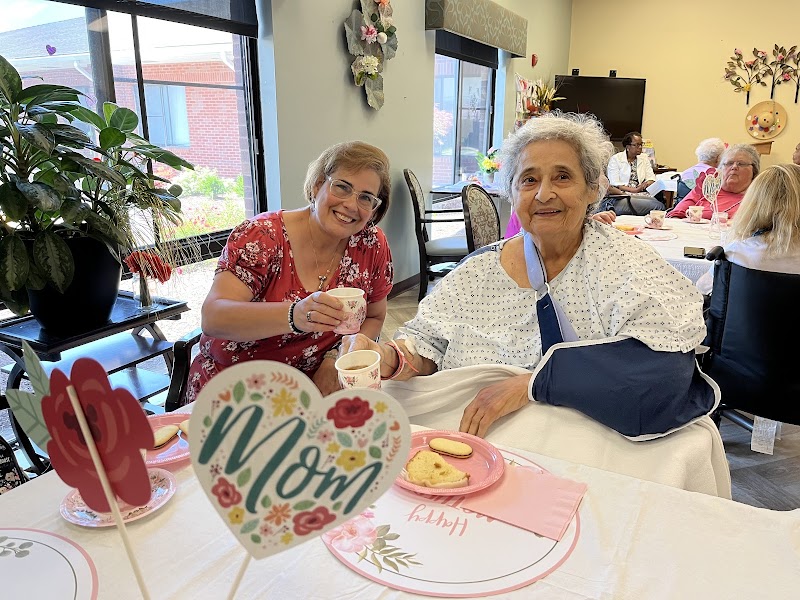
How Does Carriage Hill Health & Rehab Center Compare to Other Virginia Nursing Homes?

Compared to the 100 nursing homes in Virginia, CARRIAGE HILL HEALTH & REHAB CENTER's overall rating (2 stars) is below the state average of 3.0, staff turnover (54%) is near the state average of 46%, and health inspection rating (2 stars) is below the national benchmark.

What Should Families Ask When Visiting Carriage Hill Health & Rehab Center?

Based on this facility's data, families visiting should ask: "Can you walk me through typical staffing levels on day, evening, and night shifts?" "Can I visit during a mealtime to observe dining assistance and food quality?" "How do you handle medical emergencies, and what is your hospital transfer rate?" "Can I speak with family members of current residents about their experience?" These questions are particularly relevant given the below-average staffing rating.

Is Carriage Hill Health & Rehab Center Safe?

Based on CMS inspection data, CARRIAGE HILL HEALTH & REHAB CENTER has a clean safety record: no substantiated abuse findings (meaning no confirmed cases of resident harm), no Immediate Jeopardy citations (the most serious violation level indicating risk of serious injury or death), and is not on the Special Focus Facility watch list (a federal program monitoring the lowest-performing 1% of nursing homes). The facility has a 2-star overall rating and ranks #100 of 100 nursing homes in Virginia. While no facility is perfect, families should still ask about staff-to-resident ratios and recent inspection results during their visit.

Do Nurses at Carriage Hill Health & Rehab Center Stick Around?

CARRIAGE HILL HEALTH & REHAB CENTER has a staff turnover rate of 54%, which is 8 percentage points above the Virginia average of 46%. Moderate turnover is common in nursing homes, but families should still ask about staff tenure and how the facility maintains care continuity when employees leave.

Was Carriage Hill Health & Rehab Center Ever Fined?

CARRIAGE HILL HEALTH & REHAB CENTER has been fined $9,311 across 1 penalty action. This is below the Virginia average of $33,172. While any fine indicates a compliance issue, fines under $50,000 are relatively common and typically reflect isolated problems that were subsequently corrected. Families should ask what specific issues led to these fines and confirm they've been resolved.

Is Carriage Hill Health & Rehab Center on Any Federal Watch List?

CARRIAGE HILL HEALTH & REHAB CENTER is not on any federal watch list. The most significant is the Special Focus Facility (SFF) program, which identifies the bottom 1% of nursing homes nationally based on persistent, serious quality problems. Not being on this list means the facility has avoided the pattern of deficiencies that triggers enhanced federal oversight. This is a positive indicator, though families should still review the facility's inspection history directly.