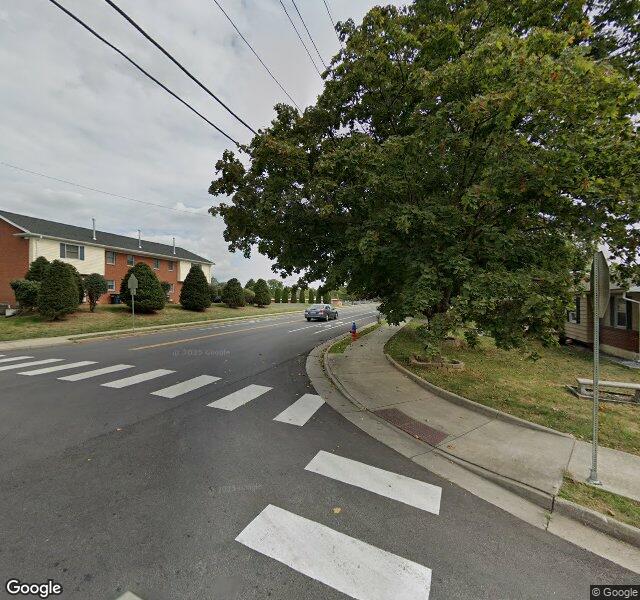
BLUE RIDGE REHABILITATION AND NURSING

94 SOUTH AVENUE, HARRISONBURG, VA 22801 (540) 433-2791
For profit - Corporation 117 Beds EASTERN HEALTHCARE GROUP Data: November 2025
Trust Grade
30/100
#179 of 285 in VA
Last Inspection: August 2024

Within standard 12-15 month inspection cycle. Federal law requires annual inspections.

Overview

Blue Ridge Rehabilitation and Nursing has received a Trust Grade of F, indicating significant concerns about the facility's quality and care. It ranks #179 out of 285 nursing homes in Virginia, placing it in the bottom half of all facilities, and #2 out of 3 in Harrisonburg City County, meaning there is only one local option that is better. The facility is improving, as the number of issues reported decreased from 24 in 2024 to just 4 in 2025. Staffing is a relative strength with a turnover rate of 43%, which is below the Virginia average, but the overall rating for staffing is only 2 out of 5 stars. However, the facility has accumulated a concerning $54,662 in fines, which is higher than 89% of Virginia facilities, suggesting ongoing compliance problems. Specific incidents include a serious failure to monitor a resident's blood sugar, resulting in a four-hour delay in hospital care after a hypoglycemic event, which caused harm. Additionally, another resident experienced significant weight loss because staff did not assist her during mealtimes, as required by her care plan. On a positive note, the facility has more RN coverage than average, which helps ensure that critical health issues are caught early. Overall, while there are some strengths in staffing and a positive trend in reducing issues, the facility has serious weaknesses that families should consider carefully.

Trust Score
F
30/100
In Virginia
#179/285
Bottom 38%
Safety Record
High Risk
Review needed
Inspections
Getting Better
24 → 4 violations
Staff Stability
○ Average
43% turnover. Near Virginia's 48% average. Typical for the industry.
Penalties
✓ Good
$54,662 in fines. Lower than most Virginia facilities. Relatively clean record.
Skilled Nurses
⚠ Watch
Each resident gets only 28 minutes of Registered Nurse (RN) attention daily — below average for Virginia. Fewer RN minutes means fewer trained eyes watching for problems.
Violations
⚠ Watch
56 deficiencies on record. Higher than average. Multiple issues found across inspections.
★★☆☆☆
2.0
Overall Rating
★★☆☆☆
2.0
Staff Levels
★★☆☆☆
2.0
Care Quality
★★☆☆☆
2.0
Inspection Score
Stable
2024: 24 issues
2025: 4 issues

The Good

  • Full Sprinkler Coverage · Fire safety systems throughout facility
  • No fines on record
  • Staff turnover below average (43%)

    5 points below Virginia average of 48%

Facility shows strength in fire safety.

The Bad

2-Star Overall Rating

Below Virginia average (3.0)

Below average - review inspection findings carefully

Staff Turnover: 43%

Near Virginia avg (46%)

Typical for the industry

Federal Fines: $54,662

Above median ($33,413)

Moderate penalties - review what triggered them

Chain: EASTERN HEALTHCARE GROUP

Part of a multi-facility chain

Ask about local staffing decisions and management

The Ugly 56 deficiencies on record

2 actual harm
May 2025 1 deficiency
CONCERN (D) 📢 Someone Reported This

A family member, employee, or ombudsman was alarmed enough to file a formal complaint

Potential for Harm - no one hurt, but risky conditions existed

Deficiency F0655 (Tag F0655)

Could have caused harm · This affected 1 resident

**NOTE- TERMS IN BRACKETS HAVE BEEN EDITED TO PROTECT CONFIDENTIALITY** Based on staff interview, and clinical record review, the facility staff failed to develop and implement a baseline care plan fo...

Read full inspector narrative →
**NOTE- TERMS IN BRACKETS HAVE BEEN EDITED TO PROTECT CONFIDENTIALITY** Based on staff interview, and clinical record review, the facility staff failed to develop and implement a baseline care plan for one Resident (Resident #4) in a survey sample of 5 residents. The findings included: According to the clinical record, diagnoses for Resident #4 (R4) included: Alzheimer's disease, HIV, anxiety disorder, dementia, and malnutrition secondary to disease process. The most current MDS (minimum data set) was a a discharge assessment with an ARD (assessment reference date) of 5/8/24, which assessed R4 with short-term memory problems and severely cognitively impaired. On 5/6/25, a clinical record review was conducted for R4. R4 was admitted to the facility on [DATE]. There was no evidence that an admission assessment had been completed. Review of the comprehensive care plan was noted to have missing interventions for ADL care including bed mobility, dressing, eating, and transfers. On 5/6/25 at 11:00 a.m. the MDS coordinator was interviewed (registered nurse, RN #1). RN #1 reviewed R4's clinical record and verbalized that the admission assessment was missing, explaining that when a new resident is admitted to the facility, the nurses should complete an admission assessment which incorporates the baseline care plan and should be completed within two days. RN #1 reviewed the care plan for R4 and agreed that the baseline care plan was not completed for ADL care. On 5/7/25 at 9:30 a.m., the above information was presented to the director of nursing and administrator. No further information was provided prior to exit conference on 5/7/25.
Feb 2025 3 deficiencies
CONCERN (D) 📢 Someone Reported This

A family member, employee, or ombudsman was alarmed enough to file a formal complaint

Potential for Harm - no one hurt, but risky conditions existed

Notification of Changes (Tag F0580)

Could have caused harm · This affected 1 resident

Based on staff interviews, clinical record review, and facility documentation review the facility staff failed to provide notification to the family of a change in condition for one resident (Resident...

Read full inspector narrative →
Based on staff interviews, clinical record review, and facility documentation review the facility staff failed to provide notification to the family of a change in condition for one resident (Resident #2, R2) out of a survey sample of 11 residents. The findings included: The facility staff failed to notify the family that R2 was sent to the emergency room. On 2/19/25 at 9:45 a.m. an interview was conducted with licensed practical nurse, LPN#5 (LPN5), unit manager on the A wing. LPN5 stated that it was only one appointment she was aware of that R2 had missed. LPN5 stated that when dialysis sent R2 to the emergency room (ER), they did not let the son know and when the transport company came back to the facility to pick up someone the transport driver let the facility know R2 was transported to the ER from dialysis. LPN5 said, we didn't notify the son when we found out, no one notified the son she was at the emergency room. He found out when he came to take her to an appointment the next day. LPN5 stated that someone from the facility was supposed to notify the son when we found out R2 was at the emergency room. On 2/19/25 at 10:15 a.m. a clinical record review was conducted. A progress note was reviewed that was written on 10/15/25. The progress notes in R2's chart read, [hospital name redacted] called for patient status. Notified that patient has been admitted . On 2/19/25 at 10:45 a.m. a review of the facility documentation was conducted. The facility document titled, Notification of changes, read in part, .The purpose of this policy is to ensure the facility promptly informs the resident, consults the resident's physician; and notifies, consistent with his or her authority, resident's representative when there is a change requiring notification. On 2/19/25 at 11:45 a.m. an end of day meeting was conducted with the administrator and director of nursing, and the above concerns were discussed. No further information was provided prior to the conclusion of the survey.
CONCERN (D) 📢 Someone Reported This

A family member, employee, or ombudsman was alarmed enough to file a formal complaint

Potential for Harm - no one hurt, but risky conditions existed

Respiratory Care (Tag F0695)

Could have caused harm · This affected 1 resident

Based on observation, clinical record review, staff interview and facility documentation review the facility staff failed to administer oxygen according to physician orders for two residents (Resident...

Read full inspector narrative →
Based on observation, clinical record review, staff interview and facility documentation review the facility staff failed to administer oxygen according to physician orders for two residents (Resident#3, R3 and Resident #4, R4) out of a survey sample of 11 residents. The findings included: 1. The facility staff failed to have R3's oxygen concentrator providing the correct number of liters per minute according to the physician's order. On 2/18/25 at 2:50 pm an observation was conducted of R3's oxygen concentrator. The oxygen was set on three liters per minute. On 2/18/25 at 3:00 p.m. a clinical record review was conducted. The physician orders were reviewed. The oxygen order read, Oxygen continuous 2LPM [liters per minute] via NC [nasal cannula]. The treatment administration record was signed off by the registered nurse, RN# 1 (RN1) on 2/18/25. RN1 signed that R3 was receiving oxygen at 2LPM. On 2/18/25 at 3:15 p.m. an interview was conducted with RN1. RN1 was in R3's room and was asked to look at the oxygen concentrator setting. R1 said, It's on 3LPM and should be on 2LPM. R1 adjusted the oxygen concentrator setting to 2LPM. 2. The facility staff failed to have R4's oxygen concentrator providing the correct number of liters per minute according to the physician's order. On 2/18/25 at 2:55 pm an observation was conducted of R4's oxygen concentrator. The oxygen was set on two and half liters per minute. On 2/18/25 at 3:00 p.m. a clinical record review was conducted. The physician orders were reviewed. The oxygen order read in part, .supplemental O2 [oxygen] 2L, if < 92% on 2L may increase to 3L. On 2/18/25 at 3:15 p.m. an interview was conducted with RN1. RN1 was in R4's room and was asked to look at the oxygen concentrator setting. R1 said, It's on 2.5LPM and should be on 2LPM and can have 3 liters if oxygen saturations are less than 92%. R1 adjusted the oxygen concentrator setting to 2LPM. On 2/19/25 at 11:15 a.m., a review of facility documentation was completed. The facility document titled, Oxygen Administration, read in part, .oxygen is administered under orders of a physician. On 2/19/25 at 11:45 a.m., an end of day meeting was conducted with the administrator and director of nursing, and the above concerns were discussed. No further information was provided prior to the conclusion of the survey.
CONCERN (D) 📢 Someone Reported This

A family member, employee, or ombudsman was alarmed enough to file a formal complaint

Potential for Harm - no one hurt, but risky conditions existed

Deficiency F0806 (Tag F0806)

Could have caused harm · This affected 1 resident

Based on observation, resident interview, staff interview, clinical record review and facility documentation review, the facility staff failed to honor resident's food preferences for two residents (R...

Read full inspector narrative →
Based on observation, resident interview, staff interview, clinical record review and facility documentation review, the facility staff failed to honor resident's food preferences for two residents (Resident #5, R5 and Resident #6, R6) out of a survey sample of 11 residents. The findings included: 1. The facility staff served R5 foods that were listed on the meal ticket as food dislikes. On 12/18/25 at 12:15 p.m., an observation was conducted of the lunch meal. During the observation, the surveyor observed R5's meal ticket. R5 was served carrots, broccoli and cauliflower, and all three of these foods were listed under her food dislikes list on her meal ticket. On 12/18/25 at 12:30 p.m., an interview was conducted with R5. R5 said, I get food I don't like often, and I just leave it on my plate. On 12/19/25 at 9:05 a.m., an interview was conducted with the dietary manager. The dietary manager stated the purpose for the food dislikes on the meal ticket was for dietary to know the resident's preferences and what the resident does not like to eat. The dietary manager said, If food dislikes were carrots, broccoli and cauliflower, they should not have been served and should have been substituted with another vegetable. The servers should go by their meal tickets. 2. The facility staff served R6 foods that was listed on the meal ticket as food dislikes. On 12/18/25 at 12:15 p.m. an observation was conducted of the lunch meal. During the observation, the surveyor observed R6's meal ticket. R6 was served carrots, and this food was listed on her food dislikes list on her meal ticket. On 12/18/25 at 12:35 p.m. an interview was conducted with R6. R6 said, It doesn't matter, nothing will be done about this. On 12/19/25 at 9:05 a.m. an interview was conducted with the dietary manager. The dietary manager stated the purpose for the food dislikes on the meal ticket was for dietary to know the resident's preferences and what the resident does not like to eat. The dietary manager said, I f food dislikes was carrots, they should not have been served the melody and should have been substituted with another vegetable. The servers should go by their meal tickets. On 2/19/25 at 11:00 a.m. a facility documentation review was conducted. The policy titled, Food Preparation Guidelines, read in part, honoring resident preferences, as possible, regarding food and drinks. On 2/19/25 at 11:45 a.m. an end of day meeting was conducted with the administrator and director of nursing. The administrator handed the surveyor an updated preference assessment completed today by the dietary manager for R5 and an education sign in sheet for the dietary department on food preferences completed today. No further information was provided prior to the conclusion of the survey.
Aug 2024 22 deficiencies
CONCERN (D)

Potential for Harm - no one hurt, but risky conditions existed

Deficiency F0554 (Tag F0554)

Could have caused harm · This affected 1 resident

Based on observation, resident interview, staff interview, facility documentation review, and clinical record review the facility staff failed to ensure it was determined clinically appropriate to sel...

Read full inspector narrative →
Based on observation, resident interview, staff interview, facility documentation review, and clinical record review the facility staff failed to ensure it was determined clinically appropriate to self-administer medications by the interdisciplinary team for one resident (Resident #79- R79) in a survey sample of 31 Residents. The findings included: For R79, who had Bengay cream, antifungal powder and tums at the bedside, the facility staff had not assessed the resident to determine if it was appropriate for the resident to self-administer medications, failed to obtain physician orders for the medications, and failed to remove the medications. On 8/26/24 at 6:19 p.m., R79 was visited in her room during the initial tour and on the over bed table a tube of Bengay ointment and a container of antifungal powder was observed. While talking to R79, the bedside tabletop drawer was open, and it was easily observed that a bottle of tums was inside. R79 was asked about the Bengay and reported she often has pain and reported the has arthritis. When asked about the Bengay cream, R79 reported she applied it to her right leg and knee several times a day. On 8/26/24 at 7:09 p.m., an interview was conducted with licensed practical nurse (LPN #4). LPN #4 was asked about medication storage. LPN #4 reported that all medications are stored in the medication cart or in the medication room. When asked if that included over the counter medications, she said, yes. When asked if residents were able to keep anything in their room, LPN #4 said, no, unless they have an order that says they can self-administer, but I don't think we have anyone. On 8/27/24 at 8:31 a.m., R79 was visited again in her room. R79's bedside table drawer was observed to be open again and the Bengay, antifungal powder and tums were easily seen. On 8/27/24 at 8:36 a.m., the surveyor met with the unit manager. The unit manager said that all medications are stored in the medication cart for safety reasons. When asked if any residents self-administer medications, the unit manager confirmed no. The unit manager was asked to accompany the surveyor to R79's room. The unit manager confirmed and removed the Bengay, antifungal powder and tums. The unit manager also confirmed that the antifungal cream was a facility supplied item and not brought in by family. When gathering the items R79 told the unit manager she could throw away the tums. The unit manager was asked what she expects staff to do when they see the medications in resident rooms. The unit manager said, staff should be looking when they go in the room, and I expect them to pull them and bring them to me. On 8/27/24, a clinical record review was conducted of R79's chart. This review revealed that on 7/8/24, an order was written for house stock antifungal BID (twice daily) to breast and abdominal folds. There was no physician order for the Bengay or tums. According to R79's care plan, there was no indication that the interdisciplinary team had assessed nor determined R79's ability to self-administer medications. Review of the assessment tab of R79's chart, revealed no assessment for the ability to self-administer medications. On 8/27/24 at approximately 3:20 p.m., the surveyor was provided with a document titled, Medication Self-Administration Safety Screen that had been requested at 8:57 a.m., that morning, for R79. Also provided was an Education In-Service Attendance Record where the unit manager had educated staff that read in part, . when in a resident room, if you see any medications (pills, creams, etc.) on bedside tables, in drawers, etc. remove the items and give to charge nurse or unit manager. Do not leave in room unless previously ordered by physician. Review of the facility policy titled Resident Self-Administration of Medication with a review date of 12/1/22 read in part, 1. Each resident is offered the opportunity to self-administer medications during the routine assessment by the facility's interdisciplinary team. 2. Resident's preference will be documented on the appropriate form and placed in the medical record . On 8/27/24, during an end of day meeting held at approximately 1:30 p.m., the facility administrator and director of nursing were made aware of the above findings. No additional information was provided.
CONCERN (D) 📢 Someone Reported This

A family member, employee, or ombudsman was alarmed enough to file a formal complaint

Potential for Harm - no one hurt, but risky conditions existed

Deficiency F0557 (Tag F0557)

Could have caused harm · This affected 1 resident

**NOTE- TERMS IN BRACKETS HAVE BEEN EDITED TO PROTECT CONFIDENTIALITY** Based on resident interview, staff interview, and clinical record review, the facility staff failed to provide dignity when movi...

Read full inspector narrative →
**NOTE- TERMS IN BRACKETS HAVE BEEN EDITED TO PROTECT CONFIDENTIALITY** Based on resident interview, staff interview, and clinical record review, the facility staff failed to provide dignity when moving personal property for one of thirty-one residents in the survey sample (Resident #200). The findings include: Resident #200's personal property/items were moved to another room while the resident was out of the facility at an appointment. There was no advance notice of the room/property move and the resident was not given an opportunity to assist or accompany staff during transfer of personal items to a different room. Resident #200 (R200) was admitted to the facility with diagnoses that included congestive heart failure, hip fracture, neurogenic bladder, diabetes, anxiety and depression. The minimum data set (MDS) dated [DATE] assessed R200 as being cognitively intact. R200's closed clinical record documented a room change on 5/21/24. There was no documentation of a verbal or written notice provided to the resident prior to the 5/21/24 room change. A nursing note dated 5/21/24 at 11:01 a.m. documented a voice message was left for the resident's spouse about a room move. R200's clinical record documented the resident was out of the facility on 5/21/24 for a urology appointment. A nursing note dated 5/21/24 at 4:58 p.m., documented, .returned from urology appointment . A psychology progress note dated 5/27/24 documented that R200 felt the facility should do a better job of communicating with him, in addition to gain his permission before action is taken. Patient does not appreciate his 'pretzels' being misplaced . On 8/27/24 at 3:22 p.m., R200 was interviewed about the personal property/room move on 5/21/24. R200 stated he received no verbal or written notification prior to the room change. R200 stated the room change was done because of his complaints about a roommate. R200 stated he was out of the facility at a doctor's appointment and when he returned, his personal items/property had been moved to another room without his supervision or input. On 8/28/24 at 10:02 a.m., the facility's social worker (other staff #4) was interviewed about R200's property moved without resident notice or input. The social worker stated she thought the room change on 5/21/24 was made because R200 had conflicts and complaints about the roommate. The social worker stated she recalled that on 5/21/24, the resident returned from an outside appointment. The social worker stated the unit manager at that time reported R200 was upset about his items being moved and was especially upset that his pretzels had been discarded. The social worker stated she went to the store and bought R200 a new container of pretzels. The social worker stated she replaced the pretzels twice because the first replacement was not R200's preference. The social worker stated R200 was upset about his property being moved and especially the discarded pretzels. The social worker stated R200 mentioned the discarded pretzels to his psychologist. The social worker stated a voice message was left for the resident's spouse on the day of the move (5/21/24) but that there was no written or verbal notification to R200 prior to the move. The social worker stated she did not know why staff chose to move the resident that day or why the resident's property was moved when he was out of the facility. R200's unit manager on the date of the room change on 5/21/24 was not available for interview as she no longer worked at the facility. On 8/28/24 at 11:26 a.m., the licensed practical nurse unit manager (LPN #3) that cared for R200 was interviewed about the moving of personal property without the resident's consent or supervision. LPN #3 stated she did not recall why R200's personal items were moved while he was an appointment. On 8/28/24 at 11:36 a.m., certified nurses' aide (CNA) #3 that cared for R200 during his stay was interviewed. CNA #3 stated R200 was upset about the room change on 5/21/24. CNA #3 stated R200 complained frequently about the roommate and still complained after the room change. CNA #3 stated R200 was upset that he got moved while he was out of the facility at an appointment. On 8/28/24 at 11:49 a.m., the director of nursing (DON) was interviewed about R200's property handled/moved without the resident's permission or oversight. The DON stated she remembered the resident was moved but did not recall the events of that day (5/21/24). The DON stated R200 was moved due to complaints and issues with the roommate. The DON stated she did not recall the time of day the items were moved. The DON stated, I don't think it [room change] was done with malice. On 8/28/24 at 2:46 p.m., the administrator was interviewed about R200's room change and personal property transfer without notice. The administrator stated it was not the expectation for staff to move personal items without the resident's permission or oversight. The administrator stated residents were supposed to be notified ahead of time and be allowed time to plan for room and/or roommate changes. This finding was reviewed with the administrator, DON and regional director of clinical services during a meeting on 8/28/24 at 2:00 p.m. with no further information presented prior to the end of the survey.
CONCERN (D) 📢 Someone Reported This

A family member, employee, or ombudsman was alarmed enough to file a formal complaint

Potential for Harm - no one hurt, but risky conditions existed

Deficiency F0567 (Tag F0567)

Could have caused harm · This affected 1 resident

**NOTE- TERMS IN BRACKETS HAVE BEEN EDITED TO PROTECT CONFIDENTIALITY** Based on resident interview, staff interviews, and facility documentation review, the facility staff failed to maintain adequate...

Read full inspector narrative →
**NOTE- TERMS IN BRACKETS HAVE BEEN EDITED TO PROTECT CONFIDENTIALITY** Based on resident interview, staff interviews, and facility documentation review, the facility staff failed to maintain adequate funds on-site so that two residents (resident #226 - R226 and resident #53 - R53) had access to their personal funds/trust accounts, which had the potential to affect 41 residents with a trust account. The findings included: 1. For R226, the facility failed to maintain sufficient funds and denied the resident's request to make withdrawals from his account. On 8/27/24 at approximately 8:15 a.m., R226 asked the surveyor to come into his room. R226 reported that he had failed to mention on the prior evening a concern with regards to him having access to his bank account. R226 went on to say that on multiple occasions he had attempted to get money out of his trust account for shopping but had been denied the ability to make withdrawals. R226 went on to say that he could get money previously but now he is told he must make a list of what he wants first or talk to the activities person or is told they don't have the money. On 8/27/24 at 4:22 p.m., an interview was conducted with the business office manager (BOM) (other employee #5). The BOM was asked to explain the process when a resident wants to withdraw funds from their trust account. The BOM explained that she would check to see if they have an account, if they have funds and then will fill out a receipt and give them cash. She said the residents are permitted to withdraw $40 per day. The BOM went on to say, Resident shopping is a different program, the activity director will go around and ask if they want to purchase anything. Those are collectively entered under resident shopping and a check is requested from corporate. Once they approve and send me the check, we cash the check and [activities director's name redacted] gets the cash and list and goes shopping. When asked what the turnaround time is for her to get the check, the BOM said, It varies, depending on what is going on in the building. We just started this process a few weeks ago and I am reinstituting it. We only keep $245 here and we last got that on August 2. We went through that within a week. We have some residents who will withdraw their $40 per day and that doesn't leave much for the others. When asked again for clarification that if a resident requests money for shopping, are they denied that request because there is a process where a check is requested from corporate, the business office manager said, Yes. During the above interview, the BOM was asked about resident's access to funds and where they go to make withdrawals. The BOM said she handles that now, but the position was vacant for eight months. When asked about if a resident's family comes on the weekend and the resident wants to withdraw funds, what is done, the BOM said, They have to get it ahead of time or the family can provide receipts to get reimbursed. The BOM went on to say that she is only at the facility Monday through Friday. The BOM was asked about R226. The BOM said, He does have an account, but I don't have any petty cash on hand right now. We only have $5. I am waiting for it to get replenished. There has been some confusion for him. He said someone was going shopping for him. He kept saying [activities director name redacted] was going shopping, which means resident shopping which is once a month. I explained the procedure is that she would get a list from him, and I thought he was talking about resident shopping. I told him we only have $5, and we just changed banks last week. We got it set up where the administrator can cash checks. The BOM provided the surveyor with a transaction history for R226. Review of this revealed R226 had last had a withdrawal on 7/24/24. On 8/27/24 at 4:45 p.m., an interview was conducted with the activity assistant. The activity assistant was asked about resident shopping and said, I go around and write down a list of what they want, and they give me $40 because that is as much as they can get. A lot of times they will tell me, they didn't get money this week. They don't have any money right now, they switched banks, so no one can get money right now. When asked specifically about R226, the activity assistant said, He is always the short end of the stick somehow. The last 2 shopping trips they ran out of money before he could get any. So I just went on my day off. I've had to buy things for him myself because I felt bad, but I never got reimbursed and I can't afford that. So I can't keep doing that. The activity assistant went on to explain that they were just notified that the process for resident shopping was changing, and they would no longer get money from residents. She explained that they will get a list of what residents want, must go online to get prices for everything, and then they will get a check for everything. The activity assistant explained that this was a new process they were just told about. The BOM stated that a sign was posted in the lobby of when residents could access/withdraw money from the trust account. The lobby was searched, and no posting was noted. At 5:12 p.m., the administrator had the maintenance director put up a sign outside of the BOM's office that indicated banking hours were Monday-Saturday, 7am-7pm. When asked about this, the administrator stated that she had found the sign in the activity's office. When asked how residents will access funds during those hours, the administrator said that the receptionist will keep the money since that is their hours. When asked about this, the BOM confirmed that currently she had the money box, that the receptionist did not have it, and that money is only available Monday-Friday, when they have money to give to residents. On 8/28/24 at 1:30 p.m., during a meeting with the facility administrator and director of nursing, the facility was made aware of the above findings. The facility provided a policy regarding resident trust accounts, but it did not address resident's access to the funds, it only stated the procedures of the business office with regards to trust accounts. No additional information was provided. 2. R53 did not have timely access to money from her personal fund account. Resident #53 (R53) was admitted to the facility with diagnoses that included coronary artery disease, hypertension, diabetes and depression. The minimum data set (MDS) dated [DATE] assessed R53 as cognitively intact. On 8/26/24 at 7:04 p.m., R53 was interviewed about quality of life/care in the facility. R53 stated during this interview that money from her personal fund account at the facility was not always available when requested. R53 stated, You never get it [money] when you ask. R53 stated sometimes it took several days to get money from her account. R53 stated she had asked for money and was told there was not enough cash or nobody was there to issue the money. R53 stated that if she had an outing planned, she asked for the money a week ahead to get it in time. R53's personal fund account documented the resident had available funds with amounts of $50.00 or less provided on 3/21/24 and 6/5/24. On 8/27/24 at 4:55 p.m., the business office manager (other staff #5) was interviewed about R53 having to wait days to access her funds. The business office manager stated she just started work at the facility on 8/1/24 and did not know what the issues were for accessing resident funds prior to that date. The business manager stated as of today (8/27/24) there was $5.00 in the available cash for residents. The business office manager stated the facility recently switched banks and there had been a down time for cashing checks. The business office manager stated, I just don't think we are keeping enough money in the petty cash account. This finding was reviewed with the administrator, director of nursing, and regional director of clinical services, during a meeting on 8/28/24 at 2:00 p.m., with no further information presented prior to the end of the survey.
CONCERN (D)

Potential for Harm - no one hurt, but risky conditions existed

Comprehensive Care Plan (Tag F0656)

Could have caused harm · This affected 1 resident

Based on staff interview and clinical record review, the facility failed to develop a care plan for one of thirty one residents. Resident #60 (R60) did not have a complete care plan developed for dial...

Read full inspector narrative →
Based on staff interview and clinical record review, the facility failed to develop a care plan for one of thirty one residents. Resident #60 (R60) did not have a complete care plan developed for dialysis. The Findings Include: Diagnoses for R60 included: End stage renal disease receiving dialysis, congestive heart failure, pulmonary embolism, and hypertension. The most current MDS (minimum data set) was a quarterly assessment with an ARD (assessment reference date) of 6/13/24. R60 was assessed with a cognitive score of 12 indicating cognitively intact. Review of R60's blood pressures (BP) from 7/25/24 through 8/24/24 indicated an average systolic pressure of 140's and diastolic pressure of 70's and also indicated recently (on 8/22/24 and 8/23/24) an increase in BP to 183/83 and 179/83. Review of physicians orders did not indicated blood pressure parameters for dialysis. The care plan was then reviewed and also did not indicate blood pressure parameters in the dialysis care plan or throughout the care plan in any other focus area. On 8/28/24 at 3:43 PM license practical nurse (LPN #2) was interviewed. LPN #2 verbalized noticing an increase in R60's BP lately and verbalized this could be a sign of kidneys failing. When asked if this had been reported, LPN #2 responded only working a few days when needed and wasn't sure if it had been reported, but would make sure it gets reported to the physician. On 8/28/24 at 3:56 PM the above finding was presented to the director of nursing (DON). The DON reviewed record and also could not find evidence of parameters for blood pressures on the care plan. No other information was presented prior to exit conference of 8/28/24.
CONCERN (D)

Potential for Harm - no one hurt, but risky conditions existed

Accident Prevention (Tag F0689)

Could have caused harm · This affected 1 resident

**NOTE- TERMS IN BRACKETS HAVE BEEN EDITED TO PROTECT CONFIDENTIALITY** Based on resident interview, staff interview, clinical record review and facility documentation review, the facility staff faile...

Read full inspector narrative →
**NOTE- TERMS IN BRACKETS HAVE BEEN EDITED TO PROTECT CONFIDENTIALITY** Based on resident interview, staff interview, clinical record review and facility documentation review, the facility staff failed to implement interventions in response to a resident's fall to prevent future falls and prevent accidents for one resident (resident #57-R57) in a survey sample of 31 residents. The findings included: For R57, who fell on 8/13/24, the facility staff failed to respond to the fall and implement interventions to prevent future accidents. On 8/26/24 at approximately 7:30 p.m., R57 was visited in his room. R57 reported he had recently fallen. When asked what the facility had done following the fall to prevent future falls, the resident said he didn't know. On 8/27/24, a clinical record review was conducted. This review revealed a nursing note entry dated 8/13/24, that read, Resident was informed that he needs to move to room [ROOM NUMBER]. CNA reports resident became anxious and agitated and called his wife. Afterwards this nurse was called to resident's room, resident was observed on the floor on his left hip/buttock. Resident reports pain in left hip but also has chronic pain in left hip. MD (medical doctor) [name redacted] notified, new order for hip x-ray. Resident assisted back into his w/c (wheelchair) and moved to room [ROOM NUMBER]. Resident also medicated per order for pain. Staff will continue to monitor. There was no evidence of any assessment of the resident following the fall, nor any interventions to prevent reoccurrence. According to R57's care plan, it noted the resident was at risk for falls d/t [due to] impaired mobility and impaired cognition . The most recent intervention for this fall focus area was dated 3/27/24. There was no indication that the care plan had been reviewed or revised following the fall on 8/13/24. According to a fall risk assessment completed on 7/4/24, R57 was identified as having been at high risk for falling. On 08/28/24 at 8:15 a.m., an interview was conducted with the unit manager. When asked what is done with it is reported that a resident has fallen, she explained, we do an initial assessment which says what you did those first actions, if you administered first aid or sent out. When asked if this is documented, the unit manager said, Yes, there is a post fall review that goes along with the risk. It is automatically generated as it happens. The unit manager accessed R57's chart and said, I don't see one in risk or the post fall assessment. When asked what was done to prevent future incidents/accidents, the unit manager said she was not aware because nothing was documented. When asked why that step is important, she said, It keeps follow-up and keeps them safe. The surveyor asked, what are the risks of not having it done? The unit manager said, it could be anything, they could have an undiagnosed fracture, hematoma, slow bleed, could be anything. The lack of assessment and follow-up to monitor for injury. She went on to say, it's got to be education for staff because they know better. I can see the notes where they did his room change, did she get overwhelmed, those are important things you can't be missing, especially with our long-term patients, who else is going to be their advocate? Review of the facility policy titled; Fall Prevention Program was conducted. The policy read in part, A fall is an event in which an individually unintentionally comes to rest on the ground, floor, or other level, but not as a result of an overwhelming external force. The event may be witnessed, reported, or presumed when a resident is found on the floor or ground, and can occur anywhere . 9. When any resident experiences a fall, the facility will: a. assess the resident, b. complete a post-fall review and post-fall follow up note in PCC [the electronic health record software system], c. complete an incident report in PCC, d. Notify physician and family. e. Review the resident's care plan and update as indicated, f. Document all assessments and actions, g. Obtain witness statements in the case of injury. h. If there are signs of serious injury or there are concerns about the circumstances of the fall, notify the director of nursing and/or the administrator. i. begin neurologic assessment using neurological record assessment tool in PCC . On 8/27/24 at approximately 1:30 p.m., during a meeting with the facility administrator and director of nursing (DON), the above concerns were shared. The DON reported that she recalled R57 having a fall where he placed himself in the floor because he was upset about a room change. The DON was asked how she knew this, since the only documentation was a nursing progress note, which did not indicate that the fall was witnessed. She said she thought she had some statements from staff. She would look for them and provide to the surveyor. No further information was provided prior to completion of the survey.
CONCERN (D)

Potential for Harm - no one hurt, but risky conditions existed

Incontinence Care (Tag F0690)

Could have caused harm · This affected 1 resident

**NOTE- TERMS IN BRACKETS HAVE BEEN EDITED TO PROTECT CONFIDENTIALITY** Based on observation, staff interview and clinical record review, the facility failed to ensure a device was implemented for a c...

Read full inspector narrative →
**NOTE- TERMS IN BRACKETS HAVE BEEN EDITED TO PROTECT CONFIDENTIALITY** Based on observation, staff interview and clinical record review, the facility failed to ensure a device was implemented for a catheter for one of thirty one residents and failed to ensure a catheter bag was located to prevent infection for one of thirty one residents. 1. Resident 41 (R41) did not have catheter tube anchored to prevent dislodging. 2. Resident 77 (R77) catheter bag was touching the floor and had potential for infection. The Findings Include: 1. Diagnoses for R41 included; Benign prostatic hyperlasia, and obstructive uropathy requiring catheter. The most current MDS (minimum data set) was an annual assessment with an ARD (assessment reference date) of 7/16/24. R41 was assessed with a cognitive score of 15 indicating cognitively intact. Review of R41's physician orders (on 8/27/24) revealed an order to check placement of catheter strap every shift. Original order date was 5/7/24. On 8/28/24 at 10:00 AM R41 was interviewed and was asked if there was a strap anchoring the catheter tube down to prevent dislodging the catheter. R41 verbalized he doesn't have an anchor for the tube and also verbalized not having pain or any other skin concerns to the groin area. R41 was asked and gave permission to observe the catheter tubing and placement with a nurse. On 8/28/24 10:06 AM registered nurse (RN #1) observed (along with this surveyor) R41's catheter and tubing. The tubing was not anchored. R41's penis was also observed and did not indicate concern for abrasions or skin tears to the area. RN #1 verbalized that the tubing should be anchored. On 8/28/24 at 2:48 PM the above finding was presented to the administrator, director of nursing (DON), and nurse consultant. No other information was presented prior to exit conference on 8/28/24. 2. Resident #77's catheter bag was observed positioned in an unsanitary manner in the floor. Resident #77 (R77) was admitted to the facility with diagnoses that included congestive heart failure, protein-calorie malnutrition, seizures, dementia, chronic obstructive pulmonary disease, and obstructive uropathy. The minimum data set (MDS) dated [DATE] assessed R77 as cognitively intact. On 8/27/24 at 9:27 a.m., R77 was observed in bed. The resident's urinary catheter bag was positioned in the floor under the edge of the bed. The collection bag was attached to the bed rail with a hook and clips were positioned along the tubing. The hook/clips were not positioned to keep the bottom half of the catheter bag off the floor. On 8/28/24 at 8:17 a.m., R77's urinary catheter bag was observed with the bottom half of the bag resting on the floor under the edge of the bed. On 8/28/24 at 8:25 a.m., the certified nurses' aide (CNA #2) caring for R77 was interviewed about the catheter bag in the floor. Accompanied by CNA #2, R77's catheter bag was observed with the bottom half of the bag resting on the floor under the edge of the bed. CNA #2 stated the catheter bag was not supposed to be in the floor. CNA #2 stated the hook and clips were supposed to be positioned to keep the bag off the floor. On 8/28/24 at 8:46 a.m., the licensed practical nurse unit manager (LPN #1) was interviewed about R77's catheter bag in the floor. LPN #1 stated catheter bags were supposed to be suspended below bladder level and above the floor to prevent infection. R77's plan of care (revised 6/6/24) documented the resident had a urinary catheter due to obstructive uropathy. Interventions to prevent catheter related complications included checking the catheter and/or tubing each shift to maintain proper positioning. The facility's policy titled Catheter Care (revised 10/1/23) documented, It is the policy of this facility to ensure that residents with indwelling catheters receive appropriate catheter care . This finding was reviewed with the administrator, director of nursing and regional director of clinical services during a meeting on 8/28/24 at 2:00 p.m. with no further information presented prior to the end of the survey.
CONCERN (D)

Potential for Harm - no one hurt, but risky conditions existed

Respiratory Care (Tag F0695)

Could have caused harm · This affected 1 resident

Based on observation, resident interview, staff interview, and clinical record review, the facility failed to provide oxygen therapy consistent with infection control measure and professional standard...

Read full inspector narrative →
Based on observation, resident interview, staff interview, and clinical record review, the facility failed to provide oxygen therapy consistent with infection control measure and professional standards of practice for one resident (Resident #79- R79) in a survey sample of 31 residents. Findings included: For Resident #79, the facility staff failed to change the oxygen tubing and nebulizer tubing and mask weekly. During initial tour on 8/26/24 at approximately 6:30 p.m., R79 was visited in her room. It was observed that R79 had a nebulizer on her bedside table. The nebulizer mask was sitting in the top drawer of the bedside table and was open to air. The nebulizer mask and tubing were dated 7/16/24, as the date it was changed. The oxygen tubing was not labeled with a date and the nasal cannula was on the floor. On 8/26/24 at 7:09 p.m., an interview was conducted with licensed practical nurse (LPN) #4. LPN #4 was asked about oxygen and nebulizer tubing and storage of them when not in use. LPN #4 said, we are to wrap it and put it in a bag and store it in the drawer, so it doesn't get dirty. It is also a fall hazard. When asked about changing of them, LPN #4 said they are to be changed weekly. On 8/27/24 at 8:31 a.m., R79 was observed with her oxygen tubing and nebulizer tubing stored in a bag. The nebulizer mask that was removed was observed in the trash can at R79's bedside. On 8/27/24 at 8:33 a.m., an interview was conducted with the unit manager. The unit manager said that oxygen tubing was to be changed weekly and said, this unit is set for Sundays. When asked where it will be documented, the unit manager said, it should be documented on the TAR (treatment administration record) on the night shift. The unit manager then accompanied the surveyor to R79's room and confirmed that the nebulizer had been changed that day 8/27/24. The discarded nebulizer mask in the trash was confirmed to be dated 7/16/24. On 8/27/24, a clinical record review was conducted of R79's chart. The physician orders read, Change O2/Nebulizer tubing, humidification bottle (label and date tubing) and bag cover every week every night shift every Thu [Thursday]. The TAR was signed off, to indicate it had been changed 8/1/24, 8/15/24, and 8/22/24, despite it being dated 7/16/24. There were no physician orders related to the changing of oxygen tubing. On 8/27/24 at approximately 1:30 p.m., the above findings were shared during a meeting with the facility administrator and director of nursing. The facility policy titled; Nebulizer Therapy was reviewed. The policy read in part, . 2. Care of the Equipment . g. Once completely dry, store the nebulizer cup and mouthpiece in a zip lock bag. h. Change nebulizer tubing once weekly . No additional information was provided.
CONCERN (D)

Potential for Harm - no one hurt, but risky conditions existed

Deficiency F0698 (Tag F0698)

Could have caused harm · This affected 1 resident

Based on observation, interview, record review, and facility menu review, the facility failed to coordinate services and provide meals and/or snacks for one of three sampled residents (Resident #32- R...

Read full inspector narrative →
Based on observation, interview, record review, and facility menu review, the facility failed to coordinate services and provide meals and/or snacks for one of three sampled residents (Resident #32- R32) reviewed for dialysis and received dialysis treatments at an outside dialysis center. The findings include: 1. For R32 who received dialysis at an offsite location, the facility staff failed to provide meals or snacks for the resident when he would miss the lunch meal. Review of R32's Med Diag [medical diagnosis] tab in the resident's electronic medical record (EMR) revealed R32 was admitted to the facility with diagnoses which included end stage renal disease (ESRD), type 2 diabetes, and dependent on renal dialysis. Review of R32's Physician Orders, located under the Orders tab in the resident's EMR, revealed current orders for R7 to receive outpatient hemodialysis on Monday, Wednesday, and Friday and orders for a liberal renal diet, regular texture, thin consistency diet. Review of R32's quarterly Minimum Data Set (MDS) with an Assessment Reference Date (ARD) of 8/12/24, located in the resident's EMR, specified the resident received dialysis. The resident had a Brief Interview for Mental Status (BIMS) score of 15 of 15, which indicated the resident was cognitively intact. Review of R32's current care plan, located in the EMR under the care plan tab, revealed a Focus area initiated on 2/13/24, that specified, has potential nutritional problem r/t [related to] therapeutic diet: dx [diagnosis] ESRD, HTN [hypertension], DM [diabetes mellitus]. Care plan approaches/interventions included, provide, serve diet as ordered, monitor intake and record q [every] meal, provide and serve supplements as ordered . During an interview on 8/26/24 at 7:18 p.m., R32 stated he was transported from the facility to dialysis treatments every Monday, Wednesday, and Friday. R32 explained that on the days he received dialysis treatments, he leaves the facility around 10 a.m. and returned around 3 p.m. The resident stated his only concern is that no food items are sent with him, nor is anything provided when he returns, he has to wait until the evening meal. On the dialysis days he goes all day without anything to eat or drink, despite being an insulin dependent diabetic. On 8/28/24 at 8:56 a.m., an interview was conducted with CNA #4 (certified nursing assistant). CNA #4 confirmed she normally works this unit where R32 is. CNA #4 said, he is here for breakfast but then leaves for dialysis and doesn't come back until close to dinner time. When asked if any food is sent with the resident, she said, No lunch or anything is sent with him, if he asks for snacks we will give them to him here, but nothing gets sent from the kitchen to send with him. The only bag that goes with him is full of blankets because it is cold in there. On 8/28/24 at 9:00 a.m., an interview was conducted with the dietary manager (DM). She was asked about dialysis residents and if food is sent with them for dialysis. The DM said, they [dietary staff] usually aren't here when they go to dialysis, we don't send it [food] because we try not to send people meals if they aren't here because it goes missing. We don't know exactly what time they leave or get back; we don't send any kind of snacks or packed lunches for them; we've never done that. On 8/28/24 at 9:59 a.m., an interview was conducted with the unit manager. The unit manager was asked about R32's dialysis. The unit manager reported, it is closer to 4-4:30 when he gets back. When asked if a lunch meal is sent with the resident since he is away during that meal, she said, they don't pack a lunch, he should be having lunch there. I wouldn't have thought to look at it that way. He is diabetic and he has a lot of issues going on, he has nutritional issues, he doesn't like a lot of the food here. We've got to eat that with a big spoon, and I hate that because he is one of my favorites. On 8/28/24 at 10:19 a.m., a phone call was placed to the dialysis center. They confirmed that while residents are unable to eat during the actual dialysis session, they can eat before and after and while they wait for transport. 2. For R32, who went to dialysis at an offsite location three days per week, the facility staff failed to maintain communication with the dialysis center to maintain continuity of care and communicate resident changes. On 8/28/24 at approximately 8:15 am. R32 was visited in his room. When asked about communication between the facility and the dialysis center, the resident reported there was a folder that gets sent with him at times, but no one fills out anything. On 8/28/24 at approximately 8:20 a.m., the surveyor looked at the nursing station and didn't see anything identified as a dialysis communication book for R32. On 8/28/24 at 8:57 a.m., LPN #5 was asked how they communicate with dialysis and know what has occurred at dialysis. The nurse said there should be a book but was unable to find one. On 8/28/24 at 9:15 a.m., the unit manager was asked about communication between the facility and dialysis. She stated there is a book that they send back and forth. When asked if she could locate the book for the surveyor, she was not able to. On 8/28/24 at approximately 9:20 a.m., the unit manager provided the surveyor with a dialysis communication book for R32, which she found at the nursing station on the other unit within the facility. According to R32's clinical record and census tab, R32 had been transferred to the current unit on 8/14/24. When the surveyor looked at the book, it was full of blank pages, with no information filled in. R32's clinical record had no information with regards to communication between the facility and dialysis. On 8/28/24 at 9:24 a.m., an interview was conducted with the unit manager. When asked if she had looked at the dialysis communication book, she said, I didn't look at it but I'm sure it is not up to date because it was on the other unit. When asked what the purpose of the dialysis communication book is, she said, to monitor how they do while they are there, record their heavy weight and dry weight. They don't write stuff down for us. The surveyor explained that during a clinical record review and resident interview, he had reported missing multiple doses of antibiotic. According to the medication administration record, it was noted that it was not given because the resident was at dialysis. The surveyor explained that she was looking to see what medications had been administered at dialysis in hopes that the resident had received the antibiotics while there. The unit manager said, usually if they want something [medication] sent, they will ask for it. The unit manager accessed R32's EHR and looked at the dialysis communication book and confirmed there was no information with regards to R32's care and treatment while at the dialysis center. She sent on to say, I feel like it is beating our heads against the wall because it is lack of follow-up. I expect them to do what they are supposed to do, it is getting them to understand if they don't do what they are supposed to this could happen and making sure there is follow-up. The facility dialysis policy was requested. The facility policy titled, Care Planning Special Needs- Dialysis was provided and reviewed. It read in part, . 2. The care plan will reflect the coordination between the facility and the dialysis provider and will identify nursing home and dialysis responsibilities. 3. Interventions will include, but not limited to: a. Documentation and monitoring complications, b. pre- and post-weights, c. accessing, observing, and documenting care of access sites, as applicable, d. nutrition and hydration, including the provision of meals and snacks on treatment days, lab tests, f. vital signs, g. provision of medications on dialysis treatment days, such as which medications are: i. administered during dialysis, ii. held prior to dialysis, iii. given prior to dialysis, iv. administered by dialysis staff, h. transportation arrangements 4. Nursing staff will provide a report to the dialysis provider regarding the resident's condition and treatment previsions each dialysis treatment day, and as needed. 5. If no written report is received upon return from dialysis, nursing staff will call the dialysis provider to receive a report . Review of the dialysis contract executed 3/27/23, between the facility and the dialysis center was conducted. The contract read in part, . Shared communication between both parties: the care of the resident receiving dialysis services must reflect ongoing communication, coordination and collaboration between the nursing home and the dialysis staff. The communication progress should include how the communication will occur, who is responsible for communicating, and where the communication and response will be documented in the medical record . On 8/28/24 at 1:30 p.m., during a meeting with the survey team and the facility administrator and director of nursing, the above findings were discussed. No additional information was provided.
CONCERN (D)

Potential for Harm - no one hurt, but risky conditions existed

Deficiency F0761 (Tag F0761)

Could have caused harm · This affected 1 resident

Based on observation, staff interview and facility document review, the facility staff failed to label a medication per pharmacy standards on one of two units (B wing). The findings include: A Novolog...

Read full inspector narrative →
Based on observation, staff interview and facility document review, the facility staff failed to label a medication per pharmacy standards on one of two units (B wing). The findings include: A Novolog prefilled insulin pen stored on a B wing medication cart had no pharmacy label indicating the drug name, resident's name, prescribed dose, strength or administration instructions. On 8/27/24 at 4:42 p.m., accompanied by licensed practical nurse (LPN #7), a B wing medication cart was inspected. Stored in the cart drawer was a Novolog prefilled insulin pen. There was no pharmacy label on the insulin pen. Resident #93's name was handwritten on the insulin pen along with the date opened. LPN #7 was interviewed about the Novolog insulin pen without a pharmacy label. LPN #7 stated she did not why the insulin pen had a handwritten name, and she did not know what happened to the bag or label typically provided by pharmacy. On 8/28/24 at 9:47 a.m., the director of nursing (DON) was interviewed about the Novolog insulin pen without a pharmacy label. The DON stated the insulin pen had been retrieved from a back-up supply kit. The DON stated LPN #6 wrote Resident #93's name on the insulin pen. On 8/28/24 at 11:17 a.m., the consultant pharmacist (other staff #9) was interviewed about the insulin pen observed without pharmacy labeling. The pharmacist stated that nurses were not authorized to label prescription medications. The pharmacist stated the insulin pen should not have been stored on the cart with a handwritten name applied. The pharmacist stated that a form was supposed to be completed and sent to pharmacy when medicines were removed from a back-up or emergency supply. On 8/28/24 at 12:04 p.m., the consultant pharmacist stated he talked with his supervisor and verified that if the facility used a medication from a back-up medication supply, they were supposed to notify pharmacy with use of a form. The pharmacist stated that only pharmacists were authorized to label medications. The facility's undated policy titled EDK (emergency drug kit) provided by the pharmacy documented completion of a usage slip was required if drugs were removed from a drug kit and the white copy of the usage slip was to be placed in the drug kit before re-locking. This finding was reviewed with the administrator, director of nursing and regional director of clinical services during a meeting on 8/28/24 at 2:00 p.m. with no further information provided prior to the end of the survey.
CONCERN (D)

Potential for Harm - no one hurt, but risky conditions existed

Deficiency F0810 (Tag F0810)

Could have caused harm · This affected 1 resident

**NOTE- TERMS IN BRACKETS HAVE BEEN EDITED TO PROTECT CONFIDENTIALITY** Based on observation, resident interview, staff interview and clinical record review, the facility staff failed to provide a han...

Read full inspector narrative →
**NOTE- TERMS IN BRACKETS HAVE BEEN EDITED TO PROTECT CONFIDENTIALITY** Based on observation, resident interview, staff interview and clinical record review, the facility staff failed to provide a handled cup for one of thirty-one residents in the survey sample (Resident #28). The findings include: Resident #28 did not have a two-handled sippy cup provided as recommended by therapy and per her plan of care. Resident #28 (R28) was admitted to the facility with diagnoses that included atrial fibrillation, hypertension, arthritis, anxiety, depression, hypothyroidism and urinary tract infection. The minimum data set (MDS) dated [DATE] assessed R28 as cognitively intact. On 8/27/24 at 8:21 a.m., R28 was observed eating breakfast in her room. R28 stated at this time that she was supposed to have a sippy cup for her beverages because she had hand tremors. R28 stated she had the sippy cup a few times after it was first recommended but the cup had not been provided in several weeks. Tremors were observed on both of R28's hands and there was no sippy cup on the resident's breakfast tray. The meal ticket for R28's breakfast listed no requirement for a handled cup. R28's clinical record documented a speech therapy recommendation dated 7/31/24 for a handled cup at all meals to assist with oral intake. R28's plan of care (revised 8/10/14) documented the resident had deficits with self-care performance of activities of daily living due to muscle weakness, muscle spasms and arthritis. Interventions to maintain activities of daily living included, .Handled cup at meals to assist in oral intake. On 8/28/24 at 8:47 a.m., the licensed practical nurse unit manager (LPN #1) caring for R28 was interviewed about the handled cup. LPN #1 stated she was not aware the resident required a two-handled cup. On 8/28/24 at 9:20 a.m., the rehab director (other staff #3) was interviewed about R28's recommendation for a handled cup. The rehab director reviewed the therapy records and stated a two-handled sippy cup was recommended by speech therapy on 7/31/24 to assist with fluid intake. The rehab director stated the need for the handled cup was added to R28's plan of care on 7/31/24. On 8/28/24 at 9:43 a.m., the certified nurses' aide (CNA #5) caring for R28 was interviewed about a therapeutic cup. CNA #5 stated that the kitchen usually provided sippy cups on the meal trays. CNA #5 stated therapeutic cups/devices were listed on the meal tickets. CNA #5 stated she did not recall a sippy cup listed on R28's meal ticket. CNA #5 stated sippy cups were available, but she was not aware R28 needed a therapeutic cup. On 8/28/24 at 10:44 a.m., the dietary manager (other staff #2) was interviewed about R28's handled cup. The dietary manager stated no notification was sent to the kitchen communicating that the resident required the therapeutic cup, so no sippy cup had been placed on the meal trays. This finding was reviewed with the administrator, director of nursing and regional director of clinical services during a meeting on 8/28/24 at 2:00 p.m. with no further information presented prior to the end of the survey.
CONCERN (D)

Potential for Harm - no one hurt, but risky conditions existed

Food Safety (Tag F0812)

Could have caused harm · This affected 1 resident

2. The facility staff failed to distribute food in a manner to prevent contamination and within food safety standards on unit 2. On 8/27/24 at 8:53 a.m., the distribution of breakfast trays was obser...

Read full inspector narrative →
2. The facility staff failed to distribute food in a manner to prevent contamination and within food safety standards on unit 2. On 8/27/24 at 8:53 a.m., the distribution of breakfast trays was observed on unit 2. The certified nursing assistants were preparing beverages, placing them on the tray and taking that tray to a specific resident it had been prepared for. During the above observation, CNA #2 was observed to take resident #12-R12 her breakfast tray. CNA #2 then exited the resident's room with the meal tray in hand and it appeared that items were removed. When asked to observe the tray, CNA #2 held the tray for the surveyor to make an observation, the resident had removed a few food items, and some remained on the plate. CNA #2 stated that the resident removes what she wants and then they take away the rest. CNA #2 then proceeded to place the tray that had been taken to R12 onto the cart with other meal trays that had yet to be distributed, therefore mixing clean and soiled trays. The surveyor discussed this with CNA #2 who said she should have put R12's tray on a separate rack that was empty and would be used to pick up trays once residents finished eating. CNA #2 further confirmed that she understood this could be an infection control concern. On 8/28/24 at 1:30 p.m., during an end of day meeting, the facility administrator and director of nursing were made aware of the above findings. No additional information was provided. Based on observation, staff interview, and facility documentation review, the facility staff failed to store, prepare, and serve food accordance with professional standards for food safety in the main kitchen and on one of two units (B Wing). The findings included: 1. Multiple open food products were not labled with an open date and expired meat product, sugar and flour was accessible for distribution. On 8/26/24 at 6:10 PM an initial kitchen tour was conducted with the dietary staff member (other staff, OS #1). The dry storage room yielded an opened syrup container, loaf of bread containing 4 slices, and open case of croissants with 9 croissants in the package did not have an opened date or use by date. The walk in refrigerator had an opened bag of mozzarella shredded cheese with no open date and an opened bag of cubed ham with a use by date of 8/12/24 was accessible for distribution. The main kitchen had bulk barrels of stored sugar and flour with a used by date of 6/28/24 and was accessible for distribution. OS #1 verbalized all opened food product are supposed to have an open date on them and the cubed ham, sugar and flour should have been thrown away on the last day of the used by date. On 2/26/24 at 7:00 PM the dietary manager (OS #2) had returned to the facility and all concerns was relayed to OS #2. OS #2 verbalized that the concerns would be taken care of. On 8/28/24 at 2:48 PM the administrator and director of nursing (DON) was notified of the above finding. A facility policy titled Date Marking for Food Safety was obtained and read in part, 2. The food shall be clearly marked to indicate the date or day by which the food shall be consumed or discarded. 3. The individual opening or preparing a food shall be responsible for date marking the food at the time the food is opened or prepared. No other information was provided prior to exit conference on 8/28/24.
CONCERN (E)

Potential for Harm - no one hurt, but risky conditions existed

Deficiency F0558 (Tag F0558)

Could have caused harm · This affected multiple residents

**NOTE- TERMS IN BRACKETS HAVE BEEN EDITED TO PROTECT CONFIDENTIALITY** 2. For resident #57 (R57), the facility staff failed to accommodate the resident's preference to receive showers twice weekly. ...

Read full inspector narrative →
**NOTE- TERMS IN BRACKETS HAVE BEEN EDITED TO PROTECT CONFIDENTIALITY** 2. For resident #57 (R57), the facility staff failed to accommodate the resident's preference to receive showers twice weekly. On 8/26/24 at approximately 7 p.m., R57 was visited in his room. R57 reported to the surveyor that he was not getting showers. When asked how often he was supposed to get showers, he said twice weekly. On 8/27/24, a clinical record review was conducted of R57's chart. This review revealed that from July 27-August 27, 2024, R57 received five showers, which occurred on 8/1/24, 8/5/24, 8/12/24, 8/16/24, and 8/22/24. According to R57's most recent annual minimum data set (MDS) assessment, with an assessment reference date of 7/4/24, R57 was assessed as having been able to make himself understood. Section F of the MDS, which was preferences for customary routine and activities was not assessed, as indicated by a dash. In section GG, it indicated that R57 required substantial/maximal assistance of facility staff for showers and bathing. On 8/27/24, a review of the facility's grievance log was reviewed. This revealed that on 7/11/24, R57 filed a grievance about not receiving regularly scheduled showers. There were also five other residents that had filed complaints in July about the lack of showers. On 8/27/24, during a group interview conducted with nine residents, they expressed ongoing concerns about the lack of showers. Review of the resident council minutes revealed four meetings in 2024, two in February, once of which was a make-up meeting for January, August and one which had no date. During those meetings residents expressed concerns about the lack of showers. On 8/27/24, a review of the facility's shower assignment sheet was reviewed and revealed that each room within the facility was assigned two shower days per week on first and second shifts. According to the shower schedule, R57's assigned shower days were Monday and Thursdays on the 7am-3 pm shift. During the survey, the survey team observed an adequate quantity of nursing staff available on each of the units and were unable to determine why resident's requests and preferences with regards to showers were not being upheld. On 8/27/24-8/28/24, various staff interviews were conducted with numerous nursing staff, which included but were not limited to licensed practical nurses (LPN #4 and LPN #5), the unit manager (LPN #3), and certified nursing assistants (CNA #6 and CNA #7), all who reported showers were given twice weekly based on the shower assignment. The facility's ADL (activities of daily living) policy was reviewed. It made no mention as to the frequency of showers. It read in part, . 3. A resident who is unable to carry out activities of daily living will receive the necessary services to maintain good nutrition, grooming, and personal and oral hygiene . On 8/27/24 at approximately 1:30 p.m., during a meeting held by the survey team with the facility administrator and director of nursing (DON) the above concerns regarding the lack of resident's preference for showers was discussed. The director of nursing said this had been an area of ongoing concern that they had been working to address but were still having issues with and had not fully resolved. The DON indicated that a lack of staff was not the issue, they just weren't being done. No additional information was provided.Based on staff interview and clinical record review, the facility failed to ensure preferences were met for showers/bathing for 3 of 31 residents. Resident #'s 71, 57, and 53 did not receive showers on multiple scheduled shower days. The Findings Include: 1. Resident #71 (R71) received one shower between 7/29/24 through 8/27/24. R71's most current MDS (minimum data set) was a quarterly assessment with an ARD (assessment reference date) of 8/5/24 and assessed R71 with a cognitive score of 15 indicating cognitively intact. On an annual MDS dated [DATE] preferences were assessed and indicated that it was very important to choose between tub bath, shower and bed bath. On 8/26/24 at 7:40 PM during an interview with R71, R71 verbalized showers were not being provided twice a week as scheduled and rarely gets a shower anymore and contributed it to staff just not doing their job. R71 said that the staff are providing bed baths, but likes to get in the tub in the evening because it helps her (R71) to relax and sleep. R71's showers schedule was reviewed and indicated R71 was to get showers on Wednesday and Saturday. Review of the ADL (Activities of daily Living) shower report from 7/29/24 through 8/27/24 documented R71 received one shower/tub bath out of 6 opportunities. On 8/27/24 at 4:53 PM license practical nurse (LPN #1, unit manager) was interviewed regarding R71 not getting showers. LPN #1 said that the aides are supposed to be documenting showers on the ADL report and telling the nurse if a resident refused or did not get a shower. LPN #1 then reviewed hand documented shower reports forms for R71 also indicating one shower given to R71 between 7/31/24 and 8/24/24. LPN #1 verbalized we are short staffed on occasion but not to the extent of residents not getting showers. On 8/28/24 at 2:48 PM the above finding was presented to the administrator, director of nursing (DON), and nurse consultant. The DON verbalized awareness to the concern and has been trying to change some things such as using a dedicated shower aide, but the aides are saying, they sometimes can't get to everyone. No other information was presented prior to exit on 8/28/24.3. Resident #53 did not receive a shower per her preferred frequency of twice per week. Resident #53 (R53) was admitted to the facility with diagnoses that included coronary artery disease, hypertension, diabetes and depression. The minimum data set (MDS) dated [DATE] assessed R53 as cognitively intact and as requiring partial/moderate assistance for showers/bathing. On 8/26/24 at 6:46 p.m., R53 was interviewed about quality of life/care in the facility. When asked about assistance with baths/showers, R53 stated she was not getting two showers per week as she preferred. R53 stated she had been ten days without a shower. R53 stated she preferred a shower to a bed bath, and she knew it was a state requirement for residents to get two showers per week. R53 stated her scheduled shower days were Tuesdays and Fridays. R53 stated she did not know why she was unable to get a shower twice per week. R53's shower records from 7/29/24 through 8/25/24 documented the resident's last shower was on 8/16/24. R53's shower records documented four showers in the last 30 days on 7/30/24, 8/2/24, 8/13/24 and 8/16/24. R53's clinical record documented no evidence the resident was offered and refused showers. R53's plan of care (revised 6/6/24) documented the resident required assistance with activities of daily living due to limited mobility, weakness and history of falls. Interventions to maintain hygiene and activities of daily living included helping with bathing/showering as needed. On 8/28/24 at 8:23 a.m., certified nurses' aide (CNA) #2 caring for R53 was interviewed about showers. CNA #2 stated residents wanting showers were scheduled twice per week and assignments were recorded in a shower book at the nursing desk. CNA #2 stated R53's showers were scheduled for evenings. CNA #2 stated she was not sure why R53 was not getting twice per week showers. On 8/28/24 at 8:49 a.m., the licensed practical nurse unit manager (LPN #1) was interviewed about R53's shower frequency. LPN #1 stated R53 was scheduled to get a shower twice per week during the evening. LPN #1 stated she did not know why R53 was not getting showers twice per week. LPN #1 stated showers given were documented in the activities of daily living records. On 8/28/24 at 2:48 p.m., the director of nursing (DON) was interviewed about R53 not getting showers twice per week as preferred. The DON stated residents were supposed to get showers at least twice per week if desired. The DON stated, I've looked at shower records. They [residents] are not getting them. The DON stated there were enough staff members but that showers were just not getting done. The DON stated she had audited showers in the last two weeks and recognized there was an issue with shower frequency. This finding was reviewed with the administrator, DON and regional director of clinical services during a meeting on 8/28/24 at 2:00 p.m. with no further information presented prior to the end of the survey.
CONCERN (E) 📢 Someone Reported This

A family member, employee, or ombudsman was alarmed enough to file a formal complaint

Potential for Harm - no one hurt, but risky conditions existed

Deficiency F0559 (Tag F0559)

Could have caused harm · This affected multiple residents

**NOTE- TERMS IN BRACKETS HAVE BEEN EDITED TO PROTECT CONFIDENTIALITY** 3. For resident #57 (R57), the facility failed to provide written notification prior to a room change. On 8/27/24 at 8:08 a.m., ...

Read full inspector narrative →
**NOTE- TERMS IN BRACKETS HAVE BEEN EDITED TO PROTECT CONFIDENTIALITY** 3. For resident #57 (R57), the facility failed to provide written notification prior to a room change. On 8/27/24 at 8:08 a.m., an interview was conducted with R57. When asked about a recent room change, R57 said he had a room change to be on isolation. On 8/27/24, a clinical record review was conducted. According to the census tab of R57's chart, he had a room change on 8/13/24. Then on 8/26/24, was moved back to the original room. According to the progress notes an entry was made by the social worker on 8/13/24 at 2:50 p.m., that read, Both myself and DON (Director of Nursing) spoke with [resident's wife's name redacted] about pt [patient] room move and isolation protocol and treatments. There was no indication that the room change had been discussed with the resident prior to the move on 8/13/24 or 8/26/24. There was no evidence that the room change was provided in writing to the resident. 4. For resident #12 (R12), the facility failed to provide written notification prior to a room change. On 8/26/24 at approximately 7 p.m., an interview was conducted with R12. R12 reported that she had been separated from her prior roommate, who she identified as resident #22 (R22), and expressed a desire to room with her again. When asked if she was notified in writing of the change, R12 said, No, nothing was provided in writing. R12 went on to say she was told they were moving her because they were going to do renovations but reports no renovations had taken place. On 8/27/24, a clinical record review was conducted of R12's chart. This review revealed that 6/29/22, R12 was moved into room [ROOM NUMBER], where she remained until she was moved to another unit on 3/8/23. According to the progress notes, an entry was made by the facility administrator on 3/7/23, that read, This writer and director of nursing notified resident this evening of need for a room change so that room renovations can begin. Resident in agreement and is going to begin organizing things for the room move to take place tomorrow, 3/8/23. There was no evidence within the clinical record that a written notice was provided. 5. For resident #13 (R13), the facility failed to provide written notification prior to a room change and failed to address her preference to room with her prior roommate. On 8/27/24 at approximately 11:30 a.m., R13 stopped the surveyor and wanted to express concerns. R13 shared concern that she and her roommate had been split up, in the facility's efforts to make a male room, but says that didn't occur and that she missed her former roommate. R13 reported that they liked being roommates and she, R13 was able to encourage the roommate to attend out of the room activities, which the roommate's family was appreciative of. When asked if R13 received anything in writing about the room change, R13 reported she had not. On 8/27/24 and 8/28/24, a clinical record review was conducted. According to the census tab of R13's chart, she was moved to room [ROOM NUMBER] on 9/15/23. On 2/5/24, she received a new roommate who was being admitted to the facility. They remained roommates until 8/12/24, when both were moved to different rooms, and R13 was moved to a separate unit. Review of the progress notes, assessment tab, and misc. tab of R13's clinical record revealed no information with regards to the room change nor that R13 was given written information about the change. On 8/28/24 at approximately 1:30 p.m., the facility administrator and director of nursing were made aware of the above findings with regards to the lack of written notification for room changes. The concern expressed by R13 and her desire to room with her prior roommate was also discussed. The facility administrator reported that R13's prior roommate had expressed concerns about being roommates and didn't desire to room with R13. The administrator stated that she had statements about this. The survey team asked the administrator to provide any information she had. Following the above meeting, the surveyor went and visited the prior roommate of R13 in her room. When asked about the prior roommate, this resident said that she missed R13. When asked if she would like to be roommates with her again, she said, Yes. No concerns or complaints regarding R13 was shared. On 8/28/24 at approximately 2:30 p.m., the facility administrator provided the survey team with a statement written 8/7/24, by the wound treatment nurse. The statement read in part, This nurse has observed on several occasions during treatment and care, [R13's prior roommate's name redacted] performing task for [R13's name redacted] . This nurse feels that [R13's name redacted] takes advantage of and could potentially cause harm, even unintentionally, towards [roommate's name redacted] . I have attempted to speak with both residents regarding these actions . This nurse feels that is in [sic] the best interest of both residents that they do continue to be roommates. I am concerned that [R13's prior roommate's name redacted] could hurt herself, fall, or have a serious injury. There was no evidence of this within R13's clinical record or that the care plan team had discussed such concerns with the residents and/or resident's family members. There was nothing in the statement that the former roommate had expressed concerns or indicated not wanting to room with R13. On 8/27/24, in the afternoon, an interview was conducted with the facility's social worker (SW). The SW was asked about room changes and reported that they discussed room changes as a team to attempt to determine compatibility. The SW went on to say that she is usually the one that will notify the resident of the room change. When asked if she provides anything in writing regarding the reason for the room change, the SW said no, that that she has never given anything in writing. Review of the facility policy titled Change of Room or Roommate with a review date of 12/1/2022 read in part, . It is the policy of this facility to conduct room changes or roommate assignments when considered to be necessary by the facility and/or when requested by the resident or resident representative .4. Prior to making a room change or roommate assignment, all persons involved in the change/assignment, such as residents and their representatives, will be given advance notice of such a change as is possible. 5. The notice of a change in room or roommate will be provided in writing, in a language and manner the residents and representative understands and will include the reason(s) why the move or change is required No further information was provided. Based on resident interview, staff interview, facility document review, and clinical record review, the facility staff failed to provide written notice prior to room changes for five of thirty-one residents in the survey sample (Residents #12, #13, #53, #57 and #200). The findings include: 1. No written notice was provided to Resident #53 prior to room changes on 5/10/24 and 7/1/24. Resident #53 (R53) was admitted to the facility with diagnoses that included coronary artery disease, hypertension, diabetes and depression. The minimum data set (MDS) dated [DATE] assessed R53 as cognitively intact. On 8/26/24 at 6:46 p.m., R53 was interviewed about quality of life/care in the facility. R53 stated she had moved rooms twice and had no notice prior to the changes. R53 stated, They just come in and tell you, you are moving. R53 stated she felt her room changes were due to issues with roommates. R53 again stated that she received no verbal or written notice prior to the room/roommate changes. R53's clinical record documented no notification about the room changes on 5/10/24 and 7/1/24. Nursing notes made no mention that the resident changed rooms and/or roommates. On 8/28/24 at 9:53 a.m., the facility's social worker (other staff #4) was interviewed about notification to R53 about room changes. The social worker stated the room changes were due to roommate conflicts. The social worker stated no written notices were provided to R53 prior to the room changes. On 8/28/24 at 2:46 p.m., the administrator was interviewed about room changes without prior notice. The administrator stated residents were supposed to be notified ahead of time regarding room changes and be allowed time to plan for room moves. The facility's policy titled Change of Room or Roommate (revised 12/1/22) documented, .The notice of a change in room or roommate will be provided in writing, in a language and manner the resident and representative understands and will include the reason(s) why the move or change is required . This finding was reviewed with the administrator, DON, and regional director of clinical services, during a meeting on 8/28/24 at 2:00 p.m., with no further information presented prior to the end of the survey. 2. No written notice was provided to Resident #200 prior to room changes on 1/8/24, 2/6/24, and 5/21/24. Resident #200 (R200) was admitted to the facility with diagnoses that included congestive heart failure, hip fracture, neurogenic bladder, diabetes, anxiety and depression. The minimum data set (MDS) dated [DATE] assessed R200 as cognitively intact. R200's closed clinical record documented room changes on 1/8/24, 2/6/24 and 5/21/24. The clinical record documented no written notice to R200 prior to these room changes. There was no written notification provided to the resident indicating the reason for the room changes. On 8/27/24 at 3:22 p.m., R200 was interviewed about notification of room changes. R200 stated he moved rooms three times during his stay at the facility and received no verbal or written notification prior to the room moves. On 8/28/24 at 10:02 a.m., the facility's social worker (other staff #4) was interviewed about written notification to R200 prior to room changes. The social worker stated no written notices were provided to R200 prior to the room changes. The social worker stated she verbally told R200 on 2/5/24 about the room change on 2/6/24. The social worker stated she saw no other notifications to the resident about the room changes. On 8/28/24 at 2:46 p.m., the administrator was interviewed about room changes without notice. The administrator stated residents were supposed to be notified ahead of time regarding room changes and be allowed time to plan for room moves. The facility's policy titled Change of Room or Roommate (revised 12/1/22) documented, .The notice of a change in room or roommate will be provided in writing, in a language and manner the resident and representative understands and will include the reason(s) why the move or change is required . This finding was reviewed with the administrator, DON and regional director of clinical services during a meeting on 8/28/24 at 2:00 p.m. with no further information presented prior to the end of the survey.
CONCERN (E)

Potential for Harm - no one hurt, but risky conditions existed

Abuse Prevention Policies (Tag F0607)

Could have caused harm · This affected multiple residents

Based on employee record review, facility document review, and staff interview, the facility staff failed to follow abuse prevention policies regarding pre-employment screening and background checks f...

Read full inspector narrative →
Based on employee record review, facility document review, and staff interview, the facility staff failed to follow abuse prevention policies regarding pre-employment screening and background checks for 18 of twenty-five records reviewed. The findings include: Twenty-five employee records were reviewed for compliance with the facility's policy for background checks and pre-employment screenings. Of the twenty-five records reviewed, 18 records had no reference checks, 2 licenses were not verified prior to employment; and 6 records documented no sworn statement regarding any criminal history. The list of employee records identified with missing information was provided to the facility's human resource manager (other staff #5) on 8/28/24. On 8/28/24 at 5:04 p.m., the human resource manager (other staff #5) was interviewed about the missing reference checks, license verifications, and criminal history statements. The human resource manager stated, I've reviewed and am not finding any of the missing information. The human resource manager stated the employee records were unorganized with information being difficult to locate. The human resource manager stated the facility required a statement about criminal history, criminal background check, license verification and reference checks for all new employees. The facility's policy titled Background Investigation (revised 10/28/20) documented, Job reference checks, drug screenings, licensure verifications and criminal conviction record checks are conducted on all personnel making application for employment with this company .The facility will not employ individuals who .Have been found guilty of abuse, neglect, exploitation, misappropriation of property, or mistreatment by a court of law .Have a finding entered into the state nurse aide registry concerning abuse, neglect, exploitation, mistreatment of resident, or misappropriation of resident property . Have a disciplinary action in effect against his or her professional license in a state licensure body as a result of a finding of abuse, neglect, exploitation, mistreatment of resident, or misappropriation of property . This finding was reviewed with the administrator, director of nursing, and regional director of clinical services, during a meeting on 8/28/24 at 7:00 p.m., with no further information provided prior to the end of the survey.
CONCERN (E)

Potential for Harm - no one hurt, but risky conditions existed

Deficiency F0657 (Tag F0657)

Could have caused harm · This affected multiple residents

**NOTE- TERMS IN BRACKETS HAVE BEEN EDITED TO PROTECT CONFIDENTIALITY** 2. For R57, who fell on 8/13/24, the facility staff failed to review and revise the care plan to indicate the fall and if any ne...

Read full inspector narrative →
**NOTE- TERMS IN BRACKETS HAVE BEEN EDITED TO PROTECT CONFIDENTIALITY** 2. For R57, who fell on 8/13/24, the facility staff failed to review and revise the care plan to indicate the fall and if any needed revisions were needed to prevent a future fall. On 8/26/24 at approximately 7:30 p.m., R57 was visited in his room. R57 reported he had recently fallen. When asked what the facility had done following the fall to prevent future falls, the resident said he didn't know. On 8/27/24, a clinical record review was conducted. This review revealed a nursing note entry dated 8/13/24, that read, Resident was informed that he needs to move to room [ROOM NUMBER]. CNA reports resident became anxious and agitated and called his wife. Afterwards this nurse was called to resident's room, resident was observed on the floor on his left hip/buttock. Resident reports pain in left hip but also has chronic pain in left hip. MD (medical doctor) [name redacted] notified, new order for hip x-ray. Resident assisted back into his w/c (wheelchair) and moved to room [ROOM NUMBER]. Resident also medicated per order for pain. Staff will continue to monitor. According to R57's care plan, it noted the resident was at risk for falls d/t [due to] impaired mobility and impaired cognition . The most recent intervention for this fall focus area was dated 3/27/24. There was no indication that the care plan had been reviewed or revised following the fall on 8/13/24. According to a fall risk assessment completed on 7/4/24, R57 was identified as having been at high risk for falling. 3. For resident #39 (R39), who had a fall that required a hospital visit, the facility staff failed to review and revise the care plan. On 8/27/24 at 8:14 a.m., R39 was visited in his room. When asked if he had any recent falls, R39 said, he had experienced a couple of falls and I got banged up and all. When asked, what do they do to try to keep you from falling? The resident said, they tell you not to get up too fast. On 8/27/24, a clinical record review was conducted of R39's chart. According to a post- fall review which was locked [indicating complete] on 8/23/24, indicated the resident had an unwitnessed fall on 8/14/24 at 9:30 a.m., and sustained an abrasion to the left side of his forehead. According to section C of this document, which was intervention recommendations it stated, educated pt [patient] on calling for assistance before ambulating and the box 2a. was checked to indicate Indicate all intervention recommendations: 2 a. Care plan revision. According to the nursing notes, an entry dated 8/14/24 at 9:34 a.m., indicated the resident had a fall, the doctor was notified that the resident was requesting to go to the emergency room. On 8/14/24 at 9:59 a.m., another entry was made that indicated the resident was sent to the emergency department for evaluation. According to R39's assessments, a Morse Fall Scale was performed on 7/10/24, which indicated the resident was High Risk for Falling. A care plan indicating R39 was at risk for falls was initiated on 5/9/22. The most recent intervention revision was performed on 1/21/23. The goal that the resident . will not sustain serious injury r/t [related to] falls through the review was revised on 7/19/24. On 8/28/24 at3:46 p.m., the Director of nursing (DON) was made aware of the above findings. The DON reviewed the care plan for R39 and confirmed the findings and indicated the care plan should have been reviewed and revised following the incident. 4. For R32, who weight indicated a 22.6-pound weight loss in one month, the facility staff failed to review and revise the care plan. On 8/26/24, at approximately 6:30 p.m., R32 was visited in his room. R32 reported that he goes to dialysis three times weekly. On 8/27/24, a clinical record review was conducted of R32's chart. According to weights tab of R32's chart, on 7/10/24, the resident's weight had been recorded as 180.4 lbs. The resident's weight on 8/14/24, was recorded as 157.8 lbs. The dialysis communication book was observed, and it was blank, therefore no information was available from dialysis with regards to the weight change. A Quarterly Nutrition Review was within the progress notes and dated 8/13/24. The note read in part, .7/10 [July 10, 2024] 180.4# post dialysis dry weight. BMI 28.3, no weight exception triggered. August weight pending . He is at nutritional risk for sx [side effects] to his previous amputation and dialysis dependence. His PO [by mouth] intake appears adequate a.e.b [as evidenced by] his stable weight and wound healing. Rec: [recommendation] Record an August weight. On 8/19/24, a Weight change note was entered into the progress notes. It read, -10.0% change [ 12.5%, 22.6] Will re-request a post dialysis dry weight for August. His current weight is showing a 22.6#change in a month. This is a severe weight loss if verified . This review revealed that R32 had an order to obtain the dry weight from dialysis every four weeks. However, on 8/13/24, an order was written that read, Weigh one time only for 1 Day - Call dialysis to get a dry weight for August. On 8/14/24, a weight of 157.8 lbs. was recorded. Then on 8/19/24, another order read, Call dialysis to get a post dialysis weight for August one time only for 1 Day. The weight recorded on 8/20/24, noted 157.8 lbs. Review of R32's care plan revealed he had been identified as having potential nutritional problem r/t [related to] therapeutic diet. All the associated interventions were dated 2/13/24. The care plan goal was revised on 8/26/24, and read, [R32's name redacted] will maintain adequate nutritional status as evidenced by maintaining weight with no s/sx [signs or symptoms] of malnutrition, and nutritional needs provided through review date. There was no indication that the care plan was revised to reflect the significant weight loss, nor any interventions were implemented in response to the weight loss. On 8/27/24, attempts were made to interview the care plan coordinator, but the survey team was notified that she was not available nor working during the survey period. On 8/28/24 at 1:30 p.m., the above findings were reviewed with the facility administrator and director of nursing. On 8/28/24 at 3:40 p.m., interviews were conducted with LPN #1 [licensed practical nurse]. LPN #1 reported, If a resident had a fall, it would get put on the care plan the next business day. We talk about them the next morning. On 8/28/24 at 3:43 p.m., an interview was conducted with the director of nursing (DON). When asked about care plan revisions, the DON stated, They should be updated with each change or event. When asked why this is important, the DON said, So that we know what the plan of care is and went on to say, interventions are put in place to reduce the risk of falls or fall related injuries. The facility policy titled, Comprehensive Care Plans was reviewed. The policy did not address revisions when a resident experiences a fall, significant weight change, or other acute change outside of the scheduled assessments. Review of the facility policy titled, Fall Prevention Program was conducted. The policy read in part, A fall is an event in which an individually unintentionally comes to rest on the ground, floor, or other level, but not as a result of an overwhelming external force. The event may be witnessed, reported, or presumed when a resident is found on the floor or ground, and can occur anywhere . 9. When any resident experiences a fall, the facility will: . e. Review the resident's care plan and update as indicated . No additional information was provided. Based on resident interview, staff interview and clinical record review, the facility staff failed to review and revise the comprehensive care plan for four of thirty-one residents in the survey sample (Residents #32, #39, #57 and #80). The findings include: 1. Resident #80's care plan was not revised to reflect the resident's ability to communicate verbally and without use of a communication board. Resident #80 (R80) was admitted to the facility with diagnoses that included cerebrovascular accident (stroke), hemiplegia, anxiety, depression, hypertension and respiratory failure. The minimum data set (MDS) dated [DATE] assessed R80 as cognitively intact. On 8/27/24 at 1:55 p.m., R80 was interviewed about quality of life/care in the facility. R80 verbally answered the interview questions and responded to conversation without use or need of a communication board. R80's plan of care (revised 5/28/24) documented the resident had aphasia due to cerebral infarction and was nonverbal and uses a dry erase board for communication. Interventions for impaired communication included, .requires dry erase board to communicate. Ensure availability and function of adaptive communication equipment . On 8/28/24 at 8:35 a.m., the licensed practical nurse unit manager (LPN #1) caring for R80 was interviewed about the communication care plan. LPN #1 stated R80 was unable to talk/communication when she was initially admitted . LPN #1 stated R80 was now able to speak and converse without use of the dry erase board. LPN #1 stated R80 had not used the communication board for approximately four months. LPN #1 stated the care plan had not been revised to delete the communication board and indicate the resident was now verbal. This finding was reviewed with the administrator, director of nursing and regional director of clinical services during a meeting on 8/28/24 at 2:00 p.m. with no further information presented prior to the end of the survey.
CONCERN (E) 📢 Someone Reported This

A family member, employee, or ombudsman was alarmed enough to file a formal complaint

Potential for Harm - no one hurt, but risky conditions existed

ADL Care (Tag F0677)

Could have caused harm · This affected multiple residents

**NOTE- TERMS IN BRACKETS HAVE BEEN EDITED TO PROTECT CONFIDENTIALITY** 5. The facility staff failed to ensure Resident #49's call bell within reach. Resident #49 (R49) was not able to call for assist...

Read full inspector narrative →
**NOTE- TERMS IN BRACKETS HAVE BEEN EDITED TO PROTECT CONFIDENTIALITY** 5. The facility staff failed to ensure Resident #49's call bell within reach. Resident #49 (R49) was not able to call for assistance. On 8/26/24 a tour of the facility was conducted. During the tour, it was observed that R49's room door was closed, and she was yelling out continuously for someone come help me. When this surveyor entered the room, R49's call bell was on the floor under the bed. On 8/26/24 at 6:45 p.m., an interview was conducted with R49's nurse. The licensed practical nurse, LPN #4 stated, The call bell should not be under the bed but within her reach. LPN #4 (LPN4) indicated that she was going to get an aide to come in and assist R49 with a bath. On 08/26/24 7:30 p.m., an interview was conducted with R49. When asked why she had been yelling, R49 said that she was yelling out for help because I needed someone. R49 then stated, I stink. I need a bath. I smell. On 8/27/24 at 9:00 a.m., an observation was made of R49's call bell, which was again out of her reach. The call bell was laying over the bedside table, where R49 was not able to reach, and was unable to use the call bell to call for assistance. On 8/27/24 at 9:10 a.m. an interview was conducted with LPN #6 (LPN6). LPN6 stated, The call bell should be within her reach to be able to call for assistance if she needs it. On 8/28/24 a clinical record review was conducted. R49's care plan was reviewed and read in part, . [name redacted] has an ADL self-care performance deficit r/t Limited Mobility. The care plan had that R49's ADL (activity of daily living) needs would be provided by staff. On 8/28/24 a clinical record review was conducted. R49's MDS (minimum data set -an assessment tool) with the ARD (assessment reference date) of 5/23/24 documented that R49 was dependent on staff for toileting, bathing, and dressing, while maximal assistance was needed with personal hygiene and oral care On 8/28/24 a facility document was provided and reviewed. The facility policy titled, Call lights: Accessibility and Timely Response, read in part, .all staff will be educated on the proper use of the resident call system, including how the system works and ensuring resident access to the call light. With each interaction in the resident's room or bathroom, staff will ensure the call light is within reach of resident and secured, as needed. On 8/28/24, during an end of day meeting, the above concerns were discussed with the DON, the administrator, and the nurse consultant. No additional information was provided. Based on observation, resident and staff interviews, clinical record reviews, and facility documentation reviews, the facility staff failed to provide activities of daily living (ADL) care to residents who required staff's assistance, for five residents (resident #12- R12, resident #22- R22, resident #57-R57, resident #40-R40, and resident #49-R49), in a survey sample of 31 residents. The findings included: 1. For R12, who was dependent upon facility staff for toileting assistance, the facility staff failed to respond timely to the resident's call light, which resulted in R12 urinating on the floor on one occasion. On 8/26/24 at 6:30 p.m., R12 was observed with her call bell on. R12 was sitting at her doorway waiting for staff to respond. When the certified nursing assistant (CNA) responded, at 6:48 p.m., the CNA noticed a wet spot on the room floor with a towel over it. R12 reported that she had not been able to hold it and had urinated on the floor. The CNA assisted R12 with being cleaned up and put in the bed. On 8/26/24 at 7 pm., the surveyor interviewed R12 in her room. R12 reported that frequently she must wait hours for staff to respond to her call bell. On 8/27/24 at 10:40 a.m., upon the surveyor's arrival on the unit, R12's call bell was observed to be engaged, the light outside of the room was illuminated and an auditory alarm sounding. Numerous staff were observed on the hallway, a nurse performing medication administration, a housekeeper cleaning, and four nursing assistants, who were in and out of rooms on the unit. It was 11:28 a.m., before a staff member responded to R12's room to see what she needed. This was 48 minutes after the surveyor observed the call bell, which was already on when the surveyor made the observation at 10:40 a.m. Following R12 receiving care at 11:28 a.m., the surveyor interviewed R12 in her room. R12 reported she had been waiting for staff to clean her up/provide incontinence care. On 8/27/24, a clinical record review was conducted of R12's chart. R12's most recent minimum data set (an assessment tool) with an assessment reference date of 6/29/24, was reviewed. According to section G of this assessment, R12 required extensive assistance of facility staff for bed mobility, transfers, and toileting. R12 was also coded on this assessment as having had a brief interview for mental status score of 15 out of 15, which indicated she was cognitively intact. According to R12's care plan, she was noted to have a self-care performance deficit Interventions included, but were not limited to, Toilet use: nursing staff to provide assistance as needed, [R12's name redacted] uses a bed pan at times . On 8/27/24 at 2:09 p.m., R12's call bell was again observed engaged. At 2:15 p.m., a nurse entered the room and came out and told certified nursing assistant (CNA) #8 that the resident needed to be cleaned up. CNA #8 was interviewed about call bell responses, and she stated, they should be answered as soon as we can. When asked about R12 having to wait 48 minutes earlier in the day, CNA #8 said, Yeah, that's too long, I don't know what happened, that's a long time, too long. I went and answered another call bell, but I know for them 5 min seems like 5 hours. At 2:20 pm CNA #8 entered R12's room to provide care. 2. For R22, a female resident who had significant facial hair approximately 1 inch long, the facility staff failed to provide assistance to remove the facial hair. On 8/27/24 at 11:25 a.m., during an observation of the nurse administering tube feeding and medication, R22 was observed with a significant amount of facial hair on her chin approximately an inch long. When asked about the facial hair, R22 said, I know, I do [have the facial hairs]. They look terrible and make me look ugly. Can I get them off? LPN #5, the nurse said, Yes, we will get it today. R22 said, That sounds wonderful. That will make me happy, and it will make me feel good. On 8/27/24, a clinical record review was conducted of R22's chart. According to R22's care plan, it noted the resident had a self-care performance deficit and the interventions included, Personal Hygiene/oral care: [R22's name redacted] requires extensive to total assist for grooming and oral care. On 8/28/24 at8:06 a.m., R22 was observed again in bed and the chin/facial hairs were still present. On 8/28/24 at 8:10 a.m., an interview was conducted with LPN #5. When asked when residents are to be shaved, LPN #5 said, I would assume in the shower or whenever they [the staff] have a minute. When asked why R22 had not been shaved when she had requested it yesterday, LPN #5 said, We didn't have time and then she was in therapy by the time we got to her. She scooted off to therapy and we just didn't get back down that way. On 8/28/24 at 8:13 a.m., an interview was conducted with the unit manager. When asked when residents are shaved, the unit manager said, Usually on their shower days, unless they request it in between. None that we have now do it every day. When asked about women with facial hair, the unit manager said, It should be on their shower days. The unit manager was notified that R22 had requested yesterday to be shaved, the unit manager said, It should have been done. Also, she probably changed her mind, She agrees that it needs to be done but often when you go to do the activity, often she doesn't participate. I would have to do some checking to see what transpired. On 8/28/24 at 10:42 a.m., R22 was again observed in bed, with the facial hair still present. On 8/28/24 at 1:30 p.m., during a meeting with the facility administrator and director of nursing, they were made aware of the above findings. On 8/28/24 at approximately 2:30 p.m., the director of nursing reported to the surveyor that R22 was in the activity being held and they would get the resident shaved after the activity. 3. For R57, who had been left unsupervised/unattended sitting on the toilet, had engaged the call bell, and was yelling out for assistance, the facility staff failed to respond timely to assist the resident off the commode. On 8/27/24 at 10:40 a.m., the surveyor arrived on the unit. R57's call bell was engaged at 10:52 a.m., noting that a light was blinking outside of the room and an auditory alarm was sounding in the hallway. R57 could be heard yelling out for help. LPN #5 was observed in the hallway outside of R57's room at the medication cart. Three CNAs were observed on the unit, entering and exiting the utility room, various resident rooms, and up and down the hallway. A housekeeper was also observed on the hallway cleaning. At 11:05 a.m., LPN #5 entered the room and was heard to tell the resident, You don't have to keep yelling, give us a minute. Following the above observation, LPN #5 was approached by the surveyor and asked why R57 was yelling. LPN #5 reported that R57 was sitting on the toilet and waiting for the staff to get him off. At 11:28 a.m., two CNAs were observed to enter R57's room to assist with getting the resident off the commode. On 8/27/24 at 2:09 p.m., an interview was conducted with LPN #5. When asked if residents can be left unassisted and unsupervised on the toilet, LPN#5 said, They can leave him in the bathroom, they were just busy and didn't have to change to get there yet. LPN #5 was asked if she can assist residents with toileting, LPN #5 said, I am able to help out but if I'm on the cart and have narcotics, I can't leave them. When asked if residents should have to wait 36 minutes to be assisted off the toilet, LPN#5 said, I'm agency, so I've only been here a few times, but of course not. Five to ten minutes is reasonable. LPN #5 went on to confirm that they had adequate staffing for the shift and that staff were just busy. According to R57's care plan, the interventions read, Toilet use: Nursing staff to provide assistance as needed. [R57's name redacted] has incontinence and staff assist with changing him . Encourage [R57's name redacted] to use bell to call for assistance . Review of the facility policy titled, Call Lights: Accessibility and Timely Response was conducted. This policy read in part, . 8. All staff members who see or hear an activated call light are responsible for responding. If the staff member cannot provide what the resident desires, the appropriate personnel should be notified . On 8/28/24 at 1:30 p.m., the facility administrator and director of nursing were made aware of the above findings. No additional information was provided. 4. Facility staff failed to cut/trim Resident #40's toenails as required in the plan of care. Resident #40 (R40) was admitted to the facility with diagnoses that included lower leg fracture, atrial fibrillation, heart failure, urinary tract infection and depression. The minimum data set (MDS) dated [DATE] assessed R40 as cognitively intact and as requiring substantial/maximum assistance with personal hygiene. On 8/26/24 at 7:12 p.m., R40 was observed in bed with feet/toenails visible. R40's toenails were thick, yellow, and jagged with several extending approximately 1/8 inch beyond the end of the toes. The left great toenail had layers of brown nail material between the nail surface and the toe. R40 was interviewed at this time about the length and condition of the nails. R40 stated her toenails were too long and needed cutting. R40 stated an aide tried to cut them during a shower but was unable to do it. On 8/27/24 at 4:30 p.m., the certified nurses' aide (CNA #1) caring for R40 was interviewed about the resident's long toenails. CNA #1 stated the resident's nails needed trimming. CNA #1 stated nails were usually trimmed during showers and that she thought R40's showers were scheduled for the day shift. On 8/27/24 at 4:35 p.m., the registered nurse (RN #2) caring for R40 was interviewed about the resident's toenails. RN #2 stated he assessed the resident upon admission and the nails were not in good shape when she arrived at the facility. Accompanied by RN #2 and with the resident's permission, R40's toenails were observed. The nails were thick, jagged, uneven and extended beyond the ends of the toes. RN #2 stated he thought someone had attempted to cut them and he was not sure what options were available to address the nails. R40 stated again at this time that the toenails needed trimming. On 8/28/24 at 8:21 a.m., CNA #2, who was caring for R40, was interviewed about the long toenails. CNA #2 stated she had seen the nails and that they needed trimming. CNA #2 stated that aides were expected to trim nails during showers, if the resident was not diabetic. On 8/28/24 at 8:37 a.m., the director of nursing (DON) was interviewed about R40's toenails. The DON stated R40 was not diabetic and that the aides were expected to cut nails during shower time. The DON stated if the aides had difficulty cutting the nails, nurses was expected to assist with cutting/trimming nails. The DON stated if aides/nurses were unable to trim the nails, podiatry was an option. R40's plan of care (revised 7/12/24) documented the resident required assistance with activities of daily living (ADLs) due to fracture, weakness and difficulty moving. Interventions to maintain ADLs included, .Check nail length and trim and clean on bath day and as necessary. Report any changes to the nurse . This finding was reviewed with the administrator, DON, and regional director of clinical services, during a meeting on 8/28/24 at 2:00 p.m., with no further information presented prior to the end of the survey.
CONCERN (E)

Potential for Harm - no one hurt, but risky conditions existed

Quality of Care (Tag F0684)

Could have caused harm · This affected multiple residents

**NOTE- TERMS IN BRACKETS HAVE BEEN EDITED TO PROTECT CONFIDENTIALITY** 2. For Resident #57 (R57), the facility staff failed to remove sutures and schedule a follow-up dermatology appointment as order...

Read full inspector narrative →
**NOTE- TERMS IN BRACKETS HAVE BEEN EDITED TO PROTECT CONFIDENTIALITY** 2. For Resident #57 (R57), the facility staff failed to remove sutures and schedule a follow-up dermatology appointment as ordered by the doctor. On 8/26/24 at approximately 6:50 p.m., R57 was interviewed in his room. R57 had a hospital gown on that left his back exposed as well as his arms and legs. It was noted that R57 had red lesions areas all over his visible body parts and some had dried blood. When asked about this areas, R57 reported that it was scabies. On 8/27/24, a clinical record review was conducted. According to the physician orders, there was an order dated 8/26/24 that read, derm [dermatology] follow up post scabies treatment ASAP [as soon as possible]. According to the progress notes from the on-site medical provider, the most current note was dated 8/26/24. It read in part, Patient who presents today with concerns about stitches and an area of redness on their abdomen. HPI [history and physical information] Relating to this Visit: Patient has recently had a biopsy and was told they had stitches that needed to be removed. However, upon examination, no sutures were found on the patient's shoulder or back Recommended an immediate follow-up with a dermatologist to re-evaluate the need for continued use of clobetasol. The various sections of the clinical record were reviewed with no information from the dermatologist found. On 8/27/24 in the mid-morning, the unit manager was interviewed. The unit manager confirmed that R57 had been dealing with the rash for an extended time and that the scrapings they did were all negative. Dermatology was consulted and did a biopsy, which had confirmed that the rash was scabies. When advised that the surveyor was not able to find any information from the dermatologist, the unit manager reviewed R57's chart and confirmed the information was not present. The unit manager stated she would check up front to make sure it just had not been scanned into the record yet. When asked about any additional dermatology appointments, the unit manager said that she would have to check with the person that schedules appointments but was not aware of any appointments being scheduled. On 8/27/24 in the afternoon, the unit manager provided the surveyor with notes from the dermatologist. The unit manager confirmed that they did not have them at the facility, and that she had called the dermatologist office, who had faxed the information over. When asked if this information would have been expected to be a part of R57's clinical record, the unit manager stated, Yes. Review of the records received from the dermatologist were reviewed. The dermatology note dated 8/7/24, read in part, . biopsy by punch method: location left posterior shoulder . A 8 mm punch biopsy was performed on the left posterior shoulder. Hemostasis was achieved with drysol. Epidermal closure was achieved with 4-0 Ethilon . Patient was provided a home suture removal kit and will remove their sutures at home . Plan: Punch biopsy done today will follow up for results. Patient is having sutures removed at his nursing home facility . The notes indicated the sutures were to be removed in two weeks, which would have been 8/21/24. On 08/28/24 at 8:22 a.m., the surveyor attempted to meet with the transport/appointment clerk but, after being unable to locate them, went to the director of nursing (DON). The DON confirmed that the appointment clerk was not working that day. When asked if R57 had an appointment with dermatology scheduled and how we would find that out, the DON said, Let me double check [while reviewing the electronic health record]. I see where they put the order in for derm follow-up, I saw an order for asap derm follow-up. Let me look through the paperwork up here. The surveyor also stated that no dermatology notes could be located within the chart but had noted that the on-site provider was unable to locate any sutures to remove. On 8/28/24 at 8:40 a.m., the DON and surveyor went to R57's room and asked if they could look for his sutures, to which the resident agreed and reported that the biopsy was taken from his shoulder blade. The area was observed, and one suture was identified. The DON told the resident that she would have the physician assistant look at it today and remove it. On 8/28/24 at approximately 9 a.m., the DON reported that she had called R57's wife, who had said that she was supposed to take resident to dermatology to have sutures removed but wasn't able to get the resident last week. The DON said that she told the wife of the order to follow-up with dermatology, to which the wife had said for the facility to make the appointment, so they will call to have this done. On 8/28/24 at 11:27 a.m., the DON provided the survey team with a physician order that indicated a dermatology appointment had been scheduled for R57 on 9/3/24 at 9:20 a.m. 3. For Resident #32 (R32), the facility staff failed to perform wound care and apply a multi-podus boot, as ordered by the physician. On 8/26/24 at 7:16 p.m., R32 was visited in his room. During the interview, R32 reported, I developed a foot ulcer and went on to say that the facility staff are supposed to change the bandage every other day, but often times they miss treatments. R32 reported it was last changed, day before yesterday. R32 also reported he was scheduled for amputation of a toe on his left foot on 8/29/24. R32 agreed for the surveyor to observe his foot. When the bed linen was lifted it was noted that R32 had a sock on his foot, so the surveyor explained she would need a staff member to assist. On 8/27/24, a clinical record review was conducted. This review revealed the following physician orders: cleanse left 2nd toe with NS [normal saline] or DWC [dermal wound cleanser], pat dry, apply hydrofera or derma blue and cover with fluff gauze and cleanse left heel with NS or DWC, pat dry, apply hydrofera or derma blue to wound bed, cover with dry dressing. The directions with those two orders read, Every day shift every other day. Documentation within the chart revealed the wounds were vascular in nature and not pressure wounds. R32 also had an order that read, PWB [partial weight bearing] to LLE [left lower extremity], may transfer if wearing multi-podus boot to left leg. According to the treatment administration record (TAR), of the 13 occurrences that the treatment was to be provided from 8/1-8/27, only 5 had been signed off as having been conducted. On 8/27/24, the unit manager was made aware that the surveyor wanted to observe R32's foot wound(s). On 8/28/24 at 9:05 a.m., the surveyor interviewed R32 who reported, I was waiting for the wound nurse to come yesterday because it was due, but I didn't see anyone. When questioned further, R32 stated that the wound treatments are frequently not done. On 8/28/24 at approximately 9:15 a.m., the unit manager was notified again that the surveyor wanted to see the resident's wound before he left for dialysis. On 8/28/24 at 9:35 a.m., the unit manager was accompanied by the surveyor to R32's room to observe the wound. It was noted that the wound had drained through the bandage and onto the bed linen. There was no multi podus boot in place. The dressing on the foot was dated 8/24/24, which was confirmed by the unit manager. The unit manager said, This has been an ongoing problem of staff not changing his bandage as ordered. When told by the surveyor that the resident reported this happens frequently where his dressings are not done as ordered, the unit manager said, It does, and as a wound nurse, you can't be here 24 hours a day, and you expect them to do what they are supposed to do. On 8/28/24 at 9:58 a.m., a follow-up interview was conducted with the unit manager. The unit manager was told that the surveyor saw an order for a multi-podus boot but did not see the boot on the resident. The unit manager explained that they don't really use it much because it presses on the area on his toes. The unit manager looked through papers on her desk and provided an order from the wound care specialist that was dated 8/20/24 and read, Please order and provide multi podus boot, patient to wear multi podus boot to protect the left heel especially while in bed, can be removed for ambulating. May wear surgical shoe for ambulating. The unit manager confirmed that the order for multi-podus boot was not correct in the clinical record and this order had not been updated, but she would take care of correcting it. On 8/28/24 at 1:30 p.m., the administrator and director of nursing were made aware of the above findings. No additional information was provided. Based on staff interview and clinical record review, the facility staff failed to follow physician orders for three of thirty-one residents in the survey sample (Residents #32, #57 and #77). The findings include: 1. For over two months, Resident #77 was not administered the nutritional supplement Pro-stat twice per day as ordered by the physician for treatment of protein-calorie malnutrition. Resident #77 (R77) was admitted to the facility with diagnoses that included congestive heart failure, protein-calorie malnutrition, seizures, dementia, chronic obstructive pulmonary disease, and obstructive uropathy. The minimum data set (MDS) dated [DATE] assessed R77 as cognitively intact. R77's clinical record documented a physician's order dated 2/8/24 for the nutritional supplement Pro-stat 30 milliliters twice per day for management of protein-calorie malnutrition. R77's medication administration record (MAR) documented Pro-stat was not administered as ordered on 3/28/24 through 4/4/24 and from 4/8/24 through 5/30/24. MAR notes on these dates documented the Pro-stat was out of stock, on order, and unavailable for administration. Physician orders were entered on 4/11/24, 4/18/24, 4/25/24, 4/27/24, 5/9/24 and 5/23/24 to hold the Pro-stat as the facility was awaiting delivery. On 8/27/24 at 4:23 p.m., the registered nurse (RN #2) caring for R77 was interviewed about the availability of Pro-stat during April and May (2024). RN #2 stated Pro-stat was now in stock but had been unavailable for a time during April and May. RN #2 stated, We went for a time without it [Pro-stat]. I think they were changing vendors. On 8/28/24 at 8:44 a.m., the licensed practical nurse unit manager (LPN #1) caring for R77 was interviewed about the Pro-stat not administered as ordered. LPN #1 stated she thought there were problems getting the supplement from a different vendor but was not sure why it was not available. On 8/28/24 at 10:56 a.m., the dietary manager (other staff #2) was interviewed about R77 not getting ordered Pro-stat. The dietary manager stated central supply usually ordered supplements that included Pro-stat. The dietary manager stated when a new central supply clerk was in training, she assisted with ordering nutritional items. The dietary manager stated she attempted to order the Pro-stat from her food service supplier, and it was denied by corporate. The dietary manager stated corporate wanted the Pro-stat ordered from the central supply vendor. The dietary manager stated she did not have access to the central supply ordering system so was unable to get the order placed timely. The dietary manager presented a purchase order request dated 5/16/24 for Pro-stat, approved by the administrator on 5/17/24, denial by corporate on 5/17/24 and with instructions to order through the central supply vendor. On 8/28/24 at 11:03 a.m., the administrator was interviewed about the unavailable Pro-stat. The administrator stated there had been a transition in central supply and the supplement was not ordered timely. On 8/28/24 at 11:52 a.m., the director of nursing (DON) was interviewed about R77 not getting Pro-stat as ordered. The DON stated there had been issues with ordering Pro-stat with declined purchase orders due to use of an alternate vendor. The current supply clerk was out of the facility and unavailable for interview during the survey. This finding was reviewed with the administrator, director of nursing and regional director of clinical services during a meeting on 8/28/24 at 2:00 p.m. with no further information presented during the survey.
CONCERN (E) 📢 Someone Reported This

A family member, employee, or ombudsman was alarmed enough to file a formal complaint

Potential for Harm - no one hurt, but risky conditions existed

Deficiency F0760 (Tag F0760)

Could have caused harm · This affected multiple residents

Based on resident interview, staff interview, clinical record review, and facility documentation review, the facility staff failed to ensure two residents (Resident #32-R32 and Resident #249) were fre...

Read full inspector narrative →
Based on resident interview, staff interview, clinical record review, and facility documentation review, the facility staff failed to ensure two residents (Resident #32-R32 and Resident #249) were free from significant medication errors/omissions, in a survey sample of 31 residents. The findings included: 1. For Resident #32 (R32), the facility staff failed to ensure the resident received antibiotic medication, as ordered by the physician. On 8/26/24 at 7:16 p.m., R32 was interviewed in his room. During the interview, R32 reported that he had osteomyelitis, a serious bone infection, and had been treated for c-diff (clostridioides difficile - an infection of the colon) but had missed a lot of his antibiotic doses .because they don't have the vanc [vancomycin] frequently. On 8/27/24, a clinical record review was conducted. This review revealed a physician order dated 7/20/24 that read, Vancomycin HCl Suspension 50MG/ML Give 2.5 ml by mouth in the morning every 2 day(s) for c diff for 8 Weeks. According to the medication administration record (MAR), R32 was not provided the vancomycin on 8/9/24 and 8/21/24. On 8/9/24, there was a nursing note that indicated the vancomycin was not available, re-ordered. On 6/21/24, there was a physician order written that read, Vancomycin HCl Suspension 50 MG/ML Give 2.5 ml by mouth four times a day for c diff for 14 Days. According to the MAR, R32 missed 12 of the scheduled doses of vancomycin. There was a progress note dated 6/28/24, that indicated that this physician ordered antibiotic was on order and another that read, none available - reordered. There was no indication that the doctor had been called and made aware of the missed doses or given the opportunity to give alternate orders. 2. For Resident #249 (R249), who was an insulin dependent diabetic, the facility staff failed to administer multiple doses of insulin and the physician was not notified of the omitted doses of medication. On 8/26/24 at 6:35 p.m., R249 was interviewed in his room. The resident expressed concern that, they run out of antibiotic often. They say they have to get it through pharmacy. The resident explained that he has an artificial hip joint and is on the antibiotic for that. On 8/27/24, a clinical record review was conducted. This review revealed R249 was receiving antibiotics as ordered with no indication of missed doses. During the record review it was noted that the resident had a physician order for Basaglar Kwik Pen 100 UNIT/ML Solution pen-injector Give 10 unit by mouth in the morning for DM [diabetes mellitus]. According to the MAR, R249 was not given the Basaglar insulin on 8/7/24, 8/12/24-8/15/24. According to the nursing progress notes there was no indication why the dose on 8/7/24 was not administered. There was a nursing note entry on 8/12/24, regarding the Basaglar insulin that read, not available. There was no indication as to why the insulin was not given on 8/13/24-8/15/24. There was another physician order for Humalog Kwik Pen Solution Peninjector100 UNIT/ML (Insulin Lispro (Human)) Inject 8 unit subcutaneously three times a day for DMII, ordered 8/21/24. According to the MAR, R249 missed two does on 8/21/24 and 8/22/24. There was a nursing medication administration note dated 8/22/24 at 9:48 a.m., that read, awaiting arrival. There was no indication that the physician had been called and notified that the medication was not available for administration, nor that a call to the pharmacy had been placed. On 8/27/24 at 2:22 p.m., an interview was conducted with licensed practical nurse # 6 (LPN #6). LPN #6 was asked to explain what the process is if during medication administration she doesn't have a medication available. LPN #6 said, if a medication is not available, I will check the cart, check the cubex [emergency supply of medications], call the doctor to notify them and see if there is a substitution that needs to be done or if it can be held. I call the pharmacy and see when the medicine will get here in a reasonable time and put in a note about it. Following the above interview with LPN #6, the nurse took the surveyor into the medication room and observations were made of the emergency insulin supply. Within the box it was noted that the box was supposed to contain both Humalog/Lispro insulin pen and Basaglar. However, upon opening the box only aspart and levimier was present. LPN #6 said the pharmacy is supposed to restock/change out the box, but she didn't know how often that occurred. LPN #6 also provided the surveyor with a listing of the medications contained in the cubex and it was noted that vancomycin was available only in a 1 gram and 500 mg injectable dose. On 8/28/24 at 3:31 p.m., an interview was conducted with the unit manager. She was made aware of the above findings regarding insulin not being available. The unit manager said, there are times when we don't have insulin. The unit manager again accompanied the surveyor into the medication room and accessed the emergency supply of insulin which revealed only levimier and a 70/30 mix. The pharmacy doesn't change it out very often, we don't have any slips to let them know when they are being pulled, so unless you pull from the cubex or IV box, there is no record of what you are pulling, there are no insulin slips. When asked if she would expect them to check the other unit to see if the medication was available in their box and if not, to let doctor know, the unit manager said, absolutely. On 8/28/24 at 3:35 p.m., an interview was conducted with registered nurse #1 (RN #1), who was working on the other unit. RN #1 was asked to explain what is done if insulin is not available. RN #1 said, we go to refrigerator and look and if not there go to stat box we call the doctor and get a hold order and check blood sugars often. We call pharmacy and beg them to send it to us. RN #1 was asked if they had a local pharmacy they could call as a back up to deliver and she said, no, everything comes out of Maryland. The surveyor was then accompanied into the medication room on that unit and the emergency box of insulin was observed, it was noted that the following insulins were present: Aspart insulin pen, Levemir flex pen, Lispro, Humulin N Kwik pen, Lispro Kwik pen and a multi-dose vial of Humulin R. A review was conducted of the facility policy titled, Unavailable Medications. The policy read in part, 1. The facility maintains a contract with a pharmacy provider to supply the facility with routine, prn [as needed], and emergency medications. 2. A STAT [emergent] supply of commonly used medications is maintained in-house for timely initiation of medications. 3. The facility shall follow established procedures for ensuring residents have a sufficient supply of medications. 4. Medications may be unavailable for a number of reasons. Staff shall take immediate action when it is known that a medication is unavailable: a. Determine reason for unavailability, length of time medication is unavailable, and what efforts have been attempted by the facility or pharmacy provider to obtain the medication. b. Notify physician of inability to obtain medication upon notification or awareness that medication is not available. Obtain alternative treatment orders and/or specific orders for monitoring resident while medication is on hold . 5. If a resident misses a scheduled dose of the medication, staff shall follow procedures for medication errors, including physician/family notification, completion of a medication error report, and monitoring the resident for adverse reactions to omission of the medication. On 8/28/24, during a mid-day meeting, the facility administrator and director of nursing were made aware of the above findings. No additional information was provided.
CONCERN (E) 📢 Someone Reported This

A family member, employee, or ombudsman was alarmed enough to file a formal complaint

Potential for Harm - no one hurt, but risky conditions existed

Medical Records (Tag F0842)

Could have caused harm · This affected multiple residents

**NOTE- TERMS IN BRACKETS HAVE BEEN EDITED TO PROTECT CONFIDENTIALITY** 5. The facility failed to accurately document R93's code status. The nurse practitioner noted R93 as a full code and CPR was to ...

Read full inspector narrative →
**NOTE- TERMS IN BRACKETS HAVE BEEN EDITED TO PROTECT CONFIDENTIALITY** 5. The facility failed to accurately document R93's code status. The nurse practitioner noted R93 as a full code and CPR was to be performed and according to the care plan and physician orders R93 was a do not resuscitate (DNR). On [DATE] a clinical record review was conducted. A DNR was in the clinical record and signed on [DATE] by R93. R93's care plan, that was revised on [DATE] had R93 as a DNR. R93 had a physician's order the code status to be a DNR and was dated [DATE]. The nurse practitioner had a progress note dated [DATE] and it read in part, .Code status, Full Code - attempt CPR {Cardiopulmonary resuscitation}. The nurse practitioner had a progress note dated [DATE] and it read in part, .Code status, Full Code - attempt CPR {Cardiopulmonary resuscitation}. On [DATE] at 2:00 p.m. an interview was conducted with the director of nursing (DON). The DON stated, she does not know why she [nurse practitioner] put that in her notes and she will speak with her. On [DATE] at the end of day meeting the above concerns were discussed with the DON, the administrator and the nurse consultant. No new information was provided. Based on observation, resident interview, staff interview, clinical record review and facility documentation review, the facility staff failed to maintain a complete and accurate clinical record for four residents (resident #79-R79, resident #57-R57, resident #32-R32 and resident #93-R93), in a survey sample of 31 residents. The findings included: 1. For Resident #79, the facility staff failed to maintain an accurate clinical record with regards to the changing of oxygen tubing and nebulizer tubing and mask. During initial tour on [DATE] at approximately 6:30 p.m., R79 was visited in her room. It was observed that R79 had a nebulizer on her bedside table. The nebulizer mask was sitting in the top drawer of the bedside table and was open to air. The nebulizer mask and tubing were dated [DATE], as the date it was changed. On [DATE] at 7:09 p.m., an interview was conducted with licensed practical nurse (LPN) #4. LPN #4 was asked about oxygen and nebulizer tubing and the frequency they were changed, LPN #4 said they are to be changed weekly. On [DATE] at 8:31 a.m., R79 was observed with her oxygen tubing and nebulizer tubing stored in a bag. The nebulizer mask that was removed was observed in the trash can at R79's bedside. On [DATE] at 8:33 a.m., an interview was conducted with the unit manager. The unit manager said that oxygen tubing was to be changed weekly and said, this unit is set for Sundays. When asked where it would be documented, the unit manager said, it should be documented on the TAR (treatment administration record) on the night shift. The unit manager then accompanied the surveyor to R79's room and confirmed that the nebulizer had been changed that day [DATE]. The discarded nebulizer mask in the trash was confirmed to be dated [DATE]. On [DATE], a clinical record review was conducted of R79's chart. The physician orders read, Change O2/Nebulizer tubing, humidification bottle (label and date tubing) and bag cover every week every night shift every Thu [Thursday]. The TAR was signed off, to indicate it had been changed [DATE], [DATE], and [DATE], despite it being dated [DATE]. On [DATE] at approximately 1:30 p.m., the above findings were shared during a meeting with the facility administrator and director of nursing. The facility policy titled; Nebulizer Therapy was reviewed. The policy read in part, . 2. Care of the Equipment . h. Change nebulizer tubing once weekly . No additional information was provided. 2. For R57, who was being treated by a dermatologist, the facility failed to maintain a complete and accurate clinical record to include treatment notes from the dermatologist. On [DATE] at approximately 6:50 p.m., R57 was visited in his room. R57 had a hospital gown on that left his back exposed as well as his arms and legs. It was noted that R57 had red lesions areas all over his visible body parts and some had dried blood. R57 was asked about it and reported it was scabies. On [DATE], a clinical record review was conducted. This review revealed multiple entries within the nursing notes that were written by the on-site medical provider that referenced the diagnosis of scabies and being seen by a dermatologist. The most recent entry that noted the scabies diagnosis was dated [DATE]. It read in part, Chief Complaint/Reason for this Visit: Patient who presents today for a medication review and follow-up on scabies treatment. HPI [history and physical information] Relating to this Visit: Patient was diagnosed with scabies by a dermatologist after a second skin scraping, with the first one being negative. Patient has been using permethrin cream, with one dose given last week and the second dose recently administered. They report improvement in itching and a reduction in small areas of excoriation on their arms. However, they still have some affected areas on their bilateral legs and belly. Patient is also taking hydroxyzine three times a day and clobetasol for their skin condition The various sections of the clinical record were reviewed with no information from the dermatologist found. On [DATE] in the mid-morning, the unit manager was interviewed. The unit manager confirmed that R57 had been dealing with the rash for an extended time and the scrapings they did were all negative. Dermatology was consulted and did a biopsy, which confirmed it was scabies. When advised that the surveyor was not able to find any information from the dermatologist, the unit manager reviewed R57's chart and confirmed the information was not present. She stated she would check up front to make sure it just had not been scanned into the record yet. On [DATE] in the afternoon, the unit manager provided the surveyor with notes from the dermatologist. The unit manager confirmed they did not have them at the facility, and she had called the dermatologist, and they faxed the information over. When asked if this information would have been expected to be a part of R57's clinical record she stated yes. 3. For R32, the facility staff failed to maintain a complete clinical record to include information from dialysis regarding dialysis treatment sessions. On [DATE] at approximately 8:15 am. R32 was visited in his room. When asked about communication between the facility and the dialysis center, the resident reported there was a folder that gets sent with him at times, but no one fills out anything. On [DATE] at 8:57 a.m., LPN #5 was asked how they communicate with dialysis and know what has occurred at dialysis. The nurse said there should be a book but was unable to find one. On [DATE] at 9:15 a.m., the unit manager was asked about communication between the facility and dialysis. She stated there is a book that they send back and forth. When asked if she could locate the book for the surveyor, she was not able to. The unit manager reviewed R32's electronic health record and confirmed that no information was within the chart with regards to dialysis visits. On [DATE] at approximately 9:20 a.m., the unit manager provided the surveyor with a dialysis communication book for R32, which she found at the nursing station on the other unit within the facility. According to R32's clinical record and census tab, R32 had been transferred to the current unit on [DATE]. When the surveyor looked at the book, it was full of blank pages, with no information filled in. R32's clinical record had no information with regards to communication between the facility and dialysis, nor any treatment details, medications given while at dialysis, pre and post dialysis weights on a routine basis or any complications encountered during dialysis sessions. On [DATE] at 9:24 a.m., an interview was conducted with the unit manager. When asked if she had looked at the dialysis communication book, she said, I didn't look at it but I'm sure it is not up to date because it was on the other unit. When asked what the purpose of the dialysis communication book is, she said, to monitor how they do while they are there, record their heavy weight and dry weight. They don't write stuff down for us. Review of the dialysis contract executed [DATE], between the facility and the dialysis center was conducted. The contract read in part, . Shared communication between both parties: the care of the resident receiving dialysis services must reflect ongoing communication, coordination and collaboration between the nursing home and the dialysis staff. The communication progress should include how the communication will occur, who is responsible for communicating, and where the communication and response will be documented in the medical record . On [DATE] at 1:30 p.m., during a meeting with the survey team and the facility administrator and director of nursing, the above findings were discussed. No additional information was provided. 4. For resident #32- R32, the facility staff failed to maintain an accurate clinical record with regards to wound treatments being performed as ordered by the physician. On [DATE] at 7:16 p.m., R32 was visited in his room. During the interview, R32 reported, I developed a foot ulcer and went on to say that the facility staff are supposed to change the bandage every other day, but often times they miss treatments. R32 reported it was last changed, day before yesterday. R32 also reported he was scheduled for amputation of a toe on his left foot on [DATE]. On [DATE], a clinical record review was conducted. This review revealed the following physician orders: cleanse left 2nd toe with NS [normal saline] or DWC [dermal wound cleanser], pat dry, apply hydrofera or derma blue and cover with fluff gauze and cleanse left heel with NS or DWC, pat dry, apply hydrofera or derma blue to wound bed, cover with dry dressing. The directions with those two orders read, Every day shift every other day. Documentation within the chart revealed the wounds were vascular in nature and not pressure wounds. According to the treatment administration record (TAR), R32 had received wound treatments to the left toe and heel on [DATE], as indicated by the treatment being signed off. On [DATE] at 9:05 a.m., the surveyor visited R32 who reported, I was waiting for the wound nurse to come yesterday because it was due, but I didn't see anyone. On [DATE] at 9:35 a.m., the unit manager was accompanied by the surveyor to R32's wound to observe the wound. It was noted that the wound had drained through the bandage and onto the bed linen. The dressing on the foot was dated [DATE], which was confirmed by the unit manager. The unit manager said, this had been an ongoing problem of staff not changing his bandage as ordered. The unit manager was told by the surveyor that the resident reported this happens frequently where his dressings are not done as ordered, she said, It does, and as a wound nurse you can't be here 24 hours a day and you expect them to do what they are supposed to do. No additional information was provided.
CONCERN (E)

Potential for Harm - no one hurt, but risky conditions existed

Infection Control (Tag F0880)

Could have caused harm · This affected multiple residents

Based on resident interview, staff interviews, clinical record review, and facility documentation review, the facility staff failed to maintain an infection prevention and control program to help prev...

Read full inspector narrative →
Based on resident interview, staff interviews, clinical record review, and facility documentation review, the facility staff failed to maintain an infection prevention and control program to help prevent the development and transmission of communicable diseases and infections, and failed to respond to a COVID outbreak in accordance with the guidance from the Centers for Disease Prevention and Control (CDC), which involved two residents (Resident #22 and Resident #57) but had the potential to affect numerous residents on 2 of 2 nursing units. The findings included: 1. The facility staff failed to provide care and adhere to infection control practices to include the use of personal protective equipment (PPE) to minimize the spread of multi-drug resistant organisms (MDROs), by implementing enhanced barrier precautions for Resident #22 (R22). On 8/26/24 at approximately 7 p.m., observations were conducted, and it was noted that R22's room had a sign on the door that indicated enhanced barrier precautions. There was a plastic storage hanger also on the door, but it was empty and contained no PPE supplies. A bottle of tube feeding was observed on R22's over bed table (which indicated R22 had a feeding tube), and wound care supplies were noted on the sink area and at the roommate's bedside table. On 8/27/24 at 9:03 a.m., observations were conducted of the breakfast meal being distributed. It was noted that two staff members, certified nursing assistants #6 and #7 (CNA #6 and CNA #7), entered R22's room with breakfast trays. At approximately 9:10 a.m., the two staff persons were observed each sitting at the bedside of the two residents, one of which was R22, feeding the residents. Neither CNA #6 or CNA #7 had any PPE on, no isolation gown or gloves. At this time, the sign was again noted on the door that indicated enhanced barrier precautions and that the storage hanger on the door contained no supplies. On 8/27/24 at approximately 9:20 a.m., an interview was conducted with CNA #6. When asked about the enhanced barrier precautions sign on the room door, CNA #6 said, I don't know because they never told us. So I don't know if it [wearing PPE] is just the nurse when they do her tube feeding or what. On 8/27/24 at approximately 9:30 a.m., an interview was conducted with CNA #9. CNA #9 was asked what the signs on the door that read enhanced barrier precautions meant. CNA #9 said, If stuff is on the door, supposed to put gown and gloves on when enter, but if no supplies on door, I'm not sure what to do. (SIC) On 8/27/24 at 11:25 a.m., the surveyor observed licensed practical nurse #5 (LPN #5) administer medication and bolus tube feeding to R22. It was noted that LPN #5 was wearing gloves during the administration of the medication and the tube feeding, which were both given through the peg tube, but no other PPE had been worn. At this time, it was again noted that the sign on the exterior of the room door indicated enhanced barrier precautions, which indicated facility staff were to wear an isolation gown and gloves when providing any direct resident care. Upon completion of the above observations, LPN #5 was asked about the sign on the door. LPN #5 stated that it was not for R22, it was related to the roommate who had wounds. On 8/27/24, a clinical record review was conducted of R22's chart. This review revealed documentation that R22 had a peg tube and received supplemental nutrition, as well as medications, via the peg tube. There were no physician orders with regards to enhanced barrier precautions. According to the care plan for R22, the activities of daily living focus area had an intervention implemented 4/14/24, that read, Enhanced barrier precautions for direct care. On 8/28/24 at 04:32 p.m., an interview was conducted with the facility's infection preventionist (IP). During the interview, the IP was asked about various levels of isolation. The IP said, Contact Isolation, you have to wash hands, wear a gown, gloves, separate his stuff from everyone else, and on the way-out don and doff [PPE] properly and wash hands again. When asked how that differs from enhanced barrier precautions, the IP said, Enhanced barrier protects the patient from the germs you have, contact protects you from them. They are similar. When asked who is on enhanced barrier precautions, the IP said, Anyone that has a hole they were not born with. The facility policy titled Enhanced Barrier Precautions was reviewed. The policy read in part, . c. Clear signage will be posted on the door or wall outside of the resident room indicating the type of precautions, required personal protective equipment (PPE), and the high-contact resident care activities that require the use of gown and gloves . 2 b. An order for enhanced barrier precautions will be obtained for residents with any of the following: i. wounds and/or indwelling medical devices (e.g., central line, urinary catheter, feeding tube, tracheostomy/ventilator) regardless of MDRO colonization status .3. Implementation of Enhanced Barrier Precautions- a. Make gowns and gloves available immediately outside of the resident's room . 2. The facility staff failed to follow transmission-based precautions and wear appropriate personal protective equipment (PPE), while providing direct care to Resident #57. On 8/26/24 at approximately 6:50 p.m., Resident #57 (R57) was interviewed in his room. It was noted that a sign on the door indicated Enhanced Barrier Precautions. R57 had a hospital gown on that left his back exposed, as well as his arms and legs. It was noted that R57 had red lesion-like areas all over his visible body parts, with some that had visible dried blood. When asked about these areas, R57 stated that it was scabies. On 8/27/24, a clinical record review was conducted. This review revealed evidence that R57 did have scabies. According to the active physician order dated 8/13/24, it read, Contact Isolation for Scabies. Resident to be on isolation with all meals, activities, therapy, and all services are provided in room. Staff to utilize contact isolation precautions. According to R57's care plan, which was created on 8/13/24, it read in part, [R57's name redacted] has scabies and is on contact isolation. R57's care plan interventions included: CONTACT ISOLATION: Wear gowns and gloves when changing contaminated linens. Place soiled linens in bags marked biohazard. Bag linens and close bag tightly before taking to laundry, instruct family/visitors/caregivers to wear disposable gown and gloves during physical contact with resident. Discard in appropriate receptacle and wash hands before leaving room and Instruct visitors to wear disposable gloves and gown when in residents' room and to wash hands before leaving room. On 8/27/24 at 10:52 a.m., it was observed that R57's call bell was engaged, a light was on and blinking outside of the room, and an auditory alarm was sounding in the hallways. R57 could be heard yelling out for help. At 11:05 a.m., LPN #5 entered the room and was heard to tell the resident You don't have to keep yelling, give us a minute. After exiting the room, LPN #5 was asked why R57 had been yelling. LPN #5 reported that R57 was sitting on the toilet and waiting for the staff to get him off. At 11:28 a.m., two CNA's were observed to enter R57's room to assist with getting the resident off the commode. None of the staff that entered the room had put on any PPE prior to entering the room or during the provision of care. It was again observed that no PPE supplies were present outside R57's room. At 12:07 pm, an interview was conducted with the unit manager, LPN #3, for the unit R57 resided on, Unit 2. When questioned about R57's isolation precautions, LPN#3 stated that R57 had initially tested negative for scabies. LPN#3 stated that it wasn't until the punch biopsy, performed by Dermatology, showed positive results for scabies that his diagnosis was known. LPN#3 then stated that since he was last treated on 8/21/24, that R57 was basically clear from isolation two days later. Later that day, R57 was again observed self propelling his wheelchair in the hallway. No physician order was found that discharged the Contact Isolation precautions. On 8/28/24, in the morning, R57 was again observed out of his room in the hallway around the nursing station. While still in the hallway, it was observed that the unit manager stopped the resident, cleansed an open lesion area on R57's left arm that was bleeding, and applied a band aide, without wearing any PPE. On 8/28/24 at 04:32 p.m., an interview was conducted with the facility's infection preventionist (IP). During the interview the IP was asked about various levels of isolation. The IP said, Contact isolation, you have to wash hands, wear a gown, gloves, separate his stuff from everyone else, and on the way-out don and doff properly [PPE], and wash hands again. Review of the facility policy titled; Transmission-Based Precautions was conducted. The policy read in part, . 3. Contact Precautions- a. Intended to prevent transmission of infectious agents, including epidemiologically important microorganisms, which are spread by direct or indirect contact with the resident or the resident's environment . c. Healthcare personnel caring for residents on Contact Precautions wear a gown and gloves for all interactions that may involve contact with the resident or potentially contaminated areas in the resident's environment. d. Donning personal protective equipment (PPE) upon room entry and discarding before exiting the room is done to contain pathogens, especially those that have been implicated in transmission through environmental contamination 3. The facility staff failed to respond to and implement quarantine and testing measures in accordance with CDC (The Centers for Disease Control and Prevention) recommendations to manage COVID-19 during an outbreak. On 8/27/24 at approximately 8 a.m., a sign was observed on the front door that indicated the facility was in an COVID outbreak that began 8/8/24. On 8/28/24 at 4:32 p.m., the surveyor met with the facility's infection preventionist (IP). During the interview, the IP was asked about the COVID outbreak. The IP was unsure how many people had tested positive for COVID and if they had been admitted with COVID or tested positive while a resident. The IP went on to say that the receptionist (Other Employee #8 - OE#8) had tested positive. When asked if she had a line listing that showed the COVID cases, the IP said, No I don't. I just hung myself. I am supposed to do that. I'm still new at this and there is a lot to learn. The IP was asked to explain what they did when OE#8 tested positive. The IP said, We sent her home for five days and housekeeping came and cleaned up front. That must be when we hung the sign, but one person doesn't make an outbreak. She came back and tested on day five and she was negative, so she returned to work. When asked for evidence of OE #8's COVID testing, the IP said that she didn't have it or the details of when OE #8 was tested. When asked if they did contact tracing for broad based testing, the IP said, You are going to think I'm stupid, but what is contact tracing? The surveyor explained contact tracing and then asked again, if anyone else was tested. The IP said, We tested all of the dialysis patients. There was a potential outbreak at dialysis, and they were all negative. When asked to see evidence of the resident testing, the IP said, They were tested on the 9th. I will have to find out where that is. When asked about occurrences of COVID testing, the IP said, We only test if they are symptomatic and we didn't have any. No evidence of any resident testing was provided. When asked if the local health department had been contacted, the IP looked through her emails and provided the surveyor with a copy of email correspondence dated 8/22/24 and 8/26/24. According to this documentation, the IP emailed the local health district's respiratory illness mitigation specialist (RIMS) on 8/22/24, and reported, The employee has returned with no symptoms, we currently have 2 resident who are positive with hospital acquired. One is coming off isolation the 23rd and the other the 26th. The RIMS responded on 8/26/24 and said, The only two cases that I know about tested positive on 8/8/24, which means that isolation would have ended for them around the 18th. Their names are [names redacted]. If there are two more cases with later onsets, please let me know. No other email documentation was provided. Following this document review, one of the two residents noted by the RIMS was identified as Resident #119 (R119). A clinical record review was conducted and revealed that R119 had a readmission to the facility on 8/4/24, following a fall at the facility and being sent to the emergency room. Review of R119's nursing notes revealed a readmission note dated 8/4/24, that read, admitted from hospital for loss of consciousness, UTI [urinary tract infection] colitis, lactic acidosis, LOC [loss of consciousness] . There was no mention of COVID-19 being diagnosed. On 8/7/24, R119's chart documented a progress note that read, Resident c/o [complained of] sore throat and sudden onset of cough. Oral temperature 102.5F. Resident received PRN Tylenol at 1651 for c/o generalized pain. Contacted the provider on call number and left message requesting return call to this LPN. R119's chart documented another note was entered on 8/7/24 that read, Called and spoke with Dr. [name redacted]. Verbal order received to do a COVID test and monitor and contact MD if any changes and or no improvement of fever. On 8/7/24 at 7:27 p.m., R119's chart documented a nursing note entry which read, COVID test positive. MD notified. Isolation precautions in place. Resident educated on isolation requirements and is in her room. No evidence was found that the facility had conducted any contact tracing to determine if R119 had exposed others to the infection. No evidence was found that broadband testing in response to the COVID outbreak had been conducted. According to the CDC guidance for helthcare settings, titled Infection Control Guidance: SARS-CoV-2, dated 6/24/24, recommendations read in part, .Responding to a newly identified SARS-CoV-2-infected HCP or resident . A single new case of SARS-CoV-2 infection in any HCP or resident should be evaluated to determine if others in the facility could have been exposed. The approach to an outbreak investigation could involve either contact tracing or a broad-based approach; however, a broad-based (e.g., unit, floor, or other specific area(s) of the facility) approach is preferred if all potential contacts cannot be identified or managed with contact tracing or if contact tracing fails to halt transmission. Perform testing for all residents and HCP identified as close contacts or on the affected unit(s) if using a broad-based approach, regardless of vaccination status. Testing is recommended immediately (but not earlier than 24 hours after the exposure) and, if negative, again 48 hours after the first negative test and, if negative, again 48 hours after the second negative test. This will typically be at day 1 (where day of exposure is day 0), day 3, and day 5 (Accessed online at https://www.cdc.gov/covid/hcp/infection-control/index.html.) No additional information was provided. 4. The facility staff failed to maintain an infection surveillance/monitoring program. On 8/28/24 at 04:32 p.m., an interview was conducted with the facility's infection preventionist (IP). When asked about infection surveillance, the IP stated that the only line list she had was regarding R57 having scabies. The IP said that she didn't know anything about a line listing until she talked to the health department, and they wanted her to fax them a line listing. When asked about the other two residents who had also been symptomatic with scabies and subsequently treated, the IP said that she was not tracking that because they had not tested positive for scabies. The IP said, The health department only wanted the one confirmed. We will go back and add the others. The IP was also asked about the recent COVID outbreak as a sign was on the front door that indicated as of 8/8/24, the facility was in a COVID outbreak. The IP said that she didn't have any type of listing to indicate who had tested positive, what their symptoms were, or when they had been cleared. A review was performed of the facility policy titled, Infection Prevention Control Program, with a review date of 12/1/22. The policy read in part, . 3. Surveillance: a. A system of surveillance is utilized for prevention, identifying, reporting, investigating, and controlling infections and communicable diseases for all residents, staff, volunteers, visitors, and other individuals providing services under a contractual agreement based upon a facility assessment and accepted national standards. b. The infection preventionist serves as the leader in surveillance activities, maintains documentation of incidents, findings, and any corrective actions made by the facility and reports surveillance findings to the facility's Quality Assessment and Assurance Committee. c. The RNs and LPNs participate in surveillance through assessment of residents and reporting changes in condition to the residents' physicians and management staff, per protocol for notification of changes and in-house reporting of communicable diseases and infections . 5. The facility staff failed to correctly respond to the identified presence of Legionella bacteria within the facility's water system. On 8/28/24 at approximately 4:45 p.m., the survey team met with the facility's maintenance director who oversees the facility's Legionella and water management program. The maintenance director provided the survey team with a book that contained the water management risk assessment and the water flow diagram, which indicated the risk areas identified. Included within the book was a laboratory report dated 12/5/23, which indicated various areas within the facility were tested for the presence of Legionella pnemophila bacteria. The report indicated that .test results less than MPN [most probable number] of 35 do not need treatment. The results showed the presence of Legionella pneumophila in the .shower B wing with a result of 14.6 . ice machine kitchen 58.3 and shower A wing >2272. Also attached was a letter from the company that reported the test results, dated 12/5/23, which was addressed to the maintenance director. The letter read in part, Severe problem areas are 11&12 Ice Machine kitchen & particularly A-Wing Shower. Recommend remove shower heads & aerators throughout building. Soak units in 10% bleach solution for 1 hour then rinse thoroughly . While shower heads & faucets are removed take a bottle brush and dip in 10% chlorine solution containing 10% soap solution such as Simple Green. The soap acts as a spreader sticker so chlorine can do work. Then brush inside pipes to remove any biofilm around opening. Let stand 15 minutes then brush again before rinsing . Ice machine in kitchen needs cleaning. Please request some swabs & jars so that contaminated area can be tested again after decontamination procedure . The maintenance director reported that he cleaned the ice machine in the kitchen, and they replaced the shower head. There was a notation on the bottom of the above letter dated 12/5/23, that indicated cleaned ice machine 12/20/23, replaced shower head 12/22/23. When asked if any cleaning of the aerators and faucets, as well as if any follow-up testing had been done, the maintenance director indicated he was not aware of those recommendations. When the recommendations were pointed out in the letter, the maintenance director said that he hadn't been aware but would do it, now that he knew. Review of the facility policy titled; Legionella Surveillance was performed. The policy read in part, . 1. Legionella surveillance is one component of the facility's water management plans for reducing the risk of Legionella and other opportunistic pathogens in the facility's water systems. 2. In the absence of Legionella infections for a period of at least one year, the facility shall implement primary prevention strategies . 5. Primary prevention strategies: a. Diagnostic testing: b. Investigation for facility source of Legionella, which may include culturing of facility water for Legionella. C. Physical controls . iii. Non-potable water systems shall be routinely cleaned and disinfected ., and D. Temperature controls . On 8/28/24, during an end of day meeting, the facility administrator and director of nursing were made aware of the above findings. No additional information was provided.
CONCERN (E)

Potential for Harm - no one hurt, but risky conditions existed

Deficiency F0883 (Tag F0883)

Could have caused harm · This affected multiple residents

Based on staff interview, clinical record review, and facility documentation review, the facility staff failed to provide education and offer the flu and pneumonia immunizations to 3 of 5 residents (R...

Read full inspector narrative →
Based on staff interview, clinical record review, and facility documentation review, the facility staff failed to provide education and offer the flu and pneumonia immunizations to 3 of 5 residents (Resident #80 - R80, Resident #42 -R42, and Resident #70 - R70) sampled for immunizations. The findings included: On 8/27/24, five residents were reviewed for compliance with immunization protocols, as part of the infection control task. During this review, the clinical record of each resident was reviewed. For R80 and R42, the clinical record documented no evidence that either resident had been educated about the vaccines or offered the flu and pneumonia vaccines since admission. There was no documentation for R80 or R42 regarding consent or refusal of the immunization. R70's clinical record had no evidence of being offered the flu vaccine, despite being admitted during the flu season. R70's clinical record revealed that she had received Prevnar 13, but there was no indication that the pneumococcal 23 vaccine was offered. The clincal record reviews revealed that each of the residents had been residing in the facility for at least eight months and that all were residing in the facility during the flu season. On 8/28/24 at 4:32 p.m., an interview was conducted with the facility's infection preventionist (IP). During the interview, the IP reviewed each record and confirmed the lack of documentation regarding the flu and pneumonia immunizations, including education and consents for R80, R42, and R70. The IP said, I don't see anything where it was offered. When asked about the facility's process with regards to immunizations, the IP stated, The floor nurses offer immunizations upon admission, then we can contact the responsible party to see if that is something they want. When asked why immunizations are important, the IP said, To make sure we don't have outbreaks. The facility policy titled, Influenza Vaccination with a review date of 12/1/22, was reviewed. This policy read in part, . 2. Influenza vaccinations will be routinely offered annually from October 1st through March 31st unless such immunization is medically contraindicated, the individual has already been immunized during this time period or refuses to receive the vaccine . 8. The resident's medical record will include documentation that the resident and/or the resident's representative was provided education regarding the benefits and potential side effects of immunization, and that the resident received or did not receive the immunization due to medical contraindication or refusal . The facility's policy titled Pneumococcal Vaccine (Series) (revised 12/1/22) documented under procedures, 1. Each resident will be assessed for pneumococcal immunization upon admission. Self-report of immunization shall be accepted. Any additional efforts to obtain information shall be documented, including efforts to determine date of immunization or type of vaccine received. 2. Each resident will be offered a pneumococcal immunization unless it is medically contraindicated, or the resident has already been immunized . 3. Prior to offering the pneumococcal immunization, each resident or resident's representative will receive education regarding the benefits and potential side effects of the immunization . On 8/28/24 at approximately 5:30 p.m., the facility administrator, director of nursing, and corporate nurse consultant was made aware of the above findings. The Director of Nursing stepped out to see if she could find any additional information but returned and reported that she had nothing further to provide. No additional information was provided.
CONCERN (E)

Potential for Harm - no one hurt, but risky conditions existed

Deficiency F0887 (Tag F0887)

Could have caused harm · This affected multiple residents

**NOTE- TERMS IN BRACKETS HAVE BEEN EDITED TO PROTECT CONFIDENTIALITY** Based on staff interview, clinical record review, and facility documentation review, the facility staff failed to provide educat...

Read full inspector narrative →
**NOTE- TERMS IN BRACKETS HAVE BEEN EDITED TO PROTECT CONFIDENTIALITY** Based on staff interview, clinical record review, and facility documentation review, the facility staff failed to provide education and offer the COVID-19 immunization to 4 of 5 residents (Resident #80 - R80, Resident #42 - R42, Resident #60 - R60 and Resident #70 - R70). The facility also failed to provide education to the employee regarding the spike vaccine booster for the 2023-2024 season for 1 of 1 staff sampled (Other Employee #8). The findings included: On 8/27/24, clinical record reviews were conducted of the five residents sampled for immunizations. The findings revealed no evidence of the residents being educated nor offered the COVID-19 2023-2024 spik vaccine. R80 had no immunization information noted, only a PPD tuberculin skin test. R42, had no immunization information noted. R60 and R70 had no information regarding COVID immunization listed. There was no information that the 2023-2024 Spike vaccine was offered, education provided, or that it was declined/refused. On 8/28/24 at 4:32 p.m., an interview was conducted with the facility's infection preventionist (IP). During the interview the IP reviewed and confirmed the above findings with regards to the lack of documentation within the clinical record with regards to COVID immunizations for R80, R42, R60 and R70. The IP said, I don't see anything where it was offered. When asked about the facility's process with regards to immunizations, the IP stated, The floor nurses offer immunizations upon admission, then we can contact the responsible party to see if that is something they want. When asked why immunizations are important, the IP said, To make sure we don't have outbreaks. On 8/28/24 at approximately 5 p.m., the human resources manager (HRM) was asked to pull the COVID immunization information for Other Employee #8 (OE#8). The HRM and administrator were unable to find any information within the employee's file regarding COVID immunization. The administrator had the employee text a photo copy of her COVID immunization card, which indicated that OE#8 had the primary series and one booster dose in October 2022. The facility had no evidence of OE#8 being educated on the COVID immunization or being offered subsequent boosters. The facility policy titled; Coronavirus Prevention and Response with a review date of 7/29/24 was reviewed. This policy read in part, . 9. Vaccination Planning: a. Residents will be assessed for COVID 19 immunization upon admission. Self-report of immunization shall be accepted. Any additional efforts to obtain information shall be documented in the medical record, including efforts to determine date of immunization or type of vaccine received. b. Each resident will be offered a COVID 19 immunization unless it is medically contraindicated, or the resident has already been immunized. Following assessment for any medical contraindications, the immunization may be administered in accordance with physician-approved standing orders. c. Prior to offering the COVID 19 immunization, each resident or the resident's representative will receive education regarding the benefits and potential side effects of the immunization. i. The individual receiving the immunization, or the resident representative, will be provided with a copy of the CDC's current vaccine information statement relative to that vaccine. ii. If necessary, the vaccine information statement will be supplemented with visual presentations or oral explanations to assist vaccine recipients in understanding. d. The resident/representative retains the right to refuse the immunization. A consent form shall be signed prior to the administration of the vaccine and filed in the individual's medical record (see consent form). e. The type of COVID 19 vaccine offered will depend upon and, in accordance with current CDC guidelines and recommendations. f. The resident's medical record shall include documentation that indicates at a minimum, the following: a. The resident or resident's representative was provided education regarding the benefits and potential side effects of the COVID 19 immunization. b. The resident received the COVID 19 immunization or did not receive it due to medical contraindication or refusal. g. For employees, documentation related to COVID 19 immunizations will be maintained in the employee file. Employees will be assessed for COVID 19 status upon hire. All facility staff will be encouraged to get vaccinated against Covid 19 . The FDA (Food and Drug Administration) gives information about the 2023-2024 spike vaccine on their website, accessed at: https://www.fda.gov/vaccines-blood-biologics/coronavirus-covid-19-cber-regulated-biologics/novavax-covid-19-vaccine-adjuvanted. The guidance read, On October 3, 2023, the Food and Drug Administration amended the emergency use authorization (EUA) of Novavax COVID-19 Vaccine, Adjuvanted to include the 2023-2024 formula. The Novavax COVID-19 Vaccine, Adjuvanted, a monovalent vaccine, has been updated to include the spike protein from the SARS-CoV-2 Omicron variant lineage XBB.1.5 (2023-2024 formula). The Novavax COVID-19 Vaccine, Adjuvanted (Original monovalent) is no longer authorized for use in the United States. Novavax COVID-19 Vaccine, Adjuvanted (2023-2024 Formula) is authorized for use in individuals [AGE] years of age and older as follows: Individuals previously vaccinated with any COVID-19 vaccine: one dose of Novavax COVID-19 Vaccine, Adjuvanted (2023-2024 Formula) is administered at least 2 months after receipt of the last previous dose of an original monovalent (Original) or bivalent (Original and Omicron BA.4/BA.5) COVID-19 vaccine. Individuals not previously vaccinated with any COVID-19 vaccine: two doses of Novavax COVID-19 Vaccine, Adjuvanted (2023-2024 Formula) are administered three weeks apart . On 8/28/24 at approximately 5:30 p.m., the facility administrator, director of nursing, and corporate nurse consultant were made aware of the above findings. The Director of Nursing stepped out to see if she could find any additional information, but returned and reported she had nothing further to provide. No additional information was provided.
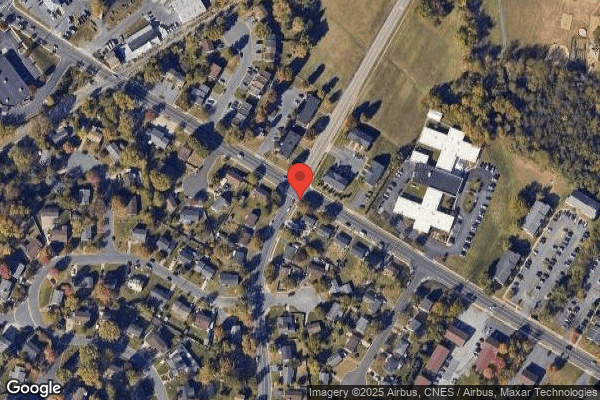
Jan 2024 2 deficiencies
CONCERN (D) 📢 Someone Reported This

A family member, employee, or ombudsman was alarmed enough to file a formal complaint

Potential for Harm - no one hurt, but risky conditions existed

Deficiency F0657 (Tag F0657)

Could have caused harm · This affected 1 resident

**NOTE- TERMS IN BRACKETS HAVE BEEN EDITED TO PROTECT CONFIDENTIALITY** Based on observation, resident review, staff interview, facility document review, and clinical record review the facility failed...

Read full inspector narrative →
**NOTE- TERMS IN BRACKETS HAVE BEEN EDITED TO PROTECT CONFIDENTIALITY** Based on observation, resident review, staff interview, facility document review, and clinical record review the facility failed to review and revise the care plan for one of five residents in the survey sample (Resident #3). The findings include: Resident #3's (R3's) care plan was not revised following a surgical procedure which resulted in a change in medical condition. R3 was admitted with diagnoses that included diabetes, presence of cardiac pacemaker, major depressive disorder and heart disease. The most recent minimum data set (MDS) dated [DATE] assessed R3 as cognitively intact. On 1/3/24 at 2:00 PM R3 was interviewed regarding her pacemaker site. R3 stated she had recently had a procedure to her pacemaker on 12/14/23 to repair a lead. R3 displayed her surgical site near the left clavicle. There was a healing incision at the site with intact Steri-strips. R3's plan of care was revised on 11/24/23 and had not been updated since the 12/14/23 surgical procedure. The plan of care included no problems, goals and/or interventions regarding the surgical incision to the resident's pacemaker site. On 1/3/24 at 2:37 PM, the licensed practical nurse (LPN #4) responsible for care plan revisions, was interviewed about R3's plan of care regarding the pacemaker repair. LPN #4 stated R3's care plan had not been revised since the surgical repair of the pacemaker. On 1/3/24 at 2:45 PM, the director of nursing (DON) and the unit manager (LPN #1) were interviewed regarding R3's care plan. The DON stated the care plan had not been revised to include the incision care at R3's pacemaker site. On 1/3/24 at 2:55 PM the DON and LPN #1 were reinterviewed and agreed that the care plan should have been reviewed and revised following the surgical procedure. On 1/3/24 at 4:45 PM these findings were reviewed with the administrator and DON with no further information presented.
CONCERN (D) 📢 Someone Reported This

A family member, employee, or ombudsman was alarmed enough to file a formal complaint

Potential for Harm - no one hurt, but risky conditions existed

Deficiency F0658 (Tag F0658)

Could have caused harm · This affected 1 resident

**NOTE- TERMS IN BRACKETS HAVE BEEN EDITED TO PROTECT CONFIDENTIALITY** Based on staff interview, facility document review, and clinical record review, the facility failed to follow professional stand...

Read full inspector narrative →
**NOTE- TERMS IN BRACKETS HAVE BEEN EDITED TO PROTECT CONFIDENTIALITY** Based on staff interview, facility document review, and clinical record review, the facility failed to follow professional standards of care for one of five residents in the survey sample (Resident #4). Facility staff failed to document an assessed skin impairment at Resident #4's pacemaker site and failed to provide ongoing assessment/monitoring of the impairment. The findings include: Resident #4 (R4) was admitted to the facility on [DATE] with diagnoses that included: atrial fibrillation, pleural effusion, chronic obstructive pulmonary disease, shock, malnutrition, covid, congestive heart failure, pacemaker, and hypertension. The most current MDS (minimum data set) was a discharge assessment dated [DATE], which assessed R4 with a cognitive score of 15 out of 15, indicating cognitively intact. R4's clinical record documented that the resident was admitted with a pacemaker. R4's care plan dated 8/30/23 listed interventions for the pacemaker that included: Monitor/document /report any signs/symptoms of infection at incision site, monitor vital signs, and notify MD of significant abnormalities, monitor/document/report any signs/symptoms of altered cardiac output or pacemaker malfunction, pacemaker checks as recommended, and teach family/caregivers to avoid activities and equipment which interfere with pacemaker activity. R4's nursing admission assessment dated [DATE] documented that the resident was admitted with a sacral pressure ulcer, a deep tissue pressure injury to the toe, and an elbow abscess. The admission assessment made no mention of any skin impairments or dressings at R4's pacemaker site. On 1/3/24 at 9:24 AM, the nurse practitioner (NP - other staff #1) that cared for R4, was interviewed about R4's pacemaker site. The NP stated that she recalled R4 having a pin hole area on the left clavicle pacemaker site when she assessed R4 a few days after admission. The NP stated that there was a band aid to the pacemaker site with minimal drainage, if any. The NP stated that R4 voiced no pain, and there was no redness or cellulitis. The NP stated that no treatment was needed to the area. The NP also stated R4 informed her that the pin hole area had been there previously and that it comes and goes. When questioned further, the NP reviewed the clinical record and stated that she did not document the assessment of the pinhole impairment in her 8/30/23 note. A comprehensive review of R4's clinical record included NP and/or physician progress notes which documented additional assessments of the resident during her stay on 9/1/23, 9/4/23, 9/6/23, 9/12/23, 9/18/23, 9/20/23, 9/25/23 and 9/27/23. There was no documentation of the pin hole impairment or the condition of pacemaker insertion site. Skilled nursing notes documented daily auscultation of heart and lung sounds but did not include the pin hole impairment or the condition of the pacemaker insertion site. Weekly skin assessments dated 8/31/23, 9/6/23, 9/13/23, 9/20/23, and 9/27/23, but did not include the pin hole impairment or the condition of the pacemaker insertion site. On 1/3/24 at 10:25 AM, registered nurse #1 (RN #1), that cared for R4 during her stay, was interviewed about the resident's pacemaker site. RN #1 stated the resident's heart and lung sounds were checked daily during skilled care. RN #1 stated that she remembered a dry, clean dressing over the resident's left clavicle area .at some point, but did not remember the date. When questioned further, RN #1 stated that she thought that the wound nurse was taking care of the area, since it had a dressing. The wound nurse working during R4's stay was not available for interview, as she no longer worked at the facility. On 1/3/24 at 10:39 AM, licensed practical nurse #1 (LPN #1) unit manager for R4's unit was interviewed about R4. LPN #1 stated that she was not working as the unit manager during R4's stay. LPN #1 stated that per policy, dressings should be removed for skin assessments, and that there should have been documentation for each site, with treatment ordered if needed. On 1/3/24 at 11:47 AM, the director of nursing (DON) was interviewed regarding R4 and stated that the DON for the facility at the time R4 was a resident was no longer employed by the facility. The DON stated that she reviewed R4's clinical record. The DON stated that R4's pacemaker was not new when admitted to the facility and that the pin hole area seen by the NP was not listed among the resident's skin issues. The DON stated that staff, including providers and nursing, were expected to document any assessed skin impairments and monitor/document the status of any wounds. Review of the facility skin assessment policy which was dated 11/1/20 revealed that a full body skin assessment should be conducted upon admission/re-admission, daily for three days, and weekly thereafter. The policy also stated an assessment may also be performed after a change of condition or after any newly identified pressure injury. On 1/3/24 at 4:45 PM, these findings were reviewed with the administrator and DON, with no further information presented.
Dec 2021 14 deficiencies
CONCERN (D)

Potential for Harm - no one hurt, but risky conditions existed

Deficiency F0561 (Tag F0561)

Could have caused harm · This affected 1 resident

**NOTE- TERMS IN BRACKETS HAVE BEEN EDITED TO PROTECT CONFIDENTIALITY** Based on complaint investigation, clinical record review, resident interview, and review of facility documents, the facility fai...

Read full inspector narrative →
**NOTE- TERMS IN BRACKETS HAVE BEEN EDITED TO PROTECT CONFIDENTIALITY** Based on complaint investigation, clinical record review, resident interview, and review of facility documents, the facility failed to acknowledge the resident's personal choice for bathing, for one of 20 residents in the survey sample Resident # 13. Resident # 13, whose personal preference for bathing was a shower, received two showers between October 2, 2021 and December 1, 2021. The findings were: Resident # 13 in the survey sample was admitted to the facility on [DATE] with diagnoses that included anxiety disorder, depression, morbid obesity, gastroesophageal reflux disease, lymphedema, slow transit constipation, and hypertrophic osteoarthropathy. According to the most recent Minimum Data Set (MDS), a Quarterly Review, with an Assessment Reference Date (ARD) of 9/23/2021, the resident was assessed under Section C (Cognitive Patterns) as being cognitively intact, with a Summary Score of 15 out of 15. Under Section G (Functional Status), the resident was assessed as totally dependent with one person physical assist for bathing. At approximately 2:30 p.m. on 12/7/2021, Resident # 13 was interviewed regarding her bathing. Asked if there was a scheduled bath day, the resident said, I have no scheduled bath day. I get one when they have someone to give me one. The resident went on to say she last received a bath .about five days ago. Resident # 13 also said her personal preference for bathing was a shower. Resident # 13's most recent Annual MDS, with an ARD of 3/23/2021, documented at F0400 (Interview for Daily Preferences), How important is it to you to choose between a tub bath, shower, bed bath, or sponge bath? that the resident responded Very important. Resident # 13's plan of care included the following problem, ADL (Activities of Daily Living) self-care performance deficit and dental care r/t (related to) OA (Osteoarthritis), Gait mobility, BMI (Body Mass Index) > (greater than) 65, Debility and Depression. The goal for the problem was, (Name of resident) will maintain current level of function in transfers to supervision through the review date. Included as an intervention to the stated problem was, BATHING/SHOWERING: Check nail length and trim and clean on bath day and as necessary. Report any changes to the nurse. Provide sponge bath when a full bath or shower cannot be tolerated. Prefers shower. At 7:45 a.m. on 12/8/2021, the Director of Nursing (DON) was interviewed regarding showers for Resident # 13. Asked if there was a reason why Resident # 13 could not have a shower, the DON said, There is no reason why she cannot have a shower. Review of ADL records and shower records revealed Resident # 13 received a shower on 10/3/2021 and 12/1/2021. The resident was scheduled for a shower on 10/7/2021, but did not receive a shower. The Shower Completion Sheet included the following notation next to the residents name for the scheduled shower on 10/7/2021, Had on 10-3-21. Between the dates 10/1/2021 and 12/1/2021, the resident received either partial baths or bed baths. The findings were discussed during a meeting at 4:14 p.m. on 12/8/2021, that included the Administrator, DON, Corporate Nurse Consultant, and the survey team. COMPLAINT DEFICIENCY
CONCERN (D)

Potential for Harm - no one hurt, but risky conditions existed

Deficiency F0657 (Tag F0657)

Could have caused harm · This affected 1 resident

**NOTE- TERMS IN BRACKETS HAVE BEEN EDITED TO PROTECT CONFIDENTIALITY** Based on observation, staff interview, clinical record review and facility document review, the facility staff failed to review ...

Read full inspector narrative →
**NOTE- TERMS IN BRACKETS HAVE BEEN EDITED TO PROTECT CONFIDENTIALITY** Based on observation, staff interview, clinical record review and facility document review, the facility staff failed to review and revise a comprehensive care plan for 1 of 20 residents in the survey sample, Resident #3. Resident #3's comprehensive care plans were not reviewed and revised for the discontinuation of anticoagulant use. The findings include: Resident #3 was originally admitted to the facility on [DATE] and readmitted on [DATE] with diagnoses that included legal blindness, atrial fibrillation, cerebral palsy, hypertension, dementia without behavioral disturbances, and generalized anxiety disorder. The most recent minimum data set (MDS) dated [DATE] was a quarterly and assessed Resident #3 as rarely/never understood for cognitive function and daily decision making. Under Section N - Medications, Anticoagulants was coded as 0 received. A comparative review of the significant change MDS dated [DATE] was completed. Under Section N - Medications, Anticoagulants was coded as 4 received. On 12/7/2021, Resident #3's clinical record was reviewed. A review of the care plan's documented the following: (Resident #3) is on Anticoagulant therapy r/t (related to) Atrial fibrillation, hx (history) of DVT (deep vein thrombosis) and CVA (cerebrovascular accident). A review of the current physician orders did not document anticoagulant use. A review of the medication administration record for the period of July 2021 through December 2021 documented the anticoagulant Warfarin was discontinued on 09/02/2021. On 12/08/2021 at 10:19 a.m., the MDS coordinator (LPN #1) who was responsible for the care plans was interviewed regarding Resident #3's care plans. LPN #1 reviewed Resident #3's electronic clinical record and stated, [Resident #3] doesn't receive any anticoagulants, they were discontinued on September 2, 2021. Her care plans should have been updated to reflect this change. On 12/08/2021 at 4:45 p.m., the above findings were discussed with the administrator, director of nursing (DON) and corporate consultant. A review of the facility's policy titled Care Plan Revisions Upon Status Change (Date Implemented: 11/1/2020) documented the following: 1. The comprehensive care plan will be reviewed, and revised as necessary, when a resident experiences a status change. 2. Procedure for reviewing and revising the care plan when a resident experiences a status change: a. Upon identification of a change in status, the nurse or any member of the interdisciplinary team will notify the MDS Coordinator, the physician, and the resident representative, if applicable d. The care plan will be updated with the new or modified interventions f. Care plans will be modified as needed by MDS Coordinator or other designated staff member . No additional information was received by the survey team prior to exit on 12/09/2021 at 9:45 a.m.
CONCERN (D)

Potential for Harm - no one hurt, but risky conditions existed

Deficiency F0727 (Tag F0727)

Could have caused harm · This affected 1 resident

Based on staff interview and facility document review, the facility staff failed to provide RN (registered nurse) coverage for two of fourteen days reviewed. Findings were: On 12/08/2021 at approximat...

Read full inspector narrative →
Based on staff interview and facility document review, the facility staff failed to provide RN (registered nurse) coverage for two of fourteen days reviewed. Findings were: On 12/08/2021 at approximately 1:30 p.m., the as worked schedule for two weeks (11/21/2021-12/06/2021) was reviewed. On 11/21/2021, 12/04/2021 and 12/05/2021, there was no RN on the schedule. The administrator was interviewed at approximately 2:00 p.m., regarding the lack of RN coverage. She stated, That is correct. We had a nurse scheduled and she went out on FMLA (family medical leave) right before Thanksgiving. We tried to get it covered but I couldn't get anyone here .we have 6 agencies that we work with to try to get the shifts covered, no one would work it. I am working right now with someone who is interested in doing it. The above information was discussed during an end of the day meeting on 12/08/2021 with the DON (director of nursing), the administrator, and the corporate nurse consultant. On 12/09/2021 at approximately 8:00 a.m., the administrator came to the conference room. She stated, I never wrote her down, but here is her timecard. I had an RN that agreed to come in and be here to cover the facility. She didn't take an assignment but she was here to assist. I actually paid her a two hundred dollar bonus on top of her salary to get her to come in on November twenty-first for an eight hour shift. The time card was reviewed and showed the nurse worked on 11/21/2021, leaving two days without coverage, 12/04/2021 and 12/05/2021. No further information was received prior to the exit conference on 12/09/2021.
CONCERN (D)

Potential for Harm - no one hurt, but risky conditions existed

Pharmacy Services (Tag F0755)

Could have caused harm · This affected 1 resident

**NOTE- TERMS IN BRACKETS HAVE BEEN EDITED TO PROTECT CONFIDENTIALITY** Based on resident interview, staff interview and clinical record review, the facility staff failed to ensure medications were av...

Read full inspector narrative →
**NOTE- TERMS IN BRACKETS HAVE BEEN EDITED TO PROTECT CONFIDENTIALITY** Based on resident interview, staff interview and clinical record review, the facility staff failed to ensure medications were available for administration for one of twenty residents in the survey sample, Resident #15. Doses of the medications gabapentin and apixaban (Eliquis) for Resident #15 were not provided from the pharmacy in a timely manner. The findings include: Resident #15 was admitted to the facility on [DATE] with diagnoses that included kidney cancer with metastasis, hypertension, congestive heart failure, atrial fibrillation, chronic embolism of femoral vein, esophagitis, anxiety, major depressive disorder with psychotic features, chronic lymphocytic leukemia and COPD (chronic obstructive pulmonary disease). The minimum data set (MDS) dated [DATE] assessed Resident #15 as cognitively intact. On 12/7/21 at 4:30 p.m., Resident #15 was interviewed about quality of life/care in the facility. Resident #15 stated during this interview that at times her medications were not available. The resident stated she had been told the medicines were not ordered in time and that the pharmacy was slow. Resident #15's clinical record documented a physician's order dated 6/22/21 for apixaban 5 mg (milligrams) to be administered two times per day for treatment of atrial fibrillation. The record documented a physician's order dated 11/12/21 for gabapentin 100 mg to be administered two times per day for management of neuropathy. Resident #15's medication administration record (MAR) from 11/1/21 through 12/7/21 documented the following medications were not administered: Gabapentin 100 mg - not administered at 9:00 a.m. on 11/27/21 and at 5:00 p.m. on 11/27/21, 11/28/21 and 11/29/21 Apixaban (Eliquis) 5 mg - not administered at 11:00 p.m. on 11/30/21 and 12/1/21 A MAR note dated 11/27/21 documented the gabapentin 100 mg was on order. Another MAR note dated 11/29/21 documented the gabapentin 100 mg was not available not given on order from pharmacy. A MAR note dated 11/30/21 documented concerning the apixaban, medication not on hand, pending arrival from pharmacy. A MAR note dated 12/1/21 documented, .Apixaban .on order awaiting pharmacy . On 12/8/21 at 2:00 p.m., the registered nurse (RN #1) that routinely cared for Resident #15 was interviewed about the unavailable gabapentin and apixaban. RN #1 stated the gabapentin was provided by hospice and sometimes they did not re-order medications in time. RN #1 stated the missed doses of apixaban were not given because the supply ran out. RN #1 stated she did not know if the medications were not reordered in time or if pharmacy was slow to deliver. RN #1 stated she frequently experienced problems with the pharmacy delivering medications timely. RN #1 stated, Sometimes we reorder and we just don't get it [medication]. On 12/8/21 at 2:48 p.m., the licensed practical nurse unit manager (LPN #2) was interviewed about Resident #15's supply of gabapentin and apixaban. LPN #2 stated the pharmacy was not always prompt with medication deliveries. LPN #2 stated, Even when we order, we don't always get it [medication] timely. This finding was reviewed with the administrator, director of nursing and regional director of clinical services on 12/8/21 at 4:45 p.m.
CONCERN (D)

Potential for Harm - no one hurt, but risky conditions existed

Deficiency F0761 (Tag F0761)

Could have caused harm · This affected 1 resident

Based on observation, staff interview and facility document review, the facility staff failed to ensure Tuberculin PPD (purified protein derivative) solution was dated when opened, in one of two medic...

Read full inspector narrative →
Based on observation, staff interview and facility document review, the facility staff failed to ensure Tuberculin PPD (purified protein derivative) solution was dated when opened, in one of two medication rooms. One multi-dose vial of PPD solution was observed opened, not dated and available for administration on the A wing. Findings were: On 12/08/2021 at approximately 2:30 p.m., the refrigerator on the A wing was inspected with LPN (licensed practical nurse) # 2. Observed in the refrigerator was an opened multi-dose vial of Tuberculin PPD solution. The vial was not dated. LPN #2 was asked when the vial had been opened. She stated, I don't know, I will throw it away. She was asked how long the vial should be kept after opening. She stated, Thirty days. At approximately 3;00 p.m., LPN #2 came to the conference room with a paper from the pharmacy titled Medication Storage List is not all-inclusive and subject to change. Information is from package inserts. The document listed medications, how to store them, and the expiration date. Per the document, PPD (Tubersol) should be stored in the refrigerator with an expiration time of 30 days after opening. LPN #2 was asked if the document presented was what the facility used to determine storage times. She stated, Yes. The above information was discussed during an end of the day meeting on 12/08/2021 with the DON (director of nursing), the corporate nurse consultant and the administrator. No further information was obtained prior to the exit conference on 12/09/2021.
CONCERN (E)

Potential for Harm - no one hurt, but risky conditions existed

Abuse Prevention Policies (Tag F0607)

Could have caused harm · This affected multiple residents

Based on review of facility personnel files, facility policy and procedures, and staff interview, the facility failed to implement the policy and procedure to ensure applicants for employment complete...

Read full inspector narrative →
Based on review of facility personnel files, facility policy and procedures, and staff interview, the facility failed to implement the policy and procedure to ensure applicants for employment completed a Sworn Disclosure Statement disclosing .any criminal convictions or pending criminal charges Review of 25 personnel files revealed none of the 25 files reviewed contained a Sworn Disclosure Statement. The findings were: On 12/8/2021, 25 personnel files, selected from a list provided by the facility, were reviewed. The 25 files reviewed included 12 Certified Nursing Assistants, six Registered Nurses, three Licensed Practical Nurses, and four non-licensed personnel. There was no Sworn Disclosure Statement in 25 of the 25 files reviewed. During an interview at 2:00 p.m. on 12/8/2021, the facility Administrator provided a copy of the facility's Sworn Disclosure Statement form, a copy of an explanation of the facility's background check process, and a general information form, provided to applicants for employment. The Administrator indicated the Sworn Disclosure Statement form for the 25 reviewed employees was apparently lost or misplaced. The Sworn Disclosure Statement included the following, Section 63.2-1720 of the Code of Virginia requires that any person desiring work at a licensed facility provide the hiring facility with a sworn disclosure statement or affirmation disclosing any criminal convictions or pending criminal charges The explanation of the facility's background check process included, It is the policy of The Company and all applicable subsidiaries, to conduct background checks to include criminal background checks .on all applicants, employees, and volunteers The facility's Abuse Prevention Program, under Policy Interpretation and Implementation, included the following: As part of the resident abuse prevention, the administration will: 2. Conduct employee background checks and will not knowingly employ or otherwise engage any individual who has: a. Have been found guilty of abuse, neglect, exploitation, misappropriation of property, or mistreatment by a court of law The findings were discussed during a meeting at 4:14 p.m. on 12/8/2021, that included the Administrator, DON, Corporate Nurse Consultant, and the survey team.
CONCERN (E)

Potential for Harm - no one hurt, but risky conditions existed

ADL Care (Tag F0677)

Could have caused harm · This affected multiple residents

**NOTE- TERMS IN BRACKETS HAVE BEEN EDITED TO PROTECT CONFIDENTIALITY** 2. Resident # 7 was admitted to the facility 10/3/17 with diagnoses to include, but not limited to: diabetes, peripheral vascula...

Read full inspector narrative →
**NOTE- TERMS IN BRACKETS HAVE BEEN EDITED TO PROTECT CONFIDENTIALITY** 2. Resident # 7 was admitted to the facility 10/3/17 with diagnoses to include, but not limited to: diabetes, peripheral vascular disease, below knee amputation of left leg, muscle weakness, and hypothyroidism. The most recent MDS (minimum data set) was a quarterly review dated 9/9/21 and had Resident # 7 coded as cognitively intact with a total summary score of 15 out of 15. The annual review documented that Resident # 7 was identified as choosing a shower as very important at Section F0400-Daily Preferences and G0120 A.Bathing: 4. total dependence and B.Self Performance 3. One person assist. Section G0400 Functional Limitation was assessed as having impairment in the upper and lower extremities. On 12/8/21 beginning at 10:10 a.m. Resident # 7 was interviewed about daily life in the facility. She stated Well, things are pretty good; however, I am supposed to get a shower on Wednesdays and Saturdays, and I don't get them. I had a visitor this past Sunday, and when she walked in my room, she looked at me and said 'Are you getting your showers?' I said 'no.' She went and talked to them and I got a shower. You see this hair? It's greasy, and I don't like it .if you don't get a shower your hair looks like this. Resident # 7 stated, They (the facility) don't have enough help. If there was enough help, we could get a shower when we're supposed to . On 12/8/21 at 10:30 a.m. CNA (certified nursing assistant) # 1 was interviewed about resident showers. CNA # 1 stated We don't have enough staff to do two showers a week, much less one. There's a lot of 'call outs' and if they can't get anybody, we do the best we can, but if a resident is totally dependant, then giving a shower with just two staff on the unit is very difficult . On 12/8/21 at approximately 10:45 a.m. the shower sheet documentation was reviewed for September, October, and November 2021, and revealed Resident # 7 had gotten one shower in September, one in October, and one in November. There was no documentation of the shower the resident stated she had received 12/5/21. The administrator, DON (director of nursing) and the regional nurse consultant were informed of the above findings during a meeting 12/8/21 beginning at 11:12 a.m. No further information was provided prior to the exit conference.Based on resident interview, staff interview, clinical record review, and in the course of complaint investigation, the facility failed to ensure baths/showers were being provided as scheduled for three of 20 residents, Resident # 48, 7, and 13. The Findings Include: 1. Resident #48 was admitted to the facility on [DATE] with a readmission on [DATE]. Diagnoses for Resident #48 included: Diabetes, kidney disease, neuropathy, and dysphagia. The most current MDS (minimum data set) was a quarterly assessment with an ARD (assessment reference date) of 11/5/21. Resident #48 was assessed with a cognitive score of 15 indicating cognitively intact. On 12/07/21 at 12:00 PM Resident #48 was interviewed. Resident #48 stated that she liked to take baths but had not been receiving baths as scheduled and had been told there was not enough staff to give baths. Resident #48's care plan, current MDS and bathing ADL's (activity of daily living) were reviewed and indicated Resident #48 needed set up and supervision for bathing. The bath schedule for Resident #48 indicated Resident #48 was sheduled for a bath every Tuesday. Resident #48's bath completion form for a 30 day look back period documented Resident #48 received a shower on 11/9/21, bath on 11/10/21, and bath on 11/17/21. No other documentation was provided. On 12/08/21 at 9:43 AM, certified nursing assistant (CNA) #2 (working on the unit where Resident #48 resided) was interviewed. CNA #2 said the facility was short staffed, sometimes only having 2 CNA's for the entire unit when there should be three CNA's and a CNA giving showers. CNA #2 stated showers are not getting done because they don't have enough help. The shower schedule for B wing was reviewed and indicated the schedule was based on room number and indicated that each resident was only scheduled to receive one shower/bath per week. On 12/08/21 at 10:00 AM, license practical nurse (LPN) #3 (unit manager) was interviewed. LPN #3 said the once a week shower was implemented by the previous director of nursing (DON) because of the staffing challenges. LPN #3 said she was aware that showers are not being provided because the facility is still having staffing challenges. On 12/8/21 at 10:40 AM, LPN #3 was interviewed. LPN #3 stated that the once a week shower schedule had been implemented since the end of April 2021. On 12/08/21 at 10:59 AM, the DON was interviewed. The DON stated that she was just hired two weeks ago and was unaware that the shower schedule only allowed for each resident to receive a shower once a week. On 12/08/21 at 11:12 AM, the administrator was interviewed. The administrator reviewed B wing shower schedule and was asked why the schedule was for only one bath a week. The administrator said the facility has had some staffing issues and are currently trying to fill positions. No other information was provided prior to exit conference on 12/9/21. 3. Resident # 13 in the survey sample was admitted to the facility on [DATE] with diagnoses that included anxiety disorder, depression, morbid obesity, gastroesophageal reflux disease, lymphedema, slow transit constipation, and hypertrophic osteoarthropathy. According to the most recent Minimum Data Set (MDS), a Quarterly Review, with an Assessment Reference Date (ARD) of 9/23/2021, the resident was assessed under Section C (Cognitive Patterns) as being cognitively intact, with a Summary Score of 15 out of 15. Under Section G (Functional Status), the resident was assessed as totally dependent with one person physical assist for bathing. At approximately 2:30 p.m. on 12/7/2021, Resident # 13 was interviewed regarding her bathing. Asked if there was a scheduled bath day, the resident said, I have no scheduled bath day. I get one when they have someone to give me one. The resident went on to say she last received a bath .about five days ago. Resident # 13 also said her personal preference for bathing was a shower. Review of Shower Completion Sheets revealed Resident # 13 received a shower on 10/3/2021 and 12/1/2021. The resident was scheduled for a shower on 10/7/2021, but did not receive a shower. The Shower Completion Sheet included the following notation next to the residents name for the shower scheduled on 10/7/2021, Had on 10-3-21. Review of the ADL (Activities of Daily Living) records for October 2021 revealed Resident # 13 received 17 partial baths and six bed baths. The shower the resident received on 10/3/2021 was not included on the October ADL records. Review of the ADL records for November 2021 revealed Resident # 13 received 24 partial baths and two bed baths. There were no showers recorded on the ADL sheets or on the Shower Completion Sheets for November. At 7:45 a.m. on 12/8/2021, the Director of Nursing (DON) was interviewed regarding showers for Resident # 13. Asked if there was a reason why Resident # 13 could not have a shower, the DON said, There is no reason why she cannot have a shower. The findings were discussed during a meeting at 4:14 p.m. on 12/8/2021, that included the Administrator, DON, Corporate Nurse Consultant, and the survey team. COMPLAINT DEFICIENCY
CONCERN (E)

Potential for Harm - no one hurt, but risky conditions existed

Quality of Care (Tag F0684)

Could have caused harm · This affected multiple residents

**NOTE- TERMS IN BRACKETS HAVE BEEN EDITED TO PROTECT CONFIDENTIALITY** Based on resident interview, observation, staff interview and clinical record review, the facility staff failed to follow physic...

Read full inspector narrative →
**NOTE- TERMS IN BRACKETS HAVE BEEN EDITED TO PROTECT CONFIDENTIALITY** Based on resident interview, observation, staff interview and clinical record review, the facility staff failed to follow physician orders for four of 20 residents in the survey sample, Residents # 12, 68, 15, and 46. 1. Resident # 12 was not administered the correct probiotic as ordered by the physician. 2. Resident # 68 did not have weekly weights obtained per physician order. 3. Resident #15 was not administered the medications gabapentin and Eliquis as ordered by the physician. 4. Resident #46 did not have daily weights obtained as ordered by the physician. Findings include: 1. On 12/8/21 beginning at 8:00 a.m. a medication pass and pour observation was conducted with RN (registered nurse) # 1 on A wing. RN # 1 prepared Resident # 12's medications, which included Acidophilus (Lactobacillus) 303 mg 1 tablet. The medications administered were then reconciled with the physician orders. Resident # 12 did not have an order for Acidophilus; rather, he had an order for Saccharomyces boulardii (Florastor) 250 mg capsule Give 1 capsule by mouth one time a day for probiotic. The order was carried forward from 9/20/21. On 12/8/21 at 8:45 a.m. RN # 1 was asked about the order and if that was what had been given. RN # 1 obtained the bottle of Acidophilus, pulled up Resident # 12's orders on the MAR (medication administration record) and stated Nope, I did not give the Florastor; this (pointing to the bottle) is not . RN # 1 stated Resident # 12 had been administered the lactobacillus since the order had been written. The administrator, DON (director of nursing) and the regional nurse consultant were informed of the above findings during a meeting 12/8/21 beginning at 11:12 a.m. No further information was provided prior to the exit conference. 2. Resident # 68 was admitted to the facility 9/2/21 with diagnoses to include, but were not limited to: diabetes, fractured nasal bones, anxiety, congestive heart failure, and atrial fibrillation. The most recent MDS (minimum data set) was significant change assessment dated [DATE] and had Resident # 68 as cognitively intact with a score of 15 out of 15. Observed during review of the clinical record 12/7/21 at 3:00 p.m. was an order carried forward from 10/25/21 for Weights every Monday. Notify MD of weight gain of 5 pounds in a week every day shift Mon for monitoring. A review of the TAR (treatment administration record) revealed the weekly weights had not been obtained 10/25, 11/22, and 11/29. The resident was documented as having had refused a weight on 12/6/21. The administrator, DON (director of nursing) and the regional nurse consultant were informed of the above findings during a meeting 12/8/21 beginning at 11:12 a.m. The DON was asked if the weights would be documented anywhere else. She stated she would look and present that information if obtained. No further information was provided prior to the exit conference.3. Resident #15 was admitted to the facility on [DATE] with diagnoses that included kidney cancer with metastasis, hypertension, congestive heart failure, atrial fibrillation, chronic embolism of femoral vein, esophagitis, anxiety, major depressive disorder with psychotic features, chronic lymphocytic leukemia and COPD (chronic obstructive pulmonary disease). The minimum data set (MDS) dated [DATE] assessed Resident #15 as cognitively intact. On 12/7/21 at 4:30 p.m., Resident #15 was interviewed about quality of life/care in the facility. Resident #15 stated that at times her medications were not available. The resident stated she had been told the medicines were not ordered in time and that the pharmacy was slow. Resident #15's medication administration record (MAR) from 11/1/21 through 12/7/21 documented the following medications were not administered: Gabapentin 100 mg (milligrams) - not administered at 9:00 a.m. on 11/27/21 and at 5:00 p.m. on 11/27/21, 11/28/21 and 11/29/21 Apixaban (Eliquis) 5 mg - not administered at 11:00 p.m. on 11/30/21 and 12/1/21 Resident #15's clinical record documented a physician's order dated 6/22/21 for apixaban 5 mg to be administered two times per day for treatment of atrial fibrillation. The record documented a physician's order dated 11/12/21 for gabapentin 100 mg to be administered two times per day for treatment of neuropathy. On 12/8/21 at 2:00 p.m., the registered nurse (RN #1) that routinely cared for Resident #15 was interviewed about the gabapentin and apixaban not administered as ordered. RN #1 stated the gabapentin was provided by hospice and sometimes hospice did not re-order the medication in time. RN #1 stated the missed doses of apixaban were not given because the supply ran out. RN #1 stated that gabapentin and apixaban were available in the emergency stat supply. RN #1 stated she did not know why the medications were not given because the medications were available in the emergency drug supply. RN #1 went into the medication storage room and verified that doses of gabapentin and apixaban were available in the emergency supply. On 12/8/21 at 2:48 p.m., the licensed practical nurse unit manager (LPN #2) was interviewed about Resident #15's missed doses of gabapentin and apixaban. LPN #2 stated the doses should have been given as ordered because they were available in the emergency supply located in the medication room. LPN #2 stated agency nurses did not have access to the emergency medicines but facility nurses were always available with access to the emergency medications. Resident #15's plan of care (revised 6/21/21) documented the resident was on anticoagulant therapy for the treatment of atrial fibrillation. Interventions to minimize adverse reactions to the anticoagulant included, Administer anticoagulant medications as ordered by physician . The care plan documented the resident had chronic pain due to cancer. Interventions to minimize pain included, Administer analgesia as per orders . This finding was reviewed with the administrator, director of nursing and regional director of clinical services on 12/8/21 at 4:45 p.m. 4. Resident #46 was admitted to the facility on [DATE] with diagnoses that included fractured right tibia, obesity, major depressive disorder, hypertension, cognitive communication disorder, cystitis and hyperlipidemia. The minimum data set (MDS) dated [DATE] assessed Resident #46 with severely impaired cognitive skills. Resident #46's clinical record documented a physician's order dated 12/2/21 with start date of 12/3/21 for daily weights. Parameters were listed to notify the physician of a weight gain greater than 3 pounds (lbs.) in a day or more than 5 lbs. in a week. Resident #46's clinical record documented no weights were obtained on 12/3/21, 12/5/21 or 12/6/21. On 12/8/21 at 2:00 p.m., the registered nurse (RN #1) caring for Resident #15 was interviewed about the missed weights. RN #1 stated the aides usually weighed the residents as needed. RN #1 reviewed the resident's clinical record and stated she did not see weights for 12/3/21, 12/5/21 or 12/6/21. On 12/8/21 at 2:45 p.m., the licensed practical nurse unit manager (LPN #2) was interviewed about the missing weights. LPN #2 reviewed Resident #15's record and stated the weights were not obtained as ordered. LPN #2 stated the resident recently had experienced increased edema and the weights were ordered to monitor the edema. This finding was reviewed with the administrator, director of nursing and regional director of clinical services on 12/8/21 at 4:45 p.m.
CONCERN (E)

Potential for Harm - no one hurt, but risky conditions existed

Deficiency F0697 (Tag F0697)

Could have caused harm · This affected multiple residents

**NOTE- TERMS IN BRACKETS HAVE BEEN EDITED TO PROTECT CONFIDENTIALITY** Based on staff interview and clinical record review, the facility staff failed to assess and attempt non-drug interventions prio...

Read full inspector narrative →
**NOTE- TERMS IN BRACKETS HAVE BEEN EDITED TO PROTECT CONFIDENTIALITY** Based on staff interview and clinical record review, the facility staff failed to assess and attempt non-drug interventions prior to the administration of opioid pain medication for one of 20 residents in the survey sample, Resident #15. Resident #15 was administered twenty-two doses of the pain medication hydromorphone (Dilaudid) without documented pain assessments or prior attempts or offers of non-drug interventions. The findings include: Resident #15 was admitted to the facility on [DATE] with diagnoses that included kidney cancer with metastasis, hypertension, congestive heart failure, atrial fibrillation, chronic embolism of femoral vein, esophagitis, anxiety, major depressive disorder with psychotic features, chronic lymphocytic leukemia and COPD (chronic obstructive pulmonary disease). The minimum data set (MDS) dated [DATE] assessed Resident #15 as cognitively intact and as experiencing pain almost constantly. Resident #15's clinical record documented a physician's order dated 6/21/21 for the medication hydromorphone 8 mg (milligrams) to be administered every 2 hours as needed (prn) for pain management. Resident #15's medication administration record (MAR) documented the resident was administered 25 doses of hydromorphone 8 mg from 12/1/21 through 12/7/21. Twenty-two of the 25 doses administered had no documented assessment of the resident's pain other than a pain rating (on scale of 0 to 10 with 0 = no pain, 10 = worst pain). The clinical record documented no location or description of the pain, no pain duration or any other symptoms associated with the pain for these twenty-two doses. Offerings and/or attempts at any non-drug interventions to minimize the pain were documented for only three out of the 25 doses of prn hydromorphone administered from 12/1/21 through 12/7/21. Resident #15's plan of care (revised 6/21/21) documented the resident had chronic pain due to cancer. Interventions to minimize/manage pain included, Anticipate (Resident #15's) need for pain relief and respond immediately to any complaint of pain .Evaluate the effectiveness of pain interventions .impact on functional ability and impact on cognition .Offer non-pharmalogical (pharmacological) pain medicaitons (medications) as needed and accepted by (Resident #15) prior to PRN pain medicaiton (medication) administration . (Sic) On 12/8/21 at 2:00 p.m., the registered nurse (RN #1) that routinely cared for Resident #15 was interviewed about the resident's prn pain medication administration. RN #1 stated the resident had metastatic cancer and frequently complained of pain. RN #1 stated most of the time the resident complained of abdominal pain. RN #1 stated a pain description and attempted non-drug interventions were supposed to be documented. RN #1 stated, It does get busy. She (Resident #15) asks for it (pain medication) a lot . RN #1 stated she did not always record an assessment or non-drug interventions offered for each dose of the hydromorphone. On 12/8/21 at 2:50 p.m., the licensed practical nurse unit manager (LPN #2) was interviewed about pain assessments and non-drug pain interventions for Resident #15. LPN #2 stated the MAR provided a place to enter the pain rating from the 0 to 10 scale. LPN #2 stated nurses had the ability to enter a note in the MAR providing an assessment and/or any attempted non-drug interventions. LPN #2 stated Resident #15 frequently requested as needed pain medication and nurses should have documented an assessment including the location of the resident's pain. The Nursing 2017 Drug Handbook on page 734 describes hydromorphone as an opioid analgesic used for the management of moderate to severe pain. Pages 735 and 736 of this reference lists adverse reactions as central nervous system sedation and dizziness and documents, Patients with any of the following conditions are at increased risk for oversedation and respiratory depression and require close monitoring .opioid habituation or need for increased opioid doses .preexisting pulmonary or cardiac disease .Use with caution in elderly or debilitated patients and in those with hepatic or renal disease . (1) This finding was reviewed with administrator, director of nursing and regional director of clinical services on 12/8/21 at 4:45 p.m. (1) [NAME], [NAME], [NAME] and [NAME]. Nursing 2017 Drug Handbook. Philadelphia: Wolters Kluwer, 2017.
CONCERN (E)

Potential for Harm - no one hurt, but risky conditions existed

Deficiency F0725 (Tag F0725)

Could have caused harm · This affected multiple residents

**NOTE- TERMS IN BRACKETS HAVE BEEN EDITED TO PROTECT CONFIDENTIALITY** 2. Resident # 7 was admitted to the facility 10/3/17 with diagnoses to include, but not limited to: diabetes, peripheral vascula...

Read full inspector narrative →
**NOTE- TERMS IN BRACKETS HAVE BEEN EDITED TO PROTECT CONFIDENTIALITY** 2. Resident # 7 was admitted to the facility 10/3/17 with diagnoses to include, but not limited to: diabetes, peripheral vascular disease, below knee amputation of left leg, muscle weakness, and hypothyroidism. The most recent MDS (minimum data set) was a quarterly review dated 9/9/21 and had Resident # 7 coded as cognitively intact with a total summary score of 15 out of 15. The annual review documented that Resident # 7 was identified as choosing a shower as very important at Section F0400-Daily Preferences and G0120 A.Bathing: 4. total dependence and B. Self-Performance 3. One person assist. Section G0400 Functional Limitation was assessed as having impairment in the upper and lower extremities. On 12/8/21 beginning at 10:10 a.m. Resident # 7 was interviewed about daily life in the facility. She stated Well, things are pretty good; however, I am supposed to get a shower on Wednesdays and Saturdays, and I don't get them. I had a visitor this past Sunday, and when she walked in my room, she looked at me and said 'Are you getting your showers?' I said 'no.' She went and talked to them and I got a shower. You see this hair? It's greasy, and I don't like it .if you don't get a shower your hair looks like this. Resident # 7 stated, They (the facility) don't have enough help. If there was enough help, we could get a shower when we're supposed to . On 12/8/21 at 10:30 a.m. CNA (certified nursing assistant) # 1 was interviewed about resident showers. CNA # 1 stated We don't have enough staff to do two showers a week, much less one. We usually have only two aides working this entire unit (B unit) and if we're lucky, sometimes we have three. There's a lot of 'call outs' and if they can't get anybody, we do the best we can, but if a resident is totally dependent, then giving a shower with just two staff on the unit is very difficult . On 12/8/21 at approximately 10:40 a.m. interviews with LPN (licensed practical nurse) # 3 and LPN # 4 revealed residents had not received two showers per week since the end of April 2021. When asked the reason, both LPN's stated There's not enough staff. The shower aide was getting pulled to the floor all the time due to call outs and no one coming in to fill the slot. The former DON (director of nursing) had made a new shower sheet with residents being given once per week, but not sure that ever even happened either . On 12/8/21 at approximately 10:45 a.m. the shower sheet documentation was reviewed for September, October, and November 2021, and revealed Resident # 7 had gotten one shower in September, one in October, and one in November. There was no documentation of the shower the resident stated she had received 12/5/21. The administrator, DON, and the regional nurse consultant were informed of the above findings during a meeting 12/8/21 beginning at 11:12 a.m. No further information was provided prior to the exit conference.Based on resident interview, staff interview, clinical record review, and in the course of complaint investigation, the facility failed to ensure sufficient nursing staff were available to provide nursing care for three of 20 residents, Residents #48, #7, and #13; and failed to promptly respond to call bells for one of 20 residents, Resident #13. The Findings Include: Resident #48 was admitted to the facility on [DATE] with a readmission on [DATE]. Diagnoses for Resident #48 included: Diabetes, kidney disease, neuropathy, and dysphagia. The most current MDS (minimum data set) was a quarterly assessment with an ARD (assessment reference date) of 11/5/21. Resident #48 was assessed with a cognitive score of 15 indicating cognitively intact. On 12/07/21 at 12:00 PM Resident #48 was interviewed. Resident #48 stated that she liked to take baths but had not been receiving baths as scheduled and had been told there was not enough staff to give baths. Resident #48's care plan, current MDS and bathing ADL's (activity of daily living) were reviewed and indicated Resident #48 needed set up and supervision for bathing. The bath schedule for Resident #48 indicated Resident #48 was scheduled for a bath every Tuesday. Resident #48's bath completion form for a 30 day look back period documented Resident #48 received a shower on 11/9/21, bath on 11/10/21, and bath on 11/17/21. No other documentation was provided. On 12/08/21 at 9:43 AM, certified nursing assistant (CNA) #2 (working on the unit where Resident #48 resided) was interviewed. CNA #2 said the facility was short staffed, sometimes only having 2 CNA's for the entire unit when there should be three CNA's and a CNA giving showers. CNA #2 stated showers are not getting done because they don't have enough help. CNA #2 also said today was first day they have had 4 CNA's on the floor in a long time. The shower schedule for B wing was reviewed and indicated the schedule was based on room number and indicated that each resident was only scheduled to receive one shower/bath per week. On 12/08/21 at 10:00 AM, license practical nurse (LPN) #3 (unit manager) was interviewed. LPN #3 said the once a week shower was implemented by the previous director of nursing (DON) because of the staffing challenges. LPN #3 said she was aware that showers are not being provided because the facility is still having staffing challenges. On 12/8/21 at 10:40 AM, LPN #3 and LPN #4 were interviewed. Both nurses expressed concerns over staffing shortages. LPN #3 stated that the once a week shower schedule had been implemented since the end of April 2021 and that the administrator, DON and corporate was made aware of the nurses concerns of staff shortages. LPN #3 stated the facility did have mandatory overtime, but staff were getting mandated so much that several people quit. Agency nurses were brought in, but would call off work or didn't show up. On 12/08/21 at 10:59 AM, the DON was interviewed. The DON stated that she was just hired two weeks ago and was unaware that the shower schedule only allowed for each resident to receive a shower once a week. The DON stated that she was aware of the staffing issues, was trying to fill positions, and was currently using agency staff to fill vacancies. On 12/08/21 at 11:12 AM, the administrator was interviewed. The administrator reviewed B wing shower schedule and was asked why the schedule was for only one bath a week. The administrator said the facility has had some staffing issues and are currently trying to fill positions. The facility is using multiple staffing agencies but are still having problems with staffing. The administrator stated she has cut off admitting if the census gets to 68 and has a plan to move all but a few residents to A wing and have most the staff on that wing, which should help with the staffing issues. 3. Resident # 13 in the survey sample was admitted to the facility on [DATE] with diagnoses that included anxiety disorder, depression, morbid obesity, gastroesophageal reflux disease, lymphedema, slow transit constipation, and hypertrophic osteoarthropathy. According to the most recent Minimum Data Set (MDS), a Quarterly Review, with an Assessment Reference Date (ARD) of 9/23/2021, the resident was assessed under Section C (Cognitive Patterns) as being cognitively intact, with a Summary Score of 15 out of 15. Under Section G (Functional Status), the resident was assessed as independent with set-up help only for eating; as needing limited assistance with one person physical assist for transfers; as needing extensive assistance with one person physical assist for dressing and personal hygiene; and as totally dependent with one person physical assist for bathing. At approximately 2:30 p.m. on 12/7/2021, Resident # 13 was interviewed regarding her bathing. Asked if there was a scheduled bath day, the resident said, I have no scheduled bath day. I get one when they have someone to give me one. The resident went on to say she last received a bath .about five days ago. Resident # 13 also said her personal preference for bathing was a shower. Asked if she had to wait for an extended period of time after ringing her call bell, Resident # 13 said she had waited up to two hours for someone to come. When you need help, you need help, the resident said. Comments elicited from five residents during a Group Interview at 10:30 a.m. on 12/8/2021 brought the same comments about the delay in call bell response. Several residents indicated waits up to 45 minutes were common. Review of the ADL (Activities of Daily Living) records for October 2021 revealed Resident # 13 received 17 partial baths and six bed baths. Resident # 13 received one shower in October, on 10/3/2021, The shower was not included on the October ADL records. Review of the ADL records for November 2021 revealed Resident # 13 received 24 partial baths and two bed baths. There were no showers recorded on the ADL sheets or on the Shower Completion Sheets for November. At 11:00 a.m. on 12/8/2021, the DON was interviewed regarding staffing and showers for residents. The DON indicated that staffing was a problem. Asked who monitors resident showers, the DON said, The unit managers monitor showers. They have not brought any problems to my attention. I was not aware residents were not getting showers. The DON was also asked about call bell response. Asked what her expectation was for call bell response, the DON said, My expectation is that all staff should respond to call bells. Asked how soon call bells should be answered, the DON said, Immediately. COMPLAINT DEFICIENCY
CONCERN (E)

Potential for Harm - no one hurt, but risky conditions existed

Medication Errors (Tag F0758)

Could have caused harm · This affected multiple residents

**NOTE- TERMS IN BRACKETS HAVE BEEN EDITED TO PROTECT CONFIDENTIALITY** Based on staff interview and clinical record review, the facility staff failed to ensure one of twenty residents was free from u...

Read full inspector narrative →
**NOTE- TERMS IN BRACKETS HAVE BEEN EDITED TO PROTECT CONFIDENTIALITY** Based on staff interview and clinical record review, the facility staff failed to ensure one of twenty residents was free from unnecessary medications, Resident #15. Resident #15 was administered multiple doses of the anti-anxiety medication lorazepam without a documented assessment of the need for the medication or of any prior attempts or offers of non-drug interventions. The findings include: Resident #15 was admitted to the facility on [DATE] with diagnoses that included kidney cancer with metastasis, hypertension, congestive heart failure, atrial fibrillation, chronic embolism of femoral vein, esophagitis, anxiety, major depressive disorder with psychotic features, chronic lymphocytic leukemia and COPD (chronic obstructive pulmonary disease). The minimum data set (MDS) dated [DATE] assessed Resident #15 as cognitively intact. Resident #15's clinical record documented a physician's order dated 8/19/21 for the anti-anxiety medication lorazepam 1 mg (milligram) with instructions to give 1.5 tablets every 4 hours as needed (prn) for anxiety for 180 days. Resident #15's medication administration record (MAR) documented twenty-one doses of prn lorazepam administered from 12/1/21 through 12/7/21. There were no documented assessments, indications for use or offered and/or attempted non-drug interventions prior to the administration of twenty out of the twenty-one doses administered. There was no mention of the resident's behavior, presenting symptoms or reason the resident required and/or requested the medication. Resident #15's MAR listed behavior monitoring each shift. Nurses documented the resident had no behaviors from 12/1/21 through 12/7/21. Resident #15's plan of care (revised 6/21/21) documented the resident used psychotropic medications and had mood problems due to terminal illness, anxiety, psychosis and depression. Interventions to minimize anxiety and improve mood included, Administer psychotropic medications as ordered by physician .Discuss with MD, family re [regarding] ongoing need for use of medication. Review behaviors/interventions and alternate therapies attempted and their effectiveness . On 12/8/21 at 2:00 p.m., the registered nurse (RN #1) that routinely cared for Resident #15 was interviewed about the prn lorazepam administration. RN #1 stated Resident #15 frequently requested the lorazepam for anxiety. RN #1 stated she did not always record an assessment describing the resident's symptoms of anxiety and did not see any non-drug interventions listed. On 12/8/21 at 2:50 p.m., the licensed practical nurse unit manager (LPN #2) was interviewed about any assessment associated with the twenty doses of prn lorazepam for Resident #15. LPN #2 stated the resident requested the as needed lorazepam but she did not see assessments documented regarding her symptoms or non-drug interventions offered and/or attempted. The Nursing 2017 Drug Handbook on page 902 describes lorazepam as an anxiolitic benzodiazepine used for the treatment of anxiety, insomnia and situational stress. Page 903 of this reference documents adverse reactions to lorazepam include central nervous system sedation, drowsiness, dizziness and states, .Use cautiously in patients with pulmonary, renal, or hepatic impairment, or history of substance abuse .Use cautiously in elderly, acutely ill or debilitated paitents . (1) This finding was reviewed with the administrator, director of nursing and regional director of clinical services on 12/8/21 at 4:45 p.m. (1) [NAME], [NAME], [NAME] and [NAME]. Nursing 2017 Drug Handbook. Philadelphia: Wolters Kluwer, 2017.
CONCERN (E)

Potential for Harm - no one hurt, but risky conditions existed

Food Safety (Tag F0812)

Could have caused harm · This affected multiple residents

Based on observation, facility document review and staff interview, the facility staff failed to prepare, store and serve food in a sanitary manner in the main kitchen and on one of two nursing units....

Read full inspector narrative →
Based on observation, facility document review and staff interview, the facility staff failed to prepare, store and serve food in a sanitary manner in the main kitchen and on one of two nursing units. The findings include: 1. On 12/7/21 at 11:20 a.m., an initial tour of the kitchen was conducted. The cook (other staff #2) stated the dietary manager was not working and she was currently serving lunch from the steam table. On 12/7/21 at 11:25 a.m., the cook was requested to check the temperature of the food items currently stored on the steam table. The cook, using a digital thermometer, checked the temperature of ground turkey and then the pureed turkey. The cook then dipped the thermometer tip into a bucket of solution she identified as sanitizer. Without wiping the thermometer tip, the cook inserted the thermometer into a pan of green beans. The cook dipped the thermometer tip into the bucket of sanitizer solution and without wiping or drying the tip, inserted the thermometer into beef patties, then crab cakes and then into baked potatoes. The cook then dropped the thermometer on the floor, picked it up, and dipped the thermometer tip again in the sanitizing solution. Without wiping off or drying the thermometer tip, the cook placed the thermometer into a pan of gravy for a temperature check. The cook continued to serve the food items from the steam table for completion of the lunch service. On 12/7/21 at 11:28 a.m., the cook was interviewed about dipping the thermometer into the sanitizer solution. The cook stated the solution was the same as used on the three-compartment sink to sanitize pots/pans/utensils. The cook stated she dipped the thermometer tip to sanitize the thermometer and also used the sanitizer solution to wipe off countertops after food preparation. On 12/7/21 at 11:30 a.m., the walk-in refrigerator was inspected accompanied by a dietary employee (other staff #3). There was a tray with the following out of date or undated food items: commercial can of cinnamon rolls with use-by date of 11/20/21, a bag of shredded cheese with a sell-by date of 10/14/21, a commercially prepared beef turnover with no date, a Styrofoam cup of soup with no label or date and a bag of 12 egg/sausage/cheese burritos with no expiration date. The dietary employee was interviewed at this time about the out of date or undated food items. The dietary employee stated the food items were for staff members and not residents. The dietary employee stated, We sometimes make food for employees in the kitchen. On 12/7/21 at 11:35 a.m., accompanied by the cook, the counter-mounted can opener was observed. The blade and bracket of the can opener had an accumulation of black/brown debris. The cook was interviewed at this time about the can opener. The cook stated she was not sure if the can opener went through the dishwasher. On 12/7/21 at 11:37 a.m., the back splash and top of the kitchen stove were observed dirty with an accumulation of black/brown splatter and debris. On 12/7/21 at 2:25 p.m., the dietary manager (other staff #1) was interviewed about the cook's method of checking food temperatures and the out of date and undated food items in the refrigerator. The dietary manager stated the cook was supposed to use an alcohol pad to clean the thermometer probe between each food item. The dietary manager identified the sanitizing solution used as Santec eight disinfectant/sanitizer. The dietary manager stated the sanitizer solution in the bucket was used for counter wipe downs and was the same product used in the three-compartment sink to sanitize pots/pans/utensils. The dietary manager stated there was no protocol to use the sanitizing solution with the thermometer during temperature checks. The dietary manager stated the thermometer should have been cleaned, sanitized with an alcohol wipe, and dried/wiped off after it was dropped in the floor. The dietary manager stated the thermometer should be cleaned/wiped after each food item to prevent mixing foods in case of resident allergies. The dietary manager stated the food items identified as employee food should not have been stored in the kitchen refrigerator. The dietary manager stated only resident food was supposed to be stored in the walk-in refrigerator and/or freezer and a refrigerator was available in the employee lounge area for employee food storage. The dietary manager stated the can opener was supposed to be routinely cleaned in the dishwasher to prevent build-up. The manufacturer's label on the Santec eight disinfectant/sanitizing solution included no use of the solution with thermometers and required wet/soak/dry times prior to contact with foods. The Santec eight manufacturer's label documented, To disinfect inanimate, hard non-porous surfaces apply use-solution with mop, cloth, sponge, low pressure coarse sprayer or hand pump trigger sprayer so as to wet all surfaces thoroughly. Allow to remain wet for 10 mins. [minutes], then remove excess liquid .NOTE: For spray applications, cover or remove all food products .To sanitize pre-cleaned mobile items in public eating establishments (drinking glasses, dishes, eating utensils) immerse in a 200-400 ppm active quaternary solution for at least 60 sec. [seconds] making sure to immerse completely. Remove items, drain the use-solution from the surface and air dry. Do not rinse . 2. On 12/8/21 at 10:35 a.m., the nourishment refrigerator on A wing was inspected. Stored in the refrigerator were the following: a foil covered foam platter with leftover food (ham, dressing, mac/cheese, green beans, potatoes) with no name and/or date, two foil covered plates of leftover food with no date label, and two undated boxes of fried chicken meals. On 12/8/21 at 10:40 a.m., accompanied by the licensed practical nurse unit manager (LPN #2), the undated, leftover food items were observed. LPN #2 was interviewed at the time about the leftovers. LPN #2 stated any leftover food items or food brought in by families was supposed to be dated and kept for maximum of three days. The facility's policy titled Environment (October 2019) documented, ,It is the center policy that all food preparation areas, food service areas, and dining areas will be maintained in a clean and sanitary condition .The Dining services Director (dietary manager) will insure that all employees are knowledgeable in the proper procedures for cleaning all food services equipment and surfaces .will insure that all food contact surfaces are cleaned and sanitized after each use .will insure that a routine cleaning schedule is in place for all cooking equipment . The facility's policy titled Food: Preparation (October 2019) documented, It is the center policy that all foods are prepared in accordance with the guidelines of the FDA Food Code .The Dining Services Director or Cook(s) is responsible to ensure that all utensils, food contact equipment, and food contact surfaces are cleaned and sanitized after every use .All staff will use serving utensils appropriately to prevent cross contamination .All Time/Temperature Control for Safety (TCS) foods that are to be held more than 24 hours at a temperature of 41 [degrees] F or less, will be labeled and dated with a 'prepared date' (Day 1) and a 'use by date' (Day 7). The facility's policy titled Use and Storage of Food Brought in by Family or Visitors (copyright 2020) documented, .All food items that are already prepared by the family or visitor brought in must be labeled with content and dated .The facility may refrigerate labeled and dated prepared items in the nourishment refrigerator .The prepared food must be consumed by the resident within 3 days .If not consumed within 3 days, food will be thrown away by facility staff . These findings were reviewed with the administrator, director of nursing and regional director of clinical services on 12/8/21 at 4:45 p.m.
CONCERN (E)

Potential for Harm - no one hurt, but risky conditions existed

Deficiency F0849 (Tag F0849)

Could have caused harm · This affected multiple residents

**NOTE- TERMS IN BRACKETS HAVE BEEN EDITED TO PROTECT CONFIDENTIALITY** Based on staff interview, facility document review and clinical record review, the facility staff failed to coordinate services ...

Read full inspector narrative →
**NOTE- TERMS IN BRACKETS HAVE BEEN EDITED TO PROTECT CONFIDENTIALITY** Based on staff interview, facility document review and clinical record review, the facility staff failed to coordinate services with a hospice provider for one of twenty residents in the survey sample, Resident #15. Resident #15, on hospice services since her admission on [DATE], had no hospice plan of care and no evidence of services provided for the resident by hospice personnel. The findings include: Resident #15 was admitted to the facility on [DATE] with diagnoses that included kidney cancer with metastasis, hypertension, congestive heart failure, atrial fibrillation, chronic embolism of femoral vein, esophagitis, anxiety, major depressive disorder with psychotic features, chronic lymphocytic leukemia and COPD (chronic obstructive pulmonary disease). The minimum data set (MDS) dated [DATE] assessed Resident #15 as cognitively intact. Resident #15's clinical record documented a physician's order dated 6/21/21 for hospice services due to terminal condition related to metastatic kidney cancer and leukemia. Resident #15's clinical record documented no hospice plan of care. There were no documented assessments and/or progress notes from the hospice provider, hospice nurses or hospice aides. There was no documentation of what services were provided by hospice, when they were provided or of staff names providing the service. The resident's plan of care (revised 6/21/21) documented the resident was enrolled in hospice, had a terminal prognosis and experienced chronic pain and mood problems due to metastatic cancer. The only intervention about hospice stated, Consult with physician and Social Services to have Hospice care for [Resident #15] in facility. The clinical record included no progress notes, nursing notes or any record of service from the hospice provider. On 12/8/21 at 2:00 p.m., the registered nurse (RN #1) that routinely cared for Resident #15 was interviewed about hospice. RN #1 stated the hospice nurse and aide came at least weekly to provide care for the resident. RN #1 stated that hospice provided orders for pain medications for the resident. When asked about their assessments and documentation of care provided, RN #1 stated, They [hospice] have their own documentation. RN #1 reviewed the clinical record and stated she did not find notes or assessments from hospice. On 12/8/21 at 2:50 p.m., the licensed practical nurse unit manager (LPN #2) was interviewed about hospice services for Resident #15. LPN #2 stated the hospice nurse came once or twice per week to assess the resident and hospice aides provided some of the daily care. LPN #2 stated hospice communicated verbally but did not provide any documentation of their visits. LPN #2 stated she did not find any hospice notes or assessments in the clinical record. The facility's policy titled Hospice Program (revised Dec., 2019) documented, .Hospice providers who contract with this facility .are held responsible for meeting the same professional standards and timeliness of service as any contracted individual or agency associated with the facility .it is the responsibility of the hospice to manage the resident's care as it relates to the terminal illness .including .Determining the appropriate hospice plan of care .Our facility nursing staff .is to coordinate care provided to the resident by our facility staff and the hospice staff .Obtaining the following information from the hospice .The most recent hospice plan of care specific to each resident .Coordinated care plans for residents receiving hospice services will include the most recent hospice plan of care as well as the care and services provided by our facility . Resident #15's hospice provider's agreement with the facility documented, .Hospice shall furnish to Home [nursing facility], at the time of the patient's admission, a copy of the patient's plan of care, an assessment of the patient and family's needs, a current physical examination .Hospice shall promptly communicate orally or in writing any changes in the plan of care to Home .Home shall prepare and maintain medical records for each Hospice patient .in accordance with Home's routine record keeping procedures; provided, however, that in any event the medical record shall be complete, promptly and accurately documented, readily accessible and systematically organized. The medical records shall consist of clinical notes describing all inpatient services and events . This finding was reviewed with the administrator, director of nursing and regional director of clinical services on 12/8/21 at 4:45 p.m.
CONCERN (F)

Potential for Harm - no one hurt, but risky conditions existed

Deficiency F0801 (Tag F0801)

Could have caused harm · This affected most or all residents

Based on staff interview and facility document review, the facility staff failed to employee a qualified dietary manager. The facility's dietary manager had no certifications or education in food serv...

Read full inspector narrative →
Based on staff interview and facility document review, the facility staff failed to employee a qualified dietary manager. The facility's dietary manager had no certifications or education in food service management or food safety. The findings include: On 12/7/21 at 2:25 p.m., a follow-up inspection of the kitchen was conducted accompanied by the dietary manager (other staff #1). The dietary manager was interviewed at this time about his qualifications as the food services manager. The dietary manager initially stated he was not certified but had ServSafe training regarding food service/safety. A copy of the certification was requested. The dietary manager then stated that he used to have a food safety certificate but it had expired. The dietary manager stated he previously worked in the restaurant business but did not currently have a degree or any training certifications in food safety. The dietary manager stated he had been employed in the facility for approximately two months. The certifications for three dietiary employees were reviewed. The dietary employees had current ServSafe certificates regarding food safety. The dietary manager had no certificate regarding food service/safety. On 12/7/21 at 3:06 p.m., the administrator was interviewed about the dietary manager's qualifications. The administrator stated the facility employed a part-time registered dietitian and the dietary manager had no current certifications in food safety. The administrator stated the dietary manager transferred from another facility, previously had ServSafe certification but the certification had expired prior to his start at the facility. The administrator stated, When he (dietary manager) transferred here he did not have it (certification). This finding was reviewed with the administrator, director of nursing and regional director of clinical services on 12/8/21 at 4:45 p.m. On 12/9/21 at 9:15 a.m., the facility provided the dietary manager's hire date as 10/6/21.
Mar 2019 14 deficiencies 2 Harm
SERIOUS (G)

Actual Harm - a resident was hurt due to facility failures

Quality of Care (Tag F0684)

A resident was harmed · This affected 1 resident

**NOTE- TERMS IN BRACKETS HAVE BEEN EDITED TO PROTECT CONFIDENTIALITY** Based on clinical record review, review of hospital documents, review of facility policy and procedure, and staff interview, the...

Read full inspector narrative →
**NOTE- TERMS IN BRACKETS HAVE BEEN EDITED TO PROTECT CONFIDENTIALITY** Based on clinical record review, review of hospital documents, review of facility policy and procedure, and staff interview, the facility failed to ensure a resident received treatment and care in accordance with professional standards of practice to maintain the highest level of practicable well being, for one of 24 residents in the survey sample (Resident # 83). Facility staff failed to monitor blood sugars according to facility hypoglycemic protocol, failed to contact the physician according to facility hypoglycemic protocol and physician orders, and failed to seek emergency help in a timely manner. There was a delay of approximately four hours in sending the resident to the hospital for evaluation and treatment after a second hypoglycemic event within 24 hours. This resulted in harm to the resident who was hospitalized . The findings were: Resident # 83 was admitted to the facility on [DATE], and most recently readmitted on [DATE] with diagnoses that included atrial fibrillation, congestive heart failure, hypertension, renal insufficiency, pneumonia, diabetes mellitus, osteoporosis, seizure disorder, chronic obstructive pulmonary disease, and respiratory failure. According to the most recent Minimum Data Set, a Significant Change with an Assessment Reference Date of 2/6/19, the resident was assessed under Section C (Cognitive Patterns) as being cognitively intact, with a Summary Score of 13 out of 15. Review of Resident # 83's Electronic Health Record (EHR) revealed the following Progress (Nurses) Notes entry dated 1/21/2019 at 1523 (3:23 p.m.), Pt. (Patient) lethargic and diaphoretic, was gurgling some, was not talking, (Name of Physician's Assistant) aware. He ordered d5 ns (5% dextrose in normal saline) at 100 cc/hr (cubic centimeters per hour) times (to equal) 1 liter. This was started at 1355 (1:55 p.m.). Blood sugar was 36. Glutose given in mouth as well. Pox (pulse ox) 96% on 3 liters (of oxygen). (Name of Physician's Assistant) stated to put it on 3 liters this am. She started becoming more awake. Blood sugar was 36 at 1345 (1:45 p.m.). Blood sugar was up to 63 at 1410 (2:10 p.m.). Not gurgling anymore at 1530 (3:30 p.m.). No respiratory distress noted. (NOTE: Glutose is an oral gel that delivers 15 grams of pure glucose (dextrose) for rapid response to hypoglycemia. Ref. MooreMedical [[NAME]].com.) Also in the resident's EHR was a Telephone Order dated 1/21/19 at 10:35 a.m., that included the following, D5 1/2 NS (5 1/2 % dextrose in normal saline) at 100 cc/r per IV (intravenous)/clysis x (times) 2 L (liters) for AKI (Acute Kidney Injury/Failure). (NOTE: Clysis is the introduction of large amounts of fluid into the body, usually by parenteral injection. Ref. Langenscheidt's Merriam-Webster Medical Dictionary, Copyright 2002, page 124.) At 3:00 p.m. on 3/6/19, RN # 2 (Registered Nurse), who wrote the 1/21/19 Progress (Nurses) Notes entry, was interviewed. RN # 2 was first asked why Glutose would be given to someone who was .lethargic and diaphoretic, was gurgling some, was not talking. RN # 2 said, We put it under her tongue and in her cheek. She was not totally out of it. We encouraged her to swallow and she could. RN # 2 was then asked if the order for the order for the IV was written at 10:35 a.m., why was it not started until 1:55 p.m., approximately 3 hours and 20 minutes later. RN # 2 questioned the timing of the IV order and said she didn't think the time was right. RN # 2 then said, If I wrote that time (meaning 1355 or 1:55 p.m.), then that was when it (the IV) was started. Asked if the IV supplies were readily available, RN # 2 said they were all in the medication storage room. An order on Resident #83's January Medication Administration Record (MAR) with a start date of 12/19/2018, documented, bood sugar BID (twice a day), call MD (physician) if < (less than) 60 or > (greater than) 500, two times a day for glucose monitoring. The times for checking blood sugar were documented at 9:00 a.m. and 9:00 p.m. on the MAR. On 1/21/2019, Resident #83's blood sugar was documented as 67 at 9:00 p.m. Resident # 83's EHR contained the following Progress (Nurses) Notes entry related to her hypoglycemic event, dated 1/22/2019 at 0336 (3:36 a.m.). Resident continued with shakes. BS (Blood Sugar) 28. Given med pass X (times) 2, given half a sandwich, given oral glucagon. BS rechecked and 49. On call MD called, order for D5 1/2 NS ordered. BS rechecked after IV running for 2 hours and BS still at 49. Resident pulled IV out. Nursing judgement made to send resident out to (name of hospital). At approximately 11:50 a.m. on 3/7/19, the survey team met with the Administrator, Director of Nursing (DON), and the Corporate Nurse Consultant. At that time, the surveyor requested the DON to make a timeline of Resident # 83's hypoglycemic episode, starting with the Progress (Nurses) Notes dated 1/21/2019 through 1/22/2019. At 2:40 p.m. on 3/7/19, the DON provided the requested timeline. Together, the surveyor and the DON reviewed the timeline, which noted the resident's BS at 9:00 a.m. on 1/21/19 was 108. The timeline confirmed the 1/21/19 Telephone Order time of 10:35 a.m., but it did not include the IV order. The DON agreed the IV order was on the Telephone Order. Continuing, the timeline noted, After lunch, resident presented diaphoretic, BS 36, PA (Physician's Assistant) aware, D5 1/2 NS ordered at 100 cc/hr for 1 liter, O2 (oxygen) via NC (Nasal Canula) increased to 3 liters. IV started at 1355 (1:55 p.m.). At 1410 (2:10 p.m.) BS 63. Asked if IV supplies were available, the DON stated they were in the Medication Storage Room. When asked why it took so long for the IV to be started, the DON said, It should not have taken 3 hours. Moving on to the events of 1/22/19, the timeline noted, .MD notified and order for D5 1/2 NS ordered (IV was started approximately 0130 {1:30 a.m.]) BS rechecked after IV running for 2 hours and BS was 49, resident pulled IV out, and resident was sent to ED (Emergency Department). Based on a start time of 1:30 a.m., and a run time of two hours, the surveyor and DON agreed that the IV would have finished at approximately 3:30 a.m. A review of the ED Provider Notes from the hospital placed the resident's hospital arrival time at 7:54 a.m. on 1/22/19. Asked how far away from the facility, time wise, was the hospital, the DON said, About 10 minutes. The DON and surveyor agreed on another 15 to 20 minutes to get the resident ready and loaded into the ambulance, which placed the time the resident left the facility at approximately 7:30 a.m. Asked why approximately four hours lapsed between the time Resident # 83's IV finished and the time she was sent to the hospital, the DON had no explanation. Asked about physician involvement in the decision to send the resident to the hospital, the DON indicated that apparently there was none since the resident was sent out based on nursing judgement. On 3/6/19, the surveyor requested and was provided with the facility's protocol to address Hypoglycemia. Under the Procedure portion of the protocol the following was noted at Item 6c. Check blood glucose every 15 minutes, until blood sugar is over 70 mg/dl (milligrams per deciliter). If blood sugar continues to fall after 15 minutes or continues to be below 70 mg/dl after 30 minutes, call physician. Item 10 of the protocol documented, Continue to monitor blood sugars, if the resident has not improved within 20 minutes from initial treatment or the resident's condition worsens, or passes out from hypoglycemia: a. Contact the physician b. Follow any new orders c. DO NOT inject insulin d. DO NOT give food or fluids e. Inject glucagon, if ordered f. Call for Emergency help The :Documentation Guidelines included the following: 1. Date and time of event 2. Resident's response, as related to the procedure, a. Resident's signs and symptoms, b. Frequency and results of blood testing, c. And change in medication administration, d. Type, time, and amount of oral intake, e. Resident's response to treatment. 2. Date and time of physician notification. The DON was asked if the 15 minute Blood Sugar checks were done according to the protocol on 1/21/19 and 1/22/19. The DON said she talked to staff and .they said they did them, but they did not document them. The DON also noted there was no documentation of what happened between 3:30 a.m. and 7:30 a.m. on 1/22/19. There was also no documentation to indicate the physician was called on 1/21/19 when the resident's Blood Sugar failed to rise above 70 mg/dl, or on 1/22/19 when her Blood Sugar failed to rise after two hours of an IV. There was no documentation of the resident's signs and symptoms between the Progress (Nurses) Notes of 1/21/19 at 3:23 p.m. and 1/22/19 at 3:36 a.m. There was no documentation indicating the physician was called prior to the resident being send to the hospital based on nursing judgement. The American Diabetes Association classification of hypoglycemia defines a Level 2 hypoglycemia as .a blood glucose concentration < 54 mg/dL [3.0 mmol/L], which .is the threshold at which neuroglycopenic symptoms begin to occur and requires immediate action to resolve the hypoglycemic event. A Level 3 event is defined as .a severe event characterized by altered mental status and/or physical functioning that requires assistance from another person for recovery .Level 3 hypoglycemia may be recognized or unrecognized and can progress to loss of consciousness, seizure, coma, or death. It is reversed by administration of rapid-acting glucose or glycogen. Hypoglycemia can cause acute harm to the person with diabetes .A large cohort study suggested that among older adults with type 2 diabetes, a history of level 3 hypoglycemia was associated with a greater risk of dementia. Ref. American Diabetes Association Standards of Medical Care in Diabetes - 2019, page S67. Resident # 83's hypoglycemic episode was discussed during a meeting at 4:15 p.m. on 3/7/19 that included the Administrator, Director of Nursing, Corporate Nurse Consultant, and the survey team.
SERIOUS (G)

Actual Harm - a resident was hurt due to facility failures

Deficiency F0692 (Tag F0692)

A resident was harmed · This affected 1 resident

**NOTE- TERMS IN BRACKETS HAVE BEEN EDITED TO PROTECT CONFIDENTIALITY** Based on observation, staff interview, family interview and clinical record review, the facility staff failed to ensure one of 2...

Read full inspector narrative →
**NOTE- TERMS IN BRACKETS HAVE BEEN EDITED TO PROTECT CONFIDENTIALITY** Based on observation, staff interview, family interview and clinical record review, the facility staff failed to ensure one of 24 residents maintained acceptable parameters of nutritional status, Resident #70. Resident #70 had a weight loss of 6.12 % in three months and a significant weight loss of 10.20% in six months. Resident #70 was unable to feed herself, and facility staff did not offer assistance at meal time per Resident #70's care plan. This was identified as harm by the survey team. Findings were: Resident #70 was admitted to the facility on [DATE] with the following diagnoses, but not limited to: Dysphagia, Type II Diabetes Mellitus, Major Depressive Disorder, Hypertension, Anxiety, and Progressive Supranuclear Opthalmoplegia (Steele-[NAME]-[NAME] Syndrome). The most recent MDS (minimum data set) was a quarterly assessment with an ARD (assessment reference date) of 01/29/2019. Resident #70 was assessed as cognitively intact with a summary score of 15. In Section G: Functional Status, Resident #70 was coded as 0/1 for eating, indicating she was independent with eating and needed set up only for her meals. On 03/05/2019, Resident #70 was observed sitting in a chair in her room. Her husband was in the room and he was feeding her lunch. An interview was conducted with both Resident #70 and her husband. Resident #70's speech was very slow, halting and deliberate. Her husband stated, She has difficulty talking. The husband stated, She doesn't eat if I'm not here. He was asked what that meant. He stated, She can't feed herself .she can't get the food to her mouth .I've told them she does okay with finger foods, but she can't pick up those peas on her tray. He handed the spoon to Resident #70 and stated, Honey, try to feed yourself a little bit. Resident #70 took the spoon and attempted to scoop up peas on her plate. She pushed the peas all around on her plate before getting one or two on her spoon. She attempted to put the spoon to her mouth, but either it had no food on it, or dropped the peas before getting them to her mouth. Her husband was asked who assisted her when he was not at the facility. He stated, Nobody does .I've been sick myself and haven't been in as much .she's lost some weight. The care plan was reviewed on 03/05/2019 at approximately 4:30 p.m., and contained the following information: Focus: ADL [activities of daily living] self-care performance deficit Interventions: EATING: [Name] is able to feed self after tray set up. If [Name] is dropping food or getting tired, staff to feed her. 10/16/18: [Name] needs lids and straws for all cups and for all meals. Requires set up for straws for coffee cups. Plate guard for all meals. Date initiated: 06/12/2018 .Revision on: 10/16/2018. On 03/06/2019 at approximately 8:45 a.m., Resident #70 was observed lying in bed. Her breakfast tray had been picked up. Her CNA (certified nursing assistant) was located and interviewed regarding Resident #70's intake at breakfast. CNA #1 stated, I think she just needs set up only .I don't think she needs any assistance .I didn't put her tray in there this morning, or pick it up .maybe [name] did. CNA #1 went down the hall and spoke with three other staff members, none of which had been in Resident #70's room. CNA #2 was coming down the hallway. CNA #1 asked her if she had picked up or set up Resident #70's tray. She stated, Yes, I put straws in her cups .She drank about 240 cc of fluid and ate about 25%. CNA #2 was asked if she had offered to assist Resident #70 with eating. She stated, No. The CNAs were asked who delivered and picked up trays. CNA #1 stated, We work together .we all deliver and pick them up .then we write on a piece of paper at the nurse's station how much they eat. The clinical record was reviewed. The following weights (in pounds) were documented: 06/04/2018: 154 (standing) 06/05/2018: 157 (mechanical lift) 06/09/2018: 152 06/24/2018: 153 07/05/2018: 149 (standing) 07/18/2018: 148 07/25/2018: 147 08/08/2018: 148 09/06/2018: 147 10/05/2018: 145 11/05/2018: 143 12/06/2018: 138 01/04/2019: 134 01/13/2019: 134 01/19/2019: 137 01/27/2019: 136 02/02/2019: 133 02/09/2019: 134 02/16/2019: 136 02/23/2019: 135 03/02/2019: 132 From 09/06/2019 until 12/06/2018 (3 months) Resident #70 lost 9 pounds, 6.12% in three months and from 09/06/2018 until 03/02/2019 (6 months) Resident #70 lost 15 pounds, a significant loss of 10.20%. The MDS nurse, RN (registered nurse) #1 was interviewed at approximately 11:00 a.m. Observed in the clinical record was an MDS assessment that was in progress but had not been completed. The functional ability section G was completed on the MDS and Resident #70 was coded as a 4/2 for eating, indicating she needed extensive assistance of 1. RN #1 stated, That populates from within the system .we make changes to it as we finalize it. The observations of Resident #70 eating and the interview with her husband were discussed. At approximately 1:00 p.m., RN #1 came to the conference room and stated, I contacted Resident #70's RP [responsible party] and I updated her care plan. She presented an updated care plan that contained the previous mentioned interventions and the addition of the following: 03/06/2019 [Name] is able to feed herself finger foods, anything she can hold in her hand. [Name] needs assist with foods that require using a utensil to eat. She needs to be fed slowly. The above information was discussed during an end of the day meeting on 03/06/2019 with the administrator, the DON (director of nursing) and the corporate nurse consultant. The DON stated that Resident #70 had recently had speech therapy. On 03/07/2019 at approximately 9:00 a.m., Resident #70 was observed lying in bed. She was asked if she had eaten her breakfast. She slowly stated, No. She was asked if anyone had assisted her with breakfast. She slowly responded, No. She was asked if she was hungry. She slowly answered, Yes. A nurse in the hallway was asked who the CNA assigned to Resident #70 was. She stated, [Name of CNA #3] there she is, coming around the corner. CNA #3 was observed coming down the hallway, she was wearing a coat, talking on a cell phone, and carrying a small white plastic bag. She went into an office on the unit and shut the door. This surveyor knocked on the door and asked to speak with the CNA when available. CNA #3 was asked if she was caring for Resident #70. CNA #3 asked, What room is that? CNA #3 was told the room number. She asked, A bed or B bed? She was told which bed. She stated, Yeah, she's mine. CNA #3 was asked how much breakfast Resident #70 had eaten that morning. She stated, I didn't do her .I think [name of CNA #4] did. CNA #3 was asked what that meant. She stated, We all hand out the trays and pick them up, you don't always do your own rooms .We can look at the intake sheet and see how much she ate. CNA #3 went to the nurse's station looked at a piece of paper and stated, She refused breakfast, but she drank 360 cc, CNA #3 was asked who wrote that down. She stated, I guess [CNA #4] did. CNA #3 was asked if she had gotten report on Resident #70. She stated, We make rounds and they tell us if anything has changed. CNA #3 was asked if she was aware that Resident #70's care plan stated that if she was dropping food or getting tired while eating that staff were to assist her. She stated, No, I didn't know that. CNA #3 was asked if she had reviewed Resident #70's care plan. She stated, No. She was asked if that was something she normally did. She stated, I do it when I get time .I try to do it before I give them care .I've taken care of her before I just didn't know that .I think somebody should have told me that in report. CNA # 4 was located. She was asked if she had given Resident #70 her tray or picked it up. She stated, No, [name of CNA #3] did. CNA #4 and this surveyor located CNA #3. CNA #4 and CNA #3 had a discussion about which one of them had gotten Resident #70's tray. They were both asked if either of them had offered to assist Resident #70 with her food or if Resident #70 had stated that she didn't want breakfast. Both stated, No. Information was presented on 03/07/2019 regarding speech therapy services received by Resident #70 from January through March of 2019. Review of the evaluation included the following goals: Patient will increase use of breath support and control strategies up to 70% accuracy during production of words increase speech intelligibility; Patient will articulate words with 60% intelligibility using over-articulation, breath support and control, environmental modifications and pacing in order to improve functional communication skills; Patient will communicate yes/no responses using non-speech generating AAC system with moderate cueing. At approximately 9:25 a.m., the speech therapist who worked with Resident #70 was interviewed. He was asked if he had observed Resident #70 eat while she was receiving speech therapy services. He stated, No I was in there to facilitate her ability to communicate .her communication board had been misplaced so I was consulted to work with her on ways to communicate. On 03/07/2019 at approximately 10:00 a.m., observed in the clinical record was an Angel Care Welcome Survey. The survey was dated 6/4/2018. One of the questions was: How had the food been? Resident #70's response was She can't feed [her]self. The DON was asked what the Angel Care Welcome Survey was; she stated a survey done a few days after a resident's admission to the facility to see how things were going. The information regarding Resident #70 not being able to feed herself was pointed out to the DON. The RD (registered dietitian) was interviewed on 03/07/2019 at approximately 10:30 a.m., regarding Resident #70. She was asked if she was aware of Resident #70's weight loss. She stated, Yes, I saw her this month [March] because she has been referred to Hospice so I did a significant change assessment .I also saw her in February for her quarterly assessment .I increased her supplements then, and we are still doing weekly weights. The RD was asked if she had watched Resident #70 eat. She stated, The PA [physician's assistant] was in there when I saw her last so, no I didn't. She was asked if she had watched Resident #70 eat in February when she did her quarterly assessment. She stated, No, I didn't .I really can't be here to watch everyone eat .I have watched her in the past but not either of those times. The observations of Resident #70 eating and the interview with her husband were discussed with the RD. The RD stated, We discuss her weight meeting every week, I've increased her supplements and I am going to liberalize her diet more. A note written on 03/07/2019 at 9:59 a.m., by the unit manager, was observed in the clinical record at approximately 11:45 a.m. The note contained the following: Res [resident] noted with dysphagia and overall decline with ADL's. Res states that she is not able to feed self, res is able to consume liquid by self with no assistance. Staff assisted with eating this day and res noted with difficulty. This nurse followed up with Hospice to have someone come to assess these concerns and assist with any changes that may be needed . The unit manager was interviewed at approximately 12:00 p.m. and was asked about the note written that morning. She stated, Yes, I noticed that she had refused breakfast this morning so I got her another tray and had the CNA try to feed her. The unit manager was asked if she was aware that Resident #70's care plan contained interventions for staff to feed her if she was becoming tired or dropping food and most recently updated to include that staff assist her with food requiring utensils and for staff to feed her slowly. The unit manager stated, No, I was not aware of any of that being on her care plan. On 03/07/2019 at approximately 12:45 p.m., a meeting was held with the DON, the administrator and the corporate nurse consultant. The above information was discussed, The corporate nurse consultant stated, She had an occupational therapy consult in June [2018] and she was able to feed herself then. The Occupational therapy notes from June 2018 were presented. Under the section Functional Skills Assessment .the area Self Feeding was marked Self Feeding=Supervised (A). The occupational therapist that completed the eval was interviewed on 03/07/2019 at approximately 2:35 p.m. He was asked what the A stood for in his notes. He stated, Assist. He was asked what that meant in regards to Resident #70 eating. He stated, Assist means that might need cueing .move her plate or cup over to her if it gets pushed away, that type of thing. An end of survey meeting was held with the administrator, the DON and the corporate nurse consultant. The above information was discussed. Concerns at the level of harm were voiced due to the fact that the facility staff had not provided assistance to Resident #70 at meal time, nor were the staff aware that Resident #70 required assistance per her care plan. The RD nor the speech therapist had observed Resident #70 eating, and the CNA staff while working as a team on the unit to get trays out to residents and picked back up in a timely manner had not assured that the CNA setting up or picking up her tray had offered assistance with eating. No further information was obtained prior to the exit conference on 03/07/2019.
CONCERN (D)

Potential for Harm - no one hurt, but risky conditions existed

Deficiency F0625 (Tag F0625)

Could have caused harm · This affected 1 resident

**NOTE- TERMS IN BRACKETS HAVE BEEN EDITED TO PROTECT CONFIDENTIALITY** Based on clinical record review and staff interview, the facility staff failed for one of 24 residents in the survey sample (Res...

Read full inspector narrative →
**NOTE- TERMS IN BRACKETS HAVE BEEN EDITED TO PROTECT CONFIDENTIALITY** Based on clinical record review and staff interview, the facility staff failed for one of 24 residents in the survey sample (Resident # 83), to offer a written bed-hold notice. Resident # 83, who was her own Responsible Party, was not offered a written bed-hold notice upon discharge to the hospital. The findings were: Resident # 83, was admitted to the facility on [DATE], and most recently readmitted on [DATE] with diagnoses that included atrial fibrillation, congestive heart failure, hypertension, renal insufficiency, pneumonia, diabetes mellitus, osteoporosis, seizure disorder, chronic obstructive pulmonary disease, and respiratory failure. According to the most recent Minimum Data Set, a Significant Change with an Assessment Reference Date of 2/6/19, the resident was assessed under Section C (Cognitive Patterns) as being cognitively intact, with a Summary Score of 13 out of 15. According to the resident's Electronic Health Record (EHR), she was her own Responsible Party. On 1/22/19, Resident # 83 was transferred to a local hospital due to an hypoglycemic event. Review of Resident # 83's EHR failed to reveal any documentation of a bed-hold notice being issued. At 8:20 a.m. on 3/7/19, the Admissions Director was asked who takes care of the bed-hold notices. I do, the Admissions Director said. Asked if Resident # 83 got a bed-hold notice when she was transferred to the hospital on 1/22/19, the Admissions Director said, I called her and asked about the bed-hold. She (Resident # 83) said she didn't have the money to hold the bed. I told her we would hold the bed for her. I did not do a written notice. Resident # 83 was readmitted to the facility on [DATE], although not to the same room she had at the time of discharge. The lack of a bed-hold notice was discussed during a meeting at 4:15 p.m. on 3/7/19 the included the Administrator, Director of Nursing, Corporate Nurse Consultant, and the survey team.
CONCERN (D)

Potential for Harm - no one hurt, but risky conditions existed

Comprehensive Care Plan (Tag F0656)

Could have caused harm · This affected 1 resident

**NOTE- TERMS IN BRACKETS HAVE BEEN EDITED TO PROTECT CONFIDENTIALITY** Based on observation, resident interview, staff interview, and clinical record review, facility staff failed to develop a compre...

Read full inspector narrative →
**NOTE- TERMS IN BRACKETS HAVE BEEN EDITED TO PROTECT CONFIDENTIALITY** Based on observation, resident interview, staff interview, and clinical record review, facility staff failed to develop a comprehensive care plan (CCP) for one of 24 residents in the survey sample, Resident #39. Facility staff failed to develop an activities care plan for Resident #39. Findings included: Resident #39 was originally admitted to the facility on [DATE] and readmitted on [DATE] with diagnoses including, but not limited to: Diabetes, End Stage Renal Disease requiring Hemodialysis, Hypertension, Epilepsy, Right BKA (below knee amputation), Left AKA (above knee amputation), Stage 4 Sacral Pressure Ulcer, and Cerebrovascular Disease. The most recent MDS (minimum data set) was a quarterly assessment with an ARD (assessment reference date) of 01/08/19. Resident #39 was assessed as cognitively intact with a total cognitive score of 13 out of 15. Resident #39 was interviewed on 03/06/19 at 8:15 a.m. Resident #39 was observed lying in bed with his tv on. Resident #39 stated, I have that wheelchair, but I never get out of this bed, except when I go to dialysis. I like going to dialysis. They never get me out of this bed. This resident's privacy curtain was observed pulled between his and the roommate's bed, obscuring Resident #39's view of the hallway. When asked about this curtain, Resident #39 stated, I guess they don't want me to see what's going in the hall. Resident #39's clinical record was reviewed on 03/07/19 at 10:00 a.m. All Activities admission / readmission notes in the clinical record included only weight warning documentation. There was no mention of activities. The only Activity note located in the clinical record was dated 5/31/18 at 1720 (5:20 p.m.). The note included: Note Text: Resident is alert, oriented and able to make his needs known to others. Resident does not participate in OOR (out of room) activities. Family is not involved in daily activities. Activities staff will visit and invite to activities with supervision, provide monthly calendars, encourage and monitor in and OOR activity. Resident #39's most recent comprehensive MDS with an ARD of 05/30/18 included the following under Section F: F0300 - Should interview for daily and activity preferences be conducted? 1. yes .F0500. Interview for Activity Preferences. B. How important is it to you to listen to music you like? 1 = Very important C.to be around animals such as pets? 1 = Very important D.to keep up with the news? 1 = Very important E.to do things with groups of people? 1 = Very important F.to do your favorite activities? 1 = Very important. G.to go outside, get fresh air when the weather is good? 1 = Very important .F0600. Daily and Activity Preferences Primary Respondent 1. Resident . The CCP was reviewed and included under Focus: At risk for alteration in comfort r/t (related to) dx (diagnosis) of Neuropathy, pressure areas .Date Initiated: 07/28/2016 .Revision on: 02/07/2018 .Interventions: .Offer sensory or diversional activities such as TV or music, crafts as resident requests. Date Initiated: 07/28/2016 . There was no mention of an activities care plan other than as used for diversion from alteration in comfort. The Activities Director (AD) was interviewed on 03/07/19 at 11:20 a.m. Regarding an activities care plan for Resident #39, the AD stated, Yes, he has a 1:1 (one to one) care plan. A copy of this care plan and documentation to support one to one visits with Resident #39 was requested. At 12:00 p.m. the AD stated, He doesn't have a 1:1 care plan. We take him to activities as requested. We check on him daily, turn on his tv, music, open his blinds. We invite him to activities. Regarding documentation of activities the AD stated, It will be documented in the computer. The Administrator and DON (director of nursing) were informed of the above findings during a meeting with the survey team on 03/07/19 at approximately 3:30 p.m. No further information was received by the survey team prior to the exit conference on 03/07/19.
CONCERN (D)

Potential for Harm - no one hurt, but risky conditions existed

Medication Errors (Tag F0758)

Could have caused harm · This affected 1 resident

**NOTE- TERMS IN BRACKETS HAVE BEEN EDITED TO PROTECT CONFIDENTIALITY** Based on clinical record review and staff interview, the facility staff failed for two of 24 residents in the survey sample (Res...

Read full inspector narrative →
**NOTE- TERMS IN BRACKETS HAVE BEEN EDITED TO PROTECT CONFIDENTIALITY** Based on clinical record review and staff interview, the facility staff failed for two of 24 residents in the survey sample (Residents # 35 and 83) to ensure PRN (as needed) psychotropic medications were not ordered for more than 14 days. 1. Resident # 35 had a PRN order for Lorazepam with out end date. 2. Resident # 85 had two PRN orders for Lorazepam; one for 29 days without a rationale for the extended use, and one with no end date. The findings include: 1. Resident # 83 was admitted to the facility on [DATE], and most recently readmitted on [DATE] with diagnoses that included atrial fibrillation, congestive heart failure, hypertension, renal insufficiency, pneumonia, diabetes mellitus, osteoporosis, seizure disorder, chronic obstructive pulmonary disease, and respiratory failure. According to the most recent Minimum Data Set (MDS), a Significant Change with an Assessment Reference Date (ARD) of 2/6/19, the resident was assessed under Section C (Cognitive Patterns) as being cognitively intact, with a Summary Score of 13 out of 15. Review of the Medication Administration Record (MAR) for the months of January and February 2019, located in Resident # 83's Electronic Health Record (EHR), revealed the following order, Lorazepam Intensol Concentrate 2 mg/ml (milligrams per milliliter). Give 0.25 ml (milliliter) by mouth every 4 hours as needed for anxiety. The start date for the order was 1/30/2019, and the end date was 2/27/2019, a period of 29 days. There was no rationale listed for the extended use of PRN Lorazepam beyond 14 days. The PRN Lorazepam was not used in January 2019, but was used twice in February 2019; once on 2/23/19, and once on 2/26/19. The MAR for February 2019 included a second order for Lorazepam Intensol Concentrate 2 mg/ml. Give 0.5 ml by mouth every 4 hours as needed for anxiety. The start date was listed as 2/27/2019, but there was no end date listed. (NOTE: Lorazepam (Ativan) is a short acting benzodiazepine with uses that include the treatment of anxiety. Ref. Mosby's 2017 Nursing Drug Reference, 30th Edition, page 722.) At 7:40 a.m. on 3/7/19, the Director of Nursing (DON) was interviewed concerning the PRN use of Lorazepam for longer than 14 days. The DON said the physician .was aware of the requirement for PRN psychotropics. I don't know if he just missed it. The DON was advised that Resident # 35 had a similar PRN order for Lorazepam. 2. Resident # 35 was admitted to the facility on [DATE], and most recently readmitted on [DATE] with diagnoses that included anemia, hypertension, diabetes mellitus, arthritis, Non-Alzheimer's dementia, Parkinson's disease, malnutrition, acute kidney failure, metabolic encephalopathy, insomnia, adult failure to thrive, and dementia without behavioral disturbance. According to the most recent MDS, a Significant Change with an ARD of 1/3/19, the resident was assessed under Section C (Cognitive Patterns) as being severely cognitively impaired, with a Summary Score of 5 out of 15. Resident # 35's MAR for March 2019 included the following order, Lorazepam Solution 2 mg/ml. Give 0.25 ml by mouth every 4 hours as needed for anxiety or agitation. The start date for the order was 12/25/18. There was no end date for the order. According to the MAR's for January and February 2019, the PRN Lorazepam was administered twice in January, once on 1/27/19 and once on 1/30/19; and twice in February, once on 2/14/19 and once on 2/15/19. As of 3/7/19, the date of record review, the PRN Lorazepam had not been used in March 2019. The PRN use of Lorazepam for Residents # 35 and 83 was discussed during a meeting at 4:15 p.m. on 3/7/19 that included the Administrator, Director of Nursing, Corporate Nurse Consultant, and the survey team.
CONCERN (D)

Potential for Harm - no one hurt, but risky conditions existed

Unnecessary Medications (Tag F0759)

Could have caused harm · This affected 1 resident

**NOTE- TERMS IN BRACKETS HAVE BEEN EDITED TO PROTECT CONFIDENTIALITY** 2. Resident # 90 was admitted to the facility 1/18/19 with diagnoses including but not limited to: stroke, anemia, high blood pr...

Read full inspector narrative →
**NOTE- TERMS IN BRACKETS HAVE BEEN EDITED TO PROTECT CONFIDENTIALITY** 2. Resident # 90 was admitted to the facility 1/18/19 with diagnoses including but not limited to: stroke, anemia, high blood pressure, and diabetes. The most recent MDS (minimum data set) was the admission assessment dated [DATE] and had Resident # 90 coded with severe cognitive impairment with a total summary score of 03 out of 15. A medication pass and pour observation was conducted with RN (registered nurse) # 2 on 3/6/19 beginning at 7:55 a.m. RN # 2 prepared medications to be administered to Resident # 90, including 5 units of Humalog insulin. RN # 2 was then observed administering the resident's medications and the insulin. On reconciliation of medications 3/6/19 at 8:55 a.m., the order for the insulin documented Inject 5 units subcutaneously (sc) before meals for DM (diabetes mellitus) Give 10 minutes before eating. The insulin was observed administered after 8:00 a.m., approximately 45 minutes after the resident's tray was delivered. On 3/6/19 at approximately 9:45 a.m. lead CNA (certified nursing assistant) # 6 was asked when Resident # 90's breakfast tray had been delivered. She stated she delivered the resident's breakfast tray around 7:15 a.m. or sooner. She further stated The trays for this wing usually get here around 7:05 a.m., so while I can't be sure exactly what time I took the tray in the room, I know it was at least 7:15 a.m. On 3/6/19 at 9:50 a.m. RN # 2 was asked about the administration of insulin per the order. She stated We (nurses) are in report by 7:00 a.m., and the trays are delivered sometimes around 7:05 a.m. Out of 20-some residents, we might have 10-12 that are sliding scale insulin or to have insulin prior to meals .how are we supposed to do that? We have discussed this issue, but not really sure how to solve it . The administrator, DON (director of nursing) and the nurse consultant were informed of the above findings during an end of the day meeting 3/6/19 beginning at 4:15 p.m. No further information was provided prior to the exit conference. Based on a medication pass and pour observation, staff interview, and clinical record review, the facility staff failed to ensure a medication error rate of less than 5% (percent). The facility staff had a three medication errors out of 26 opportunities which resulted in a medication error rate of 11.54 percent (%). Findings include: 1. The facility staff failed to administer Resident #44 an Epoetin (Epogen) 10000 units/ml (milliliter) injection for a hemoglobin less than 11.0, per physician's orders; and failed to administer an OcuSoft Lid Scrub pad to each eye, per manufacturer's instructions (only one was used for both eyes). 2. The facility staff failed to administer insulin per physician's order for Resident #90. Findings include: 1. On 03/06/19 at 8:10 AM, the medication pass and pour observation was conducted with LPN (Licensed Practical Nurse) #1. LPN #1 prepared medications for Resident #44. While pulling the medications, the LPN stated that this resident took her medications whole in applesauce and stated that this resident was supposed to get an Epogen injection every day, but the medication was not on the cart. The LPN then stated that she would go check to see if it (the medication) came in last night. LPN #1 was asked if she had to order the medication from the pharmacy and the LPN stated, Yes. LPN #1 continued preparing the medications. LPN #1 then pulled one single packet of OcuSoft from the box, opened it and proceeded into the resident's room with the medications. LPN #1 attempted to administer the PO (by mouth) medications to the resident, but the resident was lethargic and difficult to arouse. LPN #1 attempted to put the medications up to the resident's mouth and the resident turned her head away several times. LPN #1 was asked if this was normal for Resident #44 and the LPN stated that this was not normal for this resident and that this was a change. LPN #1 then took the one OcuSoft wipe and explained to the resident that she was going to clean her eyes. The LPN applied gloves. The resident's eyes were matted and crusted. LPN #1 took the wipe and wiped both eyes with the same wipe. LPN #1 removed the gloves and then washed her hands and exited the room. LPN #1 stated that she was done with this resident and was moving on to the next resident. LPN #1 then stated that she would let this surveyor know when the Epogen injection arrived from the pharmacy. The LPN did not inform this surveyor of any information regarding the Epogen injection for Resident #44. At approximately 9:00 AM, a medication reconciliation was completed for Resident #44. The resident's current physician's orders included an order for, Start date: 10/11/17 .Epoetin Alfa Solution 10000 UNIT/ML Inject 10000 unit subcutaneously one time a day every Wed for anemia *****DO NOT GIVE IF HEMOGLOBIN IS GREATER THAN 11. The resident also had an order for (start date: 09/28/17) CBC (complete blood count) every Monday one time a day every Mon for anemia .and an additional order (dated 01/30/18) to FAX results of CBC to pharmacy every Monday for them to send Epoetin. The resident's orders also included an order for OcuSoft Lid Scrub Pads (Eyelid Cleansers) Apply to both eyes topically two times a day for cleaning, with a start date of 05/04/18. The resident's current CCP (comprehensive care plan) was reviewed and documented, .Anemia .give medications as ordered .observe for .pallor, fatigue .syncope .weakness .Low Hgb/hct [hemoglobin/hematocrit] .changes in condition .obtain and review lab/diagnostic work as ordered . At approximately 10:30 AM, the resident's MARs (medication administration records) were reviewed again and did not reveal that the Epogen had been administered at 8:00 AM, as ordered by the physician. The resident's labs were reviewed. No current lab work was found in the resident's clinical record. At approximately 11:00 AM, the physician was interviewed regarding Resident #44. The physician stated that the resident has had a few days of not feeling well and he thought that the resident may be a little dehydrated and was putting in an order for fluids. The physician also stated that the resident was very anemic and that may have something to do with it. The physician was made aware that the resident was not given her Epogen today and was made aware that no labs could be located for the resident (as ordered). The physician stated that the lab staff may not have been able to draw the labs, and then stated that maybe the resident may have refused. At approximately 11:30 AM, the wound care nurse, LPN #3, presented lab results for Resident #44. The lab was dated 03/05/19 (Tuesday). The resident's hemoglobin was 9.2 [range: 12.0 - 16.0], which indicated the resident should have been administered the Epogen at 8:00 AM, as ordered by the physician for a hemoglobin less than 11.0. This LPN was asked where was this lab found. LPN #3 stated, I heard you talking to [name of physician] about labs for [name of Resident #44] and I went and found this. The LPN was again asked where this lab was located. LPN #3 stated that it was in [name of lab computer software system] of the lab company. LPN #3 stated that the lab was not in the resident's clinical record, and that it had not been printed or pulled from the lab system for anyone to know whether to give the Epogen or not. LPN #3 did not know why the lab was not collected on Monday and faxed to the pharmacy as ordered or why this lab had not been in the resident's clinical record. On 03/06/19 at 02:10 PM, LPN #1 was interviewed regarding the above information. LPN #1 was asked about the Epogen for Resident #44. LPN #1 stated that she did not administer Epogen injection and stated that the medicine was usually here from the pharmacy, but it wasn't here. LPN #1 stated that she went to the stat box and the facility didn't have it. LPN #1 was asked if she had the resident's lab work or was she just going to administer the Epogen. LPN #1 stated the labs were faxed to the pharmacy every Monday so they will send the Epogen. LPN #1 stated that she did not know if the labs were done and did not know if the labs were faxed, but she told her supervisor (LPN #3) and LPN #3 was going to order it from the pharmacy. LPN #1 was then asked to see the OcuSoft wipe package. LPN #1 pulled out the box of wipes. The box of wipes documented instructions to, Use one wipe per eye . The LPN stated, I used one wipe for both eyes, you are right I should be using one wipe for each eye. The administrator, DON (director of nursing) and the corporate nurse were made aware in a meeting with the survey team on 03/06/19 4:45 PM. No further information and/or documentation was presented prior to the exit conference on 03/07/19 at 5:15 PM.
CONCERN (D)

Potential for Harm - no one hurt, but risky conditions existed

Dental Services (Tag F0791)

Could have caused harm · This affected 1 resident

**NOTE- TERMS IN BRACKETS HAVE BEEN EDITED TO PROTECT CONFIDENTIALITY** Based on resident interview, family interview, clinical record review, and facility document review, the facility staff failed t...

Read full inspector narrative →
**NOTE- TERMS IN BRACKETS HAVE BEEN EDITED TO PROTECT CONFIDENTIALITY** Based on resident interview, family interview, clinical record review, and facility document review, the facility staff failed to ensure one of 24 residents was provided routine and/or emergency dental services, Resident #95. Resident #95's lower denture was broken and the facility did not promptly assist the resident with dental services. The facility staff did not document any information regarding the damaged dentures and did not document any information regarding the resident's ability to adequately consume meals during this time. Findings include: Resident #95 was admitted to the facility on [DATE]. Diagnoses for this resident included, but were not limited to: DM (diabetes mellitus), history of wrist fracture, COPD (chronic obstructive pulmonary disease), anemia, gout, obesity, major depressive disorder, poly neuropathy, colitis, and diverticulitis. The most current full MDS (minimum data set) was an admission assessment dated [DATE]. This MDS assessed the resident with a cognitive score of 15, indicating the resident was cognitively intact for daily decision making skills. The resident was assessed as independent with setup only for consuming meals and was assessed as requiring extensive assistance with one person for personal hygiene. This MDS documented the resident as having no natural teeth and no other oral/dental concerns. A quarterly assessment dated [DATE] documented the resident with a cognitive score of 15 and independent with setup only for meals, extensive assistance of one with hygiene and having no broken or loosely fitting full or partial dentures (chipped, cracked, uncleanable, or loose) and no mouth or facial pain, discomfort or difficulty with chewing in Section L Oral/Dental Status of this MDS. A interview was conducted Resident #95 on 03/05/19 at 4:05 PM. The resident stated that she had a full upper and lower denture, but a good while ago, she dropped her lower denture plate and they broke in half. The resident stated that she reported it and that staff knew about it. The resident stated that after a few days her son came in and took them and repaired them. The resident stated that the repair held for a long time and then stated, They broke in half, right in my mouth. The resident stated that was about 2 weeks ago; when that happened and she had an appointment on Monday (March 4th, 2019), but the transport people canceled. The resident went on to say that she thought she had another appointment next week and thought it was on Wednesday (March 13th). Resident #95's nursing notes and clinical records were reviewed from admission [DATE] through present 03/06/19. There was no documentation regarding the broken/damaged dentures or any information regarding an appointment for dental services. The resident's physician's orders were reviewed and did not reveal any orders for dental services. The Resident's CCP (comprehensive care plan) documented, .resident is able to feed self after set up .personal hygiene/oral care: requires assist of one .uses upper and lower dentures .potential for oral/dental health problems related to dentures .coordinate arrangements for dental care, transportation as needed/as ordered .observe/document/report as needed any signs or symptoms or oral/dental problems needing attention .teeth missing .loose broken .Provide mouth care BID [twice daily] and as needed . On 03/07/19 at 11:02 AM, an interview was conducted with the resident's son, in the presence of the resident. The son stated that the dentures were broken (dropped by the resident) about two and half months ago. The son stated that he took the broken denture to a dental place and they told him that they needed to see the resident. The son then got a kit and repaired the denture himself. The resident stated that she reported it and the staff knew about it. The son stated that he had the denture back in a few days. The resident stated that when the denture broke she reported it, but was told by staff that they were sorry, but they couldn't offer any help. The resident stated that the denture broke again about 2 weeks ago, right in her mouth. The son stated that the resident and family started asking questions about transport and how to get her to an appointment and that his daughter (the resident's granddaughter) got the ball rolling. The resident stated that she mentioned to staff a few weeks ago that they had broke again and the SW (social worker) made an appointment. The resident stated that she was supposed to go on Monday, but they canceled for some reason. The resident stated that they told her that it was not a confirmed appointment. The resident was asked about eating. The resident stated that she can eat without the denture, but the food has to be soft. On 03/07/19 at 9:14 AM, the SW was interviewed regarding Resident #95. The SW was asked about knowledge of the broken dentures. The SW stated, Yes, I was made aware probably the week before last. The SW could not remember who told her about the damaged denture, but thought it was nursing staff. The SW was asked if she should have documented any of this information. The SW stated, Normally I document, it didn't come to me initially, it came to me through nursing .I thought they [nursing] would have documented it .I thought they had already done that .I don't know if they [nursing] documented it, I think I heard it from a CNA (certified nursing assistant) .with this I took the lead and made the appointment; I try to document yes, it's something that I need to be better with. The SW stated that she did not exactly know when she made the appointment for the dentures, but knew that it was rescheduled. The SW was made aware that the resident's appointment had been canceled and that it was documented on the form that the family could not arrange for transport on the specific day of the appointment so the appointment was canceled. The SW was asked why was family responsible for transport for this appointment and the SW stated that she did not know and that the medical records/transportation person might know. The medical records/transport staff was interviewed on 03/07/19 at 9:26 AM. The medical records/transport staff stated that the appointment was made on 02/27/19 with Affordable dentures for 03/04/19 (Monday). The resident was supposed to be picked up at 8:30 AM, registration at 9:15 and appointment at 9:30, and that the location was just a few miles from the facility. The medical records/transport staff stated that transport called on Friday 03/01/19 (did not provide specific time) and stated that they could not find transportation for this resident. The medical records/transport staff was asked why this resident could not have had other transportation. The medical records/transport staff stated that this resident had (name of insurance compay) and that the company finds transport to and from the appointments. The medical records/transport staff stated that she called the number and after that, it's out of my hands. The medical records/transport staff was asked if they have a contract with the resident's insurance company or guidelines of the expectations/responsibilities. The medical records/transport staff stated, I assume we have a contract, but I'm not sure .a lot of times I don't get called if they can't find a transporter .I know we have a contract with [name of ambulance company], they will take skilled patients, if one of these companies calls them they will try to take the resident .I did not try to set up an alternate transport, I don't know if the [insurance company] tried [name of contract transport with facility], but once I make that call initially, it's out of my hands. On 03/07/19 at 11:45 AM, a policy on dentures was presented by the corporate nurse, which documented, .residents are assisted with obtaining routine dental services and emergency dental .appropriate safekeeping measures are taken to protect dentures from being misplaced or damaged and to ensure timely replacement, if appropriate .emergency dental services .broken or otherwise damaged teeth, or any problem of the oral cavity by a dentist that requires immediate attention .assists the resident with making appointments and arranging for transportation to and from the dentist's office .resident with lost or damaged dentures to a dentist as soon as the dentures are lost or damaged, within three days .if referral does not occur within three days .document steps taken to ensure resident could still eat and drink adequately while awaiting dental services .document extenuating circumstances that led to the delay .assist residents who are eligible and wish to participate to apply for reimbursement of dental services as a incurred expense under Medicaid .if unable to pay .center should attempt to find alternative funding sources .Lost or Damaged Dentures: Immediately notify the charge nurse and/or SS [social services] .conduct an investigation .the center is to arrange and ensure that any and all of appointments related to the loss/damage of dentures are not charged to the resident .SS will maintain contact with dental services, the resident and/or resident representative .documentation must reflect this communication, verification that the resident is able to eat and drink adequately . On 03/07/19 the administrator presented a contract for the transportation company for the nursing facility. The contract documented, .facility will contact [name of ambulance company] for any transports in or out of their facility .[name of ambulance company] is an anthem, medicare, medicaid and multiple other insurance provider in Virginia. We accept assignment on all claims submitted .will work with self pay .will provide a 24 hour phone number for the facility .for any non-emergency or pre-scheduled transports the facility will supply .billing information when scheduling the transport .will provide .ambulance and wheelchair transport to and from facility . The administrator then presented an email letter from (resident's insurance company) which documented, .being that your facility does not offer transportation to your clients we do no have a contract with your company . On 03/07/19 at approximately 4:00 PM the survey team met with the administrator, DON and corporate nurse. The staff were made aware of the multiple concerns listed above with Resident #95's damaged/broken denture, from the lack of documentation and reporting, to the delay in treatment to get an appointment, and then after making an appointment, the failure with the transportation system to get the resident to the appointment. No further information and/or documentation was provided prior to the exit conference on 03/07/19 at 5:15 PM.
CONCERN (E)

Potential for Harm - no one hurt, but risky conditions existed

Deficiency F0561 (Tag F0561)

Could have caused harm · This affected multiple residents

**NOTE- TERMS IN BRACKETS HAVE BEEN EDITED TO PROTECT CONFIDENTIALITY** Based on observation, resident interview, and staff interview, facility staff failed to ensure one of 24 residents bathing prefe...

Read full inspector narrative →
**NOTE- TERMS IN BRACKETS HAVE BEEN EDITED TO PROTECT CONFIDENTIALITY** Based on observation, resident interview, and staff interview, facility staff failed to ensure one of 24 residents bathing preferences, Resident #20. Facility staff failed to offer Resident #20 a tub/whirlpool bath weekly, stating the tub was broken. Findings included: Resident #20 was admitted to the facility on [DATE] with diagnoses including, but not limited to: Cerebrovascular Accident with left sided hemiplegia, Convulsions, Hypertension, and Psoriasis. The most recent MDS (minimum data set) was a quarterly assessment with an ARD (assessment reference date) of 12/11/18. Resident #20 was assessed as cognitively intact with a total cognitive score of 15 out of 15. Resident #20, the Resident Council President, was interviewed on 03/06/2019 at 1:30 p.m. During this interview Resident #20 stated, The small shower chair is broken. The large chair is too big for us small guys. We are afraid we will fall through the hole in the middle. The bath tub/whirlpool isn't working. I used to get in it at least once a week. It helps with my skin. It has been broken for over a year. At approximately 1:45 p.m. the Maintenance Director was interviewed regarding the whirlpool tub. He stated, It was working. Let's go check it. The Maintenance Director and this surveyor went to the shower room and inspected the tub. He turned the water on in the tub and everything appeared to be working. Regarding the broken, small shower chair, the Maintenance Director stated, The wheel broke off on Friday. No, we haven't ordered a new one yet. I am going to order one right now. While in the tub room, CNA #5 (certified nursing assistant), bath aide walked into the room and was interviewed regarding the tub. CNA #5 stated, They told me when I started it didn't work, so I have never tried it. I have been here since October. While interviewing CNA #5, the Administrator walked into the tub room. The Administrator stated, There is nothing wrong with it. It just needs a drain plug. I just haven't gotten one. No further information was received by the survey team prior to the exit conference on 03/07/19.
CONCERN (E)

Potential for Harm - no one hurt, but risky conditions existed

Deficiency F0679 (Tag F0679)

Could have caused harm · This affected multiple residents

**NOTE- TERMS IN BRACKETS HAVE BEEN EDITED TO PROTECT CONFIDENTIALITY** Based on observation, resident interview, staff interview, and clinical record review, facility staff failed to implement an ong...

Read full inspector narrative →
**NOTE- TERMS IN BRACKETS HAVE BEEN EDITED TO PROTECT CONFIDENTIALITY** Based on observation, resident interview, staff interview, and clinical record review, facility staff failed to implement an ongoing, individual centered activities program for one of 24 residents in the survey sample, Resident #39. Findings included: Resident #39 was originally admitted to the facility on [DATE] and readmitted on [DATE] with diagnoses including, but not limited to: Diabetes, End Stage Renal Disease requiring Hemodialysis, Hypertension, Epilepsy, Right BKA (below knee amputation), Left AKA (above knee amputation), Stage 4 Sacral Pressure Ulcer, and Cerebrovascular Disease. The most recent MDS (minimum data set) was a quarterly assessment with an ARD (assessment reference date) of 01/08/19. Resident #39 was assessed as cognitively intact with a total cognitive score of 13 out of 15. Resident #39 was interviewed on 03/06/19 at 8:15 a.m. Resident #39 was observed lying in bed with his tv on. Resident #39 stated, I have that wheelchair, but I never get out of this bed, except when I go to dialysis. I like going to dialysis. They never get me out of this bed. This resident's privacy curtain was observed pulled between his and the roommate's bed, obscuring Resident #39's view of the hallway. When asked about this curtain, Resident #39 stated, I guess they don't want me to see what's going in the hall. Resident #39's clinical record was reviewed on 03/07/19 at 10:00 a.m. All Activities admission / readmission notes in the clinical record included only weight warning documentation. There was no mention of activities. The only Activity Note located in the clinical record was dated 5/31/18 at 1720 (5:20 p.m.). The note included: Note Text: Resident is alert, oriented and able to make his needs known to others. Resident does not participate in OOR (out of room) activities. Family is not involved in daily activities. Activities staff will visit and invite to activities with supervision, provide monthly calendars, encourage and monitor in and OOR activity. Resident #39's most recent comprehensive MDS with an ARD of 05/30/18 included the following under Section F: F0300 - Should interview for daily and activity preferences be conducted? 1. yes .F0500. Interview for Activity Preferences. B. How important is it to you to listen to music you like? 1 = Very important C.to be around animals such as pets? 1 = Very important D.to keep up with the news? 1 = Very important E.to do things with groups of people? 1 = Very important F.to do your favorite activities? 1 = Very important. G.to go outside, get fresh air when the weather is good? 1 = Very important .F0600. Daily and Activity Preferences Primary Respondent 1. Resident . The coprehensive care plan was reviewed and included under Focus: At risk for alteration in comfort r/t (related to) dx (diagnosis) of Neuropathy, pressure areas .Date Initiated: 07/28/2016 .Revision on: 02/07/2018 .Interventions: .Offer sensory or diversional activities such as TV or music, crafts as resident requests. Date Initiated: 07/28/2016 . There was no mention of an activities care plan other than as used for diversion from alteration in comfort. The Activities Director (AD) was interviewed on 03/07/19 at 11:20 a.m. Regarding an activities care plan for Resident #39, the AD stated, Yes, he has a 1:1 (one to one) care plan. A copy of the care plan and documentation to support one to one visits with Resident #39 was requested. At 12:00 p.m. the AD stated, He doesn't have a 1:1 care plan. We take him to activities as requested. We check on him daily, turn on his tv, music, open his blinds. We invite him to activities. Regarding documentation of activities the AD stated, It will be documented in the computer. The Administrator and DON (director of nursing) were informed of the above findings during a meeting with the survey team on 03/07/19 at approximately 3:30 p.m. No further information was received by the survey team prior to the exit conference on 03/07/19.
CONCERN (E)

Potential for Harm - no one hurt, but risky conditions existed

Deficiency F0800 (Tag F0800)

Could have caused harm · This affected multiple residents

**NOTE- TERMS IN BRACKETS HAVE BEEN EDITED TO PROTECT CONFIDENTIALITY** Based on observation, resident interview, family interview, clinical record review, and facility document review, the facility s...

Read full inspector narrative →
**NOTE- TERMS IN BRACKETS HAVE BEEN EDITED TO PROTECT CONFIDENTIALITY** Based on observation, resident interview, family interview, clinical record review, and facility document review, the facility staff failed to provide a nourishing, well-balanced diet, that meets nutritional and special dietary needs; and failed to take into consideration dietary preference for two of 24 residents in the survey sample, Residents #55 and #95. 1. The facility staff failed to provide menu items and serving portions per resident choice for Resident # 55. 2. The facility staff failed to honor the dietary needs and preferences of Resident #95. The resident had a diagnoses of colitis and diverticulitis and was served corn and other food items that were communicated by the resident and documented by staff that the resident did not like or want, but the resident continued to receive the food items. Findings include: 1. Resident # 55 was admitted to the facility 1/11/19 for therapy following a fall at home resulting in a fractured hip. Other diagnoses for the resident included, but was not limited to: high blood pressure, GERD, and gastroparesis (delayed gastric emptying). The most recent MDS (minimum data set) was the admission assessment dated [DATE] and had Resident # 55 coded as cognitively intact with a total summary score of 15 out of 15. On 3/5/19 at 12:15 p.m. resident # 55's was observed dining in his rom. Resident # 55 was eating a lunch brought to him by his sister, and was asked what had come on his tray. He pointed to the covered plate on his bed and said Lift that up. The plate was observed with one small chicken leg, approximately 1/2 cup of peas and carrots mixture, and approximately 1/4 cup or less of black eyed peas. Resident # 55 said Who would eat that? The resident's roommate had finished his lunch, and there were 2 chicken bones on his table. He stated he had been served 2 pieces of chicken. At 12:25 p.m. the meal plate was brought to the kitchen and the dietary manager (DM) was interviewed. The lid was lifted and he was informed the resident had not touched the food. The DM looked at the plate and stated It needs more beans. The DM was asked about the small piece of chicken, and informed that this was for a male .and did he think that would be enough food for him? The DM stated No. He was then informed the roommate was served 2 pieces of chicken. The DM stated If they are ordered double portions, they would get 2 pieces. But as small as that piece is (pointing to the plate) that should have gotten 2 pieces as well. On 3/5/19 at 12:45 p.m. Resident # 55's room was observed. The roommate was asked if he had gotten enough to eat, and he stated Yes. Resident # 55 was asked if he had eaten the lunch as served to him would that have been enough. He stated No. That is usually how much I get .it's pretty slim .I would not have eaten much of that because I can't have peas, so would not have eaten those. I also can't have corn. I do get those things on my tray. I talked with the dietitian, but I don't remember being asked about any likes/dislikes, or any food restrictions. I mean, they might have asked, but I don't remember to be honest. Resident # 55's sister was present and stated That's why I always bring him something when I come .the servings are really pitiful. The resident and the resident's roommate were asked if they had a meal ticket, and they stated yes. The ticket for the roommate revealed he was not on double portions, and confirmed verbally he was not. The ticket also included Dislikes Pancakes. Resident # 55's meal ticket had no additional information other than documenting he was on a regular diet. The administrator, DON (director of nursing) and the nurse consultant were informed of the above findings during an end of the day meeting 3/6/19 beginning at 4:15 p.m. On 3/7/19 when the survey team entered the conference room there were folders of information requested during the meeting on 3/6/19. There was a folder with Resident # 55's name on it, and in the folder was a Food and Beverage Preference list. The form had several categories of foods and had a space to check whether the resident liked or disliked food items. Under the Meat section was written No corn. No peas. No other information was documented on the form. The form was dated 3/6/19. On 3/7/19 at 8:45 a.m. Resident # 55 was asked if someone had talked with him about his food preferences. He stated Yes, some woman came yesterday evening to talk to me .it wasn't the same woman I talked to the first time. She asked me about the peas and corn. I told her about my gastroparesis; I thought the first woman knew about that since she said she had looked at my medical record. He further stated that he was served peas and corn on a fairly regular basis, but did not eat them. On 3/7/19 at 9:45 a.m. the registered dietitian (RD) was shown the form and asked if it was considered complete. She stated she did not do the form, that the district dietary manager had done it. The RD was then asked if there was an initial form done, and where would it be located. The RD stated It should be kept in the kitchen so the information from that form can be put in the system to generate on the meal ticket the resident's likes and dislikes. I can try to get the initial assessment . The RD then stated the current dietary manager should have the form in the kitchen. At this time, the DM was asked for the initial form completed for Resident # 55. The DM stated I've only been in this position a couple of weeks; I am not sure where the initial form would be. At 10:15 a.m. the RD stated I spoke with the DM; he's looking through the old records now . On 3/7/19 at 12:00 p.m. the district dietary manager was interviewed about the information on the form. She stated Yes, I went down and spoke with the resident last night. I did not fill the form out in it's entirety as he informed me of his inability to eat peas and corn specifically. We were able to find the initial form done by the former dietary manager; it did include the resident's dislike of peas and corn, as well as his preference for regular portion sizes. Unfortunately that information did not get put in the system so he has continued to get food items he did not like. The district dietary manager added I'm happy to see he has not had any weight loss. The administrator, DON (director of nursing) and nurse consultant were informed of the above findings during a meeting 3/7/19 at 12:45 p.m. No further information was provided prior to the exit conference. 2. Resident #95 was admitted to the facility on [DATE]. Diagnoses for this resident included, but were not limited to: DM (diabetes mellitus), history of wrist fracture, COPD (chronic obstructive pulmonary disease), anemia, gout, obesity, major depressive disorder, poly neuropathy, colitis, and diverticulitis. The most current full MDS (minimum data set) was an admission assessment dated [DATE]. This MDS assessed the resident with a cognitive score of 15, indicating the resident is cognitively intact for daily decision making skills. The resident was assessed as independent with setup only for consuming meals. A quarterly assessment dated [DATE] documented the resident with a cognitive score of 15 and independent with setup only for meals. On 03/05/19 at approximately 12:15 PM, the resident was observed in her room in bed. The resident's lunch tray was on the bedside table next to her. The resident was asked about lunch. The resident stated that she didn't eat much because they usually bring stuff that she doesn't like. The resident pointed to her tray and stated, Like that, I don't like dark meat chicken and that's all they ever bring. There was an untouched chicken thigh on the resident's tray. On 03/05/19 at 3:55 PM, an interview was conducted with Resident #95. The resident repeated the information from above, stating that she does not like dark meat chicken, but that is all that is served. The resident then stated, I can't eat corn, I have diverticulitis and I get corn every other day it seems. The resident then stated that the staff added a sandwich to her tray due to her not eating much or not liking what was being served, but they kept bringing chicken salad sandwiches and stated, I can't stand chicken salad! The resident was asked if she had spoken to anyone about her likes and dislikes. The resident stated that she had told them, but they don't listen, they're just going to do what they want to do. The resident then stated that she had spoken with the dietary manager (did not know his name, only that he was male) and that it was an extensive conversation. The resident stated, It didn't do any good, as you seen I got dark meat chicken for lunch, I'm not going to eat it. The resident stated that out of the lunch meal she ate black-eyed peas and the green peas, but did not eat the carrots or dark meat chicken. The resident also stated that the portions are not very big. The resident's clinical records were reviewed and documented that the resident had an order for a Carbohydrate Consistent Diet with regular texture and thin liquids. The resident's CCP (comprehensive care plan) was reviewed and documented, .Offer substitutes for food not eaten .dietary consult for nutritional and ongoing monitoring .resident has GERD .avoid foods .acidic .spicy .fried or fatty foods .monitor intake .serve diet as ordered .RD [registered dietitian] to evaluate and make diet change recommendations . Three Nutritional data collection screens were completed on this resident by the RD. The first dated 09/12/18 documented, that food preferences were obtained, informed of alternatives and informed of location of posted menu, in addition to allergies (that listed) milk, corn upsets diverticulitis. The second dated 12/05/18 documented the same information as above. The third dated 03/06/19 at 1:17 PM documented the same information as the above. On 03/06/19 at 5:50 PM, a meeting was conducted with the administrator, DON (director of nursing), corporate nurse and corporate staff with the survey team. The facility staff were informed of the above interview with Resident #95. The corporate staff member stated that there is not formal documentation of the food preferences for residents, but it is done upon admission and quarterly. The corporate staff member stated that due to the change of ownership, they don't have an actual form and can't use the old forms due to the change, and felt there may be a binder or notebook with that information in it for residents regarding food choices, preferences, likes and dislikes. The facility staff were asked for assistance in locating any and all information regarding this. At 7:30 AM, information was provided by the facility staff regarding food for Resident #95. The form titled, Food and Beverage Preference List was presented and reviewed. The form was dated 03/06/19. The form documented, .no dark meat chicken, no corn, no sausage, no Salisbury steak . On 03/07/19 at 8:30 AM, Resident #95 was observed in her room, in her bed with her breakfast tray on her bedside table in front of her. The resident was eating pancakes. The resident's tray also had a piece of sausage that had not been touched. The resident was left to finish her breakfast. On 03/07/19 at 7:43 AM, Resident #95 was again interviewed regarding food preferences and stated that a woman came to talk to her yesterday. Resident #95 stated that this morning's breakfast was pretty good. The resident stated that they did bring sausage and she had requested not to have sausage. It was documented on the food preference sheet dated 03/06/19 that the resident did not want sausage. The facility staff were again informed of the above information and concerns that the resident has been requesting not to be served certain items, but they are still being served even after verbal confirmation and documentation. No further information and/or documentation was presented prior to the exit conference on 03/07/19 at 5:15 PM.
CONCERN (E)

Potential for Harm - no one hurt, but risky conditions existed

Infection Control (Tag F0880)

Could have caused harm · This affected multiple residents

**NOTE- TERMS IN BRACKETS HAVE BEEN EDITED TO PROTECT CONFIDENTIALITY** 4. Resident #48 was originally admitted to the facility on [DATE] and readmitted on [DATE] with diagnoses including, but not lim...

Read full inspector narrative →
**NOTE- TERMS IN BRACKETS HAVE BEEN EDITED TO PROTECT CONFIDENTIALITY** 4. Resident #48 was originally admitted to the facility on [DATE] and readmitted on [DATE] with diagnoses including, but not limited to: Diabetes, End Stage Renal Disease requiring Hemodialysis, Asthma, Obesity, Hypertension and Depression. The most recent MDS (minimum data set) was a quarterly assessment with an ARD (assessment reference date) of 01/15/19. Resident #48 was assessed as cognitively intact with a total cognitive score of 15 out of 15. On 03/05/19 at approximately 11:50 a.m. Resident #48's room was observed with an isolation caddy hanging on the door and a stop sign beside the door frame. LPN #7 (licensed practical nurse) was asked who was on isolation in that room. LPN #7 stated, I am new here. I'm not sure. Meanwhile LPN #8 approached this surveyor and LPN #7 and stated she was orienting this nurse to the unit. Together LPN #7 and LPN #8 reviewed Resident #48's clinical record along with this surveyor. LPN #8 stated, She (Resident #48) tested positive for Flu A on 2/28. She was started on Tamiflu prophylactically. When asked if Resident #48 was out to dialysis and if she actively had the flu, LPN #8 stated, She wouldn't be out to dialysis if she had active flu. Subsequent review of Resident #48's clinical record included a Progress Note signed by the PA (physician assistant) and dated 2/28/19. This note included: .History of Present Illness: .is being seen today for worsening cough and congestion in chest that has been worsening in he past day .She notes feeling tired and poorly due to ongoing cough .Physical Exam: .Respiratory: Normal respiratory effort w/o (without) accessory muscle use at rest with normal symmetric vesicular sounds throughout upper and lower lobes with deep inspiration. Occassional (sic) constricted cough .Plan: Guaifenesin 600 mg BID (twice daily) x7 (times seven) days, Cough drop QID (four times daily) x7 days, Albuterol neb TID (three times daily) x5 days, Influenza A&B culture, Maintain fluid hydration . A physician order dated 2/28/19 at 14:50 (2:50 p.m.) included all the interventions mentioned above under Plan. A second physician order dated 2/28/19 included: Tamiflu 30 mg (milligrams) in AM (morning). Then Tamiflu 30 mg q (every) dialysis for 5 dialysis days, Tues, Thurs, Sat. A Lab Results Report dated 02/28/2019 included the following results: Influenza A/B Result: Positive A, Negative B. Progress Notes included the following documentation: 02/28/2019 - 11:26 p.m. Resident received new order for Tamiflu for testing positive for Influenza A, 30mg PO (orally) in a.m., then Tamiflu 30mg PO with dialysis on Tues., Thurs., & Sat. for 5 days. 03/04/2019 - 1:00 p.m. Patient Infection Report completed. See report for details. 03/05/2019 - 9:10 a.m. Tamiflu Capsule 30 MG Give 30 mg by mouth one time a day every Tue, Thu, Sat for Influenza for 5 Daysout (sic) to dialysis (sic) 03/05/2019 - 10:45 p.m. Patient on Tamiflu for pos. test. Patient had no s/s (signs/symptoms) throughout shift. Patient out of bed in wheelchair through out (sic) shift. No c/o (complaints of) voiced during shift. Will continue to monitor. 03/06/2019 - 11:08 p.m. Patient on Tamiflu. Patient had no s/s during shift. Patient out of bed for part of shift. Patient had no c/o voiced during shift. A Patient Infection Report dated 03/04/2019 at 1:00 p.m. included: .Date symptoms observed 02/28/2019 .Date physician notified 02/28/2019 .D. Respiratory Infections Dd. Are there any signs of a Respiratory Infection? 1. Yes .2. Influenza .2d. Myalgia (muscle ache) .2g. Dry cough .L. Conclusion and Follow-Up 1. Infection Site cultured? 1. Yes 2. Date cultured 02/28/2019 3. Results of culture and organism present. Influenza A .8. Antibiotics administered 1. Yes 9. Type of Antibiotic, dose, frequency, stop and start date Tamiflu 30mg po Q Tues., Thurs., Sat for 5 days thru 3/5/19 10. Precautions to prevent cross contamination: 1. Standard . Included in the March 2019 POS (physician order sheet) was, .Droplet precautions r/t influenza every shift for prophylactic influenza until 03/08/2019 23:59 (11:59 p.m.) Order Status: Active Order Date: 03/06/2019 Start Date: 03/06/2019. Droplet precautions r/t prophylactic influenza every shift for prophylactic influenza until 03/07/2019 23:59 Order Status: Discontinued Order Date: 03/05/2019 Start Date: 03/05/2019 . On 03/06/19 at 8:40 a.m. Resident #48's room door was observed with an isolation caddy in place and a stop sign. LPN #2, Unit Manger was interviewed on whether Resident #48 was on isolation for flu. LPN #2 stated, Can I have ten minutes to look at her record and I will get back with you? At 11:10 a.m., Resident #48's room door no longer had an isolation caddy in place, but the stop sign was still by the doorway. Resident #48 was observed in therapy sitting in her wheelchair without a mask in place. At 11:35 a.m., LPN #2 approached this surveyor and stated, (Name) Resident #48 tested positive for flu, Type A on 2/28/19. Our protocol for people needing to go out while receiving treatment is to mask them. LPN #2 confirmed Resident #48 was on droplet precautions for Influenza. A copy of the facility's isolation policy for droplet precautions was requested. Resident #48's doorway to her room was observed on 03/07/2019 at 9:05 a.m. No isolation caddy was on the door and the stop sign had been removed from the wall. The policy for Transmission Based Precautions was received on 03/07/2019 at 9:15 a.m. The policy included: .Droplet Precautions: 1. [NAME] a surgical mask, if substantial spraying of respiratory fluids is anticipated. Wear goggles or face shield in addition to gloves and gown. 2. Perform hand hygiene before and after touching the resident and after contact with respiratory secretions and contaminated objects/materials .3. Instruct resident to wear a face mask when exiting their room, avoid coming into close contact with other residents, and practice respiratory hygiene and cough etiquette. *Note: If the resident has a respiratory infection and is in a common area, the resident should wear a mask. A resident in Droplet precautions should only be in an open area for essential purposes. 4. Post the Droplet Precaution notice immediately visible outside the room. 5. Staff and visitors don a surgical mask when exposure is anticipated or within 3 feet of the resident's immediate environment. 6. The resident wears a surgical or procedural mask during transport. *Note: No mask is required for persons transporting residents on Droplet Precautions. 7. Upon identification of a positive culture or report of a diagnosis that requires Droplet Precautions, the nurse implements precautions, notifies appropriate administration, staff, and physician and document the institution of Droplet Precautions in the medical record . The DON (director of nursing) was interviewed on 03/07/2019 at 11:10 a.m. regarding Resident #48's isolation. The DON stated, We normally do not write an order for droplet isolation for the flu. That is why you can't find an original isolation order. That is also why I am not sure why (Name) LPN wrote an order. We do not put an isolation caddy on the door for isolation involving the flu. I think the evening supervisor must have put that on her door by accident. There are supplies in the supply room. No further information was received by the survey team prior to the exit conference on 03/07/19. Based on observation, staff interview, clinical record review, and facility document review, the facility staff failed to develop and implement a water management program to identify where Legionella and other opportunistic waterborne bacteria/viruses could grow and spread in the facility water system; failed to follow proper handwashing technique on one of 2 units during medication pass: A wing; and also failed to follow infection control practices for droplet precautions for one of 24 residents in the survey sample: Resident # 48. 1. The facility staff failed to develop and implement a water management program to identify areas where Legionella and other opportunist organisms could potentially grow. 2. RN ( registered nurse) # 2 failed to perform proper handwashing technique during a medication pass and pour observation. 3. LPN (licensed practical nurse) # 1 failed to perform proper handwashing technique during a medication pass and pour observation. 4. The facility staff failed to ensure infection control practices were followed for Resident # 48. Findings include: 1. The survey team entered the facility 3/5/19 at 11:00 a.m. The administrator was asked for the Legionella protocol during the entrance conference. Throughout the survey process the maintenance director and the administrator presented several documents for review, but the documents did not include an assessment of the facility water flow to identify areas where Legionella could grow; the information also did not include control measures such as physical controls, temperature management, disinfectant level control, visual inspections, or environmental testing for pathogens. On 3/7/19 at 4:00 p.m. the administrator stated I'm not going to waste your time; we don't have an adequate Legionella program. It's weak, but we will work to get it where it needs to be. No further information was presented prior to the exit conference. 2. A medication pass and pour observation was conducted 3/6/19 beginning at 7:55 a.m. with RN # 2. RN # 2 was observed washing her hands, turned off faucet with her bare hands, and then dried her hands with paper towel. When asked about the observation, she stated Oh my .no, I didn't use paper towel to turn off faucet and I know better. The administrator was asked for a policy on handwashing 3/6/19 at approximately 10:30 a.m. The policy Hand Hygiene/Handwashing was reviewed. Under Procedure directed Soap and Water: 1. Wet hands, wrists and exposed portions of arms .2. Rub hands together with vigorous friction for 20 seconds .3. Rinse .4. Prevent recontamination by holding hands down .5. Dry hands with individual disposable paper towel. 6. Turn off faucets with paper towel. The administrator, DON (director of nursing) and the nurse consultant were informed of the above findings during an end of the day meeting 3/6/19 beginning at 4:15 p.m. No further information was provided prior to the exit conference.3. On 03/06/19 at 8:10 AM, the medication pass and pour observation was conducted with LPN (Licensed Practical Nurse) #1. LPN #1 prepared medications for Resident #44. While pulling the medications, the LPN stated that this resident took her medications whole in applesauce and then LPN #1 pulled one single packet of OcuSoft (eye lid scrub cloth) from the box, opened it and proceeded into the resident's room with the medications. LPN #1 attempted to administer the applesauce mixture with medications to the resident several times without success. LPN #1 then applied gloves and took the single OcuSoft cloth and began wiping the resident's eyes, the right eye, then the left and then the right again. LPN #1 then removed her gloves went to the sink and turned on the water. LPN #1 applied soap to her hands and washed her hands for approximately two seconds under the running water. LPN #1 then took her bare left hand, turned the water off, dried her hands and exited the room. LPN #1 then proceeded to the next resident. LPN #1 stated that she was done with this resident and was moving on to the next resident. At approximately 11:45 AM the administrator was asked for a policy on handwashing. The policy was presented and documented, .Hand Hygiene/Handwashing .single most important procedure for preventing the spread of infection .after touching .secretions, excretions and contaminated items, whether or not gloves are worn .between task and procedures .after removal of .gloves .after contact with a resident's skin .wet hands, wrist, exposed portions of the arms under clean running water .apply soap .rubs hands together vigorously for 20 seconds (the amount of time to sing Happy Birthday through twice) .rinse hands .prevent recontamination by holding hands below elbow .turn faucets off with paper towel . On 03/06/19 at 02:10 PM, LPN #1 was interviewed regarding the above information. LPN #1 stated OK, just pay more attention to handwashing. The administrator, DON (director of nursing) and the corporate nurse were made aware in a meeting with the survey team on 03/06/19 4:45 PM. No further information and/or documentation was presented prior to the exit conference on 03/07/19 at 5:15 PM.
CONCERN (F)

Potential for Harm - no one hurt, but risky conditions existed

Deficiency F0801 (Tag F0801)

Could have caused harm · This affected most or all residents

**NOTE- TERMS IN BRACKETS HAVE BEEN EDITED TO PROTECT CONFIDENTIALITY** Based on staff interview and facility document review, the facility staff failed to ensure qualified dietary staff in the main k...

Read full inspector narrative →
**NOTE- TERMS IN BRACKETS HAVE BEEN EDITED TO PROTECT CONFIDENTIALITY** Based on staff interview and facility document review, the facility staff failed to ensure qualified dietary staff in the main kitchen. The Dietary Manager (DM) failed to provide evidence of certification or a degree from an accredited institute of higher learning to qualify him as the director of food and nutrition services. Findings include: During an interview with the district dietary manager 3/7/19 at 12:00 p.m. she stated The dietary manager (DM) is a certified Chef; I don't have the information because it's at my house which is 2 hours away .what he has is at his house. I'll have to do a little research to see if a certified chef meets the requirements for the regulation you are referencing. He is going to begin the CDM (certified dietary manager) classes soon . The DM was interviewed 3/7/19 at 12:40 p.m. about his education status and if he had his certified chef certificate or any degree he may hold either at his home, or if the corporate entity for whom he worked had a copy of the information. The DM stated I graduated from the Culinary Institute of America in [NAME] Park, NY in 1991. I also have an associates degree in culinary science. I am enrolled for the online class through the University of Florida for the CDM class. I don't have my certificates or degrees with me here in Virginia; I left Florida and came up here with literally the clothes on my back. On 3/7/19 at approximately 12:45 p.m. during a meeting with facility staff, the administrator was asked if the DM had an employee file in the building. He stated No; the contract agency should have that information. I can call them and see if they can fax the information here. On 3/7/19 during a meeting with facility staff beginning at 4:15 p.m. the administrator presented a packet of information from the corporate agency though which the DM was employed. After review of the information, which did not include any certification or copy of a degree, the administrator stated They sent a copy of what the degree he has from the culinary school he went had in the curriculum. This surveyor then asked the administrator how it was known if the curriculum described currently was what the curriculum included in 1991 when the DM says he graduated? The administrator stated I don't know; that's all the information I could get. No further information was provided prior to the exit conference.
CONCERN (F)

Potential for Harm - no one hurt, but risky conditions existed

Food Safety (Tag F0812)

Could have caused harm · This affected most or all residents

Based on observation, staff interview and facility document review, the facility staff failed to procure, store, prepare, and serve food in a sanitary manner in the main kitchen. Items in the freezer ...

Read full inspector narrative →
Based on observation, staff interview and facility document review, the facility staff failed to procure, store, prepare, and serve food in a sanitary manner in the main kitchen. Items in the freezer were observed covered in ice due to a malfunctioning condenser, the freezer door did not seal with resulting ice crystals/frost on the items near the freezer door, scoops were stored with handles touching both the flour and sugar in the storage bins, and the can opener blade was covered with dry food debris. Findings were: Initial tour of the kitchen was conducted on 03/05/2019 with the DM (dietary manager). During the tour the DM stated, We are having a lot of maintenance issues with our freezer. The DM opened the door of the freezer, the floor of the freezer below the was covered in ice. There were frozen water droplets on the ceiling of the freezer. The fans of the condenser on the back wall of the freezer had small icicles hanging down. Stored on a rack below the condenser was a box of pizza dough, a large round container of ice cream, a box of frozen vegetables, and a large piece of beef. The aforementioned items all had frozen water across and around their sides. The DM was asked what had happened. He stated, The condenser is leaking .whenever it goes into the defrost mode, the water leaks down and then freezes on everything below it. He pointed to a black square container sitting on the top shelf under the condenser. He stated, I try to catch the water in this and then it freezes .I have to get it out and run water over it to get it out and then put this back in here to catch it the next time. The DM was asked why food was stored under the leaking area. He stated, It really shouldn't be. He was asked about the amount of ice on the floor that was approximately 2 inches thick. He stated, I've tried to break it up .I don't think it's going to come up unless we defrost the whole thing. Also observed in the freezer was a rack near the door. The rack was covered in frost. The food items on the rack had a layer of frost on the tops. A bag was observed with food items covered in white ice crystals. The DM was asked what was in the bag. He stated, I think those are polish sausages. He was asked about the food inside the bag. He stated, That needs to be tossed. The DM was asked why the food near the door and racks were covered in frost. He stated, The door doesn't seal .it's a new seal but it's not working. After exiting the freezer, the DM stated, See. He pushed on the freezer door shut and stated. The seal isn't tight, so air gets around it and that cause the frost right inside. The DM was asked how dry goods such as flour and sugar were stored. He pointed to two white buckets near the serving line. He opened the first bucket and revealed a large bag of sugar. Observed lying inside the bag of sugar was a scoop with the handle touching the contents. The DM removed the scoop and stated, I tell them and tell them .they still leave them in here. He then opened the second bucket and revealed a scoop lying on top of the flour with the handle touching the contents. He removed the scoop and stated, See what I mean? The DM was asked where the can opener was. He pointed to a prep table in the kitchen. He stated, We run it through the dishwasher every day. The can opener blade was covered with thick, dried brown food debris. The DM asked if the items on the can opener were from that day. He stated, No, it doesn't look like they have washed it in a while. On 03/06/2019 at approximately 9:00 a.m., the DM came to the conference room and stated, I moved all the food from under the condenser in the freezer and threw all that other stuff that had ice on it away. At approximately 2:00 p.m., this surveyor returned to the kitchen. The freezer was observed. There was food stored under the condenser. The DM stated, They just put that there .I need to move it. The regional dietary manager was in the kitchen and stated, We have put information in [name of system used for work orders] everyday and it's still not fixed. The above information was discussed with the administrator and the DON (director of nursing) during an end of the day meeting on 03/06/2019. No further information was obtained prior to the exit conference on 03/07/2019.
CONCERN (F)

Potential for Harm - no one hurt, but risky conditions existed

Room Equipment (Tag F0908)

Could have caused harm · This affected most or all residents

Based on observation, staff interview and facility document review, the facility staff failed to ensure the walk-in freezer in the main kitchen was in safe operating condition. The freezer was observe...

Read full inspector narrative →
Based on observation, staff interview and facility document review, the facility staff failed to ensure the walk-in freezer in the main kitchen was in safe operating condition. The freezer was observed with frozen water on the floor, on food stored under the condenser, and the freezer door did not seal properly. Findings were: Initial tour of the kitchen was conducted on 03/05/2019 with the DM (dietary manager). During the tour the DM stated, We are having a lot of maintenance issues with our freezer. The DM opened the door of the freezer, the floor of the freezer below the was covered in ice. There were frozen water droplets on the ceiling of the freezer. The fans of the condenser on the back wall of the freezer had small icicles hanging down. Stored on a rack below the condenser was a box of pizza dough, a large round container of ice cream, a box of frozen vegetables, and a large piece of beef. The aforementioned items all had frozen water across and around their sides. The DM was asked what had happened. He stated, The condenser is leaking .whenever it goes into the defrost mode, the water leaks down and then freezes on everything below it. He pointed to a black square container sitting on the top shelf under the condenser. He stated, I try to catch the water in this and then it freezes .I have to get it out and run water over it to get it out and then put this back in here to catch it the next time. The DM was asked why food was stored under the leaking area. He stated, It really shouldn't be. He was asked about the amount of ice on the floor that was approximately 2 inches thick. He stated, I've tried to break it up .I don't think it's going to come up unless we defrost the whole thing. Also observed in the freezer was a rack near the door. The rack was covered in frost. The food items on the rack had a layer of frost on the tops. A bag was observed with food items covered in white ice crystals. The DM was asked why the food near the door and racks were covered in frost. He stated, The door doesn't seal .it's a new seal but it's not working. After exiting the freezer, the DM stated, See. He pushed on the freezer door shut and stated. The seal isn't tight, so air gets around it and that cause the frost right inside. The maintenance director was in the kitchen and was asked about the freezer. He stated, I got all the information and gave it to [name of administrator] to replace the thing about two weeks ago .I haven't heard anything since. On 03/06/2019 at approximately 10:00 a.m., the administrator was in the conference room. He was asked if he was aware of the issues with the freezer in the kitchen. He stated, Yes .that thing is older than I am .it needs to be replaced .I have gotten bids on it and turned it in to corporate .I'm spending money all the time to try to fix it and it's not working .to be honest I would appreciate a survey tag to help with the problem. On 03/07/2019 work orders for the freezer were requested. The administrator presented work orders from August 28, 2018 to February 18, 2019. He pointed to an estimate dated 01/16/2019 and stated, It's going to cost about $8,000.00 to fix it. The estimate to Replace evap coil and condenser unit for freezer was reviewed. The administrator was asked what the plan was for the freezer door that didn't seal to prevent air from entering the freezer. He stated, I'm just asking you to work with me on this .I'm trying to get it fixed. No further information was obtained prior to the exit conference on 03/07/2019.
Understanding Severity Codes (click to expand)
Life-Threatening (Immediate Jeopardy)
J - Isolated K - Pattern L - Widespread
Actual Harm
G - Isolated H - Pattern I - Widespread
Potential for Harm
D - Isolated E - Pattern F - Widespread
No Harm (Minor)
A - Isolated B - Pattern C - Widespread

Questions to Ask on Your Visit

  • "Can I speak with families of current residents?"
  • "What's your RN coverage like on weekends and overnight?"

Our Honest Assessment

Strengths
  • • 43% turnover. Below Virginia's 48% average. Good staff retention means consistent care.
Concerns
  • • Multiple safety concerns identified: 2 harm violation(s), $54,662 in fines. Review inspection reports carefully.
  • • 56 deficiencies on record, including 2 serious (caused harm) violations. Ask about corrective actions taken.
  • • $54,662 in fines. Extremely high, among the most fined facilities in Virginia. Major compliance failures.
  • • Grade F (30/100). Below average facility with significant concerns.
Bottom line: Trust Score of 30/100 indicates significant concerns. Thoroughly evaluate alternatives.

About This Facility

What is Blue Ridge Rehabilitation And Nursing's CMS Rating?

CMS assigns BLUE RIDGE REHABILITATION AND NURSING an overall rating of 2 out of 5 stars, which is considered below average nationally. Within Virginia, this rating places the facility higher than 0% of the state's 100 nursing homes. A rating at this level reflects concerns identified through health inspections, staffing assessments, or quality measures that families should carefully consider.

How is Blue Ridge Rehabilitation And Nursing Staffed?

CMS rates BLUE RIDGE REHABILITATION AND NURSING's staffing level at 2 out of 5 stars, which is below average compared to other nursing homes. Staff turnover is 43%, compared to the Virginia average of 46%. This relatively stable workforce can support continuity of care.

What Have Inspectors Found at Blue Ridge Rehabilitation And Nursing?

State health inspectors documented 56 deficiencies at BLUE RIDGE REHABILITATION AND NURSING during 2019 to 2025. These included: 2 that caused actual resident harm and 54 with potential for harm. Deficiencies causing actual harm indicate documented cases where residents experienced negative health consequences.

Who Owns and Operates Blue Ridge Rehabilitation And Nursing?

BLUE RIDGE REHABILITATION AND NURSING is owned by a for-profit company. For-profit facilities operate as businesses with obligations to shareholders or private owners. The facility is operated by EASTERN HEALTHCARE GROUP, a chain that manages multiple nursing homes. With 117 certified beds and approximately 103 residents (about 88% occupancy), it is a mid-sized facility located in HARRISONBURG, Virginia.

How Does Blue Ridge Rehabilitation And Nursing Compare to Other Virginia Nursing Homes?

Compared to the 100 nursing homes in Virginia, BLUE RIDGE REHABILITATION AND NURSING's overall rating (2 stars) is below the state average of 3.0, staff turnover (43%) is near the state average of 46%, and health inspection rating (2 stars) is below the national benchmark.

What Should Families Ask When Visiting Blue Ridge Rehabilitation And Nursing?

Based on this facility's data, families visiting should ask: "Can you walk me through typical staffing levels on day, evening, and night shifts?" "Can I visit during a mealtime to observe dining assistance and food quality?" "How do you handle medical emergencies, and what is your hospital transfer rate?" "Can I speak with family members of current residents about their experience?" These questions are particularly relevant given the below-average staffing rating.

Is Blue Ridge Rehabilitation And Nursing Safe?

Based on CMS inspection data, BLUE RIDGE REHABILITATION AND NURSING has a clean safety record: no substantiated abuse findings (meaning no confirmed cases of resident harm), no Immediate Jeopardy citations (the most serious violation level indicating risk of serious injury or death), and is not on the Special Focus Facility watch list (a federal program monitoring the lowest-performing 1% of nursing homes). The facility has a 2-star overall rating and ranks #100 of 100 nursing homes in Virginia. While no facility is perfect, families should still ask about staff-to-resident ratios and recent inspection results during their visit.

Do Nurses at Blue Ridge Rehabilitation And Nursing Stick Around?

BLUE RIDGE REHABILITATION AND NURSING has a staff turnover rate of 43%, which is about average for Virginia nursing homes (state average: 46%). Moderate turnover is common in nursing homes, but families should still ask about staff tenure and how the facility maintains care continuity when employees leave.

Was Blue Ridge Rehabilitation And Nursing Ever Fined?

BLUE RIDGE REHABILITATION AND NURSING has been fined $54,662 across 9 penalty actions. This is above the Virginia average of $33,625. Fines in this range indicate compliance issues significant enough for CMS to impose meaningful financial consequences. Common causes include delayed correction of deficiencies, repeat violations, or care failures affecting resident safety. Families should ask facility leadership what changes have been made since these penalties.

Is Blue Ridge Rehabilitation And Nursing on Any Federal Watch List?

BLUE RIDGE REHABILITATION AND NURSING is not on any federal watch list. The most significant is the Special Focus Facility (SFF) program, which identifies the bottom 1% of nursing homes nationally based on persistent, serious quality problems. Not being on this list means the facility has avoided the pattern of deficiencies that triggers enhanced federal oversight. This is a positive indicator, though families should still review the facility's inspection history directly.