DINWIDDIE HEALTH AND REHAB CENTER
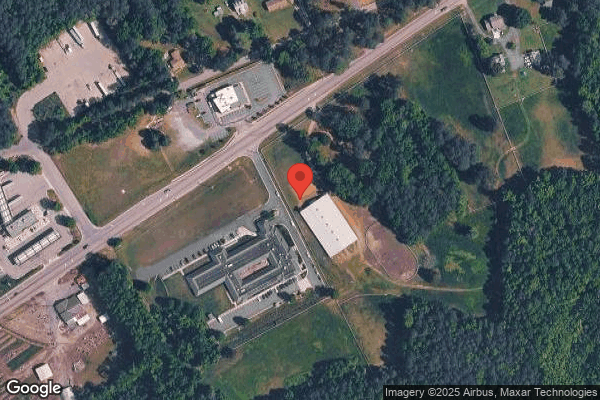
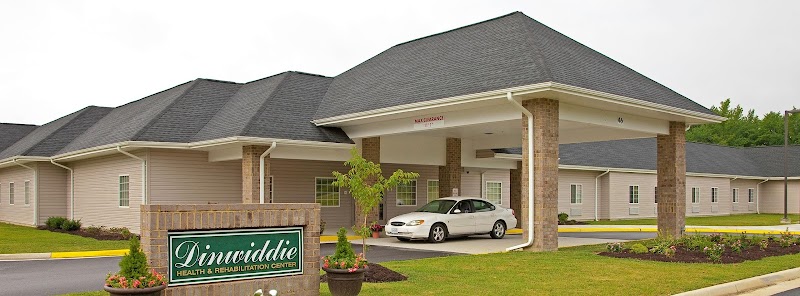
46 DIAMOND DRIVE, PETERSBURG, VA 23803 (804) 518-0780
For profit - Corporation 60 Beds COMMONWEALTH CARE OF ROANOKE Data: November 2025
Trust Grade
25/100
#249 of 285 in VA
Last Inspection: February 2024

Within standard 12-15 month inspection cycle. Federal law requires annual inspections.

Overview

Dinwiddie Health and Rehab Center has received a Trust Grade of F, indicating significant concerns and a poor overall performance. Ranking #249 out of 285 facilities in Virginia places it in the bottom half, and it is the lowest-ranked facility in Petersburg City County. Although the facility is showing signs of improvement, reducing its issues from 14 to 7 in the past year, it still has a troubling staffing turnover rate of 73%, which is much higher than the state average of 48%. Notably, the facility has not incurred any fines, which is a positive sign, but it has been flagged for serious concerns, including a resident who suffered fractures due to improper use of a mechanical lift during a transfer. Additionally, there were failures in providing necessary Medicare documentation for residents and lapses in conducting criminal background checks for staff, raising further concerns about safety and compliance.

Trust Score
F
25/100
In Virginia
#249/285
Bottom 13%
Safety Record
Moderate
Needs review
Inspections
Getting Better
14 → 7 violations
Staff Stability
⚠ Watch
73% turnover. Very high, 25 points above average. Constant new faces learning your loved one's needs.
Penalties
✓ Good
No fines on record. Clean compliance history, better than most Virginia facilities.
Skilled Nurses
⚠ Watch
Each resident gets only 29 minutes of Registered Nurse (RN) attention daily — below average for Virginia. Fewer RN minutes means fewer trained eyes watching for problems.
Violations
⚠ Watch
30 deficiencies on record. Higher than average. Multiple issues found across inspections.
★☆☆☆☆
1.0
Overall Rating
★☆☆☆☆
1.0
Staff Levels
★★★☆☆
3.0
Care Quality
★★☆☆☆
2.0
Inspection Score
Stable
2024: 14 issues
2025: 7 issues

The Good

  • Full Sprinkler Coverage · Fire safety systems throughout facility
  • No fines on record

Facility shows strength in fire safety.

The Bad

1-Star Overall Rating

Below Virginia average (3.0)

Significant quality concerns identified by CMS

Staff Turnover: 73%

27pts above Virginia avg (46%)

Frequent staff changes - ask about care continuity

Chain: COMMONWEALTH CARE OF ROANOKE

Part of a multi-facility chain

Ask about local staffing decisions and management

Staff turnover is very high (73%)

25 points above Virginia average of 48%

The Ugly 30 deficiencies on record

1 actual harm
Sept 2025 1 deficiency 1 Harm
SERIOUS (G) 📢 Someone Reported This

A family member, employee, or ombudsman was alarmed enough to file a formal complaint

Actual Harm - a resident was hurt due to facility failures

Accident Prevention (Tag F0689)

A resident was harmed · This affected 1 resident

**NOTE- TERMS IN BRACKETS HAVE BEEN EDITED TO PROTECT CONFIDENTIALITY** Based on observation, staff interview, facility document review and clinical record review, the facility staff failed to provide...

Read full inspector narrative →
**NOTE- TERMS IN BRACKETS HAVE BEEN EDITED TO PROTECT CONFIDENTIALITY** Based on observation, staff interview, facility document review and clinical record review, the facility staff failed to provide a safe transfer using a mechanical lift resulting in a fall with fractures for one of eight residents in the survey sample (Resident #1).The findings include:Facility staff failed to attach a mechanical lift sling according to facility and manufacturer's recommendations during a transfer of Resident #1 from the bed to a wheelchair. Resident #1 slid out of the sling during the transfer causing fracture of the resident's shoulder (proximal left humerus) and left wrist (harm).Resident #1 (R1) was admitted to the facility with diagnoses that included cerebrovascular accident (stroke), left side hemiplegia, hypothyroidism, chronic pain, mood disorder, major depressive disorder, hearing loss, epilepsy, polyneuropathy, insomnia and gastroesophageal reflux disease. The minimum data set (MDS) dated [DATE] assessed R1 as cognitively intact and as totally dependent upon staff for bed mobility and transfers.R1's clinical record documented a nursing note dated 7/9/25 stating, .At approximately 1015 am [10:15 a.m.] CNA [certified nurse's aide] called out to staff that resident and CNA needed assistance that a resident was on the floor .as this writer opened the door resident [R1] noted lying on the floor in front of the door . Resident noted yelling out, when asked where she was hurting at resident told this writer that her left side was hurting .911 was called and EMS arrived shortly after call to transfer resident to the hospital .NP [nurse practitioner] and RP [responsible party] made aware of incident. A nursing note dated 7/10/25 documented on 7/9/25, the nurse arrived at R1's room and observed the resident on the floor. This note documented, .I asked what happened and was told that he [she] slid ot [out] of the hoyer lift onto the CNA .asked resident if she was in pain. She [R1] stated 10 on scale [0= no pain, 10 = worst pain] . (sic)R1's hospital discharge record dated 7/9/25 documented x-ray results diagnosing the resident with an acute minimally displaced fracture of the distal radius [wrist] and an acute displaced fracture of the proximal left humerus [shoulder]. R1 returned to the nursing facility on 7/9/25 with orders for immobilization of the left arm/wrist with a splint and sling, pain medication, ice with elevation of left upper extremity for 20 minutes four times per day and a follow up appointment with orthopedics. R1's clinical record documented pain in the left arm/wrist after the fall/fracture. Pain assessments prior to the fall from 7/1/25 through 7/8/25 documented daily pain ratings ranging from 0 to 2 (on scale of 0 = no pain, 10 = worst pain). Pain ratings after the injury from 7/10/25 through 7/26/25 ranged from 0 to 8 with pain medicine and ice/elevation documented as effective. R1 was assessed on 7/17/25 by an orthopedist. The orthopedist note dated 7/17/25 documented, .for evaluation of an acute left proximal humerus fracture and left distal radius fracture sustained when she fell off of a lift at the nursing home, and landed on the left side . The orthopedist assessed proper alignment of fractured areas and no current pain concerns. The orthopedist ordered continued use of the splint and sling and a 4-week follow-up. R1 was assessed on 8/22/25 by the orthopedist with swelling/bruising still present on left shoulder, proper shoulder alignment and excellent healing of the left wrist. The wrist splint was discontinued with orders to continue use of the left upper arm sling, and a 4-week follow-up appointment.R1's plan of care prior to the 7/9/25 injury (revised 11/1/24) documented the resident required total assistance with activities of daily living including transfers due to stroke with left side hemiplegia. R1's MDS assessment dated [DATE] documented the resident weighed 237 pounds and required total assistance of two people for bed mobility and transfers.The facility's investigation of R1's fall/fracture of 7/9/25 was reviewed. The investigation documented CNA #4 was assigned to R1 on 7/9/25 and was assisted during the lift transfer by CNA #1 and CNA #5. CNA #4's written statement dated 7/9/25 documented, I placed the hoyer lift pad under the resident + I had help to lift her up. As she [R1] was up in the air she said 'something isn't right' as me + the other coworker look at her, she was sliding out . (sic) CNA #4's statement documented that she had been educated on how to use the lift, and that she had the lift straps hooked correctly. CNA #1's written statement dated 7/9/25 documented the lift pad straps were already hooked when she went in to help with the transfer. CNA #1's statement documented, .i was lifting her up she [R1] said i'm not in this right, by the time i asked her whats wrong she fell down. (sic) CNA #5's statement documented that as CNA #1 was pulling the lift back to place the resident in the chair, R1 fell from the sling and that she immediately went to get help.The administrator and DON documented a re-enactment of the incident was conducted on 7/9/25. The administrator documented, .we have concluded that one of the three CNAs involved in the transfer [CNA #4] did not properly connect the sling to the Hoyer lift. [CNA #4] verbalized that she did not connect the sling correctly to the Hoyer lift. [R1] slid out of the Hoyer lift sling during the transfer from her bed to her wheel chair. Staff did respond by attempting to guide her to the floor and brace the fall . (sic)On 9/2/25 at 11:15 a.m., R1 was observed in bed with a sling noted to the left arm. R1 was interviewed at this time about the 7/9/25 fall/injury. R1 stated she slid out of the lift when the aides were getting her out of bed to the wheelchair. R1 stated there were several aides in the room at the time and that when the aides swung the lift around, she slid out of the bottom of the lift pad and eventually hit the floor. R1 stated, Something wasn't hooked right. R1 stated she had never had any problems with the lift or transfers prior to the 7/9/25 incident. R1 stated she broke her left shoulder and wrist and still used a sling. R1 stated she had increased pain from the injury, that her pain had been managed effectively and was now better.On 9/2/25 at 11:55 a.m., the licensed practical nurse unit manager (LPN #1) was interviewed about R1's fall/fracture. LPN #1 stated she was immediately notified on 7/9/25 about the incident and that she observed R1 on the floor. LPN #1 stated R1 was immediately assessed and sent to the emergency room. LPN #1 stated R1 had always required a mechanical lift and minimum of two people for transfers due to left-side paralysis. LPN #1 stated a process improvement plan had been implemented in response to the incident.On 9/2/25 at 12:55 p.m., the registered nurse clinical service specialist (RN #1) and the director of nursing (DON) were interviewed about R1's fall/fracture of 7/9/25. The DON stated she was immediately notified about the fall on the morning on 7/9/25 and investigation of the incident started immediately after the resident was transferred to the hospital. The DON stated the fall occurred as the CNAs were pulling the resident in the lift from the bed. RN #1 stated three CNAs were in the room with R1 at the time of the incident. RN #1 stated CNA #4 was assigned to R1 that day and was assisted by CNA #1 and CNA #5. RN #1 stated when R1 was moved from the bed in the lift, R1 slid out of the bottom of the lift sling and eventually went to the floor. RN #1 stated it was determined there was misuse of the lift sling. RN #1 stated CNA #4 failed to cross the bottom sling straps between the resident's legs which was required for safe positioning during the transfer. RN #1 stated when R1 started sliding out of the sling, she was lowered to the floor. RN #1 stated the jolt of going down and the pressure from the sling was thought to have caused fracture of the wrist and shoulder. RN #1 stated R1 had left-side paralysis due to a previous stroke and was dependent on staff for transfers. RN #1 stated the resident was sent to the emergency room, was diagnosed with fracture to the left shoulder and left wrist and was treated with immobilization, pain management and orthopedic follow up. RN #1 stated a Hoyer lift with a U-shaped lift sling was in use at the time of the incident with the sling found to be the proper size for R1. RN #1 stated it was determined after re-enactment of the incident, that CNA #4 did not cross the straps between the resident's legs and instead attached the lower straps directly to the hooks. RN #1 stated when the resident was moved in the lift, the resident slid out of the bottom of the lift pad because the straps were not connected properly. The DON stated the expectation was that the bottom straps on the U-shaped lift sling were to be crossed between the legs for safe positioning during the transfer. RN #1 stated crossing the bottom straps of the U-shaped lift sling had always been the expectation in the facility and per manufacturer's recommendation as it provided increased support to prevent resident movement during the transfer. RN #1 stated the U-shaped sling was typically used when moving a resident from bed to a sitting position such as a wheelchair.On 9/2/25 at 2:00 p.m., RN #1 was interviewed about CNA #4's training regarding mechanical lift safety. RN #1 stated all CNAs had competency training and were signed off during orientation regarding use of the mechanical lifts and pad use. RN #1 stated CNA #4 had been oriented with an assigned mentor during her first weeks in the facility and this included training on use of the mechanical lift and sling use. RN #1 presented CNA #4's skill checklist for using the mechanical lift with the competencies observed and signed off by a mentor/trainer on 6/17/25. This competency included demonstrated skills to Attach sling straps to sling bar, according to manufacturer's instructions .Make sure the sling is securely attached to the clips and that it is properly balanced .On 9/2/25 at 2:17 p.m., CNA #5 that assisted with R1's transfer on 7/9/25 was interviewed. CNA #5 stated R1 required a mechanical lift and that two staff members were always required with a lift transfer. CNA #5 stated when she entered R1's room to help with the transfer, CNA #4 had already positioned and attached the sling to the lift. CNA #5 stated CNA #1 was operating the lift, CNA #4 was behind the wheelchair and that she was guiding the resident. CNA #5 stated as the lift was pulling back from the bed, R1 started sliding out the bottom of the lift pad and then went to the floor. CNA #5 stated she then left the room to get help. CNA #5 stated she did not look at the sling straps prior to the lift as they were already attached. CNA #5 stated after the incident, she noted that the bottom straps on the sling were not crossed between the resident's legs. CNA #5 stated it was required for the bottom straps to crisscross to hold the resident in a seated position and prevent sliding.On 9/2/25 at 2:50 p.m., the administrator and DON were interviewed about R1's fall/fracture of 7/9/25. The DON stated CNA #4 initially wrote in a statement that she had the sling straps crossed properly. The DON stated when the re-enactment was done, CNA #4 stated the bottom sling straps were not crossed as required. The DON stated CNA #4 did not provide a reason for not following the lift protocol. The administrator stated the lift was immediately taken out of service and inspected by maintenance with no malfunction identified. The administrator stated when the re-enactment was done, that CNA #4 had an aha moment and realized she did not cross the sling straps as required. The administrator stated there was no concern of neglect or willful actions by CNA #4. The administrator stated CNA #4 thought she had hooked the straps correctly and when the re-enactment was done, realized and voiced that she did not have the straps crossed.On 9/3/25 at 9:06 a.m., CNA #1 that assisted with R1's transfer on 7/9/25 was interviewed. CNA #1 stated she assisted CNA #4 and CNA #5 with R1's transfer and that she was operating the lift. CNA #1 stated as she lifted the resident from the bed, R1 started sliding out the bottom of the lift pad. CNA #1 stated R1 partially came out of the lift sling as she lowered the resident to the floor. CNA #1 stated, The lift pad was already hooked up when I came in. CNA #1 stated she did not pay attention to how the lift sling straps were attached. CNA #1 stated after the fall, she observed the sling straps were attached straight to the hooks and were not crossed as required. CNA #1 stated with the U-shaped lift sling, the bottom straps were required to cross between the legs to prevent the resident from sliding out. CNA #1 stated the lift and sling use were reviewed and checked off during orientation. CNA #1 stated she tried to break the fall but was not able to keep the resident from falling. CNA #1 stated there were three CNAs in the room at the time of the incident but that the sling was hooked up wrong.On 9/3/25 at 10:15 a.m., CNA #3, that was the assigned mentor to CNA #4 in May 2025, was interviewed. CNA #3 stated she provided direct supervision of CNA #4 during resident care for three weeks after CNA #4's hire date before she was approved to provide care independently. CNA #3 stated she had no issues or concerns with care demonstrated by CNA #4. CNA #3 stated she went over and observed CNA #4 operate the mechanical lift multiple times, including crossing the U-shaped sling straps, without any concerns. CNA #3 stated she had explained to CNA #4 about why the straps were crossed and what could happen if the straps were not crossed or hooked as required. CNA #3 stated she had never seen CNA #4 hook the sling straps incorrectly prior to the accident.CNA #4 assigned to R1 at the time of the 7/9/25 fall/fracture was not available for interview as she no longer worked at the facility.The manufacturer's instructions titled U-Shaped Seated Slings (2023 Medline Industries) documented regarding strap positioning, .apply the leg straps under the patient's thighs, making sure the material is flat and reaches entirely underneath the thigh .Place straps under each leg, cross straps in middle and attach to the lift . The facility's policy titled Nursing Care and Services Statement (revised 3/13/25) documented nursing personnel will provide care and services following accepted standards of practice guidelines as recognized by the state board of nursing and national nursing organizations. This policy referred to Mosby's Textbook for Long-term Care Nursing Assistants for procedures related to proper use of a mechanical lift. The protocol titled Body Mechanics and Safe Resident Handling, Position, and Transfers (Mosby's Textbook for Long-Term Care Nursing Assistants 8th edition) documented on pages 207and 208, .Always follow the manufacturer instructions. Knowing how to use one lift does not mean that you know how to use others. If you have questions, ask the nurse .Center the sling under the person .To position the sling, turn the person from side to side .Position the sling according to the manufacturer instructions .The facility's policy titled Care and Treatment of Bariatric Patients (revised 3/13/25) documented, .Mechanical devices, including lifts will be utilized to promote the safety of the patient and caregiver .Employees are responsible for following established policies and procedures regarding the care and treatment of bariatric patients, and the appropriate use of mechanical devices for safe patient handling .The administrator stated corrective actions were immediately initiated on 7/9/25 in response to R1's fall/fracture and presented the following plan of correction.The correction plan included the following:R1 sustained fractures as the result of the fall on 7/9/25 during transfer with a mechanical lift. Through investigation, it was determined that with the assistance of three CNAs, improper technique was utilized and discrepancies in competencies determined. All residents were identified as at risk of injury during transfer if the plan of care and proper mechanical lift procedures were not followed. The following actions were implemented in response to the 7/9/25 fall/fracture.7/9/25 - R1 assessed and sent to the emergency room after the fall with complaints of pain in left shoulder and wrist. Notifications made to family and physician. R1 returned to the facility with diagnosed fracture of left shoulder and wrist. Orders were implemented for wrist splint, immobilization with sling, ice/elevation, pain management and orthopedic referral. 7/9/25 - The mechanical lift used at the time of the incident was removed from service and inspected by maintenance with no malfunctions identified. All mechanical lifts in the facility were inspected by maintenance with no identified problems. All lift slings were inspected with five removed from use.7/9/25 - Statements were obtained from staff involved. A re-enactment of the incident was conducted with CNAs involved with the incident. Re-enactment of the incident revealed that the lift sling straps were not crossed as required for safety. Education was immediately provided to the CNAs involved with the incident including procedure for crossing sling straps between the resident's legs. CNA #4 went home after the incident due to being upset about the incident. Care plans were reviewed for all residents with need for 2-person assistance for accuracy and current competencies were reviewed for accuracy.7/10/25 - 7/12/25 - CNA competencies regarding proper use of the mechanical lift, sling straps and plans of care for transfers were conducted with all CNAs. This was documented on a form titled Skills Checklist Using a Mechanical Lift with observations and sign-off of demonstrated proper procedures.7/16/25 - DON conducted in-service education with all CNAs and nurses regarding residents' transfer status and following the plan of care/kardex for proper transfer status.7/21/25 - DON or designee began random observations of five mechanical lift transfers weekly for four weeks with report of findings presented to the quality assurance committee. Weekly audits were ongoing and to be reviewed by the quality assurance committee.Date of compliance was listed as 8/5/25.The education, competency checklists and lift transfer monitoring were documented as listed with weekly monitoring of lift transfers continuing during the current survey. The audits since 8/5/25 indicated compliance with proper lift procedures including proper sling strap positioning. There were no falls/incidents involving a mechanical lift since the correction date of 8/5/25. There were six residents that had experienced a fall in the facility since 8/5/25. These residents (R3, R4, R5, R6, R7 and R8) were included in the survey sample with no deficiencies identified related to falls/accidents. On 9/3/25 at 8:00 a.m., accompanied by CNA #2 and CNA #3, a mechanical lift/transfer with use of the U-shaped sling was observed with Resident #2. Proper sling and strap positioning was observed along with proper lift operation for a safe transfer. Twelve CNAs were interviewed on different shifts regarding education and competencies with all interviewed verifying the education provided and verbalizing knowledge about crossing the bottom straps when using the U-shaped sling. The plan of correction was deemed acceptable and implemented as listed with no non-compliance identified regarding falls/accidents since the correction date of 8/5/25.This finding was reviewed with the administrator, DON, clinical service specialist and director of quality assurance on 9/2/25 at 2:50 p.m. and on 9/3/25 at 11:40 a.m. with no further information presented prior to the end of the survey.This deficiency was cited as past non-compliance.
Jan 2025 6 deficiencies
CONCERN (D) 📢 Someone Reported This

A family member, employee, or ombudsman was alarmed enough to file a formal complaint

Potential for Harm - no one hurt, but risky conditions existed

Deficiency F0658 (Tag F0658)

Could have caused harm · This affected 1 resident

**NOTE- TERMS IN BRACKETS HAVE BEEN EDITED TO PROTECT CONFIDENTIALITY** Based on staff interview, facility document review, and clinical record review, the facility staff failed to follow professional...

Read full inspector narrative →
**NOTE- TERMS IN BRACKETS HAVE BEEN EDITED TO PROTECT CONFIDENTIALITY** Based on staff interview, facility document review, and clinical record review, the facility staff failed to follow professional standards of care regarding wound documentation for one of thirteen residents in the survey sample (Resident #6). The findings include: Facility staff failed to document an assessment for Resident #6's wound that included measurements, appearance, description, and/or status of a wound. Resident #6 (R6) was admitted to the facility with diagnoses that included femur fracture, peripheral vascular disease, diabetes, end stage renal disease, anemia, coronary artery disease, cancer, congestive heart failure, and cerebrovascular accident (stroke). The minimum data set (MDS) dated [DATE] assessed R6 as cognitively intact. R6's closed clinical record documented a care concern form dated 11/23/24 listing that the resident was assessed with a new skin impairment. The form categorized the wound as other and documented unstageable to right lower leg. A nursing note dated 11/23/24 documented, .Resident noted to have a diabetic ulcer to RLE [right lower extremity]. New treatment order is in place. MD and RP [responsible party] notified. A skilled nursing note dated 11/24/24 documented the resident had impaired skin/wound with note to refer to skin/wound notes and/or treatment record. R6's treatment administration record documented a physician's order with start date of 11/24/24 stating, Cleanse wound to right lower extremity with NS [normal saline], pat dry, and apply medihoney and cover with dry dressing one time a day for Wound care . R6's clinical record documented no descriptive assessment of the right lower leg wound other than unstageable and diabetic ulcer. The clinical record included no wound measurements, shape, appearance, color, presence of drainage, pain status, or condition of surrounding skin. On 1/13/25 at 2:26 p.m., the director of nursing (DON) was interviewed about R6's right leg wound assessment. The DON stated nurses were expected to document skin impairments in the clinical record and include descriptions such as size, appearance, location, and color. On 1/13/25 at 3:00 p.m., the DON stated she reviewed the clinical record and did not find a description of the wound other than the location on the right lower leg and diabetic ulcer. The DON stated again it was an expectation for nurses to describe the appearance, condition and status of wounds. The facility's policy titled Documentation of Wound Treatments (revised 12/29/23) documented, .The following elements are documented as part of a complete wound assessment .Type of wound (pressure injury, surgical, etc.) and anatomical location .degree of skin loss if non-pressure (partial or full thickness) .Measurements: height, width, depth .Description of wound characteristics .Color of the wound bed .Type of tissue in the wound bed (i.e., granulation, slough, eschar, epithelium) .Condition of the peri-wound skin (dry, intact, cracked, warm, inflamed, macerated) .Presence, amount, and characteristics of wound drainage/exudate .Presence or absence of odor .Presence or absence of pain . These findings were reviewed with the administrator, director of nursing and regional consultant during a meeting on 1/13/25 at 3:50 p.m. with no further information presented prior to the end of the survey.
CONCERN (D) 📢 Someone Reported This

A family member, employee, or ombudsman was alarmed enough to file a formal complaint

Potential for Harm - no one hurt, but risky conditions existed

Quality of Care (Tag F0684)

Could have caused harm · This affected 1 resident

**NOTE- TERMS IN BRACKETS HAVE BEEN EDITED TO PROTECT CONFIDENTIALITY** Based on staff interview, facility document review, and clinical record review, the facility staff failed to perform timely neur...

Read full inspector narrative →
**NOTE- TERMS IN BRACKETS HAVE BEEN EDITED TO PROTECT CONFIDENTIALITY** Based on staff interview, facility document review, and clinical record review, the facility staff failed to perform timely neurological assessments following an unwitnessed fall for one of thirteen residents in the survey sample (Resident #10). The findings include: Resident #10 had no neurological checks initiated immediately following an unwitnessed fall to assess for possible head injury. Resident #10 (R10) was admitted to the facility with diagnoses that included metabolic encephalopathy, depression, dementia with severe agitation, cognitive communication deficit and hypertension. The minimum data set (MDS) dated [DATE] assessed with severely impaired cognitive skills. R10's closed clinical record also documented a nursing note dated 7/8/24 at 11:45 p.m. stating, .resident has been aggressive and agitated all shift . rounded on her q [every] 30 mins [minutes] due to her trying to get out of bed. while in room she was sitting on side of bed with feet on floor and put herself on fall mat . A post-fall assessment dated [DATE] documented the resident's vital signs and listed no change of consciousness, no pain, no changes in mobility and no injuries as a result of the fall. A nursing note written by the director of nursing (DON) dated 7/9/24 at 7:31 a.m. documented, .Upon further investigation, resident fall was unwitnessed. Neuro checks initiated I reassessed resident. No c/o [complaints of] pain PERRLA [pupils equal, round and reactive to light and accommodation] 3 MM [millimeters] bilaterally .Residents speech is clear and confused, this is baseline . R10 had additional neurological assessments documented on 7/9/24 at 8:35 a.m. and on 7/11/24 at 12:31 p.m. R10's clinical record documented no neurological checks immediately following R10's fall on evening of 7/8/24. Two neurological checks were documented on 7/9/24 at 7:31 a.m. and 8:35 a.m. No checks were documented on 7/10/24 and one check was completed on 7/11/24. The clinical record documented skilled nursing notes, vital signs, and nurse practitioner visits in the days following the 7/8/24 fall with no injuries or complications noted. On 1/14/25 at 9:10 a.m., the DON was interviewed about R10's fall on 7/8/24 and neurological assessments. The DON stated licensed practical nurse (LPN) #3, caring for R10 on the evening of 7/8/24, notified her that the resident fell. The DON stated on the morning of 7/9/24, she reviewed the circumstances of R10's fall and found that the fall was not witnessed by staff members and that neurological checks had not been initiated. The DON stated R10 had significant cognitive impairments and was not able to accurately report what happened. The DON stated neurological assessments should have been initiated immediately following the fall to assess for any possible head injury. On 1/15/24 at 7:55 a.m., the DON stated she recalled initiating a neuro sheet on 7/9/24 when she discovered the fall as unwitnessed. The DON stated that she reviewed R10's clinical record and did not find the neuro check sheet or any further neurological assessments. The facility's policy titled Neurological Evaluation (revised 12/28/23) documented, .A neurological evaluation will be completed by the licensed nurse to assist in detecting early signs of neurological injury related to an incident or accident .If an incident/accident occurs which involves potential or actual trauma to the patient's head, a 'Neurological Evaluation' form is to be initiated. If a fall is reported in which there are no witness's [witnesses], the patient is to be evaluated for potential complications associated with a possible head injury related to the fall by a Licensed Nurse, utilizing the 'Neurological Evaluation' form .Frequency guidance as indicated below .Every 15 minutes times 4, then .Every 30 minutes times 4, then .Every 1-hour times 4, then .Every 4 hours for 24 hours, then Every shift for 24 hours .All neurological findings must be recorded in the EHR [electronic health record] documentation including all evaluations and the nurse's notes to describe the patient's condition . This finding was reviewed with the administrator, DON, and regional consultant during meetings on 1/14/25 at 11:20 a.m. and on 1/15/25 at 9:20 a.m. with no further information presented prior to the end of the survey.
CONCERN (D) 📢 Someone Reported This

A family member, employee, or ombudsman was alarmed enough to file a formal complaint

Potential for Harm - no one hurt, but risky conditions existed

Deficiency F0760 (Tag F0760)

Could have caused harm · This affected 1 resident

**NOTE- TERMS IN BRACKETS HAVE BEEN EDITED TO PROTECT CONFIDENTIALITY** Based on staff interview, facility document review, and clinical record review, the facility staff failed to ensure one of thirt...

Read full inspector narrative →
**NOTE- TERMS IN BRACKETS HAVE BEEN EDITED TO PROTECT CONFIDENTIALITY** Based on staff interview, facility document review, and clinical record review, the facility staff failed to ensure one of thirteen residents in the survey sample was free from a significant medication error (Resident #8). The findings include: Resident #8 was administered one dose of oxycodone 30 mg (milligrams) extended-release when the physician's order required an immediate release 20 mg dose. Resident #8 (R8) was admitted to the facility with diagnoses that included diabetes with peripheral angiopathy, below knee amputation, anemia and hypertension. The minimum data set (MDS) dated [DATE] assessed R8 as cognitively intact. R8's closed clinical record documented a physician's order dated 4/22/24 for oxycodone 20 mg every 4 hours as needed for pain (prn). The clinical record documented a physician's order dated 5/17/24 for oxycodone 30 mg extended-release with instructions for one tablet every 12 hours for pain management. R8's medication administration record (MAR) documented licensed practical nurse (LPN) #3 administered the resident oxycodone 20 mg on 6/10/24 at 3:40 p.m. for pain rated 8 out of 10 (scale with 0 = no pain, 10 = worst pain). R8's narcotic count sheets for the oxycodones documented inaccurate drug counts at the end of the 6/10/24 evening shift, alerting staff to an error. A medication error report dated 6/11/24 documented LPN #3 administered an oxycodone 30 mg extended-release tablet instead of the ordered 20 mg immediate release tablet for the 3:40 p.m. prn dose 6/10/24. The medication error report documented notification to the physician concerning the error and monitoring of R8's vital signs with alertness noted and no adverse effects as a result of the error. On 1/14/25 at 9:10 a.m., the director of nursing (DON) was interviewed about the incorrect oxycodone dose administered to R8. The DON stated R8 had orders for oxycodone 30 mg (extended-release) scheduled for every 12 hours and an order for oxycodone 20 mg every four hours as needed for pain associated with a recent amputation. The DON stated on 6/10/24 at 3:40 p.m., LPN #3 pulled the pharmacy supply card for the scheduled 30 mg dose instead of the card with the 20 mg prn dose for administration to R8's request for pain medication. The DON stated nurses noted the error when the narcotic counts did not match at the end of the shift. The DON stated R8 verified that she was administered an oxycodone dose on 6/10/24 at 3:40 p.m. The DON stated the narcotic counts indicated LPN #3 pulled the 30 mg dose instead of the 20 mg dose that was ordered. The DON stated LPN #3 stated she thought she was pulling the 20 mg dose but pulled the 30 mg tablet instead. The DON stated R8 reported no issues from the incorrect dose and had no changes in condition as a result of the error. LPN #3, who administered the incorrect dose of oxycodone to R8, was not available for interview, as she no longer worked at the facility. The facility's policy titled Medication Administration (effective 6/21/17) documented, .Medications will be administered by legally-authorized and trained persons in accordance to applicable State, Local and Federal laws and consistent with accepted standards of practice . This policy documented the procedure for medication administration as, .Open the medication administration book/eMAR to the appropriate resident and note the first medication to administer .Read the label comparing to the MAR [medication administration record] before preparing the medication .Pour the correct number of tablets or capsules into the medication cup .Explain to the resident the type of medication to be administered .Administer medication and remain with resident while medication is swallowed . The Nursing 2022 Drug Handbook on page1124 describes oxycodone as a schedule II opioid analgesic used for the treatment of moderate to severe pain. Page 1126 of this reference documents that oxycodone carries multiple black box warnings including, Serious, life-threatening, or fatal respiratory depression may occur with use of extended-release oxycodone. Monitor patient for respiratory depression, especially during initiation of therapy and after a dosage increase .Oxycodone extended-release tablets are indicated for the management of moderate to severe pain, when a continuous, around-the-clock opioid analgesic is needed for an extended period of time. They aren't intended for use as as-needed analgesics . (1) This finding was reviewed with the administrator, director of nursing, and regional consultant during a meeting on 1/13/25 at 3:50 p.m. with no further information presented prior to the end of the survey. (1) Woods, [NAME] Dabrow. Nursing 2022 Drug Handbook. Philadelphia: Wolters Kluwer, 2022.
CONCERN (D) 📢 Someone Reported This

A family member, employee, or ombudsman was alarmed enough to file a formal complaint

Potential for Harm - no one hurt, but risky conditions existed

Deficiency F0761 (Tag F0761)

Could have caused harm · This affected 1 resident

**NOTE- TERMS IN BRACKETS HAVE BEEN EDITED TO PROTECT CONFIDENTIALITY** Based on staff interview, facility document review, and clinical record review, the facility staff failed to properly store a co...

Read full inspector narrative →
**NOTE- TERMS IN BRACKETS HAVE BEEN EDITED TO PROTECT CONFIDENTIALITY** Based on staff interview, facility document review, and clinical record review, the facility staff failed to properly store a controlled medication for one of thirteen residents in the survey sample (Resident #7) The findings include: Resident #7 (R7) was admitted to the facility with diagnoses that included chronic kidney disease, atherosclerotic heart disease, hypertension, benign prostatic hyperplasia, and gout. The minimum data set (MDS) dated [DATE] assessed R7 as cognitively intact. R7's closed clinical record documented a physician's order dated 6/9/24 for the medication Tramadol 50 mg (milligrams) with instructions to give two tablets every 6 hours as needed for pain management. Review of a medication error report sheet dated 6/14/24 documented that on 6/13/24, licensed practical nurse (LPN) #3 signed out one tablet of Tramadol for R7. The report documented LPN #3 did not administer the medication to R7 and left the medicine unsecured in the medication cart. The controlled drug count sheet for R7's Tramadol documented LPN #3 signed out one tablet of Tramadol on 6/13/24 at 9:00 p.m. R7's medication administration record (MAR) documented no administration of the 9:00 p.m. dose of Tramadol. R7's MAR documented the only dose administered on 6/13/24 was at 12:16 p.m. On 1/14/25 at 9:10 a.m., the director of nursing (DON) was interviewed about R7's Tramadol left in the medication cart. The DON stated the then assistant director of nursing found the Tramadol in a medicine cup in the cart on the morning of 6/14/25. The DON stated the cup was labelled with R7's name attached to the cup but was not stored in the narcotic lock box. The DON stated the Tramadol count sheet documented LPN #3 signed out one tablet of Tramadol on 6/13/24 at 9:00 p.m. but no dose was given to the resident. The DON stated LPN #3 reported that R7 was asleep when she went to administer the Tramadol, so she placed the Tramadol in the cart and forgot to go back and give the medication. The DON stated Tramadol was a controlled medication and facility protocol required this medication to be kept in the cart lock box and counted at each shift change. The DON stated if the medication was not given, it should have been discarded per policy. The DON stated all controlled medications were supposed to be stored in the designated lock box. The facility's policy titled Medication Storage (effective 7/23/19) documented, .Medications and biologicals are stored safely, securely, and properly following manufacturer's recommendations and those of the supplier . Schedule II medications and other drugs subject to abuse are stored in a separate, permanently affixed area and under double lock. Schedule III-IV medication may be stored along with non-controlled drugs, but may be under more strict storage controls at the Facility's discretion or as required by state regulations . The facility's policy titled Medication Administration (effective 6/21/17) documented, .Once removed from the package or container, unused doses should be destroyed following facility policy and documenting the destruction according to facility policy . The Nursing 2022 Drug Handbook on page 1462 describes Tramadol as a schedule IV-controlled analgesic used for the management of moderate to severe chronic pain. Page 1464 of this reference documents Tramadol has a black box warning stating, Tramadol exposes patients to the risk of addiction, abuse, and misuse, which can lead to overdose and death . (1) This finding was reviewed with the administrator, DON, and regional consultant during a meeting on 1/14/25 at 11:20 a.m. and on 1/15/25 at 9:20 a.m. with no further information presented prior to the end of the survey. (1) Woods, [NAME] Dabrow. Nursing 2022 Drug Handbook. Philadelphia: Wolters Kluwer, 2022.
CONCERN (D) 📢 Someone Reported This

A family member, employee, or ombudsman was alarmed enough to file a formal complaint

Potential for Harm - no one hurt, but risky conditions existed

Medical Records (Tag F0842)

Could have caused harm · This affected 1 resident

**NOTE- TERMS IN BRACKETS HAVE BEEN EDITED TO PROTECT CONFIDENTIALITY** Based on staff interview, facility document review, and clinical record review, the facility staff failed to ensure a complete a...

Read full inspector narrative →
**NOTE- TERMS IN BRACKETS HAVE BEEN EDITED TO PROTECT CONFIDENTIALITY** Based on staff interview, facility document review, and clinical record review, the facility staff failed to ensure a complete and accurate clinical record for two of thirteen residents in the survey sample (Residents #8 and #10). The findings include: 1. There was no documentation in Resident #8's clinical record that the resident was administered an incorrect dose of the medication oxycodone. R8's closed clinical record documented a physician's order dated 4/22/24 for oxycodone 20 mg every 4 hours as needed for pain (prn). The clinical record documented a physician's order dated 5/17/24 for oxycodone 30 mg extended-release with instructions for one tablet every 12 hours for pain management. R8's medication administration record (MAR) documented administration of oxycodone 20 mg on 6/10/24 at 3:40 p.m. for pain rated 8 out of 10 (scale with 0 = no pain, 10 = worst pain). A medication error report dated 6/11/24 documented LPN #3 administered an oxycodone 30 mg extended-release tablet instead of the ordered 20 mg immediate-release tablet for the 3:40 p.m. dose on 6/10/24. R8's narcotic count sheets for the oxycodones documented inaccurate drug counts at the end of the 6/10/24 shift alerting staff to the error. The error report documented notification to R8's physician concerning the error. R8's clinical record made no mention of the 6/10/24 medication error. R8's record documented ongoing monitoring following the medication error that included vital signs, oxygen saturations, physician assessments and daily nursing assessments that evidenced no negative outcome from the error but made no mention that the resident had received a 30 mg dose instead of the ordered 20 mg dose on 6/10/24. On 1/15/24 at 8:20 a.m., the director of nursing (DON) was interviewed about R8's record including no mention of the medication error. The DON stated she thought she entered a note about the error. The DON stated she reviewed the record and did not locate any mention of the error. The DON stated, I recorded everything on the med error sheet. This finding was reviewed with the administrator, DON, and regional consultant during a meeting on 1/15/25 at 9:20 a.m. 2. Inaccurate documentation was entered in R10's clinical record regarding the circumstances of a fall. Resident #10 (R10) was admitted to the facility with diagnoses that included metabolic encephalopathy, depression, dementia with severe agitation, cognitive communication deficit, and hypertension. The minimum data set (MDS) dated [DATE] assessed with severely impaired cognitive skills. R10's closed clinical record documented a nursing note written by licensed practical nurse (LPN) #3 dated 7/8/24 at 11:45 p.m. stating, .resident has been aggressive and agitated all shift .rounded on her q [every] 30 mins [minutes] due to her trying to get out of bed. while in room she was sitting on side of bed with feet on floor and put herself on fall mat . (SIC) A post-fall assessment dated [DATE] documented R10's vital signs and listed no change of consciousness, no pain, no changes in mobility, and no injuries as a result of the fall. LPN #3 entered a post fall evaluation dated 7/8/24 at 11:47 p.m. again documenting that R10's fall was witnessed, with the resident noted sitting on the bedside and putting herself on the floor. A nursing note written by the director of nursing (DON) dated 7/9/24 at 7:31 a.m. documented, .Upon further investigation, resident fall was unwitnessed. Neuro checks initiated . The facility's investigation of R10's fall of 7/8/24 documented other staff members caring for R10 at the time of the fall reported the resident's fall was not witnessed as the resident was found in the floor. A written statement from CNA #2 dated 7/11/24 documented, .We heard something, while we were at the nursing station .I said, what is that When [other two CNAs] went to the room, [CNA #1] peeked her head out and said shes [R10] on the floor. When I went in both fall mats were on the floor and patient was sitting on the floor mat .It wasn't a witnessed fall .we all were at the nurses station . (sic) On 1/14/24 at 9:10 a.m., the director of nursing (DON) was interviewed about inaccurate documentation regarding the circumstances of R10's fall on 7/8/24. The DON stated on the morning of 7/9/24, a CNA called and reported that LPN #3 had listed R10's fall as witnessed when it was unwitnessed. The DON stated upon investigation, CNA #2 and LPN #5 reported that the resident was found in the floor and the incident was not witnessed as documented by LPN #3. The DON stated LPN #3 had indicated she was listing the fall as witnessed because she had not initiated neurological checks as required for unwitnessed falls. The DON stated the fall note and post fall document entered by LPN #3 inaccurately documented the circumstances of the fall and indicated the fall was witnessed when it was not witnessed. LPN #3 was not available for interview, as she no longer worked at the facility. This finding was reviewed with the administrator, DON, and regional consultant during a meeting on 1/14/25 at 11:20 a.m. and on 1/15/25 at 9:20 a.m. with no further information presented prior to the end of the survey.
CONCERN (D) 📢 Someone Reported This

A family member, employee, or ombudsman was alarmed enough to file a formal complaint

Potential for Harm - no one hurt, but risky conditions existed

Infection Control (Tag F0880)

Could have caused harm · This affected 1 resident

Based on observation, staff interview, facility document review, and clinical record review, the facility staff failed to follow infection control practices during a medication pass observation on one...

Read full inspector narrative →
Based on observation, staff interview, facility document review, and clinical record review, the facility staff failed to follow infection control practices during a medication pass observation on one of three units (200 hall). The findings include: On 1/14/25 at 8:00 a.m., a medication pass observation was conducted with licensed practical nurse (LPN) #6 administering medications to Resident #5 (R5). Among the medications administered was a docusate sodium gel cap 100 mg (milligrams). When removing the capsule from the pharmacy packaging, LPN #6 dropped the capsule in the floor. LPN #6 put on gloves, picked up the capsule, placed it in a medicine cup, and stated since the capsule was gel, he would rinse it off with water. LPN #6 took the gel cap to the sink in R5's room, quickly rinsed the capsule with running water, drained remaining water from the cup, and proceeded to administer the docusate sodium gel cap to R5. When questioned, LPN #6 stated that he rinsed the gel cap because there were no over-the counter medications on the cart and the water would not hurt the gel covering. R5's clinical record documented a physician's order dated 12/26/24 for docusate sodium 100 mg capsule twice per day for constipation. On 1/14/25 at 9:35 a.m., the director of nursing (DON) was interviewed about the medication pass observation with LPN #6. The DON stated it was unacceptable to rinse a medication or administer a contaminated medicine to a resident. The DON stated a back-up supply was available in case medicines were dropped and/or contaminated. The DON stated the nurse should have discarded the medication and obtained a new capsule from the back-up supply. On 1/15/25 at 8:05 a.m., the consultant registered pharmacist (other staff #3) was interviewed about the rinsed docusate sodium gel cap. The pharmacist stated anything dropped on the floor should be discarded and not administered due to infection concerns. The pharmacist stated quickly rinsing the gel cap with water, with the capsule integrity maintained, would not deter the efficacy of the medicine. The pharmacist stated the docusate sodium gel caps were not enteric coated and had no delayed release coating. The pharmacist stated dropping/rinsing a capsule was obviously an infection control concern. On 1/15/25 at 7:55 a.m., the DON stated she discussed the medication pass observation with LPN #6. The DON stated that LPN #6 had said he thought it was okay to rinse the docusate sodium capsule because it was gel coated. The DON stated dropping a medicine in the floor and rinsing a medication were infection control issues. The facility's policy titled Medication Storage (effective 7/23/19) documented, .Outdated, contaminated, or deteriorated medications and those in containers that are cracked, soiled, or without secure closures are immediately removed from stock, disposed of according to procedures for medication destruction, and reordered from the Pharmacy, if replacements are needed . This finding was reviewed with the administrator, DON, and regional consultant during a meeting on 1/15/25 at 9:20 a.m. with no further information presented prior to the end of the survey.
Feb 2024 14 deficiencies
CONCERN (D)

Potential for Harm - no one hurt, but risky conditions existed

Report Alleged Abuse (Tag F0609)

Could have caused harm · This affected 1 resident

Based on staff interviews, clinical record review, and facility documentation review, the facility staff failed to report to Adult Protective Services (APS) for 3 Residents (Resident #18- R18, Residen...

Read full inspector narrative →
Based on staff interviews, clinical record review, and facility documentation review, the facility staff failed to report to Adult Protective Services (APS) for 3 Residents (Resident #18- R18, Resident #210-R210, and Resident #211-R211) in a survey sample of 37 Residents. The findings included: For R18, R210, and R211, all who reported allegations of abuse, the facility staff failed to report the allegations of abuse to APS and the results of an investigation. On 2/6/24 and 2/7/24, a review was conducted of facility documents to include allegations of abuse. The documents revealed the following: a. On 3/8/23, R18 reported an allegation of verbal abuse from a staff member, CNA #2. On 3/8/23, the facility administrator notified the state survey agency and the ombudsman, but did not notify adult protective services, of the allegation. Once an investigation was conducted, the administrator again notified the state survey agency and the ombudsman of the findings but didn't report to adult protective services, nor the department of health professions, since the allegation was substantiated, and CNA #2 was terminated for their actions towards R18. b. On 3/3/23, R210 reported an allegation of abuse/mistreatment involving CNA #3. The facility failed to report the allegation and result of their investigation to adult protective services. c. On 4/24/23, R211 reported an allegation of abuse involving CNA #3. Following the allegation, they failed to report the allegation and the result of their investigation to adult protective services. On 2/7/24, at 11:03 a.m., Surveyor #1 met with the facility Administrator and Corporate Clinical Specialist (CCS). The Administrator was asked to describe the facility's response and protocol when a Resident reports an allegation of abuse. The Administrator stated, We immediately investigate, I notify my regional consultant who can assist with the investigation. I fill out a FRI [facility reported incident/report] send it to the state [state survey agency]. The administrator was asked to clarify who is notified of the allegation with regards to outside agencies, she stated, The Office of Licensure and Certification [state survey agency], Adult Protective Services (APS) and Ombudsman. If needed DHP [department of health professions/board of nursing]. On 2/7/24 at 11:15 a.m., the Administrator and CCS, were made aware of the allegations of abuse involving R18, R210, and R211 and the missing elements to each allegation. They were asked to see if they could find any additional evidence that perhaps the surveyor had missed. On 2/7/24 at approximately 12:15 p.m., the CCS returned to Surveyor #1 and reported that they did not have any evidence that the above allegations had been reported to APS as required. The CCS confirmed that they should have been. Review of the facility's policy titled; Abuse Prevention was conducted. The policy read in part, . VII. Reporting/Response. A. Allegations of Abuse, Neglect, Misappropriation of Property, Exploitation: The center administrator, DON [director of nursing], or designee, must timely report all alleged incidents of abuse, neglect, exploitation, or mistreatments including injuries of unknown origin, misappropriation of property and unusual occurrences using the Virginia Office of Licensure & Certification Facility Reported Incident form to the (OLC) and to all other required agencies including Adult Protective Services (APS), and local law enforcement . On 2/7/24, during a pre-exit meeting, the facility administrator, director of nursing and CCS, were again made aware of the above findings. No further information was provided.
CONCERN (D)

Potential for Harm - no one hurt, but risky conditions existed

Investigate Abuse (Tag F0610)

Could have caused harm · This affected 1 resident

Based on staff interviews, clinical record review, and facility documentation review, the facility staff failed to invetigate allegations of abuse involving 2 Residents (Resident #210-R210, and Reside...

Read full inspector narrative →
Based on staff interviews, clinical record review, and facility documentation review, the facility staff failed to invetigate allegations of abuse involving 2 Residents (Resident #210-R210, and Resident #211-R211) in a survey sample of 37 Residents. The findings included: 1. For R210, and R211, all who reported allegations of abuse, the facility staff failed to have any credible evidence of an investigation being conducted. On 2/6/24 and 2/7/24, a review was conducted of facility documents to include allegations of abuse. The documents revealed the following: a. On 3/3/23, R210 reported an allegation of abuse/mistreatment involving CNA #3. The facility had no documented evidence to indicate that an investigation was conducted with regards to R210's report of abuse/mistreatment. b. On 4/24/23, R211 reported an allegation of abuse involving CNA #3. The facility had no credible evidence to indicate an investigation was conducted. On 2/7/24, at 11:03 a.m., Surveyor #1 met with the facility Administrator and Corporate Clinical Specialist (CCS). The Administrator was asked to describe the facility's response and protocol when a Resident reports an allegation of abuse. The Administrator stated, We immediately investigate, I notify my regional consultant who can assist with the investigation. I fill out a FRI [facility reported incident/report] send it to the state [state survey agency]. The administrator was asked to clarify who is notified of the allegation with regards to outside agencies, she stated, The Office of Licensure and Certification [state survey agency], Adult Protective Services (APS) and Ombudsman. If needed DHP [department of health professions/board of nursing]. During the above interview the administrator was asked what they do to protect the resident from any alleged perpetrators. The Administrator said, We suspend the employee(s) pending investigation- if the person was another resident, we separate or relocate them. Then we continue to conduct investigation- if the resident is of sound mind, we interview the resident, interview employees, other residents . When asked if the steps taken and evidence is documented, the administrator said, Yes, I do. On 2/7/24 at 11:15 a.m., the Administrator and CCS, were made aware of the allegations of abuse involving R210, and R211 and the lack of evidence of an investigation being conducted. They were asked to see if they could find any additional evidence that perhaps the surveyor had missed. On 2/7/24 at approximately 12:15 p.m., the CCS returned to Surveyor #1 and reported that they did not have any credible evidence to indicate an investigation had been conducted. She went on to say that the administrator who was at the facility at the time wasn't following the facility's policy and processes and should have documented evidence of the investigation. Review of the facility's policy titled; Abuse Prevention was conducted. The policy read in part, . V. Investigation. A. Designated staff will immediately review and investigate all reported incidents or allegations. B. Investigations will include collecting physical and documentary evidence which may include taking photographs, as necessary, interviewing residents and staff with personal knowledge of the incident or alleged incident, requesting witness statements, collecting relevant evidence, and documenting each step taken during the investigation . On 2/7/24, during a pre-exit meeting, the facility administrator, director of nursing and CCS, were again made aware of the above findings. No further information was provided.
CONCERN (D)

Potential for Harm - no one hurt, but risky conditions existed

Deficiency F0655 (Tag F0655)

Could have caused harm · This affected 1 resident

**NOTE- TERMS IN BRACKETS HAVE BEEN EDITED TO PROTECT CONFIDENTIALITY** Based on observation,staff interview and clinical record review the facility failed to develope a baseline care plan for one res...

Read full inspector narrative →
**NOTE- TERMS IN BRACKETS HAVE BEEN EDITED TO PROTECT CONFIDENTIALITY** Based on observation,staff interview and clinical record review the facility failed to develope a baseline care plan for one resident out of 37. The findings included: The facility failed to complete a baseline care plan in the area of nutrition for Resident #160 (R160). R160 was admitted to the facility on [DATE]. Diagnoses for R160 included but not limited to dementia, urinary track infection with sepsis, and hypertension. R160 due to being a new admission in the facility, no Minimum Data Set Assessment (MDS) had been completed On 2/5/24 at 1:15 p.m., interview was conducted with R160 and family was present in the room. The family member had concerns with lack of communication with the staff to know R160 care needs. The family member was concerned with staff sitting the tray down and walking out and not making sure R160 was able to eat. Certified Nursing Assistant (CNA4) was observed picking up R160's meal tray, the family member asked CNA4 if it had been communicated that R160 needed assistance with meals. CNA#4 stated, I wasn't aware R160 needed help with eating. On 2/6/24 R160's clinical record was reviewed and evidenced a nutrition care plan had not been completed. A Registered Dietitian note (dated 2/3/24) documented that R160 needed assistance with meals. On 2/6/24 at 2:44 p.m., CNA # 1 (CNA1 ) was interviewed and verbalized I get a report from the charge nurse and then when the resident arrives to the facility will go and speak with the resident and find out their needs. CNA1 verbalized when I serve a meal to the resident I will ask the resident if assistance is needed and if the family is present, I still assist unless the resident or family says they want to help the resident. On 2/6/24 at 3:28 interviewed conducted with MDS coodinator and Nurse consultant. Nurse consultant verbalized that the expectation of the baseline assessment would be to have the nutrition area completed and that the nurse on the unit does the initial assessment and then dietary follows up, based on the informaion provided by the nurse. On 2/6/24 at 4:22 p.m., an interview was conducted with the RD. The RD verbalized that I tell the nurses who needs assistance with meals and the nurses place residents names on a list. RD verbalized that R160 needed assistance with meals from the staff. On 2/7/24 at 8:30 a.m., interview was conducted with CNA4. CNA4 verbalized that each unit has a list of the residents that need assistance with feeding but this unit's list is not here right now. On 2/6/24 at 4:32 at the end of day meeting with Administrator, Nurse consultant and Director of Nursing (DON) were made aware of the above findings. No further information was provided.
CONCERN (D)

Potential for Harm - no one hurt, but risky conditions existed

Deficiency F0658 (Tag F0658)

Could have caused harm · This affected 1 resident

Based on observation, staff interview and clinical record review, the facility failed to meet professional standards of practice for one of 37 residents. The facility failed to accurately implement t...

Read full inspector narrative →
Based on observation, staff interview and clinical record review, the facility failed to meet professional standards of practice for one of 37 residents. The facility failed to accurately implement tube feeding physician order for Resident #7 (R7). The Findings Include: Diagnoses for R7 included Dysphasia, cerebral infarction, dementia, and feeding tube. The most current MDS (minimum data set) was a 5-day assessment with an ARD (assessment reference date) of 1/26/24. R7 was assessed with a cognitive score of 3 indicating severely cognitively impaired. On 2/5/24 at 11:15 AM an observation of R7 was made. R7 was lying in bed, feeding tube apparatus (IV pole and feeding tube pump) was noted besides the bed but not being used at this time. When asked about the feeding tube, R7 said that the facility used it but was uncertain how long it had been in use and did not give any other information. Review of R7's physician order dated 1/24/24 documented: Give isosource 1.5 60cc/hr [60 cubic centimeters per hour] over 20 hrs [hours] or until 1200cc is delivered. On 2/5/24 at 4:00 PM R7 was again observed not receiving tube feeding. 02/05/24 04:04 PM license practical nurse (LPN #3, assigned to R7) was interviewed regarding tube feeding. LPN #3 verbalized the tube feeding had been stopped at 8:00 AM and will not start again until 8:00 PM and had received this information during report given by the night nurse. LPN #3 was asked to review R7's order pointing out that the tube feeding was supposed to run for 20 hours for a total of 1200cc's. LPN #3 verbalized unawareness to the time period and said that maybe R7 had received 1200cc's. On 2/05/24 at 4:33 PM the director of nursing (DON) and nurse consultant (administrative staff, AS #6) was provided the above information and it was explained that R7's tube feeding had not been running for the past 9 hours. The DON and AS #6 reviewed R7's order, commenting they would have to take a closer look at the order. On 2/06/24 2:45 PM the DON said that the tube feeding order for R7 was entered with wrong start and stop times resulting in not getting the proper amount of tube feeding ordered and nurses didn't catch the error. On 2/06/24 at 2:46 PM an interview was conducted with the registered dietitian (other staff, OS #1). OS #1 verbalized entering the order and had mistakenly entered the tube feeding to start at 8:00 PM and should have been started at 12:00 PM. On 2/06/24 at 4:32 PM the above finding was presented to the administrator, DON, and AS #6 and was asked, what is the process for ensuring accuracy of new orders. AS #6 verbalized the clinical team reviews orders every 24 hours Monday through Friday and reviews any weekend orders on Monday and the night shift should be looking at any new orders to ensure accuracy and felt that this order had been missed. No other information was provided prior to exit conference on 2/7/24.
CONCERN (D)

Potential for Harm - no one hurt, but risky conditions existed

Deficiency F0692 (Tag F0692)

Could have caused harm · This affected 1 resident

Based on observation, staff interview and clinical record review, the facility failed to maintain nutritional parameters via a feeding tube for one of 37 residents. Resident #7 (R7) was not receiving...

Read full inspector narrative →
Based on observation, staff interview and clinical record review, the facility failed to maintain nutritional parameters via a feeding tube for one of 37 residents. Resident #7 (R7) was not receiving the proper amount of tube feeding as ordered. The Findings Include: Diagnoses for R7 included Dysphasia, cerebral infarction, dementia, and feeding tube. The most current MDS (minimum data set) was a 5-day assessment with an ARD (assessment reference date) of 1/26/24. R7 was assessed with a cognitive score of 3 indicating severely cognitively impaired. On 2/5/24 at 11:15 AM an observation of R7 was made. R7 was lying in bed, feeding tube apparatus (IV pole and feeding tube pump) was noted besides the bed but not being used at this time. When asked about the feeding tube, R7 said that the facility used it but was uncertain how long it had been in use and did not give any other information. Review of R7's physician order dated 1/24/24 documented: Give isosource 1.5 60cc/hr [60 cubic centimeters per hour] over 20 hrs [hours] or until 1200cc is delivered. Review of the clinical record indicated R7 had a feeding tube due to severe dysphagia and esophagitis making it hard to swallow, was on a pleasure foods with pureed diet with thickened liquids along with supplements including Pro-stat. Review of R7's weights indicated fluctuations with weights due to pitting edema which R7 was receiving diuretics. The weight range from beginning and ending date documented was; 12/8/23 171.4 pounds and current weight on 2/5/24 was 182.6 pounds. On 2/5/24 at 4:00 PM R7 was again observed not receiving tube feeding. 02/05/24 4:04 PM license practical nurse (LPN #3, assigned to R7) was interviewed regarding tube feeding. LPN #3 verbalized the tube feeding had been stopped at 8:00 AM and will not start again until 8:00 PM and had received this information during report given by the night nurse. LPN #3 was asked to review R7's order pointing out that the tube feeding was supposed to run for 20 hours for a total of 1200cc's. LPN #3 verbalized unawareness to the time period and said that maybe R7 had received 1200cc's. On 2/05/24 at 4:33 PM the director of nursing (DON) and nurse consultant (administrative staff, AS #6) was provided the above information and it was explained that R7's tube feeding had not been running for the past 8 hours. The DON and AS #6 reviewed R7's order, commenting they would have to take a closer look at the order. On 2/06/24 2:45 PM the DON said that the tube feeding order for R7 was entered with wrong start and stop times resulting in not getting the proper amount of tube feeding ordered and nurses didn't catch the error. On 2/06/24 at 2:46 PM an interview was conducted with the registered dietitian (other staff, OS #1). OS #1 verbalized entering the order and had mistakenly entered the tube feeding to start at 8:00 PM and should have been started at 12:00 PM. On 2/06/24 at 4:32 PM the above finding was presented to the administrator, DON, and AS #6 and was asked, what is the process for ensuring accuracy of new orders. AS #6 verbalized the clinical team reviews orders every 24 hours Monday through Friday and reviews any weekend orders on Monday and the night shift should be looking at any new orders to ensure accuracy and felt that this order had been missed. No other information was provided prior to exit conference on 2/7/24.
CONCERN (D)

Potential for Harm - no one hurt, but risky conditions existed

Unnecessary Medications (Tag F0759)

Could have caused harm · This affected 1 resident

**NOTE- TERMS IN BRACKETS HAVE BEEN EDITED TO PROTECT CONFIDENTIALITY** 2. For Resident # 2 (R2) the facility staff failed to administer a medication per physician order. On 2/6/24 at 8:33 a.m., LPN #...

Read full inspector narrative →
**NOTE- TERMS IN BRACKETS HAVE BEEN EDITED TO PROTECT CONFIDENTIALITY** 2. For Resident # 2 (R2) the facility staff failed to administer a medication per physician order. On 2/6/24 at 8:33 a.m., LPN #7 (LPN7) was observed during the medication administration. LPN7 pulled and prepared the medications for R2. During prepartions of medications, LPN7 noted there were two medications not available in medication cart and will need to pull from the stat box. LPN7 went into R2's room and was observed administering the medications and then returned to the medication cart. LPN7 then went to the medication storage room and pulled Potassuim 20 meq tab, LPN7 verbalized that R2 is to receive two 10 meq Potassium pills equaling 20 meq, but the stat box only has 20 meq of Potassium so I will give one of them. LPN7 returned to R2 and administered the medication. On 2/6/24, during the clinical record review, when comparing the medications administered to the medication administration record it was noted that LPN7 signed off to have administered Potassium 20 meq two tablets by mouth. On 2/6/24 at 9:21 a.m., interview was conducted with the Nurse Consultant and Director of Nursing. Nurse consultant reviewed the Potassium order and verbalized a total of 40 meq should have been given per pychician order. On 2/6/24 at 9:26 a.m., an audit order report was reviewed. On 2/6/24 at 6:30 a.m., an order was completed for Potassium Chloride ER Oral Tablet Extended Release 20 MEQ Give 2 tablets by mouth one time only for Potassium Supplement for 1 day.[NAME] On 2/6/24 at 4:32 p.m., during the end of the day meeting the facility Administrator, Director of Nursing and Nurse Consultant were made aware of the above findings and no more information was provided or received, Based on observation, staff interview, clinical record review, and facility document review, the facility staff failed to ensure the medication error rate was less than 5 %. There were 2 medication errors in 32 opportunities, resulting in an 6.25% error rate. The findings included: On 2/5/24 at 4:03 PM, licensed practical nurse #4 (LPN #4) was observed during the medication administration. LPN #4 pulled pantoprazole 40 mg tablet delayed release from the med cart, crushed it and administered it to resident # 39 (R39). R39's clinical record documented a physician's order dated 1/24/24 for pantoprazole sodium oral tablet delayed release 40 mg, give 1 tablet 2 times a day for treatment of gastroesophageal reflux disease. On 2/5/24 at 4:32 PM, LPN #4 was questioned if pantoprazole should be crushed or taken whole. LPN #4 stated that she crushed the pantoprozole because there was a note to crush all meds for R39, then stated that it should be taken whole due to pantoprozole being delayed release. On 2/6/24 at 10:22 AM, the director of nursing (DON) and the clinical nurse consultant were interviewed, and both stated that pantoprazole should have been given whole due to the medication being delayed release. The DON provided drug information for pantoprazole that was received from the facility pharmacist documenting that pantoprazole oral tablets should be swallowed whole, do not split, crush, or chew. On 2/7/24 at 1:35 PM, during the end of day meeting, the facility administrator, DON and clinical nurse consultant were made aware of the above observations and medication error rate of 6.25%. No further information was provided/received.
CONCERN (D)

Potential for Harm - no one hurt, but risky conditions existed

Deficiency F0761 (Tag F0761)

Could have caused harm · This affected 1 resident

**NOTE- TERMS IN BRACKETS HAVE BEEN EDITED TO PROTECT CONFIDENTIALITY** Based on observation, facility documentation and staff interview the faciliy failed to remove expired biologicals in one of two ...

Read full inspector narrative →
**NOTE- TERMS IN BRACKETS HAVE BEEN EDITED TO PROTECT CONFIDENTIALITY** Based on observation, facility documentation and staff interview the faciliy failed to remove expired biologicals in one of two medication rooms. Findings were: The facility failed to ensure that expired biologicals were not available for use. During a medication storage room review conducted on [DATE] at 11:12 a.m., the medication room on 100 unit was reviewed with license practical nurse( LPN#5, LPN5). A biological product (Liquid Urine Controls) had expired on [DATE] that was being stored in the refrigerator. LPN5 also reviewed the biolologcial product, expiration date and verbalized that it had expired. LPN5 then removed the biological product from the the medication storage room. A facility policy titled, Medication Storage, read in part Medications and biologicals are stored safely, securely and properly following manufacturer's recommendations or those of the supplier . On [DATE] at 4:32 p.m., the above information was presented to the Director of Nusing, Administrator and the Nurse Consultant. No further information was provided.
CONCERN (D)

Potential for Harm - no one hurt, but risky conditions existed

Food Safety (Tag F0812)

Could have caused harm · This affected 1 resident

Based on observation, staff interview and facility documentation review the facility staff failed to store food properly in the main kitchen. The findings included: The dietary staff failied to label ...

Read full inspector narrative →
Based on observation, staff interview and facility documentation review the facility staff failed to store food properly in the main kitchen. The findings included: The dietary staff failied to label food products with an open date and the use by date label. On 2/5/24 at 11:00 a.m., obersavations were made in the main kitchen and a tour of the main kitchen was conducted with the dietary manager (other staff #7, OS7). In the dry ingredient storage there was a package of buttermilk pancake mix that was wrapped in plastic wrap and on the shelf with no open date or used by date label on the item. In the bread storage there were hot dog buns in a ziploc bag without a label showing the open date or use by date on the item. In the stand alone cooler there were 3 cups filled, covered with a lid and on a tray and the items had no labeling to indicate the product, date prepared, date opened or a use by date. OS7 identified the items as a cup of skim milk and 2 cups of whole milk. On 2/5/24 at 11:35 a.m., OS7 was interviewed about the unlabeled items and stated that per policy it should be labeled when opened. Should be label by guidelines with the product, open date and use by date on the item. Review of the facility policy titiled,Safe Food and Supply Storage, read in part .dry goods that are opened must be securely closed and product identified and packaged foods which require refrigeration after opened must have an opened and use by date. On 2/6/24 at 4:32 p.m., during the end of day meeting, the facility Administrator, Nurse consultant and Director of Nursing were made aware of the above observations and concerns. No further information ws provided or received.
CONCERN (D)

Potential for Harm - no one hurt, but risky conditions existed

Medical Records (Tag F0842)

Could have caused harm · This affected 1 resident

**NOTE- TERMS IN BRACKETS HAVE BEEN EDITED TO PROTECT CONFIDENTIALITY** Based on resident interview, staff interview and clinical record review, the facility staff failed to document a complete and ac...

Read full inspector narrative →
**NOTE- TERMS IN BRACKETS HAVE BEEN EDITED TO PROTECT CONFIDENTIALITY** Based on resident interview, staff interview and clinical record review, the facility staff failed to document a complete and accurate clinical record for one of thirty-seven residents in the survey sample (Resident #22). Resident #22's dialysis communication form was incomplete. The findings include: Resident #22 (R22) was admitted to the facility with diagnoses that included end stage renal disease with hemodialysis, anemia, benign prostatic hyperplasia, diabetes, chronic kidney disease, and protein-calorie malnutrition. The minimum data set (MDS) dated [DATE] assessed R22 as cognitively intact. On 2/5/24 at 2:45 p.m., R22 was interviewed about quality of life/care in the facility. R22 stated during the interview that he went out to dialysis twice per week. R22 stated he took a communication book with him to/from dialysis at each visit. R22's dialysis communication sheet dated 2/6/24 documented the resident left the dialysis center on 2/6/24 at 12:55 p.m. The facility's portion of this 2/6/24 communication form was incomplete. The entire top section of the form labeled, Facility Completes This Information was blank. Spaces to document pre-treatment and post-treatment vital signs and weights were blank. Sections for pain presence, type of vascular access, any acute problems since last treatment, any medication changes and any needed labs were blank. There was no nurse name and/or signature. The bottom section of the form was completed by the dialysis center and had all sections completed. On 2/6/24 at 1:38 p.m., the licensed practical nurse (LPN #2) caring for R22 was interviewed about the dialysis communication form. LPN #2 stated R22 left on dialysis days prior to 7:00 a.m. and was already gone to dialysis when she reported to work today (2/6/24). LPN #2 stated the top section of the communication form was supposed to be completed prior to the resident leaving for dialysis and again post-dialysis. LPN #2 stated nurses were responsible for assessing the resident and completing the form as listed. LPN #2 stated she did not know why the form was not completed. On 2/6/24 at 2:04 p.m., the director of nursing (DON) was interviewed about R22's incomplete dialysis communication form. The DON stated the dialysis form was supposed to be completed by nursing prior to/after dialysis treatment and the form was used for communication of the resident's status with the dialysis center. R22's plan of care (revised 11/10/23) listed the resident required hemodialysis. Included in interventions to avoid dialysis complications was, .Coordinate with Dialysis center for dialysis treatments as ordered. Communicate with dialysis provider regularly via pre/post treatment notes . This finding was reviewed with the administrator, DON and nurse consultant during a meeting on 2/6/24 at 4:30 p.m. with no other information provided prior to the end of the survey.
CONCERN (D)

Potential for Harm - no one hurt, but risky conditions existed

Infection Control (Tag F0880)

Could have caused harm · This affected 1 resident

Based on observation, staff interview, and facility documentation review, the facility staff failed to follow infection control practices for hand hygiene on 1 of 3 nursing units, unit 3. The findings...

Read full inspector narrative →
Based on observation, staff interview, and facility documentation review, the facility staff failed to follow infection control practices for hand hygiene on 1 of 3 nursing units, unit 3. The findings included: The facility staff failed to adhere to standard precautions and perform hand hygiene between residents during medication administration. On 2/5/24 at 4:03 PM observations of medication administration and blood glucose testing were conducted with licensed practical nurse #4 (LPN #4). The following was observed: LPN #4 prepared medication for one resident, administered the medication, assisted the resident with water to drink then returned to the medication cart. No hand hygiene was performed. LPN #4 then applied gloves (without performing hand hygiene) went into a different resident room and performed blood glucose testing. After the testing was complete LPN #4 removed gloves and applied alcohol-based hand sanitizer. On 2/5/24 at 4:32 PM, LPN #4 was questioned about hand hygiene between resident contact, LPN #4 stated that she usually uses alcohol hand rub but didn't this time. LPN #4 stated that she is used to having it in the hall outside the residents room. On 2/6/24 at 4:13 PM the DON was interviewed. The DON stated she expected hand hygiene to be completed between every med pass and every resident. Review of the facility Hand Hygiene policy was conducted. Per the facility policy: All employees will perform proper hand hygiene procedures to prevent the spread of infection to other personnel, residents, and visitors. This applies to all employees working in all locations within the facility. Hand hygiene includes handwashing with soap and water and the use of alcohol-based hand rubs. Per the facility policy some of the clinical circumstances requiring employees to implement hand hygiene practices include when coming on duty, when hands are visibly soiled, before and after direct resident care/contact, before and after any invasive procedure, before and after eating or handling food, and after handing soiled equipment or utensils. On 2/7/24 at 1:35 PM, during the end of day meeting, the facility administrator, DON, and clinical nurse consultant were made aware of the above observations and concerns. No additional information was provided.
CONCERN (D)

Potential for Harm - no one hurt, but risky conditions existed

Deficiency F0919 (Tag F0919)

Could have caused harm · This affected 1 resident

Based on observation, Resident interview, facility staff interview, and facility documentation review, the facility staff failed to ensure a call bell which relays the call to a centralized work area ...

Read full inspector narrative →
Based on observation, Resident interview, facility staff interview, and facility documentation review, the facility staff failed to ensure a call bell which relays the call to a centralized work area was present for one Resident (Resident #3- R3) in a survey sample of 37 Residents. The findings included: For R3, the facility staff failed to ensure the call bell at the bedside was functional. On 2/5/24 at 11:53 a.m., an interview was conducted with R3. R3 was sitting in a wheelchair at the side of the bed in their room. R3 was asked to engage the call bell, which they did. However, observations revealed that when pressed the call bell did not illuminate the light outside of the room door and gave no auditory signal to the staff. The surveyor pressed the call bell with the same result. On 2/5/24 at 3:06 p.m., an interview and observations were conducted with R3 again. R3 was again noted to be sitting in a wheelchair at the bedside. R3 was asked to press the call bell, when this was done the call bell again gave no visual or auditory signal to staff. The surveyor pressed the call bell with the same result. R3 was not aware the call bell was not working when asked. On 2/6/24 at 12:51 p.m., R3 was observed to be sitting in their room, in a wheelchair, at the bedside. R3 pressed the call bell after being asked to do so and this was observed to not give any visual or auditory signal outside of the room nor at the nursing station. On 2/6/24 at 12:55 p.m., an interview was conducted with LPN #5. LPN #5 said call bells are used in case of an emergency or if they [the resident] needs anything. LPN #5 accompanied Surveyor #1 to R3's room. LPN #5 was asked to engage the call bell and when she did, LPN #5 confirmed that the call bell was not working. During the above interview with LPN #5, CNA #1 came to the room. CNA #1 also confirmed that the call bell was not working. CNA #1 was able to change where the call bell cord was plugged in, next to the wall and able to get the call bell working. On 2/6/24, a clinical record review was conducted of R3's chart. According to the most recent MDS (minimum data set) (an assessment tool) with an ARD (assessment reference date) of 11/21/23, R3 required staff's assistance with all ADLs (activities of daily living). According to R3's care plan, the resident was also at risk for falls. One of the interventions on the care plan stated, Be sure call light is within reach and encourage to use it for assistance as needed. Respond promptly to all [sic]. On 2/6/24 at approximately 1:15 p.m., the facility Administrator was made aware of the above findings. The Administrator stated that they are between maintenance directors at the moment, but they conduct audits of the call bells. On 2/6/24 at 2:54 p.m., the Administrator provided Surveyor #1 with evidence that a call bell audit was last conducted 11/29/23. The administrator also provided evidence that they had conducted a 100% audit of all call bells after Surveyor #1 brought it to their attention and found no additional problems. The facility policy titled, Call Lights: Accessibility and Timely Response was provided and reviewed. The policy in part read, The purpose of this policy is to ensure the Center is adequately equipped with a call light at each patients' bedside, toilet, and bathing area to allow patients to call for assistance. Call lights will directly relay assistance is needed to an employee(s) or centralized location to facilitate prompt response/intervention for the patient . No further information was received.
CONCERN (E)

Potential for Harm - no one hurt, but risky conditions existed

Deficiency F0582 (Tag F0582)

Could have caused harm · This affected multiple residents

Based on staff interview, clinical record review and facility documentation review, the facility staff failed to submit a demand bill, as requested on the SNF ABN notice (Skilled Nursing Facility Adva...

Read full inspector narrative →
Based on staff interview, clinical record review and facility documentation review, the facility staff failed to submit a demand bill, as requested on the SNF ABN notice (Skilled Nursing Facility Advance Beneficiary Notice) issued to 2 Residents (Resident #4- R4 and Resident #36- R36) in a survey sample of 3 Residents, reviewed for such notices. The findings included: For R4 and R36, the facility staff failed to continue skilled therapy services and submit a claim to Medicare for a coverage decision, as the resident and/or their representatives requested on the SNF ABN form. On 2/5/24, the facility administration was asked to provide the NOMNC (notice of Medicare non-coverage) and SNF ABN forms provided to R4 and R36. These notices were received and reviewed. Review of the forms and clinical record of each resident revealed the following: 1. According to the clinical record, R4 was receiving skilled therapy services from 11/29/23-12/21/23. On 12/19/23, R4 was issued a NOMNC and SNF ABN. R4 selected option 1 which read, I want the care listed above. I want Medicare to be billed for an official decision on payment, which will be sent to me on a Medicare Summary Notice (MSN). I understand that if Medicare doesn't pay, I'm responsible for paying, but I can appeal to Medicare by following the directions on the MSN. The care listed on the SNF ABN form that was listed as not being covered read, In patient stay at facility transitioning to LTC [long-term care] in facility. 2. According to the census tab of R36's clinical record, R36 was receiving skilled care with Medicare as the primary payor from 11/22/23-1/10/24. On 1/8/24, R36 was issued a SNF ABN and NOMNC forms. R36 selected option 1 on the SNF ABN which stated, I want the care listed above. I want Medicare to be billed for an official decision on payment, which will be sent to me on a Medicare Summary Notice (MSN). I understand that if Medicare doesn't pay, I'm responsible for paying, but I can appeal to Medicare by following the directions on the MSN. The care listed on the SNF ABN form that was listed as not being covered read, In patient stay at facility transitioning to LTC [long-term care] in facility. On 2/6/24 at 08:27 a.m., Surveyor #1 met with Employee #4, the business office manager (BOM) who confirmed R4 and R36 were skilled for therapy services on the days noted above. The BOM provided copies of the UB04 [billing document submitted to Medicare for payment] for R4 and R36. The UB was reviewed, and the BOM confirmed that therapy services ended for R4 on 12/21/23 and for R36 they ended on 1/11/24. The BOM was asked if either resident had requested a demand bill and the BOM stated no and confirmed no further charges were submitted to Medicare following the end of the skilled stays. When asked how she is notified if a resident were to request a demand bill, she stated that the Social Worker (SW) would let her know. On 2/6/24 at 8:46 a.m., Surveyor #1 met with Employee #3, the social worker (SW). The SW was asked to explain the SNF ABN form and what the 3 options on the form meant. The SW said, Option 1 is to bill Medicare and if they [the facility] bill Medicare, they [the resident] get a summary. When asked what would be billed to Medicare as indicated on the form, the SW said, If they are coming off of their skilled services and they are going to be private pay, medication and certain wound care could be billed to Medicare first. The SW was asked, does it have anything to do with their skilled services? The SW said, no because their skilled services are needing, this is once their skilled services end. The SW was asked what the process after a resident is selects one of the options on the SNF ABN form and if she has any special steps to take dependent upon the option chosen. The SW said, No, I have to upload it into the system [resident's clinical record] and I notify everyone that the NOMNC and ABN is uploaded in the system. When asked if she has to notify the business office, therapy or nursing of which option was selected and if it changes what care is provided to the resident she stated, No, once I upload it and let them know it is uploaded they can go into the system and look at it, but indicated it had no bearing on the care and services they would receive. On 2/6/24 at approximately 10 AM, the surveyor met with Employee #5, the therapy manager. The therapy manager provided therapy service logs for R4 and R36, which revealed therapy services did not continue after the skilled services ended. When asked what is done if a resident selects that they want a demand bill submitted, the therapy manager said, We continue therapy and Medicare is billed. The therapy manager stated that she is made aware of any requests for a demand bill or appeal by the social worker. The therapy manager also confirmed that R4 and R36 had not requested a demand bill or appeal to her knowledge and therefore services did not continue. The facility policy titled; Form Instructions Skilled Nursing Facility Advanced Beneficiary Notice of Non-coverage (SNFABN) was reviewed. This policy read in part, .The SNFABN provides information to the beneficiary so that s/he can decide whether or not to get the care that may not be paid for by Medicare and assume financial responsibility . The facility policy also stated, . Information on the ABN (Form CMS-R-131) can be found on the ABN webpage: http://www.cms.gov/Medicare/Mediare-General-Information/BNI/ABN.html . In the CMS document, Form Instructions Skilled Nursing Facility Advanced Beneficiary Notice of Non-coverage (SNFABN). This instruction sheet read in part, .There are 3 options listed on the SNFABN with corresponding check boxes. The beneficiary must check only one option box . The CMS instructions regarding when a resident selects option 1, read in part: .When the beneficiary selects Option 1, the care is provided, and the SNF must submit a claim to Medicare. The SNF must notify the beneficiary when the claim is submitted. This will result in a payment decision, and if Medicare denies payment, the decision can be appealed. SNFs aren't permitted to collect money for Part A services until Medicare makes an official payment decision on the claim . Accessed online at: https://www.cms.gov/medicare/forms-notices/beneficiary-notices-initiative/ffs-snf-abn On 2/6/24, during an end of day meeting, the above findings were discussed with the facility Administrator, Director of Nursing and Corporate Clinical Specialist. On 2/7/24, the facility Administrator provided the survey team with evidence that the SW had received education on the SNF ABN and NOMNC forms following the end of day meeting with the survey team held on 2/6/24. No further information was provided.
CONCERN (E)

Potential for Harm - no one hurt, but risky conditions existed

Abuse Prevention Policies (Tag F0607)

Could have caused harm · This affected multiple residents

2. The facility staff failed to obtain criminal background checks for 2 of 25 employee records reviewed. On 2/7/24 at approximately 11: 00 AM, a review of 25 employee files revealed that other staff #...

Read full inspector narrative →
2. The facility staff failed to obtain criminal background checks for 2 of 25 employee records reviewed. On 2/7/24 at approximately 11: 00 AM, a review of 25 employee files revealed that other staff #6 and LPN #6 did not have criminal background checks in their files. On 2/7/24 at 12:50 PM, the human resource manager (administrative staff #7) was interviewed and verbalized that the background checks had not been done for other staff #6 and LPN #6. Review of the Abuse Prevention Policy (revised 10/7/22) for the facility documented that Criminal background checks will be obtained on all new employees in accordance with Virginia Law. If contract staff is used (i.e., housekeeping, dietary, rehab, etc.) the vendor providing the contracted service will be asked to perform criminal background checks for all staff assigned to the center and to make the criminal background check information available to the center prior to the start of the center assignment. On 2/7/24 at 1:36 PM, during the end of the day meeting, the administrator, DON and clinical nurse consultant were informed of these findings. No further information was provided. Based on staff interviews, clinical record review, and facility documentation review, the facility staff failed to implement their abuse policy for 3 Residents (Resident #18- R18, Resident #210-R210, and Resident #211-R211) in a survey sample of 37 Residents and for 2 employees in a sample of 25 staff records reviewed. The findings included: 1. For R18, R210, and R211, all who reported allegations of abuse, the facility staff failed to report the allegations of abuse to the required agencies, failed to have evidence of an investigation being conducted and for R210 and R211, failed to take measures to protect the residents while an investigation is being conducted. On 2/6/24 and 2/7/24, a review was conducted of facility documents to include allegations of abuse. The documents revealed the following: a. On 3/8/23, R18 reported an allegation of verbal abuse from a staff member, CNA #2. On 3/8/23, the facility administrator notified the state survey agency and the ombudsman, but did not notify adult protective services, of the allegation. Once an investigation was conducted, the administrator again notified the state survey agency and the ombudsman of the findings but didn't report to adult protective services, nor the department of health professions, since the allegation was substantiated, and CNA #2 was terminated for their actions towards R18. b. On 3/3/23, R210 reported an allegation of abuse/mistreatment involving CNA #3. The facility administration permitted CNA #3 to continue to work and took no measures to protect R210, while an investigation was being conducted. The facility also failed to report the allegation and result of their investigation to adult protective services and local law enforcement. The facility had no evidence to indicate that an investigation was conducted with regards to R210's report of abuse/mistreatment. c. On 4/24/23, R211 reported an allegation of abuse involving CNA #3. Following the allegation, the facility permitted CNA #3 to continue to work and had no evidence of any measures taken protect R211 from an alleged perpetrator, while an investigation was conducted. The facility also failed to report the allegation and the result of their investigation to adult protective services and the local law enforcement agency. The facility had no credible evidence to indicate an investigation was conducted. On 2/7/24, a review was conducted of CNA #3's personnel file and payroll/time card punches. The review revealed CNA #3 was no longer employed at the facility at the time of survey. There was no documentation within the personnel file to indicate CNA #3 had been the subject of abuse investigations involving two residents in March and April 2023. The time cards also revealed that CNA #3 was permitted to continue working, which allowed continued access to Residents while the allegations were investigated to determine if they had in fact occurred. On 2/7/24, at 11:03 a.m., Surveyor #1 met with the facility Administrator and Corporate Clinical Specialist (CCS). The Administrator was asked to describe the facility's response and protocol when a Resident reports an allegation of abuse. The Administrator stated, We immediately investigate, I notify my regional consultant who can assist with the investigation. I fill out a FRI [facility reported incident/report] send it to the state [state survey agency]. The administrator was asked to clarify who is notified of the allegation with regards to outside agencies, she stated, The Office of Licensure and Certification [state survey agency], Adult Protective Services (APS) and Ombudsman. If needed DHP [department of health professions/board of nursing]. During the above interview the administrator was asked what they do to protect the resident from any alleged perpetrators. The Administrator said, We suspend the employee(s) pending investigation- if the person was another resident, we separate or relocate them. Then we continue to conduct investigation- if the resident is of sound mind, we interview the resident, interview employees, other residents . When asked if the steps taken and evidence is documented, the administrator said, Yes, I do. The administrator went on to say, Once the investigation is complete, I see if it was substantiated or unsubstantiated and send FRI to OLC, APS, Ombudsman and DHP if needed. Surveyor #1 asked why is it important to notify DHP? The Administrator said, Because if employee has done wrong, they can investigate too. On 2/7/24 at 11:15 a.m., the Administrator and CCS, were made aware of the allegations of abuse involving R18, R210, and R211 and the missing elements to each allegation. They were asked to see if they could find any additional evidence that perhaps the surveyor had missed. On 2/7/24 at approximately 12:15 p.m., the CCS returned to Surveyor #1 and reported that they did not have any of the missing elements noted above. She went on to say that the administrator who was at the facility at the time wasn't following the facility's policy and processes and should have notified APS of each of the allegations and results of the investigations. There should have been evidence of the investigations conducted and CNA #3 should have been suspended during each of the investigations. Review of the facility's policy titled; Abuse Prevention was conducted. The policy read in part, . V. Investigation. A. Designated staff will immediately review and investigate all reported incidents or allegations. B. Investigations will include collecting physical and documentary evidence which may include taking photographs, as necessary, interviewing residents and staff with personal knowledge of the incident or alleged incident, requesting witness statements, collecting relevant evidence, and documenting each step taken during the investigation . Also in the facility's policy, the following was read in part, . VI. Protection. A. The center will immediately assess the resident, notify the physician and responsible party, and take steps to protect the resident from further harm or incident . VII. Reporting/Response. A. Allegations of Abuse, Neglect, Misappropriation of Property, Exploitation: The center administrator, DON [director of nursing], or designee, must timely report all alleged incidents of abuse, neglect, exploitation, or mistreatments including injuries of unknown origin, misappropriation of property and unusual occurrences using the Virginia Office of Licensure & Certification Facility Reported Incident form to the (OLC) and to all other required agencies including Adult Protective Services (APS), and local law enforcement . On 2/7/24, during a pre-exit meeting, the facility administrator, director of nursing and CCS, were again made aware of the above findings. No further information was provided.
CONCERN (E)

Potential for Harm - no one hurt, but risky conditions existed

Quality of Care (Tag F0684)

Could have caused harm · This affected multiple residents

**NOTE- TERMS IN BRACKETS HAVE BEEN EDITED TO PROTECT CONFIDENTIALITY** Based on staff interview and clinical record review, the facility staff failed to change insulin administration times as ordered...

Read full inspector narrative →
**NOTE- TERMS IN BRACKETS HAVE BEEN EDITED TO PROTECT CONFIDENTIALITY** Based on staff interview and clinical record review, the facility staff failed to change insulin administration times as ordered by physician for one of thirty-seven residents in the survey sample (Resident #33). A provider approved pharmacy recommendation to change Resident #33's Humulin insulin administration times was not implemented for over three months. The findings include: Resident #33 (R33) was admitted to the facility with diagnoses that included cerebral infarction, diabetes, congestive heart failure, gastroesophageal reflux disease, chronic kidney disease and atrial fibrillation. The minimum data set (MDS) dated [DATE] assessed R33 with severely impaired cognitive skills. R33's clinical record documented a physician's order dated 11/21/23 for Humulin 70/30 insulin (100 units/milliliter) with instructions to administer 30 units two times per day for diabetes management. R33's medication administration record (MAR) documented the Humulin was scheduled/administered at 9:00 a.m. and 9:00 p.m. each day. R33's clinical record included a pharmacy recommendation dated 10/5/23 documenting, The resident [R33] has an order for Humulin 70/30. She is receiving a dose at 9:00 am and a dose at 9:00 pm. This is a mixture of insulin with both short-acting and long-acting insulin. The short acting insulin is used to cover a meal. The Humulin 70/30 insulin is typically administered twice a day 30 minutes before breakfast and 30 minutes before dinner. This allows the short acting insulin portion to be used for the mealtime coverage .RECOMMEND changing the administration times to be given before breakfast and before dinner . (sic) The nurse practitioner signed the pharmacy report on 10/13/23 and documented approval to change the Humulin 70/30 administration times to before breakfast and before dinner as recommended by the pharmacist. There was no physician's order entered to change R33's Humulin administration times as recommended/approved by the provider. R33's MARs from 10/14/23 through 2/6/24 documented no change to the Humulin 70/30 insulin administration times with continued administration at 9:00 a.m. and 9:00 p.m. each day. On 2/6/24 at 2:30 p.m., the director of nursing (DON) was interviewed about implementing the approved change to R33's Humulin administration times. The DON stated the pharmacy recommendation was not carried through. The DON stated the nurse practitioner accepted/approved the timing change as recommended by the pharmacist, but no physician's order was entered into the electronic heath record changing the administration times on the MAR. This finding was reviewed with the administrator, DON and nurse consultant during a meeting on 2/6/24 at 4:30 p.m. with no other information provided prior to the end of the survey.
Jun 2022 7 deficiencies
CONCERN (D)

Potential for Harm - no one hurt, but risky conditions existed

Comprehensive Care Plan (Tag F0656)

Could have caused harm · This affected 1 resident

**NOTE- TERMS IN BRACKETS HAVE BEEN EDITED TO PROTECT CONFIDENTIALITY** Based on observation, resident interview, staff interview and clinical record review, the facility staff failed to develop a com...

Read full inspector narrative →
**NOTE- TERMS IN BRACKETS HAVE BEEN EDITED TO PROTECT CONFIDENTIALITY** Based on observation, resident interview, staff interview and clinical record review, the facility staff failed to develop a comprehensive care plan for one of sixteen residents in the survey sample. Resident #10 had no care plan regarding chronic lower extremity edema and use of support hose and/or wraps for management of lymphedema. The findings include: Resident #10 was admitted to the facility with diagnoses that included lymphedema, pneumonia, peripheral venous insufficiency, obesity, hypertension, congestive heart failure, COPD (chronic obstructive pulmonary disease) and respiratory failure. The minimum data set (MDS) dated [DATE] assessed Resident #10 as cognitively intact. On 6/21/22 at 2:35 p.m., Resident #10 was observed seated in a wheelchair in his room. The resident's lower legs were wrapped with elastic gauze dressings. Dry, scaly skin was visible on the toes of both feet. Resident #10 stated at this time that the wraps helped with swelling in his legs and he had experienced swelling in his feet/legs for a long time. Resident #10's clinical record documented a current physician's order dated 5/26/22 for TED support hose on each morning and off each evening. The clinical record documented the resident had lymphedema of the lower legs with open wounds on the left foot/ankle. There was no order documented for use of the tubular gauze dressings. Resident #10's plan of care (revised 5/3/22) included no problems, goals and/or interventions regarding lymphedema or lower extremity edema. There was no mention the resident required and/or used TED support hose or any type of elastic dressings for management of the swelling. On 6/22/22 at 1:52 p.m., the director of nursing (DON) was interviewed about Resident #10's plan of care. The DON stated the clinical leaders that included the MDS coordinator, DON and wound nurse were responsible for care plan development. The DON stated the resident's lower extremity swelling and current interventions for management of the edema should have been included in the plan of care. This finding was reviewed with the administrator, DON and regional nurse consultant during a meeting on 6/22/22 at 1:30 p.m.
CONCERN (D)

Potential for Harm - no one hurt, but risky conditions existed

Pressure Ulcer Prevention (Tag F0686)

Could have caused harm · This affected 1 resident

**NOTE- TERMS IN BRACKETS HAVE BEEN EDITED TO PROTECT CONFIDENTIALITY** Based on staff interview and clinical record review, the facility staff failed to perform skin assessments for 1 of 16 residents...

Read full inspector narrative →
**NOTE- TERMS IN BRACKETS HAVE BEEN EDITED TO PROTECT CONFIDENTIALITY** Based on staff interview and clinical record review, the facility staff failed to perform skin assessments for 1 of 16 residents in the survey sample, Resident #9. Resident #9 who was identified as being at risk for the development of pressure ulcers did not have a weekly skin assessment completed. The findings include: Resident #9 was admitted to the facility with diagnoses that included stage 4 pressure ulcer to the buttock, adult failure to thrive, GERD, vitamin d deficiency, type 2 diabetes, stage 2 chronic kidney disease, aphasia, and enteral feeding (tube feeding). The most recent minimum data set (MDS) dated [DATE] was a significant change and assessed Resident #9 as severely impaired for daily decision making with a score of 4 out of 15. Under Section G - Functional Status, the MDS assessed Resident #9 as total dependent with one personal physical assistance for transfers, dressing, hygiene, bathing, locomotion, and toileting and extensive assistance with one person physical assistance for eating and bed mobility. Under Section M - Skin Conditions, the MDS assessed Resident #9 as at risk for pressure ulcers/injuries. Resident #9's electronic medical record (EMR) was reviewed on 06/21/22. Observed on the order summary report was the following: Pro Stat AWC (Advanced Wound Care) two times a day for Altered skin integrity. Prostat AWC 30 ml (milliliters) twice daily, flush with water 100 cc before and after. Order Date: 01/15/2022. Start Date: 01/16/2022. Resident #9's care plans included a focus area for pressure ulcer/skin integrity including goals and interventions that included, .administer treatments as ordered and monitor for effectiveness. Resident needs monitoring . Observed on the Assessment Tab in Resident #9's EMR was the following Next Assessment Due: Body Audits: 5 days overdue - 6/17/2022. A review of the body audits documented the last body audit/skin assessment was completed on 06/10/2022. The clinical record included the most recent Braden Scale For Predicting Pressure Score Risk dated 06/21/2022 that documented Resident #9 was at moderate risk for pressure scores with a score of 14. On 06/22/2022 at 11:23 a.m., the licensed practical nurse (LPN #2) who routinely provided care for Resident #9 was interviewed about the body audits/skin assessments. LPN #2 stated skin assessments were completed weekly and Resident #9's skin assessments were scheduled on each Friday during the 3 p.m.- 11 p.m. shift. LPN #2 was asked how staff was notified and/or reminded the assessments were due. LPN #2 stated the EMR system would alert the nurse when the assessments were due. LPN #2 was advised Resident #9's EMR showed an alert that the body audits/skin assessment was overdue as of 6/17/2022. LPN #2 reviewed Resident #9's EMR and stated the body audit was past due. On 06/22/2022 at 1:44 p.m., the above findings were reviewed during a meeting with the administrator, DON, and corporate consultant. The facility's staff was asked how often were skin assessments completed. The corporate consultant stated, it is our expectation and standard of practice they are to be completed weekly. A review of the facility's Skin Assessment (6/1/21) policy documented the following: .1. A full body, or head to toe, skin assessment will be conducted by a licensed or registered nurse upon admission/re-admission and weekly thereafter . No additional information was provided to survey team prior to exit on 06/23/2022 at 8:45 a.m.
CONCERN (D)

Potential for Harm - no one hurt, but risky conditions existed

Medical Records (Tag F0842)

Could have caused harm · This affected 1 resident

**NOTE- TERMS IN BRACKETS HAVE BEEN EDITED TO PROTECT CONFIDENTIALITY** Based on observation, resident interview, staff interview and clinical record review, the facility staff failed to ensure an acc...

Read full inspector narrative →
**NOTE- TERMS IN BRACKETS HAVE BEEN EDITED TO PROTECT CONFIDENTIALITY** Based on observation, resident interview, staff interview and clinical record review, the facility staff failed to ensure an accurate clinical record for one of sixteen residents in the survey sample. Resident #10's clinical record documented use of TED support hose for over two weeks when the hose were not in use. The findings include: Resident #10 was admitted to the facility with diagnoses that included lymphedema, pneumonia, peripheral venous insufficiency, obesity, hypertension, congestive heart failure, COPD (chronic obstructive pulmonary disease) and respiratory failure. The minimum data set (MDS) dated [DATE] assessed Resident #10 as cognitively intact. On 6/21/22 at 2:35 p.m., Resident #10 was observed seated in a wheelchair in his room. The resident's lower legs were wrapped with elastic gauze dressings. Dry, scaly skin was visible on the toes of both feet. Resident #10 stated at this time that the wraps helped with swelling in his legs and he had experienced swelling in his feet/legs for a long time. Resident #10's clinical record documented no order for the tubular gauze wraps in use by the resident on 6/21/22. The record documented a current physician's order dated 5/26/22 for TED support hose on each morning and off each evening. The clinical record documented the resident had lymphedema of the lower legs with open wounds on the left foot/ankle. The record documented a physician's order dated 4/1/22 to clean the left ankle wound with saline, Xeroform and dry dressing three times per week and an order dated 6/20/22 to clean the left foot wound with saline, Xeroform and dry dressing three times per week. Resident #10's treatment administration record (TAR) for May 2022 and June 2022 included no order for the tubular gauze wraps. Nurses had signed off from 5/27/22 through 6/20/22 that TED support hose were applied each morning and off each evening. The clinical record made no mention of when or why the tubular gauze wraps were applied. On 6/22/22 at 10:54 a.m., the licensed practical nurse (LPN) #2 caring for Resident #10 was interviewed about the leg wraps and TED support hose. LPN #2 stated the resident usually had white colored wraps on the lower legs but she was not sure if they were support (TED) hose or wraps. LPN #2 reviewed the resident's clinical record and stated there was a current order for TED hose but no order for the gauze wraps. LPN #2 stated she did not know why the TAR indicated TED support hose each day when the wraps were in use. On 6/22/22 at 11:02 a.m., LPN #3 responsible for wound care was interviewed about Resident #10's legs/feet. LPN #3 stated the resident had tubigrip wraps in place on his lower legs. LPN #3 stated the nurse practitioner ordered TED support hose for the resident on 5/26/22 but the largest size available was too tight. LPN #3 stated the resident's skin was dry and peeling and she did not want the skin to pull when removing TED hose. LPN #3 stated she did not know who initiated the tubular gauze wraps for the resident. LPN #3 stated she had not notified the nurse practitioner about the problems with the TED hose. LPN #3 reviewed the clinical record and stated there was no order for the tubular gauze wraps. LPN #3 stated she did not know how long the tubigrip wraps were used by the resident. LPN #3 stated she removed the wraps today (6/22/22) because the regional consultant thought the gauze wraps were contraindicated due to the resident's dry, scaling skin. On 6/22/22 at 11:12 a.m., Resident #10 was interviewed again about the tubular gauze wraps. Resident #10 stated he used the support hose for awhile but the gauze wraps had been in use for at least several weeks. Resident #10 stated the nurses changed them at times but he did not recall the frequency. Resident #10 stated nurses changed the dressings on his foot wounds three times per week but did not always change the wraps when the wounds were dressed. On 6/22/22 at 11:17 a.m., LPN #4 that routinely cared for Resident #10 was interviewed. LPN #4 stated she cared for the resident yesterday (6/21/22) and the tubular gauze wraps were in place. LPN #4 reviewed the clinical record and stated she saw no order for the wraps. LPN #4 stated she did not know why nurses signed that the TED hose were in use when the wraps were in place. On 6/23/22 at 8:04 a.m., the DON stated she worked the floor on 6/4/22 and 6/5/22 and Resident #10 had TED support hose in use during that weekend. The DON stated she talked with the nurses that had cared for the resident since then and an agency nurse reported the TED hose became soiled so he removed and replaced them with the tubular gauze. The DON stated the agency nurse should have contacted the provider and obtained an order prior to use of the tubular gauze. The DON stated the other nurses interviewed stated they knew the resident had something in place on his legs but did not verify that the TED hose were in use and no one had questioned the use of the tubular gauze dressings. The DON stated the tubular gauze dressings most likely had been in use since 6/6/22 and she had no explanation of why the nurses documented use of the TED hose when they were not in use. These findings were reviewed with the administrator, director of nursing (DON) and regional nurse consultant during a meeting on 6/22/22 at 1:30 p.m.
CONCERN (D)

Potential for Harm - no one hurt, but risky conditions existed

Infection Control (Tag F0880)

Could have caused harm · This affected 1 resident

**NOTE- TERMS IN BRACKETS HAVE BEEN EDITED TO PROTECT CONFIDENTIALITY** 2. Resident #212's diagnoses included, acute kidney disease, morbid obesity, high blood pressure, hypothyroidism, osteoarthritis...

Read full inspector narrative →
**NOTE- TERMS IN BRACKETS HAVE BEEN EDITED TO PROTECT CONFIDENTIALITY** 2. Resident #212's diagnoses included, acute kidney disease, morbid obesity, high blood pressure, hypothyroidism, osteoarthritis, and gout. The resident's most recent MDS (minimum data set) was an admission assessment dated [DATE] (still in progress). The resident was assessed as having a cognitive score of 15, indicating the resident was intact for daily decision making. On 06/22/22 at 8:15 AM, a medication pass and pour was conducted with LPN (Licensed Practical Nurse) #1. LPN #1 prepared medications for Resident #212. As LPN #1 began to dispense pills in the medication cup, the LPN dropped one pill onto the medication cart and then picked up the pill with a bare hand and put it into the medication cup. The LPN prepared the remainder of the medications and administered the medications to Resident #212. At approximately 8:35 AM, LPN #1 was made aware of the above observation. LPN #1 did not provide comment. At approximately 11:30 AM, a policy was requested on infection control practices during medication administration. The policy titled, Medication Administration documented, .Never touch any of the medication with fingers . The administrator, DON (director of nursing) and corporate nurse were made aware in meeting with the survey team on 06/22/22 at approximately 1:30 PM. No further information and/or documentation was presented prior to the exit conference. Based on observation, staff interview and facility document review, the facility staff failed to follow infection control protocols during meal distribution on one of three units and failed to follow infection control practices during a medication pass on one of three units. A staff person failed to perform hand hygiene between residents during meal distribution on unit 2. A nurse failed to follow infection control practices during medication preparation on unit 1. The findings include: 1. Meal distribution was observed on 6/21/22 starting at 12:23 p.m. on unit 2. A temporary nurse aide (TNA #1) was observed distributing trays from the meal cart to residents in their rooms. TNA #1 entered room [ROOM NUMBER] and moved resident items from the bed table, handled the bed remote, unwrapped the utensils and then exited the room. Without any hand hygiene, TNA #1 prepared and served the next tray to room [ROOM NUMBER]. TNA #1 moved this resident's personal items from the bed table, opened food items and touched the resident's utensils during the meal setup. Without performing hand hygiene, TNA #1 retrieved the next tray from the cart and served it to room [ROOM NUMBER]. TNA #1 touched the resident's television remote, unwrapped utensils, opened food containers and then put a straw into the resident's mug. Without hand hygiene, TNA #1 exited the room, retrieved the next lunch tray and served it to the resident in room [ROOM NUMBER]. TNA #1 handled this resident's napkin, straw, applied salt/pepper to food and unwrapped and positioned utensils prior to exiting the room. On 6/21/22 at 12:39 p.m., TNA #1 was interviewed about hand hygiene between residents. TNA #1 stated she tried to use hand sanitizer between residents. TNA #1 stated she was supposed to use hand sanitizer between contact with residents and/or their personal items. On 6/22/22 at 1:52 p.m., the facility's registered nurse infection preventionist (RN #1) was interviewed about hand hygiene during meal distribution. RN #1 stated staff members were supposed to perform hand hygiene prior to the start of meal service and were supposed to use hand sanitizer or wash hands between residents. RN #1 stated staff had been educated in June 2022 about the importance of hand hygiene. The facility's policy Hand Hygiene (dated 6/1/21) documented, All staff will perform proper hand hygiene procedures to prevent the spread of infection to other personnel, residents, and visitors .Staff will perform hand hygiene when indicated, using proper technique consistent with accepted standards of practice .Hand hygiene is indicated and will be performed under the conditions listed in, but not limited to .Between resident contacts .After handling contaminated objects . This finding was reviewed with the administrator, director of nursing and regional nurse consultant during a meeting on 6/22/22 at 1:30 p.m.
CONCERN (D)

Potential for Harm - no one hurt, but risky conditions existed

Deficiency F0883 (Tag F0883)

Could have caused harm · This affected 1 resident

**NOTE- TERMS IN BRACKETS HAVE BEEN EDITED TO PROTECT CONFIDENTIALITY** Based on the infection control influenza/pneumococcal immunization review, clinical record review, staff interview and facility ...

Read full inspector narrative →
**NOTE- TERMS IN BRACKETS HAVE BEEN EDITED TO PROTECT CONFIDENTIALITY** Based on the infection control influenza/pneumococcal immunization review, clinical record review, staff interview and facility document review, the facility staff failed to follow policies and procedures to ensure one of five residents (Resident #8) was offered the influenza vaccine during the 2021-2022 flu season. Findings include: Resident #8's diagnoses included, but were not limited to: Diabetes Mellitus, morbid obesity, anxiety, chronic kidney disease and major depressive disorder. The most recent MDS (minimum data set) for Resident #8 was a quarterly assessment dated [DATE]. This MDS assessed the resident with a cognitive score of 13, indicating the resident was intact for daily decision making skills. In Section O0250. C. If influenza vaccine not received, state reason: documented that the vaccine was Not offered. On 06/22/22 at approximately 9:00 AM, a review was conduced of the facility's infection control influenza/pneumococcal immunization program. Five resident's were selected for review. Of the five resident reviews, it was found that Resident #8 had been admitted to the facility on [DATE] and had received an influenza vaccine in the fall of 2020, per the resident's clinical records. The clinical records were further reviewed, but did not reveal that the resident received the influenza vaccine for the October 1 (2021) through March 31 (2022) annual vaccine period. The resident's clinical records did not evidence that influenza education was provided to the resident and/or family of the resident and did not evidence that a consent/declination had been obtained for Resident #8. At approximately 11:30 AM, the administrator, DON (director of nursing) and the corporate nurse were asked for assistance in locating any information regarding Resident #8's influenza vaccination status, consent, education and/or refusal. At approximately 1:15 PM, the corporate nurse stated that they did not have anything for Resident #8 to evidence the resident was offered the influenza vaccine. The facility policy titled, Influenza Vaccination documented, .minimize the risk of acquiring, transmitting or experiencing complications from influenza by offering our residents .annual immunizations against influenza .vaccinations will be routinely offered annually from October 1st through March 31st unless medically contraindicated, the individual has already been immunized during this time period, or refuses .will be provided a copy of CDC's current vaccine information .relative to the influenza vaccine .the resident's medical record will include documentation that the resident and/or .representative was provided education .benefits .potential side effects .and that the resident received or did not receive the immunization due to medical contraindication or refusal . No further information and/or documentation was presented prior to the exit conference on 06/23/22.
CONCERN (E)

Potential for Harm - no one hurt, but risky conditions existed

Quality of Care (Tag F0684)

Could have caused harm · This affected multiple residents

**NOTE- TERMS IN BRACKETS HAVE BEEN EDITED TO PROTECT CONFIDENTIALITY** 2. Resident #212's diagnoses included, acute kidney disease, morbid obesity, high blood pressure, hypothyroidism, osteoarthritis...

Read full inspector narrative →
**NOTE- TERMS IN BRACKETS HAVE BEEN EDITED TO PROTECT CONFIDENTIALITY** 2. Resident #212's diagnoses included, acute kidney disease, morbid obesity, high blood pressure, hypothyroidism, osteoarthritis, and gout. The resident's most recent MDS (minimum data set) was an admission assessment dated [DATE] (still in progress). The resident was assessed as having a cognitive score of 15, indicating the resident was intact for daily decision making. On 06/22/22 at 8:15 AM, a medication pass and pour was conducted with LPN (Licensed Practical Nurse) #1. LPN #1 prepared medications for Resident #212. The LPN prepared eight pills, a medicated gel, and Miralax for Resident #212. After the LPN had completed this, the medications were confirmed by name and number of pills with LPN#1. The LPN administered the medications to Resident #212. At approximately 8:50 AM, the medication reconciliation for Resident #212 was completed. The resident's current physician's orders revealed an order for, Allopurinol Tablet 300 MG Give 1 tablet by mouth one time a day for Gout .Active (order date) 06/21/2022 (start date)06/22/2022 . LPN #1 did not administer an Allopurinol 300 mg tablet to Resident #212 during the medication pass and pour observation. The resident's MARs (medication administration records) were then reviewed. LPN #1 had signed off/initialed that the Allopurinol tablet had been administered, when the medication had not. At approximately 9:00 AM, LPN #1 was asked to review the medications administered to Resident #212 against the physician's orders and the empty pill packs for confirmation. The LPN stated, What are you looking for? The LPN was made aware that the resident had a medication listed on the physician's order set that was not administered. The LPN stated, Allopurinol? The LPN was made aware that was the medication in question. The LPN stated that, that was a new medication and that it's been ordered. The LPN stated that it was ordered yesterday and she didn't have it to give and she would have to go to the medication room to get it from the stock box. The LPN was asked why was the medication signed off as administered when in fact it was not. The LPN stated, I guess I was clicking too fast and then stated that she had just went back and unchecked it. The LPN did not provide a response as to why the medication was not retrieved and administered during the medication pass and pour observation. The LPN looked in the resident's pill pack bag for the following day 06/23/22 and stated that the medication was not in that bag to be administered either and wasn't sure why the medication was not delivered. The LPN then went to the stock room, retrieved three 100 mg tablets of Allopurinol and stated, She will get three to equal 300 mg. The LPN then took the medication to Resident #212 and administered the medication. At approximately 11:00 AM, a policy was requested on medication administration and following physician orders. The policy titled, Medication Administration documented, .If a medication is unavailable, contact the pharmacy and document accordingly .return to the medication cart and document medication with initials on the medication administration record immediately after administering medication to each resident . On 06/22/22 at approximately 1:45 PM, the administrator, DON (director of nursing) and the corporate nurse were made aware of the above information in a meeting with the survey team. No further information and/or documentation was presented prior to the exit conference on 06/23/22. Based on observation, resident interview, staff interview, facility document review and clinical record review, the facility staff failed to follow physician orders for two of sixteen residents in the survey sample. Resident #10 had elastic tubular bandages in use for over two weeks without a physician's order. Resident #212 was not administered a medication as ordered by the physician. The findings include: 1. Resident #10 was admitted to the facility with diagnoses that included lymphedema, pneumonia, peripheral venous insufficiency, obesity, hypertension, congestive heart failure, COPD (chronic obstructive pulmonary disease) and respiratory failure. The minimum data set (MDS) dated [DATE] assessed Resident #10 as cognitively intact. On 6/21/22 at 2:35 p.m., Resident #10 was observed seated in a wheelchair in his room. The resident's lower legs were wrapped with elastic gauze dressings. There were red/brownish stains scattered near the bottom of the wraps. Dry, scaly skin was visible on the toes of both feet. Resident #10 stated at this time that the wraps helped with swelling in his legs and he had experienced swelling in his feet/legs for a long time. Resident #10's clinical record documented no order for the tubular gauze wraps observed on the resident on 6/21/22. The record documented a current physician's order dated 5/26/22 for TED support hose on each morning and off each evening. The clinical record documented the resident had lymphedema of the lower legs with open wounds on the left foot/ankle. The record documented a physician's order dated 4/1/22 to clean the left ankle wound with saline, Xeroform and dry dressing three times per week and an order dated 6/20/22 to clean the left foot wound with saline, Xeroform and dry dressing three times per week. Resident #10's treatment administration record for May 2022 and June 2022 included no order for the tubular gauze wraps. Nurses had signed off from 5/27/22 through 6/20/22 that TED support hose were applied each morning and off each evening. The clinical record documented no problems with the TED hose and made no mention of when or why the tubular gauze wraps were applied. A wound consultant report dated 6/20/22 documented the resident had a lymphademic wound on the left, lateral ankle and a venous ulcer on the left, dorsal foot. Recommended treatments included the Xeroform gauze with dry dressings three times per week. The wound consultation report of 6/20/22 made no mention and/or recommendation regarding TED support hose or the tubular gauze wraps. On 6/22/22 at 8:30 a.m., Resident #10 was observed in bed. The resident had the tubular gauze wraps in place on both lower legs. Dry scaling skin was observed on the resident's toes. On 6/22/22 at 10:54 a.m., the licensed practical nurse (LPN) #2 caring for Resident #10 was interviewed about the leg wraps and TED support hose. LPN #2 stated the resident usually had white colored wraps on the lower legs but she was not sure if they were support (TED) hose or wraps. LPN #2 reviewed the resident's clinical record and stated there was a current order for TED hose but no order for the gauze wraps. On 6/22/22 at 10:56 a.m., accompanied by LPN #2, Resident #10 was observed in bed. There were no wraps or hose on the lower legs. The lower legs/feet were swollen with dry, flaky skin visible on the legs and the surrounding bed sheet. Dressings were in place on the two left foot wounds. Resident #10 stated at this time that the wound nurse had just removed the wraps. On 6/22/22 at 11:02 a.m., LPN #3 responsible for wound care was interviewed about Resident #10's legs/feet. LPN #3 stated the resident had tubigrip wraps in place on his lower legs. LPN #3 stated the nurse practitioner ordered TED support hose for the resident on 5/26/22 but the largest size available was too tight. LPN #3 stated the resident's skin was dry and peeling and she did not want the skin to pull when removing TED hose. LPN #3 stated she did not know who initiated the tubular gauze wraps for the resident. LPN #3 stated she had not notified the nurse practitioner about the problems with the TED hose. LPN #3 reviewed the clinical record and stated there was no order for the tubular gauze wraps. LPN #3 stated she did not know how long the tubigrip wraps were used by the resident. LPN #3 stated she removed the wraps today (6/22/22) because the regional consultant thought the gauze wraps were contraindicated for the resident's condition of dry, scaling skin. On 6/22/22 at 11:12 a.m., Resident #10 was interviewed again about the tubular gauze wraps. Resident #10 stated he used the support hose for awhile but the gauze wraps had been used for at least several weeks. Resident #10 stated the nurses changed them at times but he did not recall the frequency. Resident #10 stated nurses changed the dressings on his foot wounds three times per week but did not always change the wraps when the wounds were dressed. The resident stated nurses pulled up the bottom portion of the wraps to change/apply the wound dressings. On 6/22/22 at 11:17 a.m., LPN #4 that routinely cared for Resident #10 was interviewed. LPN #4 stated she cared for the resident yesterday (6/21/22) and the tubular gauze wraps were in place. LPN #4 reviewed the clinical record and stated she saw no order for the wraps. On 6/23/22 at 8:04 a.m., the DON stated she worked the floor on 6/4/22 and 6/5/22 and Resident #10 had TED support hose in use during that weekend. The DON stated she talked with the nurses that had cared for the resident since then and an agency nurse reported the TED hose became soiled so he removed and replaced them with the elastic tubular gauze. The DON stated the agency nurse should have contacted the provider and obtained an order prior to use of the tubular gauze. The DON stated the other nurses interviewed stated they knew the resident had something in place on his legs but did not verify that the TED hose were in use and no one had questioned the use of the tubular gauze dressings. The DON stated the tubular gauze dressings most likely had been in use since 6/6/22. These findings were reviewed with the administrator, director of nursing (DON) and regional nurse consultant during a meeting on 6/22/22 at 1:30 p.m.
MINOR (C)

Minor Issue - procedural, no safety impact

Garbage Disposal (Tag F0814)

Minor procedural issue · This affected most or all residents

Based on observation, staff interview and facility document review, the facility staff failed to ensure waste was properly disposed of in garbage and refuse containers located outside of the main kitc...

Read full inspector narrative →
Based on observation, staff interview and facility document review, the facility staff failed to ensure waste was properly disposed of in garbage and refuse containers located outside of the main kitchen. Findings include: On 06/21/22 at 11:00 AM, a tour of the dumpster refuse area outside of the main kitchen was toured with the DM (dietary manager). The facility had two sets of dumpsters. Two for trash and two for cardboard boxes. The two dumpsters for trash were located in an enclosed area. These two dumpsters were observed with their lid/door opened. The DM closed the lid/door to each dumpster. In the enclosed area scattered on the ground, were six plastic gloves and a large piece of a black trash bag laying on the ground. The DM picked them up and stated that housekeeping is responsible for the dumpster area. The other two dumpsters (for cardboard/boxes) were then observed (not enclosed). Observed on the ground around the dumpster was a surgical mask, scattered pieces of paper and debris and small plastic cup. On 06/21/22 at approximately 3:00 PM, the administrator was asked for a policy regarding dumpster/refuse disposal. The policy was presented titled, Disposal of Garbage and Refuse, which documented, .properly dispose of kitchen garbage and refuse .garbage shall be disposed of in refuse containers .covered when not in use .refuse containers and dumpsters kept outside the facility shall be designated and constructed to have tightly fitting lids, doors, or covers .covered when not being loaded .surrounding area shall be kept clean .Maintenance Director and Dietary Manager are responsible for monitoring dumpster enclosures and receptacles to make sure they are clear of debris . On 06/22/22 at approximately 1:45 PM, the administrator, DON (director of nursing) and the corporate nurse were made aware of the above information in a meeting with the survey team. No further information and/or documentation was presented prior to the exit conference on 06/23/22.
Mar 2021 2 deficiencies
CONCERN (D)

Potential for Harm - no one hurt, but risky conditions existed

Safe Environment (Tag F0584)

Could have caused harm · This affected 1 resident

**NOTE- TERMS IN BRACKETS HAVE BEEN EDITED TO PROTECT CONFIDENTIALITY** Based on observation, staff interview and clinical record review, the facility staff failed to ensure a clean, homelike environm...

Read full inspector narrative →
**NOTE- TERMS IN BRACKETS HAVE BEEN EDITED TO PROTECT CONFIDENTIALITY** Based on observation, staff interview and clinical record review, the facility staff failed to ensure a clean, homelike environment in one of fifteen rooms on the 300 hall. The room, occupied by Residents #21 and #31, had trash, lint, residue, and accumulated debris in the floor in addition to soiled and damaged furniture. The findings include: On 3/10/21 at 8:42 a.m., the room occupied by Residents #21 and #31 was inspected. There was accumulation of lint under Resident #21's bed along with straw papers, crumbs, paper trash/debris, a used napkin and a top to a plastic cup. A pink Sweet'n Low packet was in the floor in front of the wardrobe. A towel was in the floor in the corner behind Resident #21's wardrobe. Resident #21's bedside table was not positioned near the bed but was stored against the opposite wall. The drawers were facing the wall and not accessible with the back panel facing the room. Trash, lint and rubber/plastic medical tubing caps were observed on the floor along the wall under the clock. Plastic caps, straw papers, used napkins and accumulated lint were observed on the floor near the head of Resident #31's bed. Accumulated lint was observed on the floor near the walls and on the floor molding around the room. On 3/10/21 at 10:45 a.m., the room occupied by Resident #21 and #31 was inspected again. In addition to the accumulated lint and straw papers, 13 plastic and/or rubber medical device caps were observed on the floor around Resident #31's bed. The caps were blue or clear in color and of different shapes and sizes. Resident #31's bedside table had spilled residue on the top and several streaks of a dried substance dripped down the front of the drawers. The edge along the front and side of this table was worn with exposed particleboard. Plastic wrappers and paper trash were on the floor under the air conditioning/heat unit. Two screws were in the floor behind the head of Resident #21's bed along with accumulation of lint/debris. The floor had areas of black residue especially near the walls. On 3/10/21 at 10:51 a.m., the housekeeping manager (other staff #2) was interviewed about room cleaning. The housekeeping manager stated resident rooms were supposed to be clean at least once per day. The housekeeping manager stated routine room cleaning included bathroom sanitizing and wiping down bedside tables/furniture and high touch items. The housekeeping manager stated floors were supposed to be swept each day with mopping on days it needs mopping. The housekeeping manager stated she did not keep records of routine, daily room cleaning. On 3/10/21 at 11:05 a.m., accompanied by the housekeeping manager, the room occupied by Residents #21 and #31 was inspected. The housekeeping manager was shown the trash, debris, lint, plastic caps, cup top, black floor residue and soiled furniture surfaces. The housekeeping manager stated the room needed cleaning. On 3/10/21 at 12:50 p.m., the housekeeping manager was interviewed about when the room occupied by Resident #21 and #31 was last cleaned/mopped. The housekeeping manager stated, I don't know. On 3/10/21 at 12:52 p.m., the housekeeper (other staff #3) assigned to the 300 hall was interviewed. The housekeeper stated she did not clean the room occupied by Residents #21 and #31 yesterday (3/10/21). The housekeeper stated she left work early on 3/10/21 and cleaned only half of the rooms on the 300 hall. The housekeeper stated she did not know when the room occupied by Resident #21 and #31 was last cleaned. The housekeeper stated the nurses did not always discard the tubing caps and discarded items into the trash can. Residents #21 and #31 were not candidates for interviews as both were assessed by the facility with severely impaired cognitive skills. Resident #21 was admitted to the facility on [DATE] with diagnoses that included traumatic brain injury, quadriplegia, diabetes, dementia, psychosis, anemia and depression. The minimum data set (MDS) dated [DATE] assessed Resident #21 with severely impaired cognitive skills and as requiring the extensive assistance of two people for bed mobility and transfers. Resident #31 was admitted to the facility on [DATE] with diagnoses that included cerebrovascular accident (stroke), hemiparesis, diabetes and COPD (chronic obstructive pulmonary disease). The MDS dated [DATE] assessed Resident #31 with severely impaired cognitive skills and as requiring the total dependence of two people for bed mobility and transfers. These findings were reviewed with the administrator and director of nursing during a meeting on 3/10/21 at 4:00 p.m.
CONCERN (D)

Potential for Harm - no one hurt, but risky conditions existed

Medical Records (Tag F0842)

Could have caused harm · This affected 1 resident

**NOTE- TERMS IN BRACKETS HAVE BEEN EDITED TO PROTECT CONFIDENTIALITY** Based on staff interview and clinical record review, the facility staff failed to ensure a complete and accurate clinical record...

Read full inspector narrative →
**NOTE- TERMS IN BRACKETS HAVE BEEN EDITED TO PROTECT CONFIDENTIALITY** Based on staff interview and clinical record review, the facility staff failed to ensure a complete and accurate clinical record for 1 of 19 residents in the survey sample, Resident #296. Resident #296s electronic health record failed to indicate the resident's code status. The findings include: Resident #296 was originally admitted to the facility on [DATE] and readmitted on [DATE] with diagnoses that included chronic obstructive pulmonary disease, respiratory failure, oxygen dependent, anxiety disorder, hypertension and delirium. The most recent minimum data set (MDS) dated [DATE] was the discharge assessment and assessed Resident #296 as having modified independent for daily decision making. Resident # 296's clinical record was reviewed on 03/10/2021. Observed on the March medication administration record (MAR) was the following: Advance Directive Full Code (discontinued as of 03/05/2021 18:37) Observed on the care plans was the following: [Resident #296] has Full Code Status. Revision Date: 02/12/2021 . On 03/10/2021 at 3:00 p.m., the facility's social worker (OS #4) was interviewed regarding Resident #296's code status. OS #4 stated Resident #296 had recently readmitted and remained Full Code. OS #4 stated normally if there were any requests about changing a resident's code status she would have the conversation with the resident and/or the responsible party and then would have the physician or nurse practitioner sign the do not resuscitate (DNR) form. OS #4 stated she had not been advised of any request or conversations of Resident #296's code status had changed. OS #4 was asked who was responsible for entering the code status into the electronic medical record. OS #4 stated nursing entered the information. OS #4 stated she would speak with the director of nursing (DON) and provide follow-up information. On 03/10/2021 at 3:15 p.m., the director of nursing (DON) was interviewed regarding Resident #296's code status. The DON was asked about the system nursing used to verify code status. The DON stated nursing used the resident information screen on the electronic health record to verify code status. The DON stated when Resident #296 was readmitted , the admitting nurse failed to check the confirmation box for the code status from the original admission which resulted in the code status not transferring over to the readmission physician order sheet, which resulted in the code status showing as discontinued on the medication administration record (MAR). This findings were shared with the administrator, the DON and two corporate staff during a meeting on 03/10/2021 at 3:30 p.m.
Understanding Severity Codes (click to expand)
Life-Threatening (Immediate Jeopardy)
J - Isolated K - Pattern L - Widespread
Actual Harm
G - Isolated H - Pattern I - Widespread
Potential for Harm
D - Isolated E - Pattern F - Widespread
No Harm (Minor)
A - Isolated B - Pattern C - Widespread

Questions to Ask on Your Visit

  • "Why is there high staff turnover? How do you retain staff?"
  • "Can I speak with families of current residents?"
  • "What's your RN coverage like on weekends and overnight?"

Our Honest Assessment

Strengths
  • • No fines on record. Clean compliance history, better than most Virginia facilities.
Concerns
  • • 30 deficiencies on record, including 1 serious (caused harm) violation. Ask about corrective actions taken.
  • • Grade F (25/100). Below average facility with significant concerns.
  • • 73% turnover. Very high, 25 points above average. Constant new faces learning your loved one's needs.
Bottom line: Trust Score of 25/100 indicates significant concerns. Thoroughly evaluate alternatives.

About This Facility

What is Dinwiddie Health And Rehab Center's CMS Rating?

CMS assigns DINWIDDIE HEALTH AND REHAB CENTER an overall rating of 1 out of 5 stars, which is considered much below average nationally. Within Virginia, this rating places the facility higher than 0% of the state's 100 nursing homes. A rating at this level reflects concerns identified through health inspections, staffing assessments, or quality measures that families should carefully consider.
How is Dinwiddie Health And Rehab Center Staffed?

CMS rates DINWIDDIE HEALTH AND REHAB CENTER's staffing level at 1 out of 5 stars, which is much below average compared to other nursing homes. Staff turnover is 73%, which is 27 percentage points above the Virginia average of 46%. High turnover can affect care consistency as new staff learn residents' individual needs.

What Have Inspectors Found at Dinwiddie Health And Rehab Center?

State health inspectors documented 30 deficiencies at DINWIDDIE HEALTH AND REHAB CENTER during 2021 to 2025. These included: 1 that caused actual resident harm, 28 with potential for harm, and 1 minor or isolated issues. Deficiencies causing actual harm indicate documented cases where residents experienced negative health consequences.
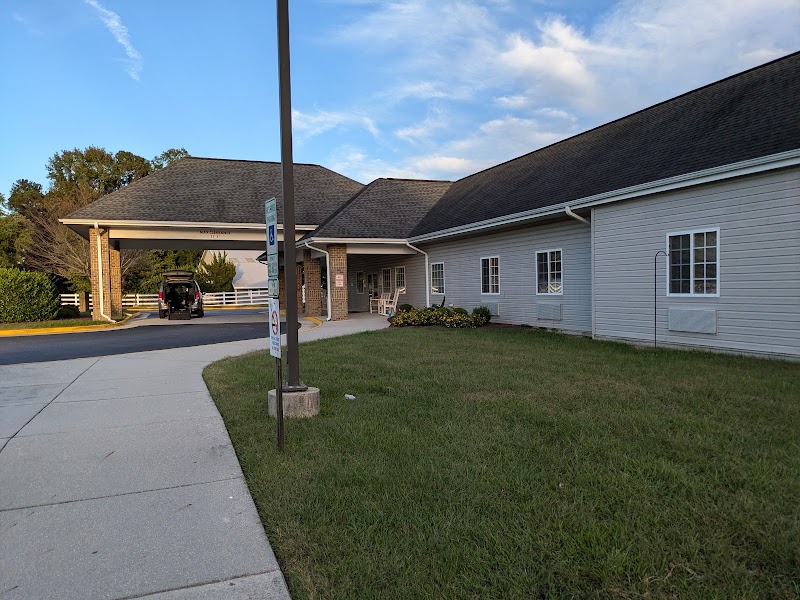
Who Owns and Operates Dinwiddie Health And Rehab Center?

DINWIDDIE HEALTH AND REHAB CENTER is owned by a for-profit company. For-profit facilities operate as businesses with obligations to shareholders or private owners. The facility is operated by COMMONWEALTH CARE OF ROANOKE, a chain that manages multiple nursing homes. With 60 certified beds and approximately 55 residents (about 92% occupancy), it is a smaller facility located in PETERSBURG, Virginia.
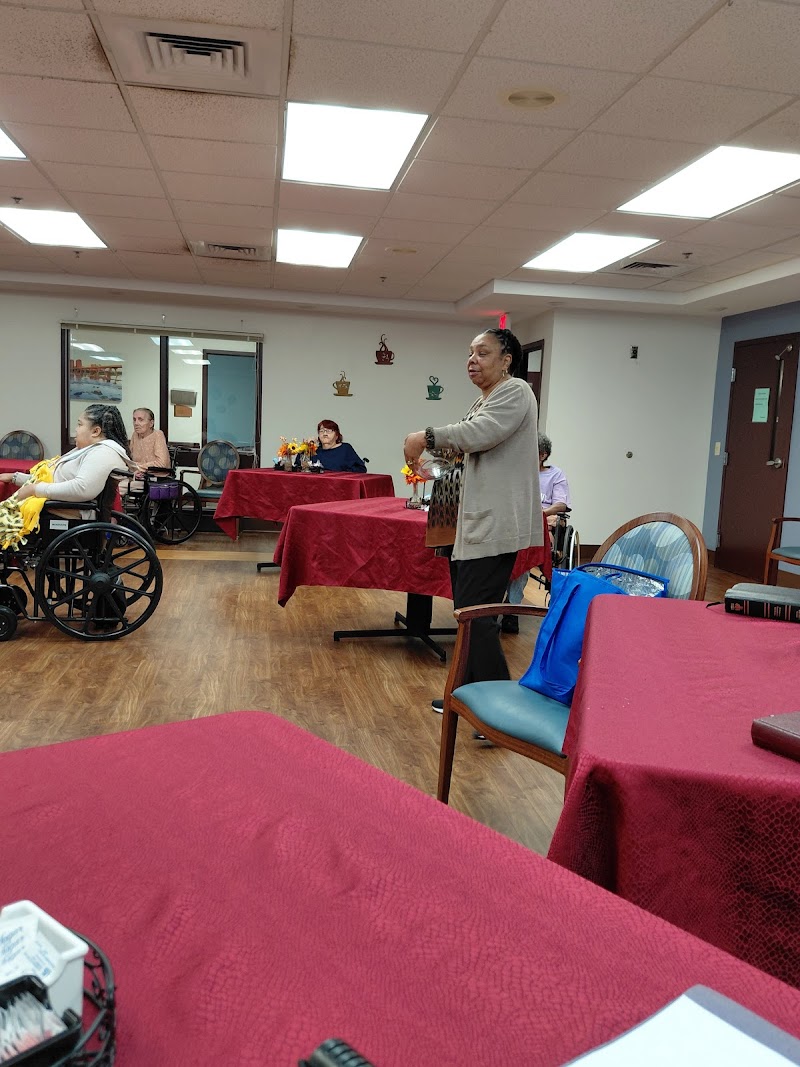
How Does Dinwiddie Health And Rehab Center Compare to Other Virginia Nursing Homes?

Compared to the 100 nursing homes in Virginia, DINWIDDIE HEALTH AND REHAB CENTER's overall rating (1 stars) is below the state average of 3.0, staff turnover (73%) is significantly higher than the state average of 46%, and health inspection rating (2 stars) is below the national benchmark.

What Should Families Ask When Visiting Dinwiddie Health And Rehab Center?

Based on this facility's data, families visiting should ask: "How do you ensure continuity of care given staff turnover, and what is your staff retention strategy?" "Can you walk me through typical staffing levels on day, evening, and night shifts?" "Can I visit during a mealtime to observe dining assistance and food quality?" "How do you handle medical emergencies, and what is your hospital transfer rate?" These questions are particularly relevant given the facility's high staff turnover rate and the below-average staffing rating.

Is Dinwiddie Health And Rehab Center Safe?

Based on CMS inspection data, DINWIDDIE HEALTH AND REHAB CENTER has a clean safety record: no substantiated abuse findings (meaning no confirmed cases of resident harm), no Immediate Jeopardy citations (the most serious violation level indicating risk of serious injury or death), and is not on the Special Focus Facility watch list (a federal program monitoring the lowest-performing 1% of nursing homes). The facility has a 1-star overall rating and ranks #100 of 100 nursing homes in Virginia. While no facility is perfect, families should still ask about staff-to-resident ratios and recent inspection results during their visit.

Do Nurses at Dinwiddie Health And Rehab Center Stick Around?

Staff turnover at DINWIDDIE HEALTH AND REHAB CENTER is high. At 73%, the facility is 27 percentage points above the Virginia average of 46%. High turnover means new staff may not know residents' individual needs, medications, or preferences. It can also be disorienting for residents, especially those with dementia who rely on familiar faces. Families should ask: What is causing the turnover? What retention programs are in place? How do you ensure care continuity during staff transitions?

Was Dinwiddie Health And Rehab Center Ever Fined?

DINWIDDIE HEALTH AND REHAB CENTER has no federal fines on record. CMS issues fines when nursing homes fail to meet care standards or don't correct problems found during inspections. The absence of fines suggests the facility has either maintained compliance or corrected any issues before penalties were assessed. This is a positive indicator, though families should still review recent inspection reports for the full picture.

Is Dinwiddie Health And Rehab Center on Any Federal Watch List?

DINWIDDIE HEALTH AND REHAB CENTER is not on any federal watch list. The most significant is the Special Focus Facility (SFF) program, which identifies the bottom 1% of nursing homes nationally based on persistent, serious quality problems. Not being on this list means the facility has avoided the pattern of deficiencies that triggers enhanced federal oversight. This is a positive indicator, though families should still review the facility's inspection history directly.