NANS POINTE REHABILITATION AND NURSING
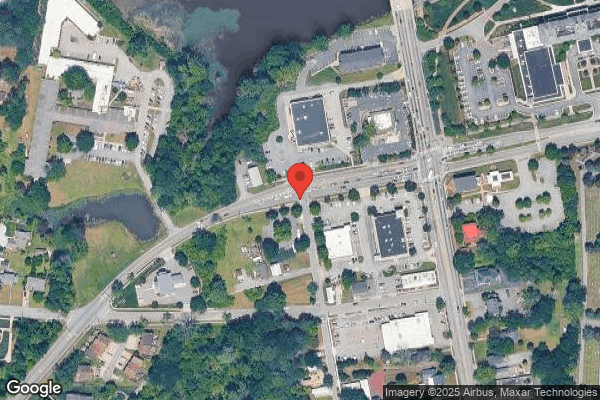
200 WEST CONSTANCE ROAD, SUFFOLK, VA 23434 (757) 539-8744
For profit - Limited Liability company 148 Beds EASTERN HEALTHCARE GROUP Data: November 2025
Trust Grade
43/100
#205 of 285 in VA
Last Inspection: July 2022

Over 2 years since last inspection. Current conditions may differ from available data.

Overview

Nans Pointe Rehabilitation and Nursing has a Trust Grade of D, indicating below-average performance with some significant concerns that families should consider. Ranked #205 out of 285 facilities in Virginia, they fall into the bottom half of nursing homes in the state, and they are #3 out of 4 in Suffolk City County, meaning only one local option is slightly better. The facility is worsening, with issues increasing from 11 in 2019 to 29 in 2022. Staffing is a notable weakness, rated just 1 out of 5 stars, with a turnover rate of 53%, which is on par with the state average but still indicates instability. There were troubling incidents reported, including a failure to provide necessary pain management for a resident, resulting in unnecessary suffering, and concerns about food quality and hygiene in the kitchen, such as serving burned lasagna and unsanitary conditions. Overall, while there are some strengths, such as a high rating in quality measures, the facility has multiple areas needing improvement that families should carefully weigh.

Trust Score
D
43/100
In Virginia
#205/285
Bottom 29%
Safety Record
Moderate
Needs review
Inspections
Getting Worse
11 → 29 violations
Staff Stability
⚠ Watch
53% turnover. Above average. Higher turnover means staff may not know residents' routines.
Penalties
✓ Good
$5,293 in fines. Lower than most Virginia facilities. Relatively clean record.
Skilled Nurses
⚠ Watch
Each resident gets only 18 minutes of Registered Nurse (RN) attention daily — below average for Virginia. Fewer RN minutes means fewer trained eyes watching for problems.
Violations
⚠ Watch
47 deficiencies on record. Higher than average. Multiple issues found across inspections.
★★☆☆☆
2.0
Overall Rating
★☆☆☆☆
1.0
Staff Levels
★★★★★
5.0
Care Quality
★☆☆☆☆
1.0
Inspection Score
Stable
2019: 11 issues
2022: 29 issues

The Good

  • 5-Star Quality Measures · Strong clinical quality outcomes
  • Full Sprinkler Coverage · Fire safety systems throughout facility
  • No fines on record

Facility shows strength in quality measures, fire safety.

The Bad

2-Star Overall Rating

Below Virginia average (3.0)

Below average - review inspection findings carefully

Staff Turnover: 53%

Near Virginia avg (46%)

Higher turnover may affect care consistency

Federal Fines: $5,293

Below median ($33,413)

Minor penalties assessed

Chain: EASTERN HEALTHCARE GROUP

Part of a multi-facility chain

Ask about local staffing decisions and management

The Ugly 47 deficiencies on record

1 actual harm
Nov 2022 5 deficiencies
CONCERN (D) 📢 Someone Reported This

A family member, employee, or ombudsman was alarmed enough to file a formal complaint

Potential for Harm - no one hurt, but risky conditions existed

Assessment Accuracy (Tag F0641)

Could have caused harm · This affected 1 resident

**NOTE- TERMS IN BRACKETS HAVE BEEN EDITED TO PROTECT CONFIDENTIALITY** Based on clinical record review, staff interview, facility documentation review and during a complaint investigation, the facili...

Read full inspector narrative →
**NOTE- TERMS IN BRACKETS HAVE BEEN EDITED TO PROTECT CONFIDENTIALITY** Based on clinical record review, staff interview, facility documentation review and during a complaint investigation, the facility's staff failed to ensure 1 of 21 residents (Resident #117) in the survey sample received a complete and accurate assessment Minimum Data Set (MDS). The findings included: Resident #117 was originally admitted to the facility 11/25/2015 and readmitted [DATE] after an acute care hospital stay. The resident has never been discharged from the facility. The current diagnoses included; POSTERIOR REVERSIBLE ENCEPHALOPATHY SYNDROME and TRACHEOSTOMY STATUS. The annual Minimum Data Set (MDS) assessment with an assessment reference date (ARD) of 09/15/2022 coded the resident as not having the ability to complete the Brief Interview for Mental Status (BIMS). The staff interview was coded for long and short term memory problems as well as severely impaired for daily decision making. In sectionG(Physical functioning) the resident was coded as requiring total dependence of two persons with bed mobility, transfers, dressing, toileting, personal hygiene and bathing. Requires total dependence of one person with eating. In section K (Swallowing/Nutritional Status) the resident was coded as having a feeding tube. A Tube Feeding Strap was not coded. Resident #117's Care Plan, revised on 9/22/22 reads that resident is dependent on TF (Tube Feedings) for nutrition and hydration. The goal set for the resident by the staff was that the resident will maintain adequate nutrition status as evidenced by stable weight without significant weight change through next review date. The interventions for Resident #117 should be Tube feeding and flushes as ordered. The Care Plan did not mention a TF Binder (Tube Feeding Binder). A review of the POS (Physicians Order Summary) for November 2022 does not mention any orders for a TF Binder. On 11/03/22 at approximately 10:25 AM an interview was conducted with the DON (Director of Nursing) concerning Resident #117. She said that the abdominal TF binder for the peg tube has no physician order nor is it care planned. She also said that the TF Binder has been placed on resident at least for six months. On 11/03/22 at approximately 12:00 PM an observation was made of Resident #117's Tube Feeding Binder with LPN (Licensed Practical Nurse/MDS/Minimum Data Set Nurse) #3. She said that it's called a Binder Strap for keeping the feeding tube from being pulled. She said that MDS should have been notified of the Binder Strap because her last MDS was done on 9/15/22. We should have found out the root cause. Then I would have checked to see. She also said if there had been an order for the TF Strap, it would have been flagged. A skin assessment should have been done. On 11/03/22 at approximately 4:35 PM., a telephone interview was conducted with the Facility Physician (OSM/Other Staff Member) #2 concerning Resident #117. He said that he wasn't aware that Resident #117 needed an order for the TF Binder. On 11/03/22 at approximately 5:50 PM., the above findings were shared with the Administrator, Director of Nursing and Corporate Consultant. An opportunity was offered to the facility's staff to present additional information, but no additional information was provided. COMPLAINT DEFICIENCY
CONCERN (D) 📢 Someone Reported This

A family member, employee, or ombudsman was alarmed enough to file a formal complaint

Potential for Harm - no one hurt, but risky conditions existed

Deficiency F0657 (Tag F0657)

Could have caused harm · This affected 1 resident

**NOTE- TERMS IN BRACKETS HAVE BEEN EDITED TO PROTECT CONFIDENTIALITY** Based on clinical record review, staff interview, facility documentation review and during a complaint investigation, the facili...

Read full inspector narrative →
**NOTE- TERMS IN BRACKETS HAVE BEEN EDITED TO PROTECT CONFIDENTIALITY** Based on clinical record review, staff interview, facility documentation review and during a complaint investigation, the facility's staff failed to revise one care plan for 1 resident of 21 residents (Resident #117) in the survey sample. The findings included: Resident #117 was originally admitted to the facility 11/25/2015 and readmitted [DATE] after an acute care hospital stay. The resident has never been discharged from the facility. The current diagnoses included; POSTERIOR REVERSIBLE ENCEPHALOPATHY SYNDROME and TRACHEOSTOMY STATUS. The annual Minimum Data Set (MDS) assessment with an assessment reference date (ARD) of 09/15/2022 coded the resident as not having the ability to complete the Brief Interview for Mental Status (BIMS). The staff interview was coded for long and short term memory problems as well as severely impaired for daily decision making. In sectionG(Physical functioning) the resident was coded as requiring total dependence of two persons with bed mobility, transfers, dressing, toileting, personal hygiene and bathing. Requires total dependence of one person with eating. In section K (Swallowing/Nutritional Status) the resident was coded as having a feeding tube. Resident #117's Care Plan, revised on 9/22/22 reads that resident is dependent on TF (Tube Feedings) for nutrition and hydration. The goal set for the resident by the staff was that the resident will maintain adequate nutrition status as evidenced by stable weight without significant weight change through next review date. The interventions for Resident #117 should be Tube feeding and flushes as ordered. The Care Plan does not mention a TF Strap (Tube Feeding Strap). On 11/03/22 at approximately 10:25 AM an interview was conducted with the DON (Director of Nursing) concerning Resident #117. She said that the abdominal TF binder for the peg tube has no physician order nor is it care planned. She also said that the TF Binder has been placed on resident at least for six months. On 11/03/22 at approximately 12:00 PM an observation was made of Resident #117's Tube Feeding Binder with LPN (Licensed Practical Nurse/MDS/Minimum Data Set Nurse) #3. She said that it's called a Binder Strap for keeping the feeding tube from being pulled. She said that MDS should have been notified of the Binder Strap because her last MDS was done on 9/15/22. We should have found out the root cause. Then I would have checked to see. She also said if there had been an order for the TF Strap, it would have been flagged. A skin assessment should have been done. On 11/03/22 at approximately 5:50 PM., the above findings were shared with the Administrator, Director of Nursing and Corporate Consultant. An opportunity was offered to the facility's staff to present additional information, but no additional information was provided. Complaint deficiency
CONCERN (D) 📢 Someone Reported This

A family member, employee, or ombudsman was alarmed enough to file a formal complaint

Potential for Harm - no one hurt, but risky conditions existed

Deficiency F0658 (Tag F0658)

Could have caused harm · This affected 1 resident

**NOTE- TERMS IN BRACKETS HAVE BEEN EDITED TO PROTECT CONFIDENTIALITY** Based on observations, family interview, staff interview, clinical record review and during the course of a complaint investigat...

Read full inspector narrative →
**NOTE- TERMS IN BRACKETS HAVE BEEN EDITED TO PROTECT CONFIDENTIALITY** Based on observations, family interview, staff interview, clinical record review and during the course of a complaint investigation the facility's staff failed to obtain physician's orders for a Tube Feeder Strap for 1 of 21 residents in the survey sample, Resident #117. The findings included: Resident #117 was originally admitted to the facility 11/25/2015 and readmitted [DATE] after an acute care hospital stay. The current diagnoses included; POSTERIOR REVERSIBLE ENCEPHALOPATHY SYNDROME, TRACHEOSTOMY STATUS, ENCOUNTER FOR ATTENTION TO GASTROSTOMY. The annual Minimum Data Set (MDS) assessment with an assessment reference date (ARD) of 09/15/2022 coded the resident as not having the ability to complete the Brief Interview for Mental Status (BIMS). The staff interview was coded for long and short term memory problems as well as severely impaired for daily decision making. In sectionG(Physical functioning) the resident was coded as requiring total dependence of two persons with bed mobility, transfers, dressing, toileting, personal hygiene and bathing. Requires total dependence of one person with eating. In section K (Swallowing/Nutritional Status) the resident was coded as having a feeding tube. Resident #117's Care Plan, revised on 9/22/22 reads that resident is dependent on TF (Tube Feedings) for nutrition and hydration. The goal set for the resident by the staff was that the resident will maintain adequate nutrition status as evidenced by stable weight without significant weight change through next review date. The interventions for Resident #117 should be Tube feeding and flushes as ordered. The Care Plan does not mention a TF Strap (Tube Feeding Binder). A review of the POS (Physicians Order Summary) for November 2022 does not mention any orders for a TF Strap. A review of the MAR (Medication Administration Record) from August 2022 through September 2022 revealed no physician orders for a TF Strap. A review of the TAR (Treatment Administration Record) from August 2022 to September 2022 revealed no physician orders for a TF Strap. A review of the clinical record does not reveal that resident has a TF Strap. On 11/03/22 at approximately 10:25 AM an interview was conducted with the DON (Director of Nursing) concerning Resident #117. She said that the abdominal TF (Tube Feeder) Strap for the peg tube has no physician order nor is it care planned. She also said that the TF Binder has been placed on resident at least for six months. On 11/03/22 at approximately 12:00 PM an observation was made of Resident #117's Tube Feeding Binder with LPN (Licensed Practical Nurse/MDS/Minimum Data Set Nurse) #3. She said that it's called a Binder Strap for keeping the feeding tube from being pulled. She said that MDS should have been notified of the Binder Strap because her last MDS was done on 9/15/22. We should have found out the root cause. Then I would have checked to see. She also said if there had been an order for the TF Strap, it would have been flagged. A skin assessment should have been done. On 11/03/22 at approximately 4:35 PM., a telephone interview was conducted with the Facility Physician (OSM/Other Staff Member) #2 concerning Resident #117. He said that he wasn't aware that Resident #117 needed an order for the TF Strap. On 11/03/22 at approximately 5:50 PM., the above findings were shared with the Administrator, Director of Nursing and Corporate Consultant. An opportunity was offered to the facility's staff to present additional information, but no additional information was provided. This is a complaint deficiency!
CONCERN (D) 📢 Someone Reported This

A family member, employee, or ombudsman was alarmed enough to file a formal complaint

Potential for Harm - no one hurt, but risky conditions existed

Quality of Care (Tag F0684)

Could have caused harm · This affected 1 resident

**NOTE- TERMS IN BRACKETS HAVE BEEN EDITED TO PROTECT CONFIDENTIALITY** Based on clinical record review, staff interview, facility documentation review and during the course of a complaint investigati...

Read full inspector narrative →
**NOTE- TERMS IN BRACKETS HAVE BEEN EDITED TO PROTECT CONFIDENTIALITY** Based on clinical record review, staff interview, facility documentation review and during the course of a complaint investigation, the facility's staff failed to follow physician orders to provide wound care for a resident for 1 of 21 residents (Resident #117), in the survey sample The findings included: Resident #117 was originally admitted to the facility 11/25/2015 and readmitted [DATE] after an acute care hospital stay. The resident has never been discharged from the facility. The current diagnoses included; POSTERIOR REVERSIBLE ENCEPHALOPATHY SYNDROME and TRACHEOSTOMY STATUS. The annual Minimum Data Set (MDS) assessment with an assessment reference date (ARD) of 09/15/2022 coded the resident as not having the ability to complete the Brief Interview for Mental Status (BIMS). The staff interview was coded for long and short term memory problems as well as severely impaired for daily decision making. In sectionG(Physical functioning) the resident was coded as requiring total dependence of two persons with bed mobility, transfers, dressing, toileting, personal hygiene and bathing. Requires total dependence of one person with eating. In section K (Swallowing/Nutritional Status) the resident was coded as having a feeding tube. Resident #117's Care Plan, revised on 9/22/22 reads that resident is dependent on TF (Tube Feedings) for nutrition and hydration. The goal set for the resident by the staff was that the resident will maintain adequate nutrition status as evidenced by stable weight without significant weight change through next review date. The interventions for Resident #117 reads provide tube site care as ordered. Date Initiated: 04/01/2020. The POS (Physician Order Summary) November 2022 reads: Peg tube dressing change q (every day) and prn as needed for if soiled or missing Phone Active 07/18/2022. Peg tube dressing change q day and prn every night shift for prevention. Phone Active 07/18/2022. A review of the November MAR (Medication Administration Record) Peg tube dressing change q day and prn (as needed) every night shift for prevention -Start Date 07/18/2022 1900 (7:00 PM). 11/01/22 checked, 11/02/22 not checked off. A review of the November MAR show that the dressing change for 11/01/22 was checked off as being done but a review of the MAR for 11/02/22 was not checked off as being done. On 11/01/22 at approximately 3:00 PM., during the initial tour Resident #117 was observed resting quietly in bed with her eyes open. LPN (Licensed Practical Nurse) #2 entered the room to administer the Resident's TF (Tube Feeding). An observation of the resident's peg tube dressing was made. No date or intials were marked on the dressing. LPN #2 said the night shift does the dressing changes unless the dressing is soiled or comes off. On 11/03/22 at approximately 5:50 PM., the above findings were shared with the Administrator, Director of Nursing and Corporate Consultant. The DON said that the dressing should have been changed daily per doctor's orders and should have been initialed, dated and time written. This is a complaint deficiency!
CONCERN (E) 📢 Someone Reported This

A family member, employee, or ombudsman was alarmed enough to file a formal complaint

Potential for Harm - no one hurt, but risky conditions existed

Deficiency F0760 (Tag F0760)

Could have caused harm · This affected multiple residents

**NOTE- TERMS IN BRACKETS HAVE BEEN EDITED TO PROTECT CONFIDENTIALITY** Based on observations, family interview, staff interview, clinical record review and during the course of a complaint investigat...

Read full inspector narrative →
**NOTE- TERMS IN BRACKETS HAVE BEEN EDITED TO PROTECT CONFIDENTIALITY** Based on observations, family interview, staff interview, clinical record review and during the course of a complaint investigation the facility's staff failed to provide significant medications for 1 of 21 residents in the survey sample, Resident #117. The findings included: Resident #117 was originally admitted to the facility 11/25/2015 and readmitted [DATE] after an acute care hospital stay. The current diagnoses included; EPILEPSY, UNSPECIFIED, NOT INTRACTABLE, WITH STATUS EPILEPTICUS. The annual Minimum Data Set (MDS) assessment with an assessment reference date (ARD) of 09/15/2022 coded the resident as not having the ability to complete the Brief Interview for Mental Status (BIMS). The staff interview was coded for long and short term memory problems as well as severely impaired for daily decision making. In sectionG(Physical functioning) the resident was coded as requiring total dependence of two persons with bed mobility, transfers, dressing, toileting, personal hygiene and bathing. Requires total dependence of one person with eating. In section K (Swallowing/Nutritional Status) the resident was coded as having a feeding tube. Resident #117's Care Plan, revised on 9/22/22 reads that resident is dependent on TF (Tube Feedings) for nutrition and hydration. The goal set for the resident by the staff was that the resident will maintain adequate nutrition status as evidenced by stable weight without significant weight change through next review date. The interventions for Resident #117 should be Tube feeding and flushes as ordered. The POS (Physician Order Summary) August 2022: Dilantin Suspension 125 MG/5ML (Phenytoin) Give 3 ml via G-Tube three times a day for seizure disorder Phone Active 07/13/2022. Keppra Solution 100 MG/ML (LevETIRAcetam) Give 10 milliliter via G-Tube two times a day for seizure disorder Verbal Active 03/28/2022. Vimpat Solution 10 MG/ML (Lacosamide) Give 250 mg via PEG-Tube every 12 hours for Seizure Disorder Prescriber Written Active 02/01/2022. The POS for October 2022: Dilantin Suspension 125 MG/5ML (Phenytoin) Give 4 ml via G-Tube three times a day for seizure disorder Phone Active 08/23/2022. Ativan Solution 2 MG/ML (LORazepam) Inject 2 mg intramuscularly every 1 hours as needed for as needed for grand mal seizure; Call MD/NP if used -Start Date- 07/14/2022 1645. MAR Dilantin Suspension 125 MG/5ML (Phenytoin) Give 4 ml via G-Tube three times a day for seizure disorder -Start Date- 08/23/2022 2200 (10:00 PM) Missed doses: 9/17/22 (6:00 AM), 9/26/22 (6:00 AM), 9/25/22 (2:00 PM), 9/27/22 (6:00 AM). MAR Dilantin Suspension 125 MG/5ML (Phenytoin) Give 4 ml via G-Tube three times a day for seizure disorder -Start Date- 08/23/2022 2200 (10:00 PM) missed doses on the following dates: 10/02/22 (10:00 PM) 10/04/22 (10:00 PM) 10/10/22 (10:00 PM) 10/18/22 (6:00 AM), 10/19/22 (2:00 PM), 10/22/22 (2:00 PM), MAR (Medication Administration Record) Keppra Solution 100 MG/ML (LevETIRAcetam) Give 10 milliliter via G-Tube two times a day for seizure disorder -Start Date- 03/28/2022 2000 (8:00 PM) Missed dose: 8/27/22 (8:00 PM) MAR Vimpat Solution 10 MG/ML (Lacosamide) Give 250 mg via PEG-Tube every 12 hours for Seizure Disorder -Start Date- 02/01/2022 2100 (9:00 PM) Missed dose: 8/27/22 (9:00 PM). On 11/03/22 a phone call was made at approximately 4:35 PM., to OSM (Other Staff Member/Medical Director) concerning Resident #117 missed significant medications. He said that they have worked through those meds., The pharmacy issues were controlled by corporate but they are switching over to another pharmacy. We will switch pharmacy providers in afew weeks. The issue is ongoing.The pharmacy is six hours away which causes delays in care. He also addressed the Dilantin as being a short acting medication which can be crushed but the long acting Dilantin couldn't be crushed. He said that he didn't know about the Vimpat. Dilantin/Phenytoin is used to prevent and control seizures (also called an anticonvulsant or antiepileptic drug). It works by reducing the spread of seizure activity in the brain.https://www.webmd.com/drugs/2/drug-4157/dilantin-oral/details. Keppra/Levetiracetam is used to treat seizures (epilepsy). It belongs to a class of drugs known as anticonvulsants. Levetiracetam may decrease the number of seizures you have.https://www.webmd.com/drugs/2/drug-18053/keppra-oral/details. Vimpat/Lacosamide is used to treat partial-onset seizures. It is also used with other medicines to treat primary generalized tonic-clonic seizures. It acts on the central nervous system (CNS) to reduce the number and severity of seizures. However, this medicine cannot cure epilepsy and will only work to control seizures for as long as you continue to take it.https://www.mayoclinic.org/drugs-supplements/lacosamide-oral-route/side-effects/drg-20072409?p=1. According to the MAR Resident #117 was administered a prn dose of Ativan Solution 2 MG/ML (LORazepam) Inject 2 mg intramuscularly every 1 hour as needed for as needed for grand mal seizure on 7/14/22 at 2:45 PM. Ativan Solution 2 MG/ML (LORazepam) Inject 2 mg intramuscularly every 1 hours as needed for as needed for grand mal seizure; Call MD/NP if used -Start Date- 07/14/2022 1645 (2:45 PM). A review of the Medical Record does not show any nursing notes saying the seizure activity occurred. On 11/02/22 an interview was conducted at approximately 3:50 PM., with LPN (Licensed Practical Nurse) #2 concerning the residents medications. She said there was an issue getting the medications in on time. I made sure that I ordered it 7 days prior to her running out. The pharmacy delivery was terrible, they didn't have enough delivery drivers. She also said that they have a different delivery company now and everything is better. The husband said she was out of Keppra. The DON was getting the PO orders until the meds arrived. On 11/03/22 at approximately 5:50 PM., the above findings were shared with the Administrator, Director of Nursing and Corporate Consultant. The DON said that the pharmacy was only sending five days worth of medications at a time. You would have to call them to get more Vimpat. We suggested that he (Husband) call his insurance company. Complaint deficiency
Jul 2022 24 deficiencies 1 Harm
SERIOUS (G)

Actual Harm - a resident was hurt due to facility failures

Deficiency F0697 (Tag F0697)

A resident was harmed · This affected 1 resident

**NOTE- TERMS IN BRACKETS HAVE BEEN EDITED TO PROTECT CONFIDENTIALITY** Based on observation, resident interview, staff interview, clinical record review, and review of facility documents, the facilit...

Read full inspector narrative →
**NOTE- TERMS IN BRACKETS HAVE BEEN EDITED TO PROTECT CONFIDENTIALITY** Based on observation, resident interview, staff interview, clinical record review, and review of facility documents, the facility staff failed to provide pain management to include scheduled narcotic analgesics (Hydromorphone HCl 2 milligrams (mg) and Lyrica 25 mg) which resulted in frequent unnecessary and often excruciating pain, constituting harm for 1 of 47 residents (Resident #267), in the survey sample The findings included: The facility staff failed to provide scheduled around-the-clock pain medications to Resident #267, by failing to obtain and administer the prescribed narcotic analgesics (Hydromorphone HCl 2 milligrams (mg) and Lyrica 25 mg), they also failed to institute their protocol for obtaining controlled medication from their medication storage system (CUBEX) and to ensure the nurses were educated to obtain controlled and non-controlled medication from the storage system, which resulted in unnecessary and often excruciating pain, constituting harm. Resident #267 was originally admitted to the facility on [DATE] and readmitted on [DATE] after an acute care hospital stay. The current diagnoses included; surgical interventions related to an abdominal wall infection, DVT, diabetes with neuropathic pain, and end-stage renal disease status post a renal transplant. The 5 Day Medicare Minimum Data Set (MDS) assessment with an assessment reference date (ARD) of 6/16/22 coded the resident as completing the Brief Interview for Mental Status (BIMS) and scoring 11 out of a possible 15. This indicated Resident #267's cognitive abilities for daily decision-making were moderately impaired. In section G (Physical functioning) the resident was coded as requiring total care of one person with bathing, extensive assistance of two people with bed mobility, extensive assistance of one person with personal hygiene, dressing, and toileting, supervision after set-up with eating and transfers and locomotion occurred only once or twice. Resident #267 was interviewed on 7/6/22 at approximately 11:05 a.m. The resident was in bed holding her abdomen with her left hand. She spoke very softly and slowly and she presented with an extremely flat affect. Resident #267 stated she was very concerned because she wasn't receiving her medications and the staff told her it was because the pharmacy hadn't delivered her medications to the facility. Resident #267 stated she was experiencing stomach pain and she felt it was related to the stomach surgery she had while hospitalized . She stated the physician at the hospital stated she had a very odorous and infected stomach wound at the time she arrived at the hospital and it required surgical interventions to promote healing. Resident #267 stated at the time of the interview she was experiencing pain at a level of eight to nine out of a level of zero to ten and ten characterized as excruciating pain. Resident #267 stated she felt if she had received the Lyrica the pain would be more tolerable but they didn't have that either. On 7/7/22 at approximately 10:30 a.m., another interview was conducted with Resident #267, who was in bed and speaking very softly. The resident stated she was still experiencing stomach pain at a level of eight/nine out of ten and her nurse stated the pharmacy still hadn't delivered her medications. An interview was conducted with Licensed Practical Nurse (LPN) #9 on 7/7/22 at approximately 10:45 a.m. LPN #9 stated the resident didn't tell her she was experiencing pain but she would give her some Tylenol and Registered Nurse (RN) #4 was currently working with the pharmacy to deliver the resident's medications to the facility. An Interview was conducted with Registered Nurse #4 on 7/7/22 at approximately 2:20 p.m. RN #4 stated she transcribed the resident's admission orders on 7/4/22 and sent the orders to the pharmacy and on 7/6/22 she was informed the medications hadn't arrived to the facility, therefore, a call was placed to the pharmacy to determine the reason for the delay. RN #4 stated the pharmacy stated there was a problem with how the medication orders were entered and then they were taken out therefore the orders couldn't be filled. RN #4 stated she re-entered the orders and the pharmacy promised to deliver the medications on 7/7/22 but on 7/8/22 at 5:00 p.m., they still hadn't arrived. RN #4 stated the pharmacy assured her the medications would be delivered on 7/9/22. This meant Resident #267 was without significant prescribed medications from the time of admission on [DATE] through 7/8/22. A review of the 7/4/22 hospital's discharge summary revealed the resident was diagnosed with an abdominal wall infection which required her to undergo an excisional debridement which revealed full-thickness necrosis. The 7/4/22 hospital's discharge summary revealed orders for Hydromorphone HCl (Dilaudid) tablet 2 milligrams (mg); give one tablet by mouth every 4 hours for pain, an order for Hydromorphone HCl tablet 2mg; give 1 tablet by mouth every 3 hours as needed for pain, Lyrica Capsule 25 mg (Pregabalin) Give 1 capsule by mouth two times a day for neuropathy, and Acetaminophen 500 mg Tablets; give 1,000 mg by mouth three times daily for pain. A review of the physician's order summary revealed the above orders for analgesics. A review of the Medication Administration Record (MAR) revealed the scheduled analgesics (Hydromorphone HCl tablet 2 mg and Lyrica Capsule 25 mg) were not administered and there was no evidence that non-pharmacological interventions were attempted to reduce the resident's pain. A review of the CUBEX medications system list revealed Dilaudid wasn't included in the CUBEX medication system but Lyrica 25 mg capsules were available. The resident didn't have a baseline care plan for her 7/4/22, readmission in the clinical record. An interview was conducted with the Director of Nursing (DON) on 7/12/22 at approximately 7:00 p.m. The DON stated the management team and the Medical Director were aware there were problems procuring medications in a timely manner and they began strategizing on backup pharmacies but it wasn't finalized. The DON also stated on average it is two days before a newly admitted resident's medications arrive at the facility from the pharmacy but most medications are available in the house stock or the CUBEX medication system. The DON also stated in Resident #267's case the nurse should have notified the Physician and or Practitioner that the Lyrica was available but required their authorization through the pharmacy and what they needed to do so she could obtain access to the narcotics in the CUBEX medication system. During the above interview, the DON stated that because Dilaudid wasn't readily available in the CUBEX medication system the nurse should have shared with the Physician/Practitioner what similar medications were available so he/she could make a decision on which medication to prescribe until the Dilaudid was delivered. The DON further stated the nurse should have informed the Physician and or Practitioner of the need for him/her to directly notify the pharmacy so the nurse could obtain the medication from the CUBEX medication system. The DON finally stated another problem in Resident #267's case was there was mostly contract staff rendering care on the unit and they were incompetent in using the CUBEX medication system to obtain medications. On 7/12/22 at approximately 8:00 p.m., the above findings were shared with the Administrator, Director of Nursing, and Corporate Consultant. An opportunity was offered to the facility's staff to present additional information but no additional information was provided and no further concerns were voiced. Hydromorphone HCl (Dilaudid) belongs to the group of medicines called narcotic analgesics (pain medicines). It acts on the central nervous system (CNS) to relieve pain. It is an extended-release capsule and extended-release tablets are used to relieve pain in opioid-tolerant patients severe enough to require around-the-clock pain relief for a long period of time. (https://www.mayoclinic.org/drugs-supplements/hydromorphone-oral-route/description/drg-20074171) Pregabalin (Lyrica) capsules, oral solution (liquid), and extended-release (long-acting) tablets are used to relieve neuropathic pain (pain from damaged nerves) that can occur in your arms, hands, fingers, legs, feet, or toes if you have diabetes and postherpetic neuralgia [PHN; burning, stabbing pain or aches that may last for months or years after an attack of shingles] (https://medlineplus.gov/druginfo/meds/a605045.html)
CONCERN (D)

Potential for Harm - no one hurt, but risky conditions existed

Notification of Changes (Tag F0580)

Could have caused harm · This affected 1 resident

**NOTE- TERMS IN BRACKETS HAVE BEEN EDITED TO PROTECT CONFIDENTIALITY** Based on observation, resident interview, staff interview, clinical record review, a review of facility documents and during a c...

Read full inspector narrative →
**NOTE- TERMS IN BRACKETS HAVE BEEN EDITED TO PROTECT CONFIDENTIALITY** Based on observation, resident interview, staff interview, clinical record review, a review of facility documents and during a complaint investigation, the facility's staff failed to notify family of significant weight loss for 1 of 47 residents (Resident #318), in the survey sample. The findings Included: The POS (Physician Order Summary) for May 2021 reads: Weigh Daily every day shift for Heart Failure Monitoring ALERT MD FOR WT GAIN OF 3LB IN ONE DAY, 5LB IN ONE WEEK, INCREASED EDEMA, SOB. Order date: 3/04/21. Start Date: 3/05/21. House Supplement in the morning 237 ml QD Order Date: 04/09/2022. Start Date: 04/10/2022. The Medication Administration Record (MAR) for May 2022 read: Furosemide Tablet 40 MG Give 1 tablet by mouth two times a day for CHF -Start Date 04/06/2021 1700 -D/C Date 05/23/2022 1204. All doses were administered. Resident #318 was originally admitted to the facility on [DATE] and discharged on 5/20/22 to an acute care facility. The current diagnoses included; CHRONIC COMBINED SYSTOLIC (CONGESTIVE) AND DIASTOLIC (CONGESTIVE) HEART FAILURE AND CHRONIC ATRIAL FIBRILLATION, UNSPECIFIED. The significant change Minimum Data Set (MDS) assessment with an assessment reference date (ARD) of 04/15/22 coded the Resident as completing the Brief Interview for Mental Status (BIMS) and scoring 8 out of a possible 15. This indicated Resident #318 cognitive abilities for daily decision making were moderately impaired. In section G (Physical functioning) the resident was coded as requiring extensive assistance of one person with bed mobility, dressing, bathing, eating and personal hygiene. Requiring extensive assistance of one person with dressing, toileting and personal hygiene. Requires total dependence with toileting. The Care Plan reads that Resident #318 Focus: Resident is obese r/t excess energy intake. Date Initiated: 10/09/2017. Revision on: 03/08/2021. Resolved Date: 03/08/2021. Goal: Will consume adequate energy to lose 1-2 lbs. per month towards IBW= 160 lbs. Date Initiated: 10/09/2017. Revision on: 03/17/2022. Target Date: 07/20/2022. Interventions: Will consume adequate energy to lose 1-2 lbs per month towards IBW= 160 lbs. Date Initiated: 10/09/2017. Revision on: 02/24/2022. Resolved Date: 03/08/2021. Monitor and evaluate weight / weight changes. Date Initiated: 10/09/2017. Revision on: 03/08/2021. Resolved Date: 03/08/2021 Notify RD, family, and physician of significant weight changes. Focus: The resident is on diuretic therapy r/t HTN/CHF. Date Initiated: 11/21/2021. Revision on: 11/21/2021. Goals: The resident will be free of any discomfort or adverse side effects of diuretic therapy through the review date. Date Initiated: 11/21/2021. Revision on: 03/17/2022. Target Date: 07/20/2022. Interventions: Administer DIURETIC medications as ordered by physician. Monitor for side effects and effectiveness Q-SHIFT. Date Initiated: 11/21/2021. A review of weights: 4/21/22 through 5/10/22 204.0 Lbs. 5/20/2022 161.2 Lbs, 5/19/2022 162.0 Lbs, 5/18/2022 163.6 Lbs., 5/16/2022 163.9 Lbs. 5/15/2022 164.1 Lbs., 5/14/2022 164.6 Lbs. A review of most recent Dietary/Nutrition progress notes dated 4/09/22 revealed that resident had a significant weight change. Weighing 205.6 pounds. It reads: Resident #316 has a history of weight changes. Monitor daily weights. Continue to monitor resident closely via daily weights and add an oral nutritional supplement daily to promote kcal intake. Recommend house supplement. A review of previous Dietary/Nutrition progress note dated 2/28/22 reveal that resident weighed 220.0 pounds. No recommendations due to resident having a previous history of weight changes of gains and losses. On 7/06/22 at approximate 7:55 PM a telephone interview was conducted with Resident #316's daughter concerning his weight loss. She said that she was concerned when she noticed that her father had lost weight and no one from the facility had informed her of it. On 7/12/22 at approximately 6:12 PM an interview was conducted with the Dietician (OSM/Other Staff member #6) concerning Resident #318s weights. She said that Resident #318s diet had been downgraded from a regular diet to a mechanical soft diet and a house supplement. The forty pound weight loss had been confirmed with a re-weight. The resident had already been discharged from the facility six days after his weight was taken. I'm not sure if that was his true weight. She also said that the staff should have notified the family of his weight loss because it's normally not her responsibility. According to Medical records Resident #318 was discharged from the facility on 5/20/22 and was not present at the facility on 5/27/22. On 7/11/22 at approximately 2:35 PM an interview was conducted with LPN #2 concerning Resident #316. She said that his legs would swell because he would be in his wheel chair a lot. On 7/12/22 at approximately 5:48 PM an interview was conducted with the unit manager (LPN #5) concerning Resident #318. He said that the family and physician should have been notified of Resident's weight change. This is a complaint deficiency.
CONCERN (D)

Potential for Harm - no one hurt, but risky conditions existed

Deficiency F0620 (Tag F0620)

Could have caused harm · This affected 1 resident

Based on a closed record review, staff interview and a complaint investigation, the facility staff failed to provide one resident (Resident #317 ) with an admissions package including admissions polic...

Read full inspector narrative →
Based on a closed record review, staff interview and a complaint investigation, the facility staff failed to provide one resident (Resident #317 ) with an admissions package including admissions policies, transfer/discharge agreement and financial agreement in the survey sample of 47 residents. The findings included: Resident #317 was admitted to the facility from a hospital on 1/21/22 with diagnoses of muscle weakness, osteoporosis, hypertension and depression. Complainant alleges resident nor Authorized Representative were provided with an admission packet, including admission agreement and financial agreement. A review of the closed clinical record did not reveal an admission agreement was provided or signed by the resident or Authorized Representative. During an interview on 7/6/22 at 4:10 PM the Regional Admissions Director confirmed Resident #317 was not provided with an admission Agreement, Transfer/Discharge Agreement nor a Financial Agreement. An admission policy and procedure was requested but not provided during the survey. Compliant Deficiency
CONCERN (D)

Potential for Harm - no one hurt, but risky conditions existed

Assessment Accuracy (Tag F0641)

Could have caused harm · This affected 1 resident

**NOTE- TERMS IN BRACKETS HAVE BEEN EDITED TO PROTECT CONFIDENTIALITY** Based on clinical record review, staff interview and facility documentation, the facility staff failed to ensure that 1 of 47 re...

Read full inspector narrative →
**NOTE- TERMS IN BRACKETS HAVE BEEN EDITED TO PROTECT CONFIDENTIALITY** Based on clinical record review, staff interview and facility documentation, the facility staff failed to ensure that 1 of 47 residents (Resident #86) in the survey sample received a complete and accurate assessment Minimum Data Set (MDS). The findings included: 1. The facility staff failed to ensure Resident #86's, quarterly MDS assessment with an Assessment Reference Date (ARD) of 06/09/22 was coded correctly under section N0450 (Antipsychotic Medication Review.) Resident #86 was admitted to the facility on [DATE]. Diagnosis for Resident #86 included but not limited to dementia without behavioral disturbances. The current Minimum Data Set (MDS), a quarterly assessment with an Assessment Reference Date (ARD) of 06/09/22 coded the Resident #86 with a 01 out of a possible score of 15 on the Brief Interview for Mental Status (BIMS) indicating severe cognitive impairment. A review of Resident #86's quarterly MDS with an ARD of 06/09/22 was coded for receiving antipsychotic medications. The section N on the MDS under medications was coded as being received by the resident for 7 days during the last 7 days. Under section N0450 (B) was coded for not having a gradual dose reduction (GDR). Resident #86's person-centered care plan created on 11/29/21 documented resident uses psychotropic medications. The goal set for the resident by the staff was that the resident will reduce the use of psychotropic medication through the review date of 09/18/22. Some of the intervention to manage the resident's goal include to administer psychotropic medications as ordered by the physician, monitor for side effects and effectiveness every shift and consult with pharmacy, physician to consider dose reductions when clinically appropriate at least quarterly. On 05/25/22, a psychiatric evaluation follow-up progress revealed that Resident #86 is being seen today for evaluation of status and review of medication adjustment. Further review of the progress noted documented staff identifies no behavioral issues so a recommendation to decrease the resident's Seroquel from 25 mg every morning and 50 mg every night to 25 mg twice daily as a GDR attempt. A review of Resident #86's Medication Administration Report (MAR) revealed the following orders: -Starting on 03/16/22 - Seroquel 25 mg tablet -give 1 tablet by mouth daily every morning and 50 mg daily at bedtime for mood stabilizer. -Starting on 05/25/ 22 - Start Seroquel 25 mg tablet - give 1 tablet by mouth twice a day for mood stabilizer. An interview was conducted with MDS Coordinator #1 on 07/12/22 at approximately 10:36 a.m. She said the psychiatric evaluation progress note dated 05/25/22 included the recommendation to decrease Resident #86's Seroquel from 50 mg at bedtime to 25 mg at bedtime. She said the MDS dated [DATE] was coded incorrectly. The MDS Coordinator continued to say, a correction will be made to the MDS mentioned to reflect the GDR made on 05/25/22. A debriefing was conducted with the Administrator, Director of Nursing (DON) 07/05/22 at approximately 5:52 p.m. The Administration team were informed of the above findings; no further information was provided prior to exit. CMS's RAI Version 3.0 Manual - Chapter 1: Resident assessment Instrument (RAI). -An accurate assessment requires collecting information from multiple sources, some of which are mandated by regulations. Those sources must include the resident and direct care staff on all shifts, and should also include the resident's medical record, physician, and family, guardian, or significant other as appropriate or acceptable. It is important to note here that information obtained should cover the same observation period as specified by the MDS items on the assessment, and should be validated for accuracy (what the resident's actual status was during that observation period) by the IDT completing the assessment. As such, nursing homes are responsible for ensuring that all participants in the assessment process have the requisite knowledge to complete an accurate assessment.
CONCERN (D)

Potential for Harm - no one hurt, but risky conditions existed

Deficiency F0645 (Tag F0645)

Could have caused harm · This affected 1 resident

**NOTE- TERMS IN BRACKETS HAVE BEEN EDITED TO PROTECT CONFIDENTIALITY** Based on record review and staff interview, the facility staff failed to conduct a level I PASARR for one Resident (Resident #30...

Read full inspector narrative →
**NOTE- TERMS IN BRACKETS HAVE BEEN EDITED TO PROTECT CONFIDENTIALITY** Based on record review and staff interview, the facility staff failed to conduct a level I PASARR for one Resident (Resident #30) in the survey sample of 47 residents. The findings included: Resident #30 was admitted to the facility on [DATE] with diagnoses that included Anoxic brain damage, muscle weakness, history of prostate cancer, dementia, epilepsy, heart disease, diabetes, anxiety, insomnia PTSD and impaired safety awareness. The facility staff failed to conduct a level I PASARR. This resident was assessed as having scored an eight on the (BIMS) Brief Interview for Mental Status. A review of the clinical records indicated that Resident #30 did not have a level I PASARR screening. During an interview on on 07/07/22 at 3:15 p.m. the social service director stated Resident #30 had not been screened for a Level I PASARR.
CONCERN (D)

Potential for Harm - no one hurt, but risky conditions existed

ADL Care (Tag F0677)

Could have caused harm · This affected 1 resident

**NOTE- TERMS IN BRACKETS HAVE BEEN EDITED TO PROTECT CONFIDENTIALITY** Based on observation, staff interviews and clinical record review the facility staff failed to ensure 1 of 47 residents (Residen...

Read full inspector narrative →
**NOTE- TERMS IN BRACKETS HAVE BEEN EDITED TO PROTECT CONFIDENTIALITY** Based on observation, staff interviews and clinical record review the facility staff failed to ensure 1 of 47 residents (Resident #3) in the survey sample who were unable to carry out activities of daily living receives the necessary services to maintain fingernail care. The findings included: The facility staff failed to provide necessary fingernail care for Resident #3, a resident who was dependent on staff for activities of daily living (ADL). Resident #3 was admitted to the facility on [DATE]. Diagnosis for Resident #3 included but not limited to Dementia without behavioral disturbances. The most recent Minimum Data Set (MDS) a quarterly assessment with an Assessment Reference Date (ARD) of 06/24/22 coded the resident on the Brief Interview for Mental Status (BIMS) with a score of 03 out of a possible score of 15, which indicated severe cognitive impairment for daily decision-making. The resident was not coded for rejection of care to include Activities of Daily Living (ADL). In section G (Physical functioning) the resident was coded as requiring extensive assistance of one with bathing and limited assistance of one for personal hygiene. Resident #3's person-centered care plan revised on 10/28/22 identified the resident with ADL self-care performance deficit related to dementia. The goal set for the resident by the staff was that the resident will remain current level of function through the review date of 10/06/22. Some of the interventions/approaches the staff would use to accomplish this to assist Resident #3 as needed to complete ADL's and to check nail length and time and clean on bath day and as necessary to report any changes to the nurse. On 07/05/22 at approximately 3:27 p.m., during the initial tour Resident #3 was observed lying in the bed fully dressed with both hands placed on her stomach. Her fingernails were approximately 2 inches beyond the tip of his fingers and the nails were long, thick with jagged edges. The fingernails were observed with a brown substance under them. The resident held her hands out and said, you can cut them (referring to her fingernails) if you like, they are long. On 07/07/22 at approximately 9:45 a.m., Resident #3's fingernails remain unchanged, the fingernails were still long, chipped, jagged edges with a brown substance under them. On the same day at approximately 10:33 a.m., License Practical Nurse (LPN) #2 and this surveyor went to Resident #3's room to assess her resident's fingernails. After, the LPN assessed the fingernails, she said they are extremely long, they need to be cut, cleaned, trimmed and filed. The LPN said the Certified Nursing Assistant (CNA's) should be looking at the resident's fingernails on a daily basis and to inform the nurse when nail care need to be provided. On the same day at approximately 2:30 p.m., the resident's fingernails were closely cut, cleaned and well-manicured. A debriefing was conducted with the Administrator, Director of Nursing (DON) on 07/05/22 at approximately 5:52 p.m. The DON said, the CNA's should be doing a head-toe-assessment on a daily basis to include looking at fingernails for cleaning, cutting and trimming. The facility's policy titled Activities of Daily Living (ADLs) revised on 11/01/21. Policy Explanation and Compliance Guidelines: 3. A resident who is unable to carry out activities of daily living will receive the necessary services to maintain good nutrition, grooming, and personal and oral hygiene.
CONCERN (D)

Potential for Harm - no one hurt, but risky conditions existed

Respiratory Care (Tag F0695)

Could have caused harm · This affected 1 resident

**NOTE- TERMS IN BRACKETS HAVE BEEN EDITED TO PROTECT CONFIDENTIALITY** Based on observation, resident interview, staff interviews, clinical record review, facility documentation review, the facility ...

Read full inspector narrative →
**NOTE- TERMS IN BRACKETS HAVE BEEN EDITED TO PROTECT CONFIDENTIALITY** Based on observation, resident interview, staff interviews, clinical record review, facility documentation review, the facility staff failed to provide 1 of 47 residents (Resident #323) in the survey sample with respiratory care in accordance with professional standards of practice. The findings included: Resident #323 was admitted to the facility on [DATE]. Diagnosis for Resident #323 included but are not limited to acute and chronic respiratory failure with hypoxia. Resident #323's Minimum Data Set (an assessment protocol) an annual assessment with an Assessment Reference Date (ARD) of 06/06/22 coded the resident's Brief Interview for Mental Status (BIMS) score 12 of a possible 15 with moderate cognitive impairment for daily decision-making. In section O (Special Treatment and Programs) was coded for the use of oxygen therapy. During the initial tour on 07/05/22 at approximately 3:10 p.m., Resident #323 was observed lying in bed with oxygen on at 4 liters minute via nasal cannula. On 07/06/22 at approximately 9:35 a.m., Resident #323 was lying in bed with her oxygen setting on 4 liters minute via nasal cannula. The resident said she has been on oxygen since being admitted to the facility on [DATE]. Review of the Order Summary Report (OSR) for July 2022 revealed an order for Respiratory Therapy (RT) to evaluate Resident #323 for oxygen and breathing needs and to wean oxygen. Further review of OSR revealed no directions specified to the flow amount of oxygen to be used. On 07/07/22 at approximately 10:25 a.m., License Practical Nurse (LPN) #2 and this surveyor went to Resident #323's room to check the oxygen setting. After checking Resident #323's oxygen setting, the LPN said, Resident #323 is on oxygen at 4 liters. The LPN checked the oxygen order in the computer. She said there is no oxygen flow rate. The LPN continued to say the Respiratory Therapy (RT) need to do an oxygen assessment. A debriefing was conducted with the Administrator, Director of Nursing (DON) 07/12/22 at approximately 5:25 p.m. The DON said the RT should have completed an oxygen assessment on Resident #323 to determine the oxygen flow rate or whether oxygen was actually needed. The facility's policy titled Oxygen Administration revised 11/01/21. Oxygen is administered to residents who need it, consistent with professional standards of practice, the comprehensive person-centered care plans, and the residents' goals and preferences. Policy Explanation and Compliance Guidelines: 1. Oxygen is administered under orders of a physician, except in the case of an emergency. In such case, oxygen is administered and orders for oxygen are obtained as soon as practicable when the situation is under control. 3. Staff shall document the initial and ongoing assessment of the resident's condition warranting oxygen and the response to oxygen therapy. 4. The resident's care plan shall identify the interventions for oxygen therapy, based upon the resident's assessment and orders, such as, but not limited to: a. The type of oxygen delivery system. b. When to administer, such as continuous or intermittent and/or when to discontinue. c. Equipment setting for the prescribed flow rates. d. Monitoring of SpO2 (oxygen saturation) levels and/or vital signs, as ordered. e. Monitoring for complications associated with the use of oxygen.
CONCERN (D)

Potential for Harm - no one hurt, but risky conditions existed

Deficiency F0727 (Tag F0727)

Could have caused harm · This affected 1 resident

Based on information obtained during the Sufficient and Competent Nurse Staffing task, the facility staff failed to staff a Registered Nurse (RN) for at least 8 consecutive hours a day, 7 days a week ...

Read full inspector narrative →
Based on information obtained during the Sufficient and Competent Nurse Staffing task, the facility staff failed to staff a Registered Nurse (RN) for at least 8 consecutive hours a day, 7 days a week which could potentially affect all residents. The facility staff failed to staff an RN for at least 8 consecutive hours for 7 days The findings included: During the nursing staff review for 1/09/22, 2/05/22 and 2/06/22 the facility staff was unable to verify RN presence in the facility for at least 8 consecutive hours on 2/27/22. On 7/12/22 at approximately 6:00 PM., an interview was conducted with ASM (Administrative Staff Member/Clinical Support). She said that the facility should have coverage for 8 hours everyday. The above findings were shared with the Administrator, the Assistant administrator at approximately 9:30 PM. No comments were made concerning the above issue.
CONCERN (D)

Potential for Harm - no one hurt, but risky conditions existed

Deficiency F0865 (Tag F0865)

Could have caused harm · This affected 1 resident

**NOTE- TERMS IN BRACKETS HAVE BEEN EDITED TO PROTECT CONFIDENTIALITY** Based on observation and staff interviews the facility staff failed to present its QAPI plan to the State Survey Agency and to e...

Read full inspector narrative →
**NOTE- TERMS IN BRACKETS HAVE BEEN EDITED TO PROTECT CONFIDENTIALITY** Based on observation and staff interviews the facility staff failed to present its QAPI plan to the State Survey Agency and to ensure Good faith attempts by the committee to identify and correct quality deficiencies. The findings included; On [DATE] at approximately 5:01 PM during the initial tour an interview was conducted with the Acting administrator to set up an appointment to discuss the facility's QA/QAPI Plan. She stated, No QAPI meetings have been conducted in over a year. There was no mention of re-establishing QA/QAPI meeting when waivers for them expired on [DATE] During the course of the survey quality deficiencies were identified in the areas of medication procurement. 1. The DON stated the management team and the Medical Director were aware there were problems procuring medications timely and they had begun strategizing on back-up pharmacies but; it wasn't finalized. The DON also stated on the average it takes two days before a new admission's medications arrives to the facility which in this particular resident's case was pertinent to meeting her care needs. She also stated most medications are available in the house stock or the Cubix medication system but some of the medications Resident #267 required were specialty medications related to the kidney transplant and not stocked as well as the ordered analgesic Dilaudid and the specific antibiotic which she required. The DON stated in Resident #267's case the nurse should have notified the Physician and/or Practitioner that the Lyrica was available in the Cubix medication system but required their authorization through the pharmacy and what action was required for the facility's nurse to gain access to the medication. 2. The facility's staff failed to assess, monitor pain threshold accurately and to administer pain medication in a timely manner from 1623 (4:23 PM) on [DATE] to [DATE] at 1507 (3:07 PM) the resident would remain in pain therefore refusing the wound care of an advanced stage pressure ulcer as well as refusing meals for Resident #366. On [DATE] at approximately 4:20 PM an interview was conducted with the Director of Rehab. Services concerning QA/QAPI meetings. She said that she last attending a QAPI meeting a year ago. On [DATE] at approximately 4:35 PM an interview was conducted with the facility's Medical Director concerning QA/QAPI meetings. He stated that he's only been at the facility a few weeks but handles issues on a case by case basis. We had informal discussions across the table. [DATE] 8:40 PM An interview was conducted with the Unit Manager (LPN #5) concerning QA/QAPI meetings. He said that they haven't had any meetings in over a year. There was no mention of re-establishing QA/QAPI meeting when waivers for them expired [DATE] On [DATE] at approximately 7:04 PM a brief interview was conducted with the Acting Administrator. She stated, We scheduled our QAPI meeting for next week. We had our first risk meeting after being here at 72 hours. On [DATE] at approximately 9:30 PM., the above findings were shared with the administrator, the Acting administrator concerning the above issues. An opportunity was offered to the facility's staff to present additional information but no additional information was provided.
CONCERN (D)

Potential for Harm - no one hurt, but risky conditions existed

Antibiotic Stewardship (Tag F0881)

Could have caused harm · This affected 1 resident

**NOTE- TERMS IN BRACKETS HAVE BEEN EDITED TO PROTECT CONFIDENTIALITY** Based on information obtain during the Infection Control task, staff interview, and facility documentation review, the facility ...

Read full inspector narrative →
**NOTE- TERMS IN BRACKETS HAVE BEEN EDITED TO PROTECT CONFIDENTIALITY** Based on information obtain during the Infection Control task, staff interview, and facility documentation review, the facility staff failed to ensure 1 of 47 residents (Resident #268), didn't receive antibiotics therapy when clinical guidelines for prescribing an antibiotics was not met. The facility staff administered Macrobid 100 milligrams (mg) and Cipro 250 mg (antibiotic) to Resident #68, for a bacteria resistant to the drug. The findings included: Resident #268 was originally admitted to the facility [DATE] and died in the facility [DATE]. The resident's diagnoses included; a stroke with hemiparesis and aphasia. The admission Minimum Data Set (MDS) assessment with an assessment reference date (ARD) of [DATE] coded the resident as completing the Brief Interview for Mental Status (BIMS) and scoring 0 out of a possible 15. This indicated Resident #268's cognitive abilities for daily decision making were severely impaired. On [DATE] at 10:30 a.m., an Infection Control interview was conducted with the Infection Preventionist. The Infection Preventionist stated Resident #268 presented with not eating or drinking well for six days, abdominal pain, and nausea, therefore a urine specimen was ordered on [DATE]. A nurse's note dated [DATE], at 12:54 a.m., stated on [DATE] a urine specimen was collected via straight catheter, without incident. The physician's order summary revealed an order for an antibiotic; Macrobid 100 mg; one capsule by mouth twice daily for 4 doses. It was started and administered on [DATE] through [DATE]. The urine culture and sensitivity specimen results were reported to the facility on [DATE] and it revealed one bacteria (Klebsiella pneumonia) 25,000 colonies/milliliter (ml). A nurse's note dated [DATE] at 12:17 p.m., read the urine culture and sensitivity results were received from the lab and the Nurse Practitioner was notified of the results and an order was obtained for Cipro 250 mg one tablet by mouth twice daily for 7 days [DATE] through [DATE]. On [DATE] at approximately 10:30 a.m., the Infection Preventionist stated based on the urine culture and sensitivity information the resident didn't meet the criteria for use of antibiotic because greater than 100,000 colonies/ml represents a urinary tract infection. The Infection Preventionist stated it was unknown if the Practitioner was informed of the colony count or simply the susceptibilities. On [DATE] at approximately 8:00 p.m., the above findings were shared with the Administrator, Director of Nursing and Corporate Consultant. An opportunity was offered to the facility's staff to present additional information but no additional information was provided and no further concerns were voiced. As outlined in the original McGeer Criteria, 3 important conditions should be met when applying these surveillance definitions: All symptoms must be new or acutely worse. Many residents have chronic symptoms, such as cough or urinary urgency that are not associated with infection; however, a new symptom or a change from baseline may be an indication that an infection is developing. Alternative noninfectious causes of signs and symptoms (eg, dehydration, medications) should generally be considered and evaluated before an event is deemed an infection. Identification of infection should not be based on a single piece of evidence but should always consider the clinical presentation and any microbiologic or radiologic information that is available. Microbiologic and radiologic findings should not be the sole criteria for defining an event as an infection. Similarly, diagnosis by a physician alone is not sufficient for a surveillance definition of infection and must be accompanied by documentation of compatible signs and symptoms (https://www.ncbi.nlm.nih.gov/pmc/articles/PMC3538836/).
CONCERN (D)

Potential for Harm - no one hurt, but risky conditions existed

Deficiency F0882 (Tag F0882)

Could have caused harm · This affected 1 resident

Based on staff interviews the facility staff failed to have a designated Infection Preventionist who had completed a specialized training in infection prevention and control oversee the COVID-19 infec...

Read full inspector narrative →
Based on staff interviews the facility staff failed to have a designated Infection Preventionist who had completed a specialized training in infection prevention and control oversee the COVID-19 infection program. The findings included: On 7/6/22 at approximately 10:40 a.m., an interview was conducted with the Infection Preventionist who had completed a specialized training in infection prevention and control to review the COVID-19 infection program. The Infection preventionist stated she oversaw all of the infection control program except the COVID-19 program because the previous Director of Nursing (DON) managed the program and now the new DON was managing the COVID-19 infection program. An interview was conducted with the DON on 7/7/22 at approximately 1:20 p.m. The DON stated she was the designated person to oversee the COVID-19 infection program but she hadn't completed specialized training in infection prevention and control. The DON further stated her role as the COVID-19 Infection Preventionist would cease and the plan was for the current in-house Infection Preventionist to take over the program. On 7/12/22 at approximately 8:00 p.m., the above findings were shared with the Administrator, Director of Nursing and Corporate Consultant. An opportunity was offered to the facility's staff to present additional information but no additional information was provided and no further concerns were voiced.
CONCERN (D)

Potential for Harm - no one hurt, but risky conditions existed

Deficiency F0885 (Tag F0885)

Could have caused harm · This affected 1 resident

Based on staff interviews clinical record review, and review of facility documents, the facility staff failed to inform residents, their representatives, and families of those residing in the facility...

Read full inspector narrative →
Based on staff interviews clinical record review, and review of facility documents, the facility staff failed to inform residents, their representatives, and families of those residing in the facility by 5 p.m., the next calendar day or at least weekly following the occurrence of a single confirmed infection of COVID-19. The findings included: A review was conducted of the number of resident and staff COVID-19 cases over the last 4 weeks (6/7/22 - 7/6/22); it revealed Licensed Practical Nurse (LPN) #9 reported to work on 7/3/22 with a headache and expressed not feeling well. LPN #10 completed a Rapid COVID-19 test of LPN #9. The results identified LPN #9 as positive for a COVID-19 infection. LPN #10 stated the LPN #9 didn't enter the resident living area and was sent home after the positive results were confirmed. An interview was conducted with the Director of Nursing (DON) on 7/7/22 at approximately 1:20 p.m. The DON stated the facility staff began to inform resident representatives, and families of those residing in the facility of the COVID-19 positive staff member's case but they cease the notifications because the facility's owner stated it wasn't necessary therefore they didn't notify all applicable persons. The DON stated it had been their practice to divide the calls between various staff member and make the calls by 5 p.m., the following day neither were they informed weekly. On 7/12/22 at approximately 8:00 p.m., the above findings were shared with the Administrator, Director of Nursing and Corporate Consultant. An opportunity was offered to the facility's staff to present additional information but no additional information was provided and no further concerns were voiced.
CONCERN (E)

Potential for Harm - no one hurt, but risky conditions existed

Safe Environment (Tag F0584)

Could have caused harm · This affected multiple residents

**NOTE- TERMS IN BRACKETS HAVE BEEN EDITED TO PROTECT CONFIDENTIALITY** Based on observation, and staff interviews, and review of facility documents, the facility staff failed to ensure the facility's...

Read full inspector narrative →
**NOTE- TERMS IN BRACKETS HAVE BEEN EDITED TO PROTECT CONFIDENTIALITY** Based on observation, and staff interviews, and review of facility documents, the facility staff failed to ensure the facility's floors including resident rooms and common area were kept clean sanitary and homelike. The findings included: On 7/6/22 resident rooms [ROOM NUMBER] were observed with many stains and heavily soiled floors. On 7/11/22 the corridors were heavily soiled and paths of wetness throughout the resident care areas and evidence of wheels rolling through the wetness and tracking it throughout the building were obvious. An interview was conducted with the Director of Environmental Services on 7/11/22 at approximately 4:28 p.m. The Director of Environmental Services stated two staff member quit before the weekend of 7/9/22 - 7/10/22 therefore the manpower needed to provide facility services wasn't available and they are with needed equipment to keep the floors clean. The Director of Environmental Services stated the scrubber has been out of order for approximately a month and they have one buffer but the electrical cord has been broken for 2.5 weeks and the Maintenance Director has been attempting to obtain a replacement cord. The Director of Environmental Services also stated she provides the manpower which is three housekeepers and two floor techs daily and the scrubber is utilized to maintain the floors based on the number of staff allowed on a daily basis and her staffing pattern doesn't include sufficient staff to physically mop the floors and neither would physical mopping the floor remove the scuff marks caused by the wheel chairs. The Director of Environmental Services stated the cleaning equipment is owned by the facility and she had notified the appropriate personnel of the needed equipment but the owner hadn't obtained it at the time of our interview. On 7/12/22 at approximately 8:00 p.m., the above findings were shared with the Administrator, Director of Nursing and Corporate Consultant. The Administrator in Training stated on 7/7/22 the walk behind scrubber was ordered and she had no estimated date of delivery and the Interim Administrator stated the owner stated the buffer would be ordered tonight 7/12/22.
CONCERN (E)

Potential for Harm - no one hurt, but risky conditions existed

Deficiency F0658 (Tag F0658)

Could have caused harm · This affected multiple residents

**NOTE- TERMS IN BRACKETS HAVE BEEN EDITED TO PROTECT CONFIDENTIALITY** Based resident and staff interviews, facility document review, and clinical record review, the facility staff failed to follow p...

Read full inspector narrative →
**NOTE- TERMS IN BRACKETS HAVE BEEN EDITED TO PROTECT CONFIDENTIALITY** Based resident and staff interviews, facility document review, and clinical record review, the facility staff failed to follow professional standards of nursing practices for 3 out of 47 residents (Resident #68, #22 and #84) in the survey sample. The findings included: 1. The facility staff failed to follow physician orders for the administering of medication for Resident #68. Resident #68 was originally admitted to the facility on [DATE]. Diagnosis for Resident #68 included but are not limited to Bipolar disorder, major depression and anxiety. The most recent Minimum Data Set (MDS) a quarterly assessment with an Assessment Reference Date (ARD) of 05/31/22 coded the resident on the Brief Interview for Mental Status (BIMS) with a score of 12 out of a possible score of 15, which indicated moderate cognitive impairment for daily decision-making. In section G (Physical functioning) the MDS coded Resident #68 requiring total dependence of one with bathing, extensive assistance of one with toilet use and personal hygiene and supervision with limited assistance of one with bed mobility, transfer, dressing and eating for Activities of Daily Living (ADL) care. Resident #68's person-centered care plan initiated on 09/10/21 identified the resident uses psychotropic medications related to anxiety, depression and Bipolar disorder. The goal set for the resident by the staff was that the resident will remain free of psychotropic drug related complications, including movement disorder, discomfort, hypotension, gait disturbance, constipation/impaction or cognitive/behavioral impairment through review date of 06/30/22. Some of the interventions/approaches the staff would use to accomplish this goal is to administer psychotropic medications as ordered by physician, monitor for side effects and effectiveness every shift. An interview was conducted with Resident #68 on 07/12/22 at approximately 1:00 p.m. The resident voiced concerns that he did not receive any of his nighttime medications on 07/11/22 at 8:00 p.m., and 9:00 p.m., until 2:00 a.m., on 07/12/22. The resident said all of my nighttime medication were given late. During the review of Resident #68's Medication Administration Record (MAR) for July 2022 revealed the following orders: -Lamictal 200 mg - give 1 tablet twice a day at (9:00 a.m., and 8:00 p.m.) for bipolar disorder. -Trazadone 100 mg - give 1 tablet daily at bedtime (9:00 p.m.) for depression. -Risperidone 4 mg - give 1 tablet daily at bedtime (9:00 p.m.) for bipolar disorder. -Clonazepam 0.5 mg - give one tablet by mouth daily at bedtime (9:00 p.m.) for anxiety disorder. A review of Resident #68's Medication Administration Audit Report for 07/11/22 - 07/12/22 was documented the following medications were signed off as being administered at the following times on 07/12/22: Lamictal 200 mg at 2:02 a.m., Trazadone 100 mg at 2:02 a.m., Risperidone 4 mg at 2:01 a.m., and Clonazepam 0.5 mg at 2:02 a.m. All the medications mentioned were due on 07/11/22 either at 8:00 p.m., or 9:00 p.m. On 07/12/22 at approximately 2:50 p.m., a phone interview as conducted with License Practical Nurse (LPN) #10 who said Resident #86's nighttime medications were due on 07/11/22 at 8:00 p.m. and 9:00 p.m. The medications were given late but not at 2:00 a.m., more like 12:00 a.m., 07/12/22. She said, I was running late and that's why the resident's medications were administered after the scheduled times. She said medications can be given one hour before or one hour after the scheduled administration time and still be considered given timely. The medications were given after the one hour window which made the medication administered late. A review of Resident #319's clinical record revealed no negative outcomes related to the above medications being administered late. A debriefing was conducted with the Administrator and Director of Nursing (DON) 07/12/22 at approximately 5:25 p.m. The DON said the nurse should have administered Resident #68's medications as ordered by the physician. The nurses are allowed to administer the medication one hour before or one hour after the scheduled time and they are expected to remain in that window time frame. The facility policy titled Medication Administration revised on 10/01/21. -Policy: Medications are administered by license nurses, or other staff who are legally authorized to do so in this state, as ordered by the physician and in accordance with professional standards of practice, in a manner to prevent contamination or infections. 11 (b). Administer within 60 minutes prior to or after scheduled times unless otherwise ordered by the physician. 2. The facility staff failed to administer Resident #22's Lantus insulin as ordered by the physician. On 7/7/22 at approximately 11:25 a.m., an interview was conducted with Resident #22. Resident #22 stated the night nursing staff consistently administers her medications including her Lantus insulin at an extremely late hour. She stated on 7/6/22 the Lantus was administered just before 12 midnight instead of near the 8:00 p.m., hour. Resident #22 also she felt the fluctuations in her blood sugars were related to the inconsistencies in administration of the Lantus. Resident #22 stated she had an appointment with her Endocrinologist on 5/27/22 and new orders were provided but the staff isn't following the orders. The following nurse's not was documented on 5/27/22 at 7:42 p.m., the Resident returned from her Endocrinology appointment with new orders to administer Lantus before bed, discontinue the 10 units of Amdelog before meals, and begin sliding scale insulin before meals. The orders were clarified with Endocrinologist office, and entered to begin tomorrow. The Resident has no acute concerns at this time. Resident #22 physician order summary revealed the following order dated 5/28/22; Lantus Solution 100 units/milliliter; Inject 40 unit subcutaneous at bedtime related for type two diabetes. The medication was scheduled at 8:00 p.m. A medication audit report of Resident #22 Lantus administration revealed the following; 7/4/22 the Lantus was administered at 10:19 p.m., 7/5/22 11:49 p.m., 7/6/22 11:49 p.m., 7/7/22 9:33 p.m., 7/8/22 10:23 p.m.,7/9/22 10:06 p.m., 7/10/22 9:06 p.m. and 7/11/22 10:32 p.m. On 7/12/22 at approximately 8:00 p.m., the above findings were shared with the Administrator, Director of Nursing and Corporate Consultant. The Director of Nursing stated the medication pass protocol is medications can be administer one hour before the scheduled time or one hour after the scheduled time unless the physician and/or practitioner authorizes a change in time. 3. Information gleamed during a complaint investigation revealed the facility's staff failed to administer Resident #84's morning medications on 4/14/22 in accordance to the physician's orders. Resident #84 was originally admitted to the facility and readmitted [DATE] after an acute care hospital stay. The current diagnoses included; stroke, aphasia and a seizure disorder. The quarterly Minimum Data Set (MDS) assessment with an assessment reference date (ARD) of 6/16/22 coded the resident as not having the ability to complete the Brief Interview for Mental Status (BIMS). The staff interview was coded for long and short term memory problems as well as severely impaired for daily decision making. In section G (Physical functioning) the resident was coded as requiring total care of one with all activities of daily living. An interview was conducted with the Complainant on 7/12/22 at approximately 9:00 a.m. The complainant stated the shortness of staff is the primary reason his wife isn't receiving her medication as ordered and scheduled by the physician. He stated the Unit his wife resides on is staff by Agency staff who are unfamiliar with her and others who resides on the unit. He further stated on 4/14/22 the nurse assigned to the Unit his wife resides on didn't administer the resident's medications because he had experienced problems with her before and he and the Administrative staff decided she was to no longer render care to his wife. An interview was conducted with Licensed Practical Nurse (LPN) #6 ON 7/7/22 at approximately 1:00 p.m. LPN #6 stated on the day in question Resident #84 hadn't received her morning medications (8:00 and 9:00 a.m.) as ordered and the spouse complained to the Administrator. LPN #6 stated at approximately 1:00 p.m., the Administrator instructed her to administer the resident's morning medications and she did. LPN #6 stated Resident #84's spouse is very intimidating and it is almost impossible to keep regular staff on the Unit. On 7/12/22 at approximately 8:00 p.m., the above findings were shared with the Administrator, Director of Nursing and Corporate Consultant. An opportunity was offered to the facility's staff to present additional information but no additional information was provided and no concerns were voiced. COMPLAINT DEFICIENCY
CONCERN (E)

Potential for Harm - no one hurt, but risky conditions existed

Deficiency F0760 (Tag F0760)

Could have caused harm · This affected multiple residents

**NOTE- TERMS IN BRACKETS HAVE BEEN EDITED TO PROTECT CONFIDENTIALITY** 2. The facility staff failed to ensure the following significant medications (Metoprolol Succinate and Eliquis) were administere...

Read full inspector narrative →
**NOTE- TERMS IN BRACKETS HAVE BEEN EDITED TO PROTECT CONFIDENTIALITY** 2. The facility staff failed to ensure the following significant medications (Metoprolol Succinate and Eliquis) were administered to Resident #319 on 02/09/22 (7a-7p shift). Diagnosis for Resident #319 included but not limited to Hypertension (high blood pressure) and chronic Atrial Fibrillation (a-fib). The Minimum Data Set (MDS) a Medicare 5-day assessment with an Assessment Reference Date (ARD) of 02/09/22 coded the resident on the Brief Interview for Mental Status (BIMS) with a score of 13 out of a possible score of 15, which indicated no cognitive impairment for daily decision-making. Resident #319 was coded extensive assistance of one with bathing, limited assistance of one with bed mobility, transfer, dressing, toilet use and personal hygiene and setup help only with eating for Activities of Daily Living (ADL). Review of the Order Summary Report (OSR) for February 2022 revealed the following orders: -Metoprolol Succinate ER 25 mg - give 1 tablet by mouth one time a day at 10:00 a.m, for high blood pressure starting on 02/09/22. -Eliquis Tablet 2.5 mg - give 2.5 mg by mouth two times a day at 9:00 a.m,, and 5:00 p.m., for blood clot prevention starting on 02/09/22. A review of the Medication Administration Record (MAR) for 02/09/22 at 9:00 a.m., and 10:00 a.m. revealed the medications mentioned above was coded a nine (9) indicating to refer to see nurse's notes. The nurses noted indicated that Resident #319 left the facility against medical advice on 02/09/22 at 2:00 p.m. Resident #319 remained in the facility for 4 hours after her medications should have been adminstered but wasn't. Further review of Resident #319's clinical record revealed no negative outcomes related to the above medications not being administered. A phone called was placed to License Practical Nurse (LPN) #7 on 07/12/22 at approximately 8:40 a.m. The LPN was assigned to administer Resident #319 his scheduled morning medications on 02/09/22 at 9:00 a.m., and 10:00 a.m. The LPN said she work for agency and did not have access to the Cubex machine. She said the Director of Nursing was suppose to pull Resident #319 medications (Metoprolol 25 mg and Eliquis 2.5 mg) from the Cubex machine but she never did so the resident never received the morning medication mentioned. She said both medications were in the Cubex machine. A debriefing was conducted with the Administrator and Director of Nursing 07/12/22 at approximately 5:25 p.m. The DON said Resident #319's medications should have been pulled from the Cubex machine and administered Resident #319 at the time ordered by the physician. The facility's policy titled Cubex, the policy did not have a created or revision date. -Policy: Nursing and pharmacy staff will use the Cubex Station as an inventory, charging and information system for the control and distribution of medications for emergency, first-dose use and other situation where medications are not readily from the pharmacy until the next scheduled delivery. Procedure B. Cubex Station access privileges. The following privileges will be at the facilities discretion. 1. All nurses will have access privileges to non-controlled medications. Complaint deficiency Based on observation, resident interview, staff interviews, and clinical record review, the facility staff failed to ensure a resident wasn't subjected to significant medication errors (omission of critical medications) for 2 of 47 residents (Resident #267 and #319), in the survey sample. The findings included: 1. Resident #267 was originally admitted to the facility 6/14/22 and readmitted [DATE] after an acute care hospital stay. The current diagnoses included; surgical interventions related to an abdominal wall infection, DVT, diabetes with neuropathic pain, and end-stage renal disease status post a renal transplant. The 5 Day Medicare Minimum Data Set (MDS) assessment with an assessment reference date (ARD) of 6/16/22 coded the resident as completing the Brief Interview for Mental Status (BIMS) and scoring 11 out of a possible 15. This indicated Resident #267's cognitive abilities for daily decision making were moderately impaired. In section G (Physical functioning) the resident was coded as requiring total care of one person with bathing, extensive assistance of two people with bed mobility, extensive assistance of one person with personal hygiene, dressing, and toileting, supervision after set-up with eating and transfers and locomotion occurred only once or twice. Resident #267 was interviewed on 7/6/22 at approximately 11:05 a.m. The resident was in bed holding her abdomen with the left hand. She spoke very softly and slow and she presented with an extremely flat affect. Resident #267 stated she was very concerned because she wasn't receiving her medications and the staff told her it was because the pharmacy hadn't delivered her medications to the facility. Resident #267 stated she was experiencing stomach pain and she felt it was related to the stomach surgery she had while hospitalized . She stated the physician at the hospital stated she had a very odorous and infected stomach wound at the time she arrived to the hospital and it required surgical interventions to encourage healing. Resident #267 stated at the time of the interview she was experiencing pain at a level of eight to nine out of a level of zero to ten and ten characterized excruciating pain. Resident #267 stated she felt if she had received the Lyrica the pain would be more tolerable but they didn't have that either. On 7/7/22 at approximately 10:30 a.m., another interview was conducted with Resident #267, who was in bed and speaking very softly. The resident stated she was still experiencing stomach pain at a level of eight/nine out of ten and her nurse stated the pharmacy still hadn't delivered her medications. The resident was also concerned because she wasn't receiving required medications to prevent organ rejection for she received a kidney transplant in 2015 and her physician explained it was extremely important to continue the medications prednisone, mycophenolate, tacrolimus for prevention of organ rejection of the transplanted kidney. Review of the physician's order summary revealed Resident #267 had orders on admission 7/4/22, for Cefuroxime Axetil Tablet 500 mg one tablet by mouth every 12 hours for Infection for 5 Days, Prednisone Tablet 5 mg; one tablet by mouth one time a day for status post a transplant, Lyrica Capsule 25 mg one capsule by mouth two times a day for neuropathic pain, Tacrolimus Capsule 1 mg one capsule by mouth every 12 hours for immunosuppression status post a transplant and Hydromorphone HCl Tablet 2 mg one tablet by mouth every 4 hours for pain but the medications were not administered until 7/8/22 because the pharmacy failed to delivery the medications to the facility because of problems with how the orders were written and the facility nurses failed to work with physician and/or practitioner to obtain some of the medications from the house stock or CUBEX medication system. On 7/12/22 at approximately 8:00 p.m., the above findings were shared with the Administrator, Director of Nursing and Corporate Consultant and the definition of a significant medication error was shred with facility's team as medication error which may cause the resident discomfort or jeopardizes ones health and safety. An opportunity was offered to the facility's staff to present additional information but no additional information was provided and no concerns were voiced.
CONCERN (E)

Potential for Harm - no one hurt, but risky conditions existed

Deficiency F0840 (Tag F0840)

Could have caused harm · This affected multiple residents

**NOTE- TERMS IN BRACKETS HAVE BEEN EDITED TO PROTECT CONFIDENTIALITY** Based on record review, staff interview and a review of the facility's contracts, it was determined that the facility staff fail...

Read full inspector narrative →
**NOTE- TERMS IN BRACKETS HAVE BEEN EDITED TO PROTECT CONFIDENTIALITY** Based on record review, staff interview and a review of the facility's contracts, it was determined that the facility staff failed to obtain a dialysis contract that would describe the care and services provided by the dialysis center for one resident (Resident #7) in the survey sample of 47 residents. The findings included: 1. Resident #7 was admitted to the facility on [DATE] with diagnoses which included congestive heart failure, peripheral vascular disease, COPD, hypertension, anxiety, depression, end stage renal disease, morbid obesity and GERD. During the entrance conference, one resident (Resident #7) was identified as receiving dialysis care and services outside of the facility. A 6/29/22 Quarterly Minimum Data Set (MDS) assessed this resident as a 14 in the area of Brief interview for mental status (BIMS). In the area of Activities of Daily Living (ADL's) this resident was assessed as requiring extensive assistance in the areas of transfer, dressing, toileting and personal hygiene. A Care Plan dated 4/21/22 indicated: Focus:- Resident #7 needs hemodialysis r/t End Stage Renal Disease. Goal-no signs or symptoms of complications from dialysis; Interventions: Obtain vital signs and weight per protocol. A physician order dated 6/22/22 indicated: Order Summary - Dialysis Tuesday, Thursday, and Saturday. Review of the facility's contracts for outside services, indicated the facility did not have a dialysis contract. During an interview on 07/05/22 at 2:43 PM, the Interim Administrator (IA) confirmed that the facility did not have a contract with the dialysis services.
CONCERN (E)

Potential for Harm - no one hurt, but risky conditions existed

Deficiency F0868 (Tag F0868)

Could have caused harm · This affected multiple residents

**NOTE- TERMS IN BRACKETS HAVE BEEN EDITED TO PROTECT CONFIDENTIALITY** Based on observation and staff interviews the facility staff failed to meet on a quarterly basis and as needed to identify issue...

Read full inspector narrative →
**NOTE- TERMS IN BRACKETS HAVE BEEN EDITED TO PROTECT CONFIDENTIALITY** Based on observation and staff interviews the facility staff failed to meet on a quarterly basis and as needed to identify issues with respect to which quality assessment and assurance activities are necessary. maintain a quality assessment and assurance committee consisting at a minimum of: (i) The director of nursing services; (ii) The Medical Director or his/her designee; (iii) At least three other members of the facility's staff, at least one of who must be the administrator, owner, a board member or other individual in a leadership role; The findings included; On [DATE] at approximately 5:01 PM during the initial tour an interview was conducted with the Acting administrator to set up an appointment to discuss the facility's QA/QAPI Plan. She stated, No QAPI meetings have been conducted in over a year. There was no mention of re-establishing QA/QAPI meeting when waivers for them expired [DATE] No documents were provided. On [DATE] at approximately 4:20 PM an interview was conducted with the Director of rehab. Services concerning QA/QAPI meetings. She said that she last attending a QAPI meeting a year ago. On [DATE] at approximately 4:35 PM an interview was conducted with the facility's Medical Director concerning QA/QAPI meetings. He stated that he's only been at the facility a few weeks but handles issues on a case by case basis. We had informal discussions across the table. [DATE] 8:40 PM, an interview was conducted with the Unit Manager (LPN #5) concerning QA/QAPI meetings. He said that they haven't had any meetings in over a year. On [DATE] at approximately 7:04 PM a brief interview was conducted with the Acting Administrator. She stated, We scheduled our QAPI meeting for next week. We had our first risk meeting after being here at 72 hours. There was no mention of re-establishing QA/QAPI meeting when waivers for them expired [DATE] On [DATE] at approximately 9:30 PM., the above findings were shared with the administrator, the Acting administrator concerning the above issues. An opportunity was offered to the facility's staff to present additional information but no additional information was provided.
CONCERN (E)

Potential for Harm - no one hurt, but risky conditions existed

Deficiency F0883 (Tag F0883)

Could have caused harm · This affected multiple residents

**NOTE- TERMS IN BRACKETS HAVE BEEN EDITED TO PROTECT CONFIDENTIALITY** Based on staff interview and clinical record review the facility staff failed to administer the pneumococcal immunization to 3 o...

Read full inspector narrative →
**NOTE- TERMS IN BRACKETS HAVE BEEN EDITED TO PROTECT CONFIDENTIALITY** Based on staff interview and clinical record review the facility staff failed to administer the pneumococcal immunization to 3 of 5 residents (Resident #5, 7 and 68) reviewed for the pneumococcal immunization protocol. The findings included: 1. Resident #5 was originally admitted to the facility 07/14/2021 and had never been discharged from the facility. The current diagnoses included a stroke and diabetes. The annual Minimum Data Set (MDS) assessment with an assessment reference date (ARD) of 6/24/22 coded the resident as completing the Brief Interview for Mental Status (BIMS) and scoring 8 out of a possible 15. This indicated Resident #5's cognitive abilities for daily were moderately impaired. Review of the clinical record for immunizations revealed on 10/7/21 Resident #5's representative gave consent for the resident to receive the pneumococcal immunization but it hadn't been administered by 7/12/22. An interview was conducted with the Infection Preventionist on 07/11/22 at approximately 10:30 a.m. The Infection Preventionist stated the previous Director Of Nursing stated she was acquiring the pneumococcal immunization from the pharmacy but it was never acquired for reasons unknown to her therefore the immunization wasn't administered to Resident #5. 2. Resident #7 was originally admitted to the facility 02/12/2019 and readmitted [DATE] after an acute care hospital stay. The current diagnoses included a stroke, heart failure, end-stage renal disease requiring dialysis, and an anxiety disorder. The quarterly Minimum Data Set (MDS) assessment with an assessment reference date (ARD) of 6/29/22 coded the resident as completing the Brief Interview for Mental Status (BIMS) and scoring 13 out of a possible 15. This indicated Resident #7's cognitive abilities for daily were intact. Review of the clinical record for immunizations revealed no evidence the resident and/or resident representative had been offered the immunization or provided with education or about the pneumococcal immunization as of 7/12/22. The resident wasn't available for an interview on 7/12/22 because she was admitted to the hospital on [DATE] for diminished lung sounds, a new onset of cough, lethargy and shortness of breath. An interview was conducted with the Infection Preventionist on 07/11/22 at approximately 10:30 a.m. The Infection Preventionist stated upon the resident's return from the hospital the pneumococcal immunization would be offered to the resident. 3. Resident #68 was originally admitted to the facility 3/6/2020 and readmitted [DATE] after an acute care hospital stay. The current diagnoses included a stroke and a seizure disorder. The annual Minimum Data Set (MDS) assessment with an assessment reference date (ARD) of 6/27/22 coded the resident as completing the Brief Interview for Mental Status (BIMS) and scoring 12 out of a possible 15. This indicated Resident #68's cognitive abilities for daily were moderately impaired. A review of the clinical record for immunizations revealed on 8/22/16 Resident #68 received the Pneumococcal PPSV23 immunization but revaccination wasn't offered every 5 years as recommended for an individual not [AGE] years old when the first Pneumococcal PPSV23 immunization was administered. As of 7/12/22 the clinical record had no evidence that the resident and/or representative was provided with education on revaccination with the Pneumococcal PPSV23 immunization because the previous vaccination was received greater than 5 years ago and the resident was [AGE] years old at the time. Another Pneumococcal PPSV23 immunization was recommended after 8/22/2021. An interview was conducted with the Infection Preventionist on 07/11/22 at approximately 10:30 a.m. The Infection Preventionist stated there was no additional information available regarding Resident #68's pneumococcal immunization status. On 7/12/22 at approximately 8:00 p.m., the above findings were shared with the Administrator, Director of Nursing and Corporate Consultant. The Director of Nursing stated arrangements had been made with the pharmacy and the pneumococcal immunization would be available for administration to all who desired to receive it before the end of the week.
CONCERN (E)

Potential for Harm - no one hurt, but risky conditions existed

Deficiency F0886 (Tag F0886)

Could have caused harm · This affected multiple residents

Based on staff interviews and review of facility documents, the facility staff failed to reduce the risk of COVID-19 transmission from unvaccinated staff by testing staff at least weekly for exempted ...

Read full inspector narrative →
Based on staff interviews and review of facility documents, the facility staff failed to reduce the risk of COVID-19 transmission from unvaccinated staff by testing staff at least weekly for exempted staff regardless of whether the facility is located in a county with low to moderate community transmission, The findings included: A review was conducted of the twelve staff granted exemption from the COVID-19 vaccination. The review revealed the unvaccinated staff wasn't tested at least weekly for greater than 30 days. An interview was conducted with the Director of Nursing (DON) on 7/7/22 at approximately 1:20 p.m. The DON stated the testing was missed but they will begin testing. On 7/12/22 at approximately 8:00 p.m., the above findings were shared with the Administrator, Director of Nursing and Corporate Consultant. An opportunity was offered to the facility's staff to present additional information but no additional information was provided and no further concerns were voiced.
CONCERN (E)

Potential for Harm - no one hurt, but risky conditions existed

Room Equipment (Tag F0908)

Could have caused harm · This affected multiple residents

**NOTE- TERMS IN BRACKETS HAVE BEEN EDITED TO PROTECT CONFIDENTIALITY** Based on observation, staff interviews, and review of facility documents, the facility staff failed to maintain cleaning equipme...

Read full inspector narrative →
**NOTE- TERMS IN BRACKETS HAVE BEEN EDITED TO PROTECT CONFIDENTIALITY** Based on observation, staff interviews, and review of facility documents, the facility staff failed to maintain cleaning equipment in good operational condition to ensure the necessary equipment was available to keep the facility clean, sanitary and homelike. The findings included: On 7/6/22 resident rooms [ROOM NUMBER] were observed with many stains and heavily soiled floors. On 7/11/22 the corridors were heavily soiled and paths of wetness throughout the resident care areas and evidence of wheels rolling through the wetness and tracking it throughout the building were obvious. An interview was conducted with the Director of Environmental Services on 7/11/22 at approximately 4:28 p.m. The Director of Environmental Services stated two staff member quit before the weekend of 7/9/22 - 7/10/22 therefore the manpower needed to provide facility services wasn't available and they are with needed equipment to keep the floors clean. The Director of Environmental Services stated the scrubber has been out of order for approximately a month and they have one buffer but the electrical cord has been broken for 2.5 weeks and the Maintenance Director has been attempting to obtain a replacement cord. The Director of Environmental Services also stated she provides the manpower which is three housekeepers and two floor techs daily and the scrubber is utilized to maintain the floors based on the number of staff allowed on a daily basis and her staffing pattern doesn't include sufficient staff to physically mop the floors and neither would physical mopping the floor remove the scuff marks caused by the wheel chairs. The Director of Environmental Services stated the cleaning equipment is owned by the facility and she had notified the appropriate personnel of the needed equipment but the owner hadn't obtained it at the time of our interview. On 7/12/22 at approximately 8:00 p.m., the above findings were shared with the Administrator, Director of Nursing and Corporate Consultant. The Administrator in Training stated on 7/7/22 the walk behind scrubber was ordered and she had no estimated date of delivery and the Interim Administrator stated the owner stated the buffer would be ordered tonight 7/12/22.
CONCERN (E)

Potential for Harm - no one hurt, but risky conditions existed

Deficiency F0925 (Tag F0925)

Could have caused harm · This affected multiple residents

**NOTE- TERMS IN BRACKETS HAVE BEEN EDITED TO PROTECT CONFIDENTIALITY** Based on observations and staff interview the facility staff failed to maintain an effective pest control program. The findings ...

Read full inspector narrative →
**NOTE- TERMS IN BRACKETS HAVE BEEN EDITED TO PROTECT CONFIDENTIALITY** Based on observations and staff interview the facility staff failed to maintain an effective pest control program. The findings included: During the kitchen observation at 11:07 a.m. on 07/07/22, live roaches (numerous) were observed on the wall at the beginning of the serving line were spices were observed stored. Live roaches were observed at the drain line behind the two door oven. Live roaches were observed coming in and out of the left side wall where an eight inch by three inch hole was observed. A pest control tech was observed removing a 4 by 4 tile block off of the wall at the floor drain line hole. Live roaches were observed coming in and out of the hole as well as from behind the tile block. A 7/5/22 pest control service report indicated: Found live cockroaches in kitchen. Inspected and treated. Kitchen- treated area food covered or removed. Rooms - treated- Rooms, 116, 117, 118, 119, 124, 125, dietitian office, hallway to dining room, kitchen dinning room. A 6/1/22 pest control service report indicated: Treated MDS coordinator office, Activities office, Holiday Hall nursing station, clean utility room, soiled/dirty utility room, rooms 100, 320, 321, 322 and 323. A 5/23/22 pest control service report indicated: Inspected room [ROOM NUMBER] for concern of mouse. Rooms 115, 117, 204, 218, and 227 serviced for mice. A 5/20/22 pest control service report indicated: Inspected treated select rooms for customer call of bugs: Kitchen, Dining Room, rooms 204, 206, 211, 216, 218, 220, 322, 323, social service office, dietitian office, [NAME] Hall nursing station. A 5/13/22 pest control service report indicated: Inspected and treated select rooms and hallways for customer concern of ants and cockroaches. Rooms serviced: 118, 122, 123, 124, 323, 324, 326, shower area, Assistant Director of Nursing office, janitor closet, and select hallways. A 5/2-3/22 pest control service report dated indicated: This report is provided to identify sanitation deficiencies, structural defects, and improper storage practices contributing to pest infestations: Kitchen Area-interior - Finding- cockroaches noted during service live activity found along wall and baseboards of wall where grill is. Action needed. Location: Kitchen- Finding- hole/gap noted FRP Board in dish room of kitchen is loose. Action needed: seal to prevent pest entry or harborage. Exclusion measures here will reduce the number of pests entering the area. Location: Kitchen- Finding- floor tiles or baseboards loose/missing many areas but most are in dish area behind machine. Action needed: Please repair to eliminate potential pest harborage/breeding site. Location: Kitchen- Finding- floor tiles or baseboards loose/missing. many areas where titles is pulling away from wall or grout is missing creating openings. Action needed: Please repair to eliminate potential pest harborage/breeding site. During an interview on 07/07/22 at 2:54 p.m. with the Maintenance Director he stated, the pest control company comes out when the facility calls them regarding pest sightings. A request for a pest control policy was requested but was not provided during the survey. Complaint Deficiency
CONCERN (F)

Potential for Harm - no one hurt, but risky conditions existed

Deficiency F0804 (Tag F0804)

Could have caused harm · This affected most or all residents

Based on observations and staff interviews, the facility staff failed to provide food that was prepared by methods that conserved the nutritive flavor and appearance. The findings included: During the...

Read full inspector narrative →
Based on observations and staff interviews, the facility staff failed to provide food that was prepared by methods that conserved the nutritive flavor and appearance. The findings included: During the kitchen observations at 11:07 a.m. on 07/07/22 during the lunch meal preparation, the facility staff was noted to serve mixed vegetables, lasagna, garlic bread, strawberry short cake and several beverages. The lasagna was the main entree for the lunch meal. During the temperature checks and observations made of the lasagna, the appearance of the lasagna was noted to be burned (blackened) and crusted in appearance. The texture of the lasagna was rubbery and mushy. This surveyor tasted the lasagna and it was not pleasing. The lasagna had a burned taste. The lasagna was noted to have burned food participles. During an interview on 07/07/22 at 12:47 p.m. with Resident #6, he was asked about the lasagna lunch meal. Resident #6 stated the lasagna did not have an appeasing appearance nor did it taste that great. Resident #6 stated he only ate half of the serving. During an interview at 12:07 p.m. on 07/07/22 after three serving pans of the lasagna had been plated and carted to the floor, the cook was asked what happened to the lasagna. The cook stated, they had no aluminum foil to cover while cooking and the lasagna was cooked in direct heat which caused the food to have a burned and crusted texture and appearance. During an interview at 12:14 p.m. on 07/07/22 with the dietary manager. She stated that the supply truck did not have aluminum foil on it so we had to cook the food the best they could.
CONCERN (F)

Potential for Harm - no one hurt, but risky conditions existed

Food Safety (Tag F0812)

Could have caused harm · This affected most or all residents

Based on observations and staff interview, the facility staff failed to store and served food under sanitary conditions. The findings included: During the kitchen observations at 11:07 a.m. on 07/07/2...

Read full inspector narrative →
Based on observations and staff interview, the facility staff failed to store and served food under sanitary conditions. The findings included: During the kitchen observations at 11:07 a.m. on 07/07/22 the left wall next to the eight burner stove and two door oven, was noted to copious amounts of burnt grease and food particles. Behind the stove was burned food particles and food crumbs. Food and debris was observed behind the standing two part oven. The wall next to the eight burner stove was observed to have a hole that measured an estimated 10 inches long and 3 inches wide. Rust was noted on the electrical sockets in front of the the eight burner stove. The wall behind the ice machine was observed to have an estimated 8 inch by 3 inch hole. The plaster was observed to be coming off. Trash and debris was observed behind the ice machine. The dish washing machine was observed to have a large 4 to 5 gallon clear plastic container catching water. The dish washer stated, the dish washer has been like that for several months. During an interview with the assistant maintenance worker, he stated, the water will not drain properly. The dish washer service techs have come out several times and they have not identified the problem. The assistant maintenance worker was asked for work orders and receipts of service/repairs. No service reports or work orders were provided. During an interview at 12:24 p.m. with the dietary manager, she stated, the kitchen has been like this for a while. We new a new kitchen.
CONCERN (F)

Potential for Harm - no one hurt, but risky conditions existed

Garbage Disposal (Tag F0814)

Could have caused harm · This affected most or all residents

Based on observation and staff interview the facility staff failed to maintain outside refuse area free of debris and trash. The findings included: During the outside observation of the trash dumpster...

Read full inspector narrative →
Based on observation and staff interview the facility staff failed to maintain outside refuse area free of debris and trash. The findings included: During the outside observation of the trash dumpster area at 1:15 P.M. on 07/07/22, the area was observed to have trash and debris on the ground around the two dumpster area. The Dietary Manager stated, housekeeping and maintenance were responsible for maintaining the areas.
May 2019 11 deficiencies
CONCERN (D)

Potential for Harm - no one hurt, but risky conditions existed

Deficiency F0558 (Tag F0558)

Could have caused harm · This affected 1 resident

**NOTE- TERMS IN BRACKETS HAVE BEEN EDITED TO PROTECT CONFIDENTIALITY** Based on observation, resident interview, staff interview, clinical record review, and review of the facility's policy the facil...

Read full inspector narrative →
**NOTE- TERMS IN BRACKETS HAVE BEEN EDITED TO PROTECT CONFIDENTIALITY** Based on observation, resident interview, staff interview, clinical record review, and review of the facility's policy the facility staff failed to create an environment to accommodate the needs for 1 of 56 residents (Resident #50), in the survey sample. The facility's staff failed to ensure a call bell system was in place that Resident #50 was capable of using to contact the staff. The findings included: Resident #50 was originally admitted to the facility 6/14/18, and readmitted [DATE], after an acute care hospital stay. The current diagnoses were quadriplegia, traumatic brain injury, hepatitis and cirrhosis. The quarterly Minimum Data Set (MDS) assessment with an assessment reference date (ARD) of 3/21/19, coded the resident as completing the Brief Interview for Mental Status (BIMS) and scoring 0 out of a possible 15. This indicated Resident #50's cognitive abilities for daily decision making were severely impaired. In section G (Physical functioning) the resident was coded as requiring extensive assistance of 1 person with eating and personal hygiene, extensive assistance of 2 people with bed mobility and dressing, total care of 1 with locomotion and bathing and total care of 2 people with transfers and toileting. The resident's range of motion was coded for poor bilateral upper and lower extremity. Both of Resident #50's hands were severely contracted and unable to hold objects and they were with very little physical abilities. During the initial tour of the facility on 5/14/19 at approximately 3:45 p.m., the resident was observed in bed with his bed linens pulled up to his neck with his chin lying on them. The call light was observed freely hanging behind the resident's head of the bed and out of the resident's reach. Both of the double windows were opened and the room was very cool. Resident #50 didn't respond to questions asked. During the medication pass on 5/15/19 at approximately 9:57 a.m., Licensed Practical Nurse (LPN) #4 entered the resident's room and explained she had his medications, which the resident accepted without problem. Again the resident's windows were opened and the room was extremely cold. The resident's left hand was beneath the bed linen and the right hand was outside the linen. It was brought to LPN #4's attention that the windows were up, the room was extremely cold and the resident was without a call light to contact staff if needed. LPN #4 asked Resident #50 was he cold and he responded Yes. LPN #4 closed one window and left the other open, then she looked for Resident #50's call light, which was located behind the head on the bed near the floor. LPN #4 attached the call light to the resident's gown top and left the room. An interview was conducted with Certified Nursing Assistant (CNA) #1 on 5/16/19 at approximately 1:45 p.m. CNA #1 stated Resident #50 can't do anything for himself because his hands are contracted. CNA #1 further stated the resident's right hand moved a little better than the left hand and prior to Resident #50 going to the hospital in December, he resided in a another room and in the other room a specialty call light was used but since he return from the hospital to a new room he's only had a regular call light which he was unable to activate. CNA #1 stated Resident #50's window is frequently opened because the resident sweats a lot, and on occasion the resident has requested the air to be cut on to aid him in cooling off. CNA #1 also stated the resident has frequent smelly stools related to a medication he is administered and the window is often opened to help remove the odors. An interview was conducted with LPN #4 on 5/16/19 at approximately 1:58 p.m. LPN #4 stated she had never noticed Resident #50's window staying opened for long periods of time. LPN #4 also stated she was aware the resident required use of a specialty call light he could easily activate with his chin or hand because of limited hand movement but she had not noticed he didn't have it until it was bought to her attention. LPN #4 stated she contacted the Maintenance Director on 5/15/19, and the specialty call light was immediately installed in the resident's current room. The above findings were shared with the Administrator and Director of Nursing on 5/16/19 at approximately 6:00 p.m. The Director of Nursing stated the expectation was for Resident #50 to have a call light he could activate within reach and the staff simply needed to notify the Maintenance department to obtain the specialty call light.
CONCERN (D)

Potential for Harm - no one hurt, but risky conditions existed

Transfer Requirements (Tag F0622)

Could have caused harm · This affected 1 resident

**NOTE- TERMS IN BRACKETS HAVE BEEN EDITED TO PROTECT CONFIDENTIALITY** Based on staff interviews and clinical record reviews the facility staff failed to send care plan summary goals for 4 residents ...

Read full inspector narrative →
**NOTE- TERMS IN BRACKETS HAVE BEEN EDITED TO PROTECT CONFIDENTIALITY** Based on staff interviews and clinical record reviews the facility staff failed to send care plan summary goals for 4 residents (Resident #17, Resident #121, Resident #111, Resident #106 ) out of 56 residents in the survey sample when discharged to the hospital. 1. The facility staff failed to send Resident # 17's care plan summary goals when discharged to the hospital. 2. The facility staff failed to send care plan summary goals for Resident #121 when discharged to the hospital. 3. The facility staff failed to ensure that Resident #111's Plan of Care Summary to include their care plan goals was sent upon transfer/discharge to the hospital on [DATE]. 4. The facility staff failed to include in the transfer summary indication that the facility staff conveyed to the receiving providers the resident's comprehensive care plan goals at the time of discharge to the local hospital on 2/12/19 and 3/14/19 or as soon as possible to the actual time of transfer for Resident #106. The findings included: 1. Resident #17 was discharged to the hospital on [DATE] and readmitted to the facility on [DATE]. Diagnoses included but were not limited to Hemiplegia and Diabetes Mellitus. Resident #17's Minimum Data Set ( an assessment protocol) with an Assessment Reference Date of 02/15/2019 was coded with a BIMS (Brief Interview for Mental Status) score of 14 indicating no cognitive impairment. In addition, the Minimum Data Set coded Resident #17 as requiring extensive assistance of 2 with bed mobility, transfer and toilet use, extensive assistance of 1 with dressing, eating and personal hygiene and total dependence of 1 for bathing. On 5/15/19 at 2:08 p.m., an interview was conducted and Registered Nurse (RN) #6, Unit Manager on [NAME] Hall who stated when residents are discharged from the nursing facility the SBAR/Interact document is sent along with a copy of the Medication Administration Record (MAR), Treatment Administration Record (TAR), discharge summary, history and physical, Do Not Resuscitate (DNR) form and any laboratory findings. When asked if the bed hold reserve policy was issued to the resident or the Resident Representative (RR) at the time of discharge, and a copy of the comprehensive summary of care plan goals forwarded to the hospital, she stated, I am not aware of the documents you are talking about. The ones I told you are the only ones we send. On 5/15/19 at 2:30 p.m., an interview was conducted with the RN Unit Manager on [NAME] Hall and when asked if he forwarded a copy of the comprehensive summary of care plan goals to the local hospital, he responded, This is something I don't know about and I know we are not sending that with the resident or forwarding over to the hospital at this time. On 5/16/19 at 11:45 a.m., an interview was conducted with the Director of Nursing (DON) and she said, I can say for certain we are not sending care plan summaries with the resident upon discharge or that we fax over those summaries to the hospital. We will be training on this process as soon as possible. The Administrator and Director of Nursing was informed of the findings on 05/16/2019 at 5:15 p.m. at the pre-exit meeting. The facility did not present any further information about the findings. 2. The facility staff failed to send care plan summary goals for Resident #121 when discharged to the hospital. Resident #121 was discharged to the hospital on [DATE] and readmitted to the facility on [DATE]. Diagnoses included but were not limited to, Anoxic Brain Damage, Tracheostomy and Dry Eye Syndrome of Unspecified Lacrimal Gland. Resident #121's Minimum Data Set (an assessment protocol) with an Assessment Reference Date of 04/29/2019 was coded with short-term memory problems, long-term memory problems and with severely impaired cognitive skills for daily decision making. In addition, the Minimum Data Set coded Resident #121 as requiring total dependence, on staff, for Activities of Daily Living. On 5/15/19 at 2:08 p.m., an interview was conducted and Registered Nurse (RN) #6, Unit Manager on [NAME] Hall stated when residents are discharged from the nursing facility the SBAR/Interact document is sent along with a copy of the Medication Administration Record (MAR), Treatment Administration Record (TAR), discharge summary, history and physical, Do Not Resuscitate (DNR) form and any laboratory findings. When asked if a copy of the comprehensive summary of care plan goals forwarded to the hospital, she stated, I am not aware of the documents you are talking about. The ones I told you are the only ones we send. On 5/15/19 at 2:30 p.m., an interview was conducted and when asked of the RN Unit Manager on [NAME] Hall if he issued the bed hold reserve policy to the resident or the RR at the time of discharge to the hospital, he stated that he thought that might have been an admissions process, but was not given when discharged to the hospital. When asked if he forwarded a copy of the comprehensive summary of care plan goals to the local hospital, he responded, This is something I don't know about and I know we are not sending that with the resident or forwarding over to the hospital at this time. On 5/16/19 at 11:45 a.m., an interview was conducted with the Director of Nursing (DON) and she stated I can say for certain we are not sending care plan summaries with the resident upon discharge or that we fax over those summaries to the hospital. We will be training on this process as soon as possible. The Administrator and Director of Nursing was informed of the findings on 05/16/2019 at 5:15 p.m. at the pre-exit meeting. The facility did not present any further information about the findings. 3. The facility staff failed to ensure that Resident #111's Plan of Care Summary to include the care plan goals, was sent upon transfer/discharge to the hospital on [DATE]. Resident #111 was originally admitted to the facility on [DATE]. The resident was re-admitted to the facility on [DATE]. Diagnoses for Resident #111 included but were not limited to, Cerebral infarction, Acute and Chronic Respiratory Failure. Resident #111's current Minimum Data Set (MDS), a significant change with an Assessment Reference Date (ARD) of 04/24/19 coded the resident with a 10 out of a possible score of 15 on the Brief Interview for Mental Status (BIMS) indicating moderate cognitive impairment. An interview was conducted with Licensed Practical Nurse (LPN) #1 on 05/16/19 at approximately, 12:22 PM concerning Resident transfer/discharge. He was asked what paperwork is sent with the resident when they are being sent out to the hospital. LPN #1 replied that We usually will send out a copy of the MAR (Medication Administration Record), the Face Sheet, bed hold notice, Quality Assurance, SBAR (Situation ,Background, Assessment, Recommendation) and the History and Physical. He was asked if the care plan is normally sent. He stated, We don't send a care plan. An interview was conducted with the Administrator and Director of Nursing (DON) on 05/16/19 at approximately 5:09 PM. They were asked what should have been done concerning the above issue. The DON stated that we will send care plan to the hospital with the resident. 4. The facility staff failed to include in the transfer summary indication that the facility staff conveyed to the receiving providers the resident's comprehensive care plan goals at the time of discharge to the local hospital on 2/12/19 and 3/14/19 or as soon as possible to the actual time of transfer for Resident #106. Resident #106 was admitted to the nursing facility on 3/12/19 with diagnoses that included diabetes, end stage renal disease and left below the knee amputation. Resident #106's most recent Minimum Data Set (MDS) assessment was a quarterly assessment dated [DATE] and coded the resident with a score of 14 out of a possible score of 15 on the Brief Interview for Mental Status (BIMS) which indicated the resident was fully intact in the cognitive skills necessary for daily decision making. The nurse's notes dated 2/12/19 indicated Resident #106 was transported to the local hospital for surgery. Resident #106 was readmitted to the nursing facility on 2/15/19. There was no documentation in the clinical record that facility staff conveyed to the receiving providers the resident's comprehensive care plan goals at the time of discharge or soon thereafter to the local hospital. The nurse's notes dated 3/14/19 indicated the resident was transferred to the emergency department (ED) for evaluation due to dark blood in the indwelling urinary tubing and drainage bag. He was admitted to the hospital and re-admitted to the nursing facility on 3/21/19. There was no documentation in the clinical record that facility staff conveyed to the receiving provider the resident's comprehensive care plan goals at the time of discharge or soon thereafter to the local hospital. On 5/15/19 at 2:08 p.m., Registered Nurse (RN) Unit Manager on [NAME] hall stated when residents are discharged from the nursing facility the SBAR/Interact document is sent along with a copy of the Medication Administration Record (MAR), Treatment Administration Record (TAR), discharge summary, history and physical, Do Not Resuscitate (DNR) form and any laboratory findings. When asked if a copy of the comprehensive summary of care plan goals forwarded to the hospital, she stated, I am not aware of the documents you are talking about. The ones I told you are the only ones we send. On 5/16/19 at 11:45 a.m., the Director of Nursing (DON) stated I can say for certain we are not sending care plan summaries with the resident upon discharge or that we fax over those summaries to the hospital. We will be training on this process as soon as possible. The facility did not have a current policy that identified issuance of the comprehensive care plan summary upon transfer or discharge. The Administrator nor the DON presented additional documentation prior to survey exit on 5/16/19 at 7:30 p.m.
CONCERN (D)

Potential for Harm - no one hurt, but risky conditions existed

Deficiency F0645 (Tag F0645)

Could have caused harm · This affected 1 resident

**NOTE- TERMS IN BRACKETS HAVE BEEN EDITED TO PROTECT CONFIDENTIALITY** Based on clinical record review, staff interviews and facility documentation review, the facility staff failed to issue a Preadm...

Read full inspector narrative →
**NOTE- TERMS IN BRACKETS HAVE BEEN EDITED TO PROTECT CONFIDENTIALITY** Based on clinical record review, staff interviews and facility documentation review, the facility staff failed to issue a Preadmission Screening and Resident Review (PASRR) for 1 out of 56 residents (Resident #88) in the survey sample. Resident #88 did not have the required Level I PASRR to assess for service that might be necessary based on diagnosis of a mental disorder. The findings included: Resident #88 was admitted to the nursing facility on 7/4/18 with diagnoses that included bipolar disorder and schizophrenia. There was no documentation in the clinical record that a Level I PASRR was completed. Resident #88's most recent Minimum Data Set (MDS) assessment dated [DATE] was a quarterly assessment which coded the resident with short and long term memory and severely impaired with the necessary skills for daily decision making. The resident's active diagnoses were coded in Section I: anxiety disorder, depression, manic depression (bipolar) and psychotic disorder, schizophrenia. On 5/16/19 at 3:15 p.m., an interview was conducted with the Social Services Coordinator who stated, Everyone in the facility will have a Level I PASRR either upon admission or one completed after their admission to determine if specialized services are needed, then coordination of a Level II assessment will be completed by (name of the assessment service). The facility's policy and procedures dated 11/28/17 indicated PASRR screenings are required for nursing centers having State Medicaid Certification. No additional information was presented prior to survey exit on 5/16/19 at 7:30 p.m.
CONCERN (D)

Potential for Harm - no one hurt, but risky conditions existed

Comprehensive Care Plan (Tag F0656)

Could have caused harm · This affected 1 resident

**NOTE- TERMS IN BRACKETS HAVE BEEN EDITED TO PROTECT CONFIDENTIALITY** Based on staff interview, facility document review, and clinical record review, it was determined that facility staff failed to ...

Read full inspector narrative →
**NOTE- TERMS IN BRACKETS HAVE BEEN EDITED TO PROTECT CONFIDENTIALITY** Based on staff interview, facility document review, and clinical record review, it was determined that facility staff failed to develop the comprehensive care plan for two of 56 residents in the survey sample, Resident #44 and #50. 1. For Resident #44, facility staff failed to develop a nutritional care plan to her comprehensive care plan dated 12/27/17. 2. The facility staff failed to develop a care plan to address Resident #50's inability to utilize a regular call light due to decreased range of motion of bilateral hands related to quadriplegia and traumatic brain injury. The findings include: 1. Resident #44 was admitted to the facility on [DATE] with diagnoses that included but were not limited to Bipolar disorder, anxiety disorder, and mild cognitive impairment. Resident #44's most recent MDS (minimum data set) assessment was a quarterly assessment with an ARD (assessment reference date) of 3/3/19. Resident #44 was coded as being intact in cognitive function scoring 12 out of possible 15 on the BIMS (Brief Interview for Mental Status) exam. Resident #44 was coded in Section K (Nutritional Status) as having a significant weight loss. Review of Resident #44's annual MDS assessment with an ARD of 12/11/18 revealed in Section V, Care Area Assessment (CAA) Summary, that Nutritional status was an area triggered on the CAA. It was also documented in Section V that Nutritional status would be care planned. The CAA worksheets dated 12/24/18 documented the following under the area of Nutritional Status: Functional problems that affect ability to eat: Functional limitation in range of motion. Inability to perform ADLs (activities of daily living) without significant physical assistance. Cognitive, mental status and behavior problem that can interfere with eating: Anxiety problems .Other diseases and condition that can affect appetite or nutritional status: Delirium .Medications: Antipsychotics .Is a referral to another discipline warranted? Yes, nursing, dietician to monitor for unmet needs. Review of Resident #44's clinical record revealed that she had a ten percent weight loss from 9/13/18 through 3/12/19. The following weights were recorded: 9/13/18: 161.6 3/12/19: 140.0 The following note was written by the dietitian on 3/21/19: Resident reports good appetite. Per nursing she consumes 75-100 percent of most meals. She is edentulous (without teeth) but denies problems chewing or swallowing the regular texture diet. Discussed food preferences, likes/dislikes. Weight stable this month. Significant weight loss noted this quarter .Recommended: Added Ensure plus .Continue current diet regimen w/(with)snacks between meals. Will continue to monitor. Review of Resident #44's clinical record revealed that staff were assisting with meals and putting interventions in place to promote weight gain. Review of Resident #44's comprehensive care plan dated 12/27/17 and revised 5/7/19, failed to evidence a nutritional care plan. On 5/14/19 at approximately 4 p.m., a copy of Resident #44's comprehensive care plan was requested from administration. On 5/15/19 at approximately 10:00 a.m., administration presented Resident #44's care plan. Nutritional Status was added to her care plan on 5/15/19 (during survey). The following was documented: Resident has unplanned/unexpected weight loss r/t (related to) poor food intake. Goal: Will consume 50 percent two of three meals/day through next review date. Interventions: Alert dietician if consumption is poor for more than 48 hours. Give Ensure Plus supplements bid (two times a day) as ordered. Alert nurse/dietician if not consuming in a routine basis. Monitor/Evaluate meal percentage intake via meal intake records and observation. Monitor and evaluate any weight loss. Determine percentage lost and follow facility protocol for weight loss. On 5/16/19 at 11:14 a.m., an interview was conducted with LPN (licensed practical nurse) #1, the unit manager. When asked the purpose of the care plan, LPN #1 stated that the care plan was a guide on how to care for the resident. LPN #1 stated that all staff can look at the care plan if they have a question regarding care. LPN #1 stated that it was important for the care plan to be accurate. LPN #1 stated that nurses and MDS can update the care plan with any new changes in the condition of the resident. When asked who was responsible for developing the comprehensive care plan, LPN #1 stated that MDS develops the baseline care plan and the comprehensive care plan. What asked what type of care areas he would expect to see on a baseline care plan, LPN #1 stated that he would expect to see the following care areas: skin, falls, ADLs (activities of daily living). When asked if he would expect to see nutrition on a baseline care plan, LPN #1 stated that he would expect to see care area nutrition on the comprehensive care plan. LPN #1 stated that even if a resident has no current nutritional issues, he would expect to see a care plan addressing diet, food preferences etc. LPN #1 looked at Resident #44's care plan and stated that he was not sure why she did not have a care plan in place until 5/15/19. When asked if there was any concern with Resident #44's weight, LPN #1 stated that he didn't have concerns with Resident #44's weight because her meal intake was good when encouraged by staff. LPN #1 stated that on occasion she will refuse meals and get upset. LPN #1 stated that sometimes Resident #44 would rather smoke than eat. On 5/16/19 at 12:19 p.m., an interview was conducted with RN (registered nurse) #4, the MDS coordinator. When asked who was responsible for developing the comprehensive care plan, RN #4 stated that her department (MDS) was responsible for developing the comprehensive care plan within the first few days of admission. When asked what type of care areas are addressed on the comprehensive care plan, RN #4 stated that she would add the following care areas: ADLS, pain management, skin issues, any infections, diagnoses etc. When asked if she would expect to see nutritional status on the comprehensive care plan, RN #4 stated that she would. When asked why nutrition was not on Resident #44's comprehensive care plan especially after it triggered on her annual MDS assessment, RN #4 stated that MDS was not responsible for developing the nutrition care plan, that the dietician initiates the nutrition care plan. RN #4 confirmed that it was her staff's signature on the 12/11/18 MDS under section V documenting that nutrition was an area to be care planned. RN #4 stated again that the dietician would be responsible for developing a nutrition care plan. On 5/16/19 at 12:20 p.m., an interview was conducted with OSM (other staff member) #4, the Dietician. When asked if nutrition was a care area that she would expect to see on a resident's comprehensive care plan, OSM #4 stated that most residents had a nutrition care plan. OSM #4 stated that she would do a nutritional assessment within seven days of admission and develop a care plan. When asked if Resident #44 had a nutrition care plan, OSM #4 stated that she had just added one yesterday (5/15/19). When asked if there was one in place prior to 5/15/19, OSM #4 stated, Seems like there should have been one before that. OSM #4 stated that Resident #44 was having weight loss and that she added her on supplements. OSM #4 stated that there should have been a nutritional care plan because she would have added supplements to the care plan. When asked why she created a care plan yesterday 5/15/19, OSM #4 stated that she was alerted that Resident #44 did not have a nutrition care plan and that she needed one. OSM #4 could not present a nutrition care plan prior to 5/15/19. On 5/16/19 at 5:30 p.m., ASM (administrative staff member) #1, the administrator and ASM #2, the DON (Director of Nursing) were made aware of the above concerns. 2. Resident #50 was originally admitted to the facility 6/14/18, and readmitted [DATE], after an acute care hospital stay. The current diagnoses are quadriplegia, traumatic brain injury, hepatitis and cirrhosis. The quarterly Minimum Data Set (MDS) assessment with an assessment reference date (ARD) of 3/21/19, coded the resident as completing the Brief Interview for Mental Status (BIMS) and scoring 0 out of a possible 15. This indicated Resident #50's cognitive abilities for daily decision making were severely impaired. In section G (Physical functioning) the resident was coded as requiring extensive assistance of 1 person with eating and personal hygiene, extensive assistance of 2 people with bed mobility and dressing, total care of 1 with locomotion and bathing and total care of 2 people with transfers and toileting. The resident's range of motion was coded for poor bilateral upper and lower extremity. Both of Resident #50's hands were severely contracted and unable to hold objects and they were with very little physical abilities. During the initial tour with Resident #50 on 5/14/19 at approximately 3:45 p.m., the resident was observed in bed with his bed linens pulled up to his neck with his chin lying on them. The call light was observed freely hanging behind the resident's head of the bed and out of the resident's reach. Both of the double windows were opened and the room was very cool. Resident #50 didn't respond to questions asked. During the medication pass on 5/15/19 at approximately 9:57 a.m., Licensed Practical Nurse (LPN) #4 entered the resident's room and explained she had his medications, which the resident accepted without problem. Again the resident's windows were opened and the room was extremely cold. The resident's left hand was beneath the bed linen and the right hand was outside the linen. It was brought to LPN #4's attention that the windows were up, the room was extremely cold and the resident was without a call light to contact staff if needed. LPN #4 asked Resident #50 was he cold and he responded Yes. LPN #4 closed one window and left the other open, then she looked for Resident #50's call light, which was located behind the head on the bed near the floor. LPN #4 attached the call light to the resident's gown top and left the room. Review of Resident #50's care plan didn't reveal a care plan related to decreased range of motion of his hands and the need for a specialty call light. An interview was conducted with Certified Nursing Assistant (CNA) #1 on 5/16/19 at approximately 1:45 p.m. CNA #1 stated Resident #50 can't do anything for himself because his hands are contracted. CNA #1 further stated the resident's right hand moved a little better than the left hand and prior to Resident #50 going to the hospital in December, he resided in a another room and in the other room a specialty call light was used but; since he return from the hospital to a new room he's only had a regular call light which he was unable to activate. CNA #1 stated Resident #50's window is frequently opened because the resident sweats a lot, and on occasion the resident has requested the air to be cut on to aid him in cooling off. CNA #1 also stated the resident has frequent smelly stools related to a medication he is administered and the window is often opened to help remove the odors. An interview was conducted with LPN #4 on 5/16/19 at approximately 1:58 p.m. LPN #4 stated she had never noticed Resident #50's window staying opened for long periods of time. LPN #4 also stated she was aware the resident required use of a specialty call light he could easily activate with his chin or hand because of limited hand movement but; she had not noticed he didn't have it until it was bought to her attention. LPN #4 stated she contacted the Maintenance Director on 5/15/19, and the specialty call light was immediately installed in the resident's current room. An interview was conducted with the MDS Coordinators on 5/16/19, at approximately 2:45 p.m. The MDS Coordinators stated a care plan was developed to address the resident's musculoskeletal status related to pain and activities of daily living but not the resident's inability to use a regular call light. MDS Coordinator #4 stated she had heard Resident #50 call out for assistance. MDS Coordinator #4 stated the resident calling out for assistance wasn't the optimal means for the resident to contact staff; a touch pad call light would be appropriate device. On 5/16/19 at approximately 5:00 p.m., the MDS Coordinators provided a revised care plan which had a problem dated 12/30/18, which read (name of resident) has impaired communication related to a cognitive decline, head injury. The goal read; (name of resident) will be able to make basic needs known on a daily basis through the review date 6/26/19. The interventions included a new intervention dated 5/16/19, for a touch pad call bell. The above findings were shared with the Administrator and Director of Nursing on 5/16/19 at approximately 6:00 p.m. The Director of Nursing stated the expectation was for Resident #50 to have a call light he could activate and a care plan which alerted the staff to ensure it was available for the resident's use.
CONCERN (D)

Potential for Harm - no one hurt, but risky conditions existed

Deficiency F0658 (Tag F0658)

Could have caused harm · This affected 1 resident

**NOTE- TERMS IN BRACKETS HAVE BEEN EDITED TO PROTECT CONFIDENTIALITY** Based on resident interview, staff interview and facility document review, it was determined that facility staff failed to follo...

Read full inspector narrative →
**NOTE- TERMS IN BRACKETS HAVE BEEN EDITED TO PROTECT CONFIDENTIALITY** Based on resident interview, staff interview and facility document review, it was determined that facility staff failed to follow professional standards of practice for one of 56 residents in the surveys sample, Resident #7. For Resident #7, facility staff failed to obtain daily weights per physician's order and the comprehensive care plan. The findings include: Resident #7 was admitted to the facility on [DATE] and readmitted on [DATE] with diagnoses that included but were not limited to, atrial fibrillation, chronic kidney disease stage 3, high blood pressure, and type two diabetes. Resident #7's most recent MDS (minimum data set) assessment was a quarterly assessment with an ARD (assessment reference date) of 2/12/19. Resident #7 was coded as being cognitively intact in the ability to make daily decisions scoring 12 out of possible 15 on the BIMS (brief interview for mental status) exam. Review of Resident #7's clinical record revealed the following order: weight daily every day shift for heart failure, Monitoring Alert MD (medical doctor) for weight gain of 3 lbs (pounds) in one day, 5 pounds in one week. This order was initiated on 7/30/18 Review of Resident #7's April and May 2019 MARs (medication administration records) revealed that facility staff were documenting daily weights on the MAR along with a nurse signature. There were no concerns with the May 2019 MARs. Further review of Resident #7's April 2019 MARs (medication administration records) revealed hole or blanks for the following dates: 4/6/19 4/7/19 4/8/19 4/21/19 Review of Resident #7's April 2019 nursing notes failed to evidence weights for these dates. Review of Resident #7's April 2019 weight log on PCC (point click care) (electronic health record) failed to evidence weights for these dates. Further review of Resident #7's April 2019 MARs revealed that on 4/23/19 through 4/28/19 (6 consecutive days) staff were documenting that Resident #7 weighed 191.4. Review of Resident #7's comprehensive care plan dated 7/27/18 and revised 8/6/18 documented the following: Altered Cardiac Output r/t (related to) history of MI (myocardial infarction) (heart attack), CHF (congestive heart failure) CAD (coronary artery disease, HTN (high blood pressure) .Weigh per facility policy and/or physician order and record. On 5/16/19 at 11:14 a.m. an interview was conducted with LPN #1, the unit manager. When asked why a resident would need daily weights, LPN #1 stated that a resident would need daily weights if they had a diagnosis of heart failure and fluid retention had to be monitored. LPN #1 stated that a resident receiving dialysis may also need to be put on daily weight to monitor fluid balance. When asked who weighed residents, LPN #1 stated that the CNA (certified nursing assistant) weighed residents and then they put the weights on their assignment sheet to give to the nurse. LPN #1 stated that the nurses will then mark this weight into the MAR. When asked what blanks (no signatures) meant on the MAR, LPN #1 stated that blanks meant the nurse either forgot to enter in the weight or that the weight was not obtained. When asked why Resident #7 was on daily weights, LPN #1 stated that she was on weights due to her heart failure and had a problem with retaining fluid. This writer showed LPN #1 Resident #7's MAR. LPN #1 stated that he couldn't say what had happened with her weights. On 5/16/19 at 2:35 p.m., an interview was conducted with Resident #7. When asked if staff weighed her daily, Resident #7 stated that she was weighed maybe once a week but not daily. Resident #7 stated that she was weighed that day. Resident #7 then stated that she had a hard time getting her socks on that day. An observation was made of Resident #7's legs at this time. Edema was noted to her bilateral legs. On 5/16/19 at 3:01 p.m., an interview was conducted with LPN #5, Resident #7's nurse. When asked the process of obtaining daily weights, LPN #5 stated that the CNAs obtain daily weights and the nurse will record the weights in the clinical record. When asked if CNAs ever say or document that they obtained a weight when it really was not done, LPN #5 stated, I have had that happen to me before. LPN #5 could not remember the last time that the aides stated that a weight was obtained when it was not completed. When asked if it was easy to weigh Resident #7, LPN #5 stated that they usually weigh Resident #7 in her wheelchair and then subtract the weight of the wheelchair. When asked if it was believable that Resident #7's weight was exactly the same 191.4 for six consecutive days in April, LPN #5 stated, Her weights are about the same all the time. When asked if she had seen Resident #7 that shift, LPN #5 stated that she had. When asked if she had seen Resident #7's legs, LPN #7 stated that her edema was at her usual baseline. When asked if she had obtained Resident #7's weight that day, LPN #5 stated that she couldn't remember. This writer pulled up Resident #7's May 2019 MAR. Her weight recorded for 5/16/19 was a little over 200 pounds. Her weight recorded for 5/15/19 (the day) prior was at 192.0 pounds. LPN #5 then stated that she would notify the physician with the weight gain of more than 5 pounds. On 5/16/19 at 5:30 p.m., ASM (administrative staff member) #1, the administrator and ASM #2, the DON (Director of Nursing) were made aware of the above concerns. No further information was presented prior to exit. Facility policy titled, Physician's Orders, did not address the above concerns. No further information was presented prior to exit.
CONCERN (D)

Potential for Harm - no one hurt, but risky conditions existed

Respiratory Care (Tag F0695)

Could have caused harm · This affected 1 resident

**NOTE- TERMS IN BRACKETS HAVE BEEN EDITED TO PROTECT CONFIDENTIALITY** Based on observation, staff interview, resident interview, clinical record review, it was determined that facility staff failed ...

Read full inspector narrative →
**NOTE- TERMS IN BRACKETS HAVE BEEN EDITED TO PROTECT CONFIDENTIALITY** Based on observation, staff interview, resident interview, clinical record review, it was determined that facility staff failed to provide respiratory treatment and services for one of 56 residents in the survey sample, Resident #13. For Resident #13 facility staff failed to administer oxygen per physician's order and comprehensive care plan. The findings include: Resident #13 was admitted to the facility on [DATE] and 1/11/18 with diagnoses that included but were not limited to heart failure, COPD (chronic obstructive pulmonary disease) and high blood pressure. Resident #13's most recent MDS (minimum data set) assessment was a quarterly assessment with an ARD (assessment reference date) of 4/23/19. Resident #13 was coded as being mildly impaired in cognitive function scoring 09 out of 15 on the BIMS (Brief Interview for Mental Status) exam. Resident #13 was coded in Section O Special treatments, Procedures, and Programs as receiving oxygen therapy. Review of Resident #13's clinical record revealed the following order dated 2/28/19, Oxygen at 2 liters/min (minute) via Nasal Cannula every shift. On 5/14/19 at 12:42 p.m., and 5/15/19 at 12:38 p.m., observations were made of Resident #13's oxygen concentrator with nasal cannula in use. Her oxygen concentrator was set to 1 liter per minute. Resident #13 was in bed for both observations and could not reach the concentrator from her bed. Resident #13 did not appear to be in any respiratory distress. On 5/15/19 at 12:43 p.m., an interview was conducted with LPN (licensed practical nurse) #3, Resident #13's nurse. When asked how many liters of oxygen Resident #13 should be on, LPN #3 looked at Resident #13's physician orders and stated that her oxygen should be set to 2 liters. LPN #3 then followed this writer to Resident #13's room. When asked how many liters Resident #13 was on, LPN #3 looked at the concentrator and stated, It says one, but it gets turned easy. LPN #3 stated that the knob on the concentrator easily turns if someone bumps into it or if it brushes up against the curtain. When asked what should be done if the knob is easily turned, LPN #3 stated that she tries to check the oxygen concentrator at least twice a shift. LPN #3 also stated that she was always in Resident #13's room and that she tries to check every time she is in her room. When asked if Resident #13 turns the knob on her oxygen concentrator, LPN #3 stated that she wouldn't do that. Review of Resident #13's comprehensive care plan dated 1/11/18 and revised 5/8/18 documented the following: (Name of Resident #13) has an alteration of Gas Exchange r/t (related to) chronic pulmonary embolism, left pleural effusion, COPD, CHF (congestive heart failure) and seasonal allergies and congestion .administer oxygen per physician's order. On 5/16/19 at 11:14 a.m., an interview was conducted with LPN #1, another nurse familiar with Resident #13. When asked if it was important to follow physician's orders for oxygen rate, LPN #1 stated it was important because oxygen was considered a medication. LPN #1 stated that the oxygen flow rate will be therapeutic at different levels for different residents. When asked why Resident #13 needed oxygen, LPN #1 stated that he believed she had heart failure and COPD. When asked how many liters of oxygen Resident #13 was supposed to be on, LPN #1 stated 2 liters. When asked if Resident #13 could turn her the knob on the oxygen concentrator, LPN #1 stated, Not that I know of. When asked if the knobs on the concentrator easily turned, LPN #1 stated that the knobs were very easy to turn if bumped into. When asked how often nurses check to see if a Resident is on the correct amount of liters, LPN #1 stated that nurses should check every time they go into a resident's room. When asked the purpose of the care plan, LPN #1 stated that the purpose of the care plan was a guide on how to care for the resident. LPN #1 stated that all staff can look at the care plan if they have a question regarding care. LPN #1 stated that it was important for the care plan to be accurate. This writer told LPN #1 about the above observations. LPN #1 was also shown Resident #13's care plan. When asked if her care plan was followed if her oxygen concentrator was set to the incorrect flow rate, LPN #1 stated that if her oxygen flow rate was set to 1 liter per minute then the care plan was not followed. On 5/16/19 at 5:30 p.m., ASM (administrative staff member) #1, the administrator and ASM #2, the DON (Director of Nursing) were made aware of the above concerns. Facility policy titled, Respiratory Evaluation and Respiratory Equipment Care and Handling, did not address the above concerns. No further information was presented prior to exit.
CONCERN (D)

Potential for Harm - no one hurt, but risky conditions existed

Deficiency F0712 (Tag F0712)

Could have caused harm · This affected 1 resident

**NOTE- TERMS IN BRACKETS HAVE BEEN EDITED TO PROTECT CONFIDENTIALITY** Based on staff interview, facility document review, and clinical record review, it was determined that facility staff failed to ...

Read full inspector narrative →
**NOTE- TERMS IN BRACKETS HAVE BEEN EDITED TO PROTECT CONFIDENTIALITY** Based on staff interview, facility document review, and clinical record review, it was determined that facility staff failed to ensure timely physician visits for one of 56 residents in the survey sample, Resident #44. For Resident #44, facility staff failed to ensure physician visits between the dates of: 5/25/18 through 9/19/18 (over 4 months) and 9/19/18 through 3/23/19 (6 months). The findings include: Resident #44 was admitted to the facility on [DATE] with diagnoses that included but were not limited to Bipolar disorder, anxiety disorder, and mild cognitive impairment. Resident #44's most recent MDS (minimum data set) assessment was a quarterly assessment with an ARD (assessment reference date) of 3/3/19. Resident #44 was coded as 12 out of possible 15 on the BIMS (Brief Interview for Mental Status) exam which indicated moderate cognitive impairment. Review of Resident #44's clinical record revealed that the nurse practitioner (NP) had visited Resident #44 on the following dates: 5/25/18 9/19/18 3/23/19 3/30/19 4/29/19 There was no evidence of a physician and/or NP visit in between 5/25/18 and 9/19/18 (4 months); and 9/19/18 and 3/23/19 (6 months). On 5/15/19 through 5/16/19 several requests were made to to see evidence of all physician visits from the past year. On 5/16/19 at 12:50 p.m., an interview was conducted with OSM (other staff member) #3, medical records. When asked if she was responsible for ensuring that the physician and/or nurse practitioner made their required visits, OSM #3 stated that she was. When asked how often residents needed to be seen by the physician and/or NP, OSM #3 stated that the physician and/or NP had to see any new resident once every 30 days for 90 days and every 60 days after that. When asked if the physician/NP had to see long term care residents every 60 days as well, OSM #3 stated yes. When asked how the physician/NP are made aware of residents that need to be seen, OSM #3 stated that she had a log that she gave to the physician/NP alerting them to see the resident. OSM #3 stated that once the physician/NP sees the resident, they send over the visit summary that is then filed into the resident's clinical record. OSM #3 was asked to present any physician visits in between dates 5/25/18 through 9/19/18; and 9/19/18 through 3/23/19. On 5/16/19 at approximately 1:30 p.m., OSM #3 presented the same progress summaries from the above physician visits that this writer already had. A physician audit was also presented documenting that Resident #44 was seen by the physician on 12/3/18. A progress note from this physician visit could not be presented. OSM #3 could not present any additional information. On 5/16/19 at 5:30 p.m., ASM (administrative staff member) #1, the administrator and ASM #2, the DON (Director of Nursing) were made aware of the above concerns. ASM #2 stated that should would try to find the missing physician visits. These visits could not be found. Facility policy titled, Monitoring Physician Visits, documents in part, the following: The physician (or physician extender, where states allow their use) personally visits the resident at least once every 30 days for the first 90 days after admission, and at least once every 60 days thereafter .Procedure: Enter the physician visit information into the PCC (point click care) system as follows: Review list of physician visits due from the PCC system. Notify physicians with visits due at the beginning of the month, or at least one (1) week prior to the date his/her first visit due. Gather and organize the resident's information (chart, physician orders, care plan, etc.) for physician's visit. During a physician's visit, the physician: a. Review the resident's total program of care at each required visit that includes: 1) Medical Services, 2) Medication Management 3) Physical, occupational, and speech/language therapy, 4) Nursing Care 5) Nutritional interventions, and 6) Social work and activity services that maintain or improve psychosocial functioning. b. Write, sign and date progress notes at each visit that include the resident's progress and problems in maintaining or improving their mental and physical functional status; and c. sign and date all orders. 5. Document in resident's progress notes the physician's visit. 6. Monitor the records to be sure the physician visits the residents/residents by the date the visits are due. 7. When the visits are made, enter the dates of the visits in PCC system. 8. Call/notify the physician if the resident/resident has not been seen by the due date. 9. Notify the Executive Director if the physician has not seen the resident/resident five (5) days following the date due.
CONCERN (D)

Potential for Harm - no one hurt, but risky conditions existed

Deficiency F0727 (Tag F0727)

Could have caused harm · This affected 1 resident

Based on observation, staff interview, and facility document review, the facility staff failed to ensure Registered Nurse (RN) coverage for 8 hours, 7 days a week. The facility staff failed to ensure...

Read full inspector narrative →
Based on observation, staff interview, and facility document review, the facility staff failed to ensure Registered Nurse (RN) coverage for 8 hours, 7 days a week. The facility staff failed to ensure RN coverage for 8 hours on three days 11/10/18, 12/09/18 and 01/20/19. The findings included: On 05/14/19 at approximately 11:00 AM, the facility's actual worked schedule was reviewed with Other Staff #7 (Nursing Scheduler) and revealed there was no RN coverage for the following days: 11/10/18, 12/09/18 and 01/20/19. On 05/16/19 at approximately 9:45 AM, Other Staff #7 asked surveyor if she could re-check the above RN (Registered Nurse) non- coverage dates and staffing. Other Staff #7 later confirmed that there was no RN coverage for the above dates. She was asked what should have been done to ensure RN coverage? She stated that usually she would know ahead of time if an RN wouldn't be able to work. She also stated that if an RN staff member was calling out after hours they would call to the unit to inform the nurse supervisor that they wouldn't be coming in. The Nurse Supervisor, would contact the DON (Director of Nursing) or the ADON (Assistant Director of Nursing) concerning staffing. On 5/16/19 at approximately 5:09 PM an interview was conducted with the Director of Nursing (DON) and the facility Administrator concerning the above issue. The DON was asked what should have been done concerning the above issue. The DON stated I will hire an RN supervisor for weekend coverage.
CONCERN (D)

Potential for Harm - no one hurt, but risky conditions existed

Antibiotic Stewardship (Tag F0881)

Could have caused harm · This affected 1 resident

Based on staff interview, clinical record review, and review of the facility's Infection Control policy, the facility staff failed to have an Infection Control and Prevention program which monitored a...

Read full inspector narrative →
Based on staff interview, clinical record review, and review of the facility's Infection Control policy, the facility staff failed to have an Infection Control and Prevention program which monitored all antibiotics administered by the facility staff. The facility's staff failed to have an antibiotic stewardship program which monitored newly and readmitted residents who were prescribed antibiotics in the hospital, to ensure indication of use was validated and the resident was prescribed an appropriate antibiotic. The findings included: The facility's infection control records for March 2019 were reviewed with the Assistant Director of Nursing (ADON) for three residents who were admitted to the facility receiving antibiotic therapy for urinary tract infections (UTI). The infection control records indicated one resident's laboratory data included a clean catch urinalysis with microscopic reflex culture and two residents laboratory data included a urinalysis only. The resident who had the clean catch urinalysis with microscopic reflex culture on 3/3/19 revealed a laboratory report indicating a large amount of blood, leukocytes, red blood cells and white blood cells were identified in the resident's urine specimen. The hospital started the resident on an antibiotic and discharged the resident to the nursing facility 3/5/19 on the antibiotic Ceftin 500 milligram every 12 hours for 5 days. The ADON stated the hospital didn't provide the facility with the culture and sensitivity results therefore they had no laboratory data to indicate specific bacteria's and the appropriate treatment, including if the bacteria in the resident's urine was susceptible to the antibiotic, Ceftin. Two resident's received clean catch urinalysis at the hospital. The residents were admitted to the nursing facility on antibiotic therapy with diagnoses of UTIs but no laboratory of the bacteria's being treated. During an interview with the ADON on 5/16/19 at approximately 9:45 a.m., she stated often the hospital doesn't send the culture and sensitivity to the facility and the facility had no protocol for obtaining the culture and sensitivity when it wasn't included in the admission documents. The ADON also stated without laboratory reports to review they had been unable to determine if the antibiotic is appropriate or if there is a need to adjusts the antibiotic. The ADON further stated she tracked in-house acquired infections by addressing antibiotic prescribing practices, documentation of the indication, dose, and duration of the antibiotic and review of laboratory reports to determine if the antibiotic is indicated or needs to be adjusted. The facility's policy titled Infection Prevention and Control Program with a revision date of 11/28/17 read: An infection Prevention and Control Program is designed and implemented to identify and reduce the risk of acquiring and transmitting infections among residents, staff, physicians, licensed independent practitioners, volunteers, students, and visitors. It is maintained to promote a safe, sanitary and comfortable environment that involves each department. The above findings were shared with the Administrator and Director of Nursing on 5/16/19 at approximately 6:00 p.m. The Director of Nursing stated they have monthly pharmacy reviews but a review of bacteria's and the prescribed antibiotic wasn't addressed in the monthly pharmacy reviews related to antibiotic stewardship. The Director of Nursing further stated neither was the inability to obtain laboratory data from the hospital addressed in the Quality Assurance committee meetings. The Director of Nursing stated she will contact the Medical Director to develop a plan of how they can obtain laboratory reports from the transferring hospital and it they were not obtained at the hospital determine what is the next best strategies.
CONCERN (E)

Potential for Harm - no one hurt, but risky conditions existed

Deficiency F0625 (Tag F0625)

Could have caused harm · This affected multiple residents

**NOTE- TERMS IN BRACKETS HAVE BEEN EDITED TO PROTECT CONFIDENTIALITY** Based on staff interviews and clinical record reviews the facility staff failed to issue written Bed Hold Notices to 3 Residents...

Read full inspector narrative →
**NOTE- TERMS IN BRACKETS HAVE BEEN EDITED TO PROTECT CONFIDENTIALITY** Based on staff interviews and clinical record reviews the facility staff failed to issue written Bed Hold Notices to 3 Residents and/or Resident Representatives (Resident #17, Resident #121, Resident #106) out of 56 residents in the survey sample, when discharged to the hospital. 1. Resident #17 was discharged to the hospital on [DATE] and the facility staff failed to issue the Resident and/or Resident Representative a written Bed Hold Notice. 2. For Resident #121, the facility staff failed to issue a written Bed Hold Notice to the Resident and/or Resident Representative when discharged to the hospital on [DATE]. 3. The facility staff failed to ensure Resident #106 or Resident Representative (RR), who resided on [NAME] Hall, was issued a written notice of the bed hold reserve policy upon transfer to the local hospital on 2/12/19 and on 3/14/19. The findings included: 1. Resident #17 was discharged to the hospital on [DATE] and readmitted to the facility on [DATE]. Diagnoses included but were not limited to, Hemiplegia and Diabetes Mellitus. Resident #17's Minimum Data Set ( an assessment protocol) with an Assessment Reference Date of 02/15/2019 was coded with a BIMS (Brief Interview for Mental Status) score of 14 indicating no cognitive impairment. In addition, the Minimum Data Set coded Resident #17 as requiring extensive assistance of 2 with bed mobility, transfer and toilet use, extensive assistance of 1 with dressing, eating and personal hygiene and total dependence of 1 for bathing. On 5/15/19 at 2:08 p.m., an interview was conducted and Registered Nurse (RN) #6, Unit Manager on [NAME] Hall who stated when residents are discharged from the nursing facility the SBAR/Interact document is sent along with a copy of the Medication Administration Record (MAR), Treatment Administration Record (TAR), discharge summary, history and physical, Do Not Resuscitate (DNR) form and any laboratory findings. When asked if the bed hold reserve policy was issued to the resident or the Resident Representative (RR) at the time of discharge she stated, I am not aware of the documents you are talking about. The ones I told you are the only ones we send. On 5/15/19 at 2:30 p.m., an interview was conducted and when asked of the RN Unit Manager on [NAME] Hall if he issued the bed hold reserve policy to the resident or the RR at the time of discharge to the hospital, he stated that he thought that might have been an admissions process, but was not given when discharged to the hospital. On 5/16/19 at 11:45 a.m., an interview was conducted with the Director of Nursing (DON) and she said, We do not have documentation in the clinical record that we are issuing the bed hold policy to the resident or family at time of discharge. We will be training on this process as soon as possible. The Administrator and Director of Nursing was informed of the findings on 05/16/2019 at 5:15 p.m. at the pre-exit meeting. The facility did not present any further information about the findings. 2. For Resident #121, the facility staff failed to issue a written Bed Hold Notice to the Resident and/or Resident Representative (RR)when discharged to the hospital on [DATE]. Resident #121 was discharged to the hospital on [DATE] and readmitted to the facility on [DATE]. Diagnosis included but were not limited to Anoxic Brain Damage, Tracheostomy and Dry Eye Syndrome of unspecified Lacrimal Gland. Resident #121's Minimum Data Set (an assessment protocol) with an Assessment Reference Date of 04/29/2019 was coded with short-term memory problems, long-term memory problems and with severely impaired cognitive skills for daily decision making. In addition, the Minimum Data Set coded Resident #121 as requiring total dependence, on staff, for Activities of Daily Living. On 5/15/19 at 2:08 p.m., an interview was conducted and Registered Nurse (RN) #6, Unit Manager on [NAME] Hall who stated when residents are discharged from the nursing facility the SBAR/Interact document is sent along with a copy of the Medication Administration Record (MAR), Treatment Administration Record (TAR), discharge summary, history and physical, Do Not Resuscitate (DNR) form and any laboratory findings. When asked if the bed hold reserve policy was issued to the resident or the Resident Representative (RR) at the time of discharge, she stated, I am not aware of the documents you are talking about. The ones I told you are the only ones we send. On 5/15/19 at 2:30 p.m., an interview was conducted and when asked of the RN Unit Manager on [NAME] Hall if he issued the bed hold reserve policy to the resident or the RR at the time of discharge to the hospital, he stated that he thought that might have been an admissions process, but was not given when discharged to the hospital. On 5/16/19 at 11:45 a.m., an interview was conducted with the Director of Nursing (DON) and she said, We do not have documentation in the clinical record that we are issuing the bed hold policy to the resident or family at time of discharge. We will be training on this process as soon as possible. The Administrator and Director of Nursing was informed of the findings on 05/16/2019 at 5:15 p.m. at the pre-exit meeting. The facility did not present any further information about the findings.3. The facility staff failed to ensure Resident #106 or Resident Representative (RR), who resided on [NAME] Hall, was issued a written notice of the bed hold reserve policy upon transfer to the local hospital on 2/12/19 and on 3/14/19. Resident #106 was admitted to the nursing facility on 3/12/19 with diagnoses that included diabetes, end stage renal disease and left below the knee amputation. Resident #106's most recent Minimum Data Set (MDS) assessment was a quarterly dated 4/4/19 and coded the resident with a score of 14 out of a possible score of 15 on the Brief Interview for Mental Status (BIMS) which indicated the resident was fully intact in the cognitive skills necessary for daily decision making. The nurse's notes dated 2/12/19 indicated Resident #106 was transported to the local hospital for surgery. Resident #106 was readmitted to the nursing facility on 2/15/19. There was no documentation in the clinical record that facility staff issued a written notice of the bed hold reserve policy upon transfer to the local hospital to either the Resident or RR. The nurse's notes dated 3/14/19 indicated the resident was transferred to the emergency department (ED) for evaluation due to dark blood in the indwelling urinary tubing and drainage bag. He was admitted to the hospital and re-admitted to the nursing facility on 3/21/19. There was no documentation in the clinical record that facility staff issued a written notice of the bed hold reserve policy upon transfer to the local hospital to either the Resident or RR. On 5/15/19 at 2:08 p.m., Registered Nurse (RN) Unit Manager on [NAME] hall stated when residents are discharged from the nursing facility the SBAR/Interact document is sent along with a copy of the Medication Administration Record (MAR), Treatment Administration Record (TAR), discharge summary, history and physical, Do Not Resuscitate (DNR) form and any laboratory findings. When asked if the bed hold reserve policy was issued to the resident or the Resident Representative (RR) at the time of discharge, she stated, I am not aware of the documents you are talking about. The ones I told you are the only ones we send. On 5/16/19 at 11:45 a.m., the Director of Nursing (DON) said, We do not have documentation in the clinical record that we are issuing the bed hold policy to the resident or family at time or discharge. We will be training on this process as soon as possible. The facility did not have a current policy that identified issuance to the resident or RR the bed hold reserve policy upon discharge to the local hospital. No additional documentation was provided prior to survey exit on 5/16/19 at 7:30 p.m.
CONCERN (E)

Potential for Harm - no one hurt, but risky conditions existed

Food Safety (Tag F0812)

Could have caused harm · This affected multiple residents

Based on observation, staff interview and facility record review, it was determined that facility staff failed to dispose of trash in a sanitary manner for one of one trash compactor and one of one re...

Read full inspector narrative →
Based on observation, staff interview and facility record review, it was determined that facility staff failed to dispose of trash in a sanitary manner for one of one trash compactor and one of one recycle compactor. Facility staff failed to ensure one of one trash compactor and one of one recycle compactor were free from surrounding debris. The findings include: On 5/14/19 at 12:30 p.m., observation of the facility dumpster area was conducted with OSM (other staff member) #5, dietary aide and stock. It was observed that that facility had one trash and one recycle compacter. The trash compactor was observed to have the following debris on the ground around it: three gloves, plastic spoon and a plastic cup. The recycle compactor was observed to have the following debris on the ground around it: plastic bag, cookie wrapper, and a flattened box. At that time an interview was conducted with OSM #5 When asked who was responsible for maintaining the compactors in a sanitary manner, OSM #5 stated that it was his responsibility to check the compactors at least once a day. When asked if the observed trash was all from one day (the previous Monday), OSM #5 stated that the surrounding trash was probably from the weekend storms. OSM #5 stated that he had not been able to clean up the area. On 5/16/19 at 5:30 p.m., ASM (administrative staff member) #1, the Administrator and ASM #2, the Director of Nursing were made aware of the above concerns. Facility policy titled, Waste Management, did not address the outside facility compactors. No further information was presented prior to exit.
Aug 2017 7 deficiencies
CONCERN (D)

Potential for Harm - no one hurt, but risky conditions existed

Deficiency F0224 (Tag F0224)

Could have caused harm · This affected 1 resident

Based on staff interview, family interview, clinical record review, facility document review and during the course of a complaint investigation the facility staff failed to ensure 2 of 35 residents in...

Read full inspector narrative →
Based on staff interview, family interview, clinical record review, facility document review and during the course of a complaint investigation the facility staff failed to ensure 2 of 35 residents in the survey sample were free from misappropriation of personnel property, Resident #35 and #26. 1. Registered Nurse #3 deliberately took an estimated 14 tablets of the medication Tramadol (1) from Resident #35's medication supply, without administering the medications. 2. Registered Nurse #3 deliberately took two tablets of the medication Tramadol from Resident #26's medication supply, without administering the medication. A Facility Reported Incident (FRI) sent to the State Survey Agency on 4/12/17 reported that an investigation of an allegation of misappropriation of resident's narcotic medication was underway for both Resident #35 and #26. The facility's investigation completed on 4/14/17 substantiated the allegation and the nurse was terminated. The findings included: 1. Resident #35 was admitted to the facility with an initial admission date of 8/3/15 and readmission date of 6/21/17 with diagnoses to include but not limited to dementia, and pathological fracture of the right leg. The current MDS (Minimum Data Set) was a significant change with an assessment reference date of 5/8/17. The MDS coded the resident as having severely impaired cognitive skills for daily decision making. The resident was on Hospice care. The Physician Order Summary included an order dated 3/21/17 for Tramadol Hcl 50 milligrams one tablet by mouth four time as day as needed for pain not relieved by Tylenol. According to the FRI investigation it was determined that Registered Nurse #3 (RN #3) had taken approximately 14 tablets of Tramadol Hcl 50 milligrams from Resident #35's supply and the sign off narcotic sheet. During the investigation, RN #3 admitted to the Director of Nursing that she had taken the Tramadol and stated she has a problem and needs help, as evidenced in the investigation notes. The nurse was terminated. Adult Protective Services were also notified by the facility and conducted an independent investigation. The investigation concluded based on a preponderance of evidence that adult abuse, neglect or exploitation had occurred, the complaint was substantiated. 2. The complainant alleged that the facility informed her that a staff member had taken Tramadol from Resident #26's supply and as a result of the investigation the staff member was terminated. Resident #26 was admitted for a short term Respite/ Holiday relief care stay at the facility on 3/15/17. Diagnoses included but not limited to, diabetes, chronic ischemic heart disease, and an unstageable ulcer of the left heel. The admission MDS (Minimum Data Set) with an assessment reference date of 3/25/17 coded the resident as scoring a 13 out of a possible 15 on the Brief Interview for Mental Status (BIMS), indicating the resident's cognition was intact. The Physician Order Summary report evidenced an order dated 3/20/17 to administer Tramadol HCL tablet 50 mg (milligrams) every 6 hours as needed for moderate pain. According to the FRI investigation it was determined that Registered Nurse #3 (RN #3) had removed one 50 mg tablet of Tramadol from the resident's supply on 4/2/17 at 7:00 a.m, and on 4/6/17 at 8:00 a.m., without administering the doses. During the investigation RN #3 admitted to the Director of Nursing that she had taken the Tramadol and stated she has a problem and needs help, as evidenced in the investigation notes. The nurse was terminated. The Treatment Administration Record for April 2017 evidenced there was no administration of Tramadol to Resident #26 on 4/2/17 and 4/6/17. Adult Protective Services were also notified by the facility on 4/17/17 and conducted an independent investigation. The investigation concluded based on a preponderance of evidence that adult abuse, neglect or exploitation had occurred, the complaint was substantiated. COMPLAINT DEFICIENCY 1. Tramadol is used to relieve moderate to moderately severe pain. Tramadol extended-release tablets and capsules are only used by people who are expected to need medication to relieve pain around-the-clock. Tramadol is in a class of medications called opiate (narcotic) analgesics. It works by changing the way the brain and nervous system respond to pain. https://medlineplus.gov/druginfo/meds/a695011.
CONCERN (D)

Potential for Harm - no one hurt, but risky conditions existed

Deficiency F0285 (Tag F0285)

Could have caused harm · This affected 1 resident

**NOTE- TERMS IN BRACKETS HAVE BEEN EDITED TO PROTECT CONFIDENTIALITY** Based on staff interview, clinical record review, and review of the facility's policy the facility staff failed to ensure that a...

Read full inspector narrative →
**NOTE- TERMS IN BRACKETS HAVE BEEN EDITED TO PROTECT CONFIDENTIALITY** Based on staff interview, clinical record review, and review of the facility's policy the facility staff failed to ensure that an individual with intellectual disability, care and services incorporated the recommendations from the PASRR level II determination and to ensure further Community Service Board services were incorporated into the resident's assessments and care plan for 1 of 35 residents (Resident #17), in the survey sample. The findings included; Resident #17 was originally admitted to the facility 4/8/08 and readmitted [DATE] after an acute hospitalization. The current diagnoses included intellectual disability, cerebral palsy, and a seizure disorder. The Annual Minimum Data Set (MDS) assessment with an assessment reference date (ARD) of 5/1/17 coded the resident as not completing the Brief Interview for Mental Status (BIMS). The staff interview indicated the resident was with long and short term memory problems and severely impaired decision making abilities. Review of the 5/1/17 MDS assessment revealed at A1500 a response of no to the question Is this resident currently considered by the state level PASRR process to have serious mental illness and/or intellectual disability (mental retardation in federal regulation) or a related condition? The Virginia Level II Preadmission Screening and Resident Review (PASRR) summary of findings completed 9/14/08 revealed Resident #17's disability was severe mental retardation with related conditions of cerebral palsy and a seizure disorder. The assessor further stated the resident does not communicate verbally and her orientation level was unable to be determined. The PASRR Determination Summary read . sensory stimulation is recommended to involve the resident with her environment and provide a medium for interaction. PASRR is an important tool for states to use in rebalancing services away from institutions and towards supporting people in their homes, and to comply with the Supreme Court decision, [NAME] vs L.C. (1999), under the Americans with Disabilities Act, individuals with disabilities cannot be required to be institutionalized to receive public benefits that could be furnished in community-based settings. PASRR can also advance person-centered care planning by assuring that psychological, psychiatric, and functional needs are considered along with personal goals and preferences in planning long term care. (https://www.medicaid.gov/medicaid/ltss/institutional/pasrr/index.html) The current and active person-centered care plan which was updated 8/7/17 did not address the intellectual disability diagnosis, neither did it address coordination of care and services with the Community Services Board to include participation in planning person centered care. The Resident Assessment Instrument dated October 2016 stated at page A-19; Planning for Care: *The Level II PASRR determination and the evaluation report specify services to be provided by the nursing home and/or specialized services defined by the State. * The State is responsible for providing specialized services to individuals with MI or ID/DD. In some States specialized services are provided to residents in Medicaid-certified facilities (in other States specialized services are only provided in other facility types such as a psychiatric hospital). The nursing home is required to provide all other care and services appropriate to the resident's condition. * The services to be provided by the nursing home and/or specialized services provided by the State that are specified in the Level II PASRR determination and the evaluation report should be addressed in the plan of care. * Identifies individuals who are subject to Resident Review upon change in condition. On 8/10/17 at approximately 1:40 p.m., an interview was conducted with Social Worker #2, who is assigned to Resident #17. Social Worker #2 stated she did not code section A1500 of the MDS assessment and after speaking with the MDS Coordinators she learned they did not know what PASRR is. Social Worker #2 also stated she has never coordinated with the Community Service Board on Resident #17's behalf and was not aware this was required. As a result the resident had not been followed by the Community Service Board since admission. Social Worker #2 stated the Community Service Board was contacted and an appointment was scheduled for 8/29/17 for someone to come to the nursing facility and update the screening and assign a new caseworker for Resident #17. On 8/10/17 at approximately 5:00 p.m., during the pre-exit briefing the Administrator, Director of Nursing and Corporate Director of Clinical Operations were made aware of the above information. No additional information was presented but the Corporate Consultant stated the only information they have regarding PASRR was what was included in the facility's Mental and Psychosocial Functioning policy with a release dated of 9/28/18. The policy read at #5; Patients newly diagnosed with mental illness triggers a PASSR review by the state mental health authority. There was no information for the Level II PASSR screening or updates.
CONCERN (D)

Potential for Harm - no one hurt, but risky conditions existed

Deficiency F0315 (Tag F0315)

Could have caused harm · This affected 1 resident

**NOTE- TERMS IN BRACKETS HAVE BEEN EDITED TO PROTECT CONFIDENTIALITY** Based on resident interview, staff interview, clinical record review, and review of the facility's policy the facility staff fai...

Read full inspector narrative →
**NOTE- TERMS IN BRACKETS HAVE BEEN EDITED TO PROTECT CONFIDENTIALITY** Based on resident interview, staff interview, clinical record review, and review of the facility's policy the facility staff failed to ensure 1 of 35 resident (Resident #8) in the survey sample received necessary equipment to aid in prevention of urinary incontinence episodes. The facility staff failed to provide Resident #8 with a bedpan for use when in bed. The findings included: Resident #8 was originally admitted to the facility 8/6/16 and readmitted [DATE]. The current diagnoses included; bilateral below the knee lower extremity amputations, hypertension and heart failure requiring diuretic therapy. The quarterly Minimum Data Set (MDS) assessment with an assessment reference date (ARD) of 5/20/17 coded the resident as completing the Brief Interview for Mental Status (BIMS) and scoring 15 out of a possible 15. This indicated Resident #8's cognitive abilities for daily decision making were intact. In section G (Physical functioning) the resident was coded as requiring extensive assistance of 1 person with bed mobility, transfers and toilet use and in section H0300 frequently incontinent of bladder. An interview was conducted with Resident #8 on 8/9/17 at approximately 12:05 p.m. The resident stated she loves her room and life in the facility but she had two grievances. The first grievance she expressed was the staff's resistance to provide her with a bed pan when in bed to decrease episodes urinary incontinence. The resident stated she utilized bilateral lower extremity prosthetic legs and she removed them nightly at hour of sleep but when the urge to urinate occurs she has to get up, don the prosthetic legs and transfer to the bedside commode and usually by the time she does that she has already urinated on herself. The resident further stated she requested to have a bedpan for use when in bed for she felt she could put herself on the bedpan faster than she could don the prosthetic legs and transfer to the bedside commode but the facility staff was not receptive to the idea and they offered no other solutions to her problem. The resident stated the facility staff replied it would not look good to have a bed pan sitting on the over the bed table. The surveyor who conducted the group interview on 8/9/17 stated Resident #8 voiced concern during the group interview that she desired use of a bedpan overnight and she wanted the in-room refrigerator use to be resumed. Resident #8's care plan with a revision dated of 8/16/17 was reviewed. The problem read, (name of resident) noted to be incontinent of bladder related to impaired mobility and use of diuretic. The goal read; Patient will remain free of skin breakdown due to incontinence and brief use through the review date 8/29/17. The interventions were; Check patient frequently and as required for incontinence. Wash, rinse and dry perineum. Change clothing as needed after incontinence care. Encourage fluids during the day to promote prompted voiding responses. Establish voiding patterns. Monitor/document for signs/symptoms of urinary tract infection; pain, burning, blood tinged urine, cloudiness, no output, increased pulse, increased temperature, urinary frequency, foul smelling urine, fever, chills, altered mental status, change in behavior, change in eating patterns. An interview was conducted with the Director of Nursing on 8/9/17 at approximately 2:10 p.m., the Director of Nursing stated Resident #8 could have a bedpan at bedside and she proceeded to inform the staff of such. The Director of Nursing presented a care plan on 8/9/17 at approximately 3:00 p.m., with a new intervention which read (name of resident) may have a bed pan at bedside. The surveyor spoke with Resident #8 on 8/10/17 at approximately 11:40 a.m., the resident was pleased the facility staff had made steps to aid her in decreasing urinary incontinence episodes, they provided her with a bed pan for use. The facility's policy titled Urinary Incontinence with a release date of 5/31/15 read; based on the patient's comprehensive assessment, care and treatment are provided to help the patient restore his/her highest level of normal bladder function as possible and to prevent urinary tract infection. Under procedure #4 the policy read; individualize interventions that address the incontinence including the patients capabilities and underlying factors that can be removed, modified, or stabilized and by monitoring the effectiveness of the interventions and modifying them as appropriate. This may include restorative nursing programs. On 8/10/17 at approximately 5:00 p.m., during the pre-exit briefing the Administrator, Director of Nursing and Corporate Director of Clinical Operations were made aware of the above information. No additional information was presented.
CONCERN (D)

Potential for Harm - no one hurt, but risky conditions existed

Deficiency F0431 (Tag F0431)

Could have caused harm · This affected 1 resident

**NOTE- TERMS IN BRACKETS HAVE BEEN EDITED TO PROTECT CONFIDENTIALITY** Based on observation, resident interview, clinical record review and facility document review the facility staff failed to ensur...

Read full inspector narrative →
**NOTE- TERMS IN BRACKETS HAVE BEEN EDITED TO PROTECT CONFIDENTIALITY** Based on observation, resident interview, clinical record review and facility document review the facility staff failed to ensure topical (external) medications were properly stored for 1 of 35 residents in the survey sample, Resident #14. A container of ammonium lactate 1% medication cream and a bottle of Triamcinolone 1% medication cream were observed stored inside Resident #14's room. The findings included: Resident #14 was admitted to the facility on [DATE] following a hospitalization for a pulmonary (lung) embolism (a blockage in the pulmonary artery) and generalized weakness. The current MDS (Minimum Data Set) an admission with an assessment reference date of 8/1/17 coded the resident as scoring a 15 out of a possible 15 on the Brief Interview for Mental Status, indicating the resident's cognition was intact. On 8/8/17 an initial tour of the facility was conducted. Resident #14 was observed sitting on the side of the bed. Observed on the bedside drawer were two medication creams. One container of ammonium lactate 1% medication cream and a bottle of Triamcinolone Acetonide 1%. The resident stated these were brought in from home. The Order Summary Report evidenced a physician order dated 7/31/17 for Triamcinolone Acetonide Cream 1% apply to lower extremities topically every day and evening shift for itching. On 8/9/17 at 10:15 a.m., and at 6:36 p.m., the container of ammonium lactate 1% medication cream was observed in the same spot, on the bedside drawer. The resident stated the bottle of Triamcinolone 1% cream was now inside a second drawer. The second drawer was inspected with permission of the resident. Stored inside one drawer was a pink wash basin, inside the basin was the Triamcinolone 1% cream. On 8/9/17 at approximately 7:00 p.m., the above findings was shared with the Administrator and the Director of Nursing. The DON stated she was unaware of this and would look into it. On 8/10/17 at 5:10 p.m., the DON stated the resident was educated last evening that these medications could not be stored at the bedside and placed them inside her office for safekeeping until the resident was discharged . She stated she did not want to store them inside the medication room as she did not want them to be accidentally sent for disposal to the pharmacy. The DON evidenced the resident had been sent a tube of the Triamcinolone 1% cream from the facility pharmacy that was stored inside the treatment cart. The facility's pharmacy Policy titled 5.3 Storage and Expiration of Medications, Biologicals, Syringes and Needles with a revision date of 1/1/03 read, in part: This Policy 5.3 sets forth the procedures relating to the storage and expiration dates of medications, biologicals, syringes and needles. 3. General Storage Procedures: 3.3 Facility should ensure that all medications and biologicals, including treatment items, are securely stored in a locked cabinet/cart or locked medication room that is inaccessible by residents and visitors.
CONCERN (E)

Potential for Harm - no one hurt, but risky conditions existed

Deficiency F0278 (Tag F0278)

Could have caused harm · This affected multiple residents

**NOTE- TERMS IN BRACKETS HAVE BEEN EDITED TO PROTECT CONFIDENTIALITY** 2. During the Initial Tour and meeting with the Facility Administrator, a request was made for the Missing Obra Assessment Repor...

Read full inspector narrative →
**NOTE- TERMS IN BRACKETS HAVE BEEN EDITED TO PROTECT CONFIDENTIALITY** 2. During the Initial Tour and meeting with the Facility Administrator, a request was made for the Missing Obra Assessment Report. The Missing Obra Assessment Report was provided by the MDS coordinator on 8/8/17 at approximately 3:30 p.m. When the MDS Coordinator #4 was asked why eight names remained on the Missing Obra Assessment Report, she stated, I'll be honest with you, I don't know. I will find out and am willing to correct and learn. Eight Resident names remained on the Missing Obra Assessment Report. On 8/8/17 at approximately 5:03 p.m. the MDS Coordinator #4 stated that seven had been corrected and one was referred to the Corporate RN for assistance. On 8/10/17 all eight Resident names were no longer on the Missing Obra Assessment Report run on 8/10/17. Resident #27 was admitted to the facility on [DATE]. Resident #27's Discharge MDS (Minimum Data Set - an assessment protocol) with an ARD (Assessment Reference Date) of 6/12/16 documented a BIMS (Brief Interview for Mental Status) score of 3 indicating a severe cognitive impairment. Resident #27's Diagnosis included but was not limited to: Dementia in other diseases classified elsewhere without behavioral disturbance. Resident #27's initial MDS was coded inaccurately affecting Resident #27's identifying information in the following MDS sections: A0600-B Medicare Number A0600-A Social Security Number The facility administration was informed of the findings during a briefing on 8/10/17 at approximately 5:30 p.m. The facility did not present any further information about the findings. 3. During the Initial Tour and meeting with the Facility Administrator, a request was made for the Missing Obra Assessment Report. The Missing Obra Assessment Report was provided by the MDS coordinator on 8/8/17 at approximately 3:30 p.m. When the MDS Coordinator #4 was asked why eight names remained on the Missing Obra Assessment Report, she stated, I'll be honest with you, I don't know. I will find out and am willing to correct and learn. Eight Resident names remained on the Missing Obra Assessment Report. On 8/8/17 at approximately 5:03 p.m. the MDS Coordinator #4 stated that seven had been corrected and one was referred to the Corporate RN for assistance. On 8/10/17 all eight Resident names were no longer on the Missing Obra Assessment Report run on 8/10/17. Resident #28 was admitted to the facility on [DATE]. Resident #28's Discharge MDS with an ARD of 5/25/16 coded a BIMS score of 13 indicating no cognitive impairment. Resident #28's Diagnosis included but was not limited to: Failure to Thrive. Resident #28's initial MDS was coded inaccurately affecting Resident #28's identifying information in the following sections: A0600-B Medicare Number A0600-A Social Security Number The facility administration was informed of the findings during a briefing on 8/10/17 at approximately 5:30 p.m. The facility did not present any further information about the findings. 4. During the Initial Tour and meeting with the Facility Administrator, a request was made for the Missing Obra Assessment Report. The Missing Obra Assessment Report was provided by the MDS coordinator on 8/8/17 at approximately 3:30 p.m. When the MDS Coordinator #4 was asked why eight names remained on the Missing Obra Assessment Report, she stated, I'll be honest with you, I don't know. I will find out and am willing to correct and learn. Eight Resident names remained on the Missing Obra Assessment Report. On 8/8/17 at approximately 5:03 p.m. the MDS Coordinator #4 stated that seven had been corrected and one was referred to the Corporate RN for assistance. On 8/10/17 all eight Resident names were no longer on the Missing Obra Assessment Report run on 8/10/17. Resident #29 was admitted to the facility on [DATE]. Resident #29's Discharge MDS with an ARD of 6/17/15 coded a BIMS score of 15 indicating no cognitive impairment. Resident #29's Diagnoses included but were not limited to: Generalized Muscle Weakness and Muscular Wasting and Disuse Atrophy. Resident #29's initial MDS was coded inaccurately affecting Resident #29's identifying information in the following section: A0800 Resident #29 was initially listed as a male when she is a female. The facility administration was informed of the findings during a briefing on 8/10/17 at approximately 5:30 p.m. The facility did not present any further information about the findings. 5. During the Initial Tour and meeting with the Facility Administrator, a request was made for the Missing Obra Assessment Report. The Missing Obra Assessment Report was provided by the MDS coordinator on 8/8/17 at approximately 3:30 p.m. When the MDS Coordinator #4 was asked why eight names remained on the Missing Obra Assessment Report, she stated, I'll be honest with you, I don't know. I will find out and am willing to correct and learn. Eight Resident names remained on the Missing Obra Assessment Report. On 8/8/17 at approximately 5:03 p.m. the MDS Coordinator #4 stated that seven had been corrected and one was referred to the Corporate RN for assistance. On 8/10/17 all eight Resident names were no longer on the Missing Obra Assessment Report run on 8/10/17. Resident #30 was admitted to the facility on [DATE]. Resident #30's Discharge Death In Facility MDS coded a BIMS score of 15 indicating no cognitive impairment. Resident #30's Diagnoses included but were not limited to: Pneumonia. Resident #30's initial MDS was inaccurately coded affecting Resident #30's identifying information in the following sections: A0600A Social Security Number A0500 Legal Name of Resident The facility administration was informed of the findings during a briefing on 8/10/17 at approximately 5:30 p.m. The facility did not present any further information about the findings. 6. During the Initial Tour and meeting with the Facility Administrator, a request was made for the Missing Obra Assessment Report. The Missing Obra Assessment Report was provided by the MDS coordinator on 8/8/17 at approximately 3:30 p.m. When the MDS Coordinator #4 was asked why eight names remained on the Missing Obra Assessment Report, she stated, I'll be honest with you, I don't know. I will find out and am willing to correct and learn. Eight Resident names remained on the Missing Obra Assessment Report. On 8/8/17 at approximately 5:03 p.m. the MDS Coordinator #4 stated that seven had been corrected and one was referred to the Corporate RN for assistance. On 8/10/17 all eight Resident names were no longer on the Missing Obra Assessment Report run on 8/10/17. Resident #31 was admitted to the facility on [DATE]. Resident #31's Discharge MDS coded a BIMS score of 15 indicating no cognitive impairment. Resident #31's Diagnosis included but was not limited to: Sepsis. Resident #31's initial MDS was inaccurately coded affecting Resident #31's identifying information in the following section: A0800 was coded as a male when Resident is female The facility administration was informed of the findings during a briefing on 8/10/17 at approximately 5:30 p.m. The facility did not present any further information about the findings. 7. During the Initial Tour and meeting with the Facility Administrator, a request was made for the Missing Obra Assessment Report. The Missing Obra Assessment Report was provided by the MDS coordinator on 8/8/17 at approximately 3:30 p.m. When the MDS Coordinator #4 was asked why eight names remained on the Missing Obra Assessment Report, she stated, I'll be honest with you, I don't know. I will find out and am willing to correct and learn. Eight Resident names remained on the Missing Obra Assessment Report. On 8/8/17 at approximately 5:03 p.m. the MDS Coordinator #4 stated that seven had been corrected and one was refereed to the Corporate RN for assistance. On 8/10/17 all eight Resident names were no longer on the Missing Obra Assessment Report run on 8/10/17. Resident #32 was admitted to the facility on [DATE]. Resident #32's Death In Facility Discharge MDS coded Resident #32 as having both Short and Long Term Memory Problems. Resident #32's Diagnosis included but was not limited to: Failure to Thrive. Resident #32's initial MDS was inaccurately coded affecting Resident #32's identifying information in the following sections: A0800 was coded as female when Resident is male The facility administration was informed of the findings during a briefing on 8/10/17 at approximately 5:30 p.m. The facility did not present any further information about the findings. 8. During the Initial Tour and meeting with the Facility Administrator, a request was made for the Missing Obra Assessment Report. The Missing Obra Assessment Report was provided by the MDS coordinator on 8/8/17 at approximately 3:30 p.m. When the MDS Coordinator #4 was asked why eight names remained on the Missing Obra Assessment Report, she stated, I'll be honest with you, I don't know. I will find out and am willing to correct and learn. Eight Resident names remained on the Missing Obra Assessment Report. On 8/8/17 at approximately 5:03 p.m. the MDS Coordinator #4 stated that seven had been corrected and one was refereed to the Corporate RN for assistance. On 8/10/17 all eight Resident names were no longer on the Missing Obra Assessment Report run on 8/10/17. Resident #33 was admitted to the facility on [DATE] with a readmission of 9/7/15. Resident #33's Discharge MDS coded Resident #33 as having a 15 BIMS score, indicating no cognitive impairment. Resident #33's Diagnosis included but was not limited to: End Stage Renal Disease. Resident #33's initial MDS was inaccurately coded affecting Resident #33's identifying information in the following sections: A0600 Medicare Number A0900 date of birth A0600A Social Security Number The facility administration was informed of the findings during a briefing on 8/10/17 at approximately 5:30 p.m. The facility did not present any further information about the findings. 9. During the Initial Tour and meeting with the Facility Administrator, a request was made for the Missing Obra Assessment Report. The Missing Obra Assessment Report was provided by the MDS coordinator on 8/8/17 at approximately 3:30 p.m. When the MDS Coordinator #4 was asked why eight names remained on the Missing Obra Assessment Report, she stated, I'll be honest with you, I don't know. I will find out and am willing to correct and learn. Eight Resident names remained on the Missing Obra Assessment Report. On 8/8/17 at approximately 5:03 p.m. the MDS Coordinator #4 stated that seven had been corrected and one was referred to the Corporate RN for assistance. On 8/10/17 all eight Resident names were no longer on the Missing Obra Assessment Report run on 8/10/17. Resident #34 was admitted to the facility on [DATE]. Resident #34's admission MDS coded Resident #34 as having a BIMS score of 9 indicating a moderate impairment of cognition. Resident #34 Diagnosis included but was not limited to: Chronic Obstructive Pulmonary Disease. Resident #34's initial MDS was inaccurately coded affecting Resident 34's identifying information in the following sections: A0800 Resident coded as Male when Resident is Female On 8/9/17 at approximately 11:20 a.m. the MDS Coordinator stated that the RAI (Long Term Care Facility Resident Assessment Instrument 3.0 User's Manual Version 1.14 October 2016) acts as the Policy and Procedural Guide. On 8/10/17 at approximately 11:20 a.m. the MDS Coordinator #4 stated that all 8 Residents previously on the 8/8/17 Missing Obra Assessment Report are off and that she was so happy to have learned about this report. The Facility Policy titled, NCD MDS Transmission with a Release date of 9/26/16,documented the following: Assessment data is entered into a computer, and the encoded data is electronically transmitted to the state database. The transmitted data is a format that conforms to standard record layouts and data dictionaries and passes standardized edits defined by CMS (Center for Medicare Service) and the State. The Facility Policy titled, Documentation of Resident's Health Status, Needs and Services with a date of 10/31/09 date, documented the following: Documentation should be factual, accurate, complete and timely. The facility administration was informed of the findings during a briefing on 8/10/17 at approximately 5:30 p.m. The facility did not present any further information about the findings. Based on clinical record review, facility documents, staff interviews and review of the facility's policy, the facility staff failed to accurately code Minimum Data Set (MDS) assessments for 9 of 35 residents, (Resident #17, and #27 through #34) in the survey sample. 1. The facility staff failed to accurately code Resident #17's Annual MDS assessment at A1500 and A1510. 2. The facility staff failed to accurately code Resident #27's Initial admission MDS assessment at A0600A and A0600B. 3. The facility staff failed to accurately code Resident #28's Initial admission MDS assessment at A0600A and A0600B. 4. The facility staff failed to accurately code Resident #29's Initial admission MDS assessment at A0800. 5. The facility staff failed to accurately code Resident #30's Initial admission MDS assessment at A0500 and A0600A. 6. The facility staff failed to accurately code Resident #31's Initial admission MDS assessment at A0800. 7. The facility staff failed to accurately code Resident #32's Initial admission MDS assessment at A0800. 8. The facility staff failed to accurately code Resident #33's Initial admission MDS assessment at A0600, A0900, and A0600A. 9. The facility staff failed to accurately code Resident #34's Initial admission MDS assessment at A0800. The Findings include: 1. Resident #17 was originally admitted to the facility 4/8/08 and readmitted [DATE] after an acute hospitalization. The current diagnoses included intellectual disability, cerebral palsy, and a seizure disorder. The Annual Minimum Data Set (MDS) assessment with an assessment reference date (ARD) of 5/1/17 coded the resident as not completing the Brief Interview for Mental Status (BIMS). The staff interview indicated the resident was with long and short term memory problems and severely impaired decision making abilities. The Virginia Level II Preadmission Screening and Resident Review (PASRR) summary of findings completed 9/14/08 revealed Resident #17's disability was severe mental retardation with related conditions of cerebral palsy and a seizure disorder. The assessor further stated the resident does not communicate verbally and her orientation level was unable to be determined. The PASRR Determination Summary read . sensory stimulation is recommended to involve the resident with her environment and provide a medium for interaction. Review of the 5/1/17 MDS assessment revealed at A1500 a response of no to the question; Is this resident currently considered by the state level PASRR process to have serious mental illness and/or intellectual disability (mental retardation in federal regulation) or a related condition? The Resident Assessment Instrument dated October 2016 stated at page A-18 read; *All individuals who are admitted to a Medicaid certified nursing facility must have a Level I PASRR completed to screen for possible mental illness (MI), intellectual disability (ID), (mental retardation (MR) in federal regulation)/developmental disability (DD), or related conditions regardless of the resident's method of payment (please contact your local State Medicaid Agency for details regarding PASRR requirements and exemptions). *Individuals who have or are suspected to have MI or ID/DD or related conditions may not be admitted to a Medicaid-certified nursing facility unless approved through Level II PASRR determination. Those residents covered by Level II PASRR process may require certain care and services provided by the nursing home, and/or specialized services provided by the State. *A resident with MI or intellectual disability (ID)/ Developmental disability (DD) must have a Resident Review (RR) conducted when there is a significant change in the resident's physical or mental condition. Therefore, when a Significant Change in Status Assessment is completed for a resident with MI or ID/DD, the nursing home is required to notify the State mental health authority, intellectual disability or developmental disability authority (depending on which operates in their State) in order to notify them of the resident's change in status. Section 1919(e)(7)(B)(iii) of the Social Security Act requires the notification or referral for a significant change. On 8/10/17 at approximately 1:40 p.m., an interview was conducted with Social Worker #2, assigned to Resident #17. Social Worker #2 stated she did not code section A1500 of the MDS assessment and after speaking with the MDS Coordinators she learned they did not know what PASRR was; therefore, they did not code it either. At section Z0400 B of the MDS assessment the MDS Coordinator certified the information for section A of the MDS assessment was accurate and collected in accordance with requirements. The MDS Coordinator stated they don't have a facility policy on MDS completion for they follow the guidelines of the Resident Assessment Instrument. On 8/10/17 at approximately 5:00 p.m., during the pre-exit briefing the Administrator, Director of Nursing and Corporate Director of Clinical Operations were made aware of the above information. No additional information was presented.
CONCERN (E)

Potential for Harm - no one hurt, but risky conditions existed

Deficiency F0333 (Tag F0333)

Could have caused harm · This affected multiple residents

**NOTE- TERMS IN BRACKETS HAVE BEEN EDITED TO PROTECT CONFIDENTIALITY** Based on observation, staff interview, clinical record review and facility document review, the facility staff failed to ensure ...

Read full inspector narrative →
**NOTE- TERMS IN BRACKETS HAVE BEEN EDITED TO PROTECT CONFIDENTIALITY** Based on observation, staff interview, clinical record review and facility document review, the facility staff failed to ensure 1 of 35 residents in the survey sample, Resident #9, was free of significant medication error . The facility staff failed to administer the correct dosage of Eliquis (1) tablet for Resident #9. Eliquis tablet 5 mg (milligrams) two times a day was administered by the nurses for 5 1/2 days instead of Eliquis 10 mg two times a day, as ordered by the physician. The findings included: Resident #9 was admitted to the facility on [DATE]. Diagnoses for Resident #9 included but not limited to, muscle weakness, UTI (urinary tract infection), high blood pressure, depression, anxiety disorder, and post-surgical care. The most recent Minimum Data Set with an assessment reference date of 8/6/17, coded Resident #9 with a score of 15 out of possible 15 on the Brief Interview for Mental Status (BIMS), indicating Resident #9's cognitive abilities for daily decision making are intact. On 8/8/17 at approximately 5:00 PM, during the medication pass observation, LPN (Licensed Practical Nurse) #2 administered the Eliquis 5 mg. tablet (one tablet) to Resident #9. The Medication Administration Record (MAR) indicated, Eliquis 5 mg Tablet EA (each); Give 10 mg by mouth two times a day for 7 days. The medication pack of Eliquis contained 5 mg tablets. LPN #2 should have given Resident #9 two 5 mg tablets to give a total of 10 mg, as ordered. The medication cart used by LPN #2 stored two packs of Eliquis 5 mg tablets for Residents #9. Each pack had a total number of 28 tablets; this equaled to 56 tablets. One pack showed 4 tablets were used with 24 tablets remaining; the other pack showed 7 tablets were used with 21 tablets remaining; therefore, a total of 11 tablets were used. It was evident that Eliquis 5 mg was only given as 1 tablet, instead 2 tablets, for 5 1/2 days (11 doses). If administered correctly per physician's order, a total of 22 tablets should have been given, not 11 tablets. The Pharmacy Shipment Order # R2772004 indicated 28 Eliquis 5 mg tablets were filled, shipped and delivered to the facility on 7/31/17 for Resident #9. The second shipment order # R2772100 indicated 28 Eliquis 5 mg tablets were filled on 7/31/2017, shipped and delivered on 8/5/2017. On 8/9/17 at 11:00 am, LPN #1, who worked 7-3 shift, was interviewed and was asked how many tablets of Eliquis Resident #9 had received on his shift and he stated, I gave two tablets this am. She gets two tablets of 5 mg tablets, which totals to 10 mg. On 8/10/17 at 12:05 PM, RN (Registered Nurse) #1 was interviewed regarding the incorrect administration of Eliquis. She stated that she was aware of the incident and the physician had been notified. The physician had ordered to move forward with the current order and have the orthopedic (2) surgeon decide as to when to discontinue the current order. RN #1 had investigated the incident and she stated, Two tabs (tablets) should have been given. She had checked with all three shifts and found that Resident #9 had no signs and symptoms of bleeding. She stated that, in coordination with the staff development coordinator, nurses will be educated and will be observed during medication pass. RN #9 was asked what could be the outcome for giving Resident #9 incorrect doses of the medication and she stated, .not enough coagulation for clotting. On 8/10/17 at 12:45 PM, an interview was conducted with the Director of Nursing (DON) and she stated that she already saw the two packs of Eliquis and stated that two tablets should have been given. A medication error report had been filled out, according to the DON, and she added, The Nurse Manager is doing medication pass observation with nurses now. She was asked what could be the outcome of this medication error and she stated, There's no outcome of harm now but if it continues, that would put her more at risk for blood clots. The clinical records were reviewed and the Physician Order Sheet indicated the following orders: 1. Eliquis Tablet. Give 10 mg by mouth two times a day for DVT (3) prophylaxis (4) for 7 days. Start date: 8/4/2017 0900; 2. Eliquis Tablet 5 mg. Give 1 tablet by mouth 2 times a day for DVT prophylaxis. Start date: 8/12/2017 0900. The Medication Administration Record (MAR) for Eliquis Tablet 10 mg by mouth two times a day for 7 days, dated 08/01/2017 - 08/31/2017, showed the nurses initialed the MAR on 8/4/17 through 8/8/17 at 0900 and 1700; on 8/9/17 at 1700. Resident #9's Comprehensive Resident Centered Plan of Care, dated 8/1/17, stated the resident was at risk for bruising, abnormal bleeding, or hemorrhage due to anticoagulant (5) use. The goal for this problem was that the resident will be free from signs and symptoms of abnormal bleeding through next review date. Interventions/Tasks directed the staff to: Administer anticoagulants as currently prescribed by the physician; Monitor for and report to nurse any of the following signs and symptoms of bleeding: bleeding gums, nose bleeds, unusual bruising, tarry/black stools, pink or discolored urine; Obtain labs per physician order; Report to physician any signs and symptoms of abnormal bleeding or hemorrhage. Review of the Nurses Notes from 7/30/17 through 8/9/17 revealed no signs and symptoms of bleeding for Resident #9. On 8/9/17, a copy of the Medication Administration Policy was requested from the DON and received a copy of a document titled, Oral Medication Administration. It was a copy of the Competency Checklist titled, Oral Medication Administration dated 4/28/09. The procedure included the following: .Procedure #7. Practices the five rights before giving the medication: .c. Right dose - Checks each medication to verify dosage of medication is correct. Note to Observer: When observing medication administration, verify that the correct dosage of the medication is being prepared. If the incorrect dosage is prepared and the employee intends to administer the medication, intervene with administration of the medication. Count the intent to administer the medication as an Unsatisfactory Demonstration of Skill even though the medication was not given. The Administrator, DON and District Director of Clinical Operations were made aware of these findings on 8/10/17 at approximately 4:55 PM. No further information was provided. Definition: (1) Eliquis (Apixaban) - is used help prevent strokes or blood clots in people who have atrial fibrillation (a condition in which the heart beats irregularly, increasing the chance of clots forming in the body and possibly causing strokes) that is not caused by heart valve disease. (Source: https://medlineplus.gov/druginfo/meds/a613032.html#why) (2) Orthopedics - a branch of medicine concerned with the correction or prevention of deformities, disorders, or injuries of the skeleton and associated structures (as tendons and ligaments). (Source: http://c.merriam-webster.com/medlineplus/orthopedics) (3) DVT prophylaxis - a condition marked by the formation of a thrombus within a deep vein (as of the leg or pelvis) that may be asymptomatic or be accompanied by symptoms (as swelling and pain) and that is potentially life threatening if dislodgment of the thrombus results in pulmonary embolism. (Source: http://c.merriam-webster.com/medlineplus/deep%20vein%20thrombosis) (4) Prophylaxis - measures designed to preserve health and prevent the spread of disease : protective or preventive treatment. (Source: http://c.merriam-webster.com/medlineplus/prophylaxis) (5) Anticoagulant - a substance (as a drug) that hinders coagulation and especially coagulation of the blood. (Source: http://c.merriam-webster.com/medlineplus/anticoagulant).
MINOR (B)

Minor Issue - procedural, no safety impact

Deficiency F0167 (Tag F0167)

Minor procedural issue · This affected multiple residents

**NOTE- TERMS IN BRACKETS HAVE BEEN EDITED TO PROTECT CONFIDENTIALITY** Based on observations the facility staff failed to post location of survey results in the main entrance so visitors entering the...

Read full inspector narrative →
**NOTE- TERMS IN BRACKETS HAVE BEEN EDITED TO PROTECT CONFIDENTIALITY** Based on observations the facility staff failed to post location of survey results in the main entrance so visitors entering the facility through that entrance would have knowledge of past survey location. The findings include: During general observations of the facility, conducted 8/8/17 through 8/10/17, a search for the survey results posting uncovered it was located on a wall of the [NAME] Hall entrance. There were no postings of where the survey results were located in the Main lobby or at the [NAME] Hall entrance. The Main lobby entrance is where the receptionist desk is located and it adjoins the short stay rehabilitation unit. It is also where the receptionist is available for visitor's questions. On 8/10/17 at approximately 11:00 a.m., the receptionist stated if anyone inquired about the survey results she would direct them to the [NAME] Hall entrance. Thus, a verbal request must be voiced by a visitor or other interested party in order to view the results. On 8/10/17 at approximately 5:00 p.m., during the pre-exit briefing the Administrator, Director of Nursing and Corporate Director of Clinical Operations was asked if they knew what percent of visitors per day utilized the Main entrance and/or [NAME] entrance. No one was certain and the Administrator stated it was not anything they had considered. The Administrator stated a posting identical to the [NAME] Hall posting would be made for the Main entrance.
Understanding Severity Codes (click to expand)
Life-Threatening (Immediate Jeopardy)
J - Isolated K - Pattern L - Widespread
Actual Harm
G - Isolated H - Pattern I - Widespread
Potential for Harm
D - Isolated E - Pattern F - Widespread
No Harm (Minor)
A - Isolated B - Pattern C - Widespread

Questions to Ask on Your Visit

  • "Can I speak with families of current residents?"
  • "What's your RN coverage like on weekends and overnight?"

Our Honest Assessment

Strengths
  • • Licensed and certified facility. Meets minimum state requirements.
Concerns
  • • 47 deficiencies on record, including 1 serious (caused harm) violation. Ask about corrective actions taken.
  • • Grade D (43/100). Below average facility with significant concerns.
Bottom line: Trust Score of 43/100 indicates significant concerns. Thoroughly evaluate alternatives.

About This Facility

What is Nans Pointe Rehabilitation And Nursing's CMS Rating?

CMS assigns NANS POINTE REHABILITATION AND NURSING an overall rating of 2 out of 5 stars, which is considered below average nationally. Within Virginia, this rating places the facility higher than 0% of the state's 100 nursing homes. A rating at this level reflects concerns identified through health inspections, staffing assessments, or quality measures that families should carefully consider.

How is Nans Pointe Rehabilitation And Nursing Staffed?

CMS rates NANS POINTE REHABILITATION AND NURSING's staffing level at 1 out of 5 stars, which is much below average compared to other nursing homes. Staff turnover is 53%, compared to the Virginia average of 46%. RN turnover specifically is 60%, which is notably high. RNs provide skilled clinical oversight, so turnover in this role can affect medical care quality.

What Have Inspectors Found at Nans Pointe Rehabilitation And Nursing?

State health inspectors documented 47 deficiencies at NANS POINTE REHABILITATION AND NURSING during 2017 to 2022. These included: 1 that caused actual resident harm, 45 with potential for harm, and 1 minor or isolated issues. Deficiencies causing actual harm indicate documented cases where residents experienced negative health consequences.

Who Owns and Operates Nans Pointe Rehabilitation And Nursing?

NANS POINTE REHABILITATION AND NURSING is owned by a for-profit company. For-profit facilities operate as businesses with obligations to shareholders or private owners. The facility is operated by EASTERN HEALTHCARE GROUP, a chain that manages multiple nursing homes. With 148 certified beds and approximately 128 residents (about 86% occupancy), it is a mid-sized facility located in SUFFOLK, Virginia.

How Does Nans Pointe Rehabilitation And Nursing Compare to Other Virginia Nursing Homes?

Compared to the 100 nursing homes in Virginia, NANS POINTE REHABILITATION AND NURSING's overall rating (2 stars) is below the state average of 3.0, staff turnover (53%) is near the state average of 46%, and health inspection rating (1 stars) is much below the national benchmark.

What Should Families Ask When Visiting Nans Pointe Rehabilitation And Nursing?

Based on this facility's data, families visiting should ask: "Can you walk me through typical staffing levels on day, evening, and night shifts?" "Can I visit during a mealtime to observe dining assistance and food quality?" "How do you handle medical emergencies, and what is your hospital transfer rate?" "Can I speak with family members of current residents about their experience?" These questions are particularly relevant given the below-average staffing rating.

Is Nans Pointe Rehabilitation And Nursing Safe?

Based on CMS inspection data, NANS POINTE REHABILITATION AND NURSING has a clean safety record: no substantiated abuse findings (meaning no confirmed cases of resident harm), no Immediate Jeopardy citations (the most serious violation level indicating risk of serious injury or death), and is not on the Special Focus Facility watch list (a federal program monitoring the lowest-performing 1% of nursing homes). The facility has a 2-star overall rating and ranks #100 of 100 nursing homes in Virginia. While no facility is perfect, families should still ask about staff-to-resident ratios and recent inspection results during their visit.

Do Nurses at Nans Pointe Rehabilitation And Nursing Stick Around?

NANS POINTE REHABILITATION AND NURSING has a staff turnover rate of 53%, which is 7 percentage points above the Virginia average of 46%. Moderate turnover is common in nursing homes, but families should still ask about staff tenure and how the facility maintains care continuity when employees leave.

Was Nans Pointe Rehabilitation And Nursing Ever Fined?

NANS POINTE REHABILITATION AND NURSING has been fined $5,293 across 1 penalty action. This is below the Virginia average of $33,132. While any fine indicates a compliance issue, fines under $50,000 are relatively common and typically reflect isolated problems that were subsequently corrected. Families should ask what specific issues led to these fines and confirm they've been resolved.

Is Nans Pointe Rehabilitation And Nursing on Any Federal Watch List?

NANS POINTE REHABILITATION AND NURSING is not on any federal watch list. The most significant is the Special Focus Facility (SFF) program, which identifies the bottom 1% of nursing homes nationally based on persistent, serious quality problems. Not being on this list means the facility has avoided the pattern of deficiencies that triggers enhanced federal oversight. This is a positive indicator, though families should still review the facility's inspection history directly.