BAY POINTE REHABILITATION AND NURSING
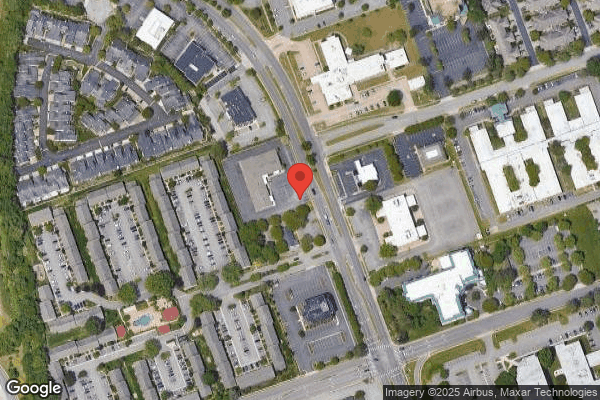
1148 FIRST COLONIAL RD, VIRGINIA BEACH, VA 23454 (757) 481-3321
For profit - Limited Liability company 112 Beds EASTERN HEALTHCARE GROUP Data: November 2025 2 Immediate Jeopardy citations
Trust Grade
9/100
#235 of 285 in VA
Last Inspection: August 2023

Over 2 years since last inspection. Current conditions may differ from available data.

Overview

Bay Pointe Rehabilitation and Nursing has received a Trust Grade of F, indicating significant concerns and poor overall performance. Ranked #235 out of 285 facilities in Virginia, they fall in the bottom half of state facilities, and they are #7 out of 13 in Virginia Beach City County, meaning only six local options are worse. The facility is worsening, with issues increasing from 11 in 2021 to 32 in 2023. Staffing is a weakness, with a rating of 1 out of 5 stars and a turnover rate of 55%, which is above the state average. Additionally, they have accrued $15,480 in fines, which is concerning as it is higher than 83% of Virginia facilities. RN coverage is average here, but there have been critical findings, including a failure to securely store hazardous substances and a lack of a proper medication review policy, both of which can pose risks to residents. Overall, while there are some average quality measures, the high number of deficiencies and critical incidents indicate that families may want to consider other options.

Trust Score
F
9/100
In Virginia
#235/285
Bottom 18%
Safety Record
High Risk
Review needed
Inspections
Getting Worse
11 → 32 violations
Staff Stability
⚠ Watch
55% turnover. Above average. Higher turnover means staff may not know residents' routines.
Penalties
✓ Good
$15,480 in fines. Lower than most Virginia facilities. Relatively clean record.
Skilled Nurses
○ Average
Each resident gets 31 minutes of Registered Nurse (RN) attention daily — about average for Virginia. RNs are the most trained staff who monitor for health changes.
Violations
⚠ Watch
63 deficiencies on record. Higher than average. Multiple issues found across inspections.
★☆☆☆☆
1.0
Overall Rating
★☆☆☆☆
1.0
Staff Levels
★★★☆☆
3.0
Care Quality
★☆☆☆☆
1.0
Inspection Score
Stable
2021: 11 issues
2023: 32 issues

The Good

  • Full Sprinkler Coverage · Fire safety systems throughout facility
  • No fines on record

Facility shows strength in fire safety.

The Bad

1-Star Overall Rating

Below Virginia average (3.0)

Significant quality concerns identified by CMS

Staff Turnover: 55%

Near Virginia avg (46%)

Frequent staff changes - ask about care continuity

Federal Fines: $15,480

Below median ($33,413)

Minor penalties assessed

Chain: EASTERN HEALTHCARE GROUP

Part of a multi-facility chain

Ask about local staffing decisions and management

Staff turnover is elevated (55%)

7 points above Virginia average of 48%

The Ugly 63 deficiencies on record

2 life-threatening
Aug 2023 20 deficiencies
CONCERN (D)

Potential for Harm - no one hurt, but risky conditions existed

Resident Rights (Tag F0550)

Could have caused harm · This affected 1 resident

Based on observation, resident interview, facility document review, and clinical record review, the facility staff failed to maintain a resident's dignity for one of 33 residents in the survey sample,...

Read full inspector narrative →
Based on observation, resident interview, facility document review, and clinical record review, the facility staff failed to maintain a resident's dignity for one of 33 residents in the survey sample, Resident #6. The findings include: For Resident #'6 (R6), the facility staff failed to store R6's urinary catheter collection bag in a privacy cover. On the following dates and times, R6 was observed. At each observation, her urinary catheter collection bag with urine in it was without a privacy cover, and was visible to anyone who passed by: 8/22/23 at 1:58 p.m. (resident sitting up in bed); 8/23/23 at 9:09 a.m. (resident sitting up in bed); 8/23/23 at 12:51 p.m. (resident self-propelling in her wheelchair in the hallway by the central desk). On 8/23/23 at 1:58 p.m., R6 was interviewed. When asked if she was bothered by the catheter collection bag, she stated: I guess I haven't thought about it. But it would be nice if everyone couldn't see my [urine] in the bag. A review of R6's care plan dated 10/23/19 revealed, in part: [R6] is s/p (status/post) suprapubic catheter replacement .position catheter bag and tubing below the level of the bladder and away from the entrance room door. On 8/24/23 at 11:30 a.m., LPN (licensed practical nurse) #7 was interviewed. When asked if urinary collection bags should be positioned or stored in any special way, she stated: They should have some kind of privacy cover. She stated the facility used to keep the in stock, but she was not sure if that was the case at the current time. She stated an exposed urinary collection bag does not promote a resident's dignity. On 8/24/23 at 2:28 p.m., ASM (administrative staff member) #1, the executive director, and ASM #2, the director of nursing were informed of these concerns. A review of the facility policy, Promoting/Maintaining Resident Dignity, revealed, in part: It is the practice of this facility to protect and promote resident rights and treat each resident with respect and dignity as well as care for each resident in a manner and in an environment that maintains or enhances resident's quality of life by recognizing each resident's individuality .Maintain resident privacy. No further information was provided prior to exit.
CONCERN (D)

Potential for Harm - no one hurt, but risky conditions existed

Safe Environment (Tag F0584)

Could have caused harm · This affected 1 resident

Based on observation, resident interview, staff interview, facility document review and clinical record review, the facility staff failed to maintain a clean, comfortable, and homelike environment for...

Read full inspector narrative →
Based on observation, resident interview, staff interview, facility document review and clinical record review, the facility staff failed to maintain a clean, comfortable, and homelike environment for two of 33 residents in the survey sample, Residents #32 and #106. The findings include: 1. For Resident #32 (R32), the facility staff failed to maintain the resident's room in a clean and homelike manner. Trash was observed and remained on the floor beside the bed from 8/22/23 through 8/24/23 and a film of dust was observed on the resident's dressers from 8/22/23 through 8/24/23. On the most recent MDS (minimum data set), a quarterly assessment with an ARD (assessment reference date) of 8/17/23, the resident scored 15 out of 15 on the BIMS (brief interview for mental status), indicating the resident was cognitively intact for making daily decisions. On 8/22/23 at 1:27 p.m., an interview was conducted with R32. The resident voiced concern regarding dirt and trash on the floor by the bed, and dust on the dressers. R32 stated the housekeepers clean the room most of the time, but there have been times the room hasn't been cleaned for five days, and sometimes the room isn't cleaned on the weekends. R32 stated that when the housekeeping employees do clean the room, they are not good and thorough. At this time, three yellow foam pieces (less than an inch in diameter), a stack of plastic cups and a Ziplock bag was observed on the floor beside the bed. Also, a film of dust was observed on the resident's dressers. On 8/23/23 at 2:58 p.m., and 8/24/23 at 8:29 a.m., the trash remained on R32's floor and the dust remained on the dressers. On 8/24/23 at 9:07 a.m. an interview was conducted with OSM (other staff member) #1 (the environmental services director). OSM #1 stated resident rooms should be swept and mopped every day, and all surfaces in resident rooms should be cleaned every day. On 8/24/23 at 9:18 a.m., an observation of R32's room was conducted with OSM #1. OSM #1 stated the trash and dust was not acceptable, and this was not clean, comfortable, and homelike. On 8/24/23 at 2:31 p.m., ASM (administrative staff member) #1 (the executive director) and ASM #2 (the director of nursing) were made aware of the above concern. The facility policy titled, Safe and Homelike Environment documented, In accordance with residents' rights, the facility will provide a safe, clean, comfortable and homelike environment . 2. For Resident #106 (R106), the facility staff failed to maintain the resident's bathroom in a clean and homelike manner. Black stains were observed on the floor, along the perimeter of the walls, and black dirt and hairs were observed around the base of the toilet from 8/22/23 through 8/24/23. On the most recent MDS (minimum data set), a quarterly assessment with an ARD (assessment reference date) of 7/10/23, the resident scored 14 out of 15 on the BIMS (brief interview for mental status), indicating the resident was cognitively intact for making daily decisions. On 8/22/23 at 1:21 p.m., an interview was conducted with R106. R106 voiced concern about black stains on the floor, along the perimeter of the walls in the bathroom, and black substance around the base of the toilet. R106 stated the resident voiced concern about the floor to someone a couple of months before, but the floor was still dirty. At this time, R106's bathroom was observed. Black stains were observed on the floor, along the perimeter of the walls, and black substance and hairs was observed around the base of the toilet. On 8/23/23 at 3:03 p.m. and 8/24/23 at 8:33 a.m., black stains remained on the floor, and black substance and hairs remained around the base of the toilet. On 8/24/23 at 9:07 a.m., an interview was conducted with OSM (other staff member) #1 (the environmental services director). OSM #1 stated resident bathrooms should be cleaned every day and this cleaning should include sweeping the floor, mopping the floor, cleaning the tub, wiping the mirrors, and cleaning the toilet. On 8/24/23 at 9:22 a.m., R106's bathroom was observed with OSM #1. OSM #1 stated the base around the toilet should be part of daily cleaning. OSM #1 further stated the floor would have to be scrubbed, and she was working on a list of rooms that needed this. OSM #1 stated R106's bathroom was not clean, comfortable, and homelike. On 8/24/23 at 2:31 p.m., ASM (administrative staff member) #1 (the executive director) and ASM #2 (the director of nursing) were made aware of the above concern.
CONCERN (D)

Potential for Harm - no one hurt, but risky conditions existed

Transfer Notice (Tag F0623)

Could have caused harm · This affected 1 resident

Based on staff interview and clinical record review, it was determined that the facility staff failed to provide written notification to the Office of the State Long-Term Care Ombudsman of a hospital ...

Read full inspector narrative →
Based on staff interview and clinical record review, it was determined that the facility staff failed to provide written notification to the Office of the State Long-Term Care Ombudsman of a hospital transfer for one of 33 residents in the survey sample; Resident #67. The findings include: For Resident #67, the facility staff failed to send the ombudsman written notification of transfers to the hospital. A review of the clinical record revealed that on 6/30/23, Resident #67 was sent to the emergency room for abdominal pain; and on 7/3/23 for chest pain. Further review of the clinical record failed to reveal any evidence of a written notification to the ombudsman of the hospital transfers. A review of the fax that was sent to the ombudsman on 7/4/23 for June 2023 transfers and discharges failed to reveal Resident #67's name as being transferred on 6/30/23. A review of the fax that was sent to the ombudsman on 8/1/23 for the July 2023 transfers and discharges failed to reveal Resident #67's name as being transferred on 7/3/23. On 8/24/23 at 11:24 AM, when ASM #1 (Administrative Staff Member, the Administrator) provided the above two fax lists, she stated that Resident #67 was not on the list for ombudsman notification for the hospital transfers on 6/30/23 and 7/3/23 because the resident went to the emergency room and back to the facility on the same day and therefore was not captured on the discharge report that is printed and provided to the ombudsman for the notification each month. She stated that she called the ombudsman to inquire his expectation and that he did not expect notifications under these circumstances. The regulations do not identify exceptions to the ombudsman notification requirement. A facility policy for hospital transfers/ombudsman notification was requested however none was provided.
CONCERN (D)

Potential for Harm - no one hurt, but risky conditions existed

Deficiency F0657 (Tag F0657)

Could have caused harm · This affected 1 resident

Based on staff interview and clinical record review, the facility staff failed to review and revise the comprehensive care plan for three of 33 residents in the survey sample, Residents #7, #68 and #8...

Read full inspector narrative →
Based on staff interview and clinical record review, the facility staff failed to review and revise the comprehensive care plan for three of 33 residents in the survey sample, Residents #7, #68 and #89. The findings include: 1. For Resident #68 (R68), the facility staff failed to revise the comprehensive care plan to include the use of bed rails. The comprehensive care plan for R68 documented in part, The resident has an ADL (activities of daily living) self-care performance deficit r/t (related to) Hemiplegia. Date Initiated: 04/15/2022. Revision on: 08/15/2022. The care plan failed to evidence bed rail usage. On 8/22/2023 at 4:10 p.m., an observation was made of R68 in their room. R68 was observed in bed asleep with bilateral upper bed rails in place. Additional observations of R68 in bed with bilateral bed rails in place were made on 8/23/2023 at 8:36 a.m. and 2:20 p.m. The clinical record documented a bed rail assessment and consent dated 4/9/2023. On 8/23/2023 at 2:19 p.m., an interview was conducted with LPN (licensed practical nurse) #7. LPN #7 stated that the purpose of the care plan was so the staff could have direction of what the goals of the patient were and that it was integrated so they could all see what the goals were and the whole plan of care. She stated that nursing staff and MDS staff updated the care plan. She stated that bed rail use should be addressed on the care plan. On 8/23/2023 at 4:00 p.m., ASM (administrative staff member) #1, the executive director and ASM #2, the director of nursing were made aware of the above concern. No further information was presented prior to exit. 2. For Resident #89 (R89), the facility staff failed to revise the comprehensive care plan to update the advance directive/code status. The comprehensive care plan for R89 documented in part, Advance Directive - (Name of R89) is Full Code. Date Initiated: 12/19/2022. Revision on: 03/26/2023. The physician orders for R89 documented in part, ADC: DNR (do not resuscitate). Order Date: 06/28/2023. The clinical record contained a durable do not resuscitate order form dated 6/27/2023 for R89 signed by the physician and the resident representative. On 8/23/2023 at 2:19 p.m., an interview was conducted with LPN (licensed practical nurse) #7. LPN #7 stated that the purpose of the care plan was so the staff could have direction of what the goals of the patient were and that it was integrated so they could all see what the goals were and the whole plan of care. She stated that nursing staff and MDS staff updated the care plan. She stated that she would expect the code status to be updated on the care plan when the code status was changed. She stated that the process would be to put in the order and then update the care plan after the proper paperwork was signed. She reviewed R89's care plan and stated that the code status had not been updated there and should have been to reflect the DNR status. On 8/23/2023 at 4:00 p.m., ASM (administrative staff member) #1, the executive director and ASM #2, the director of nursing were made aware of the above concern. No further information was presented prior to exit. 3. For Resident #7, the facility staff failed to review and revise the resident's comprehensive care plan when a male resident touched the resident's breast on 7/12/22. A facility synopsis of events documented that on 7/12/22, an employee witnessed a male resident touching himself and fondling R7's breast. A review of R7's comprehensive care plan revised on 12/9/22 failed to reveal the care plan was reviewed and revised regarding the 7/12/22 event. On 8/23/23 at 2:19 p.m., an interview was conducted with LPN (licensed practical nurse) #7. LPN #7 stated, The purpose of the care plan is so we can have direction of what the goals of the patient are, it is integrated so we can all see what the goals are, the whole plan of care. On 8/24/23 at 9:42 a.m., an interview was conducted with OSM (other staff member) #3 (the director of social services). OSM #3 stated R7's care plan should have been reviewed and revised when the resident's breast was fondled because this was an event that happened to the resident. On 8/24/23 at 2:31 p.m., ASM (administrative staff member) #1 (the executive director) and ASM #2 (the director of nursing) were made aware of the above concern. The facility did not provide a policy regarding care plans.
CONCERN (D)

Potential for Harm - no one hurt, but risky conditions existed

Deficiency F0658 (Tag F0658)

Could have caused harm · This affected 1 resident

Based on observation, resident interview, clinical record review, staff interview and facility document review, it was determined the facility staff failed to follow professional standards of practice...

Read full inspector narrative →
Based on observation, resident interview, clinical record review, staff interview and facility document review, it was determined the facility staff failed to follow professional standards of practice for medication administration for one of 33 residents in the survey sample, Resident #89. The findings include: For Resident #89 (R89), the facility staff failed to ensure medications were ingested and not left at the bedside in a medication cup unattended. On the most recent MDS (minimum data set), a quarterly assessment with an ARD (assessment reference date) of 6/13/2023, the resident scored 6 out of 15 on the BIMS (brief interview for mental status), indicating the resident was severely impaired for making daily decisions. On 8/22/2023 at 2:17 p.m., an observation was made of R89 in their room. R89 was observed in bed watching television. A small clear plastic medication cup approximately 30 ml (milliliter) in size was observed sitting on the overbed table to the right of R89. Inside of the plastic cup were seven pills of various shapes and colors. When asked about the cup, R89 stated that they were their medications and they were going to take them later. R89 stated that someone had left them for her that morning and they would take them later. The physician orders for R89 failed to evidence an order to leave medications at the bedside for self-administration. The comprehensive care plan for R89 failed to evidence documentation of self-administration of medications. The clinical record failed to evidence documentation of R89's ability to self-administer medications. On 8/22/2023 at 2:31 p.m., an interview was conducted with LPN (licensed practical nurse) #6. LPN #6 stated that medications were not supposed to be left at the bedside. She stated that R89 was not able to self-administer medications and should be observed taking medications prior to them leaving the room. She observed the clear plastic medication cup with the seven pills inside on top of R89's overbed table in the room and stated that she thought they were her morning medications. She stated that the medications should not be left in the room because they may not be able to be taken at a later time, may cause adverse effects if taken later or anyone could come in a pick them up. The facility policy Medication Administration revised 12/1/2022 documented in part, Medications are administered by licensed nurses, or other staff who are legally authorized to do so in this state, as ordered by the physician and in accordance with professional standards of practice, in a manner to prevent contamination or infection . 15. Observe resident consumption of medication . On 8/23/2023 at 4:00 p.m., ASM (administrative staff member) #1, the executive director and ASM #2, the director of nursing were made aware of the above concern. No further information was presented prior to exit.
CONCERN (D)

Potential for Harm - no one hurt, but risky conditions existed

ADL Care (Tag F0677)

Could have caused harm · This affected 1 resident

Based on observation, resident interview, staff interview, clinical record review and facility document review it was determined that the facility staff failed to provide ADL (activities of daily livi...

Read full inspector narrative →
Based on observation, resident interview, staff interview, clinical record review and facility document review it was determined that the facility staff failed to provide ADL (activities of daily living) care to a dependent resident for one of 33 residents in the survey sample, Resident #68. The findings include: For Resident #68 (R68), the facility staff failed to trim their fingernails. On the most recent MDS (minimum data set), a quarterly assessment with an ARD (assessment reference date) of 8/3/2023, the resident scored 4 out of 15 on the BIMS (brief interview for mental status), indicating the resident was severely impaired for making daily decisions. The assessment documented R68 requiring extensive assistance of one person for bathing and personal hygiene. On 8/22/2023 at 4:10 p.m., R68 was observed in bed asleep with their hands visible on top of the blanket. The fingernails on both hands were observed to be approximately one-quarter inch long. On 8/23/2023 at 8:36 a.m., an interview was conducted with R68. When asked if they performed nail care themselves, R68 stated No. When asked if the nursing staff trimmed their fingernails, R68 stated No. R68 proceeded to show the nails on the right hand and open up their left hand to show the nails further. R68 stated that they were long and Need cutting. The third and fourth nail on the left hand were observed to be long, uneven and jagged on the edges. All of the fingernails were observed to be approximately one-quarter inch long. The comprehensive care plan for R68 documented in part, The resident has potential/actual impairment to skin integrity r/t (related to) fragile skin. Date Initiated: 01/09/2023. Revision on: 01/09/2023. Under Interventions it documented in part, Avoid scratching and keep hands and body parts from excessive moisture. Keep fingernails short. Date Initiated: 01/09/2023 . On 8/23/2023 at 2:14 p.m., an interview was conducted with CNA (certified nursing assistant) #3. CNA #3 stated that they trimmed resident's fingernails as needed. She stated that residents fingernails were assessed for trimming on shower days and as needed and cleaned underneath daily. On 8/23/2023 at 2:19 p.m., an interview was conducted with LPN (licensed practical nurse) #7. LPN #7 stated that the CNA staff should be assessing the fingernails daily when providing ADL care to residents and trim them as needed. She observed R68's fingernails and stated that they were long and needed to be trimmed. She stated that the staff may have overlooked the nails needing trimming due to R68 being more independent in some parts of their care. She asked R68 if she could trim the fingernails and they stated Thank you. The facility policy Activities of Daily Living (ADLs) revised 12/1/2022, documented in part, .A resident who is unable to carry out activities of daily living will receive the necessary services to maintain good nutrition, grooming, and personal and oral hygiene . On 8/23/2023 at 4:00 p.m., ASM (administrative staff member) #1, the executive director and ASM #2, the director of nursing were made aware of the above concern. No further information was presented prior to exit.
CONCERN (D)

Potential for Harm - no one hurt, but risky conditions existed

Respiratory Care (Tag F0695)

Could have caused harm · This affected 1 resident

Based on observation, resident interview, staff interview, facility document review, and clinical record review, the facility staff failed to store respiratory equipment in a sanitary manner for two o...

Read full inspector narrative →
Based on observation, resident interview, staff interview, facility document review, and clinical record review, the facility staff failed to store respiratory equipment in a sanitary manner for two of 33 residents The findings include: 1. For Resident #6 (R6), the facility staff failed to store nebulizer equipment in a sanitary manner. On 8/22/23 at 1:58 p.m., and 8/23/23 at 9:09 a.m. and 12:52 p.m., R6's nebulizer tubing and mouthpiece were observed lying in direct contact with R6's nebulizer machine; there was no covering on the tubing or the mouthpiece. A review of R6's orders revealed the following order dated 5/18/23: Ipratropium-Albuterol Inhalation Solution 0.5-2.5 MG/3ML (milligrams/milliliter) (Ipratropium-Albuterol) 1 application inhale orally every 6 hours for SOB (shortness of breath). A review of R6's August 2023 MAR (medication administration record) revealed the resident received the medication as ordered. On 8/24/23 at 10:21 a.m., LPN (licensed practical nurse) #6, a unit manager, was interviewed. When asked where the tubing and mouthpiece for a nebulizer should be stored, she stated: There should be a clear bag for it. It should be stored in a plastic bag. She stated storage in a plastic bag would prevent the nebulizer equipment from touching dirty surfaces. On 8/24/23 at 11:30 a.m., LPN #7 was interviewed. She stated nebulizer mouthpieces and tubing should be stored in a clear, protective bag to prevent contamination. On 8/24/23 at 2:28 p.m., ASM (administrative staff member) #1, the executive director, and ASM #2, the director of nursing were informed of these concerns. A review of the facility policy, Cleaning and Disinfection of Resident-Care Equipment, revealed, in part: Semi-critical items are exposed to mucous membranes (i.e. [for example] respiratory equipment) or non-intact skin. The policy did not contain information about the storage of respiratory equipment. No further information was provided prior to exit. 2. For Resident #32 (R32), the facility staff failed to store an incentive spirometer in a sanitary manner. On the most recent MDS (minimum data set), a quarterly assessment with an ARD (assessment reference date) of 8/17/23, the resident scored 15 out of 15 on the BIMS (brief interview for mental status), indicating the resident was cognitively intact for making daily decisions. A review of R32's clinical record revealed a physician's order dated 5/22/23 to document the total minutes of direct resident bedside care for incentive spirometer medication administration- 12-15 breaths, total of 15-20 minutes. On 8/22/23 at 1:27 p.m., 8/23/23 at 1:24 p.m. and 8/24/23 at 8:29 a.m., an uncovered incentive spirometer with the mouthpiece exposed to air was observed sitting on R32's dresser. On 8/22/23 at 1:27 p.m., R32 stated they sometimes uses the incentive spirometer. On 8/24/23 at 8:29 a.m., R32 stated the staff have never provided a cover for the incentive spirometer. On 8/24/23 at 8:55 a.m., an interview was conducted with LPN (licensed practical nurse) #2. LPN #2 stated incentive spirometers should be stored by the bedside so residents can use them. LPN #2 stated she did not have a particular thing to cover incentive spirometers, but maybe something could be used for germs. LPN #2 stated incentive spirometers definitely need to be wiped down, and the nurses wipe incentive spirometers down, but there is not a set schedule or documentation that this is done. On 8/24/23 at 10:22 a.m., R32 stated staff do not wipe down or clean the incentive spirometer. On 8/24/23 at 2:31 p.m., ASM (administrative staff member) #1 (the executive director) and ASM #2 (the director of nursing) were made aware of the above concern. The facility policy titled, Cleaning and Disinfection of Resident-Care Equipment did not document specific information regarding incentive spirometers.
CONCERN (D)

Potential for Harm - no one hurt, but risky conditions existed

Deficiency F0698 (Tag F0698)

Could have caused harm · This affected 1 resident

**NOTE- TERMS IN BRACKETS HAVE BEEN EDITED TO PROTECT CONFIDENTIALITY** Based on resident and staff interview, resident interview, clinical record review and facility document review, it was determine...

Read full inspector narrative →
**NOTE- TERMS IN BRACKETS HAVE BEEN EDITED TO PROTECT CONFIDENTIALITY** Based on resident and staff interview, resident interview, clinical record review and facility document review, it was determined the facility staff failed to provide dialysis care and services for one of 33 residents in the survey sample, Resident #22. The findings include: The facility failed to provide a bagged lunch for Resident #22 to take with him to the dialysis appointment. Resident #22 was admitted to the facility on [DATE] with diagnosis that included but were not limited to: ESRD (end stage renal disease), dialysis, and diabetes mellitus. The most recent MDS (minimum data set) assessment, a quarterly assessment, with an ARD (assessment reference date) of 7/11/23, coded the resident as scoring a 15 out of 15 on the BIMS (brief interview for mental status) score, indicating the resident was not cognitively impaired. Section O- Special Procedures/Treatments: coded the resident dialysis-yes. A review of the comprehensive care plan dated 3/21.22, which revealed, FOCUS: The resident needs dialysis type hemo/peritoneal related to renal failure. The resident is at nutrition and/or hydration risk due to diagnosis of ESRD. INTERVENTIONS: HD (hemodialysis) every Monday-Wednesday-Friday. Monitor and record pre and post wt. Provide, serve Regular-CCHO-NAS (carbohydrate controlled no added salt) diet with Double Protein at all meals, as ordered. Monitor intake and record each meal. A review of the physician's order dated 3/2/23, revealed, Outpatient hemodialysis: Days Scheduled: Monday, Wednesday, Friday. Chair time 6:00am. An interview was conducted on 8/22/23 at 3:45 PM with Resident #22, when asked what items he took with him to dialysis, Resident #22 stated, There is a book I take. When asked if he takes a bagged meal, Resident #22 stated, Not for the last week. They used to send me with a sandwich and drink. Resident #22 stated they did not take one on 8/21/23. An interview was conducted on 8/22/23 at 4:15 PM with LPN (licensed practical nurse) #1. When asked what is sent with a resident who goes to dialysis, LPN #1 stated, we send a communication book with all his current information. When asked if a bagged meal is sent with the resident, LPN #1 stated, there have not been any bagged meal for him the last few days. He goes to dialysis early, so the bagged meal would need to get sent up in the evening. An interview was conducted on 8/24/23 at 10:15 AM with Resident #22. When asked if they had taken a bagged meal with them to dialysis on 8/23/23, Resident #22 stated, no, there was no food. An interview was conducted on 8/24/23 at 10:30 AM with OSM (other staff member) #8, the dietary manager. When asked if brown bag meal was provided to Resident #22 for his dialysis appointments, OSM #8 stated, Yes, we provide a bagged meal. For this resident who leaves about 5:30 AM, we send the bagged meal up the evening before with the evening snacks. We have been sending them up. On 8/24/23 at approximately 2:30 PM, ASM #1, the executive director, ASM #2, the director of nursing, ASM #4, the regional director of operations was made aware of the findings. According to the facility's Care Planning Special Needs-Dialysis policy reveals, This facility will provide the necessary care and treatment, consistent with professional standards of practice, physician orders, the comprehensive person-centered care plan, and the resident's goals and preferences, to meet the special medical, nursing, mental, and psychosocial needs of residents receiving dialysis. Interventions will include, but not limited to a. Documentation and monitoring of complications b. Pre- and post- weights c. Assessing, observing, and documenting care of access sites, as applicable d. Nutrition and hydration, including the provision of meals and snacks on treatment days. Nursing staff will provide a report to the dialysis provider regarding the resident's condition and treatment provisions each dialysis treatment day, and as needed. No further information was provided prior to exit.
CONCERN (D)

Potential for Harm - no one hurt, but risky conditions existed

Deficiency F0700 (Tag F0700)

Could have caused harm · This affected 1 resident

**NOTE- TERMS IN BRACKETS HAVE BEEN EDITED TO PROTECT CONFIDENTIALITY** Based on observation, resident interview, staff interview, facility document review, and clinical record review, it was determin...

Read full inspector narrative →
**NOTE- TERMS IN BRACKETS HAVE BEEN EDITED TO PROTECT CONFIDENTIALITY** Based on observation, resident interview, staff interview, facility document review, and clinical record review, it was determined that the facility staff failed to evidence documentation of a current bed rail assessment and consent, for one of 33 residents in the survey sample, Residents #109. The findings include: For Resident #109 (R109), the facility failed to evidence a consent for the use of bed rails and a bed rail assessment. On the most recent MDS (minimum data set) assessment, an admission assessment, with an assessment reference date of 7/26/2023, the resident scored 13 out of 15 on the BIMS (brief interview for mental status) assessment, indicating they were moderately impaired to make daily decisions. The resident was coded as being totally dependent on two or more persons for bed mobility and transfers. On 8/22/2023 at 1:51 p.m., an observation was made of R109 in bed with bilateral bar shaped bed rails in place in the up position on the upper portion of the bed. At this time an interview was conducted with R109. R109 stated that they used the bed rails to grab onto during care provided by facility staff. R109 stated that they had the rails on the bed since admission and wanted them on the bed. Additional observations of R109 in bed with the bilateral bar shaped bed rails in place were made on 8/22/2023 at 3:44 p.m. and 8/23/2023 at 9:23 a.m. The nursing admission assessment dated [DATE] for R109 documented in part, Side Rails: Sides: Both. Rails: Half. Indicated to promote independence with bed mobility . The assessment failed to evidence a consent obtained for use of bed rails, alternatives used prior to bed rails, and a review of the risks and benefits of bed rails with the resident and/or the resident representative. The nursing admission assessment dated [DATE] for R109 documented in part, Side Rails: Sides: Both. Rails: Half . The assessment failed to evidence a consent obtained for use of bed rails, alternatives used prior to bed rails, indication for use and a review of the risks and benefits of bed rails with the resident and/or the resident representative. On 8/23/2023 at approximately 4:00 p.m., a request was made via written list to ASM (administrative staff member) #1, the executive director, for evidence of the bed rail assessment and consent for use of bed rails for R109. On 8/24/2023 at 9:35 a.m., ASM #2, the director of nursing stated that they did not have a bed rail assessment for R109. She stated that the bed rail assessment was triggered by the admission assessment and they did not consider the grab bars that R109 had bed rails. On 8/23/2023 at 2:19 p.m., an interview was conducted with LPN (licensed practical nurse) #7. LPN #7 stated that the bed rail assessment was completed during the admission assessment. She stated that the nurse assessed the resident to see if they could safely use the bed rails to assist in turning or positioning themselves prior to putting them in place and they obtained a verbal consent from the resident or the family and documented it in the clinical record. She reviewed R109's admission assessment and clinical record and stated that she did not see a bed rail assessment or consent and there should be one because they used the bed rails to grab on to during care. On 8/24/2023 at 2:27 p.m., ASM #1, the executive director, ASM #2, the director of nursing, and ASM #4, the regional director of operations were made aware of the findings. No further information was provided prior to exit.
CONCERN (D)

Potential for Harm - no one hurt, but risky conditions existed

Deficiency F0745 (Tag F0745)

Could have caused harm · This affected 1 resident

Based on staff interview, facility document review and clinical record review, the facility staff failed to provide medically related social services for one of 33 residents in the survey sample, Resi...

Read full inspector narrative →
Based on staff interview, facility document review and clinical record review, the facility staff failed to provide medically related social services for one of 33 residents in the survey sample, Resident #7. The findings include: For Resident #7, the facility staff failed to assess and monitor the resident's psychosocial well-being after a male resident fondled the resident's breast on 7/12/22. On the most recent MDS (minimum data set), a quarterly assessment with an ARD (assessment reference date) of 8/3/23, the resident scored 10 out of 15 on the BIMS (brief interview for mental status), indicating the resident was moderately impaired for making daily decisions. A facility synopsis of events documented that on 7/12/22, an employee witnessed a male resident touching himself and fondling R7's breast. The residents were immediately separated, the male resident was placed on two-hour checks, and discharged on 7/14/22. The synopsis of events documented a skin check was completed for all residents (including R7), and R7 would be monitored for changes in behavior. A review of R7's clinical record (including assessments, progress notes, the medication administration record, and the treatment administration record for July 2022) failed to reveal documentation regarding the 7/12/22 event, and any evidence that R7 was assessed for and monitored for any psychosocial concerns. On 8/24/23 at 9:42 a.m., an interview was conducted with OSM (other staff member) #3 (the director of social services). OSM #3 stated that if a male resident touches a female resident's breast, the resident should be monitored for depression or any signs of decline. OSM #3 stated that from her perspective, she would refer the female resident to a licensed clinical social worker or send the resident out for counseling. OSM #3 stated an incident such as this is a lot for someone to process and staff, Can't not address an issue. On 8/24/23 at 2:31 p.m., ASM (administrative staff member) #1 (the executive director) and ASM #2 (the director of nursing) were made aware of the above concern. The facility did not have a policy for medically related social services or a policy for what should be done for a resident who is inappropriately touched by another resident. The social services director job description documented, Summary: Identify and provide for each resident's social, emotional and psychological needs, and the continuing development of the resident's full potential during his/her stay at the facility .
CONCERN (D)

Potential for Harm - no one hurt, but risky conditions existed

Medication Errors (Tag F0758)

Could have caused harm · This affected 1 resident

Based on clinical record review, staff interview and facility document review it was determined that the facility staff failed to evidence monitoring of psychotropic medication for one of 33 residents...

Read full inspector narrative →
Based on clinical record review, staff interview and facility document review it was determined that the facility staff failed to evidence monitoring of psychotropic medication for one of 33 residents in the survey sample, Resident #39. The findings include: For Resident #39 (R39), the facility staff failed to monitor behaviors and for adverse effects of an antianxiety and antidepressant medication. R39 was admitted to the facility with diagnoses that included but were not limited to bipolar disorder, major depressive disorder and alcohol dependence with alcohol-induced persisting dementia. On the most recent MDS (minimum data set), a quarterly assessment with an ARD (assessment reference date) of 8/9/2023, the resident scored 10 out of 15 on the BIMS (brief interview for mental status), indicating the resident was moderately impaired for making daily decisions. The assessment documented R39 receiving an antidepressant seven of the seven days during the assessment period and an antianxiety medication seven of seven days during the assessment period. The physician orders for R39 documented in part, Buspirone HCl (1) Tablet 10 MG (milligram) Give 1 tablet by mouth three times a day for depression. Order Date: 07/25/2023 . Amitriptyline HCl (2) Tablet 150 MG Give 1 tablet by mouth at bedtime for depression. Order Date: 07/25/2023 . Escitalopram Oxalate (3) Tablet 20 MG Give 1 tablet by mouth one time a day for Depression. Order Date: 07/25/2023 . The eMAR (electronic medication administration record) for R39 dated 7/1/2023-7/31/2023 and 8/1/2023-8/31/2023 failed to evidence psychotropic medication monitoring for R39. The eMAR documented the medications above administered each day as ordered. The comprehensive care plan for R39 documented in part, (Name of R39) has use of psychotropic medications r/t (related to) antidepressant, anxiety. Date Initiated: 01/23/2020. Revision on: 02/20/2020. Under Interventions it documented in part, . Monitor for adverse effects daily. Notify MD (medical doctor) prn (as needed) and document. Date Initiated: 01/23/2020. The care plan further documented The resident uses antidepressant medication (SPECIFY medications) r/t Depression. Date Initiated: 10/28/2022. Revision on: 04/21/2023. Under Interventions it documented in part, Administer Antidepressant medications as ordered by physician. Monitor/document side effects and effectiveness Q-Shift (every shift). Date Initiated: 10/28/2022. Revision on: 04/21/2023 . The care plan also documented, The resident uses anti-anxiety medication r/t Anxiety disorder. Date Initiated: 10/29/2022. Revision on: 04/21/2023. Under Interventions it documented in part, Administer Anti-Anxiety medications as ordered by physician. Monitor for side effects and effectiveness Q-Shift. Date Initiated: 10/29/2022. Revision on: 04/21/2023 . The clinical record failed to evidence monitoring for adverse effects and side effects of psychotropic medications each shift as documented in the plan of care. On 8/23/2023 at 2:19 p.m., an interview was conducted with LPN (licensed practical nurse) #7. LPN #7 stated that there was a prompt on the eMAR where they documented behavior and side effect monitoring of psychotropic medications. She stated that monitoring was done every shift and documented on the eMAR. She reviewed R39's eMAR and stated that she did not see the behavior monitoring and side effect monitoring on the eMAR. On 8/23/2023 at approximately 4:00 p.m., a request was made to ASM (administrative staff member) #1, the executive director for evidence of behavior and side effect monitoring for R39. On 8/24/2023 at 10:03 a.m., ASM #2, the director of nursing stated that they did not have any behavior or side effect monitoring to provide for R39 and they had placed an order to start documenting the monitoring now. The facility policy Use of Psychotropic Drugs revised 12/1/2022 documented in part, Residents are not given psychotropic drugs unless the medication is necessary to treat a specific condition, as diagnosed and documented in the clinical record, and the medication is beneficial to the resident, as demonstrated by monitoring and documentation of the resident's response to the medication(s) . 9. The effects of the psychotropic medications on a resident's physical, mental, and psychosocial wellbeing will be evaluated on an ongoing basis, such as: a. Upon physician evaluation (routine and as needed), b. During the pharmacist's monthly medication regimen review, c. During MDS review (quarterly, annually, significant change), and d. In accordance with nurse assessments and medication monitoring parameters consistent with clinical standards of practice, manufacturer's specifications, and the resident's comprehensive plan of care. 10. The resident's response to the medication(s), including progress towards goals and presence/absence of adverse consequences, shall be documented in the resident's medical record . On 8/24/2023 at 2:27 p.m., ASM #1, the executive director, ASM #2, the director of nursing and ASM #4, the regional director of operations were made aware of the above concern. No further information was presented prior to exit. Reference: (1) Buspirone is used to treat anxiety disorders or in the short-term treatment of symptoms of anxiety. Buspirone is in a class of medications called anxiolytics. It works by changing the amounts of certain natural substances in the brain. This information was obtained from the website: https://medlineplus.gov/druginfo/meds/a688005.html (2) Amitriptyline is used to treat symptoms of depression. Amitriptyline is in a class of medications called tricyclic antidepressants. It works by increasing the amounts of certain natural substances in the brain that are needed to maintain mental balance. This information was obtained from the website: https://medlineplus.gov/druginfo/meds/a682388.html (3) Escitalopram is used to treat depression in adults and children and teenagers 12 years of ago or older. Escitalopram is also used to treat generalized anxiety disorder (GAD; excessive worry and tension that disrupts daily life and lasts for 6 months or longer) in adults, teenagers, and children 7 years of age and older. Escitalopram is in a class of antidepressants called selective serotonin reuptake inhibitors (SSRIs). It works by increasing the amount of serotonin, a natural substance in the brain that helps maintain mental balance. This information was obtained from the website: https://medlineplus.gov/druginfo/meds/a603005.html
CONCERN (D)

Potential for Harm - no one hurt, but risky conditions existed

Deficiency F0761 (Tag F0761)

Could have caused harm · This affected 1 resident

Based on observation, staff interview, facility document review, and clinical record review, the facility staff failed to securely store a medication for one of 33 residents in the survey sample, Resi...

Read full inspector narrative →
Based on observation, staff interview, facility document review, and clinical record review, the facility staff failed to securely store a medication for one of 33 residents in the survey sample, Resident #52. The findings include: For Resident #52 (R52), the facility staff failed to store the resident's Midodrine (1) in a secure manner. On 8/24/23 at 8:35 a.m., the surveyor retrieved R52's dialysis communication notebook from an open shelf behind the nurses' desk. In the front of the notebook, a medication card containing 16 tablets of Midodrine was clipped inside the notebook by way of a three whole punch and three ring prongs. On 8/24/23 at 11:30 a.m., LPN (licensed practical nurse) #7 was interviewed. She stated that all medications should be locked inside the medication cart, or stored in the locked medication refrigerator in the medication room. She stated: We have to keep them locked up for resident safety. When shown R52's dialysis notebook with the Midodrine medication card clipped inside the notebook, LPN #7 shook her head and stated: Well that is inappropriate. She acknowledged the medication was unsecured. On 8/24/23 at 2:28 p.m., ASM (administrative staff member) #1, the executive director, and ASM #2, the director of nursing were informed of these concerns. A review of the facility policy, Medication Storage, revealed, in part: It is the policy of this facility to ensure all medications housed on our premises will be stored in the pharmacy and or medication rooms .to ensure proper .security .All drugs and biologicals will be stored in locked compartments .Only authorized personnel will have access to the keys in locked compartments. No further information was provided prior to exit. NOTES (1) Midodrine is used to treat orthostatic hypotension (sudden fall in blood pressure that occurs when a person assumes a standing position). Midodrine is in a class of medications called alpha-adrenergic agonists. It works by causing blood vessels to tighten, which increases blood pressure. This information is taken from the website https://medlineplus.gov/druginfo/meds/a616030.html#:~:text=Midodrine%20is%20used%20to%20treat,tighten%2C%20which%20increases%20blood%20pressure.
CONCERN (D)

Potential for Harm - no one hurt, but risky conditions existed

Deficiency F0840 (Tag F0840)

Could have caused harm · This affected 1 resident

**NOTE- TERMS IN BRACKETS HAVE BEEN EDITED TO PROTECT CONFIDENTIALITY** 2. For Resident #22, the facility failed to evidence a written dialysis agreement with one dialysis center. Resident #22 was ad...

Read full inspector narrative →
**NOTE- TERMS IN BRACKETS HAVE BEEN EDITED TO PROTECT CONFIDENTIALITY** 2. For Resident #22, the facility failed to evidence a written dialysis agreement with one dialysis center. Resident #22 was admitted to the facility on [DATE] with diagnosis that included but were not limited to: ESRD (end stage renal disease), and dialysis. A review of the comprehensive care plan dated 3/21.22, which revealed, FOCUS: The resident needs dialysis type hemo/peritoneal related to renal failure. The resident is at nutrition and/or hydration risk due to diagnosis of ESRD. INTERVENTIONS: HD (hemodialysis) every Monday-Wednesday-Friday . During the entrance conference to the facility on 8/22/23, a request was made for the dialysis contracts/agreements to be provided. On 8/24/23 at approximately 8:45 AM, ASM (administrative staff member) #1, the executive director stated, We have a contract but not a current copy. The dialysis company keeps sending us to legal. Someone before me signed the contract, the executive director or the director of regional operations signed the contract. We have been trying to get a copy of the contract since you all came in. On 8/24/23 at 2:30 PM, ASM (administrative staff member) #1, the executive director, ASM #2, the director of nursing and ASM #4, the regional director of operations, were made aware of the findings. ASM #1 stated, we should have a dialysis contract. No further information was provided prior to exit. Based on staff interview, facility document review, and clinical record review, the facility staff failed to maintain a current dialysis contract for two of 33 residents in the survey sample, Residents #52 and #22. The findings include: 1. For Resident #52 (R52) the facility staff failed to evidence a current dialysis contract. A review of R52's clinical record revealed the following order, dated 2/3/23: Outpatient Hemodialysis .Outside Center .Days Scheduled: Monday, Wednesday, Friday chair time 7:30am. A review of R52's MARs (medication administration records) from February through August 2023 revealed the resident had been receiving dialysis services as ordered. At the entrance conference on 8/22/23 at 12:25 p.m., ASM (administrative staff member) #1, the executive director, was asked to provide current contracts for the current companies from which residents were receiving dialysis services. On 8/24/23 at 2:28 p.m., ASM (administrative staff member) #1, the executive director was asked again to provide evidence of current dialysis contracts. She stated she could not provide a current dialysis contract at that time. No further information was provided prior to exit.
CONCERN (D)

Potential for Harm - no one hurt, but risky conditions existed

Medical Records (Tag F0842)

Could have caused harm · This affected 1 resident

Based on staff interview, facility document review, and clinical record review, the facility staff failed to maintain a complete and accurate clinical record for one of 33 residents in the survey samp...

Read full inspector narrative →
Based on staff interview, facility document review, and clinical record review, the facility staff failed to maintain a complete and accurate clinical record for one of 33 residents in the survey sample, Resident #7. The findings include: For Resident #7 (R7), the facility staff failed to document an incident where a male resident touched the resident's breast on 7/12/22. A facility synopsis of events documented that on 7/12/22, an employee witnessed a male resident touching himself and fondling R7's breast. A review of R7's clinical record failed to reveal documentation regarding the 7/12/22 event. On 8/24/23 at 8:55 a.m., an interview was conducted with LPN (licensed practical nurse) #2. LPN #2 stated a progress note should definitely be made in the clinical record if a male resident touches a female resident's breast. LPN #2 stated this should be documented in both residents' clinical records. On 8/24/23 at 2:31 p.m., ASM (administrative staff member) #1 (the executive director) and ASM #2 (the director of nursing) were made aware of the above concern. The facility policy titled, Documentation in Medical Record documented, Each resident's medical record shall contain an accurate representation of the actual experiences of the resident and include enough information to provide a picture of the resident's progress through complete, accurate, and timely documentation.
CONCERN (E)

Potential for Harm - no one hurt, but risky conditions existed

Assessment Accuracy (Tag F0641)

Could have caused harm · This affected multiple residents

Based on resident interview, staff interview, clinical record review and facility document review, it was determined the facility staff failed to provide an accurate MDS (minimum data set) assessment ...

Read full inspector narrative →
Based on resident interview, staff interview, clinical record review and facility document review, it was determined the facility staff failed to provide an accurate MDS (minimum data set) assessment for five out of 33 residents in the survey sample, Residents ##11, #62, #57, #32 and #111. The findings include: 1. For Resident #11, the facility staff failed to complete an accurate MDS (minimum data set); annual assessment for anticoagulant use. The most recent MDS (minimum data set) assessment, a quarterly assessment, with an ARD (assessment reference date) of 8/17/23, coded the resident as scoring a 09 out of 15 on the BIMS (brief interview for mental status) score, indicating the resident was moderately cognitively impaired. Section N- Medications: coded the resident anticoagulant-yes. A review of the physician orders dated 1/4/23 revealed, Clopidogrel Bisulfate Tablet 75 milligram po every morning. Clopidrel (Plavix) is classified as an antiplatelet. On 8/23/23 at 2:30 PM, an interview was conducted with LPN (licensed practical nurse) #3, the MDS coordinator. When asked to verify the coding Resident #11's 8/17/23 Section N: anticoagulant, LPN #3 stated, yes, it is incorrectly coded. It should have been coded anticoagulant 'no'. When asked what standard is followed for completing a MDS, LPN #3 stated, the RAI (resident assessment instrument) manual. On 8/23/23 at approximately 4:00 PM, ASM (administrative staff member) #1, the executive director, ASM #2, the director of nursing, ASM #4, the regional director of operations was made aware of the findings. No further information was provided prior to exit. 2. For Resident #62, the facility staff failed to complete an accurate MDS (minimum data set); annual assessment for anticoagulant use. The most recent MDS (minimum data set) assessment, a Medicare 5-day assessment, with an ARD (assessment reference date) of 7/6/23, coded the resident as scoring a 15 out of 15 on the BIMS (brief interview for mental status) score, indicating the resident was not cognitively impaired. Section N- Medications: coded the resident anticoagulant-no. A review of the physician orders dated 6/30/23 revealed, Eliquis (anticoagulant) Oral Tablet 5 milligram (mg). Give 5 mg by mouth two times a day. On 8/24/23 at 12:05 PM, an interview was conducted with LPN (licensed practical nurse) #3, the MDS coordinator. When asked to verify the coding for Resident #62's 7/6/23 Section N: anticoagulant, LPN #3 stated it was coded as a no. After looking at the physician orders and medication administration record LPN #3 stated, It was incorrectly coded on the 7/6/23 [MDS], anticoagulant should have been coded 'yes'. When asked what standard is followed for completing a MDS, LPN #3 stated, the RAI (resident assessment instrument) manual. On 8/24/23 at approximately 2:30 PM, ASM (administrative staff member) #1, the executive director, ASM #2, the director of nursing, ASM #4, the regional director of operations was made aware of the findings. No further information was provided prior to exit.3. For Resident #32 (R32), the facility staff failed to accurately code section N of the quarterly MDS (minimum data set) assessment with an ARD (assessment reference date) of 8/17/23. R32 was coded as having received insulin seven out of the last seven days however the resident did not receive insulin. A review of Resident #32's physician's order summary for August 2023 failed to reveal any orders for insulin but did contain an order dated 5/25/23 for Trulicity 0.75 milligrams/0.5 milliliters-inject one dose subcutaneously every Friday for diabetes mellitus. Section N0350 of R32's quarterly MDS with an ARD of 8/17/23 coded the resident as having received insulin seven out of the last seven days. On 8/23/23 at 1:46 p.m., an interview was conducted with LPN (licensed practical nurse) #3 (the MDS coordinator). LPN #3 stated that since Trulicity was a subcutaneous injection for diabetes, she assumed the medication was insulin. The Trulicity website documented the drug classification for this medication as a glucagon-like peptide-1 (GLP-1) receptor agonist used to treat diabetes. This information was obtained from the website: https://uspl.lilly.com/trulicity/trulicity.html#s3. On 8/23/23 at 4:12 p.m., ASM (administrative staff member) #1 (the executive director) and ASM #2 (the director of nursing) were made aware of the above concern. 4. For Resident #57 (R57), the facility staff failed to accurate code section N of the quarterly MDS (minimum data set) assessment with an ARD (assessment reference date) of 6/14/23. R57 was coded as having received insulin seven out of the last seven days however the resident did not receive insulin. A review of R57's physician's order summary for August 2023 failed to reveal any orders for insulin but did contain an order dated 12/6/22 for Trulicity 1.5 milligrams/0.5 milliliters-inject 1.5 milligrams every Thursday for diabetes mellitus. Section N0350 of R57's quarterly MDS with an ARD of 6/14/23 coded the resident as having received insulin seven out of the last seven days. On 8/23/23 at 1:46 p.m., an interview was conducted with LPN (licensed practical nurse) #3 (the MDS coordinator). LPN #3 stated that since Trulicity was a subcutaneous injection for diabetes, she assumed the medication was insulin. The Trulicity website documented the drug classification for this medication as a glucagon-like peptide-1 (GLP-1) receptor agonist used to treat diabetes. This information was obtained from the website: https://uspl.lilly.com/trulicity/trulicity.html#s3. On 8/23/23 at 4:12 p.m., ASM (administrative staff member) #1 (the executive director) and ASM #2 (the director of nursing) were made aware of the above concern. 5. For Resident #111 (R111), the facility staff failed to accurately code the resident's discharge status on the resident's discharge MDS (minimum data set) assessment with an ARD (assessment reference date) of 6/21/23. The staff coded R111 discharged to an acute hospital, but the resident discharged to another nursing home. R111 discharged from the facility on 6/21/23. A social services note dated 6/21/23 documented R111 was discharging to another nursing facility for long term care services. Section A2100 of R111's discharge MDS with an ARD of 6/21/23 coded the resident discharged to, 03. Acute hospital. On 8/23/23 at 1:46 p.m., an interview was conducted with LPN (licensed practical nurse) #3 (the MDS coordinator). LPN #3 stated she coded R111's discharge MDS wrong and needed to make a correction. LPN #3 stated she references the CMS (Centers for Medicare and Medicaid) RAI (Resident Assessment Instrument) manual when completing MDS assessments. The CMS RAI manual documented, A2100: OBRA Discharge Status Steps for Assessment 1. Review the medical record including the discharge plan and discharge orders for documentation of discharge location. Coding Instructions Select the 2-digit code that corresponds to the resident's discharge status. ·Code 02, another nursing home or swing bed: if discharge location is an institution (or a distinct part of an institution) that is primarily engaged in providing skilled nursing care and related services for residents who require medical or nursing care or rehabilitation services for injured, disabled, or sick persons. Includes swing beds . On 8/23/23 at 4:12 p.m., ASM (administrative staff member) #1 (the executive director) and ASM #2 (the director of nursing) were made aware of the above concern.
CONCERN (E)

Potential for Harm - no one hurt, but risky conditions existed

Comprehensive Care Plan (Tag F0656)

Could have caused harm · This affected multiple residents

**NOTE- TERMS IN BRACKETS HAVE BEEN EDITED TO PROTECT CONFIDENTIALITY** 4. For Resident #22, the facility staff failed to develop a care plan for the use of side rails, and failed to implement the car...

Read full inspector narrative →
**NOTE- TERMS IN BRACKETS HAVE BEEN EDITED TO PROTECT CONFIDENTIALITY** 4. For Resident #22, the facility staff failed to develop a care plan for the use of side rails, and failed to implement the care plan to include providing a meal to take to dialysis appointments. 4.a. Resident #22 was admitted to the facility on [DATE] with diagnoses that included but were not limited to: bilateral BKA (below the knee amputation). Resident #22 was observed in bed with 1/2 side rails on 8/22/23 at 3:50 PM and on 8/23/23 at 10:45 AM. A review of the comprehensive care plan dated 3/21/22, which revealed, FOCUS: The resident is High risk for falls related to Confusion, Deconditioning, Gait/balance problems and Hypotension. INTERVENTIONS: Anticipate and meet the resident's needs. There was no evidence of bed rail use on the care plan. A review of the facility's Bed Rail Safety Review dated 9/11/22 and 6/23/23, revealed, List bed rail(s) to be implemented: half rails. List side(s): both. There were no physician order for the bed rails. On 8/23/23 at 3:30 PM, an interview was conducted with LPN (licensed practical nurse) #4. When asked the purpose of the care plan, LPN #4 stated, the purpose is to provide everyone the plan of care for the resident. When asked who is responsible for developing the care plan, LPN #4 stated, the MDS coordinator initiates the care plan. When asked if bed rails should be on the care plan, LPN #4 stated, yes, it should be. On 8/24/23 at 12:05 PM, an interview was conducted with LPN #3, the MDS coordinator. When asked who is responsible for initiating care plans, LPN #3 stated, it is my responsibility. On 8/24/23 at approximately 2:30 PM, ASM (administrative staff member) #1, the executive director, ASM #2, the director of nursing, ASM #4, the regional director of operations was made aware of the findings. No further information was provided prior to exit. 4. b. For Resident #22, the facility staff failed to implement the care plan to include providing a meal to take to dialysis appointments. The most recent MDS (minimum data set) assessment, a quarterly assessment, with an ARD (assessment reference date) of 7/11/23, coded the resident as scoring a 15 out of 15 on the BIMS (brief interview for mental status) score, indicating the resident was not cognitively impaired. Section O- Special Procedures/Treatments: coded the resident dialysis-yes. A review of the comprehensive care plan dated 3/21.22, which revealed, FOCUS: The resident needs dialysis type hemo/peritoneal related to renal failure. The resident is at nutrition and/or hydration risk due to diagnosis of ESRD. INTERVENTIONS: HD (hemodialysis) every Monday-Wednesday-Friday. Monitor and record pre and post wt. Provide, serve Regular-CCHO-NAS (carbohydrate controlled no added salt) diet with Double Protein at all meals, as ordered. Monitor intake and record each meal. On 8/23/23 at 3:30 PM, an interview was conducted with LPN (licensed practical nurse) #4. When asked the purpose of the care plan, LPN #4 stated, the purpose is to provide everyone the plan of care for the resident. When asked who is responsible for developing the care plan, LPN #4 stated, the MDS coordinator initiates the care plan. When asked if Resident #22 was not receiving a bagged sandwich and drink to take to dialysis, was the dialysis care plan implemented, LPN #4 stated, no, it is not implemented. On 8/24/23 at approximately 2:30 PM, ASM (administrative staff member) #1, the executive director, ASM #2, the director of nursing, ASM #4, the regional director of operations was made aware of the findings. No further information was provided prior to exit. 5. For Resident #62, the facility staff failed to develop a care plan for the use of an anticoagulant. Resident #62 was admitted to the facility on [DATE] with diagnosis that included but were not limited to: long-term anticoagulant use. The most recent MDS (minimum data set) assessment, a Medicare 5-day assessment, with an ARD (assessment reference date) of 7/6/23, coded the resident as scoring a 15 out of 15 on the BIMS (brief interview for mental status) score, indicating the resident was not cognitively impaired. Section N- Medications: coded the resident anticoagulant-no. A review of the physician orders dated 6/30/23 revealed, Eliquis Oral Tablet 5 milligram (mg). Give 5 mg by mouth two times a day. A review of the comprehensive care plan dated 7/24/23, which revealed, FOCUS: The resident has a behavior problem related to Major Depressive Disorder and Heart Failure. INTERVENTIONS: Anticipate and meet the needs of resident. There was no evidence of anticoagulant use on the care plan. On 8/23/23 at 3:30 PM, an interview was conducted with LPN (licensed practical nurse) #4. When asked the purpose of the care plan, LPN #4 stated, the purpose is to provide everyone the plan of care for the resident. When asked who is responsible for developing the care plan, LPN #4 stated, the MDS coordinator initiates the care plan. When asked if anticoagulants should be on the care plan, LPN #4 stated, yes, it should be. When asked why it should be on the care plan, LPN #4 stated, so the team knows to assess for bleeding and bruising and report it immediately. On 8/24/23 at 12:05 PM, an interview was conducted with LPN #3, the MDS coordinator. When asked who is responsible for initiating care plans, LPN #3 stated, It is my responsibility. On 8/24/23 at approximately 2:30 PM, ASM (administrative staff member) #1, the executive director, ASM #2, the director of nursing, ASM #4, the regional director of operations was made aware of the findings. A review of the facility's High Risk Medication policy, revealed, The resident's plan of care shall alert staff to monitor for adverse consequences. Risks associated with anticoagulants include: a. Bleeding and hemorrhage (bleeding gums, nosebleed, unusual bruising, blood in urine or stool) b. Fall in hematocrit or blood pressure c. Thromboembolism 5. The resident's plan of care shall include interventions to minimize risk of adverse consequences. Examples include (depending on the medication): a. Limit venipunctures and injections, as possible. Be aware of the need to apply pressure following these procedures. b. Use soft toothbrush and electric razors. Limit intake of foods high in vitamin K: broccoli, cabbage, collard greens, spinach, kale, turnip greens, and brussel sprouts. d. Avoid cranberry juice and cranberry products. e. Caution resident/family about alcohol use while taking anticoagulants. f. Educate resident/family on risks of bleeding, dietary modifications, and symptoms to report to nurse/physician. g. Avoid (strenuous) activities that may lead to injury. No further information was provided prior to exit. Based on observation, resident interview, staff interview, clinical record review and facility document review it was determined that the facility staff failed to develop and/or implement the comprehensive care plan for seven of 33 residents in the survey sample, Residents #68, #89, #39, #22, #62, #25 and #101. The findings include: 1. For Resident #68 (R68), the facility staff failed to implement the comprehensive care plan to keep their fingernails short. On the most recent MDS (minimum data set), a quarterly assessment with an ARD (assessment reference date) of 8/3/2023, the resident scored 4 out of 15 on the BIMS (brief interview for mental status), indicating the resident was severely impaired for making daily decisions. The assessment documented R68 requiring extensive assistance of one person for bathing and personal hygiene. The comprehensive care plan for R68 documented in part, The resident has potential/actual impairment to skin integrity r/t (related to) fragile skin. Date Initiated: 01/09/2023. Revision on: 01/09/2023. Under Interventions it documented in part, Avoid scratching and keep hands and body parts from excessive moisture. Keep fingernails short. Date Initiated: 01/09/2023 . On 8/22/2023 at 4:10 p.m., R68 was observed in bed asleep with their hands visible on top of the blanket. The fingernails on both hands were observed to be approximately one-quarter inch long. On 8/23/2023 at 8:36 a.m., an interview was conducted with R68 in their room. When asked if they performed nail care themselves, R68 stated No. When asked if the nursing staff trimmed their fingernails, R68 stated No. R68 proceeded to show the nails on the right hand and open up their left hand to show the nails further. R68 stated that they were long and Need cutting. The third and fourth nail on the left hand were observed to be long, uneven and jagged on the edges. All of the fingernails were observed to be approximately one-quarter inch long. On 8/23/2023 at 2:14 p.m., an interview was conducted with CNA (certified nursing assistant) #3. CNA #3 stated that they trimmed resident's fingernails as needed. She stated that residents fingernails were assessed for trimming on shower days and as needed and cleaned underneath daily. On 8/23/2023 at 2:19 p.m., an interview was conducted with LPN (licensed practical nurse) #7. LPN #7 stated that the CNA staff should be assessing the fingernails daily when providing ADL (activities of daily living) care to residents and trim them as needed. She stated that the purpose of the care plan was so the staff could have direction of what the goals of the patient were and that it was integrated so they could all see what the goals were and the whole plan of care. She stated that the care plan should be implemented so that they provided the best outcome and care for the patient and so everyone was on the same page. She observed R68's fingernails and stated that they were long and needed to be trimmed. She stated that the staff may have overlooked the nails needing trimming due to R68 being more independent in some parts of their care. She asked R68 if she could trim the fingernails and they stated Thank you. The facility provided policy Care planning Special Needs-Dialysis revised 12/1/2022, failed to evidence guidance on implementing the care plan. The policy documented in part, .Comprehensive care plans will be developed based on resident assessments, goals, and preferences in accordance with assessment and care plan procedures . The facility policy Activities of Daily Living (ADLs) revised 12/1/2022, documented in part, .A resident who is unable to carry out activities of daily living will receive the necessary services to maintain good nutrition, grooming, and personal and oral hygiene . On 8/23/2023 at 4:00 p.m., ASM (administrative staff member) #1, the executive director and ASM #2, the director of nursing were made aware of the above concern. No further information was presented prior to exit. 2. For Resident #89 (R89), the facility staff failed to develop the comprehensive care plan to include psychotropic medication use. On the most recent MDS (minimum data set), a quarterly assessment with an ARD (assessment reference date) of 6/13/2023, the resident scored 6 out of 15 on the BIMS (brief interview for mental status), indicating the resident was severely impaired for making daily decisions. The assessment documented R89 receiving an antidepressant six of the seven days during the assessment period. The physician orders for R89 documented in part, Sertraline HCl (1) Oral Tablet 50 MG (milligram) (Sertraline HCl) Give 1.5 tablet by mouth one time a day for Anxiety 75 mg. Order Date: 04/13/2023. The comprehensive care plan for R89 failed to evidence documentation of the use of an antidepressant medication. On 8/23/2023 at 2:19 p.m., an interview was conducted with LPN (licensed practical nurse) #7. LPN #7 stated that the purpose of the care plan was so the staff could have direction of what the goals of the patient were and that it was integrated so they could all see what the goals were and the whole plan of care. She stated that any nurse or the MDS staff could update the care plan. On 8/24/2023 at 12:10 p.m., an interview was conducted with LPN #3, MDS coordinator. LPN #3 stated that the MDS staff were responsible for creating the care plan and the nursing staff helped with updating and adding to the care plans. She stated that upon admission they did a baseline care plan and then after the MDS assessment was completed, the comprehensive care plan was developed. She stated that there were certain medications that should be addressed on the care plan such as antidepressants. She reviewed R89's care plan and stated that the antidepressant should be addressed on the care plan and they did not see it. On 8/24/2023 at 2:27 p.m., ASM (administrative staff member) #1, the executive director, ASM #2, the director of nursing and ASM #4, the regional director of operations were made aware of the above concern. No further information was presented prior to exit. Reference: (1) Sertraline is used to treat depression, obsessive-compulsive disorder (bothersome thoughts that won't go away and the need to perform certain actions over and over), panic attacks (sudden, unexpected attacks of extreme fear and worry about these attacks), posttraumatic stress disorder (disturbing psychological symptoms that develop after a frightening experience), and social anxiety disorder (extreme fear of interacting with others or performing in front of others that interferes with normal life). It is also used to relieve the symptoms of premenstrual dysphoric disorder, including mood swings, irritability, bloating, and breast tenderness. Sertraline is in a class of antidepressants called selective serotonin reuptake inhibitors (SSRIs). It works by increasing the amounts of serotonin, a natural substance in the brain that helps maintain mental balance. This information was obtained from the website: https://medlineplus.gov/druginfo/meds/a697048.html 3. For Resident #39 (R39), the facility staff failed to implement the comprehensive care plan to monitor for adverse effects daily from psychotropic medications. On the most recent MDS (minimum data set), a quarterly assessment with an ARD (assessment reference date) of 8/9/2023, the resident scored 10 out of 15 on the BIMS (brief interview for mental status), indicating the resident was moderately impaired for making daily decisions. The assessment documented R39 receiving an antidepressant seven of the seven days during the assessment period and an antianxiety medication seven of seven days during the assessment period. The physician orders for R39 documented in part, Buspirone HCl (1) Tablet 10 MG (milligram) Give 1 tablet by mouth three times a day for depression. Order Date: 07/25/2023 . Amitriptyline HCl (2) Tablet 150 MG Give 1 tablet by mouth at bedtime for depression. Order Date: 07/25/2023 . Escitalopram Oxalate (3) Tablet 20 MG Give 1 tablet by mouth one time a day for Depression. Order Date: 07/25/2023 . The comprehensive care plan for R39 documented in part, (Name of R39) has use of psychotropic medications r/t (related to) antidepressant, anxiety. Date Initiated: 01/23/2020. Revision on: 02/20/2020. Under Interventions it documented in part, . Monitor for adverse effects daily. Notify MD (medical doctor) prn (as needed) and document. Date Initiated: 01/23/2020. The care plan further documented The resident uses antidepressant medication (SPECIFY medications) r/t Depression. Date Initiated: 10/28/2022. Revision on: 04/21/2023. Under Interventions it documented in part, Administer Antidepressant medications as ordered by physician. Monitor/document side effects and effectiveness Q-Shift (every shift). Date Initiated: 10/28/2022. Revision on: 04/21/2023 . The care plan also documented, The resident uses anti-anxiety medication r/t Anxiety disorder. Date Initiated: 10/29/2022. Revision on: 04/21/2023. Under Interventions it documented in part, Administer Anti-Anxiety medications as ordered by physician. Monitor for side effects and effectiveness Q-Shift. Date Initiated: 10/29/2022. Revision on: 04/21/2023 . The eMAR (electronic medication administration record) for R39 dated 7/1/2023-7/31/2023 and 8/1/2023-8/31/2023 failed to evidence psychotropic medication monitoring for R39. On 8/23/2023 at 2:19 p.m., an interview was conducted with LPN (licensed practical nurse) #7. LPN #7 stated that there was a prompt on the eMAR where they documented behavior and side effect monitoring of psychotropic medications. She stated that monitoring was done every shift and documented on the eMAR. She stated that the purpose of the care plan was so the staff could have direction of what the goals of the patient were and that it was integrated so they could all see what the goals were and the whole plan of care. She stated that the care plan should be implemented so that they provided the best outcome and care for the patient and so everyone was on the same page. She reviewed R39's eMAR and stated that she did not see the behavior monitoring and side effect monitoring on the eMAR. On 8/23/2023 at approximately 4:00 p.m., a request was made to ASM (administrative staff member) #1, the executive director for evidence of behavior and side effect monitoring for R39. On 8/24/2023 at 10:03 a.m., ASM #2, the director of nursing stated that they did not have any behavior or side effect monitoring to provide for R39 and they had placed an order to start documenting the monitoring now. On 8/24/2023 at 2:27 p.m., ASM #1, the executive director, ASM #2, the director of nursing and ASM #4, the regional director of operations were made aware of the above concern. No further information was presented prior to exit. Reference: (1) Buspirone is used to treat anxiety disorders or in the short-term treatment of symptoms of anxiety. Buspirone is in a class of medications called anxiolytics. It works by changing the amounts of certain natural substances in the brain. This information was obtained from the website: https://medlineplus.gov/druginfo/meds/a688005.html (2) Amitriptyline is used to treat symptoms of depression. Amitriptyline is in a class of medications called tricyclic antidepressants. It works by increasing the amounts of certain natural substances in the brain that are needed to maintain mental balance. This information was obtained from the website: https://medlineplus.gov/druginfo/meds/a682388.html (3) Escitalopram is used to treat depression in adults and children and teenagers 12 years of ago or older. Escitalopram is also used to treat generalized anxiety disorder (GAD; excessive worry and tension that disrupts daily life and lasts for 6 months or longer) in adults, teenagers, and children 7 years of age and older. Escitalopram is in a class of antidepressants called selective serotonin reuptake inhibitors (SSRIs). It works by increasing the amount of serotonin, a natural substance in the brain that helps maintain mental balance. This information was obtained from the website: https://medlineplus.gov/druginfo/meds/a603005.html 6. For Resident #25 (R25), the facility staff failed to develop a care plan for the resident's diagnosis of PTSD (post-traumatic stress disorder) (1). R#25's admitting diagnoses included PTSD (1). A review of R25's most recent MDS (minimum data set), a quarterly assessment with an ARD (assessment reference date) of 8/11/23, R25's diagnoses list included PTSD. A review of R25's care plan revealed no information related to interventions for PTSD. On 8/24/23 at 9:32 a.m., OSM (other staff member) #3, the director of social services, was interviewed. She stated R25 should have a care plan for PTSD. She stated she was not sure who was responsible for developing this care plan. On 8/24/23 at 11:36 p.m., LPN (licensed practical nurse) #3, the MDS coordinator, was interviewed. She stated she is responsible for developing a resident's comprehensive care plan, with input from the whole team. When asked if R25 should have a care plan for PTSD, she stated: That is a good question. I wouldn't unless the resident was demonstrating behaviors. She stated just because a resident has a diagnosis of PTSD, we don't need to give the staff assumptions about it. On 8/24/23 at 2:28 p.m., ASM (administrative staff member) #1, the executive director, and ASM #2, the director of nursing were informed of these concerns. ASM #2 stated the MDS coordinator is responsible for developing the care plan to address a resident's needs. No further information was provided prior to exit. NOTES (1) Post-traumatic stress disorder (PTSD) is a disorder that develops in some people who have experienced a shocking, scary, or dangerous event .Those who continue to experience problems may be diagnosed with PTSD. People who have PTSD may feel stressed or frightened, even when they are not in danger. This information is taken from the website https://www.nimh.nih.gov/health/topics/post-traumatic-stress-disorder-ptsd. 7. For Resident #101 (R101), the facility staff failed to develop a care plan for the resident's diagnosis of schizoaffective disorder (1). R#101's admitting diagnoses included schizoaffective disorder (1). A review of R101's most recent MDS (minimum data set), an admission assessment with an ARD (assessment reference date) of 6/5/23, R101's diagnoses list included schizoaffective disorder. A review of R101's care plan revealed no information related to interventions for schizoaffective disorder. On 8/24/23 at 11:36 p.m., LPN (licensed practical nurse) #3, the MDS coordinator, was interviewed. She stated she is responsible for developing a resident's comprehensive care plan, with input from the whole team. When asked if R101 should have a care plan for schizoaffective disorder, she stated: Maybe. She stated it depended on the resident's current status. On 8/24/23 at 2:28 p.m., ASM (administrative staff member) #1, the executive director, and ASM #2, the director of nursing were informed of these concerns. ASM #2 stated the MDS coordinator is responsible for developing the care plan to address a resident's needs. No further information was provided prior to exit. Reference: (1)Schizoaffective disorder is a mental condition that causes both a loss of contact with reality (psychosis) and mood problems (depression or mania). This information is taken from the website https://medlineplus.gov/ency/article/000930.htm.
CONCERN (E)

Potential for Harm - no one hurt, but risky conditions existed

Deficiency F0804 (Tag F0804)

Could have caused harm · This affected multiple residents

Based on observation, staff interview and facility document review, it was determined that the facility staff failed to provide food in a palatable and appetizing manner from one of one facility kitch...

Read full inspector narrative →
Based on observation, staff interview and facility document review, it was determined that the facility staff failed to provide food in a palatable and appetizing manner from one of one facility kitchens. The findings include: On 8/23/23 at 12:00 PM, observation of the tray line service began. Food temperatures were obtained by OSM #9 (Other Staff Member) a cook, with a facility thermometer, as follows: Mashed potatoes was 185 degrees Puree carrots was 175 degrees Puree bread was 180 degrees Puree barbeque chicken was 178 degrees Minced chicken was 180 degrees Gravy was 190 degrees Tomato soup was 175 degrees Chicken without barbeque sauce was 175 degrees Rice was 160 degrees Carrots was 180 degrees Baked beans was 178 degrees Barbeque chicken was 172 degrees On 8/23/23 at 1:05 PM, OSM #8, the dietary manager, was notified that a test tray was being requested. The test tray was prepared and the cart the test tray was on was then taken to the upstairs unit. At 1:20 PM, OSM #8 obtained the temperatures on the test tray with a facility thermometer as follows: Mashed potatoes was 120 degrees Puree carrots was 118 degrees Puree bread was 115 degrees Puree barbeque chicken was 115 degrees Carrots was 115 degrees Baked beans was 118 degrees Barbeque chicken was 120 degrees. Two surveyors and OSM #8 all taste tested the food. There was agreement that the food was not warm enough for meal enjoyment. The regular carrots had an odd vinegar-like flavor. The puree carrots had the same flavor but stronger and was off-putting. The baked beans were lacking flavor. The chicken was fair on flavor but was not hot. The puree bread tasted like thickener and was disliked by all. The facility policy, Food Preparation Guidelines was reviewed. This policy documented, .Food shall be prepared by methods that conserve nutritive value, flavor and appearance .Food and drinks shall be palatable, attractive, and at a safe and appetizing temperature . On 8/23/23 at 4:01 PM, at the end-of-day meeting, ASM #1 (Administrative Staff Member, the Administrator) and ASM #2, the Director of Nursing, were made aware of the findings. ASM #1 stated that the facility switched from an outsourced dietary service company to in-house dietary department staff and have already been working on some of the things identified.
CONCERN (E)

Potential for Harm - no one hurt, but risky conditions existed

Food Safety (Tag F0812)

Could have caused harm · This affected multiple residents

Based on observation, staff interview and facility document review, it was determined that the facility staff failed to store, prepare and serve food in a sanitary manner in one of one facility kitche...

Read full inspector narrative →
Based on observation, staff interview and facility document review, it was determined that the facility staff failed to store, prepare and serve food in a sanitary manner in one of one facility kitchens. The findings include: On 8/22/23 at approximately 12:15 PM, the kitchen inspection was conducted with OSM #8 (Other Staff Member) the dietary manager. A thick wet black substance noted on the floor along wall behind ice machine. This substance was noted to be a strip of approximately 6 inches wide, starting at the wall and out into the floor for approximately 6 inches, and ran along the edge of the floor / wall behind the ice machine. An air vent on the wall next to meat slicer was heavily caked with brown dust and lint substance. The wire racks on which dishware was stored was noted to have a tacky residue all over them. On 8/23/23 during tray line observation, at 12:05 PM, OSM #9, a cook, was obtaining temperatures of the food on the steam table. As she reached over one steam table tray of food to obtain the temperature of an item on the back row, her apron was noted to come in contact with the serving end of serving scoops that were on the steam table to be used during meal service. OSM #8 had facial hair and was not wearing a beard guard the entire time. He was noted to be plating and wrapping the desserts that were served for this lunch meal. At one point, he was assisting another kitchen staff member with lifting a stack of trays. His uncovered chin was noted to be hovering approximately one inch above the surface of the top tray. This tray was the next tray used during this meal service. On 8/23/23 at 3:12 PM, an interview was conducted with OSM #8. He stated that the dish racks, vent, and floor behind the ice machine should not be in the condition they were identified in. He stated that he has been with the facility about a week and did not know when the facility last did a deep clean of the kitchen and that he would be scheduling a deep clean. When asked about the beard guard, he stated, I will put one on. The facility policy, Sanitation Inspection was reviewed. This policy documented, It is the policy of this facility, as part of the department's sanitation program, to conduct inspections to ensure food service areas are clean, sanitary and in compliance with applicable state and federal regulations All food service areas shall be kept clean, sanitary, free from litter, rubbish and protected from rodents, roaches, flies and other insects . On 8/23/23 at 4:01 PM, at the end-of-day meeting, ASM #1 (Administrative Staff Member, the Administrator) and ASM #2, the Director of Nursing, were made aware of the findings. ASM #1 stated that the facility switched from an outsourced dietary service company to in-house dietary department staff and have already been working on some of the things identified.
CONCERN (F)

Potential for Harm - no one hurt, but risky conditions existed

Drug Regimen Review (Tag F0756)

Could have caused harm · This affected most or all residents

**NOTE- TERMS IN BRACKETS HAVE BEEN EDITED TO PROTECT CONFIDENTIALITY** Based on staff interview, facility document review, and clinical record review, it was determined that the facility staff failed...

Read full inspector narrative →
**NOTE- TERMS IN BRACKETS HAVE BEEN EDITED TO PROTECT CONFIDENTIALITY** Based on staff interview, facility document review, and clinical record review, it was determined that the facility staff failed to develop a Medication Regimen Review (MRR) policy that included required time frames for pharmacist's review and physician's response to the pharmacist's recommendations, potentially affecting all residents but specifically for five of 33 residents in the survey sample; Residents #15, #69, #16, #67 and #39. The findings include: 1. For Resident #15 the facility staff failed to ensure the medication regimen review policy contained required time frames for pharmacist's review and physician's response. Resident #15 was admitted to the facility on [DATE]. A review of the clinical record revealed all required monthly medication regimen reviews and no concerns were identified. However, a review of the facility's monthly medication regimen review policy, dated 12/1/22, failed to reveal time frames for pharmacist's review and physician's response. On 8/23/23 at 10:38 AM an interview was conducted with ASM #2 (Administrative Staff Member), the Director of Nursing. When asked about the policy not containing time frames for the physician to act upon pharmacy recommendations, ASM #2 stated, our [MRR] policy does not include timeframes for response. It just states in a timely manner. Our expectation and what we review with our physicians is a 7-day turnover. Nursing gives the recommendations to the physicians and tell them when it needs to be done. On 8/24/23 at 2:30 PM, ASM (administrative staff member) #1, the executive director, ASM #2, the director of nursing and ASM #4, the regional director of operations, were made aware of the findings. No further information was provided by the end of the survey. 2. For Resident #69, the facility staff failed to ensure the medication regimen review policy contained required time frames for pharmacist's review and physician's response Resident #69 was admitted to the facility on [DATE]. A review of the clinical record revealed all required monthly medication regimen reviews and no concerns were identified. However, a review of the facility's monthly medication regimen review policy, dated 12/1/22, failed to reveal time frames for pharmacist's review and physician's response. On 8/23/23 at 10:38 AM an interview was conducted with ASM #2 (Administrative Staff Member), the Director of Nursing. When asked about the policy not containing time frames for the physician to act upon pharmacy recommendations, ASM #2 stated, our [MRR] policy does not include timeframes for response. It just states in a timely manner. Our expectation and what we review with our physicians is a 7-day turnover. Nursing gives the recommendations to the physicians and tell them when it needs to be done. On 8/24/23 at 2:30 PM, ASM (administrative staff member) #1, the executive director, ASM #2, the director of nursing and ASM #4, the regional director of operations, were made aware of the findings. No further information was provided by the end of the survey. 5. For Resident #39 (R39), the facility staff failed to develop and maintain a comprehensive MRR (medication regimen review) policy to include time frames for the steps in the process of the medication regimen review procedure. On the most recent MDS (minimum data set), a quarterly assessment with an ARD (assessment reference date) of 8/9/2023, the resident scored 10 out of 15 on the BIMS (brief interview for mental status), indicating the resident was moderately impaired for making daily decisions. The assessment documented R39 receiving an antidepressant seven of the seven days during the assessment period and an antianxiety medication seven of seven days during the assessment period. R39 was selected for unnecessary medication review during the survey dates. On 8/22/2023 at 12:51 p.m., during entrance conference with ASM (administrative staff member) #1, the executive director and ASM #2, the director of nursing, a request was made for the facility medication regimen review policy. Review of the provided policy failed to evidence time expectations for physician and facility response to pharmacy recommendations. On 8/23/2023 at 10:38 a.m., an interview was conducted with ASM #2, the director of nursing. ASM #2 stated that the facilities current medication regimen review policy did not include a time frame for physician response. She stated that it only said in a timely manner. She stated that their expectation and what they reviewed with the physicians was in a 7 day turnover. She stated that they gave the pharmacy reviews to the physicians and told them when they needed to be done. On 8/24/2023 at 2:27 p.m., ASM #1, the executive director, ASM #2, the director of nursing and ASM #4, the regional director of operations were made aware of the above concern. No further information was presented prior to exit. 3. For Resident #16, the facility staff failed to ensure the Medication Regimen Review policy contained specified time frames for the physician to respond to pharmacy recommendations. A review of the clinical record for Resident #16 revealed all required monthly medication regimen reviews and no concerns were identified. However, a review of the facility policy, Medication Regimen Review failed to specify specific time frames for the physician to respond to any pharmacy recommendations. On 8/23/23 at 10:38 AM, an interview was conducted with ASM #2, (Administrative Staff Member) the Director of Nursing. She stated that the facility's policy did not include timeframe for physician's response to pharmacy recommendations. She stated that the policy just says in a timely manner. She stated that it was the facility's expectation and what they review with the physicians is a seven day turnover. She stated that they give the pharmacy recommendation to the physicians and tell them when it needs to be done. On 8/24/23 at 2:28 PM, ASM #1 (Administrative Staff Member, the Administrator) and ASM #2, the Director of Nursing, were made aware of the findings. No further information was provided by the end of the survey. 4. For Resident #67, the facility staff failed to ensure the Medication Regimen Review policy contained specified time frames for the physician to respond to pharmacy recommendations. A review of the clinical record for Resident #67 revealed all required monthly medication regimen reviews and no concerns were identified. However, a review of the facility policy, Medication Regimen Review failed to specify specific time frames for the physician to respond to any pharmacy recommendations. On 8/23/23 at 10:38 AM, an interview was conducted with ASM #2, (Administrative Staff Member) the Director of Nursing. She stated that the facility's policy did not include timeframe for physician's response to pharmacy recommendations. She stated that the policy just says in a timely manner. She stated that it was the facility's expectation and what they review with the physicians is a seven day turnover. She stated that they give the pharmacy recommendation to the physicians and tell them when it needs to be done. On 8/24/23 at 2:28 PM, ASM #1 (Administrative Staff Member, the Administrator) and ASM #2, the Director of Nursing, were made aware of the findings. No further information was provided by the end of the survey.
MINOR (C)

Minor Issue - procedural, no safety impact

Staffing Information (Tag F0732)

Minor procedural issue · This affected most or all residents

Based on staff interview, clinical record review and facility document review, it was determined the facility staff failed to post daily staffing for one of three days reviewed. The findings include: ...

Read full inspector narrative →
Based on staff interview, clinical record review and facility document review, it was determined the facility staff failed to post daily staffing for one of three days reviewed. The findings include: The facility staff failed to post the nurse staffing data on a daily basis at the beginning of each shift. The facility shifts were 7 AM-3 PM, 3 PM-11 PM, 11 PM-7 AM, and at times, 7 AM-7 PM and 7 PM-7 AM. On 8/22/23 at 11:45 AM upon entrance to the facility for the survey, the bulletin board in the main lobby had staffing posted with a date of 8/22/23 on posting. On 8/23/23 at 8:00 AM, the daily staffing posted on the bulleting board in the main lobby was dated 8/22/23; at 8:35 AM, the date remained 8/22/23. On 8/23/23 at 10:00 AM, the date was 8/23/23. The daily staffing was posted correctly on 8/24/23 at 8:00 AM. On 8/23/23 at 9:00 AM, an interview was conducted with ASM (administrative staff member) #2, the director of nursing. When asked to describe the staff posting process, ASM #2 stated, they have centralized staffing and the daily staffing form is emailed to us the evening before. The receptionist posts the daily staffing form in the evening prior to the next day. On 8/23/23 at 10:00 AM, an interview was conducted with OSM (other staff member) #1, the receptionist. When asked to describe the staff posting process, OSM #1 stated, It is emailed the evening before. I work till 4:00 PM and if it is not emailed by then, it is posted the next day. When asked what time the daily staffing is posted, OSM #1 stated, it is posted by 8:00 AM. On 8/24/23 at approximately 2:30 PM, ASM #1, the executive director, ASM #2, the director of nursing, ASM #4, the regional director of operations was made aware of the findings. According to the facility's Facility Required Posting policy revised 12/22, The facility will post required postings in an area that is accessible to all staff and residents. The facility must also post the following: Staffing Information. No further information was provided prior to exit.
Feb 2023 12 deficiencies 1 IJ
CRITICAL (J) 📢 Someone Reported This

A family member, employee, or ombudsman was alarmed enough to file a formal complaint

Immediate Jeopardy (IJ) - the most serious Medicare violation

Accident Prevention (Tag F0689)

Someone could have died · This affected 1 resident

**NOTE- TERMS IN BRACKETS HAVE BEEN EDITED TO PROTECT CONFIDENTIALITY** Based on observations, resident interview, staff interviews, and clinical record review, the facility staff failed to assure a r...

Read full inspector narrative →
**NOTE- TERMS IN BRACKETS HAVE BEEN EDITED TO PROTECT CONFIDENTIALITY** Based on observations, resident interview, staff interviews, and clinical record review, the facility staff failed to assure a resident's environment remained as free of accident hazards as possible by safely storing green rubbing alcohol to prevent oral use for one (1) of 37 residents (Resident #15), in the survey sample. Immediate Jeopardy (IJ) was called on 2/21/23 at 4:56 PM, at which time the facility Administrator and Director of Nursing were made aware. Following verification of the removal of immediacy the facility abated IJ on 2/23/23 at 1:11 PM. The scope and severity was lowered to a level 2, pattern. The findings included: Resident #15 was originally admitted to the facility 4/11/16 and readmitted [DATE] after an acute care hospital stay. The current diagnoses included; heart failure, renal insufficiency, coronary artery disease and reflux. The annual Minimum Data Set (MDS) assessment with an assessment reference date (ARD) of 1/4/23 coded the resident as completing the Brief Interview for Mental Status (BIMS) and scoring 0 out of a possible 15. This indicated Resident #15's cognitive abilities for daily decision making were severely impaired. In section G (Physical functioning) the resident was coded as requiring physical help of one person with bathing, limited assistance of one person with personal hygiene, dressing, and toileting, supervision of one person with bed mobility, transfers, and in-room walking, and supervision after set-up with eating. On 2/21/23 at 1:02 p.m. Resident #15 was observed sitting on the side of the bed with a bottle of green rubbing alcohol, 70% isopropyl to her mouth. The resident swished the rubbing alcohol around in her mouth twice and spit it out on the floor to her left. The resident was also observed having a cotton ball with the same color of green on it in her right ear. An interview was conducted with the resident on 2/21/23 at approximately 1:04 p.m., the resident put her finger into her mouth and rubbed the right lower gum and stated it was painful. The resident further stated sometimes her right ear hurts, throat and neck is sore, and the medicine (the green rubbing alcohol 70%) burns when she rinses her mouth, but it helps and when she awakes during the night the pain is gone or better. The resident stated the pain sometimes reached 7 out of a pain scale of 0 through 10. Resident #1 stated she inhales the rubbing alcohol when her head hurts and she rubs it on her body. After the resident completed use of the green rubbing alcohol, she placed the bottle on the floor to her right. The resident was observed again at approximately 2:20 p.m., in her room seated on the side of the bed and the green alcohol bottle remained on the floor beside her bed. The green alcohol bottle was 50% empty. Resident #1 was observed again in her room on 2/21/23 at approximately 3:05 p.m., by two other surveyors with the bottle of green rubbing alcohol on the floor beside the right foot. Other items visibly observed in the room included, a full bottle of green rubbing alcohol, Florida water (a cologne containing 70% alcohol), Sani-cloths, Clorox wipes, a can of Lysol spray, and a bucket of pink water holding clothing. On 2/21/23 at 5:21 p.m., an interview was conducted with Certified Nursing Assistant (CNA) #4. CNA #4 stated she was working a 16 hour shift that day and quite often she worked 16 hours on the assignment which included Resident #15. CNA #4 stated she does not assist the resident with bathing but she is in out out the room to bring meal trays to the resident. CNA #4 stated she had never seen the green rubbing alcohol, Florida water, or other biological products in the resident's room before that day and she removed one and a half bottles of green rubbing alcohol from the room, as well as two bottles of Florida water, one can of Lysol spray, one container of Febreze spray, a bottle of Maalox, two bottles of multivitamins and Vicks vapor rub. On 2/21/23 at 5:29 p.m., an interview was also conducted with Licensed Practical Nurse (LPN) #4. LPN #4 stated the resident was a very private person who has family which visits often. LPN #4 stated she was unaware the resident was experiencing ear, mouth, throat and neck pain or utilized alcohol in room to aid with the pain. LPN stated she was aware the resident often complained of back pain for which she is medicated. A nurse's note dated 2/21/23 7:30 p.m. read this writer had both Florida water and rubbing alcohol in her hand and asked the resident which one of those products she used to swish in her mouth. the resident pointed to and said she used the Florida water to swish in her mouth for freshness. An interview was conducted with Family Member (FM) #2 on 2/22/23 at approximately 11:16 a.m. FM #2 stated every 45 to 60 days for seven years the following items had been brought into the facility for Resident #15's use, green rubbing alcohol, Florida water cologne,Vicks vapor rub, and Lysol spray. FM #2 stated the resident rubs a little alcohol on the hands and head for aches and pains and used the Florida water in the bath water or just rub a little on for the pleasant aroma. FM #2 further stated she knew the facility's staff was aware the items were provided for Resident #15 because during much of the pandemic the package could not be given directly to the resident, they were left at a drop off area and the staff picked up the package and delivered it to the resident, which afforded the staff the opportunity to see what was in the packages. FM #2 stated she was not aware that the resident was putting the isopropyl alcohol and or Florida water in her mouth as well as soaking cotton balls with the isopropyl alcohol in her left ear. During the above interview, FM #2 also stated over the seven years the resident had resided at the facility items were kept at bedside visible to all who were in the resident's care area and at no time did anyone contact her to say do not supply the items to the resident. FM #2 stated she requested an evaluation of Resident #15's ears during a care plan conference because a decline in hearing was noticed during visits but no one had informed her of an evaluation taking place. FM #2 also stated she definitely knew the resident had not left the facility for an Ears/Nose/Throat evaluation because all appointments which takes place outside the facility she accompany's the resident. A review of Resident #15's physician orders revealed an order dated 10/11/22 for an ear, nose and throat evaluation and treatment but after reviewing the resident's records the evaluation was not identified. The in-house physician/practitioner notes from 10/4/22 through 2/22/23 read, 10/4/22 Ears/Nose/Mouth/Throat: Hard of hearing, no dysphagia, or change in dental status The practitioner's progress note dated 12/5/22 did not include an assessment or documentation regarding the resident's Ears/Nose/Mouth/Throat. The 1/3/23 practitioner's assessment read, Ears/Nose/Mouth/Throat: Hard of hearing, no dysphagia, or change in dental status and a 2/22/23 practitioner's assessment read, Ears/Nose/Mouth/Throat: Hard of hearing, no dysphagia, or change in dental status. The 2/22/23 narrative note read the resident has no cognitive impairment and has the capacity to make decisions and do activities of daily living independently. The physician/practitioner notes did not evidence a treatment for the ears, gumline, throat or neck discomfort the resident was experiencing. On 2/22/23 at approximately 2:15 p.m., the Director of Nursing was asked for information (the Ears/Nose/Mouth/Throat consultation report or the in-house physician/practitioner notes) regarding the 10/11/22 order for an ear/nose/throat consult. The DON stated the resident did not need an Ears/Nose/Mouth/Throat consult therefore the order was discontinued. On 2/27/23 at approximately 10:20 a.m., Family member #2 was in the facility to visit Resident #15 and have a meeting with the Interdisciplinary Team. She stated during the visit with the resident, all of the personal items she supplied were no longer in the room and she asked what happened to them for the facility's staff had not talked with her about the items. Family Member #2 was referred by this writer to the facility's staff for answers. On 2/27/23 at approximately 2:30 p.m., the above findings were shared with the Administrator, Director of Nursing and Corporate Consultant. An opportunity was offered to the facility's staff to present additional information, but no additional information was provided, and no concerns were voiced. One problem is that the body absorbs this alcohol faster than the alcohol in liquor. It absorbs up to 80 percent in just 30 minutes. This doesn't give your liver enough time to process and detoxify the alcohol before it goes into your bloodstream. Even a small amount can result in alcohol poisoning and death. The next risk is the potency of isopropyl alcohol, which is much higher than ethanol. Isopropanol alcohol is typically about 70 percent alcohol by volume. It's so high that your liver can only process a small amount, about 200 milliliters for adults and much less for children. For example, since the Covid-19 pandemic, the National Poison Data System has recorded more accidental deaths in children under 5 years old, who unknowingly drank hand sanitizers (many of which contain isopropanol); even a little is too much. Information obtained from-(https://www.ncbi.nlm.nih.gov/books/nbk493181/) (https://www.healthline.com) (https://www.aapcc.org) (https://www.webmd.com/mental-health). On 2/21/23 at approximately 3:25 p.m., the survey team contacted the Long-term Care Supervisor to make aware of the above observations and interviews. On 2/21/23 at 4:56 p.m., the facility's Administrator, Director of Nursing and one Corporate Consultant was informed that the above non-compliance constituted Immediate Jeopardy identified in F-689 Free of accident hazards Supervision/Devices at a Scope and Severity Level 4, isolated. The facility staff presented the following final revised abatement plan: Provider/Supplier IJ Abatement plan February 23, 2023 This Plan of Correction serves as (name of the provider) response to the Immediate Jeopardy called by surveyors during a complaint survey on February 21, 2023. The survey team relayed to the facility the template for F689. The Center has removed the immediate concern to ensure the resident's safety. The facility took immediate action to remove the immediate concern the Immediate Jeopardy related to, ensuring a resident's environment was free of green rubbing alcohol that was found in the resident's possession. o Director of Nursing held an ad-hoc safety meeting on 2/21/2023 at 6:30pm to discuss survey findings and creation of this plan; o Director of Nursing notified the facility medical director on 2/21/23 at 7:15pm and was made aware of the safety meeting and action plan; In addition, the facility took the following actions: o In the event of a similar situation in the future, the unsafe material will immediately be secured outside of resident access and 911 initiated if resident condition warranted. o After unsafe/unidentified material was removed, room rounds would be conducted by department heads to assure absence of any other unsafe/unidentified materials. o Director of Nursing immediately disposed of this resident material once notified by survey team members. Completed 2/21/2023 at 5pm. o Family/representative of this resident was notified of findings. Family verbalized to DON the rubbing alcohol and the Florida Water Cologne (for external use only) were used regularly at home. Family member will be notified 2/22/23 to not bring in these items moving forward. o Director of Nursing/ Director of Nursing representative/ Carefeed and Hostedtime (electronic mass communication system) educated all staff that items brought in from the community need to be reported to their supervisor and removed until deemed safe. Completed 2/21/2023 at 7pm. Director of Nursing/ Director of Nursing representative will continue to remind staff of the importance of this education. o Resident was last rounded on at 21:15. Order has been placed for monitoring the resident every two hours for the next 12 hours for safety on 2/21/23 starting at 22:00. o Room rounds were conducted for all residents on 2/21/2023 at 7pm to ensure the absence of any other unsafe materials. o Room rounds were conducted 2/22/23 4:30pm for all residents to ensure hazardous items are not present. o Room rounds for all residents will occur 3 times weekly x 4 weeks, then weekly x4 weeks then monthly x 1 month. Staff will continuously use their education to observe resident rooms when in them, not only during room rounds, to ensure hazardous items are reported to their supervisor for further investigation and deemed safe/unsafe for the resident to possess. The nurse practitioner will assess the patient and deem safe/unsafe. If deemed safe, an order will be placed for the resident to keep the item at bedside. The care plan for the resident will be updated accordingly. o Director of Nursing/ Director of Nursing representative/ Carefeed and Hostedtime (electronic mass communication system) will educate all staff that items brought in from the community need to be reported to their supervisor and removed until deemed safe beginning on 2/21/2023. Education will remain ongoing for any facility staff that did not receive the education by 2/21/23 and those staff will receive the education prior to working their next scheduled shift. o Director of Nursing/designee will conduct care plan audits of any like residents identified to have cultural preferences. These audits will be conducted weekly x4 weeks. o Data obtained during the care plan audit process will be analyzed for patterns and trends and reported to QAPI by the Administrator and/or Director of Nursing monthly for three months. At that time, the QAPI committee will evaluate the effectiveness of the intervention to determine if continued auditing is necessary to maintain compliance. The survey team verified the IJ removal plan as evidenced by the following actions: The survey team reviewed the 100% audits of room rounds to ensure the facility identified any unsafe items in all resident rooms. The survey team made observations of Resident #15 in her room to ensure the items identified as dangerous to her were removed. The survey team made observations of all resident rooms to ensure they were free from any hazardous items. The survey team re-interviewed FM#2 to ensure she was made aware of the restricted items for Resident #15. The survey team reviewed the all staff education that included reporting any items brought in to residents from the community had received the mandatory education. The survey team interviewed staff on duty to ensure they had received the aforementioned staff education outlined by the facility prior to starting their shifts. The IJ was validated through implementation of the removal plan and IJ was removed on 2/23/23 at 1:11 p.m. The deficient practice was assigned a Scope and Severity level of Level two, isolated. Severity Level 2 indicates noncompliance that results in a resident outcome of no more than minimal discomfort and/or has the potential to compromise the resident's ability to maintain or reach his or her highest practicable level of well-being.
CONCERN (D) 📢 Someone Reported This

A family member, employee, or ombudsman was alarmed enough to file a formal complaint

Potential for Harm - no one hurt, but risky conditions existed

Notification of Changes (Tag F0580)

Could have caused harm · This affected 1 resident

**NOTE- TERMS IN BRACKETS HAVE BEEN EDITED TO PROTECT CONFIDENTIALITY** Based on staff interview, clinical record review, a review of facility documentation, the facility staff failed to notify reside...

Read full inspector narrative →
**NOTE- TERMS IN BRACKETS HAVE BEEN EDITED TO PROTECT CONFIDENTIALITY** Based on staff interview, clinical record review, a review of facility documentation, the facility staff failed to notify resident's representative after a stage II sacral pressure ulcer advanced to an unstageable pressure ucler for one (1) of 37 residents (Resident #11) in the survey sample. The findings included: Resident #11 was originally admitted to the nursing facility on 08/12/19. Resident #11 was discharged to (name of hospital) on 10/19/21 and re-admitted on [DATE]. Diagnosis for Resident #11 included but are not limited to malignant neoplasm, muscle weakness and dementia with behavioral disturbances. The most recent Minimum Data Set (MDS - an assessment protocol) a significant change assessment with an Assessment Reference Date (ARD) of 10/29/21 coded Resident #11 with a 00 out of a possible score of 15 on the Brief Interview for Mental Status (BIMS), indicating severely impaired cognitive skills for daily decision-making. In section G (Physical functioning) the MDS coded Resident #11 requiring total dependence of two with transfer, total dependence of one with toilet use, personal hygiene and bathing, extensive assistance of one bed mobility and dressing and supervision with one assist with eating for Activities of Daily Living (ADL) care. Resident #11's care plan revised on 10/22/20 identified the resident with actual alteration in skin integrity to sacral area (pressure ulcer) upon readmission related to decreased mobility. The goal set for the resident by the staff was that the resident's wound will be covered with epithelial tissue or resurfaced with new skin even with possible discoloration and will be free of infection. Some of the interventions/approaches the staff would use to accomplish this goal is to administer medications/treatment per physician order, apply protective skin care with incontinent care, monitor for signs and symptoms of infection and report to physician for care and treatment or debride and assess for pain/comfort level every shift/as needed/ prior to dressing change and medicate per physician order. A Braden Risk Assessment Report was completed on 07/04/21; the resident scored a 16 indicating at risk for the development of pressure ulcers. The assessment coded under sensory perception slightly limited and responds to verbal commands but cannot always communicate discomfort or the need to be turned. Under activity was coded chairfast, ability to walk severely impaired or limited or non-existent. Under moisture was coded skin is occasionally moist, requiring an extra linen change approximately once a day and coded bedfast under activity. A review of the Nurse Practitioner (NP) progress note dated 11/04/21 indicated Resident #11 with a pressure ulcer to the sacral region, measuring approximately the size of a quarter. A review of Resident #11's clinical record revealed the resident was seen by the wound NP weekly starting on 11/09/21 through 12/21/21. The wound NP initial progress note of the sacral pressure ulcer on 11/09/21 revealed an unstageable ulcer measuring 3.5 cm x 5.5 cm x 0.6 cm. The progress note stated the sacral wound had a moderate amount of serous drainage, no odor present with 90 percent (%) slough and 10% dermis tissue and moist periwound. The wound was debrided removing slough tissue; tolerated well. A new treatment order was given to clean the sacral wound with wound cleanser, apply Santyl, cover with calcium alginate and dry dressing daily. The wound NP offered further recommendations to turn and reposition per facility protocol, and to optimize nutrition. A wound NP progress note dated 12/21/21 revealed the sacral wound pressure ulcer remained an unstageable measuring 4.5 cm x 5 cm x 2.5. The sacral wound noted with heavy amount of purulent drainage, no odor present with 80% slough, 10% fascia and 10% bone. The wound was debridement removing fascia with minimal bleeding. A new treatment order was given to clean the sacral wound with wound cleanser and gauze, pack tunnel with calcium alginate and with Santyl, make sure Santyl covers all slough, cover with dry dressing daily and as needed. Continue with current recommendations to turn and reposition per facility protocol, and to optimize nutrition. A review of the clinical record did not indicate Resident #11's Representative or Emergency contact was informed when the sacral wound advanced to an unstageable pressure ulcer. On 02/27/23 at approximately 12:45 p.m., an interview was conducted with the Director of Nursing. She stated she was not able to locate in the resident's clinical record the resident's representative was informed of the worsening sacral pressure ulcer. She stated the emergency contact/representative should have been updated when the sacral wound deteriorated. On 2/27/2023 at 5:50 p.m., the Administrator, Director of Nursing, [NAME] President of Operations and Regional Director of Clinical Services were informed of the above findings. No further information was provided prior to exit. The facility's policy titled Notification of Change revised on 12/01/22. It is the facility policy to ensure the facility promptly informs the resident, consults the resident's physician; and notifies, consistent with his or her authority, resident's representative when there is a change requiring notification. -Compliance Guidelines: The facility must inform the resident, consult with the resident's physician and/or notify the resident's family member or legal representative when there is a change requiring such notification. -Circumstances requiring notification include but are not limited to a new treatment or discontinuation of current treatment due to adverse consequences, acute condition, and exacerbation of a chronic condition. Definitions -Pressure Injury: A pressure injury is localized damage to the skin and underlying soft tissue usually over a bony prominence or related to a medical or other device. The injury can present as intact skin or an open ulcer and may be painful. The injury occurs as a result of intense and/or prolonged pressure or pressure in combination with shear (http://www.npuap.org/resources/educational-and-clinical-resources/npuap-pressure-injury-stages/). -Unstageable Pressure Injury: Obscured full-thickness skin and tissue loss. Full-thickness skin and tissue loss in which the extent of tissue damage within the ulcer cannot be confirmed because it is obscured by slough or eschar. If slough or eschar is removed, a Stage 3 or Stage 4 pressure injury will be revealed. Stable eschar (i.e. dry, adherent, intact without erythema or fluctuance) on the heel or ischemic limb should not be softened or removed (http://www.npuap.org/resources/educational-and-clinical-resources/npuap-pressure-injury-stages/). -Santyl is used to help the healing of burns and ulcers. Collagenase is an enzyme. It works by helping to break up and remove dead skin and tissue. This effect may also help to work better and speed up your body's natural healing process (http://www.webmd.com).
CONCERN (D) 📢 Someone Reported This

A family member, employee, or ombudsman was alarmed enough to file a formal complaint

Potential for Harm - no one hurt, but risky conditions existed

Report Alleged Abuse (Tag F0609)

Could have caused harm · This affected 1 resident

**NOTE- TERMS IN BRACKETS HAVE BEEN EDITED TO PROTECT CONFIDENTIALITY** Based on interview, record review, and review of facility policy, the facility failed to ensure allegations of abuse (including ...

Read full inspector narrative →
**NOTE- TERMS IN BRACKETS HAVE BEEN EDITED TO PROTECT CONFIDENTIALITY** Based on interview, record review, and review of facility policy, the facility failed to ensure allegations of abuse (including injuries of unknown origin and misappropriation of property) were reported immediately, as required, to the State Survey Agency (SSA) and/or law enforcement, for two (Resident (R) 1 and R27) of five residents reviewed for abuse. R1's injury of unknown source, which constituted serious bodily injury (fracture) was not reported immediately or within two hours of the incident being identified. R27's allegation of misappropriation of property (money) was not reported within 24 hours of the initial allegation. The failure to report all allegation of abuse, including injuries of unknown source and/or misappropriation of resident property, could delay the investigation, treatment, and placing interventions into place for the safety of the resident(s). Findings include: Review of the facility's Abuse, Neglect and Exploitation policy, revised on 12/01/22, provided on paper by the Administrator, revealed It is the policy of this facility to provide protections for the health, welfare, and rights for each resident by developing and implementing written policies and procedures that prohibit and prevent abuse, neglect, and exploitation and misappropriation of resident property . Reporting of alleged violations to the Administrator, state agency, adult protective services, and to all other required agencies (e.g., law enforcement when applicable) within specified timeframes: a. Immediately, but not later than 2 hours after the allegation is made, if the events that cause the allegation involve abuse or result in serious bodily injury, or b. Not later than 24 hours if the events that cause the allegation do not involve abuse and do not result in serious bodily injury . The Administrator will follow up with government agencies, during business hours, to confirm the initial report was received, and to report the results of the investigation when final within 5 working days of the incident, as required by state agencies. 1. Review of R1's undated Face Sheet located in R1's electronic medical record (EMR) under the Profile' tab, indicated R1 was admitted on [DATE] with diagnoses of vascular dementia with other behavior disturbances, muscle weakness, and dysphagia. Review of R1's quarterly Minimum Data Set (MDS), located in R1's EMR under the MDS tab, with an Assessment Reference Date (ARD) of 01/24/23, revealed a Brief Interview for Mental Status (BIMS) score of 9/15, indicating the resident was moderately cognitively impaired. Per the MDS, R1 required extensive assistance for all active daily living (ADLs) and mobility. Review of progress notes under the Progress Notes tab revealed on 02/12/22, R1 was complaining of a pain in his upper forearm with bruising and swelling to the area. R1 was sent to the hospital on [DATE] for x rays of the elbow and forearm. Per the hospital findings, R1 was diagnosed with a fracture of the olecranon (bony prominence of the elbow). R1 was sent back from the hospital the next morning with a wrap and sling. Review of the the Facility Synopsis of the event provided by the facility revealed that the incident was not reported to the Virginia Department of Health (SSA) until two days later, on 02/14/22. During an interview conducted on 02/23/23 at 04:34 PM, the Administrator stated I am the one who did the investigation and who reported it to the state, but I do not have the two hours or less report to the state. I thought I had it but I guess I don't. The administrator stated, I know I am supposed to report within a two hour period of being notified but it looks like I didn't. 2. Review of R27's undated Profile, located in the Profile tab of the EMR, revealed she was admitted to the facility on [DATE] and discharged from the facility on 08/17/22. Review of R27's admission MDS assessment, with an ARD of 05/05/22, located in the MDS tab of the EMR, revealed she scored 15/15 on the BIMS, indicating no cognitive impairment. R27 did not exhibit any mood or behavioral symptoms. She was able to make herself understood and understand others. Review of R27's 05/31/22 Complaint/Grievance Report, provided by the Administrator on paper, revealed, Patient reports about $14.00 missing from her draw [sic] . Findings of investigation: SW [social worker] was unable to substantiate when or whom might have taken any $ [money] from resident . Plan to resolve complaint/grievance: SW educated resident on keeping her $ on her persons [sic] at all times. Is Complainant satisfied: No . Investigated [and] educated resident on how to keep her $ [and] personal items safe . Resident feels she should be able to leave items in her room/draw [sic] and it not be touched. SW counseled on the demographic of the facility/population and explained that it's difficult to determine who is trustworthy/honest . Resident advised to keep her purse/pocketbook/money on her person at all time [sic]. Further review of the report revealed no evidence that the resident's allegation of misappropriation of her property/money was reported to either the SSA or law enforcement. In an interview on 02/24/23 at 11:27 AM, the Administrator stated she did not report R27's allegation to the State Health Department or Law Enforcement because she was unable to substantiate the allegation through investigation; however, she was unable to provide documentation of an investigation. (Cross-reference F610: Abuse Investigation - The facility failed to provide written evidence of an investigation into the allegation of misappropriation of property). The Administrator was unable to recall the timeframe of the investigation but stated the grievance form had been signed as completed on 05/31/22, the same day the allegation was received. The Administrator stated she considered an allegation of misappropriation of property as a reportable event. In an email received from the Administrator on 02/27/23 at 9:56 AM, the Administrator documented, Since there was no money stolen, as stated in the grievance completed the same day as the allegation, there was nothing to report. However, no investigative documentation was provided to show the allegation was unsubstantiated.
CONCERN (D) 📢 Someone Reported This

A family member, employee, or ombudsman was alarmed enough to file a formal complaint

Potential for Harm - no one hurt, but risky conditions existed

Investigate Abuse (Tag F0610)

Could have caused harm · This affected 1 resident

**NOTE- TERMS IN BRACKETS HAVE BEEN EDITED TO PROTECT CONFIDENTIALITY** Based on interview, record review, and review of facility policy, the facility failed to ensure allegations of abuse for two (R2...

Read full inspector narrative →
**NOTE- TERMS IN BRACKETS HAVE BEEN EDITED TO PROTECT CONFIDENTIALITY** Based on interview, record review, and review of facility policy, the facility failed to ensure allegations of abuse for two (R27 and R24) of five residents reviewed for abuse were thoroughly investigated. The failure to thoroughly investigate abuse allegations, including incidents of injuries of unknown origin and/or misappropriation of property, placed these residents at risk for continued abuse. Findings include: Review of the facility's Abuse, Neglect and Exploitation policy, revised on 12/01/22, provided on paper by the Administrator, revealed It is the policy of this facility to provide protections for the health, welfare, and rights for each resident by developing and implementing written policies and procedures that prohibit and prevent abuse, neglect, and exploitation and misappropriation of resident property . An immediate investigation is warranted when suspicion of abuse, neglect or exploitation, or reports of abuse, neglect, or exploitation occur. Written procedures for investigations include: . Identifying and interviewing all involved persons, including the alleged victim, alleged perpetrator, witnesses, and others who might have knowledge of the allegations . Providing complete and thorough documentation of the investigation. 1. Review of R27's undated Profile, located in the Profile tab of the electronic medical record (EMR) revealed she was admitted to the facility on [DATE] and was discharged from the facility on 08/17/22. Review of R27's admission Minimum Data Set (MDS) assessment, with an Assessment Reference Date (ARD) of 05/05/22, located in the MDS tab of the EMR, revealed she scored 15 out of 15 on the Brief Interview for Mental Status (BIMS), indicating no cognitive impairment. R27 did not exhibit any mood or behavioral symptoms. She was able to make herself understood and understand others. Review of R27's 05/09/22 Care Plan, located in the Care Plan tab of the EMR, revealed no indication of behavioral symptoms or making false allegations. Review of R27's 05/31/22 Complaint/Grievance Report, provided by the Administrator on paper, revealed, Patient reports about $14.00 missing from her draw [sic] . Findings of investigation: SW [Social Worker] was unable to substantiate when or whom might have taken any $ [money] from resident . Plan to resolve complaint/grievance: SW educated resident on keeping her $ on her persons [sic] at all times. Complaint/Grievance is it resolved? Describe: Yes. Investigated [and] educated resident. Is Complainant satisfied: No . Investigated [and] educated resident on how to keep her $ [and] personal items safe . Resident feels she should be able to leave items in her room/draw [sic] and it not be touched. SW counseled on the demographic of the facility/population and explained that it's difficult to determine who is trustworthy/honest . Resident advised to keep her purse/pocketbook/money on her person at all time [sic]. The form again documented R27 was not satisfied with the resolution of the grievance, and instructed, If no, repeat follow-up action until resolved. Document follow-up on a separate sheet of paper and attach. However, there was no additional information attached. The form did not include documentation of an investigation into the allegation of missing money, including documented interviews of potential witnesses. In an interview on 02/24/23 at 9:25 AM, the Administrator stated she did not substantiate the allegation because there was no evidence R27 had any money missing and because it was common for the resident to fabricate stories and make false accusations. The Administrator stated that the behaviors of fabricating stories and making false accusations was documented in the resident's Progress Notes. However, review of R27's 04/27/22 to 06/02/22 Progress Notes, located in the Prog Note tab of the EMR, revealed no indication R27 made any allegations of lost items or false accusations. Further interview with the Administrator on 02/24/23 at 9:25 AM revealed that, to conduct the investigation, she spoke with R27 and spoke to staff to see if they witnessed anyone going into the room. The Administrator stated she did not have any documentation of the investigation into the allegation or any additional documentation related to its resolution. 2. Review of R24's admission MDS assessment, with an ARD of 09/25/20, located the MDS tab of the EMR, revealed his BIMS score was 10 out of 15, indicating moderative cognitive impairment. Per the MDS, R24 did not exhibit any mood or behavioral symptoms. Review of R24's 11/17/20 Behavior Note located in the Social Service tab of the Progress Notes, revealed that the resident had an injury of unknown origin to his eye, and was unable to tell how the injury occurred. Per the Behavior Note, staff documented that the resident, is tearful .Asked resident what happened to his eye and he stated a monkey hit him. Further review of the clinical record revealed no further information about the injury of unknown origin, or a description of the injury. Review of the allegation reported by Adult Protective Services in response to this incident revealed the resident was described as having a circular bruise under the left eye. During an interview with the Administrator on 02/23/23 at 10:01 AM, the Administrator was asked for evidence of the investigation of the injury of unknown origin. The Administrator stated that to conduct the investigation, there was a note in the EMR. Review of the resident's record revealed no evidence of a note in the EMR, as described by the Administrator, that showed that a thorough investigation was conducted, which included interviews with staff, residents, and other potential witnesses who might have knowledge as to the cause of the injury of unknown origin. Further interview with Administrator on 02/23/23 at 2:05 PM, revealed she did not have any documentation of the investigation into the injury of unknown origin. Additional interview with the Administrator and Director of Nursing (DON) on 02/24/23 at 9:30 AM revealed that although the facility had continued to look for an incident report and investigation of this incident, no further information could be found.
CONCERN (D) 📢 Someone Reported This

A family member, employee, or ombudsman was alarmed enough to file a formal complaint

Potential for Harm - no one hurt, but risky conditions existed

Transfer Requirements (Tag F0622)

Could have caused harm · This affected 1 resident

**NOTE- TERMS IN BRACKETS HAVE BEEN EDITED TO PROTECT CONFIDENTIALITY** Based on resident interview, family interview, staff interviews, and clinical record review, the facility staff failed to afford...

Read full inspector narrative →
**NOTE- TERMS IN BRACKETS HAVE BEEN EDITED TO PROTECT CONFIDENTIALITY** Based on resident interview, family interview, staff interviews, and clinical record review, the facility staff failed to afford a resident the opportunity to exercise his right to receive the decision from a discharge appeal prior to executing an involuntary discharge on [DATE], for one (1) of 37 residents (Resident #31), in the survey sample. The findings included: Resident #31 was originally admitted to the facility 9/2/22. The current diagnoses included multiple strokes with left hemiparesis, right eye blindness, and nicotine dependence. The quarterly Minimum Data Set (MDS) assessment with an assessment reference date (ARD) of 1/20/23 coded the resident as completing the Brief Interview for Mental Status (BIMS) and scoring 15 out of a possible 15. This indicated Resident #31's cognitive abilities for daily decision making were intact. In section G (Physical functioning) the resident was coded as requiring limited assistance of one person with bed mobility, transfers, locomotion, dressing, toileting, and personal hygiene, physical help of one person is required with bathing, oversight of one person after set-up with eating and the resident is independent with wheelchair locomotion. An interview was conducted with Resident #31 on 2/23/23 at approximately 1:45 p.m. Resident #31 stated the facility's administrative staff spearheaded his discharge from the facility because he smokes and shared cigarettes with a friend who shared cigarettes with him. The resident also stated the staff informed him that the facility is smoke-free and smoking on the facility's property is not allowed therefore he would have to leave the grounds to smoke. The resident stated he was discharged [DATE] against his will to a Group Home by Uber and when he arrived at the Group Home no one answered the door and it wasn't wheelchair accessible, therefore after much discussion with Family Member #1 the Uber driver returned the resident back to the discharging nursing facility. The resident became tearful as he stated the facility staff came to him that day in a group of three to tell him he would be discharged today 2/23/23 at 4:00 p.m. A Social Service note dated 2/20/2023 at 12:48 read, the resident was reminded by the Social Services Director that he must discharge today according to the discharge notice given him on 1/20/23. The note further stated the resident stated he was not leaving. The note continued to read that the Group home has again confirmed availability for the resident today. The resident was informed that the police will be called for him trespassing if he does not leave the facility and the Administrator left a voice mail with Family Member #1/emergency contact. A further review of the progress notes revealed a note dated 2/20/23 at 3:12 p.m. which read, Social Services went to remind resident that he would need to start backing up his belongings to prepare for his discharge and to offer to help with the packing. The resident stated he did not need help with packing, and he had called Adult Protective Services (APS) to come out and speak to and help him concerning the facility-initiated discharge. Another note dated 2/20/23 at 4:14 p.m. read, per APS the resident is unable to discharge today because it would be an unsafe discharge because Family Member #1 was unable to care for the resident as he needs 24-hour care. Family Member #1 was in the facility at time of the call from APS. A note written on 2/20/23 at 10:38 p.m. read, Resident and wife notified that they would need to discharge today. The resident refused to leave the facility based on his conversation with APS. On 2/23/23 at approximately 9:20 a.m. the Long-term Care Ombudsman arrived at the facility and inform the survey team he was investigating a facility-initiated discharge of Resident #31 for which the resident had filed an appeal and was awaiting the decision. The Long-term Care Ombudsman stated the Administrator was made aware of the appeal process, but the Administrator stated the resident would be discharged despite the appeal. An interview was conducted with the Social Services Director (SSD) on 2/23/23 at 2:10 p.m. The SSD stated prior to her employment with the nursing facility Resident #31 had received a thirty-day notice of discharge date d 10/7/22 because of behaviors and violation of facility rules but it had not been followed through with by the staff. The SSD stated on 1/20/23 another notice of intent to discharge was given to the resident because the safety and healthcare of others in the facility was endangered by his behaviors and violation of facility rules. The SSD acknowledged that the facility's staff was aware the resident filed an appeal challenging the involuntary discharge plan and the resident was awaiting a decision. An interview was conducted on 2/23/23 at 3:27 p.m. with the Uber driver who transported Resident #31 up from the nursing facility. The Uber driver stated the resident was picked up at the nursing facility on 2/21/23 at 8:30 p.m. and transported to a residence in a nearby city twenty-six minutes away. The driver stated the resident noticed upon their arrival to the designated address that there wasn't a handicap ramp to afford him to enter therefore the driver rang the doorbell and went to both entrances to speak with someone, but there was no answer and it appeared no one was in the residence. The Uber driver stated for 15 minutes he coordinated with the Administrator at the discharging nursing facility and the resident spoke with his wife to decide what should be done next. During the above interview with the Uber driver stated the residence wasn't in a nice neighborhood and it was cool and dark therefore he didn't feel it would be in the best interest of the resident to leave him there until someone arrived. The driver stated the resident's wife instructed him to take the resident back to the nursing facility and eventually the nursing home Administrator stated to take the resident back to the nursing facility. The Uber driver stated he drove 26 minutes from the designated address back to the nursing facility, arriving at 10:13 p.m. and he took 5 minutes assisting the resident to get his items out of the vehicle, rang the doorbell, waited for someone to let the resident in and left for another pick-up with the resident still sitting outside the nursing facility. The Uber driver stated since the facility's staff was aware he was returning he anticipated someone would open the door shortly. An interview was conducted with the Group Home representative on 2/23/23 at 3:35 p.m. The Group Home representative stated on 2/20/23 he was in the nursing facility to assess another resident for placement when he was approached about placement for Resident #31. The Group Home representative stated he spoke with Resident #31 and the resident stated he did not wish to discharge to his group home, and he informed the facility's staff of the resident's decision not to discharge to his home. The Group Home representative stated he was surprised when he received a call on 2/21/23 at 9:31 p.m. from the nursing facility's Administrator stating Resident #31 was outside at the Group Home and unable to get in. The Group Home representative stated he looked at the Ring camera for the residence and saw the Uber transporting the resident on the property, then he informed the Administrator that the resident voiced he did not wish to discharge to the home, therefore he was not expected to be there, no plans were made for his arrival, and no staff was in the home. An interview was conducted with Family Member #1 on 2/27/23 at approximately 9:44 a.m. Family Member #1 stated the threats to discharge the resident have been ongoing and until last week she never knew the rationale for the facility-initiated discharge. Family Member #1 stated the Regional Director of Operations stated the resident was non-compliant with not smoking on the grounds and giving another resident cigarettes. She stated the facility staff denied the resident had smoked in the facility, burned himself or other or caused a fire. Family Member #1 also stated that the resident's neurologist informed her that the resident requires 24-hour care, and she was unable to provide the care for him because of behaviors he exhibited secondary to the frontal lobe stroke which makes residing in the presence of the children inappropriate. The Family Member also stated when the resident was discharged on 2/21/23 the receiving facility wasn't aware he was coming and when he returned to the facility the facility's staff left him outside for 2.5 hours before he was allowed to enter the facility. The Family Member further stated on 2/23/23 that four staff members informed her and the resident that he would be discharged at 4:00 p.m. that day even if it was to a hotel which the facility would pay for three days. On 2/23/23 at 5:28 p.m. an interview was conducted with the Interdisciplinary Team (11 staff members) regarding Resident #31's discharge on [DATE]. Each of the team members agreed the resident's discharge to an unoccupied house was safe. The Administrator stated the resident was to be discharged on 2/20/23 but Family Member #1 didn't show up to transport the resident therefore, on 2/21/23 the Uber was utilized to transport Resident #31 to his place of discharge. Family Member #1 stated on 2/27/23 at 9:44 a.m. it was 2 1/2 hours before the door was opened to let the resident in the facility. On 2/27/23 at approximately 2:30 p.m., the above findings were shared with the Administrator, Director of Nursing and Corporate Consultant. An opportunity was offered to the facility's staff to present additional information, but no additional information was provided, and no further concerns were voiced. The Virginia Department of Health, Office of Licensure and Certification document titled Resident Transfer and discharge date d December 2012 read on page 3 at number 2. A resident's appeal to the Department of Medical Assistance Services (DMAS) shall stay the facility's transfer/discharge pending the outcome of the appeal decision and notice of that final decision is received by the resident or the resident representative and the nursing facility.
CONCERN (D) 📢 Someone Reported This

A family member, employee, or ombudsman was alarmed enough to file a formal complaint

Potential for Harm - no one hurt, but risky conditions existed

Deficiency F0657 (Tag F0657)

Could have caused harm · This affected 1 resident

**NOTE- TERMS IN BRACKETS HAVE BEEN EDITED TO PROTECT CONFIDENTIALITY** Based on interview, record review, and facility policy review, the facility failed to ensure that one (Resident (R) 1) of 37 sam...

Read full inspector narrative →
**NOTE- TERMS IN BRACKETS HAVE BEEN EDITED TO PROTECT CONFIDENTIALITY** Based on interview, record review, and facility policy review, the facility failed to ensure that one (Resident (R) 1) of 37 sampled residents had their care plan revised after an injury of unknown origin was identified. Specifically, R1 was identified as having a fracture of unknown source, and the care plan was not revised to reflect new interventions put into place to prevent further injury and ensure resident safety. Findings include: Review of R1's undated Face Sheet, located in R1's electronic medical record (EMR) under the Profile tab, revealed R1 was admitted on [DATE] with diagnoses of vascular dementia with other behavior disturbances, muscle weakness, and dysphagia. Review of 02/12/22 progress notes revealed R1 complained to the nurse that his arm was hurting. The physician gave an order to have R1 sent to the hospital to have an x-ray of his arm, where it was determined to be broken. (Cross-reference F609.) Review of R1's Care Plan, initially dated 10/24/21 and located in R1's EMR under the Care Plan tab, revealed no evidence that the care plan was revised after the incident on 02/12/22 to include interventions to prevent further injury. As the Minimum Data Set (MDS) Coordinator was not employed at the time of the 02/12/22 incident and was not available for interview, an interview was conducted on 02/24/23 at 10:15 AM with the Assistant Director of Nursing (ADON). The ADON stated verbal interventions had been put in place, adding that due to the resident's combativeness, staff was using cluster care, in which more than one staff was present during care. When asked if the care plan should have been revised to include interventions in response to the incident on 02/12/22, the ADON stated, Yes, I guess there should have been one, but no one thought of it. During an interview with the Administrator conducted on 02/24/23 at 11:00AM, the Administrator stated Well our interpersonal disciplinary team meet and we felt like it did not need to be revised. That because this was a one time incident that intervention did not need to be added to the care plan. Review of the facility titled Care Plan Baseline dated 10/01/22 revealed In the event that the comprehensive assessment and comprehensive care plan identified a change in the resident's goals, or physical, mental , or psychosocial functioning, which was otherwise not identified in the baseline care plan, those changes shall be incorporated into an updated summary provided to the resident and his or her representative.
CONCERN (D) 📢 Someone Reported This

A family member, employee, or ombudsman was alarmed enough to file a formal complaint

Potential for Harm - no one hurt, but risky conditions existed

Deficiency F0658 (Tag F0658)

Could have caused harm · This affected 1 resident

Based on observation, resident and staff interviews, clinical record and facility documentation, the facility staff failed to ensure one resident's medications were administered as ordered by the phys...

Read full inspector narrative →
Based on observation, resident and staff interviews, clinical record and facility documentation, the facility staff failed to ensure one resident's medications were administered as ordered by the physician for 1 of 9 residents, (Resident #8) in the survey sample. The findings included: Resident #8 was admitted to the nursing facility on 12/30/19. The Minimum Data Set (MDS - an assessment protocol) an annual assessment with an Assessment Reference Date (ARD) of 01/09/23 coded Resident #8 with a 05 out of a possible score of 15 on the Brief Interview for Mental Status (BIMS), indicating severe impaired cognitive skills for daily decision-making. Diagnosis for Resident #8 included but are not limited to bipolar disease, dementia, and major depression. In section G (Physical functioning) the MDS coded Resident #8 requiring extensive assistance of one with dressing, limited assistance of one with bed mobility, transfer, dressing, toilet use and personal hygiene and supervision with eating for Activities of Daily Living (ADL) care. Resident #8's comprehensive care plan revised on 01/31/23 identified Resident #8 has the potential for constipation related to (r/t) decreased mobility and psychotropic medication use, has a diagnosis of bipolar disorder, and has the potential for altered mood, loss of energy, insomnia, feeling bad about self, and passive suicidal thoughts. The goal set by the staff is for the resident will have his needs met by having at least one soft formed stool every three days, mood will remain stable and will be free from discomfort or adverse reactions related to anti-anxiety therapy. One of the interventions/approaches the staff would use to accomplish this goal is to administer medications as ordered by the physician. A review of the Resident #8's Medication Administration Report (MAR) for April 2023 revealed the following medications to be administered: -Atenolol 25 mg tablet (give 0.5) tablet by mouth daily at 8:00 a.m., for high blood pressure. -Clopidogrel Bisulfate Tablet 75 mg - Give 1 tablet by mouth one time a day at 9:00 a.m., for blood thinner. -Celexa 20 mg tablet - give 1 tablet by mouth one time a day at 8:00 a.m., for Depression. -Lamictal tablet 200 mg - give 1 tablet by mouth one time a day at 9:00 a.m., for anxiety. -Pantoprazole 40 mg tablet - give 1 tablet by mouth one time at 9:00 a.m., for GERD. -Benztropine Mesylate Tablet 0.5 mg tablet - give 1 tablet by mouth at 9:00 a.m., for depression. -Lubiprostone Capsule 24 mcg - give 1 capsule by mouth at 9:00 a.m., for constipation. -Sennosides Tablet 8.6 mg - give 1 tablet by at 9:00 a.m., for constipation. During the initial tour of the facility on 05/02/23 at approximately 2:20 p.m., observed on Resident #8's overbed table was a plastic medication cup, inside the cup was applesauce and medication. The applesauce noted to have turned brown, blue, and pink, yellow due to the major of the medication had dissolved. An interview was conducted with Resident #8 on the same day at 2:45 p.m. She stated the nurse left the medication on the overbed table, but she forgot to take the medication. On 05/02/23 at 2:51 p.m., License Practical Nurse (LPN) #1 went to the resident's room with the surveyor. The LPN picked up the medication cup filled with applesauce and stated, there is medication in the applesauce while stirring the applesauce. The LPN stated he did not leave the residents medication at the resident's bedside. He stated he administered Resident #8 her medication to her this morning. On the same day at 3:19 p.m., LPN #1 approached the surveyor in the hallway who stated, he would like to apologize because he remembered Resident #1 was in the bathroom when he went to administer her medication this morning. He stated he pulled the medications, put the medication in applesauce, went into the resident's room to administer but the resident was in the bathroom. He stated he left the medications on the overbed table. The LPN stated, he should have never left the resident's medication on the residents' table. He stated he should have taken the medication with him and came back to administer later. On 05/04/23 at approximately 1:46 p.m., an interview was conducted with the Director of Nursing (DON.) She stated LPN #1 should have never left Resident #8's medication at the bedside. She stated if the resident was in the bathroom when the LPN went to the medication, he should have returned later to administer the medication to the resident. On 05/04/23 at 1:50 p.m. the Administrator and Director of Nursing were informed of the above findings; no further information was provided prior to exit. The facility's policy titled Medication Administration revised 12/01/22. It is the facility policy for medications to be administered by licensed nurses or staff who are legally authorized to do so in this state, as ordered by the physician and in accordance with professional standards of practice, in a manner to prevent contamination or infection. Policy Explanation and Compliance Guidelines: 15. Observe resident consumption of medication. 17. Sign MAR after administration.
CONCERN (D) 📢 Someone Reported This

A family member, employee, or ombudsman was alarmed enough to file a formal complaint

Potential for Harm - no one hurt, but risky conditions existed

Deficiency F0697 (Tag F0697)

Could have caused harm · This affected 1 resident

**NOTE- TERMS IN BRACKETS HAVE BEEN EDITED TO PROTECT CONFIDENTIALITY** Based on observations, resident interview, staff interview, and a clinical record review, the facility staff failed to manage pa...

Read full inspector narrative →
**NOTE- TERMS IN BRACKETS HAVE BEEN EDITED TO PROTECT CONFIDENTIALITY** Based on observations, resident interview, staff interview, and a clinical record review, the facility staff failed to manage pain of the right ear, right lower gum, throat and neck for one (1) of 37 residents (Resident #15), in the survey sample, which resulted in self-treatment by the resident. The findings included: Resident #15 was originally admitted to the facility 4/11/16 and readmitted [DATE] after an acute care hospital stay. The current diagnoses included; heart failure, renal insufficiency, coronary artery disease and reflux. The annual Minimum Data Set (MDS) assessment with an assessment reference date (ARD) of 1/4/23 coded the resident as completing the Brief Interview for Mental Status (BIMS) and scoring 0 out of a possible 15. This indicated Resident #15's cognitive abilities for daily decision making were severely impaired. In section G (Physical functioning) the resident was coded as requiring physical help of one person with bathing, limited assistance of one person with personal hygiene, dressing, and toileting, supervision of one person with bed mobility, transfers, and in-room walking, and supervision after set-up with eating. On 2/21/23 at 1:02 p.m. Resident #15 was observed sitting on the side of the bed drinking green rubbing alcohol, 70% isopropyl from the bottle. The resident swished the rubbing alcohol around in her mouth twice and spit it out on the floor to her left. The resident was also observed having a cotton ball with the same color of green on it in her right ear. An interview was conducted with the resident on 2/21/23 at approximately 1:04 p.m., the resident put her finger into her mouth and rubbed the right lower gum and stated it was painful. The resident further stated her right ear was hurting, and her throat and neck were sore, and the medicine (the green rubbing alcohol 70%) sometimes burns when she rinses her mouth, but it helps and when she awakes during the night for the pain isn't present. The resident stated the pain sometimes reached 7 out of a pain scale of 0 through 10. Resident #1 stated she inhales the rubbing alcohol when her head hurts and she rub it on her body. After the resident completed use of the green rubbing alcohol, she placed the bottle on the floor to her right. The resident was observed again at approximately 2:20 p.m., in her room seated on the side of the bed and the green alcohol bottle remained on the floor beside her bed. The green alcohol bottle was 50% empty. Resident #1 was observed again in her room on 2/21/23 at approximately 3:05 p.m., by two other surveyors with the bottle of green rubbing alcohol on the floor beside the right foot. An interview was conducted with Family Member (FM) #2 on 2/22/23 at approximately 11:16 a.m. FM #2 stated every 45 to 60 days for seven years the following items had been brought into the facility for Resident #15's use, green rubbing alcohol, Florida water cologne,Vicks vapor rub, and Lysol spray. FM#2 stated the resident rubs a little alcohol on the hands and head for aches and pains. On 2/21/23 at 5:29 p.m., an interview was also conducted with Licensed Practical Nurse (LPN) #4. LPN #4 stated the resident was a very private person who has family which visits often. LPN #4 stated she was unaware the resident was experiencing ear, mouth, throat and neck pain or utilized alcohol in room to aid with the pain and she was not aware the resident placed an alcohol soaked cotton ball in the right ear. A review of Resident #15's physician orders revealed an order dated 10/11/22 for an ear, nose and throat evaluation and treatment but after reviewing the resident's records the evaluation was not identified. The in-house physician/practitioner notes from 10/4/22 through 2/22/23 read, 10/4/22 Ears/Nose/Mouth/Throat: Hard of hearing, no dysphagia, or change in dental status, 12/5/22 the practitioner note didn't include an assessment or documentation regarding the resident's Ears/Nose/Mouth/Throat, the 1/3/23 practitioner's assessment read, Ears/Nose/Mouth/Throat: Hard of hearing, no dysphagia, or change in dental status and a 2/22/23 practitioner's assessment read, Ears/Nose/Mouth/Throat: Hard of hearing, no dysphagia, or change in dental status. The 2/22/23 narrative note read the resident has no cognitive impairment and has the capacity to make decisions and do activities of daily living independently. The physician/practitioner notes didn't reveal a treatment for the ears, gumline, throat or neck pain the resident was experiencing. On 2/22/23 at approximately 2:15 p.m., the Director of Nursing was asked for information (the Ears/Nose/Mouth/Throat consultation report or the in-house physician/practitioner notes) regarding the 10/11/22 order for an ear/nose/throat consult. The DON stated the resident didn't need an Ears/Nose/Mouth/Throat consult therefore the order was discontinued. On 2/27/23 at approximately 2:30 p.m., the above findings were shared with the Administrator, Director of Nursing and Corporate Consultant. An opportunity was offered to the facility's staff to present additional information, but no additional information was provided, and no concerns were voiced.
CONCERN (D) 📢 Someone Reported This

A family member, employee, or ombudsman was alarmed enough to file a formal complaint

Potential for Harm - no one hurt, but risky conditions existed

Deficiency F0710 (Tag F0710)

Could have caused harm · This affected 1 resident

**NOTE- TERMS IN BRACKETS HAVE BEEN EDITED TO PROTECT CONFIDENTIALITY** Based on observations, resident interview, family interview, staff interview, and a clinical record review, the facility staff f...

Read full inspector narrative →
**NOTE- TERMS IN BRACKETS HAVE BEEN EDITED TO PROTECT CONFIDENTIALITY** Based on observations, resident interview, family interview, staff interview, and a clinical record review, the facility staff failed to ensure a medical evaluation of resident's ear/nose/mouth/throat was performed for one (1) of 37 residents (Resident #15), in the survey sample, which resulted in self-treatment by the resident. The findings included: Resident #15 was originally admitted to the facility 4/11/16 and readmitted [DATE] after an acute care hospital stay. The current diagnoses included; heart failure, renal insufficiency, coronary artery disease and reflux. The annual Minimum Data Set (MDS) assessment with an assessment reference date (ARD) of 1/4/23 coded the resident as completing the Brief Interview for Mental Status (BIMS) and scoring 0 out of a possible 15. This indicated Resident #15's cognitive abilities for daily decision making were severely impaired. In section G (Physical functioning) the resident was coded as requiring physical help of one person with bathing, limited assistance of one person with personal hygiene, dressing, and toileting, supervision of one person with bed mobility, transfers, and in-room walking, and supervision after set-up with eating. On 2/21/23 at 1:02 p.m. Resident #15 was observed sitting on the side of the bed drinking green rubbing alcohol, 70% isopropyl from the bottle. The resident swished the rubbing alcohol around in her mouth twice and spit it out on the floor to her left. The resident was also observed having a cotton ball with the same color of green on it in her right ear. An interview was conducted with the resident on 2/21/23 at approximately 1:04 p.m., the resident put her finger into her mouth and rubbed the right lower gum and stated it was painful. The resident further stated her right ear was hurting, and her throat and neck were sore, and the medicine (the green rubbing alcohol 70%) sometimes burns when she rinses her mouth, but it helps and when she awakes during the night for the pain isn't present. The resident stated the pain sometimes reached 7 out of a pain scale of 0 through 10. Resident #1 stated she inhales the rubbing alcohol when her head hurts and she rub it on her body. Resident #1 stated she inhales the rubbing alcohol when her head hurts and she rub it on her body. After the resident completed use of the green rubbing alcohol, she placed the bottle on the floor to her right. The resident was observed again at approximately 2:20 p.m., in her room seated on the side of the bed and the green alcohol bottle remained on the floor beside her bed. The green alcohol bottle was 50% empty. Resident #1 was observed again in her room on 2/21/23 at approximately 3:05 p.m., by two other surveyors with the bottle of green rubbing alcohol on the floor beside the right foot. A review of Resident #15's physician orders revealed an order dated 10/11/22 for an ear, nose and throat evaluation and treatment but after reviewing the resident's records the evaluation was not identified. The in-house physician/practitioner notes from 10/4/22 through 2/22/23 read, 10/4/22 Ears/Nose/Mouth/Throat: Hard of hearing, no dysphagia, or change in dental status, 12/5/22 the practitioner note didn't include an assessment or documentation regarding the resident's Ears/Nose/Mouth/Throat, the 1/3/23 practitioner's assessment read, Ears/Nose/Mouth/Throat: Hard of hearing, no dysphagia, or change in dental status and a 2/22/23 practitioner's assessment read, Ears/Nose/Mouth/Throat: Hard of hearing, no dysphagia, or change in dental status. The 2/22/23 narrative note read the resident has no cognitive impairment and has the capacity to make decisions and do activities of daily living independently. On 2/22/23 at approximately 2:15 p.m., the Director of Nursing was asked for information (the Ears/Nose/Mouth/Throat consultation report or the in-house physician/practitioner notes) regarding the 10/11/22 order for an ear/nose/throat consult. The DON stated the resident didn't need an Ears/Nose/Mouth/Throat consult therefore the order was discontinued. On 2/27/23 at approximately 2:30 p.m., the above findings were shared with the Administrator, Director of Nursing and Corporate Consultant. An opportunity was offered to the facility's staff to present additional information, but no additional information was provided, and no concerns were voiced.
CONCERN (D) 📢 Someone Reported This

A family member, employee, or ombudsman was alarmed enough to file a formal complaint

Potential for Harm - no one hurt, but risky conditions existed

Safe Environment (Tag F0921)

Could have caused harm · This affected 1 resident

**NOTE- TERMS IN BRACKETS HAVE BEEN EDITED TO PROTECT CONFIDENTIALITY** Based on observations, and staff interviews the facility staff failed to provide a safe, comfortable environment for one (1) (Re...

Read full inspector narrative →
**NOTE- TERMS IN BRACKETS HAVE BEEN EDITED TO PROTECT CONFIDENTIALITY** Based on observations, and staff interviews the facility staff failed to provide a safe, comfortable environment for one (1) (Resident #15) of 37 residents in the survey sample. The findings included: Resident #15 was originally admitted to the facility 4/11/2016 and readmitted [DATE] after an acute care hospital stay. The resident has never been discharged from the facility. The current diagnoses included; Cognitive Communication Deficit. The annual Minimum Data Set (MDS) assessment with an assessment reference date (ARD) of 01/04/2023 coded the resident as not having the ability to complete the Brief Interview for Mental Status (BIMS). The staff interview was not completed. In sectionG(Physical functioning) the resident was coded as requiring supervision of one person with bed mobility, transfers, requiring limited assistance of one person with dressing, toilet use, personal hygiene and bathing. During the survey on 2/21/23 at approximately 3:25 PM., observations were being conducted on unit 2 room [ROOM NUMBER] B. The resident's floor was observed to have a yellowish substance on it that appeared to be sticky after walking on the floor. There was also a blue mop bucket filled with pink liquid with clothing inside. Underneath the resident's bed was an empty Clorox wipes container, a purple and white container containing disinfectant wipes, a 1/2 full bottle of green rubbing alcohol and three black drinking containers were on the floor. A mop was observed leaning against the wall near the furnace. The bedside commode in the resident's room had a strong urine like odor coming from it. Resident #15 said that she was using the wipes to keep herself clean and to inhale. Staff was observed coming in and out of the resident's room on 2/21/23. On 2/27/23 at approximately 3:00 PM., the above findings were shared with the Administrator, Director of Nursing and the Regional Nurse Consultant. An opportunity was offered to the facility's staff to present additional information but no additional information was given.
CONCERN (E) 📢 Someone Reported This

A family member, employee, or ombudsman was alarmed enough to file a formal complaint

Potential for Harm - no one hurt, but risky conditions existed

Deficiency F0761 (Tag F0761)

Could have caused harm · This affected multiple residents

**NOTE- TERMS IN BRACKETS HAVE BEEN EDITED TO PROTECT CONFIDENTIALITY** 4. The facility staff failed to ensure the medications Estrace cream 0.1 MG/GM (Estradiol), Fleets enema and Azelastine HCl Solu...

Read full inspector narrative →
**NOTE- TERMS IN BRACKETS HAVE BEEN EDITED TO PROTECT CONFIDENTIALITY** 4. The facility staff failed to ensure the medications Estrace cream 0.1 MG/GM (Estradiol), Fleets enema and Azelastine HCl Solution 137 MCG nasal spray were stored in a secured location, accessible to designated staff only. Resident #22 was originally admitted to the facility on [DATE]. Diagnosis for Resident #22 included but not limited to allergic rhinitis. Resident #22's Minimum Data Set (an assessment protocol) a quarterly assessment with an Assessment Reference Date (ARD) of 01/20/23 coded the resident's Brief Interview for Mental Status (BIMS) score 15 of a possible 15 with no cognitive impairment for daily decision-making. During the initial tour of the facility on 02/21/23 at approximately 1:45 p.m., observed on Resident #22's overbed table was an open bottle of nasal spray (Azelastine HCl Solution), on the nightstand was a Mineral enema and tacked on the wall, across from the foot of the bed was Estrace cream (still in the pharmacy bag.) She said the staff put the vaginal cream on the wall as a reminder for her to self-administer. She stated she used the nasal spray this morning but did not inform the staff. She stated she was not sure why the enema was on the nightstand because she cannot administer the enema to herself. A review of Resident #22's February 2023 Order Summary Report revealed the following orders: Estrace Cream 0.1 MG/GM (Estradiol) Insert 0.25 gram - insert vaginally one time a day every Monday and Thursday for hormone replacement and Azelastine HCl Solution 137 mcg, two (2) spray in both nostrils two times a day related to allergic rhinitis. On 02/22/23 at approximately 10:50 a.m., an interview was conducted with Resident #22. She stated the nurse removed the nose spray, enema, and vaginal cream from my room last night. She said they told her it was not safe for the medications to be left at the bedside. On 02/27/23 at approximately 12:45 p.m., an interview was conducted with the Director of Nursing. She stated the medications that were at Resident #22's bedside should have been locked in the medication cart to be administered by the nursing staff. On 2/27/2023 at 5:50 p.m., the Administrator, Director of Nursing, [NAME] President of Operations and Regional Director of Clinical Services were informed of the above findings. No further information was provided prior to exit. The facility's policy titled Medication Storage with a revision date of 12/01/22. Policy Explanation and Compliance Guidelines read in part under General Guidelines: a. All drugs and biologicals will be stored in locked compartments (i.e., medication carts, cabinets, drawers, refrigerators, medication rooms) under proper temperature controls. Based on observations, resident interview, staff interview, and clinical record review, the facility staff failed to ensure residents biologicals were appropriately stored for Four (4) of 37 residents (Resident #39, 35, 29 and 22 ), in the survey sample. The findings included: 1. Review of R39's undated Profile, located in the Profile tab of the electronic medical record (EMR), revealed she was re-admitted to the facility on [DATE] with diagnoses including cognitive communication deficit, mild cognitive impairment, depression, candidiasis, seborrheic dermatitis, and altered mental status. Review of R39's quarterly Minimum Data Set (MDS) assessment, with an assessment reference date (ARD) of 01/02/23, revealed she was able to make herself understood and understand others. She scored a 13 of 15 on the Brief Interview for Mental Status (BIMS), indicating she was cognitively intact. R39 exhibited little interest in doing things and feelings of depression and hopelessness but did not exhibit any behavioral symptoms. Review of R39's 01/02/23 Care Plan, located in the Care Plan tab of the EMR, revealed, Medications: [Patient] may keep inhaler, nasal spray, and eye drops at the bedside. [Patient] may administer her own nasal spray, inhaler, and eye drops. The interventions included: [Patient] will administer her inhaler and nasal spray . Complete self-med administration assessment . [and] provide education for safe keeping and administration. Review of R39's most recent Medication Self-Administration Safety Screen, dated 09/16/20, revealed she was assessed for self-administration of a Proventil inhaler and fluticasone nasal spray. The resident was assessed as capable of self-administering the two medications unsupervised in her room. The assessment item, The resident can apply topical ointments, creams, or trans-dermal patches according to MD [physician] orders was marked as not applicable. Review of R39's 02/22/23 Physician Orders, located in the EMR under the Orders tab, revealed an 09/10/21 order for Nystatin Cream, apply to breasts, skin folds, [and] back topically two times a day for candidiasis [yeast]. The order did not specify that the resident could keep the medication at bedside and self-administer the medication. There was no order for zinc oxide cream. On 02/22/23 at 2:40 PM, R39 was observed in bed. There were used tubes of zinc oxide cream and nystatin cream at her bedside on the nightstand. R39 stated she used the nystatin cream on her bottom and used the zinc cream on her skin folds when she felt a yeast infection developing. She stated she received both creams, which were not being stored under lock, from the facility. In a concurrent interview with the Administrator and Director of Nursing (DON) on 02/23/23 at 11:20 AM, the DON stated the items that required an evaluation and order to be kept at bedside included nystatin cream and zinc oxide cream. The DON and Administrator confirmed all over-the-counter medications and creams had been removed from R39's room on 02/22/23. 2. Per R35's undated Profile, located in the Profile tab of the EMR, the resident was admitted to the facility on [DATE] with diagnoses including quadriplegia, depression, anxiety, need for assistance with personal care, and cellulitis. Review of R35's quarterly MDS assessment, located in the MDS tab of the EMR, with an ARD of 01/23/23, revealed R35 scored a 10 of 15 on the BIMS, indicating moderate cognitive impairment. The resident was able to make himself understood and understand others. He exhibited several symptoms of depression but did not exhibit behavioral symptoms. He required extensive assistance by staff with personal hygiene. Review of R35's 01/02/23 Care Plan, located in the Care Plan tab of the EMR, revealed no information addressing storage of medication at the bedside or self-administration of medication. Review of R35's 02/23/23 Physician Orders, located in the Orders tab of the EMR, revealed he did not have an order for hydrocortisone cream. On 02/23/23 at 10:31 AM, R35 was observed with a used tube of hydrocortisone cream on the bedside table at the head of his bed. R35 refused to answer questions regarding the use and storage of the cream. In a concurrent interview with the Administrator and DON on 02/23/23 at 11:20 AM, the DON stated that items that required an evaluation and order to be kept at bedside included hydrocortisone cream. The DON and Administrator confirmed potentially hazardous items, including chemicals and over-the-counter medications and creams were removed from residents' rooms during an audit on 02/22/23. The Administrator stated the hydrocortisone cream could have been tucked away during the room audits, as we cannot search top to bottom through their belongings. The Administrator stated room audits would continue to ensure all potentially hazardous items were removed until deemed safe. 3. Review of R29's undated Face Sheet. located in R29's EMR under the Profile tab, indicated R29 was admitted to the facility on [DATE], with diagnoses including chronic systolic (congestive) heart failure, cognitive communication deficit and gastro-esophageal reflux disease without esophagitis. Review of R29's quarterly MDS located in R29's EMR under the MDS tab, with an ARD of 01/25/23, revealed a BIMS score of 9/15, indicating the resident had moderately impaired cognition. R29's was assessed with no behaviors and the resident required limited to extensive assistance with activities of daily living (ADLs), such as ambulation and bathing. Review of Orders under the Orders tab revealed that R29 had an order, dated 10/03/22 for a stool softer once daily. There were no orders for R29 for an enema or laxative. In addition, there was no order for the resident to self-administer medications or keep medications unlocked at bedside. Observations conducted on 02/21/23 at 12:45 PM, 1:24 PM, 02/22/23 at 8:15 AM, 10:18 AM, 2:47 PM, and 4:57 PM, and 02/23/23 at 8:09 AM and 10:00 AM revealed a bottle of Fleet enema and a box of Dulcolax laxative tablets at the resident's bedside. During the observation on 02/21/23 at 12:45 PM, R29 was asked about the enema bottle and box of laxatives which were at the bedside and not stored securely. R29 stated, I am constipated and I need to use this to help. During an interview on 02/21/23 at 01:30 PM, Licensed Practical Nurse (LPN) 4 reviewed R29's medicine administration record (eMAR) and stated that R29 was not supposed to have THE laxative or the enema. LNP4 stated The son has been told multiple times to stop bringing his mother's enemas. She complains of being constipated but she just had a bowel movement that was normal. During the interview, LPN4 was observed going into R29's room and removing the unsecured enema bottle and box of laxatives. During an interview with the Administrator and DON on 02/23/23 at 11:20 AM, the DON stated that items that required an evaluation and order to be kept at bedside included enemas and laxatives. The DON and Administrator confirmed potentially hazardous items, including over-the-counter medications and creams were removed from residents' rooms during an audit on 02/22/23, after the initiation of the survey. The Administrator stated the laxatives and enemas could have been tucked away during the room audits, as We cannot search top to bottom through their belongings. The Administrator stated room audits would continue to ensure all potentially hazardous items were removed until deemed safe.
CONCERN (E) 📢 Someone Reported This

A family member, employee, or ombudsman was alarmed enough to file a formal complaint

Potential for Harm - no one hurt, but risky conditions existed

Medical Records (Tag F0842)

Could have caused harm · This affected multiple residents

**NOTE- TERMS IN BRACKETS HAVE BEEN EDITED TO PROTECT CONFIDENTIALITY** Based on staff interview, clinical record review, review of facility documents and during the course of a complaint investigatio...

Read full inspector narrative →
**NOTE- TERMS IN BRACKETS HAVE BEEN EDITED TO PROTECT CONFIDENTIALITY** Based on staff interview, clinical record review, review of facility documents and during the course of a complaint investigation, the facility's staff failed to accurately document in the medical record for two (2) of 37 residents (Resident #34 and #6), in the survey sample. The findings included; 1. Resident #34 was originally admitted to the facility 8/10/21 and readmitted [DATE] after an acute care hospital stay. The resident has never been discharged from the facility. The current diagnoses included; Metabolic Encephalopathy and Bipolar Disorder. The admission, quarterly, Minimum Data Set (MDS) assessment with an assessment reference date (ARD) of 02/04/2022 coded the resident as completing the Brief Interview for Mental Status (BIMS) and scoring 8 out of a possible 15. This indicated Resident #34 cognitive abilities for daily decision making were moderately impaired. In sectionG(Physical functioning) the resident was coded as requiring total care of one person with bed mobility, transfers, locomotion, dressing, eating, toileting, personal hygiene and bathing, extensive assistance of one person/ two people, limited assistance of one person, supervision after set-up. A review of the February 2022 TAR (Treatment Administration Record) read: Cleanse open area to buttocks with NS/DWC (Normal Saline/Durable Wound Cleanser) pat dry and apply Calmoseptine every shift until healed. Start 1/10/2022 at 7:00 AM., discontinue 2/11/22 at 11:43 AM. The following dates were left blank on the TAR: 2/01/22, 2/03/22-2/09/22. No documentation of the missed treatment was found in the medical record. A review of November 2021 TAR read: Skin tear to left arm. Cleanse with NS/DWC pat dry apply Bacitracin and adhesive dressing. every night shift for skin tear. Start Date 11/10/2021 11:00 PM -discharged Date 11/19/2021 8:19 AM. The following dates were left blank on the TAR 11/10/21, 11/11/21 and 11/13/21 left blank. No documentation of the missed treatment was found in the medical record. On 2/24/23 at approximately 3:05 PM., an interview was conducted with the DON (Director of Nursing) concerning the above. She said, the treatments weren't signed off. On 2/27/23 at approximately 3:00 PM., the above findings were shared with the Administrator, Director of Nursing and the Regional Nurse Consultant. An opportunity was offered to the facility's staff to present additional information but no additional information was given. 2. Resident #6 was originally admitted to the nursing facility on 05/30/18. Diagnosis for Resident #6 included but are not limited to persistent vegetative state, muscle wasting and atrophy. The most recent Minimum Data Set (MDS - an assessment protocol) a significant change assessment with an Assessment Reference Date (ARD) of 08/18/21 coded Resident #6 with a 00 out of a possible score of 15 on the Brief Interview for Mental Status (BIMS), indicating severely impaired cognitive skills for daily decision-making. In section G (Physical functioning) the MDS coded Resident #6 requiring total dependence of two with transfer, total dependence of one with toilet use and bathing, extensive assistance of one two with bed mobility, extensive assistance of one with dressing, eating and personal hygiene for Activities of Daily Living (ADL) care. Resident #6's care plan initiated on 08/31/21 identified the resident with the potential for skin impairment related to (r/t) anoxic brain injury, tracheostomy status, unspecified Intracranial injury with loss of consciousness. The goal set for the resident by the staff was that the resident will not develop any new areas of skin breakdown. Some of the interventions/approaches the staff would use to accomplish this goal is to have interventions in place to prevent altered skin integrity, administer treatments as ordered and daily inspection during care and notify the physician of skin integrity impairments. A review of Resident #6's July 2021 Treatment Administration Record (TAR) revealed a physician order to apply Medihoney Wound/Burn Dressing Pad to right hip/buttock pressure ulcer daily on (7-3) shift. Cleanse wound with dermal wound cleanser (dwc), apply Medihoney, cover with foam dressing starting on 07/22 with a stop date of 08/04/21. Further review of the TAR revealed blank spaces from 07/22/21 through 07/24/21 and 07/26/21 through 07/30/21. A phone call was placed to License Practical Nurse (LPN) #3 on 02/24/23 at approximately 9:42 a.m. The LPN was assigned to administer wound care treatment to Resident #6 on 07/22/21, 07/23/21 and 07/26/21 through 07/30/31. A message was left, the LPN never returned the call. On 02/24/23 at approximately 10:23 a.m., an interview was conducted with the Director of Nursing. She stated the nurses should have documented on the (TAR) after Resident #6's wound treatment was completed. She said she expected for the nurses to provide wound care service as ordered by the physician/Nurse practitioner (NP.) On 2/27/2023 at 5:50 p.m., the Administrator, Director of Nursing, [NAME] President of Operations and Regional Director of Clinical Services were informed of the above findings. No further information was provided prior to exit. The facility's policy titled Wound Treatment Management revised on 12/01/22. It is the facility's policy to promote wound healing of various types of wounds, to provide evidence-based treatments in accordance with current standards of practice and physician orders. Policy Explanation and Compliance Guidelines read in part: 1. Wound treatments will be provided in accordance with physician orders, including the cleansing method, type of dressing, and frequency of dressing changes. 7. Treatments will be documented on the TAR.
Oct 2021 11 deficiencies 1 IJ (1 affecting multiple)
CRITICAL (K)

Immediate Jeopardy (IJ) - the most serious Medicare violation

Infection Control (Tag F0880)

Someone could have died · This affected multiple residents

2. Review of CDC guidance, dated 09/10/21, revealed Recommended routine infection prevention and control (IPC) practices during the COVID-19 pandemic . Ensure everyone is aware of recommended IPC prac...

Read full inspector narrative →
2. Review of CDC guidance, dated 09/10/21, revealed Recommended routine infection prevention and control (IPC) practices during the COVID-19 pandemic . Ensure everyone is aware of recommended IPC practices in the facility . Establish a process to identify anyone entering the facility, regardless of their vaccination status, who has any of the following so that they can be properly managed: . who meets criteria for quarantine or exclusion from work . Review of the Health Attestation Form provided by Infection Preventionist (IP), dated 06/10/20, indicated: Policy: All team members, employed or contracted, pledge to self-monitor and self-report to avoid exposures to communicable disease such as COVID-19 . As part of our protection activities, we ask for these practices to be attested to by your signature. In addition, we will be asking you to submit to having your temperature taken when you report to work . On 10/12 /21 at 3:50 PM, Certified Nursing Assistant (CNA)1 indicated that she did not screen in upon entry today as she was late and did not arrive to the facility until 7:10 AM. CNA1 stated that no one told her to screen for COVID and this was her first time at this facility. CNA1 further indicated that she was fully vaccinated for COVID-19. During an interview on 10/12/21 at approximately 4:10 PM, the IP confirmed that the facility does not have any current staff or residents with COVID-19. The IP further indicated that it is CNA1's first time in the facility and normally when she (the IP) gets into work (around 8:00 AM) she reviews screening with agency staff, but she had not done so with CNA1. During an interview on 10/12/21 at 4:22 PM, the Director of Nursing (DON) indicated that 100% of all staff are required to screen at the door, and it doesn't matter what department they are in or if they are agency, the rules apply to all. The DON indicated that she reviewed the nursing screening logs daily and each department head looks at their own staff as well. On holiday's and weekends the charge nurses are to review the screening logs. The DON did verify that the facility had no system to ensure the logs are reviewed. During this interview, the Administrator asked CNA1 what entrance she used to come into the building. CNA1 stated that the front door was locked, and she pushed the doorbell but didn't hear anything, so she walked around and came in through the laundry room. During an interview on 10/12/21 at 4:40 PM, the Administrator indicated that staff are all educated regarding the requirement to screen at the entrances and at no point in time are staff to enter the building through a door other than a designated entrance. Based on observation, record review, interviews, policy review, review of the disinfectant label, review of manufacturer's guidelines, and review of Centers for Disease Control and Prevention (CDC) guidelines for COVID-19, the facility failed to: 1. ensure that three of four Licensed Practical Nurses (LPN) (LPN 1, LPN2, and LPN4) on Unit 2 cleaned and disinfected multi-use glucometers per the device manufacturer's instructions and per the EPA-approved disinfectant's instructions for use when performing fingerstick blood glucose testing (accuchecks) between residents; and 2. ensure that a new agency staff was screened for signs and symptoms of COVID-19 upon entrance to the facility. The failure to ensure the staff cleaned and disinfected multi-use glucometers per the device manufacturer's instructions and per the EPA-approved disinfectant's instructions for use when performing fingerstick blood glucose testing created a likelihood for the transmission of bacteria, viruses, and/or blood-borne pathogens between residents. Findings include: On 10/13/21 at 9:19 PM, the Administrator was notified that the failure to ensure that staff properly disinfected the multiuse glucometers before and after resident use constituted immediate jeopardy at F880-K: Infection Control. The facility provided an acceptable plan for removal of the immediate jeopardy on 10/15/21 at 3:38 PM. The removal plan for F880-K included: 1. An update of the Glucometer - Disinfection Policy, completed on 10/15/21; 2. Each resident requiring blood glucose monitoring was assigned a single-use glucometer; 3. All current facility licensed nursing staff completed training by 10/15/21; 4. Licensed nursing staff, including agency staff, will receive education and skills validation starting 10/13/21 on glucometer cleaning and disinfection per policy and manufacturer's instructions and per the EPA approved disinfectant's instructions 5. Facility will ensure competency of agency staff through a combination of: 1:1 education by the Staff Development coordinator (SDC) or designee, bulletin notices in the electronic medical record (EMR), assigned orders in the EMR which will require nurses' signature prior to accuchecks, and education sign off sheet in narcotics book to be completed at shift change during the medication cart handoff for any nurse not previously educated prior to nurse completing any glucometer procedure; 6. Director of Nursing (DON) or designee will observe and validate proper glucometer cleaning and disinfection technique of two nurses on staff per shift for four weeks. The survey team conducted the following to verify implementation of the removal plan for F880-K: 1. The survey team reviewed the revised Glucometer-Disinfection Policy. 2. The survey team reviewed the Glucometer Cleaning and Disinfection training materials provided by the SDC on glucometer cleaning and disinfection. 3. The survey team reviewed the training logs for all the staff completed on 10/14/21 and 10/15/21. 4. The survey team verified that each resident requiring accuchecks had resident specific single-use glucometers 5. The survey team interviewed and observed staff working on 10/14/21 and 10/15/21 performing glucometer cleaning for knowledge and proper techniques for glucometer cleaning and disinfection. 6. The survey team verified that an education sign off sheet was in each narcotics book and was completed at shift change during the medication cart handoff for any nurse not previously educated prior to nurse completing any glucometer procedure. Following validation of the removal plan, the immediate jeopardy was removed on 10/15/21 at 8:20 PM. The deficient practice remained at a lower scope and severity of E (pattern of potential for more than minimal harm) following the removal of the immediate jeopardy. Findings include: Review of the facility policy titled Glucometer Disinfection, dated 10/31/20 and revised on 03/11/21, directs The facility will ensure blood glucometers will be cleaned and disinfected after each use and according to manufacturer's instructions for multi-resident use . the glucometers should be disinfected with a wipe pre-saturated with an EPA registered healthcare disinfectant that is effective against HIV, Hepatitis C and Hepatitis B virus. Review of the User Instruction Manual for the Assure Prism Multi Blood Glucose Monitoring System, revised 02/2020, revealed the device manufacturer, . Validated Clorox Healthcare Bleach Germicidal Wipes .and Super Sani-cloth Germicidal Disposable Wipe [sic] for disinfecting the Assure Prism multi meter. Observations on 10/12/21 and 10/13/21 revealed that three of four Licensed Practical Nurses (LPN) (LPN 1, LPN2, and LPN4) on Unit 2 failed to appropriately clean and disinfect two of two multi-use glucometers by not cleaning the glucometers after use and/or by not allowing the treated surfaces of the glucometers to remain wet for the full required contact time (four minutes) with the EPA-registered disinfectant, specifically Clorox Disinfecting Wipes, that was currently used by the facility. During an observation on 10/12/21 at 4:21 PM, LPN1 performed an accucheck on Resident (R) 48 with an Assure Prism glucometer. When LPN1 was finished, she wiped the glucometer with alcohol prep pad(s) and let the glucometer air dry on a tissue on the medication cart. During the observation, LPN1 stated that she generally allows the glucometer to air dry after she cleans it with the alcohol wipes. At 4:28 PM, LPN1 then performed an accucheck on R21 using the same Assure Prism glucometer. At 4:30 PM, LPN1 obtained the Solimo Disinfecting Wipes (an EPA registered disinfectant) and PDI Sani-Hands and at 4:36 PM LPN1 wiped the used glucometer with a PDI Sani-Hands for 15 seconds; after 15 seconds the glucometer was not visibly wet. During an interview on 10/12/21 at 4:41 PM, LPN1 stated she usually cleans the glucometer with antimicrobial wipes, wets it down for 10-30 seconds, and allows the glucometer to air dry. When asked how long the glucometer needed to remain wet for the product to be effective as a disinfectant, the LPN1 stated she wasn't sure, maybe a minute. LPN1 acknowledged that she used the PDI Sani-Hands for cleaning the glucometer and thought it was a disinfectant wipe. LPN1 stated that no one in the facility had instructed her on how to disinfect the multiuse glucometers between resident use. Review of the product label for PDI Sani-Hands on LPN's medication cart on 10/12/21 at 4:41 PM directs Antiseptic- for handwashing to decrease bacteria on the skin . Active ingredient alcohol 70%. This product is not an EPA registered disinfectant. During an observation on 10/13/21 at 12:12 PM, LPN 2 used the Assure Prism glucometer to check a blood glucose on R67. LPN2 wiped the glucometer for 10 seconds with a Clorox Disinfecting Wipe prior to use and entered the room to perform the accucheck within one minute. When LPN2 finished the accucheck, he wiped the glucometer with a Clorox wipe for five seconds and placed it on a tissue on the medication cart. Within a minute, LPN2 used a tissue and waved over the glucometer to dry it. Continued observation revealed within two minutes, LPN2 gathered the same glucometer used on R67 and performed R20's accucheck. At 12:21 PM, LPN2 wiped the glucometer with a Clorox wipe for five seconds and left it on a tissue on the medication cart to let the glucometer air dry. At 12:23 PM, LPN2 performed R44's accucheck using the same glucometer used on R20. At 12:31 PM, LPN2 wiped the glucometer for six seconds with a Clorox Disinfecting Wipe. At 12:33 PM, LPN performed R48's accucheck using the same glucometer used on R44. During an interview on 10/13/21 at 12:36 PM, LPN2 stated that he cleans the glucometer with a bleach wipe and stated he scrubs the glucometer for 25 seconds and waits for the glucometer to dry; he did not know how long the glucometer was to remain wet. LPN2 acknowledged that he did not ensure that the glucometer remained wet for four minutes prior to use on each resident. LPN2 stated that no one in the facility had instructed him on how to disinfect the multiuse glucometers between resident use. Review of the product label for the Clorox Disinfecting Wipes on LPN2's medication cart on 10/13/21 at 12:36 PM revealed the wipes Kills 99.999% of bacteria, kills cold and flu viruses, kills Staph [bacteria], E coli [bacteria], MRSA [bacteria resistant to antibiotic methicillin], Strep [bacteria]. To use to disinfect hard nonporous surfaces. Wipe surface to be disinfected. Use enough wipes for treated surface to remain visibly wet for 4 minutes. Let surface dry. Further review of the product label for the Clorox Disinfecting Wipes revealed the wipes were effective against Hepatitis B, Hepatitis C, and Human Immunodeficiency Virus (HIV). Observation on 10/13/21 at 4:00 PM revealed LPN4 gathered an Assure Prism glucometer and put it directly in a small basket on top of opened packets of gauze. Continued observation revealed LPN4 entered R47's room and completed R47's blood glucose check. At 4:05 PM, LPN4 placed the glucometer back into the small basket on top of open gauzes. LPN4 entered the dining room and wiped the glucometer with a Medline Alcohol Prep Pad 70% Isopropyl Alcohol. Within one-minute LPN4, using the same glucometer used on R47, attempted to perform R27's blood glucose check; however, the surveyor intervened and stopped LPN4. Interview on 10/13/21 at 4:07 PM with LPN4 revealed she normally cleans the multi-use glucometer with the same alcohol prep pads used during the observation. LPN4 stated no one had trained her to use anything different to disinfect the multiuse glucometer. Interview on 10/13/21 at 4:10 PM with the Director of Nursing (DON) revealed it was her expectation LPN4 would have cleaned the glucometer with a bleach wipe and then let it dry for five to 10 minutes. The DON stated LPN4 should have never used an alcohol prep pad to clean the glucometer. The DON also stated a bleach wipe should always be used on glucometers to allow for effective disinfection from blood borne diseases During an interview on 10/13/21 at 4:03 PM, the Infection Preventionist (IP) indicated that the expectation was that glucometers were cleaned with Clorox Bleach Wipes after each use and in between residents according to the manufacturer's product instructions. During an interview on 10/14/21 at 9:30 AM, the Medical Director indicated that his expectation would be that licensed staff follow protocol and sterilize glucometers in between each use, or if residents have their own glucometer that they would also be sterilized after each use.
CONCERN (D)

Potential for Harm - no one hurt, but risky conditions existed

Deficiency F0583 (Tag F0583)

Could have caused harm · This affected 1 resident

Based on observation, interview, and policy review, the facility failed to ensure that one resident's (Resident (R) 233) out of a sample of 21 residents electronic medical record (EMR) was kept from p...

Read full inspector narrative →
Based on observation, interview, and policy review, the facility failed to ensure that one resident's (Resident (R) 233) out of a sample of 21 residents electronic medical record (EMR) was kept from public view. Findings include: Review of the facility's undated policy titled Confidentiality directs that the facility complies with all the requirements of the Health Insurance Portability and Accountability Act (HIPPA) . All information regarding residents is confidential . a resident's personal or medical matters should never be discussed with other residents, visitors or anyone else . During an observation on 10/13/21 at 11:55 AM, the computer on Unit 1 East Hall was open on an unattended medication cart to R233's EMR. During this observation, multiple staff and two residents walked by the medication cart while R233's medical information was available for staff and residents to view. During an interview on 10/13/21 at 12:00 PM, Registered Nurse (RN) 2 acknowledged that the computer was open with R233's EMR on the screen when she left the medication cart to speak to a physician. During an interview on 10/15/21 at 8:05 PM, the Director of Nursing (DON) stated that during medication pass, staff are required to lock the computer to protect a resident's health information in the EMR when they leave the medication cart unattended.
CONCERN (D)

Potential for Harm - no one hurt, but risky conditions existed

Deficiency F0605 (Tag F0605)

Could have caused harm · This affected 1 resident

**NOTE- TERMS IN BRACKETS HAVE BEEN EDITED TO PROTECT CONFIDENTIALITY** Based on interview, record review, and review of the facility's policy, the facility failed to ensure one resident (Resident (R)...

Read full inspector narrative →
**NOTE- TERMS IN BRACKETS HAVE BEEN EDITED TO PROTECT CONFIDENTIALITY** Based on interview, record review, and review of the facility's policy, the facility failed to ensure one resident (Resident (R) 16) of 21 sampled residents was free from chemical restraints. On 07/16/21 R16 was administered Ativan (an antianxiety medication) via intramuscular (IM) injection for staff convenience. Findings include: Review of the facility's policy titled Resident Rights, dated 11/01/20, revealed . The resident has a right to be treated with respect and dignity, including a. The right to be free from any physical or chemical restraints imposed for purposes of discipline or convenience, and not required to treat the resident's medical symptoms . Review of the facility's policy titled, Restraint Free Environment, revised 10/28/20, revealed Policy: Each resident shall attain and maintain his/her highest practical well-being in an environment that prohibits the use of restraints for discipline or convenience and limits restraint use to circumstances in which the resident has medical symptoms that warrant the use of restraints . 2. Chemical restraint is defined as any medication that is used for discipline or convenience and not required to treat medical symptoms . Review of R16's undated admission Record, located in the electronic medical record (EMR) under the Profile tab revealed R16 was admitted to the facility on [DATE] with diagnoses which included patient's noncompliance with other medical treatment and regimen, procedure and treatment not carried out because of patient's decision for other reasons, and generalized anxiety disorder. Review of R16's Medication Administration Record (MAR), dated July 2021, located in the EMR under the Orders tab, revealed on 07/16/21, Licensed Practical Nurse (LPN) 8 administered R16 Lorazepam [Ativan] Solution 2MG/ML Inject 1 ml intramuscularly every 8 hours as needed for Extreme agitation, anxiety . Review of R16's Progress Notes, dated 07/16/21, located in the EMR under the Progress Notes tab, revealed pt [patient] is alert and violent [sic] pt care was being given, pt allowed staff to remove brief when pt was assisted to roll on to back pt hit nurse in face causing nurse forehead to bleed, [sic] pt was given PRN [as needed] Ativan per order . Interview on 10/15/21 at 12:10 PM with LPN8, revealed she administered the PRN Ativan to R16 because his sheets were still saturated with urine, his brief was off exposing his wound, and this was the only way they [staff] could get him dressed. LPN8 stated she was not allowed to let him sit in urine. Continued interview with LPN8 revealed it was her understanding that the PRN Ativan was to be administered to calm R16 down so they could change him and them [staff] not get hit. LPN8 stated she did consider the Ativan a chemical restraint; however, her supervisor [the DON] told her that R16 did not have the right to refuse treatment because he did not have the capacity to refuse decisions. LPN8 also stated R16 did not have the ability to independently get up out of bed and that he could not physically attack her if she backed away from him. Interview on 10/15/21 at 1:53 PM with Family Nurse Practitioner (FNP) 1 revealed the PRN Ativan should not have been administered to R16 because that was considered a pharmacological restraint. FNP1 stated the resident should have been left alone to calm down. Interview on 10/15/21 at 4:33 PM with FNP2 revealed she was the provider who wrote the order for the PRN Ativan for the purpose of reducing his anxiety. FNP2 stated the Ativan should have been used to treat R16's medical symptoms and not for staff convenience. FNP2 also stated when the PRN Ativan was used for staff convenience, it was considered a chemical restraint. The FNP further stated just for staff to be able to finish resident care would not be a reason to give him an IM injection of Ativan. During an interview on 10/15/21 at 8:13 PM, the Director of Nursing (DON) stated that the use of the IM injection of Ativan was not a chemical restraint. The DON stated, I don't want him [R16] sitting in urine and stool.
CONCERN (D)

Potential for Harm - no one hurt, but risky conditions existed

Comprehensive Assessments (Tag F0636)

Could have caused harm · This affected 1 resident

**NOTE- TERMS IN BRACKETS HAVE BEEN EDITED TO PROTECT CONFIDENTIALITY** Based on record review and interviews, the facility failed to complete an initial nursing assessment upon admission for one resi...

Read full inspector narrative →
**NOTE- TERMS IN BRACKETS HAVE BEEN EDITED TO PROTECT CONFIDENTIALITY** Based on record review and interviews, the facility failed to complete an initial nursing assessment upon admission for one resident (Resident (R) 290) out of 21 sampled residents. Findings include: Review of the Face Sheet located in the electronic medical record (EMR) under the Profile tab revealed that R290 was admitted on [DATE] for skilled care services for fracture of the left femur. Additional diagnoses included insomnia, pain, major depressive disorder, essential (primary) hypertension (high blood pressure), osteoporosis (condition where bones become weak and brittle) and atherosclerotic heart disease (a buildup of fats and cholesterol in the artery walls). Review of R290's admission Minimum Data Set (MDS) with an Assessment Reference Date (ARD) of 10/08/21 revealed a Brief Interview for Mental Status (BIMS) score of 15 out of 15, indicating that R290 was cognitively intact. Review of R290's Admission documents, located in the EMR under the Assessments tab, revealed that a nursing assessment was not completed upon admission to the facility. During an interview on 10/12/21 at 10:35 AM, R290 indicated that she did not remember anyone discussing her care needs upon her arrival to the facility. During an interview on 10/14/21 at 1:14 PM, the Director of Nursing (DON) indicated that her expectation was that the nurse admitting the resident completes the admission assessment upon arrival to facility and that it is her (DON) responsibility to ensure the assessment was completed. During this interview, the DON confirmed that R290's admission assessment was not completed upon admission to the facility. During an interview on 10/14/21 at 9:30 AM, the Medial Director indicated that his expectation was that a nursing assessment would be completed when a resident is admitted upon arrival or at least the next day. During an interview on 10/14/21 at 1:40 PM, the Administrator indicated that his expectation was that nursing admission assessments are done upon admission to facility. During an interview on 10/15/21 at approximately 3:36 PM, the Corporate Registered Nurse, Director of Clinical Services, (Corporate RN) indicated that the expectation was that a complete nursing assessment would be done upon admission by the admitting nurse, within 24 hours. The Corporate RN verified that the facility does not have a policy for nursing assessments.
CONCERN (D)

Potential for Harm - no one hurt, but risky conditions existed

Assessment Accuracy (Tag F0641)

Could have caused harm · This affected 1 resident

**NOTE- TERMS IN BRACKETS HAVE BEEN EDITED TO PROTECT CONFIDENTIALITY** Based on record review, interview, and review of the Minimum Data Set (MDS) 3.0 Resident Assessment Instrument (RAI) Manual, the...

Read full inspector narrative →
**NOTE- TERMS IN BRACKETS HAVE BEEN EDITED TO PROTECT CONFIDENTIALITY** Based on record review, interview, and review of the Minimum Data Set (MDS) 3.0 Resident Assessment Instrument (RAI) Manual, the facility failed to ensure the accuracy of a Minimum Data Set (MDS) assessment for restorative nursing services for one resident (Resident (R) 76) in a total sample of 21 residents. Findings include: Review of the facility's policy titled Assessment Frequency/Timeliness, dated 11/01/20 and revised on 10/01/21, directs The purpose of this policy is to provide a system to complete standardized assessments in a timely manner, according to the current RAI [Resident Assessment Instrument] Manual . Review of the Minimum Data Set (MDS) 3.0 Resident Assessment Instrument (RAI) Manual Chapter 3 MDS Items [O] documented that Reevaluation of special treatments and procedures the resident received or performed, or programs that the resident was involved in during the 14-day look-back period is important to ensure the continued appropriateness of the treatments, procedures, or programs . Review the resident's medical record to determine whether or not the resident received or performed any of the treatments, procedures, or programs within the last 14 days . Restorative nursing program refers to nursing interventions that promote the resident's ability to adapt and adjust to living as independently and safely as possible. This concept actively focuses on achieving and maintaining optimal physical, mental, and psychosocial functioning. A resident may be started on a restorative nursing program when he or she is admitted to the facility with restorative needs, but is not a candidate for formalized rehabilitation therapy, or when restorative needs arise during the course of a longer-term stay, or in conjunction with formalized rehabilitation therapy. Generally, restorative nursing programs are initiated when a resident is discharged from formalized physical, occupational, or speech rehabilitation therapy. Review of R76's Profile located in the electronic medical record (EMR) revealed R76 was admitted to the facility on [DATE] and readmitted on [DATE] for long term care. Review of active physician orders in the Orders tab of the EMR and dated 07/07/21, revealed R76 required bilateral palm guards at all times, except when bathing and passive range of motion (PROM) exercise. Review of the physician's orders revealed R76 was to receive bilateral upper extremity range of motion (ROM) exercises 5-6 times per week for contracture management. Further review of the physician's orders revealed an order, dated 09/23/21, for a hip abduction (positioned away from the midline of the body) brace to be in place for four hours per day. Review R76's active Care Plan, initiated on 08/13/20 and located in the EMR under the Care Plan tab, revealed a care plan for a Level II Preadmission Screening and Resident Review (PASRR) related to Intellectual Disabilities with planned interventions to provide appropriate durable medical equipment (DME) as needed . , and provide occupational, physical, speech therapy, and restorative nursing as needed. The Care Plan also indicated R76 had an alteration in musculoskeletal status related to bilateral upper extremity contractures (fixed shortening of muscle or tendon resulting in joint deformity) initiated on 04/10/20 with planned interventions to apply right and left palmar guards per therapy recommendation. Review of R76's annual MDS with an Assessment Reference Date (ARD) of 09/23/21 revealed R76 does not speak and the staff assessment for R76's mental status indicated she had severe cognitive impairment. R76 was totally dependent on staff for all activities of daily living (ADL) including bed mobility, positioning, and transfer. R76 had impairment of range of motion in her bilateral upper and lower extremities (both arms, hands, legs, and feet); however, no Restorative Nursing Services, specifically range of motion and splint or brace usage, was noted on this MDS for R76 despite physician's orders and care plans in place for ROM, restorative nursing services, and usage of splints/braces. During an interview on 10/15/21 at 2:55 PM, the MDS Registered Nurse (RN) verified that R76's MDS with an ARD of 09/23/21 did not code the restorative nursing program. The MDS RN stated that this MDS was not coded for restorative nursing because the facility did not have any restorative nursing aides. During an interview on 10/15/21 at 3:37 PM, the Corporate RN stated that ROM therapy is part of routine care of a resident, and the Certified Nursing Assistants CNA's and nurses were able to perform that task. When asked if a resident had a physician order for restorative nursing services and discharge recommendations from therapy for restorative nursing recommendations, should Section O of the MDS code the resident for restorative nursing services, the Corporate RN replied yes. Cross Reference: F688-Increase/prevent Decrease in ROM/mobility.
CONCERN (D)

Potential for Harm - no one hurt, but risky conditions existed

Deficiency F0679 (Tag F0679)

Could have caused harm · This affected 1 resident

**NOTE- TERMS IN BRACKETS HAVE BEEN EDITED TO PROTECT CONFIDENTIALITY** Based on observation, interviews, record review, and policy review, the facility failed to ensure that one resident (Resident (R...

Read full inspector narrative →
**NOTE- TERMS IN BRACKETS HAVE BEEN EDITED TO PROTECT CONFIDENTIALITY** Based on observation, interviews, record review, and policy review, the facility failed to ensure that one resident (Resident (R) 76) of three residents reviewed for activities out of a total sample of 21 residents was consistently provided activities that supported the physical, mental, and psychosocial needs of the resident. Findings include: Review of the facility's policy titled Activities, dated 11/01/20, revealed It is the policy of this facility to provide an ongoing program to support residents in their choice of activities based on their comprehensive assessment, care plan, and preferences of each resident. Facility-sponsored group and individual activities and independent activities will be designed to meet the interests of and support the physical, mental, and psychological well-being of each resident, as well as encourage both independence and interaction within the community . Special considerations will be made for developing meaningful activities for residents with dementia and/or special needs. Review of R76's Profile located in the electronic medical record (EMR) revealed R76 was admitted to the facility on [DATE] and readmitted on [DATE] for long term care. Review of an annual Minimum Data Set (MDS) with an Assessment Reference Date (ARD) of 09/23/21 revealed R76 did not speak and had severe cognitive impairment. Review of the staff preferences for daily activities included listening to music, doing things with groups of people, participating in favorite activities, spending time outdoors, and participating in religious activities. Review of R76's active Care Plan, located in the EMR and initiated on 10/04/21, revealed that R76 had impaired cognitive function/dementia or impaired thought processes, therefore staff were to anticipate and meet the resident's needs and engage [her] in simple, structured activities like movies, music, etc. Further review of the Care Plan revealed on 10/06/21 a care plan was initiated stating that R76 is dependent on staff for activities, cognitive stimulation, social interaction related to cognitive deficits, immobility, and physical limitations with planned interventions to ensure TV is on for sensory stimulation, 1 to 1 bedside/in-room visits and activities if unable to attend out of room events, and music visits for sensory stimulation. Review of Activities report/logs, dated from 08/17/21 to 10/15/21 and provided by the Administrator from the EMR, revealed that R76 participated in two group activities and no one-on-one activities during the two months reviewed. Observations on 10/12/21 at 9:40 AM, 12:30 PM and 3:30 PM, on 10/13/21 at 8:50 AM, 2:00 PM and 8:25 PM; and on 10/14/21 at 10:00 AM revealed R76 was in bed with no music or television on for stimulation. Random observations during the survey revealed R76 was not in the Unit 2 dining/activity room during scheduled and/or nonscheduled activities. During an interview on 10/15/21 at 9:36 AM, the Activities Director stated that R76 is nonverbal and we just read to her and stuff like that. During the interview, the Activities Director was unable to explain why R76 was not included in the activities observed during the survey. During an interview on 10/15/21 at 9:32 PM, the Administrator acknowledged that the activity participation for R76 was not present in the Activity Logs provided to the surveyor.
CONCERN (D)

Potential for Harm - no one hurt, but risky conditions existed

Deficiency F0688 (Tag F0688)

Could have caused harm · This affected 1 resident

**NOTE- TERMS IN BRACKETS HAVE BEEN EDITED TO PROTECT CONFIDENTIALITY** Based on observation, record review, interview, and policy review, the facility failed to ensure that one resident (Resident (R)...

Read full inspector narrative →
**NOTE- TERMS IN BRACKETS HAVE BEEN EDITED TO PROTECT CONFIDENTIALITY** Based on observation, record review, interview, and policy review, the facility failed to ensure that one resident (Resident (R) 76) of two residents reviewed for position and mobility out of a total sample of 21 residents received treatment and services to increase range of motion and/or to prevent further decrease in range of motion. Specifically, facility staff failed to provide physician ordered passive (PROM) and splints and/or braces as recommended by therapy. Findings include: Review of the facility's policy titled Restorative Nursing Program, dated 11/01/20, revealed all residents will receive maintenance restorative nursing services . by certified nursing assistants . Residents, as identified during the comprehensive assessment process, will receive services from restorative aides when they are assesses to have a need for such services (level II services). These services may include a. Passive or active range of motion. b. Splint or brace assistance . Potential candidates for Level II restorative nursing services may be identified through one or more of the following processes: a. Physical assessment b. MDS [Minimum Data Set] assessments c. specialized rehabilitation assessments Review of R76's Profile located in the electronic medical record (EMR) revealed R76 was admitted to the facility on [DATE] and readmitted on [DATE] for long term care. Review of R76's annual MDS with an Assessment Reference Date (ARD) of 09/23/21 revealed R76 was nonverbal and had severe cognitive impairment. In addition, this MDS documented that R76 was totally dependent on staff for all activities of daily living (ADLs) including bed mobility, positioning, and transfer. Further review of this MDS revealed R76 had impairment in range of motion in her bilateral upper and lower extremities (both hands, arms, feet, and legs). Review R76's active Care Plan, initiated on 08/13/20 and located in the EMR under the Care Plan tab, revealed a care plan with planned interventions to provide appropriate durable medical equipment (DME) as needed . and provide occupational, physical, speech therapy, and restorative nursing as needed. Further review of the care plans revealed a care plan for alteration in musculoskeletal status related to bilateral upper extremity contractures (fixed shortening of muscle or tendon resulting in joint deformity), initiated on 04/10/20, with planned interventions to apply right and left palmar (palm of hands) guards per therapy recommendation. The Care Plan did not contain specific problems and recommendations for the bilateral lower extremities. Review of active physician orders in the Orders tab, located in the EMR and dated 07/07/21, revealed an order for bilateral palm guards at all times, except when bathing and during passive range of motion (PROM) exercise. Review of the physician's orders revealed R76 was to receive bilateral upper extremity range of motion (ROM) exercises 5-6 times per week for contracture management Further review of the physician's orders revealed an order, dated 09/23/21, for a hip abduction (positioned away from the midline of the body) brace to be in place for four hours per day. Review of the undated Visual Bedside [NAME] Report located in the [NAME] section under the Care Plan tab in the EMR, revealed no instruction for ROM or the use of splints and/or braces for resident care. Review of a Physical Therapy (PT) Evaluation, dated 01/28/21 and provided by the Physical Therapist (PT) 1, revealed that R76 presented with decreased ROM of her bilateral lower extremities (BLEs) and contractures of bilateral knees and bilateral hips that required skilled services to improve ROM. Further review of this PT evaluation revealed Due to the documented physical impairments and associated functional deficits, without skilled therapeutic intervention, the patient is at risk for: muscle atrophy [wasting of muscle], pain. Review of the PT Discharge summary, dated [DATE], revealed R76 received passive stretching (someone else stretching the muscle) of the bilateral hamstrings (muscle of the backs of thighs), hips adductors (muscles of the hips) and quadriceps (muscles of the front of thighs) to decrease contractions, PROM to bilateral knees to improve mobility and positioning, and donning and doffing (putting on and taking off) of abductors wedges for three hours. R76 was discharged from PT with recommendations for caregivers to use the abduction wedge for three hours per day. Review of the PT Discharge Summary for dates of service of 08/25/21 to 09/23/21 and provided by PT1, revealed the short-term goal was for R76 to improve right hip extension and bilateral knee extension to improve positioning and decrease pain during ADLs with caregivers. Review of this discharge summary revealed that caregivers, by 09/21/21, demonstrated proper donning/ doffing of leg brace to decrease risk for future contractions. Discharge recommendations included the use of a splint /brace and home exercise program. During an observation on 10/14/21 at 10:03 AM, Certified Nursing Assistant (CNA) 2 and CNA 3 provided personal care for R76. R76 was in bed and had both of her legs bent and contracted toward her body; there was no wedge or pillow used between her legs for positioning and the resident's knees were touching each other. CNA2 did not perform any PROM to the lower extremities and when she was done with the task, she did not use a wedge or any pillow between the resident's legs and R76 remained contracted with her knees bent and legs towards her body and her knees remained touching each other. During an interview on 10/14/21 at 10:25 AM during the observation, CNA2 stated that she had never provided care to R76 before and that she got information from the staff and the CNA [NAME] on how to care for the resident. CNA2 stated while performing hygiene, R76 was resistive to normal movement, and was tight so she (CNA2) did what she could without causing the resident discomfort. CNA2 acknowledged that she did not perform any PROM and positioned the resident in the same manner that she found her. During an interview on 10/14/21 at 2:13 PM, PT1 stated that R76 was discharged from PT services on 09/23/21 with an abductor brace for her knees that she should wear for four hours per day; this was a continuation of an ongoing recommendation for the use of the abductor brace for quite some time. PT1 stated that therapy had made prior recommendations for bilateral lower extremity (BLE) ROM when the facility had restorative aides; however, when she was discharged from services in September 2021 the facility no longer had restorative CNA's, thus no ROM for her lower extremities was recommended. PT1 stated without the use of the wedge, R76's contractures would increase. PT1 stated the floor staff should be applying all of R76's braces and that if they do not know how to apply them, they should reach out to therapy staff for assistance. Review of an Occupational Therapy (OT) Evaluation and Treatment Plan, dated 01/21/21, revealed R76 had impaired right and left upper extremity range of motion and was dependent on staff for ADL's due to cognitive status. Further review of this OT plan revealed that the Restorative CNA (RCNA) was to provide PROM exercise to bilateral upper extremities prior to splint application and to continue application of right palm guard and left finger/ wrist extension splint. This OT evaluation and treatment plan indicated that the restorative nursing program was appropriate for the management of the resident contractures of the bilateral upper extremities. Review of the Occupation Therapy (OT) Discharge Summary for dates of service 05/17/21 to 07/07/21 and provided by PT1 revealed R76 was discharged from skilled services with recommendations for caregivers to provide a PROM exercise program. Observations on 10/12/21 at 9:40 AM and 3:30 PM, and on 10/13/21 at 8:50 AM and 8:25 PM revealed R76 was sleeping in bed with her arms contracted toward her body and her hands contracted with no splints in place. During an observation on 10/14/21 at 10:03 AM, CNA2 and CNA3 provided personal care for R76. R76 was in bed and had both of her arms were contracted toward her body with her hands/fists contracted. During the care, CNA2 washed R76's bilateral arms and both of her hands, including the palms and fingers without performing any range of motion. During these tasks CNA2 could minimally move R76's upper extremities and hands due to the contractures. When CNA2 was done with the task, she did not apply the hand splint and palm guards that were located on top of R76's dresser. During an interview on 10/14/21 at 10:25 AM during the observation, CNA2 acknowledged that she did not perform any ROM and apply splints because she was unaware if the resident required those services. Review of the RESTORATIVE: Passive Range of Motion to BLE for further contracture prevention in the Tasks tab (CNA documentation) in the EMR revealed no data for the last 30 days. Review of the RESTORATIVE: Splint or Brace (specify) documentation in the Tasks tab in the EMR revealed no data for the last 30 days. During an interview on 10/14/21 at 2:15 PM, the Occupation Therapist (OT)1 stated R76 was discharged from OT services on 07/07/21 and required the use of a splint/brace for her bilateral upper extremities (BUE) and BUE PROM exercise daily. OT1 stated that for a very contracted resident like R76, if the resident did not receive the services she would be at risk for poor personal hygiene, potential skin breakdown, sores, edema, swelling, and pain. During an observation of R76 on 10/15/21 at 9:22 AM, the Director of Nursing (DON) acknowledged that R76 was in bed without the use of brace/splints and wedges and stated that the brace/splints and wedges were placed on and off every morning by therapy staff. When informed that therapy staff stated that nursing staff are performing the task, the DON replied that, they [therapy staff] will have to come up every day and train the staff because I have a new CNA practically every day up here. During an interview on 10/15/21 at 3:37 PM, the Corporate Registered Nurse (RN) stated that ROM therapy is part of routine care of a resident and the CNAs, and nurses were able and should perform ROM services.
CONCERN (D)

Potential for Harm - no one hurt, but risky conditions existed

Accident Prevention (Tag F0689)

Could have caused harm · This affected 1 resident

**NOTE- TERMS IN BRACKETS HAVE BEEN EDITED TO PROTECT CONFIDENTIALITY** Based on observation, interviews, record review, and policy review, the facility failed to ensure that one resident (Resident (R...

Read full inspector narrative →
**NOTE- TERMS IN BRACKETS HAVE BEEN EDITED TO PROTECT CONFIDENTIALITY** Based on observation, interviews, record review, and policy review, the facility failed to ensure that one resident (Resident (R) 15) out of five residents reviewed for accidents was transported in a wheelchair with legrests to prevent injury in a total sample of 21 residents. Findings include: Review of the facility's policy titled Accidents and Supervision, dated 11/01/20, directs The facility shall establish and utilize a systemic approach to address resident risk and environmental hazards to minimize the likelihood of accidents .The facility will provide adequate supervision to prevent accidents . based in the individual resident's assessed needs and identified hazards in the resident environment. Review of the R15's admission Record located in the electronic medical record (EMR) revealed R15 was admitted to the facility on [DATE] and readmitted on [DATE]. Review of the significant change Minimum Data Set (MDS) with an Assessment Reference Date (ARD) of 07/06/21 revealed a Brief Interview for Mental Status (BIMS) score of 15 out of 15 indicating R15 was cognitively intact. Further review of this MDS revealed R15 required extensive staff assistance for locomotion on the unit. During an observation on 10/12/21 at 11:17 AM, Certified Nursing Assistant (CNA) 1 was observed near the nurses' station transporting R15 in a wheelchair without any footrests on the wheelchair. The Director of Nursing (DON) saw this and instructed CNA1 to get footrests for the wheelchair. At approximately 11:18 AM, CNA1 was observed transporting R15 via wheelchair without footrests down the hall to her room, approximately 94 feet away. During the transport R15's feet were observed intermittently touching the tiled floor increasing the risk of injury to R15's feet and/or legs. During an interview on 10/12/21 at 11:23 AM, CNA1 acknowledged that she did not use footrests to transport the resident. CNA1 stated that she needed to get the footrests for the wheelchair and did not know if there were footrests for the wheelchair in the resident's room. During the interview CNA1 and the surveyor checked the resident's room, and no footrests were found. During an interview on 10/15/21 at 8:46 AM, the DON stated that R15 was weak and had just started receiving hospice services. The DON verified that R15 was not able to keep her feet elevated during wheelchair transport and required the use of footrests to prevent injury to her feet and/or legs.
CONCERN (D)

Potential for Harm - no one hurt, but risky conditions existed

Medication Errors (Tag F0758)

Could have caused harm · This affected 1 resident

**NOTE- TERMS IN BRACKETS HAVE BEEN EDITED TO PROTECT CONFIDENTIALITY** Based on interviews, record reviews, and review of the facility's policy, the facility failed to ensure one resident (Resident (...

Read full inspector narrative →
**NOTE- TERMS IN BRACKETS HAVE BEEN EDITED TO PROTECT CONFIDENTIALITY** Based on interviews, record reviews, and review of the facility's policy, the facility failed to ensure one resident (Resident (R) 78) of seven residents reviewed for unnecessary medications had a stop date for a PRN (as needed) antianxiety medication used for seizures. Findings include: Review of the facility's policy titled, Unnecessary Drugs-Without Adequate Indication for Use, dated 11/01/20, revealed Policy: It is the facility's policy that each resident's drug regimen is managed and monitored to promote or maintain the resident's highest practicable mental, physical, and psychosocial well-being free from unnecessary drugs . 2. The attending physician will assume leadership in medication management by developing, monitoring, and modifying the medication regimen . Each resident's drug regimen will be reviewed on an ongoing basis, taking into consideration the following elements: . b. Duration of use .4. When a drug is initiated or used to treat an emergency situation (i.e., acute onset or exacerbation of symptoms or immediate threat to health or safety of resident or others): a. The acute treatment period will be limited to seven days or less: and b. A clinician in conjunction with the interdisciplinary team will evaluate and document the situation within 7 days . Review of R78's undated admission Record, located in the resident's electronic medical record (EMR) under the Profile tab, revealed R78 was admitted to the facility on [DATE] and readmitted to the facility on [DATE] with diagnoses which included epilepsy (seizure activity). Review of R78's Order Summary Report, located in the resident's EMR under the Orders tab, revealed an order dated 04/27/21 of diazepam [antianxiety medication] gel 2.5 MG [milligram] insert 2.5 mg rectally ever 6 hours as needed for seizures give rectally for seizure lasting > [longer than] 2 mins [minutes]. Interview on 10/15/21 at 9:45 AM with the Medical Director revealed when asked about the PRN order for the diazepam, the Medical Director stated regulations were fine, but if the resident's safety was in danger, the PRN order with no stop date was appropriate and he would not expect the provider to put a stop date because the medication was for R78's seizures. Interview on 10/15/21 at 1:47 PM with Family Nurse Practitioner (FNP) 1 revealed she ordered the diazepam for R78's seizures. FNP1 stated she thought the requirement for the stop date was more for diazepam used for mental illness and therefor had not reevaluated R78 for continued use of diazepam. Review of an email from the Consultant Pharmacist to the facility dated 10/15/21 revealed the pharmacist wrote related to the PRN diazepam, . if it is a PRN used for seizures, it [no stop date] is ok . During an interview on 10/15/21 at 8:08 PM, the Director of Nursing (DON) stated that R78's PRN diazepam should have had a stop date and acknowledged she was aware of the regulation.
CONCERN (E)

Potential for Harm - no one hurt, but risky conditions existed

Safe Environment (Tag F0584)

Could have caused harm · This affected multiple residents

Based on observation, interviews, and review of facility policies and procedures, the facility failed to ensure a safe and clean environment in 10 of 16 resident rooms on the second-floor east unit. T...

Read full inspector narrative →
Based on observation, interviews, and review of facility policies and procedures, the facility failed to ensure a safe and clean environment in 10 of 16 resident rooms on the second-floor east unit. This deficient practice affected 19 of 30 residents on the second-floor east unit. Findings include: Observations on 10/12/21 at 9:05 AM, revealed in resident room (RR)231 large scrapes on the wall, one foot off the floor measuring 2 feet wide high by 1 foot high. Interview with the Assistant Maintenance Director acting as Maintenance Director on 10/15/21 at 11:00 AM verified the condition of the wall. Observations on 10/12/21 at 9:10 AM, revealed in RR230 large scrapes on the wall one foot off the ground measuring 2 feet long by 1 foot high. Interview with the acting Maintenance Director on 10/15/21 at 11:00 AM verified the condition of the wall. Observations on 10/12/21 at 9:15 AM, revealed in RR226 large scrapes on the wall, one foot off the floor measuring 2 feet long by 1 foot high. Interview with the acting Maintenance Director on 10/15/21 at 11:00 AM verified the condition of the wall. Observations on 10/12/21 at 9:20 AM, revealed in RR223 large scrapes on the wall one foot off the ground measuring 3 feet long by 1 foot high. Interview with the acting Maintenance Director on 10/15/21 at 11:00 AM verified the condition of the wall. Observations on 10/12/21 at 9:22 AM, revealed in RR224 large scrapes on the wall one foot off the ground and 2 feet long by 1 foot high. Interview with the acting Maintenance Director on 10/15/21 at 11:00 AM verified the condition of the wall. Observations on 10/12/21 at 9:28 AM, revealed in RR219 large scrapes on the wall, one foot off the ground, 3 feet long by 1 foot high. Drywall dust and paper debris from the scrape was observed on the floor. Interview with the acting Maintenance Director on 10/15/21 at 11:00 AM verified the condition of the wall. Observations on 10/12/21 at 9:29 AM revealed in RR218 large scrapes on the wall one foot off the floor measuring 2 feet long by 1 foot high. Interview with the acting Maintenance Director on 10/15/21 at 11:00 AM verified the condition of the wall. Observations on 10/12/21 at 9:30 AM, revealed in RR221 large scrapes on the wall one foot off the floor and measuring 2 feet long by 1 foot high. Interview with the acting Maintenance Director on 10/15/21 at 11:00 AM verified the condition of the wall. Observations on 10/12/21 at 9:30 AM, revealed in RR222 large scrapes on the wall, one foot off the floor measuring 3 feet long by 1 foot high. Interview with the acting Maintenance Director on 10/15/21 at 11:00 AM verified the condition of the wall. Observations on 10/12/21 at 9:35 AM, revealed in RR216 large scrapes on the wall, one foot off the floor to the left of the entrance to the room measuring 2 feet long by 1 foot high. Interview with the acting Maintenance Director on 10/15/21 at 11:00 AM verified the condition of the wall. Interview with the acting Maintenance Director on 10/15/21 at 6:30 PM revealed we have plans to update the rooms but have not acted on the plans recently. Interview with the Administrator on 10/15/21 at 10:00 PM revealed we don't really have policy; we follow the guidelines for using Tels [maintenance communication and logging system] for submitting a work order.
CONCERN (E)

Potential for Harm - no one hurt, but risky conditions existed

Deficiency F0655 (Tag F0655)

Could have caused harm · This affected multiple residents

**NOTE- TERMS IN BRACKETS HAVE BEEN EDITED TO PROTECT CONFIDENTIALITY** Based on interviews, record reviews, and policy review, the facility failed to ensure a baseline care plan was developed and imp...

Read full inspector narrative →
**NOTE- TERMS IN BRACKETS HAVE BEEN EDITED TO PROTECT CONFIDENTIALITY** Based on interviews, record reviews, and policy review, the facility failed to ensure a baseline care plan was developed and implemented within 48 hours of admission to the facility for five residents (Resident (R)286, R288, R290, R23, and R233) out of a total sample of 21 residents. Findings include: Review of facility policy titled, Baseline Care Plan, dated 10/01/21, revealed, The facility will develop and implement a baseline care plan for each resident that includes the instructions needed to provide effective and person-centered care for the resident that meets professional standards of quality care . The baseline care plan will: a. Be developed within 48 hours of a resident's admission. b. Include the minimum healthcare information necessary to properly care for a resident including, but not limited to: i. Initial goals based on admission orders. ii. Physician orders. iii. Dietary orders. iv. Therapy services. v. Social Services. vi. PASRR recommendation, if applicable. 2. The admitting nurse, or supervising nurse on duty, shall gather information from the admission physical assessment, hospital transfer information, physician orders, and discussion with the resident and resident representative, if applicable. a. Once gathered, initial goals shall be established that reflect the resident's stated goals and objectives. b. Interventions shall be initiated that address the resident's current needs including: i. Any health and safety concerns to prevent decline or injury, such as elopement, fall, or pressure injury risk. ii. Any identified needs for supervision, behavioral interventions, and assistance with activities of daily living. iii. Any special needs such as for IV therapy, dialysis, or wound care . 3. A supervising nurse shall verify within 48 hours that a baseline care plan has been developed. 4. A written summary of the baseline care pan shall be provided to the resident and representative in a language that the resident/representative can understand . 1. Review of R286's Face Sheet found in the Electronic Medical Record (EMR) under the Profile tab revealed that R286 was admitted on [DATE] for skilled services to address cognitive communication deficits. Additional diagnoses included atrial fibrillation (irregular, rapid heartbeat), glaucoma (loss of vision causes by optic nerve damage), diverticulitis (inflammation of the intestine), anxiety disorder, osteoporosis (condition where bones become weak and brittle) and use of a foley catheter. R286 was placed on advanced droplet precautions upon admission as a new admission due to a recent history of coronavirus disease (COVID-19) and unvaccinated status. Review of R286's admission Minimum Data Set (MDS) with Assessment Reference Date (ARD) date of 10/14/21 indicated in progress. Review of R286's Admission/readmission Data Collection, dated 10/08/21, found in the EMR under the Assessment tab indicated that R286 was oriented to person. Review of R286's Care Plan found in the EMR under the Care Plan tab revealed a care plan initiated on 10/11/21, not within 48 hours of admission. 2. Review of R288's Face Sheet found in the EMR under the Profile tab indicated that R288 was admitted on [DATE] with a foley catheter and a diagnosis of diverticulitis (inflammation of the intestines), perforation (a hole that develops through the wall of a body organ) and peritonitis (inflammation of the membrane that lines the abdominal wall), exploratory laparoscopy ( a type of surgery that allows the surgeon to explore inside the abdomen with a small incision), sigmoid resection (surgical removal of the bottom section of the colon), colostomy (a surgical procedure in which a piece of the colon is diverted through the abdominal wall) and exacerbation of chronic obstructive pulmonary disease (COPD). Review of the admission MDS with ARD date of 10/07/21 revealed a Brief Interview for Mental Status (BIMS) score of 10 out of 15, indicating that R288 was moderately impaired. During an interview on 10/13/21 on at 9:05 AM, the Director of Nursing (DON) confirmed that a resident centered baseline care plan was not completed for R288. Review of R288's Care Plan found in the EMR under the Care Plan tab revealed a care plan initiated on 10/05/21 not within 48 hours of admission. 3. Review of the Face Sheet located in EMR under the Profile tab revealed that R290 was admitted on [DATE] for skilled care services for fracture of her left femur (thigh bone). Additional diagnoses included insomnia (inability to stay asleep), pain, major depressive disorder, essential (primary) hypertension, osteoporosis (condition when bones become weak and brittle) and atherosclerotic heart disease (buildup of fats in and on the artery walls). Review of R290's admission MDS with and ARD of 10/08/21 revealed a BIMS score of 15 out of 15, indicating that R290 was cognitively intact. During an interview on 10/12/21 at 10:35 AM, R290 indicated that she did not know anything about a care plan and wasn't sure what it was. During an interview on 10/14/21 at 8:39 AM, the DON indicated that a Baseline Care plan should be completed for each admitted resident within 48 hours of admission and that the admitting nurse is responsible to do it as part of the admission process. The DON further indicated that she and/or the MDS Coordinator were responsible to ensure the baseline care plan was completed. During this interview, the DON confirmed that a baseline care plan was not developed for R286, R288, or R290 within 48 hours of admission. During an interview on 10/13/21 at 8:48 AM, Family Nurse Practitioner (FNP) indicated that her expectation was that a resident centered baseline care plan be developed within 48 hours of admission and incorporates diagnoses, medications, and interventions that meet the residents care needs. During an interview on 10/14/21 at 1:40 PM, the Administrator indicated that it was his expectation that baseline care plans are completed upon admission to facility, or at the very least the next day. During an interview on 10/15/21 at 3:36 PM, Corporate Registered Nurse (Corporate RN) Director of Clinical Services indicated that the expectation was that a resident centered baseline care plan is established within 48 hours of admission to the facility. 4. Review of R23's undated admission Record, located in the resident's electronic medical record (EMR) revealed the resident was admitted to the facility on [DATE] with diagnoses which included nontraumatic intracerebral hemorrhage (stroke), acute kidney failure, hemiplegia and hemiparesis (weakness and paralysis), and hypertensive (high blood pressure) emergency. Review of R23's entire EMR revealed no documented evidence that a baseline care plan was completed within 48 hours of the resident's admission. 5. Review of R233's undated admission Record, located in the resident's EMR under the Profile tab, revealed the resident was admitted to the facility on [DATE] with diagnoses which included chronic kidney disease stage 4, type 2 diabetes mellitus without complications, and presence of cardiac pacemaker. Review of R233's entire EMR revealed no documented evidence that a baseline care plan was completed within 48 hours of the resident's admission. During an interview on 10/15/21 at 3:35 PM, the Regional Director of Clinical Services (RDCS) confirmed no baseline care plan had been completed for R23 or R233 until today. The RDCS stated it was her expectation the baseline care plans would have been completed within 48 hours of admission.
Oct 2018 20 deficiencies
CONCERN (D)

Potential for Harm - no one hurt, but risky conditions existed

Resident Rights (Tag F0550)

Could have caused harm · This affected 1 resident

**NOTE- TERMS IN BRACKETS HAVE BEEN EDITED TO PROTECT CONFIDENTIALITY** Based on observation, staff interview and clinical record review, the facility staff failed to ensure a dignified living experie...

Read full inspector narrative →
**NOTE- TERMS IN BRACKETS HAVE BEEN EDITED TO PROTECT CONFIDENTIALITY** Based on observation, staff interview and clinical record review, the facility staff failed to ensure a dignified living experience for two residents (Resident #59 and Resident #41) in a survey sample of 33 residents. 1. Resident #59 was not offered a clothing protector during her meals and her clothing became stained with food. 2. Resident #41 had excessive drooling. There was no towel or clothing protector in place and his neck/shoulder was wet with mucus. 3. Residents in the dining room were called Grandma and Grandpa. The findings included: 1. Resident #59 was not offered a clothing protector during her meals and her clothing became stained with food. Resident #59 was admitted to the facility on [DATE] with diagnoses which included, but not limited to, Alzheimer's dementia, high blood pressure and depression. Resident #59's most recent Minimum Data Set (MDS) assessment was a quarterly assessment with an Assessment Reference Date (ARD) of 9/4/18. Resident #59 was coded with a Brief Interview of Mental Status score of 7 out of a possible 15 indicating severe cognitive impairment. Resident #59 required supervision to extensive assistance of one staff member for bed mobility and bathing and toileting. The resident was coded as being frequently incontinent of urine. On 10/26/18 at 9:37 AM, an interview with CNA (certified nursing assistant) A was conducted. CNA (A) stated, We didn't have them (clothing protectors) on Tuesday. She went on to state that clothing protectors were a dignity issue, and They are to keep the resident's clothes clean. 2. Resident #41 had excessive drooling. There was no towel or clothing protector in place and his neck/shoulder was wet with mucus. Resident #41 was admitted to the facility on [DATE] with diagnoses which included, but not limited to, congestive heart failure, traumatic brain injury and seizure disorder. Resident #41's most recent Minimum Data Set (MDS) assessment was a quarterly assessment with an Assessment Reference Date (ARD) of 8-22-18. Resident #41 was coded with a Brief Interview of Mental Status score of 9 out of a possible 15 indicating moderate cognitive impairment. Resident #41 required extensive to total assistance of one to two staff members for bed mobility and bathing and toileting. On 10/24/18 at 8:44 AM, Resident #41 was observed in bed in the room. The head of the bed was elevated. Oxygen was at 3 liters per minute via a nasal cannula and Tube feeding was off. Resident #41 was drooling clear mucus, moaning, and holding saliva in the mouth. No towel or clothing protector were in use. On 10/24/18 at 10:50 AM, Resident #41 was observed in bed, holding saliva in mouth. Resident #41's neck/chest was red with light rash and drool pooling on chest. On 10/24/18 at 4:22 PM, the facility Administrator and DON (director of nursing) were notified of above findings. The DON stated, We have them (clothing protectors) to provide. 3. Residents in the dining room were called Grandma and Grandpa. On 10/23/18 at 3:13 PM, Staff were observed calling residents in the dining room Grandma and Grandpa. During the lunch meal, no clothing protectors were in use. Resident #59 was observed to have spaghetti sauce on her skirt from lunch. On 10/26/18 at 9:37 AM, an interview with CNA (certified nursing assistant) A was conducted. CNA (A) stated, stated to call residents names like honey and Grandma was a dignity issue.
CONCERN (D)

Potential for Harm - no one hurt, but risky conditions existed

Deficiency F0554 (Tag F0554)

Could have caused harm · This affected 1 resident

**NOTE- TERMS IN BRACKETS HAVE BEEN EDITED TO PROTECT CONFIDENTIALITY** Based on observation, staff interview, resident interview and clinical record review the facility staff failed to ensure 1 resid...

Read full inspector narrative →
**NOTE- TERMS IN BRACKETS HAVE BEEN EDITED TO PROTECT CONFIDENTIALITY** Based on observation, staff interview, resident interview and clinical record review the facility staff failed to ensure 1 resident (Resident #28) of 33 residents in the survey sample were assessed to self administer medications. For Resident #28, Systane eye drops were observed on the bedside table. The findings included: Resident #28, an [AGE] year old, was admitted to the facility on [DATE]. Diagnoses included anxiety, anemia, gout, diabetes, history of breast cancer, peripheral vascular disease, and heart disease. The most recent Minimum Data Set assessment was a 14 day assessment with an assessment reference date of 9/2/18. Resident #28 was coded with a Brief Interview of Mental Status score of 14 indicating no cognitive impairment and required extensive assistance with activities of daily living. On 10/23/18 at 12:00 p.m., an interview was conducted with Resident #28. At this time, the Systane eye drops were observed on the bedside table. Resident #28 was asked if she used the eye drops. She stated yes, the nurse had put drops in both of her eyes and left the medication on the bedside table. The Systane eye drops were observed on the bedside table again on 10/23/18 at 2:00 p.m. Resident #28 had a physician order dated 8/27/18 for Systane Ultra Solution 0.4-0.3% Instill 1 drop in both eyes one time a day. At the end of day meeting on 10/24/18, the Director of Nursing (DON) and Administrator were notified that the eye drops were observed on the resident's bed side table on two occasions. The DON was asked if Resident #28 had been assessed to self administer medications which would include keeping medications at the bedside. On 10/25/18 at the end of day meeting, the DON stated that Resident #28 had not been assessed to self administer medications.
CONCERN (D)

Potential for Harm - no one hurt, but risky conditions existed

Deficiency F0582 (Tag F0582)

Could have caused harm · This affected 1 resident

**NOTE- TERMS IN BRACKETS HAVE BEEN EDITED TO PROTECT CONFIDENTIALITY** Based on staff interview, facility documentation review, and clinical record review, the facility staff failed to ensure Advance...

Read full inspector narrative →
**NOTE- TERMS IN BRACKETS HAVE BEEN EDITED TO PROTECT CONFIDENTIALITY** Based on staff interview, facility documentation review, and clinical record review, the facility staff failed to ensure Advanced Beneficiary notices were provided prior to loss of benefits, for 3 residents (Resident #18, #146, and #147), in a survey sample of 33 residents. The facility staff failed to provide Residents #18, #146, and #147 with written notification prior to their loss of benefits. The Findings included: For Residents #18, 146, and 147, clinical records, admissions records, hospital records, and discharge records were reviewed. The review revealed Notice of Medicare Non-Coverage (NOMNC) documents. Two of the NOMNC documents were signed with the names of Resident #18, and #147's Power of attorneys (POA's). The signatures appeared on the documents as the following example; John [NAME] via [PHONE NUMBER] and were dated. The third NOMNC of Resident #146 only had the POA signature and a phone number. The word, via was not included. The handwriting and signatures, appeared identical in all three documents. Copies of the NOMNC documents, and copies of original documents with the POA's signatures were reviewed. They did not match. On 10-25-18 at 10:00 a.m., a telephone interview was conducted with the POA of Resident #18. The POA stated she had not been notified of nor received a document for medicare refusal to pay for skilled nursing treatment services (NOMNC), and was not in the building on 8-10-18. She further told surveyors that the Resident needed, and was still getting skilled nursing services. Resident #18's POA was surprised to learn that was not the case. On 10-25-18 at 11:00 a.m., The Social worker (Employee A) was interviewed with other surveyors present in the conference room. She stated that she filled out the forms. When asked if she signed the form with the POA's signature, she stated yes, I spoke with them on the telephone. When she was told that the POA was required to receive the information in writing per the federal regulation, she stated; Well that is not the way I was trained. I was told that I could call on the phone, and just fill out the form myself. Employee A was told that the POA for Resident #18 did not receive any information about loosing skilled nursing benefits, and told surveyors that the Resident was still getting skilled nursing services, and she was surprised to learn that was not the case. Employee A stated I call them, and then I fill out the form. I can't prove that I call them. Social work notes were reviewed, and none stated any information about these three Residents loosing medicare coverage. The Administrator and Director of Nursing were notified of the failure of staff to provide in writing, NOMNC federal documents, to Residents and their responsible parties. No further information was provided.
CONCERN (D)

Potential for Harm - no one hurt, but risky conditions existed

Safe Environment (Tag F0584)

Could have caused harm · This affected 1 resident

Based on observation, resident interview and clinical documentation, the facility failed to maintain a clean and homelike environment. Resident #59's room had a sustained strong urine odor. The findin...

Read full inspector narrative →
Based on observation, resident interview and clinical documentation, the facility failed to maintain a clean and homelike environment. Resident #59's room had a sustained strong urine odor. The findings included: On 10/23/18 at 2:54 PM, Resident #59 was resting in bed with the window open. The room still had a strong urine odor. On 10/24/18 at 8:37 AM, Resident #59 was in bed asleep, however there was a strong smell urine odor from the hallway. On 10/24/18 at 9:51 AM, An interview was conducted with the account manager-housekeeping (Other-F). He stated, We are trying to solve the problem. He stated that the room had been mopped and cleaned. The room continued to have a strong urine odor. On 10/24/18 at 4:22 PM, the facility Administrator and DON (director of nursing) were notified of above findings. On 10/25/18 at 8:56 AM, the resident's room has no odor. The housekeeping account manager was asked if the source of the odor had been found. He stated that they moved items in the room and found some diapers and linens, which were removed.
CONCERN (D)

Potential for Harm - no one hurt, but risky conditions existed

MDS Data Transmission (Tag F0640)

Could have caused harm · This affected 1 resident

**NOTE- TERMS IN BRACKETS HAVE BEEN EDITED TO PROTECT CONFIDENTIALITY** Based on staff interview and clinical record review, the facility staff failed to complete a discharge MDS ( Minimum data set) f...

Read full inspector narrative →
**NOTE- TERMS IN BRACKETS HAVE BEEN EDITED TO PROTECT CONFIDENTIALITY** Based on staff interview and clinical record review, the facility staff failed to complete a discharge MDS ( Minimum data set) for one resident (Resident # 2 ) in a survey sample of 33 residents. For Resident # 2, the facility staff failed complete a Discharge MDS after discharge on [DATE]. Findings included: Resident # 2 was a [AGE] year old female admitted to the facility on [DATE] with the diagnoses of but not limited to: Hypertension, Respiratory Failure with Hypoxia, Congestive Heart Failure, Emphysema, Anxiety, Gastroesophageal Reflux Disease, Tachycardia, Alzheimer's Disease, Chronic Obstructive Pulmonary Disease. Review of the clinical record was conducted on 10/24/2018 at 4:00 PM. Review of the Nurses Notes dated 7/1/2018 at 3:51 PM revealed Resident # 2 was discharged with family to another state. The only MDS assessments in the clinical record were an admission assessment dated [DATE] and a 14 assessment dated [DATE]. Further review of the clinical record revealed no documentation of a MDS (Minimum Data Set) was transmitted at the time of discharge on [DATE]. On 10/25/2018 at 4:10 PM, an interview was conducted with the Director of Nursing who stated there was no Discharge MDS in the clinical record. The Director of Nursing stated there should have been a discharge MDS done upon discharge. Page 2-37 from the October 2017 RAI Manual reads: OBRA Discharge Assessments (A0310F) OBRA Discharge assessments consist of discharge return anticipated and discharge return not anticipated. 09. Discharge Assessment-Return Not Anticipated (A0310F=10) - Must be completed when the resident is discharged from the facility and the resident is not expected to return to the facility within 30 days. - Must be completed (Item Z0500B) within 14 days after the discharge date (A2000 + 14 calendar days). - Must be submitted within 14 days after the MDS completion date (Z0500B + 14 calendar days). - Consists of demographic, administrative, and clinical items. - If the resident returns, the Entry tracking record will be coded A1700=1, Admission. The OBRA schedule for assessments will start with a new admission assessment. If the resident's stay will be covered by Medicare Part A, the PPS schedule starts with a Medicare-required 5-day scheduled assessment or combination of the admission and 5- day PPS assessment. On 10/26/2018 at 11:00 AM, the Director of Nursing stated the facility staff completed an audit of all the discharges in the past 6 months to make sure no other discharge assessments had been omitted. The Director of Nursing and Administrator stated the facility had recently promoted one of the nurses to be the new MDS Coordinator. The Administrator reported that the full time MDS position had been vacant for about 3 weeks between 7/26/2018 and 8/17/2018. No further information was provided.
CONCERN (D)

Potential for Harm - no one hurt, but risky conditions existed

PASARR Coordination (Tag F0644)

Could have caused harm · This affected 1 resident

**NOTE- TERMS IN BRACKETS HAVE BEEN EDITED TO PROTECT CONFIDENTIALITY** Based on observations, resident interview, staff interviews, and clinical record review, the facility staff failed to Incorporat...

Read full inspector narrative →
**NOTE- TERMS IN BRACKETS HAVE BEEN EDITED TO PROTECT CONFIDENTIALITY** Based on observations, resident interview, staff interviews, and clinical record review, the facility staff failed to Incorporate the recommendations from the PASARR level II determination and the PASARR evaluation report into a resident ' s assessment, care planning, and transitions of care for one resident (Resident #12) in a sample of 33 residents. 1. For Resident #12, the facility staff failed to implement the PASARR II recomendations to meet the Resident's intellectual disability (ID) needs. The findings included: Resident #12, a [AGE] year old female, was admitted to the facility on [DATE] following a hospital admission for influenza with wheezing, cough, fever, and systemic inflammatory response syndrome. Note: The Resident's primary caregiver died of influenza/pneumonia the day before the Resident's hospital admission. Diagnoses for Resident #12 include athetoid cerebral palsy, moderate intellectual disability (ID), depression, anxiety, asthma, and anemia. Resident # 12's most recent quarterly Minimum Data Set (MDS) had an Assessment Reference Date (ARD) of [DATE]. Resident # 12 did not have a Brief Interview of Mental Status (BIMS) conducted but cognitive skills for daily decision-making were coded as moderately impaired. Functional status for personal hygiene, dressing, mobility, and transfers were coded as extensive assistance for performance and support. Resident #12 was in a wheelchair and locomotion on and off unit was coded as requiring supervision and oversight. Preferences for customary routine and activities were not coded. On [DATE] at 8:30 AM, the Resident was observed rolling herself in wheelchair in the hallway. The Resident was crying and asking to go to school and wanting to get on the school bus. The DON was in the hallway and was asked if the resident went to school. The DON stated, No, she has finished school. The DON was then asked if the resident went to a day program. The DON stated that she did not think so that, She lives here. On [DATE], the clinical record was reviewed. The PASARR Level II dated [DATE] documented Specialized services recommended at this time as determined by the Level II include community living skills, day support and habilitation (sic), self-help/personal care, social skills development, transportation to specialized services, and mobility aids. The Level II assessor also documented, As with any admission, discharge planning begins at the time of admission. I encourage the nursing facility to start discharge planning for (Resident) to be able to transition to a lesser restrictive setting if appropriate. It is recommended that the nursing facility work with (Resident) to maintain independent skills to the maximal extent possible while she is rehabilitating there in preparation for a transition back to a community setting when she is able. I encourage the nursing facility to work with the local Community Services Board to assist in identifying supports and services that she could benefit from. A Physician's order dated [DATE] documented, May participate in activities (including out of building activities) per plan of care. An order dated [DATE] documented a psychiatry consult. An order dated [DATE] documented, Discharge potential [within 31-90 days]. There were four social services notes since the Resident's admission. The first entry dated [DATE] documented, Summary: Resident was admitted from the hospital. Resident is alert. She is here to regain her strength and endurance. Her sister is involved with care. APS is also involved. Code status is Full Code. Discharge plan is either LTC (long-term care) here or a group home. An entry dated [DATE] documented, SW (social worker) spoke with APS regarding this resident. APS was involved with this resident prior to admitting to this facility. APS is assisting with trying to get the resident's MCD (Medicaid) re-instated and also trying to assist with the resident getting the ID waiver for a group home which would be a more appropriate setting for the resident. SW will continue to work with APS to put a safe plan in place. An entry dated [DATE] documented, SW and APS are working together to find a more appropriate setting for the resident. A group home would be more appropriate setting for her. Resident is currently on the waiting list for the ID waiver. SW will continue to work with APS regarding this resident. It should be noted that social worker had been on maternity leave from [DATE] to [DATE] and that nursing staff were filling in for social service needs. The last entry on [DATE] at 10:11 AM documented, Late entry: (name) (APS) and SW spoke regarding placement for the resident. She stated that the resident's sister is working on a place for her in (out-of-state) with her. SW asked APS about the ID waiver and group home for the resident. She stated that the resident's sister does not want to move the resident twice and wants her to stay in the facility until placement is established out of state. SW will continue to work with APS for discharge placement. On [DATE] at 11:10 AM, the social worker was asked about the Resident's legal guardianship and she stated there was no legal guardian documentation. The social worker stated the Resident does not have a legal guardian but the sister is the next of kin. The social worker stated the sister knows the Resident has been crying about being here and the sister is working with adult protective services (APS) to get the Resident moved to a facility near her (out of state). When asked about enrolling the Resident in a day program, the social worker stated that an ID waiver is needed in order for her to participate in a day program or live in a group home. When asked if she could apply for the waiver, stated she could apply through the city but the APS worker is spear-heading this. On [DATE] at 2:55 PM, the APS worker familiar with the resident was interviewed. She stated that the Resident was initially admitted to LTC (long-term care) as her UAI showed she required full Activities of Daily Living (ADL) care. Her supervisor was also on the phone call and she stated that initially the Resident was referred to APS for a community issue that she could not go into. She went on to state We don't participate in the discharge planning, it should be the LTC facility. The APS worker also stated that the Resident had previously been in a day program in Portsmouth, which was not renewed since her mother died. She stated that the Resident had not applied for an ID waiver (necessary for placement in a group home). On [DATE] at 3:55 PM an interview with Activities Director was conducted. When asked what the Resident's activity preferences were, she stated the Resident liked puzzles, a squeeze ball, and a tablet that plays songs. She stated that the Resident joins us for activities but doesn't like to stay and we let her go. When asked if Resident participated in a day program when living in Portsmouth, stated she didn't think so. On [DATE] at approximately 10:00 AM, the certified nursing assistant (CNA) C stated she had heard the Resident say she wants to go home. CNA C went on to say she thought the Resident needs to be in one of those ID homes. On [DATE] at approximately 11:30 AM, the social worker was asked about the Resident participating in a day program and she stated I haven't investigated how she can get into a day program. On [DATE] at approximately 2:00 PM, the Administrator and the DON were notified of findings. The Administrator stated that the social worker was on maternity leave from [DATE] through [DATE]. The Administrator also stated that the MDS (minimum data set) coordinator (an LPN) served as social worker in (social worker) absence. No further information or documentation was presented.
CONCERN (D)

Potential for Harm - no one hurt, but risky conditions existed

Deficiency F0645 (Tag F0645)

Could have caused harm · This affected 1 resident

**NOTE- TERMS IN BRACKETS HAVE BEEN EDITED TO PROTECT CONFIDENTIALITY** Based on staff interview and facility documentation review, the facility staff failed to ensure the PASARR was completed prior t...

Read full inspector narrative →
**NOTE- TERMS IN BRACKETS HAVE BEEN EDITED TO PROTECT CONFIDENTIALITY** Based on staff interview and facility documentation review, the facility staff failed to ensure the PASARR was completed prior to admission for three residents (Resident #74, #29, #85) in a sample of 33 residents. 1. For Resident #74, the facility staff failed to ensure a PASARR was completed prior to admission. 2. For Resident #29, the facility staff failed to ensure a PASARR was completed prior to admission. 3. For Resident #85, the facility staff failed to ensure a PASARR was completed prior to admission. The findings included: 1. For Resident #74, the facility staff failed to ensure a PASARR was completed prior to admission. Resident #74 was admitted to the facility on [DATE] and current diagnoses include major depressive disorder, post-traumatic stress disorder, and anxiety disorder. Resident #74's most recent Minimum Data Set (MDS) with an Assessment Reference Date (ARD) of 09/24/2018 was coded as a quarterly review. Resident #74 was coded with a Brief Interview of Mental Status score of 14 out of possible 15 indicative of little to no cognitive impairment. The MDS quarterly review also indicated Resident # 74 had received antipsychotic and antidepressant medications and there was no recent psychological therapy by a licensed mental health professional. Review of the clinical record revealed there was no PASARR I documentation on the chart. On 10/25/2018, a copy of the PASARR was requested. The facility staff presented a document that stated Resident does not meet the requirement to have a PASARR. On 10/26/18, the Administrator was asked to describe the PASARR process and she stated, They should have them upon admission. On 10/26/2018, the Administrator and DON were notified that all applicants to Medicaid-certified facilities are required to be screened prior to admission. They offered no further documentation. 2. For Resident #29, the facility staff failed to ensure a PASARR was completed prior to admission. Resident #29 was admitted to the facility on [DATE] and current diagnoses include dementia, Parkinson's disease, anxiety, major depression, and psychotic disorder (other than schizophrenia). Resident #29's most recent Minimum Data Set (MDS) with an Assessment Reference Date (ARD) of 08/15/2018 was coded as a quarterly review. Resident #29 was coded with a Brief Interview of Mental Status score of 12 out of possible 15 indicative of moderate cognitive impairment. The MDS quarterly review also indicated Resident #29 had received antipsychotic, antidepressant, and antianxiety medications and there was no recent psychological therapy by a licensed mental health professional. Review of the clinical record revealed there was no PASARR I documentation on the chart. On 10/25/2018, a copy of the PASARR was requested. The facility staff presented a document that stated Resident does not meet the requirement to have a PASARR. On 10/26/18, the Administrator was asked to describe the PASARR process and she stated, They should have them upon admission. On 10/26/2018, the Administrator and DON were notified that all applicants to Medicaid-certified facilities are required to be screened prior to admission. They offered no further documentation. 3. For Resident #85, the facility staff failed to ensure a PASARR was completed prior to admission. Resident # 85 was admitted to the facility on [DATE] with diagnoses of Cardiomyopathy, Dysphagia, Bipolar Schizoaffective Disorder, Tracheostomy, Absence of Left Leg Below the Knee Amputation, History of Cardiac Arrest, Chronic Respiratory Failure, Gastrostomy Tube and Congestive Heart Failure. On 10/23/2018 at 2:30 PM, review of the clinical record was conducted. Review of the clinical record revealed there was no PASARR Level 1 Screening in the electronic or paper clinical record. On 10/24/2018 at 11:00 AM, an interview was conducted with the Social Worker stated the Business Office did not have a PASARR for Resident # 85 because she is still on Medicare. The Social Worker stated the hospital did not send a PASARR on Resident # 85. On 10/24/2018 at 4:30 PM during the end of day debriefing, the Administrator and Director of Nursing were informed of the findings of no PASARR. On 10/25/2018 at 1:30 PM, the Director of Nursing presented a copy of a form that quoted Required PASRR Components. On the top of the form was written Resident # 85's name and patient did not meet requirements. In the body of the form mental illness was underlined. The bottom line was underlined Persons with sole dementia with no suspicion of an underlying mental illness and with no suspicion of an IDD condition do not need to be referred for PASRR. A copy of the Virginia Uniform Assessment Instrument dated 6/26/2017 was also submitted. On 10/25/2018 at 2:45 PM, an interview was conducted with the Social Worker who stated Resident # 85 did not meet the requirements for a PASARR. The Social Worker and Director of Nursing were advised that residents admitted to nursing facilities must have a Level 1 screening. No further information was provided.
CONCERN (D)

Potential for Harm - no one hurt, but risky conditions existed

Comprehensive Care Plan (Tag F0656)

Could have caused harm · This affected 1 resident

**NOTE- TERMS IN BRACKETS HAVE BEEN EDITED TO PROTECT CONFIDENTIALITY** Based on observation, staff interview, facility documentation review, and clinical record review, the facility staff failed to d...

Read full inspector narrative →
**NOTE- TERMS IN BRACKETS HAVE BEEN EDITED TO PROTECT CONFIDENTIALITY** Based on observation, staff interview, facility documentation review, and clinical record review, the facility staff failed to develop and implement a comprehensive person centered care plan for three Residents (Residents #93, #53, #28) of 33 residents in the survey sample. 1. Resident #93's care plan did not include person centered interventions for weight loss. 2. Resident #53's care plan did not include person centered interventions for pressure sores. 3. For Resident #28, a discharge care plan was not included in the comprehensive care plan. The findings included; 1. Resident #93's care plan did not include person centered interventions for weight loss. Resident #93 was admitted to the facility on [DATE]. Diagnoses included; diabetes, heart disease, hypertension, stroke, gout, contractures, hypothyroidism, , depression, dementia, recurrent urinary tract infections (UTI's), hematuria, and anemia. Resident #93's most recent Minimum Data Set assessment was a 14 day re-entry assessment after hospitalization on 9-21-18 for hematuria and UTI, with readmission on [DATE]. The assessment reference date was 10-9-18. The Resident was coded with a Brief Interview of Mental Status score of unable to complete due to severe cognitive impairment. The Resident required extensive assistance to total dependence on staff for completion of activities of daily living. Section K, Swallowing/Nutritional Status, question K0300 asked Loss of 5% or more in the last month or loss of 10% or more in the last 6 months. Resident #93 was coded as 2. Yes, not on a physician-prescribed weight-loss regimen. The Resident was coded as weighing 125 pounds in the assessment. The previous MDS assessments were also reviewed and revealed that the Resident was coded on all of them as at risk for weight loss, had a history of pressure ulcers, contractures, dementia, needed assistance with eating, was diabetic, and receiving insulin. The following MDS documents at section K, hospital records, and facility readmission and weight records review revealed the following; 7-12-18 - admission assessment weight - 150 pounds (lbs). 7-19-18 - 149.1 lbs weights summary. 7-24-18 - 147.6 lbs weights summary. 7-30-18 - 146.9 lbs weights summary. 8-7-18 - 147 lbs, MDS no weight loss, and not on a weight loss program 9-6-18 - 147 lbs, MDS no weight loss, and not on a weight loss program. No weight taken from 9-6-18 to 9-25-18. 9-21-18 - out to the hospital for 4 days. 9-25-18 - returned from hospital weight 131 lbs. according to the hospital records, and readmission assessment. and 7 days later on 10-2-18, a 6 lb weight loss was again noted. 10-2-18 - MDS 125 lbs, yes weight loss, and not on a weight loss program. 10-9-18 - MDS 125 lbs, yes weight loss, and not on a weight loss program. The Resident had lost 25 pounds (16.66%) from 7-12-18 to 10-2-18 (less than 3 months), and no further weights were recorded at the time of survey on 10-25-18, (2 weeks more). Registered Dietician (RD) assessments were reviewed and revealed only one assessment had been completed, and it was dated 7-12-18. The previous RD completed the assessment upon the Resident's admission, and no longer was employed by the facility. A new RD had begun, but when interviewed stated she had not yet assessed this Resident. The initial & only RD assessment revealed the following recommendations for the Resident: at risk for weight loss, and recommended assistance with feeding, had increased nutrient needs, Nutrition monitoring & evaluation, Medical food supplement, House supplement 120 cc (cubic centimeters) QID (4 times per day) @ medication pass for wounds, and Multivitamin. Only the multivitamin had been ordered. None of the other recommendations were followed. The Resident was on a controlled carbohydrate no salt added diet to be mechanically soft in texture from admission and never changed. All Physician orders since admission were reviewed, and revealed the only 2 dietary orders and their dates of implementation included: 1. Resident needs assistance with eating ordered 7-12-18, and discontinued the same day. 2. Multivital tablet (multivitamin) ordered on admission 7-12-18, discontinued 7-13-18, and restarted on 9-28-18. Resident #93's lunch meal tray was observed on 10-23-18, in her room. The Resident was expected to eat independently, and she had consumed 25% when the tray was removed. Breakfast on 10-24-18 could not be observed because the Resident was nothing by mouth status after midnight, the night before, for a procedure she was having that morning at her physician's office. This indicated 2 more meals essentially missed from the Resident's diet. The meal card on Resident #28's tray read that she was to receive the prescribed diet. Nursing progress notes were reviewed and revealed that occasionally the staff would feed the Resident, and she would then most often consume 75 to 100% of the meal. All Physician's progress notes were reviewed and revealed that on 10-4-18, 8-14-18, and 7-12-18 were the only visits for the Resident. The 10-4-18 note documented Weight stable, appetite good. Which indicated the doctor was unaware of the Resident's significant (16.66 %) weight loss in 3 months. On 10-25-18 the Residents care plan was reviewed and revealed that there was no weight loss care planned for this Resident. The care plan does not have any interventions for weight loss, even though the Resident was at risk from her admission, having had dementia, wounds, diabetes, and the care plan does not denote her significant weight loss. A weight loss care plan was never developed. The failure of staff to recognize and intervene timely in a significant weight loss, and to develop a weight loss care plan was reviewed with the Administrator and Director of Nursing at the end of day meeting on 10-25-18, and 10-26-18. No further information was provided. 2. Resident #53's care plan did not include person centered interventions for pressure sores. Resident #53 was admitted to the facility on [DATE]. Diagnoses for Resident #72 included but were not limited to; anemia, chronic kidney disease, pulmonary hypertension, and insulin dependant diabetes. Resident #53's most recent Minimum Data Set (an assessment protocol) was an admission assessment, with an Assessment Reference Date of 9-15-18. The MDS coded Resident #53 as alert, oriented to person, place, time and situation, with no cognitive impairment. The Minimum Data Set further coded Resident #53 as needing extensive assistance to being totally dependent, on 1-2 staff members for all Activities of Daily Living care. The Resident was incontinent of bowel, and had a foley catheter for urination. The Resident was also coded as at risk for skin breakdown, and having currently, 4 admitted wounds, being (1) venous stasis ulcer, and (3) stage 2 pressure ulcers. However, only 2 pressure ulcers were ever documented in nursing notes, and skin assessments. The Resident received Hemodialysis on Tuesday, Thursday, and Saturday, every week, at a dialysis center less than a mile from the facility. The Resident's chair time started at 10:30 a.m. at the dialysis center and lasted approximately 6 hours per day, which meant he should return to the facility between 4:30 and 5:00 p.m. every day. On 10-24-18 at approximately 11:30 a.m. Resident #53 was interviewed and observed. The Resident was sitting up in bed at a reclined angle of approximately 45%, with his eyes closed. The room door was set up with isolation supplies, the surveyor gowned and entered the room. The mattress was not remarkable in any way, and looked like every other mattress in the facility. The Resident was asked if he was comfortable with his feet pushed against the foot board, and he responded that he slid down in the bed often, and had to wait for nurses to pull him up. He stated that the nurses did not come very often, and when asked how often he replied a couple times a day. He was asked how often they changed the dressing on his bottom, and he replied, when it gets dirty, not every day. The Resident was asked how long he had the sores, and he replied I got them a couple weeks after I got here, about a month ago. A review of Resident #53's clinical record was conducted during the survey. The review included the entire computerized and paper charts, which revealed documents entitled Weekly Skin check, Clinical Evaluations, nursing progress (NPN) notes, physician's (MD) orders, and Medication, and Treatment Administration Records (MAR/TAR). The Director of Nursing (DON) provided the skin assessment records and stated these are all we have for skin assessment records. The Resident has only been here for 6 weeks. All of the documents that were reviewed, revealed the following chronological order of events; 9-8-18 - nursing note & weekly skin check - Identification of 2 wounds right (R) buttock, and left (L) buttock both deep tissue injury (DTI), both dime size. No further description. No preventative, or protective care ordered. 9-9-18 - nursing note - Stage 2 - (R) buttock measures length (L) 1.0 cm (centimeters) x width (W) 1.5 cm x Depth (D) 0.1 cm. Stage 2 - (L) buttock (L) 1.0 x (W) 2.0 x (D) 0.1. No further description, per RN (A) Assistant Director of Nursing (ADON) documentation. No preventative, or protective care ordered from identification for 2 days, and the wound was now open. 9-10-18 - nursing note & MAR/TAR - Sodium Hypochlorite (Dakins solution) every day topical per RN (A) documentation. The order was documented as not completed on 9-10-18, 9-11-18, 9-12-18, 9-13-18, 9-15-18, 9-18-18, 9-20-18, 9-22-18, 9-29-18, 10-2-18, 10-4-18, 10-6-18, and was discontinued on 10-7-18. No wound dressing cover accompanied this order, and none was documented on the treatment record. Only the liquid Dakins solution was wiped on the wound for 4 days until a dressing was ordered 9-12-18, which was not administered until 9-14-18. 9-12-18 treatment added clean left and right buttocks with normal saline, skin prep (peri wound skin) and cover with alginate and composite dressing every other day, on day shift. This order did not begin until 9-14-18 (2 days after ordered.) Again the orders were for Day shift. The treatments were not planned for dialysis days. This order was discontinued 9-26-18. 9-14-18 - nursing note - Stage 2 - (R) buttock measures (L) 1.0 cm x (W) 1.4 cm x (D) 0.1 cm. Stage 2 (L) buttock (L) 1.0 x (W) 1.0 x (D) 0.1. No further description, per RN (A) documentation. Treatment unchanged. 9-15-18 - Skin check sheet & nursing notes - (R) buttock. (L) buttock. No further description in documents. Treatment unchanged. 9-21-18 - nursing note - Stage 2 - (R) buttock measures (L) 1.0 cm x (W) 1.0 cm x (D) 0.1 cm. Stage 2 (L) buttock (L) 1.0 x (W) 1.4 x (D) 0.1. No further description, per RN (A) documentation. 9-24-18 - Skin check sheet & nursing notes- (R) buttock. (L) buttock. No further description in documents. Treatment unchanged 9-26-18 A new treatment order was received, and the only change was to apply Santyl ointment every day which is a debriding agent that liquefies dead necrotic tissue in a wound, and to cover the wound bed with Drawtex, a synthetic man made absorbent material. The alginate used previously was a natural seaweed derivative that became a gel in the wound which was also absorbent. The only difference is that one becomes a gel to absorb and the other does not. These products are used interchangeably. This order was discontinued on 10-3-18 and was used for only 6 days as the treatment was not completed on 10-3-18. 9-28-18 - nursing note - Stage 2 - (R) buttock measures (L) 1.5 cm x (W) 2.5 cm x (D) 0.2 cm. Stage 2 (L) buttock resolved. Conjoined together now noted as sacrum wound with the MD (doctor) assessment. No further description, per RN (A) documentation. 10-1-18 - Skin check sheet - (R) buttock. (L) buttock. No further description, per RN (A) documentation. 10-3-18 - The Santyl and Drawtex daily treatment was discontinued, and no treatment was completed this day. 10-4-18 - A new treatment order was begun with Santyl ointment and the Alginate was reinstated. This treatment was administered for 4 days, then discontinued on 10-7-18. 10-5-18 - nursing note - nursing note - Stage 2 - (R) buttock measures (L) 1.7 cm x (W) 1.0 cm x (D) 0.2 cm. No further description, per RN (A) documentation. 10-7-18 - No treatments were received for 3 days and a new treatment was begun on 10-11-18. 10-8-18 - Skin check sheet - No site noted, and no description noted. No further documentation. 10-11-18 - A new treatment was begun, and missed on 10-13-18. The only change was to apply the dressing every other day, instead of every day. This order was discontinued on 10-17-18. 10-12-18 - nursing note - Stage 2 - (R) buttock measures (L) 1.5 cm x (W) 1.0 cm x (D) 0.1 cm. No further description, per RN (A) documentation. 10-15-18 - Skin check sheet - No site noted, and no description noted. On back of the sheet it states current treatment in place for sacral area. No further documentation. 10-17-18 - nursing note - nursing note - Stage 3 - (L) buttock initial observation (Obs) 9-17-18 - measures (L) 4.5 cm x (W) 2.0 cm x (D) 0.2 cm. No further description was given, per RN (A) documentation, and there is no note documented on 9-17-18 about this wound being identified at that time. On 9-28-18 the nursing documents stated that the left buttock wound was resolved as the wounds had joined and were going to be documented as Sacrum for both by RN (A). 10-18-18 - No treatment was administered, and 2 orders were written on 10-18-18 which contradicted each other, re-instituting the same treatment, however, one for every day treatment, and one for every other day treatment. This treatment was also omitted on 10-22-18. 10-19-18 - nursing note - (R) buttock resolved. No further description, per RN (A) documentation. 10-22-18 - Skin check sheet - No site noted, and no description noted. On back of the sheet it states current treatment in place for sacrum & right leg area. No further description per RN (A) documentation. 10-22-18 - Treatment omitted, and both contradicting orders written 10-18-18 were discontinued, and the original order for the every other day treatment was begun on 10-23-18. 10-24-18 - nursing note - Dressing to sacrum changed due to being soiled. 10-25-18 - Last nursing note in record describes the Alginate order and states Dressing change yesterday. No further description per RN (A) documentation. The 22 times that treatments were omitted by staff were as follows; 9-10-18 - Sodium Hypochlorite (Dakins solution) every day topical per RN (A) documentation. The Dakins order was documented as not completed on 9-10-18, 9-11-18, 9-12-18, 9-13-18, 9-15-18, 9-18-18, 9-20-18, 9-22-18, 9-29-18, 10-2-18, 10-4-18, 10-6-18, and was discontinued on 10-7-18. No wound dressing cover accompanied the Dakins order, and none was documented on the treatment record. Only the liquid Dakins solution was wiped on the wound for 4 days until a dressing was ordered on 9-12-18, which was not administered 9-12-18, nor 9-13-18. The treatments were not planned for dialysis days. The dressing order was discontinued 9-26-18. 9-26-18 A new treatment order was received. This order was discontinued on 10-3-18 and was used for only 6 days as this treatment was not completed on 10-3-18. 10-4-18 through 10-7-18 - treatments were completed. No treatments were received for 3 days (10-8-18, 10-9-18, and 10-10-18) and a new treatment was begun on 10-11-18, and omitted on 10-13-18. The only change was to apply the dressing every other day, instead of every day. This order was discontinued on 10-17-18, omitted on 10-18-18. 2 orders were written on 10-18-18, which contradicted each other, re-instituting the same treatment, however, one for every day treatment, and one for every other day treatment. This treatment was also omitted on 10-22-18, and both were discontinued on 10-22-18. On 10-22-18 the order for re-instituting the every other day treatment order was begun on 10-23-18. Physician progress notes were reviewed and revealed that the Dakins solution was first mentioned by the doctor as the ordered treatment on 10-17-18, and was affirmed again on the 10-24-18 note as the treatment. The Dakins Solution was discontinued by nursing on 10-7-18, and was never restarted. The doctor was unaware of this according to his progress notes. On 10-24-18 RN (A) ADON, was interviewed and asked why the omissions happened in Resident #53's treatments, and why the documentation of the wounds was incomplete with missing descriptions, and orders were duplicated. She stated I don't know, I'll have to check on that. She was asked again on 10-25-18, and stated I still have no answer. RN (A) was the individual changing orders, assessing, and documenting most frequently on this Resident. The full care plan initiated 9-9-18 was reviewed and revealed an intervention which read (Resident name) has an actual impairment to skin integrity related to wound on right buttock Goal date 3-16-19. The goal date was 6 months from the initiation date, and all care plans must be intervention and goal revised at least quarterly per federal regulation. There were only 4 care plan interventions on 9-9-18, for the right buttock. The left buttock was not mentioned. Those were; 1) Daily skin inspection during care. Notify licensed nurse of skin integrity impairments. 2) Encourage good nutrition and hydration in order to promote healthier skin. 3) Follow facility protocols for treatment of injury. 4) Identify/document potential causative factors and eliminate/resolve where possible. A second care plan was added 2.5 weeks later on 9-26-18 for the left buttock, (Resident name) has an actual impairment to skin integrity related to wound on left buttock. Goal date 3-16-19. The goal date was 6 months from the initiation date, and all care plans must be intervention and goal revised at least quarterly. There were only 2 added interventions, from the right buttock care plan, and those were; 1)Keep skin clean and dry, and 2) Observe location, size, and treatment of skin injury. Report abnormalities, failure to heal, signs and symptoms of infection, maceration etc to MD. These care plans were not measurable, not Resident specific, not timely, as the wounds were both found on admission, and no instruction was given in the care plan as to treatment, prevention, repositioning, or documentation of the wound progression. The MDS indicated devices were to be used for this Resident, however, none of those appear in the care plan which directs nurses in the specific care for the resident. On 10-24-18, the Resident was asked if wound care could be observed. He stated not today, I am too tired, and they did it yesterday. The Resident was at dialysis all day 10-25-18, and was asked again 10-26-18, and he stated they did it last night, and it hurts, I don't want it messed with. No wound doctor notes were found in the clinical record, and they were requested on 10-25-18 from the DON. She stated I can't find any. The facility pressure ulcer policy was requested from the facility on 10-25-18. None was ever received. The facility administration was informed of the findings during an end of day briefing on 10-25-18, and 10-26-18, The facility stated they had nothing further to present about the findings at the time of exit. 3. For Resident #28, a discharge care plan was not included in the comprehensive care plan. Resident #28, an [AGE] year old, was admitted to the facility on [DATE]. Diagnoses included anxiety, anemia, gout, diabetes, history of breast cancer, peripheral vascular disease, and heart disease. The most recent Minimum Data Set assessment was a 14 day assessment with an assessment reference date of 9/2/18. Resident #28 was coded with a Brief Interview of Mental Status score of 14 indicating no cognitive impairment and required extensive assistance with activities of daily living. On 10/23/18 at 12:00 p.m., an interview was conducted with Resident #28. At this time, Resident #28 stated that she had just finished therapy and she wanted to go home and live on her own. She stated that she did not know what was happening now that she was finished therapy. Resident #28's clinical record was reviewed. It included one social services note dated 9/4/18. The note read, resident will remain here for LTC (long term care) placement. The comprehensive care plan did not include any information about discharge planning. On 10/24/18 at 8:30 a.m., the social worker was asked to provide all of her documentation regarding Resident #28's discharge planning. She provided the 9/4/18 note and two additional notes she documented on 10/24/18 at 10:14 a.m. and 10/24/18 at 10:18 a.m. The two additional notes were written after the survey team had requested the documentation. On 10/25/18 at the end of day meeting, the Administrator, Director of Nursing and Corporate Nurse were notified that Resident #28's comprehensive care plan did not included discharge planning.
CONCERN (D)

Potential for Harm - no one hurt, but risky conditions existed

Deficiency F0658 (Tag F0658)

Could have caused harm · This affected 1 resident

**NOTE- TERMS IN BRACKETS HAVE BEEN EDITED TO PROTECT CONFIDENTIALITY** Based on staff interview, facility documentation review, clinical record review, and in the course of a complaint investigation,...

Read full inspector narrative →
**NOTE- TERMS IN BRACKETS HAVE BEEN EDITED TO PROTECT CONFIDENTIALITY** Based on staff interview, facility documentation review, clinical record review, and in the course of a complaint investigation, the facility staff failed to follow professional practice standards for two residents (Residents #53) of the 33 residents in the survey sample. 1a) For Resident #53, the facility staff failed to administer physician ordered treatments. 1b) For Resident #53, the facility staff falsified medication and treatment administration records. 2. For Resident #96, an activities staff without a nursing background completed the baseline care plan The findings included: 1a) For Resident #53, the facility staff failed to administer physician ordered treatments. Resident #53 was admitted to the facility on [DATE]. Diagnoses for Resident #72 included but were not limited to; anemia, chronic kidney disease, pulmonary hypertension, and insulin dependant diabetes. Resident #53's most recent Minimum Data Set (an assessment protocol) was an admission assessment, with an Assessment Reference Date of 9-15-18. The MDS coded Resident #53 as alert, oriented to person, place, time and situation, with no cognitive impairment. The Minimum Data Set further coded Resident #53 as needing extensive assistance to being totally dependent, on 1-2 staff members for all Activities of Daily Living care. The Resident was incontinent of bowel, and had a foley catheter for urination. The Resident was also coded as at risk for skin breakdown, and having currently, 4 admitted wounds, being (1) venous stasis ulcer, and (3) stage 2 pressure ulcers. Only 2 pressure ulcers were ever documented in nursing notes, and skin assessments. The Resident received Hemodialysis on Tuesday, Thursday, and Saturday, every week, at a dialysis center less than a mile from the facility. The Resident's chair time started at 10:30 a.m. at the dialysis center and lasted approximately 6 hours per day, which meant he should return to the facility between 4:30 and 5:00 p.m. every day. On 10-24-18 at approximately 11:30 a.m. Resident #53 was interviewed and observed. The Resident was sitting up in bed at a reclined angle of approximately 45 degrees with his eyes closed. The room door was set up with isolation supplies, the surveyor gowned and entered the room The mattress was not remarkable in any way, and looked like every other mattress in the facility. The Resident was asked if he was comfortable with his feet pushed against the foot board, and he responded that he slid down in the bed often, and had to wait for nurses to pull him up. He stated that the nurses did not come very often, and when asked how often he replied a couple times a day. He was asked how often they changed the dressing on his bottom, and he replied, when it gets dirty, not every day. The Resident was asked how long he had the sores, and he replied I got them a couple weeks after I got here, about a month ago. A review of Resident #53's clinical record was conducted during the survey. The review included the entire computerized and paper charts, which revealed documents entitled Weekly Skin check, Clinical Evaluations, nursing progress (NPN) notes, physician's (MD) orders, and Medication, and Treatment Administration Records (MAR/TAR). The Director of Nursing (DON) provided the skin assessment records and stated these are all we have for skin assessment records. The Resident has only been here for 6 weeks. All of the documents that were reviewed, revealed the following chronological order of events; 9-8-18 - nursing note & weekly skin check - Identification of 2 wounds right (R) buttock, and left (L) buttock both deep tissue injury (DTI), both dime size. No further description No preventative, or protective care ordered. 9-9-18 - nursing note - Stage 2 - (R) buttock measures length (L) 1.0 cm (centimeters) x width (W) 1.5 cm x Depth (D) 0.1 cm. Stage 2 - (L) buttock (L) 1.0 x (W) 2.0 x (D) 0.1. No further description, per RN (A) Assistant Director of Nursing (ADON) documentation. No preventative, or protective care ordered from identification for 2 days, and the wound was now open. 9-10-18 - nursing note & MAR/TAR - Sodium Hypochlorite (Dakins solution) every day topical per RN (A) documentation. The order was documented as not completed on 9-10-18, 9-11-18, 9-12-18, 9-13-18, 9-15-18, 9-18-18, 9-20-18, 9-22-18, 9-29-18, 10-2-18, 10-4-18, 10-6-18, and was discontinued on 10-7-18. No wound dressing cover accompanied this order, and none was documented on the treatment record. Only the liquid Dakins solution was wiped on the wound for 4 days until a dressing was ordered 9-12-18, which was not administered until 9-14-18. 9-12-18 treatment added clean left and right buttocks with normal saline, skin prep peri wound skin and cover with alginate and composite dressing every other day, on day shift. This order did not begin until 9-14-18 (2 days after ordered.) Again the orders were for Day shift. The treatments were not planned for dialysis days. This order was discontinued 9-26-18. 9-14-18 - nursing note - Stage 2 - (R) buttock measures (L) 1.0 cm x (W) 1.4 cm x (D) 0.1 cm. Stage 2 (L) buttock (L) 1.0 x (W) 1.0 x (D) 0.1. No further description, per RN (A) documentation. Treatment unchanged. 9-15-18 - Skin check sheet & nursing notes - (R) buttock. (L) buttock. No further description in documents. Treatment unchanged. 9-21-18 - nursing note - Stage 2 - (R) buttock measures (L) 1.0 cm x (W) 1.0 cm x (D) 0.1 cm. Stage 2 (L) buttock (L) 1.0 x (W) 1.4 x (D) 0.1. No further description, per RN (A) documentation. 9-24-18 - Skin check sheet & nursing notes- (R) buttock. (L) buttock. No further description in documents. Treatment unchanged 9-26-18 A new treatment order was received, and the only change was to apply Santyl ointment every day which is a debriding agent that liquefies dead necrotic tissue in a wound, and to cover the wound bed with Drawtex, a synthetic absorbent material. The alginate used previously was a natural seaweed derivative that became a gel in the wound which was also absorbent. The only difference is that one becomes a gel to absorb and the other does not. These products are used interchangeably. This order was discontinued on 10-3-18 and was used for only 6 days as the treatment was not completed on 10-3-18. 9-28-18 - nursing note - Stage 2 - (R) buttock measures (L) 1.5 cm x (W) 2.5 cm x (D) 0.2 cm. Stage 2 (L) buttock resolved. Conjoined together now noted as sacrum wound with the MD (doctor) assessment. No further description, per RN (A) documentation. 10-1-18 - Skin check sheet - (R) buttock. (L) buttock. No further description, per RN (A) documentation. 10-3-18 - The Santyl and Drawtex daily treatment was discontinued, and no treatment was completed this day. 10-4-18 - A new treatment order was begun with Santyl ointment and the Alginate was reinstated. This treatment was administered for 4 days, then discontinued on 10-7-18. 10-5-18 - nursing note - nursing note - Stage 2 - (R) buttock measures (L) 1.7 cm x (W) 1.0 cm x (D) 0.2 cm. No further description, per RN (A) documentation. 10-7-18 - No treatments were received for 3 days and a new treatment was begun on 10-11-18. 10-8-18 - Skin check sheet - No site noted, and no description noted. No further documentation. 10-11-18 - A new treatment was begun, and missed on 10-13-18. The only change was to apply the dressing every other day, instead of every day. This order was discontinued on 10-17-18. 10-12-18 - nursing note - Stage 2 - (R) buttock measures (L) 1.5 cm x (W) 1.0 cm x (D) 0.1 cm. No further description, per RN (A) documentation. 10-15-18 - Skin check sheet - No site noted, and no description noted. On back of the sheet it states current treatment in place for sacral area. No further documentation. 10-17-18 - nursing note - nursing note - Stage 3 - (L) buttock initial observation (Obs) 9-17-18 - measures (L) 4.5 cm x (W) 2.0 cm x (D) 0.2 cm. No further description was given, per RN (A) documentation, and there is no note documented on 9-17-18 about this wound being identified at that time. On 9-28-18 the nursing documents stated that the left buttock wound was resolved as the wounds had joined and were going to be documented as Sacrum for both. 10-18-18 - No treatment was administered, and 2 orders were written on 10-18-18 which contradicted each other, re-instituting the same treatment, however, one for every day treatment, and one for every other day treatment. This treatment was also omitted on 10-22-18. 10-19-18 - nursing note - (R) buttock resolved. No further description, per RN (A) documentation. 10-22-18 - Skin check sheet - No site noted, and no description noted. On back of the sheet it states current treatment in place for sacrum & right leg area. No further description per RN (A) documentation. 10-22-18 - Treatment omitted, and both contradicting orders written 10-18-18 were discontinued, and the original order for the every other day treatment was begun on 10-23-18. 10-24-18 - nursing note - Dressing to sacrum changed due to being soiled. 10-25-18 - Last nursing note in record describes the Alginate order and states Dressing change yesterday. No further description per RN (A) documentation. The 22 times that treatments were omitted by staff were as follows; 9-10-18 - Sodium Hypochlorite (Dakins solution) every day topical per RN (A) documentation. The Dakins order was documented as not completed on 9-10-18, 9-11-18, 9-12-18, 9-13-18, 9-15-18, 9-18-18, 9-20-18, 9-22-18, 9-29-18, 10-2-18, 10-4-18, 10-6-18, and was discontinued on 10-7-18. No wound dressing cover accompanied the Dakins order, and none was documented on the treatment record. Only the liquid Dakins solution was wiped on the wound for 4 days until a dressing was ordered on 9-12-18, which was not administered 9-12-18, nor 9-13-18. The treatments were not planned for dialysis days. The dressing order was discontinued 9-26-18. 9-26-18 A new treatment order was received. This order was discontinued on 10-3-18 and was used for only 6 days as this treatment was not completed on 10-3-18. 10-4-18 through 10-7-18 - treatments were completed. No treatments were received for 3 days (10-8-18, 10-9-18, and 10-10-18) and a new treatment was begun on 10-11-18, and omitted on 10-13-18. The only change was to apply the dressing every other day, instead of every day. This order was discontinued on 10-17-18, omitted on 10-18-18. 2 orders were written on 10-18-18, which contradicted each other, re-instituting the same treatment, however, one for every day treatment, and one for every other day treatment. This treatment was also omitted on 10-22-18, and both were discontinued on 10-22-18. On 10-22-18 the order for re-instituting the every other day treatment order was begun on 10-23-18. No other changes were made. Physician progress notes were reviewed and revealed that the Dakins solution was first mentioned by the doctor as the ordered treatment on 10-17-18, and was affirmed again on the 10-24-18 note as the treatment. The Dakins Solution was discontinued by nursing on 10-7-18, and never restarted. On 10-24-18 RN (A) ADON, was interviewed and asked why the omissions happened in Resident #53's treatments, and why the documentation of the wounds was incomplete with missing descriptions, and orders were duplicated. She stated I don't know, I'll have to check on that. She was asked again on 10-25-18, and stated I still have no answer for that. The full care plan initiated 9-9-18 was reviewed and revealed an intervention which read (Resident name) has an actual impairment to skin integrity related to wound on right buttock Goal date 3-16-19. The goal date was 6 months from the initiation date, and all care plans must be intervention and goal revised at least quarterly. There were only 4 care plan interventions, for the right buttock, and the left buttock was not mentioned. Those were; 1) Daily skin inspection during care. Notify licensed nurse of skin integrity impairments. 2) Encourage good nutrition and hydration in order to promote healthier skin. 3) Follow facility protocols for treatment of injury. 4) Identify/document potential causative factors and eliminate/resolve where possible. A second care plan was added 2.5 weeks later on 9-26-18 for the left buttock, (Resident name) has an actual impairment to skin integrity related to wound on left buttock. Goal date 3-16-19. The goal date was 6 months from the initiation date, and all care plans must be intervention and goal revised at least quarterly. There were only 2 added interventions, from the right buttock care plan, and those were; 1)Keep skin clean and dry, and 2) Observe location, size, and treatment of skin injury. Report abnormalities, failure to heal, signs and symptoms of infection, maceration etc to MD. These care plans were not measurable, not Resident specific, not timely, as the wounds were documented as both found on admission, and no instruction was given in the care plan as to treatment, prevention, repositioning, or documentation. The MDS indicated devices were to be used for this Resident, however, none of those appear in the care plan which directs nurses in the specific care for the resident. On 10-24-18, the Resident was asked if wound care could be observed. He stated not today, I am too tired, and they did it yesterday. The Resident was at dialysis all day 10-25-18, and was asked again 10-26-18, and he stated they did it last night, and it hurts, I don't want it messed with. No wound doctor notes were found in the clinical record, and they were requested on 10-25-18 from the Director of Nursing (DON). She stated I can't find any. The facility pressure ulcer policy was requested from the facility on 10-25-18. None was ever received. The facility administration was informed of the findings during an end of day briefing on 10-25-18, and 10-26-18, The facility stated they had nothing further to present about the findings at the time of exit. 1b) For Resident #53, the facility staff falsified medication and treatment administration records. On 10-24-18 Resident #53's medication administration records were reviewed in the computer, and 5 blank box areas (where nurse initials are documented to denote medications have been administered) appeared on the Resident's MAR for the following physician's order; Accucheck before meals and at bedtime for diabetes a finger stick blood sugar (FSBS) check, and the Resident was receiving sliding scale insulin according to the result. Those dates and times were written by the surveyor on a CMS (Centers for Medicare and Medicaid Services) form #805 for this Resident, with other pertinent information gathered during the inspection. Those dates were 10-7-18 (11:30 a.m.), 10-12-18 (6:00 a.m., and 11:30 a.m.), and 10-15-18 (11:30 a.m.). The DON was asked to provide surveyors with copies of the documents. On 10-25-18 the DON delivered the documents, and they were reviewed. The blank areas on the Medication Administration Record were now signed in with nursing initials, and had been changed from the previous day. The DON was asked who changed the documents, and if she was aware if any of those staff members had come into the facility to sign the documents, and when. She stated I know nothing about that. She was asked to provide the nursing staff names for the initials which had been newly placed on the MAR document, and to provide surveyors with a contact number to reach the individuals for interview, and was asked to provide time clock records for staff for the days in question. The time clock records were provided, and a list of 4 staff members names and numbers were provided, however, no initials to match with signatures, and of the 4 names provided only 3 of them had signed the days in question for 5 different sets of signatures requested. On 10-25-18, Current and previous nursing staff were interviewed in person, and by cellular phone, and they requested anonymity, for fear of retaliation. Staff that were interviewed denied documenting the falsified initials, and were asked to identify initials, and were able to match the correct staff member with the initials for surveyors. MAR and other documents from Residents residing directly next to this Resident were reviewed for initials of those staff providing care to that group of Residents on the days in question, and nursing staff stated they were assigned each shift to gave care, administer medications, and document on a specific location in the facility, and a staff member who documented the items for a particular Resident would also be caring for the residents in the rooms around that resident. For the dates in question, 10-7-18 (11:30 a.m.), 10-12-18 (6:00 a.m., and 11:30 a.m.), and 10-15-18 (11:30 a.m.), the staff members initials which were placed in those boxes, were not in the building, and did not work, or get paid for those shifts. One of the individuals whose initials appeared on Resident #53's MAR, on 10-23-18, was never in the building, and had been terminated. In review of the staff statements, Resident #53's MAR, other resident MAR's who were neighbors of Resident #53, and the time clock records, it was determined that the records were falsified after first viewed on 10-24-18, and prior to receipt of copies on 10-25-18 at 11:00 a.m. On 10-26-18 the DON was again asked to provide the information, and she did not reply, nor did she provide the information. The Administrator and DON were made aware of the findings at the end of day debrief on 10-25-18, and 10-26-18. No further information was provided by the facility. Complaint deficiency 2. For Resident #96, an activities staff without a nursing background completed the baseline care plan. Resident #96, a [AGE] year old, was admitted to the facility on [DATE]. Diagnoses included anxiety, heart disease, hypothyroidism, and diabetes. The most recent Minimum Data Set assessment was a 14 day assessment with an assessment reference date of 7/6/18. Resident #96 was coded with a Brief Interview of Mental Status score of 15 indicating no cognitive impairment and required extensive assistance with activities of daily living. On 10/26/18 at 1:10 p.m., a meeting was held with the Administrator, Director of Nursing (DON) and Corporate Nurse. It was reviewed with the DON that there was no signature of completion on Resident's #96's Baseline Care Plan. The DON pulled up the document in the computer and showed that Employee E had electronically signed the document on 6/25/18. When asked what was Employee E's role at the facility, the DON stated that Employee G was the activities staff. Employee G was not a nurse. When asked if it was ok that a staff member without a nursing background completed a care plan that required nursing assessment, the DON stated that the admission nurse was supposed to complete the baseline care plan. The facility used [NAME] for their nursing standard reference. Additionally, Page 318 of [NAME] and Perry's 6th edition of Fundamentals of Nursing provided guidance about care planning. The textbook read, Once a nurse assesses a client's condition and identifies appropriate nursing diagnoses, a plan is developed for the client's nursing care. Planning is a category of nursing behaviors in which client-centered goals and expected outcomes are established and nursing interventions are selected.
CONCERN (D)

Potential for Harm - no one hurt, but risky conditions existed

Deficiency F0660 (Tag F0660)

Could have caused harm · This affected 1 resident

**NOTE- TERMS IN BRACKETS HAVE BEEN EDITED TO PROTECT CONFIDENTIALITY** Based on observations, resident interview, staff interviews, and clinical record review, the facility staff failed to develop an...

Read full inspector narrative →
**NOTE- TERMS IN BRACKETS HAVE BEEN EDITED TO PROTECT CONFIDENTIALITY** Based on observations, resident interview, staff interviews, and clinical record review, the facility staff failed to develop and implement an effective discharge planning process for two residents (Resident #12, #96) in a sample of 33 residents. 1. For Resident #12, the facility staff failed to implement a timely discharge plan to a facility equipped to meet the Resident's intellectual disability (ID) needs. 2. For Resident #96 the facility staff failed to develop a discharge plan. The findings included: Resident #12, a [AGE] year old female, was admitted to the facility on [DATE] following a hospital admission for influenza with wheezing, cough, fever, and systemic inflammatory response syndrome. Note: The Resident's primary caregiver died of influenza/pneumonia the day before the Resident's hospital admission. Diagnoses for Resident #12 include athetoid cerebral palsy, moderate intellectual disability (ID), depression, anxiety, asthma, and anemia. Resident # 12's most recent quarterly Minimum Data Set (MDS) had an Assessment Reference Date (ARD) of [DATE]. Resident # 12 did not have a Brief Interview of Mental Status (BIMS) conducted but cognitive skills for daily decision-making were coded as moderately impaired. Functional status for personal hygiene, dressing, mobility, and transfers were coded as extensive assistance for performance and support. Resident #12 was in a wheelchair and locomotion on and off unit was coded as requiring supervision and oversight. Preferences for customary routine and activities were not coded. On [DATE] at 8:30 AM, the Resident was observed rolling herself in wheelchair in the hallway. The Resident was crying and asking to go to school and wanting to get on the school bus. The DON was in the hallway and was asked if the resident went to school. The DON stated, No, she has finished school. The DON was then asked if the resident went to a day program. The DON stated that she did not think so that, She lives here. On [DATE], the clinical record was reviewed. The PASARR Level II dated [DATE] documented Specialized services recommended at this time as determined by the Level II include community living skills, day support and habilitation (sic), self-help/personal care, social skills development, transportation to specialized services, and mobility aids. The Level II assessor also documented, As with any admission, discharge planning begins at the time of admission. I encourage the nursing facility to start discharge planning for (Resident) to be able to transition to a lesser restrictive setting if appropriate. It is recommended that the nursing facility work with (Resident) to maintain independent skills to the maximal extent possible while she is rehabilitating there in preparation for a transition back to a community setting when she is able. I encourage the nursing facility to work with the local Community Services Board to assist in identifying supports and services that she could benefit from. A Physician's order dated [DATE] documented, May participate in activities (including out of building activities) per plan of care. An order dated [DATE] documented a psychiatry consult. An order dated [DATE] documented, Discharge potential [within 31-90 days]. The initial psychiatric evaluation dated [DATE] documented, She (resident) is aware of her mother's death and cries when she says, Mommy died. Staff reports frequent crying episodes and attention seeking behavior. She seems restless, obsessively asking for help and can be disruptive with repetative (sic) verbalizations. These behaviors reflect underlying anxiety and depression associated with the loss of her mother and the security that she is not alone. She scored 10 on the cornell scale for depression in dementia which indicates probable major depression. Will start Citalopram to target her anxiety and depression. Psychotherapy would be beneficial if available. A psychiatric follow-up evaluation dated [DATE] documented, She was started on Citalopram to target her underlying anxiety and depression. According to staff, the crying episodes are significantly reduced. The note further documented, She is attention seeking and tries to engage the nurses to help her with things that she is able to do for herself. A progress note dated [DATE] documented, Staff reports labile mood and behavior with crying one minute and laughing the next. It also documented, According to staff, she actually had an increase in her tearfulness with the start of Citalopram. She is grieving the loss of her mother who recently passed. She was her primary caregiver and I am sure that she has a lot of emotions that she does not quite know how to deal with. Will increase citalopram to improve efficacy for any underlying anxiety and depression. My recommendation is to just give her some time as this is likely a [NAME] (sic) adjustment for her and she lacks the maturity to be able to regulate her emotions. The entry also documented, Consider psychotherapy. A progress noted dated [DATE] documented, there may be a bit of attention seeking associated with her crying spells. No agitation or behavioral dysregulation has been reported. She is easily redirected. She repetitively verbalizes anything that she is thinking and is quite needy for attention. She needs to be placed in a living situation that provides structure and guidance to assist her to become as independent as possible. The nurse's notes were reviewed for the month of [DATE]. An entry dated [DATE] documented, Resident calling out to staff and stating she's going home on Saturday. An entry dated [DATE] documented Resident calling out to staff with occasional crying stating that she was upset. An entry dated [DATE] documented Resident calling out to staff stating she was going home by bus on Saturday and that she wanted to call (sister). An entry dated [DATE] documented Resident calling out to staff stating she was going home on Saturday. There were four social services notes since the Resident's admission. The first entry dated [DATE] documented, Summary: Resident was admitted from the hospital. Resident is alert. She is here to regain her strength and endurance. Her sister is involved with care. APS is also involved. Code status is Full Code. Discharge plan is either LTC (long-term care) here or a group home. An entry dated [DATE] documented, SW (social worker) spoke with APS regarding this resident. APS was involved with this resident prior to admitting to this facility. APS is assisting with trying to get the resident's MCD (Medicaid) re-instated and also trying to assist with the resident getting the ID waiver for a group home which would be a more appropriate setting for the resident. SW will continue to work with APS to put a safe plan in place. An entry dated [DATE] documented, SW and APS are working together to find a more appropriate setting for the resident. A group home would be more appropriate setting for her. Resident is currently on the waiting list for the ID waiver. SW will continue to work with APS regarding this resident. It should be noted that social worker had been on maternity leave from [DATE] to [DATE] and that nursing staff were filling in for social service needs. The last entry on [DATE] at 10:11 AM documented, Late entry: (name) (APS) and SW spoke regarding placement for the resident. She stated that the resident's sister is working on a place for her in (out-of-state) with her. SW asked APS about the ID waiver and group home for the resident. She stated that the resident's sister does not want to move the resident twice and wants her to stay in the facility until placement is established out of state. SW will continue to work with APS for discharge placement. On [DATE] at 11:10 AM, the social worker was asked about the Resident's legal guardianship and she stated there was no legal guardian documentation. The social worker stated the Resident does not have a legal guardian but the sister is the next of kin. The social worker stated the sister knows the Resident has been crying about being here and the sister is working with adult protective services (APS) to get the Resident moved to a facility near her (out of state). When asked about enrolling the Resident in a day program, the social worker stated that an ID waiver is needed in order for her to participate in a day program or live in a group home. When asked if she could apply for the waiver, stated she could apply through the city but the APS worker is spear-heading this. On [DATE] at 1:55 PM, the Resident was asked did she like going to school. She stated, Yes, no, I don't like school here. On [DATE] at 2:00 PM, the Resident was observed in the therapy hallway, giving gloves to the therapist (likes to pull gloves from box). The therapist stated that the Resident was social and would follow her when she would ambulate with other residents. On [DATE] at 2:55 PM, the APS worker familiar with the resident was interviewed. She stated that the Resident was initially admitted to LTC (long-term care) as her UAI showed she required full Activities of Daily Living (ADL) care. Her supervisor was also on the phone call and she stated that initially the Resident was referred to APS for a community issue that she could not go into. She went on to state We don't participate in the discharge planning, it should be the LTC facility. The APS worker also stated that the Resident had previously been in a day program in Portsmouth, which was not renewed since her mother died. She stated that the Resident had not applied for an ID waiver (necessary for placement in a group home). On [DATE] at 3:55 PM an interview with Activities Director was conducted. When asked what the Resident's activity preferences were, she stated the Resident liked puzzles, a squeeze ball, and a tablet that plays songs. She stated that the Resident joins us for activities but doesn't like to stay and we let her go. When asked if Resident participated in a day program when living in Portsmouth, stated she didn't think so. On [DATE] at approximately 10:00 AM, the certified nursing assistant (CNA) C stated she had heard the Resident say she wants to go home. CNA C went on to say she thought the Resident needs to be in one of those ID homes. On [DATE] at approximately 11:30 AM, the social worker was asked about the Resident participating in a day program and she stated I haven't investigated how she can get into a day program. On [DATE] at 12:50 PM, a call was placed to the Resident's sister but there was no answer. In summary, the facility delayed discharge for this [AGE] year old with intellectual disabilities. The psychiatric nurse practitioner and the social worker both documented the Resident needs to be in a more appropriate setting. The Resident has been at the facility for over 6 months and there was no provision for community living skills, day support and rehabilitation, a social skills development program, or transportation to specialized services. On [DATE] at approximately 2:00 PM, the Administrator and the DON were notified of findings. The Administrator stated that the social worker was on maternity leave from [DATE] through [DATE]. The Administrator also stated that the MDS (minimum data set) coordinator (an LPN) served as social worker in (social worker) absence. No further information or documentation was presented. 2. For Resident #96 the facility staff failed to develop a discharge plan. Resident #96, a [AGE] year old, was admitted to the facility on [DATE]. Diagnoses included anxiety, heart disease, hypothyroidism, and diabetes. The most recent Minimum Data Set assessment was a 14 day assessment with an assessment reference date of [DATE]. Resident #96 was coded with a Brief Interview of Mental Status score of 15 indicating no cognitive impairment and required extensive assistance with activities of daily living. On [DATE], it was documented in a nursing note that Resident #96 left the facility against medical advice. Resident #96's care plan dated [DATE] was reviewed. The comprehensive care plan did not include any details of a discharge plan or discharge goals. There was no evidence that the interdisciplinary team was working on a discharge plan. No Social Work notes for Resident #96's stay between [DATE]- [DATE] were located in the clinical record. During the survey, the Administrator shared that the social worker had been on maternity leave from [DATE] to [DATE] and that nursing staff were filling in for social service needs. At the end of day meeting on [DATE], the Administrator and Director of Nursing (DON) were asked to provide all documentation regarding Resident #96's discharge plan. On [DATE], the document titled Psychosocial Evaluation was provided. This document dated [DATE] read Summary: Resident was admitted to this facility from the hospital. Resident is alert and able to make some needs known. He is here to regain his strength and endurance. Friends involved with care. Code status is Full Code. Discharge plan is to return to the community when deemed medically feasible. It should be noted that there was no signature on the document and it is unclear who completed this evaluation. The Baseline Care Plan was also provided. Section G Initial Admission/ Discharge Goals was reviewed. The question Initial discharge goals was answered remain in the facility. The question Discharge plans initiated was answered No. The Signature of Resident and Representative section was blank. The Signatures of Staff Completing the Baseline Care Plan was blank. On [DATE] at 1:10 p.m., it was reviewed with the DON that there was no signature of completion on the Baseline Care Plan. The DON pulled up the document in the computer and showed that Employee G had electronically signed the document on [DATE]. When asked what was Employee G's role at the facility, the DON stated that Employee G was the activities staff. When asked if it was ok that a staff without a nursing background completed a care plan that required nursing assessment, the DON stated that the admission nurse was supposed to complete the baseline care plan. In summary, the discharge plan in the Psychosocial Evaluation documented that Resident #96 was going to return to the community and the Baseline Care Plan documented that Resident #96 was going to remain in the facility. There was no documentation regarding a discharge plan in the comprehensive care plan. There was no documentation that an interdisciplinary team discussed a discharge plan for the resident.
CONCERN (D)

Potential for Harm - no one hurt, but risky conditions existed

Deficiency F0679 (Tag F0679)

Could have caused harm · This affected 1 resident

**NOTE- TERMS IN BRACKETS HAVE BEEN EDITED TO PROTECT CONFIDENTIALITY** Based on observations, resident interview, staff interviews, and clinical record review, the facility staff failed to provide ac...

Read full inspector narrative →
**NOTE- TERMS IN BRACKETS HAVE BEEN EDITED TO PROTECT CONFIDENTIALITY** Based on observations, resident interview, staff interviews, and clinical record review, the facility staff failed to provide activities appropriate for Resident's age and intellectual disability for one Resident (Resident #12) in a sample of 33 residents. The findings include: Resident #12, a [AGE] year old female, was admitted to the facility on [DATE] following a hospital admission for influenza with wheezing, cough, fever, and systemic inflammatory response syndrome. Diagnoses include athetoid cerebral palsy, moderate intellectual disability (ID), depression, anxiety, asthma, and anemia. Resident # 12's most recent quarterly Minimum Data Set (MDS) had an Assessment Reference Date (ARD) of [DATE]. Resident # 12 did not have a Brief Interview of Mental Status (BIMS) conducted but cognitive skills for daily decision-making were coded as moderately impaired. Functional status for personal hygiene, dressing, mobility, and transfers were coded as extensive assistance for performance and support. Resident #12 was in a wheelchair and locomotion on and off unit was coded as requiring supervision and oversight. Preferences for customary routine and activities were not coded. On [DATE] at 8:30 AM, the Resident was observed rolling self in wheelchair in the hallway. The Resident was crying and asking to go to school and wanting to get on the school bus. The DON was in the hallway and was asked if the resident went to school. The DON stated, No, she has finished school. The DON was then asked if the resident went to a day program and she stated she did not think so that, She lives here. On [DATE], the clinical record was reviewed. The PASARR Level II dated [DATE] documented Specialized services recommended at this time as determined by the Level II include community living skills, day support and habilitation (sic), self-help/personal care, social skills development, transportation to specialized services, and mobility aids. The Level II assessor also documented, As with any admission, discharge planning begins at the time of admission. I encourage the nursing facility to start discharge planning for (Resident) to be able to transition to a lesser restrictive setting if appropriate. It is recommended that the nursing facility work with (Resident) to maintain independent skills to the maximal extent possible while she is rehabilitating there in preparation for a transition back to a community setting when she is able. I encourage the nursing facility to work with the local Community Services Board to assist in identifying supports and services that she could benefit from. Physician's order dated [DATE] documented, May participate in activities (including out of building activities) per plan of care. An order dated [DATE] documented a psychiatry consult. An order dated [DATE] documented, Discharge potential [within 31-90 days]. The provider progress notes dated [DATE], [DATE], [DATE], and [DATE] documented, Encourage participation in planned activities and social gatherings. The care plan was reviewed. One focus Activity/requires assistance in structuring day RT (related to) cognitive deficits, physical limitations had the following interventions listed: Encourage family to attend activities; engage in simple, structured activities; invite (Resident) to scheduled activities; (Resident) needs assistance with ADLs as required during the activity; (Resident) needs assistance/escort activity functions; (Resident) preferred activities are: listening to music, looking at pictures in books/magazines, arts/crafts, pet visits with large animals, going outside, watching TV, parties, socials, nail group, dancing, exercise, special events/luncheons, music groups, group games, being read to, putting on make-up, electronic educational games, meeting new people and making friends. The nurse's notes were reviewed for the month of [DATE]. There were no entries addressing structured activities. On [DATE] at 11:10 AM, the social worker was asked about enrolling the Resident in a day program. The social worker stated that an ID waiver is needed in order for her to participate in a day program or live in a group home. When asked if she could apply for the waiver, stated she could apply through the city but the APS worker is spear-heading this. On [DATE] at 1:55 PM, the Resident was asked did she like going to school. She stated, Yes, no, I don't like school here. On [DATE] at 2:00 PM, the Resident was observed in the therapy hallway, giving gloves to the therapist (likes to pull gloves from box). The therapist stated that the Resident was social and would follow her when she would ambulate with other residents. On [DATE] at 2:55 PM, the APS worker familiar with the resident returned call. She stated that the Resident had previously been in a day program in Portsmouth, which was not renewed since her mother died. She stated that the Resident had not applied for an ID waiver. On 10/25 at 3:55 PM, the Activities Director was asked about the Resident's activity preferences. She stated the Resident likes puzzles, a squeeze ball, and a tablet that plays songs. She stated the Resident joins us for activities but doesn't like to stay and we let her go. When asked if Resident participated in a day program when living in Portsmouth, stated she didn't think so. On [DATE] at approximately 10:00 AM, the certified nursing assistant (CNA) C stated she had heard the Resident say she wants to go home. CNA C went on to say she thought the Resident needs to be in one of those ID homes. On [DATE] at approximately 11:30 AM, the social worker was asked about the Resident participating in a day program and she stated I haven't investigated how she can get into a day program. In summary, the Resident was not observed participating in or encouraged to participate in meaningful activities she is interested in. On [DATE] at approximately 2:00 PM, the Administrator and the DON were notified of findings. The Administrator stated that the social worker was on maternity leave from [DATE] through [DATE]. The Administrator also stated that the MDS (minimum data set) coordinator (an LPN) served as social worker in (social worker) absence. No further information or documentation was presented.
CONCERN (D)

Potential for Harm - no one hurt, but risky conditions existed

Pressure Ulcer Prevention (Tag F0686)

Could have caused harm · This affected 1 resident

**NOTE- TERMS IN BRACKETS HAVE BEEN EDITED TO PROTECT CONFIDENTIALITY** Based on observation, resident interview, facility documentation review, clinical record review, and in the course of a complain...

Read full inspector narrative →
**NOTE- TERMS IN BRACKETS HAVE BEEN EDITED TO PROTECT CONFIDENTIALITY** Based on observation, resident interview, facility documentation review, clinical record review, and in the course of a complaint investigation, the facility staff failed to provide treatments, failed to follow doctor's orders, and failed to complete a measurable comprehensive care plan for pressure ulcers for 1 Resident (Resident #53) in a survey sample of 33 residents. For Resident #53, the staff failed to treat 2 pressure ulcers on the Resident's left and right buttocks, failed to follow doctor's orders, and failed to appropriately care plan the Resident's needs. The findings included; Resident #53 was admitted to the facility on [DATE]. Diagnoses for Resident #72 included but were not limited to; anemia, chronic kidney disease, pulmonary hypertension, and insulin dependant diabetes. Resident #53's most recent Minimum Data Set (an assessment protocol) was an admission assessment, with an Assessment Reference Date of 9-15-18. The MDS coded Resident #53 as alert, oriented to person, place, time and situation, with no cognitive impairment. The Minimum Data Set further coded Resident #53 as needing extensive assistance to being totally dependent, on 1-2 staff members for all Activities of Daily Living care. The Resident was incontinent of bowel, and had a foley catheter for urination. The Resident was also coded as at risk for skin breakdown, and having currently, 4 admitted wounds, being (1) venous stasis ulcer, and (3) stage 2 pressure ulcers. Only 2 pressure ulcers were ever documented in nursing notes, and skin assessments. The Resident received Hemodialysis on Tuesday, Thursday, and Saturday, every week, at a dialysis center less than a mile from the facility. The Resident's chair time started at 10:30 a.m. at the dialysis center and lasted approximately 6 hours per day, which meant he should return to the facility between 4:30 and 5:00 p.m. every day. On 10-24-18 at approximately 11:30 a.m. Resident #53 was interviewed and observed. The Resident was sitting up in bed at a reclined angle of approximately 45%, with his eyes closed. The room door was set up with isolation supplies, the surveyor gowned and entered the room The mattress was not remarkable in any way, and looked like every other mattress in the facility. The Resident was asked if he was comfortable with his feet pushed against the foot board, and he responded that he slid down in the bed often, and had to wait for nurses to pull him up. He stated that the nurses did not come very often, and when asked how often he replied a couple times a day. He was asked how often they changed the dressing on his bottom, and he replied, when it gets dirty, not every day. The Resident was asked how long he had the sores, and he replied I got them a couple weeks after I got here, about a month ago. A review of Resident #53's clinical record was conducted during the survey. The review included the entire computerized and paper charts, which revealed documents entitled Weekly Skin check, Clinical Evaluations, nursing progress (NPN) notes, physician's (MD) orders, and Medication, and Treatment Administration Records (MAR/TAR). The Director of Nursing (DON) provided the skin assessment records and stated these are all we have for skin assessment records. The Resident has only been here for 6 weeks. All of the documents that were reviewed, revealed the following chronological order of events; 9-8-18 - nursing note & weekly skin check - Identification of 2 wounds right (R) buttock, and left (L) buttock both deep tissue injury (DTI), both dime size. No further description No preventative, or protective care ordered. 9-9-18 - nursing note - Stage 2 - (R) buttock measures length (L) 1.0 cm (centimeters) x width (W) 1.5 cm x Depth (D) 0.1 cm. Stage 2 - (L) buttock (L) 1.0 x (W) 2.0 x (D) 0.1. No further description, per RN (A) Assistant Director of Nursing (ADON) documentation. No preventative, or protective care ordered from identification for 2 days, and the wound was now open. 9-10-18 - nursing note & MAR/TAR - Sodium Hypochlorite (Dakins solution) every day topical per RN (A) documentation. The order was documented as not completed on 9-10-18, 9-11-18, 9-12-18, 9-13-18, 9-15-18, 9-18-18, 9-20-18, 9-22-18, 9-29-18, 10-2-18, 10-4-18, 10-6-18, and was discontinued on 10-7-18. No wound dressing cover accompanied this order, and none was documented on the treatment record. Only the liquid Dakins solution was wiped on the wound for 4 days until a dressing was ordered 9-12-18, which was not administered until 9-14-18. 9-12-18 treatment added clean left and right buttocks with normal saline, skin prep peri wound skin and cover with alginate and composite dressing every other day, on day shift. This order did not begin until 9-14-18 (2 days after ordered.) Again the orders were for Day shift. The treatments were not planned for dialysis days. This order was discontinued 9-26-18. 9-14-18 - nursing note - Stage 2 - (R) buttock measures (L) 1.0 cm x (W) 1.4 cm x (D) 0.1 cm. Stage 2 (L) buttock (L) 1.0 x (W) 1.0 x (D) 0.1. No further description, per RN (A) documentation. Treatment unchanged. 9-15-18 - Skin check sheet & nursing notes - (R) buttock. (L) buttock. No further description in documents. Treatment unchanged. 9-21-18 - nursing note - Stage 2 - (R) buttock measures (L) 1.0 cm x (W) 1.0 cm x (D) 0.1 cm. Stage 2 (L) buttock (L) 1.0 x (W) 1.4 x (D) 0.1. No further description, per RN (A) documentation. 9-24-18 - Skin check sheet & nursing notes- (R) buttock. (L) buttock. No further description in documents. Treatment unchanged 9-26-18 A new treatment order was received, and the only change was to apply Santyl ointment every day which is a debriding agent that liquefies dead necrotic tissue in a wound, and to cover the wound bed with Drawtex, a synthetic absorbent material. The alginate used previously was a natural seaweed derivative that became a gel in the wound which was also absorbent. The only difference is that one becomes a gel to absorb and the other does not. These products are used interchangeably. This order was discontinued on 10-3-18 and was used for only 6 days as the treatment was not completed on 10-3-18. 9-28-18 - nursing note - Stage 2 - (R) buttock measures (L) 1.5 cm x (W) 2.5 cm x (D) 0.2 cm. Stage 2 (L) buttock resolved. Conjoined together now noted as sacrum wound with the MD (doctor) assessment. No further description, per RN (A) documentation. 10-1-18 - Skin check sheet - (R) buttock. (L) buttock. No further description, per RN (A) documentation. 10-3-18 - The Santyl and Drawtex daily treatment was discontinued, and no treatment was completed this day. 10-4-18 - A new treatment order was begun with Santyl ointment and the Alginate was reinstated. This treatment was administered for 4 days, then discontinued on 10-7-18. 10-5-18 - nursing note - nursing note - Stage 2 - (R) buttock measures (L) 1.7 cm x (W) 1.0 cm x (D) 0.2 cm. No further description, per RN (A) documentation. 10-7-18 - No treatments were received for 3 days and a new treatment was begun on 10-11-18. 10-8-18 - Skin check sheet - No site noted, and no description noted. No further documentation. 10-11-18 - A new treatment was begun, and missed on 10-13-18. The only change was to apply the dressing every other day, instead of every day. This order was discontinued on 10-17-18. 10-12-18 - nursing note - Stage 2 - (R) buttock measures (L) 1.5 cm x (W) 1.0 cm x (D) 0.1 cm. No further description, per RN (A) documentation. 10-15-18 - Skin check sheet - No site noted, and no description noted. On back of the sheet it states current treatment in place for sacral area. No further documentation. 10-17-18 - nursing note - nursing note - Stage 3 - (L) buttock initial observation (Obs) 9-17-18 - measures (L) 4.5 cm x (W) 2.0 cm x (D) 0.2 cm. No further description was given, per RN (A) documentation, and there is no note documented on 9-17-18 about this wound being identified at that time. On 9-28-18 the nursing documents stated that the left buttock wound was resolved as the wounds had joined and were going to be documented as Sacrum for both. 10-18-18 - No treatment was administered, and 2 orders were written on 10-18-18 which contradicted each other, re-instituting the same treatment, however, one for every day treatment, and one for every other day treatment. This treatment was also omitted on 10-22-18. 10-19-18 - nursing note - (R) buttock resolved. No further description, per RN (A) documentation. 10-22-18 - Skin check sheet - No site noted, and no description noted. On back of the sheet it states current treatment in place for sacrum & right leg area. No further description per RN (A) documentation. 10-22-18 - Treatment omitted, and both contradicting orders written 10-18-18 were discontinued, and the original order for the every other day treatment was begun on 10-23-18. 10-24-18 - nursing note - Dressing to sacrum changed due to being soiled. 10-25-18 - Last nursing note in record describes the Alginate order and states Dressing change yesterday. No further description per RN (A) documentation. The 22 times that treatments were omitted by staff were as follows; 9-10-18 - Sodium Hypochlorite (Dakins solution) every day topical per RN (A) documentation. The Dakins order was documented as not completed on 9-10-18, 9-11-18, 9-12-18, 9-13-18, 9-15-18, 9-18-18, 9-20-18, 9-22-18, 9-29-18, 10-2-18, 10-4-18, 10-6-18, and was discontinued on 10-7-18. No wound dressing cover accompanied the Dakins order, and none was documented on the treatment record. Only the liquid Dakins solution was wiped on the wound for 4 days until a dressing was ordered on 9-12-18, which was not administered 9-12-18, nor 9-13-18. The treatments were not planned for dialysis days. The dressing order was discontinued 9-26-18. 9-26-18 A new treatment order was received. This order was discontinued on 10-3-18 and was used for only 6 days as this treatment was not completed on 10-3-18. 10-4-18 through 10-7-18 - treatments were completed. No treatments were received for 3 days (10-8-18, 10-9-18, and 10-10-18) and a new treatment was begun on 10-11-18, and omitted on 10-13-18. The only change was to apply the dressing every other day, instead of every day. This order was discontinued on 10-17-18, omitted on 10-18-18. 2 orders were written on 10-18-18, which contradicted each other, re-instituting the same treatment, however, one for every day treatment, and one for every other day treatment. This treatment was also omitted on 10-22-18, and both were discontinued on 10-22-18. On 10-22-18 the order for re-instituting the every other day treatment order was begun on 10-23-18. No other changes were made. Physician progress notes were reviewed and revealed that the Dakins solution was first mentioned by the doctor as the ordered treatment on 10-17-18, and was affirmed again on the 10-24-18 note as the treatment. The Dakins Solution was discontinued by nursing on 10-7-18, and never restarted. On 10-24-18 RN (A) ADON, was interviewed and asked why the omissions happened in Resident #53's treatments, and why the documentation of the wounds was incomplete with missing descriptions, and orders were duplicated. She stated I don't know, I'll have to check on that. She was asked again on 10-25-18, and stated I still have no answer. The full care plan initiated 9-9-18 was reviewed and revealed an intervention which read (Resident name) has an actual impairment to skin integrity related to wound on right buttock Goal date 3-16-19. The goal date was 6 months from the initiation date, and all care plans must be intervention and goal revised at least quarterly. There were only 4 care plan interventions, for the right buttock, and the left buttock was not mentioned. Those were; 1) Daily skin inspection during care. Notify licensed nurse of skin integrity impairments. 2) Encourage good nutrition and hydration in order to promote healthier skin. 3) Follow facility protocols for treatment of injury. 4) Identify/document potential causative factors and eliminate/resolve where possible. A second care plan was added 2.5 weeks later on 9-26-18 for the left buttock, (Resident name) has an actual impairment to skin integrity related to wound on left buttock. Goal date 3-16-19. The goal date was 6 months from the initiation date, and all care plans must be intervention and goal revised at least quarterly. There were only 2 added interventions, from the right buttock care plan, and those were; 1)Keep skin clean and dry, and 2) Observe location, size, and treatment of skin injury. Report abnormalities, failure to heal, signs and symptoms of infection, maceration etc to MD. These care plans were not measurable, not Resident specific, not timely, as the wounds were documented as both found on admission, and no instruction was given in the care plan as to treatment, prevention, repositioning, or documentation. The MDS indicated devices were to be used for this Resident, however, none of those appear in the care plan which directs nurses in the specific care for the resident. On 10-24-18, the Resident was asked if wound care could be observed. He stated not today, I am too tired, and they did it yesterday. The Resident was at dialysis all day 10-25-18, and was asked again 10-26-18, and he stated they did it last night, and it hurts, I don't want it messed with. No wound doctor notes were found in the clinical record, and they were requested on 10-25-18 from the DON. She stated I can't find any. The facility pressure ulcer policy was requested from the facility on 10-25-18. None was ever received. The facility administration was informed of the findings during an end of day briefing on 10-25-18, and 10-26-18, The facility stated they had nothing further to present about the findings at the time of exit.
CONCERN (D)

Potential for Harm - no one hurt, but risky conditions existed

Deficiency F0692 (Tag F0692)

Could have caused harm · This affected 1 resident

**NOTE- TERMS IN BRACKETS HAVE BEEN EDITED TO PROTECT CONFIDENTIALITY** Based on observation, staff interview, facility documentation review and clinical record review the facility staff failed to pro...

Read full inspector narrative →
**NOTE- TERMS IN BRACKETS HAVE BEEN EDITED TO PROTECT CONFIDENTIALITY** Based on observation, staff interview, facility documentation review and clinical record review the facility staff failed to provide weight loss intervention, and to prevent further significant weight loss for one Residents (Resident #93) of the 33 residents in the survey sample. For Resident #93 the facility staff did not provide weight loss interventions for a Resident with diabetes, and wounds, and failed to intervene during a significant weight loss. The findings included: Resident #93 was admitted to the facility on [DATE]. Diagnoses included; diabetes, heart disease, hypertension, stroke, gout, contractures, hypothyroidism, , depression, dementia, recurrent urinary tract infections (UTI's), hematuria, and anemia. Resident #93's most recent Minimum Data Set assessment was a 14 day re-entry assessment after hospitalization on 9-21-18 for hematuria and UTI, with readmission on [DATE]. The assessment reference date was 10-9-18. The Resident was coded with a Brief Interview of Mental Status score of unable to complete due to severe cognitive impairment. The Resident required extensive assistance to total dependence on staff for completion of activities of daily living. Section K, Swallowing/Nutritional Status, question K0300 asked Loss of 5% or more in the last month or loss of 10% or more in the last 6 months. Resident #93 was coded as 2. Yes, not on a physician-prescribed weight-loss regimen. The Resident was coded as weighing 125 pounds in the assessment. The previous MDS assessments were also reviewed and revealed that the Resident was coded on all of them as at risk for weight loss, had a history of pressure ulcers, contractures, dementia, needed assistance with eating, was diabetic, and receiving insulin. The following MDS documents at section K, hospital records, and facility readmission and weight records review revealed the following; 7-12-18 - admission assessment weight - 150 pounds (lbs). 7-19-18 - 149.1 lbs weights summary. 7-24-18 - 147.6 lbs weights summary. 7-30-18 - 146.9 lbs weights summary. 8-7-18 - 147 lbs, MDS no weight loss, and not on a weight loss program 9-6-18 - 147 lbs, MDS no weight loss, and not on a weight loss program. No weight taken from 9-6-18 to 9-25-18. 9-21-18 - out to the hospital for 4 days. 9-25-18 - returned from hospital weight 131 lbs. according to the hospital records, and readmission assessment. and 7 days later on 10-2-18, a 6 lb weight loss was again noted. 10-2-18 - MDS 125 lbs, yes weight loss, and not on a weight loss program. 10-9-18 - MDS 125 lbs, yes weight loss, and not on a weight loss program. The Resident had lost 25 pounds (16.66%) from 7-12-18 to 10-2-18 (less than 3 months), and no further weights were recorded at the time of survey on 10-25-18, (2 weeks more). Registered Dietician (RD) assessments were reviewed and revealed only one assessment had been completed, and it was dated 7-12-18. The previous RD completed the assessment upon the Resident's admission, and no longer was employed by the facility. A new RD had begun, but when interviewed stated she had not yet assessed this Resident. The initial & only RD assessment revealed the following recommendations for the Resident: at risk for weight loss, and recommended assistance with feeding, had increased nutrient needs, Nutrition monitoring & evaluation, Medical food supplement, House supplement 120 cc (cubic centimeters) QID (4 times per day) @ medication pass for wounds,and Multivitamin. Only the multivitamin had been ordered. None of the other recommendations were followed. The Resident was on a controlled carbohydrate no salt added diet to be mechanically soft in texture from admission and never changed. All Physician orders since admission were reviewed, and revealed the only 2 dietary orders and their dates of implementation included: 1. Resident needs assistance with eating ordered 7-12-18, and discontinued the same day. 2. Multivital tablet (multivitamin) ordered on admission 7-12-18, discontinued 7-13-18, and restarted on 9-28-18. Resident #93's lunch meal tray was observed on 10-23-18, in her room. The Resident was expected to eat independently, and she had consumed 25% when the tray was removed. Breakfast on 10-24-18 could not be observed because the Resident was nothing by mouth status after midnight, the night before, for a procedure she was having that morning at her physician's office. This indicated 2 more meals essentially missed from the Resident's diet. The meal card on Resident #28's tray read that she was to receive the prescribed diet. Nursing progress notes were reviewed and revealed that occasionally the staff would feed the Resident, and she would then most often consume 75 to 100% of the meal. All Physician's progress notes were reviewed and revealed that on 10-4-18, 8-14-18, and 7-12-18 were the only visits for the Resident. The 10-4-18 note documented Weight stable, appetite good. Which indicated the doctor was unaware of the Resident's significant (16.66 %) weight loss in 3 months. On 10-25-18 the Residents care plan was reviewed and revealed that there was no weight loss care planned for this Resident. The care plan does not have any interventions for weight loss, even though the Resident was at risk from her admission, having had dementia, wounds, diabetes, and the care plan does not denote her significant weight loss. A weight loss care plan was never developed. The failure of staff to recognize and intervene timely in a significant weight loss, and to develop a weight loss care plan was reviewed with the Administrator and Director of Nursing at the end of day meeting on 10-25-18, and 10-26-18. No further information was provided.
CONCERN (D)

Potential for Harm - no one hurt, but risky conditions existed

Deficiency F0697 (Tag F0697)

Could have caused harm · This affected 1 resident

**NOTE- TERMS IN BRACKETS HAVE BEEN EDITED TO PROTECT CONFIDENTIALITY** Based on observation, resident and staff interview and clinical record review, the facility staff failed to provide pain managem...

Read full inspector narrative →
**NOTE- TERMS IN BRACKETS HAVE BEEN EDITED TO PROTECT CONFIDENTIALITY** Based on observation, resident and staff interview and clinical record review, the facility staff failed to provide pain management for 1 resident (Resident #51) of 33 residents in the survey sample. Resident #51 did not have a standing X Ray as ordered by the pain management clinic. The findings included: Resident #51 was admitted to the facility on [DATE] with diagnoses which included, but not limited to, high blood pressure, depression and diabetes. Resident #51's most recent Minimum Data Set (MDS) assessment was a quarterly assessment with an Assessment Reference Date (ARD) of 9/3/18. Resident #51 was coded with a Brief Interview of Mental Status score of 15 out of a possible 15 indicating no cognitive impairment. Resident #51 required supervision to limited assistance of one staff member for bed mobility and bathing and toileting. The resident was coded as having frequent pain of a 4 out of a possible 10. On 10/24/18 at 9:29 AM Resident #51 was observed in her room. She complained that her pain could get up to a 10 and that the pain medication doesn't help enough. She complained of pelvic pain, and pain in the bladder area. Review of the clinical record revealed a physician's order dated 9-4-18 for Bilateral standing hip X-rays to rule out osteoarthritis. On 9-10-18 a nurse's note read: NP (nurse practitioner) in building inquiring about patient's scheduled X-ray results of bilateral hips This nurse placed a call to mobile imaging to request refax of results, per mobile representative Patient was out of building at time of scheduled ay and order was canceled/not completed. X-ray rescheduled for tonight. On 9-10-18, a nurse's note read X-ray tech arrived to perform X-ray on resident. Resident informed X-ray tech that she had to have a standing X-ray. X-ray tech that she could not perform a standing X-ray. On 10-12-18, the nurse's note read: Hip X-ray standing to rule out osteoporosis. Please schedule at outside facility. Both hips standing. On 10/26/18 at 9:18 AM An interview with RN (registered nurse) A was conducted. RN (A) stated, We attempted to get X-rays and the company said they could not do the test (standing), so yesterday we called the hospital and was told the resident would have to come into the hospital and sit and wait. We called the pain management NP and informed her. She will try to get her in a diagnostic center. RN (A) also stated she had talked with resident, and she said the pain was better. On 10/24/18 at 4:22 PM, the facility Administrator and DON (director of nursing) were notified of above findings.
CONCERN (D)

Potential for Harm - no one hurt, but risky conditions existed

Deficiency F0742 (Tag F0742)

Could have caused harm · This affected 1 resident

**NOTE- TERMS IN BRACKETS HAVE BEEN EDITED TO PROTECT CONFIDENTIALITY** Based on observations, resident interview, staff interview, and clinical record review, the facility staff failed to provide psy...

Read full inspector narrative →
**NOTE- TERMS IN BRACKETS HAVE BEEN EDITED TO PROTECT CONFIDENTIALITY** Based on observations, resident interview, staff interview, and clinical record review, the facility staff failed to provide psychotherapy for grief, anxiety, and depression as recommended by the psychiatric nurse practitioner for one Resident (Resident #12) in a sample of 33 residents. The findings include: Resident #12, a [AGE] year old female, was admitted to the facility on [DATE] following a hospital admission for influenza with wheezing, cough, fever, and systemic inflammatory response syndrome. Diagnoses include athetoid cerebral palsy, moderate intellectual disability (ID), depression, anxiety, asthma, and anemia. Resident # 12's most recent quarterly Minimum Data Set (MDS) had an Assessment Reference Date (ARD) of [DATE]. Resident # 12 did not have a Brief Interview of Mental Status (BIMS) conducted but cognitive skills for daily decision-making were coded as moderately impaired. Functional status for personal hygiene, dressing, mobility, and transfers were coded as extensive assistance for performance and support. Resident #12 was in a wheelchair and locomotion on and off unit was coded as requiring supervision and oversight. A mood interview was not conducted. On [DATE] at 8:30 AM, the Resident was observed rolling self in wheelchair in the hallway. The Resident was crying and asking to go to school and wanting to get on the school bus. The DON was in the hallway and was asked if the resident went to school. The DON stated, No, she has finished school. The DON was then asked if the resident went to a day program and she stated she did not think so that, She lives here. On [DATE], the clinical record was reviewed. A physician's order dated [DATE] documented a psychiatry consult. The initial psychiatric evaluation dated [DATE] documented, She (resident) is aware of her mother's death and cries when she says, Mommy died. Staff reports frequent crying episodes and attention seeking behavior. She seems restless, obsessively asking for help and can be disruptive with repetative (sic) verbalizations. These behaviors reflect underlying anxiety and depression associated with the loss of her mother and the security that she is not alone. She scored 10 on the cornell scale for depression in dementia which indicates probable major depression. Will start Citalopram to target her anxiety and depression. Psychotherapy would be beneficial if available. A psychiatric follow-up evaluation dated [DATE] documented, She was started on Citalopram to target her underlying anxiety and depression. According to staff, the crying episodes are significantly reduced. The note further documented, Psychotherapy recommended. Re: Grief, anxiety, depression. A progress note dated [DATE] documented, Staff reports labile mood and behavior with crying one minute and laughing the next. It also documented, According to staff, she actually had an increase in her tearfulness with the start of Citalopram. She is grieving the loss of her mother who recently passed. She was her primary caregiver and I am sure that she has a lot of emotions that she does not quite know how to deal with. Will increase citalopram to improve efficacy for any underlying anxiety and depression. My recommendation is to just give her some time as this is likely a [NAME] (sic) adjustment for her and she lacks the maturity to be able to regulate her emotions. The entry also documented, Consider psychotherapy. A progress noted dated [DATE] documented, there may be a bit of attention seeking associated with her crying spells. No agitation or behavioral dysregulation has been reported. She is easily redirected. She repetitively verbalizes anything that she is thinking and is quite needy for attention. She needs to be placed in a living situation that provides structure and guidance to assist her to become as independent as possible. The note goes on to say, Psychotherapy recommended. Re: Grief. The nurses notes were reviewed for the month of [DATE]. An entry dated [DATE] documented, Resident calling out to staff and stating she's going home on Saturday. An entry dated [DATE] documented Resident calling out to staff with occasional crying stating that she was upset. An entry dated [DATE] documented Resident calling out to staff stating she was going home by bus on Saturday and that she wanted to call (sister). An entry dated [DATE] documented Resident calling out to staff stating she was going home on Saturday. On [DATE] at 1:55 PM, the Resident was asked did she like going to school. She stated, Yes, no, I don't like school here. On [DATE] at approximately 11:30 AM, the social worker was asked about the process for getting psychotherapy services for the Resident if it was recommended and she stated she would put it in the book so (name) (the psychiatric nurse practitioner) would get it. When asked who would be responsible for placing the order, the social worker stated the nurses would. On [DATE] at approximately 2:00 PM, the Administrator was asked who arranges psychotherapy services, she stated We would try to find someone. She went on to say that the psych notes go to the social worker. In summary, the facility staff failed to obtain psychotherapy services as recommended by the psychiatric nurse practitioner. On [DATE] at approximately 2:00 PM, the Administrator and the DON were notified of findings. The Administrator stated that the social worker was on maternity leave from [DATE] through [DATE]. The Administrator also stated that the MDS (minimum data set) coordinator (an LPN) served as social worker in (social worker) absence. No further information or documentation was presented.
CONCERN (D)

Potential for Harm - no one hurt, but risky conditions existed

Deficiency F0745 (Tag F0745)

Could have caused harm · This affected 1 resident

**NOTE- TERMS IN BRACKETS HAVE BEEN EDITED TO PROTECT CONFIDENTIALITY** Based on observation, resident interview, staff interview, and clinical record review, the facility staff failed to provide comm...

Read full inspector narrative →
**NOTE- TERMS IN BRACKETS HAVE BEEN EDITED TO PROTECT CONFIDENTIALITY** Based on observation, resident interview, staff interview, and clinical record review, the facility staff failed to provide community living skills, day support and rehabilitation, self-help/personal care skills, a social skills development program, or transportation to specialized services as recommended on the PASARR II for one resident (Resident #12) in a sample of 33 residents. The findings include: Resident #12, a [AGE] year old female, was admitted to the facility on [DATE] following a hospital admission for influenza with wheezing, cough, fever, and systemic inflammatory response syndrome. The Resident's mother/primary caregiver died of influenza/pneumonia the day before the Resident's hospital admission. Diagnoses include athetoid cerebral palsy, moderate intellectual disability (ID), depression, anxiety, asthma, and anemia. Resident # 12's most recent quarterly Minimum Data Set (MDS) had an Assessment Reference Date (ARD) of [DATE]. Resident # 12 did not have a Brief Interview of Mental Status (BIMS) conducted but cognitive skills for daily decision-making were coded as moderately impaired. Functional status for personal hygiene, dressing, mobility, and transfers were coded as extensive assistance for performance and support. Resident #12 was in a wheelchair and locomotion on and off unit was coded as requiring supervision and oversight. Preferences for customary routine and activities were not coded. On [DATE] at 8:30 AM, the Resident was observed rolling self in wheelchair in the hallway. The Resident was crying and asking to go to school and wanting to get on the school bus. The DON was in the hallway and was asked if the resident went to school. The DON stated, No, she has finished school. The DON was then asked if the resident went to a day program and she stated she did not think so that, She lives here. On [DATE], the clinical record was reviewed. The PASARR Level II dated [DATE] documented Specialized services recommended at this time as determined by the Level II include community living skills, day support and habilitation (sic), self-help/personal care, social skills development, transportation to specialized services, and mobility aids. The Level II assessor also documented, As with any admission, discharge planning begins at the time of admission. I encourage the nursing facility to start discharge planning for (Resident) to be able to transition to a lesser restrictive setting if appropriate. It is recommended that the nursing facility work with (Resident) to maintain independent skills to the maximal extent possible while she is rehabilitating there in preparation for a transition back to a community setting when she is able. I encourage the nursing facility to work with the local Community Services Board to assist in identifying supports and services that she could benefit from. Physician's order dated [DATE] documented, May participate in activities (including out of building activities) per plan of care. An order dated [DATE] documented a psychiatry consult. An order dated [DATE] documented, Discharge potential [within 31-90 days]. The initial psychiatric evaluation dated [DATE] documented mood: anxiety and depression are likely. Frequently tearful per staff. Restless, wanders, obsessive requests for help, attention-seeking, repetative (sic) verbalizations. Occasional disruptive behaviors. Grieving loss of mother. Loss of security. The note goes on to document Resident has poor concentration, insight, and judgement. A psychiatric follow-up evaluation dated [DATE] documented, She is attention seeking and tries to engage the nurses to help her with things that she is able to do for herself. A progress note dated [DATE] documented, Staff reports labile mood and behavior with crying one minute and laughing the next. It also documented, According to staff, she actually had an increase in her tearfulness with the start of Citalopram. She is grieving the loss of her mother who recently passed. She was her primary caregiver and I am sure that she has a lot of emotions that she does not quite know how to deal with. Will increase citalopram to improve efficacy for any underlying anxiety and depression. My recommendation is to just give her some time as this is likely a [NAME] (sic) adjustment for her and she lacks the maturity to be able to regulate her emotions. The entry also documented, Consider psychotherapy. A progress noted dated [DATE] documented, there may be a bit of attention seeking associated with her crying spells. No agitation or behavioral dysregulation has been reported. She is easily redirected. She repetitively verbalizes anything that she is thinking and is quite needy for attention. She needs to be placed in a living situation that provides structure and guidance to assist her to become as independent as possible. The nurse's notes were reviewed for the month of [DATE]. An entry dated [DATE] documented, Resident calling out to staff and stating she's going home on Saturday. An entry dated [DATE] documented Resident calling out to staff with occasional crying stating that she was upset. An entry dated [DATE] documented Resident calling out to staff stating she was going home by bus on Saturday and that she wanted to call (sister). An entry dated [DATE] documented Resident calling out to staff stating she was going home on Saturday. There were four social services notes since the Resident's admission. The first entry dated [DATE] documented, Summary: Resident was admitted from the hospital. Resident is alert. She is here to regain her strength and endurance. Her sister is involved with care. APS is also involved. Code status is Full Code. Discharge plan is either LTC (long-term care) here or a group home. An entry dated [DATE] documented, SW (social worker) spoke with APS regarding this resident. APS was involved with this resident prior to admitting to this facility. APS is assisting with trying to get the resident's MCD (Medicaid) re-instated and also trying to assist with the resident getting the ID waiver for a group home which would be a more appropriate setting for the resident. SW will continue to work with APS to put a safe plan in place. An entry dated [DATE] documented, SW and APS are working together to find a more appropriate setting for the resident. A group home would be more appropriate setting for her. Resident is currently on the waiting list for the ID waiver. SW will continue to work with APS regarding this resident. The last entry on [DATE] at 10:11 AM documented, Late entry: (name) (APS) and SW spoke regarding placement for the resident. She stated that the resident's sister is working on a place for her in (out-of-state) with her. SW asked APS about the ID waiver and group home for the resident. She stated that the resident's sister does not want to move the resident twice and wants her to stay in the facility until placement is established out of state. SW will continue to work with APS for discharge placement. On [DATE] at 11:10 AM, the social worker was asked about the Resident's legal guardianship and she stated there was no legal guardian documentation. The social worker stated the Resident does not have a legal guardian but the sister is the next of kin. The social worker stated the sister knows the Resident has been crying about being here and the sister is working with adult protective services (APS) to get the Resident moved to a facility near her (out of state). When asked about enrolling the Resident in a day program, the social worker stated that an ID waiver is needed in order for her to participate in a day program or live in a group home. When asked if she could apply for the waiver, stated she could apply through the city but the APS worker is spear-heading this. On [DATE] at 1:55 PM, the Resident was asked did she like going to school. She stated, Yes, no, I don't like school here. On [DATE] at 2:00 PM, the Resident was observed in the therapy hallway, giving gloves to the therapist (likes to pull gloves from box). The therapist stated that the Resident was social and would follow her when she would ambulate with other residents. On [DATE] at 2:55 PM, the APS worker familiar with the resident returned call. She stated that the Resident was initially admitted to LTC as her UAI showed she required full Activities of Daily Living (ADL) care. Her supervisor was also on the phone and she stated that initially the Resident was referred to APS for a community issue that she could not go into. She went on to state We don't participate in the discharge planning, it should be the LTC facility. The APS worker also stated that the Resident had previously been in a day program in Portsmouth, which was not renewed since her mother died. She stated that the Resident had not applied for an ID waiver (necessary for placement in a group home). On [DATE] at 3:55 PM an interview with Activities Director was conducted. When asked what the Resident's activity preferences were, she stated the Resident liked puzzles, a squeeze ball, and a tablet that plays songs. She stated that the Resident joins us for activities but doesn't like to stay and we let her go. When asked if Resident participated in a day program when living in Portsmouth, stated she didn't think so. On [DATE] at approximately 10:00 AM, the certified nursing assistant (CNA) C stated she had heard the Resident say she wants to go home. CNA C went on to say she thought the Resident needs to be in one of those ID homes. On [DATE] at approximately 11:30 AM, the social worker was asked about the Resident participating in a day program and she stated I haven't investigated how she can get into a day program. On [DATE] at 12:50 PM, a call was placed to the Resident's sister but there was no answer. In summary, the facility failed to provide specialized services for this [AGE] year old with intellectual disabilities. The Resident has been at the facility for over 6 months and there was no provision for community living skills, day support and rehabilitation, a social skills development program, or transportation to specialized services. On [DATE] at approximately 2:00 PM, the Administrator and the DON were notified of findings. The Administrator stated that the social worker was on maternity leave from [DATE] through [DATE]. The Administrator also stated that the MDS (minimum data set) coordinator (an LPN) served as social worker in (social worker) absence. No further information or documentation was presented.
CONCERN (D)

Potential for Harm - no one hurt, but risky conditions existed

Deficiency F0807 (Tag F0807)

Could have caused harm · This affected 1 resident

**NOTE- TERMS IN BRACKETS HAVE BEEN EDITED TO PROTECT CONFIDENTIALITY** Based on observation, staff interview, clinical record review and facility documentation review the facility staff failed to ens...

Read full inspector narrative →
**NOTE- TERMS IN BRACKETS HAVE BEEN EDITED TO PROTECT CONFIDENTIALITY** Based on observation, staff interview, clinical record review and facility documentation review the facility staff failed to ensure beverages were served according the plan of care for 1 resident (Resident #14) of 33 residents in the survey sample. Resident #14 was not served honey thickened beverages per the plan of care. The findings included: Resident #14, a [AGE] year old, was admitted to the facility on [DATE]. Diagnoses included dysphagia, diabetes, stroke, failure to thrive, dementia with behaviors, and hypertension. The most recent Minimum Data Set assessment was a quarterly assessment with an assessment reference date of 7/30/18. He was coded with severe cognitive impairment and required extensive assistance with activities of daily living. On 10/24/18 at 8:35 am, Certified Nursing Assistant E (CNA E) had finished feeding Resident #14 his breakfast and taken him back to his room from the dining room. The meal tray was left on the table in the dining room. The tray included pureed foods, juice in a plastic cup and fat free milk in a purple carton. The carton was open. The tray ticket read: Skim Milk 8 ounces, coffee or hot tea 6 ounce honey thickened, orange juice 4 ounce honey thickened. Resident #14 had a physician order dated 1/15/18 for Controlled Carb/ NAS (no added salt) diet Pureed texture, Honey consistency, Controlled carb/ NAS diet with pureed meals and strict aspiration precautions for Nutritional Support On 10/25/18 at 9:25 a.m., Resident #14's diet order and tray ticket was reviewed with the Dietary Manager. It was reviewed with the Dietary Manager that the breakfast tray ticket included milk that was not of a thickened consistency. It was reviewed that skim milk in a purple carton was observed opened on the breakfast tray. The Dietary Manager was asked how thickened milk was served to the residents. He stated that the facility bought pre-thickened milk which was packaged in individual containers and provided an example. When asked if the skim milk in the purple carton observed on Resident #14's cart was thickened, the Dietary manager stated no. It was reviewed that the other beverages listed on the tray ticket were indicated as honey thickened but the skim milk was not. It was reviewed that Resident #14 did not receive thickened milk on his tray. Later in the morning, the Dietary Manager approached this surveyor and stated that he had contacted the previous facility dietitian about Resident #14's diet order. The Dietary Manager stated that the previous dietitian told him that Resident #14's wife had requested regular milk to be put on the tray so she could add it to her husband's coffee and then thicken it afterward. When asked if the wife's request was documented in a nutrition note, the Dietary Manager stated no. On 10/25/18 at 9:30 a.m., CNA E was asked how Resident #14 had eaten at breakfast earlier in the morning. She stated that he ate good. She stated when he does not eat well, she tells the nurse and Resident #14 will be given an Ensure supplement drink. Resident #14's physician orders included an order for Other after meals and at bedtime 1 container of House Supplement PO (by mouth) thickened to honey thick consistency. On 10/25/18 at 9:45 a.m., Registered Nurse B (RN B) was working the medication cart. She was Resident #14's nurse. RN B was asked about the type of house supplement used at the facility. RN B stated that the house supplement was Ensure. She stated that they were pre-packaged individual servings of the nutritional drink. She stated that she kept them in a cooler on her cart and was getting ready to give one to Resident #14. When asked how she prepared the Ensure for Resident #14, she stated that she twisted off the cap off the package and put a straw in the opening to make it easier for Resident #14 to drink. She stated that he drank the Ensure right out of the container it came in. After the interview with RN B, CNA E was asked when Resident #14's wife usually comes to visit. CNA E stated that the wife usually comes at lunch time. When asked if the wife had been at the facility for breakfast the day prior, CNA E stated no. At the end of day meeting on 10/25/18, the Administrator, Director of Nursing and Corporate Nurse were notified that Resident #14 was not served skim milk and Ensure at a thickened consistency. On 10/26/18 at 12:50 p.m., the new facility dietitian stated that Resident #14's wife wanted regular milk on the meal trays. When asked if the request was documented in the clinical record, the new facility dietitian stated no. The new facility dietitian was asked if the Ensure served to Resident's #14 was supposed to be thickened. She stated that she would need to check the product information. Shortly after the original conversation, the new facility dietitian returned and stated that the Ensure was not a pre-thickened product.
CONCERN (D)

Potential for Harm - no one hurt, but risky conditions existed

Infection Control (Tag F0880)

Could have caused harm · This affected 1 resident

Based on observation and staff interview the facility staff failed to ensure an effective infection control program was implemented for 2 residents (Resident's #42 and #17) of 33 residents in the surv...

Read full inspector narrative →
Based on observation and staff interview the facility staff failed to ensure an effective infection control program was implemented for 2 residents (Resident's #42 and #17) of 33 residents in the survey sample. 1. For Resident #42, the facility staff: a. touched medications with gloved hands after touching unclean surfaces b. laid the opened Spiriva handihaler on the medication cart with the inside of the inhaler touching the medication cart surface c. took the box of Spiriva capsules and Symbicort inhaler box into the resident room, laying them on the uncleaned bedside table and returning the boxes to the cart drawer. 2. For Resident #17, the facility staff prepared medications in a medication cup, put the medications in her pocket when providing care to another resident, and then administered the medications that had been stored in her pocket. The findings included: 1. For Resident #42, the facility staff: a. touched medications with gloved hands after touching unclean surfaces b. laid the opened Spiriva handihaler on the medication cart with the inside of the inhaler touching the medication cart surface c. took the box of Spiriva capsules and Symbicort inhaler box into the resident room, laying them on the uncleaned bedside table and returning the boxes to the cart drawer. On 10/24/18 at 8:11 a.m., a medication pour and pass observation was conducted with Licensed Practical Nurse A (LPN A). LPN A donned a pair of gloves. He prepared seven pills wearing the same pair of gloves. Between each pill, LPN A opened the medication cart drawer and removed the necessary pill pack or bulk container. He poured the pill directly into his gloved hand and picked the pill up with his fingers and placed the pill into the medication cup. He repeated this process seven times. During the observation, LPN A's gloved hands touched the cart drawers and surfaces, computer and pill containers. These medications were administered to Resident's #42 The Spiriva handihaler is a round plastic dispenser that opens in half by a hinge so that a medication capsule can be inserted inside. LPN A opened the handihaler and laid it on the medication cart with the inside of the inhaler (where the medication capsule is to be inserted) touching the unclean medication cart surface. LPN A inserted the Spiriva capsule using the gloved hands that had previously touched multiple unclean surfaces. Resident #42 took a puff from the Spiriva handihaler. When LPN A entered the resident room, he took the medication cup, box of Spiriva capsules and a box containing a Symbicort inhaler. He set the box of Spiriva capsules and the Symbicort box on the overbed table while he administered the medications from the medication cup. After the medication administration, LPN A returned the box of Spiriva capsules and the Symbicort box to medication cart drawer. On 10/25/18 at the end of day meeting, the Director of Nursing (DON), Administrator and Corporate Nurse were notified of the infection control issues identified. The DON agreed that LPN A should not have touched the individual medication pills with gloved hands after touching the unclean surfaces. 2. For Resident #17, the facility staff prepared medications in a medication cup, put the medications in her pocket when providing care to another resident, and then administered the medications that had been stored in her pocket. On 10/24/18 at 8:32 p.m., a medication pour and pass observation was conducted with Licensed Practical Nurse B (LPN B). LPN B prepared Resident's #17's medications in a medication cup without issue. She also prepared a glass of water containing Miralax (for constipation) as ordered. As soon as LPN B had finished preparing Resident #17's medications, an emergency code was called on the overheard paging system. LPN B opened a drawer of the medication cart and put the glass of Miralax into the drawer. She put the cup of pills into her pocket and ran to assist with the emergency. LPN B returned to the medication cart holding Resident #17's cup of pills in her hand. She administered the pills that had been in her pocket to Resident #17. On 10/25/18 at the end of day meeting, the Director of Nursing (DON), Administrator and Corporate Nurse were notified of the infection control issues identified. The DON agreed that it was an issue that LPN B administered the medications that had been in her pocket.
CONCERN (E)

Potential for Harm - no one hurt, but risky conditions existed

Employment Screening (Tag F0606)

Could have caused harm · This affected multiple residents

Based on staff interview and employee record review the facility staff failed to verify licensure with the State licensing board prior to hire for 5 nurses and failed to verify certification of nursin...

Read full inspector narrative →
Based on staff interview and employee record review the facility staff failed to verify licensure with the State licensing board prior to hire for 5 nurses and failed to verify certification of nursing assistants with the State nurse aide registry prior to hire for 3 nursing assistants. It was identified during an employee record review that the credentials of a total of 8 licensed and certified nursing staff were not verified prior to hire or verified at all. The findings included: Employee records were reviewed during the survey. The following issues were identified when reviewing employee records: 1. Employee #4 was hired as a Licensed Practical Nurse (LPN) on 3/6/18. The license was verified after hire on 3/9/18. 2. Employee #8 was hired as a Registered Nurse (RN) on 3/6/18. Her license was never verified. 3. Employee #9 was hired as a RN on 5/8/18. Her license was never verified. This employee was working during the survey. 4. Employee #10 was hired as a Certified Nursing Assistant (CNA) on 7/31/18. Her certification was verified after hire on 8/28/18. 5. Employee #13 was hired as a LPN on 3/27/18. Her license was never verified. 6. Employee #15 was hired as a RN on 3/27/18. Her license was never verified. 7. Employee #18 was hired as a CNA on 2/6/18. Her license was never verified. 8. Employee #19 was hired as a CNA on 8/14/18. Her certification was verified after hire on 8/15/18. At the end of day meeting on 10/25/18, the Administrator was asked if the facility had a Human Resources staff. The Administrator stated that she and the payroll employee shared the role. When asked who was responsible for checking the licenses and certifications of potential new hires, the Administrator stated that the hiring manager would be responsible. At the end of day meeting on 10/26/18 held with the Administrator, Director of Nursing and Corporate Staff, the names of the eight staff that had a late license/ certification check or no check at all were shared with the facility administration.
CONCERN (E)

Potential for Harm - no one hurt, but risky conditions existed

Accident Prevention (Tag F0689)

Could have caused harm · This affected multiple residents

**NOTE- TERMS IN BRACKETS HAVE BEEN EDITED TO PROTECT CONFIDENTIALITY** 4. Medication was found on the floor of the first hall of the first floor with no staff present, and Residents were wandering fr...

Read full inspector narrative →
**NOTE- TERMS IN BRACKETS HAVE BEEN EDITED TO PROTECT CONFIDENTIALITY** 4. Medication was found on the floor of the first hall of the first floor with no staff present, and Residents were wandering freely in the hallway of Resident rooms. Also a medication cart was left unlocked and unattended on the second hall of the first floor. On 10-23-18 at approximately 11:30 a.m., during initial tour of the facility, a small blue circular tablet, which was scored in the middle of the tablet, and had an imprint of APO on one side, and MID 10 on the other side was observed by 2 surveyors laying on the floor in the middle of the hallway. The location on the hallway was in front of room [ROOM NUMBER]. There were 4 Residents in the hallway ambulating, and wheeling in wheel chairs. One of the Residents, wandering in the hallway continuously, was a resident with serious intellectual disability, and child like demeanor. The pill was immediately picked up by surveyors in a paper towel, and the Registered Nurse Unit manager (RN A) was approached at the nursing station and interviewed. RN A was asked to identify the pill, and identify who it belonged to, and who was responsible for administering it. RN A complied, and after a 5 minute absence from the unit, returned, and stated that the medication was Midodrine. Midodrine is used to raise the blood pressure of individuals with orthostatic hypotension (low blood pressure typically upon standing). RN A stated that 4 Residents on the unit were receiving that medication. She gave surveyors the room numbers of the 4 Residents, and 3 of them were in the general location where the pill was found. The fourth resident was on a different hallway. The 3 Residents clinical records were reviewed and revealed that all 3 received the medication on exactly the same schedule, and RN B was responsible for administering the medications. RN B was interviewed and stated I gave the meds to the Residents as ordered, I don't know where that pill came from. RN B then walked into a resident room where the call bell had been activated. Blood pressure records for the 3 Residents were reviewed for that day, and showed no abnormal readings. On 10-24-18 during medication pour and pass observations a Code Blue signal was called out over the intercom. RN B was passing medications on the second hall of the first floor, and when the alert was sounded, she pushed the medication cart to the wall and ran to the room where the alert was sounding. The cart was left open and unlocked, with Residents wandering freely in the hallway of resident rooms. Two surveyors were present during this observation, and after approximately 10 minutes, while watching the situation unfold, the Administrator walked to the nursing station at the end of the hallway. Surveyors approached the Administrator and told her that the cart was open and available to residents. She went to the cart and locked it. The Director of Nursing and Administrator were made aware of the incident immediately after the occurrences, on 10-23-18, and 10-24-18, and at the end of day debriefings on 10-24-18, 10-25-18, and 10-26-18. No further information was provided. Based on observation and staff interview the facility staff failed to ensure the facility was free from accident hazards for 1 resident (resident #41) of 33 residents in the survey sample and failed to ensure medication carts were locked and medications were not accessible to residents. 1. The facility staff failed to ensure a medication cart was locked on the first floor. 2. The facility staff failed to ensure medication disposed of in a sharps container was completely deposited into the container. 3. Resident #41's bed remained in the high position during the days of survey. 4. Medication was found on the floor of the first hall of the first floor with no staff present, and Residents were wandering freely in the hallway of Resident rooms. Also a medication cart was left unlocked and unattended on the second hall of the first floor. The findings included: 1. The facility staff failed to ensure a medication cart was locked on the first floor. On 10/23/18 at 2:23 p.m., a medication cart was observed in front of room [ROOM NUMBER]. The medication cart was unlocked. The drawers opened when pulled. No staff or residents were in the hall at this time. While standing at the cart waiting for staff to return, a staff in a white coat walked by the cart to the end of the hallway and then returned down the hall, passing the unlocked med cart a second time. It appeared that the staff noticed the unlocked medication cart, but did not lock the cart. The staff was asked to identify herself. The staff stated she was the Director of Nursing (DON) of a sister facility. Shortly after, Registered Nurse B (RN B) approached the cart and pushed the unlocked side against the wall and proceeded to leave the cart. RN B was notified that the cart was unlocked. RN B reached around and locked the cart. RN B was asked who was working the medication cart. She stated that Licensed Practical Nurse C (LPN C) was working the cart. At the end of day meeting on 10/24/18, the Administrator, facility DON and Corporate Nurse were notified that the medication cart was observed unlocked and unattended. It was reviewed that the DON of a sister facility walked by the medication cart twice and did not lock the cart. 2. The facility staff failed to ensure medication disposed of in a sharps container was completely deposited into the container. A medication pour and pass observation was conducted on 10/24/18 at 8:11 a.m. with Licensed Practical Nurse A (LPN A). While LPN A prepared the medications, this surveyor stood at the end of the medication cart where the sharps container was located. The opening of the sharps container was covered at an angle by a plastic flap that allowed for items to be placed into the container but would not allow them to be taken out. A small oblong pill that was yellowish orange in color laid on the plastic flap of the sharps container. This pill was visible to anyone who walked by the cart. LPN A entered the room to administer medications. After exiting the room, LPN A was shown the pill visible on the sharps container. When asked what is this pill?, LPN A pushed the pill into the sharps container. He did not identify the pill. At the end of day meeting on 10/24/18, the issue with the medication not properly disposed of in the sharps container was reviewed with the Administrator, facility DON and Corporate Nurse. 3. Resident #41's bed remained in the high position during the days of survey. Resident #41 was admitted to the facility on [DATE] with diagnoses which included, but not limited to, congestive heart failure, traumatic brain injury and seizure disorder. Resident #41's most recent Minimum Data Set (MDS) assessment was a quarterly assessment with an Assessment Reference Date (ARD) of 8-22-18. Resident #41 was coded with a Brief Interview of Mental Status score of 9 out of a possible 15 indicating moderate cognitive impairment. Resident #41 required extensive to total assistance of one to two staff members for bed mobility and bathing and toileting. On 10/24/18 at 9:06 AM Resident #41 was observed in bed: the bed was in high position. The resident had a suction machine at the bedside. On 10/25/18 at 10:27 AM Resident #41 was not in bed as he had been transferred to the hospital. The resident's bed remained in high position throughout the day on 10-24-18. 10/26/18 at 10:30 AM: An interview with LPN (licensed practical nurse) A was conducted, who had the resident on 10-24-18. When asked why the bed was in the high position, he stated, I have to check the orders. When asked if the resident had a seizure history should the bed remain in high position rather than low, he stated, No, it would be a safety issue. On 10/24/18 at 4:22 PM, the facility Administrator and DON (director of nursing) were notified of above findings.
Understanding Severity Codes (click to expand)
Life-Threatening (Immediate Jeopardy)
J - Isolated K - Pattern L - Widespread
Actual Harm
G - Isolated H - Pattern I - Widespread
Potential for Harm
D - Isolated E - Pattern F - Widespread
No Harm (Minor)
A - Isolated B - Pattern C - Widespread

Questions to Ask on Your Visit

  • "What changes have you made since the serious inspection findings?"
  • "Why is there high staff turnover? How do you retain staff?"
  • "Can I speak with families of current residents?"
  • "What's your RN coverage like on weekends and overnight?"

Our Honest Assessment

Strengths
  • • Licensed and certified facility. Meets minimum state requirements.
Concerns
  • • Multiple safety concerns identified: 2 life-threatening violation(s). Review inspection reports carefully.
  • • 63 deficiencies on record, including 2 critical (life-threatening) violations. These warrant careful review before choosing this facility.
  • • $15,480 in fines. Above average for Virginia. Some compliance problems on record.
  • • Grade F (9/100). Below average facility with significant concerns.
Bottom line: Trust Score of 9/100 indicates significant concerns. Thoroughly evaluate alternatives.

About This Facility

What is Bay Pointe Rehabilitation And Nursing's CMS Rating?

CMS assigns BAY POINTE REHABILITATION AND NURSING an overall rating of 1 out of 5 stars, which is considered much below average nationally. Within Virginia, this rating places the facility higher than 0% of the state's 100 nursing homes. A rating at this level reflects concerns identified through health inspections, staffing assessments, or quality measures that families should carefully consider.
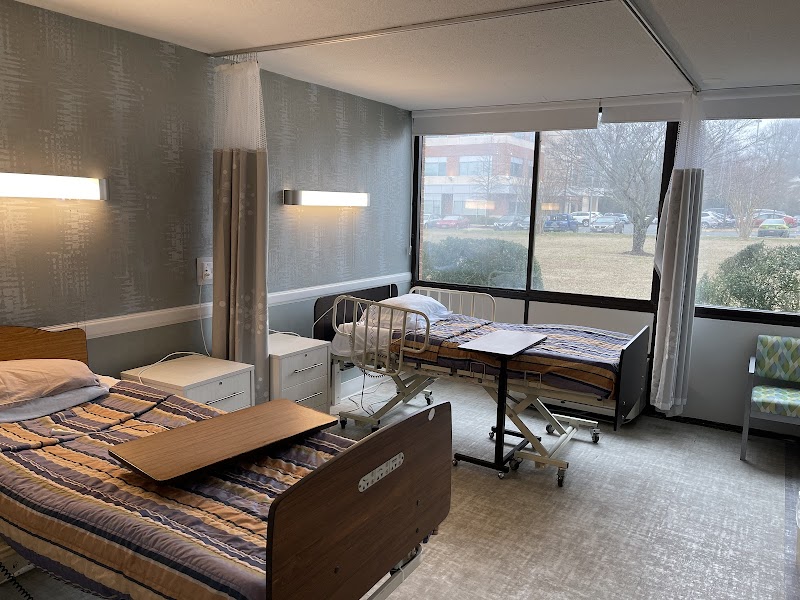
How is Bay Pointe Rehabilitation And Nursing Staffed?

CMS rates BAY POINTE REHABILITATION AND NURSING's staffing level at 1 out of 5 stars, which is much below average compared to other nursing homes. Staff turnover is 55%, which is 9 percentage points above the Virginia average of 46%. High turnover can affect care consistency as new staff learn residents' individual needs.

What Have Inspectors Found at Bay Pointe Rehabilitation And Nursing?

State health inspectors documented 63 deficiencies at BAY POINTE REHABILITATION AND NURSING during 2018 to 2023. These included: 2 Immediate Jeopardy (the most serious level, indicating potential for serious harm or death), 60 with potential for harm, and 1 minor or isolated issues. Immediate Jeopardy findings are rare and represent the most serious regulatory concerns. They require immediate corrective action.
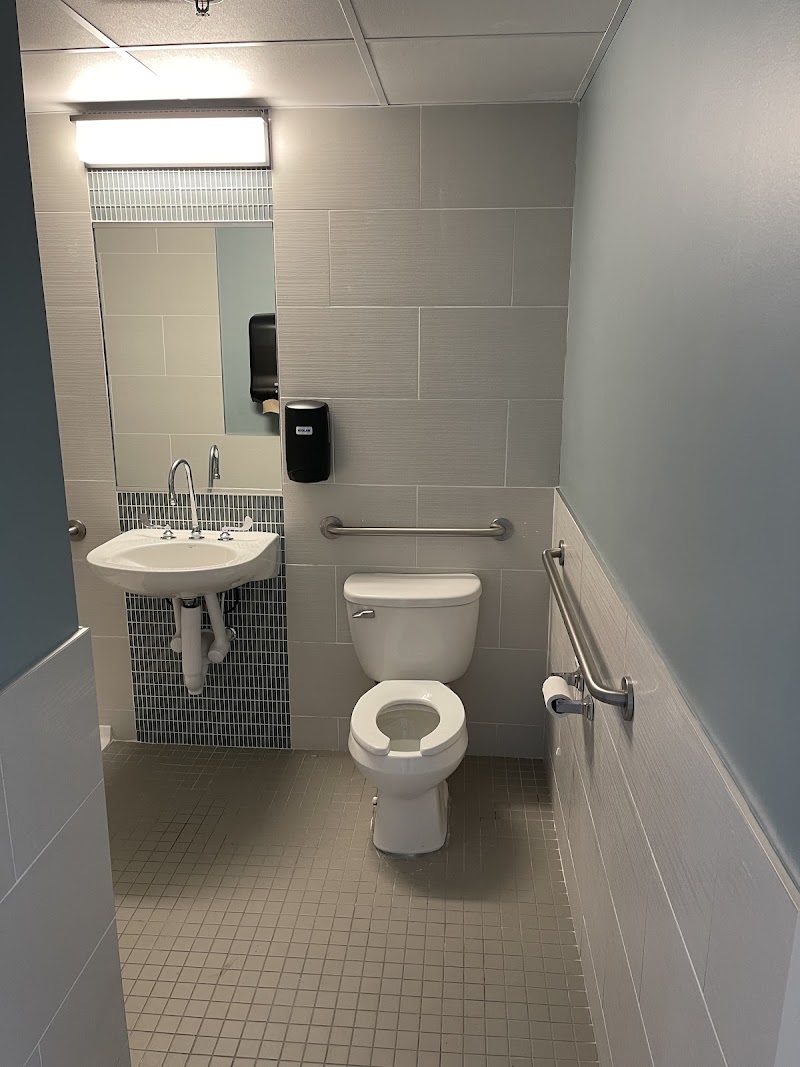
Who Owns and Operates Bay Pointe Rehabilitation And Nursing?

BAY POINTE REHABILITATION AND NURSING is owned by a for-profit company. For-profit facilities operate as businesses with obligations to shareholders or private owners. The facility is operated by EASTERN HEALTHCARE GROUP, a chain that manages multiple nursing homes. With 112 certified beds and approximately 98 residents (about 88% occupancy), it is a mid-sized facility located in VIRGINIA BEACH, Virginia.

How Does Bay Pointe Rehabilitation And Nursing Compare to Other Virginia Nursing Homes?

Compared to the 100 nursing homes in Virginia, BAY POINTE REHABILITATION AND NURSING's overall rating (1 stars) is below the state average of 3.0, staff turnover (55%) is near the state average of 46%, and health inspection rating (1 stars) is much below the national benchmark.

What Should Families Ask When Visiting Bay Pointe Rehabilitation And Nursing?

Based on this facility's data, families visiting should ask: "What changes have been made since the serious inspection findings, and how are you preventing similar issues?" "How do you ensure continuity of care given staff turnover, and what is your staff retention strategy?" "Can you walk me through typical staffing levels on day, evening, and night shifts?" "Can I visit during a mealtime to observe dining assistance and food quality?" These questions are particularly relevant given the facility's Immediate Jeopardy citations, the facility's high staff turnover rate, and the below-average staffing rating.

Is Bay Pointe Rehabilitation And Nursing Safe?

Based on CMS inspection data, BAY POINTE REHABILITATION AND NURSING has documented safety concerns. Inspectors have issued 2 Immediate Jeopardy citations (the most serious violation level indicating risk of serious injury or death). The facility has a 1-star overall rating and ranks #100 of 100 nursing homes in Virginia. Families considering this facility should ask detailed questions about what corrective actions have been taken since these incidents.

Do Nurses at Bay Pointe Rehabilitation And Nursing Stick Around?

Staff turnover at BAY POINTE REHABILITATION AND NURSING is high. At 55%, the facility is 9 percentage points above the Virginia average of 46%. High turnover means new staff may not know residents' individual needs, medications, or preferences. It can also be disorienting for residents, especially those with dementia who rely on familiar faces. Families should ask: What is causing the turnover? What retention programs are in place? How do you ensure care continuity during staff transitions?

Was Bay Pointe Rehabilitation And Nursing Ever Fined?

BAY POINTE REHABILITATION AND NURSING has been fined $15,480 across 1 penalty action. This is below the Virginia average of $33,234. While any fine indicates a compliance issue, fines under $50,000 are relatively common and typically reflect isolated problems that were subsequently corrected. Families should ask what specific issues led to these fines and confirm they've been resolved.

Is Bay Pointe Rehabilitation And Nursing on Any Federal Watch List?

BAY POINTE REHABILITATION AND NURSING is not on any federal watch list. The most significant is the Special Focus Facility (SFF) program, which identifies the bottom 1% of nursing homes nationally based on persistent, serious quality problems. Not being on this list means the facility has avoided the pattern of deficiencies that triggers enhanced federal oversight. This is a positive indicator, though families should still review the facility's inspection history directly.