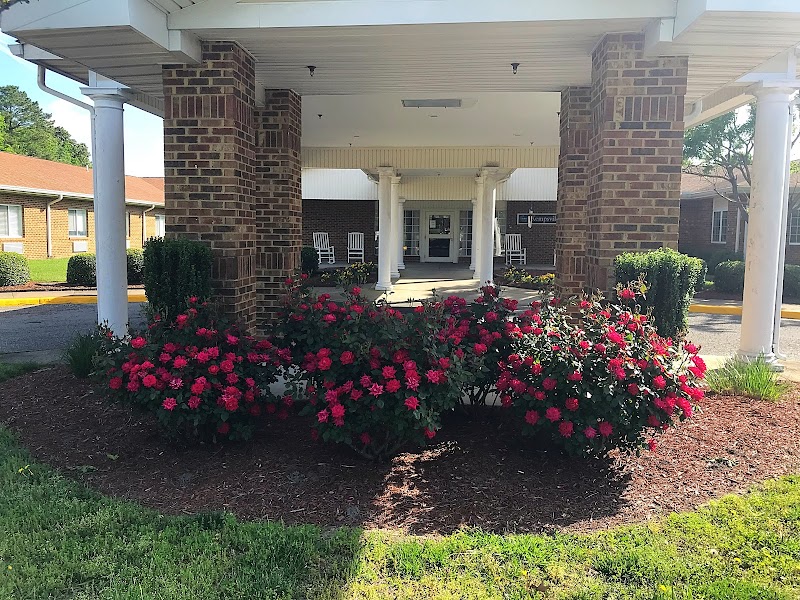
KEMPSVILLE HEALTH & REHAB CENTER

5520 INDIAN RIVER ROAD, VIRGINIA BEACH, VA 23464 (757) 420-3600
For profit - Limited Liability company 90 Beds SABER HEALTHCARE GROUP Data: November 2025
Trust Grade
40/100
#198 of 285 in VA
Last Inspection: January 2022

Over 2 years since last inspection. Current conditions may differ from available data.

Overview

Kempsville Health & Rehab Center has a Trust Grade of D, indicating below-average performance with some concerns about care quality. It ranks #198 out of 285 facilities in Virginia, placing it in the bottom half, and #4 out of 13 in Virginia Beach City County, meaning only three local options are better. The facility's trend is worsening, with issues increasing from 13 in 2019 to 15 in 2022. Staffing is a concern, as the turnover rate is 61%, significantly higher than the state average of 48%, which may impact the continuity of care. While there have been no fines, which is a positive sign, specific incidents of concern include a failure to prevent the progression of pressure ulcers for one resident and misappropriation of medication for another, highlighting serious gaps in care. Overall, while there are some strengths, such as the absence of fines, the facility's weaknesses are significant and warrant careful consideration.

Trust Score
D
40/100
In Virginia
#198/285
Bottom 31%
Safety Record
Moderate
Needs review
Inspections
Getting Worse
13 → 15 violations
Staff Stability
⚠ Watch
61% turnover. Above average. Higher turnover means staff may not know residents' routines.
Penalties
✓ Good
No fines on record. Clean compliance history, better than most Virginia facilities.
Skilled Nurses
○ Average
Each resident gets 33 minutes of Registered Nurse (RN) attention daily — about average for Virginia. RNs are the most trained staff who monitor for health changes.
Violations
⚠ Watch
36 deficiencies on record. Higher than average. Multiple issues found across inspections.
★★☆☆☆
2.0
Overall Rating
★★☆☆☆
2.0
Staff Levels
★★★★☆
4.0
Care Quality
★★☆☆☆
2.0
Inspection Score
Stable
2019: 13 issues
2022: 15 issues

The Good

  • 4-Star Quality Measures · Strong clinical quality outcomes
  • Full Sprinkler Coverage · Fire safety systems throughout facility
  • No fines on record

Facility shows strength in quality measures, fire safety.

The Bad

2-Star Overall Rating

Below Virginia average (3.0)

Below average - review inspection findings carefully

Staff Turnover: 61%

15pts above Virginia avg (46%)

Frequent staff changes - ask about care continuity

Chain: SABER HEALTHCARE GROUP

Part of a multi-facility chain

Ask about local staffing decisions and management

Staff turnover is elevated (61%)

13 points above Virginia average of 48%

The Ugly 36 deficiencies on record

1 actual harm
Jan 2022 15 deficiencies 1 Harm
SERIOUS (G)

Actual Harm - a resident was hurt due to facility failures

Pressure Ulcer Prevention (Tag F0686)

A resident was harmed · This affected 1 resident

**NOTE- TERMS IN BRACKETS HAVE BEEN EDITED TO PROTECT CONFIDENTIALITY** Based on observation, staff interviews, and clinical record review, the facility staff failed to provide care and services to pr...

Read full inspector narrative →
**NOTE- TERMS IN BRACKETS HAVE BEEN EDITED TO PROTECT CONFIDENTIALITY** Based on observation, staff interviews, and clinical record review, the facility staff failed to provide care and services to prevent pressure ulcer development and to identify a pressure ulcer prior to progression to an advanced stage for 1 of 37 residents, (Resident #15) and the facility staff failed to ensure the necessary assessment, treatment, care, and services was provided for 1 of 37 Residents (Resident #278) impaired skin to prevent deterioration, necessitating surgical debridement which constituted harm. The findings included: 1. The facility staff failed to provide care and services to prevent a pressure ulcer and to identify the pressure ulcer at an early stage; Resident #15's sacral pressure ulcer was first identified on 10/12/21 as unstageable (due to containing 70 percent of necrotic tissue), Resident #15 was originally admitted to the facility 03/29/2021 and readmitted [DATE] after an acute care hospital stay. The current diagnoses included; Malnutrition, Cirrhosis, Heart failure and Anemia. The quarterly Minimum Data Set (MDS) assessment with an assessment reference date (ARD) of 10/30/2021 coded the resident as completing the Brief Interview for Mental Status (BIMS) and scoring 10 out of a possible 15. This indicated Resident #15's cognitive abilities for daily decision making were moderately impaired. In section G (Physical functioning) the resident was coded as requiring total care of one person with toileting and bathing, extensive assistance of one person with bed mobility, personal hygiene and dressing, limited assistance of one person with eating and she was coded activity didn't occur for transfers, walking and locomotion. The Braden Scale for Prediction of Pressure completed on 10/6/21; revealed Resident #15 had responds only to painful stimuli. Cannot communicate discomfort except by moaning or restlessness or has a sensory impairment which limits the ability to feel pain or discomfort over half of the body, skin most often moist and linen must be changed at least once a shift, is bedfast-confined to bed, mobility is very limited-makes occasional slight changes in body or extremity position but unable to make frequent or significant changes independently, rarely eats a complete meal and generally eats only half of any food offered. Protein intake includes only 3 servings of meat or dairy products per day. Occasionally will take a dietary supplement, and moves feebly or requires minimum. During a move, skin probably slides to some extent against sheets, chair, restraints or other devices. Maintains relatively good position in chair or bed most of the time but occasionally slides down. The score was 14; indicating a high risk. On 1/13/21 at approximately an interview was conducted with Certified Nursing Assistant (CNA) #6 at approximately 2:15 p.m., who stated resident #15 requires total care, exhibited no behavioral concerns, is usually quiet, and enjoys eating. CNA #6 also stated the resident doesn't get out of bed to the wheelchair or participate in group activities. An observation was made on 1/12/21 at approximately 11:30 a.m. The resident was lying in a low air loss bed turned to partially face in the direction of the window. She appeared very pale, weak, fatigued, and with cachexia. The resident's speech was limited and she paused before she answered simple questions. The Resident was observed again 1/13/21 at approximately 9:00 a.m., in bed consuming breakfast. She was being fed by staff and appeared to enjoy the meal. She accepted 100 percent of the oatmeal, bread, and thickened water and tolerated only two small spoonful's of the eggs. On 1/13/21 at approximately 12:35 p.m., the resident was observed being fed the midday meal by staff. She accepted 100% of the pureed bread, magic cup, fortified potatoes, and rejected the puree chocolate cake. Neither of the two observed meals had protein or a protein substitute on the tray other than the eggs at breakfast. The resident asked if there was any milk at the midday meal. Review of the facility's matrix revealed Resident #15 had a facility acquired pressure ulcer, currently staged at a stage III. Review of the clinical record revealed upon admission from the hospital on [DATE], Resident #15 had redness to the sacrum. Further review of the weekly skin evaluations provided no evidence that the redness to Resident #15 sacrum on 10/6/21 was a pressure ulcer. An additional skin evaluation completed on 10/7/21 read blanchable redness (indicates an area of skin that has been subjected to pressure and other forces) to the sacrum and the 10/8/21 skin evaluation read new onset; open area to the coccyx measuring 1.5 cm x 1.5 cm. The documentation further read the opened area was covered with bruised tissue with a small amount of serosanginous discharge but there was no odor. After the 10/8/21 weekly skin assessment there wasn't evidence of another until 11/29/21. The weekly skin evaluation continued through 12/27/21 and stopped again. No weekly skin assessments were available on the clinical record for January 2022. Blanchable erythema is not considered a pressure injury but an important warning sign that preventive measures are needed. If, however, the forces are not removed, blanching erythema can quickly develop into a pressure injury (https://www.ncbi.nlm.nih.gov/books/NBK543831/#:~:text=Blanchable%20erythema%20is%20not%20considered,blanchable%20erythema%20of%20intact%20skin.) Review of Resident #15's physician's orders summary for 10/6/21 - 10/12/21 revealed the following skin related orders; 10/7/21, turn and re-position every 2 hours as tolerated while in bed every shift. 10/11/21, skin checks weekly day shift on Monday. Notify the physician of any abnormal findings. Review of the physician order summary for revealed there were no orders to treat a pressure ulcer between 10/6/21 and 10/12/21 and there was no evidence of a baseline care plan or any other care plan to address redness/ blanchable redness to the sacrum or a coccyx pressure ulcer. There was also no weekly wound assessment on the clinical record until 10/8/21, for the new onset coccyx wound and it had no treatment plan. An interview was conducted with Licensed Practical Nurse (LPN) #1 on 1/13/21 at approximately 2:40 p.m. LPN #1 stated Resident #15 was re-admitted to the facility 10/6/21 with blanchable redness to the sacrum which progressed to the current pressure. LPN #1 also stated pressure ulcer are assessed weekly by the wound care physician if no other outside practice is treating the specified area but if for some reason the wound care physician can't keep the regular visit LPN #1 assesses and documents on the wounds. Review of the in-house weekly wound assessment dated [DATE] 12:00 a.m., read as follows; Wound type is pressure. Stage: Unstagable Wound Location coccyx. The measurements are Length (cm) 2.0, Width (cm) 1.5, and Depth (cm) 0.0. The area is community acquired. Skin impairment was present on admission, 10/06/2021 Drainage type: No Drainage Wound bed has Slough, No odor. Periwound appearance is Pink. Wound is unchanged. Pain Level is zero. The treatment is Santyl. Review of the wound care physician's progress note dated 10/12 21 read initial evaluation; Full Thickness. Resident presents with a wound on her sacrum; at the request of the referring provider, (name of the provider) a thorough wound care assessment and evaluation was performed today. The sacral wound is unstageable (due to necrosis). There is light serous exudate. The patient appears to have associated pain evidenced by restlessness and grimacing. The etiology was pressure. The pressure ulcer measured 2.0 centimeter by 1.5 centimeters and presented with 40 percent necrotic tissue, 30 percent devitalized necrotic tissue and 30 percent granulation tissue. The treatment plan was Dakins apply once daily for 30 days, Santyl apply once daily for 30 days, Gauze island with a border apply once daily for 30 days and Skin prep apply once daily for 30 days. The wound care physician's 10/19/21 wound care progress continued to address treatment to an unstageable sacral pressure ulcer which; was debrided that day to remove necrotic tissue and establish the margins of viable tissue. Resident #15 remained under the wound care physician's care for treatment of a pressure wound to the sacrum which was reclassified from unstageable to a stage III pressure ulcer on 11/9/21. An observation was made of Resident #15's sacral wound on 1/13/21 at approximately 10:10 a.m. The wound bed was clean, beefy red and with a small amount of drainage. The wound care was tolerated well by the resident. She was wearing pressure relieving boots to bilateral lower extremities. An interview was conducted with the wound care physician by phone on 1/14/21 at approximately 11:40 a.m. The wound care physician stated it appears the delay in notifying her of the areas of concern compromised Resident #15. The wound care physician stated there is no reason for delays in wound care assessment and treatment for she is very flexible to ensure necessary care is available such as; routine visits to the facility, making an additional visit to the facility on unscheduled days and/or telemedicine. The wound care physician stated she would have been instituted orders immediately for pressure ulcer prevention. On 1/14/22 at approximately 1:30 p.m., the above information was shared with the Administrator, Director of Nursing and Corporate Consultant. They provided additional documents on 1/18/22 at approximately 9:00 a.m., for consideration regarding the above information. That information is reflected in this report. The below information was obtained 1/21/22 from (https://medlineplus.gov/ency/patientinstructions/000147.htm) Preventing pressure ulcers Pressure ulcers are also called bedsores, or pressure sores. They can form when your skin and soft tissue press against a harder surface, such as a chair or bed, for a prolonged time. This pressure reduces blood supply to that area. Lack of blood supply can cause the skin tissue in this area to become damaged or die. When this happens, a pressure ulcer may form. You have a risk of developing a pressure ulcer if you: · Spend most of your day in a bed or a chair with minimal movement · Are overweight or underweight · Are not able to control your bowels or bladder · Have decreased feeling in an area of your body · Spend a lot of time in one position You will need to take steps to prevent these problems; you, or your caregiver, need to check your body every day from head to toe. Pay special attention to the areas where pressure ulcers often form. These areas are the; heels and ankles, knees, hips, spine, tailbone area, elbows, shoulders and shoulder blades, back of the head, and the ears. After urinating or having a bowel movement; clean the area right away. Dry well, and ask your provider about creams to help protect your skin in this area. Call your health care provider if you see early signs of pressure ulcers. These signs are: Skin redness, Warm areas, Spongy or hard skin, Breakdown of the top layers of skin or a sore. The below information was obtained 1/21/22 from (https://www.ncbi.nlm.nih.gov/books/NBK2650/table/ch12.t2/) National Pressure Ulcer Staging System Stage III - Full thickness skin loss involving damage or necrosis of subcutaneous tissue that may extend down to, but not through, underlying fascia. The ulcer presents clinically as a deep crater with or without undermining of adjacent tissue. Unstageable - Full thickness tissue loss in which actual depth of the ulcer is completely obscured by slough (yellow, tan, gray, green, or brown) and/or eschar (tan, brown, or black) in the wound bed. 2. The facility staff failed to ensure the necessary assessment, treatment, care, and services was provided to Resident #278 to promote healing of excoriations, and intact and opened blisters of bilateral buttocks. The deterioration of the right buttock resulted in an unstageable pressure ulcer and the deterioration of the left buttock resulted in a stage III pressure ulcer; both presenting with necrotic tissue necessitating surgical debridement. Resident #278 was originally admitted to the facility 5/14/21 and discharged from the facility 5/28/21 after becoming ill during a dialysis session. The diagnoses prior to discharge included; a left hip fracture, end-stage renal disease and diabetes. The admission Minimum Data Set (MDS) assessment with an assessment reference date (ARD) of 5/20/21 coded the resident as completing the Brief Interview for Mental Status (BIMS) and scoring 11 out of a possible 15. This indicated Resident #278's cognitive abilities for daily decision making were moderately impaired. In section G (Physical functioning) the resident was coded as requiring total care of one person with bathing, extensive assistance of two people with bed mobility, extensive assistance of one person, with toileting, supervision of two people with transfers, and supervision after set-up with eating. In Section M (Skin Conditions) the resident was coded for having one stage III pressure ulcer on admission and one unstageable pressure ulcer present on admission. The Braden Scale for Prediction of Pressure Ulcers was completed 5/21/21. The Resident scored 18.0, which indicated he was a Low Risk Resident. The resultes revealed Resident # 278; Responds to verbal commands. Has no sensory deficit which would limit ability to feel or voice pain. Skin is usually dry, linen only requires changing at routine intervals. Ability to walk severely limited or non-existent. Cannot bear own weight and/or must be assisted into chair or wheelchair. Makes frequent though slight changes in body or extremity position independently. Eats over half of most meals. Eats a total of 4 servings of protein (meat, dairy products per day. Moves feebly or requires minimum assistance. During a move skin probably slides to some extent against sheets, chair, restraints or other devices. Maintains relatively good position in chair or bed most of the time but occasionally slides down. Review of the admission weekly skin assessment revealed the following skin impairments; a tunneled dialysis catheter to the chest, left upper area has bruises/discoloration, scattered tiny bruises to the abdomen, an old scar to the mid abdomen, redness, irritation with excoriations to the groin, excoriations and blisters some are intact and some burst at different shapes and sizes of the right buttock, excoriations, blisters of the left buttock; some are intact and some burst open at different sizes and shapes, moist, reddened and excoriated sacrum, moist, reddened and excoriated coccyx, red and moist areas to the left inner leg, left hip has surgical incision with staples, well approximated, left upper outer thigh has short surgical incision with 2 staples, left lower outer thigh has surgical incision with 2 staple, well approximated, a left outer heel scab, a middle left toe scab, right first and 4th toes has scab on top of each, and old amputations of the 2nd and 3rd toes. Review of the active care plan dated 5/15/21 revealed a problem which read; Resident has impaired skin integrity; surgical wound to the left upper outer thigh/left hip. The goal read; area will show signs of improvement and be free of signs/symptoms of infection. The interventions included; Administer medications as ordered. Administer treatments as ordered. Assess and document the status of the area (healing vs declining. Monitor and report to the physician, redness, swelling, local warmth, tenderness, discharge, elevated temperature. Another care plan dated 5/15/21 revealed a problem which read; Resident has a potential for skin breakdown due to decreased mobility. The goal read; the resident will maintain intact skin. The interventions included; complete the Braden scale per protocol. Complete the skin assessment per protocol. Diet as ordered. Turn and reposition as indicated. Use pressure relieving devices as indicated. Review of the resident's admission physician orders dated 5/14/21 revealed the following skin treatment orders; Calmoseptine Ointment 0.44-20.6 % (Menthol-Zinc Oxide) Apply to sacrum/buttocks topically every shift for excoriations/opened blisters Cleanse area with soap and water, pat dry and apply Calmoseptine. Skin checks twice weekly every day shift on Monday and Thursday for prevention report to the physician any abnormalities. Turn and re-position every two hours as tolerated while in bed, every shift for prevention. An excoriation is a scratch/abrasion to the skin. Opened blisters to the buttock are classified as pressure ulcers. A stage II pressure ulcer is a partial thickness skin loss involving the epidermis and/or dermis. The ulcer is superficial and presents clinically as an abrasion, blister, or shallow crater; partial thickness loss of dermis presenting as a shallow open ulcer with a red, pink wound bed without slough. May also present as an intact or open/ruptured serum-filled blister. (Obtained from the following website 1/25/22; https://www.ncbi.nlm.nih.gov/books/NBK2650/table/ch12.t2/) Calmoseptine Ointment 0.44-20.6 % (Menthol-Zinc Oxide); this medication is used to treat and prevent minor skin irritations (such as from diarrhea, burns, cuts, scrapes). It works by forming a barrier on the skin to protect it from irritants/moisture. (https://healthy.kaiserpermanente.org/health-wellness/drug-encyclopedia/drug.calmoseptine-0-44-20-6-topical-ointment.560016). No further wound care orders were noted to the buttocks until 5/18/21. New orders for wound care dated 5/18/21 read as follows; Santyl Ointment 250 UNIT/GM (Collagenase) Apply to the left buttock topically every day shift for wound care. Cleanse with normal saline, pat dry, apply Santyl followed by calcium alginate, cover with a dry dressing, and change every day and as needed. Santyl Ointment 250 UNIT/GM (Collagenase) Apply to the right buttock topically every day shift for wound care. Cleanse with normal saline, apply betadine to eschar areas, and apply Santyl to open areas, cover with dry dressing, change every day and as needed. Resident #278 was seen by the wound care physician on 5/19/21. The documentation revealed the following; the etiology of the wound to the left buttock was pressure. It was classified as a stage III pressure ulcer measuring 5.5 centimeters by 3.0 centimeters by 0.2 centimeters. It was with a moderate amount of serosanguinous drainage, 40 percent thick adherent devitalized necrotic tissue and 60 percent granulation tissue. The etiology of the wound to the right buttock was also pressure and it consisted of a cluster of wounds. It was classified as unstageable, measuring 9.0 centimeters by 13.0 centimeters. It was with a moderate amount of serosanguinous drainage, 50 percent thick adherent black necrotic tissue (eschar), 20 percent granulation tissue and 30 percent skin. The left buttock pressure ulcer treatment orders for 5/19/21 were as follows; Alginate calcium apply once daily for 30 days; Santyl apply once daily for 30 days. Gauze island with a border, apply once daily for 30 days. Skin prep apply once daily for 30 days. The recommendations were as follows; Low air loss mattress; Off-load wound; Reposition per facility protocol. The right buttock pressure ulcer treatment orders for 5/19/21 were as follows; Alginate calcium apply once daily for 30 day: to all medial open areas; Santyl apply once daily for 30 days: to all medial open areas. Betadine apply once daily for 30 days : to all eschar areas. Gauze island with a border, apply once daily for 30 days. Skin prep apply once daily for 30 days. The recommendations were to off-load the wound and reposition per facility protocol. The wound care physician assessed Resident #278's bilateral buttock pressure ulcer again on 5/25/21. The left buttock measured 4.5 cm by 1.0 cm by 0.2 cm, with a Moderate amount of serosanguinous drainage 40 percent thick adherent devitalized necrotic tissue and 60 percent granulation tissue. The right buttock measured 10.5 cm by 11.0 cm by not measurable cm with 50 percent thick adherent black necrotic tissue (eschar), 20 percent granulation tissue and 30 percent skin. Review of the hospital records dated 5/28/21 revealed the resident was admitted with a right buttock pressure ulcer which included multiple skin necrosis and overall redness. The infected pressure ulcer may be contributing to his leukocytosis. Will plan for the operating room tomorrow for debridement (removal of necrotic tissue from a wound) of the right buttock ulcers. The plan is to remove the necrotic skin and debride unhealthy tissue underneath. An interview was conducted with Resident #278's daughter on 1/14/22 at approximately 10:45 a.m. The daughter stated she was unable to visit the resident because of COVID-19 restrictions and when she called the facility the nurses dismissed her concerns and talked negatively about her father. The daughter also stated she wasn't informed about her father's pressure ulcers by the facility's staff. The daughter further stated her father never recovered from the pressure ulcers acquired even after multiple surgeries. An interview was conducted with the wound care physician by phone on 1/14/21 at approximately 11:40 a.m. The wound care physician stated it appeared the delay in notifying her of the areas of concern compromised Resident #278's coordination of care. The wound care physician stated there is no reason for delays in wound care assessment and treatment for she is very flexible to ensure necessary care is available such as; routine visits to the facility, making an additional visit to the facility on unscheduled days and/or telemedicine. On 1/14/22 at approximately 1:30 p.m., the above information was shared with the Administrator, Director of Nursing and Corporate Consultant. They provided additional documents on 1/18/22 at approximately 9:00 a.m., for consideration regarding the above information. That information is reflected in this report. COMPLAINT DEFICIENCY
CONCERN (D)

Potential for Harm - no one hurt, but risky conditions existed

Deficiency F0554 (Tag F0554)

Could have caused harm · This affected 1 resident

**NOTE- TERMS IN BRACKETS HAVE BEEN EDITED TO PROTECT CONFIDENTIALITY** Based on observations, resident interview, staff interviews, clinical record review, and facility document review the facility s...

Read full inspector narrative →
**NOTE- TERMS IN BRACKETS HAVE BEEN EDITED TO PROTECT CONFIDENTIALITY** Based on observations, resident interview, staff interviews, clinical record review, and facility document review the facility staff failed to reassess resident for self-administration of medication for 1 of 37 residents (Resident #46) in the survey sample. The findings included: The facility staff failed to reassess Resident #46 for self-administration of medication ProAir HFA (Albuterol) inhaler. Resident #46 was originally admitted to the facility on [DATE]. Diagnosis for Resident #46 included but not limited to Chronic Obstructive Pulmonary Disease (COPD) and Major Depression. Resident #46's Minimum Data Set (an assessment protocol) a quarterly assessment with an Assessment Reference Date (ARD) of 12/13/21 coded the resident's Brief Interview for Mental Status (BIMS) score 15 of a possible 15 with no cognitive impairment for daily decision-making. In section G (Physical functioning) the MDS coded Resident #46 requiring total dependence of one with bathing, limited assistance of one with dressing, hygiene, bed mobility and toilet use and supervision with one assist with transfer and eating for Activities of Daily Living (ADL) care. The care plan with a created on 01/20/16 and a revision date of 01/04/20 identified Resident #46 with altered respiratory status, difficulty breathing related to (r/t) chronic respiratory failure and emphysema. The goal set for the resident by the staff to maintain normal breathing pattern as evidenced by normal respirations, normal skin color, and regular respiratory rate/pattern through the review date of 03/27/2022. Some of the interventions/approaches the staff would use to accomplish this goal is administer medication/puffers as ordered, monitor for effectiveness and side effects, assess /document changes in orientation, increased restlessness, anxiety, and air hungry. During the initial tour of the facility on 01/11/22 at approximately 1:30 p.m., observed on Resident #46's overbed table was an open inhaler (also known as a puffer, pump or allergy spray). On 01/12/22 at approximately 10:35 a.m., the open inhaler remains on Resident #46's overbed table. On the same day at approximately 11:55 a.m., an interview was conducted with Resident #46 who stated, I try not to use the inhaler no more once or than twice a day. When asked if she informed her nurse when she self-administers her inhaler, she replied, No, I don't say anything and they don't ask. Review of Resident #46's January Order Summary Report revealed the following as needed inhaler: ProAir HFA Aerosol Solution 180 - give 2 puffs inhale orally every 4 hours as needed for COPD with a start date of 01/19/21. A nurse's note entered by License Practical Nurse (LPN) #6 on 01/12/22 at approximately 5:14 p.m., revealed the following: This writer noticed that resident's Albuterol inhaler was in her room. Resident stated that she uses it when she needs it, and she needed it today per resident. This writer then went to check the order of the inhaler and the inhaler is not self-administered. The medicine is now in the med cart and will be given to resident as scheduled. A nurses' note entered by the corporate nurse on 01/13/22 at approximately 8:52 a.m., revealed the following Spoke with Resident #46 this morning regarding if she had a desire to be able to self-administer as needed inhaler. Resident educated on the assessment process, securing medication in lock box, informing staff when used so administration can be documented, and the need to obtain approval and order from MD, She voiced interest in being able to start that process. Resident reported the nurse secured the inhaler in med cart yesterday was one that she had received from community pharmacy. Informed resident that this nurse would return after breakfast to perform assessment. A nurses' note entered by the corporate nurse on 1/13/22 at approximately 11:06 p.m., revealed the following: A self-administration assessment performed. Assessment results indicate resident is not a candidate for self-administration. The results of the assessment findings were discussed with resident who voiced understanding. Resident #46 was re-educated on not bringing outside medications into the center who voiced understanding. A debriefing was conducted with the Administrator, Director of Nursing and corporate nurse on 01/17/22 at approximately 4:12 p.m. Corporate said on 01/13/22, a self-administer assessment was completed on Resident #46 01/13/22, which she did not pass because she has a diagnosis of major depression. On the self-administer medications assessment, the 2nd question ask if the resident has a diagnosis of depression and if you coded yes, then the resident is not a candidate to self-administer. She stated, Resident #46 failed the self-administer medication assessment due to having a diagnosis of major depression. The facility policy titled Self-Administration of Medication with a revision date of 02/09/21. Residents who have the desire to, and who have been assessed to be capable and safe to, may self-administer medications. Procedure read in part: 4. If the Interdisciplinary Team (IDT) has determined the resident safe to administer medications (s), administration of medication(s) will be Care Planned for approved self-administered medications. 5. Self-administration of medications must be reviewed by the (IDT) with each quarterly review. 6. When a resident is unable to self-administer medications, the medication will be held by the nurse until the resident can be reassessed by the (IDT). 7. The MAR must identity medications that are self-administered, and the medication nurse will need to follow-up with the resident as the documentation and storage of medications during each medication pass. Medication(s) kept at the bedside must be kept in a locked drawer. Definitions: -COPD is a group of lung diseases (Emphysema and Chronic bronchitis) that make it hard to breathe and get worse over time. Normally, the airways and air sacs in your lungs are elastic or stretchy. When you breathe in, the airways bring air to the air sacs. The air sacs fill up with air, like a small balloon. When you breathe out, the air sacs deflate, and the air goes out (https://medlineplus.gov/copd.htmlIf). Major depression is a mood disorder. It occurs when feelings of sadness, loss, anger, or frustration get in the way of your life over a long period of time. It also changes how your body works (https://medlineplus.gov/ency/article/000945.htm).
CONCERN (D)

Potential for Harm - no one hurt, but risky conditions existed

Deficiency F0602 (Tag F0602)

Could have caused harm · This affected 1 resident

**NOTE- TERMS IN BRACKETS HAVE BEEN EDITED TO PROTECT CONFIDENTIALITY** Based on complaint investigation, observation, staff interviews, clinical record review and facility documentation, the acuity s...

Read full inspector narrative →
**NOTE- TERMS IN BRACKETS HAVE BEEN EDITED TO PROTECT CONFIDENTIALITY** Based on complaint investigation, observation, staff interviews, clinical record review and facility documentation, the acuity staff failed to ensure 1 of 37 residents (Resident #277) to be free from misappropriation of the resident's narcotic medication. The findings included: The facility staff failed to ensure Resident #277's was free from the misappropriation of their narcotic medication HYDROcodone-Acetaminophen (Norco). Resident #277 was originally admitted to the nursing facility on 05/15/19. Resident #277's diagnosis included but not limited to Major Depression and osteoarthritis to right and left knee. Resident #277's Minimum Data Set (an assessment protocol) a significant change assessment with an Assessment Reference Date (ARD) of 04/28/21 coded the resident's Brief Interview for Mental Status (BIMS) score 08 of a possible 15 with moderate impairment for daily decision-making. In section G (Physical functioning) the MDS coded Resident #277 requiring total dependence of one with hygiene, bathing and toilet use, extensive assistance of two with bed mobility and transfer, extensive assistance of one with dressing and eating for Activities of Daily Living (ADL) care. In section J (Health Condition for Pain Management) was coded zero for pain. The care plan with a created on 09/24/20 and a revision date of 05/25/21 identified Resident #277 with the potential for pain and discomfort secondary to osteoarthritis. The goal set for the resident by the staff is express pain level within satisfactory limits. One of the interventions/approaches the staff would use to accomplish this goal is administer pharmacological interventions as indicated per physician and monitor the effectiveness. Review of the Resident #277's Order Summary Report for February 2021 revealed an order with a start date of 12/08/20: -Norco tablet 5/325 mg - give 1 tablet by mouth every 4 hours as needed for pain. Review of pharmacy manifest dated 12/28/20 indicated 86 tablets of HYDROcodone-Acetaminophen 5mg/325mg tablets were delivered to the facility on [DATE]. The manifest on 01/02/21 was signed as received by License Practical Nurse (LPN) #6. An interview was conducted with the Director of Nursing and Corporate Nurse on 01/13/22 at approximately 1:47 p.m. The DON said she received a call from the previous Unit Manager on 02/04/21 stating that a card of 30 Norco belonging to Resident #277 was missing. The DON provided a copy of the facility's investigation indicated the following: The DON immediately initiated and a facility wide search performed as well as a review of all other narcotic sheets with no further issues identified and narcotic counts were verified as correct. All nurses who had access to the medication cart and keys were interviewed any all denied any knowledge of where the missing care could be. The nursing staff who had access to that cart as well as the Unit Manager completed a urine drug screen performed in house with no pertinent findings. During the interview, the DON said there was one nurse, LPN #12 who worked on the medication cart on 02/02/21 (7-3 shift) who was running late and did not count the cart upon her retrieving the keys from the Unit Manager. The DON said, LPN #12 was informed that all the staff who had access to the medication cart came in for a drug test and she was asked to come into the facility to do a urine drug test also which she decline. LPN #12 said she was would go to (name of doctor's office) to get her urine drug test done but we never heard back from LPN #12; the LPN was terminated. The DON said Adult Protective Services (APS) and the local police department were notified. A phone interview was conducted with LPN #6 on 01/12/22 at approximately 8:19 p.m. The LPN said he signed for 3 cards of Norco (86 pills) for Resident #277 on 01/02/21 (3-11 shift). He said there were 3 cards of Norco when [NAME] got off on 02/01/21 (3-11 shift). The LPN said he did not return to work until 02/04/21 (3-11 shift). LPN #6 stated, I did not realize there was a missing card until at the end of the shift on 02/04/21. The LPN stated he was the oncoming nurse on 02/04/21 (3-11 shift), so I counted the Controlled Narcotics and the off going nurse counted the Controlled Narcotic Sheets. The LPN stated, At the end of my shift, I was counting with the oncoming nurse and as I was counting the Controlled Narcotic Sheets, I realized the number on the Narcotic sheet was changed from the number 86 to 56 and instead of there being 3 cards of Norco there were only cards. The LPN stated, I only remembered there were 86 Norco for Resident #277 because I was the nurse who signed for the medications when they were delivered to the facility on [DATE]. LPN #6 said the oncoming nurse, LPN #11 reported the missing card of Norco to the Unit Manager. A phone call was placed LPN #11 on 01/15/21 at approximately 9:51 p.m. The LPN was assigned to Resident #277 on 01/31/21 and 02/01/21 (11-7 shift). The LPN stated, I can't remember back that far but I gave a statement to the DON. Review of LPN #11's statement indicated there were 86 Norco tablets at the end of her shift on 02/01/21. An interview was conducted with LPN #3 on 01/14/22 at approximately 11:05 a.m., who stated, The Controlled Narcotic are counted at the change of each shift (the off going has the narcotic book and the oncoming has the controlled narcotic and the two are counted together and the keys are not exchanged until we make sure the count is correct. When asked, what is the process for discontinued controlled narcotic, she replied, They remain on the cart and is counted until picked up by the DON. She said the DON will count the controlled narcotic and the Controlled Narcotic Sheet is signed by the DON and the nurse. An interview was conducted with LPN #10 on 01/14/22 at approximately 11:23 a.m.,who stated, The oncoming nurse and the off going nurse count the narcotic book along with the narcotic together and only after the count is correct does the oncoming nurse accept the keys. The LPN said all discontinued controlled medications are counted on each shift until they are picked up by the DON. The LPN provided a Controlled drug shift/shift count sheet that is to completed at then end and beginning of each shift. The Controlled drug shift/shift count sheet included the following information: Signing below acknowledges that you have counted the controlled drugs on hand and have found that the quality of each medication counted is in agreement with the quantity stated on the Controlled Drugs-Count Record. Any discrepancies need to be reported immediately to the supervisor and the Director of Nursing. Random Controlled drug shift/shift count sheet were reviewed with no discrepancies. During the 4 days on survey, random narcotic counts were conducted by this surveyor with all narcotics located behind a double lock located in the medication cart. There were discontinued medications in the narcotic lock box that were being counted for at the beginning and end of each shift. Nursing staff were also interviewed on the process for counting Controlled Narcotics and received the same response from all staff interviewed, The oncoming and off going nurse have to count the Controlled Narcotic cards and the Controlled Narcotic Sheets together and cannot accept the keys without receiving report and counting the Controlled Narcotics. An interview was conducted with DON and Corporate nurse on 01/17/22 at approximately 4:00 p.m., When asked what is the process for removing discontinued medications with the potential for abuse from the medication cart, the DON stated, If I remove the Controlled Narcotic from the medication cart, the narcotics are counted by the nurse as well as my self and we both sign together and if the medication are bought to my office; they are removed from the cart by 2 nurses who will signed off on the controlled sheet, bought to me and I will count the medications and sign the Controlled Narcotic sheet also to include how many medications are left on the card. A debriefing was conducted with the Administrator, Director of Nursing and Corporate on 01/17/22 at approximately 4:05 p.m. The Administration team were informed of the above finding. The surveyor requested all discontinued medications with the potential for abuse for the month of 01/22. Review of all discontinued medications with the potential for abuse were reviewed after the debriefing on 01/17/22 at 4:05 p.m. The facility provided 6 resident's Controlled Narcotic Sheets on 01/18/22 at approximately 10:38 a.m., which revealed the following: -Narcotic sheet #1 - Alprazolam 0.5 mg last administered on 01/13/22 with 20 tabs remaining; the document indicated the Alprazolam was removed from the medication cart on 01/07/22, prior to the last dose being administered on 01/13/22. The DON did not signed the Narcotic Controlled sheet or document how many were remaining in the section for disposition of unused drugs. -Narcotic sheet #2 - Oxycodone-Acetainophen 5mg/325 mg last administered on 01/13/22 with 25 tablets remaining; the document revealed the medication was removed from the medication cart on 01/07/22, prior the the last dose being administered on 01/13/22. -Narcotic sheet #3 - Gabapentin 500 mg - last administered on 01/13/22 with 4 tablets remaining; disposition on 01/07/22, the document revealed the medication was removed from the medication cart on 01/07/22, prior the the last dose being administered on 01/13/22. -Narcotic sheet #4 - Clonaepam 0.25 mg - last administered on 01/13/22 with 14 tablets remaining; disposition on 01/07/22, the document revealed the medication was removed from the medication cart on 01/07/22, prior the the last dose being administered on 01/13/22. Definitions: HYDROcodone-Acetaminophen is used to relieve pain severe enough to require opioid treatment and when other pain medicines did not work well enough or cannot be tolerated (https://www.mayoclinic.org/drugs-supplements/hydrocodone-and-acetaminophen-oral-route/description/drg). Alprazolam is used to treat anxiety disorders and panic disorder (sudden, unexpected attacks of extreme fear and worry about these attacks). Alprazolam is in a class of medications called benzodiazepines. It works by decreasing abnormal excitement in the brain (https://www.drugs.com/alprazolam.htm). Oxycodone-Acetaminophen is a combination medicine used to relieve moderate to severe pain. Oxycodone may be habit-forming and should be used only by the person it was prescribed for. Keep the medication in a secure place where others cannot get to it. Acetaminophen and oxycodone can cause side effects that may impair your thinking or reactions (https://www.drugs.com/acetaminophen-and-oxycodone.html). Gabapentin is used with other medications to prevent and control seizures. It is also used to relieve nerve pain (https://www.drugs.com/gabapentin). Clonaepam is used alone or in combination with other medications to control certain types of seizures. It is also used to relieve panic attacks (sudden, unexpected attacks of extreme fear and worry about these attacks (https://medlineplus.gov/druginfo/meds). Complaint deficiency
CONCERN (D)

Potential for Harm - no one hurt, but risky conditions existed

Abuse Prevention Policies (Tag F0607)

Could have caused harm · This affected 1 resident

Based on staff interview and facility documentation review, the facility staff failed to implement their abuse policy regarding the screening of employees for 2 employees, Dietary Employee #3 and LPN ...

Read full inspector narrative →
Based on staff interview and facility documentation review, the facility staff failed to implement their abuse policy regarding the screening of employees for 2 employees, Dietary Employee #3 and LPN #2, in a sample of 20 employee records reviewed. The findings included: On 1/12/22, a review of 20 employee files was conducted and revealed the following: 1. The facility staff failed to obtain a criminal background check within 30 days of hire for 1 Employee, Dietary Employee #3. A criminal background check request for Dietary Employee #3 was received on 11/23/20 by The Central Criminal Records Exchange of the Virginia State Police and indicated, Transaction being Processed. Dietary Employee #3 was hired by the facility on 11/24/20. On 1/12/22, the findings for Dietary Employee #3 were shared with the HR Director and the Facility Administrator who stated they were unable to locate any results for the Criminal Background Check that was submitted on 11/23/20 for Dietary Employee #3, therefore, facility staff have not confirmed Dietary Employee #3's criminal background status. Review of the facility's policy entitled, Virginia Resident Abuse Policy, last revision date 5/26/2021, subheading, Procedure--Screening, item 1 read, It is the policy of the Facility to undertake background checks of all employees and to retain on file applicable records of current employees regarding such checks .a. The Facility will do the following prior to hiring a new employee: iv. Conduct a criminal background check in accordance with State law and Facility policy . 2. The facility staff failed to verify the professional license was active and in good standing for LPN #2 prior to allowing LPN #2 to provide direct resident care. LPN #2 was hired on 5/13/21. LPN #2's professional license verification was dated 9/8/21. Therefore, from 5/13/21-9/8/21, facility staff was unaware if LPN #2's license was active and in good standing. Additionally, on the license verification dated 9/8/21, there was no indication that LPN #2's professional license was unencumbered and in good standing. LPN #2 was permitted to provide direct care to Residents beginning on 5/20/21 which was confirmed by the Human Resources Director. An interview was conducted with the Human Resources (HR) Director and the Facility Administrator who confirmed the hire date for LPN #2. The Human Resources Director stated, The purpose of obtaining a license verification is to make sure that they [nursing staff] have an active license that is in good standing, that there is no disciplinary action against their professional license. The HR Director confirmed that the license verification for LPN #2 had not occurred until 9/8/21 and there was no indication of whether or not the license was in good standing. Review of the facility's policy entitled, Virginia Resident Abuse Policy, last revision date 5/26/2021, subheading, Procedure--Screening, item 1 read, It is the policy of the Facility to undertake background checks of all employees and to retain on file applicable records of current employees regarding such checks .a. The Facility will do the following prior to hiring a new employee: iii. Check with all applicable licensing and certification authorities to ensure that employees hold the requisite license and/or certification status to perform their job functions and have no disciplinary action as a result of abuse or neglect . The findings were shared with the Facility Administrator and HR Director. No further information was received.
CONCERN (D)

Potential for Harm - no one hurt, but risky conditions existed

Deficiency F0655 (Tag F0655)

Could have caused harm · This affected 1 resident

**NOTE- TERMS IN BRACKETS HAVE BEEN EDITED TO PROTECT CONFIDENTIALITY** 2. The facility staff failed to complete and implement a baseline care plan within 48 hours of admission. Resident #47 was origi...

Read full inspector narrative →
**NOTE- TERMS IN BRACKETS HAVE BEEN EDITED TO PROTECT CONFIDENTIALITY** 2. The facility staff failed to complete and implement a baseline care plan within 48 hours of admission. Resident #47 was originally admitted to the facility 12/10/21 then readmitted [DATE] after an acute care hospital stay. The current diagnoses included; Sepsis unspecified Organism and Urinary Tract Infection. The admission, Minimum Data Set (MDS) assessment with an assessment reference date (ARD) of 12/14/21 coded the resident as completing the Brief Interview for Mental Status (BIMS) and scoring 13 out of a possible. This indicated Resident #47 cognitive abilities for daily decision making were intact. In sectionG(Physical functioning) the resident was coded as requiring Extensive assistance of one person with bed mobility, dressing and personal hygiene. Total dependence of one person with eating, toilet use and bathing. The current Minimum Data Set (MDS) an admission assessment MDS with an Assessment Reference Date (ARD) of 12/14/21 coded the resident with a 13 of a total possible 15. A Review of the MDS (Minimum Data Set) Section A, A1600-Entry Date of 12/10/21. Section A, A1700 Reads: Type of Entry: Admission. A review of resident's clinical records reveals that resident was admitted on [DATE]. According to the clinical record Resident's Baseline Care Plan Checklist completed on 12/15/2021. A pre-exit interview was conducted on 1/18/22 at approximately 5:45 PM., the above findings were shared with the Administrator, The Corporate Consultant and the DON (Director of Nursing). The DON stated, The nurses should complete the care plan. Based on clinical record review, staff interviews and facility documentation, the facility staff failed to develop a baseline care plan and/or ensure the indwelling catheter was addressed in the admission orders for Resident #281 and the facility staff failed to provide a baseline care plan to Resident #47 within 48 hours out of a sample of 37. The findings included: 1. Resident #281 was originally admitted to the facility 01/7/22 and had not been discharged . The current diagnoses included; new stroke with left side weakness, dysphasia and urinary retention. The Minimum Data Set (MDS) assessment had not been completed therefore; information was gained from Licensed Practical Nurse (LPN) #3. LPN #3 stated the resident was alert and oriented to person, family, situation and place but required assistance to make daily decisions. LPN #3 also stated the resident required total care with all care including eating and she required use of an indwelling catheter. On 1/12/22 at approximately 10:15 a.m., Resident #281 was observed sitting across from the nursing station. The resident's head was lowered and her nose was draining a large amount of thick light yellow mucus which the Resident wiped away with the back of her hand. The Resident appeared very pale, had facial bruising and spoke very softly. She was wearing an untied hospital gown, had a blanket over her lap, her hair was severely matted and the catheter drainage bag was very full, containing approximately 800 milliliter of light but cloudy urine. The Resident stated she had a stroke and was found on the floor by her daughter and she had come to the facility to regain her strength after hospitalization. On 1/13/22 at approximately 9:50 a.m., Resident #281 was observed in bed. The floor near the catheter drainage bag had a large amount of fluid on the floor. Certified Nursing Assistant (CNA)#1 stated she saw what was wrong the drainage bag and proceeded to clean the fluid off of the floor. Review of the admission assessment completed 1/7/22 was coded to indicate Resident #281 had bladder incontinence and the box for urinary catheter was not coded. Review of the hospital's Discharge summary dated [DATE] revealed the resident had urinary retention requiring placement of a Foley. Review of a progress note dated 1/8/22 at 13:53 which read; Urinary Elimination: Resident has voided this shift: within normal limits, Resident has urinary catheter. Urinary catheter was noted to be patent. A progress note on 1/10/22 read; Urinary Elimination: Resident has voided this shift: yellow Resident has urinary catheter. Urinary catheter was noted to be patent. Urinary catheter is draining. Urinary catheter is anchored. A progress note on 1/10/22 read; Urinary Elimination: Resident has voided this shift: within normal limits. Resident has urinary catheter. Urinary catheter was noted to be patent. Urinary catheter is draining. Urinary catheter is anchored. The physician order summary revealed an orders dated 1/11/22 as follows; Anchor catheter tubing and check placement every shift, a voiding trial in five days, change the catheter bag every thirty days. Document Foley output every shift. Foley catheter care every shift and as needed. Further review of the Physician order summary failed to provide evidence of an order for use of an indwelling catheter including the size of the catheter to insert and a valid medical justification for use. Review of the baseline care plan dated 01/09/22 which read; Resident is incontinent of bladder. The goal read; Resident will receive assistance with toileting, maintain comfortable, clean and dry, and free from skin breakdown. The interventions included; Assess resident pattern of urination and episodes of incontinence. Provide incontinence care as needed. Monitor peri-area for redness, irritation, skin excoriation/breakdown. The baseline care plan didn't address requiring the use of an indwelling catheter. On 1/13/22 at approximately 10:25 a.m., an observation was made of the indwelling catheter currently inserted in Resident #281 with LPN #2. It revealed a 16 french with a 30 cubic centimeter balloon. An interview was conducted with LPN #2. LPN #2 stated there wasn't an order for the actual indwelling catheter and it was because there was system problem when writing the urinary indwelling catheter orders. LPN #2 obtained an order on 1/13/22 for the indwelling catheter use of an indwelling catheter 16 french with a 30 cc balloon secondary to urinary retention. On 1/14/22 at approximately 1:30 p.m., the above information was shared with the Administrator, Director of Nursing and Corporate Consultant. The facility's staff was offered the opportunity to provide additional information but they did not.
CONCERN (D)

Potential for Harm - no one hurt, but risky conditions existed

Comprehensive Care Plan (Tag F0656)

Could have caused harm · This affected 1 resident

Based on staff interview, clinical record review and facility document review the facility staff failed to develop a care plan for 1 of 37 residents (Resident #1) in the survey sample. The findings i...

Read full inspector narrative →
Based on staff interview, clinical record review and facility document review the facility staff failed to develop a care plan for 1 of 37 residents (Resident #1) in the survey sample. The findings included: The facility staff failed to develop a person-centered care plan to include a diagnosis of Chronic Obstructive Pulmonary Disease (COPD) with the use of oxygen therapy. Resident #1 was admitted to the nursing facility on 11/22/16. Resident #1's diagnosis included but not limited to Chronic Obstructive Pulmonary Disease. Resident #1's Minimum Data Set (an assessment protocol) a quarterly assessment with an Assessment Reference Date (ARD) of 10/05/21 coded the resident's Brief Interview for Mental Status (BIMS) score 15 of a possible 15 with no cognitive impairment for daily decision-making. In section G (Physical functioning) the MDS coded Resident #1 requiring total dependence of one with hygiene, bathing and toilet use, extensive assistance of two with bed mobility and extensive assistance of one with dressing for Activities of Daily Living (ADL) care. In section O (Special Treatment and Programs) was coded for oxygen therapy. During the initial on 01/11/22 at approximately 3:38 p.m. Resident #1 was observed lying in bed with oxygen on at 2 liters minute via nasal cannula. On 01/12/22 at approximately 10:48 a.m., Resident #1 was observed sitting up in the wheel chair with oxygen on at 2 liters minute via nasal cannula. Review of the Order Summary Report for January 2022 revealed an order with a start date of 12/09/20: Oxygen to keep oxygen saturation above or equal to 92% each shift. The review of Resident #1's comprehensive care plan did not include a care plan for COPD with the use of oxygen therapy. An interview was conducted with the Director of Nursing on 01/13/22 at approximately 9:40 a.m., who stated, If Resident #1 has a diagnosis of COPD with the use of oxygen then there should be a respiratory care plan. A COPD care plan with the use of oxygen therapy was created and given to the surveyor on 01/13/22, but created after it was requested by the surveyor. The care plan identified Resident #1 on oxygen therapy with a diagnosis of COPD. The goal set for the resident by the staff is to be free from signs and symptoms of hypoxia thru the next review date of 02/26/22. Some of the interventions/approaches the staff would use to accomplish this goal is to administer oxygen as ordered (2 liters via nasal cannula) to maintain oxygen saturation greater than 92% and to assess, monitor and educate resident on sign/symptoms of distress, increased heart rate, restlessness, lethargy, confusion, blood in the sputum, use of accessory muscles and change in skin color. A debriefing was conducted with the Administrator, Director of Nursing and Cooperate support on 01/17/22 at approximately 4:05 p.m. The Administration team were informed of the above findings; no further information was provided prior to exit. Definition: COPD is a group of lung diseases (Emphysema and Chronic bronchitis) that make it hard to breathe and get worse over time. Normally, the airways and air sacs in your lungs are elastic or stretchy. When you breathe in, the airways bring air to the air sacs. The air sacs fill up with air, like a small balloon. When you breathe out, the air sacs deflate, and the air goes out (https://medlineplus.gov/copd.htmlIf). Hypoxemia is a below-normal level of oxygen in your blood, specifically in the arteries. Hypoxemia is a sign of a problem related to breathing or circulation, and may result in various symptoms, such as shortness of breath (mayoclinic.org).
CONCERN (D)

Potential for Harm - no one hurt, but risky conditions existed

Deficiency F0657 (Tag F0657)

Could have caused harm · This affected 1 resident

Based on staff interviews, clinical record review and facility documentation the facility staff failed to revise 1 of 37 residents (Resident #47) comprehensive personal centered care plan in the surve...

Read full inspector narrative →
Based on staff interviews, clinical record review and facility documentation the facility staff failed to revise 1 of 37 residents (Resident #47) comprehensive personal centered care plan in the survey sample. The finding include: The facility staff failed to revise Resident #47's comprehensive person centered care plan to include parameters of antibiotics, monitoring for side effects of antibiotics. (Keflex and Levaquin). The current diagnoses included; Sepsis unspecified Organism and Urinary Tract Infection. The admission, Minimum Data Set (MDS) assessment with an assessment reference date (ARD) of 12/14/21 coded the resident as completing the Brief Interview for Mental Status (BIMS) and scoring 13 out of a possible. This indicated Resident #47 cognitive abilities for daily decision making were intact. The resident's MDS was coded for the usage of antibiotic medications. Section N on the MDS under medications reads as follows: Indicate the number of DAYS the resident receiving the medication during the last 7 days, the MDS was coded for receiving an antibiotics for 2 days In sectionG(Physical functioning) the resident was coded as requiring Extensive assistance of one person with bed mobility, dressing and personal hygiene. Total dependence of one person with eating, toilet use and bathing. According to the Physician Order Summary for December 2021, Resident #47 was started on Keflex Capsule 500 MG (Cephalexin) Give 1 capsule by mouth every 8 hours for sepsis until 12/19/2021. 23:59 (11:59 PM) for 27 doses Verbal Order Date: 12/10/2021. Start Date: 12/10/2021 End Date: 12/19/2021. Levaquin Tablet 500 MG (levoFLOXacin) Give 1 tablet by mouth in the morning for UTI (Urinary Tract Infection) until 12/14/2021 23:59 (11:59 PM). Order Date: 12/10/2021. Start Date:12/11/2021 End Date: 12/14/2021. *Cephalexin (Keflex) is used to treat certain infections caused by bacteria such as pneumonia and other respiratory tract infections; and infections of the bone, skin, ears, , genital, and urinary tract. Cephalexin is in a class of medications called cephalosporin antibiotics. It works by killing bacteria. Antibiotics such as cephalexin will not work for colds, flu, or other viral infections. Using antibiotics when they are not needed increases your risk of getting an infection later that resists antibiotic treatment. https://medlineplus.gov/druginfo/meds/a682733.html Levofloxacin is used to treat certain infections such as pneumonia, and kidney, prostate (a male reproductive gland), and skin infections. Levofloxacin is also used to prevent anthrax (a serious infection that may be spread on purpose as part of a bioterror attack) in people who may have been exposed to anthrax germs in the air, and treat and prevent plague (a serious infection that may be spread on purpose as part of a bioterror attack. Levofloxacin may also be used to treat bronchitis, sinus infections, or urinary tract infections but should not be used for bronchitis and certain types of urinary tract infections if there are other treatment options available. Levofloxacin is in a class of antibiotics called fluoroquinolones. It works by killing bacteria that cause infections. Antibiotics such as levofloxacin will not work for colds, flu, or other viral infections. Using antibiotics when they are not needed increases your risk of getting an infection later that resists antibiotic treatment. https://medlineplus.gov/druginfo/meds/a697040.html#:~:text=Levofloxacin%20is%20in%20a%20class,flu%2C%20or%20other%20viral%20infections The review of the Resident #47's comprehensive care plan did not include a care plan to include parameters of antibiotics, monitoring for side effects of antibiotics. On 1/18/22 at approximately 5:30 PM., an interview was conducted with the MDS Coordinator/LPN (Licensed Practical Nurse) #5. She stated, It's listed in the care plan that resident has pneumonia. Interventions are listed. The MDS Coordinator handed the surveyor the care plan. A pre-exit interview was conducted on 1/18/22 at approximately 5:45 PM., the above findings were shared with the Administrator, The Corporate Consultant and the DON (Director of Nursing). The DON stated, The nurses should complete the care plan.
CONCERN (D)

Potential for Harm - no one hurt, but risky conditions existed

ADL Care (Tag F0677)

Could have caused harm · This affected 1 resident

Based on observation, resident interview, staff interviews, and clinical record review, the facility staff failed to ensure a Resident dependent in activities of daily living received good grooming, p...

Read full inspector narrative →
Based on observation, resident interview, staff interviews, and clinical record review, the facility staff failed to ensure a Resident dependent in activities of daily living received good grooming, personal hygiene and dressing care for 1 of 37 residents (Resident #281), in the survey sample. The findings included: Resident #281 was originally admitted to the facility 01/7/22 and had not been discharged . The current diagnoses included; new stroke with left side weakness, dysphasia and urinary retention. The Minimum Data Set (MDS) assessment had not been completed therefore; information was gained from Licensed Practical Nurse (LPN) #3 on 1/13/22 at approximately 10:30 a.m. LPN #3 stated the resident was alert and oriented to person, family, situation and place but required assistance to make daily decisions. LPN #3 also stated the resident required total care with all care including eating and she required use of an indwelling catheter. On 1/12/22 at approximately 10:15 a.m., Resident #281 was observed sitting across from the nursing station. The resident's head was lowered and her nose was draining a large amount of thick light yellow mucus which the Resident wiped away with the back of her hand. The Resident appeared very pale, had facial bruising and spoke very softly. She was wearing an untied hospital gown, had a blanket over her lap, her hair was severely matted and the catheter drainage bag was very full, containing approximately 800 milliliter of light but cloudy urine. The Resident stated she had a stroke and was found on the floor by her daughter and she had come to the facility to regain her strength after hospitalization. Review othe Resident's baseline care plan dated 1/9/22 was a problem which read; Resident has self-care deficit. The goal read; Resident needs will be met through 4/9/22. The interventions included; Assist with activities of daily living, dressing, grooming, toileting, and feeding, oral care. Promote independence, provide positive reinforcement for all activities attempted. On 1/13/22 at approximately 9:40 a.m., the Resident stated she wanted to shower but she didn't feel she was strong enough to shower herself. She stated if someone would help her she would take a shower and wash her hair. An interview was conducted with Certified Nursing Assistant (CNA) #1 on 1/13/22 at approximately 9:50 a.m. CNA #1 stated the resident rejected a shower therefore she would give her a bed bath. CNA #1 also stated she would try to get the tangles out of the Resident's hair but her hair likely needs to be cut for when the Resident arrived to the facility it was tangled and matted just as we saw it that day. During the interview with LPN #3 on 1/13/22 at approximately 10:30 a.m., she stated the Resident's daughter was telephoned about the condition of her hair and she stated on 1/15/22 the Resident would go to the beauty parlor to have it done. LPN #3 also stated the daughter wouldn't bring the resident clothing to wear therefore she only had the gowns provided by the facility. Resident #281 was visited again on 1/13/22 at approximately 12:30 p.m. The Resident stated she felt so much better after having a shower but she was tired. Her hair remained matted at the bun but soft and brush able at the scalp, her skin appeared clean and moisturized. She was still dressed in a hospital gown but it was tired at the back of her neck. On 1/14/22 at approximately 1:30 p.m., the above information was shared with the Administrator, Director of Nursing and Corporate Consultant. The facility's staff provided a progress note on 1/18/22 at approximately 9:00 in a folder. The progress note dated 1/14/22 at 15:23 which read; spoke with daughter and asked if she could bring in some personal clothing for resident. Daughter states her mother is comfortable in the gowns and is expected to have a decline. She felt hospital gowns may be more comfortable for her mother. This nurse encouraged the daughter to bring in comfortable clothing and informed her that we would continue to provide clean gowns per her request until personal clothing were provided if she wishes.
CONCERN (D)

Potential for Harm - no one hurt, but risky conditions existed

Deficiency F0685 (Tag F0685)

Could have caused harm · This affected 1 resident

**NOTE- TERMS IN BRACKETS HAVE BEEN EDITED TO PROTECT CONFIDENTIALITY** Based on resident interview, staff interviews and clinical record review, the facility staff failed to ensure a recommended refe...

Read full inspector narrative →
**NOTE- TERMS IN BRACKETS HAVE BEEN EDITED TO PROTECT CONFIDENTIALITY** Based on resident interview, staff interviews and clinical record review, the facility staff failed to ensure a recommended referral from the Ophthalmologist for cataract extraction was provided for 1 of 37 residents (Resident #46) in the survey sample. The findings included: Resident #46 was originally admitted to the facility on [DATE]. Diagnosis for Resident #46 included but not limited to Cataract. Resident #46's Minimum Data Set (an assessment protocol) a quarterly assessment with an Assessment Reference Date (ARD) of 12/13/21 coded the resident's Brief Interview for Mental Status (BIMS) score 15 of a possible 15 with no cognitive impairment for daily decision-making. In section G (Physical functioning) the MDS coded Resident #46 requiring total dependence of one with bathing, limited assistance of one with dressing, hygiene, bed mobility and toilet use and supervision with one assist with transfer and eating for Activities of Daily Living (ADL) care. The care plan with a created on 01/13/22 identified Resident #46 with the potential to decline in her visual status related to her cataract. The goal set for the resident by the staff is to be able to safely participate in ADL's and remain free from complications related to cataract. Some of the interventions/approaches the staff would use to accomplish this goal is schedule appointment for a cataract follow up, maintain room free of clutter and place call bell, water pitcher, personal belongings always in the same place. On 01/12/22 at approximately 11:55 a.m., an interview was conducted with Resident #46 who stated, The eye doctor saw me about (3-4 months) and said I needed to come to his office because I may need to have cataract surgery. She said I never heard anything back related to my follow up appointment with the eye doctor. Review of Resident #46's clinical record a Summary Ocular Progress Note dated 09/24/21 revealed the following information: -Chief compliant: blurred vision; hard to see at a distance. -Physician orders: Cataract OU (both eyes) moderate progressive - recommended referral for cataract extraction. An interview was conducted with the Social Worker on 01/12/22 at approximatley 3:19 p.m. He (SW) said the information related to the referral for cataract extraction was given to the old Unit Manager. The SW reviewed the resident clinical record then stated, I do not see a follow-up note or an upcoming appointment. A nurses' note entered by the Social Worker on 1/13/22 at approximately 5:22 p.m., revealed the following: Social Worker called (name of eye center) to make an appointment for resident to have a cataract evaluation as requested by (name of Ophthalmologist). Social Worker scheduled the appointment for 1/19/22 at 8:00 AM and faxed referral paperwork to the office. Social Worker informed the resident of her appointment and confirmed resident was agreeable to the early appointment time. Transportation arranged through resident's Medicaid with a 7:00 AM pickup time. Social Worker called the resident's daughter and informed her of the appointment. A debriefing was conducted with the Administrator, Director of Nursing and Corporate on 01/17/22 at approximately 4:05 p.m. The Administration team were informed of the above findings; no further information was provided prior to exit. The facility's policy titled Social Services Policy with a revision date of 04/16/21. Policy: The facility provides social services to assure that each resident can attain or maintain his/her highest practicable physical, mental and/or psychosocial well-being. -Procedure: K. Responsible to coordinating needed ancillary services (ie Dental, Audiologist, and Optometrist), including ensuring consent forms are completed. (1) Social Services/designee will ensure referrals are made when need and (2) Social Services/designee will ensure follow up on any ancillary needs. Definitions: A Cataract is a clouding of the lens in your eye. It affects your vision. Cataracts are very common in older people (https://medlineplus.gov/cataract.html).
CONCERN (D)

Potential for Harm - no one hurt, but risky conditions existed

Incontinence Care (Tag F0690)

Could have caused harm · This affected 1 resident

**NOTE- TERMS IN BRACKETS HAVE BEEN EDITED TO PROTECT CONFIDENTIALITY** Based on clinical record review, staff interviews and facility documentation, the facility staff failed to obtain an order for u...

Read full inspector narrative →
**NOTE- TERMS IN BRACKETS HAVE BEEN EDITED TO PROTECT CONFIDENTIALITY** Based on clinical record review, staff interviews and facility documentation, the facility staff failed to obtain an order for use of an indwelling catheter including a valid medical justification for 1 of 37 Resident's (Resident #281), in the survey summary. The findings included: Resident #281 was originally admitted to the facility 01/7/22 and had not been discharged . The current diagnoses included; new stroke with left side weakness, dysphasia and urinary retention. The Minimum Data Set (MDS) assessment had not been completed therefore; information was gained from Licensed Practical Nurse (LPN) #3. LPN #3 stated the resident was alert and oriented to person, family, situation and place but required assistance to make daily decisions. LPN #3 also stated the resident required total care with all care including eating and she required use of an indwelling catheter. On 1/12/22 at approximately 10:15 a.m., Resident #281 was observed sitting across from the nursing station. The resident's head was lowered and her nose was draining a large amount of thick light yellow mucus which the Resident wiped away with the back of her hand. The Resident appeared very pale, had facial bruising and spoke very softly. She was wearing an untied hospital gown, had a blanket over her lap, her hair was severely matted and the catheter drainage bag was very full, containing approximately 800 milliliter of light but cloudy urine. The Resident stated she had a stroke and was found on the floor by her daughter and she had come to the facility to regain her strength after hospitalization. On 1/13/22 at approximately 9:50 a.m., Resident #281 was observed in bed. The floor near the catheter drainage bag had a large amount of fluid on the floor. Certified Nursing Assistant (CNA)#1 stated she saw what was wrong the drainage bag and proceeded to clean the fluid off of the floor. Review of the admission assessment completed 1/7/22 was coded to indicate Resident #281 had bladder incontinence and the box for urinary catheter was not coded. Review of the hospital's Discharge summary dated [DATE] revealed the resident had urinary retention requiring placement of a Foley. Review of a progress note dated 1/8/22 at 13:53 which read; Urinary Elimination: Resident has voided this shift: within normal limits, Resident has urinary catheter. Urinary catheter was noted to be patent. A progress note on 1/10/22 read; Urinary Elimination: Resident has voided this shift: yellow Resident has urinary catheter. Urinary catheter was noted to be patent. Urinary catheter is draining. Urinary catheter is anchored. A progress note on 1/10/22 read; Urinary Elimination: Resident has voided this shift: within normal limits. Resident has urinary catheter. Urinary catheter was noted to be patent. Urinary catheter is draining. Urinary catheter is anchored. The physician order summary revealed an orders dated 1/11/22 as follows; Anchor catheter tubing and check placement every shift, a voiding trial in five days, change the catheter bag every thirty days. Document Foley output every shift. Foley catheter care every shift and as needed. Further review of the Physician order summary failed to provide evidence of an order for use of an indwelling catheter including the size of the catheter to insert and a valid medical justification for use. Review of the baseline care plan dated 01/09/22 which read; Resident is incontinent of bladder. The goal read; Resident will receive assistance with toileting, maintain comfortable, clean and dry, and free from skin breakdown. The interventions included; Assess resident pattern of urination and episodes of incontinence. Provide incontinence care as needed. Monitor peri-area for redness, irritation, skin excoriation/breakdown. The baseline care plan didn't address requiring the use of an indwelling catheter. On 1/13/22 at approximately 10:25 a.m., an observation was made of the indwelling catheter currently inserted in Resident #281 with LPN #2. It revealed a 16 french with a 30 cubic centimeter balloon. An interview was conducted with LPN #2. LPN #2 stated there wasn't an order for the actual indwelling catheter and it was because there was system problem when writing the urinary indwelling catheter orders. LPN #2 obtained an order on 1/13/22 for the indwelling catheter use of an indwelling catheter 16 french with a 30 cc balloon secondary to urinary retention. On 1/14/22 at approximately 1:30 p.m., the above information was shared with the Administrator, Director of Nursing and Corporate Consultant. The facility's staff was offered the opportunity to provide additional information but they did not.
CONCERN (D)

Potential for Harm - no one hurt, but risky conditions existed

Deficiency F0692 (Tag F0692)

Could have caused harm · This affected 1 resident

**NOTE- TERMS IN BRACKETS HAVE BEEN EDITED TO PROTECT CONFIDENTIALITY** 2. The facility staff failed to obtain weekly weights on Resident #47. Resident #47 was originally admitted to the facility on ...

Read full inspector narrative →
**NOTE- TERMS IN BRACKETS HAVE BEEN EDITED TO PROTECT CONFIDENTIALITY** 2. The facility staff failed to obtain weekly weights on Resident #47. Resident #47 was originally admitted to the facility on [DATE] then readmitted on [DATE] after an acute care hospital stay. The current diagnoses included; Sepsis unspecified Organism and Urinary Tract Infection. The admission, Minimum Data Set (MDS) assessment with an assessment reference date (ARD) of 12/14/21 coded the resident as completing the Brief Interview for Mental Status (BIMS) and scoring 13 out of a possible. This indicated Resident #47 cognitive abilities for daily decision making were intact. In sectionG(Physical functioning) the resident was coded as requiring extensive assistance of one person with bed mobility, dressing and personal hygiene. Total dependence of one person with eating, toilet use and bathing. The care plan dated 12/11/21 reads: Focus-CHF (Congestive Heart Failure). Goals-Resident will experience decrease episodes of shortness of breath, and chest pain. Interventions -Monitor weight per protocol. The POS (Physician Order Summary) dated 1/11/22 reads: weigh weekly for 4 weeks every day shift, every Wednesday for four weeks. According to the admissions MDS, Resident #47 was admitted on [DATE]. A review of Resident #47's weekly weights in the clinical record show that he was only weighed on admission [DATE]) at 169 lbs (weighed by bed scale). (Since facility was being surveyed) Resident was recently weighed on: 1/17/22 133.0 lbs, 1/18/22 133.0 lbs. weighed by mechanical lift. Weights Policy: Effective Date: May 2015. Last Revision Date: 2/01/2020. Policy reads: Weights will be obtained routinely in order to monitor parameters of nutrition over time. Each individual's weight will be determined upon admission/readmission to the facility, weekly for the first four weeks after admission/readmission, and monthly or more often if risk is identified. Obtaining accurate weights is vital for the nutritional assessment of each resident and can be used as a basis for medical and nutritional intervention. Nursing is responsible for the determination of each individual's weight. Procedure: (A).Admission/readmission: 1.Upon admission/readmission, the resident will be weighed as soon as practicably possible, but not later than 24 hours after admission/readmission. 2. After admission weight is obtained, the individual will be weighed weekly for 4 weeks, or more often per provider order. 3. After the first 4 weeks, the Resident Review Committee will determine the need for continuation of weekly weights or a change to monthly weights, (or more often per provider order). (C). Weekly Weights: All weekly weights will be obtained on the same day of each week. On 01/14/22 at approximately, 12:34 PM an interview was conducted OSM/RD (Other Staff Member/Registered Dietician) #1, concerning Resident #127. She stated, Typically we would like to have weekly weights. They should be weighed on admission. I put in weekly weights or x 4 weeks. He is weighed in the bed. On 01/18/22 at approximately 3:33 PM an Interview was conducted with RN Registered Nurse) #2 concerning Resident's weight. She stated, The resident was weighed by the CNA (Certified Nursing Assistant). Sometimes if there's a weight discrepancy we will re-weigh them. On 1/18/22 at approximately 5:30 PM, an interview was conducted with resident #47 concerning him being weighed. He stated they haven't weighed me in a while. Resident was asked by surveyor if he weighed 169 lbs or 133 lbs. He stated, I don't think I ever weighed that much. A review of the hospital History and Physical dated 12/03/21 show Resident #47 weighing 169.0 lbs. On 01/18/22 at 5:47 PM an interview was conducted with the DON (Director Of Nursing) concerning the resident's weight. She stated, I will have to look at that closer to try to get an very accurate weight. We weighed on the 17th and 18th for accuracy. We would have the doctor and dietician follow up if that wasn't accurate. A review of the clinical record show that Resident #47 was weighed on 1/18/22 at 133 lbs. A pre-exit interview was conducted on 1/18/22 at approximately 5:45 PM., the above findings were shared with the Administrator, The Corporate Consultant and the DON (Director of Nursing). An opportunity was offered to the facility's staff to present additional information but no additional information was provided. 3.The facility staff failed to document meal consumption for resident #127. Resident #127 was originally admitted to the facility 11/11/2016 and readmitted [DATE] after an acute care hospital stay. The current diagnoses included; Diabetes Mellitus Due to Underlying Condition with Other Specified Complication and History of Falling. Resident #127 was admitted to the facility on [DATE] and readmitted on [DATE]. Then discharged to an acute care facility on 12/27/20. Diagnosis for Resident #127 included but not limited to Diabetes Mellitus and Lower Back Pain. The current Minimum Data Set (MDS), a Quarterly assessment with an Assessment Reference Date (ARD) of 11/01/20 having memory coded the resident as completing the Brief Interview for Mental Status (BIMS) and scoring 4 out of a possible 15. This indicated Resident #127 cognitive abilities for daily decision making were severely impaired. According to the complainant she wrote that resident #127 was not fed because he had no teeth. A review of the meal consumption record reveal resident #127 missed meals on the following days in 2020: The August meal consumption record shows missed meals on the following days: lunch-8/02/20, 8/03/20,8/05/20, 8/06/20, 8/07/20 and 8/08/20. Breakfast-8/2/20, 8/05/20, 8/03/20-8/08/20, Dinner 8/03/20, 8/08/20, 8/09/20 and 8/14/20. The December missed meal consumption record reads: 12/18/20-12/23/20, 12/24/20. 12/25/20 and 12/27/20. Breakfast: 12/18/20-12/23/20. Dinner-12/15/20-12/18/20, 12/20/20-12/22/20 and 12/27/20. An interview was conducted on 01/14/22 at 12:16 PM with OSM/RD (Other Staff Member/Registered Dietician) #1. She stated, The former dietician retired and I'm filling in. On 10/30/20 the Dietary assessment showed resident was eating 75% of his meals. He is above the ideal body weight for his height and frame. He has poor glucose control. He needed assistance at times with feeding. He didn't have any weight loss. An interview was conducted on 1/18/22 at approximately 3:40 PM, with RN (Registered Nurse) #2 concerning resident #127. She stated, He can feed himself with a set up tray. He loves to eat a lot of junk food. On 1/18/22 at approximately, 3:45 PM., an interview was conducted with LPN (Licensed Practical Nurse) #9 concerning the above. She stated, He was very non-compliant, rude and ugly acting. His daughter would bring in snacks. His dentures got lost. He chewed tobacco. You had to make sure his food was cut up and set him up. This is a complaint deficiency The facility staff failed to ensure one resident with a potential for weight loss received adequate protein, portion sizes, and preferences at each meal, and to obtain weights as a means of measuring weight management for Resident #15, failed to obtain weekly weights for Resident #47 and failed to record meal consumption for Resident #127. The findings included: 1. Resident #15 was originally admitted to the facility 03/29/2021 and readmitted [DATE] after an acute care hospital stay. The current diagnoses included; Malnutrition, Cirrhosis, Heart failure and Anemia. The quarterly Minimum Data Set (MDS) assessment with an assessment reference date (ARID) of 10/30/2021 coded the resident as completing the Brief Interview for Mental Status (BIMS) and scoring 10 out of a possible 15. This indicated Resident #15's cognitive abilities for daily decision making were moderately impaired. In section G (Physical functioning) the resident was coded as requiring total care of one with toileting and bathing, extensive assistance of one person with bed mobility, personal hygiene and dressing, limited assistance of one person with eating and coded activity didn't occur for transfers, walking and locomotion. In section K Swallowing/Nutritional Status the resident was coded no loss of liquids/solids from mouth when eating or drinking, no holding food in mouth/cheeks or residual food in mouth after meals, no coughing or choking during meals or when swallowing medications and no complaints of difficulty or pain when swallowing but the resident was coded for weight Loss of 5% or more in the last month or loss of 10% or more in last 6 months without being on a prescribed weight loss regimen. The current physician ordered diet dated 10/25/21 read; Low Concentrated Sweets diet Pureed texture, Nectar consistency, Mechanical soft snacks for pleasure. The following orders were also noted; 03/29/21 Cardiac diet Regular/Ground texture, thin consistency 04/23/2021 Magic cup one time a day to prevent weight change, send with lunch. 5/7/21 Med Pass 2.0 to prevent weight change; Give by mouth 240 cc (cubic centimeter) three times each day. 10/6/21 Megace ES (extra strength) Suspension 625 MG/5ML; Give 5 ml by mouth one time a day for Low prealbumin. 10/12/21 Pro-Stat AWC (Advanced Wound Care) Give by mouth 30 cc two times each day. A current care plan problem dated 7/3/21 read; the resident has unplanned/unexpected weight loss related to poor food intake. The goals read; the resident's weight will return to baseline range between 2-4 pounds by review date and the resident will consume 50 percent of two of three meals per day through the review date. The interventions included; assist/feed all meals as needed. Give resident supplements as ordered. Labs as ordered and Report results per protocol. Monitor and record food intake at each meal. Fortified foods, Offer substitutes as requested or indicated. Weights per orders. Monitor/assess and evaluate any weight loss. Refer to physician any significant findings. Review of the resident's weights revealed on 3/30/21, the resident weighed 150.0 pounds and they fluctuated between 150 and 172 pounds until 5/1/21 when a weight of 116 pounds was obtained. The resident was reviewed in the Nutrition at Risk Committee meeting 5/7/21 and the 40 pound weight loss, (a loss of 25 percent of the resident's body weight) was addressed. The notes stated the rationale for weight change was poor by mouth intake, use of the diuretic Bumex, a texture change and congestive heart failure. The intervention was to add Medpass. During the Nurse Practitioner's (NP) regulatory visit on 5/11/21 the resident weight loss was addressed as follows; current weight is 118 pounds, at the last regulatory review the weight was 152 pounds. This gives a Body mass index of 23.6 putting the resident in the normal weight category. The NP plan read; draw a complete blood count with differential, basic metabolic panel and pre-albumin late fall. The NP further documents the resident/nursing offers no concerns as it relates to adequate nutrition, sleep, pain and elimination of bowel or bladder. After the facility staff identified the 40 pound weight loss on 5/1/21, the Registered Dietitian (RD) recommended Medpass supplements three times daily which was ordered and the NP ordered late fall labs and Diflucan 100 milligrams by mouth daily for 2 weeks for oral candidiasis (yeast). No immediate labs were ordered and no root cause analysis was conducted to determine a plan of action to prevent further weight loss. Neither was there documentation that a physical assessment was conducted to identify true signs and symptoms of rapid weight loss such as; sagging skin, muscle wasting, etc. Additionally there was no documentation that the significant weight loss was addressed with the resident and the responsible party. Further there was no evidence the facility staff addressed the rationales for the weight loss identified by the RD on 5/7/21; a rationale for poor by mouth intake, no change was made in the diuretic dosage, no change was made in the diet texture and a congestive heart failure work up wasn't conducted. During the month of May 2021 the resident's weight fluctuated between 109 and 119 pounds, in June 108 and 119. On 6/23/21 the resident's weight loss was addressed by the NP because the son had voiced concern about the Resident's nutritional status. The NP ordered Remeron 30 milligrams at bedtime which was started on 6/23/21 and a RD consult. The 7/6/21 RD consult revealed the resident's weight was 108 pounds; recommendations were given for fortified potatoes at lunch daily, extra margarine, gravies, whole milk and meats, an appetite stimulant, and to increase the Medpass to three time each day. The Megace was ordered 7/9/21. On 7/12/21 a Cardiac/Low Concentrated Sweet diet Regular/Ground texture, thin consistency was ordered secondary to an elevated A1C. The resident's weight was 108 pounds. The resident was reviewed also in the Nutrition at Risk Committee on 7/30/21 for a low pre-albumin levels, 8/6/21 for weight and skin concerns, the weight remained 108 pounds. On 8/20/21 the resident was reviewed in the Nutrition at Risk Committee for a skin disorder, adding the supplement Zinc. From 8/20/21 through 10/27/21 the resident's weight fluctuated between 99 and 109, then no further weights were obtained. Interventions were instituted to include increasing the fortified potatoes to lunch and dinner, calorie counts, starting Prostat AWC. The resident's last review by the Nutrition at Risk Committee was 10/12/21 and the last RD consult was 10/30/21. After the 10/27/21 weight no further weights were obtained for the resident even though her lasted recorded weight indicated she had lost forty-six pounds since admission to the facility. Calorie Counts were instituted 7/23/21 and 8/1/21 but there was no evidence of evaluation of the calorie counts and no evidence interventions were necessary/initiated based on the calorie count information Review of the clinical record revealed a Nutritional assessment dated [DATE]. It read the resident consumed 25-50 percent of all meals and the resident had an estimated fluid intake of 1,060 milliliters per day and the resident's current diet provided 1,700 calories, 90 grams of protein and 1,700 milliliters of fluids per day. An observation was made on 1/12/22 at approximately 11:30 a.m. The resident was lying in bed partially facing the window. She appeared very pale, weak, fatigued, and with cachexia. The Resident's speech was limited and there was a pause before she answered simple questions. The resident was observed again 1/13/22 at approximately 9:00 a.m., in bed consuming breakfast. She was being fed by Certificate Nursing Assistant (CNA) #6 and appeared to enjoy the meal. She accepted 100 percent of the oatmeal, bread, and thickened water (4 ounces) and tolerated only two small spoonful of the eggs. The listed items were the only items served at that meal. On 1/13/22 at approximately 12:35 p.m., the resident was observed being fed by CNA #6 again. She accepted 100% of the pureed bread, magic cup, fortified potatoes, and rejected the puree chocolate cake. The resident asked if there was milk with the meal. The listed items were the only items served at that meal. There was no protein or a protein substitute on the tray for the two observed meals other than the eggs at breakfast which the resident didn't appear to tolerate Further review of the clinical record revealed the resident required intravenous fluids in the nursing facility 7/12/21, 7/15/21, 8/1/21, 10/25/21 and 11/12/21. Intravenous (IV) fluid therapy is used to prevent or correct problems with fluid and/or electrolyte status. (https://pubmed.ncbi.nlm.nih.gov/25340240/) An interview was conducted with CNA #1 on 1/13/22 at approximately 2:10 p.m. CNA #1 stated the resident is fed and receives total care. She stated often the resident receives yogurt for breakfast and she eats 100% of it and the oatmeal. She also stated the resident consumes approximately two spoonful of the eggs and never the gritty white item served. CNA #1 stated the resident enjoys any sweet foods, applesauce and milk but recently she hadn't seen milk on the tray, just thickened water. CNA #1 stated she also hadn't seem cottage cheese served to the resident. An interview was conducted with CNA #6 on 1/13/22 at approximately 2:15 p.m., she stated Resident #15 is fed and all of her care is provided by the staff. CNA #6 also stated the resident enjoys her meals and usually ask if there is more after consuming the items she enjoys on her tray. CNA stated no one has asked about which items on the resident's tray are usually consumed or about items the resident doesn't eat or tolerate. Review of the Resident's food intake from 12/13/21 through 1/13/22 revealed ninety-six meals were served and the percentage eaten of the ninety-six meals was of the documented only thirty-seven times. Out of the thirty-seven documented meals the resident consumed seventy-six to one hundred percent of thirty-two meals. An interview was conducted with LPN #2 on 1/13/22 at approximately 1:50 p.m. LPN #2 stated the resident required assistance with meals and the resident had experienced a decreased appetite. LPN #2 also stated the resident didn't have a current order to obtain weights therefore the protocol was to weigh each resident once per month unless there were other orders such as daily, weekly, etc. On 1/13/22 at approximately 2:20 p.m., staff provided the results of the weight obtained for Resident #15. She weighed 98.3 pounds for a total loss of 51.7 pounds. On 1/13/22 at approximately 2:35 p.m. an interview was conducted with the Dietary Manager (DM) and the RD concerning the resident's weight loss, food preferences, food portions, and lack of protein monitoring at meals. The DM stated to resident should have received cottage cheese for the protein substitute breakfast and lunch on 1/13/22 and for some reason it wasn't served. The DM also stated the resident doesn't eat meats except chicken therefore; the yogurt and cottage cheese are used as the resident's protein substitutes. The DM further stated she wasn't aware of the resident's intolerance of eggs, or a preference for milk and she would review serving sizes with the dietary staff as well as visit the resident to update her preferences. The RD stated she would conduct a nutritional review for Resident #15 and make recommendations based on the review. The RD also stated there was no need to review the resident's pre-albumin because they don't necessarily utilized that lab to determine nutritional needs. On 1/14/22 at 11:07 a nutritional assessment was conducted and documented on Resident #15's behalf. the note is as follows; Weight/wound review. Current Body Weight: 97.6; body mass index classified as within normal limits. 10/13: 103- showing -5.2% x 90 days, 7/13: 104- showing -6.2% x 180 days. Resident eating 76-100% of meals on LCS diet with pureed texture and nectar thick liquids. Blood Glucose range: 150-252. Sacral wound present, showing improvement per latest skin assessment. Pro-stat AWC 30 ml two times each day in place to provide 200 kcal + 30 grams (g) protein, yogurt offered at all meals to provide 336 kcal + 14 g protein and magic cup added lunch and dinner to provide 580 kcal + 16 g protein. Food preference updated. Recommend add 4 oz cottage cheese to each meal (to provide an additional 591 kcal + 33 g) and 2% nectar thick milk with all meals to provide 510 kcal + 24 g protein). Recommend monitor weight weekly x 4 weeks related to weight trending down. Will continue to monitor weights, labs, skin integrity, intakes, Plan Of Care. The 1/14/22 RD assessment was conducted after our interview 1/13/22. It reflects the continuous weight loss trends from 7/13/21 forward but did not address the initial weight loss of 46 pounds. On 1/14/22 at approximately 1:20 p.m., The DM presented a copy education give to the dietary staff concerning Resident #15's meals. It included a review of portion sizes and which scoop to use based on the portion sizes. She also presented update meal slips which included likes, dislikes, portion sizes, supplements and each meal protein substitutes. On 1/14/22 at approximately 1:30 p.m., the above information was shared with the Administrator, Director of Nursing and Corporate Consultant. The Director of Nursing stated the resident's weights were not obtained because the resident was going to become a comfort care resident based on the acute care hospital's recommendations but when the information was presented to the son he declined the comfort care for the resident and the resident's nutritional status wasn't revisited. They facility provided additional documents on 1/18/22 at approximately 9:00 a.m., for consideration regarding the above information. That information is reflected in this report.
CONCERN (D)

Potential for Harm - no one hurt, but risky conditions existed

Respiratory Care (Tag F0695)

Could have caused harm · This affected 1 resident

Based on observation, resident interview, staff interviews, clinical record review, facility documentation review, the facility staff failed to provide 1 of 37 residents (Resident #1) in the survey sa...

Read full inspector narrative →
Based on observation, resident interview, staff interviews, clinical record review, facility documentation review, the facility staff failed to provide 1 of 37 residents (Resident #1) in the survey sample with respiratory care in accordance with professional standards of practice. The findings included: The facility staff failed to ensure Resident #1's oxygen order contained a prescribed flow rate to be administered. Resident #1 was admitted to the nursing facility on 11/22/16. Resident #1's diagnosis included but not limited to Chronic Obstructive Pulmonary Disease (COPD). Resident #1's Minimum Data Set (an assessment protocol) a quarterly assessment with an Assessment Reference Date (ARD) of 10/05/21 coded the resident's Brief Interview for Mental Status (BIMS) score 15 of a possible 15 with no cognitive impairment for daily decision-making. In section G (Physical functioning) the MDS coded Resident #1 requiring total dependence of one with hygiene, bathing and toilet use, extensive assistance of two with bed mobility and extensive assistance of one with dressing for Activities of Daily Living (ADL) care. In section O (Special Treatment and Programs) was coded for oxygen therapy. A COPD care plan with the use of oxygen therapy was created and given to the surveyor on 01/13/22. The care plan identified Resident #1 on oxygen therapy with a diagnosis of COPD. The goal set for the resident by the staff is to be free from signs and symptoms of hypoxia thru the next review date of 02/26/22. Some of the interventions/approaches the staff would use to accomplish this goal is to administer oxygen as ordered (2 liters via nasal cannula) to maintain oxygen saturation greater than 92% and to assess, monitor and educate resident on sign/symptoms of distress, increased heart rate, restlessness, lethargy, confusion, blood in the sputum, use of accessory muscles and change in skin color. During the initial on 01/11/22 at approximately 3:38 p.m. Resident #1 was observed lying in bed with oxygen on at 2 liters minute via nasal cannula. On 01/12/22 at approximately 10:48 a.m., Resident #1 was observed sitting up in the wheel chair with oxygen on at 2 liters minute via nasal cannula. Review of the Order Summary Report for January 2022 revealed an order with a start date of 12/09/20: Oxygen to keep oxygen saturation above or equal to 92% each shift. On 01/13/22 at approximately 9:43 a.m., License Practical Nurse (LPN) #1 and this surveyor went to Resident #1's room to check the oxygen setting. After checking Resident #1's oxygen setting, she replied, That's right, Resident #1 is supposed to be on oxygen at 2 liters. The LPN checked the oxygen orders in the computer then stated, The order does not contain a flow rate, let me contact the physician right now. The LPN returned, then stated, The order now reads for 2 liters. A new order was provided by the LPN which read: Oxygen at 2 liters to keep oxygen saturations greater than or equal to 92% every shift. A debriefing was conducted with the Administrator, Director of Nursing (DON) and Corporate on 01/17/22 at approximately 4:05 p.m. Corporate said the oxygen order was not a complete order but once it was brought to our attention, a new order was written to include the oxygen liter. The facility's policy titled Oxygen Administration (all routes) policy - revision date 12/16/19. -Administration via nasal cannula: Set flow rate as prescribed. Definition: COPD is a group of lung diseases (Emphysema and Chronic bronchitis) that make it hard to breathe and get worse over time. Normally, the airways and air sacs in your lungs are elastic or stretchy. When you breathe in, the airways bring air to the air sacs. The air sacs fill up with air, like a small balloon. When you breathe out, the air sacs deflate, and the air goes out (https://medlineplus.gov/copd.htmlIf).
CONCERN (D)

Potential for Harm - no one hurt, but risky conditions existed

Deficiency F0761 (Tag F0761)

Could have caused harm · This affected 1 resident

**NOTE- TERMS IN BRACKETS HAVE BEEN EDITED TO PROTECT CONFIDENTIALITY** Based on observation, staff interviews and facility documentation review the facility staff failed to ensure medications were st...

Read full inspector narrative →
**NOTE- TERMS IN BRACKETS HAVE BEEN EDITED TO PROTECT CONFIDENTIALITY** Based on observation, staff interviews and facility documentation review the facility staff failed to ensure medications were stored in a secured location, accessible to designated staff for 1 of 37 residents (Resident #46) in the survey sample. The findings included: The facility staff failed to ensure the ProAir HFA (Albuterol) inhaler was stored in a secured location, accessible to designated staff only. Resident #46 was originally admitted to the facility on [DATE]. Diagnosis for Resident #46 included but not limited to Chronic Obstructive Pulmonary Disease (COPD). Resident #46's Minimum Data Set (an assessment protocol) a quarterly assessment with an Assessment Reference Date (ARD) of 12/13/21 coded the resident's Brief Interview for Mental Status (BIMS) score 15 of a possible 15 with no cognitive impairment for daily decision-making. In section G (Physical functioning) the MDS coded Resident #46 requiring total dependence of one with bathing, limited assistance of one with dressing, hygiene, bed mobility and toilet use and supervision with one assist with transfer and eating for Activities of Daily Living (ADL) care. During the initial tour of the facility on 01/11/22 at approximately 1:30 p.m., observed on Resident #46's overbed table was an open inhaler (also known as a puffer, pump or allergy spray). On 01/12/22 at approximately 10:35 a.m., the open inhaler remains on Resident #46's overbed table. On the same day at approximately 11:55 a.m., an interview was conducted with Resident #46 who stated, I try not to use the inhaler no more once or than twice a day. When asked if she informed her nurse when she self-administers her inhaler, she replied, No, I don't say anything and they don't ask. Review of Resident #46's January Order Summary Report revealed the following as needed inhaler: ProAir HFA Aerosol Solution 180 - give 2 puffs inhale orally every 4 hours as needed for COPD with a start date of 01/19/21. Review of Resident #46's clinical record revealed a Resident's to Safely-Administer Medication document dated 02/07/20. The document read in part: Resident #46 wishes to self-administer and the medication will be stored properly. On 01/12/22 at approximately 3:57 p.m., License Practical Nurse (LPN) #6 and this surveyor went into Resident #46's room. The inhaler remain on the overbed table. The LPN said he has never noticed the inhaler on the residents overbed table. The resident was asked if she used the inhaler today, she replied, Yes, but only once today and the nurse was not notified. The resident said the nurses never asked and I'm not use to telling anyone when I use my inhaler. LPN #6 picked up the inhaler and stated, It's an Albuterol inhaler. The resident at that point complained of shortness of breath, 2 puffs of the Albuterol was self-administered under the supervision of the nurse. After the inhaler was administered, the nurse removed the inhaler from the resident's overbed table. A nurse's note entered by LPN #6 on 01/12/22 at approximately 5:14 p.m., revealed the following: This writer noticed that resident's inhaler Albuterol Sulfate was in her room. Resident stated that she uses it when she needs it, and she needed it today per resident. This writer then went to check the order of the inhaler and the inhaler is not self-administered. This writer then educated resident that the inhaler needs to be locked in the medication cart and will be given to her per physician order and also can receive as needed inhaler if she is having difficulty breathing. The medicine is now in the medication cart and will be given to the resident as scheduled. A debriefing was conducted with the Administrator, Director of Nursing and Corporate on 01/17/22 at approximately 4:12 p.m. Corporate stated, Resident #46's inhaler was not properly stored. She said the inhaler should have been placed in a lock box to ensure the inhaler was properly stored but only after the resident was able to self-administer her inhaler. The facility's policy titled 5.3 Storage and Expiration of Medications, Biologicals, Syringes and Needles with a revision date of 10/31/16. Procedure read in part: Facility should ensure all medications and biologicals, including treatment items, are securely stored in a locked cabinet/cart or locked medication room that is inaccessible by residents and visitors. Definitions: -Albuterol inhalation is used to treat or prevent bronchospasm, or narrowing of the airways in the lungs, in people with asthma or certain types of chronic obstructive pulmonary disease (COPD). It is also used to prevent exercise-induced bronchospasm (https://www.drugs.com/albuterol.html).
CONCERN (D)

Potential for Harm - no one hurt, but risky conditions existed

Infection Control (Tag F0880)

Could have caused harm · This affected 1 resident

Based on record review, observation and staff interview the facility staff failed to obtain one visitor's temperature during the screening process and failed to screen one vendor. On 1/13/22 at approx...

Read full inspector narrative →
Based on record review, observation and staff interview the facility staff failed to obtain one visitor's temperature during the screening process and failed to screen one vendor. On 1/13/22 at approximately 3:50 PM a vendor was seen entering the facility through the rear entrance to drop off a package. He was let inside of the building, walked up to the nurse's station and was directed by the facility staff where to leave a package. No screening process was initiated. On 01/13/22 at approximately 3:53 PM an interview was conducted with CNA (Certified Nursing Assistant) #7 concerning the above. She stated, The delivery people usually come through the storage area. [NAME] Wing (Unit 100 and 200 unit). I didn't screen him because we normally don't. Usually around 5:00 PM the visitors come to the back of the building to be screened. Several Signs located on the outer door at the rear entrance of the building read: All visitors need to be screened before entering the facility. Another sign read: Screening is now done at the front desk! Please use front door till further notice! On 1/13/22 one screening document dated 1/13/22 was missing a temperature reading. On 01/13/22 at 6:52 PM an interview was conducted with administrator concerning the above. He stated, They should have been screened.
CONCERN (D)

Potential for Harm - no one hurt, but risky conditions existed

Antibiotic Stewardship (Tag F0881)

Could have caused harm · This affected 1 resident

**NOTE- TERMS IN BRACKETS HAVE BEEN EDITED TO PROTECT CONFIDENTIALITY** Based on observation, resident interview, staff interview, clinical record review, and review of facility documents, the facilit...

Read full inspector narrative →
**NOTE- TERMS IN BRACKETS HAVE BEEN EDITED TO PROTECT CONFIDENTIALITY** Based on observation, resident interview, staff interview, clinical record review, and review of facility documents, the facility's staff failed to have an ongoing review of antibiotic stewardship and monitor the effectiveness of 1 resident, Resident #47's, antibiotic therapy out of a sample of 37 residents. The findings included: 1 A. The facility's staff failed to have evidence of an ongoing review of the Antibiotic Stewardship Program. On 01/13/22 at 10:34 AM an interview was conducted with the DON (Director of Nursing). She presented a binder to the said surveyor entitled McGreer Criteria for Long Term Care Surveillance updated 2012. On 01/13/22 at approximately 4:26 PM the DON was approached concerning antibiotic stewardship documents. The DON stated, I can't find them. On 01/14/22 at approximately 10:00 AM., Surveyor was given Antibiotic Use Tracking Sheets dated September 2021 from the DON. She stated, I do have the program. I just can't find it. On 1/18/22 at approximately 5:45 PM., the above findings were shared with the Administrator, The Corporate Consultant and the DON (Director of Nursing). No comments were voiced at this time. B. The facility staff failed to monitor the effectiveness of Resident #47 antibiotic therapy. Resident #47 was originally admitted to the facility on [DATE] then readmitted [DATE] after an acute care hospital stay. The current diagnoses included; Sepsis unspecified Organism and Urinary Tract Infection. The admission, Minimum Data Set (MDS) assessment with an assessment reference date (ARD) of 12/14/21 coded the resident as completing the Brief Interview for Mental Status (BIMS) and scoring 13 out of a possible. This indicated Resident #47 cognitive abilities for daily decision making were intact. In sectionG(Physical functioning) the resident was coded as requiring extensive assistance of one person with bed mobility, dressing and personal hygiene. Total dependence of one person with eating, toilet use and bathing. The POS (Physician's Order Summary dated 12/11/21 reads: Levaquin Tablet 500 MG. Give 1 tablet by mouth in the morning for UTI (Urinary Tract Infection) until 23:59 (11:59 PM). Order date: 12/10/21. Start date: 12/11/21. End date: 12/14/21. Keflex Capsule 500 MG. Give 1 capsule by mouth every 8 hours for sepsis until 12/19/21 23:59 (11:59 PM) for 27 doses. Order Date: 12/10/21. Start Date: 12/10/21. End Date: 12/19/21. A review of the MAR (Medication Administration Record) show that both antibiotics were administered per doctors' order. The Care Plan dated on 12/11/21 reads: Resident has an infection. Goals: Resident will remain free of complications related to the infection. Interventions: Administer antibiotics, implement standard precautions for infection control, Isolation as indicated, Monitor for redness, swelling, increased pain, purulent discharge, and elevated temperature. Monitor/report to MD (Medical Doctor) changes in mental status. A review of the clinical record show no monitoring of the effectiveness of antibiotic usage, redness, swelling or purulent discharges. On 1/11/22 at approximately 12:36 PM an interview was conducted with Resident #47 concerning his antibiotics that he took last month. He stated, When I was at the other facility, I ended up septic with double pneumonia, I started seeing things from medication they gave me. I feel fine. An observation was made of Resident's Peg tube site. The area appeared clean, dry and intact with no redness or drainage noted. On 1/18/22 at 2:10 PM an interview was conducted with LPN/MDS (Licensed Practical Nurse/Minimum Data Set) Coordinator concerning interventions in the Resident's care plan to monitor antibiotic use. She stated, There should be an antibiotic care plan. It (The care plan) states administer the antibiotics as ordered.
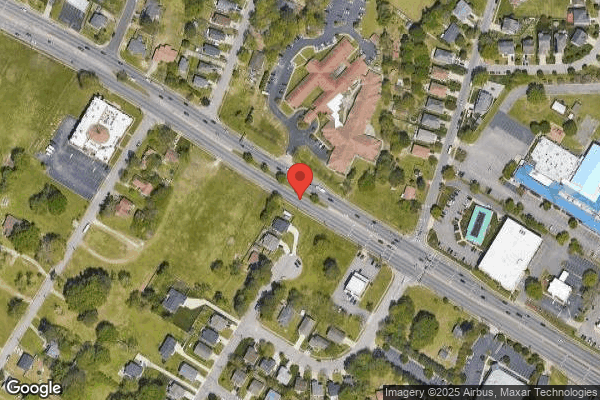
Jul 2019 13 deficiencies
CONCERN (D)

Potential for Harm - no one hurt, but risky conditions existed

Deficiency F0583 (Tag F0583)

Could have caused harm · This affected 1 resident

**NOTE- TERMS IN BRACKETS HAVE BEEN EDITED TO PROTECT CONFIDENTIALITY** Based on observation and staff interviews the facility staff failed to protect resident from public view during wound care for 1...

Read full inspector narrative →
**NOTE- TERMS IN BRACKETS HAVE BEEN EDITED TO PROTECT CONFIDENTIALITY** Based on observation and staff interviews the facility staff failed to protect resident from public view during wound care for 1 resident (Resident #21), of 36 residents in the survey sample. The facility staff failed to ensure privacy was maintained during a wound care dressing change for Resident #21. The findings included: Resident #21 was originally admitted to the facility on [DATE]. Diagnosis for Resident #21 included but are not limited to Type II Diabetes Mellitus. Resident #21's Minimum Data Set (MDS-an assessment protocol) with an Assessment Reference Date of 05/04/19 coded the resident with a 15 out of a possible score of 15 on the Brief Interview for Mental Status (BIMS), indicating no cognitive impairment. In addition, the MDS coded Resident #21 as requiring extensive assistance of two with personal hygiene, extensive assistance of one with bathing, toilet use, dressing and bed mobility for Activities of Daily Living care. Section M-skin condition was coded for pressure ulcer care. During a wound dressing observation on 07/10/19 at approximately 10:56 a.m., with Licensed Practical Nurse (LPN) #6 the following observations were made: Resident #21 resided in a private room. The resident's window blind remained open throughout the entire dressing change to Resident #21's left heel pressure ulcer. Anyone walking outside of Resident #21's window could view the wound care dressing change performed on Resident #21. On the same day at approximately 2:50 p.m., an interview was conducted with LPN #6 who stated, I should have closed the window blinds to maintain privacy during the wound care dressing change to Resident #21's left heel pressure ulcer. An interview was conducted with the LPN #5 (Unit Manager on East) on 07/10/19 at approximately 2:55 p.m., who said the window blinds should have been closed. She stated, If you can see out then they can see in; that is a violation of their privacy. On 07/11/19 at approximately 6:00 p.m., and interview was conducted with the Director of Nursing (DON) who stated, The window blinds should have been closed to maintain dignity for Resident #21 during his wound care dressing change. The Administrator, Director of Nursing and Regional Director of Clinical Services was informed of the finding during a briefing on 07/11/19 at approximately 8:10 p.m. The facility did not present any further information about the findings. The facility's policy titled Resident Rights and Facility Responsibilities (Revision date 11/16). -Policy: It is the facility's policy to abide by all resident rights, and to communicate these rights to residents and their designated representatives in a language that they can understand. -Dignity, Respect & Quality of Life. A facility must treat each resident with respect and dignity and care for each resident in a manner and in an environment that promotes maintenance or enhancement of his or her quality of life, recognizing each resident's individuality. The facility must protect and promote the rights of the resident.
CONCERN (D)

Potential for Harm - no one hurt, but risky conditions existed

Deficiency F0604 (Tag F0604)

Could have caused harm · This affected 1 resident

**NOTE- TERMS IN BRACKETS HAVE BEEN EDITED TO PROTECT CONFIDENTIALITY** Based on observations, resident interview, staff interviews, clinical record review and facility documentation review the facili...

Read full inspector narrative →
**NOTE- TERMS IN BRACKETS HAVE BEEN EDITED TO PROTECT CONFIDENTIALITY** Based on observations, resident interview, staff interviews, clinical record review and facility documentation review the facility staff failed to ensure for 1 resident (Resident #44) out of 36 residents in the survey sample was free from physical restraint. The facility staff failed to ensure that Resident #44 was free of physical restraint. The findings included: Resident #44 was admitted to the facility on [DATE]. Diagnoses included but were not limited to, Alzheimer's Disease with Early Onset, Unspecified Dementia with Behavioral Disturbance and Osteoarthritis. Resident #44's Minimum Data Set (an assessment protocol) with an Assessment Reference Date of 05/24/2019 coded Resident #44 with short-term and long-term memory problems, and with severely impaired cognitive skills for daily decision making. In addition, the Minimum Data Set coded Resident #44 as requiring total dependence of 2 for bed mobility and transfer, and total dependence of 1 for dressing, eating, toilet use, personal hygiene and bathing. On 07/09/2019 at 1:26 p.m., Resident #44 was observed sitting in his wheelchair in his room. A divided leg mechanical lift sling was observed behind the resident in his wheelchair and the sling leg straps were under each leg and criss-crossed between his legs. The left leg strap was extended across in front of the resident and a loop on the leg strap was wrapped around the right handle on the back of the wheelchair and the right leg strap extended across in front of the resident and a loop on the leg strap was wrapped around the left handle on the back of the wheelchair. On 07/10/2019 at 11:30 a.m., Resident #44 was observed sitting in his wheelchair in his room. A divided leg mechanical lift sling was observed behind the resident in his wheelchair and the sling leg straps were under each leg and criss-crossed between his legs. The left leg strap was extended across in front of the resident and a loop on the leg strap was wrapped around the right handle on the back of the wheelchair. On 07/11/2019 at 11:41 a.m., Certified Nursing Assistant (CNA) #4 was observed pushing Resident #44 down the hallway from his room. Resident #44 was sitting in his wheelchair with a divided leg mechanical lift sling behind him in the wheelchair, the leg straps were under his legs and criss-crossed between his legs. The left leg strap was extended across in front of the resident and a loop was hooked onto the right wheelchair handle on the back of the wheelchair. The Surveyor asked CNA #4 and Registered Nurse (RN) #2 to step into a empty community area room and CNA #4 was asked, What is the purpose of the criss-crossed leg strap being hooked onto the handle on the back of (Resident's name) wheelchair? CNA #4 stated, To prevent him from scooting, sliding down in his wheelchair. His wife know's and she's ok with it. CNA #4 was asked, Have you told the nurse about Resident #44 sliding? CNA #4 stated, Yes, I told RN #2. RN #2 stated that she was not aware that the staff were looping the leg straps of the sling to the wheelchair to prevent the resident from sliding down in the wheelchair. RN #2 was asked, What is this considered when the sling is hooked onto the handle of the wheelchair to keep (Resident's name) from sliding down in his wheelchair? RN #2 stated, It is considered a restraint. On 07/11/19 at 12:33 p.m., an interview was conducted with the Director of Nursing (DON) and the observations were discussed. The DON stated, I will be doing some inservicing. The DON was asked, What are your expectations of staff and restraining of residents? The DON stated, I expect my staff not to restrain residents. This facility is restraint free. The Administrator, Director of Nursing and the Regional Director of Clinical Services were informed of the finding on 07/11/2019 at approximately 8:10 p.m. at the pre-exit meeting. The facility did not present any further information about the findings.
CONCERN (D)

Potential for Harm - no one hurt, but risky conditions existed

Transfer Requirements (Tag F0622)

Could have caused harm · This affected 1 resident

**NOTE- TERMS IN BRACKETS HAVE BEEN EDITED TO PROTECT CONFIDENTIALITY** Based on staff interviews and clinical record reviews the facility staff failed to send comprehensive care plan goals for 2 resi...

Read full inspector narrative →
**NOTE- TERMS IN BRACKETS HAVE BEEN EDITED TO PROTECT CONFIDENTIALITY** Based on staff interviews and clinical record reviews the facility staff failed to send comprehensive care plan goals for 2 residents (Resident #45, Resident #78) out of 36 residents in the survey sample when discharged to the hospital. 1. The facility staff failed to send comprehensive care plan goals for Resident #45 when discharged to the hospital on [DATE]. 2. For Resident #78, facility staff failed to evidence that the comprehensive care plan goals were sent with the resident upon transfer to the hospital on 9/1/18. The findings included: 1. Resident #45 was discharged to the hospital on [DATE] and readmitted to the facility on [DATE]. Diagnoses included but were not limited to, Non Traumatic Intracranial Hemorrhage, unspecified and Hypertension. Resident #45's Minimum Data Set (an assessment protocol) with an Assessment Reference Date of 05/28/2019 was coded with a BIMS (Brief Interview for Mental Status) score of 15 indicating no cognitive impairment. In addition, the Minimum Data Set coded Resident #45 as requiring extensive assistance of 2 with bed mobility and transfer, extensive assistance of 1 with dressing, toilet use and personal hygiene and physical help in part of bathing with assistance of 1. On 07/10/2019 documentation was requested evidencing Resident #45's comprehensive care plan goals were sent when the resident was discharged to the hospital. On 07/10/2019 at 4:00 p.m., an interview was conducted with the Director of Nursing. The Director of Nursing was unable to provide evidence that the comprehensive care plan goals were sent to the hospital when Resident #45 was discharged . The Director of Nursing stated, The Nurses usually send the Bed Hold Notice and care plan goals with the residents when they are discharged to the hospital but since the resident had went out for an appointment and then ended up going directly to the hospital I guess we weren't thinking. We know now and will send the written Bed Hold Notice and the care plan goals to the hospital going forward. On 07/11/2019 at approximately 8:10 p.m., at the pre-exit meeting the Administrator, Director of Nursing and the Regional Director of Clinical Services were informed of the findings. The facility did not present any further information about the findings. 2. For Resident #78, facility staff failed to evidence that the comprehensive care plan goals were sent with the resident upon transfer to the hospital on 9/1/18. Resident #78 was admitted to the facility on [DATE] and readmitted on [DATE] with diagnoses that included but were not limited to muscle weakness, anemia, high blood pressure, and heart failure. Resident #78's most recent MDS (minimum data set) assessment was a significant change assessment with an ARD (assessment reference date) of 6/28/19. Resident #78 was coded as being intact in cognitive function scoring 15 out of possible 15 on the BIMS (Brief Interview for Mental Status) exam. Review of Resident #78's clinical record revealed that she had been transferred to the hospital for a fractured leg on 9/1/18. The following nursing note was written: Resident had x-ray done and results back shows acute tibial fracture and cannot exclude a fibula fracture (sic). waiting on call to see if we can send out to ER (emergency room) for brace and stronger pain medication. Both on call and DON (Director of Nursing) made aware of x-ray results. The next note dated 9/1/18 documented the following: Resident son called and updated that X-ray came back and showed FX (fractured) tibia and will send out to ER Hospital (sic) also called report. Will let on coming shift know sent out. There was no evidence that all the required documentation to include the comprehensive care plan goals were sent with the resident upon transfer to the hospital. On 7/11/19 at 3:16 p.m., an interview was conducted with LPN (Licensed Practical Nurse) #2, Resident #78's nurse. When asked what documents were sent with Residents upon transfer to the hospital, LPN #2 stated that she will send the SBAR (situation, background, assessment, and recommendation) form, Transfer Interact Form, all current physician orders, bed hold policy, and the care plan. When asked if she documents what items were sent with the resident upon transfer to the hospital in the clinical record, LPN #2 stated that she will document. LPN #2 stated that she has a check off list that alerts the nurse what documents to send. When asked when the staff starting using this list, LPN #2 stated, It's been awhile. LPN #2 could not recall if she had sent Resident #78's care plan goals to the hospital. LPN #2 could not recall that far back. On 7/11/19 at approximately 3:30 p.m., an interview was conducted with LPN #5, the unit manager. When asked what documents were sent with Residents upon transfer to the hospital, LPN #5 stated that care plan goals were now being sent after the facility changed their policy. When asked if she could find evidence that care plan goals were sent with Resident #78 for her 9/1/18 transfer to the hospital, LPN #5 stated that back then nursing was not sending the care plan goals. On 7/11/19 at 5:05 p.m., administrative staff member (ASM) #1, the Administrator, ASM #2, the DON (Director of Nursing) were made aware of the above concerns.
CONCERN (D)

Potential for Harm - no one hurt, but risky conditions existed

Transfer Notice (Tag F0623)

Could have caused harm · This affected 1 resident

**NOTE- TERMS IN BRACKETS HAVE BEEN EDITED TO PROTECT CONFIDENTIALITY** 2. Resident #45 was discharged to the hospital on [DATE] and readmitted to the facility on [DATE]. Diagnoses included but were n...

Read full inspector narrative →
**NOTE- TERMS IN BRACKETS HAVE BEEN EDITED TO PROTECT CONFIDENTIALITY** 2. Resident #45 was discharged to the hospital on [DATE] and readmitted to the facility on [DATE]. Diagnoses included but were not limited to, Non Traumatic Intracranial Hemorrhage, unspecified and Hypertension. On 07/10/2019 documentation was requested to evidence that the Ombudsman was notified when the resident was discharged to the hospital. On 07/10/2019 at 4:00 p.m., an interview was conducted with the Director of Nursing and she stated, The Social Worker usually notifies the Ombudsman of resident discharges at the first of each month, however she did not think to notify the Ombudsman of Resident #45's discharge. The Ombudsman was notified today. On 07/11/2019 at approximately 8:10 p.m., at the pre-exit meeting the Administrator, Director of Nursing and the Regional Director of Clinical Services were informed of the findings. The facility did not present any further information about the findings. Based on resident record review, staff interviews and facility document review, the facility failed to notify the Office of the State Long-Term Care Ombudsman in writing of hospital discharges for 2 of 36 residents (Resident #83 and #45) in the survey sample. 1. The facility staff failed to notify the Office of the State Long-Term Care Ombudsman of Resident #83 discharge to the hospital on [DATE]. 2. The facility staff failed to notify the Office of the State Long-Term Care Ombudsman of Resident #45's discharge to the hospital on [DATE]. The findings included: 1. Resident #83 was admitted to the facility on [DATE]. Diagnosis for Resident #83 included but not limited to Cerebral Infarction. On 05/06/19, according to the facility's documentation, Resident #83 complained of chest pain. Resident #83 was transported to the local ER via Emergency Medical Services (EMS). Review of the May's 2019, faxed list to the ombudsman of all the resident's emergency transfers to the hospital was reviewed on 07/10/19 at approximately 10:25 a.m. The transfer list did not include Resident #83 who was discharged to the hospital on [DATE]. On the same day at approximately 1:53 p.m., the Director of Social Services presented another sheet that was faxed to the Ombudsman on 07/10/19 at approximately 1:36 p.m., which included Resident #83's discharge to the hospital on [DATE] but only after requested from the surveyor. An interview was conducted with the Director of Social Services on 07/11/19 at approximately 12:30 p.m. She said Resident #83 was missed when I notified the ombudsman via fax on 06/03/19 with all of the discharges to the hospital for May 2019. The Administrator, Director of Nursing and Regional Director of Clinical Services was informed of the finding during a briefing on 07/11/19 at approximately 8:10 p.m. The facility did not present any further information about the findings. The facility's policy titled (Discharge/Transfer Letter Policy). Procedure included but not limited to: -Social Services or designee will assure the original discharge/transfer letter is given to the resident or guardian/sponsor, if applicable -Copies will be sent to Department of Health, Ombudsman Office and filed in the business file and/or scanned into Point Click Care documents tab with administrator/designee, with the certified receipt if applicable. -For emergency transfers, one list can be sent to the Ombudsman at the end of the month.
CONCERN (D)

Potential for Harm - no one hurt, but risky conditions existed

Deficiency F0625 (Tag F0625)

Could have caused harm · This affected 1 resident

**NOTE- TERMS IN BRACKETS HAVE BEEN EDITED TO PROTECT CONFIDENTIALITY** 2. Resident #45 was discharged to the hospital on [DATE] and readmitted to the facility on [DATE]. Diagnoses included but were n...

Read full inspector narrative →
**NOTE- TERMS IN BRACKETS HAVE BEEN EDITED TO PROTECT CONFIDENTIALITY** 2. Resident #45 was discharged to the hospital on [DATE] and readmitted to the facility on [DATE]. Diagnoses included but were not limited to, Non Traumatic Intracranial Hemorrhage, unspecified and Hypertension. Resident #45's Minimum Data Set (an assessment protocol) with an Assessment Reference Date of 05/28/2019 was coded with a BIMS (Brief Interview for Mental Status) score of 15 indicating no cognitive impairment. In addition, the Minimum Data Set coded Resident #45 as requiring extensive assistance of 2 with bed mobility and transfer, extensive assistance of 1 with dressing, toilet use and personal hygiene and physical help in part of bathing with assistance of 1. On 07/10/2019 documentation was requested to evidence that the written Bed Hold Notice was sent when the resident was discharged to the hospital. On 07/10/2019 at 4:00 p.m., an interview was conducted with the Director of Nursing. The Director of Nursing was unable to provide evidence that the written Bed Hold Notice was sent to the hospital when Resident #45 was discharged . The Director of Nursing stated, The Nurses usually send the Bed Hold Notice and Care Plan goals with the residents when they are discharged to the hospital but since the resident had went out for an appointment and ended up going directly to the hospital I guess we weren't thinking. We know now and will send the Care Plan goals and written Bed hold Notice to the hospital going forward. On 07/11/2019 at approximately 8:10 p.m., at the pre-exit meeting the Administrator, Director of Nursing and the Regional Director of Clinical Services were informed of the findings. The facility did not present any further information about the findings. Based on staff interview, facility document review, and clinical record review, it was determined that facility staff failed to provide written bed hold notification for 2 of 36 residents in the survey sample, Residents #78 and #45. 1. For Resident #78, facility staff failed to provide the Resident and/or Resident Representative a written bed hold notification upon transfer to the hospital on 9/1/18. 2. For Resident #45 the facility staff failed to provide the Resident and/or Resident Representative a written bed hold notice when discharged to the hospital on [DATE]. The findings include: 1. Resident #78 was admitted to the facility on [DATE] and readmitted on [DATE] with diagnoses that included but were not limited to muscle weakness, anemia, high blood pressure, and heart failure. Resident #78's most recent MDS (minimum data set) assessment was a significant change assessment with an ARD (assessment reference date) of 6/28/19. Resident #78 was coded as being intact in cognitive function scoring 15 out of possible 15 on the BIMS (Brief Interview for Mental Status) exam. Review of Resident #78's clinical record revealed that she had been transferred to the hospital for a fractured leg on 9/1/18. The following nursing note was written: Resident had x-ray done and results back shows acute tibial fracture and cannot exclude a fibula fracture (sic). waiting on call to see if we can send out to ER (emergency room) for brace and stronger pain medication. Both on call and DON (Director of Nursing) made aware of x-ray results. The next note dated 9/1/18 documented the following: Resident son called and updated that X-ray came back and showed FX (fractured) tibia and will send out to ER Hospital (sic) also called report. Will let on coming shift know sent out. There was no evidence that written bed hold notification was sent with the resident upon transfer to the hospital. On 7/11/19 at 3:16 p.m., an interview was conducted with LPN (Licensed Practical Nurse) #2, Resident #78's nurse. When asked what documents were sent with Residents upon transfer to the hospital, LPN #2 stated that she will send the SBAR (situation, background, assessment, and recommendation) form, Transfer Interact Form, all current physician orders, bed hold policy, and the care plan. When asked if she documents what items were sent with the resident upon transfer to the hospital in the clinical record, LPN #2 stated that she will document. LPN #2 stated that she has a check off list that alerts the nurse what documents to send. When asked when the staff starting using this list, LPN #2 stated, It's been awhile. LPN #2 could not recall if she had sent Resident #78's out to the hospital on 9/1/18. On 7/11/19 at approximately 3:30 p.m., an interview was conducted with LPN #5, the unit manager. When asked what documents were sent with Residents upon transfer to the hospital, LPN #5 stated that the bed hold policy was now being sent after the facility changed their policy. When asked if she could find evidence that bed hold policy was sent with Resident #78 for her 9/1/18 transfer to the hospital, LPN #5 stated that back then nursing was not sending the bed hold policy that far back. On 7/11/19 at 5:05 p.m., administrative staff member (ASM) #1, the administrator, ASM #2, the DON (Director of Nursing) were made aware of the above concerns.
CONCERN (D)

Potential for Harm - no one hurt, but risky conditions existed

Comprehensive Care Plan (Tag F0656)

Could have caused harm · This affected 1 resident

**NOTE- TERMS IN BRACKETS HAVE BEEN EDITED TO PROTECT CONFIDENTIALITY** Based on observation, staff interview, facility document review and clinical record review, it was determined that facility staf...

Read full inspector narrative →
**NOTE- TERMS IN BRACKETS HAVE BEEN EDITED TO PROTECT CONFIDENTIALITY** Based on observation, staff interview, facility document review and clinical record review, it was determined that facility staff failed to implement the comprehensive care plan for one of 36 residents in the survey sample, Resident #6. For Resident #6, facility staff failed to implement her plan of care and ensure a fall mat was in place to prevent injury from falls. The findings include: Resident #6 was admitted to the facility on [DATE] with diagnoses that included but were not limited to Chronic Kidney Disease Stage 3, high blood pressure, type two diabetes, hypothyroidism and Bipolar disorder. Resident #6's most recent MDS (Minimum Data Set) assessment was a significant change assessment with an ARD (assessment reference date) of 4/22/19. Resident #6 was coded with no cognitive impairment; requiring extensive assistance from one staff member with toileting, personal hygiene and dressing; and extensive assist with two plus staff members with bed mobility and transfers. Review of Resident #6's current July 2019 POS (Physician Order Summary), revealed the following orders: Fall mat at bedside, in place when resident is in bed . This order was initiated on 5/30/18. Review of Resident #6's comprehensive care plan dated 6/4/15 and revised 5/3/19 documented the following for her falls: (Name of Resident #6) is at risk for injury, multiple risk factors related to deconditioning, psychoactive drug use, bladder incontinence, bowel incontinence, functional problem related r/t (related to) hx (history) R (right) ankle fracture. Goal: (Name of Resident #6) will have no fall related injuries through next review. Interventions: Fall matt (sic) to bedside. (Date Initiated: 5/31/2019) On 7/9/19 at 12:44 p.m., an observation was made of Resident #6. She was lying in bed on her back. A fall mat was not observed down on the side of her bed. At this time Resident #6 had asked this writer to get the nurse so she could be readjusted in bed. On 7/9/19 at 1:49 p.m., an observation was made of Resident #6. She was lying in bed on her right side. A fall mat was not observed to be down on the side of the bed. On 7/10/19 at 8:15 a.m., a blue fall mat was observed to be on the right side of her bed while the resident was in bed. On 7/10/19 at 8:57 a.m., Resident #6 was observed up in bed eating breakfast with her over bed table in front of her. The base of the over bed table was to the right of Resident #6. The fall mat was folded up at the foot of her bed. On 7/10/19 at 9:57 a.m., CNA (Certified Nursing Assistant) #1, (Resident #6's aide), removed her breakfast tray and walked out of Resident #6's room. Resident #6's over bed table was pushed off to the right of Resident #6's bed. CNA #1 did not come back to put the fall mat back down. On 7/10/19 at 10:10 a.m. and 10:25 a.m., Resident #6 was observed lying in bed without her fall mat in place. On 7/10/19 at 10:40 a.m., LPN (Licensed Practical Nurse) #2, Resident #6's nurse, was observed entering Resident #6's room with her medication. LPN #2 exited her room shortly after. This surveyor made an observation at 10:45 a.m., that Resident #6's blue fall mat was now on the floor to her right side. On 7/10/19 at 10:47 a.m., an interview was conducted with LPN #2. When asked if she had just put Resident #6's fall mat back down on the floor, LPN #2 confirmed that she did. When asked if it had been on the floor earlier that morning, LPN #2 stated that it was originally on the floor and that the staff usually pick it up when they deliver Resident #6's meal trays. LPN #2 stated that the over bed table cannot move on top of the fall mat and they have to remove the mat. When asked if staff should be placing the fall mat back down once Resident #6 has finished her meals, LPN #2 stated that it should be. When asked if Resident #6 was a fall risk, LPN #2 stated that Resident #6 used to be a high fall risk but that she had not had any falls in some time. LPN #2 stated the mat was a preventive measure to prevent injury from falls especially while the resident received a blood thinner. On 7/11/19 at 10:27 a.m., an interview was conducted with CNA #1, Resident #6's aide. CNA #1 confirmed that she was assigned to Resident #6 on 7/10/19 and that she had probably had been the aide that removed her breakfast tray. When asked the process (what staff should do), if they see a fall mat that is folded up in a resident's room and the resident is in bed, CNA #1 stated that she would put the fall mat back on the ground. CNA #1 was told about the observations made on 7/10/19. CNA #1 confirmed that she should have put the fall mat back down once Resident #6 had completed her meal. When asked how CNAs know what things each resident needs in place such as fall mats, devices etc. CNA #1 stated that she will get report from the nurse or she can look at a nursing [NAME] for each resident. Review of Resident #6's current nursing [NAME] revealed that it did not address fall mats. On 7/11/19 at 3:20 p.m., further interview was conducted with LPN #2. When asked the purpose of the care plan, LPN #2 stated that the care plan was used to guide nurses on how to properly care for a patient. When asked if it was important for the care plan to be accurate, LPN #2 stated that it was. When asked if it was important for the care plan to be followed, LPN #2 stated that it was. When asked if the care plan was being followed for Resident #6 when her fall mat was folded up while she was in bed, LPN #2 stated that it was not being followed. On 7/11/19 at 5:05 p.m., administrative staff member (ASM) #1, the Administrator, ASM #2, the DON (Director of Nursing) were made aware of the above concerns. Facility policy titled, Care Plan, documented in part, the following: All direct care staff must always know, understand and follow their Resident's Care Plan. If unable to implement any part of the plan, notify your Charge Nurse or MDS Coordinator, so that this can be documented or the Care Plan changed if necessary.
CONCERN (D)

Potential for Harm - no one hurt, but risky conditions existed

Deficiency F0657 (Tag F0657)

Could have caused harm · This affected 1 resident

**NOTE- TERMS IN BRACKETS HAVE BEEN EDITED TO PROTECT CONFIDENTIALITY** Based on resident interview, staff interviews, clinical record review and facility documentation review the facility staff faile...

Read full inspector narrative →
**NOTE- TERMS IN BRACKETS HAVE BEEN EDITED TO PROTECT CONFIDENTIALITY** Based on resident interview, staff interviews, clinical record review and facility documentation review the facility staff failed to invite 1 of 36 residents in the survey sample to attend his person centered care plan meeting (Resident #54) in the survey sample. The findings included: Resident #54 was admitted to the facility on [DATE]. Diagnoses for Resident #54 included but not limited to, Diabetes Mellitus and Chronic Obstructive Pulmonary Disease (COPD). The current Minimum Data Set (MDS), a quarterly assessment with an Assessment Reference Date (ARD) of 06/14/19, coded the resident with a 13 out of a possible score of 15 on the Brief Interview for Mental Status (BIMS) indicating no cognitive impairment. During the initial tour on 07/09/19 at approximately 1:09 p.m., an interview was conducted with Resident #54 who stated, I am not being invited to attend my care plan meetings nor did I receive a letter to attend a care plan meeting. An interview was conducted with the Social Worker (SW) on 07/10/19 at approximately 11:40 a.m. The SW reviewed the residents Care Plan invitation book. After he reviewed the Care Plan invitation book the SW stated, I am unable to locate the original invitation form in the MDS Coordinator book or in the resident's medical record. He stated I am puzzled because I usually get the residents to sign the invitation form, down load it in the computer then give the original to the MDS Coordinator. The surveyor asked, When was the last time Resident #54 attended his care plan meeting? The SW stated, I am only able to locate care plan invitations for 2018; nothing for 2019. The SW presented a form dated 05/16/19, which included that Resident #54's was scheduled to have a care plan meeting on 05/16/19 at 11:15 a.m. The SW stated, I am unable to provide evidence that the resident was invited or that he attended the care plan meeting on 05/16/19 or any care plan meeting for 2019. The Administrator, Director of Nursing and Regional Director of Clinical Services was informed of the finding during a briefing on 07/11/19 at approximately 8:10 p.m. The facility did not present any further information about the findings. The facility's policy titled Care Plan (Revision: April 6, 2017). Policy: An interdisciplinary plan of care will be established for every resident and updated in accordance with state and federal regulatory requirements and on an as needed basis. In states where pre-admission screening applies, this will be coordinated with the facility assessment. Goals must be measurable and objective. Procedure include but not limited to: -The facility designee is responsible for delivering to each resident who is scheduled for conference an invitation to attend the meeting. The letter of requested participation (original) is presented to the resident at least five (5) days prior to the date of conference. A designated time of meeting is given to each resident. A copy of the letter is maintained for reference.
CONCERN (D)

Potential for Harm - no one hurt, but risky conditions existed

Deficiency F0658 (Tag F0658)

Could have caused harm · This affected 1 resident

**NOTE- TERMS IN BRACKETS HAVE BEEN EDITED TO PROTECT CONFIDENTIALITY** Based on resident interview, staff interviews, clinical record review and facility documentation review the facility staff faile...

Read full inspector narrative →
**NOTE- TERMS IN BRACKETS HAVE BEEN EDITED TO PROTECT CONFIDENTIALITY** Based on resident interview, staff interviews, clinical record review and facility documentation review the facility staff failed to maintain professional standards for 1 resident (Resident #1) in the survey sample of 36 residents. The facility staff failed to communicate an ongoing assessment with the dialysis center for Resident #1 who attended outpatient dialysis three days per week on Monday, Wednesday and Friday; And, the facility staff failed to obtain weights on Resident #1 per the comprehensive care plan and physician's order. The findings included: Resident #1 was originally admitted to the facility on [DATE]. Diagnoses included, but not limited to, End Stage Renal Disease (ESRD) (Chronic irreversible kidney failure). The resident was receiving hemodialysis treatments three times a week every Monday, Wednesday and Friday at an outpatient dialysis center. The current Minimum Data Set (MDS) a Quarterly assessment with an Assessment Reference Date (ARD) of 01/24/19 coded the resident with a 13 out of a possible score of 15 on the Brief Interview for Mental Status (BIMS), indicating no cognitive impairment. In addition, under section (O) for Special Treatments, Procedures and Programs, the resident was coded for dialysis. Resident #1's Care Plan included: weigh per protocol and as needed. Use aseptic technique and universal precautions. Resident #1's physician orders contained the following orders: (1) Dialysis on Monday, Wednesday and Friday. (2) If bleeding occurs from the dialysis site apply pressure and call 911 as needed. (3) Monitor Dialysis port for signs and symptoms of infection for every shift. (4) Obtain weights upon return from dialysis. Notify MD if 3+ lbs is noted one time a day every Monday, Wednesday and Friday. (5) Dialysis return assessment in the evening every Monday, Wednesday and Friday. A review of Resident #1's weights for the Month of May showed the following: 05/01/19 resident weighed 106 lbs. 05/14/19 resident weighed 103.4 lbs. 05/16/19 resident weighed 105.5. 05/20/19 resident weighed 108.2 lbs. A review of Resident #1's weight for the Month of June showed the following: 06/19/19 resident weighed 106.4 lbs. No other weighs were recorded for the month of June. A review of Resident #1's weight for the Month of July showed the following: 07/05/19 resident weighed 105 lbs. 07/10/19 resident weighed 105.5 lbs. No other weights were obtained. An interview was conducted with Licensed Practical Nurse (LPN) #5 on 07/11/2019 at approximately 9:45 am. She was asked if she could view Resident #1's Dialysis Communication Book. LPN #1 stated that she would have to get permission from the resident because she has her communication book with her at all times. The communication sheet listed that resident was receiving dialysis at (Name) Dialysis Center on Monday, Wednesday and Fridays at 11:00 AM. There were no communication notes from 7/10/19. The last communication notes in the book were dated 06/07/19-06/10/19. LPN #5 stated that resident is attending a new facility as of Monday because she was disruptive to other residents. She had to change dialysis centers. Resident told nurse she left the communication sheet in the transportation van. LPN #5 was asked what should have been done. She said They should have called the dialysis place and received the notes. An interview was conducted with LPN #5 (Licensed Practical Nurse) Unit Manager (East Wing) on 07/11/19 at approximately 5:20 PM. She stated that the resident will refuse to be weighed sometimes. LPN #5 was asked what should have been done. She said that when the resident returns after dialysis the 3-11 (PM) shift should document resident's weight because she usually returns to the facility between 4:30 PM and 5:00 PM. and if she refuses to be weighed her POA (Power of Attorney/responsible party) should be called. On 07/11/19 at approximately, 3:14 PM a briefing was held with the Administrator, Director of Nursing, the Regional Director of Clinical Services. The administrator stated We should have communicated with the dialysis center by telephone or fax. On 07/11/19 at approximately 7:30 PM an interview was conducted with Resident #1 concerning staff obtaining her weights when she returns from dialysis. Resident was asked if she was refusing being weighed when she comes back from dialysis. She stated No, That's a lie. She was also asked if she gives staff her communication book to keep for her when she returns from dialysis. She stated No. because they lost it one time. I keep it myself. On 07/11/19 at approximately 7:35 PM the following Certified Nursing Assistants (CNAs) were interviewed concerning weighing resident when she returns from dialysis. CNA #2 was asked if resident #1 is assigned to her when resident returns from dialysis and does she obtain resident weights. She stated No. CNA #5 stated I normally work the 11 (PM)-7 (AM) shift; If I come in early, no one tells me to weigh her. CNA #6 stated When (Resident #1) come in from dialysis I get her vital signs and weigh her. I record the vital signs and her weight on a piece of paper with the date, time and give the information to the nurse to record in the system. The facility's policy titled Hemodialysis Care Policy-Effective date-June 16, 2017. -Policy statement: The licensed nursing staff will use the following criteria as part of the patient/resident's comprehensive assessment to determine whether or not to proceed with care planning. Risks and complications unique to each patient/ resident will be documented on the individualized plan of care. The general guidelines and emergency guidelines The goal should provide: 1. The specialized care needed. 2. Maintain patency of the shunt/central line. 3. Prevent infection or medical complications. Plan of Care Protocol: Pre and post dialysis weight for every visit provided by dialysis center. The above issues were addressed with the Administrator, Director of Nursing and Regional Director of Clinical Services on 07/11/19 at approximately 3:14 PM. No additional information was presented.
CONCERN (D)

Potential for Harm - no one hurt, but risky conditions existed

Pressure Ulcer Prevention (Tag F0686)

Could have caused harm · This affected 1 resident

**NOTE- TERMS IN BRACKETS HAVE BEEN EDITED TO PROTECT CONFIDENTIALITY** 2. The facility staff failed to follow physician orders for a wound care dressing change to Resident #21's left heel *pressure u...

Read full inspector narrative →
**NOTE- TERMS IN BRACKETS HAVE BEEN EDITED TO PROTECT CONFIDENTIALITY** 2. The facility staff failed to follow physician orders for a wound care dressing change to Resident #21's left heel *pressure ulcer on 7/10/19. Resident #21 was originally admitted to the facility on [DATE]. Diagnoses for Resident #21 included but are not limited to Type II Diabetes Mellitus. Resident #21's Minimum Data Set (MDS-an assessment protocol) with an Assessment Reference Date of 05/04/19 coded the resident with a 15 out of a possible score of 15 on the Brief Interview for Mental Status (BIMS), indicating no cognitive impairment. In addition, the MDS coded Resident #21 extensive assistance of two with personal hygiene, extensive assistance of one with bathing, toilet use, dressing and bed mobility for Activities of Daily Living care. Under section M-skin condition was coded for pressure ulcer care. Resident #21's comprehensive care plan revised on 04/15/19, documented Resident #21 with area to left heel. The goal: resident will have intact skin, free from redness, blisters or discoloration by/through next review. Some of the intervention/approaches to manage goal included: administer treatments as ordered and monitor for effectiveness of treatment and update physician as needed and assess/document/report to physician as needed with changes in skin status. Review of Resident #21's July 2019 Treatment Administration Record (TAR) consisted of the following order: starting on 06/28/19-cleanse left heel with normal saline, pat dry, apply *calcium alginate and dry dressing every day shift for wound care; *skin prep around peri-wound (skin surround the wound.) On 07/10/19 at approximately 10:56 a.m., Resident #21 was observed lying in bed in supine position. The treatment supplies consisted of 4 x 4 gauzes, normal saline, dry adhesive dressing, Calcium Alginate and hand sanitizer. The LPN washed her hands for 18 seconds then donned a set of gloves. The wound was cleaned twice with a saline soaked gauze, pat dry, the LPN cut a piece of Calcium Alginate to fit the left heel wound, placed the cut Calcium Alginate to the wound bed then secured the Calcium Alginate in place with the dry adhesive dressing, removed her gloves then washed her hands for 19 seconds. On 07/11/19 at approximately 2:58 p.m., an interview was conducted with LPN #5. The LPN read Resident #21's treatment order for the pressure ulcer to the left heel. The surveyor asked, Should you have used skin prep to the peri-wound of the left heel ulcer. The LPN stated, I though peri-wound meant the sacrum then stated, Yes, I should have used skin prep around the left heel wound. An interview was conducted with the Director of Nursing (DON) on 07/11/19 at approximately 6:00 p.m. The DON read Resident #21's treatment order for the pressure ulcer to the left heel. The surveyor asked, Should the nurse have applied skin prep around the skin surrounding the left heel wound the DON replied, That's pretty simple, yes. The surveyor informed the DON that LPN #5 did not use skin prep during the left pressure ulcer wound care. The DON said the nurse should have used skin prep as ordered by the physician. The surveyor asked, What is the purpose of using skin prep she replied, To help keep the dressing in place and also used for skin protection. The Administrator, Director of Nursing and Regional Director of Clinical Services was informed of the finding during a briefing on 07/11/19 at approximately 8:10 p.m. The facility did not present any further information about the findings. The facility's policy titled) Skin and Wound care Guideline (Revised-September 2014). Wound and Dressing Care include but not limited to: -Dressing/treatment orders: Follow the physician's order for the type and frequency of treatment. Definitions: *A pressure injury is localized damage to the skin and underlying soft tissue usually over a bony prominence or related to a medical or other device. The injury can present as intact skin or an open ulcer and may be painful. The injury occurs as a result of intense and/or prolonged pressure or pressure in combination with shear. The tolerance of soft tissue for pressure and shear may also be affected by microclimate, nutrition, perfusion, co-morbidities and condition of the soft tissue (http://www.npuap.org/resources/educational-and-clinical-resources/npuap-pressure-injury-stages/). *Calcium alginate is a sterile primary dressing that can be cut to fit wounds with moderate to heavy exudate while maintaining a moist wound environment (woundsource.com). *Skin prep is a thin liquid film-forming dressing that, upon application to intact skin, forms a protective film to help reduce friction during removal of tapes and films (http://www.[NAME]-nephew.com/professional/products/advanced-wound-management/skin-prep/). Based on staff interview, facility document review and clinical record review, the facility staff failed to conduct a thorough skin assessment of a pressure ulcer prior to it advancing to an unstageable pressure ulcer, and failed to evidence that a barrier cream was implemented per the plan of care, for one of 36 residents in the survey sample, Resident #6; and the facility staff failed to follow physician's orders for a wound care dressing for one of 36 residents, Resident #21. The findings include: 1. For Resident #6, the facility staff failed to conduct a thorough skin assessment and failed to provide evidence that an intervention was implemented once redness was documented as being observed on 4/10/19 to Resident #6's sacrum. Resident #6 was admitted to the facility on [DATE] with diagnoses that included but were not limited to Chronic Kidney Disease Stage 3, high blood pressure, type two diabetes, hypothyroidism and Bipolar disorder. Resident #6's most recent MDS (minimum data set) assessment was a significant change assessment with an ARD (assessment reference date) of 4/22/19. Resident #6 was coded with no cognitive impairment; requiring extensive assistance from one staff member with toileting, personal hygiene and dressing; and extensive assist with two plus staff member with bed mobility and transfers. Resident 6 was coded in Section M (Skin Conditions), as having an acquired unstageable (1) pressure ulcer.* Review of Resident #6's bi-weekly skin assessments revealed no skin issues to her sacral area until 4/10/19, when redness was identified. The following skin assessment was documented on 11-7 shift (11:45 p.m.): Does the resident have current skin issues: Yes. Site 53) Sacrum, Description: redness. Further review of Resident #6's clinical record failed to evidence a thorough assessment to determine a possible cause of the sacral redness. Review of Resident #6's most recent Braden Score for Pressure Ulcer Risk (2) prior to 4/10/19 was on 3/12/19. Resident #6 was documented as being a low risk for obtaining pressures sores with a Braden score of 14. Review of Resident #6's April 2019 POS (physician order summary) failed to evidence an order for barrier cream (skin protective cream) prior to 4/10/19. Review of Resident #6's skin integrity care plan dated 1/11/19 and revised 7/3/19, documented the following intervention dated 1/11/19: Preventative barrier cream/ointment after incontinence care as needed. There was no evidence in Resident #6's clinical record that she was receiving barrier cream. Further review of Resident #6's April 2019 POS revealed that Resident #6 was taking the following supplements prior to the sacral redness found on 4/10/19: 1) ProStat (3)- two times a day for wound care, Make sure Prostat is sugar free by mouth 30 cc BID (two times a day). This order was initiated on 12/14/18. (This order was put into place for a left heel unstageable ulcer that was identified on 11/28/18 and resolved (healed) on 3/4/19). 2) MV-One (Multi-Vitamin) Give 1 capsule by mouth one time a day for wound care. This order was initiated on 12/15/18. (This order was put into place for a left heel unstageable ulcer that was identified on 11/28/18 and resolved (healed) on 3/4/19). Further review of Resident #6's April 2019 POS revealed that Resident #6 was on a pressure reduction mattress and had an order to turn and reposition the resident every two hours prior to the 4/10/19 sacral redness. There was no evidence that an intervention was put into place to prevent further skin breakdown after Resident #6's sacral redness was identified on 4/10/19. Review of Resident #6's skin integrity care plan dated 1/11/19 and revised 7/3/19, failed to evidence that a new intervention was put into place or that her care plan was reviewed after redness was found on 4/10/19. The next skin assessment documented in the clinical record was conducted during the overnight shift 4/13/19-4/14/19 (11 PM-7 AM shift). The following was documented: Does the resident have current skin issues: Yes. Site 53) Sacrum, Description: redness. Further review of the the nursing notes failed to evidence a thorough assessment to determine a possible cause of the sacral redness. There was no evidence that an intervention was put into place for Resident #6's sacral redness identified again on 4/14/19. The next skin assessment dated [DATE] at 10:03 a.m., revealed that an unstageable pressure ulcer was found to Resident #6's sacral area. The following was documented by the DON (Director of Nursing): UTD (unable to determine) Wound Location: Sacrum Length (cm (centimeters))2 Width (cm) 0.8 Depth (cm)0 Area is in house acquired. Skin impairment was not present on admission. 04/14/2019 Drainage type: Sanguineous Drainage (4) Scant (small amount) Drainage Wound bed appearance is Pink No odor Periwound (around wound) appearance is Pink. A skin assessment conducted by the LPN (Licensed Practical Nurse #2) assigned to Resident #6, documented the following on a Change of Condition Interact form on 4/14/19: Skin evaluation: Pressure Sore: Sacrum Describe the pressure sore: New onset Grade 2 or higher pressure ulcer, OR progression of pressure ulcer despite interventions. Document location and details: 2.0 x 0.8 x 0.0 100% slough (dead tissue), surrounding tissue, pink and intact. A nursing note dated 4/14/19 documented the following: Open area noted to sacral region during ADL (activities of daily living) care, measurement 2.0 x 0.8 x 0.0, MD (medical doctor) and RP (responsible party) notified, treatment initiated, TAPS (turning and positioning) compliance, resident educated on importance of TAPS, stated understanding, will cont. to monitor and note changes. Review of Resident #6's April 2019 physician orders, revealed the following treatment orders for her unstageable wound: Santyl (5) Ointment 250 UNIT/GM (Collagenase). Apply to sacrum topically every day shift for wound care cleanse wound to sacrum with normal saline, pat dry, apply santyl to wound bed, followed by moistened saline gauze, cover with dry drsg (dressing), change QD (every day) and prn (as needed) until resolved. The next wound assessment conducted on 4/21/19 continued to identify Resident #6's sacral pressure ulcer as an unstageable. The following measurements were documented: 2.5 x 1.0 x 0 cm. Review of Resident #6's clinical record revealed that the wound care physician assessed Resident #6 on 4/24/19. The following was documented: Patient presents with a wound on her sacrum. She has an unstageable (due to necrosis) sacrum for at least 1 days in duration. There is moderate serous exudates (6). The patient verbalizes pain with score of 5 out of 10. Medication affecting wound healing: No medication found to be affecting wound healing in clinical context. Unstageable due to necrosis (dead tissue) (Sacrum): etiology: Pressure, Wound Size: 3.0 x 1.0 x not measurable. Thick adherent devitalized necrotic tissue: 90 % (percent). Granulation tissue: 10 %. Primary dressings: santyl apply once daily for thirty days; Dakins (7) solution apply once daily for 30 days. 1/4 strength dakins moistened gauze. Secondary Dressing: Foam silicone border apply once daily for 30 days. Plan of Care Reviewed and Addressed: Off-load wound, Reposition per facility protocol, Gel cushion to wheelchair, low air low mattress (LAL), Vitamin C 500 mg (supplement) twice daily PO (by mouth); Zinc sulphate (supplement) 220 mg once daily PO for 14 days. Review of Resident #6's clinical record revealed that the above recommendations made by the wound care physician were put into place and wound treatments were completed. The following interventions were added to her skin integrity care plan dated 1/11/19: LAL (low air loss) mattress (4/23/19), Supplement as ordered (4/26/19). On 5/17/19 per wound care assessment by the wound care physician, her sacral wound remained an unstageable. The following recommendation was made: Would recommend foley catheter placement for healing. Review of Resident #6's clinical record revealed a Foley catheter was placed on 5/9/19. The following order was documented: FOLEY . WOUND HEALING: Foley Cath Size (16)Fr (french) with a (30) ml (milliliter) Balloon. Further review of Resident #6's wound care physician notes revealed that her sacral wound improved to a stage 3 on 5/14/19 and then deteriorated (worsened) to a stage 4 on 6/25/19. The following was documented: Stage 4 pressure wound sacrum- deteriorated due to generalized decline of patient, nutritional compromise. Add Negative Pressure (wound vac) (8) twice a week. On 7/11/19 at 10:00 a.m., an observation of Resident #6's wound was attempted. The resident was in too much pain despite given medication prior and the resident did not want to continue the dressing. On 7/11/19 at 9:47 a.m., an interview was conducted with ASM (administrative staff member) #2. It was explained to ASM #2 that this writer could not find evidence that anything was put into place after sacral redness was found on 4/10/19. Additional evidence was requested. ASM #2 stated that anytime the staff see redness they will implement a barrier cream. When asked if there was evidence that this barrier cream was being used, ASM #2 stated that they didn't normally write orders for it. ASM #2 stated that she could not provide evidence that staff were implementing the barrier cream once the redness was found. ASM #2 stated that every resident usually has a barrier cream and that the staff will use if needed. ASM #2 stated that Resident #6 had been using barrier cream. When asked if the barrier cream was in place prior to the sacral redness, if she would consider changing treatment if it was not effective, ASM #2 stated, I think it was working. ASM #2 stated that the resident would also sit up in her chair all day long that could also contribute to her pressure sore. When asked if she would expect to see a more thorough skin assessment of the sacral redness documented on 4/10/19; ASM #2 stated that she would have expected to see if the skin was blanchable or non-blanchable. When asked if she could describe the difference between blanchable and non-blanchable skin, ASM #2 stated that blanchable skin will return to normal color after pressed which means the redness was caused by lying on the area for certain amount of time or just irritation to the skin. LPN #2 stated that non-blanchable skin could indicate a stage one pressure ulcer. On 7/11/19 at 1:40 p.m., ASM #1, the administrator and ASM #2, the DON were made aware of a concern for harm. On 7/11/19 at 3:20 p.m., an interview was conducted with LPN (Licensed Practical Nurse) #2, the nurse who discovered the unstageable on 4/14/19. When asked the process if she were to see redness to a resident's sacral area during a skin assessment, LPN #2 stated that if there was redness she would implement a barrier cream and try to turn and reposition the resident every 2 hours and offload the resident off the area. LPN #2 stated that as long as the skin was not open, she would implement barrier cream. When asked if a physician's order was required to use barrier cream, LPN #2 that there needed to be an order so that staff know to put it on. When asked if she would assess the redness further, LPN #2 stated that she would assess and document if the redness was blanchable or non-blanchable etc. LPN #2 stated that non-blanchable skin could indicate a pressure ulcer. LPN #2 stated that whether the skin was blanchable or non-blanchable should be included in the skin assessment. LPN #2 stated that she would document what treatment or interventions should put into place. When asked how often skin assessments were completed, LPN #2 stated that skin assessments were completed bi-weekly on 11-7 shift and if there is a new skin condition. When asked what she could remember about Resident #6's sacral wound, LPN #2 stated that it was reported to her by the aide on 4/14/19, that Resident #6 had a new skin area. LPN #2 could not remember what the wound had looked like when she did her initial assessment. LPN #2 looked at Resident #6's physician orders and stated that if she had obtained an order for Santyl, than the wound must of had slough. LPN #2 then stated that the wound must have been an unstageable. LPN #2 stated that the DON usually comes behind her to stage and measures wounds. LPN #2 stated that Resident #6 had an air mattress prior to the wound but that they had switched her mattress to a LAL (low air loss) mattress after the wound was found. When asked if it was common or possible for a wound to deteriorate from nothing to an unstageable, LPN #2 stated that it may have been common for Resident #6 because she liked to stay up in her chair for a very long time and that Resident #6 was also diabetic which affected wound healing. LPN #2 stated that 4/14/19 was the only day the aide had reported a skin area. LPN #2 stated that she was not aware of any sacral redness on 4/10/19. On 7/11/19 at 3:48 p.m., an interview was conducted with ASM (administrative staff member) #4, the physician. When asked if it was possible for a resident to have no skin impairments and then a wound be found at an unstageable, ASM #4 stated, It does happen, but it's going to be rare. ASM #4 stated that there was a gap of time before she was able to see Resident #6 for the first time so she could not say how Resident #6's wound first presented. ASM #4 stated that if the nurse had documented sacral redness on 4/10/19, then that sacral redness should have been assessed further and documented. ASM #4 could not say for certain if her sacral wound was avoidable or unavoidable but that Resident #6 was non-compliant and wanted to sit in her chair all day. ASM #4 stated that the staff also had to combat moisture due to incontinence and that a Foley catheter was eventually placed for healing. Further review of Resident #6's comprehensive care plan dated 1/11/19, failed to evidence Resident #6's noncompliance with getting out of her wheelchair to offload pressure. The 11-7 nurse who had originally documented the sacral redness on 4/10/19 was attempted for an interview and could not be reached on 7/11/19 at 4:23 p.m. On 7/11/19 at 4:33 p.m., an interview was conducted with LPN #1, the nurse who identified sacral redness for the second time on 4/14/19, 11-7 shift. When asked the process if she were to identify sacral redness that was not previously present, LPN #1 stated that if the resident had a treatment in place, she would continue the treatment or put a treatment in place such as turning the resident side to side, offloading the wound, an order for Calmoseptine (barrier cream etc). LPN #1 stated that she would check to see if the skin was blanchable or non-blanchable. LPN #1 stated that if it was non-blanchable, the redness would be a stage one pressure. When asked if she could recall Resident #6, LPN#1 stated that she worked with Resident #6 every other weekend. LPN #1 was shown her skin assessment conducted 4/14/19 on 11-7 shift. When asked what redness meant to Resident #6's sacral area, LPN #1 stated that when she had completed that assessment she looked at Resident#6's bottom, saw that barrier cream was applied, saw redness around the wound and just documented sacral redness. LPN #1 confirmed that she did not fully assess the wound because barrier cream was in place and she did not want to disrupt the barrier cream. On 7/11/19 at 5:05 p.m., ASM #1, the administrator, ASM #2, the DON, and Corporate #1, the Regional Director of Clinical Services were made aware of the above concerns. Facility policy titled, What is a Pressure Ulcer, documents in part the following: Pressure Ulcers can appear differently depending on the severity of the injury. They can appear simply as a discoloration (or redness) of the skin or as complex as dead, black tissue (called necrosis) with exposure of underlying structures like muscle and bone .If you notice any suspicious discoloration or skin breakdown over a bony prominence, you should notify your doctor immediately. Facility policy titled, Skin and Wound Care Guideline, did not address the above concerns. (1) Unstageable pressure ulcer*- Full thickness tissue loss in which the base of the ulcer is covered by slough (yellow, tan, gray, green or brown) and/or eschar (tan, brown or black) in the wound bed. Further description: Until enough slough and/or eschar is removed to expose the base of the wound, the true depth, and therefore stage, cannot be determined. Stable (dry, adherent, intact without erythema or fluctuance) eschar on the heels serves as the body's natural (biological) cover and should not be removed. National Pressure Ulcer Advisory Panel website at http://www.npuap.org/pr2.htm. *A pressure ulcer is an inflammation or sore on the skin over a bony prominence (e.g., shoulder blade, elbow, hip, buttocks, or heel), resulting from prolonged pressure on the area, usually from being confined to bed. Most frequently seen in elderly and immobilized persons, decubitus ulcers may be prevented by frequently change of position, early ambulation, cleanliness, and use of skin lubricants and a water or air mattress. Also called bedsores. Pressure sores. Barron's Dictionary of Medical Terms for the Non Medical Reader 2006; [NAME] A. Rothenberg, M.D. and [NAME] F. [NAME]. Page 155. (2) The Braden Scale for Predicting Pressure Sore Risk is a clinically validated tool that allows nurses and other health care providers to reliably score a patient/client's level of risk for developing pressure ulcers. <http://www.nlm.nih.gov/research/umls/sourcereleasedocs/current/LNC_BRADEN/> (3) Prostat is a supplement high amino acids that are a critical factor in replenishing depleted protein stores and accelerating tissue healing in patients with pressure ulcers. This information was obtained from https://www.cwimedical.com/liquid-supplement/pro-stat-awc-sugar-free-advanced-wound-care-liquid-protein-ps-awc-sf. (4) Sanguinous Drainage is the blood and the liquid part of blood (serum). This information was obtained from The National Institutes of Health. https://www.ncbi.nlm.nih.gov/pmc/articles/PMC4717498/. (5) *SANTYL® Ointment is an FDA-approved active enzymatic therapy that continuously removes necrotic tissue from wounds at the microscopic level. This works to free the wound bed of microscopic cellular debris, allowing granulation to proceed and epithelialization to occur. (<http://www.santyl.com/about>) (6) Serous exudate is thin, clear, watery drainage. This information was obtained from The National Institutes of Health. https://www.ncbi.nlm.nih.gov/pmc/articles/PMC4717498/. (7) Dakins 1/4 strength solution is an antimicrobial used to prevent and treat infections of the skin and tissue. This information was obtained from The National Institutes of Health. https://dailymed.nlm.nih.gov/dailymed/drugInfo.cfm?setid=9906e5fe-7bf5-4d99-8107-c048bb5e42d5. (8) A wound vacuum (Wound Vacuum Assisted Closure) is a device that assists in wound closure by applying localized negative pressure to draw the edges of the wound together accelerates wound healing This information was obtained from Fundamentals of Nursing 6th Edition, [NAME] & [NAME], 2005. Page 1536.
CONCERN (D)

Potential for Harm - no one hurt, but risky conditions existed

Accident Prevention (Tag F0689)

Could have caused harm · This affected 1 resident

**NOTE- TERMS IN BRACKETS HAVE BEEN EDITED TO PROTECT CONFIDENTIALITY** Based on observation, staff interview, clinical record review and facility document review, it was determined that facility staf...

Read full inspector narrative →
**NOTE- TERMS IN BRACKETS HAVE BEEN EDITED TO PROTECT CONFIDENTIALITY** Based on observation, staff interview, clinical record review and facility document review, it was determined that facility staff failed to implement interventions to reduce the potential for accidents/hazards for one of 36 residents in the survey sample, Resident #6. For Resident #6, facility staff failed to ensure her fall mat was placed on the floor while she was in bed per physician's order to prevent injuries. The findings include: Resident #6 was admitted to the facility on [DATE] with diagnoses that included but were not limited to Chronic Kidney Disease Stage 3, high blood pressure, type two diabetes, hypothyroidism and Bipolar disorder. Resident #6's most recent MDS (minimum data set) assessment was a significant change assessment with an ARD (assessment reference date) of 4/22/19. Resident #6 was coded as requiring extensive assistance from one staff member with toileting, personal hygiene and dressing; and extensive assist with two plus staff member with bed mobility and transfers. Review of Resident #6's current July 2019 POS (Physician Order Summary), revealed the following orders: Fall mat at bedside, in place when resident is in bed . This order was initiated on 5/30/18. Review of Resident #6's comprehensive care plan dated 6/4/15 and revised 5/3/19 documented the following for her falls: (Name of Resident #6) is at risk for injury, multiple risk factors related to deconditioning, psychoactive drug use, bladder incontinence, bowel incontinence, functional problem related r/t (related to) hx (history) R (right) ankle fracture. Goal: (Name of Resident #6) will have no fall related injuries through next review. Interventions: Fall matt (sic) to bedside (Date Initiated: 5/31/2019). On 7/9/19 at 12:44 p.m., an observation was made of Resident #6. She was lying in bed on her back. A fall mat was not observed to be at the side of the bed. At this time Resident #6 had asked this writer to get the nurse so she could be readjusted in bed. On 7/9/19 at 1:49 p.m., an observation was made of Resident #6. She was lying in bed on her right side. A fall mat was not observed to be at the side of the bed. On 7/10/19 at 8:15 a.m., a blue fall mat was observed to be on the right side of her bed while the resident was in bed. On 7/10/19 at 8:57 a.m., Resident #6 was observed up in bed eating breakfast with her over bed table in front of her. The base of the over bed table was to the right of Resident #6. The fall mat was folded up at the foot of her bed. On 7/10/19 at 9:57 a.m., CNA (certified nursing assistant) #1, (Resident #6's) aide, removed her breakfast tray and walked out of Resident #6's room. Resident #6's over bed table was pushed off to the right of Resident #6's bed. CNA #1 did not come back to put the fall mat back down. On 7/10/19 at 10:10 a.m., and 10:25 a.m., Resident #6 was observed lying in bed without her fall mat in place. On 7/10/19 at 10:40 a.m., LPN (Licensed Practical Nurse) #2, Resident #6's nurse was observed entering Resident #6's room with her Morphine. LPN #2 exited her room shortly after. This surveyor made an observation at 10:45 a.m., that Resident #6's blue fall mat was now on the floor to her right side. On 7/10/19 at 10:47 a.m., an interview was conducted with LPN #2. When asked if she had just put Resident #6's fall mat back down on the floor, LPN #2 confirmed that she did. When asked if it had been on the floor earlier that morning, LPN #2 stated that it was originally on the floor and that the staff usually pick it up when they deliver Resident #6's meal trays. LPN #2 stated that the over bed table cannot move on top of the fall mat and they have to remove the mat. When asked if staff should be placing the fall mat back down once Resident #6 has finished her meals, LPN #2 stated that it should be. When asked if Resident #6 was a fall risk, LPN #2 stated that Resident #6 used to be a high fall risk but that she had not had any falls in some time. LPN #2 stated the mat was a preventive measure to prevent injury from falls especially while the resident received a blood thinner. On 7/11/19 at 10:27 a.m., an interview was conducted with CNA (certified nursing assistant) #1, Resident #6's aide. CNA #1 confirmed that she was assigned to Resident #6 on 7/10/19 and that she had probably had been the aide that removed her breakfast tray. When asked the process (what staff should do), if they see a fall mat that is folded up in a resident's room and the resident is in bed, CNA #1 stated that she would put the fall mat back on the ground. CNA #1 was told about the observations made on 7/10/19. CNA #1 confirmed that she should have put the fall mat back down once Resident #6 had completed her meal. When asked how CNAs know what things each resident needs in place such as fall mats, devices etc. CNA #1 stated that she will get report from the nurse or she can look at a nursing [NAME] for each resident. Review of Resident #6's current nursing [NAME] revealed that it did not address fall mats. Review of Resident #6's clinical record revealed that her last recorded fall was on 9/28/18 with a minor injury. The care plan was updated with the following intervention: Encourage resident to eat up in W/C (wheelchair) for meals. Further review of Resident #6's clinical record revealed that her last fall risk assessment was conducted on 9/28/18. The risk assessment did not have a scoring system to determine her risk for falls. On 7/11/19 at 5:05 p.m., administrative staff member (ASM) #1, the administrator, ASM #2, the DON (Director of Nursing) were made aware of the above concerns. Facility policy titled, Resident Safety, did not address the above concern. No further information was presented prior to exit.
CONCERN (D)

Potential for Harm - no one hurt, but risky conditions existed

Deficiency F0698 (Tag F0698)

Could have caused harm · This affected 1 resident

**NOTE- TERMS IN BRACKETS HAVE BEEN EDITED TO PROTECT CONFIDENTIALITY** Based on resident interview, staff interviews, clinical record review and facility documentation review the facility staff faile...

Read full inspector narrative →
**NOTE- TERMS IN BRACKETS HAVE BEEN EDITED TO PROTECT CONFIDENTIALITY** Based on resident interview, staff interviews, clinical record review and facility documentation review the facility staff failed to communicate an ongoing assessment for one resident (Resident #1) of 36 residents in the survey sample for monitoring of complications after dialysis treatment; and failed to check weights on Resident #1. The facility staff failed to communicate an ongoing assessment with the dialysis center for Resident #1 who attended outpatient dialysis three days per week on Monday, Wednesday and Friday. The facility staff failed to obtain weights on Resident #1 when she returned from dialysis on most days. The findings included: Resident #1 was originally admitted to the facility on [DATE]. Diagnoses included, but not limited to, End Stage Renal Disease (ESRD) (Chronic irreversible kidney failure). The resident was receiving hemodialysis treatments three times a week every Monday, Wednesday and Friday at an outpatient dialysis center. The current Minimum Data Set (MDS) a Quarterly assessment with an Assessment Reference Date (ARD) of 01/24/19 coded the resident with a 13 out of a possible score of 15 on the Brief Interview for Mental Status (BIMS), indicating no cognitive impairment. In addition, under section (O) for Special Treatments, Procedures and Programs, the resident was coded for dialysis. Resident #1's Care Plan included: weigh per protocol and as needed. Use aseptic technique and universal precautions. Resident #1's physician orders contained the following orders: (1) Dialysis on Monday, Wednesday and Friday. (2) If bleeding occurs from the dialysis site apply pressure and call 911 as needed. (3) Monitor Dialysis port for signs and symptoms of infection for every shift. (4) Obtain weights upon return from dialysis. Notify MD if 3+ lbs is noted one time a day every Monday, Wednesday and Friday. (5) Dialysis return assessment in the evening every Monday, Wednesday and Friday. A review of Resident #1's weights for the Month of May showed the following: 05/01/19 resident weighed 106 lbs. 05/14/19 resident weighed 103.4 lbs. 05/16/19 resident weighed 105.5. 05/20/19 resident weighed 108.2 lbs. A review of Resident #1's weight for the Month of June showed the following: 06/19/19 resident weighed 106.4 lbs. No other weighs were recorded for the month of June. A review of Resident #1's weight for the Month of July showed the following: 07/05/19 resident weighed 105 lbs. 07/10/19 resident weighed 105.5 lbs. No other weights were obtained. An interview was conducted with Licensed Practical Nurse (LPN) #5 on 07/11/2019 at approximately 9:45 am. She was asked if she could view Resident #1's Dialysis Communication Book. LPN #1 stated that she would have to get permission from the resident because she has her communication book with her at all times. The communication sheet listed that resident was receiving dialysis at (Name) Dialysis Center on Monday, Wednesday and Fridays at 11:00 AM. There were no communication notes from 7/10/19. The last communication notes in the book were dated 06/07/19-06/10/19. LPN #5 stated that resident is attending a new facility as of Monday because she was disruptive to other residents. She had to change dialysis centers. Resident told nurse she left the communication sheet in the transportation van. LPN #5 was asked what should have been done. She said They should have called the dialysis place and received the notes. An interview was conducted with LPN #5 (Licensed Practical Nurse) Unit Manager (East Wing) on 07/11/19 at approximately 5:20 PM. She stated that the resident will refuse to be weighed sometimes. LPN #5 was asked what should have been done. She said that when the resident returns after dialysis the 3-11 (PM) shift should document resident's weight because she usually returns to the facility between 4:30 PM and 5:00 PM. and if she refuses to be weighed her POA (Power of Attorney/responsible party) should be called. On 07/11/19 at approximately, 3:14 PM a briefing was held with the Administrator, Director of Nursing, the Regional Director of Clinical Services. The administrator stated We should have communicated with the dialysis center by telephone or fax. On 07/11/19 at approximately 7:30 PM an interview was conducted with Resident #1 concerning staff obtaining her weights when she returns from dialysis. Resident was asked if she was refusing being weighed when she comes back from dialysis. She stated No, That's a lie. She was also asked if she gives staff her communication book to keep for her when she returns from dialysis. She stated No. because they lost it one time. I keep it myself. On 07/11/19 at approximately 7:35 PM the following Certified Nursing Assistants (CNAs) were interviewed concerning weighing resident when she returns from dialysis. CNA #2 was asked if resident #1 is assigned to her when resident returns from dialysis and does she obtain resident weights. She stated No. CNA #5 stated I normally work the 11 (PM)-7 (AM) shift; If I come in early, no one tells me to weigh her. CNA #6 stated When (Resident #1) come in from dialysis I get her vital signs and weigh her. I record the vital signs and her weight on a piece of paper with the date, time and give the information to the nurse to record in the system. The facility's policy titled Hemodialysis Care Policy-Effective date-June 16, 2017. -Policy statement: The licensed nursing staff will use the following criteria as part of the patient/resident's comprehensive assessment to determine whether or not to proceed with care planning. Risks and complications unique to each patient/ resident will be documented on the individualized plan of care. The general guidelines and emergency guidelines The goal should provide: 1. The specialized care needed. 2. Maintain patency of the shunt/central line. 3. Prevent infection or medical complications. Plan of Care Protocol: Pre and post dialysis weight for every visit provided by dialysis center. The above issues were addressed with the Administrator, Director of Nursing and Regional Director of Clinical Services on 07/11/19 at approximately 3:14 PM. No additional information was presented.
CONCERN (D)

Potential for Harm - no one hurt, but risky conditions existed

Deficiency F0745 (Tag F0745)

Could have caused harm · This affected 1 resident

**NOTE- TERMS IN BRACKETS HAVE BEEN EDITED TO PROTECT CONFIDENTIALITY** Based on a complaint investigation, staff interviews and facility documentation review, the facility staff failed for one (Resid...

Read full inspector narrative →
**NOTE- TERMS IN BRACKETS HAVE BEEN EDITED TO PROTECT CONFIDENTIALITY** Based on a complaint investigation, staff interviews and facility documentation review, the facility staff failed for one (Resident #181) of 36 residents in the survey sample, to assist with transportation arrangements in order to attend an appointment with an outside physician. The findings included: The facility staff failed to ensure Resident #181 attended her scheduled physician appointment on 07/09/18. Resident #181 was admitted to the facility on [DATE]. Being the resident was no longer in the facility a closed record review was conducted. Diagnoses for Resident #181 included but not limited to Atherosclerotic Heart Disease, Cerebral Infarction (stroke) and Chronic COPD. The resident's Minimum Data Set (MDS) assessment was not due. Review of Resident #181's admission Evaluation coded Resident #181 as alert and oriented x 4. Under ADL/Mobility for level of functioning included the following: the assist of two with ambulation, toileting and transfers, assist of one with bed mobility, bathing and dressing for Activities of Daily Living care. Review of Resident #181's hospital Discharge summary dated [DATE] included the following doctor's appointment: Follow up with Dr. (Name) to discuss *[NAME] device on 07/09/18 at 1:00 p.m. Review of Resident #181's clinical record was conducted 07/09/19 at approximately 12:22 p.m. and revealed the following information: Resident had an appointment today, family came and resident stated to cancel appointment. Resident had not set up transportation. An interview was conducted with Licensed Practical Nurse (LPN) #5 (Unit Manager on East) on 07/10/19 at approximately at 9:00 a.m., LPN #5 stated, The facility's admitting nurse should have reviewed Resident #181's discharge summary for any upcoming appointments. She explained the nurse is to complete the Transportation Form for appointments then give the completed form to Social Services (SS). SS is to set up transportation for the resident. The LPN said the resident is not responsible for making their own transportation; the Social Worker (SW) is responsible for making the residents transportation arrangements. On 07/11/19 at approximately 9:10 a.m., an interview was conducted with the Social Worker. The SW reviewed Resident #181's hospital discharge. After he reviewed the hospital discharge the SW stated, Resident #181 had a scheduled appointment follow up with Dr. (Name) to discuss [NAME] device on 07/09/18 at 1:00 p.m. He said The nurse should have given me a completed transportation request form for Resident #181 whether the family was taking the resident or not. He said they would have followed up with the family to make sure transportation arrangements were made and that the resident should have never missed her physician appointment. The Administrator, Director of Nursing and Regional Director of Clinical Services were informed of the finding during a briefing on 07/11/19 at approximately 8:10 p.m. The facility did not present any further information about the findings. Definitions: *[NAME] device is a permanent, one-time implant designed to keep harmful blood clots from entering your blood stream and potentially causing a stroke (uchealth.org). Complaint deficiency.
CONCERN (D)

Potential for Harm - no one hurt, but risky conditions existed

Infection Control (Tag F0880)

Could have caused harm · This affected 1 resident

**NOTE- TERMS IN BRACKETS HAVE BEEN EDITED TO PROTECT CONFIDENTIALITY** 3. On 07/11/2019 at 5:00 p.m., an interview was conducted with the Director of Nursing (DON) to review the facility's Infection ...

Read full inspector narrative →
**NOTE- TERMS IN BRACKETS HAVE BEEN EDITED TO PROTECT CONFIDENTIALITY** 3. On 07/11/2019 at 5:00 p.m., an interview was conducted with the Director of Nursing (DON) to review the facility's Infection Prevention Control Program and observed that the Infection Prevention Control Prevention Program Policy was dated April 10, 2017 as the last date reviewed. The DON stated that she would speak to the Administrator to see if he had a copy of the policy that was dated more recent. On 07/11/2019 at approximately 5:30 p.m., the DON was unable to provide any further documentation. On 07/11/2019 at approximately 7:00 p.m., an interview was conducted with the Administrator and he was asked, What are your expectations of the facility staff reviewing the facilities Infection Prevention Control Program Policy? The Administrator stated, The facility will review the policy immediately. I expect all policies to be reviewed annually or more often as needed. The Administrator, Director of nursing and the Regional Director of Clinical Services was informed of the finding on 07/11/2019 at approximately 8:10 p.m. The facility did not present any further information about the finding. 2. Resident #21 was originally admitted to the facility on [DATE]. Diagnosis for Resident #21 included but are not limited to *Type II Diabetes Mellitus. Resident #21's Minimum Data Set (MDS-an assessment protocol) with an Assessment Reference Date of 05/04/19 coded the resident with a 15 out of a possible score of 15 on the Brief Interview for Mental Status (BIMS), indicating no cognitive impairment. In addition, the MDS coded Resident #21 extensive assistance of two with personal hygiene, extensive assistance of one with bathing, toilet use, dressing and bed mobility for Activities of Daily Living care. Under section M-skin condition was coded for pressure ulcer care. Resident #21's revised comprehensive care plan on 04/15/19 documented Resident #21 with area to left heel. The goal: resident will have intact skin, free from redness, blisters or discoloration by/through next review. Some of the intervention/approaches to manage goal included: administer treatments as ordered and monitor for effectiveness of treatment and update physician as needed and assess/document/report to physician as needed with changes in skin status. Review of Resident #21's July 2019 Treatment Administration Record (TAR) consisted of the following order: starting on 04/17/19-apply bilateral *prevalon boots while in bed every shift. On 07/10/19 at approximately 10:56 a.m., Resident #21 was observed lying in bed in supine position with prevalon boot to left heel. The LPN washed her hands x 18 seconds then donned a set of gloves. The LPN removed Resident #21's left heel from a prevalon boot; left pressure ulcer observed without a dressing with small amount of serosanguineous drainage present. The LPN placed the left foot back inside the prevalon boot. The LPN removed her gloves, used hand sanitizer, donned a new pair of gloves, removed the left heel from the prevalon boot, cleaned the wound x 2 with a saline soaked gauze, pat dry, then placed the left foot (left heel pressure ulcer without dressing) back inside the prevalon boot. The LPN cut a piece of Calcium Alginate to fit the left heel pressure ulcer wound. The LPN removed the left foot from the prevalon boot, placed the cut Calcium Alginate to the wound bed then covered with a dry adhesive dressing. The LPN removed her gloves then washed her hands x 19 seconds. An interview was conducted with LPN #6 on 07/10/19 at approximately 2:50 p.m., who stated, I should have not placed the left foot back inside the prevalon boot to prevent the potential spread of infection. She said the left heel should have elevated off the bed while wound care was being performed. On 07/10/19 at approximately 2:55 p.m., an interview was conducted with LPN #5 (Unit Manager on East). The LPN said placing the foot back inside the prevalon boot is an infection control problem. She said the wound is now contaminated from the boot so the wound should have been clean again before dressing the pressure ulcer. She said a barrier should have been put in place; the wound should not touch the bed or be placed back inside the prevalon boot. The LPN stated, The boot is not clean so it can cause cross contamination. An interview was conducted with the Director of Nursing (DON) on 07/11/19 at approximately 5:25 p.m. The DON said the nurse should have never placed the left foot with the pressure ulcer back inside the prevalon boot after cleaning the wound. She said inside the prevalon boot is a contaminated surface. The DON said the nurse should have propped the foot with the boot or laid the foot on a clean surface or have an extra pair of hands to hold the foot while wound care was being performed. The DON said this is an infection control issue. The Administrator, Director of Nursing and Regional Director of Clinical Services was informed of the finding during a briefing on 07/11/19 at approximately 8:10 p.m. The facility did not present any further information about the findings. The facility's policy titled (Infection Control-effective May 2015). -Purpose: To protect residents and staff by preventing the spread of infection. Definitions: *A pressure injury is localized damage to the skin and underlying soft tissue usually over a bony prominence or related to a medical or other device. The injury can present as intact skin or an open ulcer and may be painful. The injury occurs as a result of intense and/or prolonged pressure or pressure in combination with shear. The tolerance of soft tissue for pressure and shear may also be affected by microclimate, nutrition, perfusion, co-morbidities and condition of the soft tissue (http://www.npuap.org/resources/educational-and-clinical-resources/npuap-pressure-injury-stages/). *Prevalon boots give patients the most advanced protection against heel pressure ulcers and foot drop. Prevalon helps minimize pressure, friction and shear on your patient's feet, heels and ankles. By elevating the foot and separating the heel from the mattress, it delivers total heel pressure relief (http://www.sageproductsglobal.com/en/prevalon.cfm). *Calcium alginate is a sterile primary dressing that can be cut to fit wounds with moderate to heavy exudate while maintaining a moist wound environment (woundsource.com). Based on observation, staff interview, facility document review and clinical record review, it was determined that facility staff failed to maintain infection control practices for two of 36 residents in the survey sample (Residents #33 and #21); and facility staff failed to ensure annual review of the infection control policies. 1. For Resident #33, facility staff failed to maintain infection control practices during breakfast on 7/10/19. 2. The facility staff failed to ensure infection control measures were implemented during wound care to Resident #21's left heel pressure ulcer. 3. The facility staff failed to ensure the Infection Prevention & Control policy was reviewed annually. The findings include: 1. Resident #33 was admitted to the facility on [DATE] and readmitted on [DATE] with diagnoses that included but were not limited to high blood pressure, heart failure, muscle weakness, and hypothyroidism. Resident #33's most recent MDS (minimum data set) assessment was a quarterly assessment with an ARD (assessment reference date) of 5/15/19. Resident #33 was coded as being intact in cognitive function scoring 13 out of possible 15 on the BIMS (Brief Interview for Mental Status) exam. Resident #33 was coded as requiring limited assistance with meals. On 7/10/19 at 9:00 a.m. observation of breakfast was conducted in the resident rooms. At 9:06 a.m., CNA #1 was observed walking out of room [ROOM NUMBER] and then to the meal cart. CNA #1 grabbed the meal tray for Resident #33 and walked into her room. At 9:07 a.m., CNA #1 placed her meal tray in front of Resident #33 and removed the lid off the plate. CNA #1 then walked out of Resident #33's room and walked up the hall to room [ROOM NUMBER]. At 9:08 a.m., CNA #1 walked out of room [ROOM NUMBER] with a white towel in her hand. CNA #1 then walked into Resident #33's room, placed the towel over Resident #33's shirt and began cutting up Resident #33's meal. CNA #1 was also not observed to wash or sanitize her hands in between going in and out of all three rooms. On 7/11/19 at 10:27 a.m., an interview was conducted with CNA #1. When asked how to maintain infection control going in and out of resident rooms, CNA #1 stated that she would sanitize or wash her hands after leaving a room and prior to starting care and/or assisting the next resident. When asked if it was okay to grab a towel from a residents room to be used on another resident, CNA #1 stated that was never okay to do. When asked if she could recall the above observation, CNA #1 stated, Honestly I don't recall. CNA #1 then stated, I know that is cross contamination. I know you can't do that. On 7/11/19 at 5:05 p.m., administrative staff member (ASM) #1, the administrator, ASM #2, the DON (Director of Nursing) were made aware of the above concerns. Facility policy titled, Infection Control, did not address the above concerns. No further information was presented prior to exit.
Oct 2017 8 deficiencies
CONCERN (D)

Potential for Harm - no one hurt, but risky conditions existed

Deficiency F0176 (Tag F0176)

Could have caused harm · This affected 1 resident

**NOTE- TERMS IN BRACKETS HAVE BEEN EDITED TO PROTECT CONFIDENTIALITY** Based on observation, resident interview, staff interview, facility documentation review, clinical record review the facility st...

Read full inspector narrative →
**NOTE- TERMS IN BRACKETS HAVE BEEN EDITED TO PROTECT CONFIDENTIALITY** Based on observation, resident interview, staff interview, facility documentation review, clinical record review the facility staff failed to assess 1 Resident's ability to self administer eye drops (liquid tears and liquid lubricating tears) of 18 Residents in the survey sample, Resident #11. The findings included: Resident #11 was admitted to the facility on [DATE]. Diagnoses for Resident #11, included but are not limited to Heart Failure (1). Resident #11's 5 day Minimum Data Set (MDS - an assessment protocol) with an Assessment Reference Date (ARD) of 10/2/17 coded Resident #11 with a BIMS (Brief Interview for Mental Status) of 15 out of 15 indicating no cognitive impairment. On 10/3/17 at approximately 12:15 p.m., during the facility's initial tour, an observation was made of liquid tears eye drops in Resident #11's over the bed table drawer. On 10/4/17 at approximately 1:30 p.m., an observation was made of two eyedrop containers on top of Resident #11's bedside table. The two eyedrops were: liquid tears and liquid lubricating tears. On 10/5/17 at approximately 2:00 p.m., an observation was made of one eyedrop container (liquid lubricating tears) on top of Resident #11's bedside table. On 10/4/17 at approximately 1:30 p.m., with LPN (Licensed Practical Nurse) #2, the surveyor confirmed two eyedropper containers remained at Resident #11's bedside on top of her table. LPN #2 informed Resident #11 that she would need to get a Physician's order so that she could keep the eyedrops at bedside and self administer them per the facility's policy. LPN #2 informed Resident #11, that a brief assessment would be required to ensure that she could safely administer the eyedrops. Resident #11 stated that she has had the eyedrops since she came into the facility and that other staff members had mentioned them; however, Resident #11 stated that she needed her eyedrops as she used them as often as every hour. Resident #11 agreed to allow LPN #2 to take the eyedrops until she obtained an order and did the self assessment for self-administration. On 10/4/17 at approximately 7:00 p.m., the Director of Nursing (DON) stated that her expectation would be for any resident with medication at bedside to have an assessment for self administration and a Physician Order. On 10/5/17 at approximately 11:00 a.m., copies were received of Resident #11's self administration for lubricating eye drop administration and of the 10/4/17 Physician Telephone order: Lubricant eye Gel (over the counter) apply to both eyes as needed. May leave at bedside and self administer. In addition, a copy of Resident #11's updated 10/5/17 Care Plan was received that documented the following: Focus Area: Resident has made personal preferences to self administer eyedrops. Interventions included: Assess resident's cognitive ability to self administer medication Educate resident on the importance of clean hands when using eyedrops Ensure medications is kept in a safe manner May leave at bedside and self administer eye gel per MD (Medical Doctor) order On 10/5/17 at approximately 2:00 p.m., Resident #11 stated that she had completed the self assessment for eye gel. Eye Gel was observed in a safe place in Resident #11's private room. The Facility Policy and Procedure, titled, Self Administering Medications with an effective date of 12/1/07 documented the following: If a resident self-administers his/her medications, the Facility , in conjunction with the interdisciplinary team, should routinely assess the resident's cognitive, physical and visual ability to carry out this responsibility per Facility policy. If the Facility, in conjunction with the interdisciplinary team, determines that the resident is unable to carry out the responsibility of self medication, then the interdisciplinary team may withdraw this right. The facility administration was informed of the findings during a briefing on 10/5/17 at approximately 3:30 p.m. The facility did not present any further information about the findings. (1) Congestive Heart Failure: Medline Plus documented: Heart failure is a condition in which the heart can't pump enough blood to meet the body's needs. Heart failure does not mean that your heart has stopped or is about to stop working. It means that your heart is not able to pump blood the way it should. It can affect one or both sides of the heart.
CONCERN (D)

Potential for Harm - no one hurt, but risky conditions existed

Deficiency F0278 (Tag F0278)

Could have caused harm · This affected 1 resident

**NOTE- TERMS IN BRACKETS HAVE BEEN EDITED TO PROTECT CONFIDENTIALITY** Based on a complaint investigation, clinical record review, staff interviews, and facility document review the facility staff fa...

Read full inspector narrative →
**NOTE- TERMS IN BRACKETS HAVE BEEN EDITED TO PROTECT CONFIDENTIALITY** Based on a complaint investigation, clinical record review, staff interviews, and facility document review the facility staff failed to ensure a 5 Day admission Minimum Data Set (MDS) with an Assessment Reference Date (ARD) of 3/30/17 was accurate for 1 resident, Resident #17. The facility staff failed to ensure a 5 Day admission Minimum Data Set (MDS) with an Assessment Reference Date (ARD) of 3/30/17 was accurate to include a diagnosis of Dementia for Resident #17. The findings included: Resident #17 was a [AGE] year old admitted to the facility on [DATE] with diagnoses to include Dementia (1), Anxiety (2), and Depression (3). The most recent comprehensive Minimum Data Set (MDS) assessment was a admission 5 Day with an Assessment Reference Date (ARD) of 3/30/17. The Brief Interview for Mental Status (BIMS) was a 8 out of a possible 15 which indicated Resident #17's cognition was slightly altered but capable of some daily decision making. Under Section E Behavior Wandering-Presence and Frequency E0900 Has the resident wandered? Resident #17 was coded a 1 indicating behavior of this type occurred 1 to 3 days in the 7 day look back period. In Section I Active Diagnoses Resident #17 was not coded for dementia. Resident #17 Hospital Discharge summary dated [DATE] was reviewed and is documented in part, as follows: History/Hospital Course: [AGE] year old female, resident of NH (nursing home), with PMH (past medical history) of Dementia. Past Medical History Diagnosis: *Dementia Discharge Diagnosis: 3. Dementia Resident #17's Facility admission Note dated 3/24/17 by her Attending Physician was reviewed and is documented in part, as follows: Impression: 2. Dementia, moderate-to-severe Resident #17 admission Elopement assessment dated [DATE] at 18:30 p.m. (6:30 p.m.) and is documented in part, as follows: Description: Admission Date: 3/23/17 at 18:30 p.m. (6:30 p.m.) Section Status: Signed Lock Date: 3/23/17 at 22:32 p.m. (10:32 p.m.) Category: High Risk For Elopement Score: 6.0 A. Mobility: 1. Is the Resident mobile either with or without assistive device? Answer: 2. Yes, proceed to section B B. Mental Status: 1. Does the resident have a diagnosis of dementia, Alzheimer's, Delusions, Hallucinations, Depression, Bipolar Disorder, Schizophrenia or other condition that would put them at risk for elopement? Answer: 1. Yes 2. Is the resident cognitively impaired with poor decision-making skills (i.e., intermittent confusion, cognitive deficits or disoriented)? Answer: 1. Yes Resident #17's initial and comprehensive care plan was reviewed and is documented in part, as follows: Focus: -The resident has an ADL (activities of daily living) Self Care Performance Deficit r/t (related to) admitting diagnosis of Dementia. Date initiated: 4/4/17 Created on: 4/4/17 Resident #17's Nurse's Notes were reviewed and are documented in part, as follows: 3/23/2017 6:34 p.m. Type: Admission/readmission Assessment History: Name (Resident #17) came to facility at 3/23/17 5:00 p.m. via stretcher from hospital with a history of HTN (hypertension) Respiratory Disease, Dementia, Pneumonia with complications. A Facility Reported Incident (FRI) dated 4/17/17 was reviewed and is documented in part, as follows: Incident type: Resident Elopement Describe incident, including location, and action taken: Resident was found walking down the street pushing her wheelchair, as reported by police. Police googled the closest nursing home and returned resident to this facility. Nurses completed a head to toe assessment. No injuries observed. Family and physician called and notified. Resident placed on 15 minute checks until a proper discharge/safe facility with appropriate safety interventions for those with elopement risks can be found. Resident states she was headed home to Lynnhaven. Employee action initiated or taken: Nurses did head to toe evaluation, started 15 minute checks on patient to ensure her safety. Administrator and Director of Nursing have begun investigation and obtaining statements from all staff who were working this night, as resident has not been exit seeking before this incident. Resident last seen at 8:00 p.m. returned to facility approximately 8:50 p.m. The facility Summary Report from the above FRI was reviewed and is documented in part, as follows: Date: 4/18/17 April 17, 2017 was (Name of Resident #17's) birthday and she had multiple guests and family visiting with her most of the day. Prior to this day (Name of Resident #17) was not exit seeking, she did occasionally sit in the halls in her wheelchair. (Name of Resident #17) has a diagnosis of Alzheimer's Dementia. On 10/5/17 at 10:45 a.m. an interview was conducted with RN (Registered Nurse) #1 and RN #2 who were the facility MDS Coordinators. Surveyor asked should Resident #17's diagnosis of Dementia upon admission have been coded under Section I Active Diagnoses on her 5 Day admission Minimum Data Set (MDS) with an Assessment Reference Date (ARD) of 3/30/17. RN #2 stated, I did that, well I thought I captured that, Yes I should have put that in Section I. RN #1 stated, Yes, it should have been coded. The facility uses the CMS RAI (Center for Medicare Services Resident Assessment Instrument Version 3.0 Manual) as their policy for accurate MDS Assessments which is documented in part, as follows: Section I: Active Diagnoses Intent: The items in this section are intended to code diseases that have a relationship to the resident's current functional status, cognitive status, mood or behavior status, medical treatments, nursing monitoring, or risk of death. One of the important functions of the MDS assessment is to generate an updated, accurate picture of the resident's health status. Item Rationale: Health -Related Quality of Life-Disease process can have a significant adverse affect on an individual's health status and quality of life. Planning of Care-This section identifies active diseases and infections that drive the current plan of care. Steps for Assessment: 1. Identify diagnosis: The disease conditions in this section require a physician-documented diagnosis (or by a nurse practitioner, physician assistant, or clinical nurse specialist if allowable under state licensure laws) in the last 30 days. On 10/5/17 at 2:40 p.m. a pre-exit meeting was held with the Administrator and the Director of Nursing and the above information was shared. The Administrator was asked what would have been her expectations regarding the accuracy of resident #17's 5 Day Admissions MDS . The Administrator stated, To do them correctly. (1) Dementia: a progressive organic mental disorder characterized by chronic personality disintegration, confusion, disorientation, stupor, deterioration of intellectual capacity and function, and impairment of control of memory, judgement, and impulses. (2) Anxiety Disorder: A disorder in which anxiety is the most prominent feature. The symptoms range from mild, chronic tenseness, with feelings of timidity, fatigue, apprehension, and indecisiveness, to more intense states of restlessness and irritability that may lead to aggressive acts, persistent helplessness, or withdrawal/ (3) Depression: An abnormal emotional state characterized by exaggerated feelings of sadness, melancholy, dejection, worthlessness, emptiness and hopelessness that are inappropriate and out of proportion to reality. The above definitions were derived from Mosby's Dictionary of Medicine, Nursing, and Health Professions 8th Edition. THIS IS A COMPLAINT DEFICIENCY
CONCERN (D)

Potential for Harm - no one hurt, but risky conditions existed

Deficiency F0279 (Tag F0279)

Could have caused harm · This affected 1 resident

**NOTE- TERMS IN BRACKETS HAVE BEEN EDITED TO PROTECT CONFIDENTIALITY** Based on a complaint investigation, clinical record review, staff interviews, and facility document review the facility staff fa...

Read full inspector narrative →
**NOTE- TERMS IN BRACKETS HAVE BEEN EDITED TO PROTECT CONFIDENTIALITY** Based on a complaint investigation, clinical record review, staff interviews, and facility document review the facility staff failed to develop a interim Elopement Risk Care Plan with interventions for 1 of 18 residents in the survey sample that was identified on admission to be a high risk for elopement and eloped from the facility on 4/17/17, Resident #17. The facility staff failed to develop a interim Elopement Risk Care Plan with interventions for Resident #17 after the resident was assessed to be a high risk for elopement on 3/23/17 upon admission to the facility and eloped from the facility on 4/4/17. The findings included: Resident #17 was a [AGE] year old admitted to the facility on [DATE] with diagnoses to include Dementia (1), (2) Anxiety (2), and (3) Depression (3). The most recent comprehensive Minimum Data Set (MDS) assessment was a admission 5 Day with an Assessment Reference Date (ARD) of 3/30/17. The Brief Interview for Mental Status (BIMS) was a 8 out of a possible 15 which indicated Resident #17's cognition was slightly altered but capable of some daily decision making. Under Section E Behavior Wandering-Presence and Frequency E0900 Has the resident wandered? Resident #17 was coded a 1 indicating behavior of this type occurred 1 to 3 days in the 7 day look back period. In Section I Active Diagnoses Resident #17 was not coded for dementia. Resident #17 admission Elopement assessment dated [DATE] at 18:30 p.m. (6:30 p.m.) and is documented in part, as follows: Description: Admission Date: 3/23/17 at 18:30 p.m. (6:30 p.m.) Section Status: Signed Lock Date: 3/23/17 at 22:32 p.m. (10:32 p.m.) Category: High Risk For Elopement Score: 6.0 A. Mobility: 1. Is the Resident mobile either with or without assistive device? Answer: 2. Yes, proceed to section B B. Mental Status: 1. Does the resident have a diagnosis of dementia, Alzheimer's, Delusions, Hallucinations, Depression, Bipolar Disorder, Schizophrenia or other condition that would put them at risk for elopement? Answer: 1. Yes 2. Is the resident cognitively impaired with poor decision-making skills (i.e., intermittent confusion, cognitive deficits or disoriented)? Answer: 1. Yes D. Wandering Behavior: 3. Not accepting of present residency situation? Answer: 1. Yes 5. Recent multiple changes in environment? Answer: 1. Yes 7. Current acute exacerbation of medical conditions; i.e. infection, pain, blood sugar levels, sudden changes in cognition/increased confusion? Answer: 1. Yes Residents who score a total of 5 or more are at high risk for elopement. Interventions and care plan addressing risk will be initiated. Resident #17's initial and comprehensive care plan was reviewed and is documented in part, as follows: Focus: -Elopement Date Initiated: 03/23/2017 Created on: 03/23/201 -RESOLVED: Elopement Resolved Date: 03/24/2017 Goal: -Will not exit the facility unassisted. Date Initiated: 03/23/2017 Created on: 03/23/2017 -RESOLVED: Will not exit the facility unassisted. Resolved Date: 03/24/2017 Interventions: -Apply exit alert device as needed. Date Initiated: 03/23/2017 Created on: 03/23/2017 -Assess cognitive status. Date Initiated: 03/23/2017 Created on: 03/23/2017 -Wander risk assessment. Date Initiated: 03/23/2017 Created on: 03/23/2017 Focus: -The resident is an elopement risk/wanderer AEB (as exhibited by) Disoriented to place, History of attempts to leave facility unattended. Elopement 4/17/17 Date Initiated: 04/18/2017 Created on: 04/18/2017 Goal: -The resident will not leave facility unattended through the review date. Date Initiated: 04/18/2017 Created on: 04/18/2017 Target Date: 07/04/2017 -The resident's safety will be maintained through the review date. Date Initiated: 04/18/2017 Created on: 04/18/2017 Target Date: 07/04/2017 Interventions: -Assess for fall risk per routine. Date Initiated: 04/18/2017 Created on: 04/18/2017 -Distract resident from wandering by offering pleasant diversion, structured activities, food, conversation, television, book. Date Initiated: 04/18/2017 Created on: 04/18/2017 -Identify pattern of wandering: Is wandering purposeful, aimless, or escapist? Is resident looking for something? Does it indicate the need for more exercise? Intervene as appropriate. Date Initiated: 04/18/2017 Created on: 04/18/2017 -Provide structured activities: tolieting, walking inside and outside, reorientation strategies including signs, pictures and memory boxes. Date Initiated: 04/18/2017 Created on: 04/18/2017 -Redirect as needed. Date Initiated: 04/18/2017 Created on: 04/18/2017 Focus: -Resident wanders and at risk of elopement. Date Initiated: 04/19/2017 Created on: 04/19/2017 Goal: -Resident will remain safe in facility and not leave facility through next review. Date Initiated: 04/19/2017 Created on: 04/19/2017 Target Date: 07/04/2017 Interventions: -Educate family on elopement risk and interventions in place. Date Initiated: 04/19/2017 Created on: 04/19/2017 -Psych referral, if needed. Date Initiated: 04/19/2017 Created on: 04/19/2017 -Resident's room will be close to nursing station. Date Initiated: 04/19/2017 Created on: 04/19/2017 -Staff to follow procedures for elopements, if applicable to ensure safe return. Date Initiated: 04/19/2017 Created on: 04/19/2017 Resident #17's Nurse's Notes were reviewed and are documented in part, as follows: 3/27/2017 10:34 a.m. Caught resident up and ambulating out in the hall, leaving her room and closing her door, then started walking with the w/c (wheelchair). 3/27/17 8:27 p.m. Pt. (patient) tried numerous times to walk by herself, was moved out by nurses' station with w/c locked for safety. 3/30/17 10:51 p.m. Patient found wandering out of her room. Tried to assist back to her room. Patient became combative and using foul language. 4/17/17 9:02 p.m. Overview: Occurrence Details: Phone call was received approximately around 20:30 (8:30) p.m. Police stated that there was a woman pushing a w/c a block down the road near an intersection. All rooms were searched where her room was found empty. Police was notified and they safely transported back to facility. Pt. (patient) was pleasantly confused and was stating how she was trying to get back home to Lynnhaven. Pt. refused to get out of police vehicle. After re-orienting and stating how this was her home, she allowed staff to safely transfer to locked w/c. The facility document titled, Event Summary with all Tasks dated 4/14/17 at 8:15 p.m. is documented in part, as follows: Unauthorized Departure (Elopement) Description: Resident brought back to the facility by police department, it was reported resident was walking behind her wheelchair down the street on Centerville. Resident stated she was going home to Lynnhaven. Resident had a birthday today with family visiting most of the day. Resident had not had any previous exit seeking behavior, but did have dx (diagnosis) of alzheimer's dementia. Nursing completed head to toe assessment and no injuries observed. A Facility Reported Incident (FRI) dated 4/17/17 was reviewed and is documented in part, as follows: Incident type: Resident Elopement Describe incident, including location, and action taken: Resident was found walking down the street pushing her wheelchair, as reported by police. Police googled the closest nursing home and returned resident to this facility. Nurses completed a head to toe assessment. No injuries observed. Family and physician called and notified. Resident placed on 15 minute checks until a proper discharge/safe facility with appropriate safety interventions for those with elopement risks can be found. Resident states she was headed home to lynnhaven. Employee action initiated or taken: Nurses did head to toe evaluation, started 15 minute checks on patient to ensure her safety. Administrator and Director of Nursing have begun investigation and obtaining statements from all staff who were working this night, as resident has not been exit seeking before this incident. Resident last seen at 8:00 p.m. returned to facility approximately 8:50 p.m. The facility Summary Report from the above FRI was reviewed and is documented in part, as follows: Date: 4/18/17 April 17, 2017 was (Name of Resident #17) birthday and she had multiple guests and family visiting with her most of the day. Prior to this day (Name of Resident #17) was not exit seeking, she did occasionally sit in the halls in her wheelchair. (Name of Resident #17) has a diagnosis of Alzheimer's Dementia. On April 17, 2017 at approximately 8:30 p.m. a nurse received a call from the Virginia Police Department asking if we were missing a resident, and gave a description. The nurses and nursing assistants checked the rooms and completed a head count to ensure all residents were in the facility. They noted that one resident in room [ROOM NUMBER] was not in her room. Police returned resident to the facility at approximately 8:50 p.m., stating she was walking down the street pushing her wheelchair. Administrator and Director of Nursing were notified regarding unusual occurrence. Resident #17 stated that she was headed home to Lynnhaven. A head to toe assessment was completed to check for any injuries. No injuries were noted. Resident stated she was tired and was ready for bed, and nursing assisted resident back to bed. Resident monitoring put in place to ensure her safety, family was notified and physician was notified. Employees were interviewed, resident was sitting at nurse's desk about 7 p.m A nursing assistant spoke with Resident #17 at about 8 p.m., where she was sitting at the end of the hallway. (Name of Facility) is not equipped with a wander guard system, and does not accommodate those patients who are prone to wander and exit seek, to ensure patient safety. Due to this incident Social Services has spoken with resident's family to find a more accommodating facility for Resident #17, until that time resident will continue to be monitored to ensure her safety. On 10/4/17 at 11:00 a.m. an interview was conducted with floor nurse LPN (Licensed Practical Nurse) #4. LPN #4 was asked if every resident gets an elopement risk assessment upon admission. LPN #4 stated, Yes, they do. This surveyor then asked, If a resident has a score of a 6 on an elopement risk assessment what would that mean? LPN #4 stated, I would consider that the resident is a high risk for elopement. Surveyor asked, If you determine that a resident is high risk for an elopement based on the elopement assessment should that be addressed on the resident's care plan? LPN #4 stated, Overall I would think yes, if they are high risk so we can monitor them and keep them safe. She (Resident #17) wasn't mobile when she first came in but became mobile very quickly. All staff should be aware she is at risk for elopement based on her mental status and have staff to monitor her, she needs supervision. I would pass on her assessment results to my co-workers to let them know she is high risk. The Surveyor asked, Should we wait to put interventions for the risk of elopement in place on the care plan for the resident? LPN #4 stated, Literally no, we should have put them in place right away to keep her safe. On 10/4/17 at 11:15 a.m. an interview was completed with RN (Registered Nurse) #1 and RN #2 who were the facility MDS Coordinators. Surveyor asked, How do you and the nurses determine if a resident is an elopement risk? RN #2 stated, We go by the elopement assessment done on admission. Surveyor asked, Who does the residents initial interim care plan? RN #2 stated, It's done by the nurses. Surveyor asked, Why was Resident #17's initial care plan for elopement that was created on 3/23/17 on the 3-11 shift on admission after a elopement risk assessment was completed indicating that the resident was a high risk for elopement resolved on 3/24/17? RN #2 stated, I resolved it the next day during morning meeting because she is not exit seeking at that time. the surveyor asked, Since Resident #17's admission elopement risk assessment identified her to be at high risk should she have a care plan with interventions for an elopement risk and should if have been resolved? RN #1 stated, Yes, and no it should not have been resolved because all of the resident's cognitive issues pointed to wandering risk. Surveyor then asked, What interventions should have been put into place for Resident #17 because she was identified as a high risk for elopement on admission? RN #1 stated, Frequent supervision and checked by staff, cognitive assessments every 7 days, medication review by the pharmacy, and placed in a supervised area when restless. On 10/4/17 at 10:45 a.m. an interview was conducted with Unit Manager RN #3. RN #3 was asked if she completed Resident #17's elopement risk assessment on admission. RN #3 stated, Yes I did, she was high risk if you go by the score. RN #3 was asked if she addressed Resident #17's high risk for elopement on the initial care plan. RN ## stated, I did put elopement in the initial care plan the night she was admitted but someone resolved it the next day. It should have been an elopement risk care plan. Interventions would have been to put her picture in the elopement book, put it on the 24 hour log so all staff would know she is at risk for elopement, increase her supervision and more frequent rounding. On 10/4/17 an interview was conducted with the facility Social Worker. The Social Worker was asked if she had completed Section E Behavior Wandering-Presence and Frequency E0900 on the MDS and where she had collected the data to support the coding. The Social Worker stated, Yes I did that section. I referred to the resident's nurses notes on 3/30/17 and 3/27/17. She was a busy bee. She was wandering and up ambulating. She was physically strong enough on her second day to stand and step. Surveyor asked if she had looked at the resident's elopement risk assessment that was done on admission prior to completing the MDS. The Social Worker stated, Yes, I saw she was a high risk and that we needed to keep a very close eye on her. We should have put that the resident was at risk for elopement on the care plan based on the elopement assessment. She needed a locked facility to be safe with a wander guard system. I assisted the family with discharge. On 10/5/17 at 12:40 p.m. an interview was conducted with the Administrator regarding Resident #17's elopement on 4/17/17, high risk elopement assessment completed on admission and the elopement care plan that was resolved less than 24 hours after admission. The Administrator stated, I don't feel even if we had put a care plan and interventions in place, it would not have prevented the elopement. The facility policy titled Elopement revised 9/7/16 is documented in part, as follows: POLICY: The facility will identify residents with potential and/or actual risk factors for elopement and protect the resident through development and implementation of safety interventions. PROCEDURE: 1. Definition-Elopement occurs when a resident with impaired decision-making ability, impaired orientation, lack of awareness of, or association, with one's environment and safety; leaves the premises or a safe area without authorization and/or necessary supervision to do so. 2. All residents will be initially assesses for the risk of elopement using the Elopement Risk Assessment at the time of, or prior to, admission- a. Subsequent assessments will be completed on an ongoing basis, at minimum quarterly, and as needed through the RAI (Resident Assessment Instrument) process. 3. The Elopement Risk Assessment will include/consider the following: Section B-Assess resident's cognitive status; level of orientation, awareness of surroundings, level of confusion and decision making capability. Determine the following: does the resident have a diagnosis of dementia (regardless of etiology) and/or exhibit signs of confusion, have a diagnosis of delusions, hallucination, schizophrenia or any other condition that could impact their safety while off premises independently? Do they require supervision or does their condition require they be monitored at regular intervals. Section D-If the assessment score indicated the resident is at high risk for elopement/unsafe wandering interventions will be implemented and the care plan updated. 4. Residents identified at risk will have interventions immediately implemented to reduce the resident's risk of elopement. a. The resident's physician will be notified and interventions will be entered in the Plan of Care, nurse's notes and on the Resident Care Card. b. The resident's responsible party will be informed of potential risk and interventions being implemented to provide for the resident's safety. 7. Residents determined to be at risk will be reviewed weekly during the Behavior, Elopement, AMA (against medical advice) Discharge and Drug Panel and/or Resident Review meeting to determine if the resident is an on-going risk for elopement and if interventions remain appropriate. On 10/5/17 at 2:40 p.m. a pre-exit meeting was held with the Administrator and the Director of Nursing and the above information was shared. The Administrator was asked what would have been her expectations regarding resident #17's care plan. The Administrator stated, To do them correctly. (1) Dementia: a progressive organic mental disorder characterized by chronic personality disintegration, confusion, disorientation, stupor, deterioration of intellectual capacity and function, and impairment of control of memory, judgement, and impulses. (2) Anxiety Disorder: A disorder in which anxiety is the most prominent feature. The symptoms range from mild, chronic tenseness, with feelings of timidity, fatigue, apprehension, and indecisiveness, to more intense states of restlessness and irritability that may lead to aggressive acts, persistent helplessness, or withdrawal/ (3) Depression: An abnormal emotional state characterized by exaggerated feelings of sadness, melancholy, dejection, worthlessness, emptiness and hopelessness that are inappropriate and out of proportion to reality. The above definitions were derived from Mosby's Dictionary of Medicine, Nursing, and Health Professions 8th Edition. THIS IS A COMPLAINT DEFICIENCY
CONCERN (D)

Potential for Harm - no one hurt, but risky conditions existed

Deficiency F0309 (Tag F0309)

Could have caused harm · This affected 1 resident

**NOTE- TERMS IN BRACKETS HAVE BEEN EDITED TO PROTECT CONFIDENTIALITY** Based on the observation, clinical record review, staff interview and facility documentation review, the facility staff failed t...

Read full inspector narrative →
**NOTE- TERMS IN BRACKETS HAVE BEEN EDITED TO PROTECT CONFIDENTIALITY** Based on the observation, clinical record review, staff interview and facility documentation review, the facility staff failed to provide the necessary care to ensure residents maintained the highest practicable level of well-being 1 of 18 residents (Resident #18) in the survey sample. The facility staff failed to obtain a treatment order for a sacral wound upon assessment on 11/21/16. The findings included: Resident #18 was admitted to the facility on [DATE]. Diagnoses for Resident #18 included but not limited to Urinary Tract Infection (1), Diabetes (2), Muscle Weakness (3). Resident #18's Minimum Data Set (MDS) with an Assessment Reference Date of 12/05/16 coded the Brief Interview for Mental Status (BIMS) score a 15 out of a possible 15 indicating no cognitive impairment. In addition, the MDS coded Resident #18 with extensive assistance of one with bed mobility, ambulation, transfers, dressing, toilet use and bathing. Resident #18 was coded occasionally incontinent of bowel and bladder. In addition section M under (Skin Conditions) M1040 for Other Ulcers, Wounds and Skin Problems was coded for Moisture Associated Skin Damage (MASD). The Resident's comprehensive care plan documented Resident #18 with pressure ulcer development related to dehydration risk and immobility. The goal: the resident will have intact skin free from redness, blisters discoloration by/through next review. Some of the intervention/approaches to manage goal included: administer treatments as ordered and monitor for effectiveness, assess/document to MD as needed for changes in skin status, and treatment as ordered. A Braden Risk Assessment Report was completed on 12/12/16; resident scored a 18 indicating low risk for the development of pressure ulcers. Review of Resident #18's bi-weekly skin assessment for the day of admission on [DATE] indicated a tear crease to sacrum with a dressing in place. Review of Resident #18's Treatment Administration Record (TAR) for November 2016 revealed no treatment for the tear crease to the sacrum. An interview was conducted with the Corporate Nurse on 10/05/17 at approximately 2:55 p.m., who stated, We have seen inconsistencies with the wound care documentation on this resident. An interview was conducted with the Director of Nursing (DON) on 10/05/17 at approximately 3:10 p.m., who stated, The nurse should have written a sacral wound care order once the area was first identified on 11/21/16. The facility administration was informed of the findings during a briefing on 10/5/17 at approximately 3:30 p.m. The facility did not present any further information about the findings. The facility's policy: Skin and Wound care Guideline (Last Revision: September 2014). Purpose: To provide safe and evidenced based skin and wound care for all intact and non-intact skin areas including acute, chronic, and surgical wounds. All wounds should be covered to prevent nosocomial infection and promote a moist healing environment. Treatment steps initiated based on skin assessment findings. -Focus on prevention of skin breakdown in high risk areas and over bony prominences such as heels, elbows and sacral -Assess skin after each cleansing -Apply a protective ointment after each incontinence. Definitions: 1). Urinary Tract Infection (UTI) is an infection involving any part of the urinary system, including urethra, bladder, ureters, and kidney. ttp://www.cdc.gov/HAI/ca_uti/uti.html 2). Diabetes is a complex disorder of carbohydrates, fat, and protein metabolism that is primarily a result off a deficiency or complete lack of insulin secretion (Mosby's Dictionary of Medicine, Nursing & Health Professions 7th Edition). 3). Muscles weakness is reduced strength in one or more muscles (https://medlineplus.gov/ency/article/007365.htm). This is a complaint deficiency.
CONCERN (D)

Potential for Harm - no one hurt, but risky conditions existed

Deficiency F0322 (Tag F0322)

Could have caused harm · This affected 1 resident

**NOTE- TERMS IN BRACKETS HAVE BEEN EDITED TO PROTECT CONFIDENTIALITY** Based on observation, resident interview, staff interview, facility documentation review, clinical record review for 1 Resident ...

Read full inspector narrative →
**NOTE- TERMS IN BRACKETS HAVE BEEN EDITED TO PROTECT CONFIDENTIALITY** Based on observation, resident interview, staff interview, facility documentation review, clinical record review for 1 Resident (Resident #8) of 18 Residents in the survey sample, the facility staff failed: 1. To ensure the placement of PEG (1) tube prior to the administration of liquids to prevent the potential of aspiration 2. To use universal precautions during the administration of medications 3. To administer PEG tube medications individually. The findings included: Resident #8 was admitted to the facility on [DATE]. Diagnoses for Resident #8, included but are not limited to Amyotrophic Lateral Sclerosis (ALS) (2) Resident #8's 5 day Minimum Data Set (MDS - an assessment protocol) with an Assessment Reference Date (ARD) of 9/23/17 coded Resident #8 with a BIMS (Brief Interview for Mental Status) of 15 of 15 indicating no cognitive impairment. Resident #8's Physician Orders for medications to be administered during the 5:00 p.m. Medication Pass included the following medications to be administered via PEG: 9/20/17 Glycopyrrolate (3): 2 mg via PEG tube twice a day for drooling 9/16/17 Nuedexta Capsule (4): 20-10 mg; Give 1 capsule via PEG tube two times a day for ALS 9/16/17 Culturelle (5): Capsule Give 1 capsule via PEG tube two times a day for prevention Resident #8's Physician Orders included the following: 9/16/17 Enteral Feed Order every 4 hours Check Enteral tube placement 9/16/17 Enteral Feed Order every 4 hours for peg check residual every 4 hours prior to bolus 10/1/17 Enteral Feed Order every 4 hours for peg tube flush peg tube with (100) ml (milliliters) every 4 hours 9/16/17 Enteral Feed Order every shift for peg Head of bed elevated 30-45 degrees when feeding 9/16/17 May Crush Meds/Open capsules. (Refer to DO NOT CRUSH List for exceptions) Put in food/fluids as needed unless other wise indicated 10/1/17 Fibersource HN Liquid Nutritional Supplement: Give 250 ml (milliliter) via G-Tube (gastric tube) four times a day for Nutrition Support. Give 250 ml via G-Tube four times a day for Total Nutrition Support Administer 250 ml Lunch, 250 ml dinner, 250 ml HS (hour sleep) After each feeding flush with 50 ml water Resident #8's 9/18/17 Care Plan documented the following: Focus Area: The resident requires a tube feeding related to Dysphagia (6) Interventions included the following: Check for tube placement and gastric contents/residual volume per facility protocol and record. The resident is dependent with tube feeding and water flushes. See MD (Medical Doctor) orders for current feeding orders. The resident needs the Head Of Bed (HOB) elevated 30-45 degrees during and thirty minutes after tube feed or per specific order. An observation was made on 10/3/17 at approximately 5:10 p.m. during a medication pass observation of Resident #8's 5:00 p.m. medications. Registered Nurse (RN) #4 was observed to use bare hands to open Nuedexta and Culturelle capsules and place the contents into a medication cup. RN #4 was then observed to Crush the Glycopyrrolate tablet using the Silent Night (pill crusher) and then added the crushed medication to the pill cup containing the Nuedexta and Culturelle. RN #4, mixed 25 ml of water with the Glycopyrrolate, Culturell Probiotic and Nuedexta in the pill cup. RN #4 was observed to check the PEG tube for residual. RN #4 obtained 0 ml when she checked the PEG tube residual. RN #4 was then observed with one ungloved hand hold the PEG tube and with one gloved hand place the syringe into the PEG tube and was observed to pour the medications mixed in 25 ml of water into the PEG tube via the syringe. RN #4 allowed the mixture to flow into the PEG tube via gravity. After the three medications were administered, RN #4 gave 250 ml of Fibersource HN Liquid via gravity, followed by 100 ml of water. At the completion of the medication administration, RN #4 rinsed the Syringe, returned it to the bag, removed her one glove and washed her hands. On 10/3/17 at approximately 5:25 p.m., RN #4 was asked if she checked the PEG tube for placement. RN #4 stated, I did not check the PEG tube for placement. RN #4 was asked if she gave all medications together via PEG tube. RN #4 stated, I usually give all meds together. I should have given them separately. When RN #4 was asked if she understood that giving liquids via PEG tube without checking for placement could cause an aspiration, RN #4, shook her head up and down in a yes motion. When asked about universal precautions after observing RN #4 touch medications and PEG tube tip with bare hands, RN #4 stated, I should have used gloves to prevent infection. On 10/4/17 at approximately 6:45 p.m. the Director of Nurses (DON) was asked what her expectations were regarding PEG tube medication administration. The DON stated that she would expect gloves to be worn, placement of PEG tube checked prior to the administration of liquids, and expected medications to be administered individually. The Facility Policy and Procedure, titled, Standard Precautions with a revision date of April 2015, documented the following: 3. Gloves - Wear gloves when it can be reasonably anticipated that contact with blood or other potentially infectious materials, mucous membranes, non-intact skin, or potentially contaminated intact skin could occur. The Facility Policy and Procedure, titled, Medication Administered through an Enteral Tube, with an effective date of 10/31/16, documented the following: 1. Medications are administered as prescribed in accordance with standard nursing principles and practices only by staff qualified and authorized to do so. 4. Facility should prepare one medication at a time. 6. Facility should administer each medication separately and flush the tubing between each medication administered. 6.1 Flush with at least 15 ml (milliliters) of water after each individual medication is given. 7. Facility should not touch medications with ungloved hands when opening a bottle or unit dose package. 11. Facility should wash hands and don gloves following the Facility's infection control policies. 14. Facility should check the placement of the naso-gastric or gastrostomy tube in accordance with facility policy 14.1 Place resident in proper position with head of bed elevated to 45 degrees 14.2 Insert a small amount of air into the tube with a syringe and listen with stethoscope for placement 15. Facility should insert medication syringe in appropriate port. Remix medication and pour into medication syringe so entire dose is administered. Allow medications to flow down the medication syringe via gravity. Do not push medications through a tube. Flush after each dose with at least 15 ml of water 16. Facility should flush at least 15 ml warm water after the final dose is administered 21. Adjust head of bed. The facility administration was informed of the findings during a briefing on 10/5/17 at approximately 3:30 p.m. The facility did not present any further information about the findings Definitions: (1) PEG: (https://www.asge.org/home/education-meetings/international-programs/interlink-international-news-archive) documented: PEG stands for percutaneous endoscopic gastrostomy, a procedure in which a flexible feeding tube is placed through the abdominal wall and into the stomach. PEG allows nutrition, fluids and/or medications to be put directly into the stomach, bypassing the mouth and esophagus. (2) Amyotrophic Lateral Sclerosis: Medline Plus documented: Amyotrophic lateral sclerosis (ALS) is a nervous system disease that attacks nerve cells called neurons in your brain and spinal cord. These neurons transmit messages from your brain and spinal cord to your voluntary muscles - the ones you can control, like in your arms and legs. At first, this causes mild muscle problems. Some people notice Trouble walking or running Trouble writing Speech problems Eventually, you lose your strength and cannot move. When muscles in your chest fail, you cannot breathe. A breathing machine can help, but most people with ALS die from respiratory failure. The disease usually strikes between age [AGE] and 60. More men than women get it. No one knows what causes ALS. It can run in families, but usually it strikes at random. There is no cure. Medicines can relieve symptoms and, sometimes, prolong survival. (3) Glycopyrrolate: Medline Plus documented the following: Glycopyrrolate is used in combination with other medications to treat ulcers. Glycopyrrolate is in a class of medications called anticholinergics. It decreases stomach acid production by blocking the activity of a certain natural substance in the body. (4) Nuedexta Capsule: Medline Plus documented the following: The combination of dextromethorphan and quinidine is used to treat pseudobulbar affect (PBA; a condition of sudden, frequent outbursts of crying or laughing that can not be controlled) in people with certain conditions such as amyotrophic lateral sclerosis (ALS, Lou Gehrigsdisease; condition in which the nerves that control muscle movement slowly die, causing the muscles to shrink and weaken) or multiple sclerosis (a disease in which the nerves do not function properly and patients may experience weakness, numbness, loss of muscle coordination and problems with vision, speech, and bladder control). Dextromethorphan is in a class of medications called central nervous system agents. The way it works in the brain to treat PBA is not known. Quinidine is in a class of medications called antiarrhythmics. When combined with dextromethorphan, quinidine works by increasing the amount of dextromethorphan in the body. (5) Culturelle Probiotic: (https://medlineplus.gov/magazine/issues/winter16/articles/winter16pg22.html)Probiotics are live microorganisms (such as bacteria) that are intended to have health benefits. Products sold as probiotics include yogurt and other foods, dietary supplements, and topically applied skin creams. Although people often think of them as harmful germs, many microorganisms help our bodies to function properly. For example, normal intestinal bacteria digest food, destroy disease-causing microorganisms, and produce vitamins. Large numbers of microorganisms live on and in our bodies. In fact, microorganisms in the human body outnumber human cells by 10 to 1. Many of the microorganisms in probiotic products are the same as or similar to the ones in our bodies. (6) Dysphagia: Medline Plus documented the following: If you have a swallowing disorder, you may have difficulty or pain when swallowing. Some people cannot swallow at all. Others may have trouble swallowing liquids, foods, or saliva. This makes it hard to eat. Often, it can be difficult to take in enough calories and fluids to nourish your body.
CONCERN (D)

Potential for Harm - no one hurt, but risky conditions existed

Deficiency F0323 (Tag F0323)

Could have caused harm · This affected 1 resident

**NOTE- TERMS IN BRACKETS HAVE BEEN EDITED TO PROTECT CONFIDENTIALITY** Based on a complaint investigation, clinical record review, staff interviews, and facility document review the facility staff fa...

Read full inspector narrative →
**NOTE- TERMS IN BRACKETS HAVE BEEN EDITED TO PROTECT CONFIDENTIALITY** Based on a complaint investigation, clinical record review, staff interviews, and facility document review the facility staff failed to provide adequate supervision for 1 of 18 residents in the survey sample that was identified on admission to be a high risk for elopement and eloped from the facility on 4/17/17, Resident #17. The facility staff failed to ensure Resident #17 was provided adequate supervision to prevent an elopement on 4/17/17 after the resident was assessed to be a high risk for elopement on 3/23/17 upon admission to the facility. The findings included: Resident #17 was a [AGE] year old admitted to the facility on [DATE] with diagnoses to include (1) Dementia, (2) Anxiety, and (3) Depression. The most recent comprehensive Minimum Data Set (MDS) assessment was a admission 5 Day with an Assessment Reference Date (ARD) of 3/30/17. The Brief Interview for Mental Status (BIMS) was a 8 out of a possible 15 which indicated Resident #17's cognition was slightly altered but capable of some daily decision making. Under Section E Behavior Wandering-Presence and Frequency E0900 Has the resident wandered? Resident #17 was coded a 1 indicating behavior of this type occurred 1 to 3 days in the 7 day look back period. In Section I Active Diagnoses Resident #17 was not coded for dementia. Resident #17 admission Elopement assessment dated [DATE] at 18:30 p.m. (6:30 p.m.) and is documented in part, as follows: Description: Admission Date: 3/23/17 at 18:30 p.m. (6:30 p.m.) Section Status: Signed Lock Date: 3/23/17 at 22:32 p.m. (10:32 p.m.) Category: High Risk For Elopement Score: 6.0 A. Mobility: 1. Is the Resident mobile either with or without assistive device? Answer: 2. Yes, proceed to section B B. Mental Status: 1. Does the resident have a diagnosis of dementia, Alzheimer's, Delusions, Hallucinations, Depression, Bipolar Disorder, Schizophrenia or other condition that would put them at risk for elopement? Answer: 1. Yes 2. Is the resident cognitively impaired with poor decision-making skills (i.e., intermittent confusion, cognitive deficits or disoriented)? Answer: 1. Yes D. Wandering Behavior: 3. Not accepting of present residency situation? Answer: 1. Yes 5. Recent multiple changes in environment? Answer: 1. Yes 7. Current acute exacerbation of medical conditions; i.e. infection, pain, blood sugar levels, sudden changes in cognition/increased confusion? Answer: 1. Yes Residents who score a total of 5 or more are at high risk for elopement. Interventions and care plan addressing risk will be initiated. Resident #17's initial and comprehensive care plan was reviewed and is documented in part, as follows: Focus: -Elopement Date Initiated: 03/23/2017 Created on: 03/23/201 -RESOLVED: Elopement Resolved Date: 03/24/2017 Goal: -Will not exit the facility unassisted. Date Initiated: 03/23/2017 Created on: 03/23/2017 -RESOLVED: Will not exit the facility unassisted. Resolved Date: 03/24/2017 Interventions: -Apply exit alert device as needed. Date Initiated: 03/23/2017 Created on: 03/23/2017 -Assess cognitive status. Date Initiated: 03/23/2017 Created on: 03/23/2017 -Wander risk assessment. Date Initiated: 03/23/2017 Created on: 03/23/2017 Focus: -The resident is an elopement risk/wanderer AEB (as exhibited by) Disoriented to place, History of attempts to leave facility unattended. Elopement 4/17/17 Date Initiated: 04/18/2017 Created on: 04/18/2017 Goal: -The resident will not leave facility unattended through the review date. Date Initiated: 04/18/2017 Created on: 04/18/2017 Target Date: 07/04/2017 -The resident's safety will be maintained through the review date. Date Initiated: 04/18/2017 Created on: 04/18/2017 Target Date: 07/04/2017 Interventions: -Assess for fall risk per routine. Date Initiated: 04/18/2017 Created on: 04/18/2017 -Distract resident from wandering by offering pleasant diversion, structured activities, food, conversation, television, book. Date Initiated: 04/18/2017 Created on: 04/18/2017 -Identify pattern of wandering: Is wandering purposeful, aimless, or escapist? Is resident looking for something? Does it indicate the need for more exercise? Intervene as appropriate. Date Initiated: 04/18/2017 Created on: 04/18/2017 -Provide structured activities: tolieting, walking inside and outside, reorientation strategies including signs, pictures and memory boxes. Date Initiated: 04/18/2017 Created on: 04/18/2017 -Redirect as needed. Date Initiated: 04/18/2017 Created on: 04/18/2017 Focus: -Resident wanders and at risk of elopement. Date Initiated: 04/19/2017 Created on: 04/19/2017 Goal: -Resident will remain safe in facility and not leave facility through next review. Date Initiated: 04/19/2017 Created on: 04/19/2017 Target Date: 07/04/2017 Interventions: -Educate family on elopement risk and interventions in place. Date Initiated: 04/19/2017 Created on: 04/19/2017 -Psych referral, if needed. Date Initiated: 04/19/2017 Created on: 04/19/2017 -Resident's room will be close to nursing station. Date Initiated: 04/19/2017 Created on: 04/19/2017 -Staff to follow procedures for elopements, if applicable to ensure safe return. Date Initiated: 04/19/2017 Created on: 04/19/2017 Resident #17's Nurse's Notes were reviewed and are documented in part, as follows: 3/27/2017 10:34 a.m. Caught resident up and ambulating out in the hall, leaving her room and closing her door, then started walking with the w/c (wheelchair). 3/27/17 8:27 p.m. Pt. (patient) tried numerous times to walk by herself, was moved out by nurses' station with w/c locked for safety. 3/30/17 10:51 p.m. Patient found wandering out of her room. Tried to assist back to her room. Patient became combative and using foul language. 4/17/17 9:02 p.m. Overview: Occurrence Details: Phone call was received approximately around 20:30 (8:30) p.m. Police stated that there was a woman pushing a w/c a block down the road near an intersection. All rooms were searched where her room was found empty. Police was notified and they safely transported back to facility. Pt. (patient) was pleasantly confused and was stating how she was trying to get back home to Lynnhaven. Pt. refused to get out of police vehicle. After re-orienting and stating how this was her home, she allowed staff to safely transfer to locked w/c. The facility document titled, Event Summary with all Tasks dated 4/14/17 at 8:15 p.m. is documented in part, as follows: Unauthorized Departure (Elopement) Description: Resident brought back to the facility by police department, it was reported resident was walking behind her wheelchair down the street on Centerville. Resident stated she was going home to Lynnhaven. Resident had a birthday today with family visiting most of the day. Resident had not had any previous exit seeking behavior, but did have dx (diagnosis) of alzheimer's dementia. Nursing completed head to toe assessment and no injuries observed. A Facility Reported Incident (FRI) dated 4/17/17 was reviewed and is documented in part, as follows: Incident type: Resident Elopement Describe incident, including location, and action taken: Resident was found walking down the street pushing her wheelchair, as reported by police. Police googled the closest nursing home and returned resident to this facility. Nurses completed a head to toe assessment. No injuries observed. Family and physician called and notified. Resident placed on 15 minute checks until a proper discharge/safe facility with appropriate safety interventions for those with elopement risks can be found. Resident states she was headed home to lynnhaven. Employee action initiated or taken: Nurses did head to toe evaluation, started 15 minute checks on patient to ensure her safety. Administrator and Director of Nursing have begun investigation and obtaining statements from all staff who were working this night, as resident has not been exit seeking before this incident. Resident last seen at 8:00 p.m. returned to facility approximately 8:50 p.m. The facility Summary Report from the above FRI was reviewed and is documented in part, as follows: Date: 4/18/17 April 17, 2017 was (Name of Resident #17) birthday and she had multiple guests and family visiting with her most of the day. Prior to this day (Name of Resident #17) was not exit seeking, she did occasionally sit in the halls in her wheelchair. (Name of Resident #17) has a diagnosis of Alzheimer's Dementia. On April 17, 2017 at approximately 8:30 p.m. a nurse received a call from the Virginia Police Department asking if we were missing a resident, and gave a description. The nurses and nursing assistants checked the rooms and completed a head count to ensure all residents were in the facility. They noted that one resident in (room number) was not in her room. Police returned resident to the facility at approximately 8:50 p.m., stating she was walking down the street pushing her wheelchair. Administrator and Director of Nursing were notified regarding unusual occurrence. Resident #17 stated that she was headed home to Lynnhaven. A head to toe assessment was completed to check for any injuries. No injuries were noted. Resident stated she was tired and was ready for bed, and nursing assisted resident back to bed. Resident monitoring put in place to ensure her safety, family was notified and physician was notified. Employees were interviewed, resident was sitting at nurse's desk about 7 p.m A nursing assistant spoke with Resident #17 at about 8 p.m., where she was sitting at the end of the hallway. (Name of Facility) is not equipped with a wander guard system, and does not accommodate those patients who are prone to wander and exit seek, to ensure patient safety. Due to this incident Social Services has spoken with resident's family to find a more accommodating facility for Resident #17, until that time resident will continue to be monitored to ensure her safety. On 10/4/17 at 11:00 a.m. an interview was conducted with floor nurse LPN (Licensed Practical Nurse) #4. LPN #4 was asked if every resident gets an elopement risk assessment upon admission. LPN #4 stated, Yes they do. This surveyor then asked, If a resident has a score of a 6 on an elopement risk assessment what would that mean? LPN #4 stated, I would consider that the resident is a high risk for elopement. Surveyor asked, If you determine that a resident is high risk for an elopement based on the elopement assessment should that be addressed on the resident's care plan? LPN #4 stated, Overall I would think yes, if they are high risk so we can monitor them and keep them safe. She (Resident #17) wasn't mobile when she first came in but became mobile very quickly. All staff should be aware she is at risk for elopement based on her mental status and have staff to monitor her, she needs supervision. I would pass on her assessment results to my co-workers to let them know she is high risk. The Surveyor asked, Should we wait to put interventions for the risk of elopement in place on the care plan for the resident? LPN #4 stated, Literally no, we should have put them in place right away to keep her safe. On 10/4/17 at 11:15 a.m. an interview was completed with RN (Registered Nurse) #1 and RN #2 who were the facility MDS Coordinators. The surveyor asked, How do you and the nurses determine if a resident is an elopement risk? RN #2 stated, We go by the elopement assessment done on admission. Surveyor asked, Who does the resident's initial interim care plan? RN #2 stated, It's done by the nurses. Surveyor asked, Why was Resident #17's initial care plan for elopement that was created on 3/23/17 on the 3-11 shift on admission after a elopement risk assessment was completed indicating that the resident was a high risk for elopement, resolved on 3/24/17? RN #2 stated, I resolved it the next day during morning meeting because she is not exit seeking at that time. The surveyor asked, Since Resident #17's admission elopement risk assessment identified her to be at high risk should she have a care plan with interventions for an elopement risk and should if have been resolved? RN #1 stated, Yes, and no it should not have been resolved because all of the resident's cognitive issues pointed to wandering risk. Surveyor then asked, What interventions should have been put into place for Resident #17 because she was identified as a high risk for elopement on admission? RN #1 stated, Frequent supervision and checked by staff, cognitive assessments every 7 days, medication review by the pharmacy, and placed in a supervised area when restless. On 10/4/17 at 10:45 a.m. an interview was conducted with Unit Manager RN #3. RN #3 was asked if she completed Resident #17's elopement risk assessment on admission. RN #3 stated, Yes I did, she was high risk if you go by the score. RN #3 was asked if she addressed Resident #17's high risk for elopement on the initial care plan. RN ## stated, I did put elopement in the initial care plan the night she was admitted but someone resolved it the next day. It should have been an elopement risk care plan. Interventions would have been to put her picture in the elopement book, put it on the 24 hour log so all staff would know she is at risk for elopement, increase her supervision and more frequent rounding. On 10/4/17 an interview was conducted with the facility Social Worker. The Social Worker was asked if she had completed Section E Behavior Wandering-Presence and Frequency E0900 on the MDS and where she had collect the data to support the coding. The Social Worker stated, Yes I did that section. I referred to the resident's nurses notes on 3/30/17 and 3/27/17. She was a busy bee. She was wandering and up ambulating. She was physically strong enough on her second day to stand and step. Surveyor asked if she had looked at the resident's elopement risk assessment that was done on admission prior to completing the MDS. The Social Worker stated, Yes, I saw she was a high risk and that we needed to keep a very close eye on her. We should have put that the resident was at risk for elopement on the care plan based on the elopement assessment. She needed a locked facility to be safe with a wander guard system. I assisted the family with discharge. On 10/5/17 at 12:40 p.m. an interview was conducted with the Administrator regarding Resident #17's elopement on 4/17/17, high risk elopement assessment completed on admission and the elopement care plan that was resolved less than 24 hours after admission. The Administrator stated, I don't feel even if we had put a care plan and interventions in place, it would not have prevented the elopement. The facility policy titled Elopement revised 9/7/16 is documented in part, as follows: POLICY: The facility will identify residents with potential and/or actual risk factors for elopement and protect the resident through development and implementation of safety interventions. PROCEDURE: 1. Definition-Elopement occurs when a resident with impaired decision-making ability, impaired orientation, lack of awareness of, or association, with one's environment and safety; leaves the premises or a safe area without authorization and/or necessary supervision to do so. 2. All residents will be initially assesses for the risk of elopement using the Elopement Risk Assessment at the time of, or prior to, admission- a. Subsequent assessments will be completed on an ongoing basis, at minimum quarterly, and as needed through the RAI (Resident Assessment Instrument) process. 3. The Elopement Risk Assessment will include/consider the following: Section B-Assess resident's cognitive status; level of orientation, awareness of surroundings, level of confusion and decision making capability. Determine the following: does the resident have a diagnosis of dementia (regardless of etiology) and/or exhibit signs of confusion, have a diagnosis of delusions, hallucination, schizophrenia or any other condition that could impact their safety while off premises independently? Do they require supervision or does their condition require they be monitored at regular intervals. Section D-If the assessment score indicated the resident is at high risk for elopement/unsafe wandering interventions will be implemented and the care plan updated. 4. Residents identified at risk will have interventions immediately implemented to reduce the resident's risk of elopement. a. The resident's physician will be notified and interventions will be entered in the Plan of Care, nurse's notes and on the Resident Care Card. b. The resident's responsible party will be informed of potential risk and interventions being implemented to provide for the resident's safety. 7. Residents determined to be at risk will be reviewed weekly during the Behavior, Elopement, AMA (against medical advice) Discharge and Drug Panel and/or Resident Review meeting to determine if the resident is an on-going risk for elopement and if interventions remain appropriate. On 10/5/17 at 2:40 p.m. a pre-exit meeting was held with the Administrator and the Director of Nursing and no further information was shared. (1) Dementia: a progressive organic mental disorder characterized by chronic personality disintegration, confusion, disorientation, stupor, deterioration of intellectual capacity and function, and impairment of control of memory, judgement, and impulses. (2) Anxiety Disorder: A disorder in which anxiety is the most prominent feature. The symptoms range from mild, chronic tenseness, with feelings of timidity, fatigue, apprehension, and indecisiveness, to more intense states of restlessness and irritability that may lead to aggressive acts, persistent helplessness, or withdrawal/ (3) Depression: An abnormal emotional state characterized by exaggerated feelings of sadness, melancholy, dejection, worthlessness, emptiness and hopelessness that are inappropriate and out of proportion to reality. The above definitions were derived from Mosby's Dictionary of Medicine, Nursing, and Health Professions 8th Edition. THIS IS A COMPLAINT DEFICIENCY
CONCERN (D)

Potential for Harm - no one hurt, but risky conditions existed

Deficiency F0431 (Tag F0431)

Could have caused harm · This affected 1 resident

Based on observation, staff interviews and facility documentation review the facility staff failed to ensure one treatment cart was secure for 1 of 2 units (East Unit). The facility staff failed to en...

Read full inspector narrative →
Based on observation, staff interviews and facility documentation review the facility staff failed to ensure one treatment cart was secure for 1 of 2 units (East Unit). The facility staff failed to ensure treatment cart was locked when not in direct site for 1 of 2 units (East Unit). The findings include: On 10/04/17 at approximately 11:25 a.m., the surveyor and LPN #5 observed the treatment cart was unlocked and left unattended when not in direct site of sure of the nurse. The surveyor asked LPN #5 if the treatment cart should be locked when not in direct view, she replied Yes, I should have locked my treatment cart. An interview was conducted with the Director of Nursing (DON) on 10/04/17 at approximately 4:45 p.m., who stated, I expect for all nurses to keep their treatment cart locked at all times when not in use. The facility administration was informed of the findings during a briefing on 10/5/17 at approximately 3:30 p.m. The facility did not present any further information about the findings. The facility's policy: 5.3 Storage and Expiration Dating and Medications, Biologicals, Syringes and Needles (Effective: 12/01/07). Applicability: This Section 5.3 sets for the procedures relating to the storage and expiration dates of drugs, biologicals, syringes and needles. Procedure: 1. Facility should ensure that only authorized Facility staff, as defined by Facility, should have possession of the keys, access cards, electronic codes, or combinations which open medication storage areas. Authorized staff may include nursing supervisors, charge nurses, licensed nurses, and other personnel authorized to administer medications in compliance with applicable Law. 2.3: Facility should ensure that all medications and biologicals, including treatment items, are securely stored in a locked cabinet/cart or locked medication room that is inaccessible by residents and visitors.
CONCERN (D)

Potential for Harm - no one hurt, but risky conditions existed

Deficiency F0441 (Tag F0441)

Could have caused harm · This affected 1 resident

**NOTE- TERMS IN BRACKETS HAVE BEEN EDITED TO PROTECT CONFIDENTIALITY** Based on observation, clinical record review, staff interviews and review of the facility documentation the facility staff faile...

Read full inspector narrative →
**NOTE- TERMS IN BRACKETS HAVE BEEN EDITED TO PROTECT CONFIDENTIALITY** Based on observation, clinical record review, staff interviews and review of the facility documentation the facility staff failed to maintain an infection control program to provide a safe, sanitary environment to prevent the development and transmission of disease and infection for 1 of 18 residents (Resident #3) in the survey sample. The facility staff failed to disinfect the over bed table and scissors before and after a wound care procedure and disinfect grab bars after tapping a biohazard bag that was used for soiled wound care dressings and disposable wipes that was used after incontinent care (bowel and bladder). Resident #3 was admitted to the facility on [DATE]. Diagnosis for Resident included but not limited to Stage 3 (1) pressure ulcer (2) to sacrum and left posterior thigh and anemia (3). The current Minimum Data Set (MDS) a significant change assessment with an Assessment Reference Date (ARD) of 07/04/17 coded Resident #3 as having short and long-term memory problem and being severely impaired - never/rarely made decisions. In addition, the MDS coded Resident #3 requiring total dependence of one with transfers and bathing, extensive assistance of one with dressing, eating, hygiene, bed mobility and toilet use. Resident #3 was coded always incontinent of bowel and bladder On 10/04/17 at approximately 11:00 a.m., Resident #3 was observed lying in bed in supine position with heels elevated, resident was positioned to her left side prior to starting wound care. The LPN washed her hands then donned a pair of gloves, placed a barrier on resident's personal over bed table without disinfecting the table. The LPN placed all times on the barrier, removed scissors from leg pocket of her scrub pants and without disinfecting the scissors then placed them on the barrier that contained wound care treatment supplies. The treatment supplies consisted of the following: Santyl (4), Dermal Wound Cleanser (5) (DWC), 4 x 4 gauzes and alginate dressing (6) and a foam dressing. The LPN tapped a small red biohazard bag to residents #3's right grab bar. The LPN removed her gloves, washed her hands x 21 seconds; donned gloves then proceeded to do incontinent care (urine and bowel) with disposable incontinent pads, after providing incontinent care; the LPN put the soiled disposal pads in the biohazard bag. The LPN removed her gloves, washed her hands x 28 seconds, donned another pair of gloves, cleaned the wound with wound cleanser, applied Santyl ointment to the wound bed followed by alginate dressing then covered with foam dressing. The biohazard bag was removed and taken to the soiled utility room. Resident #3 was repositioned to perform wound care to left posterior thigh. A small red biohazard bag was taped to the left grab bar, the LPN proceeded to perform wound care to left posterior thigh. Gloves removed, hands washed x 25 seconds, dressing removed from left posterior thigh wound bed, soiled dressing placed in biohazard bag, wound cleansed with wound cleanser, gloves removed, hands washed x 19 seconds, gloves donned, Santyl ointment applied to wound bed then followed by alginate and covered with a foam dressing. Gloves removed; placed in biohazard bag, bag removed and tied, hands washed x 23 seconds, gloves donned, resident positioned for comfort. The LPN put the biohazard bag in the soiled utility room. The surveyor asked the LPN if she was finished with doing wound care and she replied, Yes, I'm done. On 10/04/17 at approximately 2:15 p.m., an interview was conducted with LPN #5 who stated, I should have cleaned my scissors and bedside table before and after use and disinfected the grabs bars after use also. An interview was conducted with the Director of Nursing (DON) on 10/04/17 at approximately 4:45 p.m., who stated, I expected for the nurse to follow the facility's policy on infection control prevention to avoid cross contamination during wound that consist of cleaning the over bed table and scissor before and after use and to disinfect the grab bars also after use. The facility administration was informed of the findings during a briefing on 10/5/17 at approximately 3:30 p.m. The facility did not present any further information about the findings. The facility's policy: Standard Precautions (Last revision date: April 2015). Policy: Prevention, containment and eradication measures including use of contact precautions are indicated to prevent the spread of resistant microorganisms that have been identified within a facility. Standard Precautions will be used by all staff in the case of all residents regardless of their diagnosis or suspected or confirmed infection status. B. Environmental measure: The cleaning and disinfecting of all patients care areas is important for frequently touched surfaces, especially those closest to the resident, that are most likely to be contaminated (e.g. bedrails, bedside tables, commodes, doorknobs, skins, surfaces and equipment in close proximity of the patient. - Patient care equipment and instruments/devices - must be cleaned and maintained according to the manufacture's instructions to prevent resident-to resident- transmission of infectious agents. Definitions: 1). Stage 3 Pressure Injury: Full-thickness skin loss Full-thickness loss of skin, in which adipose (fat) is visible in the ulcer and granulation tissue and epibole (rolled wound edges) are often present. Slough and/or eschar may be visible. The depth of tissue damage varies by anatomical location; areas of significant adiposity can develop deep wounds. Undermining and tunneling may occur. Fascia, muscle, tendon, ligament, cartilage and/or bone are not exposed. If slough or eschar obscures the extent of tissue loss this is an Unstageable Pressure Injury (http://www.npuap.org/resources/educational-and-clinical-resources/npuap-pressure-injury-stages/). 2). A pressure injury is localized damage to the skin and underlying soft tissue usually over a bony prominence or related to a medical or other device. The injury can present as intact skin or an open ulcer and may be painful. The injury occurs as a result of intense and/or prolonged pressure or pressure in combination with shear. The tolerance of soft tissue for pressure and shear may also be affected by microclimate, nutrition, perfusion, co-morbidities and condition of the soft tissue (http://www.npuap.org/resources/educational-and-clinical-resources/npuap-pressure-injury-stages/). 3). Anemia is condition when blood does not carry enough oxygen to the rest of your body (Source: NIH U.S. National Library of Medicine: Medline Plus). 4). Santyl is used to help the healing of burns and ulcers. Collagenase is an enzyme. It works by helping to break up and remove dead skin and tissue. This effect may also help to work better and speed up your body's natural healing process (antibiotics <http://www.webmd.com/cold-and-flu/rm-quiz-antibiotics-myths-facts). 5). DWC is an over-the-counter, non-toxic, non-irritating, no-rinse, first-aid antiseptic product (http://www.[NAME]-nephew.com/professional/products/advanced-wound-management/dermal-wound-skin-wound-cleanser/). 6). Alginate Dressings are composed of calcium alginate, a gelatinous and water-insoluble substance. When in contact with a wound, the calcium alginate in the dressing reacts with sodium chloride from the wound. This turns the dressing into a hydrophilic gel that maintains a moist environment for the wound (www.medicaldepartmentstore.com/Alginate-Dressings-s/286.htm).
Understanding Severity Codes (click to expand)
Life-Threatening (Immediate Jeopardy)
J - Isolated K - Pattern L - Widespread
Actual Harm
G - Isolated H - Pattern I - Widespread
Potential for Harm
D - Isolated E - Pattern F - Widespread
No Harm (Minor)
A - Isolated B - Pattern C - Widespread

Questions to Ask on Your Visit

  • "Why is there high staff turnover? How do you retain staff?"
  • "Can I speak with families of current residents?"
  • "What's your RN coverage like on weekends and overnight?"

Our Honest Assessment

Strengths
  • • No fines on record. Clean compliance history, better than most Virginia facilities.
Concerns
  • • 36 deficiencies on record, including 1 serious (caused harm) violation. Ask about corrective actions taken.
  • • Grade D (40/100). Below average facility with significant concerns.
  • • 61% turnover. Above average. Higher turnover means staff may not know residents' routines.
Bottom line: Trust Score of 40/100 indicates significant concerns. Thoroughly evaluate alternatives.

About This Facility

What is Kempsville Health & Rehab Center's CMS Rating?

CMS assigns KEMPSVILLE HEALTH & REHAB CENTER an overall rating of 2 out of 5 stars, which is considered below average nationally. Within Virginia, this rating places the facility higher than 0% of the state's 100 nursing homes. A rating at this level reflects concerns identified through health inspections, staffing assessments, or quality measures that families should carefully consider.

How is Kempsville Health & Rehab Center Staffed?

CMS rates KEMPSVILLE HEALTH & REHAB CENTER's staffing level at 2 out of 5 stars, which is below average compared to other nursing homes. Staff turnover is 61%, which is 15 percentage points above the Virginia average of 46%. High turnover can affect care consistency as new staff learn residents' individual needs. RN turnover specifically is 58%, which is notably high. RNs provide skilled clinical oversight, so turnover in this role can affect medical care quality.

What Have Inspectors Found at Kempsville Health & Rehab Center?

State health inspectors documented 36 deficiencies at KEMPSVILLE HEALTH & REHAB CENTER during 2017 to 2022. These included: 1 that caused actual resident harm and 35 with potential for harm. Deficiencies causing actual harm indicate documented cases where residents experienced negative health consequences.

Who Owns and Operates Kempsville Health & Rehab Center?

KEMPSVILLE HEALTH & REHAB CENTER is owned by a for-profit company. For-profit facilities operate as businesses with obligations to shareholders or private owners. The facility is operated by SABER HEALTHCARE GROUP, a chain that manages multiple nursing homes. With 90 certified beds and approximately 82 residents (about 91% occupancy), it is a smaller facility located in VIRGINIA BEACH, Virginia.

How Does Kempsville Health & Rehab Center Compare to Other Virginia Nursing Homes?

Compared to the 100 nursing homes in Virginia, KEMPSVILLE HEALTH & REHAB CENTER's overall rating (2 stars) is below the state average of 3.0, staff turnover (61%) is significantly higher than the state average of 46%, and health inspection rating (2 stars) is below the national benchmark.

What Should Families Ask When Visiting Kempsville Health & Rehab Center?

Based on this facility's data, families visiting should ask: "How do you ensure continuity of care given staff turnover, and what is your staff retention strategy?" "Can you walk me through typical staffing levels on day, evening, and night shifts?" "Can I visit during a mealtime to observe dining assistance and food quality?" "How do you handle medical emergencies, and what is your hospital transfer rate?" These questions are particularly relevant given the facility's high staff turnover rate and the below-average staffing rating.

Is Kempsville Health & Rehab Center Safe?

Based on CMS inspection data, KEMPSVILLE HEALTH & REHAB CENTER has a clean safety record: no substantiated abuse findings (meaning no confirmed cases of resident harm), no Immediate Jeopardy citations (the most serious violation level indicating risk of serious injury or death), and is not on the Special Focus Facility watch list (a federal program monitoring the lowest-performing 1% of nursing homes). The facility has a 2-star overall rating and ranks #100 of 100 nursing homes in Virginia. While no facility is perfect, families should still ask about staff-to-resident ratios and recent inspection results during their visit.

Do Nurses at Kempsville Health & Rehab Center Stick Around?

Staff turnover at KEMPSVILLE HEALTH & REHAB CENTER is high. At 61%, the facility is 15 percentage points above the Virginia average of 46%. Registered Nurse turnover is particularly concerning at 58%. RNs handle complex medical decisions and coordinate care — frequent RN changes can directly impact care quality. High turnover means new staff may not know residents' individual needs, medications, or preferences. It can also be disorienting for residents, especially those with dementia who rely on familiar faces. Families should ask: What is causing the turnover? What retention programs are in place? How do you ensure care continuity during staff transitions?

Was Kempsville Health & Rehab Center Ever Fined?

KEMPSVILLE HEALTH & REHAB CENTER has no federal fines on record. CMS issues fines when nursing homes fail to meet care standards or don't correct problems found during inspections. The absence of fines suggests the facility has either maintained compliance or corrected any issues before penalties were assessed. This is a positive indicator, though families should still review recent inspection reports for the full picture.

Is Kempsville Health & Rehab Center on Any Federal Watch List?

KEMPSVILLE HEALTH & REHAB CENTER is not on any federal watch list. The most significant is the Special Focus Facility (SFF) program, which identifies the bottom 1% of nursing homes nationally based on persistent, serious quality problems. Not being on this list means the facility has avoided the pattern of deficiencies that triggers enhanced federal oversight. This is a positive indicator, though families should still review the facility's inspection history directly.