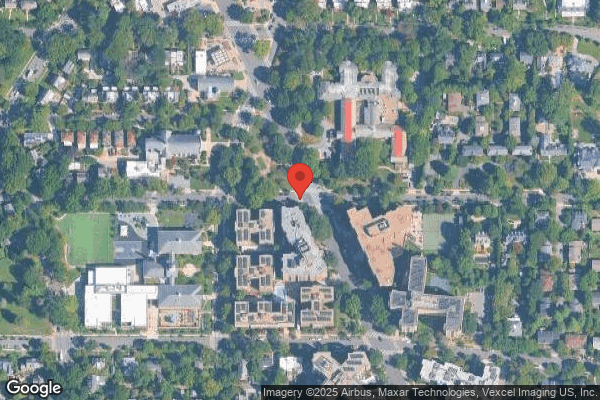




FOREST HILLS OF DC

4901 CONNECTICUT AVENUE, NW, WASHINGTON, DC 20008 (202) 966-7623
Non profit - Other 55 Beds Independent Data: November 2025
Trust Grade
73/100
#1 of 17 in DC
Last Inspection: December 2024

Within standard 12-15 month inspection cycle. Federal law requires annual inspections.

Overview

Forest Hills of DC has a Trust Grade of B, indicating it is a good choice among nursing homes. It ranks #1 out of 17 facilities in the District of Columbia, placing it at the top of local options. The facility is currently improving, with the number of issues decreasing from 13 in 2023 to 10 in 2024. Staffing is a strong point, earning a 5/5 star rating with a turnover rate of 30%, which is below the state average. However, it's concerning that they have $9,311 in fines, which is about average, suggesting some compliance issues. While there is more RN coverage than 80% of facilities in the area, an incident was reported where a resident at high risk for falls was not properly supervised, resulting in a fall and injury. Another finding indicated that food was not always handled in sanitary conditions, which poses potential health risks to residents. Overall, while there are strengths in staffing and care quality, families should be aware of certain safety and hygiene concerns.

Trust Score
B
73/100
In District of Columbia
#1/17
Top 5%
Safety Record
Moderate
Needs review
Inspections
Getting Better
13 → 10 violations
Staff Stability
○ Average
30% turnover. Near District of Columbia's 48% average. Typical for the industry.
Penalties
⚠ Watch
$9,311 in fines. Higher than 88% of District of Columbia facilities, suggesting repeated compliance issues.
Skilled Nurses
✓ Good
Each resident gets 93 minutes of Registered Nurse (RN) attention daily — more than 97% of District of Columbia nursing homes. RNs are the most trained staff who catch health problems before they become serious.
Violations
⚠ Watch
40 deficiencies on record. Higher than average. Multiple issues found across inspections.
★★★★★
5.0
Overall Rating
★★★★★
5.0
Staff Levels
★★★★★
5.0
Care Quality
★★★★☆
4.0
Inspection Score
Stable
2023: 13 issues
2024: 10 issues

The Good

  • 5-Star Staffing Rating · Excellent nurse staffing levels
  • 5-Star Quality Measures · Strong clinical quality outcomes
  • Full Sprinkler Coverage · Fire safety systems throughout facility
  • No fines on record
  • Staff turnover below average (30%)

    18 points below District of Columbia average of 48%

Facility shows strength in staffing levels, quality measures, fire safety.

The Bad

Staff Turnover: 30%

15pts below District of Columbia avg (46%)

Typical for the industry

Federal Fines: $9,311

Below median ($33,413)

Minor penalties assessed

The Ugly 40 deficiencies on record

1 actual harm
Dec 2024 5 deficiencies
CONCERN (D) 📢 Someone Reported This

A family member, employee, or ombudsman was alarmed enough to file a formal complaint

Potential for Harm - no one hurt, but risky conditions existed

Assessment Accuracy (Tag F0641)

Could have caused harm · This affected 1 resident

**NOTE- TERMS IN BRACKETS HAVE BEEN EDITED TO PROTECT CONFIDENTIALITY** Based on record review and staff interview, for one (1) of three (3) sampled residents, the facility's staff failed to ensure a ...

Read full inspector narrative →
**NOTE- TERMS IN BRACKETS HAVE BEEN EDITED TO PROTECT CONFIDENTIALITY** Based on record review and staff interview, for one (1) of three (3) sampled residents, the facility's staff failed to ensure a resident's assessment reflected the type of facility where she was previously admitted . (Resident #1) The findings included: Resident #1 was admitted to the facility on [DATE] with a history of Acute Pulmonary Embolism and Hypertension. According to the admission intake form dated 12/13/24, Resident #1 was being discharged from an out-of-state nursing home. An Entry Minimum Data Set (MDS) assessment dated [DATE] documented that the resident was discharged from short-term general hospital. During a telephone interview on 12/27/24 at 1:34 PM, Employee #8 (MDS Coordinator) stated that she coded the resident as being discharged from a hospital based on the hospital discharge summary provided by the nursing staff. She said that she was informed by Employee #2 (Director of Nursing) that the resident had been discharged from a nursing home.
CONCERN (D) 📢 Someone Reported This

A family member, employee, or ombudsman was alarmed enough to file a formal complaint

Potential for Harm - no one hurt, but risky conditions existed

Quality of Care (Tag F0684)

Could have caused harm · This affected 1 resident

**NOTE- TERMS IN BRACKETS HAVE BEEN EDITED TO PROTECT CONFIDENTIALITY** Based on record review and staff interviews, for one (1) of three (3) sampled residents, the facility failed to: administer Eliq...

Read full inspector narrative →
**NOTE- TERMS IN BRACKETS HAVE BEEN EDITED TO PROTECT CONFIDENTIALITY** Based on record review and staff interviews, for one (1) of three (3) sampled residents, the facility failed to: administer Eliquis(anticoagulant)at the currently prescribed dose [5mg by mouth two-times a day]. And, Metoprolol (beta blocker) in the currently prescribed formulary [Succinate Extended Release].(Resident #1) The findings included: Resident #1 was admitted to the facility on [DATE] with a history of Acute Pulmonary Embolism and Hypertension. A review of Resident #1's admission packet from the facility's admission Office revealed the following pre-admission documents: -An out-of-state hospital Discharge summary dated [DATE] documented that the resident was hospitalized between 12/05/24 and 12/10/ 24 with Acute Pulmonary Embolism. The discharge summary also revealed that the following medications were prescribed: Apixaban (Eliquis) 5 mg 2 tablets (10 mg) by mouth daily 2 times a day for 6 days. Then take [Eliquis 5 mg] 1 tablet (5mg) by mouth two (2) times daily . Metoprolol Succinate ER (exten release) 50 mg one (1) tablet by mouth nightly . -A facility's (Forest Hills) admission intake form dated 12/13/24 indicating that the resident was being discharged from an out-of-state skilled nursing facility. -A discharge summary from an out-of-state skilled nursing facility revealed that the resident was admitted between 12/10/24 and 12/19/24. In addition, the summary showed the resident was prescribed the following medications: (Eliquis)5mg 2 tablets (10 mg) by mouth twice a day for 6 days starting on 12/10/24 and ending on 12/17/24 . Eliquis 5mg one (1) tablet by mouth every 12 hours . Metoprolol Succinate Extended Release (Generic name -Toprol XL) 50 mg one (1) tablet by mouth at bedtime . -A Complete Blood Count with Differential lab result dated 12/11/24 documented in part, Hemoglobin 11.7 g/dL range 11. 2 - 15.7 g/dL (grams per deciliters) . Please note: The documents listed above, except for the facility's admission intake form, were included in the resident's hard medical record on the unit the resident resided. A nursing progress note dated 12/19/24 at 5:32 PM, documented in part, Resident .admitted today at the facility at 1:00 PM with history of Acute PE (pulmonary embolism) . Alert, oriented X3 . speech is clear .Heart rate and rhythm are normal. Vital signs stable .oriented to call light and bed control. Resident is adjusting well to .surroundings. A physician order dated 12/19/24 instructed: Apixaban (Brand name- Eliquis) 5mg give 2 tablets by mouth two (2) times a day for a clot in lung for 6 days. Give 10 mg (milligrams) . Metoprolol Tartrate (Generic name -Lopressor) 50 mg give one (1) tablet by mouth at bedtime . A care plan dated 12/19/24 documented in part, Focus - [Resident's name] is on anticoagulant therapy (Apixaban/Eliquis) related to clot in lung .Interventions- Administer anticoagulant medication as ordered by physician. Monitor for side effects and effectiveness every shift A physician order dated 12/22/24 instructed, Monitor resident for bleeding and report any abnormal. Phone findings to the attending physician every shift for 7 days. A Director of Nursing progress note dated 12/23/24 at 6:30 PM, documented in part, During the medication administration on 12/22/24, it was noted that Eliquis 10 mg BID was inadvertently given instead of prescribed Eliquis 5 mg BID. Upon discovery, the attending physician was promptly notified , and the medication order was corrected to reflect the proper dosage of Eliquis 5mg BID .A head-to-toe assessment was completed and revealed no evidence of active bleeding or bruising .Laboratory results .a hemoglobin [test dated12/23/24] showed a level 10.5 g/dL, a decrease from 11.7 g/dL compared to lab work from the previous facility (12/11/24) .[NP's name] was on-site around 6:00 PM to assess the resident, an no abnormal findings were noted during the assessment. According to the Medication Administration Record (MAR) for December 2024, the resident received Apixaban (Eliquis) 10 mg two (2) times a day between 12/20/24 and 12/21/24 (four occasions). The MAR also revealed that the resident received Metoprolol Tartrate (Generic name-Lopressor) 50 mg at bedtime between 12/19/24 and 12/22/23 (four occasion). A Complete Blood Count with Differential lab result dated 12/23/24 documented in part, Hemoglobin 11.7 g/dL range 11.1 - 15.9 g/dL (grams per deciliter) . A review of the resident's blood pressure levels between 12/19/24 to 12/23/24 revealed the resident's systolic blood pressure ranged from 113 to 128 mmHg (millimeter of mercury) and diastolic blood pressure ranged from 58 to 80 mmHg (millimeter of mercury). During a telephone interview on 12/26/24 at 11:32 AM, Resident #1's daughter/POA stated that when she brought her mother to the facility, she gave the nurse on duty copies of her mother's medications and physical medication from her previous nursing home. The daughter also said that she coordinated a call between the facility's nurse and the nurse from the previous nursing home. While visiting her mother on the evening on 12/22/24, she noticed the nurse attempting to administer Eliquis 10mg. When she asked the nurse why her mother was receiving 10 mg instead of 5mg, the nurse informed her that her mother had a physician order for Eliquis 10 mg twice a day for six days. The daughter stated that she informed the nurse that was a onetime order that was completed at the previous nursing home. The supervisor was called, and the medication was held. The Director of Nursing came in the next morning and apologize for the mistake. As a result of the medication error, she decided to discharge her mother home. Additionally, as she reviewed her mother's mediation list during discharge, she discovered that her mother was receiving Metoprolol Tartrate (Lopressor) 50 mg instead of Metoprolol Succinate Extended Release (Toprol XL) that she received while in the previous nursing home. During a telephone interview on 12/26/24 at 1:19 PM, Employee # 3 (assigned RN) stated that she and Employee #5 (LPN) admitted Resident #1 on 12/19/24. She said that although she received report via phone from the unit manager of the discharge facility, it did not include the resident's medications. The resident's daughter did provide her with a discharge summary that included a medication list from the discharging nursing home. After receiving the medication list, she reviewed it and handed it to Employee #5 (LPN) to transcribe. When asked if the summary was from a nursing home or hospital? She said that the medication list was from the nursing home. During a telephone interview on 12/27/24 at 8: 20 AM, Employee #4 (primary care physician) stated that she gave medication orders based on the hospital discharge summary. According to the documents, Eliquis 10 mg by mouth two times a day was prescribed, along with Metoprolol Succinate Extended Release 50 mg one (1) tab at bedtime every evening was ordered. According to the employee, she said she didn't recall seeing a discharge summary from the nursing home. Additionally, the employee stated that staff informed of the error with Resident #1receiving10 mg twice a day instead of Eliquis 5 mg twice a day. She also stated that staff did not inform her that that the resident was receiving Metoprolol Tartrate 50 mg a day instead of Metoprolol Succinate 50 mg a day. In addition, the employee stated that the resident should have been given Eliquis and Metoprolol as documented on her discharge summary from the nursing home. During a telephone interview on 12/27/24 starting at 8:42 AM, Employee #5 (LPN) stated that she helped Employee #3 (RN) admit Resident #1. She reviewed the hospital discharge summary given to her by Employee #3. She was not given a discharge summary from a nursing home. She reviewed the medications and took a picture of the medication list and sent it to the physician. After the physician approved the medications, she entered the orders into Resident #1's electronic medication record and sent the ordered the medications from pharmacy. During a face-to-face interview on 12/27/24 at approximately 2 PM, Employee #2 (DON) stated that the staff transcribed hospital orders for Eliquis 10 mg twice daily by mouth for six (6) days instead of Eliquis 5 mg twice daily as indicated on the nursing home discharge summary. Additionally, she said that unaware that the resident was receiving Metoprolol [Tartrate] instead of Metoprolol [Succinate] as ordered by the physician. Please note: The surveyor and Employee #2 (DON) reviewed Resident #1's electronic pharmacy record on 12/27/24 at approximately 2 PM, the review revealed that Employee # 5 entered Metoprolol Tartrate 50 mg by mouth at bedtime [daily] instead of Metoprolol Succinate 50 mg by mouth at bedtime [daily] as indicated on the both the hospital and nursing home discharge medication orders. During a face-to-face interview on 12/27/24 at 9:01 AM, Employee #6 (Director of Admissions/Marketing) stated that she received several documents from the nursing home on [DATE] via email, including a discharge summary from the nursing home [dated 12/17/24] and a discharge summary from the hospital [dated 12/10/24]. A copy of the documents was sent to the Administrator/RN for approval. After the Administrator approved Resident #1 for admission, the documents were given to a nurse on the resident's assigned unit for review. This was prior to her admission on [DATE]. Employee #6 could not recall the date or the nurse's name who was provided the documents for review.
CONCERN (D) 📢 Someone Reported This

A family member, employee, or ombudsman was alarmed enough to file a formal complaint

Potential for Harm - no one hurt, but risky conditions existed

Deficiency F0757 (Tag F0757)

Could have caused harm · This affected 1 resident

**NOTE- TERMS IN BRACKETS HAVE BEEN EDITED TO PROTECT CONFIDENTIALITY** Based on record review and staff interview, the facility failed to ensure Resident #1 was not administered unnecessary medicatio...

Read full inspector narrative →
**NOTE- TERMS IN BRACKETS HAVE BEEN EDITED TO PROTECT CONFIDENTIALITY** Based on record review and staff interview, the facility failed to ensure Resident #1 was not administered unnecessary medications. This was evident for one (1) of three (3) sampled residents. The findings included: Resident #1 was admitted to the facility on [DATE] with a history of Acute Pulmonary Embolism and Hypertension. A review of Resident #1's medical record showed that the resident was discharged from an out-of-state nursing home prior to her admission on [DATE]. Continued review of the resident's medical record revealed multiple documents from the discharging nursing home including: -A hospital Discharge summary dated [DATE] documenting the resident was hospitalized between 12/05/24 and 12/10/ 24 with Acute Pulmonary Embolism. The discharge summary also revealed that the following medications were prescribed: Apixaban (Eliquis) 5 mg 2 tablets (10 mg) by mouth daily 2 times a day for 6 days. Then take [Eliquis 5 mg] 1 tablet (5mg) by mouth two (2) times daily . -A discharge summary from an out-of-state skilled nursing facility indicating the resident was admitted between 12/10/24 and 12/19/24. The summary also showed the Apixaban (Eliquis) 5 mg 2 tablets (10 mg) by mouth daily 2 times a day for 6 days was completed on 12/17/24. In addition, the resident was prescribed .Eliquis 5mg one (1) tablet by mouth every 12 hours . A physician order dated 12/19/24 instructed the following: Apixaban (Brand name- Eliquis) 5mg give 2 tablets by mouth two (2) times a day for a clot in lung for 6 days. Give 10 mg (milligrams). A Director of Nursing progress note dated 12/23/24 at 6:30 PM, documented in part, During the medication administration on 12/22/24, it was noted that Eliquis 10 mg BID was inadvertently given instead of prescribed Eliquis 5 mg BID. Upon discovery, the attending physician was promptly notified, and the medication order was corrected to reflect the proper dosage of Eliquis 5mg BID . According to the Medication Administration Record (MAR) for December 2024, the resident received Apixaban (Eliquis) 10 mg two (2) times a day between 12/20/24 and 12/21/24 (four occasions). During a face-to-face interview on 12/26/24 at approximately 10 AM, Employee #2 stated that there was an error with Resident #1's medication (Eliquis). The employee said that staff transcribed the order for Eliquis 10 mg by mouth twice-a-day from a hospital discharge summary [dated 12/10/24]. The staff should have transcribed medications from the discharging nursing home discharge summary [dated 12/19/24] which instructed Eliquis 5 mg by mouth two times a day. The employee stated the when the resident's daughter brought it to staff attention on 12/22/24. They quickly notified the physician (Employee #4) and corrected the order. The resident was assessed, monitored, and labs were drawn. The resident did not have any bleeding or other apparent side effects from the error with Eliquis. During a telephone interview on 12/26/24 at 11:32 AM, Resident #1's daughter/POA stated that while visiting her mother on the evening on 12/22/24, she noticed the nurse attempting to administer Eliquis 10mg. When she asked the nurse why her mother was receiving 10 mg instead of 5mg, the nurse informed her that her mother had a physician order for Eliquis 10 mg twice a day for six days. The daughter stated that she informed the nurse that was a onetime order that was completed at the previous nursing home. The supervisor was called, and the medication was held. The Director of Nursing came in the next morning and apologize for the mistake. As a result of the medication error, she decided to discharge her mother home. During a telephone interview on 12/27/24 at 8: 20 AM, Employee #4 (primary care physician) stated that when the resident was admitted on [DATE] she gave an order for Eliquis 10 mg by mouth for six (6) days based on a hospital discharge summary [dated 12/10/24]. According to the documents, Eliquis 10 mg by mouth two times a day was prescribed. According to the employee, she said she didn't remember seeing the discharge summary from the discharging nursing home in the resident's record. When staff informed her of the error, she gave orders to change Eliquis to 5 mg by mouth twice a day, monitor resident for bleeding, and have labs drawn [complete blood count with differential]. In addition, she instructed the nurse practitioner to go to the facility and assess the resident. The assessment found no negative outcome. Cross reference: 483.25 Quality of Care (F689)
CONCERN (D) 📢 Someone Reported This

A family member, employee, or ombudsman was alarmed enough to file a formal complaint

Potential for Harm - no one hurt, but risky conditions existed

Deficiency F0761 (Tag F0761)

Could have caused harm · This affected 1 resident

Based on observation, record review, and staff interview, the facility staff failed to ensure a medication cart was locked and secure from residents, visitor, and other personnel for one (1) of two me...

Read full inspector narrative →
Based on observation, record review, and staff interview, the facility staff failed to ensure a medication cart was locked and secure from residents, visitor, and other personnel for one (1) of two medications observed on Unit 2. The findings included: A policy titled, Security of Medication Cart, instructed staff to secure medications carts during medication passing to prevent unauthorized use when parking carts in hallways place cart against the wall with drawers facing the wall .carts must be securely lacked at all times when out of the nurse's view . On 12/27/24 at approximately 9:24 AM, an unlocked medication cart was observed parked in a common with drawers facing forward, visible and accessible to anyone passing by. There were no staff members in view of the medication cart. Additionally, residents and staff were gathered in a dining area nearby. During a face-to-face interview on 12/27/24 at 9:25 AM, Employee #8 (RN) stated that the cart should be locked, and he would go get Employee #9 (LPN) who was passing medication in the dining area. During a face-to-face interview on 12/27/24 at 9:26 AM, Employee #9 (LPN) stated she should have locked the cart before leaving. The employee then said, I prefer not to give any further comments.
CONCERN (D) 📢 Someone Reported This

A family member, employee, or ombudsman was alarmed enough to file a formal complaint

Potential for Harm - no one hurt, but risky conditions existed

Medical Records (Tag F0842)

Could have caused harm · This affected 1 resident

**NOTE- TERMS IN BRACKETS HAVE BEEN EDITED TO PROTECT CONFIDENTIALITY** Based on record review and staff interview, the facility failed to ensure a resident's Medication Administration Record included...

Read full inspector narrative →
**NOTE- TERMS IN BRACKETS HAVE BEEN EDITED TO PROTECT CONFIDENTIALITY** Based on record review and staff interview, the facility failed to ensure a resident's Medication Administration Record included the correct formulary for a medication used to treat elevated blood pressure for one (1) of three (3) sampled residents. (Resident #1) The findings included: Resident #1 was admitted to the facility on [DATE] with a history of Acute Pulmonary Embolism and Hypertension. A review of Resident #1's medical record revealed that the resident was discharged from an out-of-town nursing home on [DATE]. The discharge summary documented that the resident was prescribed . Metoprolol Succinate [Toprol XL] Extended Release 50 mg one (1) tablet by mouth at bedtime. A physician order dated 12/19/24 instructed, Metoprolol Tartrate [Lopressor] 50 mg one (1) tablet by mouth at bedtime for elevated blood pressure. The December 2024 Medication Administration Record (MAR) showed an order for Metoprolol Tartrate [Lopressor] 50 mg one (1) tablet by mouth at bedtime for elevated blood pressure. According to the MAR, the staff administered Metoprolol Tartrate [Lopressor] on five different occasions between 12/19/24 and 12/23/24. During a telephone interview on 12/26/24 at 11:32 AM, Resident #1's daughter/POA stated that when her mother was discharged from the facility on 12/23/24 she discovered that her mother had been receiving Metoprolol Tartrate [Lopressor] fast-acting, instead of Metoprolol Succinate [Toprol XL] slow-acting, as she had previously been prescribed. During a telephone interview on 12/27/24 at 8:20 AM, Employee #4 (physician) stated that staff that she ordered Metoprolol Succinate [Toprol XL] extended release 50 mg a day when the resident was admitted on [DATE]. She said that staff did not inform her that Metoprolol Tartrate [Lopressor] was being administered. Furthermore, the employee explained that Metoprolol Succinate [Toprol XL] should have been administered rather than Metoprolol Tartrate [Lopressor]. During a face-to-face interview on 12/27/24 at approximately 3 PM, Employee #2 (Director of Nursing) after reviewing Resident #1's electronic pharmacy record she stated that when Employee #5 (LPN) ordered Resident #1's medications from pharmacy she selected Metoprolol Tartrate [Lopressor] instead of Metoprolol Succinate [Toprol XL].
Dec 2024 5 deficiencies
CONCERN (D) 📢 Someone Reported This

A family member, employee, or ombudsman was alarmed enough to file a formal complaint

Potential for Harm - no one hurt, but risky conditions existed

Assessment Accuracy (Tag F0641)

Could have caused harm · This affected 1 resident

**NOTE- TERMS IN BRACKETS HAVE BEEN EDITED TO PROTECT CONFIDENTIALITY** 2. Resident #57 was admitted to the facility on [DATE] with diagnoses that included: Memory, T12 Vertebral Fracture, Fracture of...

Read full inspector narrative →
**NOTE- TERMS IN BRACKETS HAVE BEEN EDITED TO PROTECT CONFIDENTIALITY** 2. Resident #57 was admitted to the facility on [DATE] with diagnoses that included: Memory, T12 Vertebral Fracture, Fracture of Femoral Neck, Dementia, Osteopenia, and Glaucoma. A review of Resident #57 s medical record revealed an admission Minimum Data Set (MDS) assessment dated [DATE] showing that facility staff coded a BIMS summary Score of 6, indicating the resident's cognition was severely impaired, no behavioral symptoms, partial assistance for mobility, and the resident had a fall prior to admission. An Incident Note dated 10/26/24 at 11:59 PM documented: .At 10:30 pm, [the] resident turned the call light on. When answered, [the Resident] stated that [pronoun]was on the floor in [pronoun] room. [The] Resident stated that [pronoun] did not know how [pronoun] got on the floor .[The] Writer immediately went to the room and Resident was observed on the floor beside [pronoun] bed laying on [pronoun] back. Head-to-toe assessment completed. [The] Resident was alert and oriented x 3. [The] Resident is [was] able to move all extremities . No apparent injury noted . A Health Status Note dated 10/27/24 at 2:30 PM, documented: Resident found on the floor bedside [ponroun] bed. When asked what happen(ed). [The] resident said, I'm looking for my son, does he know that I'm in this place, I'm trying to go home, my son is waiting for me. Upon assessment, [the] resident denies hitting [pronoun] head on the floor, denies pain, no bleeding or redness noted on the skin, ROM (range-of-motion) within [the] limit on bilateral lower extremities and upper extremities. No discomfort or pain noted. A Post-Fall Evaluation Note dated 11/01/24 documented: Date / Time of Fall: 11/01/2024 6:45 PM Fall was not witnessed. [A] Fall occurred in the Resident's room. Activity at the time of fall: Resident crawled out of bed. [The] bed was in the lowest position. The reason for the fall was not evident. Did an injury occur as a result of the fall: No. Did [the] fall result in an ER (Emergency Room)visit/hospitalization: No. A review of a Psychosocial Note dated 11/11/24 at 1:47 PM documented: Resident was discharged at her family's request over the weekend - on 11/09/24 . A Discharge MDS assessment dated [DATE] showed facility staff coded: in response to questions in Section J regarding falls: Has the resident had any falls since admission/entry or reentry or the prior assessment), whichever is more recent? No. Number of falls since admission or Prior assessment - (with No Injury). [The] Response was left blank. Of note, there was no documented evidence that facility staff noted the resident's unwitnessed falls with no injury on the resident's discharge assessment. During a face-to-face interview on 12/05/24 at 10:00 AM, Employee #4 acknowledged the deficient practice and stated that the Resident #57's falls on 10/26/24, 10/27/24 and 11/01/24 should have been captured on the resident's Discharge MDS assessment. Cross Reference 22B DCMR § Sec. 3231.11 Based on record reviews and staff interviews, for two (2) out of 19 sampled residents, facility staff failed to accurately code their Minimum Data Set (MDS) assessments. (Residents #11 and #57) The findings included: 1. Resident #11 was admitted to the facility on [DATE] with multiple diagnoses that included Chronic Obstructive Pulmonary Disease (COPD), Type 2 Diabetes Mellitus and Hypothyroidism. Review of the resident's medical record revealed the following: A physician's order dated 01/04/23 that directed, Aripiprazole 5 mg (milligrams) by mouth every night for Depression. A physician's order dated 03/23/23 that directed, Remeron Oral Tablet 15 MG, give 1 tablet by mouth at bedtime for Depression. A physician's order dated 10/02/23 that directed, Fetzima Oral Capsule Extended Release 24 Hour 120 MG, give 1 capsule by mouth one time a day for Depression. Physician's order dated 03/12/24 that directed, Abilify Oral Tablet 5 MG (Aripiprazole), give 1 tablet by mouth one time a day for Depression. In addition, the medical record contained a Geriatric Psychiatry Note dated 07/12/24 which documented under diagnosis: Dementia with Behavioral Disturbance, Depression; other - psychosis. A Social Services Psychosocial Note for 10/11/24 at 1:33 PM documented: - Social worker met with the resident 1:1 for MDS assessment. - Resident admitted to feeling depressed usually each day (this is not new for her). - Resident is diagnosed with Dementia and Depression and her presentation was consistent with her diagnoses. - Resident is followed regularly by a psychologist for Depression. A Quarterly MDS assessment dated [DATE] showed that facility staff coded: clear speech; usually makes self-understood; usually understands others; a BIMS summary score of 11, indicating moderately impaired cognitive response; feeling down, depressed or hopeless occurred 12-14 days; Feeling bad about yourself - or that you are a failure or have let yourself or your family down occurred 12-14 days; Resident Mood Interview (PHQ-2 to 9) total severity score of 06, indicating mild depression; for the area active diagnoses, facility staff coded No for Depression. The evidence showed that facility staff failed to accurately code Resident #11's Quarterly MDS to reflect Diagnoses of Depression. During a face-to-face interview on 12/03/24 at 3:14 PM, Employee #4 (MDS Coordinator) stated, Somehow the Depression diagnoses was accidentally deleted from the resident's diagnoses page. But it should have been captured based off the progress notes.
CONCERN (D) 📢 Someone Reported This

A family member, employee, or ombudsman was alarmed enough to file a formal complaint

Potential for Harm - no one hurt, but risky conditions existed

Comprehensive Care Plan (Tag F0656)

Could have caused harm · This affected 1 resident

**NOTE- TERMS IN BRACKETS HAVE BEEN EDITED TO PROTECT CONFIDENTIALITY** Based on record review and staff interview, for one (1) out of 19 sampled residents, facility staff failed to develop a care pla...

Read full inspector narrative →
**NOTE- TERMS IN BRACKETS HAVE BEEN EDITED TO PROTECT CONFIDENTIALITY** Based on record review and staff interview, for one (1) out of 19 sampled residents, facility staff failed to develop a care plan with goals and interventions to address Resident #11's use of antibiotics. The findings included: Review of the facility's Care plans, Comprehensive Person-Centered policy (not dated) documented: - A comprehensive, person-centered care plan that includes measurable objectives and timetables to meet the resident's physical, psychosocial and functional needs is developed and implemented for each resident. Resident #11 was admitted to the facility on [DATE] with multiple diagnoses that included: Chronic Obstructive Pulmonary Disease (COPD), Type 2 Diabetes Mellitus and Hypothyroidism. Review of the resident's medical record revealed a physician's order dated 03/14/24 that directed, Trimethoprim (type of antibiotic) oral tablet 100 MG (milligrams), give 1 tablet by mouth at bedtime for UTI (urinary tract infection) prophylaxis. A Quarterly Minimum Data Set (MDS) assessment dated [DATE] showed that facility staff coded: a BIMS summary score of 11, indicating moderately impaired cognitive response and received Antibiotic medications. Review of the resident's comprehensive resident care plan on 12/04/24 showed no documented evidence that a care plan was developed with goals and interventions to address the resident's use of an antibiotic for UTI prophylaxis. During a face-to-face interview on 12/04/24 at 10:36 AM, Employee #2 (Director of Nursing/DON) reviewed the residents medical record and acknowledged the findings. Cross Reference 22B DCMR § Sec. 3210.4
CONCERN (D) 📢 Someone Reported This

A family member, employee, or ombudsman was alarmed enough to file a formal complaint

Potential for Harm - no one hurt, but risky conditions existed

Deficiency F0657 (Tag F0657)

Could have caused harm · This affected 1 resident

**NOTE- TERMS IN BRACKETS HAVE BEEN EDITED TO PROTECT CONFIDENTIALITY** Based on record reviews and staff interviews, for one (1) of 19 sampled residents, the facility staff failed to update and revis...

Read full inspector narrative →
**NOTE- TERMS IN BRACKETS HAVE BEEN EDITED TO PROTECT CONFIDENTIALITY** Based on record reviews and staff interviews, for one (1) of 19 sampled residents, the facility staff failed to update and revise the care plan with resident-centered goals for Resident #55 following a fall that occurred on 07/13/24. The findings included: A review of the facility's policy titled Managing Falls and Falls Risks with a revision date of 08/21/21, documented the following: If falling recurs despite initial interventions, staff will implement additional or different interventions or indicate why the current approach remains relevant. Resident #55 was admitted to the facility on [DATE] with multiple diagnoses that included the following: Difficulty Walking, Unspecified Lack of Coordination, Cognitive Communication Deficit, and Repeated Falls. A review of Resident #55's medical record revealed a progress note dated dated 07/12/24 at 8:24 AM, documenting, During the shift report, staff heared (sp) noise from room [ROOM NUMBER]. Immediately responded to noise and all of us went to room [ROOM NUMBER]. Upon arrival rsident (sp) observed lying on floor on her left side by the bathroom. On assessment there is injury noted to bilateral elbows. Resident was alert and verbally responsive. C/O (complains of) intense pain to the right arm. Denies hitting her head. ROM (range of motion) performed and WNL (within normal limits) except right arm. MD (medical doctor) notified and gave order to send resident to the nearest ER (emergency room). A progress note dated 07/12/24 at 7:03 PM, documented, The resident returned from (Hospital Name) at approximately 4:00 PM. in a wheelchair with her friend with no distress. Alert and able to make needs known. (Resident #55's) new diagnosis is a closed fracture of the olecranon process to the right Ulna initial encounter. Continues on neuro check post fall and denies pain at this time. Resident back from (Hospital Name) with soft cast /sling to Rt (right) arm. A review of the Care Plan Focus area with an initiation dated of 07/12/24 revealed, had an actual fall with c/o (complain of) pain to right hand, Dx (diagnosis) from hospital fx (fracture) to the right elbow. The documented interventions with a revision date of 07/12/24 included, Rehab (rehabilitation) to evaluate and treat, Safety hourly rounding for staff to anticipate and meet the residents needs at all times, ling and soft cast to right lower arm, Toilet resident upon arising, before meals at bedtime and prn (as needed). An Incident Progress Note dated 07/13/24 at 10:51 PM, documented At 10:30 pm I was called to the room by the nurse who was making rounds and found the resident was sitting up in the floor in front of her wheelchair. A two-person lift was conducted to place her back in wheelchair. She has a hx (history) of falls with the last one being 3 days ago. She stated she went to the bathroom and came out and slipped and fell on her buttock then stabilized herself with her right elbow so she did not fall backwards. She was not wearing socks or shoes (barefoot) at the time of incident. She admitted that she forgot to use call bell and that was reoriented to both bed and bathroom. A review of a [Care Plan] focus area revised on 08/05/24 documented, 7/13/2024 had a fall without c/o (complaints of) pain to the right elbow or buttock. It is noted that there was no documented evidence in the medical record of any updated or revised care plan interventions after Resident #55's fall that occurred on 07/13/24. During a face-to-face interview conducted on 12/05/24 at approximately 11:35 AM, Employee #3 (Clinical Manager) stated, Whenever there is a fall, we update the care plan. Employee #3 then stated she did not know why the care plan was not updated after the residents fall on 07/13/24 and acknowledged the findings.
CONCERN (D) 📢 Someone Reported This

A family member, employee, or ombudsman was alarmed enough to file a formal complaint

Potential for Harm - no one hurt, but risky conditions existed

Antibiotic Stewardship (Tag F0881)

Could have caused harm · This affected 1 resident

**NOTE- TERMS IN BRACKETS HAVE BEEN EDITED TO PROTECT CONFIDENTIALITY** Based on record review and staff interview, for one (1) out of 19 sampled residents, facility staff failed to implement their an...

Read full inspector narrative →
**NOTE- TERMS IN BRACKETS HAVE BEEN EDITED TO PROTECT CONFIDENTIALITY** Based on record review and staff interview, for one (1) out of 19 sampled residents, facility staff failed to implement their antibiotic stewardship system for monitoring antibiotic use and adverse reactions for one (1) resident since 03/14/24, approximately nine (9) months. (Resident #1) The findings included: Review of the facility's Antibiotic Stewardship - Review and Surveillance of Antibiotic Use and Outcomes policy (not dated) documented: - Antibiotic usage and outcome data will be collected and documented using facility-approved antibiotic surveillance tracking form. - The IP (Infection Preventionist) or designee, will review antibiotic utilization as part of the antibiotic stewardship program. - All resident antibiotic regimens will be documented on the facility approved antibiotic surveillance tracking form. Resident #11 was admitted to the facility on [DATE] with multiple diagnoses that included, Chronic Obstructive Pulmonary Disease (COPD), Type 2 Diabetes Mellitus and Hypothyroidism. Review of the resident's medical record revealed a physician's order dated 03/14/24 that directed, Trimethoprim (type of antibiotic) oral tablet 100 MG (milligrams), give 1 tablet by mouth at bedtime for UTI (urinary tract infection) prophylaxis. A Quarterly Minimum Data Set (MDS) assessment dated [DATE] showed that facility staff coded a Brief Interview for Mental Status (BIMS) summary score of 11, indicating moderately impaired cognitive response and received Antibiotic medications. During a face-to-face interview on 12/04/24 at 10:36 AM, Employee #2 (Director of Nursing/DON) presented the surveyor with the facility's antibiotic stewardship binder that documented a line listing of all the residents who were previously and currently taking antibiotic medications since January 2024. Upon review of the antibiotic surveillance tracking forms, it revealed that Resident #11's name was not listed on any of the forms since she was started on antibiotics as of 03/14/24 through today, and was still taking them as of 12/04/24. When asked to provide documented evidence that the facility was tracking the resident's use of an antibiotic and monitoring for adverse reactions, the employee was not able to provide it and stated, It's an oversight on my part. The findings show that facility staff failed to implement their antibiotic stewardship system for monitoring antibiotic use and adverse reactions for Resident #11, who has been on an antibiotic medication since 03/14/24, approximately nine (9) months.
CONCERN (E) 📢 Someone Reported This

A family member, employee, or ombudsman was alarmed enough to file a formal complaint

Potential for Harm - no one hurt, but risky conditions existed

Food Safety (Tag F0812)

Could have caused harm · This affected multiple residents

Based on observations and staff interview, facility staff failed to distribute and serve foods under sanitary conditions. These findings have the potential to affect all residents. The findings inclu...

Read full inspector narrative →
Based on observations and staff interview, facility staff failed to distribute and serve foods under sanitary conditions. These findings have the potential to affect all residents. The findings included: 1. An open pack of provolone cheese and a pan with chunks of grapefruit were stored in a refrigerator undated, in the kitchen on unit Healthcare 1. 2. Two (2) of 14 white cutting boards, and two (2) of 14 green cutting boards in the main kitchen were soiled and discolored. 3. Food temperature logs from the main kitchen, and the kitchen on healthcare 1 and 2, were missing several entries throughout the month of October 2024. 4. One (1) of two (2) convection ovens in the main kitchen (bottom), was soiled. 5. Two (2) of eight (8) fire suppression nozzles, located above the grease fryer and the gas stove were soiled with grease deposits, and one (1) of eight (8) was corroded. 6. One (1) of two (2) fire sprinkler heads in the walk-in refrigerator was soiled and rusty. Employee #5 (Director of Dietary Services) acknowledged the findings during a face-to-face interview on 12/5/2024, at approximately 11:00 AM.
Aug 2023 13 deficiencies 1 Harm
SERIOUS (G) 📢 Someone Reported This

A family member, employee, or ombudsman was alarmed enough to file a formal complaint

Actual Harm - a resident was hurt due to facility failures

Accident Prevention (Tag F0689)

A resident was harmed · This affected 1 resident

**NOTE- TERMS IN BRACKETS HAVE BEEN EDITED TO PROTECT CONFIDENTIALITY** Based on record review and staff interviews, for one (1) of 32 sampled residents (#7), the facility staff failed to implement ad...

Read full inspector narrative →
**NOTE- TERMS IN BRACKETS HAVE BEEN EDITED TO PROTECT CONFIDENTIALITY** Based on record review and staff interviews, for one (1) of 32 sampled residents (#7), the facility staff failed to implement adequate supervision and assistance to prevent falls with injury for a cognitively impaired resident identified as a high risk for falls. These failures resulted in actual harm to Resident #7 on 1/2/23. The findings included: Resident #7 was admitted on [DATE] with multiple diagnoses including Generalized Muscle Weakness, Dementia, and Alzheimer's Disease. A review of Resident #7's medical record revealed a physician's order dated 06/25/22 that directed, Maintain fall risk precaution at all times every shift. A Facility Reported Incident (DC~11166) received by the State Agency on 11/04/22 documented, 11/04/22 Resident taken to the bathroom at approximately 9:30 PM by a nursing assistant and placed on the toilet. The nursing assistant stepped out to get the resident a fresh gown and the resident was found lying on the floor on the staff's return. The resident had a laceration to the back of head left side .transfer to the hospital . for further evaluation. A care plan focus area dated 11/04/22 documented, [Resident #7] had a fall with injury with interventions that included, Resident should not be left in the wheelchair in the bathroom unattended. A Transfer to Hospital Summary dated 11/04/22 at 10:20 PM documented, Supervisor notified by the Charge Nurse that at approximately 9:30 PM the resident was found lying on the bathroom floor . The nursing assistant placed the resident on the toilet and stepped away to get a fresh gown. The assistant returned to the resident lying on the bathroom floor . She had a laceration to the back left of her skull . [Doctor's name] who was in the building came and evaluated the resident. The physician wrote a transfer order . Resident taken to [hospital name]. A Health Status Note dated 11/05/22 at 2:14 PM revealed Resident #7 returned from the hospital after a fall with a laceration to the left occipital (back of the head). The documentation indicated the resident was alert and oriented to name but confused about place and time. As a result of the fall the resident obtained three staples to the laceration. Resident #7's left elbow was bruised, but all extremities were movable, and neuro checks were ordered, fall precautions were in place with close monitoring and hourly rounding. A progress note dated 12/20/22 at 7:59 PM noted an unwitnessed fall at 6:30 PM. The note documented, Fall occurred in resident's room . Stated she was arranging her belongings whilst in the wheel chair, slid off unto the floor in a sitting position with back leaning on her wheel chair. Denied hitting her head. no apparent injury. New order for x-ray of the left post fall. A Health Status Note dated 12/21/22 at 3:35 AM showed, x-ray of the left hip to R/O (rule out) fracture due to s/p fall done result pending. A Health Status note dated 12/21/22 at 7:03 PM: Left hip x-ray result received and reviewed by [Doctor's name], NNO [no new order] obtained . Resident #7's care plan was updated on 12/20/22 to reflect, Resident on close monitoring every shift for fall risk. An Incident Note dated 01/02/23 at 8:01 AM documented, At about 5:55 AM assigned CNA [certified nurse aid] reported to the floor charge nurse, observed resident on the floor by the bedside in a supine position. Resident assessed and sustained two puncture wounds to the posterior left ear with minimal bright red blood. Neuro checks initiated. The resident was unable to state how it happens due to Dementia. [Doctor's name] and POA [power of attorney] were notified. Resident transferred to ER [emergency room] via 911 for evaluation. A care plan focus area dated 1/2/23, documented, at approx. 5:55 AM Resident falls and sustained puncture wounds to the posterior left ear and pelvic fracture which do not require surgery. The updated care plan intervention indicated, ER Transfer for further evaluation secondary to fall, and Fall EZZ mat on right side of resident bed floor every shift for fall risk precaution. Clean and fold when a resident is out of bed. Every shift while the resident is in bed. A Progress Note dated 01/02/23 at 7:01 PM showed, One of the doctors at [hospital name] called to update us on resident status .The cut she sustained on the back of her left ear is superficial. The patient sustained a pelvic fracture which does not require surgery. Patient to follow up with orthopedic at the clinic in few weeks . A Facility Reported Incident (DC~11439) received on 01/03/23 documented, 01/02/23 10:42 AM . at about 5:55 AM assign CNA (Certified Nurse Aide) reported to the charge nurse that resident was noted on the [floor]. upon assessment, the resident was observed lying on the floor in a supine position on the right side of her bed .Two punctured wound measuring 0.1cm x 0.1cm was noted on the posterior left ear with minimal bleeding .MD[medical doctor] notified with order to send the resident to the nearest ER[emergency room] for further evaluation, 911 called and the resident was transferred to [hospital name] . A Health Status Note dated 04/21/23 at 10:17 PM showed, Assigned CNA called the writer and notified [resident name] fall and resident observed on the floor. The writer assessed the resident for injury or pain. No apparent injury or sign of pain was noted. Two people assist the resident put back into her wheelchair safely. A review of resident #7's care plan revealed a focus area revised on 4/21/23 which documented, [Resident #7] deliberately placed herself on the day room floor expressed a preference to do so. No injury noted at the time. Care plan interventions were updated to indicate, Close observation on the resident by nursing staff every shift for fall risk. A Quarterly Minimum Data Set (MDS) dated [DATE] showed facility staff coded: severely impaired cognitive skills for decision making, totally dependent on the physical assistance of one person for bed mobility, transfer, toilet use, and personal hygiene and sustained a fall with no injury since the prior assessment. During a face-to-face interview conducted on 08/08/23 at 1:50 PM, Employee #2 (Director of Nursing) acknowledged the findings and stated that the facility staff is aware of the need to frequently check on the resident with fall risk/fall precautions to ensure safety and prevent falls. [Cross Reference 22B DCMR Sec. 3211.1]
CONCERN (D) 📢 Someone Reported This

A family member, employee, or ombudsman was alarmed enough to file a formal complaint

Potential for Harm - no one hurt, but risky conditions existed

Deficiency F0575 (Tag F0575)

Could have caused harm · This affected 1 resident

**NOTE- TERMS IN BRACKETS HAVE BEEN EDITED TO PROTECT CONFIDENTIALITY** Based on observation and staff interviews, the facility failed to visibly post signage of the accurate contact information for t...

Read full inspector narrative →
**NOTE- TERMS IN BRACKETS HAVE BEEN EDITED TO PROTECT CONFIDENTIALITY** Based on observation and staff interviews, the facility failed to visibly post signage of the accurate contact information for the State Survey Agency to ensure residents and resident representatives were able to file a complaint. The facility census was 43 on the first day of the survey. The findings included: A Complaint (DC~11004) received by the State Agency on [DATE] at 11:19 AM documented, . She [ resident's daughter] made her [resident 's daughter] complaint to the Ombudsman Office and had been leaving messages for [State Agency Program Manager's name] as posted around the facility. She [residents daughter] learned a few days later that [ contact person name] was deceased , but the signage does not reflect an alternative person to contact. During an observation on [DATE] at 10:30 AM, an 8x10 binder marked Grievance Forms sign posted on the First-Floor unit board at the elevator instructed the resident to After completing a grievance form, please contact the Social Worker . or Charge Nurses to collect the forms. On [DATE] between 10:00 AM and 12:00 PM, additional observations were conducted on the second floor which showed the identical signage was posted in the same location. The evidence showed that the facility failed to post the accurate State Survey Agency information to ensure residents and resident representatives had the contact information needed to file a complaint. During a face-to-face interview conducted on [DATE] at 12:00 PM, Employee #1 (Administrator) acknowledged the findings and proceeded to get new signage with the accurate State Survey Agency information posted.
CONCERN (D) 📢 Someone Reported This

A family member, employee, or ombudsman was alarmed enough to file a formal complaint

Potential for Harm - no one hurt, but risky conditions existed

Transfer Notice (Tag F0623)

Could have caused harm · This affected 1 resident

**NOTE- TERMS IN BRACKETS HAVE BEEN EDITED TO PROTECT CONFIDENTIALITY** Based on record review and staff interviews, for one (1) of 32 sampled residents, the facility staff failed to notify a resident...

Read full inspector narrative →
**NOTE- TERMS IN BRACKETS HAVE BEEN EDITED TO PROTECT CONFIDENTIALITY** Based on record review and staff interviews, for one (1) of 32 sampled residents, the facility staff failed to notify a resident, their representative, or the Ombudsman of the reason for the resident's transfer to the hospital in writing. Resident #253. The findings included: Resident #253 was admitted to the facility on [DATE] with the following diagnoses: Left Hip Arthroplasty, Thrombosis Distal Left Cephalic Vein, Bilateral Leg Swelling, Rheumatoid Arthritis, and Osteoporosis. Resident #253's medical record revealed the following: A Face Sheet that documented that the resident had a representative. A Five (5)-Day Scheduled Minimum Data Set (MDS) assessment dated [DATE] showed that facility staff did not complete Section C (cognitive patterns). A Change in Condition Note dated 11/07/21 at 4:08 PM documented: Situation: Resident reported that her left calf is hurting. Background: Resident .admitted with a diagnosis of left hip replacement . A quick assessment was done; she was noted with a swollen left leg calf filled with fluid, but skin remains intact. Recommendations: Md (Medical Director) notified, and new order given to send resident to the nearest ER (Emergency Room) for evaluation. Contact person notified. A Health Status Progress Note dated 11/07/21 at 11:42 PM documented: Resident was transferred to [Local Hospital] . by .[Local Medical Emergency Response Team] at 5:30 PM. Writer called . E.R.(Emergency Room) the E.R. Nurse confirmed that [Resident #253] is being admitted for leg pain . Further review of Resident #253's medical record lacked documented evidence that facility staff provided written notification to the resident's representative or the Ombudsman of the reason for transfer on 11/07/21. During a face-to-face interview on 08/08/23 at 11:38 AM, Employee #3 (Social Worker) acknowledged the findings and stated that notification was made via telephone to the Resident #253's representative.
CONCERN (D) 📢 Someone Reported This

A family member, employee, or ombudsman was alarmed enough to file a formal complaint

Potential for Harm - no one hurt, but risky conditions existed

Assessment Accuracy (Tag F0641)

Could have caused harm · This affected 1 resident

**NOTE- TERMS IN BRACKETS HAVE BEEN EDITED TO PROTECT CONFIDENTIALITY** 3. Facility staff failed to accurately code Resident #252's Quarterly MDS for hospice services. Resident #252 was admitted to th...

Read full inspector narrative →
**NOTE- TERMS IN BRACKETS HAVE BEEN EDITED TO PROTECT CONFIDENTIALITY** 3. Facility staff failed to accurately code Resident #252's Quarterly MDS for hospice services. Resident #252 was admitted to the facility on [DATE] with the following diagnoses: Cerebral Atherosclerosis, Encounter for Palliative Care, Cerebral Infarction and Dementia. A review of Resident #252's medical record revealed: A physician's order dated 01/21/22 that directed, Admit (ted) to [Name of Hospice]. Dx (Diagnosis): Cerebral Atherosclerosis Please call [Name of Hospice] at .for any change in condition. A care plan initiated on 01/24/22 documented: Focus: [Name of Resident] has a terminal prognosis r/t (related to) Cerebral Atherosclerosis 01/21/22 - admitted into [Name of Hospice] . A Quarterly Minimum Data Set, dated [DATE] showed facility staff coded that the Resident #252 had not received hospice services in the last 14 days. Further review of Resident #252's medical record showed that the resident received hospice services until her death in January 2023. The evidence showed that facility staff failed to accurately code the MDS dated [DATE]. During a face-to-face interview on 08/03/23 at 12:39 PM, Employee #2 (Director of Nursing) acknowledged that Resident #252's Quarterly Minimum Data Set Assessment on 10/30/22 was inaccurately coded. Based on record reviews and staff interviews, for three (3) of 32 sampled residents, facility staff failed to accurately code the Minimum Data Set (MDS) for one who had a fall, one resident's Drug Regimen Review, and one resident's hospice services. Residents' #7, #35 and #252. 1. Facility staff failed to accurately code Resident #7's MDS for Drug Regimen Review. Resident #7 was admitted on [DATE] with multiple diagnoses including Alzheimer's Disease, Anxiety Disorder, Dementia and Generalized Muscle Weakness. Pharmacy drug regimen review dated 01/02/23 documented, Recommend a psych consult for continued use of Sertraline, donepezil, and melatonin in context of fall on 01/02/23[doctors name] the psychiatrist. Physician response: Disagree continue for anxiety. The evidence showed the facility staff failed to accurately code the MDS for Resident #7 drug regimen review identify potential clinically significant medication issues that was recommende by the pharmacy on 01/02/23. A review of the follow-up note to the pharmacy review dated 01/20/23 documented, [doctor name] the psychiatrist prefers resident to continue use for Sertraline, donepezil, and melatonin effective in managing residents Anxiety. Review of the Quarterly Minimum Data Set [MDS] dated 04/30/23 showed facility staff coded under Section N [Medications] the area did the facility drug regimen review identify potential clinically significant medication issues was left blank. A face-to-face interview was conducted on 08/08/23 at approximately 1:04 PM with Employee #3 (director of nursing). acknowledged the findings and stated MDS will review and make corrections. 2. Facility staff failed to accurately code Resident #35's MDS for falls. Resident #35 was admitted to the facility on [DATE], with diagnoses that included: Weakness, Vascular Dementia, Anxiety and Muscle Weakness. Review of Incident Note dated 05/24/23 at 10:40 PM documented, . resident observed sitting in front of a recliner chair with his leg stretched and the walker was in front of him. Assessed for any injury no apparent injury noted. Assisted to go to the bathroom and put him back to his chair. MD (medical doctor) and family were notified. The evidence showed that facility staff failed to accurately code the MDS for Resident #35 for falls that occurred on 05/24/23. A Quarterly Minimum Data Set (MDS) dated [DATE], showed that under under Section J [Health conditions] the fall indicator box was left blank, indicating not coded for fall. During a face-to-face interview conducted on 08/08/23 at approximately 1:04 PM with Employee #3 (Director of Nursing) acknowledged the findings and stated corrections will be made.
CONCERN (D) 📢 Someone Reported This

A family member, employee, or ombudsman was alarmed enough to file a formal complaint

Potential for Harm - no one hurt, but risky conditions existed

Comprehensive Care Plan (Tag F0656)

Could have caused harm · This affected 1 resident

**NOTE- TERMS IN BRACKETS HAVE BEEN EDITED TO PROTECT CONFIDENTIALITY** Based on record review and staff interview, for two (2) of 32 sampled residents, facility staff failed to develop and implement ...

Read full inspector narrative →
**NOTE- TERMS IN BRACKETS HAVE BEEN EDITED TO PROTECT CONFIDENTIALITY** Based on record review and staff interview, for two (2) of 32 sampled residents, facility staff failed to develop and implement a comprehensive resident centered care plan to address: Resident #199's right toe wound and Resident #7's use of antianxiety medications. Residents' #199 and #7. The findings included: The facility policy care Plans, Comprehensive Person-Centered documented, .The care plan interventions are derived from thorough analysis of the information gathered as part of the comprehensive assessment .The comprehensive, person-centered care plan will: include measurable objectives .incorporate identified problem areas . identifying problem areas and their causes, and developing interventions that are targeted and meaningful to the resident . 1. Facility staff failed to develop and implement a comprehensive resident centered care plan to address Resident #199's right toe wound. Resident #199 was admitted to the facility on [DATE] with multiple diagnoses that included: Type 2 Diabetes Mellitus, Atrial Fibrillation, Muscle Weakness and Lack of Coordination. Review of Resident #199's medical revealed the following: A Quarterly Minimum Data Set (MDS) dated [DATE] showed facility staff coded: a Brief Interview for Mental Status (BIMS) summary score of 13, indicating intact cognition and one unhealed stage 2 pressure ulcer that was present on admission. A Skin Only Evaluation Note dated 11/11/22 at 1:54 PM documented, .Skin Issue: #001: New. Issue type: Redness. Location: Right toe(s). Skin note: Resident noted with redness and swelling to right 2nd toe. skin prep applied. Physician's orders dated 11/11/22 directed, Cleanse right second toe with normal saline, pat dry, apply skin prep, every shift, leave open to air; right second toe redness and swelling: monitor area every shift and report any abnormalities to MD (medical doctor. A Facility Reported Incident (FRI), DC~11202, received by the State Agency on 11/11/22 documented, on 11/11/22 during morning care resident was noted with blanchable [turns white when pressed then immediatley turns red again when presure is removed] redness and moderate swelling to right second toe. Resident denies any pain when area was palpated. MD made aware gave order for podiatry consult . A physician's order dated 11/20/22 directed, Silver Sulfadiazine (topical antibiotic) 1% cream, apply sparingly to right second toenails and dress lightly with sterile roll gauze and paper tape every other day for 1 week. A Podiatry Consult Report dated 12/06/22 documented, .There are no signs of infection to the wound on the tip of your [right] second toe, we applied Betadine (antiseptic) to the toe today. Wash with soap and water and apply Betadine daily . Physician's orders dated 12/06/22 directed, Wash right distal second toe wound with soap and water, pat dry gently and apply Betadine and band aid every day . for wound care; return to clinic 3-4 weeks with [Doctor's name] at [Wound clinic name and address]; weight bearing as tolerated in comfortable supportive shoes. Review of Resident #199's comprehensive care plan revealed that facility staff failed to develop a care plan with goals and interventions to address the resident's right second toe wound. During a face-to-face interview conducted on 08/03/22 at 11:50 AM, Employee #2 (Director of Nursing/DON) acknowledged the finding and stated that care plans are developed by DON, the Assistant DON or the nursing supervisors and that one should've been implemented for Resident #199's right second toe wound. 2. Facility staff failed to develop and implement a comprehensive resident-centered care plan to address Resident #7's medication for diagnosis of Anxiety. Resident #7 was admitted on [DATE] with multiple diagnoses that included Anxiety Disorder, Alzheimer's Disease, Generalized Muscle Weakness, and Dementia. Review of Resident #7's medical record revealed the following: A physician's order dated 06/24/22 that directed, Sertraline (antidepressant) 50mg (milligrams) tablet 1 tab (tablet) by mouth every day for Anxiety. A Quarterly Minimum Data Set (MDS) dated [DATE] showed facility staff coded: severely impaired cognitive skills for decision making. Further review lacked documented evidence that a care plan with person-centered goals and interventions to address Resident #7's diagnoses of Anxiety and the use of the medication Sertraline. During a face-to-face interview conducted on 08/08/22 at 1:50 PM, Employee #2 (Director of Nursing/DON) acknowledged the finding and stated that care plans are developed by DON, the Assistant DON, or the nursing supervisors and that one should have been implemented for Resident #7's.
CONCERN (D) 📢 Someone Reported This

A family member, employee, or ombudsman was alarmed enough to file a formal complaint

Potential for Harm - no one hurt, but risky conditions existed

Deficiency F0685 (Tag F0685)

Could have caused harm · This affected 1 resident

**NOTE- TERMS IN BRACKETS HAVE BEEN EDITED TO PROTECT CONFIDENTIALITY** Based on observation, record review and staff interviews, for one (1) of 32 sampled residents, facility staff failed to ensure t...

Read full inspector narrative →
**NOTE- TERMS IN BRACKETS HAVE BEEN EDITED TO PROTECT CONFIDENTIALITY** Based on observation, record review and staff interviews, for one (1) of 32 sampled residents, facility staff failed to ensure that the resident received proper treatment and assistive devices to maintain hearing abilities. Resident #299. The findings included: Resident #299 was admitted to the facility on [DATE] with multiple diagnoses that included: Hard of Hearing, Blindness and Parkinson's Disease. Review of Resident #299's medical record revealed: A physician's order dated 05/28/20 that directed, Nursing staff to check/ensure resident has both hearing aids. Please document in progress notes every shift. A care plan focus area initiated on 12/03/20 documented, Hearing Aides .Goal: [resident's name] uses hearing aides r/t (related to) hard of hearing .Interventions/Tasks: Change first hearing aid batteries routinely every Friday on 3-11 shift .Change second hearing aid batteries routinely every Friday on 3-11 shift .Check first and second hearing aid for functioning prior to use .Place second hearing aids in each ear at bedtime, then remove in the morning. A care plan focus area initiated 06/22/21 documented, .is hard of hearing . Interventions/Tasks: Assist [resident's name] to sit next to the speaker . A Quarterly Minimum Data Set (MDS) dated [DATE] showed facility staff coded a Brief Interview for Mental Status (BIMS) summary score of 12, indicating the resident had a moderately impaired cognitive status and that the resident used a hearing aid for adequate hearing. An Incident Note dated 10/11/21 documented, Late entry for 10/5/21 .during change of shift rounds, hearing aid noted missing. Writer and outgoing nurse searched everywhere in resident's room, could not find. Laundry aware to search linen. Search in progress. A Facility Reported Incident (FRI), DC~10309, received by the State Agency on 10/15/21 documented, During change of shift round with the outgoing charge nurse in the morning, the charge nurse noticed that the resident hearing aid was missing. The resident room and laundry room search[ed] but unable to locate the missing hearing aid. A care plan focus area initiated on 11/16/21 documented, Hearing aids were reported missing in [DATE]. [Resident #299] has an audiology appointment on 12/3/21 . An Administration Note dated 01/02/22 documented: . Right ear hearing aid is missing. An Alert Note dated 03/18/22 documented, [Doctor's name] followed up on [resident's name] in reference to his hearing loss .recommendations for resident to follow up with some hearing test at [hospital's name] cancelled . A physician's order dated 03/18/22 directed, Consult [doctor's name] (Hearing Doctor) for in house eval-Hearing Aide Replacement. An Administration Note dated 04/18/22 documented, . Hearing aid have not been found for months. Further review of the Resident #299's medical record showed that from 10/05/21 to 04/28/22 (date of death ), over six months, there was no documented evidence that the resident was seen by an audiologist for the ordered hearing consult, nor any documented evidence that the facility found the resident's missing hearing aid, or replaced the missing hearing aid. During a face-to-face interview conducted on 08/08/23 at 1:00PM, Employee #1 (Administrator) acknowledged the findings and stated, I was here, it was investigated. I don't think his hearing aid was ever found. We checked the laundry service, resident's room and wife's room and it was not found.
CONCERN (D) 📢 Someone Reported This

A family member, employee, or ombudsman was alarmed enough to file a formal complaint

Potential for Harm - no one hurt, but risky conditions existed

Pharmacy Services (Tag F0755)

Could have caused harm · This affected 1 resident

**NOTE- TERMS IN BRACKETS HAVE BEEN EDITED TO PROTECT CONFIDENTIALITY** Based on two (2) observations, record reviews and staff interviews, for one (1) of 32 sampled residents, facility staff failed t...

Read full inspector narrative →
**NOTE- TERMS IN BRACKETS HAVE BEEN EDITED TO PROTECT CONFIDENTIALITY** Based on two (2) observations, record reviews and staff interviews, for one (1) of 32 sampled residents, facility staff failed to ensure that the system to account for the reconciliation, dispensing, and administration of controlled medications was followed. Resident #41. The findings included: The facility policy Controlled Substances documented, The facility shall comply with all laws, regulations and other requirements related to to .documentation of schedule II and other controlled substances .an individual resident controlled substance record must be made for each resident who will be receiving a controlled substance . This record must contain . time of administration . signature of nurse administering medication . 1A. During an observation on 07/30/23 at 6:58 AM of the 2nd floor, medication cart 2's Controlled Drug Shift Count Sheet, it was noted that Employee #5 (Registered Nurse) had signed her name in the area, Nurse off and documented yes in the area drug count correct?. When asked why she had documented to doing the controlled substance count and that it was correct without another licensed nurse, Employee #5 stated, I did that to get ahead and make it easier for when the other nurse comes in. It should be noted that upon the surveyor performing the controlled substances count with Employee #5, it was found to be inaccurate. 1B. Resident #41 was admitted to the facility on [DATE] with diagnoses that included: History of Falls, Dysphagia and Hyperlipidemia. A physician's order dated 07/25/23 directed, Ambien oral tablet 10 MG (milligram) give 1 tablet by mouth at bedtime for Insomnia Review of Resident 41's Medication Administration Record (MAR) for July 2023 showed that on 07/29/23 at 9:00 PM, Employee #5 documented a check mark and her initials to indicate that she administered the Ambien 10 MG tablet to the resident. During a controlled substances count on 07/30/23 at 7:00 AM of the 2nd floor, medication cart 2 with Employee #5, it was noted that the controlled medication inventory form for Resident #41's Ambien (narcotic sleep aide) 10 MG tablets documented, 28 tablets remaining however; the blister packet had 27 remaining tablets. At the time of the observation, Employee #5 stated, I gave this to her (Resident #41) last night. I forgot to sign it off. The evidence showed that facility staff failed to ensure that the system to account for the reconciliation, dispensing, and administration of controlled medications was followed. Cross Reference 22B DCMR Sec. 3224.3
CONCERN (D) 📢 Someone Reported This

A family member, employee, or ombudsman was alarmed enough to file a formal complaint

Potential for Harm - no one hurt, but risky conditions existed

Deficiency F0761 (Tag F0761)

Could have caused harm · This affected 1 resident

Based on one (1) observation, record review and staff interview, a multi-dose Humalog (type of Insulin) pen was stored for use that failed to have a resident label or an expiration date. The findings ...

Read full inspector narrative →
Based on one (1) observation, record review and staff interview, a multi-dose Humalog (type of Insulin) pen was stored for use that failed to have a resident label or an expiration date. The findings included: The facility policy Administering Medications directed, .the expiration/beyond use date on the mediation label is checked . When opening a multi-dose container, the date opened is recorded on the container . Insulin pens are clearly labeled with the resident's name . During an observation of the 1st floor medication storage room on 07/30/23 at 6:45 AM, it was noted that there was an open and used Humalog pen that failed to have a resident label or an expiration/beyond-use date. During a face-to-face interview conducted at the time of the observation, Employee #4 (Registered Nurse/RN) acknowledged the finding and stated, It's a mistake. Cross Reference 22B DCMR Sec. 3227.19
CONCERN (D) 📢 Someone Reported This

A family member, employee, or ombudsman was alarmed enough to file a formal complaint

Potential for Harm - no one hurt, but risky conditions existed

Menu Adequacy (Tag F0803)

Could have caused harm · This affected 1 resident

**NOTE- TERMS IN BRACKETS HAVE BEEN EDITED TO PROTECT CONFIDENTIALITY** Based on observations, record review, resident and staff interviews, for one (1) of 32 sampled residents, facility staff failed ...

Read full inspector narrative →
**NOTE- TERMS IN BRACKETS HAVE BEEN EDITED TO PROTECT CONFIDENTIALITY** Based on observations, record review, resident and staff interviews, for one (1) of 32 sampled residents, facility staff failed to ensure Resident #41 received the correct food consistency ordered by the physician. The findings included: Resident #41 was admitted to the facility on [DATE] with multiple diagnoses that included: Dysphagia and Protein Calorie Malnutrition. Review of Resident #41's medical record showed the following: An active physician's order dated 07/10/23 that directed, Regular diet, pureed texture, thin consistency An admission Minimum Data Set (MDS) dated [DATE] showed facility staff coded: a Brief Interview for Mental Status (BIMS) summary score of 15, indicating intact cognition and received a mechanically altered diet. A Speech Language Therapy Evaluation and Plan of Treatment Summary dated 07/20/23 recommended, .Solids - mechanical soft textures . An active physician's order dated 07/27/23 directed, Other diet, mechanical soft/chopped meats texture. During a face-to-face interview on 07/30/23 at 8:40 AM, Resident #41 stated, I have Dysphagia and I get a puree diet. I've been seeing the Speech Therapist and I was supposed to get upgraded to a mechanical soft diet. During a follow-up observation and interview of Resident #41 on 08/03/23 at 1:00 PM, she stated, I am still getting puree foods. It was supposed to be changed since last Thursday (07/27/23). It should be noted that the resident's meal ticket had Puree handwritten on it and the food items on her meal tray were observed to be puree consistency. The evidence showed that from 07/27/23 to 08/03/23 (a total of 8 days); the resident had two active orders for different diet consistencies and as a result, continued to receive a puree diet instead of mechanical soft. During a face-to-face interview conducted on 08/03/23 at 1:07 PM, Employee #6 (Dietary Aide) stated that meal trays are served based off the diet order forms that are provided by the dietician. If the diet order form says puree, that's what they get. Any changes would come from the dietician. The employee further stated that no new or change in diet form had been received for Resident #41. During a face-to-face interview conducted on 08/03/23 at 1:58 PM, Employee #8 (Registered Dietician) acknowledged the findings and stated that she would take care of it right now. Cross Reference 22B DCMR Sec. 3220.6
CONCERN (D) 📢 Someone Reported This

A family member, employee, or ombudsman was alarmed enough to file a formal complaint

Potential for Harm - no one hurt, but risky conditions existed

Food Safety (Tag F0812)

Could have caused harm · This affected 1 resident

Based on observations and interview, facility staff failed to store and distribute food under sanitary condition as evidenced by food items such as brown gravy, baked fish, bread chunks, a squash and ...

Read full inspector narrative →
Based on observations and interview, facility staff failed to store and distribute food under sanitary condition as evidenced by food items such as brown gravy, baked fish, bread chunks, a squash and zucchini dish, and two (2) liters of a white sauce, stored in various containers in one (1) of one (1) walk-in refrigerator that were not labeled, food items such as five (5) of five (5) containers with chopped and sliced carrots, one (1) of one (1) container of red onions, one (1) of one container of sliced celery, one (1) of one (1) container of chopped cabbage, one (1) of one (1) container of sliced yellow squash, one (1) of one container of sliced zucchini, one (1) of one (1) container of sliced cucumbers, and one (1) of one (1) container of sliced tomatoes, that were labeled with a use-by date of July 29, 2023, one (1) one (1) open pack of cheddar cheese that was labeled with a use-by date of 7/3/23, two (2) of two (2) bottles of eyewash solutions located in the kitchen on Healthcare Center 2 (HCC2) that expired as of 08/2022, and one (1) of one (1) bottle of eyewash solution located in the kitchen of Healthcare Center 1 (HCC1), that expired as of 06/2022. The findings include: During a tour of dietary services on July 30, 2023, at approximately 6:20 AM, the following were observed: 1. Food items such as brown gravy, baked fish, bread chunks, squash, and zucchini dish, two (2) liters of a white sauce, stored in various containers in one (1) of one (1) walk-in refrigerator were not labeled or dated. 2. Food items such as five (5) of five (5) containers with chopped and sliced carrots, one (1) of one (1) container of red onions, one (1) of one container of sliced celery, one (1) of one (1) container of chopped cabbage, one (1) of one (1) container of sliced yellow squash, one (1) of one container of sliced zucchini, one (1) of one (1) container of sliced cucumbers, and one (1) of one (1) container of sliced tomatoes, were all stored beyond their use-by date of July 29, 2023. 3. One (1) one (1) open pack of cheddar cheese was labeled with a use-by date of 7/3/23. 4. Two (2) of two (2) bottles of eyewash solutions located in the kitchen on Healthcare Center 2 (HCC2) expired as of 08/2022, and one (1) of one (1) bottle of eyewash solution located in the kitchen on Healthcare Center 1 (HCC1), expired as of 06/2022. 5. An employee was observed with no beard net, serving food on the breakfast tray line on HCC1. Employee #10 acknowledged the findings during a face-to-face interview on August 2, 2023, at approximately 11:00 AM.
CONCERN (E) 📢 Someone Reported This

A family member, employee, or ombudsman was alarmed enough to file a formal complaint

Potential for Harm - no one hurt, but risky conditions existed

Deficiency F0625 (Tag F0625)

Could have caused harm · This affected multiple residents

**NOTE- TERMS IN BRACKETS HAVE BEEN EDITED TO PROTECT CONFIDENTIALITY** 3. Resident #27 was admitted to the facility on [DATE] with multiple diagnoses that included: Alzheimer's Disease, Vascular Deme...

Read full inspector narrative →
**NOTE- TERMS IN BRACKETS HAVE BEEN EDITED TO PROTECT CONFIDENTIALITY** 3. Resident #27 was admitted to the facility on [DATE] with multiple diagnoses that included: Alzheimer's Disease, Vascular Dementia, Muscle Weakness, Difficulty Walking and Heart Failure. Review of Resident #27's medical record revealed: An Annual Minimum Data Set (MDS) dated [DATE] documented: facility staff coded a Brief Interview for Mental Status (BIMS) summary score of 4, indicating the resident had severely impaired cognition. A Change in Condition Note dated 01/01/23 at 11:32 AM documented: At 10:35 AM resident called for help in the day room, upon arrival resident observed on the floor on his left side . [doctor's name] notified and order given to send resident to ER (emergency room) for evaluation. [Daughter's name] made aware . A Facility Reported Incident (FRI), DC~11435, received by the State Agency on 01/03/23 documented, .At about 10:35 AM, staff heard resident called for help. Upon arrival, resident was observed on the floor on his left side . Further review of Resident #27's medical record showed no documented evidence that the facility staff provided the resident, or resident daughter written notice of the bed hold policy to include the number of bed hold days upon transfer to the emergency room on [DATE]. During a face-to-face interview conducted on 08/04/23 at 9:25AM, Employee #3 (Director of Social [NAME]) acknowledged the findings and stated, We have identified holes in our process of informing residents and their family or responsible party of bed hold policy and days. It's been brought up to quality improvement and we are working on ways to make improvements. 2. Resident #253 was admitted to the facility on [DATE] with the following diagnoses: Left Hip Arthroplasty, Thrombosis Distal Left Cephalic Vein, Bilateral Leg Swelling, Rheumatoid Arthritis, and Osteoporosis. Resident #253's medical record revealed the following: A Face Sheet that documented that the resident had a representative. A Five (5)-Day Scheduled Minimum Data Set (MDS) assessment dated [DATE] showed that facility staff did not complete Section C (cognitive patterns). A Change in Condition Note dated 11/07/21 at 4:08 PM documented: Situation: Resident reported that her left calf is hurting. Background: Resident .admitted with a diagnosis of left hip replacement . A quick assessment was done; she was noted with a swollen left leg calf filled with fluid, but skin remains intact. Recommendations: Md (Medical Director) notified, and new order given to send resident to the nearest ER (Emergency Room) for evaluation. Contact person notified. A Health Status Progress Note dated 11/07/21 at 11:42 PM documented: Resident was transferred to [Local Hospital] . by .[Local Medical Emergency Response Team] at 5:30 PM. Writer called . E.R.(Emergency Room) the E.R. Nurse confirmed that [Resident #253] is being admitted for leg pain . Further review of Resident #253's medical record lacked documented evidence that facility staff provided written notice of the bed hold policy to include the number bed hold days upon transfer to the emergency room on [DATE]. During a face-to-face interview conducted on 08/04/23 at 9:25 AM, Employee #3 (Director of Social Services) acknowledged the findings and stated, We have identified holes in our process of informing residents and their family or responsible party of bed hold policy and days. It's been brought up to quality improvement and we are working on ways to make improvements. Based on record review and staff interview, for four (4) of 32 sampled residents, facility staff failed to provide written notice of the bed hold policy to include the number of bed hold days to the resident or their responsible party upon transfer to the emergency room. Residents' #197, #253, #27 and #98. The findings included: The facility policy Bed Hold documented, . At the time of transfer or leave of absence, the social worker will notify the resident/responsible party of the transfer and the number of bed-hold days remaining . 1. Resident #197 was admitted to the facility on [DATE] with multiple diagnoses that included: Repeated Falls, Muscle Weakness, Unsteadiness on Feet and Abnormalities of Gait and Mobility. Review of Resident #197's medical record revealed: An admission Minimum Data Set (MDS) dated [DATE] showed facility staff coded: a Brief Interview for Mental Status (BIMS) summary score of 15, indicating intact cognition. A Health Status Note dated 11/03/22 at 8:20 AM documented: On 11/3/22 around 7:30 AM during rounds resident reported to charge nurse that resident fell . MD (medical doctor) notified and order to transfer resident to the nearest ER (emergency room). POA (power of attorney) made aware . A physician's order dated 11/03/22 directed, Transfer resident to the nearest ER via 911 for further evaluation post fall. A Facility Reported Incident (FRI), DC~11151, received by the State Agency on 11/03/22 documented, On 11/3/22 around 7:30AM during rounds resident reported to Charge Nurse that She fell .On assessment swelling with bruise noted to the right hip .MD[ medical doctor] notified and ordered to transfer resident to the nearest ER [emergency room] . Resident's emergency contact person notified .Resident transferred as ordered. Further review of Resident #197's medical record showed no documented evidence that facility staff provided the resident or their POA written notice of the bed hold policy to include the number bed hold days upon transfer to the emergency room on [DATE]. During a face-to-face interview conducted on 08/04/23 at 9:25 AM, Employee #3 (Director of Social Services) acknowledged the findings and stated, We have identified holes in our process of informing residents and their family or responsible party of bed hold policy and days. It's been brought up to quality improvement and we are working on ways to make improvements. 4. Resident #98 was admitted to the facility on [DATE] with multiple diagnoses that included: Diabetes Mellitus, Hypertension, Dementia, Deep Vein Thrombosis (DVT) and Open Reduction and Internal Fixation (ORIF) and Left hip Pain. Review of Resident #98's medical record revealed: A 5-day scheduled assessment Minimum Data Set (MDS) dated [DATE] showed facility staff coded: not able to do Brief Interview for Mental Status Interview, cognitive skills for daily decision making as modified independence- some difficulty in new situations only. A Health Status Note dated 10/11/22 at 3:15 PM documented: Resident was doing great , walking with a walker but today complaining of pain at the surgical site unable to walk .X-ray of the LT [left] surgical leg with Doppler to rule out fracture related to pain and DVT was ordered by [doctor's name] via telephone. Family members notified [daughter] Pls [please] monitor site. A physician's order dated 10/13/22 directed, Resident transfer to ER for evaluation. A progress note dated 10/13/22 at 12:00 PM . Resident had a decrease in mobility due to increased c/o [complaints of] pain to left surgical leg which[ doctor name] was made aware of and ordered x-ray and Doppler study done. Resident's daughter was made aware . Resident's son-in-law who was visiting this morning made charge nurse aware that [doctor name] who is a surgeon at [hospital name] for resident had requested resident to be transferred to [Hospital name] for further evaluation of the surgical leg .the attending physician was made aware of the surgeon's request and agreed. The resident was transferred to [Hospital name] at 10:30 AM via facility's transportation accompanied by daughter and son-in-law . Further review of Resident #98's medical record showed no documented evidence that facility staff provided the resident or their responsible party written notice of the bed hold policy to include the number bed hold days upon transfer to the emergency room on [DATE]. A Facility Reported Incident (FRI), DC~11034, received by the State Agency on 10/14/22 documented, .The surgeon requested resident be transferred to the hospital and the attending physician [doctor name] agreed with the transfer. Resident was transferred to [hospital name] on 10/13/22 at 10:30 AM via the facilities transportation system accompanied by daughter and son-in-law. During a face-to-face interview conducted on 08/08/23 at 10:50 AM, Employee #3 (Director of Social Services) acknowledged the findings and stated, I do not have the bed hold policy and days information for Resident #98. [Cross Reference - 22 B DCMR Sec. 3270.1]
CONCERN (E) 📢 Someone Reported This

A family member, employee, or ombudsman was alarmed enough to file a formal complaint

Potential for Harm - no one hurt, but risky conditions existed

Deficiency F0657 (Tag F0657)

Could have caused harm · This affected multiple residents

**NOTE- TERMS IN BRACKETS HAVE BEEN EDITED TO PROTECT CONFIDENTIALITY** Based on record review and staff interviews, the facility staff failed to revise and update person-centered care plans for 4 (fo...

Read full inspector narrative →
**NOTE- TERMS IN BRACKETS HAVE BEEN EDITED TO PROTECT CONFIDENTIALITY** Based on record review and staff interviews, the facility staff failed to revise and update person-centered care plans for 4 (four) of 32 sampled residents. Residents #12, #41, #17, and #23 The findings included: The facility policy Care Plans, Comprehensive Person-Centered documented, .Assessments of residents are ongoing and care plans are revised as information about the residents and the residents' condition change . The Interdisciplinary Team (IDT) must review and update care plan . when the desired outcome is not met, when the resident has been readmitted to the facility from a hospital stay . 1. Facility staff failed to update Resident #12's care plan to show that the resident had sustained a fall with injuries. Resident #12 was admitted to the facility on [DATE] with the following diagnoses: Unspecified Fall, Multiple Fractures of Pelvis without Disruption of Pelvic Ring, Displaced Intertrochanter Fracture of Right Femur, Osteoporosis, Unsteadiness on Feet, and Generalized Muscle Weakness. Review of Resident #12's medical record revealed: A Quarterly Minimum Data Set (MDS) dated [DATE] showed facility staff coded: moderately impaired cognitive skills for decision making; exhibited wandering behaviors 1-3 days; required extensive assistance with 2 persons for bed mobility, transfer limited assistance with 2 persons for transfers; had unsteady gait and only able to stabilize with staff assistance; and had one (1) fall with no injury. An Incident Note dated 03/11/23 at 6:16 AM documented: Around 4:30 AM during nursing rounds, resident noted sitting on left side of bed Resident unable to explain. On assessment resident alert and verbally responsive, skin remain intact, no(t) any visible injuries noted .no c/o (complaint of) pain verbalized . A Health Status Note dated 03/11/23 at 7:59 PM documented, Upon change of shift, Resident noted laying on .bed with verbal report of moderate pain to right hip .was unable to rate pain, kept saying it hurts. Writer assessed right hip, noted swollen, pain on touch and warm to touch. Resident is SP (status post) fall on 3/11/23@ 4:30am ROM (range of motion) to left leg adequately tolerated, not able to lift right leg . MD (Medical Director) notified, new order for STAT x-ray to rt (right) hip to r/o (rule out) fx (fracture). Order called in to radiation physics and awaiting x-ray . A Radiology Results Report on 03/12/23 at 11:24 AM documented: .Findings: There is an old fracture of the right pelvic ring. There is a right hip fixation .Impression: Right hip fixation 2. No evidence of acute fracture . A physician's order dated 03/14/23 at 1:45 PM directed, Transfer Resident to [Local Hospital] for further evaluation due to excruciating pain to right hip post fall day .Stat x-ray to right hip to r/o (rule-out) fx (fracture) due to pain and swelling on rt (right) hip s/p (status-post) fall one time only until 03/12/23. A Review of the Discharge Summary from [Local Hospital] on 03/14/23 documented: . Imaging /results: CT (computed tomography scan) Pelvis without Contrast.-Impression: 1. Acute right superior and inferior pubic rami fractures 2. Acute right sacral alar fracture .XR (Xray) Hips Bilateral with Pelvis 3-4 Views (Final Result) - Impression: Right superior pubic ramus mildly displaced fracture .Findings: Mildly displaced fracture of the right superior ramus noted .Patient is status post ORIF (open reduction and internal fixation) of the right hip with intramedullary rod and head and neck screw . A Facility Reported Incident (FRI), DC~11758) received by the State Agency on 03/15/23 at 6:18 AM documented: Resident had a(n) unwitnessed fall on 3/11/23 around 4:30 AM with no apparent injury noted. X-ray of right hip .done due complaint of pain. Result .No evidence of acute fracture. On 3/14/23 Resident's right hip/leg noted swollen, and painful to touch. MD (Medical Director) notified and ordered to transfer Resident to the nearest ER (Emergency Room) for further evaluation of x-ray and Ultrasound .Resident returned on 3/15/23 around 2:10 AM with new diagnosis of open fracture of multiple pubic rami (bones), right . A Significant Change MDS dated [DATE] showed facility staff coded: one (1) fall with a major injury since the prior assessment. A care plan revised on 04/18/23 documented: Focus: . 3/11/23: [Resident #12] has had an actual fall without any apparent injury . Further review of Resident #12's comprehensive person-centered care plan lacked documented evidence that facility staff updated the aforementioned care plan to reflect that the fall on 03/11/23 resulted in injuries (open fractures of multiple pubic bones). During a face-to-face interview on 08/04/23 at 10:56 AM, Employee #2 (Director of Nursing) acknowledged the findings and made no comments. [Cross Reference 22B DCMR Sec. 3210.4] 2. Facility staff failed to revise Resident #41's nutritional care plan to reflect her new diet order. Resident #41 was admitted to the facility on [DATE] with multiple diagnoses that included: Dysphagia and Protein Calorie Malnutrition. Review of Resident #41's medical record showed the following: A care plan focus area: [Resident #41] is at potential nutritional risk . initiated on 07/11/23 had interventions that included, .Provide regular diet/regular texture/thin liquids. An admission Minimum Data Set (MDS) dated [DATE] showed facility staff coded: a Brief Interview for Mental Status (BIMS) summary score of 15, indicating intact cognition; required limited assistance for eating; and received a mechanically altered diet. A Speech Language Therapy Evaluation and Plan of Treatment Summary dated 07/20/23 recommended, .Solids - mechanical soft textures . An active physician's order dated 07/27/23 directed, Other diet, mechanical soft/chopped meats texture. Further review showed no documented evidence that facility staff revised Resident #41's nutritional care plan with the new diet order of mechanical soft. During a face-to-face interview on 07/30/23 at 8:40 AM, Resident #41 stated, I have Dysphagia and I get a puree diet. I've been seeing the Speech Therapist and I was supposed to get upgraded to a mechanical soft diet. During a face-to-face interview conducted on 08/03/23 at 1:58 PM, Employee #8 (Registered Dietician) acknowledged the findings, and stated that she would take care of it now. [Cross Reference 22B DCMR Sec. 3210.4]3. Facility staff failed to update Resident #17's Fall care plan to reflect she fell. Resident #17 was admitted to the facility on [DATE] with multiple diagnoses that included: Diabetes Mellitus, Major Depressive Disorder, and Anxiety. A review of the care plan showed the focus area: [Resident #17 name] had a fall without injury . initiated on 10/03/19 had interventions that included, . Anticipate and meet [resident name] . A quarterly Minimum Data Set (MDS) dated [DATE] showed facility staff coded: Unable to complete Interview for Mental Status (BIMS) summary score, Cognitive skills for daily decisions making 3 indicating severely impaired (never rarely made decisions) Bed mobility, Transfer, toileting use, and personal hygiene need extensive assistant with two person's physical assist. The history of the fall box was left blank indicating No fall. A review of the Incident Note dated. 07/04/23 at 7:24 AM documented, Private duty aide reported that the resident was shaking and shifting in her wheelchair and slid off the wheelchair. She was unable to stop her from sliding. Resident was observed on the floor in a sitting position in front of her wheelchair . no apparent injury was noted. A change in Condition Note dated 7/04/23 at 6:04 PM documented, .Resident was observed on the floor in front of her wheelchair.Head to toe assessment was done and no apparent injury was noted. Able to move all her extremities within her normal baseline.recommended close monitoring. MD and RP made aware. Further review showed no documented evidence that facility staff updated Resident #17's fall care plan to reflect that the resident had a fall. During a face-to-face interview conducted on 08/03/23 at 1:58 PM, Employee #2 (DON) acknowledged the findings and stated we will update Careplan. 4. Facility staff failed to update Resident #23's pressure ulcer care plan to reflect her sacrum ulcer. Resident #23 was admitted to the facility on [DATE] with multiple diagnoses that included: Parkinson's Disease, Seizure, General Muscle Weakness, Protein Calorie Malnutrition, and unstageable sacrum ulcer. A review of the care plan initiated on 7/21/22 showed the focus area: [Resident #23] has potential risk for developing pressure ulcer r/t . bony prominence to pressure point areas. 12/15/22 [resident name] has actual pressure injury r/t open wound to left inner forearm, 4/19/23 [resident name] noted with open areas to the left wrist. A Quarterly Minimum Data Set (MDS) dated [DATE] showed facility staff coded: unable to complete a Brief Interview for Mental Status (BIMS), Daily decision-making skill coded for severely impaired (never /rarely made decision). Skin condition coded for 1 unstageable pressure ulcer. A review of a Change in Condition Note dated 7/03/2023 at 3:09 PM documented, . 11 AM during AM care, resident noted with redness to coccyx area, New orders obtained for zinc oxide to coccyx area. A Wound care observation on 8/02/2023 at 9:50am with Employee#16 [wound nurse] showed a sacrum wound that was measured 1x 0.5 x 0cm without slough, drainage, and odor . There was no evidence that facility staff updated Resident #23's pressure ulcer care plan to reflect the resident had a sacrum ulcer. During a face-to-face interview conducted on 08/03/23 at 1:58 PM, Employee #2 (DON) acknowledged the findings and stated we will update Careplan.
CONCERN (E) 📢 Someone Reported This

A family member, employee, or ombudsman was alarmed enough to file a formal complaint

Potential for Harm - no one hurt, but risky conditions existed

Deficiency F0849 (Tag F0849)

Could have caused harm · This affected multiple residents

**NOTE- TERMS IN BRACKETS HAVE BEEN EDITED TO PROTECT CONFIDENTIALITY** Based on record review and staff interviews, the facility staff failed to ensure that three (3 ) of 32 sampled residents had hos...

Read full inspector narrative →
**NOTE- TERMS IN BRACKETS HAVE BEEN EDITED TO PROTECT CONFIDENTIALITY** Based on record review and staff interviews, the facility staff failed to ensure that three (3 ) of 32 sampled residents had hospice care plans that included: a description of the care, services, and frequency of visits to be provided by the contracted hospice provider. Residents' #252, #4, #23 The findings included: Review of the facility's Hospice contract documented, .Hospice plan of care means a written plan which is established, maintained, reviewed and modified if necessary . which includes . details concerning the scope of frequency of such hospice services . Nursing Home shall develop a nursing home plan of care in coordination with the hospice plan of care . Nursing home will periodically review and modify the nursing home plan of care in coordination with hospice .The Nursing Home shall prepare and maintain complete and detailed clinical records for each residential hospice patient receiving nursing home and hospice services . each medical record shall completely, promptly and accurately documents all services provided . Resident #252 was admitted to the facility on [DATE] with the following diagnoses: Cerebral Atherosclerosis, Encounter for Palliative Care, Cerebral Infarction, Dementia, Depression, Congestive Heart Failure, and Anemia. A review of Resident #252's medical record revealed: A Face Sheet documented that Resident #252 had a representative. A Physician's Order dated [DATE] that documented: Admit (ted) to [Name of Hospice]. Dx (Diagnosis): Cerebral Atherosclerosis Please call [Name of Hospice] at .for any change in condition. An Informed Consent Form documented that Resident #252 was to receive hospice services from [Name of Hospice], signed by Resident #252's Representative on [DATE] at 8:38 AM. A Medicare Hospice Benefit Election Form that documented that the Resident was to receive hospice benefits and signed by Resident #252's Representative on [DATE] at 8:38 AM. A care plan initiated on [DATE] that documented: Focus: [Name of Resident] has a terminal prognosis r/t (related to) cerebral atherosclerosis *[DATE] - admitted into [Name of Hospice] A Significant Change in Status Minimum Data Set Assessment on [DATE] documented that the Resident was on hospice and had received hospice services in the last 14 days. A hospice visit frequency grid that documented visits for [DATE] and [DATE]. A Plan of Care Review Form from [Name of Hospice] dated [DATE] documented the Hospice Agency's Plan of Care for Resident #252 in the following manner: Response to Care and Updates to Comprehensive Assessment: Neurosensory - Manage agitation /confusion. Pt (patient) has indiscriminate words. Redirect patient. Give Ativan as needed; Respiratory - Manage SOB (shortness of breath). Elevate HOB (headed bed). Continuous O2 (oxygen) via NC (nasal cannula). Morphine on board; Gastrointestinal - Decrease oral intake. Pureed diet with thickened liquids; Genitourinary - Patient incontinent, wears brief; Musculoskeletal - .ADLs. Bed confined. Contracted in four (4) extr (extremities); .Integumentary - Stage II on sacrum, cleanse, bacitracin; .Physical Pain - Tylenol scheduled. Morphine as needed . A review of Hospice Aide/Homemaker /Volunteer Plan of Care Notes Files documented that between [DATE] to [DATE], the Resident received 26 hospice visits on the following days: [DATE] [DATE] [DATE] [DATE] [DATE] [DATE] [DATE] [DATE] [DATE] [DATE] [DATE] [DATE] [DATE] [DATE] [DATE] [DATE] [DATE] [DATE] [DATE] [DATE] [DATE] [DATE] [DATE] [DATE] [DATE], [DATE]. A review of the Quarterly Minimum Data Set Assessment on [DATE] documented that the Resident had received hospice services within the last 14 days of the assessment. Further review of Resident #252's medical record lacked documented evidence that the Resident received hospice visits from the Hospice Aide after [DATE]. In addition, there was no documented evidence that the facility staff updated the Resident's comprehensive person-centered care plan to include the hospice agency's care plan for the Resident. A review of a Health Status Note on [DATE] at 07:06 AM documented: Writer called to Resident's room around 4 AM. Upon arrival Resident observed unresponsive to stimuli. On assessment no B/P, no pulse, no respiration, and no temperature. Resident pupils fixed, skin warm to touch. Resident pronounced dead at 4:08 AM and Verified by 2 RN (Registered Nurses), MD (Medical Director) notified and ordered to release Resident's body [Name of Funeral Home]. Postmortem care done. Writer notified [Name of Hospice] . During a face-to-face on [DATE] at 12:39 PM, Employees #2 (Director of Nursing) and #3 (Director of Social Services), stated that Resident # 252 started receiving hospice services from [DATE] until the Resident expired in the facility. Employee #2 said that the facility could not provide documented evidence of the frequency or number of hospice aide visits for Resident #252. In addition, the Employee acknowledged that the facility staff did not update the Resident's comprehensive care plan to include the hospice agency's most recent hospice care plan. 2. Resident #4 was admitted to the facility on [DATE] with diagnoses that included: Dementia, Multiple Sclerosis, Malignant Neoplasm of the Left Kidney and Anemia. Review of Resident #4's medical record revealed the following: A physician's order dated [DATE] that directed, admitted to [Hospice provider name] for diagnoses of Intraparenchymal Hemorrhage A Hospice Plan of Care document dated [DATE]. A care plan focus area [Resident #4] has a terminal prognosis and admitted to [Hospice provider] diagnoses of Intraparenchymal Hemorrhage last revised on [DATE] had interventions of: Adjust provision of ADLs (activities of daily living) to compensate for resident's changing abilities. Encourage participation to the extent the resident wishes to participate .Observe resident closely for signs of pain, administer pain medications as ordered .Work cooperatively with hospice team to ensure the resident's spiritual, emotional, intellectual, physical and social needs are met. Work with nursing staff to provide maximum comfort for the resident. A Modification Quarterly Minimum Data Set (MDS) dated [DATE] showed facility staff coded severely impaired cognitive skills for daily decision making and that hospice care was being received while a resident. During a telephone interview conducted on [DATE] at 11:25 AM, Employee #9 (Hospice Clinical Manager) stated, [Resident #4's] Hospice Plan of Care (POC) was last reviewed and updated on [DATE]. It includes the services being provided and the frequency of visits for the hospice nurses and social services. The most recent POC should've been in the chart. I can email the most recent one to you. An email correspondence from Employee #9 was received on [DATE] at 11:55 AM that documented, [Resident #4] Hospice Plan of Care . [DATE] . frequencies Hospice RN (Registered Nurse) 2 x month for 1 month starting [DATE] . Hospice Social Worker 1 x month for 1 month starting [DATE] . The evidence showed that facility staff failed to have a person centered hospice care plan for Resident #4 that included a description of the care, services and the frequency of visits to be provided by the contracted hospice provider and failed to have the most recent hospice plan of care in Resident #4's medical record. During a face-to-face interview conducted on [DATE] at approximately 12:00 PM, Employees #2 (Director of Nursing/DON) and Employee #3 (Director of Social Services) acknowledged the findings with Employee #2 stating, We will make sure that the hospice care plan is more detailed and that the most recent hospice plan care is in the chart and that aligns with our plan of care. 3.Resident #23 was admitted to the facility on [DATE] with multiple diagnoses that included: Parkinson's Disease, Seizure, General Muscle Weakness, and Protein Calorie Malnutrition. Physician Order dated [DATE] that directed, Resident resides in-house under Hospice care for Parkinson's Disease. A review of the two Hospice Plans of Care found in Resident#23 manual chart showed that one plan of care started on [DATE] and the other plan of care started on [DATE], the frequency of hospice treatment and care was no longer in existence indicating plan of care were not updated. A review of the care plan initiated [DATE] focus area documented, [Resident #23] has a terminal prognosis r/t Parkinson's Disease and severe malnutrition w/new admission to Hospice [DATE]. Last revised on [DATE], had interventions of: Encourage support system of family and friends, keep the environment quiet and calm, keep linens clean, dry and wrinkles free, keeps lightening low and familiar objects near, Observe resident closely for signs of pain, administer pain medications as ordered .Work cooperatively with the hospice team to ensure the resident's spiritual, emotional, intellectual, physical and social needs are met. Work with nursing staff to provide maximum comfort for the resident. A Quarterly Minimum Data Set (MDS) dated [DATE] showed facility staff coded: unable to complete a Brief Interview for Mental Status (BIMS), Daily decision-making skill coded for severely impaired (never /rarely made decision). Hospice care is being received while a resident. During a telephone interview conducted on [DATE] at 11:25 AM, Employee #9 (Hospice Clinical Manager) stated, [Resident #23's] Hospice Plan of Care (POC) was last reviewed and updated on [DATE]. It includes the services being provided and the frequency of visits for the hospice aide, nurses, and social services. The most recent POC should've been in the chart. I can email the most recent one to you. An email correspondence from Employee #9 was received on [DATE] at 11:55 AM that documented, [Resident #23] Hospice Plan of Care . [DATE] . frequencies Hospice aide (CNA) 3x week for 4 weeks starting [DATE] ., Hospice RN (Registered Nurse) 2 x month for 1 month starting [DATE] . Hospice Social Worker 1 x month for 1 month starting [DATE] . The evidence showed that facility staff failed to have a person-centered hospice care plan for Resident #23 that included a description of the care, services, and the frequency of visits to be provided by the contracted hospice provider and failed to have the most recent hospice plan of care in Resident #23's medical record. During a face-to-face interview conducted on [DATE] at approximately 12:00 PM, Employees #2 (Director of Nursing/DON) and Employee #3 (Director of Social Services) acknowledged the findings with Employee #2 stating, We will make sure that the hospice care plan is more detailed, and that the most recent hospice plan of care is in the chart and that it collaborates with our plan of care.
Feb 2022 17 deficiencies
CONCERN (D)

Potential for Harm - no one hurt, but risky conditions existed

Deficiency F0569 (Tag F0569)

Could have caused harm · This affected 1 resident

**NOTE- TERMS IN BRACKETS HAVE BEEN EDITED TO PROTECT CONFIDENTIALITY** Based on record review and staff interview, facility staff failed to ensure that one (1) resident's funds were conveyed within 3...

Read full inspector narrative →
**NOTE- TERMS IN BRACKETS HAVE BEEN EDITED TO PROTECT CONFIDENTIALITY** Based on record review and staff interview, facility staff failed to ensure that one (1) resident's funds were conveyed within 30 days of their death. The facility census was 45. (Resident #289) The findings included: Review of the facility's trial balance dated [DATE] showed a total of 18 resident accounts. Review of the trial balance report showed that Resident #289 had a resident funds account with a balance of $1659.69. The status of the account was recorded as frozen as of [DATE]. According to the Death in Facility Tracking Record, Minimum Data Set, dated [DATE] showed that Resident #289 was coded as follows: Section A2000 (discharge date ) was recorded as [DATE]; and Under Section A2100 Discharge Status the resident was coded as deceased . During a face-to-face interview on [DATE] at approximately 4:30 PM, Employee #19, (Chief Financial Officer) stated, The accountant (facility staff) believed Social Security would take back the January [2022] Social Security Administration payment due to death so she is waiting. We will try to close the account this week. The facility's staff failed to convey Resident #289's funds within 30 days of death to her responsible party or probate jurisdiction administering the resident's estate.
CONCERN (D)

Potential for Harm - no one hurt, but risky conditions existed

Deficiency F0578 (Tag F0578)

Could have caused harm · This affected 1 resident

**NOTE- TERMS IN BRACKETS HAVE BEEN EDITED TO PROTECT CONFIDENTIALITY** Based on record reviews and staff interviews for three (3) of 32 sampled residents, facility staff failed to offer residents or ...

Read full inspector narrative →
**NOTE- TERMS IN BRACKETS HAVE BEEN EDITED TO PROTECT CONFIDENTIALITY** Based on record reviews and staff interviews for three (3) of 32 sampled residents, facility staff failed to offer residents or their representatives an opportunity to formulate an Advance Directive. (Residents' #20, #37 and #38). The findings included: 1.Resident #20 was admitted to the facility on [DATE] with multiple diagnoses including Parkinson's Disease, Alzheimer's Disease, and Non-Alzheimer's Dementia. Review of the Quarterly Minimum Data Set, dated [DATE] showed in Section C (Cognitive Patterns) Resident #20 had a Brief Interview for Mental Status (BIMS ) summary score of 06, indicating severely impaired cognition. Review of Resident #20 's medical record revealed: [DATE] [physician's order] instructed, CPR (Cardiopulmonary Resuscitation). [DATE] [care plan] showed the following: - Focus Area: Code status showed, Full Code. - Goal: All staff will remain aware of [resident's name] wishes regarding code status and will ensure proper documentation. - Interventions included: Clarify [resident's name] code status upon admission; Inform MD (medical doctor) of [resident's name] wishes and obtain corresponding order, and review code status wishes with resident and RR (resident representative) as needed and at quarterly care plan meetings. [DATE] [Psychosocial Progress Note] documented .Resident continues to have Full Code status- CPR . During a face-to-face interview on [DATE] at 4:13 PM, Employee #14 (Director of Social Work) acknowledged that Resident #20 did not have an Advance Directive and stated, It was discussed with her [Resident #20] representative. It is documented in the progress notes. Resident #20's medical record lacked documented evidence that the facility's staff offered the resident or her representative an opportunity to formulate an Advanced Directive. 2. Resident #37 was admitted to the facility on [DATE] with the following diagnoses Congestive Heart Failure, Atrial Fibrillation or Other Dysrhythmia, Atherosclerosis, Hypoxemia, Essential Hypertension, and Diabetes Mellitus Type 2. Review of the admission Minimum Data Set, dated [DATE] showed in Section C (Cognitive Patterns) that the Resident #37 had a Brief Interview for Mental Status (BIMS) summary score of 12, indicating mildly impaired cognition. Review of the resident's medical record showed the following: [DATE] [physician order] instructed CPR. (Cardiopulmonary Resuscitation). [DATE] [care plan] revealed the following: - Focus Area: Code status showed CPR. - Goal: All staff will remain aware of Resident #37 's wishes regarding code status and will ensure proper documentation. - Interventions included: Clarify [resident's name] code status upon admission; Inform MD (medical doctor) of [resident's name] wishes and obtain corresponding order, and review code status wishes with [resident's name and RR (resident representative) as needed and at quarterly care plan meetings. [DATE] [Psychosocial Progress Note] documented, . Current code status is 'CPR' - Full Code. During a face-to-face interview on [DATE] at 4:13 PM, Employee #14 acknowledged that Resident #37 did not have an Advance Directive and she stated, I had a conversation with him and his son. It is documented in the progress notes. Resident #37's medical record including progress notes lacked documented evidence that the facility's staff offered the resident or their representative an opportunity to formulate an Advanced Directive. 3. Resident #38 was admitted to the facility on [DATE] with the following diagnoses: Myasthenia Gravis Without (Acute) Exacerbation, Chronic Obstructive Pulmonary Disease (COPD), Deep Venous Thrombosis (DVT), Hypertension, Benign Prostatic Hyperplasia (BPH), and Non-Alzheimer's Dementia. Review of the admission Minimum Data Set, dated [DATE] showed in Section C (Cognitive Patterns) Resident #38 had a Brief Interview for Mental Status (BIMS) summary score of 14 indicating intact cognition. Review of the resident's medical record showed the following: [DATE] [physician order] instructed, DNR (Do Not Resuscitate). [DATE] [care plan] showed the following: - Focus Area: Code status showed DNR. - Goal: All staff will remain aware of the resident's wishes regarding code status and will ensure proper documentation. - Interventions included: Clarify [resident's name] code status upon admission; Inform MD (medical doctor) of resident's wishes and obtain corresponding order, and review code status wishes with [resident's name] and RR (resident representative) as needed and at quarterly care plan meetings. [DATE] [Psychosocial Progress Note] documented .Resident has DNR code status. Resident #38's medical record lacked documented evidence that the facility's staff offered the resident an opportunity to formulate an Advanced Directive. During a face-to-face interview on [DATE] at 4:13 PM, Employee #14 (Director of Social Work) acknowledged that Resident #38 did not have an Advance Directive and she stated, I discussed it with him during his care conference. He said he wants to have a DNR code status.
CONCERN (D)

Potential for Harm - no one hurt, but risky conditions existed

Notification of Changes (Tag F0580)

Could have caused harm · This affected 1 resident

**NOTE- TERMS IN BRACKETS HAVE BEEN EDITED TO PROTECT CONFIDENTIALITY** Based on record review, staff and family interview, the facility's staff failed to inform a resident's family member about the r...

Read full inspector narrative →
**NOTE- TERMS IN BRACKETS HAVE BEEN EDITED TO PROTECT CONFIDENTIALITY** Based on record review, staff and family interview, the facility's staff failed to inform a resident's family member about the resident's change in status (bruise to right brow) for one (1) of 32 sampled residents. (Resident #19) The findings included: Review of a policy titled, Accident /Incident instructed staff to, report the accident/incident to his/her immediate supervisor as soon as practicable . During a face-to-face interview on 02/17/22 at approximately 11:30 AM, Resident #19's daughter (responsible party) stated that when she visited her mother in January (2022), she observed her mother with a left black eye and swollen area on her forehead on the same side. However, no one from the facility made her aware. When she asked staff about her mother's injuries, they informed her that her mother hit her face on the side rail during the night. Resident #19 was admitted to the facility on [DATE]. The resident had multiple diagnoses including Muscle Weakness, Repeat Falls, and Insomnia. Review of an incident progress note dated 01/19/22 at 16:55 (4:55 PM) showed, resident .reported an unwitnessed fall to her daughter .upon assessment a swollen area was noted on the left eye brow and right occipital area .resident alert and verbally responsive, neuro(logical) checks were WNL (within normal limits). Resident denies any pain .MD (medical doctor) notified new orders received .send resident to the ER (emergency room) for CT(computer tomography)/head and further evaluation .resident's daughter refused for resident to be taken to the ER, she stated she thought a CT could be done at the bedside . Review of the facility's investigative report revealed the following written statements: 01/20/22 - Employee # 3 (certified nurse aide) documented, On 1/19/22 at approximately 12:40 AM, I was making rounds down the hallway .I heard [resident's name] yelling .help, help, help .I immediately . ran into room [ROOM NUMBER]. She was holding the left side rail tightly, her feet were tangled up in the sheets .she was hitting her head on the side rail .I stood in front of the side rail to protect her from falling, I then yelled for help . 01/20/22 - Employee # 4 (certified nurse aide) documented, On 1/19/22 at approximately 12:40AM, I was standing in the nurses station . when I heard [Employee #3's name] yelled help .I immediately went to room and saw [resident's name] with her feet entangled .she was moving her head up and down striking the side rail on the left side . [resident's name] was restless that night and I sat with her until she fell asleep . Review of a Quarterly Minimum Data Set, dated [DATE] revealed the following: In section C (Brief Interview for Mental Status) the resident had a summary score of 15 indicating the resident was cognitively intact. In section G (Functional Status) - Resident #19 was coded as requiring extensive physical assistance of two people with bed mobility. In section I (Active Diagnoses) - the resident was coded for Muscle Weakness, Repeat Falls, and Insomnia. Review of Resident #19's care plans showed the following: Focus area- Resident has an ADL (activities of daily living) self-care performance deficit (revision date 01/19/22). Interventions included bed mobility: the resident uses side rail enabler to maximize independence with turning and repositioning and transfer: the resident uses the side rail enabler for positioning and bed mobility. Focus area - [Resident's name] has an ADL self-care performance deficit . (revision date 01/19/22). Interventions included bed mobility: [resident's name] is totally dependent on two nursing staff for repositioning and turning in bed every two hours and as necessary. Focus area- unwitnessed reported fall with minor injury (swelling) to the left eyebrow and right occipital area (revision date 01/19/22). Interventions included transfer resident to ER for CT/head and further evaluation, apply ice pack to left eyebrow and right occipital swelling and Melatonin [increased] from 3 mg (milligrams) to 6 mg [for insomnia]. During a face-to-face interview on 02/25/22 at approximately 2:00 PM, Employee #2 (Director of Nursing) stated that the facility's staff did not make the family aware of the resident's change in status (swelling to left brow and right occipital area) because the certified nurse aides failed to inform the nurse (immediate supervisor) that Resident #19 hit her head on the side rail.
CONCERN (D)

Potential for Harm - no one hurt, but risky conditions existed

Abuse Prevention Policies (Tag F0607)

Could have caused harm · This affected 1 resident

**NOTE- TERMS IN BRACKETS HAVE BEEN EDITED TO PROTECT CONFIDENTIALITY** Based on record review and staff interview, for three (3) of 32 sampled residents, facility staff failed to implement its writte...

Read full inspector narrative →
**NOTE- TERMS IN BRACKETS HAVE BEEN EDITED TO PROTECT CONFIDENTIALITY** Based on record review and staff interview, for three (3) of 32 sampled residents, facility staff failed to implement its written policy and procedure to investigate injuries of unknown source. (Residents' #4, #11 and #189) The findings included: Review of the facility's document provided to the surveyor on 02/23/22 entitled, Reporting Incident Process revealed: . Reportable incidents/accidents include, but not limited to . injuries of unknown origin . pressure injuries, skin tears .Investigation: Interview all staff working at the time, or if necessary, staff working previous shifts, of incident and collect written witness statements from all staff . 1. Resident #4 was admitted to the facility on [DATE] with multiple diagnoses that included: Hemiplegia and Hemiparesis Following Cerebral Infarction Affecting Left Non-Dominant Side, Peripheral Vascular Disease and Muscle Weakness. Review of the medical record revealed the following: Quarterly Minimum Data Set (MDS) dated [DATE], facility staff coded a Brief Interview for Mental Status (BIMS) summary score of 12, indicating moderately impaired cognition. 06/25/2021 at 6:42 PM [eInteract Change in Condition Evaluation]- . Situation . skin discoloration . assessment . right upper arm measuring 5.5cm (centimeters) x7.5cm, skin remains intact, no c/o (complaint of) pain . Progress Notes: 06/25/21 at 8:23 PM (Incident Note) At around 7pm when writer went to resident to administer his medications , noted resident with skin discoloration on his right upper arm, resident alert and verbally responsive ,upon interviewing resident verbalized I do not know how it happened, upon assessment denies any pain ,appears reddish in color, skin intact measuring 5.5cm x 7.5cm, MD (medical doctor) made aware order given to monitor and report changes, RP (responsible party) made aware . 06/25/21 at 8:57 PM (Change in Condition Note) .At around 7pm when writer went to resident to administer his medications, noted resident with skin discoloration on his right upper arm, resident alert and verbally responsive ,upon interviewing resident verbalized I do not know how it happened, upon assessment denies any pain, appears reddish in color, skin intact measuring 5.5cm x 7.5cm . Recommendations (sp): MD made aware order given to monitor and report changes, RP made aware. Review of the facility's investigation documents revealed that facility staff failed to collect statements from all staff that were working on the shift when the incident occurred and staff working the previous shifts. 2.Resident #11 was admitted to the facility on [DATE] with multiple diagnoses that included: Parkinson's Disease, Muscle Weakness, Need for Assistance with Personal Care, and Dementia. Review of the medical record revealed the following: 06/02/21 [Annual MDS] - facility staff coded a BIMS summary score of 15, indicating intact cognitive response. 06/19/21 at 11:58 AM [eInteract Change in Condition Evaluation]: Situation . skin wound or ulcer .sacrum measuring 0.5 cm x 0.5 cm x 0.0 cm . Resident sacrum area reassessed, stage 2 open area noted on sacrum . no swelling, bleeding/discharge noted, deny any pain.MD/wound team aware. Progress Notes: 06/19/21 at 11:41 AM (Skin/Wound Note) Resident sacrum area reassessed, stage 2 open area noted on sacrum measuring 0.5 cm x0.5 cm x0.0 cm. no swelling, bleeding/discharge noted, deny any pain. MD/wound team aware. New order to clean area with NS (normal saline), pat dry, apply bacitracin bid and cover with Xerofoam (a Vaseline impregnated cloth for wound care), until wound team assess. Spouse aware, RP (representative) . made aware. 06/19/21 at 1:10 PM (Change in Condition Note) Situation: Resident noted with sacrum skin tear Background: During ADLS (activities of daily living), assigned caregiver reported that resident has open sacral area. Assessment . Resident sacrum area assessed, stage 2 open area noted on sacrum . Recommendations (sp): New order to clean open area with NS, pat dry, apply bacitracin bid and cover with Xerofoam, until wound team assess. Spouse aware, RP#2 also called . made aware. Review of the facility's investigation documents revealed that facility staff failed to collect statements from all staff that were working on the shift when the incident occurred and staff working the previous shifts. 3.Resident #189 was admitted to the facility 10/27/2021 with diagnoses that included: Muscle Weakness, Difficulty Walking, Hemiplegia and Hemiparesis following Cerebral Infarction Affecting Right Dominant Side, and Anemia. Review of the medical record revealed the following: admission MDS dated [DATE], facility staff coded a BIMS summary score of 15, indicating intact cognitive response. Progress Notes: 01/11/22 at 4:15 PM (Health Status Note) Resident complaining of pain on the right leg this afternoon, went to give the Tylenol (pain reliever) as schedule for 2pm , she refused, stated writer should call the husband. Daughter later visited and she calm down. 01/13/22 at 10:31 AM (Incident Note) . complaint of pain on the right leg on 1/11/22, she was able to move extremities within normal limits, she was on scheduled Tylenol extra strength 1000 mg every 8 hours. Per nursing documentation she refused 2 pm dose of Tylenol on 1/11/22 . NP (Nurse Practitioner) assessed resident with resident's husband at bedside . NP ordered . an x-ray of the left hip for pain. X-ray results revealed mild disruption of the cortex of in left acetabulum compatible with minimally displaced fracture of left acetabulum and a CT (computed tomography) of left acetabulum recommended. Also revealed on the x-ray is mild osteopenia, and mild osteoarthritis. MD (medical doctor) reviewed x-ray results and ordered a CT of the left hip (acetabulum) . Resident and resident representative were notified of plan of care at bedside by the MD. Radiology Results Report: 01/13/22 at 3:41 AM (Left Hip X-ray) .Impression: 1. Mild disruption of cortex in left acetabulum compatible with minimally displaced fracture of left acetabulum . Follow up CT with attention to left acetabulum . Mild osteopenia. Mild osteoarthritis . 01/19/22 at 11:51 AM (CT scan) .Impression: Nondisplaced fracture of the left femoral greater trochanter is presumably on a pathologic basis . Review of the facility's investigation documents revealed that facility staff failed to collect statements from all staff that were working on the shift when the incident occurred. During a face-to-face interview on 02/23/22 at 11:00 AM, Employee #2 (Director of Nursing), was asked about the facility's incident investigation process. Employee #2 stated, We collect statements and interview all the nurses, CNA's (Certified Nurse Aides), any other person on shift could have knowledge of the incident and the resident if applicable. When asked about statements from staff from the previous shifts, Employee #2 said, We don't do retrospective interviews to get statements. We should but it's not something we do as part of the investigation process.
CONCERN (D)

Potential for Harm - no one hurt, but risky conditions existed

Report Alleged Abuse (Tag F0609)

Could have caused harm · This affected 1 resident

**NOTE- TERMS IN BRACKETS HAVE BEEN EDITED TO PROTECT CONFIDENTIALITY** Based on observations, record reviews, and staff interviews, for three (3) of 32 sampled residents facility staff failed to repo...

Read full inspector narrative →
**NOTE- TERMS IN BRACKETS HAVE BEEN EDITED TO PROTECT CONFIDENTIALITY** Based on observations, record reviews, and staff interviews, for three (3) of 32 sampled residents facility staff failed to report to the State Agency: (1) a facility-reported-incident (FRI) involving a medication error for one (1) resident;(2) a FRI involving an injury of unknown origin for one resident; and (3) a FRI involving an accident(fall) within the required time frame of 24 hours for one (1) resident. (Residents' #3, #20 and #239). The findings included: 1. The facility's staff failed to report a FRI involving a medication error to the State Agency for Resident #3. Resident #3 was admitted to the facility on [DATE] with multiple diagnoses including Major Depressive Disorder, Anxiety, Post-Traumatic Stress Disorder, and Psychosis. During multiple observations from 02/17/22 to 02/25/22 starting at approximately 11:00 AM to approximately 5:00 PM, Resident #3 was noted in his room, well groomed, calm and cooperative with staff. Review of the medical record showed the following: 11/06/20 [physician order] instructed, Depakote Delayed Release 500 mg (milligrams), give 1 tablet by mouth two times a day for mood disorder. The medication order had a discontinue date of 10/20/21. 11/18/21 [Lab result] - Valproic Acid (Depakote) result = 18 ug/ml [microgram/milliter](Reference range 50-100). Employee #8 (Nurse Supervisor/Registered Nurse) documented on the back of the lab result, MD will review further on visit. 11/18/21 to 11/23/21 [nursing progress notes] lacked documented evidence that Resident #3 displayed behaviors such as yelling, screaming, crying, hallucination, delusion, cursing, agitation, hitting, wandering, or pacing. 11/24/21 [nurse practitioner progress note] documented, Valproic Acid level 18 (level range 50-100) on 11/18/21. It appears that medication was discontinued for unknown reason one month ago. Staff report pt (patient) remains combative and aggressive toward staff .restart depakote, repeat level in Jan(uary). 11/24/21 [physician order] instructed, Start Depakote Delayed Release 500mg (milligram) BID (two-times-a-day) for mood disorder. Repeat Depakote level in January. 01/03/22 [Lab result] - Valproic Acid (Depakote) result = 40 ug/ml. MD made aware no new orders given. Review of electronic Medication Administration Records from 10/19/21 to 11/24/21 showed that the blocks (9:00 AM and 5:00 PM) for nurse initials were marked with an X indicating that the medication was discontinued by pharmacy. Review of the electronic Treatment Administration Records from 10/19/21 to 11/24/21 revealed that Resident #3 did not display behaviors such as yelling, screaming, crying, hallucination, delusion, cursing, agitation, hitting, wandering, or pacing. Review of Quarterly Minimum Data Set, dated [DATE] revealed the following: In section C (Brief Interview for Mental Status) - was blank indicating the resident was severely cognitively impaired. In section E (Behavior) - Resident #3 was coded for exhibiting physical behavior symptoms directed toward others (e.g. hitting, kicking, pushing, scratching, grabbing, or abusing others sexually) which occurred 1 to 3 days during the assessment period. The resident was also coded for Rejection of Care which occurred 1 to 3 days during the assessment period. In section I (Active Diagnoses)- the resident was coded for Dementia, Anxiety, Depression and Post-Traumatic Stress Disorder (PTSD). Review of Resident #3's care plans showed the following: Focus area- [Resident's name] has a mood problem r/t (related to) admission, with diagnosis of PTSD, major depression and anxiety revision date of 08/04/21. Interventions included Monitor/document/report PRN (as needed) any risk for harm to self .Offer gentle words of support, concerns and encouragement to resident as needed. Focus area- The resident uses psychotropic medications r/t dementia with aggressive behavior. Interventions included monitor/record occurrence of the target behavior symptoms .violence/aggression towards staff/others .and document per facility protocol. During a face-to-face interview on 02/24/22 at 4:04 PM, Employee #8 (Nursing Supervisor/RN) stated that the pharmacy discontinued the medication (Depakote) in the electronic medication administration record. The employee then said, The resident was prescribed Depakote for mood disorder. During a face-to-face interview on 02/25/22 at 8:52 AM, Employee #2 (DON) stated that the medication error information was not sent to the Department of Health because her staff did not make her aware of the error. The employee then said that she would submit information about the medication error to the Department of Health. 2. The facility's staff failed to report a FRI involving an injury of unknown origin to the State Agency for Resident #20. Resident #20 was admitted to the facility on [DATE] with multiple diagnoses including Parkinson's Disease, Osteoporosis, Osteoarthritis, History of Hip Fracture, Alzheimer's Disease, Non-Alzheimer's Dementia, Orthostatic Hypotension, History of Falls with Multiple Injuries, Dislocation of Internal Right Hip Prosthesis and Depression. Review of a Quarterly Minimum Data Set (MDS) dated [DATE] showed that facility staff coded the resident in the following manner: In Section C (Cognitive Patterns)- Resident #20 had a Brief Interview for Mental Status (BIMS) summary score of 06 indicating severely cognitive impaired. In Section G (Functional Status)- the resident was coded for being totally dependent and requiring one person physical assist for bed mobility and dressing. Resident #20 was also coded for total dependence and requiring two or more persons for physical assistance with toilet use and personal hygiene. In Section G0300 (Balance During Transitions and Walking)- the resident was coded as not being steady when moving from a seated to a standing position and transferring between bed, chair, or wheelchair. In Section G0400 (Functional Limitation in Range of Motion)- Resident #20 was coded for impairment on one side to the lower extremity (hip, ankle, foot). Resident #20 's medical record revealed the following: 12/03/21 [Physician's Telephone Order]: Daughter- [Resident representative's name] will call the hospital to obtain follow up orthopedic return for mother and inform nursing. 12/03/21 [Physician's Telephone Order]: F/u(follow-up) Appt (appointment) with [Orthopedic Physician's Name] on 12/06/21 @ (at) 9:30AM [Address and Telephone number of Orthopedic Physician's Office] one time only until 12/05/2021 23:59 (11:59 PM). Escort needed. 12/06/21 at 10:34 AM [Nursing Progress Note]: Incident Note- Spoke with ortho (Orthopedic) doctor this morning; he stated that the resident's right hip was dislocated. Sending driver with RN (Registered Nurse) to take resident to the ER (emergency room) from the doctor's office. 12/06/21 at 10:34 AM [Nursing Administration Progress Note]- Incident Note: Resident went out to F/U (follow-up) ortho appointment at 0900 (9:00 AM) with escort. Observed resident at nurses' station smiling, no c/o (complaint of) pain or discomfort prior to leaving. Had breakfast and left the facility in stable condition. Driver informed me that daughter met them at doctor's office. Daughter stated that the doctor told her the hip was dislocated and needed the driver to take a resident to the ER . Review of the facility's investigative report showed a progress/incident note dated 12/06/21, which documented a description of the incident. The investigative report also included four (4) written witnesses statements all of which were dated 12/06/21. However, Resident #20's medical record lacked documented evidence that the facility reported the FRI on 12/06/21 to the State Agency. During a face-to-face interview on 02/25/22 at 2:50 PM, Employee #2 (DON) stated, I did not report it to DOH (Department of Health). She (Resident #20) was not showing any signs of pain when she left our facility. I was present when she left. Her doctor called the facility and said her hip was dislocated. We had no x-ray at the time. I should have reported it (the incident) as an injury of unknown origin. 3. The facility's staff failed to report a FRI involving an accident (fall) within the required time frame of 24 hours to the State Agency for Resident #239. Resident #239 was admitted to the facility on [DATE] with multiple diagnoses, including, Coronary Artery Disease, Cerebral Vascular Accident (CVA), Spastic Hemiplegia Affecting Unspecified Side, Seizure Disorder, Cataracts, Diabetes Mellitus Type 2, and Non-Alzheimer's Dementia. Review of a Quarterly Minimum Data Set (MDS) dated [DATE] showed that facility staff coded the resident in the following manner: In Section B 1000 (Vision) - the resident was coded as highly impaired to see with adequate lightly. In Section C (Cognitive Patterns)- Resident #239 had a Brief Interview for Mental Status (BIMS) summary score of 99 indicating that the resident was unable to complete the interview. In Section G (Functional Status)- the resident was coded for being totally dependent and requiring the physical assistance of one-person for locomotion on and off the unit, eating, and toileting. Resident #239 was also coded for being totally dependent and requiring the physical assistance of two or more persons for bed mobility, transfers, dressing, and personal hygiene. In Section G0300 (Balance During Transitions and Walking)- the resident was coded for not being steady when moving from a seated to a standing position and transferring between bed and chair or wheelchair. In Section G0400 (Functional Limitation in Range of Motion)- Resident #239 was coded as having an impairment of the upper and lower extremities. In Section G0600 (Mobility Devices) - the resident was coded as normally using a wheelchair. In Section H (Bowel and Bladder)- Resident #239 was coded as always incontinent for bowel and bladder. Review of the medical record revealed the following: 09/10/21 at 4:06 PM [Nursing Progress -Late Entry Note]: - Change in Condition Note: Situation: Resident ['s] husband visited this afternoon, got resident out of bed and put her on the floor. Background: Resident transfers daily out of bed to w/c (wheelchair) with [manufacture's name] lift, 2-person assist. Assessment (RN)/Appearance (LPN): Observed lying on the floor, pillow under the head, POA (power-of-attorney) stated that he put her on the floor that she did not fall, Resident responsive but cannot tell what happen[ed], Nursing supervisor call and came to assess. Recommendations: [resident's physician] gave [an] order to send to ER, 911 called and came to [the] unit, but POA refused to transfer to ER, (911 reassess[ed] [the resident] and got [the] resident out of the floor to w/c per POA request. Review of the facility's investigative report dated 09/10/21 included the following: 1. A screenshot from the facility's Risk Management Department that described the incident the date and time of the incident documented as 09/10/21 at 4:25 PM. 2. Written statements from four (4) facility staff who worked on 09/10/21 and witnessed Resident #239 on the floor. All the previously mentioned witness statements were signed and dated on 09/10/21. 3. A statement from Resident# 239's husband which documented: . an incident that did occur at [name of the facility] on Friday, 09/10/2021 at 1:45 PM in [resident's room number] . Review of the Incident Investigation Report form revealed that facility staff reported the allegation of an accident (fall) to the State Agency on 09/20/21 at 10:09 AM, which was ten days after the incident occurred. During a face-to-face interview on 02/24/22 at 3:49 PM, Employee # 5 (Charge Nurse/ Licensed Practical Nurse) stated, It was me who observed the incident and reported it to the Assistant Director of Nursing. I was called to the room by the housekeeper and saw her (Resident #239) on the floor. The incident was documented in the progress notes, and I know we [the facility] reported it to Department of Health (State Agency).
CONCERN (D)

Potential for Harm - no one hurt, but risky conditions existed

Transfer Requirements (Tag F0622)

Could have caused harm · This affected 1 resident

**NOTE- TERMS IN BRACKETS HAVE BEEN EDITED TO PROTECT CONFIDENTIALITY** Based on record review and staff interview, for one (1) of 32 sampled residents, facility staff failed to convey a resident's co...

Read full inspector narrative →
**NOTE- TERMS IN BRACKETS HAVE BEEN EDITED TO PROTECT CONFIDENTIALITY** Based on record review and staff interview, for one (1) of 32 sampled residents, facility staff failed to convey a resident's comprehensive care plan goals to the receiving provider during three (3) hospital transfers. (Resident #20) The findings included: Resident #20 was admitted to the facility on [DATE] with multiple diagnoses including Parkinson's Disease, Osteoporosis, Osteoarthritis. History of hip fracture, Alzheimer's Disease, Non-Alzheimer's Dementia, History of Falls with Multiple Injuries, and Dislocation of Internal Right Hip Prosthesis. Review of the Quarterly Minimum Data Set (MDS) dated [DATE] showed the following: In Section C (Cognitive Patterns) - the resident had a Brief Interview for Mental Status (BIMS) summary score of 12, indicating mildly impaired cognition. In Section G (Functional Status)- Resident #20 was coded as being totally dependent and required the physical assistance of one-person for bed mobility and dressing. The resident was also coded a s totally dependent and requiring the physical assistance of two or more persons for toileting and personal hygiene. In Section G0300 (Balance During Transitions and Walking)- the resident was coded as not being not steady when moving from a seated to a standing position and transferring between bed, chair, or wheelchair. In Section G0400 (Functional Limitation in Range of Motion)- Resident #20 was coded as impairment on one side to the lower extremity. In Section G0600 (Mobility Devices) - the resident was coded as normally uses a wheelchair. Review of the Nursing Progress Notes from 11/28/21 to 12/20/21 showed that Resident #20 was transported to the emergency room on three different occasions, as evidenced below: 11/28/21 at 6:48 PM [Transfer to Hospital Summary]: [physician's name] with orders to transfer pt (patient) to hospital, due to the right hip X-ray result. 12 /06/21 at 10:34 AM [Nursing Administration Progress Note]- Incident Note: Resident went out to F/U (follow-up) ortho (orthopedic) appointment at 0900 (9:00 AM) with escort .daughter met them at doctor's office. Daughter stated that the doctor told her the [resident's] hip was dislocated and needed the driver [of the facility's transportation company] to take the resident to the ER . 12/21/21 at 12:50 PM [Transfer to Hospital Summary] - RN called 911 for resident to be transferred to hospital d/t (due to) concerns of right hip re-dislocation. TO (telephone orders) w/(with) [physician name] Resident #20's medical record including progress notes from 11/28/21 to 12/31/21 lacked evidence that the facility's staff sent the resident's comprehensive care plan when she was transferred to the hospital on [DATE], 12/06/21, or 12/21/21. During a face-to-face interview on 02/22/22 at 4:14 PM, Employee #8 ( Nurse Supervisor) stated, We don't have an actual checklist to document what we send to the hospital for the resident, but we often document what we sent in the progress notes. During a face-to-face interview on 02/22/22 at 4:14 PM, conducted with Employee #11( Assistant Director of Nursing) when asked if facility staff sends the resident's comprehensive care plan with the other documents to the receiving provider (hospital) during transfers, she responded. No.
CONCERN (D)

Potential for Harm - no one hurt, but risky conditions existed

Assessment Accuracy (Tag F0641)

Could have caused harm · This affected 1 resident

**NOTE- TERMS IN BRACKETS HAVE BEEN EDITED TO PROTECT CONFIDENTIALITY** Based on record review and staff interview, facility staff failed to ensure Minimum Data Set (MDS) was accurately coded for a re...

Read full inspector narrative →
**NOTE- TERMS IN BRACKETS HAVE BEEN EDITED TO PROTECT CONFIDENTIALITY** Based on record review and staff interview, facility staff failed to ensure Minimum Data Set (MDS) was accurately coded for a resident's discharge status for one (1) of 32 sampled residents. (Resident #141) The findings included: Review of the Physician's orders showed the following: 11/23/21 at 3:00 PM - T.O. (Telephone order) . Resident may be discharge (sp) home when ready; 11/24/21- Discharge home. The Physician's Discharge Summary signed and dated by the physician on 11/24/21 for Resident #141 showed: admission date -11/19/21 discharge date - 11/24/21. Final Diagnosis- Cerebrovascular Accident, Other Significant Diagnosis: Dementia, Hypertension, Glaucoma and Hyperlipidemia. Disposition- Discharge with approval; Destination - Home. According to the Discharge Reporting Minimum Data Set, dated [DATE] the resident was coded as being discharged assessment -return not anticipated from the facility under Section F (Entry/Discharge Reporting); Under Section A2100 Discharge Status the Resident was coded as being discharged to an acute hospital. During a face-to-face interview on 02/22/22 at 4:42 PM, Employee # 9 (MDS Coordinator) acknowledged the finding.
CONCERN (D)

Potential for Harm - no one hurt, but risky conditions existed

Deficiency F0655 (Tag F0655)

Could have caused harm · This affected 1 resident

**NOTE- TERMS IN BRACKETS HAVE BEEN EDITED TO PROTECT CONFIDENTIALITY** Based on observation, record review and staff interview for one (1) of 32 sampled residents, facility staff failed to develop a ...

Read full inspector narrative →
**NOTE- TERMS IN BRACKETS HAVE BEEN EDITED TO PROTECT CONFIDENTIALITY** Based on observation, record review and staff interview for one (1) of 32 sampled residents, facility staff failed to develop a baseline care plan to include Residents low vision resulting from an active diagnosis of Macular degeneration within 48 hours of admission to the facility. (Resident #139) The findings included: Resident #139 was re-admitted to the facility on [DATE] with multiple diagnoses including Nonexudative Age Related Macular Degeneration Right Eye Stage Unspecified. During a face-to-face interview on 02/23/22 at 11:22 AM, Resident #139 stated I have Macular Degeneration. I can't hardly see. I'm afraid I'm going to knock my glass of water over. Review of the Electronic Health Record (EHR) for Resident #139, who was re-admitted to the facility on [DATE] showed the resident had a diagnosis of Nonexudative Age-Related Macular Degeneration Right Eye Stage Unspecified listed on her face sheet, Medication Administrative Record, Treatment Administration Record and Comprehensive-Care Plans from previous stay at the facility (admitted on [DATE] and discharged on 09/22/21). Review of the Nursing admission Screening/History dated 02/16/22, documented, Eyes . PERRLA (pupils, equal, round and reactive to light and accommodation) . and adequate vision were marked with a check sign indicating the admitting nurse assessed the resident's pupils. Review of the Baseline Care Plan dated 02/16/22 listed the resident's of Nonexudative Age Related Macular Degeneration Right Eye. However, there was no evidence that the facility developed a person centered base line care plan that included instructions/interventions to address Resident #139's diagnosis. During a face-to-face interview on 02/24/22 at 2:35 PM, Employee #11 (Assistant Director of Nursing) stated, This resident was here before in June (2021) when they put her back in the system it re-populates, I checked on the discharge summary in February (2022) and that diagnosis was not there, yes she has Macular Degeneration.
CONCERN (D)

Potential for Harm - no one hurt, but risky conditions existed

Quality of Care (Tag F0684)

Could have caused harm · This affected 1 resident

**NOTE- TERMS IN BRACKETS HAVE BEEN EDITED TO PROTECT CONFIDENTIALITY** Based on observation, record review, and staff interviews for two (2) of 32 sampled residents, the facility's staff failed to: (...

Read full inspector narrative →
**NOTE- TERMS IN BRACKETS HAVE BEEN EDITED TO PROTECT CONFIDENTIALITY** Based on observation, record review, and staff interviews for two (2) of 32 sampled residents, the facility's staff failed to: (1) assess one (1) resident for edema to her left arm; and (2) follow physician's order to spoon feed one (1) resident at all meals. (Residents' #39 and #139) The findings included: 1.The facility's staff failed to assess for edema that was present in Resident #139's left arm. Resident #139 was re-admitted to the facility on [DATE], with multiple diagnoses including Acute Kidney Failure, Muscle Weakness, and Chronic Obstructive Pulmonary Disease. Review of the Quarterly Minimum Data Set (MDS) dated [DATE] revealed the following: In section C (Cognitive Patterns) the resident had a Brief Interview for Mental Status (BIMS) summary score of 15 indicating intact cognition. In section G (Functional Status) G0110 Activities of Daily Living (ADL) Assistance, Bed Mobility facility staff coded extensive assistance and resident requires one-person physical assist Transfer, facility staff coded extensive assistance and resident requires Two-person physical assist Walk in room, facility staff coded Activity did not occur Toilet use, facility staff coded Extensive assistance and resident requires Two-person physical assist Personal Hygiene, facility staff coded extensive assistance and resident requires Two-person physical assist G0400 Functional limitation in range of motion, Upper extremity, facility staff coded No impairment, Lower extremity is coded Impairment on one side Review of the nursing progress note dated 02/17/22 at 4:31 PM, revealed .resident has pitting edema in her bilateral lower extremities, and left arm, which [is] elevated on the pillows . Review of Skilled Charting notes from 02/17/22 through 02/23/22 lacked documented evidence that staff assessed resident's edema in her left arm. During multiple observation from 02/17/22 to 02/24/22 starting at at approximately 10:30 AM to 4:00 PM, the surveyor noted the resident lying in bed with the head of the bed elevated. The resident's left arm appeared larger that her right arm. Resident #139 stated, My arm was swollen even worse when I was in hospital. During a face-to-face interview on 02/24/22 at 11:42 AM, Employee #11 (Assistant Director of Nursing) acknowledged the finding and stated I spoke to the Nurse Practitioner yesterday (02/23/22) and we have been elevating the [resident's] arm. 2. The facility's staff failed to follow a physician order to spoon feed Resident #36 at all meals. Resident #36 was admitted to the facility on [DATE], with multiple diagnoses including Dysphagia, Oropharyngeal Phase, Unspecified Protein-Calorie Malnutrition, Abnormal Weight Loss, Unspecified Glaucoma, and Unspecified Dementia Without Behavioral Disturbance. During an observation of the second-floor resident dining area on 02/23/22 at 9:15 AM, Resident #36 was observed sitting at a table alone and feeding himself his breakfast. Review of Resident #36's medical record showed the following: 01/05/22 [physician order] directed, Spoon feed at all meals 01/21/22 [Quarterly Minimum Data Set] documented the following: In Section C (Cognitive Patterns) Brief Interview for Mental Status (BIMS) the resident had a summary score of 03 indicating severe cognitive impairment. In section G (Functional Status) facility staff coded the resident required extensive assistance and one-person physical assist with eating. In section I (Active Diagnoses)- the resident was coded for Non-Alzheimer's Dementia, Glaucoma, and Generalized Muscle Weakness. In Section K (Swallowing/Nutritional Status) Swallowing Disorder, facility staff coded None of the above indicating the resident did not display any sign/symptoms of possible swallowing disorder during this assessment period. The resident was also coded for receiving a mechanically altered diet while a resident. In section O (Special Treatments, Procedures, and Programs) - lacked documented evidence Resident #36 was receiving speech therapy services. Review of certified nurse aide check list titled; Documentation Survey Report dated from 02/01/22 to 02/23/22 recorded that Resident #36 was totally dependent on one-person (staff) physical assist for eating meals on multiple dates. During a face-to-face interview on 02/23/22 at 11:40 AM, Employee #11 (Assistant Director of Nursing) stated I'm not sure what happened normally someone helps him (Resident #36) to eat.
CONCERN (D)

Potential for Harm - no one hurt, but risky conditions existed

Accident Prevention (Tag F0689)

Could have caused harm · This affected 1 resident

**NOTE- TERMS IN BRACKETS HAVE BEEN EDITED TO PROTECT CONFIDENTIALITY** Based on observation, record review, and responsible party and staff interview, the facility's staff failed to ensure durable me...

Read full inspector narrative →
**NOTE- TERMS IN BRACKETS HAVE BEEN EDITED TO PROTECT CONFIDENTIALITY** Based on observation, record review, and responsible party and staff interview, the facility's staff failed to ensure durable medical equipment (sling of a sit-to-stand mechanical lift) was in good working condition before transferring (to the commode) Resident #19, who subsequently had an assisted fall without injuries. The findings included: Resident #19 was admitted to the facility on [DATE]. The resident had an history of multiple diagnoses including Muscle Weakness, Repeated Falls, Obesity, and Transient Ischemic Attack. The Department of Health (DOH) received the following updated incident report on 11/29/21: During transfer to bathroom with 2 CNAs (certified nurse aide) with sit to stand lift during pm care, the sling hooked to the machine broke thereby causing resident to be lowered to the floor in a sitting position [on 11/26/21 at 9:30 PM]. The 2 CNAs called Charge Nurse and 2 other persons to assist resident off the floor after the head-to-toe assessment was conducted on the resident. Range of motion to resident's tolerance. [Resident's name] denied any pain at the time. Back in bed without any injuries noted CNAs educated to ensure the equipment and slings being used on resident are in good working order. [Physician's name] and resident's daughter [Resident's daughter name] made area .Update- every sling in the facility was checked for wear and tear: all slings with extensive wear and tear or questionable integrity of the sling handles; New slings were ordered and rec'd [ received] manufacture's care instructions discussed and reviewed and laundry services; no further incidents identified with the use of slings. During an observation on 02/17/22 at approximately 11:00 AM, Resident #19 was noted sitting in a wheelchair well-groomed, smiling, and talking with her daughter, who was in the room at the time of the observation. Review of the nursing noted dated 11/26/21 at 23:20 (11:20 PM) showed the following: Situation: [Resident's name] had a witnessed fall in her bathroom. Background: Diagnosis of Right Knee Osteoarthritis, Obesity, Muscle Wasting and Atrophy-Multiple Assessment (RN)/Appearance (LPN): Resident asked to use the toilet, 2 CNAs proceeded to use the standing [mechanical] lift for transfer resident from wheelchair to the toilet. Upon hooking up the sling to sit [Resident's name] on the commode, the sling broke from the sides, hence causing the resident to be lowered unto the floor. Fall is witnessed. Recommendations: CNAs will use the ordered [Manufacture's name] lift for resident's transfer at all times. Check the [Manufacture's name] pad and equipment prior to use on resident. 2 person will continue with transfer at all times. According to the facility's Incident/Accident Investigation completed by Employee #8 (Nursing Supervisor) on 11/26/21 and reviewed by Employee 1 (Administrator) and Employee #2 (DON) on 12/01/21. Per report, Incident date - 11/26/21, Time- 9:30 PM, Location of Incident -resident's bathroom, Nature of Incident- Fall .Resident assessment- vs (vital signs) 98.7 (temperature), 72 (pulse), 20 (respirations), 135/71 (blood pressure), 98% (pulse oxygen saturation rate). Head to toe assessment conducted- ROM (range-of-motion) to the resident's tolerance. Any significant changes noted in the last 24 hours to incident - No. Interventions - new slings ordered. According to the written witness statement completed by Employee #27 (assigned CNA) on 11/26/21. Per the stated, The standing [mechanical] lift pad malfunctioned while transferring resident onto the commode. Resident (Resident #19) was gently lowered to the (bathroom) floor. According to the written witness statement completed by Employee #26 (assisting CNA) on 11/26/21. Per the stated, The standing [mechanical] lift pad malfunctioned while transferring resident onto the commode. Resident (Resident #19) was gently lowered to the (bathroom) floor. Review of Resident #19's medical record revealed the following: 10/08/21[physician's order] instructed, Transfer resident at all times with [Manufacture's name] lift with two persons assist due to general witness/lower extremities weakness. Significant Minimum Data Set, dated [DATE] revealed: In section C (Cognitive Patterns), Resident #19 had a Brief Interview for Mental Status summary score of 12, indicating the resident was moderately intact with cognition. In section G (Functional Status), Resident #19 coded as extensive assistance and requiring the physical assistance of two or people for toileting and not steady only able to stabilize with staff assistance with moving on and off toilet. The resident was also coded for using a device mechanical lift prior to current illness, exacerbation, or injury. In section I (Active Diagnoses) -Resident #19 was coded for Arthritis, Muscle Wasting, General Muscle Weakness, Personal History of Transient Ischemic Attack and Cerebral Infarction without Residual Deficit, and Obesity. Care Plans showed: Focus area- [Resident's name] has a self-care performance deficit r/t (related to) activity intolerance, fatigue, impaired balance (initiation date of 09/18/18). Interventions included: - [Resident's name] is totally dependent on two staff for transferring. - Nursing Rehab/Restorative - assist with all transfers .when moving .between surfaces or plans with or without devices. During a face-to-face interview on 02/17/22 at approximately 11:00 AM, Resident #19 answered to her name but failed to answer questions about fall on 11/26/21. During a face-to-face interview on 02/17/22 at approximately 11:00 AM, Resident #19 daughter stated that a nurse made her aware that her mother had an assisted fall in the bathroom on 11/26/21. The resident's daughter said the strap on the [mechanical] lift broke, but my mother was fine she did not have any injuries. During a face-to-face interview on 02/25/22 at approximately 12:30 PM, Employee #28 (Supply Coordinator) stated that she observed the broken pad when she came in the next day after the resident's fall. She noted that the straps had broken away from the pad. The employee said that the straps were very dry and brittle. Employee #28 then stated that she had researched and found out that drying the pad in the dry will make the straps brittle. Additionally, the employee said, We now air dry all pads, and we ordered new pads. Past Non-compliance Information During a face-to-face interview on 02/25/22 at approximately 2:00 PM, Employee #2 (DON) indicated the following interventions were implemented to address the deficient practice: o Resident #19 had a head-to-toe assessment conducted by nursing staff on 11/26/21. o The resident was assisted off the floor by four (4) staff members and placed in bed. o All [mechanical] lift pads were assessed, and the ones that appeared not to be in good repair were thrown away. o All residents who used the [mechanical] lift sizes were re-assessed to ensure staff was using the right size pad. o Nursing staff was in-serviced on assessing the pad and straps for safety before use. o Laundry staff was on how to launder pads properly. o Supply coordinator checks all pads monthely and documenting finding on an audit tool and makes DON and Administrator aware of any concerns with pads. o No other residents were affected by this deficient practice. The previously mentioned interventions were implemented before the State Agency's on-site visit of 02/17/22.
CONCERN (D)

Potential for Harm - no one hurt, but risky conditions existed

Deficiency F0711 (Tag F0711)

Could have caused harm · This affected 1 resident

**NOTE- TERMS IN BRACKETS HAVE BEEN EDITED TO PROTECT CONFIDENTIALITY** Based on record review and resident and staff interview, the physician failed to review the resident's complete health record to...

Read full inspector narrative →
**NOTE- TERMS IN BRACKETS HAVE BEEN EDITED TO PROTECT CONFIDENTIALITY** Based on record review and resident and staff interview, the physician failed to review the resident's complete health record to include residents' diagnosis of Macular Degeneration for one (1) of 32 sampled residents. (Resident #139) The findings included: Resident #139 was re-admitted to the facility on [DATE], with multiple diagnoses including Nonexudative Age Related Macular Degeneration Right Eye Stage Unspecified. During a face-to-face interview conducted on 02/23/22 at 11:22 AM, Resident #139 stated I have Macular Degeneration I can't hardly see. I'm afraid I'm going to knock my glass of water over. Review of the Electronic Health Record (EHR) for Resident #139, who was re-admitted to the facility on [DATE] showed the resident had a diagnosis of Nonexudative Age-Related Macular Degeneration Right Eye Stage Unspecified listed on her face sheet, Medication Administrative Record, Treatment Administration Record and Comprehensive-Care Plans from previous stay at the facility (admitted on [DATE] and discharged on 09/22/21). Review of the History and Physical Exam Form signed by [physician's name] on 02/17/22, lacked documented evidence Resident #139's diagnosis of Nonexudative Age Related Macular Degeneration Right Eye Stage Unspecified. On the eye/vision exam section of the previously mentioned document the word clear was hand-written in that section. During a telephone interview on 02/25/22 at 9:55 AM, Employee #12 (physician) stated, Her (Resident #139) eyes were clear. Macular Degeneration is a diagnosis that's made in an Ophthalmologist's office. There was no evidence that Employee #12 (physician) addressed the resident's vision status in the total plan of care reviewed on 02/17/22.
CONCERN (D)

Potential for Harm - no one hurt, but risky conditions existed

Deficiency F0761 (Tag F0761)

Could have caused harm · This affected 1 resident

Based on observation and staff interview during a tour of one (1) of two (2) medication storage rooms, facility staff failed to ensure that three (3) of three (3) insulin vials were dated when first o...

Read full inspector narrative →
Based on observation and staff interview during a tour of one (1) of two (2) medication storage rooms, facility staff failed to ensure that three (3) of three (3) insulin vials were dated when first opened. The findings included . According to the manufacture's storage instructions, The Lantus vials you are using should be thrown away after 28 days, even if it still has insulin left in it. https://www.lantus.com/how-to-use/how-to-inject According to the manufacture's storage instructions, Recommended storage conditions for NovoLog Insulin is 28 days after first use. https://www.novonordiskmedical.com/our-products/storage-and-stability.html On 02/17/22 at approximately 2:40 PM in the presence of Employee # 16 (Nurse Supervisor) an observation of the first floor medication refrigerator was conducted and the following was noted: Two (2) of 2 vials of Lantus Insulin 100 units were observed open with no date recorded (written) on the vial or the holding/outer container to indicate the first date it was open for use. One (1) of 1 vial of Novolog Insulin was observed opened with no date recorded (written) on the vial or the holding/outer container to indicate the first date it was open for use. At the time of the observation Employee # 16 stated the vials should have been dated when opened and acknowledged the findings.
CONCERN (D)

Potential for Harm - no one hurt, but risky conditions existed

Medical Records (Tag F0842)

Could have caused harm · This affected 1 resident

**NOTE- TERMS IN BRACKETS HAVE BEEN EDITED TO PROTECT CONFIDENTIALITY** Based on record reviews and staff interview, the facility staff failed to accurately document a resident's Advance Directive dir...

Read full inspector narrative →
**NOTE- TERMS IN BRACKETS HAVE BEEN EDITED TO PROTECT CONFIDENTIALITY** Based on record reviews and staff interview, the facility staff failed to accurately document a resident's Advance Directive directions (wish) to be a Do Not Resuscitate (DNR) in the medical record one (1) of 32 sampled residents. (Resident #36) The findings include: Resident #36 was admitted to the facility on [DATE] with multiple diagnoses that included, Dysphagia, Oropharyngeal Phase, Unspecified Protein-Calorie Malnutrition, Abnormal Weight Loss, Unspecified Glaucoma and Unspecified Dementia Without Behavioral Disturbance. Review of the Quarterly Minimum Data Set (MDS) dated on [DATE], the resident had a Brief Interview for Mental Status (BIMS) summary score of 03 indicating severe cognitive impairment. Review of the medical record revealed a document titled, Advance Directives signed and dated by Resident #36 and his Power-of-Attorney on [DATE]. The Advance Directive form documented that the resident's code status as No Code/Do Not Resuscitate. However, review of an active physician's order dated [DATE] directed, CPR (cardiopulmonary resuscitation). Also, review of Resident #36's comprehensive care plan showed a focus area of [resident's name] Advance Directive Full Code/CPR (date initiated [DATE]). Interventions included to Honor [resident's name] wishes to be a full code and resuscitate as necessary (date initiated [DATE]). Additionally, [psychosocial progress notes] documented the following: [DATE] at 7:55 AM - He [Resident #36] has Full Code status . [DATE] at 12:15 PM - He [Resident #36] has a Full Code status . During a face-to-face interview on [DATE] at 4:30 PM, Employee #14 (Director of Social Work) stated, It was input incorrectly, and it was brought to the attention of the DON (Director of Nursing).
CONCERN (E)

Potential for Harm - no one hurt, but risky conditions existed

Food Safety (Tag F0812)

Could have caused harm · This affected multiple residents

Based on observations and staff interview, facility staff failed to prepare and serve foods under sanitary conditions as evidenced by four (4) of four (4) damaged cutting boards, one (1) of one (1) so...

Read full inspector narrative →
Based on observations and staff interview, facility staff failed to prepare and serve foods under sanitary conditions as evidenced by four (4) of four (4) damaged cutting boards, one (1) of one (1) soiled salamander grill, one (1) of one (1) fire extinguisher that was past due its yearly inspection date, four (4) of eight (8) soiled fire suppression nozzles, one (1) of three (3) dishwashing machines that leaked from the bottom when used, and one (1) of three (3) dishwashing machine that did not consistently reach a minimum final rinse temperature of 180 degrees Fahrenheit. The findings included: During a walkthrough of dietary services on February 17, 2022, at approximately 10:30 AM and on February 24, 2022, at approximately 9:45 AM, the following were observed: 1. Two (2) of two (2) red cutting boards and one (1) of one (1) white cutting board that were stored for use, and one (1) of one (1) green cutting board that was being used to slice carrots were damaged with deep grooves that could possibly inhibit bacteria and odor. 2. One (1) of One (1) salamander grill was soiled with grease deposits on the outside. 3. One (1) of two (2) fire extinguishers in the main kitchen had not been inspected since November 2020. 4. Four (4) of eight (8) fire suppression nozzles located above the grease fryer and the flat grill were soiled with grease deposits. 5. One (1) of one (1) dishwashing machine located on the second-floor pantry leaked from the bottom when used. 6. One (1) of one (1) dishwashing machine in the main kitchen failed to reach a minimum final rinse temperature of 180 degrees Fahrenheit on two (2) of three (3) observations. These observations were acknowledged by Employee #6 (Director of Food Services) during a face-to-face interview on February 25, 2022 at approximately 2:45 PM.
CONCERN (E)

Potential for Harm - no one hurt, but risky conditions existed

Infection Control (Tag F0880)

Could have caused harm · This affected multiple residents

**NOTE- TERMS IN BRACKETS HAVE BEEN EDITED TO PROTECT CONFIDENTIALITY** Based on observation, record review, and staff interviews, for five (5) of 32 sampled residents, the facility's staff failed to ...

Read full inspector narrative →
**NOTE- TERMS IN BRACKETS HAVE BEEN EDITED TO PROTECT CONFIDENTIALITY** Based on observation, record review, and staff interviews, for five (5) of 32 sampled residents, the facility's staff failed to maintain Infection Control Practices to minimize or prevent the potential spread of infection as evidenced by: (1) staff not performing hand hygiene before serving a lunch tray for one (1) resident; (2) staff not performing hand hygiene between care (hygiene) for two (2) residents; (3) staff not providing a barrier during wound care for 1 resident; and (4) not wearing clean gloves when changing bed linen for one (1) resident. (Residents' #1, #2, #9, #17, and #239). The findings included: 1. The facility's staff failed to perform hand hygiene before serving Resident #9 her lunch tray. Review of a policy titled, Assisting the Impaired Resident with In Room Meals, instructed staff to, wash their hands before serving food to residents . Resident #9 was admitted to the facility on [DATE] with multiple diagnoses including Dementia without Behavioral Disturbances and Dysphagia. During an observation on 02/18/22 starting at 12:30 PM, the following was observed: -Employee #10 (Certified Nurse Aide) was observed walking in the dining room, not wearing gloves, and rubbing her hands on her uniform multiple times. -The employee then collected Resident #9's lunch tray and placed it on the table in front of the resident. -Employee #10 sat beside the resident, removed the plastic covering from the plastic spoon, and dipped the spoon in the cream spinach. -The employee then attempted to feed Resident #9 but was stopped by the surveyor. When asked if she washed her hands after touching her uniform multiple times, serving the resident lunch tray, opening the resident's feeding utensil, and dipping the spoon in the cream spinach? Employee #10 stated that she did not wash her hands, but she should have washed her hands or used hand sanitizer before serving the resident her lunch. Employee #10 discarded Resident #9's lunch tray and washed her hands. Review of physician order dated 10/06/21, instructed, NAS (No Added Salt) diet pureed texture, thin consistency . Review of the Quarterly Minimum Data Set, dated [DATE] revealed the following: In section C (Brief Interview for Mental Status) was blank indicating the resident was severely cognitively impaired. In section G (Functional Status) Resident #9 was coded as totally dependent on the physical assistance of one person for eating. In section I (Active Diagnoses)- the resident was coded for Dementia and Dysphagia Review of the resident's care plan showed the following: -Focus area - Nutrition [resident's name] is noted .with care & comfort measures due to Advanced dementia per family request (revision date 12/16/21). -Interventions included provide NAS (No Added Salt) Diet/Mech (mechanical) soft texture/thin liquids and spoon feed meals and snacks. During a face-to-face interview on 02/18/22 at approximately 12:00 PM, Employee #2 (Director of Nursing) stated that staff should wash their hands or use hand sanitizer before serving trays or feeding residents. 2. Facility staff failed to maintain infection control practices while assisting residents with care (hygiene) before a meal. A dining observation was performed on the 2nd floor dining area on 02/18/22 at 12:30 PM, the surveyor observed the following: -Facility's staff bringing residents into the common dining area and placing residents individually at separate tables. - Employee # 25 (Certified Nurse Aide) not wearing gloves and using a wipe to clean Resident #17 and Resident #1 face and hands. - However, the employee failed to sanitize her hands before and between providing care to the previously mentioned residents. During a face-to-face interview conducted at the time of observation, Employee # 25 (Certified Nurse Aide) stated We sanitize all the residents before they eat. The employee said that she should have sanitized her hands before and between providing care to the residents. 3. The facility's staff failed to maintain Infection Control Practices when providing wound care for Resident #2. Resident #2 was admitted to the facility on [DATE]. The resident had history of multiple diagnoses including Hemiplegia and Hemiparesis, CVA Dementia, Urinary/Fecal Incontinence, and Stage 4 Right Ischium Pressure Injury. During an observation on 02/25/22 at approximately 1:00 PM, Employee #11 (Assistant Director of Nursing/ Wound Nurse) provided wound care for Resident #2's Stage 4 right ischium pressure injury. While providing wound care, Employee #11 failed to maintain Infection Control Practices by not placing a barrier under the resident. Instead, the employee provided wound care on top of Resident #2's urine-soiled incontinent brief. Review of the resident's medical record showed the following: 02/18/22 [physician's order] - Cleanse right ischium with Dankin's Solution (antiseptic that kills most forms of bacteria and viruses), pat dry, apply Santyl ointment, then skin prep to peri wound, and cover with dry dressing every day. Review of the Wound-Weekly Observation Tool (Licensed Nurse) dated 02/24/22 documented the following: Location- right ischium, inhouse- acquired on 05/13/21, type - pressure, pressure ulcer stage: original -Stage 2 , current - Stage 4, visible tissue: unchanged, unhealthy granulation tissue, and 100% necrotic tissue, drainage: type- serous, amount - scant, odor- none present, wound measurements: Length - 15 mm (millimeters), Width 14 mm, Depth- blank . comments- seen by wound doctor. Bedside debridement done. Continue with POC (plan of care). Review of the Quarterly Minimum Data Set, dated [DATE] revealed the following: In section C (Brief Interview for Mental Status)- the resident was given a summary score of 5 indicating the resident was severely cognitively impaired. In section I (Active Diagnoses)- Resident #2 was coded for Hemiplegia and Hemiparesis. In section M (Skin Condition) - the resident was coded for having one Stage 4 pressure ulcer, using a pressure reducing bed and chair, ointments, and medication. Review of care plan showed the following: Focus area- [Resident' s name] has a .pressure injury (right ischium) related to fragile skin [and] impaired mobility. Interventions included apply treatments per MD (medical doctor) order, follow facility protocols for treatment of injury, and report abnormalities .to MD (medical doctor). During a face-to-face interview on 02/25/22 at 1:30 PM, Employee #11 stated that she should have placed a barrier under the resident before providing wound care. 4. The facility's staff failed to wear clean gloves when changing Resident #239's bed linen. Resident #239 was admitted to the facility on [DATE] with the following diagnoses Cerebral Vascular Accident (CVA), Spastic Hemiplegia Affecting Unspecified Side, Cellulitis of Left Lower Limb, Non-Alzheimer's Dementia, and Stage 4 Pressure Ulcer of Right Buttock, Stage 4. Review of a Quarterly Minimum Data Set (MDS) dated [DATE] showed that facility staff coded the resident in the following manner: In Section C (Cognitive Patterns)- Resident #239 had a Brief Interview of Mental Status (BIMS) summary score of 99, indicating that the resident was unable to complete the interview. In Section G (Functional Status)- the resident was coded as being totally dependent and required the physical assist of two or more people or bed mobility, transferring, and dressing. In Section H (Bowel and Bladder)- Resident #230 was coded as always incontinent of bowel and bladder. During an observation on 02/24/22 at 12:30 PM, the following was observed: -Resident #239 was laying in her bed while Employee #21 (Certified Nurse Aide - CNA) and Employee #22 (CNA) were providing Activities of Daily Living (ADL) care including grooming, bathing, perineal care, and changing the resident's bed linen. - After bathing the resident and providing perineal care, Employee #21 did not change her gloves. Instead she picked up the bed clean linen to make Resident #239's bed. - The surveyor then stopped Employee #21 and asked are you suppose to change your gloves? Employee #21 stated, Oh, that's right. The employee then removed her gloves, washed her hands and left the room. In a few minutes, she returned with the clean bed linen. She then washed her hands, donned cleaned gloves and she continued to provide ADL care to the resident.
CONCERN (E)

Potential for Harm - no one hurt, but risky conditions existed

Room Equipment (Tag F0908)

Could have caused harm · This affected multiple residents

**NOTE- TERMS IN BRACKETS HAVE BEEN EDITED TO PROTECT CONFIDENTIALITY** Based on observations and staff interview, facility staff failed to maintain essential equipment in safe condition as evidenced ...

Read full inspector narrative →
**NOTE- TERMS IN BRACKETS HAVE BEEN EDITED TO PROTECT CONFIDENTIALITY** Based on observations and staff interview, facility staff failed to maintain essential equipment in safe condition as evidenced by one (1) of one (1) high temperature dishwashing machine in the main kitchen that did not reach a minimum final rinse temperature of 180 degrees Fahrenheit on two (2) of three (3) observations, and one (1) of one (1) dishwashing machine in second floor kitchen that consistently leaked from the bottom when in use. The findings included: 1. One (1) of one (1) dishwashing machine in the main kitchen failed to reach a minimum of 180 degrees Fahrenheit on two (2) of three (3) observations on February 24, 2022, at approximately 9:45 AM. The contracting repair company ([NAME]) came in and determined that one (1) of three (3) heater elements inside the machine was inoperative, but the machine was still able to reach a minimum final rinse temperature of 180 degrees Fahrenheit on most occasions. A replacement part was ordered, and the machine was used to clean and disinfect dishes along with a disinfectant solution from the three-compartment sink. 2. One (1) of one (1) dishwashing machine located on the second-floor pantry leaked from the bottom when used. These observations were acknowledged by Employee #6 (Director of Food Services) during a face-to-face interview on February 25, 2022, at approximately 2:45 PM.
CONCERN (F)

Potential for Harm - no one hurt, but risky conditions existed

Deficiency F0568 (Tag F0568)

Could have caused harm · This affected most or all residents

Based on record review and staff interview, facility staff failed to ensure resident funds were not commingled with the funds of any other person other than another resident. The facility census was 4...

Read full inspector narrative →
Based on record review and staff interview, facility staff failed to ensure resident funds were not commingled with the funds of any other person other than another resident. The facility census was 45. (Identifiers for Non-Residents'- TF1, TF2 and TF3) The findings included: Review of the facility's trial balance report dated 2/18/22 showed a total of 18 resident accounts. When the writer reconciled the trial balance report with the facility census report dated 2/17/22, it was revealed that three (3) of 18 (TF1, TF2, and TF3) accounts listed on the trail balance report did not belong to residents that reside in the skilled nursing facility. Review of the Facility's Assisted Living Census/Resident Roster showed that TF1 and TF2 were listed as residents of the Assistant Living ; and TF3 was a resident of the facility's Memory Care Unit. During a face-to-face interview on 02/22/22 at 2:30 PM, Employee #19, (Chief Financial Officer) reviewed the documents and stated that the names [TF1, TF2, and TF3] and accounts listed on the trial balance report were not residents of the skilled nursing facility.
Understanding Severity Codes (click to expand)
Life-Threatening (Immediate Jeopardy)
J - Isolated K - Pattern L - Widespread
Actual Harm
G - Isolated H - Pattern I - Widespread
Potential for Harm
D - Isolated E - Pattern F - Widespread
No Harm (Minor)
A - Isolated B - Pattern C - Widespread

Questions to Ask on Your Visit

  • "Can I speak with families of current residents?"
  • "What's your RN coverage like on weekends and overnight?"

Our Honest Assessment

Strengths
  • • 30% turnover. Below District of Columbia's 48% average. Good staff retention means consistent care.
Concerns
  • • 40 deficiencies on record, including 1 serious (caused harm) violation. Ask about corrective actions taken.
Bottom line: Mixed indicators with Trust Score of 73/100. Visit in person and ask pointed questions.

About This Facility

What is Forest Hills Of Dc's CMS Rating?

CMS assigns FOREST HILLS OF DC an overall rating of 5 out of 5 stars, which is considered much above average nationally. Within District of Columbia, this rating places the facility higher than 99% of the state's 100 nursing homes. This rating reflects solid performance across the metrics CMS uses to evaluate nursing home quality.

How is Forest Hills Of Dc Staffed?

CMS rates FOREST HILLS OF DC's staffing level at 5 out of 5 stars, which is much above average compared to other nursing homes. Staff turnover is 30%, compared to the District of Columbia average of 46%. This relatively stable workforce can support continuity of care.

What Have Inspectors Found at Forest Hills Of Dc?

State health inspectors documented 40 deficiencies at FOREST HILLS OF DC during 2022 to 2024. These included: 1 that caused actual resident harm and 39 with potential for harm. Deficiencies causing actual harm indicate documented cases where residents experienced negative health consequences.

Who Owns and Operates Forest Hills Of Dc?

FOREST HILLS OF DC is owned by a non-profit organization. Non-profit facilities reinvest revenue into operations rather than distributing to shareholders. The facility operates independently rather than as part of a larger chain. With 55 certified beds and approximately 48 residents (about 87% occupancy), it is a smaller facility located in WASHINGTON, District of Columbia.

How Does Forest Hills Of Dc Compare to Other District of Columbia Nursing Homes?

Compared to the 100 nursing homes in District of Columbia, FOREST HILLS OF DC's overall rating (5 stars) is above the state average of 3.3, staff turnover (30%) is significantly lower than the state average of 46%, and health inspection rating (4 stars) is above the national benchmark.

What Should Families Ask When Visiting Forest Hills Of Dc?

Based on this facility's data, families visiting should ask: "Can I visit during a mealtime to observe dining assistance and food quality?" "How do you handle medical emergencies, and what is your hospital transfer rate?" "Can I speak with family members of current residents about their experience?"

Is Forest Hills Of Dc Safe?

Based on CMS inspection data, FOREST HILLS OF DC has a clean safety record: no substantiated abuse findings (meaning no confirmed cases of resident harm), no Immediate Jeopardy citations (the most serious violation level indicating risk of serious injury or death), and is not on the Special Focus Facility watch list (a federal program monitoring the lowest-performing 1% of nursing homes). The facility has a 5-star overall rating and ranks #1 of 100 nursing homes in District of Columbia. While no facility is perfect, families should still ask about staff-to-resident ratios and recent inspection results during their visit.

Do Nurses at Forest Hills Of Dc Stick Around?

FOREST HILLS OF DC has a staff turnover rate of 30%, which is about average for District of Columbia nursing homes (state average: 46%). Moderate turnover is common in nursing homes, but families should still ask about staff tenure and how the facility maintains care continuity when employees leave.

Was Forest Hills Of Dc Ever Fined?

FOREST HILLS OF DC has been fined $9,311 across 1 penalty action. This is below the District of Columbia average of $33,172. While any fine indicates a compliance issue, fines under $50,000 are relatively common and typically reflect isolated problems that were subsequently corrected. Families should ask what specific issues led to these fines and confirm they've been resolved.

Is Forest Hills Of Dc on Any Federal Watch List?

FOREST HILLS OF DC is not on any federal watch list. The most significant is the Special Focus Facility (SFF) program, which identifies the bottom 1% of nursing homes nationally based on persistent, serious quality problems. Not being on this list means the facility has avoided the pattern of deficiencies that triggers enhanced federal oversight. This is a positive indicator, though families should still review the facility's inspection history directly.