GRAYS HARBOR HEALTH & REHABILITATION CENTER

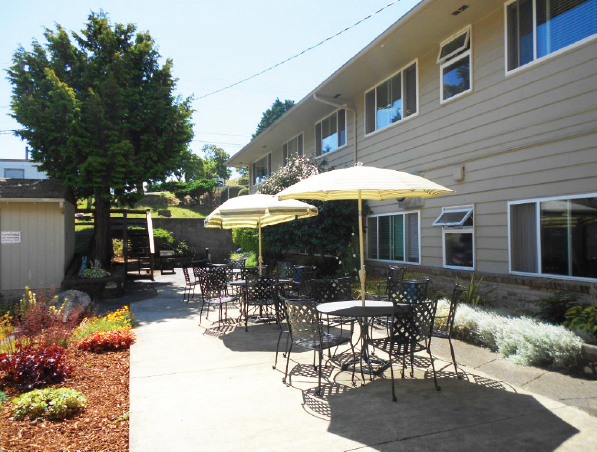
920 ANDERSON DRIVE, ABERDEEN, WA 98520 (360) 532-5122
For profit - Corporation 105 Beds AVALON HEALTH CARE Data: November 2025
Trust Grade
83/100
#13 of 190 in WA
Last Inspection: March 2025

Within standard 12-15 month inspection cycle. Federal law requires annual inspections.

Overview

Grays Harbor Health & Rehabilitation Center in Aberdeen, Washington, has a Trust Grade of B+, which means it is above average and recommended for families considering care options. It ranks #13 out of 190 facilities in Washington, placing it in the top half, and is the best choice among the two facilities in Grays Harbor County. However, the facility's trend is worsening, with the number of reported issues increasing from 4 in 2024 to 8 in 2025. Staffing received an average rating of 3 out of 5 stars, with a turnover rate of 43%, which is better than the state average, but RN coverage is concerning as it is below 96% of other facilities in Washington. While the facility has received $8,190 in fines, which is average, there are specific incidents of concern, such as the kitchen's walk-in freezer not functioning properly, risking food safety, and failures in administering oxygen and completing lab tests for residents, which could lead to unmet care needs and diminished quality of life. Overall, while there are strengths in its ranking and some staffing stability, families should be aware of the increasing issues and specific care concerns.

Trust Score
B+
83/100
In Washington
#13/190
Top 6%
Safety Record
Low Risk
No red flags
Inspections
Getting Worse
4 → 8 violations
Staff Stability
○ Average
43% turnover. Near Washington's 48% average. Typical for the industry.
Penalties
✓ Good
$8,190 in fines. Lower than most Washington facilities. Relatively clean record.
Skilled Nurses
⚠ Watch
Each resident gets only 25 minutes of Registered Nurse (RN) attention daily — below average for Washington. Fewer RN minutes means fewer trained eyes watching for problems.
Violations
⚠ Watch
16 deficiencies on record. Higher than average. Multiple issues found across inspections.
★★★★★
5.0
Overall Rating
★★★☆☆
3.0
Staff Levels
★★★★☆
4.0
Care Quality
★★★★★
5.0
Inspection Score
Stable
2024: 4 issues
2025: 8 issues

The Good

  • 4-Star Quality Measures · Strong clinical quality outcomes
  • Full Sprinkler Coverage · Fire safety systems throughout facility
  • No fines on record
  • Staff turnover below average (43%)

    5 points below Washington average of 48%

Facility shows strength in quality measures, fire safety.

The Bad

Staff Turnover: 43%

Near Washington avg (46%)

Typical for the industry

Federal Fines: $8,190

Below median ($33,413)

Minor penalties assessed

Chain: AVALON HEALTH CARE

Part of a multi-facility chain

Ask about local staffing decisions and management

The Ugly 16 deficiencies on record

Sept 2025 1 deficiency
CONCERN (D) 📢 Someone Reported This

A family member, employee, or ombudsman was alarmed enough to file a formal complaint

Potential for Harm - no one hurt, but risky conditions existed

Respiratory Care (Tag F0695)

Could have caused harm · This affected 1 resident

**NOTE- TERMS IN BRACKETS HAVE BEEN EDITED TO PROTECT CONFIDENTIALITY** Based on observation, interview, and record review, the facility failed to ensure resident oxygen administration orders were com...

Read full inspector narrative →
**NOTE- TERMS IN BRACKETS HAVE BEEN EDITED TO PROTECT CONFIDENTIALITY** Based on observation, interview, and record review, the facility failed to ensure resident oxygen administration orders were completed per physician order for 1 of 4 sampled residents (Resident 1) reviewed for oxygen administration. This failure placed residents at risk of low oxygen levels and a diminished quality of life.Findings included. Resident 1 admitted to the facility on [DATE]. The 5-day admission Minimum Data Set, an assessment tool, documented the resident was on oxygen therapy and was severely cognitively impaired. Record review of Resident 1's oxygen care plan, initiated 07/14/2025, documented, Administer oxygen @ 2L/min [at two liters per minute] via nasal cannula; Continuous for dyspnea [trouble breathing]. Record review of a physician order, dated 07/11/2025, documented, Administer oxygen @ 2L/min via nasal cannula; Continuous for dyspnea. In an observation on 09/03/2025 at 9:30 AM, Resident 1 was observed in her room, in bed, under covers, eyes closed. Resident presented confused and asked where she was. An oxygen concentrator was near the resident bed, turned off, with the nasal cannula wrapped on top of the machine. Near the bed was the resident's wheelchair, and on the back of the wheelchair was an oxygen tank that was empty. In an interview on 09/03/2025 at 9:34 AM, Staff C, Licensed Practical Nurse, said she thought Resident 1's oxygen orders had been changed, but reviewed the orders and said Resident 1 had orders for continuous oxygen therapy. In an observation on 09/03/2025 at 9:37 AM, Staff B, Director of Nursing/Registered Nurse, observed Resident 1 in her room and confirmed the resident was not on oxygen while in the room, and the oxygen tank on the back of the wheelchair was empty. In an interview on 09/03/2025 at 9:46 AM, Staff B said Resident 1's orders state continuous oxygen therapy, and the order had not been changed since the resident admitted to the facility on [DATE]. Staff B said with orders for continuous oxygen orders she would expect Resident 1 to have oxygen applied at all times. Reference WAC 388-97-1060 (3)(j)(vi).
Aug 2025 1 deficiency
CONCERN (D) 📢 Someone Reported This

A family member, employee, or ombudsman was alarmed enough to file a formal complaint

Potential for Harm - no one hurt, but risky conditions existed

Laboratory Services (Tag F0770)

Could have caused harm · This affected 1 resident

**NOTE- TERMS IN BRACKETS HAVE BEEN EDITED TO PROTECT CONFIDENTIALITY** Based on interview and record review, the facility failed to ensure timely completion of physician-ordered Urinalysis (UA) labs ...

Read full inspector narrative →
**NOTE- TERMS IN BRACKETS HAVE BEEN EDITED TO PROTECT CONFIDENTIALITY** Based on interview and record review, the facility failed to ensure timely completion of physician-ordered Urinalysis (UA) labs for 1 of 4 sampled residents (Resident 1) reviewed for quality of care. This failure placed residents at risk for delayed care, unmet care needs, and a diminished quality of life. Findings included. Resident 1 admitted to the facility on [DATE] and re-admitted to the facility on [DATE]. The Medicare 5-day Minimum Data Set, an assessment tool, dated 07/14/2025, documented the resident was mildly cognitively impaired. Record review of Resident 1's physician's order, dated 07/18/2025, documented, UA with C&S [culture and sensitivity] if indicated. No directions specified for order. Record review of Resident 1's skilled nursing note, dated 07/18/2025, documented, Pt [patient] shorter with staff than normal and resting more than normal awaiting for UA sample from pt for lab. Record review of Resident 1's nursing note, dated 07/21/2025, documented, UA drawn and took to lab. Awaiting results. In an interview on 08/07/2025 at 10:24 AM, Staff C, Residential Care Manager/Registered Nurse, said UA's should be collected on the same shift they were ordered on, usually within the first couple of hours. Staff C said she would obtain an order for a straight catheter or send the resident to the hospital if it took too long to obtain the UA. Staff C said a three day collection time for a UA would not be considered timely. Staff C said if the doctor ordered a UA it should have been obtained that day, if not the next day. In an interview on 08/07/2025 at 10:46 AM, Staff D, Residential Care Manager/Licensed Practical Nurse, said staff should try to obtain a UA lab every shift. Staff D said once the order was entered into the resident's electronic medical record, the order would alert the nurse to complete the order. Staff D said he could not answer whether or not the three day collection time for the UA would be considered timely. Staff D said he would have to refer to the Director of Nursing on if there was a policy related to timely completion of UA labs. In an interview on 08/07/2025 at 12:13 PM, Staff B, Director of Nursing/Registered Nurse, said UA labs should be collected within 24 hours. Staff B said she investigated the issue and found a nurse had entered the order from the provider; however, the order was not scheduled, and without the scheduling details, the order would not flag the nurse to complete the lab. Staff B said Resident 1's UA would not be considered a timely completion of the lab. Reference WAC 388-97 -1620 (2)(b)(i).
Mar 2025 6 deficiencies
CONCERN (D)

Potential for Harm - no one hurt, but risky conditions existed

Deficiency F0578 (Tag F0578)

Could have caused harm · This affected 1 resident

**NOTE- TERMS IN BRACKETS HAVE BEEN EDITED TO PROTECT CONFIDENTIALITY** . Based on interview and record review, the facility failed to provide and/or have procedures in place to assist with completing...

Read full inspector narrative →
**NOTE- TERMS IN BRACKETS HAVE BEEN EDITED TO PROTECT CONFIDENTIALITY** . Based on interview and record review, the facility failed to provide and/or have procedures in place to assist with completing advance directives (AD) and obtaining and maintaining Durable Power of Attorney (DPOA) documentation for 5 of 12 sampled residents (18, 161, 54, 19 & 55) reviewed for ADs. This failure place residents at risk for not having their healthcare preferences honored and a diminished quality of life. Findings included . The facility's policy entitled, Resident Rights Advanced Directives, dated 11/2017, documented, 3. Upon admission, if the resident has not formulated an advance directive, the facility will determine if the resident wishes to formulate an advance directive. As indicated, the facility will inform the resident of his or her right to establish advance directives and provide assistance to the resident in the development of advance directives in accordance with state law. The resident can accept or decline the help. Documentation in the medical record will reflect the discussion of advance directives occurred, and that assistance has been offered to the resident, and the resident's acceptance or declination of assistance. 1) Resident 18 was admitted to the facility on [DATE]. The admission 5-Day Minimum Data Set (MDS) assessment, dated 03/03/2025, showed Resident 18 was moderately cognitively impaired. The Interdisciplinary Team Conference (IDT), dated 02/28/2025, documented, Yes, indicating Resident 18 had AD in place. Resident 18's Electronic Health Record (EHR) showed no additional AD documentation was uploaded, reviewed, or re-addressed since admission. 2) Resident 161 was admitted to the facility on [DATE]. The admission 5-Day MDS, dated [DATE], showed Resident 161 was alert and oriented. The IDT Conference, dated 03/12/2025, documented, Yes, indicating Resident 161 had State Specific Advance Health Care Directive in place. Resident 161's EHR showed no additional AD documentation was uploaded or addressed since admission. On 03/19/2025 at 10:31 AM, Staff F, Social Services Director, said ADs were addressed in the initial admission care conference. Staff F said several residents' ADs had been completed. When asked about Resident 161's AD, Staff F stated, We don't have it. Just the POLST [Physician Orders for Life-Sustaining Treatment]. At 1:37 PM, Staff B, Director of Nursing Services and Registered Nurse (RN), said ADs should be reviewed, addressed and documented in the EHR per facility policy. Staff B was unable to provide additional AD documentation for Resident 161, and stated, We are aware several are missing. POLSTs were completed and uploaded instead. 3) Resident 54 was admitted to the facility on [DATE]. The Medicare-5 day MDS assessment, dated 03/07/2025, documented Resident 54 was moderately cognitively impaired. The IDT Care Plan Conference, dated 02/11/2025, did not document yes or no, if Resident 54 had an AD in place. Review of Resident 54's care plan, dated 03/02/2025, documented a Focus area, I do not have a Living Will or other Advance Directive on file . I will receive information related to my right to have an Advance Directive. The IDT Care Plan Conference, dated 03/07/2025, documented, Yes, indicating Resident 54 had an AD in place. Resident 54's EHR did not show documentation that information or assistance was provided related to the development of an AD. The EHR did not show a record of an AD or documentation requesting a copy of AD. On 03/18/2025 at 8:47 AM, Staff B said Social Services (SS) completed the AD with residents. Staff B said SS thought the POLST was good enough for the AD. Staff B said SS was not doing an AD for residents, only a POLST. Staff B said they did not have an AD for Resident 54.4) Resident 19 was admitted to the facility on [DATE]. The admission 5-Day MDS assessment, dated 02/09/2025, documented Resident 19 was moderately cognitively impaired. Review of Resident 19's care plan, dated 02/28/2025, documented an interventions, Facility will place my Advance Directive in my medical record. Resident 19's EHR did not show a copy of an AD. The IDT Care Plan Conference, dated 03/04/2025, documented, Yes, indicating Resident 19 had an AD that was reviewed, verified and a copy was in the medical record. On 03/19/25 at 1:12 PM, Staff A, Administrator, said it was her understanding the POLST form was an AD and communicated this information to social services who used the POLST form as an AD. Staff A said consequently, the facility did not accurately assess if Resident 19 had an advanced directive. 5) Resident 55 was admitted to the facility on [DATE]. The 5-day MDS assessment, dated 02/11/2025, indicated Resident 55 was alert and oriented. At 10:25 AM, Staff F said she was given misinformation and was using the POLST form as an AD. Staff F said the facility was now making corrections to this process to obtain/offer an AD on admission. Staff F was unable to provide documentation showing Resident 55 was offered assistance with an AD. Reference WAC 388-97-0280 (3)(c)(i) .
CONCERN (D)

Potential for Harm - no one hurt, but risky conditions existed

Deficiency F0582 (Tag F0582)

Could have caused harm · This affected 1 resident

**NOTE- TERMS IN BRACKETS HAVE BEEN EDITED TO PROTECT CONFIDENTIALITY** . Based on interview and record review, the facility failed to ensure residents were informed in writing of their potential liab...

Read full inspector narrative →
**NOTE- TERMS IN BRACKETS HAVE BEEN EDITED TO PROTECT CONFIDENTIALITY** . Based on interview and record review, the facility failed to ensure residents were informed in writing of their potential liability for payment related to Medicare services ending for 1 of 3 sampled residents (34) reviewed for Skilled Nursing Facility Advance Beneficiary Notice (SNF ABN). This failure placed the residents at risk of not having adequate information to make care and financial decisions during their continued stay. Findings included . Resident 34 was admitted to the facility on [DATE] with diagnoses including abnormalities of gait and mobility. The Quarterly Minimum Data Set assessment, dated 02/26/2025, documented Resident 34 was moderately cognitively impaired. Review of Resident 34's records revealed a Notice of Medicare Non-Coverage (NOMNC), was issued and signed on 01/31/2025, which informed the resident and the representative that skilled nursing services would end on 02/02/2025. The notice informed the resident Medicare would probably no longer cover skilled services, and the resident may have to pay for any services received after 02/02/2025. Further review of the record revealed the SNF/ABN was not issued to the resident or representative as required. This form would have explained the amount the resident would be liable to pay, if they remained in the facility for long-term care. On 03/19/2025 at 9:20 AM, Staff F, Social Services Dircector, said Resident 34 should have received the SNF ABN before the last covered day. Reference WAC 388-97-0300 (1)(e)(5)(6) .
CONCERN (D)

Potential for Harm - no one hurt, but risky conditions existed

Deficiency F0604 (Tag F0604)

Could have caused harm · This affected 1 resident

**NOTE- TERMS IN BRACKETS HAVE BEEN EDITED TO PROTECT CONFIDENTIALITY** . Based on observation, interview, and record review, the facility failed to obtain a consent and physician's order for 1 of 2 s...

Read full inspector narrative →
**NOTE- TERMS IN BRACKETS HAVE BEEN EDITED TO PROTECT CONFIDENTIALITY** . Based on observation, interview, and record review, the facility failed to obtain a consent and physician's order for 1 of 2 sampled residents (54) reviewed for physical restraints. This failure placed residents at risk for injury, unmet needs, and a diminished quality of life. Findings included . Review of the facility's policy entitled, Quality of Care Bed Rails, dated 02/2018, documented .The resident and/or representative will be informed of the risks and benefits of bed rails and informed consent will be obtained prior to installation of bed rails . Resident 54 was admitted to the facility on [DATE]. The Medicare-5 day Minimum Data Set assessment, dated 03/07/2025, documented Resident 54 was moderately cognitively impaired. Review of Resident 54's ADL (activities of daily living) self-care performance deficit care plan, dated 02/11/2025, documented, Assist Rail for bed mobility . Date Initiated: 03/04/2025. A Skilled Nursing Note, dated 03/05/2025, documented, Devices/Equip [equipment] . bed rails. On 03/16/2025 at 10:41 AM, Resident 54 was observed lying in bed with quarter bed rails on the left and right side of the bed. On 03/17/2025 at 1:10 PM, Resident 54 was observed lying in bed with quarter bed rails on the left and right side of the bed. On 03/18/2025 at 2:46 PM, Resident 54 was observed lying in bed with quarter bed rails on the left and right side of the bed. Review of Resident 54's Electronic Health Record showed no resident and/or representative consent, or physician's order related to bed rails. On 03/19/2025 at 10:20 AM, Staff D, Unit Manager and Licensed Practical Nurse, said for residents using bed rails, they would have a consent, assessment, physician orders, and care plan. Staff D said he saw on 03/18/2025, Resident 54 did not have consent and physician orders for bed rails, and she should have. At 10:41 AM, Staff B, Director of Nursing and Registered Nurse, said it was her expectation consent and physician orders are obtained prior to bed rails installed for residents. Staff B said they did not follow their process for Resident 54. Reference WAC 388-97-0620 (4)(a)(b) .
CONCERN (D)

Potential for Harm - no one hurt, but risky conditions existed

Deficiency F0645 (Tag F0645)

Could have caused harm · This affected 1 resident

**NOTE- TERMS IN BRACKETS HAVE BEEN EDITED TO PROTECT CONFIDENTIALITY** . Based on interview and record review, the facility failed to accurately complete a Level I Pre-admission Screening and Residen...

Read full inspector narrative →
**NOTE- TERMS IN BRACKETS HAVE BEEN EDITED TO PROTECT CONFIDENTIALITY** . Based on interview and record review, the facility failed to accurately complete a Level I Pre-admission Screening and Resident Review (PASRR) and ensure a referral for a Level II evaluation was completed for 1 of 5 sampled residents (34) reviewed for PASRR. This failure placed residents at risk for inappropriate placement and/or not receiving timely and necessary services to meet mental health care needs. Findings included . Resident 34 was admitted to the facility on [DATE] with diagnoses to include depression, and anxiety. The Quarterly Minimum Data Set Assessment (MDS), dated [DATE], showed Resident 34 was moderately cognitively impaired. The Level I PASRR, dated 05/24/2024, did not reflect Resident 34's diagnoses of depression, and anxiety. The Physician's Progress Note, dated 08/16/2024, documented Resident 134 was prescribed Duloxetine for her depressive symptoms, to include verbalized negative statements, and sadness. A second Level I PASRR, dated 02/24/2025, was completed by Staff F, Social Services Director, and sent off for a Level II referral. This was over eight months since admission. On 03/19/2025, at 9:56 AM, Staff F, Social Services Director, said if there is a 30 day exemption from a doctor, I note it, and few days prior to the 30 days, if resident still here, I sent off for level II. Staff F said this step was missed with resident 34. Staff F stated, This should have been sent off last year. It was not. At 1:41 PM, Staff B, Director of Nursing Services and Registered Nurse said she was aware of the missed PASRR. Staff B said it was her expectation that PASRR were processed per facility policy. Reference: WAC 388-97-1915 (1)(2) (a-c) .
CONCERN (D)

Potential for Harm - no one hurt, but risky conditions existed

Quality of Care (Tag F0684)

Could have caused harm · This affected 1 resident

**NOTE- TERMS IN BRACKETS HAVE BEEN EDITED TO PROTECT CONFIDENTIALITY** . Based on observations, interviews and record reviews, the facility failed to ensure bowel interventions were initiated for 2 o...

Read full inspector narrative →
**NOTE- TERMS IN BRACKETS HAVE BEEN EDITED TO PROTECT CONFIDENTIALITY** . Based on observations, interviews and record reviews, the facility failed to ensure bowel interventions were initiated for 2 of 7 sampled residents (18 & 42) reviewed for bowel management, and failed to ensure that physicians orders for consultations were arranged for 1 of 3 (55), residents reviewed for physician orders for urology and vascular consults. These failures placed residents at risk for discomfort, health complications and a diminished quality of life. Findings included . <Bowel Managment> Per Facility Bowel Management Policy, entitled Bowel Protocol and Bowel Tracking, undated : 2. Residents assessed as having inadequate bowel function manifested by absence of regular bowel movement in excess of three days will be assessed by the nurse. This assessment will include the following: a. Resident/staff interview. 3. The following bowel protocol will be implemented as established by physician's orders: a. Administration of stool softeners b. Administration of laxatives/bowel stimulants and c. Administration of enema. 1) Resident 18 was admitted to the facility on [DATE]. The admission Minimum Data Set Assessment (MDS), dated [DATE], documented the resident was moderately cognitively impaired. The Bowel and Bladder Elimination task sheet showed Resident 18 had a Bowel Movement (BM) on 03/04/2025 at 8:29 PM, and did not show another BM until 03/08/2025 at 5:19 AM, over 81 hours since her last documented BM. Review of Resident 14's March 2025 Medication Administration Report (MAR) showed the bowel protocol was not initiated between the dates of 03/04/2025 and 3/08/2025. 2) Resident 42 was admitted to the facility on [DATE]. The Quarterly MDS, dated [DATE], documented the resident was alert and oriented. The Bowel and Bladder Elimination task sheet showed Resident 42 had a BM on 02/19/2025 at 8:51 PM, and did not show another BM until 02/25/2025 at 5:38 AM, over 128 hours since her last documented BM. Review of Resident 58's October 2024 MAR showed the bowel protocol was not initiated between the dates of 02/19/2025 and 10/25/2025. On 03/19/2024 at 10:23 AM, Staff D, Unit Manager and a Licensed Practical Nurse (LPN), said after three days of no BM, facility initiates the bowel protocol, and residents are to be administered either Miralax (a laxative) or Senna (a laxative). Staff D was unable to provide documentation of BM protocol being initiated for both Residents 18 or 42. Staff D said he would expect to find documentation in the HER. At 1:43 PM, Staff B, Director of Nursing Services (DON) and Registered Nurse (RN), said she expects the bowel protocol to be initiated and documented per facility policy. Staff B was unable to provide further documentation of BM intervention being initiated for residents 18 and 42. <Urology Consult> Resident 55 was admitted to the facility on [DATE] with an indwelling foley catheter (tube placed in the bladder to drain urine). The 5 day MDS assessment, dated 02/11/2025, indicated Resident 55 was alert and oriented. The facility urinary catheterization policy, dated 04/2021, listed the indications for indwelling urinary catheterization to include: a. Acute urinary retention or bladder outlet obstruction; b. Accurate measurement of urinary output; c. Assist in healing of open sacral or perineal wounds in incontinent residents; d. Need for prolonged immobilization; e. Improve comfort during end of life care. The transfer orders from the hospital, dated 02/07/2025, indicated to remove foley catheter. A progress note, dated 02/10/2025, stated Resident was started on a Trial void (Urinate) and the Foley was removed today around noon, by 8pm, resident had not voided, 16F (French) 10cc (Cubic Centimeters) balloon was inserted without obstruction, over 300cc return. A progress note, dated 02/11/2025, at 6:48 AM, documented a urology consult was ordered to obtain an appropriate diagnosis for the retention of urine. <Vascular consult> A progress note, dated 02/11/2025 at 3:52 PM, stated Wound team initial evaluation of DTI (deep tissue injury) of right great toe. A progress note, dated 02/14/2025 at 1:32 PM, stated During weekly skin checks LN (Licensed Nurse) noticed blisters on bilateral heels. An ARNP (Advanced Registered Nurse Practitioner) progress note, dated 02/18/2025 at 5:48 AM, documented, [Resident 55] has a full thickness wound to left lateral lower leg. Bilateral doppler ultrasound ordered. The doppler report, dated 02/23/2025 at 5:12 AM, concluded moderate stenosis (the narrowing of a blood vessel) in the arterial system of the lower extremities- occlusion bilateral ata (anterior tibial artery) and dpa (distal popliteal artery). A progress note, dated 02/24/2025 at 9:59 AM, documented ARNP was made aware of the doppler results and ordered a vascular consult. On 03/19/2025 at 9:07 AM, Staff G, Unit Manager and LPN said the nursing staff would generally send the paperwork to the specialist indicating the need for the referral. Staff G said no one was really assigned to follow up after the referral packet was sent. Staff G said there was no real process for who does this. Staff G said there was no system to track what appointments were made. Staff G was unable to determine if Resident 55 had a urology and vascular appointments scheduled. At 10:22 AM, Staff F said the unit managers set up or got the referral started and social services might fax it over to provider to assist the unit managers. Staff F said she was not sure how the nurses track whether a referral for a specialist was arranged. Staff F said social services was only responsible to set up transportation to the appointments once they are made. At 11:18 AM, Staff B, said at times she would ask social services to help facilitate appointments. Staff B said the staff should document each time they made contact to arrange appointments with an outside provider. Staff B was unable to provide supporting documentation that Resident 55 was set up to be evaluated by a urologist or a vascular surgeon. Reference WAC 388-97-1060 (1),(3)(c) .
CONCERN (D)

Potential for Harm - no one hurt, but risky conditions existed

Deficiency F0909 (Tag F0909)

Could have caused harm · This affected 1 resident

**NOTE- TERMS IN BRACKETS HAVE BEEN EDITED TO PROTECT CONFIDENTIALITY** . Based on observation, interview and record review, the facility failed to ensure bed rails were securely fastened to the bed a...

Read full inspector narrative →
**NOTE- TERMS IN BRACKETS HAVE BEEN EDITED TO PROTECT CONFIDENTIALITY** . Based on observation, interview and record review, the facility failed to ensure bed rails were securely fastened to the bed and without gaps between the mattress and bed rail, for 1 of 1 sampled resident (28) reviewed for accident hazards. This failure placed residents at risk for injury and/or entrapment. Findings included . Review of the facility's policy entitled, Quality of Care Bed Rails, dated 02/2018, documented .Bed rails will be compatible with the bed frame and mattress in use by the resident .Bed rails that are in use will be checked routinely to verify condition and installation security. Resident 28 was admitted to the facility on [DATE]. The annual Minimum Data Set assessment, dated 01/08/2025, documented Resident 28 was moderately cognitively impaired. On 03/16/2025 at 2:52 PM, Resident 28's bed was observed with 1/2 length bed rails on the upper right and left side of the bed. The bed rails on the right and left side were observed to be loose. The rail on the right was leaning outward about 3 inches and had about five to six inches of movement back and forth, and about five inches of space between the mattress and the rail. A box of tissues was observed to have fallen in between the rail and mattress. The rail on the left had about 3 inches of movement back and forth. On 03/17/2025, at 8:47 AM, Resident 28's bed rails were observed to be loose. At 1:10 PM, Resident 28 said she used the bed rail on the right to help her get in and out of bed, and to move around in bed. Resident 28 said the rail was pretty loose and it made it harder to use and move around in bed when it was loose. Resident 28 reached over to the right bed rail and wiggled it back and forth and side to side about five to six inches. Resident 28 said it had been loose like that a long time, stating, It slides like this, i don't want it to slide, but i want to get up. At 1:17 PM, Staff H, Licensed Practical Nurse, said maintenance installs bed rails and checks them. Staff H said if there were any problems with bed rails like proper placement or safety, they would request maintenance to fix them through TELS (electronic work order system). Staff H said she did not have any issues with bed rails right now. At 1:41 PM, Staff I, Maintenance Director, said the TELS system prompted them to check bed rails two times per year, every six months. Staff I said if there was a problem with a bed rail such as it did not work or it was loose, the staff would notify them through TELS. At 1:49 PM, Staff I went to Resident 28's room to look at the bed rail. Resident 28 was observed sitting in her wheelchair beside the bed, reached over and moved her bed rail back and forth, stating, What bothers me is this, this thing swings back and forth. Staff I moved the right-side bed rail back and forth, stating, Thats not right, those need to be tightened, oh ya, those need to be tightened. At 1:51 PM, Staff B, Director of Nursing and Registered Nurse, said staff should report it in TELS if a bed rail was loose. Staff B said she expected bed rails were maintained so they were not loose and properly fitted to the bed. Reference WAC 388-97-2100 (1) .
Feb 2024 4 deficiencies
CONCERN (D) 📢 Someone Reported This

A family member, employee, or ombudsman was alarmed enough to file a formal complaint

Potential for Harm - no one hurt, but risky conditions existed

Deficiency F0553 (Tag F0553)

Could have caused harm · This affected 1 resident

**NOTE- TERMS IN BRACKETS HAVE BEEN EDITED TO PROTECT CONFIDENTIALITY** . Based on interview and record review, the facility failed to ensure residents and/or their representatives were offered the op...

Read full inspector narrative →
**NOTE- TERMS IN BRACKETS HAVE BEEN EDITED TO PROTECT CONFIDENTIALITY** . Based on interview and record review, the facility failed to ensure residents and/or their representatives were offered the opportunity to participate in care conferences for 1 of 7 sampled residents (118) reviewed for right to participate in planning care. This failure placed residents at risk of not being involved in their long-term care needs and a diminished quality of life. Findings included . Resident 118 was admitted to the facility on [DATE]. The quarterly Minimum Data Set, an assessment tool, dated 01/04/2024, showed the resident was severely cognitively impaired. Resident 118's medical record showed on 10/06/2023 the Initial Care Conference was conducted. Resident 118's medical showed on 01/18/2024 a second Care Conference was conducted. An email from Resident 118's Power of Attorney (POA), Collateral Contact 1 (CC1), to Staff E, Social Services Director, dated 01/31/2024 at 12:01 PM, documented, .when care plan meetings or discussions are taking place about [Resident 118's] care, I want an invitation and need to know if I can attend in person or via telephone. On 02/22/2024 at 2:52 PM, CC1 said she had not been invited to a care conference for Resident 118. At 7:48 PM, Staff E said they did an initial care conference within 48 hours after a resident's admission. Staff E said Care Conferences were done quarterly and as needed. Staff E said they sent a letter to the POA in advance letting them know of the care conference date. Staff E said she made a phone call to the POA the day of the care conference. Staff E said she was not sure if Resident 118's POA was in attendance at the Care Conference on 01/18/2024. Reference WAC 388-97-1020 (2)(e)(f) .
CONCERN (D)

Potential for Harm - no one hurt, but risky conditions existed

Deficiency F0657 (Tag F0657)

Could have caused harm · This affected 1 resident

**NOTE- TERMS IN BRACKETS HAVE BEEN EDITED TO PROTECT CONFIDENTIALITY** . Based on interview and record review, the facility failed to ensure care plan nutritional interventions were updated for 1 of...

Read full inspector narrative →
**NOTE- TERMS IN BRACKETS HAVE BEEN EDITED TO PROTECT CONFIDENTIALITY** . Based on interview and record review, the facility failed to ensure care plan nutritional interventions were updated for 1 of 2 sampled residents (21) reviewed for care plan revisions. This failure placed residents at risk of weight loss, unmet care needs, and a diminished quality of life. Findings included . Resident 21 was admitted to the facility on [DATE]. The admission Minimum Data Set, dated [DATE], documented the resident was moderately cognitively impaired. Resident 21's weight record showed the following: --On 11/19/2023, the resident weighed 206.4 pounds (lbs). --On 01/16/2024, the resident weighed 174 lbs, a 15.69% weight loss in 58 days. --On 02/18/2024, the resident weighted 162.2 lbs, a 6.78% weight loss since 01/16/2024 (33 days) and a 21.41% weight loss since 11/19/2023 (91 days). Resident 21's nutritional risk care plan, initiated 03/06/2023 and revised 12/18/2023, documented, [Resident 21] has potential nutritional problem r/t hyperlipidemia [related to high cholesterol], DM2 [type II diabetes], chronic respiratory failure, HTN [high blood pressure], prostate cancer, significant weight loss of 10% in the past month r/t acute illness, complaint of nausea. The nutritional risk care plan documented the following interventions, initiated 03/06/2023 and last revised 04/27/2023: 1) CBG [blood sugar] monitoring and interventions per MD [Medical Doctor] orders. 2) Monitor/record/report to MD PRN [as needed] s/sx [signs and symptoms] of malnutrition: Emaciation (Cachexia), muscle wasting, significant weight loss: > [greater than] 5% in 1 month, >7.5% in 3 months, >10% in 6 months. 3) Offer fluids at bedside and q [every] meal to maintain hydration. 4) Provide, serve diet as ordered. Monitor intake and record q meal. Large portions added 04/27/2023. 5) RD [Registered Dietician] to evaluate and make diet change recommendations PRN. A physician's order, dated 02/08/2024, documented, Healthshake No Added Sugar with meals. This intervention was not found on the resident's nutritional risk care plan. Resident 21's nutrition evaluation, dated 02/13/2023, documented the intervention, Continue with healthshakes TID [three times a day]. On 02/23/2024 at 10:28 AM, Staff C, Residential Care Manager and Licensed Practical Nurse, said Resident 21 received three health shakes a day as a nutritional supplement. Staff C said Resident 21's health shakes were ordered on 02/08/2024. Staff C said it was an IDT (interdisciplinary team) decision to modify care plans. Staff C said Resident 21's nutritional risk care plan interventions were last updated March of 2023. Staff C said he was unsure why the interventions were not updated for the health shakes ordered on 02/08/2024. At 11:24 AM, Staff D, Registered Dietician, said he had last reviewed Resident 21 on 02/13/2024 when he performed the resident's nutrition evaluation. Staff D said Resident 21 had recent weight loss and weight loss over the last six months. Staff D said interventions in place included nutritional supplements three times a day. Staff D said when he performed an assessment, he would review the resident care plan and update it. At 12:20 PM, Staff B, Director of Nursing Services and Registered Nurse, said it was an IDT decision to update resident care plans. Staff B said typically there was an IDT nutrition meeting where interventions were formulated, and the resident care plan was updated with the interventions. Staff B said resident care plans should be updated quarterly, or when there was a change made to the plan of care. Staff B said Resident 21 should have had the new interventions added to the care plan. Reference WAC 388-97-1020 (5)(b) .
CONCERN (D)

Potential for Harm - no one hurt, but risky conditions existed

Deficiency F0685 (Tag F0685)

Could have caused harm · This affected 1 resident

**NOTE- TERMS IN BRACKETS HAVE BEEN EDITED TO PROTECT CONFIDENTIALITY** . Based on observation, interview and record review, the facility failed to ensure hearing devices were maintained in working or...

Read full inspector narrative →
**NOTE- TERMS IN BRACKETS HAVE BEEN EDITED TO PROTECT CONFIDENTIALITY** . Based on observation, interview and record review, the facility failed to ensure hearing devices were maintained in working order for 1 of 2 sampled residents (26) reviewed for hearing. This failure placed the resident at risk for decreased hearing function and a diminished quality of life. Findings included . Resident 26 was admitted to the facility on [DATE]. The admissions Minimum Data Set, dated [DATE], indicated the resident was moderately cognitively impaired and used hearing aids. Resident 26's Hard of Hearing care plan, initiated 01/29/2024, addressed hearing deficit with intervention to ensure hearing aid (both ears) are in place. On 02/21/2024 at 9:06 AM, Resident 26 said he had hearing aids prior to admission and was trying to get the VA (Veterans Administration) to replace them. Resident 26 said he heard better from his right ear with decreased background noise. The TV in the room was loud and the resident needed questions repeated several times after which he turned the volume down. Resident 26 continued to need questions asked repeatedly and loudly. At 1:13 PM, Staff G, Licensed Practical Nurse, said she was not aware if the resident had hearing aids and went to ask another nurse on the unit. Staff G said the hearing aids were in the medication cart. Staff G looked into the medication cart but was not able to find them. At 1:20 PM, Resident 26 said his hearing aides were in the night stand. When asked to verify if the hearing aides worked, the resident took them out of the nightstand drawer, tried to put them on and said they did not work. On 02/22/2024 at 1:25 PM, Staff H, Resident Care Manager and Registered Nurse (RN), said if a resident was alert and oriented then the resident was primarily responsible for their hearing aids and staff did not record daily if they were on or off. Staff H said Resident 26 was alert and oriented and was responsible for his hearing aids. At 2:15 PM, Staff B, Director of Nursing Services and RN, said hearing aid placement was documented if the resident was a high risk for losing them. WAC Reference 388-97-1060 (3)(a) .
CONCERN (D) 📢 Someone Reported This

A family member, employee, or ombudsman was alarmed enough to file a formal complaint

Potential for Harm - no one hurt, but risky conditions existed

Deficiency F0947 (Tag F0947)

Could have caused harm · This affected 1 resident

. Based on interview and record review, the facility failed to ensure nurse aide staff received Dementia training for 1 of 5 sampled nursing assistant staff (F) reviewed for nurse aide staff in-servic...

Read full inspector narrative →
. Based on interview and record review, the facility failed to ensure nurse aide staff received Dementia training for 1 of 5 sampled nursing assistant staff (F) reviewed for nurse aide staff in-service trainings. This failure placed residents at risk for receiving necessary care from unskilled staff. Findings included . Staff F, Nursing Assistant, was hired on 09/08/2023. No training or in-services records provided documented Dementia training was completed since being hired. On 02/22/2024 at 6:45 PM, Staff A, Administrator, said Dementia training was done as part of Relias (an online training course) but the training only came up when triggered. Staff A said Staff F's Dementia training would trigger on 06/21/2024. Reference WAC 388-97-1680 (2)(b)(ii) .
Aug 2023 1 deficiency
CONCERN (D) 📢 Someone Reported This

A family member, employee, or ombudsman was alarmed enough to file a formal complaint

Potential for Harm - no one hurt, but risky conditions existed

Deficiency F0624 (Tag F0624)

Could have caused harm · This affected 1 resident

**NOTE- TERMS IN BRACKETS HAVE BEEN EDITED TO PROTECT CONFIDENTIALITY** . Based on interview and record review, the facility failed to ensure sufficient preparation was provided to ensure a safe and o...

Read full inspector narrative →
**NOTE- TERMS IN BRACKETS HAVE BEEN EDITED TO PROTECT CONFIDENTIALITY** . Based on interview and record review, the facility failed to ensure sufficient preparation was provided to ensure a safe and orderly discharge home for 1 of 1 sample residents (Resident 1) reviewed for safe and orderly discharge. This failure placed residents at risk for an unsafe discharge without community support to meet the resident's care needs and a diminished quality of life. Findings included . Record review of the Hospital History and Physical Report, dated 05/07/23 (prior to re-admission back to facility on 05/09/2023), showed Resident 1 was admitted to the hospital emergency services. The physician narrative showed Resident 1 reported safety, medical and potential future physical altercations between himself and his care giver. The resident had discharged from a skilled nursing facility (04/25/2023) under the assumption the caregiver would assist with medications, ambulation, and daily care, but it had not been the case. The resident requested return to the previous nursing facility. Resident 1 was re-admitted to the previous facility on 05/09/2023 with diagnoses including dementia, diabetes, and seizures. The Minimum Data Set, dated [DATE], showed the resident was able to make needs known and independent with most activities of daily living. Record review of Resident 1's July 2023 physician orders showed he received medications for blood pressure, diabetes, high cholesterol, and constipation. A review of the Care Plan, initiated 05/09/2023, documented, Discharge Planning: Barriers to discharge: Forgetfulness, lack of family support, difficulty managing diabetes and medications. Needs included diabetes education/training, home health oversight . Interventions showed community case managers involved with services and phone numbers were listed for contact. Identified interventions included assistance with appointments, and applications for transportation services. Nursing services were to provide education and follow up with medication management and diabetes/insulin administration. The Care Plan included dementia related communication goals/interventions related to diagnosis of dementia with goals the resident would be able to make basic needs known daily and identified cognitive function impairment related to dementia with goal to assist with some decision making and orient as needed. The care plan, updated 05/10/2023, showed care initiation of potential psychosocial well-being problem related to Family discord. Goal included the resident would have no indications of psychosocial well being problem by review date 08/16/2023. Review of July 2023 progress notes, dated 07/14/2023 at 1:30 PM, showed Staff B, Social Services, spoke with Resident 1 regarding request to discharge home. Staff B reminded the resident of historical failures, arguments and not taking medications. Staff B documented she called the care giver and discussed importance of consistency. The care giver informed Staff B she would pick him up the following morning (07/15/2023) at 10:00 AM. An Interdisciplinary team note, dated 07/14/2023 at 2:00 PM, showed a discussion was held regarding safety concerns of Resident 1 discharging with caregiver and failed medication management and care under same caregiver in past. The facility notified protective care services, made an appointment for follow up for medications and called the facility medical provider and informed him of resident's plan to discharge against medical advice. Nursing staff were informed of Resident 1's intent for discharge on [DATE] and received contact number for protective services. Review of the progress notes and Against Medical Advice (AMA) form, dated 07/15/2023, showed Resident 1 discharged home with caregiver and instructed to attend follow up appointments. The form was signed by the caregiver. Staff documented a message was left on protective services answering system. On 08/29/2023 at 8:40 AM, CC-A, Collateral Contact, said the facility discharged Resident 1 against medical advice without calling community case managers or notifying police officials of safety concerns when discharged to an unsafe home under the care of a caregiver with an open investigation. CC-A said the facility did not pursue guardian services for Resident 1 or attempted to encourage him to remain in the facility until services were in place. CC-A stated, Instead they discharged him on a Saturday [07/15/2023]. At 1:35 PM, Staff B said Resident 1 had expressed for two weeks he wanted to discharge. Staff B said on 07/14/2023 she discussed concerns on him going home with caregiver as he had failed placement on last discharge. Staff B said there had been discussions with community case managers regarding guardianship and it had not been pursued by the facility. Staff B said he needed a guardian. When asked about concerns of Resident 1 returning to care with someone who physically abused him, Staff B said she had not heard of any physical abuse, only verbal (yelling) and emotional. When asked about notifications regarding the resident's AMA, Staff B said she did not notify the resident's community case managers as one was off on Fridays. Staff B said she sent emails to others and spoke with protective services regarding his intent. Staff B said she gave the number to nurses to call when he left on Saturday. When asked if there had been discussions with the caregiver about the possibility of speaking to the resident about holding off on the discharge for several days until services were set up, Staff B said she did not. When asked if the physician had assessed the resident's capability for discharge or spoke with the resident to hold off on discharge, Staff B said she thought nursing may have called the provider but was not sure. Staff B said Resident 1 was currently in the hospital awaiting placement in the community. Staff B said the police were not notified of safety concerns on the 07/15/2023 discharge or requested to perform a welfare check. At 2:00 PM, Staff A, Director of Nursing Services, said the provider was notified by the facility and did not speak with the resident. Staff A said guardianship had been discussed and she did not know why it was not pursued. Staff A said protective services were notified but not the police. On 09/05/23 at 1:15 PM, CC-A said Resident 1 had returned twice to the facility requesting admission. On 08/08/23, Resident 1 was escorted to the hospital by facility staff, left, and admitted to emergency services. CC-A said the facility refused to re-admit the resident and he remained at the hospital until placement in the community on 08/29/23. He now had guardian services. CC-A stated, This should not have happened; and thank god, he is safe. Reference WAC 388-97-0120 (3)a .
Aug 2023 1 deficiency
CONCERN (D) 📢 Someone Reported This

A family member, employee, or ombudsman was alarmed enough to file a formal complaint

Potential for Harm - no one hurt, but risky conditions existed

Deficiency F0760 (Tag F0760)

Could have caused harm · This affected 1 resident

**NOTE- TERMS IN BRACKETS HAVE BEEN EDITED TO PROTECT CONFIDENTIALITY** . Based on interview and record review, the facility failed to ensure residents were not at risk for complications when receivin...

Read full inspector narrative →
**NOTE- TERMS IN BRACKETS HAVE BEEN EDITED TO PROTECT CONFIDENTIALITY** . Based on interview and record review, the facility failed to ensure residents were not at risk for complications when receiving Warfarin (a blood thinning medication) after a provider ordered to hold the medication; and at risk for fluid depletion, low blood pressure and worsening confusion when receiving Fureosemide (medication for fluid retention) after the provider discontinued the medication and was administered along with a newly prescribed fluid retention medication (Toresemide) for 2 of 3 sampled residents (1 & 2) reviewed for significant medication errors. This failure placed residents at risk for medication overdose, medication complications, and a diminished quality of life. Findings included . 1) Resident 1 was admitted to the facility on [DATE] with diagnoses including atrial fibrillation (an irregularity in the way the heart pumps which increases the chance of blood clots). The admission Minimum Data Set (MDS), an assessment tool, dated 07/25/2023, showed Resident 1 received Warfarin, an anticoagulant (blood thinning) medication daily. According to the Food and Drug Administration 2010 drug guidelines, Warfarin can cause major or fatal bleeding. Regular monitor INR (international ratio is a blood test which tells how long it takes for blood to clot). Laboratory monitoring (INR) is used to determine if the anticoagulant medication is providing a therapeutic effect (by an INR within the goal range for the resident) and required to ensure the resident is not receiving excessive doses, which would increase the risk of bleeding. Record review of the facility INR protocol, undated, showed if there were problems reaching the physician in the evenings staff were to follow standing orders for INR protocol. The orders showed if INR's were over 3.5 to hold the blood thinner dose till the next day and by protocol contact the physician for follow up dosage and INR recheck instructions. Record review of Resident 1's July 2023 physician orders showed the resident was prescribed a daily dose of 10 mg (milligrams) of Warfarin (blood thinner) daily. Resident 1's anticoagulant logs (used to document each INR result, any dosage changes in the medication and the schedule for the next INR blood draw), dated 07/24/2023 to 08/02/2023, showed Resident 1's goals for Warfarin treatment was to keep his INR in the 2.0 to 3.0 range. The treatment was for a diagnosis of atrial fibrillation. Resident 1's medical record showed on 08/01/2023 the resident had an unwitnessed fall, hit his head, was treated at the hospital and then returned later in the evening to the facility. Resident 1's discharge patient summary from the 08/01/2023 hospital visit showed an INR blood test was drawn at the hospital. The results showed a ratio of 4.6 (indicating over anticoagulation). The hospital discharge orders instructed nursing to hold the evening dose of Warfarin and notify the primary physician for further instructions on medication restart. Resident 1's August 2023 Medication Administration Record (MAR) showed the evening dose of Warfarin was held. The anticoagulant log documented the Warfarin was held and the next INR draw was scheduled for 08/02/2023. The 08/01/2023 results from the hospital were not included on the log. Resident 1's medical record showed on 08/02/2023 an INR was collected and resulted in a ratio of 4.4. (The INR protocol showed nursing were to hold dose if ratio was over 3.5 and contact physician for follow up of dosage and INR recheck. The August 2023 MAR showed on 08/02/2023 the evening dose of Warfarin was administered to Resident 1. (This constituted a significant medication error, according to the Food and Drug Administration 2010 drug guidelines, as Warfarin can cause major or fatal bleeding. On 08/15/2023 at 4:20 PM, when asked about INR results and anticoagulant dosing, Staff B, Registered Nurse, said nursing was to check INR results prior to the next dose of the anticoagulant and follow the INR protocol. At 4:45 PM, Staff A, Director of Nursing Services, said nursing failed to check the laboratory results prior to administrating the blood thinner on 08/02/2023 for Resident 1. Staff A said the medication was discontinued by the physician following the dose. Staff A said she planned to do further education regarding the protocol for anticoagulant monitoring. 2) Resident 2 was admitted to the facility on [DATE] with diagnoses including heart failure, high blood pressure, and dementia. The admission MDS, dated [DATE], showed Resident 2 used diuretics (for fluid retention) medications daily. Review of the August 2023 physician orders showed Resident 2 had the diuretic Fureosemide 40 mg ordered daily for fluid retention. An after visit summary showed on 08/10/2023 Resident 2 attended a scheduled visit with her cardiologist. The summary included new orders for the diuretic Toresemide 20 mg to be given twice daily for fluid retention and did not include an order to continue the Fureosemide. Review of the August 2023 MAR showed on 08/10/2023 Resident 2 begun the Toresemide as ordered/prescribed by the physician. The MAR showed the Fureosemide was not discontinued and was continued to be administered to Resident 2 until 08/14/2023. The resident received a total of four additional doses of the diuretic, along with the newly ordered diuretic, before the significant medication error was discovered. On 08/15/2023 at 4:20 PM, when asked about the process for new orders, discontinuation of orders and returns from physician visits, Staff B, Registered Nurse, said the nurse assigned to the resident, or managers, entered the new orders and discontinued the old orders from the MAR. Staff B said Resident 2's Fureosemide should have been discontinued and not given with the addition of the new diuretic. At 4:45 PM, Staff A, Director of Nursing Services, said nursing failed to discontinue the Fureosemide on Resident 2's return from the cardiologist. Staff A said she planned to do further education regarding orders. Reference WAC 388-97-1060 (3)(k)(iii) .
Mar 2023 2 deficiencies
CONCERN (D)

Potential for Harm - no one hurt, but risky conditions existed

Quality of Care (Tag F0684)

Could have caused harm · This affected 1 resident

**NOTE- TERMS IN BRACKETS HAVE BEEN EDITED TO PROTECT CONFIDENTIALITY** <Bowel Movement> Resident 29 was admitted to the facility on [DATE] with diagnoses including dementia. The annual MDS, dat...

Read full inspector narrative →
**NOTE- TERMS IN BRACKETS HAVE BEEN EDITED TO PROTECT CONFIDENTIALITY** <Bowel Movement> Resident 29 was admitted to the facility on [DATE] with diagnoses including dementia. The annual MDS, dated [DATE], showed the resident was severely cognitively impaired. Resident 29's 30-day Bowel Activity Sheet documented the resident had a bowel movement (BM) on 02/24/2023 at 1:59 PM and did not have another BM until 03/02/2023 at 6:41 AM, 136 hours (5+ days) between BMs. Per medical orders, dated 03/07/2018, Resident 29 was to be administered Milk of Magnesia (a laxative) . by mouth every 24 hours as needed for bowel care if no BM in 3 days, and Insert 1 Dulcolax Suppository (Bisacodyl - a stool softener) rectally as needed for bowel care if no BM times four (4) days and if not relieved by Milk of Magnesia. Resident 29's February 2023 and March 2023 Medication Administration Record did not show the bowel protocol was initiated. Progress notes, dated 02/26/2023 to 03/01/2023, did not show any documentation the bowel protocol had been initiated. On 03/22/2023 at 8:27 AM, Staff F, Licensed Practical Nurse, stated, After three days of no BM, residents receive Milk of Magnesia. Maybe it didn't get charted. It's really strange. At 8:53 AM, after reviewing the Bowel Activity Sheet, Staff B said she was unable to find documentation of a BM for Resident 29 between 02/24/2023 and 03/02/2023. Reference WAC 388-97-1060 (1) Based on interview and record review, the facility failed to monitor a resident after an unwitnessed fall for 1 of 4 sampled residents (22) and failed to initiate bowel interventions for 1 of 5 sampled residents (29) reviewed for quality of care regarding falls and bowel management. This failure placed residents at risk for unidentified injuries, a delay in treatment, at risk for worsening conditions, discomfort, experiencing health complications and diminished qualify of life. Findings included . <Fall> The Neurological Observation (neuro) sheet showed the assessment should be completed q (every) 15 min. (minutes) x 4 then, Q 30 mins. x 4 then, Q 1 hr. (hour) x 4 then, Q 4 hrs. x 4 then, Q 8 hrs. x 4 The assessment sheet noted to document cranial checks: pupils, hand grasps and level of consciousness. Resident 22 was admitted to the facility on [DATE]. The annual Minimum Data Set (MDS), dated [DATE], showed the resident was severely cognitively impaired. A progress note, dated 11/27/2022 at 3:19 AM, documented Resident 22 was found on the floor next to the bed. The note showed Resident 22 stated, I was trying to go home but my legs refused to work. The facility's Fall Risk Evaluation, dated 11/28/2022, showed neuro checks were to be completed for 72 hours, following the fall on 11/27/2022. The electronic health records did not have a Neurological Observation sheet for the fall on 11/27/2022. On 03/22/2023 at 11:16 AM, Staff B, Director of Nursing Services and Registered Nurse, said if a resident had an unwitnessed fall or a fall with a head injury then neuros should be completed for 72 hours. Staff B said she would have to locate the neuro check for Resident 22. At 2:26 PM, Staff B said she was not able to find the neuros for Resident 22's fall on 11/27/2022.
CONCERN (F)

Potential for Harm - no one hurt, but risky conditions existed

Food Safety (Tag F0812)

Could have caused harm · This affected most or all residents

**NOTE- TERMS IN BRACKETS HAVE BEEN EDITED TO PROTECT CONFIDENTIALITY** . Based on observation, interview and record review, the facility failed to ensure the kitchen's walk-in freezer was in good wor...

Read full inspector narrative →
**NOTE- TERMS IN BRACKETS HAVE BEEN EDITED TO PROTECT CONFIDENTIALITY** . Based on observation, interview and record review, the facility failed to ensure the kitchen's walk-in freezer was in good working condition for one of one facility kitchen and failed to ensure proper temperature logs were maintained for 3 of 3 facility nourishment freezers. These failures placed residents at risk of food-borne illness, and a diminished quality of life. Findings included . <Kitchen Freezer> On 03/20/2023 at 9:18 AM, the kitchen's walk-in freezer door was observed to have ice and snow buildup at the bottom right corner, preventing the door from closing completely. The opening measured approximately one inch. A two-foot area of the freezer immediately behind the door (floor, two bottom shelves) was covered with the same ice buildup measuring approximately one inch. At 9:21 AM, Staff I, Dietary Manager, stated, This has been like this forever. It does not shut. I have to clean it every day to shut the door. On 03/23/2023 at 10:05 AM, the kitchen walk-in freezer was observed to have the same ice buildup, and door was not shut completely. At 10:07 AM, Staff I stated, A guy came in yesterday to look at it. At 11:08 AM, Staff A, Administrator, stated, It was brought to my attention [about the freezer door], and we are addressing it right now. Staff A said the maintenance worker would be replacing the seal at the bottom of the freezer which would prevent further ice buildup. <Nourishment Freezers> On 03/23/2023 at 11:15 AM, the nourishment freezers on each of the three units were observed to be missing thermometers on the inside. The internal temperature (temp) control gauge on all three read Max, and a slight buildup of ice was present in all three. At 11:24 AM, when asked if there was a thermometer in the Unit 3 nourishment freezer, Staff H, Licensed Practical Nurse (LPN), stated, I do not see one. At 11:29 AM, Staff G, Licensed Practical Nurse (LPN), stated, They bring a thermometer and test it that way. On 03/24/2023 at 9:13 AM, Staff G stated, We don't have a temp logbook for the freezer, but it is turned on Max. The facility did not provide documentation of a temperature logbook for each of the nourishment freezers. Reference WAC [PHONE NUMBER]0 (2) & 388-97-1100 (3) .
Understanding Severity Codes (click to expand)
Life-Threatening (Immediate Jeopardy)
J - Isolated K - Pattern L - Widespread
Actual Harm
G - Isolated H - Pattern I - Widespread
Potential for Harm
D - Isolated E - Pattern F - Widespread
No Harm (Minor)
A - Isolated B - Pattern C - Widespread

Questions to Ask on Your Visit

  • "Can I speak with families of current residents?"
  • "What's your RN coverage like on weekends and overnight?"

Our Honest Assessment

Strengths
  • • Grade B+ (83/100). Above average facility, better than most options in Washington.
  • • No major safety red flags. No abuse findings, life-threatening violations, or SFF status.
  • • 43% turnover. Below Washington's 48% average. Good staff retention means consistent care.
Concerns
  • • 16 deficiencies on record. Higher than average. Multiple issues found across inspections.
Bottom line: Generally positive indicators. Standard due diligence and a personal visit recommended.

About This Facility

What is Grays Harbor Health & Rehabilitation Center's CMS Rating?

CMS assigns GRAYS HARBOR HEALTH & REHABILITATION CENTER an overall rating of 5 out of 5 stars, which is considered much above average nationally. Within Washington, this rating places the facility higher than 99% of the state's 100 nursing homes. This rating reflects solid performance across the metrics CMS uses to evaluate nursing home quality.
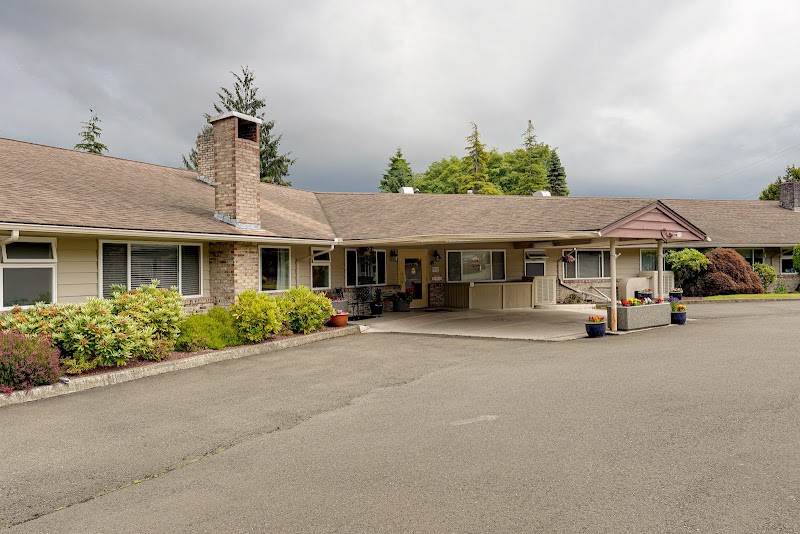
How is Grays Harbor Health & Rehabilitation Center Staffed?

CMS rates GRAYS HARBOR HEALTH & REHABILITATION CENTER's staffing level at 3 out of 5 stars, which is average compared to other nursing homes. Staff turnover is 43%, compared to the Washington average of 46%. This relatively stable workforce can support continuity of care.

What Have Inspectors Found at Grays Harbor Health & Rehabilitation Center?

State health inspectors documented 16 deficiencies at GRAYS HARBOR HEALTH & REHABILITATION CENTER during 2023 to 2025. These included: 16 with potential for harm.
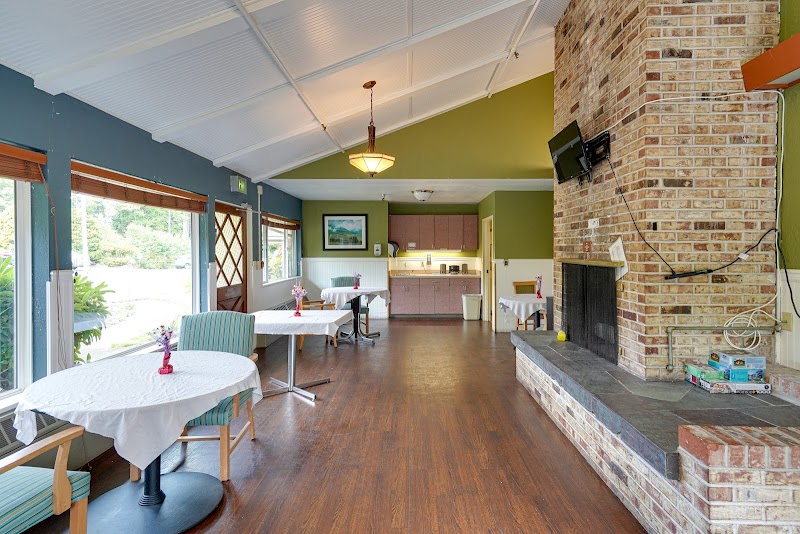
Who Owns and Operates Grays Harbor Health & Rehabilitation Center?

GRAYS HARBOR HEALTH & REHABILITATION CENTER is owned by a for-profit company. For-profit facilities operate as businesses with obligations to shareholders or private owners. The facility is operated by AVALON HEALTH CARE, a chain that manages multiple nursing homes. With 105 certified beds and approximately 68 residents (about 65% occupancy), it is a mid-sized facility located in ABERDEEN, Washington.
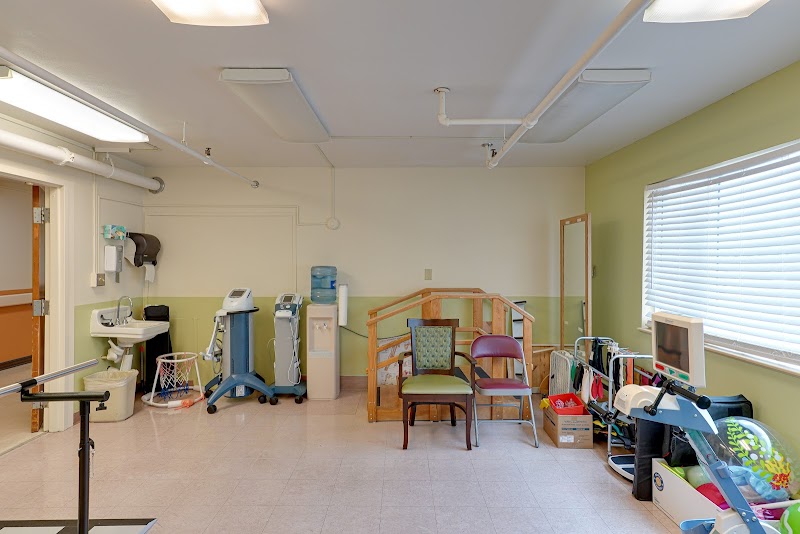
How Does Grays Harbor Health & Rehabilitation Center Compare to Other Washington Nursing Homes?

Compared to the 100 nursing homes in Washington, GRAYS HARBOR HEALTH & REHABILITATION CENTER's overall rating (5 stars) is above the state average of 3.2, staff turnover (43%) is near the state average of 46%, and health inspection rating (5 stars) is much above the national benchmark.

What Should Families Ask When Visiting Grays Harbor Health & Rehabilitation Center?

Based on this facility's data, families visiting should ask: "Can I visit during a mealtime to observe dining assistance and food quality?" "How do you handle medical emergencies, and what is your hospital transfer rate?" "Can I speak with family members of current residents about their experience?"

Is Grays Harbor Health & Rehabilitation Center Safe?

Based on CMS inspection data, GRAYS HARBOR HEALTH & REHABILITATION CENTER has a clean safety record: no substantiated abuse findings (meaning no confirmed cases of resident harm), no Immediate Jeopardy citations (the most serious violation level indicating risk of serious injury or death), and is not on the Special Focus Facility watch list (a federal program monitoring the lowest-performing 1% of nursing homes). The facility has a 5-star overall rating and ranks #1 of 100 nursing homes in Washington. While no facility is perfect, families should still ask about staff-to-resident ratios and recent inspection results during their visit.

Do Nurses at Grays Harbor Health & Rehabilitation Center Stick Around?

GRAYS HARBOR HEALTH & REHABILITATION CENTER has a staff turnover rate of 43%, which is about average for Washington nursing homes (state average: 46%). Moderate turnover is common in nursing homes, but families should still ask about staff tenure and how the facility maintains care continuity when employees leave.

Was Grays Harbor Health & Rehabilitation Center Ever Fined?

GRAYS HARBOR HEALTH & REHABILITATION CENTER has been fined $8,190 across 1 penalty action. This is below the Washington average of $33,161. While any fine indicates a compliance issue, fines under $50,000 are relatively common and typically reflect isolated problems that were subsequently corrected. Families should ask what specific issues led to these fines and confirm they've been resolved.

Is Grays Harbor Health & Rehabilitation Center on Any Federal Watch List?

GRAYS HARBOR HEALTH & REHABILITATION CENTER is not on any federal watch list. The most significant is the Special Focus Facility (SFF) program, which identifies the bottom 1% of nursing homes nationally based on persistent, serious quality problems. Not being on this list means the facility has avoided the pattern of deficiencies that triggers enhanced federal oversight. This is a positive indicator, though families should still review the facility's inspection history directly.