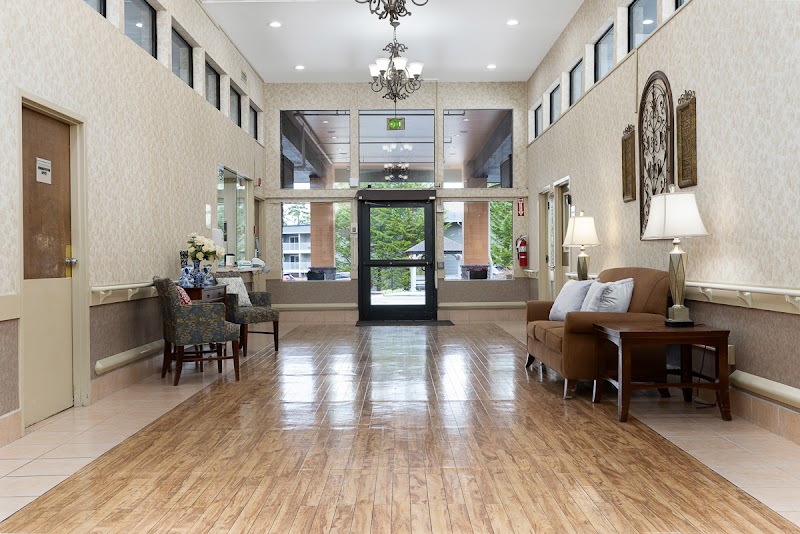
Edmonds Post Acute

21400 72ND AVENUE WEST, EDMONDS, WA 98026 (425) 775-1961
For profit - Corporation 128 Beds CALDERA CARE Data: November 2025
Trust Grade
35/100
#141 of 190 in WA
Last Inspection: November 2024

Within standard 12-15 month inspection cycle. Federal law requires annual inspections.

Overview

Edmonds Post Acute has a Trust Grade of F, indicating significant concerns and a poor overall rating. They rank #141 out of 190 facilities in Washington, placing them in the bottom half, and #15 out of 16 in Snohomish County, meaning only one local facility is rated lower. While the facility is improving, having reduced issues from 36 in 2024 to 5 in 2025, there are still serious concerns, such as failing to properly assess a resident after a fall with a head injury. Staffing is average with a 55% turnover rate, and while RN coverage is also average, the facility faces $26,520 in fines, reflecting compliance issues. Specific incidents include a lack of proper monitoring for a resident after a head injury and inadequate infection control oversight, both of which could endanger residents' health.

Trust Score
F
35/100
In Washington
#141/190
Bottom 26%
Safety Record
Moderate
Needs review
Inspections
Getting Better
36 → 5 violations
Staff Stability
⚠ Watch
55% turnover. Above average. Higher turnover means staff may not know residents' routines.
Penalties
✓ Good
$26,520 in fines. Lower than most Washington facilities. Relatively clean record.
Skilled Nurses
✓ Good
Each resident gets 43 minutes of Registered Nurse (RN) attention daily — more than average for Washington. RNs are trained to catch health problems early.
Violations
⚠ Watch
96 deficiencies on record. Higher than average. Multiple issues found across inspections.
★★☆☆☆
2.0
Overall Rating
★★★☆☆
3.0
Staff Levels
★★★★☆
4.0
Care Quality
★★☆☆☆
2.0
Inspection Score
Stable
2024: 36 issues
2025: 5 issues

The Good

  • 4-Star Quality Measures · Strong clinical quality outcomes
  • Full Sprinkler Coverage · Fire safety systems throughout facility
  • No fines on record

Facility shows strength in quality measures, fire safety.

The Bad

2-Star Overall Rating

Below Washington average (3.2)

Below average - review inspection findings carefully

Staff Turnover: 55%

Near Washington avg (46%)

Frequent staff changes - ask about care continuity

Federal Fines: $26,520

Below median ($33,413)

Moderate penalties - review what triggered them

Chain: CALDERA CARE

Part of a multi-facility chain

Ask about local staffing decisions and management

Staff turnover is elevated (55%)

7 points above Washington average of 48%

The Ugly 96 deficiencies on record

1 actual harm
Apr 2025 2 deficiencies
CONCERN (D) 📢 Someone Reported This

A family member, employee, or ombudsman was alarmed enough to file a formal complaint

Potential for Harm - no one hurt, but risky conditions existed

Comprehensive Care Plan (Tag F0656)

Could have caused harm · This affected 1 resident

Based on observation, interview and record review, the facility failed to implement a care plan for 1 of 9 residents (Resident 1), reviewed for comprehensive care plans. The failure to implement a car...

Read full inspector narrative →
Based on observation, interview and record review, the facility failed to implement a care plan for 1 of 9 residents (Resident 1), reviewed for comprehensive care plans. The failure to implement a care plan for Activities of Daily Living (ADLs) placed the resident at risk for unmet care needs and a diminished quality of life. Findings included . Review of Resident 1's care plan for ADLs, initiated on 01/04/2024 showed, ADL Self Care Performance Deficit r/t [related to] Dementia [memory loss], Hemiplegia [paralysis/weakness on one side of the body], Limited ROM [Range of Motion], Stroke [occurs when blood flow to the brain is disrupted]. The care plan further showed an intervention initiated on 09/23/2024 for EATING: provide 1 [one] on 1 feeding assistance. An observation and interview on 04/15/2025 at 12:30 PM showed Collateral Contact 1 (CC1) assisting Resident 1 with her meal. CC1 stated that if they were in the facility to visit Resident 1, they would assist them with their meals (lunch and dinner). CC1 stated that they were typically at the facility from 9:00 AM to 7:00 PM. CC1 stated that they would prefer staff to assist Resident 1 with their meals and that many times staff would leave the tray and not come back right away so CC1 would begin assisting the resident with their meal. On 04/15/2025 at 12:50 PM, Staff F, Certified Nursing Assistant, stated they were expected to follow a resident's care plan. Staff F stated that if a resident was 1 on 1, during meals that meant they needed to sit and assist the resident during the entirety of the meal. Staff F stated it was their responsibility to assist Resident 1 with their meal and remain with the entirety of the meal with them. On 04/21/2025 at 10:52 AM, Staff A, Director of Nursing, stated it was their expectation for staff to follow the resident's care plan. Staff A stated if a resident was 1 on 1 assist during meals, staff should remain with the resident for the entirety of their meal. Staff A stated that staff were trained on things such as choking and cardiopulmonary resuscitation (emergency procedure involving chest compressions often combined with artificial ventilation) and they were responsible for assisting the residents with their meals, and that if the resident representative insisted on assisting a resident with their meals, they would expect it to be in the care plan. References: (WAC) 388-97-1020(1), (2)(a)(b) .
CONCERN (E) 📢 Someone Reported This

A family member, employee, or ombudsman was alarmed enough to file a formal complaint

Potential for Harm - no one hurt, but risky conditions existed

Infection Control (Tag F0880)

Could have caused harm · This affected multiple residents

**NOTE- TERMS IN BRACKETS HAVE BEEN EDITED TO PROTECT CONFIDENTIALITY** STAFF F Observation on 04/15/2025 at 8:55 AM, showed an EBP sign outside of Resident 3's room that stated providers, and staff m...

Read full inspector narrative →
**NOTE- TERMS IN BRACKETS HAVE BEEN EDITED TO PROTECT CONFIDENTIALITY** STAFF F Observation on 04/15/2025 at 8:55 AM, showed an EBP sign outside of Resident 3's room that stated providers, and staff must Wear gloves and a gown for the following High-Contact Resident Care activities . Changing Linens. Further observation showed Staff F, CNA, making Resident 3's bed and was not wearing a gown. Review of Resident 3's Order Summary printed on 04/21/2025, showed a physician order dated 09/18/2023 for Enhanced barrier precautions r/t hx [history] of ESBL [extended-spectrum beta-lactamase- an enzyme (protein) that can make certain antibiotics (medication to treat infections) ineffective] in urine/Hx of MRSA [Methicillin-resistant Staphylococcus aureus- an infection caused by a type of staph bacteria that becomes resistant to antibiotics]. On 04/15/2025 at 12:50 PM, Staff F stated that if they were making a resident's bed and they were on EBP then they needed to put on a gown and gloves. Staff F stated Resident 3 was on precautions for history of MRSA, and that it was important to follow the precautions to prevent the spread to anyone else. STAFF G Observation on 04/15/2025 at 11:19 AM, showed a Contact Enteric Precautions (specific measures taken in healthcare settings to prevent the spread of infections, particularly those transmitted through direct or indirect contact with contaminated surfaces or bodily fluids, often related to fecal-oral transmission) sign outside of Resident 4's room that stated prior to entering, Wear a gown and gloves. Further observation showed Staff G, Housekeeper, was cleaning Resident 4's room and was not wearing a gown. Review of Resident 4's Order Summary printed on 04/21/2025 showed a physician order dated 02/13/2025 for Contact-Enteric Precaution r/t Positive C [Clostridioides] Difficile [a bacteria that causes a serious infection in the colon leading to diarrhea]. On 04/15/2025 at 1:47 PM, Staff G stated they should have worn a gown while cleaning Resident 4's room. On 04/15/2025 at 1:50 PM, Staff H, Housekeeping Manager, stated it was their expectation that staff wear the appropriate PPE (use gown and gloves) when cleaning a room on Contact Enteric Precautions. On 04/15/2025 at 2:31 PM, Staff I, RN, stated if a resident was on EBP and doing a high contact activity like changing linens, they needed to wear a gown and gloves. Staff I further stated they would expect staff to wear a gown and gloves when entering a Contact Enteric Precautions room. On 04/15/2025 at 2:42 PM, Staff C stated they expected staff to follow the EBP and Contact Enteric Precautions signage before entering a resident's room. On 04/21/2025 at 10:52 AM, Staff A, Director of Nursing, stated that they were currently in a COVID-19 outbreak. Staff A stated they expected the facility to follow CDC and local health department guidelines and recommendations. Staff A stated that they expected staff to follow transmission-based precautions, including Aerosol and contact, and enhanced barrier precautions. Staff A stated that they expected staff to wear fit tested and NIOSH-approved respirators when indicated. Staff A stated Staff F should have followed the EBP signage, especially if they are going to be in contact with linens, or where the patient [resident] is. Reference: (WAC) 388-97-1320 (1)(a)(2)(b)(3) Based on observation, interview and record review, the facility failed to ensure infection prevention and control practices including proper use of Personal Protective Equipment (PPE-use of gown, gloves and respiratory/N95 respirator-mask) and closure of resident room doors with COVID-19 (an infectious virus causing respiratory illness) were followed to help prevent the transmission of disease during resident care and/or housekeeping for 4 of 5 staff (Staff D, E, F & G), reviewed for infection control. These failures placed the residents, staff, and visitors at risk for facility acquired or healthcare-associated infections and related complications. Review of a policy tilted, COVID-19 Facility Policy and Procedure, revised in April 2024, showed, All staff and essential personnel must wear appropriate PPE are items worn to keep people safe from germs and other hazards, including masks, gloves, gowns and face shields] when interacting with residents. For example: Aerosol [tiny particles that travel through the air]/positive COVID-19, Quarantine [state of isolation in which people that may have been exposed to an infectious disease are placed] Review of the facility's policy titled, Enhanced Barrier Precautions [steps taken to reduce transmission of multidrug-resistant organisms - germs that are resistant to medications that treat infections] (EBP) Policy and Procedure, revised in April 2024, showed that examples of high-contact resident care activities (involve direct contact with the resident's skin, body fluids, or excretions) requiring gown and glove use for EBP included changing linens. According to the Centers for Disease Control (CDC) online document titled, Infection Control Guidance: SARS-CoV-2), dated 06/24/2024, showed that respirators are approved by CDC/NIOSH (National Institute for Occupational Safety and Health), including those intended for use in healthcare and that CDC continues to recommend respiratory protection with a NIOSH-approved particulate respirator with N95 or higher for care of patients [residents] with known or suspected COVID-19. STAFF D Review of an undated posted signage at the main entrance of the facility showed the facility was in Outbreak status [two or more cases of a highly contagious disease] Review of undated posted signage on the employee break room door showed, All staff are mandated to wear N95 mask in the building. Review of Resident 2's undated face sheet showed they were in room [ROOM NUMBER]. Review of Resident 2's nursing progress note, dated 04/15/2025 at 6:54 AM, showed Resident is current on alert for Aerosol [Aerosol Contact -a type of precaution used to prevent the spread of airborne diseases through aerosols] precaution r/t [related to] Covid Positive. Observation of the Northwest hallway on 04/15/2025 at 7:55 AM, showed room [ROOM NUMBER] had an Aerosol Contact Precaution sign posted on the wall next to room [ROOM NUMBER]'s opened door. It showed that the sign instructed to wear appropriate PPE before entering and for the room door to be closed at all times. Further observation showed room [ROOM NUMBER]'s room remained open at 8:03 AM, at 8:16 AM, and at 8:43 AM. Observation on 04/15/2025 at 7:58 AM showed Staff D, Licensed Practical Nurse, was standing in the Northwest hallway and wearing a black colored face mask with ear loops. Staff D then entered room [ROOM NUMBER]. At 7:59 AM, Staff D exited room [ROOM NUMBER] and wore the same black colored face mask with ear loops. Further observations at the following times that day showed: - at 8:11 AM, Staff D entered room [ROOM NUMBER] while wearing a black colored face mask with ear loops. - at 8:21 AM, Staff D donned (applied) PPE and replaced the black face mask with an N95 respirator from the PPE cart before entering room [ROOM NUMBER]. Staff D then exited room [ROOM NUMBER] and donned a black face mask with ear loops. - at 8:28 AM, Staff D was standing at their medication cart while wearing a black colored face mask with ear loops. - at 8:32 AM, Staff entered another room in the Northwest hallway while wearing a black colored face mask with ear loops and exited the room while wearing the same black colored face mask. Observation of the Northwest hallway on 04/15/2025 at 8:44 AM showed Staff C, Infection Preventionist, was walking down the hallway to replenish supplies in the PPE carts. A joint observation and interview on 04/15/2025 at 8:45 AM with Staff C showed room [ROOM NUMBER] had an Aerosol Contact Precautions sign posted on the wall next to room [ROOM NUMBER]'s opened door. It also showed Staff D was standing at their medication cart while wearing a black face mask with ear loops. Staff C stated they expected staff would follow the instructions on the Aerosol Contact Precaution sign to keep room [ROOM NUMBER]'s door closed at all times. Staff C further stated that Staff D was wearing a KN95 (type of respirator mask with ear loops instead of head straps) and that they expected all staff would wear N95 respirators because we're in an outbreak. In an interview and joint observation on 04/15/2025 at 9:00 AM, Staff D stated the facility was in an outbreak status due to having positive COVID-19 cases in the facility. Staff D stated that there were a lot of positive [COVID-19] cases in this [Northwest] hall. When asked what the facility's process was for preventing transmission of COVID-19 during an outbreak, Staff D stated Wearing N95 at all times, in the hallways, in the room. Joint observation of the black colored face mask used by Staff D showed the mask was labeled as KN95. Staff D stated they were instructed by Staff C to wear an N95 and that I should wear an N95. In an interview on 04/15/2025 at 9:22 AM, Staff B, Resident Care Manager, stated the facility was currently in a COVID-19 outbreak, and that N95 respirators were required for all staff right now. Staff B further stated they expected Aerosol Contact Precautions would be followed when indicated and that it included keeping the room door closed. In an interview on 04/15/2025 at 2:49 PM, Staff C stated the facility was currently in a COVID-19 outbreak and that the identified positive six cases were in the Northwest hallway, as of 04/15/2025. Staff C further stated that they expected all staff to wear a fit-tested N95 while working in the hallways with positive residents. STAFF E Review of an undated posted signage at the main entrance of the facility showed the facility was in Outbreak status. Review of Resident 2's face sheet printed on 04/04/2025 showed they were in room [ROOM NUMBER]. Review of Resident 2's nursing progress note, dated 04/15/2025 at 6:54 AM, showed Resident is current on alert for Aerosol precaution r/t Covid Positive. Observation of the Northwest hallway on 04/15/2025 at 7:55 AM, showed room [ROOM NUMBER] had an Aerosol Contact Precaution signage posted on the wall next to room [ROOM NUMBER]'s opened door. It further showed that the signage instructed to wear appropriate PPE before entering and for the room door to be closed at all times. Further observation showed room [ROOM NUMBER]'s room remained open at 8:03 AM, at 8:16 AM and at 8:43 AM. Observation on 04/15/2025 at 8:43 AM showed Staff E, Certified Nursing Assistant (CNA), put on PPE prior to entering room [ROOM NUMBER] through the opened door. Further observation showed Staff E standing at door from the inside of room [ROOM NUMBER] while the door was kept open. A joint observation and interview on 04/15/2025 at 8:45 AM with Staff C showed room [ROOM NUMBER] had an Aerosol Contact Precautions signage posted on the wall next to room [ROOM NUMBER]'s opened door. Staff C stated they expected staff would follow the instructions on the Aerosol Contact Precaution sign to keep room [ROOM NUMBER]'s door closed at all times. In an interview on 04/15/2025 at 9:22 AM, Staff B stated the facility was currently in a COVID-19 outbreak, and that they expected Aerosol Contact Precautions would be followed when indicated and that it included keeping the room door closed. In an interview on 04/15/2025 at 12:39 PM, Staff E stated the facility was in a COVID-19 outbreak. When asked how staff protected themselves and others during an outbreak, Staff E replied, By the use of PPE and to follow the precautions. When asked if room [ROOM NUMBER]'s door should have been kept closed, Staff E stated Yes, this morning it was busy and we were rushing in and out, and that, We know it should be closed. In an interview on 04/15/2025 at 2:49 PM, Staff C stated the facility was currently in a COVID-19 outbreak and that the identified positive six cases were in the Northwest hallway, as of 04/15/2025. Staff C stated that staff were informed by signage posted at the entrance of the room when isolation precautions (steps taken to prevent the spread of germs) were indicated. Staff C further stated that room [ROOM NUMBER]'s door should have been kept closed.
Mar 2025 2 deficiencies
CONCERN (D) 📢 Someone Reported This

A family member, employee, or ombudsman was alarmed enough to file a formal complaint

Potential for Harm - no one hurt, but risky conditions existed

Investigate Abuse (Tag F0610)

Could have caused harm · This affected 1 resident

Based on interview and record review, the facility failed to ensure allegation of abuse was thoroughly investigated for 1 of 3 residents (Resident 1), reviewed for abuse investigations. This failure p...

Read full inspector narrative →
Based on interview and record review, the facility failed to ensure allegation of abuse was thoroughly investigated for 1 of 3 residents (Resident 1), reviewed for abuse investigations. This failure placed the resident at risk for repeated incidents, unidentified abuse, and a diminished quality of life. Findings included . Review of the Nursing Home Guidelines, The Purple Book, revised in 2015, showed that all alleged incidents of abuse, neglect, abandonment, mistreatment, injuries of unknown source, personal and/or financial exploitation, or misappropriation of resident property must be thoroughly investigated. Review of the facility's policy titled, Prevention and Reporting: Resident Mistreatment, Neglect, Abuse, Including Injuries of Unknown Source, and Misappropriation of Resident Property, updated in August 2022, showed that the facility would review and investigate all allegations of abuse, neglect, exploitation, mistreatment, injuries, of an unknown source, and misappropriation of resident property using the risk management electronic incident report. The policy further showed that the components of a thorough investigation were to include resident interview, resident observation, staff interviews, and other resident interviews. Review of the quarterly Minimum Data Set (an assessment tool) dated 01/12/2025, showed Resident 1 had moderate cognitive impairment. Review of Resident 1's nursing progress note dated 03/02/2025, showed two law enforcement officers came to the facility after they received an anonymous call from a mandatory reporter. The nursing progress note showed that Resident 1 stated to the law enforcement officer that a nurse/aide physically grabbed their legs resulting to bruises on their legs. Further review of the nursing progress note showed Resident 1 referred to alleged perpetrator as Grandma and that Resident 1's last interaction with the alleged perpetrator could either [be] 03/01/2025 or today, 03/02/2025. Review of Resident 1's incident investigation dated 03/03/2025 showed the facility did not thoroughly collect evidence related to other possible witnesses or other staff related to the investigation. Further review of the incident investigation did not show conclusion or outcome of the facility investigation about the alleged abuse. In an interview on 03/13/2025 at 1:38 PM, Staff C, Certified Nursing Assistant, stated that they worked on day shift and had been assigned to Resident 1 on 03/02/2025 and on 03/03/2025. When asked if they had been interviewed related to Resident 1's abuse allegation, Staff C stated, No. In an interview and joint record review on 03/14/2025 at 12:38 PM, Staff B, Licensed Practical Nurse Float/Resident Care Manager stated that they started their investigation on 03/03/2025 and that all staff assigned to Resident 1 for the last 48 hours were interviewed. When asked to clarify the 48-hour time, Staff B stated that 48 hours would be from 03/01/2025 to 03/02/2025, all shifts-day, evening [and] night. Joint record review of the incident investigation dated 03/03/2025, showed three staff were interviewed related to the allegation. Staff B stated that they had interviewed all staff assigned to Resident 1 within the time-period. When asked to show documentation of staff interviews, Staff B stated that they talked to them [staff] and that they did not document their interviews with the staff. Staff B stated that they were not able to write the conclusion of their investigation. Staff B further stated, I did not do a good job. I could have done a good job in my documentation. In an interview on 03/14/2025 at 3:01 PM, Staff A, Administrator, stated, I cannot say, yes or no, when asked if the facility had done a thorough investigation of the alleged abuse. Staff A stated that they expected that all staff assigned to Resident 1 had been interviewed and that staff interviews should have been documented. Staff A further stated that a conclusion or the outcome of the investigation of abuse allegation should had been written. Reference: (WAC) 388-97-0640 (6)(a) .
CONCERN (D) 📢 Someone Reported This

A family member, employee, or ombudsman was alarmed enough to file a formal complaint

Potential for Harm - no one hurt, but risky conditions existed

Infection Control (Tag F0880)

Could have caused harm · This affected 1 resident

Based on interview and record review, the facility failed to report a communicable disease (infectious disease that can spread through direct or indirect contact) outbreak (two or more cases of a high...

Read full inspector narrative →
Based on interview and record review, the facility failed to report a communicable disease (infectious disease that can spread through direct or indirect contact) outbreak (two or more cases of a highly contagious disease) for 1 of 2 outbreak, reviewed for infection control. This failure placed the residents, staff, and visitors at an increased risk of infection and related complications. Findings included . Review of the facility's policy titled, Infection Prevention and Control Program, dated December 2023, showed, Outbreak management is a process that consists of reporting the information to appropriate public health authorities. It further stated that the facility would comply with pertinent state and local regulations concerning the reporting and management of those with reportable communicable diseases. Review of the facility's Antibiotic Line Listing dated March 2025, showed two residents (Resident 2 & 3) tested positive for influenza (a communicable disease cause by a virus). It further showed Resident 2 tested positive for influenza on 02/28/2025 and Resident 3 tested positive on 03/02/2025. In an interview on 03/14/2025 at 1:50 PM, Staff D, Infection Preventionist, stated that they were not able to report to the State Agency about the influenza outbreak that involved Resident 2 and Resident 3. Staff D stated that the outbreak should have been reported to the State. That is our policy. In an interview on 03/14/2025 at 4:08 PM, Staff A, Administrator, stated, It is my expectation that a report should have been sent to the State Agency about the influenza outbreak. Reference: (WAC) 246-101-101(2) .
Feb 2025 1 deficiency
CONCERN (D) 📢 Someone Reported This

A family member, employee, or ombudsman was alarmed enough to file a formal complaint

Potential for Harm - no one hurt, but risky conditions existed

Pharmacy Services (Tag F0755)

Could have caused harm · This affected 1 resident

**NOTE- TERMS IN BRACKETS HAVE BEEN EDITED TO PROTECT CONFIDENTIALITY** Based on interview and record review, the facility failed to ensure medications were administered by a trained and/or licensed n...

Read full inspector narrative →
**NOTE- TERMS IN BRACKETS HAVE BEEN EDITED TO PROTECT CONFIDENTIALITY** Based on interview and record review, the facility failed to ensure medications were administered by a trained and/or licensed nursing staff per professional standards of practice for 1 of 3 residents (Resident 1), reviewed for medication administration. This failure placed the resident at risk for unmet care needs, unrecognized medication adverse side effects, and a diminished quality of life. Findings included . Review of the significant change in status Minimum Data Set assessment (MDS-a required assessment) dated 12/30/2024 showed Resident 1 admitted to the facility on [DATE]. The MDS assessment also showed Resident 1 had intact thinking. In an interview on 01/31/2025 at 11:02 AM Resident 1 stated that Staff B, Director of Nursing Services (DNS) gave their medications to Staff D, Certified Nursing Assistant (CNA), to give to them. Resident 1 stated, I am not taking any medications from an aide [CNA], it had my narcotic pain medication [oxycodone] in the medication cup and all the rest of my morning medications. The medications should be given by a nurse, not an aide. I would not take it. I gave it back to them. In an interview on 01/31/2025 at 11:39 AM, Staff C, Licensed Practical Nurse (LPN) stated, we did not have medication technicians (a certified nursing assistant that prepares/administers medication to residents and works with the supervision of a licensed nurse or nurse delegation [when a licensed nurse transfers nursing tasks to a nursing assistant]). Staff C further stated the licensed nurses administered all the medications to the residents in the facility, not the nursing assistants. In an interview on 01/31/2025 at 12:37 PM Staff D, stated, I am not a medication technician or trained to administer medications to the residents. It was a busy day, and I wanted to help the nurses out. Staff B prepared the medications and handed me the medication cup with the medication in it to give to Resident 1. I took the medication to them [Resident 1], and they said, they would not take the medication from me because I was an aide. They were not happy, so I took the medications back to Staff B and they gave the medication to Resident 1. In an interview on 01/31/2025 at 3:56 PM, Staff E, CNA, stated, I would never give medication to the residents, even if the nurse handed the medication to me to give to a resident. I am not trained to do that. That is the nurse's job. In an interview on 01/31/2025 at 4:01 PM, Staff F, LPN, stated they would never give medication to a nursing assistant to give to a resident, Staff F further stated the nurses were supposed to give all medications to the residents and that the nursing assistants were not trained to administer medications. In an interview on 01/31/2025 at 4:24 PM, Staff B, stated they prepared the morning medications, put it in a medication cup and handed it to Staff D, to give to Resident 1. Staff B stated that the morning medications included a narcotic pain medication, and that they should never have given the medications to Staff D to give to Resident 1. Staff B further stated it was not safe for the nursing assistants to administer medications because they were not trained to do it. In an interview on 01/31/2025 at 4:37 PM, Staff A, Administrator in Training, stated that Staff B should not have given Staff D the medications to administer to Resident 1. Reference: (WAC) 388-97- 1300 (1) (i)(ii) .
Nov 2024 30 deficiencies
CONCERN (D)

Potential for Harm - no one hurt, but risky conditions existed

Resident Rights (Tag F0550)

Could have caused harm · This affected 1 resident

**NOTE- TERMS IN BRACKETS HAVE BEEN EDITED TO PROTECT CONFIDENTIALITY** Based on observation, interview, and record review, the facility failed to ensure resident dignity was maintained related to uri...

Read full inspector narrative →
**NOTE- TERMS IN BRACKETS HAVE BEEN EDITED TO PROTECT CONFIDENTIALITY** Based on observation, interview, and record review, the facility failed to ensure resident dignity was maintained related to urinary catheter (a semi-flexible tube inserted into the bladder to drain urine) use for 1 of 3 residents (Resident 88), reviewed for dignity. This failure placed the resident at risk for decreased self-worth and a diminished quality of life. Findings included . Review of the facility's policy titled, Resident Rights, dated August 2022, showed the purpose was to treat each resident with respect and dignity. Review of the admission minimum data set (an assessment tool), dated 11/01/2024, showed Resident 88 admitted to the facility on [DATE], and had an indwelling catheter. Review of Resident 88's catheter care plan, revised on 11/06/2024, showed to check catheter system every shift for patency and integrity. Observations on 11/21/2024 at 8:04 AM and 11/22/2024 at 9:18 AM, showed Resident 88 had an uncovered urinary catheter drainage bag (collects urine from the catheter) with yellow urine. Resident 88's catheter bag was visible from the hallway and had no privacy bag covering the drainage bag. In an interview and joint observation on 11/22/2024 at 9:21 AM, Staff AA, Certified Nursing Assistant, stated that the catheter bag should have a privacy bag on it and to make sure it is covered. Joint observation showed Resident 88's drainage bag did not have a privacy bag. Staff AA stated that the drainage bag could be seen from the hallway and should be in a bag for dignity. In an interview on 11/22/2024 at 10:34 AM, Staff J, Resident Care Manager, stated that catheter drainage bags should be covered and should not be visible from the hallway. In an interview on 11/25/2024 at 2:16 PM, Staff B, Director of Nursing Services, stated they expected catheter drainage bags to be covered with a privacy bag and should not be visible from the hallway. Reference: (WAC) 388-97-0180 (1)(2) .
CONCERN (D)

Potential for Harm - no one hurt, but risky conditions existed

Deficiency F0552 (Tag F0552)

Could have caused harm · This affected 1 resident

**NOTE- TERMS IN BRACKETS HAVE BEEN EDITED TO PROTECT CONFIDENTIALITY** Based on interview and record review, the facility failed to inform the resident and/or their designated representative before a...

Read full inspector narrative →
**NOTE- TERMS IN BRACKETS HAVE BEEN EDITED TO PROTECT CONFIDENTIALITY** Based on interview and record review, the facility failed to inform the resident and/or their designated representative before administering a psychotropic (mind altering) medication for 1 of 5 residents (Resident 78), reviewed for unnecessary medications. This failure placed the resident and/or their representatives at risk of not being fully informed of the risks and benefits before making decisions about their medications. Findings included . Review of the facility's undated document titled, Notification and Consent Form, showed that the Resident has the right to refuse any medical treatment, to the extent permitted by law, and to be informed of the consequences of refusing the treatment. Review of Resident 78's admission record showed Resident 78 admitted to the facility on [DATE] with diagnoses that included generalized anxiety disorder (a mental disorder that causes people to experience excessive worry about everyday things) and major depressive disorder (a mood disorder that can affect how a person feels, thinks, and acts). Review of the quarterly minimum data set (an assessment tool) dated 11/01/2024, showed Resident 78 re-admitted to the facility on [DATE]. Review of the October 2024 Medication Administration Record (MAR) showed an order for Mirtazapine (a psychotropic medication to treat depression) to be given daily at bedtime that started on 10/25/2024. Review of the facility's document titled, Psychopharmacologic Medication Informed Consent, dated 11/15/2024, showed that Resident 78 was informed of the risks and benefits of Mirtazapine on 11/15/2024, 22 days after starting Mirtazapine. In an interview on 11/21/2024 at 9:32 AM, Staff J, Resident Care Manager, stated that before a resident started a psychotropic medication they would inform and give risks and benefits to the resident and/or their representative. In an interview and joint record review on 11/21/2024 at 9:40 AM, Staff B, Director of Nursing Services, stated that they expected risks and benefits to be provided to residents before starting a psychotropic medication. Staff B stated that when a resident re-admits to the facility, they would provide risks and benefits prior to starting a psychotropic medication. A joint record review of Resident 78's electronic health record showed that Resident 78 re-admitted to the facility on [DATE]. A joint record review of the October 2024 MAR showed that Resident 78 started Mirtazapine on 10/25/2024. A joint record review of the Psychopharmacologic Medication Informed Consent, showed that risks and benefits were provided to Resident 78 on 11/15/2024. Staff B stated, we should have [provided risks and benefits] on 10/25 [10/25/2024], and Mirtazapine was given for 22 days before informing Resident 78 about the risks and benefits of the medication. Reference: (WAC) 388-97-0260 (2) (a-d)(3)(c) .
CONCERN (D)

Potential for Harm - no one hurt, but risky conditions existed

Deficiency F0554 (Tag F0554)

Could have caused harm · This affected 1 resident

Based on observation, interview, and record review, the facility failed to ensure safe self-administration of medication was clinically appropriate and/or an assessment or evaluation was done for 1 of...

Read full inspector narrative →
Based on observation, interview, and record review, the facility failed to ensure safe self-administration of medication was clinically appropriate and/or an assessment or evaluation was done for 1 of 1 resident (Resident 56), reviewed for self-medication administration. This failure placed the resident at risk for inaccurate/unsafe medication administration, adverse side effects, and related medical complications. Findings included . A review of the facility's policy titled, Self-Medication Program and Evaluation, revised in September 2024, showed the facility would complete a Self-Medication Evaluation, determine if the resident was able to safely self-administer medications, discuss with physician any medications that may not be self- administered, determine location to store medications to ensure that the location is secure and clean (i.e., in resident room in locked cupboard/drawer), discuss with resident how medication will be tracked and monitored, and to document in nursing notes that the resident is self-medicating. Review of the quarterly Minimum Data Set (MDS-an assessment tool) dated 09/13/2024 showed Resident 56 was cognitively intact. During an observation on 11/18/2024 at 11:48 AM, Resident 56 had a bottle of folic acid (vitamin B-9) 1000 micrograms (mcg - unit of measurement) capsules on their left nightstand. Resident 56 stated that they started taking them [folic acid capsules] about a week or so ago and that they were taking the medication on their own. Further observations on 11/21/2024 at 10:07 AM and at 10:32 AM showed the bottle of folic acid capsules was on top of Resident 56's left nightstand. In a joint observation and interview on 11/26/2024 at 11:43 AM with Staff K, Licensed Practical Nurse, showed Resident 56 had a bottle of folic acid 1000 mcg capsules on top of Resident 56's left nightstand. Staff K stated that Resident 56 had orders for self-medication administration. Joint record review and interview with Staff K did not show orders for Resident 56's folic acid and/or an order for self-medication administration of folic acid. Staff K stated that Resident 56 should have had an order for self-medication administration for folic acid. A joint record review and interview on 11/26/2024 at 11:54 AM with Staff E, Resident Care Manager, showed Resident 56 did not have a self-medication administration evaluation for folic acid, orders for folic acid, and/or orders for self-administration of folic acid. Staff E stated that Resident 56 should have had a self-medication administration evaluation for folic acid and an order prior to start taking the medication. On 11/26/2024 at 2:54 PM, Staff B, Director of Nursing, stated that they expected residents' self-medication administration evaluations was completed and that residents were provided with a secure storage for their medication. Staff B further stated that Resident 56 should have had a self-medication evaluation completed and an order for folic acid. Reference: (WAC) 388-97-0440, 1060 (3)(k)(l) .
CONCERN (D)

Potential for Harm - no one hurt, but risky conditions existed

Deficiency F0578 (Tag F0578)

Could have caused harm · This affected 1 resident

**NOTE- TERMS IN BRACKETS HAVE BEEN EDITED TO PROTECT CONFIDENTIALITY** Based on interview and record review, the facility failed to ensure an advance directive (a written instruction, such as a livin...

Read full inspector narrative →
**NOTE- TERMS IN BRACKETS HAVE BEEN EDITED TO PROTECT CONFIDENTIALITY** Based on interview and record review, the facility failed to ensure an advance directive (a written instruction, such as a living will or Durable Power of Attorney [DPOA] for health care-a document delegating to an agent the authority to make health care decisions in case the individual delegating the authority subsequently becomes incapable to do so) was obtained from the resident and/or their representative and ensure a copy was readily available in the medical records for 2 of 5 residents (Residents 76 & 73), reviewed for advance directives. This failure placed the residents and/or their representatives at risk for losing their right to have their preferences honored to receive or refuse/discontinue care according to their choice. Findings included . Review of the facility policy titled, Advance Directives, revised in May 2023, showed to Determine upon admission whether the resident has an Advance Directives .document in the resident's medical record whether or not an Advance Directive has been executed by the resident. It further showed, Place a copy of such Advance Directive in the permanent medical record. This may include living will, durable power of attorney for health care . RESIDENT 76 Resident 76 admitted to the facility on [DATE]. Review of Resident 76's Advance Directives Policy and Record form dated and signed on 04/22/2024, showed Resident 76's collateral contact was their POA for health care. In an interview and joint record review on 11/25/2024 at 1:22 PM, Staff I, Social Services Director, stated that Resident 76 had a DPOA for health care. Joint record review of Resident 76's Advance Directives Policy and Record form showed Resident 76's collateral contact was their POA and that it was electronically signed by Resident 76 on 04/22/2024. When asked if a copy of Resident 76's Advance Directive was in their medical record, Staff I stated No and further stated, It (Advance Directive) should have been placed in [Resident 76's] medical record. In an interview on 11/26/2024 at 11:43 AM, Staff A, Administrator, stated that residents' Advance Directives should be in their medical record and readily accessible by staff.RESIDENT 73 Resident 73 admitted to the facility on [DATE]. The quarterly Minimum Data Set (MDS - an assessment tool) dated 10/29/2024 showed Resident 73 had moderate impaired cognition. Review of the Electronic Health Record under the miscellaneous tab showed no advance directives documentation for Resident 73. Review of the Advance Directive Policy and Record form dated 01/23/2024 showed it was blank, and did not show whether Resident 73 had an advance directive or that advance directives were discussed with Resident 73 and/or their representative. On 11/19/2024 at 1:56 PM, Resident 73's representative stated that they were Resident 73's POA. A joint record review and interview on 11/25/2024 at 2:06 PM with Staff I, showed Resident 73's Advance Directive Policy and Record form dated 01/23/2024 was blank. Staff I stated that Resident 73's representative was their POA and that there was no advance directive document in Resident 73's EHR. Staff I further stated that they have asked Resident 73's POA for advance directive document. Staff I did not provide a copy of Resident 73's advance directives and/or documentation that it was requested/discussed with Resident 73's POA. On 11/26/2024 at 3:24 PM, Staff A stated they expected advance directives were discussed with residents and/or their representatives on admission and during care conferences. Staff A further stated they expected the Advance Directive Policy and Record form given to residents and/or their representatives were not blank and that they were completed. Reference: WAC 388-97-0280 (3)(c) (i-ii), -0300 (1)(b) .
CONCERN (D)

Potential for Harm - no one hurt, but risky conditions existed

Grievances (Tag F0585)

Could have caused harm · This affected 1 resident

Based on observation, interview, and record review, the facility failed to initiate, investigate, log, and promptly resolve a grievance for 1 of 3 residents (Resident 76), reviewed for grievances. Thi...

Read full inspector narrative →
Based on observation, interview, and record review, the facility failed to initiate, investigate, log, and promptly resolve a grievance for 1 of 3 residents (Resident 76), reviewed for grievances. This failure placed the resident at risk for unmet care needs and a diminished quality of life. Findings included . Review of the facility policy titled, Grievances, revised in February 2024, showed, The center strives to complete the review of the grievance within five business days of receipt. The policy further showed, Initiate the Resident Grievance Report for all concerns . the employee . should assist the resident/resident representative as needed to complete the form. Immediately provide the completed Resident Grievance Report to the Grievance Officer/Executive Director and/or his or her designee . Review of the quarterly minimum data set (an assessment tool) dated 10/31/2024 showed Resident 76 had intact cognition. In an interview on 11/18/2024 at 9:43 AM, Resident 76 stated, I got [a] missing cell phone, Samsung [a brand name]. I reported it about three weeks ago. I don't [do not] have any updates yet. Review of the facility's Grievance log dated 05/19/2024 to 11/18/2024 showed no documentation of Resident 76's missing cell phone. Observation on 11/20/2024 at 8:04 AM, showed Resident 76 was displaying sleep pattern. Further observation showed a cell phone was on top of their bedside drawer. A follow-up interview at 12:49 PM with Resident 76 stated, I have two cell phones, one personal phone and one business phone. That's my business phone [pointing to the cell phone on top of their bedside drawer]. The one that was missing was my personal phone and I have all my contacts in there. I need to call a few people. Resident 76 further stated that they spoke with [Staff H] from maintenance about two or three weeks ago and one staff from laundry. In an interview on 11/20/2024 at 1:32 PM, Staff H, Maintenance Director, stated that Resident 76 reported to them about their missing cell phone about a few weeks ago, around Halloween. Staff H stated that they told Staff I [Social Services Director] about it, that same day [when Resident 76 reported to them]. In an interview and joint observation on 11/20/2024 at 1:36 PM, Staff S, Laundry Aide, stated that they got a report about Resident 76's missing cell phone. When asked, Staff S did not remember when they got the report about the missing cell phone. Staff S further stated that they had checked their laundry for Resident 76's missing cell phone. Staff S then showed a cell phone bearing an M [Motorola-a brand name] symbol with a cracked screen. Staff S stated, It has broken screen and does not turn on. In an interview on 11/20/2024 at 1:43 PM, Staff I stated they received a report about Resident 76's missing cell phone and that it was found on top of Resident 76's bedside drawer. When informed that Resident 76 stated they had two cell phones, Staff I stated they had Resident 76's inventory list in a binder in their office. At 1:48 PM, a joint record review and follow-up interviewed with Staff I, showed Resident 76 had two cellphones on their admission inventory list. Staff I stated they had not written and/or completed a grievance report about Resident 76's missing cell phone. Staff I stated that they should have completed a grievance report. Staff I further stated, Apparently, we only knew about the two cell phones, and we will work on it. On 11/21/2024 at 8:34 AM, Staff I gave a verbal update that Resident 76's missing cell phone had been found in Resident 76's closet. Observation and interview on 11/21/2024 at 2:30 PM, showed Resident 76 had two cell phones. Resident 76 stated that their missing personal cell phone had been found inside their closet by a staff. In an interview on 11/26/2024 at 11:43 AM, Staff A, Administrator, stated that they should have had completed a grievance report about Resident 76's missing property and followed it through. Staff A further stated, We did not follow our process. Reference: (WAC) 388-97-0460(2) .
CONCERN (D)

Potential for Harm - no one hurt, but risky conditions existed

Investigate Abuse (Tag F0610)

Could have caused harm · This affected 1 resident

**NOTE- TERMS IN BRACKETS HAVE BEEN EDITED TO PROTECT CONFIDENTIALITY** Based on interview and record review, the facility failed to ensure allegation of abuse was thoroughly investigated for 2 of 2 r...

Read full inspector narrative →
**NOTE- TERMS IN BRACKETS HAVE BEEN EDITED TO PROTECT CONFIDENTIALITY** Based on interview and record review, the facility failed to ensure allegation of abuse was thoroughly investigated for 2 of 2 residents (Residents 92 & 25), reviewed for abuse investigations. This failure placed the residents at risk for repeated incidents, unidentified abuse, and inappropriate corrective actions. Findings included . Review of the facility's policy titled, Prevention and Reporting: Resident Mistreatment, Neglect, Abuse, Including Injuries of Unknown Source, and Misappropriation of Resident Property, updated in August 2022, showed that the facility would review and investigate all allegations of abuse, neglect, exploitation, mistreatment, injuries, of an unknown source, and misappropriation of resident property using the risk management electronic incident report. The policy further showed that the components of a thorough investigation were to include resident interview, resident observation, staff interviews, and other resident interviews. RESIDENT 92 Review of the admission Minimum Data Set (MDS-an assessment tool) dated 11/07/2024, showed Resident 92 was cognitively intact. Review of Resident 92's incident investigation dated 11/19/2024 showed the facility did not thoroughly collect evidence related to other possible witnesses or other residents related to the investigation. RESIDENT 25 Review of the quarterly MDS dated [DATE] showed Resident 25 was cognitively intact. Review of Resident 25's incident investigation dated 11/19/2024 showed the facility did not thoroughly collect evidence related to other possible witnesses or other residents related to the investigation. A joint record review and interview on 11/26/2024 at 2:58 PM with Staff B, Director of Nursing, showed other residents' interviews were to be included as part abuse and/or neglect allegation investigation policy. Staff B stated that they interviewed the affected resident, staff, and other residents when completing abuse and/or neglect allegation investigations. Staff B further stated that if other residents' interviews were not included in the abuse and/or neglect investigations for Resident 92 & 25, they were not done. Reference: (WAC) 388-97-0640 (6)(a)(b) .
CONCERN (D)

Potential for Harm - no one hurt, but risky conditions existed

Transfer Notice (Tag F0623)

Could have caused harm · This affected 1 resident

**NOTE- TERMS IN BRACKETS HAVE BEEN EDITED TO PROTECT CONFIDENTIALITY** Based on interview and record review, the facility failed to provide a written transfer/discharge notice to the resident and/or ...

Read full inspector narrative →
**NOTE- TERMS IN BRACKETS HAVE BEEN EDITED TO PROTECT CONFIDENTIALITY** Based on interview and record review, the facility failed to provide a written transfer/discharge notice to the resident and/or their representative for 2 of 4 residents (Residents 76 & 61), reviewed for hospitalization. This failure placed the residents and/or their representatives at risk for not having an opportunity to make informed decisions about transfers/discharges. Findings included . Review of the facility policy titled, Bed-Hold: Notification Notice of Bed Hold Policy and Return (Voluntary Transfer to Hospital and Therapeutic Leave, updated in September 2022, showed, The center requires that when a resident is transferred to a hospital or for a therapeutic leave all federal and state laws, rules and regulations will be followed. The policy further stated that at the time of transfer of a resident for hospitalization or therapeutic leave, the center must provide to the resident and the resident's representative written notice which specifies the . reasons for transfer or discharge. RESIDENT 76 Resident 76 admitted to the facility on [DATE]. Review of the discharge Minimum Data Set (MDS-an assessment tool) dated 09/04/2024, showed Resident 76 was discharged to an acute hospital on [DATE]. Review of the nursing progress notes dated 09/04/2024 showed Resident 76 had a change in condition and was transferred to the emergency room. Review of Resident 76's Electronic Health Record (EHR-under evaluations, nursing progress notes and miscellaneous) did not show documentation that a written notice of transfer/discharge was provided to Resident 76 and/or their representative. In an interview and joint record review on 11/25/2024 at 3:07 PM, Staff F, Resident Care Manager (RCM), stated that Resident 76 had been provided a written notice of transfer/discharge. Joint review of Resident 76's EHR titled, WA [[NAME]] Nursing Home Transfer or Discharge Notice/Notice of Voluntary Transfer (Bed Hold), dated 09/04/2024, did not show it was provided to Resident 76 and/or their representative. Interview and joint record review on 11/26/2024 at 10:55 AM, Staff B, Director of Nursing Services, stated that Resident 76 had a document in their EHR that showed details about their transfer to the hospital on [DATE]. Joint review of Resident 76's EHR titled, WA [[NAME]] Nursing Home Transfer or Discharge Notice/Notice of Voluntary Transfer (Bed Hold), dated 09/04/2024, showed item 5b (Notice provided to Resident or Resident Representative) was blank and did not have Resident 76 or their representative's signature. Staff B stated, item 5b had no signature. We cannot tell whether a written copy was provided to the resident [Resident 76] or their family. RESIDENT 61 Resident 61 admitted to the facility on [DATE]. Review of the discharge MDS dated [DATE], showed Resident 61 was discharged to the hospital on [DATE]. Review of the nursing progress notes dated 11/11/2024 showed Resident 61 had a change in condition and was transferred to the emergency room. Review of Resident 61's Electronic Health Record (EHR-under evaluations, nursing progress notes, and miscellaneous) did not show documentation that a written notice of transfer/discharge was provided to Resident 61 and/or their representative. In an interview and joint record review on 11/25/2024 at 2:50 PM, Staff E, RCM, stated that Resident 61 was expected to return to the facility and that there was no written notice of transfer/discharge was provided to them or their representative. In an interview and joint record review on 11/26/2024 at 3:10 PM, Staff B stated that Resident 61 was discharged to the hospital on [DATE]. Joint review of Resident 61's EHR showed no documentation that a written notice of transfer/discharge was provided to the resident and/or their representative. Staff B stated that there should have been a written notice of transfer/discharge completed and provided to Resident 61 considering there was a change in condition documented on the 11th [11/11/2024]. In an interview on 11/26/2024 at 3:36 PM, Staff A, Administrator, stated that residents should be provided with a copy of the written notice of transfer/discharge. Reference: (WAC) 388-97-0120 (1)(b), (2)(a-d) .
CONCERN (D)

Potential for Harm - no one hurt, but risky conditions existed

Deficiency F0625 (Tag F0625)

Could have caused harm · This affected 1 resident

**NOTE- TERMS IN BRACKETS HAVE BEEN EDITED TO PROTECT CONFIDENTIALITY** Based on interview and record review, the facility failed to ensure bed hold (the opportunity to reserve a resident's current oc...

Read full inspector narrative →
**NOTE- TERMS IN BRACKETS HAVE BEEN EDITED TO PROTECT CONFIDENTIALITY** Based on interview and record review, the facility failed to ensure bed hold (the opportunity to reserve a resident's current occupied bed while out of the facility to ensure their room was available when ready to return) notice was offered for 1 of 4 residents (Resident 61), reviewed for hospitalization. This failure placed the resident or their representative at risk for lack of knowledge regarding the right to hold their bed while in the hospital. Findings included . Review of the facility policy titled, Bed-Hold: Notification Notice of Bed Hold Policy and Return (Voluntary Transfer to Hospital and Therapeutic Leave, updated in September 2022, showed, The center requires that when a resident is transferred to a hospital or for a therapeutic leave, a written notice will be provided to the resident, family member or responsible party regarding the resident's bed hold rights and the center's bed hold policy. Resident 61 admitted to the facility on [DATE]. Review of the discharge Minimum Data Set (MDS- an assessment tool) dated 11/11/2024, showed Resident 61 discharged to the hospital on [DATE]. A review of the entry MDS dated [DATE], showed Resident 61 returned to the facility on [DATE]. Review of the nursing progress notes dated 11/11/2024 showed Resident 61 had a change in condition and was transferred to the hospital. Review of Resident 61's Electronic Health Record (EHR-under evaluations, nursing progress notes, and miscellaneous) did not show documentation that Resident 61 and/or their representative were provided a bed hold notice for their transfer to the hospital. In an interview and joint record review on 11/25/2024 at 2:50 PM, Staff E, Resident Care Manager, stated that Resident 61 was expected to return to the facility and that there was no notice of bed hold provided to them or their representative. In an interview and joint record review on 11/26/2024 at 3:10 PM, Staff B, Director of Nursing Services, stated that Resident 61 was discharged to the hospital on [DATE]. Joint review of Resident 61's EHR showed no documentation that a notice of bed hold had been provided to the resident and/or their representative. Staff B stated that there should have been a notice of bed hold provided to Resident 61 and/or their representative. In an interview on 11/26/2024 at 3:36 PM, Staff A, Administrator, stated that a notice of bed hold should have been provided to Resident 61 and/or their representative. Reference: (WAC) 388-97-0120 (1)(b), (4)(a-c) .
CONCERN (D)

Potential for Harm - no one hurt, but risky conditions existed

Deficiency F0637 (Tag F0637)

Could have caused harm · This affected 1 resident

**NOTE- TERMS IN BRACKETS HAVE BEEN EDITED TO PROTECT CONFIDENTIALITY** Based on interview and record review, the facility failed to ensure a Significant Change in Status Assessment (SCSA) Minimum Dat...

Read full inspector narrative →
**NOTE- TERMS IN BRACKETS HAVE BEEN EDITED TO PROTECT CONFIDENTIALITY** Based on interview and record review, the facility failed to ensure a Significant Change in Status Assessment (SCSA) Minimum Data Set (MDS - an assessment tool) was completed timely for 1 of 1 resident (Resident 16), reviewed for significant change in condition. The failure to complete a SCSA timely placed the resident at risk for unmet care needs and a diminished quality of life. Findings included . Review of the Long-Term Care Resident Assessment Instrument (RAI) 3.0 User's Manual, (a guide directing staff on how to accurately assess the status of residents) Version 1.19.1, dated October 2024, showed that a SCSA is required to be performed when a terminally ill resident enrolls in a hospice program or changes hospice providers and remains a resident at the nursing home. The RAI manual further showed that the assessment should be completed no later than 14 days after the determination was made (determination date plus 14 calendar days). Review of the SCSA MDS Care Area assessment dated [DATE] showed Resident 16 admitted to hospice services on 04/29/2024. Review of the SCSA MDS dated [DATE] showed it was completed on 05/16/2024, three days late. A joint record review and interview on 11/26/2024 at 10:00 AM with Staff G, MDS Specialist, showed the clinical records (Electronic Health Records) for Resident 16 revealed they started hospice services on 04/29/2024. Staff G stated they scheduled a significant change MDS seven to (10) days after residents started on hospice services. Staff G further stated that Resident 16's MDS dated [DATE] was completed on 05/16/2024. Joint record review the October 2024 MDS Manual showed a significant change MDS should be completed on the 14th (fourteenth) calendar day after the determination that significant change in resident's status occurred (determination date plus 14 calendar days). Staff G stated that Resident 16's determination date was 04/29/2024 and that their SCSA MDS was completed late. On 11/26/2024 at 2:49 PM, Staff B, Director of Nursing Services, stated they expected MDS assessments were completed timely. Reference: (WAC) 388-97-1000 (3)(b) .
CONCERN (D)

Potential for Harm - no one hurt, but risky conditions existed

PASARR Coordination (Tag F0644)

Could have caused harm · This affected 1 resident

**NOTE- TERMS IN BRACKETS HAVE BEEN EDITED TO PROTECT CONFIDENTIALITY** Based on interview and record review, the facility failed to complete a new Level I Preadmission Screening and Resident Review (...

Read full inspector narrative →
**NOTE- TERMS IN BRACKETS HAVE BEEN EDITED TO PROTECT CONFIDENTIALITY** Based on interview and record review, the facility failed to complete a new Level I Preadmission Screening and Resident Review (PASARR- an assessment used to identify people referred to nursing facilities with Serious Mental Illness [SMI], intellectual disabilities, or related conditions) and referral for Level II evaluation (a comprehensive evaluation for positive Level I screening) when a significant change in status occurred and new diagnoses of mental illness were identified for 2 of 7 residents (Residents 76 & 38), reviewed for PASRR. This failure placed the residents at risk for unmet care needs and a diminished quality of life. Findings included . Review of the facility policy titled, PASRR Requirements, dated 04/26/2023, showed that Following admission of a resident, the nursing facility must review all level I am screening forms for accuracy. If at any time the facility finds that the previous level 1 screening was incomplete, erroneous, or is no longer accurate, the facility must immediately complete a new screening using the department's standardized level I form . The policy showed to complete a new level I screening for residents with significant change in physical or mental condition. The policy further showed, Immediately complete a new level I screening using the department's standardized form if the facility finds that a resident, not previously determined to have a [SMI], develops symptoms of [SMI], and refer the resident to the mental health PASRR evaluator for further evaluation. RESIDENT 76 Resident 76 admitted to the facility on [DATE] with diagnosis that included left hemiplegia (left-side weakness) due to a stroke (a medical condition where the blood supply to the brain is blocked or reduced). Review of Resident 76's Level I PASARR dated April 2024 showed no SMI and a referral for level II was marked. Review of Resident 76's Discharge summary dated [DATE] showed no SMI diagnosis. Review of the physician's note dated 07/29/2024 showed Resident 76 had an antidepressant medication indicated for depression (feeling of sadness). Review of Resident 76's Minimum Data Set (MDS-an assessment tool) showed a completed significant change MDS dated [DATE]. Review of Resident 76's Electronic Health Record (EHR-under evaluations and miscellaneous, showed no new Level I PASARR was completed nor referral for Level II evaluation was made. In an interview and a joint record review on 11/25/2024 at 1:22 PM, Staff I stated that they reviewed Level I PASARR for residents admitted to the facility. Joint review of Resident 76's EHR (PASARR, diagnoses list, and MDS) showed Resident 76's Level I PASARR dated April 2024 did not have SMI and was marked for Level II referral. Staff I stated that they were not aware of any Level II referral for Resident 76. Staff I stated that Resident 76 had a significant change assessment dated [DATE] and that there was no new Level I PASARR completed for Resident 76. Staff I further stated that they expected that a new Level I PASARR and a referral for Level II evaluation should have been completed for Resident 76. RESIDENT 38 Resident 38 admitted to the facility on [DATE] with diagnoses that included end stage renal disease (a condition in which the kidneys have lost their function) and diabetes mellitus (a condition affecting blood sugar levels). Review of Resident 38's Level I PASARR dated 12/20/2022 showed Resident 38 did not have SMI. Review of Resident 38's admission record printed on 11/19/2024 showed a diagnosis of depression dated 12/27/2022. Review of Resident 38's antidepressant comprehensive care plan initiated on 12/29/2022 showed Resident 38 started on antidepressant for depression and for appetite stimulation. Review of Resident 38's Minimum Data Set (MDS-an assessment tool) showed Resident 38 had a significant change MDS completed on 12/29/2022 and the most recent completed significant change MDS was dated 12/30/2023. Review of Resident 38's EHR showed no new Level I PASARR was completed nor a referral for Level II evaluation was made. In an interview and joint record review on 11/25/2024 at 1:44 PM, Staff I stated that a new Level I PASARR should be completed for residents that had newly diagnosed SMI and who had significant change in their condition. Joint review of Resident 38's EHR (PASARR, diagnoses list, and MDS) showed Resident 38 had a diagnosis of depression and had a recent significant change MDS assessment. Staff I stated that there was no new Level I PASARR completed for Resident 38 and that they expected that a new Level I PASARR and a referral for Level II evaluation should have been completed. In an interview on 11/26/2024 at 3:36 PM, Staff A, Administrator, stated that a new Level I PASARR should have been completed and a referral for level II should have been made for residents that had newly diagnosed SMI and had significant change in their condition. Reference: (WAC) 388-97-1975 (1)(7)(9) .
CONCERN (D)

Potential for Harm - no one hurt, but risky conditions existed

Deficiency F0645 (Tag F0645)

Could have caused harm · This affected 1 resident

**NOTE- TERMS IN BRACKETS HAVE BEEN EDITED TO PROTECT CONFIDENTIALITY** RESIDENT 62 Resident 62 admitted to the facility on [DATE] with diagnoses that included depressive type schizoaffective disorder...

Read full inspector narrative →
**NOTE- TERMS IN BRACKETS HAVE BEEN EDITED TO PROTECT CONFIDENTIALITY** RESIDENT 62 Resident 62 admitted to the facility on [DATE] with diagnoses that included depressive type schizoaffective disorder (a type of schizophrenia- mental health condition that is marked with symptoms of hallucinations [an experience in which one sees, hears, feels, or smells something that does not exist], delusions [fixed, false beliefs in something that is not real or shared by other people] and mood disorders [mental health condition that primarily affects one's emotional state] such as depression). Review of Resident 62's Level I PASARR dated 09/12/2024, showed schizophrenic disorders and mood disorders were marked. Further review of Resident 62's Level I PASARR showed the referral for Level II evaluation was marked. Review of Resident 62's EHR (evaluations and miscellaneous) showed no Level II PASARR evaluation. In an interview and joint record review on 11/25/2024 at 1:33 PM, Staff I stated that they reviewed Level I PASARR for residents admitted to the facility. A joint review of Resident 62's Level I PASARR showed SMI and referral for Level II evaluation was marked. When asked about Resident 62's Level II evaluation, Staff I stated Resident 62 had no Level II PASARR evaluation in their EHR. Staff I stated they will follow up Resident 62's referral for Level II PASARR evaluation. In an interview on 11/26/2024 at 11:43 AM, Staff A stated that they expected a referral for Level II PASARR evaluation was completed for Resident 62. Reference: (WAC) 388-97-1975(1-5) Based on interview and record review, the facility failed to ensure the Pre-admission Screening and Resident Review (PASARR - a federally required screening of all individuals who have an Intellectual Disability [ID], Related Condition [RC], or Serious Mental Illness [SMI] prior to admission to a Medicaid-certified nursing facility or a significant change of condition) form for 3 of 7 residents (Residents 50, 78 & 62), reviewed for PASARR. This failure placed the residents at risk for not receiving the care and services appropriate for their needs. Findings included . Review of the facility's policy titled, PASRR Requirements, dated 04/23/2024, showed the nursing facility would review all Level I PASRR screening forms for accuracy. The policy further showed that if at any time the facility found that the previous Level I PASRR screening was incomplete, erroneous, or was no longer accurate, the facility would immediately complete a new screening using the department's standardized level I form, following the directions provided by the department's PASRR program. The policy further showed, If the corrected Level I screening identified a possible serious mental illness or intellectual disability or related condition, the facility must notify DDA [Developmental Disabilities Association] and/or the mental health PASRR evaluator so a level II evaluation can be conducted. RESIDENT 50 Resident 50 admitted to the facility on [DATE] with diagnoses that included bipolar disorder (a mental health condition that causes extreme mood swings), anxiety disorder (a group of mental health conditions that cause fear, dread and other symptoms that are out of proportion to the situation), and depression (persistent feeling of sadness and loss of interest). Review of Resident 50's Level I PASARR dated 08/08/2022 showed mood disorders and anxiety disorders were marked in Section I (SMI/ID/RC). Further review of the Level I PASARR showed that referral for Level II evaluation was not marked. In an interview and joint record review on 11/25/2024 at 1:22 PM, Staff I, Social Services Director, stated that PASARRs were reviewed before residents were admitted to the facility. Joint record review with Staff I showed Resident 50's Level I PASARR dated 08/08/2022 was marked for mood disorders, anxiety disorders, and marked that Level II evaluation was not required. Staff I stated that Resident 50's PASARR should have been referred for Level II PASARR evaluation. On 11/26/2024 at 3:26 PM, Staff A, Administrator, stated they expected Level I PASARR forms that were marked for SMIs were sent to the PASARR coordinator for Level II PASARR evaluation. RESIDENT 78 Review of Resident 78's admission record showed that Resident 78 admitted to the facility on [DATE] with diagnoses that included anxiety disorder and depression. Review of Resident 78's Level I PASARR dated 05/14/2024, showed that Resident 78 met the requirements for an exempted hospital discharge which included, the individual is likely to require fewer than 30 days of nursing facility services. It further showed that because Resident 78 met the requirement for an exempted hospital discharge, they could be referred to a nursing facility without a Level II PASARR. Review of Resident 78's Electronic Health Record (EHR) showed that Resident 78 was admitted to the facility for more than 30 days. In an interview and joint record review on 11/25/2024 at 9:09 AM, Staff I stated that a resident would have an exempted PASARR if the hospital determines that a resident will be here less than 30 days. Staff I stated that if a resident stayed longer than 30 days, then I fill out a new Level I [PASRR] and if it needs to be referred for Level II [PASARR] then they would send to the PASARR coordinator. A joint record review of Resident 78's EHR showed Resident 78 was admitted to the facility more than 30 days. Staff I stated, [Resident 78] stayed longer than we thought. In a joint record review of Resident 78's Level I PASARR, dated 05/14/2024, under Section IV, showed it was marked for no Level II evaluation indicated at this time due to exempted hospital discharge. Staff I stated that, they checked it as exempt and I didn't [did not] do what I should do, I should have followed up. Staff I further stated that yes, [Resident 78] should have had new Level I PASARR done, and based on Resident 78's diagnoses, I need to refer [Resident 78] for Level II evaluation. In an interview and joint record review on 11/26/2024 at 9:41 AM, Staff A stated that if a resident stayed longer than 30 days, we contact the PASARR coordinator, they would determine if the resident needed a Level II [PASARR]. In a joint record review of Resident 78's Level I PASARR, Staff A stated, we should have contacted the PASARR coordinator. In a joint record review of a social services note, dated 11/25/2024, showed that Staff I, updated and sent to PASARR Coordinator for Level 2 review. Staff A stated, based on what [Staff I] wrote, Resident 78's Level 1 PASARR was sent to the PASARR coordinator yesterday.
CONCERN (D)

Potential for Harm - no one hurt, but risky conditions existed

Comprehensive Care Plan (Tag F0656)

Could have caused harm · This affected 1 resident

**NOTE- TERMS IN BRACKETS HAVE BEEN EDITED TO PROTECT CONFIDENTIALITY** RESIDENT 77 A review of the face sheet showed Resident 77 admitted to the facility on [DATE]. A review of the November 2024 MAR...

Read full inspector narrative →
**NOTE- TERMS IN BRACKETS HAVE BEEN EDITED TO PROTECT CONFIDENTIALITY** RESIDENT 77 A review of the face sheet showed Resident 77 admitted to the facility on [DATE]. A review of the November 2024 MAR showed Resident 77 had an order for Vancomycin (an antibiotic) 125 milligrams (mg-a unit of measurement) 1 capsule by mouth every 6 hours for 10 days. In a joint record review and interview on 11/26/2024 at 10:24 AM with Staff W, did not show antibiotic use was included in the comprehensive care plan that would indicate what adverse side effects (ASE) to watch for. Staff W stated that when residents were prescribed antibiotics, they would monitor ASE by placing them on alert charting for three days. In an interview and joint record review on 11/26/2024 at 11:14 AM with Staff U, RCM, stated that when an antibiotic was initiated, the resident would be placed on alert charting for three days and their comprehensive care plan would be updated. A joint record review with Staff U showed no mention of antibiotics in the care plan. Staff U did not comment about the use of antibiotic that was not in Resident 77's care plan, and stated they monitor ASE on alert charting. In an interview on 11/26/2024 at 1:24 PM, Staff B stated that they expected the comprehensive care plans to be updated when a resident was placed on antibiotics. References: (WAC) 388-97-1020(1), (2)(a)(b) . RESIDENT 46 Observation and interview on 11/19/2024 at 9:55 AM, showed Resident 46 had no clothes on and laying on their bed uncovered. Resident 46's room door was opened, and Resident 46 could be seen from the hallway. Further observation showed Resident 46 was wearing disposable incontinent brief and had no pants on. When asked, Resident 46 stated they did not like to wear clothes and did not want to be covered. Resident 46 further stated that they did not care much about having the privacy curtain drawn or their room door opened. In an interview on 11/20/2024 at 1:04 PM, Staff X, Certified Nursing Assistant, stated, [Resident 46] does not want to wear clothes and [Resident 46] removes the blanket. Does not want [themselves] covered. In an interview and joint observation on 11/20/2024 at 2:12 PM, Staff M, Registered Nurse, stated that Resident 46 never wanted to wear clothes. Staff M stated, I have never seen [Resident 46] wear clothes. A joint observation with Staff M, showed Resident 46's upper body covered by the privacy curtain and their lower body can be seen from the hallway. Staff M went in Resident 46's room and pulled the curtain all the way to Resident 46's foot board. Resident 46 refused to have privacy curtain drawn. Staff M stated that Resident 46 liked to see people in the hallway. In an interview and joint record review on 11/21/2024 at 2:52 PM with Staff E, RCM, stated that they maintained residents' privacy and dignity and respect their desire. Staff E stated that they were familiar with Resident 46's behavior and preferences. Staff E stated, [Resident 46] likes to see people. [They] like [their] curtain open to see people in the hallway. Staff E stated that residents' behaviors and preferences were care planned. A joint record review of Resident 46's comprehensive care plan did not show documentation about Resident 46's preferences not to wear clothes/pants, to keep their privacy curtain open, to remain uncovered and to wear disposable incontinent briefs. Staff E stated that Resident 46's preferences should have been care planned. A joint record review and Interview on 11/26/2024 at 10 :55 AM with Staff B, showed Resident 46's comprehensive care plan did not show their preferences not to wear clothes/pants, to keep their privacy curtain open, to remain uncovered and to wear disposable incontinent briefs. Staff B stated that Resident 46's preferences should have been care planned. Based on observation, interview, and record review, the facility failed to develop and implement care plans for 3 of 18 residents (Residents 78, 46 & 77), reviewed for comprehensive care plans. The failure to implement care plans for diuretic (medications that help move extra fluid out of the body) use, resident preferences, and antibiotic (medications to treat infections) use, put the residents at risk for unmet care needs and a diminished quality of life. Findings included . Review of the facility's policy titled, Care Planning Process, revised on 05/19/2023, showed that the care plan provides information regarding how the causes and risks associated with issues and/or conditions can be addressed to provide for a resident's highest practicable level of well-being. RESIDENT 78 Review of the physician progress note on 11/01/2024, showed that Resident 78 was on torsemide (a diuretic) for edema (swelling). Review of the November 2024 Medication Administration Record (MAR) showed that Resident 78 was on torsemide for edema. Review of Resident 78's comprehensive care plan printed on 11/19/2024 showed no care plan for diuretic use. In an interview and joint record review on 11/22/2024 at 9:45 AM, Staff W, Licensed Practical Nurse, stated that they expected there to be a care plan for a resident who was taking a diuretic. In a joint record review of Resident 78's comprehensive care plan, showed no care plan for diuretic use. Staff W stated, I don't know if there should be a care plan. In an interview and joint record review on 11/22/2024 at 10:20 AM, Staff J, Resident Care Manager (RCM), stated that they expected there to be a care plan for diuretic use. In a joint record review of Resident 78's comprehensive care plan, showed no diuretic care plan. Staff J stated, there is not one, I will add one. In an interview and joint record review on 11/25/2024 at 2:16 PM, Staff B, Director of Nursing Services, stated that they expected there to be a care plan for diuretic use. In a joint record review of the comprehensive care plan, Staff B stated, I see the one activated on 11/22/2024 and that there should have been one prior to that.
CONCERN (D)

Potential for Harm - no one hurt, but risky conditions existed

Deficiency F0657 (Tag F0657)

Could have caused harm · This affected 1 resident

**NOTE- TERMS IN BRACKETS HAVE BEEN EDITED TO PROTECT CONFIDENTIALITY** Based on interview, and record review, the facility failed to revise comprehensive care plan for 1 of 18 residents (Resident 38)...

Read full inspector narrative →
**NOTE- TERMS IN BRACKETS HAVE BEEN EDITED TO PROTECT CONFIDENTIALITY** Based on interview, and record review, the facility failed to revise comprehensive care plan for 1 of 18 residents (Resident 38), reviewed for care plan revision. The failure to revise the care plan to include current dialysis (a treatment to remove extra fluid and waste when kidneys fail) services placed the resident at risk for unmet care needs and a diminished quality of life. Findings included . Review of the facility policy titled, Care Planning Process, revised on 05/19/2023, showed, The care plan must be reviewed and revised according to the RAI [Resident Assessment Instrument- a guide directing staff on how to accurately assess the status of residents] process at a minimum upon admission, quarterly and with significant change in condition and services provided or arranged must be consistent with each resident's written Care Plan. Review of the facility policy titled, Dialysis Management, dated August 2022, showed, Review and revise the appropriate Dialysis care plan as needed. Resident 38 admitted to the facility on [DATE] with a diagnosis of end stage renal disease (a medical condition in which kidneys lost their function). Review of Resident 38's active physician orders printed on 11/19/2024, showed Resident 38 had dialysis at Puget Sound Kidney Center, Mill Creek .[at] 11:00 [AM], Phone: 425.744.1095 in the morning every Mon [Monday], Wed [Wednesday], Fri [Friday]. Review of Resident 38's dialysis comprehensive care plan printed on 11/19/2024, showed, Devita [DaVita-name of a dialysis center] 8130 Evergreen Way [PHONE NUMBER] [phone number]. Review of the facility document titled, Dialysis Communication Record, dated 11/15/2024, showed Resident 38 went to Puget Sound Kidney Center. Interview on 11/20/2024 at 10:50 AM, Staff P, Licensed Practical Nurse (LPN) stated that Resident 38 had dialysis schedule of three times a week [Monday, Wednesday and Friday] at Puget Sound Kidney Center. A joint record review and follow-up interview at 2:04 PM, showed Resident 38's dialysis comprehensive care plan was initiated on 03/30/2021. Further joint review of Resident 38's dialysis comprehensive care plan showed, Devita [DaVita-name of a dialysis center] 8130 Evergreen Way [PHONE NUMBER] [phone number]. When asked, Staff P stated that Resident 38's dialysis CP was not updated or revised. During a joint record review and interview on 11/21/2024 at 7:58 AM with Staff E, Resident Care Manager, showed Resident 38's dialysis comprehensive care plan did not include the current dialysis center where Resident 38 received their dialysis services. Staff E stated that Resident 38 goes to Puget Sound Kidney center three times per week and that [Resident 38] is very strict with [their] dialysis appointment. Staff E stated that Resident 38's dialysis care plan was not updated and should have been revised to reflect Resident 38's current plan of care. Interview on 11/26/2024 at 10:55 AM, Staff B, Director of Nursing, stated that Resident 38's dialysis comprehensive care plan did not have the current dialysis center information. Staff B stated, We have updated the PCC (a software application) dashboard, but we did not update [Resident 38's] care plan. Staff B further stated that they have updated Resident 38's care plan since Staff E informed them about it. Reference: (WAC) 388-97-1020 (5)(b) .
CONCERN (D)

Potential for Harm - no one hurt, but risky conditions existed

Quality of Care (Tag F0684)

Could have caused harm · This affected 1 resident

Based on interview and record review, the facility failed to ensure skin assessments were consistently evaluated for 1of 1 Resident (Resident 73), reviewed for quality of care. This failure placed the...

Read full inspector narrative →
Based on interview and record review, the facility failed to ensure skin assessments were consistently evaluated for 1of 1 Resident (Resident 73), reviewed for quality of care. This failure placed the resident at risk for not receiving necessary care services, unmet care needs, and a diminished quality of life. Findings included . Review of the facility's policy titled, Documentation-Skin Conditions, updated in February 2023, showed that weekly skin assessments would be documented weekly using the Total Body Skin Evaluation or PCC [Point Click Care - facility's electronic documentation software] Skin & Wound - Total Body Skin Assessment. Review of the skin assessment for November 2024 in the electronic clinical records under the evaluations tab, showed Resident 73 had one skin evaluation dated 11/18/2024. There were no other skin evaluations done for November 2024. In an interview on 11/26/2024 at 11:35 AM, Staff K, Licensed Practical Nurse, stated that residents' skin check evaluations were part or the physician orders for them to appear in the treatment administration records. Joint review of Resident 73's physician orders showed a diabetic nail care scheduled for every Friday. Staff K stated that Resident 73 had a diabetic nail care on Friday, skin assessment should have been done on Fridays. In an interview on 11/26/2024 at 11:47 AM, Staff E, Resident Care Manager, stated that they expected skin checks/evaluations were done weekly, documented in the resident's electronic skin evaluation form, and that staff documented the resident's skin check refusal in the clinical record. A joint record review with Staff E showed Resident 73 had one skin evaluation done for November 2024 [on 11/18/2024]. Staff E stated that no other skin evaluations completed for Resident 73 before and/or after 11/18/2024. Staff E further stated that Resident 73 should have had skin evaluations completed weekly. On 11/26/2024 at 2:50 PM, Staff B, Director of Nursing Services, stated they expected residents had weekly skin evaluations completed, and that staff documented skin check refusals in the resident's clinical records. Reference: (WAC) 388-97-1060 (1)(3)(b) .
CONCERN (D)

Potential for Harm - no one hurt, but risky conditions existed

Pressure Ulcer Prevention (Tag F0686)

Could have caused harm · This affected 1 resident

Based on observation, interview, and record review, the facility failed to ensure pressure ulcer/pressure injury (wound that occur due to prolonged pressure on the skin) was provided the necessary tre...

Read full inspector narrative →
Based on observation, interview, and record review, the facility failed to ensure pressure ulcer/pressure injury (wound that occur due to prolonged pressure on the skin) was provided the necessary treatment and services consistent with professional standards of practice for 1 of 2 residents (Resident 61), reviewed for pressure ulcer care. This failure placed the resident at risk for deterioration of their pressure ulcer and a diminished quality of life. Findings included . Review of the facility undated policy titled, Wound Prevention and Management, showed, A resident with pressure ulcers will receive continued preventive interventions and necessary treatment and services to promote healing and prevent infection. Review of Resident 61's annual Minimum Data Set (an assessment tool) dated 11/07/2024, showed Resident 61 had an intact cognition. In an interview on 11/19/2024 at 9:41 AM, Resident 61 stated that they had pressure ulcer to their left buttock. When asked if they had received wound care to their left buttock, Resident 61 stated, No. It [wound care to their left buttock] should be done daily. Resident 61 further stated that they had wound care to their left buttock about two weeks ago [from today's date of interview]. Review of a wound care progress note dated 11/07/2024, showed Resident 61 had one stage 2 (shallow open wound) pressure ulcer to their left buttock. Review of Resident 61's physician's order dated 11/07/2024 showed a treatment to Resident 61's left buttock wound to . apply Medihoney [brand name-wound ointment made of honey] to the wound bed. Cover with bordered gauze. Change daily and as needed . every evening shift for open area. Review of Resident 61's November 2024 Medication Administration Record (MAR) dated 11/14/2024 showed wound treatment to left buttock wound, [apply] with NS [normal saline-type of water solution] pat dry, apply foam dressing, change daily in evening .every evening shift. Another interview on 11/20/2024 at 9:55 AM and on 11/21/2024 at 7:49 AM, Resident 61 stated that they did not receive wound care to their left buttock pressure ulcer the night of 11/19/2024 and 11/20/2024. A joint observation on 11/21/2024 at 9:08 AM with Staff R, Certified Nursing Assistant, showed Resident 61 had an uncovered left buttock wound. Further observation showed no wound dressing on Resident 61's left buttock pressure ulcer. A joint observation on 11/21/2024 at 9:56 AM with Staff E, RCM, and Staff M, RN, showed Resident 61 had no wound dressing to their left buttock pressure ulcer. Further joint observation showed Resident 61's left buttock had red-pink wound bed with shearing on the edges. Staff M then provided wound care and covered the wound to Resident 61's left buttock per physician's order. A joint record review and interview on 11/21/2024 at 10:20 AM with Staff E and Staff M, showed Resident 61's November 2024 MAR had a daily wound care to their left buttock pressure ulcer scheduled for evening shift and PRN (as needed). When asked if they had provided PRN and other scheduled wound care to Resident 61's left buttock pressure ulcer on other days during the month of November 2024, Staff M stated, No. During a joint interview and joint record review on 11/21/2024 at 11:04 AM with Staff E and Staff W, stated that they were in the facility on 11/14/2024 and that they were not sure if they had seen or provided wound care to Resident 61's left buttock that day. Staff W was asked if they had provided wound care treatment to Resident 61's left buttock pressure injury at any time after 11/14/2024, Staff W responded, No. A joint record review of the November 2024 MAR dated 11/18/2024 and 11/19/2024, showed Resident 61's wound treatment order scheduled for evening shift was signed and initialed BB11. When asked, Staff W stated that BB11 was their initial/signature. Staff W stated that they did not provide the treatment to Resident 61's left buttock pressure ulcer on 11/18/2024 and on 11/19/2024. Staff W further stated that Staff M provided the treatment and I signed it [in the MAR]. Staff W was notified that Staff M clarified that they did not provide a wound treatment to Resident 61's left buttock pressure ulcer other than a PRN treatment dated 11/21/2024. Another joint record review and interview on 11/21/2024 at 11:27 AM, showed Resident 61's November 2024 MAR did not show Staff M provided treatment to Resident 61's left buttock pressure ulcer on 11/18/2024 and on 11/19/2024. Staff E stated they did not expect staff to sign the MAR if they did not provide the treatment themselves. A joint interview on 11/21/2024 at 1:15 PM with Staff C, Regional Director of Clinical Operations, and Staff B, Director of Nursing, stated that they expected staff to follow the doctor's order [wound treatment] and to follow the professional standard of practice. Staff B further stated that they did not expect the MAR to be signed by another person (staff) other than the person who administered the treatment. Reference: (WAC) 388-97-1060(3)(b) .
CONCERN (D)

Potential for Harm - no one hurt, but risky conditions existed

Respiratory Care (Tag F0695)

Could have caused harm · This affected 1 resident

**NOTE- TERMS IN BRACKETS HAVE BEEN EDITED TO PROTECT CONFIDENTIALITY** RESIDENT 18 Resident 18 admitted to the facility on [DATE] with diagnoses that included chronic obstructive pulmonary disease (o...

Read full inspector narrative →
**NOTE- TERMS IN BRACKETS HAVE BEEN EDITED TO PROTECT CONFIDENTIALITY** RESIDENT 18 Resident 18 admitted to the facility on [DATE] with diagnoses that included chronic obstructive pulmonary disease (ongoing lung condition caused by damage to the lungs) and respiratory disorder. The quarterly MDS dated [DATE] showed Resident 18 was cognitively intact. Observation on 11/18/2024 at 10:45 AM, showed Resident 18 had one oxygen tank laying on the floor on its side between Resident 18's wheelchair and the wall in their room. Resident 18 stated, I knocked it [the oxygen tank] down on accident last night [11/17/2024]. Another observation on 11/19/2024 at 9:39 AM, showed Resident 18's oxygen tank was laying on the floor on its side between their wheelchair and the wall. On 11/19/2024 at 11:30 AM, Resident 18 stated that their oxygen tank that was laying on the floor was removed from their room and taken to a storage room. On 11/20/2024 at 1:14 PM, Staff P, LPN, stated that Resident 18's oxygen tank should have not been laying on the floor. On 11/22/2024 at 11:38 AM, Staff B stated that oxygen tanks should be in upright position stored in the oxygen tank rack/cradle when not in use. Staff B further stated that Resident 18's oxygen tank should have not been laying on the floor. Reference: (WAC) 388-97-1060 (3)(j)(vi) Based on observation, interview, and record review, the facility failed to ensure appropriate oxygen storage and use of respiratory equipment were maintained to include care of oxygen tubing and nasal cannula (flexible tubing that sits inside the nostrils and delivers oxygen) in accordance with professional standards of practice for 2 of 3 residents (Residents 36 & 18), reviewed for respiratory care. This failure placed the residents at risk for respiratory infections and complications due to improper oxygen storage. Findings included . Review of the facility's policy titled, Oxygen Management, revised in August 2023, showed to place oxygen delivery device in plastic bag when not in use. OXYGEN TUBING/NASAL CANNULA CARE Review of the admission Minimum Data Set (MDS-an assessment tool), dated 10/22/2024, showed that Resident 36 admitted to the facility on [DATE]. It further showed that Resident 36 was on oxygen therapy. Observations on 11/18/2024 at 9:52 AM and on 11/20/2024 at 8:28 AM, showed Resident 36's oxygen tubing was not labeled. In an interview and joint observation on 11/20/2024 at 2:05 PM, Staff L, Registered Nurse, stated that when the nasal cannula was not in use it should be in a bag. Staff L stated that the oxygen tubing should be labeled. A joint observation showed that Resident 36's oxygen tubing was not labeled, and their nasal cannula was not in use and not properly stored. Staff L stated that the oxygen tubing should be labeled and the nasal cannula should be in a bag. In an interview on 11/22/2024 at 10:34 AM, Staff J, Resident Care Manager, stated that oxygen tubing, should be labeled. Staff J further stated that the nasal cannula should be put in a bag, so it doesn't get contaminated. In an interview on 11/25/2024 at 2:16 PM, Staff B, Director of Nursing Services, stated that they expected the oxygen tubing to be changed weekly and that the date should be on there. Staff B further stated that they expected the nasal cannula to be in a bag when it was not in use. PORTABLE OXYGEN TANK STORAGE Observations on 11/19/2024 at 8:25 AM, showed Resident 36's portable oxygen tank was not secured and was near the baseboard heater. In an interview and joint observation on 11/19/2024 at 9:48 AM, Staff DD, Licensed Practical Nurse (LPN), stated that if a resident was not using a portable oxygen tank it should be stored in the oxygen storage room. Staff DD stated that the portable oxygen needs to be secured. A joint observation of Resident 36's room showed the oxygen tank was not secured. Staff DD stated the [oxygen tank] should not be there and it's not secured and it's close to the heat, and it should not be. In an interview on 11/22/2024 at 10:34 AM, Staff J stated that portable oxygen tanks should not be free standing and should not be close to heaters. In an interview on 11/25/2024 at 2:16 PM, Staff B stated that they expected portable oxygen tanks to be stored in a carrier and should be secured. Staff B further stated that the portable oxygen tanks should be stored away from the heater. In an interview on 11/26/2024 at 9:41 AM, Staff A, Administrator, stated that they expected portable oxygen tanks to be stored properly, in the holder, secured. Staff A further stated that oxygen tanks should not be stored by a heater.
CONCERN (D)

Potential for Harm - no one hurt, but risky conditions existed

Deficiency F0727 (Tag F0727)

Could have caused harm · This affected 1 resident

Based on interview and record review, the facility failed to provide the required Registered Nurse (RN) coverage for 1 of 31 days (10/08/2024), reviewed for staffing. This failure placed the residents...

Read full inspector narrative →
Based on interview and record review, the facility failed to provide the required Registered Nurse (RN) coverage for 1 of 31 days (10/08/2024), reviewed for staffing. This failure placed the residents at risk for inadequate assessments, delay in care services by an RN, unmet care needs, and a diminished quality of life. Findings included . Review of the facility's document titled, Daily Nursing Staffing Report, dated 10/08/2024 showed that no RN worked on 10/08/2024. In an interview on 11/21/2024 at 3:28 PM, Staff BB, Medical Records/Staffing Coordinator, stated, I assume there should be one [RN] every shift, every day of the week. Staff BB further stated that on 10/08/2024, there was no RN coverage for that that day and there should have been. In an interview on 11/25/2024 at 2:16 PM, Staff B, Director of Nursing Services, stated that they were unsure about the RN coverage requirement and will look into that. In an interview on 11/26/2024 at 2:32 PM, Staff A, Administrator, stated, that's the expectation, to have at least 8 hours [of RN coverage] a day. Reference: (WAC) 388-97-1080 (3) .
CONCERN (D)

Potential for Harm - no one hurt, but risky conditions existed

Deficiency F0757 (Tag F0757)

Could have caused harm · This affected 1 resident

**NOTE- TERMS IN BRACKETS HAVE BEEN EDITED TO PROTECT CONFIDENTIALITY** Based on interview and record review, the facility failed to ensure residents were free from unnecessary medications for 3 of 6 ...

Read full inspector narrative →
**NOTE- TERMS IN BRACKETS HAVE BEEN EDITED TO PROTECT CONFIDENTIALITY** Based on interview and record review, the facility failed to ensure residents were free from unnecessary medications for 3 of 6 residents (Resident 77, 78 & 38), reviewed for unnecessary medications. The failure to monitor for adverse side effects for use of antibiotics (a medication to treat infections) and diuretics (a medication to move extra fluid out of the body) and follow insulin (medication/hormone that regulates blood sugar levels) parameters placed the residents at risk for unmet care needs, adverse side effects, and related complications. Findings included . Review of the facility's policy titled, Medication Administration, updated in October 2022, showed that the licensed nurse would check the following prior to administering the medication: right medication, right dose, right dosage form, right route, right resident, and right time. The policy further showed that the nurse would read the Medication Administration Record (MAR) for the ordered medication, dose, dose form, route, and time; verify correct medication, expiration date, dose, dosage form, route, and time again by comparing MAR before administering; and would document administration of medication in the MAR as soon as medications were given. Review of the facility's policy titled, Insulin Injection, revised on 12/22/2022, showed that administration of insulin should be documented on the Medication Administration Record (MAR). The policy further showed that staff would document pertinent information including assessments, observations, and interventions in the progress notes. RESIDENT 77 A review of the November 2024 MAR showed Resident 77 had an order for Vancomycin (an antibiotic) 125 milligrams (a unit of measurement) 1 capsule by mouth every six hours for 10 days. The MAR did not show any type of monitoring for adverse side effects (ASE) related to use of this antibiotic. A joint record review and interview on 11/26/2024 at 10:24 AM with Staff W, Licensed Practical Nurse (LPN), did not show ASE monitoring for antibiotics in Resident 77's November 2024 MAR. Staff W stated that they monitored ASE for antibiotics by placing them on alert charting for three days. A joint record review and interview on 11/26/2024 at 11:14 AM with Staff F, Resident Care Manager (RCM), showed Resident 77's November 2024 MAR did not show ASE for antibiotic use was monitored. Staff F stated that when residents started antibiotics, they were placed on alert charting for three days. Staff F further stated that ASE should be monitored on the MAR while on antibiotics. In an interview on 11/26/2024 at 1:24 PM, Staff B, Director of Nursing Services, stated that if the antibiotic order included instructions to monitor for ASE, then they would include it in the MAR. RESIDENT 38 Resident 38 admitted to the facility on [DATE] with diagnoses that included type 2 diabetes mellitus (a medical condition that affects blood sugar levels in the body). Review of Resident 38's November 2024 MAR showed, Novolog [a brand name of insulin] Injection .Inject 5 [five] units [unit of measurement] subcutaneously [under the skin] with meals . hold for cbg [capillary blood glucose-concentration of blood sugar in the body] < [less than] 100 [mg/dl (milligram per deciliter-a unit of measurement)]. Review of Resident 38's blood sugar level taken on 11/04/2024 at 5:48 PM, showed Resident 38 had a blood sugar level of 99 mg/dl. Review of Resident 38's November 2024 MAR showed Resident 38 was administered with five units of Novolog on 11/04/2024 at 6:11 PM. In an interview on 11/25/2024 at 2:14 PM, Staff K, LPN, stated that they followed the prescribed parameters when giving insulin to residents. Staff K stated that they would hold insulin if a resident's blood sugar level was below the prescribed parameters, let the provider know and watch for hypoglycemia (a condition when the blood sugar level drops below the specified limit). A joint record review and interview on 11/25/2024 at 2:21 PM with Staff F, showed Resident 38 had a physician order for Novolog injection of five units and to hold [insulin] if cbg was < 100. A joint record review of Resident 38's blood sugar taken on 11/04/2024 at 5:48 PM, showed Resident 38 had a blood sugar level of 99 mg/dl. A joint record review of Resident 38's November 2024 MAR showed Resident 38 was administered with five units of Novolog on 11/04/2024 at 6:11 PM. Staff F stated that staff should have not administered the insulin. In an interview on 11/26/2024 at 11:24 AM, Staff B stated that staff should have followed the prescribed parameters and not have administered the insulin. Reference: (WAC) 388-97-1060 (3)(k)(i) RESIDENT 78 Review of the physician progress note dated 11/01/2024, showed Resident 78 was on torsemide (a diuretic) for edema (swelling). Review of the November 2024 MAR showed Resident 78 was on torsemide for edema. In an interview and joint record review on 11/22/2024 at 9:45 AM, Staff W stated that typically there's an order to monitor residents that were taking a diuretic for edema, laboratory, and maybe intake and output. A joint record review of Resident 78's physician orders showed Resident 78 was on a diuretic for edema. Staff W stated I don't see any orders for monitoring Resident 78's diuretic use. In an interview and joint record review on 11/22/2024 at 10:20 AM, Staff J, RCM, stated that they expected there to be an order for monitoring edema, shortness of breath, weights, if a resident was on a diuretic. A joint record review of Resident 78's physician orders showed an order for diuretic monitoring with start date 11/22/2024, Staff J stated, I just put in [an order for monitoring], just got started today, I'm going to get a weight on her. In an interview and joint record review on 11/25/2024 at 2:16 PM, Staff B stated they expected an order to monitor for edema if a resident was taking a diuretic for edema. In a joint record review of Resident 78's physician orders, showed that there had been no monitoring for Resident 78's diuretic use and Staff B stated it was added starting 11/23/2024. Staff B further stated that there should have been monitoring before 11/23/2024.
CONCERN (D)

Potential for Harm - no one hurt, but risky conditions existed

Medication Errors (Tag F0758)

Could have caused harm · This affected 1 resident

Based on interview and record review, the facility failed to ensure residents received the ordered medication dosage for residents receiving psychotropic medications (drugs that affects how the brain ...

Read full inspector narrative →
Based on interview and record review, the facility failed to ensure residents received the ordered medication dosage for residents receiving psychotropic medications (drugs that affects how the brain works, and causes changes in mood, awareness, thoughts, feelings or behavior) for 1 of 5 residents (Residents 50), reviewed for unnecessary medications. This failure placed the resident at risk for receiving unnecessary medications, adverse side effects, and a diminished quality of life. Findings included . Review of the facility's policy titled, Physician Orders, revised on 02/24/2024, showed that discontinue the original physician's order when the physician changes an order that is currently in place and ensure the new order is in place and reflects the change. Confirm accuracy of orders by leaving new or changed orders in the queue for a second licensed to verify; the second nurse would review transcription errors and errors of omission. Review of the facility's policy titled, Medication Administration, updated in October 2022, showed that the licensed nurse would check the following prior to administering the medication: right medication, right dose, right dosage form, right route, right resident, and right time. The policy further showed that the nurse would read the Medication Administration Record (MAR) for the ordered medication, dose, dose form, route, and time; verify correct medication, expiration date, dose, dosage form, route, and time again by comparing MAR before administering; and would document administration of medication in the MAR as soon as medications were given. RESIDENT 50 Review of the August 2024 medication regimen review showed the pharmacist recommended for facility to discontinue one of the duplicate trazodone (an antidepressant medication) orders for Resident 50. Review of the August 2024 Medication Administration Record (MAR) showed Resident 50 received two doses a day for Trazodone 50 mg at bedtime from 08/08/2024 to 08/15/2024 for a total of 8 days. A joint record review and interview on 11/26/2024 at 11:26 AM with Staff E, Resident Care Manager, showed Resident 50's August 2024 MAR had two orders that read Trazadone 50 mg tablet at HS [bedtime] and that Resident 50 received two doses a day of Trazodone 50 mg for a total of 100 mg per day from 08/08/2024 to 08/15/2024. Staff E stated that Resident 50 should have had one order of Trazodone 50 mg and not two. In a joint record review and interview on 11/26/2024 at 2:35 PM with Staff B, Director of Nursing Services, showed Resident 50's was administered Trazodone 50mg twice a day from 08/08/2024 to 08/15/2024 when the order was for one time a day at bedtime. Staff B stated that one of the trazodone orders should have been discontinued before the other one was started. Reference: (WAC) 388-97-1060(3)(k)(i) .
CONCERN (D)

Potential for Harm - no one hurt, but risky conditions existed

Deficiency F0883 (Tag F0883)

Could have caused harm · This affected 1 resident

**NOTE- TERMS IN BRACKETS HAVE BEEN EDITED TO PROTECT CONFIDENTIALITY** Based on interview and record review, the facility failed to ensure residents and/or their representatives were provided informa...

Read full inspector narrative →
**NOTE- TERMS IN BRACKETS HAVE BEEN EDITED TO PROTECT CONFIDENTIALITY** Based on interview and record review, the facility failed to ensure residents and/or their representatives were provided information about the influenza vaccine (used to prevent influenza [an infection of the nose, throat, and lungs]), including risks, benefits, potential side effects, documented if the vaccine was accepted and/or refused in the medical record, and as to why the vaccine was refused for 2 of 5 residents (Residents 22 and 78), reviewed for immunizations and infection control. This failure placed the residents at risk of acquiring, transmitting, and/or experiencing potentially avoidable complications from influenza disease and denied the residents and/or their representative of the right to make informed decisions. Findings included . Review of the facility's policy titled, Vaccination of Residents, revised in October 2019, showed that all residents will be offered vaccines that aid in preventing infectious disease unless the vaccine is medically contraindicated, or the resident has already been vaccinated. It showed, prior to receiving vaccinations, the resident or legal representative will be provided information and education regarding the benefits and potential side effects of the vaccinations and provision of such education shall be documented in the resident's medical record. It further showed that if vaccines are refused, the refusal shall be documented in the resident's medical record. RESIDENT 22 Review of the admission record showed Resident 22 admitted to the facility on [DATE]. Review of the Electronic Health Record (EHR) showed no documentation that Resident 22 was offered the current influenza vaccine or was informed about the risks and benefits. In an interview on 11/22/2024 at 10:14 AM, Staff D, Infection Preventionist, stated that Resident 22 had been offered the influenza vaccine this year, but [Resident 22] refused. Staff D further stated that there was no documentation of refusal or that risks and benefits were given to Resident 22 and I should have documented that. In a follow-up interview on 11/25/2024 at 3:01 PM, Staff D stated that the influenza vaccine was available in the facility the week of 10/1 [10/01/2024]. RESIDENT 78 Review of Resident 78's admission record showed Resident 78 admitted to the facility on [DATE]. Review of the EHR showed no documentation that Resident 78 was offered the current influenza vaccine. In an interview on 11/26/2024 at 12:49 PM, Staff D stated that there is no documentation the flu [influenza] vaccine was offered to [Resident 78] when it was available and we missed it. In an interview on 11/25/2024 at 2:16 PM, Staff B, Director of Nursing Services, stated that they expected everyone who does not have a contraindication to be offered the influenza vaccine when it was available. Staff B further stated that they expected there to be documentation that a resident was offered the influenza vaccine, if they accepted or refused, and that they were provided risks and benefits of the influenza vaccine. Reference: (WAC)388-97-1340 (1)(2) .
CONCERN (D)

Potential for Harm - no one hurt, but risky conditions existed

Deficiency F0887 (Tag F0887)

Could have caused harm · This affected 1 resident

**NOTE- TERMS IN BRACKETS HAVE BEEN EDITED TO PROTECT CONFIDENTIALITY** Based on interview and record review, the facility failed to ensure residents and/or their representative were provided informat...

Read full inspector narrative →
**NOTE- TERMS IN BRACKETS HAVE BEEN EDITED TO PROTECT CONFIDENTIALITY** Based on interview and record review, the facility failed to ensure residents and/or their representative were provided information about COVID-19 (an infectious disease-causing respiratory illness) vaccinations, including risks, benefits, potential side effects, documented if the vaccine was accepted and/or refused in the medical record, and as to why the vaccine was refused for 2 of 5 residents (Residents 22 and 78), reviewed for COVID-19 immunizations. This failure placed the residents at risk for a COVID-19 infection and denied the residents and/or their representative of the right to make informed decisions. Findings included . Review of the Centers for Disease Control and Prevention online document titled, Staying Up to Date with COVID-19 Vaccines, dated 10/03/2024, showed that everyone ages 6 months and older should get a 2024-2025 COVID-19 vaccine. It showed that for people ages 12-64 years are up to date when they have received one dose of the 2024-2025 COVID-19 vaccine. It further showed that for people ages 65 years and older are up to date when they have received two doses of any 2024-2025 COVID-19 vaccine 6 months apart. Review of the facility's policy titled, COVID-19 Vaccination P&P, revised in June 2023, showed, this facility follows current guidelines and recommendations to prevent transmission of [COVID-19] by ensuring staff and residents are educated about, offered, and provided COVID-19 vaccines. It further showed that the facility must maintain the following information, at a minimum that supports .residents and/or POA [Power of Attorney] were provided education regarding the risks and benefits associated with COVID-19 vaccines and that residents were offered a COVID-19 vaccine. RESIDENT 22 Review of Resident 22's admission record, printed on 11/22/2024, showed Resident 22 admitted to the facility on [DATE]. Review of the Electronic Health Record (EHR) showed no documentation that Resident 22 had been offered, had accepted or refused, and been provided education about the 2024-2025 COVID-19 vaccine. In an interview on 11/22/2024 at 10:14 AM, Staff D, Infection Preventionist, stated that Resident 22 had been offered the 2024-2025 COVID-19 vaccine and had refused. Staff D stated that there was no documentation of Resident 22's refusal or that they had been provided education about the risks and benefits of the COVID-19 vaccine. RESIDENT 78 Review of Resident 78's admission record, printed on 11/25/2024, showed Resident 78 admitted to the facility on [DATE]. Review of Resident 78's EHR showed no documentation that Resident 78 had been offered, had accepted or refused, or been provided education about the 2024-2025 COVID-19 vaccine. In an interview on 11/25/2024 at 11:49 AM, Staff D stated that the COVID-19 vaccine was offered to residents when a new vaccine was available. Staff D stated that there should be documentation that a resident was offered the COVID-19 vaccine and was provided education about the risks and benefits. In a follow up interview on 11/26/2024 at 12:49 PM, Staff D stated that there was no documentation that the 2024-2025 COVID-19 vaccine was offered to Resident 78 when it was available. Staff D stated that the 2024-2025 vaccine COVID-19 vaccine was available in October 2024. Staff D further stated that for Resident 78, we missed it. In an interview on 11/25/2024 at 2:16 PM, Staff B, Director of Nursing, stated that they expected everyone who does not have a contraindication, to be offered the COVID-19 vaccine. Staff B further stated that they expected there to be documentation that the COVID-19 vaccine was offered, accepted or refused, and that they were provided education about the risks and benefits of the COVID-19 vaccine. No reference WAC .
CONCERN (E)

Potential for Harm - no one hurt, but risky conditions existed

Safe Environment (Tag F0584)

Could have caused harm · This affected multiple residents

**NOTE- TERMS IN BRACKETS HAVE BEEN EDITED TO PROTECT CONFIDENTIALITY** Based on observation, interview, and record review, the facility failed to ensure appropriate water temperature used for showers...

Read full inspector narrative →
**NOTE- TERMS IN BRACKETS HAVE BEEN EDITED TO PROTECT CONFIDENTIALITY** Based on observation, interview, and record review, the facility failed to ensure appropriate water temperature used for showers/bathing were maintained for 3 of 3 residents (Residents 4, 25 & 73), failed to ensure blinds in resident's rooms were maintained or replaced when broken for 2 of 2 rooms (Rooms 63 & 64), and failed to ensure oxygen equipment was stored appropriately for 1 of 1 resident (Resident 88), reviewed for environment. These failures placed the residents at risk for a less than homelike environment, unmet care needs, and a diminished quality of life. Findings included . WATER TEMPERATURE A review of the Resident Council Meeting minutes, dated 10/31/2024, showed that water temperature issues, lukewarm too cold at times. A review of the facility's grievance log from 10/26/2024 to 11/25/2024 showed no complaints regarding residents having to take cold showers/bed baths. In an interview on 11/18/2024 at 1:00 PM, Resident 4 stated that it took the facility three weeks to get the hot water fixed and was taking cold showers. In an interview on 11/19/2024 at 11:25 AM, Resident 25 stated that the facility was without hot water until this last week for about two months [October 2024 & November 2024]. Resident 25 further stated that they were told that the water heater was broken. During a resident council meeting on 11/20/2024 at 10:56 AM, the residents reported that the facility was out of hot water for three weeks and had to take cold showers. In an interview on 11/21/2024 at 10:24 AM, Resident 73 stated that they received two cold showers about two weeks ago because there was no hot water in the facility. In an interview on 11/22/2024 at 11:03 AM, Staff Z, Certified Nursing Assistant (CNA)/Shower Aid, stated that it took one to two weeks to get the hot water back for the residents and that there were residents that declined showers and wanted to wait until the water was warmer. In an interview on 11/22/2024 at 11:12 AM, Staff H, Maintenance Director, stated that the water temperature had been fluctuating and when the temperatures would not go over 100 degrees, they reported it to the Administrator. Staff H stated the water temperature had gone down to 97 degrees for one week and residents were unable to take hot showers. Staff H stated that it took two days for plumbers to come to the facility and was told they needed to replace the water heater's mixing valve, a part they obtained a week later. In an interview on 11/26/2024 at 9:27 AM, Staff A, Administrator, stated that they received report that residents felt the water wasn't [was not] getting hot enough. Staff A stated that they expedited the order for the part they needed to repair the water heater. BROKEN BLINDS Observation and interview on 11/19/2024 at 7:56 AM, showed room [ROOM NUMBER] had broken blinds with a blanket covering up the hole in the blinds. Resident 78 stated, someone put up a blanket because there's a light that shines through the broken blinds. Observation on 11/20/2024 at 8:42 AM, showed broken blinds in room [ROOM NUMBER]. Observation and interview on 11/20/2024 at 8:46 AM, showed broken blinds in room [ROOM NUMBER] and the blanket had been taken down. Resident 78 stated, the light is in my eyes since they took the blanket down. Additional observation at 1:42 PM showed staff putting up new blinds in room [ROOM NUMBER]. In an interview and joint observation on 11/22/2024 at 11:19 AM, Staff CC, CNA, stated that if they noticed anything broken or in disrepair in the building, they would report it to the maintenance department. Staff CC stated they would report if there were broken blinds. A joint observation of room [ROOM NUMBER], showed broken blinds, Staff CC stated that the blinds were broken. In an interview on 11/22/2024 at 3:05 PM, Staff H stated that they do monthly checks on the resident rooms and they depend highly on nursing staff to report anything that needed repair. When asked about the broken blinds, Staff H stated that their assistant had made measurements two or three weeks ago and they have not been ordered yet. Staff H showed a list of rooms that had broken blinds including room [ROOM NUMBER] and 64. Staff H stated that for room [ROOM NUMBER], they went and got the blinds myself because [Resident 78] was using a sheet [blanket]. OXYGEN EQUIPMENT Observation and interview on 11/19/2024 at 11:53 AM, showed an oxygen concentrator (a device that provides oxygen therapy) with oxygen tubing and a nasal cannula (flexible tubing that sits inside the nostrils and delivers oxygen) in Resident 88's room. Resident 88 stated that they did not use oxygen. Observation on 11/20/2024 at 8:49 AM, showed an oxygen concentrator with tubing and nasal cannula in Resident 88's room. In an interview and joint record review on 11/20/2024 at 2:05 PM, Staff L, Registered Nurse, stated they would not expect a resident to have oxygen equipment in their room unless they used oxygen. A joint record review of Resident 88's physician orders showed no oxygen order, Staff L stated that Resident 88 was not on oxygen and hasn't [has not] been. Staff L further stated that Resident 88 should not have oxygen equipment in their room. In an interview on 11/26/2024 at 9:41 AM, Staff A stated that Staff H was responsible for routine maintenance of the building. Staff A stated that they expected staff to put in work orders for the maintenance department. When asked if they would expect there to be broken blinds in resident's rooms, Staff A stated, It's been a work in progress, [Staff H] has a second person to help now. Staff A stated they would not expect a blanket to be used to cover up broken blinds. Staff A further stated they would not expect oxygen equipment to be in a resident's room if they were not on oxygen therapy. Reference: (WAC) 388-97-0880 (1)(2) .
CONCERN (E)

Potential for Harm - no one hurt, but risky conditions existed

Assessment Accuracy (Tag F0641)

Could have caused harm · This affected multiple residents

**NOTE- TERMS IN BRACKETS HAVE BEEN EDITED TO PROTECT CONFIDENTIALITY** Based on interview and record review, the facility failed to accurately assess 5 of 21 residents (Residents 61, 76, 62, 16 & 95)...

Read full inspector narrative →
**NOTE- TERMS IN BRACKETS HAVE BEEN EDITED TO PROTECT CONFIDENTIALITY** Based on interview and record review, the facility failed to accurately assess 5 of 21 residents (Residents 61, 76, 62, 16 & 95), reviewed for Minimum Data Set (MDS-an assessment tool). The failure to ensure accurate assessments regarding pressure ulcer/injury (wounds that occur from prolonged pressure on the skin), diagnosis, behavior, use of insulin (medication/hormone that regulates blood sugar levels) injections, hypoglycemic medication (drug that lowers blood sugar level) and discharge status placed the residents at risk for unidentified and/or unmet care needs, and a diminished quality of life. Findings included . According to the Long-Term Care Resident Assessment Instrument (RAI) 3.0 User's Manual, (a guide directing staff on how to accurately assess the status of residents) Version 1.19.1, dated October 2024, showed, .an accurate assessment requires collecting information from multiple sources, some of which are mandated by regulations. Those sources must include the resident and direct care staff on all shifts, and should also include the resident's medical record, physician, and family, guardian and/or other legally authorized representative, or significant other as appropriate or acceptable. It is important to note here that information obtained should cover the same observation period as specified by the MDS items on the assessment and should be validated for accuracy (what the resident's actual status was during that observation period) by the IDT [Interdisciplinary Team] completing the assessment. As such, nursing homes are responsible for ensuring that all participants in the assessment process have the requisite knowledge to complete an accurate assessment. The Observation Period (also known as the Look-back period) is the time-period over which the resident's condition or status is captured by the MDS and ends at 11:59 PM on the day of the Assessment Reference Date (ARD or assessment period). PRESSURE ULCER/INJURY RESIDENT 61 Review of a wound care progress notes dated 11/07/2024, showed Resident 61 had a stage 2 (shallow open wound) pressure ulcer to their left buttock. A joint record review and interview on 11/26/2024 at 10:22 AM with Staff G, MDS coordinator, showed Resident 61's annual MDS dated [DATE] was not coded for pressure ulcer under Section M (Skin Conditions). Joint record review of the wound care progress notes dated 11/07/2024, showed Resident 61 had a stage 2 pressure ulcer to their left buttock. Staff G stated that Resident 61's annual MDS was not accurate, and that pressure ulcer should have been coded. RESIDENT 76 Review of Resident 76's quarterly MDS assessment dated [DATE], showed a stage 1 (intact skin with non-blanchable redness) and stage 2 pressure ulcers were coded. Review of the Electronic Health Record (EHR-progress notes, evaluations and miscellaneous, showed Resident 76's EHR had no documentation of stage 1 and stage 2 pressure ulcers during the seven day look-back period. A joint record review and interview on 11/26/2024 at 10:22 AM with Staff G, showed Resident 76's quarterly MDS was coded for pressure ulcer in Section M. A joint record review of the EHR showed no documentation of pressure ulcer during the look-back period. Staff G stated that Resident 76 had no pressure ulcer within the look-back period (10/25/2024 to 10/31/2024). Staff G stated that it was inaccurate coding, and that pressure ulcer should not have been coded in Resident 76's quarterly MDS. DIAGNOSIS Review of Resident 76's significant change MDS assessment dated [DATE], showed depression (feeling of sadness) was not coded under Section I (Active Diagnoses). Review of the physician's note dated 07/29/2024, showed Resident 76 had an antidepressant prescribed for depression and poor appetite. A joint record review and interview on 11/26/2024 at 2:29 PM with Staff G, showed Resident 76's significant change MDS had no depression coded in Section I. A joint record review of the physician's note dated 07/29/2024, showed Resident 76 had an antidepressant prescribed for depression and poor appetite. Staff G stated that depression should have been coded in Resident 76's significant change MDS. RESIDENT 62 Review of Resident 62's admission MDS dated [DATE], showed a change in behavior was marked zero [0-same (from prior MDS assessment)] under Section E (Behavior). Further review of the MDS assessment look up page showed Resident 62 had no prior MDS assessment done. A joint record review and interview on 11/26/2024 at 10:22 AM with Staff G, showed Resident 62's admission MDS was marked zero. Staff G stated that it was a wrong coding and that [Resident 62] had no prior assessment, and that Section E1100 (Change in Behavior or Other Symptoms) should have been marked as N/A (because of no prior MDS assessment). In an interview on 11/26/2024 at 3:10 PM, Staff B, Director of Nursing Services, stated that they expected MDS assessments to be coded accurately. INSULIN USE RESIDENT 16 Review of the July 2024 and August 2024 Medication Administration Record (MAR) showed Resident 16 was administered insulin on 07/31/2024 to 08/06/2024, for a total of seven days during the seven-day look back period. Review of the October 2024 and November 2024 MAR showed Resident 16 was administered insulin on 10/31/2024 to 11/06/2024, for a total of seven-day during the look back period. Review of the quarterly MDSs dated 08/06/2024 and 11/06/2024 showed Resident 16's injections, insulin injections, and hypoglycemic medications were not marked in Section N (Medications). A joint record review and interview on 11/26/2024 at 10:13 AM with Staff G, showed Resident 16's quarterly MDS dated [DATE] did not have injections, insulin injections, and hypoglycemic medications marked in Section N. Staff G stated that Resident 16 did not receive insulin according to the MDS. Joint record review of the August 2024 MAR showed Resident 16 received insulin daily. Staff G stated that Resident 16 received insulin every day and that the quarterly MDS should have been coded for 7 (seven) days of injections, 7 (seven) days of insulin injections, and for hypoglycemic medications in Section N. Another joint record review and interview on 11/26/2024 at 10:17 AM with Staff G, showed Resident 16's quarterly MDS dated [DATE] did not have injections, insulin injections, and hypoglycemic medications marked in Section N. Staff G stated that Resident 16 did not receive insulin according to the MDS. Joint record review and interview of the November 2024 MAR showed Resident 16 received insulin daily. Staff G stated that Resident 16 received insulin every day and that the quarterly MDS should have been coded for 7 days of injections, 7 days of insulin injections, and for hypoglycemic medications in Section N. In an interview on 11/26/2024 at 10:18 AM, Staff G stated that Resident 16's quarterly MDSs dated 08/06/2024 and 11/06/2024 were inaccurate. On 11/26/2024 at 2:49 PM, Staff B stated they expected MDS assessments were completed accurately. DISCHARGE STATUS RESIDENT 95 Review of the discharge MDS dated [DATE], showed Resident 95 admitted to the facility on [DATE]. Further record review showed Resident 95's MDS was coded for discharge status to acute hospital. Review of the social services progress notes dated 09/24/2024, showed that stated Resident 95 will d/c [discharge] home on 09/25/2024. A joint record review and interview on 11/25/2024 at 11:16 AM with Staff G, showed that Resident 95's EHR revealed they discharged to home. A joint record review of Resident 95's discharge MDS showed that that it was coded for discharge to acute hospital. Staff G stated that Resident 95's discharge MDS should have been coded as discharge to the community. In an interview on 11/25/2024 at 2:16 PM, Staff B stated that they expected the MDS to be accurate. Reference: (WAC) 388-97-1000 (1)(b) .
CONCERN (E)

Potential for Harm - no one hurt, but risky conditions existed

Deficiency F0658 (Tag F0658)

Could have caused harm · This affected multiple residents

**NOTE- TERMS IN BRACKETS HAVE BEEN EDITED TO PROTECT CONFIDENTIALITY** RESIDENT 38 Resident 38 admitted to the facility on [DATE] with diagnosis that included type 2 diabetes mellitus. Review of Res...

Read full inspector narrative →
**NOTE- TERMS IN BRACKETS HAVE BEEN EDITED TO PROTECT CONFIDENTIALITY** RESIDENT 38 Resident 38 admitted to the facility on [DATE] with diagnosis that included type 2 diabetes mellitus. Review of Resident 38's physician orders showed, Novolog [a brand name of insulin . Inject 5 units [unit of measurement] subcutaneously [under the skin] with meals . hold for cbg [capillary blood glucose-concentration of blood sugar] < 100 mg/dl. Review of Resident 38's blood sugar level taken on 11/04/2024 at 5:48 PM, showed Resident 38 had a blood sugar level of 99 mg/dl. Review of Resident 38's November 2024 MAR showed Resident 38 was administered with five units of Novolog on 11/04/2024 at 6:11 PM. In an interview on 11/25/2024 at 2:14 PM, Staff K, LPN, stated that they followed the prescribed parameters when giving insulin to residents. Staff K stated that they would hold insulin if a resident's blood sugar level was below the prescribed parameter, let the provider know and watch for hypoglycemia (a condition when the blood sugar level drops below the specified limit). A joint record review and interview on 11/25/2024 at 2:21 PM with Staff F, RCM, showed Resident 38 had a physician order for Novolog injection of five units and to hold [insulin] if cbg was < 100. A joint record review of Resident 38's blood sugar taken on 11/04/2024 at 5:48 PM, showed Resident 38 had a blood sugar level of 99 mg/dl. A joint record review of Resident 38's November 2024 MAR showed Resident 38 was administered with five units of Novolog on 11/04/2024 at 6:11 PM. Staff F stated that staff should have held and not have administered the insulin. On 11/26/2024 at 11:24 AM, Staff B stated that they expected staff to have followed the prescribed parameters and not have administered the insulin. RESIDENT 61 Review of the annual Minimum Data Set (an assessment tool) dated 11/07/2024, showed Resident 61 had an intact cognition. In an interview on 11/19/2024 at 9:41 AM, Resident 61 stated that they had pressure ulcer to their left buttock. When asked if they had received wound care to their left buttock, Resident 61 stated, No. It [wound care to their left buttock] should be done daily. Resident 61 further stated that they had wound care to their left buttock about two weeks ago [from today's date of interview]. Review of a wound care progress note dated 11/07/2024, showed Resident 61 had one stage 2 (shallow open wound) pressure ulcer to their left buttock. Review of Resident 61's physician's order dated 11/07/2024 showed a treatment to Resident 61's left buttock wound to . apply Medihoney [brand name-wound ointment made of honey] to the wound bed. Cover with bordered gauze. Change daily and as needed .every evening shift for open area. Review of Resident 61's November 2024 MAR dated 11/14/2024 showed wound treatment to left buttock wound, [apply] with NS [normal saline-type of water solution] pat dry, apply foam dressing, change daily in evening .every evening shift. Another interview on 11/20/2024 at 9:55 AM and on 11/21/2024 at 7:49 AM, Resident 61 stated that they did not receive wound care to their left buttock pressure ulcer the night of 11/19/2024 and 11/20/2024. A joint observation on 11/21/2024 at 9:08 AM with Staff R, Certified Nursing Assistant, showed Resident 61 had an uncovered left buttock wound. Further observation showed no wound dressing on Resident 61's left buttock pressure ulcer. A joint observation on 11/21/2024 at 9:56 AM with Staff E, RCM, and Staff M, RN, showed Resident 61 had no wound dressing to their left buttock pressure ulcer. Further joint observation showed Resident 61's left buttock had red-pink wound bed with shearing on the edges. Staff M then provided wound care and covered the wound to Resident 61's left buttock per physician's order. A joint record review and interview on 11/21/2024 at 10:12 AM with Staff E and Staff M, showed Resident 61's November 2024 MAR had a daily wound care to their left buttock pressure ulcer scheduled for evening shift and PRN (as needed). When asked if they had provided PRN or other scheduled wound care to Resident 61's left buttock for the month of November 2024, Staff M stated, No. In an interview on 11/21/2024 at 10:44 AM, Staff E stated that wound rounds are on Thursdays. Staff E stated that Staff W, Licensed Practical Nurse (LPN), was in the facility on 11/14/2024 to help with wound care. Staff E stated, [Staff W] did wound measurement for all residents that have wounds. [They] provided wound treatment. When asked if Staff W provided wound treatment to Resident 61's left buttock pressure ulcer on 11/14/2024, Staff E stated, I did not actually see [Staff W] doing the treatment on [Resident 61]. An interview and joint record review on 11/21/2024 at 11:04 AM with Staff E and Staff W, stated that they were in the facility on 11/14/2024 and that they performed wound measurement and treatment on residents with wounds. Staff W were asked if they had provided wound care treatment to Resident 61's left buttock pressure ulcer at any other time after 11/14/2024, Staff W stated, No. A joint review of the November 2024 MAR dated 11/18/2024 and 11/19/2024, showed Resident 61's wound treatment order scheduled for the evening shift had been administered and signed with an initial BB11 [Staff W's initial in the MAR]. When asked, Staff W stated that BB11 was their initial/signature. Staff W stated that they did not provide the treatment to Resident 61's left buttock pressure ulcer on 11/18/2024 and 11/19/2024. Staff W further stated, I verified with [Staff M] and [Staff M] did the wound care .and I signed it [MAR]. When asked if signing for another person was considered a good standard of practice, Staff W stated, I don't [do not] see anything wrong with that. Another interview on 11/21/2024 at 11:27 AM, Staff E stated they did not expect staff to sign the MAR if they did not provide the treatment themself. A joint interview on 11/21/2024 at 1:15 PM, with Staff C, Regional Director of Clinical Operations, and Staff B, stated that they expected staff to follow the doctor's order [wound treatment] and to follow the professional standard of practice. Staff B further stated that they did not expect the MAR to be signed by another person (staff) other than the person who administered the treatment. Reference: (WAC) 388-97-1620 (2)(b)(i)(ii) Based on interview and record review, the facility failed to ensure professional standards of practice were followed when administering medications for 1 of 5 residents (Resident 26) and failed to ensure physician orders were followed for 3 of 5 residents (Residents 50, 38 & 61), reviewed for medication and treatment management. The failure to administer the right dosage form of medication for Resident 26, hold medication as ordered for Residents 50 & 38, and provide wound care treatment for Resident 61 placed the residents at risk for adverse side effects, worsening of pressure ulcer, and diminished quality of life. Findings included . Review of the facility's policy titled, Medication Administration, updated in October 2022, showed that the licensed nurse would check the following prior to administering the medication: right medication, right dose, right dosage form, right route, right resident, and right time. The policy further showed that the nurse would read the Medication Administration Record (MAR) for the ordered medication, dose, dose form, route, and time; verify correct medication, expiration date, dose, dosage form, route, and time again by comparing MAR before administering; and would document administration of medication in the MAR as soon as medications were given. Review of the facility's undated policy titled, Wound Prevention and Management, showed, A resident with pressure ulcers will receive continued preventive interventions and necessary treatment and services to promote healing and prevent infection. RESIDENT 26 Review of the November 2024 MAR showed Resident 26 had orders for aspirin (medication used to reduce pain, fever and inflammation) 81 milligrams (mg - unit of measurement) tablet chewable every morning. During a medication administration observation on 11/21/2024 at 7:39 AM, Staff L, Registered Nurse (RN), was observed pouring one aspirin 81 mg enteric coated (special coating to protect medication from stomach acids) tablet in a medication cup and administered it to Resident 26. A joint record review and interview on 11/21/2024 at 8:33 AM, showed Resident 26 had orders for aspirin 81 mg chewable tablet. Staff L, checked the bottle of aspirin 81 mg tablets enteric coated and stated that they were not sure what enteric coated means and that they would have to look it up. Staff L further stated that they did not know that the medication they gave to Resident 26 was not the right aspirin. In an interview on 11/21/2024 at 2:27 PM, Staff J, Resident Care Manager (RCM), stated that Staff L should have given Resident 26 a chewable aspirin tablet. A joint record review and interview on 11/26/2024 at 10:10 AM with Staff B, Director of Nursing Services, showed Resident 26's November 2024 MAR had orders for chewable aspirin. Staff B stated that they expected nurses to follow the orders for right medication and right dose. Staff B further stated that Staff L should have given Resident 26 a chewable aspirin tablet instead of the enteric coated aspirin. RESIDENT 50 Review of the face sheet printed on 11/19/2024 showed Resident 50 had diagnosis that included diabetes mellitus type 2 [a disease that occurs when blood sugar level is too high]. Review of the physician orders printed on 11/19/2024 showed that Resident 50 had an order for Insulin [medication/hormone that regulates blood sugar levels] Lispro [type of insulin] Solution Inject 3 [three] unit subcutaneously [under the skin] two times a day for Diabetes HOLD if CBG [capillary blood glucose - level of sugar circulating in the blood] is < [less than] 110 [mg/dl - milligram per deciliter-a unit of measurement] and if resident is not eating for 8:00 AM and 4:30 PM that started on 10/18/2024. Review of the November 2024 MAR showed that Resident 50 received insulin when their CBG readings were below 110. The following records showed Resident 50's insulin was held when they had their CBG below 110 mg/dl and had eaten their meals: - On 11/09/2024 at 5:20 PM, CBG was 108 mg/dl, Resident 50 ate 75%-100% of their dinner. - On 11/11/2024 at 8:59 AM, CBG was 97 mg/dl, Resident 50 ate 75%-100% of their breakfast. - On 11/11/2024 at 5:38 PM, CBG was 74 mg/dl, Resident 50 ate 51% to 75% of their dinner. A joint record review and interview on 11/26/2024 at 1:42 PM with Staff B showed Resident 50 had an order for insulin lispro with parameters to hold if blood sugar < 110 and if resident is not eating. Staff B stated that for the insulin to be held, Resident 50's blood sugar had to be less than 110 and that resident had not eaten. Further record review showed Resident 50's insulin was held when their CBG was less than 110 on 11/09/2024 and on 11/11/2024 and Resident 50 consumed their meals. Staff B stated that Resident 50's insulin should have been given.
CONCERN (E)

Potential for Harm - no one hurt, but risky conditions existed

Staffing Information (Tag F0732)

Could have caused harm · This affected multiple residents

Based on interview and record review, the facility failed to ensure the daily nurse staffing form was accurately completed for the number of staff worked and actual hours worked for 6 of 31 days, revi...

Read full inspector narrative →
Based on interview and record review, the facility failed to ensure the daily nurse staffing form was accurately completed for the number of staff worked and actual hours worked for 6 of 31 days, reviewed for posted nurse staffing information. The failure to post a complete and accurate form daily placed the residents, family members, and visitors, at risk of not being fully informed of the current staffing levels. Findings included . Review of the facility's policy titled, Daily Nurse Staffing Posting, revised in June 2024, showed that the Daily Nurse Staffing is completed at the beginning of each shift to post nurse-staffing data for the licensed and unlicensed staff directly responsible for resident care in the facility. It further showed that the Daily Nurse Staffing Posting will include the following .Enter the actual number and shift (including split shifts) of licensed and unlicensed nursing staff directly responsible for the care of residents for that particular day on each shift .post each shift staff number very close to the beginning of the shift in order to ensure that the posted numbers are actual staff working the shift .if any changes to the information posted are needed, they must be made as soon as possible. Review of the daily nurse staffing posting from 10/01/2024 to 10/31/2024, showed the following: - 10/09/2024 - showed an adjustment was made for the Certified Nursing Assistant (CNA) staffing total on day shift, no adjustment made for actual hours worked. - 10/13/2024 - showed no data in the columns for actual hours worked or staffing total for evening shift. - 10/14/2024 - showed an adjustment was made for the CNAs on day and evening shift, no adjustment made for actual hours worked. - 10/20/2024 - showed an adjustment was made for the CNAs on evening shift, no adjustment made for actual hours worked. - 10/30/2024 - showed an adjustment was made for the CNAs on night shift, no adjustment made for actual hours worked. - 10/31/2024 - showed an adjustment was made for the CNAs on evening shift, no adjustment made for actual hours worked. In an interview and joint record review on 11/21/2024 at 2:46 PM, Staff BB, Medical Records/Staffing Coordinator, stated their process was to post the daily nurse staffing posting every morning. Staff BB stated, if there's a call out and [I am] unable to replace [staff], I don't adjust the hours worked on the staff posting. Staff BB stated, I will modify the staff posting the next day if there are changes. A joint record review of the daily nurse staffing posting for the dates 10/09/2024, 10/14/2024, 10/20/2024, 10/30/2024 and 10/31/2024, Staff BB stated, I didn't adjust the hours worked. Joint record review of the daily nurse staffing posting for 10/13/2024 showed no data for evening shift. Staff BB stated, It's blank and it shouldn't [should not] be. In an interview on 11/25/2024 at 2:16 PM, Staff B, Director of Nursing Services, stated that they expected the nurse staff posting to be updated by Staff BB in the mornings and if there's any changes, [Staff BB] should be making the changes. Staff B further stated if there were call offs then it should be adjusted on the nurse staff posting for the staffing total as well as the actual hours worked. In an interview on 11/26/2024 at 2:32 PM, Staff A, Administrator, stated they expected the daily nurse staffing posting to be updated as needed. Staff A further stated that Staff BB should update both the actual hours worked and the total staff as needed through the day. No associated WAC .
CONCERN (E)

Potential for Harm - no one hurt, but risky conditions existed

Deficiency F0761 (Tag F0761)

Could have caused harm · This affected multiple residents

Based on observation, interview, and record review, the facility failed to appropriately label and store drugs and/or biologicals (diverse group of medicines made from natural sources) for 1 of 2 refr...

Read full inspector narrative →
Based on observation, interview, and record review, the facility failed to appropriately label and store drugs and/or biologicals (diverse group of medicines made from natural sources) for 1 of 2 refrigerators (East Medication Room Refrigerator), reviewed for medication storage. This failure placed the residents at risk for receiving compromised and ineffective medications. Findings included . Review of the facility's provided document titled, Omnicare Medication Storage Guidance, dated 2022, showed that tuberculin (purified protein derivative, is a combination of proteins that are used in the diagnosis of tuberculosis [a serious illness caused by a type of bacteria that mainly affects the lungs]) vials should be dated when opened and discarded after 30 days. In a joint observation and interview on 11/20/2024 at 3:34 PM with Staff O, Licensed Practical Nurse, showed the refrigerator in the East Medication Room had one opened and undated multi-dose vial of tuberculin. Staff O stated that the tuberculin vial should have been dated when it was first opened. In an interview on 11/21/2024 at 2:24 PM, Staff J, Resident Care Manager, stated that tuberculin vials are good for 28 days after they were opened and expected multi-dose vials were dated and initialed when they were first opened. Staff J further stated that the tuberculin vial should have been dated when it was first opened. On 11/22/2024 at 11:56 AM, Staff B, Director of Nursing Services, stated that tuberculin vials were good for 30 days after they were opened, and that the tuberculin vial in the East Medication Room refrigerator should have been dated when it was first opened. Reference: (WAC) 388-97-1300 (2)
CONCERN (E)

Potential for Harm - no one hurt, but risky conditions existed

Food Safety (Tag F0812)

Could have caused harm · This affected multiple residents

Based on observation, interview, and record review, the facility failed to ensure food items were dated and discarded in accordance with professional standards for food safety for 1 of 2 unit refriger...

Read full inspector narrative →
Based on observation, interview, and record review, the facility failed to ensure food items were dated and discarded in accordance with professional standards for food safety for 1 of 2 unit refrigerators (West Nursing Station Unit Refrigerator and failed to ensure refrigerators' temperature were maintained for 2 of 2 unit refrigerators (West Nursing Station and East Nursing Station Refrigerators), reviewed for food services. In addition, the facility failed to ensure the dishwasher chemical solution was tested routinely in the Kitchen's dishwasher. These failures placed the residents at risk for foodborne illness (caused by the ingestion of contaminated food or beverages) and a diminished quality of life. Findings included . Review of the facility policy titled, Preventing Foodborne Illness, revised in December 2022, showed that food will be stored, prepared, handled and served so that the risk of foodborne illness is minimized. The policy further showed that Functioning of the refrigeration and food temperatures will be monitored .Federal standards require that refrigerated food be stored below 41 [degrees Fahrenheit] . Review of facility policy titled, Dish Machine Temperature Log, revised in November 2022 showed, The center promotes the use of the Dish Machine Temperature Log for high temperature and low temperatures to provide record of dish machine temperatures and chemical sanitation (parts per million) taken at each meal prior to dishwashing. The policy further showed to document chemical saturation level using appropriate litmus paper required for low temperature/chemical sanitizing dish machines. WEST NURSING STATION UNIT REFRIGERATOR Observation on 11/20/2024 at 8:12 AM, showed a double-door refrigerator with a separate freezer and a refrigeration compartment. The refrigeration compartment showed a covered cup of cottage cheese without a label/date and a covered cup of vanilla pudding dated 11/17[2024]. Further observation showed the refrigeration compartment had a thermometer that read 48 degrees Fahrenheit (F). Interview and a joint observation on 11/20/2024 at 8:26 AM with Staff F, Resident Care Manager, stated that the unit refrigerator was for residents' food. Staff F stated that residents' food must be labeled with their name and dated. Staff F stated that food inside the unit refrigerator could be kept for three days then it had to be discarded. A joint observation with Staff F, showed an undated covered cup of cottage cheese and a covered cup of vanilla pudding dated 11/17/2024. Staff F stated that the covered cup of cottage cheese should have been dated. Staff F further stated that the cup of vanilla pudding should have been discarded because it's [it has] been more than three days. Joint observation and interview on 11/20/2024 at 9:03 AM, showed the thermometer read 58 degrees F. Staff M, Registered Nurse, stated, the kitchen staff [had] just cleaned the refrigerator about five minutes ago and it was opened. At 9:13 AM, another joint observation with Staff M showed the thermometer read 54 degrees F. Staff M stated, five minutes ago the kitchen staff cleaned the refrigerator. Staff B, Director of Nursing Services and Staff C, Regional Nurse Consultant were both at the nursing station and saw the refrigerator thermometer reading of 54 degrees F. Staff B stated, this [thermometer] is not working. I will tell maintenance. EAST NURSING STATION UNIT REFRIGERATOR A joint observation and interview on 11/20/2024 at 8:47 AM with Staff B, showed a double-door refrigerator with a separate freezer and a refrigeration compartment that had a thermometer that read 48 degrees F. Staff B stated, I expect it to be 41 [degrees F] and not lower than 36 [degrees F]. I will call maintenance. On 11/26/2024 at 11:24 AM, Staff B stated that food in the refrigerator must be labeled/dated and discarded after 72 hours. Staff B further stated that the refrigerator thermometers must be in working condition and that appropriate temperature must be maintained to keep food safe. On 11/26/2024 at 3:36 PM, Staff A, Administrator, stated that they expected refrigerators' temperatures were within normal range and the thermometers were functioning properly. DISHWASHER CHEMICAL TESTING Observation and interview on 11/22/2024 at 9:43 AM with Staff Y, Dietary Manager, showed dishwashing temperature at 124 degrees Fahrenheit. Staff Y stated that they had low-temperature dishwasher and uses chemical solution to sanitize. Another interview on 11/22/2024 at 12:15 PM, Staff Y stated, Ecolab (a company that specializes in treatment, purification, cleaning and hygiene of water in a wide variety of applications) comes here once a month and they are the one that tests the dishwasher. When asked if they were performing chemical test themselves to monitor chemical sanitation, Staff Y stated, I did not know we have to do that. In an interview on 11/26/2024 at 11:43 AM, Staff A, stated, we actually have not done any chemical test, and we just learned it from you. Staff A stated that they bought test strips and started testing this morning. Staff A further stated that they were not following the process of testing the chemicals used for dishwashing. Reference: (WAC)388-97-1100(3) .
CONCERN (E)

Potential for Harm - no one hurt, but risky conditions existed

Infection Control (Tag F0880)

Could have caused harm · This affected multiple residents

**NOTE- TERMS IN BRACKETS HAVE BEEN EDITED TO PROTECT CONFIDENTIALITY** DINING OBSERVATION RESIDENT 9 Observation on 11/18/2024 at 11:52 AM, showed Staff T, Certified Nursing Assistant (CNA), was prov...

Read full inspector narrative →
**NOTE- TERMS IN BRACKETS HAVE BEEN EDITED TO PROTECT CONFIDENTIALITY** DINING OBSERVATION RESIDENT 9 Observation on 11/18/2024 at 11:52 AM, showed Staff T, Certified Nursing Assistant (CNA), was providing meals to Resident 9 in the dining room. Staff T had a surgical mask on and was seen touching their facemask. Staff T did not perform hand hygiene and continued to assist Resident 9 with their meals. There were three occurrences that Staff T touched their facemask and did not perform hand hygiene while providing meals to Resident 9. In an interview on 11/18/2024 at 12:04 PM, Staff T stated they performed hand hygiene before setting up meal trays for the residents in the dining room. When asked if they need to perform hand hygiene after they had touched their facemask before assisting the resident with their meals, Staff T stated, yes, you need to wash your hands after touching your face or hair or mask. When asked if they were aware that they touched their facemask while providing meals to Resident 9, Staff T stated, I should have sanitized my hands after I touched my mask. ENHANCED BARRIER PRECAUTIONS RESIDENT 61 Observation on 11/21/2024 at 9:05 AM, showed Staff R, CNA, donned a disposable gown, a pair of gloves and entered Resident 61's room (an EBP room). Staff R placed a transparent plastic bag underneath Resident 61's ileostomy bag (a plastic pouch that collects stool when someone has an ileostomy [a surgical procedure that involves creating an opening in the abdomen to connect the last portion of the small intestine to the outside of the body] and drained contents (liquid stools) into the transparent plastic bag. Staff R then removed their gloves, placed the gloves in the trash bin and donned a new pair of gloves. Staff R removed the transparent plastic bag from underneath Resident 61's ileostomy bag, then Staff R removed their gloves and donned a new pair of gloves. Staff R did not perform hand hygiene. Staff R then twisted and tied the top portion of the transparent plastic bag and placed it in the trash bin. Staff R then removed their gloves and donned a new pair of gloves. Staff R did not perform hand hygiene after removing their soiled gloves in between tasks. Staff R proceeded to assist in repositioning Resident 61 in bed. In an interview on 11/21/2024 at 9:16 AM, Staff R stated that hand hygiene should be performed before and after glove use. When asked if they need to perform hand hygiene between glove use, Staff R stated, I made sure that I don't [do not] touch the side of my hand. When asked how they can be sure that their hands were not contaminated with bodily wastes, Staff R stated, It was an oversight on my part. I usually used these [showing two containers of hand sanitizers]in my pocket. Staff R further stated that they should have performed hand hygiene in between glove use. In an interview on 11/21/2024 at 2:42 PM, Staff E, RCM, stated that they expected staff to perform hand hygiene before, after, and between glove use when providing care to the residents. In a follow up interview on 11/25/2024 at 2:43 PM, Staff E stated that they expected staff to perform hand hygiene after they touched their face or hair when handling foods or assisting residents with their meals. In an interview on 11/26/2024 at 10:55 AM, Staff B stated that they expected staff to perform hand hygiene before, after and between glove use and to follow hand hygiene protocols as required.RESIDENT 76 Review of the undated facility provided signage titled, Enhanced Barrier Precautions, showed that providers and staff must wear gloves and a gown for high contact resident care activities that included feeding tube care or use. Resident 76 admitted to the facility on [DATE] with diagnosis that included dysphagia (difficulty with swallowing) and had a feeding tube (flexible tube that provides nutrients directly into the stomach). Observation on 11/21/2024 at 11:21 AM, showed an EBP signage outside Resident 76's room. Further observation showed Staff M, RN, was entering Resident 76's room with their medications without wearing gloves and/or gown. Staff M wore gloves while they gave Resident 76 their medications via their feeding tube. Staff M did not wear a gown prior to giving Resident 76's medications via their feeding tube. Joint observation and interview on 11/21/2024 at 11:30 AM with Staff M showed an EBP signage outside Resident 76's room that showed staff must wear gown and gloves before entering the room prior to providing feeding tube care. Staff M stated they did not wear a gown prior to providing Resident 76's their medications via feeding tube and that they should have. On 11/25/2024 at 9:31 AM, Staff D stated that EBP precautions were in place for residents who had a feeding tube and that they expected staff wore gowns and gloves prior to providing medication via feeding tube. Staff D further stated that Staff M should have worn gown and gloves prior to providing Resident 76's medications via feeding tube. On 11/25/2024 at 10:00 AM, Staff B stated that they expected staff to read and follow the EBP signage directions. Staff B further stated that Staff M should have worn gown and gloves before providing Resident 76's medications via feeding tube. SHARPS CONTAINER IN THE SOUTHEAST SHOWER ROOM Review of the undated facility's policy titled, Sharps Handling and Disposal, showed that to provide safe handling and disposal of sharps safely to reduce the risk of healthcare acquired infections, staff would collect sharps container before the contents go over the fill line (3/4 full) and close lid firmly. Observation on 11/21/2024 at 11:24 AM, showed the Southeast shower room had a sharp container in it that was filled past the full line and had three used razors sticking out. On 11/21/2024 at 1:35 PM, Staff L stated that sharp containers should be replaced after reaching the full line. Joint observation and interview on 11/21/2024 at 1:40 PM with Staff J showed the Southeast shower room had a sharp container that had sharp items past the full line with three used razors sticking out. Staff J stated that they expected sharp containers were replaced once they reached full line. On 11/26/2024 at 8:47 AM, Staff D stated that they did not expect staff to place sharp items in the sharp's container past the full line. Staff D further stated that the sharp container from the Southeast shower room should have been replaced when the sharps reached the full line. On 11/26/2024 at 9:40 AM, Staff B stated they expected sharp containers were replaced when they reached the full line and did not expect sharp items to be forced in. Reference: (WAC) 388-97-1320 (1)(a)(c) Based on observation, interview, and record review, the facility failed to ensure the facility's water management program included a written description and a flow diagram that assessed the potential growth of Legionella (a water-borne bacteria that can cause pneumonia [a lung infection]) or other waterborne pathogens (an organism that can cause disease), failed to ensure appropriate catheter (a semi-flexible tube inserted into the bladder to drain urine) care was followed for Resident 36, and failed to ensure hand hygiene was performed during dining services for Resident 9, reviewed for infection control. In addition, the facility failed to ensure proper use of gloves and/or gown were followed for 2 of 5 residents (Residents 61 & 76) who were on Enhanced Barrier Precautions (EBP- precaution to protect residents from Multidrug-Resistant Organism [MDRO-a germ that is resistant to medications that treat infections]), and failed to ensure sharp containers were replaced when full for 1 of 2 shower rooms (Southeast Shower Room). These failures placed the residents, visitors, and staff at an increased risk for infection and related complications. Findings included . WATER MANAGEMENT PROGRAM Review of the CDC online toolkit titled, Developing a Water Management Program to Reduce Legionella Growth & Spread in Buildings, Version 1.1, dated 06/24/2021, showed that there are seven elements of a Water Management Program, which includes to describe the building water systems using text and flow diagrams. It further showed, In addition to developing a written description of your building water systems, you should develop a process flow diagram and Once you have developed your process flow diagram, identify where potentially hazardous conditions could occur in your building water systems. Review of the facility's policy titled, Legionella Water Management Program, revised in July 2017, showed that the water management program includes the following elements .a detailed description and diagram of the water system in the facility and the identification of areas in the water system that could encourage the growth and spread of Legionella or other waterborne bacteria. In an interview on 11/20/2024 at 9:51 AM with Staff H, Maintenance Director, when asked if there was written description of the building that identified areas where waterborne bacteria could grow, Staff H stated, not that I know of. Staff H further stated that there was no diagram of the facility's water system that showed potential risk areas where waterborne bacteria could grow. In an interview on 11/26/2024 at 9:41 AM, Staff A, Administrator, stated that Staff H oversaw the water management program and that they were doing monthly water testing. When asked if there was a written description and a diagram of the facility's water system that showed areas where Legionella and waterborne bacteria could grow, Staff A stated, not since I've [I have] been here. Not that I know of. CATHETER CARE RESIDENT 36 Review of the admission minimum data set (an assessment tool) dated 10/22/2024, showed Resident 36 had an indwelling catheter. Observations on 11/18/2024 at 9:52 AM, on 11/19/2024 at 1:23 PM, and on 11/20/2024 at 12:48 PM, showed Resident 36's catheter tubing on the floor. In an interview and joint observation on 11/20/2024 at 2:05 PM, Staff L, Registered Nurse (RN), stated that catheter tubing should absolutely not be on the floor. A joint observation showed that Resident 36's catheter tubing was on the floor. Staff L stated, it should not be like that. In an interview on 11/22/2024 at 10:34 AM, Staff J, Resident Care Manager (RCM), stated that they expected catheter to be off the floor. In an interview on 11/25/2024 at 11:49 AM, Staff D, Infection Preventionist, stated that the catheter bag and tubing should not be on the floor. In an interview on 11/25/2024 at 2:16 PM, Staff B, Director of Nursing Services, stated that they expected catheter to not be on the floor.
CONCERN (F)

Potential for Harm - no one hurt, but risky conditions existed

Deficiency F0882 (Tag F0882)

Could have caused harm · This affected most or all residents

Based on interview and record review, the facility failed to designate a qualified staff person to serve as an Infection Preventionist (IP) to oversee the facility's infection prevention and control p...

Read full inspector narrative →
Based on interview and record review, the facility failed to designate a qualified staff person to serve as an Infection Preventionist (IP) to oversee the facility's infection prevention and control program. This failure placed the residents, staff, and visitors at risk for unmet infection control issues and lack of oversite of infection control practices. Findings included . Review of the facility's policy titled, Infection Preventionist, revised in September 2022, showed that the infection preventionist has obtained specialized IPC [Infection Prevention and Control] training beyond initial professional training or education prior to assuming the role and evidence of training is provided through a certificate of completion. It further stated that the infection preventionist is employed on site and at least part time. In an interview on 11/25/2024 at 11:49 AM, Staff D, Infection Preventionist, stated that they had not competed the test for their specialized training in infection prevention and control, so [I am] not certified yet. Staff D stated that there was a corporate infection preventionist that comes to the facility once or twice a month and who was available on the phone for guidance. In an interview on 11/25/2024 at 2:16 PM, Staff B, Director of Nursing Services, stated that Staff D was responsible for the facility's infection prevention and control program. Staff B stated that Staff D was not certified and that they had a corporate IP that was certified. When asked how often the corporate IP was in the building, Staff B stated, depends on the needs of the facility. In an interview on 11/26/2024 at 9:41 AM, Staff A, Administrator, stated that Staff D was responsible for the facility's infection prevention and control program and was not certified at this time. Staff A stated that Staff D worked closely with the corporate IP and that they come once a month to the facility and could contact them by phone. No associated WAC .
MINOR (C)

Minor Issue - procedural, no safety impact

Deficiency F0838 (Tag F0838)

Minor procedural issue · This affected most or all residents

Based on interview and record review, the facility failed to ensure the facility assessment (document describing resident population and needs to determine staff and other resources necessary to compe...

Read full inspector narrative →
Based on interview and record review, the facility failed to ensure the facility assessment (document describing resident population and needs to determine staff and other resources necessary to competently care for residents) was updated to accurately determine and identify the resources needed for the facility's resident care needs. This failure placed the residents at risk for unmet care needs. Findings included . Review of the facility assessment, updated on 05/22/2024, showed the assessment did not address or consider specific staffing needs for each shift, such as day, evening, night, and adjust as necessary based on any changes to its resident population. In an interview on 11/26/2024 at 9:41 AM, Staff A, Administrator, stated that they updated the facility assessment once a year, it's a work in progress and if there were changes, I would update it. When asked where in the facility assessment was it documented that the facility considered specific staffing needs for each unit and each shift (day, evening, night and weekends), Staff A stated, I don't [do not] think it is in there. In a follow up interview at 2:32 PM, Staff A stated, it will be something that we bring up with corporate to see if they want to add the staffing info [information] into the facility assessment. No associated WAC .
Sept 2024 1 deficiency
CONCERN (D) 📢 Someone Reported This

A family member, employee, or ombudsman was alarmed enough to file a formal complaint

Potential for Harm - no one hurt, but risky conditions existed

Investigate Abuse (Tag F0610)

Could have caused harm · This affected 1 resident

**NOTE- TERMS IN BRACKETS HAVE BEEN EDITED TO PROTECT CONFIDENTIALITY** Based on interview and record review the facility failed to document on the State Reporting form and complete an investigation f...

Read full inspector narrative →
**NOTE- TERMS IN BRACKETS HAVE BEEN EDITED TO PROTECT CONFIDENTIALITY** Based on interview and record review the facility failed to document on the State Reporting form and complete an investigation for an allegation of neglect within the required time frame for 1 of 3 residents (Resident 1), reviewed for abuse/neglect investigations. These failures had the potential to cause unrecognized abuse/neglect, unmet care needs, and a diminished quality of life. Findings included . Review of the Nursing Home Guidelines for Investigation and Reporting dated October 2015, showed, Appendix D: staff to resident incidents of neglect should be logged on the Department of Social and Health Services (DSHS-State Reporting Log) within 5 days of the incident. Additional review of the Nursing Home Guidelines further showed Appendix J, Regulations Relevant to Resident Protections (c)(3): The facility must have evidence that all alleged violations are thoroughly investigated and (c)(4) The results of all investigations must be reported to the administrator within 5 working days of the incident. Review of the quarterly Minimum Data Set (MDS-an assessment tool) dated 08/15/2024 showed Resident 1 was admitted to the facility on [DATE], was alert, oriented, and required assistance with care needs. Review of a report submitted by the facility to the State Agency on 09/19/2024 showed the facility reported that a nursing assistant did not like changing them [Resident 1], and when they answered the call light, they turned the call light off and did not come back until later. Review of the State reporting form dated 09/01/2024 to 09/25/2024 did not show that Resident 1's allegation was documented on the incident report form. In an interview on 09/26/2024 at 11:28 AM, Staff B, Director of Nursing Services, stated they did not document the allegation/incident on the State reporting form and that they needed to complete the summary for the investigation of neglect for Resident 1 that was dated 09/19/2024. Staff B stated they were not aware that it needed to be documented on the reporting form and the investigation needed to be completed within five days. Staff B further stated that they were late in completing it as the allegation/incident was reported on 09/19/2024. In an interview on 09/26/2024 at 12:33 PM, Resident 1 stated, there was a staff member that did not like to take care of them, the staff member would come into their room to answer the call light and turn the call light off without helping them. Resident 1 then stated it made them feel really bad when they did this, like dirt. Resident 1 further stated they felt better now and had not seen that staff member since they reported that the staff member turned the call light off without helping them and thought they did not work at the facility anymore. On 09/26/2024 at 4:59 PM, Staff A, Administrator, stated that the allegation/incident for Resident 1 dated 09/19/2024 was not documented on the State Reporting form and the investigation was not completed within the required time frame of five days. Staff A further stated that their expectation was for the investigation to be documented on the form and completed within five days and that it was late. Reference: (WAC) 388-97-0640(6)(a)(c) .
Jun 2024 2 deficiencies
CONCERN (D) 📢 Someone Reported This

A family member, employee, or ombudsman was alarmed enough to file a formal complaint

Potential for Harm - no one hurt, but risky conditions existed

Comprehensive Care Plan (Tag F0656)

Could have caused harm · This affected 1 resident

**NOTE- TERMS IN BRACKETS HAVE BEEN EDITED TO PROTECT CONFIDENTIALITY** Based on observation, interview, and record review, the facility failed to implement fall care plan intervention for 1 of 3 resi...

Read full inspector narrative →
**NOTE- TERMS IN BRACKETS HAVE BEEN EDITED TO PROTECT CONFIDENTIALITY** Based on observation, interview, and record review, the facility failed to implement fall care plan intervention for 1 of 3 residents (Resident 2), reviewed for falls. This failure placed the resident at risk for falls, injury, and a diminished quality of life. Findings included . Review of the facility's policy titled, Care Planning Process, revised on 05/19/2023 showed, The center follows the CMS [Centers for Medicare and Medicaid Services - government federal agency that administers major health care programs) RAI [Resident Assessment Instrument- User's Manual- a guide directing staff on how to accurately assess the status of residents] philosophy and process on care planning. The comprehensive care plan should be an interdisciplinary communication tool that must have measurable objectives with time frames and describes the services to be provided to attain or maintain the resident's highest practicable physical, mental, and psychosocial well-being. It further showed, Develops and implements an interdisciplinary care plan based on the assessment information gathered throughout the RAI process, with necessary monitoring and follow-up. Resident 2 admitted to the facility on [DATE] with diagnosis that included stroke. Review of the facility's April 2024 incident log showed Resident 2 had three non-injury falls. Review of the nursing progress notes dated 04/20/2024, showed, resident [Resident 2] was found lying down on the floor with his beddings under him and Resident rolled out of bed. Review of the nursing progress notes dated 04/21/2024, showed Resident 2 was on the floor lying on his back. The progress note showed Resident 2 stated, I rolled out of my bed. Review of the nursing progress notes dated 04/28/2024, showed Resident 2 had a non-injury, unwitnessed fall. It further showed that the Resident [was] unable to explain how he ended up on the floor. Review of Resident 2's comprehensive care plan for fall, initiated on 04/10/2024, showed keep bed in lowest position when resident in bed and staff not present. Observations on 06/05/2024 at 9:15 AM and at 9:27 AM, showed Resident 2 was lying on their bed with their eyes closed. Resident 2's bed was not in its lowest position [waist level when a person is standing in front of the bed] and that there was no staff present in their room. Joint observation and interview on 06/05/2024 at 9:33 AM with Staff C, Licensed Practical Nurse, showed Resident 2's bed was not in its lowest position. Staff C proceeded to adjust the height of Resident 2's bed and stated that Resident 2's bed should be maintained in its lowest position. On 06/05/2024 at 11:25 AM, Staff F, Resident Care Manager, stated that Resident 2's bed must be maintained in its lowest position and that they expected staff to follow and implement Resident 2's fall care plan. On 06/05/2024 at 11:47 AM, Staff B, Director of Nursing Services, stated that they expected staff to follow and implement the resident's fall plan of care. Reference: (WAC) 388-97-1020 (2) .
CONCERN (D) 📢 Someone Reported This

A family member, employee, or ombudsman was alarmed enough to file a formal complaint

Potential for Harm - no one hurt, but risky conditions existed

Deficiency F0657 (Tag F0657)

Could have caused harm · This affected 1 resident

**NOTE- TERMS IN BRACKETS HAVE BEEN EDITED TO PROTECT CONFIDENTIALITY** Based on interview and record review, the facility failed to revise the comprehensive care plan for 1 of 3 residents (Resident 1...

Read full inspector narrative →
**NOTE- TERMS IN BRACKETS HAVE BEEN EDITED TO PROTECT CONFIDENTIALITY** Based on interview and record review, the facility failed to revise the comprehensive care plan for 1 of 3 residents (Resident 1), reviewed for care plan revision. The failure to revise care plan for fall placed the resident at risk for unmet care needs and a diminished quality of life. Findings included . Review of the facility's policy titled, Care Planning Process, revised on 05/19/2023, showed that the care plan must be reviewed and revised according to the RAI [Resident Assessment Instrument-a guide directing staff on how to accurately assess the status of residents] process at a minimum upon admission, quarterly and with significant change in condition and services provided or arranged must be consistent with each resident's written care plan. The policy further showed, Update needs/problems/strengths, goals and interventions at least quarterly or with significant change. Resident 1 admitted to the facility on [DATE] with a diagnosis of Osteoarthritis (a type of bone joint inflammation causing the joints to wear down). Review of the nursing progress note dated 05/26/2024, showed Resident 1 was sent to the emergency room due to acute (sudden) right ankle fracture (break in the bone). Review of the facility's investigation report completed on 05/29/2024, showed Resident 1's knees buckled during ambulation (walking)/transfer to their wheelchair by Staff G, Certified Nursing Assistant. The investigation report further showed Resident 1 had a near fall incident. Review of Resident 1 fall comprehensive care plan printed on 06/03/2024, did not reflect Resident 1's fall incident. Further review of Resident 1's comprehensive care plan for fall showed its focus problem was revised on 05/09/2024, and the problem goal was revised on 05/14/2024. In an interview on 06/03/2024 at 10:15 AM, Resident 1 stated they could not remember when the incident happened. Resident 1 stated they were getting dressed by an aide, and I backed up towards my wheelchair and that's when my knees gave up. In an interview on 06/05/2024 at 10:08 AM, Staff D, Licensed Practical Nurse, stated that they responded to Staff G's call for assistance and saw Resident 1 leaning against Staff G's body. Staff D stated that the incident happened on 05/22/2024 and that they sent an x-ray request to the doctor due to Resident 1's complaint of right toe pain. On 06/05/2024 at 11:07 AM, Staff E, Resident Care Manager, stated that Resident 1 had surgery to their right ankle. Staff E stated that the fall care plan was just about the same and was not revised. Staff E stated it was a near fall. The aide caught [Resident 1] and did not fall. On 06/05/2024 at 11:47 AM, Staff B, Director of Nursing Services, stated that a near fall is a change in elevation and is considered a fall. Staff B further stated that the staff should have revised Resident 1's care plan to reflect their status [and risks after the fall incident]. Reference: (WAC) 388-97-1020 (2)(a) .
May 2024 1 deficiency
CONCERN (D) 📢 Someone Reported This

A family member, employee, or ombudsman was alarmed enough to file a formal complaint

Potential for Harm - no one hurt, but risky conditions existed

Free from Abuse/Neglect (Tag F0600)

Could have caused harm · This affected 1 resident

**NOTE- TERMS IN BRACKETS HAVE BEEN EDITED TO PROTECT CONFIDENTIALITY** Based on interview and record review, the facility failed to ensure 1 of 4 residents (Resident 2) was free from physical abuse w...

Read full inspector narrative →
**NOTE- TERMS IN BRACKETS HAVE BEEN EDITED TO PROTECT CONFIDENTIALITY** Based on interview and record review, the facility failed to ensure 1 of 4 residents (Resident 2) was free from physical abuse when Resident 1 wandered into Resident 2's room and hit them across the face when asked to leave. This failure placed the residents at increased risk for injury, emotional distress, and a diminished quality of life. Findings included . Review of the annual Minimum Data Set (MDS - a required assessment tool) dated 04/14/2024, showed Resident 1 was admitted to the facility on [DATE]. The MDS also showed the resident had impaired thinking, wandered daily and significantly intruded on the privacy or activities of others. Review of an incident investigation report dated 04/16/2024, showed Resident 1 entered the room of Resident 2 and when Resident 2 asked them to leave their room, Resident 1 hit Resident 2 on the face. The incident investigation showed Resident 2 was not injured. Further review of the investigation showed the facility substantiated the incident when Resident 1 hit Resident 2 on the face. On 05/28/2024 at 12:13 PM, Resident 2 stated that Resident 1 entered their room and when Resident 1 was told to leave of their room, Resident 1 came over and hit them across the face. Resident 2 stated that it did not hurt but was tired of Resident 1 coming into their room. Resident 2 further stated that at times, Resident 1 would come in their room and go through their personal belongings and Resident 1 would get upset when asked to leave and when staff came to take them out of the room. On 05/28/2023 at 1:18 PM, Staff C, Certified Nursing Assistant (CNA), stated, Resident 1 gets confused and wanders into other residents' rooms. On 05/28/2024 at 1:56 PM, Staff F, CNA, stated that Resident 1 had been more confused, and the wandering was worse since the resident changed rooms. On 05/28/2024 at 2:09 PM Staff D, Licensed Practical Nurse (LPN)/Unit Manager (UM), stated that Resident 1 would wander into other residents' room when they were more confused. On 05/28/2024 at 2:21 PM, Staff E, LPN/UM, stated that Resident 1 did wander into other residents' room, Staff E further stated that staff did 15-minute checks on Resident 1, which was not effective because Resident 1 still wandered into other residents' room. 05/28/2024 2:52 PM Staff A, Administrator, stated that Resident 1 wandered into other residents' room and that the wandering was worse when the resident had to change rooms due to a respiratory infection that was in the facility. Staff A further stated they tried redirection when Resident 1 wandered but was not always effective and other interventions would need to be tried. Reference: (WAC) 388-97-0640(1) .
Apr 2024 2 deficiencies
CONCERN (D) 📢 Someone Reported This

A family member, employee, or ombudsman was alarmed enough to file a formal complaint

Potential for Harm - no one hurt, but risky conditions existed

Comprehensive Care Plan (Tag F0656)

Could have caused harm · This affected 1 resident

**NOTE- TERMS IN BRACKETS HAVE BEEN EDITED TO PROTECT CONFIDENTIALITY** Based on interview and record review, the facility failed to develop and implement a comprehensive person-centered care plan for...

Read full inspector narrative →
**NOTE- TERMS IN BRACKETS HAVE BEEN EDITED TO PROTECT CONFIDENTIALITY** Based on interview and record review, the facility failed to develop and implement a comprehensive person-centered care plan for 1 of 4 residents (Resident 1), reviewed for discharge care plans. The failure to develop a care plan to address necessary care and services for a planned discharge placed the resident at risk for unmet care needs and a diminished quality of life. Findings included . Review of the discharge Minimum Data Set (MDS-an assessment tool) dated 02/29/2024 showed Resident 1 had a planned discharge from the facility on 02/29/2024. The MDS showed Resident 1 had diagnoses that included diabetes (a medical condition that caused increased levels of sugar in the blood) and congestive heart failure (the heart struggles to pump blood effectively leading to a reduces supply of oxygen and nutrients to the body). The MDS further showed Resident 1 required assistance with care. Review of a nursing progress note dated 02/29/2024 showed Resident 1 discharged from the facility to the community with their representative. Review of the comprehensive care plan dated 01/31/2024 did not show that a care plan was developed or implemented for discharge needs. On 04/08/2024 at 2:11 PM Staff C, Social Services Assistant (SSA), stated that the resident admitted to the facility on [DATE] for short term care and had a care conference on 02/07/2024 to discuss necessary care and services while a resident in the facility and for care needs and preferences when ready for discharge from the facility. Staff C further stated that a care plan for discharge should have been developed by the social services department on 02/07/2024 but was missed, and the discharge care plan was not developed. On 04/08/2024 at 4:41 PM Staff B, Corporate Support Nurse, stated that a discharge care plan should have been developed for Resident 1 prior to discharge from the facility. Reference: (WAC) 388-97-0080(1)(2)(a)(d)(iv) .
CONCERN (D) 📢 Someone Reported This

A family member, employee, or ombudsman was alarmed enough to file a formal complaint

Potential for Harm - no one hurt, but risky conditions existed

Safe Environment (Tag F0921)

Could have caused harm · This affected 1 resident

**NOTE- TERMS IN BRACKETS HAVE BEEN EDITED TO PROTECT CONFIDENTIALITY** Based on observation and interview, the facility failed to maintain a clean, comfortable, homelike, and safe environment for 2 o...

Read full inspector narrative →
**NOTE- TERMS IN BRACKETS HAVE BEEN EDITED TO PROTECT CONFIDENTIALITY** Based on observation and interview, the facility failed to maintain a clean, comfortable, homelike, and safe environment for 2 of 4 rooms (Rooms 14 &15), reviewed for safe and sanitary environment. The failure to ensure rooms were free from odors and maintained in safe and sanitary conditions placed the residents at risk for infection, poor living conditions, and a diminished quality of life. Findings included . room [ROOM NUMBER] During an observation and interview on 04/08/2024 at 1:23 PM with Staff D, Housekeeping Supervisor, showed room [ROOM NUMBER]'s bed mattress closest to the window had a cracked surface that was stained yellow covering the middle of the mattress. The mattress had a strong, foul odor, and the floor in front of the bed had a dried, sticky substance stuck to it. Staff D stated that the resident urinated on the mattress and on the floor in front of the bed all the time and that was why this whole room and the hallway smelled like urine. Staff D stated, I told the administrative staff that the mattress needed to be changed. I have been telling them for a while now, but they did not do it yet. I crack the window open to cut some of the odor down. room [ROOM NUMBER] Observations and interview on 04/08/2024 at 12: 55 PM and at 3:59 PM, showed room [ROOM NUMBER]'s sink in the room had a dried, red liquid substance in the sink, a paper towel on the floor in front of the bed closest to the door. Resident 2 stated, They never come in here to clean the room. That stuff has been on the floor since yesterday. Look in the garbage can, they just throw trash in the garbage can with no garbage can liner in it. In another observation on 04/08/2024 at 3:59 PM, showed room [ROOM NUMBER] had a small trash can next to the sink with no trash can liner, and had used plastic spoons, gloves, paper towels and plastic cups in it. In an interview on 04/08/2024 at 4:01 PM with Staff E, Certified Nursing Assistant, stated, If we don't have supplies like trash can liners or paper towels, we just do what we can. Joint observation and interview on 04/08/2024 at 4:11 PM with Staff F, Registered Nurse, showed room [ROOM NUMBER]'s sink in the room had a dried, red liquid substance in the sink, a paper towel on the floor in front of the bed closest to the door. The small trash can next to the sink had no trash can liner, and had used plastic spoons, gloves, paper towels and plastic cups in it. Staff F stated there should be a liner in the trash can and the floor needed to be cleaned. On 04/08/2024 at 4:41 PM Staff A, Administrator, stated the mattress in room [ROOM NUMBER] needed to be replaced and room [ROOM NUMBER]'s trash can need to have liners in them, and the rooms should have been cleaned and mopped daily. Reference: (WAC) 388-97-3220 .
Nov 2023 1 deficiency
CONCERN (D) 📢 Someone Reported This

A family member, employee, or ombudsman was alarmed enough to file a formal complaint

Potential for Harm - no one hurt, but risky conditions existed

Quality of Care (Tag F0684)

Could have caused harm · This affected 1 resident

**NOTE- TERMS IN BRACKETS HAVE BEEN EDITED TO PROTECT CONFIDENTIALITY** Based on interview and record review, the facility failed to provide care and services as ordered by a provider (medical doctor ...

Read full inspector narrative →
**NOTE- TERMS IN BRACKETS HAVE BEEN EDITED TO PROTECT CONFIDENTIALITY** Based on interview and record review, the facility failed to provide care and services as ordered by a provider (medical doctor or nurse practitioner) for 1 of 3 residents (Resident 1), reviewed for urinary (eliminate body waste in the form of urine) care. This failure placed the resident at risk of unmet care needs, medical complications, and a diminished quality of life. Findings included . Review of the facility's policy titled, Physician's Orders, revised on 02/24/2023, showed Ensure appropriate departments are aware of applicable orders. Resident 1 admitted to the facility on [DATE]. Review of the June 2023 Medication Administration Record (MAR) showed an order to refer Resident 1 to a urologist (a doctor that specializes in the treatment of the urinary system), which was signed on 06/28/2023 indicating that the order was carried out. Review of Staff A's (Medical Record Director) progress note dated 07/13/2023 stated that they had spoken to Resident 1 about going to the urologist appointment and was informed that the provider was out of network and needed their Primacy Care Provider (PCP) to make the referral. Resident 1 stated that they no longer had a PCP but had a list of PCPs and that they would call. Review of the provider note dated 09/06/2023 showed that Resident 1 had been complaining of hesitancy and urgency to urinate since they were admitted to the facility for the past seven months. Further review of the provider note showed that Resident 1 declined to have blood drawn and urinalysis (test of the urine) done at that time. Resident 1 stated they wanted to see a specialist [urologist]. Review of the September 2023 MAR showed an order that Resident 1 requested to see a specialist and to follow up with the urologist STAT [immediately] for frequency and urgency dated 09/20/2023. Further review of the September 2023 MAR showed that it was not marked, indicating that the order was not carried out. Review of the October 2023 MAR showed an order for urology referral for urinary incontinence dated 10/07/2023. Further review of the October 2023 MAR showed that it had been signed on 10/08/2023 with an 8, which indicated to see the Nurse Notes. Review of the nursing progress notes dated 10/08/2023 showed no indication that the urology referral was carried out or declined by Resident 1. Review of the August 2023 to October 2023 progress notes showed no follow up on Resident 1's request to see the urologist and/or provider order for urologist referral. Review of the provider note dated 10/11/2023 showed that Resident 1's white blood cell count (a marker for infection) and heart rate was high. Resident 1 was offered a urinalysis and antibiotics (medication to treat infection) but declined as they wanted to see the urologist. Review of the progress note dated 10/12/2023 showed Resident 1 was transferred to the hospital due to an elevated white blood cell count. On 11/21/2023 at 1:40 PM, Staff A stated that they oversaw making the referrals/appointments and transportation. Staff A stated that when in-house providers make appointments/referrals, they were out-of-network for a lot of the clinics and hospitals. Staff A stated that residents would need to get a referral from their PCP before they could make the appointment. Staff A also stated that they would assist the resident in making an appointment with the community health to establish a PCP if they did not have one. When asked about Resident 1, Staff A stated that they were aware of the referral in July 2023 and have spoken to the resident about establishing a PCP. Additionally, Staff A stated that they were not aware of the additional referrals and did not assist Resident 1 in making an appointment to see the urologist. When asked if they followed up with Resident 1 after 07/13/2023, Staff A stated that they may have spoken to Resident 1 in August 2023 but did not chart it and they were unsure if they did the follow up with Resident 1. On 11/30/2023 at 1:30 PM, Staff, Director of Nursing (DON), stated that the provider emails them and Staff A for referral/appointment orders. They stated that if the doctor puts in an order for the referral in Point Click Care (charting software), Staff A would not see it. Staff B stated that they expected the nurses to at least notify the DON, Resident Care Managers, or Staff A so they could initiate the referral. Reference: (WAC) 388-97-1060 (1) .
Aug 2023 16 deficiencies
CONCERN (D)

Potential for Harm - no one hurt, but risky conditions existed

Deficiency F0558 (Tag F0558)

Could have caused harm · This affected 1 resident

**NOTE- TERMS IN BRACKETS HAVE BEEN EDITED TO PROTECT CONFIDENTIALITY** Based on interview and record review, the facility failed to ensure recommended equipment was provided in 1 of 1 resident (Resid...

Read full inspector narrative →
**NOTE- TERMS IN BRACKETS HAVE BEEN EDITED TO PROTECT CONFIDENTIALITY** Based on interview and record review, the facility failed to ensure recommended equipment was provided in 1 of 1 resident (Resident 72), reviewed for reasonable accommodation of needs. The failure to provide recommended equipment in resident room placed the resident at risk for diminished independent functioning, unmet care needs, and a diminished quality of life. Findings included . Review of the undated admission record in the electronic medical record, showed Resident 72 was admitted to the facility on [DATE], with a diagnosis that included aftercare of left foot amputation (removal of a body part, usually a limb or extremity due to medical illness or trauma). Review of the quarterly Minimum Data Set assessment dated [DATE], showed Resident 72's cognition was intact. The MDS also showed, Resident 72 was unsteady and only able to stabilize with staff assistance for balance during transitions from seated to standing, turning around, moving on and off the toilet, and surface to surface transfers. An active discharge plan was in place for the resident to return to the community. Review of the facility provided Maintenance Request Form, dated 07/19/2023, showed a request to Please install transfer pole bed side in order to improve pt [patient's (resident's)] ind [independence] with xfers [transfers] . The work order request was submitted by Therapy. The section for Maintenance Use Only on the form included a place to document who completed the work, the date the work was completed, and the Resident Care Manager signature (for room mobility modifications), and a section for description of the work completed. This entire section was blank/had not been filled out. On 08/27/2023 at 9:42 AM, Resident 72 stated they were admitted to the facility in April 2023 following the amputation of their foot and was waiting for the prosthesis to arrive, and therapy to resume so they could become more independent in activities of daily living (ADLs), which would allow them to discharge home sooner. Resident 72 stated that Staff DD, Physical Therapist/Therapy Director, told them they had a transfer pole that could be installed at their bedside, which would help them during transfers. Resident 72 stated they had been able to stand but was losing strength and stated that Staff DD recommended the transfer pole a while ago, but they had not heard anything further about it. Resident 72 stated they had the surgeon's approval to bear weight on their leg. On 08/28/2023 at 2:55 PM, Staff DD stated Resident 72 had received approval to bear weight in May 2023, and they were waiting for the prosthesis, which was in production. Staff DD stated they recommended a transfer pole be installed in Resident 72's room on 07/19/2023. Staff DD stated it did not usually take very long to get a transfer pole installed, but there had been a significant delay, and the pole had not been installed. Staff DD stated Resident 72 was able to stand on their good leg and the transfer pole could help Resident 72 to become more independent with transfers. On 08/30/2023 at 3:38 PM, Staff L, Maintenance Director, stated there was no policy regarding work order requests. Staff L stated the request for the transfer pole had been filled out by the therapy department, but it was shuffled into their paperwork, lost track of it, and it had fallen through the cracks. Staff L further stated that they had a transfer pole in stock, and it was now on their to do list. Staff L stated Staff DD had come to them during the survey to remind them of the work order request. Reference: (WAC) 388-97-0860 (2) .
CONCERN (D)

Potential for Harm - no one hurt, but risky conditions existed

Transfer Notice (Tag F0623)

Could have caused harm · This affected 1 resident

**NOTE- TERMS IN BRACKETS HAVE BEEN EDITED TO PROTECT CONFIDENTIALITY** Based on interview and record review, the facility failed to provide written notices of transfer and failed to properly notify t...

Read full inspector narrative →
**NOTE- TERMS IN BRACKETS HAVE BEEN EDITED TO PROTECT CONFIDENTIALITY** Based on interview and record review, the facility failed to provide written notices of transfer and failed to properly notify the Office of the State Long Term Care Ombudsman (an advocacy group for residents) of discharges to the hospital for 3 of 3 residents (Residents 34, 58 and 186) reviewed for hospitalization. This failure placed the residents at risk of not having the opportunity to make informed decisions about transfers and access to an advocate who informed residents about options and resident rights. Findings included . RESIDENT 34 Review of the electronic medical record (EMR) showed Resident 34 was admitted to the facility on [DATE]. Review of Resident 34's progress notes, dated 07/27/2023 showed, the Resident has a witness fall. Around 0830 [8:30 AM] the Psychiatrist came to nurse's station to inform this RN [Registered Nurse] that resident was on the floor. This nurse found resident on the floor sitting leaning her back on the bed w/c [wheelchair] next to her. Res [resident] denies hitting head .According to Psychiatrist resident was transferring herself from bed to bed to w/c lost balanced and fell .Resident sent to [hospital name] hospital . Further review of Resident 34's EMR, under assessments, progress notes, and miscellaneous tabs did not show evidence that a written notice of transfer/discharge was provided to the resident or their representative. On 08/29/2023 at 3:30 PM, Staff A, Administrator, stated that nursing should be completing the written notice of transfer upon the resident's transfer, but they were not completing the notice of transfer all the time. RESIDENT 58 Review of the EMR showed Resident 58 was originally admitted to the facility on [DATE]. Review of the progress notes showed Resident 58 was sent to the hospital on [DATE] and no documentation to show that a written notification regarding Resident 58's hospital transfer was provided to the resident, their representative and/or to the Ombudsman. Review of the facility provided document titled, Admission/Discharge To/From Report dated 08/28/2023, showed Resident 58's name was not on the report for the Ombudsman notification On 08/29/2023 at 3:30 PM, Staff A stated if the name was not on the list, then the ombudsman was not notified. On 08/30/2023 at 11:01 AM, Staff B, Director of Nursing, was asked about the resident representative and/or the Ombudsman's written notification, Staff B stated, I thought a note in the progress notes that the family was notified was okay. I was not aware the Ombudsman also had to be notified in writing. On 08/30/2023 at 12:29 PM, Staff E, Social Service Director and Staff S, Social Service Assistant, were both asked about the notification to the Ombudsman. Staff E stated, I was not aware of that at all. I will include the hospital list on the monthly notification. RESIDENT 186 Review of the EMR showed Resident 186 was admitted to the facility on [DATE]. Review of the progress notes dated 08/24/2023 at 5:41 PM, showed Resident 186 was in the bathroom, and the resident's family representative called nursing to report that Resident 186 passed out in the bathroom. The nurse called 911 and the paramedics came and took Resident 186 to the emergency department. Resident 186 had not returned to the facility from the hospital. Further review of the nursing notes dated 08/24/2023, showed no additional information regarding the Nursing Home Transfer or Discharge Notice/Notice of Voluntary Transfer (Bed Hold) form being given to the resident or their representative. Review of the facility provided document titled, Nursing Home Transfer or Discharge Notice/Notice of Voluntary Transfer (Bed Hold) dated 08/24/2023, showed the form was given to the resident/representative at the time of transfer. However, the form documented the Administrator's (Staff A) name as the resident or representative who the notice was provided to. Review of the facility provided document titled, Admission/Discharge To/From Report from 08/01/2023 to 08/28/2023, showed Resident 186's name was not documented in the report for the Ombudsman notification. On 08/29/2023 at 3:28 PM, Staff A stated if the resident's name was not on the Admission/Discharge To/From Report, the Ombudsman had not been notified of a resident's discharge. Staff A stated the only notification to the resident representative was that they were called and left a message. Staff A added it was the responsibility of Social Services to notify the Ombudsman. On 08/30/2023 at 11:04 AM, Staff B stated there should be a progress note saying the discharge form and bed hold notice were given to the family. Staff B stated there was a signature line on the Nursing Home Transfer or Discharge Notice/Notice of Voluntary Transfer (Bed Hold) form for the family to sign, however, they were not sure if it was required to obtain the resident or representative's signature. Staff B stated that the Administrator's name was documented on the Nursing Home Transfer or Discharge Notice/Notice of Voluntary Transfer (Bed Hold) form dated 08/24/2023 for Resident 186. On 08/30/2023 at 12:30 PM, Staff S and Staff E were interviewed together. Staff S stated they sent a list of discharges to the Ombudsman monthly using the Admission/Discharge To/From Report, however, they had not included discharges to the hospital, and they had not sent this information to the Ombudsman. Staff S stated they had been unaware of the requirement to send information about residents' hospital discharges to the Ombudsman. Staff S further stated that nurses on duty at the time of the discharge were responsible for issuing the transfer and bed hold notices to the residents' and their responsible parties and that sometimes notices, and transfer information were conveyed verbally rather than in writing. Reference: (WAC) 388-97-0120 (2) (a-d) .
CONCERN (D)

Potential for Harm - no one hurt, but risky conditions existed

Deficiency F0625 (Tag F0625)

Could have caused harm · This affected 1 resident

**NOTE- TERMS IN BRACKETS HAVE BEEN EDITED TO PROTECT CONFIDENTIALITY** Based on interview and record review, the facility failed to provide a written bed-hold notification to the resident and/or thei...

Read full inspector narrative →
**NOTE- TERMS IN BRACKETS HAVE BEEN EDITED TO PROTECT CONFIDENTIALITY** Based on interview and record review, the facility failed to provide a written bed-hold notification to the resident and/or their representative for 1 of 3 residents (Resident 34) reviewed for hospital transfers. This failure placed the residents at risk of lack of knowledge regarding their right to hold their bed while in the hospital. Findings included . Review of the facility's policy titled, Bed-Hold: Notification Notice of Bed Hold and return (Voluntary Transfer to Hospital and Therapeutic Leave), dated 09/2022 showed, The center requires that when a resident is transferred to a hospital .a written notice will be provided to the resident, family member or responsible party regarding the resident's bed hold rights and the center's bed hold policy . Resident 34 admitted to the facility on [DATE]. Review of the significant change Minimum Data Set (an assessment tool) dated of 08/15/2023, showed Resident 34's Brief Interview for Mental Status (BIMS) score was a 10 out 15, indicating Resident 34's cognition was moderately impaired. Review of the progress notes dated 07/27/2023 stated, Note Text: Resident has a witness fall. Around 0830 [8:30 AM] the psychiatrist [a medical doctor who specializes in mental health including substance use disorders] came to nurses' station to inform this RN [Registered Nurse] that resident was on the floor. This nurse found resident on the floor sitting leaning her back on the bed w/c [wheelchair] next to her. Res [resident] denies hitting head .According to psychiatrist resident was transferring herself from bed to bed to w/c lost balanced and fell .Resident sent to [name of hospital] hospital . Further review of Resident 34's progress notes dated 07/28/2023, showed, Late Entry: Note Text: Left a VM [voice mail] regarding bed hold. Family does not have the money to pay for a bed hold. Further review of Resident 34's electronic health records under, assessments, progress notes, and miscellaneous, did not show evidence that a written bed-hold notice was provided to the resident or their representative. On 08/29/2023 at 3:30 PM, Staff A, Administrator, stated that Staff X, Business Office Manager, oversaw completing the bed-hold notifications. On 08/29/2023 at 3:35 PM, Staff X stated they called Resident 34's representative and left a message regarding the bed hold. Staff X acknowledged they did not provide a written notification to Resident 34 or their representative regarding the facility's bed hold policy and the bed hold cost. Reference: (WAC) 388-97-0120 (4)(a)(b)(c) .
CONCERN (D)

Potential for Harm - no one hurt, but risky conditions existed

Deficiency F0655 (Tag F0655)

Could have caused harm · This affected 1 resident

**NOTE- TERMS IN BRACKETS HAVE BEEN EDITED TO PROTECT CONFIDENTIALITY** Based on interview and record review, the facility failed to ensure the baseline care plan was completed within 48 hours of admi...

Read full inspector narrative →
**NOTE- TERMS IN BRACKETS HAVE BEEN EDITED TO PROTECT CONFIDENTIALITY** Based on interview and record review, the facility failed to ensure the baseline care plan was completed within 48 hours of admission and ensure a copy of the baseline care plan was provided to the resident or their representative for 1 of 5 residents (Resident 187) reviewed for baseline care plans. The written summary of the baseline care plan was not provided to the resident and/or family in a timely manner to ensure they were informed of the initial plan for delivery of care and services. Findings included . Review of the facility provided policy titled, Baseline Care Plan, dated 02/01/2023 showed, To develop a Baseline Care Plan within 48 hours of admission to direct the care team while a comprehensive care plan is developed that incorporates the resident's goals, preferences, and services, that are to be furnished .Within 48-72 hours complete the Baseline Care Plan Summary/Evaluation review with the resident and/or responsible party and provide resident and or resident representative with a summary of the Baseline Care plan if desired . Resident 187 admitted to the facility on [DATE] with diagnoses that included cellulitis (bacterial skin infection) of the lower limb and encephalopathy (damage or disease affecting the brain causing changes in mental function). On 08/27/2023 at 11:48 AM, Resident Representative (RR)1, RR2 and RR3, stated Resident 187 had been in the facility four days, after being hospitalized due to a change of condition. RR1 and RR2 stated they had not been given a written summary of the baseline care plan or had a conversation with staff about the services Resident 187 would be receiving. RR1 stated a meeting had been scheduled for 08/28/2023 to go over the plan of care. On 08/28/2023 at 1:20 PM, Staff E, Social Service Director, stated they set up the care plan meeting with Resident 187's representatives and it was scheduled on 08/28/2023. Staff E stated the baseline care plans for new residents were completed within three days of admission and the written baseline care plan summary was given to the resident and/or their representative on Wednesdays. Staff E stated Resident 187's representative would receive a copy of the baseline care plan summary that day at the meeting. Staff E verified Resident 187 was admitted to the facility on [DATE]. On 08/30/2023 at 3:06 PM, Staff B, Director of Nursing, stated they attended the care plan meeting with Resident 187's representatives on 08/28/2023. Staff B stated the resident representatives (RR1, RR2 and RR3) discussed their concerns/questions, which were addressed in the meeting. Staff B stated Resident 187's representatives were provided a copy of the baseline care plan summary in the meeting and that they had up to 72 hours to complete the baseline care plan. Reference: (WAC) 388-97-1020 (3) .
CONCERN (D)

Potential for Harm - no one hurt, but risky conditions existed

Deficiency F0657 (Tag F0657)

Could have caused harm · This affected 1 resident

**NOTE- TERMS IN BRACKETS HAVE BEEN EDITED TO PROTECT CONFIDENTIALITY** RESIDENT 68 Resident 68 was admitted to the facility on [DATE]. Review of the quarterly MDS dated [DATE], showed Resident 68 wa...

Read full inspector narrative →
**NOTE- TERMS IN BRACKETS HAVE BEEN EDITED TO PROTECT CONFIDENTIALITY** RESIDENT 68 Resident 68 was admitted to the facility on [DATE]. Review of the quarterly MDS dated [DATE], showed Resident 68 was cognitively intact. Review of the care plan, initiated on 02/28/2023, showed Resident 68's care plan was revised on 04/03/2023, 05/19/2023, 05/30/2023 and 06/06/2023. On 08/27/2023 at 11:30 AM, Resident 68 stated they only participated in one care plan meeting since they admitted to the facility on [DATE]. On 08/30/2023 at 12:30 PM, Staff S stated Resident 68's [care plan meetings] had fallen through the cracks due to Resident 68 initially being on the short-term rehabilitation side of the facility, and then transferring over to the Long-Term Care side of the facility. Staff S confirmed Resident 68 should have had a care plan meeting since admission to the facility. Staff S stated that therapy and nursing were not always available to attend the care plan meetings and that it was difficult to get all disciplines to attend care plan meetings due to staffing issues. Staff S stated they had a care plan meeting with Resident 68 yesterday and that they were the only staff member in attendance. Reference: (WAC) 388-97-1020 (2)(e)(f) Based on interview and record review, and facility failed to ensure residents and/or their representatives were invited to participate in their care plan meetings/care conferences for 2 of 5 residents (Residents 27 & 68) reviewed for care planning. This failure placed the residents at risk for not having input regarding care goals, unmet care needs, and a diminished quality of life. Findings included . Review of the facility's policy titled, Resident/Resident Representative Care Plan Conferences Policy, revised on 02/20/2023 showed, The center has designed and implemented process that strive to assure the resident and/or resident representative are part of the Interdisciplinary Team (IDT) and participate in the development and ongoing review of the Plan of Care. Each Social Service Director will encourage the resident and/or legal representative to attend the Resident/ Resident Representative Care Plan Conference, which will be scheduled with the appropriate Interdisciplinary Team members. Review of the facility's policy titled, Care Planning revised on 05/19/2023 showed, The center follows the CMS (Centers for Medicare and Medicaid Services) RAI (Resident Assessment Instrument) philosophy and process for care planning. The comprehensive care plan should be an interdisciplinary communication tool .The care plan must be reviewed and revised according to the RAI process at a minimum upon admission and quarterly .A well-developed care plan: .Reflects the resident/resident representative input and goals .Procedure: 5. Complete the care plan: g. Update needs/problems/strengths, goals, and interventions at least quarterly . RESIDENT 27 Resident 27 admitted to the facility on [DATE] with diagnoses of fibromyalgia (widespread muscle pain and tenderness), chronic pain, and congestive heart failure (the heart does not pump adequately). Review of the annual Minimum Data Set (MDS-an assessment tool) dated 08/13/2023, showed Resident 27 was cognitively intact. On 08/27/2023 at 10:07 AM, Resident 27 was asked if they received an invitation to attend their care plan conferences. Resident 27 stated, What's that? We don't have any care plan meetings. Review of the progress notes from August 2022 through February 2023, showed no evidence that care conferences were held with the interdisciplinary team (IDT) for Resident 27 and/or their representative. On 08/30/2023 at 12:29 PM, Staff S, Social Service Assistant, stated, Residents are invited to their care plan conferences verbally. Sometimes it is an impromptu meeting with just the resident and me. Other disciplines are busy and can't attend. When they reviewed the progress notes, Staff S notes showed there were no care conference notes for August 2022 through February 2023. When asked about why there was no evidence of meetings during that time, Staff S replied, I neglected to document the conferences.
CONCERN (D)

Potential for Harm - no one hurt, but risky conditions existed

Deficiency F0661 (Tag F0661)

Could have caused harm · This affected 1 resident

**NOTE- TERMS IN BRACKETS HAVE BEEN EDITED TO PROTECT CONFIDENTIALITY** Based on interview and record review, the facility failed to ensure a discharge summary included a recapitulation (overview) of ...

Read full inspector narrative →
**NOTE- TERMS IN BRACKETS HAVE BEEN EDITED TO PROTECT CONFIDENTIALITY** Based on interview and record review, the facility failed to ensure a discharge summary included a recapitulation (overview) of the resident's stay that reflected their course of treatment in the facility for 1 of 1 resident (Resident 85) reviewed for discharge planning. This failure had the potential to prevent the resident from having the necessary information to ensure continuity of care. Findings included . Resident 85 admitted to the facility on [DATE] and was discharged on 05/30/2023. Review of the medical records on 08/28/2023, showed there was no recapitulation of stay documented for Resident 85. On 08/28/2023 at 3:22 PM, Staff E, Social Services Director, stated that nursing completes the recapitulation of stay for residents when they discharge. Staff E also stated they were unable to find Resident 85's recapitulation of stay documentation. On 08/29/2023 at 1:20 PM, Staff B, Director of Nursing, stated that recapitulation of stay should have been completed as part of the discharge process and that it should have been completed by all the directors of each department. Reference: (WAC) 388-97-0080 (7)(a) .
CONCERN (D)

Potential for Harm - no one hurt, but risky conditions existed

ADL Care (Tag F0677)

Could have caused harm · This affected 1 resident

**NOTE- TERMS IN BRACKETS HAVE BEEN EDITED TO PROTECT CONFIDENTIALITY** RESIDENT 27 Resident 27 admitted to the facility on [DATE], with diagnoses that included obstructive sleep apnea (repeated obstr...

Read full inspector narrative →
**NOTE- TERMS IN BRACKETS HAVE BEEN EDITED TO PROTECT CONFIDENTIALITY** RESIDENT 27 Resident 27 admitted to the facility on [DATE], with diagnoses that included obstructive sleep apnea (repeated obstruction to the airway during sleep) and chronic pain. Review of the annual MDS dated [DATE] showed Resident 27 had intact cognition. Further review of the MDS showed, Resident 27 required extensive assist with two assist for bed mobility, dressing, toilet use, personal hygiene, and physical help in the part of bathing. On 08/27/2023 at 9:48 AM, Resident 27 stated, They are often short of staff and pull the shower aid to help on the floor. I'm supposed to receive showers every Monday and Thursday. I have not received a shower in over two weeks and have not been offered a bed bath. I feel as though I smell like old sweat socks. Review of Resident 27's Shower Sheets provided by the facility showed, Resident 27 received their latest shower on 08/17/2023, 10 days ago. On 08/30/2023 at 11:15 AM, Staff K, CNA, stated, The resident usually gets a shower a week. Resident 27 sometimes will refuse. I usually end up working the floor and the assigned CNA is supposed to give the shower but that usually does not happen. On 08/30/2023 at 11:30 AM, Staff I, LPN, stated, Showers should occur twice a week. Sometimes residents refuse and they have that right. There was no evidence Resident 27 had refused a shower in the last two weeks or had been offered one. Reference: (WAC) 388-97-1060(2)(a)(i)(iii)(iv) Based on observation, interview, and record review, the facility failed to ensure bathing/showers, meals, and toileting were consistently provided for 3 of 6 residents (Residents 82, 73 & 27) reviewed for activities of daily living (ADL). This failure placed the residents at risk for poor hygiene, unmet care needs, decrease self-esteem, and a diminished qualify of life. Findings included . Review of the undated facility's policy titled, Personal Needs showed, The center strives to promote a healthy environment and prevent infection by meeting the personal care needs of the residents. The center also provides the needed support when the resident performs their ADL .Personal care and ADL support will be provided according to the resident's care plan . Personal care and support includes but is not limited to the following: assistance with meals, bath/shower .peri care . toileting . transfers . RESIDENT 82 Resident 82 was admitted to the facility on [DATE]. Review of the admission Minimum Data Set (MDS-an assessment tool) dated 08/15/2023, showed Resident 82 had intact cognition. Further review of the MDS showed, Resident 82 required extensive assist with bed mobility, transfers, dressing, toileting, and required physical help for bathing. Review of Resident 82's care plan, initiated on 08/08/2023 showed, ADL Self Care Performance Deficit: Bathing: Provide with a sponge bath when a full bath or shower cannot be tolerated . Bathing: Resident is total dependent .Personal hygiene: Resident requires extensive assistance . The care plan did not address how often Resident 82 should be offered a bath/shower. Review of the undated document, Shower & Skin Check Schedule East Hall, showed Resident 82's scheduled bath/shower days/times were Tuesday and Thursday mornings. Review of the electronic health record titled, POC [Point of Care] Response History indicated a report from the date of admission [DATE]) through 08/28/2023 that showed Resident 82 had received two showers on 08/17/2023 and on 08/22/2023. On 08/27/2023 at 11:20 AM, Resident 82 stated, Hygiene could be improved. Resident 82 stated they were told when they admitted that they would be offered a bath/shower once a week. Resident 82 stated they had been bathed/showered twice since they admitted to the facility. Resident 82 stated the staff, Just came and said it was my time for a shower, and I said Okay. Resident 82 stated they gave themselves sponge baths, but that they could not carry the water to set it up and had to ask the nurse aides for assistance. Resident 82 also stated they felt like they were imposing when they would ask the staff to get a wash rag and water for performing hygiene tasks. Resident 82 stated they would like to have two showers a week. On 08/29/2023 at 9:44 AM, Staff GG, Nurse Aide Certified (NAC), stated all residents should receive two showers per week. Staff GG stated Resident 82 complained that they only had two showers since admission. Staff GG stated that Resident 82 received one shower last week instead of two because of short staffing and due to newly admitted residents that took priority. Staff GG verified that Resident 82 was not independent and required some assistance with showering. On 08/30/2023 at 12:37 PM, Staff E, Social Service Director, stated a failure to provide showers came up as grievances periodically. Staff E stated it was the facility's policy for residents to receive two showers per week. On 08/30/2023 at 2:54 PM, Staff B, Director of Nursing, and Staff V, Regional Director of Clinical Operations, stated they had not heard about concerns related to (r/t) residents not getting showers/baths. Staff B stated when new residents were admitted , they were told what the shower schedule was, and they were asked if they wanted any changes. RESIDENT 73 Resident 73 was admitted to the facility on [DATE] with diagnoses including history of a cerebrovascular accident (CVA or stroke), and wedge compression fracture (broken) of the lumbar (vertebrae between the rib cage and pelvis) vertebra and second thoracic (middle section of the spine) vertebra. Review of the admission MDS dated [DATE], showed Resident 73 had an intact cognition. Further review of the MDS showed, Resident 73 required extensive assistance with bed mobility, dressing, and personal hygiene. Review of the care plan dated 07/10/2023, showed a problem of ADL self-care performance deficit related to left sided weakness post CVA and multiple compression fractures. The goal was, Will be neat, clean and well-groomed daily . Interventions in pertinent part included Eating: Resident is independent with set up assist encourage resident is up for all meals . One person assistance was required for toileting and transfers. Further review showed a problem of Limited physical mobility r/t stroke, weakness, pain related to multiple compression fractures. One of the interventions was, Mobility: Totally dependent on staff for ambulation/locomotion in wheelchair. On 08/27/2023 at 9:14 AM, Resident 73 stated they were admitted to the nursing home due to stroke and was to have therapy to get stronger. Resident 73 stated they were told by the therapist that they should get up and out of bed more often. Observation on 08/29/2023 starting at 10:09 AM, Resident 73 was sitting in their wheelchair at a table in the common area on the East Wing by the nursing station. Resident 73 was observed in their wheelchair in this location at 12:47 PM, 2:15 PM, and at 3:01 PM. At 3:01 PM. Staff Z, Registered Nurse (RN), walked by the resident and Resident 73 asked if someone could take them to their room so that they could lie down. At 3:23 PM, the resident remained by the nursing station in their wheelchair slumped down. At 3:51 PM, Resident 73 called the surveyor over to ask if the surveyor could find someone to put them to bed. Resident 73 stated their incontinent brief was soiled, it needed to be changed, and that they were uncomfortable and wanted to lie down. Resident 73 stated they had been up in their wheelchair before lunch and stated that they told the nurse and aides they wanted to lay down. The surveyor went and asked Staff Z at 3:52 PM if anyone could assist Resident 73 to go to their room for a brief change and to lay down. Staff Z stated Resident 73's aide and the other aide assigned to the East Hall were both in a room with a different resident. Resident 73 remained in their wheelchair slumped, with their head forward resting on their hand until 4:04 PM, at which time Staff Z came and wheeled Resident 73 to their room. Observation on 08/30/2023 at 9:32 AM, showed Resident 73 was lying in bed in their gown, Resident 73 stated they did not receive any care that morning and had not been served breakfast. Resident 73 wanted to know who their aide was and if they could get breakfast. Review of the undated Meal Serving Time provided by the facility, showed the breakfast meal service on the Southeast Hall (where Resident 73 resided) was at 7:50 AM. At 9:32 AM, observed finished meal trays loaded on the carts to go back to the kitchen and all the other residents had been served breakfast and most residents on the hall had finished eating. At 9:35 AM, Staff AA, Licensed Practical Nurse (LPN), stated there was only one aide on the East Hall and they were assisting another resident to eat. Staff AA stated they did not know where Resident 73's assigned aide had gone. Observed Staff AA stopped passing medications and went to the food cart, removed Resident 73's meal tray, and delivered it to Resident 73' room. On 08/30/2023 at 9:45 AM, Staff BB, Certified Nursing Assistant (CNA), stated they were assigned to Resident 73. Staff BB stated they came in around 8:00 AM and checked on Resident 73 earlier that morning before attending a CPR (cardiopulmonary resuscitation) class. Staff BB stated they did not serve Resident 73's breakfast because they were attending the CPR class. On 08/30/2023 at 3:15 PM, Staff B and Staff V stated they could not say how long a resident should remain in their wheelchair after asking for assistance to lay down. They stated if the aides were busy, the nurse should help the resident. Staff V stated they were in the CPR class that morning and reported they did not know that Staff BB, who was attending the class, was working on the floor with a resident assignment that morning. Staff V indicated the resident assignment took priority over attending the class.
CONCERN (D)

Potential for Harm - no one hurt, but risky conditions existed

Deficiency F0692 (Tag F0692)

Could have caused harm · This affected 1 resident

**NOTE- TERMS IN BRACKETS HAVE BEEN EDITED TO PROTECT CONFIDENTIALITY** Based on observation, interview, and record review, the facility failed to ensure nutrition care and services was provided to ad...

Read full inspector narrative →
**NOTE- TERMS IN BRACKETS HAVE BEEN EDITED TO PROTECT CONFIDENTIALITY** Based on observation, interview, and record review, the facility failed to ensure nutrition care and services was provided to address low body weight, low protein levels, and nutritional needs for healing of the pressure ulcer (bed sore) for 1 of 4 residents (Resident 21) reviewed for nutrition maintenance. This failure placed the resident at risk for medical complication, unmet care needs, and a diminished quality of life. Findings included . Review of the facility's policy titled, Nutrition Assessment, revised in November 2022 showed, Purpose: The center strives to maintain or improve nutritional status of each individual understanding that is some cases the person's clinical condition demonstrates that this is not possible . Center clinicians . as the interdisciplinary Team [IDT] members in managing/improving the resident's nutritional status by identifying, monitoring, evaluation, a and/or treating risk factors affecting the resident's nutritional status . Develop and implement individualized interventions base on interdisciplinary assessments and resident and resident representative goals which promote the highest level of function and dignity which may include, but not limited to: . weekly weights, Offer supplements . Communicate interventions to caregiving team . Resident 21 admitted to the facility on [DATE] with diagnoses including femur fracture (broken hip), displaced fracture of the humerus (arm), dysphagia (swallowing disorder), pneumonitis due to inhalation of food and vomit, and malignant neoplasm (cancer) of upper lobe left bronchus or lung. Review of the hospital Discharge Summary dated 08/03/2023 showed, Resident 21's weight upon admission to the hospital on [DATE] was 130 pounds (lbs.) eight ounces and Resident 21's weight upon discharge from the hospital on [DATE] was 102 lbs. and 11 ounces. Further review showed, Resident 21 lost 28.6 lbs. (22% weight loss) in the hospital prior to admitting to the facility. Review of the admission Minimum Data Set (MDS- an assessment tool) dated 08/10/2023, showed Resident 21 had moderately impaired cognition, and required extensive assist with eating. Resident 21 was 67 tall (5'7) and weighed 103 lbs. Resident 21's MDS assessment was not coded as having experienced a weight loss of 5% or more in the last month or loss of 10% or more in the last six months. Resident 21 experienced coughing or choking during meals or when swallowing medications, received a mechanically altered diet, and was admitted with a stage two pressure ulcer (presents as a shiny or dry shallow ulcer/wound). Review of the electronic medical record (EMR) under the Vitals tab showed, one weight had been obtained: 103.2 lbs. on 08/03/2023. Resident 21's Body Mass Index (measure of adequacy of weight to height) was 16.2 indicating they were significantly underweight (BMI of 18.5 and below indicates underweight). The resident's ideal body weight was 135 lbs. Review of the care plan dated 08/03/2023, showed a problem of Therapeutic nutritional risk r/t [related to] increase caloric needs r/t respiratory. One of the goals was, Will have gradual weight loss (1-2 lbs. per month). In addition, there were interventions in pertinent part, Assist with developing a support system to aid in weight loss efforts including friends, family, other residents, volunteers, etc. Monitor weight weekly. Review of the Nursing/Nutrition Referral Communication form dated 08/08/2023, showed a referral to the RD (Registered Dietician) was made on that day due to Low meal intake. Review of the Nutrition Evaluation note dated 08/08/2023, showed, Rt [resident] is at risk for malnutrition [results from lack of sufficient nutrients in the body] r/t need for a mechanically altered diet . chronic illness, dysphagia . Provide total assistance during meals. Edentulous [no teeth] . Allergic to wheat and milk and milk containing products . RD attempted to discuss nutritional status with Rt on 8/8 [08/08/2023]. Rt unavailable, RD will return . Goals: Exhibit gradual gain toward IBW through review date. Altered skin integrity will show signs of improvement through review date. Altered lab [laboratory] values will show signs of improvement through the review date. Interventions: Start wound healing supplement (Juven) BID [twice daily] to promote wound healing. Start double portion protein at all meals to promote wound healing and wt. gain. Start 325 mg [milligram] ferrous sulfate [iron supplement] QD [every day] r/t altered lab values. Monitor weight, PO [oral] intake, skin integrity, nutrition-related labs, s/s [signs and symptoms] malnutrition, aspiration, dehydration. Weekly weights x [for] 4 [weeks] . As of 08/30/23 there were no additional notes or documentation from the RD, or any other staff related to Resident 21's nutritional status, supplements, and weights in the EMR. Review of the Order Recap Report from 08/01/2023 to 08/30/2023, showed there was an order for Wound healing supplement - Thin liquids two times a day for wound healing initiated by the RD on 08/08/2023 and discontinued on 08/16/2023. There was a second order for Wound healing supplement - Thin Liquids two times a day for wound healing dated 08/16/2023 and discontinued on 08/18/2023. There were no current orders for nutritional supplements and no explanation in the medical record for why the wound healing supplement was discontinued on 08/18/2023. Resident 21's diet order was regular diet dysphagia puree texture, thin consistency, extra gravy/sauce, double portion proteins. On 8/28/2023 at 8:12 AM, Resident 21 was emaciated (abnormally thin or weak, especially because of illness or lack of food) in appearance with their collar bone protruding from beneath their clothing. Resident 21 stated they were not sure how much they weighed now but verified they had lost weight. Resident 21 stated they had no teeth, had trouble swallowing and food particles that were too large made them want to throw up. On 08/30/2023 at 9:53 AM, Staff D, MDS Coordinator, stated they initiated the baseline care plan, but the RD went in and revised it as needed. Staff D stated Resident 21 had an order for Juven supplement, and Resident 21's diet order called for double portions of protein. Staff D reviewed Resident 21' care plan and stated, There should not be a weight loss care plan. Staff D stated there were two nutritional care plans and was not sure why. Staff D reviewed the physician's orders and medication administration record and verified that the supplement for wound healing had been discontinued. Staff D stated, We may not have had Juven, and we might have ordered something else. Staff D stated the supplement was discontinued by the previous Resident Care Manager on 08/18/2023 who no longer worked at the facility. Staff D reviewed the EMR and stated they could not find any rationale, such as a wound note, nursing note or RD note explaining why the supplement was discontinued. Staff D verified there was no supplement currently being administered. Staff D verified Resident 21 continued to have the stage two pressure ulcer. Staff D stated weekly weights were standard for the first four weeks after a resident was admitted . Staff D verified there was only one weight under the Weight tab. Staff D stated residents were usually weighed on shower days and that Resident 21 should have been weighed three times by now. On 08/30/2023 at 11:46 AM, Staff Y, RD, stated they had not seen Resident 21 in person or spoken with Resident 21. Staff Y stated they tried to call Resident 21 on the phone to speak with them but had not been able to get a hold of Resident 21. Staff Y stated according to their records, Resident 21 should still be on the supplement that they had recommended for wound healing. Staff Y stated they had not seen the hospital documentation showing Resident 21 had lost weight prior to admission, however, if they had seen this, they would also have recommended a high calorie high protein supplement in addition to the supplement for wound healing. Staff Y stated residents should be weighed weekly for the first four weeks and this was important for monitoring due to the resident's low BMI and high nutritional risk. Staff Y reviewed their records and stated they had noted the lack of weekly weights and had contacted nursing via email to have them obtain a weight. Staff Y stated they had written a care plan and did not know where the care plan with a goal of weight loss had come from and that was not the correct goal for Resident 21. On 08/30/2023 at 3:00 PM, Staff B, Director of Nursing, and Staff V, Regional Director of Clinical Operations, stated new residents should be on weekly weights when they were admitted . Staff V reviewed the Treatment Administration Record and stated there was an additional weight recorded there for Resident 21, which was the same as Resident 21's initial weight (103.2 lbs.) recorded on 08/28/2023. As of 08/30/2023, Resident 21 had been weighed twice in the 27 days since admission. Reference: (WAC) 388-97-1060 (3)(h) .
CONCERN (D)

Potential for Harm - no one hurt, but risky conditions existed

Respiratory Care (Tag F0695)

Could have caused harm · This affected 1 resident

**NOTE- TERMS IN BRACKETS HAVE BEEN EDITED TO PROTECT CONFIDENTIALITY** Based on observation, interview and record review, the facility failed to ensure proper care of a Continued Positive Airway Pres...

Read full inspector narrative →
**NOTE- TERMS IN BRACKETS HAVE BEEN EDITED TO PROTECT CONFIDENTIALITY** Based on observation, interview and record review, the facility failed to ensure proper care of a Continued Positive Airway Pressure (CPAP- a therapy that pumps air into the lungs through the nose or nose and mouth that keeps the airway open) machine for 1 of 1 resident (Resident 27) reviewed for respiratory services. This failure placed the resident at risk for unmet care needs, respiratory infections, and related complications. Findings included . Resident 27 admitted to the facility on [DATE] with a diagnosis of obstructive sleep apnea (repeated obstruction to the airway during sleep). Review of the annual Minimum Data Set (an assessment tool) dated 08/13/2023, Resident 27 had an intact cognition. Review of the physician's orders, showed an order dated 08/16/2023, CPAP settings 8.0 at bedtime for SOB [shortness of breath]/obstructive sleep apnea and as needed for SOB. On 08/27/2023 at 10:27 AM, Resident 27 stated, I have not seen the [CPAP] filters changed since I got here three years ago. On 08/30/2023 at 11:01 AM, Staff B, Director of Nursing, stated, the nurses should be cleaning and checking the filters in the CPAP machine. On 08/30/2023 at 11:30 AM, Staff I, Licensed Practical Nurse, stated, I have never changed the filter on the CPAP machine. On 08/30/2023 at 2:47 PM, an interview and joint observation with Staff H, the Resident Care Manager (RCM) stated, Not sure who should be checking the filters on the CPAP machines. The oxygen tubing gets changed on Sundays, and I guess should be checked then. Staff H was shown the location of the filter on the CPAP machine and confirmed the filter was black and fuzzy. Staff H stated, This filter should not look like this. On 08/30/2023 at 2:49 PM, an interview and joint observation with Staff G, RCM, stated, It does not have a filter. I just checked it. Staff G was shown the CPAP machine, and where the filter was located. Staff G viewed the filter and agreed it was black and fuzzy. Reference: (WAC) 388-97-1060 (3)(j)(vi) .
CONCERN (D)

Potential for Harm - no one hurt, but risky conditions existed

Deficiency F0947 (Tag F0947)

Could have caused harm · This affected 1 resident

Based on interview and record review, the facility failed to ensure new nurse aide (NA) received dementia training and/or the 12 hour NA training per year based on their date of hire for 1 of 1 staff ...

Read full inspector narrative →
Based on interview and record review, the facility failed to ensure new nurse aide (NA) received dementia training and/or the 12 hour NA training per year based on their date of hire for 1 of 1 staff (Staff W) reviewed for NA in-service training. This failure placed the residents at risk for not receiving adequate care and services and a diminished quality of life. Findings included . Review of the personnel record showed, Staff W, Nursing Assistant Registered, completed 2.36 hours of training from their date of hire (07/13/2022) through 08/30/2023. The documented training included training on abuse and neglect of residents but did not include training on dementia care for residents. On 08/30/2023 at 11:43 AM, Staff R, Human Resources Manager, confirmed there were no additional training hours completed by Staff W. Reference: (WAC) 399-97-1680 2(a-c) .
CONCERN (E)

Potential for Harm - no one hurt, but risky conditions existed

Deficiency F0761 (Tag F0761)

Could have caused harm · This affected multiple residents

Based on observation, interview and record review, the facility failed to appropriately label and store drugs and/or biologicals for 1 of 2 medication storage rooms (West Medication Storage Room), and...

Read full inspector narrative →
Based on observation, interview and record review, the facility failed to appropriately label and store drugs and/or biologicals for 1 of 2 medication storage rooms (West Medication Storage Room), and 2 of 5 medication carts (Southwest and [NAME] middle Medication Cart), reviewed for medication storage. This failure placed the residents at risk for receiving compromised, incorrect, and ineffective medications. Findings included . Review of the facility's policy titled, 5.3 Storage and Expiration Dating of Medications, Biologicals, revised on 07/21/2022, showed the facility should ensure that medication and biologicals that have an expired date on the label have been retained longer than recommended by manufacturer or supplies guidelines .are stored separate from other medications until destroyed or returned to the pharmacy. WEST MEDICATION STORAGE ROOM Joint observation of the [NAME] Medication Storage Room on 08/29/2023 at 9:37 AM Staff G, Resident Care Manager, showed five bottles of AF Vital (Brand) tube feeding (a device that delivers liquid nutrition) supplements, expired February 2023. SOUTHWEST MEDICATION CART Joint observation of the Southwest Medication Cart on 08/29/2023 at 10:18 AM with Staff J, Registered Nurse, showed the following medications: 1. One opened bottle of Bisacodyl (medication for constipation) tablets, expired on 07/2023. 2. One opened Ellipta inhaler (used for breathing treatment), no open date. 3. One opened Fluticasone propionate and salmeterol inhalation powder (used for breathing treatment), no open date. On 08/29/2023 at 10:18 AM, Staff J stated they usually label medications when opened and throw out expired medications. WEST MIDDLE MEDICATION CART On 08/29/2023 at 11:17 AM, during a joint observation of the [NAME] middle medication cart with Staff H, Resident Care Manager, showed the following medications: 1. 13 tablets of Oxycodone (an opioid/narcotic pain medication) on medication packaging card, expired on 07/03/2023. 2. 15 tablets of Oxycodone on medication packaging card, expired on 07/17/2023. 3.One opened bottle of Fluticasone propionate nasal spray (used for breathing treatment), no open date. On 08/29/2023 at 11:17 AM, Staff H stated they should have discarded and/or destroyed expired medications. Staff H was not sure whether the above medications had to be labelled when opened. 08/30/2023 at 10:16 AM, Staff B, Director of Nursing, stated there should not be outdated medications or supplies, and medications should be labelled when first opened. Staff B also stated they expected their staff to check expiration dates with medication administration. Reference: (WAC) 388-97-1300 (2) .
CONCERN (E)

Potential for Harm - no one hurt, but risky conditions existed

Deficiency F0802 (Tag F0802)

Could have caused harm · This affected multiple residents

**NOTE- TERMS IN BRACKETS HAVE BEEN EDITED TO PROTECT CONFIDENTIALITY** Based on observation, interview, record review, the facility failed to ensure there was sufficient dietary support personnel to ...

Read full inspector narrative →
**NOTE- TERMS IN BRACKETS HAVE BEEN EDITED TO PROTECT CONFIDENTIALITY** Based on observation, interview, record review, the facility failed to ensure there was sufficient dietary support personnel to serve meals and menus prepared on time. In addition, the facility failed to ensure sanitizing procedures were implemented in the kitchen. These failures placed the residents at risk for poor dining experience, poor nutrition, foodborne illness (caused by the ingestion of contaminated food or beverages), and a diminished quality of life. Findings included . Review of the undated facility provided form titled, Facility Assessment Tool, showed the purpose was to determine what resources are necessary to care for residents competently during both day-to-day operations and emergencies . Total number needed or average or range . 1 per day (CDM [Certified Dietary Manager]) 5/7 days a week . Food and nutrition services staff 4-10 per shift per day . Review of the Dietary Schedule Sheet for the month of August 2023, showed that four out of 12 staff quit during the month and were scratched out on the schedule. Review of the undated Meal Serving Time schedule showed that lunch would be served to the [NAME] Café at 11:15 AM, Northwest Hall at 11:30 AM, Southwest Hall at 11:45 AM, Southeast Hall at 11:50 AM, and Evergreen Café at 12:00 PM. Review of the facility provided form titled, Food Substitution Log from 08/28/2023 to 08/31/2023, showed two menu substitutions were and would be made due to staffing. On 08/29/2023 canned cinnamon pears were served instead of brownies due to staffing. On 08/31/2023 veggie [vegetable] blend would be served instead of tomato salad due to staffing. Observation and interview during the initial tour of the kitchen on 08/27/2023 at 8:31 AM showed, Staff FF, Dietary Manager, was working as a cook, Staff L, Maintenance Director, was washing dishes and there was one additional unknown dietary staff member in the kitchen. The sanitizer concentration in a bucket was checked using a quaternary ammonia (a disinfectant) test strip. The test strip did not change color, indicating there was no sanitizer present in the solution. Staff FF stated that they prepared the bucket early that morning and did not have time to change it due to being short staffed. Staff FF also stated that one of the dietary staff quit that morning. Staff FF further stated that the desired morning staffing in the kitchen was one cook and two aides. Staff FF stated, I was the cook and aide and everything until maintenance [Staff L] came in. Observation and interview on 08/27/2023 at 12:29 PM on the Southeast Hall, showed Resident 50 was served lunch (39 minutes after the scheduled mealtime). Resident 50 stated that the meal was late. Observation of the Southeast Hall on 08/28/2023 at 12:23 PM showed, the meal service began 33 minutes after the scheduled time. At 12:41 PM, there were seven trays remaining on the food cart that had not been served to residents. On 08/29/2023 at 10:52 AM, Staff FF stated that they were working a double shift on that day and had done so the day before that day due to short staffing. At that time, Staff L was observed washing the dishes. Staff E, Social Service Director, entered the kitchen at 11:14 AM and assisted with the tray line meal service. Staff E was not familiar with the tray line protocol and was instructed by Staff FF to heat each base plate warmer and place the silverware and napkins on the trays. The tray line meal service began at 11:14 AM. The cart was wheeled out of the kitchen for the [NAME] Café at 11:25 AM (10 minutes late). Observations of the carts leaving the kitchen for lunch on 08/29/2023 at 11:25 AM showed the following: -The tray line meal service began for the Northwest Hall cart at 11:25 AM and the cart was wheeled out at 11:39 AM (nine minutes late). -The tray line meal service for the Southwest Hall began at 11:39 AM and the cart was wheeled out of the kitchen at 12:15 PM (30 minutes late). -The tray line meal service for the Southeast Hall began at 12:16 PM and the cart was wheeled out of the kitchen at 12:38 PM (48 minutes late). At 11:54 AM, Staff S, Social Service Assistant, entered the kitchen and stated, I let them (residents) know it is slow. They want their drink cart while they are waiting (for their meals). Staff FF stated they were not aware the juice cart had not been made. On 08/29/2023 at 12:47 PM, Resident 73 was observed sitting at a table near the nursing station on the Southeast Hall waiting for lunch. Resident 73 asked, Where is my food? They should bring it to me. Resident 73's tray was served to them at 12:59 PM. 08/29/2023 at 12:49 PM, an unknown resident was served lunch at the Southeast Hall and their lunch was served 59 minutes late. On 08/30/2023 at 2:16 PM, Staff FF stated the Dietary Department had been short staffed in August 2023 and that two dietary staff resigned during the survey. Staff FF stated on 08/27/2023, they were already short one aide in the morning and the morning dietary aide was a no call no show and they were the only staff member in the Dietary Department when there should have been three staff. Staff FF stated Staff L was called and came in to help. Staff FF stated on 08/28/2023, the dishwasher finished their shift at 4:00 PM and then stated they would not work for the facility any longer. Staff FF stated they had been working straight since 08/13/2023 with one day off. Staff FF stated that the meals had been late due to short staffing and some of the menu items, such as the brownies, were not prepared because they did not have time to do the preparation. On 08/30/2023 at 5:07 PM, Staff A, Administrator, stated, We were all pitching in [to help the dietary department] and were doing ok for a while. Staff A stated that they had two recent no call no show and it was difficult to cover for that when staffing was already down. Staff A stated they had washed dishes and other department managers had as well. Reference: (WAC) 388-97-1160 1 (a)(b)(c)(i)(iv) .
CONCERN (E)

Potential for Harm - no one hurt, but risky conditions existed

Menu Adequacy (Tag F0803)

Could have caused harm · This affected multiple residents

Based on observation, interview, and record review, the facility failed to ensure menus were adequate, followed, and met the nutritional needs for 10 of 84 residents (Residents 68, 73, 50, 187, 74, 39...

Read full inspector narrative →
Based on observation, interview, and record review, the facility failed to ensure menus were adequate, followed, and met the nutritional needs for 10 of 84 residents (Residents 68, 73, 50, 187, 74, 39, 27, 188,189 & 42) reviewed for menus and food preferences. Specifically, the menus were revised resulting in menu repetition and unappetizing foods/food combinations, there was a lack of hot foods available for alternate menu selections, and the food options that residents selected from the menus were not served. This failure placed the residents at risk for not having their food choices honored, unmet nutritional needs, and a diminished quality of life. Findings included . Review of the facility's undated policy titled, Menu Development, showed, To ensure menus are developed to meet resident choices that use established nutritional guidelines .Cycle menus are initially reviewed by the Registered Dietitian to ensure they meet national guidelines . Intermittent menu change made during the cycle are reviewed by the Registered Dietitian or Nutritional Professional, using menu substitution log . WEEK 4 MENU Review of the Week 4 Menu provided by the facility revealed the meal according to the menu that was supposed to be served on 08/26/2023 was, ham sandwich, carrot salad, homestyle chicken noodle soup, and fresh fruit. RESIDENT 68 On 08/27/2023 at 9:31 AM, Resident 68 stated that they had only been served sandwiches for a lot of meals and that the portions were too small. Resident 68 also stated that they had not received the menu for the past two weeks (to make their meal selections). RESIDENT 73 On 08/27/2023 at 10:22 AM, Resident 73 stated they were on a pureed diet and required extra sauces/gravy because the food was too dry, and this was noted on their tray card. Resident 73 stated they did not always get the extra gravy. RESIDENT 50 On 08/27/2023 at 1:22 PM, Resident 50 stated that the portions of the meals were small at times and their preferences/meal selections were not served. Resident 50 had requested a turkey sandwich and salad with Italian dressing for lunch. Resident 50 was observed to receive Ranch dressing for their salad instead of Italian. Resident 50 stated sometimes they asked for a turkey sandwich and was told the kitchen did not have it available. Resident 50 also stated they were served food that they did not know what it was. RESIDENT 187 On 08/27/2023 at 1:54 PM, an interview with Resident 187's Resident Representative (RR)1 and RR2, stated that Resident 187 was served a dinner the evening before that day, in which all the food was cold. RR1 and RR2 stated the meal consisted of rice, carrots, and an unknown meat that looked like Spam (luncheon meat). RR1 and RR2 further stated that Resident 187 did not eat the meal, and when they went to the kitchen to get something hot, they were told it was supposed to be a cold meal. RESIDENT 74 On 08/27/2023 at 11:47 AM, Resident 74 stated that what was on the menu was not what was served. Resident 74 stated they were recently served tamale pie, it consisted of a scoop of ground beef with something else. and there was a lack of meal variety. Resident 74 stated that the other night they were served only black bean soup with an egg salad sandwich. Resident 74 also stated that they had to ask multiple times for a weekly menu so they could make their selections. On 08/30/2023 at 12:05 PM, Resident 74 stated they could not eat the lunch they received the day before day. Resident 74 presented a picture of the lunch that included chicken with gravy, cauliflower, two green scoops of something, black beans, and pears. Resident 74 stated they did not know what the green food substance were. On 08/29/2023 at 11:14 AM, a joint observation and interview with Staff FF, Dietary Manager, showed the bright green pureed food served to Resident 74 on pureed diets was pureed bread. Staff FF stated they had added green food coloring to it. WEEK 5 GENERAL MENU Review of the undated facility provided Week 5 Menu during the week of the survey, revealed there were eggs on the menu four times and breakfast meat twice out of seven days for breakfast. Meatballs were on the menu twice for lunch. Sandwiches were on the menu four out of seven times for the dinner meal, three of which were meat salad sandwiches (chicken salad sandwich, turkey salad sandwich, and tuna salad sandwich). The alternate lunch and dinner food choices for Week 5 Menu on the back of the menu consisted of three cold sandwiches (egg salad, tuna salad, and turkey), one hot sandwich (grilled cheese), chef salad, cottage cheese and fruit plate, soup of the day, and garden salad. Salad dressings included Caesar, Ranch, 1000 Island, Italian, and Honey Mustard. RESIDENT 39 On 08/27/2023 at 10:47 AM, Resident 39 stated the kitchen cut down on the portions of breakfast. Resident 39 also stated they could not eat cereal with milk, and preferred meat and eggs but did not always get them. RESIDENT 27 On 08/27/2023 at 10:10 AM, Resident 27 stated the night before that day, they had a tamale pie that had hamburger and cheese in the middle of it. Resident 27 further stated they had sandwiches at least three times a week with soup. The sandwiches were just meat and usually mayo and could not get mustard if we wanted it. Resident 27 stated, The other night, we got a spoonful of egg salad, watermelon, and carrots. They always have carrots, I'm tired of carrots. On 08/28/2023 at 1:15 PM, Resident 27 was asked about lunch and stated, I did not eat it. It was a scoop of tuna fish, stewed tomatoes, lettuce, and black beans. I asked for a peanut butter sandwich. I was told they have no peanut butter. The kitchen needs to pay their bill or whatever so we can get what we want. SOUTHEAST UNIT Review of the Week 5 Menu for lunch on 08/28/2023 showed that lunch consisted of, country meatballs over pasta, green beans with craisins, dinner roll, and a cookie. This menu was also posted in the dining room on the wall at 12:33 PM. Observation on 08/28/2023 at 12:33 PM on the Southeast Unit, showed the residents were served a cold meal consisting of a scoop of egg salad or tuna salad, cold black beans, cold canned tomatoes, and a cookie. Bread was not served. On 08/28/2023 at 12:23 PM, Staff HH, Cook, stated that the oven and steamer were currently not working, and the menu had to be revised because hot foods could not be prepared. RESIDENT 188 On 08/28/2023 at 12:30 PM, Resident 188 stated the meal was not appetizing and they did not want it. Resident 188 stated they would eat the cookie. Resident 188's plate was observed to contain a scoop of tuna salad, black beans, and cold stewed tomatoes. The meal was untouched. RESIDENT 189 Observation and interview on 08/28/2023 at 12:35 PM showed, Resident 189 had a meal consisting of tuna salad, black beans, stewed tomatoes, and a cookie. Resident 189 stated it was a strange combination of food. RESIDENT 187 On 08/28/2023 at 12:55 PM, Resident 187 was observed in their room, an unknown staff was assisting the resident with their lunch. Resident 187's meal consisted of pureed tuna salad, pureed ham, pureed tomatoes, pureed mashed potato, and pudding. Resident 187 took a bite of the mashed potatoes, and stated, Yuck, I don't like it. Cold mashed potatoes. Oh, that tastes terrible. WEEK 5 LUNCH MENU FOR 08/29/2023 Review of the lunch menu for 08/29/2023, showed the lunch menu consisted of a chicken thigh, cauliflower, black beans, tortilla, and brownie. Observation on 08/29/2023 at 11:14 AM, showed the lunch menu consisted of a chicken thigh, black beans, cauliflower, tortilla, and canned pears (canned pears had been substituted for the brownie). Due to the menu substitution the prior day for lunch, residents were served black beans two days in a row for lunch. Joint observation with Staff FF showed, a bright green pureed food was on the tray line, Staff FF stated it was pureed bread and they had added green food coloring and raspberry vanilla flavoring to it. RESIDENT 42 Observation on 08/29/2023 at 12:11 PM showed, Resident 42's tray card revealed a handwritten entry for brownie. Resident 42 was served canned pears. On 08/30/2023 at 11:46 AM, Staff Y, Registered Dietician, stated the cold meal served on 08/29/2023 consisted of egg or tuna salad, cold stewed tomatoes, and cold black beans was a strange combination of foods. In addition, Staff Y stated adding green food coloring to pureed bread, and menu items such as green beans with craisins (dried cranberries) were strange. Staff Y stated they had not reviewed the menus, having been employed for about a month. Staff Y also stated that they had not reviewed any menu substitutions either. Staff Y stated that if they had been informed of issues with staffing and equipment not working, they could have helped to develop alternate menus. Staff Y stated they had not been asked to review the substitution log although that was something they typically did. On 08/30/2023 at 2:16 PM, Staff FF stated the steamer and the oven and stove top stopped working on 08/29/2023 as they were finishing with the breakfast meal and that resulted in revising the menu for lunch. Staff FF stated the equipment was repaired and back in operation for dinner that day. Staff FF stated they changed the menu to a cold meal and served tuna salad and egg salad. They stated they looked at what food they had in stock and revised the menu based on what was available. Staff FF stated the residents wanted a lot of sandwiches and cold food and that was reflected in the menu. Staff FF stated the menus were sent out to residents every Friday on their meal trays. Staff FF verified they did not receive many back. When asked for the nutritional analysis of the menus to ensure nutritional adequacy, Staff FF verified they did not have this information and that they could print out the nutritional analysis for the recipes only. Reference: (WAC) 388-97-1100 (1)(2) .
CONCERN (E)

Potential for Harm - no one hurt, but risky conditions existed

Food Safety (Tag F0812)

Could have caused harm · This affected multiple residents

Based on observation, interview, and record review, the facility failed to ensure the walk in freezer in the kitchen was maintained properly, and failed to ensure the sanitizing solution used to wipe ...

Read full inspector narrative →
Based on observation, interview, and record review, the facility failed to ensure the walk in freezer in the kitchen was maintained properly, and failed to ensure the sanitizing solution used to wipe kitchen surfaces had the proper amount of disinfectant in it. In addition, the facility failed to ensure ready-to-eat food was handled appropriately in accordance with professional standards for food service safety, and failed to ensure the walk- in freezer temperature was maintained appropriately. These failures placed the residents at risk for food borne illness (an illness caused by the ingestion of contaminated food or beverages), cross contamination, and a diminished quality of life. Findings included . Review of the facility's policy titled, Preventing Foodborne Illness, dated December 2022 and showed that, Policy: Food will be stored, prepared, handled and served so that the risk of foodborne illness is minimized . critical factors implicated in foodborne illness are .a) poor personal hygiene of foodservice employees; b. inadequate cooking and improper holding temperatures; c. contaminated equipment; . All employees who handle, prepare, or serve food will be trained in the practices of safe food handling and preventing foodborne illness to our residents . Functioning of the refrigeration and food temperatures will be monitored at designated intervals throughout the day and documented according to state-specific requirement . freezers keep frozen foods solid . All food service equipment and utensils will be sanitized according to current guidelines and manufacturers' recommendations . WALK-IN FREEZER During the initial tour of the kitchen on 08/27/2023 from 8:31 AM to 9:00 AM, showed the walk-in freezer had ice crystals with a significant amount of built-up ice up to three inches thick in some areas, covering the boxes of food, containers of food, ceiling, the floor, and the shelves. There was no internal thermometer located in the walk-in freezer. The external thermometer read -1 degrees Fahrenheit (F). Staff L, Maintenance Director, was in the kitchen during the inspection and was interviewed. Staff L stated they manually defrosted the freezer every few weeks and there was a service provider working with them, who were coming in periodically to make repairs and to get the freezer to work properly. Staff L stated the freezer had been in this condition for about three months. The door to the walk-in freezer did not seal when it was closed, the vertical rubber door seal/weather stripping was only affixed at the top approximately 25% of the length of the stripping. Staff L stated they would replace the weather stripping. Most of the weather stripping hung down and the walk-in freezer door sealed only when the door was firmly pushed closed. Staff FF, Dietary Manager, was also present and stated they had been in their position since May 2023, and the problem with the ice and frost buildup had been present the whole time. Observation on 08/29/2023 at 10:52 AM, showed the walk-in freezer was in the same condition with excessive frost buildup and ice on the ceiling, floor, boxes, shelves, and containers of food in the walk-in. The door seal was in the same condition, partially attached and only at the top. Observation in the kitchen on 08/30/2023 at 2:10 PM, showed the walk-in freezer had more frost and ice buildup than the previous observations with frost accumulation of up to three and a half inches thick on some of the boxes and surfaces. There was a larger surface of solid ice on the floor, approximately 18 inches in diameter. The external thermometer indicated the temperature was 21 degrees F. An alarm, loud beeping noise, was sounding. Staff FF was present and stated the freezer door had been open and that was why the alarm was going off. Staff FF stated the temperature was too high. SANITIZER SOLUTION Review of the undated manufacturer's information for Oasis 146 Muli-Quat Sanitizer [disinfectant brand], showed the sanitizer was effective when mixed at a concentration between 150 to 400 parts per million. Further observation during the initial tour of the kitchen on 08/27/2023 from 8:31 AM to 9:00 AM, showed the sanitizer concentration in a bucket of wiping rag solution was checked using a quaternary ammonia (a disinfectant) test strip. The test strip did not change color, indicating that there was no sanitizer remaining in the solution. Staff FF stated they prepared the bucket early that morning and did not have time to change it due to being short staffed. Staff FF verified there was no sanitizer, zero parts per million, present in the bucket of wiping rag solution. Staff FF verified that they used the solution to sanitize kitchen surfaces. The container of the sanitizer product was observed, and it was Oasis 146 Multi-quat. On 08/30/2023 at 2:16 PM, Staff FF stated the desired concentration of sanitizer for the wiping rag solution was between 150 to 400 PPM. TRAY LINE MEAL SERVICE Observation of the tray line meal service on 08/29/2023 at 11:14 AM showed, Staff FF placed tortillas on the residents' plates using a gloved hand. Staff FF then touched multiple other items using the same gloved hand that they had touched the ready to eat food. Staff FF touched the handles of the serving utensils of the hot foods, the plates, the exterior surface of the bags of tortillas and bread, and some of the paper tray cards in between touching each tortilla with their gloved hand. In addition, for two [unknown] residents' trays, Staff FF pulled the chicken meat off the bone, pulled it apart into smaller pieces, as directed on the tray cards and put the pieces on the residents' plates. Staff FF wore the same gloves and did not change them prior to or after touching the ready to eat food item (chicken thighs) and in between touching the tortillas, plates, utensil handles, bags of bread and tortillas, and some of the paper tray cards. On 08/30/2023 at 2:16 PM, Staff FF stated that there was no policy regarding glove use for the dietary department. Staff FF stated staff should wear gloves when touching ready to eat food and that the food could be contaminated if the gloves that touched other items were not clean. WALK-IN FREEZER TEMPERATURE LOG SHEETS Review of the Freezer Temperature Log Sheets, revealed temperatures were to be taken twice a day, in the AM and PM. The temperature should be at or below 0 F [Fahrenheit]. There was a line for each day in which additional documentation in response to the heading, If temperature is outside of specification, what was done about it? could be recorded. The Freezer Temperature Log Sheets were reviewed for June 2023, July 2023, and August (through 08/29/2023 in the morning). There were numerous temperatures above the specified temperature of zero documented on the forms as follows: a. June 2023: There were at least 51 instances (not all entries were legible) of temperatures above zero degrees F. The highest temperatures (above 10 degrees F) were 19 degrees F on the morning of 06/11/2023; 13 degrees F on the evening of 06/02/2023; and 25 degrees F on the evening of 06/11/2023. There was no documentation showing what was done when the temperature was outside of the specification (0 degrees F or below). b. July 2023: There were at least 44 instances (not all entries were legible) of temperatures above zero degrees F. The highest temperature (above 10 degrees F) was 20 degrees F on the morning of 07/02/2023, on that date there was a handwritten entry that Staff L was called. c. August 2023: There were at least 38 instances (not all entries were legible) of temperatures above zero degrees F. The highest temperature was 10 degrees F on the evening of 08/25/2023. There was no documentation showing what was done when the temperature was outside of the specification (0 degrees F or below). On 08/30/2023 at 12:19 PM, Staff Y, Registered Dietitian, stated that high freezer temperatures and excessive frost build up could contribute to freezer burn of the food. Staff Y stated they were not aware of the problem with the frost and ice buildup and high temperatures in the freezer. On 08/30/2023 at 2:16 PM, Staff FF stated the temperature of the freezer should be zero degrees F or below. On 08/30/2023 at 3:31 PM, Staff L stated they had not defrosted the freezer for about four weeks and the seal/weather stripping recently broke contributing to increased frost and ice in the freezer. Staff L stated if the temperature was above 15 degrees F the freezer beeped/sounded the alarm. Staff L stated if the door was opened when the freezer was on defrost mode around 2:00 PM, the temperature became too warm, and the alarm sounded. Reference: (WAC) 388-97-1100 (3) .
CONCERN (E)

Potential for Harm - no one hurt, but risky conditions existed

Deficiency F0883 (Tag F0883)

Could have caused harm · This affected multiple residents

**NOTE- TERMS IN BRACKETS HAVE BEEN EDITED TO PROTECT CONFIDENTIALITY** Based on interview and record review, the facility failed to ensure pneumococcal vaccinations (vaccines use to prevent pneumonia...

Read full inspector narrative →
**NOTE- TERMS IN BRACKETS HAVE BEEN EDITED TO PROTECT CONFIDENTIALITY** Based on interview and record review, the facility failed to ensure pneumococcal vaccinations (vaccines use to prevent pneumonia [lung infection]) were offered for 5 of 5 residents (Residents 25, 39, 52, 58 & 88) reviewed for pneumococcal immunizations. This failure placed the resident at risk for acquiring, contracting, and/or experience potential avoidable complications of pneumonia. Findings included . Review of the facility's policy titled, IC [Infection Control], revised in December 2022, showed, To provide facilities with systems to support the safety and health of the residents . All residents will be offered pneumococcal vaccines to aid in preventing pneumonia/pneumococcal infections. Assessments of pneumococcal vaccination status will be conducted within five (5) working days of the resident's admission. RESIDENT 25 Resident 25 admitted to the facility on [DATE]. Review of the Immunology [immunization] tab in the resident's Electronic Medical Record (EMR) showed that the pneumococcal vaccine had not been offered or given. RESIDENT 39 Resident 39 admitted to the facility on [DATE]. Review of the Immunology tab in the resident's EMR showed that the pneumococcal vaccine had not been offered or given. RESIDENT 52 Resident 52 admitted to the facility on [DATE]. Review of the Immunology tab in Resident 52's EMR showed that the pneumococcal vaccine had not been offered or given. RESIDENT 58 Resident 58 admitted to the facility on [DATE]. Review of the Immunology tab in the resident's EMR showed that the pneumococcal vaccine had not been offered or given. RESIDENT 88 Resident 88 admitted to the facility on [DATE]. Review of the Immunology tab in the resident's EMR showed that the pneumococcal vaccine had not been offered or given. On 08/30/2023 at 2:57 PM, Staff U, Infection Preventionist, was asked why residents were not offered the pneumococcal vaccine. Staff U stated, There have been several changes in nurse management. They have not been offered and we realized that, so we have been trying to put a system in place to ensure residents are offered the pneumococcal vaccine. We became aware a couple of weeks ago. Reference: (WAC) 388-97-1340 (1)(2) .
CONCERN (E)

Potential for Harm - no one hurt, but risky conditions existed

Room Equipment (Tag F0908)

Could have caused harm · This affected multiple residents

Based on observation, interview, and record review, the facility failed to ensure essential operating equipment in the kitchen was maintained in satisfactory condition and fail to ensure the temperatu...

Read full inspector narrative →
Based on observation, interview, and record review, the facility failed to ensure essential operating equipment in the kitchen was maintained in satisfactory condition and fail to ensure the temperature was maintained for 1 of 1 walk-in freezer in the kitchen. This failure placed the residents at risk for decrease food quality, foodborne illness (caused by the ingestion of contaminated food or beverages), and a diminished quality of life. Findings included . WALK-IN FREEZER During the initial tour of the kitchen on 08/27/2023 from 8:31 AM to 9:00 AM, showed the walk-in freezer had ice crystals with a significant amount of built-up ice up to three inches thick in some areas, covering the boxes of food, containers of food, ceiling, the floor, and the shelves. There was no internal thermometer located in the walk-in freezer. The external thermometer read -1 degrees Fahrenheit (F). Staff L, Maintenance Director, was in the kitchen during the inspection and was interviewed. Staff L stated they manually defrosted the freezer every few weeks and there was a service provider working with them, who were coming in periodically to make repairs and to get the freezer to work properly. Staff L stated the freezer had been in this condition for about three months. The door to the walk-in freezer did not seal when it was closed, the vertical rubber door seal/weather stripping was only affixed at the top approximately 25% of the length of the stripping. Staff L stated they would replace the weather stripping. Most of the weather stripping hung down and the walk-in freezer door sealed only when the door was firmly pushed closed. Staff FF, Dietary Manager, was also present and stated they had been in their position since May 2023, and the problem with the ice and frost buildup had been present the whole time. Observation on 08/29/2023 at 10:52 AM, showed the walk-in freezer was in the same condition with excessive frost buildup and ice on the ceiling, floor, boxes, shelves, and containers of food in the walk-in. The door seal was in the same condition, partially attached and only at the top. On 08/30/2023 at 12:19 PM, Staff Y, Registered Dietitian, stated that high freezer temperatures and excessive frost build up could contribute to freezer burn of the food. Staff Y stated they were not aware of the problem with the frost and ice buildup and high temperatures in the freezer. Further observation in the kitchen on 08/30/2023 at 2:10 PM, showed the walk-in freezer had more frost and ice buildup than the previous observations with frost accumulation of up to three and a half inches thick on some of the boxes and surfaces. There was a larger surface of solid ice on the floor, approximately 18 inches in diameter. The external thermometer indicated the temperature was 21 degrees F. An alarm, loud beeping noise, was sounding. Staff FF was present and stated the freezer door had been open and that was why the alarm was going off. Staff FF stated the temperature was too high. WALK-IN FREEZER TEMPERATURE LOG SHEETS Review of the Freezer Temperature Log Sheets, revealed temperatures were to be taken twice a day, in the AM and PM. The temperature should be at or below 0 F [Fahrenheit]. There was a line for each day in which additional documentation in response to the heading, If temperature is outside of specification, what was done about it? could be recorded. The Freezer Temperature Log Sheets were reviewed for June 2023, July 2023, and August (through 08/29/2023 in the morning). There were numerous temperatures above the specified temperature of zero documented on the forms as follows: a. June 2023: There were at least 51 instances (not all entries were legible) of temperatures above zero degrees F. The highest temperatures (above 10 degrees F) were 19 degrees F on the morning of 06/11/2023; 13 degrees F on the evening of 06/02/2023; and 25 degrees F on the evening of 06/11/2023. There was no documentation showing what was done when the temperature was outside of the specification (0 degrees F or below). b. July 2023: There were at least 44 instances (not all entries were legible) of temperatures above zero degrees F. The highest temperature (above 10 degrees F) was 20 degrees F on the morning of 07/02/2023, on that date there was a handwritten entry that Staff L was called. c. August 2023: There were at least 38 instances (not all entries were legible) of temperatures above zero degrees F. The highest temperature was 10 degrees F on the evening of 08/25/2023. There was no documentation showing what was done when the temperature was outside of the specification (0 degrees F or below). On 08/27/23 at 8:42 AM, Staff FF stated the dietary staff recorded the temperatures twice a day for the walk-in freezer and showed the surveyor the log that was posted in the kitchen near the walk-in freezer. WALK-IN FREEZER REPAIR/INVOICES All the invoices for repair of the walk-in freezer were requested, two were provided by the facility, which showed the following: 1. The invoice dated 03/10/2023 from the repair vendor revealed, Walk in freezer - Door gasket is slightly popped out in top door seam corner and there is ice on the evaporator again. I am told unit was deiced before. Put unit in manual defrost and found heaters functioning with no issues. Checked defrost setting and found it was set for 3 short defrosts. Changed settings to defrost 4 times a day including one extra-long defrost over the midnight hour. Applied some gasket sealant on corner of gasket and clamped shut until dry. Unit will need to be de-iced but should not build anymore ice as of now. 2. Review of the walk-in freezer Invoice dated 07/11/2023 from the repair vendor revealed, Arrived on site to swap motor for the fan blade pulled off everything from both motors and found that the bracket to the left thing is also broken. Will have to get a fan blade a bracket and the motor when parts house is open. Currently the right fan is running. No additional invoices after 07/11/2023 were provided. On 08/30/23 at 3:31 PM, Staff L stated there was no policy for work orders. Staff L stated the had not defrosted the freezer for about four weeks and the seal/weather stripping recently broke contributing to increased frost and ice in the freezer. Staff L stated they tried to defrost the freezer every three weeks and that if the temperature was above 15 degrees F in the freezer, the freezer beeped/sounded the alarm. Staff L stated if the door was opened when the freezer was on defrost mode around 2:00 PM, the temperature became too warm, and the alarm sounded. Staff L stated the last time the freezer had been professionally serviced by the repair vendor was in July 2023. Staff L stated they would defrost the freezer soon and that they had planned to do it on 08/28/2023 but had been unable to do it. On 08/30/2023 at 5:07 PM, Staff A, Administrator, stated they were aware of the problem with ice buildup and frost in the freezer. Reference: (WAC) 388-97-2100 .
Aug 2023 1 deficiency
CONCERN (D) 📢 Someone Reported This

A family member, employee, or ombudsman was alarmed enough to file a formal complaint

Potential for Harm - no one hurt, but risky conditions existed

Accident Prevention (Tag F0689)

Could have caused harm · This affected 1 resident

**NOTE- TERMS IN BRACKETS HAVE BEEN EDITED TO PROTECT CONFIDENTIALITY** Based on observation, interview, and record review, the facility failed to initiate care plan interventions and follow safety me...

Read full inspector narrative →
**NOTE- TERMS IN BRACKETS HAVE BEEN EDITED TO PROTECT CONFIDENTIALITY** Based on observation, interview, and record review, the facility failed to initiate care plan interventions and follow safety measures after significant injuries related to broken bones, shoulder separation (from the joint) and falls for 3 of 7 residents (Residents 3, 5 and 8) reviewed for accidents. This failure placed the residents at risk for additional accidents with injuries, medical complications, and a diminished quality of life. Findings included . RESIDENT 3 Review of the quarterly Minimum Date Set (MDS - an assessment tool) dated 04/29/2023, showed Resident 3 was admitted to the facility on [DATE] with diagnoses that included muscle weakness and history of falls. Review of the investigative summary report dated 07/27/2023, showed Resident 3 had a fall on 07/27/2023 and was transported to the hospital for an evaluation that day. Review of a nursing progress note dated 07/28/2023, showed the hospital reported that Resident 3 had a broken leg. The nursing progress note also showed Resident 3's care plan would be adjusted when the resident returned from the hospital. Further review of the nursing progress note dated 08/08/2023, showed Resident 3 was readmitted to the facility that day. Review of the care plan for falls initiated on 08/18/2021, showed Resident 3 went to the hospital on [DATE] for evaluation of a broken right leg, but there were no additional interventions added to the care plan for Resident 3's broken leg. RESIDENT 5 Review of the quarterly MDS assessment dated [DATE], showed Resident 5 was admitted to the facility on [DATE] with diagnosis that included history of breast cancer. The MDS assessment also showed the resident had severely impaired thinking and memory. Review of a nursing progress note dated 08/04/2023, showed that upon assessment a small, round, painless bump was noted on Resident 5's left shoulder. The nursing progress note also showed the physician was notified and an x-ray (an image that creates pictures of the inside of the body) was ordered. The investigative summary report dated 08/05/2023, showed Resident 5 had a broken left shoulder of unknown origin. Review of the care plan dated 06/28/2022 did not show any additional interventions added to the care plan for Resident 5's broken left shoulder. On 08/11/2023 at 2:30 PM, Staff G, Licensed Practical Nurse (LPN), stated they were not aware of anything wrong with the shoulder and that it was not on the care plan. RESIDENT 8 Review of the admission MDS dated [DATE], showed Resident 8 was admitted to the facility on [DATE] with severely impaired thinking, and diagnoses that included brain injury and weakness. Review of the investigative summary report dated 08/11/2023, showed Resident 8 had three falls since admission to the facility. Further review of the investigative summary report showed Resident 8 was noted by staff with abnormal placement of the left shoulder, an x-ray (image) of the left shoulder confirmed that it had a high-grade separation. The facility added safety measures to the care plan at that time that included a perimeter mattress (to be placed and define the edges of the bed as a fall prevention). Observation and interview on 08/21/2023 at 1:53 PM with Staff E, LPN, showed Resident 8 had a standard mattress on the bed. Staff E stated it was not a perimeter mattress and that it was a standard bed mattress. Staff E also stated Resident 8 was a high risk for falls, had been found on the floor next to the bed before, and should have a perimeter mattress on the bed to reduce the risk of falls. On 08/21/2023 at 2:40 PM, Staff C, LPN/Unit Manager, stated that if anything were added to the care plan after the accidents occurred, it would be on the care plan for Residents 3 and 5, but they were not added. Staff C further stated that Resident 8 was a high risk for falls and had fallen out of bed since admit to the facility, which was the reason the perimeter mattress was supposed to be added to the bed. On 08/21/2023 at 4:50 PM, Staff B, Administrator, stated the care plans for Residents 3 and 5 should have been updated to decrease the risk of reoccurrence or further injuries. Staff B also stated that if Resident 8 was care planned for a perimeter mattress, one should have been placed on the bed. Reference: (WAC) 388-97-1060 (3)(g)
Apr 2023 4 deficiencies 1 Harm
SERIOUS (G) 📢 Someone Reported This

A family member, employee, or ombudsman was alarmed enough to file a formal complaint

Actual Harm - a resident was hurt due to facility failures

Quality of Care (Tag F0684)

A resident was harmed · This affected 1 resident

**NOTE- TERMS IN BRACKETS HAVE BEEN EDITED TO PROTECT CONFIDENTIALITY** Based on interview and record review, the facility failed to ensure 1 of 4 residents (Resident 1) reviewed for falls received co...

Read full inspector narrative →
**NOTE- TERMS IN BRACKETS HAVE BEEN EDITED TO PROTECT CONFIDENTIALITY** Based on interview and record review, the facility failed to ensure 1 of 4 residents (Resident 1) reviewed for falls received complete and timely assessments after a fall with a head injury. The facility had specific guidelines for monitoring residents' neurological status after a fall with head trauma yet did not follow these for Resident 1 who experienced harm with an unrecognized change in level of consciousness, potential pain, and delayed medical response. Findings included . Review of the admission Evaluation form, dated 03/14/2023, showed Resident 1 admitted to the facility on [DATE] with diagnoses that included recurrent falls and weakness. The admission Evaluation form also showed the resident was a high risk for falls, required extensive assistance for mobility, and needed supervision for eating meals. Review of the Medication Administration Record dated 03/15/2023 through 03/21/2023 showed Resident 1 was receiving Aspirin (blood thinner) 81 milligrams every morning. Review of a fall investigation, dated 03/20/2023, showed Resident 1 was found in the supine position (lying on back) on the floor of their room at 4:15 PM with a 4.0 centimeter (cm) x 5.0 cm bruise observed on the left side of the resident's forehead and face. Review of the neurological assessment (used to assess, check, and record signs/status following an injury in suspected or actual head trauma) flowsheet form dated 03/20/2023 showed: This assessment should be completed at the following intervals for follow up on falls. A fall that is unwitnessed, or in which the head is struck requires neurological checks. Any change in resident condition requires a phone call to the primary care physician. The neurological assessment intervals listed on the form were to be performed every 15 minutes eight times, every 30 minutes four times, every 60 minutes four times, every four hours four times and every eight hours six times. The neurological assessment flowsheet consisted of two pages. The second page of the neurological assessment flowsheet assessed the level of consciousness (alert, drowsy, stuporous[unresponsive], comatose [unresponsive] and response [appropriate, inappropriate or no response] to pain. Review of the neurological assessment, dated 03/20/2023, showed Resident 1 had an unwitnessed fall with a head injury. The second page of the neurological assessment form was not attached/completed and had no documentation that assessments for Resident 1's level of consciousness or response to pain were performed. On 03/23/2023 at 2:00 PM, Resident Representative 1 (RR1), stated they visited Resident 1 on 03/21/2023, when entering the room, Resident 1 was unresponsive, had food spilled on the floor, and the resident's legs were covered with milk. RR1 stated that they had to call for staff to come, and three unknown staff members came to Resident 1's room, at 5:58 PM, and one of the three unknown staff members asked the other unknown staff member, What is this [referring to the spilled food and milk]. RR1 said that the other staff member said that it was the resident's lunch tray and that bruises and a huge hematoma (a collection of blood or pooling of blood outside of a blood vessel caused by trauma were observed on the left side of the head and face of Resident 1. RR1 stated, the resident had bruises and had a huge hematoma on her head and supposedly that happened 24 hours prior to that. They should have called 911 right away and the firemen said the same thing. On 04/11/2023 at 8:31 AM, Resident Representative 2 (RR2), stated if someone would have told me she fell on [DATE], the day she fell and hit her head, I would have said I want her sent to the hospital immediately. She might still be alive today if she would have been sent to the hospital the same day she fell. On 04/12/2023 at 3:12 PM, a phone interview with Staff C, Registered Nurse, said they knew Resident 1 was a high risk for fall and they started the neurological checks 15 minutes after Resident 1 fell and saw the bruises and the hematoma on the left side of Resident 1's head and face. Staff C stated that a complete neurological check may show changes in the resident condition after a head injury or other injuries and that it was important to check if they were more confused, not responding at all to pain or anything else, especially with an unwitnessed fall and head injury. Staff C stated that the form they started was only one page long and Staff C stated that they did not see the second page of the neurological assessment form. On 03/30/2023 at 3:19 PM, Staff H, Certified Nursing Assistant, said that residents that required supervision during mealtimes should be checked to see if they were okay or needed help with anything. Staff H also said Resident 1 ate meals independently in their room and required staff supervision. Staff H stated it would be unusual for Resident 1 to spill food and milk and that it would be a change for Resident 1 to do something like that. On 04/12/2023 at 3:03 PM, Staff I, Licensed Practical Nurse, said that RR1 came to the facility on [DATE] around dinner time and found Resident 1 in their wheelchair with their lunch tray on the floor. Staff I also said there was food noted on the floor and that bruises and a hematoma on the left side of the head and face was from a fall that the Resident 1 had the previous day on 03/20/2023. Staff I said that they could not remember if the second page of the neurological assessment form were completed or not. Staff I then said that RR1 was the one who called 911 and the medics took Resident 1 to the hospital. On 03/30/2023 at 4:01 PM, Staff B, Director of Nursing Services, said that the neurological assessment forms the facility used was two pages long and the second page was not completed for the fall incident that Resident 1 had on 03/20/2023. Staff B then said if the form had been completed it may have shown changes of condition or assisted staff to recognize a change of condition or injuries. Staff B also said that their expectation was for the nursing staff to complete the neurological assessment form completely if a resident had an unwitnessed fall and/or fell and hit their head. Review of hospital records, dated 03/21/2023, showed Resident 1 admitted to the hospital with an altered mental status and a traumatic brain bleed, was placed on comfort care, and died in the hospital on [DATE]. Reference: (WAC) 388-97-1060 (1) .
CONCERN (D) 📢 Someone Reported This

A family member, employee, or ombudsman was alarmed enough to file a formal complaint

Potential for Harm - no one hurt, but risky conditions existed

Notification of Changes (Tag F0580)

Could have caused harm · This affected 1 resident

**NOTE- TERMS IN BRACKETS HAVE BEEN EDITED TO PROTECT CONFIDENTIALITY** Based on interview and record review, the facility failed to timely notify the resident representative of a fall for 1 of 4 resi...

Read full inspector narrative →
**NOTE- TERMS IN BRACKETS HAVE BEEN EDITED TO PROTECT CONFIDENTIALITY** Based on interview and record review, the facility failed to timely notify the resident representative of a fall for 1 of 4 residents (Resident 1) reviewed for falls. The failure to notify the resident representative of an unwitnessed fall with head injury did not allow the resident representative an opportunity to make decisions on medical care. Findings included . Review of the admission evaluation form dated 03/14/2023 showed Resident 1 admitted to the facility on [DATE], the admission diagnosis included generalized weakness and recurrent falls. Review of a fall investigation dated 03/20/2023 showed Resident 1 was found supine (lying on back) on the floor of the resident's room at 4:15 PM. A 4.0 x 5.0 centimeter bruise was observed on the left side of the resident's forehead and face at that time. Further review of the fall investigation dated 03/20/2023 and review of the medical record did not show the resident representative was notified of the unwitnessed fall on 03/20/2023 with bruising to the left side of the forehead and face. On 03/30/2023 at 3:32 PM, Staff D, Licensed Practical Nurse/Unit Manager, said that the Resident Representative (RR) should be notified as soon as possible after a resident had a fall. Staff D also said that the RR was not notified until the following day on 03/21/2023 during a care conference that afternoon and that when asked if the RR was aware Resident 1 had a fall the previous day on 03/20/2023, the RR told Staff D they had not been notified of Resident 1's fall incident that occurred on 03/20/2023. On 03/30/2023 at 4:01 PM, Staff B, Director of Nursing Services, said that the RR should have been notified on 03/20/2023, the day of the fall. Reference: (WAC) 388-97-0320
CONCERN (D) 📢 Someone Reported This

A family member, employee, or ombudsman was alarmed enough to file a formal complaint

Potential for Harm - no one hurt, but risky conditions existed

Free from Abuse/Neglect (Tag F0600)

Could have caused harm · This affected 1 resident

**NOTE- TERMS IN BRACKETS HAVE BEEN EDITED TO PROTECT CONFIDENTIALITY** Based on interview and record review, the facility failed to ensure 3 of 5 residents (Residents 4, 6 & 3) were free from abuse. ...

Read full inspector narrative →
**NOTE- TERMS IN BRACKETS HAVE BEEN EDITED TO PROTECT CONFIDENTIALITY** Based on interview and record review, the facility failed to ensure 3 of 5 residents (Residents 4, 6 & 3) were free from abuse. The facility failed to evaluate the effectiveness of current interventions/redirections to monitor Resident 2's intrusive behaviors, after allegations of resident to resident altercations. This failure placed the residents at increased risk for emotional and physical abuse. Findings included . RESIDENT 2 Review of the quarterly Minimum Data Set (MDS-a required assessment tool) dated 03/01/2023, showed the resident was admitted to the facility on [DATE]. The MDS also showed the resident had impaired thinking, memory, and used a wheelchair for mobility. Further review of the quarterly MDS assessment dated [DATE], showed the resident had verbal and physical behaviors that placed other residents at risk for injury, and it showed the resident intruded on the privacy/activity of others and disrupted the living environment. Review of an incident investigation report dated 02/24/2023, showed Resident 4 reported to facility staff that Resident 2 came into their room and grabbed items from the roommates' (Resident 6) over bed table, which included a small cider bottle that was swung at the roommate. Further review of the incident investigation showed Resident 4 grabbed the back of Resident 2's wheelchair and moved Resident 2 away from Resident 6. The incident investigation also documented that Resident 2 swung hands at Resident 4, but it was blocked. A staff member then removed Resident 2 from their room. On 04/13/2023 at 1:55 PM, Resident 4 stated that there was yelling in Resident 4 and 6's room and stated, I went around to my room mates' side of the room, and I saw the resident [Resident 2] next to my roommate's bed. Resident 4 stated that Resident 2 was taking items off Resident 6's table and swung a bottle at them, but Resident 4 was able to block it. Then a staff member took Resident 2 out of their room. On 04/13/2023 at 2:17 PM, Resident 6 stated that Resident 2 was told they were in the wrong room, but Resident 2 came in anyway and reached for items off my table, grabbed the covers on my bed and swung a bottle from my table at me. Resident 6 further stated, I cannot get out of bed by myself, my roommate came over and moved the resident [Resident 2] away from me. Resident 6 stated that after the incident, a staff member removed Resident 2 from their room. Review of the incident investigation report dated 02/24/2023 documented actions to prevent recurrence: Resident will be evaluated for possible infection and medication evaluation by the mental health provider. Review of an incident investigation report dated 03/03/2023 showed Resident 3 reported to staff, while Resident 3 waited to use the vending machine in the hallway, Resident 2 came behind Resident 3 and struck them in the back with an open hand. On 04/13/2023 at 12:59 PM, Resident 3 stated that they did not get hurt, and thought Resident 2 tried to push me out of the way. Further review of the incident investigation report dated 03/03/2023 documented actions to prevent recurrence: The resident [Resident 2] was placed on 1:1 monitor. On 03/30/3023 at 3:19 PM, Staff H, Certified Nursing Assistant, stated that Resident 2 always went into other resident rooms and could be difficult to get Resident 2 out. Staff H also said that sometimes Resident 2 would strike out at staff when they tried to remove them from other resident rooms. On 04/13/2023 at 1:21 PM, Staff J, Social Services Assistant, stated that they put Resident 2 on 1:1 for staff monitor when Resident 2 gets agitated but there were no indicators or way of knowing when Resident 2 would get agitated. Staff J stated that it was usually when Resident 2 was told no, and that staff tried to keep Resident 2 in their line of sight and redirect them. On 04/13/2023 at 2:00 PM, Staff B, Director of Nursing Services, stated they have tried redirection, evaluation of Resident 2's medication and now pain management to see if that would help. Reference: (WAC) 388-97-0640 (1) .
CONCERN (D) 📢 Someone Reported This

A family member, employee, or ombudsman was alarmed enough to file a formal complaint

Potential for Harm - no one hurt, but risky conditions existed

Transfer Notice (Tag F0623)

Could have caused harm · This affected 1 resident

**NOTE- TERMS IN BRACKETS HAVE BEEN EDITED TO PROTECT CONFIDENTIALITY** Based on interview and record review, the facility failed to provide residents and/or their representatives written notification...

Read full inspector narrative →
**NOTE- TERMS IN BRACKETS HAVE BEEN EDITED TO PROTECT CONFIDENTIALITY** Based on interview and record review, the facility failed to provide residents and/or their representatives written notification in a manner which they understood for 2 of 3 residents (Residents 11 & 1) reviewed hospitalization. The failure to inform the residents' representative of transfer location and the failure to provide written documentation of the transfer placed the residents and/or their representatives at risk of not being informed and potential misinformation. Findings included . RESIDENT 11 Resident 11 was a long time resident of the facility. Review of the nursing progress note dated 02/02/2023, showed Resident 11 was transferred to the hospital for an evaluation of a change in medical condition at the request of the Resident Representative (RR). The nursing progress note dated 02/02/2023, showed Resident 11 was transferred by emergency transport to a nearby hospital. Review of the nursing home transfer or discharge notice dated 02/02/2023, showed location to which resident is transferred or discharged was blank and there was not a named hospital on the transfer/discharge notice. On 03/24/2023 at 9:11 AM, RR3 stated, that they were told Resident 11 went to a nearby hospital, and when RR3 went to the hospital to see Resident 11, RR3 was told Resident 11 was not there and that they had to call around to so many hospitals to find Resident 11. RR3 stated that it was an awful feeling. RR3 stated that when they found the hospital, they had no idea why Resident 11 was there, the facility did not send any paperwork with Resident 11. Resident 11 readmitted back to the facility from the hospital on [DATE]. Review of the hospital Discharge summary dated [DATE], showed Resident 11 was not admitted to the hospital that was nearby as documented in the nursing progress notes but to a different hospital at a different location. RESIDENT 1 Resident 1 admitted to the facility on [DATE] and was transferred by emergency transport to the hospital on [DATE]. Review of the medical record did not show that the facility completed a nursing home transfer or discharge notice for Resident 1. On 04/13/2023 at 2:00 PM, Staff B, Director of Nursing Services, stated that the transfer or discharge notice dated 02/02/2023 was not complete for Resident 11. The hospital location was not filled out. Staff B also stated there was not a nursing home transfer or discharge notice completed on 03/21/2023 when Resident 1 went to the hospital. Reference: (WAC) 388-97-0120 (2) (a-d) .
Mar 2023 1 deficiency
CONCERN (D) 📢 Someone Reported This

A family member, employee, or ombudsman was alarmed enough to file a formal complaint

Potential for Harm - no one hurt, but risky conditions existed

Quality of Care (Tag F0684)

Could have caused harm · This affected 1 resident

**NOTE- TERMS IN BRACKETS HAVE BEEN EDITED TO PROTECT CONFIDENTIALITY** Based on interview, and record review, the facility failed to ensure the resident's skin that was covered by a splint (a support...

Read full inspector narrative →
**NOTE- TERMS IN BRACKETS HAVE BEEN EDITED TO PROTECT CONFIDENTIALITY** Based on interview, and record review, the facility failed to ensure the resident's skin that was covered by a splint (a supportive device that protects a broken bone or injury) was consistently monitored and assessed for 1 of 4 residents (Resident 1) reviewed for skin assessment. This failure placed the resident at risk for skin infection, pressure injuries, and a diminished quality of life. Findings included . Review of the admission Minimum Data Set assessment (an assessment tool) dated 06/07/2022 showed the resident was readmitted to the facility on [DATE] with diagnosis that included a broken bone in the left lower leg that required the use of a splint to protect the broken leg. Review of the Treatment Administration Record (TAR) dated May 2022 showed, apply splint to left heel lower leg, every shift -Hold Date from 05/26/2022 to 05/27/2022. D/C [discontinue] Date 05/27/2022. Further review of the TAR dated May 2022 showed, apply splint to left heel lower leg, monitor the skin under the splint q [every] shift D/C Date 05/25/2022. Review of a progress note dated 06/01/2022 showed the resident had a splint on the left lower leg. Review of the TAR's dated June 2022, July 2022, August 2022, and September 2022 did not show the skin under the left lower leg splint were monitored. Review of a nursing progress note dated 09/06/2022 showed Resident 1 was transferred to the hospital due to a change in medical condition. Review of the hospital admission record dated 09/06/2022 showed skin irritation over the left calf. On 03/02/2023 at 12:44 PM, Staff C, Licensed Practical Nurse (LPN), said the skin under the splint should be monitored every shift and it would be documented on the TAR. On 03/02/2023 at 12:53 PM, Staff D, LPN, said the skin under the splint should be monitored every shift for skin problems, and that if a skin problem was found, it would be documented, and the physician would be notified. On 03/02/2023 at 1:58 PM, Staff E, LPN/Unit Manager, said the skin underneath a splint should be checked every shift and documented on the TAR. On 03/02/2023 at 2:16 PM Staff A, Administrator, said the nurses should have kept track of the splint and the skin. Reference: (WAC) 388-97-1060 (3)(b) .
Dec 2022 3 deficiencies
CONCERN (D) 📢 Someone Reported This

A family member, employee, or ombudsman was alarmed enough to file a formal complaint

Potential for Harm - no one hurt, but risky conditions existed

Quality of Care (Tag F0684)

Could have caused harm · This affected 1 resident

Based on observation, interview, and record review, the facility failed to ensure 1 of 3 residents (Resident 1) received the necessary care and services to attain or maintain the highest practicable l...

Read full inspector narrative →
Based on observation, interview, and record review, the facility failed to ensure 1 of 3 residents (Resident 1) received the necessary care and services to attain or maintain the highest practicable level of well-being. The failure to ensure physician orders were followed and medical appointments were made timely placed Resident 1 at risk of decline in medical condition, unmet care needs and a diminished quality of life. Findings included . Review of the quarterly Minimum Data Set assessment (MDS-a required assessment tool) dated 08/26/2022 showed the resident was a long-term resident of the facility. The MDS assessment also showed the resident had intact memory, clear speech and had the ability to understand and be understood by others. On 10/31/2022 at 12:03 PM, Resident 1 stated, I have a history of cancer in my family, I have these growths under my neck, and I have been asking to see a dermatologist [medical practitioner that specializes in the diagnosis and treatment of skin disorders]. It could be cancer, I don't know. That's how it started out with my family member. I have not had an appointment to see anyone yet. I had a hip replacement years ago and I need to see an orthopedic [a physician that specializes in bones and joints] doctor to have it checked. Nothing has been done about that either. On 10/31/2022 at 12:16 PM, Resident 1 was observed with discoloration and multiple raised areas on skin under neck. Review of a physician's order form dated 09/06/2022 showed a referral to orthopedics and a referral to a dermatologist for lesions (an area of abnormal tissue) around the neck. On 12/09/2022 at 3:58 PM, Staff B, Director of Nursing Services, said Staff F, Admissions Director, scheduled medical appointments for the residents. On 12/09/2022 at 4:21 PM, Staff F stated the social service department needed to establish a primary care physician within the network, that was in addition to the primary care physician assigned to the resident in the facility before an appointment could be made for the referrals. Staff F also said a primary care physician had not been established yet, but when one was established, an appointment could be made. On 12/09/2022 at 5:03 PM, Staff B said an outside primary care physician within network had not been establish for Resident 1 and the physician's order dated 09/06/2022 for referrals to orthopedics and dermatology had not been made. Reference: (WAC) 388-97-1060 (3)(b) .
CONCERN (D) 📢 Someone Reported This

A family member, employee, or ombudsman was alarmed enough to file a formal complaint

Potential for Harm - no one hurt, but risky conditions existed

Accident Prevention (Tag F0689)

Could have caused harm · This affected 1 resident

**NOTE- TERMS IN BRACKETS HAVE BEEN EDITED TO PROTECT CONFIDENTIALITY** Based on observation, interview and record review, the facility failed to provide the necessary supervision for 1 of 3 residents...

Read full inspector narrative →
**NOTE- TERMS IN BRACKETS HAVE BEEN EDITED TO PROTECT CONFIDENTIALITY** Based on observation, interview and record review, the facility failed to provide the necessary supervision for 1 of 3 residents (Resident 2) reviewed for wandering and elopement. The failure to provide the necessary supervision for Resident 2 resulted in an elopement and placed the resident at risk for injury. Findings included . Review of the quarterly Minimum Data Set assessment (MDS-a required assessment) dated 12/04/2022 showed the resident was admitted to the facility on [DATE] with a diagnosis list that included dementia (impaired memory). The MDS assessment also showed the resident required assistance for all care and used a wheelchair for mobility. Review of the facility's investigative report dated 09/14/2022 showed on 09/08/2022 at approximately 9:30 PM, Resident 2 was unable to be found in the facility. The investigative report also documented the facility staff initiated a facility search inside and outside of the facility. A facility staff member drove around the neighborhood of the facility, staff did not find the resident. The facility staff called the police, the police found Resident 2 approximately one mile away from the facility and returned the resident to the facility at approximately 11:38 PM that day. The facility nursing staff assessed the resident for pain and injuries after the resident was returned to the facility. There was no indications of pain or injury documented. The investigative report dated 09/14/2022 further documented Resident 2 was assessed prior to the incident on 09/08/2022 as a risk for elopement and wore a device to alert staff when Resident 2 approached the monitored doors that exit the facility, the report also documented the system did alarm when Resident 2 entered the front door of the facility with the police. The investigative report dated 09/14/2022 also showed that 9 facility staff members were interviewed related to the incident on 09/08/2022, it was documented that the 9 staff members denied that they heard the alarm sound. The facility staff conducted an audit of all exit doors and ensured the monitors worked properly and increased the volume on the monitors, a company also came to the facility to ensure the monitor system worked properly. On 12/09/2022 at 3:02 PM, Staff G, Licensed Practical Nurse/Unit Manager, said all the exit doors were set to alarm when a resident that wore a device got within a certain distance to it. Staff G also said the alarm sound was loud and it could be heard in the facility by staff, and the volume of the alarm had been recently increased. Additionally, Staff G said staff would have to turn the alarm sound off with a key, otherwise the alarm would continue to sound. On 12/09/2022 at 3:12 PM, Staff C, Social Service Assistant, stated when Resident 2 was returned to the facility by the police, the front door alarm went off and Resident 2 told facility staff he heard the alarm go off when he left, but he just kept going. Staff C also said staff must use a key to stop the alarm from sounding. On 12/09/2022 at 3:51 PM, a joint observation with Staff H, Registered Nurse, showed a key at the East Nurses station for the monitored alarm door, Staff H then stated the key was kept at the nurses' station and it was needed to turn the alarm off because the alarm would continue to sound unless the key was used to turn it off. On 12/09/2022 at 5:11 PM, Staff B, Director of Nursing Services, said the staff members interviewed denied hearing the alarm sound. Staff B also said the system was designed to continue to alarm unless a key or the keypad was used to turn it off. Reference: (WAC) 388-97-1060 (3)(g) .
CONCERN (D) 📢 Someone Reported This

A family member, employee, or ombudsman was alarmed enough to file a formal complaint

Potential for Harm - no one hurt, but risky conditions existed

Dental Services (Tag F0791)

Could have caused harm · This affected 1 resident

Based on interview and record review, the facility failed to ensure timely dental services was provided for 1 of 3 residents (Resident 1) reviewed for dental care and services. This failure placed the...

Read full inspector narrative →
Based on interview and record review, the facility failed to ensure timely dental services was provided for 1 of 3 residents (Resident 1) reviewed for dental care and services. This failure placed the resident at risk for pain and a diminished quality of life. Findings included . Review of the quarterly Minimum Data Set assessment (MDS-a required assessment tool) dated 08/26/2022 showed the resident was a long-term resident of the facility. The MDS assessment also showed the resident had intact memory, clear speech and had the ability to understand and be understood by others. On 10/31/2022 at 12:03 PM, Resident 1 stated, I need to see a dentist, I have been asking for months to see a dentist, nobody here will do anything to help me see a dentist. I have seen the hygienist who comes in every now and then and clean my teeth, she always tells me I need to get to a dentist when I see her. I am missing teeth; I need work done on the rest of my teeth, possibly even dentures. Review of a form dated 01/28/2022 showed Resident 1 was seen by a dentist in the facility that referred the resident for x-rays (images taken to help identify problems like tooth decay, cavities, or other dental problems), evaluation and extraction (removal) of teeth. Review of a form dated 04/07/2022 showed Resident 1 was seen by a dental hygienist in the facility that made a referral to a dentist. Review of a form dated 09/06/2022 showed a physician's order for a referral to a dentist for Resident 1. On 12/09/2022 at 2:28PM, Resident 1 stated, I still have not seen a dentist yet. I have been waiting for months. I have already told so many people here that I need to see a dentist, nobody does anything about it. On 12/09/2022 at 2:36 PM, Staff D, Nursing Assistant Registered, said, I would tell the nurse if a resident wanted to see the dentist. On 12/09/2022 at 2:53 PM, Staff E, Registered Nurse, said that if a resident needed to see the dentist, we would make out a request and put the request on the communication board so the social service department could make an appointment for the resident and transportation could be set up if the resident needed transportation. On 12/09/2022 at 3:12 PM, Staff C, Social Service Assistant, stated the resident declined to go to the dentist, I did not document when she declined. I am in the process of getting her to the dentist. On 12/09/2022 at 4:58 PM, Staff B, Director of Nursing Services, said the Social Service Department would make the appointments for the residents who was referred to the dentist and stated, I don't know of any refusals to go to the dentist for the resident. Reference: (WAC) 388-97-1060 (3)(vii) .
May 2022 29 deficiencies
CONCERN (D)

Potential for Harm - no one hurt, but risky conditions existed

Deficiency F0552 (Tag F0552)

Could have caused harm · This affected 1 resident

**NOTE- TERMS IN BRACKETS HAVE BEEN EDITED TO PROTECT CONFIDENTIALITY** Based on interview and record review, the facility failed to ensure the residents signed informed consent before administering p...

Read full inspector narrative →
**NOTE- TERMS IN BRACKETS HAVE BEEN EDITED TO PROTECT CONFIDENTIALITY** Based on interview and record review, the facility failed to ensure the residents signed informed consent before administering psychotropic medication for 3 of 5 residents (Resident 38, 43 & 21) reviewed for unnecessary medication. This failure placed the residents at risk of not being informed to make decisions about their medications prior to administration. Finding Included . RESIDENT 38 Resident 38 was admitted to the facility on [DATE] with diagnoses that included depression (illness that negatively affects how you feel, think, and act) and dementia (memory loss). The resident quarterly Minimum Data Set (MDS- an assessment tool) dated 03/22/2022, showed the resident had severe cognitive impairment. Review of Resident 38's June 2020 Medical Administration Record (MAR)/Treatment Administration Record (TAR), showed the resident started receiving Seroquel (an antipsychotic medication) 12.5 milligram (mg) two times a day for dementia starting on 06/11/2020 and continued for the whole month of June 2020. Review of the February 2021 MAR showed the resident started receiving Citalopram hydrobromide (an antidepressant medication) 10 mg in the morning for depression from 02/07/2021 and received the medication for the entire month of February 2021. Further review of the resident's clinical record for the months of June 2020 and February 2021 showed there was no consent signed to explain the risks, benefit, or alternative treatment before administering either the Seroquel or Citalopram medications. On 05/23/2022 at 2:30 PM, in a joint record review and interview, Staff B, Director of Nursing Services (DNS), acknowledge that there was no consent signed before administering the Seroquel and/or the Citalopram medication. Staff B said it was her expectation that the consent form be signed before psychotropic medications were administered. Surveyor: [NAME], [NAME] Similar findings: RESIDENT 43 Resident 43 was admitted to the facility on [DATE] with diagnoses to include heart failure, chronic pain, and depression. The resident quarterly MDS dated [DATE], showed the resident had a BIMS (Brief Interview for Mental Status) of 9, which indicates moderate cognitive impairment. Review of Resident 43's March 2022 and April 2022 MARs/TARs, showed the resident was receiving Olanzapine (an antipsychotic medication) tablet 5 mg give 5 mg by mouth at bedtime for psychosis (a mental disorder characterized by a disconnection from reality) with hallucinations (a perception of having seen, heard, touched, tasted, or smelled something that was not actually there) 03/01/2022 through 04/17/2022. Further review of the resident's clinical record for the months of March 2022 and April 2022 showed there was no documented consent signed to explain the risks, benefit, or alternative treatment before administering the Olanzapine medication until 04/18/2022. RESIDENT 21 The resident admitted to the facility on [DATE] with diagnoses to include dementia, depression, and delusional disorders. According to the quarterly MDS dated [DATE] the resident had no cognitive impairment. Review of the resident's May 2022 MAR, the resident was receiving medications to include Aripiprazole (an antipsychotic medication), Duloxetine (an antidepressant medication), and Trazodone (an antidepressant medication). In a review of the resident's clinical record on 05/19/2022, there was no documentation the resident had been informed of the risks/benefits/alternatives of the treatment with the antipsychotic or antidepressant medications. In an interview on 05/19/2022 at 2:05 PM, Staff A, Registered Nurse/Director of Nursing Services, stated they had just identified that lack of consents was an issue. She stated the informed consent forms should be located in the electronic health record in the evaluation section. In an email interview on 05/25/2022, Staff N, Consultant Pharmacist, was queried about the lack of medication consents for this resident, she indicated in her response that consents were a clerical and not a clinical function, and they were usually tracked as part of a routine audit by social services or nursing. Staff N indicated she did spot check them to verify the facility was following their process. Staff N did not indicate what she spot checked, as there were no consents for this resident's psychotropic medications. Staff N did indicate she was told they should check them during behavioral management meetings when target behaviors were discussed, but indicated she had not participated in any resident medication management meetings at the facility in the two months she had worked there. Reference: (WAC) 388-97-0300 (3)(a) .
CONCERN (D)

Potential for Harm - no one hurt, but risky conditions existed

Deficiency F0565 (Tag F0565)

Could have caused harm · This affected 1 resident

**NOTE- TERMS IN BRACKETS HAVE BEEN EDITED TO PROTECT CONFIDENTIALITY** Based on interview and record review, the facility failed to address the grievances brought forth by the residents for 3 of 5 re...

Read full inspector narrative →
**NOTE- TERMS IN BRACKETS HAVE BEEN EDITED TO PROTECT CONFIDENTIALITY** Based on interview and record review, the facility failed to address the grievances brought forth by the residents for 3 of 5 residents (Resident 9, 50, and 67) reviewed for grievance. This failure placed the residents at risk for unmet care needs, concerns not being addressed and a diminished quality of life. Findings included . RESIDENT 9 Resident 9 was admitted to the facility on [DATE] with multiple diagnoses that included obstructive sleep apnea (a sleep disorder in which breathing repeatedly stops and starts during sleep). According to the most recent quarterly Minimum Data Set (MDS - an assessment tool) dated 04/28/2022 showed the resident had intact cognition and dependent on staff for care needs including wearing a CPAP (A machine that a resident wear during sleep to help with breathing). On 05/19/2022 at 2:01 PM, during resident council meeting, Resident 9 said she lost a Teddy bear in December 2021 she had won during Bingo game and was planning to gift it to her niece as a Christmas gift. She said she reported the incident to the staff on duty but did not get any feedback concerning the matter or if the grievance was even filed. Also, Resident 9 said one night her CPAP got disconnected and staff did not show up until 2 hours later to answer her call light. RESIDENT 50 Resident 50 was a long-term care resident of the facility with multiple care needs. According to the most recent quarterly MDS dated [DATE], it showed the resident had intact cognition and dependent on staff for care needs including opening and closing the door for her. On 05/19/2022 at 2:16 PM, during resident council meeting, Resident 50 said the fire doors were closed all the time making it hard for residents to move freely from their rooms to the activity area. The resident said she did not like it. Resident 50 said she had filed a grievance with the help of Staff I, Life Enrichment Director (LED) but had not received any resolution or the reasons why the doors were being closed. On 05/23/2022 at 9:39 AM, Staff I acknowledged that she had helped Resident 50 write the grievance in April 2022 and gave it to Staff U, Administrator. Staff I said she had not been doing the resolution part on the grievance form and/or giving a copy to the resident/representative as required. RESIDENT 67 Resident 67 was admitted to the facility on [DATE] for multiple care needs. Review of the resident admission MDS dated [DATE] showed the resident had intact cognition. On 05/16/2022 at 11:28 AM, Resident 67 said she had lost a lot of clothes since she was admitted to the facility. Resident said her clothes were not marked and they were difficult to find. The resident said she had reported the loss to the laundry staff and one of the aides. Review of the facility grievance log for one year from May 2021 to May 2022, showed none of the above grievances had been reported or logged. On 05/23/2022 at 10:01 AM, Staff CC, Social Service Director (SSD), said if a resident lost a property or raises any concerns, a grievance report should be filled by that resident or staff who has the knowledge of the concern. Staff CC said once they receive a grievance it should be logged in the grievance reporting log in the computer and then forwarded to the respective department for investigation. Staff CC agreed that she could not find in the grievance log that the above grievances had been reported or logged. On 05/26/2022 at 7:38 AM, Staff U, Administrator, said the residents normally receives verbal or written resolution at the end of each investigation. Staff U acknowledge that the grievance process was broken before he came into the facility. Staff U said he had not received any grievance concerning the above issues and if he did, he could not remember. When asked why the double doors in the hallway connecting the [NAME] nursing station to the East nursing station were being closed. The administrator said they were fire doors and need to be closed. On the fire door, there was a sign posted that said this door to always remained close to prevent residents from eloping. Reference: (WAC) 388-97-0460 (2)(3) .
CONCERN (D)

Potential for Harm - no one hurt, but risky conditions existed

Deficiency F0578 (Tag F0578)

Could have caused harm · This affected 1 resident

**NOTE- TERMS IN BRACKETS HAVE BEEN EDITED TO PROTECT CONFIDENTIALITY** Based on interview and record review, the facility failed to ensure Advance Directive were in place for 2 of 4 residents (Reside...

Read full inspector narrative →
**NOTE- TERMS IN BRACKETS HAVE BEEN EDITED TO PROTECT CONFIDENTIALITY** Based on interview and record review, the facility failed to ensure Advance Directive were in place for 2 of 4 residents (Resident 1 and 67) reviewed for Advance directives. This failure denied the residents of choosing their health care decisions when unable to make or communicate health care preferences. Findings included . ADVANCE DIRECTIVES (AD) An AD is a written instruction, such as a living will or durable power of attorney for health care, recognized under State law (whether statutory or as recognized by the courts of the State), relating to the provision of health care when the individual is incapacitated. PHYSICIAN ORDERS FOR LIFE-SUSTAINING TREATMENT (POLST) POLST is a form designed to improve patient care by creating a portable medical order form that records patients' treatment wishes so that emergency personnel know what treatments the patient wants in the event of a medical emergency, taking the patient's current medical condition into consideration. A POLST form is not an AD. RESIDENT 1 Resident 1 was admitted to the facility on [DATE] with diagnoses that includes dementia (memory loss), and depression. The resident's quarterly Minimum Data Set (MDS- an assessment tool) dated 05/05/2022 showed the resident had severe cognitive impairment. Records showed Resident 1 had a court appointed guardianship as of 10/12/2020, and had a POLST form completed but no Advanced Directive was found. On 05/17/2022 at 10:05 AM, an interview and joint record review with Staff CC, Social Services Director, said that during admission, they normally ask the residents if they have an advance directive and offer to establish one if they do not have any. If the resident refuses, then they will document that the resident was offered but refused and they would document it under the social service evaluation notes. Staff CC said the same offer should be asked during quarterly evaluation unless the resident has Durable Power of Attorney (DPOA) paperwork in file. RESIDENT 67 Resident 67 was admitted to the facility on [DATE] with diagnosis that included fracture of the second cervical vertebra (broken 2nd bone of the spine). Review of the quarterly MDS dated [DATE], showed the resident had intact cognition. Records showed the resident had a POLST form but there was no Advanced Directive found. On 05/16/2022 at 4:05 PM, Resident 67 said she could not remember if advanced directive was offered to her during admission. She knows she signed a lot of paperwork. On 05/23/2022 at 2:30 PM, a joint record review and interview with Staff A, Director of Nursing Services, showed both Resident 1 and Resident 67 did not have advance directives in their record. Staff A said advance directives should be offerred to the resident and/or the resident representative during admission and if they declined, it should be doucmented in the residnets' record. Reference: (WAC) 388-97-0300 (1)(b) .
CONCERN (D)

Potential for Harm - no one hurt, but risky conditions existed

Report Alleged Abuse (Tag F0609)

Could have caused harm · This affected 1 resident

Based on interview and record review, the facility failed to document timely on the incident report log and report to the State Agency, as required, an incident related to an allegation of verbal abus...

Read full inspector narrative →
Based on interview and record review, the facility failed to document timely on the incident report log and report to the State Agency, as required, an incident related to an allegation of verbal abuse for 1 of 5 resident (Resident 40) reviewed for incident investigation and reporting. This failure placed the resident at risk for potential unrecognized abuse and/or neglect. Findings included . According to the Nursing Home Guidelines, also known as the Purple Book, revised in October 2015, under the section titled, When to Report showed that allegation of abuse should be documented on the reporting log within 5 days of discovery [of the incident]. RESIDENT 40 Resident 40 was admitted to the facility 06/15/2021 with diagnoses including stroke and high blood pressure. Review of the 03/24/2022 Quarterly MDS (Minimum Data Set, an assessment tool) showed the resident had severely impaired cognition. On 05/17/2022 at 10:07 AM, during the initial interview with Resident 40's family member, she was asked if there had been any resident-to-resident conflicts. She stated the facility had notified her of a previous incident earlier in Resident 40's time in the facility in which there was a racist comment toward Resident 40 by his roommate (Resident 68). She stated the facility moved Resident 40 promptly after the incident to a new room. On 05/24/2022 at 2:17 PM, Staff HH, Nursing Assistant Certified (NAC) was asked if she knew why Resident 40 had moved to a different room on 10/29/2021 for a couple days and then moved to a permanent room. She stated he was fighting Resident 68, and they were yelling at one another she stated. On 05/26/2022 at 4:25 AM, Staff O, Registered Nurse (RN) was asked if he had heard about a conflict between Resident 40 and his former roommate. Staff O stated he had heard there was abusive language with racist comments from the roommate toward Resident 40. Staff O was asked if they witnessed a resident-to-resident altercation, what should they do. Staff O stated he would make sure both residents were safe and de-escalate the situation, and report to Staff A, Director of Nursing Services and the State Hotline. When asked if he had reported when he heard about this conflict to the DNS or to the State Hotline, he stated, no. Review of Resident 40's progress notes for the months of October 2021 to November 2021 showed no documentation regarding a resident-to-resident altercation involving racist comments towards Resident 40 by his roommate. Review of October 2021 incident report logs showed no documented resident-to-resident altercation between Resident 40 and his roommate. On 05/27/2022 at 9:00 AM, Staff A was asked if she was aware of a resident-to-resident altercation involving Resident 40 and another resident. Staff A stated she had not been notified. She stated the alleged incident had occurred before she started working at the facility. When asked what her expectation would be in this situation, she stated this was a reportable event, would separate the residents, and report to state hotline. Staff should be provided yearly training. Staff A stated she would call Staff U, Administrator to report to him about the allegation so he could follow-up. On 05/27/2022 at 12:45 PM, Staff U was asked if he was aware of the alleged verbal resident-to-resident altercation between this Resident 40 and Resident 68. He stated he did not have any additional information. He stated the alleged incident had occurred before he started here as the administrator. Staff A had called him after it was reported to her this morning. Reference: (WAC) 388-97-0640 (6)(c) .
CONCERN (D)

Potential for Harm - no one hurt, but risky conditions existed

Investigate Abuse (Tag F0610)

Could have caused harm · This affected 1 resident

Based on interview and record review, the facility failed to conduct thorough investigation of an allegation of verbal abuse for 1 of 5 residents (Resident 40) reviewed for incident investigation and ...

Read full inspector narrative →
Based on interview and record review, the facility failed to conduct thorough investigation of an allegation of verbal abuse for 1 of 5 residents (Resident 40) reviewed for incident investigation and reporting. This failure placed the resident at risk for harm related to potential unrecognized abuse and/or neglect. Findings included . RESIDENT 40 Resident 40 was admitted to the facility 06/15/2021 with diagnoses including stroke and high blood pressure. Review of the 03/24/2022 Quarterly MDS (Minimum Data Set, an assessment tool) showed the resident had severely impaired cognition. On 05/17/2022 at 10:07 AM, during the initial interview with Resident 40's family representative, they were asked if there had been any resident-to-resident conflicts. She stated the facility had notified her of a previous incident earlier in Resident 40's time at the facility, in which there was a racist comment toward Resident 40 by his roommate. On 05/27/2022 at 9:00 AM, Staff A, Director of Nursing was asked about abuse policy and she was aware of a resident-to-resident altercation between Resident 40 and Resident 68. She stated this was a reportable event. She would separate the residents, and report it to state hotline. Staff A stated she would call Staff U, Administrator to report to him about the allegation so he could follow-up. On 05/27/2022 at 12:45 PM, Staff U was asked if he was aware of, or, had any additional information about alleged verbal resident-to-resident altercation between Resident 40 and Resident 68. He stated he did not have any additional information. He stated the alleged incident had occurred before he started at this facility as the administrator. Staff A had called him after it was reported to her this morning. Staff U was asked if he had been able to locate the incident report investigation related to the alleged verbal abuse incident involving Resident 40, and he stated, No. No incident report investigation related to Resident 40 had been provided at the time the survey team left the building at 4:00 PM on 05/27/2022. See also F 609 for additional information. Reference: (WAC) 388-97-0640(6)(a) .
CONCERN (D)

Potential for Harm - no one hurt, but risky conditions existed

Transfer Notice (Tag F0623)

Could have caused harm · This affected 1 resident

**NOTE- TERMS IN BRACKETS HAVE BEEN EDITED TO PROTECT CONFIDENTIALITY** Based on interview and record review, the facility failed to provide required written notice of transfer/discharge to 1 of 1 res...

Read full inspector narrative →
**NOTE- TERMS IN BRACKETS HAVE BEEN EDITED TO PROTECT CONFIDENTIALITY** Based on interview and record review, the facility failed to provide required written notice of transfer/discharge to 1 of 1 resident (Resident 71) reviewed for hospitalizations. This failed practice placed the resident and/or the resident's representative at risk for lack of knowledge regarding their rights and a diminished quality of life. Findings included . Review of the facility's policy titled, Transfer or Discharge, Preparing a Resident for, revised date December 2016, showed the business office was responsible for informing the resident, or his or her representative of the facility's readmission appeal rights and bed-holding policies. RESIDENT 71 The resident admitted to the facility 06/18/2021, then was hospitalized from [DATE] - 04/11/2022. The resident was not interviewable. Review of the resident's clinical record on 05/23/2022, no documentation could be found that the resident and/or representative had received written notification of the resident's transfer/discharge to the hospital. An interview on 05/23/2022 at 1:58 PM, Staff G, Medical Records Director, stated she was unable to find written notice of the transfer/discharge. She stated that would have been nursing's responsibility. Staff G stated the facility did not currently have a business office manager. Reference: (WAC) 388-97-0120 (2)(a-d) .
CONCERN (D)

Potential for Harm - no one hurt, but risky conditions existed

Deficiency F0625 (Tag F0625)

Could have caused harm · This affected 1 resident

**NOTE- TERMS IN BRACKETS HAVE BEEN EDITED TO PROTECT CONFIDENTIALITY** Based on interview and record review, the facility failed to provide a bed hold notice in writing at the time of transfer to the...

Read full inspector narrative →
**NOTE- TERMS IN BRACKETS HAVE BEEN EDITED TO PROTECT CONFIDENTIALITY** Based on interview and record review, the facility failed to provide a bed hold notice in writing at the time of transfer to the hospital, or within 24 hours of transfer to the hospital for 1 of 1 resident (Resident 71) reviewed for hospitalizations. This failed practice placed the resident/representative at risk for a lack of knowledge regarding the facility's policy regarding bed hold while the resident was admitted to the hospital, and it precluded the resident's representative from making an informed bed hold decision. Findings included . Review of the facility's policy titled Bed-holds and Returns, revised date March 2017, showed that prior to transfers and therapeutic leave, residents or the resident representatives would be informed in writing of the bed-hold and return policy. RESIDENT 71 The resident admitted to the facility on [DATE], then was hospitalized from [DATE] - 04/11/2022. The resident was not interviewable. Review of the resident's clinical record on 05/23/2022, showed no documentation could be found that the resident/representative had received written notification of the facility's bed-hold policy related to the resident's transfer/discharge to the hospital. An interview on 05/23/2022 at 1:58 PM, Staff G, Medical Records Director, stated she was unable to find written notice that the resident/representative had been notified of the facility's bed hold policy during the resident's hospitalization. Reference: (WAC) 388-97-0120 (4) .
CONCERN (D)

Potential for Harm - no one hurt, but risky conditions existed

Deficiency F0655 (Tag F0655)

Could have caused harm · This affected 1 resident

**NOTE- TERMS IN BRACKETS HAVE BEEN EDITED TO PROTECT CONFIDENTIALITY** Based on interview and record review, the facility failed to formulate a baseline care plan and to provide the resident/represen...

Read full inspector narrative →
**NOTE- TERMS IN BRACKETS HAVE BEEN EDITED TO PROTECT CONFIDENTIALITY** Based on interview and record review, the facility failed to formulate a baseline care plan and to provide the resident/representative with a summary of their baseline care plan within 48 hours for 1 of 3 residents (Resident 71) reviewed for baseline care plans. This failure placed the resident at risk of not being informed of their initial plan for delivery of care and services. Findings included . RESIDENT 71 The resident admitted to the facility on [DATE] with diagnoses to include a stroke, inability to speak, inability to swallow, diabetes, and malnutrition. The resident was not interviewable. On 05/27/2022 a review of the resident's clinical record revealed no documentation could be found regarding a baseline care plan detailing the initial plan of care for the resident. In an interview on 05/27/2022, Staff B, Registered Nurse/Resident Care Manager, stated he could not find a baseline care plan, and stated We didn't do it. Reference: (WAC) 388-97-1020 (3) .
CONCERN (D)

Potential for Harm - no one hurt, but risky conditions existed

Deficiency F0657 (Tag F0657)

Could have caused harm · This affected 1 resident

**NOTE- TERMS IN BRACKETS HAVE BEEN EDITED TO PROTECT CONFIDENTIALITY** RESIDENT 40 Resident 40 was admitted to the facility 06/15/2021 with diagnoses including stroke and high blood pressure. Review ...

Read full inspector narrative →
**NOTE- TERMS IN BRACKETS HAVE BEEN EDITED TO PROTECT CONFIDENTIALITY** RESIDENT 40 Resident 40 was admitted to the facility 06/15/2021 with diagnoses including stroke and high blood pressure. Review of the Quarterly MDS dated [DATE] (Minimum Data Set, an assessment tool) showed the resident required one person supervision with bed mobility and transfers and eating. MDS also showed that resident had severely impaired cognition. On 05/17/2022 at 10:13 AM , Resident 40's family representative stated she had an initial meeting with nurse and Social Worker but no additional meetings/care conferences. On 05/25/2022 at 11:22 AM Staff CC, Social Services Director (SSD) was asked when care conferences were conducted. She would meet with residents upon admission if resident was own decision maker. Then she would meet with resident and/or family for change of condition, or to discuss any barriers to discharge. Quarterly Care Conferences were in junction with MDS quarterly schedule, or if family requested one. She stated nursing staff, therapy staff, resident, family, and Social Services staff were invited to care conferences. Staff CC was asked if she gave advance notice for care conferences. She stated it was based on family on resident request for the date chosen. Staff CC stated on March 18, 2022, Resident 40's family representative stated she did not want a care conference. Interdisciplinary team met to discuss Resident 40's care. Staff CC stated there was no progress note written. Staff CC stated that the care conference date would be in the progress notes and who attended. Staff CC stated there was not a specific care conference form. Staff CC was asked if Resident 40 had quarterly care conferences. She stated,no. Social service evaluation form stated who was invited. Staff CC did not consider this form the complete care conference documentation. She was asked what the dates of Resident 40 care conferences were. She stated Resident 40 had an admission care conference on 06/29/2021. Staff CC stated she had left voicemail about care conference for 12/20/2021, but no care conference had occurred. Staff CC was asked what the expectation would be for care conferences. She stated it would be based on what the family would like for care conference meeting. Expectation was that the resident representative would be invited. RESIDENT 68 Resident 68 was admitted to the facility on [DATE] with diagnoses to include dementia (memory loss) and emphysema (a lung disorder). Review of 5-day MDS dated [DATE] showed a BIMs (Brief Interview of Mental Status) of 13, which indicates intact cognition. MDS also showed limited assist of 1 person for bed mobility, supervision/1 assist for transfers. On 05/19/2022 at 1:45 PM Staff CC was asked how many care conferences Resident 68 had. She stated one on 05/10/2021 for admission. No quarterly care conferences she stated. Staff CC was asked how many care conferences resident would expect to have had. She stated, usually at least one. On 05/27/2022 at 9:30 AM, Staff A was asked her expectations for care plan updates or revisions. She stated, as soon as possible as things change. Staff A was asked what was the expectations for care conference process. She stated that Social Services drove the process and scheduled care conferences within 72 hours for initial and then quarterly and as needed for significant change in condition. For short -term rehab residents, they meet more often to discuss discharge planning. Reference: (WAC) 388-97-1020 (1), (2) (a) (b) Based on interviews and record review, facility failed to provide quarterly care conferences with resident and/ or the resident representatives for 3 of 4 residents (Resident 38, 40 and 68) reviewed for care plan timing and revision. This failure placed the residents at risk for unmet care needs and a diminished quality of life. Findings included . RESIDENT 38 Resident was admitted to the facility on [DATE] with diagnoses that included depression (a mood disorder that causes a persistent feeling of sadness and loss of interest) and dementia (memory loss). Review of the resident quarterly Minimum Data Set (MDS- an assessment tool) dated 03/22/2022, showed resident had a severe cognitive impairment and had appointed guardianship in 2013. Review of Resident 38's social worker notes showed that the last resident care conference was done on 01/24/2022 with the resident's guardian. 05/27/2022 at 9:30 AM, Staff A, Director of Nursing Services, said Social Services were responsible for the care conference process. Staff A said they should have a care conference on initial, quarterly, annually, and with any significant change in status. Staff A said if it was not in the residents' records then it was not done.
CONCERN (D)

Potential for Harm - no one hurt, but risky conditions existed

Deficiency F0658 (Tag F0658)

Could have caused harm · This affected 1 resident

Based on record review and interview, the facility failed to ensure services provided met professional standards of practice for 1 of 4 residents (Resident 36) reviewed for dressing order and/or wound...

Read full inspector narrative →
Based on record review and interview, the facility failed to ensure services provided met professional standards of practice for 1 of 4 residents (Resident 36) reviewed for dressing order and/or wound treatment. Failure of nursing staff to review and clarify provider's order for dressing changes placed the resident at risk of not receiving the wound treatment or dressing changes as ordered. Findings included . RESIDENT 36 Resident 36 admitted to the facility as long-term care on 12/09/2021 with multiple diagnoses including laceration (a wound that occurs when skin, tissue, and/or muscle is torn or cut open) to left lower leg. Review of Resident 36's clinical records show an order for Wound Care - Left Anterior [front] Lower Leg (Wound 3): 1. cleanse with normal saline [solution for cleaning wound], 2. apply skin prep [liquid film-forming dressing] to periwound [tissue surrounding a wound] and allow to dry, 3. apply mesalt [type of dressing] to wound bed, 4. cover with bordered foam. in the evening, every Tue [Tuesday}, Thu {Thursday], Sun [Sunday] for wound care Apply in the morning and remove at night. The order did not have clear instructions for there were instructions on the order: 1) to do the dressings every Tuesday, Thursday, and Sundays, which was three times per week, and 2) to apply in the morning and remove at night. Review of Resident 36's May 2022 Treatment Administration Record (TAR) related to the wound care order showed checkmarks and nurses' initials for wound care and/or dressing change three times per week on Tuesdays, Thursday, and Sundays. On 05/27/2022 at 7:21 AM, Staff L, Registered Nurse stated they would read the order when doing the dressing changes or wound care. When asked regarding the schedule for wound care, Staff L stated the schedule was to do the dressing change on the evening shift. Staff L stated the nurses would remove the foam dressing when they would apply a new dressing change or on shower days. On 05/27/2022 at 7:23 AM, following a record review of the wound care order on the May 2022 TAR, Staff L stated the order apply in the morning and remove at night was incorrect for nurses did not apply foam dressing to remove it at night. On 05/27/2022 at 7:25 AM, Staff V, Licensed Practical Nurse/Unit Manager stated that the expectation were for nurses to read the treatment order when doing the treatment and to call the provider if the order was not clear. Following review of the wound care order to the left lower leg, Staff V stated the order was not correct. Staff V stated the order apply in the morning and remove at night did not pertain to the dressing change but was for the use of the compression socks (special socks to protect the skin or control the swelling). Staff V stated the nurse should have clarified the order with the provider. Reference: (WAC) 388-97-1620 (2)(b)(i)(ii),(6)(b)(i) .
CONCERN (D)

Potential for Harm - no one hurt, but risky conditions existed

Deficiency F0679 (Tag F0679)

Could have caused harm · This affected 1 resident

**NOTE- TERMS IN BRACKETS HAVE BEEN EDITED TO PROTECT CONFIDENTIALITY** RESIDENT 56 Resident was a long-term care resident at the facility since 08/26/2019 with multiple diagnosis that included Hemipl...

Read full inspector narrative →
**NOTE- TERMS IN BRACKETS HAVE BEEN EDITED TO PROTECT CONFIDENTIALITY** RESIDENT 56 Resident was a long-term care resident at the facility since 08/26/2019 with multiple diagnosis that included Hemiplegia (paralysis of one side of the body) and Hemiparesis (weakness or the inability to move on one side of the body) affecting right dominant side and contracture of muscles. The resident's quarterly Minimum Data Set (MDS- an assessment tool) dated 04/12/2022, showed the resident had cognitive impairment. The resident had a functional limitation in range of motion on the one side of the right upper extremity and on both sides of her lower extremities and was dependent on staff for activities daily living including changing the channels on her TV. On 05/16/22 at 2:54 PM, the resident said she has not participating in activities, and nobody had offered her. The resident said she liked listening to music watching TV although she could not see the screen very well. Review of resident's care plan revised on 03/20/2022 showed that resident liked to watch Discovery, Animal, E!, and freeform TV channel. The resident also likes to listen to music and audio books. One of the interventions was to remind resident of activities that were occurring daily at the facility. On multiple days on 05/16/2022 at 9:17 AM, 05/18/2022 at 11:02 AM, and 05/23/22 at 12:12 PM, showed the resident was watching the same channel on her TV. On 05/19/22 at 9:13 AM, the resident said the TV volume was very low and she could not hear anything. On 05/23/2022 at 1:01 PM, Staff I, Life Enrichment Director (LED) said the resident likes to listen to music, talk/reminisce with staff and listen to all kind of music. Staff I said activities with this resident awere done one-on-one in her room. When asked if this activity had been happening as care planned, Staff I said no and was not able to tell when was the last time one-on-one activity occured. Staff I said she was in the process of setting up a music player to be used by resident but has not been able to get to it. Staff I said the resident uses her phone to play music but the resident was not observed listening to music during the survey period. Reference: (WAC) 388-97-0940 (1) Based on observation, interview and record review, the facility failed to ensure there was an ongoing activity program to meet the individual residents' needs for 2 of 4 residents (Residents 71 & 56) reviewed for activities. This failed practice placed the residents at risk for boredom, isolation, and diminished quality of life. Findings included . RESIDENT 71 The resident admitted to the facility on [DATE] with diagnoses to include a stroke. The resident was not interviewable. The resident's native language was Tagalog. Review of the resident's care plan, print date on 05/23/2022, revealed the only activities the resident was care planned for were to offer to turn the television on, and to provide the chronical and monthly activity calendar to educate the resident on activity participation at the center. On multiple occasions during the survey the resident was observed to just be laying in bed with no activities observed at all, to include: -05/17/2022 at 9:47 AM, -05/17/2022 at 3:27 PM, -05/18/2022 at 11:53 AM, -05/18/2022 at 1:40 PM, -05/19/2022 at 9:24 AM, -05/20/2022 at 8:41 AM, -05/20/2022 at 12:25 PM, -05/20/2022 at 3:30 PM, -05/25/2022 at 9:21 AM, In an interview on 05/23/2022 at 12:32 PM, Staff I, Life Enrichment Director, stated the resident doesn't speak the language, so it's hard to know what to do with them. Staff I also stated the facility used to have an activities assistant who used to go in and do in-room exercises with the resident once weekly, but now she was the only activities staff and she was on modified duty and was out for physical therapy three times a week. Staff I stated the resident used to do one-on-one sensory activities with the activities staff, but that had not happened since the end of last month. Staff I was unable to state when the resident had last participated in any activities. Staff I stated once in a while she did go in and see the resident. Staff I stated they used to take the resident into the common areas during activities so she could be stimulated that way, but that didn't happen anymore. In a joint review with Staff I, the resident's planned activities documentation was reviewed for the last 30 days, but there was none, Staff I stated I'm not sure what you would like to see?
CONCERN (D)

Potential for Harm - no one hurt, but risky conditions existed

Deficiency F0688 (Tag F0688)

Could have caused harm · This affected 1 resident

**NOTE- TERMS IN BRACKETS HAVE BEEN EDITED TO PROTECT CONFIDENTIALITY** Based on observation, interview and record review, the facility failed to ensure restorative services were consistently provided...

Read full inspector narrative →
**NOTE- TERMS IN BRACKETS HAVE BEEN EDITED TO PROTECT CONFIDENTIALITY** Based on observation, interview and record review, the facility failed to ensure restorative services were consistently provided for 2 of 3 residents (Resident 56 and 71) reviewed for range of motion (ROM). This failure placed the residents at risk for decline in mobility. Findings included . RESIDENT 56 Resident was a long-term care resident at the facility since 08/26/2019 with multiple diagnosis that included Hemiparesis (weakness or the inability to move on one side of the body) affecting right dominant side and contracture (permanent tightening of the muscles, tendons, skin, and nearby tissues that causes the joints to shorten and become very stiff) on his right hand. The resident quarterly Minimum Data Set (MDS- an assessment tool) dated 04/12/2022, showed the resident had cognitive impairment and had a functional limitation in range of motion on one side of the upper extremity and in both sides of her lower extremities. On 05/17/2022 at 8:44 AM, observed the resident was not wearing a splint on his right hand. On 05/19/2022 at 9:13 AM, observed the resident splint was placed on the top of the drawer, and the resident was not wearing a splint. On 05/20/2022 at 10:14 AM, observed the resident not wearing a splint on his right hand. Review of the resident's care plan revised on 06/15/2022, showed the resident was to participate in restorative program to receive passive range of motion (PROM) up to 6 times a week and wear a splint on her right hand 7 times a week and these were supposed to be documented in the resident's electronic record (point of care - point click care). Review of the resident's restorative program for PROM of the right-hand documentation in the PCC for the past 30 days showed there was no documentation of restorative service provided. Review of the restorative aides' paper charting for May 2022 ROM, showed the resident missed his restorative programs for PROM/splint on the following dates: 05/01/2022, 05/02/2022, 05/03/2022, 05/08/2022, 05/09/2022, 05/10/2022, 05/14/2022, 05/15/2022, 05/16/2022, 05/17/2022, 05/20/2022, 05/21/2022, 05//2022, and 05/23/2022. On 05/23/2022 at 2:21 PM, Staff K, Restorative Aide (RA)/Nursing Assistant Certified (NAC), stated that she knew the resident was supposed to get restorative for PROM/splint applications 6-7 days a week but that had not been happening because they get pulled to work on the floor as an aide. Staff K said the resident had been receiving PROM/ splint application at least 2-3 times a week. On 05/23/2022 at 2:30 PM, during a joint record review and interview, Staff A, Registered Nurse/Director of Nursing Services, acknowledged the resident had not been receiving restorative as care planned and she did not know why this was not happening. Staff A said if the restorative program was scheduled 7 days a week, then that should be done. RESIDENT 71 The resident admitted to the facility on [DATE] with diagnoses to include a stroke, weakness/paralysis of the right dominant side, and generalized muscle weakness. The resident was not interviewable. According to the annual MDS assessment dated [DATE], the resident had functional limitation in range of motion on one side of the body in both the upper and lower extremities. Review of the resident's care plan, print date 05/23/2022, showed the resident was care planned for a daily restorative program to include passive range of motion to the right upper extremity (arms/hands), and a splint was to be applied and worn eight hours daily, on in the morning/off in the afternoon. Staff were to document minutes in the electronic health record. On 05/20/2022, a review of the resident's restorative program documentation in the electronic health record, for the past 30 days showed the restorative services did not occur for the resident on: -04/21/2022, -04/22/2022, -04/24/2022, -04/25/2022, -04/26/2022, -04/27/2022, -05/01/2022, -05/02/2022, -05/08/2022, -05/09/2022, -05/10/2022, -05/13/2022, -05/14/2022, -05/15/2022. In an interview/observation on 05/20/2022 at 8:41 AM, Staff J, RA/NAC, was observed providing morning cares for the resident, but she did not place the resident's right arm splint on. Staff J stated there would be no restorative services for residents that day because she got pulled to work the floor as a nursing assistant and the other restorative aide was not working that day, which was why she did not put the splint on. An interview on 05/20/2022 at 12:20 PM, Staff A stated there was a restorative aide working that day and that she was informed the restorative aide that was working that day was working on the floor as a nursing assistant, she stated she didn't know that. In an observation on 05/20/2022 at 12:25 PM, the resident was observed to not be wearing the right arm splint. In an observation on 05/20/2022 at 3:30 PM, the resident was observed to not be wearing the right arm splint. In an interview on 05/23/2022 at 10:17 AM, Staff A was asked about the resident not receiving daily restorative services per the care plan, she stated the resident was not supposed to be receiving restorative daily, she stated they would be changing that so that it was not daily. In an interview on 05/23/2022 at 2:21 PM, Staff K stated her and the other RAs never know where they would be working on a particular day until they actually get to work, because they did not know if they would be pulled from their restorative duties to work the floor as nursing assistants. Staff K stated there needs to be two restorative aides working at the same time because some the residents require two staff for ambulation. Reference: (WAC) 388-97-1060 (3)(d) .
CONCERN (D)

Potential for Harm - no one hurt, but risky conditions existed

Incontinence Care (Tag F0690)

Could have caused harm · This affected 1 resident

**NOTE- TERMS IN BRACKETS HAVE BEEN EDITED TO PROTECT CONFIDENTIALITY** Based on interview and record review, the facility failed to assess 1 of 1 resident's (Resident 21) urinary incontinence for his...

Read full inspector narrative →
**NOTE- TERMS IN BRACKETS HAVE BEEN EDITED TO PROTECT CONFIDENTIALITY** Based on interview and record review, the facility failed to assess 1 of 1 resident's (Resident 21) urinary incontinence for history, contributory factors, and type of urinary incontinence. This failed practice placed the resident at risk for permanent decline in urinary continence when the resident had not even been thoroughly assessed for potential reversible causes. Findings included . RESIDENT 21 The resident admitted to the facility on [DATE] with diagnoses to include a broken arm, chronic pain, generalized muscle weakness, dementia (memory loss), and a delusional disorder. According to the quarterly Minimum Data Set (an assessment tool) dated 02/25/2022, the resident had no cognitive impairment and was always incontinent of urine. In an interview on 05/16/2022 at 2:01 PM, the resident stated they wore briefs now and could not control their bladder, but could control their bladder when they admitted to the facility. Review of the resident's admission nursing evaluation, dated 08/18/2021, the resident was assessed as being incontinent of urine. Review of the only Bladder Data Collection and Evaluation that was available, a quarterly evaluation dated 02/25/2022, showed the only documentation done regarding urinary incontinence was that the resident was always incontinent of urine, and used the incontinent product briefs. The other sections of the evaluation were essentially blank, i.e. history of incontinence (onset, duration, precipitants), previous treatments, conditions (i.e. vaginitis, UTIs (urinary tract/bladder infection, dependent transfers, delirium, dehydration, polypharmacy), contributing diagnosis/medical conditions (i.e. abnormal laboratory values, Alzheimer's disease (a type of brain disorder that causes problems with memory, thinking or behavior)/dementia, neurological disorders, stroke, delirium, arthritis [swelling/tenderness of the joints]), contributing medications, and type of incontinence (i.e. stress, urge). In an interview on 05/27/2022 at 11:20 AM, Staff B, Registered Nurse/Resident Care Manager, acknowledged the incomplete bladder evaluation. Staff B stated the resident should have had bladder assessments on admit and quarterly, he was unable to provide any other information. Reference: (WAC) 388-97-1060 (3)(c ) .
CONCERN (D)

Potential for Harm - no one hurt, but risky conditions existed

Respiratory Care (Tag F0695)

Could have caused harm · This affected 1 resident

**NOTE- TERMS IN BRACKETS HAVE BEEN EDITED TO PROTECT CONFIDENTIALITY** Based on observation, interview, and record review, the facility failed to ensure 4 of 6 residents (Resident 68, 54 & 67) review...

Read full inspector narrative →
**NOTE- TERMS IN BRACKETS HAVE BEEN EDITED TO PROTECT CONFIDENTIALITY** Based on observation, interview, and record review, the facility failed to ensure 4 of 6 residents (Resident 68, 54 & 67) reviewed for use of O2 (Oxygen) received appropriate care and services. Failure to monitor and/or change O2 tubing per professional standards of practice placed the residents at increased risk of respiratory infection and/or related complications. Findings included . RESIDENT 68 Resident 68 admitted to the facility on [DATE] with multiple diagnosis including respiratory failure with hypoxia (condition where the tissues are do not get enough oxygen due to an insufficient concentration of oxygen in the blood) and Chronic Obstructive Pulmonary Disease (or COPD, a chronic inflammatory lung disease that causes obstructed airflow from the lungs). On 05/16/2022 at 2:03 PM, observed Resident 68 was in bed using O2 at 1 liter(L)/NC (nasal cannula, an O2 tubing). There was no date or label on the O2 tubing and there was no sign posted outside the door to indicate the use of O2 concentrator in the room. On 05/17/2022 at 9:45 AM, observed Resident 68 was not using the O2 cannula. The O2 concentrator was on with the O2 tubing/cannula placed inside the top drawer of the nightstand without cover. The O2 tubing had no date or label. Review of Resident 68's orders showed: a) to change the O2 tubing every night shift on Sundays and label and date the tubing, with a start date of 02/20/2022, b) O2 at 1-5L per NC to keep oxygen saturation above 94% for every shift for hypoxia, with a start date of 02/06/2022, and c) to check O2 saturation as needed and every shift, with a start date of 02/14/2022. Review of Resident 68's May 2022 Treatment Administration Record (TAR), showed a nurse's initial on 05/15/2022 for the order to change the O2 tubing weekly and to label and date. Observations of the O2 tubing on 05/16/2022 at 2:03 PM, 05/17/202 at 9:45 AM and on 05/19/2022 at 8:32 AM showed no label or date. On 05/19/2022 at 10:41 AM, Staff FF, Agency Registered Nurse, stated Resident 68 would use the O2 on a PRN (as needed) basis. Staff FF stated they would assess the O2 saturation level and if less than 94% at room air, they would use the O2 PRN, check for signs and symptoms (s/s) for shortness of breath and for any s/s of respiratory distress. Staff FF stated changing the O2 tubing would depend on the order and the reason for changing the tubing was for infection control. Staff FF stated if a resident used the O2 regularly, they would change the tubing every 48-72 hours and if a resident used the O2 on a PRN basis, they would change the tubing PRN or go by the order. On 05/19/2022 at 10:46 AM, following an observation of the O2 tubing in Resident 68's room, Staff FF stated there was no label or date on the O2 tubing. Staff FF stated that the expectation was to label and/or date the O2 tubing when in use, either on a regular or PRN basis. On 05/16/2022 at 10:46 AM, Staff V, Licensed Practical Nurse/Unit Manager stated that it was an expectation to change and label and/or date the O2 tubing. Further review of the May 2022 TAR showed an the order to check the O2 saturation every shift that Resident 68's O2 saturation was 90% on day shift and 93% on the evening shift, both reading were below 94%. The order [to use] O2 at 1-5 L/NC to keep O2 saturation above 94% showed a check mark and initial of the nurse on 05/17/2022 for day shift and evening shift. The TAR did not show the number of liters of O2 given to keep the O2 saturation above 94% on 05/17/2022. Review of the Resident 68's progress notes for 05/17/2022 showed no documentation that the O2 saturation level was 90% on day shift and 93% on evening shift, which would requrie O2 use to keep O2 saturation above 94% as ordered. There was no documentation in the progress notes to show Resident 68 had received O2 to keep O2 saturation above 94% and/or documentation regarding the resident's respiratory status with O2 saturation of below 94%. On 05/19/2022 at 1:08 PM, when asked what the check mark on the TAR for the order of O2 at 1-5L per NC to keep oxygen saturation above 94% meant, Staff FF stated the check mark was to show that the nurse had checked Resident 68 if he needed an oxygen and did not necessarily mean that an O2 was used or given. Staff FF stated that if a resident showed signs of respiratory distress, she would document in the progress note, and if there was no note on the progress, then the resident did not have a respiratory distress or had not used the O2. The TAR for 05/17/2022 showed a saturation level below 94% and the progress notes on 05/17/2022 showed no documentation that Resident 68 had used oxygen and/or no assessment if he needed oxygen to keep O2 saturation above 94%, as ordered. RESIDENT 54 Resident 54 was admitted to the facility on [DATE] with multiple diagnoses that included hospice care and needed oxygen. Multiple observation on 05/16/2022 at 9:20 AM, 05/17/2022 at 8:15 AM, 05/18/2022 at 12:23 PM, and 05/19/2022 at 8:56 AM, showed Resident 54 was using at 2L oxygen via NC. The resident's O2 concentrator (machine) and NC tubing was not labeled and dated. RESIDENT 67 Resident 67 was admitted to the facility on [DATE] with multiple diagnosis to include COPD. Multiple observations on 05/16/2022 at 11:26 AM, 05/17/2022 at 8:23 AM, 05/18/2022 at 11:29 AM, 05/19/2022 at 11:46 AM, and 05/20/2022 at 9:09 AM, showed Resident 67 was using O2 at 1.5L of O2 via NC. The oxygen tubing/nasal cannula undated/labeled and no information when the last time it was changed. On 05/20/2022 at 10:32 AM, Staff B, Resident Care Manager (RCM) was asked what the facility's process was when it comes to labelling the O2 tubing/NC. The oxygen concentrator and nasal cannula should be labelled with date and staff initials on when it was changed. Reference: (WAC) 388-97-1060 (3)(j)(vi) .
CONCERN (D)

Potential for Harm - no one hurt, but risky conditions existed

Deficiency F0725 (Tag F0725)

Could have caused harm · This affected 1 resident

Based on observation, interview, and record review, the facility failed to provide sufficient nursing staff to provide care planned restorative nursing care and services for 1 of 2 residents (Resident...

Read full inspector narrative →
Based on observation, interview, and record review, the facility failed to provide sufficient nursing staff to provide care planned restorative nursing care and services for 1 of 2 residents (Resident 71) reviewed for restorative nursing. The failure to employ sufficient nursing assistants resulted in restorative aides (RAs) being pulled from their restorative duties to perform floor nursing assistant duties leaving no staff available to perform restorative care. This failed practice placed the residents at risk for a decline in range of motion of affected joints and for decreased functional abilities. Findings included . RESIDENT 71 Review of the resident's care plan, print date of 05/23/2022, showed the resident was care planned to receive daily restorative nursing care to include passive range of motion and right arm splint application. Review of Resident 71's restorative nursing care documentation, for the 30 days reviewed back from 05/20/2022, showed the resident did not receive restorative care for 13 days. Review of April and May 2022 Restorative Aide Work Schedules provided by Staff K, Restorative Aide/Nursing Assistant, showed from 04/01/2022 - 05/22/2022, the two restorative aides were assigned to work the floor as nursing assistants, 18 shifts. In an interview on 05/20/2022 at 8:41 AM, Staff J, RA/Nursing Assistant Certified (NAC), stated there would be no restorative that day as she was pulled to work the floor and the other RA was off that day. In an interview on 05/23/2022 at 2:21 PM, Staff K, RA/Nursing Assistant Certified, stated she did get pulled to work the floor as a nursing assistant as they need more staff. Staff K stated her and the other RA never know until they get to work whether they are going to get to work as restorative aides or as nursing assistants. In an interview on 05/23/2022 at 3:02 PM, Staff M, Staffing Coordinator/Central Supply, stated the restorative aides were not scheduled to work the floor, that they only had to work the floor if there were call-ins for nursing assistants. Staff M stated it was never the intention for the restorative aides to work the floor as nursing assistants, but as you can see from the paperwork there were occasions where they had to work the floor. Reference: (WAC) 388-97-1080 (1) .
CONCERN (D)

Potential for Harm - no one hurt, but risky conditions existed

Drug Regimen Review (Tag F0756)

Could have caused harm · This affected 1 resident

**NOTE- TERMS IN BRACKETS HAVE BEEN EDITED TO PROTECT CONFIDENTIALITY** Resident 24 Resident 24 admitted to the facility on [DATE] with diagnosis of depression. Review of the current physician orders...

Read full inspector narrative →
**NOTE- TERMS IN BRACKETS HAVE BEEN EDITED TO PROTECT CONFIDENTIALITY** Resident 24 Resident 24 admitted to the facility on [DATE] with diagnosis of depression. Review of the current physician orders showed Resident 24 had an order for and was receiving Sertraline (an antidepressant medication) since admission to the facility on [DATE]. Review of the Pharmacy Consultation Report for April 2022 indicated there was no informed consent found for Sertraline. The recommendation also indicated that the facility was not monitoring target behaviors for effectiveness, and/or potential adverse effects from use of antidepressant medication. The April 2022 report stated this was a Repeat Recommendation from 02/26/2022 and 03/28/2022 reports, indicating it had not been followed up on or completed by the facility. Further record review showed that behavior and adverse side effect monitoring as well as informed consent was obtained/initiated on 04/27/2022. During a joint interview/record review on 05/25/2022 at 2:50 PM, Staff A stated they began working at the facility in April 2022 and were unable to answer any questions related to Pharmacy consultation report recommendations prior to April 2022. Reference: (WAC) 388-97-1300 (1)(c )(i)(ii)(iii)(iv)(4)(a)(ii)(iii)(c )(d) Based on interview and record review, the facility failed to ensure they had effective monthly Medication Regimen Review (MRR) processes for 2 of 5 residents (Residents 21 & 24) reviewed for unnecessary medications. The failure to: 1) ensure the consultant pharmacist conducted thorough MRRs to ensure irregularities in psychotropic medication target behaviors monitoring were timely identified, reported and acted on, 2) ensure the consultant pharmacist conducted thorough MRRs to ensure irregularities in psychotropic medication adverse side effects monitoring were timely identified, reported, and acted on, 3) ensure the consultant pharmacist reviewed all relevant clinical records related to medication regimens to include psychotropic medication informed consents, or identified there were none, and psychotropic medication monitoring records to identify deficiencies in medication-related clinical processes, 4) ensure facility staff timely acted on identified irregularities so they didn't have to be repeated the next month, 5) maintain monthly MRR reports in each resident's clinical record, or at least to have them readily available for review upon request, and 6) have a collaborative process by the interdisciplinary team to prevent, identify, report, and resolve medication-related problems and other irregularities. These failures placed the residents at risk for medication-related adverse consequences. Findings included . Review of the facility policy titled Medication Regimen Review, revised date 03/03/2020, showed: 1. Facility should ensure that the Consultant Pharmacist has access to the resident's complete health record, physician/prescriber progress notes, nurses' notes, and other documents which may assist the Consultant Pharmacist in making a professional judgement as to whether or not irregularities exist in the medication regimen, 2. Facility should independently review each resident's medication regimen directly from the resident's medical record and with Interdisciplinary Care Team members, the resident or Responsible Party, as needed. 3. Facility should encourage physician/prescriber or other responsible parties receiving the MRR and the Director of Nursing to act upon the recommendations contained in the MRR, 4. Facility should maintain readily available copies of MRRs on file in Facility as part of the resident's permanent health record. Review of the facility policy titled Psychotropic Medication Use, revised date 01/01/2022, showed: -Psychotropic medications to treat behaviors will be used appropriately to address specific underlying medical or psychiatric causes of behavioral symptoms, -All medications used to treat behaviors must have a clinical indication and be used in the lowest possible dose to achieve therapeutic effect. All medications used to treat behaviors should be monitored for: efficacy, risks, benefits, and harm or adverse consequences. RESIDENT 21 The resident admitted to the facility on [DATE] with diagnoses to include dementia (memory loss), depression, and a delusional disorder. Review of the resident's May 2022 Medication Administration Records/Treatment Administration Records (MARs/TARs) showed: -the resident was being treated with Aripiprazole (an antipsychotic medication). For target behavior monitoring, the MARS/TARs directed staff every shift to document a Y if monitored and any hallucinations were observed and the number of times the behavior occurred each shift, or a N if monitored and no hallucinations were observed, staff only placed a checkmark each shift, making it impossible to determine the presence or absence of behaviors. -for antipsychotic medication adverse side effect monitoring, the May 2022 MARs/TARS directed staff to monitor/document side effects and effectiveness every shift, the only documentation staff made was a checkmark, making it impossible to determine the presence or absence of adverse side effects. Review of the resident's May 2022 MARs/TARs showed: -the resident was being treated with Duloxetine (an antidepressant medication). For target behavior monitoring the MARs/TARs directed staff to document a Y and the number of times specific behaviors occurred each shift, and to document a N if monitored and none of the specific behaviors were observed each shift, staff only documented a checkmark, making it impossible to determine the presence or absence of target behaviors. -for antidepressant medication adverse side effect monitoring, the May 2022 MARs/TARS directed staff to monitor/document side effects and effectiveness, the only documentation staff made was a checkmark, making it impossible to determine the presence or absence of adverse side effects. Review of the resident's clinical records on 05/19/2022, there was no documentation the resident had been informed of the risks/benefits/alternatives of the treatment with the antipsychotic or antidepressant medications as no informed consents could be found. Review of the resident's MRR Consultation Report for 05/01/2022 - 05/31/2022, showed no documentation the consultant pharmacist had identified and reported the lack of psychotropic medication target behavior monitoring or lack of psychotropic medication adverse side effect monitoring for the resident. The MRR also did not contain any information regarding the lack of informed consent documentation in the resident's clinical record regarding their treatment with psychotropic medications. Review of the resident's MRR Consultation Report for 12/01/2021 - 12/31/2021, showed the consultant pharmacist had identified the facility needed to monitor the resident for involuntary movements due to being treated with an antipsychotic medication. The MRR indicated the recommendation had to be repeated twice, on 11/16/2021 and 09/10/2021, before the facility acted on the recommendation. In an interview on 05/19/2022 at 2:05 PM, Staff A, Registered Nurse (RN)/Director of Nursing Services, stated they had already identified that psychotropic medication target behavior monitoring and adverse side effects monitoring were an issue, she was unable to provide any additional information. In an interview on 05/19/2022 at 2:05 PM, Staff A, stated she had not found any informed consents either, she stated they had just identified that was an issue. Review of the resident's medication regimen was delayed and extended, as the resident's clinical record did not have all the records necessary to review the monthly MRRs. The records had to be requested from both the facility and the consultant pharmacist before the review could be completed. In an interview on 05/25/2022 at 9:43 AM, Staff A stated she didn't know if the facility had an interdisciplinary process for reviewing residents' medication therapy/treatment/behaviors, she stated she didn't know as she had only been there five weeks, but she did state the pharmacist had asked what the facility wanted to focus on. In email interviews on 05/25/2022, Staff N, Consultant Pharmacist, indicated she did look to see if there was target behavior monitoring in place, and that the facility should be documenting noted target behaviors, and she would encourage the facility to add that documentation to the MARs going forward. Regarding the lack of effective adverse side effects monitoring, Staff K indicated she did note an order for monitoring, but she did not provide any information how a checkmark could be considered an effective adverse side effect monitoring program. Staff N indicated she had not yet participated in any medication management meetings for residents in the two months since she had started working at the facility, but she did indicate the meetings were an important part of what they could do as a team. Staff N was asked for information regarding the incidence of pharmacy recommendations that had to be repeated for the past one year, but she was unable to provide that information. Regarding the lack of available MRRs in the resident's clinical record, Staff N indicated the pharmacy sends their reports to the facility leadership monthly. Regarding the lack of documentation the resident had consented to treatment with psychotropic medications, Staff N indicated that was a clerical not a clinical function. In an interview on 05/27/2022 at 9:01 AM, Staff B, RN/Resident Care Manager, stated the facility had not been monitoring the resident's psychotropic medications adequately, he stated he had already talked to the facility social worker about it and they were going to fix it.
CONCERN (D)

Potential for Harm - no one hurt, but risky conditions existed

Dental Services (Tag F0791)

Could have caused harm · This affected 1 resident

**NOTE- TERMS IN BRACKETS HAVE BEEN EDITED TO PROTECT CONFIDENTIALITY** Based on observation, interview, and record review, the facility failed to ensure 1 of 3 residents (Resident 47) reviewed for de...

Read full inspector narrative →
**NOTE- TERMS IN BRACKETS HAVE BEEN EDITED TO PROTECT CONFIDENTIALITY** Based on observation, interview, and record review, the facility failed to ensure 1 of 3 residents (Resident 47) reviewed for dental care had emergency dental services provided timely. This failure placed the resident at risk for discomfort, and potential nutritional complications. Findings included . RESIDENT 47 Resident 47 admitted to the facility on [DATE] for multiple care needs following an above the right knee amputation. A review of the admission Minimum Data Set assessment (an assessment tool), dated 04/04/2022, showed Resident 47 had no swallowing, chewing, oral or dental problems. A review of the dental hygienist notes dated 05/1/2022, showed Resident 47 had a fractured tooth (number 3 tooth on the upper right), had reported oral pain and to refer to the dentist if pain persist to the fractured tooth. A review of Staff CC, Social Services Director showed Resident 47 had a dental appointment scheduled on 06/16/2022 at 10:40 AM. The note showed that resident had expressed that he wanted an earlier appointment than June 16 and Staff CC charted that they would attempt on finding a much earlier appointment. During an interview on 05/16/2022 at 11:27 AM, Resident 47 stated that his tooth broke and was hurting and he could not eat very well because of tooth pain and the side of the tooth was bothering him for it felt sharp. Observed the rsident flinching when he touched the affected tooth. Resident stated his dental appointment was for either June 6 or 9, 2022. On 05/17/2022 at 8:55 AM, Resident 47 stated he did not get enough sleep the night prior due to dental pain. Resident 47 stated he had asked the nurse practitioner for a closer date than June 2022 for the tooth pain was affecting his sleep and eating and got a response that there might be a cancellation which can change it to a sooner date. Further review of the clinical records showed: a) on the progress notes that Resident 47 had been complaining of pain daily from 05/11/2022 to 05/20/22, b) that the medical provider had seen Resident 47 on 05/11/2022, 05/13/2022, 05/16/2022, 05/17/2022, 05/18/2022 and 05/23/2022 for pain management. All the providers' notes for these dates did not have any documentation to address the dental pain or the toothache, c) the meal monitor record sheet showed Resident 47 had refused breakfast and dinner on 05/15/2022, breakfast and lunch on 05/18/2022 and breakfast on 05/19/2022. Resident had intake of 0-25% for lunch and dinner on 05/16/2022, breakfast and lunch for 05/17/2022 and dinner on 05/18/2022 (prior to the dental issue, resident's intake was at 75-100%), and d) the care plan for pain and the dental care plan did not address the dental or tooth pain and how to manage it. On 05/19/2022 at 8:45 AM, Resident 47 stated that he was going out for a dental appointment for there was an emergency walk-in clinic. He stated the dental pain was there and it was a 6/10 (moderate pain) and nothing really helped the pain. On 05/20/2022 at 8:00 AM, Resident 47 stated he was going out for a dental appointment and had a cancelled appointment on 05/19/2022 for the scheduled transportation did not show up. At 3:39 PM, Resident 47 stated he got a referral to see a specialist for a root canal and to see an oral surgeon if the root canal would not work. Resident 47 stated the dentist had ordered an antibiotic for tooth infection. On 05/25/2022 at 9:34 AM, Staff A, Registered Nurse/Director of Nursing Services stated residents had to go out for dental visits including emergency visits for they could not find a dentist that would come to the facility. Staff A stated Resident 47 had a problem going out for dental visits for nobody would see the resident for he was not paying his bills including the transportation. When asked if it was an expectation for staff to notify the provider if a resident had daily dental pain that affected the meal intake, Staff A stated the expectation was for staff to assess the resident for signs and symptoms of pain including verbal report of pain and for trouble chewing or eating. Staff A added that Resident 47 did not report the pain and it was the dental hygienist who reported the dental issue to the nursing staff. When asked if it was an expectation to care plan for dental pain or toothache, Staff A stated there should be pain management and treatment. Following a review of the dental care plan and the pain care plan, Staff A stated she was aware that there were things had to be in the care plan, but the priority was to manage and have an effective treatment for pain. On 05/25/2022 at 2:47 PM, Staff BB, Physician Assistant Certified stated that it was an expectation for staff to notify the provider if a resident had been having daily dental issues that affect meal intake. Staff BB stated that she was aware that Resident 47 had daily dental pain that affected his meal intake. When asked for documentation regarding the provider notification for the dental pain, Staff BB provided a copy of Staff CC's progress note on 05/13/2022 that stated that Resident 47 had seen the dental hygienist and had a dental referral. Review of Staff BB's provider notes for 05/13/2022 showed that she saw Resident 47 for pain management and there was note regarding dental pain or toothache. Reference: (WAC) 388-97-1060 (3)(j)(vii) .
CONCERN (D)

Potential for Harm - no one hurt, but risky conditions existed

Antibiotic Stewardship (Tag F0881)

Could have caused harm · This affected 1 resident

**NOTE- TERMS IN BRACKETS HAVE BEEN EDITED TO PROTECT CONFIDENTIALITY** Based on interview and record review, the facility failed to develop and implement an antibiotic stewardship program (ASP) inclu...

Read full inspector narrative →
**NOTE- TERMS IN BRACKETS HAVE BEEN EDITED TO PROTECT CONFIDENTIALITY** Based on interview and record review, the facility failed to develop and implement an antibiotic stewardship program (ASP) including implementation of antibiotic (medicines that fight bacterial infections), use protocols, education to staff on protocols, feedback to the providers (medical doctor) on antibiotic use and compliance with ASP. The facility failed to ensure residents did not receive antibiotics unnecessarily to place residents at risk for multi-drug-resistant organisms (germs that were resistant to antibiotics) for 2 of 3 residents (Resident 375 and 71) reviewed for infections and antibiotic use. These failures placed the residents at risk for adverse outcomes associated with inappropriate and/or unnecessary use of antibiotics. Findings included . RESIDENT 375 Resident 375 admitted to the facility on [DATE] for multiple care needs. Review of the clinical records showed Resident 375 was sent out to the emergency room (ER) on 04/26/2022 for aggressive and combative behavior. Resident 375 returned to the facility on [DATE] with multiple diagnoses including acute urinary tract infection (UTI - bladder infection) and urinary retention and was prescribed Nitrofurantoin (an antibiotic medication) for 7 days. The clinical records did not show any laboratory result for the urine test from the ER or hospital to show if the antibiotic had to be adjusted. On 05/20/2022 at 10:59 AM, Staff A, Registered Nurse (RN)/Director of Nursing Services (DNS) was asked regarding their process for antibiotic stewardship. Staff A stated they currently had no process in place. Staff A stated the facility should be using criteria such as McGeer's criteria (standardized criteria used to treat and manage true infections such as UTI). Staff A stated the nurses should follow the criteria when they call the providers, and the provider should make sure that it met criteria when they order antibiotic treatment. On 05/25/2022 at 9:08 AM, when asked regarding the process for antibiotic use for Resident 375 who came from the ER with an antibiotic order, Staff A stated the expectation was for the nursing staff to talk to the provider and review the need for antibiotic use. On 05/27/2022 at 9:44 AM, when asked if it was an expectation for the nurses to request a copy of the laboratory result of the urine test for a resident who returned from the ER with an antibiotic order, Staff A stated that it was an expectation to get a copy of the laboratory result of the urine test to see if the drug that was ordered was sensitive to the organism causing the UTI. Review of Resident 375's clinical records showed no copy of a laboratory result for the urine test done at the hospital or ER visit on 04/26/2022 to show that the Nitrofurantoin ordered for 7 days was the appropriate medication to treat the UTI. RESIDENT 71 The resident admitted to the facility on [DATE] and had diagnoses to include a stroke and a neurogenic bladder (damage to the nervous system that affects the persons ability to control their bladder). The resident was not interviewable. Review of the resident's May 2022 Medication Administration Records showed the resident was treated with Cefdinir (an antibiotic medication) for a urinary tract infection from 05/05/2022 - 05/13/2022. Review of a laboratory report for a urinalysis showed a culture and sensitivity (tests to determine which antibiotics may successfully treat a specific microorganism) was collected on 05/05/2022, and completed on 05/09/2022, and it showed no documentation the resident's urinary tract infection was susceptible (treatable) to/by Cefdinir. In an interview on 05/25/2022 at 9:45 AM, Staff A was asked about the facility's antibiotic stewardship for this resident and how staff had determined if was appropriate for the resident to continue treatment with Cefdinir, she stated she was not able to speak to that, and that she was the only staff doing infection control and antibiotic stewardship for the facility. Staff A was also unable to speak to the facility's use of any antibiotics use protocols for the resident's treatment of their urinary tract infection. In an interview on 05/25/2022 at 2:35 PM, Staff BB, Physician Assistant Certified, reviewed the urine culture and sensitivity report and stated based on the lab report, the microorganisms in the resident's urine would not have been covered (treated) by the Cefdinir. Staff BB would not say if staff should have called the provider when the urine culture and sensitivity results were done. Staff BB would not say if the facility had used good practices of antibiotics stewardship for that resident. Staff BB did not know if staff had notified any provider of the urine culture and sensitivity results. In an email interview on 05/25/2022 with Staff N, Consultant Pharmacist, she stated when she did the May (2022) Medication Regimen Review for the resident, the results of the urine culture and sensitivity were not available to her at that time. Staff N also stated after review of the culture and sensitivities results, she was unable to determine if the microorganisms were sensitive to Cefdinir based on the reported data. Reference: No associated WAC. .
CONCERN (D)

Potential for Harm - no one hurt, but risky conditions existed

Deficiency F0883 (Tag F0883)

Could have caused harm · This affected 1 resident

**NOTE- TERMS IN BRACKETS HAVE BEEN EDITED TO PROTECT CONFIDENTIALITY** Based on interview and record review, the facility failed to offer a PCV15 or PVC20 pneumococcal vaccine for 1 of 5 residents (R...

Read full inspector narrative →
**NOTE- TERMS IN BRACKETS HAVE BEEN EDITED TO PROTECT CONFIDENTIALITY** Based on interview and record review, the facility failed to offer a PCV15 or PVC20 pneumococcal vaccine for 1 of 5 residents (Resident 43). The failure to offer pneumococcal vaccine and document information related to previous pneumococcal immunization according to Centers for Disease Control and Prevention (CDC) guidelines placed this resident at risk for pneumococcal pneumonia and other related infections. Findings included . Review of CDC guidelines last reviewed: January 24, 2022, showed Vaccines help prevent pneumococcal disease, which is any type of illness caused by Streptococcus pneumoniae bacteria. There are two kinds of pneumococcal vaccines available in the United States: Pneumococcal conjugate vaccines (PCV13, PCV15, and PCV20) Pneumococcal polysaccharide vaccine (PPSV23) CDC recommends PCV13 for all children younger than 2 years old and people 2 through [AGE] years old with certain medical conditions. For those who have never received any pneumococcal conjugate vaccine, CDC recommends PCV15 or PCV20 for adults 65 years or older and adults 19 through [AGE] years old with certain medical conditions or risk factors. If PCV15 is used, this should be followed by a dose of PPSV23. CDC also recommends PPSV23 for children 2 through [AGE] years old with certain medical conditions. RESIDENT 43 Resident 43 was admitted to the facility on [DATE] with diagnoses including depression and chronic pain. BIMS is 09. Quarterly MDS dated [DATE] showed resident required extensive two person assist with bed mobility, total two person assist for transfers and one-person extensive assist with toileting. Review of immunization records showed that resident pneumococcal vaccines had been received as follows: 1. PCV-13 was received on 01/01/20212. 2. PPSV23 was received on 11/21/2016. 3. Pneumococcal vaccine 15 or 20 - none documented as received. On 05/25/22 at 3:24 PM Staff A, Director of Nursing Services/Infection Preventionist was asked about pneumococcal vaccinations 15 or 20 for Resident 43. She stated that Resident 43 had not received hers. Staff A stated she was aware of the new guidelines for pneumococcal vaccinations, and she had a list of those residents who still needed pneumococcal vaccines updated. Reference: (WAC) 388-97-1340(1)(3) .
CONCERN (D)

Potential for Harm - no one hurt, but risky conditions existed

Deficiency F0919 (Tag F0919)

Could have caused harm · This affected 1 resident

**NOTE- TERMS IN BRACKETS HAVE BEEN EDITED TO PROTECT CONFIDENTIALITY** Based on observation and interview, the facility failed to ensure there was a functioning call system in 1 of 5 resident areas/r...

Read full inspector narrative →
**NOTE- TERMS IN BRACKETS HAVE BEEN EDITED TO PROTECT CONFIDENTIALITY** Based on observation and interview, the facility failed to ensure there was a functioning call system in 1 of 5 resident areas/rooms (room [ROOM NUMBER]) inspected. This failure placed the resident at risk for unmet care needs. Findings included . On 05/16/2022 at 11:25 AM, Resident 47 stated the call light would not turn on when he pressed it and proceeded to press the call light button call light. After Resident 47 pressed the call light, the call light on the hallway outside of room [ROOM NUMBER], Resident 47's room did not turn on. On 05/16/2022 at 12:05 PM, when asked about the call light in room [ROOM NUMBER], Staff Y, Maintenance Director, stated that he was aware that there was a call light issue for less than a week. Staff Y stated he had tried to fix the call light but was not able to make it work. Staff Y stated he had put an order for the part, and it was on a back order. When asked what they would do if the call light were not working, Staff Y stated that they would usually move the resident to a different room. Review of the maintenance binder showed a log list where staff would list the things that needed repair. The log list showed a note on 04/30/2022 that the light outside room [ROOM NUMBER] would not turn on when the resident would press the call light button. On 05/16/2022 at 2:19 PM, the facility moved Resident 47 from room [ROOM NUMBER] to room [ROOM NUMBER], 16 days after 04/30/2022, the initial date when the call light started not to turn on in the hallway. Reference: (WAC) 388-97-2280 (1)(a) .
CONCERN (E)

Potential for Harm - no one hurt, but risky conditions existed

Resident Rights (Tag F0550)

Could have caused harm · This affected multiple residents

**NOTE- TERMS IN BRACKETS HAVE BEEN EDITED TO PROTECT CONFIDENTIALITY** Based on observation, interview, and record review, the facility failed to treat residents with respect and dignity by not obtai...

Read full inspector narrative →
**NOTE- TERMS IN BRACKETS HAVE BEEN EDITED TO PROTECT CONFIDENTIALITY** Based on observation, interview, and record review, the facility failed to treat residents with respect and dignity by not obtaining permission to enter resident rooms for 4 of 5 residents (Resident 54, 12, 18, and 71) reviewed for dignity. This failure placed the residents at risk for diminished self-worth, self-esteem, and overall well-being. Finding included . The Cambridge English Dictionary defines Dignity as The quality of a person that makes him/her deserve of respect, sometimes shown in behavior or appearance. Peer reviewed articles on dignity such as Dignity in Healthcare by [NAME] stated healthcare staff can avoid psychosocial and mental breakdown of residents in Long-term Care Facilities by respecting resident rights to privacy and personal space. RESIDENT 54 and 12 On 05/16/2022 at 10:53 AM, observed Staff P, Nursing Assistant Certified (NAC) enter Resident 54's room grabbed some wipes, left the room, and then entered resident 12's room without knocking, requesting permission to enter, and/or introducing herself. On 05/16/2022 at 11:06 AM, observed Staff O, License Practical Nurse, (LPN), and Staff Q, NAC, enter resident 54's room without knocking at the door, requesting permission to enter, or introducing themselves to the resident. On 05/16/2022 at 12:16 PM, observed Staff R, NAC, enter residents 12's room without knocking, requesting permission, or introducing herself. On 05/17/2022 at 2:43 PM, observed staff S, NAC, Staff T, NAC, and Staff R, NAC, enter resident 54's room without knocking, requesting permission, or introducing themselves. on 05/23/2022 at 12:49 AM, Staff O, LPN, said before staff enters the residents' room, they need to knock at the door, request permission to enter, introduce themselves and tell the resident what they are planning to do. An interview on 05/16/2022 at 1:27 PM, Resident 54 said not all staff knock and request permission to enter, some just walk through into the room. Resident 54 said she would like staff to knock for privacy because sometimes resident was being changed or in a private conversation on the phone and would like privacy. On 05/23/22 at 2:30 PM, Staff B, Director of Nursing Services (DNS) said it was her expectation that staff would knock on the resident's door, request permission to enter and wait if they do not hear any response then staff should crack the door open a little so they can better hear the resident. And while in the resident's room, staff should introduce themselves and tell resident what care they were going to do. RESIDENTS 18 and 71 An interview on 05/16/2022 at 12:32 PM, Resident 18 stated their main concern was staff not knocking prior to entering their room. Observation on 05/18/2022 at 11:53 AM, Staff C, Licensed Practical Nurse, was observed to enter Resident 71's room after knocking, but without waiting for permission to enter. Resident 71's roommate, Resident 18, was sitting in a wheelchair by the sink, Resident 18 stated they needed privacy. Staff C proceeded to enter the room to care for Resident 71. Staff C was observed to administer a medication via gastric tube to Resident 71, but did not pull the privacy curtains while administering the medication, the resident's abdomen was exposed during the procedure. In an interview after the procedure, Staff C was unable to provide any information. Resident 71 was not interviewable, but under the Reasonable Person Concept, a reasonable person would not want their body exposed to others while receiving cares. An interview on 05/18/2022 at 1:40 PM, Resident 18 stated they were very bothered that morning when Staff C entered their room without obtaining permission to enter. The resident stated they were washing up at the sink when he just knocked and entered. The resident stated that practice was prevalent at the facility as other nurses don't even knock when they come in. The resident stated it was their room and they should have some say when people come into their room, especially when they were busy with something they wanted privacy with. Reference: (WAC) 388-97-0180 (2)(3)(4)(a) .
CONCERN (E)

Potential for Harm - no one hurt, but risky conditions existed

Safe Environment (Tag F0584)

Could have caused harm · This affected multiple residents

Based on observation, interview, and record review, the facility failed to provide a safe, clean, comfortable homelike environment for residents in 2 of 2 units (East and West) observed for a homelike...

Read full inspector narrative →
Based on observation, interview, and record review, the facility failed to provide a safe, clean, comfortable homelike environment for residents in 2 of 2 units (East and West) observed for a homelike environment. The failure to ensure: 1) comfortable sound levels at night, 2) adequate supply of wash cloths and bed sheets, 3) clean room curtains, 4) to paint/patch holes in the wall in a resident's room, 5) eliminate uncomfortable odors in the hallways, and to 6) to ensure doors/cabinets were locked, all placed the residents at risk for a diminished quality of life. Findings included . SOUND LEVELS RESIDENT 21 In an interview on 05/16/2022 at 1:45 PM, the resident stated they take sleeping pills for sleep, but it was too loud at night with other residents' televisions being too loud at 3:00 - 4:00 AM. Observation on 05/26/2022 at 2:50 AM, there was loud piano type music and loud television volumes that could be heard throughout the Northwest Unit hallway down to the nursing station. An interview on 05/26/2022 at 3:30 AM, Staff D, Licensed Practical Nurse, was asked about the noise levels in the hallway, she stated residents did complain about noise levels at night. She stated a resident had just complained about loud television volumes, and they had asked her to shut their room door. INADEQUATE SUPPLY OF WASHCLOTHS AND BED SHEETS An interview on 05/16/2022 at 10:21 AM, Resident 10 stated staff did not always bring them washcloths prior to eating in the morning. Observation on 05/17/2022 at 7:59 AM, the Northwest Hall linen closet had no washcloths. An interview and observation on 05/25/2022 at 8:51 AM, Staff F, Laundry Aide, was observed to re-stock the Northwest Unit linen closet, she did not stock any washcloths and there were none in the closet. Staff F stated she just laundered the items, she don't buy them, she thought management knew they were short. She stated they did not have enough sheets for the beds today either, and stated they did not have have enough. Observation on 05/25/2022 at 9:04 AM, the Southwest Unit linen closet had no wash cloths or hand towels. The Southwest Hall shower room was also observed, it had no wash cloths. Observation on 05/26/2022 at 3:25 AM, there were no washcloths available in the Northwest Unit linen closet, and there was only one hand towel, and a few sheets. An interview on 05/26/2022 at 3:30 AM, Staff D stated she thought there were enough washcloths available now, but it had been a problem in the past. Observation and interview on 05/26/2022 at 3:40 AM, Staff D stated she had just checked laundry for clean washcloths and there were none. An interview on 05/26/2022 at 7:49 AM, Staff E, stated she knew they were short of washcloths and hand towels. She stated staff used them and sometimes threw them away afterwards. She stated they had reordered them twice, but they were short again. SOILED ROOM CURTAINS An interview and observation on 05/16/2022 at 10:28 AM, Resident 10 stated their room curtains needed cleaned as they had not been cleaned since they admitted . Observation showed there were multiple brown stains on the curtains. An interview on 05/26/2022 at 7:49 AM, Staff E stated the resident room curtains were only cleaned when residents discharged and the rooms were empty. An interview on 05/26/2022 at 9:20 AM, Resident 10 stated they had lived in that room for over two years and their curtains had never been cleaned and they were dusty and had stains on them. HOLES IN ROOM WALLS An interview on 05/16/2022 at 10:28 AM, Resident 10 stated they didn't like all of the nail holes in their walls. An interview on 05/26/2022 at 7:49 AM, Staff E stated the maintenance staff were off and not working, but she would let them know about the holes in the walls when they returned. Observation on 05/26/2022 at 9:20 AM, there were over 10 nail holes on the wall in front of Resident 10's bed, and many on the wall behind the bed. FOUL SMELL IN THE HALLWAY On 05/18/2022 at 9:39 AM, the Southwest hallway had a strong foul smell like that of a bowel movement. On 05/24/2022 at 2:30 PM, the Southwest hallway had a strong smell like that of urine. On 05/25/2022 at 2:42 PM, the Southwest mid-hallway had a strong smell like that of urine. UNLOCKED DOORS On 05/17/2022 at 8:55 AM, the Southwest shower room door was closed but not locked. Nobody was in the shower room. Inside the shower room, the cabinet was wide open with razor shavers, shaving cream and pointed pedicure/manicure sticks exposed. On the counter was a spray bottle half-way filled with yellow liquid with no labels or instruction on how to use. On 05/17/2022 at 9:08 AM, Staff Q Nursing Assistant Certified, was asked what was the yellow substance on the spray bottle on the counter and she said it was disinfectant for shower chairs. Staff Q said she did not know the name, but all chemicals should be labelled. On 05/18/2022 at 1:41 PM, the Southwest shower door was closed but not locked. On 05/18/2022 at 3:19 PM, observed Staff DD, Licensed Practical Nurse, punching the code on the Southwest shower room door and then opened the door. Staff DD, was asked if the door was locked and he said, yes, it must remain locked all time. Th surveyor asked Staff DD to close the door again and he did. Surveyor was able to open the door without punching the codes. Staff DD said maybe the lock was not latching okay. Staff DD closed the door and was able to open without punching the codes. Staff DD said he was going to notify the maintenance person. On 05/27/2022 at 9:30 AM, Staff A, Director of Nursing Services, said it was her expectation that the hallways did not have any smell unless in the room where the resident was being changed because they have had a bowel movement. Staff A acknowledged that the shower rooms doors and cabinets should always be locked, and all chemicals properly labelled and well stored. Staff A said her staff had brought into her attention that the Southwest and Northwest shower doors were not locking. Staff A said all the unlabeled chemicals in Southwest and Northwest had been removed and were in her office. Staff A said if the facility had bought chemicals in bulk and needed to be redistributed into different bottles then a housekeeper manager was responsible for redistributing and proper labelling of the chemicals in the containers. Reference: (WAC) 388-97-0880 (1)(2)(4) .
CONCERN (E)

Potential for Harm - no one hurt, but risky conditions existed

Comprehensive Care Plan (Tag F0656)

Could have caused harm · This affected multiple residents

**NOTE- TERMS IN BRACKETS HAVE BEEN EDITED TO PROTECT CONFIDENTIALITY** RESIDENT 43 Resident 43 was admitted to the facility 07/28/2020 with diagnoses including heart failure, depression and chronic p...

Read full inspector narrative →
**NOTE- TERMS IN BRACKETS HAVE BEEN EDITED TO PROTECT CONFIDENTIALITY** RESIDENT 43 Resident 43 was admitted to the facility 07/28/2020 with diagnoses including heart failure, depression and chronic pain. Review of the Quarterly MDS dated [DATE] showed BIMS (Brief Interview for Mental Status) of 09, which indicates moderately impaired cognition. Review of May 2022 MARs (Medication Administration Record) showed the resident received Melatonin (a sleep supplement) 3 MG (Milligram) every bedtime for sleep, Memantine (cognition enhancing medication) HCl Tablet 5 MG two times a day for delusions and hallucinations associated with dementia (memory loss), Olanzapine (an antipsychotic medication [to help reduce and control many psychotic symptoms, including delusions and hallucinations]) 5mg every bedtime for psychosis with hallucinations, Furosemide (a diuretic) 80 MG two time daily for heart failure, and Potassium Chloride (a supplement) Packet 20 MEQ (milliequivalent) 20 MEQ by mouth in the evening for supplement. Review of care plan dated 07/30/2021 showed Memantine was care planned for incorrect drug classification as an antipsychotic medication. Further review of the care plan dated 07/29/2020 did not show a care plan documented for Melatonin, Olanzapine, severe edema and for pain. On 05/27/2022 at 9:04 AM, Staff A, Registered Nurse, Director of Nursing Services, was asked about the facility's care plan process. She stated it was her expectation that a resident with severe/ pitting edema who was receiving a diuretic and Potassium Chloride would have a care plan in place. She was asked if Memantine was appropriately coded as an antipsychotic medication. She stated, No. she was asked if Olanzapine should have a care plan and she stated, yes. She was asked if Melatonin should have a care plan and she stated,yes, an insomnia care plan and monitoring for hours of sleep every shift. She was asked if a resident receiving pain medications should have a care plan. She stated, yes. Reference: WAC 388-97-1020(1), (2)(a)(b) LACK OF CARE PLAN FOR ACTIVITIES Resident 24 Resident admitted to facility on 02/24/2022 with diagnoses that included dementia (memory loss), depression, and vision loss. Review of the admission MDS assessment dated [DATE] showed the resident was able to answer questions about their usual routine and activity preferences. The MDS also showed that the resident had severely impaired vision. Review of the resident's care plan on 05/23/2022 did not include the resident's activities of choice or ways the facility would assist them to meet those needs. During an interview on 05/25/2022 at 12:55 PM with Staff I, Life Enrichment Director, stated they were responsible for care planning activity preferences and needs and acknowledged that this resident's care plan was not complete. Based on interview and record review, the facility failed to develop and implement a comprehensive person-centered care plan for 4 of 24 residents (Resident 47, 68, 24 and 43) reviewed for comprehensive care planning. The failure to ensure the comprehensive care plan was person-centered to maintain or attain the residents' highest practicable well-being placed the residents at risk of not receiving services that would meet their desires or wants and a decreased quality of life. Findings included . LACK OF CARE PLAN FOR FREQUENT REFUSAL TO HAVE A SHOWER OR BATH RESIDENT 47 Resident 47 admitted to the facility on [DATE] for multiple care needs following hospitalization for above the knee amputation of the right knee. Review of Resident 47's progress notes and bathing log for April 2022 and May 2022 showed Resident 47 refused bathind or showers on 04/14/2022, 04/18/2022, 05/09/2022, 05/18/2022 and 05/21/2022. Review of the care plan revised on 03/29/2022 for Activities of Daily Living (ADL) showed no documentation regarding refusal to have a bath or shower. There was no care plan for any behavior issues or refusal of care. On 05/25/2022 at 9:30 AM, when asked regarding their process if a resident refused a shower or bath, Staff A, Registered Nurse/Director of Nursing Services stated the expectation was to care plan the refusal if a resident had a history of 2-3 refusals in a quarter. Following a reecord review of Resident 47's shower refusal for a total of 5 times for April 2022 and May 2022, Staff A stated there was no care plan regarding shower refusal in the ADL care plan. Staff A added that there should be a behavior care plan related to frequent refusal to have a shower or bath. LACK OF CARE PLAN RELATED TO RISK FOR FALL RESIDENT 68 Resident 68 admitted to the facility on [DATE] with multiple diagnoses including memory loss and muscle weakness. Review of the admission Minimum Data Set (MDS) assessment dated [DATE] showed the resident had a fall prior to admission to the facility. Review of the admission assessment and evaluation that was done on 05/10/2021 showed the resident had a fall prior to admission to the facility. The history of prior fall made the resident a potential risk for fall in the facility. Review of the care plan showed there was no care plan developed to address fall risk noted on admission. The resident had an actual fall on 11/19/2021 and the facility initiated and created a fare plan for fall on the same date, six months after the admission date of 05/10/2021. Further review of the clinical records showed there was no quarterly fall risk assessment or evaluations. The last fall assessment record on file was for 11/19/2021. On 05/25/2022 at 9:21 AM, during an interview regarding fall prevention, Staff A stated they would review the records for any history of fall to determine if a resident was a high fall risk. Staff A stated the expectation was to have an at risk for fall care plan with interventions in place for a resident identified as a high fall risk. Staff A added that they would address in the care plan if they were able to read in the records what were the triggers for fall. Resident 68 was a high fall risk on admission and had no at risk for fall care plan was created.
CONCERN (E)

Potential for Harm - no one hurt, but risky conditions existed

ADL Care (Tag F0677)

Could have caused harm · This affected multiple residents

**NOTE- TERMS IN BRACKETS HAVE BEEN EDITED TO PROTECT CONFIDENTIALITY** Activities of Daily Living RESIDENT 40 Resident 40 was admitted to the facility 06/15/2021 with diagnoses including stroke and ...

Read full inspector narrative →
**NOTE- TERMS IN BRACKETS HAVE BEEN EDITED TO PROTECT CONFIDENTIALITY** Activities of Daily Living RESIDENT 40 Resident 40 was admitted to the facility 06/15/2021 with diagnoses including stroke and high blood pressure. Review of 03/24/2022 quarterly MDS (Minimum Data Set, an assessment tool) showed resident required one person supervision with bed mobility and transfers and eating. He required extensive one person assist with toileting. 1 person assist for dressing/personal hygiene (shaving)/bathing. MDS also showed that resident had severely impaired cognition. On 05/17/2022 at 10:23 AM, the resident's family member was asked about the resident's care, she stated the resident was mostly independent with toileting and eating, and would like to see him shaved more often, like every other day, or given a reminder. On 05/17/2022 at 11:18 AM, Resident 40 noted to have long fingernails and was unshaven. Observations on the folowing dates below conducted during the survey, showed the resident was observed to have facial hair that was approximately 3 millimeter covering his chin, upper lip, and upper neck area: 05/19/2022 at 9:16 AM 05/20/2022 at 8:40 AM 05/20/2022 at 1:50 PM 05/23/2022 at 10:23 AM 05/25/2022 at 9:53 AM On 05/20/2022 at 1:58 PM, Staff S, NAC, was asked who did the shaving for the residents. Staff S stated the shower aide did the shaving with their showers. On 05/25/2022 at 10:08 AM, Staff Q, NAC, Shower Aide, was asked about Resident 40 showers. She stated that Resident 40 always refuses his showers, and she would report it to the nurse, sign, and turn in the shower sheet to Resident Care Manager (RCM). On 05/25/2022 at 10:31 AM, Staff B, RCM, was asked about the shower schedule. He stated it was dependent upon the resident's preference. For refusal, the shower aide fill out the refusal sheet, and re-approach the resident later in the day. Then they would it report to the nurse. And then the nurse would report it to the RCM. If a resident consistently refuses, the resident would be referred to Social Services. A joint record review of Resident 40's showers with Staff B, showed the resident had refused all showers for 30 days. If the shower was refused, it got pushed out to the dashboard in Point Click Care [eletronic health record]. Staff B stated it was the expectation to do complete care during the shower [even if the resident was refusing showers], including washing of the resident's hair and shave and nail trim. On 05/25/2022 at 10:39 AM, Resident 40 was asked by Staff B for his permission to assist him to shower and shave. Resident stated he would like a shower. Staff B stated that resident was not shaved today. Staff B stated he would encourage and arrange for the resident's shower that day. He stated he would call the resident's family member to ask for resident preferences for shaving and inform her of the shower refusals. 05/25/2022 at 11:01 AM, Staff A was asked about her expectations for showers based on their preferences and what would happen if they refused, Staff A stated they would receive a clinical alert every morning, and they would review it daily. She would follow up with the nurse and RCM if there had been refusals. On 05/25/2022 at 3:02 PM, Staff A, was asked if she would expect a resident to go 30 days without a shower/bath. She stated only if they would not allow it (the shower), and then we would offer and re-offer. There would be an attempt to find out the core reason for refusing. She stated the resident was care planned for shower refusals, staff would provide a sponge bath when a full shower was not tolerated, and would re-approach resident to assist with shaving and nail trim if he refused showers. She reviewed his tasks and she stated Resident 40 had not had a shower in 30 days. She stated the nurse would be informed the next day following a missed shower and the RCM would also be updated. On 05/25/2022 at 11:39 AM, Staff CC, Social Services Director, stated she was notified of shower refusals that day and stated she would call the family member to see if she would help encourage the resident to take a shower. Reference: (WAC) 388-97-1060 (1)(2)(c ) RESIDENT 47 Resident 47 admitted to the facility on [DATE] for multiple care needs. Review of the admission MDS dated [DATE], Resident 47 had intact cognition and required limited assistance of one person for transfers and bed mobility, supervision for toileting and was independent with eating and personal hygiene and/or grooming. On 05/16/2022 at 2:30 PM, Resident 47 stated that he wanted to have a haircut. Resident 47 stated that he had been in the military and found the current length of his hair long. An observation of Resident 47 showed his hair was curly and the end had been touching the top of his ears. On 05/26/2022 at 9:44 AM, Resident 47 stated that his hair was long for his preference and the hair on the side of his head touched his ears. On 05/26/2022 at 2:44 AM, Staff L, Registered Nurse (RN) stated for haircut for male residents, when they noticed the hair to be long, they would ask the resident if they wanted their hair cut, and their action would depend on the resident's response if they wanted a haircut or not. Staff L stated the facility have an in-house salon but did not know if there was someone in-house that does haircut. When asked if Resident 47 had asked to have a haircut, Staff L stated that there was an alert notification that Resident 47 had requested a haircut during the week and had not gotten the haircut yet. On 05/26/2022 at 8:34 AM, Staff G, Medical Records Director, stated the facility had a salon in-house but the facility was looking for someone to provide services in-house since the pandemic. Staff G stated for residents that needed a haircut, the facility staff would ask if the resident if they were agreeable for the staff to trim their hair and if they were not agreeable, then she does not have an answer how the resident could get a haircut. On 05/27/2022 at 9:35 AM, Staff A, RN/Director of Nursing Services stated the facility has a salon in-house and they had put out an advertisement for a person to provide in-house services at least once a week. When informed about Staff G's response regarding a resident that needed a haircut and Resident 47's request for a haircut, Staff A stated she would expect the staff to say for resident that had difficulty to verbalize needs that the resident needed a haircut, and the hair was difficult to manage. Staff A stated she had not heard a resident request for a haircut in the last 2 weeks. Staff A stated the facility did not have the capability or capacity to send someone out to get a haircut and would expect that there will be residents who will have long hair until they hire someone to come in or can figure out what to do. Based on observation, interview, and record review, the facility failed to provide necessary activities of daily living (ADLs) care and services for 4 of 7 dependent residents (Resident 71, 10, 47 and 40) reviewed for ADLs. Failure to: 1) get the resident out of bed, 2) provide resident wash cloths before meals, 3) bathe resident, and 4) cut resident's hair, all left the residents with unmet, but necessary care and services. Findings included . RESIDENT 71 The resident admitted to the facility on [DATE] with diagnoses to include a stroke with persistent weakness/paralysis on the right dominant side. The resident was not interviewable. According to the annual Minimum Data Set (MDS - an assessment tool) dated 05/02/2022, the resident needed 2-person assist extensive with bed mobility, transfers, dressing, toilet use, and personal hygiene. In a phone interview on 05/17/2022 at 11:44 AM, Collateral Contact #1, stated the resident was always in bed when he visited. In observations conducted during the survey, the resident was observed to always be in bed, to include: 05/18/2022 at 11:53 AM, 05/18/2022 at 1:40 PM, 05/19/2022 at 9:24 AM, 05/20/2022 at 8:41 AM, 05/20/2022 at 12:25 PM, 05/20/2022 at 3:30 PM, 05/25/2022 at 9:21 AM, 05/26/2022 at 2:35 AM. In an interview on 05/23/2022 at 10:58 AM, Staff H, Nursing Assistant Certified (NAC), stated they only got the resident out of bed 2-3 times a week, and that sometimes they got the resident up out of bed because therapy asked them to get the resident up into a chair. RESIDENT 10 The resident admitted to the facility on [DATE] with diagnoses to include an arm fracture, generalized muscle weakness, and abnormalities of gait and mobility. According to the quarterly MDS assessment, dated 02/11/2022, the resident had no cognitive impairment, and needed extensive 2-person assistance with bed mobility, dressing, and toilet use, and was totally dependent on 2-persons for transfers in/out of bed. In an interview on 05/16/2022 at 10:21 AM, the resident stated staff don't offer them washcloths prior to meals. The resident stated if you want wash cloths you have to ask for them as only one nursing assistant gave them wash cloths to wash their face in the morning. In an interview on 05/26/2022 at 9:24 AM, Staff H stated they didn't take the resident wash cloths because the resident didn't ask for them.
CONCERN (E)

Potential for Harm - no one hurt, but risky conditions existed

Medication Errors (Tag F0758)

Could have caused harm · This affected multiple residents

**NOTE- TERMS IN BRACKETS HAVE BEEN EDITED TO PROTECT CONFIDENTIALITY** RESIDENT 24 Resident 24 admitted to the facility on [DATE] with diagnosis of depression. Review of the resident's May 2022 MARs...

Read full inspector narrative →
**NOTE- TERMS IN BRACKETS HAVE BEEN EDITED TO PROTECT CONFIDENTIALITY** RESIDENT 24 Resident 24 admitted to the facility on [DATE] with diagnosis of depression. Review of the resident's May 2022 MARs/TARs showed Resident 24 was being treated with Sertraline (an antidepressant medication). The MARS/TARs directed staff to document number of times the resident expressed statements of hopelessness per shift with Interventions: 1=explain 2=explain 3=explain and to chart Y/N for intervention effectiveness. There were no specific interventions listed for staff. Review of the resident's current care plan did not include non-pharmacological approaches to offer for symptoms of depression, related to the use of Sertraline. During a joint observation/interview on 05/25/2022 at 9:45 AM, Staff CC reviewed the May 2022 MARs and TARs and confirmed that they were incomplete and should have specific therapeutic approaches/interventions listed for staff to attempt. Staff CC also reviewed the resident's current care plan and verified that it did not list non-pharmacological approaches. Reference: (WAC) 388-97-1060 (3)(k)(i)(4) RESIDENT 38 Resident was admitted to the facility on [DATE] with diagnoses that included depression and dementia. Review of the resident quarterly MDS assessment dated [DATE], showed the resident had a severe cognitive impairment and scored 5 (moderate depression) on the mood interview. The resident has had a court appointed guardian since 2013. Review of Resident 38's June 2020 MAR/TAR showed the resident started receiving Seroquel 12.5 mg two times a day for dementia starting on 06/11/2020 and continued for the whole month of June 2020. A review of the February 2021 MAR showed the resident started receiving Citalopram hydrobromide 10 mg in the morning for depression from 02/07/2021 and received the medication for the entire month of February 2021. On 05/27/2022, a review of resident's June 2020 and February 2021 MAR/TARs showed behavior monitoring related to use of antidepressants and antipsychotic were not being documented. On 05/27/2022 at 9:30 AM, Staff A said it was her expectation that behaviors and adverse side effects would be monotored for residents on psychotropic medications and documented in the MAR/TAR. Staff A acknowledged she had identified the same issues/concerns on resident use of psychotropic medication. RESIDENT 68 Resident 68 admitted to the facility on [DATE] with diagnoses to include depression, psychosis (when people lose contact with reality) and insomnia (a sleep disorder in which you have trouble falling and/or staying asleep). Review of Resident 68's orders showed: a) an order for Fluoxetine (an antidepressant medication) and Mirtazapine (an antidepressant medication). An order was in place for monitoring of target behavior monitoring related to use of antidepressant medications, with a start date of 08/02/2021, b) an order for Quetiapine (or Seroquel - an antipsychotic medication). An order was in place for monitoring of target behavior monitoring related to use of antipsychotic medications, with a start date of 08/02/2021, and c) an order for Trazodone (an antidepressant medication) for insomnia. An order was in place for monitoring [number of] hours of sleep every night, with a start date of 08/02/2021. On 05/26/2022, a review of the Resident 68's clinical records including May 2022 MARs/TARs showed no documentation of behavior monitoring related to use of antidepressant and antipsychotic medications. There were no documentation to show monitoring for number of hours of sleep every night. On 05/26/2022 at 9:30 AM, Staff CC, Social Services Director stated that it was an expectation to monitor for behavior if a resident was on antidepressant or antipsychotic medication to determine if the use of the antidepressant and/or antipsychotic medication was necessary. Staff CC stated that she would put it as an order and the nursing staff would monitor. Staff C stated the expectation was to monitor the behavior and to document the behavior observed on the progress notes due to lack of space in the MAR/TAR to document the behavior. Staff CC stated that it was an expectation to monitor the hours of sleep for a resident taking Trazodone. Staff CC stated the reason to monitor the hours of sleep was to assess if the medication was effective for insomnia, and to discontinue if not effective. On 05/27/2022 at 9:27 AM, Staff A stated that it was an expectation for behavior and adverse side effects monitoring to be in the MAR/TAR. Staff A added that they had identified the issue regarding the lack of monitoring for behavior and adverse side effects for residents on psychotropic medications. Based on interview and record review, the facility failed to ensure 4 of 5 residents (Resident 21, 68, 38 and 24) reviewed for unnecessary medications remained free of unnecessary psychotropic medications. The failure to: 1) monitor for specific target behaviors of psychotropic medications, 2) to monitor residents for adverse side effects of psychotropic medications, 3) to attempt gradual dose reductions (GDRs) of psychotropic medications, 4) ensure the consultant pharmacist was actively engaged in ensuring the facility had effective psychotropic medication management processes in place that were sorely needed in the facility, all resulted in residents receiving unnecessary psychotropic medications. This failed practice placed the residents at risk for medication-related adverse side effects from receiving unnecessary medications. Findings included . Review of the facility policy titled Psychotropic Medication Use, revised date 01/01/2022, showed: -Psychotropic medications to treat behaviors will be used appropriately to address specific underlying medical or psychiatric causes of behavioral symptoms, -All medications used to treat behaviors must have a clinical indication and be used in the lowest possible dose to achieve therapeutic effect. All medications used to treat behaviors should be monitored for: efficacy, risks, benefits, and harm or adverse consequences. RESIDENT 21 The resident admitted to the facility on [DATE] with diagnoses to include dementia (memory loss), depression, and a delusional disorder. Review of the quarterly Minimum Data Set (an assessment tool) dated 02/25/2022 showed the resident had no cognitive impairment and scored a 2 out of 30 on the Mood Interview (1-4 can be interpreted as minimal depression, 20-30 can be interpreted as severe depression). Review of the resident's May 2022 Medication Administration Records (MARs)/Treatment Administration Records (TARs) showed: -the resident was being treated with Aripiprazole (an antipsychotic medication). For target behavior monitoring, the MARS/TARs directed staff every shift to document a Y if monitored and any hallucinations were observed and the number of times the behavior occurred each shift, or a N if monitored and no hallucinations were observed, staff only placed a checkmark each shift, making it impossible to determine the presence or absence of behaviors. -for antipsychotic medication adverse side effect monitoring, the May 2022 MARs/TARS directed staff to monitor/document side effects and effectiveness every shift, the only documentation staff made was a checkmark, making it impossible to determine the presence or absence of adverse side effects. -review of the August and September 2021 MARs/TARs, showed the facility failed to document any target behavior or adverse side effects monitoring at all for the treatment with antipsychotic medications. Review of the resident's May 2022 MARs/TARs showed: -the resident was being treated with Duloxetine (an antidepressant medication). For target behavior monitoring the MARs/TARs directed staff to document a Y and the number of times specific behaviors occurred each shift, and to document a N if monitored and none of the specific behaviors were observed each shift, staff only documented a checkmark, making it impossible to determine the presence or absence of target behaviors. -for antidepressant medication adverse side effect monitoring, the May 2022 MARs/TARS directed staff to monitor/document side effects and effectiveness, the only documentation staff made was a checkmark, making it impossible to determine the presence or absence of adverse side effects. -review of the August and September 2021 MARs/TARs, showed the facility failed to document any target behavior or adverse side effects monitoring at all for the treatment with antidepressant medications. On 05/19/2022, a review of the resident's clinical record showed there was no documentation the resident had received any gradual dose reduction attempts for the treatment with the antidepressant medication Duloxetine even though the resident had been receiving the medication since they admitted to the facility. In an interview on 05/19/2022 at 2:05 PM, Staff A, Registered Nurse/Director of Nursing Services, stated they had already identified that psychotropic medication target behavior monitoring and adverse side effects monitoring was an issue, she was unable to provide any additional information. In an interview on 05/23/2022 at 9:43 AM, Staff A, was unable to provide any information about any attempted GDRs for the resident's treatment with Duloxetine. In email interviews on 05/25/2022, Staff N, Consultant Pharmacist, indicated she did look to see if there was medication target behavior monitoring in place, and that the facility should be documenting noted target behaviors, and she would encourage the facility to add that documentation to the MARs going forward. Regarding the lack of effective medication adverse side effects monitoring, Staff N indicated she did note an order for monitoring, but she did not provide any information how a checkmark could be considered an effective adverse side effect monitoring program. Regarding the lack of a GDR attempt for the resident's treatment with Duloxetine, Staff N did not provide any useful information why there was no documentation the facility had not attempted a GDR. Staff N indicated she had not yet participated in any medication management meetings for residents in the two months since she had started working at the facility, but she did indicate the meetings were an important part of what they could do as a team. In an interview on 05/27/2022 at 9:01 AM, Staff B, Registered Nurse/Resident Care Manager, stated he knew they were not documenting psychotropic medication target behavior monitoring adequately, and he had already talked to the social worker about that. Staff B indicated staff should have been documenting differently on the MARs/TARS, that they should have placed a number for each specific behavior identified, and then documented the number of times they saw the behavior, he stated they were going to fix that.
CONCERN (E)

Potential for Harm - no one hurt, but risky conditions existed

Food Safety (Tag F0812)

Could have caused harm · This affected multiple residents

Based on observation, interview, and record review, the facility failed to store food in accordance with professional standards for food service safety in 2 of 2 unit nourishment refrigerators (East a...

Read full inspector narrative →
Based on observation, interview, and record review, the facility failed to store food in accordance with professional standards for food service safety in 2 of 2 unit nourishment refrigerators (East and West), 2 of 2 clean utility rooms (East and West) and in 3 of 3 residents' personal refrigerators (18, 44, 45). The failure to: 1) maintain sanitary refrigerators, 2) monitor refrigerators for safe temperatures, 3) monitor foods for expiration dates and to label foods, 4) maintain a sanitary ice machine, and 5) to maintain sanitary clean utility rooms placed the residents at risk for foodborne illnesses. Findings included . WEST CLEAN UTILITY ROOM/NOURISHMENT REFRIGERATOR/ICE MACHINE In an observation/interview/record review on 05/20/2022 at 1:17 PM, the [NAME] unit clean utility room had a soiled, sticky floor with plastic cups and paper towels wadded up on the floor, drinking straws in the sink, and a soiled countertop. The nourishment refrigerator temperature was 50 degrees Fahrenheit (F), and it had mashed potatoes with mold on the top, it had foreign writing for labeling. The nourishment refrigerator was soiled with spilled foods. There was also salsa dip and avocado dip with about an inch of ice on the containers, and the containers were unable to be moved as they were frozen in place. There were many unlabeled and undated foods in the refrigerator. The foods in the refrigerator were warm to touch. There were paper bags stuck to the sides of the inside of the refrigerator. The ice machine in the clean utility room was soiled on the outside with food matter and dust/debris. Review of a Refrigerator Temperature Log for May 2022 showed the temperature log was labeled it was for the East clean utility, but it was actually in the West clean utility room. This refrigerator temperature log indicated to maintain the refrigerator temperatures between 36-46 Fahrenheit (F), but this was not a safe temperature range for foods. The logged temperatures ranged between 38-45 F, and there were dates with no logged temperatures at all. This observation was done with Staff Z, Licensed Practical Nurse (LPN), who stated she didn't think the foods stored in the refrigerator were safe for consumption, she stated she thought night shift staff were responsible for checking the refrigerator's temperatures, but she stated she didn't know which staff were responsible for cleaning the refrigerator or the clean utility room. In an interview/observation on 05/20/2022 at 1:29 PM, the [NAME] clean utility room/nourishment refrigerator/refrigerator temperature log, were jointly observed with Staff A, Registered Nurse/Director of Nursing Services, stated she didn't know that refrigerator/clean utility room was like that as she had never been in there, she removed the moldy mashed potatoes. EAST CLEAN UTILITY ROOM/NOURISHMENT REFRIGERATOR In a joint observation/interview/record review on 05/20/2022 at 1:42 PM, the East unit clean utility room was jointly observed with Staff V, LPN/Resident Care Manager. The clean utility room sink had lots of debris in it, and a sign on the sink that read do not use sink, the floor was soiled and the shelves in the room were very soiled. The nourishment refrigerator temperature was 32 F. The nourishment refrigerator temperature log stated the temperatures should be between 36-46 F, which was not a safe temperature range for food. The nourishment refrigerator was soiled inside, and the freezer unit had several inches of ice, so much ice that foods in the freezer unit were covered up with caked-on ice. There were unlabeled foods in the refrigerator unit, to include a sandwich. Staff V stated housekeeping was supposed to be cleaning the clean utility room, and the night nurse was responsible for checking the temperature of the refrigerator. PERSONAL RESIDENT REFRIGERATORS Review of the facility policy titled Personal Refrigerator - Resident, undated, showed: checking the temperature and cleaning would be documented using the Personal Refrigerator Temperature/Cleaning Log. In an interview with Staff Z, LPN, on 05/20/2022 at 1:17 PM, she did not know who was responsible for cleaning residents' personal refrigerators, but she thought night shift staff were responsible for checking their temperatures. RESIDENT 44 In an observation on 05/20/2022 at 2:09 PM, the resident's refrigerator in their room had about five inches of ice hanging from the freezer unit, there was a temperature log, but it had no documentation of any temperature checks since 07/05/2021. RESIDENT 45 In an observation on 05/20/2022 at 2:21 PM, the resident's refrigerator in their room had no thermometer and there was no temperature log. RESIDENT 18 In an observation on 05/20/2022 at 3:36 PM, the resident's refrigerator in their room had no temperature log. Reference: (WAC) 388-97-1100 (3) & 2980 .
CONCERN (E)

Potential for Harm - no one hurt, but risky conditions existed

Infection Control (Tag F0880)

Could have caused harm · This affected multiple residents

**NOTE- TERMS IN BRACKETS HAVE BEEN EDITED TO PROTECT CONFIDENTIALITY** RESIDENT 56 Resident 56 was a long-term care resident admitted on [DATE] with multiple diagnoses that included pressure injury o...

Read full inspector narrative →
**NOTE- TERMS IN BRACKETS HAVE BEEN EDITED TO PROTECT CONFIDENTIALITY** RESIDENT 56 Resident 56 was a long-term care resident admitted on [DATE] with multiple diagnoses that included pressure injury on the coccyx (Tail bone) area. Observation on 05/24/2022 at 9:39 AM, showed Staff O, RN, had gathered wound care supplies and had appropriate Personal Protective Equipment prior to wound dressing change. Staff O, LPN, was observed to double glove and he said, I normally double glove because I sweat a lot. Staff O removed the old dressing from Resident 56's coccyx and discarded it. After removing the old dressing, Staff O removed the outer gloves and put on new glove on top of the other gloves that was on his hands without performing hand hygiene between glove change. Staff O went ahead and cleaned the wound and applied treatment and Allevyn foam dressing. On 05/24/22 at 12:35 PM, Staff O was asked what was the facility's process regarding when to perform hand hygiene and when to [NAME] gloves after removing a soiled wound dressing. Staff O stated perform hand hygiene, put on gloves, remove soiled dressing, do hand hygiene, and put on a new pair of gloves and apply a clean dressing. Staff O said double gloving was not advisable, but he wears because he sweats a lot and make it difficult to put on gloves. Reference: WAC 388-97-1320 (1)(a)(c)(2)(a)(b)(c) Based on observation, interview, and record review, the facility failed to implement an effective infection prevention and control program (IPCP), failed to conduct monthly surveillance and/or monitoring to demonstrate ongoing analysis and trending of infectious organisms for 5 of 6 months (November 2021, December 2021, January 2022, February 2022, and March 2022) reviewed for infection control surveillance, and failed to do monitoring and/or testing for water-borne bacteria including Legionella for 6 of 6 months (November 2021, December 2021, January 2022, February 2022, March 2022 and April 2022) reviewed for water management. Additionally, the facility failed to implement an appropriate transmission-based precautions (TBP) for 1 of 3 residents (Resident 36) reviewed for infection prevention and control related to multi-drug resistant organism (or MDRO - organisms/bacteria that resist treatment with more than one antibiotic [medicines that fight bacterial infections in people]). Furthermore, the facility failed to ensure 2 of 13 staff (Staff C and O) performed standard hand hygiene during and after resident care. These failures placed the residents at risk for facility acquired or healthcare-associated infections, and related complications. Findings included . INFECTION SURVEILLANCE: Record review of the Surveillance for Infections Policy/Procedure, revised September 2017, showed under policy interpretation and implementation that the purpose of the surveillance of infections was to identify both individual cases and trends of significant organisms and HAI to guide appropriate interventions and to prevent future infections. The policy stated the Infection Preventionist (or IP, person who make sure healthcare workers and patients are doing all the things they should to prevent infections) will determine if laboratory tests are indicated and whether special precautions are warranted, collect data to help determine the effectiveness of preventative measures, gather, and interpret surveillance data. The policy stated, under data collection and recording, to summarize monthly data for each nursing unit by site and by pathogen (organism causing the infection) and to compare incidence of current infections to previous data to identify trends and patterns, calculate the average infection rate monthly or quarterly to identify increase or changes in infection rate. On 05/16/2022 at 9:20 AM, during the entrance conference meeting with Staff U, Executive Director and the Staff A, Director of Nursing Services, the facility was asked to provide copies of the monthly surveillance reports from November 2021 to April 2022. On 05/18/2022 at 1:45 PM, Staff A provided a copy of the monthly infection surveillance summary report. The report included a line list and summary report for April 2022. There was no line list or summary report for the months of November 2021, December 2021, January 2022, February 2022, and March 2022. Staff A stated she was providing whatever records she had since she started in April 2022. On 05/20/2022 at 11:09 AM, Staff A was asked regarding their infection control surveillance process. Staff A stated their infection surveillance would include infections for both residents and staff. At 11:12 AM, Staff A confirmed that there was a line list and surveillance report for April 2022 and could not find records of the line list or surveillance report from March 2022 and backwards. WATER MANAGEMENT Record Review of the policy for Legionella Water Management Program, with a revision date of September 2017, showed a policy statement stating, Our facility is committed to the prevention, detection, and control of water-borne contaminants, including Legionella [a bacteria that can cause Legionnaire's disease, a severe form of pneumonia (lung inflammation usually caused by infection). Most people catch Legionnaire's disease by inhaling the bacteria from water or soil]. The facility stated, under policy interpretation and implementation, that the facility has a water management program that the water management team oversees as part of the IPCP. The purposes of the water management program are to identify areas in the water system where Legionella bacteria can grow and spread, and to reduce the risk of Legionnaire's disease. The policy did not include information as to the frequency or method of conducting the water management program. On 05/23/2022 at 11:00 AM, Staff W, Registered Nurse (RN)/Corporate Nurse Consultant was asked to provide records related to water management program including testing for Legionella. On 05/23/2022 at 1:50 PM, Staff A stated the facility had a water test kit for Legionella that was ordered by Staff U and the procedure ad policy for water management had not been set up yet. On 05/23/2022 at 3:30 PM, a copy of Staff X, Corporate Maintenance Manager email to Staff W was provided and the email showed there was no water test that was conducted. On 05/24/2022 at 10:50 AM, Staff X was asked regarding their process for water management. Staff X stated the facility's process was to do monthly testing using the bacteria test kit and for any positive test result, they would follow their regional protocol which was in the emergency book. Staff X stated they did not have any positive cases. Staff X stated they would write the test date on the test kit bottles and would save it to show as proof of the testing. Staff X stated test date and result would be documented on the note section of TELS (facility's internal work system to request for a work order and when the work order was completed). Staff X stated they had started the process of saving the test kit bottles about 4 months ago. When asked if there was anything in TELS that said about the water testing, Staff X stated he did see any documentation and was not sure where Staff Y, Maintenance Director would put his documentation. On 05/25/2022 at 1:12 PM, Staff U was asked regarding their process for water management. Staff U stated he had ordered the kit and to refer to the policy for the water management process. When asked how often they would do the testing and where the testing log was kept, Staff U stated he would check with Staff Y. There was no further information or documentation provided related to water management. TRANSMISSION BASED PRECAUTION Review of the policy titled, Isolation - Categories of Transmission-Based Precautions, with a revision date of October 2018, stated that TBP are initiated when a resident develops signs and symptoms of a transmissible infection; arrives for admission with symptoms of an infection; or has a laboratory confirmed infection; and is at risk of transmitting the infection to other residents. Further review of the policy, under policy interpretation and implementation, showed that TBP are determined by the specific pathogen and how it is spread from person to person and are used only when the spread of infection cannot be reasonably prevented by less restrictive measures. The policy showed that when a resident is placed on TBP, appropriate notification is placed on the room entrance door and on the front of the chart so that personnel and visitors are aware of the need for and type of precaution. It was also stated on the policy that when TBP were in effect, non-critical resident care equipment items such as digital thermometer, stethoscope, blood pressure (BP) kit will be dedicated to a single resident when possible and if re-use of items is necessary, the items will be cleaned and disinfected according to current guidelines before use with another resident. RESIDENT 36 Resident 36 was a long-term care resident who was admitted to the facility on [DATE]for multiple care needs. On 05/16/2022 at 10:09 AM, Resident 36's room was noted to have an isolation box outside the room and had TBP sign (contact precaution, a type of precaution for residents known or suspected to be infected with organisms that can be transmitted by direct contact with the resident or indirect contact with the environmental surfaces or resident care items in the resident's room) posted on the door. On 05/16/2022 at 10:10 AM, Staff V, Licensed Practical Nurse (LPN)/Unit Manager, was asked regarding Resident 36's TBP. Staff V stated Resident 36 has MDRO and was not able to specify the type of MDRO and the site or location of the infection. Staff V was asked for a copy of the unit's roster and to indicate the name of the MDRO and site of infection and Staff V listed MDRO for Resident 36, there was no name of MDRO, or site of infection noted. On 05/17/2022 at 1:31 PM and on 05/18/2022 at 12:13 PM, an inspection of the isolation box outside of Resident 36's room showed no disinfectant wipes. On 05/20/2022 at 3:07 PM, Staff AA, Nursing Assistant Certified was observed getting ready to check the vital signs (BP, pulse, and temperature, etc.) of Resident 36. Staff AA was asked regarding TBP including what PPE and equipment to use and what should be inside the isolation box. Staff AA stated they would use disinfectant wipes to clean equipment or devices used for residents on TBP. Staff AA added that if they could not find the disinfectant wipes, they would use alcohol wipes. When asked if it was an expectation for the disinfectant wipes to be inside the isolation box for residents on TBP, Staff AA stated, yes because we need them. On 05/20/2022 at 3:48 PM, Staff L, RN was asked regarding cleaning of equipment or devices used inside the room of a resident on TBP. Staff L stated that the facility uses the disinfectant wipes (Sani-wipes) for equipment or devices used for residents on TBP. Staff L stated that it was an expectation for the disinfectant wipes to be on the isolation box. When Staff L was informed that the isolation box outside of Resident 36's room was observed to have no disinfectant wipes on 05/17/2022 and 05/18/2022, Staff L stated that the nurse's cart has disinfectant wipes and there were alcohol wipes on the isolation box. On 05/25/2022 at 8:42 AM, Staff A was asked regarding TBP precaution including isolation box contents and cleaning of equipment. Staff A stated the type of TBP precaution would depend on the pathogen, when the treatment will finish, the risk for spreading the infection and the impact on the resident. Staff A stated the isolation box should include the gowns, gloves, and other supplies to use. Staff A stated she was nervous' about putting the disinfectant wipes on the isolation box for the staff might mistaken it for peri-wipes (wipes use for cleaning the skin) or the resident can mistakenly get it or use it. Staff A stated that it was an expectation for staff to have the disinfectant wipes readily available or nearby for easy access. Review of the facility's Matrix showed Resident 36 had a MDRO infection. Resident 36 was not on the April 2022 infection line list of infections despite being on TBP. Review of Resident 36's clinical records showed no order for TBP or contact precaution. A care plan for contact precaution related to MDRO was created on 05/16/2022 and no type of MDRO or site of infection was noted on the care plan. On 05/25/2022 at 8:44 AM, Staff A was asked regarding the process for discontinuing TBP. Staff A stated the facility was still investigating on why the resident was placed on TBP and would rather keep the TBP to be cautious than to discontinue it prematurely. When asked about Resident 36, Staff A stated Resident 36 was on contact precaution and should be on the April 2022 infection line list due to TBP. On 05/26/2022 at 3:44 AM, Staff L was asked why Resident 36 was on TBP. Staff L stated Resident 36 had been on TBP since her admission on [DATE] due to MDRO on the medical record. Staff L stated she did not know the specific MDRO or pathogen or where the infection site was. HAND HYGIENE In an observation on 05/18/2022 at 11:53 AM, Staff C, LPN, was observed to administer a medication via a gastric (through the stomach) tube to Resident 71. After administering the medication, Staff C left the resident's room while still wearing his gloves, and took the gloves off in the hallway and placed them in the trash bin on the medication cart, got a new bottle of tube feeding solution and re-entered the resident's room, donned new gloves without performing hand hygiene, then hung the new bottle of tube feeding solution. Staff C then exited the room still wearing gloves and took them off at the medication cart, did not perform hand hygiene. Then Staff C was observed entering another resident's room across the hall, but did not do hand hygiene until exiting the other resident's room. In an interview on 05/18/2022 at 11:53 AM, Staff C was asked about the lack of hand hygiene, he stated he usually did it in the resident's room, but did not offer any additional information.
CONCERN (F)

Potential for Harm - no one hurt, but risky conditions existed

Deficiency F0761 (Tag F0761)

Could have caused harm · This affected most or all residents

Based on observation, interview, and record review, the facility failed to ensure proper storage of medications for 1 of 4 medication carts (Southeast [SE] medication cart), and 1 of 2 medication stor...

Read full inspector narrative →
Based on observation, interview, and record review, the facility failed to ensure proper storage of medications for 1 of 4 medication carts (Southeast [SE] medication cart), and 1 of 2 medication storage rooms. The facility also failed to ensure medications were stored at recommended temperatures in 2 of 2 medication refrigerators (East and West). These failures had the potential to place the residents at risk for receiving compromised or ineffective medications which could potentially result to harm. Findings included . Review of the facility policy titled, Storage of Medications, with a revision date April 2019, showed that all medications used in the facility were to be stored in locked compartments under proper temperature, light, and humidity. According to the policy, all medications that have been discontinued, outdated, or deteriorated are returned to the pharmacy or destroyed. Proper Storage of Medications During an observation on 05/24/2022 at 10:05 AM, entered [NAME] medication storage room and found a vial of Tubersol (medication used to test for tuberculosis [a contagious infection, mainly affecting the lungs]), with an opened date of 04/21/2022 documented on the label as well as directive to discard the medication after 30 days of opening. During joint observation/interview with Staff C, Licensed Practical Nurse, confirmed the open date on the medication vial as 04/21/2022 and stated this medication was not used very often on this unit. During an observation of the SE medication cart on 05/26/2022 at 5:15 AM, two insulin pens were found labeled Opened on 04/26/2022, with an expiration date of 05/24/2022. These medications were found on the cart and were expired. During joint observation/interview 05/26/2022 at 5:15 AM Staff L, Registered Nurse (RN), confirmed the open date of insulin pens as of 04/26/2022, and stated they thought expiration was 30 days after opening. Staff L also acknowledged the expiration date written on the pen was 05/24/2022 and the pharmacy instructions on storage bag indicated to Destroy 28 days after opening. Safe Temperature Storage of Medications During an observation on 05/24/2022 at 10:05 AM, the [NAME] Hall medication storage room refrigerator temperature was found to be at 28 degrees F (Fahrenheit). Review of the temperature log dated May 2022, showed no temperatures were monitored or documented from 05/01/2022 through 05/22/2022. Further review of the logs documented temperatures on 05/23/2022 (AM & PM) and 05/24/2022 (AM & PM) as 30 degrees F. Instructions on the top of log documented Temp must be 41 degrees or less If over 41 degrees corrective action must be documented. Multiple medications were found in this refrigerator which included eye drop medications, unopened insulin pens, additional vials of Tubersol solution, unopened boxes of Influenza and Pneumococcal vaccinations, and other injectable medications. Medication inserts in these medications recommended medications should be stored at temperatures between 36 to 46 degrees F and not to freeze. During joint observation/interview 05/24/2022 at 10:05 AM Staff B, RN/Resident Care Manager, stated they were unable to locate any temperature logs prior to May 2022, and were aware that the temperatures were not being monitored or documented. Staff B also confirmed not knowing the proper or recommended temperatures for safe medication storage. During an observation on 05/24/2022 at 1:15 PM, the East Hall medication storage room refrigerator temperature was found to be 28 degrees F. The log that was on door documented the temperature was 28 degrees F on 05/23/2022 per PM TEMP [temperature] check and again on AM TEMP check on 05/24/2022. The facility's emergency kit was in this refrigerator and included many different types of insulin vials and pens, medicated suppositories, eye drop medications and more Tubersol solution. During an interview 05/24/2022 at 1:22 PM with Staff A, Director of Nursing Services, confirmed the log being used to monitor temperatures of the medication storage refrigerators were logs meant for use when monitoring food storage refrigerators, and not for medications. The DNS also stated those temperatures were too cold for medication storage and they would have to replace all medications in med room refrigerators and make corrections. Reference: (WAC) 388-97-1300 (2) .
CONCERN (F)

Potential for Harm - no one hurt, but risky conditions existed

Deficiency F0868 (Tag F0868)

Could have caused harm · This affected most or all residents

Based on interview and record review, the facility failed to have a functioning Quality Assessment and Assurance (QAA) committee that met at least quarterly to conduct required Quality Assurance and P...

Read full inspector narrative →
Based on interview and record review, the facility failed to have a functioning Quality Assessment and Assurance (QAA) committee that met at least quarterly to conduct required Quality Assurance and Performance Improvement (QAPI) and QAA activities. This failed practice placed the residents at risk for quality deficiencies, adverse events, and diminished quality of life. Findings included . Review of the facility's undated policy titled, Care Written QAPI/QAA Plan Program, showed under Monitoring QAA Activities the QAA committee will review data from areas the organization believes it needs to monitor on a quarterly basis to assure systems are being monitored and maintained to achieve the highest level of quality . In an interview on 05/20/2022 at 11:02 AM, Staff A, Registered Nurse/Director of Nursing Services stated the facility had not had any QAA/QAPI meetings since end of March 2022, the time when the current Administrator/Executive Director (ED) started. In an interview on 05/27/2022 at 11:04 AM, when asked about the frequency of conducting the QAA/QAPI meeting, Staff U, Administrator/ED stated quarterly per regulation. When asked about the date of the last QAA/QAPI meeting, Staff U stated he did not have any information. Staff U added that since he started at the end of March 2022, the facility had done a QAA/QAPI meeting. When asked if there was a QAA/QAPI meeting prior to his hire date, Staff A stated he could not find any record related to QAA/QAPI meeting that as conducted prior to March 2022. Reference: (WAC) 388-97-1760 (1)(2) .
Understanding Severity Codes (click to expand)
Life-Threatening (Immediate Jeopardy)
J - Isolated K - Pattern L - Widespread
Actual Harm
G - Isolated H - Pattern I - Widespread
Potential for Harm
D - Isolated E - Pattern F - Widespread
No Harm (Minor)
A - Isolated B - Pattern C - Widespread

Questions to Ask on Your Visit

  • "Why is there high staff turnover? How do you retain staff?"
  • "Can I speak with families of current residents?"
  • "What's your RN coverage like on weekends and overnight?"

Our Honest Assessment

Strengths
  • • Licensed and certified facility. Meets minimum state requirements.
Concerns
  • • 96 deficiencies on record, including 1 serious (caused harm) violation. Ask about corrective actions taken.
  • • $26,520 in fines. Higher than 94% of Washington facilities, suggesting repeated compliance issues.
  • • Grade F (35/100). Below average facility with significant concerns.
  • • 55% turnover. Above average. Higher turnover means staff may not know residents' routines.
Bottom line: Trust Score of 35/100 indicates significant concerns. Thoroughly evaluate alternatives.

About This Facility

What is Edmonds Post Acute's CMS Rating?

CMS assigns Edmonds Post Acute an overall rating of 2 out of 5 stars, which is considered below average nationally. Within Washington, this rating places the facility higher than 0% of the state's 100 nursing homes. A rating at this level reflects concerns identified through health inspections, staffing assessments, or quality measures that families should carefully consider.

How is Edmonds Post Acute Staffed?

CMS rates Edmonds Post Acute's staffing level at 3 out of 5 stars, which is average compared to other nursing homes. Staff turnover is 55%, which is 9 percentage points above the Washington average of 46%. High turnover can affect care consistency as new staff learn residents' individual needs. RN turnover specifically is 71%, which is notably high. RNs provide skilled clinical oversight, so turnover in this role can affect medical care quality.

What Have Inspectors Found at Edmonds Post Acute?

State health inspectors documented 96 deficiencies at Edmonds Post Acute during 2022 to 2025. These included: 1 that caused actual resident harm, 94 with potential for harm, and 1 minor or isolated issues. Deficiencies causing actual harm indicate documented cases where residents experienced negative health consequences.

Who Owns and Operates Edmonds Post Acute?

Edmonds Post Acute is owned by a for-profit company. For-profit facilities operate as businesses with obligations to shareholders or private owners. The facility is operated by CALDERA CARE, a chain that manages multiple nursing homes. With 128 certified beds and approximately 75 residents (about 59% occupancy), it is a mid-sized facility located in EDMONDS, Washington.

How Does Edmonds Post Acute Compare to Other Washington Nursing Homes?

Compared to the 100 nursing homes in Washington, Edmonds Post Acute's overall rating (2 stars) is below the state average of 3.2, staff turnover (55%) is near the state average of 46%, and health inspection rating (2 stars) is below the national benchmark.

What Should Families Ask When Visiting Edmonds Post Acute?

Based on this facility's data, families visiting should ask: "How do you ensure continuity of care given staff turnover, and what is your staff retention strategy?" "Can I visit during a mealtime to observe dining assistance and food quality?" "How do you handle medical emergencies, and what is your hospital transfer rate?" "Can I speak with family members of current residents about their experience?" These questions are particularly relevant given the facility's high staff turnover rate.

Is Edmonds Post Acute Safe?

Based on CMS inspection data, Edmonds Post Acute has a clean safety record: no substantiated abuse findings (meaning no confirmed cases of resident harm), no Immediate Jeopardy citations (the most serious violation level indicating risk of serious injury or death), and is not on the Special Focus Facility watch list (a federal program monitoring the lowest-performing 1% of nursing homes). The facility has a 2-star overall rating and ranks #100 of 100 nursing homes in Washington. While no facility is perfect, families should still ask about staff-to-resident ratios and recent inspection results during their visit.

Do Nurses at Edmonds Post Acute Stick Around?

Staff turnover at Edmonds Post Acute is high. At 55%, the facility is 9 percentage points above the Washington average of 46%. Registered Nurse turnover is particularly concerning at 71%. RNs handle complex medical decisions and coordinate care — frequent RN changes can directly impact care quality. High turnover means new staff may not know residents' individual needs, medications, or preferences. It can also be disorienting for residents, especially those with dementia who rely on familiar faces. Families should ask: What is causing the turnover? What retention programs are in place? How do you ensure care continuity during staff transitions?

Was Edmonds Post Acute Ever Fined?

Edmonds Post Acute has been fined $26,520 across 1 penalty action. This is below the Washington average of $33,344. While any fine indicates a compliance issue, fines under $50,000 are relatively common and typically reflect isolated problems that were subsequently corrected. Families should ask what specific issues led to these fines and confirm they've been resolved.

Is Edmonds Post Acute on Any Federal Watch List?

Edmonds Post Acute is not on any federal watch list. The most significant is the Special Focus Facility (SFF) program, which identifies the bottom 1% of nursing homes nationally based on persistent, serious quality problems. Not being on this list means the facility has avoided the pattern of deficiencies that triggers enhanced federal oversight. This is a positive indicator, though families should still review the facility's inspection history directly.