GARDEN TERRACE HEALTHCARE CENTER OF FEDERAL WAY
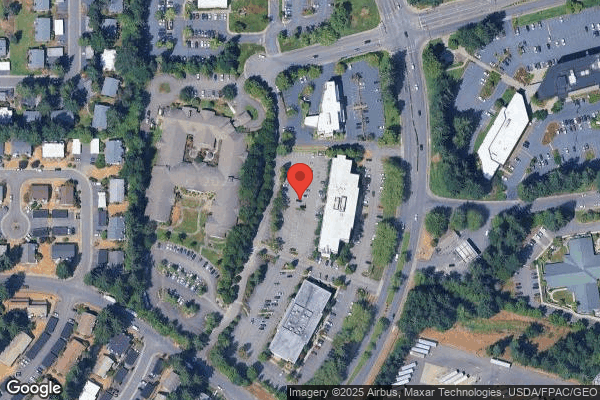
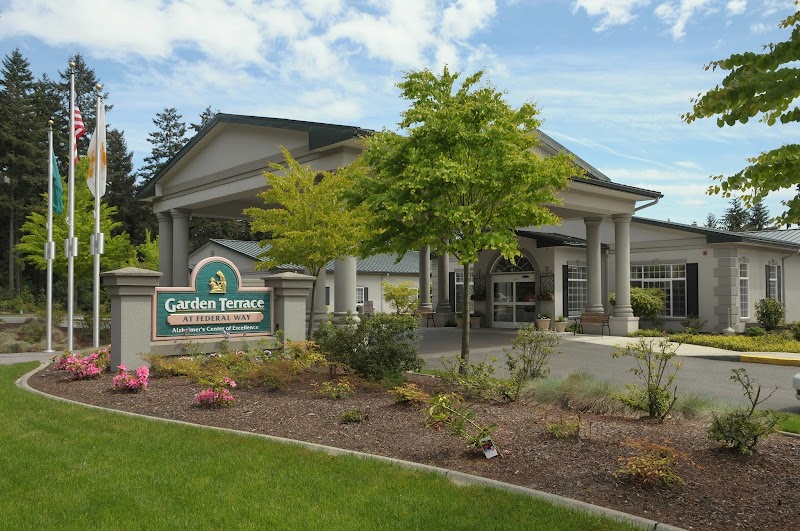
491 SOUTH 338TH STREET, FEDERAL WAY, WA 98003 (253) 661-2226
For profit - Limited Liability company 70 Beds LIFE CARE CENTERS OF AMERICA Data: November 2025
Trust Grade
80/100
#12 of 190 in WA
Last Inspection: June 2025

Inspected within the last 6 months. Data reflects current conditions.

Overview

Garden Terrace Healthcare Center of Federal Way has a Trust Grade of B+, which means it is recommended and above average compared to other facilities. It ranks #12 out of 190 in Washington, placing it in the top half of nursing homes in the state, and #3 out of 46 in King County, indicating only two local options are better. The facility is improving, with the number of reported issues decreasing from 20 in 2024 to 18 in 2025. Staffing is a strength, with a perfect rating of 5/5 stars and a turnover rate of 38%, lower than the state average of 46%, suggesting that staff members are experienced and familiar with residents' needs. There have been no fines reported, which is a positive sign, and the facility has more RN coverage than 85% of Washington nursing homes, ensuring that medical issues are likely to be caught early. However, there are some concerns. The facility faced 46 issues, all categorized as potential harm, including failures to keep the kitchen sanitary and ensure proper food storage, which could lead to food-borne illnesses. Additionally, there were lapses in providing necessary skin care for residents with skin impairments and in managing bowel care for those needing assistance, risking discomfort and health complications. While there are strengths in staffing and overall care, families should consider these areas for improvement when evaluating the home.

Trust Score
B+
80/100
In Washington
#12/190
Top 6%
Safety Record
Low Risk
No red flags
Inspections
Getting Better
20 → 18 violations
Staff Stability
○ Average
38% turnover. Near Washington's 48% average. Typical for the industry.
Penalties
✓ Good
No fines on record. Clean compliance history, better than most Washington facilities.
Skilled Nurses
✓ Good
Each resident gets 89 minutes of Registered Nurse (RN) attention daily — more than 97% of Washington nursing homes. RNs are the most trained staff who catch health problems before they become serious.
Violations
⚠ Watch
46 deficiencies on record. Higher than average. Multiple issues found across inspections.
★★★★★
5.0
Overall Rating
★★★★★
5.0
Staff Levels
★★★★★
5.0
Care Quality
★★★☆☆
3.0
Inspection Score
Stable
2024: 20 issues
2025: 18 issues

The Good

  • 5-Star Staffing Rating · Excellent nurse staffing levels
  • 5-Star Quality Measures · Strong clinical quality outcomes
  • Full Sprinkler Coverage · Fire safety systems throughout facility
  • No fines on record
  • Staff turnover below average (38%)

    10 points below Washington average of 48%

Facility shows strength in staffing levels, quality measures, fire safety.

The Bad

Staff Turnover: 38%

Near Washington avg (46%)

Typical for the industry

Chain: LIFE CARE CENTERS OF AMERICA

Part of a multi-facility chain

Ask about local staffing decisions and management

The Ugly 46 deficiencies on record

Sept 2025 1 deficiency
CONCERN (D) 📢 Someone Reported This

A family member, employee, or ombudsman was alarmed enough to file a formal complaint

Potential for Harm - no one hurt, but risky conditions existed

Quality of Care (Tag F0684)

Could have caused harm · This affected 1 resident

**NOTE- TERMS IN BRACKETS HAVE BEEN EDITED TO PROTECT CONFIDENTIALITY** Based on interview and record review, the facility failed to ensure residents received care and treatment in accordance with the...

Read full inspector narrative →
**NOTE- TERMS IN BRACKETS HAVE BEEN EDITED TO PROTECT CONFIDENTIALITY** Based on interview and record review, the facility failed to ensure residents received care and treatment in accordance with their assessed needs and professional standards of practice for 1 of 5 residents (Resident 1) reviewed for bowel care. The failure to assess a resident's change in condition, address identified signs and symptoms of distress, and notify the physician when residents present with diarrhea (multiple episodes of loose bowel movement) placed residents at risk for nutrition and hydration problems and a decreased quality of life.Findings included.<Resident 1>According to the 07/22/2025 admission Minimum Data Set (MDS- an assessment tool), Resident 1 was alert, oriented, and able to verbalize their needs. The MDS showed Resident 1 had medical conditions including kidney and heart diseases, unstable blood sugar levels in the body, bone infection, and amputation of their right toe. The MDS showed Resident 1 was given antibiotic medication during the assessment period. A 08/29/2025 Discharge MDS showed Resident 1 was discharged to a hospital.Review of Resident 1's 08/11/2025 Care Plan (CP) showed the resident was at risk for rehospitalization due to their complex medical condition. A 08/11/2025 CP intervention showed staff would provide timely communication to the physician and/or nurse practitioner regarding any change in Resident 1's condition.Review of Resident 1's August 2025 Bowel Monitor log showed staff documented Resident 1 started having loose bowel movements from 08/20/2025 until 08/29/2025. On 08/27/2025, Resident 1 had four documented episodes of diarrhea in one day.A 08/27/2025 Physical Therapy (PT) treatment encounter noted showed Resident 1 verbalized they had a terrible night sleep related to frequent brief changes because of their ongoing diarrhea.A 08/29/2025 PT treatment encounter note showed Resident 1 verbalized feeling very fatigued and did not have any energy because of their ongoing diarrhea. The note showed Resident 1 exhibited distress during therapy session due to their weakness. The note showed, .the Occupational Therapist reported [Resident 1's] anxiety to the nurse.On 09/02/2025 at 12:48 PM, Resident 1's representative stated the resident had several diarrheal episodes and the facility staff did not realize Resident 1 was in distress. The representative stated it was Resident 1 themself who told the nursing staff to send them to the hospital on [DATE].Review of Resident 1's medical records showed there was no indication the nursing staff assessed Resident 1's ongoing diarrhea, addressed the resident's identified distress, or informed the physician of the resident's condition as indicated in Resident 1's CP.In an interview on 09/12/2025 at 1:38 PM with Staff B (Director of Nursing), documentation of assessment, interventions, or physician notification regarding Resident 1's ongoing diarrhea was requested but none was provided. Staff B stated there was no documentation to provide. Staff B stated they expected the nursing staff to assess Resident 1's diarrhea, provide interventions accordingly, and to notify the physician within 24 hours, but the staff did not do them as expected. When Staff B was asked for the facility policy regarding standards of care for a resident with diarrhea, Staff B stated, We don't have a policy for that.REFERENCE: WAC 388-97-1060 (1)
Jun 2025 15 deficiencies
CONCERN (D)

Potential for Harm - no one hurt, but risky conditions existed

Deficiency F0582 (Tag F0582)

Could have caused harm · This affected 1 resident

**NOTE- TERMS IN BRACKETS HAVE BEEN EDITED TO PROTECT CONFIDENTIALITY** Based on interview and record review, the facility failed to provide required liability notices for 1 of 3 residents (Resident 1...

Read full inspector narrative →
**NOTE- TERMS IN BRACKETS HAVE BEEN EDITED TO PROTECT CONFIDENTIALITY** Based on interview and record review, the facility failed to provide required liability notices for 1 of 3 residents (Resident 117) reviewed for liability notices. Failure of the facility to issue a Notification of Medicare Non-Coverage (NOMNC - a document informing Medicare beneficiaries that their covered services will be terminated and providing information on their appeal rights) before discharge from the facility placed Resident 117 at risk for not fully understanding their Medicare benefits and appeal rights. Findings included . <Resident 117> Record review showed Resident 117 was readmitted to the facility on [DATE] and discharged home on [DATE]. Resident 117's record showed the facility did not document they provided a NOMNC letter to Resident 117. Resident 117's record showed the facility provided a Nursing Home Transfer or Discharge notice to the resident on 05/22/2025. This notice showed the reason for the discharge was Resident 117's health had improved, and they no longer needed the services provided by the facility. According to a 05/19/2025 Social Services note, the facility sent a discharge notice to the local Long Term Care Ombuds (a mandated resident care advocacy group) regarding Resident 117's discharge home on [DATE]. This note showed Resident 117 had met their goals and completed antibiotic treatment. A 05/22/2025 nursing note showed the facility provided medications and discharge papers to Resident 117 to discharge with. The facility did not document they provided a NOMNC letter to Resident 117. In an interview on 06/13/2025 at 12:07 PM, Staff K (Social Services Director) reviewed Resident 117's record and stated the facility should have provided a NOMNC letter to Resident 117 before they discharged home, but did not. Reference: WAC 388-97-0300(1)(e),(5),(6).
CONCERN (D)

Potential for Harm - no one hurt, but risky conditions existed

Safe Environment (Tag F0584)

Could have caused harm · This affected 1 resident

**NOTE- TERMS IN BRACKETS HAVE BEEN EDITED TO PROTECT CONFIDENTIALITY** Based on observation, interview and record review, the facility failed to ensure walls and baseboard in resident rooms were main...

Read full inspector narrative →
**NOTE- TERMS IN BRACKETS HAVE BEEN EDITED TO PROTECT CONFIDENTIALITY** Based on observation, interview and record review, the facility failed to ensure walls and baseboard in resident rooms were maintained in a homelike condition for 5 of 17 rooms sampled (Rooms 111, 112, 113, 116 & 120) and failed to ensure a privacy curtain was maintained in a clean sanitary condition (room [ROOM NUMBER]). These failures left residents at risk for a less than homelike environment and a diminished quality of life. Findings included . <Facility Policy> According to the facility's 06/12/2024 Resident Belongings and Home Like Environment policy, the facility must provide a safe, clean, comfortable and homelike environment. The policy stated it was the responsibility of all facility staff to create a homelike environment and promptly address any cleaning needs. <room [ROOM NUMBER]> Observation on 06/10/2025 at 8:30 AM areas of white paint splotches were on the wall behind the headboard of resident's bed and was not painted to blend with the rest of the wall color. <room [ROOM NUMBER]> Observation on 06/10/2025 at 10:29 AM white paint splotches were on the wall behind the headboard of resident's bed. <room [ROOM NUMBER]> Observation and interview on 06/12/2025 at 12:43 PM, Resident 264 stated their room looked dirty and pointed to the privacy curtain in the middle of the room and said it was soiled with dark brown and dark red spots and brown liquid stains. Observed the baseboard along the wall was not painted and appeared chipped and soiled with brown debris. <room [ROOM NUMBER]> Observation on 06/09/2025 at 8:48 AM several scratches were observed on the wall behind the head of resident's bed. <room [ROOM NUMBER]> Observation on 06/09/2025 at 9:10 AM, wall scratches were observed behind the head of resident's bed. In an observation and interview on 06/16/2025 at 1:13 PM Staff C (Maintenance Assistant) observed all the repairs that needed to be repaired in rooms 111,112,113,116 & 120. Staff C stated some rooms had areas where the white paint was used to patch the paint but the area was not fully painted to match the walls. Staff C stated all areas should be painted for a homelike setting and the privacy curtain in room [ROOM NUMBER] should be replaced for cleanliness and for a homelike setting but was not. REFERENCE: WAC 388-97-0880. .
CONCERN (D)

Potential for Harm - no one hurt, but risky conditions existed

Grievances (Tag F0585)

Could have caused harm · This affected 1 resident

**NOTE- TERMS IN BRACKETS HAVE BEEN EDITED TO PROTECT CONFIDENTIALITY** Based on observation, interview, and record review, the facility failed to initiate, investigate, and resolve grievances for 2 o...

Read full inspector narrative →
**NOTE- TERMS IN BRACKETS HAVE BEEN EDITED TO PROTECT CONFIDENTIALITY** Based on observation, interview, and record review, the facility failed to initiate, investigate, and resolve grievances for 2 of 17 sampled residents (Resident 44 & 45) reviewed for grievances and 1 supplementary resident (Resident 55). This failure placed residents at risk for emotional distress, unresolved frustration, and a diminished quality of life. Findings included . <Facility Policy> According to the facility's revised 01/07/2025 Grievance Program (Concern and Comment) policy, Residents and families would receive information on the facility's grievance procedure upon admission, including their right to file a complaint orally or in writing without fear of reprisal. The policy showed if a resident/representative expressed a concern or comment, any staff member could assist them to complete a concern and comment form and resolve the concern. If resolution was not possible at that time, staff would explain to the resident that another staff would be assigned to investigate the concern and contact the resident/representative in a timely manner. The policy showed the Executive Director would ensure all grievances were reviewed and addressed in a timely manner and that residents felt that some type of resolution was communicated, achieved, and maintained. <Resident 44> According to a 05/30/2025 admission Minimum Data Set Assessment (MDS - an assessment tool) Resident 44 had a memory impairment and was dependent on staff for activities of daily living (hygiene, feeding, dressing etc.) Review of 05/30/2025 ADL performance deficit Care Plan (CP) showed staff were to provide Resident 44 with assistance to dress and undress. In an interview on 06/10/2025 at 11:30 AM, Resident 44's family member stated Resident 44's clothes did not always come back from the laundry. Resident 44's family member stated they asked staff about the missing laundry and had not heard back. The family member stated Resident 44 was missing a pair of pants and four shirts since last week. The family stated they labeled all of Resident 44's clothing with their name when they were admitted to the facility. In an interview on 06/12/2025 at 9:16 AM Resident 44's family member stated staff still did not find the missing clothing they reported to staff. The family member stated they told the nurse at the nurse's station every day about the missing clothing and so far, nothing was returned. Observation on 06/12/2025 at 10:06 AM showed Staff D (Licensed Practical Nurse) tell Resident 44's family they found one shirt in the laundry room but were not able to find the other missing clothing. In an interview on 06/13/2025 at 8:47 AM, Resident 44's family member stated the clothes were still missing, and stated five pieces of clothing did not come back. The family member stated they frequently asked staff about the missing laundry but so far nothing was returned. In an interview on 06/16/2025 at 9:59 AM Staff E (Unit Care Coordinator) stated staff should have taken the family to the laundry room to identify the missing clothing and staff should have completed a concern and comment form so missing items would be reported and actions taken to resolve the issue. In an interview on 06/16/2025 at 10:32 AM Staff B (Director of Nursing) stated a concern form should have been completed but was not. Staff B stated if staff could not find the items, the facility would replace the clothing. Staff B stated it was their expectation that staff looked for the missing items and completed a concern form to begin the investigation of the missing items. Staff B stated they did not receive a complaint form regarding Resident 44's missing items but should have. <Resident 45> According to the 04/21/2025 admission MDS, Resident 45 admitted to the facility on [DATE] with lower body impairment after a stroke. The MDS showed Resident 45 had no cognitive impairment, clear speech, and was able to make themselves understood. The MDS showed Resident 45 had no natural teeth and had difficulty chewing. Observation and interview on 06/09/2027 at 11:59 AM showed Resident 45 lying in bed, and had no teeth. Resident 45 stated they lost their dentures in the facility a month ago. Resident 45 stated they told staff, and they could not find their dentures. Review of the 04/17/2025 admission assessment showed Resident 45 had dentures and no chewing or swallowing issue at that time. Review of the 04/28/2025 Oral/Dental health problem CP showed Resident 45 had no teeth and had chewing difficulty. The CP included interventions directing staff to provide oral and denture care to Resident 45 daily and to report loose dentures as needed. Review of the facility's grievance and investigation log for April, May, and June 2025 showed no documentation of Resident 45's missing dentures. Review of Resident 45's record showed no documentation Resident 45 lost their dentures. In an interview on 06/12/2025 at 11:00 AM, Resident 45 stated they lost their dentures around second week of May 2025 and told staff that same day. Resident 45 stated they talked to Staff O (Unit Care Coordinator) and another staff member whom they did not recall, filled out a concern and comment form, and gave it to a staff member. Resident 45 stated they did not hear anything back from staff since that time. In an interview on 06/12/2025 at 11:59 AM, Staff O stated they knew Resident 45 lost their dentures more than three weeks ago and completed a concern and comment form. Staff O stated the form went to Staff A (Administrator) and they did not hear anything back yet. Staff O stated they should have followed up with the grievance process, but they did not. In an interview on 06/13/2025 at 12:54 PM, Staff A stated they heard about Resident 45's missing dentures but did not remember if they received a concern and comment from the resident or staff. Staff A reviewed the grievance log and stated there was not a grievance logged for Resident 45 missing dentures but there should be. <Resident 55> According to the 05/15/2025 admission MDS, Resident 55 had adequate vision and used glasses. The MDS showed Resident 55 had intact memory and demonstrated no behavior. The MDS showed Resident 55 received scheduled and as needed pain medications. The MDS showed Resident 55 had frequent pain that occasionally affected their sleep and frequently interfered with therapy and day-to-day activities, and could be as severe as seven on a one-to-ten scale. Review of the facility's May 2025 Grievance Log showed a 05/24/2025 grievance logged for Resident 55 showing the resident felt the nurse swapped their pain pill for a different pill. The log showed Staff A (Administrator) approved the grievance process for Resident 55's grievance. Review of the 05/24/2025 concern and comment form showed the form was completed by Resident 55. Resident 55 wrote that on 05/23/2025 at 3 PM and 10 PM the nurse exchanged their pain pill for another pill. Resident 55 wrote that they knew what their pain pill looked like because they took it when at home. Resident 55 wrote that a facility nurse was stealing residents' pain pills. This form showed the resident reported their concern to a staff member who could not resolve the issue at the time it was reported. The form included a space for the associate receiving the concern to add their name, date, and time of the concern. This space was left blank. The concern and comment form came with a 05/27/2025 typed summary showing Staff B told the resident that the same medicine could look different depending on the manufacturer. This summary did not indicate if Resident 55 was satisfied with the outcome of this grievance process or who wrote the summary. In an interview on 06/16/2025 at 8:44 AM Staff B stated the concern and comment form was not signed or dated but should be. Staff B stated the summary did not indicate who wrote it but stated it was not them. In an interview on 06/16/2025 at 9:42 AM Staff A stated they worked on the grievance with Staff B and If I had it to do again, I would document the response. Staff A stated the form was not signed and dated by staff but should be. REFERENCE: WAC 388-97-0460 .
CONCERN (D)

Potential for Harm - no one hurt, but risky conditions existed

Investigate Abuse (Tag F0610)

Could have caused harm · This affected 1 resident

Based on interview and record review, the facility failed to ensure an allegation of drug diversion was thoroughly investigated for 1 of 1 supplemental resident (Resident 55) reviewed for grievances. ...

Read full inspector narrative →
Based on interview and record review, the facility failed to ensure an allegation of drug diversion was thoroughly investigated for 1 of 1 supplemental resident (Resident 55) reviewed for grievances. This failure placed residents at risk for uncontrolled pain and a diminished quality of life. Findings included . <Facility Policy> According to the facility's 05/07/2025 Abuse - Conducting an Investigation policy, when a resident made a complaint or grievance to the facility would be investigated. The policy showed if there was a finding involving neglect, abuse, and/or misappropriation the facility would report the incident, as required by state law. The policy showed the written summary of the investigation should include, but was not limited to: an interview with the person reporting the incident, interviews with any witnesses, an interview with the resident, an interview with the employee as needed, a review of the employee's file, interviews with staff members on all shifts having contact with the resident at the time of the incident, and interviews other residents who received care or services from the alleged perpetrator. <Resident 55> According to the 05/15/2025 admission Minimum Data Set (MDS - an assessment tool) Resident 55 had adequate vision and used glasses. The MDS showed Resident 55 had intact memory and demonstrated no behavior. The MDS showed Resident 55 received scheduled and as needed pain medications. The MDS showed Resident 55 had frequent pain that occasionally affected their sleep and frequently interfered with therapy and day-to-day activities, and could be as severe as seven on a one-to-ten scale. Review of the facility's May 2025 Grievance Log showed a 05/24/2025 grievance logged for Resident 55 showing the resident felt the nurse swapped their pain pill for a different pill. The log showed Staff A (Administrator) approved the grievance process for Resident 55's grievance. Review of the 05/24/2025 Concern and Comment Form showed the form was completed by Resident 55. Resident 55 wrote that on 05/23/2025 at 3 PM and 10 PM the nurse exchanged their pain pill for another pill. Resident 55 wrote that they knew what their pain pill looked like because they took it when at home. Resident 55 wrote that a facility nurse was stealing residents' pain pills. Review of the facility's investigation into Resident 55's 05/24/2025 grievance showed the facility showed Resident 55 was given their as-needed pain medication at 8:20 AM and 3:20 PM on 05/23/2025, and clarified Resident 55 did not receive their as-needed pain medication at 10 PM. The investigation's summary showed: Staff B (Director of Nursing) explained to Resident 55 that the same medication could look different depending on the manufacturer; Resident 55's Medication Administration Record (MAR) and narcotic sheet (a document tracking the use of narcotic pain medications to ensure narcotics are accounted for) were reviewed and were consistent with the orders; progress notes showed the as-needed pain medication was effective. The investigation did not include clear determination of what happened. The 05/24/2025 grievance investigation did not include an interview with Resident 55 to ask whether they thought the pain medication was effective, did not identify which nurse was alleged to divert the as-needed pain medication, did not include an interview with the nurse Resident 55 alleged to divert the as-needed pain medication, did not include a review of the nurse's file, did not include interviews with other residents who could be witnesses or who received pain medication on the unit, and did not include interviews with staff on the unit. The summary did not indicate who wrote the summary. In an interview on 06/16/2025 at 8:44 AM, Staff B stated the process to determine if a resident concern was a grievance or rose to the level of a reportable allegation was for Staff B and Staff A to discuss the matter and make a determination. Staff B stated because the grievance log showed Resident 55 felt like the nurse swapped their as-needed pain medication, it was a concern and not an allegation. (While the grievance log stated Resident 55 felt the nurse diverted their medication, Resident 55 only wrote that the nurse exchanged their pain pill.) Staff B reviewed the grievance investigation and stated it did not show which nurse was alleged to divert the medication. Staff B stated they did not know which nurse was alleged by Resident 55 to divert the as-needed pain medication. Staff B stated the summary did not indicate who wrote it. In an interview on 06/16/2025 at 9:42 AM Staff A stated after they spoke with Staff B they determined quickly the situation was a one off, an accident, did not happen. Staff A stated because the as-needed pain medication was signed as administered by the nurse and corresponded with the narcotic sheet, and progress notes showed the medication was effective, the nurse did not divert the medication. Staff A stated there was no documentation to show that Resident 55, other residents, the nurse Resident 55 who allegedly diverted the medication, or other staff were interviewed. Staff A stated they did not ask Resident 55 if the medication was effective. Staff A stated the investigation did not identify the staff in question but was able to state which staff was named by Resident 55. Staff A stated they did not think Resident 55's concern needed to be included on the facility's state reporting log. REFERENCE: WAC 388-97-0640 (6)(c). .
CONCERN (D)

Potential for Harm - no one hurt, but risky conditions existed

Comprehensive Care Plan (Tag F0656)

Could have caused harm · This affected 1 resident

**NOTE- TERMS IN BRACKETS HAVE BEEN EDITED TO PROTECT CONFIDENTIALITY** Based on interview, observation, and record review the facility failed to develop and/or implement comprehensive Care Plans (CPs...

Read full inspector narrative →
**NOTE- TERMS IN BRACKETS HAVE BEEN EDITED TO PROTECT CONFIDENTIALITY** Based on interview, observation, and record review the facility failed to develop and/or implement comprehensive Care Plans (CPs) for 3 (Residents 15, 36, & 167) of 17 sample residents whose CPs were reviewed. The failure to develop comprehensive, individualized CPs to address residents' care needs placed residents at risk for unmet care needs, frustration, and other negative health outcomes. Findings included . <Facility Policies> According to the facility's 09/05/2024 Comprehensive CPs and Conferences policy, the facility would develop a comprehensive CP for each resident within seven days of completion of an admission Minimum Data Set (MDS - an assessment tool). The facility's 09/11/2024 Comprehensive CPs and Revisions policy showed the facility would ensure CPs continued to meet residents' needs including addressing short-term problems, adding new interventions to existing CPs, and updating goals as needed. <Resident 15> According to the 05/07/2025 admission MDS, Resident 15 had diagnoses including pneumonia, asthma, and respiratory failure. The MDS showed Resident 15 needed supplemental oxygen while a resident. Record review showed no CP developed to address Resident 15's respiratory conditions or supplemental oxygen needs. Observation on 06/09/2025 at 10:35 AM and on 06/10/2025 at 9:22 AM showed Resident 15 in bed using a nasal cannula (tubing that delivers oxygen to the nostrils) to receive oxygen from an oxygen concentrator set at 2 liters per minute. In an interview on 06/16/2025 at 11:03 AM Staff P (MDS Nurse) stated respiratory needs identified in the MDS process did not automatically trigger CP development. Staff P stated nurses needed to identify the need for a CP and initiate the CP. In an interview on 06/16/2025 at 10:09 AM Staff M (Unit Care Coordinator) reviewed Resident 15's CP and stated there was no respiratory CP developed. Staff M stated there should be a CP to address Resident 15's oxygen and respiratory care needs. In an interview on 06/16/2025 at 12:43 PM Staff B (Director of Nursing) reviewed Resident 15's CP and stated they did not see a respiratory/oxygen CP. Staff B stated because Resident 15 needed supplemental oxygen, there should be a CP to address it. <Resident 36> According to the 05/05/2025 Admission/5-Day MDS, Resident 36 admitted to the facility on [DATE] with respiratory issues and kidney disease. The MDS showed Resident 36 did not reject care during the assessment period. Observation on 06/09/2025 at 1:39 PM showed Resident 36 sitting on the edge of their bed and both of the resident's feet were swollen. Resident 36 did not wear any socks or shoes. Review of Resident 36's record showed no CP developed to direct staff to address the swelling in both Resident 36's feet. In an interview on 06/12/2025 at 9:19 AM, Staff O (Unit Care Coordinator) reviewed Resident 36's record and stated there were no clear directions for staff to address Resident 26's swollen feet. Staff O stated there should be physician's orders and CPs to direct staff when and how to monitor the swelling on Resident 36's feet, but there was no CP developed. <Resident 167> According to the 04/09/2025 admission MDS, Resident 167 was admitted to the facility on [DATE] with respiratory issues and was blind in one eye. The MDS showed Resident 167 was dependent on staff for oral hygiene, showers, and toileting needs and did not reject care during the assessment period. Observations on 06/09/2025 at 2:00 PM and on 06/10/2025 at 10:24 AM showed Resident 167 had multiple purple-colored bruises on both arms and on the right side of their neck. Record review showed Resident 167 was readmitted to the facility from hospital on [DATE] with multiple bruises on both arms, neck, and upper medial chest areas. Review of Resident 167's physician's orders and CP showed no direction for staff to monitor for any changes on the bruises on both arms, neck, and chest areas. In an interview on 06/12/2025 at 8:58 AM, Staff N (Registered Nurse) confirmed Resident 167 had multiple bruises on their arms, neck, and chest areas. Staff N stated they did not know if the bruises were new or old. Staff N reviewed Resident 167's record and stated there was no physician order or CP for staff to address these bruises. In an interview on 06/12/2025 at 9:13 AM, Staff O stated the facility staff should notify the provider and receive physician's orders to monitor the bruises for any change or infections. Staff O stated staff should develop a CP to direct staff to monitor the bruises for any changes and for new bruises and document the results in Resident 167's record but they did not. REFERENCE: WAC 388-97-1020(1), (2)(a)(b). .
CONCERN (D) 📢 Someone Reported This

A family member, employee, or ombudsman was alarmed enough to file a formal complaint

Potential for Harm - no one hurt, but risky conditions existed

Deficiency F0658 (Tag F0658)

Could have caused harm · This affected 1 resident

**NOTE- TERMS IN BRACKETS HAVE BEEN EDITED TO PROTECT CONFIDENTIALITY** Based on observation, interview, and record review the facility: failed to ensure physician ordered parameters for medications w...

Read full inspector narrative →
**NOTE- TERMS IN BRACKETS HAVE BEEN EDITED TO PROTECT CONFIDENTIALITY** Based on observation, interview, and record review the facility: failed to ensure physician ordered parameters for medications were followed for 3 of 17 (Resident 114 & 264) sampled residents; failed to ensure orders were clarified as needed for 2 of 5 residents (residents 18 & 166) whose medication regimens were reviewed; failed to ensure weights were monitored as ordered for 1 of 4 residents (Resident 115) reviewed for nutrition. These failures placed residents at risk for unmet needs, and ineffective and/or delayed treatments. Findings included . <Following Orders> <Resident 114> According to the 06/03/2025 admission Minimum Data Set (MDS - an assessment tool) Resident 114 had diagnoses including a stroke history and arthritis. The MDS showed Resident 114 frequently experienced pain during the lookback period. The MDS showed Resident 114's pain frequently made sleeping, participating in therapy, and day-to-day activities more difficult, and reached a severity of seven on a zero-to-ten scale. Observation on 06/10/25 10:55 AM showed Resident 114 in bed with familiy members present. Resident 114 stated they had left shoulder pain and pointed to their left shoulder and frowned. Review of the June 2025 Medication Administration Record (MAR) showed a 06/12/2025 physician's order for an as-needed pain medication. The order showed this medication should be given every four hours as needed for a pain six out of ten or more. The June 2025 MAR showed on 06/13/2025 Resident 114 was given this medication for a pain of five out of ten, outside the parameters of the order. In an interview on 06/16/2025 at 8:44 AM, Staff B (Director of Nursing) stated it was important for physician's orders to be followed and for medications to be given within the prescribed parameters. In an interview on 06/16/2025 at 12:49 PM, Staff B stated Resident 144's pain of 06/13/2025 did not meet the parameters of the pain medication. <Clarifying Orders> <Resident 18> According to the 06/06/2025 admission MDS, Resident 18 was admitted to the facility on [DATE] with clear speech, intact memory, and medical conditions including an anxiety disorder, heart failure, and trouble falling asleep. Observation on 06/09/2025 at 11:23 AM and on 06/11/2025 at 12:43 PM showed Resident 18 was lying in their bed and both feet were swollen. Record review showed a 06/03/2025 physician's order directing staff to give Resident 18 one tablet of an antianxiety medication every 24 hours as needed for severe anxiety and two tablets every 24 hours as needed for severe anxiety. Record review showed a 06/03/2025 physician's order directing staff to monitor Resident 18's edema every shift and document a score 0, 1+, 2+, 3+ (larger numbers indicate more severe swelling). This order did not indicate on what part(s) of Resident 18's body needed edema monitoring or if action was necessary for edema of a particular severity. Review of the June 2025 MAR showed staff documented Resident 18's edema was 0 every day. In an interview on 06/13/2025 at 8:19 AM, Staff N (Registered Nurse) stated the antianxiety medication order needed to be clarified with the provider to include parameters for when to give one tablet and when to give two tablets. Staff N stated staff should have clarified the edema monitoring order with the provider as well about which body part the edema should monitor and what to do if Resident 18 had 3+ edema but did not. In an interview on 06/13/2025 at 9:14 AM, Staff O (Unit Care Coordinator) reviewed the physician orders and stated the orders for antianxiety medication and to monitor edema were not clear. Staff O stated staff should clarify the orders with the provider to provide care, but they did not. <Resident 166> According to the 06/03/2025 admission MDS, Resident 166 was admitted to the facility with medically complex conditions including anxiety and difficulty falling asleep. The MDS showed Resident 166 received an antidepressant medication every day during the assessment period. Observation on 06/11/2025 at 8:49 AM showed Resident 166 awake but in bed with their breakfast to the side. Resident 166 was well rested. Record review showed: a 05/30/2025 physician's order directing staff to give Resident 166 one tablet of their antidepressant medication at bedtime for insomnia; a 05/30/2025 physician's order directing staff to give Resident 166 four tablets of a supplement every 24 hours as needed for insomnia. The order did not include parameters for staff to know when to administer the supplement 4 tablets for sleeping. In an interview on 06/13/2025 at 8:22 AM, Staff N stated the order PO was not clear about when to give as-needed sleep supplement to Resident 166. Staff N stated staff should have clarified the order with the provider, but they did not. In an interview on 06/13/2025 at 9:20 AM, Staff O reviewed Resident 166's physician's orders and stated the as needed order for sleeping medication was incomplete. Staff O stated staff should have clarified the order with the provider, but they did not.<Weight Monitoring> <Facility Policy> Review of the facility's revised 07/17/2021 Weights and Heights policy showed all residents were weighed within 24 hours of admission and then weekly for four weeks and as needed thereafter. The policy indicated the facility used the Lippincott procedures reference (a supplemental nursing care resource guide) for weight monitoring in Long-Term Care and showed malnutrition in residents could result from various conditions including cancer, heart failure, and decreased ability to participate in activities of daily living. The guidelines showed residents should be weighed on the same scale and at the same time of the day, typically in the morning before eating or drinking and after urinating, especially for high-risk residents, for consistency, to aid in eliminating variables, and to ensure an accurate weight. <Resident 115> According to the 04/24/2025 admission MDS, Resident 115 was admitted on [DATE], had medical conditions including cancer, heart disease, weakness on the left side of their body, and was unsteady on their feet. The MDS showed Resident 115 was assessed to require staff assistance with their daily cares for safety. A 05/13/2025 Discharge MDS showed Resident 115 was sent to the hospital. The 04/21/2025 nutrition CP showed Resident 115 was at risk for malnutrition and weight fluctuation related to the resident's current health status. A CP intervention instructed the nursing staff to weigh Resident 115 weekly for four weeks. On 05/16/2025 at 10:20 AM, Resident 115's representative stated they felt the facility was not taking good care of the resident, . [Resident 115] appeared to have severely declined and looked very dehydrated . The representative stated they asked the facility to send the resident out to the hospital for evaluation. Review of Resident 115's weight monitoring log showed, on 04/28/2025, the resident weighed 186.6 pounds (lbs.) while in the wheelchair, and on 05/05/2025, the resident weighed 161.8 lbs. while standing up. The log showed a total of 24.8 lbs. weight difference in one week and the manner how the staff obtained Resident 115's weight was not consistent. Review of Resident 115's medical records did not show the facility was able to re-weigh Resident 115 between 05/06/2025 and the next weekly weight scheduled on 05/12/2025 to confirm the significant weight loss or that the physician was notified. A 05/09/2025 Nutrition/Dietary progress note showed, .pending re-weigh related to likely erroneous 25 lbs. loss x 1 week. A 05/12/2025 Nursing progress note showed Resident 115 refused to be weighed at that time. In an interview on 06/11/2025 at 9:38 AM, Staff M (Unit Care Coordinator) stated the facility's protocol was to re-weigh a resident if there was a weight difference of over or less than 3 lbs in one week as soon as possible to determine if it was a true weight loss or gain. Staff M reviewed Resident 115's medical records and stated there was no re-weigh completed, or physician notification documented regarding the resident's significant weight loss. In an interview on 06/11/2025 at 9:56 AM, Staff B stated weight monitoring was important, especially among residents with a terminal illness and heart disease, to ensure the resident maintained their weight and safety. Staff B stated they expected the nursing staff to follow the facility's re-weigh protocol for validation, and to notify the physician if it was deemed a true weight loss/gain for proper treatment and interventions. REFERENCE: WAC 388-97-1620(2)(b)(i)(ii), (6)(b)(i). <Resident 264> According to the 06/02/2025 admission MDS, Resident 264 had a pain disorder and muscle weakness. Observation on 06/10/2025 at 9:59 AM showed Resident 265 getting up from their bed and stated they were on their way out to walk around the unit to exercise. At this time, Resident 265 stated they had concerns about their pain management. Review of an 05/29/2025 Pain/Discomfort CP showed staff were to provide pain medication as ordered. Record review showed a 05/29/2025 physician's order for a pain medication, give one tablet every three hours as needed for a pain level of seven to ten on a pain scale of zero-to-ten. Review of the June 2025 MAR showed staff gave one tablet of the pain medication for a pain of six to ten, outside the order's parameters. Record review showed a 06/03/2025 physician's order for a pain medication and to give one tablet every three hours as needed for a pain level of six or greater on the pain scale. Review of the June 2025 MAR showed staff gave Resident 264 one tablet of pain medication on 06/03/2025 and 06/05/2025 for a pain level of five instead of six or higher, outside of the order's parameters. In an interview on 06/16/2025 at 10:48 AM Staff B stated staff should follow physician orders for pain parameters as it was important for residents' safety, but did not. <Resident 265> According to the 06/02/2025 admission MDS, Resident 265 was admitted to the facility on [DATE] with diagnoses of congestive heart failure and high blood pressure. The MDS showed Resident 265 took a diuretic (water pill) for edema (swelling). Record review showed a physician's order 05/28/2025 directing staff to monitor Resident 265's edema every shift and to document using the edema scale. Review of the 06/09/2025 At Risk for Weight Fluctuation CP, showed staff were to monitor Resident 265's edema every shift and document the condition of the edema using an edema scale of 0 to 4+. Review of June 2025 MAR showed no documentation of edema on day, evening, or night shifts from 06/03/2025 through 06/16/2025. Review of Resident 265's progress notes did not show staff observed any edema from 06/06/2025 through 06/13/2025. In an interview on 06/10/2025 at 10:04 AM, Resident 265 stated they had swelling on both legs. At this time Resident 265 was observed with swelling on their left leg and ankle which was bigger than the right leg and ankle. In an interview on 06/11/2025 at 12:35 PM, Resident 265 stated they gain water weight. At this time, Resident 265's left leg and ankle were observed to be larger than their right leg and ankle. Observation on 06/12/2025 at 1:31 PM showed Resident 265 stated their legs were hurting today due to the swelling. At that time Resident 265's left leg was observed to be larger than the right leg. In an interview on 06/16/2025 at 9:52 AM Staff E (Unit Care Coordinator) stated staff should check edema on every shift and document their findings per the physician's order. In an interview on 06/16/2025 at 10:41 AM Staff B stated the nurses should have monitored Resident 265 for edema per the order and notified the provider about the increase in weight to determine what interventions were needed but did not.
CONCERN (D)

Potential for Harm - no one hurt, but risky conditions existed

ADL Care (Tag F0677)

Could have caused harm · This affected 1 resident

**NOTE- TERMS IN BRACKETS HAVE BEEN EDITED TO PROTECT CONFIDENTIALITY** Based on observation, interview, and record review, the facility failed to ensure residents who were dependent on facility staff...

Read full inspector narrative →
**NOTE- TERMS IN BRACKETS HAVE BEEN EDITED TO PROTECT CONFIDENTIALITY** Based on observation, interview, and record review, the facility failed to ensure residents who were dependent on facility staff for assistance with Activities of Daily Living (ADLs - personal hygiene, grooming, and bathing) received the assistance they were assessed to require for 4 of 9 residents (Residents 36, 45, 166, & 167) reviewed for ADLs. The failure to provide ADL assistance to dependent residents as required left residents at risk for poor hygiene, diminished feelings of self-worth, and other negative health outcomes. Findings included . <Facility Policy> Review of the facility's 02/12/2024 Activities of Daily Living policy showed the facility would provide all treatment and care based on the comprehensive assessment of the resident, person-centered Care Plan, and resident's choices. The policy showed residents who were unable to carry out their own ADLs would receive the necessary services to maintain good nutrition and personal hygiene including bathing, dressing, grooming, and oral care. The policy showed the facility would ensure residents' fingernails were clean and trimmed to avoid injury and infection. <Resident 36> According to the 05/05/2025 admission 5 Day Minimum Data Set (MDS - an assessment tool) Resident 36 admitted to the facility on [DATE] with respiratory issues. The MDS showed Resident 36 required assistance from staff for toileting, transferring, personal hygiene including shaving, oral care and bathing. The MDS showed Resident 36 did not refuse care during the assessment period. According to the 04/30/2025 ADL Care Plan (CP) Resident 36 needed ADL assistance and therapy services to maintain or attain their highest level of function. The CP showed Resident 36 required one-person assistance for showers/bathing, personal hygiene, and transfers. Observations on 06/09/2025 at 1:34 PM and on 06/11/2025 at 10:16 AM showed Resident 36 lying in their bed, not shaved with long dirty fingernails. In an observation and interview on 06/13/2025 at 11:27 AM, Resident 36 again had long, dirty fingernails, and was not shaved. Resident 36 stated staff were supposed to trim their fingernails and shave them, but no one did. Resident 36 stated they would ask their family to bring a razor to shave them. In an interview on 06/13/2025 at 8:37 AM, Staff N (Registered Nurse) stated Resident 36 needed assistance with all ADLs including personal hygiene. Staff N stated they did not get a report from staff that Resident 36 refused care. In an interview on 06/13/2025 at 9:42 AM, Staff O (Unit Care Coordinator) stated they expected staff to provide morning care to every resident including oral care, shaving, dressing, and trimming fingernails on shower days and as needed, but they did not. <Resident 45> According to the 04/21/2025 admission MDS, Resident 45 was admitted to the facility on [DATE] with lower body impairment after a stroke. The MDS showed Resident 45 was dependent on staff for transferring and toileting needs and required one person assistance with personal hygiene including shaving, oral care, clip fingernails, and bathing. The MDS showed Resident 45 did not refuse care during the assessment period. According to the 04/17/2025 ADL CP Resident 45 needed ADL assistance and therapy services to maintain or attain the highest level of function. The CP showed Resident 45 required one-to-two-person assistance with showers, personal hygiene, toileting, and transfers. Observations on 06/09/2025 at 11:59 AM and on 06/10/2025 at 9:09 AM showed Resident 45 in their bed with long, dirty fingernails. In an observation and interview on 06/12/2025 at 10:55 AM, Resident 45 again had long, dirty fingernails. Resident 45 stated they needed assistance from staff to clip their fingernails, but no one helped. In an interview on 06/13/2025 at 9:29 AM, Staff N stated Resident 45 needed assistance with showers, shaving, toileting and clip their fingernails. Staff N confirmed Resident 45 had dirty long fingernails and stated if residents refused care, staff should document in resident's record and report to the supervisor. In an interview on 06/13/2025 at 10:22 AM, Staff O stated their expectation from staff was to provide morning care to every resident in the morning as they allow to. Staff should offer and assist residents with oral care, shaving, and dressing every day. Staff O stated staff should provide showers to residents as scheduled and clip fingernails on shower days and as needed, but they did not. <Resident 166> According to the 06/03/2025 admission MDS, Resident 166 was admitted to the facility on [DATE] with anxiety disorder and respiratory issues. The MDS showed Resident 166 required moderate assistance with upper and lower body dressing, transferring, toileting, showers, and personal hygiene including shaving and nail care. The MDS showed Resident 166 had no behavior of rejecting care during the assessment period. According to 05/30/2025 ADL CP, Resident 166 needed ADL assistance and therapy services to maintain or attain the highest level of function. The CP showed Resident 166 required one person assistance with showers, personal hygiene, toileting, and transferring needs. Observations on 06/09/2025 at 10:24 AM showed Resident 166 in a wheelchair in their room. Resident 166 had long broken fingernails with black debris under them. In an observation and interview on 06/10/2025 at 10:42 AM, Resident 166 had long dirty fingernails. Resident 166's teeth were not brushed, their hair was greasy, and they were not shaved. Resident 166 stated they needed assistance from staff with all ADLs, but no one offered help. In an interview on 06/13/2025 at 10:22 AM, Staff O stated their expectation from staff was to provide morning care to every resident. Staff should offer and assist residents with oral care, shaving, and dressing every day. Staff O stated staff should provide showers to residents as scheduled and clip fingernails on shower days and as needed, but they did not. <Resident 167> According to the 04/09/2025 admission MDS, Resident 167 was admitted to the facility on [DATE] with respiratory issues and vision issues. The MDS showed Resident 167 was dependent on staff with upper and lower body dressing, transferring, toileting, showers, and oral care. The MDS showed Resident 167 required one person assistance with personal hygiene including shaving and nail care. The MDS showed Resident 167 did not reject care during the assessment period. The 06/06/2025 ADL Self Care Deficit CP showed Resident 167 required two person-assistance with showers, toileting, and transferring, and one-person assistance with oral care and personal hygiene including shaving and nail care. Observations on 06/09/2025 at 1:58 PM showed Resident 167 with long, dirty fingernails and greasy hair. Resident 167 was not shaved. Observation on 06/12/2025 at 8:53 AM showed Resident 167 receiving medications in bed from Staff N. Resident 167 had long, dirty fingernails, greasy hair, and was not shaved. In an interview on 06/12/2025 at 8:56 AM, Staff N confirmed Resident 167 had long, dirty fingernails and was not shaved. Staff N stated staff should shave the resident every day during morning care, provide showers as scheduled and clip fingernails weekly and as needed, but they did not. In an interview on 06/13/2025 at 10:22 AM, Staff O stated their expectation from staff was to provide morning care to every resident. Staff should offer and assist residents with oral care, shaving, and dressing every day. Staff O stated staff should provide showers to residents as scheduled and clip fingernails on shower days and as needed, but they did not. REFERENCE: WAC 388-97-1060(2)(c). .
CONCERN (D)

Potential for Harm - no one hurt, but risky conditions existed

Deficiency F0679 (Tag F0679)

Could have caused harm · This affected 1 resident

**NOTE- TERMS IN BRACKETS HAVE BEEN EDITED TO PROTECT CONFIDENTIALITY** Based on observation, interview, and record review the facility failed to ensure activity programs met the needs of each residen...

Read full inspector narrative →
**NOTE- TERMS IN BRACKETS HAVE BEEN EDITED TO PROTECT CONFIDENTIALITY** Based on observation, interview, and record review the facility failed to ensure activity programs met the needs of each resident for 3 of 3 residents (Resident 264, 265 & 270) reviewed for activities. The failure to provide meaningful activities left residents at risk of boredom and a diminished quality of life. Findings included . <Facility Policy> According to the facility's 09/2024 Activities policy, the facility would implement an ongoing activities program that incorporated residents' interests and created opportunities for each resident to have a meaningful life by supporting their wellness. The policy showed all residents who are unable or unwilling to participate in group programs would have consistent, goal oriented and individualized recreation opportunities. <Resident 264> According to the 06/02/2025 admission Minimum Data Set (MDS - an assessment tool) Resident 264 had intact memory and had symptoms of feeling down or depressed. The MDS showed it was very important for Resident 264 to do their favorite activities. Review of the 06/02/2025 Activity Care Plan (CP), showed Resident 264's goal was to express satisfaction in pursuing self-directed activities and to accept regular check-in visits and invitations to group programs. Review of Resident 264's record did not show where activity participation was tracked. In an interview on 06/09/2025 at 9:18 AM Resident 264 stated they were concerned the facility did not provide them with any activities to do. Resident 264 stated they should have a more personalized activity plan because they were younger than most of the residents on their unit. In an observation and interview on 06/09/2025 at 2:34 PM, Resident 264 stated there was not much to do, they were bored and stated all activities were meant for older residents. Resident 264 was observed ambulating around the unit in their wheelchair looking for things to do. Observation on 06/12/2025 at 12:50 PM showed Staff H (Activity Assistant) entering Resident 264's room and offer to paint their fingernails. Resident 264 stated they did not want their nails painted. Staff H offered no other activity. Observation on 06/12/2025 at 1:55 PM showed an activity calendar posted on the bulletin board near the nurses' station showing nail painting was scheduled twice that week and bingo on Sundays in the Tea Garden (Resident 264's unit). No other activities were scheduled for the unit. The same activities were scheduled the week prior. <Resident 265> According to the 06/02/2025 admission MDS, Resident 265 was admitted to the facility on [DATE] and had a bone infection in their back, back pain and used a walker. The MDS showed it was very important for Resident 265 to listen to music, keep up with news, do things with groups of people, do their favorite activities, and attend religious services. Review of the 06/02/2025 Activities CP, showed Resident 265 had a bone infection in their back with a goal that Resident 265 would accept regular check-in visits and invitations to out-of-room activities. The CP directed staff to regularly offer invitations and escorts to scheduled activities. Review of Resident 265's medical record did not show where activity participation was tracked. In an interview on 06/10/2025 at 9:49 AM Resident 265 stated they did puzzles in the dining room but that was all there was to do. Resident 265 stated it looked like other places in the building had activities going on but not on this unit. In an interview on 06/11/2025 at 12:43 PM Resident 265 stated no activities were scheduled that day and they planned to work on a puzzle today because they had nothing else to do. <Resident 270> According to the 05/27/2025 admission MDS, Resident 270 was admitted on [DATE] and had a memory impairment disorder. The MDS showed it was very important for Resident 270 to read books/newspapers, listen to music, and do their favorite things. Review of the 05/24/2025 Activities CP showed Resident 270 enjoyed all the activities at their assisted living facility before admission and enjoyed listening to their favorite radio station and having educational programs. Goals on the CP showed Resident 265 would express satisfaction in pursuing self-directed activities and accept regular check-in visits. Review of Resident 270's medical record did not show where activity participation was tracked. In an interview on 06/10/2025 at 10:15 AM, Resident 270 stated there was nothing to do so they just laid in bed all day. Resident 270 stated staff offered to paint their nails, but they already did this last week. In an observation and interview on 06/11/2025 at 12:51 PM Resident 270 was observed watching TV with the volume down and said there was no other activity to participate in. In an observation and interview on 06/13/2025 at 12:25 PM Staff G (Activities Director) stated they and their assistant conducted one-on-one activities for residents, especially those who could not leave their room and they tried to touch base with every resident every day. Staff G stated for younger residents they were still trying to learn what activities to offer them and knew they had to find activities to meet their needs. Staff G stated group activities rotated to different locations within the building but were primarily held in units with larger common areas. Staff G stated less activities were scheduled in the Tea Garden unit because they had a smaller dining room. Staff G observed the June 2025 activity calendar and stated there were not many activities scheduled in the Tea Garden Unit and there should be more. Staff G stated they did not currently document activities provided but knew they should, so they kept daily census sheets and checked off daily one-on-one visits being provided. Staff G provided 11 facility census lists used by the activities team to show when one-on-one visits occurred. The 11 censuses showed Resident 264 did not have any one-on-one visits, and Resident 270 had four, one-on-one visits since they admitted to the facility, three weeks ago. REFERENCE: WAC 388-97-0940 (1). .
CONCERN (D) 📢 Someone Reported This

A family member, employee, or ombudsman was alarmed enough to file a formal complaint

Potential for Harm - no one hurt, but risky conditions existed

Deficiency F0697 (Tag F0697)

Could have caused harm · This affected 1 resident

**NOTE- TERMS IN BRACKETS HAVE BEEN EDITED TO PROTECT CONFIDENTIALITY** <Resident 115> According to the 04/24/2025 admission MDS, Resident 115 had medical conditions including brain cancer. The ...

Read full inspector narrative →
**NOTE- TERMS IN BRACKETS HAVE BEEN EDITED TO PROTECT CONFIDENTIALITY** <Resident 115> According to the 04/24/2025 admission MDS, Resident 115 had medical conditions including brain cancer. The MDS showed Resident 115 developed brain abscess (accumulation of pus within the tissues) while recovering from the surgical resection (the process of cutting out tissue or part of an organ) of their brain tumor. The 04/21/2025 pain CP showed Resident 115 expressed discomfort/pain related to their recent brain surgery, back pain, bilateral leg pain from having blood clots, and generalized deconditioning. The CP outlined interventions directing the nursing staff to administer pain medications to Resident 115 as ordered by the physician and to notify the physician if interventions were unsuccessful or if there was a significant change from the resident's past experience of pain. A 04/21/2025 physician's order instructed staff to administer an over-the-counter pain reliever every six hours as needed for a pain level of one-to-three on the zero-to-ten pain scale. An additional 04/21/2025 order instructed staff to administer a narcotic pain reliever every eight hours as needed for severe pain. This order did not have pain level parameters. A 05/04/2025 progress note showed Resident 115 was in distress and requesting more pain relief related to the pain on their back and bilateral legs that was not relieved by either the over-the-counter or the narcotic pain medications administered by the nurse. In an interview on 05/16/2025 at 10:20 AM, Resident 115's representative stated the resident's pain was not effectively managed, particularly the pain on the resident's legs. In an interview on 06/11/2025 at 9:38 AM. Staff M (Unit Care Coordinator) stated the nursing staff used the zero-to-ten pain scale when assessing a resident's pain level. Staff M stated the over-the-counter pain medication would not be effective for the higher pain level, .that is why it [the over-the-counter medication] was ordered for a pain level of 1-3 only. In an interview on 06/11/2025 at 9:56 AM, Staff B (Director of Nursing) stated pain management was important because it enhanced a resident's quality of life. Staff B reviewed the administration of Resident 115's over-the-counter pain medication and stated the nurses should not have administered when the resident rated their pain at four or higher. REFERENCE: WAC 388-97-1060 (1). .Based on interview and record review, the facility failed to ensure effective pain management was provided to residents, consistent with professional standards of practice. The failure to offer non-pharmacological interventions to residents experiencing pain and use sufficient parameters for administration of as needed (PRN) pain medications for 1 of 3 sampled residents (Residents 265) and one closed record (Residents 115) reviewed for pain management placed residents at risk for untreated pain, unnecessary discomfort, and a decreased quality of life. Findings included . <Facility Policy> Review of the facility's revised 04/22/2025 Pain Assessment and Management policy showed the facility must ensure residents received the treatment and care they needed in accordance with professional standards of practice, the comprehensive Care Plan (CP), and the resident's choices to manage their pain. The policy showed the facility would collaborate with the attending physician, other health care professionals, and the resident and/or their representative to prevent or manage each individual resident's pain. The policy showed the facility would address and treat the underlying causes of the pain to the extent possible by developing and implementing both non-pharmacological (not involving the use of drug/medication) and pharmacological interventions and approaches to pain management. <Resident 265> According to the 06/02/2025 admission Minimum Data Set (MDS - an assessment tool) Resident 265 was admitted to the facility on [DATE] and had a bone infection in their back that caused them to have back pain. Review of the 05/28/2025 Pain/Discomfort CP showed Resident 265 had pain related to their medical conditions. The CP showed staff were to anticipate Resident 265's need for pain relief and respond immediately to any complaints of pain. Review of a 05/28/2025 physician order showed staff were to assess pain and attempt non-pharmacological interventions prior to administering pain medications. Record review showed a 06/05/2025 physician order to give two tablets of pain medication every six hours as needed for pain if their pain level was seven or higher on a zero-to-ten pain scale and to give one tablet of pain medication if their pain level was between four and six on the pain scale. Review of the June 2025 Medication Administration Record (MAR) showed Resident 265's pain level was at an eight on 06/07/2025 and at a seven on 06/09/2025. The MAR showed Resident 265 received one tablet of the pain medication on 06/07/2025 and on 06/09/2025 instead of the two tablets ordered for that pain level. Non-pharmacological interventions were not provided prior to pain medication administration as ordered on 06/07/2025, 06/08/2025, and 06/09/2025. In an interview on 06/09/2025 at 12:01 PM, Resident 265 stated they had a biopsy (a procedure where a tissue sample is collected) on their back and two infections, and because of this they had back pain. In an interview and observation on 06/10/2025 at 9:59 AM Resident 265 stated on Friday, they were supposed to receive their pain medication that was ordered by their provider, but did not receive the correct dose until Monday morning. Resident 265 stated they told the nurses about their pain and were told they did not have the proper dose of the medication available. Resident 265 stated the nurses did not offer the correct medication for the pain they experienced and instead offered an over-the-counter pain medication instead which the resident refused because the over-the-counter pain medication did not help. Resident 265 became frustrated as they described the situation. In an interview on 06/16/2025 at 9:52 AM Staff E (Unit Care Coordinator) stated staff should have called the pharmacy and received the pain mediation immediately so Resident 265's pain could be effectively managed. In an interview on 06/16/2025 at 10:41 AM Staff B (Director of Nursing) stated staff should have called the provider right away to obtain the orders so Resident 265 could have their pain medication as ordered.
CONCERN (D)

Potential for Harm - no one hurt, but risky conditions existed

Deficiency F0740 (Tag F0740)

Could have caused harm · This affected 1 resident

Based on observation, interview, and record review, the facility failed to provide behavioral health services for 1 of 3 (Resident 264) residents reviewed for behavioral-emotional health. The failure ...

Read full inspector narrative →
Based on observation, interview, and record review, the facility failed to provide behavioral health services for 1 of 3 (Resident 264) residents reviewed for behavioral-emotional health. The failure to provide interventions to Resident 264 behavioral health concerns placed Resident 264 and other residents at risk for not receiving the services necessary to meet their mental health needs and a diminished quality of life. Findings included . <Resident 264> According to the 06/02/2025 admission Minimum Data Set (MDS- an assessment tool) Resident 264 had diagnoses including anxiety and depression. The MDS showed Resident 264 took medication for anxiety and had several days when they were feeling down or depressed. Review of 06/10/2025 Mood Care Plan (CP), showed Resident 264 was at risk for changes in their mood or behavior due to their medical conditions. The CP included interventions for staff to provide a psychological (psych) evaluation consult as indicated. Record review showed a 06/03/2025 progress note that showed Resident 264 requested to be referred to psych and the status was pending with no follow up documented. In an interview and observation on 06/09/2025 at 9:18 AM, Resident 264 was tearful when talking about their medical condition and needing to stay at the facility. Resident 264 stated they were frustrated at the staff for not attending to their mental health needs and because they noticed they were younger than most of the residents at the facility. Resident 264 stated the facility did not know how to take care of a younger residents' needs. In an interview on 06/09/2025 at 2:39 PM Resident 264 stated they were very sad about the health conditions that caused them to be admitted to the facility and was very tearful when discussing their past. Resident 264 stated they were upset that the facility did not attend to their needs. In an interview on 06/12/2025 at 12:50 PM Resident 264 was tearful and stated they were very upset about having to stay at the facility. Resident 264 stated they did not have an appetite lately. Resident 264 stated they asked the facility about getting a psychological evaluation, but it did not happen. In an interview on 06/16/2025 at 9:41 AM Staff E (Unit Care Coordinator) stated they could not find documentation that a referral for a psych evaluation was made, but a referral should have been made. In an interview on 06/16/2025 at 10:48 AM Staff B (Director of Nursing) stated Resident 264's record showed a request for a psych evaluation was made on 06/02/2025 but the order showed as pending in their records. Staff B stated they were not sure why the referral was not made but it should have been. REFERENCE WAC: 388-97-1060(1)(3)( e). .
CONCERN (D)

Potential for Harm - no one hurt, but risky conditions existed

Deficiency F0761 (Tag F0761)

Could have caused harm · This affected 1 resident

**NOTE- TERMS IN BRACKETS HAVE BEEN EDITED TO PROTECT CONFIDENTIALITY** Observation of the the freezer in the Tea Garden Unit's nourishment pantry on 06/13/2025 at 10:41 AM showed an opened package of...

Read full inspector narrative →
**NOTE- TERMS IN BRACKETS HAVE BEEN EDITED TO PROTECT CONFIDENTIALITY** Observation of the the freezer in the Tea Garden Unit's nourishment pantry on 06/13/2025 at 10:41 AM showed an opened package of glycerine swabs. The packaging stated it contained three swabs and two remained in the packet. The packaging stated it was sterile. There was no date on the swab packet indicating when it was opened or for how long the swabs could safely be used. REFERENCE: WAC 388-97-1300(2), -2340. Based on observation, interview, and record review, the facility failed to ensure proper storage and labeling of medications in 1 of 4 unit nutrition pantry fridges (Tea Garden) and 1 of 4 medication carts ([NAME] Unit) and failed to account for missing signatures in the narcotic book for 1 of 4 medication carts ([NAME] Unit) reviewed for medication storage. These failures placed residents at risk of receiving expired medications, ineffective treatment, missing medications and a diminished quality of life. Findings included . <Policy> According to the facility's revised 08/01/2024 Storage and Expiration Dating of Medications policy, the facility would record the date opened on the primary medication container (i.e vial, bottle, inhaler). When the medication had a shortened expiration date once opened, suspension medications or eye drops use would use a date opened and the expired date on the container. Medication for each resident would be stored in the containers in which they were originally received. The policy showed controlled medications must be counted with another designated staff member when there was an exchange of keys to the medication cart, such as at the time nursing staff changed shifts. <[NAME] Medication Cart> On 06/11/2025 at 11:06 AM, observation showed one steroid inhaler on the top drawer of medication cart, without a box, unlabeled with no resident name. The medication counter (doses administered and/or remaining) was set at dose 28 which showed the medication was used. Another steroid as needed inhaler was observed inside a box and opened with no open and discard date on the container. In an interview on 06/11/2025 at 11:28 AM, Staff L (Registered Nurse) stated, even if the facility knew for which resident the steroid inhaler was intended, the medication container should have had a resident name on it and dated when it was first opened and a date of when to discard the medication for resident safety. In an interview on 06/11/2025 at 11:35 AM Staff M (Unit Care Coordinator) stated they expected the nurses to ensure medications were labeled and dated to prevent medication errors and to ensure resident safety. <Narcotic Book> Observation on 06/11/2025 at 10:59 AM, showed narcotic logbook on the medication cart ([NAME] Unit) had five times in May 2025: on 05/10/2025, 05/17/2025, 05/21/2025, 05/22/2025, and 05/27/2025 where nurses did not sign the logbook to show they counted medications to ensure the correct count of narcotic medications. In an interview on 06/11/2025 at 11:06 AM, Staff L stated the signatures were missing and nurses should sign the book during shift change to show the narcotic count was correct, but they did not. In an interview on 06/11/2025 at 11:35 AM, Staff M stated they expected the nurses to reconcile the narcotic count and sign the narcotic log books to ensure they attest to its accuracy at shift change. Staff M stated it was important to maintain this practice consistently to prevent drug diversion and to avoid the dangers involved in missing narcotics.
CONCERN (D)

Potential for Harm - no one hurt, but risky conditions existed

Deficiency F0825 (Tag F0825)

Could have caused harm · This affected 1 resident

**NOTE- TERMS IN BRACKETS HAVE BEEN EDITED TO PROTECT CONFIDENTIALITY** Based on observation, interview, and record review the facility failed to ensure residents received timely specialized rehabilit...

Read full inspector narrative →
**NOTE- TERMS IN BRACKETS HAVE BEEN EDITED TO PROTECT CONFIDENTIALITY** Based on observation, interview, and record review the facility failed to ensure residents received timely specialized rehabilitative services for 1 of 4 residents reviewed for therapy services (Resident 113). The failure to timely complete a Speech Language Pathologist (SLP - a speech therapist) evaluation placed Resident 113 at risk for unnecessary diet restrictions, weight loss, and a diminished quality of life. Findings included . <Resident 113> According to the 06/06/2025 admission Minimum Data Set (MDS - an assessment tool) Resident 113 had a moderate memory impairment and no signs and symptoms of a possible swallowing disorder. The MDS showed Resident 113 admitted to the facility on [DATE], received a mechanically altered diet on admission and while a resident at the facility, and received no SLP services during the MDS's lookback period. Record review showed Resident 113 had a 06/03/2025 dietary order for a regular diet with an easy to chew texture and chopped meats. According to the 06/03/2025 Nursing Admission/readmission Collection Tool, Resident 113 was noted with no chewing or swallowing issues at that time but did require swallowing precautions. According to the 06/06/2025 Nutritional Assessment Resident 113 disliked the food they were served. The assessment showed Resident 113 told the registered dietician they did not like their meat to be ground up. In an interview on 06/10/2025 at 8:42 AM Resident 113 stated they did not like the food they were served. They chop everything up. It looks like it has been chewed. Resident 113 stated no one explained why their food was the texture it was. Observation of Resident 113's breakfast tray showed the sausage served was ground, not served with a gravy, and was untouched by the resident. In an interview on 06/12/2025 at 9:17 AM Staff F (SLP) stated they completed an SLP evaluation and would provide the documentation. Staff F stated she assessed Resident 113 with a mild swallowing impairment and stated they would provide clinical records related to Resident 113's SLP therapy. Review of the documentation Staff F provided showed on 06/11/2025 Staff F assessed Resident 113 with a mild swallowing impairment and agreed to upgrade Resident 113's diet from chopped meats to cut meats with extra sauce. There was no prior SLP documentation. In an interview on 06/13/2025 at 1:16 PM Staff J (Director of Rehabilitation) stated all admitting residents had standing orders for evaluation and treatment for physical and occupational therapy. Staff J stated they looked at the records of newly admitted residents and referred them as needed to the SLP for evaluation and treatment if they had needs such as orders for a modified diet or a memory impairment. Staff J stated the gold standard for the timeline to be seen by the SLP once a need was identified was a day or two. In an interview on 06/13/2025 at 1:20 PM Staff I (Food Service Manager - Dietary Manager) stated both the registered dietician and SLP could change dietary orders but only the SLP had the scope of practice to upgrade dietary orders. In an interview on 06/16/2025 at 12:35 PM Staff J confirmed Resident 113 had hospital orders for an altered texture diet. Staff J stated Staff I was on vacation when Resident 113 admitted but they could have used an outside SLP if the need was identified. Staff J stated they were unaware of Resident 113's complaints to the RD on 06/06/2025. Staff J stated a lack of notification from the dietary department prevented them from providing Resident 113 with SLP services and an upgraded diet until 06/11/2025, eight days after admission. Staff J stated it was a shame. REFERENCE: WAC 388-97-1280 (1)(a-b), (3)(a-b). .
CONCERN (E)

Potential for Harm - no one hurt, but risky conditions existed

Quality of Care (Tag F0684)

Could have caused harm · This affected multiple residents

Based observation, interview, and record review, the facility failed to ensure the provision of skin care for residents with skin impairments for 1 of 4 residents (Residents 113) reviewed for non-pres...

Read full inspector narrative →
Based observation, interview, and record review, the facility failed to ensure the provision of skin care for residents with skin impairments for 1 of 4 residents (Residents 113) reviewed for non-pressure skin; provide bowel/constipation care for 2 of 4 residents (Residents 3 & 166) reviewed for constipation. These failures placed residents at risk for avoidable discomfort, skin breakdown, pain, and infection. Findings included . <Facility Policy> According to the facility's 07/09/2024 Skin Integrity . policy, a comprehensive skin inspection/assessment would be completed on admission to the facility. The policy showed skin assessments should be completed weekly and any changes reported to the nurse. According to the facility's 09/12/2023 Bowel Protocol policy, the facility would provide effective interventions for constipation consistent with current standards of practice. The policy showed nursing staff would document in the record each time a resident had a Bowel Movement (BM), and the physician would implement standing orders to address any lack of BM. <Skin Care> <Resident 113> According to the 06/06/2025 admission MDS, Resident 113 had diagnoses including cancer, and fractures to their pelvic area and left upper arm. The MDS showed Resident 113 had no skin impairments. Review of the 06/03/2025 Nursing Admission/readmission Collection Tool showed Resident 113 was identified with redness to the skin of their pelvic area, and some edema (swelling) in their left arm. No other skin impairments were identified on this assessment. In an interview and observation on 06/10/2025 at 8:47 AM Resident 113 stated they had a skin impairment on their elbow that hurt. Resident 113 rolled up their sleeve to show their right elbow had a dark brown/black scab-like skin impairment on the inside of their right elbow that was half an inch in diameter. Review of the 06/10/2025 weekly skin assessment Resident 113 had redness in their lower back area and upper vertebrae and edema on their left arm. The skin impairment on Resident 113's right elbow was not noted on this weekly skin check. The weekly skin check showed it had an effective date of 06/10/2025, 9:42 AM. In an interview on 06/16/2025 at 10:22 AM Staff M went to Resident 113's room and examined the resident's elbow. Staff M noted the skin impairment and stated it looked like a scab. Staff M stated it looked like it was present for some time and should have been noted on the weekly skin check and identified by CNAs during care. Staff M stated the skin impairment should be assessed and treated. <Bowel Care> <Resident 3> According to the 04/22/2025 Quarterly Minimum Data MDS, Resident 3 had intact memory, and had multiple Gastrointestinal (GI - stomach/bowel) diagnoses. The MDS showed Resident 3 was always incontinent of bowel and depended on staff for toileting assistance. Record review showed the following orders: a 03/26/2025 physician's order to provide 30 Milliliters (ML) of Milk of Magnesia (MOM) if no bowel movement (BM) in three days; a 03/26/2025 for a suppository bowel medication to be given as needed if no results after eight hours from MOM; a 03/26/2025 order for an enema to given as needed if no results after eight hours after the suppository. In an interview on 06/10/2025 at 11:15 AM Resident 3 stated they often were constipated due to their diagnoses. Resident 3 stated I am not like other people when it comes to my bowels. I have a condition, and they just work different for me. Review of the May 2025 bowel documentation showed Resident 3 was documented to not have a bowel movement between 05/18/2026 at 2:12 PM through 05/26/2025 at 5:11 AM, over seven days later. Review of the May 2025 Medication Administration Record (MAR) showed Resident 3 was given MOM on 05/22/2025 at 2:27 PM. The MAR showed Resident 3 was not provided a suppository 8 hours after a nurse gave them MOM even though Resident 3 did not have a BM for three and a half more days. In an interview on 06/16/2025 at 10:17 AM Staff M (Unit Care Coordinator) stated Resident 3 experience constipation frequently related to their GI diagnoses. Staff M stated it was important to treat Resident 3's constipation when present but the resident was self-directive with their care and sometimes refused treatment. Record review showed no documentation Resident 3 refused bowel care between 05/18/2026 at 2:12 PM through 05/26/2025 at 5:11 AM. <Resident 166> According to the 06/03/2025 admission MDS, Resident 166 had no memory impairment, and had multiple medical conditions including cancer, kidney disease, and respiratory issues. The MDS showed Resident 166 was always continent of bowel and required moderate assistance from staff with transferring and toileting needs. The MDS showed Resident 166 had no rejection of care during assessment period. Record review showed the following physician's orders for Resident 166: a 05/30/2025 order for 30 ML of MOM if no BM in three days; a 05/30/2025 for a suppository bowel medication as needed if no results after eight hours from MOM; a 05/30/2025 order for an enema as needed if no results eight hours after the suppository. In an interview on 06/10/2025 at 8:59 AM, Resident 166 stated they last had a BM more than a week ago and they were constipated. Review of June 2025 bowel records showed Resident 166 last had a BM on 06/03/2025. The documentation showed Resident 166 had no BM between 06/04/2025 through 06/10/2025, a total of seven days. Review of the June 2025 MAR on 06/10/2025 at 8:39 AM showed Resident 166 did not receive bowel medications as ordered per the facility bowel protocol. In an interview on 06/13/2025 at 9:14 AM, Staff N (Registered Nurse) stated if residents did not have a BM for three days, staff must follow the BM protocol. Staff N reviewed Resident 166's bowel record and stated Resident 166 did not have BM for seven days from 06/04/2025 through 06/10/2025 and staff did not provide Resident 166 their bowel medications as ordered. In an interview on 06/13/2025 at 9:21 AM Staff O (Unit Care Coordinator) reviewed Resident 166's bowel record and MAR, and stated Resident 166 did not have a BM for seven days and staff did not administer the BM medications as ordered. Staff O stated staff should follow the facility's BM protocol, but they did not. REFERENCE: WAC 388-97-1060 (1). .
CONCERN (E)

Potential for Harm - no one hurt, but risky conditions existed

Food Safety (Tag F0812)

Could have caused harm · This affected multiple residents

Based on observation, interview, and record review the facility failed to prepare food under sanitary conditions for 1 of 1 facility kitchens. The failure to ensure cooking surface sanitizer was avail...

Read full inspector narrative →
Based on observation, interview, and record review the facility failed to prepare food under sanitary conditions for 1 of 1 facility kitchens. The failure to ensure cooking surface sanitizer was available at a suitable concentration and ensure exhaust fans were clean placed residents at risk for contaminated food and food-borne illness. Findings included . <Facility Policy> According to the facility's 05/01/2025 Prevention of Cross Contamination policy, the facility must store, prepare, distribute and serve food in accordance with professional standards for food service safety. The policy showed all equipment, utensils, counters, workstations, and cutting boards should be cleaned and sanitized per department guidelines. <Initial Kitchen Observations> Observation of the facility kitchen on 06/09/2025 at 8:40 AM (a Monday morning) showed the facility kitchen had two red buckets of surface sanitizer prepared. Testing of both buckets showed neither bucket had an effective concentration of sanitizer. The test strip remained orange rather than turning green, indicating the sanitizer was not strong enough. At that time, Staff I (Food Service Manager - Dietary Manager) entered the kitchen and announced to the other dietary staff that they had no sanitizer concentrate and they needed to go to a sister facility to get some. Staff I stated the weekend staff did not let them know they ran out. Observation on 06/12/20025 at 11:05 AM showed there were four square exhaust fans placed in the ceiling of the steam table area of kitchen where resident meals were assembled for distribution after cooking. The four fans had an accumulation of dirt/dust/grime forming the same pattern on each fan due to the airflow caused by the shape of the fans. One of the fans was located directly above the steam table, increasing the potential of contaminants falling from the fan into a resident's meal. In an interview on 06/12/2025 at 1:03 PM, Staff I stated weekend staff did not tell them they ran of sanitizer concentrate but they should so they could maintain a clean kitchen. Staff I observed the exhaust fans and stated they saw the debris build up on the fans, including a hanging piece of dust. Staff I stated the facility's maintenance department was responsible for cleaning fans. Staff I stated they felt the surface of the fans allowed dust to accumulate too easily. REFERENCE: WAC 388-97-1100 (3), -2980. .
CONCERN (E) 📢 Someone Reported This

A family member, employee, or ombudsman was alarmed enough to file a formal complaint

Potential for Harm - no one hurt, but risky conditions existed

Infection Control (Tag F0880)

Could have caused harm · This affected multiple residents

**NOTE- TERMS IN BRACKETS HAVE BEEN EDITED TO PROTECT CONFIDENTIALITY** Based on observation, interview, and record review the facility failed to maintain an infection prevention and control program d...

Read full inspector narrative →
**NOTE- TERMS IN BRACKETS HAVE BEEN EDITED TO PROTECT CONFIDENTIALITY** Based on observation, interview, and record review the facility failed to maintain an infection prevention and control program designed to provide a sanitary environment to help prevent the transmission of communicable diseases. The facility: failed to follow Contact Precautions signs for 3 of 5 residents (Residents 167, 265, & 270) and 2 supplemental residents (Resident 47, & 44) reviewed for Transmission-Based Precautions (TBP - airborne, contact, and droplet precautions used to prevent the spread of transmissible diseases); failed to follow Enhanced Barrier Precautions (EBP) for 1 of 1 residents (Resident 44) reviewed for EBP; failed to ensure the ice scoop was only used by staff on 1 of 4 units (Lily Garden). The failure to wear PPE (Personal Protective Equipment - gowns, gloves etc.) when required for residents with TBP or EBP orders and prevent potential cross contamination from an ice scoop placed residents at risk for facility-acquired/healthcare-associated infections and related complications. Findings included . <Facility Policy> Review of the facility's revised 09/24/2024 Transmission Based Precautions and Isolation Procedures policy showed the facility would implement TBP to prevent or control infections when necessary. Review of the facility's 06/13/2024 Contact Precautions policy showed when contact precautions were implemented, the use of PPE was required and resident risk factors that increased the likelihood of transmission would be identified, including incontinence. The policy showed the facility should ensure healthcare personnel were educated and trained regarding the appropriate use of PPE prior to caring for a resident. The policy showed when a resident was transported outside of their room for medically necessary purposes, the transporter would discard contaminated PPE before transport and wear clean PPE to work with the resident at the destination. The Policy showed the facility would clean high touch areas, patient bathrooms, and areas close to the resident daily, and showed housekeeping should wear a gown and gloves before cleaning and disinfecting a Contact Precautions resident's room. <Contact Precautions> <Resident 167> According to the 06/09/2025 admission 5 Day Minimum Data Set (MDS - an assessment tool), Resident 167 admitted to the facility with respiratory issues and a bladder infection. The MDS showed Resident received intravenous antibiotic medications every day during the assessment period. The MDS showed Resident 167 had an indwelling catheter (a flexible tube inserted into the bladder to drain urine) and was assessed to require maximal assistance from staff for their toileting hygiene. Observations on 06/09/2025 at 10:23 AM, on 06/10/2025 at 9:12 AM, and on 06/11/2025 at 8:00 AM showed a Contact Precautions sign was posted outside Resident 167's room that instructed all staff to perform hand hygiene and to wear PPE before entering the room. An isolation cart with PPE was placed outside Resident 167's room. In an interview on 06/09/2025 at 11:02 AM, Staff N (Registered Nurse) stated Resident 167 required contact precautions because the resident had a urinary infection. Staff N stated staff had to wear PPE before they entered the room and needed to remove PPE inside the room before they exited the resident's room. Staff N stated staff had to sanitize their hands before they entered the room and before they left the resident's room. Observation on 06/11/2025 at 8:57 AM showed Staff W (Certified Occupational Therapy Assistant) enter Resident 167's room without any PPE while Resident 167 ate breakfast. Staff W talked to the resident for a few minutes, then left the room and talked to the floor nurse in the hallway and left the unit. In an interview on 06/11/2025 at 12:10 PM, Staff W stated they had to follow the instructions on the sign posted outside Resident 167's room for Contact Precautions. Staff W read the directions on the posted sign and stated they should have put on PPE before they entered the room, but they did not. <Resident 47> Observation of lunch service on the [NAME] Garden unit on 06/09/2025 at 11:55 AM showed Staff T (Certified Nurse's Assistant) enter room [ROOM NUMBER] to deliver Resident 47 a lunch tray. The Contact Precautions sign outside the door showed anyone entering the room should perform hand hygiene and put on a gown and gloves prior to entering the room. Staff T was observed to enter the room without performing hand hygiene or putting on a gown and gloves as directed on the sign. In an interview on 06/13/2025 at 10:31 AM, Staff S (Infection Preventionist) stated all staff should follow the directions on the signs posted outside residents' rooms to prevent the spread of infections. Staff S stated staff should wear PPE before they enter Contact Precautions rooms. When asked if the therapist should wear PPE as directed by the sign posted on the resident's door, Staff S stated the therapist should wear PPE before entering the room, but they did not. <Resident 265> According to the 06/02/2025 admission MDS, Resident 265 had a diagnosis of a bone infection in their back and was being treated with an intravenous antibiotic. Review of 05/28/2025 physician's orders showed Resident 265 required Enhanced EBP related to their PICC line (Peripheral Inserted Center Catheter - tubing used to administer medications directly into the bloodstream). Observation on 06/09/2025 at 8:43 AM showed Resident 265 had a Contact Precautions sign (rather than the EBP ordered) outside their door that directed all staff to use gloves, a gown, and a mask whenever they entered Resident 265's room. In an interview on 06/10/2025 at 9:58 AM Resident 265 stated they walked around the unit often and worked on puzzles in the dining room without using a gown or mask. Observation on 06/12/2025 at 9:00 AM showed Resident 265 standing at the nurses' station and then entering the dining room without a mask or gown. Observation on 06/12/2025 at 9:11 AM showed Staff U (Housekeeping Assistant) cleaning Resident 265's room without a gown on. Staff U stated they were unsure if the Contact Precautions posted on Resident 265's room applied to housekeeping tasks. Staff U stated they were confused because Resident 265 sat everywhere on the unit and was in the dining room now without gown or gloves, so they did not understand why Resident 265 was still on contact precautions. <Resident 270> According to the 05/27/2025 admission MDS, Resident 270 had muscle weakness and a history of urinary tract and pneumonia infections. Review of the 06/04/2025 Infection CP showed Resident 270 required Contact Precautions due to the presence of bacteria in their urine. Review of the 05/21/2025 Activities of Daily Living (ADLs - washing, grooming, dressing, showering, oral hygiene etc.) and Therapy Services CP showed Resident 270 received therapy services to maintain their level of function. Record review showed a 05/21/2025 physician's order for Resident 270 for Contact Precautions due to the presence of a multi-drug-resistant bacteria in their urine. Observation on 06/12/2025 at 1:54 PM showed Staff V (Physical Therapy Assistant) escorting Resident 270 from the therapy room to the dining room after therapy. Staff V did not have a mask, gown, or gloves on. Observation on 06/13/2025 at 9:01 AM showed Staff V transferring Resident 270 from their room to the activity room while Staff V did not wear a gown. Observation on 06/13/2025 at 9:25 AM showed Resident 270 in the therapy room with no gown, gloves, or mask on while they worked with Staff V who only wore a mask and was seated next to Resident 270. At that time, Staff V stated they should wear a gown, gloves, and a mask when working with residents who required contact precautions. Staff V stated they used a gown when transferring Resident 270 today but no longer used one during therapy. <EBP/Urostomy Care> <Resident 44> According to the 05/30/2025 admission MDS, Resident 44 had diagnoses that included cancer of the urinary system and an artificial opening of their urinary tract. The MDS showed Resident 44 was dependent on staff for their ADLs including showers and lower body dressing. Review of the 06/03/2025 Risk for Rehospitalization CP showed Resident 44 had a recent surgery of their urinary system and was at risk for a break in their skin integrity. The CP showed staff were to clean and dry the resident's skin after each incontinent episode. Review of a 05/29/2025 physician's order showed Resident 44 required Enhanced Barrier Precautions related to their urostomy bag. Observation on 06/09/2025 at 8:42 AM showed a Contact Precautions sign posted outside Resident 44's room. In an interview on 06/12/2025 at 9:48 AM Resident 44's family member stated Resident 44's urostomy bag was changed but continued to leak. Observation at that time showed Resident 44's urostomy bag leaking. There was a puddle of urine on Resident 44's abdomen and their bedding and gown were soiled with urine. In an interview on 06/13/2025 at 9:09 AM Resident 44's family member reported Resident 44's urostomy bag continued to leak. The family member stated staff changed Resident 44's urostomy bag the prior night and left the soiled linen on the resident's table in their room. Resident 44's family member pointed out the soiled laundry observed in Resident 44's closet. <Tea Garden> On 06/10/2025 at 9:55 AM Resident 32's family member were observed exiting Resident 32's room and entering the unit dining room for a cup of water. Resident 32's family member reached into an unlabeled ice cooler left on a dining table and scooped ice into a cup without hand hygiene or wearing gloves. The sign outside Resident 32's door showed Resident 32 required EBP. In an interview on 06/13/2025 at 8:52 AM Staff S stated every staff member including housekeeping and therapy should know about EBP and contact precautions and when to use them. Staff S stated residents' precaution status was documented in their medical record, so all staff were aware. Staff S verified the sign outside Resident 265's door and stated the sign was incorrect and Resident 265 should be on EBP precautions and not Contact Precautions. Staff S stated some signs outside rooms on the unit were incorrect and someone had placed signs on for Contact Precautions instead of EBP. Staff S stated visitors should not use the ice scoop. In an interview on 06/16/2025 at 9:59 AM Staff E (Unit Care Coordinator) stated Resident 44's linens and personal laundry should be bagged and brought to the laundry room, cleaned and should not be left in Resident 44's room due to infection control concerns. In an interview on 06/16/2025 at 10:32 AM Staff B (Director of Nursing) stated staff should keep Resident 44's urostomy area clean and dry, and all linen and laundry should be removed and laundered promptly rather than keeping it in Resident 44's room for hygiene and infection control reasons. REFERENCE: WAC 388-97-1320 (1)(a), (2)(b). .
Feb 2025 1 deficiency
CONCERN (D) 📢 Someone Reported This

A family member, employee, or ombudsman was alarmed enough to file a formal complaint

Potential for Harm - no one hurt, but risky conditions existed

Pressure Ulcer Prevention (Tag F0686)

Could have caused harm · This affected 1 resident

Based on interview and record review, the facility failed to ensure 1 of 3 residents (Resident 1) reviewed for Pressure Ulcer/Pressure Injury (PU/PI) was provided the necessary treatment and services ...

Read full inspector narrative →
Based on interview and record review, the facility failed to ensure 1 of 3 residents (Resident 1) reviewed for Pressure Ulcer/Pressure Injury (PU/PI) was provided the necessary treatment and services consistent with professional standards of practice to promote wound healing. This failure placed residents at risk for worsening skin conditions, skin breakdown, and a diminished quality of life. Findings included . <Facility Policy> The facility policy titled, Skin Integrity & PU/PI Prevention and Management, revised 07/09/2024, showed the facility would provide the necessary treatment and services, consistent with professional standards of practice, to a resident with PU/PI to promote healing, prevent infection, and prevent new ulcers from developing. The policy showed preventative measures identified to maintain and improve the resident's skin condition were implemented in the Care Plan (CP). The policy showed when skin breakdown occurred, it required attention and a change in the plan of care could be indicated to treat the resident. <Resident 1> According to the 01/21/2025 Facility Nursing Admission/readmission Collection Tool, Resident 1 had medical conditions including memory impairment, unstable blood sugar levels, heart and kidney disease, malnutrition, and a surgically repaired hip fracture sustained from a fall. The assessment tool showed Resident 1 had altered skin integrity during the assessment and a Deep Tissue Injury (DTI - a damage to the soft tissue beneath the skin caused by pressure or shear forces) to their buttocks was identified. Review of the 01/22/2025 Baseline CP showed Resident 1 had a break in skin integrity. An intervention listed in the CP instructed the nursing staff to provide treatment as ordered. Review of the 01/24/2025 wound care provider report showed the skin covering Resident 1's DTI on their buttocks opened and measured 2.5 centimeters (cm) x 2.5 cm x 0 cm. The wound care provider recommended a treatment using a medical-grade honey-based dressing. Review of Resident 1's January 2025 Treatment Administration Record (TAR) showed no treatment was scheduled and/or carried out by the nursing staff regarding the initiation of the medicated honey-based treatment as ordered by the wound care provider. A 01/27/2025 progress note showed Resident 1's representative wanted the resident transferred to the hospital for further evaluation of the buttocks wound. The facility census showed Resident 1 was transferred to the hospital on the same day. The 01/27/2025 facility investigation report showed, Due to receiving the [wound care team] orders for [honey-based treatment] late Friday night [01/24/2025], it was not processed until Monday [01/27/2025] morning . and led to the delay in the application of the treatment. In an interview on 02/07/2025 at 2:23 PM, Staff D (Certified Nursing Assistant) stated Resident 1 was able to use the bathroom when cued and assisted, and as the resident would allow. In an interview on 02/07/2025 at 2:46 PM, Staff C (Licensed Practical Nurse) stated they did not know Resident 1's buttocks wound was a PU and thought it was moisture-associated skin damage because of the resident's incontinence. Staff C stated they were not aware a medicated honey-based treatment was ordered for Resident 1 on 01/24/2025 because the order was not in the TAR, .[treatment order] was not shown in my computer. In an interview on 02/07/2025 at 3:23 PM, Staff B (Interim Director of Nursing) reviewed Resident 1's January 2025 TAR and confirmed the medicated honey-based treatment for the resident's buttocks wound was not carried out and/or provided by the nursing staff as ordered. Staff B stated it was important to implement and follow provider treatment orders for effective management of wounds and to facilitate PU/wound healing. Staff B stated they expected the nursing staff to implement and follow wound care treatments as ordered. REFERENCE: WAC 388-97-1060(3)(b). .
Jan 2025 1 deficiency
CONCERN (D) 📢 Someone Reported This

A family member, employee, or ombudsman was alarmed enough to file a formal complaint

Potential for Harm - no one hurt, but risky conditions existed

Abuse Prevention Policies (Tag F0607)

Could have caused harm · This affected 1 resident

**NOTE- TERMS IN BRACKETS HAVE BEEN EDITED TO PROTECT CONFIDENTIALITY** Based on observation, interview, and record review, the facility failed to implement their abuse and neglect policies and proced...

Read full inspector narrative →
**NOTE- TERMS IN BRACKETS HAVE BEEN EDITED TO PROTECT CONFIDENTIALITY** Based on observation, interview, and record review, the facility failed to implement their abuse and neglect policies and procedures regarding prevention, identification, investigation, and reporting of abuse and/or neglect. The facility failed to thoroughly investigate the incident and allegation of physical abuse for 1 of 3 residents (Resident 1) reviewed for facility incidents. This failure placed residents at risk for abuse and/or neglect by caregivers, avoidable and unnecessary pain, and a diminished quality of life. Findings included . <Facility Policy> The 06/17/2024 Abuse - Protection of Residents facility policy showed the facility must develop and implement written policies and procedures that prohibit and prevent abuse, neglect, and exploitation of residents. The policy showed the facility must have evidence that all alleged violations were thoroughly investigated, including examining the alleged victim for any sign of injury, both physical and psychosocial. <Resident 1> According to the 12/23/2024 admission Minimum Data Set (MDS - an assessment tool), Resident 1 admitted to the facility on [DATE] due to a subsequent encounter where the resident experienced dislocation of their internal left hip prosthesis (artificial joint) after hip replacement surgery. The MDS showed Resident 1 had intact memory, able to make their needs known, and was assessed to require substantial to maximum staff assistance from rolling left and right in bed. The revised 12/24/2024 Activities of Daily Living (ADL) Care Plan (CP) showed Resident 1 had ADL self-care performance deficit and needed two person assistance with their bed mobility. A 12/26/2024 CP intervention showed left hip precautions including no left leg hyperextension, flexion or crossing of the legs, and to use pillows between the legs to reposition and when turning in bed. Review of Resident 1's medical records showed a 01/04/2025 left hip x-ray result indicating the resident had an externally rotated left hip dislocation. A 01/04/2025 alert note showed the resident was sent to the hospital's emergency department for evaluation and treatment. Review of the 01/04/2025 hospital records showed Resident 1 informed hospital staff they dislocated their left hip prosthesis during incontinent brief change while at the skilled nursing facility earlier that day. The notes showed the brief change was done too roughly and Resident 1 felt severe pain on their left hip during the process. Review of the facility census on 01/16/2025 at 10:20 AM showed Resident 1 was readmitted back to the facility on [DATE]. In an observation and interview on 01/16/2025 at 12:42 PM, Resident 1 was sitting in their wheelchair, in their room eating their lunch. Resident 1 stated every time the staff would change their brief, they do it too hard and too fast. Resident 1 stated when they tell staff to slow down, the staff would respond they know what they were doing. Resident 1 stated the staff do not put pillows between their legs when they were being turned and repositioned in bed. Review of the hospital discharge orders on 01/16/2025 at 1:43 PM showed Resident 1 was to be Non-Weight Bearing (NWB) on their Left Lower Extremity (LLE). Review of Resident 1's CP, physician's order list, and Treatment Administration Record showed no instructions for staff regarding the resident's NWB-LLE restrictions. In an interview on 01/16/2025 at 2:05 PM, Staff D (Resident Care Manager) stated they should have, but did not ask Resident 1 how they dislocated their left hip before the resident was sent to the hospital. Staff D stated they should have, but did not identify or rule out if abuse and/or neglect occurred with Resident 1's incident. In a joint interview on 01/16/2025 at 2:21 PM with Staff B (Director of Nursing) and Staff C (Administrator-In-Training), Staff B stated they were not aware Resident 1 was sent to the hospital due to a dislocated left hip. Staff B stated they expected nursing staff to notify them so they could conduct an investigation. Staff B stated it was important to identify the root cause of Resident 1's incident to ensure no abuse and/or neglect happened. Staff C reviewed Resident 1's medical records and stated the nursing staff should have included the resident's hospital order for NWB-LLE status in the CP for safety and to prevent reoccurrence, but did not. In a phone conversation on 01/22/2025 at 12:03 PM, Staff A (Administrator) stated an investigation should have, but was not conducted regarding Resident 1's incident to rule out resident abuse and/or neglect. REFERENCE: WAC 388-97-0640(2). .
Dec 2024 2 deficiencies
CONCERN (D) 📢 Someone Reported This

A family member, employee, or ombudsman was alarmed enough to file a formal complaint

Potential for Harm - no one hurt, but risky conditions existed

Accident Prevention (Tag F0689)

Could have caused harm · This affected 1 resident

**NOTE- TERMS IN BRACKETS HAVE BEEN EDITED TO PROTECT CONFIDENTIALITY** Based on interview and record review, the facility failed to: Provide an environment that was free from accident hazards; and en...

Read full inspector narrative →
**NOTE- TERMS IN BRACKETS HAVE BEEN EDITED TO PROTECT CONFIDENTIALITY** Based on interview and record review, the facility failed to: Provide an environment that was free from accident hazards; and ensure each resident received adequate supervision and/or assistance to prevent accidents, for 1 of 2 residents (Resident 1) reviewed for falls. These failures placed residents at risk for injuries, avoidable accidents, and a decreased quality of life. Findings included . <Facility Policy> Review of the undated facility guidance, Lippincott procedures- Fall Prevention, long-term care showed the factors that contribute to falls among older adults included conditions that affect mobility, medication use, increasing physical disability, and impaired vision, hearing, or mental status. The guidelines showed preventing falls begin with identifying residents at greatest risk. The guidelines showed fall prevention care plans should be individualized and comprehensive for each resident. The guidelines showed documentation associated with fall prevention included measures taken to help prevent falls and the times and frequency a resident at risk for fall was checked. <Resident 1> Review of the 11/07/2024 Initial Fall Risk Assessment showed Resident 1 was a fall risk due to factors identified including history of falls, impaired cognitive ability, presence of behaviors such as restlessness, incontinence, impaired mobility, existing medical conditions, and use of high-risk medications. The 11/07/2024 baseline fall Care Plan (CP) showed Resident 1 was at risk for falls due to the factors identified in their initial fall assessment. The CP did not show Resident 1's bed should be positioned low or that Resident 1 needed frequent visual checks considering the resident was a high-fall risk and their door needed to remain closed after testing positive for COVID-19. According to the 11/13/2024 admission Minimum Data Set (MDS - an assessment tool), Resident 1 had active medical conditions including COVID-19 (a communicable respiratory infection that could cause death in elderly people), uncontrolled blood sugar levels, history of alcohol abuse, memory impairment, false perception of objects or events, false beliefs or judgment about external reality, and was unsteady on their feet. The MDS showed Resident 1 was administered high-risk medications including a blood sugar medication, a drug promoting increased urination, an antipsychotic, and an antidepressant during the assessment period. The MDS showed Resident 1 was assessed to require the use of a walker during ambulation and was totally dependent on staff for walking at least 10 feet in a room or similar space. The MDS showed Resident 1 had a history of recurrent falls prior to their admission and experienced a fall once while the resident was in the facility. A 11/15/2024 Discharge MDS showed Resident 1 was discharged to the hospital and was not available for observation or interview. Review of the 11/13/2024 facility incident report showed Resident 1 was found by staff lying on the floor in their room; the bed was in low position. The investigation determined Resident 1's discomfort from COVID-19 and having loose bowel movement precipitated Resident 1 to get up on their own and caused them to fall. Review of Resident 1's medical records showed no safety assessment was completed for Resident 1's bed being positioned low. The facility was not able to provide any documentation to support Resident 1 was assessed to be safe when their bed was placed in the lowest position. In an interview on 12/03/2024 at 2:17 PM, Staff F (Registered Nurse) stated Resident 1 was a high-fall risk and putting the resident's bed in the lowest position was one of the interventions they implemented. Staff F stated Resident 1 could not use the bed controller independently because of their memory impairment. Staff F stated they kept Resident 1's room door closed all the time because of the resident's COVID-19 positive status for infection prevention and control. In a joint interview with Staff A (Executive Director) and Staff B (Director of Nursing) on 12/03/2024 at 2:56 PM, Staff B reviewed Resident 1's medical records and confirmed there was no safety assessment completed for the resident's bed being placed at the lowest position to ensure it was safe for Resident 1. In an interview on 12/03/2024 at 3:41 PM, Staff E (Infection Preventionist) stated they had dedicated rooms (room [ROOM NUMBER] & 341) for COVID-19 positive residents who were high-fall risk so the doors could remain open for staff monitoring and fall prevention. Staff E stated the rooms were fully occupied at the time Resident 1 was diagnosed as COVID-19 positive on 11/13/2024, so Resident 1 stayed in their current room. Staff E stated appropriate nursing interventions, including frequent visual checks, should be in place for Resident 1 because they were assessed to be a high-fall risk and their room door needed to be kept closed to prevent the spread of the infection in the facility. On 12/03/2024 at 3:45 PM, review of the November 2024 Treatment Administration Record (TAR) showed no orders for the nursing staff to implement frequent visual checks to prevent Resident 1 from falling while the resident was isolated inside their room from COVID-19 infection. In an interview on 12/03/2024 at 4:28 PM, Staff D (Resident Care Manager) reviewed Resident 1's CP and TAR and stated the CP did not include Resident 1's bed to be placed in the lowest position as a fall prevention intervention. Staff D stated there was no order in the TAR instructing the nursing staff to perform frequent visual checks on Resident 1. Staff D stated there was no documentation in Resident 1's medical records to support the resident was actively monitored by staff to prevent Resident 1 from falling with the bed in the lowest position and behind closed doors. Refer to F623- Notice Requirements Before Transfer/Discharge. REFERENCE: WAC 388-97-1060(3)(g). .
CONCERN (E) 📢 Someone Reported This

A family member, employee, or ombudsman was alarmed enough to file a formal complaint

Potential for Harm - no one hurt, but risky conditions existed

Transfer Notice (Tag F0623)

Could have caused harm · This affected multiple residents

**NOTE- TERMS IN BRACKETS HAVE BEEN EDITED TO PROTECT CONFIDENTIALITY** Based on interview and record review, the facility failed to provide written transfer/discharge notices as required for 3 of 3 r...

Read full inspector narrative →
**NOTE- TERMS IN BRACKETS HAVE BEEN EDITED TO PROTECT CONFIDENTIALITY** Based on interview and record review, the facility failed to provide written transfer/discharge notices as required for 3 of 3 residents (Resident 1, 6, & 7) reviewed for hospitalization. Failure to provide notification to the resident and/or the resident's representative of the reason(s) for the transfer or discharge in writing placed residents at risk for a discharge that did not meet the resident's and/or their representative's stated goals for care and preferences. Findings included . <Facility Policy> The Transfers and Discharges facility policy, revised 06/28/2024, showed the facility would provide transfer/discharge notice to the resident/responsible party in accordance with federal regulations. The Notice of Transfers and Discharges facility policy, revised 10/29/2024, showed the facility must notify the resident and the resident's representative of the transfer or discharge and the reasons for the move in writing and in language and manner they understood. The policy showed the written notice in the resident's medical record must include the reason(s) for the transfer or discharge. <Resident 1> According to the 11/13/2024 admission Minimum Data Set (MDS - an assessment tool), Resident 1 admitted to the facility on [DATE] and had medical conditions including COVID-19 (a communicable respiratory infection that could cause death in elderly people), heart disease, uncontrolled blood sugar levels, memory impairment, malnutrition, and adult failure to thrive (a syndrome in older adults characterized by a significant decline in physical and mental health). The 11/15/2024 Discharge Return Anticipated MDS showed Resident 1 discharged to the hospital. The 11/07/2024 discharge care plan showed Resident 1 wished to return home after short-term skilled rehabilitation from weakness and deconditioning following their hospitalization due to recurrent falls. An 11/15/2024 nursing progress note showed Resident 1 was transferred to the hospital due to increased confusion, elevated body temperature of 100.5 degrees Fahrenheit, and high pulse rate of 105 beats per minute. The note showed Resident 1 was being monitored after the resident fell inside their room on 11/13/2024. The note showed the facility staff was not able to reach Resident 1's representative. On 12/03/2024 at 11:18 AM, Resident 1's representative stated they did not receive any notification from the facility regarding Resident 1's transfer/discharge to the hospital on [DATE]. Resident 1's representative stated they learned of the resident's hospital transfer from a call they received from the hospital staff. Review of Resident 1's medical records showed no written notice was completed or provided to Resident 1 and/or their representative regarding the resident's hospital transfer/discharge on [DATE]. The facility was not able to provide documentation to support a written Notice of Transfer or Discharge form was completed for Resident 1 as required. In a joint interview with Staff A (Executive Director) and Staff B (Director of Nursing) on 12/03/2024 at 2:56 PM, Staff A stated the Social Services Director was responsible for the completion of the Notice of Transfer or Discharge form and confirmed they did not complete one for Resident 1's hospital transfer on 11/15/2024, .it was missed. Staff A stated it was important to provide residents and their representative written transfer/discharge notification to communicate the resident's current location and to ensure the resident and their representative were notified of the rights and regulations associated with their transfer/discharge. Staff A stated they expected every staff member involved to do their part in the notification process. <Resident 6> According to the 10/29/2024 Discharge MDS, Resident 6 discharged to the hospital. Review of Resident 6's medical records showed no written notice was provided to the resident and/or their representative regarding the resident's hospital transfer/discharge on [DATE]. The facility was not able to provide documentation to support a written Notice of Transfer or Discharge form was completed for Resident 6 as required. <Resident 7> According to the 10/24/2024 Discharge MDS, Resident 7 discharged to the hospital. Review of Resident 7's medical records showed no written notice was provided to the resident and/or their representative regarding the resident's hospital transfer/discharge on [DATE]. The facility was not able to provide documentation to support a written Notice of Transfer or Discharge form was completed for Resident 7 as required. In a correspondence on 12/10/2024 at 11:18 AM, Staff A stated, Unfortunately, I don't have the ones [Notice of Transfer or Discharge forms] in October. Staff A stated they were transitioning staff in social services and that part of the transfer/discharge process was overlooked. Refer to F689- Free Of Accident Hazards/Supervision/Devices. REFERENCE: WAC 388-97-0120(2)(a-d), -0140(1)(a)(b)(c)(i-iii). .
Apr 2024 18 deficiencies
CONCERN (D)

Potential for Harm - no one hurt, but risky conditions existed

MDS Data Transmission (Tag F0640)

Could have caused harm · This affected 1 resident

Based on interview and record review, the facility failed to encode and transmit resident assessment data to the Centers for Medicare & Medicaid Services (CMS) within the required timeframe, for 1 of ...

Read full inspector narrative →
Based on interview and record review, the facility failed to encode and transmit resident assessment data to the Centers for Medicare & Medicaid Services (CMS) within the required timeframe, for 1 of 1 residents (Resident 9) reviewed for timeliness in transmission. This failure placed residents at risk for inaccurate monitoring of decline or progress over time, untimely comprehensive review of residents' health data/information, and a diminished quality of life. Findings included . <Resident Assessment Instrument - RAI> According to the October 2023 Long-Term Care Facility RAI 3.0 User's Manual (a guide directing staff on how to accurately assess the status of residents), all Minimum Data Set (MDS - an assessment tool) assessments must be submitted within 14 days of the MDS Completion Date. The manual showed MDS transmission requirements applied to all MDS 3.0 records used to meet both federal and state requirements. <Resident 9> Review of the facility census showed Resident 9 discharged on 11/29/2023. The 11/29/2023 Discharge Return Not Anticipated MDS showed the assessment's completion date was 12/05/2023. The discharge assessment was transmitted on 04/10/2024, four months after MDS completion and was past 14 days as required. In a joint interview on 04/11/2024 at 11:03 AM with Staff A (Executive Director) and Staff B (Director of Nursing), Staff B stated they were responsible for the facility's MDS coordination. Staff A stated they expected completed assessments to be transmitted within 14 days from the completion date as required. Staff B stated it was important to ensure MDS assessments were completed and submitted timely for the resident's individualized care planning and the facility's financial stability to sustain delivery of care and services. Staff B stated they were not aware Resident 9's assessment was not transmitted timely and would seek information from the MDS nurse. In a written response provided by Staff H (Regional Director of Clinical Services) on 04/11/2024 at 12:28 PM, Staff C (MDS nurse) wrote, .the assessment was not transmitted [as required] and was found missing during the preliminary report review. REFERENCE: WAC 388-97-1000 (4)(b), (5)(b). .
CONCERN (D)

Potential for Harm - no one hurt, but risky conditions existed

Assessment Accuracy (Tag F0641)

Could have caused harm · This affected 1 resident

**NOTE- TERMS IN BRACKETS HAVE BEEN EDITED TO PROTECT CONFIDENTIALITY** Based on observation, interview, and record review, the facility failed to ensure the Minimum Data Set (MDS - an assessment tool...

Read full inspector narrative →
**NOTE- TERMS IN BRACKETS HAVE BEEN EDITED TO PROTECT CONFIDENTIALITY** Based on observation, interview, and record review, the facility failed to ensure the Minimum Data Set (MDS - an assessment tool) of 2 of 17 residents (Residents 28 & 166) were completed accurately to reflect the resident's condition and overall health status. The facility failed to identify Resident 28's poor dental status and failed to capture Resident 166's active diagnosis of dementia (a memory problem). These failures placed Residents 28 and 166 and other residents at risk for unidentified and/or unmet care needs. Findings included . <Facility Policy> According to the facility policy titled, Certification of Accuracy of the MDS, revised 08/17/2023, the assessment must accurately reflect the resident's status. <Resident 28> The 03/21/2024 admission MDS showed Resident 28 had clear speech, their memory was intact, and had medical conditions including heart failure, renal failure, muscle weakness, and malnutrition. The MDS showed Resident 28 did not have any oral/dental issues during the assessment period. On 04/09/2024 at 10:51 AM, Resident 28 was observed with several missing teeth; the natural teeth left on the front were chipped, broken, and with obvious cavities. Resident 28 stated they had poor dental health even before they admitted to the facility. Resident 28 stated harder foods served at the facility were difficult for them to chew, would prefer to be served softer foods, but was ok and worked around their current diet. Resident 28 stated they did not see a dentist since admission on [DATE]. The 03/18/2024 physician order showed Resident 28 was on a regular texture diet. Review of the facility's 03/18/2024 admission Evaluation showed the admission nurse documented Resident 28 had missing natural teeth but did not identify the resident's chewing difficulties. The 04/02/2024 Nutrition Evaluation showed Resident 28 had missing/broken/decaying teeth but without any reports of chewing or swallowing issues with current texture. Review of Resident 28's Care Plan (CP) did not show a CP regarding the resident's poor oral/dental health was developed or implemented. In an interview on 04/11/2024 at 8:49 AM, Staff C (MDS nurse) stated it was important to ensure the MDS accurately reflected residents' oral/dental status to ensure their nutritional health was monitored if/when needed. Staff C confirmed the assessment was inaccurate and stated they were not able perform an oral inspection per their notes, .I was probably off at the time. In an interview on 04/15/2024 at 11:06 AM, Staff B (Director of Nursing) stated the relationship between the MDS and the CP went hand in hand, .the MDS was the assessment part and the CP was the implementation part. Staff B stated they expected the MDS nurses to complete the MDS accurately. <Resident 166> According to the 03/21/2024 admission MDS, Resident 166 had no verbal communication, was rarely or never understood, had both short-term and long-term memory problems, and was severely impaired with their daily decision-making. The MDS did not show Resident 166 had an active diagnosis of dementia. Review of Resident 166's diagnosis list showed the resident had dementia dated 03/24/2024 that was active on admission. On 04/09/2024 at 1:13 PM, Resident 166 was observed sitting on the wheelchair in the dining room for lunch service. Resident 166 was observed with a blank stare and would occasionally smile back at their tablemates, but was non-communicative when asked how they were doing. Review of Resident 166's progress notes showed a 03/24/2024 physician note indicating the resident's diagnosis of dementia. A 03/24/2024 physician order showed Resident 166 was on an antipsychotic medication because of their dementia with behavioral disturbance. The revised 04/05/2024 CP showed Resident 166 had impaired cognitive ability and thought processes but did not identify the reason for the impairment. In an interview on 04/11/2024 at 9:03 AM, Staff C stated it was important to capture a resident's active diagnoses in the MDS so these conditions could be monitored in the CP. Staff C stated Resident 166's assessment was inaccurate because they missed capturing the resident's dementia diagnosis in the MDS. Refer to F656- Develop/Implement Comprehensive CP. Refer to F744- Treatment/Services for Dementia. REFERENCE: WAC 388-97-1000(1)(b). .
CONCERN (D)

Potential for Harm - no one hurt, but risky conditions existed

ADL Care (Tag F0677)

Could have caused harm · This affected 1 resident

**NOTE- TERMS IN BRACKETS HAVE BEEN EDITED TO PROTECT CONFIDENTIALITY** <Resident 32> Review of the 03/07/2024 admission MDS showed Resident 32 was admitted to the facility following a hip fract...

Read full inspector narrative →
**NOTE- TERMS IN BRACKETS HAVE BEEN EDITED TO PROTECT CONFIDENTIALITY** <Resident 32> Review of the 03/07/2024 admission MDS showed Resident 32 was admitted to the facility following a hip fracture. This MDS showed Resident 32 was totally dependent on staff for personal hygiene and bathing needs. This MDS showed Resident 32 did not reject care during the look back period of the assessment. Review of Resident 32's March 2024 task documentation showed on 03/07/2024 staff documented bathing did not occur. The task documentation showed Resident 32 was not offered or provided a bath from 03/07/2024 to 03/31/2024, indicating the resident went 24 days without bathing. Review of a 04/10/2024 [NAME] (directions to care staff) showed Resident 32 preferred bathing on Monday and Wednesday evenings. In an observation and interview on 04/09/2024 at 11:55 AM, Resident 32 was lying in bed and had short facial hair stubble. At that time, Resident 32 stated it was a couple of weeks since their last bed bath and they preferred to be clean shaven. Similar observations were made on 04/12/2024 at 9:32 AM and 04/15/2024 at 10:00 AM. In an observation and interview on 04/16/2024 at 8:50 AM, Resident 32 was in bed, their facial stubble was long. Resident 32 stated they received a bed bath the day prior, but staff did not provide the resident assistance with shaving their face. At that time, Staff S (Certified Nursing Assistant) confirmed Resident 32 had long facial stubble. In an interview on 04/16/2024 at 9:50 AM, Staff B (Director of Nursing) reviewed Resident 32's bathing documentation. Staff B stated they expected staff to offer and document bathing assistance. Staff B stated they expected staff to offer shaving assistance to Resident 32 but staff did not. REFERENCE: WAC 388-97-1060(2)(c). Based on observation, interview, and record review, the facility failed to ensure residents who were dependent on facility staff for assistance with Activities of Daily Living (ADLs) received the assistance they were assessed to require for 2 of 4 residents (Residents 166 & 32) reviewed for ADLs. The failure to provide eating assistance (Residents 166) and personal grooming needs (Resident 32) left residents at risk for aspiration (when food, liquid, or other material enter a person's airway and eventually the lungs by accident), choking (when a foreign object, like a hard lump of food, gets lodged into the airway), body odors, unmet care needs, and a decreased self-worth or quality of life. <Facility Policy> Review of the facility policy, ADLs, revised 02/12/2024, showed the facility would provide all treatment and care based on the comprehensive assessment of the resident, person-centered Care Plan (CP), and resident's choices. The policy showed a resident who was unable to carry out ADLs would receive the necessary services to maintain good nutrition, grooming, and personal hygiene. Findings included . <Resident 166> According to the 03/21/2024 admission Minimum Data Set (MDS - an assessment tool), Resident 166 had no verbal communication, was rarely or never understood, had both short-term and long-term memory problems, and was severely impaired with their daily decision-making. The MDS showed Resident 166 had medical conditions including malnutrition and impaired swallowing ability, and was assessed to require one-person moderate assistance from staff when eating. The 03/24/2024 ADL CP instructed the staff to assist Resident 166 with their mobility and ADL needs including assistance with their meals as needed. Observation on 04/09/2024 at 12:33 PM showed Resident 166 was sitting in the dining room during lunch service and not eating their meal. Observation on 04/10/2024 at 11:25 AM showed Resident 166 was observed eating their meal in the dining room unattended. Resident 166 was observed having difficulty navigating their plate of food while eating on their own. Observation on 04/12/2024 at 8:33 AM showed Resident 166 was eating breakfast in the dining room alone and unsupervised by staff. In an interview on 04/09/2024 at 12:45 PM, Staff S (Certified Nursing Assistant) stated Resident 166 needed assistance with eating because of the resident's memory limitation. In an interview on 04/12/2023 at 11:29 AM, Staff F (Resident Care Manager) confirmed Resident 166 had an active diagnoses of memory impairment and swallowing difficulty and stated the resident had eating risks including the potential for choking and/or not eating enough nourishment without encouragement and assistance. Staff F stated the staff should provide Resident 166 one-person eating assistance during meals as assessed in the MDS, but did not.
CONCERN (D)

Potential for Harm - no one hurt, but risky conditions existed

Quality of Care (Tag F0684)

Could have caused harm · This affected 1 resident

Based on observation, interview, and record review, the facility failed to identify and provide care and services in accordance with the resident's goals and professional standards of practice for 1 o...

Read full inspector narrative →
Based on observation, interview, and record review, the facility failed to identify and provide care and services in accordance with the resident's goals and professional standards of practice for 1 of 2 residents (Resident 163) reviewed for Anticoagulation (AC - blood thinner) use and monitoring. This failure placed residents at risk for unidentified and/or worsening bleeding and a decreased quality of life. Findings included . <Facility Policy> According to the 11/28/2023 facility policy titled, Area of Focus: AC Management, residents who received an AC were at increased risk of bleeding and required additional monitoring to ensure safe resident-centered care. The policy showed the facility should ensure the Care Plan (CP) reflected AC use and was updated as needed. <Resident 163> Review of the 04/01/2024 admission Minimum Data Set (MDS - an assessment tool) showed Resident 163 had clear speech, their memory was intact, and had medical conditions including a right hip fracture after a fall. The MDS showed Resident 163 was administered an AC during the assessment period. A 04/01/2024 AC CP showed Resident 163 was on AC therapy and instructed the staff to observe for and report adverse reactions including any bruising. In an observation and interview on 04/09/2024 at 2:11 PM, the top areas of Resident 163's bilateral feet were observed with scattered red petechiae (pinpoint, round spots that form on the skin caused by bleeding). Resident 163 stated they were taking AC to prevent clot-formation from their recent hip surgery and the nurses were aware of the skin condition on their feet. The same observation was noted on 04/12/2024 at 11:10 AM. A 03/29/2024 physician order showed Resident 163 was prescribed an AC daily for 25 days. Review of the 2024 April Medication and Treatment Administration Records showed there was no monitoring for signs and symptoms of bleeding in place for Resident 163. Review of Resident 163's medical records showed a 04/05/2024 skin assessment that did not identify the presence of petechial rash on the resident's feet. In an interview on 04/12/2024 at 11:24 AM, Staff F (Resident Care Manager) stated it was important to monitor AC adverse side effects particularly for any signs and symptoms of bleeding because of the severity of consequences it could lead to such as death. Staff F stated they expected the nurses to identify, assess, and monitor skin issues that indicated bleeding when residents were being administered an AC. Staff F confirmed the 04/05/2024 skin assessment did not identify the presence of petechiae on Resident 163's feet and stated a baseline measurement of the areas affected should have, but was not obtained, to track if the skin condition was worsening. REFERENCE: WAC 388-97-1060 (1). .
CONCERN (D)

Potential for Harm - no one hurt, but risky conditions existed

Deficiency F0692 (Tag F0692)

Could have caused harm · This affected 1 resident

**NOTE- TERMS IN BRACKETS HAVE BEEN EDITED TO PROTECT CONFIDENTIALITY** <Resident 264> According to the 04/11/2024 admission MDS Resident 264 admitted to the facility on [DATE] and was able to m...

Read full inspector narrative →
**NOTE- TERMS IN BRACKETS HAVE BEEN EDITED TO PROTECT CONFIDENTIALITY** <Resident 264> According to the 04/11/2024 admission MDS Resident 264 admitted to the facility on [DATE] and was able to make themself understood and understand others without memory impairment. The assessment showed Resident 264 required setup for meals, clean up assistance with oral hygiene, and was assessed to have malnutrition or to be at risk for malnutrition. Resident 264 was assessed to have weight loss of 5% or more and was not on a physician prescribed weight loss regimen. The assessment showed the facility did not place Resident 264 on a mechanically altered diet (change in texture of food). The oral/dental status assessment showed Resident 264 had no natural teeth. Resident 264 had a diagnosis of Diabetes Mellitus (unstable blood sugar levels). According to the 03/29/2024 admission Collection Tool Resident 264 admitted to the facility without their lower dentures and had no natural teeth. Review of a 03/29/2024 diet order slip showed Resident 264 received regular texture foods. Review of a 04/01/2024 MNA, showed Resident 264 scored seven out of 14 showing Resident 264 was malnourished. The assessment showed Resident 264 had no decrease in food intake due to loss of appetite, digestive problems, chewing or swallowing difficulties. Review of Resident 264's weight monitor showed they admitted to the facility weighing 156.1 lbs on 03/29/2024 and weighed 146.5 lbs on 04/07/2024. This record showed Resident 264 had a weight loss of over 6% in nine days. Review of an undated inventory list on 04/09/2024 showed Resident 264 admitted with only their upper denture, no lower denture. Review of Resident 264's CNA task nutrition - snacks documentation on 04/12/2024 showed over the last 30 days staff attempted to offer a snack only once on 04/09/2024 but the resident was not available, no other snacks were offered. In an interview on 04/09/2024 at 2:11 PM, Resident 264 stated they admitted without their lower dentures and were unable to chew any of the food the facility served them. Resident 264 stated they had lost so much weight since they admitted and were concerned. Resident 264 stated they notified the staff on multiple occasions they were unable to chew the provided food due to not having any lower teeth or dentures. Resident 264's untouched lunch tray was next to them. Resident 264 stated they would love to eat the ham on their plate, but they were unable to chew it due to not having any lower teeth. In an observation and interview on 04/11/2024 at 9:12 AM, Resident 264 was sitting in the dining room with their breakfast tray in front of them. The breakfast tray contained French toast, eggs, and hot cereal. Resident 264 stated they were unable to chew any of the food. Resident 264 stated they did not like hot cereal but tried to eat a few bites of it so they could get some nutrition in them, but the other foods were untouched. Review of Resident 264's CNA task ADL - Eating documentation on % of meals accepted showed out of 37 meals offered from 03/29/2024 to 04/10/2024, Resident 264 ate 0-25% of 12 meals, 26-50% of seven meals, and refused five meals without a meal replacement being offered. In an observation and interview on 04/11/2024 at 9:12 AM Staff L (CNA) asked Resident 264 if they were done with their breakfast. Resident 264 replied yeah because I can't chew any of that because I don't have any lower teeth. Staff L stated ok and removed the tray and did not offer a meal replacement. When asked Staff L what they offered when a resident refused their meal, Staff L stated they could not force a resident to eat if the resident did not wan to. In an interview on 04/12/2024 at 11:30 AM Staff G stated they did not have weekly resident at nutritional risk meetings, but they should. Staff G stated they were not notified Resident 264 showed they were malnourished on their MNA but should have been. Staff G stated staff were expected to offer a meal replacement if a resident only consumed 0-50% of a meal and if the resident consistently accepted 50% or less or had significant weight loss, staff should notify them, but they were not notified of Resident 264's weight loss or decreased intake. Staff G stated they pulled a record of all the weight loss on 04/05/2024 and noted Resident 264's name on the list but did not complete a nutrition evaluation or implement any interventions to prevent further weight loss, but they should have. In an interview and observation on 04/12/2024 at 12:41 PM Staff M (CNA) asked Resident 264 if they wanted their lunch tray. Resident 264 asked Staff M what it was and Staff M stated chicken, rice, and a vegetable. Resident 264 stated they could not chew that because they didn't have any lower teeth and requested some ice cream. Staff M exited room without responding to the resident's request for ice cream and returned to Resident 264's room stating, how about I just bring you your lunch tray and you try to eat it? Resident 264 replied fine. Staff M brought Resident 264 their lunch tray and provided setup assistance on the over the bed table for the resident. Resident 264 looked at the food and stated they would not be able to chew any of the foods provided. Review of % of lunch accepted documentation on 04/12/2024 at 3:12 PM showed Resident 264 accepted only 0-25% with no meal replacement or supplement offered. In an interview on 04/15/2024 at 10:05 AM Staff A stated they expected the RD to complete a nutritional assessment in a timely matter for new admits. When asked what timely meant Staff A stated they would have to check the policy. Staff A stated the RD nutrition assessment was important to ensure residents were getting the nutritional intake they needed, and that nutrition contributed to all their aftercare and healing. Staff A stated if Resident 264 admitted without dentures the resident should be referred to the denturist and staff should have downgraded the texture of their foods to soft or something easy to swallow. In an interview on 04/15/2024 at 10:14 AM Staff B stated when a resident refused a meal or ate 50% or less, they expected staff to offer a meal replacement. Staff B stated they expected staff to get to the root cause of the meal refusals and attempt to resolve the issue and communicate this with them and the RD. Staff H stated staff should document meal replacement offered and the % accepted but there was no documentation in Resident 264's records showing they had offered any meal replacements. Staff H stated the RD should have completed the nutrition assessment within 72 hours of admit to the facility, but they did not. Staff B stated they were not having weekly resident at nutritional risk meetings but should be. REFERENCE: WAC 388-97-1060(3)(h). Based on observation, interview, and record review, the facility failed to provide care and services consistent with professional standards of practice to prevent weight loss for 2 of 3 sampled residents (Residents 163 & 264) reviewed for nutrition. The facility failed to timely assess the residents' nutritional status after facility admission and failed to develop and implement a nutrition Care Plan (CP) with person-centered interventions. These failures placed residents at risk for unidentified nutritional needs and concerns, unplanned weight loss, and a decreased quality of life. Findings included . <Facility Policies> Review of the facility policy titled, Nutrition Assessment, revised 04/25/2023, each resident would receive a comprehensive assessment to determine nutritional needs on admission and when a resident became at risk for compromised nutritional status. The policy showed the Director of Food and Nutrition Services or designee would visit each resident within 72 hours of admission, review the medical record, and collect relevant information to include in their assessment. The policy showed a systematic approach would be used to optimize information gathering, including the identification of risk factors that could affect the resident's nutritional status. Review of the facility policy titled, Nutritional Intake, revised 08/24/2023, showed the facility would document the resident's nutritional intake each meal in percentages and the staff would notify the nurse if there were any concerns related to the resident's nutritional intake. Review of the facility policy titled, Resident at Risk Policy, revised 04/25/2023, the facility would conduct weekly resident at risk meetings to review residents identified with problems or concerns related to their nutritional status or have an identified risk factor that could lead to nutrition issues. The policy showed the facility must ensure residents maintained nutritional status, such as usual body weight and would be offered a therapeutic diet when there was a nutritional problem. The facility policy titled, Weights and Heights, revised 08/23/2023, showed factors to consider when assessing for cause of weight loss included tooth loss or issues with dentures. <Resident 163> The 04/01/2024 admission Minimum Data Set (MDS - an assessment tool) showed Resident 163 admitted to the facility on [DATE] for skilled nursing and rehabilitation services following an injury fall that resulted in a right hip fracture. The MDS showed Resident 163 had clear speech, their memory was intact, and had medical conditions including unstable blood sugar levels, kidney failure, muscle weakness, and malnutrition. The MDS showed Resident 163 had broken teeth, mouth/facial pain, and had difficulty chewing their food. The MDS showed Resident 163 was provided with a mechanically altered diet during the assessment period. Review of Resident 163's medical records showed a 04/01/2024 Mini-Nutritional Assessment (MNA) was conducted by the nursing staff indicating the resident was at risk for malnutrition. A 04/02/2024 MNA Physician Communication form showed the provider agreed with the assessment and the initial course of care and recommendations would be included in the CP. Review of the medical records from 03/29/2024 until 04/12/2024 showed no comprehensive nutrition assessment was completed per facility policy for Resident 163 since their admission to the facility on [DATE] (14 days since admission). Review of Resident 163's comprehensive CP, dated 04/01/2024, showed no nutrition CP was developed or implemented to address the resident's malnutrition risk as identified from the MNA completed on 04/01/2024. The CP showed Resident 163's dental status and chewing difficulties were not addressed (as identified in the MDS assessment). A 04/01/2024 At risk for weight fluctuation CP showed Resident 163 had decreased oral intake. In an observation and interview on 04/09/2024 at 11:01 AM, Resident 163 was observed lying in bed and their representative was at the bedside. Resident 163 was observed almost without any natural teeth remaining except for a few bottom front teeth. Resident 163 stated they had pain and discomfort when chewing regular textured foods served by the facility, .I would suck on the food to get the juices and spit out the sap after . Resident 163 and their representative stated they asked the staff if they could be served pureed food (blenderized food with a texture similar to baby food) instead. Resident 163 stated when they were served pureed food, it was not palatable, made them gag, and very sick to their stomach. Resident 163's representative stated they informed the staff regarding their concern multiple times but the faciliity had not done any changes yet. The representative stated Resident 163 had significantly lost weight since their admission to the facility. Review of Resident 163's Physician Orders (PO) showed a 03/29/2024 diet order for regular texture foods and was changed on 04/02/2024 to puree texture foods. The PO showed Resident 163's diet was downgraded per the resident's request secondary to difficulty chewing their food. A 03/29/2024 PO instructed the staff to obtain Resident 163's weight daily for three days on admission and then weekly every Friday for four weeks. Review of Resident 163's weights log showed the resident's weights as followed: 279.8 pounds (lbs.) on 03/29/2024; 271.1 lbs. on 03/30/2024 (8.7 lbs. weight loss in one day); 271.8 lbs. on 03/31/2024; 271.4 lbs. on 04/02/2024; no weight was recorded on 04/05/2024; and 262.0 lbs. on 04/12/2024 (9.4 lbs. weight loss in 10 days). In an interview on 04/15/2024 at 9:26 AM, Staff F (Resident Care Manager - RCM) stated the facility's re-weigh protocol was to weigh the resident on the same day for any weight loss or gain of three lbs. or more. Staff F stated Resident 163 should have, but was not re-weighed on 03/30/2024 and on 04/12/2024 to validate the weight's accuracy. Staff F stated Resident 163's weight should have, but was not obtained on 04/05/2024 as ordered. Review of the task documentation regarding Resident 163's percentage of meals eaten from 03/29/2024 until 04/12/2024 showed the resident's meal consumption was between 26-50%; and four out of the 15 days, Resident 163 only ate 0-25% if their meal. Observation and interview on 04/12/2024 at 8:47 AM showed Resident 163 was served a plate of pureed food and a bowl of oatmeal for breakfast. Resident 163 was observed eating the oatmeal but left the plate of pureed food untouched. Resident 163 stated they did not want to eat the pureed food. In an interview on 04/12/2024 at 12:22 PM, Staff G (Registered Dietician - RD) stated they did not complete a comprehensive nutrition evaluation for Resident 163 since the resident's admission due to lack of RD staff to conduct the assessment, .the RD assigned to this facility is actually on maternity leave right now. Staff G acknowledged the inadequate RD staffing affected residents' nutritional health evaluations/assessments and stated they were in the process of getting caught up with the workload. Staff G confirmed Resident 163 had significant weight loss and stated the resident's issue with their current diet/food texture could have been addressed sooner, but was not. In a record review and interview on 04/12/2024 at 1:44 PM, Staff K's (Certified Nursing Assistant - CNA) meal intake documentation regarding Resident 163's breakfast consumption was 51-75% (despite only eating a bowl of oatmeal). Staff K stated they provided Resident 163 a supplement (health shake) because the resident did not eat well during breakfast. Staff K stated they included Resident 163's consumption of the supplement in their meal intake calculation. Observation on 04/12/2024 at 1:46 PM with Staff K of Resident 163's lunch tray after the resident was done eating showed Resident 163 only ate a spoon of mashed potato and a spoon of the pureed vegetables. Staff K stated Resident 163's meal intake for lunch was less than 25%. In an interview on 04/12/2024 at 1:58 PM, Staff F stated they expected the CNAs to document residents' meal intake correctly based on the resident's actual food consumption so residents' nutritional status could be assessed by the dietary staff accordingly and that it would determine what to do if the resident was not eating enough or losing weight. Staff F confirmed a bowl of oatmeal consumed (and nothing else) for breakfast should be documented as less than 25% and Staff K needed education on documenting meal intakes accurately. In an interview on 04/12/2024 at 2:28 PM, Staff D (Dietary Manager) stated they did not obtain Resident 163's food preferences at the time because of the altered texture diet and concerns for resident safety, .there was really nothing much I could offer because of their [Resident 163] consistency restrictions. In an interview on 04/15/2024 at 9:57 AM, Staff J (Rehabilitation Director) stated they evaluated Resident 163 on 04/04/2024 after being referred by nursing because of the resident's chewing difficulty. Staff J stated they were not aware Resident 163 was not eating the pureed diet recommended and/or that the resident had significant weight loss, .we [Rehab department] haven't received any referral from nursing .we would expect a referral back if they [Nursing department] wanted us to evaluate the resident for a diet upgrade. Staff J stated they had speech therapy services available for immediate needs if necessary, should a referral been sent to their department. In an interview on 04/15/2024 at 10:47 AM, Staff I (Social Services Director) confirmed Resident 163 was not seen or referred to for their dental care needs and stated the facility did not offer in-house dental services because the residents were only at the facility short-term and any dental needs would be followed-up during the resident's discharge process. In a joint interview on 04/15/2024 at 10:53 AM with Staff B (Director of Nursing) and Staff H (Regional Director of Clinical Services), Staff H confirmed the nutritional evaluation by the RD should be completed within 72 hours of admission per the policy. Staff B stated it was important to ensure and maintain residents' nutritional health/status because it drove the resident's physical wellness and their ability to get better. Staff B confirmed Resident 163 did not have a CP in place that addressed the resident's malnutrition risk, poor dental status, and chewing difficulties, and stated these problems should have, but was not care planned. Staff H stated the responsibility of identifying problems that required care planning should start with the admission nurse when conducting the head-to-toe assessment, second was the MDS nurse after completion of the comprehensive MDS assessment, and third was the RCM during the utilization review meeting. In an interview on 04/15/2024 at 11:17 AM, Staff A (Executive Director) stated they were not aware the RD did not comprehensively evaluate Resident 163's nutritional status since the resident's admission on [DATE].
CONCERN (D)

Potential for Harm - no one hurt, but risky conditions existed

Tube Feeding (Tag F0693)

Could have caused harm · This affected 1 resident

**NOTE- TERMS IN BRACKETS HAVE BEEN EDITED TO PROTECT CONFIDENTIALITY** Based on observation, interview, and record review, the facility failed to implement care for 1 (Resident 43) of 1 resident revi...

Read full inspector narrative →
**NOTE- TERMS IN BRACKETS HAVE BEEN EDITED TO PROTECT CONFIDENTIALITY** Based on observation, interview, and record review, the facility failed to implement care for 1 (Resident 43) of 1 resident reviewed for Tube Feeding (TF - nutrition delivered into the stomach by tube) management including documenting and tracking the rate of the TF orders, documenting the amount of TF nutrition and water infused. These failures placed Resident 43 at risk for inadequate calorie or protein intake and/or inadequate hydration. Findings included . <Facility Policy> According to the facility's Nutritional Intake policy revised 08/24/2023, the facility would document the nutritional intake on each individual resident. <Resident 43> According to the 03/04/2024 admission Minimum Data Set (an assessment tool), Resident 43 had diagnoses including inability to express speech, a brain bleed, weakness to one side of their body, malnutrition, and a swallowing disorder. This assessment showed Resident 43 received more than 51 percent of their total calories and fluid intake via TF. Review of a 03/13/2024 Nutrition Assessment showed Resident 43 required 1815 mL of fluids per day and 1512 kilocalories (measurement of energy) per day. Review of Resident 43's census tab showed the resident discharged to the hospital on [DATE] and returned to the facility on [DATE]. A readmission nutrition assessment was not completed until 04/12/2024, eight days after Resident 43 readmitted to the facility. The 04/12/2024 nutrition assessment showed Resident 43 weighed 133 pounds and noted the resident's baseline weight was trending down. Resident 43's 04/10/2024 order summary showed no orders directing staff to weigh Resident 43. Review of Resident 43's order summary showed a 04/05/2024 Physician Order (PO) directing staff to flush Resident 43's feeding tube with 100 milliliters (mL) of water every four hours. A 04/05/2024 PO directed staff to flush Resident 43's feeding tube with 15 mL of water before and after staff administered medication to Resident 43. A 04/05/2024 PO directed staff to administer the prescribed TF formula at a rate of 20 mL/hour for 20 hours. This PO directed the staff to advance the formula by 10 mL every six hours if the residual fluid was less than 200 mLs. Review of Resident 43's April 2024 Medication Administration Record (MAR) showed staff did not document the total amount of water provided to Resident 43 each shift. The MAR showed staff did not document the amount of TF formula administered or the rate at which the TF was administered. The MAR showed staff were not tracking if or when the rate of formula was increased at six hour intervals as ordered. Observation on 04/12/2024 at 8:26 AM showed Resident 43's TF was being administered at a rate of 60 mL/hour and the total infused per the TF pump showed 2150 mL. A similar observation on 04/15/2024 at 10:05 AM showed the TF being administered at a rate of 60 mL/hour and the total formula infused was 579 mL. In an interview on 04/12/2024 at 10:19 AM, Staff G (Registered Dietician) reviewed Resident 43's TF orders. Staff G confirmed the orders were conflicting and stated they expected staff to document how much TF formula the resident received, but staff were not. Staff G stated the amount of formula, water, and the rate of the TF should be documented. Staff G stated they used the documentation to calculate any changes to the TF the resident might need. Staff G stated they would be unable to determine if weight changes were due to the amount of TF formula or underlying health factors because the total amount of formula and water administered to the resident was not documented. In an interview on 04/16/2024 at 10:03 AM, Staff B (Director of Nursing) stated they expected staff to document the amount of water flushes and TF formula infused so the facility could ensure Resident 43 received adequate nutrition. REFERENCE: WAC 388-97-1060(3)(f). .
CONCERN (D)

Potential for Harm - no one hurt, but risky conditions existed

Respiratory Care (Tag F0695)

Could have caused harm · This affected 1 resident

**NOTE- TERMS IN BRACKETS HAVE BEEN EDITED TO PROTECT CONFIDENTIALITY** <Resident 31> <Facility Policy> Review of the facility's Oxygen Administration (Safety, Storage, Maintenance) policy...

Read full inspector narrative →
**NOTE- TERMS IN BRACKETS HAVE BEEN EDITED TO PROTECT CONFIDENTIALITY** <Resident 31> <Facility Policy> Review of the facility's Oxygen Administration (Safety, Storage, Maintenance) policy, revised 02/27/2024 showed oxygen orders would be written with the specific rate the resident required. The policy showed oxygen supplies would be changed out weekly and dated with the date the supply was changed. Review of a 02/20/2024 admission MDS showed Resident 31 had no memory impairment and admitted to the facility after sustaining a fracture to their leg. This MDS showed Resident 31 did not receive oxygen therapy during the look back period. A 04/05/2024 physician progress note showed the physician assessed Resident 31 for wheezing. The progress note showed the physician wrote Oxygen. [Chest x-ray] pending. The progress note did not specify at what rate staff were to administer the oxygen to Resident 31. There were no progress notes showing staff clarified the physician's progress note. Review of Resident 31's 04/10/2024 order summary showed no POs directing staff to monitor the resident's blood-oxygen levels, administer oxygen to the resident, or change oxygen supplies. In an observation and interview on 04/10/2024 at 8:53 AM, Resident 31 was wearing supplement oxygen. The oxygen was being delivered at two liters per minute via tubing going to the resident's nose and the tubing did not have a date. In an interview at that time, Resident 31's family member stated the facility started using the supplemental oxygen last weekend. In an observation and interview on 04/10/2024 at 9:20 AM, Staff T (Registered Nurse) confirmed staff did not have POs to administer oxygen to Resident 31. Staff T confirmed the oxygen tubing was undated. Staff T stated the tubing should be dated and changed weekly. In an interview on 04/16/2024 at 10:07 AM, Staff B (Director of Nursing) confirmed staff should have contacted the physician for orders to administer the oxygen but they did not. REFERENCE: WAC 388-97-1060(3)(j)(vi). Based on observation, interview, and record review, the facility failed to ensure 2 of 2 residents (Residents 167 & 31) reviewed for respiratory care were provided care consistent with professional standards of practice. Failure to provide deep breathing treatments as ordered (Resident 167) and obtain Physician Orders (POs) for supplemental oxygen (Resident 31) left residents at risk for over or under oxygenation, respiratory discomfort, infections, and a decreased quality of life. Findings included . <Resident 167> <Facility Policy> Review of the 09/27/2023 facility policy titled, Incentive Spirometry [IS], showed the facility would provide IS (a breathing exercise using a handheld medical device to help improve lung function) in accordance with professional standards of practice as outlined by [NAME] (a book used for medical references). According to the revised 05/22/2023 IS Lippincott procedures, documentation associated with incentive spirometry included: Assessment of the resident before and after the procedure, including auscultation of breath sounds; flow or volume levels achieved by the resident; and the resident's tolerance of the procedure. According to the 04/01/2024 admission Minimum Data Set (MDS - an assessment tool), Resident 167 had clear speech and their memory was intact. The MDS showed Resident 167 had medical conditions including a severe bladder infection, low blood count, heart, kidney, and respiratory failure, malnutrition, muscle weakness, and adult failure to thrive. The MDS showed Resident 167 had shortness of breath or trouble breathing when lying flat. Review of the 03/25/2024 hospital discharge summary showed Resident 167 tested positive for Covid-19 (a respiratory infection) and was provided supplemental oxygen during hospitalization. A 03/29/2024 Physician Order (PO) directed nursing staff to provide IS breathing exercise to Resident 167 four times a day to support the resident's respiratory health. In an observation and interview on 04/10/2024 at 9:57 AM, Resident 167 was observed lying in bed with an occasional moist, productive cough; there was no IS device observed in the resident's immediate surrounding. Resident 167 stated they did not perform an IS breathing exercise since admission, .[I] only did it when I was in the hospital . Resident 167 stated they did not feel they had fully recovered from Covid-19 and their breathing could be better. Review of the April 2024 Treatment Administration Record showed IS was provided to Resident 167 four times a day from 04/01/2024 until 04/12/2024. Review of Resident 167's nursing progress notes from 03/28/2024 until 04/12/2024 did not show any documentation regarding the resident's IS use as indicated in the facility policy. In an observation and interview on 04/12/2024 at 12:01 PM, Staff F (Resident Care Manager) confirmed the nurses signed off on the IS treatment order. Staff F stated it was important to provide respiratory support including deep breathing exercises and IS to help improve the lung function of residents who were respiratory compromised. Staff F was observed searching Resident 167's room for the presence of the IS device and was not able to find the device. Staff F was observed asking Resident 167 if they were provided IS breathing exercises by the nursing staff and Resident 167 responded, No. Staff F was observed asking the day shift nurse (who last signed on the TAR as completed) if they provided IS to Resident 167 as ordered and the nurse responded they signed the order in the TAR but did not provide IS. Staff F stated the nurses were expected to only sign the order if they provided the treatment. Staff F stated Resident 167's IS order should have, but was not provided as ordered.
CONCERN (D)

Potential for Harm - no one hurt, but risky conditions existed

Deficiency F0744 (Tag F0744)

Could have caused harm · This affected 1 resident

**NOTE- TERMS IN BRACKETS HAVE BEEN EDITED TO PROTECT CONFIDENTIALITY** Based on observation, interview, and record review, the facility failed to provide appropriate treatment and services for reside...

Read full inspector narrative →
**NOTE- TERMS IN BRACKETS HAVE BEEN EDITED TO PROTECT CONFIDENTIALITY** Based on observation, interview, and record review, the facility failed to provide appropriate treatment and services for residents diagnosed with dementia to attain and/or maintain their highest practicable physical, mental, and psychosocial well-being for 1 of 3 residents (Resident 166) reviewed for dementia (a memory problem) care. Failure of the facility to identify, develop, and implement a person-centered Care Plan (CP) that addressed residents' dementia diagnosis and behaviors placed the residents at risk for having unidentified and/or unmet care needs, avoidable decline, and a diminished quality of life. Findings included . <Facility Policy> According to the facility policy titled, Care of the Cognitively Impaired [Dementia Care], revised 08/22/2023, the facility would provide dementia treatment and services that were person-centered and reflected the resident's goals of care while maximizing dignity, privacy, socialization, and safety. The policy showed the facility would develop and implement person-centered CPs and interventions and would utilize individualized, non-pharmacological approaches to care including purposeful and meaningful activities that enhanced the resident's well-being. <Resident 166> According to the 03/21/2024 admission MDS, Resident 166 had no verbal communication, was rarely or never understood, had both short-term and long-term memory problems, and was severely impaired with their daily decision-making. The MDS showed Resident 166 received an Antipsychotic (AP) medication and was dependent on staff for their Activities of Daily Living (ADL) needs. The MDS showed Resident 166 did not exhibit any behaviors during the assessment period. Review of Resident 166's diagnosis list showed the resident had a diagnosis of dementia without behavioral disturbance that was active during the resident's admission on [DATE]. On 04/09/2024 at 1:13 PM, Resident 166 was observed sitting on the wheelchair in the dining room for lunch service. Resident 166 was observed with a blank stare and would occasionally smile back at their tablemates, but was non-communicative when asked how they were doing. In a continuous observation on 4/12/2024 from 1:44 PM until 2:10 PM, Resident 166 was observed sitting in the wheelchair alone in the dining room, looking at passers-by; the television was on but the resident was not watching. A 03/24/2024 physician order showed Resident 166 was on an AP medication because of their dementia with behavioral disturbance. Review of the April 2024 Medication Administration Record (MAR) on 04/11/2024 showed Resident 166 was administered an AP medication daily since they admitted to the facility on [DATE]. The MAR showed Resident 166 was monitored for the presence of visual hallucinations (a false perception of objects or events involving the sense of sight) and AP medication side effects. The MAR showed Resident 166 did not exhibit any behavior and did not experience any side effects from 03/24/2024 until 04/11/2024. Review of Resident 166's CP showed the staff initiated a nursing problem on 04/05/2024 indicating the resident had impaired cognitive ability and thought processes. The CP was incomplete, not person-centered, and lacked supporting diagnosis information regarding Resident 166's mental condition. The CP was not developed to include Resident 166's visual hallucinations or use of an AP medication to manage their dementia. The CP did not list non-pharmacologic interventions or approaches the staff should utilize to individualize Resident 166's dementia care. In an interview on 04/11/2024 at 9:13 AM, Staff F (Resident Care Manager) confirmed Resident 166's dementia CP was incomplete and not person-centered and stated, This is not a CP at all. Staff F stated the CP should have, but did not include resident-specific non-pharmacologic interventions, .[Resident 166] loves to talk about flowers and enjoys visits from friends . Staff F stated they did not observe Resident 166 exhibit any visual hallucinations since admission and the provider should have, but was not notified to reassess the resident's continued use of an AP. In an interview on 04/11/2024 at 11:00 AM, Staff B (Director of Nursing) stated dementia care was important because it was targeted on reasons and interventions that helped mitigate and improve the condition of a resident with dementia. Staff B stated dementia care involved parameters in using AP medications (or not) if/when necessary. Staff B stated they expected the nursing staff to ensure residents diagnosed with dementia received the necessary person-centered care and services they were assessed to require and that the residents' CP should reflect their goals of care. Refer to F641- Accuracy of Assessments. Refer to F677- ADL Care Provided for Dependent Residents. Refer to F842- Resident Records - Identifiable Information. REFERENCE: WAC 388-97-1040 (1)(a-c). .
CONCERN (D)

Potential for Harm - no one hurt, but risky conditions existed

Medication Errors (Tag F0758)

Could have caused harm · This affected 1 resident

**NOTE- TERMS IN BRACKETS HAVE BEEN EDITED TO PROTECT CONFIDENTIALITY** Based on observation, interview, and record review the facility failed to ensure 2 (Resident 18 & 13) of 5 residents reviewed fo...

Read full inspector narrative →
**NOTE- TERMS IN BRACKETS HAVE BEEN EDITED TO PROTECT CONFIDENTIALITY** Based on observation, interview, and record review the facility failed to ensure 2 (Resident 18 & 13) of 5 residents reviewed for unnecessary medications were free from unnecessary psychotropic medications. Facility staff failed to: provide non-pharmacological interventions prior to administering an as needed Antipsychotic (AP) medication, re-evaluate and document the specific condition being treated with the as needed AP medication, obtain consent prior to administering psychotropics, and identify target behaviors. These failures placed residents at risk to receive unnecessary psychotropic medications, experience adverse side effects, and detracted from the resident/resident representative's ability to exercise their right to decline treatment/therapies. Findings included . <Facility Policy> Review of the facility's Psychotropic Medication Informed Consent policy revised 10/04/2022 showed the facility would obtain consent or refusal to the use of psychotropic medications and the medication would not be started until after the medication was approved by the resident and/or their representative. This policy showed residents would not receive psychotropic medications unless the medication was used to treat a specific, diagnosed, and documented condition. The facility would update the resident's Care Plan (CP) and initiate behavior monitoring. <Resident 18> Review of the 03/22/2024 admission Minimum Data Set (MDS - an assessment tool) showed Resident 18 admitted to the facility on [DATE] and had severely impaired cognition with a diagnosis of a progressive memory loss disorder. This assessment showed Resident 18 was taking an AP medication and did not have behaviors during the assessment period. Review of Resident 18's order summary showed a 03/19/2024 Physician Order (PO) for an AP medication to be administered to Resident 18 every eight hours as needed for agitation. There were no orders directing nursing staff to attempt and document non-pharmacological interventions prior to administering the as needed AP medication. Review of Resident 18's 03/20/2024 AP CP showed Resident 18 used the AP medication for agitation. This CP did not identify non-pharmacological interventions for staff to utilize prior to administering the as needed pain medication. Review of a 03/27/2024 pharmacy consultation report showed the facility's pharmacist reviewed Resident 18's AP medication and recommended the as needed AP medication be discontinued. The consultation showed if the AP medication could not be discontinued, the prescriber should directly examine the resident to determine if the [AP] was still needed and document the specific condition being treated prior to issuing a new [as needed] order. This consult showed the physician declined the recommendation and wrote has behavioral issues. Review of Resident 18's March 2024 Medication Administration Record (MAR) showed Resident 18 was administered the as needed AP medication on four occasions. Review of Resident 18's April 2024 MAR showed staff administered the AP medication to Resident 18 on five occasions. Review of Resident 18's progress notes from 03/19/2024 to 04/10/2024 showed on seven of nine occasions, staff did not document non-pharmacological interventions were attempted prior to administering the as needed AP medication to Resident 18. Review of the physician's progress notes for the same time frame showed the physician address the rationale for the continued use of the as needed AP medication or evaluate the resident's need for the AP medication as required. Observation on 04/09/2024 at 12:58 PM showed Resident 18 sitting in the dining room eating lunch and calmly conversing with other residents. Similar observations were made on 04/11/2024 at 8:36 AM and 04/12/2024 at 10:42 AM. Record review on 04/12/2024 at 1:29 PM showed no consent for the AP medication in Resident 18's electronic or paper medical records. In an interview at that time, Staff B (Director of Nursing) and Staff H (Regional Director of Clinical Services) reviewed Resident 18's records and confirmed there was no consent for the use of the AP medication. In a joint interview at that time, Staff B and Staff H stated the AP medication should not be administered without the resident or resident representative's consent. Both staff stated it was important for residents to know the risks and benefits of the medications they were taking. In an interview on 04/12/2024 at 1:05 PM, Staff B confirmed the as needed AP medication was not justified by the physician and follow up should occur regarding the use of as needed AP medications. Staff B stated non-pharmacological interventions should be attempted prior to nursing staff administering as needed AP medications. In an interview on 04/16/2024 at 10:10 AM, Staff B confirmed Resident 18's CP needed to be updated and specific to include non-pharmacological interventions. <Resident 13> Review of the 03/23/2024 admission MDS showed Resident 13 had a diagnosis of anxiety and used an Antidepressant (AD) medication during the lookback period. Review of Resident 13's POs showed a 03/20/2024 PO for staff to administer an AD medication once daily for depression. Review of Resident 13's 03/22/2024 depression CP showed staff did not identify target behaviors for staff to monitor related to Resident 13's use of the AD medication. Record review on 04/12/2024 at 1:29 PM showed no consent for the AD medication in Resident 13's electronic or paper medical records. In an interview at that time, Staff B and Staff H reviewed Resident 13's records and confirmed there was no consent for the use of the AD medication. In a joint interview at that time, Staff B and Staff H stated a consent should be obtained and kept in the resident's record prior to the resident receiving their first dose of the psychotropic medication. In an interview on 04/12/2024 at 1:25 PM, Staff B stated target behaviors should be monitored and care planned so staff knew whether the medication and interventions were effective. REFERENCE: WAC 388-97-1060(3)(k)(i). .
CONCERN (D)

Potential for Harm - no one hurt, but risky conditions existed

Garbage Disposal (Tag F0814)

Could have caused harm · This affected 1 resident

Based on observation, interview, and record review the facility failed to ensure 1 of 2 garbage dumpsters and 1 of 1 recycling dumpster reviewed and inspected for outdoor garbage and refuse disposal w...

Read full inspector narrative →
Based on observation, interview, and record review the facility failed to ensure 1 of 2 garbage dumpsters and 1 of 1 recycling dumpster reviewed and inspected for outdoor garbage and refuse disposal were properly covered and the surrounding areas were kept clean as required. These failures placed the facility at risk of attracting bugs, rodents, and other disease-carrying germs/bacteria that could reproduce, grow, and place the residents at risk for acquiring these diseases. Findings included . <Facility Policy> According to the 04/25/2024 facility policy titled, Disposal of Garbage and Refuse, the facility must dispose garbage and refuse properly per federal, state, and local requirements. The policy showed all waste should be properly contained in the dumpsters and were covered appropriately. The policy showed all areas, where garbage/refuse were located, were kept clean, free of debris, and maintained in a sanitary condition to prevent harborage and feeding of pests. A joint observation and interview on 04/12/2024 at 9:59 AM with Staff D (Dietary Manager) showed three dumpsters were located at the back end of the facility: The recycling dumpster lid was open and overflowing with boxes/recyclable materials; the middle garbage dumpster's lid was not completely closed and a clear, plastic bag with leftover food was wedged in between and partially hanging; and the third garbage dumpster's surrounding was dirty with trash and garbage debris including a cigarette butt and several used surgical masks. When Staff D was asked if they expect staff to keep the dumpsters covered, lids secured at all times, and surrounding areas clean and maintained to prevent insect and rodent infestations that could cause residents to get sick, Staff D stated, Oh, absolutely. Staff D stated all staff should be held accountable in making sure the outdoor garbage and refuse disposal areas were kept clean and sanitary. REFERENCE: WAC 388-97-1320(4). .
CONCERN (D)

Potential for Harm - no one hurt, but risky conditions existed

Deficiency F0825 (Tag F0825)

Could have caused harm · This affected 1 resident

**NOTE- TERMS IN BRACKETS HAVE BEEN EDITED TO PROTECT CONFIDENTIALITY** Based on observation, interview, and record review the facility failed to ensure specialized rehabilitative services were provid...

Read full inspector narrative →
**NOTE- TERMS IN BRACKETS HAVE BEEN EDITED TO PROTECT CONFIDENTIALITY** Based on observation, interview, and record review the facility failed to ensure specialized rehabilitative services were provided as assessed to be required for 1 of 2 sample residents (Residents 265) reviewed for rehabilitation with skilled therapy services. This failure prevented residents from attaining, maintaining, or restoring their highest practicable level of physical, mental, functional, and psycho-social well-being. Findings included . <Resident 265> According to the 04/10/2024 admission Minimum Data Set (an assessment tool - MDS), Resident 265 admitted to the facility on [DATE] status post right hip fracture with surgical repair. The assessment showed Resident 265 was assessed to require specialized rehabilitative services to include Physical Therapy (PT) and Occupational Therapy (OT). The assessment showed Resident 265 utilized a walker and wheelchair for mobility devices. The MDS showed Resident 265 had diagnoses of a degenerative neurological disorder, generalized muscle weakness, unsteadiness on feet, and end stage renal disease (progressive loss of kidney function) requiring Hemodialysis (HD) treatment (medical procedure for purifying blood) three times weekly. Review of a 04/01/2024 OT Evaluation and Plan of Treatment, Resident 265 was assessed to require OT services five times a week. Review of a 04/01/2024 PT Evaluation and Plan of Treatment, Resident 265 was assessed to require PT services five times a week. Record review of a 04/01/2024 Activity of Daily Living Care Plan (CP) showed Resident 265 was approved to bear weight on their right leg. Review of the 04/01/2024 HD CP showed Resident 265 went out of facility for HD every Tuesday, Thursday, and Saturday from 11:00 AM until 4:00 PM. In an interview on 04/10/2024 at 8:38 AM, Resident 265 stated they were only receiving therapy services about three times a week when they were supposed to be getting therapy five times a week. Resident 265 stated they wished they received therapy more often because they knew therapy was important for a safe transfer home. During an observation and interview on 04/12/2024 at 11:24 AM a sign was posted on Resident 265's closet door which instructed therapy staff to check off each day of the week OT and PT was provided. Resident 265 stated their family member created the sign so they kept track of how often they received skilled therapy services. Review of therapy notes on 04/15/2024 showed Resident 265 received OT for the week of 03/31/2024-04/06/2024 four times, and PT three times. Review of therapy notes for the week of 04/07/2024-04/13/2024 showed Resident 265 received OT three times and PT four times. In an interview on 04/15/2024 at 12:55 PM, Staff J (Rehab Director) stated therapy staff was expected to schedule therapy around a residents HD schedule to ensure they received therapy as assessed to require. Staff J stated Resident 265's family member met with them yesterday and was concerned Resident 265 was not receiving therapy due to them going out of facility to HD. Staff J stated the family member requested therapy staff see Resident 265 on Sunday, Monday, Tuesday (before HD), Wednesday, and Fridays to ensure they received therapy as ordered. Staff J stated they did not have a good system of ensuring residents that go out to HD would receive therapy services as ordered. Staff J stated they needed to come up with a better way of ensuring therapy did not conflict with HD. REFERENCE: WAC 388-97-1280(1)(a). .
CONCERN (D)

Potential for Harm - no one hurt, but risky conditions existed

Medical Records (Tag F0842)

Could have caused harm · This affected 1 resident

**NOTE- TERMS IN BRACKETS HAVE BEEN EDITED TO PROTECT CONFIDENTIALITY** Based on observation, interview, and record review, the facility failed to ensure resident medical records were accurate and con...

Read full inspector narrative →
**NOTE- TERMS IN BRACKETS HAVE BEEN EDITED TO PROTECT CONFIDENTIALITY** Based on observation, interview, and record review, the facility failed to ensure resident medical records were accurate and consistent for 2 of 17 sample residents (Residents 166 & 167) whose resident records were reviewed. The facility failed to ensure the correct type of active diagnosis was identified (Resident 166) and the correct Advance Directives (AD) status was represented (Resident 167) in the resident's records. These failures placed residents at risk for unidentified and/or unmet care needs, missed opportunities for care planning, and inaccessible health care instructions if/when needed. Findings included . <Resident 166> According to the 03/21/2024 admission Minimum Data Set (MDS - an assessment tool), Resident 166 had no verbal communication, was rarely or never understood, had both short-term and long-term memory problems, and was severely impaired with their daily decision-making. Review of Resident 166's diagnosis list showed the resident had a diagnosis of dementia without behavioral disturbance that was active during the resident's admission on [DATE]. On 04/09/2024 at 1:13 PM, Resident 166 was observed sitting on the wheelchair with a blank stare. When asked how they were doing, Resident 166 smiled but was non-communicative and did not engage in the conversation. Review of Resident 166's progress notes showed a 03/24/2024 physician note indicating the resident's diagnosis of unspecified dementia without behavioral disturbance. Review of the April 2024 Medication Administration Record (MAR) showed Resident 166 was administered an antipsychotic medication daily for their diagnosis of dementia with behavioral disturbance. The MAR showed Resident 166 was monitored for the presence of visual hallucinations (a false perception of objects or events involving the sense of sight). In an interview on 04/11/2024 at 9:13 AM, Staff F (Resident Care Manager) stated the documentation regarding the type dementia Resident 166 had was conflicting and should have, but was not clarified with the provider. <Resident 167> According to the 04/01/2024 admission MDS, Resident 167 had clear speech and their memory was intact. The MDS showed Resident 167 had medical conditions including low blood count, heart, kidney, and respiratory failure, malnutrition, muscle weakness, severe bladder infection, and adult failure to thrive. On 04/10/2024 at 10:05 AM, Resident 167 stated they had formulated an AD and designated their family member as their Durable Power of Attorney (DPOA) for healthcare decisions. The 04/02/2024 Resident admission Agreement Acknowledgement [Attachment H] form showed Resident 167 had executed an Advance Directive (AD) and that a copy would be provided to the facility. Review of Resident 167's medical records on 04/10/2024 did not show a copy of the resident's AD was in place or accessible to staff. Review of Resident 167's Social Services (SS) progress notes showed, on 04/10/2024, the SS staff documented Resident 167 did not have a DPOA and information regarding formulating an AD was provided to the resident. On 04/11/2024, the SS staff documented the facility received a copy of Resident 167's AD and a copy was placed in the resident's medical records. In an interview on 04/11/2024 at 12:07 PM, Staff I (Social Services Director) stated the admission Agreement AD acknowledgment form was not communicated to their department. Staff I stated they were still trying to figure out a good communication system between their department and the Admissions department. In an interview on 04/11/2024 at 2:22 PM, Staff Q (admission Director) stated they were new to the role and their collaboration with the SS department regarding AD consistency could be improved. In an interview on 04/12/2024 at 2:15 PM, Staff H (Regional Director of Clinical Services) stated they expected the Admissions and SS departments to coordinate in assessing and obtaining ADs to ensure resident records were accurate and consistent. REFERENCE: WAC 388-97-1720 (1)(a)(i-iv). .
CONCERN (D)

Potential for Harm - no one hurt, but risky conditions existed

Deficiency F0883 (Tag F0883)

Could have caused harm · This affected 1 resident

**NOTE- TERMS IN BRACKETS HAVE BEEN EDITED TO PROTECT CONFIDENTIALITY** Based on interview and record review, the facility failed to administer a pneumococcal vaccine for 1 (Resident 213) of 5 residen...

Read full inspector narrative →
**NOTE- TERMS IN BRACKETS HAVE BEEN EDITED TO PROTECT CONFIDENTIALITY** Based on interview and record review, the facility failed to administer a pneumococcal vaccine for 1 (Resident 213) of 5 residents reviewed for vaccinations. This failure placed the resident at risk for contracting pneumonia (a potentially life threatening lung infection) and associated complications. Findings included . <Facility Policy> According to the facility's Influenza Vaccine & Pneumococcal Vaccine Policy for Residents revised 09/13/2023 showed each resident would be offered a pneumococcal vaccine. If the resident was eligible for the vaccine, the vaccine would be administered to the resident per Physician Orders (POs). <Resident 213> Review of the 04/03/2024 admission Minimum Data Set (an assessment tool) showed Resident 213 admitted to the facility on [DATE]. This assessment showed Resident 213 was not up to date on the pneumococcal vaccine. Review of an Informed Consent for Pneumococcal Vaccine showed Resident 213 consented to receive the pneumococcal vaccine on 03/27/2024. Review of Resident 213's April 2024 Medication Administration Record (MAR) showed Resident 213 was due to receive a pneumococcal vaccine on 04/11/2024. This MAR showed the staff documented Resident 213 did not receive the vaccine because the resident was out of the facility during that time. Review of Resident 213's progress notes and MAR on 04/16/2024 at 9:58 AM showed there was no follow up related to re-offering Resident 213 the pneumonia vaccine. In an interview at that time, Staff B (Director of Nursing) stated it was their expectation the following shift would offer the vaccine when the resident returned to the facility, but they did not. REFERENCE: WAC 388-97-1340(1),(2),(3). .
CONCERN (E)

Potential for Harm - no one hurt, but risky conditions existed

Deficiency F0625 (Tag F0625)

Could have caused harm · This affected multiple residents

**NOTE- TERMS IN BRACKETS HAVE BEEN EDITED TO PROTECT CONFIDENTIALITY** <Resident 41> Review of Resident 41's medical records showed they were sent to the hospital on [DATE] and returned to the ...

Read full inspector narrative →
**NOTE- TERMS IN BRACKETS HAVE BEEN EDITED TO PROTECT CONFIDENTIALITY** <Resident 41> Review of Resident 41's medical records showed they were sent to the hospital on [DATE] and returned to the facility on [DATE]. Resident 41 was originally in room [ROOM NUMBER]A and returned to room [ROOM NUMBER]A. Review of Resident 41's medical records, electronic and paper records, contained no information indicating Resident 41 or their representative was offered a bed hold for this hospitalization. In an interview on 04/15/2024 at 11:36 AM Staff P (RCM) stated they were responsible for offering a bed hold to residents who discharged to the hospital. Staff P stated a bed hold was not provided to Resident 41 or to their representative as required. In an interview on 04/16/2024 at 10:33 AM Staff A (Executive Director) stated offering a bed hold was important because it assures residents wellbeing that they can come back and have a bed. Staff A stated bed holds are a resident right in deciding on whether to keep their same room or readmit to a different one when they came back to the facility. Staff A stated the UCC's are responsible for addressing bed holds with residents or their representatives, but it was not currently being done. REFERENCE: WAC 388-97-0120(4). <Resident 43> Review of Resident 43's progress notes showed the resident was sent to the hospital on [DATE] and readmitted to the facility on [DATE]. Resident 43's progress notes showed the resident was sent to the hospital again on 03/31/2024 and readmitted to the facility on [DATE]. Record review on 04/15/2024 at 10:27 AM showed Resident 43's electronic and paper record contained no information indicating Resident 43 or their representative were offered a bed hold for either hospitalization. In an interview at that time, Staff N (RCM) reviewed Resident 43's records and confirmed a bed hold was not offered for either hospitalization. Based on interview and record review the facility failed to provide residents and/or the resident's representative a written notice of the facility's bed hold policy at the time of transfer or within 24 hours, for 1 of 1 closed records (Resident 21) and 2 of 3 residents (Residents 43 & 41) reviewed for hospitalization. This failure placed residents and their representatives at risk of not being informed of their right to, and the cost of, holding the resident's bed while hospitalized . Findings included . <Facility Policy> Review of the facility'spolicy titled, Bed Hold, revised 11/17/2022 showed the facility would provide the bed hold policy upon transfer of a resident to the hospital or within 24 hours of transfer to the hospital. The policy showed written information regarding bed holds and payment would be provided to the resident and/or the resident's representative and the facility would document multiple attempts to reach the resident/representative. <Resident 21> Review of the facility census showed Resident 21 was discharged on 04/08/2024. Review of Resident 21's progress notes showed a 04/08/2024 health status note indicating Resident 21 experienced a change in their level of consciousness, had issues with swallowing their food, so was sent to the hospital for further evaluation. Review of Resident 21's medical records on 04/11/2024 did not show a bed hold was offered to the resident that indicated their choice to either hold their bed or not. The facility was not able to provide any written documentation to support a bed hold was offered to Resident 21 and/or their representative. In an interview on 04/11/2024 at 1:47 PM, Staff F (Resident Care Manager - RCM) stated they were responsible for offering bed hold to residents who discharged to the hospital. Staff F stated a bed hold was important because it was a resident right so the resident could make an informed decision. Staff F stated a written bed hold was not provided to Resident 21 as required.
CONCERN (E)

Potential for Harm - no one hurt, but risky conditions existed

Comprehensive Care Plan (Tag F0656)

Could have caused harm · This affected multiple residents

**NOTE- TERMS IN BRACKETS HAVE BEEN EDITED TO PROTECT CONFIDENTIALITY** Based on observation, interview, and record review the facility failed to develop comprehensive Care Plans (CP) for 7 (Resident ...

Read full inspector narrative →
**NOTE- TERMS IN BRACKETS HAVE BEEN EDITED TO PROTECT CONFIDENTIALITY** Based on observation, interview, and record review the facility failed to develop comprehensive Care Plans (CP) for 7 (Resident 43, 46, 264, 25, 163, 167, & 2) of 17 sampled residents whose comprehensive CPs were reviewed. Failure to establish individualized CPs with identified goals that accurately reflected the resident's condition, placed residents at risk for unmet care needs. Findings included . <Facility Policy> Review of the facility's Comprehensive [CP] & Revisions policy revised 08/22/2023 showed the facility would ensure the comprehensive CP was reviewed and revised. The revisions would include changes to care delivery such as additional interventions to existing problems, updating goal or problem statements, and adding short term problem, goal, and interventions to address a time limited condition. <264> According to the 04/11/2024 admission Minimum Data Set (MDS - an assessment tool) Resident 264 admitted to the facility on [DATE] and was able to make themselves understood and understand others without memory impairment. The assessment showed Resident 264 required setup assistance from staff for meals, clean up assistance with oral hygiene, and was assessed to have malnutrition or to be at risk for malnutrition. Resident 264 was assessed to have a weight loss of 5% or more and was not on a physician prescribed weight loss regimen. The assessment showed the facility had not placed Resident 264 on a mechanically altered diet (change in texture of food). The oral/dental status assessment showed Resident 264 had no natural teeth. Resident 264 had a diagnosis of Diabetes Mellitus (unstable blood sugar levels). According to the 03/29/2024 admission Collection Tool Resident 264 admitted to the facility without their lower dentures and had no natural teeth. Review of a 04/01/2024 Mini Nutritional Assessment (MNA), Resident 264 scored seven out of 14 showing Resident 264 was malnourished. The assessment showed Resident 264 did not have a decrease in food intake due to loss of appetite, digestive problems, chewing or swallowing difficulties. In an interview on 04/09/2024 at 2:11 PM, Resident 264 stated they came to the facility without their lower dentures and were unable to chew any of the food the facility served them. Resident 264 stated they lost so much weight since they admitted to the facility and were concerned. Resident 264 stated they notified the staff on multiple occasions they were unable to chew the provided food due to not having any lower teeth or dentures. Resident 264's untouched lunch tray was observed next to them. Resident 264 stated they would love to eat the ham on their plate, but they were unable to chew it due to no lower teeth. Review of Resident 264's CP on 04/10/2024 showed no documentation regarding Resident 264's missing lower teeth and no documentation for malnutrition. In an interview on 04/15/2024 at 10:14 AM, Staff H (Regional Director of Clinical Services) stated there was no CP for Resident 264's malnutrition or missing teeth, but there should be. In an interview on 04/16/2024 at 10:11 AM, Staff P (Resident Care Manager - RCM) stated Resident 264 did not have a nutrition at risk CP or a dental CP but they should. Staff P stated CP development was important for all residents to provide necessary individualized care and services. <Resident 25> According to a 03/27/2024 admission MDS, Resident 25 admitted with a diagnosis of Depression, was on an antidepressant medication, and a medication to treat their anxiety. Review of Resident 25's CP on 04/11/2024 showed no documentation of depression or anxiety. Review of the March 2024 and April 2024 Medication Administration Records showed Resident 25 received an antidepressant medication once daily and a medication to treat anxiety twice daily since admission. In an interview on 04/16/2024 at 9:29 AM, Staff P stated Resident 25 did not have a Depression or Anxiety CP, but they should. Staff P stated CP development was important for all residents to provide necessary individualized care and services. In an interview on 04/16/2024 at 10:11 AM, Staff B (Director of Nursing) stated psychiatric diagnoses and psychiatric medications should be care planned with the indication and specific parameters that apply to the medications, so staff knew if the medications were working. <Resident 43> Review of a 03/04/2024 admission MDS, Resident 43 had diagnoses of a brain bleed, difficulty expressing speech, and a swallowing disorder. This assessment showed Resident 43 had malnutrition and received more than 51 percent of their nutrition via a surgically implanted tube in their abdomen. Review of a 02/29/2024 At risk for weight fluctuation [related to] current health status CP identified two goals for Resident 43. The first goal showed Resident 43 wanted to gain weight. The second goal showed Resident 43 wanted to lose weight. There were two interventions for Resident 43. The first intervention showed staff would educate the resident and family regarding potential weight fluctuation and the second intervention directed staff to administer the tube feeding to Resident 43 as ordered. Review of the comprehensive CP showed staff did not develop resident specific goals or interventions related to Resident 43's nutrition via tube feeding. In an interview on 04/16/2024 at 10:04 AM, Staff B (Director of Nursing) reviewed Resident 43's CP and stated the CP was unacceptable and needed to be updated. <Resident 46> According to the 03/05/2024 admission MDS, Resident 46 did not have an impaired memory and had diagnoses of an amputation, infection to their left foot, and difficulty with walking. This assessment showed Resident 46 did not have a recent history of falling. Review of a 03/11/2024 incident report showed Resident 46 had an unwitnessed fall in their room. This report showed Resident 46 stated they were trying to go to the bathroom. Interventions listed on the incident report showed Resident 46's CP was reviewed and updated. Review of a 03/23/2024 nursing progress note showed Resident 46 had an unwitnessed fall in their room while attempting to self-transfer to their wheelchair. Review of the 03/23/2024 incident report showed the facility reviewed Resident 46's CP and determined the CP was appropriate. Review of Resident 46's 02/29/2024 Risk for Falls Care Plan (CP) showed interventions of assisting Resident 46 with activities of daily living, keep the call light within reach of the resident, complete a fall risk assessment, and orient Resident 46 to their room. This CP showed no revisions or new interventions were implemented after the 03/11/2024 or 03/23/2024 unwitnessed falls. In an interview on 04/16/2024 at 9:31 AM, Staff B (Director of Nursing) stated they expected Resident 46's CP to be updated with interventions after each fall but it was not. Staff B stated it was important to identify and implement interventions to identify the root cause of the fall and reduce the risk of another fall. REFERENCE: WAC 388-97-1020 (1), (2)(a)(b). <Resident 163> The 04/01/2024 admission MDS showed Resident 163 had clear speech, their memory was intact, and had medical conditions including malnutrition. The MDS showed Resident 163 had broken teeth, mouth/facial pain, and had difficulty chewing their food. The MDS showed Resident 163 was provided with a mechanically altered diet during the assessment period. In an observation and interview on 04/09/2024 at 11:00 AM, Resident 163 was observed missing most of their natural teeth (with a few bottom front teeth remaining) and stated they had issues chewing regular textured food. Review of Resident 163's medical records showed a 04/01/2024 MNA was conducted by the nursing staff indicating the resident was at risk for malnutrition. Review of Resident 163's comprehensive CP showed no nutrition CP was developed or implemented to address the resident's malnutrition risk as identified from the MNA completed on 04/01/2024. The CP showed Resident 163's dental status and chewing difficulties were not addressed (as identified in the MDS assessment). In an interview on 04/15/2024 at 9:26 AM, Staff F (RCM) confirmed a CP was not developed and/or implemented that addressed Resident 163's nutrition risk or poor oral/dental status. Staff F stated, .these issues needed a CP but we [staff] missed it. <Resident 167> According to the 04/01/2024 admission MDS, Resident 167 had clear speech, their memory was intact, and had medical conditions including respiratory failure, malnutrition, muscle weakness, and adult failure to thrive. The MDS showed Resident 167 had functional limitations in Range of Motion (ROM) to their bilateral upper extremities and was assessed to require partial/moderate assistance by one staff when rolling from left to right in bed. In an observation and interview on 04/10/2024 at 10:04 AM, Resident 167 was observed lying in bed and a side rail was installed on each side. Resident 167 stated they used the side rails for bed mobility and repositioning. Review of Resident 167's medical records showed a 04/04/2024 side rail assessment and consent form was completed for the resident. Review of Resident 167's comprehensive CP showed the resident's current use of bilateral side rails use was not identified and did not address any interventions regarding Resident 167's ROM limitations. In an interview on 04/12/2024 at 1:58 PM, Staff F stated the CP directed the staff on how to properly and safely care for residents based on identified needs. Staff F stated Resident 167's use of bilateral side rails should have, but was not captured in the CP. In an interview on 04/15/2024 at 11:06 AM, Staff B stated they expected staff to develop and implement a person-centered CP that addressed resident care needs identified during the assessment. <Resident 2> According to the 02/20/2024 admission MDS, Resident 2 had medical conditions including a left hip fracture sustained from a fall at home, memory impairment, and muscle weakness. The MDS showed Resident 2 was at risk for skin breakdown and required substantial/maximum assistance with bed mobility. Observation on 04/12/2024 at 11:03 AM showed Resident 2 had a dry, hard scab on their left heel. Review of the 03/21/2024 facility incident report showed the nursing staff found a dark, fluid filled blister that measured two by two centimeters on Resident 2's left heel during bed bath. The report showed interventions were put in place including updating the resident's CP to reflect the wound care orders made by the physician. Review of Resident 2's comprehensive CP showed the left heel PU was not identified and the interventions listed in the investigation report were not listed. In an interview on 04/12/2024 at 11:05 AM, Staff F stated they were surprised there was no CP for Resident 2's left heel PU and that it should have been captured in the CP, but was not. In an interview on 04/12/2024 at 2:28 PM, Staff B stated they completed the investigation for Resident 2's PU and confirmed the corrective actions indicated in the report's investigation summary were not reflected in Resident 2's CP. Staff B stated a skin CP should have, but was not developed for Resident 2.
CONCERN (E)

Potential for Harm - no one hurt, but risky conditions existed

Deficiency F0697 (Tag F0697)

Could have caused harm · This affected multiple residents

<Resident 18> Review of the 03/22/2024 admission MDS showed Resident 18 admitted to the facility for treatment following a hip fracture and had diagnoses including a progressive memory loss diso...

Read full inspector narrative →
<Resident 18> Review of the 03/22/2024 admission MDS showed Resident 18 admitted to the facility for treatment following a hip fracture and had diagnoses including a progressive memory loss disorder. This MDS showed Resident 18 received PRN pain medication and did not receive nonpharmacological interventions for pain during the look-back period. A 03/19/2024 PO instructed staff to administer an over-the-counter pain reliever every four hours PRN for pain. An additional 03/19/2024 PO instructed staff to administer an opioid pain reliever every six hours PRN for pain. These POs did not include parameters identifying at what pain level staff should administer which medication. There were no POs directing staff to monitor Resident 18's pain level or offer nonpharmacological interventions prior to administering the PRN pain medications. In an interview on 04/12/2024 at 1:06 PM, Staff B (Director of Nursing) stated staff should be assessing Resident 18's pain level every shift and confirmed there was no PO directing staff to monitor Resident 18's pain level. Staff B stated the pain medication orders should include pain level parameters, so staff knew which medication to administer to the resident. Staff B stated nonpharmacological interventions should be attempted prior to administering a PRN pain medication. <Resident 13> Review of the 03/23/2024 admission MDS, Resident 13 admitted to the facility for treatment of a hip fracture and had diagnoses including a progressive memory loss disorder, and unspecified pain. This assessment showed Resident 13 received a PRN pain medication and did not receive nonpharmacological interventions during the look-back period. A 03/20/2024 PO directed staff to assess Resident 13's pain and document nonpharmacological interventions prior to administering PRN pain medications. A 03/20/2024 PO directed staff to administer an opioid pain medication every four hours PRN for pain. An additional 03/20/2024 PO directed staff to administer an over-the-counter pain medication PRN every six hours for pain. These POs did not include parameters identifying at what pain level staff should administer which medication. Review of Resident 13's March 2024 MAR showed Resident 13 received a PRN opioid pain medication on two occasions. Once for a pain level of 7 out of 10 and once for a pain level of 10 out of 10 on the numeric pain scale. Review of the MAR showed staff did not document nonpharmacological interventions prior to administration of the PRN opioid medication. In an interview on 04/12/2024 at 1:25 PM, Staff B stated there should be parameters for staff to follow when administering the PRN pain medications. Staff B stated nonpharmacological interventions should be documented but were not. <Resident 213> Review of the 04/03/2024 admission MDS showed Resident 213 had diagnoses of neck and shoulder pain. This MDS showed Resident 213 received PRN pain medications but did not receive nonpharmacological interventions for pain during the look-back period. A 03/27/2024 PO directed staff to administer an over-the-counter pain medication every six hours PRN. A 03/27/2024 PO directed staff to administer one tablet of an opioid pain medication every four hours PRN for pain. An additional 03/27/2024 PO directed staff to administer two tablets of the same opioid pain medication every four hours PRN for pain. These POs did not include parameters identifying at what pain level staff should administer which medication order. Review of Resident 213's March 2024 MAR showed staff administered one tablet of the opioid pain medication on three occasions for a pain level of 8, 6, and 7. This MAR showed staff administered two tablets of the opioid pain medication on two occasions for pain levels of 8 each time. Review of Resident 213's April 2024 MAR showed staff administered the PRN over-the-counter pain medication on one occasion for a pain level of 7. This MAR showed staff administered one tablet of the opioid pain medication on 15 occasions. This MAR showed the opioid was administered for a pain level of 4 on two occasions, a pain level of 5 on four occasions, a pain level of 6 on five occasions, a pain level of 7 on three occasions, and a pain level of 8 on one occasion. This MAR showed staff administered two tablets of the opioid pain medication on 16 occasions. This MAR showed the opioid was administered for a pain level of 0 on one occasion, a pain level of 5 on one occasion, a pain level of 6 on one occasion, a pain level of 7 on five occasions, a pain level of 8 on seven occasions, and a pain level of 9 on one occasion. In an interview on 04/12/2024 at 1:22 PM, Staff B confirmed Resident 213's pain medications needed to be clarified and should have specific parameters for staff to follow when administering PRN pain medications. REFERENCE: WAC 388-97-1060 (1). Based on observations, interview, and record review, the facility failed to ensure pain management was provided to residents consistent with professional standards of practice including the failure to offer nonpharmacological interventions, identify parameters for administration of as needed (PRN) pain medications, and identify the location of residents' pain for 4 of 4 residents (Residents 18, 13, 213, & 167) reviewed for pain management. These failures left residents at risk for experiencing untreated pain and a decreased quality of life. Findings included . <Facility Policy> Review of the facility's Pain Assessment and Management policy revised 09/12/2023 showed the facility must ensure pain management was provided to residents that aligned with the residents' Care Plan (CP) and resident goals. This policy showed the facility would address and/or treat the underlying causes of pain while implementing nonpharmacological and pharmacological (not involving the use of drug/medication) interventions to pain management. <Resident 167> According to the 04/01/2024 admission Minimum Data Set (MDS - an assessment tool), Resident 167 had clear speech and their memory was intact. The MDS showed Resident 167 had medical conditions including a severe bladder infection, low blood count, heart, kidney, and respiratory failure, malnutrition, muscle weakness, and adult failure to thrive. The MDS showed Resident 167 had pain that affected their sleep and interfered with both their therapy services and activities of daily living. The MDS showed Resident 167 was administered an opioid (a narcotic pain medication) during the assessment period. The MDS did not show Resident 167 was administered nonpharmacological interventions for their pain. The 03/28/2024 Pain Care Plan (CP) showed Resident 167 had pain to their right hip and shoulder and instructed staff to administer the resident's pain medications as ordered and to evaluate the effectiveness of pain interventions. In an observation and interview on 04/10/2024 at 9:53 AM, Resident 167 was observed lying flat on their back in bed. Resident 167 stated they always had pain on their lower back and right hip. On 04/11/2024 at 1:41 PM, Resident 167 was observed being wheeled out from the therapy gym. Resident 167 stated they had to stop their physical therapy treatment session because their back was very painful and requested to be taken back to their room. A 03/28/2024 Physician Order (PO) instructed the nursing staff to identify the pain location and to provide nonpharmacological interventions prior to administering a PRN pain medication. Review of the April 2024 Medication Administration Record (MAR) showed Resident 167 was administered a PRN pain medication on 04/02/2024, 04/03/2024, and 04/09/2024. The MAR showed, during these three occasions where Resident 167 verbalized pain, the nurse did not identify the pain location or attempt any nonpharmacological interventions as ordered prior to administering a PRN pain medication. Review of the progress notes from 04/01/2024 until 04/15/2024 did not show the nurse documented Resident 167's pain location or provided nonpharmacological interventions as indicated in the resident's pain management plan. In an interview on 04/15/2024 at 9:07 AM, Staff F (Resident Care Manager) stated pain management was important for residents' optimum healing and recovery. Staff F stated they expected the nurses to follow the PO as ordered so the interdisciplinary team, including the physician, could identify new areas/locations of pain and gauge the effectiveness of Resident 167's pain management.
CONCERN (E)

Potential for Harm - no one hurt, but risky conditions existed

Infection Control (Tag F0880)

Could have caused harm · This affected multiple residents

**NOTE- TERMS IN BRACKETS HAVE BEEN EDITED TO PROTECT CONFIDENTIALITY** <[NAME] Unit> An observation and interview on 04/12/2024 at 7:47 AM showed Staff R (CNA) entered room [ROOM NUMBER]A and c...

Read full inspector narrative →
**NOTE- TERMS IN BRACKETS HAVE BEEN EDITED TO PROTECT CONFIDENTIALITY** <[NAME] Unit> An observation and interview on 04/12/2024 at 7:47 AM showed Staff R (CNA) entered room [ROOM NUMBER]A and cleared Resident 263's personal items from the over the bed table before they setup the breakfast tray. Staff R exited room [ROOM NUMBER] without performing HH, collected a breakfast tray off the meal cart, entered room [ROOM NUMBER]A. Staff R attempted to wake Resident 266 in room [ROOM NUMBER]A by touching their arm and telling them it was time for breakfast. Staff R setup Resident 266's meal tray and exited the room without performing HH. Staff R stated they were expected to perform HH between residents, but they did not. In an interview on 04/15/2024 at 11:46 AM Staff E stated they expected staff to perform HH between passing meal trays to residents. Staff E stated this was important to prevent infection. REFERENCE: WAC 388-97-1320 (1)(a), (2)(b). Based on observation, interview, and record review, the facility failed to maintain an infection prevention and control program designed to provide a sanitary environment to help prevent the transmission of communicable diseases. The facility failed to implement and/or follow isolation precautions for 5 of 5 residents (Residents 167, 2, 32, 43, & 31) reviewed for Transmission-Based Precautions (TBP) and failed to consistently perform Hand Hygiene (HH) during meal service on 2 of 4 resident units ([NAME] and Lily Garden) observed during meals. These failures placed the residents at risk for facility acquired or healthcare-associated infections and related complications. Findings included . <Facility Policy> Review of the facility's Transmission Based Precautions and Isolation Procedures policy revised 03/21/2024 showed the facility utilized Enhanced Barrier Precautions (EBP) to reduce the transmission of Multidrug-Resistant Organisms (MDROs). This policy showed employees would use a gown and gloves during high contact resident care activities that provided opportunities for MDROs to transfer to staff hands and clothing. Review of the facility's Contact Precautions, policy dated 05/24/2023 showed when contact precautions were implemented, the use of Personal Protective Equipment (PPE) was required and resident risk factors that increased the likelihood of transmission would be identified including incontinence. The policy showed the facility should ensure healthcare personnel were educated and trained regarding the appropriate use of PPE prior to caring for a resident. The policy showed when a resident was transported outside of their room for medically necessary purposes, the transporter would discard contaminated PPE before transport and wear clean PPE to handle the resident at the destination. <EBP> <Resident 31> According to a 03/29/2024 wound provider assessment, Resident 31 had a Stage 3 (full thickness tissue loss) Pressure Ulcer (PU) with tunneling to their tailbone area. A 04/09/2024 Physician Order (PO) instructed staff to implement EBP for Resident 31's tailbone PU. Observation on 04/09/2024 at 9:24 AM showed Resident 31 did not have an isolation cart in front of their room or an EBP sign on their door instructing staff of the EBP to implement prior to providing high contact resident care activities. In an interview on 04/10/2024 at 1:15 PM, Staff E (Infection Control Preventionist) stated it was their expectation residents with PUs were placed on EBP. Staff E confirmed Resident 31 was not on EBP when the resident was first noted with the PU but stated they should be. <Resident 32> A 03/15/2024 PO instructed staff to clean, medicate, and apply a dressing to a PU on Resident 32's tailbone area. A 04/09/2024 PO instructed staff to implement EBP for Resident 32's tailbone PU. Review of a 03/29/2024 wound provider assessment showed Resident 32 had a Stage 3 PU with tunneling. Observations on 04/09/2024 at 12:08 PM, 04/12/2024 at 9:32 AM, and 04/15/2024 at 10:00 AM showed Resident 32 did not have an isolation cart in front of their room or an EBP sign directing staff of the EBP to implement prior to providing high contact resident care activities. In an interview on 04/15/2024 at 10:25 AM, Staff N (Resident Care Manager) confirmed Resident 32 should be on EBP but they were not. <Resident 43> According to the 03/04/2024 admission Minimum Data Set (MDS - an assessment tool), Resident 43 received artificial nutrition via a tube surgically implanted in their abdomen. Observation on 04/09/2024 at 9:39 AM showed Resident 43 had an isolation cart outside their door. A sign above the cart showed Resident 43 was on Special Droplet/Contact Precautions. Resident 43's door was shut per instructions on the precautions sign. Observation on 04/09/2024 at 11:39 AM showed Resident 43 lying in bed. A tube feeding pole with artificial nutrition was set up in the room. A similar observation on 04/12/2024 at 8:26 AM showed Resident 43 was lying in bed, receiving the artificial nutrition. In an interview on 04/10/2024 at 1:15 PM, Staff E stated Resident 43 should not be on droplet/contact precautions. Staff E stated Resident 43 should be on EBP because the resident received artificial nutrition by tube. Staff E stated the droplet/contact posting was incorrect. <TBP> <Resident 167> According to the 04/01/2024 admission MDS, Resident 167 had medical conditions including a bladder infection and was administered antibiotics during the assessment period. The MDS showed Resident 167 was frequently incontinent of their urine and was assessed to require substantial/maximal assistance from staff for their toileting hygiene. In an observation and interview on 04/09/2024 at 10:13 AM, a Contact Precaution sign was observed posted outside Resident 167's door and instructed all staff to perform HH and wear PPE at all times. Staff T (Registered Nurse - RN) confirmed Resident 167 had a contagious infection in their urine. At 10:15 AM, the TBP sign was observed different; it was replaced with Enhanced Barrier Precaution (EBP) and instructed staff to only wear PPE during high-contact resident activities. Staff T stated they did not know why the TBP was changed. On 04/10/2024 at 8:27 AM, the TBP sign outside Resident 167's door was switched back to Contact Precaution. In a joint interview on 04/10/2024 at 10:21 AM with Staff B (Director of Nursing) and Staff F (Resident Care Manager), Staff F stated there was communication issue from Staff E, .[Staff E] told me yesterday it [isolation precaution] should be EBP and not Contact precaution, so I changed the sign on the door. Then Resident 167's active urine infection was further reviewed and it turned out Contact precaution was the appropriate type to put in place . Staff B stated the correct type of isolation precaution should be identified and established to protect both staff and residents and to prevent the spread of infection. Observation on 04/11/2024 at 1:41 PM showed Resident 167 was taken to the therapy gym by Staff W (Physical Therapy Assistant). Resident 167 was observed in close contact with Staff W, who was not wearing any PPE, during the therapy session while assisting the resident to stand up using the parallel bars. In an interview on 04/11/2024 at 1:37 PM, Staff J (Rehabilitation Director) stated Staff E gave them clearance to take Resident 167 to the gym and provide rehabilitation services. In an interview on 04/11/2024 at 2:39 PM, Staff E stated they expected the rehabilitation therapists to follow the TBP sign posted on the door including the use of PPE if contact/touching the resident was involved in providing therapy services. In an interview on 04/11/2024 at 2:48 PM, Staff A (Executive Director) stated the therapist should check in with the nurse regarding Resident 167's isolation precautions prior to providing rehabilitative services. When asked if the therapist should wear PPE as written on the TBP sign, Staff A stated, Yes. <Resident 2> Observation on 04/10/2024 at 8:42 AM showed an EBP sign was posted outside room [ROOM NUMBER]; a room occupied by two residents (Residents 2 & 163). The sign did not indicate the resident(s) to whom the isolation precaution in place was intended for, either one or both. In an interview on 04/10/2024 at 8:45 AM, Staff K (Certified Nursing Assistant - CNA) stated they did not know which of the residents in room [ROOM NUMBER] required the EBP. In an interview on 04/10/2024 at 8:47 AM, Staff U (CNA) stated they did not know which of the residents in room [ROOM NUMBER] required the EBP. In an interview on 04/10/2024 at 8:50 AM, Staff V (RN) initially stated they were unsure which of the residents in room [ROOM NUMBER] required the EBP at first but then stated the precaution was for Resident 167 (bed 2) for the open wounds on their legs. Review of Resident 2's physician orders showed a 04/10/2024 order for EBP. In an interview on 04/10/2024 at 10:21 AM, Staff F stated the EBP for room [ROOM NUMBER] was for Resident 2 because of the PU on the resident's left heel. Staff F stated they expected the nursing staff to know which resident and why residents were placed on isolation precautions during shift report for safety and infection control. <HH> <Lily Garden> Observation during lunch service on 04/09/2024 at 12:24 PM at the Lily Garden dining room showed Staff K (CNA) approached Resident 28, patted their back, and proceeded to assist the resident in cutting up their food. Staff K then assisted Resident 48 and cut their food up without performing HH between the two residents. Staff K continued to assist other residents at the same table without washing their hands; repositioned Resident 2's wheelchair to fit under the dining table, engaged the wheelchair brakes, and proceeded to apply butter to Resident 2's bread without performing HH. In an interview on 04/09/2024 at 12:39 PM, Staff K stated hand washing and/or applying alcohol-based hand sanitizer was important when assisting residents with their meal because it prevented passing harmful bacteria [germs] that could cause stomach illnesses. Staff K stated they should have, but did not perform HH between assisting residents in the dining room. In an observation on 04/09/2024 at 12:33 PM, Staff S (CNA) was done passing the meal trays to the residents in the dining room, sat at the corner, and did not wash their hands. Staff S saw Resident 166 was just looking at their food and not eating. Staff S came and sat next to the resident and started assisting Resident 166 with their meal without performing HH. In an interview on 04/09/2024 at 12:45 PM, Staff S stated they should have, but did not wash their hands before helping Resident 166 with their lunch. In an interview on 04/10/2024 at 1:15 PM, Staff E stated it was their expectation staff washed their hands after they touch or handle any resident equipment. Staff E stated they expected staff to wash their hands between passing resident meal trays.
CONCERN (F)

Potential for Harm - no one hurt, but risky conditions existed

Food Safety (Tag F0812)

Could have caused harm · This affected most or all residents

**NOTE- TERMS IN BRACKETS HAVE BEEN EDITED TO PROTECT CONFIDENTIALITY** Based on observation and interview, the facility failed to ensure the physical environment was kept clean and food stored under ...

Read full inspector narrative →
**NOTE- TERMS IN BRACKETS HAVE BEEN EDITED TO PROTECT CONFIDENTIALITY** Based on observation and interview, the facility failed to ensure the physical environment was kept clean and food stored under sanitary conditions for 1 of 1 kitchen observed. Facility staff failed to: Label and date food; discard damaged/spoiled food; keep kitchen vents free from dirt/dust build-up; and maintain cleanliness of handwashing sinks and garbage bins. The facility failed to ensure 2 of 4 resident refrigerators in the nursing units (Lily Garden & Tea Garden) were monitored for opened and undated food and liquids, partially-eaten and spoiled resident-owned food brought in from outside sources, and cleanliness. These failures contributed to an unsanitary kitchen environment and unsafe storage of food and drinks, and placed residents at risk for food-borne illness. Findings included . <Facility Policy> According to the facility policy, Sanitation and Maintenance, revised 04/26/2023, the Director of Food and Nutrition Services was responsible for ensuring the dietary department was maintained according to the standards of sanitation and in compliance with federal, state, and local requirements. The policy showed food was stored, prepared, and served in accordance with food service safety and remained free from any signs of physical contamination that could inadvertently enter the food. Review of the facility policy, Food from Outside Sources, revised 03/16/2022, showed any food items brought into the facility for resident consumption should be discarded if not eaten within four hours. The policy showed foods that were partially eaten (leftovers) should not be stored in the communal refrigerator. Review of the 08/22/2023 facility policy titled, Resident Refrigerators, showed the facility staff would check individual food items for expiration dates and discard outdated food promptly. The policy showed food should be labeled and dated to monitor for food safety and food items in unmarked or unlabeled containers should be labeled with the contents, and the date the food item was stored. The policy showed any food suspected to be contaminated or with visible signs of contamination should be discarded immediately. <Kitchen Walk-In Refrigerator> Observation on 04/09/2024 at 8:59 AM showed the following: A box of cabbage hearts with black spots and obvious signs of wilting and discoloration; one package of wilted and molded strawberries; two containers of opened and undated beef base; and one package of butter of which the wrapper was ripped off and the food was exposed and/or compromised. In an interview on 04/09/2024 at 9:34 AM, Staff D (Dietary Manager) stated they expected the dietary staff to label and date opened food items, throw away any produce with obvious signs of decomposition, and discard exposed food where the packaging was compromised for resident safety. <Dry Storage> Observation and interview on 04/09/2024 at 9:12 AM showed a gallon of honey that was opened and undated. Staff D stated the food item should be thrown away, .I [Staff D] don't even know how long it's been sitting there. <Physical Kitchen Environment> Observation on 04/09/2024 at 8:57 AM showed the hand washing sink, towel dispenser, and garbage bin located next to the food preparation area had dried-up water and food splashes and heavy dirt build-up. The garbage bin was full and the cover/lid was broken. In an interview on 04/09/2024 at 9:28 AM, Staff D stated the night shift staff were responsible for cleaning the kitchen. Staff D stated the kitchen environment should be clean and sanitary at all times for safety when preparing, handling, and serving resident food, .we [staff] are catering to vulnerable and elderly residents .they may have a sensitive stomach and could easily suffer from food-borne illnesses. Observation on 04/12/2024 at 8:57 AM during breakfast service showed three kitchen ceiling air vents with black debris and heavy dust build-up; one of the vents was directly located above the tray line table where resident food were being plated during meal service. In an interview on 04/12/2024 at 9:28 AM, Staff D stated the maintenance department was responsible for cleaning the air vents in the kitchen. Staff D stated the condition of the air vents were not acceptable and needed cleaning for food safety. <Nourishment Rooms> <Lily Garden Unit> Observation on 04/09/2024 at 9:42 AM showed several food items that were opened and undated, and resident food from outside that were partially eaten including: One carton of grape concentrate; one carton of thickened lemon water; two pitchers of brown liquid; a package of partially-consumed oriental noodles inside a plastic bag; and one hardened sugar doughnut wrapped in a paper towel. The inside refrigerator platform was observed dirty, sticky, and had food stains. In an interview on 04/09/2024 at 10:07 AM, Staff F (Resident Care Manger) confirmed all opened, undated, and partially eaten resident food found in the nourishment refrigerator and stated all food items identified should be thrown away for resident safety. Staff F stated they expect the nursing staff (who opened the cartons of stocked drinks/liquids) to write the date the food item was opened for monitoring, .to know when these opened items should be tossed out according to the policy. Staff F stated the dietary staff were responsible for the cleanliness and maintenance of the nourishment refrigerator. <Tea Garden Unit> Observation on 04/09/2024 at 1:16 PM showed several food items that were opened, undated, expired, and resident food from outside sources that were partially eaten including: Two cartons of soy milk; one carton of prune juice; one carton of thickened cranberry juice; three containers of partially-eaten outside food for the resident in room [ROOM NUMBER]-B; and one carton of thickened dairy beverage that expired on 01/2024. In an interview on 04/09/2024 at 1:35 PM, Staff D confirmed all opened, undated, expired, and partially eaten resident food found in the nourishment refrigerator and stated all food items identified should be thrown away for resident safety. Staff D stated they were in constant coordination with the nursing staff in ensuring nourishment refrigerators were kept clean, opened beverage cartons were dated, and food items brought in from outside sources were labeled according to the facility policy but was a recurrent and on-going challenge. REFERENCE: WAC 388-97-1100(3). .
Mar 2023 8 deficiencies
CONCERN (D)

Potential for Harm - no one hurt, but risky conditions existed

Deficiency F0578 (Tag F0578)

Could have caused harm · This affected 1 resident

Based on interview and record review, the facility failed to develop and implement a system to ensure a copy of the Advance Directive (AD) was obtained from residents/representatives who have an AD in...

Read full inspector narrative →
Based on interview and record review, the facility failed to develop and implement a system to ensure a copy of the Advance Directive (AD) was obtained from residents/representatives who have an AD in place and make the documentation readily available in the medical records for 2 of 12 residents (Resident 20 & 32) reviewed. The facility failed to perform family/representative follow up after providing AD information for 1 of 12 residents (Resident 39) determined to have cognitive limitations necessary for healthcare decision-making. Failure to have the AD accessible to facility staff and failure to follow up the formulation of an AD placed residents at risk of losing their right to have their stated preferences and decisions honored regarding medical treatment including end-of-life care. Findings included . Resident 20 According to the 02/15/2023 Care Plan (CP), Resident 20 had an AD. Review of Resident 20's records showed a 02/15/2023 social services care conference note indicating Resident 20 had delegated a family representative as Durable Power of Attorney for Health Care (DPOA-HC). The note indicated Resident 20's representative was asked for a copy of the document. Record review on 03/15/2023, 03/16/2023, 03/17/2023, and 03/20/2023 showed there was no DPOA documentation available in Resident 20's medical records. In an interview on 03/20/2023 at 9:29 AM, Staff L (Unit Care Coordinator) confirmed Residents 20 did not have copy of their AD in the paper chart. In an interview on 03/20/2023 at 10:00 AM, Staff B (Director of Nursing) stated if there was no AD found in the hard chart, the facility did not have a copy accessible in the medical records for staff use. In an interview on 03/20/2023 at 10:15 AM, Staff I (Social Services Director) stated they should have followed up with Resident 20's family/representative for a copy of the AD but did not. Resident 32 According to the 02/08/2023 CP, Resident 32 had an AD. Review of Resident 32's records showed a 12/21/2022 social services care conference note indicating Resident 32 had delegated a family representative as DPOA-HC. The note indicated Resident 32's representative was asked for a copy of the document. Record review on 03/15/202, 03/16/2023, 03/17/2023, and 03/20/2023 showed there was no DPOA documentation available in Resident 32's medical records. In an interview on 03/20/2023 at 9:29 AM, Staff L confirmed Residents 32 did not have copy of their AD in the paper chart. In an interview on 03/20/2023 at 10:00 AM, Staff B stated if there was no AD found in the hard chart, the facility did not have a copy accessible in the medical records for staff use. In an interview on 03/20/2023 at 10:15 AM, Staff I stated they should have followed up with Resident 32's family/representative for a copy of the AD but did not. Resident 39 According to the 03/01/2023 admission Minimum Data Set (an assessment tool), Resident 39's Brief Interview for Mental Status (BIMS) score was nine, indicating moderate cognitive impairment. The 02/27/2023 CP showed Resident 39 had impaired cognitive ability/impaired thought processes as evidenced by their BIMS score. The CP showed Resident 39 was only capable of understanding yes and no questions when asked about daily care needs. Review of Resident 39's records showed a 02/28/2023 social services care conference note indicating Staff I provided Power of Attorney (POA) information to Resident 39's family/representative and encouraged them to complete the paperwork. Record review on 03/15/2023, 03/16/2023, 03/17/2023, and 03/20/2023 showed there was no completed AD documentation found in Resident 39's medical records. In an interview on 03/20/2023 at 10:15 AM, Staff I stated there was no follow up made with Resident 39's representative to determine if AD was formulated. Staff I stated they should have followed up with the resident's family/representative but did not. REFERENCE: WAC 388-97-0280 (3)(i-ii). .
CONCERN (D)

Potential for Harm - no one hurt, but risky conditions existed

Deficiency F0582 (Tag F0582)

Could have caused harm · This affected 1 resident

Based on interview and record review, the facility failed to provide a Skilled Nursing Facility (SNF) Advance Beneficiary Notices (ABN) for 1 of 2 residents (Resident 26) reviewed for SNF beneficiary ...

Read full inspector narrative →
Based on interview and record review, the facility failed to provide a Skilled Nursing Facility (SNF) Advance Beneficiary Notices (ABN) for 1 of 2 residents (Resident 26) reviewed for SNF beneficiary protection notification. This failure placed residents at risk of not being informed of their right to make choices about further treatment or services, as required by the Medicare Program. Findings included . Resident 26 According to the 02/05/2023 admission Minimum Data Set (MDS - an assessment tool), Resident 26 started Medicare part A skilled services on 01/31/2023. The End of Medicare Stay MDS showed the last day of Resident 26's skilled services was 03/15/2023. On 03/17/2023 at 11:27 AM, Staff K (Business Office Manager) provided a Notice of Medicare Non-Coverage that was signed on 03/08/2023, with an identified last covered date (LCD) of 03/15/2023. According to the facility census information, Resident 26 remained in the facility as private payee effective 03/16/2023. There was no ABN form found in the medical records to show the information about charges for care and services was provided to Resident 26 for staying in the facility after their LCD. In an interview on 03/17/2023 at 2:24 PM, Staff J (Social Services Assistant) stated they did not complete or provide Resident 26 with an ABN because the facility was not a long-term care facility. In an interview on 03/21/2023 at 9:45 AM, Staff A (Executive Director) stated the facility's system for issuing ABN notices to residents/representatives was not intact. Staff A stated the facility should have, but did not, issue an ABN notice to Resident 26 for staying in the facility after their Medicare A skilled services ended on 03/15/2023. REFERENCE: WAC 388-97-0300 (1)(e). .
CONCERN (D)

Potential for Harm - no one hurt, but risky conditions existed

Transfer Notice (Tag F0623)

Could have caused harm · This affected 1 resident

Based on interview and record review, the facility failed to ensure a system by which the office of the State Long-Term Care Ombudsman (LTCO) received required discharge information for 2 (Resident 41...

Read full inspector narrative →
Based on interview and record review, the facility failed to ensure a system by which the office of the State Long-Term Care Ombudsman (LTCO) received required discharge information for 2 (Resident 41 & 25) of 2 residents reviewed for discharge to the hospital. Failure to ensure required notification was completed, prevented the LTCO office the opportunity to educate residents and advocate for them regarding the discharge process. Findings included . Review of a 08/16/2022 facility Notice of Transfers and Discharges policy showed the facility would provide notice to the resident and/or representative in situations where the facility initiates a transfer or discharge. This policy stated a copy of the notice of transfer/discharge would be sent to a representative of the office of the State LTCO for all facility-initiated transfers or discharges and the facility must maintain evidence the notice was sent to the LTCO. Resident 41 According to the 01/10/2023 Discharge Minimum Data Set (MDS - an assessment tool), Resident 41 was discharged on 01/10/2023 to an acute hospital with Return anticipated. Record review showed no documentation indicating the LTCO was notified of the transfer as required. Resident 25 According to the 03/01/2023 Discharge MDS, Resident 25 was discharged on 03/01/2023 to an acute hospital with Return anticipated. Record review showed no documentation indicating the LTCO was notified of the transfer as required. In an interview on 03/17/2023 at 3:07 PM, Staff J (Social Services Assistant) stated they did not keep a log of LTCO notification, and indicated they only keep the fax confirmations in folders. When asked for fax confirmations for residents transferred/discharged to the hospital, Staff J stated they only send notification for facility planned discharges and did not do notification to LTCO for hospital transfers. In an interview on 03/20/2023 at 10:19 AM, Staff J confirmed they did not, but should have notified the LTCO for the transfer and/or discharge of Resident 41 or Resident 25 to the hospital. REFERENCE: WAC 388-97-0120 (2)(a-d), -0140 (1)(a)(b)(c)(i-iii). .
CONCERN (D)

Potential for Harm - no one hurt, but risky conditions existed

Deficiency F0658 (Tag F0658)

Could have caused harm · This affected 1 resident

Resident 32 According to the 02/08/2023 Admission/5day MDS, Resident 32 had medically complex diagnoses including a severe blood infection. The MDS showed Resident received Intravenous (IV) antibiotic...

Read full inspector narrative →
Resident 32 According to the 02/08/2023 Admission/5day MDS, Resident 32 had medically complex diagnoses including a severe blood infection. The MDS showed Resident received Intravenous (IV) antibiotics during the assessment period. The 02/04/2023 Nursing admission Collection Tool showed Resident 32 had a Peripherally Inserted Central Catheter (PICC - an intravenous access of a large vein near the heart used to give medications or liquid nutrition) to the right upper arm. On 03/15/25023 at 1:57 PM, Resident 32 stated they developed the blood infection after undergoing an elective spine surgery to their back. Resident 32 stated the infection disease doctor from the hospital where they had the surgery prescribed IV antibiotics. Resident 32 was observed with a single-port PICC line access on their right upper arm, covered with a transparent dressing, and was dated 03/03/2023. On 03/15/2023 at 2:45 PM, review of Resident 32's March 2023 Medication Administration Record (MAR) showed a 03/03/2023 PO to change the PICC line transparent dressing every Friday. The MAR showed Staff F (Registered Nurse) signed the 03/10/2023 scheduled PICC access dressing change PO but the observed date written on Resident 32's PICC line dressing was 03/03/2023. In an interview on 03/15/2023 at 3:13 PM, Staff G (Licensed Practical Nurse) verified the date written on Resident 32's PICC line dressing was 03/03/2023 and not 03/10/2023. Staff G stated the dressing was not changed timely as ordered. Staff G stated, I was going to change the dressing yesterday, but I got very busy and did not have the chance to do it [dressing change]. In an interview on 03/20/2023 at 2:15 PM, Staff B stated following the PO was very important and nursing staff were expected to perform dressing changes as ordered, except when residents refused the treatment. Staff B stated staff should not sign the MAR when the dressing change was not done. REFERENCE: WAC 388-97-1620(2)(b)(ii). Resident 37 According to a 02/28/2023 MDS Resident 37 had multiple complex diagnoses including high Blood Pressure (BP). Review of Resident 37's March 2023 MAR showed the resident was receiving a medication for high BP with directions to hold dose if SBP [Systolic BP - a measure of the pressure in your arteries when your heart beats] or pulse < [less than] 60. Staff did not identify a measurement for the SBP to indicate when the nurse was supposed to hold the dose. In an interview on 03/21/2023 at 9:42 AM, Staff O (Resident Care Manager) stated staff should have clarified the order and obtained hold orders regarding the SBP measurement. According to the March 2023 MAR Resident 37 had an order for a cream to be applied to the affected areas twice daily for skin irritation. This order did not include where the affected areas were located on the resident. In an interview on 03/21/2023 at 9:42 AM, Staff O stated their expectation was for staff to clarify orders when they were incomplete and stated this order should be but was not clarified as expected so staff would know where to apply the cream. Based on interview and record review, the facility failed to ensure nursing services were provided within professional standards of nursing for 3 of 12 sample residents reviewed (Residents 9, 37 & 32). Facility failure to: ensure pain medications were not given outside parameters (Resident 9); ensure psychotropic medications were monitored for Target Behaviors (TBs - the behaviors the medication was prescribed to treat) and Adverse Side Effects (ASEs) (Resident 9); ensure nurses clarified Physician's Orders (POs) (Resident 37); nurses only sign for tasks completed (Resident 32); ensure dressings were changed timely (Resident 32) left residents at risk for negative health outcomes. Findings included . Resident 9 According to the 03/01/2023 Admissions Minimum Data Set (MDS - an assessment tool) Resident 9 had diagnoses including malnutrition, chronic pain syndrome, and insomnia. The MDS showed Resident 9 took pain medications as needed and a hypnotic medication (a class of medications used to induce and/or maintain sleep). The MDS showed Resident 9 had a history of falling in the month prior to admission to the facility. Review of the POs showed the following orders: a 02/27/2023 for a pain medication 10 MG to be given every six hours as needed for a pain level of seven out of ten or higher; a 02/27/2023 order for a hypnotic medication 5 MG to be given at bedtime for insomnia; a 03/16/2023 for an antidepressant medication 20 MG daily for depression (diagnosed after the 03/01/2023 admission MDS). Review of the March 2023 Medication Administration Record (MAR) showed on 03/12/2023 at 6:05 PM Resident 9 was given their pain medication for a pain level of 4, less than the threshold of 7-10 out of 10 in the 02/27/2023 order. In an interview on 03/20/20233 at 1:29 PM Staff H (Unit Care Coordinator) stated the pain medication was given outside of ordered parameters, and should not have been. The March 2023 MAR included monitoring of ASEs for an antianxiety medication. Resident 9's POs included a hypnotic medication but no antianxiety medications. The March 2023 MAR did not include monitoring of either TBs or ASEs of Resident 9's Antidepressant medication. In an interview on 03/21/2023 at 9:19 AM Staff B (Director of Nursing) stated the pain medication should not have been given outside of parameters for a pain of 4. Staff B stated the ASE monitor for the hypnotic should reflect that drug class instead of for an antianxiety medication. Staff B stated there was no monitoring of ASEs or TBs for the antidepressant but both should be monitored.
CONCERN (D)

Potential for Harm - no one hurt, but risky conditions existed

Medical Records (Tag F0842)

Could have caused harm · This affected 1 resident

**NOTE- TERMS IN BRACKETS HAVE BEEN EDITED TO PROTECT CONFIDENTIALITY** Resident 17 Review of Resident 17's 02/08/2023 care plan showed Resident 17 was dependent on staff for bathing. Review of 02/07/...

Read full inspector narrative →
**NOTE- TERMS IN BRACKETS HAVE BEEN EDITED TO PROTECT CONFIDENTIALITY** Resident 17 Review of Resident 17's 02/08/2023 care plan showed Resident 17 was dependent on staff for bathing. Review of 02/07/2023 admission Checklist showed Resident 17 preferred one shower per week. In an observation and interview on 03/15/2023 at 3:07 PM, Resident 17 was lying in bed with long, stringy, greasy hair. At that time, Resident 17 stated they had not received a shower since admission to the facility on [DATE], over 5 weeks ago. Review of Resident 17's February 2023 bathing record showed no documentation indicating Resident 17 received, was offered, or refused a shower or bed bath. Review of Resident 17's March 2023 bathing record showed they received a shower on 03/07/2023 and a bed bath on 03/16/2023. In an interview on 03/17/2023 at 12:55 PM, Resident 17 stated they were offered a shower the previous day but declined. Resident 17 stated staff offered the resident a bed bath at that time, but Resident 17 declined. In an Interview on 03/20/2023 at 10:10 AM, Staff N (Certified Nursing Assistant) stated Resident 17 refused shower. Staff N stated resident refusals should be reported to the nurse and documented in the resident record. In an interview on 03/20/2023 at 12:38 PM Staff H (Unit Care Coordinator) confirmed Resident 17 refused showers and refusals should be documented in Resident 17's record.Resident 26 According to a 02/05/2023 admission MDS Resident 26 was cognitively intact with clear speech, able to understand others, and be understood. This MDS indicated Resident 26 had an indwelling catheter (a tube that drains urine from your bladder into a bag outside your body) during the assessment period. In an interview on 03/15/2023 at 10:41 AM, Resident 26 stated they had their indwelling catheter removed about four days ago. According to the March 2023 MAR, Resident 26's indwelling catheter was discontinued on 03/12/2023. Review of a 03/19/2023 progress note showed staff documented Resident 26's catheter was patent [open, unobstructed by blockage]. In an interview on 03/21/2023 at 9:42 AM, Staff O (Resident Care Manager) stated staff documentation on 03/19/2023 regarding the indwelling catheter was inaccurate and indicated the catheter was previously discontinued. REFERENCE: WAC 388-97-1720 (1)(a)(i-iv)(b). . Based on interview and record review, the facility failed to ensure resident records were complete and accurate for 3 of 12 (Residents 9, 26, & 17) sample residents whose records were reviewed. Facility failure to document resident refusals and maintain complete and accurate medical records left residents at risk for unidentified patterns of refusals, inaccurate medical records, and other negative outcomes. Findings included . Resident 9 According to the 03/01/2023 Admissions Minimum Data Set (MDS - an assessment) Resident 9 admitted to the facility on [DATE] and had diagnoses including metabolic encephalopathy (a brain disease that can cause confusion), altered mental state, and malnutrition. The MDS showed Resident 9 demonstrated no rejection of care during the assessment period. The MDS showed Resident 9 required liquid nutrition through a feeding tube before admitting to the facility. Review of the physician's orders showed a 02/27/2023 order to weigh Resident 9 every day for 5 days starting 02/28/2023. The February 2023 Medication Administration Record (MAR) showed Resident 9's weight was collected on 02/28/2023. Review of the March 2023 MAR showed no weights collected for Resident 9 on 03/01/2023, 03/02/2023, or 03/04/2023 as ordered. In an interview on 03/21/2023 at 9:00 AM Staff B (Director of Nursing) stated the missing weights on 03/01/2023, 03/02/2023, and 03/04/2023 were caused by Resident 9 refusing to be weighed. Staff B stated staff should have but did not collect Resident 9's refusals to be weighed.
CONCERN (E)

Potential for Harm - no one hurt, but risky conditions existed

Comprehensive Care Plan (Tag F0656)

Could have caused harm · This affected multiple residents

**NOTE- TERMS IN BRACKETS HAVE BEEN EDITED TO PROTECT CONFIDENTIALITY** Resident 17 According to the 02/13/2023 admission MDS, Resident 17 admitted with an obstructive pulmonary disease, respiratory f...

Read full inspector narrative →
**NOTE- TERMS IN BRACKETS HAVE BEEN EDITED TO PROTECT CONFIDENTIALITY** Resident 17 According to the 02/13/2023 admission MDS, Resident 17 admitted with an obstructive pulmonary disease, respiratory failure, and heart failure. Using the 02/13/2023 admission MDS, facility staff developed a Care Area Assessment (CAA) for Resident 17's Nutritional Status. This CAA indicated Resident 17 had an identified nutritional concern. Review of Resident 17 Physician Orders (POs) showed orders for staff to monitor blood oxygen levels and provide oxygen as needed. The POs showed Resident 17 had an inhaler to treat their respiratory disease and a Ccontinuous Positive Airway Pressure (CPAP - a machine to keep the airway open when sleeping). Resident 17's POs showed they were on a specialized diet and needed a medication to treat their heart failure. Review of the 02/08/2023 CP showed there was no CP initiated to address Resident 17's as needed oxygen, inhaler, and CPAP. The CP did not include information addressing Resident 17's medication and specialty diet to treat heart failure. In an interview on 03/21/2023 at 10:22 AM, Staff B stated their expectation was for staff to develop and update CPs to reflect the resident's current condition and needs. REFERENCE: WAC 388-97-1020(1), (2) (a) (b). Resident 25 Review of Resident 25's record showed they were hospitalized on [DATE] and returned to the facility 03/06/2023. Resident 25's 03/06/2023 hospital discharge summary showed they received surgical treatment for a blood clot to their leg. The discharge summary showed Resident 25 received new orders for two blood thinning medications. An observation on 03/15/2023 at 11:38 AM showed Resident 25 had a small, light brown bruise to the back of their right wrist and a small, darker bruise to their forearm. Review of Resident 25's 02/27/2023 CP showed the CP was not updated to include goals or interventions for monitoring the newly prescribed blood thinning medications. In an interview on 03/20/2023 at 11:28 AM, Staff H stated the CP should be updated to include the blood thinning medications. Review of a 03/07/2023 progress note showed Resident 25 had an indwelling catheter (a tube inserted to drain urine from the bladder) placed due to urine retention. Review of a 03/12/2023 progress note showed Resident 25 received a new order for an antibiotic medication to treat a Urinary Tract Infection (UTI). An observation and interview on 03/16/2023 showed Resident 25 had an indwelling catheter bag containing urine hanging from their bed frame. Resident 25 stated they were unsure if they had a current UTI. Review of Resident 25's 02/27/2023 CP showed it was not updated to include the goals, interventions, and care for the newly inserted catheter required. The CP did not include any interventions or goals related to the newly prescribed antibiotic. Review of Resident 25's [NAME] (directions for care staff) on 03/15/2023 showed it did not include information indicating Resident 25 had an indwelling catheter in place. In an interview on 03/20/2023 at 11:28 AM, Staff H stated the CP and [NAME] should be updated so staff knew to provide catheter care to Resident 25. Staff H stated CPs should be updated when a resident is prescribed an antibiotic. Based on observation, interview, and record review the facility failed to develop comprehensive Care Plans (CP) for 5 (Resident 37, 26, 9, 25 & 17) of 15 sampled residents whose comprehensive CPs were reviewed. Failure to establish individualized CPs with identified goals that accurately reflected the resident's condition, placed residents at risk for unmet care needs. Findings included . Resident 37 According to a 02/28/2023 admission Minimum Data Assessment (MDS - an assessment tool) Resident 37 had multiple complex diagnoses including Parkinson's disease (a brain disorder that causes unintended or uncontrollable movements, such as shaking, stiffness, and difficulty with balance and coordination and worsens over time) and was assessed with highly impaired vision. This MDS identified the overall expectation was for Resident 37 to be discharged to the community, indicated an active discharge plan was already occurring for the resident to return to the community, and a referral had been made to the Local Contact Agency. In an interview on 03/15/2023 at 9:44 AM, Resident 37 stated they had been in the facility for about two weeks and did not know what the plan was for discharge. Resident 37 stated, I miss my apartment and hope to get back there when I'm stronger. According to a 02/27/2023 Initial Discharge Planning Evaluation form, staff documented Resident 37's anticipated length of stay was three to four weeks with an anticipated discharge to home with a caregiver. The evaluation showed Resident 37 was provided information about home health and indicated the resident would likely need assistance with safety, assistive devices, and caregiver support as part of the discharge plan. Review of Resident 37's revised 03/01/2023 discharge CP showed a goal of Will develop and follow full discharge plan with comprehensive and included an intervention of unable to determine at this time. This CP did not address Resident 37's goal of discharging home. In an interview on 03/21/2023 at 9:51 AM, Staff O (Resident Care Manager) stated staff should developed the comprehensive CP and identified measurable goals and interventions for Resident 37's discharge plan. In an interview on 03/16/2023 at 8:45 AM, Resident 37 stated they had glasses at home and reported their vision was bad. Observations at this time showed the resident without glasses on. Review of a 03/01/2023 visual function Care Area Assessment showed staff stated Resident 37's vision was questionable and staff were to anticipate and meet the resident's needs, keep the room free from clutter, and provide adequate lights in the room. Staff documented to proceed to CP. Review of Resident 37's comprehensive CP revealed no impaired vision CP was developed. In an interview on 03/21/2023 at 9:51 AM, Staff O stated staff should develop a CP for impaired vision. Review of February 2023 Medication Administration Records (MAR) showed Resident 37 was receiving medications for their Parkinson's disease, and urinary retention. Review of Resident 37's comprehensive CP revealed no CP developed to address care and safety needs related to their Parkinson's diagnosis, and no CP developed to address urinary retention. In an interview on 03/21/2023 at 9:51 AM, Staff O stated staff should have, but did not initiate a comprehensive CP that included Resident 37's Parkinson's disease and urinary retention diagnoses. In an interview on 03/21/2023 at 10:22 AM, Staff B (Director of Nursing) stated staff should develop CPs to reflect the residents current conditions and care needs. Resident 26 According to a 02/05/2023 admission MDS Resident 26 was cognitively intact with clear speech, able to understand others, and be understood. This MDS identified Resident 26's overall expectation was to be discharged to the community and indicated an active discharge plan was already occurring for the resident to return to the community. In an interview on 03/15/2023 at 10:29 AM Resident 26 stated they were working on being discharged on 03/31/2023 and visited their home in preparation. According to a 02/01/2023 Initial Discharge Planning Evaluation form, staff documented Resident 26's anticipated length of stay was three to four weeks with an anticipated discharge to home. Resident 26 was provided information for home health. This form indicated Resident 26 would likely need assistance with assistive devices, caregiver support, scheduling appointments, and transportation needs as part of the discharge plan. Review of Resident 26's revised 02/07/2023 discharge CP showed a goal of Will develop and follow full discharge plan with comprehensive and included an intervention that Resident 26 wished to remain in the facility. This CP did not address Resident 37's goal of discharging home. In an interview on 03/21/2023 at 9:51 AM, Staff O stated staff should have completed the comprehensive CP and identified measurable goals and interventions for Resident 26's discharge plan. Observations on 03/15/2023 at 10:53 AM showed Resident 26 up in wheelchair in room with swelling noted to both lower legs. In an interview at this time the resident stated they were just restarted on medication to help bring the swelling down. Review of March 2023 MARs showed Resident 26 was recently started on medications for swelling in the legs. According to a 03/03/2023 progress note staff documented Resident 26 was having increased lower leg swelling since they were up more and were to encourage the resident to elevate legs. Review of Resident 26's comprehensive CP showed staff did not address the residents current lower leg swelling or interventions to encourage the resident to elevate legs. In an interview on 03/21/2023 at 9:51 AM, Staff O stated staff should have, but did not develop a comprehensive CP that identified measurable goals and interventions for Resident 26's increased leg swelling. Resident 9 According to the 03/01/2023 Admissions MDS Resident 9 had diagnoses including metabolic encephalopathy (a brain disease that can cause confusion), Deep Vein Thrombosis (DVT - a blood clotting condition), anemia (low red blood cell count), insomnia, and chronic pain. The MDS showed Resident 9 expected to discharge to the community and active discharge planning was already occurring. Review of the 03/01/2023 Discharge CP showed the goal was to develop and follow full discharge plan with comprehensive and showed Resident 9 wished to return home. The Discharge CP did not include specific and measurable goals for discharge. In an interview on 03/20/23 at 1:29 PM, Staff H (Unit Care Coordinator) stated the Discharge CPs the facility created for residents did not include measurable goals and this was something the facility probably should work on. In an interview on 03/21/2023 at 9:00 AM Staff B stated CPs required specific and measurable goals. Staff B stated they did not know what specifically was meant by develop and follow full discharge plan with comprehensive.
CONCERN (E)

Potential for Harm - no one hurt, but risky conditions existed

Deficiency F0657 (Tag F0657)

Could have caused harm · This affected multiple residents

**NOTE- TERMS IN BRACKETS HAVE BEEN EDITED TO PROTECT CONFIDENTIALITY** Resident 25 Review of the 02/27/2023 CP showed Resident 25 was on a regular diet with regular texture and thin liquids. Review o...

Read full inspector narrative →
**NOTE- TERMS IN BRACKETS HAVE BEEN EDITED TO PROTECT CONFIDENTIALITY** Resident 25 Review of the 02/27/2023 CP showed Resident 25 was on a regular diet with regular texture and thin liquids. Review of Resident 25's [NAME] on 03/15/2023 showed Resident 25 was on a regular diet with regular texture and thin liquids. Review of a 03/06/2023 physician order, showed Resident 25 was prescribed a regular diet with easy to chew texture and honey thick liquids. An observation on 03/20/2023 at 9:00 AM showed Resident 25 eating breakfast. Their breakfast tray contained 3 cups of thickened drinks. In an interview on 03/20/2023 at 11:28 AM, Staff H (Unit Care Coordinator) stated the CP should be updated so the direct care staff knew what diet Resident 25 required. REFERENCE: WAC 388-97-1020(2)(c)(d). Resident 20 According to the 02/15/2023 admission MDS, Resident 20 was admitted to the facility on [DATE] and had diagnoses including irregular heart rhythm, hip fracture, and falls. Resident 20 was assessed with severe cognitive impairment. Review of 02/11/2023 CP showed Resident 20 was on anticoagulant therapy and staff were directed to monitor Resident 20 for sudden changes in mental status. Review of Resident 20's March 2023 physician orders and MAR showed no order for anticoagulant therapy. In an interview on 03/20/2023 at 11:37 AM, Staff B (Director of Nursing) confirmed the CP should have, but was not revised and updated to reflect Resident 20's current condition. Resident 39 According to the 03/01/2023 admission MDS, Resident 39 was assessed with moderate cognitive impairment, able to understand and be understood in conversation. Resident 39's CP revised on 02/27/2023 showed Resident 39 had an indwelling catheter related to urinary retention and instructed staff to provide indwelling catheter care every shift. Observations on 03/15/2023 at 10:02 AM, 03/16/2023 at 12:32 PM, and on 03/17/2023 at 9:49 AM showed Resident 39 had no indwelling catheter and Resident 39 was observed using the bathroom with staff assistance for bowel and bladder needs. According to a 03/06/2023 nursing progress note Resident 39's indwelling catheter was discontinued on that date. In an interview on 03/20/2023 at 11:02 AM, Staff L stated they removed Resident 39's indwelling catheter on 03/06/2023. Staff L stated the CP was not updated. Review of Resident 39's current Medication Administration Record (MAR) showed Resident 39 had a bladder infection and received an antibiotic treatment (medication to treat infection) from 03/13/2023 to 03/18/2023. Review of Resident 39's CPs showed no documentation of the bladder infection and antibiotic treatment that instructed staff to monitor the resident for side effects of medication. In an interview on 03/20/2023 at 11:37 AM, Staff B confirmed the CP should be, but was not revised and updated to reflect Resident 39's current condition. Based on observation, interview, and record review the facility failed to ensure Care Plans (CP) were maintained, revised, and updated as required for 5 (Residents 26, 37, 20, 39, & 25) of 12 sampled residents. This failure left residents at risk for unmet care needs and a diminished quality of life. Findings included . Resident 26 According to a 02/05/2023 admission Minimum Data Assessment (MDS - an assessment tool) Resident 26 was on isolation or quarantine for an active infectious disease during the observation period. Observations on 03/15/2023 at 10:29 AM showed no isolation or quarantine sign up on Resident 26's door. In an interview at this time, Resident 26 stated they were sick back in January with a respiratory infection and was feeling better. The resident indicated they were no longer on isolation. In an interview on 3/15/2023 at 12:41 PM, Staff L (Unit Care Coordinator) confirmed Resident 26 was not currently on isolation or quarantine precautions. Review of Resident 27's February Treatment Administration Records showed the isolation/quarantine precautions were discontinued by staff on 02/13/2023. Review of Resident 27's comprehensive CP showed the resident had a respiratory infection and listed interventions that isolation was required. In an interview on 03/21/2023 at 9:51 AM, Staff O (Resident Care Manager) stated Resident 27's CP should have been updated and revised once isolation precautions were discontinued. Resident 37 Review of Resident 37's comprehensive CP showed a 02/27/2023 hypothyroidism (A condition in which the thyroid gland doesn't produce enough thyroid hormone) CP that directed staff to give thyroid medication therapy as ordered, stress the importance of taking the medication every day, and educate the resident and family regarding the signs and symptoms of toxic doses. Review of the February and March 2023 Medication Administration Records showed no medications were ordered for hypothyroidism. In an interview on 03/21/2023 at 9:51 AM, Staff O reviewed Resident 37's records and verified the resident was not receiving any medications for hypothyroidism and was unable to locate Resident 37 had that diagnosis. Staff O stated Resident 37's CP needed to be updated and revised to remove the CP for hypothyroidism. Review of Resident 37's communication CP showed Resident 37 spoke Japanese. According to a 02/24/2023 hospital Nursing Transfer Summary, Resident 37's primary language was Korean. In an interview on 03/20/2023 at 8:42 AM Resident 37 stated they spoke Korean as their primary language and was unable to speak Japanese. In an interview on 03/21/2023 at 9:51, Staff O stated Resident 37's CP should have, but did not reflect the correct language the resident spoke and needed to be revised.
CONCERN (E)

Potential for Harm - no one hurt, but risky conditions existed

Food Safety (Tag F0812)

Could have caused harm · This affected multiple residents

Based on observation, interview, and record review the facility failed to ensure food was stored and prepared in a sanitary manner and in accordance with professional standards of food safety. The fai...

Read full inspector narrative →
Based on observation, interview, and record review the facility failed to ensure food was stored and prepared in a sanitary manner and in accordance with professional standards of food safety. The failure to ensure food was stored appropriately, food and trays were free from contaminants, and kitchen staffs' hair was secured as required left residents at risk of food contamination and food-borne illness. Findings included . Facility Policy According to the facility's 12/17/2021 Food Safety policy, upon delivery food should be labeled with the date received. The policy showed if multiple items were packaged in the same box, each individual item should be labeled with a date of receipt. Food Storage Observation of the facility's kitchen on 03/15/2023 at 9:01 AM showed the kitchen's freezer contained one open bag of chicken patties. The bag of patties was not labeled to indicate when it was received or when it was opened and did not indicate for how long they were safe to eat. The freezer also contained two other unopened bags of frozen meats that were not labeled to indicate until when they were safe to eat. In an interview on 03/15/2022 at 9:13 AM Staff C (Food Services Director) stated all food received by the facility should be labeled to indicate for how long it could be safely used. Staff C stated open food packaging should be labeled with a date of opening so all staff would know if the food was safe to prepare. Tray Line Observations of the facility's tray line (where resident meals are prepared according to each resident's individual preferences and dietary orders) for lunch on 03/20/2023 showed: On 03/20/2023 at 11:41 AM showed the hairnets worn by Staff C and Staff D (Dietary Aide) did not adequately secure the hair. Neither staff placed their hairnet in a position properly and had over 2 inches of unsecured hair on the back of their heads. The hair on the back of both staff's hair were over 3 inches in length and without being secured with a hairnet could contaminate resident food. On 03/20/2023 at 11:51 AM Resident 95's tray ticket (a note indicating to dietary staff what food and drink should be included on a resident tray for that meal) fell on the floor. Staff D picked up the now-contaminated tray ticket up from the floor and placed it on Resident 95's already-prepared tray. Staff D did not wash their hands before preparing other resident trays. On 03/20/2023 at 11:58 AM a pile of tray tickets fell from the counter into a container of beef stew on the warming table. Staff D stated to a surveyor you didn't see anything and laughed. When asked what their plan was with the food, Staff D asked Staff E (Dietary Aide) what their plan was. Without answering, Staff E placed the tickets back on the counter and continued serving the stew. In an interview on 03/21/2023 at 9:51 AM Staff C stated staff's hair should be completely secured by a hairnet when in the kitchen. Staff C stated Staff E should have replaced Resident 95's tray ticket rather than place it on the tray and should have performed hand hygiene after touching the ticket. Staff C stated Staff E should have discarded the beef stew after contamination with the tray tickets. REFERENCE: WAC 388-97-1100(3). .
Understanding Severity Codes (click to expand)
Life-Threatening (Immediate Jeopardy)
J - Isolated K - Pattern L - Widespread
Actual Harm
G - Isolated H - Pattern I - Widespread
Potential for Harm
D - Isolated E - Pattern F - Widespread
No Harm (Minor)
A - Isolated B - Pattern C - Widespread

Questions to Ask on Your Visit

  • "Can I speak with families of current residents?"
  • "What's your RN coverage like on weekends and overnight?"

Our Honest Assessment

Strengths
  • • Grade B+ (80/100). Above average facility, better than most options in Washington.
  • • No fines on record. Clean compliance history, better than most Washington facilities.
  • • 38% turnover. Below Washington's 48% average. Good staff retention means consistent care.
Concerns
  • • 46 deficiencies on record. Higher than average. Multiple issues found across inspections.
Bottom line: Generally positive indicators. Standard due diligence and a personal visit recommended.

About This Facility

What is Garden Terrace Healthcare Center Of Federal Way's CMS Rating?

CMS assigns GARDEN TERRACE HEALTHCARE CENTER OF FEDERAL WAY an overall rating of 5 out of 5 stars, which is considered much above average nationally. Within Washington, this rating places the facility higher than 99% of the state's 100 nursing homes. This rating reflects solid performance across the metrics CMS uses to evaluate nursing home quality.

How is Garden Terrace Healthcare Center Of Federal Way Staffed?

CMS rates GARDEN TERRACE HEALTHCARE CENTER OF FEDERAL WAY's staffing level at 5 out of 5 stars, which is much above average compared to other nursing homes. Staff turnover is 38%, compared to the Washington average of 46%. This relatively stable workforce can support continuity of care.

What Have Inspectors Found at Garden Terrace Healthcare Center Of Federal Way?

State health inspectors documented 46 deficiencies at GARDEN TERRACE HEALTHCARE CENTER OF FEDERAL WAY during 2023 to 2025. These included: 46 with potential for harm.
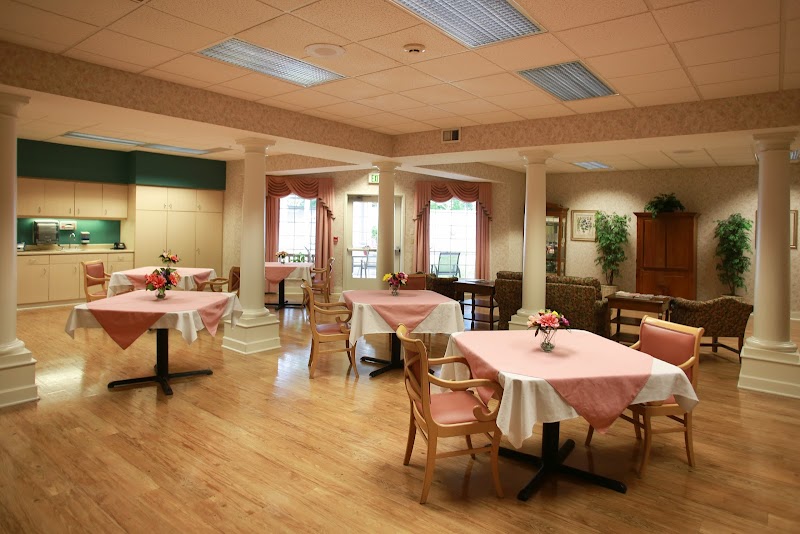
Who Owns and Operates Garden Terrace Healthcare Center Of Federal Way?

GARDEN TERRACE HEALTHCARE CENTER OF FEDERAL WAY is owned by a for-profit company. For-profit facilities operate as businesses with obligations to shareholders or private owners. The facility is operated by LIFE CARE CENTERS OF AMERICA, a chain that manages multiple nursing homes. With 70 certified beds and approximately 60 residents (about 86% occupancy), it is a smaller facility located in FEDERAL WAY, Washington.

How Does Garden Terrace Healthcare Center Of Federal Way Compare to Other Washington Nursing Homes?

Compared to the 100 nursing homes in Washington, GARDEN TERRACE HEALTHCARE CENTER OF FEDERAL WAY's overall rating (5 stars) is above the state average of 3.2, staff turnover (38%) is near the state average of 46%, and health inspection rating (3 stars) is at the national benchmark.

What Should Families Ask When Visiting Garden Terrace Healthcare Center Of Federal Way?

Based on this facility's data, families visiting should ask: "Can I visit during a mealtime to observe dining assistance and food quality?" "How do you handle medical emergencies, and what is your hospital transfer rate?" "Can I speak with family members of current residents about their experience?"

Is Garden Terrace Healthcare Center Of Federal Way Safe?

Based on CMS inspection data, GARDEN TERRACE HEALTHCARE CENTER OF FEDERAL WAY has a clean safety record: no substantiated abuse findings (meaning no confirmed cases of resident harm), no Immediate Jeopardy citations (the most serious violation level indicating risk of serious injury or death), and is not on the Special Focus Facility watch list (a federal program monitoring the lowest-performing 1% of nursing homes). The facility has a 5-star overall rating and ranks #1 of 100 nursing homes in Washington. While no facility is perfect, families should still ask about staff-to-resident ratios and recent inspection results during their visit.

Do Nurses at Garden Terrace Healthcare Center Of Federal Way Stick Around?

GARDEN TERRACE HEALTHCARE CENTER OF FEDERAL WAY has a staff turnover rate of 38%, which is about average for Washington nursing homes (state average: 46%). Moderate turnover is common in nursing homes, but families should still ask about staff tenure and how the facility maintains care continuity when employees leave.

Was Garden Terrace Healthcare Center Of Federal Way Ever Fined?

GARDEN TERRACE HEALTHCARE CENTER OF FEDERAL WAY has no federal fines on record. CMS issues fines when nursing homes fail to meet care standards or don't correct problems found during inspections. The absence of fines suggests the facility has either maintained compliance or corrected any issues before penalties were assessed. This is a positive indicator, though families should still review recent inspection reports for the full picture.

Is Garden Terrace Healthcare Center Of Federal Way on Any Federal Watch List?

GARDEN TERRACE HEALTHCARE CENTER OF FEDERAL WAY is not on any federal watch list. The most significant is the Special Focus Facility (SFF) program, which identifies the bottom 1% of nursing homes nationally based on persistent, serious quality problems. Not being on this list means the facility has avoided the pattern of deficiencies that triggers enhanced federal oversight. This is a positive indicator, though families should still review the facility's inspection history directly.