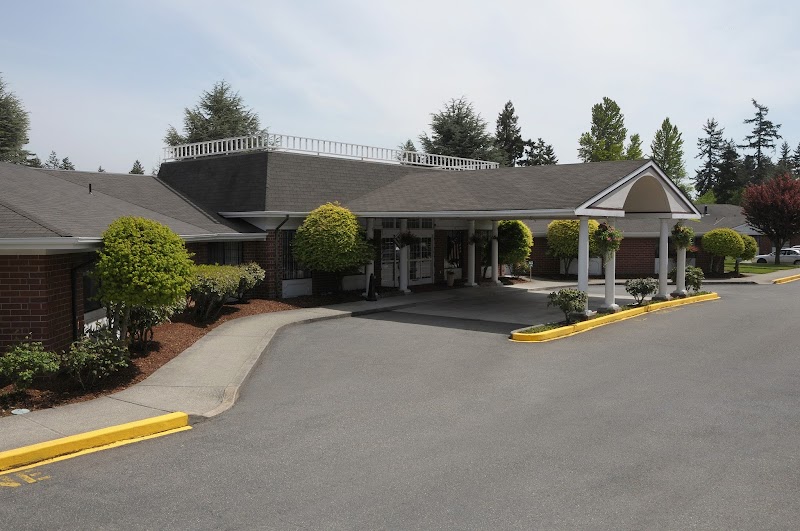
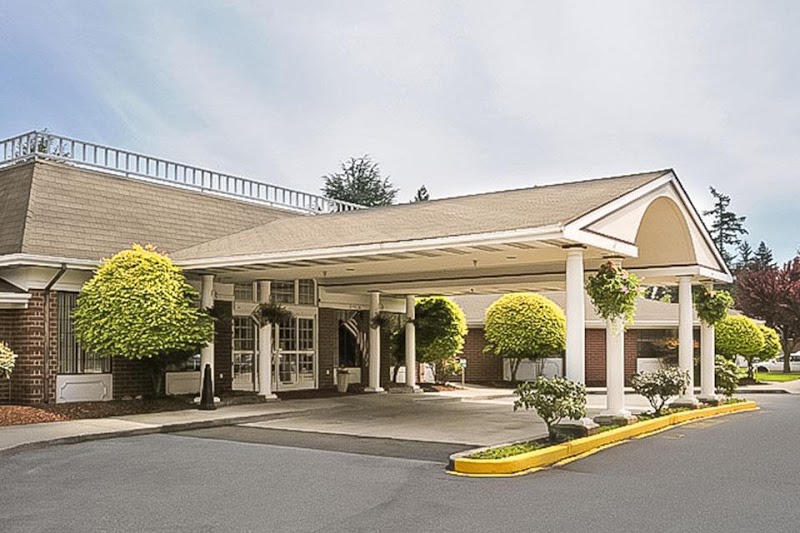


HALLMARK MANOR

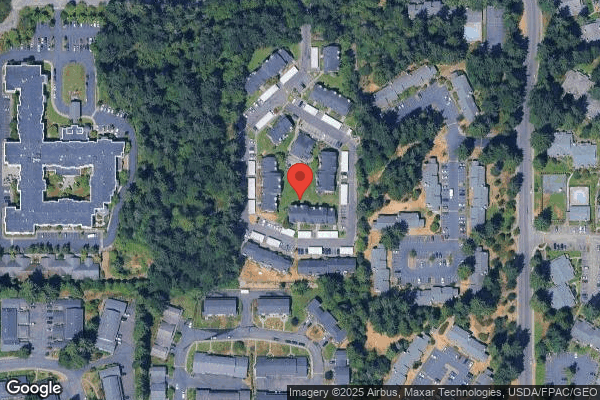
32300 FIRST AVENUE SOUTH, FEDERAL WAY, WA 98003 (253) 874-3580
For profit - Corporation 147 Beds LIFE CARE CENTERS OF AMERICA Data: November 2025
Trust Grade
50/100
#101 of 190 in WA
Last Inspection: May 2025

Inspected within the last 6 months. Data reflects current conditions.

Overview

Hallmark Manor has a Trust Grade of C, which means it is average and sits in the middle of the pack among nursing homes. It ranks #101 out of 190 facilities in Washington, placing it in the bottom half, and #23 out of 46 in King County, indicating that only 22 local options are better. The facility is improving, having reduced reported issues from 23 in 2024 to 19 in 2025. Staffing is a positive aspect, with a turnover rate of 43%, which is better than the state average, but the staffing rating itself is average at 3 out of 5 stars. However, there are concerning incidents, such as a resident developing a serious pressure ulcer that required amputation due to inadequate care, and failures in food safety practices that could expose residents to foodborne illnesses. Overall, while there are strengths in staffing stability, the facility has significant areas needing improvement.

Trust Score
C
50/100
In Washington
#101/190
Bottom 47%
Safety Record
Moderate
Needs review
Inspections
Getting Better
23 → 19 violations
Staff Stability
○ Average
43% turnover. Near Washington's 48% average. Typical for the industry.
Penalties
✓ Good
$32,175 in fines. Lower than most Washington facilities. Relatively clean record.
Skilled Nurses
○ Average
Each resident gets 37 minutes of Registered Nurse (RN) attention daily — about average for Washington. RNs are the most trained staff who monitor for health changes.
Violations
⚠ Watch
59 deficiencies on record. Higher than average. Multiple issues found across inspections.
★★★☆☆
3.0
Overall Rating
★★★☆☆
3.0
Staff Levels
★★★☆☆
3.0
Care Quality
★★★☆☆
3.0
Inspection Score
Stable
2024: 23 issues
2025: 19 issues

The Good

  • Full Sprinkler Coverage · Fire safety systems throughout facility
  • No fines on record
  • Staff turnover below average (43%)

    5 points below Washington average of 48%

Facility shows strength in fire safety.

The Bad

3-Star Overall Rating

Near Washington average (3.2)

Meets federal standards, typical of most facilities

Staff Turnover: 43%

Near Washington avg (46%)

Typical for the industry

Federal Fines: $32,175

Below median ($33,413)

Moderate penalties - review what triggered them

Chain: LIFE CARE CENTERS OF AMERICA

Part of a multi-facility chain

Ask about local staffing decisions and management

The Ugly 59 deficiencies on record

1 actual harm
May 2025 19 deficiencies
CONCERN (D)

Potential for Harm - no one hurt, but risky conditions existed

Deficiency F0582 (Tag F0582)

Could have caused harm · This affected 1 resident

**NOTE- TERMS IN BRACKETS HAVE BEEN EDITED TO PROTECT CONFIDENTIALITY** Based on record review and interview, the facility failed to provide required liability notices for 1 of 3 residents (Resident 2...

Read full inspector narrative →
**NOTE- TERMS IN BRACKETS HAVE BEEN EDITED TO PROTECT CONFIDENTIALITY** Based on record review and interview, the facility failed to provide required liability notices for 1 of 3 residents (Resident 247) reviewed for liability notices. Failure of the facility to issue a Notification of Medicare Non-Coverage (NOMNC) before coverage for Medicare services ended for Resident 247 and discharged from the facility, placed the resident at risk for not fully understanding their Medicare benefits. Findings included . <Resident 247> Record review revealed Resident 247 admitted to the facility on [DATE] and was discharged to an adult family home on [DATE]. Resident 247's record showed no indication the facility provided a NOMNC letter to the resident. A 01/28/2025 social services note showed the discharge plan was for the resident to discharge to an adult family home when they completed their course of antibiotic medication. A 01/29/2025 social services progress note showed Resident 247 was scheduled to discharge back to an adult family home, transportation was arranged to pick up the resident on 01/30/2025, and discharge papers were prepared. In an interview on 05/07/2025 at 11:03 AM Staff C (Social Service Director) stated they did not provide a NOMNC letter to Resident 247. Staff C confirmed the discharge was a planned discharge. REFERENCE: WAC 388-97-0300(1)(e),(5),(6). .
CONCERN (D)

Potential for Harm - no one hurt, but risky conditions existed

Safe Environment (Tag F0584)

Could have caused harm · This affected 1 resident

**NOTE- TERMS IN BRACKETS HAVE BEEN EDITED TO PROTECT CONFIDENTIALITY** Based on observation, interview, and record review the facility failed to ensure a safe, clean, and homelike environment was pro...

Read full inspector narrative →
**NOTE- TERMS IN BRACKETS HAVE BEEN EDITED TO PROTECT CONFIDENTIALITY** Based on observation, interview, and record review the facility failed to ensure a safe, clean, and homelike environment was provided to the residents. Failure to ensure resident rooms were personalized for 1 (South Wing) of 2 wings reviewed and maintain resident weight scales clean and free from rust for shower rooms on 2 (North and South Wing) of 2 wings reviewed, left residents at risk for a less than homelike environment. Findings included . <Facility Policy> According to the facility's Resident Belongings and Home Like Environment policy, revised 06/12/2024, the facility would provide a safe, clean, comfortable, and homelike environment. The policy showed it was the responsibility of all facility staff to create a homelike environment and promptly address any cleaning needs. <South Wing> Observation on 05/06/2025 at 10:17 AM showed room [ROOM NUMBER] occupied one resident in the bed nearest the window. The walls were blank and did not have any décor or personal items for the resident. Observation on 05/06/2025 at 10:28 AM showed room [ROOM NUMBER] occupied one resident in the bed nearest the window. The walls were blank and the room did not contain any décor or personal items for the resident. The room smelled strongly of urine and a bedside commode was noted on the right side of the bed, containing urine in it. Observation on 05/13/2025 at 10:05 AM showed room [ROOM NUMBER] occupied two residents. The room was dark and the walls were blank. There was no décor or personal items in the room for the residents. In an observation and interview on 05/13/2025 at 12:42 PM, Staff A (Administrator) confirmed the walls were blank in the resident rooms. Staff A stated they were aware of the problem and were working with the company to try and obtain items that would add a personal touch. Staff agreed that the resident rooms could be improved and more homelike. <North Wing> Observation on 05/12/2025 at 8:44 AM of the shower room in the 300 hall had a weight scale with a ramp. The scale ramp had rust around the poles and along the bottom edges along the ramp. <North Wing - room [ROOM NUMBER]> In an observation and interview on 05/12/2025 at 9:21 AM, Resident 85 rolled themselves out of their room and were looking for staff members. Resident 85 stated the light bulb was out in the hallway leading into their room. The light switch was in the on position and there was no light in the hallway in the resident's room. The hallway contained two resident closets and the resident's bathroom door. Resident 85 stated the light was out for the last two days and they told staff about it, but no one fixed it. Resident 85 stated it was very dark, and they did not like it when it's dark, especially at night time. In an interview on 05/12/2025 at 9:27 AM, Resident 85 told Staff Q (Certified Nursing Assistant) their light was not working in their hallway. Staff Q observed light was not working. Staff Q stated when they become aware of a maintenance issue, they told the maintenance staff directly, or put the concern into the facility's maintenance system. Staff Q stated they did not know the light bulb was out, but it should be changed because it was not safe for the residents' lights to be out. Observation on 05/13/2025 at 8:37 AM showed the hallway light into room [ROOM NUMBER] was off, the light switch was in the on position indicating the light was not working. In an interview on 05/13/2025 at 9:58 AM, Staff B (Director of Nursing) stated staff should have notified the maintenance department when the light bulb was out. The maintenance team should be notified in person or by phone to fix the light as this was important for residents' safety and to prevent falls. REFERENCE: WAC 388-97-0880. <South Wing - 600 Hall> An observation on 05/06/2025 at 9:47 AM showed the roll-on weight scale in the shower room on 600 hall had rust on the ramp and the top edges of the three safety rails. Rust dust was on the floor surrounding the scale. In an interview on 05/12/2025 at 1:01 PM, Staff I (Resident Care Manager) stated residents could come into contact with the rust and the scale should be repaired or replaced.
CONCERN (D)

Potential for Harm - no one hurt, but risky conditions existed

Deficiency F0637 (Tag F0637)

Could have caused harm · This affected 1 resident

Based on record review and interview, the facility failed to ensure a Significant Change in Status Assessment (SCSA) was completed within 14 days from the date of determination for 1 of 1 resident (Re...

Read full inspector narrative →
Based on record review and interview, the facility failed to ensure a Significant Change in Status Assessment (SCSA) was completed within 14 days from the date of determination for 1 of 1 resident (Resident 92) reviewed for death. Failure to identify the need for a SCSA when Resident 92 had a decline in condition and started on Hospice/Palliative care services placed the resident at risk for unmet care needs and a diminished quality of life. Findings included . According to the Resident Assessment Instrument Manual (RAI - a document directing staff when assessments of resident status is required) a .SCSA is required to be performed when a terminally ill resident enrolls in a hospice program (Medicare Hospice or other structured hospice) and remains in the nursing home. <Resident 92> Review of Resident 92's 03/03/2025 Minimum Data Set (MDS - and assessment tool) showed a 03/03/2025 Death in Facility MDS. Resident 92's records did not show a SCSA was completed. Review of Resident 92's health records showed a 01/26/2025 Social Services significant change progress note stating the resident was on comfort care measures for increased confusion and was bedridden due to fatigue (weakness and/or loss of energy). Resident 92's records showed a 02/04/2025 progress note reporting the residents' blood pressure was dropping below parameters and the Nurse Practitioner instructed staff to discontinue Resident 92's blood pressure medications at that time. Resident 92's records showed a 02/10/2025 progress note reporting a new pressure ulcer to sacrum. Resident 92's records showed a 02/12/2025 progress note reporting resident refusing all foods and fluids due to difficulty in swallowing and was experiencing increased pain. The 02/12/2025 progress note showed the resident representative requested comfort measures for Resident 92's goal for care. Resident 92's records showed a 02/23/2025 physician order for Hospice service for comfort care was implemented. In an interview on 05/13/2025 at 10:46 AM Staff B (Director of Nursing) reviewed Resident 92's health records and stated the progress notes showed the resident started refusing food and fluids on 02/12/2025 and the nurse practitioner ordered palliative/comfort care services per the representative's request. Staff B stated they would expect staff to complete a SCSA per the RAI manual guidelines when a resident enrolls in terminally ill services. In an interview on 05/13/2025 at 11:32 AM Staff D (MDS Nurse) reviewed Resident 92's health records and stated they had a change in mobility, food and fluid intake, level of assistance required, increased pain, and obtained a physician order for Hospice for Comfort care. Staff D stated a SCSA should be completed when two or more changes in activities of daily living occurred and without progress after a 14-day observation period per the RAI Manual. Staff D stated Resident 92 should have a SCSA completed prior to their death but did not. REFERENCE: WAC 388-97-1000(3)(b). .
CONCERN (D)

Potential for Harm - no one hurt, but risky conditions existed

Assessment Accuracy (Tag F0641)

Could have caused harm · This affected 1 resident

**NOTE- TERMS IN BRACKETS HAVE BEEN EDITED TO PROTECT CONFIDENTIALITY** Based on observation, interview, and record review the facility failed to ensure the Minimum Data Set (MDS - an assessment tool)...

Read full inspector narrative →
**NOTE- TERMS IN BRACKETS HAVE BEEN EDITED TO PROTECT CONFIDENTIALITY** Based on observation, interview, and record review the facility failed to ensure the Minimum Data Set (MDS - an assessment tool) accurately reflected the status for 1 of 3 residents (Resident 94) reviewed for closed records and 1 of 7 residents (Resident 1) reviewed for falls. This failure placed residents at risk for unidentified and/or unmet needs, and a diminished quality of life. Findings included <Facility Policy> According to the facility's Resident Assessment Instrument and Care Plan Development policy revised 09/05/2024, the facility would follow procedures described in the Resident Assessment Instrument (instructions/guidelines) when completing MDS assessments. <Resident 1> According to the 03/06/2025 Quarterly MDS, Resident 1 had intact cognition, normal thinking and memory. The MDS showed Resident 1 had functional impairment to one arm and one leg, required partial/moderate assistance from staff for transfers in and out of their bed and wheelchair, and for sitting to standing position. The MDS showed Resident 1 did not have a fall during the assessment period. Observation and interview on 05/06/2025 at 9:33 AM showed Resident 1 lying in bed, their bed was in a low position. Resident 1 stated they fell a lot. Review of a 02/22/2025 nursing progress note showed staff documented Resident 1 was seen lying on the floor in their room by a staff member. The progress note showed the resident was trying to get clothes from their closet without staff assistance and fell onto the floor. In an interview on 05/13/2025 at 9:55 AM, Staff D (MDS Coordinator) reviewed the 03/06/2025 Quarterly MDS and confirmed the MDS should have captured Resident 1's 02/22/2025 fall, but the MDS was inaccurate. <Resident 94> According to a 02/05/2025 Modification of Discharge Return Not Anticipated MDS, Resident 94 discharged to an acute care hospital on [DATE]. Review of Resident 94's health records showed a 02/05/2025 progress note that the resident discharged home per doctor orders. In an interview on 05/12/2025 at 11:45 AM Staff L (MDS Coordinator) stated Resident 94 discharged home and the MDS should be coded as discharge home/community but it was coded in error as discharged to hospital. REFERENCE: WAC 388-97-1000 (1)(b). .
CONCERN (D)

Potential for Harm - no one hurt, but risky conditions existed

PASARR Coordination (Tag F0644)

Could have caused harm · This affected 1 resident

**NOTE- TERMS IN BRACKETS HAVE BEEN EDITED TO PROTECT CONFIDENTIALITY** Based on observation, interview, and record review the facility failed to ensure a Pre-admission Screening and Resident Review (...

Read full inspector narrative →
**NOTE- TERMS IN BRACKETS HAVE BEEN EDITED TO PROTECT CONFIDENTIALITY** Based on observation, interview, and record review the facility failed to ensure a Pre-admission Screening and Resident Review (PASRR) Level 2 comprehensive evaluations (a process to determine what mental health services residents required after a Level 1 PASRR determined mental health services were necessary) were obtained for 5 (Residents 35, 80, 3, 5, & 71) of 9 residents whose PASRRs were reviewed. This failure placed residents at risk for not receiving necessary mental health care and services. Findings included . <Policy> According to a facility policy titled, Pre-admission Screening and Resident Review, revised 09/26/2024, a resident with a Serious Mental Illness (SMI) would indicate a positive level 1. The policy stated a positive level 1 screen necessitated an in depth evaluation of the resident by the state designated authority, known as a PASRR level 2, which would be conducted prior to admission to the facility or the referral would be made for the level 2 at time of new identified SMI's. <Resident 35> According to the 03/13/2025 Quarterly Minimum Data Set (MDS - an assessment tool), Resident 35 had diagnoses of a brain disorder that caused a gradual decline in thinking abilities, memory, and behavior, and anxiety and depression. The MDS showed Resident 35 had rejection of care one to three days during the assessment look back period. Review of Resident 35's 11/29/2024 PASRR Level 1 showed the resident was being reassessed for mental health conditions due to a recent change in condition. This PASRR showed Resident 35 had a SMI of mood, anxiety, and psychotic disorders. The PASRR showed Resident 35 was being referred for a PASRR Level 2 evaluation. Review of Resident 35's documents, assessments, Care Plan (CP), and progress notes on 05/13/2025 showed no indication a PASRR Level 2 determination was obtained. There were no progress notes showing the facility followed up to obtain the Level 2 determination, five months after the referral was sent. In an interview on 05/13/2025 at 10:28 AM, Staff C (Social Services Director) stated the facility sent the referral for the PASRR Level 2 evaluation but the facility did not have a process for following up on PASRRs that were referred for Level 2 evaluations to ensure they were obtained. <Resident 80> According to a 07/13/2024 admission MDS Resident 80 admitted to the facility on [DATE]. The MDS showed Resident 80 had diagnoses of, but not limited to, depression. Record review of Resident 80's health records showed a 07/08/2024 diagnosis of anxiety disorder. Resident 80's records showed a PASRR 1 with SMI documented as depression and anxiety disorder. Resident 80's PASRR 1 showed no level 2 evaluation indicated. <Resident 3> According to a 06/13/2024 Annual MDS, Resident 3 had diagnoses of, but not limited to, anxiety disorder, depression, and psychotic disorder. Record review of Resident 3's health records showed a 06/26/2024 updated PASRR 1 with SMI documented as Schizophrenic disorder (mental disorder affecting the way a person thinks, feels, and behaves), psychotic disorder, depression, and anxiety disorder. Resident 3's PASRR 1 showed no level 2 evaluation referral was made. <Resident 5> According to a 01/09/2025 Annual MDS, Resident 5 had diagnoses of, but not limited to, depression, anxiety disorder, and post traumatic stress disorder. Record review of Resident 5's health records showed a 03/08/2024 updated PASRR 1 with SMI documented as depression and anxiety disorder. Resident 5's PASRR 1 showed no level 2 evaluation indicated. In an interview on 05/12/2025 at 9:57 AM, Staff G (Social Service Assistant) stated Resident's 80, 3, & 5 had SMI so they should have been referred for a level 2 PASRR. Staff G stated a level 2 evaluation was important to ensure the residents were receiving appropriate mental health care services. In an interview on 05/13/2025 at 9:49 AM, Staff C stated they expected a PASRR 2 referral to be made when a resident had SMI's per regulation. Staff C stated it was important to ensure the residents were receiving the best mental health care services. <Resident 71 > According to the 02/26/2025 Quarterly MDS, Resident 71 admitted to the facility on [DATE] and had diagnoses of anxiety and depression. According to the revised 08/08/2023 PASRR Level 1 screening, Resident 71 required an updated PASRR Level 1 because of a new diagnosis of depression. The PASRR Level 1 showed no level 2 was indicated. Review of the 10/13/2023 Behavior Problem CP showed Resident 71 had a behavior problem of seeking pain medication, feelings of emptiness, and worrying. Review of a physician ordered dated 03/19/2024 showed Resident 71 had diagnoses of depressive disorder and anxiety. Record review did not show a change of condition PASRR Level 1 was completed and did not show a PASRR level 2 referral was made after the 03/19/2024 diagnoses. Review of the 05/24/2024 CP showed Resident 71 had the potential to be verbally aggressive related to ineffective coping skills and poor impulse control. Observation on 05/07/2025 at 9:33 AM showed Resident 71 lying in bed, watching Television, (TV) and stated they were watching TV but did not really like anything that was on TV. Resident 71 stated they had pain all the time in their joints and was verbally upset at the facility for taking away their arthritis cream. In an interview on 05/13/2025 at 11:45 AM Staff C stated for changes of condition an updated PASRR Level 1 screening was important to keep track of residents' condition and to inform the facility of physical and mental changes. REFERENCE: WAC 388-97-1915(4). .
CONCERN (D)

Potential for Harm - no one hurt, but risky conditions existed

Comprehensive Care Plan (Tag F0656)

Could have caused harm · This affected 1 resident

Based on record review and interview the facility failed to ensure development of a Palliative care plan for 1 of 3 residents (Resident 92) reviewed for closed records. Failure to develop a Palliative...

Read full inspector narrative →
Based on record review and interview the facility failed to ensure development of a Palliative care plan for 1 of 3 residents (Resident 92) reviewed for closed records. Failure to develop a Palliative care plan placed residents at risk of unmet care needs and decreased quality of life. Findings included . <Policy> According to a facility policy titled, Comprehensive Care Plans and Conferences, revised 09/05/2024, the facility would ensure timeliness of each resident's person-centered care plan, and that each resident/representative would be involved in development of their care plan. <Resident 92> According to a 03/03/2025 Death in facility Minimum Data Set (MDS - an assessment tool) Resident 92 passed away in the facility on 03/03/2025. Review of Resident 92's health records showed a 02/13/2025 physician progress note stating the resident representative agreed to Palliative care services. Resident 92's health records showed no Palliative care plan. In an interview on 05/13/2025 at 10:46 AM Staff B (Director of Nursing) reviewed Resident 92's health records and stated they did not have a Palliative care plan but should have. Staff B stated it was important to develop Palliative care plans to ensure staff were aware of interventions to keep the residents as comfortable as possible for the end of life. Reference: WAC 388-97-1020(1), (2)(a)(b). .
CONCERN (D)

Potential for Harm - no one hurt, but risky conditions existed

Deficiency F0657 (Tag F0657)

Could have caused harm · This affected 1 resident

**NOTE- TERMS IN BRACKETS HAVE BEEN EDITED TO PROTECT CONFIDENTIALITY** Based on interview and record review, the facility failed to facilitate quarterly care conferences for 3 of 3 residents (Residen...

Read full inspector narrative →
**NOTE- TERMS IN BRACKETS HAVE BEEN EDITED TO PROTECT CONFIDENTIALITY** Based on interview and record review, the facility failed to facilitate quarterly care conferences for 3 of 3 residents (Resident 1, 50, & 64) reviewed for care conferences, and failed to ensure Care Plans (CP) were revised as required for 2 (Resident 71 and 88) of 2 residents reviewed for care planning. These failures placed residents at risk for unmet care needs, unnecessary care, frustration, and other negative health outcomes. Findings included . <Facility Policy> According to a facility policy titled, Comprehensive Care Plans and Conferences, revised 09/05/2024, the facility would ensure the timeliness of each resident's person-centered, comprehensive CP, and ensure the comprehensive CP was reviewed and revised by the interdisciplinary team composed of individuals who have knowledge of the resident and their needs, and each resident and/or resident representative was involved in developing the CP and making decisions about their care. The policy showed the interdisciplinary team consisted of, at a minimum, the resident's physician, a registered nurse, a nurse aide, a member of the dietary department, the resident, and the resident representative, if applicable. The policy showed care conferences would be offered/conducted within seven days of admission, quarterly, and as needed. <Care Conferences> <Resident 1> According to the 03/06/2025 Quarterly Minimum Data Set (MDS - an assessment tool), Resident 1 admitted to the facility on [DATE]. The MDS showed Resident 1 had diagnoses including inability to control blood sugar levels, anxiety, and depression. In an interview on 05/06/2025 at 9:39 AM, Resident 1 stated they were not sure about when they last had a care conference with staff. Review of Resident 1's progress notes showed an 11/26/2024 social services note stating the resident declined to have a quarterly care conference. There were no other progress notes or follow up documentation regarding scheduling further care conferences or that the next quarterly care conference was offered. These progress notes showed the last care conference documented was on 11/09/2023, over two and a half years ago. <Resident 50> According to the 03/12/2025 Quarterly MDS, Resident 50 admitted to the facility on [DATE]. The MDS showed Resident 50 was in a persistent, vegetative state and had diagnoses including a seizure disorder, anxiety, and depression. Review of Resident 50's record showed a 12/12/2024 social services progress note that a voicemail was left with the resident's representative to schedule a quarterly care conference. There were no other progress notes or follow up documentation regarding scheduling further quarterly care conferences. In an interview on 05/13/2025 at 10:19 AM, Staff C (Social Services Director) stated care conferences for long-term care residents should be held quarterly. Staff C stated care conferences were documented in progress notes in the resident's record. Staff C confirmed Resident 1 and Resident 50 were not offered/provided care conferences quarterly. Staff C stated their process for providing quarterly care conferences was a work in progress.<Resident 64> According to a 03/28/2025 Quarterly MDS, Resident 64 readmitted to the facility on [DATE]. The MDS showed Resident 64 had no memory impairment. In an interview on 05/07/2025 at 8:41 AM, Resident 64 stated the facility did not offer or conduct a care conference with them since their admission to the facility. Review of Resident 64's records showed no documentation a care conference was performed. In an interview on 05/12/2025 at 9:57 AM, Staff G (Social Service Assistant) reviewed Resident 64's health records and stated there was a social service progress note on 02/05/2025 stating Resident 64 declined a quarterly care conference. Staff G stated Resident 64's records showed no other care conferences were offered or conducted. Staff G stated they were expected to offer care conferences within 72 hours of admission, quarterly, and as requested/needed. In an interview on 05/13/2025 at 9:49 AM Staff C stated they expected care conferences be conducted within the first week of admission if possible, quarterly, if they could get to them, but at least annually, and as needed. Staff C stated social services, nurse manager, business office manager, dietary, and therapy would attend new admission care conferences and skilled resident care conferences, and social services and nurse manager would attend long term care resident care conferences. When asked if dietary or activities would attend long term care resident care conferences, Staff C stated they used to but stopped showing up to resident's care conferences. <Resident 71> According to an 02/26/2025 Quarterly MDS, Resident 71 had respiratory failure. According to revised 02/27/2024 oxygen CP, Resident 71 was to have oxygen supplementation, as needed, if their oxygen saturation rate (measure of oxygen carried by the blood) was below 92%. Review of May 2025 Medication Administration Record (MAR) did not show oxygen supplementation was provided. In an interview on 05/13/2025 at 9:58 AM Staff F (Regional Director of Clinical Services) stated Resident 71's CP should have been revised to remove oxygen saturation monitoring after supplemental oxygen was discontinued, but was not. Staff F stated this could cause confusion and the CP should be revised. REFERENCE: WAC 388-97-1020(4)(e),(5)(b). <Care Plan Revision> <Resident 88> According to the 04/22/2025 MDS, Resident 88 had multiple medically complex diagnoses including risk for malnutrition (lack of nutrients to maintain health), heart failure, and dysphagia (difficulty speaking). Review of physician admission note dated 04/10/2025 at 3:21 PM showed the provider was aware Resident 88 had delirium during the recent hospital admission and was refusing care. Review of a 04/10/2025 physician order directed staff to obtain Resident 88's weight for the first 3 days following admission, once per week for 4 weeks and then once per month. An order dated 05/09/2025 showed staff were to reweigh Resident 88 on the same day. Review of progress note dated 05/08/2025 at 11:48 AM showed provider noted Resident 88's weight was to be monitored for the management of medications related to heart failure. Review of Resident 88's weight summary report on 05/12/2025, showed weigh entries of 211 pounds on 04/10/2025 at 2:48 PM and 96 pounds on 05/02/2025 at 1:03 PM. Review of Resident 88's April and May 2025 Medication Administration Records (MARs) showed staff attempted to obtain Resident 88's weight on 04/11/2025, 04/12/2025 and 04/13/2025, treatment was refused and no weights were recorded. An entry on 04/17/2025 showed Resident refused treatment and 211 pounds was documented. Entries on 04/24/2025 and 05/01/2025 showed Resident 88 was weighed and 211 pounds was documented. An entry on 05/08/2025 showed Resident 88 was weighed and weight was documented as N/A. An entry on 05/09/2025 at 5:01 PM showed no weight recorded and coded as drug refused. Review of a nursing progress note dated 04/11/2025 at 1:32 PM and 04/13/2025 at 5:49 PM showed Resident refused to be weighed. Review of CP, last revised on 04/29/2025, showed Resident 88 was resistive to care; brief, linen changes, meal refusals, medication refusals and showers with a goal that they would cooperate with care through the next review date. The CP goal and interventions for resistance to care were initiated on 04/11/2025 and remained unchanged. Review of Resident 88's record on 05/12/2025, showed no documentation of specific interventions performed by staff to obtain the resident's weight. In an interview on 05/12/2025 at 1:01 PM, Staff I (Resident Care Manager - RCM) stated they were aware of Resident 88's refusals to be weighed, expected staff to accept refusals of care as the resident's right, and to follow the current CP interventions. In an interview on 05/13/2025 at 12:36 PM, Staff F (Regional Director of Clinical Services) reviewed Resident 88's CP and stated obtaining weights should have been included in Resident 88's list of care refusals. Staff F stated they expected staff to revise the CP to include specific interventions to assist staff in obtaining Resident 88's weight.
CONCERN (D)

Potential for Harm - no one hurt, but risky conditions existed

Deficiency F0658 (Tag F0658)

Could have caused harm · This affected 1 resident

Based on observation, interview, and record review the facility failed to ensure: physician orders were obtained for bed rails and blood sugar parameters, clarify physician orders, and medications wer...

Read full inspector narrative →
Based on observation, interview, and record review the facility failed to ensure: physician orders were obtained for bed rails and blood sugar parameters, clarify physician orders, and medications were administered within ordered parameters for 3 (Residents 80, 88, & 1) of 20 sample residents. These failures placed residents at risk for medication errors, delayed treatment, and adverse outcomes. Findings included . <Blood Sugar Parameters> <Resident 80> According to a 07/13/2024 admission Minimum Data Set (MDS - an assessment tool) Resident 80 had a diagnosis of, but not limited to, Diabetes (unstable blood sugar levels). Review of Resident 80's records showed a physician order for a blood sugar lowering injectable medication. Resident 80's records did not include physician orders for parameters of when to notify the physician of dangerously out of range blood sugar levels. In an interview on 05/12/2025 at 12:13 PM, Staff B (Director of Nursing) stated Resident 80 should have physician instructions to notify when their blood sugar was less than 60 but did not. Staff B stated this was important to ensure the resident's blood sugar did not drop below 60 and end up in the hospital <Obtaining Physician Orders> <Resident 80> Observation and record review on 05/06/2025 at 9:24 AM showed bilateral bed rails to Resident 80's bed. Review of Resident 80's records showed no physician order for the bilateral bed rails. In an interview on 05/12/2025 at 12:13 PM, Staff B stated Resident 80 should have a physician order for the bilateral bed rails but did not. Staff B stated it was important to obtain physician orders for all cares/treatments for a resident. <Administering Medications Outside of Parameters> <Resident 88> According to the 04/22/2025 admission MDS, Resident 88 had multiple medically complex diagnoses including high Blood Pressure (BP - pressure against blood vessel walls when the heart pumps). Review of a 04/10/2025 physician order directed staff to administer a medication to reduce BP twice daily with instructions to hold the medication if Systolic BP (SBP - a measure of the pressure inside your arteries when the heart squeezes) was less than 110 mmHg (millimeters of mercury). Review of Resident 88's April and May 2025 Medication Administration Records (MARs) showed staff did not follow instructions and administered the medication on 04/18/2025 and 05/06/2025 at bedtime, and 05/04/2025 and 05/09/2025 in the morning when their SBP was less than 110 mmHg. In an interview on 05/12/2025 at 1:01 PM, Staff I (Resident Care Manager) reviewed Resident 88's record and confirmed staff failed to hold the medication per the physician's orders. Staff I stated it was their expectation staff follow physician orders and hold medications, as instructed. <Clarifying Physician Orders> <Resident 1> Review of Resident 1's physician orders tab showed a 04/29/2025 order directing staff to administer a diuretic (medication that removed excess fluid from the body) to the resident once daily. The order included instructions to staff to check Resident 1's BP prior to administering the medication. Review of Resident 1's April 2025 and May 2025 MARs showed the instructions to check the resident's BP did not transfer to the MAR, therefore staff were not checking the resident's BP prior to administering the medication. In an interview on 05/13/2025 at 10:55 AM, Staff B and Staff F (Regional Director of Clinical Services) reviewed Resident 1's order for the diuretic and the MAR. Staff B and Staff F stated the order required clarification from the physician. Refer to F700 - Bedrails. REFERENCE: WAC 388-97-1620(2)(b)(i)(ii),(6)(b)(i). .
CONCERN (D)

Potential for Harm - no one hurt, but risky conditions existed

ADL Care (Tag F0677)

Could have caused harm · This affected 1 resident

<Resident 61> According to the 02/22/2025 Quarterly MDS, Resident 61 was moderately impaired with their thinking/processing abilities and required cues and supervision for daily decision making....

Read full inspector narrative →
<Resident 61> According to the 02/22/2025 Quarterly MDS, Resident 61 was moderately impaired with their thinking/processing abilities and required cues and supervision for daily decision making. Resident 61 had impairment to both legs and required the use of a wheelchair for mobility. Resident 61 was totally dependent on staff for transfers to and from their bed to wheelchair. Observation on 05/06/2025 at 10:32 AM showed Resident 61 sitting in their wheelchair in their room, the resident was asleep. Observations on 05/07/2025 at 9:03 AM showed Resident 61 asleep, sitting in their wheelchair in their room. The room was dark, the television and radio were off. In an interview on 05/07/2025 at 10:40 AM, Resident 61's representative stated the facility would assist Resident 61 out of bed in the morning before breakfast and then leave the resident in their wheelchair until around 3:00 PM. Resident 61's representative stated the resident usually ate dinner in bed because they were too tired to get up in the wheelchair again. Resident 61's representative stated I wish [staff] would put Resident 61 back in bed after breakfast. Observation on 05/08/2025 at 8:55 AM showed Resident 61 sitting in their wheelchair in a group activity in the day room. Resident 61 was asleep. Observations on 05/08/2025 at 10:06 AM and at 12:23 PM, showed Resident 61 was back in their room in their wheelchair. Observation on 05/12/2025 at 9:48 AM showed Resident 61 at an activity, asleep in their wheelchair. Observations on 05/12/2025 at 11:36 AM and 1:22 PM showed Resident 61 sitting in their wheelchair. In an interview on 05/12/2025 at 1:41 PM, Staff P stated Resident 61 did not lie down after breakfast and that staff kept the resident in the wheelchair. In an interview on 05/13/2025 at 11:21 AM, Staff B stated they expected staff to provide assistance to residents to lie down, especially if the resident was asleep in their wheelchair. REFERENCE: WAC 388-97-1060(2)(c). <Resident 46> According to the 01/06/2025 admission MDS, Resident 46 could make their needs known, understood others, and was dependent on staff for bathing, lower body dressing, and putting on footwear. According to the 01/02/2025 ADL self-care performance deficit CP, Resident 46 had deficits related to impaired balance. Staff were to encourage Resident 46 to participate in ADLs and document any refusals. The CP showed Resident 46 was dependent on staff for bathing, hygiene/oral care, and two staff were needed for dressing. Review of Resident 46's care staff task list from 05/01/2025 through 05/13/2025 showed staff documented ADL care daily for all day and evening shifts except evenings of 05/11/2025, 05/12/2025, and 05/13/2025. There was no documentation showing Resident 46 refused showers, dressing, or personal hygiene, on day or evening shifts. In an interview on 05/06/2025 at 10:22 AM, Resident 46 stated staff did not clip their nails and the resident had to bite them to keep them short. Resident 46 stated the staff did not offer to clip their toenails, and stated they had diabetes (inability of the body to regulate blood sugar levels), and their feet, hands, and skin should be observed by staff. Resident 46 stated the staff did not give them a washcloth in the morning and one of the nurses told Resident 46 it was not their job to provide nail care. Resident 46 stated they did not think the nurses wanted to provide nail care to them. In an interview on 05/06/2025 at 1:37 PM, Resident 46 stated their feet became swollen and they needed diabetic socks. Resident 46 stated they told staff they would like to be shaved but staff stated they could not shave the resident because of their diabetes. Resident 46 stated the care staff did not routinely offer them a washcloth to wash their hands or their face. Observation on 05/12/2025 at 8:37 AM showed Staff H (Registered Nurse) assess Resident 46's bilateral feet and legs. Resident 46 had long toenails extending a half inch past the nail bed. Some nails were cracked and had jagged edges. Dry, flaky, and dark black skin was observed in several spots around both feet. Resident 46's left leg was more swollen in comparison to their right leg. Resident 46 was observed to tell the nurse the care staff did not remove the resident's socks in three weeks. In an interview on 05/12/2025 at 8:42 AM, Staff H stated Resident 46 often refused care including showers and nail care, and Resident 46 was not on the list to see the podiatrist due to refusals. Staff H stated staff should document refusals of care and the nurses were responsible for informing the social services team when a resident needed to be added to the podiatrist list. In an interview on 05/12/2025 at 9:03 AM, Staff G (Social Service Assistant) stated the facility had a podiatrist that came to the facility every 6 to 8 weeks. Staff G stated the social services team placed residents on the list for the podiatrist and they added diabetic residents to the podiatrist list routinely as diabetic residents were susceptible to skin and wound issues. Staff G stated Resident 46 was not on the podiatrist list for routine diabetic foot care. In an interview on 5/13/2025 at 9:43 AM Staff B (Director of Nursing) stated care staff should have alerted the nurses right away for any issues they observed. Staff B stated for diabetic foot care, the nurses should make a referral to the podiatrist and routinely check diabetic residents' skin. Staff B stated the staff should have alerted the nurse for all refusals of care and then the unit manager and social services team would be aware. Based on observation, interview, and record review the facility failed to provide assistance with Activities of Daily Living (ADLs) for 3 (Residents 46, 61 & 62) of 7 residents who were assessed to be dependent on staff for ADLs. The failure to provide ADL assistance as required left residents at risk for poor hygiene, diminished feelings of self-worth, and other negative health outcomes. Findings included . <Facility Policy> According to the facility's [ADLs] policy, revised 09/10/2024, residents would receive assistance with ADLs as needed. Any change in the ability to perform ADLs would be reported to the nurse. For bed and wheelchair mobility, staff would assist residents with bed/wheelchair repositioning as necessary to prevent skin breakdown. For fingernail care, staff would ensure fingernails were clean and trimmed to avoid injury and infection. <Resident 62> According to the 04/28/2025 Significant Change Minimum Data Set (MDS - an assessment tool), Resident 62 had a significant change in their health status, resulting in their transition to hospice care (a comfort-focused approach). Resident 62's functional abilities for eating were changed from setup assistance to supervision assistance. Review of a revised 05/07/2025 Care Plan (CP), showed Resident 62 required supervision by one staff member when eating. Observations on 05/08/2025 at 12:40 PM, 05/09/2025 at 7:46 AM, 05/09/2025 at 12:52 PM, 05/10/2025 at 1:02 PM, and 05/12/2025 at 8:29 AM, showed Resident 62 with a meal tray on their bedside table and no staff supervision provided between delivery time and removal of the tray. In an observation on 05/09/2025 7:58 AM, Resident 62 was heard coughing from the hallway while feeding themselves. Staff I (Resident Care Manager) entered Resident 62's room and exited room at 8:01 AM. No eating supervision was provided. In an interview on 05/07/2025 at 12:39 PM, Resident 62 stated they lost weight since they were admitted to the facility. In an interview on 05/12/2025 at 08:32 AM, Staff P (Certified Nursing Assistant - CNA) was assigned to care for Resident 62 and stated they were setup assistance only for meals. In an interview on 05/12/2025 at 1:01 PM, Staff I reviewed Resident 62's most recent MDS and stated the resident was assessed to require staff assistance with eating. Staff I reviewed Resident 62's CP and stated a staff member should sit with them during each meal to provide support.
CONCERN (D)

Potential for Harm - no one hurt, but risky conditions existed

Quality of Care (Tag F0684)

Could have caused harm · This affected 1 resident

**NOTE- TERMS IN BRACKETS HAVE BEEN EDITED TO PROTECT CONFIDENTIALITY** <Resident 80> According to a 07/13/2024 admission Minimum Data Set (MDS - an assessment tool) Resident 80 admitted to the ...

Read full inspector narrative →
**NOTE- TERMS IN BRACKETS HAVE BEEN EDITED TO PROTECT CONFIDENTIALITY** <Resident 80> According to a 07/13/2024 admission Minimum Data Set (MDS - an assessment tool) Resident 80 admitted to the facility on [DATE] and had no memory impairment. The MDS showed Resident 80 had a diagnosis of, but not limited to, high cholesterol. Review of resident 80's health records showed 03/04/2025 physician orders for a cholesterol lowering medication and a medication for high uric acid (a waste product that can cause painful inflammation in the body when not excreted) levels in the body. Resident 80's health records showed no lab results for blood cholesterol or uric acid level. Resident 80's health records did not show a diagnosis related to high uric acid levels. In an interview on 05/12/2025 at 12:13 PM Staff B (Director of Nursing) reviewed Resident 80's health records and stated they did not have a cholesterol or uric acid level monitored but should. Staff B reviewed Resident 80's most recent hospitalization and stated they did not see the labs were not obtained at the hospital either. Staff B stated it was important to obtain these levels prior to prescribing these medications so they were not administering the medications unnecessarily. Staff B stated they expected staff to ensure they received copies of blood work for these medications to ensure the medications were not prescribed in error. <Change In Condition> <Resident 46> According to an 01/06/2025 admission MDS, Resident 46 had clear speech, was understood and able to understand others. The MDS showed Resident 46 had an active diagnoses of heart failure with pulmonary edema, morbid obesity, diabetes and was at risk for skin pressure injuries. Review of an 01/02/2025 ADL self-care performance deficit Care Plan (CP), showed Resident 46 was totally dependent on two staff for mobility, dressing and personal hygiene. Staff were to observe and report any changes in Resident 46's condition and decline in functional abilities. In an interview on 05/06/2025 at 1:37 PM Resident 46 stated they were diabetic and no one at the facility checked their feet or legs to see if they had swelling. In an interview on 05/12/2025 at 8:27 AM Resident 46 stated the staff probably could not see their legs were swollen because the staff did not take their socks off while providing care to check their legs. Observation on 05/12/2025 at 8:37 AM Staff H (Registered Nurse) assessed Resident 46's legs. Resident 46 had blue socks that were pulled up towards the middle part of their leg. Staff H removed the socks and stated Resident 46 had edema to their left leg in comparison to their right leg. Resident 46 told Staff H, the staff did not take their socks off for three weeks and no one had looked at their legs when providing care. Staff H stated no one had reported to them that Resident 46 had edema in their legs. In an interview on 05/13/2025 at 9:43 AM Staff B (Director of Nursing) stated they expected staff to provide care as stated in the CP and to observe and report any findings or changes in condition to the nurse and the nurse would assess the resident right away. Staff B stated staff were expected to routinely monitor residents with diabetes for the condition of their skin. <Resident 44> According to an 02/27/2025 quarterly MDS Assessment, Resident 44 had diagnoses of end stage renal disease, history of a stroke, partial body weakness, communication deficit and was dependent on dialysis treatments. Review of the 03/18/2024 Dialysis CP, showed staff were to report any signs and symptoms of infection of the dialysis access site for redness, swelling, warmth or drainage. Staff were to observe and report peripheral edema and not to take a blood pressure in the right arm due to interference with the dialysis access site. Observation and interview on 05/13/2025 at 8:32 AM showed Resident 44's right hand was red in color and was swollen. Resident 44 stated they had pain and wanted to put their arm up. In an interview on 05/13/2025 at 8:35 AM Staff H (Registered Nurse) observed Resident 44's right hand was swollen, warm to the touch and was red in appearance. Staff H stated no one told them that Resident 44's hand was swollen and red. In an interview on 05/13/2025 at 9:35 AM, Staff W (CNA) stated they did not notice anything wrong with Resident 44's right hand while providing morning personal hygiene care. Staff W stated Resident 44 had a shower today and the shower aid did not report to them an issue with the resident's hand. In an interview on 05/13/2025 09:40 AM, Staff Q (CNA-Shower Aid) stated they gave Resident 44 a shower today but did not notice swelling to Resident 44's right hand and noticed Resident 44 had a pillow underneath their right arm, but did not know why and did not report this to the nurse. In an interview on 05/13/2025 at 9:43 AM, Staff B (Director of Nursing) stated staff were to observe for changes of condition when providing care, especially when issues caused discomfort or pain, or were considered unusual. <Pain Management> <Resident 65> According to an 03/12/2025 Quarterly MDS assessment, Resident 65 had a history of falling and had a history of fracture to their vertebrae. Review of the revised 12/24/2024 Vertebrae Fracture CP showed staff were to provide pain medications as ordered. Review of the May 2025 Medication Administration Record (MAR) showed an order dated 05/08/2025 for Resident 65 to receive their pain medication according to their pain rating, on a pain scale level of 1 out of 10 (1 meaning no pain and 10 meaning the highest pain). Resident 65 should receive one tablet of pain medication when the resident's pain level was 1 to 4 on the pain scale and should receive two tablets of pain medication when their pain level was 5 to 10 on the pain scale. According to the May 2025 MAR, staff documented Resident 65 received one tablet of pain medication instead of two tablets as ordered on the following dates: on 05/08/2025 pain level was a 5; on 05/9/2025 pain level was a 6; on 05/10/2025 pain level was a 6; on 05/12/2025 pain level was a 7 and on 05/13/2025 pain level was a 6. <Pain Patch> Review of May 2025 Medication Administration Record showed a 05/08/2025 physician's order for a pain patch and to apply it every 72 hours for chronic pain disorder and then remove the patch. The MAR showed on 05/08/2025 the staff did not give Resident 65 their pain medication because the medication was not filled by the pharmacy. Review of progress notes showed staff received the pain patch on 05/09/2025, one day after the missed dose on 5/8/2025 but did not give Resident 65 their pain patch until their next scheduled application date on 5/11/2025, three days after the order was received. In interviews on 05/08/2025 at 11:36 AM and on 05/12/2025 at 11:36 AM Resident 65 stated they did not have any pain. In an interview on 05/13/2025 at 11:40 AM Staff B stated they expected the nurses should follow physician orders as indicated as this was important for improved pain management for residents using pain medications based on the pain scale. Staff B stated staff should have restarted the pain patch when they received it on 05/9/2025 instead of waiting until 05/11/2025, but did not. REFERENCE: WAC 388-97-1060 (1). Based on observation, interview, and record review, the facility failed to ensure adequate laboratory testing for 2 (Resident 80 & 88) of 5 residents reviewed for unnecessary medications, failed to report changes of condition for 2 (Residents 44 & 46) of 2 sampled residents, and failed to administer pain medications for 1 (Resident 65) of 1 sampled residents. These failures to ensure adequate testing to prevent unnecessary medication use, identify changes of condition, and administer pain medications placed residents at risk for the administration of unnecessary medications, discomfort from skin impairments and untreated pain, and other negative health outcomes. Findings included . <Laboratory Testing> <Resident 88> According to the 04/22/2025 admission Minimum Data Set (MDS - an assessment tool) Resident 88 had multiple medically complex diagnoses including hypothyroidism (HT - thyroid gland does not make enough thyroid hormones). Review of a 04/10/2025 physician order directed staff to administer a medication to increase Resident 88's thyroid hormone level. Review of Resident 88's April and May 2025 Medication Administration Records (MARs) showed staff administered the medication to Resident 88 each day, beginning on 04/11/2025. Review of Resident 88's record on 05/12/2025, showed no documentation of a Thyroid Stimulating Hormone (TSH -test to measure thyroid function) blood test having been drawn. In an interview on 05/12/2025 at 1:01 PM, Staff I (Resident Care Manager) reviewed Resident 88's record and stated the facility failed to draw a TSH blood test. Staff I stated it was possible the hospital had drawn the test prior to Resident 88's admission. No further documentation was provided.
CONCERN (D)

Potential for Harm - no one hurt, but risky conditions existed

Deficiency F0692 (Tag F0692)

Could have caused harm · This affected 1 resident

<Resident 3> Continuous observation on 05/08/2025 at 12:11 PM showed staff bring Resident 3 their lunch tray to their room. Staff elevated Resident 3's head of bed to a sitting position, placed ...

Read full inspector narrative →
<Resident 3> Continuous observation on 05/08/2025 at 12:11 PM showed staff bring Resident 3 their lunch tray to their room. Staff elevated Resident 3's head of bed to a sitting position, placed their lunch tray on the over the bed table in front of them, and then exited the room. The lunch tray had ground pork in gravy, potatoes, and green beans. Observation showed Resident 3 did not feed themselves. At 1:04 PM Staff BB (CNA) entered Resident 3's room to remove the lunch tray and Resident 3 stated they could not feed themselves. Staff BB asked Resident 3 if they wanted assistance and Resident 3 stated yes but the food was probably cold now. Staff BB stated it was still warm and asked if Resident 3 wanted a bite of green beans, the resident replied yes. Staff BB assisted Resident 3 with a bite of green beans and the resident stated yuck, it's cold. Staff BB asked how about some meat and assisted Resident 3 with a bite of ground pork. Resident 3 stated yuck, it's cold. Staff BB stated they did not think they had a microwave to warm the food up and asked Resident 3 if they wanted some pudding. At 1:12 PM, two other staff entered the room and stated they were there to assist with changing Resident 3's brief. One of the staff, Staff R (CNA), asked for the resident's tray and proceeded to remove it from the room. Staff BB or Staff R did not offer a meal replacement to Resident 3. Resident 3's lunch tray had one bite of ground pork, one bite of green beans, and 75% of the pudding missing, less than 10 % of the total meal consumed. Review of Resident 3's health records showed no documentation of a meal replacement offered for the less than 10 % lunch consumed on 05/08/2025. In an interview on 05/12/2025 at 12:13 PM, Staff B stated they expected staff to offer and document in the resident health records a meal replacement when less than 50 % of the meal was consumed. Staff B stated this was important for residents' health and nutritional status. Based on observation, interview, and record review the facility failed to provide nutritional care, weight monitoring, and storage of food provided by outside sources for 3 (Resident 46, 62, and 88) of 8 residents reviewed. The failure to offer meal replacements when residents consumed less than 50% of their meals, collect timely and accurate weights as ordered and per facility policy, and proper storage of foods brought to residents by outside sources, placed residents at risk for nutrition-related complications, unplanned weight fluctuations, inaccurate assessments and delayed interventions of nutritional status, fluid overload, and other negative health outcomes. Findings included . <Facility Policy> According to the facility's revised 09/10/2024, Hydration and Nutrition Policy, each resident would receive enough food to maintain acceptable parameters of nutritional status and were to be offered a therapeutic diet when there was a nutritional problem. Each resident would be offered three meals per day and if a meal or food was refused, the resident would be offered a substitute of a similar nutritive value. The facility would document intake percentages, and the physician would be notified of any concerns. <Meal Replacements> <Resident 46> According to the 03/24/2025 admission Minimum Data Set (MDS - an assessment tool) Resident 46 had diagnoses including morbid obesity, heart failure, high fat in the blood, and malnutrition (lack of nutrients to maintain health). Review of the 01/02/2025 Diabetic Care Plan (CP) showed staff were to provide a diabetic diet and Resident 46 was lactose (milk sugar) intolerant. Review of physician's orders dated 02/04/2025 showed Resident 46 was not to be provided milk or milk products. In an interview on 05/06/2025 at 1:27 PM, Resident 46 stated they were diabetic and lactose intolerant, and they told staff all the time they could not eat high fats or sugar, but staff do not listen. In an interview on 05/09/2025 at 8:32 AM, Resident 46 stated for breakfast they received three slices of bacon and one slice of toast cut in half, and stated they did not want to eat that. Observation on 05/09/2025 at 8:44 AM Staff R (Certified Nursing Assistant - CNA) stated they would offer Resident 46 snacks when they refused their meal. Staff R stated they would provide residents with crackers and cookies if they refused their meal. Interview on 05/09/2025 at 8:51 AM showed Staff R brought Resident 46 two fruit flavored grain bars, honey graham cookies, two nut candy bars, and one carton of milk. Resident 46 stated to Staff R they were lactose intolerant and could not drink milk. Staff R stated they knew Resident 46 was lactose intolerant but knew Resident 46 would refuse it. Observation on 05/09/2025 at 12:51 PM Resident 46 stated they did not want any of the lunch food and stated they would be eating the bag of chips on their nightstand. In an observation and interview on 05/12/2025 at 8:28 AM, Resident 46 stated they did not want the breakfast that was served as it was always the same thing. Resident 46 stated the facility bought them an outside vendor sandwich yesterday on 5/11/2025 and they would eat that today instead of the meals provided. Resident 46 pointed to an undated, wrapped sandwich on their nightstand. Resident 46 stated they did not think the ham sandwich would be old if they ate it today. In an interview on 05/12/2025 at 9:07 AM, Staff G (Social Services Assistant) stated Resident 46 often refused their meals but was not sure about supplements provided if Resident 46 refused to eat. Staff G stated the facility did buy Resident 46 the sandwich yesterday and the facility had a resident refrigerator that could store residents' food, but the sandwich was not stored. In an interview on 05/13/2025 at 10:39 AM, Staff N (Registered Dietician) stated if Resident 46 refused their meal, staff should offer snacks, sandwiches, or meal alternatives and never offer Resident 46 milk. In an interview on 05/13/2025 at 9:43 AM, Staff B (Director of Nursing) stated staff should offer meal alternatives for Resident 46 if they refused their meal and all outside food brought in should be stored in the nurse's refrigerator. <Resident 88> In an observation and interview on 05/08/2025 at 1:23 PM, Staff JJ (CNA) entered Resident 88's room and removed their meal tray. Staff JJ stated they would document 5% of the meal was consumed and offer Resident 88 ice water. The lid was removed and one bite of food was eaten from the plate. No meal replacement was offered. In an observation and interview on 05/09/2025 at 7:55 AM, Staff II (CNA) entered Resident 88's room, removed their meal tray and stated they would document 25% of the meal was consumed. The lid was removed and 25% of food had been eaten. No meal replacement was offered. In an observation and interview on 05/09/2025 at 1:21 PM, Resident 88 was observed in bed with their eyes closed. Their meal tray was on the bedside table with lid covering plate. Staff II entered the room, removed the meal tray and stated they would document 0% of the meal was consumed. The lid was removed and the food was untouched. No meal replacement was offered. In an interview on 05/12/2025 at 1:01 PM, Staff I (Resident Care Manager) stated staff should offer meal replacements to all residents who consume less than 50% of their original meal. Staff I stated they expected staff to verbally report to the nurse what meal replacement was offered and the percentage consumed.<Resident 88> <Weight Monitoring> According to the 04/22/2025 admission MDS, Resident 88 had diagnoses including risk for malnutrition, heart failure, and dysphagia (difficulty swallowing). Review of a 04/10/2025 physician order directed staff to obtain Resident 88's weight for the first 3 days following admission, once per week for 4 weeks, and then once per month. A 05/09/2025 order directed staff to reweigh Resident 88 on the same day. Review of Resident 88's weight summary report on 05/12/2025, showed weight entries of 211 pounds on 04/10/2025 at 2:48 PM and 96 pounds on 05/02/2025 at 1:03 PM. Review of Resident 88's April and May 2025 Medication Administration Records showed staff attempted to obtain Resident 88's weight on 04/11/2025, 04/12/2025 and 04/13/2025, treatment was refused and no weights were recorded. An entry on 04/17/2025 showed Resident refused treatment and 211 pounds was documented. Entries on 04/24/2025 and 05/01/2025 showed Resident 88 was weighed and 211 pounds was documented. An entry on 05/08/2025 showed Resident 88 was weighed and weight was documented as [not applicable]. An entry on 05/09/2025 at 5:01 PM showed no weight recorded and coded as refused. Review of a nursing progress note dated 04/11/2025 at 1:32 PM and 04/13/2025 at 5:49 PM showed Resident 88 refused to be weighed. In an interview on 05/12/2025 at 1:01 PM, Staff I reviewed the weight entry on 05/02/2025 at 1:03 PM of 96 pounds and stated the facility failed to accurately document Resident 88's weight on that date. Staff I stated the facility failed to follow the physician order to obtain weights. Staff I stated expected staff to attempt alternative methods to weighing residents who frequently refuse care. REFERENCE: WAC 388-97-1060(3)(h). .
CONCERN (D)

Potential for Harm - no one hurt, but risky conditions existed

Deficiency F0700 (Tag F0700)

Could have caused harm · This affected 1 resident

Based on observation, record review, and interview, the facility failed to ensure ongoing monitoring of bed rail use for 3 of 6 residents (Residents 5, 64, & 80) reviewed for accident hazards. This fa...

Read full inspector narrative →
Based on observation, record review, and interview, the facility failed to ensure ongoing monitoring of bed rail use for 3 of 6 residents (Residents 5, 64, & 80) reviewed for accident hazards. This failure placed residents at risk for injury, entrapment, and other negative health outcomes. Findings included . <Policy> According to a facility policy titled, Bed Rails - Safe and Effective Use of Bed Rails, revised 09/06/2024, the facility would ensure, at a minimum, evaluation for bed rail use would be completed quarterly and with a change of condition. <Resident 5> According to a 01/09/2025 admission Minimum Data Set (MDS - an assessment tool) bed rails were not used on Resident 5's bed. Observation on 05/06/2025 at 1:06 PM showed bilateral bed rails on Resident 5's bed. Review of Resident 5's records showed a 06/17/2024 physician order for bed rails to be applied to their bed. Resident 5's health records did not show ongoing bed rail use monitoring was completed. <Resident 64> According to a 03/28/2025 Quarterly MDS bed rails were not used on Resident 64's bed. Observation on 05/07/2025 at 9:04 AM showed bilateral bed rails on Resident 64's bed. Review of Resident 64's records showed a 02/14/2025 physician order for bilateral bed rails to their bed. Resident 64's health records did not show ongoing bed rail use monitoring was completed. <Resident 80> According to a 07/13/2024 admission MDS bed rails were not used on Resident 80's bed. Observation on 05/06/2025 at 9:24 AM showed bilateral bed rails on Resident 80's bed. Review of Resident 80's records showed a 07/22/2024 care plan for bilateral bed rails on their bed. Resident 80's health records did not show ongoing bed rail use monitoring was completed. In an interview on 05/12/2025 at 12:13 PM Staff B (Director of Nursing) reviewed Residents 5, 64, and 80's health records and stated quarterly bed rail use evaluations were not done as expected. Staff B stated it was important to monitor ongoing use of bed rails to ensure they were still appropriate and safe for the residents. Refer to F658 - Services Provided Meet Professional Standards. Reference: WAC 388-97-1060(3)(g). .
CONCERN (D)

Potential for Harm - no one hurt, but risky conditions existed

Drug Regimen Review (Tag F0756)

Could have caused harm · This affected 1 resident

Based on interview and record review, the facility failed to ensure a licensed pharmacist's monthly Medication Regimen Reviews (MRRs) were added to the resident records and that the recommendations we...

Read full inspector narrative →
Based on interview and record review, the facility failed to ensure a licensed pharmacist's monthly Medication Regimen Reviews (MRRs) were added to the resident records and that the recommendations were reviewed and acted upon for 2 (Resident 35 & 1) of 5 residents who were reviewed for unnecessary medications. This failure placed residents at risk for delays in necessary medication changes, risk for adverse side effects, and receiving medications without required pharmacist oversight. Findings included . <Facility Policy> According to the facility's Pharmacy Services and Medication Regimen Review policy, revised 09/16/2024, the facility would maintain the resident's highest practicable level of physical, mental, and psychosocial well-being while preventing or minimizing adverse side effects of medications by ensuring oversight by a licensed pharmacist. <Resident 35> According to the 03/13/2025 Quarterly Minimum Data Set (MDS - an assessment tool), Resident 35 received several medications including antipsychotic (medication that affects brain function), antidepressant, anticoagulant, antiplatelet, medications to help control blood sugar levels, and antiseizure medications. Review of a MRR binder provided by the facility showed Resident 35 had a 01/08/2025 through 01/10/2025 MRR recommendation form. This form showed the reviewing pharmacist recommended staff obtain routine blood work for Resident 35 related to cancer treatment medication Resident 35 was receiving. The MRR was blank and not acknowledged by staff. The MRR was not included in Resident 35's record. Review of Resident 35's progress notes and orders on 05/13/2025 showed staff did not complete the pharmacist's recommendations or discuss the recommendations with the physician, for more than five months after the recommendation was received. Review of the MRR binder showed a 02/01/2025 through 02/06/2025 MRR that was not included in Resident 35's record. Review of Resident 35's records showed the only MRR reports included in their record were August 2024, September 2024, and December 2024. There were no other MRR reports in the resident's record. In an interview on 05/13/2025 at 11:05 AM, Staff B (Director of Nursing) and Staff F (Regional Director of Clinical Services) confirmed the January 2025 MRR was not followed up on or implemented for Resident 35. Staff B stated the MRR form should be provided to the physician for review, orders completed, and included in the resident's record, but it was not. <Resident 1> Review of Resident 1's 03/06/2025 Quarterly MDS showed the resident received several medications including antianxiety, antidepressant, water pills, and antiplatelet (blood thinning) medications. Review of the facility's MRR binder showed a 01/08/20025 through 01/10/2025 MRR recommendation form for Resident 1. The form gave recommendations to staff to consider reducing one of their medications related to blood test results. The form was blank and no response from staff was documented. A second MRR for dated 01/08/2025 through 01/20/2025 gave a recommendation to staff to consider decreasing a second medication related to blood test results. This form was also blank and no response from staff was documented. Review of Resident 1's progress notes showed the pharmacy recommendations were not addressed until 03/16/2025 and 03/20/2025, over two months after the pharmacist gave the recommendations. Review of Resident 1's records showed the only MRR reports included in their record were April 2025 and September 2024. There were no other MRR reports in the resident's record. In an interview on 05/13/2025 at 11:01 AM, Staff B confirmed the 01/08/2025 MRR was not included in Resident 1's record. Staff B stated it was their expectation MRRs were addressed within one month of receiving the recommendation. REFERENCE: WAC 388-97-1300(1)(c)(iii), (4)(c). .
CONCERN (D)

Potential for Harm - no one hurt, but risky conditions existed

Deficiency F0757 (Tag F0757)

Could have caused harm · This affected 1 resident

**NOTE- TERMS IN BRACKETS HAVE BEEN EDITED TO PROTECT CONFIDENTIALITY** Based on interview and record review, the facility failed to ensure residents were free from unnecessary medications for 1 of 6 ...

Read full inspector narrative →
**NOTE- TERMS IN BRACKETS HAVE BEEN EDITED TO PROTECT CONFIDENTIALITY** Based on interview and record review, the facility failed to ensure residents were free from unnecessary medications for 1 of 6 sampled residents (Resident 26) reviewed for unnecessary medications. Failure to evaluate the need for continued use of an antibiotic medication placed residents at risk for use of unnecessary medications and at risk for adverse side effects. Findings included . <Facility Policy> According to the facility's 11/28/2022 Antibiotic Stewardship guidelines, antibiotic stewardship would be accomplished by improved antibiotic prescribing, administration and management practices to reduce inappropriate use, to ensure that residents received the right antibiotic for the right indication, dose and duration. According to the 03/06/2025 Quarterly Minimum Data Set (MDS - an assessment tool) Resident 26 admitted to the facility on [DATE] with a history of urinary tract infections and a skin infection of the lower leg. Review of the 01/10/2025 Pain care plan,showed Resident 26 had pain in their lower leg related to a recurring bacterial skin infection. Review of a 03/15/2025 physician order directed staff to administer an antibiotic to Resident 26 twice daily to treat their chronic skin infection to their lower leg. The order directed staff to follow up with the provider regarding the infection. Review of a 04/02/2025 pharmacy medication review dated showed the pharmacist noted the antibiotic 500 mg medication was missing a stop date or duration time of use and noted this increased the risk of resistance and adverse events that Resident 26 could experience. Recommendations were provided to the facility's interim director of nursing and facility physician to document the intended duration of therapy or stop date. The pharmacy medication review showed the physician noted Resident 26 had a history of recurring lower leg skin infection and the resident was on a maintenance or suppressive therapy dosage. There was no notation on the form to show a stop date or duration was provided by the facility. Review of the March 2025, April 2025 and May 2025 Medication Administration Records (MAR) showed Resident 26 started the antibiotic medication on 03/15/2025 and received the medication daily every 12 hours through 05/13/2025. Review of Resident 26's progress notes did not show a provider was notified of the need for a stop date or to clarify the duration of the antibiotic usage. In an interview on 05/12/2025 at 12:35 PM, Staff J (Infection Preventionist-IP) stated they were only aware Resident 26 was on an antibiotic for another condition and that medication was discontinued on 3/14/2025. In an interview on 05/13/2025 at 9:23 AM Staff J stated they did not follow up on Resident 26's antibiotic for the skin infection and was not aware Resident 26 was receiving this medication. Staff J stated the antibiotic usage should be documented on the care plan but was not. Staff J stated both the nursing staff and the IP should have followed up with the provider as stated on the physician's order, but did not. REFERENCE: WAC 388-97-1060(3)(k)(i). .
CONCERN (D)

Potential for Harm - no one hurt, but risky conditions existed

Deficiency F0761 (Tag F0761)

Could have caused harm · This affected 1 resident

**NOTE- TERMS IN BRACKETS HAVE BEEN EDITED TO PROTECT CONFIDENTIALITY** Based on observation, interview, and record review, the facility failed to ensure proper storage and labeling of medications in ...

Read full inspector narrative →
**NOTE- TERMS IN BRACKETS HAVE BEEN EDITED TO PROTECT CONFIDENTIALITY** Based on observation, interview, and record review, the facility failed to ensure proper storage and labeling of medications in 1 of 4 medication carts (Medication Cart 300/400) and 2 of 4 halls (600 & 300 Hall) reviewed for medication storage. This failure placed residents at risk for receiving expired medications, ineffective treatment, accidental ingestion of medication, and a diminished quality of life. Findings included <Medication Cart 300/400> Observation on 05/06/2025 at 9:56 AM showed three opened inhaler medications without the open date on the inhalers. In an interview on 05/06/2025 at 10:15 Staff V (Licensed Practical Nurse) stated all inhalers should have an open date on them, but they didn't. Staff V stated the inhalers are only good for 30 days after the open date and would need to be disposed of after 30 days.<300 Hall> Observation and interview on 05/07/2025 at 11:08 AM showed an opened bottle of vitamins with ten remaining tablets next to the sink in room [ROOM NUMBER]. Staff GG (RN) stated they did not see them there before, but residents should not have medications at the bedside. In an interview on 05/07/2025 at 11:10 AM Staff HH (Resident Care Manager) stated the resident in room [ROOM NUMBER] often ordered from an online delivery store. Staff HH stated they spoke with the resident in room [ROOM NUMBER] and educated them about medications at bedside requiring a physician order. Staff HH stated the resident denied knowledge of the medications, so they removed the bottle from the room. Staff HH stated medications at bedside should include a resident assessment, physician order, and be stored behind a locked cabinet. Staff HH stated inhalers should be dated when they are opened and discarded in 30 days. Staff HH stated all medications should be stored behind locked doors for resident safety. REFERENCE: WAC 388-97-1300(2), -2340. <600 Hall> Observation on 05/06/2025 at 9:47 AM showed the door to the shower room on the 600 hall was propped open, no staff were present. The overhead cabinet was unlocked and contained an unsecured prescription medication, labeled with a resident's name, on the shelf within reach. In an interview and observation on 05/06/2025 at 2:10 PM, the shower room door on the 600 Hall was propped open. Staff S (Registered Nurse - RN) stated the prescription medication should be secured in the medication cart. Staff S removed the medication from the cabinet and carried it out of the shower room.
CONCERN (D)

Potential for Harm - no one hurt, but risky conditions existed

Deficiency F0804 (Tag F0804)

Could have caused harm · This affected 1 resident

Based on observation, interview, and record review the facility failed to serve foods that were appetizing in appearance and palatable. Observations of meal trays and interviews with 5 (Residents 61, ...

Read full inspector narrative →
Based on observation, interview, and record review the facility failed to serve foods that were appetizing in appearance and palatable. Observations of meal trays and interviews with 5 (Residents 61, 46, 71, 145, & 29) sample residents and 4 supplemental (Residents 69, 45, 83, & 70) residents identified concerns about the taste and overall palatability of the meals served, and being offered alternate meals by the facility. Facility failure to ensure meals were palatable, appetizing in appearance, and alternate meals were offered by staff placed residents at risk for less than adequate nutritional intake and dissatisfaction with daily meals. Findings included . <Facility Policy> Review of the facility's Hydration and Nutrition policy revised 09/10/2024, showed if a resident refused a meal or particular food, staff would offer a substitute of similar nutritive value. <South Hall Day Room> Observation of breakfast on 05/09/2025 at 8:18 AM showed several residents in the South Hall day room eating breakfast. Resident 69 and Resident 45 were eating together at a table. Both breakfast trays contained eggs that were a pistachio green color. The residents were not eating the eggs. Observation on 05/09/2025 at 8:22 AM showed Resident 61 receiving assistance with eating their breakfast by Staff X (Certified Nursing Assistant - CNA). When asked what the green item on the breakfast tray was, Staff X furrowed their eyebrows and stated they are scrambled eggs. Staff X stated the residents were served green eggs before. <400 Hall Trays> In an interview on 05/09/2025 at 8:41 AM, Resident 83 and Resident 70 were in their joint room. The residents no longer had their breakfast trays in front of them. Resident 83 and Resident 70 were asked how breakfast was that day. Resident 83 stated Green eggs today! They were nasty! Resident 70 expressed dissatisfaction with breakfast stating the eggs were green and mushy. Resident 83 and Resident 70 stated they were not offered alternate breakfast meals. Both residents stated staff never offered them an alternate meal when they do not like what was served. <Resident 46> In an interview on 05/06/2025 at 10:22 AM, Resident 46 stated, they did not get enough food from the facility and they asked their family to bring in outside food. In an observation and interview on 05/09/2025 at 8:32 AM, Resident 46 had three slices of bacon and one slice of bread cut in half. Resident 46 stated the bread was stale and did not look good so they did not want their breakfast that day. <Resident 71 > In an interview on 05/09/2025 at 8:16 AM, Resident 71 was observed eating breakfast in their room. Observation showed the breakfast tray had pale green colored, scrambled eggs that were mushy in appearance. Resident 71 stated they were only going to eat 1 piece of bacon and their hot cereal, and would not eat the eggs. Resident 46 stated, .look at these eggs would you want to eat them? Resident 46 stated they would like other food options but that was all they were provided. <Resident 145> In an observation and interview on 05/09/2025 at 8:17 AM, Resident 145 was in bed eating breakfast. Staff U (CNA) held a fork and placed eggs in Resident 145's mouth. Resident 145 stated yuck. The eggs were pale green. Staff U stated the eggs were green and Resident 145 did not like them. <Resident 29> In an observation and interview on 05/09/2025 at 8:37 AM, Resident 29 was in their room and their breakfast tray was on the bedside table. Resident 29 stated they had eaten everything except the scrambled eggs. Resident 29 stated the eggs did not taste right. Resident 29 stated they liked eggs, but not the facility's eggs. In an interview on 05/09/2025 at 11:02 AM, Staff Y (Cook) stated they had problems with the eggs that morning. Staff Y stated the facility did not get their regular shipment of eggs and were sent a substitute of egg whites from the facility's supplier. Staff Y stated they cooked the eggs as usual and placed them on the steam table. Staff Y stated they turned green after being on the steam table, but served the eggs anyway. Staff Y said nobody likes green eggs. In an interview on 05/12/2025 at 1:10 PM, Staff Z (Dietary Director) stated the facility had problems with supply and the steam table turned the eggs green. Staff Z stated it was their process to send out an announcement to the residents letting them know when there were food related problems. Staff Z stated all residents should be offered alternative meals and resident room should have a list of alternate meals available. REFERENCE: WAC 388-97-1100(1)(2). .
CONCERN (D)

Potential for Harm - no one hurt, but risky conditions existed

Infection Control (Tag F0880)

Could have caused harm · This affected 1 resident

Based on observation, interview, and record review the facility failed to ensure staff followed infection control practices to help prevent the transmission of communicable diseases. The facility fail...

Read full inspector narrative →
Based on observation, interview, and record review the facility failed to ensure staff followed infection control practices to help prevent the transmission of communicable diseases. The facility failed to ensure staff performed Hand Hygiene (HH) when providing personal care for 1 (Resident 50) and failed to follow an Enhanced Barrier Precaution (EBP) sign for 1 (Resident 50) who required EBP. These failures placed residents at risk for the development of contagious, communicable diseases, and an unclean environment. Findings included . <Facility Policy> Review of the facility's Hand Hygiene policy, revised 06/03/2025, showed staff would perform HH (even if gloves were used) before and after resident contact and after contact with body fluids. Review of the facility's Transmission-based Precautions and Isolation Procedures policy, revised 09/24/2024, showed EBPs were an infection control intervention designed to reduce transmission of multidrug-resistant organisms and utilized gown and glove use during high contact resident care activities. <Resident 50> Review of Resident 50's tube feeding (a method of delivering nutrition directly into the stomach through a surgically placed tube) care plan, revised 10/16/2023, showed the resident required nutrition via a feeding tube related to a swallowing disorder. The care plan included an intervention directing care staff to use EBP. Observation on 05/07/2025 at 9:45 AM showed Staff O (Certified Nursing Assistant) providing personal care to Resident 50. Staff O wiped Resident 50 with incontinence wipes and removed their soiled brief. Staff O removed their soiled gloves, did not perform HH, left the resident's room to obtain a new box of gloves, returned to the resident's room, did not perform HH, and put on a clean pair of gloves. In an observation on 05/12/2025 at 11:41 AM, Staff S (Registered Nurse) was preparing to administer feeding and medications to Resident 50 through their feeding tube. Staff S opened the feeding tube and removed residual feeding from Resident 50's feeding tube. Staff S did not follow the EBP sign and put on a gown prior to working with Resident 50's feeding tube. In an interview on 05/12/2025 at 2:03 PM, Staff S confirmed they forgot to put a gown on prior to assisting Resident 50 with their feeding tube and stated they should have gowned up. Staff S stated anytime staff worked with Resident 50's feeding tube, staff were supposed to gown up. In an interview on 05/13/2025 at 11:23 AM, Staff B (Director of Nursing) stated it was their expectation staff performed HH before and after providing care to a resident. Staff B stated they expect staff to follow EBP signs and gown up when directed. REFERENCE: WAC 388-97-1320 (1)(a),(c). .
CONCERN (E)

Potential for Harm - no one hurt, but risky conditions existed

Deficiency F0628 (Tag F0628)

Could have caused harm · This affected multiple residents

**NOTE- TERMS IN BRACKETS HAVE BEEN EDITED TO PROTECT CONFIDENTIALITY** <Resident 35> Review of a 10/22/2024 nursing progress note showed Resident 35 was transferred to the hospital for complain...

Read full inspector narrative →
**NOTE- TERMS IN BRACKETS HAVE BEEN EDITED TO PROTECT CONFIDENTIALITY** <Resident 35> Review of a 10/22/2024 nursing progress note showed Resident 35 was transferred to the hospital for complaints of abdominal pain, chest pain, and shortness of breath. Review of Resident 35's records on 05/13/2025 showed no documentation staff provided Resident 35 or their representative with a written transfer notice. There was no progress note or copy of the written transfer notice available in Resident 35's record. In an interview on 05/13/2025 at 11:12 AM, Staff B and Staff F reviewed Resident 35's record and stated staff did not document the written transfer notice was provided as required. Staff B stated it was their expectation staff provided the notice within at the time of the resident being transferred, and in emergencies, the notice should be provided within 24 hours, and a copy was expected to be in the resident's record. Based on record review and interview, the facility failed to provide the bed hold policy upon transfers to the hospital for 2 of 7 residents (Residents 3 & 64), call report on resident's status to the receiving hospital for 3 of 7 residents (Resident 3, 64, & 80), provide a written transfer notification for 4 of 7 residents (Residents 3, 64, 80, & 35) , notify the Office of the State Long Term Care Ombudsman (LTCO) for 1 of 7 residents (Resident 94) reviewed for hospitalizations, and notify the medical provider for 1 supplemental resident (Resident 93) who discharged from the facility. Failure to offer bed holds placed residents and their representatives at risk of not being informed of their right to, and the cost of, holding the resident's bed while hospitalized . Failure to call report to the receiving hospital placed residents at risk of a break in communication and continuity of care. Failure to notify the LTCO and ensure written notification was provided to the resident/resident representative, in a language and manner they understood, placed residents at risk for not having an opportunity to make informed decisions about their transfer/discharge rights. Failure to notify the provider of resident's discharge placed resident's at risk for a break in continuity of care. <Resident 3> According to a 02/02/2025 Discharge Return Anticipated Minimum Data Set (MDS - an assessment tool) Resident 3 transferred to an acute care hospital on [DATE] with their return to facility anticipated. Record review of Resident 3's health records showed a bed hold was not offered to the resident or their representative for the 02/02/2025 transfer to hospital. Resident 3's records showed no written transfer notification was provided to the resident or their representative for the 02/02/2025 transfer to the hospital. Record review showed staff did not document they called the resident's medical report to the hospital upon transfer on 02/02/2025. In an interview on 05/06/2025 at 6:22 PM Resident 3's representative stated they were notified of the 02/02/2025 hospital transfer after the resident was in the hospital for a day. Resident 3's representative stated they were still unsure of the reason as to why Resident 3 was transferred to the hospital and did not receive a written notification of transfer from the facility. In an interview on 05/12/2025 at 12:13 PM Staff B (Director of Nursing) and Staff F (Regional Director of Clinical Services) reviewed Resident 3's health records and stated a written transfer notification was not provided to the resident or their representative for the hospital transfer on 02/02/2025. Staff F stated report was not called to the receiving hospital for Resident 3's transfer to the hospital on [DATE]. Staff F stated they expected staff to call report to the receiving facility upon resident transfer out and document the name of who the staff reported off to. Staff B stated they expected staff to provide a written transfer notification to the residents or representative to ensure they understood their rights regarding the transfer out. In an interview on 05/12/2025 at 1:27 PM Staff B stated they reviewed Resident 3's paper chart and records sent to the facility's medical records department. Staff B stated staff did not document they provided a written transfer notification provided to the resident or their representative. In an interview on 05/12/2025 at 2:31 PM Staff E (Business Office Manager) stated a bed hold was not provided to Resident 3 or their representative for the hospital transfer on 02/02/2025. <Resident 64> According to a 07/03/2024 Discharge Return Anticipated MDS Resident 64 was transferred to an acute care hospital on [DATE]. Resident 64's records also showed Discharge Return Anticipated MDS's for 07/27/2024, 08/10/2024, 09/11/2024, and 09/25/2024 transfers to an acute care hospital. Record review of Resident 64's health records showed a less than 24-hour transfer to an acute care hospital on [DATE]. Record review showed staff did not document they called the resident's medical report to the receiving hospital on [DATE], 07/27/2024, 09/11/2024, 09/25/2024, or 10/18/2024. In an interview on 05/12/2025 at 9:57 AM Staff G (Social Service Assistant) stated the LTCO was not notified for Resident 64's transfer to the hospital on [DATE]. In an interview on 05/12/2025 at 12:13 PM Staff B and Staff F reviewed Resident 64's records and stated staff did not document that report was called to the receiving hospital for the 07/03/2024, 07/27/2024, 09/11/2024, 09/25/2024, or the 10/18/2024 transfers to the hospital. Staff B and Staff F reviewed Resident 64's records and stated a written transfer notification was not provided to the resident for the 07/03/2024, 07/27/2024, 08/10/2024, 09/11/2024, 09/25/2024, or 10/18/2024 transfers. Staff B stated it was important to call a report to the receiving hospital when staff transferred a resident to an acute care hospital to ensure good communication for the resident's continuity of care and provide a written transfer notification to ensure the resident understood their rights to an appeal and how to do that. Staff B stated when staff obtained verbal consent for cares/treatments from a resident or resident representative, they expected staff to have another staff member witness the verbal consent. In an interview on 05/12/2025 at 2:31 PM Staff E showed bed hold forms for 07/03/2024, 07/27/2024, 08/10/2024, 09/11/2024, and 09/25/2024 with verbal consent from resident declining the bed holds. The bed hold forms showed Staff E's signature without a witness staff signature for the bed hold declinations. <Resident 80> According to the 01/25/2025 and 02/22/2025 Discharge Return Anticipated MDS Resident 80 was transferred to an acute care hospital on both of those dates. Record review showed staff did not document they called Resident 80's medical report to the hospital upon transfer on 01/25/2025. In an interview on 05/12/2025 at 12:13 PM Staff B and Staff F reviewed Resident 80's health records and stated a report was not called to the receiving hospital for the 01/25/2025 transfer out. Staff B and Staff F stated written transfer notification was not provided to Resident 80 or their representative for the 01/25/2025 or 02/22/2025 transfers to the hospital. In an interview on 05/12/2025 at 1:28 PM Staff B stated they reviewed Resident 80's paper chart and there was nothing supporting written transfer notifications for either of the hospital transfer on 01/25/2025 and 02/22/2025. <Resident 94> According to a 02/05/2025 Discharge Return Not Anticipated MDS Resident 94 discharged home. In an interview on 05/12/2025 at 9:57 AM Staff G stated the LTCO was not notified for Resident 94's transfer home on [DATE]. In an interview on 05/13/2025 at 9:49 AM Staff C (Social Service Director) stated they expected LTCO notification for all transfers out of facility. Staff C stated the LTCO should be notified of Resident 64's transfer to the acute care hospital on [DATE].<Resident 93> Review of Resident 93's medical record showed a progress note dated 02/11/2025 that Resident 93 was discharged home. Review of medical records did not show staff documented that Resident 93's medical provider was notified of the discharge. In an observation and interview on 05/13/2025 at 11:35 AM Staff B stated staff were to receive an order from the doctor when a resident was being discharged . Staff B reviewed Resident 93's medical record and stated they could not locate the discharge orders from the provider or that a notification to the provider was made regarding Resident 93's discharge. Staff B stated it was very important to receive the necessary orders from the provider before a resident discharged for safety and for the provider to be made aware of the discharge. REFERENCE: WAC 388-97-0120(2)(a-d)(3)(a)(4), -0140(1)(a)(b)(c)(i-iii). .
CONCERN (E)

Potential for Harm - no one hurt, but risky conditions existed

Accident Prevention (Tag F0689)

Could have caused harm · This affected multiple residents

<North Unit> Observations on 05/06/2025 at 10:35 AM showed the north hall shower room door propped open without staff in the shower room. Chemical cleaning agents, razors, and scissors were obse...

Read full inspector narrative →
<North Unit> Observations on 05/06/2025 at 10:35 AM showed the north hall shower room door propped open without staff in the shower room. Chemical cleaning agents, razors, and scissors were observed in the north shower room unlocked cabinets. In an interview on 05/06/2025 at 10:36 AM Staff Q (CNA) stated the chemicals, razors and scissors should be stored behind locked cabinets. Observation on 05/07/2025 at 10:35 AM showed the north soiled utility room door unlocked and accessible to residents. The north soiled utility room had 2 bottles of chemical cleaning agents and a mini fridge with a lab specimen in it. In an interview on 05/07/2025 at 10:36 AM Staff V (Licensed Practical Nurse) stated the north soiled utility room should always remain locked. Staff V stated it was important to keep the soiled utility room locked for resident safety. <Storage Rooms> <Soiled Laundry Room> An observation and interview on 05/08/2025 at 9:02 AM, the door to the soiled laundry room was unlocked and no staff were present. Multiple containers of laundry sanitizer, softener and detergent were observed inside unlocked cabinets and on the counter. Chemical cleaning agents were observed on the counter. Staff AA (Laundry Assistant) stated locks for the cabinets were not available. Staff AA stated they unlocked the door at the beginning of their shift, and it remained unlocked until the end of their shift. <Central Supply Room> An observation on 05/09/2025 at 12:28 PM, the door to the central supply room was propped open and no staff were present. Eye drops, nail clippers, disposable razors, glucose testing and wound care supplies, anti-bacteria ointment, and bottles of rubbing alcohol, hydrogen peroxide and iodine were observed on the shelves and within reach. In an interview on 05/12/2025 at 1:01 PM, Staff I (Resident Care Manager) stated all rooms and cabinets containing chemicals and hazardous items should remain locked to ensure residents' safety. REFERENCE: WAC 388-97-1060(3)(g). .Based on observation, record review, and interview, the facility failed to ensure sharps and chemicals were stored safely for 2 units (South and North Units) and 2 storage rooms (Soiled Laundry Room & Central Supply Room) reviewed. This failure to ensure sharps and chemicals were secured placed residents at risk for exposure to sharps and chemicals, and other negative health outcomes. Findings included . <Policy> According to a facility policy titled, Storage of Chemicals, revised 06/17/2024, the facility would appropriately store chemical's to ensure residents environment remained free from accident hazards. The policy showed chemicals would be stored out of reach of residents. According to a facility policy titled, Safer Sharps and Safe Injection Practices Policy, revised 06/03/2024, the facility would ensure sharps devices were never left unattended within residents reach. <South Unit> Observations on 05/06/2025 at 9:47 AM, 05/08/2025 at 9:21 AM, and 05/09/25 at 12:25 PM, the door to the shower room on the south 600 hallway was propped open and no staff were present. Anti-dandruff shampoo, conditioner, body wash, shaving cream, disposable razors and toenail clippers were on the ledge of the shower wall within reach from the door. The overhead cabinets were unlocked. When the cabinets were opened, bottles of shampoo, conditioner, ointments, barrier cream, cleansers, and disposable razors were observed on the shelves and within reach. Observation on 05/06/2025 at 10:08 AM showed the south 700 hall shower room door unlocked. Inside the shower room was an open bottle of a virus killing cleanser. The bottle was on a low, half wall and not locked out of reach. In an interview on 05/08/25 at 10:56 AM, Staff T (Certified Nursing Assistant - CNA) stated they left the south unit 600 Hall shower room open because the lock was broken.
Aug 2024 2 deficiencies
CONCERN (F) 📢 Someone Reported This

A family member, employee, or ombudsman was alarmed enough to file a formal complaint

Potential for Harm - no one hurt, but risky conditions existed

Deficiency F0801 (Tag F0801)

Could have caused harm · This affected most or all residents

Based on interview and record review the facility failed to ensure the person designated to serve as the Dietary Manager (Staff C) had the proper training and qualifications. This failure placed all r...

Read full inspector narrative →
Based on interview and record review the facility failed to ensure the person designated to serve as the Dietary Manager (Staff C) had the proper training and qualifications. This failure placed all residents at risk of receiving dietary services from staff without the required competencies and skills to carry out food and nutrition services. Findings included . Review of the (undated) staff list showed Staff C (Dietary Manager) was employed by the facility on 08/07/2024. In an interview on 08/19/2024 at 9:48 AM, Staff A (Administrator) stated Staff C was required to have the ServSafe Manager Certification (verifies that a manager or person-in-charge has sufficient food safety knowledge to protect the public from foodborne illness) before being hired. Staff A stated they would provide a copy to the investigator. Staff A stated as a part of employment Staff C was required to take the Certified Dietary Manager (CDM) (certification and training on managing food service operations and ensuring food safety in a healthcare facility). Staff A stated Staff C was not registered for a CDM course. On 08/20/2024 at 4:34 PM, Staff A stated Staff C did not have a ServSafe Manager Certification as required for employment. Refer to F812 Food Procurement/Store/Prepare/Serve - Sanitary REFERENCE: WAC 388-97-1160 (2)(3)(a)(b)(i)
CONCERN (F) 📢 Someone Reported This

A family member, employee, or ombudsman was alarmed enough to file a formal complaint

Potential for Harm - no one hurt, but risky conditions existed

Food Safety (Tag F0812)

Could have caused harm · This affected most or all residents

Based on observation, interview and record review the facility failed to store, prepare and serve food to residents in accordance with professional standards for food service safety. The failure to ch...

Read full inspector narrative →
Based on observation, interview and record review the facility failed to store, prepare and serve food to residents in accordance with professional standards for food service safety. The failure to check temperatures on foods served, prevent cross-contamination, label and date refrigerated foods after opening, throw out expired foods past three days of opening, prevent pests in food storage areas, clean kitchen vents that circulate air around foods, perform hand hygiene, and untimely service of meals placed all 92 residents at the facility at risk of foodborne illness, poor nutritional intake, and diminished quality of life. Findings included . <Food Temperatures> Observation on 08/19/2024 at 7:50 AM showed Staff C (Dietary Manager) plating food for resident tray service at breakfast. The foods in the steam table included sausage patties, over-easy eggs, toast, two types of hot cereal, hard boiled eggs, mechanically altered puree texture eggs and toast. Staff D (Dietary Aide) and Staff E (Dietary Aide) were setting up trays with milk, juices and other drinks. The milk was placed under the tray line, next to the steam table, not refrigerated or on ice. The orange juice was on a counter, not refrigerated or on ice, behind Staff D and Staff E. The juice was separated in the glasses with concentrate on the bottom and water on the top. Record Review on 08/09/2024 at 7:50 AM, showed a binder with forms to be completed when food temps were checked before plating the meal. There were no temperatures recorded for any of the three meals per day on 8/18/2024 or 08/19/2024. The temperature log showed cold foods should be served under 41 degrees Fahrenheit (F) and hot foods should be served over 135 F. The log instructed staff to take temperatures of all hot and cold foods, including modified textures, cold drinks, and meal alternatives and take corrective action, before serving food to residents, if temperatures were not with in the accepted range. On 08/19/2024 at 8:50 AM, Staff B was observed to remove a pan of pork sausage from the warmer/steamer. Staff B did not check the temperature of the sausage. Staff B placed the sausage on plates when making the trays for the last six residents. A test tray was observed on 08/19/2024 at 8:58 AM, Staff B and the investigator checked the temperatures of the foods on the test tray. The pork sausage was 90.3 degrees F, the over easy egg was 130.7 F, the puree egg was 120.4 F. Staff B was asked if they checked, or should have checked, the temperature of the sausage removed from the oven, prior to serving the last few trays. Staff B stated the temp should have been checked but was not. Staff B was asked what temperatures hot foods should be served. Staff B did not know the answer. On 08/19/2024 at 9:16 AM all the trays were served to the residents in the 500/600 hall. The temperatures on the test tray were taken in the presence of Staff H (Certified Nursing Assistant). The pork sausage was 100 F, runny egg was 115.1 F, puree egg was 118.9 F, hardboiled egg was 114.8 F, milk carton was 60.2 F and orange juice was 67.3 F. All temperatures were within the Danger Zone (temperatures above 41 degrees F and below 135 degrees F that allow the rapid growth of bacteria that can cause foodborne illness). In an interview on 08/19/2024 at 9:48 AM, Staff A (Administrator) stated kitchen staff was expected to check food temperatures and serve at safe food temperatures for hot and cold foods. Staff A stated residents should be served hot foods hot and cold foods cold. Staff A stated the temperatures on the test tray, including the pork sausage, eggs, milk and orange juice, were not acceptable temperatures to serve to residents. <Cross-Contamination> Observation on 08/19/2024 at 8:09 AM, showed Staff C had a can of energy drink on a cart next to the steam table. Staff C reached for a carton of eggs next to the can and it spilled onto the cart and splashed onto the eggs. Staff C then prepared sunny side up eggs on the stove top. Staff C removed eggs from the carton placed next to the stove, cracked the egg on the pan edge, placed the raw egg in the pan, placed the cracked shells on top of the whole eggs in the carton. Staff C cooked the underside of the egg and then plated the runny egg and placed the plate on the tray for the resident. Staff C removed the eggshells from the top of the whole eggs, egg white remained on the whole eggs. Staff C stated they should not have placed the shells on the whole eggs. In an interview on 08/19/2024 at 9:48 AM Staff A stated Staff C had a food handler's card and should not have placed cracked eggshells on top of whole eggs. <Hand Hygiene> Observation on 08/19/2024 at 8:24 AM, showed Staff D at the tray line waiting for the next plate from Staff C. Staff D had their hands in the pockets of their pants then took the plate from Staff C, placed on a tray, touched milk, silverware and juice, then passed the tray to Staff E. Observation on 08/19/2024 at 8:29 AM, showed Staff B (Cook) at the sink washing their hands. Staff B was observed to rub hands together for less than five seconds before rinsing and drying hands. Observation on 08/19/2024 at 8:30 AM, showed Staff C sneeze into their arm, walked toward trash can, removed gloves, walked to the sink on the opposite side of the kitchen. Staff C was observed to wash their hands for less than five seconds before rinsing and drying hands. In an interview on 08/19/2024 at 9:48 AM Staff A stated all staff are expected to follow hand hygiene and handwashing requirements. <Meal Service Timing> Observation on 08/19/2024 at 8:45 AM showed the posted meal cart time for the 300/400 hall was 7:30 AM. The 300/400 meal cart left the kitchen at 7:54 AM. The posted time for the 700/800 hall was 7:45 AM. The 700/800 meal cart left the kitchen at 8:15 AM. The posted time for the 100/200 meal cart was 8:00 AM. The 100/200 meal cart left the kitchen at 8:40 AM. The posted time for the 500/600 meal cart was 8:15 AM. The 500/600 tray cart left the kitchen at 9:01 AM. In an interview on 08/19/2024 at 9:48 AM, Staff A (Administrator) stated kitchen staff was expected to serve meals at the posted mealtimes. <Food Storage> Observation on 08/19/2024 at 8:13 AM, showed food inside the walk in refrigerator with opened, unlabeled, undated, and expired foods. A paper bag marked with a seafood boil restaurant name was unlabeled/undated, hard boiled eggs in a container with plastic wrap were not dated, open bag of shredded lettuce undated, bowl of unrecognized food with a spoon in it covered with plastic wrap was unlabeled and undated, two bowls of desert were covered in plastic wrap and on the shelf undated, two other bowls of food were covered with plastic wrap and dated 08/13/2024, and two canisters of canned fruit were unlabeled and undated. A sign on the refrigerator door showed All items stored in fridge must be labeled and dated! Do not save food that cannot be used within 3 days of production date! Observation on 08/19/2024 at 8:39 AM showed a caregiver enter the kitchen and asked for a banana for a resident. Staff E stated the bananas were no good and were not going to be put out. The dry storage room was located 5-6 feet from the end of the tray line. A box of bananas was observed in the dry storage room near the door, fruit flies were observed flying in the storage room. When a piece of paper was waived over the box of bananas, multiple flies flew off the bananas and into the doorway to the kitchen. In an interview on 08/19/2024 at 9:48 AM, Staff A (Administrator) stated kitchen staff was expected to label and date opened foods and discard expired foods. Staff A stated the bananas should have been discarded. <Kitchen Vents> Observation on 08/19/2024 at 8:01 AM, showed the vent at the end of the tray service counter measured over four feet high was covered in a dark grey debris. The vent had air movement to circulate the air in the kitchen. A finger placed on the debris and moved along the surface of the vent showed grey debris was removable. In an interview on 08/19/2024 at 9:48 AM, Staff A (Administrator) stated kitchen staff was expected to staff was expected to keep the kitchen clean and sanitary, including vents. In an observation and interview on 08/19/2024 at 1:09 PM, Staff A observed the kitchen with the investigator. Foods in the walk in refrigerator were identified as unlabeled, undated and expired; flies were observed in the dry storage room, temperature logs for the refrigerator, freezer and food temp logs were incomplete; the vent showed visible and removable debris. Staff A stated the identified issues needed attention. REFERENCE: WAC 388-98-1100(3), -2980.
Jun 2024 1 deficiency 1 Harm
SERIOUS (G) 📢 Someone Reported This

A family member, employee, or ombudsman was alarmed enough to file a formal complaint

Actual Harm - a resident was hurt due to facility failures

Pressure Ulcer Prevention (Tag F0686)

A resident was harmed · This affected 1 resident

Based on interview, and record review, the facility failed to provide the necessary treatment and services to prevent the occurrence of an avoidable pressure ulcer/pressure injury (PU/PI) for 1 of 4 s...

Read full inspector narrative →
Based on interview, and record review, the facility failed to provide the necessary treatment and services to prevent the occurrence of an avoidable pressure ulcer/pressure injury (PU/PI) for 1 of 4 sampled residents (Resident 1). Resident 1 experienced harm when they developed an unstageable (a pressure injury that is a full thickness skin and tissue loss to which the extent of the tissue damage cannot be seen) wound to their right foot requiring hospital treatment and amputation. Findings included . <Resident 1> Review of the 02/21/2024 Quarterly Minimum Data Set (MDS - an assessment tool) showed Resident 1 had no pressure ulcers, was dependent on staff to put on/take off footwear, required substantial/maximal assistance with bed mobility, and was assessed as at risk of developing PU/PIs. Review of the Braden Scale (an assessment for predicting pressure sore risk) dated 05/06/2024 showed Resident 1 was assessed at a severe risk of developing pressure sores. According to the assessment, Resident 1 was confined to bed, had very limited ability to change and control body position, and required maximum assistance in moving. Review of the at risk for break in skin integrity Care Plan dated 12/29/2023 showed Resident 1 was admitted with a hard cast to their right lower extremity (RLE) due to a surgically repaired ankle fracture. Interventions included directions to staff to check skin integrity around the hard cast on RLE every shift (added 03/07/2024), and the hard cast was padded around the edges to prevent friction against the skin (added 03/09/2024). Review of the May 2024 Treatment Administration Record (TAR) showed an 02/28/2024 order to check circulation, movement, and sensation on right leg every shift and report abnormalities to Medical Doctor/Nurse Practitioner. The order was discontinued on 05/14/2024. Review of the Orthopedic Aftercare notes dated 04/22/2024 showed the cast was removed, the resident's RLE Range of Motion (ROM) was assessed as supple and pain free. The documented plan included Resident 1 may transition gradually to WBAT (Weight Bearing as Tolerated). Recommend use of a lace-up brace, especially during Physical Therapy (PT). Specific instructions included okay for WBAT to right lower extremity, in a lace up ankle brace (if resident tolerated). Continue working with PT to gain strength to the extremity. No orders were written. Review of the Physical Therapy Evaluation dated 04/24/2024 showed the brace prevented testing of Resident 1's ROM. Right ankle in lace up ankle brace; no instructions provided for ROM in the orders. The resident was assessed as not appropriate for skilled therapy services and recommended Restorative Nursing Program (RNP) to maintain ROM in BLE (Bilateral Lower Extremities) if resident tolerated it. Review of the Restorative Nursing Communication Tool dated 04/24/2024 showed directives for LE Passive ROM with instructions to not perform ROM on the right ankle as the right ankle was immobilized in lace up ankle brace. Review of the Wound Observation Tool (WOT) dated 05/14/2024 showed that Resident 1 was noted with a facility acquired Deep Tissue Injury (DTI) and open area to their right lateral (side) foot and 5th toe. The wound measurements were 3.0 centimeter (cm) long, 5.0 cm wide and 0.6 cm deep. The wound on the right lateral foot and right 5th toe were clustered as one because of the proximity to each other. The toe presented with a DTI, the lateral foot wound had parts of it open with surrounding DTI. The wounds were attributed to the result of pressure from Resident 1's preference of lying on the right side. The physician was notified and treatment orders obtained. Review of a 05/20/2024 facility Investigation Report of the right lateral foot wound showed the Resident wears an immobilizer to the RLE related to fracture repair and revision. Review of Nursing Assistant Witness Statements showed that after the cast was removed, Resident 1 always had a bandage/ace wrap/wraps on their leg when the nursing assistants provided care. According to the provider, the wounds were unavoidable related to the immobilzer in place and comorbidities present. Review of Wound Healing provider notes showed on 05/21/2024 the resident's right lateral foot wound was evaluated. The Right Lateral Foot was assessed with a full thickness wound, measuring 5 cm by 13 cm by 0.5 cms, with exposed bone. There was moderate wound drainage and the area surrounding the wound was acutely inflamed. Initial assessment showed concerns for gangrene (death of body tissue due to lack of blood supply), bone was present at the wound base. Review of a 05/21/2024 Nursing Skin/Wound Note showed the wound was bigger in size, malodorous (smelling very unpleasant), with necrosis (death of body tissues due to injury) and bone exposure. Resident 1 was transferred to a local emergency room (ER). Review of Hospital Inpatient records dated 05/21/2024 showed Resident 1 had a cast in place which was removed on 04/22/2024 and was recommended a soft brace to be placed during therapy. Apparently the brace was in place for two weeks and once the brace was removed the resident was noted to have an ulcer on right foot lateral aspect. During evaluation in the ER, Resident 1's right food showed deep necrotic ulcer with exposed fifth metatarsal (long bones of the foot, located between the heal/ankle and toes) head with warm erythematous (abnormal redness) surrounding foot. The resident was started on antibiotics and admitted to the hospital. During an interview on 05/29/2024 at 10:00 AM, Resident 1's representative stated that after the 04/22/2024 Orthopedic Aftercare appointment they gave the facility the after visit summary and told them the splint was to be worn during therapy. Resident 1's representative stated if the facility staff had taken the boot off, they would have seen the wound earlier. Resident 1 was sent to the ER with clearly exposed bone, admitted to the hospital and scheduled for an above the knee amputation on 05/30/2024. During an interview on 06/12/2024 at 1:26 PM, Staff C, Restorative Nursing Assistant, stated they did ROM on Resident 1's UEs, and Left LE, but did not do ROM on the affected (Right) LE. Staff C stated Resident 1 always had the right leg wrapped. During an interview on 06/12/2024 at 2:02 PM, Staff D, Licensed Practical Nurse, stated they checked the circulation in the resident's toes. Staff D stated the splint was on all day and they did not take it off when they worked. During an interview on 06/12/2024 at 12:34 PM, Staff B, Director of Nursing, stated the facility staff should have clarified with the orthopedic provider when the splint was to be worn and if ROM exercises to the RLE should be performed. Staff B acknowledged the care plan was not revised after the cast was removed to include removal of the brace for skin checks. REFERENCE: WAC 388-97-1060(3)(b) .
May 2024 2 deficiencies
CONCERN (D) 📢 Someone Reported This

A family member, employee, or ombudsman was alarmed enough to file a formal complaint

Potential for Harm - no one hurt, but risky conditions existed

Investigate Abuse (Tag F0610)

Could have caused harm · This affected 1 resident

. Based on interview and record review, the facility failed to respond to abuse allegations in a timely manner, for 2 of 3 sampled residents (Resident 1 & 8). In addition, the facility failed to ensur...

Read full inspector narrative →
. Based on interview and record review, the facility failed to respond to abuse allegations in a timely manner, for 2 of 3 sampled residents (Resident 1 & 8). In addition, the facility failed to ensure residents were protected to prevent further potential abuse or mistreatment when they allowed Staff E, Certified Nursing Assistant (CNA), to continue to work with residents after an allegation of abuse. Failure to recognize possible abuse, suspend the alleged perpetrator pending investigation, and immediately investigate allegations, placed the resident at risk for diminished quality of life, and continued possible abuse. Findings included . Review of the facility policy, Abuse - Protection of Residents, dated 07/18/2023 showed the facility would ensure that all residents were protected from physical and psychosocial harm during and after investigations. The methods to ensure the protection of residents during investigation, may included, but were not limited to responding immediately to protect the alleged victim and integrity of the investigation, examining the alleged victim for any signs of injury, including a psychosocial assessment if needed, immediate notification of the alleged victim's practitioner and the family or responsible party, removal of access by the alleged perpetrator to the alleged victim and assurance that ongoing safety and protection is provided for the alleged victim and, as appropriate, other residents, evaluation of whether the alleged victim feels safe and if they do not feel safe, taking immediate steps to alleviate the fear and monitor the alleged victim and other residents at risk. <RESIDENT 1> Review of the 02/28/2024 Quarterly Minimum Data Set (MDS - an assessment tool), showed Resident 1's communication ability was limited to making concrete requests, and was able to respond adequately to simple, direct communication only. According to this MDS, Resident 1 was continent of bowel and bladder and requested staff assistance with toilet transfers and hygiene. Review of Resident 1's 01/29/2024 communication Care Plan (CP) indicated Resident 1 was able to understand simple English and directed staff to allow adequate time to respond. Resident 1's 03/12/2024 Self-Care performance CP showed Resident 1 was able to walk with extensive assist from bed to bathroom with the use of a gait belt and front wheeled walker, and used wheelchair when tired. A skin prevention intervention was added on 04/19/2024 that showed Resident 1 was unsteady on their feet, and may require increased supervision/assistance in the restroom when tired, to prevent fall and injury related to stumbling. Review of a 04/25/2024 witness statement written by Staff D, (Certified Nursing Assistant - CNA), showed while on a one-on-one shift, Staff D was sitting in the hall monitoring a resident. Around 4:35 AM on 04/21/2024 Resident 1 turned on the restroom call light and around 4:37 AM Staff E (CNA) entered the room. Staff E moved Resident 1's walker and brought Resident 1's wheelchair, Staff D heard Staff E say, Are you f*cking kidding me. You can't take 5 f*cking steps back to your bed? At this point Staff D was listening in and then approached the room, asked if everything was okay. After this, Staff D cared for their assigned resident. At 6:00 AM, after Staff D finished their shift they reported the verbal abuse to the float nurse. Review of a 04/25/2024 witness statement written by Staff F (Registered Nurse - RN), showed the incident was reported to them, by Staff D after the close of work, which I forgot to look into. During an interview on 05/06/2024 at 10:46 AM, Staff B (Director of Nursing), stated that the shift ended at 6:00 AM, and Staff D reported the incident to the nurse, Staff F, at their car in the parking lot. Staff B stated neither Staff D or Staff F followed up or reported the allegation to facility administrative staff until 04/25/2024, when Staff D reported the incident to the Resident Care Manager. Review of a 04/25/2024 7:18 PM Event Note showed after receiving the report, Resident 1 was assessed for injury, and their family and physician were notified of the allegation. The resident was then placed on alert to monitor for psychosocial harm, four days after the alleged incident. Review of daily staffing sheets with Staff B on 05/06/2024 at 10:46 AM, showed Staff E returned to work to provide care to residents the night shifts of 04/21/2024 and 04/24/2024. Review of the Suspension Pending Investigation Form showed Staff E was suspended on 04/25/2024 and terminated on 04/26/2024. <RESIDENT 8> During an interview on 05/06/2024 at 12:48 Resident 8 stated staff were gentle when providing care, no staff touched them in a manner that made them feel uncomfortable and they felt safe at the facility. Review of Resident 8's records showed a behavior note dated 05/07/2024 at 7:00 AM that Resident 8 was tearful and appeared distressed. Resident 8 stated that yesterday a man came and grabbed them from behind and placed them on the ground. Resident 8 stated there was a group of people surrounding them and the man pulled Resident 8's shorts down. The staff documented reorienting Resident 8 and offering them a cup of coffee and a quiet space. Review of the May 2024 Incident Reporting log on 05/10/2024 showed no report of the allegation made by Resident 8. During an interview on 05/10/2024 at 10:19 AM Staff B stated they were not made aware of any allegations involving Resident 8. After reading the above progress note, Staff B stated they expected staff to follow the process, including notifications and initiating an investigation after ensuring the resident's safety. Staff B stated additional education of staff was required. REFERENCE: WAC 388-97-0640(2)(b)(5)(6)(b) .
CONCERN (E) 📢 Someone Reported This

A family member, employee, or ombudsman was alarmed enough to file a formal complaint

Potential for Harm - no one hurt, but risky conditions existed

Deficiency F0773 (Tag F0773)

Could have caused harm · This affected multiple residents

**NOTE- TERMS IN BRACKETS HAVE BEEN EDITED TO PROTECT CONFIDENTIALITY** . Based on interview and record review, the facility failed to obtain laboratory services according to professional standards of...

Read full inspector narrative →
**NOTE- TERMS IN BRACKETS HAVE BEEN EDITED TO PROTECT CONFIDENTIALITY** . Based on interview and record review, the facility failed to obtain laboratory services according to professional standards of practice for 8 of 10 Residents (Residents 1, 2, 3, 4, 5, 6, 7 & 8) reviewed for COVID-19 testing. The facility failed to obtain Physician Orders (PO) to conduct COVID-19 testing for 6 of 10 residents (Residents 1, 2, 3, 4, 5 & 6), and failed to document the results of the testing for 3 of 10 residents (Resident 6, 7 & 8). This failure increased the likelihood for the delayed identification/diagnosis of COVID-19. Findings included . COVID-19 is an infectious virus which causes respiratory illness with symptoms including cough, fever, new or worsening malaise, headache, or new dizziness, nausea, vomiting, diarrhea, loss of taste or smell, and in severe cases difficulty breathing that could result in severe impairment or death. During an interview on 05/06/2024 at 10:20 AM, Staff B (Director of Nursing), stated the facility was in a COVID-19 outbreak, since 04/20/2024. The facility was conducting COVID-19 testing twice a week, and the last positive test result was on 05/02/2024. During an interview on 05/10/2024 at 11:16 AM, Staff B stated physician orders (POs) for COVID-19 testing were part of the facility's admission order sets. New admissions were tested on day 1, day 3, and day 5 after admission. There were also standing orders for COVID-19 testing as needed if symptoms or surveillance during an outbreak. <RESIDENT 1> Review of Resident 1's POs for April 2024 showed no PO and/or standing order (a PO in place permanently or until changed or canceled) for COVID-19 testing. Further review of Resident 1's record showed a COVID-19 test was performed on 04/27/2024 due to a positive result of other resident(s). The test result was negative. COVID-19 testing was documented as performed on 04/29/2024 and 04/30/2024 with negative results. <RESIDENT 2> Review of Resident 2's POs for April 2024 showed no PO and/or standing order for COVID-19 testing. Review of Resident 2's record showed a COVID-19 test was performed on 04/27/2024 and 04/29/2024 due to a positive result of another resident. Both test results were negative. COVID-19 testing was documented as performed on 04/28/2024 as Resident 2 was exhibiting one of more symptoms of COVID-19 with negative results. COVID-19 testing was documented as performed on 04/30/2024 with positive results and Resident 2 was placed on transmission-based precautions. <RESIDENT 3> Review of Resident 3's POs for April 2024 and May 2024 showed no PO and/or standing order for COVID-19 testing. Review of Resident 3's record showed a COVID-19 test was performed on 04/27/2024 due to a positive result of other residents. The test results were positive. Another COVID-19 test was performed on 05/02/2024 and the results were negative. <RESIDENT 4> Review of Resident 4's POs for April 2024 showed no PO and/or standing order for COVID-19 testing. Review of Resident 4's record showed a COVID-19 test was performed on 04/20/2024 due to a positive result of other residents. The test results were positive. Another COVID-19 test was performed on 04/27/2024 and the results were negative. <RESIDENT 5> Review of Resident 5's POs for April 2024 showed no current PO and/or standing order for COVID-19 testing. Review of progress notes dated 04/20/2024 showed Resident 5 had a change of condition and was transported to the emergency room at 9:25 AM. Resident 5 returned at 4:00 PM with a diagnosis of COVID-19. The facility nurse performed a COVID-19 test to confirm. The results of the test were not documented. Review of Resident 5's record showed an additional COVID-19 test was performed on 04/27/2024 due to a positive result of other residents. The test results were negative. <RESIDENT 6> Resident 6 admitted to the facility 04/15/2024. Review of Resident 6's orders showed a 04/15/2024 PO for a POC (Point of Care) COVID Test one time only until 04/16/2024, which was scheduled for 04/15 or 04/16/2024. The test was documented as performed on 04/15/2024. The results of the test were not documented. A 04/15/2024 PO directed staff to give a POC COVID Test one time only 3 days after admission, which was scheduled for 04/18 or 04/19/2024. This test was not documented as done as ordered. Another COVID-19 test was performed on 04/27/2024 and the results were negative. There was no associated PO for this COVID-19 test. <RESIDENT 7> Resident 7 admitted to the facility on [DATE]. Review of Resident 7's POs showed a 05/03/2024 PO for a POC COVID Test upon admission. The test was documented as performed on 05/04/2024. The results of the test were not documented. A 05/03/2024 PO directed staff to give a POC COVID Test one time only, on day 3 after admission. The test was documented as performed on 05/07/2024. The results of the test were not documented. <RESIDENT 8> Resident 8 admitted to the facility on [DATE]. Review of Resident 8's orders showed a 05/03/2024 PO for a POC COVID Test one time only on day 1 of admission. The test was documented as performed on 05/04/2024. The results of the test were not documented. During an interview on 05/10/2024 at 11:23 AM, Staff B stated staff should have, but did not document the results of the test. During an interview on 05/10/2024 at 11:39 AM, Staff C, (Licensed Practical Nurse, Infection Preventionist) stated they thought the facility implemented standing orders for COVID-19 testing as needed per State and Federal Guidelines. REFERENCE: WAC 388-97-1340 (1)(2)(3) .
Mar 2024 18 deficiencies
CONCERN (D)

Potential for Harm - no one hurt, but risky conditions existed

Resident Rights (Tag F0550)

Could have caused harm · This affected 1 resident

<Resident 25> According to an 11/21/2023 Quarterly MDS, Resident 25's memory was intact, had clear speech and was able to understand and be understood by others. This MDS showed Resident 25 had ...

Read full inspector narrative →
<Resident 25> According to an 11/21/2023 Quarterly MDS, Resident 25's memory was intact, had clear speech and was able to understand and be understood by others. This MDS showed Resident 25 had minimal difficulty with hearing with hearing aids. In an interview on 02/28/2024 at 11:35 AM, Resident 25 indicated they were frustrated with the communication from staff and felt the staff were not listening to their requests. Resident 25 stated they liked to get up on the weekends to attend activities outside of the facility, but stated at times staff did not appear to understand their wishes or communicate among other staff. Resident 25 stated staff often spoke too fast and with a heavy accent making it hard to understand staff with the language barrier. Resident 25 stated staff used to speak in a different language around them, but reported they stopped doing that. The revised 10/24/2023 communication CP gave directions to staff to speak on an adult level, speaking clearly, slower than normal, and to validate Resident 25's message by repeating aloud. <Resident 56> According to a 12/14/2023 Annual MDS, Resident 56 had no memory impairment, had clear speech, was able to understand, and be understood by others. This MDS showed Resident 56 had an adequate ability to hear. In an interview on 02/27/2024 at 12:03 PM, Resident 56 stated the communication with staff was difficult at times due to language and accents. Resident 56 explained staff would often not slow down enough to speak clearly so the resident could understand but did not always understand what the resident was saying to staff. The revised 09/12/2023 psychosocial well-being CP gave directions to staff to allow Resident 56 time to answer questions and to verbalize feelings, perceptions, and fears. This CP identified interventions for staff to increase communication between the resident/family/caregivers about care and the living environment, including explaining all procedures, changes, and options. In an interview on 03/06/2024 at 10:47 AM, Staff D (Unit Care Manager) stated it was important for staff to speak clearly with slower speech as needed so the residents understand what staff are doing and when they are doing it. Staff D stated the residents should be treated with respect and dignity at all times, as this is their home. Staff D stated there needs to be good communication between staff and with the resident to honor a resident's wishes and plans. <Resident 91> According to a 01/29/2024 admission MDS, Resident 91 had multiple medically complex diagnoses and required the use of an indwelling catheter (a tube that drains urine from the bladder into a bag outside of the body). Observations on 02/27/2024 at 3:02 PM, 02/28/2024 at 12:47 PM, 02/29/2024 at 11:41 AM & 2:49 PM, and 03/01/2024 at 8:37 AM showed Resident 91 lying in bed with a catheter bag hanging from the bottom of the bed frame. The bag had no privacy cover on it and was visible from the hallway walking by. On 03/01/2024 at 12:44 PM, Resident 91 had visitors in their room sitting at the bedside and the resident's catheter bag hung from the bed frame, visible from the hallway, with no privacy cover on the bag. In an interview on 03/06/2024 at 10:47 AM, Staff D stated catheter bags should be covered for the privacy of the resident and to keep things, discreet for them. Staff D stated an uncovered catheter was a dignity concern for the resident and stated Resident 91's catheter bag should have been but was not covered for privacy. <Clothing Protectors> Observation on 03/04/2024 at 12:23 PM showed 6 residents in the assisted dining room on the North Unit. Staff X (CNA) was observed to go from resident to resident, placing a clothing protector around each resident's neck and fastening with snaps. Staff X did not ask residents if they wished to have a clothing protector. One resident refused a clothing protector. In an interview on 03/04/2024 at 12:30 PM Staff X stated normally they asked residents if they wanted clothing protectors. Staff X stated as these residents were not very responsive they helped them without offering. REFERENCE: WAC 388-97-0180(1-4). Based on observation, interview, and record review the facility failed to provide care and services in a manner that promoted resident dignity for 5 (Residents 38, 55, 25, 56, & 91) of 24 sample residents reviewed, and 1 of 2 assisted dining rooms. The failure to provide care with dignity placed residents at risk for frustration, unmet care needs, and a diminished sense self worth. Findings included . <Facility Policy> According to the facility's 06/08/2020 Resident Rights policy, residents had the right to a dignified existence. The policy showed residents had the right to respect and dignity. The facility's 05/06/2019 Dignity policy showed all residents should be treated with respect and dignity. The policy provided examples, including treating resident possessions and space with respect, not using bibs or clothing protectors when dining unless by resident choice, ensuring catheter bags were covered, and referring to the resident by their name of choice. <Resident 38> According to the 11/16/2023 Quarterly Minimum Data Set (MDS - an assessment tool) Resident 38 had intact memory and used hearing aids. The MDS showed Resident 38 had medically complex conditions including a history of traumatic brain injury. The 09/01/2023 communication problem Care Plan (CP) showed Resident 38 had communication difficulties related to a hearing deficit. The CP directed nursing staff to allow Resident 38 adequate time to respond and repeat as necessary. The CP directed staff not to rush Resident 38, ensure understanding, turn off the television as needed to facilitate better communication, and use simple, brief, consistent words, and cues. Observations on 03/05/2024 at 1:09 PM showed Staff L (Registered Nurse) entered Resident 38's room with a pain medication patch and an injection. Staff L spoke at a rushed pace that Resident 38 struggled to understand. Staff L continued to attempt medication administration while Resident 38 became frustrated, trying to explain to the nurse where the medication should be administered. Staff L asked for another staff to assist so they could apply the patch to Resident 38's lower back. At that time, Staff V (Certified Nursing Assistant - CNA) entered the room and the two staff members spoke to each other quietly, at a rapid pace, rather than explaining the care to the resident. Staff L repeatedly asked Resident 38, you ready? You ready? Resident 38 stated, what? Staff L did not explain to Resident 38 what they should be ready for. The two staff positioned Resident 38 on their side. Staff L mumbled quietly, it is going to be cold. Resident 38 stated, what? Staff L did not repeat themselves and applied the patch. Resident 38 inhaled sharply as the patch was applied. Staff V started talking to the resident but spoke too quietly for Resident 38 to hear. Resident 38 repeated what? After care was complete, Resident 38 told staff, Next time, please slow down. <Resident 55> According to the 01/04/2024 Resident 38 sometimes made themselves understood by others, and sometimes understood others in conversation. The MDS showed Resident 55 had a severe memory impairment, and medically complex conditions including a cognitive communication deficit, dementia, and depression. The 01/28/2020 impaired communication . CP included an intervention to use Resident 55's preferred name when communicating. Throughout Resident 55's comprehensive CP, the facility referred to Resident 55 by their first name. Observation on 02/29/2024 01:34 PM showed two nursing aides waiting for Resident 55 to finish their lunch tray. Staff DD (CNA) addressed Resident 55 by their last name instead of their first name. Observation on 03/05/2024 at 3:58 PM showed Resident 55 in the lobby out in lobby past the double doors. While assisting Resident 55 back to their unit Staff E (Business Office Manager) was overheard addressing Resident 55 by their last name, not their first name. In an interview on 03/06/2024 at 11:08 AM Staff C (Unit Care Manager) stated Resident 55 preferred to be addressed by their first name, not their last name. Staff C stated it was important to address residents in the manner they preferred.
CONCERN (D)

Potential for Harm - no one hurt, but risky conditions existed

Deficiency F0637 (Tag F0637)

Could have caused harm · This affected 1 resident

**NOTE- TERMS IN BRACKETS HAVE BEEN EDITED TO PROTECT CONFIDENTIALITY** Based on observation, interview, and record review the facility failed to ensure a Significant Change Minimum Data Set (SCSA- an...

Read full inspector narrative →
**NOTE- TERMS IN BRACKETS HAVE BEEN EDITED TO PROTECT CONFIDENTIALITY** Based on observation, interview, and record review the facility failed to ensure a Significant Change Minimum Data Set (SCSA- an assessment tool) was completed as required for 1 (Resident 68) of 24 sampled residents reviewed. The failure to complete a Significant Change MDS timely left residents at risk for unassessed care needs, inappropriate care, and other negative health outcomes. Findings included . Review of the Centers for Medicare & Medicaid Services Long-Term Care Facility Resident Assessment Instrument 3.0 User's Manual, (RAI, a manual directing staff on requirements for completion of a Minimum Data Set- MDS) dated [DATE] showed a SCSA must be completed within 14 calendar days after the facility determined or should have determined there was a significant change in the resident's physical or mental condition. An SCSA was appropriate if there were consistent patterns of changes, with either two or more areas of decline. <Resident 68> According to the 12/15/2023 SCSA Resident 68 admitted to the facility on [DATE] following a left hip fracture. Resident 68 had a decline in their ability to transfer, going from lying to sitting, and bed mobility. Review of Resident 68's medical record showed the 12/15/2023 SCSA wasn't completed until 01/10/2024, 12 days after the assessment should have been completed. An interview on 03/06/2024 at 10:00 AM Staff B (Interim Director of Nursing) stated they expected SCSA assessments to be completed within 14 calendar days. REFERENCE WAC: 388-97-1000(3)(b). .
CONCERN (D)

Potential for Harm - no one hurt, but risky conditions existed

Assessment Accuracy (Tag F0641)

Could have caused harm · This affected 1 resident

**NOTE- TERMS IN BRACKETS HAVE BEEN EDITED TO PROTECT CONFIDENTIALITY** Based on observation, interview, and record review the facility failed to ensure 4 (Residents 2, 18, 91, & 7) of 24 residents Mi...

Read full inspector narrative →
**NOTE- TERMS IN BRACKETS HAVE BEEN EDITED TO PROTECT CONFIDENTIALITY** Based on observation, interview, and record review the facility failed to ensure 4 (Residents 2, 18, 91, & 7) of 24 residents Minimum Data Set (MDS - an assessment tool) were completed accurately to reflect the resident's condition. This failure placed residents at risk for unidentified and/or unmet needs. Findings included . <Resident 2> According to a 01/29/2024 Significant Change MDS, Resident 2 had multiple medically complex diagnoses including dementia and depression, had no psychosis, and was taking an antipsychotic medication during the assessment period. Review of Resident 2's February 2024 Medication Administration Records showed the resident was not receiving antipsychotic medication during the assessment period. In an interview on 03/06/2024 at 11:32 AM, Staff Q (MDS Nurse) reviewed Resident 2's records and confirmed the resident was not receiving any antipsychotic medications during the assessment period and stated, I do not know why I marked that. Staff Q stated the MDS was coded inaccurately and should be modified to reflect Resident 2 was not receiving antipsychotic medications. <Resident 18> According to a 02/06/2024 Quarterly MDS, Resident 18 had no psychosis, behavioral symptoms, or rejection of care during the assessment period. Review of Resident 18's February 2024 restorative documentation showed the resident refused restorative on 01/31/2024 and 02/02/2024, both refusal dates occurred during the assessment period. In an interview on 03/06/2024 at 11:32 AM, Staff Q reviewed staff documentation for Resident 18 and stated the 03/06/2024 was coded inaccurately for rejection of care should be corrected. <Resident 91> According to a 01/29/2024 admission MDS, Resident 19 admitted to the facility on [DATE], had multiple medically complex diagnoses including malnutrition, required the use of a feeding tube, and had no weight loss of five Percent (%) or more in the last month. Review of Resident 91's weight records showed staff documented the resident weighed 155.9 Pounds (Lbs.) on their 01/02/2023 admission. According to a 01/03/2024 Discharge MDS, Resident 91 was discharged to an acute care hospital on [DATE], one day after admission to facility, with their return anticipated. Review of a 01/22/2024 Entry Tracking MDS showed Resident 91 returned to the facility on [DATE]. Review of Resident 91's weight records for 01/25/2024 showed staff documented the resident weighed 146.8 Lbs., a loss of 5.23 % in the last month. In an interview on 03/06/2024 at 11:32 AM, Staff Q reviewed Resident 91's weights and confirmed the resident had a weight loss of more than 5 % during the previous 30 days from the 01/29/2024 MDS and was inaccurately coded.<Resident 7> According to the 11/20/2023 Quarterly MDS Resident 7 had intact memory and was assessed to reject care between one-to-three days of the assessment's seven-day look-back period. The MDS showed this did not represent a change in behavior there was no prior assessment. Record review showed Resident 7 readmitted to the facility on [DATE] and had MDS assessments on 08/23/2023 and 09/14/2023 prior to the 11/20/2023 Quarterly MDS. In an interview on 03/06/2024 at 12:28 PM Staff Q stated the behavioral section was completed by Social Services and was inaccurate. Staff O stated Social Services staff should have charted accurately whether Resident 7's rejection of care behavior improved or worsened compared to the previous MDS but did not. REFERENCE: WAC 388-97--1000 (1)(b). .
CONCERN (D)

Potential for Harm - no one hurt, but risky conditions existed

Deficiency F0645 (Tag F0645)

Could have caused harm · This affected 1 resident

**NOTE- TERMS IN BRACKETS HAVE BEEN EDITED TO PROTECT CONFIDENTIALITY** Based on record review and interview, the facility failed to ensure Pre-admission Screening and Resident Review (PASRR - a menta...

Read full inspector narrative →
**NOTE- TERMS IN BRACKETS HAVE BEEN EDITED TO PROTECT CONFIDENTIALITY** Based on record review and interview, the facility failed to ensure Pre-admission Screening and Resident Review (PASRR - a mental health screening required before transfer to a nursing home) assessments were revised to reflect mental health changes for 1 of 6 residents (Resident 47) reviewed for PASRRs. This failure left residents at risk for risk for inappropriate placement and/or not receiving timely and necessary services to meet their mental health care needs. Findings included . <Facility Policy> The facility's revised 10/06/2022 PASRR policy showed positive Level 1 PASRR screenings required an in-depth evaluation of the resident by the state-designated agency. The policy showed any resident with a newly evident or possible serious disorder, . intellectual disability or related condition must be referred to the state agency. <Resident 47> According to the 02/01/2024 Quarterly Minimum Data Set (MDS - an assessment tool) Resident 47 had severe memory impairment, and diagnoses including non-traumatic brain dysfunction, anxiety, depression, psychotic disorder, non-Alzheimer's dementia, and dementia with psychotic disturbance. The assessment showed Resident 47 exhibited verbal behaviors to others one-to-three days during the assessment look-back period which represented a worsening of Resident 47's behavior since the prior assessment on 11/01/2023. The MDS showed Resident 47 admitted to the facility on [DATE]. The February 2024 Medication Administration Record showed Resident 47 took an antipsychotic medication for treatment of dementia with psychosis. Review of the physician's orders showed Resident 47 began antipsychotic therapy on 11/03/2021. Review of Resident 47's record showed two Level 1 PASRRs on file for Resident 47: a 01/07/2020 Level 1 PASRR; and a 07/09/2021 Level 1 PASRR. The 01/07/2020 Level 1 PASRR was completed at the time of admission. The level 1 PASRR showed Resident 47 had a mood disorder, and no other indicators of Serious Mental Illness (SMI). This PASRR showed there was no evidence of functional limitations in the past six months for Resident 47 related to their mental health status, and within the last two years, Resident 47 did not experience any episodes of serious disruption to their normal living situation. This Level 1 PASRR showed Resident 47 did not require a Level 2 PASRR evaluation. The updated 07/09/2022 Level 1 PASRR showed Resident 47 had SMI indicators including psychotic disorder, anxiety disorders, and mood disorders, there was evidence of functional limitations in the past six months for Resident 47 related to their mental health status, and within the last two years, Resident 47 experienced an episode of serious disruption to their normal living situation. The Level 1 PASRR showed Resident 47 required a Level 2 PASRR evaluation. Review of Resident 47's record showed no Level 2 PASRR evaluation was included. In an interview on 03/01/2024 at 10:09 AM with Staff F (Social Services Director) and Staff M (Social Services Assistant) Staff F stated Resident 45 required a Level 2 PASRR evaluation. Staff F stated they contacted the state PASRR office the previous day regarding the need for an evaluation. Staff F stated they identified Resident 45 had a need for a Level 2 evaluation since 07/09/2022 in January 2024 (18 months after the 07/09/2022 Level 1 was completed). Staff F stated they could provide no evidence the facility requested a Level 2 evaluation prior to January 2024 but a Level 2 evaluation should have been but was not requested timely. REFERENCE: WAC 388-97-1915 (1)(2)(a-c). .
CONCERN (D)

Potential for Harm - no one hurt, but risky conditions existed

Deficiency F0657 (Tag F0657)

Could have caused harm · This affected 1 resident

<Resident 35> According to the 02/17/2024 Quarterly MDS Resident 35 was able to make themselves understood and understood others during communication. The MDS showed Resident 35 was assessed to ...

Read full inspector narrative →
<Resident 35> According to the 02/17/2024 Quarterly MDS Resident 35 was able to make themselves understood and understood others during communication. The MDS showed Resident 35 was assessed to have intact memory and thinking. The MDS showed Resident 35 had a diagnosis of Diabetes Mellitus (DM - a condition affecting blood sugar regulation). Record review showed the 08/31/2023 Activities of Daily Living CP included an intervention for nursing staff to check Resident 35's nail length and trim and clean the nails on bath day, and as necessary. In an interview on 03/05/2024 at 12:54 PM Resident 35 stated Staff O (Certified Nursing Assistant - CNA) cut their toenails when they showered. In an interview on 03/06/2024 at 9:52 AM Staff O stated they cut Resident 35's toenails on 03/04/2024 or 03/05/2024. Staff O stated they provided nail care for residents who did not have diabetes during shower time. In an interview on 03/06/2024 at 9:55 AM Staff C stated CNAs should not provide nail care for residents diagnosed with diabetes. Staff C stated Resident 35 was not diagnosed with diabetes. Staff C then looked up Resident 35's medical diagnoses and stated Resident 35 had a diagnosis of diabetes, indicating their nail care should not be performed by a CNA. In an interview on 03/06/24 at 10:26 AM Staff C stated Resident 35's CP showed direction to CNAs to provide nail care for Resident 35. Staff C stated the CP needed to be updated. REFERENCE: WAC 388-97-1020(2)(c)(d). <Resident 2> According to a 01/19/2024 Significant Change MDS, Resident 2 had multiple medically complex diagnoses including repeated falls and unsteadiness on feet. This MDS showed staff identified Resident 2 had a fall since the previous assessment and utilized a walker and wheelchair for mobility. Review of a revised 02/05/2024 fall CP showed directions to staff to remove the electric wheelchair from Resident 2's room when not in use. Observations on 02/27/2024 at 10:08 AM, 03/04/2024 at 6:13 AM and 12:23 PM, and 03/05/2024 at 9:56 AM showed Resident 2's motorized wheelchair parked in the resident's room and not in use. In an interview on 03/06/2024 at 10:47 AM, Staff D (Unit Care Manager) stated Resident 2 did not want the motorized wheelchair removed from their room. Staff D stated Resident 2's CP should have been updated and revised to reflect the resident's current status. <Resident 91> According to a 01/29/2024 admission MDS, Resident 19 had multiple medically complex diagnoses including malnutrition and required the use of a feeding tube. Review of a revised 01/27/2024 nutrition risk CP showed directions to staff that Resident 91 received a liquid nutritional supplement via a feeding tube for 20 hours a day at a rate of 65 milliliters per hour. The CP indicated the supplement was started at 2:00 PM and continued until 10:00 AM. Observations on 02/27/2024 at 3:02 PM showed Resident 91 asleep in bed with no tube feeding connected. On 02/28/2024 at 9:00 AM staff stated Resident 91 only received the nutritional supplement five times a day. Review of a 02/14/2024 PO showed Resident 91 was to receive the liquid nutritional supplement five times a day via a gravity bag. In an interview on 03/06/2024 at 10:47 AM, Staff D stated Resident 91's orders were changed, and the resident no longer received the nutritional supplement for 20 hours a day as indicated on the CP. Staff D stated Resident 91's CP should have been updated and revised to reflect the new orders.Based on observation, interview, and record review the facility failed to ensure Care Plans (CP) were revised as needed for 6 of 24 (Residents 14, 38, 8, 2, 91, & 35) sample residents reviewed. The failure to ensure CPs were updated to reflect current care needs left residents at risk for unmet care needs, inappropriate care, frustration, and other negative health outcomes. Findings included . <Facility Policy> According to the facility's revised 08/22/2023 Comprehensive CP and Conferences policy, the facility would ensure each resident's CP was reviewed and revised by an interdisciplinary team. The policy showed the CP should be revised based on changing goals and needs for care. <Resident 14> According to the 12/01/2023 Significant Change Minimum Data Set (MDS - an assessment tool) Resident 14 had intact memory and no mood concerns. The MDS showed Resident 14 had medically complex conditions including a Stage 4 pressure ulcer. The Stage 4 pressure ulcer was noted to be present on admission. The 08/30/2022 Enhanced Barrier Precautions (EBP - an approach of targeted gown and glove use during high contact resident care activities, designed to reduce the transmission of organisms) CP showed staff were required to wear gloves and a gown for high-contact care activities. The CP identified dressing, bathing, transferring, changing linens, providing hygiene, changing briefs, and wound care/dressing changes as occasions requiring EBP use. Observations of Resident 14's room on 02/27/2024 at 1:41 PM showed no signage indicating staff were to don EBP prior to providing care to Resident 14. On 02/28/2024 at 1:05 PM no signs were posted outside Resident 14's room directing staff to don PPE prior to providing care. In an interview on 03/05/2024 at 11:10 AM Staff C (Unit Care Manager) stated EBP was necessary in the past when Resident 14 had an open wound requiring care. Staff C stated that was no longer true and the CP should have been but was not revised. <Resident 38> According to the 11/26/2023 Quarterly MDS, Resident 38 had intact memory and medically complex conditions. The MDS showed Resident 38 experienced frequent pain that effected their sleep. The 10/17/2019 sedative/hypnotic therapy . related to insomnia CP showed Resident 38 required a sleep-promoting hormone. The CP directed staff to provide the hormone and monitor/document Resident 38's hours of sleep. Review of the Physician's Orders (POs) showed no active PO for the sleep-promoting hormone. The POs showed Resident 38 was ordered the sleep-promoting hormone on 12/19/2019, and the hormone was discontinued on 01/04/2020. In an interview on 03/06/2024 at 11:02 AM Staff C stated Resident 38 no longer took the sleep-promoting hormone at that time. Staff C stated the CP should be revised for accuracy. <Resident 8> According to the 01/09/2024 admission MDS Resident 8 had intact memory, and diagnoses including a urinary tract infection, blood poisoning, respiratory failure, and oxygen dependence. The 01/05/2024 at risk for respiratory infection . CP showed Resident 8 had a goal to experience no complications requiring hospitalization. The CP included an intervention directing staff to used EBP. Observation on 02/27/2024 at 2:27 PM and on 03/01/2024 at 11:12 AM showed no signage outside Resident 8's room indicating staff should use EBP. In an interview on 03/05/2024 at 11:10 AM Staff C stated Resident 8 required EBP when they first returned from the hospital but not any longer. Staff C stated the CP should have been but was not revised.
CONCERN (D)

Potential for Harm - no one hurt, but risky conditions existed

Deficiency F0658 (Tag F0658)

Could have caused harm · This affected 1 resident

**NOTE- TERMS IN BRACKETS HAVE BEEN EDITED TO PROTECT CONFIDENTIALITY** Based on observation, interview, and record review the facility failed to ensure: Physician's Orders (POs) were followed for 5 (...

Read full inspector narrative →
**NOTE- TERMS IN BRACKETS HAVE BEEN EDITED TO PROTECT CONFIDENTIALITY** Based on observation, interview, and record review the facility failed to ensure: Physician's Orders (POs) were followed for 5 (Residents 16, 80, 25, 19, & 8) of 24 sample residents; POs were clarified as needed for 2 (Resident 19 & 68) of 24 sample residents; nurses signed only for tasks completed for 3 (Resident 2, 16, 80) of 24 sample residents; and adequate rationale was provided for a late onset mental health condition for 1 (Resident 38) of 5 residents reviewed for unnecessary medication. These failures placed residents at risk for medication errors, delayed treatment, and adverse outcomes. Findings included . <Following PO> <Resident 16> According to a 12/12/2023 Quarterly Minimum Data Set (MDS - an assessment tool), Resident 16 had multiple medically complex diagnoses and received scheduled pain medications during the assessment period. Review of the March 2024 Medication Administration Records (MAR) showed Resident 16 had orders for pain medication patches to be applied to the lower back and right shoulder daily for chronic pain and to be removed per the ordered schedule. The schedule identified in the orders was to apply the patches at 8:00 AM and to remove them at 7:59 PM. Observations on 03/01/2024 at 9:09 AM showed Staff AA (Licensed Practical Nurse) preparing to administer pain medication patches for Resident 16. During the observation Staff AA removed pain medication patches already in place on Resident 16's lower back and right shoulder prior to applying the new patches. In an interview on 03/01/2024 at 9:11 AM, Staff AA confirmed Resident 16's orders directed staff to remove the pain medication patch in the evenings and stated staff should have removed the previous patch on 02/29/2024. <Resident 80> According to a 11/27/2023 Significant Change MDS, Resident 80 had multiple medically complex diagnoses and received scheduled pain medications during the assessment period. Review of the March 2024 MAR showed Resident 80 had orders for a pain medication patch to be applied to their shoulder daily and to remove per the schedule. The schedule identified in the orders was to apply the patch at 8:00 AM and to remove it at 8:00 PM. Observations on 03/05/2024 at 9:43 AM showed Staff BB (Registered Nurse) preparing to administer a pain medication patch to Resident 80. During the observation Staff BB removed a pain patch already in place on Resident 80's right shoulder prior to applying the new patch. In an interview on 03/05/24 at 9:44 AM, Staff BB confirmed Resident 80's orders directed staff to remove the pain medication patch in the evenings and stated, the nurse that worked last night should have removed it. <Resident 25> According to an 11/21/2023 Quarterly MDS, Resident 25 had minimal difficulty with hearing when using hearing aids and usually understood others. In an interview on 02/28/2024 at 11:42 AM, Resident 25 stated they wore hearing aids, but they were not loud enough and felt their ears were clogged. Resident 25 stated they were supposed to get ear drops monthly to remove the earwax build-up. Review of a 01/25/2024 provider progress note showed Resident 25 was seen related to earwax impaction and gave orders to administer ear drops monthly. Review of Resident 25's January 2024 MAR showed a 01/25/2024 order for ear drops was to be administered twice daily for four days and repeated every 30 days for earwax impaction. Review of the February 2024 MAR and TAR (Treatment Administration Record) showed no ear drops were administered by staff as ordered on 01/25/2024. In an interview on 03/06/2023 at 1:45 PM, Staff D (Unit Care Manager) stated they would expect staff to follow the order and administer the ear drops monthly as ordered and follow up with the provider as needed. <Resident 19> According to a 02/09/2024 Quarterly MDS, Resident 19 had multiple medically complex diagnoses including respiratory failure and chronic pain. This MDS showed Resident 19 required the use of oxygen and routine narcotic pain medications during the assessment period. Review of Resident 19's March 2024 MAR showed an order for a narcotic pain medication to be administered every six hours for moderate to severe pain and gave directions to staff to hold when sedated and/or a respiratory rate below 18. There was no documentation from staff that showed Resident 19's respiration rate was obtained prior to administration of the narcotic pain medication. In an interview on 03/06/2024 at 1:45 PM, Staff D stated their expectation was for staff to obtain a resident's respiration rate prior to the administration of a medication that had parameters to hold. <Resident 8> According to the 01/09/2024 admission MDS Resident 8 had intact memory and diagnoses including respiratory failure with difficulty clearing carbon dioxide, and oxygen dependence. Review of the February 2024 MAR showed an 11/27/2023 PO to change Resident 8's oxygen tubing every week. The MAR showed the tubing change was scheduled for Sundays. Observations on 02/27/2024 at 2:04 PM and on 03/01/2024 at 11:12 AM showed Resident 8's oxygen tubing for their portable oxygen tank was dated 12/18/23 (a Monday). In an interview on 03/05/2024 at 11:01 AM Staff C (Unit Care Manager) stated it was important for POs to be followed. Staff C stated Resident 8's oxygen tubing should have been but was not changed weekly as ordered. <Clarification of PO> <Resident 19> According to a 02/09/2024 Quarterly MDS, Resident 19 had multiple medically complex diagnoses including respiratory failure. This MDS showed Resident 19 required the use of oxygen during the assessment period. Review of Resident 19's PO showed two orders for oxygen. The first order was from 08/19/2021 to provide oxygen at 2 Liter/Minute (LPM) as needed for a diagnosis of respiratory failure, to keep oxygen levels over 90 %. The second order was from 09/12/2022 gave directions to provide oxygen at 2-4 LPM to keep oxygen levels greater than 91 % twice daily for respiratory failure. In an interview on 03/06/2024 at 10:47 AM, Staff D stated nursing staff should have, but did not clarify the duplication in oxygen orders. <Resident 68> According to the 12/15/2023 Significant Change MDS showed Resident 68 required a collateral contact for decision making. Resident 68 had unclear speech and rarely made themselves understood. Resident 68 was dependent on staff for toileting assistance. Resident 68 had complex medical diagnosis including dementia, stroke, and a hip fracture. Review of the 12/13/2023 Evaluation for Bowel and Bladder Training showed Resident 68 was not aware of their toileting needs. Review of the 12/13/2023 PO showed Resident 68 was to obtain a laxative medication twice daily. Review of the 12/15/2023 Activities of Daily Living Care Plan (CP) showed Resident 68 was dependent on one staff for toileting use. Review of Resident 68's Bowel and Bladder Elimination Record between 02/01/2024 to 03/01/2024 showed Resident 68 had nine episodes of loose stools within that time frame. Review of the 02/2024 MAR showed Resident 68 received a laxative medication twice daily despite Resident 68 experiencing loose stools. In an interview on 03/06/2024 at 10:00 AM Staff D stated laxative medication should be held if residents are experiencing loose stools. Staff D stated not holding laxative could cause loose stools, stomach cramping, and skin breakdown. In an interview on 03/06/2024 at 11:00 AM Staff B (Interim Director of Nursing) stated they expected laxatives to be held if residents are experiencing loose stools. Staff B stated Resident 68's laxatives should have been held when they were experiencing loose stools. <Signing For Tasks Not Completed> <Resident 2> Review of a revised 02/05/2024 skin integrity CP identified the goal for Resident 2 was to maintain intact skin with no skin breaks and gave directions to staff to provide treatment as ordered. Observations on 02/27/2024 at 10:08 AM, 03/04/2024 at 9:13 AM and 12:23 PM, and 03/05/2024 at 9:56 AM showed Resident 2 did not have arm protector sleeves on. In an interview on 03/05/2024 at 9:56 AM, Resident 2 stated they had not worn the arm protective sleeves, in a long time. Review of Resident 2's February and March 2024 TAR showed an order directing staff to apply arm protector sleeves to both arms daily when the resident was awake for skin related injuries protection. Nursing staff documented they applied the protective sleeves daily. <Resident 16> Review of Resident 16's February 2024 MAR showed orders for pain medication patches to be applied to the lower back and right shoulder daily for chronic pain and gave directions to staff to remove them each night at 7:59 PM. Staff documented the patches were removed on 02/20/2024. Observations on 03/01/2024 at 9:09 AM showed Staff AA removed the previously placed pain medication patches from Resident 16's lower back and right shoulder prior to applying the new patches. <Resident 80> Review of Resident 80's March 2024 MAR showed orders for a pain medication patch to be applied to the resident's shoulder daily and gave directions to staff to remove the patch each night at 8:00 PM. Observations on 03/05/2024 at 9:43 AM showed Staff BB removed the previously placed pain medication patch from Resident 80's right shoulder prior to applying the new patch. In an interview on 03/06/2024 at 10:47 AM, Staff D stated nursing staff should not sign for tasks they did not complete and expected staff to follow up with the provider as needed. In an interview on 03/06/2024 at 12:17 PM, Staff B stated their expectation was for nursing staff to follow a PO, clarify orders as needed, and not sign for tasks not completed. Staff B stated the schedule for the pain medication patches should be followed as the patches can only be on a resident for 12 hours a day.<Clarifying Diagnoses> <Resident 38> According to the 11/16/2023 Quarterly MDS Resident 38 admitted to the facility on [DATE]. The MDS showed Resident had diagnoses including anxiety, depression, and a serious mental condition which could cause disruptions between thought, behavior, and emotions. Record review showed Resident 38 did not admit with the serious mental condition. The serious mental condition was not identified on an MDS assessment until Resident 38's 06/11/2020 Annual MDS. In an interview on 03/06/2024 at 10:08 AM Staff B stated typically the serious mental condition Resident 38 was diagnosed with in 2020 first presented symptoms for people in their twenties or thirties, and that it was unusual but not impossible for Resident 38 to receive that diagnosis in their sixties. Staff B stated they would provide any additional documentation they could locate to demonstrate the rationale for the diagnosis. No additional documentation was provided. REFERENCE WAC 388-97-1620(2)(b)(i)(ii),(6)(b)(i). .
CONCERN (D)

Potential for Harm - no one hurt, but risky conditions existed

Deficiency F0688 (Tag F0688)

Could have caused harm · This affected 1 resident

<Resident 18> According to a 02/06/2024 Quarterly MDS Resident 18 had multiple medically complex diagnoses including a progressive neurological condition and muscle weakness and had no memory im...

Read full inspector narrative →
<Resident 18> According to a 02/06/2024 Quarterly MDS Resident 18 had multiple medically complex diagnoses including a progressive neurological condition and muscle weakness and had no memory impairment. This MDS showed staff assessed Resident 18 with a functional limitation in ROM and required substantial assistance from staff for rolling left and right and had no rejection of care. Review of a 01/23/2024 revised functional goal Care Plan (CP) gave interventions to staff to provide active ROM to maintain current functional skill with self-care and mobility task to upper extremities three days a week. Review of Resident 18's physician orders showed an 11/16/2023 order for active ROM to upper extremities three days a week to maintain current functional skill with self-care and mobility task. In an interview on 02/27/2024 at 10:16 AM, Resident 18 stated the restorative staff used to come in to work with them maybe twice a week but had not been in to see them recently. Review of the January 2024 restorative documentation showed staff documented they provided Resident 18's RNP program on five occasions, documented the resident refused four times, coded as NA on four occasions, and left the chart blank on three occasions. Review of the February 2024 restorative documentation showed staff documented they did not provide Resident 18 their RNP program all month. Staff documented five refusals, coded as NA on four occasions, and left the chart blank on three occasions. Review of the March 2024 restorative documentation showed staff documented one refusal and one NA. In an interview on 03/06/2024 at 2:11 PM, Staff B stated their expectation was for staff to document when a resident was provided their restorative program and to notify their supervisor if a resident refused or was unable to complete their restorative program as ordered. Staff B stated the facility's RNP program needed to be revamped. In an interview on 03/06/2024 at 10:47 AM, Staff D (Unit Care Manager) stated the restorative program was important to help maintain resident function at their baseline. Staff D stated their expectation was for staff to provide restorative programs as ordered and document any participation or refusals in the resident's records. Staff D stated any refusals or inability for a resident to complete their restorative program, should be reported to the nurse supervisor for follow up. <Resident 85> According to the 01/31/2024 Quarterly MDS, Resident 85 used a walker and a wheelchair, and had diagnoses including muscle weakness and paraplegia. The MDS showed Resident 85 received an RNP three days a week for active ROM and for a walking program. The revised 02/12/2024 Activities of Daily Living Self Care . CP showed Resident 85 had a 01/31/2024 goal to maintain their current level of function and participate in their RNP program for walking. The CP included no interventions related to the goal. The 01/03/2024 . limited physical mobility . CP had a goal for Resident 85 to increase their level of mobility by decreased dependence on mobility device, walking to and from dining room . This CP included an 01/03/2024 intervention to provide active ROM to Resident 85's arms and legs three times a week for decreased independence with functional mobility. Review of the January 2024 RNP program documentation showed staff were scheduled to provide a walking program three times a week to Resident 85. The charting showed Resident 85 was provided their walking 10 feet with a front wheel walker a maximum of 20 feet program on seven of 12 opportunities, with no documented refusals. On two occasions staff documented NA. Resident 85 did not receive their walking program for nine days from 02/13/2024 until 02/22/2024, with three missed opportunities. Review of the January 2024 RNP program documentation showed Resident 85 was provided their active ROM arm/leg program on 9 of 13 opportunities with no documented refusals. Resident 85 did not receive their active ROM arm/leg program for nine days from 02/13/2024 until 02/22/2024, with three missed opportunities. In an interview on 03/06/2024 at 2:11 PM, Staff B stated they expected staff to document the provision of the RNP program and to notify their supervisor if a resident refused or was unable to complete their restorative program as ordered. REFERENCE: WAC 388-97-1060(3)(d). .Based on observation, interview, and record review the facility failed to ensure restorative nursing services were provided for 1 of 1 residents reviewed for rehab/restorative (Resident 90) and 2 supplementary residents (Residents 18 & 85). This failure left residents at risk for diminished Range of Motion (ROM), loss of function, and other negative health outcomes. Findings included . <Facility Policy> According to the facility's 09/11/2023 Restorative Nursing policy to promote the resident's optimum function, the facility would develop and implement a Restorative Nursing Program (RNP). The policy showed residents were placed on a restorative as appropriate when they discharged from physical therapy. <Resident 90> According to the 01/17/2024 admission Minimum Data Set (MDS - an assessment tool) Resident 90 was able to make themselves understood and understood others during communication. The MDS showed Resident 90 was assessed to have intact memory and thinking. The MDS showed Resident 90 had muscle weakness and was unsteady on their feet. Review of the 01/23/2024 Care Area Assessment worksheet showed Resident 90 was assessed to have physical limitations such as weakness, limited ROM, poor coordination, poor balance, and restricted mobility. Review of the 02/06/2024 Physical Therapy Discharge Summary showed Resident 90 was discharged from Physical Therapy (PT) on 02/06/2024 with instructions to be placed on a RNP. Review of 02/06/2024 Restorative Nursing Communication Tool, showed instructions from PT for Resident 90 to receive their RNP three days a week, with goals to work on walking without an adaptive device (walker) and going up and down stairs. In an interview on 02/27/24 at 10:33 AM, Resident 90 stated they received paperwork for their RNP three to four weeks ago but did not receive RNP services. In an interview on 03/01/2024 at 12:37 PM, Staff O (Director of Rehab Services) stated when a resident needed an RNP they completed the Restorative Nursing Communication Tool and provided the recommendation to the Director of Nursing (DON) who set up the program for the resident. Staff O stated it was important for residents to receive RNP services as soon as possible after communication to the DON. Staff O stated they provided Resident 90's RNP on 02/06/2024, when Resident 90 discharged from PT, because Resident 90's plan was to discharge home. In an interview on 03/04/2024 at 9:22 AM, Staff B (Interim DON) stated when PT sent the Restorative Nursing Communication to nursing, the expectation was for the DON to add the RNP into the resident's chart so Restorative Aides could implement the program. Staff B stated they added Resident 90's RNP on 02/28/2024, over three weeks after Staff O provided the program to nursing.
CONCERN (D)

Potential for Harm - no one hurt, but risky conditions existed

Accident Prevention (Tag F0689)

Could have caused harm · This affected 1 resident

Based on observation, interview, and record review, the facility failed to ensure resident supervision, thorough accident investigation to determine the cause of incidents, and implement interventions...

Read full inspector narrative →
Based on observation, interview, and record review, the facility failed to ensure resident supervision, thorough accident investigation to determine the cause of incidents, and implement interventions required to prevent injury for 2 of 11 (Resident 11, & 55) sampled residents reviewed for accidents and supervision. The facility's failed practice resulted in the continued risk of receiving injuries related to avoidable incidents. Findings included . <Facility Policy> Review of the facility policy titled, Incident and Reportable Event Management, dated 05/04/2023, showed residents received assistance and supervision as addressed by the care plan. The Interdisciplinary Team (IDT) would conduct a thorough review of an event to determine the most likely cause of the incident and ensure the interventions in place were appropriate to prevent recurrence. Review of the facility policy titled, Fall Management, dated 09/22/2023, showed supervision refers to an intervention and means of mitigating the risk of an accident. The facility was obligated to provide adequate supervision to prevent accidents. The facility's revised 08/22/2022 Unsafe Wandering and Elopement Prevention policy showed all residents would be assessed for risk for elopement, and interventions would be implemented to reduce identified risks. The policy showed unsafe wandering could lead to falls and injuries, and altercations with other residents if another resident's room was entered. <Resident 11> According to the 2/12/2024 Significant Change Minimum Data Set (MDS - an assessment tool) showed Resident 11 required assistance with decision making. Resident 11 required staff assistance with Activities of Daily Living (ADL). Resident 11 had medically complex diagnosis which included heart failure, kidney failure, dementia, and a stroke which caused weakness on the left side. Review of Resident 11's 12/27/2023 Fall (Care Plan) CP showed Resident to be in public areas at all times, unless in the company of family in the room. Resident can stay across from the nurse's station where staff could monitor. Observation on 02/27/2024 at 1:45 PM showed Resident 11 sitting in their wheelchair next to their bed. Resident 11 was alone at that time. Despite instruction not to do so, Resident 11 was left unattended in their room. Review of the 10/28/2023 Facility Incident Report (FIR) showed Resident 11 was found on the floor, alone in their room. The incident report showed the cause of the fall was caused by confusion and Spontaneous. On 11/02/2023, to prevent a reoccurrence, the intervention was added to the CP to educate staff to not leave Resident 11 alone in their room. Review of the 12/02/2023 FIR showed Resident 11 was found on the floor, alone in their room. The incident report showed the cause of the fall was related to confusion and spontaneous. The intervention to prevent recurrence was to reeducate the staff to not leave Resident 11 alone in their room, an intervention already identified on 11/02/2023. The facility did not place any new intervention to prevent recurrence. Review of the 12/25/2023 FIR showed Resident 11 was left alone in their room by staff, took themselves to the dining room, and fell on the floor. No staff were in the dining room at the time of the incident. The FIR showed the cause of the incident was related to wheelchair positioning, however did not mention the lack of supervision previously identified in the dining room or Resident 11's room. The cause of the fall was identified as poor wheelchair positioning. The intervention placed to prevent recurrence addressed the wheelchair position. There was no new intervention to address lack of enhanced supervision. Resident 11 received a skin tear to their right arm related to falling out of their wheelchair in the dining room. Review of the 01/13/2024 FIR showed Resident 11 was left unattended on the toilet and was found on the floor. The FIR showed the cause of the incident was related to confusion and spontaneous. The intervention placed to prevent recurrence showed staff were offered education to not leave Resident 11 alone and unattended, an intervention already identified in the CP on 11/02/2023 and 12/25/2023. In an interview on 03/06/2024 at 11:47 AM, Staff D (Unit Care Coordinator) stated when a resident falls, its important to ensure the cause was identified so an intervention can be placed to prevent recurrence. In an interview on 03/06/2024 at 12:15 PM Staff B (Interim Director of Nursing) stated they expected incident reports to be investigated thoroughly. Staff B stated identifying causation of the incident report was expected so an applicable intervention can be placed in the resident's CP to prevent recurrence. Staff B stated Resident 11 should have had a progression of interventions based on cause of the fall but did not. <Resident 55> According to the 01/04/2024 Quarterly MDS Resident 55 had a severe memory problem, and medically complex conditions including diabetes mellitus, high cholesterol, dementia with psychotic disorder, depression, a communication deficit, psychosis, and failure to thrive. The MDS showed Resident 55 demonstrated physical behavior towards others on 1-3 days of the assessment's 7-day lookback period. The 09/14/2021 at risk for elopement evident by wandering . CP showed Resident 55 was assessed to at risk for elopement. The CP included interventions to provide for safe wandering, and to use a doll to redirect Resident 55 when necessary. The 12/22/2022 ADL self-care deficit . CP showed Resident 55 like to ambulate both on the unit where their room was, and in other areas of the facility, and sometime required supervision and redirection in the interest of safety. Review of the facility's incident reporting log showed on 10/15/2023 a resident observed Resident 55 and a third resident had a physical altercation after Resident 55 touched some birthday cards that were placed on the door of the third resident's room. This resident was observed to deflect Resident 55's hands with their arm. The reporting resident stated Resident 55 may have touched the third resident's torso/chest area. Resident 55's record included a chart for nursing assistants to document when Resident 55 wandered. The chart showed no documentation of Resident 55 wandering between 02/27/2024 and 03/06/2024. Observation on 02/27/2024 at 8:35 AM showed two staff redirecting Resident 55 out of the facility's administrative offices are of facility. Resident 55 was not easily redirected. Observation on 02/28/24 at 11:59 AM showed Resident 55 wandering off their unit through the 100 Hall. Observation on 02/29/2024 at 2:12 PM showed Resident 55 leaving the 100 Hall. Resident 55 looked in at the Director of Nursing's office before entering the dining room unsupervised. Resident 55 approached the vending machine and asked a surveyor if they had a (bank) card. Observation on 03/01/2024 at 11:19 AM showed Resident 55 playing the piano in facility's main dining room. No staff were observed in the area at the time. Observation on 03/05/2024 at 9:31 AM showed Resident 55 sitting at a dining table in their unit's assisted dining room. Resident 55 had a glass of water and a glass of milk. Resident 55 diluted their milk with the water and drank the mixture. Resident 55 was holding a doll at the time. On 03/04/2024 at 7:45 AM, Resident 55 was observed wandering up the 100 Hall toward the nurse station. Resident 55 had the right handle of Resident 81's four-wheel walker (4WW - a mobility device) in their left hand. While the Resident 81 sat on the padded seat of the 4WW, Resident 55 pushed Resident 81 50 feet towards the nurse's station, starting on the left side of the hallway and drifting to the right side. At that point two unidentified nursing staff noticed the situation and redirected the two residents to the dining room. On 03/04/2024 at 7:49 AM Resident 55 still held on to Resident 81's 4WW left handle, now with staff supervision. The staff sat Resident 55 and Resident 81 at the same table where a half-empty, unlidded water glass was already placed. Resident 55 rose from the table and handed the cup from the table to Resident 81. Staff intervened. Observation on 03/04/2024 at 8:00 AM showed Resident 55 walking down the 100 Hall towards administrative offices. No staff were in the area. On 03/05/2024 at 3:58 PM, Resident 55 was observed to have wandered off the 100 Hall, past the administrative office, and through the double doors to the lobby out in lobby past the double doors. The facility's receptionist was observed redirecting Resident 55 back through the double doors to the hall. In an interview on 03/01/2024 at 9:06 AM Staff I (Certified Nursing Assistant - CNA) stated Resident 55 wandered pretty much daily. Staff I stated Resident 55's wandering was prominent after breakfast. Staff I stated when nursing staff on the unit noticed Resident 55 was off unit they looked for the resident in other parts of the building and redirected Resident 55 with a doll. In an interview on 03/05/2024 at 2:27 PM Staff J (CNA) stated they were familiar with Resident 55. Staff J stated they saw Resident 55 wandering every day. In an interview on 03/06/2024 at 11:08 AM, Staff C (Unit Care Coordinator) stated Resident 55 did not like to sit still and wandered daily. Staff C stated other residents did not express concern about Resident 55's wandering. Staff C stated they were not informed of Resident 55 pushing Resident 81 in their 4WW but should have been. When asked if Resident 55 received adequate supervision, Staff C it was a difficult question to answer. When asked if Resident 55 had a history of resident-to-resident altercations, Staff C stated the facility had territorial residents. Staff C stated Resident 55's dementia impacted their wandering. REFERENCE: WAC 388-97-1060 (3)(g). .
CONCERN (D)

Potential for Harm - no one hurt, but risky conditions existed

Respiratory Care (Tag F0695)

Could have caused harm · This affected 1 resident

**NOTE- TERMS IN BRACKETS HAVE BEEN EDITED TO PROTECT CONFIDENTIALITY** <Resident 295> According to the 02/29/2024 admission MDS, Resident 295 admitted to the facility on [DATE]. Resident 295 m...

Read full inspector narrative →
**NOTE- TERMS IN BRACKETS HAVE BEEN EDITED TO PROTECT CONFIDENTIALITY** <Resident 295> According to the 02/29/2024 admission MDS, Resident 295 admitted to the facility on [DATE]. Resident 295 made their own decisions. Resident 295 had medically complex conditions including kidney failure, diabetes (difficulty managing blood sugar), and asthma. Review of the 02/23/2024 admission assessment showed Resident 295 became SOB when not using O2. Review of the 02/23/2024 PO showed an order to provide O2 at 3 LPM to maintain O2 saturations above 93%. Review of the 02/29/2024 Asthma CP showed Resident 295 was to receive O2 at 3 LPM to maintain O2 saturations above 93%. An interview on 02/27/2024 at 2:45 PM, Resident 295 stated they needed the oxygen or they would feel SOB and dizziness. Resident 295 stated they were on oxygen at home at 3 LPM. An observation on 02/28/2024 at 10:49 AM showed Resident 295's O2 concentrator (a machine that delivers 02) showed the O2 was being delivered at 0.5 liters, not the prescribed dose. The tubing had no date to indicate when the tubing was last changed. An observation on 03/04/2024 at 11:31 AM showed Resident 295 was in the therapy gym, receiving services by Staff R (Occupational Therapist). Resident 295 had a O2-saturation machine attached and it read 90%. Resident 295 was not receiving O2 at that time. Staff R stated the O2 saturations were ok and continued the therapy treatment with Resident 295. An observation on 03/05/2024 at 2:45 PM showed Resident 295's O2 concentrator was set to 2.5 LPM of O2, not the prescribed dose. The tubing had no date indicating when the tubing was changed. Review of Resident 295's medical record showed there was no PO instructing staff to change and date the tubing weekly. In an interview on 03/06/2024 at 11:30 AM, Staff D (UCM) stated O2 tubing should be changed weekly. The resident should have a PO instructing staff to change and date the tubing once weekly. Staff D stated O2 should be delivered at the ordered rate. Staff D stated it's important to ensure residents receive the right dose of O2 to prevent a negative outcome to the resident. In an interview on 03/06/2024 at 11:50 AM, Staff B (Interim Director of Nursing) stated they expected O2 orders to be followed and the tubing to be changed weekly and as needed for soiling. REFERENCE WAC: 388-97-1060(3)(vi). Based on observation, interview, and record review the facility failed to ensure respiratory care was provided within professional standards of nursing for 2 of 4 sample residents (Residents 8 & 295) reviewed for respiratory care. The failure to ensure Oxygen (O2) tubing was replaced per facility policy, O2 tanks were replaced when empty, and O2 concentrators were set per the Physician's Order (PO) placed residents at risk for Shortness of Breath (SOB), respiratory distress, and other negative health outcomes. Findings included . <Facility Policy> The facility's 08/2021 policy showed residents requiring O2 therapy should have a PO in place specifying the flow rate in liters. The policy showed O2 supplies should be replaced weekly and when visibly soiled and should be labeled with a date. <Resident 8> According to the 01/09/2024 admission Minimum Data Set (MDS - an assessment tool) Resident 8 was assessed with intact memory and cardiac respiratory conditions including asthma (inflammatory lung condition), respiratory failure with hypercapnia (high carbon dioxide levels), dependence on O2, and a history of COVID-19 (an acute respiratory disease). The MDS showed Resident 8 experienced SOB from exertion and when lying flat. Review of the POs showed an 11/27/2023 PO for Resident 8 to receive O2 at 3 Liters per Minute (LPM). The PO showed O2 should be delivered via nasal cannula (tubing that delivers oxygen to both nostrils). Record review showed Resident 8 was sent to the hospital emergently twice since admitting to the facility: on 11/23/2023; and on 12/31/2023. An 11/23/2023 progress note showed Resident 8 experienced SOB and the facility notified the physician. Resident 8 was sent to the hospital on the physician's direction. A 12/31/2023 note showed Resident 8 experienced SOB. The note showed Resident 8's O2 saturation level (the amount of oxygen absorbed through the lungs into the blood) was at 90-92% when using supplementary O2. The revised 01/20/2024 O2 Care Plan (CP) had a goal for Resident 8 to have no signs or symptoms of poor O2 absorption. The CP included an intervention to provide O2 at 3 LPM via nasal cannula. Observation on 02/27/2024 at 2:04 PM showed a portable oxygen tank attached to Resident 8's wheelchair (WC). The tubing on the oxygen tank was dated 12/21/2023 (prior to Resident 8's most recent hospitalization for respiratory care). An O2 concentrator was noted next to Resident 8's bed. Resident 8 stated they used the concentrator when in bed during the day and the portable O2 when in their chair. Observation on 03/01/2024 at 11:12 AM showed the tubing to Resident 8's portable O2 tank was dated 12/21/2023. Observation on 03/04/2024 at 10:43 AM showed Resident 8's in-room O2 concentrator was set to 3.5 LPM rather the 3 LPM ordered. Observation on 03/05/2024 at 10:30 AM showed the portable O2 tank was empty while the resident wore the cannula, which was dated 12/21/2023. In an interview on 03/05/2024 at 11:01 AM, Staff C (Unit Care Manager - UCM) stated O2 tubing should be changed weekly, and as needed. Staff C stated it was important to ensure O2 tanks contained O2 when used by a resident for O2 therapy.
CONCERN (D)

Potential for Harm - no one hurt, but risky conditions existed

Deficiency F0698 (Tag F0698)

Could have caused harm · This affected 1 resident

**NOTE- TERMS IN BRACKETS HAVE BEEN EDITED TO PROTECT CONFIDENTIALITY** Based on observation, interview, and record review the facility failed to ensure residents received ongoing communication and co...

Read full inspector narrative →
**NOTE- TERMS IN BRACKETS HAVE BEEN EDITED TO PROTECT CONFIDENTIALITY** Based on observation, interview, and record review the facility failed to ensure residents received ongoing communication and collaboration with the Hemodialysis (HD- a process to remove blood waste) center for 1 of 1 (Resident 295) residents reviewed for dialysis. This failure to communicate and collaborate with the dialysis as required, placed dialysis residents at risk for adverse health outcomes, inadequate quality of care and a decreased quality of life. Findings included . <Facility Policy> Review of the facility policy titled, Hemodialysis Offsite Policy, dated 08/23/2023, showed the facility would assure that each resident received .ongoing assessment of the resident's condition and monitoring for complications before and after dialysis treatments received at a certified dialysis facility. <Resident 295> According to the 02/29/2024 admission Minimum Data Set (MDS- an assessment tool) showed Resident 295 admitted to the facility on [DATE], received HD services, and had medically complex diagnoses including chronic kidney disease. Review of the 02/23/2024 HD care plan showed Resident 295 received dialysis services every Tuesday, Thursday, and Saturday at a local HD center. Review of the 02/24/2024 HD communication record showed vital signs were collected prior to leaving the facility, at the dialysis center, and upon return to the facility. Staff was to assess Resident 295's HD site. The facility could not furnish the HD communication records for 02/27/2024, 02/29/2024, 03/02/2024, & 03/04/2024. An interview on 03/05/2024 at 9:45 AM, Staff D (Unit Care Manager) stated the facility created a binder that held the HD communication forms and the binder traveled with the residents to and from the HD center to ensure back and forth communication. Staff D stated the binder was not created and the HD communication forms were not completed for Resident 295. In an interview on 03/06/2024 at 10:00 AM, Staff B (Interim Director of Nursing) stated the expectation for staff was to initiate the communication form prior to the resident leaving the facility. Upon return nursing staff was to review the communication form and ensure the forms were completed, reviewed, and acted on. REFERENCE WAC: 388-97-1900 (1)(6)(a-c). .
CONCERN (D)

Potential for Harm - no one hurt, but risky conditions existed

Deficiency F0744 (Tag F0744)

Could have caused harm · This affected 1 resident

Based on observation, interview, and record review the facility failed to ensure residents with dementia received the appropriate treatment and services for 1 of 1 (Resident 55) residents reviewed for...

Read full inspector narrative →
Based on observation, interview, and record review the facility failed to ensure residents with dementia received the appropriate treatment and services for 1 of 1 (Resident 55) residents reviewed for dementia care. The failure to assess residents individualized care needs through an interdisciplinary approach and implement a person-centered Care Plan (CP) prevented the facility from supporting residents to maintain their highest practicable physical, mental, and psychosocial wellbeing. Findings included . <Facility Policy> According to the facility's 08/22/2023 Care of the Cognitively Impaired (Dementia Care) policy, the facility would utilize an individualized, non-pharmacological approach to dementia care. The policy showed the facility would develop, implement, review, and revise as needed, a person-centered CP to address the dementia diagnosis, symptoms, and dementia progression. <Resident 55> According to the 01/04/2024 Quarterly Minimum Data Set (MDS - an assessment tool), Resident 55 had severely impaired memory, and physical behavior towards others on one-to-three of the seven-day assessment look-back period. The MDS showed Resident 55 had medically complex diagnoses including dementia with psychotic disturbance, psychosis, a communication deficit, and depression. The MDS showed Resident 55 took antipsychotic medications. Review of the Physician's Orders (POs) showed the following treatments for Resident 55: a 09/26/2023 PO for a medication used to treat Alzheimer's and Parkinson disease, related to their dementia with psychosis diagnosis; and a 01/18/2024 PO for an antipsychotic medication for dementia with psychosis. Review of Resident 55's comprehensive CP showed no CP was developed to comprehensively address Resident 55's dementia diagnosis. The comprehensive CP included a 01/24/2020 uses psychotropic medications [related to] management of disease process of Alzheimer's disease and dementia . CP. This CP did not specify which psychotropic medication or class of medication it referred to and included one goal to be free of complications of the medication(s). The CP had interventions to administer the medication(s) and monitor for side effects and effectiveness, consult with the pharmacist, and consider dose reductions; observe and report adverse effects. The CP identified wandering and verbal aggression/agitation as the behaviors of concern the medications were ordered to treat. Observation on 02/29/2024 at 2:12 PM showed Resident 55 walking down the 100 Hall towards the main dining room. Resident 55 looked into the Director of Nursing's (DON's) office before entering the dining room and asking a surveyor for a bank card for a vending machine. At 2:18 PM two staff were observed redirecting Resident 55 from the administrative offices located by the DON's office. On 03/04/2024 at 7:45 AM, Resident 55 was observed to push another resident in a four-wheel walker up the 100 hall toward the nurse's station, veering from the left side of the hallway to the right with no supervision while they moved a distance of 50 feet before facility staff observed and intervened. Resident 55 wore latex exam gloves at that time. Observation on 03/05/2024 at 9:31 AM showed Resident 55 sitting at a dining table in their unit's assisted dining room. Resident 55 had a glass of water and a glass of milk. Resident 55 diluted their milk with water and drank the mixture. In an interview on 03/06/2024 at 11:08 AM, Staff C (Unit Care Manager) stated Resident 55 did not like to sit still and stated the resident's dementia impacted their wandering behavior. When asked if the facility developed a person-centered, comprehensive CP to address Resident 55's dementia, Staff C pointed to an Activities of Daily Living CP addressing Resident 55's needs for personal care, but not addressing the other aspects of the resident's dementia status. Staff C stated the CP did not comprehensively address Resident 55's dementia but should have. REFERENCE: WAC 388-97-1040 (1)(a-c). .
CONCERN (E)

Potential for Harm - no one hurt, but risky conditions existed

Transfer Notice (Tag F0623)

Could have caused harm · This affected multiple residents

**NOTE- TERMS IN BRACKETS HAVE BEEN EDITED TO PROTECT CONFIDENTIALITY** Based on interview and record review, the facility failed to ensure a system by which residents received required written notice...

Read full inspector narrative →
**NOTE- TERMS IN BRACKETS HAVE BEEN EDITED TO PROTECT CONFIDENTIALITY** Based on interview and record review, the facility failed to ensure a system by which residents received required written notices at the time of transfer/discharge, or as soon as practicable for 4 (Residents 25, 91, 8, & 68) of 5 residents reviewed for hospitalizations. Failure to ensure written notification to the resident and/or the resident's representative of the reasons for the discharge in writing and in a language and manner they understood, placed residents at risk for a discharge that was not in alignment with the resident's stated goals for care and preferences. Findings included . <Facility Policy> According to the facility's 05/12/2023 Transfers and Discharges policy, when a resident transferred emergently to an acute care setting (i.e. a hospital) this was categorized as a facility-initiated transfer. The policy showed when the facility initiated a discharge, the facility was responsible to provide the receiving provider specific information including diagnoses, medications, and other significant information. The policy did not address the regulatory requirement to notify the resident or their representative the reasons for the move in writing and in a language and manner they understood. <Resident 25> Review of Resident 25's 10/04/2023 and 11/11/2023 Discharge Minimum Data Sets (MDS - an assessment tool) showed the resident was transferred to an acute care hospital on [DATE] and 11/11/2023, with their return anticipated. Record review showed no documentation staff provided written notification to Resident 25 and/or the resident's representative regarding their discharge as required. Review of Resident 25's paper records on 03/01/2024 at 10:52 AM, showed a blank Notice of Resident Transfer or Discharge form in the resident's chart. In an interview on 03/01/2024 at 1:58 PM, Staff F (Social Service Director) stated they send a discharge notice to the State Long-Term Care Ombudsman (LTCO) for all transfers and discharges. When asked if the social services department provided any written notice of transfers or discharges to the resident and/or resident's representative, Staff F stated, no. <Resident 91> Review of Resident 91's 01/03/2024 Admission/Discharge MDS showed the resident was transferred to an acute care hospital on [DATE], with their return anticipated. Record review showed no documentation staff provided written notification to Resident 91 and/or the resident's representative regarding their discharge as required. Review of Resident 91's paper records on 03/01/2024 at 11:13 AM, showed a blank Notice of Resident Transfer or Discharge form in the resident's chart. In an interview on 03/01/2024 at 2:36 PM, Staff D (Unit Care Manager) stated the facility did not provide a written transfer or discharge form to the resident or their representative when a resident was sent to the hospital.<Resident 8> According to the 01/09/2024 admission MDS, Resident 8 readmitted to the facility from the hospital on [DATE] and had intact memory. The MDS showed Resident had diagnoses including respiratory failure, and dependence on oxygen. According to a 12/31/2023 progress note, Resident 8 transferred to the hospital with no new concerns with cognition noted at time of discharge. A second 12/31/2023 progress note showed no new concerns with mood noted at time of discharge. An 11/23/2023 progress note showed Resident 8 reported having shortness of breath . MD notified [,] ordered transfer resident to the hospital. There was no documentation showing Resident 8 was provided written notification for the transfer. In an interview on 03/01/2024 at 2:36 PM, Staff D stated the facility did not provide a written transfer or discharge form to the resident or their representative when a resident was sent to the hospital. <Resident 68> Review of Resident 68's undated census tab in the medical record showed Resident 68 discharged the facility to an acute care hospital on [DATE]. Review of Resident 68's 12/11/2023 Discharge MDS showed the resident was transferred to an acute care hospital on [DATE] with their return anticipated. Record review showed no documentation staff provided written notification to Resident 68 and/or their collateral contact regarding their discharge as required. Review of Resident 68's paper records on 02/29/2024 at 1:00 PM showed no documentation indicating written notification was provided to Resident 68 and/or their collateral contact. In an interview on 03/06/2024 at 11:00 AM Staff B (Interim Director of Nursing) stated social services was required to provide written notification of transfers or discharges to the resident and/or collateral contact but did not. Staff B stated Resident 68's collateral contact should have been notified but was not. REFERENCE: WAC 388-97-0120 (2)(a-d) -0140, (1)(a)(b)(c)(i-iii). .
CONCERN (E)

Potential for Harm - no one hurt, but risky conditions existed

Deficiency F0625 (Tag F0625)

Could have caused harm · This affected multiple residents

**NOTE- TERMS IN BRACKETS HAVE BEEN EDITED TO PROTECT CONFIDENTIALITY** <Resident 68> Review of Resident 68's undated census tab in the medical record showed Resident 68 discharged the facility ...

Read full inspector narrative →
**NOTE- TERMS IN BRACKETS HAVE BEEN EDITED TO PROTECT CONFIDENTIALITY** <Resident 68> Review of Resident 68's undated census tab in the medical record showed Resident 68 discharged the facility to an acute care hospital on [DATE] and returned to the facility on [DATE], two days later. Review of Resident 68's 12/11/2023 Discharge MDS showed the resident was transferred to an acute care hospital on [DATE] with their return anticipated. Record review showed no documentation or indication the facility provided Resident 68, or their collateral contact written information regarding the facility's bed-hold policy as required for the discharge. In an interview on 03/06/2024 at 11:00 AM Staff B (Interim Director of Nursing) stated the business office is responsible for providing bed-holds to the responsible party. In an interview on 03/01/2024 at 2:21 PM Staff E stated they were responsible for providing bed-holds to residents who did not return to the facility within 24 hours. Staff E stated they did not provide one to Resident 68 or their collateral contact because Resident 68 was not out long enough to deliver. REFERENCE: WAC 388-97-0120 (4). Based on interview and record review, the facility failed to provide the resident and/or the resident's representative a written notice of the facility's bed-hold policy, at the time of transfer or within 24 hours, for 4 of 5 sample residents (Resident 25, 91, 68, & 8) reviewed for hospitalization. This failure placed the residents and their representatives at risk of not being informed of their right to, and the cost of, holding the resident's bed while hospitalized that was necessary for decision-making. Findings included . <Facility Policy> According to the facility's 11/17/2022 Bed-Hold policy, a bed-hold was a holding or reservation of a resident's bed when the resident was absent for a hospitalization. The policy showed in the case of an emergent transfer, notice would be provided to the resident and/or their representative within 24 hours of transfer of the cost required, and other considerations required to reserve their bed for use upon return to the facility. <Resident 25> Review of Resident 25's 10/04/2023 and 11/11/2023 Discharge Minimum Data Sets (MDS - an assessment tool) showed the resident was transferred to an acute care hospital on [DATE] and 11/11/2023, with their return anticipated. Record review showed no documentation or indication the facility provided Resident 25, or their resident representative written information regarding the facility's bed-hold policy as required for either discharge. In an interview on 03/01/2024 at 2:21 PM, Staff E (Business Office Manager) stated they were responsible for providing bed-holds to residents if a resident did not return to the facility within 24 hours. Staff E stated they would reach out to the responsible party to see if they wanted a bed-hold and would document it in the resident's records. Staff E reviewed Resident 25's records and a nearby file cabinet and confirmed there was no bed-hold information. Staff E stated they would expect a bed-hold form to be completed for both of Resident 25's hospital transfers. <Resident 91> Review of Resident 91's 01/03/2024 Admission/Discharge MDS showed the resident was transferred to an acute care hospital on [DATE], with their return anticipated. Record review showed no documentation or indication the facility provided Resident 91, or their resident representative written information regarding the facility's bed-hold policy as required. In an interview on 03/01/2024 at 2:21 PM, Staff E reviewed Resident 91's records and a nearby file cabinet and was unable to locate bed-hold documentation for Resident 91. Staff E stated they did not have the contact information for Resident 91 available as they were in the facility only 24 hours before being sent to the hospital. Review of a Nursing Home to Hospital Transfer from completed by staff on 01/03/2024 showed documentation a family member was at Resident 91's bedside during the hospital transfer and listed the family member on the form as an emergency contact with a phone number to reach them. <Resident 8> According to the 01/09/2024 admission MDS, Resident 8 readmitted to the facility from the hospital on [DATE] and had intact memory. The MDS showed Resident had diagnoses including respiratory failure, and dependence on oxygen. According to a 12/31/2023 progress note, Resident 8 transferred to the hospital with no new concerns with cognition noted at time of discharge. A second 12/31/2023 progress note showed no new concerns with mood noted at time of discharge. An 11/23/2023 progress note showed Resident 8 reported having shortness of breath . MD notified [,] ordered transfer resident to the hospital. In an interview on 03/06/2024 at 9:15 AM Resident 8 they were not offered a bed hold when they went to the hospital on [DATE] or 12/31/2023. Resident 8 stated they recalled being offered one at a sister facility, so they noticed when they were not offered one at the current facility. In an interview on 03/05/2024 at 10:55 AM Staff C (Unit Care Manager) stated the facility's business office was responsible for bed-hold notifications. In an interview on 03/06/2024 09:56 AM with Staff E stated they could not provide evidence Resident 8 was provided a bed-hold notification.
CONCERN (E)

Potential for Harm - no one hurt, but risky conditions existed

Unnecessary Medications (Tag F0759)

Could have caused harm · This affected multiple residents

Based on observation, interview, and record review the facility failed to ensure a medication error rate of less than 5 Percent (%). Failure to properly administer 6 of 27 medications for 3 of 5 resid...

Read full inspector narrative →
Based on observation, interview, and record review the facility failed to ensure a medication error rate of less than 5 Percent (%). Failure to properly administer 6 of 27 medications for 3 of 5 residents (Resident 77, 16, 80) observed during medication pass resulted in a medication error rate of 22.22 %. This failure placed residents at risk for not receiving the correct dose or receiving less than the intended therapeutic effects of physician ordered medication. Findings included . <Facility Policy> According to the facility's revised 02/13/2023 Administration of Medications policy, the facility must maintain a medication error rate of less than five percent. The policy defined a medication error as the failure to prepare or administer a medication in accordance with the physician's order, manufacturer recommendations, and professional standards of nursing. The policy showed nurses should verify the right medication, right resident, right dose, right route, right time/frequency, and right documentation. <Resident 77> Observation of medication pass on 03/01/2024 at 8:46 AM showed Staff AA (Licensed Practical Nurse) prepared and administered 5 Milliliters (ml) of a liquid pain medication to Resident 77. The label on the bottle read 500 Milligrams (mg) per 15 ml. Review of Resident 77's March 2024 Medication Administration Record (MAR) revealed directions to staff to administer 15.6 ml of the 160 mg per 5 ml liquid pain medication 5 times a day for pain. In an interview 03/01/2024 at 11:10 AM, Staff AA confirmed Resident 77 did not receive the liquid pain medication as ordered and stated the order would be clarified. <Resident 16> Observation of medication pass on 03/01/2024 at 9:04 AM showed Staff AA prepared and administered multiple medications to Resident 16. Review of Resident 16's March 2024 MAR revealed directions to staff that included administering two drops of artificial tears (eye drops) to both eyes twice daily and 17 grams of a powdered laxative for every other day for bowel management. These medications were not administered to Resident 16 by staff during the medication pass observation. In an interview on 03/01/2024 at 11:10 AM, Staff AA confirmed Resident 16 did not receive the eye drops and powdered laxative as ordered. <Resident 80> Observation of medication pass on 03/05/2024 at 9:18 AM showed Staff BB (Registered Nurse) prepared and administered multiple medications including 25 mg of a blood pressure medication and 100 mg of vitamin B6 to Resident 80. Review of Resident 80's March 2024 MAR revealed directions to staff to administer 75 mg of the blood pressure medication, rather than only the 25 mg that was administered. Review of this MAR revealed no order for staff to administer the vitamin B6 to Resident 80. There was an order for staff to administer 100 mg of vitamin B1, this medication was not administered to Resident 80 by staff during the medication pass observation. In an interview on 03/05/2024 at 10:25 AM, Staff BB confirmed Resident 80 did not receive the correct dose of their blood pressure medication and vitamin B1 should have been given instead of vitamin B6. In an interview on 03/06/2024 at 12:17 PM, Staff B (Interim Director of Nursing) stated their expectation was for staff to follow physician orders and administer medications as ordered. REFERENCE: WAC 388-91-1060 (3)(k)(ii). .
CONCERN (E)

Potential for Harm - no one hurt, but risky conditions existed

Deficiency F0761 (Tag F0761)

Could have caused harm · This affected multiple residents

Based on observation, interview, and record review the facility failed to appropriately store drugs and/or biologicals (medicine derived from natural sources) for 1 of 2 medication storage rooms, and ...

Read full inspector narrative →
Based on observation, interview, and record review the facility failed to appropriately store drugs and/or biologicals (medicine derived from natural sources) for 1 of 2 medication storage rooms, and 1 of 2 treatment carts reviewed for medication storage. These failures placed the residents at risk for receiving compromised and ineffective medications. Findings included . <Facility Policy> Review of the facility policy titled, Medication Storage in Refrigerator/Freezer, dated 08/24/2023, showed the facility must store all drugs and biologicals in locked compartments in accordance with applicable state and federal laws. <Medication Storage Room> An observation on 02/29/2024 at 11:55 AM showed two bottles of a controlled medication in the refrigerator sitting on top of a gray lockbox. An interview on 02/29/2024 at 12:00 PM, Staff C (Unit Care Manager-UCM) stated controlled medications were required to be double locked. Staff C stated the two bottles of controlled medication should be locked inside the lockbox but were not. An interview on 03/06/2024 at 10:00 AM, Staff B (Interim Director of Nursing) stated they expected all controlled medications to be secured using a double lock system. <Facility Treatment Cart> Observation on 02/27/2024 at 8:30 AM showed a treatment cart, unlocked, at the nursing station. Vulnerable residents were positioned reasonably close to the cart at the nursing station creating risk. The cart contained prescribed medicines intended for wound care. An additional observation on 02/28/2024 at 10:39 AM showed the cart unlocked near to vulnerable residents waiting for the dining room to open. An observation and interview on 02/28/2024 at 10:42 AM showed Staff N (Registered Nurse) secured the cart by locking it as they walked by. Staff N stated the cart should be locked due to the safety concern related to the cart's contents. Staff N stated the cart should have been secured but was not. An interview on 03/06/2024 at 8:45 AM, Staff D (UCM) stated the cart needs to be locked because it contained substances that could hurt vulnerable residents that reside nearby. An interview on 03/06/2024 at 10:00 AM, Staff B stated the cart should be locked due to its contents but was not. REFERENCE WAC: 388-97-1300(2). .
CONCERN (E)

Potential for Harm - no one hurt, but risky conditions existed

Deficiency F0806 (Tag F0806)

Could have caused harm · This affected multiple residents

<Resident 245> According to the 12/24/2024 admission MDS, Resident 245 was able to make themselves understood and understood others during communication. The MDS showed Resident 245 was assessed...

Read full inspector narrative →
<Resident 245> According to the 12/24/2024 admission MDS, Resident 245 was able to make themselves understood and understood others during communication. The MDS showed Resident 245 was assessed to have intact memory. According to the 02/22/2024 Nutritional assessment Resident 245 had identified dislikes including cheese and bananas. According to the 02/27/2024 tray ticket Resident 245's allergies/dislikes included bananas and cheese. In an interview on 03/05/2024 at 12:48 PM, Resident 245 stated they received banana pudding. Resident 245 stated they could not eat bananas but kept receiving bananas on their tray. Resident 245 stated they did not like cheese but received cheese on their tuna fish sandwich the prior day. In an observation on 03/05/2024 at 12:48 PM Resident 245 had banana pudding on their lunch tray. In an interview on 03/06/2024 at 11:15 AM, Staff G stated providing residents a menu that met their preferences was important to encourage good intake. REFERENCE: WAC 388-97-1120. <Resident 18> According to a 02/06/2024 Quarterly MDS, Resident 18 had multiple medically complex diagnoses including malnutrition and received a mechanically altered diet. In an interview on 02/27/2024 at 10:30 AM, Resident 18 stated, they do not give me the food I request; therefore, I don't eat it. Observations on 02/27/2024 at 12:51 PM showed Resident 18 was served fish, cauliflower, and green beans. The lunch tray ticket for Resident 18 showed dislikes of green beans, chocolate, and eggs. Resident 18 stated they were not going eat the food. Observations on 02/28/2024 at 12:38 PM showed Resident 18 was served chicken tenders, rice, and green beans. The lunch tray ticket still identified green beans as one of Resident 18's dislikes. When asked if Resident 18 liked green beans, the resident stated, green beans are never good. Review of Resident 18's meal intake documentation showed the resident refused breakfast and lunch on 02/26/2024 and 02/28/2024. <Resident 56> According to a 12/14/2023 Annual MDS, Resident 56 had multiple medically complex diagnoses including diabetes and received a mechanically altered diet. Review of a revised 09/14/2023 nutritional problem CP showed directions to staff to provide and serve diet as ordered, with easy to chew texture, and to provide a pink water pitcher with ice with meals three times a day. Review of Resident 56's physician orders showed a 02/27/2023 order for a regular, easy to chew texture diet. In a joint interview on 02/27/2024 at 12:20 PM, Resident 56 and their family expressed concerns with the resident not getting the correct food and beverage preferences or set up assistance from staff at meals. Resident 56 stated they do not get the pitcher of ice they requested with meals and reported the vegetables were often, too hard to eat. Resident 56 stated they were supposed to receive their fluids in cups with lids and straws, but stated staff often just left the straws in the wrappers on the trays. Resident 56 stated they were unable to put the straws in the lidded cups on their own. Observations on 02/27/2024 at 12:36 PM showed staff brought in Resident 56's lunch tray. There was no pitcher of ice delivered with the meal and straws were left unopened on the lunch tray. The lunch tray ticket for Resident 56 showed directions to staff to provide a water pitcher with ice, lids with straws, and food preferences for cut up food, except handheld, and soft vegetables. Observations on 02/29/2024 at 1:01 PM, showed Resident 56 received chicken that was not cut up and carrots that were not easily cut with a fork. The straws were unwrapped and placed in cups without lids. In an interview at this time, Resident 56 stated they unable to eat much of the food or drink the items delivered without lids. In an interview on 03/06/2024 at 11:15 AM, Staff G stated food preferences were important because staff wanted residents to actually eat, if they are given food they do not like, they will not eat. Staff G stated food preferences should be followed and indicated they were documented in the tray ticket software and should be in the resident's electronic records as well. Based on observation, interview and record review, the facility failed to provide meals that accommodated resident food allergies and preferences for 5 (Resident 14, 8, 18, 56, & 245) of 7 sample residents reviewed for preferences. This failure placed residents at risk for weight loss, frustration, and a diminished quality if life. Findings included . <Facility Policy> According to the facility's 06/08/2020 Resident Rights policy, residents had the right to make choices about aspects of his or her life in the facility that were important to them. The policy showed all residents had the right to self-determination. <Resident 14> According to the 12/01/2023 Significant Change Minimum Data Set (MDS - an assessment tool) Resident 14 had intact memory and medically complex conditions including Diabetes Mellitus (a condition making the regulation of blood sugar harder). The MDS showed Resident 14 required a therapeutic diet. In an interview and observation on 02/27/2024 at 12:46 PM, Resident 14 requested a surveyor look at their lunch tray and their menu. Resident 14 showed they were provided cauliflower when they had specified on their menu they did not want the cauliflower. Resident 14 stated they were frustrated because their dietary preferences frequently were not honored. Resident 14 stated they had diabetes and were frustrated when the kitchen staff put sugar on their tray. Resident 14 pointed to the window where they had a small container full of sugar packets they saved from their tray out of frustration. Resident 14's tray ticket indicated they should have diet condiments. Review of the facility's Grievance Log showed Resident 14 filed two grievances with the facility on 09/18/2023 and on 01/31/2024. The 09/18/2023 grievance showed Resident 14 was very disappointed with breakfast and lunch. Resident 14 complained that the lunch menu showed noodles but residents were provided mashed potatoes instead. Resident 14 complained that the alternate menu choice was chicken fried steak and rice but some of the residents requesting an alternate menu were provided shrimp and french fries. Resident 14 stated they were concerned because some residents could have shrimp allergies. Resident 14 also expressed concern that the egg salad sandwich on the menu the previous Saturday was not provided as kitchen staff stated they didn't have any. The facility responded to the grievance stating the kitchen did not have all the items on the menu but made the most appropriate substitutions from what was available and in-serviced kitchen staff. The 01/31/2024 grievance form showed Resident 14 was provided a tuna sandwich when they requested a peanut butter and jelly sandwich. In an interview on 03/06/2024 at 11:15 AM, Staff G (Food Service Director) stated providing residents a menu that met their preferences was important because they wanted to ensure residents actually ate the food provided. Staff G stated they tried to capture resident preferences as soon as possible after admission. Staff G stated when residents frequently returned the food provided they tried to update their preferences based on that information but they didn't always have time. <Resident 8> According to the 01/09/2024 admission MDS Resident 8 had intact memory. The MDS showed Resident 8 had diagnoses including Diabetes Mellitus, and used insulin to control their blood sugar. The 08/02/2023 nutrition risk . Care Plan (CP) showed to serve Resident 8 their diet as ordered. The CP showed Resident 8 should be provided a diet with sugar-free condiments. In an interview on 02/27/2024 at 2:21 PM, Resident 8 stated they were frustrated with the food service from the facility's kitchen. Resident 8 stated they were diabetic, don't give me sugar. In an interview on 03/06/2024 at 11:15 AM, Staff G stated providing residents a menu that met their preferences was important to encourage good intake.
CONCERN (E)

Potential for Harm - no one hurt, but risky conditions existed

Food Safety (Tag F0812)

Could have caused harm · This affected multiple residents

Based on observation and interview the facility failed to store food under sanitary conditions for 1 of 1 kitchens. Failure to ensure food items in the dietary department were properly stored, labeled...

Read full inspector narrative →
Based on observation and interview the facility failed to store food under sanitary conditions for 1 of 1 kitchens. Failure to ensure food items in the dietary department were properly stored, labeled, and out-of-date foods were identified and discarded, placed residents at risk for consuming expired/spoiled foods and potential exposure to food-borne illness. Findings included . <Facility Policy> According to revised 04/26/2023 Food Safety policy the facility would store food in a clean, safe, and sanitary manner. The policy showed pre-packaged food must be placed in leak-proof containers with a tight-fitting lid. The policy showed the container must be labeled with the name of the food and the date the item was placed in the container, with a use-by date as applicable. The policy showed dented cans must be returned to the vendor. The policy showed opened dry food must be resealed tightly and labeled with a use by date. <Facility Kitchen> During initial observations of the dietary department on 02/27/2024 at 8:51 AM the following was noted: In the walk-in freezer: - a bag of chicken dated 2/24 was stored in the same bin as vegetables. - an open and undated bag of sliced zucchini with the top taped closed. - an open and undated bag of peas with the top taped closed. In an interview at this time, Staff G (Food Service Director) stated the open food products should be dated when opened. When asked if the chicken should be stored in the same bin with vegetables, Staff G stated, absolutely not. In the walk-in refrigerator: - undated pork loin was defrosting with no date. Staff G stated the pork loin should have been dated. - an open and undated package of hard boiled eggs. - an undated block of sliced cheese, covered with plastic wrap. - an opened oven-roasted turkey deli loaf (that could be sliced for sandwiches) wrapped in plastic wrap, placed on a box of kielbasa sausage. When the turkey loaf was lifted up, the cardboard kielbasa box was wet on top from turkey liquid that seeped through the plastic wrap. - an opened ham loaf with no date, covered in plastic wrap. Staff G stated they could not tell when it [was] from. - an opened turkey loaf, covered with plastic wrap and dated 1/19. Staff G picked up the loaf and threw it in the garbage. Staff G stated the turkey should have been discarded previously but was not. In the dry storage area: -one dented can of fruit cocktail. -one dented can of baked beans. In an interview at this time, Staff G stated dented cans should be removed from service and sent back to the supplier. In an interview on 03/06/2024 at 11:15 AM, Staff G stated it was important for opened food to be dated and labeled, food to be stored in a safe and sanitary manner, and for the facility to return dated cans. REFERENCE: WAC 388-97 -1160 (1). .
CONCERN (E)

Potential for Harm - no one hurt, but risky conditions existed

Infection Control (Tag F0880)

Could have caused harm · This affected multiple residents

**NOTE- TERMS IN BRACKETS HAVE BEEN EDITED TO PROTECT CONFIDENTIALITY** <Hand Hygiene> Observation on 02/27/2024 at 12:39 PM showed Staff X (Certified Nursing Assistant - CNA) taking a tray to a...

Read full inspector narrative →
**NOTE- TERMS IN BRACKETS HAVE BEEN EDITED TO PROTECT CONFIDENTIALITY** <Hand Hygiene> Observation on 02/27/2024 at 12:39 PM showed Staff X (Certified Nursing Assistant - CNA) taking a tray to a resident in the dining room. Staff X placed the tray in front of the resident, adjusted the resident's wheelchair, and repositioned the resident's shirt protector. Staff X then brought another tray to a different resident without performing hand hygiene. Observation on 02/27/2024 at 12:50 PM showed Staff Z (Restorative CNA) assisting a resident with their beverage. Staff X unwrapped a straw barehanded, touched the top end of the straw that goes into the mouth with their bare hand, and placed the straw in the beverage. Observation on 02/27/2024 at 12:35 PM showed Staff Y (CNA) delivering a tray to room [ROOM NUMBER]. Staff Y adjusted the bedside table and moved the resident's personal belongings to make room for the tray. Staff Y then left room [ROOM NUMBER] and collected another tray, without performing hand hygiene. Upon entry to room [ROOM NUMBER], Staff Y adjusted the bedside table and delivered the tray. In an interview on 03/06/2024 at 10:00 AM, Staff H (Infection Preventionist) stated they expected staff to perform hand hygiene between meal trays to ensure cross contamination did not occur. Staff H stated when unwrapping a straw, they expected staff to keep the paper on the part that goes into the mouth and remove last ensuring cross contamination doesn't occur. <Resident 15> Observation on 03/05/2024 at 1:51 PM showed Staff K (CNA) performing incontinence care to Resident 15. Staff K removed a soiled brief and provided incontinence care. With the same gloves, Staff K took a clean brief, placed it underneath the resident, touched the wipes container and the resident's hip, and assisted Resident 15 to turn on their side by having the resident hold on to Staff K's soiled gloved hand. Staff K removed their gloves and without performing hand hygiene touched the resident's blinds to open. Staff K put on a new pair of gloves without performing hand hygiene, put away the wipes container, and readjusted the bed using the bed remote. <Resident 18> Observation on 03/05/2024 at 2:03 PM showed Staff K performing incontinence care to Resident 18. Staff K removed a soiled brief and provided incontinence care. With the same gloves, Staff K took a clean brief, placed it underneath the resident, touched the resident's thigh, removed the pillow from under the resident's legs, and touched the resident's blanket. Staff K removed the soiled gloves, and without performing hand hygiene, moved Resident 18's purse and bedside table back to the resident. In an interview on 03/05/2024 at 2:13 PM, Staff K stated they should have, but did not perform hand hygiene after performing incontinence care and between glove changes. <Medication Pass> Observations of medication pass on 03/05/2024 at 1:11 PM showed Staff L (Registered Nurse) bring medications to a resident in room [ROOM NUMBER]. Upon entering the room, Staff L placed a medication injection pen on the resident's bed while preparing to apply a medication patch. Staff L took the injection pen back to the medication cart to clarify orders, set the pen on top of the cart, and without sanitizing the cart, went back to Resident 38's room. Staff L placed their medication cart keys on the resident's bedside table, put on gloves, administered the injection, and then removed their gloves. Staff did not perform hand hygiene after removing gloves and returning to the medication cart to continue working. Staff L then prepared medications for a resident in room [ROOM NUMBER], went to their room, and placed the same medication cart keys on the resident's bedside table while administering their medications. Staff L picked up the cart keys, left the resident's room, without performing hand hygiene, and continued to prepare and administer medications another resident in room [ROOM NUMBER]. Staff L did not perform hand hygiene before or after contact with residents, before or after medication preparation and administration, or after removing PPE. In an interview on 03/05/2024 at 2:53 PM, Staff H stated hand hygiene was one of the most important things for infection prevention. Staff H stated it was their expectation staff perform hand hygiene before entering and prior to leaving a resident's room, before and after medication administration, before and after providing incontinence care, prior to providing additional care to a resident, and after removing PPE. Staff H stated nursing staff should not place the medication cart keys on a resident bedside tables. <Personal Protective Equipment - PPE> Throughout survey from 02/27/2023 through 03/06/2023 the facility required all staff at a minimum to wear a surgical mask when in resident areas. Observation on 02/29/2024 at 9:47 AM showed Staff J (CNA) observed in the hallway with a surgical mask worn inappropriately. Staff J's mask did not cover their nose or mouth. Observation on 03/04/2024 at 5:42 AM showed Staff CC (CNA) seated at the north nurse station. Staff CC was not wearing a surgical mask or respirator. Staff CC stated they must have lost it during their shift. Observation on 03/05/2024 at 12:03 PM showed Staff L working a medication cart by the North Hall nurse station cart. Three residents sat in wheelchairs by the nurse station. Staff L's surgical mask below was below their chin. Staff L took a drink from a water [NAME]. Staff L did not perform hand hygiene after placing their mask back over their face. Observations on 03/05/2024 at 2:12 PM, showed an unidentified housekeeping staff put on a gown, gloves, face shield, and enter a resident's room, who had a contagious respiratory infection, while only wearing a surgical mask. The PPE precautions identified on the door indicated staff were required to wear a fit-tested respirator upon entering the room. In an interview on 03/05/2024 at 3:00 PM, Staff H stated their expectation was for all staff to follow the PPE guidelines posted on a resident's door. Staff H stated housekeeping staff should have put on a fit-tested respirator prior to entering the resident's room. REFERENCE: WAC 388-97-1320 (2)(b), -1320 (1)(c). Based on observation, interview, and record review, the facility failed to establish and maintain an infection prevention and control program designed to provide a safe, sanitary environment to prevent placing residents at risk for facility acquired infections. The failure to ensure staff used appropriate Personal Protective Equipment (PPE) on 2 of 2 Units, and to ensure proper Hand Hygiene was performed on 2 of 2 units before and after care/contact placed residents at risk for facility-acquired or healthcare-associated infections and related complications. Findings included . <Facility Policy> The facility's revised 07/15/2022 Hand Hygiene policy showed facility staff may use Alcohol-Based Hand Rub to perform hand hygiene in most clinical situations unless hands were visibly soiled. The policy showed facility staff should perform hand hygiene before and after contact with residents, after contact with blood, other body fluids, and visibly contaminated surfaces, and after removing PPE. The facility's revised 05/24/2023 Transmissions-Based Precautions (TBP - a process to help stop the person-to-person spread of disease) policy showed facility staff must implement TBP when a resident showed signs and symptoms of a communicable disease. The policy showed when a resident was on TBP, facility staff should place signage outside the resident's room indicating the type of precautions required, and instructions on PPE use. The policy showed staff should be educated on and practiced in the appropriate use of PPE. There policy showed staff showed don PPE prior to entry to a TBP room and remove PPE before exiting the room.
Nov 2022 17 deficiencies
CONCERN (D)

Potential for Harm - no one hurt, but risky conditions existed

Deficiency F0697 (Tag F0697)

Could have caused harm · This affected 1 resident

Based on observation, interview, and record review the facility failed to recognize and treat 1 of 3 residents (Resident 24) who were reviewed for pain management. Failure to implement identified inte...

Read full inspector narrative →
Based on observation, interview, and record review the facility failed to recognize and treat 1 of 3 residents (Resident 24) who were reviewed for pain management. Failure to implement identified interventions to alleviate pain, including administration of pain medication after conducting the scheduled pain assessment, resulted in Resident 24 experiencing daily episodes of untreated pain, and placed the resident at risk for a decreased quality of life. Findings included . Resident 24 According to the 09/13/2022 Quarterly Minimum Data Set (MDS- an assessment tool), Resident 24 had diagnoses including Diabetic Neuropathy (nerve damage that occur in people with diabetes) and unspecified pain. The cognitive assessment showed Resident 24 had intact short-term and long-term recall and usually understood and understands others. According to the 02/02/2022 Significant Change in Status MDS, Resident 24 had diagnoses including chronic pain. Review of the medical diagnosis list showed Resident 24 was diagnosed with low back pain dated 10/01/2021 during their facility stay. Review of Resident 24's order summary showed an order for a narcotic pain reliever 5 milligrams (mg) once daily for pain management that was initiated on 12/18/2021. At the same time, Resident 24 had an order for the same narcotic pain reliever to be given every 8 hours as needed for moderate to severe pain rated as 7-10/10 on a numerical pain scale (an assessment tool where: 0 means no pain; 1-3 means mild pain; 4-7 means moderate pain; and 8-10 means severe pain). Review of the 06/24/2022 Behavior Health case management progress note showed a collateral consultation regarding Resident 24's pain to their knee joints, rated their pain as 11 on the scale of 0 to 10. The progress note indicated the mental health clinician had requested help from nursing staff to address Resident 24's pain concerns. The 09/27/2022 revised pain Care Plan (CP) showed Resident 24 expressed pain related to their diagnoses of Diabetic Neuropathy, history of left hip fracture, and history of right clavicle fracture. The CP listed interventions including provision of pain medications as ordered, comfort measures besides medications including turning, repositioning, resting and diversion activities, and observe and report complaints of pain. On 10/31/2022 at 1:23 PM, Resident 24 stated they wake up every morning in pain from their lower back. When asked if the pain medication provided by staff was helpful, Resident 24 replied, I guess. On 11/03/2022 at 9:21 AM, Resident 24 stated having back pain and that it always hurts. When asked if they have told the nurse about their pain, Resident 24 replied, No, not really. Resident 24 proceeded to pull the bed covers down, took their shoes off, and maneuvered into the bed despite their complaints of having pain. Review of the October 2022 Medication Administration Record (MAR) showed Resident 24's pain assessment was conducted twice daily, once during the day and once at night. There were 15 out of 31 opportunities during the day where Resident 24 rated their pain as 10/10. The MAR showed Resident 24 was administered the routine narcotic pain reliever scheduled for day shift. There were 5 out of 31 opportunities (October 3, 4, 9, 22 and 24, 2022) during the night where Resident 24 rated their pain as 10/10. The MAR did not show Resident 24 was offered and/or provided with the as needed narcotic pain reliever dose ordered to address their pain. Review of the October 2022 Treatment Administration Record and progress notes did not show any documentation that non-medication intervention for pain was provided for Resident 24. In an interview on 11/03/2022 at 12:36 PM, Staff E (LPN- Licensed Practical Nurse, Unit Care Coordinator) stated they initially thought it was lack of documentation on the part of the floor nurses when giving pain medications. Staff E stated staff did not administer Resident 24 as needed narcotic pain reliever as ordered on October 3, 4, 9, 22 and 24, 2022, and failed to follow the CP for non-medication related pain relief measures. REFERENCE: WAC 388-97-1060(1). .
CONCERN (D)

Potential for Harm - no one hurt, but risky conditions existed

Deficiency F0698 (Tag F0698)

Could have caused harm · This affected 1 resident

Based on interview and record review, the facility failed to implement a system to ensure ongoing collaboration with the dialysis center for 1 (Resident 74) of 1 residents reviewed for hemodialysis (p...

Read full inspector narrative →
Based on interview and record review, the facility failed to implement a system to ensure ongoing collaboration with the dialysis center for 1 (Resident 74) of 1 residents reviewed for hemodialysis (purifying the blood of a person whose kidneys were not functioning normally). Facility failure to establish an agreement with the dialysis center, collect run sheets (a document describing all the care provided at a dialysis session) and monitor weights, left the resident at risk for fluid overload (too much fluid in the body) and negative health outcomes. Findings included . Facility Policy The facility's revised 12/29/2021 Dialysis policy showed the facility must ensure all residents requiring dialysis received care and services within professional standards of nursing, including ongoing communication and collaboration with the dialysis facility. The policy directed nurses to ensure they did not obtain Blood Pressure (BP) on the resident's arm with the shunt (dialysis access site), and to provide ongoing assessment of the resident's condition and monitoring for complications before and after dialysis treatments. Resident 74 According to the 09/05/2022 Quarterly Minimum Data Set (MDS - an assessment tool) Resident 74 was cognitively intact and had diagnoses including medically complex conditions and stage 4 (severe) chronic kidney disease. The MDS showed Resident 74 required dialysis. Review of the Physician's Orders (POs) showed a 03/08/2022 order for Resident 74 to attend dialysis every Monday, Wednesday, and Friday. The order included direction for staff not to obtain Resident 74's BP on their left arm where the shunt was located. The PO showed an 08/03/2022 weekly weight, dry weight from dialysis in the evening every Wednesday for weight monitoring. Review of the 03/09/2022 Dialysis Care Plan (CP) showed staff were directed not to measure Resident 74's BP on left arm. The CP showed staff should obtain post-dialysis weights (a weight measurement obtained after excess body fluid was removed by dialysis) from the dialysis center. Review of the 10/21/2022 - 11/02/2022 communication sheets located in the dialysis book showed the following: the 10/26/2022 communication sheet included a post-dialysis weight and no pre-dialysis weight; the 10/28/2022 communication did not include a pre- or post-dialysis weight; the 10/31/2022 and 11/02/2022 communication sheets included pre-dialysis weights, and no post-dialysis weights. Review of Resident 74's BP charting from 10/28/2022 to 11/3/2022 showed the following: staff charted they obtained a BP on the right arm on eight occasions; staff charted they obtained the BP on the left arm on 13 occasions; staff did not indicate which arm they obtained BP on 10 occasions. In an interview on 11/04/2022 at 9:22 AM, Staff E (Licensed Practical Nurse/Unit Care Coordinator) stated the facility used communication sheets to maintain communication with the dialysis provider. Staff E stated the run sheets included the post-weights from the dialysis center. In an interview on 11/04/2022 at 2:39 PM Staff L (Director of Medial Records) stated Resident 74's dialysis center did not send the run sheets weekly. Staff L stated the dialysis center did not know they were supposed to send the run sheets to the facility. Staff L stated the dialysis center reported they would fax them to the facility but did not. In an interview on 11/07/2022 09:23 AM Staff E stated they expected weights to be taken pre- and post-dialysis and it was the responsibility of the nurse on duty when Resident 74 returned from dialysis to review the communication sheets. Staff E stated it was important to accurately monitor Resident 74's weight. On 11/07/2022 at 8:42 AM Staff A (Executive Director) stated they would provide a copy of the dialysis agreement the facility had with the dialysis center. Staff A stated Resident 74 used a different dialysis center than other residents. In an interview on 11/07/2022 01:05 PM stated they were unable to locate a dialysis agreement for Resident 74, as required. In an interview on 11/07/22 03:16 PM Staff B (Director of Nursing) stated it was important for the communication sheets to be complete. Staff A stated staff should document the correct arm when charting BP measurements but did not. REFERENCE: WAC 388-97-1990 (1), (6) (a-c). .
CONCERN (D)

Potential for Harm - no one hurt, but risky conditions existed

Unnecessary Medications (Tag F0759)

Could have caused harm · This affected 1 resident

**NOTE- TERMS IN BRACKETS HAVE BEEN EDITED TO PROTECT CONFIDENTIALITY** Based on observation, interview, and record review the facility failed to ensure a medication error rate of less than five perce...

Read full inspector narrative →
**NOTE- TERMS IN BRACKETS HAVE BEEN EDITED TO PROTECT CONFIDENTIALITY** Based on observation, interview, and record review the facility failed to ensure a medication error rate of less than five percent (%). Failure of 1 of 2 nurses (Staff W) to properly administer 7 of 25 medications for 1 of 4 residents (Resident 68) observed during medication pass resulted in a medication error rate of 28%. This failure placed the residents at risk for adverse side effects due to improper medication administration. Findings included . Resident 68 The revised 08/25/2022 Administration of Medications policy showed, staff who are responsible for medication administration will adhere to the 10 rights of Medication Administration. These rights include right drug, right resident, right dose, right route, right time and frequency, right documentation, right assessment, right to refuse, right evaluation, and right education and information. Right resident included the use of two identifiers: the resident's full name on the Medication or Treatment Administration Record (MAR/TAR) and the resident's photo. Observation of the medication pass on 11/04/2022 at 8:48 AM showed Staff W (Agency LPN- Licensed Practical Nurse) prepared oral medications for Resident 18 in room [ROOM NUMBER]-A including two medications for diabetes, two pain medications, one antidepressant, one bladder medication, one medication for sleep. Staff W prepared a syringe with insulin. Staff W did not verify the right resident and poured the oral medications into Resident 68's bowl of oatmeal. Resident 68 took a few medications at a time independently. When Staff W was about to administer the insulin injection, Resident 68 stated, I don't take insulin. Staff W realized they gave Resident 68 the oral medications prepared for Resident 18. Staff W reported the medication error to Staff E (LPN Unit Care Coordinator). Record review on 11/04/2022 at 8:55 AM showed the medications administered to Resident 68 by Staff W were the medications for Resident 18. In an interview on 11/04/2022 at 9:01 AM, Staff E stated Staff W reported a medication error occurred for Resident 68. Staff W acknowledged failure to verify Resident 68's identification prior to administering the oral medications and resulted in a medication error. In an interview on 11/08/2022 at 12:00 PM, Staff B (Director of Nursing) stated the medication error investigation was in progress. The 11/09/2022 investigation report showed the root cause of the medication error was Staff W did not identify the right resident per the Medication Administration policy. REFERENCE: WAC 388-97-1060 (3)(k)(ii). .
CONCERN (D)

Potential for Harm - no one hurt, but risky conditions existed

Deficiency F0761 (Tag F0761)

Could have caused harm · This affected 1 resident

Based on observation and interview, the facility failed to ensure expired medications and vaccines (a preparation that is used to stimulate the body's immune response against diseases) were disposed o...

Read full inspector narrative →
Based on observation and interview, the facility failed to ensure expired medications and vaccines (a preparation that is used to stimulate the body's immune response against diseases) were disposed of timely, in accordance with currently accepted professional standards of practice for 1 of 2 medication rooms reviewed. Additionally, the facility failed to secure all medications in a locked storage area for 1 of 1 resident (Resident 39) during medication administration. These failures placed residents at risk for receiving compromised medications with decreased or no potency and inadvertent ingestion of unsecured medications. Findings included . South Hall Medication Room Observation of South Hall medication room on 11/02/2022 at 10:30 with Staff U (LPN- Licensed Practical Nurse) revealed 49 pieces of rectal suppositories and four vials of vaccines that expired 09/28/2022. In an interview on 11/02/2022 at 10:38 AM, Staff U validated the dates of the expired medications and vaccines. Staff U stated the expired medications and vaccines should be removed from the medication room. Resident 39 Observation on 11/02/2022 at 8:34 AM showed Staff V (LPN) prepared medications for Resident 39 and attempted to administer the medications. Resident 39 declined to take their medications. Staff V left the room and placed the medications on top of the medication cart. Staff V prepared medications for another resident and left Resident 39's medications on top of the medication cart unattended. Observation on 11/02/2022 at 9:10 AM showed Staff II (Registered Nurse) left three cartons of liquid supplement on top of Staff V's medication cart and did not mention anything to Staff V about the unattended medications. In an interview on 11/02/2022 at 9:22 AM, Staff V returned to the medication cart and observed the unattended medications. Staff V validated the importance of securing medications in a locked storage for resident safety. Staff V acknowledged leaving Resident 39's medications on top of the medication cart unattended. REFERENCE: WAC 388-97-1300(1)(b)(ii),(2). .
CONCERN (D)

Potential for Harm - no one hurt, but risky conditions existed

Deficiency F0883 (Tag F0883)

Could have caused harm · This affected 1 resident

**NOTE- TERMS IN BRACKETS HAVE BEEN EDITED TO PROTECT CONFIDENTIALITY** Based on interview and record review, the facility failed to ensure pneumococcal vaccines were provided for 1 of 5 residents (Re...

Read full inspector narrative →
**NOTE- TERMS IN BRACKETS HAVE BEEN EDITED TO PROTECT CONFIDENTIALITY** Based on interview and record review, the facility failed to ensure pneumococcal vaccines were provided for 1 of 5 residents (Resident 63) and influenza vaccinations were provided for 1 of 5 residents (Resident 9) reviewed for immunizations and infection control. This failure placed residents at risk of acquiring, transmitting, and/or experiencing potentially avoidable complications from pneumococcal and influenza diseases. Findings included . Resident 63 Review of Centers for Disease Control (CDC) website titled Pneumococcal Vaccination: Summary of Who and When to Vaccinate, indicated . CDC recommends PCV15 or PCV20 [Pneumococcal Conjugate Vaccine] for adults 19 through [AGE] years old with certain medical conditions or risk factors. The PCV15 or PCV20 dose should be administered at least one year after the most recent PPSV23 [Pneumococcal polysaccharide vaccine] vaccination. The CDC guidelines went into effect on 10/21/2021 per recommendations from the Advisory Committee on Immunization Practices (ACIP). A 03/14/2022 facility Influenza Vaccine & Pneumococcal Vaccine Policy for Residents policy, stated that each resident would be offered a pneumococcal vaccination unless medically contraindicated, or the resident had already been immunized. According to a 08/13/2022 Significant Change Minimum Data Set (MDS - an assessment tool), Resident 63 was assessed to have no memory impairment and was up to date with their pneumonia vaccination. Review of Resident 63's record showed they received a PPSV23 vaccine on 02/09/2020. A consent to receive a pneumonia vaccine was signed by Resident 63 on 06/07/2022. The record had no indication any other pneumonia vaccinations were administered. In an interview on 11/07/2022 at 10:41 AM, Resident 63 stated they did not think they received a pneumonia vaccine at the facility, but they would like to get one. In an interview on 11/07/2022 at 12:03 PM, Staff F (Licensed Practical Nurse/Unit Care Coordinator) stated the infection control staff was usually responsible for ensuring residents received the appropriate vaccinations. Staff F confirmed Resident 63 should have, but did not, receive an updated pneumonia vaccination. Resident 9 Record review showed no documentation that Resident 9 received an influenza vaccination in 2021 or was offered and declined the influenza vaccination. In an interview on 11/08/2022 at 8:47 AM, Staff F stated they were unable to find evidence Resident 9 was offered the influenza vaccine in 2021. Staff F stated Resident 9 should have been offered the vaccine. REFERENCE: WAC 388-97-1340(1),(2),(3). .
CONCERN (D)

Potential for Harm - no one hurt, but risky conditions existed

Deficiency F0888 (Tag F0888)

Could have caused harm · This affected 1 resident

Based on observation, interview, and record review the facility failed to establish and maintain infection control practices that provided a safe environment to help prevent and contain the transmissi...

Read full inspector narrative →
Based on observation, interview, and record review the facility failed to establish and maintain infection control practices that provided a safe environment to help prevent and contain the transmission of Covid-19 (a highly transmissible infectious virus that causes respiratory illness and in severe cases can cause difficulty breathing and could result in impairment or death). The facility failed to ensure staff completed the required Covid-19 vaccination verification for 2 of 2 contracted staff (Staff Z and AA). These failures placed residents, staff, and visitors at risk for the development and transmission of Covid-19 infection. Vaccination Verification The 03/31/2022 Covid-19 Vaccination Program Policy for Associates showed the facility vaccination tracking requirements included tracking each staff member's vaccination status including the specific vaccine received, the dates of each dose received including booster. The tracking mechanism would clearly identify each staff's role, assigned work area and how they interact with residents, including contracted staff, volunteers, and students. An observation on 10/31/2022 showed Staff Z (Practitioner) was providing direct care to residents in the library from 10:00 AM thru 2:00 PM. Various residents were seen by Staff Z. An observation on 11/01/2022 showed Staff AA (Practitioner) was providing direct care to residents in a clinic office between 11:00 AM and 1:00 PM. Various residents were seen by Staff AA. Review of the 10/31/2022 Associate Covid-19 Vaccination Log showed Staff Z and Staff AA were not included on the facility tracking log. In an interview and record review on 11/07/2022 at 11:54 am, Staff E (AR/Payroll) was asked to provide vaccination records for Staff Z and Staff AA. The required verification of Covid-19 vaccination for the two practitioners was not located and was not verified by the facility prior to the practitioner's direct contact with residents. REFERENCE: WAC 388-97-1320(1)(a). .
CONCERN (E)

Potential for Harm - no one hurt, but risky conditions existed

Deficiency F0578 (Tag F0578)

Could have caused harm · This affected multiple residents

**NOTE- TERMS IN BRACKETS HAVE BEEN EDITED TO PROTECT CONFIDENTIALITY** Resident 63 According to an 08/13/2022 Significant Change MDS, Resident 63 admitted to the facility on [DATE] and had diagnoses ...

Read full inspector narrative →
**NOTE- TERMS IN BRACKETS HAVE BEEN EDITED TO PROTECT CONFIDENTIALITY** Resident 63 According to an 08/13/2022 Significant Change MDS, Resident 63 admitted to the facility on [DATE] and had diagnoses of high blood pressure, anxiety, depression, and bipolar disorder. Record review and interview on 11/02/2022 at 3:35 PM showed Resident 63 did not have ADs in place. Resident 63 stated the facility asked him if he had a POA and stated, that's as far as it went. In an interview on 11/04/2022 at 11:36 AM, Resident 63 stated they did not believe they were provided materials by the facility on ADs. Resident 63 said I can't seem to find someone that would want to be my POA. Review of Resident 63's admission agreement showed Resident 63 checked the section which indicated they did not have an AD in place and received information regarding ADs from the facility. This section was signed by Resident 63 but undated. Staff signed and dated the form 07/25/2022, more than seven weeks after Resident 63 admitted to the facility. In an interview on 11/07/2022 at 9:30 AM, Staff C stated they could give a referral to someone outside the facility for residents who needed assistance with formulating ADs. Staff C was asked if they documented whether a resident accepted or refused assistance with AD formulation; Staff C stated they did not specifically document that information. REFERENCE: WAC 388-97-0280(3)(c)(i-ii), -0300(1)(b), (3)(a-c). Resident 53 Review of Resident 53's record on 11/02/2022 at 2:31 PM showed a Physician Orders for Life Sustaining Treatment form signed by Resident 53's family member and designated Durable POA for Health Care on 06/13/2022. There was no POA paperwork found in Resident 53's medical records. The 01/04/2022 revised care plan showed, Resident 53 has a Power of Attorney of Health Care . A 09/15/2022 Social Services care management progress note indicated Resident 53's advance directives were in place. In an interview on 11/07/2022 at 9:16 AM, Staff C was asked where to find a copy of the AD paperwork if it was not found in the medical records. Staff C stated their department did not keep resident AD paperwork and to check with either admissions department or the business office. In an interview on 11/07/2022 at 9:19 AM, Staff J stated when the facility was provided a copy of the AD paperwork, they were kept under the resident's financial documents (inside a metal file drawer in their office) and they usually placed a copy in the resident's record for staff accessibility. When asked about Resident 53's AD paperwork, Staff J pulled it out from the file cabinet and said they would put a copy in Resident 53's record. Resident 12 Review of Resident 12's record on 11/01/22 at 9:23 AM showed no POA paperwork found in their medical records. In an interview on 11/02/2022 at 2:00 PM, Resident 12 indicated they had designated a close friend as their POA for both financial and health care. The 07/26/2021 care plan showed Resident 12 has a Power of Attorney of Health Care . In an interview on 11/07/2022 at 9:19 AM, Staff J provided Resident 12's AD paperwork from their file cabinet and stated they would place a copy in Resident 12's record for staff accessibility. Based on interview, observation, and record review the facility failed to obtain and/or failed to provide assistance in the formulation of an Advanced Directive (AD - a document describing a resident's wishes for care if they became incapacitated) for 8 of 18 residents (Residents 2, 25, 379, 74, 53, 12, 50, & 63) reviewed for ADs. This failure left residents at risk for losing the right to have their preferences and choices honored during emergent and end-of-life care. Findings included . Resident 2 The 09/16/2022 5-day Minimum Data Set (MDS- an assessment tool) showed Resident 2 was admitted to the facility on [DATE], was cognitively intact with multiple medically complex conditions including heart failure and an abnormal heart rate. The MDS showed the resident expected to remain in the facility for long-term care. In an interview on 11/07/2022 at 2:36 PM, Resident 2 stated they had designated a decision-maker in case something happened to them. Resident 2 stated they thought the facility had a copy of the Power of Attorney (POA) document on file if the paperwork was needed in case of emergency. A review of Resident 2's medical record showed no AD or POA documents on file and available to nursing staff. In an interview on 11/04/2022 at 11:27 AM, Staff K (Director of Admissions) stated residents were asked on admission if they have an AD and the information was recorded on the admission agreement, in section H. The admissions staff should request a copy of the AD and if provided, the document was placed in the medical file. If the resident did not have an AD, the admission agreement would show no document was present and no copy was obtained. In an interview and record review on 11/04/2022 at 11:31 AM, Staff J (Business Office Manager) located the admission agreement for Resident 2. Section H of the document showed Resident 2 had an AD. Staff J located a copy of the POA in the financial record. Staff J stated a copy of the POA should also be in the medical record for nursing staff. In an interview on 11/07/2022 at 3:32 PM, Staff E (LPN, Unit Care Coordinator) stated it was important to have the POA document in the medical file so if the resident became incapacitated, nurses would know who to contact. Staff E stated if the resident did not have an AD, they would not have representation in a medical emergency. Resident 25 The 10/07/2022 Quarterly MDS showed Resident 25 admitted to the facility on [DATE], was cognitively intact with multiple complex conditions including heart failure, kidney disease, lung disease, and Diabetes. In an interview on 11/03/2022 at 1:58 PM, Resident 25 stated they had designated a decision maker in case something happened to them. Resident 25 was not sure if the facility had a copy of their AD. A review of Resident 25's medical record showed no AD or POA documents on file or available to staff. In an interview and record review on 11/04/2022 at 11:31 AM, Staff J located the admission agreement for Resident 25. Section H showed Resident 25 had an AD prior to admission. Staff J was not able to locate a copy of the AD in the financial record. Staff J stated a copy of the AD should be in the financial and the medical record. In an interview on 11/07/2022 at 9:30 AM, Staff C (Director of Social Services) stated When I schedule a care conference the business office manager and I discuss ADs with the resident and find out if they have an AD or POA. I have to figure that out as soon as I can. Staff C stated the facility had a referral system, someone outside the facility that would help residents formulate an AD. Staff C stated they did not think Resident 25 had a POA or AD. Staff C stated the resident recently went to the hospital and had a change in cognition and they now need someone to represent them to make decisions. Staff C stated Resident 25 was not offered assistance or provided a referral to formulate an AD since admission, two years prior. Resident 379 A review of Resident 379's medical record showed they were admitted on [DATE] and did not have AD or POA documents on file and available to staff. In an interview on 11/01/2022 at 11:31 AM, Resident 379 stated they had a meeting with the social worker coming up. Resident 379 stated they did not have an AD and did not have anyone to make decisions for them if they were not able to make decisions themselves. Resident 379 stated they planned on talking with the Social Worker (SW) for advice on choosing a decision maker. In an interview on 11/03/2022 at 2:14 PM, Resident 379 stated they talked with the SW in a care conference and did not discuss an AD or make a care plan of who the staff would talk to if the resident was unable to make decisions. Resident 379 stated I don't have anybody; I do not know what to do. In an interview on 11/07/2022 at 9:30 AM, Staff C stated they did not ask Resident 379 about their AD or POA in the care conference on 11/01/2022. Staff C stated a referral was not made to assist Resident 379 with formulating an AD. Staff C was informed that Resident 379 was concerned about not having an AD and worried they had no one to assist them to solve the issue. Resident 50 Review of the 09/26/2022 Quarterly MDS showed Resident 50 had multiple medically complex diagnoses including severe kidney and lung disease. This MDS showed Resident 50 was assessed with no memory impairment, had clear speech, was understood and able to understand conversation. In an interview on 10/31/2022 at 2:36 PM, Resident 50 stated they had family designated to be their POA. Review of Resident 50's 08/10/2022 admission agreement showed the resident had an AD and would provide the facility a copy. Record review on 11/01/2022 revealed no POA paperwork readily available in Resident 50's medical records. On 11/7/2022 at 10:30 AM, Staff J pulled POA paperwork for Resident 50 out of a metal file drawer located in the business office. In an interview on 11/07/2022 at 3:32 PM, Staff E stated it was important to have POA documents in the medical chart, so the staff knew what to do in case anything happened to a resident in an emergency. Resident 74 Review of Resident 74's record showed no AD available. Review of Resident 74's admission Packet showed the packet included no information indicating whether or not Resident 74 wanted the facility to provide them assistance to formulate an AD. The 09/05/2022 Quarterly MDS showed Resident 74 was assessed as cognitively intact, had multiple complex conditions including severe kidney failure and diabetes. The MDS showed Resident 74 had no legally authorized representative. A review of Resident 74's medical record showed no AD or POA documents on file or available to staff. In an interview and record review on 11/07/2022 at 9:20 AM, Staff J verified Resident 74's admission agreement in section H showed no current AD was in place prior to admission and no documentation the resident was offered assistance to formulate an AD.
CONCERN (E)

Potential for Harm - no one hurt, but risky conditions existed

Deficiency F0645 (Tag F0645)

Could have caused harm · This affected multiple residents

**NOTE- TERMS IN BRACKETS HAVE BEEN EDITED TO PROTECT CONFIDENTIALITY** Based on interview and record review, the facility failed to ensure Pre-admission Screening and Resident Review (PASARR) assessm...

Read full inspector narrative →
**NOTE- TERMS IN BRACKETS HAVE BEEN EDITED TO PROTECT CONFIDENTIALITY** Based on interview and record review, the facility failed to ensure Pre-admission Screening and Resident Review (PASARR) assessments accurately reflected residents' mental health conditions and/or a PASARR was completed for 5 (Resident 63, 66, 38, 12, & 24) of 7 residents reviewed. This failure placed residents at risk for inappropriate placement and/or not receiving timely and necessary services to meet their mental health needs. Findings included . Facility Policy According to a revised 10/06/2022 PASARR policy, the facility was to ensure potential admissions were screened for possible serious mental disorders or intellectual disabilities and related conditions. The PASARR process was to ensure residents with a mental or intellectual disorder received the care and services they needed in the most appropriate setting. Resident 63 According to an 08/13/2022 Significant Change Minimum Data set (MDS - an assessment tool), Resident 63 had diagnoses of depression, bipolar disorder, and anxiety. The MDS indicated Resident 63 received medication to treat their anxiety and depression disorders. Review of Resident 63's 06/03/2022 Level I PASARR indicated Resident 63 had depression and bipolar disorder but did not identify their anxiety disorder. In an interview on 11/02/2022, Staff C (Director of Social Services) stated the PASARR was incorrect, and anxiety should have been marked on the form. Resident 66 According to a 09/30/2022 Quarterly MDS, Resident 66 had diagnoses including depression and anxiety. The MDS showed Resident 66 received antianxiety and antidepressant medications. Review of Resident 66's 04/02/2021 Level I PASARR indicated Resident 66 had depression, but did not identify their anxiety disorder. The Level I PASARR was incomplete. Question two in section one, which addressed whether Resident 66 had shown functional limitations related to their mental illness, was left blank. In an interview on 11/02/2022 at 1:43 PM, Staff C confirmed the Level I PASARR was incomplete and question two should have been answered. Staff C stated the form should identify Resident 66's anxiety diagnosis. Resident 24 According to the 02/02/2022 Significant Change in Status MDS, Resident 24 had diagnoses including vascular dementia with behavioral disturbance, depression, and psychotic disorder with delusions. Review of Resident 24's 03/24/2021 Level I PASARR showed the facility did not complete a new Level I PASARR form on 02/02/2022 after a significant change in condition was identified. Rather, the date 02/02/2022 was hand-written on the 03/24/2022 Level I PASARR form. In an interview on 11/03/2022 at 11:42 PM, Staff C stated a new Level I PASARR form must be completed when a resident was identified to have a significant change in condition per the regulation. Staff C acknowledged it did not happen for Resident 24. REFERENCE: WAC 388-97-1915(1)(2)(a-c) Resident 12 According to a 09/23/2022 Modification of Quarterly MDS, Resident 12 had multiple medically complex diagnoses including depression and a psychotic disorder. This MDS showed Resident 12 required the use of antidepressant and antipsychotic medications during the assessment period. Review of Resident 12's records revealed a 07/23/2021 Level 1 PASARR that indicated Resident 12 had no serious mental illness indicators. A copy of the 07/23/2021 Level 1 PASARR was also found in Resident 12's records which now included both a yes and no answer marked for serious mental illness indicators. This updated form now had mood disorders for depression marked but did not have a psychotic disorder indicated. Page 4 of the form included a new handwritten statement that read, PASARR updated to reflect dx [diagnosis] of depression. No date or signature was found as to who or when the changes occurred. In an interview on 11/07/2022 at 2:40 PM, Staff C verified Resident 12's Level 1 PASARR should have, but did not accurately reflect the resident's mental health condition. Staff C stated the Level 1 PASARR should have also included Resident 12's psychotic disorder diagnosis and a new form should be completed with any changes or updates. Resident 38 According to the 08/26/2022 Quarterly MDS Resident 38 admitted to the facility on [DATE] and had diagnoses including major depressive disorder, depression and schizophrenia. The MDS showed Resident 38 had behaviors of delusions and rejection of care, and the resident's behavior worsened since the last assessment. Record review of an 08/22/2019 Level I PASARR showed Resident 38 had a mood disorder and an anxiety disorder. The PASARR did not include a schizophrenia diagnosis. Review of Resident 38's Physician's Orders showed the resident was taking two medications to treat their schizophrenia. Review of the medical diagnoses in Resident 38's record included an 08/23/2019 schizophrenia diagnosis, indicating Resident 38 had the diagnosis at the time of admission. In an interview on 11/02/2022 at 9:07 AM Staff C confirmed the PASARR was inaccurate.
CONCERN (E)

Potential for Harm - no one hurt, but risky conditions existed

ADL Care (Tag F0677)

Could have caused harm · This affected multiple residents

Based on observation, interview, and record review the facility failed to ensure residents who were dependent on staff to meet their Activities of Daily Living (ADLs) needs, were consistently provided...

Read full inspector narrative →
Based on observation, interview, and record review the facility failed to ensure residents who were dependent on staff to meet their Activities of Daily Living (ADLs) needs, were consistently provided necessary assistance for 7 (Residents 22, 16, 8, 50, 38, 63, & 70) of 7 sample residents reviewed. Failure to provide assistance to residents who were dependent on staff for bathing placed residents at risk for unmet needs, poor hygiene, embarrassment, and diminished quality of life. Findings included . Facility Policy According to an 08/22/2022 Activities of Daily Living facility policy, residents would receive assistance to complete ADLs and maintain hygiene based on their needs, choices, and assessment. A resident who was unable to carry out ADLs would receive the necessary services to maintain grooming, personal and oral hygiene. Resident 22 According to an 08/10/2022 Quarterly Minimum Data Set (MDS - an assessment tool) Resident 22 was cognitively intact with clear speech and had no rejection of care during the assessment period. This MDS assessed Resident 22 to require extensive physical assistance from staff for bed mobility, transfers, and personal hygiene, and to be totally dependent on staff for bathing. Observations on 10/31/2022 at 10:34 AM showed Resident 22 with greasy tangled hair. In an interview at this time Resident 22 stated they did not get a shower the previous day, because they pulled the shower aide. Resident 22 stated, If I'm lucky I get one shower in a week, we are supposed to be getting them two times a week. Resident 22 reported the shower aides were pulled to the floor often. Observations on 11/02/2022 at 2:32 PM showed Resident 22 leaning over a sink in their room with their hair under running water. Resident 22 used a cup to pour more water over their hair. When asked if they received a bed bath today, Resident 22 stated, No, they didn't even come ask me. Review of a facility shower schedule, provided by staff on 11/02/2022 at 9:30 AM, showed Resident 22 was scheduled for twice weekly bathing on Sunday and Wednesday. According to September 2022 bathing records Resident 22 went the first 20 days of the month without bathing being provided. October 2022 bathing records showed Resident 22 only received two baths and refused once in 31 days. Review of the November 2022 bathing records showed staff documented bathing did not occur and was NA [Not Applicable] on 11/02/2022. Resident 16 According to the 08/18/2022 Quarterly MDS, Resident 16 was cognitively intact with clear speech, able to be understood, and understands others. This MDS assessed Resident 16 to require extensive physical assistance from staff for bed mobility and personal hygiene and was totally dependent on staff for transfers and bathing. In an interview on 10/31/2022 at 1:52 PM, Resident 16 stated it was about two weeks since they had a bed bath. The resident reported when the facility was short of staff, they pulled the shower aide to the floor and then residents did not get their showers. Resident 16 stated they preferred to have showers twice weekly and indicated not getting them was a concern for a while. According to a facility shower schedule, provided by staff on 11/02/2022 at 9:30 AM, Resident 16 was scheduled for twice weekly bathing on Tuesday and Friday. Review of September 2022 bathing records for Resident 16 showed the resident had no documented bathing that occurred during that month. In October 2022 the bathing records showed Resident 16 only received bathing twice and refused once in 31 days. Resident 8 According to an 08/22/2022 Quarterly MDS, Resident 8 was cognitively intact, had no rejection of care, and preferences related to bathing were assessed to be very important to the resident. According to this MDS, bathing did not occur during the assessment period. In an interview on 10/31/2022 at 10:48 AM, Resident 8 stated, I feel raunchy and dirty. The resident stated they were supposed to receive showers twice weekly and could not remember when they last got one. Review of revised 03/26/2022 ADL CP showed Resident 8 required one person assistance for bathing weekly and directed staff the resident preferred two showers weekly. According to a facility shower schedule, provided by staff on 11/02/2022 at 9:30 AM, Resident 8 was scheduled for twice weekly bathing on Tuesday and Friday. Review of September 2022 bathing records for Resident 8 showed the resident only received three showers in 30 days. In October 2022 the bathing records showed Resident 8 only received one shower in 31 days. Resident 50 According to an 10/20/2022 Medicare - 5 day MDS, Resident 50 was cognitively intact, was assessed to require extensive physical assistance from staff for bed mobility and personal hygiene, and was totally dependent on staff for transfers. According to this MDS, Resident 50 had no rejection of care and bathing did not occur during the assessment period. In an interview on 11/01/2022 at 11:10 AM, Resident 50 stated they were not getting showers and indicated they would like them. Review of a revised 08/20/2022 ADL CP showed directions to staff to assist with mobility and ADLs as needed. This CP identified Resident 50 requested evening bed baths two times a week. Review of the facility shower schedule, provided by staff on 11/02/2022 at 9:30 AM showed Resident 50 was scheduled for a bed bath twice weekly on Tuesday and Thursday. Review of October 2022 bathing records revealed no documentation that Resident 50 received bathing in 31 days. According to November 2022 bathing records staff documented bathing did not occur and was NA [Not Applicable] on 11/03/2022. In an interview on 11/07/2022 11:15 AM, Staff F (Licensed Practical Nurse/Unit Care Coordinator) verified the bathing documentation for Residents 22, 16, 8, and 50 and stated residents should be bathed as scheduled per their preference and indicated staff should document when bathing occurs. Resident 38 According to the 08/26/2022 Quarterly MDS, Resident 38 had diagnoses including medically complex conditions, muscle weakness, and lack of coordination. The MDS showed Resident 38 was totally dependent on the assistance of two or more staff for bathing and required extensive one-person assistance with personal hygiene. Resident 38 had an ADL care plan that included a 09/02/2019 intervention for staff to provide extensive assistance with bathing/showering. The CP directed staff to provide Resident 38 bathing twice a week. In an interview and observation on 11/01/2022 at 10:05 AM Resident 38 stated they were not provided bathing at the frequency they required. Resident 38 stated their hair was greasy because they had not showered recently. Resident 38's hair was observed to be unclean. Review of the bathing records showed the following: in August 2022 Resident 38 received two showers and one bed bath and was documented with six refusals; in September 2022 Resident 38 received three bed baths and one shower, and was documented with one refusal; in October 2022 Resident 38 received two bed baths and one spit bath, and was documented with four refusals. The records showed no bathing assistance was offered from 09/11/2022, when Resident 38 refused, to 10/08/2022. In an interview on 11/07/2022 at 10:33 AM Staff F stated the bathing documentation showed Resident 38 was not receiving bathing assistance as required, and care planned. In an interview on 11/07/2022 at 11:53 AM Resident 38 stated they did not receive a bath or shower the previous Friday, as scheduled. Resident 63 According to an 08/13/2022 Significant Change MDS, Resident 63 was assessed to have no memory impairment or rejection of care. This MDS showed Resident 63 required assistance from staff for bathing and personal hygiene. Review of a 06/07/2022 bathing preference sheet, Resident 63 indicated they preferred showers twice weekly on Wednesdays and Saturdays. The preference sheet identified Resident 63 wanted their showers in the afternoon. Review of Resident 63's July 2022 shower records showed Resident 63 received showers on four of eight opportunities for the month of July. Review of Resident 63's August 2022 shower record showed Resident 63 received showers on four of nine opportunities for the month of August. The September 2022 shower record showed Resident 63 received one shower for the month of September. The October 2022 shower record showed Resident 63 did not have any showers for the month of October. Review of a 12/06/2021 Shower Schedule North document provided by Staff DD (CNA) on 11/02/2022 at 9:29 AM, listed the North unit residents and their preferred shower days. Resident 63 was not listed on the document. In an interview at that time, Staff DD stated they were giving showers that day and they used the shower schedule provided, to know which residents needed showers for the day. In an interview on 10/31/2022 at 10:54 AM, Resident 63 stated they had not had a shower for three weeks. In an interview on 11/01/2022 at 3:33 PM, Resident 63 stated he called the resident care manager on his cell phone that day and left them a message, requesting to be showered. In an interview on 11/03/2022 at 12:37 PM, Staff F (LPN-Unit Care Coordinator), stated residents should get showers based on their preferences and the preference should be documented in the care plan. Staff F stated there was also a shower schedule with the residents listed under their preferred shower day. Staff F was shown the Shower Scheduled North document and verified Resident 63 should be on the list but was not. Resident 70 According to a 09/27/2022 Annual MDS, Resident 70 was assessed to have multiple diagnoses including a brain bleed, cancer, and weakness of one side of their body. Resident 70 was assessed to have no memory impairment, was understood and able to understand others. Resident 70 was assessed to not have received any showers during this assessment period. Review of an undated bathing preference sheet, Resident 70 indicated they preferred to have two showers per week on unspecified days. Review of a 12/06/2021 Shower Schedule North document provided by Staff DD on 11/02/2022 at 9:29 AM showed Resident 70 was to receive showers on Wednesdays and Saturdays. Review of Resident 70's August 2022 shower records showed Resident 70 received five showers of nine opportunities for August. The September 2022 shower records showed Resident 70 received three showers of eight opportunities for September. Review of October 2022 shower records showed Resident 70 received a shower on one of nine opportunities for the month of October. Resident 70 had one documented refusal for the month of October. In an interview on 11/01/2022 at 10:05 AM, Resident 70 stated they had not received a shower in three weeks. Resident 70 stated the facility didn't have a shower staff. Resident 70 reported the staff recently offered them a bed bath, but the resident did not receive it, and stated staff did not follow through. In an interview on 11/03/2022 at 1:04 PM Staff F reviewed the October shower records for Resident 70 showing Resident 70 received one shower for the entire month. Staff F stated they believed Resident 70 was getting showers per their preference but thought staff were not documenting showers correctly. REFERENCE: WAC 388-97-1060(2)(c). .
CONCERN (E)

Potential for Harm - no one hurt, but risky conditions existed

Deficiency F0688 (Tag F0688)

Could have caused harm · This affected multiple residents

**NOTE- TERMS IN BRACKETS HAVE BEEN EDITED TO PROTECT CONFIDENTIALITY** Based on observation, interview, and record review the facility failed to provide mobility and Range of Motion (ROM) treatment a...

Read full inspector narrative →
**NOTE- TERMS IN BRACKETS HAVE BEEN EDITED TO PROTECT CONFIDENTIALITY** Based on observation, interview, and record review the facility failed to provide mobility and Range of Motion (ROM) treatment and services to increase, maintain, or prevent further decrease in mobility and ROM for 3 of 5 (Residents 63, 70 & 16) residents and 2 supplemental residents (Residents 25 & 379) reviewed for limited ROM. The failure to place residents on a Restorative Nursing Program (RNP) after completion of Physical Therapy (PT) or Occupational Therapy (OT), and implement RNP established by therapy placed residents at risk for functional decline, mobility, and loss of ROM. Findings included . Facility Policy According to a 09/19/2022 facility Restorative Nursing Policy, the facility must provide the necessary care and services to ensure a resident's Activities of Daily Living (ADL) did not diminish unless the individual's clinical condition demonstrated such diminution was unavoidable. The facility was to ensure residents were given the appropriate treatment and services to maintain or improve their ability to carry out ADLs. Resident 63 According to an 08/13/2022 Significant Change Minimum Data Set (MDS - an assessment tool) Resident 63 was assessed to have bipolar disorder, depression, and anxiety. Resident 63 did not have memory impairment and did not reject care. Resident 63 was independent with getting out of bed, continent of bowel and bladder, and required supervision from staff with walking. According to an 08/26/2022 Care Area Assessment (CAA - an assessment tool), Resident 63 was assessed to have potential for more independence if the resident participated in a RNP. According to an 08/29/2022 Care Plan (CP), Resident 63's goal was to maintain their independence with transferring out of bed. The CP identified Resident 63 required therapy services to maintain their highest level of function. Review of a 09/21/2022 OT Discharge Summary showed Resident 63 discharged from OT services at moderate independence with walker. The summary showed Resident 63's functional performance improved and the prognosis to maintain the current level of function was good with consistent staff follow-through. Review of a 09/21/2022 Restorative Nursing Communication Tool (RNCT) showed OT recommended Resident 63 start a RNP three times per week using a reclining cross training machine for 15 to 20 minutes per session. The goal identified was to improve strength and endurance, and to maintain functional mobility. Record review on 11/03/2022 at 12:34 PM showed no nursing notes or CP in place that indicated the RNP was implemented as recommended by OT over eight weeks ago. Review of a Psychiatry Note dated 10/10/2022 showed Resident 63 had a recent increase in anxiety and panic attacks. Resident 63 reported feeling stressed out and their health was not good. The note showed the psychiatrist increased Resident 63's antianxiety medication. Review of a Behavioral Note dated 10/28/2022, showed, [Resident 63] was interested in PT and restorative therapy to stay active and engaged. [Resident 63] was worried [their] mobility was limited, and [they] were not able to move around much. In an interview on 10/31/2022 at 11:07 AM, Resident 63 stated they asked to participate in a RNP, but it did not happen. Resident 63 reported their ROM was getting worse the longer they remained at the facility. Resident 63 stated, I've lost all my freedom. I am lying here for so long doing nothing. I have a hard time just getting my feet over the side of the bed. In an interview on 11/03/2022 at 9:41 AM, Resident 63 stated their physical capabilities had worsened. Resident 63 stated they were walking to the bathroom a week ago. When Resident 63 was asked how that made them feel, they stated Horrible, very depressing, my whole life is changing. I am only 62, this shouldn't be happening at this age. Right now, I am waiting for someone to change me. I had to go in my depends (underclothing for incontinence) because I can't walk to the bathroom, it's so embarrassing. In an interview on 11/03/2022 at 11:40 AM, Staff Y, (Restorative Certified Nursing Assistant - CNA), stated Resident 63 used to walk to the bathroom. Staff Y stated Resident 63 did not lose control of their bladder/bowel until recently. In an interview on 11/02/2022 at 12:01 PM, Staff N, (Restorative Aide), stated the last time they received instruction to initiate a new RNP program with any resident was a few months ago. Staff N stated they had lots of residents who had discharged from PT and OT, and Staff N did not receive nursing instruction to initiate their programs. In an interview on 11/03/1022 at 10:07 AM, Staff N confirmed Resident 63 was not on the current list of RNPs and no instruction to initiate a program for Resident 63 was received. In an interview on 11/04/2022 at 10:24 AM, when asked what the facility's procedure for initiating a RNP was, Staff B, (Director of Nursing), stated it's in process. Staff B stated the program was not going the way it should, they did not have a nurse overseeing the program. Staff B stated they expected a resident to start a RNP within a day or two of the recommendation being received from PT/OT and it would be care planned in the resident's record. Staff B stated restorative therapy was important so the residents could maintain the gains they made in therapy. Resident 70 According to the 09/27/2022 Annual MDS, Resident 70 had no memory impairment and diagnoses included a brain bleed with limited ROM on one side of their body. Resident 70 required extensive assistance from staff with bed mobility and transferring to and from the bed. In an observation and interview on 11/04/2022 at 8:58 AM, Resident 70 was lying in bed. A power wheelchair (WC) was not observed in or near the room. Resident 70 reported they were not currently working with restorative therapy. Resident 70 stated they would love for it [RNP] to happen, and the resident asked staff to take them to the gym. Resident 70 stated they would like to get moving better. Resident 70 stated they had a loaner power WC from therapy and got fitted for their own power WC but did not hear any more about it. Review of a 07/29/2022 RNCT, showed Resident 70 was recommended a RNP by PT. The program recommended was 15-minute sessions, three times per week for power WC mobility. The indicated goal was for Resident 70 to maintain upright posture for four hours using the specialty WC. Review of Resident 70's records on 11/03/2022 at 12:42 PM showed no nursing notes or CP in place that indicated a RNP was implemented as recommended by PT on 07/29/2022, 16 weeks ago. In an interview on 11/03/2022 at 10:07 AM, Staff N confirmed Resident 70 was not on a RNP. In an interview on 11/03/2022 at 11:41 AM, Staff Y stated the last time they saw Resident 70 out of bed was when the resident was working with PT, about four months ago. Staff Y stated the resident had a power WC at that time. In an interview on 11/04/2022 at 10:46 AM, Staff B, was asked if Resident 63 and Resident 70 received RNPs as recommended by therapy, Staff B replied, We are working on it, we are trying to get the program up and running. Resident 25 The 10/07/2022 Quarterly MDS showed Resident 25 admitted from the hospital on [DATE] for rehabilitation with diagnoses including renal failure, heart failure, and diabetes. The MDS showed Resident 25 was discharged from PT on 09/29/2022. A review of the 09/29/2022 PT discharge summary showed Resident 25 was established on a RNP program. Review of the 09/29/2022 RNCT showed Resident 25's RNP was established for three times a week and 15-20 minutes a day for lower extremity ROM to maintain the current level of function and prevent decline in function. In an observation and interview on 11/03/2022 at 1:58 PM, Resident 25 was in bed with significantly swollen feet elevated on pillows. Resident 25 stated they did not get out of bed for breakfast or lunch that day. Then stated All I do is lay here, I would like to get up and do something, I tried [to get up] a few days ago but I fell. Therapy does not come around anymore, they used to come with some weights, but not now. Review of Resident 25's record showed no RNP was set up in the CP and there was no RNP documented in the record. Resident 25 was not listed on the RNP aide's schedule. In an interview on 11/07/2022 3:32 PM, Staff E (Licensed Practical Nurse - LPN - Unit Care Coordinator) stated the RNP program is supposed to be implemented by nursing, and Resident 25 should have been started on a RNP program when discharged from PT six weeks ago and the RNP was not implemented. Resident 379 Similar lack of implementing a RNP program was found for resident 379 who was discharged from PT on 10/31/2022 with a RNP set up for leg exercises. In an interview on 11/07/2022 at 3:32 PM, Staff E confirmed the RNP was not started and should have been set up for Resident 379. Refer to F725, sufficient staffing. REFERENCE: WAC 388-97-1060(3)(d). Resident 16 According to the 08/18/2022 Quarterly MDS Resident 16 had multiple medically complex diagnoses including paraplegia (paralysis of the legs and lower body). This MDS assessed Resident 16 with a functional limitation in range of motion to both legs and did not receive any restorative nursing programs. In an interview on 10/31/2022 at 1:52 PM, Resident 16 stated they were not getting their restorative program because the restorative aide kept being pulled to the floor to work. Resident 16 indicated they were supposed to be getting restorative services three times weekly and stated, it's been a while. At 2:07 PM on 10/31/2022 Resident 16 stated, I can move my left leg, not my right one, so that's why I need restorative to help my muscles. On 11/01/2022 at 3:20 PM, Resident 16 stated, We need restorative, or all our muscles get weak. According to a 08/23/2022 RNCT, Resident 16 was placed on a RNP to maintain current level of functioning and prevent contractures. The program identified Resident 16 was to have active and passive (assisted to create movement) ROM to lower extremities three times weekly. Review of Resident 16's CP showed no interventions identified for a restorative program and no documentation was found in the resident's record that showed Resident 16 was currently receiving restorative services. An 08/31/2022 PT Evaluation and Plan of Treatment form showed Resident 16 was discharged from therapy and placed on an RNP on 08/23/2022. Review of a facility restorative program list provided by staff on 11/02/2022 at 12:10 PM, did not list Resident 16 was on a restorative program. In an interview at this time, Staff N verified Resident 16 was not on a restorative program. Staff N indicated they used to have two restorative aides and stated, One person cannot do all these programs. Staff N stated the other restorative aide was pulled out of restorative and was put on the floor due to staffing. Staff N stated they used to have a nurse oversee the restorative program, but they were no longer at the facility and stated, it's been a long while since we've had a restorative meeting. In an interview on 11/07/2022 at 3:52 PM, Staff E verified Resident 16 had no RNP in place since before 08/2022 and confirmed residents RNP programs should be implemented by nursing when they discharge from therapy. In an interview on 11/04/2022 at 10:37 AM, Staff B stated the RNP program was not going the way it should because the facility did not have a nurse in charge of the program. Staff B stated a resident should start an RNP program within a day or two, if the RNP is recommended when therapy is finished. Staff B stated the RNP is important so the resident can continue to maintain the gains they made in therapy.
CONCERN (E)

Potential for Harm - no one hurt, but risky conditions existed

Deficiency F0725 (Tag F0725)

Could have caused harm · This affected multiple residents

Based on interview and record review the facility failed to have sufficient nursing staff to provide care and services as evidenced by seven resident interviews and ten staff interviews. The failure t...

Read full inspector narrative →
Based on interview and record review the facility failed to have sufficient nursing staff to provide care and services as evidenced by seven resident interviews and ten staff interviews. The failure to ensure adequate Registered Nurse (RN) and Certified Nursing Assistant (CNA) staffing to maintain infection control standards related to COVID-19 (Coronavirus, a highly contagious infectious respiratory disease) and Tuberculosis (TB) screening, provide Restorative Nursing Programs (RNP), verify and maintain staff credentials and competency, ensure assistance with showers according to resident care plan and preferences, and timely call light response to resident needs, placed residents at risk for unmet care needs, decline in condition and negative outcomes. Findings included . Facility Assessment The 02/14/2022 Facility Assessment (FA) showed Staff assignments are made based on census and acuity. Resident schedules for bathing are based on resident's preference and on resources available. Residents are involved in their plan of care and preferences are noted and updated as needed per request. The FA showed an average daily census of 91 residents. The FA showed the facility was able to perform resident care including bathing, showers, and restorative nursing based on resident assessed needs. The FA showed the desired number of staff included: one Staff Development Coordinator (SDC), one Infection Control Preventionist (ICP), 0.71 hours of RNs per patient day (PPD), 1.41 hours of Licensed Practical Nurses (LPN) PPD, 1.86 hours of CNAs PPD. The FA workforce profile for direct care staff showed no allocated hours or positions for Restorative Nursing Assistants or Shower Aides. The FA did not show an assessment of staffing needs or resident needs for resident showers or a restorative nursing program. Resident Interviews Resident 16 In an interview on 10/31/2022 at 1:52 PM, Resident 16 stated they were not getting their RNP because the restorative aide kept being pulled to the floor to work. Resident 16 stated they were supposed to be getting a RNP three times weekly and stated it was quite a while since they received services. Resident 16 stated there was no shower aide for the past week or so and the resident received no showers because of no shower aide. Resident 16 stated many of the CNAs left their jobs and the facility was using a lot of agency staff. Resident 16 stated the staff worked double shifts and sometimes there were not enough caregivers, so Resident 16 had to wait a long time for the call light to be answered. Resident 53 In an interview on 10/31/2022 at 10:28 AM, Resident 53 stated, I have to wait about a half hour, during the daytime for staff to answer my call light, it is worse at night. Resident 22 In an interview on 10/31/2022 at 10:34 AM, Resident 22 stated they did not get a shower on 10/30/2022 because the shower aide was assigned to the floor and not to showers. The resident stated they wanted two showers a week and was lucky if they got one because the shower aide is pulled often. Resident 22 also stated they are supposed to get their RNP three times per week and if lucky gets twice a week because the restorative aide is assigned to work as a CNA often. Resident 63 In an interview on 10/31/2022 at 10:54 AM, when asked about shower assistance and schedule, Resident 63 stated they had not had a shower for three weeks. Resident 24 In an interview on 10/31/2022 at 1:18 PM, when asked about the call light response, Resident 24 stated, It takes a long time [for staff] to get here. Resident 70 In an interview on 11/01/2022 at 9:52 AM, Resident 70 stated The staff is not quick about helping me, but I think that's everybody, not just me, sometimes I wait well over a half hour, especially after meals or other busy times. Resident 38 In an interview on 11/01/2022 at 9:53 AM, when asked about how long it takes to have the call light answered Resident 38 stated, The call light response is longer at shift change, it depends on the time of day, it is worse on weekends and at night. Staff Interviews Staff N In an interview on 11/02/2022 at 12:10 PM, Staff N (Restorative Aide) stated the facility used to have two restorative aides, but the other restorative aide was pulled out of restorative and was put on the floor due to staffing, and one person cannot do all these [RNP] programs. Staff N referred to the 09/26/2022 RNP schedule which showed 12 to 14 RNP programs per day for one staff to complete. Staff N stated they used to have a nurse oversee the restorative program, but they were no longer at the facility and stated, it's been a long while since we've had a restorative meeting. Staff DD In an interview on 11/02/2022 at 9:29 AM, Staff DD (CNA) stated when staffing is short then the CNAs are expected to do showers with their assigned residents. Staff DD stated it is hard to take care of a set of residents and expected to do their showers. Staff EE In an interview on 11/02/2022 at 11:33 AM, Staff EE (CNA) stated two weeks ago, there was an entire week with no shower aide and CNAs had to do showers while also being assigned to a set of residents. Staff FF In an interview on 11/02/2022 at 2:05 PM, Staff FF (CNA agency) stated a CNA called off for the evening shift and was not replaced. The three CNAs had to divide 35 residents on the south unit including one new admission. Staff FF stated there is short staffing often. An observation on 11/02/2022 at 2:10 PM showed a CNA (no name badge) arrive to the nurse's station, looked at the staff schedule, stated aloud their name was not on the schedule and they were going home. The CNA made a phone call and was given permission to leave and gathered belongings and left the south unit. Staff GG In an interview on 11/02/2022 at 1:50 PM, Staff GG (Restorative Aide) stated I get pulled (out of RNP) a lot. Staff GG stated sometimes I am pulled from restorative and have to do showers. Staff HH In an interview on 11/03/2022 at 11:49 AM, Staff HH (CNA) was working on the south hall and stated, There is no shower aide today. The CNAs were required to do showers and care for their assigned set of residents. Staff F In an interview on 11/03/2022 at 12:37 PM, Staff F (LPN- Unit Care Coordinator) stated the shower aide on the north hall moved to a different shift and was not replaced. Staff I In an interview on 11/07/2022 at 11:54 AM, Staff I (AP/Payroll) stated the nurse who was in both roles of ICP and SDC left the position on 09/09/2022, almost two months prior to start of the current CMS survey. Staff I stated the state registry verification for CNAs, the TB testing and tracking for staff and residents and some of the COVID-19 responsibilities were not assigned to other staff and were not being done in the facility. Staff B In an interview on 11/04/2022 at 10:37 AM, Staff B (Director of Nursing) stated there was no nurse managing the RNP program and it was not managed the way it should be. Staff B stated restorative programs were important to maintain the resident's mobility and expected to be started within a day or two of finishing therapy. Staff B acknowledged the five identified residents did not have an RNP initiated as recommended when they finished therapy. Staff B stated RNP meetings were canceled and needed to be rescheduled to review all resident's restorative programs, train staff, and identify residents that may be declining and needing therapy to establish an RNP program. Staff A In an interview on 11/08/2022 at 10:42 AM, Staff A (Administrator) reviewed the quality assurance and process improvement binder and stated the last administrator developed a goal to increase staff retention. Staff A stated, they did not have a performance improvement plan currently to improve staffing and retention. In an interview on 11/08/2022 at 10:55 AM, Staff A stated the IPC/SDC position was vacant for the last two months. Staff A confirmed the IPC/SDC was responsible for infection control, TB screening for staff and residents, vaccinations for staff and residents, oversight of COVID-19 testing, vaccination tracking, N95 respirator fit testing, and staff credential verification. Staff A acknowledged the facility did not have a backup nurse to fill in, did not identify the tasks not being done, and did not assign the responsibilities to other nursing staff. Staff A stated the facility was trying to hire more RNs and CNAs but also loosing staff and having to schedule agency staff. Refer to: F677 ADL Care Provided for Dependent Residents F688 Increase/Prevent Decrease in ROM/Mobility F729 Nurse Aide Registry Verification, Retraining F867 QAPI/QAA Improvement Activities F880 Infection Prevention & Control F881 Antibiotic Stewardship Program F883 Influenza and Pneumococcal Immunizations REFERENCE WAC: 388-97-1080(1)(3)(8)(9)(10)(a-c). .
CONCERN (E)

Potential for Harm - no one hurt, but risky conditions existed

Deficiency F0729 (Tag F0729)

Could have caused harm · This affected multiple residents

Based on record review and interview the facility failed to obtain verification from the state survey registry to ensure Certified Nursing Assistants (CNA) met competency evaluation requirements befor...

Read full inspector narrative →
Based on record review and interview the facility failed to obtain verification from the state survey registry to ensure Certified Nursing Assistants (CNA) met competency evaluation requirements before the staff's start date for 3 of 5 staff (Staff P, Q & CC) reviewed. The failure to ensure the competency of staff placed residents at risk of unmet care needs and abuse. Findings included . In an interview and record review on 11/07/2022 at 11:54 AM, Staff I (AP/Payroll) confirmed Staff P (CNA) was hired on 06/28/2022, Staff Q (CNA) was hired on 07/15/2022 and Staff CC (CNA) was rehired on 10/20/2022. Staff I reviewed the human resources records, medical records, and a binder labeled OBRA for the CNA registry verification for the three staff and stated, there was no verification of competency document in the files. Staff I stated the Staff Development Coordinator was responsible for the registry verification and the position was vacant since 09/09/2022. Staff I stated no one was assigned the task when the other staff left employment. In an interview on 11/08/2022 at 10:55 AM, Staff A (Administrator) was notified that the registry verification for the three staff was absent. Staff A stated the Staff Development position was vacant and the facility did not have a back up plan. REFERENCE WAC: 388-97-1660(2)(b), (3)(c), -1820(1)(b)(i). .
CONCERN (E)

Potential for Harm - no one hurt, but risky conditions existed

Pharmacy Services (Tag F0755)

Could have caused harm · This affected multiple residents

Based on interview and record review, the facility failed to implement a system of medication records that ensures accurate reconciliation and accounting of all controlled medications for 4 of 5 inven...

Read full inspector narrative →
Based on interview and record review, the facility failed to implement a system of medication records that ensures accurate reconciliation and accounting of all controlled medications for 4 of 5 inventory of controlled substance books reviewed from 2 of 4 medication carts (Hall 700 medication cart and Hall 400 medication cart). This failure placed residents at risk for misappropriation of property and drug diversion. Findings include . Review of the Inventory Control of Controlled Substances policy, revised on 01/01/2022, showed instructions for incoming and outgoing nurses to count all controlled substances at the change of each shift and document the results on a shift count sheet. Hall 700 Medication Cart Observation of Hall 700 medication cart on 11/02/2022 at 10:27 AM with Staff U (LPN- Licensed Practical Nurse) showed two inventory of controlled substances books with missing signatures on the shift count sheet for the months of August 2022 and November 2022. In an interview on 11/02/2022 at 10:35 AM, Staff U stated it is important to have complete signatures on the shift count sheet for staff accountability and that these inventory of controlled substances books serve as vital references during investigations where drug diversion were suspected. Staff U acknowledged the sign off process was not followed during shift change on occasions during August 2022 and November 2022 as evidenced by the missing signatures on the shift count sheet. Hall 400 Medication Cart Observation of Hall 400 medication cart on 11/03/2022 at 1:13 PM with Staff W (Agency LPN) showed two inventory of controlled substances books located at the top locked drawer, one of which had multiple signatures missing for October 2022 and November 2022. There was a third inventory of controlled substances book located in the locked bottom drawer. This had multiple signatures missing for October 2022 and November 2022. In an interview on 11/03/2022 at 1:18 PM, Staff W was asked about the facility's process for controlled substance inventory and count reconciliation. Staff W stated they were agency nursing staff and did not know the policy specifics. Staff W did acknowledge that, based on their work experience, the incoming and outgoing nurses must sign the books indicating a correct count during shift change. Staff W validated the missing signatures from the shift count sheet. When asked if it is important to sign the inventory of controlled substances books during shift change, Staff W stated, Yes, I am with you there. In an interview on 11/07/2022 at 1:09 PM, Staff E (LPN Unit Care Coordinator) stated the importance of having an accurate and complete accounting of the inventory of controlled substances books, but was unfortunately not done. REFERENCE: WAC 388-97-1300(1)(b)(ii). .
CONCERN (E)

Potential for Harm - no one hurt, but risky conditions existed

Medication Errors (Tag F0758)

Could have caused harm · This affected multiple residents

Based on interview and record review the facility failed to ensure 5 of 5 (Residents 9, 379, 24, 63, & 12) residents reviewed for unnecessary medications and 3 supplemental residents were free from un...

Read full inspector narrative →
Based on interview and record review the facility failed to ensure 5 of 5 (Residents 9, 379, 24, 63, & 12) residents reviewed for unnecessary medications and 3 supplemental residents were free from unnecessary psychotropic medications (a drug that affects brain activities associated with mental processes and behavior). The facility failed to obtain informed consent prior to administering psychotropic medications (Residents 379, 9, 12, 24, & 63); identify and monitor target behaviors (Residents 379, 9 & 38); identify and implement non-medication, behavioral interventions prior to administering an antianxiety medication (Resident 379); and initiate gradual dose reductions (GDR- stepwise tapering of a dose to determine if symptoms, conditions, or risks could be managed by a lower dose or if the dose or medication could be discontinued) or obtain a rationale from the physician that a GDR was clinically contraindicated (Residents 2 & 6). These failures placed residents at risk of being over medicated, medication side effects, and diminished quality of life. Findings included . Informed Consent Resident 9 A review of the October 2022 Medication Administration Record (MAR) showed Resident 9 was administered antianxiety medication daily. A review of Resident 9's medical records showed no consent form indicating the resident or their representative was informed of the reason for use of the anxiety medication or the risks and benefits of the medication. In an interview on 11/07/2022 at 3:11 PM, Staff B (Director of Nursing) stated nurses are required to obtain consent before administering psychotropic medications and the consent form should be in the medical record. On 11/08/2022 at 8:21 AM, Staff B provided a consent form for Resident 9's anxiety medication. Review of the consent form with Staff B showed the form was incomplete and did not contain information about why the medication was prescribed or the behaviors the medication was intended to treat. Staff B confirmed the form was not completed so informed consent was not obtained when signed by the Resident's Representative (RR). Resident 379 Review of the November 2022 MAR showed Resident 379 started a new antianxiety medication as needed (PRN) on 11/04/2022 with the first dose given on 11/05/2022 at 1:40 PM. The staff did not document the behavior demonstrated prior to the administration of the PRN medication, the non-medication interventions used before the PRN medication or an evaluation of the resident after the PRN medication. Review of Resident 379's medical record showed no documents indicating the resident was informed of the risks and benefits of the antianxiety medication or gave the facility permission to administer the antianxiety medications. The consent forms for the antipsychotic medication and the antidepressant medication were incomplete, the top of the form was blank and did not indicate why the medication was prescribed or the risks and benefits of the two medications. The resident signed both forms without being full informed consent. In an interview on 11/07/2022 at 3:16 PM, Resident 379 stated they started a new medication for anxiety but did not have a discussion with staff about the risks and benefits of the antianxiety medication. Resident 379 stated they did not sign anything and were not provided a copy of a consent form. In an interview and record review on 11/07/2022 at 3:32 PM, Staff E (LPN-Licensed Practical Nurse- Unit Care Coordinator) stated the consent forms for psychotropic medications were expected to be completed by the nurse taking the order from the practitioner. The nurse was expected to fill out the form completely, review the consent form with the resident or their representative, and have the form signed before the medication was administered to the resident. Staff E reviewed the antipsychotic consent and the antidepressant consent forms and stated the forms were not completed before the resident signed. Staff E was not able to locate a consent form for the antianxiety medication and stated, it was probably not done. Resident 24 Review of Resident 24's October 2022 Order Summary showed an antidepressant was ordered on 02/07/2022. The February 2022 MAR showed the first dose of the antidepressant medication was administered on 02/08/2022, and administered daily thereafter. Review of Resident 24's medical records did not show a consent was completed prior to Resident 24's antidepressant use. On 11/07/2022 at 1:30 PM, Staff U (LPN) went over Resident 24's medical records and did not find a signed consent for the antidepressant. Staff U stated there should be a consent form signed before administering antidepressant medications. Resident 12 According to a 09/23/2022 Modification of a Quarterly MDS, Resident 12 had multiple medically complex diagnoses including depression and a psychotic disorder, and required the use of antidepressant and antipsychotic medications during the assessment period. Review of September 2022 Medication Administration Records (MAR) showed Resident 12 was started on the antipsychotic medication on 09/06/2022. Record review showed no consent addressing the risks and benefits for the use of the antipsychotic medication in Resident 12's records. In an interview on 11/07/2022 at 11:54 AM, Staff E stated it was their expectation a consent was completed prior to residents receiving the first dose of a psychotropic medication. Staff E reviewed Resident 12's records and was unable to locate a consent. Resident 63 Record review showed Resident 63 was administered an antianxiety medication daily since 06/28/2022 and no consent form was in the resident's record. In an interview on 11/04/2022 at 2:20 PM, Staff F (LPN- Unit Care Coordinator) stated a consent form could not be located for Resident 63's antianxiety medication. Target Behaviors Resident 379 Review of the 10/20/2022 consent form for Resident 379's antidepressant and the consent form for the antipsychotic showed no identified reason for administering either medication and no identified target behaviors. Review of the October and November 2022 MAR showed no monitoring of target behaviors for any psychotropic medications to determine if the treatment was effective or needed re-evaluation. In an interview on 11/07/2022 at 3:32 PM, Staff E reviewed Resident 379's physician orders and MAR and stated there was no target behavior monitoring for the antidepressant or the antipsychotic medication. Staff E reviewed the consent forms and stated the target behaviors were not listed on the consent forms. Staff E stated the staff did not include target behavior monitoring in the physician orders or implementation of non-drug interventions for Resident 379. Resident 9 Resident 9 was administered an antidepressant medication since 03/09/2021. The 03/09/2021 antidepressant medication consent form included increased signs of depression, lack of interest in social activities, lack of sleep, fear of lying down, and unexplained anxiety and feelings as the target behavior for which the medication was prescribed. Review of the November 2022 MAR showed staff were monitoring Resident 9's target behavior of yelling out for antianxiety medication; there were no other target behaviors monitored for the antidepressant. In an interview on 11/07/2022 at 10:55 AM, Staff F was unable to locate any other target behavior monitoring except the yelling behavior. Resident 38 Resident 38 was observed on 11/1/2022 at 10:30 AM experiencing a delusion of being recently married and changing their name. The October 2022 MAR showed Resident 38 was administered an antipsychotic twice daily with a start date of 08/30/2022. In an interview on 11/07/2022 at 2:20 PM, Staff E stated Resident 38 had delusions and the behavior was worsening. Staff E confirmed the delusions were not, and should be, monitored as a target behavior for the antipsychotic medication. Gradual Dose Reduction (GDR) Resident 2 The October 2022 MAR showed Resident 2 was administered 200 milligrams (mg) of a psychotropic medication daily since 07/28/2022. A 07/19/2022 nursing progress note showed a pharmacy recommendation was received to decrease the antidepressant from 200 mg to 150 mg daily. The note showed the resident was anxious regarding the dose change but agreed to the decreased dose. A 07/27/2022 nursing progress note showed the resident called their Resident Representative (RR) and told them about the medication dose decrease. The RR notified the facility that a past dose decrease (prior to coming to the facility) caused emotional changes in the resident and the RR requested the dose not be decreased. Resident 2 was to remain on the 200 mg dose without further attempts to decrease. A 07/28/2022 nursing progress note showed the nurse practitioner was notified about Resident 2 and the RR refusal to the GDR. The practitioner reinstated the 200 mg dose. A 07/29/2022 nursing progress note showed the RR was informed of the requirement for the facility to attempt dose reductions of psychotropic medications. The progress note showed the facility would document Resident 2's and the RR's desire to not change the dose. There was no documentation the physician or psychiatrist were notified of the refusal, no evaluation of the risks and benefits with Resident 2 or the RR and no attempt from the facility to obtain a clinical rationale from the physician why a GDR would be clinically contraindicated as required. In an interview on 11/07/2022 at 2:20 PM, Staff C (Director of Social Services) stated Resident 2 and the RR did not want the dose decrease of the psychotropic medication due to past issues with a dose decrease. Staff C stated they were unable to find any documentation of the physician or psychiatrist notification, review of risks and benefits of not doing a GDR or any documents of a rationale that a GDR was clinically contraindicated. In an interview on 11/08/2022 at 11:45 AM, Staff B stated Resident 2 and their RR refused the GDR and that was the resident's right to refuse the change in dose of their psychotropic medication. When asked about the facility's requirement to review the risks and benefits, notify the physician, and obtain a rationale that a GDR is clinically contraindicated, Staff B stated the facility followed Resident 2's rights to refuse. Resident 6 Review of the October 2022 MAR showed Resident 6 was prescribed an antipsychotic medication administered twice daily with a start date of 08/29/2019. Review of Resident 6's progress notes 08/2019 to 10/2022, over three years, showed no attempt of a GDR for the antipsychotic medication In an interview on 11/07/2022 at 2:20 PM, Staff C stated they were unable to find any documentation at an attempt of a GDR or a physician's rationale for why a GDR would be clinically contraindicated as required. Staff C stated Resident 6 should have, and did not, receive a GDR attempt on the antipsychotic. REFERENCE WAC: 388-97-0260(1)(a)(2)(a-d)(3)(a-d), -1060(1)(3)(k)(i), -1300(4)(a)(i-iii). .
CONCERN (E)

Potential for Harm - no one hurt, but risky conditions existed

Infection Control (Tag F0880)

Could have caused harm · This affected multiple residents

**NOTE- TERMS IN BRACKETS HAVE BEEN EDITED TO PROTECT CONFIDENTIALITY** Based on observation, interview, and record review the facility failed to establish and maintain infection control practices tha...

Read full inspector narrative →
**NOTE- TERMS IN BRACKETS HAVE BEEN EDITED TO PROTECT CONFIDENTIALITY** Based on observation, interview, and record review the facility failed to establish and maintain infection control practices that provide a safe and sanitary environment to help prevent and contain the transmission of communicable diseases including Covid-19 (a highly transmissible infectious virus that causes respiratory illness and in severe cases can cause difficulty breathing and could result in impairment or death). The facility failed to ensure staff completed hand hygiene during medication administration for 3 of 3 residents (Resident 66, 72 and 19), conduct cleaning and sanitizing procedures for reusable medical equipment before, after, and in between resident use, and adhere to N95 fit testing requirements for 2 of 5 staff (Staff M and N). These failures placed residents, staff, and visitors at risk for the development and transmission of infections, including Covid-19. Findings included . Hand Hygiene Record review of the facility's policy titled, Hand Hygiene, revised on 07/15/2022, showed that staff were required to perform hand hygiene before and after all resident contact, and before applying and after removal of gloves. The policy showed, unless hands were visibly soiled, an alcohol-based hand rub (ABHR) was preferred. On 11/02/2022 at 8:44 AM, Staff V (LPN- Licensed Practical Nurse) was observed for medication administration for Resident 66. Staff V washed their hands at the sink, put on gloves, assisted resident to reposition in bed, adjusted the height of the bed using the bed controller, and then proceeded to administer the medications via Resident 66's abdominal feeding tube without changing gloves and washing their hands. After completion, Staff V took off their gloves, adjusted the bed height back to a low position, and left Resident 66's room without washing their hands. On 11/02/2022 at 9:34 AM, Staff V was observed for medication administration for Resident 72. Staff V went into Resident 72's room, elevated the head of the bed, and proceeded to give the medications without washing their hands prior to administration. On 11/02/2022 at 9:47 AM, Staff V was observed for medication administration for Resident 19. Staff V went into Resident 19's room, emptied the cup of cold water into the sink and filled tap water into the cup, then handed the cup of water and the medication to the resident. Staff V did not wash their hands prior to administration of the medications. On 11/02/2022 at 10:08 AM, Staff V was informed they did not do hand hygiene on three occasions when administering medications. When asked about the facility's policy on hand hygiene during the medication pass, Staff V stated hand hygiene should be done before and after medication administration. Medical Equipment Review of the 08/22/2022 policy for Cleaning and Disinfection of Patient Care equipment showed reusable patient care equipment was cleaned daily and before and after re-uses with an approved hospital disinfectant. The policy listed examples of patient care equipment included blood pressure cuffs, portable pumps, pulse oximeters, tablets for charting and digital communication. Glucometer On 11/07/2022 at 3:24 PM, Staff X (Agency LPN) was observed using the glucometer (a device used to check the level of sugar in a drop of blood). Staff X pricked the resident's finger to obtain a sample of blood, placed the blood on the strip of the glucometer, and discarded the sharp lancet in the hazardous container. Staff X did not clean the glucometer, placed the glucometer in the top drawer of the cart, locked the cart and walked away. In an interview on 11/07/2022 at 3:56 PM, Staff F (LPN Unit Care Coordinator) stated the glucometers were cleaned before and after each resident use with an approved hospital disinfectant. Staff F also said the glucometers must be disinfected before they were put away inside the medication cart according to the infection control guidelines. Vital Sign Mobile Carts An observation on 10/31/2022 at 9:49 AM showed Staff BB (Certified Nursing Assistant) entered room [ROOM NUMBER] with a mobile vital signs cart, went to the resident in the A bed and obtained the blood pressure, temperature, pulse, and oxygen saturation. Staff BB went to the B bed, was observed to not clean the equipment with an approved hospital disinfectant and obtained the vital signs on the resident in the B bed. Staff BB left room [ROOM NUMBER] with the mobile vital signs cart and did not clean the equipment before entering room [ROOM NUMBER]. Staff BB obtained the vital signs on the resident in the A bed and exited the room with a breakfast tray and the vital signs cart remained in room [ROOM NUMBER]. The resident in room [ROOM NUMBER] was coughing and Staff BB returned to collect the cart and exited the room without cleaning the equipment. The vital signs cart was observed with a blood pressure display box, a basket containing a blood pressure cuff, thermometer, and a finger pulse oximeter. There was no disinfectant located on the mobile cart. In an interview on 10/31/2022 at 9:56 AM, Staff BB provided the vital signs obtained on the three residents in room [ROOM NUMBER] and 811. Staff BB stated they cleaned the equipment with alcohol before they start doing resident vital signs and cleaned again when they were finished. When asked if the equipment was cleaned between residents, Staff BB stated they did not clean the equipment between residents. Staff BB stated there was no disinfectant wipes on the cart and they cleaned it in the utility room. After the interview Staff BB entered room [ROOM NUMBER] without cleaning the equipment, checked the blood pressure, pulse, temperature and oxygen saturation and left the room without cleaning the equipment. Staff BB placed the vital signs cart at the end of the 800 hallway. Staff BB did not clean the equipment. In an observation on 11/04/2022 at 2:28 PM, Staff O (Nurse Aide In-Training) exited room [ROOM NUMBER] after checking the resident's blood pressure and did not clean the equipment with an approved hospital disinfectant and did not complete hand hygiene. The vital signs cart was observed with a blood pressure display box, a basket containing a blood pressure cuff, thermometer, and a finger pulse oximeter. There was no approved hospital disinfectant located on the mobile cart. Staff O then went into room [ROOM NUMBER] and checked the vital signs on the resident in the A bed, did not clean the equipment and checked the vital signs on the resident in the B bed and exited the room. In an interview on 11/04/2022 at 2:32 PM, Staff O provided the vital signs obtained from the three residents. Staff O stated they used alcohol prep pads to clean the thermometer and finger monitor and showed the prep pads in the bottom of the basket on the cart. Staff O stated there was no disinfectant to clean the equipment except in the utility room and they were told to use the alcohol wipes. In an interview on 11/04/2022 at 3:08 PM, Staff B (DNS, Director of Nursing) stated staff should use the approved hospital disinfectant and the wipes should be on the vital signs cart. Staff B was informed that one staff was observed to not clean the cart between residents and another staff was using alcohol prep pads to clean the cart and not the approved hospital disinfectant. Staff B acknowledged the improper cleaning of equipment. N95 Respirator Fit Testing The 11/11/2021 facility Respiratory Protection Program for Covid-19 showed mitigation strategies for staff who had not completed the primary vaccination series were required to use an N95 respirator for source control regardless of whether they were providing direct care to or otherwise interacting with residents. Staff M The 10/31/2022 Staff Vaccination Matrix showed Staff M had not received the Covid-19 vaccination. The October 2022 staff schedule showed Staff M worked eight shifts in October. In an interview and record review on 11/07/2022 at 11:54 am, Staff E (AR/Payroll) reviewed Staff M's file and stated there was no record of N95 respirator fit testing or medical evaluation for use of an N95 respirator. Staff E provided a binder of all staff fit testing records; Staff M did not have a fit test record in the binder. Documentation of Staff M's fit testing and approved N95 respirator was not provided. Staff N A review of Staff N's N95 fit testing record dated 08/26/2021, showed Staff N failed the fit test and did not record which N95 respirator failed testing. Written on the record showed prefer my own supply, aware of risks. There was no N95 respirator named or tested as adequate source control for resident protection. In an interview on 11/03/2022 at 2:43 PM, Staff B (Director of Nursing) stated staff identified to wear an N95 respirator were required to be fit tested and pass with an identified N95 respirator to ensure source control for residents and staff. REFERENCE WAC: 388-97-1320(1)(a)(c), (2)(a-b), (5)(a)(c-e). .
CONCERN (E)

Potential for Harm - no one hurt, but risky conditions existed

Antibiotic Stewardship (Tag F0881)

Could have caused harm · This affected multiple residents

Based on interview and record review, the facility failed to establish an infection prevention and control program that implemented an antibiotic stewardship program, to promote appropriate use of ant...

Read full inspector narrative →
Based on interview and record review, the facility failed to establish an infection prevention and control program that implemented an antibiotic stewardship program, to promote appropriate use of antibiotics and reduce the risk of unnecessary antibiotic use, including the development of antibiotic resistance, for 5 (Residents 12, 71, 13, 49, & 8) of 6 residents reviewed who were treated with antibiotics. This failure placed residents at risk for potential adverse outcomes, associated with the inappropriate/unnecessary use of Antibiotics (ABO). Findings included . Review of a revised 08/22/2022 facility Antibiotic Stewardship policy, ABO stewardship was a set of commitments and activities designed to optimize the treatment of infections while decreasing the adverse events associated with ABO use and included ABO use protocols and a system to monitor ABO use. The ABO Stewardship Team would demonstrate support and commitment to safe and appropriate ABO use. Actions included: assessment of residents suspected having an infection using McGeer's criteria (surveillance definitions of infections in long term care); a 72-hour ABO timeout to reassess the need for an ABO; identification of residents with MDRO (Multi-Drug Resistant Organism); inclusion of a system of reports related to monitoring ABO usage and resistance data; a summary of ABO use from pharmacy data records such as the number of days of ABO treatment per 1000 resident days. According to a revised 04/01/2015 facility Definitions of Infections for Surveillance Activities policy, for McGeer Criteria, three important conditions should be met when applying these surveillance definitions: All symptoms must be new or acutely worse; Alternative non-infectious causes of signs and symptoms should be considered and evaluated before being deemed an infection; identification of infection should not be based on a single piece of evidence but should always consider the clinical presentation .and diagnosis by a physician alone is not sufficient for a definition of infection and must be accompanied by documentation of compatible signs and symptoms. Urinary Tract Infection (UTI) The McGeer criteria for a UTI for residents without a catheter showed both criteria one and two must be present. For criteria one: have at least one of the following: painful urination, fever, or elevated white blood cells. For Criteria two: a urine specimen must show specific thresholds with clear directions on how to collect a specimen. Resident 12 Review of the August 2022 Infection Surveillance Line Listing Report showed Resident 12 was identified with a UTI, staff indicated the resident did not meet McGeer criteria, and was treated with an ABO. The line listing indicated the signs and symptoms identified were a positive culture, mental decline, acute onset, disorganized thinking, and increased urinary incontinence. On the August 2022 handwritten Line Listing of Patient Infections log, Resident 12 was listed with a UTI with symptoms of hallucinations. Review of a 08/07/2022 progress note showed staff documented Resident 12 was having episodes of confusion and hallucinations and had no fever. On 08/11/2022 staff documented Resident 12 had confusion but no complaints of pain or discomfort. A urine sample was obtained on 08/10/2022 which showed Resident 12 was positive for infection and was subsequently started on an ABO. Record review revealed no further documentation that showed Resident 12 had painful urination, fever, or elevated white blood cells in order to met McGeer's criteria one for a UTI. Resident 71 Review of the October 2022 Infection Surveillance Line Listing Report showed Resident 71 was identified with a UTI, staff indicated the resident did not meet McGeer criteria, and was treated with an ABO. The line listing indicated the signs and symptoms identified were painful urination, mental decline, increased urinary frequency, incontinence, and urgency. Review of Resident 71's October 2022 progress notes did not show any documentation that Resident 71 was experiencing any the symptoms described by staff on the Infection Surveillance Line Listing Report. A 10/05/2022 provider note was provided by the facility with documentation Resident 71 just complained of painful urination. On 10/28/2022 at 11:07 AM, a progress note stated Resident 71 returned from a urology appointment with ABO orders for a UTI. No documentation was provided that showed staff called and obtained any further information regarding why Resident 71 was started on the ABO at urology or attempted to obtain any urine specimen results if completed. Soft Tissue Infection The McGeer criteria for a soft tissue infection indicated at least one of the following criteria must be present: 1. Pus present at wound, skin, or soft tissue site, or 2. New or increasing presence of at least four of the following signs or symptoms: heat, redness, swelling, tenderness, or drainage. Resident 13 Review of the August 2022 Infection Surveillance Line Listing Report showed Resident 13 was identified with a soft tissue infection, staff indicated the resident did not meet McGeer criteria, and was treated with an ABO. The line listing indicated the signs and symptoms identified were redness at site and tenderness/pain. On the August 2022 handwritten Line Listing of Patient Infections log, Resident 13 was listed with a skin infection with documented symptoms as ingrown toe nail, pain, red. A progress note on 08/21/2022 at 4:12 PM showed Resident 13 complained of pain to left foot and was assessed with a discolored and swollen area along their big toenail and swelling to top of the left foot. No further documentation was found that Resident 13 met the criteria for receiving an ABO for a soft tissue skin infection. Resident 49 Review of the September 2022 Infection Surveillance Line Listing Report showed Resident 49 was identified with a soft tissue infection, staff indicated the resident did not meet McGeer criteria, and was treated with an ABO. The line listing indicated the signs and symptoms identified were swelling at site. On a September 2022 handwritten Line Listing of Patient Infections log, Resident 49 was listed with a skin infection and documented the symptoms as a boil to bilateral armpits. Record review showed a 09/06/2022 Weekly Skin Integrity form that identified Resident 49 with armpits with redness, treatment in progress. A progress note on 09/08/2022 at 2:48 PM showed staff assessed both armpits and noted, slightly pink in color not warm to touch and resident expressed no pain/discomfort. No further documentation was found that Resident 49 met the criteria for ABO use for a soft tissue infection. Pneumonia The McGeer criteria for pneumonia provided by the facility showed the following three criteria must be met: Interpretation of a chest radiograph demonstrating presence of a new infiltrate; at least one of the following respiratory sub criteria: new or increased cough or sputum, oxygen levels below 94% on room air, new or changed lung examination abnormalities, sharp chest pain, respiratory rate of 25 or greater breaths/minute; and at least one of the following criteria: fever, elevated white blood cells, acute change in mental status from baseline, or acute functional decline. Resident 8 Review of the October 2022 Infection Surveillance Line Listing Report showed Resident 8 was identified with pneumonia, staff indicated the resident did not meet McGeer criteria, and was treated with an ABO. The line listing indicated the signs and symptoms identified were a fever. Record review showed a progress note on 10/07/2022 at 7:50 PM that stated Resident 8 had an order for a chest x-ray related to a history of nodules in the right lung. On 10/08/2022 at 5:08 AM, staff documented the x-ray results were received and showed Resident 8 had right upper lung infiltrates (a substance denser than air within the lungs). Staff identified the resident's lungs were clear, respirations were even and unlabored, no shortness of breath, no respiratory distress or coughing noted, and that the resident had no fever. This progress note indicated the provider was notified and no new orders were given. On 10/11/2022 at 8:05 PM, a progress note written by staff showed an order was received from the provider for an ABO for pneumonia and Resident 8 would be placed on alert to monitor. A progress note on 10/13/2022 at 6:16 AM showed staff documented Resident 8 had a fall and was on the ABO for a UTI. On 10/14/2022 at 6:19 AM, staff continued to document the resident was on an ABO for a UTI with no mention of any fever or symptoms related to pneumonia. Review of Resident 8's temperature summary for October 2022 showed no documented fevers. In an interview on 11/08/2022 at 10:45 AM, Staff B (Director of Nursing) stated ABO tracking was done by Staff D (Corporate Infection Control Nurse) who comes into the facility a couple times a week. Staff B stated documentation in the resident's records should show that a resident meets McGeer criteria before being treated with ABOs. When asked if Residents 12, 8, 71, 49, & 13 met McGeer's criteria, Staff B stated, documentation is not where it should be. REFERENCE: WAC 388-97-1320 (1)(a)(2)(a). .
CONCERN (F)

Potential for Harm - no one hurt, but risky conditions existed

QAPI Program (Tag F0867)

Could have caused harm · This affected most or all residents

Based on interview and record review, the facility failed to maintain a Quality Assessment and Assurance committee that met at least quarterly and included the required participants. This failure plac...

Read full inspector narrative →
Based on interview and record review, the facility failed to maintain a Quality Assessment and Assurance committee that met at least quarterly and included the required participants. This failure placed residents at risk for unmet care needs due to on going non-compliance with federal regulations and detracted from the interdisciplinary effectiveness of the nursing home Quality Assurance team. Findings included . Facility Policy According to an 08/26/2021 revised Quality Assurance and Performance Improvement Plan [QAPI] facility policy, the facility must maintain documentation and demonstrate evidence of its ongoing QAPI program. The policy indicated the QAPI program was a way to promote continuous improvement of the facility. The gaps in the systems would be addressed through planned interventions with a goal to improve quality of life, quality of care, and services provided to residents in the facility. Review of the facility's QAPI logs showed the last documented meeting was held 06/17/2022. This log showed the Medical Director (MD) attended the meeting but not the pharmacist. The 05/20/2022 QAPI log showed the MD and pharmacist were in attendance. Review of the July 2022, August 2022, September 2022, and October 2022 tabs showed no documentation a meeting took place. Review of the May 2021 QAPI log showed the facility had Performance Improvement Plans (PIPs) in place for decreasing antipsychotic medication usage with a target end date of 07/30/2022, improve staffing with a target end date of 03/31/2022, and a restorative nursing PIP with a target end date of 08/23/2022. In an interview on 11/04/2022 at 2:05 PM, Staff A (Administrator), reported their QAPI committee met every month and at the quarterly meeting, the pharmacist and MD attended. Staff A reported the members of the QAPI team included the entire leadership group. Staff A stated their last meeting was held in October 2022. Staff A reported, I just got here in July [2022] and the August 2022 and September 2022 meetings were derailed by Covid. In an interview on 11/04/2022 at 1:52 PM, Staff A stated at the meetings, department heads would share issues the department had and from there, the team would decide what issues to focus on. Staff A reported the team decided to focus on bathing and falls during the October 2022 meeting. Staff A was asked to provide a copy of documentation showing the October 2022 meeting occurred but reported they had lost the notes. In an interview on 11/08/2022 at 10:42 AM, Staff A stated the facility did not have any current PIPs in place and they were not aware of any PIPs in place from the previous administrator. Staff A reported the MD and pharmacist should have attended the meeting in October but did not. REFERENCE: WAC 388-97-1760(1)(2). .
Understanding Severity Codes (click to expand)
Life-Threatening (Immediate Jeopardy)
J - Isolated K - Pattern L - Widespread
Actual Harm
G - Isolated H - Pattern I - Widespread
Potential for Harm
D - Isolated E - Pattern F - Widespread
No Harm (Minor)
A - Isolated B - Pattern C - Widespread

Questions to Ask on Your Visit

  • "Can I speak with families of current residents?"
  • "What's your RN coverage like on weekends and overnight?"

Our Honest Assessment

Strengths
  • • 43% turnover. Below Washington's 48% average. Good staff retention means consistent care.
Concerns
  • • Multiple safety concerns identified: 1 harm violation(s), $32,175 in fines, Payment denial on record. Review inspection reports carefully.
  • • 59 deficiencies on record, including 1 serious (caused harm) violation. Ask about corrective actions taken.
  • • $32,175 in fines. Higher than 94% of Washington facilities, suggesting repeated compliance issues.
  • • Grade C (50/100). Below average facility with significant concerns.
Bottom line: Mixed indicators with Trust Score of 50/100. Visit in person and ask pointed questions.

About This Facility

What is Hallmark Manor's CMS Rating?

CMS assigns HALLMARK MANOR an overall rating of 3 out of 5 stars, which is considered average nationally. Within Washington, this rating places the facility higher than 0% of the state's 100 nursing homes. This mid-range rating indicates the facility meets federal standards but may have areas for improvement.

How is Hallmark Manor Staffed?

CMS rates HALLMARK MANOR's staffing level at 3 out of 5 stars, which is average compared to other nursing homes. Staff turnover is 43%, compared to the Washington average of 46%. This relatively stable workforce can support continuity of care.

What Have Inspectors Found at Hallmark Manor?

State health inspectors documented 59 deficiencies at HALLMARK MANOR during 2022 to 2025. These included: 1 that caused actual resident harm and 58 with potential for harm. Deficiencies causing actual harm indicate documented cases where residents experienced negative health consequences.

Who Owns and Operates Hallmark Manor?

HALLMARK MANOR is owned by a for-profit company. For-profit facilities operate as businesses with obligations to shareholders or private owners. The facility is operated by LIFE CARE CENTERS OF AMERICA, a chain that manages multiple nursing homes. With 147 certified beds and approximately 97 residents (about 66% occupancy), it is a mid-sized facility located in FEDERAL WAY, Washington.

How Does Hallmark Manor Compare to Other Washington Nursing Homes?

Compared to the 100 nursing homes in Washington, HALLMARK MANOR's overall rating (3 stars) is below the state average of 3.2, staff turnover (43%) is near the state average of 46%, and health inspection rating (3 stars) is at the national benchmark.

What Should Families Ask When Visiting Hallmark Manor?

Based on this facility's data, families visiting should ask: "Can I visit during a mealtime to observe dining assistance and food quality?" "How do you handle medical emergencies, and what is your hospital transfer rate?" "Can I speak with family members of current residents about their experience?"

Is Hallmark Manor Safe?

Based on CMS inspection data, HALLMARK MANOR has a clean safety record: no substantiated abuse findings (meaning no confirmed cases of resident harm), no Immediate Jeopardy citations (the most serious violation level indicating risk of serious injury or death), and is not on the Special Focus Facility watch list (a federal program monitoring the lowest-performing 1% of nursing homes). The facility has a 3-star overall rating and ranks #100 of 100 nursing homes in Washington. While no facility is perfect, families should still ask about staff-to-resident ratios and recent inspection results during their visit.

Do Nurses at Hallmark Manor Stick Around?

HALLMARK MANOR has a staff turnover rate of 43%, which is about average for Washington nursing homes (state average: 46%). Moderate turnover is common in nursing homes, but families should still ask about staff tenure and how the facility maintains care continuity when employees leave.

Was Hallmark Manor Ever Fined?

HALLMARK MANOR has been fined $32,175 across 1 penalty action. This is below the Washington average of $33,401. While any fine indicates a compliance issue, fines under $50,000 are relatively common and typically reflect isolated problems that were subsequently corrected. Families should ask what specific issues led to these fines and confirm they've been resolved.

Is Hallmark Manor on Any Federal Watch List?

HALLMARK MANOR is not on any federal watch list. The most significant is the Special Focus Facility (SFF) program, which identifies the bottom 1% of nursing homes nationally based on persistent, serious quality problems. Not being on this list means the facility has avoided the pattern of deficiencies that triggers enhanced federal oversight. This is a positive indicator, though families should still review the facility's inspection history directly.