BENSON HEIGHTS REHABILITATION CENTER
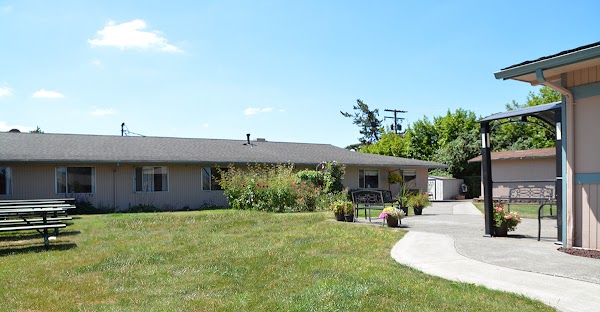
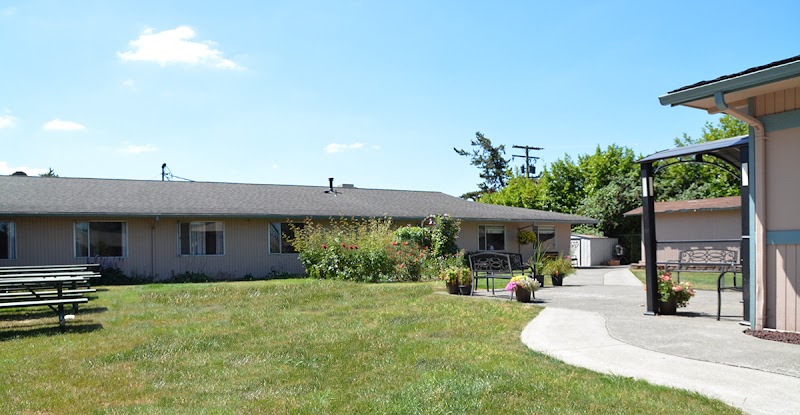
22410 BENSON ROAD SE, KENT, WA 98031 (253) 852-7755
For profit - Limited Liability company 91 Beds AVALON HEALTH CARE Data: November 2025
Trust Grade
40/100
#132 of 190 in WA
Last Inspection: February 2025

Within standard 12-15 month inspection cycle. Federal law requires annual inspections.

Overview

Benson Heights Rehabilitation Center has a Trust Grade of D, indicating below-average performance with some concerns regarding resident care and safety. They rank #132 out of 190 facilities in Washington, placing them in the bottom half of nursing homes in the state, and #32 out of 46 in King County, meaning there are only a few local options that perform better. While the facility shows improvement in overall issues, decreasing from 22 in 2023 to 14 in 2025, there are still significant weaknesses. Staffing is a relative strength with a rating of 4 out of 5 stars, suggesting a stable workforce, but they have faced serious incidents, including a failure to protect a resident from abuse, leading to psychological harm, and issues with food sanitation that could risk residents' health. Additionally, the facility has incurred fines of $29,075, which is average for the area, but the presence of specific incidents raises concerns about overall safety and quality of care.

Trust Score
D
40/100
In Washington
#132/190
Bottom 31%
Safety Record
Moderate
Needs review
Inspections
Getting Better
22 → 14 violations
Staff Stability
⚠ Watch
48% turnover. Above average. Higher turnover means staff may not know residents' routines.
Penalties
⚠ Watch
$29,075 in fines. Higher than 91% of Washington facilities. Major compliance failures.
Skilled Nurses
✓ Good
Each resident gets 43 minutes of Registered Nurse (RN) attention daily — more than average for Washington. RNs are trained to catch health problems early.
Violations
⚠ Watch
57 deficiencies on record. Higher than average. Multiple issues found across inspections.
★★☆☆☆
2.0
Overall Rating
★★★★☆
4.0
Staff Levels
★☆☆☆☆
1.0
Care Quality
★★★☆☆
3.0
Inspection Score
Stable
2023: 22 issues
2025: 14 issues

The Good

  • 4-Star Staffing Rating · Above-average nurse staffing levels
  • Full Sprinkler Coverage · Fire safety systems throughout facility
  • No fines on record

Facility shows strength in staffing levels, fire safety.

The Bad

2-Star Overall Rating

Below Washington average (3.2)

Below average - review inspection findings carefully

Staff Turnover: 48%

Near Washington avg (46%)

Higher turnover may affect care consistency

Federal Fines: $29,075

Below median ($33,413)

Moderate penalties - review what triggered them

Chain: AVALON HEALTH CARE

Part of a multi-facility chain

Ask about local staffing decisions and management

The Ugly 57 deficiencies on record

1 actual harm
Jul 2025 1 deficiency
CONCERN (D) 📢 Someone Reported This

A family member, employee, or ombudsman was alarmed enough to file a formal complaint

Potential for Harm - no one hurt, but risky conditions existed

Quality of Care (Tag F0684)

Could have caused harm · This affected 1 resident

**NOTE- TERMS IN BRACKETS HAVE BEEN EDITED TO PROTECT CONFIDENTIALITY** Based on observation, interview, and record review the facility failed to ensure one (Resident 1) of 3 residents reviewed receiv...

Read full inspector narrative →
**NOTE- TERMS IN BRACKETS HAVE BEEN EDITED TO PROTECT CONFIDENTIALITY** Based on observation, interview, and record review the facility failed to ensure one (Resident 1) of 3 residents reviewed received the necessary care and services in accordance with professional standards of practice and the resident's choice. The facility failed to ensure Resident 1 had pain medications available, new staff was aware of facility protocols when a resident requested hospitalization, and failed to honor Resident 1's request to go to the hospital. These failures placed all residents at risk for unmet care needs and left Resident 1 feeling helpless, anxious, and fearful.Findings included. <Resident 1>Review of the Annual Minimum Data Set (MDS, an assessment tool), dated 05/21/2025, showed Resident 1 was able to make their own decisions, to understand others and to make themselves understood. The MDS showed Resident 1 had medically complex conditions including, post-traumatic stress disorder, inability to use lower body/legs, anxiety, depression, delusional disorder, adult failure to thrive, and chronic pain syndrome. The MDS showed Resident 1had frequent pain that occasionally disrupted their day-to-day activities and used pain medication to manage their pain.Review of a pain assessment dated [DATE] showed Resident 1 was able to verbalize pain, experienced pain in their lower extremities, including their hips and back. The pain assessment showed taking the pain medication made the pain better, the pain was worse when the resident did not have their pain medications available, and the negative effects made Resident 1 aggressive and emotional leading to anxiety when they are not sure when the pain medication would arrive to the facility.Review of pain Care Plan (CP), revised on 06/17/2024, showed Resident 1 had chronic pain and directed staff to administer pain medications as ordered. The CP showed Resident 1 was able to call for assistance when in pain, reposition self, ask for medication, express how much pain was experienced and what increased or alleviated the pain.Review of the June 2025 Medication Administration Record (MAR) showed Resident 1 had a physician's order, dated 12/02/2024 for a pain medication 5 milligrams (mg) two tabs every 4 hours as needed for pain. The MAR showed on 06/24/2025, Resident 1 received pain medications at 5:41 PM. The MAR showed on 06/25/2025, Resident 1 received pain medications at 12:10 AM.In an interview on 07/08/2025 at 3:56 PM, Staff C (Registered Nurse, RN) stated when a resident requested to go to the hospital staff should assess the resident, talk with the nurse, and send the resident to the hospital when indicated. On 07/08/2025 at 4:52 PM, Staff C stated at 9:50 PM, Resident 1 requested pain medications, that were not available and wanted to go to the hospital. Staff C stated it was their second day working at the facility, they did not know the facility protocol to send a resident to the hospital, and informed Staff D (RN, Charge Nurse) of Resident 1's request. Staff C stated they were busy passing medications, would answer Resident 1's call light every time they called, and was not sure if Staff D went to assess Resident 1.During an observation and interview on 07/08/2025 at 4:00 PM, Resident 1 was observed in bed on their back, and stated on 06/24/2025 at 9:45 PM they requested pain medication from Staff C, Resident 1 stated Staff C informed them their pain medication was not available in the emergency supply and Resident 1 requested to be sent to the hospital. Resident 1 stated Staff C told them they would talk with Staff D for directions. Resident 1 stated Staff D did not come and talk with them after requesting to go to the hospital five times. Resident 1 stated Staff C returned to their room and told Resident 1 that Staff D stated a resident could call 911 themselves. Resident 1 stated Staff E (RN) arrived for the night shift, came to their room and spoke with them about the pain medications. Staff E informed Resident 1 that their pain medications were on the next pharmacy delivery, should arrive within an hour. Resident 1 stated they agreed to wait an hour for the pain medications to arrive, and if they did not arrive wanted to go to the hospital. Resident 1 stated they felt helpless, captive, and stressed not knowing when the medication would arrive and staff were not honoring their choice to go to the hospital. Resident 1 stated they had to start taking antidepressant medication again due to the incident.Review of a provider note, dated 07/01/2025, showed Resident 1 was seen by the provider for worsening depression, anxiety, paranoia, and requested to start medications to help with their symptoms. The note showed Resident 1's worsening symptoms were linked to challenges in managing physical pain, denial of requests for further medical intervention, and re-emerging distressing delusions. The note showed Resident 1 was re-started on medications to manage their symptoms of depression and anxiety.During an interview on 07/08/2025 at 5:15 PM, Staff D stated they did not go and see Resident 1 because they were busy on another hallway. Staff D stated they directed Staff C to offer Resident 1 a different pain medication and call the pharmacy to see when the pain medications would be delivered. Staff D stated the pharmacy was called time, staff were waiting for an authorization code to get pain medication from the emergency supply when the pain medication arrived at the facility. Staff D stated staff should assess the resident and the resident had the right to go to the hospital.In an interview on 07/08/2025 at 5:30 PM, with Staff A and Staff B, Staff B stated the facility had the pain medication Resident 1 was prescribed in the emergency supply in a different dose. Resident 1's pain medication prescription was 5mg two tabs to equal 10 mg and the facility emergency supply contained 10 mg tabs of Resident 1's prescribed pain medication. Staff A stated facility staff offered Resident 1 a different pain medication, Resident 1 refused that medication, and agreed to wait until the pharmacy delivered the pain medication. The pain medications arrived at the facility at midnight; Resident 1 was medicated and did not go to the hospital. Staff B stated they would expect staff to call the physician to have the order changed and when a resident requested to go to the hospital to send them as that was their right.During an interview on 07/22/2025 at 1:20 PM, Staff A stated they would expect staff to call the physician to obtain further instructions, and call emergency services when a resident requested to be hospitalized . REFERENCE: WAC 388-97-1060(1)(3)(k).
Feb 2025 13 deficiencies
CONCERN (D)

Potential for Harm - no one hurt, but risky conditions existed

Deficiency F0552 (Tag F0552)

Could have caused harm · This affected 1 resident

Based on observation, record review, and interview, the facility failed to ensure residents were provided informed consent (ensuring an explanation of the risks and benefits were provided) for the use...

Read full inspector narrative →
Based on observation, record review, and interview, the facility failed to ensure residents were provided informed consent (ensuring an explanation of the risks and benefits were provided) for the use of bed rails and/or the bed against a wall for 3 of 6 residents (Residents 63, 4, & 70) reviewed for bed rails/bed against the wall. This failure placed residents at risk for loss of autonomy, entrapment, injury, and loss of the opportunity for alternative treatment options. Findings included . <Policy> According to a facility policy titled, Bed Rails, dated 02/2018, showed the facility would inform the resident or resident representative of the risks and benefits of bed rails prior to installation of the rails and obtain consent from the resident or the resident representative. <Resident 63> Review of a 01/10/2025 admission Minimum Data Set (MDS - an assessment tool) Resident 63 had no bed rails installed on their bed. The MDS showed Resident 63 had no memory impairment. The MDS showed Resident 63 had diagnoses of, but not limited to, general muscle weakness, unsteadiness on feet, and other abnormalities of gait and mobility. Review of Resident 63's at risk for activity of daily living self-care performance deficit Care Plan (CP) showed an intervention of assist rail for bed mobility dated 07/17/2024. Observation on 02/18/2025 at 10:08 AM showed a bed rail on the right side of Resident 63's bed. In an interview on 02/24/2025 at 1:59 PM Staff E (Unit Manager) stated they did not obtain consent from Resident 63 for the quarter rail to the right side of their bed but should have. Staff E stated it was important to obtain consent prior to installation of bed rails to ensure the resident can use them safely and wants them. <Resident 4> Review of a 01/17/2025 admission MDS Resident 4 had no restraints used to their bed. The MDS showed Resident 4 had no memory impairment. The MDS showed Resident 4 had diagnoses of, but not limited to, morbid obesity and a history of a stroke. Review of Resident 4's CP showed the bed against the wall was not identified as of 02/18/2025. Observation on 02/19/2025 at 10:19 AM showed Resident 4's right side of their bed against the wall. In an interview on 02/24/2025 at 1:59 PM Staff E stated the facility did not obtain Resident 4's consent to have their bed against the wall but should have. Staff E stated it was important to obtain consent prior to placing the bed against the wall to ensure the resident was informed and had a say in their care. <Resident 70> Review of a 10/01/2024 admission MDS Resident 70 had no restraints used to their bed. The MDS showed Resident 4 had no memory impairment. The MDS showed Resident 70 had diagnoses of, but not limited to, lack of coordination, general muscle weakness, and need for assistance with personal care. Review of Resident 70's CP showed the bed against the wall was not identified as of 02/18/2025. Observation on 02/19/2025 at 7:39 AM showed Resident 70's left side of bed against the wall. In an interview on 02/24/2025 at 1:45 PM Staff E stated the facility did not obtain consent from Resident 70 for the bed against the wall but should have. Staff E stated it was important to obtain consent prior to placing the bed against the wall to ensure the resident was informed and had a say in their care. Refer to F656 - develop/implement comprehensive care plan Refer to F658 - services provided meet professional standards Refer to F689 - free of accident hazards REFERENCE: WAC 388-97-0260. .
CONCERN (D)

Potential for Harm - no one hurt, but risky conditions existed

PASARR Coordination (Tag F0644)

Could have caused harm · This affected 1 resident

**NOTE- TERMS IN BRACKETS HAVE BEEN EDITED TO PROTECT CONFIDENTIALITY** Based on interview and record review, the facility failed to ensure a level II Preadmission Screening and Resident Review (PASRR...

Read full inspector narrative →
**NOTE- TERMS IN BRACKETS HAVE BEEN EDITED TO PROTECT CONFIDENTIALITY** Based on interview and record review, the facility failed to ensure a level II Preadmission Screening and Resident Review (PASRR- a mental health screening required prior to nursing home admission) evaluation was completed and/or incorporated into the Care Plan (CP) for 4 of 6 residents (Residents 61, 22, 82, & 20) reviewed for PASRR. This failure placed residents at risk for unmet mental health care needs. Findings included: <Facility Policy> According to the facility's 11/2017 PASRR policy, a PASRR screening must be completed prior to admission. The policy showed for residents assessed to need Level II services, the facility would incorporate the recommendations into the resident's CP. <Resident 61> According to the 11/14/2024 Quarterly Minimum Data Set (MDS - an assessment tool) Resident 61 admitted to the facility from the hospital on [DATE] and was assessed with a severe memory impairment. The MDS showed Resident 61 had diagnoses including dementia and three mental health diagnoses, and needed to use antipsychotic and anti-anxiety medications. Record review showed three Level I PASRR screenings on file for Resident 61: a 07/18/2022 Level I screening showing Level II services were not required, an 08/24/2022 Level I PASRR showing a Level II referral was necessary, and an 08/18/2023 Level I PASRR also showing Level II services were required. Record review showed there was no Level II PASRR evaluation on file for Resident 61. Resident 61's record included a 02/05/2018 Level II PASRR invalidation from a previous unaffiliated nursing home admission. In an interview on 02/24/2025 at 2:07 PM Staff D (Social Services Director) stated if the Level I PASRR showed a resident required further screening for Level II services, it was social services responsibility to follow as needed. Staff D stated they believed there was a Level II invalidation on file but upon review of the document acknowledged it did not address Resident 61's stay at this facility. Staff D stated there was no Level II determination on file for the 08/18/2023 Level I PASRR screening. Staff D checked their email and stated the last time they reached out to the PASRR office for follow up was on 02/27/2024. <Resident 22> Review of a 07/19/2024 admission MDS Resident 22 had no memory impairment. The MDS showed Resident 22 had diagnoses of, but not limited to, depression and schizophrenia (chronic mental health condition with disruption in thought processes, perceptions and behavior). Review of Resident 22's CP showed a PASRR level I with Serious Mental Illness (SMI). The CP showed an intervention for social service to review the PASRR quarterly and as needed. Review of Resident 22's health records showed a 08/18/2023 PASRR level I stating a level 2 PASRR was required for SMI. Resident 22's health records had no documentation of a level II PASRR being done. In an interview on 02/24/2025 at 10:54 AM Staff D stated there was no evidence of the level II PASRR in Resident 22's health records for the 08/18/2023 PASRR level I with SMI. Staff D stated it was important to complete the PASRR level II to obtain the consultants recommendations for the resident's mental health care. <Resident 82> Review of a 12/16/2024 Significant Change MDS Resident 82 had no memory impairment. The MDS showed Resident 82 had diagnoses of, but not limited to, depression, Post Traumatic Stress Disorder (PTSD), and psychotic disorder. Review of a 10/24/2024 PASRR CP showed Resident 82 had a PASRR level II. The CP showed staff were to follow the recommendations of the level II PASRR. Review of Resident 82's health records showed a 08/29/2024 PASRR level I documenting a level II PASRR was required for SMI. Resident 82's health records had no documentation of a level II PASRR being done. Resident 82's level I PASRR showed they had a new diagnosis of PTSD. In an interview on 02/24/2025 at 10:54 AM Staff D stated there was no evidence of the level II PASRR in Resident 82's health records for the 08/29/2024 PASRR level I with SMI and new diagnosis of PTSD. Staff D stated it was important to complete the PASRR level II to obtain the consultants recommendations for the resident's mental health care. <Resident 20> According to the 02/05/2025 admission MDS, Resident 20 admitted to the facility on [DATE]. The MDS showed Resident 20 diagnoses of a chronic mental health condition, hallucinations, delusions, verbal behavior towards others and Resident 20's behavior significantly interfered with care. Review of the 01/29/2025 level I PASRR showed Resident 20 had SMI indicators for personality and anxiety disorders. A level II evaluation referral was indicated on the PASSR form due to SMI. Review of Resident 20's medical records did not show a level II PASRR with recommendations for the resident's behaviors was completed. In an interview on 02/25/2025 at 2:50 PM, Staff D stated the level II PASRR referral should have been completed by the hospital before Resident 20 was admitted to the facility. Staff D stated they follow up to make sure the referral was made to the correct authority. Staff D stated since Resident 20 discharged in and out of the facility on two occasions they were not able to follow up to determine if a level II PASRR referral was made. Staff D stated that a PASSR level II referral was important to determine the level of care needed for the resident. REFERENCE: WAC 388-97-1915(4). .
CONCERN (D)

Potential for Harm - no one hurt, but risky conditions existed

Comprehensive Care Plan (Tag F0656)

Could have caused harm · This affected 1 resident

Based on observation, interview, and record review the facility failed to develop and/or implement a comprehensive Care Plan (CP) for 6 of 18 residents (Residents 34, 10, 4, 63, 70 & 38). This failure...

Read full inspector narrative →
Based on observation, interview, and record review the facility failed to develop and/or implement a comprehensive Care Plan (CP) for 6 of 18 residents (Residents 34, 10, 4, 63, 70 & 38). This failure placed residents at risk for unmet care needs, frustration, and other negative health outcomes. Findings included . <Resident 34> According to the 11/20/2024 admission Minimum Data Set (MDS - an assessment tool) Resident 34 had intact memory and medically complex diagnoses including a history of stroke, but no seizure/epilepsy diagnosis. The MDS showed Resident 34 used an anticonvulsant (anti-seizure) medication. According to a 12/02/2024 physician's progress note, Resident 34 had metabolic encephalopathy (a change in how the brain works due to an underlying condition) in part due to a seizure disorder. Record review showed a 02/15/2025 physician's order for an anticonvulsant medication at 750 Milligrams (MG) twice a day for a seizure disorder, and a prior 11/13/2024 order for the same medication with the same schedule for spinal injuries. Review of Resident 34's comprehensive CP showed no CP developed addressing the resident's anticonvulsant use. In an interview on 02/25/2025 at 9:45 AM, Staff B (Director of Nursing) stated the anticonvulsant medication was ordered to treat a seizure disorder. Staff B stated the facility should have but did not develop a CP to address the use of the anticonvulsant medication. <Resident 10> According to the 12/20/2024 Quarterly MDS, Resident 10 had diagnoses including difficulty voiding urine and dementia. The MDS showed Resident 10 used a urinary catheter (tubing to help with voiding urine) and had two Stage-3 Pressure Ulcers (PU) and one Stage-4 PU. Observation on 02/19/2025 at 8:52 AM showed a sign outside Resident 10's room indicating staff were required to use Enhanced Barrier Precautions (EBP - precautions such as gloves, gowns, eye protection etc. required when providing certain types of close contact care such as changing a resident.) Record review showed a 02/05/2025 physician's order showing Resident 10 required a urinary catheter related to their difficulty urinating. Resident 10 also had a 10/04/2023 order for wound care for a PU on their left buttock, and a 02/17/2025 order for wound care to their right thigh. According to the 12/20/2024 EBP CP staff should use EBP when providing high-contact care including ostomy (an artificial opening into the body) care and for device care/use including a central line (a type of intravenous access), feeding tube, trachesotomy (a whole in the throat to open airways), and ventilator (a large breathing apparatus) care/use. In an interview on 02/25/2025 at 11:12 AM Staff B (Director of Nursing) stated Resident 10 did not have any kind of ostomy including a tracheotomy, a central line, feeding tube, or a ventilator. Staff B stated the CP needed to be individualized to reflect Resident 10's PU and catheter status as the reason for EBP. <Resident 4> Review of the 01/17/2025 admission MDS Resident 4 had no memory impairment. The MDS showed Resident 4 had no restraints used on their bed. The MDS showed Resident 4 had a history of a stroke. Observation on 02/19/2025 at 10:19 AM showed Resident 4's right side of bed against the wall. Review of Resident 4's health records on 02/23/2025 showed no CP for the right side of their bed against the wall. In an interview on 02/24/2025 at 1:59 PM Staff E (Unit Manager) stated Resident 4's right side of bed was against the wall but there was not a CP for it. Staff E stated it was important to CP the bed against the wall for resident safety, to ensure staff were aware and monitoring the resident's safety. <Resident 63> Review of the 01/10/2025 admission MDS Resident 63 had no memory impairment. The MDS showed Resident 63 had no restraints used on their bed. The MDS showed Resident 63 had diagnoses of, but not limited to, general muscle weakness and unsteadiness on feet. Observation on 02/18/2025 at 10:08 AM showed Resident 63's left side of bed against the wall. Review of Resident 63's health records on 02/23/2025 showed no CP for the left side of their bed against the wall. In an interview on 02/24/2025 at 1:59 PM Staff E (Unit Manager) stated Resident 63's left side of bed was against the wall but there was not a CP for the bed against the wall. Staff E stated it was important to CP the bed against the wall for resident safety, to ensure staff were aware and monitoring the resident's safety. <Resident 70> Review of the 10/01/2024 admission MDS Resident 70 had no memory impairment. The MDS showed Resident 70 had no restraints used on their bed. The MDS showed Resident 70 had difficulty hearing. The MDS showed Resident 70 had diagnoses of, but not limited to, general muscle weakness, difficulty walking, and lack of coordination. During an observation and interview on 02/19/2025 at 7:32 AM showed Resident 70's left side of bed against the wall. Resident 70 showed symptoms of difficulty hearing and stated they could not hear out of their left ear. Review of Resident 70's health records on 02/23/2025 showed no CP for the left side of their bed against the wall or the inability to hear with their left ear. In an interview on 02/24/2025 at 1:59 PM Staff E (Unit Manager) stated Resident 70's left side of bed was against the wall but there was not a CP for it. Staff E stated it was important to CP the bed against the wall for resident safety, to ensure staff were aware and monitoring the resident's safety. Staff E reviewed the MDS showing Resident 70's difficulty hearing and stated they did not have a hard of hearing CP but should, so staff knew how to best communicate with them and ensure they heard what staff was saying. <Resident 38> <Seizure Medication> According to the 01/02/2025 Quarterly MDS, Resident 38 medical conditions included respiratory failure, history of falls and a seizure disorder. Review of Resident 38's revised 07/22/2024 Seizure Disorder CP showed staff were to give seizure medications as ordered and to monitor for side effects. The CP did not identify what side effects staff were to monitor and did not show drug toxicity side effects for one of Resident 38's seizure medications that required lab monitoring. Review of the February Medication Administration Record (MAR) and February monitors record did not identify side effects or drug toxicity symptoms staff were to observe for their seizure medication. <Antibiotic Medication> Review of Resident 38's revised 07/22/2024 history of Pneumonia (lung infection) related to aspiration (food or liquid accidentally enters the lungs) CP showed staff were to give medications as ordered and to monitor side effects and effectiveness. The CP did not indicate Resident 38 had taken antibiotics due to acute respiratory illness and did not indicate symptoms or dietary adjustments to observe for while taking an antibiotic. Review of February 2025 MAR showed an order dated 02/20/2025 for an antibiotic medication, 500 Milligrams (mg) once a day for acute respiratory illness for 7 days. The MAR did not indicate what signs and symptoms to observe while Resident 38 was on the antibiotic medication. Review of June 2024 MAR showed an order dated 06/08/2024 to give an antibiotic medication, 600 mg twice a day for a respiratory illness for 5 days. The MAR did not indicate what signs and symptoms to observe while Resident 38 was on the antibiotic medication. In an interview on 02/25/2025 at 11:12 AM, Staff F (Unit Manager) stated antibiotic medication and side effects and side effects of the seizure medication should be listed on the CP but was not. Staff F stated this was important for tracking purposes and to make sure Resident 38 was on the right treatment for their illness and care. In an interview on 02/25/2025 at 2:23 PM, Staff B (Director of Nursing) stated antibiotic monitoring should be on the CP but was not. Staff B stated seizure medication should be on the CP because of risk of drug toxicity but was not. Refer to F552 - right to be informed Refer to F658 - services provided meet professional standards Refer to F689 - free of accident hazards REFERENCE: WAC 388-97-1020(1),(2)(a). .
CONCERN (D)

Potential for Harm - no one hurt, but risky conditions existed

Deficiency F0658 (Tag F0658)

Could have caused harm · This affected 1 resident

<Resident 34> According to the 11/20/2024 admission MDS, Resident 34 had medically complex diagnoses including a spinal fracture and a history of falling. The MDS showed Resident 34 had frequent...

Read full inspector narrative →
<Resident 34> According to the 11/20/2024 admission MDS, Resident 34 had medically complex diagnoses including a spinal fracture and a history of falling. The MDS showed Resident 34 had frequent pain that affected their sleep and ability to participate in activities and therapy. Record review showed two physician orders for a pain medication patch: a 02/18/2025 physician's order for a pain medication patch to be placed on Resident 34's lower back in the evening and removed at bedtime for pain, and a 02/19/2025 physician's order for the same pain medication patch to be applied in the morning and removed in the afternoon. The orders did not include the strength of the painkiller required. In an interview on 02/25/2025 at 9:32 AM, Staff B (Director of Nursing) stated they expected orders to be clarified when unclear. In the same interview at 9:45 AM, Staff B reviewed the pain medication patch orders and stated they should include the strength of the medication but did not. Based on record review and interview the facility failed to ensure physician orders for 3 of 3 residents (Residents 4, 22, & 71) reviewed for accident hazards, 1 of 2 residents (Resident 63) reviewed for physical restraints, a physician order for 1 of 4 residents (Resident 22) reviewed for respiratory care, and 1 of 5 residents reviewed for nutrition (Resident 38) were obtained, clarified, and/or implemented. These failures placed residents at risk for potential adverse effects, unmet needs, complications, and diminished quality of life. Findings included . <Policy> According to a facility policy titled, Respiratory Care/Tracheostomy Care & Suctioning, dated 07/2018, the facility would provide residents with necessary respiratory care and services that were in accordance with professional standards of practice. <Resident 4> Review of the 01/17/2025 admission Minimum Data Set (MDS - an assessment tool) Resident 4 had no memory impairment. The MDS showed Resident 4 had no restraints used on their bed. The MDS showed Resident 4 had a history of a stroke. Observation on 02/19/2025 at 10:19 AM showed Resident 4's right side of bed against the wall. Review of Resident 4's health records on 02/23/2025 showed no physician order for the right side of their bed against the wall. In an interview on 02/24/2025 at 1:59 PM Staff E (Unit Manager) stated Resident 4's right side of bed was against the wall but there wasn't a physician order for this. Staff E stated it was important to have a physician order for the bed against the wall to ensure this was an appropriate plan of care for the resident. <Resident 22> Review of the 07/19/2024 Annual MDS Resident 22 had no memory impairment. The MDS showed Resident 22 had no restraints used on their bed. The MDS showed Resident 22 had diagnoses of, but not limited to, general muscle weakness, restless leg syndrome, and difficulty walking. Observation on 02/20/2025 at 1:26 PM showed Resident 22's left side of bed against the wall. In an interview and observations on 02/21/2025 at 9:03 AM Resident 22's oxygen tubing showed a date of 02/13/2025. Staff F (Unit Manager) stated oxygen tubing should be changed weekly. Staff F reviewed Resident 22's health records and stated they did not have a physician order to change the oxygen tubing weekly per facility policy but should have. Staff F stated it was important to change the oxygen tubing weekly for infection prevention. Review of Resident 22's health records on 02/23/2025 showed no physician order for the left side of their bed against the wall. In an interview on 02/25/2025 at 8:45 AM Staff F stated Resident 22's left side of bed was against the wall but there wasn't a physician order for this. Staff F stated it was important to have a physician order for the bed against the wall to ensure a physician guided plan of care for the resident. <Resident 63> Review of the 01/10/2025 admission MDS Resident 63 had no memory impairment. The MDS showed Resident 63 had no restraints used on their bed. The MDS showed Resident 63 had diagnoses of, but not limited to, general muscle weakness and unsteadiness on feet. Observation on 02/18/2025 at 10:08 AM showed Resident 63's left side of bed against the wall. Review of Resident 63's health records on 02/23/2025 showed no physician order for the left side of their bed against the wall. In an interview on 02/24/2025 at 1:59 PM Staff E stated Resident 63's left side of bed was against the wall but there wasn't a physician order for this. Staff E stated it was important to have a physician order for the bed against the wall to ensure this was an appropriate plan of care for the resident. <Resident 71> Review of the 07/29/2024 Annual MDS Resident 71 had no memory impairment. The MDS showed Resident 71 had no restraints used on their bed. The MDS showed Resident 71 had diagnosis of, but not limited to, a right leg displaced fracture. Observation on 02/18/2025 at 10:08 AM showed Resident 71's right side of bed against the wall. Review of Resident 71's health records on 02/23/2025 showed no physician order for the right side of their bed against the wall. In an interview on 02/24/2025 at 2:08 PM Staff E stated Resident 71's left side of bed was against the wall but there wasn't a physician order for this. Staff E stated it was important to have a physician order for the bed against the wall to ensure this was an appropriate plan of care for the resident. Resident <38> According to the revised 10/7/2024 Quarterly MDS, Resident 38 had a history of a stroke, respiratory failure, and difficulty swallowing. The MDS showed Resident 38 needed substantial assistance with eating and needed a pureed food and thickened liquid diet. Review of a revised 10/14/2024 Nutritional Problem Care Plan (CP) showed Resident 38 needed one on one supervision with meals to prevent choking and aspiration and to promote a consistent intake. Review of Resident 38's health record showed a physician order dated 02/20/2025 for a swallow evaluation with treatment related to possible aspiration. Health record did show a swallow evaluation had been completed. Observation on 2/20/2025 at 11:32 AM showed Resident 38 sitting in wheelchair in the dining room. Observed Resident 38 had a food tray of pureed foods and thickened juice, coffee and water. An Unidentified Certified Nursing Aid (CNA) assisted Resident 38 with feeding, resident 38 began coughing while eating. In an interview on 2/21/2025 at 8:44 AM Staff O (Certified Nursing Aid) stated while Resident 38 was being fed they began to cough. In an interview on 02/25/2025 at 11:06 AM Staff F (Unit Manager) stated the swallow evaluation ordered on 02/20/2025 did not occur. Staff F stated they expected the swallow evaluation to be done as soon as possible. Staff F stated the CP should also provide specific instructions on how to feed Resident 38 to avoid choking, but feeding details needed to be added after a swallow evaluation occurred. In an interview on 02/25/2025 at 2:19 PM Staff B (Director of Nursing) stated Resident 38 was at risk for aspiration while eating and a swallow evaluation was ordered on 2/20/2025, five days ago. Staff B stated a swallow evaluation should be set up within 48 to 72 hours of the order being received but was not. Refer to F552 - right to be informed Refer to F656 - develop/implement comprehensive care plan Refer to F689 - free of accident hazards REFERENCE: WAC 388-97-1620(2)(b)(i)(ii). .
CONCERN (D)

Potential for Harm - no one hurt, but risky conditions existed

Quality of Care (Tag F0684)

Could have caused harm · This affected 1 resident

Based on observation, interview, and record review the facility failed to implement skin breakdown interventions for 1 of 6 residents (Resident 61) reviewed for positioning/mobility and failed to prov...

Read full inspector narrative →
Based on observation, interview, and record review the facility failed to implement skin breakdown interventions for 1 of 6 residents (Resident 61) reviewed for positioning/mobility and failed to provide weight monitoring for 1 of 1 resident (Resident 82) reviewed for edema. The failure to ensure palm protectors were used as ordered (Resident 61) and weights monitored as required (Resident 82) placed residents at risk for skin breakdown, weight loss, weight gain, and other negative health outcomes. Findings included . <Facility Policy> According to the facility's 11/2017 Quality of Care -policy, for residents with non-pressure-related skin impairments, the facility would provide care and services consistent with professional standards to prevent skin breakdown. The policy showed the facility would provide preventative measures as needed to maintain skin integrity. According to an undated facility policy titled, Edema Management, interventions for heart failure may include monitoring weights. <Resident 61> According to the 11/14/2024 Quarterly Minimum Data Set (MDS - an assessment tool) Resident 61 had a severe memory impairment and required total assistance with all daily routines. The MDS showed Resident 61 had diagnoses including dementia, seizures, malnutrition, and an altered mental state. The MDS showed Resident 61 required total assistance with all daily care and had open lesions. Review of the physician's orders showed a 12/18/2024 order to apply Therapy Carrot [a carrot-shaped, fabric, therapy tool used to create space in a hand that no longer opens freely] for 4 hours in each hand then switch to the other hand. Therapy carrots can be placed in one hand at a time as tolerated. every shift . According to the 12/18/2024 Potential for skin breakdown Care Plan (CP) nursing staff should place the Therapy Carrot in each hand for 4 hours per hand or as tolerated. The CP showed staff should place a Therapy Carrot in one hand at a time. Record review showed there was nowhere for nursing staff to document they placed the Therapy Carrot in either hand, how long Resident 61 tolerated the Therapy Carrot, or when the Therapy Carrot was removed. Observation on 02/18/2025 at 1:43 PM showed a sign above Resident 61's bed informing staff that the resident's previous sheepskin palm protector was discontinued and to now use the Therapy Carrot. There was no Therapy Carrot observed in place. Observation on 02/24/2025 at 12:13 PM, 12:35 PM, and 01:17 PM showed no Therapy Carrot in either hand. In an interview on 02/25/2025 at 10:03 AM, Staff B (Director of Nursing) stated if a resident had a physician-ordered intervention to prevent skin break down, they expected the provision of the care to be documented. Staff B reviewed Resident 61's chart and stated there was not but should be a place for the nursing staff to document when they provided the Therapy Carrot. Staff B stated given how the order was written, Resident 61 should have the Therapy carrot in the middle of the day. Staff B then went over to Resident 61 and asked the resident if they could look at their hands. Staff B then examined Resident 61's hands and stated the Therapy Carrot should be but was not placed in one of Resident 61's hands. <Resident 82> Review of a 12/16/2024 Quarterly MDS Resident 82 had no memory impairment. The MDS showed Resident 82 received diuretic medication during the assessment period. The MDS showed Resident 82 had diagnoses of, but not limited to, heart failure and edema. Review of a 06/10/2024 heart failure CP showed the facility would monitor Resident 82's weight daily and monitor for lower extremity edema. Observation on 02/20/2025 at 1:57 PM showed Resident 82 had pitting edema (fluid in tissues that shows an indentation when pressed with a finger) to bilateral lower extremities. In an interview on 02/24/2025 at 9:12 AM Staff E (Unit Manager) stated Resident 82 had bilateral lower extremity edema. Staff E stated they were only obtaining Resident 82's weight weekly and should be monitoring it daily. Staff E stated it was important to monitor Resident 82's weight daily because excessive fluid retention could cause cardiac overload and fluid in the lungs. REFERENCE: WAC 388-97-1060(1). .
CONCERN (D)

Potential for Harm - no one hurt, but risky conditions existed

Accident Prevention (Tag F0689)

Could have caused harm · This affected 1 resident

Based on observation, record review, and interview, the facility failed to ensure safety assessments were completed for 3 of 6 residents (Residents 4, 63, & 70) reviewed for bed against the wall/bed r...

Read full inspector narrative →
Based on observation, record review, and interview, the facility failed to ensure safety assessments were completed for 3 of 6 residents (Residents 4, 63, & 70) reviewed for bed against the wall/bed rails, failed to store chemicals and razors for 1 of 2 utility rooms (North Utility Room) and failed to supervise the leave of absence for 1 of 2 residents (Resident 90) reviewed for leave from the facility. Failure to complete safety assessments for the beds against the wall, store chemicals and razors safely, and supervise a resident at risk for safety while on a leave of absence placed residents at risk of entrapment and injury. Findings included . <Policy> According to a facility policy titled, Accident Hazards/Supervision/Devices, dated 07/2018, the facility would implement systems that addressed residents risk and environmental hazards to minimize the likelihood of accidents. The policy showed a potentially hazardous item or situations that was accessible to vulnerable residents would be considered hazardous. The policy showed hazardous materials would be contained to protect residents from exposure. The policy showed risks and benefits of devices which may pose an entrapment risk would be assessed prior to implementation of such devices. The policy showed the facility would use supervision as an intervention to mitigate accident risks. The facility would work with resident vulnerabilities to understand the reasons for their choices and discuss possible options and the Care Plan (CP) would be updated to honor the resident's choices while mitigating risks. According to a facility policy titled, Bed Rails, dated 02/2018, showed the facility would inform the resident or resident representative of the risks and benefits of bed rails prior to installation of the rails and obtain consent from the resident or the resident representative. <Resident 4> Review of a 01/17/2025 admission Minimum Data Set (MDS - an assessment tool) showed Resident 4 had no restraints used on their bed. The MDS showed Resident 4 had no memory impairment. The MDS showed Resident 4 had diagnoses of, but not limited to, morbid obesity and a history of a stroke. Review on 02/19/2025 of Resident 4's health records showed no safety assessment for their right side of bed against the wall. Observation on 02/19/2025 at 10:19 AM showed Resident 4's right side of their bed against the wall. In an interview on 02/24/2025 at 1:59 PM Staff E (Unit Manager) stated the facility did not complete Resident 4's safety assessment prior to placing their bed against the wall but should have. Staff E stated it was important to complete the assessment prior to placing the resident's bed against the wall to ensure their safety. <Resident 63> Review of a 01/10/2025 admission MDS Resident 63 had restraints to their bed. The MDS showed Resident 63 had no memory impairment. The MDS showed Resident 63 had diagnoses of, but not limited to, general muscle weakness, unsteadiness on feet, and other abnormalities of gait and mobility. Review on 02/18/2025 of Resident 63's health records showed no safety assessment for their left side of bed against the wall. Observation on 02/18/2025 at 10:08 AM showed Resident 63's left side of bed against the wall. In an interview on 02/24/2025 at 1:59 PM Staff E stated they did not complete a safety assessment for Resident 63's left side of bed against the wall but should have. Staff E stated it was important to complete the assessment prior to placing the resident's bed against the wall to ensure their safety. <Resident 70> Review of a 10/01/2024 admission MDS Resident 70 had no restraints used to their bed. The MDS showed Resident 70 had no memory impairment. The MDS showed Resident 70 had diagnoses of, but not limited to, lack of coordination, general muscle weakness, and need for assistance with personal care. Review on 02/19/2025 of Resident 70's health records showed no safety assessment for their left side of bed against the wall. Observation on 02/19/2025 at 7:39 AM showed Resident 70's left side of bed against the wall. In an interview on 02/24/2025 at 1:45 PM Staff E stated they did not complete a safety assessment for Resident 70's left side of bed against the wall but should have. Staff E stated it was important to complete the assessment prior to placing the resident's bed against the wall to ensure their safety. <North Utility Room> Observation on and interview on 02/21/2025 at 8:30 AM showed the north utility room door unlocked. The north utility room had razors, hygiene supplies, and disinfectant cleaners stored in open cabinets. Staff E stated it should be kept locked but was not. Staff E stated the utility rooms should be kept locked for resident safety because they had chemicals and razors stored inside them that residents should not have open access to. <Resident 90> According to a 01/31/2025 admission MDS Resident 90 had some memory impairment, history of a post-traumatic stress disorder, had a bone infection of the lower back and spine and a skin infection to the right lower leg. According to the 01/25/2025 Behavior CP, Resident 90 could exhibit a behavior concern related to post traumatic stress order and a history of substance abuse. The CP did not show interventions for Resident 90 leaving the facility unaccompanied. Review of a physician order 01/24/2025 showed Resident 90 could leave the facility with a responsible person with them. Interview on 02/21/2025 at 08:55 AM, Resident 90 stated that they left the facility at 4:30 PM and returned to the facility at 8:15 PM. Resident 90 stated they were told according to the facility policy they should be accompanied by a person when they left the facility. Resident 90 stated they did not have anybody with them when they left the facility and called a cab for a ride and wondered if the cab driver counted as a responsible person. Resident 90 stated they went out to go shopping and then went to another city to have a drink with a friend and then went to their apartment to check their mail. Resident 90 stated they told the staff that they got permission to leave without anyone accompanying them when they signed out of the facility and admitted that was not the truth. In an interview on 02/25/2025 at 11:25 AM, Staff F (Unit Manager) stated Resident 90 had the right to leave the facility and the facility had a sign in and sign out book they used to monitor residents. Staff F stated the physician order that showed Resident 90 needed to be accompanied out of the facility could have been incorrect and the facility should have had the order verified but did not. In an interview on 02/24/2025 at 01:48 PM Staff A (Administrator) stated the facility was aware that Resident 90 left the facility unaccompanied and stated Resident 90 told the facility they wanted to go alone and did not need an escort. Staff A stated they were not aware of the physician order showing Resident 90 needed to be accompanied and the doctor may have ordered that because Resident 90 had a Percutaneous Intravenous Central Catheter line (PICC, an inserted tube placed within a vein to deliver fluids and medication into the bloodstream) used to receive antibiotics for their infection. Staff A stated the CP should have been revised to show Resident 90 could leave the facility on their own but was not currently updated with this information. Refer to F552 - right to be informed Refer to F656 - develop/implement comprehensive care plan Refer to F658 - services provided meet professional standards REFERENCE: WAC 388-97-1060 (3)(g). .
CONCERN (D)

Potential for Harm - no one hurt, but risky conditions existed

Respiratory Care (Tag F0695)

Could have caused harm · This affected 1 resident

<O2 Equipment Maintenance> <Resident 22> Review of a 07/19/2024 Annual MDS Resident 22 had respiratory failure, chronic obstructive pulmonary disease, and dependence on supplemental O2. Th...

Read full inspector narrative →
<O2 Equipment Maintenance> <Resident 22> Review of a 07/19/2024 Annual MDS Resident 22 had respiratory failure, chronic obstructive pulmonary disease, and dependence on supplemental O2. The MDS showed Resident 22 received O2 during the assessment period. Review on 02/19/2025 of Resident 22's physician orders showed no order to change O2 tubing. Observation on 02/19/2025 at 9:38 AM showed Resident 22 with O2 being administered via nasal canula. Resident 22's nasal canula was dated 02/13/2025. Observation and interview on 02/21/2025 at 9:03 AM showed Resident 22's O2 tubing dated 02/13/2025. Staff F stated it was the facility's policy to change O2 tubing weekly. Staff F stated Resident 22's tubing was not changed according to facility policy but should have been. Staff F stated it was important to change O2 tubing weekly to prevent respiratory infections. REFERENCE: WAC 388-97-1060(3)(j)(vi). Based on observation, interview, and record review the facility failed to ensure 2 of 5 sampled residents (Residents 38 & 22) reviewed for Oxygen (O2) administration were provided care consistent with professional standards of practice. Failure to provide oxygen monitoring and maintain oxygen equipment left residents at risk for respiratory discomfort, oxygen-related accidents, infection, and a decreased quality of life. Findings included . <Facility Policy> According to the facility's July 2018, Quality of Care Respiratory Care Policy, the facility would assure respiratory care was provided to residents in need of such care. The care would be consistent with professional stands standards of practice, the comprehensive person-centered care plan and resident's goals. The facility would have procedures for response to adverse reactions to respiratory interventions, for respiratory assessments and should include when and how the assessment would be conducted and the type of documentation required. <Providing Oygen Level Monitoring> <Resident 38> According to the 01/07/2025 Annual Minimum Data Set (MDS - an assessment tool) Resident 38 had respiratory failure with low blood (O2) levels. Review of the revised 07/22/2024 Respiratory Failure Care Plan (CP) showed staff were to monitor for signs and symptoms of respiratory distress and report these findings to the provider. The CP showed the symptoms staff were to report to the provider included increased respirations and decreased blood oxygen levels. Review of a physician order dated 05/31/2024 showed staff were to monitor Resident 38's blood O2 levels every shift and to notify the provider of low O2 levels when Resident 38 was using supplemental O2. Review of a February 2025 Treatment Administration Record (TAR) showed an order dated 02/05/2025 to provide O2 at a rate of 1 to 4 liters per minute every shift and to maintain O2 blood levels greater than 90%. The February TAR showed on 02/01/2025, 02/02/2025, 02/03/2025, 02/04/2025, 02/05/2025, 02/10/2025, 02/11/2025 and 02/15/2025 O2 blood levels were at 90% or lower. Review of progress notes in Resident 38's health record from 01/31/2025 through 02/18/2025 did not show documentation that the provider was notified of low O2 levels and did not show further documentation by the nurse practitioner regarding adjusting O2 level orders. Interview on 02/21/2025 at 8:44 AM, Staff O (Certified Nursing Assistant) stated Resident 38 was not as responsive today and was coughing. Observation on 02/21/2025 at 11:35 AM showed Staff F (Unit Manager) inform care staff they were to get Resident 38 up from bed because people with respiratory illness need to be up in the wheel chair and Resident 38 also needed to be monitored. In an interview on 02/25/2025 at 11:12 AM Staff F stated low O2 levels should be documented in Resident 38's progress notes and the provider should have been notified. In an interview on 02/25/2025 at 2:19 PM Staff B (Director of Nursing) stated staff should have notified the provider of Resident 38's low O2 levels and should have documented this in the progress notes. Staff B stated this was important to notify the provider of Resident 38's care and to document providers orders if a change in plan of care was needed.
CONCERN (D)

Potential for Harm - no one hurt, but risky conditions existed

Deficiency F0697 (Tag F0697)

Could have caused harm · This affected 1 resident

<Resident 22> Review of a 07/19/2024 Annual MDS Resident 22 had no memory impairment. The MDS showed Resident 22 received a scheduled pain medication regimen during the assessment period. The MD...

Read full inspector narrative →
<Resident 22> Review of a 07/19/2024 Annual MDS Resident 22 had no memory impairment. The MDS showed Resident 22 received a scheduled pain medication regimen during the assessment period. The MDS showed Resident 22 had diagnoses of, but not limited to, low back pain and arthritis. Review of Resident 22's health records showed a 04/15/2024 physician order for scheduled routine pain medication, a 04/22/2024 order for routine pain medication, and a 03/24/2024 order for PRN pain cream. Resident 22's health records did not show an order to monitor for side effects to these medications. In an interview on 02/18/2025 at 2:22 PM Resident 22 stated they had a hard time staying awake and feel like their medication was making them sedated but was unsure of which medication. Observations on 02/18/2025 at 2:22 PM, 02/19/2025 at 9:22 AM, 02/20/2025 at 1:26 PM, 02/21/2025 at 8:31 AM, and 02/24/2025 at 8:55 AM showed Resident 22 lethargic, able to follow conversation but falling asleep multiple times during each observation. Resident 22 kept apologizing stating they couldn't stay awake and were so sleepy all of the time. In an interview on 02/25/2025 at 8:45 AM Staff F (Unit Manager) stated Resident 22 did not have an order to monitor for side effects to pain medications but should. Staff F stated it was important to ensure Resident 22 was not having side effects to the pain medications and to monitor the medications effectiveness. REFERENCE: WAC 388-97-1060(1). Based on observation, interview, and record review the facility failed to ensure pain management was provided to residents consistent with professional standards of practice including the failure to follow parameters for administration of as needed (PRN) pain medications for 1 of 3 residents (Resident 74) reviewed for pain management and monitor for side effects to pain medications for 1 of 5 residents (Resident 22) reviewed for unnecessary medications. These failures placed residents at risk for experiencing untreated pain, possible side effects, and a decreased quality of life. Findings included <Facility Policy> According to the facility's 11/2017 Pain Management policy, the facility would conduct an evaluation of pain based on professional standards of practice. An evaluation included current medical conditions and medication and satisfaction with current level of pain control. The facility would implement both pharmacological and non-pharmacological interventions and approaches to pain management. The policy showed the facility would conduct ongoing clinical assessments and identify changes in condition. The policy showed the facility would monitor for appropriate effectiveness and/or adverse consequences such as sedation. <Resident 74> According to a 10/09/2024 Annual Minimum Daily Set (MDS-an assessment tool) Resident 74 had diagnoses of stroke impacting their spinal cord and chronic nerve pain. Resident 74 was taking pain medications for their condition. Review of a 08/13/2024 Pain Care Plan (CP) showed staff were to administer pain medications per orders and monitor the level of pain based on pain scale of 1 to 10 for Resident 74. Review of Resident 74's February Medication Administration Record (MAR) showed an order for a PRN pain medication to be administered at 5 Milligrams (mg) for a pain level 3-6/10 and 10 mg for a pain level of 7-10/10. The February MAR showed Resident 74 complained of a pain level less than 7/10 on 02/08/2025 and 02/19/2025 but staff administered the 10 mg pain medication and did not follow the ordered parameters. The February MAR showed Resident 74 complained of pain greater than 7/10 on 02/21/2025 and 02/23/2025 but staff only administered the 5 mg dose, not following the physician ordered pain medication parameters. In an interview on 02/19/2025 at 9:20 AM, Resident 74 stated sometimes after taking their pain medication they still had a pain level of 6/10 on the pain scale and did not think the pain medication was enough. In an interview on 02/25/2025 at 11:35 AM Staff E (Unit Manager) stated the medication nurse should be following the correct parameters for pain medications to help Resident 74 control their pain. Staff E stated their expectation would be that the nurses would follow the physician ordered pain medication parameters and reassess Resident 74 after administration for pain medication effectiveness and follow up with the physician if Resident 74 still had uncontrolled pain. In an interview on 02/25/2025 at 2:26 PM, Staff B (Director of Nursing) stated their expectation would be for staff to follow the physician ordered pain medication parameters for Resident 74. Staff B stated they expected staff to assess Resident 74's pain level after administration of pain medications and follow up with the physician for uncontrolled pain.
CONCERN (D)

Potential for Harm - no one hurt, but risky conditions existed

Deficiency F0745 (Tag F0745)

Could have caused harm · This affected 1 resident

Based on interview and record review the facility failed to ensure medically-related social services were provided for 2 of 2 residents (Residents 10 & 21) reviewed for Pressure Ulcers (PU). The failu...

Read full inspector narrative →
Based on interview and record review the facility failed to ensure medically-related social services were provided for 2 of 2 residents (Residents 10 & 21) reviewed for Pressure Ulcers (PU). The failure to provide assistance to residents demonstrating behaviors of rejection of care placed residents at risk for worsening skin and other negative health outcomes. Findings included . <Policy> According to the facility's 2018 Quality of Care - Skin Integrity policy, the facility would provide the necessary care to prevent the development of new PU. The policy showed certain risk factors for PU development could not be modified including resident refusals of care and treatment. <Resident 10> According to the 12/20/2024 Quarterly Minimum Data Set (MDS - an assessment tool) Resident 10 had diagnoses including a condition hindering urinary flow, dementia, a mental health diagnosis, and muscle weakness. The MDS showed Resident 10 had a moderate memory impairment and refused care on one-to-three days of the MDS lookback period. The MDS showed Resident 10 had three full thickness tissue loss PUs, one with exposed bone, tendon, or muscle. Review of the 09/23/2024 Behaviors Related to residual mental health diagnosis Care Plan (CP) showed Resident 10 had behaviors including refusing medications and treatments. This CP included a goal for Resident 10 to have fewer behaviors. The CP included interventions staff should implement; provide Resident 10 positive interaction, discuss the resident's behavior, monitor the behavior, and attempt to determine the underlying reason for the behavior. The CP showed both nurses and social workers were responsible for implementation of these interventions. Review of the behavior monitoring showed nurses documented Resident 10 refused care (turning and repositioning) on 5 occasions between 02/10/2025 and 02/22/2025. Review of the resident's weight records showed on 12/28/2024, Resident 10 weighed 136.5 lbs. On 01/20/2025, Resident 10 weighed 126 pounds which represented a 7.69 % loss. According to the 01/29/2025 skin and nutrition review showed Resident 10 refused some of their meals. In an interview on 02/25/2025 at 9:55 AM, Staff B (Director of Nursing) stated Resident 10's poor dietary intake including refusals of dietary supplements and refusals to be turned contributed to Resident 10's skin impairments. Staff B stated Resident 10's wounds and weight loss were not preventable. <Resident 21> According to the 12/19/2024 Quarterly MDS Resident 21 had moderate memory impairment and refused care on one-to-three days of the MDS lookback period. The MDS showed Resident 21 had diagnoses including dementia, malnutrition, depression, difficulty swallowing, and the presence of full thickness tissue loss PUs. The MDS showed Resident 21 had two full thickness tissue loss PUs and required an altered texture diet. According to the 09/05/2024 resident is resistive to care [and] to reposition[ing] in bed . CP, Resident 21's goal was to be cooperative with care. The CP showed staff should encourage as much participation in care as Resident 21 would allow. This CP did not identify social workers among the staff responsible to encourage Resident 21 to participate in care. In an interview on 02/25/2025 at 10:09 AM Staff B stated Resident 21's wounds were not preventable. Staff B stated Resident 21's diminished dietary intake and refusals of repositioning made wound prevention and healing difficult. In an in interview on 02/25/2025 at 1:43 PM Staff D (Social Services Director) stated the role the social services held regarding refusals of care was to determine the root cause of the behavior and see what might help them accept the care, and failing that, educating facility staff on residents' rights to refuse care and how to manage those refusals. Staff D stated they learned of patterns of refusals from the nursing department. Staff D stated they were unaware of Resident 10's refusals of care. Staff D stated they were aware that Resident 21 had a behavior of persistently crying out for help but did not know they refused care. REFERENCE: WAC 399-97-0960 (1). .
CONCERN (D)

Potential for Harm - no one hurt, but risky conditions existed

Deficiency F0757 (Tag F0757)

Could have caused harm · This affected 1 resident

Based on record review and interview, the facility failed to ensure freedom from unnecessary medications for 1 of 2 residents (Resident 63) reviewed for antibiotic use. The failure to ensure an order ...

Read full inspector narrative →
Based on record review and interview, the facility failed to ensure freedom from unnecessary medications for 1 of 2 residents (Resident 63) reviewed for antibiotic use. The failure to ensure an order for antibiotic therapy was transcribed accurately per physician order resulted in Resident 63 receiving an unnecessary medication for an excessive duration and placed them at risk of experiencing avoidable adverse side effects to the medication and other potential negative health outcomes. Findings included . <Resident 63> According to a 01/10/2025 admission Minimum Data Set (MDS - an assessment tool) Resident 63 had no memory impairment. The MDS showed Resident 63 required use of a continuous positive airway pressure (non-invasive mechanical ventilator or respirator) machine while sleeping. In an interview on 02/18/2025 at 9:59 AM Resident 63 stated they took an antibiotic for a sinus infection. Review of Resident 63's health records showed a 01/15/2025 physician order for an antibiotic for a sinus infection. The antibiotic order was to be a 14-day course. Resident 63's medication administration records showed they started the antibiotic on 01/15/2025 and received the last dose on 02/07/2025, nine days longer than the physician ordered 14-day course. In an interview on 02/24/2025 at 11:49 AM Staff C (Infection Preventionist) stated Resident 63 should have received the antibiotic for 14 days and not for 23 days. In an interview on 02/24/2025 at 1:59 PM Staff E (Unit Manager) stated they revised the antibiotic order on 01/24/2025 and left the 14-day administration period in the body of the order causing the order to restart the 14-day administration course over again on 01/24/2025. This meant staff administered the antibiotic for a total of 23 days. Staff E stated it was a medication error and Resident 63 should have received the antibiotic for a total of 14 days like the physician ordered and not 23 days. REFERENCE: WAC 388-97-1060 (3)(k)(i). .
CONCERN (D)

Potential for Harm - no one hurt, but risky conditions existed

Menu Adequacy (Tag F0803)

Could have caused harm · This affected 1 resident

Based on observation, interview, and record review the facility failed to ensure residents requiring specialized diets were provided the diets required for 1 of 4 residents (Resident 64) reviewed for ...

Read full inspector narrative →
Based on observation, interview, and record review the facility failed to ensure residents requiring specialized diets were provided the diets required for 1 of 4 residents (Resident 64) reviewed for food. The failure to provide specialized diets residents were assessed to require placed residents at risk for unmet nutritional needs and other negative health outcomes. Findings included . <Facility Policy> According to the facility's 07/2018 Food and Nutrition Services policy, the facility would provide for the nutritional wellbeing of all residents. The policy showed the facility would provide residents with a nourishing, palatable, and well balanced diet to meet daily nutritional and special dietary needs. <Resident 64> According to 12/14/2024 Quarterly Minimum Data Set, Resident 64 had intact memory and required a specialized (therapeutic) diet. The MDS showed Resident 64 had medically complex diagnoses including stage-2 kidney disease, diabetes mellitus (a condition impairing the ability to manage blood glucose), and morbid obesity. The MDS showed Resident 64 required an altered texture, therapeutic diet. Record review showed Resident 64's kidney condition was downgraded from stage-2 kidney disease to a new diagnosis of stage-3 kidney disease on 02/17/2025. Recorded review showed a 02/18/2025 dietary order indicating Resident 64 required carbohydrate-controlled, renal (kidney) diet. In an interview on 02/18/2025 at 10:18 AM Resident 64 stated they did not like the food provided by the facility. In an interview on 02/20/2025 at 11:46 AM breakfast Resident 64 stated they were concerned the facility did not provide a menu to meet their nutritional needs. As an example, Resident 64 stated the breakfast provided that day included four pieces of toast which was too many carbohydrates for them. <Facility Kitchen> On 02/18/2025 at 8:53 AM the Staff S (Dining Services Director) provided the break-out menus, a spreadsheet indicating what if any modifications were required from the standard menu for residents with dietary orders. Review of this document showed Staff S only provided the altered texture menus, not the therapeutic diets. During lunch preparation on 02/21/2025 at 9:46 AM, the outstanding menu information was requested of Staff S. Staff S stated they did not know where the menus were. Staff S stated normally that information was printed out and kept on a clipboard near the steam table but was not where they expected at that time and was not there since the day prior. Staff S stated they would print out and provide the therapeutic diet menus. Staff S then sat at their desk and began looking for the break-out menus to print. On 02/21/2025 at 9:56 AM Staff S was asked how dietary staff would know what to prepare for a resident requiring a renal diet. Staff S stated there were no residents requiring a renal diet in the facility at that time. Staff S then reviewed Resident 64's order and stated they were unaware of the order for a renal diet. On 02/21/2025 at 10:04 AM Staff S was still working on their computer, trying to figure out how to access and print the break-out menu. At that time, Staff S stated in the absence of menus they wrote out the numbers of each diet type (controlled-carbohydrate, low sodium etc.) so dietary staff would know what to prepare. Review of these instructions left for staff for the evening of 02/20/2025 showed this list did not explain the composition of the meal trays staff should provide for the different menus listed. This list showed to prepare 46 regular meals, 16 carbohydrate-controlled meals, 13 no-salt meals, four vegetarian meals, and 1 full-liquid meal. No renal diet meal was listed. On 02/21/2025 at 10:12 AM Staff S called out to a third-party to seek assistance on how to access and print out the break-out menus. Staff S remained on the phone through 10:24 AM. At 10:30 AM Staff S located the menu open on their desktop and left to print a copy. In total, Staff S took 44 minutes to access and provide the break-out menu. The break out menu showed for some therapeutic diets, sweetened, whipped carrots should be substituted with sliced carrots. At 11:49 AM the steam table was observed to have no sliced carrots available. In an interview on 02/25/2025 at 8:55 AM, Staff S stated the dietary staff should follow, but did not follow the break-out menu in order to ensure residents received the nutrition they required. In an interview on 02/25/2025 at 12:37 PM Staff T (Dietician) stated it was important for residents to receive the diet they were assessed to require. Staff T stated dietary staff should have followed the break-out menus. REFERENCE WAC 388-97-1160 (1)(a)(b). .
CONCERN (E)

Potential for Harm - no one hurt, but risky conditions existed

Transfer Notice (Tag F0623)

Could have caused harm · This affected multiple residents

**NOTE- TERMS IN BRACKETS HAVE BEEN EDITED TO PROTECT CONFIDENTIALITY** Based on record review and interview the facility failed to ensure residents received required written notices at the time of tr...

Read full inspector narrative →
**NOTE- TERMS IN BRACKETS HAVE BEEN EDITED TO PROTECT CONFIDENTIALITY** Based on record review and interview the facility failed to ensure residents received required written notices at the time of transfer/discharge, or as soon as practicable for 3 of 3 residents (Residents 22, 63, & 82) reviewed for hospitalizations and 1 supplemental resident (Resident 20) reviewed. The failure to ensure written transfer notifications were provided to residents and/or their representatives, in a language and manner they understood, placed residents at risk for not having an opportunity to make an informed decision about the transfer/discharge. Findings included . <Policy> According to the facility policy titled, Notice Requirements Before Transfer/Discharge, dated 07/2018, the facility would provide the resident and/or their representative, in writing, the reasons for the move in a language and manner they understood prior to the transfer/discharge. The policy showed the written notice would include the reason for transfer/discharge, the effective date, the location, a statement of the resident's rights to appeal, contact information for the office of the state long term ombudsman, contact information for the agency responsible for the protection and advocacy of individuals with developmental disabilities, and contact information for the agency responsible for the protection and advocacy of individual with a mental disorder. <Resident 22> Review of a 03/16/2024 Discharge Return Anticipated Minimum Data Set (MDS- an assessment tool) showed Resident 22 was discharged to an acute care hospital on [DATE]. The MDS showed Resident 22 had no memory impairment. Review of Resident 22's health records showed a 03/16/2024 written transfer notification form with only Staff M's (Registered Nurse) signature, no witness signature, and Resident 22's name written in, not signed by the resident. In an interview on 02/19/2025 at 9:22 AM Resident 22 stated they went to the hospital on [DATE] for a fall. In an interview on 02/24/2025 at 1:45 PM Staff E (Unit Manager) stated Resident 22's written transfer notification should have been witnessed since the resident was unable to sign. Staff E stated the written transfer notification should be provided to Resident 22 or their representative, to ensure the resident/representative understood their rights. <Resident 63> Review of a 12/31/2024 Discharge Return Anticipated MDS showed Resident 63 was discharged to an acute care hospital on [DATE]. The MDS showed Resident 63 had no memory impairment. Review of Resident 63's health records showed a 12/31/2024 written transfer notification form with only Staff E's signature, no witness signature, and Resident 63's representative name written in, not signed by the resident or representative. In an interview on 02/18/2025 at 10:02 AM Resident 63 stated they went to the hospital on [DATE]. In an interview on 02/24/2025 at 1:37 PM Staff E stated they complete the written transfer notification and gave the notice to the social service staff to send to the representative. Staff E stated they were not informed they were responsible for giving a physical copy to the residents or their representatives. Staff E stated it was important to provide a copy, so the resident or resident representative had instructions about their rights to appeal the transfer/discharge if they wished to do so. <Resident 82> Review of a 02/07/2025 Discharge Return Anticipated MDS showed Resident 82 was discharged to an acute care hospital on [DATE]. The MDS showed Resident 82 had no memory impairment. Review of Resident 82's health records showed a 02/07/2025 written transfer notification form with only Staff E's signature, no witness signature, and Resident 63's representative name written in, not signed by the resident or representative. In an interview on 02/24/2025 at 11:26 AM Staff D (Social Service Director) stated there wasn't a written transfer notification in Resident 82's health records for the transfer on 02/07/2025 but should be. Staff D went to medical records department and Staff N (Medical Records) stated they did not have a written transfer notification for Resident 82's transfer to hospital on [DATE]. Staff stated the only other place it could be, if one was done, would be in the scanning bin at the nurse's station. Staff D checked the scanning bin and Resident 82's written transfer notification form was not in there. Staff D stated the nurses were responsible for ensuring the resident or representative received the physical copy in writing. Staff D stated it was important to make sure the resident or representative received a copy in writing because the form had instructions on what to do and how to appeal the transfer/discharge. In an interview on 02/24/2025 at 1:37 PM Staff E stated they were unaware it was their responsibility to mail a written transfer notification and thought the social service department mailed the representative a copy. Staff E stated it was important to provide a written transfer notification for resident rights to be informed about the transfer and to provide them the instructions on how to appeal. <Resident 20> According to a 02/05/2025 admission MDS Resident 20 had no memory impairment. The MDS showed Resident 20 had an indwelling urinary catheter, history of urinary tract infections, was partially paralyzed, and had a behavior disorder. Review of a Nursing Home Transfer or Discharge Notice dated 02/08/2025 showed Resident 20 was transferred to the hospital due to a higher level of care needed, low blood pressure, high heart rate and a fever. Review of Resident 20's health records showed the 02/08/2025 written transfer notification form with only Staff Q's (Licensed Practical Nurse) signature, no witness signature, and Resident 20's name written in, not signed by the resident. Resident 20's records also showed a transfer to an acute care hospital on [DATE] for a stomachache with a written transfer notification with Staff R (Registered Nurse) signature, no witness signature, and Resident 20's name written in, not signed by the resident. In an interview on 02/25/2025 at 1:17 PM Staff A (Administrator) stated whenever a resident was transferred to the hospital the nurse transferring the resident would complete a notification of transfer/discharge form. Staff A stated staff should get the resident to sign the form, if a resident was not alert, the facility would provide follow up and notify the family. Staff A stated nurses were responsible for filling out the form and social services would be responsible for follow up right away to make sure the form was provided to the resident and/or their representative. REFERENCE: WAC 388-97-0120(2)(a-d). .
CONCERN (F)

Potential for Harm - no one hurt, but risky conditions existed

Food Safety (Tag F0812)

Could have caused harm · This affected most or all residents

Based on observation, interview, and record review the facility failed to ensure food and drinks served to residents were prepared and distributed under sanitary conditions for 1 of 1 facility kitchen...

Read full inspector narrative →
Based on observation, interview, and record review the facility failed to ensure food and drinks served to residents were prepared and distributed under sanitary conditions for 1 of 1 facility kitchens. The failure to maintain an effective system for sanitizing counters and monitor refrigerator temperatures placed residents at risk for contaminated/spoiled food, foodborne illness, and other negative health outcomes. Findings included . <Facility Policy> According to the facility's 07/2018 Food and Nutrition Services - Food and Drink policy, the facility would be provided food and drink prepared using methods to preserve the nutritive value, flavor, and appearance of the food. <Facility Kitchen> During initial rounds of the facility kitchen on 02/18/2025 from 8:54 AM to 9:08 AM no log documenting facility staff monitored the kitchen's sanitizing solution was at an effective concentration was found. Staff S (Dining Services Director) asked the kitchen staff if anyone knew where the log was, and no staff could provide an answer. At that time Staff S stated the daytime dietary staff started their shift at 6 AM and therefore the sanitizer was not checked for being at an effective concentration since shift change over three hours prior. Review of the refrigerator logs on 02/18/2025 at 9:03 AM showed no temperatures were logged for the kitchen refrigerators since 02/15/2025, meaning the temperature of the refrigerators were not checked on 02/16/2025 and 02/17/2025. Staff S stated they expected the logs to be maintained daily but they were not. During observations of lunch preparations on 02/21/2025 Staff S stated they were no paper towels. Observation at that time showed the paper towel dispenser was empty. On the nearest counter to the left, a roll of paper towels was placed where the loose part of the paper towel roll was resting against a can opener. The top of the paper towel roll was dotted with drips of water from staff using the roll from the counter to wash their hands. At that time with gloved hands, Staff U (Dietary Aide) took a large piece of paper towel from the roll on the counter and wiped down a cart. Staff U did not use any sanitizer or wash their hands before or after wiping the cart with paper towels and returned to food preparation. In an interview on 02/25/2025 at 8:55 AM, Staff S stated the paper towel dispenser should have been refilled when emptied instead of dietary staff placing it on the counter. Staff S stated they expected staff to check the sanitizer concentration as scheduled and only use sanitizer solution to clean surfaces. Staff S stated dietary staff should only use gloves when handling ready-to-eat foods. REFERENCE: WAC 388-97-1100 (3). .
Nov 2023 21 deficiencies
CONCERN (D)

Potential for Harm - no one hurt, but risky conditions existed

Deficiency F0578 (Tag F0578)

Could have caused harm · This affected 1 resident

**NOTE- TERMS IN BRACKETS HAVE BEEN EDITED TO PROTECT CONFIDENTIALITY** <Resident 54> According to the 05/31/2023 Quarterly MDS, Resident 54 admitted to the facility on [DATE]. Resident 54 made ...

Read full inspector narrative →
**NOTE- TERMS IN BRACKETS HAVE BEEN EDITED TO PROTECT CONFIDENTIALITY** <Resident 54> According to the 05/31/2023 Quarterly MDS, Resident 54 admitted to the facility on [DATE]. Resident 54 made their own decisions and utilized their sibling as their DPOA for assistance. Resident 54 had medically complex diagnosis including a mental illness that altered their perception of reality and end stage kidney disease. Review of the 11/17/2022 AD CP showed facility staff would provide information related to Resident 54's right to be informed of what an AD was and their right to formulate an AD. Staff would review AD directives with Resident 54 quarterly to verify Resident 54's wishes did not change. Staff would understand and follow Resident 54's AD. In an interview on 11/16/2023 at 9:33 AM Staff C stated they could not locate ADs in Resident 54's medical record. In an interview on 11/20/2023 at 8:22 AM Staff B stated the AD outlined a resident's wishes for care. Staff B stated all residents should have ADs to ensure resident rights were honored. REFERENCE: WAC 388-97-0280(1)(2)(3)(a). <Resident 68> According to the 11/08/2023 admission MDS Resident 68 readmitted to the facility on [DATE] and was assessed to have severely impaired cognition. Review of Resident 68's medical records on 11/13/2023 showed there was no documentation regarding an AD. Resident 68 did not have a DPOA or Guardian. Review of the 11/09/2023 AD Care Plan (CP) showed Resident 68 did not have an AD and had the following 11/02/2023 goals: Facility staff will provide me with information related to my right to have as AD and what an AD is, facility will place my AD in my medical record, staff will review my healthcare directives with me at least quarterly to verify that my wishes have not changed, and staff will understand and follow my healthcare directives. In an interview on 11/16/2023 at 12:53 PM, Staff C stated there was no documentation showing AD information was provided to Resident 68 and they did not have a DPOA or Guardian. Staff C stated they should go over AD with all residents upon admit and quarterly with each care conference, but they did not. <Resident 56> According to the 10/18/2023 Modification of Quarterly MDS Resident 56 admitted to the facility on [DATE]. This assessment showed Resident 56 had short term and long-term memory problems, moderately impaired cognition with poor decision making, and required cues or supervision. Review of Resident 56's medical records on 11/13/2023 showed there was no documentation regarding an AD. Resident 56 did not have a DPOA or Guardian. Review of the 10/18/2023 AD CP showed Resident 56 did not have an AD and had the following revised 10/18/2023 goals: Social Services will continue to encourage resident to set up an AD, and staff will review my healthcare directives with me at least quarterly/annually. In an interview on 11/16/2023 at 10:25 AM, Staff L (Social Service Assistant) stated there was no documentation in Resident 56's medical record showing they provided them with AD information during their last care conference on 11/09/2023. In an interview on 11/20/2023 at 8:08 AM, Staff B (Director of Nursing) stated it was their expectation all residents were provided AD information upon admit and that the social service staff reviewed this info with each resident at their quarterly care conference. <Resident 83> According to the 10/31/2023 Entry MDS Resident 83 admitted to the facility on [DATE] and was cognitively intact. Review of Resident 83's medical record showed no documentation of AD's information being provided or AD in place for Resident 83. In an interview on 11/16/2023 at 10:28 AM, Staff L stated they did not have a care conference since Resident 83 readmitted to the facility. Staff L stated there was no documentation showing the facility had addressed ADs with Resident 83, but they should have upon admit and during quarterly care conferences. <Resident 29> Review of the 10/15/2023 admission MDS showed Resident 29 was understood and able to understand others in conversation. This MDS showed Resident 29 had a diagnosis of a mental health disorder that affected their ability to think, feel, and behave clearly. Review of Resident 29's record showed no AD documentation. Resident 29's records did not have documentation showing if staff had offered Resident 29 assistance or education regarding formulating an AD. In an interview on 11/15/2023 at 2:28 PM, Staff C confirmed there was no AD paperwork or documentation showing Resident 29 had an AD or was offered assistance to formulate an AD. Staff C stated ADs should be documented in the record and stated if the resident had AD paperwork, it should be readily available in Resident 29's record but it was not. Based on interview and record review the facility failed to obtain and/or offer assistance to residents or their representatives to formulate Advance Directives (AD) for 6 (Resident 72, 29, 54, 68, 56, & 83) of 20 residents reviewed for ADs. These failures placed residents at risk of losing their right to have their stated preferences/decisions honored regarding medical treatment and end-of-life care. Findings included . <Facility Policy> Review of an 11/2017 Resident Rights, Advance Directives facility policy showed upon admission, the facility would determine if the resident had an AD in place and this information would be available in the resident's record. The facility would inform the resident of their right to establish ADs and provide assistance to the resident. The resident would accept or decline assistance with formulating an AD. The resident's record would reflect the discussion of ADs and whether the resident accepted or declined assistance with formulating an AD. <Resident 72> According to the 10/19/2023 admission Minimum Data Set (MDS - an assessment tool) Resident 72 was assessed with intact memory/thinking. The MDS showed Resident 72 had complex medical conditions including diabetes and kidney disease. Review of Resident 72's record showed no AD available on file. In an interview on 11/15/2023 at 2:22 PM Staff C (Social Services Director) stated Resident 72 expressed to Staff C they wished for their partner to be their Durable Power of Attorney (DPOA) for medical decisions. Staff C stated this process required Resident 72's partner's photo identification card (ID card). Staff C stated they reached out to Resident 72's partner to obtain the ID card. Staff C stated this was documented in Resident 72's progress notes. Review of the progress notes showed no documentation of Resident 72's AD situation, or the facility's effort to obtain Resident 72's partner's photo ID. In an interview on 11/16/2023 at 12:36 PM, Staff C stated they checked Resident 72's documentation after the 11/15/2023 interview and were unable to find any documentation to support Resident 72 was offered assistance to develop an AD.
CONCERN (D)

Potential for Harm - no one hurt, but risky conditions existed

Assessment Accuracy (Tag F0641)

Could have caused harm · This affected 1 resident

Based on observation, interview, and record review the facility failed to ensure 3 of 20 residents (Residents 3, 13, & 72) whose Minimum Data Set (MDS- an assessment tool) were completed accurately re...

Read full inspector narrative →
Based on observation, interview, and record review the facility failed to ensure 3 of 20 residents (Residents 3, 13, & 72) whose Minimum Data Set (MDS- an assessment tool) were completed accurately reflected the resident's condition. The MDS did not identify the presence of loose dentures (Resident 3), did not capture the provision of wound care treatment (Resident 13), and did not determine the degree of vision loss (Resident 72). These failures placed residents at risk for not meeting individualized care needs and a decreased quality of life. Findings included . <Facility Policy> According to the facility's 11/2017 Resident Assessment policy, the facility utilized the Resident Assessment Instrument (a manual/guide directing staff on how to accurately assess residents) to conduct assessments that reflected the resident's status. The policy showed the results of the assessment would be used to develop, review, and revise the resident's comprehensive care plan. <Resident 3> According to the 08/22/2023 Quarterly MDS Resident 3 had clear speech, could make themselves understood, and understood others during communication. The MDS showed Resident 3 did not have any natural teeth. The MDS did not identify Resident 3's dentures were loose and ill-fitting. In an observation and interview on 11/13/2023 at 1:39 PM, Resident 3 was eating lunch in the day room. Resident 3 took their dentures out of their mouth and put them back in multiple times while chewing their food. Resident 3 stated their upper and lower dentures were very loose which made it difficult for them to eat. Resident 3's dentures were observed clacking and easily dislodged inside their mouth during the conversation. Review of Resident 3's medical records showed a dental consultation completed by an outside provider on 08/21/2023. The evaluation outlined the condition of Resident 3's upper and lower dentures as more than five years old, loose/ill-fitting, and the teeth were worn down. In an interview on 11/15/2023 at 1:50 PM, Staff J (MDS Coordinator, Registered Nurse) stated it was important to capture an accurate oral health assessment in the MDS including the presence of loose/ill-fitting dentures because of the impact it had on a resident's nutritional status; to ensure there was appropriate chewing dynamics, and to prevent the risk of choking hazards. Staff J stated they should have but did not identify Resident 3's loose dentures and that the MDS assessment was inaccurate. <Resident 13> According to the 09/13/2023 Quarterly MDS, Resident 13 had multiple complex medical diagnosis including morbid obesity (the state or condition of being severely overweight) and severe swelling of their legs and feet. The MDS identified the presence of a left foot ulcer/wound but did not capture the appropriate skin intervention or treatment provided. Observation on 11/13/2023 at 2:17 PM showed Resident 13 was sitting in a wheelchair, their legs were severely swollen. The swelling extended up to their feet and were wrapped with elastic bandages. Observation of the left foot showed a dressing in place with an 11/13/2023 date. Review of the Physician Orders (POs) showed a 10/26/2023 PO to apply compression wraps on Resident 13's legs below the knee and to their feet, except their toes. A 09/11/2023 PO instructed nursing staff to cleanse the left foot ulcer thoroughly with a sterile solution used for wound care, apply a topical medication that killed germs in wounds, generously on the wound bed, cover with a sterile wound dressing, and secure with tape. The September 2023 treatment administration record showed the nursing staff provided care and treatment for Resident 13's left foot ulcer during the MDS assessment period from 09/07/2023 until 09/13/2023. In an interview on 11/15/2023 at 1:50 PM, Staff J stated it was important for the MDS to be accurate because it showed the resident's current health status and identified the resident's care needs necessary for care planning. Staff J stated they should have but did not account for Resident 13's left foot ulcer treatment in the 09/13/2023 Quarterly MDS. Staff J stated the assessment was inaccurate. <Resident 72> According to the 10/18/2023 admission MDS Resident 72 was assessed with intact memory/thinking. This MDS showed Resident 72 had a diagnosis of other visual disturbances. The MDS showed Resident 72 had adequate vision and used glasses. According to the 10/11/2023 admission Assessment, Resident 72 was assessed to have moderately impaired vision. Resident 72's comprehensive Care Plan (CP) included a 10/11/2023 resident has impaired visual function CP. This CP directed staff to provide glasses to the resident, and keep them clean and scratch-free. In an interview on 11/13/2023 at 1:27 PM, Resident 72 stated their vision was poor and they had a hard time seeing. Resident 72 stated they were awaiting cataract surgery. In an interview on 11/16/23 at 11:27 AM Staff J stated when they went to assess Resident 72 for the 10/18/2023 admission MDS, they asked Resident 72 about their vision status and glasses use. Staff J stated Resident 72 replied that was a stupid question and refused to further discuss their vision. In an interview on 11/16/2023 at 12:27 PM Staff C (Social Services Director) stated Resident 72 had significant vision problems and was awaiting a consultation with an eye doctor. REFERENCE: WAC 388-97-1000 (1)(b). .
CONCERN (D)

Potential for Harm - no one hurt, but risky conditions existed

Comprehensive Care Plan (Tag F0656)

Could have caused harm · This affected 1 resident

<Resident 13> According to the 09/13/2023 Quarterly MDS, Resident 13 had multiple complex medical diagnosis including being severely overweight and severe swelling of their legs and feet from po...

Read full inspector narrative →
<Resident 13> According to the 09/13/2023 Quarterly MDS, Resident 13 had multiple complex medical diagnosis including being severely overweight and severe swelling of their legs and feet from poor circulation. The revised 06/28/2023 Dehydration CP showed Resident 13 was at risk for fluid deficit related to their diuretic (a medication used to help remove excess fluid in the body) use. A 06/20/2017 CP intervention instructed staff to weigh Resident 13 at the same time of the day, record their weekly weights, and to notify the Resident Dietician (RD) and MD (doctor/provider) of weight loss greater than five pounds (lbs.). Record review of Resident 13's weights log on 11/17/2023 showed Resident 13 was not weighed weekly as care planned. In September 2023, Resident 13 was weighed only twice on 09/06/2023 and 09/25/2023. In October 2023, Resident 13 was only weighed three times on 10/10/2023, 10/12/2023, and 10/17/2023. There was no weight recorded for Resident 13 in November 2023. Review of Resident 13's weight obtained on 08/20/2023 showed 377 lbs. followed by a recorded weight on 09/06/2023 that showed 371.5 lbs. There was a 5.5 lb. weight loss. Review of Resident 13's progress notes from 09/06/2023 until 09/20/2023 did not show any documentation the staff notified the RD or MD of the identified weight loss. Review of Resident 13's weight obtained on 09/25/2023 showed 373.5 lbs. followed by a recorded weight on 10/10/2023 that showed 364 lbs. There was a 9.5 lbs. weight loss. Review of Resident 13's progress notes from 10/10/2023 until 10/24/2023 did not show any documentation the staff notified the RD or MD of the identified weight loss. In an interview on 11/15/23 at 9:57 AM, Staff E stated the CP was important because it provided the means of communication among the interdisciplinary team regarding how to appropriately care for residents. <Resident 41> According to the 10/25/2023 Quarterly MDS, Resident 41 had multiple complex medical diagnoses including traumatic brain injury, weakness to one side of their body, and difficulty with swallowing. The MDS showed Resident 41 was assessed to require one person supervision and touching assistance from staff when eating their meals. The revised 06/23/2023 Nutrition CP showed Resident 41 had compromised nutritional status due to their swallowing problems. An 08/07/2023 CP intervention showed Resident 41 used adaptive eating utensils to support proper eating/nutrition. On 11/13/2023 at 12:18 PM, Resident 41 was observed eating lunch in the common dining room. Staff L (Social Services Assistant) was sitting next to Resident 41, supervising and providing dining assistance when needed. Resident 41 was not using any adaptive equipment while eating. On 11/15/2023 at 11:41 AM, Resident 41 was observed eating lunch in the common dining room. Staff M (Certified Nursing Assistant) was providing dining assistance using regular spoon and fork (utensils). Resident 41 was observed drinking out of a clear, regular plastic cup. In an interview on 11/15/23 at 12:37 PM, Staff E stated Resident 41's was assessed to require the use of adaptive equipment during meals and was outlined in their CP. Staff E stated the nursing staff were expected to follow the CP as written. Refer to F810- Assistive Devices- Eating Equipment/utensils. REFERENCE: WAC 388-97-1020(1), (2)(a)(b). Based on observation, interview, and record review the facility failed to ensure comprehensive Care Plans (CPs) were developed, implemented, resident-specific for 3 (Residents 72, 13, & 41) of 20 sample residents reviewed. Facility failure to develop and/or implement CPs placed residents at risk for unmet care needs and other negative health outcomes. Findings included . <Resident 72> According to the 10/18/2023 admission Minimum Data Set (MDS - an assessment tool) Resident 72 was assessed with intact memory/thinking, and had medically complex conditions including . Review of Resident 72's comprehensive CP showed the following: - the facility initiated an 11/01/2023 resident is resistive to care (SPECIFY) r/t [does not say] CP. The CP included no goals. - the facility developed a 10/11/2023 resident has a communication problem CP. This CP did not identify the nature of the communication problem and included no interventions directing staff how to direct Resident 72 with their communication problem. - the facility developed a 10/11/2023 resident has altered cardiovascular status CP. This CP did not include interventions directing staff how to care for Resident 72's altered cardiovascular status. - the facility developed a resident has a Urinary Tract Infection [related to does not specify] CP that did not include a goal. In an interview on 11/20/2023 at 7:25 AM Staff B (Director of Nursing) stated CPs should be comprehensive, resident-specific, and include measurable goals. Staff B stated Resident 72's CP needed attention.
CONCERN (D)

Potential for Harm - no one hurt, but risky conditions existed

Deficiency F0658 (Tag F0658)

Could have caused harm · This affected 1 resident

**NOTE- TERMS IN BRACKETS HAVE BEEN EDITED TO PROTECT CONFIDENTIALITY** <Respiratory Care> <Resident 6> According to the 10/15/2023 admission MDS, Resident 6 admitted to the facility on [...

Read full inspector narrative →
**NOTE- TERMS IN BRACKETS HAVE BEEN EDITED TO PROTECT CONFIDENTIALITY** <Respiratory Care> <Resident 6> According to the 10/15/2023 admission MDS, Resident 6 admitted to the facility on [DATE]. Resident 6 made their own decisions and had medically complex diagnosis including schizoaffective disorder (alters perception), anemia, and end stage kidney disease. Review of the 10/31/2023 oxygen CP showed staff were to monitor respiratory distress and to administer oxygen via a nasal cannula as needed. This CP did not specify when the oxygen tubing should be changed. Review of the undated [NAME] (provides instruction to care staff) showed no instruction to staff to change oxygen tubing. Observation and interview on 11/13/2023 at 9:42 AM showed Resident 6 wearing the nasal cannula connected to the oxygen machine. The tubing was dated 11/2/2023. Record review on 11/13/2023 at 10:30 AM showed no POs directing staff to change the oxygen tubing. In an interview on 11/20/2023 at 8:33 AM Staff B stated oxygen tubing should be changed every seven days or as needed. Staff B stated nursing staff were notified by POs placed in the resident's record to change the tubing. Staff B stated it was important to change oxygen tubing to reduce the risk of infection. Based on observation, interview, and record review the facility failed to ensure Physician's Orders (POs) were followed and clarified for 4 of 20 residents (Residents 29, 8, 6, & 41) and ensure medications were given within parameters for 2 of 20 residents (Residents 29 & 72) reviewed. These failures left residents at risk for unmet care needs, inappropriate treatment, and other negative health outcomes. <POs Given Outside of Parameters> <Resident 29> Review of Resident 29's 11/15/2023 order summary showed a 10/08/2023 PO for an over-the-counter pain-relieving medication to be administered to Resident 29 every four hours as needed for pain. This summary showed two 10/08/2023 POs for a narcotic pain-relieving medication. One PO directed staff to administer one tablet of the narcotic medication every four hours as needed for pain and the second PO directed staff to administer two tablets of the narcotic medication every four hours as needed for pain. The three POs did not give instructions to staff indicating parameters of the level of pain that would direct staff on which pain-relieving medication or how much of the pain relieving medications to give. Review of Resident 29's October 2023 Medication Administration Record (MAR) showed staff administered the over-the-counter pain reliever to Resident 29 on three occasions for pain levels of: one, five, and six. Staff administered two tablets of the narcotic medication on one occasion for a pain level of six. Staff did not administer one tablet of the narcotic medication during October 2023. Review of Resident 29's November 2023 MAR showed staff did not administer the over-the-counter or one tablet of the narcotic medication. Staff did administer two tablets of the narcotic medication on 13 occasions for pain levels of: five, six, seven, and eight. In an interview on 11/17/2023 at 11:40 AM, Staff E (Unit Manager) confirmed the pain-relieving medications should have parameters so staff were able to determine which medication should be given for different levels of pain. <Resident 72> According to the 10/18/2023 admission MDS Resident 72 was assessed with occasional pain, including pain that occasionally interfered with their sleep. The MDS showed Resident 72 used regularly scheduled and as needed pain medications including narcotic pain medications. Resident 72's November MAR included a 10/11/2023 PO for an narcotic medication give 5 milligrams (mg.) every six hours as needed for a pain level of 2-6 out of 10, and a 10/11/2023 PO for a narcotic medication give 10mg every six hours as needed for a pain level of 7-10 out of 10. Review of the November 2023 MAR showed Resident 72 was given 10mg of the medication for a pain level of six on 11/11/2023 at 9:10 AM, and on 11/12/2023 at 8:40 PM, and was given 5mg of the medication for a pain level of nine on 11/09/2023 at 10:34 AM. In an interview on 11/20/2023 at 7:25 AM Staff B stated it was important for nurses to follow the parameters for pain medications when ordered to ensure adequate pain relief. Staff B reviewed Resident 72's November 2023 MAR and stated the pain medication was given outside of physician ordered parameters. <Following and/or clarifying POs> <Bowel Protocol> Review of the undated Bowel Protocol and Bowel Tracking facility policy showed Bowel Movement (BM) frequency would be assessed daily by the nurse. Residents identified as having no bowel movement in excess of three days would be assessed by the nurse. The nurse would implement the bowel protocol by administering physician ordered stool softeners, laxatives, and enema. <Resident 29> Review of the 10/15/2023 admission MDS showed Resident 29 was incontinent of bowels and required maximal assistance from staff to maintain personal hygiene. Review of Resident 29's PO summary showed a 10/08/2023 PO for staff to administer an oral laxative every 24 hours as needed for constipation. A 10/08/2023 PO directed staff to administer a suppository every 24 hours for constipation not relieved by the oral laxative. Review of Resident 29's October 2023 task report showed staff documented Resident 29 did not have a BM from 10/21/2023 to 10/26/2023. Resident 29 went seven days without a BM. Review of Resident 29's October 2023 MAR showed staff administered the oral laxative on 10/23/2023. This MAR showed staff administered the suppository on 10/26/2023, three days after the oral laxative was administered. Review of Resident 29's November 2023 task report showed staff documented Resident 29 did not have a BM from 11/01/2023 to 11/07/2023. Resident 29 went seven days without a BM. Review of Resident 29's November MAR showed staff did not administer the oral laxative or suppository per order. Review of Resident 29's progress notes showed staff did not document they offered Resident 29 the BM medications. In an interview on 11/17/2023 at 11:40 AM, Staff E stated Resident 29's BM medications were ordered incorrectly. Staff E stated staff should have administered the oral laxative on the third day Resident 29 went without a BM and followed up with the suppository 24 hours later if Resident 29 did not have a BM after the oral laxative. <Skin Assessment> <Resident 41> The 10/25/2023 Quarterly MDS showed Resident 41 had complex medical diagnoses including weakness to the right side of their body with functional limitation in range of motion. The MDS showed Resident 41 was at risk for skin breakdown and was assessed to require one person substantial/maximum assistance with their bed mobility and transfers from staff. Review of the Wound Care progress notes showed Resident 41 had two Pressure Ulcers (PUs) that were healed; the PU on their right buttock area healed on 04/17/2023 and the PU on their right foot healed on 08/07/2023. Observation on 11/16/2023 at 7:11 AM of Resident 41's skin showed both areas were healed. Review of Resident 41's POs showed a 05/05/2023 order to perform a head to toe skin check weekly, every Friday during day shift, and to document the results under the Skin Observation Assessment. Review of Resident 41's Weekly Skin Check documentation on 11/14/2023 showed skin assessments were not done weekly as ordered. In September 2023, the skin assessment was completed twice on 09/08/2023 and 09/15/2023. In October 2023, the skin assessment was completed twice on 10/06/2023 and 10/27/2023. In November 2023, the skin assessment scheduled for 11/10/2023 was highlighted as being four days overdue. In an interview on 11/15/2023 at 9:57 AM, Staff E stated completing the skin assessment was important because it identified potential issues of skin breakdown. Staff E stated Resident 41's skin assessment should be performed weekly as ordered. REFERENCE: WAC 388-97-1620(2)(b)(i)(ii),(6)(b)(i). <Resident 8> According to the 08/15/2023 Annual MDS Resident 8 was assessed with intact memory/thinking, The MDS showed Resident 8 had progressive neurological conditions resulting in lower body paralysis. The 04/13/2020 resident is at risk constipation [related to] decreased mobility Care Plan (CP) included a goal for Resident 8 to have a normal BM at least every third day. The CP included an intervention to follow the facility's bowel protocol for bowel management. In an interview on 11/13/2023 at 9:23 AM Resident 8 stated they sometimes experienced constipation. Resident 8 stated when they received their oral laxative, they experienced relief within two hours. Resident 8's November 2023 MAR included: an 08/10/2022 PO for an oral laxative give 30 Milliliters (ML) by mouth every 24 hours as needed for bowel care if no BM in three days; an 08/10/2022 PO for a suppository 10 MG, 1 as needed for bowel care if no BM times four days and if not relieved by the oral laxative; an 08/10/2022 PO for an enema to be given as needed for bowel care if the suppository was ineffective. Resident 8's bowel monitoring documentation showed no BM documented for Resident 8 from 11/08/2023 at 1:05 PM until 11/12/2023 at 9:59 PM, over four days after the last documented BM. The November 2023 MAR showed no oral laxative was provided to Resident 8 at any time between the documented BMs on 11/08/2023 and 11/12/2023 as ordered. In an interview on 11/20/2023 at 7:25 AM Staff B stated Resident 8 should have received their bowel medications per the facility protocol and the POs.
CONCERN (D)

Potential for Harm - no one hurt, but risky conditions existed

ADL Care (Tag F0677)

Could have caused harm · This affected 1 resident

**NOTE- TERMS IN BRACKETS HAVE BEEN EDITED TO PROTECT CONFIDENTIALITY** Based on onservation, interview, and record review the facility failed to ensure assistance for Activities of Daily Living (ADLs...

Read full inspector narrative →
**NOTE- TERMS IN BRACKETS HAVE BEEN EDITED TO PROTECT CONFIDENTIALITY** Based on onservation, interview, and record review the facility failed to ensure assistance for Activities of Daily Living (ADLs) provided for 3 of 9 residents (Residents 21, 3, & 13) reviewed for ADLs. The failure to provide assistance with dressing (Resident 21 &13) and nail care (Residents 3 &13) left residents at risk for unmet care needs, an undignified appearance, and a decreased quality of life. Findings included . <Facility Policy> According to the facility's 11/2017 Quality of Life- Activities of Daily Living [ADLs]/Maintain Abilities policy, the facility provided the necessary care and services to support the resident's needs and choices. The policy outlined that a resident who was unable to carry out ADLs including self-care received the necessary services to maintain good grooming and personal hygiene. <Resident 21> According to the 08/10/2023 Quarterly Minimum Data Set (MDS- an assessment tool) showed Resident 21 admitted to the facility on [DATE]. Resident 21 made their own decisions. Resident 21 required extensive assistance by one staff member to change their clothing and had medically complex conditions to include Schizophrenia (alters perception), diabetes (difficulty controlling blood sugar), and a thyroid disorder. Review of the 08/09/2022 ADL Care Plan (CP) showed Resident 21 needed set-up help and queuing assistance from staff for dressing. Observation made on 11/13/2023 at 2:15 PM showed Resident 21 wearing a blue shirt and blue sweatpants. The shirt had a distinct unidentifiable stain on the upper right chest area. Similar observations were made on 11/14/2023 at11:15 AM, 11/15/2023 at 3:15 PM, 11/16/2023 at 9:15 AM, and 11/17/2023 at 11:45 AM. An interview on 11/17/2023 at1:45 PM, Resident 21 stated that staff provided assistance with changing clothing on Fridays on Resident 21s shower day. Resident 21 stated they were becoming frequently more incontinent and soiled their bed linens. Staff would provide assistance and change the bed linens however do not offer to change Resident 21s clothing. Resident 21 stated that because of their incontinence they wished their clothing was changed more frequently. An interview on 11/20/2023 at 8:33 AM Staff B (Director of Nursing) stated that they expected staff to offer assistance with dressing daily and as needed. Staff should have offered assistance with dressing but did not. <Resident 3> According to the 08/22/2023 Quarterly MDS, Resident 3 had clear speech, understands, and understood others during communication. The MDS showed Resident 3 was provided one person extensive assistance for personal hygiene by staff. The 03/24/2017 ADL CP showed Resident 3 had ADL self-care performance deficits related to their muscle weakness and memory impairment, and required staff assistance with their grooming needs. The 04/06/2023 Activities CP showed Resident 3 enjoyed getting their nails manicured. In an observation and interview on 11/13/2023 at 1:48 PM, Resident 3's fingernails were observed long, jagged on the edges, and with dirt residue underneath the nail beds. When asked if they wanted their fingernails trimmed and cleaned, Resident 3 stated, I would like that. The same observation were noted on 11/14/2023 at 2:28 PM, 11/15/2023 at 9:32 AM, and 11/16/2023 at 7:51 AM. In an interview on 11/16/2023 at 7:41 AM, Staff V (Certified Nursing Assistant) stated all CNAs were responsible for providing residents' nail care as part of their grooming needs. In an interview of 11/16/2023 at 7:55 AM, Staff Y (Licensed Practical Nurse) stated they expected the nursing staff to provide the residents with good personal hygiene. Staff Y validated the condition of Resident 3's fingernails and stated they the staff should have trimmed and cleaned the resident's fingernails but did not. <Resident 13> According to the 09/13/2023 Quarterly MDS, Resident 13 had multiple complex medical diagnosis including mental and psychotic disorders and exhibited behavioral symptoms daily. The MDS showed Resident 13 had functional limitation in ROM, provided with one person assistance with personal hygiene, and was assessed to require substantial/maximum assistance with their upper body dressing from staff. Observation on 11/13/2023 at 1:37 PM showed Resident 13's fingernails were observed long, jagged on the edges, and with dirt residue underneath the nail beds. Resident 13's shirt was wet on the chest area with food debris. On 11/15/2023 at 2:56 PM, Resident 13 was observed wearing a green shirt; there were brown, wet drips on the shirt's chest area. Resident 13's fingernails remained long and unclean. On 11/16/2023 at 7:23 AM, Resident was observed sitting up in their wheelchair inside their room, slumped and asleep and was wearing the same green shirt that was stained from prior observation. Resident 13's fingernails continued to remain long and unclean, and their face had significant amount of dead skin on their nose and chin area. Resident 13's eyes had crusty debris that were attached/stuck to their eyelashes. In an observation and interview on 11/16/2023 at 7:48 AM, Staff Y walked inside Resident 13's room to administer their morning medications and saw the condition of Resident 13's grooming and personal hygiene. Staff Y stated they expected the nursing staff to provide good morning care and put clean clothes on Resident 13 because it was important for residents to maintain their dignity, especially if the resident required ADL assistance as care planned. REFERENCE: WAC 388-97-1060 (2)(c). .
CONCERN (D)

Potential for Harm - no one hurt, but risky conditions existed

Quality of Care (Tag F0684)

Could have caused harm · This affected 1 resident

**NOTE- TERMS IN BRACKETS HAVE BEEN EDITED TO PROTECT CONFIDENTIALITY** <Resident 69> According to the 09/19/2023 Quarterly MDS showed Resident 69 admitted to the facility on [DATE]. Resident 6...

Read full inspector narrative →
**NOTE- TERMS IN BRACKETS HAVE BEEN EDITED TO PROTECT CONFIDENTIALITY** <Resident 69> According to the 09/19/2023 Quarterly MDS showed Resident 69 admitted to the facility on [DATE]. Resident 69 did not have the ability to make their own decisions. Resident 69 had medically complex diagnosis to include dementia, stroke, and depression. An observation on 11/16/2023 at 8:30 AM showed Resident 69 had abrasions to both right and left shin. Review of the 11/10/2023 skin integrity care plan showed Resident 69 had abrasions to both shins. Staff were to monitor/document location, size and treatment of the skin injuries. Staff were to report abnormalities, failure to heal, signs and symptoms of infection, and maceration. In an interview on 11/16/2023 at 9:34 AM, Staff G (Registered Nurse) confirmed Resident 69 had abrasions to both right and left shin. Staff G stated nurses were required to monitor wounds for worsening condition and assess weekly. Review of the undated Skin and Wound Evaluation assessment in the Electronic Medical Record (EHR) showed Resident 69's abrasions to both shins were not being assessed. In an interview on 11/20/2023 at 8:27 AM, Staff B stated they expected all skin conditions be assessed weekly to ensure complications to healing and infection were identified and reported to the physician. REFERENCE: WAC 388-97-1060(1). <Resident 68> According to the 11/08/2023 admission MDS Resident 68 readmitted to the facility on [DATE] and was assessed to have severely impaired cognition. This assessment showed that Resident 68 had no skin problems. In an observation and interview on 11/13/23 at 3:08 PM Resident 68 had a large dark purple bruise covering their right hand and right forearm with swelling noted and reported tenderness to touch. Resident 68 was lying in bed and moved their right hand under their head causing them to pull their hand back and cry out ouch. When asked how they got the bruising and swelling to their right hand and forearm, Resident 68 was unable to recall. Review of Resident 68's skin care plan showed no documentation of right-hand and arm swelling or bruising. Review of weekly skin assessments dated 11/02/2023, 11/09/2023, and 11/16/2023 showed old bruising from venipuncture in hospital to right arm. These skin assessments showed no documentation of right hand and arm swelling, no color description or size of bruising to right hand or arm. In an interview on 11/16/2023 at 9:00 AM Staff O (Certified Nursing Assistant) stated Resident 68 came back from the hospital with swelling and bruising. In an interview on 11/20/2023 at 8:13 AM Staff B (Director of Nursing) stated they expect staff to monitor Resident 68's bruising daily for worsening/progress on treatment administration records and document the appearance of the bruise with measurements on the Resident 68's weekly skin assessments, but staff did not. <Skin> <Facility Policy> According to the facility's revised 08/2018 Quality of Care policy, for residents with non-pressure related skin ulcer/wound, the clinicians performed an assessment which included documentation of underlying conditions and the characteristics of the wound and the condition of the surrounding tissues. The policy showed the treatment of these conditions were in accordance with physician orders and appropriate preventative measures were incorporated in the residents' plan of care. <Resident 67> Review of the 10/31/2023 admission MDS showed Resident 67 had diagnoses including heart failure, kidney failure, and the inability to control their blood sugar levels. This assessment showed Resident 67 did not have impaired skin conditions or wounds. Review of Resident 67's record showed an 11/11/2023 Physician Order (PO) to clean and treat the wound with a medicated ointment one time daily. Observation on 11/15/2023 at 11:27 AM showed Staff D (Licensed Practical Nurse) providing wound care to Resident 67's left shin. Observation showed a quarter sized scab to Resident 67's left shin. Staff D stated they did not know the cause/nature of the wound. A 10/13/2023 PO instructed staff to perform a weekly skin check and to document the results on a Skin and Wound Total Body Assessment every Friday evening. Review of the October 2023 Treatment Administration Record (TAR) showed staff did not sign the skin check was complete on 10/13/2023 or 10/20/2023. A nurse signed the TAR on 10/27/2023 with an indicator to see progress notes. Review of the 10/27/2023 corresponding progress note showed the skin check was not complete because Resident 67 was at a routine appointment which occurred every Friday. Review of the November 2023 TAR showed staff documented on 11/03/2023 and 11/10/2023 Resident 67 was out of the facility for their weekly skin check and the skin check was not completed. Review of a 10/24/2023 Nursing Admission/readmission Evaluation showed Resident 67 had three areas of identified skin impairment but did not identify the area on the left shin. Review of Resident 67's progress notes showed a 10/30/2023 nursing note identifying orders to clean the anterior of Resident 67's left lower extremity, apply a medicated treatment, and cover with a dressing. No other notes were found describing the occurrence of the wound or details regarding the wound to Resident 67's left shin. Review of Resident 67's record showed no weekly skin assessments were in the resident's record. Review of Resident 67's record showed no information regarding what kind of wound Resident 67 had on their left shin, how or when the wound occurred, or any monitoring of the wound. In an interview on 11/17/2023 at 12:08 PM, Staff E (Unit Manager) stated it was their expectation weekly skin assessments were complete. Staff E stated they were unaware of Resident 67's shin wound and confirmed staff should know when and how the wound occurred. Based on observation, interview, and record review the facility failed to identify and provide resident-centered care and services for 4 of 20 residents (Residents 41, 67, 68, & 69) reviewed for quality of care in accordance with the resident's preferences, goals for care, and professional standards of practice. The facility failed to provide treatment and care to address positioning (Resident 41) and failed to identify skin conditions and perform the necessary assessment and monitoring (Residents 67, 68, & 69). These failures placed residents at risk for discomfort, pain, skin breakdown, and contractures from improper positioning, development and worsening of skin issues, and a diminished quality of life. Findings included . <Positioning> <Facility Policy> According to the facility's 07/2018 Quality of Care - Accident Hazards/Supervision/Devices policy, assistive devices would be of a size and fit for the resident to minimize the risk of an accident. The policy showed the use of devices would be reflected in the resident's comprehensive Care Plan (CP). <Resident 41> According to the 10/25/2023 Quarterly Minimum Data Set (MDS - an assessment tool), Resident 41 had complex medical diagnoses including a stroke (brain injury) which resulted in weakness and decreased mobility to the right side of their body. The MDS showed Resident 41 had functional limitation in ROM and required substantial/maximum assistance with their Activities of Daily Living (ADLs) from staff. A revised 11/18/2023 CP nursing problem showed Resident 41 used a tilting wheelchair to enable optimal postural support. A 02/14/2020 CP intervention instructed staff to ensure Resident 41 was positioned correctly with proper body alignment. On 11/13/2023 at 11:20 AM, Resident 41 was observed sitting on their wheelchair, both legs and hips were extended and Resident 41's buttocks was resting at the edge of the wheelchair seat. Resident 41's right arm was wedged between the foam armrest and their upper body. The armrest's distal edge had a raised lip/cusp and when Resident 41 attempted to put their weak right arm back on the armrest using their left hand, their wrist landed on top of the lip/cusp while their weak right hand remained suspended and dangled freely. Resident 41's right leg was observed dangling at the outer side of the wheelchair's footrest. Resident 41 was observed unable to secure their right leg/foot safely and independently and required the assistance of Staff L (Social Services Assistant) to reposition and secure their right arm and leg. On 11/14/2023 at 12:26 PM, Resident 41's right arm was observed to be sitting on top of the armrest, they had a closed fist that allowed the hand to rest within the armrest and not hit the raised lip/cusp. Resident 41's right elbow was elevated, pushed back, and was hitting their tilting wheelchair's backrest. In an interview on 11/15/2023 at 10:41 AM, Staff Z (Occupational Therapy Assistant) stated Resident 41's wheelchair was last modified by the maintenance staff because they added some screws and that Staff Z forgot to follow-up on it to ensure Resident 41 had proper wheelchair fitting and positioning. After looking at the wheelchair, Staff Z stated, this armrest was put on backwards. Staff Z stated Resident 41's tilting wheelchair needed to be modified for better body alignment.
CONCERN (D)

Potential for Harm - no one hurt, but risky conditions existed

Accident Prevention (Tag F0689)

Could have caused harm · This affected 1 resident

**NOTE- TERMS IN BRACKETS HAVE BEEN EDITED TO PROTECT CONFIDENTIALITY** <Resident 69> According to the 09/19/2023 Quarterly MDS Resident 69 admitted to the facility on [DATE]. Resident 69 did no...

Read full inspector narrative →
**NOTE- TERMS IN BRACKETS HAVE BEEN EDITED TO PROTECT CONFIDENTIALITY** <Resident 69> According to the 09/19/2023 Quarterly MDS Resident 69 admitted to the facility on [DATE]. Resident 69 did not have the ability to make their own decisions. Resident 69 had medically complex diagnosis including the loss of the ability to think, remember, and loss of reasoning skills, a stroke, and depression. Review of the 07/16/2022 Activity of Daily Living care plan showed Resident 69 required extensive assistance of two people for bed mobility and transfers. Observation on 11/13/2023 at 9:28 AM showed Resident 69 lying in their wheelchair resting. A wedge pillow was positioned between the mattress and bed frame. In an interview on 11/16/2023 at 12:04 PM Staff P (Certified Nursing Assistant) stated they used the wedge pillow to act as a barrier to ensure Resident 69 did not roll out of bed. Staff P stated the instructions were in the [NAME] (directions to care staff) telling staff to place the wedge. Staff P placed the wedge between the mattress and bed frame during a demonstration stating that is how they placed the wedge when positioning Resident 69. Staff P could not furnish proof the instructions were on the [NAME]. Staff P stated that the instructions should be there but were not. In an interview on 11/20/2023 at 8:27 AM Staff B stated the wedge pillow was intended to assist Resident 69 with positioning in bed and using a wedge to bolster the mattress to prevent falling could cause potential injury due to the miss use of the pillow. REFERENCE: WAC 388-97-1060 (3)(g). <Resident 41> According to the 10/25/2023 Quarterly MDS, Resident 41 had complex medical diagnoses including traumatic brain injury, seizures (sudden, uncontrolled burst of electrical activity in the brain causing involuntary muscle movements), and weakness to the right side of their body. The MDS showed Resident 41 was assessed to require substantial/maximum assistance with their bed mobility and transfers from staff. Observation of Resident 41's room on 11/13/2023 at 10:37 AM showed an air mattress with bolster edges was in place. One side of the bed was positioned against the wall. A fall mat was folded in half and was leaning against the wall by the foot of the bed. There were two foam wedges present in Resident 41's room; one was located on top of the dresser and the other one was inside the closet. In an interview on 11/15/2023 at 9:20 AM, Staff S (Nursing Assistant, Non-Certified) stated the foam wedges were used every time Resident 41 was in bed to prevent the resident from rolling over and falling. Staff S stated they placed the foam wedges in between the air mattress and the bed frame along the free side of Resident 41's bed. In an interview on 11/15/2023 at 9:57 AM, Staff E (Unit Manager, Licensed Practical Nurse) confirmed the presence of the two foam wedges in Resident 41's room. Staff E stated the foam wedges were used to prop Resident 41's right leg up when the resident had a Pressure Ulcer (PU) on their right outer ankle, and that the PU had healed on 08/07/2023. Staff E stated the foam wedges should have but were not removed from Resident 41's room after they were no longer in use. Staff E stated the nursing staff should not use these devices to wedge Resident 41's bed for safety. In an interview on 11/20/2023 on 8:42 AM, Staff B (Director of Nursing) stated conducting a safety assessment regarding the use of devices was important because it ensured the intervention put in place would not cause injury or harm to a resident. Staff B stated there was no safety assessment found in Resident 41's medical records regarding the use of a bolster air mattress. Based on observation, interview, and record review the facility failed to ensure the resident environment was free of accident hazards for 3 of 6 sample residents (Residents 60, 41, & 69) reviewed for accident hazards. The failure to assess bolstering (established matress boundaries) devices such as wedges (Residents 41 & 69) and the failure to ensure extension cords were not used in resident rooms (Resident 60) placed residents at risk for accidents, injury, and other negative outcomes. Findings included . <Resident 60> According to the 10/25/2023 Annual Minimum Data Set (MDS - an assessment tool) Resident 60 had adequate vision with glasses and used a manual wheelchair. The MDS showed Resident 60 required some help with indoor mobility such as moving from room to room. The MDS showed Resident 60 had progressive neurological conditions including a nervous system disorder that affected movements and caused tremors, and muscle weakness. Observation on 11/14/2023 at 9:38 AM showed an extension cord being used in Resident 60's room. The extension cord was white and allowed up to three electrical devices to be powered. The extension cord did not have circuit breaking functionality and did not have a UL code holographic sticker to indicate it was approved for a nursing home environment. The extension cord connected a clock radio on Resident 60's bedside table to a power outlet behind the resident's bed. In an interview on 11/20/2023 at 9:54 AM Staff P (Maintenance Director) stated the facility used approved UL coded power strips. Staff O observed the extension cord in Resident 60's room and stated it should not be there, and should be removed.
CONCERN (D)

Potential for Harm - no one hurt, but risky conditions existed

Deficiency F0810 (Tag F0810)

Could have caused harm · This affected 1 resident

Based on observation, interview, and record review the facility failed to provide adaptive equipment with meals for 1 of 1 resident (Resident 41) who was assessed to require assistive devices-eating e...

Read full inspector narrative →
Based on observation, interview, and record review the facility failed to provide adaptive equipment with meals for 1 of 1 resident (Resident 41) who was assessed to require assistive devices-eating equipment/utensils. Failure to provide and/or set-up the adaptive eating utensils during meals placed the resident at risk for decreased independence with their Activities of Daily Living (ADLs), decline and/or loss of residual functional mobility, and a diminished quality of life. Findings included . <Facility Policy> According to the facility's 11/2017 Quality of Life- Activities of Daily Living [ADLs]/Maintain Abilities policy, the facility would provide the necessary care and services to support the resident's abilities in ADLs that ensured their abilities did not diminish, unless they were due to unavoidable circumstances. The policy showed a resident was given appropriate treatment and services to maintain and/or improve their ability to carry out ADLs including dining/eating. <Resident 41> According to the 10/25/2023 Quarterly Minimum Data Set (MDS - an assessment tool), Resident 41 had multiple complex medical diagnoses including traumatic brain injury, weakness to one side of their body, and difficulty with swallowing. The MDS showed Resident 41 was assessed to require one person supervision and touching assistance with meals. The 10/13/2021 ADL Care Plan (CP) showed Resident 41 had ADL self-care performance deficit. The ADL CP outlined a 01/31/2024 CP goal to ensure Resident 41 maintained their level of function and ability to feed themselves. The revised 06/23/2023 Nutrition CP showed Resident 41 had compromised nutritional status due to their swallowing problems and required an altered texture diet and administration of thickened liquids. An 08/07/2023 CP intervention showed Resident 41 used adaptive eating utensils to support proper eating/nutrition. Review of an 08/24/2023 Dietary Profile evaluation showed Resident 41 used adaptive equipment during meals including a built up spoon and fork and a nosey cup. On 11/13/2023 at 12:18 PM, Resident 41 was observed eating lunch in the common dining room. Staff L (Social Services Assistant) was sitting next to Resident 41, supervising and providing dining assistance when needed. Resident 41 was not using any adaptive equipment while eating. On 11/15/2023 at 11:41 AM, Resident 41 was observed eating lunch in the common dining room and Staff M (Certified Nursing Assistant) was providing dining assistance using a regular spoon and fork (utensils). Resident 41 was observed drinking out of a clear, plastic cup (without any handle) on their own using their left hand. Staff M would add more drink from a regular coffee cup by pouring it into Resident 41's plastic cup, and encouraged the resident to continue drinking out of the cup. Observation of Resident 41's meal ticket on the tray outlined the use of built up fork, built up spoon, and two-handled cup under the adaptive equipment section. In an interview on 11/15/2023 at 11:53 AM, Staff M validated Resident 41's meal ticket showed the required use of adaptive eating utensils during meals. Staff M stated Resident 41 was capable of some independent dining if/when the resident was given cues and encouragement but required more dining assistance lately. Staff M stated they provided Resident 41 physical assistance with eating when they observed the resident was having difficulty getting food in their mouth. Staff M stated they have not seen the adaptive equipment served in Resident 41's meal tray for a while. In an interview on 11/15/2023 at 12:37 PM, Staff E (Unit Manager, Licensed Practical Nurse) stated the nursing staff were expected to follow the resident's CP as written. Staff E stated Resident 41 was assessed to require the use of adaptive equipment during meals as outlined in their CP. Staff E stated they were unsure if the adaptive eating utensils were still appropriate for Resident 41's condition and that they should have reassessed Resident 41's mobility and functional limitations with eating, but did not. Refer to F656- Develop/Implement Comprehensive Care Plan. REFERENCE: WAC 388-97-1140(2). .
CONCERN (E)

Potential for Harm - no one hurt, but risky conditions existed

Deficiency F0582 (Tag F0582)

Could have caused harm · This affected multiple residents

Based on interview and record review, the facility failed to provide the required Skilled Nursing Facility Advance Beneficiary Notice (SNF ABN - a required form that outlined the transfer of financial...

Read full inspector narrative →
Based on interview and record review, the facility failed to provide the required Skilled Nursing Facility Advance Beneficiary Notice (SNF ABN - a required form that outlined the transfer of financial liability from the nursing facility to the Medicare beneficiary) for 2 of 2 residents (Residents 194 & 195) reviewed for liability notices, who remained in the facility after their Medicare Part A skilled nursing and rehabilitation services ended. This failure placed the residents at risk for not being fully informed of the cost of continued SNF services. Findings included . <Facility Policy> According to the facility's 09/20/2022 Medicaid/Medicare Coverage/Liability Notice policy, the issuance of the SNF ABN or one of the uniform Denial Letters at the initiation, reduction, or termination of Medicare Part A benefits constituted the facility meeting its obligation to inform the beneficiary of their potential financial liability for payment and related standard claim appeal rights. <Resident 194> Review of Resident 194's records showed a Notice of Medicare Non-Coverage (NOMNC - a required form used for billing Medicare services) was issued and signed by the resident on 06/12/2023, which informed the resident their skilled nursing services would end on 06/14/2023. There was no SNF ABN provided to Resident 194 with information regarding the payment amount for which the resident was responsible should the resident elect to continue with skilled services that would not be covered by Medicare. <Resident 195> Review of Resident 195's records showed a NOMNC was issued and signed by the resident on 06/12/2023, which informed the resident their skilled nursing services would end on 06/14/2023. There was no SNF ABN provided to Resident 195 with information regarding the payment amount for which the resident was responsible should the resident elect to continue with skilled services that would not be covered by Medicare. In an interview on 11/14/2023 at 1:15 PM, Staff C (Social Services Director) stated liability notifications such as the NOMNC and SNF ABN were important because these notices informed residents of the status of their Medicare benefits and their rights to make an appeal should they not agree with the nursing facility's decision to end their services. Staff C stated SNF ABNs should have but were not provided to both Residents 194 and 195 as required. REFERENCE: WAC 388-97-0300 (1)(e). .
CONCERN (E)

Potential for Harm - no one hurt, but risky conditions existed

Deficiency F0657 (Tag F0657)

Could have caused harm · This affected multiple residents

**NOTE- TERMS IN BRACKETS HAVE BEEN EDITED TO PROTECT CONFIDENTIALITY** <Resident 21> According to the 08/10/2023 Quarterly MDS, Resident 21 admitted to the facility on [DATE]. Resident 21 made...

Read full inspector narrative →
**NOTE- TERMS IN BRACKETS HAVE BEEN EDITED TO PROTECT CONFIDENTIALITY** <Resident 21> According to the 08/10/2023 Quarterly MDS, Resident 21 admitted to the facility on [DATE]. Resident 21 made their own decisions and had medically complex conditions including a mental illness that altered their perception and difficulty controlling their blood sugar levels. Review of an 08/08/2023 orthopedic record showed Resident 21 had a neck surgery requiring the use of a Cervical Collar (CC - supportive neck collar) when out of bed. Review of the 08/11/2023 CP showed Resident 21 was to wear the CC to their neck to support and protect their neck and spinal cord. Staff were to check the skin under the cervical collar daily. Observation on 11/13/2023 at 9:33 AM showed Resident 21 sitting on the edge of their bed not wearing their CC. Similar observations were made on 11/14/2023 at 9:36 AM, 11/15/2023 at 10:32 AM, 11/16/2023 at 8:47 AM, 11/17/2023 at 11:32 AM. In an interview on 11/17/2023 at 11:47 AM, Resident 21 stated that they did not wear the CC anymore due to no longer needing the CC. In an interview on 11/20/2023 at 8:33 AM Staff B stated all CPs should be accurate and up-to-date to provide clear instructions on how to provide care to Resident 21. <Resident 68> According to the 11/08/2023 admission MDS Resident 68 readmitted to the facility on [DATE] and was assessed to have severely impaired cognition. This assessment showed Resident 68 had no skin problems. Review of 10/05/2023 CP showed Resident 68 had a potential for impaired skin integrity. This CP did not show any actual skin impairment problems. In an observation and interview on 11/13/2023 at 3:08 PM Resident 68 had a large, dark purple bruise covering their right hand and right forearm. Swelling was observed and Resident 68 reported tenderness to the touch. In an interview on 11/20/2023 at 8:13 AM Staff B stated they expected staff to update Resident 68's CP with any skin integrity issues, but they did not. REFERENCE: WAC 388-97-1020 (2)(f), (4)(b), (5)(b). <Resident 29> According to the 10/15/2023 admission MDS Resident 29 had clear speech, was understood and was able to understand others. Resident 29 did not have memory impairment. Review of the 10/19/2023 CP showed Resident 29 stated they smoked. This CP showed staff would complete a smoking assessment and review the smoking policy with Resident 29. In an interview on 11/13/2023 at 2:52 PM, Resident 29 stated they did not smoke since admitting to the facility. Review of a 10/26/2023 oxygen therapy CP showed Resident 29 received oxygen therapy for a respiratory disease. This CP directed staff to provide oxygen therapy to Resident 29 at night. Observation on 11/15/2023 at 12:25 PM showed no oxygen machine or supplies in Resident 29's room. Review of Resident 29's order summary on 11/15/2023 showed no current orders for staff to administer oxygen to Resident 29. Review of a 10/17/2023 CP showed Resident 29 had a current UTI. This CP directed staff to give antibiotic medication as ordered and monitor Resident 29 for signs and symptoms of the UTI. Review of Resident 29's order summary on 11/15/2023 showed no current orders to treat a UTI. In an interview on 11/17/2023 at 11:36 AM, Staff E confirmed Resident 29 was no longer using oxygen. Staff E stated it was important for CPs to be updated so staff were aware of the current plan of care for the residents. <Resident 22> According to the 10/12/2023 Quarterly MDS, Resident 22 had unclear speech, was rarely understood by others and sometimes understood others in conversation. This assessment showed Resident 22 had poor memory and diagnoses of a rare neurological disease that caused progressive movement, thinking, and psychiatric symptoms. An 08/24/2022 PASRR [Pre-admission Screening and Resident Review] CP, showed there was a PASRR Level II (assessment to determine if the resident required specialized psychiatric services) pending for Resident 22. Review of an 08/18/2023 progress note showed social services followed up with a PASRR evaluator and confirmed Resident 22 did not qualify for a PASRR Level II. In an interview on 11/15/2023 at 2:26 PM Staff C confirmed Resident 22 did not qualify for a PASRR Level II. In an interview on 11/17/2023 at 11:36 AM, Staff E stated it was important for CPs to be updated so staff were aware of the current plan of care for the residents. <Resident 38> Review of the 11/05/2023 admission MDS showed Resident 38 had moderately impaired memory, was usually understood and could usually understand others. This MDS showed Resident 38 required an altered textured diet. The 10/29/2023 activities of daily living CP showed Resident 38 required the assistance of two staff members and a mechanical lift to assist Resident 38 in and out of their bed. Observations on 11/14/2023 at 1:45 PM and 11/15/2023 at 9:13 AM showed Resident 38 independently getting out of their bed by the window and walking to the doorway of their room. The 10/29/2023 nutrition CP showed a focus of The resident has a nutritional problem or potential for nutritional problem. This CP did not specify if Resident 38 had an actual nutrition problem or not, or identify Resident 38 required an altered diet. The 10/29/2023 Trauma CP showed a focus for (Resident) has a [history of] trauma [related to]. This CP was incomplete. It did not identify who the resident was or what their trauma was related to. Under the interventions section of this CP, staff were to fill in Resident 38's name and identify specific behaviors or feelings Resident 38 could have but the CP was left blank. In an interview on 11/17/2023 at 12:12 PM, Staff E confirmed CPs should be updated to reflect the current plan of care for residents. <Resident 41> According to the 10/25/2023 Quarterly MDS, Resident 41 had multiple complex medical diagnoses including traumatic brain injury and weakness to the right side of their body. The MDS showed Resident 41 had functional limitation in their range of motion and was assessed to require one person substantial/maximum assistance with their bed mobility and transfers from staff. Observation of Resident 41's room on 11/13/2023 at 10:37 AM showed an air mattress with bolster edges in place. The bed was positioned against the wall on one side. A fall mat was folded in half and was leaning against the wall by the foot of the bed. Review of Resident 41's safety devices CP showed a 02/08/2019 intervention that discussed the continued use of an assist rail. In an interview on 11/15/2023 at 9:20 AM, Staff S (Nursing Assistant, Non-Certified) confirmed there was no assist rail attached to Resident 41's bed as outlined in the CP. In an interview on 11/15/2023 at 10:07 AM, Staff E (Unit Manager) stated the CPs should be accurate and revised if/when necessary to reflect the resident's current care needs and health status. Based on observation, interview, and record review the facility failed to ensure Care Plans (CPs) were revised as needed to reflect resident needs for 7 (Residents 72, 21, 41, 29, 22, 38, & 68) reviewed for CPs and failed to ensure residents were given the opportunity to participate in Care Conferences (CCs) for 20 (Residents 60 & 8) of 5 residents reviewed for CCs. These failures left residents at risk for unmet care needs and a diminished quality of life. Findings included . <Policy> The 11/2017 Comprehensive Care Plans facility policy showed the purpose of the CP was to provide each resident with a person-centered, comprehensive CP to identify each resident's medical, nursing, physical, mental, and psychosocial needs. This policy showed the CP would have measurable objectives, interventions, and time frames. It would address goals, preferences, needs, and strengths of the resident. The CP process would be on-going. The facility would notify the resident and/or the resident's representative in advance of the care planning meeting. Alternate times or methods of participation would be offered. The facility would document steps taken if a CP meeting was not feasible for the resident and/or their representative. <Care Conferences> <Resident 60> According to the 10/25/2023 Annual Minimum Data Set (MDS - an assessment tool) Resident 60 was assessed with unclear speech, and could usually understand and be understood by others in conversation. The MDS showed Resident 60 was assessed with intact memory/thinking. In an interview on 11/13/2023 Resident 60's representative stated they routinely participated in CCs until recently. The resident representative stated they and Resident 60 did not attend a CC for over three months. Record review of a 05/22/2023 social services progress note showed a CC was scheduled for 06/07/2023. There were no more recent progress notes discussing CCs for Resident 60. In an interview on 11/17/2023 10:05 AM Staff L (Social Services Assistant) stated they scheduled CCs to coordinate with the quarterly MDS calendar. Staff L stated they tried to include residents and/or their representatives as appropriate. Record review showed Resident 60 had quarterly MDS's completed on 06/12/2023 and 08/21/2023. In an interview on 11/20/2023 at 8:41 AM Staff J (MDS Coordinator) stated they completed some MDS's less than three months prior to the previous MDS for some residents including Resident 60 in August of 2023 because they needed to take time off work and were instructed by facility management they needed to ensure their workload was handled, and to complete them early. Staff J stated because there was no penalty for early completion of MDS assessment they decided to manage their workload by completing some MDS's early. In an interview on 11/20/2023 at 9:40 AM Staff C stated the early scheduling of MDS in August may have prevented the social services department from coordinating some CCs. Staff C stated the MDS is our bible and we go off that schedule. <Resident 8> According to the 08/15/2023 Annual MDS Resident 8 was assessed with intact memory/thinking. In an interview on 11/13/2023 at 9:15 AM Resident 8 stated they liked participating in CCs. Resident 8 stated they did not participate since May 7th, 2023. Record review showed the most recent CC was documented to have occurred on 05/17/2023 In an interview on 11/17/2023 10:05 AM Staff L stated they scheduled CCs to coordinate with the quarterly MDS calendar. Staff L stated they tried to include residents and/or their representatives as appropriate. Staff L stated CCs were documented in the resident's record. At that time Staff C (Social Services Director) stated they scheduled a CC with Resident 8's representative on 10/30/2023 at 3:00 PM. Record review showed no record of a 10/30/2023 CC. The last CC documented in the record was dated 05/16/2023. Record review showed Resident 8 had a 06/05/2023 Quarterly MDS, and an 08/15/2023 Annual MDS. In an interview on 11/20/2023 at 8:41 AM Staff J stated they completed Resident 08/15/2023 earlier than required to ensure their workload was completed. Staff J stated because there was no penalty for early completion of MDS assessment they decided to manage their workload by completing some MDS's early. <CP Revision> <Resident 72> According to the 10/18/2023 admission MDS Resident 72 required an indwelling urinary catheter (tubing that drained urine from the body) and had medically complex diagnoses including difficulty regulating their blood sugar levels. Resident 72's comprehensive CP included a 10/31/2023 resident has a Urinary Tract Infection [UTI] CP. The CP included interventions to give antibiotics as ordered, and to monitor for signs and symptoms of a UTI. Review of Resident 72's Physician's Orders (POs) showed no orders for an antibiotic to treat a UTI. Record review showed the facility completed a 10/23/2023 urinalysis to screen for a UTI. Progress notes showed on 10/24/2023 at 2:50 AM showed Resident 72 left the facility to go to the hospital emergently after the resident called 911 with concerns they had a UTI. Progress notes showed Resident 72 returned to the facility at 6:30 AM that morning. In an interview on 11/20/2023 at 7:25 AM Staff B (Director of Nursing) stated residents' CPs should be resident specific and revised and updated as needed for accuracy. Staff B stated Resident 72 did not have a UTI, but was ordered antibiotics when they went to the hospital for a suspected UTI. Staff B stated the facility completed a urinalysis for Resident 72 on 10/23/2023 that showed no presence of a UTI on 10/24/2023. Staff B stated when Resident 72 returned to the facility, Resident 72 had a PO for an antibiotic from the hospital to treat a suspected UTI but the facility already knew Resident 72 did not require the antibiotic treatment. Staff B stated the UTI CP was developed in error and should have been, but was not discontinued.
CONCERN (E)

Potential for Harm - no one hurt, but risky conditions existed

Deficiency F0688 (Tag F0688)

Could have caused harm · This affected multiple residents

Based on observation, interview, and record review the facility failed to provide restorative/rehabilitative treatment/services for 3 of 3 residents (Residents 3, 13, & 41) reviewed for limited Range ...

Read full inspector narrative →
Based on observation, interview, and record review the facility failed to provide restorative/rehabilitative treatment/services for 3 of 3 residents (Residents 3, 13, & 41) reviewed for limited Range of Motion (ROM) and mobility to ensure the residents maintained and/or improved their highest level of functioning. This failure placed residents at risk of further decline in ROM, loss of function, and/or permanent immobility. Findings included . <Facility Policy> According to the facility's revised 06/2018 Quality of Care- Restorative Nursing Programs [RNPs] policy, residents were routinely assessed for the need of a formalized RNP. The policy outlined the RNPs assisted residents in obtaining and maintaining their highest practicable functional levels and prevented unnecessary decline, including residents with limited range of motion and mobility. <Resident 3> According to the 08/22/2023 Quarterly Minimum Data Set (MDS - an assessment tool), Resident 3 had clear speech, can make themself understand, and understood others during communication. The MDS showed Resident 3 had a medical diagnosis of abnormal gait and mobility, used a wheelchair for locomotion, and was provided one person extensive assistance with their Activities of Daily Living (ADLs) by staff. The 03/24/2017 ADL Care Plan (CP) showed Resident 3 had ADL self-care performance deficit related to their muscle weakness. A revised 10/27/2023 nursing problem outlined Resident 3 had limited physical mobility and was no longer ambulatory because of their memory impairment. The CP showed Resident 3 was capable of self-propelling their wheelchair. In an observation and interview on 11/13/2023 at 8:16 AM, Resident 3 was observed stationed along the hallway, a couple doors past their room. When asked why they stopped and did not want to continue heading to the day room where they usually stayed for meals and activities, Resident 3 stated their legs were not as strong as they were before and they did not have the same endurance (got tired easily) when they self-propelled their wheelchair. In an observation and interview on 11/15/2023 at 1:53 PM, Resident 3 was observed having difficulty self-propelling their wheelchair from the outside gazebo. Resident 3 stated they could not bring themself back inside the building; called a case worker and had them push their wheelchair. Review of the 03/24/2023 Restorative Monthly Review evaluation showed a recommendation to continue Resident 3's Transfer and Active ROM RNPs to strengthen their hips, knees, and ankles. The facility provided no documentation to support RNP care services were received by Resident 3 as planned. <Resident 13> According to the 09/13/2023 Quarterly MDS, Resident 13 had functional limitation in ROM, used a wheelchair for locomotion, and was provided one person extensive assistance with putting their clothes on by staff. The revised 08/13/2023 ADL CP showed Resident 13 had ADL self-care performance deficit related to their obesity, bilateral lower extremity swelling, and behaviors. A revised 04/11/2023 nursing problem outlined Resident 13 had limited physical mobility. Review of a 10/30/2023 facility incident report showed Resident 13 had a non-injury fall. The investigation outlined Resident 13 was sliding off the bed and the staff attempted to get the resident to stand but Resident 13 could not get themself back up and fell. In an observation and interview on 11/17/2023 at 1:53 PM, Staff V (CNA - Certified Nursing Assistant) and Staff W (CNA) was observed providing care and changing Resident 13's shirt. Resident 13 was observed unable to lift their arms up higher than their chest area. Staff W stated it was difficult to provide Resident 13 dressing assistance because the resident's upper extremities had limited ROM. Review of the 04/04/2023 Restorative Monthly Review evaluation showed a recommendation to continue Resident 13's standing exercises and Active ROM RNPs to their upper extremities. The facility provided no documentation to support RNP care services were received by Resident 13 as planned. <Resident 41> According to the 10/25/2023 Quarterly MDS, Resident 41 had complex medical diagnoses including a stroke (brain injury) which resulted in weakness and decreased mobility to the right side of their body. The MDS showed Resident 41 had functional limitation in ROM and required substantial/maximum assistance with their ADLs from staff. The revised 10/13/2021 ADL CP showed Resident 41 had ADL self-care performance deficit, activity intolerance, and impaired balance. A revised 11/08/2023 CP goal showed Resident 41 would maintain their ability to feed themself. A revised 04/20/2023 nursing problem outlined Resident 3 had limited physical mobility related to their stroke. Observation on 11/13/2023 at 11:20 AM showed Resident 41 had difficulty unwedging their right arm from in between their chest and the wheelchair armrest. Resident 41's right leg was observed dangling at the outer side of the wheelchair's footrest. Resident 41 was observed unable to secure their right leg/foot safely and independently and required the assistance of Staff L (Social Services Assistant) to reposition and secure their right arm and leg. In an observation and interview on 11/15/2023 at 11:53 AM, Resident 41 was observed being fed by Staff M (CNA) in the dining room. Staff M stated Resident 41 was not independent with eating as they used to be. Staff M stated Resident 41 could not get much food into their mouth on their own and required total feeding assistance. Review of the 01/25/2023 Restorative Monthly Review evaluation showed a recommendation to continue the following RNPs for Resident 41: Passive ROM to their right upper extremity, Transfer/Standing program, and Active ROM to their bilateral lower extremities using the Omnicycle (a motorized therapeutic exercise device). The facility provided no documentation to support RNP care services were received by Resident 41 as planned. In an interview on 11/15/2023 at 10:07 AM, Staff E (Unit Manger) stated the RNPs were removed by the higher-ups. Staff E stated the facility did not have any dedicated staff to provide RNPs to residents and was told the RNPs would be incorporated/performed by all CNAs during the provision of ADL care. In an interview on 11/20/2023 at 9:12 AM, Staff A (Administrator) stated they were unsure of who and/or where the direction to change the RNP process came from. Staff A stated RNPs were extensive and required interdisciplinary team collaboration to be successful. Staff A stated providing RNPs to residents was important to ensure the residents maintained their functional abilities and do not suffer a decline. REFERENCE: WAC 388-97-1060 (3)(d). .
CONCERN (E)

Potential for Harm - no one hurt, but risky conditions existed

Deficiency F0698 (Tag F0698)

Could have caused harm · This affected multiple residents

**NOTE- TERMS IN BRACKETS HAVE BEEN EDITED TO PROTECT CONFIDENTIALITY** Based on interview and record review the facility failed to implement ongoing communication and collaboration with the dialysis ...

Read full inspector narrative →
**NOTE- TERMS IN BRACKETS HAVE BEEN EDITED TO PROTECT CONFIDENTIALITY** Based on interview and record review the facility failed to implement ongoing communication and collaboration with the dialysis facility regarding dialysis (a procedure to clean and filter the body's waste products) treatment and services for 2 (Residents 54 & 67) of 2 residents reviewed for dialysis care. These failures placed residents at risk for unmet care needs, unidentified medical complications, and adverse health outcomes. Findings included . <Facility Policy> Review of the 04/2018 facility policy titled Dialysis showed the facility and the dialysis center will collaborate to assure that the resident's needs related to dialysis treatments are being met. The facility will assess the resident's condition and monitor for complications before and after dialysis treatments received at a dialysis facility. <Resident 54> According to the 05/31/2023 Quarterly Minimum Data Set (MDS - an assessment tool) Resident 54 admitted to the facility on [DATE]. Resident 54 made their own decisions and utilized their sister as durable power of attorney for assistance. Resident 54 had medically complex diagnosis including end stage kidney disease and required dialysis. Review of the 10/26/2023 dialysis Care Plan (CP) showed staff were to monitor changes in mental status, lethargy, somnolence, fatigue, tremors, and seizures. Resident 54 was to receive dialysis on a schedule of Monday, Wednesday, and Fridays. Review of the undated evaluation tab in the Electronic Medical Record (EMR) showed staff did not assess Resident 54 before going to dialysis between 10/09/2023 and 11/06/2023, a total of 28 days. Review of the undated evaluation tab in the EMR showed staff did not assess Resident 54 upon return from dialysis between 8/25/2023 and 9/22/2023 going 28 days. Staff did not assess Resident 54 from 9/29/2023 to 10/20/2023 going 21 days without being assessed. In an interview on 11/16/2023 at 7:19 AM Staff G (Registered Nurse) stated nurses were required to assess dialysis residents before they go to dialysis and upon return to ensure changes in the resident were identified. In an interview on 11/20/2023 at 8:23 AM Staff B (Director of Nursing) stated staff were expected to assess residents who required dialysis before going and upon return from dialysis to monitor for changes in the resident's status. Staff B stated dialysis could cause symptoms such as mental status changes, lethargy, fatigue, and seizures. <Resident 67> Review of the 10/31/2023 admission MDS showed Resident 67 had diagnoses of end stage renal disease and was dependent on dialysis. Review of Resident 67's 10/26/2023 Dialysis CP showed Resident 67 went to dialysis three times per week and had a dialysis catheter located on their right upper chest. This CP did not direct staff to monitor the dialysis site and there were no instructions regarding care for the catheter site. Review of Resident 67's order summary showed no orders to monitor their dialysis catheter pre or post dialysis treatment, no instructions to care for the catheter site, and the order summary did not show who was responsible for changing the dressing or how often it should be changed. Review of Resident 67's Pre-Dialysis Assessments showed the 10/27/2023, 10/30/2023, 11/01/2023, 11/03/2023, 11/06/2023, 11/08/2023, 11/10/2023, 11/13/2023, 11/15/2023, and 11/17/2023 assessments were incomplete. Review of sections III, IV, V, and VI on the assessment showed the dialysis center was to complete these sections. Review of these sections showed they were blank. Review of Resident 67's EMR showed no assessments from the dialysis center were scanned into the EMR. Only four of the 10 assessments showed facility staff completed the Post-Dialysis assessment upon Resident 67's return to the facility. In an interview on 11/17/2023 at 11:55 AM, Staff E (Unit Manager) confirmed there should be orders or information in the CP regarding who was responsible for changing the dressing to the dialysis catheter and the care it required. Staff E stated the dialysis center usually sent their own assessment form to the facility the next day after a dialysis appointment. Staff E confirmed these records should be in Resident 67's record, but were not. REFERENCE: WAC 388-97-1900(1)(6) (a-c). .
CONCERN (E)

Potential for Harm - no one hurt, but risky conditions existed

Deficiency F0802 (Tag F0802)

Could have caused harm · This affected multiple residents

Based on interview and record review, the facility failed to ensure 3 of 3 (Staff H, T, & U) dietary employees reviewed for sufficient support and competent kitchen personnel had Food Handler's card. ...

Read full inspector narrative →
Based on interview and record review, the facility failed to ensure 3 of 3 (Staff H, T, & U) dietary employees reviewed for sufficient support and competent kitchen personnel had Food Handler's card. This failure placed residents at risk for receiving unsafe dietary services from staff without the required competencies and skills to carry out food and nutrition services. Findings included . Review of the facility's staff roster dated 11/13/2023 showed a list of dietary personnel currently working in the facility from which three random dietary staff's, Staff H (Cook), T, and U's (Dietary Aides), Food Handler's cards were requested from Staff N (Food Services Manager). In an interview on 11/13/2023 at 2:28 PM, Staff N provided a dietary staff schedule dated for the week of 10/22/2023 to 10/28/2023. Staff N stated the dietary staff's schedule stayed the same every week. <Staff H> Observations on 11/13/2023 at 8:50 AM, 11/14/2023 at 9:38 AM, 11/15/2023 at 9:01 AM ,11/16/2023 at 8:23 AM, and 11/17/2023 at 9:12 AM showed Staff H was preparing meals in the kitchen. <Staff T> Observation on 11/16/2023 at 8:23 AM and 11/17/2023 at 9:12 AM showed Staff T was working in the kitchen, washing dishes and preparing side dishes. <Staff U> In an interview on 11/17/2023 at 11:08 AM, Staff H stated Staff U worked yesterday and they normally worked evening shift. In an Interview on 11/17/2023 at 1:08 PM, Staff O stated, .none of the people in the kitchen had their Food Handlers' card and if they did, they were way expired. Staff O stated all dietary staff should be current on their Food Handler's card so that they know how to prepare foods properly and safely. In an interview on 11/17/2023 at 1:15 PM, Staff A (Administrator) stated their expectation was that all kitchen staff should have a current Food Handler's card for resident safety. REFERENCE: WAC 388-97-1160. .
CONCERN (E)

Potential for Harm - no one hurt, but risky conditions existed

Deficiency F0808 (Tag F0808)

Could have caused harm · This affected multiple residents

**NOTE- TERMS IN BRACKETS HAVE BEEN EDITED TO PROTECT CONFIDENTIALITY** <Resident 54> According to the 05/31/2023 Quarterly MDS showed Resident 54 admitted to the facility on [DATE]. Resident 5...

Read full inspector narrative →
**NOTE- TERMS IN BRACKETS HAVE BEEN EDITED TO PROTECT CONFIDENTIALITY** <Resident 54> According to the 05/31/2023 Quarterly MDS showed Resident 54 admitted to the facility on [DATE]. Resident 54 made their own decisions. Resident 54 had medically complex diagnosis including end stage renal disease on dialysis (process to filter blood), and diabetes (difficulty controlling blood sugar). Review of the 06/28/2023 CP showed Resident 54 should have been provided the diet as ordered by the physician. Review of the 05/31/2023 diet order showed Resident 54 was to receive a renal diet with large protein portions. According to the 11/10/2023 nutritional evaluation Resident 54 required a renal diet with extra proteins due to renal insufficiency. In an interview on 11/13/2023 at 9:42 AM, Resident 54 stated they do not receive large portions of protein with their meals. Resident 54 stated they often relied on their personal snacks to supplement the food they do not receive at mealtimes. An observation on 11/15/2023 at 11:32 AM facility staff were observed preparing meals on the tray line. Staff H (Cook) read a meal ticket in preparation of the meal. Staff H produced the same meal for every resident despite what was written on the ticket. In an interview on 11/15/2023 at 12:04 PM Staff H stated they prepared each dish identically. Staff H would exchange sugared condiments for sugar-free condiments; however, no other accommodation was made. In an interview on 11/20/2023 at 8:33 AM Staff B stated they expected the dietary department to provide meals according to the PO. Staff B stated that not providing the diets as ordered could result in a worsening condition to Resident 54. <Resident 21> According to the 08/10/2023 Quarterly MDS, Resident 21 admitted to the facility on [DATE]. Resident 21 could make their own decisions regarding care. Resident 21 had medically complex diagnosis including diabetes. Review of the 08/16/2023 nutrition CP showed Resident 21 was to receive meals as they were ordered by the physician. According to the 08/10/2023 PO, Resident 21 was to receive a CCD. In an interview on 11/13/2023 at 1:25 PM Resident 21 stated they were unaware if they received a special diet or not. Resident 21 stated they were served the same food as everyone else and they got brown sugar in their oatmeal during breakfast. In an interview on 11/15/2023 at 11:32, Staff H stated they exchange sugared condiments for sugar-free varieties. Staff H stated they typically provide brown sugar to diabetic residents as well; however, were currently out of brown sugar. Staff H denied using breakout tools or menus to ensure the appropriate nutrition was offered per meal. In an interview on 11/20/2023 at 8:33 AM, Staff B stated they expected the dietary department to provide meals according to Resident 21's PO. Staff B stated not doing so could result in a worsening condition to Resident 21. REFERENCE: WAC 388-97-1200(1). <Resident 67> Review of a 10/31/2023 admission MDS showed Resident 67 had a diagnoses of kidney failure and required dialysis (a treatment that removes excess fluid and waste from the blood when the kidneys no longer function). This assessment showed Resident 67 was receiving a therapeutic diet. Review of the 11/06/2023 CAA showed Resident 67 was on a renal diet (specialized diet used to keep levels of fluids, electrolytes, and minerals balanced in the body) and that the RD was following Resident 67 to keep the resident's nutritional status stable. The 10/25/2023 Nutrition CP directed staff to provide and serve diet as ordered. Review of a 10/30/2023 PO showed Resident 67 was to be served a renal diet (a therapeutic diet prescribed for kidney health). Review of the breakout menu on 11/15/2023 showed the facility prepared and provided menus for altered and regular textured diets but the facility did not provide therapeutic menus for residents with kidney failure. In an interview on 11/17/2023 at 11:43 AM Staff H stated all residents received the same meals. Staff H stated they did not add salt to the plate for certain diets but gave the same food to all residents. Based on interview and record review, the facility failed to ensure 4 of 4 residents (Residents 72, 54, 67, & 21) reviewed who required a therapeutic diet (a specialty diet ordered by a physician or dietician) received the prescribed diet. Failure to ensure residents received their diet as ordered, placed residents at risk for an inappropriate diet and related negative health outcomes. Findings included . <Resident 72> According to the 10/18/2023 admission Minimum Data Set (MDS - an assessment tool) Resident 72 was assessed with intact memory/thinking, and had complex medical diagnoses including Diabetes Mellitus (a condition that makes blood sugar levels harder to manage), kidney problems, thyroid issues, and obesity. The 10/18/2023 Care Area Assessment (CAA) showed the Registered Dietician was following Resident 72 to ensure the resident was provided the proper diet and/or interventions. Record review showed Resident 72 had a 10/11/2023 Physician's Order (PO) for a Controlled Carbohydrate (CCD) diet. Resident 72's record did not include any documentation showing the facility discussed the risks and benefits of deviating from their therapeutic diet According to the 10/14/2023 nutritional evaluation Resident 72 required a CCD diet. The evaluation showed the CCD diet was required to manage Resident 72's blood sugar. The 10/13/2023 resident has a nutritional problem . Care Plan (CP) included a goal for Resident 72 to maintain adequate nutritional status as evidenced by maintaining weight, no [signs or symptoms] of malnutrition . The CP included an intervention to provide and serve Resident 72's diet as ordered. On 11/15/1023 the facility provided the kitchen's breakout menu (a comprehensive, planned menu including specific portions/measurements/substitutions required for residents on different therapeutic or altered texture diets). Review of the breakout menus provided showed the facility provided the menus for altered texture and regular texture diets but did not provide therapeutic menus. In an interview on 11/13/2023 at 1:29 PM Resident 72 stated they had concerns about their diabetes management. Resident 72 stated the food they got from the kitchen was not good for a person diabetes. In an interview on 11/17/2023 at 11:45 AM Resident 72 stated about the only thing they could eat from the facility kitchen was a grilled cheese sandwich, milk. Review of Resident 72's tray ticket at that time showed the ticket listed CCD Diet, crispy potato chicken, BBQ glazed meatloaf. steamed broccoli [with] lemon, wheat dinner roll, margarine, fruit crisp, 2% milk. Resident 72's tray was observed with a grilled cheese sandwich for an entree and a fruit crisp dessert. In an interview on 11/20/2023 at 7:25 AM, Staff B (Director of Nursing) they expected the dietary department to capture and meet Resident 72's dietary needs. Staff B stated it was important that staff follow orders. In an interview on 11/20/2023 at 9:07 AM, Staff H (Cook) stated they prepared Resident 72 a grilled cheese sandwich for lunch most days. Staff H stated they provided sugar-free jelly and used a sugar substitute on Resident 72's tray when appropriate but didn't have a menu available to follow. Staff H stated, maybe the dietary manager would have a menu. Staff H stated, the only thing I do is if the ticket is CCD, I substitute packets and prepared Resident 72's oatmeal separately from other residents' and without added sugar daily.
CONCERN (E)

Potential for Harm - no one hurt, but risky conditions existed

Deficiency F0847 (Tag F0847)

Could have caused harm · This affected multiple residents

Based on interview and record review, the facility failed to ensure the arbitration agreement was explained in a form and manner that the resident and/or their representative understood for 3 of 3 res...

Read full inspector narrative →
Based on interview and record review, the facility failed to ensure the arbitration agreement was explained in a form and manner that the resident and/or their representative understood for 3 of 3 residents (Residents 24, 42 & 49) reviewed for arbitration agreement. The facility failed to ensure the arbitration agreement for 2 of 3 residents (Resident 42 & 49) whose arbitration agreement contracts were reviewed contained language that did not prohibit or discourage the resident and/or their representative from communicating with federal, state, or local officials. These failures placed residents at risk of lacking understanding of the legal document signed, forfeiture of the right to trial, and a diminished quality of life. Findings included . <Facility Policy> According to the facility's 10/11/2022 Resident Arbitration Agreements- Entering into Binding Arbitration Agreements policy, the facility would ensure an agreement to arbitrate (a process used to reach an authoritative judgement or settlement using an independent person or body) was explained to the resident and/or their representative in a form and manner that they understood. The policy stated the arbitration agreement would be explained in a language the resident and/or their representative understood. <Resident 24> Review of the 12/08/2023 arbitration agreement showed the contract was signed by Resident 24. In an interview on 11/14/2023 at 1:57 PM, Resident 24 stated that they did not remember signing an arbitration agreement and did not know what an arbitration agreement was about. When asked if they have a legal representative assigned to them for their finances, Resident 24 stated, Yes, my brother. The facility did not provide any documentation regarding the involvement of Resident 24's representative in the arbitration agreement. <Resident 42> Review of the 08/25/2021 arbitration agreement showed the contract was signed by Resident 42. The arbitration agreement showed the contract did not contain any language that allow the resident and/or their representative to communicate with federal, state, or local officials as required. In an interview on 11/14/2023 at 1:52 PM, when Resident 42 was asked what an arbitration agreement was, Resident 42 stated, I was told that I cannot sue the facility. Resident 42 stated they did not understand the details of an arbitration agreement prior to them signing the contract. Resident 42 stated the person in charge did not fully explain the details of the arbitration agreement to them. <Resident 49> Review of the 11/04/2019 arbitration agreement showed the contract was signed by Resident 49's financial representative. Review of Resident 49's arbitration agreement showed the contract did not contain any language that allow the resident and/or their representative to communicate with federal, state, or local officials as required. In an interview on 11/14/2023 at 2:21 PM, Resident 49's representative stated English was not their first language and they did not know what an arbitration agreement was when they signed the contract on their family member's behalf. When asked what their understanding of an arbitration agreement was, the representative stated that, from their understanding, the arbitration agreement was the set of instructions regarding what to do with Resident 49 when they got sick including sending the resident to the hospital or not. When asked if they were able to differentiate an arbitration agreement from a Physician Orders for Life Sustaining Treatment form (a written medical order from a physician that specified the types of medical treatment a person wanted to receive during serious illness), Resident 49's representative stated they could not. In an interview on 11/16/2023 at 10:01 AM, Staff K (Admissions Director) stated they expected the resident and/or their representative to understand the contents of the arbitration agreement before signing the contract to protect resident rights. Staff E stated the arbitration agreement for Residents 42 and 49 should have but did not contain the language that allow the resident and/or their representative to communicate with federal, state, or local officials as required. REFERENCE WAC: 388-97-1620(2)(a)(b)(i), -0180(1-4). .
CONCERN (F)

Potential for Harm - no one hurt, but risky conditions existed

Transfer Notice (Tag F0623)

Could have caused harm · This affected most or all residents

**NOTE- TERMS IN BRACKETS HAVE BEEN EDITED TO PROTECT CONFIDENTIALITY** <Resident 68> According to the 11/08/2023 admission MDS Resident 68 readmitted to the facility on [DATE] and was assessed ...

Read full inspector narrative →
**NOTE- TERMS IN BRACKETS HAVE BEEN EDITED TO PROTECT CONFIDENTIALITY** <Resident 68> According to the 11/08/2023 admission MDS Resident 68 readmitted to the facility on [DATE] and was assessed to have severely impaired cognition. Review of Resident 68's medical record showed they were transferred to the hospital on [DATE]. In an interview on 11/16/2023 at 12:46 PM, Staff E stated notification of the ombudsman was a shared effort between social services and nursing when social services were not available. In an interview on 11/16/2023 at 12:57 PM Staff C stated the nursing department was responsible for ombudsman notification when a resident transferred out of the facility. Staff C stated there was no ombudsman notification for Resident 68. In an interview on 11/20/2023 at 8:40 AM, Staff B (Director of Nursing) stated it was their expectation nursing staff documented ombudsman notifications in Resident 68's progress notes but staff did not. REFERENCE: WAC 388-97-0140 (1)(a)(b)(c)(i-iii). Based on interview and record review, the facility failed to ensure a system was in place by which the Office of the State Long-Term Care Ombudsman (LTCO) received required notification of emergent resident discharges for 3 of 3 residents (Residents 41, 60 & 68) reviewed for discharge to the hospital. Failure to ensure required notifications were completed prevented the LTCO office the opportunity to educate residents and advocate for them through the discharge process. Findings included . <Resident 41> According to the 10/25/2023 Quarterly Minimum Data Set (MDS - an assessment tool), Resident 41 had multiple complex medical diagnoses including anxiety, depression, a psychotic disorder, history of traumatic brain injury, weakness to one side of their body, and limited communication skills with garbled speech. Review of the facility census showed Resident 41 was discharged to the hospital three times since 07/20/2022. Review of Resident 41's medical records showed nursing progress notes dated 12/27/2022 and 01/30/2023 that indicated Resident 41 experienced respiratory distress on both occasions that predisposed Resident 41's hospitalization. A 02/16/2023 nursing progress note showed Resident 41 had a fall that was followed by a drop in their blood pressure which required sending Resident 41 to the hospital for further evaluation. Review of progress notes from 12/27/2022 until 02/28/2023 did not show notification of Resident 41's hospitalization was provided to the LTCO as required. The facility was not able to provide documentation that a Nursing Home Transfer or Discharge notice was completed for the three hospital discharges as required. In an interview on 11/16/2023 at 12:46 PM, Staff E (Unit Manager) stated social services was the primary department responsible for residents' hospital transfer/discharge notifications. Staff E stated the nursing department would pick up the responsibility when the social worker was not available such as during weekends and off-hours. In an interview on 11/16/2023 at 12:57 PM, Staff C (Social Services Director) stated the nursing department had the first-hand responsibility in completing residents' hospital transfer/discharge notifications because nurses were present in the facility 24/7, and their department completed the necessary follow-up if any. Staff C stated the medical records department was responsible for ombudsman notifications. In an interview on 11/16/2023 at 1:12 PM, Staff I (Medical Records) stated they were not aware of or had any knowledge of the LTCO notification process. Staff I stated they did not have nor kept an ombudsman notification record which tracked residents' hospital transfers/discharges. In an interview on 11/20/2023 at 9:12 AM, Staff A (Administrator) stated the responsibilities regarding admit/discharge/transfer notification requirements should be an interdisciplinary collaboration between nursing and social services. Staff A stated the facility did not have a process in place ensuring ombudsman notifications were being completed as required. <Resident 60> According to 10/12/2023 progress note Resident 60 discharged emergently to the hospital. The note showed the facility called 911 after the resident was observed to be lethargic and flushed. A 10/18/2023 provider progress note showed Resident 60 remained in the hospital from [DATE] to 10/18/2023 before returning to the facility. Review of Resident 60's record showed no documentation to demonstrate the LTCO was notified as required. In an interview on 11/16/2023 at 1:12 PM, Staff I stated they were unaware of the ombudsman notification requirements and did not have a system in place to track resident hospitalizations.
CONCERN (F)

Potential for Harm - no one hurt, but risky conditions existed

Deficiency F0800 (Tag F0800)

Could have caused harm · This affected most or all residents

Based on observation, interview, and record review the facility failed to provide/follow breakout menus for therapeutic diets, follow measurement tool/conversion tables when preparing modified consist...

Read full inspector narrative →
Based on observation, interview, and record review the facility failed to provide/follow breakout menus for therapeutic diets, follow measurement tool/conversion tables when preparing modified consistency diets. This failure put residents at risk for receiving foods that exacerbated potential life-threatening diagnoses, choking or aspiration (inhaling food contents into lungs), developing lung infections, and decreased quality of life. Findings included . On 11/15/2023 at 1:38 PM Staff A (Administrator) provided two weeks of facility breakout menus. Review of these breakout menus provided, only addressed a Regular Diet and what to serve for the different levels of consistency but did not address therapeutic diets. Observation on 11/13/2023 at 11:18 AM showed Staff H (Cook) and Staff N preparing foods without any adjustments or consideration for therapeutic diets. Observation and interview on 11/15/2023 at 10:05 AM Staff H was preparing pureed meats and vegetables. Staff H stated they had no template providing what ratio of water to use when preparing pureed foods. Observation on 11/16/2023 at 11:08 AM Staff T (Dietary Aide) placed two sugar packets on a diabetic diet meal tray. In an interview on 11/16/2023 at 11:10 AM Staff T stated they were out of brown sugar, and they normally give people with diabetes that because they're not supposed to have white sugar. Staff H stated to Staff T that all diabetic meals should be receiving sugar substitute. In an interview on 11/17/2023 at 11:43 AM Staff H stated all the residents get the same food. Staff H stated they had a binder that gave directions on different therapeutic diets but had lost it. In an interview on 11/20/2023 at 8:33 AM Staff B (Director of Nursing) stated they expected the dietary department to compare the meal tickets to the current census to ensure accuracy of the meals. Staff B stated not doing so would create risk in residents not getting meals due to inaccurate information. Refer to F 801 Qualified Dietary Staff Refer to F802- Sufficient Dietary Support Personnel Refer to F803- Menus Meet Resident Needs/Prepared in Advance/Followed REFERENCE: WAC 388-97-1100 (1). .
CONCERN (F)

Potential for Harm - no one hurt, but risky conditions existed

Deficiency F0801 (Tag F0801)

Could have caused harm · This affected most or all residents

Based on interview and record review, the facility failed to ensure that, unless the facility employed a full-time Registered Dietitian (RD), the Director of Food and Nutrition services (Staff N) met ...

Read full inspector narrative →
Based on interview and record review, the facility failed to ensure that, unless the facility employed a full-time Registered Dietitian (RD), the Director of Food and Nutrition services (Staff N) met Washington State requirements including the completion of an academic program in nutrition or dietetics (the practical application of the science of diet and nutrition in relation to health and/or diseases) approved by the American Dietetic Association/Dietary Manager Association. This failure compromised residents' nutritional status and placed residents at risk for receiving unsafe dietary services from staff without the required competencies and skills to carry out food and nutrition services management. Findings included . <Staff N> In an interview on 11/15/2023 at 3:02 PM Staff R (RD) stated they were employed part-time and came into the building only once a week on Wednesdays. Staff R stated their only involvement in the kitchen was doing the monthly sanitization reports. On 11/17/2023 at 8:08 AM, Staff N's credentials were requested from Staff A (Administrator). The facility was unable to provide any documentation that reflected Staff N was qualified to work as the Food Services Manager as required. In an interview on 11/20/2023 at 7:36 AM, Staff A stated Staff N should have but did not have the qualifications as required. Refer to F800- Provided Diet Meets Needs of Each Resident. Refer to F803- Menus Meet Resident Needs/Prep in Advance/Followed. Refer to F812- Food Procurement, Store/Prepare/Serve - Sanitary. REFERENCE: WAC 388-97-1160 (3)(b)(i). .
CONCERN (F)

Potential for Harm - no one hurt, but risky conditions existed

Menu Adequacy (Tag F0803)

Could have caused harm · This affected most or all residents

Based on observation, interview, and record review the facility failed to follow menus, provide menus to residents, or have menus reviewed/approved by a qualified nutrition professional. This failure ...

Read full inspector narrative →
Based on observation, interview, and record review the facility failed to follow menus, provide menus to residents, or have menus reviewed/approved by a qualified nutrition professional. This failure placed residents at risk of dissatisfaction with meals, residents not being able to have choices, and unmet nutritional needs. Findings included . Review of the Week 3 cycle menu provided by the facility showed lunch for 11/16/2023 was fish, rice, asparagus, dinner roll, and lemon meringue pie with an alternative entrée of orange chicken. In an interview on 11/15/2023 at 10:05 AM Staff H (Cook) stated they did not follow a template providing what measurements of water to use when preparing pureed foods. Staff H stated that they add water until there's no lumps. Observation and interview on 11/16/2023 at 10:41 AM showed Staff H cooking sausage. Staff H stated that they were supposed to provide fish, but Staff N (Food Services Manager) stated that they did not have enough and to cook sausage instead. Staff H stated the dietary department did not furnish menus to residents in the last several weeks and did not notify the residents of the current menu change. Observation and interview on 11/17/2023 at 11:43 AM showed Staff H reading resident meal tickets as they were serving foods. The meal ticket showed staff were to provide grilled chicken breast. The menu provided by the facility showed residents should receive crispy potato chicken, garlic mashed cauliflower, broccoli, and a roll with the alternative being meat loaf. Staff H stated they made the meat loaf and when they pulled it out it wasn't cooked all the way. Staff H showed several meat loaves cut in half with raw red meat in the center. Staff H was serving chicken nuggets, mashed potatoes, and broccoli. Staff H stated they weren't sure who updated the meal tickets, but they knew that Staff A (Administrator) would print them out. In an interview on 11/16/2023 at 11:35 AM Staff N stated their only responsibility with the meal tickets was to ensure the information on the tickets was accurate. Staff N stated that Staff A printed them and provided them to the cook. In an interview on 11/17/2023 at 1:30 PM Staff A stated Staff N was responsible for updating the meal tickets. Staff A stated that they hired a registered dietician part time who didn't participate in the menu development. Staff A stated that Staff N was credentialed and responsible for ensuring the accuracy and nutrition of the food and subsequent menus. In an interview on 11/17/2023 at 2:00 PM Staff N stated they had credentials for the position they were currently occupying. The facility did not furnish Staff N's credentials. In an interview on 11/20/2023 at 8:30 AM Staff A stated Staff N could not furnish credentials. Refer to F800- Provided Diet Meets Needs of Each Resident. Refer to F801- Qualified Dietary Staff. Refer to F802- Nutritive Value/Appearance, Palatable/Prefer Temp. Refer to F812- Food Procurement, Store/Prepare/Serve - Sanitary. REFERENCE: WAC 388-97-1160 (1)(a)(b). .
CONCERN (F)

Potential for Harm - no one hurt, but risky conditions existed

Food Safety (Tag F0812)

Could have caused harm · This affected most or all residents

**NOTE- TERMS IN BRACKETS HAVE BEEN EDITED TO PROTECT CONFIDENTIALITY** Based on observation, interview, and record review the facility failed to ensure food was procured, stored, prepared, and served...

Read full inspector narrative →
**NOTE- TERMS IN BRACKETS HAVE BEEN EDITED TO PROTECT CONFIDENTIALITY** Based on observation, interview, and record review the facility failed to ensure food was procured, stored, prepared, and served in accordance with professional standards of safety. The facility failed to ensure: (1) Foods were at a safe temperature before serving to residents, (2) open foods were covered and dated, (3) dietary staff practiced good hygiene and sanitization methods, (4) menu ingredients were ordered and readily available as per menu cycle, (5) meal ticket accuracy to ensure all residents were provided with meals, (6) outside foods undated and not stored properly. These failures placed residents at risk of developing food borne illnesses, ingesting expired foods, not receiving preferred foods, and the potential to not receive a meal. Findings included . <Facility Policy> The facility's 07/2018 Food and Nutrition Services Food Safety policy showed the facility will prepare and serve food in a manner to minimize contamination regarding time and temperature control of the foods. This policy also showed the facility will adhere to practices to minimize the potential of physical contamination of food by employees practicing good hygienic practices, and the facility would store foods in closed containers off the floor. <Food Temperature> Observation on 11/13/23 at 9:37 AM showed two trays of prepared fruit dessert and milk sitting on a table intended for food preparation. Observation on 11/13/2023 at 11:07 AM showed food items on the steam table were uncovered and there was no way of maintaining the temperature of the food items. Observation on 11/13/2023 at 11:12 AM showed Staff H (Cook) preparing resident meal trays prior to obtaining temperatures of each food item on the steam table. Observation on 11/13/2023 at 11:37 AM showed milk served on resident's lunch trays with a temperature of 44.6 (Fahrenheit-F) and fruit desserts served at 72.1 F. Interview on 11/13/2023 at 11:39 AM Staff H stated they don't know the acceptable temperatures that food should be served at. Staff H stated that milk and fruit desserts should be provided cold. An interview on 11/13/2023 at 11:40 AM Staff N (Food Services Manager) stated that the milk should be served at 9 degrees F. Staff N provided no additional information on what temperature the fruit dessert should be delivered. Observation and interview on 11/17/2023 at 11:43 AM Staff H microwaved all plates of food prior to putting on meal carts to be delivered to residents. Staff H stated they did not have warming carts or plates so the food drops in temperature before they finish loading the meal tray carts and getting them to the residents even when microwaved. <Undated Foods> Observation on 11/13/2023 at 8:50 AM showed opened and undated bag of dough, a container of whipped topping, a bag of shredded cheese, a bag of frozen hashbrowns, and butter. In an interview on 11/13/2023 at 9:12 AM Staff N stated all foods should be dated when opened and thrown away on use by date. Staff N stated foods should be stored on shelves in food shed, foods should be covered and use by dates should be followed but they were not. <Hygiene and Sanitization> Observation on 11/13/2023 at 9:48 AM showed a personal cell phone and a coffee thermos belonging to staff on the preparation table while staff were preparing the days lunch meal. Observation on 11/13/2023 at 10:08 AM showed Staff N handed Staff Q (Dietary aid) their personal cell to help translate [NAME] to English with another employee. Staff Q had gloves on and did not change them after handing Staff N their phone back and continued preparing ready to eat foods. Staff N set the cell phone and their personal eyewear on food prep table. Staff Q started separating silverware in preparation for lunch on the contaminated preparation table. Staff Q was observed touching surfaces that required hand hygiene and glove exchange at 10:14 AM, 10:26 AM, and 11:07 AM of the same date. In an interview on 11/13/2023 at 11:18 AM Staff Q stated they should have removed their gloves, washed their hands, and sanitized the prep table before continuing to prepare meals for the residents but they did not. In an interview on 11/1/3/2023 at 11:25 AM Staff N stated they expect staff to use gloves as single use and sanitize equipment prior to use. Staff N stated they expect staff to not have personal items such as cell phones and thermoses in meal preparation areas. <Food Procurement> Observation and interview on 11/16/23 at 10:41 AM showed Staff H cooking sausage. The menu provided showed fish was to be served. Staff H stated we were supposed to have fish however were instructed by Staff N to cook sausage due to not having enough fish to provide. Staff H reported they did not notify residents. Staff H stated that the dietary department haven't been providing residents menus since the changeover in dietary staff a few weeks ago. <Meal Ticket> An observation and interview on 11/16/2023 at 11:15 AM showed Staff H compare the days meal tickets to a census dated 11/10/2023. Staff H stated that they compare the tickets to the census to ensure each resident has a meal prepared. Staff H could not provide information when asked about the census changes that would have occurred in the last five days. An interview on 11/16/2023 at 11:35 AM Staff N stated that their only responsibility with the tickets was to ensure the information on the tickets was accurate. Staff N stated that the administrator printed them and provided them to the cook. Staff N could not articulate to the rest of the process that ensures all residents were provided with meals. An interview on 11/20/2023 at 8:33 AM Staff B (Director of Nursing) stated they expected the dietary department to compare the meal tickets to the current census to ensure accuracy of the meals. Staff B stated not doing so would create risk in residents not getting meals due to inaccurate information. <Outside Food> <Resident 60> According to the 10/25/2023 Annual MDS Resident 60 was assessed with intact memory/thinking and ate independently. The MDS showed Resident 60 did not require a therapeutic diet. In an interview on 11/13/2023 at 2:30 PM Resident 60's representative stated because Resident 60 did not like the food the facility served they [NAME] in food for the facility to serve Resident 60. The resident representative expressed concern whether or not Resident 60 was served the food they brought in. Observation on 11/15/2023 at 1:49 PM of the refrigerator/freezer located on the patio where food brought in for residents was stored showed a white board was placed on the freezer door where staff maintained an inventory of the items inside. The whiteboard indicated on 11/12/2023 two frozen lasagnas and one frozen macaroni and cheese should be placed in the freezer and one lasagna and some stew be placed in the fridge. The freezer was empty and noted to have a large frozen puddle of a reddish liquid. All Resident 60's food was placed in a bag inside the fridge rather than being divided between the refrigerator and the freezer as the white board showed. At this time Staff C (Social Services Director) approached and acknowledged the frozen reddish liquid in the freezer and stated it should be cleaned. Observation on 11//15/2023 at 2:10 PM showed an unidentified facility staff member was observed cleaning the refrigerator/freezer. Observation of the refrigerator/freezer on 11/16/2023 at 12:21 PM showed the fridge and freezer were now both empty. Resident 60's food was no longer there. In an interview on 11/16/2023 at 12:24 PM Staff C stated facility staff threw out Resident 60's food because it was not dated and stored properly and risked being spoiled and unsafe. Staff C stated the food should have been offered to Resident 60 and it was possble the meals were offered and the resident refused. STaff C stated if Resident 60 did refuse the food it should be documented in the record. Review of Resident 60's record showed no documentation facilty staff offered and or Resident 60 refused the food brought in by their representative. Refer to F800- Provided Diet Meets Needs of Each Resident. Refer to F801- Qualified Dietary Staff Refer to F802- Sufficient Dietary Support Personnel Refer to F803- Menus Meet Resident Needs/Prep in Advance/Followed. REFERENCE: WAC 388-97-1100 (2). .
MINOR (B)

Minor Issue - procedural, no safety impact

Deficiency F0912 (Tag F0912)

Minor procedural issue · This affected multiple residents

**NOTE- TERMS IN BRACKETS HAVE BEEN EDITED TO PROTECT CONFIDENTIALITY** Based on observation, interview, and record review the facility failed to provide a minimum of 80 square feet (sq ft) of space p...

Read full inspector narrative →
**NOTE- TERMS IN BRACKETS HAVE BEEN EDITED TO PROTECT CONFIDENTIALITY** Based on observation, interview, and record review the facility failed to provide a minimum of 80 square feet (sq ft) of space per resident in resident rooms as required. The failure to provide the required minimum square footage of living space affected residents' (Resident 3 & 26) well-being and life satisfaction, and placed residents at risk for reduced quality of life. Findings included . <Nursing Home (NH) Room Measurements> According to the NH Room List documentation, the following resident rooms measured less than 80 sq ft per resident: Twenty-six two-bed rooms (Rooms 1-10, 12-15, 17-23, and 25-29) each measured 149 sq ft, or 74.5 sq ft per resident. room [ROOM NUMBER] (a two-bed room) measured 148 sq ft, or 74 sq ft per resident. rooms [ROOM NUMBERS] (each a two-bed room) measured 150 sq ft, or 75 sq ft per resident. rooms [ROOM NUMBER] measured (each a two-bed room) 157 sq ft, or 78.5 sq ft per resident. rooms [ROOM NUMBERS] (each a four-bed room) measured 317 sq ft, or 79.25 sq ft per resident. On 11/14/2023 at 8:48 AM, Staff A (Administrator) was asked if the square footage of resident rooms had changed since the previous annual survey. Staff A stated no change had been made to the rooms square footage. When asked if there was a room waiver in effect, Staff A stated, None at this time. <Resident 3> According to the 08/22/2023 Quarterly Minimum Data Set (MDS - an assessment tool), Resident 3 had clear speech, was understood, and could understand others during communication. Observation and interview on 11/13/2023 at 1:41 PM, showed Resident 3 was living in a shared (double) room . Resident 3 stated they felt sad for only having a small space in their room to navigate around in their wheelchair. Resident 3 stated they were not able to spread their personal belongings around such as their portable radio and could not listen to music as much which they enjoyed and loved doing. <Resident 26> According to the 10/19/2023 Quarterly MDS, Resident 26 had clear speech, was understood, and could understand others during communication. The MDS showed Resident 26's cognition was intact and they had no memory impairment. Observation and interview on 11/13/2023 at 10:58 AM showed Resident 26 was living in a shared room with four resident occupants. Resident 26 stated their room was a little tight. In an interview on 11/20/2023 at 7:59 AM, Staff A stated having adequate living space was important for residents' quality of life. Staff A stated residents would feel more comfortable if they could have their personal items/things that were important to them present in their living space. Staff A stated having the appropriate space to navigate using their assistive devices such as their wheelchair should be considered and accommodated. Staff A provided documentation showing the facility applied for a room waiver on 08/19/2022 but no follow-up documentation regarding the status of their application was provided. REFERENCE: WAC 388-97-2440(1). .
Oct 2023 1 deficiency 1 Harm
SERIOUS (G) 📢 Someone Reported This

A family member, employee, or ombudsman was alarmed enough to file a formal complaint

Actual Harm - a resident was hurt due to facility failures

Free from Abuse/Neglect (Tag F0600)

A resident was harmed · This affected 1 resident

**NOTE- TERMS IN BRACKETS HAVE BEEN EDITED TO PROTECT CONFIDENTIALITY** Based on observation, interview, and record review, the facility failed to protect the resident's right to be free from abuse fo...

Read full inspector narrative →
**NOTE- TERMS IN BRACKETS HAVE BEEN EDITED TO PROTECT CONFIDENTIALITY** Based on observation, interview, and record review, the facility failed to protect the resident's right to be free from abuse for 1 of 3 residents (Resident 1) reviewed for resident to resident incidents. This failed practice resulted in psychological harm, applying the reasonable person approach, for Resident 1 who experienced an attempted sexual act by another resident who removed their brief (undergarment) and was found with their pants down on top of Resident 1 by facility staff, and resulted in Resident 1 being transferred to a hospital emergency room (ER) to undergo a sexual abuse examination. This failed practice placed all residents at risk for the potential of sexual abuse, psychological harm, and diminished quality of life. Findings included . Review of a facility policy, Freedom from Abuse, Neglect and Exploitation, dated 11/2017, showed the facility would provide a safe resident environment and protect residents from abuse. The facility would keep residents free from abuse, neglect, misappropriation of resident property, and exploitation. This included freedom from verbal, mental, sexual, or physical abuse, corporal punishment, and involuntary seclusion. Sexual abuse, defined as non-consensual sexual contact of any type with a resident who appears to want the contact to occur, but lacks the cognitive ability to consent or a resident who does not want the contact to occur. <Resident 1> Review of a 07/31/2023 Quarterly Minimum Data Set (MDS, an assessment tool) showed Resident 1 was not able to make their own decisions and had unclear speech. Resident 1 had diagnoses that included a history of a stroke (brain bleed), seizure disorder, schizophrenia (mental disorder that include symptoms of auditory hallucinations (hearing voices) and delusions (misconceptions or beliefs that are firmly held, contrary to reality), disorganized thinking, and a catatonic disorder (associated with mental disorders, a behavioral syndrome marked by an inability to move normally). Review of Resident 1's Care Plan (CP), revised on 09/23/2023, showed Resident 1 was dependent on facility staff to meet their emotional, intellectual, physical, and social needs. The CP showed Resident 1 had difficulty making their needs known. Review of a Psychotropic (affects behavior, mood, thoughts, or perception) Medication CP, revised on 02/22/2022 showed Resident 1 was monitored for behaviors of afraid/pain, angry, screaming/yelling, sadness/crying, hallucinations, delusions, and catatonia. The CP directed staff to provide a calm quiet environment, reassurance, validation of feelings, and redirection as needed. Review of a 10/17/2023 Nursing Progress Note (NPN) showed at 1:39 PM facility staff documented that Resident 1 had an alleged resident to resident incident. Resident 1 was not able to tell facility staff what happened and was observed by staff rubbing their legs. Resident 1 was sent to the local hospital for an assessment. Review of the October 2023 behavior monitoring (documentation that used a number to show what behavior was observed by facility staff), showed on 10/17/2023 day shift staff documented a 2, indicating Resident 1 was angry. Observations on 10/17/2023 at 2:00 PM, showed Resident 1 being transported out of the facility on a gurney by the local fire department and paramedics. During an interview on 10/17/2023 at 2:30 PM Staff A (Administrator) stated Staff C (Case Manager) was passing afternoon snacks, approached Resident 1's room and the door was closed. Upon entering the room Staff C observed Resident 2 with their pants down past their knees and on top of Resident 1. Resident 1 was observed by staff to be naked from the waist down. Staff C immediately asked Resident 2 to get off of Resident 1, which Resident 2 complied and removed Resident 2 from Resident 1's room. Staff C requested immediate assistance from other staff members. Resident 2 was placed on a one on one caregiver (one caregiver assigned to one resident to provide constant supervision) until being sent to the hospital for an assessment. Resident 1 was assessed by a nurse; no bruising or abnormalities were observed to the genital area. The facility informed the physician who gave orders for Resident 1 to be assessed at the hospital. Review of an ER Encounter note, dated 10/17/2023, showed the facility staff called 911 due to a report of alleged sexual assault. A Sexual Assault Nurse Examiner (SANE) performed an examination on Resident 1 that showed no signs of severe trauma to the genital area. Resident 1 was later sent back to the facility. <Resident 2> Review of a 10/17/2023 Medicare 5-day MDS showed Resident 2 admitted to the facility on [DATE], was not able to make their own decisions, and had short and long term memory loss. Resident 2 had medically complex conditions that included Alzheimer's dementia, anxiety, and insomnia. The MDS showed Resident 2 had behaviors that included hallucinations (perceptual experiences in the absence of real external sensory stimuli), delusions, physical behaviors directed towards others (such as hitting or throwing objects), and other behavioral symptoms not directed at others. Review of a Behavior CP, dated 10/11/2023, showed Resident 2 had exhibited physical aggression towards others when they felt threatened. The CP directed staff to analyze and document the time of day, place, circumstances, triggers, and what deescalated Resident 2's behaviors. The staff were supposed to assess and address any contributing factors and assess and anticipate the resident's needs, such as food, thirst, toileting, comfort level, positioning, and pain. When Resident 2 was observed as agitated, staff were directed to intervene before agitation escalated, guide the resident away from the source of distress, and engage calmly in conversation. Review of a Psychiatric Provider note, dated 10/16/2023, showed Resident 2 was referred to the Psychiatric Provider for mood evaluation and medication review. The provider documented that Resident 2 was impulsive at times when not assisted immediately by staff, and yelled and cussed at staff because no one assisted them [Resident 2] with the telephone. Resident 2 told the Psychiatric Provider that they were in the Indian Army for a long time, the shrapnel hit my forehead, and since then I have been like this ., I can't control it, I get upset. The Psychiatric Provider recommended increasing a mood stabilizer medication for Resident 2's dementia with behavioral disturbances and agitation. Observations on 10/17/2023 at 2:32 PM showed Resident 2 sitting in a chair in the hallway with a one on one staff member present. Resident 2 was observed smiling and drinking a cup of coffee. In an attempted interview at the same time showed Resident 2 was not able to answer complex questions due to their dementia and English as a second language. During an interview on 10/17/2023 at 2:35 PM Staff B (Director of Nursing) stated Resident 2 was new to the facility and admitted seven days prior. Staff B stated Resident 2 had a known history of being verbally aggressive towards staff and throwing items, but the facility was not aware of any history of sexual inappropriateness. Staff B stated Resident 2 spoke another language and usually did not talk with other residents. Review of a 10/17/2023 facility investigation showed based off staff timelines and the SANE nurse examination, the facility was not able to substantiate sexual penetration but based on the fact that Resident 2 touched Resident 1 without their consent, abuse could not be ruled out. In an interview on 10/30/2023 at 2:56 PM with Staff A and Staff B, Staff A stated it was unfortunate that this occurred and if the facility knew of this type of behavior with Resident 2, preventative measures would be in place. Staff B stated Resident 2 would not be returning to the facility to ensure the safety of all residents in the facility. REFERENCE: WAC 388-97-0640(1) .
Jul 2022 21 deficiencies
CONCERN (D)

Potential for Harm - no one hurt, but risky conditions existed

Deficiency F0578 (Tag F0578)

Could have caused harm · This affected 1 resident

**NOTE- TERMS IN BRACKETS HAVE BEEN EDITED TO PROTECT CONFIDENTIALITY** Based on interview and record review the facility failed to obtain the resident's Advanced Directives (AD) or offer assistance t...

Read full inspector narrative →
**NOTE- TERMS IN BRACKETS HAVE BEEN EDITED TO PROTECT CONFIDENTIALITY** Based on interview and record review the facility failed to obtain the resident's Advanced Directives (AD) or offer assistance to residents to formulate an AD, if desired, for 3 of 9 residents (Residents 46, 29 & 58) reviewed for AD. This failure denied residents the opportunity to direct their health care in the event they were unable to make decisions or communicate their health care preferences. Findings included . Physician Order for Life-Sustaining Treatment (POLST) Federal regulation defines a POLST as .a form designed to improve patient care by creating a portable medical order form that records patients' treatment wishes so that emergency personnel know what treatments the patient wants in the event of a medical emergency, taking the patient's current medical condition into consideration. A POLST paradigm form is not an advance directive. Facility Policy According to the facility's 11/2017 Resident Rights - Advanced Directives policy The facility will have a process for determining and following the resident's advanced care planning decisions and informing residents of their right to formulate an advance directive. The policy stated Upon admission, staff will verify the formulating of an advance directive or the resident's wishes with regards to formulating an advance directive. Resident's wishes may be communicated through the resident representative. Resident 46 According to the [DATE] Quarterly Minimum Data Set (MDS - an assessment tool) Resident 46 admitted to the facility on [DATE] and was assessed to have moderately impaired cognition. Review of Resident 46's record showed no Advanced Directive available. Review of Resident's Comprehensive Care Plan (CP) showed a [DATE] I have a Living Will or other Advance Directive . CP that was canceled on [DATE]. The CP included no goals or interventions. In an interview on [DATE] at 2:52 PM Staff F (Social Services Director) stated upon admission the facility reviewed the AD status with the new admit, and either obtained a copy of existing AD paperwork or offered to complete AD paperwork with the resident. Staff F stated the resident's wishes were typically added to their CP. Staff F stated they would verify what AD paperwork was on file for residents for whom surveyors had concerns including Resident 46. On [DATE] at 9:00 AM, Staff F provided a copy of AD paperwork dated [DATE], 4 months and 26 days after admission. The AD paperwork was not signed by the resident and included a handwritten note that showed refused to sign stating 'I don't need anyone controlling me'. Resident 29 According to the [DATE] Quarterly MDS Resident 29 re-admitted to the facility on [DATE] and was assessed to have moderately impaired cognition. Review of the resident's record showed the resident had a POLST, but there was no documentation regarding an AD. Resident 29 did not have a DPOA (Durable Power of Attorney) or Guardian. Review of the [DATE] AD CP showed Resident 29 did not have an AD and had the following [DATE] goal: I will receive information related to my right to have an [AD]. On [DATE] at 9:00 AM the facility provided a copy of an Advance Directive for Healthcare form, which was signed on [DATE] by the resident. In a joint interview on [DATE] at 1:00 PM, Staff F and Staff G (Social Services Assistant) stated the AD paperwork was not completed timely as it was completed 4 months and 27 days after original admission date of [DATE]. Resident 58 According to the [DATE] Quarterly MDS Resident 58 was admitted to the facility on [DATE] and was assessed to be cognitively intact. Review of the record showed Resident 58 had a POLST signed and dated [DATE], but no documentation of an Advance Directive. Resident 58 had documented legal guardianship papers in their record indicating they had a legal guardian. The guardianship paperwork expired on [DATE]. Review of the [DATE] AD CP included the goal: I will have my desires and wishes followed according to my signed directive and was revised on: [DATE] to include Resident has elected to petition for a new guardian, SS (Social Services) will fill out paperwork and assist resident. The CP included an [DATE] intervention that showed the Facility will place my [AD] in my medical record. On [DATE] at 9:00 AM the facility provided a copy of AD paperwork, signed on [DATE] by Resident 58, over 3 years and 7 months after their admission date of [DATE]. In an interview on [DATE] at 12:00 PM Resident 58 stated Social Services staff came on [the 15th] to talk to me about [ADs]. In an interview on [DATE] at 1:00 PM Staff G stated Resident 58's [DATE] AD paperwork was not completed timely. REFERENCE: WAC 388-97-0280(3)(c)(i-ii), 0300 (1)(b), (3)(c). .
CONCERN (D)

Potential for Harm - no one hurt, but risky conditions existed

Deficiency F0583 (Tag F0583)

Could have caused harm · This affected 1 resident

Based on observation, interview, and record review, the facility failed to provide personal privacy when performing wound care for 2 of 7 residents (Residents 18 & 65) and failed to ensure privacy dur...

Read full inspector narrative →
Based on observation, interview, and record review, the facility failed to provide personal privacy when performing wound care for 2 of 7 residents (Residents 18 & 65) and failed to ensure privacy during personal care for 1 of 7 residents (Resident 27). These failures placed the residents at risk for feelings of decreased sense of privacy, embarrassment, and disrespect. Findings included . Review of the July 2018 facility policy titled, Resident Rights, Privacy and Confidentiality showed that each resident had the right to privacy and confidentiality of personal care and medical records. The policy showed personal privacy included accommodation, medical treatment, written and telephone communications, personal care, visits, and meetings of family and resident groups. Resident 18 Review of the 04/09/2022 Annual Minimum Data Set (MDS - an assessment tool) showed Resident 18 was cognitively intact and received non-surgical wound care during the assessment period. On 07/14/2022 at 2:32 PM, Resident 18 was observed sitting in their wheelchair in their room. At 2:35 PM, Staff D, Resident Care Manager (RCM) was observed providing wound care to the resident's right foot. During the procedure Resident 18's privacy curtain and the room door were not closed, leaving Resident 18 visible to other residents, staff, and visitors from the hallway. On 07/14/2022 at 2:47 PM, Staff D stated that the expectation was to provide privacy by closing the door of the resident's room, but they did not because of Resident 18's behavior. Staff D stated they did not know if it was care planned to leave the resident's door open during wound care. Review of Resident 18's behavior care plan revised on 03/09/2022 showed no indication the resident preferred to keep the door open during wound care. Resident 65 According to the 06/15/2022 Quarterly MDS, Resident 65 was assessed to require extensive assistance with transfers, bed mobility and personal hygiene. The MDS showed Resident 65 had a pressure ulcer on their right ankle and required a dressing change every other day and as needed. Observation on 07/14/2022 at 1:07 PM, showed Resident 65 sitting in their wheelchair in their room and Staff U, Registered Nurse (RN) was observed changing the wound dressing to the resident's right ankle. During the procedure, Resident 65's curtain and door were open, leaving the resident visible to other residents, staff, and visitors from the hallway. On 07/14/2022 at 12:17 PM, Staff E, RCM, stated their expectation was for their staff to provide privacy to all the residents during care. Resident 27 Review of the 05/07/2022 Quarterly MDS, showed Resident 27 was cognitively impaired, required extensive assistance with transfers, bed mobility, and personal hygiene, and was always incontinent of bowel and bladder. Observation on 07/11/2022 at 12:49 PM, showed Resident 27 was lying in their bed and Staff V, Certified Nursing Assistant, (CNA), provided incontinence care. During the incontinence care, Resident 27's privacy curtain was open, and their roommate was sitting in their wheelchair facing towards Resident 27. On 07/11/2022 at 1:30 PM, Staff V stated they forgot to close the privacy curtain and that they should have closed the privacy curtain but did not. On 07/14/2022 at 12:17 PM, Staff E stated their expectation was for their staff to provide privacy to all residents during care. On 07/19/2022 at 10:42 AM, Staff B, Director of Nursing Services, stated staff should always close the privacy curtain during care unless the resident had requested not to close the curtain. REFERENCE: WAC 388-97-0360 (b)(d) .
CONCERN (D)

Potential for Harm - no one hurt, but risky conditions existed

Deficiency F0658 (Tag F0658)

Could have caused harm · This affected 1 resident

**NOTE- TERMS IN BRACKETS HAVE BEEN EDITED TO PROTECT CONFIDENTIALITY** Based on observation, interview, and record review the facility failed to ensure services met professional standards of practice...

Read full inspector narrative →
**NOTE- TERMS IN BRACKETS HAVE BEEN EDITED TO PROTECT CONFIDENTIALITY** Based on observation, interview, and record review the facility failed to ensure services met professional standards of practice for 6 residents (Residents 46, 60, 17, 65, 50 & 75) of 21 sample residents and 4 supplemental residents (Residents 1, 32, 59, & 66) reviewed. Facility nurses' failure to clarify physicians' orders (POs) (Residents 46 & 17); administer medications as ordered (Resident 60); clarify wound staging with an outside consultant (Resident 65); assess, obtain physician orders, and monitor the use of alternating pressure air mattresses (Residents 50, 75, 1, 32, 59, & 66) left residents at risk for unmet care needs, and potential negative outcomes. Findings included . Resident 46 According to the 05/25/2022 Quarterly Minimum Data Set (MDS, an assessment tool), Resident 46 had constipation and required limited assistance with toileting. Resident 46's July 2022 Medication Administration Record (MAR) included two different orders for the same laxative with different directions: a 02/19/2022 order for the laxative Give 30 ml [milliliters] by mouth as needed for bowel care related to SLOW TRANSIT CONSTIPATION [reduced motility of the large intestine, caused by abnormalities of the enteric nerves] if no BM [Bowel Movement] in 3 days Give at Bedtime; a 06/05/2022 order for the laxative Give 30 [ml] by mouth every 24 hours as needed for Constipation [infrequent, irregular, or difficult evacuation of the bowels]. Review of the bowel monitoring flowsheets showed on 07/08/2022 at 1:50 PM staff charted Resident 46 had a medium-sized, loose BM. The July 2022 MAR showed on 07/09/2022 staff administered the 06/05/2022 laxative order for use if no BM in 3 days at 2:23 AM, 13 hours after last time staff charted Resident 46 had a BM. Resident 46's Bowel monitoring flowsheets showed on 07/09/2022 staff charted Resident 46 had a large, loose BM at 8:23 AM and a medium, loose BM at 9:53 PM. In an interview on 07/19/2022 at 9:31 AM Staff B (Director of Nursing Services) stated Resident 46 had very particular orders for bowel care and that the bowel care orders needed to be clarified. Resident 60 The 06/10/2022 Quarterly MDS showed Resident 60 was assessed as cognitively impaired, required extensive assistance with toileting, was incontinent of bowels and had no issues with constipation. Review of the 30-day lookback of BM records from 06/17/2022 to 07/17/2022 showed Resident 60 had five episodes of no BM for at least three days. Resident 60 had no BM June 24-27 (4 days), June 29- July 4 (5 days), July 5-7 (3 days), July 9-11 (3 days), July 13-17 (5 days). Review of the June 2022 and July 2022 MAR showed Resident 60 had a PO for a laxative as needed on day three without a BM, for constipation. The MARs did not show that the laxative was administered on day three of no BM on the five identified episodes of constipation. In an interview on 07/20/2022 at 9:23 AM, Staff D (Resident Care Manager) verified no laxatives were administered as needed on day three of no BM for Resident 60. Staff D stated the nurses should have given the laxative on day three and did not follow the PO. Resident 17 According to the 07/07/2022 Quarterly MDS, Resident 17 admitted to the facility on [DATE] with diagnoses including Constipation, Anemia, Multiple a nerve-muscle disease, and right-side weakness. This MDS showed Resident 17 was always continent of bowel and required extensive assistance with transfers and toileting. Review of Resident 17's current POs showed the resident had three laxative orders: the first laxative for constipation daily; an order for a second laxative, 10 milligram (mg) as needed; an order for a suppository (a laxative) as needed for bowel care. In an interview on 07/15/2022 at 12:21 PM, Resident 17 stated they were constipated all the time. Review of Resident 17's records showed the resident had no BM for 4 days (6/23/2022, 6/24/2022,6/25/2022, 6/26/2022 and then 6/29/2022, 6/30/2022, 7/1/2022, and 7/2/2022) without any interventions or as needed medication provided. Resident 17's POs did not show any parameters for when to give the as needed medications. In an interview on 07/19/2022 at 10:07 AM, Staff K (RN) stated they checked the BM list every day and gave the medication as ordered for constipation according to the BM protocol, if there was no BM for 3 days. In an interview on 07/19/2022 at 11:23 AM, Staff E (Resident Care Manager-RCM) stated If there was no BM for 3 days, the facility usually gave the medication per the facility BM protocol. Staff E stated the orders were not clear when to give the as needed medications for constipation. In an interview on 07/19/2022 at 1:03 PM, Staff B stated there should be a clear order from the physician and staff should have clarified the orders with the physician. Resident 65 According to the 06/12/2022 Quarterly MDS, Resident 65 had diagnoses including a Pressure ulcer on the right Malleolus, Stroke, Right Side Hemiparesis and Traumatic Brain Injury, and required extensive assistance with transfers and personal hygiene. The MDS showed Resident 65 used a wheelchair (w/c) for mobility. Observations on 07/11/2022 at 11:21 AM, 07/12/2022 at 2:11 PM, 07/13/2022 at 09:33 AM, and on 07/15/2022 at 2:11 PM showed Resident 65 was up in their w/c in the hallways, with their shoes on, complaining of pain in their right foot. Review of United Wound Healing (UWH) consultation notes from 02/28/2022 through 03/28/2022 showed Resident 65 had stage 4 open wound on their right malleolus (bony bump on the inner side of the ankle). The consultation notes from 04/11/2022 onwards showed the wound was down staged to a stage 3 wound. In an interview on 07/15/2022 at 1:45 PM, Staff E stated the wound consultant from UWH changed the wound stage and the facility did not clarify with the consultant. In an interview on 07/18/2022 at 12:30 PM, Staff M (Wound consultant-UWH) stated they staged the wound incorrectly during changing the software, and the wound on right malleolus was still a stage 4. In an interview on 07/19/2022 at 10:42 AM, Staff B stated the wound stage was changed by the wound consultant by mistake. The facility should have noted and clarified with the consultant but was not done. Air Mattresses Resident 1 An observation on 07/15/2022 at 10:10 AM showed Resident 1 lying in bed on an alternating pressure air mattress. The mattress pump was on the footboard of the bed and was set to hard with a reading of 490 and a light indicating alternating every 25 minutes. In an interview on 07/15/2022 at 10:17 AM, Staff L (Registered Nurse) verified the air mattress setting was 25 minutes alternating and set for 490. Staff L stated (Resident 1) did not weigh 490 pounds. Staff L looked up the resident weight and stated it was 214 pounds. Staff L looked at the physician orders (PO) and confirmed there was no order for Resident 1 to use the alternating pressure air mattress. Record review showed no assessment for Resident 1 to use an alternating pressure air mattress. In an interview on 07/15/2022 at 10:30 AM, Staff D (Resident Care Manager) stated Resident 1 had that mattress at lease the last three months. Staff D stated there should be an assessment, a PO and monitoring by the floor nurse for the mattress settings. Staff D looked at the resident records and was not able to locate an assessment, PO, or any monitoring for the settings of the mattress. Resident 75 According to the resident record, Resident 75 was admitted to the facility on [DATE] with diagnoses to include metabolic encephalopathy (a problem in the brain). Review of the 07/05/2022 Nursing Admission/readmission Evaluation showed Resident 75 had impaired cognition and showed Resident 75 required extensive assistance with ADLs. Review of the 07/05/2022 wound consultant New Patient Referral form showed Resident 75 had a stage 3 PU to right and left buttock and sacrum. Review of 07/05/2022 Nursing Admission/readmission Evaluation showed PUs and wounds behind the left knee and on the left hip were present on admission. Resident 75 was seen by the wound consultant on 07/06/2022 for initial evaluation and treatment. Observation on 07/15/2022 at 1:24 PM showed Resident 75 had an air mattress in place on their bed. Observation on 07/15/2022 at 2:04 PM showed Resident 75 air mattress was set on second to highest setting for firm. Review of POs showed a 07/15/2022 PO directing nursing staff to ensure the air mattress was set to normal pressure and ensure the controller for soft and firm was placed in the middle setting each shift. In an interview/observation on 07/15/2022 at 2:13 PM Staff E stated the mattress was not at the ordered setting. Residents 50, 32, 59, & 66 Similar findings for Residents 50, 32, 59, & 66 who also used an air mattress without an assessment, PO or monitoring of the settings. REFERENCE: WAC 388-97-1620(2)(b)(i)(ii),(6)(b)(i) .
CONCERN (D)

Potential for Harm - no one hurt, but risky conditions existed

Deficiency F0679 (Tag F0679)

Could have caused harm · This affected 1 resident

**NOTE- TERMS IN BRACKETS HAVE BEEN EDITED TO PROTECT CONFIDENTIALITY** Based on observation, interview, and record review the facility failed to ensure activity programs met the interests and needs o...

Read full inspector narrative →
**NOTE- TERMS IN BRACKETS HAVE BEEN EDITED TO PROTECT CONFIDENTIALITY** Based on observation, interview, and record review the facility failed to ensure activity programs met the interests and needs of each resident for 1 of 2 residents (Resident 32) and 2 supplemental residents (Residents 1 & 60) reviewed for activities. The failure to reassess resident preferences, plan meaningful activity programs according to dependent resident preferences, and implement the interventions on the Care Plan (CP) for dependent residents to support the physical, mental, emotional, spiritual, and psychosocial needs placed residents at risk for loss of quality of life. Findings included . Resident 32 The 05/09/2022 Quarterly Minimum Data Set (MDS, an assessment tool) showed Resident 32 was admitted on [DATE]. Resident 32 had diagnoses including stroke (brain bleed) with vascular dementia and aphasia (difficulty speaking). Resident 32 had a gastric feeding tube and required physical assistance from staff with transfers and mobility. The revised 06/02/2022 CP showed Resident 32 enjoyed music and was a member of the talking book library with interventions that directed staff to encourage them to listen to the audio books. The CP showed Resident 32 was dependent on staff for locomotion around the facility and relied on staff to meet all emotional, intellectual, physical, and social needs. The CP goal showed Resident 32 would be invited and engaged in musical activities and special events with encouragement to be in common areas 2-3 times a week to increase stimulation. Review of the participation log for 06/17/2022 to 07/17/2022 showed Resident 32 only attended two group activities, 11 independent activities and only one 1:1 activity. This did not meet the 2-3 times a week as directed in the CP. In an interview on 07/12/2022 at 9:49 AM, Resident 32's Representative (RR) stated the resident was social and liked to be around other people. The RR stated the resident only socialized when the family took them out and had a fun time. The RR stated, I don't know why [they do] not go to the activities; [they] would enjoy them. In an observation on 07/18/2022 at 1:45 PM Resident 32 was in bed, the tube feeding was disconnected, and they were sleeping. An announcement was made on the overhead speaker that a musical movie would be showing in the activity/dining room at 2:00 PM. An observation at 2:10 PM showed Resident 32 still in bed and was not assisted to attend the musical group activity. Resident 32 was not able to state whether they wanted to go to the activity when asked (due to aphasia) but was awake, alert and visually engaging in the conversation. In an interview on 07/19/2022 at 7:46 AM, Staff CC (Activity Director) stated Resident 32 did not attend group activities and family provided all activity outside the resident's room and outside the facility. Staff CC stated the RR was not interviewed on the quarterly assessment for changes in activity planning. Staff CC stated Resident 32 stayed in their room because of the tube feeding and there were no plug-ins in the common areas to accommodate their feeding pump. Staff CC was not aware Resident 32 had a break from the feeding pump from 12 PM to 4 PM daily and did not coordinate any social activity with nursing for Resident 32 to meet their emotional, cognitive, and social needs. Staff CC stated Resident 32 no longer used the audio books and the machine was in their drawer for months. Staff CC stated if Resident 32 enjoyed groups, the activity department should coordinate with the nurses so Resident 32 can attend afternoon groups. Resident 1 The 06/30/2022 Quarterly MDS showed Resident 1 was admitted on [DATE] with diagnoses including Parkinson's Disease, Vascular Dementia, and Bipolar Depression. Resident 1 was assessed to have clear speech, make self-understood and understand others. The MDS showed Resident 1 expressed interest in music and news. Resident 1's CP showed revision on 05/13/2022 to include resident visits from the Recreation department 2-3 times weekly. Review of the activity participation log for 06/17/2022 to 07/17/2022 showed Resident 1 was only offered seven in-room visits by the activity department in 30 days. This did not meet the 2-3 times weekly as directed in the CP. In an interview on 07/19/2022 at 7:46 AM, Staff CC stated Resident 1 likes 1:1's and liked to talk with staff. Staff CC stated the expectation was for staff to visit Resident 1 in the room [ROOM NUMBER]-5 times a week and the time should be quality time. Staff CC reviewed the activity participation log and stated the CP was not followed. Staff CC stated Resident 1 was not offered, and did not receive, the 2-3 times a week 1:1 activity in the last 30 days according to the CP. Staff CC stated Resident 1 enjoyed 1:1 connection and should have received the planned activity time. Resident 60 The 06/10/2022 Quarterly MDS showed Resident 60 had the diagnoses of stroke with dementia, and aphasia. Resident 60 was assessed to have cognitive impairment and difficulty making decisions but usually understood others and was usually able to make self-understood. Resident 60 required total assistance with wheelchair mobility inside and outside of their room. The revised 10/08/2020 CP showed Resident 60 preferred to socialize with select peers, and encouraged the resident to attend special events such as fun with nails, bingo, musical entertainment, and poetry. The CP was not revised between 10/08/2020 and 06/10/2022. An observation on 07/18/22 at 1:29 PM showed Resident 60 sitting in the wheelchair tilted back, the TV on the wall was on but was facing the adjacent wall and the resident could not see the TV. At 1:45 PM Resident 60 was observed in bed, there was an overhead announcement that a musical movie would be starting in the dining room at 2:00 PM. The announcer stated the movie was about music appreciation and everyone was invited. In an interview at this time, Resident 60 stated they liked movies and wanted to watch that specific movie. At 2:10 PM, observations showed Resident 60 was still in bed, awake, and was not escorted to the movie with the rest of the residents. The TV was on and playing an infomercial, the screen was turned to the wall, and not viewable by the resident. Resident 60 answered No, they could not see the TV and No, they were not interested in the infomercial and Yes, they needed assistance to move the TV and change the channel. In an interview on 07/19/2022 at 7:46 AM, Staff CC stated Resident 60 usually spent time in the day room but there were not any engagement activities provided there, only in the dining room. Staff CC stated Resident 60 should be able to see their TV when in their room and staff should have adjusted it before leaving the room. Staff CC acknowledged Resident 60 enjoyed musical entertainment and should have been assisted to watch the movie. Staff CC stated the group socialization enhances quality of life and would have been enjoyed by Resident 60. In an interview on 07/19/2022 at 8:10 AM, Staff CC described residents were assessed upon admission for preferences, a CP was created, and the activity staff provided group and 1:1 activity. Staff CC stated the activity staff, and the care managers usually brought residents to the day room and to the group activities. Staff CC stated they did not know how the caregivers know about activity preferences or when to escort residents to groups, and that many of the nursing staff are agency. Staff CC stated activity programs were not offered in the evenings and the weekends only have a couple of things for residents to do. When asked how the activity department ensured the quality of life and socialization of residents with dementia meet their needs, Staff CC responded, We do the best we can with groups and 1:1 then continued to describe the changes in case managers schedules did not allow evening activity and limitations in nursing using agency. When asked if the needs were met for Residents 32, 1 & 60 according to their assessment, CP and activity attendance documentation, Staff CC stated, No. REFERENCE: WAC 388-97-0940(1). .
CONCERN (D)

Potential for Harm - no one hurt, but risky conditions existed

Deficiency F0688 (Tag F0688)

Could have caused harm · This affected 1 resident

**NOTE- TERMS IN BRACKETS HAVE BEEN EDITED TO PROTECT CONFIDENTIALITY** Based on observation, interview, and record review the facility failed to ensure appropriate services were provided to maintain,...

Read full inspector narrative →
**NOTE- TERMS IN BRACKETS HAVE BEEN EDITED TO PROTECT CONFIDENTIALITY** Based on observation, interview, and record review the facility failed to ensure appropriate services were provided to maintain, increase and/or prevent a decrease in Range of Motion (ROM) for 2 of 10 residents (Resident 50 and 66) reviewed for ROM. This failure placed the residents at risk for a decline in ROM, developing pain, and complications of immobility and contractures (a permanent tightening of the muscles, tendons, skin, and surrounding tissues that causes the joints to shorten and stiffen). Review of a November 2017 Quality of Care - Restorative Nursing Program (RNP) facility policy showed a restorative program shall be an individualized, goal-oriented program, and include a recommended frequency and duration. Resident 50 Resident 50 was admitted to the facility on [DATE] with multiple care needs. According to a 05/31/2022 Quarterly Minimum Date Set (MDS - An assessment tool), Resident 50 was cognitively impaired and had limited ROM to both upper extremities. Resident 50's admission order dated 02/22/2022 showed the resident was to receive a splint to right hand for three hours every day to help reduce contracture, and to place rolled washcloth in the palm of the left-hand. Review of Resident 50's limited physical mobility Care Plan (CP) showed an RNP program was implemented on 03/01/2022 and revised on 03/24/2022, The RNP intervention showed: NURSING REHAB/RESTORATIVE: PASSIVE ROM [PROM] Program #2 Gentle massage to [both] HANDS, inspect apply lotion to hands and place rolled wash cloth in hands, Donning [put on] hand splints- PROM to shoulder, elbows, wrist. This program did not show the length of time Resident 50 should wear the hand splint. Observation on 07/12/2022 at 2:13 PM showed Resident 50 had rolled washcloth in both hands but did not wear the hand splint. Further observation on 07/13/2022 at 8:45 AM, 07/13/2022 at 1:32 PM, 07/14/2022 at 1:39 PM, and 07/15/2022 at 12:58 PM showed Resident 50 was not wearing their hand splint and the splint was sitting on the resident's nightstand. Resident 50 was not observed to receive any restorative services on 06/13/2022, 06/14/2022, 06/15/2022, 06/16/2022, 06/17/2022 or 06/21/2022. On 07/18/2022 at 9:23 AM, Staff R (Restorative Aid), stated that Resident 50's RNP did not show the duration of the hand splint application. On 07/18/2022 at 10:50 AM, during record review and interview, Staff B (Director of Nursing Services) and Staff C (Regional Nurse Consultant) stated Resident 50's RNP and CP interventions were not clear for the splint application. Resident 66 Resident 66 was a long-term resident of the facility with multiple diagnoses including stroke (brain bleed) and right wrist contracture. According to the 06/15/2022 Annual MDS assessment, Resident 66 was cognitively impaired and had limited ROM to right upper extremities. The MDS also showed resident 66 received splint or brace assistance for seven days during the assessment period. Resident 66's RNP initiated on 01/26/2022 showed the following RNP: NURSING REHAB/RESTORATIVE: Splint wearing schedule: RT [right] hand Splint [NAME] [put on] resting hand splint 3-4 hours Off 2 hours per contracture management. Observation on 07/12/2022 at 11:07 AM showed Resident 66 had a contracture to the right wrist and was not wearing their wrist splint. Observation of the resident's room showed the resident's wrist splint was sitting on the resident's room dresser. Observation on 07/13/2022 at 8:57 AM and 1:28 PM, 07/14/2022 at 9:54 AM, and on 07/15/2022 at 11:55 AM, showed Resident 66 was not wearing the wrist splint and the wrist splint was sitting on the resident's room dresser. On 07/18/2022 at 9:42 AM, Staff R stated Resident 66's RNP was not clear for the duration of the wrist splint application and removal, and stated they would apply the splint for half an hour. On 07/18/2022 at 11:06 AM, during record review and joint interview, Staff B and Staff C, stated that Resident 66's RNP was not clear for the splint application, and they would clarify the program. REFERENCE: WAC 388-97-1060(3)(d). .
CONCERN (D)

Potential for Harm - no one hurt, but risky conditions existed

Respiratory Care (Tag F0695)

Could have caused harm · This affected 1 resident

Based on observation, interview, and record review the facility failed to ensure that 2 of 2 residents (Residents 48 & 18) reviewed for respiratory care, were provided such care, consistent with profe...

Read full inspector narrative →
Based on observation, interview, and record review the facility failed to ensure that 2 of 2 residents (Residents 48 & 18) reviewed for respiratory care, were provided such care, consistent with professional standards of practice. The failure to ensure CPAP (Continuous Positive Air Pressure) and BiPAP (Bilevel Positive Airway Pressure) had physician orders (PO) for machine settings and use of additional oxygen flow or had daily maintenance and cleaning of supplies placed residents at risk for contamination of equipment, misuse of breathing treatments and potential for negative outcomes. Findings included . The 07/2018 facility Respiratory Care policy showed the facility will ensure respiratory care is provided to residents in need of such care and will be consistent with professional standards of practice. A variety of respiratory therapy modalities and care may be provided in the facility. These may include: BiPAP or CPAP. The attending practitioner will provide orders and indication for use as well as the equipment setting and when to use the equipment. The care plan will reflect the practitioner's orders. The policy further showed infection control measures will be followed during implementation of care included handling, cleaning, storage and disposal of equipment and supplies. Resident 48 The 06/06/2022 Quarterly Minimum Data Set (MDS an assessment tool) showed Resident 48 was assessed to use oxygen while a resident but showed the BiPAP was used only while not a resident. Review of the care plan (CP) for Resident 48 showed the resident had a diagnosis of Obstructive Sleep Apnea (OSA) refers to apnea syndromes due primarily to collapse of the upper airway during sleep). The CP showed no physician orders for the BiPAP or plans to manage/ monitor the settings, usage of supplemental oxygen, or infection control measures for handling and storing equipment. Review of a 06/21/2022 Physician's Order (PO) showed BiPAP at night and when sleeping at 16/8 bleeding oxygen in to maintain oxygen level above 92% for hypoventilation syndrome (shallow breathing). The order does not contain monitoring of settings, cleaning of equipment, filling of reservoir, oxygen flow rate, or monitoring resident's oxygen level. An observation on 07/11/2022 at 12:21 PM showed Resident 48 had a BiPAP machine on the nightstand next to the bed. There was an oxygen concentrator connected to the BiPAP tubing to provide supplemental oxygen while in use. The facial mask was soiled with dried liquids and was placed on the nightstand, uncovered. The water reservoir was empty and dry. There was a cart outside door with PPE, sign for Aerosol Generating Procedure on the door, trash can at door, sign on door states please keep door closed during sleep time and 3 hours after sleep time. If there are any questions, please see the nurse In an interview on 07/11/2022 at 12:40 PM Staff H, (Certified Nursing Assistant) confirmed Resident 48 used a BiPAP machine at night while sleeping. In an interview and observation on 07/19/2022 at 10:33 AM, Staff D (Resident Care Manager) confirmed Resident 48 used a BiPAP while sleeping. Staff D reviewed the resident record and confirmed there were no PO for settings of the BiPAP, no orders for oxygen flow rate, no orders for filling the reservoir, no directions for maintenance and infection control measures for the mask, tubing, filter. An in-room observation showed a plastic bag was pinned to the wall for the BiPAP mask with cleaning instructions written on it. There was no distilled water in the room. Staff D stated, only distilled water should be used in the BiPAP and did not know what was used if there was no distilled water in the room. Staff D stated there should be instructions and orders in place and confirmed the staff did not have the instructions on how to manage the BiPAP machine. Resident 18 Review of the 04/19/2022 Annual MDS showed Resident 18 had diagnoses including OSA and was assessed as cognitively intact. Review of Resident 18's May 2022, June 2022 and July 2022 MAR and TAR showed no CPAP setting order. An observation on 07/11/2022 at 2:58 PM showed Resident 18's CPAP mask was lying on the floor by the resident's bed without any cover or protection for the floor. An observation on 07/12/2022 at 11:16 AM showed Resident 18's CPAP mask was lying on the floor without any cover or protection. Further observation of the resident's room showed an oxygen mask was sitting on the resident's nightstand with oxygen tubing draped on the bed of the resident. Both the mask and the oxygen tubing were not labeled with date or put in a bag for protection. Observations on 07/13/2022 at 8:32 AM, 07/14/2022 at 9:26 AM, and 07/15/2022 at 9:15 AM showed Resident 18's CPAP mask, oxygen mask and tubing sitting on the resident's nightstand without being covered or labeled with a date. During a joint observation with Staff S (Licensed Practical Nurse (LPN)) on 07/18/22 02:26 PM, Resident 18's CPAP mask was lying on the floor of the resident room. Staff S stated that the CPAP mask should not be left laying on the floor and stated they would clean the mask. In an interview on 07/18/2022 at 2:17 PM, Staff S was asked what the CPAP machine settings were for Resident 18. Staff S stated there was no CPAP setting order in the resident's record and stated there should be CPAP machine setting order for the resident. During an interview on 07/18/2022 at 2:52 PM, Staff B (Director of Nursing Services) stated there should be CPAP setting and maintenance orders in place for Resident 18 and the facility would clarify the resident's CPAP order. REFERENCE: WAC 388-97-1060(3)(j)(vi) .
CONCERN (D)

Potential for Harm - no one hurt, but risky conditions existed

Deficiency F0761 (Tag F0761)

Could have caused harm · This affected 1 resident

Based on observation and interview the facility failed to ensure drugs and biologicals were secured and expired medications and biological's were disposed of timely in accordance with professional sta...

Read full inspector narrative →
Based on observation and interview the facility failed to ensure drugs and biologicals were secured and expired medications and biological's were disposed of timely in accordance with professional standards in 1 of 1 medication room, and 1 of 4 resident rooms reviewed. This failure placed residents at risk for receiving expired medications and at risk for medication errors. Findings included . Facility Medication Room Observations on 07/14/2022 at 9:09 AM, with Staff E (Resident Care Manager- RCM) showed 5 bags of Lactated Ringers (LR) Solution (Solution administered through a vein) 1000 milliliter (ml) expired in February 2022 and 2 bags of LR solution 1000 ml were expired in March 2022. During an interview on 07/14/2022 at 9:22 AM, Staff E confirmed the presence of the expired LR solution in the medication room. Resident 74 According to the 06/27/2022 Admissions Minimum Data Set (MDS an assessment tool) Resident 74 was cognitively intact. Review of the July 2022 MAR (Medication Administration Record) revealed a 06/20/2022 physician's order for a non-opioid pain medication 500 MG, give 2 tablets 4 times daily for pain. During an interview on 07/15/2022 at 1:50 PM with Resident 74 a white pill was observed in a clear, plastic medication cup on the over-the-bed table. Resident 74 stated it was a non-opioid pain medication and was observed to immediately swallow the pill before staff were notified. In an interview on 07/19/2022 at 8:56 AM Staff B (Director of Nursing Services) stated residents should not have meds at their bedside unless they were assessed to be able to safely administer the medication themselves. Staff B stated the facility did not typically do self-medication assessments, and that a self-medication assessment was not completed for Resident 74. REFERENCE: WAC 388-97-1300(1)(b)(ii), (c)(ii-iv) .
CONCERN (D)

Potential for Harm - no one hurt, but risky conditions existed

Dental Services (Tag F0791)

Could have caused harm · This affected 1 resident

**NOTE- TERMS IN BRACKETS HAVE BEEN EDITED TO PROTECT CONFIDENTIALITY** Based on observation, interview, and record review the facility failed to provide prompt dental services for 2 (Resident 28 & 29...

Read full inspector narrative →
**NOTE- TERMS IN BRACKETS HAVE BEEN EDITED TO PROTECT CONFIDENTIALITY** Based on observation, interview, and record review the facility failed to provide prompt dental services for 2 (Resident 28 & 29) of 7 residents reviewed for dental services. This failure placed residents at risk for unmet dental needs, weight loss and a diminished quality of life. Findings included . Facility Policy According to the facility's 11/2017 Dental Services Policy dental services are available to residents, including, but not limited to examination, oral prophylaxis and emergency dental care to relieve pain and infection. Resident 28 According to the 07/07/2022 Quarterly Minimum Data Set (MDS - an assessment tool) Resident 28 admitted to the facility on [DATE] and was assessed to have an obvious or likely cavity or broken natural teeth. In an interview on 07/12/2022 at 9:15 AM, Resident 28 stated they had broken and rotten teeth. In an observation at this time Resident 28 was noted to have several rotten teeth. Review of the Physician's Orders (POs) showed an 11/03/2021 order that Resident 28 May have dental, vision & eye health, hearing, and podiatry consults as needed. Record review showed an 11/12/2021, Resident has oral/dental health problems broken teeth and likely cavities . Care Plan (CP). The CP included 11/12/2021 interventions to coordinate arrangements for dental care, transportation as needed/as ordered and to see dentist when possible. Review of Resident 28's record showed no indication the facility attempted to have the resident assessed by dental until a progress note by Social Services (SS) department on 06/14/2022 indicated the facility contacted Resident 28's guardian regarding a dental referral by phone and received oral consent. According to the progress note the facility's SS department sent a referral for a tooth extraction to the dental surgeon's office on 06/14/2022, seven months after dental issues were identified. According to a 06/16/2022 note the facility's SS department contacted the oral surgeon's office regarding the extraction and was told by a receptionist at the surgeon's office that they would be in contact within the week to schedule the extraction. Record review showed no subsequent progress notes discussing the extraction. In an interview on 07/18/2022 1:47 PM Staff G (Social Services Assistant) stated there was nothing in Resident 28's record to demonstrate any follow up regarding the dental extraction. Staff F (Social Services Director) stated the extraction appointment was not followed up timely. Resident 29 According to the 05/12/2022 Quarterly MDS Resident 29 admitted to the facility on [DATE], did not reject care and was assessed to have no dental issues present. In an observation and interview on 07/12/2022 at 9:29 AM Resident 29 stated they had no upper teeth and most of their teeth on their lower jaw were present. Resident 29 stated they had a couple cavities, had not seen a dentist recently, and would like to. The Resident's mouth was observed with many missing teeth. Review of the Resident's PO's showed Resident 29 had no orders for dental evaluation and services. In a joint interview on 07/19/2022 at 11:29 AM Staff F and Staff G stated the facility had a contract with a local dental company and each resident should have a dental evaluation scheduled during their birthday month. Staff G stated the dental company previously came monthly but the last time they were in the facility was November 2021. Staff G was asked if Resident 29 was seen by the dentist and Staff G stated that Resident 29 was offered an appointment in February 2022, but the resident refused. Review of a 02/18/2022 progress note showed Resident 29 was added to the dental list for an initial evaluation. In an interview on 07/19/2022 at 11:32 AM Staff G was not able to find documentation of the Resident's refusal from the February 2022 dental appointment. REFERENCE: WAC 388-97-1060(1), (3)(j)(vii). .
CONCERN (D)

Potential for Harm - no one hurt, but risky conditions existed

Deficiency F0825 (Tag F0825)

Could have caused harm · This affected 1 resident

**NOTE- TERMS IN BRACKETS HAVE BEEN EDITED TO PROTECT CONFIDENTIALITY** Based on interview and record review, the facility failed to ensure specialized rehabilitative services were provided as determi...

Read full inspector narrative →
**NOTE- TERMS IN BRACKETS HAVE BEEN EDITED TO PROTECT CONFIDENTIALITY** Based on interview and record review, the facility failed to ensure specialized rehabilitative services were provided as determined by the Physician's Orders (POs) for 1 (Residents 74) of 2 sample residents and 1 supplemental resident (Resident 1) reviewed for therapy services received. Facility failure to initiate skilled therapy timely left residents at risk for not receiving required therapy services, frustration, and negative health outcomes. Findings included . Resident 74 According to the 06/27/2022 Admissions Minimum Data Set (MDS - an assessment tool) Resident 74 admitted to the facility on [DATE], and had diagnoses including arthritis, chronic pain, cervical disc degeneration and an osseous (boney) stenosis of the lumbar region (a condition of the spine that can cause lower body nerve problems). The MDS assessed Resident 74 to require extensive assistance with bed mobility, transfers, locomotion, toilet use and personal hygiene. In an interview on 07/11/2022 at 9:28 AM Resident 74 stated they were frustrated that they were getting very little therapy. Resident 74 stated they were unable to stand and needed assistance to use the bathroom. Resident 74 stated the purpose of their stay was to get stronger in order to return to their apartment and were concerned they were not progressing toward this goal. Review of the POs showed a 06/20/2022 order for Physical Therapy (PT) evaluation and treatment as indicated. According to therapy notes, Resident 74 received a PT Evaluation on 07/01/2022, 10 days after PT was ordered. The evaluation showed Resident 74 required PT twice a week for four weeks and received PT on 7/1/2022 and 7/6/2022 before being discharged from PT on 07/06/2022. In an interview on 07/13/2022 at 12:03 PM Staff I (Director of Rehab) stated their expectation was that when residents received orders for therapy, the ordered therapy should begin right away, either on the day of admit, or the following day, if the admission was later in the day. In an interview on 07/15/2022 at 9:39 AM, Staff I stated Resident 74 did not begin PT until 07/01/2022 because Staff I misidentified Resident 74's payment source, I thought it was a Medicaid [situation] and so we waited. In an interview on 07/19/2022 at 9:24 AM Staff C (Regional Nurse Consultant) stated the delay in PT evaluation meant Resident 74 did not receive eight days of the PT they were assessed to require. Resident 1 A 07/07/2022 PO prescribed Resident 1 with an antibiotic for seven days for pneumonia and a Speech Therapy (ST) evaluation for dysphagia (difficulty swallowing with risk of pneumonia). The nurse wrote on the order sheet noted and processed 07/07/2022, A 07/07/2022 nurse progress note showed the nurse left a note for therapy. The 07/13/2022 ST evaluation (seven days later) showed resident with dysphagia, at risk for aspiration (food or fluids inhaled into the lungs) and plan for three times a week ST session to work on safe swallowing strategies. In an interview on 07/13/2022 at 12:03 PM, Staff I stated the expectation for new therapy orders was the evaluation should be right away on the day of admit or the following day if the order was received late in the day. Resident 1's ST evaluation did not meet the expectation. REFERENCE: WAC 388-97-1280(1)(a-b), (3), (a-b). .
CONCERN (D)

Potential for Harm - no one hurt, but risky conditions existed

Deficiency F0886 (Tag F0886)

Could have caused harm · This affected 1 resident

**NOTE- TERMS IN BRACKETS HAVE BEEN EDITED TO PROTECT CONFIDENTIALITY** Based on interview and record review, the facility failed to conduct testing for COVID-19 (an infectious disease-causing respira...

Read full inspector narrative →
**NOTE- TERMS IN BRACKETS HAVE BEEN EDITED TO PROTECT CONFIDENTIALITY** Based on interview and record review, the facility failed to conduct testing for COVID-19 (an infectious disease-causing respiratory illness and in severe cases difficulty breathing that could result in impairment or death) for 3 of 3 residents (Residents 1, 176 & 177) reviewed for transmission-based precautions (TBP). The failure to test residents for symptoms consistent with COVID-19, or with known or suspected exposure to COVID-19, increased the risk for delayed identification and potential exposure of COVID-19 to residents and staff. Findings included . Resident 1 In an observation and interview on 07/11/2022 at 2:51 PM, Resident 1 stated they had difficulty breathing. Resident 1 was lying in bed and had short, rapid breaths. The 07/05/2022 provider encounter note showed Resident 1 had shortness of breath, cough, increased breathing rate, lung sounds indicating congestion. Resident 1's record did not show that a test for COVID-19 was completed to rule out the contagious disease. In an interview on 07/15/2022 at 9:57 AM, Staff B (Director of Nursing Services/ Infection Control Preventionist) stated residents with respiratory symptoms, including shortness of breath, chest congestion and cough should be tested for COVID-19. Staff B verified Resident 1 was not tested for COVID-19 and stated, Ideally [Resident 1] should have been tested. Resident 176 & 177 In an observation on 07/14/2022 at 9:13 AM, Resident 176 was a newly admitted resident on 07/13/2022. The door had a quarantine sign that showed droplet precautions were required to enter the room and there was a cart of personal protective equipment (PPE) in the hallway outside the door. In an interview on 07/14/2022 at 9:13 AM, Staff B was exiting room [ROOM NUMBER], removed PPE and stated Resident 176 admitted on [DATE] and Resident 177 the roommate in room [ROOM NUMBER] was also newly admitted . Staff B stated both residents were on TBP for quarantine for COVID-19. Record Review for Resident 176 and 177 showed no COVID-19 testing records were obtained on admission or performed upon admission to the facility. In an interview on 07/15/2022 at 10:47 AM, Staff C (Regional Nurse Consultant) stated the two residents should have been tested for COVID-19 upon admission to the facility. Staff C stated they were not tested for COVID-19 on admission. Review of Resident 177's COVID-19 testing record on the Lab Administration Record (LAR) showed the rapid test was completed on 07/15/2022, two days after admission. Review of Resident 176's COVID-19 testing record on the LAR showed the rapid test was completed on 07/18/2022, five days after admission. REFERENCE: WAC 388-97-1320(1)(a), (2)(a-c). .
CONCERN (D)

Potential for Harm - no one hurt, but risky conditions existed

Deficiency F0917 (Tag F0917)

Could have caused harm · This affected 1 resident

**NOTE- TERMS IN BRACKETS HAVE BEEN EDITED TO PROTECT CONFIDENTIALITY** Based on observation, interview, and record review the facility failed to provide a proper size bed and comfortable mattress for...

Read full inspector narrative →
**NOTE- TERMS IN BRACKETS HAVE BEEN EDITED TO PROTECT CONFIDENTIALITY** Based on observation, interview, and record review the facility failed to provide a proper size bed and comfortable mattress for one of one resident (Resident 29) reviewed. This failure placed the resident at risk for diminished quality of sleep and the potential for discomfort and pain. Findings included . Resident 29 Review of the 05/12/2022 Quarterly Minimum Data Set (MDS an assessment tool) showed Resident 29 re-admitted to the facility from a local hospital on [DATE] with diagnoses to include Congestive Heart Failure (a chronic condition where the heart does not pump effectively) and moderately impaired cognition. During an interview on 07/14/2022 at 8:21 AM Resident 29 stated their bed was too short and the mattress was not comfortable. Resident 29 stated they reported to staff the mattress was not comfortable and it was not the same mattress they had when they left on 04/24/2022 for the hospital, but stated, maybe I didn't tell the right person. Observation on 07/15/2022 at 1:45 PM showed Resident 29 lying in bed with their feet pressed against the foot board. Review of the resident's record showed the Resident 29's height was 76 inches (6 feet and 4 inches). On 07/18/2022 at 10:32 AM, Staff E (Resident Care Manager) confirmed Residents 29's height of 76 inches in the Resident's record. In an interview and observation on 07/18/2022 at 11:07 AM Staff E confirmed Resident 29's position in bed, and when asked if the Resident's bed looked comfortable Staff E stated, No, it looks like they could benefit from a longer bed, or an adjustment to their bed. During an interview on 07/18/2022 at 11:32 AM, Staff A (Administrator) stated they were not aware of any residents who needed a longer bed and a different bed could be ordered, an extender could be placed on the bed, or the foot board could be removed. Staff A stated they were not notified Resident 29's bed was too short to accommodate the resident. In an interview on 07/18/2022 at 11:35 AM Staff B (Director of Nursing Services) stated the Resident's bed and mattress were the same ones they had before going to the hospital. REFERENCE: WAC 388-97-2540 (1). .
CONCERN (E)

Potential for Harm - no one hurt, but risky conditions existed

Safe Environment (Tag F0584)

Could have caused harm · This affected multiple residents

**NOTE- TERMS IN BRACKETS HAVE BEEN EDITED TO PROTECT CONFIDENTIALITY** Based on observation and interview the facility failed to ensure the facility was maintained in a clean, comfortable, homelike, ...

Read full inspector narrative →
**NOTE- TERMS IN BRACKETS HAVE BEEN EDITED TO PROTECT CONFIDENTIALITY** Based on observation and interview the facility failed to ensure the facility was maintained in a clean, comfortable, homelike, and safe environment for 2 of 21 sampled residents (Residents 16 & 51) and 2 of 2 shower rooms reviewed for environment. Failure to maintain clean privacy curtains in resident living spaces, repair and/or replace damaged floors in two shower rooms, provide privacy and dignity in two shower rooms, ensure two shower rooms were clean, organized, and free from odors, placed the residents at risk for unpleasant shower experiences, decreased quality of life, and potential infection control issues. Findings included . Shower Rooms Observation of the north shower room on 07/11/2022 at 10:00 AM showed a staff person enter the shower room with two bags, one with incontinent products and another with towels or clothing. An odor of stale urine came into the hallway when the door opened, and the shower water was heard running and people talking inside the shower room. An observation on 07/13/2022 at 1:29 PM showed Staff W (Shower Aide) exit the shower room with a resident on a rolling shower chair. Staff W called into the hallway for someone to get an extra blanket to cover the resident in the doorway. The urine odor was still present at the entrance to the shower room. The inside of the shower room was observed to have a privacy curtain that was unclean, the shower chains to the ceiling were rusted, there were three shower chairs across from the shower stall stacked on each other in view of the resident's shower space. There were three cardboard boxes, one with non-skid socks and two empty boxes in the shower room. There were other items of medical equipment piled to the right, near a toilet that did not have a seat. There were two gray barrels with lids and a strong odor of urine from the barrels. The shower stall had a wet floor with flooring that was cracked and debris collecting in the cracks creating an uncleanable surface. The area was not homelike, comfortable, safe, or sanitary. In an interview on 07/13/2022 at 1:29 PM, Staff W (Shower Aide) stated It always smells in here, people come in to throw away incontinence products and soiled linens when we are giving showers, usually the curtain is pulled. The trash and linen bins in the shower room are emptied every four hours or so by the housekeeper. The resident was asked if there was a bad smell in the shower room and replied yes. An observation and interview on 07/14/22 at 9:10 AM showed Staff H (Shower Aide) open the shower room and an odor of urine was smelled outside the room. Staff H verified the trash can was full and there was a strong odor of urine coming from the trash barrel. Staff H stated there is always a urine or feces odor in the shower room when they are working. Staff H stated that they would not take a shower in that room, indicating a reasonable person would not shower in the shower room used to bathe residents. An observation on 07/15/2022 at 11:25 AM showed the south shower room had two gray barrels with lids and an odor of urine was coming from the inside contents of both barrels. The floor of the shower was cracked, and debris collected in the cracks, creating an uncleanable surface. The room had multiple shower chairs, was disorganized, and cluttered. The environment was similar to the north shower room in décor, arrangement and appearance, not homelike. In an interview on 07/15/2022 at 12:10 PM, Staff C (Regional Nurse Consultant) viewed the north shower room, including the cracked and uncleanable floor, the stacked shower chairs, the two gray barrels with odors, the unorganized space for linens, the rusty and dirty shower. Staff C confirmed the room did not look or feel homelike for the residents showering experience. Resident 16 Review of the 04/25/2022 admission Minimum Data Set (MDS - an assessment tool) showed the resident had moderately impaired cognition and admitted to the facility on [DATE]. An observation on 07/11/2022 at 12:31 PM showed Resident 16's bed was by the window and the window screen was removed off the window and sitting in the resident's room against the wall. Observations on 07/12/2022 at 10:00 AM, 07/13/2022 at 8:37 AM, 07/14/2022 08:25 AM, and 07/15/2022 at 9:01 AM showed Resident 16's window screen was not replaced and still sitting in the resident's room. On 07/14/2022 at 8:15 AM, Resident 16 was asked why the window screen was off and sitting in their room. Resident 16 stated, I don't like that, and it has been there since I moved to this room in April. On 07/15/2022 at 10:59 AM, Staff Y (Maintenance Director) when asked what the facility's process was for maintaining resident's room and repairing resident rooms. Staff Y stated they ensured everything was in good condition during their rounds. If there was a problem with a resident's room, staff would notify them, and they would do repairs based on their priority. When asked if they were aware of Resident 16's room window screen was off and sitting in resident's room. Staff Y stated they were not notified, and it was not logged in the facility's maintenance log. Staff Y stated the resident's window screen should not be off and left sitting in Resident 16's room. Resident 51 Review of the 04/31/2022 Quarterly MDS assessment showed the resident had severely impaired cognition. Observation on 07/12/22 at 10:12 AM showed Resident 51's privacy curtain was dirty and stained with multiple dark brown spots. Further observation on 07/14/22 at 8:39 AM, 07/15/2022 at 9:06 AM, and 07/18/22 08:22 AM showed the resident's privacy curtain was not changed and still stained with the same multiple dark brown spots. In an interview on 07/15/2022 at 10:40 AM, Staff Z (Housekeeper) stated privacy curtains were changed monthly during deep cleaning only. During an interview on 07/18/22 at 8:27 AM and observation with Staff AA (Housekeeping Supervisor) stated the expectation of housekeepers was to clean the Resident's room and ensure the cleanliness of privacy curtains. Staff AA observed Resident 51's privacy curtain and stated it was dirty and should have been changed. REFERENCE: WAC 388-97-0880. .
CONCERN (E)

Potential for Harm - no one hurt, but risky conditions existed

Assessment Accuracy (Tag F0641)

Could have caused harm · This affected multiple residents

**NOTE- TERMS IN BRACKETS HAVE BEEN EDITED TO PROTECT CONFIDENTIALITY** Resident 65 According to the 06/15/2022 Quarterly MDS, Resident 65 re-admitted to the facility on [DATE]. This MDS showed Reside...

Read full inspector narrative →
**NOTE- TERMS IN BRACKETS HAVE BEEN EDITED TO PROTECT CONFIDENTIALITY** Resident 65 According to the 06/15/2022 Quarterly MDS, Resident 65 re-admitted to the facility on [DATE]. This MDS showed Resident 65 had no falls since admission. Review of the 06/29/2022 Fall evaluation showed Resident 65 had multiple falls in the past 3 months. Review of Resident 65's progress notes showed that Resident 65 had falls on 03/12/2022 and 06/08/2022. In an interview on 07/18/2022 at 9:57 AM, Staff E (Resident Care Manager) stated Resident 65 had multiple falls over the last month on 06/08/22, 06/28/2022, and on 06/29/2022. In an interview on 07/18/2022 at 10:29 AM, Staff M stated the MDS was not accurate, and Staff L (RN) stated they should have reviewed the investigations before coding the MDS but did not. In an interview on 07/19/2022 at 12:47 PM, Staff B stated the MDS was not accurate. Resident 17 According to the 04/07/2022 Quarterly MDS, Resident 17 admitted to the facility on [DATE]. The MDS showed the resident had no falls since admission. Review of Resident 17's progress notes showed the resident had falls on 01/30/2022, 02/03/2022, 02/09/2022, 03/01/2022, and on 03/12/2022. In an interview on 07/19/2022 at 10:29 AM, Staff M stated the MDS was not accurate. Staff L stated they should have reviewed the record but did not. In an Interview on 07/19/2022 at 12:47 PM, Staff B (DNS) stated the MDS was not accurate. The facility should have reviewed the investigations in order to code the MDS correctly. Resident 41 According to the 05/15/2022 Quarterly MDS, Resident 41 had no functional limitations in Range of Motion (ROM) in their arms or legs. Observations on 07/11/2022 at 11:32 AM, 07/13/2022 at 09:31 AM, and on 07/14/2022 at 08:45 AM showed Resident 41 had a sling on their left arm and a brace on their left hand. Resident 41 was unable to move their left arm or left leg independently. Review of the 08/29/2021 CP showed Resident 41 had limited physical mobility related to CVA (cerebrovascular accident - a stroke) with left side weakness. The CP included an intervention for a restorative program with Passive Range of Motion (PROM) for the left arm/left hand and wrist extension exercises every day to reduce contractures (a permanent tightening of the muscles, tendons, skin, and surrounding tissues that causes joints to shorten and stiffen) for 15 minutes. Review of Resident 41's restorative program documentation showed the resident received Active Range of Motion (AROM) and PROM daily, the left arm sling was applied daily, and the resting hand brace was applied to the left hand for 4 hours every day. In an interview on 07/19/2022 at 10:34 AM, Staff M who stated the MDS was not accurate because Resident 41 had one side weakness. In an interview on 07/19/2022 at 1:15 PM, Staff B stated the MDS was inaccurate. Resident 24 According to the 04/27/2022 Quarterly MDS, Resident 24 was assessed to be cognitively impaired, and required extensive assistance with transfers, bed mobility, and dressing. The MDS showed Resident 24 had no restraints or alarms on their wheelchair (w/c) or bed. Observations on 07/11/2022 at 10:38 AM, 07/12/2022 at 8:27 AM, 07/13/2022 at 2:27 PM, 07/14/2022 at 3:24 PM, and on 07/15/2022 at 8:42 AM showed Resident 24 in their w/c with straps around both thighs. Review of the 04/11/2022 POs showed Resident 24 required bilateral upper leg positioning straps while in their w/c. In an interview on 07/19/2022 at 10:35 AM, Staff M stated they did not observe the straps around the resident's legs when completing the assessment. Staff L stated there was an order for the straps, and they missed coding them on the MDS and the MDS was inaccurate. In an interview on 07/19/2022 at 01:25 PM, Staff B stated the resident had thigh straps and the MDS was inaccurate. REFERENCE: WAC 388-97-1000(1)(B). Resident 16 According to the 04/25/2022 admission MDS Resident 16 was assessed to have moderate cognitive impairment. The MDS showed Resident 16 received insulin on seven days during the MDS's look back period. Review of April 2022 MAR showed Resident 16 did not receive insulin. In an interview on 07/19/2022 at 11:23 AM Staff B and Staff C both stated the MDS was coded incorrectly. Resident 18 According to the 04/09/2022 Annual MDS Resident 18 had diagnoses including a serious mental health disorder, a condition in which extra lymph fluid builds up in tissues and causes swelling, and Apnea (a disorder in which a person frequently stops breathing during his or her sleep). The MDS showed Resident 18 was cognitively intact. The MDS indicated Resident 18 did not use a Continuous Positive Airway Pressure (CPAP- a common therapy treatment to treat the breathing disorder) machine. Review of the May 2022 MAR and Treatment Administration Record (TAR) showed Resident 18 used a CPAP machine at night. In an interview on 07/19/2022 at 11:31 AM Staff B and Staff C stated the MDS was not coded for CPAP and the MDS required correction. Resident 50 According to the 05/31/2022 Quarterly MDS Resident 50 admitted to the facility on [DATE] with diagnoses including Dementia, a systemic disorder that involves the narrowing of peripheral blood vessels and Heart Disease. The MDS showed Resident 50 had one Stage 3 Pressure Ulcer (PU) and no unstageable PUs Review of the 05/23/2022 United Wound Healing (UWH) consultant note showed Resident 50 had two PUs: a Stage III PU on their right heel and an unstageable PU on their right medial first hallux [a bony bump that forms on the joint at the base of big toe). Review of May 2022 TAR showed resident 50 received PU treatments for the right heel and right medial first hallux PUs. In an interview on 07/19/2022 at 11:23 AM, Staff B and Staff C stated the unstageable PU was not coded on the MDS and the MDS was incorrect. Resident 29 According to the 05/12/2022 Quarterly MDS Resident 29 re-admitted to the facility from the hospital on [DATE] with diagnoses including Congestive Heart Failure (a chronic condition where the heart does not pump effectively) and the need for assistance with personal care. The MDS showed Resident 29 had moderately impaired cognition. The MDS showed the resident received an antibiotic five days during the assessment period of 05/06/2022- 05/12/2022. Review of the May 2022 Medication Administration Record (MAR) showed an antibiotic was given three times during the assessment window, not five days as identified on the MDS. A voicemail was left on 07/19/2022 at 12:15 PM for Staff M (MDS Coordinator, Registered Nurse - RN) regarding the coding of the antibiotic medication. Staff M did not respond to the voicemail. In a joint interview on 07/19/2022 at 2:54 PM Staff B and Staff C stated the 05/12/2022 MDS indicated the antibiotic was given on five days. Staff C stated the May 2022 antibiotic was ordered three times weekly, and the MDS was inaccurate. Based on interview and record review the facility failed to accurately assess 10 of 21 residents (Residents 175, 29, 16, 18, 50, 65, 17, 41 & 24) reviewed for Minimum Data Set (MDS- an assessment tool) accuracy. The failure to ensure accurate assessments were conducted placed the residents at risk for unidentified and/or unmet needs. Findings included . Resident 175 According to the 03/28/2022 Quarterly MDS, Resident 175 was assessed by staff to be severely cognitively impaired and had diagnoses including arthritis. The MDS did not include a pain assessment for Resident 175. In an interview on 07/19/2022 at 8:34 AM, with Staff B (Director of Nursing Services) and Staff C (Regional Nurse Consultant), Staff B stated Resident 175 should have been assessed for pain but was not. Staff C stated a pain assessment was completed on 03/08/2022, which was outside of the lookback period where data for MDS assessments was collected. Staff C stated this prevented the assessment from being included in the MDS as required.
CONCERN (E)

Potential for Harm - no one hurt, but risky conditions existed

PASARR Coordination (Tag F0644)

Could have caused harm · This affected multiple residents

Based on interview and record review, the facility failed to ensure the Pre-admission Screening and Resident Review (PASRR) Level 2 comprehensive evaluations were obtained for 5 of 11 residents (Resid...

Read full inspector narrative →
Based on interview and record review, the facility failed to ensure the Pre-admission Screening and Resident Review (PASRR) Level 2 comprehensive evaluations were obtained for 5 of 11 residents (Residents 29, 65, 24, 50, & 59) reviewed for PASRR evaluations. This failure placed residents at risk for not receiving necessary mental health care and services. Findings included . The facility's 11/2017 Resident Assessment Preadmission screening and Resident Review (PASRR) policy showed any resident with newly or possibly serious MD (Mental Disorder), ID (Intellectual Disability), or related condition would be referred by the facility to the appropriate state-designated mental health or ID authority for review. Resident 29 A 02/18/2022 PASRR Level 1 showed Resident 29 required a PASRR Level 2 evaluation for Serious Mental Illness (SMI). No PASRR Level 2 evaluation was found in the resident's record. On 07/18/2022 at 1:54 PM, Staff F (Social Services Director) was asked to provide a copy of a PASSR Level 2. No copy was provided. Resident 65 A 12/01/2021 PASRR Level 1 showed Resident 65 required a PASRR Level 2 for Developmental Delay (DD). No PASRR level 2 evaluation was found in the resident's record. On 07/18/2022 at 1:54 PM, Staff F was asked to provide a copy of the PASSR Level 2. No copy was provided. A 04/25/2022 PASRR Level 1 showed Resident 65 required a PASRR Level 2 evaluation for SMI. No PASRR level 2 evaluation was found in the resident's record. On 07/18/2022 at 1:54 PM, Staff F was asked to provide a copy of the PASSR level 2. No copy was provided. Resident 24 A 04/25/2022 PASRR Level 1 showed Resident 24 required a PASSR Level 2 evaluation for DD and SMI. No PASRR level 2 evaluation was found in the resident's record. Resident 50 A 04/25/2022 PASRR Level 1 showed Resident 50 required a PASSR Level 2 evaluation for SMI. No PASRR Level 2 evaluation was found in the resident's record. On 07/18/2022 at 1:54 PM, Staff F was asked to provide a copy of the PASSR Level 2. No copy was provided. Resident 59 A 07/28/2021 PASRR Level 1 showed Resident 59 required a PASRR Level 2 evaluation for SMI. A 07/29/2021 Behavioral Health (BH) PASRR Notice of Determination showed Resident 59 required specialized BH services and noted a report would follow. The resident's record did not contain the report. On 07/18/2022 at 1:54 PM, Staff F was asked to provide a copy of the PASSR Level 2. No copy was provided. In an interview on 07/19/2022 at 2:30 PM, Staff A (Administrator) stated the facility system for PASRRs had inaccuracies and missing documentation. REFERENCE: WAC 388-97-1915(4) .
CONCERN (E)

Potential for Harm - no one hurt, but risky conditions existed

Comprehensive Care Plan (Tag F0656)

Could have caused harm · This affected multiple residents

**NOTE- TERMS IN BRACKETS HAVE BEEN EDITED TO PROTECT CONFIDENTIALITY** Based on observation, interview, and record review the facility failed to develop, revise and/or implement a comprehensive perso...

Read full inspector narrative →
**NOTE- TERMS IN BRACKETS HAVE BEEN EDITED TO PROTECT CONFIDENTIALITY** Based on observation, interview, and record review the facility failed to develop, revise and/or implement a comprehensive person-centered care plan (CP) for each resident, consistent with the resident rights, medical, nursing, and psychosocial needs identified in the comprehensive assessment to maintain each resident's highest practicable physical, mental, and psychosocial well-being for 7 of 21 residents (Residents 65, 32, 74, 59, 46, 18, & 41) reviewed for CP's. Failure to establish CP's that were person-centered and accurately reflected the resident's condition placed residents at risk for unmet care needs. Findings included . Resident 65 The 06/15/2022 Quarterly Minimum Data Set (MDS an assessment tool) showed Resident 65 admitted to the facility on [DATE] and had a diagnosis of traumatic brain injury (TBI). Resident 65 was assessed to have memory impairment, hallucinations, and delusions. Resident 65 demonstrated verbal and physical behaviors and rejected care, for one to three days in the assessment period. Review of a 02/16/2019 Pre-Assessment Screen and Resident Review (PASRR- a program used to prevent individuals with serious mental illness or intellectual disability from being inappropriately placed in a nursing home) level 2 initial psychiatric evaluation summary showed Resident 65's TBI was a result of a traumatic assault from blunt force to the head. A 07/04/2022 Social Services Trauma Assessment showed mild risk for PTSD (post-traumatic stress disorder) and review of resident's record showed no history of traumatic experiences. Review of Resident 65's CP showed no identification of the resident's history of trauma, potential trauma inducing triggers, or if the behaviors coincided with the trauma. In an interview on 07/18/2022 at 1:54 PM Staff F (Social Services Director) stated an assessment included a review of the resident's entire record to gather a complete history. The information obtained in the record review should be incorporated into the resident's individual care plan. Staff F stated Resident 65's experience was a traumatic event. Staff F reviewed Resident 65's care plan and stated the traumatic experiences were not and should be on the CP. Resident 32 The 05/09/2022 Quarterly MDS showed Resident 32 had diagnoses to include a stroke (brain bleed) with right side paralysis (complete or partial loss of muscle function) and limited range of motion of both arms and legs. In a phone interview on 07/12/2022 at 10:27 AM Resident 32's Representative (RR) stated Resident 32s hand's were always tight, stinky, and the family must clean them when they visit. The RR stated the staff did not clean the hands like they are supposed to do and the staff don't put anything in Resident 32's hands to prevent the moisture and odors. The 11/17/2021 CP directed staff to clean, inspect, lotion both hands, and place rolled washcloths in the palm of both hands to prevent further contractures. The CP directed staff to place heel protector boots on both feet when Resident 32 was in bed for a pressure ulcer on left foot. An observation on 07/11/2022 at 9:45 AM showed Resident 32 was in bed, no washcloths were observed in their hands or heel protector boots on their feet. An observation and interview on 07/15/22 at 10:34 AM showed Resident 32 was in bed, not wearing the rolled washcloths in their hands. Their hands were warm and moist, and fingers were tightly flexed into a fist on both hands. Staff D (Resident Care Manager) acknowledged the washcloths were not in place and stated Resident 32 was supposed to have their hands cleaned daily and the rolled washcloths in both hands. Resident 74 According to the 06/27/2022 Admissions MDS, Resident 74 admitted with a Stage-4 Pressure Ulcer (PU). The MDS showed Resident 74 required a pressure-reducing device for their bed and wheelchair, nutrition/ hydration interventions and wound care. Review of the resident record showed no evidence the facility developed a CP to address Resident 74's stage-4 PU care needs. In an interview on 07/19/2022 at 8:48 AM Staff B (Director of Nursing Services) stated the facility did not develop a CP addressing Resident 74's PU care needs and acknowledged they should have developed a CP. Resident 59 In an interview on 07/12/2022 at 10:03 AM Resident 59 stated they used a vape pen/e- cigarette (a low voltage, disposable nicotine inhalation device). On 07/13/2022 at 1:31 PM Resident 59 was observed using a pink e-cigarette in the facility's designated, outside smoking area. Review of the resident record showed a 07/30/2021 [Resident 59] is a smoker CP, revised on 11/27/2021 showed no indication the Resident used e-cigarettes or a vape pen. In an interview on 07/19/2022 at 10:00 AM Staff C (Regional Nurse Consultant) stated residents who used e-cigarettes should have a CP that addressed their e-cigarette use including where it was stored between use. Staff C stated Resident did not but should have a CP to address their e-cigarette use. Resident 46 According to the 05/25/2022 Quarterly MDS Resident 46 had diagnoses including obstructive uropathy (a partial or total blockage of urinary flow), anxiety and schizophrenia. The assessment showed Resident 46 required an indwelling, urinary catheter Review of Resident 46's resident record showed a 02/19/2022 Resident has a Foley catheter . CP, last revised on 06/17/2022. The CP included a 06/17/2022 intervention that directed staff to Check [foley catheter] tubing for kinks [# TIMES] each shift. In an interview on 07/19/2022 at 9:42 AM Staff B stated the CP needed clarification and the foley catheter tubing should be checked for kinks each shift Resident 18 Review of the 04/09/2022 Annual MDS showed Resident 18 was cognitively intact and received non-surgical wound care during the assessment period. Review of a wound consultant note dated 07/11/2022 showed Resident 18 had a venous ulcer (wound) to the left foot. Review of Resident 18's July 2022 Treatment Administration Record (TAR) showed the resident had an order for left foot wound care. Review of Resident 18's CP showed no CP in place for the left foot wound, including management, and interventions for the wound. On 07/19/2022 at 11:53 AM, Staff B and Staff C acknowledged that there was no specific wound care plan for Resident 18. Resident 41 According to the 05/15/2022 Quarterly MDS, Resident 41 had diagnoses including Seizures, Schizophrenia, and Stroke with left side weakness. The MDS showed Resident 41 required extensive assistance with transfers and used their wheelchair (W/C) for locomotion. Observations on 07/11/2022 at 11:32 AM, 07/12/2022 at 8:30 AM, 07/13/2022 at 11:32 AM, and on 07/15/2022 at 2:16 PM showed Resident 41 sitting in their W/C, either in their room or in the dining room. On 07/15/2022 at 2:16 PM, Resident was observed in their bed. Their bed was in the low position and a floor matt was observed on the right side of the bed. Review of Resident 41's record showed they were emergently sent to a local hospital on [DATE] related to seizures. Review of the July 2022 Physician Orders showed Resident 41 received seizure medication twice daily since 06/23/2022. Review of Resident 41's CP showed no evidence the facility developed a seizure care plan, including instructions for staff and how to provide care if the resident had seizures. In an interview on 07/15/2022 at 11:07 AM, Staff E (Resident Care Manager) stated there should be a seizure CP in place to guide staff about the resident's care related to their current condition. Refer to F-686 Pressure Ulcer REFERENCE: WAC 388-97-1020(1), (2)(a)(b). .
CONCERN (E)

Potential for Harm - no one hurt, but risky conditions existed

Quality of Care (Tag F0684)

Could have caused harm · This affected multiple residents

**NOTE- TERMS IN BRACKETS HAVE BEEN EDITED TO PROTECT CONFIDENTIALITY** Based on observation, interview, and record review the facility failed to ensure 3 (Residents 59, 50 & 24) of 23 sample resident...

Read full inspector narrative →
**NOTE- TERMS IN BRACKETS HAVE BEEN EDITED TO PROTECT CONFIDENTIALITY** Based on observation, interview, and record review the facility failed to ensure 3 (Residents 59, 50 & 24) of 23 sample residents reviewed for care and services received the necessary care and services they required in accordance with professional standards of practice. The facility failed to obtain/implement timely treatment orders (Residents 59 &50), and assess, monitor, and evaluate the on-going need for positioning thigh straps (Resident 24). These failures placed residents at risk for delays in treatment, potential declines in health status, skin breakdown, and diminished quality of life. Findings included . Resident 59 The 06/06/2022 Quarterly MDS (Minimum Data Set - an assessment tool) showed Resident 59 admitted to the facility on [DATE] with the diagnosis of fractures to both left and right heel bones. A 9/15/2021 Orthopedic (musculoskeletal physician) consult note showed Resident 59 required bilateral AFOs (ankle-foot orthotics - molded braces for support) for foot drop (inability to raise the foot). An observation on 07/11/2022 at 9:37 AM showed Resident 59 wearing AFOs on each foot. In an interview on 07/12/2022 at 10:00 AM, Resident 59 stated the AFOs rubbed on their ankle bones. A 05/08/2022 nurse progress note indicated Resident 59 had an open wound on their right outer ankle. The wound was described as red, swollen, warm to the touch, and painful. The note showed the physician was notified. A 05/12/2022 progress note showed OT adjusted the right AFO for ankle irritation. A 05/28/2022 progress note showed Resident 59 had a small open wound on their left foot bunion [base of great toe]. The progress note showed the wound had slight redness with no drainage, odor, or heat. The note showed Resident 59 stated they felt something on [their] left foot while wearing the AFO. Review of Resident 59's 07/2022 Physician's Orders (POs) showed no current order for the two AFOs. Review of the 07/2022 MAR (Medication Administration Record), TAR (Treatment Administration Record) and Comprehensive Care Plan (CP) showed no directions for use for the two AFOs, no monitoring of the skin before/after the use of the AFOs. Resident 59's Wound Care CP did not show any updates to include the identification of the 05/28/2022 new left inner foot open area. In an interview on 07/19/2022 at 1:53 PM, Staff D (Resident Care Manager - RCM) stated Resident 59's AFOs caused the open wounds. Resident 50 Review of the 05/31/2022 Quarterly MDS showed the resident admitted to the facility on [DATE], had one unhealed Stage 3 PU (Pressure Ulcer), required a pressure reducing device in their chair and bed, required nutrition and hydration interventions, and application of dressings to their feet. The MDS showed the Resident had contractures to the bilateral upper extremities (arms) but none to their lower extremities (legs). A 03/25/2022 nursing progress note showed Resident 50 was found to have a blood-filled blister to their right heel measuring 4 cm (centimeters) x 3.7 cm. The note showed the physician was notified and a referral was made to a wound specialist. Review of nursing progress notes showed on 04/04/2022 nursing staff noted the Resident's right heel had minimal bleeding and redness. The physician was notified and ordered a treatment for the right heel every 3 days and an antibiotic was ordered for potential infection. Review of the April 2022 TAR showed the facility did not initiate the treatment orders until 04/23/2022, 11 days after the orders were placed. Review of Resident 50's CP showed the Skin Integrity CP was updated on 04/28/2022 to add the blood blister to the right heel, more than a month after the blood blister developed. In an interview and joint record review on 07/18/2022 at 2:33 PM Staff B (Director of Nursing Services) stated there was a delay in treating Resident 50's right heel. Staff B stated the CP was not updated timely, and preventative measures/treatment orders were not implemented timely as required. Resident 24 Review of the 04/27/2022 MDS - an assessment tool showed Resident 24 had diagnoses including a brain disorder that caused uncontrolled movements of the arms and legs, Non-Alzheimer's Dementia, Anxiety Disorder, Depression, and Psychotic Disorder. The MDS showed Resident 24 was cognitively impaired, unable to make decisions, and required extensive assistance with transfers and bed mobility, total assistance with eating and used a tilt and space (physically tilts the person backwards without changing their position) wheelchair (W/C) for locomotion. Observations on 07/11/2022 at 10:38 AM, 07/12/2022 at 08:55 AM, 07/13/2022 at 2:27 PM, 07/14/2022 at 10:45 AM, and 07/15/2022 at 08:42 AM showed Resident 24 sitting in their W/C on their back with thigh straps around both thighs. Resident 24 was able to move their arms and legs in their W/C. Resident 24 was not able to release the thigh straps independently. Review of Resident 24's 04/11/2022 POs showed Resident 24 had bilateral upper leg positioning straps while in their W/C. The PO directed the staff to release/assess leg straps every two hours as needed to reposition for comfort. Review of the resident record showed no evidence the Resident 24 was assessed for thigh strap use. A 12/10/2021 Use of devices including thigh straps related to uncontrolled involuntary movements to minimize injury revised Care plan showed interventions that directed staff to discuss with Resident 24's representative quarterly about the continued use of positioning devices including risks and benefits, and for staff to notify the charge nurse of any skin breakdown or if the thigh straps were not functioning properly. In an interview on 07/15/2022 at 3:31 PM, Staff E (Resident Care Manager) stated the resident moved their arms and legs all the time and was at risk for falls. Staff E stated the thigh straps were an enabler and helped with positioning in the W/C. In an interview on 07/18/2022 at 10:48 AM, Staff I (Rehab Director) stated the resident had uncontrolled involuntary movements and the thigh straps were to prevent falls from the W/C. In an interview on 07/18/2022 at 10:53 AM, Staff T (Certified Nursing Assistant) stated the thigh straps were used to prevent the resident from falls. In an interview on 07/19/2022 at 12:52 PM, Staff B (Director of Nursing Services) stated the straps were used for positioning due to the resident's disease with involuntary movements. Staff B stated they would provide the documentation for assessment and evaluation. No further documentation was provided. REFERENCE: WAC 388-97-1060(1). .
CONCERN (E)

Potential for Harm - no one hurt, but risky conditions existed

Medication Errors (Tag F0758)

Could have caused harm · This affected multiple residents

**NOTE- TERMS IN BRACKETS HAVE BEEN EDITED TO PROTECT CONFIDENTIALITY** Based on interview and record review the facility failed to ensure residents remained free of unnecessary psychotropic medicatio...

Read full inspector narrative →
**NOTE- TERMS IN BRACKETS HAVE BEEN EDITED TO PROTECT CONFIDENTIALITY** Based on interview and record review the facility failed to ensure residents remained free of unnecessary psychotropic medications for 3 (Residents 74, 60 & 65) of 6 residents whose medications were reviewed for unnecessary psychotropic medications. Facility failure to ensure residents were not prescribed PRN (as needed) psychotropic medications longer than 14 days without a rationale (Resident 74); failure to obtain consent for psychotropic medications (Resident 60); and failure to complete a Gradual Dose Reduction (GDR) (Resident 65) placed residents at risk for receiving unnecessary psychotropic medications, experiencing medication-related adverse side effects, and diminished quality of life. Findings included . Facility Policy According to the facility's 11/2017 Pharmacy Services - Psychotropics policy PRN orders for psychotropic drugs are limited to 14 days; without exception, [if] the attending physician or prescribing practitioner believed that it was appropriate for the PRN order to be extended beyond 14 days, he or she should document their rationale in the resident's medical record and indicate the duration for the PRN order. Resident 74 The 06/27/2022 admission Minimum Data Set (MDS, an assessment tool) showed Resident 74 admitted on [DATE] with diagnoses including anxiety and depression. The MDS showed Resident 74 received anti-anxiety (AA) medications. Review of Resident 74's Physician's Orders (POs) showed a 06/20/2022 order for an AA medication 1 MG (milligram) Give 1 tablet by mouth every 12 hours as needed for Anxiety. Review of Resident 74's June 2022 Medication Administration Record (MAR) showed Resident 74 received the PRN AA medication every day from admit on 06/20/2022 through 06/30/2022. Review of the July 2022 MAR showed Resident 74 received the PRN AA medication on 07/01/2022, 07/02/2022, 07/03/2022, 07/05/2022, 07/07/2022, 07/08/2022, 07/09/2022, 07/10/2022, 07/11/2022 and 07/13/2022. In an interview on 07/19/2022 at 9:11 AM Staff C (Regional Nurse Consultant) stated they were unable to find a rationale in Resident 74's record for the PRN use after 14 days, and that the order should have been discontinued but was not. Resident 60 The 06/10/2022 Quarterly MDS showed Resident 60 had diagnoses including dementia, psychotic disorder, and a stroke (brain bleed). Resident 60 was assessed to have memory problems, severe impairment with decision making, and was administered an antidepressant (AD) during the assessment period. Resident 60 had a designated decision maker. A 12/28/2021 PO showed Resident 60 was prescribed an AD medication daily. Review of the resident record showed no informed consent was obtained before administration of the medication. In an interview on 07/19/2022 at 10:33 AM, Staff D (Resident Care Manager) stated antidepressant medications required a signed consent form. Staff D confirmed consent was not obtained for Resident 60's AD medication. Resident 65 The 06/15/2022 Quarterly MDS showed Resident 65 had diagnoses including traumatic brain injury and anxiety. Resident 65 was administered both AA and antipsychotic (AP) medications for seven days during the assessment period. A 10/15/2020 PO showed an AA medication was prescribed three times daily for anxiety. No information was found in the resident record that a GDR was completed for the AA medication. In an interview on 07/18/2022 at 1:54 PM, Staff F (Social Services Director) and Staff E (Social Services Assistant) confirmed a GDR was not completed since the medication was ordered on 10/15/2020. Staff F stated all psychiatric medications were supposed to be reviewed quarterly and the AA medication should have been reviewed for a GDR and there was no documentation that the AA medication was reviewed. REFERENCE: WAC 388-97-1060(3)(k)(i). .
CONCERN (E)

Potential for Harm - no one hurt, but risky conditions existed

Deficiency F0804 (Tag F0804)

Could have caused harm · This affected multiple residents

Based on observation, interview, and record review the facility failed to serve foods that were appetizing in appearance and palatable. Residents on 2 of 3 units raised concerns with the taste and ove...

Read full inspector narrative →
Based on observation, interview, and record review the facility failed to serve foods that were appetizing in appearance and palatable. Residents on 2 of 3 units raised concerns with the taste and overall palatability of food served at the facility. The failure to use a recipe in the preparation of pureed meals did not ensure that the proper consistency, flavor, and/or nutritional value of the food was maintained. This placed 8 of 8 residents who required pureed food at risk for improper texture and lack of palatability. Findings included . Resident Interviews Resident 74 In an interview on 07/12/2022 at 10:18 AM Resident 74 stated there were occasions when they were unable to identify the dish on their meal tray, and stated the food was severely lacking. In an interview on 07/15/2022 at 1:29 PM Resident 74 stated they were served a fish sandwich that was inedible. I don't know what their deal is with potatoes. Resident 68 In an interview on 07/11/2022 at 1:05 PM after eating lunch Resident 68 stated, The food here is s--- (explicit language), the noodles at lunch were s---, I can't stand the food, they will not give me choices or alternate meals, I do not chase them down for more food, it does not help. Resident 1 In an interview on 07/11/2022 at 2:39 PM, Resident 1 stated they did not like the food. When asked about lunch, Resident 1 stated the noodles were not food, they were awful and mush. Resident 1 stated they did not ask for alternate foods and only wanted to drink a nutritional supplement because they did not like the food. Resident 16 On 07/12/2022 at 9:14 AM Resident 16 stated the food at the facility did not look good and stated The food is crud and does not taste good. An observation on 07/12/2022 at 12:01 PM showed Resident 16 refused to eat their lunch and stated they did not like the food served. An observation on 07/14/2022 at 11:57 AM showed Resident 16 was served a pureed texture lunch that consisted of mashed potatoes, pureed fish, and pureed peas. The lunch tray was observed untouched on the bedside table and Resident 16 stated, I don't eat that food. When Resident 16 was asked the reason, the resident stated that food is crud, did not look good or taste good. Meal Preparation Services In an observation on 07/15/2022 at 9:15 AM Staff Q (Cook) prepared breaded fish filets for resident's on a pureed diet. Staff Q placed the fish filets in a blending machine and added boiling water from a pitcher and then shook an unmeasured white powder from a container into the blending machine. Staff Q was asked what the white powder was, and they stated it was thickening powder. Staff Q was asked if there was a recipe and they replied there was not a recipe and the fish filets were already flavored with lemon pepper. Staff Q was asked how they knew what the correct consistency was and the staff stated it should be mashed potato consistency when ready to serve. In an observation on 07/15/2022 at 9:30 AM Staff Q prepared seasoned rice by adding unmeasured seasoning salt to the rice. Staff Q was asked how they knew how much seasoning salt to add, and they stated it was added based on the amount of rice that was being prepared. Staff Q then added butter and boiling water without measuring. An observation on 07/15/2022 at 10:08 AM showed Staff Q making mashed potatoes with dried potato flakes, boiling water and butter on the stove top. When Staff Q was asked how much potato flakes they planned to add, they stated they don't really follow a recipe, they would add the flakes and water until it was the right consistency. Test Tray Data Observation on 07/15/2022 at 12:30 PM showed a pureed lunch meal that included three scoops of food covered with a white sauce. The pureed fish had the texture of thick paste that stuck to the roof of the taster's mouth. The fish was not the expected texture of puree. The flavor of the fish was strong and had a variety of seasonings that overpowered the flavor of the fish. The mixed vegetables were green, thin, and covered in white sauce. The vegetables were frozen and had a freezer taste. It was difficult to identify the type of vegetable by color, taste, or texture. The last scoop was mashed potatoes, covered with the white sauce. On 07/14/2022 at 12:44 PM a regular textured test tray was provided for surveyors. The tray included lemon pepper fish. The fish was very salty, dry and chewy. The tray included potatoes that were unseasoned. The tray also included canned pears. In an interview on 07/15/2022 at 12:53 PM with Staff O (Dietary Manager) was asked what their expectation was when preparing pureed food for residents. Staff O stated they expect dietary staff to follow a recipe when preparing meals, this included measuring each ingredient per the recipe instructions. Staff O was asked about how Staff Q prepared the pureed meal of fish and Staff O replied, Staff Q did not prepare the pureed fish correctly, they should have used broth instead of boiling water and measured it, instead of eye balling it from a pitcher. The thickening powder should be measured with a tablespoon or teaspoon as the recipe directed. Staff O stated pureed foods should be prepared with broth, milk, or juice to add flavor and not be prepared with water. REFERENCE: WAC 388-97-1100(1), (2) .
CONCERN (E)

Potential for Harm - no one hurt, but risky conditions existed

Infection Control (Tag F0880)

Could have caused harm · This affected multiple residents

**NOTE- TERMS IN BRACKETS HAVE BEEN EDITED TO PROTECT CONFIDENTIALITY** Hand Hygiene / Wound Care Review of the facility's 11/2017 Infection Prevention and Control Program policy directed staff to per...

Read full inspector narrative →
**NOTE- TERMS IN BRACKETS HAVE BEEN EDITED TO PROTECT CONFIDENTIALITY** Hand Hygiene / Wound Care Review of the facility's 11/2017 Infection Prevention and Control Program policy directed staff to perform hand hygiene when gloves were used in the following situations: before and after contact with the resident, after handling contaminated objects, after removing the PPE including gloves, after contact with objects in resident's room, and after using the restroom. Resident 18 On 07/14/2022 at 2:32 PM, Resident 18 was observed in their room sitting in their wheelchair. The Resident's floor was observed with a liquid substance on it with multiple wet footprints. A wet floor sign was placed in the doorway of the resident's room. In an interview on 07/14/2022 at 2:35 PM Staff D (Resident Care Manager - RCM) stated the wet floor at the entrance and inside of Resident 18's room was the resident's urine. On 07/14/2022 at 2:36 PM Staff D was observed gathering wound care supplies to change Resident 18's right foot wound dressing. Staff D used hand sanitizer, applied gloves, and without placing a barrier under the resident's foot, proceeded to remove the old dressing and compression wrap from the resident's right leg. Staff D then stepped out of the resident's room, wearing the same gloves, and grabbed wound cleanser and gauze from the treatment cart. Staff D returned to the room, wearing the same soiled gloves, and started cleaning the wound. Observations during the dressing change showed Resident 18's foot touching the floor. During an interview on 07/14/2022 at 2:47 PM, Staff D was asked what the facility's process and expectation was during would care. Staff D stated the expectation was to change gloves and perform hand hygiene between dirty and clean procedures. When asked what the expectation was of placing a barrier under resident's feet, Staff D stated the expectation was to place a barrier under the resident's foot. Staff B stated they did not place a barrier because the resident kept moving their leg during the procedure. Resident 18 was not observed moving their leg during the dressing change. On 07/19/2022 at 11:41 AM, Staff B stated nurses are expected to change gloves and perform hand hygiene after touching anything dirty, the resident's floor should have been cleaned before starting the dressing change, and a barrier should be placed under the resident's foot during the dressing change. Staff B acknowledged the expectations of gloves, clean floor, and use of a barrier was not observed during the wound care of Resident 18. Resident 27 An observation on 07/11/2022 at 12:51 PM showed Staff V (Certified Nursing Assistant - CNA) providing incontinence care to Resident 27. Staff V did not perform hand hygiene before putting on gloves and providing incontinence care to Resident 27. After completing the incontinence care, Staff V did not remove their soiled gloves or perform hand hygiene. Staff V used the same soiled gloves to put a clean brief on Resident 27, repositioned the resident, and covered the resident with a blanket. Staff V then removed their gloves, put them in the trash, and left the room. The hand sanitizer on the wall inside the resident's room was observed to be empty. Resident 65 Observation on 07/14/2022 at 1:07 PM showed Staff U (Registered Nurse) change a wound dressing for Resident 65. Staff U did not change their gloves after removing the soiled dressing and did not use hand sanitizer before or after. Staff U cleaned the wound, applied the ointment, and placed a clean dressing on the wound with the same contaminated gloves. In an interview on 07/14/2022 at 1:36 PM, Staff U stated they forgot to change their gloves during the dressing change. In an interview on 07/19/2022 at 10:49 AM, Staff B stated staff should have changed their gloves after removing a soiled brief or wound dressing. Staff B stated staff should have sanitized their hands between changing gloves and stated staff were expected to perform hand hygiene before and after providing care. Resident Care Equipment/Linen Handling An observation on 07/11/2022 at 10:55 AM showed Staff V (CNA) was walking in the hallway with an uncovered urinal full of urine. Staff V was wearing gloves while transporting the urinal to empty it in the communal bathroom. In an interview on 07/11/2022 at 11:10 AM, Staff V stated they had to empty the urinal in the communal bathroom or could use the hopper in the soiled utilty room, but no resident rooms had bathrooms. An observation on 07/11/2022 at 1:08 PM showed Staff X (CNA) exit a room wearing gloves and carrying dirty clothes. Staff X walked to the shower room, opened the door, left the clothes inside in the linen barrel, and came out wearing the same contaminated gloves and walked down the hallway. In an interview on 07/13/2022 at 9:45 AM, Staff E (RCM) stated staff were expected to cover the urinal with a bag while taking to the bathroom to empty. In an interview on 07/15/2022 at 10:47 AM, Staff B stated staff should bring the covered urinal to the dirty utility room to be emptied. Staff B stated the staff should wear gloves when carrying the dirty urinal and hand hygiene should be completed after each dirty task. Staff B stated the linen and trash should be in bags and urinals are to be covered when transporting in the hallway. REFERENCE: WAC 388-97-1320(1)(a), (2) (a-c). .Based on observation, interview, and record review the facility failed to establish and maintain an infection prevention and control program designed to provide a safe and sanitary environment to help prevent the transmission of communicable diseases including COVID-19 (Coronavirus disease 2019, a respiratory disease) and other infections. The facility failed to do one or more of the following: 1. ensure N95 respirator fit testing (evaluation done to ensure the respirator (mask) has a safe seal) for staff; 2. consistently perform hand hygiene before and after resident care/contact; 3. maintain infection control during wound care; 4. ensure infection control practices were used when handling resident equipment and soiled linens. These failures placed all residents, staff and visitors at risk for cross contamination and contracting communicable diseases, including COVID 19, during a global pandemic. Findings Included . Staff N95 Fit Testing Review of the 07/13/2022 revised facility Respirator Management Program policy showed the facility would provide N95 respirators for employees providing care to residents with known or suspected organisms, such as COVID-19. Prior to wearing a respirator at work, employees would complete a medical questionnaire, be fit tested for the respirator, and be trained on the use and wearing of the respirator. This policy stated staff would be fit tested for the specific N95 respirators that the employee would be expected to wear. Review of the 06/29/2022 facility Infection Prevention & Control Vaccination Requirement for SARS-CoV-2 (Covid-19) showed the facility would implement additional mitigation measures for unvaccinated, not fully vaccinated, or exempted staff. These measures included PPE (Personal Protective Equipment) and N95 use. Review of the 2021/2022 Fit Testing records for staff showed five direct care staff were not vaccinated for COVID-19 and were not fit tested for an N95 respirator. On 07/14/2022 at 9:13 AM an isolation cart was observed outside of room [ROOM NUMBER] with a sign on the door that showed Quarantine Precautions. The sign directed staff to use an N95 respirator before entering the resident's room. The isolation cart contained BYD (Build Your Dreams - the manufacturer's name) N95 respirators for staff to use. On 07/14/2022 at 9:26 AM, Staff J (Agency Nurse) was observed putting on a BYD N95, from the isolation cart, before entering room [ROOM NUMBER]. On 07/14/2022 at 9:42 AM, Staff I (Therapy Director) was observed putting on the BYD N95 from the isolation cart, prior to entering room [ROOM NUMBER]. Review of the facility provided Fit Testing staff list revealed Staff J and Staff I were not fit tested. In an interview on 07/15/2022 at 10:47 AM Staff B (Director of Nursing Services/Infection Preventionist) provided a list of staff that were fit tested for N95 respirators in 2021. Staff B stated there was another session of fit testing in May of 2022. Staff C (Regional Nurse Consultant) was also present and confirmed the N95 respirators used for fit testing in 2021 and 2022 were the 3M Aura 1850 and not the BYD N95 respirators. In an interview on 07/19/2022 at 10:51 AM, Staff B and Staff C confirmed fit tested N95 respirators were to be worn by staff during care for residents on droplet precautions, quarantine precautions, and AGP's. Staff B and C stated staff must wear the N95 respirators they were fit tested to wear. Staff C confirmed the staff were not fit tested for the BYD N95 respirators that were made available to staff. In an interview on 07/20/22 at 9:47 AM, Staff B stated there was no system in place to provide fit testing or keep track of which staff were fit tested for which N95 respirators.
CONCERN (E)

Potential for Harm - no one hurt, but risky conditions existed

Antibiotic Stewardship (Tag F0881)

Could have caused harm · This affected multiple residents

**NOTE- TERMS IN BRACKETS HAVE BEEN EDITED TO PROTECT CONFIDENTIALITY** Based on interview and record review the facility failed to establish an infection prevention and control program that included ...

Read full inspector narrative →
**NOTE- TERMS IN BRACKETS HAVE BEEN EDITED TO PROTECT CONFIDENTIALITY** Based on interview and record review the facility failed to establish an infection prevention and control program that included developing an antibiotic stewardship program to promote appropriate use of antibiotics, and reduce the risk of unnecessary antibiotic use for 3 of 6 residents (Residents 29, 43 & 9) reviewed for unnecessary antibiotics and 3 of 3 months (April 2022, May 2022 & June 2022) of Infection Control (IC) documents reviewed. This failure placed residents at risk for potential adverse outcomes associated with the inappropriate/unnecessary use of antibiotics and an increased risk for multi-drug resistant organisms (MDRO: microscopic organisms that are resistant to many antibiotics). Findings included . Review of the 03/2019 facility Infection Prevention and Control- Antibiotic Stewardship Policy showed the use of antibiotics would be based on recommendations from appropriate national and professional organizations. The facility utilized McGeer's Criteria (surveillance definitions for infections in long term care facilities) as guidance for assessing residents for infection and Loeb's Criteria (a minimum set of signs and symptoms which, when met, indicated the resident likely had an infection and an antibiotic may be indicated) as a guide for protocols for prescribing antibiotics. The Antibiotic Stewardship program would be reviewed annually and revised as necessary, and when clinically indicated laboratory testing would be used to identify organisms (bacteria, yeast, etc.) and their sensitivity or resistance to antibiotics. Review of the 05/2019 facility Antibiotic Stewardship Program policy showed the facility would implement a system of monitoring and reviewing antibiotic orders and antibiotic usage to aide in the responsible use of antibiotics. The Infection Preventionist ( IP) was responsible for oversight of the Antibiotic Stewardship Program and would verify antibiotic orders were in compliance with Loeb's Criteria. Resident 43 Review of Resident 43's Physician's Orders (PO) showed the resident was prescribed an antibiotic on 05/24/2022 for 7 days related to a left ankle wound. Review of the May 2022 Medication Administration Record (MAR) showed Resident 43 received the antibiotic from 05/24/2022-05/31/2022. Review of the Resident's record showed no Care Plan (CP) in place during the time the antibiotic was used. A 05/23/2022 Wound care provider note showed the resident was seen for their left ankle wound, and the wound assessment showed no indication the resident had signs or symptoms of a wound infection. Review of a 05/24/2022 Nursing Progress Note (NPN) showed the resident was seen by a medical provider who evaluated their left ankle wound and started the resident on antibiotics. The note did not describe any signs or symptoms of infection or indication the resident required an antibiotic. Review of the facility provided May 2022 IC documents showed Resident 43 on the infection line list and facility staff determined the left ankle wound did not meet McGeer's criteria. Review of a Antibiotic Time-Out Checklist for Resident 43 showed staff left the box blank for the question asking is the necessary documentation present to support the clinical team's assessment and decision. Review of the Resident's record showed no documentation the provider was informed the infection did not meet McGeer's criteria, and no documentation was observed for the justification of antibiotic use. During an interview on 07/21/2022 at 3:08 PM Staff B (Director of Nursing Services) when asked if an infection did not meet criteria what do they expect to happen, Staff B stated they would look at progress notes, provider notes including wound provider, any change in condition, and look at the wound. They would then talk to the provider for the appropriateness of the antibiotic. When asked if this occurred, Staff B replied, no. Resident 9 Review of Resident 9's POs showed the resident was started on an antibiotic on 05/25/2022 for 7 days related to a urinary tract infection (UTI). Review of a 05/25/2022 CP showed the resident was on an antibiotic and interventions directed staff to monitor and document antibiotic side effects and effectiveness. A 05/25/2022 NPN showed the Resident was sent to a local hospital for abdominal and vaginal pain. A subsequent note on 05/25/2022 showed the resident returned with a prescription for an antibiotic. Review of May 2022 IC documents showed Resident 9 on the infection line list for a UTI and facility staff determined the UTI did meet McGeer's criteria. The line list showed Resident 9 had a urinalysis (UA-lab testing of urine) completed at the local hospital but staff documented the organism was unknown. Review of the Resident's record revealed a completed UA & C/S (culture and sensitivity; used to determine bacteria and to see which antibiotics will treat the specific bacteria) from the hospital in the ER (emergency room) notes the facility uploaded to the Resident's record. In an interview on 07/21/2022 at 3:08 PM Staff B was asked how the facility determined the antibiotic was appropriate for the specific bacteria if they were not aware of the bacteria. Staff B stated they would review the antibiotic with the IDT (Interdisciplinary Team), including the medical provider and see what the diagnosis was and does the resident require the antibiotic. Staff B stated they should look at the hospital documentation but did not. Resident 29 Review of Resident's 29's POs showed the resident re-admitted to the facility on 04//29/2022 from a local hospital and was prescribed antibiotics three times a week with no stop date. Review of a 05/02/2022 CP showed the resident was on an antibiotic and interventions directed staff to monitor and document antibiotic side effects and effectiveness. A 05/03/2022 Physicians progress note showed to continue the antibiotic for prophylactic (preventative) use and anti-inflammatory (reduce inflammation) effects. Review of NPNs from the Resident's date of re-admission [DATE] thorough 05/14/2022 showed no indication the resident was being treated with an antibiotic, and/or monitored for adverse side effects (ASE) or the effectiveness of the antibiotic. During an interview on 07/21/2022 at 3:08 PM Staff B was asked how staff knew if the antibiotic is effective or if the resident was having side effects. Staff B stated if a resident was on an antibiotic, they should be on alert charting to monitor for ASE and effectiveness. Infection Control Surveillance Review of a 03/2021 facility Infection Prevention and Control Program (IPCP) policy showed the surveillance log would include: the residents name and room number; signs, symptoms, and onset of symptoms; infection site; diagnostic tests performed, and date done; pathogen (organism); would indicate if the infection was acquired while in the facility; and any treatment ordered. This information would be used by the Infection Preventionist (IP) to identify trends, patterns of infections or illness, or possible breaches in the system to assist in implementing measures/practices to minimize further spread. The IP would use a facility map to further aide in the identification of trends. Review of the IC documents showed the facility utilized McGeer's criteria to determine if an infection meet criteria, the form revealed this information was not the most current and up to date. Review of 2012 Surveillance Definitions of Infections in LTCF (Long Term Care Facilities) Revisiting the McGeer's Criteria showed UTI criteria was updated to include Criteria one and two. Criteria two included at least one microbiology criteria, such as a urine culture and sensitivity. Review of January 2020 CDC (Centers for Disease Control) LTCF summary of revisions showed the UTI criteria was updated again in 2019 to include removing the urine collection method and adding a positive culture must contain no more than two species of microorganisms. Due to a recent change of management and a new Infection Control Preventionist, the facility provided three months of infection control data, surveillance, and analysis, and one IC Meeting documents for June 2022. Review of the provided documents showed no monthly lab reports/analysis of organisms or prevalence of organisms in the facility. April 2022 Review of the facility provided IC documents for April 2022 showed a Monthly Antibiotic Usage Report (a report used to determine antibiotic prescribing, duration, and appropriateness) that was not completed to include antibiotic courses (number of times residents received antibiotics for the month) per 1000 resident days, antibiotic duration of therapy (DOT) per 1000 total resident days, and the percentage of antibiotics prescribed that met the required criteria. Review of the April 2022 Infection Control Surveillance Log showed nine residents with infections and 15 antibiotics were prescribed for the month of April. Of the 9 residents, two were marked as HAI (Healthcare Acquired- acquired in the facility), and all others were left blank. For every antibiotic prescribed the form was left blank for; diagnostic test results (lab or x-ray results), organism (bacteria, fungus, virus), if the required criteria was met, and 5 out of 15 antibiotics showed a resolved date, and all others were left blank. There was no facility map included in the April Surveillance documents, or a analysis of trends/patterns identified that month, and/or analysis/trends of sites of infection or organisms prevalent in the facility. There was no documented infection rate per 1000 total resident days (the rate determined the percentage of infections for the month) or a facility map included in the April IC documents. May 2022 Review of the May 2022 Infection Control Surveillance Log showed eight residents with infections, five that met required criteria, 1 that did not, and two that were blank. There was no facility map included in the IC surveillance documents, or a analysis of trends/patterns identified that month, and/or analysis/trends of sites of infection or organisms prevalent in the facility. There was no documented infection rate per 1000 total resident days. June 2022 Review of the facility provided IC documents for June 2022 showed a Monthly Infection Surveillance Report that included a breakdown of type of infection by site, total number of infections, and the number of infections developed in the facility. The infections per 1000 resident days showed 1/ TRD (total resident days) x 1000, there was no documented number of total resident days, therefore no infection rate for the month of May. There was no facility map included in the IC surveillance documents. In an interview on 07/21/2022 at 3:08 PM Staff B stated they should include all infection control analysis including the rates with the monthly infection control summary but the rates were not obtained for the three months reviewed. REFERENCE: WAC 388-97-1320 (1)(a). .
MINOR (B)

Minor Issue - procedural, no safety impact

Deficiency F0912 (Tag F0912)

Minor procedural issue · This affected multiple residents

**NOTE- TERMS IN BRACKETS HAVE BEEN EDITED TO PROTECT CONFIDENTIALITY** Based on observation, interview, and record review the facility failed to provide a minimum of 80 square feet of space per resid...

Read full inspector narrative →
**NOTE- TERMS IN BRACKETS HAVE BEEN EDITED TO PROTECT CONFIDENTIALITY** Based on observation, interview, and record review the facility failed to provide a minimum of 80 square feet of space per resident in resident rooms. As described below, 32 of 36 two-bed rooms, and two of four four-bed rooms provided less than 80 square feet per resident. Failure to provide the required minimum square footage placed residents at risk for a reduced quality of life. Findings include . According to facility documentation and observation, the following rooms measured less than 80 square feet (sq. ft.) per resident: Twenty-six two-bed rooms (Rooms 1-10, 12-15, 17-23, 25-29) each measured 149 sq ft, or 74.5 sq. ft. per resident. room [ROOM NUMBER] (a two-bed room) measured 148 sq ft, or 74 sq ft per resident. rooms [ROOM NUMBERS] (each a two-bed room) measured 150 sq ft, or 75 sq ft per resident. rooms [ROOM NUMBER] measured (each a two-bed room) 157 sq ft, or 78.5 sq ft per resident. rooms [ROOM NUMBERS] (each a four-bed room) measured 317 sq ft, or 79.25 sq ft per resident. On 07/19/2022 at 9:15 AM, Staff A (Administrator) was asked if the square footage of resident rooms had changed since the previous annual survey. Staff A stated no change had been made to the rooms square footage. The lack of sufficient square footage was discussed with Staff A. There was no indication the undersized rooms negatively affected the residents' care or quality of life during the survey. REFERENCE: WAC 388-97-2440(1). .
Understanding Severity Codes (click to expand)
Life-Threatening (Immediate Jeopardy)
J - Isolated K - Pattern L - Widespread
Actual Harm
G - Isolated H - Pattern I - Widespread
Potential for Harm
D - Isolated E - Pattern F - Widespread
No Harm (Minor)
A - Isolated B - Pattern C - Widespread

Questions to Ask on Your Visit

  • "Can I speak with families of current residents?"
  • "What's your RN coverage like on weekends and overnight?"

Our Honest Assessment

Strengths
  • • Licensed and certified facility. Meets minimum state requirements.
Concerns
  • • 57 deficiencies on record, including 1 serious (caused harm) violation. Ask about corrective actions taken.
  • • $29,075 in fines. Higher than 94% of Washington facilities, suggesting repeated compliance issues.
  • • Grade D (40/100). Below average facility with significant concerns.
Bottom line: Trust Score of 40/100 indicates significant concerns. Thoroughly evaluate alternatives.

About This Facility

What is Benson Heights Rehabilitation Center's CMS Rating?

CMS assigns BENSON HEIGHTS REHABILITATION CENTER an overall rating of 2 out of 5 stars, which is considered below average nationally. Within Washington, this rating places the facility higher than 0% of the state's 100 nursing homes. A rating at this level reflects concerns identified through health inspections, staffing assessments, or quality measures that families should carefully consider.
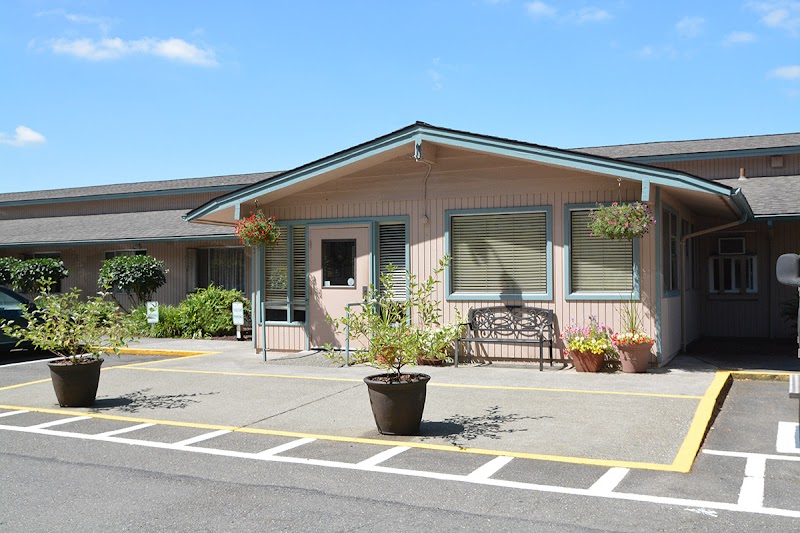
How is Benson Heights Rehabilitation Center Staffed?

CMS rates BENSON HEIGHTS REHABILITATION CENTER's staffing level at 4 out of 5 stars, which is above average compared to other nursing homes. Staff turnover is 48%, compared to the Washington average of 46%.

What Have Inspectors Found at Benson Heights Rehabilitation Center?

State health inspectors documented 57 deficiencies at BENSON HEIGHTS REHABILITATION CENTER during 2022 to 2025. These included: 1 that caused actual resident harm, 54 with potential for harm, and 2 minor or isolated issues. Deficiencies causing actual harm indicate documented cases where residents experienced negative health consequences.
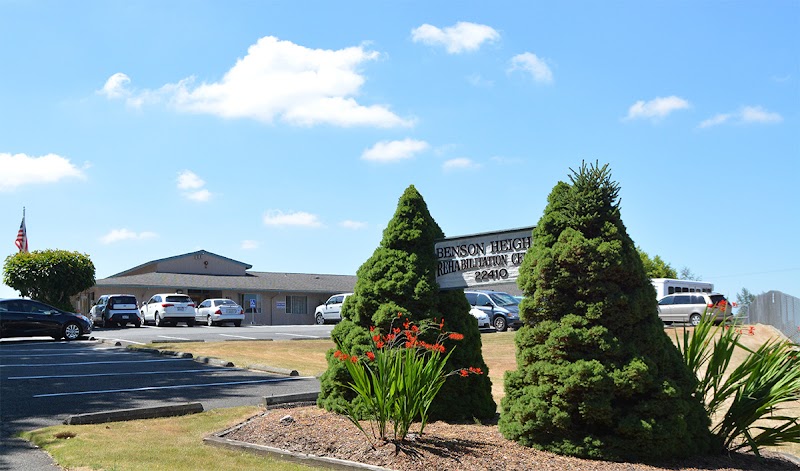
Who Owns and Operates Benson Heights Rehabilitation Center?

BENSON HEIGHTS REHABILITATION CENTER is owned by a for-profit company. For-profit facilities operate as businesses with obligations to shareholders or private owners. The facility is operated by AVALON HEALTH CARE, a chain that manages multiple nursing homes. With 91 certified beds and approximately 84 residents (about 92% occupancy), it is a smaller facility located in KENT, Washington.
How Does Benson Heights Rehabilitation Center Compare to Other Washington Nursing Homes?

Compared to the 100 nursing homes in Washington, BENSON HEIGHTS REHABILITATION CENTER's overall rating (2 stars) is below the state average of 3.2, staff turnover (48%) is near the state average of 46%, and health inspection rating (3 stars) is at the national benchmark.

What Should Families Ask When Visiting Benson Heights Rehabilitation Center?

Based on this facility's data, families visiting should ask: "Can I visit during a mealtime to observe dining assistance and food quality?" "How do you handle medical emergencies, and what is your hospital transfer rate?" "Can I speak with family members of current residents about their experience?"

Is Benson Heights Rehabilitation Center Safe?

Based on CMS inspection data, BENSON HEIGHTS REHABILITATION CENTER has a clean safety record: no substantiated abuse findings (meaning no confirmed cases of resident harm), no Immediate Jeopardy citations (the most serious violation level indicating risk of serious injury or death), and is not on the Special Focus Facility watch list (a federal program monitoring the lowest-performing 1% of nursing homes). The facility has a 2-star overall rating and ranks #100 of 100 nursing homes in Washington. While no facility is perfect, families should still ask about staff-to-resident ratios and recent inspection results during their visit.

Do Nurses at Benson Heights Rehabilitation Center Stick Around?

BENSON HEIGHTS REHABILITATION CENTER has a staff turnover rate of 48%, which is about average for Washington nursing homes (state average: 46%). Moderate turnover is common in nursing homes, but families should still ask about staff tenure and how the facility maintains care continuity when employees leave.

Was Benson Heights Rehabilitation Center Ever Fined?

BENSON HEIGHTS REHABILITATION CENTER has been fined $29,075 across 1 penalty action. This is below the Washington average of $33,370. While any fine indicates a compliance issue, fines under $50,000 are relatively common and typically reflect isolated problems that were subsequently corrected. Families should ask what specific issues led to these fines and confirm they've been resolved.

Is Benson Heights Rehabilitation Center on Any Federal Watch List?

BENSON HEIGHTS REHABILITATION CENTER is not on any federal watch list. The most significant is the Special Focus Facility (SFF) program, which identifies the bottom 1% of nursing homes nationally based on persistent, serious quality problems. Not being on this list means the facility has avoided the pattern of deficiencies that triggers enhanced federal oversight. This is a positive indicator, though families should still review the facility's inspection history directly.