LACEY POST ACUTE & REHABILITATION
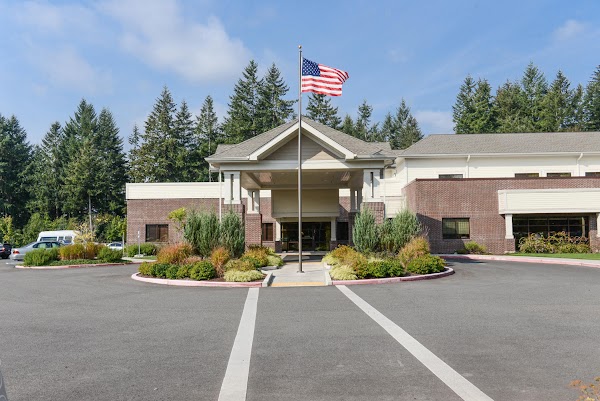
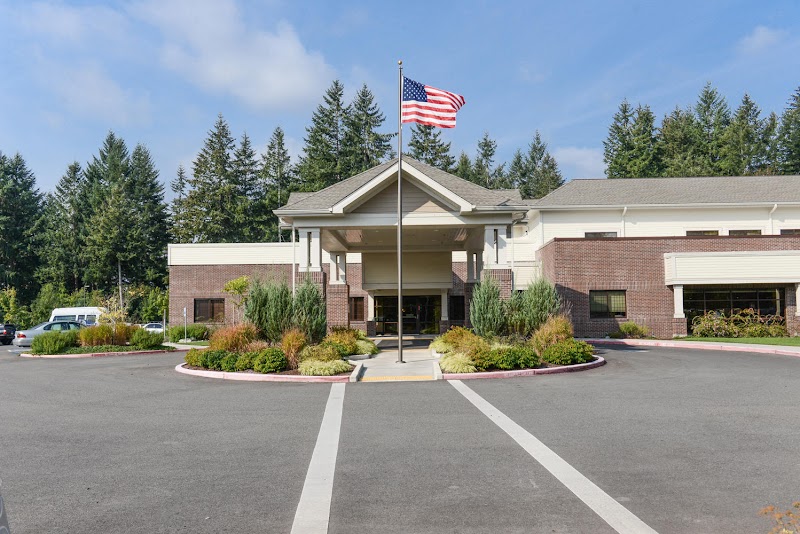
4524 INTELCO LOOP SE, LACEY, WA 98503 (360) 491-9890
For profit - Limited Liability company 120 Beds HILL VALLEY HEALTHCARE Data: November 2025
Trust Grade
73/100
#19 of 190 in WA
Last Inspection: June 2025

Inspected within the last 6 months. Data reflects current conditions.

Overview

Lacey Post Acute & Rehabilitation has received a Trust Grade of B, indicating it is a good choice among nursing homes, though there may be areas for improvement. It ranks #19 out of 190 facilities in Washington, placing it in the top half, and is the best option among the seven facilities in Thurston County. The facility is showing an improving trend, with issues decreasing from 14 in 2024 to 12 in 2025. Staffing is average, rated 3 out of 5 stars, and the turnover rate is 53%, slightly above the state average. However, the RN coverage is concerning, as it is lower than 81% of Washington facilities, which may affect oversight of resident care. Specific incidents include a serious failure to administer oxygen properly for one resident, leading to hospitalization due to hypoxia. Additionally, there were concerns about the lack of comprehensive care plans for residents with specific medical needs, which could lead to unmet care requirements. While these weaknesses are notable, the facility has excellent ratings in overall quality measures and health inspections, reflecting a commitment to high standards in care.

Trust Score
B
73/100
In Washington
#19/190
Top 10%
Safety Record
Moderate
Needs review
Inspections
Getting Better
14 → 12 violations
Staff Stability
⚠ Watch
53% turnover. Above average. Higher turnover means staff may not know residents' routines.
Penalties
⚠ Watch
$7,443 in fines. Higher than 92% of Washington facilities. Major compliance failures.
Skilled Nurses
○ Average
Each resident gets 33 minutes of Registered Nurse (RN) attention daily — about average for Washington. RNs are the most trained staff who monitor for health changes.
Violations
⚠ Watch
33 deficiencies on record. Higher than average. Multiple issues found across inspections.
★★★★★
5.0
Overall Rating
★★★☆☆
3.0
Staff Levels
★★★★★
5.0
Care Quality
★★★★☆
4.0
Inspection Score
Stable
2024: 14 issues
2025: 12 issues

The Good

  • 5-Star Quality Measures · Strong clinical quality outcomes
  • Full Sprinkler Coverage · Fire safety systems throughout facility
  • No fines on record

Facility shows strength in quality measures, fire safety.

The Bad

Staff Turnover: 53%

Near Washington avg (46%)

Higher turnover may affect care consistency

Federal Fines: $7,443

Below median ($33,413)

Minor penalties assessed

Chain: HILL VALLEY HEALTHCARE

Part of a multi-facility chain

Ask about local staffing decisions and management

The Ugly 33 deficiencies on record

1 actual harm
Jun 2025 9 deficiencies
CONCERN (D)

Potential for Harm - no one hurt, but risky conditions existed

Deficiency F0552 (Tag F0552)

Could have caused harm · This affected 1 resident

**NOTE- TERMS IN BRACKETS HAVE BEEN EDITED TO PROTECT CONFIDENTIALITY** . Based on interview and record review, the facility failed to ensure residents and/or resident representatives were informed an...

Read full inspector narrative →
**NOTE- TERMS IN BRACKETS HAVE BEEN EDITED TO PROTECT CONFIDENTIALITY** . Based on interview and record review, the facility failed to ensure residents and/or resident representatives were informed and provided consent before administering a psychotropic medication (medications capable of affecting the mind, emotions, and behaviors) for 1 of 5 sampled residents (56) reviewed for unnecessary medications. This failure placed residents and/or resident representatives at risk of not being fully informed of the risks and benefits before making decisions about medications, and a diminished quality of life. Findings included . Resident 56 was admitted to the facility on [DATE]. The Annual Minimum Data Set assessment, dated 04/25/2025, documented Resident 56 was severely cognitively impaired, had multiple diagnoses including bipolar disorder (a disorder associated with episodes of mood swings ranging from depressive lows to manic highs), depression (a mood disorder characterized by persistent sadness and loss of interest) and was taking an antipsychotic (a class of psychotropic medications used to treat symptoms of various mental disorders) and antidepressant (used to treat depression) medication. A physician's order, dated 11/05/2024, documented Resident 56 was prescribed quetiapine (a medication used to treat several mental health conditions such as bipolar disorder) 400 mg (milligrams) at bedtime. The Electronic Medication Administration Record (EMAR) showed Resident 56 was receiving quetiapine 400 mg daily. A physician's order, dated 11/05/2024, documented Resident 56 was prescribed duloxetine (a medication used to treat depression) 60 mg one time a day. The EMAR showed Resident 56 was receiving duloxetine 60 mg daily. Review of the Electronic Health Record did not show documentation of a consent from the resident or the resident's representative for the administration of quetiapine 400 mg or duloxetine 60 mg. On 06/05/2025 at 3:03 PM, Staff A, Administrator, and Staff B, Director of Nursing and Registered Nurse, said a consent should be completed when a resident is prescribed a psychotropic medication and/or if the dose was changed for the medication. Staff B said she could not find a consent for the quetiapine 400 mg and the duloxetine 60 mg and there should have been. Reference WAC 388-97-0260 (1)-(3) .
CONCERN (D)

Potential for Harm - no one hurt, but risky conditions existed

Deficiency F0569 (Tag F0569)

Could have caused harm · This affected 1 resident

. Based on interview and record review, the facility failed to ensure resident funds were conveyed to the resident's representative and/or to the state office of financial recovery (OFR) within 30 day...

Read full inspector narrative →
. Based on interview and record review, the facility failed to ensure resident funds were conveyed to the resident's representative and/or to the state office of financial recovery (OFR) within 30 days of death or discharge for 1 of 1 discharged resident (311) reviewed for Trust Funds. This failure placed residents and/or their representatives at risk for delayed reconciliation of resident trust funds. Findings included . Review of Resident 311's Discharge Minimum Data Set assessment, dated 11/06/2024, showed resident 311 was discharged on 11/06/2024 with return anticipated. Resident 311's trust account statement showed Resident 311 had a balance of $1032.42 after a credit of $.45 on 01/02/2025, 57 days after discharge. Resident 311's trust account statement showed Resident 311 had a balance of $1135.62 after a credit of $103.20 on 01/08/2025, 63 days after discharge. Resident 311's trust account statement showed Resident 311 had a balance of $1135.97 after a credit of $.35 on 01/23/2025, 78 days after discharge. Resident 311's trust account statement showed, on 01/23/2025, a description, TO CLOSE ACCOUNT, with a debit of $1135.97, and a balance of $0.00, 78 days after discharge. It further showed Payee OFR .Issue date 02/26/2025. On 06/06/2025 at 10:59 AM, Staff A, Administrator, said after a resident discharges, they reach out to the power of attorney to determine how they want resident trust funds dispersed. Staff A said they dispersed funds within 30 days of discharge. Staff A said she did not see in Resident 311's Electronic Health Record that dispersing funds within 30 days of discharge was addressed and indicated it should have been. Reference WAC 388-97-0340(5) .
CONCERN (D)

Potential for Harm - no one hurt, but risky conditions existed

Deficiency F0578 (Tag F0578)

Could have caused harm · This affected 1 resident

**NOTE- TERMS IN BRACKETS HAVE BEEN EDITED TO PROTECT CONFIDENTIALITY** . Based on interview and record review, the facility failed to obtain and/or maintain Advance Directives (AD) for 1 of 7 sampled...

Read full inspector narrative →
**NOTE- TERMS IN BRACKETS HAVE BEEN EDITED TO PROTECT CONFIDENTIALITY** . Based on interview and record review, the facility failed to obtain and/or maintain Advance Directives (AD) for 1 of 7 sampled residents (83) reviewed for AD. This failure placed residents at risk for losing their right to have their healthcare preferences and/or decisions honored. Findings included . Resident 83 was admitted to the facility on [DATE], discharged with return anticipated on 04/16/2025, and re-admitted on [DATE]. The Quarterly Minimum Data Set assessment, dated 03/20/2025, documented Resident 83 was alert and oriented. The Social Service Initial Evaluation, dated 12/16/2024, showed in Section A.18., Resident 83 had a Health Care durable power of attorney (DPOA). A progress note, dated 01/15/2025, showed DPOA paperwork was supposed to be brought to the facility on [DATE]. The Social Services Quarterly Note, dated 03/06/2025, documented in section I. Advanced Directives, No change in status. Review of Resident 83's care plan did not document a Focus area addressing an AD. Review of Resident 83's Electronic Health Record did not show AD documentation, or that information or assistance was provided related to the development of ADs. On 06/04/2025 at 1:18 PM, Staff D, Social Services Director, said residents were asked if they had an AD at an initial care conference and asked to bring it into the facility if they have one. Staff D said if the AD was not brought in, they would periodically remind them and ask again to bring it in. Staff D said it was documented in Resident 83's EHR he had a POA. Staff D said they did not have paperwork for an AD or POA for Resident 83. Staff D said she would readdress obtaining a copy of the AD for residents during a quarterly care conference. Staff D said a copy of Resident 83's AD was not asked for at the quarterly care conference. Staff D said there was no documentation addressing an AD upon re-admission to the facility on [DATE]. At 1:50 PM, Staff A, Administrator, said a copy of the AD should be asked for and/or information offered quarterly with the care conference. Staff A indicated the AD should have been readdressed for Resident 83 upon readmission, stating, I don't see they followed our protocol for him. Reference WAC 388-97-0240 (3)(a)(b)(i-iii) .
CONCERN (D)

Potential for Harm - no one hurt, but risky conditions existed

Deficiency F0604 (Tag F0604)

Could have caused harm · This affected 1 resident

**NOTE- TERMS IN BRACKETS HAVE BEEN EDITED TO PROTECT CONFIDENTIALITY** . Based on observation, interview, and record review, the facility failed to obtain an evaluation assessment, consent, and/or ph...

Read full inspector narrative →
**NOTE- TERMS IN BRACKETS HAVE BEEN EDITED TO PROTECT CONFIDENTIALITY** . Based on observation, interview, and record review, the facility failed to obtain an evaluation assessment, consent, and/or physician's order for 2 of 2 sampled residents (56 & 86) reviewed for physical restraints. This failure placed residents at risk of injury, unmet needs, and a diminished quality of life. Findings included . Review of the facility's policy entitled, Bed Rail Risk and Safety, revised 10/19/2022, documented: .Assess the Resident 1. Any resident being considered for using a bed with bed rail(s) is evaluated by the facility's interdisciplinary team to determine whether the resident's functional status and bed mobility is improved through the use of bed rail(s), to identify any bed rail that might constitute physical restraint, and to identify individual characteristics that may increase the risk of entrapment by bed rails or mattress . 3. If the resident's evaluation identifies him or her as appropriate for the use of bed rail(s), the following procedures will be followed: a. Educate the resident/resident representative on the risks and obtain consent for use. i. The resident and/or resident representative's consent for use of the bed rails will be documented in the medical record. b. The resident's representative will be notified as appropriate c. The physician/practitioner will be notified and a specific order for the use of bed rails (identify how many / type of rails, which side or sides of the bed, and when they are to be in place) will be obtained . 1) Resident 56 was admitted to the facility on [DATE]. The Annual Minimum Data Set (MDS) assessment, dated 04/25/2025, documented Resident 56 was severely cognitively impaired. On 06/02/2025 at 2:33 PM, Resident 56 was observed lying in bed with a quarter length bed rail on the upper left side of the bed. On 06/03/2025 at 2:33 PM, Resident 56 was observed lying in bed with a quarter length bed rail on the upper left side of the bed. On 06/04/2025 at 9:21 AM, Resident 56 was observed lying in bed with a quarter length bed rail on the upper left side of the bed. At 3:05 PM, Resident 56 was observed lying in bed with a quarter length bed rail on the upper left side of the bed. A second quarter length bed rail was observed to be on the ground to the right side of the head of the bed leaning against the wall. On 06/05/2025 at 8:49 AM, Resident 56 was observed lying in bed with quarter length bed rails on both the left and right upper sides of the bed. Review of Resident 56's Electronic Health Record (EHR) showed no evaluation assessment, resident and/or representative consent, or physician's order related to bed rails. 2) Resident 86 was admitted to the facility on [DATE]. The Significant Change MDS assessment, dated 04/18/2025, documented Resident 86 was alert and oriented. On 06/02/2025 at 2:12 PM, Resident 86 was observed lying in bed with a one-third length bed rail on the upper left side of the bed. On 06/03/2025 at 9:27AM, Resident 86 was observed lying in bed with a one-third length bed rail on the upper left side of the bed. Review of Resident 86's EHR showed no evaluation assessment, resident and/or representative consent, or physician's order related to bed rails. On 06/05/2025 at 12:50 PM, Staff C, Unit Manager and Licensed Practical Nurse, said when bed rails were used for a resident, an assessment, consent, and physician's order was needed. Staff C said he could not find an assessment, consent, or physician orders for Resident 56 or 86's bed rails and there should have been. At 1:26 PM Staff A, Administrator, and Staff B, Director of Nursing and Registered Nurse, said it was their expectation an evaluation assessment, consent, and physician's order was obtained for bed rails on a resident's beds. Reference WAC 388-97-0620 (4)(a)(b) .
CONCERN (D)

Potential for Harm - no one hurt, but risky conditions existed

Deficiency F0645 (Tag F0645)

Could have caused harm · This affected 1 resident

**NOTE- TERMS IN BRACKETS HAVE BEEN EDITED TO PROTECT CONFIDENTIALITY** . Based on interview and record review, the facility failed to ensure the Pre-admission Screening and Resident Review (PASRR) as...

Read full inspector narrative →
**NOTE- TERMS IN BRACKETS HAVE BEEN EDITED TO PROTECT CONFIDENTIALITY** . Based on interview and record review, the facility failed to ensure the Pre-admission Screening and Resident Review (PASRR) assessment accurately reflected mental health diagnoses for 2 of 6 sampled residents (409 & 410) reviewed for PASRR. This failure placed residents at risk of unmet mental health services and a diminished quality of life. Findings Included . Review of facility policy, entitled Long-Term Services and Supports (LTSS) Screening, Preadmission Screening and Resident Review (PASRR) Policy, documented, 1) Prior to an individual's admission, The Social Worker, Admissions Coordinator, or designee will review the completed screening forms via e-PAS and obtain a copy for placement in the electronic medical record . 1) Resident 409 was admitted to the facility on [DATE] with diagnoses including depression and anxiety. The admission Minimum Data Set (MDS) assessment, dated 05/30/2025, documented Resident 409 was alert and oriented. Record review of Resident 409's Level 1 PASRR, dated 05/26/2025, did not document a serious mental illness indicator to include depression or anxiety. Resident 409's Level 1 PASRR, Section IV Service Needs and Assessor Data, was not completed and did not document if a Level II evaluation was indicated. 2) Resident 410 was admitted to the facility on [DATE] with diagnoses including depression, bipolar and anxiety. The admission MDS assessment, dated 05/30/2025, documented Resident 409 was alert and oriented. Record review of Resident 409's Level 1 PASRR, dated 06/04/2025, did not document a serious mental illness indicator to include depression, bipolar and anxiety. Resident 410's Level 1 PASRR, Section IV Service Needs and Assessor Data, was not completed and did not document if a Level II evaluation was indicated. On 06/04/2025 at 1:36 PM, Staff D and Social Services Director said PASRRs were reviewed for accuracy prior to admission by the admissions department. Staff D reviewed Resident 409's and 410's PASSR and said they were inaccurate and that new Level I PASRR had been sent out for evaluation. Reference WAC 388-97-1975 (1)(9) .
CONCERN (D)

Potential for Harm - no one hurt, but risky conditions existed

Deficiency F0692 (Tag F0692)

Could have caused harm · This affected 1 resident

**NOTE- TERMS IN BRACKETS HAVE BEEN EDITED TO PROTECT CONFIDENTIALITY** . Based on interview, observation, and record review, the facility failed to document completion and/or refusal of weights for 1...

Read full inspector narrative →
**NOTE- TERMS IN BRACKETS HAVE BEEN EDITED TO PROTECT CONFIDENTIALITY** . Based on interview, observation, and record review, the facility failed to document completion and/or refusal of weights for 1 of 3 residents (223) reviewed for nutrition. This failure placed residents at risk for unplanned weight loss and decreased quality of life. Findings included . Resident 223 was admitted to the facility on [DATE]. The admission Minimum Data Set assessment, dated 04/13/2025, showed Resident 223 was alert and oriented. Review of Resident 223's care plan showed no potential problems or goals related to nutrition or hydration were developed. Resident 223's electronic health record (EHR) showed the following weights: On 04/04/2025 admission weight showed 113.4 pounds On 04/06/2025 weight showed 111.0 pounds On 05/13/2025 weight showed 105.8 pounds On 06/05/2025 weight showed 104.6 pounds On 06/06/2025 at 9:14 AM, Staff H, Certified Nursing Assistant, said when residents were admitted they were weighed every day for four days, and then every week unless otherwise directed. Weights were obtained and reported to nursing staff. When asked if weights were documented in the EMR, Staff H said yes. The nurses documented in the EMR after weight were reported. When asked what the process was if a resident refused to be weighed, Staff H said this would be reported to the nursing staff. Staff H said Resident 223 often refused weights. Staff H said Resident 223 required assistance with meals. At 9:22 AM, Staff I, Licensed Practical Nurse and Resident Care Manager, said weights were to be completed upon admission, then for three days, and then weekly unless otherwise directed. Staff I said weights were to be documented in the EHR weight tab. Staff I said the CNA's obtained resident weights, reported them to the nurses, and the nurse would input the weights into the EHR weight tab. Staff I said the CNA's were not able to input weights into the EHR weight tab. When asked where resident refusals for weights would be located, Staff I said in the progress notes of the medical record. At 9:35 AM, Staff J, Registered Dietician, said residents were to be weighed upon admission, for three days after, and then weekly. When asked where resident weights could be found, Staff J said the EHR weight tab. When asked if weights were ever documented elsewhere, Staff J said no, they were only documented in the EHR. When asked how staff would document a resident refusal for a weight, Staff J said this would be documented in the EHR progress notes. At 12:49 PM, Staff I said when a resident refused to be weighed, the CNA should report to the nurse so the nurse could speak with the resident, educate on risks and benefits, document in the medical record, and report to appropriate parties. Staff I said she was unable to locate weight refusal documentation for Resident 223 in the EHR. Reference WAC 388-97-1060 (3)(h) .
CONCERN (D)

Potential for Harm - no one hurt, but risky conditions existed

Deficiency F0761 (Tag F0761)

Could have caused harm · This affected 1 resident

**NOTE- TERMS IN BRACKETS HAVE BEEN EDITED TO PROTECT CONFIDENTIALITY** . Based on observation and interview, the facility failed to ensure drugs, biologicals, and medical equipment were dated upon op...

Read full inspector narrative →
**NOTE- TERMS IN BRACKETS HAVE BEEN EDITED TO PROTECT CONFIDENTIALITY** . Based on observation and interview, the facility failed to ensure drugs, biologicals, and medical equipment were dated upon opening and discarded once expired for one of two medications rooms (2nd floor) and one of two treatment carts (1st floor) reviewed for medication and equipment storage. This failure placed the residents at risk for receiving compromised or ineffective medication and receiving treatment with outdated equipment. Findings included . <Medication Storage room [ROOM NUMBER]nd Floor> On [DATE] at 10:35 AM, a concurrent observation with Staff C, Unit Manager and Licensed Practical Nurse, showed as follows: 1. Medication Storage Room Refrigerator: One Vial of Tuberculin Purified Protein Derivative PPD (a solution used to test for tuberculosis) was observed opened with no date for when it was opened for use, and no date for when it should be disposed of. Two boxes of Bisacodyl Suppositories (rectal suppositories used to relieve constipation) with expiration date of [DATE]. 2. Medication Storage Room Shelve: One box containing 35 BD Vacutainer Safety Lock Blood Collection Sets (a device used to collect blood for laboratory analysis) was observed with an expiration date of [DATE]. <Treatment Cart 1st Floor> On [DATE], at 3:54 PM, a concurrent observation with Staff K, Licensed Vocational Nurse, showed as follows: One bottle of Hibiclens Solution (an antibacterial cleaning solution) was observed with an expiration date of 04/2024. Staff K said the Hebiclens should have been disposed of when it expired. On [DATE], at 11:30 AM, Staff C said medications and equipment in the medication storage room and refrigerator should be destroyed at time of expiration. At 11:45 AM, Staff A, Administrator, said staff had informed her of medication storage issues. Reference WAC 388-97-1300(2) .
CONCERN (E)

Potential for Harm - no one hurt, but risky conditions existed

Comprehensive Care Plan (Tag F0656)

Could have caused harm · This affected multiple residents

**NOTE- TERMS IN BRACKETS HAVE BEEN EDITED TO PROTECT CONFIDENTIALITY** . Based on observation, interview and record review, the facility failed to develop a comprehensive care plan for 3 of 4 sampled...

Read full inspector narrative →
**NOTE- TERMS IN BRACKETS HAVE BEEN EDITED TO PROTECT CONFIDENTIALITY** . Based on observation, interview and record review, the facility failed to develop a comprehensive care plan for 3 of 4 sampled residents (44, 32, & 83) reviewed for smoking, position/mobility, and anticoagulants (often called a blood thinner, a medication that inhibits blood clotting). This failure placed residents at risk for unmet care needs and a diminished quality of life. Findings included . <Smoking> Resident 44 was admitted to the facility on [DATE] with multiple diagnoses to include Chronic Obstructive Pulmonary Disease (COPD, a lung disease blocking the airflow, making it difficult to breathe). The Quarterly Minimum Data Set (MDS) assessment, dated 04/09/2025, documented Resident 44 was alert and oriented. Facility policy, entitled Smoking Prohibited, dated 10/01/2021, documented: Evaluation of resident for ability to safely smoke without staff assistance / supervision in a location out of the facility and off the facility grounds. Evaluation will be maintained in the resident's record and the care plan will address the resident's desire to smoke outside of the facility or the facility grounds. On 06/02/2025 at 2:38 PM, Resident 44 was observed smoking independently off the facility property. Resident 44's Comprehensive Care Plan, did not show a Focus, Goal, or Interventions/Tasks area related to safe smoking, until being updated on 06/02/2025. On 06/06/2025, at 10:47 AM, Staff C, Unit Manager and a Licensed Practical Nurse (LPN), said he was aware Resident 44 smoked, despite residing in a non-smoking facility. Staff C said the facility educated the residents of risk and benefits of smoking, completed a smoking assessment, and updated the care plan accordingly. At 11:03 AM, Staff C reviewed Resident 44's care plan and said plan of care related to smoking should have been added prior to 06/02/2025. On 06/06/2025, Staff B, Director of Nursing and Registered Nurse, said Resident 44's smoking was addressed in her care plan, but due to a computer system change, it was canceled by a mistake and not put back until 06/02/2025. <Position/mobility> Resident 32 was admitted to the facility on [DATE]. The Quarterly MDS assessment, dated 04/30/2025, documented Resident 32 was alert and oriented, dependent for personal hygiene and transfers, and had hemiplegia or hemiparesis (paralysis of one side of the body). On 06/02/2025, at 12:14 PM, Resident 32 said she was unable to move her left hand. Resident 32 said she needed a hoyer lift (a mechanical device used to lift and transfers people unable to move themselves) to be transferred out of bed. On 06/04/2025 at 3:08 PM, Staff E, Certified Nursing Assistant (CNA), said he got information about the care needs of residents, like mobility and transfers, from the care plan and the Kardex, a brief overview of a resident's care. On 06/05/2025 at 8:46 AM, Resident 32 was observed lying in bed. Resident 32 said she can move her left leg just a little but is not able to move her left hand or arm at all. Resident 32 said she can move her left hand with her right hand, and demonstrated picking up her left hand with her right and moved it across her chest. Review of Resident 32's Comprehensive Care Plan did not show a Focus, Goal, or Interventions/Tasks area related to positioning, mobility and/or Activities of Daily Living (ADL) needs. <Anticoagulants> Resident 83 was admitted to the facility on [DATE], discharged with return anticipated on 04/16/2025, and re-admitted on [DATE] with multiple diagnosis to include pulmonary embolism (PE, a blood clot that traveled through the bloodstream and blocked an artery in the lungs). The Quarterly MDS assessment, dated 03/20/2025, documented Resident 83 was alert and oriented. A physician's order, dated 05/13/2025, documented Resident 83 was prescribed apixaban (an anticoagulant medication) for PE. The EMAR showed Resident 83 was receiving apixaban twice daily. Review of Resident 83's Comprehensive Care Plan did not show a Focus, Goal, or Interventions/Tasks area related to a PE diagnosis and/or anticoagulant medication. On 06/05/2025 at 10:44 AM, Staff B said the CNAs got information related to resident care from the Kardex, which is populated from the care plan. Staff B said the care plan should include ADL needs, disease processes, and high risk medications like anticoagulants. Staff B said she did not see a care plan addressing Resident 32's mobility and ADL needs and there should have been. Staff B said she did not see a care plan addressing Resident 83's diagnosis of PE and anticoagulant medication, and there should have been. Reference WAC 388-97-1020 (1), (2)(a) .
CONCERN (E)

Potential for Harm - no one hurt, but risky conditions existed

Quality of Care (Tag F0684)

Could have caused harm · This affected multiple residents

**NOTE- TERMS IN BRACKETS HAVE BEEN EDITED TO PROTECT CONFIDENTIALITY** 4) Resident 220 was admitted to the facility on [DATE]. The admission note, dated 05/22/2025 at 3:08 PM, showed Resident 220 was...

Read full inspector narrative →
**NOTE- TERMS IN BRACKETS HAVE BEEN EDITED TO PROTECT CONFIDENTIALITY** 4) Resident 220 was admitted to the facility on [DATE]. The admission note, dated 05/22/2025 at 3:08 PM, showed Resident 220 was alert and oriented. Resident 220's admission care plan dated 05/29/2025 documented: SKIN IMPAIRMENT UPON ADMISSION/readmission - The resident has an area of impaired skin integrity. Left hip abrasion Left vascular wound to toes Left lower extremity vascular wound Left heel diabetic foot ulcer (DFU) stage 3 Right heel DFU unstageable Left lateral DFU unstageable. Resident 220's physician orders, dated 05/29/205, documented: Left hip abrasion clean with normal saline, pat dry, apply medihoney [wound treatment], and skin prep [skin protectant]. Cover with foam dressing. Change every other day until resolved. On 06/03/2025 at 11:43 AM, Resident 220 was observed sitting in his wheelchair with therapeutic cushion in place. He had bandages with kerlix wraps (gauze wrapping) covering both lower extremities. He informed me he was admitted with wounds to his heels. He said he also had a wound to his left buttock and the bandage wasn't changed the previous night. On 06/04/2025 at 10:06 AM, Resident 220 is observed sitting in his wheelchair with a therapeutic cushion in place. He has bandages and kerlix wraps covering both lower extremities. He informs me the bandages were changed later in the day as well as the one to his left buttock. On 06/04/2025, Review of Resident 220's treatment administration record shows treatment to left buttock was initiated on 05/29/2025 and treatments and dressing changes were to occur every other day. Treatment administration records for May 2025, and June 2025, showed treatments were signed for on 5/29/2025, 5/31/2025, 06/02/2025, and 06/04/2025. On 06/04/2025 at 2:15 PM, Staff G, LPN, when asked about wound care for Resident 220 said she had completed treatments for his lower extremities. When asked about a treatment to Resident 220's left hip/buttocks she said she was unaware of a wound on his left hip/buttock. Staff G, stated,Let's go take a look at him because I need to know. Upon observation Resident 220 had a foam dressing to left lateral buttock/hip, dated 05/29/2025. Staff G, removed the dressing and noted an area of redness that was blanchable when touched. Staff G, said she would be notifying the Resident Care Manager and Director of Nursing Services. When asked about the signature on the treatment administration record for wound care to left hip/buttock, Staff G said she had a float nurse assisting her and this nurse was the one who signed the treatment record for left hip and buttock. On 06/04/2025 at 3:20 PM, Staff A, Administrator, indicated the treatment had been signed off in the treatment administration record without being completed. Reference WAC 388-97-1060 (1)(3)(b) Based on interview and record review, the facility failed to initiate bowel interventions for 3 of 10 sampled residents (16, 17 & 72) reviewed for quality of care related to bowel management. The facility also failed to provide treatment as ordered for 1 of 2 residents (220), reviewed for pressure ulcers. These failures placed residents at risk for health complications, unmet care needs and a diminished quality of life. Findings Included . 1) Resident 16 was admitted to the facility on [DATE]. The Quarterly Minimum Data Set (MDS) assessment, dated 03/05/2025, documented Resident 16 was alert and oriented and required minimum assistance with activities of daily living (ADLs). The Bowel Movement (BM) task sheet documented Resident 16 had not had a BM on 05/06/25, 05/07/2025, and 05/08/2025. On 06/04/2025 at 2:53 PM, a joint review of May 2025 medication administration record (MAR) with Staff C, Unit Manager and Licensed Practical Nurse (LPN), did not show documentation of PRN (as needed) bowel medications having been administered between 05/06/2025 and 05/08/2025, nor documentation of a bowel assessment. Staff C said bowel protocol should have been initiated a day earlier. 2) Resident 17 was admitted to the facility on [DATE]. The Quarterly MDS assessment, dated 04/17/2025, documented Resident 16 was severely cognitively impaired and required moderate assistance with ADLs. The BM task sheet documented Resident 17 had not had a BM on 05/30/25, 05/31/2025, 06/01/2025, 06/02/2025 and 06/03/2025. On 06/04/2025 at 2:53 PM, a joint review of May and June 2025 MAR with Staff C, did not show documentation of PRN bowel medications having been administered between 05/30/2025 and 06/03/2025, nor documentation of a bowel assessment. Staff C said no PRN bowel medications were administered. 3) Resident 72 was admitted to the facility on [DATE]. The Quarterly MDS assessment, dated 04/18/2025, documented Resident 16 was severely cognitively impaired and required moderate assistance with ADLs. The BM task sheet documented Resident 72 had not had a BM on 05/31/2025, 06/01/2025, 06/02/2025 and 06/03/2025. On 06/04/2025 at 2:53 PM, a joint review of May and June 2025 MAR with Staff C, did not show documentation of PRN bowel medications having been administered between 05/31/2025 and 06/03/2025 nor documentation of a bowel assessment. Staff C said resident should have had a bowel assessment after 72 hours of no documented BM and bowel medications administered as needed. On 06/05/2025 at 11:16 AM, Staff D, Director of Nursing and Registered Nurse said it was the expectation that residents who had not had a BM in 72 hours are assessed, and PRN medications administered as ordered. Staff D reviewed Residents 16, 17 and 72's May/June 2025 bowel history and health record and said there was no documented bowel assessment between 05/30/2025 and 06/03/2025.
May 2025 1 deficiency
CONCERN (D) 📢 Someone Reported This

A family member, employee, or ombudsman was alarmed enough to file a formal complaint

Potential for Harm - no one hurt, but risky conditions existed

Deficiency F0627 (Tag F0627)

Could have caused harm · This affected 1 resident

**NOTE- TERMS IN BRACKETS HAVE BEEN EDITED TO PROTECT CONFIDENTIALITY** Based on interview and record review, the facility failed to ensure transfer training was provided to family resulting in an uns...

Read full inspector narrative →
**NOTE- TERMS IN BRACKETS HAVE BEEN EDITED TO PROTECT CONFIDENTIALITY** Based on interview and record review, the facility failed to ensure transfer training was provided to family resulting in an unsafe discharge for 1 of 3 sample residents (1) reviewed for discharge process. This failure placed residents at risk for an unsafe discharge into the community and a diminished quality of life. Findings included . Resident 1 was admitted to the facility on [DATE] for rehabilitative services. The 5-day Minimum Data Set Assessment, dated 02/29/2025, indicated that Resident 1 was cognitively intact and required moderate assistance from staff for transfers. Review of the hospital Physical Therapy (PT) note, dated 02/22/2025, indicated that Resident 1 was independent with all mobility using a 4 wheeled walker prior to hospitalization. On 04/29/2025 at 12:15 PM, Staff D, Social Services Director, said that the last covered day for stay depends on insurance. Staff D said that the insurance case manager decides when the resident no longer qualifies for therapy services. Staff D was unable to provide documentation that Resident 1's spouse was able to provide the care needed for Resident 1 to safely discharge home. At 12:42 PM, Staff C, Social Services said the facility does a discharge planning care conference shortly after admission to the facility. Staff C said they do not have a formal conference when residents are closer to discharge. Staff C said that Resident 1 was given notice that services where ending on 04/19/2025 as determined by special insurance coverage. Staff C was unable to locate records to indicate that transfer training was provided to the spouse of Resident 1, to ensure he was able to safely care for Resident 1 after she was discharged home. At 12:36 PM, Staff B, Director of Nursing and Registered Nurse, said that the residents progress towards discharge was not documented in the record after weekly skilled rounds. Staff B said that Resident 1 was trained about care needs for discharge. Staff B, said Resident 1 required hands on assist with transfer. Staff B unable to provide documentation that Resident 1's spouse was trained or capable to safely transfer Resident 1 in preparation for discharge. On 05/05/2025, at 9:13 AM, Collateral Contact (CC) 1, spouse/family member, said that Resident 1 required assistance with transfer since being home. CC 1 said he was not provided training for AV to discharge home to his care. CC 1 said he did not feel that AV was safe to return home at the time she was discharged . Reference WAC 388-97-0120
May 2025 1 deficiency
CONCERN (D) 📢 Someone Reported This

A family member, employee, or ombudsman was alarmed enough to file a formal complaint

Potential for Harm - no one hurt, but risky conditions existed

Deficiency F0678 (Tag F0678)

Could have caused harm · This affected 1 resident

**NOTE- TERMS IN BRACKETS HAVE BEEN EDITED TO PROTECT CONFIDENTIALITY** . Based on interviews and record review, the facility failed to ensure that advance directives were implemented on admission for...

Read full inspector narrative →
**NOTE- TERMS IN BRACKETS HAVE BEEN EDITED TO PROTECT CONFIDENTIALITY** . Based on interviews and record review, the facility failed to ensure that advance directives were implemented on admission for 1 of 7 (1) residents reviewed for advance directives. This failure placed residents at risk for not having advanced directives honored and a diminished quality of life. Findings included . Corporate entity policy/document titled, Advance Directives, dated [DATE], showed, upon admission, the resident will be provided with written information concerning the right to refuse or accept medical or surgical treatment and to formulate an advance directive if he or she chooses to do so. In addition, facility staff will verify the residents' wishes with regard to urgent or emergency care, including the use of cardiopulmonary resuscitation (CPR). Washington State requires the facility to use CPR with nursing home residents unless the resident's guidelines state 'No CPR. Resident 1 admitted to the facility on [DATE] for rehab services. The 5-day Minimum data set assessment, dated [DATE], indicated the resident was cognitively intact. The acute care transfer orders showed Resident 1 was a full code (indicating to perform CPR). Resident 1 also had advanced directives in the Electronic Health Record (EHR) indicating they opted for no CPR. On [DATE] at 3:00 PM, Staff C, admission Nurse and Licensed Practical Nurse said he would transcribe the Code status order from the transfer orders into the EHR at the facility. Staff C looked at the EHR and said whoever did the admission for Resident 1 did not follow the process. Staff C said he did not orinarily validate the transfer order with the resident for accuracy. On [DATE] at 4:39 PM, Staff B, Director of Nursing and Registered Nurse said the order for CPR should have been entered into the EHR upon admission. Staff B said the Nurse Practitioner or Medical Doctor would talk with the resident about advanced directives and have the resident/designee sign a Physician Order for Life Sustaining Treatment (POLST) form within 48 hours of admission. Staff B said this was the expectation. Staff B provided a blank POLST form for Resident 1 indicating this was not completed. On [DATE] at 4:50 PM, Staff D, Nurse Practitioner, said that he was responsible for discussing advanced directives with new admission residents. Staff D said he was unaware of Resident 1 having advanced directives in place. Staff D was unable to recall why Resident 1 did not complete a POLST. Staff D said that if a resident was unable to sign or unwilling, he would give the POLST form to the nursing staff to follow up. Staff D said the process was not streamlined. On [DATE] at 12:32 PM, Staff B said the transfer order should have been transcribed in the EHR. Staff B was unable to find the CPR status for Resident 1 in the EHR. Staff B said she was not sure why the POLST form was never filled out for Resident 1. Staff B said if there was conflicting information regarding CPR status the Physician should have been notified for clarification. Staff B said this would be the expectation. Staff B was unable to find documentation supporting this in the EHR. Reference WAC 388-97-1060 .
Jan 2025 1 deficiency
CONCERN (D) 📢 Someone Reported This

A family member, employee, or ombudsman was alarmed enough to file a formal complaint

Potential for Harm - no one hurt, but risky conditions existed

Comprehensive Care Plan (Tag F0656)

Could have caused harm · This affected 1 resident

**NOTE- TERMS IN BRACKETS HAVE BEEN EDITED TO PROTECT CONFIDENTIALITY** . Based on interviews and record reviews, the facility failed to establish a wound plan of care for 1 of 4 sampled residents (Re...

Read full inspector narrative →
**NOTE- TERMS IN BRACKETS HAVE BEEN EDITED TO PROTECT CONFIDENTIALITY** . Based on interviews and record reviews, the facility failed to establish a wound plan of care for 1 of 4 sampled residents (Resident 1) reviewed for comprehensive care plans. This failure placed residents at risk of unmet care needs and a decreased quality of life. Findings included . Resident 1 was admitted to the facility on [DATE]. The Minimum Data Set assessment, dated 12/30/2024, documented the resident was moderately cognitively impaired and had a Stage II pressure ulcer (an open wound on the skin caused by prolonged pressure to a specific area of the body) upon admission. An admission note, dated 12/28/2024, documented, New admission from [local hospital] . Stage 2 pressure injury to sacrum [lower back above the buttocks] . Resident resting in bed. Resident 1's comprehensive care plan, dated 12/28/2024, did not have documentation of wound plan of care for the resident's pressure ulcer. On 01/13/2025 at 2:57 PM, Staff C, Assistant Director of Nursing Services and Registered Nurse (RN), said Resident 1 was admitted to the facility on [DATE]. Staff C said Resident 1 had wound care orders for a wound to the sacrum. Staff C said normally there would be a care plan associated with a skin impairment, however, Staff C indicated they did not see plan of care related to Resident 1's pressure ulcer. On 01/16/2025 at 3:27 PM, Staff B, Director of Nursing Services and RN, said Resident 1's wound was documented on the admission MDS, and a wound care evaluation was completed. After reviewing Resident 1's care plan, Staff B said she did not see a wound care plan, and would have expected to see a wound care plan on the resident's comprehensive care plan. On 01/30/2025 at 12:49 PM, Staff B said there was a change made to the admission document. Staff B said typically if a resident was admitted with a skin issue, a care plan was automatically generated. Staff B said that process changed with a version update to their electronic medical record system. Staff B said that change occurred on 12/19/2024, and the resident admitted to the facility on [DATE]. Staff B said the facility was correcting the issue so care plans would be automatically generated again. Staff B said the facility missed Resident 1 not having a wound care plan. Reference WAC 388-97-1020 (1), (2)(a)(b) .
Aug 2024 12 deficiencies
CONCERN (D)

Potential for Harm - no one hurt, but risky conditions existed

Deficiency F0578 (Tag F0578)

Could have caused harm · This affected 1 resident

**NOTE- TERMS IN BRACKETS HAVE BEEN EDITED TO PROTECT CONFIDENTIALITY** . Based on interview and record review, the facility failed to obtain and/or maintain Advance Directives (AD) for 1 of 11 sample...

Read full inspector narrative →
**NOTE- TERMS IN BRACKETS HAVE BEEN EDITED TO PROTECT CONFIDENTIALITY** . Based on interview and record review, the facility failed to obtain and/or maintain Advance Directives (AD) for 1 of 11 sampled residents (157) reviewed for AD. This failure placed residents at risk for losing their right to have their healthcare preferences and/or decisions honored. Findings included . Resident 157 was admitted to the facility on [DATE]. The Admission/Medicare - 5 day Minimum Data Set assessment, dated 08/15/2024, documented Resident 157 was alert and oriented. Record review of Resident 157's Social Service Initial Evaluation, dated 08/12/2024, documented, 18a .POA [Power of Attorney] is [Proper Name]. Record review of Resident 157's Multidisciplinary Care Conference, dated 08/12/2024, documented, K.1 . Son is POA. Record review of Resident 157's Electronic Health Record (EHR) did not show AD paperwork documentation, or that AD documents were requested. On 08/22/2024 at 2:01 PM, Staff C, Director of Social Services, said when a resident was admitted , if they had an AD or Power of Attorney, social services would ask them to bring copies in. At 2:05 PM, Staff D, Social Worker, said she would ask during the care conference for AD copies to be brought in or emailed if they had one. When asked if Resident 157's AD documentation paperwork was requested during the care conference, Staff D said she did not have copies of the AD. Staff D stated, I do not have that documented. On 08/23/2024 at 9:48 AM, Staff B, Director of Nursing Services and Registered Nurse, said during the care conference, the social worker would establish if there was an AD. Staff B said the social worker would request a copy of the AD and document the request in the EHR. At 9:55 AM, Staff A, Administrator, said it was her expectation a copy of the AD was requested and staff documented it was requested. Staff A stated, If it wasn't documented, it wasn't done. Reference WAC 388-97-0240 (3)(a)(b)(i-iii) .
CONCERN (D)

Potential for Harm - no one hurt, but risky conditions existed

Deficiency F0582 (Tag F0582)

Could have caused harm · This affected 1 resident

. Based on interview and record review, the facility failed to provide the Skilled Nursing Facility Advanced Beneficiary Notice of Non-Coverage (SNF ABN) for 1 of 3 sampled residents (42) reviewed for...

Read full inspector narrative →
. Based on interview and record review, the facility failed to provide the Skilled Nursing Facility Advanced Beneficiary Notice of Non-Coverage (SNF ABN) for 1 of 3 sampled residents (42) reviewed for Beneficiary Notices. This failure placed residents and/or their representatives at risk for not having adequate information to make financial decisions related to the residents' stay in the facility. Findings included . The Notice of Medicare Non-Coverage, dated 04/10/2024, documented Resident 42's representative was contacted on 04/09/2024 and informed Resident 42's services were ending on 04/11/2024. The SNF ABN was not provided to inform the representative of the potential financial liability. On 08/23/2024 at 11:25 AM, Staff N, Business Office Manager, said the SNF ABN for Resident 42 was not completed. At 11:40 AM, Staff C, Social Services Director, said she had a conversation with Staff N and she was not sure who was supposed to cover the SNF ABN with residents or their representatives. Staff C said Resident 42 should have had the SNF ABN because he remained in the facility. Reference WAC 388-97-0300 (4)(a-c) .
CONCERN (D)

Potential for Harm - no one hurt, but risky conditions existed

Deficiency F0625 (Tag F0625)

Could have caused harm · This affected 1 resident

**NOTE- TERMS IN BRACKETS HAVE BEEN EDITED TO PROTECT CONFIDENTIALITY** . Based on interview and record review, the facility failed to provide a written Bed-Hold notice to the resident or resident's r...

Read full inspector narrative →
**NOTE- TERMS IN BRACKETS HAVE BEEN EDITED TO PROTECT CONFIDENTIALITY** . Based on interview and record review, the facility failed to provide a written Bed-Hold notice to the resident or resident's representative at the time of transfer to the hospital for 1 of 1 sampled resident (105) reviewed for bed hold notification. This failure placed residents at risk for lack of knowledge regarding their right to hold their bed while in the hospital. Findings included . Resident 105 was admitted to the facility on [DATE]. The admission Minimum Data Set assessment, dated 06/14/2024, documented Resident 105 was moderately cognitively impaired. The Electronic Health Record (EHR) showed Resident 105 was hospitalized on [DATE]. The EHR did not show documentation of a written Bed-Hold notice, nor that contact was made to the resident or resident's representative regarding a Bed-Hold. On 08/22/2024 at 10:06 AM, Staff E, Admissions Liaison, said when a resident was transferred to the hospital, admissions contacted the resident or the resident representative and offered a bed-hold. Staff E said she did not have a form she filled out. Staff E said if a resident transferred to a hospital directly from a doctor's appointment while a resident, the resident was still offered a Bed-Hold. Staff E said she could not locate a written Bed-Hold notice nor documentation offering a Bed-Hold for Resident 105. At 10:14 AM, Staff A, Administrator, said it was her expectation a Bed-Hold was offered and documented when a resident transferred to the hospital. Reference WAC 388-97-0120 (4)(a-c) .
CONCERN (D)

Potential for Harm - no one hurt, but risky conditions existed

Assessment Accuracy (Tag F0641)

Could have caused harm · This affected 1 resident

**NOTE- TERMS IN BRACKETS HAVE BEEN EDITED TO PROTECT CONFIDENTIALITY** . Based on observation, interview, and record review, the facility failed to ensure the Minimum Data Set (MDS) assessment was co...

Read full inspector narrative →
**NOTE- TERMS IN BRACKETS HAVE BEEN EDITED TO PROTECT CONFIDENTIALITY** . Based on observation, interview, and record review, the facility failed to ensure the Minimum Data Set (MDS) assessment was completed accurately to reflect a resident's condition at the time of assessment for 1 of 27 sampled residents (75) reviewed for assessment accuracy. This failure placed residents at risk for unidentified and/or unmet care needs. Findings included . Resident 75 was admitted to the facility on [DATE] with diagnoses including history of strokes (when the brain's blood supply is cut off, which can damage or kill brain tissue). The MDS, dated [DATE], documented the resident was alert and oriented and was able to make care needs known. The MDS did not reflect the resident's visual deficit. On 08/08/09/2024 at 2:47 PM, Resident 75 stated, Strokes have taken a big chunk of my vision. It is very difficult for me to see. It is difficult to read the activity calendar and get into the bathroom. Resident 75 said she needed assistance with most Activities of Daily Living (ADLs) related to her poor vision. On 08/21/2024 at 10:30 AM, Staff W, Activity Director, said Resident 75 was visually impaired. The resident can not see the activity newsletter daily, so activity staff read it to her. Staff W said Resident 75 had a cell phone and uses listens to books. Staff W said the staff encourage participation in activity programs and provide assistance to get to activity programs. At 11:30 AM, Resident 75 was observed in the dining room, eating independently. Resident 75 asked staff to tell her what was on the plate in front of her and where the food item was. At 2:45 PM, Staff X and Staff Y, MDS Coordinators, said the MDS assessments for residents were completed by resident interview, resident observation, and asking all staff for input. Staff X and Staff Y said all staff included the nurses, nursing assistants, social work, activities and therapies. When asked questions about the process for gathering information for resident MDS assessments, Staff X stated, We follow CMS (Centers for Medicare and Medicaid) guidance. On 08/23/24 at 10:07 AM, Staff Z, Certified Nursing Assistant, said, Resident 75 was visually impaired and required assistance with set- up of eating, bathing, toileting. Staff J, Charge Nurse and Licensed Practical Nurse, stated, [Resident 75] has been at the facility in the past and staff know this resident and understand she is visually impaired. At 10:45 AM, Staff Q, Charge Nurse, said Resident 75 was legally blind. Reference WAC 388-97-1000 (1)(a)(b)(d) .
CONCERN (D)

Potential for Harm - no one hurt, but risky conditions existed

PASARR Coordination (Tag F0644)

Could have caused harm · This affected 1 resident

**NOTE- TERMS IN BRACKETS HAVE BEEN EDITED TO PROTECT CONFIDENTIALITY** . Based on observations, interview and record review, the facility failed to follow the recommendations of the Preadmission Scre...

Read full inspector narrative →
**NOTE- TERMS IN BRACKETS HAVE BEEN EDITED TO PROTECT CONFIDENTIALITY** . Based on observations, interview and record review, the facility failed to follow the recommendations of the Preadmission Screen and Resident Review (PASARR) Level II for 1 of 7 sampled residents (14) reviewed for PASARR. This failure placed residents at risk for not receiving necessary mental health services and a diminished quality of life. Findings included . Resident 14 was admitted to the facility on [DATE] with diagnoses including Parkinson's Disease (chronic, long-term brain disorder that affects the nervous system and causes involuntary movements) and Depression. The quarterly Minimum Data Set (MDS) assessment, dated 08/07/2024, indicated Resident 14 experienced hallucinate and experience delusions, and was severely cognitively impaired. The PASARR, dated 06/25/2024, indicated Level II services were appropriate for new behaviors of a psychotic disorder. The Notice of Determination, dated 07/16/2024, documented Resident 14 had been identified as having a mental health condition that required specialized behavioral health services. Review of the PASARR Level II, Initial Psychiatric Evaluation Summary, dated 07/25/2024, indicated specialized services could be provided in a skilled nursing facility by a licensed mental health professional or mental health agency for individual services. The assessment indicated Resident 14 may most benefit from an environment that provides a low level of stimulation as well as a sense of routine and predictability. Resident 14 would likely benefit from a calm, reassuring approach. Provide resident reorientation and redirection as needed. Provide empathic listening and validation of feelings [Resident 14] is experiencing, then redirect her to topics or activities that prove to be distracting and engaging for her. Keep communication simple and short. Provide slow transitions between topics or cares and allow rest breaks in between. Try to anticipate her basic needs and wants. Review of Resident 14's impaired cognition care plan, dated 07/28/2024, did not include PASARR level II recommendations for behavioral health interventions. On 08/19/2024 at 9:50 AM, Resident 14 was observed calling out and lying in bed. Resident 14 was tearful and making disorganized statements I have been murdered once . the government brought me back to life once . so they could steal my [NAME] benefits . Resident was able to engage in conversation briefly, then called out for help again. At 11:00 AM, Resident 14 was observed calling out sporadically for help from her friends and nursing staff. On 08/20/2024 at 8:38 AM, Resident 14 was observed talking to herself in their room, while looking through items in their purse. Resident 14 said she was anxious because she did not know what was going on. On 08/21/2024 at 9:09 AM, Staff F, Certified Nursing Assistant, said she would look in [the electronic medical records (PCC) for information on how to help calm a confused resident. Staff F was unable to locate interventions for behaviors in PCC. When asked how she would approach a resident that was calling out or scared, Staff F said she would just go into the resident's room and see what she could do to help. Staff F said it would be helpful if there was information in PCC to direct the care. At 11:14 AM, Staff G, Licensed Practical Nurse, said if a resident had behavior interventions, she would look at the Medication Administration Record (MAR) for information. When asked to pull up interventions in the MAR, Staff G was unable to locate specific interventions to assist in behavior management for Resident 14. On 08/22/2024 at 8:35 AM, Staff C, Social Service Director, said PASARR Level II recommendations were usually listed on the care plan. Staff C said the facility should use the recommendations from the PASARR evaluator for resident mental health care in the facility. Staff C said behavioral health care plan interventions should then transfer onto the [NAME] [resident's individualized care directives for nursing assistants]. Staff C was unable to locate the PASARR Level II evaluator recommendations on Resident 14's care plan. At 9:35 AM, Staff A, Administrator, said PASARR Level II recommendations should be integrated into the care plan to direct staff on behavioral health interventions. Reference WAC 388-97-1060 (1) .
CONCERN (D)

Potential for Harm - no one hurt, but risky conditions existed

Deficiency F0645 (Tag F0645)

Could have caused harm · This affected 1 resident

**NOTE- TERMS IN BRACKETS HAVE BEEN EDITED TO PROTECT CONFIDENTIALITY** . Based on interview and record review, the facility failed to ensure the Pre-admission and Resident Review (PASARR) assessment ...

Read full inspector narrative →
**NOTE- TERMS IN BRACKETS HAVE BEEN EDITED TO PROTECT CONFIDENTIALITY** . Based on interview and record review, the facility failed to ensure the Pre-admission and Resident Review (PASARR) assessment was completed correctly for 2 of 9 sampled residents (38 & 100) reviewed for PASARR. This failure placed residents at risk for not receiving the necessary mental health services and a diminished quality of life. Findings included . 1) Resident 38 was admitted to the facility on [DATE] with diagnoses including depression. The admissions Minimum Data Set (MDS) assessment, dated 07/22/2024, indicated Resident 38 was alert and oriented. The PASARR, dated 07/12/2024, indicated Resident 38 had a Mood Disorder. The recommendation was No Level II evaluation indicated at this time due to exempted hospital discharge: Level II must be completed if scheduled discharge does not occur. On 08/21/2024 at 2:20 PM, Staff A, Administrator, said they should review the PASARR for accuracy for new admits. Staff A said she did not understand the exemption issue and would reach out to the PASARR. At 3:17 PM, Staff A, said she spoke with the PASARR Coordinator, and the exemption needed a doctor's signature and was for 30 days. 2) Resident 100 was admitted to the facility on [DATE] with diagnoses including Depression and Anxiety Disorders. The 5-Day MDS, dated [DATE], indicated Resident 100 was severely cognitively impaired. The PASARR, dated 07/29/2024, from the local hospital, did not document Resident 100 had any serious mental illness indicators. The local hospital Discharge summary, dated [DATE], documented Resident 100 was to continue these medications which have changed: lorazepam [antianxiety medication]. The discharge summary indicated to continue these medications which have not changed: Seroquel [antipsychotic medication], Zoloft and Trazodone [antidepressant medications]. The Physician Discharge summary, dated [DATE], indicated Dementia, and noted, Will maintain delirium precautions with day night cycling. Continue melatonin as needed insomnia. Not needed low-dose Zyprexa for extreme agitation. Maintain other meds Seroquel, Zoloft, Trazadone, and Lorazepam. On 08/21/2024 at 2:08 PM, Staff C, Social Services Director, said Social Services reviewed PASARRs to ensure accuracy for new admissions. Staff C said they needed a better system to review for accuracy. Reference WAC 388-97-1915 (1) .
CONCERN (D)

Potential for Harm - no one hurt, but risky conditions existed

Deficiency F0657 (Tag F0657)

Could have caused harm · This affected 1 resident

**NOTE- TERMS IN BRACKETS HAVE BEEN EDITED TO PROTECT CONFIDENTIALITY** . Based on observation, interview, and record review, the facility failed to ensure a care plan was updated to reflect changing ...

Read full inspector narrative →
**NOTE- TERMS IN BRACKETS HAVE BEEN EDITED TO PROTECT CONFIDENTIALITY** . Based on observation, interview, and record review, the facility failed to ensure a care plan was updated to reflect changing needs for 1 of 27 sampled residents (67) reviewed for care plans. This failure placed residents at risk for unmet care needs and a diminished quality of care. Findings included . Resident 67 was admitted to the facility on [DATE] with diagnoses including falls with a fracture of one rib right side, fracture of T5-T6 vertebra, Dysphagia (difficulty swallowing), Aphasia (a language disorder that affects a person's ability to communicate, caused by damage to the parts of the brain that control language) and Dementia. The 5- day Minimum Data Set (MDS) assessment, dated 08/07/2024, documented Resident 76 was moderately cognitively impaired and required moderate assistance with toileting. The MDS showed the resident was at risk of injury from falls due to new admission and deconditioning with resulting lack of balance and endurance; and Resident 67 had an indwelling foley catheter (a thin, flexible tube that's inserted into the urethra and bladder to collect and drain urine). Review of Resident 67's care plan, initiated 07/31/2024, showed it did not document what assistance the resident required for toileting, eating, and grooming. Review of Nursing Progress Notes, dated 08/08/2024, showed Resident 67 pulled out his urinary catheter and it was not replaced. A review of facility falls investigations showed Resident 67 had falls on 08/01/2024, 08/03/2024, 08/08/2024, 08/09/2024, 08/11/2024 and 08/15/2024. On 08/19/2024 at 11:30 AM, Resident 67 was observed in the dining room eating. The resident had difficulty getting the food from the plate to his mouth, as food was falling from his fork onto his lap as he tried to take bites. Resident 67 received assistance with opening his drinks and information about what he was eating and where on the plate the food was located. Resident 67 was unshaven and his hair was matted to the back of his head. On 08/20/2024 at 10:00 AM, Resident 67 was observed sitting in a wheelchair outside of his room sleeping. At 11:30 AM, Resident 67 was observed being wheeled to the dining room for lunch. The resident was not offered to use the bathroom. The [NAME] (care instructions for caregivers), reviewed on 08/21/2024, did not specify what assistance Resident 67 required for toileting, grooming or eating. On 08/21/2024 at 3:00 PM, when asked how information was communicated to the caregivers and charge nurses regarding Resident 67's ADL care needs, Staff J, Unit Manager, stated, admission assessment, shift to shift report, and nursing assistants review the [NAME]. As we update care plans for specific care needs, we attach it to the [NAME]. The aides look at the [NAME] every day and it gives them the information they need to follow. After reviewing the [NAME] and care plan with no directives for assistance with toileting, grooming and eating for Resident 67, Staff J said the care plan was being updated today. Reference WAC 388-97-1020 (2)(d) .
CONCERN (D)

Potential for Harm - no one hurt, but risky conditions existed

ADL Care (Tag F0677)

Could have caused harm · This affected 1 resident

**NOTE- TERMS IN BRACKETS HAVE BEEN EDITED TO PROTECT CONFIDENTIALITY** . Based on observation, interview, and record review, the facility failed to ensure toilet assistance was provided consistently,...

Read full inspector narrative →
**NOTE- TERMS IN BRACKETS HAVE BEEN EDITED TO PROTECT CONFIDENTIALITY** . Based on observation, interview, and record review, the facility failed to ensure toilet assistance was provided consistently, in accordance with the resident's preferences and current abilities for 1 of 6 sampled residents (67) reviewed for activities of daily living (ADLs) for dependent residents. This failure placed residents at risk for embarrassment, poor hygiene, potential falls, and a diminished quality of life. Findings included . Resident 67 was admitted to the facility on [DATE] with diagnoses including falls and Aphasia (a language disorder that affects a person's ability to communicate, caused by damage to the parts of the brain that control language). The 5-Day Minimum Data Set (MDS)assessment, dated 08/07/2024, documented Resident 67 had moderate cognitive impairment, was able to make care needs known and required moderate assistance with toileting. The MDS documented Resident 67 was at risk of injury from falls due to new admission and deconditioning with resulting lack of balance and endurance; and Resident 67 had an indwelling Foley catheter (a thin, flexible tube that's inserted into the urethra and bladder to collect and drain urine). The care plan, initiated 07/31/2024, did not document what assistance Resident 67 required for toileting. A review of facility fall investigations, showed Resident 67 had falls on 08/01/2024, 08/03/2024, 08/08/2024, 08/09/2024, 08/11/2024 and 08/15/2024. On 08/20/2024 at 10:00 AM, Resident 67 was observed sitting in a wheel chair outside of his room sleeping. At 11:30 AM, the resident was observed being wheeled to the dining room for lunch. No assistance to use the bathroom was offered. At 12:22 PM, Resident 67's representative said Resident 67 never had any incontinent issues at home and did not know why the resident wore a brief for incontinence at the facility. The representative said the resident had a Foley catheter but he pulled it out earlier in the month. The representative said Resident 67 had several falls at the facility within a few days of admission. Resident 67's representative said prior to hospitalization and nursing home placement, Resident 67 was continent of bowel and bladder. The [NAME] (care instructions for caregivers), reviewed on 08/21/2024, did not specify what assistance Resident 67 required for toileting. On 08/21/2024 at 10:15 AM, when asked about the assistance Resident 67 required for toileting, Staff P, Certified Nursing Assistant, stated, It depends. Some days he will be able to tell us. Some days he is incontinent of bowel and bladder. Most of the days he is incontinent. Staff P indicated she did not know of any toileting schedule for Resident 67. Staff P said she had not taken Resident 67 to use the bathroom, and had only assisted with personal care after incontinent episodes. At 10:30 AM, Resident 67 was observed laying in bed in his room. At 11:30 AM, Resident was wheeled to the dining room for lunch, with no assistance to use the bathroom being offered. At 1:20 PM, Staff Q, Charge Nurse and Registered Nurse, said Resident 67 received total care for incontinence of bowel and bladder. Staff Q stated, He wants to take himself to the bathroom. That is when he falls. At 2:30 PM, Staff R, Physical Therapist (PT), said Resident 67 had balance concerns and many falls, but was able to walk 100 feet with one person assist. Staff R stated, When I got him out of bed he requested to use the bathroom. Staff R indicated a toileting program had not been discussed with nursing, but stated, That would be a good intervention for him. At 3:00 PM, when asked how information was communicated to caregivers and charge nurses regarding Resident 67's ADL care needs, Staff J, Unit Manager, stated, admission assessment, shift to shift report, and nursing assistants review the [NAME]. As we update care plans [about specific care to be provided], we attach it to the [NAME]. The aides look at the [NAME] every day and it gives them the information they need to follow. After reviewing the [NAME] and care plan for Resident 67 without directives for assistance with toileting, Staff J stated, Toileting was added to the care plan today. At 3:30 PM, after reviewing the documentation of falls at the facility and the interventions added to Resident 67's care plan to mitigate falls, Staff B, Director of Nursing Services, and Staff A, Administrator, said toileting the resident routinely and updating the care plan would be a good interventions to mitigate falls. At 9:05 PM, Staff S, Certified Nursing Assistant, stated, Yes, [Resident 67] does ask to go to the bathroom quite often. I do try to help him a lot. [The resident is] one person assist to the bathroom. I have not assisted him to the bathroom, but I have helped change him in bed. When [Resident 67] is sitting out here, he will ask to go to the bathroom a lot. At 9:26 PM, Staff U, Charge Nurse, said Resident 67 was not continent of bowel and bladder and required total assistance with toileting. At 10:29 PM, Staff V, Certified Nursing Assistant, stated, This evening, [Resident 67] used the bathroom, and he asked us to help him go to bed. He was able to say he wanted to use the bathroom. [Resident 67] wants to take himself to the bathroom. That is when he falls. Reference WAC 388-97-1020 (2)(d) .
CONCERN (D)

Potential for Harm - no one hurt, but risky conditions existed

Deficiency F0688 (Tag F0688)

Could have caused harm · This affected 1 resident

**NOTE- TERMS IN BRACKETS HAVE BEEN EDITED TO PROTECT CONFIDENTIALITY** . Based on observation, interview, and record review, the facility failed to ensure the necessary care and services were provid...

Read full inspector narrative →
**NOTE- TERMS IN BRACKETS HAVE BEEN EDITED TO PROTECT CONFIDENTIALITY** . Based on observation, interview, and record review, the facility failed to ensure the necessary care and services were provided to maintain residents' abilities in range of motion and activities of daily living, and provide preventative range of motion (ROM) services for 4 of 5 sampled residents (64, 82,15 & 67) reviewed ROM services. This failure placed residents at risk for an avoidable decline and diminished quality of life. Findings included . 1) Resident 64 was admitted to the facility on [DATE] with diagnoses including Hemiplegia, unspecified affecting left non-dominant side (Partial paralysis on one side of the body). The quarterly Minimum Data Set (MDS) assessment, dated 07/31/2024, showed Resident 64 was severely cognitively impaired, and no restorative therapy services were completed. The care plan, dated 01/06/2024, indicated resident required extensive assistance x2 for bed mobility, and repositioning. No restorative services was noted in the care plan. On 08/20/2024 at 10:00 AM, Resident 64 was observed lying in bed with left arm down to side of body and using right arm to drink from container on bed side table. When asked if she could use her left arm/hand, Resident 64 stated her arm and hand did not move on their own. Resident 64 was able to lift left hand using her right hand and demonstrated limited mobility of hand. 2) Resident 82 was admitted to the facility on [DATE] with diagnoses including Hemiplegia and Hemiparesis (partial paralysis or weakness on one side of the body) following cerebral infarction (a stroke) affecting left non-dominant side. The 5-day MDS, dated [DATE], indicated Resident 82 was alert and oriented, and no restorative therapy services were completed. The care plan, dated 06/21/2024, indicated Resident 82 required one person assist with bed mobility and transfers. No restorative services was noted in the care plan. On 08/21/2024 at 11:06 AM, Resident 82 was observed sitting on the side of bed with his left arm dangling to side. Resident 82 said he did exercises to prevent his hand from getting more paralyzed. Resident 82 said staff did not address his left-hand function. Resident 82 said he had downloaded videos from online to help keep his hand from further decline. 3) Resident 15 was admitted to the facility on [DATE]. The resident was discharged to the hospital on [DATE] after a fall with fractures to the right humerus and right hip. Resident 15 was readmitted to the facility on [DATE]. The annual MDS, dated [DATE], indicated the resident was alert and oriented, and no restorative therapy services were completed. The care plan, dated 07/26/2024, indicated Resident 15 required 2 person assist with bed mobility and transfers. No restorative services were found in the care plan and the Electronic Health Record (EHR). On 08/19/2024 at 9:50 AM, Resident 15 was observed eating with her left hand and tray table to left side of bed. Resident 15 said she had learned to eat with her left hand because her right shoulder was weak. Resident 15 said she did not get any type of therapy for the right shoulder, and was barely able to use the right arm. On 08/20/2024 at 12:24 PM, Resident 15 was observed using her left arm to eat lunch. Resident 15 said she broke her right shoulder which was her dominant arm, and now does the best she could with the left arm to eat and drink. Resident 15 said she worked with physical therapy for a while to help strengthen her leg but had not done anything to keep the right shoulder from getting stiff. On 08/22/2024 at 8:07 AM, Staff J, Unit Manager and Licensed Practical Nurse, said the restorative program was overseen by the activities department. Staff J said she did not know what residents were in the restorative program. At 9:43 AM, Staff H, Activities Assistant and Certified Nursing Assistant, said there was no schedule for residents to receive restorative services. Staff H said any resident that would like to participate were able to go to the gym to exercise. Staff H said residents that were not able to go to the program did not receive restorative services. When asked if a bed bound resident who chose not to go to the gym was able to receive restorative services, Staff H stated, No. Staff H said there was no task assignment for restorative services so they would not be aware of residents that needed restorative services. At 10:21 AM, Staff I, Director of Rehab and Occupational Therapist, said when residents came off rehab services, they were given recommendations for restorative programs to maintain their highest level of function. Staff I said the activity assistant was the person that worked with the residents that choose to participate in restorative services. Staff I said therapy did not oversee the program but would make recommendations. Staff I was not aware if residents that were recommended for restorative services were included into the restorative program. 4) Resident 67 was admitted to the facility on [DATE] with diagnoses including falls with a fracture of one rib right side, fracture of T5-T6 vertebra, Dysphagia (difficulty swallowing), Aphasia (a language disorder that affects a person's ability to communicate, caused by damage to the parts of the brain that control language) and Dementia. The MDS, dated [DATE], showed the resident had moderate cognitive impairment and was able to make care needs known. Resident 67 was at risk of injury from falls due to new admission, deconditioning with resulting lack of balance and endurance. Resident 67 had an indwelling foley catheter (a thin, flexible tube that's inserted into the urethra and bladder to collect and drain urine.) A review of facility fall investigations showed Resident 67 had falls on 08/01/24, 08/03/2024, 08/08/2024, 08/09/2024, 08/11/2024 and 08/15/2024. The facility Investigative Report, dated 08/09/2024, showed interventions included .Encourage patient to attend restorative nursing in the morning in an effort to correct his sleep pattern. On 08/22/2024 at 9:48 AM, Staff J, Unit Manager, stated, There is no restorative nursing program. Staff J said the activities department led the restorative program and activities staff were in charge of the restorative nursing program, as they are all certified nursing assistants. Staff J said she had no documentation of what was included in the restorative program, and did not know what the goals or interventions were for Resident 67's participation in restorative care. At 10:15 AM, Staff W, Activity Director, stated, The restorative program at the facility included residents participating in physical activities with the activity director, or one of the activities folks. Usually, we do it in the morning in the physical therapy gym. Review of documentation of what was included in Resident 67's restorative program showed there was no plan, interventions or goals. The only documentation activities had was in regards to the restorative program for Resident 67 was attendance. The intervention to participate in restorative nursing services to mitigate falls was initiated on 08/09/2024. Resident 67 had participated twice on 08/12/2024 and 08/18/2024. Staff W stated, Resident 67 Often refuses to participate. However, restorative services are part of his care so, we should be documenting that. On 08/23/2024 at 10:00 AM, Staff A, Administrator, said restorative programs should be documented in EHR. No restorative documentation was found in resident records. Staff A said they were putting a restorative program back in place. Staff A said currently some residents did go down for exercise, and these activities should have been documented. Staff A said residents should have programs to help them maintain their highest level of function. Reference WAC 388-97-1060 (3)(d) .
CONCERN (D)

Potential for Harm - no one hurt, but risky conditions existed

Deficiency F0760 (Tag F0760)

Could have caused harm · This affected 1 resident

**NOTE- TERMS IN BRACKETS HAVE BEEN EDITED TO PROTECT CONFIDENTIALITY** . Based on interview and record review, the facility administered Tuberculin (TB) Solution to a resident allergic to the TB solu...

Read full inspector narrative →
**NOTE- TERMS IN BRACKETS HAVE BEEN EDITED TO PROTECT CONFIDENTIALITY** . Based on interview and record review, the facility administered Tuberculin (TB) Solution to a resident allergic to the TB solution for 1 of 5 sampled residents (100) reviewed for Tuberculin testing. This failure placed residents at risk for medical complications and a diminished quality of life. Findings included . Resident 100 was admitted to the facility on [DATE]. The 5-Day Minimum Data Set assessment, dated 08/08/2024, indicated Resident 100 was severely cognitively impaired. The local hospital H&P (history & physical) Note, dated 07/26/2024, indicated Resident 100 had an allergy to Tuberculin. A progress note, dated 08/03/2024 at 7:19 PM, documented, chest x-ray done r/t (related to) unable to take the TB solution, results came back negative . The August 2024 Medication Administration Record (MAR) documented Resident 100 was administered the first step Tuberculin on 08/08/2024. The MAR documented Resident 100 was administered the second step on 08/16/2024. On 08/22/2024 at 2:54 PM, Staff O, Infection Preventionist, said Resident 100 was administered the first step on 08/08/2024 and the second step on 08/16/2024. At 3:20 PM, after reviewing Resident 100 was ordered a chest x-ray documented in the electronic health record, Staff O said it looked as if Resident 100 had an allergy to Tuberculin. Staff O said she would have to check to see if in fact Resident 100 was administered the Tuberculin. At 3:49 PM, Staff O and Staff A, Administrator, said Resident 100 was administered the Tuberculin and Resident 100 should not have been given Tuberculin because she had an allergy to Tuberculin. Reference WAC 388-97-1060 (3)(k)(iii) .
CONCERN (D)

Potential for Harm - no one hurt, but risky conditions existed

Deficiency F0761 (Tag F0761)

Could have caused harm · This affected 1 resident

**NOTE- TERMS IN BRACKETS HAVE BEEN EDITED TO PROTECT CONFIDENTIALITY** . Based on interview and observation, the facility failed to ensure medication was secured in 1 of 4 medication carts (100 hall ...

Read full inspector narrative →
**NOTE- TERMS IN BRACKETS HAVE BEEN EDITED TO PROTECT CONFIDENTIALITY** . Based on interview and observation, the facility failed to ensure medication was secured in 1 of 4 medication carts (100 hall medication cart) reviewed for medication administration. This failure placed resident at risk for medications being accessible to unauthorized staff and residents. Findings included . On 08/22/2024 at 9:08 AM, Staff K, Licensed Practical Nurse, was observed standing near the 100 hall medication cart. When asked if they were available to be observed for medication administration, Staff K said they had completed their morning medication pass. Staff K went into room [ROOM NUMBER] and was speaking to the resident in bed one. A medication cup with clear yellow liquid was observed on the 100 medication cart when Staff K walked away. At 9:12 AM, Staff K came out of room [ROOM NUMBER] and proceeded to answer the call light in room [ROOM NUMBER]. She returned to the medication cart and then walked back into room [ROOM NUMBER]. At 9:14 AM, Staff K walked back to the medication cart and discarded the yellow liquid that was on the cart into the trash can. When asked the name of the yellow liquid discarded, Staff K stated, It is lactulose (a medication used to prevent constipation). The resident refused it. At 2:08 PM, Staff B, Director of Nursing Services and Registered Nurse, said it was her expectation the nurse administering medication would keep all medications locked in the medication cart before walking away from the cart. Reference WAC 388-97-1300 (2) .
CONCERN (D)

Potential for Harm - no one hurt, but risky conditions existed

Room Equipment (Tag F0908)

Could have caused harm · This affected 1 resident

. Based on interview and observation, the facility failed to ensure patient care equipment was maintained in safe operating condition for 1 of 1 suction machines (2nd Floor Crash Cart Suction Machine)...

Read full inspector narrative →
. Based on interview and observation, the facility failed to ensure patient care equipment was maintained in safe operating condition for 1 of 1 suction machines (2nd Floor Crash Cart Suction Machine) reviewed for equipment in safe operating condition. This failure placed residents at risk for not having their care needs met. Findings included . On 08/20/2024 at 12:18 PM, while reviewing the 2nd Floor crash cart, Staff L, Licensed Practical Nurse, said the crash cart was checked every night shift. Staff L was asked to turn on the suction machine on the crash cart. When the suction machine was turned on, the suction machine had no suction to it. When asked what the sign off forms on the cart were for, Staff L said they were not sure what the staff were checking, and the crash cart was checked by the night shift nurse every evening. At 12:24 PM, Staff B, Director of Nursing Services and Registered Nurse (RN), said staff checked the crash cart every night. At 3:20 PM, Staff M, RN, said the suction machine on the crash cart was used to clear a resident's airway in the event they have excessive secretions in the mouth. Staff M said if the suction machine on the crash cart was not working, they would designate someone to get another suction machine from the supply room. Staff M said the night shift nurse checks the suction machine on the crash cart every night. At 3:29 PM, Staff B said the sign off list on the crash cart was acknowledging the staff have checked the items on the cart and checked that they were functioning. Staff B stated, We turn it on and make sure that it has suction. I know that did not happen this time. I would expect them to turn it on and check the suctioning not just the motor is running. Reference WAC 388-97-2100 (1) .
Apr 2024 2 deficiencies
CONCERN (D) 📢 Someone Reported This

A family member, employee, or ombudsman was alarmed enough to file a formal complaint

Potential for Harm - no one hurt, but risky conditions existed

Deficiency F0552 (Tag F0552)

Could have caused harm · This affected 1 resident

**NOTE- TERMS IN BRACKETS HAVE BEEN EDITED TO PROTECT CONFIDENTIALITY** . Based on interview and record review, the facility failed to ensure consents for wanderguards, a device used for residents at-...

Read full inspector narrative →
**NOTE- TERMS IN BRACKETS HAVE BEEN EDITED TO PROTECT CONFIDENTIALITY** . Based on interview and record review, the facility failed to ensure consents for wanderguards, a device used for residents at-risk of elopement, were in place for 2 of 3 sampled residents (Residents 1 & 2) reviewed for informed consents regarding wanderguards. This failure placed residents and resident representatives at risk of inadequate knowledge of wanderguard use, decreased freedom of movement, and a decreased quality of life. Findings included . 1) Resident 1 was admitted to the facility on [DATE]. The admission Minimum Data Set (MDS) assessment, dated 03/13/2024, documented the resident was cognitively intact and did not exhibit wandering behavior during the lookback period. A physician's order, dated 03/15/2024 and discontinued 03/19/2024, documented, Check placement of wander bracelet every shift. A review of Resident 1's electronic medical record (EMR) did not show an informed consent was completed for the wanderguard. On 04/08/2024 at 2:44 PM, Resident 1 said after her hospital stay she would walk in the facility to gain strength. Resident 1 said one day the facility staff asked her to wear an ankle monitor (wanderguard) because they were scared she was going to leave the facility. Resident 1 said she did not like wearing the wanderguard and did not remember signing a consent for the wanderguard. On 04/09/2024 at 10:25 AM, Staff C, Licensed Practical Nurse, said staff should obtain an informed consent prior to placing a wanderguard. On 04/11/2024 at 10:43 AM, Staff B, Director of Nursing Services and Registered Nurse, said residents were assessed for wanderguard needs if seen wandering the facility, exit-seeking, or talking about leaving the facility. Staff B said a consent would be needed prior to placing the wanderguard. Staff B said she could not locate Resident 1's consent for the wanderguard. 2) Resident 2 was admitted to the facility on [DATE]. The quarterly MDS, dated [DATE], documented the resident was severely cognitively impaired and had wandering behavior for 1-3 days during the lookback period. Resident 2's elopement care plan, dated 02/22/2024, documented an intervention to monitor for skin breakdown under wander bracelet. A review of Resident 2's EMR did not show an informed consent was completed for the wanderguard. On 04/11/2024 at 10:43 AM, Staff B said it did not look like there was a documented consent from the resident or their representative in the resident's EMR. Reference WAC 388-97-0300 (3)(a) .
CONCERN (D) 📢 Someone Reported This

A family member, employee, or ombudsman was alarmed enough to file a formal complaint

Potential for Harm - no one hurt, but risky conditions existed

Accident Prevention (Tag F0689)

Could have caused harm · This affected 1 resident

**NOTE- TERMS IN BRACKETS HAVE BEEN EDITED TO PROTECT CONFIDENTIALITY** . Based on interview and record review, the facility failed to ensure wanderguard, a device used for residents at-risk of elopem...

Read full inspector narrative →
**NOTE- TERMS IN BRACKETS HAVE BEEN EDITED TO PROTECT CONFIDENTIALITY** . Based on interview and record review, the facility failed to ensure wanderguard, a device used for residents at-risk of elopement, assessments were completed and in place for 3 of 3 sampled residents (Residents 1, 2 & 3) reviewed for accident hazards related to wanderguards. This failure placed residents at risk of improper wanderguard use, decreased freedom of movement, and a decreased quality of life. Findings included . 1) Resident 1 was admitted to the facility on [DATE]. The admission Minimum Data Set (MDS) assessment, dated 03/13/2024, documented the resident was cognitively intact and did not exhibit wandering behavior during the lookback period. A physician's order, dated 03/15/2024 and discontinued 03/19/2024, documented, Check placement of wander bracelet every shift. A resident safety evaluation, dated 03/07/2024, documented, Not at risk for elopement at this time. No other safety evaluations were found in Resident 1's EMR (Electronic Medical Record). On 04/08/2024 at 2:44 PM, Resident 1 said after her hospital stay she would walk in the facility to gain strength. Resident 1 said one day the facility staff asked her to wear an ankle monitor (wanderguard) because they were scared she was going to leave the facility. Resident 1 said she did not like wearing the wanderguard and did not remember an evaluation being completed for the wanderguard. On 04/11/2024 at 10:43 AM, Staff B, Director of Nursing Services and Registered Nurse, said residents were assessed for wanderguard needs if seen wandering the facility, exit-seeking, or talking about leaving the facility. Staff B said residents were assessed for wanderguard needs via the safety evaluation. Staff B said there would then be a discussion with the resident or representative, a consent for the wanderguard obtained, and then orders placed in the resident's EMR and the resident's care plan updated. Staff B said Resident 1 was observed by facility staff near the lobby area of the facility, and staff came to her with a concern for elopement. Staff B said she talked to facility staff about performing an assessment for wanderguard placement. After reviewing Resident 1's EMR, Staff B said it did not look like a safety evaluation had been completed prior to wanderguard placement. 2) Resident 2 was admitted to the facility on [DATE]. The quarterly MDS, dated [DATE], documented the resident was severely cognitively impaired and had wandering behavior for 1-3 days during the lookback period. Resident 2's elopement care plan, dated 02/22/2024, documented an intervention to monitor for skin breakdown under wander bracelet. A progress note, dated 04/09/2024, documented, Elopement Risk Evaluation Completed. [Resident 2] is at risk for elopement. Wander bracelet applied. This evaluation was completed 47 days after the 02/22/2024 elopement care plan intervention to monitor for skin breakdown under wander bracelet. No prior elopement risk evaluations were found in Resident 2's EMR. On 04/11/2024 at 10:43 AM, Staff B said Resident 2 had orders placed for wanderguard monitoring on 04/09/2024 and the elopement risk assessment was completed on 04/09/2024. Staff B said she was not able to find a prior safety evaluation for Resident 2. 3) Resident 3 was admitted to the facility on [DATE]. The quarterly MDS, dated [DATE], documented the resident wandered 1-3 days during the lookback period and the resident's cognition level was not assessed. Resident 3's safety evaluation, dated 07/15/2023, documented Resident 3 was not an elopement risk. A physician's order, dated 07/30/2023, documented, Check placement of wander bracelet every shift. every shift for exit seeking behaviors. A physician's order, dated 07/30/2023, documented, Wander Bracelet - Check function daily every night shift for exit seeking behaviors. On 04/11/2024 at 10:43 AM, Staff B said Resident 3's wanderguard was ordered on 07/30/2023. Staff B said there was a safety evaluation done on 07/15/2023 showing Resident 3 was not at risk for wandering. Staff B said there was no other safety assessments completed before placement of the wanderguard on 07/30/2024. Staff B said moving forward the facility was making sure safety assessments were completed prior to placement of wanderguards. Reference WAC 388-97-1060 (3)(g) .
Sept 2023 1 deficiency 1 Harm
SERIOUS (G) 📢 Someone Reported This

A family member, employee, or ombudsman was alarmed enough to file a formal complaint

Actual Harm - a resident was hurt due to facility failures

Respiratory Care (Tag F0695)

A resident was harmed · This affected 1 resident

**NOTE- TERMS IN BRACKETS HAVE BEEN EDITED TO PROTECT CONFIDENTIALITY** . Based on interview and record review, the facility failed to ensure residents were administered oxygen according to the provid...

Read full inspector narrative →
**NOTE- TERMS IN BRACKETS HAVE BEEN EDITED TO PROTECT CONFIDENTIALITY** . Based on interview and record review, the facility failed to ensure residents were administered oxygen according to the provider orders for 1 of 3 sample residents (1) reviewed for respiratory care. This failure resulted in harm to Resident 1 when their oxygen was not maintained at the ordered rate and the resident experienced hypoxia (low oxygen blood levels) and requried hospitalization. This failure placed residents at risk for shortness of breath, unmet care needs and a decreased quality of care. Findings included . Resident 1 was admitted to the facility on [DATE] with diagnoses including hypersensitivity pneumonitis (a rare immune system disorder affecting the lungs, resulting in irreversible damage to the lungs.) The discharge Minimum Data Set, an assessment tool, dated 07/03/2023, showed Resident 1 had no cognitive impairment, required extensive assistance with activities of daily living and required oxygen therapy prior to and during their stay at the facility. The Physician Orders for Life-Sustaining Treatment (POLST), dated 06/25/2023, documented Resident 1 did not want resuscitation in the event of cardiac arrest. Resident 1 did want selective treatments, such as medical treatment and intravenous (going into a vein) fluids. The physician orders, dated 06/29/2023, showed oxygen was ordered at 5 liters per minute via nasal cannula continuously. The care plan, dated 07/13/2023, documented Resident 1 had an altered breathing status due to hypersensitivity pneumonitis. Oxygen would be at 5 liters per minute via nasal cannula (a tube delivering oxygen through the nose) continuously. Provider notes, dated 07/17/2023, documented Resident 1 was seen for an acute visit due to increased confusion. Family members (FM) reported staff had titrated (slowly reducing the liters of oxygen) Resident 1's oxygen down to two liters during the night. FMs also found the O2 (oxygen) machine was not working. The note showed the resident was eventually titrated back up to five liters. O2 saturations (a measure of oxygen in the blood) levels were stable but the resident remained confused. The resident had severe lung disease and was at risk for respiratory failure and metabolic acidosis (acid builds up in the body). Resident 1 was transported to the hospital due to the low oxygen blood levels during the night shift. The medical record did not have any nursing notes regarding the oxygen reduction and FMs concerns. The medical record showed resident had no alterations in oxygen documented. On 09/13/2023 at 1:40 PM, Staff D, Licensed Practical Nurse (LPN), said they did not care for Resident 1. Staff D said they would not change oxygen or titrate oxygen unless there was an order. Staff D said residents should be monitored very closely while adjusting the oxygen. If there were ever any concerns they would contact the doctor. At 2:39 PM , Staff C, Licensed Practical Nurse (LPN) and Resident Care Manager, said they were aware of the incident with Resident 1's oxygen. Staff titrated the oxygen down from the resident's regular rate. Resident 1 did not have an order for titration. Staff C said they were unsure why staff did this. Staff should have contacted the doctor to discuss the concerns. Staff C said the provider felt this oxygen reduction resulted in Resident 1's hospitalization. Staff C said nursing staff did get education on oxygen administration after the incident and there had been no further events. At 2:59 PM, Staff A, Administrator and Registered Nurse, said they were aware of an incident with Resident 1's oxygen. A medication error investigation was completed. Staff titrated the oxygen down from the resident's regular rate. Resident 1 did not have an order for titration so staff should not have titrated the resident. Staff should have contacted the doctor to discuss the concerns. Staff A said oxygen reduction resulted in Resident 1's hospitalization. Staff A said nursing staff did get education on oxygen administration. At 4:15 PM, Collateral Contact (CC), Family Member, said Resident 1 had a uncommon lung disease which had no cure. Resident 1 had been dealing with respiratory issues and required a stay in the facility. The resident was received five 5 liters of oxygen continuously. Resident 1 reported to CC staff were discussing the amount of liters the resident received. Staff started messing with the liters putting Resident 1 on liters below the provider orders. CC said Resident 1 voiced concerns to the facility. When CC came into the facility, they also voiced concerns to the facility. CC said Resident 1 eventually began to become hypoxic and they were very worried Resident 1 would not make it. CC said the back and forth with staff and lowering of Resident 1's oxygen caused the resident tremendous stress and discomfort. CC said staff did not call the provider to discuss their concerns. The resident was transported to the hospital and was admitted due to hypoxia. CC said the resident passed away shortly after the hospitalization. On 09/14/2023 at 1:00 PM, Medical Provider (MP) said they happened to stop into the facility on [DATE] and found Resident 1's oxygen had been reduced during the night. MP was unsure why staff had done this. MP said staff were not receptive to the education on Resident 1's oxygen needs. Staff had not notified the provider of any of the changes nursing staff performed. MP decided Resident 1 required hospitalization due to hypoxia from the titration of oxygen. Reference WAC 388-97-1060 (3)(j)(vi) .
Sept 2023 6 deficiencies
CONCERN (D)

Potential for Harm - no one hurt, but risky conditions existed

Deficiency F0552 (Tag F0552)

Could have caused harm · This affected 1 resident

**NOTE- TERMS IN BRACKETS HAVE BEEN EDITED TO PROTECT CONFIDENTIALITY** . Based on interview and record review, the facility failed to ensure residents and/or resident representatives were able to giv...

Read full inspector narrative →
**NOTE- TERMS IN BRACKETS HAVE BEEN EDITED TO PROTECT CONFIDENTIALITY** . Based on interview and record review, the facility failed to ensure residents and/or resident representatives were able to give an informed consent before psychotropic medications (mind altering) administration for 2 of 5 sampled residents (34 & 79) reviewed for right to be informed and make decisions about treatment. This failure placed residents and/or resident representatives at risk of not being fully informed of the risks and benefits before making decisions about medications and a diminished quality of life. Findings included . 1) Resident 34 was admitted to the facility on [DATE] with diagnoses including depression (persistent feeling of sadness and loss of interest). The 5-Day/admission Minimum Data Set (MDS), an assessment tool, dated 08/21/2023, documented Resident 34 was severely cognitively impaired. A physician's order, dated 08/16/2023, documented Resident 34 was prescribed Citalopram (an antidepressant). Resident 34's Electronic Medical Record (EMR) did not show documentation of an informed consent from the resident or the resident's representative for the administration of citalopram. On 09/07/2023 at 3:11 PM, Staff K, Unit Manager and Registered Nurse (RN), said all psychotropic medication required an order from the physician and a consent from the resident or resident representative. Staff K said the informed consent should have been obtained. At 4:25 PM, Staff A, Administrator and RN, said she expected all staff to obtain an order and informed consent prior to the administration of any psychotropic medication. Staff A stated, It is a process we are working on. Staff A said the informed consent for Resident 34 should have been obtained. 2) Resident 79 was admitted to the facility on [DATE] with diagnoses including depression and anxiety. The admission MDS, dated [DATE], documented the resident was cognitively intact. Resident 79's August 2023 Medication Administration Record documented Resident 79 was administered Duloxetine, an antidepressant, one time a day since 08/05/2023. Resident 79 was administered Buspirone, an anti-anxiety medication, one time a day since 08/05/2023. Resident 79's EMR did not show an informed consent was obtained for the psychotropic medications. On 09/06/2023 at 3:21 PM, Staff O, Licensed Practical Nurse, said psychotropic medications required an informed consent before administration. Staff O said the consent was obtained by a paper form where risks and benefits of the medication were explained. The paper was then signed by the resident then scanned into the medical record. At 4:07 PM, Staff B, Director of Nursing Services and RN, said psychotropics such as antidepressants and antianxiety medications required an informed consent signed by the resident or representative before administration. Staff B said she looked for a consents for Resident 79's psychotropic medications, but was unable to find them. Reference WAC 388-97-0300 (3)(a) .
CONCERN (D)

Potential for Harm - no one hurt, but risky conditions existed

ADL Care (Tag F0677)

Could have caused harm · This affected 1 resident

**NOTE- TERMS IN BRACKETS HAVE BEEN EDITED TO PROTECT CONFIDENTIALITY** . Based on interview and record review, the facility failed to ensure dependent residents were provided scheduled bathing/shower...

Read full inspector narrative →
**NOTE- TERMS IN BRACKETS HAVE BEEN EDITED TO PROTECT CONFIDENTIALITY** . Based on interview and record review, the facility failed to ensure dependent residents were provided scheduled bathing/showering opportunities for 1 of 3 sampled residents (Resident 34) reviewed for activities of daily living (ADLs). This failure placed residents at risk for poor hygiene and a diminished quality of life. Findings included . Resident 34 was admitted to the facility on [DATE]. The 5-Day/admission Minimum Data Set, an assessment tool, dated 08/21/2023, documented Resident 34 was severely cognitively impaired, required extensive assistance with ADLs, and Wednesdays and Saturdays were the resident's scheduled bathing/shower days during dayshift. Resident 34's bathing/showering record, dated 08/06/2023 to 09/06/2023, documented no bathing activity was documented from 08/19/2023 until 09/03/2023, for 16 days. Resident 34's Shower record, dated 08/06/2023 to 09/06/2023, documented no bathing activity was documented from 08/19/2023 until 09/02/2023, for 15 days. On 09/07/2023 at 3:11 PM, Staff K, Unit Manager and Registered Nurse (RN), said a resident going 15 days without a bath or shower should have been caught. At 4:25 PM, Staff A, Administrator and RN, said 15 days without a documented bathing activity was not acceptable. Reference WAC 388-97-1060 (1)(2)(a-c) .
CONCERN (D)

Potential for Harm - no one hurt, but risky conditions existed

Quality of Care (Tag F0684)

Could have caused harm · This affected 1 resident

**NOTE- TERMS IN BRACKETS HAVE BEEN EDITED TO PROTECT CONFIDENTIALITY** . Based on observations, interview, and record review, the facility failed to ensure compression socks were applied per physicia...

Read full inspector narrative →
**NOTE- TERMS IN BRACKETS HAVE BEEN EDITED TO PROTECT CONFIDENTIALITY** . Based on observations, interview, and record review, the facility failed to ensure compression socks were applied per physician orders and failed to obtain resident weights per physician orders for 2 of 5 sampled residents (82 & 33) reviewed for quality of care related to following physician orders. This failure placed residents at risk of poor circulation, weight loss, unmet care needs and a decreased quality of life. Findings included . 1) Resident 33 was re-admitted to the facility on [DATE]. The admission Minimum Data Set (MDS), an assessment tool, dated 08/21/2023, documented the resident was moderately cognitively impaired. A physician order, dated 08/25/2023, documented, Weight MWF [Monday, Wednesday, Friday] every day shift every Mon, Wed, Fri for monitoring. Resident 33's electronic medical record, dated 08/25/2023 to 09/06/2023, documented two weights were obtained out of five opportunities. No weights were documented after 08/30/2023. A progress note, dated 09/06/2023, documented, Pt [patient] left via [medical transport company] on stretcher with 2 EMT [emergency medical technicians] at [approximately 7:30 AM related to nausea, vomiting], weight loss and need for further evaluation, ordered by MD [Medical Doctor]. On 09/06/2023 at 3:37 PM, Staff K, Unit Manager and Licensed Practical Nurse, said staff should follow MD orders for resident weights. Staff K said resident weights were documented under the weights/vitals tab in the electronic charting program. Staff K said aides on the floor knew to weigh residents by talking to the nurses on the floor. Staff K said Resident 33 had an order for weights to be obtained every Monday, Wednesday, and Friday. Staff K said Resident 33's last weight was obtained on 08/30/2023. At 4:18 PM, Staff B, Director of Nursing Services and Registered Nurse (RN), said weights should be obtained upon admission, three daily weights after, then staff should follow MD orders for weights. Staff C said she could not see any weights on Resident 33's electronic medical record beyond 08/30/2023. Staff C said obtaining resident weights had been a focus area of improvement for the facility. 2) Resident 82 was admitted to the facility on [DATE] with diagnoses including chronic heart failure (a progressive heart disease that affects pumping action of the heart muscles). The admission MDS, dated [DATE], documented the resident was cognitively intact and required extensive assistance of one staff member for bed mobility and transfers. A physician's order, dated 08/02/2023, documented an order for compression hose daily and take off per schedule. Resident 82's [NAME], a reference system used by aides to direct care, did not indicate the resident required the use of compression socks on a daily basis. Resident 82's September 2023 Treatment Administration Record documented the resident had compression socks on 09/05/2023 and did not have them on 09/06/2023. On 09/05/2023 at 12:27 PM, Resident 82 was observed without compression stockings on. The resident was observed with yellow anti-skid socks. At 12:45 PM, Resident 82 said he did not have his compression socks on and needed them on to help him with his circulation. Resident 82 said he was not aware how often they were to be applied and did not know where his compression socks were. At 1:46 PM, Resident 82 was observed with his yellow anti-skid socks on. The resident did not have any compression socks on. At 3:01 PM, Resident 82 was observed with his yellow anti-skid socks on. The resident did not have any compression socks on. On 09/06/2023 at 8:45 AM, Resident 82 was observed in bed with yellow anti-slid socks on and no compression socks. At 12:36 PM, Staff E, Certified Nursing Assistant, said there were times Resident 82 refused to wear his compression socks. Staff E said staff were to document in the resident's medical record if the resident accepted or refused to wear the compression socks. Staff E said the resident refused to wear the compression socks today (09/06/2023), and she placed the socks next to him on his bedside table. Staff E said she alerted the charge nurse and the nurse manager. At 12:43 PM, Staff F, Unit Manager and RN, said when a resident refused care, there should be a nursing note. After looking into Resident 82's medical record, Staff B said the staff documented the resident wore compression socks on 09/05/2023. Staff B said there was nothing documented on 09/06/2023 indicating Resident 82 either refused or complied with wearing compression socks. On 09/07/2023 at 12:54 PM, Staff A, Administrator, said there were no quality-of-care policies for the use of compression socks, but it was a nursing standard. Reference WAC 388-97-1060 (1) .
CONCERN (D)

Potential for Harm - no one hurt, but risky conditions existed

Deficiency F0692 (Tag F0692)

Could have caused harm · This affected 1 resident

**NOTE- TERMS IN BRACKETS HAVE BEEN EDITED TO PROTECT CONFIDENTIALITY** . Based on interview and record review, the facility failed to identify weight loss for 1 of 4 sampled residents (Resident 34) r...

Read full inspector narrative →
**NOTE- TERMS IN BRACKETS HAVE BEEN EDITED TO PROTECT CONFIDENTIALITY** . Based on interview and record review, the facility failed to identify weight loss for 1 of 4 sampled residents (Resident 34) reviewed for nutrition. This failure placed residents at risk for weight loss, inadequate nutrition, and a diminished quality of life. Findings included . Resident 34 was admitted to the facility on [DATE] with diagnoses including a femur (long bone of leg) fracture and dysphagia (swallowing difficulties). The 5-Day/admission Minimum Data Set, an assessment tool, dated 08/21/2023, documented Resident 34 was severely cognitively impaired, required extensive assistance with activities of daily living including eating, was not on a documented weight loss program and was not on a diuretic medication during the review period. A Medical Nutrition Therapy Follow-Up Note, dated 08/14/2023, documented Resident 34 weighed 141.5 lbs upon discharge from the hospital. A Registered Nurse and Medical Doctor Note, dated 08/14/2023, documented upon discharge Resident 34 weighed 144.2 lbs. on 08/14/2023. Resident 34's Electronic Health Record (EHR) did not show a physician's order to obtain weights. Resident 34's Electronic Health Record (EHR) showed the following weights: On 08/15/2023 at 3:07 PM - 144.0 pounds (lbs) On 08/17/2023 at 9:03 AM - 144.1 lbs On 08/28/2023 at 6:01 PM - 127.8 lbs On 08/28/2023 at 7:10 PM - 123.6 lbs, a 20.4 lbs (14.17%) weight loss in 13 days. The Nutrition at Risk Assessment, dated 08/21/2023, documented since admission Resident 34's weight had remained stable at 144 lbs. Interventions had been added including providing Resident 34 with Boost Plus (a supplement drink) twice a day. Current diet would be monitored and evaluated as needed. Resident 34's average food intake was documented at 56 percent. Resident 34's Nutrition Care Plan, dated 08/22/2023, documented Resident 34 required one-on-one feeding assistance. On 09/07/2023 at 3:11 PM, Staff K, Unit Manager and Registered Nurse (RN), said if there was a concern regarding a resident's weights, staff would be expected to re-weigh the resident to obtain correct weights. Staff K said staff would look at trends in the resident's eating patterns, intake amount, preferences, and oral care to determine if there were problems related to the weight loss. After reviewing weights obtained by the facility for Resident 34, Staff K said staff should have re-weighed Resident 34 and the weight loss should have been addressed. At 4:25 PM, Staff A, Administrator and RN, said per facility policy, weights would be obtained for the first three days after admission and then once a week for the following 4 weeks. Staff A said she was not aware Resident 34 had lost that much weight but expected staff had been looking at the concern. Staff A said the weights from admission were inaccurate and staff should have weighed Resident 34 on all three days after admission. Staff A said staff should have identified why Resident 34 was losing weight. At 6:42 PM, Staff L, Registered Dietitian, said her duties included reviewing residents' weights and responding within 72 hours if concerns had been noted. Staff L said she completed a Nutrition at Risk Assessment on 08/21/2023 and recommended Resident 34 have two cans of Boost Plus added to her diet daily to maintain weight. At 6:49 PM, Staff M, Registered Dietitian, advising Staff L in her new position, said said the facility staff needed to be educated on how to properly obtain weights for admitted residents. Staff M said Resident 34 should not have lost weight like that and believed the weight measurements were inaccurate upon admission. Staff M said if there were concerns, staff should have re-weighed Resident 34 and then obtain weekly weights to establish a baseline. Staff L said weights should have been obtained the first three days following admission to the facility and weekly thereafter. A Physician's note, dated 09/08/2023, documented Resident 34 had weight loss, but indicated it was related to loss of fluids and improved edema (swelling caused by too much fluid trapped in the body's tissues) following surgery. The note indicated Resident 34's nutritional status and functional status had improved. Reference WAC 388-97-1060 (3)(h) .
CONCERN (D)

Potential for Harm - no one hurt, but risky conditions existed

Medication Errors (Tag F0758)

Could have caused harm · This affected 1 resident

**NOTE- TERMS IN BRACKETS HAVE BEEN EDITED TO PROTECT CONFIDENTIALITY** . Based on interview and record review, the facility failed to ensure residents were free from unnecessary psychotropic (affecti...

Read full inspector narrative →
**NOTE- TERMS IN BRACKETS HAVE BEEN EDITED TO PROTECT CONFIDENTIALITY** . Based on interview and record review, the facility failed to ensure residents were free from unnecessary psychotropic (affecting the mind) medications by failing to monitor for medication side effects and target behaviors for 1 of 5 sampled residents (Resident 34) reviewed for unnecessary psychotropic medications. This failure placed residents at risk for medical complications, receiving unnecessary psychotropic medications and a diminished quality of life. Findings included . Resident 34 was admitted to the facility on [DATE] with diagnoses including depression (persistent feeling of sadness and loss of interest). The 5-Day/admission Minimum Data Set, an assessment tool, dated 08/21/2023, documented Resident 34 was severely cognitively impaired. A Physician's order, dated 08/16/2023, documented Resident 34 was prescribed Citalopram (an antidepressant). Resident 34's Depression Care Plan, revised 08/25/2023, documented the intervention to administer medications as ordered. Monitor/document for side effects and effectiveness. Resident 34's electronic medical record did not show physician orders for monitoring medication side effects or target behaviors. Resident 34's September 2023 Medication Administration Record documented the antidepressant had been given but did not show documentation of side effect or target behavior monitoring. On 09/07/2023 at 3:11 PM, Staff K, Unit Manager and Registered Nurse (RN), said all psychotropic medication required an order, consent and side effect and target behavior monitoring. Staff K said side effect monitoring and target behaviors monitoring should have been obtained and documented for the antidepressant medication. At 4:25 PM, Staff A, Administrator and RN, said all psychotropic medications required an order, consent, and side effect and target behavior monitoring. Staff A said side effect and target behavior monitoring should have been obtained. Reference WAC 388-97-1060 (3)(k)(i) .
CONCERN (D)

Potential for Harm - no one hurt, but risky conditions existed

Deficiency F0761 (Tag F0761)

Could have caused harm · This affected 1 resident

. Based on observation, interview, and record review the facility failed to consistently maintain the medication refrigerator temperature log in 1 of 2 sampled medication rooms (1st floor) reviewed fo...

Read full inspector narrative →
. Based on observation, interview, and record review the facility failed to consistently maintain the medication refrigerator temperature log in 1 of 2 sampled medication rooms (1st floor) reviewed for medication storage. This failure placed the residents at risk for receiving compromised or ineffective medications with unknown potency. Findings included . On 09/07/2023 at 6:05 PM, the medication rooms on the first floor were observed. In the IV (intravenous) medication room, there was a fridge used to store medications including vaccines. The Refrigerator/Freezer Temperature Log was reviewed and showed the following: --The July 2023 Log showed the refrigerator temperature was not documented 22 of 31 AM (morning) checks. --The August 2023 Log showed the refrigerator temperature was not documented 18 of 31 AM checks. --The September 2023 Log showed the refrigerator temperature was not documented 4 of 7 AM checks. On 09/07/2023 at 6:18 PM, Staff A, Administrator, said fridge temperatures should be obtained twice a day if vaccines were stored in the refrigerator. After reviewing the temperature logs, Staff A said the temperature logs were not filled out to expectations. Reference WAC 388-97-1300 (2) .
Understanding Severity Codes (click to expand)
Life-Threatening (Immediate Jeopardy)
J - Isolated K - Pattern L - Widespread
Actual Harm
G - Isolated H - Pattern I - Widespread
Potential for Harm
D - Isolated E - Pattern F - Widespread
No Harm (Minor)
A - Isolated B - Pattern C - Widespread

Questions to Ask on Your Visit

  • "Can I speak with families of current residents?"
  • "What's your RN coverage like on weekends and overnight?"

Our Honest Assessment

Strengths
  • • Licensed and certified facility. Meets minimum state requirements.
Concerns
  • • 33 deficiencies on record, including 1 serious (caused harm) violation. Ask about corrective actions taken.
Bottom line: Mixed indicators with Trust Score of 73/100. Visit in person and ask pointed questions.

About This Facility

What is Lacey Post Acute & Rehabilitation's CMS Rating?

CMS assigns LACEY POST ACUTE & REHABILITATION an overall rating of 5 out of 5 stars, which is considered much above average nationally. Within Washington, this rating places the facility higher than 99% of the state's 100 nursing homes. This rating reflects solid performance across the metrics CMS uses to evaluate nursing home quality.
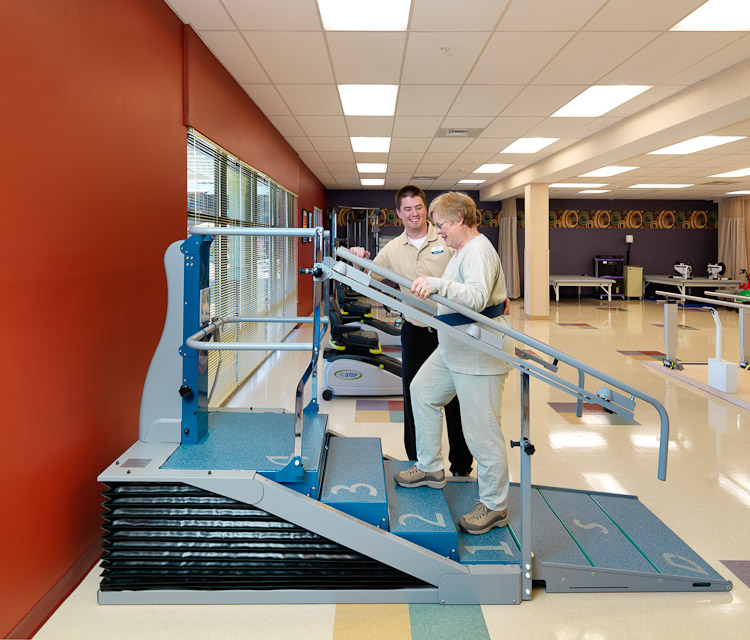
How is Lacey Post Acute & Rehabilitation Staffed?

CMS rates LACEY POST ACUTE & REHABILITATION's staffing level at 3 out of 5 stars, which is average compared to other nursing homes. Staff turnover is 53%, compared to the Washington average of 46%.

What Have Inspectors Found at Lacey Post Acute & Rehabilitation?

State health inspectors documented 33 deficiencies at LACEY POST ACUTE & REHABILITATION during 2023 to 2025. These included: 1 that caused actual resident harm and 32 with potential for harm. Deficiencies causing actual harm indicate documented cases where residents experienced negative health consequences.

Who Owns and Operates Lacey Post Acute & Rehabilitation?

LACEY POST ACUTE & REHABILITATION is owned by a for-profit company. For-profit facilities operate as businesses with obligations to shareholders or private owners. The facility is operated by HILL VALLEY HEALTHCARE, a chain that manages multiple nursing homes. With 120 certified beds and approximately 113 residents (about 94% occupancy), it is a mid-sized facility located in LACEY, Washington.

How Does Lacey Post Acute & Rehabilitation Compare to Other Washington Nursing Homes?

Compared to the 100 nursing homes in Washington, LACEY POST ACUTE & REHABILITATION's overall rating (5 stars) is above the state average of 3.2, staff turnover (53%) is near the state average of 46%, and health inspection rating (4 stars) is above the national benchmark.

What Should Families Ask When Visiting Lacey Post Acute & Rehabilitation?

Based on this facility's data, families visiting should ask: "Can I visit during a mealtime to observe dining assistance and food quality?" "How do you handle medical emergencies, and what is your hospital transfer rate?" "Can I speak with family members of current residents about their experience?"

Is Lacey Post Acute & Rehabilitation Safe?

Based on CMS inspection data, LACEY POST ACUTE & REHABILITATION has a clean safety record: no substantiated abuse findings (meaning no confirmed cases of resident harm), no Immediate Jeopardy citations (the most serious violation level indicating risk of serious injury or death), and is not on the Special Focus Facility watch list (a federal program monitoring the lowest-performing 1% of nursing homes). The facility has a 5-star overall rating and ranks #1 of 100 nursing homes in Washington. While no facility is perfect, families should still ask about staff-to-resident ratios and recent inspection results during their visit.

Do Nurses at Lacey Post Acute & Rehabilitation Stick Around?

LACEY POST ACUTE & REHABILITATION has a staff turnover rate of 53%, which is 7 percentage points above the Washington average of 46%. Moderate turnover is common in nursing homes, but families should still ask about staff tenure and how the facility maintains care continuity when employees leave.

Was Lacey Post Acute & Rehabilitation Ever Fined?

LACEY POST ACUTE & REHABILITATION has been fined $7,443 across 1 penalty action. This is below the Washington average of $33,153. While any fine indicates a compliance issue, fines under $50,000 are relatively common and typically reflect isolated problems that were subsequently corrected. Families should ask what specific issues led to these fines and confirm they've been resolved.

Is Lacey Post Acute & Rehabilitation on Any Federal Watch List?

LACEY POST ACUTE & REHABILITATION is not on any federal watch list. The most significant is the Special Focus Facility (SFF) program, which identifies the bottom 1% of nursing homes nationally based on persistent, serious quality problems. Not being on this list means the facility has avoided the pattern of deficiencies that triggers enhanced federal oversight. This is a positive indicator, though families should still review the facility's inspection history directly.