AVAMERE REHABILITATION AT RIDGEMONT
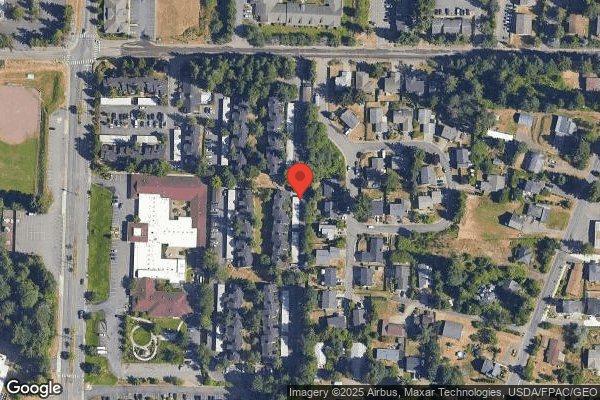

2051 POTTERY AVENUE, PORT ORCHARD, WA 98366 (360) 876-4461
For profit - Limited Liability company 96 Beds AVAMERE Data: November 2025
Trust Grade
65/100
#54 of 190 in WA
Last Inspection: August 2024

Within standard 12-15 month inspection cycle. Federal law requires annual inspections.

Overview

Avamere Rehabilitation at Ridgemont has a Trust Grade of C+, which means it is considered decent and slightly above average. It ranks #54 out of 190 nursing homes in Washington, placing it in the top half, and #4 out of 9 facilities in Kitsap County, indicating that only a few local options are better. The facility is improving, with issues decreasing from 11 in 2024 to just 1 in 2025. However, staffing is a weakness here with a rating of 2 out of 5 stars and a turnover rate of 51%, which is around the state average but still concerning. On a positive note, there have been no fines, which is a good sign, but it does have less RN coverage than 86% of facilities in Washington, meaning residents may not receive as much skilled nursing attention. Specific concerns include a serious incident where a resident's surgical incision was not properly monitored, leading to complications, and issues with maintaining a clean and comfortable environment, such as damaged carpets and unassisted residents requiring glasses. Overall, while there are strengths in quality measures and a solid health inspection rating, the facility has notable weaknesses that families should consider.

Trust Score
C+
65/100
In Washington
#54/190
Top 28%
Safety Record
Moderate
Needs review
Inspections
Getting Better
11 → 1 violations
Staff Stability
⚠ Watch
51% turnover. Above average. Higher turnover means staff may not know residents' routines.
Penalties
✓ Good
No fines on record. Clean compliance history, better than most Washington facilities.
Skilled Nurses
○ Average
Each resident gets 36 minutes of Registered Nurse (RN) attention daily — about average for Washington. RNs are the most trained staff who monitor for health changes.
Violations
⚠ Watch
44 deficiencies on record. Higher than average. Multiple issues found across inspections.
★★★★☆
4.0
Overall Rating
★★☆☆☆
2.0
Staff Levels
★★★★☆
4.0
Care Quality
★★★★☆
4.0
Inspection Score
Stable
2024: 11 issues
2025: 1 issues

The Good

  • 4-Star Quality Measures · Strong clinical quality outcomes
  • Full Sprinkler Coverage · Fire safety systems throughout facility
  • No fines on record

Facility shows strength in quality measures, fire safety.

The Bad

Staff Turnover: 51%

Near Washington avg (46%)

Higher turnover may affect care consistency

Chain: AVAMERE

Part of a multi-facility chain

Ask about local staffing decisions and management

The Ugly 44 deficiencies on record

1 actual harm
Apr 2025 1 deficiency
CONCERN (D) 📢 Someone Reported This

A family member, employee, or ombudsman was alarmed enough to file a formal complaint

Potential for Harm - no one hurt, but risky conditions existed

Incontinence Care (Tag F0690)

Could have caused harm · This affected 1 resident

**NOTE- TERMS IN BRACKETS HAVE BEEN EDITED TO PROTECT CONFIDENTIALITY** . Based on interview and record review, the facility failed to ensure residents with indwelling catheters (a flexible tube inser...

Read full inspector narrative →
**NOTE- TERMS IN BRACKETS HAVE BEEN EDITED TO PROTECT CONFIDENTIALITY** . Based on interview and record review, the facility failed to ensure residents with indwelling catheters (a flexible tube inserted into the bladder through the urethra to drain urine) were assessed for catheter removal and coordination with urology occurred timely for 1 of 3 residents (Resident 1) reviewed for urinary catheters. These failures placed residents at risk for unnecessary catheterization, urinary tract infections, and a decreased quality of life. Findings included . Resident 1 was admitted to the facility on [DATE] with diagnoses including stroke and kidney disease. The Minimum Data Set (MDS), an assessment tool, dated 04/11/2025, showed the resident was severely cognitively impaired, dependent for activities of daily living and had indwelling urinary catheter. On 04/10/2025 at 2:12 PM, Collateral Contact 1 (CC 1), said they had expressed ongoing concerns about Resident 1's catheter. CC1 said the urine in the catheter bag was frequently red in color and there was sludge (mixture of solid and liquids) in the bag too. CC1 said they had brought it to the attention of the facility staff for a couple of weeks. CC1 said they were frustrated with the facility's lack of response to their concerns regarding the urine and catheter, so they contacted the Urology (medical specialty focused on the urinary tract) office to request an appointment. Resident 1's care plan, dated 08/19/2024, showed the resident had an indwelling catheter for obstructive uropathy (a blockage in the urinary tract obstructs the flow of urine). Resident 1's medical provider notes showed the following: 12/27/2024- Today I noted recurring hematuria (blood in urine) associated with the indwelling catheter. No catheter tugging noted on examination of the foley. Requested clarification regarding urologic follow-up status through the nursing staff. 01/10/2025- Physical exam- Has foley catheter draining reddish colored urine. Assessment-Hematuria, a recurrent problem, has a permanent indwelling foley. Requested clarification regarding urologic follow-up status through the nursing staff. 01/27/2025- Physical exam- Has foley catheter draining reddish colored urine. Assessment-Hematuria, a recurrent problem, has a permanent indwelling foley. Requested clarification regarding urologic follow-up status through the nursing staff. Hematuria, follow up with urology. 01/30/2025- Physical exam- Has foley catheter draining reddish colored urine. Assessment-Hematuria, a recurrent problem, has a permanent indwelling foley. Requested clarification regarding urologic follow-up status through the nursing staff. Hematuria, follow up with urology. 01/31/2025- Physical exam- Has foley catheter draining reddish colored urine. Assessment-Hematuria, a recurrent problem, has a permanent indwelling foley. Requested clarification regarding urologic follow-up status through the nursing staff. Urology follow up as scheduled or directed. 02/04/2025- Physical exam- Has foley catheter draining reddish colored urine. Assessment-Hematuria, a recurrent problem, has a permanent indwelling foley. Requested clarification regarding urologic follow-up status through the nursing staff. Urology follow up as scheduled or directed. 02/18/2025- Physical exam- Has foley catheter draining reddish colored urine. Assessment-continue indwelling foley catheter, urology follow up as scheduled or directed. 03/18/2025- Physical exam- Has foley catheter draining reddish colored urine. Assessment-continue indwelling foley catheter, urology follow up as scheduled or directed. 03/25/2025- spoke with the resident's daughter, concern that he does not need a foley catheter. In reviewing the notes, a foley catheter was placed in the hospital due to severe diaper rash and since left the hospital and was placed on hospice was left in place. However, several months later he graduated from hospice, and they did not discuss foley removal at that time. Resident 1's progress notes, dated 03/25/2025, showed the facility had spoken to the resident's daughter and urology and an appointment was scheduled for 04/16/2025. The note showed the Urologist wanted the catheter changed prior to the appointment and a urinalysis (urine test for infection) obtained. Review of Resident 1's electronic medical records on 04/23/2025, showed no documentation of communication and/or follow-up with the urology office prior to 03/25/2025. Resident 1's progress note, dated 03/31/2025, showed the facility staff changed the resident's catheter and the urine was red. The note showed the resident was sent to the emergency room. Resident 1's hospital records, dated 04/07/2025, showed the resident was brought to the emergency room with hematuria after replacing a foley. Records showed the resident with diagnosis of catheter associated urinary tract infection. The records showed the resident received intravenous (medication administered through the vein) antibiotics (medication to treat infection) in the hospital. On 04/23/2025 at 12:28 PM, Staff A, Director of Nursing, said the facility reviewed indication for indwelling catheters at least quarterly. Staff A said they would expect a resident with an indwelling catheter to have a medical indication for use and attempts to remove the catheter and proceed with voiding trials unless medially contraindicated. Staff A said after reviewing Resident 1's medical records the resident was sent to the hospital in August of 2024 and the hospital placed an indwelling catheter. Staff A said when the resident returned to the facility they were placed on hospice and the catheter was left in place. Staff A said the resident came off hospice in December of 2024. Staff A said there was no documentation the facility assessed the resident for removal of the catheter and/or consulted with urology. Staff A said if the provider assessed the resident and requested clarification from nursing regarding urologic follow up, it should have occurred. Reference WAC 388-97-1060 (3)(c) .
Oct 2024 1 deficiency 1 Harm
SERIOUS (G) 📢 Someone Reported This

A family member, employee, or ombudsman was alarmed enough to file a formal complaint

Actual Harm - a resident was hurt due to facility failures

Quality of Care (Tag F0684)

A resident was harmed · This affected 1 resident

**NOTE- TERMS IN BRACKETS HAVE BEEN EDITED TO PROTECT CONFIDENTIALITY** . Based on interview and record review, the facility failed to obtain clarification for treatment and assess timely for prompt i...

Read full inspector narrative →
**NOTE- TERMS IN BRACKETS HAVE BEEN EDITED TO PROTECT CONFIDENTIALITY** . Based on interview and record review, the facility failed to obtain clarification for treatment and assess timely for prompt intervention, a surgical incision under the dressing for 1 of 3 residents (Resident 1) reviewed for wound care. Resident 1 experienced harm when their surgical incision dehisced (opened back up), became necrotic (dead/devitalized tissue) and showed signs of infection after 19 days without observation of the incision below the dressing assessment. This failure placed residents at risk for medical complications and a decreased quality of life. Findings included . Resident 1 was admitted on [DATE] with diagnoses including diabetes, heart and kidney disease. The Minimum Data Set, an assessment tool, dated [DATE], showed the resident required assistance with their activities of daily living. Resident 1's progress note, dated [DATE], showed Resident 1 was scheduled for a L [left] toe amputation (surgical procedure to remove a body part) on [DATE] related to necrosis and several unsuccessful rounds of antibiotic treatments and wound care. Resident 1's After Visit Summary, dated [DATE], showed post-operative discharge instructions that included to remove the dressing after 72 hours and redress with light gauze dressing at least every other day. The after-visit summary showed they were to call the medical provider if they had redness, tenderness or signs of infection around the surgical site. Facility designated physician order, for Resident 1, dated [DATE], showed orders to leave the dressing to left great toe in place until follow-up appointment on [DATE]. The order expired/was discontinued on [DATE], leaving no remaining treatment orders in place. Resident 1's surgeon's office visit note, dated [DATE], showed staff removed the bandage from the left amputation site, sutures were intact, no drainage, warmth or erythema (redness) at the site. The note showed sterile gauze was applied to the site and wrapped with kerlix (type of bandage) and the patient was instructed to call for any signs of infection or concerns. Review of Resident 1's Treatment Administration Record from [DATE] through [DATE], showed no documentation of a dressing change to the left great toe and/or monitoring/assessment of the left great toe surgical site. Review of Resident 1's progress notes from [DATE] thru [DATE], showed no dressing changes to the left great toe and/or monitoring/assessment of the left great toe surgical site. Review of Resident 1's physician orders from [DATE] through [DATE], showed no orders for dressing changes to the left great toe and/or orders to keep dressing in place. Resident 1's weekly skin assessments, dated [DATE] and [DATE], showed the left great toe amputation dressing was intact, and the dressing was to remain in place until follow up appointment with the surgeon (dressing change orders ended [DATE] after which new orders should have been obtained). The skin assessments did not document the dressing on the surgical incisions was removed or any visualization of the incision site occurred. Review of Resident 1's surgeon's office visit note, dated [DATE], retrieved from EPIC (an electronic record system outside of Resident 1's facility medical record), by Staff A, Resident Care Manager (RCM) on [DATE], showed the left great toe amputation site with residual cellulitis (skin infection) and an order for Keflex (antibiotic). Resident 1's weekly skin assessment, dated [DATE], showed the left great toe amputation dressing was intact but there was no assessment of the surgical incision beneath the dressing. Resident 1's progress note, dated [DATE] (9 days after surgeon's visit) and the first time documentation showed facility staff assessed the resident's incision since the amputation on [DATE], documented the resident's wound/incision to their left dorsal hallux (great big toe), had a scant amount of drainage with a slight foul odor. Resident 1's facility medical provider notes, dated [DATE], showed the provider examined Resident 1's surgical site on the left great toe and it was necrotic, foul smelling, with purulent (thick, milky fluid) drainage and wound dehiscence (a partial or total separation of an incision). The notes showed the provider advised the resident they needed to go the hospital for intravenous (administered into the vein) antibiotics and wound debridement (medical procedure to remove dead and infected tissue) but the resident declined to go and chose to remain at the facility and stay comfortable. On [DATE] at 1:48 PM, Staff A said they entered the order on [DATE] for the dressing to remain in place until the follow up appointment with the surgeon and expected there would be new dressing orders at the [DATE] follow up appointment. Staff A said Resident 1 went to their follow up appointment with the surgeon on [DATE] and returned with no paperwork. Staff A said they expected when residents returned from appointments without paperwork, the expectation was to call the doctor's office to ensure there were no new orders and/or instructions. Staff A said there was no documentation in the medical record that this took place. On [DATE] at 3:24 PM, Staff B, Director of Nursing, said the system for monitoring and assessment of wounds was during dressing changes, documenting in the progress note and weekly during skin assessments. Staff B said they reviewed Resident 1's medical record and saw documentation the resident had a dressing on the left great toe, but no documentation of a physician's order for a dressing after [DATE], no monitoring and/or assessment of the surgical site and no documentation the staff changed the left toe dressing between the surgeon's follow up appointments. Staff B said they expected that during Resident 1's weekly skin assessment that staff should have assessed the resident's skin to include the left great toe surgical incision, and a surgical incision should be followed by the RCM until healed. Staff B said the staff should have contacted the physician for clarification of the wound care. Staff B said that did not happen. WAC Reference 388-97-1060 (1) .
Aug 2024 10 deficiencies
CONCERN (D)

Potential for Harm - no one hurt, but risky conditions existed

Deficiency F0567 (Tag F0567)

Could have caused harm · This affected 1 resident

. Based on interview and record review, the facility failed to ensure residents with personal funds/resident trust accounts had ready access to their accounts during evenings and weekends for 11 of 11...

Read full inspector narrative →
. Based on interview and record review, the facility failed to ensure residents with personal funds/resident trust accounts had ready access to their accounts during evenings and weekends for 11 of 11 residents reviewed for person funds accounts. This failure placed residents at risk of not having access to their accounts during non-banking hours, a decreased sense of autonomy and a diminished quality of life. Findings included . On 08/21/2024 at 1:02 PM, Resident 3 said they had a family member open another bank account for them because they could not withdraw money from their personal funds account on the weekends. On 8/26/2024 at 9:37 AM, Staff H, Licensed Practical Nurse (LPN), said she did not know the process if a resident wanted to withdraw money from their personal funds account over the weekend or after hours. At 9:40 AM, Staff C, LPN Resident Care Manager, said she did not know how a resident could withdraw funds from their Personal Funds account on the weekends and she said she would contact the business office to find out. At 9:50 AM, Staff I, Receptionist, said residents could withdraw money from their Personal Funds account through activities on the weekends but did not now know how they could withdraw money from their account if activities was not there. At 9:51 AM, Staff G, Business Office Manager, said there was a sign for residents with personal funds that said, Front Desk Resident Banking Hours 8:00 AM - 4:30 PM Monday - Friday Saturday & Sunday See Activities and when asked what the residents should do when activities was not in the building she acknowledged the sign needed to be changed. On 8/27/2024 at 11:42 AM, Staff A, Administrator, said they would educate staff on how residents could withdraw money from their personal funds account on the weekend and after hours. Reference (WAC) 388-97-0340 (1)(2)(3) .
CONCERN (D)

Potential for Harm - no one hurt, but risky conditions existed

Transfer Notice (Tag F0623)

Could have caused harm · This affected 1 resident

**NOTE- TERMS IN BRACKETS HAVE BEEN EDITED TO PROTECT CONFIDENTIALITY** . Based on interview and record review, the facility failed to provide residents a written notice detailing the reasons for disc...

Read full inspector narrative →
**NOTE- TERMS IN BRACKETS HAVE BEEN EDITED TO PROTECT CONFIDENTIALITY** . Based on interview and record review, the facility failed to provide residents a written notice detailing the reasons for discharge/transfer and to provide a copy of the notice to the state Ombudsman office as required for 2 of 2 sampled residents (Resident 27 & 75) reviewed for hospitalizations. This failure placed residents at risk for inappropriate transfers and a lack of information regarding their rights and options related to bed-holds. Findings included . Facility policy, titled, Transfer or Discharge Notice, dated March 2021, documented Residents and/or representatives are notified in writing, and in a language and format they understand, at least thirty (30) days prior to a transfer or discharge. A copy of the notice is sent to the Office of the State Long-Term Care Ombudsman at the same time the notice of transfer or discharge is provided to the resident and representative. Resident 27 was admitted to the facility on [DATE]. The admission Minimal Data Set, (MDS, an assessment tool) date 07/23/2023, documented Resident 27 was severely cognitively impaired. Resident 27 was hospitalized from [DATE] until their return on 07/29/2024. The Electronic Health Record (EHR) showed no documentation of a transfer notice or Ombudsman notification. Resident 75 was admitted to the facility on [DATE]. The Annual MDS, dated [DATE], documented Resident 75 was cognitively intact. Resident 75 was hospitalized from [DATE]. The EHR showed no documentation of a transfer notice or Ombudsman notification. On 08/26/2024 at 1:15 PM, Staff C, Resident Care Manager, said they did not have a copy of the transfer notice or Ombudsman notification for either resident. When asked if a transfer notice/Ombudsman notification should have been completed, Staff C said yes. At 1:18 PM Staff N, Social Services Director, stated, I am responsible for the Ombudsman notification, and provided a copy of the Ombudsman notification list of transferred residents for June and July 2024. Resident 27 nor Resident 75 were on the list. Staff N said both residents should have been on the transfer list to the Ombudsman. Reference WAC 388-97-0120 (2) (a-d) .
CONCERN (D)

Potential for Harm - no one hurt, but risky conditions existed

Deficiency F0657 (Tag F0657)

Could have caused harm · This affected 1 resident

**NOTE- TERMS IN BRACKETS HAVE BEEN EDITED TO PROTECT CONFIDENTIALITY** <Care Conferences> Resident 13 was admitted to the facility on [DATE] with diagnoses including Parkinson (neurodegenerativ...

Read full inspector narrative →
**NOTE- TERMS IN BRACKETS HAVE BEEN EDITED TO PROTECT CONFIDENTIALITY** <Care Conferences> Resident 13 was admitted to the facility on [DATE] with diagnoses including Parkinson (neurodegenerative brain conditions that causes motor symptoms) and bipolar disorder (characterized by both manic and depressive episodes). The Quarterly MDS, dated [DATE], documented the resident was cognitively intact and felt it was very important to have family involved in discussions about their care. On 08/22/2024 at 10:55 AM, Resident 13 said they had not had a care conference recently. Review of the electronic health record (EHR) showed a care conference was conducted on 08/03/2023. On 8/26/2024 at 2:36 PM, Staff K, Social Services Coordinator, said Resident 13's last care conference was over a year ago in August 2023. Staff K said Resident 13's care conferences did not happen as often as they should have and Staff K said they had no excuses. On 8/27/2024 at 11:11 AM, Staff B, DNS said the expectation was for the care conferences to be done quarterly. Staff B said there was a note contacting the family to set up a care conference on 03/14/2024 but no further documentation after that. Reference WAC 388-97 -1020(2)(c)(d) Based on interview and record review, the facility failed to provide Care Conferences (a conference where staff and residents/families talk about life in the facility, review the progress of resident and make adjustments, as needed, to their care), for 1 of 2 sampled residents (Resident 13) reviewed for provision of care conferences, and failed to ensure care plans were reviewed, revised, and accurately reflected resident care needs for 4 of 21 sample residents (Residents 16, 48, 63, & 8) reviewed for care plan timing and revision. These failures placed residents at risk of not feeling involved in the development of their plan of care, unmet needs, and a diminished quality of life. Findings included . <Care Plans> 1) Resident 48 admitted to the facility on [DATE]. Review of the 5-day Minimum Data Set (MDS, an assessment tool), dated 07/22/2024, showed the resident had intravenous (IV) access via a midline and received IV medications. A 07/27/2024 re-admission nurse's note documented the resident had a midline (a tube that is placed into a vein, usually in the arm. The catheter is then moved through the vein until the tip sits at the level of your armpit and away from the shoulder) to their left upper arm and were to receive IV Daptomycin (an antibiotic). Resident 48's comprehensive care plan (CP) showed no care plan was developed that addressed the presence, or type and location of the Resident 48's IV access. No interventions were developed and/or implemented that directed staff how to assess, monitor, and care for the IV access. On 08/26/2024 at 3:27 PM, Staff B, Director of Nursing Services (DNS), said the location and type of IV access and maintenance and monitoring instructions should be care planned. When asked if they were Staff B stated, No. 2) Resident 16 admitted to the facility on [DATE]. Review of the 5-day MDS, dated [DATE], showed the resident had IV access via a midline and received IV medications. An admission Nursing Database assessment, dated 08/07/2024, documented Resident 16 had IV access via a midline to their right upper arm for antibiotic therapy related osteomyelitis (bone infection) of the left tibia and fibula (lower leg bones). Resident 16's comprehensive CP showed no care plan was developed that addressed the type and location of the Resident 16's IV access. On 08/26/2024 at 3:27 PM, when asked if the type and location of Resident 16's IV access was care planned Staff B, DNS, stated, No. 3) Resident 63 admitted to the facility on [DATE]. Review of the 5-day MDS, dated [DATE], showed the resident had a diagnosis of obstructive sleep apnea (OSA, a sleep-related breathing disorder where people repeatedly stop and start breathing while they sleep) and did not use a continuous positive airway pressure (CPAP, a machine that uses mild pressure to keep the breathing airways open during sleep) machine or Bilevel Positive Airway Pressure (BiPAP, a non-invasive ventilation therapy used to treat sleep apnea, respiratory failure, and other breathing disorders) machine. On 08/06/2024 an order directed staff to apply CPAP at bedtime per set settings and remove in the AM. A CPAP therapy CP, revised 08/06/2024, directed staff to encourage resident to use their CPAP or BiPAP, but failed to identify which one the resident was to receive. The CP did not identify the CPAP settings or provide instruction for the cleaning and maintenance of the CPAP mask and machine, or identify the CPAP had a humidifier chamber, which needed to be checked and filled. On 08/26/2024 at 3:31 PM, Staff B, DNS, said Resident 63's CP should have identified the type of non-invasive ventilation the resident was to receive (CPAP vs. BiPAP) and provided resident specific care instructions related to their CPAP machine. 4) Resident 8 admitted to the facility on [DATE]. Review of the Significant change MDS, dated [DATE], showed the resident had impaired functional Range of Motion (ROM) to one upper and one lower extremity and did not receive restorative nursing services. Review of a self-care deficit CP, revised 06/13/2024, showed staff were to provide passive ROM to both upper and lower extremities, times fifteen repetitions and perform hand hygiene and gentle stretching of the resident's left hand, before applying a left-hand splint in the am. The care plan did not identify what joints and planes should be ranged or the frequency at which staff should provide the programs (e.g. daily, six times a week etc.) On 08/27/2024 at 2:38 PM, Staff B, DNS, stated the frequency at which the ROM program was to be provided, should have been care planned but was not.
CONCERN (D)

Potential for Harm - no one hurt, but risky conditions existed

ADL Care (Tag F0677)

Could have caused harm · This affected 1 resident

**NOTE- TERMS IN BRACKETS HAVE BEEN EDITED TO PROTECT CONFIDENTIALITY** . Based on observation, interview, and record review the facility failed to provide assistance with activities of daily living (...

Read full inspector narrative →
**NOTE- TERMS IN BRACKETS HAVE BEEN EDITED TO PROTECT CONFIDENTIALITY** . Based on observation, interview, and record review the facility failed to provide assistance with activities of daily living (ADLs) to include providing oral care and assistance with shaving for 2 of 2 residents (Residents 63 and 10) reviewed for ADL's. The failure to assist dependent residents with oral care and shaving, placed residents at risk for embarrassment, dental caries, powerlessness and a diminished quality of life. Findings included . 1) Resident 63 admitted to the facility on [DATE]. Review of the 05/09/2024 admission Minimum Data Set (MDS, an assessment tool), showed the resident was dependent on staff for oral hygiene and had no obvious or likely cavities or broken natural teeth. An ADL self-care care plan, initiated 05/20/2024, showed staff were directed to set Resident 63 up to self-brush, and staff were to assist to complete. On 08/21/2024 at 1:52 PM, Resident 63's family member said the resident was always clean shaven prior to admitting to the facility and systematically cleaned his hands and face after meals and brushed his teeth after breakfast. The resident's family member said they had informed staff on multiple occasions but stated, they are not doing it. Resident 63 was observed with a very short facial hair (beard/mustache.) When asked if he was assisted to brush his teeth after breakfast as requested, Resident 63 stated, Never. At 1:58 PM, Staff J, Certified Nursing Assistant (CNA) entered the room. Resident 63's family member asked if they had been brushing his teeth after breakfast and shaving him daily. Staff J, CNA, stated, No, not as often as I would like to honestly, but I try [to]. On 08/27/2024 at 1:41 PM, Staff C, Resident Care Manager (RCM), said facility staff should be assisting Resident 63 with brushing his teeth after breakfast and shaving daily, per Resident 63's preference. 2) Resident 10 admitted to the facility on [DATE]. On 08/22/2024 at 11:30 AM, Resident 10 was observed with several long curly hairs on their chin and a significant amount of hair on their upper lip. Similar observations were made on 08/23/2024 at 1:41 PM, 08/26/2024 at 11:19 AM and 1:43 PM. On 08/27/2024 at 12:09 PM, when asked it was their preference to have hair on their upper lip and chin, Resident 10 stated, No, I just don't have anything to remove it with. On 08/27/2024 at 1:05 PM, Staff C, RCM, confirmed staff should have been offering/assisting Resident 10 with shaving as needed, but had not recently done so. Reference WAC 388-97-1060 (2)(c) .
CONCERN (D)

Potential for Harm - no one hurt, but risky conditions existed

Respiratory Care (Tag F0695)

Could have caused harm · This affected 1 resident

**NOTE- TERMS IN BRACKETS HAVE BEEN EDITED TO PROTECT CONFIDENTIALITY** . Based on observation, interview and record review, the facility failed to ensure non-invasive mechanical ventilation via conti...

Read full inspector narrative →
**NOTE- TERMS IN BRACKETS HAVE BEEN EDITED TO PROTECT CONFIDENTIALITY** . Based on observation, interview and record review, the facility failed to ensure non-invasive mechanical ventilation via continuous positive airway pressure machines (CPAP, an external device that provides a fixed pressure to keep breathing airways open while you sleep) was provided in accordance with accepted professional standards of practice for 2 of 2 residents (Resident 25 & 63) reviewed for respiratory care. The failure to ensure active CPAP orders were in place and complete, to include the prescribed pressure settings, type of mask (e.g. nasal pillows, nasal mask, full face mask) to be used, direction to check and refill the humidifier reservoir, and the solution to be used to refill it, placed residents at risk for ineffective assisted ventilation and unmet respiratory needs. Findings included . 1) Resident 25 admitted to the facility on [DATE]. Review of the 01/17/2024 Annual Minimum Data Set (MDS, an assessment tool), showed the resident was cognitively intact, had diagnoses of chronic lung disease and obstructive sleep apnea (OSA, refers to apnea syndromes due primarily to collapse of the upper airway during sleep) and required non-invasive mechanical ventilation via a CPAP machine. An alteration in respiratory status care plan (CP), with a target date of 10/02/2024, showed the resident was to wear their CPAP during hours of sleep. The CPAP pressure settings should be set at 12-20 cm H2O per the 04/28/2023 pulmonologist recommendations. On 08/22/2024 at 10:32 AM, Resident 25 was observed with a CPAP machine and an opened and undated gallon, container of distilled water. The gallon container was approximately two thirds full. On 08/26/2024 at 9:03 AM, the opened and undated gallon container of distilled water remained present on the bedside table but was now only 1/2 full. Resident 25 stated, They poured it into the [CPAP] machine, it moistens the air. Review of Resident 25's physician's orders and August 2024 Medication and Treatment Administration Records showed there was no order for Resident 25 to use a CPAP, or any direction to staff to clean the machine, validate the pressure settings or assist with its application. Review of Resident 25's order history showed there was a CPAP order in place from 11/05/2023 - 05/13/2024, at which time it was discontinued. Review of the electronic health record showed no documentation was present that indicated an order was received to discontinue the CPAP. Provider notes, dated 05/23/2024 and 06/28/2024, showed they documented Resident 25's CPAP remained in use. On 08/26/2024 at 2:53 PM, when asked if Resident 25 had an order to wear a CPAP during hours of sleep Staff B, Director of Nursing Services (DNS), stated, No. When informed the resident's CPAP order fell off on 05/13/2024, despite the provider notes documenting it was still in use Staff B, DNS, said they would look into it. No further information was provided. Additionally, Staff B confirmed when staff opened a container of distillied water, it should be dated, as it should be discarded 2-4 days after opening. 2) Resident 63 admitted to the facility on [DATE]. Review of the Admission/ 5-Day MDS, dated [DATE], showed the resident had a diagnosis of obstructive sleep apnea and required non-invasive mechanical ventilation via a CPAP machine. A CPAP/BiPAP therapy related to obstructive sleep apnea CP, revised 08/06/2024, showed staff were to encourage CPAP/BiPAP use during hours of sleep. The CP did not identify whether Resident 63 used a CPAP or a BiPAP, nor did it identify the what the pressure settings should be, direct staff on when, how and what to use for cleaning the machine. Resident 63 had 06/08/2024 orders for: a) CPAP therapy per set settings at bedtime for OSA. Place at bedtime and remove in AM. b) Wash CPAP mask, reservoir, and machine every morning after removal. Let air dry. c) Clean and Wash CPAP tubing every Week. The orders did not identify what the prescribed pressure settings were for the CPA, identify what the CPAP mask and tubing were to be cleaned with daily, or on a weekly basis (e.g. soap and water, a vinegar mixture etc.), nor was there instruction to staff to check or refill the CPAP humidifier reservoir. Additionally, the solution staff was to refill the humidifier reservoir with was not identified. On 08/26/2024 at 2:53 PM, Staff B, DNS, said the CPAP orders should have identified what the CPAP mask and tubing was to be cleaned with, provided direction to staff to check and refill the humidifier reservoir as needed and identified that the reservoir should be filled with distilled water only. Staff B acknowledged the CPAP orders were incomplete and indicated facility nurses should have identified the incomplete order set and clarified the orders but failed to do so. Reference WAC 388-97-1060(3)(j)(vi) .
CONCERN (E)

Potential for Harm - no one hurt, but risky conditions existed

Safe Environment (Tag F0584)

Could have caused harm · This affected multiple residents

. Based on observation and interview, the facility failed to provide a clean, comfortable and homelike environment on 1 of 4 hallways (200 hall). The failure to ensure hallway carpeting was clean and ...

Read full inspector narrative →
. Based on observation and interview, the facility failed to provide a clean, comfortable and homelike environment on 1 of 4 hallways (200 hall). The failure to ensure hallway carpeting was clean and in good repair and resident rooms were mopped and free of sticky substances, placed resident at risk for a diminished quality of life, and resulted in a less than homelike environment. Findings included . On 08/21/2024 at 10:28 AM, observation of the 200-hall carpet showed an approximately 30-foot-long vertical cut right down the middle of the hallway carpet, and multiple five to eight feet long, horizontal cuts in the carpet running side to side across the hallway. Each of the vertical and horizontal cuts were covered with duct tape. At 10:30 AM, when asked about the state of the carpet, an anonymous staff member stated, oh you noticed that [carpet in disrepair]. I can't stand it. The staff member indicated the carpet had been in that state for a few years. On 08/22/2024 at 11:55 AM, when asked about the environment, Resident 65 stated, [The hallway carpet] is disgusting. I find it insulting. Do I find it homelike? What? No! When I first saw it, I thought they must be replacing it, but no. At 3:12 PM, Staff D, Maintenance Director, explained that for greater than two years prior, the carpet on the 200 hall had been bunching up resulting in potential tripping/safety hazards. Staff D said he had to cut the carpet to try and stretch the carpet in the areas where it was bunching up. After the bunched-up areas were addressed, the cuts in the carpet were covered with duct tape and bids were obtained for replacement of the carpet. According to Staff D, the facility then went through several Administrators. Staff D said with each change in administration, Staff D had to obtain a new bid for replacement of the carpet which had continuously set the project back. Staff D stated, I know I have told the [state] survey team for a few years that the carpet was going to be replaced because it was, but like I said then the administrators would change, and the carpet [replacement] quote process would start over. At 3:21 PM, when asked if the facility had a work order or had moved beyond just obtaining bids Staff D, stated, No. Reference WAC 388-97-0880 (1) .
CONCERN (E)

Potential for Harm - no one hurt, but risky conditions existed

Deficiency F0676 (Tag F0676)

Could have caused harm · This affected multiple residents

**NOTE- TERMS IN BRACKETS HAVE BEEN EDITED TO PROTECT CONFIDENTIALITY** . Based on observation, interview and record review, the facility failed to ensure 1 of 2 residents (Resident 63) reviewed for c...

Read full inspector narrative →
**NOTE- TERMS IN BRACKETS HAVE BEEN EDITED TO PROTECT CONFIDENTIALITY** . Based on observation, interview and record review, the facility failed to ensure 1 of 2 residents (Resident 63) reviewed for communication and sensory and who required assistive devices for vision or hearing were assisted with application of their glasses. Failure to ensure their glasses were in good repair and applied to the resident daily precluded the resident from reading the activity calendar and menus independently and placed them at risk for feelings of diminished self worth and decreased quality of life. Findings included . Resident 10 admitted to the facility on [DATE]. Review of the 07/09/2024 Quarterly Minimum Data Set (MDS, an assessment tool), showed the resident's vision was adequate with the use of corrective lenses. A self care deficit care plan, revised 08/24/2023, showed the resident wore glasses during waking hours, as well as at night as the resident would often wake up and read. Staff were directed to keep the resident's glasses within reach for independent use, and make sure the glasses were clean. On 08/22/2024 at 11:30 AM, Resident 10 was observed lying in bed without their glasses in place. The resident's glasses were observed in a kidney basin on a three drawer chest located on the other side of a divider curtain. The glasses were not in the resident's sight or reach. The glasses were observed to only have one lens in place. The other lens was lying in the bottom of the basin. Resident 10 said they did not know where their glasses were currently at but indicated they had been broken. Resident 10 said staff were aware but No one does anything! When asked if they required their glasses for activities of daily living, the resident said they used them for reading. Similar observations were made on 08/23/2024 at 1:41 PM, 08/26/2024 at 11:19 AM and 1:43 PM and 08/27/2024 at 12:09 PM. On 08/27/2024 at 1:05 PM, Staff C, Resident Care Manager, confirmed Resident 10's glasses were in a kidney basin on the other side of the divider curtain, not within the residents field of vision or within reach. Staff C then looked around the room and found two more sets of glasses, each pair also only had one lens. Staff C said they had not been informed that the resident's glasses were broken. When asked if facility staff should have identified this when they performed the daily cleaning of the glasses, Staff C said yes. Reference WAC 388-97-1060 (2)(a) .
CONCERN (E)

Potential for Harm - no one hurt, but risky conditions existed

Quality of Care (Tag F0684)

Could have caused harm · This affected multiple residents

**NOTE- TERMS IN BRACKETS HAVE BEEN EDITED TO PROTECT CONFIDENTIALITY** 5) Resident 13 was admitted to the facility on [DATE] with diagnoses including Parkinsons (neurodegenerative brain conditions th...

Read full inspector narrative →
**NOTE- TERMS IN BRACKETS HAVE BEEN EDITED TO PROTECT CONFIDENTIALITY** 5) Resident 13 was admitted to the facility on [DATE] with diagnoses including Parkinsons (neurodegenerative brain conditions that causes motor symptoms) and bipolar disorder (characterized by both manic and depressive episodes). The Quarterly Minimum Data Set (MDS), an assessment tool, dated 08/06/2024 documented the resident was cognitively intact and was dependent to needing moderate assistance with activities of daily living (ADLs). Resident 13's physician orders showed to give 2 tablets of Bisacodyl (a stimulant laxative) 5 MG (miligrams) by mouth every 24 hours as needed for constipation and no bowel movement (BM) on the 3rd day. The Bowel Record for 07/24/2024 - 08/22/2024 documented Resident 13 did not have a BM on 08/03/2024, 08/04/2024, 08/05/2024, and 08/06/2024. The Medication Administration Record for August 2024 documented Resident 13 received a Dulcolax Suppository (a stimulant laxative suitable for the fast relief of occasional constipation) 10 MG on 08/07/2024. On 08/26/2024 at 1:04 PM, Staff C, Resident Care Manager, said Resident 13 went 4 days without a BM and the bowel protocol should have been implemented on 08/06/2024. On 08/27/2024 at 11:11 AM, Staff B, DNS, said his expectation was for the staff to follow the bowel protocol and the resident receive a bowel medication on the 4th day without a BM or document in a progress note that the resident refused. Reference WAC 388-97 - 1060 (1) Based on interview and record review, the facility failed to provide the necessary care and services to maintain residents' highest practicable level of well-being for 5 of 8 residents (Residents 65, 32, 25, 10 and 13) reviewed for bowel management. The failure to initiate bowel care in accordance with physician's orders placed residents at risk for pain/discomfort, nausea, decreased appetite and a diminished quality of life. Findings included . Review of the Avamere Living Bowel Care Protocol, dated 10/2020, showed if a resident had not had a bowel movement (BM) for three consecutive days (must be medium or large), Evening shift would administer: a) milk of magnesia (MOM) b) if no results from MOM, day shift would administer a bisacodyl suppository. c) if no results from the suppository, a fleets enema would be administered. If no results from the enema a focused examination of the abdomen and a digital exam and notify the physician. 1) Resident 65 admitted to the facility on [DATE]. On 08/22/2024 at 12:02 PM, Resident 65 reported a long history of constipation and stated, It's one of those things I have to deal with. Review of the July and August 2024 bowel record showed the resident went the following periods without a BM: 7/11/2024 - 07/21/2024 (11 days) and 8/10/2024 - 08/12/2204 (4 days.) Review of the July and August 2024 Medication Administration Record (MAR) showed facility staff failed to administer as needed bowel medication after three days of no BM as ordered. On 08/27/2024 at 2:28 PM, when asked if on the above referenced occasions facility nurses provided as needed bowel care as ordered Staff B, Director of Nursing Services (DNS), stated, No. 2) Resident 32 admitted to the facility on [DATE]. On 08/22/2024 at 2:02 PM, Resident 32 said they struggled with periodic constipation. Review of the August 2024 bowel record showed the resident went from 08/08/2024 - 8/12/2024 (4 days) without a BM. Review of the August MAR showed facility staff failed to administer Resident 32's as needed bowel medication after three days of no BM as ordered. On 08/27/2024 at 2:36 PM, when asked if on the above referenced occasion facility nurses provided as needed bowel care as ordered Staff B, DNS, stated, No. 3) Resident 10 admitted to the facility on [DATE]. Review of the July and August 2024 bowel record showed the resident went the following periods without a BM: 07/27/2024 - 7/29/2024 (3 days), and 08/07/2024 - 08/11/2024 (5 days). Review of the July and August 2024 MAR showed facility staff failed to administer Resident 10's as needed bowel medication after three days of no BM as ordered. On 08/27/2024 at 2:36 PM, when asked if on the above referenced occasion facility nurses provided as needed bowel care as ordered Staff B, DNS, stated, No. 4) Resident 25 admitted to the facility on [DATE]. Review of the June 2024 bowel record showed the resident had no BM from 06/19/2024 - 06/22/2024 (4 days.) Review of the June 2024 MAR showed facility staff failed to administer as needed bowel medication after three days of no BM as ordered. On 08/27/2024 at 2:37 PM, when asked if facility nurses provided as needed bowel care to Resident 25 as ordered Staff B, DNS, stated, No.
CONCERN (E)

Potential for Harm - no one hurt, but risky conditions existed

Deficiency F0694 (Tag F0694)

Could have caused harm · This affected multiple residents

**NOTE- TERMS IN BRACKETS HAVE BEEN EDITED TO PROTECT CONFIDENTIALITY** Resident 74 admitted to the facility on [DATE]. The admission MDS, dated [DATE], documented Resident 74 was cognitively intact. ...

Read full inspector narrative →
**NOTE- TERMS IN BRACKETS HAVE BEEN EDITED TO PROTECT CONFIDENTIALITY** Resident 74 admitted to the facility on [DATE]. The admission MDS, dated [DATE], documented Resident 74 was cognitively intact. Resident 74 was admitted to the facility with a PICC line. The Electronic Health Records shows no order for monitoring and maintenance of the PICC line. On 08/26/2024 at 3:27 PM, Staff B, DNS, said Resident 74's IV orders were incomplete and should have included the maintenance and monitoring orders identified in the facility's IV policy. Staff B said facility nurses should have identified the IV orders were incomplete and clarified them but failed to do so. Reference WAC 388-97-1060 (3)(j)(ii) Based on observation, interview and record review, the facility failed to ensure intravenous (IV) access devices were assessed, maintained and monitored in accordance with professional standards of practice for 3 of 3 residents (Residents 16, 48 & 74) reviewed for IV therapy. The failure to ensure IV orders included routine monitoring of IV insertion sites, flush orders, weekly changes of IV dressings and needleless injection caps, and initial and then weekly measurements of IV catheters external length and the residents arm circumferences, placed them at risk for loss of vascular access, infection, and other potential negative health outcomes. Findings included . <Facility Policy> Review of the facility's Vascular Access Device (VAD) Dressing Change, Needleless Connector Change, Flushing and Locking, and Peripheral Midline Catheter policies, dated 08/2021, showed VADs included PICCs, non-tunneled catheters (subclavian, jugular, femoral), Tunneled catheters, and implanted venous ports. Staff were directed to: a) Perform VAD dressing changes every seven days and as needed. b) Measure VADs external length upon admission/during the initial assessment, weekly with dressing changes, upon suspicion of a change in length or if signs or symptoms of complications were present. c) Measure the upper arm circumference of residents with Peripherally inserted central catheters (PICCs) or peripheral midline catheters, upon admission and/or with the initial assessment and then at least weekly. d) Change needleless connectors upon admission; at least every seven days; after blood draws; and any time the integrity of the needleless connector is in question. e) Specific flush/lock orders must be obtained, documented, and submitted to the pharmacy. f) Monitor the IV insertion site for signs and symptoms of infection or infiltration each shift. 1) Resident 16 admitted to the facility on [DATE]. Review of the 5-day Minimum Data Set (MDS, an assessment tool) showed the resident had a diagnosis of osteomyelitis (bone infection), had IV access via a midline, and received IV antibiotic therapy. An admission Nursing Database assessment, dated 08/07/2024, documented Resident 16 had IV access via a midline (a tube that is placed into a vein, usually in the arm. The catheter is then moved through the vein until the tip sits at the level of your armpit and away from the shoulder) to the right upper arm for antibiotic therapy related osteomyelitis of the left tibia and fibula (lower leg bones). Resident 16's comprehensive care plan showed the type and location of the resident's IV access, goals of antibiotic therapy and care instruction for management of the IV site were identified or addressed in the plan of care. Review of Resident 16's physicians' orders showed a 08/08/2024 order for Ceftriaxone (an antibiotic) two grams IV daily, infuse over 30 minutes for osteomyelitis. No IV maintenance and monitoring orders were in place. The August 2024 Medication and Treatment Administration Records (MAR, TAR) showed there was no documentation that facility staff had: a) Monitored the IV insertion site for signs and symptoms of infection or infiltration. b) Performed weekly midline dressing changes. c) Measuring the midline external length weekly. d) Measured the resident's right arm circumference weekly. e) Performed midline flushes. There was no direction related to the type, amount and frequency of midline flushes. f) Changed the resident's needleless injection caps at least weekly. 2) Resident 48 admitted to the facility on [DATE]. Review of the 5-day MDS, dated [DATE], showed the resident had a wound infection, IV access and received IV medications. A 07/27/2024 re-admission nurse's note documented the resident had a midline to their left upper arm and were to receive IV Daptomycin (an antibiotic). Resident 48's comprehensive care plan (CP) showed it did not address the presence, type, and location, of the Resident 48's IV access. No instruction was provided to staff about how to assess, monitor, and care for the resident's IV access. Review of Resident 48's physicians' orders showed the following 07/30/2024 IV orders: -IV Daptomycin daily. - Midline IV catheter: replace administration sets for intermittent use every 24 hours. - Midline IV catheter: Check placement sterile transparent dressing every shift. The August 2024 MAR and TAR showed there was no documentation to show facility staff had: a) Monitored the IV insertion site for signs and symptoms of infection or infiltration. b) Performed weekly midline dressing changes. c) Measuring the midline external length weekly. d) Measured the resident's right arm circumference weekly. e) Performed midline flushes. Nor was there direction related to the type, amount and frequency of midline flushes. f) Changed the resident's needleless injection caps at least weekly. On 08/26/2024 at 3:27 PM, Staff B, Director of Nursing Services (DNS), said Resident 16's and 48's IV orders were incomplete and should have included the maintenance and monitoring orders identified in the facility's IV policy. Staff B said facility nurses should have identified the IV orders were incomplete and clarified them but failed to do so.
CONCERN (E)

Potential for Harm - no one hurt, but risky conditions existed

Deficiency F0808 (Tag F0808)

Could have caused harm · This affected multiple residents

. Based on observation, interview and record review, the facility failed to assure residents received foods in the appropriate form and/or nutritive content as prescribed by a physician for 5 of 36 sa...

Read full inspector narrative →
. Based on observation, interview and record review, the facility failed to assure residents received foods in the appropriate form and/or nutritive content as prescribed by a physician for 5 of 36 sampled residents (Resident 57, 22, 10, 52 & 74) reviewed for diet requirements. Failure to ensure residents' received physician ordered therapeutic diets or portion sizes placed residents at risk for medical complications or nutritional deficits. Findings included . Review of the breakout menu for the lunch meal on 08/26/2024 showed residents on a: a) Regular diet was to receive an #8 scoop of apple crisp. b) Residents on a soft bite sized diet (SB6) or minced and moist diet (MM5) were to receive a #12 scoop of apple crisp. c) Residents on a pureed diet (PU4) were to receive a #10 scoop of apple crisp. d) Residents on limited carbohydrate, limited fat, limited salt, or limited potassium/phosphorus diets, were to receive a #16 scoop of apple crisp. Additionally, residents on a low potassium/phosphorus (renal) diets were to receive lemonade in lieu of milk and spiral pasta in lieu of cubed steak. <Prepping> On 08/26/2024 at 10:22 AM, Staff L, Cook, was observed preparing pureed chicken. Staff L poured an un-measured amount of chicken from a metal container into the robot coupe blender and pulsed the blender five times. Staff L then obtained an un-measured amount of hot water from the spigot and proceeded to pour an unmeasured amount into the blender with the chicken. The mixture was then blended for 1 minute. Staff L, then stopped and looked and added an unmeasured amount of thickener to the mixture and blended it for 30 seconds. Staff L again observed the mixture and added an additional unmeasured amount of thickener before pulsing the mixture. The mixture was then poured from the blender into a strainer to remove any excess fluid. The chicken mixture was then poured into a metal steam table bin and placed it on the steam table. At 10:35 AM, Staff L followed a similar process when preparing the pureed asparagus. An unmeasured amount of asparagus was put into the blender and blended for 10 seconds. Staff L then added an unmeasured amount of thickener from an un-graduated plastic cup and blended the mixture for an additional 10 seconds before pouring it into a metal steam table bin and placing it on the steam table. At 12:32 PM, when asked if dietary staff were to follow a written recipe when preparing pureed foods, Staff E, Food Service Director (FSD) stated, Yes, and indicated staff were expected to follow the recipe and measure out the amount of thickener, seasoning, etc. as directed in the recipe to maintain nutritional content, palatability, and appropriate texture. <Plating/Serving> On 08/26/2024 at 10:46 AM Staff M, Dietary Aide, was observed plating peach crisp (substituted for apple crisp). Staff M placed one #16 scoop of peach crisp into each desert container and covered them with lids. Staff M then placed a desert on each of the staged trays in preparation for tray line. At 11:45 AM, observation of the steam table showed dietary staff failed to prepare spiral pasta for the residents on renal diets, garlic green beans which was to be served with the alternative meal of lemon pepper chicken and wild rice; apple crisp as it was unavailable and replaced with peach crisp; and no butter was available to provide residents with their vegetables. At 11:46 AM, Staff E, FSD, confirmed the facility was out of the following lunch menu items- butter, garlic green beans, apple crisp and failed to prepare spiral pasta, which was to be served to residents on renal diets in lieu of the cubed steak. <Lunch Tray Line> Observation of lunch tray line from 11:47 AM - 12:32PM, showed Staff O, Cook, prepare the following: 1) Resident 57's was on a regular, limited carbohydrate diet, with additional instruction to provide extra sauce and gravy. Staff O, failed to provide extra sauce/gravy. 2) Resident 22 was on a regular, limited salt, soft and bite sized diet, with small portions. Staff O served the resident a regular large protein diet. 3) Resident 10 was on a regular, soft and bite sized diet, with small portions. Staff O served the resident regular portions. 4) Resident 52 was on a regular, limited phosphate, sodium and potassium (Renal) diet. Staff O did not provide the resident spiral pasta as none was prepared. Additionally, the menu showed residents on renal diets were to receive lemonade in lieu of milk. However, beverages were not provided by dietary staff and floor staff provided beverages when delivering the tray. Observation on 8/26/2024 at 12:47 PM, Resident 52's room tray was observed with an open, empty container of 2% milk on their tray. No lemonade was present. 5) Resident 74 was on a regular high calorie, high protein diet. Staff O served a regular diet. The resident was not provided whole milk or butter (the facility was out of butter). At 12:15 PM, Staff O explained that a high calorie diet usually entailed providing whole milk, extra butter etc. to maximize caloric intake. When asked if the facility had whole milk or butter available, Staff O stated it was not available. At 12:17 PM, Staff E, FSD, acknowledged the serving size of the peach crisp was incorrect for all residents on regular, regular texture diets, as well as for residents on minced and moist, soft and bite sized, and pureed diets, which called for a #12 and #10 scoop of peach crisp respectively. When asked about the above referenced deviations from resident's ordered diets Staff E, FSD, checked the dietary computer and confirmed the list of diets that was provided remained accurate and confirmed the above observed errors. Staff E said it was the expectation that residents' therapeutic diet orders be followed. Reference WAC 388-97-1200(1) .
Sept 2023 13 deficiencies
CONCERN (D)

Potential for Harm - no one hurt, but risky conditions existed

Deficiency F0561 (Tag F0561)

Could have caused harm · This affected 1 resident

Based on observation, interview, and record review, the facility failed to honor resident food preferences for 1 of 3 residents (Resident 61) reviewed for Choices. This failure placed the resident at ...

Read full inspector narrative →
Based on observation, interview, and record review, the facility failed to honor resident food preferences for 1 of 3 residents (Resident 61) reviewed for Choices. This failure placed the resident at risk of reduced nutritional intake, undesired weight loss, a lack of enjoyment in eating, and a diminished quality of life. Findings included . During an interview on 09/18/2023 at 12:47 PM, Collateral Contact FF, anonymous (CC), stated that Resident 61 preferred to eat ground meat, but that the facility would only provide cut meat. CC FF further stated that Resident 61 could not chew cut meat and would spit the meat out. Observation on 09/19/2023 at 1:22 PM showed Resident 61 with their meal tray on the overbed table. Observation of the meal tray showed a piece of meat, uncut, and other food items. Observation showed that Resident 61 consumed less than 10% of the meal. Observation on 09/20/2023 at 12:25 PM showed Resident 61 with their meal tray on the overbed table. Observation of the meal tray showed a piece of meat, uncut, and other food items. Review of Resident 61's physician's orders on 09/20/2023 showed an order for regular texture with soft and bite sized meat. Review of Resident 61's 04/21/2023 progress note showed that the resident stated that they preferred their meat ground and asked for an order to grind all meat. Review of Resident 61's 07/20/2023 dietician progress note showed that Resident 61 preferred ground meat for ease of swallowing/chewing. Review of Resident 61's food tray card on 09/20/2023 at 12:00 PM showed regular texture without a directive to grind meat. During an interview on 09/20/2023 at 2:34 PM, Staff H, Dietary Manager, stated that Resident 61's current food tray card did not contain a directive to grind meat. Staff H further stated that Resident 61 received a food tray card with a directive to grind meat on 04/21/2023, but this was changed on 07/28/2023. During an interview on 09/21/2023 at 2:02 PM, Staff A, Administrator, stated that staff would ask about resident preferences periodically and the expectation was that resident preferences be honored. Staff A further stated that Resident 61's lack of ground meat per preference did not meet expectation. Reference WAC 388-97-0900(1)-(4) .
CONCERN (D)

Potential for Harm - no one hurt, but risky conditions existed

Notification of Changes (Tag F0580)

Could have caused harm · This affected 1 resident

**NOTE- TERMS IN BRACKETS HAVE BEEN EDITED TO PROTECT CONFIDENTIALITY** Based on record review, interviews, and facility policy review, the facility failed to notify the physician for one of four resi...

Read full inspector narrative →
**NOTE- TERMS IN BRACKETS HAVE BEEN EDITED TO PROTECT CONFIDENTIALITY** Based on record review, interviews, and facility policy review, the facility failed to notify the physician for one of four residents (Resident (R) 30) reviewed for medication errors who missed seizure medications. This failure placed residents at risk for health complications and a diminished quality of life. Findings include . Review of the facility's policy titled Guidelines for Notifying Physicians of Clinical Problems dated 09/17 documented: These guidelines are intended to help ensure that medical care problems are communicated to the medical staff in a timely, efficient, and effective manner .Immediate Notification (Acute) Problems : The following symptoms, signs .should prompt immediate notification of the physician after an appropriate nursing evaluation .Thee situations include .seizure activity, medication error . Review of R30's Face sheet found in the electronic medical record (EMR) under the Admission tab revealed R30 was admitted to the facility on [DATE] and had diagnoses of epilepsy. Review of R30's Physician Orders found in the EMR under the Order tab dated 06/13/23 included Clobazam 10 milligrams (mg) by mouth at bedtime for seizures refractory (medicines do not work as well to control the seizures). Review of R30's quarterly Minimum Data Set (MDS) assessment found in the EMR under the MDS tab with an Assessment Reference Date (ARD) of 08/09/23 revealed R30 had a Brief Interview of Mental Status (BIMS) score of 15 out of 15 which indicated R30 had intact cognition. Review of R30's Medication Administration Record (MAR) found in the EMR under the Order tab revealed R30 did not receive Clobazam between 08/19/23 and 08/24/23 at bedtime. Review of the Nursing Progress Note found in the EMR under the Progress Note tab, dated 08/20/23, revealed R30's Clobazam was out of stock, not in the pyxis, and was reordered via fax to the pharmacy. Review of the Nursing Progress Note, dated 08/22/23, 08/23/23, and 08/24/23 revealed: waiting on pharmacy to deliver Clobazam, not available in house. Review of the Nursing Progress Note, dated 08/24/23 at 5:55 PM, revealed R30 experienced a seizure. Review of the Nursing Progress Note, dated 08/29/23, revealed the nurse notified R30's sister and a message was left with the neurologist. Review of the undated facility investigation provided by the Director of Nursing Service (Staff B) revealed the following: there were four licensed nurses involved with the medication error, who did not notify the Physician or her. The facility investigation documented that on 08/24/23, R30 had a seizure in the activity room that lasted approximately seven minutes. After investigating the seizure, it was determined that R30 missed some of her Clobazam. Nursing notes were read, and it was noted that the provider and family were not called at the time of the seizure activity. Review of the nurse's statement in the investigation, who was assigned to R30 on 09/22/23, revealed the nurse was not aware R30 had missed previous doses of Clobazam. The medication was not available to give to the resident and she did not notify the Physician or Staff B. During an interview on 09/20/23 at 2:28 PM, Licensed Practical Nurse (Staff O) stated she was assigned to R30 on 09/20/23, during the evening. Staff O stated R30 had no Clobazam available, did not receive Clobazam on 09/20/23, and she did not notify the Physician or Staff B regarding R30 not receiving Clobazam. During an interview on 09/20/23 at 2:45 PM, Licensed Practical Nurse (Staff P) stated he was assigned to R30 on 08/18/23, 08/19/23, and 08/21/23 during the evening shift. Staff P said R30 did not have Clobazam available, did not receive the Clobazam on those days, and he did not notify the Physician or Staff B. On 09/23/23 and 09/24/23 at 4:05 PM, attempts were made to reach the agency nurse assigned to R30's unit and there was no return call. During an interview on 09/21/23 at 9:35 AM, Staff B stated R30 did not receive Clobazam between 08/19/23 to 08/24/23 and had a seizure on 08/24/23. Staff B stated none of the nurses notified the Physician regarding R30's missed Clobazam doses or her seizure on 08/24/23 until 08/29/23. Staff B stated the agency nurse, who was assigned to R30 on 09/23/23 and 09/24/23 did not return her calls and therefore, she was not able to obtain a statement from her. Reference WAC 388-97-0320 .
CONCERN (D)

Potential for Harm - no one hurt, but risky conditions existed

Deficiency F0655 (Tag F0655)

Could have caused harm · This affected 1 resident

Based on observation, interviews, record review, and facility policy review, the facility failed to develop a baseline care plan to include catheter use based on physician orders for one of two reside...

Read full inspector narrative →
Based on observation, interviews, record review, and facility policy review, the facility failed to develop a baseline care plan to include catheter use based on physician orders for one of two residents (Resident (R) 175) reviewed for catheter care. Failure to ensure an initial care plan addressed catheter care placed residents at potential risk for unmet needs, medical complications and a diminished quality of life. Findings included . Review of the facility's policy titled Care Plan - Baseline, dated 12/16, revealed A baseline plan of care to meet the resident's immediate needs shall be developed for each resident within forty-eight (48) hours of admission. To assure that the resident's immediate care needs are met and maintained, a baseline care plan will be developed within forty-eight (48) hours of the resident's admission .The Interdisciplinary Team will review the healthcare practitioner's orders (e.g., dietary needs, medications, routine treatments, etc.) and implement a baseline care plan to meet the resident's immediate care needs .The baseline care plan will be used until the staff can conduct the comprehensive assessment and develop an interdisciplinary person-centered care plan. Review of R175's Clinical Census, located in the electronic medical record (EMR) under the Census tab, revealed an admission date of 09/14/23 with medical diagnoses that included: retention of urine. During an observation and interview on 09/18/23 at 11:31 AM, R175 was in his room on the Transitional Care Unit. R175 stated he was admitted for physical therapy and had a discharge plan to return home. The Collateral Contact (CC) questioned why R175 still had a catheter. Review of the Physician's Orders, located in the EMR under the Orders tab, revealed Foley: medical necessity for use obstruction; refer to Urology in 2 weeks; monitor placement of catheter strap every shift; change bag PRN (as needed) for leakage/drainage; change foley catheter monthly; foley catheter care q (every) shift. Review of the Care Plan, found in R175's EMR under the Care Plan tab indicated the baseline care plan was developed on 09/14/23 and 09/15/23. There was no care plan developed for R175's catheter use or catheter care needs. During an interview with the Resident Care Manager (Staff M) on 09/20/23 at 12:14 PM, Staff M stated R175 had the catheter due to urinary retention and was to keep the catheter until he goes to the Urologist next month. On 09/21/23 at 2:40 PM, Staff M and Registered Nurse (Staff U) were interviewed, and after reviewing the EMR, both confirmed that R175 did not have a care plan in place for the catheter. Reference WAC 388-97-1020 (3) .
CONCERN (D)

Potential for Harm - no one hurt, but risky conditions existed

Comprehensive Care Plan (Tag F0656)

Could have caused harm · This affected 1 resident

Based on observation, interview, and record review, the facility failed to develop a comprehensive care plan for one of 25 residents (Residents 276) whose care plans were reviewed. Failure to establis...

Read full inspector narrative →
Based on observation, interview, and record review, the facility failed to develop a comprehensive care plan for one of 25 residents (Residents 276) whose care plans were reviewed. Failure to establish care plans that accurately reflected assessed care needs, resident desired outcomes/goals, and provide direction to staff (interventions) related to activities placed residents at risk to receive less than adequate care. Findings included . Multiple observations throughout the day on 09/19/2023 and 09/20/2023 showed Resident 276 self-propelled in their wheelchair to the sidewalk adjacent to the facility to smoke a cigarette. Upon returning to the building the resident put their lighter and cigarettes in a small purse which was hanging on the wheelchair and returned to their room. Review of Resident 276's Electronic Health Record showed progress notes on 04/17/2023 that indicated the resident advised the Director or Nursing that they had no intention to stop smoking. On 05/26/2023 Resident 276 was observed smoking and reminded by staff of the non-smoking policy. On 07/12/2023 at the quarterly care conference Resident 276 was reminded about the non-smoking policy and informed that they would have to sign the non-smoking agreement. Review of Resident 276's Comprehensive Care Plan on 09/19/2023 showed no documentation or interventions related to smoking. During an interview on 09/19/2023 at 12:46 PM, when asked about residents who smoked, Staff F, Certified Nursing Assistant (CNA), identified Resident 276 as a known active smoker. During an interview on 09/20/2023 at 2:45 PM, Staff E, Licensed Practical Nurse/Resident Care Manager (LPN/RCM), stated that the facility was unaware that Resident 276 smoked. Staff E further stated that the smoking policy and procedures was a work in progress and that they would have to check with the Director of Nursing on what should be done. Staff E stated that the former policy required residents who smoked to have a quarterly smoking assessment but acknowledged Resident 276 had not had one, nor was there a care plan for smoking, but there should have been. During an interview on 09/20/2023 at 3:45 PM, Staff B, Director of Nursing Services (DNS), denied they were aware that Resident 276 smoked. Staff B further stated that Resident 276 should have had a quarterly smoking assessment completed and that smoking should have been care planned for the resident. Reference WAC 388-97- 1020(1), (2)(a)(b) .
CONCERN (D)

Potential for Harm - no one hurt, but risky conditions existed

Deficiency F0658 (Tag F0658)

Could have caused harm · This affected 1 resident

**NOTE- TERMS IN BRACKETS HAVE BEEN EDITED TO PROTECT CONFIDENTIALITY** 3. Review of R176's Clinical Census, located in the EMR under the Census tab, revealed an admission date of 09/07/23 with medica...

Read full inspector narrative →
**NOTE- TERMS IN BRACKETS HAVE BEEN EDITED TO PROTECT CONFIDENTIALITY** 3. Review of R176's Clinical Census, located in the EMR under the Census tab, revealed an admission date of 09/07/23 with medical diagnoses that included hemiplegia and hemiparesis following cerebral infarction and paraplegia. Review of R176's admission MDS located in the EMR under the MDS tab with an ARD of 09/12/23 revealed a BIMS score of 15 out of 15, indicating R176 was cognitively intact. The MDS revealed R176 required extensive physical assistance of two+ persons for bed mobility and transfers. During an observation and interview on 09/18/23 at 10:51 AM, R176 was observed in her room in bed. R176 stated she was admitted after a stroke. R176 stated she had been paralyzed 30 years, incomplete quad cervical fracture. I could use my left arm, but the stroke took that away. During an interview with R176 and her Collateral Contact (DD), on 09/19/23 at 8:50 AM, DD stated R176 got another skin tear last night because they transferred her on the Hoyer (mechanical lift) with only one person. DD stated, it's on her shin. DD stated the nurse told him and R176 that the resident was to be transferred using the Hoyer lift with two staff. When questioned, Nurse Aid Certified (Staff X) told all that the resident would just have to wait to be cared for then. R176 stated, I'd rather wait than get another skin tear. Review of R176's Care Plan, located in the EMR under the Care Plan tab, revealed [R176] has multiple skin tears to extremities RT [related to] Paraplegia, fragile skin Date Initiated: 09/14/2023. Interventions read If skin tear occurs, treat per facility protocol and notify MD, family. Date Initiated: 09/14/2023. Keep skin clean and dry. Use lotion on dry scaly skin. Date Initiated: 09/14/2023. Monitor/document location, size, and treatment of skin tear. Report abnormalities, failure to heal, s/sx [signs/symptoms] of infection, maceration etc. to MD [medical doctor]. Date Initiated: 09/14/2023. Use caution during transfers and bed mobility to prevent striking arms, legs, and hands against any sharp or hard surface. During a skin assessment observation on 09/19/23 at 1:24 PM, R176 informed the Resident Care Manager (Staff L) and the Wound Care Nurse Practitioner (Staff BB) that the skin tear on her left shin was caused when one staff member, Staff X, transferred her using the Hoyer lift by himself. Staff L and Staff BB measured the left shin skin tear as 1.4x1.0 cm (centimeter). Following the skin assessment of all skin tears on R176, Staff L and Staff BB documented their findings and requested the nurse on duty, Licensed Practical Nurse (Staff V), placed new dressings on the skin tears. During an interview on 09/20/23 at 8:32 AM, R176 said her left arm hurt. When asked if the skin tear had a dressing on it, R176 stated she did not think there was anything under the elbow pad. All other skin tears were dressed but not dated. During an observation and interview on 09/20/23 at 9:15 AM, Registered Nurse (Staff U) observed R176's left arm as the resident had expressed the elbow protector was pulling and painful. Staff U removed the elbow protector, which was sticking to the resident's skin tear. R176 yelled out that it hurt. Staff U stated, the dressing must be in the elbow protector, but when the surveyor requested to view the inside of the elbow protector, there was no bandage, only blood from where it stuck to the resident's skin tear. Staff U stated, Staff V must not have put a dressing on this one. Staff U stated Staff V failed to dress all skin tears as directed by Staff L and Staff BB on 09/19/23 or date the bandage so other staff would know when to change the dressings. Review of R176's Treatment Administration Record (TAR) located in the EMR under the Order tab, dated 09/23, revealed: a.Foam dressing to bilateral upper biceps for skin tears, change 3x (times) week, every day shift every Tue (Tuesday), Thu (Thursday), Sat (Saturday), order date 09/19/2023. b.Left arm abrasion, cleanse with NS (normal saline), apply xeroform, cover with bordered. gauze dressing, every dayshift for wound care, order date 09/09/2023. c.Right arm abrasion, cleanse with NS, apply xeroform, wrap with gauze wrap, every dayshift for wound care, order date 09/09/2023. d.Right thigh abrasion, cleanse with NS, apply xeroform, cover with bordered foam dressing, every dayshift for wound care, order date 09/09/2023. e.Left calf, monitor tegaderm, every shift for skin tear, notify provider with failure to heal or s/s of infection, order date 09/14/2023. f.Left interior calf, monitor tegaderm, every shift for skin tear, notify provider with failure to heal or s/s of infection, order date 09/14/23. Review of the Progress Notes, located in the Progress Notes tab in the EMR, revealed no documentation of the new shin skin tear obtained on 09/19/23 during the Hoyer lift transfer. There was no indication that the physician had been notified or that the TAR was updated per the facility's policy on Wound Management Guidelines. The Administrator (Staff A) and Staff B were interviewed on 09/20/23 at 10:10 AM. Staff B confirmed that staff V should have dressed R176's left bicep skin tear, along with the others, and dated all. On 09/20/23 at 12:26 PM, the Resident Care Manger (Staff M) stated, I knew about the skin tear on [R176's] calf but not the one on her shin. Staff M stated she had not been informed. Review of the facility's policy titled [Company Name]- Wound Management Guidelines, dated 08/25/20, revealed If a resident is identified to have a new skin alteration the Licensed Nurse will: a. Notify the Nurse Manager and/or designee and they will: Initiate Risk Management and investigate the potential cause, develop, and implement interventions. b. Documentation of the new skin alteration will be completed in the resident's clinical records. Documentation will include location, size, wound description, drainage, type, surrounding tissue. c. Notify the Physician and obtain new orders as indicated. d. Update the Medication and Treatment Record as indicated. e. Notify the resident and/or representative. f. Initiate a referral to the Registered Dietitian if indicated. Follow up on any RD [Registered Dietitian] recommendation for orders. g. The comprehensive person-centered care plan will be revised to include the new skin alteration. Reference WAC 388-97-1620(2)(b)(i)(ii), (6)(b)(i) Based on observations, record reviews, interviews, and facility policy review, the facility failed to ensure that two (Residents (R)28 and R1) of four residents reviewed for medication issues received medications as ordered by the Physician and one resident (R176) of three residents reviewed for skin issues received treatment for a skin tear after a wound assessment. These deficient practices have the potential to cause adverse side effects and medical issues for other residents. Findings included . Review of the facility policy titled [Name of Company] Medication Error Guidelines, dated 02/21, revealed If a medication error is identified at any time, the Licensed Nurse discovering the error will notify the Physician and the Director of Nursing Service [DNS]. 1. Review of R28's Face sheet found in the electronic medical record (EMR) under the Admission tab revealed R28 was admitted to the facility on [DATE] and had diagnoses of hypertensive chronic kidney disease. Review of R28's Physician Orders found in the EMR under the Order tab revealed: Sacubitril-valsartan (Entresto) tablet 24-26 milligrams (mg) give one tablet by mouth bid [twice a day] related to chronic diastolic (congestive heart failure). Review of R28's quarterly Minimum Data Set (MDS) assessment found in the EMR under the MDS tab with an Assessment Reference Date (ARD) of 08/23/23 revealed R30 had a Brief Interview of Mental Status (BIMS) score of 15 out of 15 which indicated R28 had intact cognition. During an interview on 09/18/23 at 10:41 AM, R28 stated she did not get her blood pressure medication for one or two days as the medication was not available. Review of R28's Medication Administration Record (MAR) found in the EMR under the Order tab revealed R28 did not receive the sacubitril-valsartan medication on 09/18/23 at 6:00 PM and on 09/19/23 at 6:00 AM. During a random medication pass observation and interview with Registered Nurse (Staff EE) on 09/19/23 at 8:15 AM, she stated the medication sacubitril-valsartan (For heart failure) was not available for R28. Staff EE stated she was not able to give R28 the blood pressure (heart failure) medication on 09/18/23 during the evening and R28 did not receive the medication in the morning. Staff EE said although she ordered the medication yesterday (09/18/23) during the day shift, the medication had not arrived on 09/19/23 for her to dispense. She said she had not notified the Director of Nursing Services (Staff B) or the Physician. 2. Review of R1's Face sheet found in the EMR under the Admission tab revealed R1 was admitted to the facility on [DATE] and had a diagnosis of type two diabetes mellitus. Review of R1's Physician Orders found in the EMR under the Order tab dated 07/17/23 included: Brimonidine Tartrate Ophthalmic Solution 0.2 % (Brimonidine Tartrate) Instill 1 drop in right eye two times a day for glaucoma and Latanoprost Ophthalmic Emulsion 0.005 % (Latanoprost) Instill 1 drop in right eye at bedtime for glaucoma. Review of R1's significant change MDS assessment found in the EMR under the MDS tab with an ARD of 08/07/23 revealed R1 had a BIMS score of 15 out of 15, indicating intact cognition. During an interview on 09/20/23 at 1:00 PM, R1 stated she did not receive one of her eye meds because the medication was not available at the facility, but she received the eye medication the next day. Review of R1's MAR found in the EMR under the Order tab revealed R28 did not receive the Brimonidine Tartrate eye drops on 09/18/23 at 8:00 AM and 6:00 PM and on 09/19/23 at 8:00 AM. Review of the R1's Electronic Medication Administration Record (EMAR) note found in the EMR under the Progress Note tab, dated 09/18/23 and 09/19/23, revealed Brimonidine Tartrate Ophthalmic Solution 0.2 %, Instill 1 drop in right eye two times a day for glaucoma, on order, not available. During an interview on 09/19/23 at 8:40 AM, Staff EE stated on 09/18/23, there were no Brimonidine Tartrate eye drops available for R1. She stated the Pharmacy was notified. Staff EE stated on 09/19/23, R1 still had no Brimonidine Tartrate eye drops available. She stated she did not notify the Physician or Staff B on either day regarding the unavailability of the eye drops and said she would notify the Pharmacy again. Staff EE stated sometimes medications were not available for residents or were not delivered timely after they were ordered, which caused residents to miss medications. She stated she had not recently received education related to missed medications and the procedure to be followed. During an interview on 9/19/23 at 11:02 AM, Staff B stated in August 2023, the facility identified an issue with medications not being available at the facility and the pharmacy not delivering the medications to the facility timely. Staff B stated she educated the staff that they were to notify her and a resident's Physician if a medication was omitted because of unavailability or resident refusal. Staff B stated she educated the nurses on the pharmacy re-ordering procedure. Staff B stated when she reviewed the above incidents, she stated Staff EE had not received the education provided to the nurses in August 2023 related to notification for missed or refused medications and the pharmacy re-ordering procedure. She stated Staff EE notified the Physician of R28 and R1's missed doses of medications. Staff B stated both residents remained at their baseline status. Staff B stated R1's Brimonidine Tartrate eye drops and R28's sacubitril-valsartan tablets were available in the medication cart on 09/19/23 but the nurse was unable to locate them.
CONCERN (D)

Potential for Harm - no one hurt, but risky conditions existed

Accident Prevention (Tag F0689)

Could have caused harm · This affected 1 resident

**NOTE- TERMS IN BRACKETS HAVE BEEN EDITED TO PROTECT CONFIDENTIALITY** 2. Multiple observations throughout the day on 09/19/2023 and 09/20/2023 showed Resident 276 self-propelled in their wheelchair ...

Read full inspector narrative →
**NOTE- TERMS IN BRACKETS HAVE BEEN EDITED TO PROTECT CONFIDENTIALITY** 2. Multiple observations throughout the day on 09/19/2023 and 09/20/2023 showed Resident 276 self-propelled in their wheelchair to the sidewalk adjacent to the facility to smoke a cigarette. Upon returning to the building the resident put their lighter and cigarettes in a small purse which was hanging on the wheelchair and returned to their room. Review of Resident 276's Electronic Health Record showed progress notes on 04/17/2023 that indicated the resident advised the Director or Nursing that they had no intention to stop smoking. On 05/26/2023 Resident 276 was observed smoking and reminded by staff of the non-smoking policy. On 07/12/2023 at the quarterly care conference Resident 276 was reminded about the non-smoking policy and informed that they would have to sign the non-smoking agreement. Review of Resident 276's Comprehensive Care Plan on 09/19/2023 showed no documentation or interventions related to smoking. Review of Resident 276's Electronic Health Record on 09/19/2023 showed no smoking assessment had been completed since 04/2023 when the resident admitted . During an interview on 09/19/2023 at 12:46 PM, when asked about residents who smoked, Staff F, Certified Nursing Assistant (CNA), identified Resident 276 as a known active smoker to staff. During an interview on 09/19/2023 at 12:48 PM, Staff D, Licensed Practical Nurse/Resident Care Manager (LPN/RCM), stated that they were of two residents that smoked on the unit. Staff D named Resident 276 as one who smoked and stated that they witnessed the resident smoking that day. Staff D further stated that the residents kept their own smoking materials and that they were okay to smoke if they did it off the facility property. During an interview on 09/20/2023 at 2:45 PM, Staff E, Licensed Practical Nurse/Resident Care Manager (LPN/RCM), stated that the facility was unaware that Resident 276 smoked. Staff E further stated that the smoking policy and procedures was a work in progress and that they would have to check with the Director of Nursing on what should be done. Staff E stated that the former policy required residents who smoked to have a quarterly smoking assessment, but acknowledged Resident 276 had not had one and that residents who smoked were keeping their own smoking materials. During an interview on 09/20/2023 at 3:45 PM, Staff B, Director of Nursing Services (DNS), denied they were aware that Resident 276 smoked. Staff B further stated that Resident 276 should have had a quarterly smoking assessment completed and that smoking should have been care planned for the resident. Reference WAC 388-97-1060 (3)(g) Based on observation, interviews, record review, and facility policy review, the facility failed to ensure two of five residents (Resident 176 and 276) received care in a manner to prevent accident hazards. The facility failed to ensure R176 received a two person assist transfer for a mechanical lift and R276 received adequate supervision and monitoring of resident smoking in a non-smoking facility. Findings include: 1. Review of the facility's policy titled Lifting machine - Using a Mechanical Lift, dated 07/2017, revealed The purpose of this procedure is to establish the general principles of safe lifting using a mechanical lifting device. At least two (2) nursing assistants are needed to safely move a resident with a mechanical lift. Review of R176's Clinical Census, located in the electronic medical record (EMR) under the Census tab, revealed an admission date of 09/07/23 with medical diagnoses that included hemiplegia and hemiparesis following cerebral infarction and paraplegia. Review of R176's admission Minimum Data Set (MDS) located in the EMR under the MDS tab with an Assessment Reference Date (ARD) of 09/12/23 revealed a Brief Interview for Mental Status (BIMS) score of 15 out of 15, indicating R176 was cognitively intact. The MDS revealed R176 required extensive physical assistance of two+ persons for bed mobility and transfers. During an observation and interview on 09/18/23 at 10:51 AM, R176 was observed in her room in bed. R176 stated she was admitted after a stroke. R176 said she had been paralyzed 30 years, incomplete quad cervical fracture. I could use my left arm, but the stroke took that away. During an interview with R176 and her Collateral Contact (DD), on 09/19/23 at 8:50 AM, the DD stated R176 got another skin tear last night because they transferred her on the Hoyer (mechanical lift) with only one person. DD stated, it's on her shin. DD stated the nurse told him and R176 that the resident was to be transferred using the Hoyer lift with two staff. When questioned, Nurse Aid Certified (Staff X) told R176, DD, and the nurse on duty, that the resident would just have to wait to be cared for then. R176 stated, I'd rather wait than get another skin tear. DD stated he took a picture of the skin tear on R176's shin and the skin tear on R176's calf. Review of R176's Care Plan, located in the EMR under the Care Plan tab, revealed The resident has an ADL (activities of daily living) self-care performance deficit (and/or) limited mobility related to activity intolerance, fatigue, hemiplegia, impaired balance, limited mobility, stroke, weakness. Date initiated: 09/07/2023. An intervention, read, Transfer: The resident requires mechanical aid such as Hoyer sling for transfers . INVACARE NWB (non-weight bearing) LIFT use a purple trim sling . if using the ARJO [NAME] use a green trim sling 2-P (person) TOTAL ASSIST. Review of R176's Progress Notes located in the EMR under the Progress Notes tab revealed on 9/18/2023 20:15 [8:15 PM] Daily Skilled Charting Describe Skilled Care Service Need for Coverage: hemiplegia and hemiparesis following cerebral infarction affecting left non-dominant side, GI bleed. Describe current condition to include progress or lack of progress toward goal: Working with skilled PT [Physical Therapy]/OT [Occupational Therapy], requires 2 person assist for hoyer transfers, requires one person assist to take bites of food. During a skin assessment observation on 09/19/23 at 1:24 PM, R176 informed the Resident Care Manager (Staff L) and the Wound Care Nurse Practitioner (Staff BB) that the skin tear on her left shin occurred when Staff X transferred her by himself using the Hoyer lift, Staff L stated, they're always supposed to have two for the Hoyer lift. R176 was identified by Staff L and Staff BB, to have a 1.4 x1.0 cm skin tear on her left shin. During an in an interview on 09/20/23 at 10:10 AM, the Director of Nursing Services (Staff B) stated the policy was to always use two staff members to transfer a resident when using the Hoyer lift. In an interview with the Staffing Coordinator (Staff Y), on 09/21/23 at 11:45 AM, Staff X reported to Staff Y that he did not have a second staff member to assist him to transfer R176. Staff Y stated the second staff member was reported to have been assisting another resident. Staff Y stated Staff X was noted not to have requested assistance from the nurse on the unit when he could not obtain assistance from his peer on the unit.
CONCERN (D)

Potential for Harm - no one hurt, but risky conditions existed

Deficiency F0692 (Tag F0692)

Could have caused harm · This affected 1 resident

Based on observation, interview, and record review, the facility failed to follow a therapeutic diet as ordered for 1 of 5 residents (Resident 61) when reviewed for Nutrition. This failure placed resi...

Read full inspector narrative →
Based on observation, interview, and record review, the facility failed to follow a therapeutic diet as ordered for 1 of 5 residents (Resident 61) when reviewed for Nutrition. This failure placed residents at risk for difficulty eating, possible choking hazard, reduced nutritional intake, unintended weight loss, and a diminished quality of life. Findings included . During an interview on 09/18/2023 at 12:47 PM, Collateral Contact FF, anonymous, stated that the facility cut Resident 61's meat into pieces. Review of Resident 61's 12/22/2022 initiated care plan showed a focus area related to diet and included an intervention of soft and bite-sized meats. Observation on 09/19/2023 at 1:22 PM showed Resident 61 with their meal tray on the overbed table. Observation of the meal tray showed a piece of meat, uncut, and other food items. Observation showed that Resident 61 consumed less than 10% of the meal. Observation on 09/20/2023 at 12:25 PM showed Resident 61 with their meal tray on the overbed table. Observation of the meal tray showed a piece of meat, uncut, and other food items. Review of Resident 61's meal tray card showed the resident's diet but did not include a directive for soft and bite-sized meat. Review of Resident 61's physician's orders on 09/20/2023 at 2:50 PM showed an order for a regular, limited salt diet, regular texture, and thin consistency. Further review showed a sub-note on the order containing the directive for soft and bite-sized meat. During an interview on 09/20/2023 at 2:34 PM, Staff H, Dietary Manager, stated that diet orders were automatically uploaded from the physician's order into the dietary system and then printed onto meal tray cards. Staff H further stated that Resident 61's meal tray card did not contain a directive for soft and bite-sized meat. Staff H stated that Resident 61's physician's order contained a directive for soft and bite-sized meat, but that this was contained in a sub-note which was not uploaded to the tray card automatically. Staff H stated that Resident 61's meal tray card was not accurate. During an interview on 09/21/2023 at 2:11 PM, Staff A, Administrator, stated that residents were provided therapeutic diets by obtaining a physician's order which was then uploaded to a resident's meal tray card. Staff A further stated that the expectation was for all residents to receive therapeutic diets per physician's orders, and that Resident 61's diet did not meet expectation. Reference WAC 388-97-1060 (3)(h) .
CONCERN (D)

Potential for Harm - no one hurt, but risky conditions existed

Respiratory Care (Tag F0695)

Could have caused harm · This affected 1 resident

**NOTE- TERMS IN BRACKETS HAVE BEEN EDITED TO PROTECT CONFIDENTIALITY** Based on observation, interview and record review, the facility failed to ensure oxygen services were provided in accordance wit...

Read full inspector narrative →
**NOTE- TERMS IN BRACKETS HAVE BEEN EDITED TO PROTECT CONFIDENTIALITY** Based on observation, interview and record review, the facility failed to ensure oxygen services were provided in accordance with professional standards of practice for 1 of 1 resident (Residents 275) reviewed for respiratory care. Failure to ensure there was a Physician's order for oxygen placed the resident at risk for unmet care needs and potential negative outcomes. Findings included . Resident 275 admitted to the facility on [DATE]. According to the 09/01/2023 Quarterly Minimum Data Set (MDS, an assessment tool) the resident had no chronic respiratory diagnoses but required supplemental oxygen during the assessment period. Observations on 09/18/2023 at 10:49 AM and 09/19/2022 at 12:45 PM showed Resident 275 was receiving oxygen (O2) at seven liters per minute (7L/min) via nasal cannula (NC). Review of Resident 275's Electronic Health Record showed no physician order for oxygen. Review of Resident 275's Medication Administration Record (MAR) showed no area for documentation of the oxygen administration. During an interview and observation on 09/19/2023 at 1:03 PM, Staff N, Licensed Practical Nurse (LPN), confirmed Resident 275 was receiving O2 at 7L per minute via NC. Staff N acknowledged that there was no Physician's Order in the EHR and stated they had no explanation as to how it was determined how many liters the resident received. Staff N further stated staff should have been checking oxygen level and liters every shift. During an interview on 09/20/2023 at 3:45 PM, Staff B, Director of Nursing Services (DNS), stated the expectation was that all residents had correct and complete orders or that staff contacted the physician or hospital if clarification was needed. Staff B further stated that staff should have had an order within 24 hours of the resident returning from the hospital for the oxygen. Reference WAC 388-97-1060 (3)(j)(vi) .
CONCERN (D)

Potential for Harm - no one hurt, but risky conditions existed

Deficiency F0725 (Tag F0725)

Could have caused harm · This affected 1 resident

Based on interview, the facility failed to maintain sufficient staffing levels to provide exercise programs to maintain/prevent range of motion for 3 of 5 residents (Residents 9, 51, and 276) when rev...

Read full inspector narrative →
Based on interview, the facility failed to maintain sufficient staffing levels to provide exercise programs to maintain/prevent range of motion for 3 of 5 residents (Residents 9, 51, and 276) when reviewed for Sufficient Nurse Staffing. Failure to maintain staffing to provide these services placed residents at risk of deconditioning, loss of range of motion, inability to complete activities of daily living (ADL), and a diminished quality of life. Findings included . During an interview on 09/20/2023 at 9:54 AM, Staff C, Assistant Director of Nursing/Restorative Coordinator (ADON/RC), stated that the facility was having trouble consistently providing exercise programs. Staff C stated that the facility had previously had two aids responsible for providing exercise programs, but that these staff were re-assigned to other duties. Staff C further stated that a physical therapist aid had then instituted a group exercise program, but that this staff was promoted and could not continue this function. Staff C stated that the only exercise program provided by the facility was a group exercise provided by the activity department. During a follow-up interview on 09/20/2023 at 1:15 PM, Staff C, ADON/RC, stated that exercise programs were discontinued on 07/17/2023 due to a lack of staff and that this did not meet expectation. During an interview on 09/20/2023 at 1:24 PM, Staff B, Director of Nursing Services, stated that the activity department was providing group exercises three times a week. Staff B further stated that exercises had previously been provided by two aids, who were re-assigned, and then a member of the physical therapy staff. Staff B stated that physical therapy was providing exercises in room to residents who could not attend group activities. During an interview on 09/20/2023 at 1:50 PM, Staff J, Interim Director of Rehabilitation, stated that physical therapy developed exercise programs for residents and had previously provided these services in-room. Staff J stated that this ended on 07/17/2023 and that exercises were provided in a group setting by the activity department. During an interview on 09/20/2023 at 2:45 PM, Staff A, Administrator, stated that the aids responsible for providing exercise programs were re-assigned and two group exercise programs were implemented to provide these services. Staff A further stated that one exercise group, provided by physical therapy, was discontinued as the staff member responsible was promoted to a new position. Staff A stated that currently the only program for exercise was a group activity provided by the activity department. SEE F688 FOR FURTHER INFORMATION. Reference WAC 388-97-1080 (1), 1090 (1) .
CONCERN (D)

Potential for Harm - no one hurt, but risky conditions existed

Deficiency F0760 (Tag F0760)

Could have caused harm · This affected 1 resident

**NOTE- TERMS IN BRACKETS HAVE BEEN EDITED TO PROTECT CONFIDENTIALITY** Based on observations, record reviews, interviews, and facility policy review, the facility failed to prevent significant medica...

Read full inspector narrative →
**NOTE- TERMS IN BRACKETS HAVE BEEN EDITED TO PROTECT CONFIDENTIALITY** Based on observations, record reviews, interviews, and facility policy review, the facility failed to prevent significant medication errors for two of four residents (Residents (R)30 and R59) reviewed for medication errors. The facility failed to administer Clobazam (used to treat seizure disorder) between 08/18/23 and 08/24/23 with R30 experiencing a seizure on 08/24/23 and failed to administer Clobazam according to physician order for R59. This failure placed residents at risk for health complications and a diminished quality of life. Findings included . Review of the facility policy titled [Company Name]-Medication Error Guidelines, dated 02/21, revealed If a medication error is identified at any time, the Licensed Nurse discovering the error will notify the Physician and the Director of Nursing Service (DNS). Review of the facility policy titled Seizures and Epilepsy-Clinical Protocol, dated 11/18, revealed If a new or recurrent seizure is identified or suspected, the physician will evaluate the need to transfer the individual to a hospital for additional evaluation and treatment. Hospital transfer may not be necessary if the individual has a known seizure disorder, the seizure can be readily controlled, vital signs are stable . 1.Review of R30's Face sheet found in the electronic medical record (EMR) under the Admission tab revealed R30 was admitted to the facility on [DATE] and had diagnoses including epilepsy, sickle cell anemia, multiple strokes, anxiety, hypertensive, and chronic kidney disease. Review of R30's quarterly Minimum Data Set (MDS) assessment found in the EMR under the MDS tab with an Assessment Referent Date (ARD) of 08/09/23, revealed R30 had a Brief Interview of Mental Status (BIMS) score of 15 out of 15 which indicated R30 had intact cognition. During an interview on 09/18/23 at 11:20 AM, R30 stated in August 2023, she missed her seizure medication and had a seizure at the facility. Review of R30's Physician Orders found in the EMR under the Order tab included: -03/05/23: Zonisamide capsule, give 100 milligrams (mg) by mouth once a day for seizure prophylaxis. -06/13/23: Clobazam 10 mg by mouth at bedtime, for seizures refractory (medicines do not work as well to control the seizures). -08/02/23: Keppra Tablet (levetiracetam), give 1875 mg by mouth twice a day for seizures. Review of the Physician Progress Note found in the EMR under the Miscellaneous tab, dated 08/09/23, revealed that on 02/24/23 R30 was transferred to the hospital for her exchange transfusion for sickle cell for pain crisis and had a seizure in the hospital. Her Keppra dose was adjusted, and she was started on zonisamide. On 03/13/23, R30 had a seizure during a hospitalization for a medical issue and was started on Clobazam. Review of R30's Medication Administration Record (MAR) found in the EMR under the Order tab revealed R30 did not receive Clobazam between 08/19/23 and 08/24/23, at bedtime. Review of the Nursing Progress Note found in the EMR under the Progress Note tab, dated 08/20/23, revealed R30's Clobazam was out of stock, not in the pyxis, and was reordered via fax to the pharmacy. Review of the Nursing Progress Note, dated 08/22/23, revealed: waiting on pharmacy to deliver Clobazam, not available in house. Review of the Nursing Progress Note, dated 08/23/23, revealed the Clobazam was on order and awaiting arrival. Review of the Nursing Progress Note, dated 08/24/23 at 5:55 PM, revealed R30 experienced a seizure lasting seven minutes. R30 had no respiratory distress and would continue to monitor. Review of the Nursing Progress Note, dated 08/24/23, revealed the facility was awaiting satellite arrival of Clobazam. Review of the Nursing Progress Note, dated 08/29/23, revealed the nurse notified R30's sister and a message was left with the neurologist. Review of the Physician Progress Note, dated 08/30/23, revealed R30 was evaluated for a seizure. Per the staff, the pharmacy was not sending Clobazam, which R30 did not receive for approximately one week. R30 was aware of her seizure, denied pain, and said she was OK. Review of the undated facility investigation provided by the Director of Nursing Services (Staff B) revealed on 08/17/23 Clobazam was administered, and the pharmacy was faxed for a refill. From 08/18/23 to 08/20/23 Clobazam was not administered, pharmacy was faxed for a refill, and there was no notification to the Physician or family. From 08/21/23 to 08/23/23 Clobazam was not administered. On 08/24/23 R30 had a seven-minute seizure. On 08/24/23 Clobazam arrived with late delivery at 9:26 PM and was not given to R30. It was revealed that on 08/24/23, R30 had a seizure in the activity room that lasted approximately seven minutes. There were no airway issues and after the seizure stopped, R30 conversed with the staff and there was no further seizure activity. After investigating the seizure, it was determined that R30 missed some of her Clobazam. Nursing notes were read, and it was noted that the provider and family were not called at the time of the seizure activity .Four different nurses worked during this time frame of 08/18/23 to 08/24/23. The above facility investigation conclusion revealed R30 received two other seizure medications at the time of her seizure. Clobazam is a long-acting benzodiazepine with a half-life of 36-42 hours in adults and the half-life of its active metabolite is 71-82 hours. Due to the extended action of the drug, its effects can last anywhere from five to nine days. Due to the extended action of Clobazam, we are unable to substantiate that the medication error is the primary cause of the resident's seizure. The provider assessed the resident and noted that the seizure did not cause her injury or residual harm. Therefore, we have determined the root cause is a seizure related to epilepsy, secondary to Sickle Cell anemia, with contributing factors of the R30's choice to be up in her chair for an extended period of time, and the non-tapered stop of Clobazam. Review of the nurse's statement, who was assigned to R30 on 09/22/23 revealed the nurse was not aware R30 had missed previous doses of Clobazam, and the medication was not available to give to her. She did not notify Staff B, someone from management, or the Physician. On 09/23/23 and 09/24/23 at 4:05 PM, attempts were made to reach the agency nurse assigned to R30's unit and there was no return call. During an interview on 09/20/23 at 2:28 PM, Licensed Practical Nurse (Staff O) stated she was assigned to R30 on 08/20/23, during the evening. Staff O stated R30 had no Clobazam available and did not receive Clobazam on 08/20/23. Staff O stated she ordered Clobazam and believed this was the first dose of Clobazam. Staff O stated R30 did not receive the medication and she did not notify the Physician. Staff O stated this was a new pharmacy for the facility and there were issues with medications not being available for residents. She stated sometimes it took three to five days before medications were delivered to the residents. Staff O stated sometimes no one answered when she called the pharmacy, and they did not get a fax confirmation after ordering the medications. During an interview on 09/20/23 at 2:45 PM, Licensed Practical Nurse (Staff P) stated he was assigned to R30 on 08/18/23, 08/19/23, and 08/21/23, during the evening shift. Staff P stated R30 did not have Clobazam available, he was not able to talk with anyone from the pharmacy, and R30 did not receive Clobazam on those days. Staff P stated he did not notify the Director of Nursing Services or the Physician. During an interview on 09/18/23 at 1:07 PM Staff B stated that R30 had a history of seizures prior to admission to the facility and while residing at the facility. Staff B stated R30 had many triggers that caused her to have seizures which included anxiety, staying up in her chair for a few hours during sickle cell anemia blood exchanges, and during hospitalizations. Staff B stated on 08/24/23, R30 had a seizure. She stated initially she did not investigate the seizure, as R30 had several seizures at the facility and was followed by a neurologist. Staff B stated on the day of the seizure, R30 was up in her chair and although the staff asked her if she wanted to return to bed, she declined. Staff B stated initially she believed the seizure was due to her being in her chair for several hours, as this has caused seizures for R30 in the past. Staff B stated R30 returned to her baseline status after the seizure and had no further issues. During an interview on 09/21/23 at 9:35 AM, Staff B stated on 08/29/23, the Resident Care Manager (Staff L) reported an issue with R30 not receiving Clobazam as ordered and R30 had a seizure. Staff B stated she initiated an investigation. Staff B stated she was not aware R30 had missed several doses of Clobazam until 08/29/23 in which she initiated an investigation. Staff B stated R30 did not receive Clobazam between 08/18/23 and 08/24/23. She stated although the Clobazam was delivered to the facility on 8/24/23 around 9:26 PM, the evening nurse did not give the Clobazam to R30 on 08/24/23 and she did not receive the Clobazam until 08/25/23. Staff B stated the Physician and Neurologist were notified of R30's missing Clobazam and seizure on 08/29/23. During further interview on 09/21/23 at 9:35 AM, Staff B stated R30 did not receive her Clobazam as ordered, which was one of the causative factors in her having a seizure. Staff B stated the nurses did not follow the Physician's orders, along with notifying the Physician and her, which could have led to an earlier delivery of Clobazam to R30. 2. Review of R59s Face sheet found in the EMR under the Admission tab documented R59 was admitted to the facility on [DATE] and had a diagnosis of epilepsy and history of traumatic brain injury. Review of R59's Physician Orders found in the EMR under the Order tab dated 02/24/23 included Clobazam 10 mg tabs, give 2 tabs (20 mg) at bedtime, lamotrigine 150 mg by mouth twice per day, Divalproex Sodim ER extended release 24-hour tablet, 750 mg twice per day for seizures, and Zonisamide capsules, 500 mg at bedtime for seizure prophylaxis. Review of R59's quarterly MDS assessment found in the EMR under the MDS tab with an ARD of 04/05/23 revealed R59 had a BIMS score of 15 out of 15 which indicated R59 had intact cognition. Review of the Nursing Progress Note located under the Progress Note tab in the EMR, dated 08/30/23, revealed a Clobazam medication error was noted during chart review. R59 received Clobazam 10 mg at bedtime between 08/16/23 and 08/18/23. R59's current order was Clobazam 20 mg at bedtime. R59 and the Physician were notified of the incident. R59 had no seizure activity. Review of 59's MAR found in the EMR under the Order tab revealed R59 did not receive Clobazam on 07/13/23, 07/22/23, 07/27/23, and 08/14/23. Review of information in the Narcotic Book provided by Staff B documented the following: For R59, Clobazam 10 mg tab, give 2 tabs (20 mg) at bedtime. -07/14/23 R59 received one tablet (10 mg) and not two tablets (20 mg) of Clobazam. -07/15/23 R59 did not receive Clobazam. -07/17/23 and 07/18/23 R59 received one tablet (10 mg) and not two tablets (20 mg) of Clobazam. -08/16/23 and 08/17/23 R59 received one tablet (10 mg) and not two tablets (20 mg) of Clobazam. During an interview on 09/20/23 at 3:45 PM, Licensed Practical Nurse (Staff Q) stated on 07/14/23, 07/18/23, and 08/16/23; she gave R59 Clobazam 10 mg and not 20 mg as ordered by the Physician. Staff Q stated on 07/15/23, she did not give any Clobazam to R59. During an interview with on 09/20/23 at 3:51 PM, Licensed Practical Nurse (Staff R) stated that on 08/17/23, in error she gave R59 Clobazam 10 mg and not 20 mg as ordered by the Physician, at bedtime. During an interview on 09/18/23 at 1:07 PM Staff B stated after the incident with R30, a chart review was done on other residents' medications, and it was discovered that R59 had not received all his Clobazam as ordered. Staff B stated there were discrepancies with the Clobazam documentation between R59's MAR and the Narcotic Record. She stated the Narcotic Record had valid information as Clobazam was a controlled medication and signed out for each dose. Staff B stated the staff were not aware of their medication errors with R59 until after the audit on 08/30/23. She stated the Physician and R59 were immediately notified of the errors. Reference WAC 388-97-1060 (3)(k)(iii) .
CONCERN (D)

Potential for Harm - no one hurt, but risky conditions existed

Deficiency F0761 (Tag F0761)

Could have caused harm · This affected 1 resident

Based on observation, interview, and facility policy review, the facility failed to detect and discard unopened, expired medications from one of two medication storage rooms reviewed. These failures p...

Read full inspector narrative →
Based on observation, interview, and facility policy review, the facility failed to detect and discard unopened, expired medications from one of two medication storage rooms reviewed. These failures placed residents at potential risk for receiving compromised or ineffective medications with unknown potency Findings included . Review of the facility's policy titled Storage of Medications dated 11/20 documented .Outdated drugs or biologicals are returned to the dispensing pharmacy or destroyed . During an observation of the facility's medication room on the 300 unit with Registered Nurse (Staff S) on 09/21/23 between 11:14 AM and 11:23 AM, the following expired medications were observed: -Two enema saline laxatives with expiration dates May 2001 and February 2003. -Biotene dry mouth spray with expiration date 01/23/23. -One bottle of magnesium citrate liquid 10-ounces with expiration date December 2022. -One container of vitamin B6 100 milligram (mg) with expiration date August 2023. -One container of meclizine 25 mg with expiration date May 2003. -One container of Coenzyme Q-10 30 mg with expiration date March 2003. During an interview on 09/21/23 at 11:23 AM, Staff S stated the pharmacy consultant reviewed the medication carts and medication storage room for expired medications each month. She stated the nurses checked the dates for expired medications during medication passes and when obtaining new medications from the medication storage rooms. Reference WAC 388-97-1300 (2) .
CONCERN (E)

Potential for Harm - no one hurt, but risky conditions existed

Deficiency F0688 (Tag F0688)

Could have caused harm · This affected multiple residents

**NOTE- TERMS IN BRACKETS HAVE BEEN EDITED TO PROTECT CONFIDENTIALITY** Resident 51 Review of Resident 51's admission Minimum Data Set (MDS, a required assessment tool) dated 03/12/2021, showed Reside...

Read full inspector narrative →
**NOTE- TERMS IN BRACKETS HAVE BEEN EDITED TO PROTECT CONFIDENTIALITY** Resident 51 Review of Resident 51's admission Minimum Data Set (MDS, a required assessment tool) dated 03/12/2021, showed Resident 51 admitted on [DATE] with multiple health conditions including stroke and muscle weakness. The MDS further showed that the resident required extensive assistance with activities of daily living (ADL). Review of Resident 51's care plan dated 07/05/2023 showed that the resident required assistance with ADLs related to decreased mobility and weakness. The resident's goal was to participate in active assistive range of motion (AAROM) program to bilateral lower extremities (BLE) to prevent tone or contractures. In addition, staff were to implement these interventions one to two times per week. Multiple observations on 09/18/2023 at 9:35 AM, 09/18/2023 at 2:15 PM, and 9/19/2023 at 11:11 AM, showed Resident 51 was either in bed sleeping or watching television. Review of a document titled, RA Program Flowsheet dated 03/2023 to 07/2023, showed that Resident 51 was to have a restorative program to increase AAROM bilateral upper extremities (BUE) and BLE. The risk identified of not participating were decreased function and contractures. Resident 51's last documented participation was as follows: 15 mins of participation 04/06/2023 with 1 documented refusal. 0 minutes of participation in the month of May 2023 with 0 documented refusals. 0 minutes of participation in the month of June 2023 with 1 documented refusal. 0 minutes of participation in the month of July 2023 with 0 documented refusals. Review of Resident 51's electronic health record (EHR) showed no restorative exercises were documented for the months of August or September 2023. Resident 276 Review of Resident 276's admission MDS, dated [DATE], showed that Resident 276 had multiple health conditions including lung disease, Alzheimer's, repeated falls, and fracture of the left tibia (a bone in the leg). The MDS further showed that the resident required extensive assistance with ADLs. Review of a document titled, RA Program Flowsheet dated 05/2023 to 07/2023, showed that Resident 276 was to have a restorative program to increase AROM BUE and passive range of motion (PROM) BLE. Resident 276's last documented participation was as follows: 0 minutes of participation in the month of May 2023 with 0 documented refusals. No documentation for the month of June 2023. 0 minutes of participation in the month of July 2023 with 0 documented refusals. Review of Resident 276's EHR showed no restorative exercises were documented for the months of August or September 2023. During an interview on 09/20/2023 at 1:56 PM, Staff C, ADON/RC, stated that due to staffing changes and the restorative aides being pulled to assist on the units there was not sufficient staff to conduct the restorative program for the months of August and September. Reference WAC 388-97-1060 (3)(d), (j)(ix) Based on observation, interview, and record review, the facility failed to provide an ongoing program of exercise to prevent a decline in range of motion for 3 of 5 residents (Residents 9, 51, and 276) when reviewed for Position/Mobility. Failure to provide these services placed residents at risk of deconditioning, loss of range of motion, inability to complete activities of daily living (ADL), and a diminished quality of life. Findings included . Resident 9 Observation and interview on 09/18/2023 at 11:32 AM showed Resident 9 had a left-hand contracture (shortening/hardening of tissue leading to rigidity of joints). Resident 9 stated that they did not receive any services to prevent the contracture from worsening. Review of Resident 9's 12/13/2017 initiated care plan showed a focus area for a self-care deficit with an intervention of an exercise program one to two times per week designed to prevent a decline in function and maintain strength for ADL participation. Further review showed that this exercise program was designed to maintain range of motion and prevent contracture. Review of Resident 9's exercise program participation from January to July 2023 showed that Resident 9 was offered an exercise program 13 times in 31 weeks. Review of Resident 9's exercise program participation from 08/18/2023 to 09/19/2023 showed that Resident 9 was offered a group exercise program on three occasions and all three were refused by the resident. During an interview on 09/20/2023 at 9:54 AM, Staff C, Assistant Director of Nursing/Restorative Coordinator (ADON/RC), stated that the facility was having trouble consistently providing exercise programs. Staff C stated that the facility had previously had two aids responsible for providing exercise programs, but that these staff were re-assigned to other duties. Staff C further stated that a physical therapist aid had then instituted a group exercise program, but that this staff was promoted and could not continue this function. Staff C stated that the only exercise program provided by the facility was a group exercise provided by the activity department. Staff C also stated that Resident 9 did not like going to group exercises but would accept exercises if provided in the resident's room. During a follow-up interview on 09/20/2023 at 1:15 PM, Staff C, ADON/RC, stated that exercise programs were discontinued on 07/17/2023 due to a lack of staff and that this did not meet expectation. During an interview on 09/20/2023 at 1:24 PM, Staff B, Director of Nursing Services, stated that the activity department was providing group exercises three times a week. Staff B further stated that exercises had previously been provided by two aids, who were re-assigned, and then a member of the physical therapy staff. Staff B stated that physical therapy was providing exercises in room to residents who could not attend group activities. Staff B also stated that the provision of exercises to Resident 9 did not meet expectation. During an interview on 09/20/2023 at 1:50 PM, Staff J, Interim Director of Rehabilitation, stated that physical therapy developed exercise programs for residents and had previously provided these services in-room. Staff J stated that this ended on 07/17/2023 and that exercises were provided in a group setting by the activity department. Staff J stated that they had not provided an exercise program to Resident 9 after 07/17/2023. During an interview on 09/20/2023 at 2:45 PM, Staff A, Administrator, stated that the aids responsible for providing exercise programs were re-assigned and two group exercise programs were implemented to provide these services. Staff A further stated that one exercise group, provided by physical therapy, was discontinued as the staff member responsible was promoted to a new position. Staff A stated that currently the only program for exercise was a group activity provided by the activity department. Staff A stated that the exercise program provided to Resident 9 did not meet expectation.
CONCERN (E)

Potential for Harm - no one hurt, but risky conditions existed

Food Safety (Tag F0812)

Could have caused harm · This affected multiple residents

**NOTE- TERMS IN BRACKETS HAVE BEEN EDITED TO PROTECT CONFIDENTIALITY** Based on interview and record review, the facility failed to maintain resident refrigerators to ensure temperatures were withing...

Read full inspector narrative →
**NOTE- TERMS IN BRACKETS HAVE BEEN EDITED TO PROTECT CONFIDENTIALITY** Based on interview and record review, the facility failed to maintain resident refrigerators to ensure temperatures were withing safe ranges for 2 of 4 refrigerators (room [ROOM NUMBER] and 203) when reviewed for Kitchen. This failure placed residents at risk of consuming expired food items, foodborne illness, and a diminished quality of life. Findings included . Review of the facility's Refrigerator Temperature Log form, which was attached to all resident refrigerators, showed, The temperature needs to be checked and documented by the housekeeping staff & report to maintenance personnel if temperature is under 35 degrees or over 40 degrees via the maintenance log. Review of room [ROOM NUMBER]'s Refrigerator Temperature Log form for September 2023 on 09/21/2023 showed two days without entries and 16 days with the recorded temperature greater than 40 degrees (total of 20 entries). Review of room [ROOM NUMBER]'s Refrigerator Temperature Log form for September 2023 on 09/21/2023 showed two days without entries and 15 days with the recorded temperature greater than 40 degrees (total of 20 entries). During an interview on 09/21/2023 at 1:43 PM, Staff AA, Maintenance Director, stated that they had not received any reports of refrigerator temperatures being out of range. During an interview on 09/21/2023 at 1:58 PM, Staff A, Administrator, stated that environmental staff were responsible for logging resident refrigerator temperatures and reporting any refrigerators that needed repair to maintenance. Staff A further stated that the Refrigerator Temperature Log forms for rooms [ROOM NUMBERS] did not meet expectation because there were missing entries and multiple days with refrigerator temperatures out of range. Reference WAC 388-97-1100 (3), -2980 .
Aug 2022 19 deficiencies
CONCERN (D)

Potential for Harm - no one hurt, but risky conditions existed

Safe Environment (Tag F0584)

Could have caused harm · This affected 1 resident

Based on observation and interview, the facility failed to ensure the use of sanitary equipment for four of 20 residents (Residents 32, 42, 48, and 65) reviewed for Environment. These failures placed ...

Read full inspector narrative →
Based on observation and interview, the facility failed to ensure the use of sanitary equipment for four of 20 residents (Residents 32, 42, 48, and 65) reviewed for Environment. These failures placed the residents at risk for unsanitary conditions and a diminished quality of life. Findings included . RESIDENT 32 Observation on 08/23/2022 at 10:28 AM showed that Resident 32 had foam padding duct taped to the foot board attached to the bed. The foam was torn on the edges and the duct tape was frayed. Observation on 08/23/2022 at 10:44 AM showed that Resident 32's bed had side rails and the left lower side rail had gray foam padding with clear tape securing it to the side rail. The tape was coming off and was torn on the edges. RESIDENT 42 Observation on 08/29/2022 at 10:49 AM showed Resident 42 sat in a wheelchair at the foot of the bed. The bed had side rails attached with foam padding taped to them. RESIDENT 48 Observation on 08/25/2022 at 11:31 AM showed Resident 48 with bilateral side rails that had black foam padding taped to them. Resident 48 stated that the housekeepers wiped them down sometimes if they were dirty. RESIDENT 65 Observation on 08/29/2022 at 10:49 AM showed that Resident 65 was resting in bed with side rails up on both sides of the bed. Each side rail had foam padding taped to them. During an interview on 08/29/2022 at 11:04 AM Staff E, Float Pool NAC, stated that housekeeping wiped the siderails down, and that staff would sometimes ask them to wipe them down if they were noticeably dirty. Staff E further stated that they did not think the padding could be sanitized, only cleaned because the foam had too many holes. During an interview on 08/29/2022 at 11:10 AM, Staff D, Housekeeping Helper, stated that housekeeping cleaned the foam padded siderails after a resident discharged and if they got sticky. During an interview on 08/29/2022 at 12:42 PM, Staff C, Infection Control Nurse, stated that the foam used to pad the siderails were porous and could not be sanitized. Staff C further stated that the padding should have a smooth surface for cleaning. Reference WAC 388-97-0880 (1) .
CONCERN (D)

Potential for Harm - no one hurt, but risky conditions existed

Investigate Abuse (Tag F0610)

Could have caused harm · This affected 1 resident

**NOTE- TERMS IN BRACKETS HAVE BEEN EDITED TO PROTECT CONFIDENTIALITY** Based on interview and record review, the facility failed to ensure an allegation of misappropriation was thoroughly investigate...

Read full inspector narrative →
**NOTE- TERMS IN BRACKETS HAVE BEEN EDITED TO PROTECT CONFIDENTIALITY** Based on interview and record review, the facility failed to ensure an allegation of misappropriation was thoroughly investigated, the root cause and other factors that contributed to the incident were identified, and appropriate corrective action was taken to prevent re-occurrence, for one of one resident (Resident 47) who was reviewed for abuse, neglect and misappropriation. The facility's failure to identify that it was the action and/or inaction of the nurse, who failed identify the individual who took possession of Resident 47's wedding ring or to validate that they were authorized to do so, as the causative factor that led to an unidentified and unauthorized individual, with staffs' knowledge being allowed to leave the facility in possession of Resident 47's wedding ring. Furthermore, the incident precluded facility staff from identifying the need for and provision of education to staff, about the need to validate an individual's identity and legal right to take possession of a resident's valuables, prior to allowing them to do so. These failures placed residents at risk for continued allowance of unauthorized individuals to visit, acquire and remove resident possessions. Findings included . RESIDENT 47 Resident 47 admitted to the facility on [DATE]. According to the [DATE] Discharge Minimum Data Set (MDS, an assessment tool), the resident died in the facility on [DATE]. Review of the facility's [DATE] incident log showed a [DATE] entry for Resident 47 for misappropriation of property. Review of the facility's [DATE] investigation showed on [DATE], while collecting Resident 47s belongings at the facility a family member identified Resident 47's wedding ring was missing. The family member filed a police report and staff were notified of the missing ring. Staff searched Resident 47s' room, multiple medication rooms and carts, but failed to locate the ring. According to the investigative documents, while reviewing Resident 47's medical record, a [DATE] nurses note was found that read, [Resident 47's] wife took home .wedding ring today. Falling off .finger with the potential to become lost. She voluntarily chose to take it home for safe keeping. However, Resident 47 was widowed and did not have a wife. Facility staff were able to use a computerized visitor sign in log/photo, to identify the individual who, reportedly was a family friend, that removed and took Resident 47's wedding ring. The facility's investigation in conjunction with information provided by Resident 47's son and power of attorney, identified that the elderly female who took the ring, was a family friend with some related cognitive deficits. According to Resident 47's son, the family friend had no recollection of taking the ring but knew the son and would request his help with assisting her to go through her things to recover the ring. The investigation concluded that the facility's nurse had mistakenly thought that the female family friend was Resident 47's wife due to her frequent visits. The investigation failed to identify and/or address that it was the nurse's failure to validate the identity of a visitor who openly informed staff that they had removed and intended to take Resident 47's wedding ring from the premises, without validating the person's identity, or verifying they were authorized to do so. Failure to thoroughly investigate and determine the root cause of the event, precluded the facility from identifying the need for, and ensuring the provision of, staff education.to prevent re-occurrence. The investigation did not contain, mention, or provide any interventions intended to prevent re-occurrence. During an interview on [DATE] at 10:16 AM, Staff B, Director of Nursing Services, stated that the facility nurse should have validated the identity of the individual requesting to take Resident 47's wedding ring, and verified with the power of attorney (son), that he was aware of and had authorized the individual to remove and secure the wedding ring. Staff B indicated that staff education needed to occur to ensure an understanding of expectations and to prevent re-occurrence, However, when proof of staff education was requested, Staff B stated that the staff education had not yet occurred, almost four weeks after the completion of the investigation. Reference: WAC 388-97-0640 2(a)(b) .
CONCERN (D)

Potential for Harm - no one hurt, but risky conditions existed

Assessment Accuracy (Tag F0641)

Could have caused harm · This affected 1 resident

**NOTE- TERMS IN BRACKETS HAVE BEEN EDITED TO PROTECT CONFIDENTIALITY** RESIDENT 32 Observations on 08/23/2022 at 10:42 AM and 08/24/2022 at 9:56 AM showed Resident 32 with fingers of the left hand cu...

Read full inspector narrative →
**NOTE- TERMS IN BRACKETS HAVE BEEN EDITED TO PROTECT CONFIDENTIALITY** RESIDENT 32 Observations on 08/23/2022 at 10:42 AM and 08/24/2022 at 9:56 AM showed Resident 32 with fingers of the left hand curled inward when moving hand and there was no splint placed on the left hand. During an interview and observation on 08/26/2022 at 10:27 AM, Resident 32 stated that staff had not offered to apply the left-hand splint and that the resident did not have it on. Resident 32 said to look at the overbed table. There was a hand roll splint (to be worn with fingers positioned around a roll of material) located on the overbed table. Review of Resident 32's quarterly MDS dated [DATE] showed the resident had diagnoses to include arthritis and a contracture (a condition of shortening and hardening of muscles, tendons, or other tissue, often leading to deformity and rigidity of joints) of the left hand. Additionally, Section G0400 Functional Limitation in range of motion (ROM) showed that the resident had No impairment, for upper extremities (shoulder, elbow, wrist, hand). Also, Section O0500 Restorative Nursing Programs showed that Resident 32 did not receive splint or brace assistance. Review of the TAR dated August 2022 showed that Resident 23 had an order dated 10/12/2022 that showed, Left hand cone splint to wear daily, a minimum of 3 hours, placed by restorative aide; [Resident 32] is able to remove every day shift + = accepted cone splint - = refused cone splint. Documentation showed that Resident 32 accepted to have splint applied several times to include 04/02/2022 through 04/09/2022, 04/11/2022 through 04/14/2022, and additional times through the end of the month. This TAR further showed that the order was discontinued on 05/13/2022. Review of Resident 32's quarterly MDS dated [DATE] showed the resident had diagnoses to include arthritis and a contracture of the left hand. Additionally, Section G0400 Functional Limitation in ROM showed that the resident had No impairment, for upper extremities. During an interview on 08/29/2022 at 10:05 AM, Staff V, Minimum Data Set/Registered Nurse (MDS/RN), stated that Resident 32's quarterly MDS dated [DATE] and quarterly MDS dated [DATE] were not coded correctly and both should have been coded to show limited range of motion impairment on one side for the left hand/upper extremity. Additionally, Staff V stated the quarterly MDS dated [DATE] should have been coded to show Resident 32 received splint or brace assistance. During an interview on 08/29/2022 at 12:30 PM Staff B, Director of Nursing Services (DNS), stated that Resident 32's quarterly MDS dated [DATE] and quarterly MDS dated [DATE] did not meet expectations for coding related limited ROM and restorative splint/brace assistance. Staff B further stated that it was her expectation that the MDS were accurate and should reflect everything that was being done for the resident. Reference WAC 388-97-1000 (1)(b) Based on observation, interview and record review, the facility failed to accurately assess two of 20 sampled residents (Residents 44 and 32) reviewed for Assessment Accuracy. Failure to ensure accurate coding of active diagnoses (Resident 44), limited range of motion and restorative splint services (Resident 32) placed residents at risk for unidentified and/or unmet needs and a decreased quality of life. Findings included . According to the Resident Assessment Instrument (RAI, a manual that instructs staff on how to correctly code a Minimum Data Set [MDS, an assessment tool]), once a diagnosis was identified, it must be determined if the diagnosis was active. Active diagnoses were diagnoses that had a direct relationship to the resident's current functional, cognitive, or mood or behavior status, medical treatments, nursing monitoring, or risk of death during the 7-day look-back period. Do not include conditions that had been resolved, did not affect the resident's current status, or did not drive the resident's plan of care during the 7-day look-back period, as these would be considered inactive diagnoses. RESIDENT 44 Resident 44 admitted to the facility on [DATE]. According to the 07/21/2022 Annual MDS the resident was cognitively intact, had a diagnosis of bipolar disorder, demonstrated no behaviors, and received no psychotropic medications during the assessment period. Review of Resident 44's electronic health record (EHR) showed a 09/29/2021 level I Pre-admission Screening and Resident Review (PASRR) that documented Resident 44 had been seen by their mental health nurse practitioner who documented Resident 44's bipolar disorder was in remission. Further review of the resident's EHR showed a subsequent level I PASRR was completed on 12/13/2021. This PASRR showed Resident 44 no longer had bipolar disorder listed as a diagnosis under indicators of serious mental illness. Review of Resident 44's July and August Medication Administration Records (MAR) and Treatment Administration Records (TAR) showed no documentation or indication facility staff were monitoring Resident 44's behaviors, administering medications, or that staff were providing any monitoring or services specific to bipolar disorder. During an interview on 08/29/2022 at 1:12 PM, Staff V, MDS Nurse, stated that bipolar disorder was no longer an active diagnosis for Resident 44 and should not have been coded.
CONCERN (D)

Potential for Harm - no one hurt, but risky conditions existed

Comprehensive Care Plan (Tag F0656)

Could have caused harm · This affected 1 resident

**NOTE- TERMS IN BRACKETS HAVE BEEN EDITED TO PROTECT CONFIDENTIALITY** RESIDENT 28 Observation on 08/25/2022 at 9:40 AM, showed Resident 28 sitting in a wheelchair putting on compression stockings wi...

Read full inspector narrative →
**NOTE- TERMS IN BRACKETS HAVE BEEN EDITED TO PROTECT CONFIDENTIALITY** RESIDENT 28 Observation on 08/25/2022 at 9:40 AM, showed Resident 28 sitting in a wheelchair putting on compression stockings with the assistance of a cane. Review of Resident 28's medical record showed no physician orders for compression stockings. Review of Resident 28's care plan dated 06/23/2022, showed no comprehensive care plan for compression stockings. Review of Resident 28's progress note dated 06/26/2022 showed wearing compression stockings which she does not allow to be removed for skin check. During an interview on 08/25/2022 at 1:48 PM, Staff Q, Patient Care Coordinator, stated Resident 28 brought the compression stockings from home and the facility should have obtained a physician's order and it should also be on the care plan. Staff Q further explained I believe we were hoping the resident would use [wrapped gauze] instead because we believed the compression stockings were cutting into her legs. Review of Resident 28's progress note dated 08/16/2022 showed LLE [left lower extremities] with bruises and lumpiness continued to resolve, resident continued to prefer to wear [the resident's] compression devices from home in spite of nursing pointing out to resident and [the resident's] daughter that devices hit at mid shin and mid-calf, offers of trying [wrapped gauze] in place of these rejected by resident and [the resident's] daughter. During an interview on 08/29/2022 at 12:12 PM after reviewing Resident 28's electronic health record Staff B, DNS, stated that her expectation was that there should have been a physician's order and a comprehensive care plan created for the compression stockings. Reference WAC 388-97-1020(1), (2)(a)(b) Based on observation, interview and record review, the facility failed to develop accurate, comprehensive care plans for two of 20 sampled residents (Residents 16 and 9) reviewed for Care Plans. This failure placed residents at risk of receiving incorrect treatment, lack of care and a diminished quality of life. Findings included . RESIDENT 16 During an interview on 08/23/2022 at 10:58 AM, Resident 16 stated that the resident had dentures. Review of quarterly MDS dated [DATE] showed that Resident 16 had no natural teeth. Review of Resident 16's 11/16/2020 initiated care plan showed the resident had own teeth and staff were to assist the resident with pasted toothbrush in the morning and evening. During an interview on 08/29/2022 at 12:12 PM, Staff M, Patient Care Coordinator (PCC), stated that Resident 16 had dentures and the resident's care plan was inaccurate. Staff M further stated that her expectation was that care plans be accurate, and that Resident 16's care plan did not meet that expectation. During an interview on 08/29/2022 at 1:59 PM, Staff B, Director of Nursing Services, stated that Resident 16's care plan was inaccurate. Staff B further stated that her expectation was that care plans be accurate and Resident 16's care plan did not meet this expectation.
CONCERN (D)

Potential for Harm - no one hurt, but risky conditions existed

Deficiency F0688 (Tag F0688)

Could have caused harm · This affected 1 resident

**NOTE- TERMS IN BRACKETS HAVE BEEN EDITED TO PROTECT CONFIDENTIALITY** Based on observation, interview and record review, the facility failed to ensure a resident received treatment and services to i...

Read full inspector narrative →
**NOTE- TERMS IN BRACKETS HAVE BEEN EDITED TO PROTECT CONFIDENTIALITY** Based on observation, interview and record review, the facility failed to ensure a resident received treatment and services to increase and/or prevent decline in range of motion (ROM) that included the application of a prescribed splint for one of four residents (Resident 32) reviewed for limited range of motion. These failures placed the resident at risk for further decline in ROM, increased dependence on staff and decreased quality of life. Findings included . Observations on 08/23/2022 at 10:42 AM and 08/24/2022 at 9:56 AM showed Resident 32 with fingers of the left hand curled inward when moving hand and there was no splint placed on the left hand. During an interview and observation on 08/25/2022 at 8:52 AM Resident 32 stated that no one had offered nor was the resident told to use a hand splint on the left hand. Resident 32 did not have a hand splint in place on the left hand. During an interview and observation on 08/26/2022 at 10:27 AM, Resident 32 stated that staff had not offered to apply the left-hand splint and that the resident did not have it on. Resident 32 said to look at the overbed table. There was a hand roll splint (to be worn with fingers positioned around a roll of material) located on the overbed table. Additionally, Resident 32 stated that it was the only hand splint the resident had. There were no other hand splints/devices noted in the room. Review of Resident 32's quarterly Minimum Data Set (MDS, a required assessment tool) dated 07/05/2022 showed that Resident 32 readmitted to the facility on [DATE] with diagnoses to include arthritis, contracture (a condition of shortening and hardening of muscles, tendons, or other tissue, often leading to deformity and rigidity of joints) of the left hand. Review of Resident 32's care plan (CP) on 08/24/2022 showed a Self Care Deficit, CP date initiated on 12/16/2019 with a goal dated 06/11/2020 for, left-hand splint placed 3x/wk [three times a week] to prevent potential further outward deviation. This CP further showed interventions that included: to place a left hand cone splint (worn with fingers positioned around a cone) after range of motion to wear a minimum of three hours a day, participate in an exercise program designed to maintain functional ROM one to two times a week, active ROM (body part moved by self) for both upper limbs (shoulder, elbow, wrist, hand) and passive ROM (body part moved by someone else) for both lower limbs (hip, knee, ankle, foot) a Sit and Be Fit Exercise program, date initiated on 08/02/2022 and the staff Position, / title, to be completed by physical therapy (PT). Continued review of Resident 32's CP showed, Impaired Physical / Musculoskeletal [related to musculature and skeleton together], CP, date initiated on 12/16/2019. It further showed an intervention for, HAND SPLINT: place to left hand cone splint after ROM to wear a minimum of 3 hrs/day [hours/day] 7x/wk [7 times per week], date initiated 08/02/2022 and the staff Position, / title, to be completed by Certified Nursing Assistant (CNA). Review of Resident 32's Order Summary Report, dated 08/23/2022 showed that there were no current orders for left hand cone splint. Review of Resident 32's nurse aide flowsheets, dated August 2022, on 08/26/2022 showed no documentation for a left-hand cone splint application. Review of the August 2022 Treatment Administration Record (TAR) from 08/01/2022 - 08/28/2022 showed that Resident 32 had an order dated 08/24/2022 for, Left hand cone splint to wear daily a minimum of 3 hours: [Resident 32] is able to remove. Off @ [at] HS [bedtime] every day shift for Contracture. It further showed documentation started on 08/25/2022 and no prior documentation for splint application for this TAR. During an interview on 08/25/2022 at 3:30 PM Staff K, Assistant Director of Nursing Services (ADNS), stated that therapy had not done restorative for Resident 32 for the month of August 2022 to current date (08/25/2022) and should have been done one to two times a week. Additionally, Staff K stated that nursing assistants did not document in the Restorative paperwork for Resident 32's hand splint and that it was the licensed nurses that documented splint application on the TAR whether accepted or not. Staff K stated that an order for the left-hand splint was not entered into the electronic health record when Resident 32 readmitted to the facility on [DATE] and should have been. During an interview on 08/26/2022 at 10:51 AM Staff K, ADNS, stated that Resident 32 was provided a fabricated foam left hand roll splint and not a left-hand cone splint; however, thought that both types of hand splints served the same purpose. During an interview on 08/26/2022 at 11:01 AM Staff L, Nursing Assistant Registered (NAR), stated that they had not offered to apply Resident 32's left hand splint this morning. Staff L further stated that they would offer to apply Resident 32's hand splint every once in a while and was not sure how long the splint should be in place but assumed it would be for eight to twelve hours. Additionally, Staff L stated that the use of Resident 32's left hand splint was not documented in the paper [NAME] (documented information on how to provide care) dated 05/24/2022 located at the nurse's station and that they did not have access to the electronic medical records. During an interview on 08/26/2022 at 11:13 AM Staff G, Licensed Practical Nurse (LPN), stated that Resident 32's left hand splint was not documented in Resident 32's paper [NAME] dated 05/24/2022 located at the nurse's station and it should have been. During a follow up interview on 08/29/2022 at 10:47 AM Staff K, ADNS, stated that the order dated 08/24/2022 for Resident 32's left hand cone splint needed to be clarified because it should have been for a left-hand foam/hand roll splint. Additionally, Staff K stated that Resident 32's CP needed to be revised to reflect the resident's status and because the left-hand splint did not prevent potential outward deviation and Resident 32 did not have an order for that type of splint, so orders needed to be clarified with the provider. During an interview on 08/29/2022 at 12:30 PM Staff B, Director of Nursing Services (DNS), stated that when a resident was readmitted from the hospital the previous orders should be reviewed to ensure all needed orders were in place and to capture anything that needed to be added to the resident's orders. Staff B stated that that did not happen for Resident 32 as evidenced by the left-hand splint was not in place upon readmit. Additionally, Staff B stated that Resident 32's left hand splint order needed to be clarified/modified with the provider and to include hours applied. Staff B further stated that Resident 32's CP needed to be updated and the resident's restorative and therapy documentation did not meet her expectations. Reference WAC 388-97-1060(3)(d) .
CONCERN (D)

Potential for Harm - no one hurt, but risky conditions existed

Accident Prevention (Tag F0689)

Could have caused harm · This affected 1 resident

**NOTE- TERMS IN BRACKETS HAVE BEEN EDITED TO PROTECT CONFIDENTIALITY** Based on observation, interview and record review, the facility failed to ensure a safe resident environment was maintained, fre...

Read full inspector narrative →
**NOTE- TERMS IN BRACKETS HAVE BEEN EDITED TO PROTECT CONFIDENTIALITY** Based on observation, interview and record review, the facility failed to ensure a safe resident environment was maintained, free of accident hazards, complete a safety assessment for use of a transfer pole (a floor to ceiling mobility pole) that included risk and benefits with resident and/or responsible party's consent, and communicate to staff safety interventions for use of a transfer pole for one of five residents (Resident 2) reviewed for accidents. These failures placed the resident at risk of avoidable injuries and a diminished quality of life. Findings included . Multiple observations on 08/23/2022, 08/24/2022, 08/25/2022, 08/26/2022 and 08/29/2022 showed a transfer pole next to Resident 2's left side of the bed. Additionally, there were no markings on the floor or the wall to indicate the appropriate position that the bed should be placed in relation to the transfer pole to ensure safe placement for transfers. During an interview on 08/23/2022 at 11:46 AM, Resident 2 stated that the resident used the transfer pole with the assistance of staff to transfer. Observation on 08/26/2022 at 11:24 AM showed Resident 2 being assisted by a physical therapist (PT) from sitting at the side of the bed to a standing position with the use of the transfer pole. Additionally, the PT assisted Resident 23 to use a walker to transfer to a recliner chair. Review of the quarterly Minimum Data Set (MDS, a required assessment tool), dated 08/03/2022 showed that Resident 2 admitted on [DATE] with diagnoses to include dementia (a group of thinking and social symptoms that interferes with daily functioning), stroke, muscle weakness, difficulty in walking, and fibromyalgia (widespread muscle pain and tenderness often accompanied by fatigue/extreme tiredness, altered sleep, memory, and mood). Review of the paper document titled, Informed Consent for Physical Safety Enabler/Special Treatment, form dated by facility representative on 06/22/2022 showed that it was not signed or dated by Resident 2 and/or an authorized representative. Additionally, this form did not show documentation of verbal authorization via a phone call by Resident 2 and/or an authorized representative. Review of Resident 2's electronic health record (EHR) on 08/26/2022 showed no documentation for the use of a transfer pole, physician orders showed no order for the use of a transfer pole, and Resident 2's care plan (CP) showed no interventions for the use of a transfer pole. During an interview on 08/26/2022 at 11:30 AM, Staff S, Nursing Assistant Certified (NAC), stated that Resident 2 had been using a transfer pole for transfers for a few months. Staff S further stated that the use of the transfer pole should be documented in the Resident's care plan located in the inside of the closet door in the resident's room. Review on 08/26/2022 at 11:37 AM of Resident 2's posted documents located in the inside of the closet room door showed, Resident Snap shot, (information to provide resident care) dated 07/07/2022 and Stafford Star Interventions, dated 06/28/2022 of which both documents did not show use of a transfer pole. During an interview on 08/29/2022 at 12:55 PM Staff B, Director of Nursing Services (DNS), stated that the use of a transfer pole required a recommendation from therapy, a doctor's order, an informed consent with risk and benefits obtained, and it needed to be care planned. Staff B further stated that Resident 2 's wheels of the bed did not have tape on the floor by the wheels to indicate the placement of the bed in relation to the transfer pole and there should have been. Additionally, after reviewing Resident 2's paper chart and EHR, Staff B stated that Resident 2 did not have a doctor's order for the transfer pole, the transfer pole was not care planned or noted on the [NAME], no consent was obtained from Resident 2 or the family member for the transfer pole, and that this did not meet expectations. Reference WAC 388-87-1060 (3)(g) .
CONCERN (D)

Potential for Harm - no one hurt, but risky conditions existed

Deficiency F0700 (Tag F0700)

Could have caused harm · This affected 1 resident

**NOTE- TERMS IN BRACKETS HAVE BEEN EDITED TO PROTECT CONFIDENTIALITY** Based on interview, observation and record review, the facility failed to attempt to use appropriate alternatives prior to insta...

Read full inspector narrative →
**NOTE- TERMS IN BRACKETS HAVE BEEN EDITED TO PROTECT CONFIDENTIALITY** Based on interview, observation and record review, the facility failed to attempt to use appropriate alternatives prior to installing side rails for 1 of 1 sampled resident (Resident 14) reviewed for side rails. This failure placed the resident at risk for injury. Findings included . Review of the facility's undated policy titled Proper Use of Side Rails, showed that documentation would indicate if less restrictive approaches were not successful, prior to considering the use of side rails. Resident 14 was admitted to the facility on [DATE] with diagnoses to include stroke and hemiplegia (paralysis on one side of the body). An observation on 08/23/2022 at 1:10 PM, showed Resident 14 in bed with ½ side rails up on the left and right side of the bed. Review of Resident 14's Restorative Note dated 06/14/2022, showed that Resident 14 required extensive assist of one person to turn side to side in bed with the staff cueing Resident 14 to assist. Review of Resident 14's Bed Rail assessment dated [DATE], showed a blank check box for alternatives attempted prior to use of the side rail. On 08/26/2022, Staff K, Assistant Director of Nursing Services, stated that she was responsible for completing all side rail assessments. Staff K stated that she did not attempt to use alternatives to side rails. Staff K stated that she was unaware of any alternatives that could be utilized in place of side rails. Reference WAC 388-97-1060 (3)(g) .
CONCERN (D)

Potential for Harm - no one hurt, but risky conditions existed

Drug Regimen Review (Tag F0756)

Could have caused harm · This affected 1 resident

Based on interview and record review, the facility failed to act on and/or consistently follow the consultant pharmacist's Medication Regimen Review (MRR) recommendations in a timely manner and mainta...

Read full inspector narrative →
Based on interview and record review, the facility failed to act on and/or consistently follow the consultant pharmacist's Medication Regimen Review (MRR) recommendations in a timely manner and maintain MRR documentation for one of five residents (Resident 32) reviewed for unnecessary medication use. These failures placed the resident at risk for not having all MRR documentation in the medical record, experiencing adverse side effects, medical complications, and a decreased quality of life. Findings included . Review of the facility's policy titled, Medication Therapy, dated April 2007 showed, All medication orders will be supported by appropriate care process and practices. It further showed, Upon or shortly after admission, and periodically thereafter, the staff and practitioner (assisted by the consultant pharmacist will review an individual's current medication regimen, . Additionally, it showed, The medical director and consultant pharmacist shall collaborate to address issues of medication prescribing and monitoring with the practitioner and staff. Review of Resident 32's quarterly Minimum Data Set (MDS, a required assessment tool) dated 07/05/2022 showed the resident had diagnoses to include gastroesophageal reflux disease (a digestive disease in which stomach acid or bile irritates the food pipe lining), kidney disease, idiopathic neuropathy (nervous system disorder that can cause weakness, loss of muscle bulk, and pain), and arthritis. Review of document titled, Consultant Pharmacist's Medication Regimen Review, showed that on 07/10/2022 the pharmacist recommended, This resident [Resident 32] is receiving Glycolax [used to treat constipation] 17 gram daily. Please consider adding a reminder in the MAR [Medication Administration Record]: mix with 4-8 oz [ounce] of water or juice until dissolved. Review of Resident 32's medical records on 08/26/2022 showed no documentation for follow-up and/or implementation related to the pharmacist's recommendation made on 07/10/2022. Review of the Medication Administration Records (MAR) dated July 2022 and August 2022 from 08/01/2022 - 08/24/2022 showed that Resident 32 had an order dated 06/24/2022 that showed to provide GlycoLax Powder in (in Liquid). This showed that the pharmacist's recommendation made on 07/10/2022 for Resident 23 was not implemented. Review the document titled, Consultant Pharmacist's Medication Regimen Review, showed that on 08/10/2022 the pharmacist recommended, There is a standing order for documenting pain interventions prior to pain medication being given. It looks as though these are not being documented on the MAR. Review of Resident 32's August 2022 MAR from 08/01/2022 - 08/25/2022 showed orders for as needed pain medications that included oxycodone-acetaminophen (medication used to treat moderate to severe pain) was administered 13 times, no non-pharmacological interventions documented prior to receiving the medication, and this order was discontinued on 08/18/2022; an order dated 08/18/2022 showed to provided oxycodone-acetaminophen as needed for pain and to provide, Non pharmacological interventions to reduce pain and document effectiveness 1-Repositioning, 2-Relaxation, 3- Diversional Activities, 4-Food/Beverage, 5-Blanket/Sweater. However, the oxycodone-acetaminophen was given six times with NA, documented and did not show if an intervention was provided. Continued review of Resident 32's August 2022 MAR showed an order for acetaminophen (a medication used to treat minor aches and pain) as needed for pain or temperature above 101, was administered three times for pain; however, non-pharmacological interventions were not documented as offered prior to providing the medication. This MAR also had an order that showed, Pain Interventions; List the interventions attempted before administering medication - 1-massage, 2-repositioning, 3-Distraction, 4-Ice or Heat as ordered and showed that a non-pharmacological intervention was provided once. This MAR showed that Resident 32 was provided as needed pain medications 22 times with no non-pharmacological interventions documented as offered and/or provided prior to giving the medications. During an interview on 08/26/2022 at 1:45 PM Staff Q, Patient Care Coordinator, stated that pharmacy recommendations were emailed monthly to staff in the facility, then printed and given to the providers, the providers would document on the actual note to attending physician/prescriber document and then give it to nursing staff to follow up as directed. Additionally, Staff Q stated that the original note to attending physician/prescriber would go into the resident's paper/hard chart. Staff Q stated that Resident 32's pharmacist recommendation on 07/10/2022 was not implemented because Resident 32's Glycolax medication order still showed to provide in liquid, and this did not meet expectations. Additionally, Staff Q stated that Resident 32's non-pharmacological interventions for oxycodone-acetaminophen medication was not consistently documented as being provided and the as needed acetaminophen medication order did not have non-pharmacological interventions documented. During an interview on 08/29/2022 at 12:03 PM Staff B, Director of Nursing Services, stated that her expectations were that pharmacy recommendations would be handled in a timely manner and the goal would be within a week. Staff B stated that she was unable to locate Resident 32's pharmacist's recommendation dated 07/10/2022 (note to attending physician/prescriber) document and it should have been in the orders section of the hard chart. Staff B further stated that Resident 32's pharmacist recommendations for July 2022 and August 2022 did not meet expectations. Reference WAC 388-97-1300(4)(c) .
CONCERN (D)

Potential for Harm - no one hurt, but risky conditions existed

Deficiency F0757 (Tag F0757)

Could have caused harm · This affected 1 resident

RESIDENT 65 Review of Resident 65's medication list on 08/24/2022 at 12:04 PM showed that the resident received oxycodone (a narcotic pain medication) PRN for moderate to severe pain. Further review o...

Read full inspector narrative →
RESIDENT 65 Review of Resident 65's medication list on 08/24/2022 at 12:04 PM showed that the resident received oxycodone (a narcotic pain medication) PRN for moderate to severe pain. Further review of this order showed that nonpharmacological interventions were to be provided and documented prior to administration of the medication. Review of Resident 65's MAR for August 2022 showed that the resident received oxycodone on 08/12/2022. Further review of this document showed that nonpharmacological interventions were not documented prior to administration of the medication. During an interview on 08/29/2022 at 12:20 PM, Staff M, Patient Care Coordinator, stated that the facility provided nonpharmacological interventions prior to PRN pain medications and was documented on the MAR. Staff M further stated that Resident 65 did not receive nonpharmacological interventions prior to receiving oxycodone on 08/12/2022 and that this did not meet her expectation. During an interview on 08/29/2022 at 2:01 PM, Staff B, Director of Nursing Services, stated that her expectation was that nonpharmacological interventions be provided prior to administering PRN pain medications. Staff B further stated that Resident 65 did not receive nonpharmacological interventions and that this did not meet her expectation. Reference WAC 388-97-1060 (3)(k)(i) Based on interview and record review, the facility failed to ensure freedom from unnecessary pain medication for two of five residents (Residents 32 and 65) reviewed for unnecessary medication. This failure placed the resident at risk for side-effects related to the medication, medical complications, and a diminished quality of life. Findings included . RESIDENT 32 Review of Resident 32's quarterly Minimum Data Set (MDS, a required assessment tool) dated 07/05/2022 showed the resident had diagnoses to include idiopathic neuropathy (nervous system disorder that can cause weakness, loss of muscle bulk, and pain) and arthritis. Review of Resident 32's August 2022 MAR from 08/01/2022 - 08/25/2022 showed orders for as needed pain medications that included oxycodone-acetaminophen (medication used to treat moderate to severe pain) was administered 13 times, no non-pharmacological interventions documented prior to receiving the medication, and this order was discontinued on 08/18/2022; an order dated 08/18/2022 showed to provided oxycodone-acetaminophen as needed for pain and to provide, Nonpharmacological interventions to reduce pain and document effectiveness 1-Repositioning, 2-Relaxation, 3- Diversional Activities, 4-Food/Beverage, 5-Blanket/Sweater. However, the oxycodone-acetaminophen was given six times with NA, documented and did not show if an intervention was provided. Continued review of Resident 32's August 2022 MAR showed an order for acetaminophen (a medication used to treat minor aches and pain) as needed for pain or temperature above 101, was administered three times for pain; however, non-pharmacological interventions were not documented as offered prior to providing the medication. This MAR also had an order that showed, Pain Interventions; List the interventions attempted before administering medication - 1-massage, 2-repositioning, 3-Distraction, 4-Ice or Heat as ordered and showed that a non-pharmacological intervention was provided once. This MAR showed that Resident 32 was provided as needed pain medications 22 times with no non-pharmacological interventions documented as offered and/or provided prior to giving the medications. During an interview on 08/26/2022 at 1:45 PM Staff Q, Patient Care Coordinator, stated Resident 32's non-pharmacological interventions for oxycodone-acetaminophen medication was not consistently documented as being provided and the as needed acetaminophen medication order did not have non-pharmacological interventions documented. During an interview on 08/29/2022 at 2:24 PM Staff M, Patient Care Coordinator, stated that Resident 32 was not consistently being provided non-pharmacological interventions for the prescribed as needed pain medication oxycodone-acetaminophen. Additionally, Staff M stated that there was no non-pharmacological interventions documented prior to giving the as needed acetaminophen pain medication and there should have been.
CONCERN (D)

Potential for Harm - no one hurt, but risky conditions existed

Deficiency F0849 (Tag F0849)

Could have caused harm · This affected 1 resident

**NOTE- TERMS IN BRACKETS HAVE BEEN EDITED TO PROTECT CONFIDENTIALITY** Based on interview and record review, the facility failed to develop and maintain a current plan of care (POC) in collaboration ...

Read full inspector narrative →
**NOTE- TERMS IN BRACKETS HAVE BEEN EDITED TO PROTECT CONFIDENTIALITY** Based on interview and record review, the facility failed to develop and maintain a current plan of care (POC) in collaboration with hospice, which identified what services were to be provided, and which delineated hospice/facility responsibilities. Additionally, the facility did not have a system by which consistent communication between the facility and hospice staff occurred, for one of one resident (Resident 54) reviewed for hospice services. This failure placed the resident at risk for not receiving necessary care and services. Findings included . According to the facility's Hospice contract, signed 12/08/2017, Hospice Services means those services provided to a Hospice patient that are reasonable and necessary for palliation and management of such Hospice patient's terminal illness and are specified in a Hospice patient's POC. POC means a written care plan established, maintained, reviewed, and modified, if necessary, at intervals identified by the interdisciplinary group (IDG). The POC will include a detailed statement of the scope and frequency of Hospice services, measurable outcomes anticipated from implementing the POC. Hospice and the facility will jointly develop and agree upon a coordinated POC that is responsive to the unique needs of the Hospice patient and their expressed desires. The POC will identify which provider is responsible for performing the respective functions (delineation of responsibilities) that have been agreed upon and included in the POC. At a minimum, Hospice shall provide the following information to the facility for each Hospice patient residing at the facility: the most recent POC, medication information and physician orders for each hospice patient; the Hospice election form and any advanced directive; physician certifications and re-certifications of terminal illness; contact information and how to access Hospice's 24 hour on call system. Each clinical record shall completely, promptly and accurately document all services provided to, and events concerning, each Hospice patient, including evaluations, treatments, progress notes, authorizations to admission to Hospice and/or the facility. Each record shall document that the specified services are furnished in accordance with this agreement and shall be readily accessible and systematically organized to facilitate retrieval by either party. RESIDENT 54 Resident 54 admitted to the facility on [DATE]. According to the 07/25/2022 Significant Change Minimum Data Set (MDS, an assessment tool) Resident 54 had a life expectancy of less than six months and was receiving hospice services. Record review showed there was a hospice tab located in the resident's paper chart (medical record). Review of the contents showed several Registered Nurse (RN) visit notes were located under the tab, but Resident 54's hospice intake and a coordinated hospice plan of care were not found. Thus, it was unclear what services/disciplines the hospice agency was to provide Resident 54 (e.g., massage therapy, certified nursing assistant two times per week etc.) Additionally, it was unclear what Resident 54's admitting hospice diagnosis was. During an interview on 08/25/2022 at 11:53 AM, Staff B, Director of Nursing Services (DNS), explained that facility could find a resident's hospice diagnosis by looking at the hospice intake, and what services the Hospice agency was providing to the resident by looking at the hospice plan of care, which was expected to be located in the resident's paper chart. During an interview 08/25/2022 at 12:01 PM, Staff B reviewed Resident 54's paper chart and electronic health record (EHR) and confirmed Resident 54's hospice intake and plan of care were not present in the resident's medical record. When queried, Staff B was unable to state what hospice services were being provided to Resident 54. At this time Staff B called the Hospice agency to inquire about Resident 54's intake and POC. Staff B indicated the Hospice representative informed her that they still needed to get Resident 54's Hospice POC signed by their physician, and then would provide it to the facility. When asked for clarification Staff B confirmed the facility did not have a copy of Resident 54's hospice intake or coordinated plan of care, a full month after the resident went on services. During an interview on 08/25/2022 at 12:03 PM, Staff N, Licensed Practical Nurse (LPN), who had listened to the interview with Staff B, shared that another hospice agency always left resident's intakes and plans of care under the hospice tab, but this hospice did not and indicated she was unsure why. Staff N then stated that she had requested from the hospice agency, that Resident 54 be provided hand massages but had not seen or heard back and was uncertain if massages were being provided. Reference WAC 388-97-1060 (1)
CONCERN (D)

Potential for Harm - no one hurt, but risky conditions existed

Deficiency F0868 (Tag F0868)

Could have caused harm · This affected 1 resident

Based on interview and record review, the facility failed to maintain a Quality Assessment and Assurance (QA&A) committee that included the Medical Director and/or a designee. This failure detracted f...

Read full inspector narrative →
Based on interview and record review, the facility failed to maintain a Quality Assessment and Assurance (QA&A) committee that included the Medical Director and/or a designee. This failure detracted from the interdisciplinary effectiveness of the team. Findings included . Review of a document titled, Stafford Healthcare, QAPA Members and Frequency, dated July 2022 showed the frequency: Monthly preferred Quareterly Minimum of several staff that were to attend and/or recommended to attend as needed; however, the medical director of the facility was not documented on the list. During an interview on 08/29/2022 at 2:38 PM, Staff A, Administrator, stated that he was the lead of QA&A and that all the various department heads had all attended including the Director of Nursing, Administrator, and department managers. When asked whether the Medical Director or designee had attended, Staff A acknowledged that the medical director did not attend but was supposed to and stated that the facility had been actively attempting for him to attend for quite some time, but he was not attending. Reference WAC 388-97-1760 (1)(2) .
CONCERN (E)

Potential for Harm - no one hurt, but risky conditions existed

Grievances (Tag F0585)

Could have caused harm · This affected multiple residents

**NOTE- TERMS IN BRACKETS HAVE BEEN EDITED TO PROTECT CONFIDENTIALITY** Based on interview and record review, the facility failed to have a system in place that ensured grievances received were timely...

Read full inspector narrative →
**NOTE- TERMS IN BRACKETS HAVE BEEN EDITED TO PROTECT CONFIDENTIALITY** Based on interview and record review, the facility failed to have a system in place that ensured grievances received were timely resolved for one of one resident reviewed for missing personal property (Resident 44) and concerns/complaints verbalized by residents during Resident Council meetings, had grievances initiated that identified the specifics of the complaint, the grievances were logged, addressed and timely resolved for three of three months (April, June and July 2022) of Resident Council minutes that were reviewed. The failure of facility staff to: identify which residents verbalized concerns/complaints during Resident Council; obtain the nature and specifics of each resident's reported concern; ensure grievances were initiated on each resident's behalf; and failure to log, investigate and inform residents of the facility's findings and actions taken, if any, precluded facility staff from determining if the alleged grievances were allegations of abuse or neglect, and detracted from timely identification of trending care concerns and timely resolution of resident concerns. These failures placed residents at risk for feelings of futility, frustration, unimportance, and diminished self-worth and quality of life. Findings included . According to the facility's Resident and Family Grievances policy and procedure, revised 01/07/2019, grievances may be voiced by verbal complaint to a staff member; written complaint to a staff member; written complaint to an outside party; or by verbal complaint during resident or family council meetings. The staff member who received the complaint/concern would record the nature and specifics of the grievance on a designated grievance form or assist the resident or family member to complete the form, take any immediate action needed to prevent potential violations of resident right, and then forward the grievance to the grievance officer. The grievance official would take steps to resolve the grievance which could include forwarding the grievance to the appropriate department manager for follow-up. All staff involved should make prompt efforts to resolve the grievance. The grievance official will keep the resident appropriately apprised of the progress towards resolution of the grievance. In accordance with the resident's right to obtain a written decision regarding their grievance, the grievance official will issue a written decision on the grievance to the resident or representative at the conclusion of the investigation. The written decision would include the date the grievance was received, steps taken to investigate the grievance, a summary of the pertinent findings or conclusions, a statement as to whether the grievance was confirmed or not, any corrective action to be taken by the facility in response to the grievance and the date the written decision was issued. Lastly, evidence demonstrating the results of all grievances would be maintained for a period of no less than three years from the issuance of the grievance decision. RESIDENT 44 Resident 44 admitted to the facility on [DATE]. According to the 07/21/2022 Annual Minimum Data Set (MDS, an assessment tool) the resident was cognitively intact, and it was very important to them, to take care of their personal belongings. During an interview on 08/23/2022 at 12:51 PM, Resident 44 said that they were missing the following personal items: my very expensive dialysis shirt (a specialty shirt with snaps or buttons that allow for easy access to their dialysis site); two dresses, one was a navy blue French [NAME] dress, unable to recall the description of the second dress; and two fleece pajama bottoms, a maroon pair with big white polka-dots and a pink pair with little white birds. Resident 44 indicated all the clothes went missing around the same time, just before Thanksgiving 2021, and that was when they initially reported it, but had reported it a couple more times as well because the items weren't located, and no one had followed up with them. According to Resident 44 they reported the missing items to Staff T, Social Services (SS), and Staff U, former Administrator. Resident 44 said that, at one point they were provided a catalog, which they understood to mean they should order replacement clothing, but the catalog did not contain their type of clothing and direction was not provided as to what items they were to replace and how much they could spend. Resident 44 said that they asked Staff T, SS, What exactly they wanted me to do with the catalog and was informed that Staff U, former Administrator, was in charge of that. Resident 44 reported that their attempts to get clarification from Staff U were unsuccessful, as Staff U was on the way out of the building (leaving the job) and did not have time. Resident 44 then stated, So, I am kind of hanging in the wind. According to the facility's February 2022 grievance log, a grievance was logged for Resident 44 on 02/28/2022. The entry read, Missing clothing items and identified Staff T as the person filing the report. Review of the log entry revealed staff documented pending under the heading Comments Actions, which showed that almost six months after the grievance was logged, it still had not been resolved. During an interview on 08/29/2022 at 11:24 AM, Staff T acknowledged Resident 44 had approached her asking for clarification on what was to be done with the catalog. Staff T stated, I am almost certain that I went back and told [Resident 44] it did not matter the price, I assumed [Resident 44's personal belongings had been replaced]. Additionally, during an interview on 08/23/2022 at 1:11 PM, Resident 44 stated that the evening food was almost inedible and that the issue had been brought up repeatedly in Resident Council but was not yet resolved. RESIDENT COUNCIL Review of the April 29th, 2022 Resident Council minutes showed residents brought up the following concerns: 1) Under Laundry it was documented, There are several residents that are still missing items, a couple are of sentimental value as they belonged to the resident's deceased husband. The minutes did not identify who the several residents were that were still missing items, what the items were, or what if anything had been done to find and/or replace the items. 2) Under the heading Nursing/CNA's [Certified Nursing Assistant] it was documented, Call light response time was brought up and discussed. There was no indication what the concerns with the call lights were, how long residents had to wait for, what, if any, outcome it had for the residents (e.g. caused to be incontinent etc.), or which resident's verbalized concerns. Review of the April and May 2022 grievance log showed no grievances were initiated or logged in April 2022, and no grievances were initiated or logged in May 2022 related to the concerns brought up by several residents about missing personal items or call light response. Resident Council was not held in May 2022, there were no minutes to review. Review of the June 24th, 2022, Resident Council minutes showed residents brought up the following concerns: 1) One item that has been on the agenda for many months and are a primary concern- the hallway carpets. On the 200-wing, the carpet is an accident waiting to happen. The minutes did not include what it was that made the 200-hall carpet an accident waiting to happen what, if anything, was done to ensure resident safety, or for how long and which residents expressed those concerns. 2) Under laundry it was documented that Resident 38 was asked to speak to Staff B, Director of Nursing (DNS) related to missing goods. The minutes did not identify what goods were missing. 3) Under Maintenance it was documented, The one, main item brought up with maintenance was for them to finish a project they start. They may start then say they need an item and do not return .Or they may say you are on for tomorrow and never show up. The minutes did not include which residents experienced this problem, what the task was maintenance was to be correcting or whether it was safety related. 4) Under the heading Nursing/CNA's it was documented, Showers and baths-lack of . Again, there was no indication which residents indicated they were not receiving their scheduled showers or baths or the scope of the problem. 5) Lastly, under the heading Kitchen it was documented Residents, eating in the dining room are complaining that some of them are getting hot meals and others cold meals. The minutes did not include which resident complained about meal temperatures. Review of the June and July 2022 grievance log showed a 06/19/2022, before Resident Council occurred on 06/24/2022, entry about cold food. The log did not identify the name of the resident(s) making the complaint. Additionally, under the Resolution Description section staff documented Cold Food rather than the steps taken to resolve the issue. No other concerns brought up by residents during the June 2022 Resident Council meeting had grievances initiated or logged. Review of the July 29th, 2022, Resident Council minutes showed residents brought up the following concerns: 1) Under Kitchen it was documented, Many complaints that some are not getting hot meals hot and cold meals cold. The minutes did not identify who or how many residents many represented. Additionally, this was a repeat complaint from the June Resident Council minutes, showing the issue had not been addressed/resolved. Review of the July and August 2022 grievance log showed no grievances were generated/initiated from the resident complaints expressed during the June 2022 Resident Council meeting. During an interview on 08/29/2022 at 1:28 PM, Staff B, DNS, stated that each resident should have been identified, the specifics of their individual complaint obtained, and a grievance should have been initiated and logged on their behalf, and investigated/addressed until resolved. Staff B then acknowledged facility staff failed to do that for residents who expressed concerns during resident council meetings, as directed by the facility's grievance policy. Reference WAC 388-97-0460 .
CONCERN (E)

Potential for Harm - no one hurt, but risky conditions existed

Deficiency F0625 (Tag F0625)

Could have caused harm · This affected multiple residents

**NOTE- TERMS IN BRACKETS HAVE BEEN EDITED TO PROTECT CONFIDENTIALITY** RESIDENT 69 Review of the quarterly MDS dated [DATE], showed that Resident 69 admitted on [DATE] and was able to make needs know...

Read full inspector narrative →
**NOTE- TERMS IN BRACKETS HAVE BEEN EDITED TO PROTECT CONFIDENTIALITY** RESIDENT 69 Review of the quarterly MDS dated [DATE], showed that Resident 69 admitted on [DATE] and was able to make needs known. Review of Resident 69's medical records showed no documentation that a bed hold was offered, or the bed hold notice had been provided to the resident or the resident's representative. During an interview on 08/26/2022 at 9:19 AM, Staff Q, Patient Care Coordinator, reviewed the medical records and stated that there was no documentation that a bed hold was offered to resident 69 and that a bed hold packet should have been sent with the resident and documented at the time of discharge. During an interview on 08/29/2022 at 1:14 PM, Staff B, DNS stated that the expectation was that all residents had a bed hold packet sent with them when discharging to the hospital. Additionally, a discharge to hospital note should also be entered in the electronic health record. Reference WAC 388-97-0120 (4)(a)(b)(c) Based on interview and record review, the facility failed to follow up after a resident discharged to the hospital related to a bed hold and/or provide written bed hold notices at the time of transfer to the hospital for two of two residents (Resident 32 and 69) reviewed for hospitalization. This failure placed the residents at risk for lack of knowledge regarding their right to hold their bed while in the hospital. Findings included . Review of the facility's policy titled, Bed Hold Notice Upon Transfer, dated 01/03/2020 showed that before a resident was transferred to the hospital or goes on therapeutic leave, the facility would provide the resident and/or the resident's representative written information that specifies: the duration of the state bed-hold policy, if any, during which the resident was permitted to return and resume residence in the nursing facility; the reserve bed payment policy in the state plan policy, if any.; the facility policies regarding bed-hold periods to include allowing a resident to return to the next available bed.; and conditions upon which the resident would return to the facility. It further showed, In the event of an emergency transfers of a resident, the facility will provide within 24 hours written notice of the facility's bed-hold policies, as stipulated in the State's plan. RESIDENT 32 During an interview on 08/23/2022 at 11:11 AM Resident 32 stated that the resident had gone to the hospital; however, could not recall exactly when. Resident 32 further stated that they did not recall being offered a bed hold while away at the hospital. Review of the discharge Minimum Data Set (MDS, a required assessment tool), dated 05/13/2022 showed that Resident 32 discharged to the hospital on [DATE] with return anticipated. Review of the MDS entry tracking record dated 05/19/2022 showed that Resident 32 readmitted to the facility on [DATE]. Review of Resident 32's medical records on 08/24/2022 showed no documentation that a bed hold was offered, or the bed hold notice had been provided to the resident or the resident's representative for the discharge to the hospital on [DATE]. During an interview on 08/26/2022 at 8:53 AM, Staff R, Admissions Coordinator, stated that she did not conduct a follow-up call to Resident 32 or to the representative to offer a bed hold after Resident 32 was admitted to the hospital. Staff R further stated that she had not done bed holds for long term care residents; however, maybe someone else did. After looking in Resident 32's medical records, Staff R stated that she was unable to locate documentation related to a bed hold after Resident 32 discharged to the hospital on [DATE]. During an interview on 08/29/2022 at 12:17 PM Staff B, Director of Nursing Services (DNS), stated that once a resident had been discharged to the hospital then Staff R, Admissions Coordinator, would follow-up with the resident or the family/responsible party about a bed hold. Additionally, Staff B stated that Resident 32 should have been followed up with a phone call related to a bed hold.
CONCERN (E)

Potential for Harm - no one hurt, but risky conditions existed

Deficiency F0657 (Tag F0657)

Could have caused harm · This affected multiple residents

**NOTE- TERMS IN BRACKETS HAVE BEEN EDITED TO PROTECT CONFIDENTIALITY** RESIDENT 32 Review of the quarterly MDS dated [DATE] showed that Resident 32 readmitted on [DATE] with diagnoses to include kidn...

Read full inspector narrative →
**NOTE- TERMS IN BRACKETS HAVE BEEN EDITED TO PROTECT CONFIDENTIALITY** RESIDENT 32 Review of the quarterly MDS dated [DATE] showed that Resident 32 readmitted on [DATE] with diagnoses to include kidney failure, dependance on kidney dialysis (a process to remove excess water and waste from blood), left hand contracture (a condition of shortening and hardening of muscles, tendons, or other tissue, often leading to deformity and rigidity of joints), and depression. DIALYSIS During an interview on 08/23/2022 at 11:14 AM Resident 32 stated that the resident went to the dialysis center every Tuesday, Thursday, and Saturday. Review of the physician order dated 05/20/2022 showed that Resident 32's dialysis schedule to the dialysis center was for Tuesday, Thursday, and Saturday at 11:30 AM. Review of Resident 32's dialysis CP date initiated on 12/27/2019 had an intervention that showed that the resident had dialysis on Monday, Wednesday, and Friday. Additionally, this CP did not show the location of the dialysis center nor provide the contact information. During an interview on 08/29/2022 at 12:22 PM Staff B, Director of Nursing Services (DNS), stated that Resident 32's CP needed to be updated to show accurate days for going to the dialysis center and for clarity, the address, phone number and contact person at the dialysis center should be on the CP. SPLINT Observations on 08/23/2022 at 10:42 AM and 08/24/2022 at 9:56 AM showed Resident 32 with fingers of the left hand curled inward when moving hand and there was no splint placed on the left hand. During an interview and observation on 08/26/2022 at 10:27 AM, Resident 32 stated that staff had not offered to apply the left-hand splint and that the resident did not have it on. Resident 32 said to look at the overbed table. There was a hand roll splint (to be worn with fingers positioned around a roll of material) located on the overbed table. Additionally, Resident 32 stated that it was the only hand splint the resident had. There were no other hand splints/devices noted in the room. Review of Resident 32's CP on 08/24/2022 had a Self Care Deficit, CP date initiated on 12/16/2019 with an intervention that showed to place a left-hand cone splint, (worn with fingers positioned around a cone) after range of motion to wear a minimum of three hours a day. Resident 32 did not have a left-hand cone splint per CP. During an interview on 08/26/2022 at 10:51 AM Staff K, Assistant Director of Nursing Services (ADNS), stated that Resident 32 was provided a fabricated foam left hand roll splint and not a left-hand cone splint; however, thought that both types of hand splints served the same purpose. During a follow up interview on 08/29/2022 at 10:47 AM Staff K, ADNS, stated that the order dated 08/24/2022 for Resident 32's left hand cone splint needed to be clarified because it should have been for a left-hand foam/hand roll splint. Additionally, Staff K stated that Resident 32's CP needed to be revised to reflect the resident's status and because the left-hand splint did not prevent potential outward deviation and Resident 32 did not have an order for that type of splint, so orders needed to be clarified with the provider. PSYCHOTROPIC MEDICATION Review of Resident 32's CP on 08/20/2022 showed that the resident was taking the following medications: duloxetine (an antidepressant medication) and memantine (use to decrease abnormal activity in the brain) and aripiprazole (an antipsychotic medication). Review of Resident 32's provider orders on 08/24/2022 showed no active orders for duloxetine, memantine, or aripiprazole medications. During an interview on 08/26/2022 at 1:54 PM Staff Q, Patient Care Coordinator, stated that Resident 32's CP did not meet expectations because the resident was not taking medications reflected in the care plan and it needed to be updated. During an interview on 08/29/2022 at 11:58 AM, Staff B, DNS, stated that Resident 32's CP should have reflected medications the resident was taking and needed to be revised. Reference WAC 388-97-1020 2(c)(d), 4(b), 5(b) Based on observation, interview and record review, the facility failed to ensure resident care plans (CPs) were reviewed, revised, and accurately reflected residents' care needs for four of 20 sample residents (Residents 1, 58, 44, 54, and 32) whose care plans were reviewed. These failures placed residents at risk for unmet care needs and diminished quality of life. Findings included . RESIDENT 1 According to Resident 1's alteration in nutrition CP, revised 08/07/2022, the resident was on a renal diet (low sodium, magnesium, and potassium), regular texture, thin liquids. Review of Resident 1's Physician's orders (POs) showed a 06/02/2022 diet order for a low sodium, large portions, regular texture, thin liquid diet. During an interview on 08/26/2022 at 11:40 AM, Staff B, Director of Nursing Services (DNS), stated that the CP was inaccurate and needed to be revised. Review of Resident 1's chronic renal failure CP, revised 08/07/2022, showed staff were directed to: Monitor Shunt/Dialysis catheter for signs and symptoms of infection; check dialysis shunt every shift for bruit and thrill; was on a renal diet, and no blood pressure to be taken on arm with dialysis shunt. The CP did not identify the location of the resident's dialysis shunt/fistula. During an interview on 08/26/2022 at 11:40 AM, Staff B, DNS, stated that Resident 1's CPs should have been personalized and should have identified the location of the resident's dialysis fistula but did not, and needed to be revised. During an interview on 08/26/2022 at 10:43 AM, Resident 1 reported the resident had a thoracentesis (procedure to remove excess fluid accumulated in the chest cavity) performed on the previous Wednesday, and stated that they were having them performed weekly, then bi-weekly and now they required them a little less than monthly. Review of Resident 1's comprehensive CP showed no documentation or indication the resident had and continued to require periodic thoracenteses. During an interview on 08/26/2022 at 11:40 AM, Staff B, DNS, stated she would expect that Resident 1's need for frequent thoracentesis' would be incorporated into the resident's CP, but acknowledged it had not been. Review of Resident 1's skin integrity actual impairment CP, revised 08/07/2022, staff were directed to provide medications as ordered; treatments as ordered, turn or cue to turn every (?) hours; and to provide a wound nurse consult as ordered. The care plan did provide any resident specific information, it did not identify what type of skin impairment the resident had, what treatments or medications that were in place for treatment of the impairments, nor was the frequency at which staff should turn or cue the resident identified. During an interview on 08/29/2022 at 10:36 AM, Staff M, Patient Care Coordinator (PCC), stated Resident 1's skin integrity actual impairment CP should absolutely be personalized and acknowledged that it was not. RESIDENT 58 Record review showed a 05/13/2022 dental consult where it was documented that Resident 58 had rampant cavities and non-restorable roots/teeth. The dentist recommended referring the resident out for extractions and then fabrication of full upper and lower dentures. Review of Resident 1's EHR showed an 08/05/2022 progress note that read, spoke to [Resident 58's] husband today and he does NOT want to proceed with scheduled dental appt on Monday to get teeth extracted. Transportation updated. Review of Resident 58's potential for dental/mouth problems CP, revised 12/20/2021, showed staff were directed to discuss oral health concerns with resident/responsible party. Review of the CP showed no indication the dental recommendation for extraction of all the resident's teeth due them being non-restorable, or any indication that staff had discussed the oral health concerns associated with keeping teeth that had rampant carries and were assessed to be non-restorable. During an interview on 08/29/2022 at 10:22 AM, Staff M, PCC, stated that the recommendation to extract all the resident's teeth and the resident's/representative's declination of the recommendation should have been CP'd, but was not. RESIDENT 44 Review of Resident 44's skin integrity-potential for impairment due to end stage renal disease, diabetes, and lymphedema to legs CP, revised 08/18/2021, showed no direction to staff to monitor the resident's edema, no indication the resident wore tubular wrapped gauze daily for compression, or that the resident was followed by the lymphedema clinic. During an interview on 08/29/2022 at 10:36 AM, Staff M, PCC, stated that Resident 44's specific interventions for management of their lymphedema should be CP'd as well as direction provided to staff on the management of the lymphedema, and that the resident was followed by the lymphedema clinic and indicated the CP needed to be revised/updated. RESIDENT 54 Review of Resident 54's POs showed the following orders: a 07/28/2021 order for oxygen (O2) at 1-2 L/min via nasal canula (NC), to maintain O2 saturation (SpO2) greater than 90%, document liters used and SpO2 every shift. Review of the Resident's CP showed no indication Resident 54 used or required supplemental oxygen. During an interview on 08/25/2022 at 12:07 PM, Staff N, Licensed Practical Nurse (LPN), stated that Resident 54's O2 use should be care planned but was not.
CONCERN (E)

Potential for Harm - no one hurt, but risky conditions existed

Quality of Care (Tag F0684)

Could have caused harm · This affected multiple residents

**NOTE- TERMS IN BRACKETS HAVE BEEN EDITED TO PROTECT CONFIDENTIALITY** Review of the facility's policy titled, Skin Management Guideline, dated 03/17/2022, showed that Licensed Nurses were to initiat...

Read full inspector narrative →
**NOTE- TERMS IN BRACKETS HAVE BEEN EDITED TO PROTECT CONFIDENTIALITY** Review of the facility's policy titled, Skin Management Guideline, dated 03/17/2022, showed that Licensed Nurses were to initiate an investigation for all new skin issues, initiate alert charting for a minimum of 72 hours, complete a weekly scheduled skin assessment, it is documented in the electronic health record (PCC) as a (-) = no skin issue or a (+) = wound issue noted, old or new, and document a skin note in PCC for any (+) skin issue. RESIDENT 42 Resident 42 was admitted to the facility on [DATE] with diagnoses to include heart disease and poor circulation in the legs. An observation on 08/23/2022 at 10:31 AM, showed Resident 42's left lower leg with a bandage that had a dark red spot on it. The bandage was without a date and/or initials. On 08/23/2022 at 11:11 AM, Resident 42 stated that they had a blister on their left lower leg, and it popped. Resident 42 stated that the nurse placed a bandage on the blister yesterday. Review of Resident 42's electronic health record on 08/24/2022 showed no documentation of the left lower leg bandage or documentation of a skin impairment. Review of Resident 42's August 2022 Medication Administration Record (MAR), showed a (+) on 08/06/2022 and 08/13/2022. Review of Resident 42's progress notes from 08/06/2022 through 08/24/2022 showed no skin and/or wound documentation. On 08/25/2022 at 10:53 AM, Staff H, Licensed Practical Nurse (LPN), stated that he was not aware of the bandage on the left lower leg, and it was not in Resident 42's treatment record. Staff H stated that he would assess the leg. On 08/26/2022 at 12:46 PM, Staff B, Director of Nursing Services (DNS), stated that an incident report was not initiated for Resident 42's left lower leg skin issue. Staff B stated that her expectation was that the Licensed Nurses would initiate an incident report for the left lower leg wound and document the assessment of the wound in the progress notes. Staff B stated that there should have been documentation in the progress notes for the 08/06/2022 and 08/13/2022 (+) weekly skin assessments. Staff B stated that the facility had a system for monitoring skin issues, but the staff were not following it. RESIDENT 19 Resident 19 was admitted to the facility on [DATE] with diagnoses to include diabetes and difficulty walking. Review of Resident 19's physician order (PO) dated 07/19/2022, showed an order to clean a wound on Resident 19's left 4th toe with normal saline and cover with a bandage. Review of Resident 19's progress notes from 07/19/2022 thru 08/25/2022, showed no documentation that described Resident 19's left 4th toe wound. Review of Resident 19's July and August MAR from 07/19/2022 thru 08/24/2022, showed that Licensed Nurses had initialed that the wound care to Resident 19's left toe was completed. An observation on 08/25/2022 at 10:57 AM, showed no bandage on Resident 19's left 4th toe. On 08/25/2022 at 10:58 AM, Staff H, LPN, stated that the wound was probably resolved, and he would go and check. On 08/26/2022 at 12:39 PM, Staff B, DNS, stated that she would expect documentation in the progress notes weekly of Resident 19's left toe wound to include the description and measurements. Staff B stated that the nurses were not following the system or policy for skin issues. Reference WAC 388-97-1060(1)(2)(3)(b)(c) RESIDENT 44 Review of Resident 44's physician's orders (POs) showed the resident had the following 12/13/2021 bowel care orders: senna (laxative) one tablet by mouth as needed (PRN) for bowel care, if no bowel movement (BM) x three days; Dulcolax suppository insert one suppository rectally PRN for constipation, if senna ineffective; and a Fleet mineral oil enema, rectally PRN for constipation, if Dulcolax suppository ineffective. Review of Resident 44's self-care deficit care plan (CP), revised 05/03/2022, showed the following direction to staff, If no BM X 3 days report to nurse at the end of shift, IMPORTANT! Initial here if reported. Review of Resident 44's August 2022 bowel record showed the resident had no BMs from 08/09/2022- 08/12/2022 (4 days) or from 08/14/2022- 08/19/2022 (6 days). Review of Resident 44's August 2022 Medication Administration Record (MAR) showed as of 08/26/2022 Resident 44 was not administered any PRN bowel medications in the month of August 2022. During an interview on 08/26/2022 at 12:06 PM, Staff B, Director of Nursing Services (DNS), stated that on the above two occasions, Resident 44's bowel protocol should have been initiated on the 3rd day of no BM as ordered, but acknowledged facility nurses failed to do so. RESIDENT 58 Review of Resident 58's POs showed the resident had the following 02/14/2020 bowel care orders: Milk of Magnesia (MOM) PRN for bowel care, if no BM times three days; Dulcolax suppository insert one suppository rectally PRN for constipation, if MOM ineffective; and a Fleet mineral oil enema, rectally PRN for constipation, if Dulcolax suppository ineffective. During an interview on 08/23/2022 at 1:51 PM, Resident 58 stated that they struggled with constipation a couple of times a month. Review of Resident 58's self-care deficit CP, revised 12/20/2021, showed the following direction to staff, If no BM X 3 days report to nurse at the end of shift, IMPORTANT! Initial here if reported. Review of Resident 58's August 2022 bowel record showed the resident had no BMs from: 08/12/2022-08/16/2022 (5 days); 08/20/2022-08/22/2022 (3 days); and 08/24/2022-08/29/2022 (6 days). Review of Resident 58's August 2022 MAR showed as of 08/28/2022 Resident 58 was not administered any PRN bowel medications in the month of August 2022. During an interview on 08/29/2022 at 10:26 AM, Staff M, Patient Care Coordinator (PCC), stated that on the above three occasions, nurses should have initiated Resident 58's bowel protocol on day three of no BM, but failed to do so. RESIDENT 1 Review of Resident 1's POs showed the resident had the following 05/01/2022 bowel care orders: senna one tablet by mouth PRN for bowel care, if no BM times three days; Dulcolax suppository insert one suppository rectally PRN for constipation, if senna ineffective; and a Fleet mineral oil enema, rectally PRN for constipation, if Dulcolax suppository ineffective. Review of Resident 1's self-care deficit CP, revised 05/06/2022, showed the following direction to staff, If no BM X 3 days report to nurse at the end of shift, IMPORTANT! Initial here if reported. Review of Resident 1's August 2022 bowel record showed the resident had no BM from: 08/01/2022- 08/05/2022 (5 days); 08/09/2022 - 08/11/2022 (3 days); and 08/13/2022 - 08/24/2022 (12 days). Review of Resident 1's August 2022 MAR showed, as of 08/26/2022, Resident 1 was not administered any PRN bowel medications in the month of August 2022. During an interview on 08/26/2022 at 12:15 PM, Staff B, DNS, stated that on the above three occasions, Resident 1's bowel protocol should have been initiated on the 3rd day of no BM as ordered, but acknowledged facility nurses failed to do so. NON-PRESSURE SKIN RESIDENT 1 Resident 1 admitted to the facility on [DATE]. According to the 02/11/2022 admission Minimum Data Set (MDS, an assessment tool), the resident was cognitively intact, had diagnoses of peripheral vascular disease (PVD) and end stage renal disease (ESRD), and had three vascular and/or arterial ulcers that required application of topical medications/ointments and non-surgical dressings. According to Resident 1's 02/04/2022 Nursing admission Assessment, the resident was assessed with: a 2.4 centimeter (cm) by 4.3 cm pressure ulcer to the top of the right foot; a 6 cm by 6 cm wound to the outer aspect of the left lower extremity (LLE), with a dark purple wound bed and moderate serous (straw colored) drainage and just below was a 1 cm by .5 cm open area (OA) with straw colored drainage; a 4.2 cm by 1.7 cm OA was noted to the front of the LLE, with slough (dead/devitalized tissue) to the wound bed and serous drainage; a 3 cm by 1 cm and two 0.5 cm by 0.5 cm [NAME] with dry, black wound beds to the left back of shin; and a 5 cm by 5.5 cm dark purple area above the left foot. Review of Resident 1's 05/05/2022 Quarterly MDS, showed it was assessed Resident 1 still had three vascular and/or arterial ulcers that required application of topical medications/ointments and non-surgical dressings. Review of Resident 1's POs showed a 08/02/2022 order to scrub LLE wound bed and 1-3 cm of the peri-wounds with normal saline, air dry, apply xeroform gauze to wound base of the wounds and secure first layer with sure press and second layer with Coban twice weekly and PRN on Wednesdays and Sundays. Review of Resident 1's August 2022 Treatment Administration Record (TAR) showed for three consecutive weeks facility nurses only performed Resident 1's dressing change weekly on Sundays, leaving the dressing changes scheduled for Wednesday 08/03/2022, 08/10/2022, and 08/17/2022 blank. Review of Resident 1's electronic health record (EHR) and hard copy medical record showed from 05/29/2022 - 08/28/2022 (3 months), the facility only performed three wound assessments that included measurements, tissue type, amount and type of drainage, peri-wound description and response to treatment had been performed (05/29/2022, 06/07/2022 and 07/31/2022. During an interview on 08/29/2022 at 10:38 AM, Staff M, PCC, stated that it was the expectation that resident wounds be assessed weekly and should include measurements and a description of the wound bed (tissue type), drainage and peri-wound. Staff M reviewed Resident 1's EHR and hard copy medical record and acknowledged the facility failed to consistently perform weekly wound assessments. Additionally, Staff M, acknowledged facility nurses failed to complete Resident 1's dressing change twice weekly as ordered, for three consecutive weeks in August 2022. Based on observation, interview, and record review, the facility failed to ensure six of 28 sampled residents (Residents 64, 44, 58, 1, 42 and 19) reviewed received care and services in accordance with professional standards of practice and residents' person-centered care plans. Facility staff failed to consistently assess, monitor and/or provide treatments as ordered for three of five residents (Residents 1, 42 and 19) reviewed for non-pressure skin and to provide bowel care for four of seven residents reviewed for bowel management (Residents 64, 44, 58 and 1.) These failures placed residents at a risk for pain, discomfort, unidentified decline in wounds, delay in treatment and unmet care needs. Findings included . BOWEL MONITORING Review of a document titled, Stafford Healthcare at Ridgemont, Bowel Management Guidelines dated 10/20/2021 showed that upon admission the provider would prescribe a specific bowel routine or bowel protocol and that each resident would be observed to assure that bowel management routine was implemented. The protocol was to be implemented if the resident did not have a bowel movement at least every three days. In addition, the resident's bowel movements were to be documented in the Nursing Assistant Certified (NAC) flow sheets, the NAC was to inform the Licensed Nurse (LN) of resident bowel movements and the LNs on each shift were responsible for following the resident's bowel activity by checking bowel flow sheets. Furthermore, the LN on duty on the first shift following the third day was to implement the bowel protocol and document the interventions on the resident's medication administration record (MAR). RESIDENT 64 Review of the admission Minimum Data Set (MDS, a required assessment tool) dated 08/12/2022, showed that Resident 64 was admitted on [DATE] with diagnoses to include, heart disease, right hip fracture with a recent hip replacement, and pain in right hip and knee. The MDS showed that the resident was able to make needs known. During an interview on 08/23/2022 at 12:09 PM, Resident 64 stated that the resident did have constipation but did not know whether the LNs had recently administered medication to prevent constipation. Review of Resident 64's care plan dated 03/28/2022 showed that the resident had a self-care deficit due to a right hip replacement and had decrease mobility with weakness and pain. Interventions included documenting bowel movements (BMs) every shift and if no BM for three days report to the LNs at the end of shift and to document when reported. Review of Resident 64's Medication Administration Record (MAR) dated August 2022 showed that the provider had an order dated 08/05/2022 for LNs to administer milk of magnesia (a medication used to treat constipation), 30 cubic centimeters (cc, a unit of measurement) by mouth as needed for bowel care if no bowel movement in 3 days. In addition, the provider had ordered LNs were to administer sennosides tablet 8.6mg (Sennosides-Docusate Sodium) and give 1 tablet by mouth as needed for bowel care give daily for no BM x 3 days. (No documentation of the medications were recorded from 08/10/2022 to 08/15/2022.) Review of Resident 64's NAC flow sheets, dated August 2022 showed that from 08/10/2022 to 08/13/2022 (four days) no bowel movement was recorded, and no bowel protocol was implemented. During an interview on 08/25/2022 at 10:56 AM, Staff O, NAC, stated that the NACs were to document in the NAC flowsheets the residents BMs daily and inform the LNs if there were no BMs for three days. During an interview on 08/25/2022 at 10:57 AM, Staff P, Registered Nurse, stated that the NACs were supposed to chart every day whether the resident had had a BM and that the LNs were expected to check the charting (NAC) book and administer the bowel protocol if the resident had no BM in three days. During an interview on 08/25/2022 at 12:04 PM, Staff Q, Patient Care Coordinator (PCC), stated that it was her expectation that the Licensed Nurses (LN's) were to monitor the residents BM during their assessments and to implement the facility's bowel protocol as indicated.
CONCERN (E)

Potential for Harm - no one hurt, but risky conditions existed

Respiratory Care (Tag F0695)

Could have caused harm · This affected multiple residents

**NOTE- TERMS IN BRACKETS HAVE BEEN EDITED TO PROTECT CONFIDENTIALITY** Based on observation, interview and record review, the facility failed to ensure two of three residents (Residents 54 and 1) rev...

Read full inspector narrative →
**NOTE- TERMS IN BRACKETS HAVE BEEN EDITED TO PROTECT CONFIDENTIALITY** Based on observation, interview and record review, the facility failed to ensure two of three residents (Residents 54 and 1) reviewed for respiratory care, were provided such care, in accordance with professional standards of practice. Failure of facility nurses to ensure oxygen orders were clear and complete, and that oxygen was administered in accordance with the physician's order (PO), placed residents at risk for unmet care needs and potential negative outcomes. Findings included . RESIDENT 54 Resident 54 admitted to the facility on [DATE]. According to the 07/25/2022 Significant Change Minimum Data Set (MDS, an assessment tool) the resident was severely cognitively impaired, had no chronic respiratory diagnoses but required supplemental oxygen during the assessment period. During observations on 08/24/2022 at 9:12 AM and 08/25/2022 at 9:20 AM showed Resident 54 was receiving oxygen (O2) at greater than five liters per minute (5L/min) via nasal cannula (NC) Review of Resident 54's POs showed the following orders: a 07/28/2021 order for O2 at 1-2 L/min via NC, to maintain O2 saturation (SpO2) greater than 90%, document liters used and SpO2 every shift. Review of Resident 54's Medication Administration Record (MAR) showed that the day shift, evening shift and night shift nurses on 08/24/2022 all signed that they validated Resident 54 was receiving 1-2 L of O2 via NC. Review of the Resident 54's comprehensive care plan (CP) showed no indication Resident 54 used or required supplemental oxygen. During an observation and interview on 08/25/2022 at 12:07 PM, Staff N, Licensed Practical Nurse (LPN), confirmed Resident 54 was receiving O2 at greater than 5L per minute via NC. Staff N acknowledged that the O2 delivery rate exceeded the PO rate. RESIDENT 1 According to the 08/02/2022 Quarterly MDS, the resident was cognitively intact, had diagnoses of chronic lung disease, pleural effusion (a buildup of fluid between the tissues that line the lungs and the chest), other specified pulmonary diseases and required supplemental O2 during the assessment period. Review of Resident 1's alteration in respiratory status CP, revised 06/06/2022, showed the resident required continuous O2 and had interventions of careful not to trip on oxygen tubing and if short of breath alert licensed nurse. There was no direction to staff to check the resident's SpO2 or to titrate the resident's O2 flow rate to maintain SpO2 greater than 92 %. Review of Resident 1's POs showed a 07/07/2022 order that read, Titrate to keep O2 saturation at 92% or greater. (Resident currently on 4L O2 via NC). The order did not indicate what was to be titrated (e.g., oxygen flow rate) or what, if any, limitations applied to the flow rate (e.g., titrate 1-4 liters per minute to maintain SpO2 greater than 92% vs 1-30 liters per minute to maintain SpO2 greater than 92%). During an interview on 08/29/2022 at 10:36 AM, Staff N, Patient Care Coordinator (PCC), stated that Resident 1's O2 order was incomplete and needed to be clarified. Reference WAC 388-97-1060 (3)(j)(vi) .
CONCERN (E)

Potential for Harm - no one hurt, but risky conditions existed

Medication Errors (Tag F0758)

Could have caused harm · This affected multiple residents

**NOTE- TERMS IN BRACKETS HAVE BEEN EDITED TO PROTECT CONFIDENTIALITY** RESIDENT 42 Resident 42 was admitted to the facility on [DATE] with diagnoses to include anxiety and depression. Review of Resi...

Read full inspector narrative →
**NOTE- TERMS IN BRACKETS HAVE BEEN EDITED TO PROTECT CONFIDENTIALITY** RESIDENT 42 Resident 42 was admitted to the facility on [DATE] with diagnoses to include anxiety and depression. Review of Resident 42's physician orders (POs) showed Resident 42 had an order dated 12/21/2020 for aripiprazole (an antipsychotic medication) daily for major depression, an order dated 03/25/2021 for venlafaxine (an antidepressant medication) daily for depression and an order dated 07/14/2021 for buspirone (anti-anxiety medication) three times daily for anxiety. Review of Resident 42's electronic health record on 08/24/2022 at 1:25 PM, showed no documentation of an attempted gradual dose reduction or documentation to support a gradual dose reduction would not be indicated for aripiprazole, venlafaxine or the buspirone. Review of a pharmacist's medication regimen review dated 07/12/2022 showed that the pharmacist recommended the physician review Resident 42's aripiprazole, venlafaxine, and buspirone for a gradual dose reduction and/or provide a clinical rationale for continued usage at present dose. On 08/26/2022 at 1:05 PM, Staff B, DNS, stated that due to the length of time Resident 42 had been on aripiprazole, venlafaxine and buspirone they should have had a gradual dose reduction and/or the physician should have provided a clinical rationale for continuing the present dose. Staff B stated that she was unable to locate any documentation that a gradual dose reduction had occurred or documentation from a physician that it should not be attempted. Reference WAC 388-97-1060 (3)(k)(i) Based on interview and record review, the facility failed to provide nonpharmacological interventions prior to the administration of as needed psychotropic medications for one of five sampled residents (Residents 65) and failed to perform a gradual dose reduction (GDR) for one of five residents (Resident 42) reviewed for Unnecessary Medications. This failure placed residents at risk of receiving unnecessary medications, potential side effects and a diminished quality of life. Findings included . RESIDENT 65 Review of Resident 65's medication list on 08/24/2022 at 12:04 PM showed that the resident received lorazepam (a psychotropic antianxiety medication) as needed (PRN) for anxiety/restlessness. Further review of this order showed that nonpharmacological interventions were to be provided and documented prior to administration of the medication. Review of Resident 65's medication administration record (MAR) for August 2022 showed that the resident received lorazepam on 08/05/2022, 08/08/2022 (twice), 08/10/2022 and 08/13/2022. Further review of this document showed that nonpharmacological interventions were not documented prior to administration of the medication. During an interview on 08/29/2022 at 12:20 PM, Staff M, Patient Care Coordinator (PCC), stated that the facility provided nonpharmacological interventions prior to PRN psychotropic medications and was documented on the MAR. Staff M further stated that Resident 65 did not receive nonpharmacological interventions prior to receiving lorazepam in August 2022 and that this did not meet her expectation. During an interview on 08/29/2022 at 2:01 PM, Staff B, Director of Nursing Services (DNS), stated that her expectation was that nonpharmacological interventions be provided prior to administering PRN psychotropic medications. Staff B further stated that Resident 65 did not receive nonpharmacological interventions and that this did not meet her expectation.
CONCERN (E)

Potential for Harm - no one hurt, but risky conditions existed

Deficiency F0804 (Tag F0804)

Could have caused harm · This affected multiple residents

Based on interview and record review, the facility failed to consistently provide palatable food for seven of 20 residents (Residents 64, 42, 44, 32, 28, 48 and 2) reviewed for Food. This failure plac...

Read full inspector narrative →
Based on interview and record review, the facility failed to consistently provide palatable food for seven of 20 residents (Residents 64, 42, 44, 32, 28, 48 and 2) reviewed for Food. This failure placed residents at risk of weight loss, diet deficiency and a diminished quality of life. Findings included . RESIDENT 64 During an interview on 08/23/2022 at 12:03 PM, Resident 64 stated that the food was not good and was concerned about weight loss due to not eating. RESIDENT 42 During an interview on 08/23/2022 at 10:59 AM, Resident 42 stated that the food was terrible and that other residents felt the same. RESIDENT 44 During an interview on 08/23/2022 at 1:11 PM, Resident 44 stated that dinner was almost always inedible and that the issue had been discussed at Resident Council meetings. RESIDENT 32 During an interview on 08/23/2022 at 11:05 AM, Resident 32 stated that the food had no flavor at all. RESIDENT 28 During an interview on 08/23/2022 at 10:52 AM, Resident 28 stated that the food was unidentifiable half the time and that it frequently arrived cold. RESIDENT 48 During an interview on 08/23/2022 at 11:29 AM, Resident 48 stated that the food did not taste good, so the resident frequently ordered outside food to the facility. Resident 48 further stated that the resident was concerned about weight gain due to this practice. During a follow-up interview 08/24/2022 at 11:28 AM, Resident 48 stated that the previous day's dinner had been terrible. RESIDENT 2 During an interview on 08/23/2022 at 11:38 AM, Resident 2 stated that the food did not taste good and could be more flavorful. During a follow-up interview on 08/25/2022 at 10:27 AM, Resident 2 stated that today's lunch had not tasted good. During a follow-up interview on 08/26/2022 at 10:37 AM, Resident 2 stated that today's breakfast had not tasted good as usual. RESIDENT COUNCIL Review of Resident Council minutes dated 06/24/2022 showed that the residents had concerns with food arriving cold and a lack of condiments. Further review showed that residents were unsure why they were receiving cold meals. Continued review showed that the section concerning kitchen concerns ended with, No real solution came from that discussion. Review of Resident Council minutes dated 07/29/2022 showed there were continued complaints regarding residents not receiving ordered food. Further review showed that Staff W, Dietary Manager (DM), met with residents to address these concerns. Continue review showed that, No real solutions came from that. GRIEVANCE LOG Review of the Grievance Log for June 2022 showed three grievances related to food quality/temperature. Review of the Grievance Log for July 2022 showed two grievances related to food quality/temperature. Review of the Grievance Log for August 2022 showed three grievances related to food quality/temperature. During an interview on 08/26/2022 at 12:56 PM, Staff W, DM, stated that the facility ensured that the facility was serving palatable meals by following recipes and taste testing the food served. Staff W further stated that the facility considered resident input on food quality by residents constantly telling her about it. Staff W also stated that when a food concern was identified she would go talk to the resident, attempted to determine which cook made the meal and ensured that the recipe was followed. Staff W stated that sometimes food concerns were resolved, but that staff needed frequent reminders regarding food quality. During an interview on 08/29/2022 at 10:12 AM, Staff A, Administrator, stated that the facility ensured the palatability of food by following the recipes and that resident input was considered through Resident Council. Staff A further stated that he was not aware of the food concerns from the April, June, and July Resident Council minutes. Staff A also stated that food palatability issues were generally food preference issues. Reference WAC 388-97-1100 (1), (2) .
CONCERN (E)

Potential for Harm - no one hurt, but risky conditions existed

Food Safety (Tag F0812)

Could have caused harm · This affected multiple residents

**NOTE- TERMS IN BRACKETS HAVE BEEN EDITED TO PROTECT CONFIDENTIALITY** Based on observation and interview, the facility failed to consistently perform hand hygiene per Centers for Disease Control and...

Read full inspector narrative →
**NOTE- TERMS IN BRACKETS HAVE BEEN EDITED TO PROTECT CONFIDENTIALITY** Based on observation and interview, the facility failed to consistently perform hand hygiene per Centers for Disease Control and Prevention (CDC) guidelines for three of six kitchen workers (Staff X, Y and Z) reviewed for Kitchen. Failure to perform hand hygiene per CDC guidelines placed residents at risk for foodborne illness and a diminished quality of life. Findings included . Observation on 08/26/2022 showed Staff X performed hand hygiene at 11:55 AM, 11:57 AM, 12:03 PM, 12:04 PM, 12:12 PM, and 12:17 PM. Observation showed Staff X turned off the water with his bare hand prior to drying his hands at each observation. Observation on 08/26/2022 at 12:00 PM showed Staff Y perform hand hygiene. Observation showed Staff Y turned off the water with his bare hand prior to drying his hands. Observation on 08/26/2022 at 12:06 PM showed Staff Z perform hand hygiene. Observation showed Staff Z turned off the water with his bare hand prior to drying his hands. During an interview on 08/26/2022 at 12:56 PM, Staff W, Dietary Manager (DM), stated that her expectation was that staff would turn off the water using a paper towel and should not use a bare hand, per CDC guidelines, when performing hand hygiene. Staff W stated that observations of three staff using bare hands to turn off the water did not meet her expectation. During an interview on 08/29/2022 at 10:12 AM, Staff A, Administrator, stated that his expectation was that kitchen staff would follow CDC guidelines when performing hand hygiene. Staff A further stated that staff should not turn off the water with a bare hand when performing hand hygiene. Reference WAC [PHONE NUMBER]00 (3), -2980 .
Understanding Severity Codes (click to expand)
Life-Threatening (Immediate Jeopardy)
J - Isolated K - Pattern L - Widespread
Actual Harm
G - Isolated H - Pattern I - Widespread
Potential for Harm
D - Isolated E - Pattern F - Widespread
No Harm (Minor)
A - Isolated B - Pattern C - Widespread

Questions to Ask on Your Visit

  • "Can I speak with families of current residents?"
  • "What's your RN coverage like on weekends and overnight?"

Our Honest Assessment

Strengths
  • • No fines on record. Clean compliance history, better than most Washington facilities.
Concerns
  • • 44 deficiencies on record, including 1 serious (caused harm) violation. Ask about corrective actions taken.
Bottom line: Mixed indicators with Trust Score of 65/100. Visit in person and ask pointed questions.

About This Facility

What is Avamere Rehabilitation At Ridgemont's CMS Rating?

CMS assigns AVAMERE REHABILITATION AT RIDGEMONT an overall rating of 4 out of 5 stars, which is considered above average nationally. Within Washington, this rating places the facility higher than 99% of the state's 100 nursing homes. This rating reflects solid performance across the metrics CMS uses to evaluate nursing home quality.

How is Avamere Rehabilitation At Ridgemont Staffed?

CMS rates AVAMERE REHABILITATION AT RIDGEMONT's staffing level at 2 out of 5 stars, which is below average compared to other nursing homes. Staff turnover is 51%, compared to the Washington average of 46%. RN turnover specifically is 64%, which is notably high. RNs provide skilled clinical oversight, so turnover in this role can affect medical care quality.

What Have Inspectors Found at Avamere Rehabilitation At Ridgemont?

State health inspectors documented 44 deficiencies at AVAMERE REHABILITATION AT RIDGEMONT during 2022 to 2025. These included: 1 that caused actual resident harm and 43 with potential for harm. Deficiencies causing actual harm indicate documented cases where residents experienced negative health consequences.
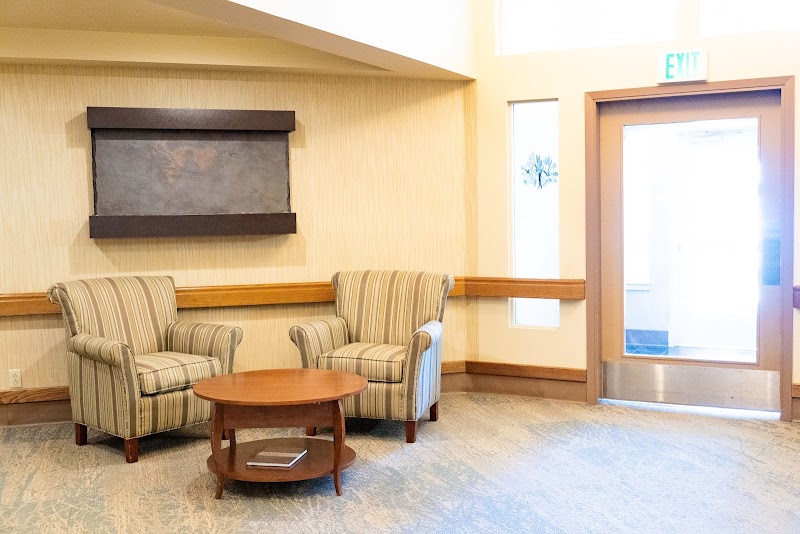
Who Owns and Operates Avamere Rehabilitation At Ridgemont?

AVAMERE REHABILITATION AT RIDGEMONT is owned by a for-profit company. For-profit facilities operate as businesses with obligations to shareholders or private owners. The facility is operated by AVAMERE, a chain that manages multiple nursing homes. With 96 certified beds and approximately 68 residents (about 71% occupancy), it is a smaller facility located in PORT ORCHARD, Washington.

How Does Avamere Rehabilitation At Ridgemont Compare to Other Washington Nursing Homes?

Compared to the 100 nursing homes in Washington, AVAMERE REHABILITATION AT RIDGEMONT's overall rating (4 stars) is above the state average of 3.2, staff turnover (51%) is near the state average of 46%, and health inspection rating (4 stars) is above the national benchmark.

What Should Families Ask When Visiting Avamere Rehabilitation At Ridgemont?

Based on this facility's data, families visiting should ask: "Can you walk me through typical staffing levels on day, evening, and night shifts?" "Can I visit during a mealtime to observe dining assistance and food quality?" "How do you handle medical emergencies, and what is your hospital transfer rate?" "Can I speak with family members of current residents about their experience?" These questions are particularly relevant given the below-average staffing rating.

Is Avamere Rehabilitation At Ridgemont Safe?

Based on CMS inspection data, AVAMERE REHABILITATION AT RIDGEMONT has a clean safety record: no substantiated abuse findings (meaning no confirmed cases of resident harm), no Immediate Jeopardy citations (the most serious violation level indicating risk of serious injury or death), and is not on the Special Focus Facility watch list (a federal program monitoring the lowest-performing 1% of nursing homes). The facility has a 4-star overall rating and ranks #1 of 100 nursing homes in Washington. While no facility is perfect, families should still ask about staff-to-resident ratios and recent inspection results during their visit.

Do Nurses at Avamere Rehabilitation At Ridgemont Stick Around?

AVAMERE REHABILITATION AT RIDGEMONT has a staff turnover rate of 51%, which is about average for Washington nursing homes (state average: 46%). Moderate turnover is common in nursing homes, but families should still ask about staff tenure and how the facility maintains care continuity when employees leave.

Was Avamere Rehabilitation At Ridgemont Ever Fined?

AVAMERE REHABILITATION AT RIDGEMONT has no federal fines on record. CMS issues fines when nursing homes fail to meet care standards or don't correct problems found during inspections. The absence of fines suggests the facility has either maintained compliance or corrected any issues before penalties were assessed. This is a positive indicator, though families should still review recent inspection reports for the full picture.

Is Avamere Rehabilitation At Ridgemont on Any Federal Watch List?

AVAMERE REHABILITATION AT RIDGEMONT is not on any federal watch list. The most significant is the Special Focus Facility (SFF) program, which identifies the bottom 1% of nursing homes nationally based on persistent, serious quality problems. Not being on this list means the facility has avoided the pattern of deficiencies that triggers enhanced federal oversight. This is a positive indicator, though families should still review the facility's inspection history directly.