BAILEY-BOUSHAY HOUSE

2720 EAST MADISON, SEATTLE, WA 98112 (206) 322-5300
Non profit - Corporation 35 Beds COMMONSPIRIT HEALTH Data: November 2025
Trust Grade
70/100
#57 of 190 in WA
Last Inspection: May 2025

Inspected within the last 6 months. Data reflects current conditions.

Overview

Bailey-Boushay House in Seattle has a Trust Grade of B, indicating it is a good option for families seeking care, positioned in the top half of Washington's nursing homes at #57 out of 190. Within King County, it ranks #9 of 46, showing it has only eight local competitors that are better. The facility is improving, with reported issues decreasing from 18 to 17 over the past year. Staffing is a strong point, earning a perfect score of 5 out of 5, with a turnover rate of 37%, which is lower than the state average of 46%. The nursing home has not incurred any fines, which is reassuring, and it boasts more registered nurse coverage than all other facilities in the state, ensuring residents receive attentive care. However, there are some concerns. The facility has had 46 issues identified, all categorized as potential harm, including failures to keep accurate records for residents’ assessments, which could lead to unmet care needs. Additionally, the facility did not provide access to past survey results and plans of correction, limiting transparency for residents and their families. Overall, while Bailey-Boushay House shows strengths in staffing and RN coverage, families should be aware of the identified concerns that could impact resident care.

Trust Score
B
70/100
In Washington
#57/190
Top 30%
Safety Record
Low Risk
No red flags
Inspections
Getting Better
18 → 17 violations
Staff Stability
○ Average
37% turnover. Near Washington's 48% average. Typical for the industry.
Penalties
✓ Good
No fines on record. Clean compliance history, better than most Washington facilities.
Skilled Nurses
✓ Good
Each resident gets 340 minutes of Registered Nurse (RN) attention daily — more than 97% of Washington nursing homes. RNs are the most trained staff who catch health problems before they become serious.
Violations
⚠ Watch
46 deficiencies on record. Higher than average. Multiple issues found across inspections.
★★★★☆
4.0
Overall Rating
★★★★★
5.0
Staff Levels
★★★★☆
4.0
Care Quality
★★★☆☆
3.0
Inspection Score
Stable
2024: 18 issues
2025: 17 issues

The Good

  • 5-Star Staffing Rating · Excellent nurse staffing levels
  • 4-Star Quality Measures · Strong clinical quality outcomes
  • Full Sprinkler Coverage · Fire safety systems throughout facility
  • No fines on record
  • Staff turnover below average (37%)

    11 points below Washington average of 48%

Facility shows strength in staffing levels, quality measures, fire safety.

The Bad

Staff Turnover: 37%

Near Washington avg (46%)

Typical for the industry

Chain: COMMONSPIRIT HEALTH

Part of a multi-facility chain

Ask about local staffing decisions and management

The Ugly 46 deficiencies on record

May 2025 17 deficiencies
CONCERN (D)

Potential for Harm - no one hurt, but risky conditions existed

Deficiency F0552 (Tag F0552)

Could have caused harm · This affected 1 resident

**NOTE- TERMS IN BRACKETS HAVE BEEN EDITED TO PROTECT CONFIDENTIALITY** Based on interview and record review, the facility failed to ensure an informed consent for psychotropic medication (a drug that...

Read full inspector narrative →
**NOTE- TERMS IN BRACKETS HAVE BEEN EDITED TO PROTECT CONFIDENTIALITY** Based on interview and record review, the facility failed to ensure an informed consent for psychotropic medication (a drug that affects behavior, mood, thoughts, or perception) was completed prior to medication administration for 1 of 5 residents (Residents 17), reviewed for unnecessary medications. This failure placed the resident and/or their representative at risk of not being fully informed of the risks and benefits before making decisions about medications prior to administration. Findings included . Review of the facility policy titled, Psychotropic Drug Use: Implementation, Monitoring and Reduction, updated in June 2024, showed that An informed consent must be obtained first from the resident or their representative before starting with the medication regimen .An informed consent includes the discussion of the medication's risks and benefits. It further showed that psychotropic drugs included antidepressants (medication to treat depression [A feeling of loneliness and sadness]). Resident 17 admitted to the facility on [DATE] with diagnosis that included depression. Review of physician orders printed on 05/01/2025 showed that Resident 17 was prescribed an antidepressant medication on 11/25/2024. Review of a Medication Administration Record for April 2025, printed on 05/01/2025, showed that Resident 17 received an antidepressant medication daily and that medication administration was started on 11/26/2024. Review of Resident 17's informed consent for an antidepressant medication, printed on 05/05/2025, showed that it was obtained from Resident 17 on 03/25/2025. It showed that Completion of this form is voluntary. If not completed, the medication cannot be administered unless in an emergency. It further showed that Resident 17 was/will be admitted on [DATE] with the above medication [antidepressant medication], as prescribed. In an interview and joint record review on 05/05/2025 at 9:48 AM, Staff F, Charge Registered Nurse, stated that they expected informed consents for psychotropic drug use would be available in the resident's Electronic Health Record (EHR). Joint record review of Resident 17's EHR showed an informed consent for an antidepressant obtained from Resident 17 on 03/25/2025. Staff F stated that they would look further into Resident 17's EHR for presence of an earlier informed consent for antidepressant medication. In a follow up interview at 11:12 AM, Staff F stated Resident 17 did not have an informed consent for antidepressant medication at the start of the medication [administration]. Staff F further stated that they expected informed consent would have been obtained prior to Resident 17 receiving the first dose of antidepressant medication. In an interview on 05/05/2025 at 4:19 PM, Staff B, Director of Nursing, stated that they expected informed consents for psychotropic drug use would be obtained before a resident was started on psychotropic medication. Reference: (WAC) 388-97-0260 (2) (a-d) .
CONCERN (D)

Potential for Harm - no one hurt, but risky conditions existed

Deficiency F0569 (Tag F0569)

Could have caused harm · This affected 1 resident

Based on interview and record review, the facility failed to ensure resident's fund was transferred to the resident or resident's representative/estate within 30 days of discharge for 1 of 1 discharge...

Read full inspector narrative →
Based on interview and record review, the facility failed to ensure resident's fund was transferred to the resident or resident's representative/estate within 30 days of discharge for 1 of 1 discharged resident (Resident 136), reviewed for personal funds. This failure placed the resident and/or their representative/estate at risk for loss of funds and the interest accumulated. Findings included . Review of an undated facility provided document titled, Resident Trust Account, showed that Resident Trust Procedures included that the resident's balance in their personal fund shall be returned to the individual within one week of discharge. Review of Resident 136's discharge Minimum Data Set (an assessment tool), dated 04/14/2024, showed that the resident was discharged from the facility on 04/14/2024. Review of Resident 136's trust account ledger showed that they had a trust balance of $622.23 on 12/31/2024. Review of a copy of the check sent to the resident's representative/estate showed it was sent to them on 01/23/2025, 283 days after the resident's discharge. A joint record review and interview on 05/05/2025 at 8:47 AM with Staff N, Finance Manager, showed that Resident 136 had a trust balance of $622.23 on 12/31/2025 in their trust account ledger. A review of the check sent to Resident 136's representative showed it was dated 01/23/2025. Staff N stated that their process required transferring residents' trust balances within a week after discharge. Staff N further stated that Resident 136's balance was transferred late, and it should have been done within a week after their discharge. In an interview on 05/05/2025 at 11:15 AM, Staff A, Administrator, stated that they expected the residents' funds to be transferred to the resident's representative or estate, as required by the regulations and the facility's policy. Staff A stated that Resident 136's fund was transferred late. Staff A further stated that it was their expectation that Resident 136's balance would be transferred within one week following their discharge. Reference: (WAC) 388-97-0340(5) .
CONCERN (D)

Potential for Harm - no one hurt, but risky conditions existed

Deficiency F0605 (Tag F0605)

Could have caused harm · This affected 1 resident

**NOTE- TERMS IN BRACKETS HAVE BEEN EDITED TO PROTECT CONFIDENTIALITY** Based on interview and record review, the facility failed to ensure adequate monitoring was in place for psychotropic (drugs tha...

Read full inspector narrative →
**NOTE- TERMS IN BRACKETS HAVE BEEN EDITED TO PROTECT CONFIDENTIALITY** Based on interview and record review, the facility failed to ensure adequate monitoring was in place for psychotropic (drugs that affects how the brain works, and causes changes in mood, awareness, thoughts, feelings or behavior) medication management for 2 of 5 residents (Resident 13 & 17), reviewed for unnecessary medications. This failure placed the residents at risk for unmet care needs, adverse side effects, and a diminished quality of life. Findings included . Review of the facility policy titled, High-Alert Medication Monitoring Policy, updated in November 2022, showed, Residents prescribed medications falling under the definition of high-risk will be monitored for adverse side effects [or unexpected and harmful reactions from the use of medication] and the observations documented in the clinical record. Residents who use high-risk medications will be routinely assessed for side effects. RESIDENT 13 Resident 13 was admitted to the facility on [DATE] with a diagnosis of anxiety disorder (mental health condition characterized by intense, persistent worry and fear). Review of the physician's order summary report printed on 05/05/2025 at 7:32 AM showed Resident 13 had an order for clonazepam (an antianxiety [a type of psychotropic] medication) 1.5 milligram (unit of measurement) per day. Further review of the physician's order summary report did not show monitoring for adverse side effects of clonazepam. In an interview and joint record review on 05/02/2025 at 2:49 PM, Staff I, Registered Nurse (RN) stated that Resident 13 was taking an antianxiety medication. Staff I stated that residents taking antianxiety medications were monitored for adverse side effects. A joint record review of Resident 13's physician's order printed on 05/05/2025, and the May 2025 electronic medication administration record (e-MAR) showed no monitoring for adverse side effects related to use of antianxiety medication. Staff I stated there was no documentation that Resident 13 was monitored for adverse side effects related to the use of antianxiety medication and that there should have been one. In an interview and joint record review on 05/05/2025 at 3:26 PM, Staff D, Charge RN, stated that psychotropics such as antianxiety medications were considered high-risk medications. A joint record review of the May 2025 physician's order showed Resident 13 had an order for antianxiety medication and it further showed no monitoring for adverse side effects related to use of antianxiety medication. Staff D stated that there was no order for monitoring of adverse side effects related to the use of antianxiety medication and there should have been one. In an interview on 05/05/2025 at 4:29 PM, Staff B, Director of Nursing, stated that they expected Resident 13 to have had a physician order to monitor adverse side effects of antianxiety medication and that Resident 13 should have been adequately monitored for adverse side effects related to antianxiety medication. RESIDENT 17 Review of a face sheet printed on 05/01/2025 showed Resident 17 admitted to the facility on [DATE] with diagnosis that included depression (feeling loneliness and sadness). Review of physician's order printed 05/01/2025, showed Resident 17 was prescribed an antidepressant (a psychotropic used to treat depression) on 11/25/2024. Review of Resident 17's April 2025 MAR, printed on 05/01/2025, showed Resident 17 received an antidepressant daily and that medication administration started on 11/26/2024. It further showed that Resident 17 was not monitored for adverse side effects related to antidepressant use. In an interview and joint record review on 05/05/2025 at 9:48 AM, Staff F, Charge RN, stated that they expected monitoring of adverse side effects related to antidepressant use would be included in Resident 17's physician's orders and MAR. Joint record review of Resident 17's physician's orders and April 2025 e-MAR did not show that Resident 17 had an order for staff to monitor for adverse side effects related to antidepressant use. It further showed that daily monitoring for adverse side effects related to antidepressant use was not included in Resident 17's April 2025 e-MAR. Staff F stated that they expected monitoring for adverse side effects related to antidepressant use to start after Resident 17's initial dose. In an interview on 05/05/2025 at 4:19 PM, Staff B stated that they expected adverse side effects monitoring to start when they obtain the informed consent, and before the resident starts [the medication]. Reference: (WAC) 388-97-1060 (3)(k)(i)(4) .
CONCERN (D)

Potential for Harm - no one hurt, but risky conditions existed

Deficiency F0637 (Tag F0637)

Could have caused harm · This affected 1 resident

**NOTE- TERMS IN BRACKETS HAVE BEEN EDITED TO PROTECT CONFIDENTIALITY** Based on interview and record review, the facility failed to ensure a Significant Change in Status Assessment (SCSA) Minimum Dat...

Read full inspector narrative →
**NOTE- TERMS IN BRACKETS HAVE BEEN EDITED TO PROTECT CONFIDENTIALITY** Based on interview and record review, the facility failed to ensure a Significant Change in Status Assessment (SCSA) Minimum Data Set (MDS - an assessment tool) was completed for 1 of 2 residents (Resident 23), reviewed for SCSA. The failure to complete an SCSA for a decline in eating and transfer placed the resident at risk for delayed care planning, unmet care needs, and a diminished quality of life. Findings included . Review of the Long-Term Care Resident Assessment Instrument (RAI) 3.0 User's Manual, (a guide directing staff on how to accurately assess the status of residents) Version 1.19.1, dated October 2024, showed that a SCSA is a comprehensive assessment for a resident that must be completed when the Interdisciplinary Team has determined that a resident meets the significant change guidelines for either major improvement or decline. It showed that a significant change is a major decline or improvement in a resident's status that impacts more than one area of a resident's health status. It further showed that a SCSA is appropriate when there is determination that a significant change (either improvement or decline) in a resident's condition from their baseline has occurred as indicated by comparison of the resident's status to the most recent comprehensive assessment and any subsequent quarterly assessments and the resident's condition is not expected to return to baseline within two weeks. Review of a face sheet printed on 05/01/2025 showed that Resident 23 was admitted to the facility on [DATE]. Review of Resident 23's admission MDS dated [DATE], showed Section GG0130 (Self Care) was coded as 02 which indicated that Resident 23's usual performance at the start of the stay (02/09/2024) for eating task was that staff provided substantial/maximal assistance. It showed that Section GG0170 (Mobility) was coded as 03 and that this indicated that Resident 23 received partial/moderate assistance for sit to stand task (the ability to come to standing position from sitting in a chair, wheelchair, or on the side of the bed.) It further showed that coding in Section K0520 (Nutritional Approaches) indicated that Resident 23 did not receive a mechanically altered diet (a required change in texture of food or liquids) or feeding tube (a flexible tube used to deliver liquid nutrition directly into the stomach or intestine when a person cannot eat or swallow normally). Review of a hospital inpatient discharge summary, printed on 05/05/2025, showed that Resident 23 was admitted to an acute hospital on [DATE]. It showed that Resident 23 presented to the Emergency Department for a witnessed aspiration (inhalation of food or fluid into the lungs) event at the facility where Resident 23 was a resident. It showed that Resident 23 was seen by speech therapy but had failed the swallow evaluation and was recommended to continue NPO (nothing by mouth). It further showed that Resident 23 had a feeding tube placed on 03/20/2024 while at the acute hospital. Review of Resident 23's quarterly MDS, dated [DATE], showed Section GG0130 was marked with a dash (-). This mark indicated that Resident 23's usual performance for eating activity was not assessed. It showed that in Section K0520, Resident 23 was marked to have received feeding tube nutritional approach while a resident at the facility. It further showed that Section K0710 (Percent by Artificial Route) was coded a 3, which indicated that Resident 23 received 51% or more proportion of total calories through tube feeding. Review of Resident 23's most current quarterly MDS dated [DATE], showed Section GG0130 was coded as 88, which indicated that Resident 23's eating task was not attempted during the assessment period due to medical condition or safety concerns. It showed that Section GG0170 was coded as 1 and that this indicated that Resident 23 was dependent on staff assistance for sit to stand activity. It further showed that Section K0710 was coded as 3, which indicated Resident 23 received 51% or more proportion of total calories through tube feeding. Review of Resident 23's Electronic Health Record (EHR) did not show that a SCSA was completed after Resident 23 had a decline in their status that impacted more than one area of their health status, and that Resident 23's condition was not expected to return to baseline within two weeks. In a joint record review and interview on 05/05/2025 at 1:15 PM with Staff K, MDS Coordinator, the following MDS were reviewed: -admission MDS, dated [DATE], showed Resident 23 was coded to have received substantial/maximal assistance with eating task, partial/moderate assistance for sit to stand task and that Resident 23 did not receive nutritional approach via feeding tube. -Quarterly MDS dated [DATE], showed Resident 23's eating task was not attempted during the assessment period due to medical condition or safety concerns. It further showed that Resident 23 was dependent on staff assistance for sit to stand task and that Resident 23 received 51% or more proportion of total calories through feeding tube. Staff K stated Resident 23 did not admit to the facility with a feeding tube and that Resident 23 transitioned to NPO when their feeding tube was placed during an acute hospital stay on 03/20/2024. Staff K stated that they expected a SCSA would have been completed for Resident 23's decline in condition. In an interview on 05/05/2025 at 4:22 PM, Staff B, Director of Nursing, stated that they followed the RAI Manual for coding accuracy. When asked if they expected an SCSA would have been completed for Resident 23, Staff B stated, Yes. Reference: (WAC) 388-97-1000 (3)(b) .
CONCERN (D)

Potential for Harm - no one hurt, but risky conditions existed

Comprehensive Care Plan (Tag F0656)

Could have caused harm · This affected 1 resident

**NOTE- TERMS IN BRACKETS HAVE BEEN EDITED TO PROTECT CONFIDENTIALITY** RESIDENT 13 Review of the February 2025 Medication Administration Record (MAR) printed on 05/02/2025 showed Resident 13 had a ph...

Read full inspector narrative →
**NOTE- TERMS IN BRACKETS HAVE BEEN EDITED TO PROTECT CONFIDENTIALITY** RESIDENT 13 Review of the February 2025 Medication Administration Record (MAR) printed on 05/02/2025 showed Resident 13 had a physician order for apixaban (an anticoagulant) tablet five milligrams (a unit of measurement) to give every 12 hours. Further review of the February 2025 MAR showed Resident 13 had started taking anticoagulant on 02/03/2025. Review of Resident 13's comprehensive care plan printed on 05/02/2025 did not show a care plan for use of anticoagulant and/or monitoring of its adverse side effects. In an interview and joint record review on 05/02/2025 at 2:49 PM, Staff I, Registered Nurse, stated that Resident 13 was on an anticoagulant medication. A joint record review of Resident 13's comprehensive care plan with Staff I did not show an anticoagulant care plan and/or monitoring of its side effects. Staff I stated that they monitored residents on anticoagulant for its side effects and that it should be part of their care plan. In an interview and joint record review on 05/02/2025 at 3:21 PM with Staff K, Minimum Data Set (an assessment tool) Coordinator, stated that Resident 13 was taking an anticoagulant. A joint record review of Resident 13's comprehensive care plan with Staff K did not show an anticoagulant care plan or monitoring of its side effects. Staff K stated that the use of anticoagulant and monitoring of its side effects should have been included in Resident 13's comprehensive care plan. In an interview on 05/05/2025 at 4:29 PM, Staff B stated they expected the use of anticoagulant and monitoring of its side effects should have been included in Resident 13's comprehensive care plan. Reference: (WAC) 388-97-1020 (1)(2)(a) Based on interview and record review, the facility failed to develop care plans for 2 of 12 residents (Residents 17 & 13), reviewed for comprehensive care plan. The failure to develop care plans for Post Traumatic Stress Disorder (PTSD - a mental health condition triggered by a terrifying event that was either experienced or witnessed) and use of an anticoagulant (medication to prevent blood clot) placed the residents at risk for unmet care needs and a diminished quality of life. Findings included . Review of the facility policy titled, Trauma-Informed and Culturally Competent Care, updated in March 2024, showed that the purpose of the facility policy was to guide staff in providing care that is culturally competent and trauma-informed in accordance with professional standards of practice .to address the needs of trauma survivors by minimizing triggers and/or re-traumatization. It further showed, Work with residents and families to create a plan that embraces strengths. Review of the facility policy titled, Care Planning - Interdisciplinary Team, updated in April 2025, showed, The interdisciplinary team is responsible for the development of resident care plans .and implementation of the resident's care plan. RESIDENT 17 Review of a face sheet printed on 05/01/2025, showed Resident 17 admitted to the facility on [DATE] with diagnosis that included PTSD. In an interview on 04/29/2025 at 1:59 PM, Resident 17 stated that they had a diagnosis of PTSD after experiencing two separate traumatic events in the past. Resident 17 stated that, There are certain things I don't feel comfortable with. Review of the comprehensive care plan printed on 05/01/2025, showed no documentation that Resident 17 had a history of trauma and/or identified triggers. A joint record review and interview on 05/01/2025 at 1:41 PM with Staff V, Social Worker, showed that the comprehensive care plan did not address Resident 17's diagnosis of PTSD and associated triggers with specific interventions. Staff V stated, It doesn't look like triggers are referenced. When asked if Staff V expected Resident 17's care plan would include PTSD and triggers, Staff V stated, I think it would be a relevant addition to [Resident 17's] care plan. In an interview on 05/05/2025 at 4:15 PM, Staff B, Director of Nursing, stated that they expected residents who have a known diagnosis of PTSD to receive trauma-informed care. Staff B further stated that they expected PTSD triggers would be included in the residents' comprehensive care plan.
CONCERN (D)

Potential for Harm - no one hurt, but risky conditions existed

Deficiency F0657 (Tag F0657)

Could have caused harm · This affected 1 resident

**NOTE- TERMS IN BRACKETS HAVE BEEN EDITED TO PROTECT CONFIDENTIALITY** Based on observation, interview, and record review, the facility failed to revise comprehensive care plans for 2 of 12 residents...

Read full inspector narrative →
**NOTE- TERMS IN BRACKETS HAVE BEEN EDITED TO PROTECT CONFIDENTIALITY** Based on observation, interview, and record review, the facility failed to revise comprehensive care plans for 2 of 12 residents (Resident 19 & 23), reviewed for care plan revision. The failure to revise the care plan to include refusal to wear safety apron for smoking and identified activity preferences placed the residents at risk for unmet care needs and a diminished quality of life. Findings included . Review of the facility policy titled, Discharge Planning, Discharge Summary and Post-discharge Plan of Care-Inpatient, updated in October 2022, showed, A comprehensive care plan will be developed by the interdisciplinary team within 21 days of admission and updated at minimum every three (3) months or more often if needed . Review of the facility's document titled, Resident Recreation and Activities Policy, updated in November 2022, showed [Facility will] Offer activities tailored to each individual resident's interest, abilities, and preferences, as identified through assessments and care planning. RESIDENT 19 An observation on 05/01/2025 at 9:58 AM, showed Resident 19 was smoking in the designated area accompanied by Staff E, Registered Nurse (RN). Further observation showed Resident 19 had no safety apron for smoking. An observation and interview on 05/01/2025 at 1:35 PM, showed Resident 19 self-propelled toward the second floor nursing station and informed Staff E that they wanted to go out and smoke. Staff E informed Resident 19 about wearing a safety apron to which Resident 19 responded, No. Staff E stated that Resident 19 had been refusing to wear a safety vest for smoking. Review of Resident 19's comprehensive care plan printed on 04/30/2025 did not show Resident 19's refusal behavior to wear a safety apron for smoking. In an interview and joint record review on 05/01/2025 at 3:08 PM, Staff C, Charge RN, stated that they would always ask Resident 19 about wearing a safety apron but [Resident 19] always refuses. A joint record review of residents' sign-out sheets for April 2025 with Staff C showed Resident 19 had been refusing to wear a safety apron for smoking. When asked if they had updated Resident 19's care plan to include their refusal to wear a safety apron for smoking, Staff C stated, No. Staff C further stated, I would expect it to have been included in the care plan. In an interview on 05/01/2025 at 4:29 PM, Staff B, Director of Nursing, stated that they expected Resident 19's comprehensive care plan to have been revised and/or updated to include their refusal to wear a safety apron for smoking. RESIDENT 23 Review of Resident 23's quarterly Minimum Data Set (MDS - an assessment tool) dated 11/17/2024 showed Section F0400 (Interview for Daily Preferences) was completed with Resident 23's Collateral Contact 1 (CC1). It further showed the following activity preferences were marked as very important to Resident 23: -To be around animals such as pets -To do your favorite activities -To go outside to get fresh air when the weather is good The activity To do things with groups of people, was marked as somewhat important, for Resident 23. Review of Resident 23's activities care plan printed on 05/05/2025, did not show Resident 23's activity preferences that were marked on Resident 23's quarterly MDS. A joint record review and interview on 05/02/2025 at 3:32 PM with Staff X, Activities Assistant, showed Resident 23's quarterly MDS dated [DATE] showed Section F0400 was completed with Resident 23's CC1. Staff X stated that they contributed to the development of Resident 23's activity care plan. A joint record review of the activity care plan did not show Resident 23's activity preferences were included. When asked if identified preferences in an MDS should be included in the care plan, Staff X stated, I think it should be. Staff X further stated that Resident 23's activity care plan did not list [Resident 23's] preferred activities and that, It should, but I don't [do not] see anything that would say that at this time. In an interview on 05/05/2025 at 3:45 PM, Staff A, Administrator, stated that they expected residents' activity care plans and program would be inclusive of interest and preferences for daily activities that were identified by the resident's family/representative. Reference: (WAC) 388-97-1020(2)(f)(4)(b) .
CONCERN (D)

Potential for Harm - no one hurt, but risky conditions existed

Deficiency F0679 (Tag F0679)

Could have caused harm · This affected 1 resident

**NOTE- TERMS IN BRACKETS HAVE BEEN EDITED TO PROTECT CONFIDENTIALITY** Based on observation, interview, and record review, the facility failed to ensure an activity program met the need of 1 of 1 res...

Read full inspector narrative →
**NOTE- TERMS IN BRACKETS HAVE BEEN EDITED TO PROTECT CONFIDENTIALITY** Based on observation, interview, and record review, the facility failed to ensure an activity program met the need of 1 of 1 resident (Resident 23), reviewed for activities. The failure to implement an individualized ongoing program to support the resident in their choice of activities based on the comprehensive assessment and care plan placed the resident at risk for unmet activity pursuit, social isolation, and a diminished quality of life. Findings included . Review of the facility policy titled, Resident Recreation and Activities, updated in November 2022, showed [Facility will] Offer activities tailored to each individual resident's interest, abilities, and preferences, as identified through assessments and care planning. Review of a face sheet printed on 05/01/2025, showed Resident 23 was admitted to the facility on [DATE]. In a phone interview on 04/29/2025 at 11:07 AM, Resident 23's Collateral Contact 1 [CC1] stated that Resident 23 was in their room 24/7 [24 hours, 7 days a week]. Review of Resident 23's admission Minimum Data Set (MDS - an assessment tool) dated 02/16/2024 showed Section F0400 (Interview for Daily Preferences) was completed with Resident 23. It further showed that the following daily preferences were marked as very important to Resident 23: -To listen to music [that Resident 23] liked -To keep up with the news -To go outside to get fresh air when the weather is good Additionally, the daily preference to be around animals such as pets, was marked to be somewhat important for Resident 23. Review of Resident 23's quarterly MDS dated [DATE] showed Section F0400, was completed with CC1 and that the following daily preferences were marked as very important to Resident 23: -To be around animals such as pets, -To do [Resident 23's] favorite activities, -To go outside to get fresh air when the weather is good. Additionally, the daily preference to do things with groups of people, was marked to be somewhat important for Resident 23 Review of Resident 23's activity care plan printed on 05/05/2025, showed that Resident 23 needed assistance to be escorted to activity functions. Further review did not show that the identified daily preferences from Resident 23's admission MDS and quarterly MDS were included in Resident 23's activity care plan. Multiple observations showed Resident 23 remained in their room at the following times: - On 04/30/2025 at 2:10 PM and at 2:46 PM, Resident 23 was lying in bed, and their TV had a paused screen with the message, Are you still watching? - On 05/01/2025 at 8:16 AM, Resident 23 was lying in bed, and their TV was playing media. - On 05/02/2025 at 2:22 PM, Resident 23 was lying in bed, and their TV was playing media. It did not show that Resident 23 was offered activities outside of their room. In an interview and joint observation on 05/02/2025 at 10:03 AM, Staff Y, Registered Nurse, was asked what activities were offered to Resident 23, Staff Y answered, TV and [Resident 23's CC1] visiting with their dog. Staff Y further stated that the activity person comes in [Resident 23's room] once in a while and therapy work with them [in the room]. I don't think there's anything [activities] else. A joint observation showed Resident 23 had a Geri-chair (specialized medical recliner) in their room. When asked if Resident 23 was safe to use their Geri-chair outside of their room, Staff Y stated Yes, I would say it would be safe, if [Resident 23] can be reclined. Staff Y further stated that Resident 23's Geri-chair could be used to take them out to the patio somewhere, it would be nice. A joint record review and interview on 05/02/2025 at 3:32 PM with Staff X, Activities Assistant, showed Resident 23's quarterly MDS dated [DATE], indicated an interview for daily preferences was completed. Staff X stated that they completed the daily preferences interview with Resident 23's CC1. Staff X stated that they contributed to the development of Resident 23's activity care plan. A joint record review of Resident 23's activity care plan did not show that the identified daily preferences from Resident 23's quarterly MDS were included. Staff X stated that the identified daily preferences should have been included in Resident 23's care plan. Further joint record review showed, The resident needs assistance/escort to activity functions. Staff X stated that Resident 23 has not been going to group activities. Staff X stated that Resident 23 could have been transported outside of their room with their Geri-chair. When asked if they kept a log of activities that Resident 23 was offered or that Resident 23 participated outside of their room, Staff X stated that they documented monthly in the progress notes and that Resident 23 had not been provided any activities outside their room, for the month of April 2025. When asked if Resident 23's activity care plan was personalized to allow staff to offer activities tailored to Resident 23's interest and preferences, as identified from Resident 23's admission and quarterly MDS, Staff X stated No, it's not personalized. In an interview on 05/05/2025 at 3:45 PM, Staff A, Administrator, stated that they expected residents' activity program would be inclusive of interest and preferences for daily activities that were identified through assessments, such as MDS. Reference: (WAC) 388-97-0940(1)(2) .
CONCERN (D)

Potential for Harm - no one hurt, but risky conditions existed

Deficiency F0699 (Tag F0699)

Could have caused harm · This affected 1 resident

**NOTE- TERMS IN BRACKETS HAVE BEEN EDITED TO PROTECT CONFIDENTIALITY** Based on interview and record review, the facility failed to ensure a resident who was a trauma survivor and diagnosed with Post...

Read full inspector narrative →
**NOTE- TERMS IN BRACKETS HAVE BEEN EDITED TO PROTECT CONFIDENTIALITY** Based on interview and record review, the facility failed to ensure a resident who was a trauma survivor and diagnosed with Post Traumatic Stress Disorder (PTSD - a mental health condition triggered by a terrifying event that was either experienced or witnessed) was adequately assessed for trauma-informed care and associated triggers in accordance with professional standards of practice for 1 of 2 residents (Resident 17), reviewed for mood/behavior. This failure placed the resident at risk for unidentified triggers, re-traumatization, and a decreased quality of life. Findings included . Review of the facility policy titled, Trauma-Informed and Culturally Competent Care, updated in March 2024, showed that the purpose of the facility policy was to guide staff in providing care that is culturally competent and trauma-informed in accordance with professional standards of practice .to address the needs of trauma survivors by minimizing triggers and/or re-traumatization. It further showed Work with residents and families to create a plan that embraces strengths. Review of a face sheet printed on 05/01/2025, showed Resident 17 admitted to the facility on [DATE] with diagnosis that included PTSD. In an interview on 04/29/2025 at 1:59 PM, Resident 17 stated that they had a diagnosis of PTSD after experiencing two separate traumatic events. Resident 17 stated that, there are certain things I don't feel comfortable with. Review of the comprehensive care plan printed on 05/01/2025, did not show documentation that Resident 17 had a history of trauma and/or identified triggers. In an interview and joint record review on 05/01/2025 at 1:41 PM, Staff V, Social Worker, was asked about the facility's process for identifying resident-specific triggers for those diagnosed with PTSD and Staff V stated that their facility did not have a specific assessment to identify PTSD triggers. Staff V stated that they reviewed a resident's mental health history and assessed residents upon admission through their initial social services assessment. A joint record review of Resident 17's progress note, dated 11/28/2024, showed that the initial social services assessment was completed with Resident 17 by Staff V. Staff V stated, We didn't specifically talk about triggers or PTSD related concerns. A joint record review of Resident 17's comprehensive care plan did not show PTSD and/or associated triggers were identified or addressed with specific interventions. Staff V stated, It doesn't look like triggers are referenced. When asked if they expected Resident 17's care plan would include PTSD and associated triggers, Staff V stated, I think it would be a relevant addition to [Resident 17's] care plan. In an interview on 05/05/2025 at 4:15 PM, Staff B, Director of Nursing, stated that they expected residents who have a known diagnosis of PTSD to receive trauma-informed care. Staff B further stated that they expected an assessment would be completed to identify resident-specific trauma, associated triggers and that PTSD triggers would be included in the residents' comprehensive care plan. Reference: WAC 388-97-1060(3)(e) .
CONCERN (D)

Potential for Harm - no one hurt, but risky conditions existed

Deficiency F0757 (Tag F0757)

Could have caused harm · This affected 1 resident

Based on interview and record review, the facility failed to ensure adequate monitoring was conducted for use of anticoagulant (medication that prevents blood clot) for 1 of 5 residents (Resident 13),...

Read full inspector narrative →
Based on interview and record review, the facility failed to ensure adequate monitoring was conducted for use of anticoagulant (medication that prevents blood clot) for 1 of 5 residents (Resident 13), reviewed for unnecessary medications. This failure placed the resident at risk of receiving unnecessary medications, adverse side effects, and related complications. Findings included . Review of the facility policy titled, High-Alert Medication Monitoring Policy, updated in November 2022, showed, Residents prescribed medications falling under the definition of high-risk will be monitored for adverse side effects and the observations documented in the clinical record. Residents who use high-risk medications will be routinely assessed for side effects. Review of the physician's order summary report printed on 05/05/2025 at 7:32 AM, showed Resident 13 had an order for apixaban (an anticoagulant medication) five milligrams (mg-a unit of measurement) to be given every 12 hours for pulmonary embolism (blood clot in the lungs) and deep vein thrombosis (blood clot in the deep vein). Further review of the physician's order summary report did not include monitoring for adverse side effects related to anticoagulant use. Review of the April 2025 and May 2025 Medication Administration Records (MARs) showed Resident 13 had been receiving an anticoagulant medication since 02/03/2025. Further review of April 2025 and May 2025 MAR indicated that Resident 13 was not monitored for adverse side effects from anticoagulant use. In an interview and joint record review on 05/02/2025 at 2:49 PM, Staff I, Registered Nurse (RN), stated that they monitored residents on anticoagulant for its adverse side effects. A joint record review of the physician's order with Staff I showed Resident 13 had an order for apixaban five mg to be given every 12 hours. Further review of the physician's order summary report did not include monitoring for adverse side effects related to anticoagulant use. A joint record review of May 2025 MAR did not show Resident 13 had monitoring for adverse side effects from anticoagulant use. Staff I stated that Resident 13 had no adequate monitoring for adverse side effects related to anticoagulant use. In an interview and joint record review on 05/02/2025 at 3:21 PM, Staff K, Minimum Data Set (an assessment tool) Coordinator, stated that Resident 13 was taking an anticoagulant. A joint record review of the physician's order and the May 2025 MAR showed Resident 13 was not monitored for adverse side effects from anticoagulant use. Staff K stated that Resident 13 did not have adequate monitoring for anticoagulant use. In an interview on 05/05/2025 at 3:51 PM, Staff F, Charge RN, stated that Resident 13 did not have physician's order for monitoring adverse side effects from anticoagulant use. In a follow-up interview at 4:35 PM, Staff F stated that they just added the adverse side effects monitoring in the physician's order for Resident 13. In an interview on 05/05/2025 at 4:29 PM, Staff B, Director of Nursing, stated that they expected Resident 13 to have had a physician order to monitor adverse side effects of anticoagulant and that it should have been adequately monitored for adverse side effects. Reference: (WAC) 388-97-1060 (3)(k)(i)(4) .
CONCERN (D)

Potential for Harm - no one hurt, but risky conditions existed

Deficiency F0811 (Tag F0811)

Could have caused harm · This affected 1 resident

**NOTE- TERMS IN BRACKETS HAVE BEEN EDITED TO PROTECT CONFIDENTIALITY** STAFF O Review of the face sheet printed on 05/05/2025 showed that Resident 15 was admitted to the facility on [DATE]. Review of...

Read full inspector narrative →
**NOTE- TERMS IN BRACKETS HAVE BEEN EDITED TO PROTECT CONFIDENTIALITY** STAFF O Review of the face sheet printed on 05/05/2025 showed that Resident 15 was admitted to the facility on [DATE]. Review of Resident 15's self-care deficit care plan, printed on 04/30/2025, showed that Resident 15 required one-person total assistance with eating. During the entrance conference meeting on 04/29/2025 at 9:00 AM, Staff A, Administrator, and Staff B, stated that they had a paid feeding assistance program in the facility. Observation on 04/30/2025 at 12:02 PM, showed Resident 15 was sitting in the dining room and was assisted by Staff O, Recreation Therapists. In an interview on 04/30/2025 at 12:29 PM, Staff O stated that they assisted Resident 15 with their lunch meals. Staff O stated that they received paid feeding assistant training in the year 2017. When asked to provide their training certificate, Staff O provided a digital presentation document about texturizing and feeding basics, dated 2015. Further review of the document did not indicate that Staff O received the training. When asked if Staff O had a certificate, Staff O stated, Let me look for it. Staff O did not provide the requested training certificate. In an interview on 05/05/2025 at 9:08 AM, Staff F stated that Resident 15 received paid feeding assistance. Staff F stated that they would expect Resident 15 to be assisted by a trained paid feeding assistant. In an interview on 05/05/2025 at 1:06 PM, Staff B stated that they would expect Resident 15 to be assisted by trained staff with their meals. Staff B stated that Staff O had reported to them that they had received paid feeding assistant training. Staff B stated that Staff O did not receive a certificate of training completion, and that the facility was unable to locate it in their records. Reference: WAC 388-97-1060 (3)(h)(i) Based on observation, interview, and record review, the facility failed to ensure a resident in the paid feeding assistance program was adequately assessed for appropriateness to receive paid feeding assistance for 1 of 4 residents (Resident 24), and failed to ensure staff providing the paid feeding assistance was properly trained for 1 of 10 staff (Staff O), reviewed for dining observations. These failures placed the residents at risk for choking and aspiration (inhalation of food or fluid into the lungs) and a diminished quality of life. Findings included . Review of the facility policy titled, Using Paid Feeding Assistants, updated in March 2024, showed that residents would be assessed for appropriateness for the program. The policy showed that the Charge Nurse or MDS (Minimum Data Set-an assessment tool) Coordinator will determine if a resident is safe to be fed by a Paid Feeding Assistant. The policy showed that no residents with complicated feeding problems will be deemed appropriate to be fed by the Paid Feeding Assistant and that Complicated feeding problems can include, but not limited to difficulty swallowing, etc. The policy further showed that paid feeding assistance would be provided by only recreation therapist and other clinical staff with appropriate training. RESIDENT 24 Review of Resident 24's physician's orders, printed on 05/01/2025, showed, regular diet, regular texture, nectar/mildly thick consistency, which indicated that Resident 24 required liquids to be thickened. Review of Resident 24's speech therapy progress note dated 01/23/2025, showed that Resident 24 was assessed during a meal and that they reported a little trouble chewing and swallowing food textures and difficulty swallowing thin liquid. It showed that Resident 24 showed overt [something obvious] signs of aspiration with thin liquid by straw. It further showed that the speech therapist recommended Resident 24 to continue with nectar thick liquids and one on one feeding assistance. Review of Resident 24's electronic health records did not show documentation of an assessment for Resident 24's appropriateness to receive assistance from paid feeding assistants. In an interview on 05/01/2025 at 4:07 PM, Staff F, Charge Registered Nurse, stated that Resident 24 received paid feeding assistance provided by patient [resident] care assistants. Staff F stated that Resident 24 had been deemed to have swallowing issues with thin liquids. When asked if an assessment was completed to ensure Resident 24 was appropriate to receive assistance from paid feeding assistants, Staff F stated, I have consulted with the team, and that there was no documentation of an assessment that was completed. In an interview on 05/01/2025 at 4:37 PM, Staff K, MDS Coordinator, was asked if they were responsible for completing assessments for determining residents were safe to receive paid feeding assistance, Staff K stated, I did not know I was supposed to do that. Observation on 05/02/2025 at 8:50 AM showed Resident 24 was assisted with their meal by Staff Q, Patient Care Assistant. It further showed that Resident 24's meal tray had a bowl of hot cereal, a plate of banana slices and two bottles filled with thickened liquids. In an interview and joint record review on 05/02/2025 at 11:11 AM, Staff B, Director of Nursing, stated that Resident 24 had difficulty swallowing. When asked if Resident 24 was assessed for appropriateness to receive feeding assistance, Staff B stated, let me find out. A joint record review of the facility's policy titled Using Paid Feeding Assistants, updated in March 2024, showed that no resident with complicated feeding problems will be deemed appropriate to receive paid feeding assistance and that complicated feeding problems included difficulty swallowing. Staff B stated that Resident 24 did not meet the criteria for the paid feeding assistance program. In a follow-up interview at 12:38 PM, Staff B stated there was no documentation for an assessment completed to determine if Resident 24 was safe to receive paid feeding assistance.
CONCERN (E)

Potential for Harm - no one hurt, but risky conditions existed

Deficiency F0577 (Tag F0577)

Could have caused harm · This affected multiple residents

Based on observation, interview, and record review, the facility failed to ensure the survey result binder included the recent recertification survey results that led to citations and plan of correcti...

Read full inspector narrative →
Based on observation, interview, and record review, the facility failed to ensure the survey result binder included the recent recertification survey results that led to citations and plan of corrections for 2 of 3 years (2023 & 2024), reviewed for availability of survey reports. This failure prevented the residents, residents' representatives, and visitors from exercising their right to review past survey results and the facility's plan of corrections. Findings included . Review of the facility policy titled, Availability of Survey Results, updated in April 2025, showed, Survey reports, certifications, complaint investigations and plans of correction for the preceding three years are available for any individual to review upon request. The policy further showed that A copy of the most recent survey report and any plans of correction are kept in a binder in the residents' day room. Review of the Past Survey Results binder on 05/01/2025 at 2:01 PM, showed that the binder did not contain recertification surveys that resulted in citations for the years 2023 and 2024. Further review of the contents of the binder showed the recertification survey results and associated plan of corrections dated 03/24/2023 and 06/13/2024 were not included. In an interview and joint record review on 05/01/2025 at 2:13 PM with Staff B, Director of Nursing, stated that they were responsible for maintaining and updating the Past Survey Results binder. A joint record review of the Past Survey Results binder did not show recertification survey results for the years 2023 and 2024 and associated plan of corrections dated 03/24/2023 and 06/13/2024. Staff B stated that survey results and the associated plan of corrections were accessible online. Staff B further stated the recertification survey results, and associated plan of corrections could be printed for residents upon request. In an interview on 05/05/2025 at 11:15 AM, Staff A, Administrator, stated that their process involved placing the survey results in the binder upon receipt. Staff A stated that the recertification survey results and associated plan of corrections for years 2023 and 2024 should have been included in the binder. Reference: (WAC) 388-97-0480(1)(a)(c)(4) (5)(a) .
CONCERN (E)

Potential for Harm - no one hurt, but risky conditions existed

Assessment Accuracy (Tag F0641)

Could have caused harm · This affected multiple residents

**NOTE- TERMS IN BRACKETS HAVE BEEN EDITED TO PROTECT CONFIDENTIALITY** Based on interview and record review, the facility failed to accurately assess 4 of 13 residents (Residents 13, 5, 23 & 17), rev...

Read full inspector narrative →
**NOTE- TERMS IN BRACKETS HAVE BEEN EDITED TO PROTECT CONFIDENTIALITY** Based on interview and record review, the facility failed to accurately assess 4 of 13 residents (Residents 13, 5, 23 & 17), reviewed for Minimum Data Set (MDS-an assessment tool). The failure to ensure accurate assessments regarding opioid (medication to treat pain) use, presence of delusion (false belief), activity interview and insulin (medication/hormone that regulates blood sugar levels) injections placed the residents at risk for unidentified and/or unmet care needs, and a diminished quality of life. Findings included . According to the Long-Term Care Resident Assessment Instrument (RAI) 3.0 User's Manual, (a guide directing staff on how to accurately assess the status of residents) Version 1.19.1, dated October 2024, showed, .an accurate assessment requires collecting information from multiple sources, some of which are mandated by regulations. Those sources must include the resident and direct care staff on all shifts, and should also include the resident's medical record, physician, and family, guardian and/or other legally authorized representative, or significant other as appropriate or acceptable. It is important to note here that information obtained should cover the same observation period as specified by the MDS items on the assessment and should be validated for accuracy (what the resident's actual status was during that observation period) by the IDT [Interdisciplinary Team] completing the assessment. As such, nursing homes are responsible for ensuring that all participants in the assessment process have the requisite knowledge to complete an accurate assessment. It further showed, .The intent of items in this section (Section F- Preferences for Customary Routine and Activities) is to obtain information regarding the residents' preferences for their daily routine and activities .If a resident cannot communicate, then family or significant other who knows the resident well may be able to provide useful information about preferences .If the resident is unable to complete the interview, attempt to conduct the interview with a family member or significant other .Preferences may change over time and extend beyond those included here. Therefore, the assessment of activity preferences is intended as a first step in an ongoing dialogue between the care provider and the resident. The Observation Period (also known as the Look-back period) is the time-period over which the resident's condition or status is captured by the MDS and ends at 11:59 PM on the day of the Assessment Reference Date (ARD or assessment period). RESIDENT 13 Review of the April 2025 Medication Administration Record (MAR) showed Resident 13 received opioid medication on 04/04/2025. Review of Resident 13's annual MDS dated [DATE] showed opioid use was not marked in Section N (Medications). In an interview and joint record review on 05/02/2025 at 3:21 PM, Staff K, MDS Coordinator, stated they followed the RAI Manual for completion of MDSs. Joint record review of Resident 13's annual MDS dated [DATE] with Staff K showed use of opioid was not marked in Section N. Joint record review of the April 2025 MAR showed Resident 13 received opioid on 04/04/2025 which was within the look-back period (04/03/2025 to 04/09/2025). Staff K stated that they had inaccurate MDS coding, and that Resident 13's opioid use should have been marked in Section N. RESIDENT 5 Review of Resident 5's quarterly MDS dated [DATE] showed delusion was marked in Section E (behavior). Review of Resident 5's Electronic Health Record (EHR) did not show documentation for the presence of delusion during the look-back period (02/13/2025 to 02/19/2025). A joint record review and interview on 05/02/2025 at 3:21 PM with Staff K, showed Resident 5's quarterly MDS dated [DATE] revealed that delusion was marked in Section E. A joint record review of Resident 5's EHR did not show documentation for the presence of delusion during the look-back period. Staff K stated that they would look for Resident 5's documentation related to presence of delusion. In a follow-up interview on 05/05/2025 at 1:56 PM, Staff K stated, I cannot find any supporting documentation for coding [Resident 5's] delusion in Section E. Staff K further stated that delusion should not have been coded in Resident 5's quarterly MDS. In an interview on 05/05/2025 at 4:29 PM, Staff B, Director of Nursing, stated that they expected residents' MDS assessments to be coded accurately. RESIDENT 23 Review of Resident 23's annual MDS dated [DATE] showed Section C0100 (Should Brief Interview for Mental Status be Conducted?) was coded as 0, which indicated that Resident 23 was rarely/never understood. It further showed that Section F0400 (Interview for Daily Preferences) was not completed with Resident 23's family/significant other. In an interview and joint record review on 05/02/2025 at 2:25 PM, Staff K stated that they completed Section F of Resident 23's annual MDS dated [DATE]. Staff K further stated that they followed the RAI Manual for MDS coding accuracy. Joint record review of Resident 23's annual MDS showed Section F0400 was not completed with Resident 23's family/significant other. Staff K stated that they did not complete the interview with Resident 23's family/ significant other because they were not present at the facility at the time. When asked if they attempted to call Resident 23's family or significant other to complete the interview, Staff K stated, No, I did not, and that they should have attempted to interview the family/significant other for Resident 23. In an interview on 05/05/2025 at 4:21 PM, Staff B stated that they expected MDS resident interviews to be completed with the resident's representative if the resident was unable to be interviewed. RESIDENT 17 Review of Resident 17's quarterly MDS dated [DATE], showed Section N0350 (Insulin) was coded as 1 which indicated that Resident 17 received one insulin injection during the observation period (02/24/2025 through 03/03/2025). Review of Resident 17's physician's orders, printed on 05/01/2025, did not show that Resident 17 had an order for Insulin. In an interview and joint record review on 05/02/2025 at 9:32 AM, Staff K stated that they completed Section N0350 of Resident 17's quarterly MDS dated [DATE]. Joint record review of Resident 17's quarterly MDS, showed Section N0350 was coded as 1 which indicated that Resident 17 received one insulin injection during the observation period. Staff K stated that Resident 17 was not prescribed insulin and that it should not have been coded. In an interview on 05/05/2025 at 4:15 PM, Staff B stated they followed the RAI Manual for MDS coding accuracy and that they expected MDS to be completed accurately. Reference: (WAC) 388-97-1000 (1)(b) .
CONCERN (E)

Potential for Harm - no one hurt, but risky conditions existed

Deficiency F0645 (Tag F0645)

Could have caused harm · This affected multiple residents

**NOTE- TERMS IN BRACKETS HAVE BEEN EDITED TO PROTECT CONFIDENTIALITY** RESIDENT 5 Review of Resident 5's Level I PASARR completed on 04/10/2017 showed the diagnosis of psychotic and anxiety disorders...

Read full inspector narrative →
**NOTE- TERMS IN BRACKETS HAVE BEEN EDITED TO PROTECT CONFIDENTIALITY** RESIDENT 5 Review of Resident 5's Level I PASARR completed on 04/10/2017 showed the diagnosis of psychotic and anxiety disorders were marked in Section I and no referral for Level II evaluation was indicated. Review of Resident 5's Electronic Health Record (EHR) did not show a Level I PASARR was updated and no referral for Level II evaluation was completed. In a joint record review and interview on 05/05/2025 at 10:09 AM with Staff G showed Resident 5's Level I PASARR was completed on 04/10/2017 and SMI indicators were checked. Further joint review of Resident 5's Level I PASARR did not show a referral for Level II evaluation was indicated. Staff G stated that Resident 5 had SMI and referral for a Level II evaluation was not completed. Staff G stated that Resident 5 should have had an updated Level I PASARR and should have had a referral for a Level II evaluation. RESIDENT 13 Review of Resident 13's Level I PASARR completed on 09/21/2020 showed the diagnosis of anxiety disorders was marked in Section I and no referral for Level II evaluation was indicated. Review of Resident 13's EHR did not show a Level I PASARR was updated and no referral for Level II evaluation was completed. In a joint record review and interview on 05/05/2025 at 10:09 AM with Staff G showed Resident 13's Level I PASARR was completed on 09/21/2020 and a SMI indicator was checked. Further joint review of Resident 13's Level I PASARR did not show a referral for Level II evaluation was indicated. Staff G stated that Resident 13 had SMI and a referral for a Level II evaluation was not completed. Staff G stated that Resident 13 should have had an updated Level I PASARR and should have had a referral for a Level II evaluation. In an interview on 05/05/2025 at 2:15 PM, Staff A stated that they expected Resident 5 and Resident 13 to have had updated Level I PASARR and referral for Level II evaluation completed. Based on interview and record review, the facility failed to ensure accurate completion and update of Level 1 Pre-admission Screening and Resident Review (PASARR- an assessment used to identify people referred to nursing facilities with Serious Mental Illness [SMI], Intellectual Disabilities [ID], or Related Conditions [RC] are not inappropriately placed in nursing homes for long term care) were conducted for 5 of 6 residents (Residents 2, 5,13,17 & 22), and failed to ensure Level II PASARR referral were made for 4 of 6 residents (Residents 2, 5, 13 & 22), reviewed for PASARR screening. These failures placed the residents at risk for inappropriate placement and/or not receiving timely and necessary services to meet mental health care needs. Findings included . Review of the facility policy titled, Pre-admission Screening and Resident Review [PASARR], updated in February 2025, showed PASARR Level I screening looks for indicators that a person may have an intellectual disability or related condition, or a serious mental illness. If indicators are found, the individual will be referred to the Developmental Disabilities Administration for PASARR Level II assessment. RESIDENT 2 Review of the face sheet printed on 05/05/2025 showed Resident 2 was admitted to the facility on [DATE] with diagnosis that included depression (feeling of loneliness and sadness). Review of Resident 2's Level I PASARR dated 01/11/2022, showed the diagnosis of anxiety (overwhelming feelings of worry, fear or nervousness) and psychotic disorders (a condition where a person loses touch with reality) were marked in Section I (SMI/ID/RC). A joint record review and interview on 05/05/2025 at 10:19 AM with Staff G, Social Worker, showed that Resident 2's Level I PASARR in Section I had diagnosis of anxiety and psychotic disorders marked. A joint record review of the face sheet showed that Resident 2 had a diagnosis of depression as of 10/02/2024. Staff G stated that they did not know that Resident 2 needed Level II PASARR. Staff G further stated that Resident 2's Level I PASARR should have been updated to reflect the new diagnosis of depression. In an interview on 05/05/2025 at 11:15 AM, Staff A, Administrator, stated they expected the PASARR forms to be accurate and reflect residents' diagnosis of SMI. Staff A stated that Resident 2 had anxiety and psychotic disorders checked in Section I that PASARR level II evaluation referral should have been made. Staff A further stated that Resident 2's Level I PASARR form should have been updated to reflect their current medical diagnosis of SMI. RESIDENT 17 A Review of a face sheet printed on 05/01/2025 showed Resident 17 admitted to the facility on [DATE] with diagnosis that included panic disorder with anxiety (having sudden, intense waves of fear that hit out of nowhere, even when there's no real danger). Review of Resident 17's physician's orders, printed on 05/01/2025, showed that Resident 17 was prescribed an anxiolytic (medication used to treat anxiety). In an interview on 04/29/2025 at 1:59 PM, Resident 17 stated, I have anxiety, I'm on medication for it and I see a therapist. Review of Resident 17's Level I PASARR dated 12/25/2024 did not show that anxiety disorders were marked in Section I. It further showed that Resident 17's Level I PASARR was completed by Staff G. In an interview and joint record review on 05/05/2025 at 10:22 AM, Staff G stated that they were responsible for ensuring Level I PASARR was completed accurately. Joint record review of Resident 17's Level I PASARR dated 12/25/2024 did not show that anxiety disorders were marked in Section I. Staff G stated that they expected Level I PASARR to be completed accurately and that Resident 17's anxiety disorder should have been marked. RESIDENT 22 Review of Resident 22's Level I PASARR completed on 12/11/2023 showed that mood disorders and other psychotic disorder were marked in Section I. It further showed that no referral for Level II evaluation was indicated in Section IV (Service Needs and Assessor Data). Review of Resident 22's EHR did not show that a Level l PASARR was updated and a referral for Level II evaluation was completed. A joint record review and interview on 05/05/2025 at 10:28 AM with Staff G, showed Resident 22's Level I PASARR dated 12/11/2023 required a Level II evaluation due to SMIs were indicated. Staff G stated that Resident 22's Level I PASARR was inaccurate and that a Level II referral should have been made. In an interview on 05/05/2025 at 3:46 PM, Staff A stated that they expected Level I PASARR would be completed accurately and referrals for Level II evaluations would be made timely. Reference: (WAC) 388-97-1975 (1)(4) .
CONCERN (E)

Potential for Harm - no one hurt, but risky conditions existed

Staffing Information (Tag F0732)

Could have caused harm · This affected multiple residents

Based on observation, interview, and record review, the facility failed to ensure the daily nurse staffing form was accurately completed to reflect the facility's name for 5 of 5 days (04/29/2025, 04/...

Read full inspector narrative →
Based on observation, interview, and record review, the facility failed to ensure the daily nurse staffing form was accurately completed to reflect the facility's name for 5 of 5 days (04/29/2025, 04/30/2025, 05/01/2025, 05/02/2025 & 05/05/2025), reviewed for sufficient and competent staffing. This failure placed the residents and residents' representatives at risk of not being fully informed of the current staffing levels. Findings included . Review of the facility policy titled, Posting Direct Care Daily Staffing Numbers, updated in November 2022, showed that the information recorded on the form shall include the name of the facility. Observations of the facility document titled, Licensed and Unlicensed Staff in our Nursing Home Today [dated accordingly], showed that the facility name was not reflected on the document posting at the following times: - Day one on 04/29/2025 at 8:33 AM - Day two on 04/30/2025 at 9:03 AM - Day three on 05/01/2025 at 11:36 AM - Day four on 05/02/2025 at 11:05 AM - Day five on 05/05/2025 at 1:32 PM In an interview and joint record review on 05/05/2025 at 1:44 PM, Staff F, Charge Registered Nurse, stated that they were responsible for managing the posting of direct care daily staffing numbers. A joint record review of the postings dated 04/29/2025, 04/30/2025, 05/01/2025, 05/02/2025, and 05/05/2025 with Staff F, showed that the facility name was not reflected on the documents. When asked if the documents posted reflected the name of the facility, Staff F stated, No. In an interview and joint record review on 05/05/2025 at 4:12 PM, Staff B, Director of Nursing, stated that their posted direct care daily staffing numbers facility form did not include the facility name and that I don't see it. No Associated WAC .
CONCERN (E)

Potential for Harm - no one hurt, but risky conditions existed

Deficiency F0761 (Tag F0761)

Could have caused harm · This affected multiple residents

Based on observation, interview, and record review, the facility failed to appropriately store biologicals (medicines made from living things like proteins that help treat and/or prevent diseases) to ...

Read full inspector narrative →
Based on observation, interview, and record review, the facility failed to appropriately store biologicals (medicines made from living things like proteins that help treat and/or prevent diseases) to maintain the appropriate temperature range for 1 of 1 medication refrigerator (2nd floor Medication Refrigerator), and failed to ensure medical supplies were labeled with expiration dates for 1 of 2 medication carts (West 3 Medication Cart), reviewed for medication storage and labeling. These failures placed the residents at risk for receiving compromised and/or ineffective biological and medical supplies. Findings included . Review of the facility policy titled, Medication Storage in the Facility, updated in May 2017, showed, Medications and biologicals are stored safely, securely, and properly, following manufacturer's recommendations or those of the supplier. 2ND FLOOR MEDICATION REFRIGERATOR A joint observation and interview on 04/30/2025 at 12:45 PM with Staff H, Registered Nurse (RN), showed COVID-19 (disease caused by a virus called SARS-CoV-2) and influenza (disease caused by a virus causing the flu) vaccines (biological injections) were stored in the medication refrigerator. When asked if the internal refrigerator temperatures were monitored, Staff H stated, Yes and provided a copy of the facility document titled, Refrigerator/Freezer Log, 2nd Floor Medication Room Refrigerator, dated April 2025. Review of the facility's document titled, Refrigerator/Freezer Log, 2nd Floor Medication Room Refrigerator, dated April 2025, showed, Acceptable temperature ranges: Medication Fridge 36-46 degrees Fahrenheit [F - unit of measurement]. It further showed that recorded internal refrigerator temperatures for the following dates fell below the acceptable temperature range: - On 04/04/2025 it was recorded at 35 degrees F - On 04/18/2025 it was recorded at 33 degrees F - On 04/25/2025 it was recorded at 35 degrees F It further showed that the refrigerator log directed staff to notify the Facilities Manager [Staff U] and write a work-order. It did not show that work orders were filed for 04/04/2025, 04/18/2025 and 04/25/2025. In a joint record review and interview on 05/02/2025 at 11:24 AM, with Staff F, Charge RN, showed the facility's document titled, Refrigerator/Freezer Log, 2nd Floor Medication Room Refrigerator, dated April 2025 had temperature readings recorded on 04/04/2025, on 04/18/2025, and on 04/25/2025 that fell below the acceptable temperature range. It further showed that no work orders were completed for the temperature readings recorded on 04/04/2025, 04/18/2025 and on 04/25/2025. Staff F stated that they expected work orders to have been completed. When asked if biologicals were stored in the 2nd floor medication fridge, Staff F stated, yes and that COVID-19 and influenza vaccines were stored in the 2nd floor medication refrigerator. A joint record review of the manufacturer packaging instructions for storage for COVID-19 and influenza vaccines showed recommended to be stored within 36-46 degrees F. Staff F stated that they expected vaccines would have been stored according to the manufacturer's instructions. A joint record review and interview on 05/02/2025 at 1:01 PM with Staff U, showed the facility document titled, Refrigerator/Freezer Log, 2nd Floor Medication Room Refrigerator, dated April 2025 had temperature readings recorded on 04/04/2025, on 04/18/2025 and on 04/25/2025 that fell below the acceptable temperature range and that no work orders were completed. When asked if Staff U was notified of the temperatures that fell below the acceptable temperature range in the month of April 2025, Staff U stated they would check their records. In a follow up interview at 1:33 PM, Staff U stated that there was no work orders received or completed for the 2nd floor medication fridge temperature readings on 04/04/2025, on 04/18/2025, and on 04/25/2025. Staff U stated that they believed they were supposed to receive work orders for temperature readings that fell below the acceptable range. WEST 3 MEDICATION CART Review of an undated online manufacturer documented titled, 3M [brand name] Disposable Respirator 1860, 1860s, N95 [type of respirator (type of filtering mask)] Technical Data Sheet, showed, Shelf life of the unopened product is five (5) years from date of manufacture when stored within temperature range .End of shelf-life date is marked on the product packaging. Before initial use, always check that the product is within the stated shelf life. When storing or transporting this product use original packaging provided. A joint observation and interview on 05/01/2025 at 8:48 AM with Staff Z, RN, showed unbagged teal-colored masks labeled 3M 1860 N95 were stored in the bottom drawer of the medication cart. Staff Z stated that the stored N95 masks were used by staff. When asked if the shelf life or expiration dates of the stored N95s were known, Staff Z stated that the expiration date was labeled on the box (manufacturer's packaging). When asked to refer to the box, Staff Z stated that the box can't [cannot] be located. Staff Z further stated that they expected to reference the expiration date for N95's stored in the medication cart and that It should have an expiration date. In an interview on 05/05/2025 at 4:12 PM, Staff B, Director of Nursing, stated that they expected biologicals would be stored at the recommended temperature range to ensure efficacy. Staff B stated that they expected work orders to have been completed when medication refrigerator temperatures fell below the acceptable range. Staff B further stated that they expected all stored supplies in the medication carts would have an expiration date for staff to reference. Reference: (WAC) 388-97-1300 (2) .
CONCERN (E)

Potential for Harm - no one hurt, but risky conditions existed

Food Safety (Tag F0812)

Could have caused harm · This affected multiple residents

Based on observation, interview, and record review, the facility failed to ensure foods were handled appropriately in accordance with professional standards of food safety for 1 of 3 Refrigerators (Re...

Read full inspector narrative →
Based on observation, interview, and record review, the facility failed to ensure foods were handled appropriately in accordance with professional standards of food safety for 1 of 3 Refrigerators (Reach-in Cooler), reviewed for food services. The failure to label and date food items placed the residents at risk for food borne illness (caused by the ingestion of contaminated food or beverages) and a diminished quality of life. Findings included . Review of the facility policy titled, Food Receiving and Storage, revised in November 2022, showed that foods shall be stored in a manner that complied with safe food handling practices. The policy further showed that all foods stored in the refrigerator were covered, labeled and dated. Joint observation of the reach-in cooler and interview on 04/29/2025 at 8:34 AM with Staff M, Nutrition Assistant, showed the following food items: -One opened container of Ultra [brand name] Milk with no open date -One opened container of Thick & Easy [brand name] dairy beverage with no open date -One unlabeled and undated, brownish-colored sliced food items inside a resealable plastic bag -One unlabeled and undated food item wrapped in aluminum foil Staff M stated that the brownish-colored sliced food items inside the resealable plastic bag were cooked roast beef slices, and the item wrapped in aluminum foil was Kielbasa [brand name] sausage. Staff M stated that they should have dated the container of Ultra Milk and the Thick & Easy dairy beverage when they opened them. Staff M further stated that they should have labeled and dated the cooked roast beef slices and Kielbasa sausage before storing them inside the reach-in cooler. In an interview on 04/29/2025 at 8:46 AM with Staff J, Executive Chef, stated that they expected that the open container of Ultra milk and the open container of Thick & Easy dairy beverage should have had open dates. Staff J further stated that the cooked roast beef slices and kielbasa sausage should have been properly labeled and dated. In an interview on 05/05/2025 at 2:15 PM, Staff A, Administrator, stated that they expected staff to have properly labeled and dated food items. Reference: (WAC) 388-97-1100 (3) .
CONCERN (E)

Potential for Harm - no one hurt, but risky conditions existed

Infection Control (Tag F0880)

Could have caused harm · This affected multiple residents

**NOTE- TERMS IN BRACKETS HAVE BEEN EDITED TO PROTECT CONFIDENTIALITY** PROPER REMOVAL OF PPE STAFF R An observation of room [ROOM NUMBER] at 04/29/2025 at 10:48 AM showed a contact isolation [use of ...

Read full inspector narrative →
**NOTE- TERMS IN BRACKETS HAVE BEEN EDITED TO PROTECT CONFIDENTIALITY** PROPER REMOVAL OF PPE STAFF R An observation of room [ROOM NUMBER] at 04/29/2025 at 10:48 AM showed a contact isolation [use of gown and gloves to prevent the spread of germs] sign was posted at the entrance. It further showed a PPE cart, and a black covered trash bin placed outside of room [ROOM NUMBER]. An observation on 04/30/2025 at 12:19 PM showed Staff R, CNA, wore PPE prior to entering room [ROOM NUMBER] to deliver a lunch tray. It further showed Staff R exited room [ROOM NUMBER] without removing their used gown and gloves. In an interview on 04/30/2025 at 12:31 PM, Staff R was asked what the facility's process was for entering rooms when contact isolation was indicated and Staff R stated, I wear PPE and that to protect ourselves and so we don't spread the illness out of their room. Staff R further stated, Everything in the room stays in the room, including PPE, we don't [do not] bring outside. When asked if they removed their used PPE outside of the room, Staff R stated, It just became my habit and that room [ROOM NUMBER] did not have a trash bin dedicated for removing PPE inside the room. In an interview and joint observation on 05/05/2025 at 8:28 AM, Staff D stated they followed CDC guidelines for infection prevention and control. Joint observation showed room [ROOM NUMBER] had a PPE cart and a black covered trash bin outside of the room. When asked if they considered used PPE to be contaminated, Staff D stated, Yes. Staff D further stated that they expected used PPE to be removed inside the room when contact isolation was indicated. In an interview on 05/05/2025 at 4:12 PM, Staff B stated they followed CDC guidelines for infection prevention and control. Staff B further stated that they expected used PPE would be removed inside the rooms. STAFF H An observation on 04/30/2025 at 9:36 AM, showed Staff H, RN, administered medications to Resident 9 (on EBP-precaution to protect residents from Multidrug-Resistant Organism [MDRO-a germ that is resistant to medications that treat infections). Staff H removed their used reusable gown and placed it inside the laundry bin outside Resident 9's room. In an interview on 04/30/2025 at 2:01 PM, Staff H stated that they placed their used reusable gown inside the laundry bin outside Resident 9's room. When asked if they were following proper infection control practices, Staff H stated that it was their practice (to dispose used reusable gown outside the residents' room) in the facility. In an interview on 05/05/2025 at 2:06 PM, Staff D stated that they expected staff to remove their used PPE before they leave the resident's room. In an interview on 05/05/2025 at 4:22 PM, Staff B stated that they expected staff to remove their used PPE before exiting an EBP room. Reference: (WAC) 388-97-1320 (1)(a)(c) Based on observation, interview and record review, the facility failed to ensure infection prevention and control practices were followed related to hand hygiene between glove change and/or proper removal of used Personal Protective Equipment (PPE-gown and gloves) for 4 of 6 staff (Staff T, L, R & H), reviewed for infection control. These failures placed the residents, staff, and visitors at risk for facility acquired or healthcare-associated infections and related complications. Review of the facility policy titled, Infection Prevention and Control Program, updated in June 2024, showed Employees and volunteers at [facility name] follow the CDC [The Centers of Disease Control and Prevention] Hand Hygiene guidelines. It further showed that employees followed guidelines produced by CDC. Review of the CDC's online document titled, Guideline for Isolation Precautions [steps used in healthcare settings to prevent the spread of infections]: Preventing Transmission of Infectious Agents in Healthcare Settings (2007), dated 11/27/2023, showed Before leaving the patient's room or cubicle, remove and discard PPE .remove gloves after contact with a patient and/or the surrounding environment .remove gown and perform hand hygiene before leaving the patient's environment. HAND HYGIENE STAFF T An observation on 04/30/2025 at 2:19 PM showed Staff T, Housekeeper, parked a housekeeping cart in front of room [ROOM NUMBER]. It showed Staff T entered room [ROOM NUMBER] while holding wet cleaning-wipes with gloves on. It further showed Staff T exited room [ROOM NUMBER] and replaced their used gloves with new gloves from their housekeeping cart, without performing hand hygiene. Additional observations showed the following: - At 2:25 PM Staff T exited room [ROOM NUMBER] while holding a filled clear bag that they placed in the housekeeping cart. Staff T then removed their used gloves and put on a new pair of gloves. It did not show Staff T performed hand hygiene between glove change. -At 2:29 PM Staff T exited room [ROOM NUMBER] while wearing gloves and opened a door labeled 3F. Staff T then removed their used gloves at the housekeeping cart and put on a new pair of gloves without performing hand hygiene between glove change. In an interview on 04/30/2025 at 2:37 PM, Staff T stated they wore gloves to clean surfaces in the rooms to include the sink counters, the bathrooms and the floors. When asked if they cleaned their hands before wearing new gloves, Staff T stated, Yes, when I finish cleaning the room. When asked if they would perform hand hygiene when removing used gloves and before wearing new gloves, Staff T stated, I don't know. In an interview on 05/05/2025 at 10:51 AM, Staff D, Infection Preventionist, stated that they expected housekeeping staff would perform hand hygiene between glove use and that it was standard practice. Staff D further stated that they did not expect used gloves to be worn in the hallways and that they expected used gloves to be removed inside the rooms. In an interview on 05/05/2025 at 4:12 PM, Staff B, Director of Nursing, stated that they followed CDC guidelines for infection prevention and control and that they expected all staff would follow hand hygiene practices to prevent the spread of infection. STAFF L An observation on 04/29/2025 at 12:13 PM showed Staff L, Certified Nursing Assistant (CNA), had their gloves on and was setting up Resident 10's lunch meal. Staff L then removed their used gloves and put on a new pair of gloves that was handed to them by Staff C, Charge Registered Nurse (RN). Staff L did not perform hand hygiene prior to wearing their new pair of gloves. In an interview on 04/29/2025 at 12:30 PM, Staff C stated that they expected staff to perform hand hygiene in between glove change. In an interview on 04/29/2025 at 12:35 PM, Staff L stated that they did not perform hand hygiene after they removed their used gloves. Staff L stated that they were expected to perform hand hygiene between glove change. In an interview on 05/05/2025 at 2:08 PM, Staff D stated that they expected staff to perform hand hygiene before and after glove change.
May 2024 18 deficiencies
CONCERN (D)

Potential for Harm - no one hurt, but risky conditions existed

Deficiency F0552 (Tag F0552)

Could have caused harm · This affected 1 resident

**NOTE- TERMS IN BRACKETS HAVE BEEN EDITED TO PROTECT CONFIDENTIALITY** Based on observation, interview, and record review, the facility failed to inform a resident and/or their representative of risk...

Read full inspector narrative →
**NOTE- TERMS IN BRACKETS HAVE BEEN EDITED TO PROTECT CONFIDENTIALITY** Based on observation, interview, and record review, the facility failed to inform a resident and/or their representative of risks and benefits before installation/use of a transfer pole for 1 of 2 residents (Resident 27), reviewed for accidents. This failure placed the resident at risk for not being fully informed before making decisions regarding their health care, alternative treatment options, and the right to refuse care. Findings included . Resident 27 admitted to the facility on [DATE]. Review of the annual Minimum Data Set (an assessment tool) dated 02/22/2024, showed Resident 27 was independent for lying to sitting and for sit to stand. Review of Resident 27's activities of daily living care plan printed on 05/14/2024, showed an intervention for safety devices, which included use of a transfer pole. Review of Resident 27's electronic health record showed no documentation that Resident 27 had been provided risks and benefits for their use of a transfer pole. Observation and interview on 05/14/2024 at 10:05 AM, showed Resident 27 had a transfer pole next to the left side of their bed. The pole ran from the floor and was secured to the ceiling wall. Resident 27 stated they used the transfer pole every day to lift up and move around. On 05/17/2024 at 9:41 PM, Staff Q, Certified Nursing Assistant, stated Resident 27 used the transfer pole to help them move in bed and for transferring out of bed. On 05/17/2024 at 1:26 PM, Staff U, Registered Nurse, stated Resident 27 used the transfer pole to help them get up. Staff U stated they did not know if there needed to be consent prior to use of a transfer pole. On 05/17/2024 at 1:32 PM, Staff N, Charge Nurse, stated that before a transfer pole was installed in a resident's room, there should be an assessment done by therapy and consent should be obtained from the resident and/or their representative. On 05/20/2024 at 12:58 PM, Staff T, Rehab Manager, stated that prior to a resident using a transfer pole, they should get verbal consent from the resident and/or their representative. Staff T stated Resident 27 used the transfer pole to transfer independently. When asked if there was documentation that Resident 27 was provided risks and benefits of using a transfer pole, Staff T stated, verbal consent is fine. On 05/20/2024 at 2:44 PM, Staff B, Assistant Director of Nursing, stated that a transfer pole was considered an assistive device and they expected there to be documentation that risks and benefits were provided prior to using one for a resident. Reference: (WAC) 388-97-0260 (2) (a-d) .
CONCERN (D)

Potential for Harm - no one hurt, but risky conditions existed

Report Alleged Abuse (Tag F0609)

Could have caused harm · This affected 1 resident

**NOTE- TERMS IN BRACKETS HAVE BEEN EDITED TO PROTECT CONFIDENTIALITY** Based on interview and record review, the facility failed to ensure allegations of abuse were reported to the State Agency for 2...

Read full inspector narrative →
**NOTE- TERMS IN BRACKETS HAVE BEEN EDITED TO PROTECT CONFIDENTIALITY** Based on interview and record review, the facility failed to ensure allegations of abuse were reported to the State Agency for 2 of 2 residents (Residents 3 & 25), reviewed for abuse allegations. This failure placed the residents at risk for potential unidentified abuse and lack of protection from abuse. Findings included . Review of the facility's policy titled, Prevention of Abuse and Neglect of Residents and Clients, updated in January 2018, showed that the facility prohibits and prevents abuse, neglect, involuntary seclusion, misappropriation of property of all residents and clients. The policy further showed that the Administrator On Call (AOC) will be responsible for investigating all alleged incidents of abandonment, abuse, neglect, or mistreatment, including injuries of unknown source and misappropriation of resident property. The AOC will utilize the State's Nursing Home Guidelines for Incident, Identification, Investigation and Reporting. Review of the Nursing Home Guidelines, The Purple Book, dated October 2015 (sixth edition) showed, For the purposes of reporting abuse, abandonment, neglect, financial exploitation, sexual assault and physical assault, a nursing home employee (or other mandated reporter) is required to make a report if he or she has reasonable cause to believe the incident occurred. Examples of reasonable cause may include: the individual observes the incident or hears the victim state it happened; or the individual hears about an incident from a permissive reporter who has direct knowledge of the incident. It further showed, Federal law requires the facility to report all allegations of abuse or neglect. This would include taking seriously any allegation from residents or others with a history of making allegations. RESIDENT 3 Resident 3 admitted to the facility on [DATE]. On 05/14/2024 at 11:51 AM, Resident 3 stated that an unknown female staff that worked at night was mean and said mean things. Resident 3 further stated that a week ago, an unknown female staff hit them on their right rib while they were in bed, showing an elbow in motion. Resident 3 stated they wanted to report it, but they did not. Resident 3 stated that the unknown female staff did it once and that no one else had done that to them. On 05/14/2024 at 12:43 PM, Staff A, Administrator, was informed of Resident 3's abuse allegation. Staff A stated they would start an investigation right away. Review of Resident 3's investigation report dated 05/15/2024 did not show that Resident 3's abuse allegation was reported to the State Agency. RESIDENT 25 Resident 25 admitted to the facility on [DATE]. Review of the Resident Council Minutes dated 02/20/2024 showed, Staff O, Director of Nursing (DON), and Staff B, Assistant DON were provided the following resident feedback, Resident states nurses are rough during changes and requested the nurses to be gentler during care. The Resident Council Minutes further showed the response, Thank you for the feedback; we'll include an increased awareness in our huddles. Review of the facility's February 2024 incident reporting log showed no documentation that Resident 25's allegation of rough care was reported to the State Agency or investigated. Review of Resident 25's investigation report dated 05/15/2024 did not show the allegation of rough care was reported to the State Agency. On 05/15/2024 at 3:54 PM, Staff E, Recreational Therapist, stated that they helped facilitate the resident council meetings and typed out the minutes. Staff E stated that they emailed the department heads the information they received in the resident council meeting. Staff E stated if residents brought up abuse during the meeting, they would report it and follow their reporting process. Staff E stated that complaints of rough care came up during a nursing category and that they informed Staff O. Staff E stated that Staff O was already aware and believed they were working with Resident 25 who voiced the concern. Staff E further stated that they did not report Resident 25's concern to the State Agency and that they had reported it to Staff O. On 05/15/2024 at 4:21 PM, Staff A was informed that a resident (unidentified) had made a complaint that nurses were rough with care was documented in the resident council minutes. Staff A stated that they had just spoken to Staff E about it and that they were having Staff E and Staff B start another investigation. On 05/20/2024 at 9:27 AM, Staff B stated that if they knew or suspected abuse or if a resident reported abuse, they would call it in to the State Agency. Staff B stated that they did not report Resident 3 or Resident 25's allegation to the State Agency and that Staff A does the reporting. Staff B further stated that if abuse allegations were reported to the State Agency, it would be part of the investigation report. On 05/20/2024 at 2:19 PM, Staff B stated that Resident 25's complaint of rough care was treated as a complaint of care and that it was addressed by speaking to staff to be gentle and attentive. Staff B stated that there was no report to the State Agency and/or an investigation completed after speaking with Resident 25 because they did not consider it abuse. In an interview and joint record review on 05/20/2024 at 2:32 PM, Staff A stated when reporting to the State Agency they followed a workflow provided by the State that had very clear lines (when to report). Staff A stated that if an abuse allegation potentially happened and if it was still in question, they would report it to the State Agency. Staff A further stated that it depended on the situation, if it was emergent or urgent and/or justified, they would report it. Staff A stated that if a resident was not feeling safe and reported staff was rough with them, they would report to the State Agency. Staff A stated Resident 3 and Resident 25's allegations were not called in to the State Agency and in retrospect they should have been. Reference: (WAC) 388-97-0640 (5)(a) .
CONCERN (D)

Potential for Harm - no one hurt, but risky conditions existed

Investigate Abuse (Tag F0610)

Could have caused harm · This affected 1 resident

**NOTE- TERMS IN BRACKETS HAVE BEEN EDITED TO PROTECT CONFIDENTIALITY** Based on interview and record review, the facility failed to ensure allegation of abuse was thoroughly investigated for 1 of 2 r...

Read full inspector narrative →
**NOTE- TERMS IN BRACKETS HAVE BEEN EDITED TO PROTECT CONFIDENTIALITY** Based on interview and record review, the facility failed to ensure allegation of abuse was thoroughly investigated for 1 of 2 residents (Resident 25), reviewed for abuse investigation. This failure placed the resident at risk for repeated incidents, unidentified abuse, and a diminished quality of life. Findings included . Review of the facility's policy titled, Prevention of Abuse and Neglect of Residents and Clients, updated January 2018, showed that the facility prohibits and prevents abuse, neglect, involuntary seclusion, misappropriation of property of all residents and clients. The policy further showed that the Administrator On Call (AOC) will be responsible for investigating all alleged incidents of abandonment, abuse, neglect, or mistreatment, including injuries of unknown source and misappropriation of resident property. The AOC will utilize the State's Nursing Home Guidelines for Incident, Identification, Investigation and Reporting. Review of the Nursing Home Guidelines, The Purple Book, dated October 2015 (sixth edition) showed, All alleged incidents of abuse, neglect, abandonment, mistreatment, injuries of unknown source, personal and/or financial exploitation, or misappropriation of resident property must be thoroughly investigated. Resident 25 admitted to the facility on [DATE]. Review of the Resident Council Minutes dated 02/20/2024 showed, Staff O, Director of Nursing (DON), and Staff B, Assistant DON, were provided the following resident feedback, Resident states nurses are rough during changes and requested the nurses to be gentler during care. The Resident Council Minutes further showed the response, Thank you for the feedback; we'll include an increased awareness in our huddles. Review of the facility's February 2024 incident reporting log showed no documentation that Resident 25's allegation of rough care was investigated. Review of the facility's February 2024 grievance log showed no documentation that Resident 25's allegation of rough care was logged. On 05/15/2024 at 3:54 PM, Staff E, Recreational Therapist, stated that they helped facilitate the resident council meetings and typed out the minutes. Staff E stated that they emailed the department heads the information they received in the resident council meeting. Staff E stated if residents brought up abuse during the meeting, they would report it and follow their reporting process. Staff E stated that complaints of rough care came up during a nursing category and that they informed Staff O. Staff E stated that Staff O was already aware and believed they were working with Resident 25 who voiced the concern. Staff E further stated that they did not report Resident 25's concern to the State Agency and that they had reported it to Staff O. On 05/15/2024 at 4:21 PM, Staff A was informed that a resident (unidentified) had made a complaint that nurses were rough with care was documented in the resident council minutes. Staff A stated that they had just spoken to Staff E about it and that they were having Staff E and Staff B start another investigation. In an interview and joint record review on 05/20/2024 at 9:27 AM, Staff B stated that they had five days to complete an abuse allegation investigation and that they completed investigations along with Staff O. Joint record review of the February 2024 resident council minutes showed nurses are rough during changes. Staff B stated that they were not aware and that they were just informed of the allegation when the administrator reported it to them on 05/15/2024. Review of Resident 25's investigation report dated 05/15/2024 did not show that other residents and staff were interviewed. On 05/20/2024 at 2:19 PM, Staff B stated that Resident 25's complaint with rough care was treated as a complaint of care and that it was addressed by speaking to staff to be gentle and attentive. Staff B stated that there was no report to the State Agency and/or an investigation completed after speaking with Resident 25 because they did not consider it abuse. In an interview and joint record review on 05/20/2024 at 2:32 PM, Staff A stated their abuse allegation process would be to complete a patient safety assessment and complete an investigation. Staff A stated the leadership team would receive the investigation, follow up with additional information, interview as needed, follow up with appropriate people, and speaking with staff if necessary. Staff A stated Resident 25's investigation report dated 05/15/2024 was a little bit on the brief side and would say it was an abbreviated investigation. Joint record review of Resident 25's investigation report did not show residents and/or staff were interviewed. Staff A further stated that they expected Resident 25's investigation report to be thorough. Reference: (WAC) 388-97-0640 (6)(a) .
CONCERN (D)

Potential for Harm - no one hurt, but risky conditions existed

Transfer Notice (Tag F0623)

Could have caused harm · This affected 1 resident

**NOTE- TERMS IN BRACKETS HAVE BEEN EDITED TO PROTECT CONFIDENTIALITY** Based on interview and record review, the facility failed to provide a written notice of transfer/discharge to the resident and/...

Read full inspector narrative →
**NOTE- TERMS IN BRACKETS HAVE BEEN EDITED TO PROTECT CONFIDENTIALITY** Based on interview and record review, the facility failed to provide a written notice of transfer/discharge to the resident and/or their representative describing the reason for transfers for 1 of 1 resident (Resident 10), reviewed for hospitalization. This failure placed the resident at risk for not having an opportunity to make an informed decision about transfers/discharges. Findings included . Resident 10 admitted to the facility on [DATE]. Review of Resident 10's clinical record showed Resident 10 was transferred to the hospital for further evaluation on 03/19/2024 and on 05/04/2024. Further review of Resident 10's clinical record showed no documentation that Resident 10 and/or their representative had been provided written notification of transfer to the hospital. On 05/16/2024 at 10:29 AM, Staff N, Charge Nurse, stated that when a resident transferred to the hospital, they notified residents and/or their representatives by phone. Staff N stated that it was not their policy to notify residents and/or their representatives in writing. Staff N further stated that there was no written documentation provided to Resident 10 and/or their representative for their hospitalizations on 03/19/2024 and on 05/04/2024. On 05/16/2024 at 1:52 PM, Staff K, Social Worker, stated that they call the families but did not provide written documentation to residents and/or their representatives when a resident was transferred to the hospital. On 05/20/2024 at 1:18 PM, Staff B, Assistant Director of Nursing, stated that they expected staff to provide notification to residents and/or their representatives when transferred to hospital generally by phone and that nothing written is provided. On 05/20/2024 at 1:18 PM, Staff A, Administrator, stated that the nurse will call them (residents' representatives) when a resident transferred to the hospital. When asked if they expected to staff to provide written notification or transfer to the hospital, Staff A stated they would need to double check about that. Reference: (WAC) 388-97-0120 (2)(a)(c)(d) .
CONCERN (D)

Potential for Harm - no one hurt, but risky conditions existed

Deficiency F0625 (Tag F0625)

Could have caused harm · This affected 1 resident

**NOTE- TERMS IN BRACKETS HAVE BEEN EDITED TO PROTECT CONFIDENTIALITY** Based on interview and record review, the facility failed to ensure a bed-hold notice was provided at the time of transfer to th...

Read full inspector narrative →
**NOTE- TERMS IN BRACKETS HAVE BEEN EDITED TO PROTECT CONFIDENTIALITY** Based on interview and record review, the facility failed to ensure a bed-hold notice was provided at the time of transfer to the hospital for 1 of 1 resident (Resident 10), reviewed for hospitalization. This failure placed the resident at risk of lack of knowledge regarding their right to hold their bed while in the hospital. Findings included . Review of the facility's policy titled, Bed Hold and Return Notice for Hospitalization of Social/Therapeutic Leave, updated in January 2018, showed, At the time of hospitalization, clinical staff will . ask the resident to sign a copy of the policy to be placed in their medical record. Give a copy of the policy to the resident. Resident 10 admitted to the facility on [DATE]. Review of the progress notes dated 05/04/2024, showed Resident 10 was transferred to the hospital for further evaluation. Review of Resident 10's Electric Health Record (EHR) did not show documentation that a bed-hold notice was provided to Resident 10 and/or their representative. In an interview and joint record review on 05/16/2024 at 10:29 AM with Staff N, Charge Nurse, stated they expected there to be a bed-hold notice for every time they (residents) go to the hospital. Joint record review of Resident 10's EHR showed no documentation that a bed-hold was provided to Resident 10 and/or their representative. Staff N stated that there should have been one. Joint record review and interview on 05/16/2024 at 1:52 PM with Staff K, Social Worker, showed no documentation that a bed-hold was provided to Resident 10 and/or their representative. Staff K stated there should be one for Resident 10's hospitalization on 05/04/2024. On 05/20/2024 at 11:11 AM, Staff B, Assistant Director of Nursing, stated that they expected a bed-hold to be provided to residents and/or their representatives when being transferred to the hospital. Reference: (WAC) 388-97-0120 (4)(a)(b)(c) .
CONCERN (D)

Potential for Harm - no one hurt, but risky conditions existed

Assessment Accuracy (Tag F0641)

Could have caused harm · This affected 1 resident

**NOTE- TERMS IN BRACKETS HAVE BEEN EDITED TO PROTECT CONFIDENTIALITY** Based on observation, interview and record review, the facility failed to accurately assess 1 of 14 residents (Resident 25), rev...

Read full inspector narrative →
**NOTE- TERMS IN BRACKETS HAVE BEEN EDITED TO PROTECT CONFIDENTIALITY** Based on observation, interview and record review, the facility failed to accurately assess 1 of 14 residents (Resident 25), reviewed for Minimum Data Set (MDS - an assessment tool). The failure to ensure accurate assessments regarding tube feeding (the delivery of nutrients through a feeding tube [a device that delivers liquid nutrition] directly into the stomach) and fall incidents placed the resident at risk for unidentified or unmet care needs, and a diminished quality of life. Findings included . According to the Long-Term Care Resident Assessment Instrument (RAI) 3.0 User's Manual (a guide directing staff on how to accurately assess the status of residents), Version 1.18.11, dated October 2023, showed Accuracy of Assessment means that the appropriate, qualified health professionals correctly document the resident's medical, functional, and psychosocial problems and identify resident strengths to maintain or improve medical status, functional abilities, and psychosocial status using the appropriate RAI (i.e., comprehensive, quarterly, annual, significant change in status). It further showed instructions to code feeding tubes and/or hydration (intake of adequate fluid to meet body's need) and falls that occurred during the assessment period. The Observation Period (also known as the Look-back period) is the time-period over which the resident's condition or status is captured by the MDS assessment and ends at 11:59 PM on the day of the Assessment Reference Date (ARD or assessment period). Resident 25 admitted to the facility on [DATE] with multiple diagnoses that included dysphagia (difficulty in swallowing). TUBE FEEDING Review of Resident 25's quarterly MDS with an ARD of 03/23/2024, showed tube feeding was coded. Review of Resident 25's February 2024 Medication Administration Record (MAR), February 2024 physician orders, and nursing progress notes dated 02/08/2024 showed Resident 25's tube feeding was discontinued on 02/08/2024 and that their feeding tube was maintained for medication administration only. Review of the March 2024 MAR and nursing progress notes showed Resident 25 had not received nutrition and/or hydration through their tube feeding. Observation and interview on 05/14/2024 at 11:26 AM, showed Resident 25 had a feeding tube on their stomach covered with a dressing. Resident 25 stated that they received their food and water by mouth. Resident 25 further stated that they used adaptive utensils (specialized devices designed to make eating easier) and was assisted by staff during mealtimes. FALL INCIDENTS Review of Resident 25's quarterly MDS dated [DATE], showed fall was not coded. Review of the facility's March 2024 incident reporting log showed Resident 25 had two fall incidents on 03/18/2024. Review of the nursing progress notes dated 03/18/2024 showed Resident 25 had two near falls from a wheelchair, the first while outside and the second while in the elevator. A joint record review and interview on 05/20/2024 at 3:10 PM with Staff D, MDS Coordinator, showed Resident 25's quarterly MDS was coded for tube feeding and was not coded for falls. Staff D stated they followed the RAI manual in completing an MDS. Staff D stated Resident 25's tube feeding should not have been coded and the fall incidents should have been coded in their quarterly MDS. Staff D further stated, I will modify (Resident 25's) quarterly MDS. On 05/20/2024 at 3:33 PM, Staff B, Assistant Director of Nursing, stated they expected staff to complete MDS assessments accurately. Reference: (WAC) 388-97-1000 (1)(b) .
CONCERN (D)

Potential for Harm - no one hurt, but risky conditions existed

Deficiency F0645 (Tag F0645)

Could have caused harm · This affected 1 resident

**NOTE- TERMS IN BRACKETS HAVE BEEN EDITED TO PROTECT CONFIDENTIALITY** Based on interview and record review, the facility failed to ensure the Level 1 Pre-admission Screening and Resident Review (PAS...

Read full inspector narrative →
**NOTE- TERMS IN BRACKETS HAVE BEEN EDITED TO PROTECT CONFIDENTIALITY** Based on interview and record review, the facility failed to ensure the Level 1 Pre-admission Screening and Resident Review (PASRR- an assessment used to identify people referred to nursing facilities with Serious Mental Illness (SMI), intellectual disabilities, or related conditions are not inappropriately placed in nursing homes for long term care) accurately reflected the current diagnosis for 1 of 5 residents (Resident 3), reviewed for PASRR. This failure placed the resident at risk for inappropriate placement and/or not receiving timely and necessary services to meet mental health care needs. Findings included . Resident 3 admitted to the facility on [DATE] with diagnoses that included anxiety (feeling anxious) and unspecified psychosis (collection of symptoms that affect the mind, where there has been some loss of contact with reality) not due to a substance or known physiological (anything that has to do with the body and its systems) condition. Review of Resident 3's Level 1 PASRR dated 01/11/2022 showed no mental disorders were marked on the form. In an interview and joint record review on 05/17/2024 at 10:45 AM, Staff H, Admissions, stated that the hospital were responsible to complete the PASRRs. Staff H stated that when they worked on resident admissions, they would ask the hospital social worker for a PASRR and if the resident needed a level two, the hospital social worker made the referrals. Staff H stated that they ensured the PASRR forms were accurate. If they received a PASRR that was missing something (incorrect), they would call the social worker back to correct it. Staff H stated that if the resident admitted to the facility with an incorrect PASRR, they would correct it, and it would be their job to fill out a new PASRR. Joint record review of Resident 3's PASRR form dated 01/11/2022, showed it was not marked for SMI. Staff H stated that they were not aware that the PASRR form was inaccurate. Staff H further stated that they should have contacted the hospital social worker and had Resident 3's PASRR form corrected. On 05/17/2024 at 11:50 AM, Staff B, Assistant Director of Nursing, stated they expected the PASRR form to be completed accurately and expected Admissions to follow up with the hospital for incorrect PASRRs. Reference: (WAC) 388-97-1975(1) .
CONCERN (D)

Potential for Harm - no one hurt, but risky conditions existed

Deficiency F0655 (Tag F0655)

Could have caused harm · This affected 1 resident

**NOTE- TERMS IN BRACKETS HAVE BEEN EDITED TO PROTECT CONFIDENTIALITY** Based on interview and record review, the facility failed to provide a copy of the baseline care plan (preliminary care plan) to...

Read full inspector narrative →
**NOTE- TERMS IN BRACKETS HAVE BEEN EDITED TO PROTECT CONFIDENTIALITY** Based on interview and record review, the facility failed to provide a copy of the baseline care plan (preliminary care plan) to the residents and/or their representatives for 2 of 2 residents (Residents 230 & 29), reviewed for baseline care plan. This failure resulted in the residents not being informed of their initial plan for delivery of care services and placed the residents at risk for unmet care needs. Findings included . Review of the facility's policy titled, Care Planning-Inpatient, dated February 2018, showed that the preliminary care plan will be completed within 48 hours of admission. It further showed that the resident or their representative will receive a copy of the preliminary care plan and that staff will document in the resident's medical record that the copy of the preliminary care plan was given to the resident or their representative. RESIDENT 230 Resident 230 admitted to the facility on [DATE]. Review of Resident 230's Electronic Health Record (EHR) did not show a copy of the baseline care plan was provided to the resident and/or their representative. Review of the nursing progress notes dated 05/06/2024, showed Staff K, Care Manager (CM), reviewed the baseline care plan with Resident 230 and their representative. Further review of Staff K's progress note showed no documentation that a copy was provided to Resident 230 and/or their representative. On 05/20/2024 at 4:42 PM, Staff K stated they did not offer and/or provide baseline care plans to the residents and/or their representatives and that they only offer/provide a copy of the comprehensive care plan during care conference meetings. RESIDENT 29 Resident 29 admitted to the facility on [DATE]. Review of the EHR did not show a copy of the baseline care plan was provided to Resident 29. Review of the nursing progress notes dated 04/18/2024, showed Staff V, CM, reviewed the baseline care plan with Resident 29. Further review of the progress notes showed no documentation that a copy of the baseline care plan was offered and/or provided to Resident 29. On 05/20/2024 at 4:42 PM, Staff K stated they did not offer and/or provide baseline care plans to the residents and/or their representatives and that they only offer/provide a copy of the comprehensive care plan during care conference meetings. On 05/20/2024 at 5:05 PM, Staff B, Assistant Director of Nursing, stated they expected staff to follow the facility's policy of providing a copy of the baseline care plan to the residents and/or their representatives. Reference (WAC) 388-97-1020(3) Reference (WAC) 388-97-1020(3) .
CONCERN (D)

Potential for Harm - no one hurt, but risky conditions existed

Comprehensive Care Plan (Tag F0656)

Could have caused harm · This affected 1 resident

**NOTE- TERMS IN BRACKETS HAVE BEEN EDITED TO PROTECT CONFIDENTIALITY** Based on observation, interview, and record review, the facility failed to develop a comprehensive care plan for 1 of 2 resident...

Read full inspector narrative →
**NOTE- TERMS IN BRACKETS HAVE BEEN EDITED TO PROTECT CONFIDENTIALITY** Based on observation, interview, and record review, the facility failed to develop a comprehensive care plan for 1 of 2 residents (Resident 1), reviewed for care plans. The failure to develop a care plan for oxygen care/management placed the resident at risk for unmet care needs and a diminished quality of life. Findings included . Review of the facility's policy titled, Care Planning - Inpatient, dated February 2018, showed that the facility will have a care plan that directs the care of each resident. The comprehensive care plan will include measurable objectives and timeframes to meet a resident's medical, nursing, and mental and psychosocial needs. Resident 1 admitted to the facility on [DATE]. Review of Resident 1's physician orders with a start date of 04/06/2024, showed an order for oxygen 0-6L [zero to six Liters - unit of measurement) O2 [oxygen] by NC [nasal cannula - flexible tubing that sits inside the nose and delivers oxygen] as needed for comfort. Review of Resident 1's comprehensive care plan printed on 05/14/2024 did not show a care plan for oxygen care/management. A joint record review and interview on 05/15/2024 at 3:50 PM with Staff M, Registered Nurse, showed Resident 1 did not have a care plan for oxygen care/management. Staff M stated Resident 1 should have had an oxygen care plan in place when they were started on oxygen. On 05/17/2024 at 1:55 PM, Staff N, Charge Nurse, stated they expected to see a care plan for oxygen on residents receiving oxygen. Staff N stated Resident 1 should have had an oxygen care plan when they were started on oxygen. On 05/17/2024 at 2:07 PM, Staff B, Assistant Director of Nursing, stated Resident 1 should have had an oxygen care plan in place when they started their oxygen treatment. Reference: (WAC) 388097-1020 (1)(2)(a) .
CONCERN (D)

Potential for Harm - no one hurt, but risky conditions existed

Deficiency F0657 (Tag F0657)

Could have caused harm · This affected 1 resident

**NOTE- TERMS IN BRACKETS HAVE BEEN EDITED TO PROTECT CONFIDENTIALITY** RESIDENT 25 Resident 25 admitted to the facility on [DATE]. Review of the physician orders and nursing progress notes dated 02/0...

Read full inspector narrative →
**NOTE- TERMS IN BRACKETS HAVE BEEN EDITED TO PROTECT CONFIDENTIALITY** RESIDENT 25 Resident 25 admitted to the facility on [DATE]. Review of the physician orders and nursing progress notes dated 02/08/2024, showed Resident 25's tube feeding was discontinued on 02/08/2024 and that their tube feeding would be maintained for medication administration only. Review of the nutrition and hydration comprehensive care plan printed on 05/14/2024, showed Resident 25 had enteral nutrition (tube feeding) and a written goal to tolerate intake of at least 50% [percent] estimated needs enterally [via tube feeding] in the next 90 days. Observation and interview on 05/14/2024 at 11:26 AM, showed Resident 25 had a tube feeding on their abdomen covered with a dressing. Resident 25 stated they received their food and water by mouth. Resident 25 further stated that they used adaptive utensils (specialized devices designed to make eating easier) and was assisted by staff during mealtimes. A joint record review and interview on 05/20/2024 at 3:10 PM with Staff D, showed Resident 25's comprehensive nutrition and hydration care plan had a goal for tube feeding intake. Staff D stated that the care plan should have been revised to reflect Resident 25's change in status from tube feeding to oral (by mouth) intake of food and water. On 05/20/2024 at 3:33 PM, Staff B stated they expected staff to follow the facility's policy on care plan review and revision. Reference: (WAC) 388-97-1020 (5)(b) Based on observation, interview, and record review, the facility failed to revise comprehensive care plans for 2 of 13 residents (Residents 15 & 25), reviewed for care plan revision. The failure to revise care plans for denture use, tube feeding (the delivery of nutrients through a feeding tube [a device that delivers liquid nutrition] directly into the stomach), and failure to conduct an interdisciplinary (different areas of expertise) review placed the residents at risk for unmet care needs and a diminished quality of life. Findings included . Review of the facility's policy titled, Care Planning, dated February 2018, showed that the comprehensive care plan will be reviewed every three months, or more frequently if there is a change in status. The policy further showed, The comprehensive care plan will be revised based on the changing goals, preferences, and needs of the resident. RESIDENT 15 Resident 15 admitted to the facility on [DATE]. Review of the oral and dental health care plan printed on 5/15/2024, showed Resident 15 had full upper and lower dentures. The care plan further showed, Assist to place in the morning, removal at night, and manage denture care including soaking & [and] rinsing. Observations on 05/15/2024 at 9:31 AM, on 05/16/2024 at 9:46 AM and at 12:43 PM, showed Resident 15 was not wearing dentures. On 05/16/2024 at 9:46 AM, Resident 15 stated they were not wearing dentures and that they lost them. On 05/16/2024 at 12:45 PM, Staff E, Recreational Therapist, stated that they assisted Resident 15 with their lunch and that Resident 15 was not wearing dentures. Staff E further stated that Resident 15 did not wear dentures. In an interview, joint record review, and joint observation on 05/16/2024 at 1:26 PM, Staff G, Certified Nursing Assistant (CNA), stated that they looked at the care plan and [NAME] (care guide for CNAs) on how to care for residents. Joint record review of Resident 15's care plan showed they had full upper/lower dentures and to assist with denture care. Staff G stated that Resident 15 did not have dentures that they knew of. Joint observation showed that Resident 15 was not wearing dentures. Staff G stated the care plan was incorrect and that Resident 15's care plan had to be revised. On 05/16/2024 at 2:10 PM, Staff D, Minimum Data Set (MDS) Coordinator, stated that care plans were revised annually, quarterly, and as needed. Staff D further stated that Resident 15's dental care plan should have been revised. On 05/16/2024 at 4:15 PM, Staff B, Assistant Director of Nursing, stated they expected care plans to be revised routinely and that Resident 15's dental care plan should have been revised.
CONCERN (D)

Potential for Harm - no one hurt, but risky conditions existed

Accident Prevention (Tag F0689)

Could have caused harm · This affected 1 resident

**NOTE- TERMS IN BRACKETS HAVE BEEN EDITED TO PROTECT CONFIDENTIALITY** Based on observation, interview, and record review, the facility failed to ensure an assessment was completed prior to use of a ...

Read full inspector narrative →
**NOTE- TERMS IN BRACKETS HAVE BEEN EDITED TO PROTECT CONFIDENTIALITY** Based on observation, interview, and record review, the facility failed to ensure an assessment was completed prior to use of a transfer pole (a type of assistive device for transferring in and out of bed) for 1 of 2 residents (Resident 27), reviewed for accident hazards. The failure to assess for safe use of transfer pole placed the resident at risk for accidents, injury, and other negative outcomes. Findings included . Resident 27 admitted to the facility on [DATE]. Review of the annual Minimum Data Set (an assessment tool) dated 02/22/2024, showed Resident 27 was independent for lying to sitting and sit to stand. Review of the fall care plan printed on 05/14/2024, showed an intervention to, Observe and monitor for [Resident 27's] continued ability to use this pole as an assistive device with transfers. Review of Resident 27's electronic health record showed no documentation that Resident 27 had been assessed for safe use of their transfer pole. Observation and interview on 05/14/2024 on 10:05 AM, showed Resident 27 had a transfer pole next to the left side of their bed. The pole ran from the floor and was secured to the ceiling wall. Resident 27 stated they used the transfer pole every day to lift up and move around and it's unstable. On 05/17/2024 at 9:41 PM, Staff Q, Certified Nursing Assistant (CNA), stated that Resident 27 used the transfer pole to help them move in bed and for transferring out of bed. During a joint observation and interview on 05/17/2024 at 12:40 PM, Staff P, CNA, showed Resident 27's transfer pole was movable. Staff P stated, I think it needs to be a little firmer. On 05/17/2024 at 2:35 PM, Staff S, Physical Medicine Aide, stated that Staff T, Rehab Manager, was responsible for assessing residents for safety prior to the use of transfer poles and then I install them. On 05/20/2024 at 12:58 PM, Staff T stated that there was not a formal assessment done for use of transfer poles. Staff T stated, it's an assistive device and an assessment is not needed for assistive devices. Staff T stated there was no documentation that Resident 27 had been assessed for safe use of their transfer pole. On 05/20/2024 at 2:44 PM, Staff B, Assistant Director of Nursing, stated that a transfer pole was considered an assistive device and that they expected the Rehab department to assess residents for safety prior to using them. On 05/20/2024 at 3:58 PM, Staff B stated there should have been an assessment done prior to Resident 27 using the transfer pole. When asked if there was any documentation to show Resident 27 had been assessed for use of their transfer pole, Staff B stated, I've given you all the documentation they had. Reference: (WAC) 388-97-1060 (3)(g) .
CONCERN (D)

Potential for Harm - no one hurt, but risky conditions existed

Tube Feeding (Tag F0693)

Could have caused harm · This affected 1 resident

**NOTE- TERMS IN BRACKETS HAVE BEEN EDITED TO PROTECT CONFIDENTIALITY** Based on observation, interview and record review, the facility failed to ensure appropriate treatment and services related to t...

Read full inspector narrative →
**NOTE- TERMS IN BRACKETS HAVE BEEN EDITED TO PROTECT CONFIDENTIALITY** Based on observation, interview and record review, the facility failed to ensure appropriate treatment and services related to tube feeding (the delivery of nutrients through a tube directly into the stomach to provide nutrition for those who cannot obtain nutrition by mouth, are unable to safely swallow, or need nutritional supplementation) were followed for 1 of 1 resident (Resident 10), reviewed for tube feeding management. The failure to check the gastric residual volumes (GRV - fluid/contents that remain undigested in the stomach) prior to tube feeding administration placed the resident at risk for medical complications and a diminished quality of life. Findings included . Review of the facility's policy titled, Care and Treatment of Feeding Tubes, revised on 11/28/2022, showed it is a policy of this facility to utilize feeding tubes in accordance with current clinical standards of practice, with interventions to prevent complications to the extent possible. Resident 10 admitted to the facility on [DATE]. Review of the significant change in status Minimum Data Set (an assessment tool) dated 04/16/2024, showed Resident 10 had a feeding tube. Review of Resident 10's feeding tube care plan revised on 05/04/2024, showed, verify appropriate placement of the tube [feeding] and check the residual [GRV] for tolerance. During a joint observation and interview on 05/16/2024 at 10:04 AM showed Staff U, Registered Nurse, was connecting Resident 10's feeding tube to their enteral formula (liquid nutritional products used for tube feeding). Staff U did not check for GRV prior to connecting Resident 10 to their enteral (tube feeding) formula. Staff U stated that they checked the GRV this morning before giving meds [medications]. On 05/17/2024 at 1:40 PM, Staff N, Charge Nurse, stated that they expected staff to check the GRV each time connecting residents to their enteral formula. On 05/20/2024 at 11:11 AM, Staff B, Assistant Director of Nursing, stated that they expected staff to check the GRV prior to connecting residents to their enteral formula. Reference: (WAC) 388-97-1060 (3)(f) .
CONCERN (D)

Potential for Harm - no one hurt, but risky conditions existed

Medication Errors (Tag F0758)

Could have caused harm · This affected 1 resident

**NOTE- TERMS IN BRACKETS HAVE BEEN EDITED TO PROTECT CONFIDENTIALITY** Based on interview and record review, the facility failed to ensure Abnormal Involuntary Movement Scale assessments (AIMS- a rat...

Read full inspector narrative →
**NOTE- TERMS IN BRACKETS HAVE BEEN EDITED TO PROTECT CONFIDENTIALITY** Based on interview and record review, the facility failed to ensure Abnormal Involuntary Movement Scale assessments (AIMS- a rating scale that measures involuntary movements known as tardive dyskinesia [uncontrollable facial, oral, trunk and extremity movements]) were conducted timely for 3 of 5 residents (Residents 20, 6 & 3), reviewed for unnecessary medications. This failure placed the residents at risk for receiving unnecessary medications, adverse side effects, and a diminished quality of life. Findings included . Review of the facility's policy titled, Antipsychotic [used to treat psychotic (a collection of symptoms that affect the mind) disorders) Medication Use, revised in September 2021, showed that residents receiving an antipsychotic medication should have an AIMS assessment completed on admission, quarterly, with a significant change in condition, change in antipsychotic medication, or as needed. RESIDENT 20 Resident 20 to the facility on [DATE]. Review of Resident 20's physician's order summary report printed on 05/17/2024, showed an order for Quetiapine (or Seroquel, an antipsychotic medication) 25 milligram (mg-unit of measurement) tablet one time a day for restlessness and agitation. On 05/20/2024 at 8:55 AM, Staff C, Advanced Registered Nurse Practitioner, stated that they were responsible for completing AIMS assessments. Staff C stated that Resident 20 did not have an AIMS assessment prior to 05/16/2024, and that there should have been one. During an interview and joint record review on 05/20/2024 at 1:39 PM, Staff B, Assistant Director of Nursing, stated that AIMS assessments should be done quarterly. Joint record review of Resident 20's Electronic Health Record (EHR) showed no AIMS assessment completed prior to 05/16/2024. Staff B stated that Resident 20 should have had an AIMS assessment and that it had not been done. RESIDENT 3 Resident 3 admitted to the facility on [DATE]. Review of Resident 3's physician orders dated 12/07/2023, showed an order for Olanzapine (antipsychotic medication) give 15 mg by mouth at bedtime for unspecified psychosis (collection of symptoms that affect the mind, where there has been some loss of contact with reality) not due to a substance or known physiological condition (anything that has to do with the body and its systems) and neurocognitive (group of conditions that frequently lead to impaired mental function) disorder with Lewy Bodies (a brain disease that affects thinking, movement, behavior and mood). Review of Resident 3's EHR assessments did not show AIMS assessments were completed. On 05/20/2024 at 8:59 AM, Staff C stated that AIMS were done quarterly. Staff C further stated that Resident 3 did not have an AIMS completed and that they should have had one. On 05/20/2024 at 2:03 PM, Staff B stated they expected AIMS assessments to be completed. Reference: (WAC) 388-97-1060(4) RESIDENT 6 Resident 6 readmitted to the facility on [DATE]. Review of the physician's order summary report printed on 05/14/2024, showed Resident 6 was taking Seroquel oral tablet 700 mg daily for anxiety (feeling anxious) related to dementia (a syndrome of cognitive decline that affects memory, thinking and daily activities) with behavioral disturbances. Review of the nursing progress notes from 01/05/2024 to 05/19/2024, did not show Resident 6 had an AIMS assessment completed. Review of the EHR under the assessments tab from 01/02/2024 to 05/11/2024, did not show Resident 6 had an AIMS assessment completed. Review of the physician's orders dated 04/25/2024 did not show Resident 6 was monitored for antipsychotic medication side effects related to tardive dyskinesia and/or Extrapyramidal Symptoms (EPS - side effects of antipsychotic medication that can cause movement and muscle control problems throughout the body). Review of the high-risk medications care plan printed on 05/14/2024, did not show Resident 6 was being monitored for antipsychotic medication side effects related to tardive dyskinesia and/or EPS. A joint record review and interview on 05/20/2024 at 8:55 AM with Staff C, showed Resident 6 was taking Seroquel 700 mg daily for anxiety related to dementia with behavioral disturbance. Staff C stated that Resident 6 had progressive multifocal leukoencephalopathy (a rare viral disease characterized by progressive damage or inflammation of the white matter of the brain at multiple locations) and history of outbursts of aggressive behavior towards self and their environment. Staff C further stated that Resident 6 did not have an AIMS assessment done since March of 2023 and that there should have been an AIMS assessment completed quarterly.
CONCERN (D)

Potential for Harm - no one hurt, but risky conditions existed

Deficiency F0883 (Tag F0883)

Could have caused harm · This affected 1 resident

**NOTE- TERMS IN BRACKETS HAVE BEEN EDITED TO PROTECT CONFIDENTIALITY** Based on interview and record review, the facility failed to ensure residents received education regarding the potential risks a...

Read full inspector narrative →
**NOTE- TERMS IN BRACKETS HAVE BEEN EDITED TO PROTECT CONFIDENTIALITY** Based on interview and record review, the facility failed to ensure residents received education regarding the potential risks and benefits when offering pneumonia vaccine (use to prevent pneumonia [lung infection]) for 2 of 5 residents (Residents 3 & 20), reviewed for immunizations. This failure placed the residents and/or their representatives at risk of not being fully informed of the risks and benefits before making decisions about their pneumonia immunizations. Findings included . Review of the facility's policy dated, Influenza and Pneumococcal Immunizations, reviewed in March 2023, showed for pneumococcal immunizations each resident, or the resident's legal representative, will be provided education regarding the benefits and potential side effects and possible medical contraindications of the immunization. RESIDENT 3 Resident 3 admitted to the facility on [DATE]. Review of the immunization record for Resident 3 showed they received a dose of Pneumococcal Conjugate Vaccine (PCV20-vaccine that protects against 20 types of bacteria that cause pneumonia) on 04/13/2023. Review of the Electronic Health Record (EHR) showed no documentation that Resident 3 was provided risks and benefits for receiving the pneumococcal vaccine. RESIDENT 20 Resident 20 admitted to the facility on [DATE]. Review of the immunization record for Resident 20 showed they received a dose of PCV20 on 04/13/2023. Review of the EHR showed no documentation that Resident 20 was provided risks and benefits for receiving the pneumococcal vaccine. On 05/17/2024 at 9:57 AM, Staff C, Infection Preventionist, stated they could not find if there was documentation that risks and benefits were provided to Residents 3 and 20. On 05/20/2024 at 11:11 AM, Staff B, Assistant Director of Nursing, stated they expected that risks and benefits of pneumonia vaccinations were provided to residents and there should be documentation that a resident was either given the vaccination or if they declined it. Reference: (WAC) 388-97-1340 (2) .
CONCERN (E)

Potential for Harm - no one hurt, but risky conditions existed

Comprehensive Assessments (Tag F0636)

Could have caused harm · This affected multiple residents

**NOTE- TERMS IN BRACKETS HAVE BEEN EDITED TO PROTECT CONFIDENTIALITY** RESIDENT 3 Resident 3 admitted to the facility on [DATE]. Review of Resident 3's annual MDS with an ARD of 01/05/2024, showed it...

Read full inspector narrative →
**NOTE- TERMS IN BRACKETS HAVE BEEN EDITED TO PROTECT CONFIDENTIALITY** RESIDENT 3 Resident 3 admitted to the facility on [DATE]. Review of Resident 3's annual MDS with an ARD of 01/05/2024, showed it was completed on 04/16/2024 (88 days late). Joint record review and interview on 05/16/2024 at 2:26 PM with Staff D, showed Resident 3's annual MDS was completed late. Staff D stated that Resident 3's annual MDS should have been completed within 14 days from the ARD. On 05/16/2024 at 4:17 PM, Staff B stated that Resident 3's annual MDS should have been completed timely. Reference: (WAC) 388-97-1000 (5)(a) Based on interview and record review, the facility failed to ensure admission Minimum Data Set (MDS) assessments were completed within 14 days of admission for 2 of 14 residents (Residents 1 & 25) and failed to complete annual MDS assessments within 14 days from the ARD (Assessment Reference Date) for 2 of 14 residents (Residents 27 & 3), reviewed for comprehensive assessments. These failures placed the residents at risk for delayed and/or unmet care needs, and a diminished quality of life. Findings included . Review of the Resident Assessment Instrument (RAI) 3.0 User's Manual (a guide directing staff on how to accurately assess the status of residents), Version 1.18.11, revised in October 2023, showed that, at a minimum, facilities are required to complete a comprehensive assessment of each resident within 14 calendar days after admission to the facility (admission date + [plus] 13 days), when there is a significant change in the resident's status, and not less than once every 12 months (within 366 days) while a resident. The annual MDS assessment should be completed no later than 14 days from the ARD (ARD + [plus] 14 days). The Observation Period (also known as the Look-back period) is the time-period over which the resident's condition or status is captured by the MDS and ends at 11:59 PM on the day of the Assessment Reference Date (ARD or assessment period). RESIDENT 1 Resident 1 admitted to the facility on [DATE]. Review of Resident 1's admission MDS with an ARD of 03/04/2024, showed it was completed on 05/03/2024 (54 days late). On 05/20/2024 at 2:57 PM, Staff D, MDS Coordinator, stated they used the RAI manual for MDS assessment completion. A joint record review and interview on 05/20/2024 at 3:24 PM with Staff D, showed Resident 1's admission MDS dated [DATE] was completed on 05/03/2024. Staff D stated Resident 1's admission MDS was completed late. On 05/20/2024 at 3:33 PM, Staff B, Assistant Director of Nursing, stated they expected MDS assessments to be completed timely.RESIDENT 25 Resident 25 admitted to the facility on [DATE]. Review of Resident 25's admission MDS with an ARD of 12/22/2023, showed it was completed on 04/11/2024 (105 days late). RESIDENT 27 Resident 27 admitted to the facility on [DATE]. Review Resident 27's annual MDS with an ARD of 02/22/2024, showed it was completed on 05/01/2024 (69 days late). On 05/20/2024 at 2:58 PM, Staff D stated that the MDS should be completed 14 days after the ARD. Staff D stated that Resident 25 and Resident 27's MDS assessments were completed late. On 05/20/2024 at 3:33 PM, Staff B stated that they expected the MDS to be completed timely.
CONCERN (E)

Potential for Harm - no one hurt, but risky conditions existed

Deficiency F0638 (Tag F0638)

Could have caused harm · This affected multiple residents

**NOTE- TERMS IN BRACKETS HAVE BEEN EDITED TO PROTECT CONFIDENTIALITY** Based on interview and record review, the facility failed to ensure quarterly Minimum Data Set (MDS) assessments were conducted ...

Read full inspector narrative →
**NOTE- TERMS IN BRACKETS HAVE BEEN EDITED TO PROTECT CONFIDENTIALITY** Based on interview and record review, the facility failed to ensure quarterly Minimum Data Set (MDS) assessments were conducted timely within 14 days from the Assessment Reference Date (ARD or assessment period) for 8 of 12 residents (Residents 2, 5, 19, 6, 3, 22, 25 & 18), reviewed for quarterly MDS assessments. This failure placed the residents at risk for delayed and/or unidentified care needs. Findings included . Review of the Resident Assessment Instrument (RAI) 3.0 User's Manual (a guide directing staff on how to accurately assess the status of residents) Version 1.18.11, dated October 2023, showed a quarterly assessment is considered timely if the MDS completion date (Item Z0500B) must be no later than 14 days after the ARD (ARD + [plus] 14 days). RESIDENT 2 Resident 2 admitted to the facility on [DATE]. Review of Resident 2's quarterly MDS with an ARD of 01/02/2024, showed it was completed on 04/11/2024 (86 days late). Review of Resident 2's quarterly MDS with an ARD of 04/03/2024, showed it was completed on 05/08/2024 (21 days late). During an interview and joint record review on 05/16/2024 at 3:18 PM, Staff D, MDS Coordinator, stated they followed the RAI manual and had 14 days to complete an MDS assessment after the ARD. Joint record review of Resident 2's quarterly MDS assessments dated 01/02/2024 and 04/03/2024, showed they had been completed more than 14 days past the ARD. Staff D stated that the MDS assessments were late and that they should not have been completed late. On 05/20/2024 at 3:33 PM, Staff B, Assistant Director of Nursing, stated they expected the MDS assessments to be completed timely.RESIDENT 25 Resident 25 admitted to the facility on [DATE]. Review of Resident 25's quarterly MDS with an ARD of 03/23/2024, showed it was completed on 05/06/2024 (44 days late). Joint record review and interview on 05/20/2024 at 3:10 PM with Staff D, showed Resident 25's quarterly MDS was completed late. Staff D stated that it should have been completed within 14 days from the ARD. RESIDENT 18 Resident 18 admitted to the facility on [DATE]. Review of Resident 18's quarterly MDS with an ARD of 03/13/2024, showed it was completed on 04/09/2024 (19 days late). Joint record review and interview on 05/20/2024 at 3:10 PM with Staff D, showed Resident 18's quarterly MDS was completed late. Staff D stated that it should have been completed within 14 days from the ARD. On 05/20/2024 at 3:33 PM with Staff B stated they expected MDS assessments to be completed timely. Reference: (WAC) 388-97-1000 (4)(a) RESIDENT 3 Resident 3 admitted to the facility on [DATE]. Review of Resident 3's quarterly MDS with an ARD of 04/05/2024, showed it was completed on 05/08/2024 (19 days late). Joint record review and interview on 05/16/2024 at 2:26 PM with Staff D, showed that the quarterly MDS dated [DATE] was completed late. Staff D stated that the quarterly MDS should have been completed within 14 days from the ARD. RESIDENT 22 Resident 22 admitted to the facility on [DATE]. Review of Resident 22's quarterly MDS with an ARD of 01/08/2024, showed it was completed on 04/16/2024 (85 days late). Review of another quarterly MDS with an ARD of 04/09/2024 showed it was completed on 5/07/2024 (14 days late). Joint record review and interview on 05/16/2024 at 2:31 PM with Staff D, showed that Resident 22's quarterly MDS with an ARD of 01/08/2024 and 04/09/2024 were completed late. Staff D stated that Resident 22's quarterly MDS assessments should have been completed within 14 days from the ARD. On 05/16/2024 at 4:17 PM, Staff B stated Resident 3 and Resident 22's quarterly MDS assessments should have been completed timely. RESIDENT 19 Resident 19 admitted to the facility on [DATE]. Review of Resident 19's quarterly MDS with an ARD of 03/12/2024, showed it was completed on 04/09/2024 (14 days late). A joint record review and interview on 05/20/2024 at 3:21 PM with Staff D, showed Resident 19's quarterly MDS dated [DATE] was completed on 04/09/2024. Staff D stated Resident 19's MDS was late and that it should have been completed within 14 days from the ARD. RESIDENT 6 Resident 6 readmitted to the facility on [DATE]. Review of Resident 6's quarterly MDS assessment with an ARD of 02/24/2024, showed it was completed on 05/02/2024 (54 days late). A joint record review and interview on 05/20/2024 at 3:23 PM with Staff D, showed Resident 6's quarterly MDS dated [DATE] was completed on 05/02/2024. Staff D stated Resident 6's MDS was completed late and that it should have been completed within 14 days from the ARD. On 05/20/2024 at 3:33PM, Staff B stated that the facility follows the RAI manual for MDS completion. Staff B further stated they expected the MDS assessments to be completed timely. RESIDENT 5 Resident 5 admitted to the facility on [DATE]. Review of Resident 5's quarterly MDS with an ARD of 01/02/2024, showed it was completed on 04/10/2024 (99 days late). Review of Resident 5's quarterly MDS with an ARD of 04/03/2024, showed it was completed on 05/07/2024 (33 days late). On 05/20/2024 at 2:58 PM, Staff D stated that the MDS should be completed 14 days after the ARD. Staff D stated Resident 5's MDS assessments were late. On 05/20/2024 at 3:33 PM, Staff B stated that they expected the MDS to be completed timely.
CONCERN (E)

Potential for Harm - no one hurt, but risky conditions existed

Food Safety (Tag F0812)

Could have caused harm · This affected multiple residents

Based on observation, interview, and record review, the facility failed to ensure expired food items were discarded appropriately in accordance with professional standards of food safety for 1 of 1 ki...

Read full inspector narrative →
Based on observation, interview, and record review, the facility failed to ensure expired food items were discarded appropriately in accordance with professional standards of food safety for 1 of 1 kitchen (Kitchen Dry Foods Storage Area), reviewed for food service. The failure to discard expired food items placed the residents at risk for food borne illness (caused by the ingestion of contaminated food or beverages), cross contamination, and a diminished quality of life. Findings included . Review of the facility's policy titled, Food Safety Requirements, dated 02/28/2023, showed the food will be stored, prepared, distributed and served in accordance with professional standards for food service safety. Joint observation and interview on 05/17/2024 at 8:16 AM with Staff L, Food Services Manager, showed the Kitchen Dry Foods Storage Area had four packages of small size tortillas with an expiration date of 02/18/2024 and six packages of large size tortillas with an expiration date of 05/05/2024. Staff L stated the tortillas were expired and that they should have been discarded by the expiration date. On 05/20/2024 at 1:55 PM, Staff A, Administrator, stated they expected food items to be discarded by their expiration date and that the expired tortillas in the kitchen should have been discarded or thrown away. Reference (WAC) 388-97-1100 (3) .
CONCERN (E)

Potential for Harm - no one hurt, but risky conditions existed

Infection Control (Tag F0880)

Could have caused harm · This affected multiple residents

Review of the online CDC website article titled, Implementation of Personal Protective Equipment [PPE - e.g., gown and gloves] Use in Nursing Homes to Prevent Spread of Multidrug-resistant Organisms, ...

Read full inspector narrative →
Review of the online CDC website article titled, Implementation of Personal Protective Equipment [PPE - e.g., gown and gloves] Use in Nursing Homes to Prevent Spread of Multidrug-resistant Organisms, dated 04/02/2024, showed when implementing EBP, it is critical to ensure that staff have awareness of the facility's expectations about hand hygiene and gown/glove use, initial and refresher training, and access to appropriate supplies. To accomplish this: Post clear signage on the door or wall outside of the resident room indicating the type of Precautions and required PPE. It further showed EBP signage should also clearly indicate the high-contact resident care activities that require the use of gown and gloves. RESIDENT 23 Review of Resident 23's physician orders dated 5/14/2024, showed EBP for high-contact care activities for Dressing, bathing or showering, transferring, providing hygiene, changing linens, changing briefs or assisting with toileting, device care or use every shift for history of MDRO. Gloves and gown prior to high-contact care activity. Change PPE before caring for another resident. Multiple observations on 05/14/2024 at 1:58 PM, on 05/15/2024 at 8:11 AM, on 05/16/2024 at 9:40 AM, on 05/17/2024 at 8:55 AM and on 05/20/2024 at 9:08 AM, showed no EBP signage on Resident 23's door. During an interview and joint observation on 05/20/2024 at 12:09 PM with Staff G, Certified Nursing Assistant, stated they assisted Resident 23 with changing their linens and that they would not use a gown. Staff G further stated that Resident 23 was not on EBP. Joint observation of Resident 23's door did not show an EBP signage. Staff G stated if Resident 23 was on EBP, they would have a signage on their door, and EBP precautions would be communicated through email and in the resident's care plan. During an interview and joint observation on 05/20/2024 at 12:41 PM with Staff F, Registered Nurse, stated that residents on EBP would have an EBP signage placed by the side of their door and would be communicated to staff through the signage, morning shift report, verbal report/conversations and through email. Staff F stated that Resident 23 was on EBP. Joint observation of Resident 23's door did not show an EBP signage. Staff F stated that they did not see an EBP signage on Resident 23's door and that they should have had one. Staff F further stated that staff should be wearing PPE when providing Resident 23 with high contact care. On 05/20/2024 at 2:09 PM, Staff B, Assistant Director of Nursing, stated they expected residents on EBP to have a signage (on their door) and that it would be in their care plan. Staff B further stated that they expected staff to follow EBP and apply [use] PPE. Reference: (WAC) 388-97-1320 (1)(a) Based on observation, interview, and record review, the facility failed to ensure the facility's water management program included a flow diagram to assess or monitor the potential growth of Legionella (a water-borne bacteria that can cause pneumonia [a lung infection]) or other waterborne pathogens (an organism that can cause disease), and failed to ensure Enhanced Barrier Precautions (EBP- precaution to protect residents from Multidrug-Resistant Organism [MDRO-a germ that is resistant to medications that treat infections]) practices were followed for 1 of 7 residents (Resident 23), reviewed for infection control. These failures placed the residents at risk for facility acquired or healthcare-associated infections and related complications. Findings included . Review of the facility's policy titled, Water Management Policy, 198.00, revised in November 2021, showed to reduce the risk for health care associated infections from water sources through a protective program that includes systematic building management and infection control principles. Review of the online Centers for Disease Control and Prevention (CDC) toolkit titled, Developing a Water Management Program to Reduce Legionella Growth & Spread in Buildings, Version 1.1, dated 06/24/2021, showed that there are seven elements of a Water Management Program, which includes to describe the building water systems using text and flow diagrams. It further showed, In addition to developing a written description of your building water systems, you should develop a process flow diagram and Once you have developed your process flow diagram, identify where potentially hazardous conditions could occur in your building water systems. Review of the facility's Water Quality Management Plan, revised in March 2018, did not show a flow diagram of their building water systems. On 05/17/2024 at 2:07 PM, Staff R, Facilities Manager, stated that the water management plan did not include a flow diagram. On 05/20/2024 at 1:18 PM, Staff A, Administrator, stated that Staff R was responsible for the water management program and I have not seen a flow diagram.
Mar 2023 11 deficiencies
CONCERN (D)

Potential for Harm - no one hurt, but risky conditions existed

Respiratory Care (Tag F0695)

Could have caused harm · This affected 1 resident

**NOTE- TERMS IN BRACKETS HAVE BEEN EDITED TO PROTECT CONFIDENTIALITY** Based on observation, interview, and record review, the facility failed to ensure proper care of respiratory equipment such as n...

Read full inspector narrative →
**NOTE- TERMS IN BRACKETS HAVE BEEN EDITED TO PROTECT CONFIDENTIALITY** Based on observation, interview, and record review, the facility failed to ensure proper care of respiratory equipment such as nasal cannula tubing (flexible tubing placed in the nose to administer oxygen [O2]), prefilled single-use humidifier bottle (a device that adds moisture to the air when using O2), and suction machine tubing (medical device used for removing mucus, saliva, blood, or secretions from a person's airway) for 1 of 1 resident (Resident 12) and failed to ensure nebulizer tubing (medical equipment used to deliver medication in the form of a mist) were properly stored when not in use for 2 of 2 residents (Residents 12 & 11) reviewed for respiratory care. These failures placed the residents at risk for respiratory infections and related complications. Findings included . Review of the facility's policy titled, Respiratory Care Equipment Maintenance, dated 02/28/2023, showed, O2 tubing is to be changed weekly on Sunday and as needed if secretion can be seen in the tubing . Label to be placed on tubing with date initiated.All suction cannisters and tubing must be changed weekly or when 3/4 full . coil the tubing and place in bag on the concentrator (a medical device that gives extra O2) so that the tubing does not get contaminated. RESIDENT 12 Resident 12 admitted to the facility on [DATE] with diagnoses that included pulmonary (lung) issues and respiratory failure (a serious condition that makes it difficult to breathe). Review of the February 2023 Medication Administration Record (MAR) showed Resident 12 was receiving nebulization treatment every eight hours for shortness of breath (SOB)/cough with a start date of 12/07/2022 and O2 1-2 Liters/minute as needed with a start date of 07/27/2022. Review of the February 2023 Treatment Administration Records (TAR) showed an order to clean the respiratory equipment and replace respiratory kit weekly (cup and tubing) every Sunday and as needed. Observation on 02/22/2023 at 9:15 AM, showed Resident 12's O2 tubing, and the humidifier bottle were dated 02/13/2023. The suction machine tubing was dated 09/07 [September 07, 2022], and the suction catheter (flexible long tube that connects to a suction machine) was undated and the nebulizer tubing was not covered. Another observation on 02/23/2023 at 9:39 AM, showed Resident 12's O2 tubing, and the humidifier bottle dated 02/13/2023 were in use via nasal cannula. On 02/24/2023 at 12:55 PM, Staff K, Registered Nurse (RN), confirmed that the suction machine tubing was not changed since 09/07. Staff K acknowledged that the O2 tubing, and the humidifier bottle were not changed since 02/13/2023. On 02/24/2023 at 1:25 PM, Staff L, Charge Nurse, acknowledged that the respiratory equipment should have been cleaned weekly and the respiratory kits such as the suction tubing, O2 tubing, and nebulizer tubing should have been replaced weekly and bagged when not in use. On 02/28/2023 at 9:20 AM, Staff B, Interim Director of Nursing, stated that the care of respiratory equipment such as O2 tubing, nebulizer tubing, and suction machine tubing should have been cleaned and changed weekly and as needed per orders and that they should have been placed in a bag when not in use. RESIDENT 11 Resident 11 admitted to the facility on [DATE] with diagnosis that included Chronic Obstructive Pulmonary Disease (COPD - inflammatory lung disease that causes obstructed airflow from the lungs). Review of the respiratory care plan printed on 02/28/2023 at 12:29 PM, indicated the resident had an alteration in respiratory status related to inflammatory process secondary to COPD. Review of the January 2023 and February 2023 MAR showed an order for Albuterol Sulfate solution (medication to treat wheezing [high pitched, coarse whistling lung sound] and SOB) 3 milliliters via nebulization as needed with an order date of 03/22/2017. Review of the January 2023 and February 2023 TAR showed an order for Equipment cleaning weekly and as needed; Wipe down equipment ., to be performed on all items present, including . nebulizers with an order date of 05/21/2016. Observations on 02/27/2023 at 1:39 PM and 02/28/2023 at 9:25 AM, showed the nebulizer machine and the nebulizer tubing located on Resident 11's bedside table were not in use. On both observations the nebulizer tubing was placed on top of the resident's bedside table, and it was not stored in bag. A joint observation and interview on 02/28/2023 at 9:52 AM, Staff J, RN, confirmed that the nebulizer mask dated 01/19/2023 was on the sink counter at that time and it was not stored in a bag. Staff J also confirmed that Resident 11's nebulizer tubing was also left on the bedside table. On 02/28/2023 at 11:29 AM, Staff B stated that the nebulizer mask and tubing should have been changed once a week and should have been stored in a bag when not in use. Reference: (WAC) 388-97-1060(3)(j)(vi) .
CONCERN (D)

Potential for Harm - no one hurt, but risky conditions existed

Deficiency F0729 (Tag F0729)

Could have caused harm · This affected 1 resident

**NOTE- TERMS IN BRACKETS HAVE BEEN EDITED TO PROTECT CONFIDENTIALITY** Based on interview and record review, the facility failed to obtain registry verification to ensure staff met competency evaluat...

Read full inspector narrative →
**NOTE- TERMS IN BRACKETS HAVE BEEN EDITED TO PROTECT CONFIDENTIALITY** Based on interview and record review, the facility failed to obtain registry verification to ensure staff met competency evaluation requirements before allowing to serve as a nurse aide for 2 of 3 staff (Staff N and O) reviewed for nursing aide registry. The facility's failure to receive registry verification that the individual has met competency evaluation requirements placed the residents at risk for abuse and unmet care needs. Findings included . STAFF N Staff N was hired by the facility on [DATE] as a Certified Nursing Assistant (CNA). Review of the employee's record did not include documentation from the nurse aide registry. STAFF O Staff O was hired by the facility on [DATE] as a CNA. Review of the employee's record showed that Staff O's state registry expired on [DATE]. On [DATE] at 11:54 AM, Staff B, Interim Director of Nursing, stated that the facility was unable to locate Staff N's nurse aide registry paperwork. Staff B also acknowledged that Staff O's state registry was expired. On [DATE] at 1:06 PM, Staff A, Executive Director/Administrator, stated that they were aware that the registry verification of the two staff were not completed per requirement and that their expectation was to follow the regulation and complete the state registry timely. Reference: (WAC) 388-97-1660(3)(c) .
CONCERN (D)

Potential for Harm - no one hurt, but risky conditions existed

Deficiency F0887 (Tag F0887)

Could have caused harm · This affected 1 resident

**NOTE- TERMS IN BRACKETS HAVE BEEN EDITED TO PROTECT CONFIDENTIALITY** Based on interview and record review, the facility failed to ensure residents were provided education about COVID-19 (a highly t...

Read full inspector narrative →
**NOTE- TERMS IN BRACKETS HAVE BEEN EDITED TO PROTECT CONFIDENTIALITY** Based on interview and record review, the facility failed to ensure residents were provided education about COVID-19 (a highly transmissible infectious virus that causes respiratory illness and in severe cases can cause difficulty breathing and could result in impairment or death) vaccination, including risks, benefits, potential side effects, documented if the vaccine was accepted and/or refused in the residents' medical records for 3 of 5 residents (Residents 4, 25 & 180) reviewed for COVID-19 immunization. This failure denied the residents and/or their representative of the right to make informed decisions about the COVID-19 vaccination. Findings included . The facility policy titled, COVID-19 Infection Prevention and Control Plan, issued in March 2020, showed that residents will be given the education about the importance of the COVID-19 vaccine and the opportunity to have the vaccine. RESIDENT 4 Resident 4 admitted to the facility on [DATE]. Review of the resident's immunization record showed the resident declined COVID-19 vaccination. Further review of clinical record showed no documentation to support risks and benefits were provided to the resident and/or the resident's representative. RESIDENT 25 Resident 25 admitted to the facility on [DATE]. Review of the immunization record showed no information about COVID-19 vaccination in Resident 25's clinical records. Further review of the clinical records showed no documentation to support risks and benefits were provided to the resident and/or the resident's representative. RESIDENT 180 Resident 180 admitted to the facility on [DATE]. Review of the immunization record showed no information about COVID-19 vaccination in Resident 180's clinical records. Further review of the clinical records showed no documentation to support risks and benefits were provided to the resident and/or the resident's representative. On 03/01/2023 at 9:20 AM, Staff C, Advanced Registered Nurse Practitioner/Infection Preventionist, was asked to provide documentation for the residents. Staff C stated that no documentation of possible medical contraindication and/or education of risks and benefits for COVID-19 were provided to Residents 4, 25 and 180. Reference: (WAC) 388-97-1320 (2)(a) .
CONCERN (E)

Potential for Harm - no one hurt, but risky conditions existed

Deficiency F0552 (Tag F0552)

Could have caused harm · This affected multiple residents

**NOTE- TERMS IN BRACKETS HAVE BEEN EDITED TO PROTECT CONFIDENTIALITY** RESIDENT 20 Resident 20 was admitted to the facility on [DATE] with multiple diagnosis including unspecified mood affective (rel...

Read full inspector narrative →
**NOTE- TERMS IN BRACKETS HAVE BEEN EDITED TO PROTECT CONFIDENTIALITY** RESIDENT 20 Resident 20 was admitted to the facility on [DATE] with multiple diagnosis including unspecified mood affective (relating to mood, feelings, and attitudes) disorder and psychophysiologic insomnia (a condition that occurs when fears of being unable to sleep prevent one from getting the rest needed). Review of Resident 20's February 2023 MAR showed that the resident was prescribed the following psychotropic medications: - Risperidone 1.5 mg daily with order date of 04/17/2022. - Trazodone 50 mg at bedtime with order date of 12/27/2022. Review of the February 2023 MAR showed that Resident 20 received Risperidone and Trazodone daily. Review of the resident's medical record showed no documentation indicating that the resident and/or their resident representative had been informed of the risks and benefits of the medication use and/or received consent prior to medication use. On 02/28/2023 at 8:56 AM, the facility provided copies of Informed consent for medication forms for Risperidone and Trazodone. The consent forms showed they were signed and completed on 02/27/2023. On 02/28/2023 at 1:46 PM, Staff B stated that their process was to obtain a consent before starting psychotropic medications. Staff B acknowledged that the consents provided by Resident 20's representative were dated and completed on 02/27/2023.RESIDENT 19 Resident 19 admitted to the facility on [DATE] with diagnoses that included major depressive disorder and anxiety disorder. Review of the February 2023 MAR showed Resident 19 was prescribed the following psychotropic medications: - Escitalopram (a medication to treat depression) 10 mg daily dated 07/20/2022. - Mirtazapine 15 mg daily at bedtime dated 07/21/2022. - Buspirone (a medication to treat anxiety) 10 mg three times daily dated 09/16/2022. Review of the clinical record showed there was no documentation of consent provided to Resident 19 before starting the above medications. After asking for the documentation, the facility then provided consents that were dated 02/27/2023. On 03/01/2023 at 10:31 AM, Staff B stated that Resident 19 was taking the above medications when admitted to the facility and that they did not know to get the consents then. Staff B stated informed consent should have been obtained at admission if residents were admitted with psychotropic medications. Based on interview and record review, the facility failed to inform the resident and/or their designated representatives before administering psychotropic (mind altering) medications for 5 of 7 residents (Residents 15, 18, 19, 20 & 23) reviewed for unnecessary medications. This failure placed the residents and/or the resident representatives at risk of not being fully informed of the risks and benefits before making decisions about their medications. Findings included . Review of the facility policy titled, Psychotropic Drug Use: Implementation, Monitoring and Reduction revised in February 2018, showed that Physician and ARNP (Advanced Registered Nurse Practitioner) to weigh risk vs benefits of new or increased therapy and provide informed consent to the resident. RESIDENT 15 Resident 15 admitted to the facility on [DATE] with diagnoses that included neurological disorder (a progressive breakdown of nerve cells in the brain that affects movement, cognitive functions, and emotions). Review of the January 2023 and February 2023 Medication Administration Record (MAR) showed the following medication orders: - Mirtazapine (medication to treat depression) 30 milligram (mg) tablet at bedtime dated 10/05/2021. - Risperdal (medication to treat mental/mood disorder) 2 mg tablet at bedtime dated 11/06/2021. - Trazodone (medication to treat sleep disorder or depression) 200 mg tablet at bedtime dated 08/24/2022. According to the January 2023 and February 2023 MAR, Resident 15 received Mirtazapine, Risperdal, and Trazodone as ordered. Review of Resident 15's consent forms showed that verbal consent was received from their Power of Attorney (POA) for Mirtazapine, Risperdal, and Trazodone on 02/27/2023. The consent forms for Mirtazapine, Risperdal, and Trazodone were not obtained before starting the psychotropic medications. On 02/28/2023 at 11:08 AM, Staff B, Interim Director of Nursing, stated that they should have received consents from the resident and/or the resident representative before starting psychotropic medications. Staff B reviewed and acknowledged that the consent forms for Resident 15 were not signed before starting Mirtazapine, Risperdal, and Trazodone. RESIDENT 18 Resident 18 admitted to the facility on [DATE] with diagnosis that included neurological disorder. Review of the January 2023 and February 2023 MAR showed Resident 18 had the following medications orders: - Trazodone 200 mg tablet at bedtime dated 02/15/2022. - Haldol (medication to treat certain mental/mood disorders) 2.5 mg tablet twice a day dated 01/31/2021. - Citalopram (medication to treat depression) 20 mg tablet daily dated 01/31/2021. - Mirtazapine 30 mg tablet daily dated 09/30/2021. Further review of the January 2023 and February 2023 MAR showed Resident 18 received Trazodone, Haldol, Citalopram, and Mirtazapine as ordered. Review of the consent forms showed the verbal consent was received from Resident 18 for Trazodone, Haldol, Citalopram, and Mirtazapine on 02/27/2023. The consent forms were not obtained before giving the psychotropic medications listed above. On 02/27/2023 at 1:54 PM, Staff C, ARNP, stated that they requested consent forms from the resident and/or the resident representative and review risks and benefits before starting psychotropic medications. Staff C stated that psychotropic medications should not get started unless the facility had received consents from the residents or the resident representative. On 02/28/2023 at 11:18 AM, Staff B stated that they should have received consent from the resident and/or their representative before starting psychotropic medications. Staff B reviewed and acknowledged that the consent forms for Resident 18 were not signed before starting Trazodone, Haldol, Citalopram, and Mirtazapine. RESIDENT 23 Resident 23 admitted to the facility on [DATE] for multiple care needs. The resident's annual Minimum Data Set assessment dated [DATE] showed the resident had impaired cognition. The MDS also showed Resident 23 received an antidepressant medication during the assessment period. Review of the December 2022, January 2023, and February 2023 MAR showed Resident 23 had an order for Venlafaxine (a drug used to treat depression and certain anxiety disorders) 75 mg two times a day with an order date of 06/05/2021. Further review of the February 2023 MAR showed Resident 23 had an order for Lorazepam (a drug used to treat anxiety) 2 mg/ml (milliliter) injection solution as needed with order date of 03/29/2022. Further review of the MAR showed Resident 23 received Lorazepam on 02/23/2023 and 02/25/2023. Review of Resident 23's record showed a verbal informed consent for the use of Venlafaxine was received by the facility on 02/27/2023 and for the use of Lorazepam was received on 02/25/2023. The facility did not inform the resident and/or their representative of the risks and/or benefits before starting Resident 23 on Venlafaxine or Lorazepam. On 02/28/2023 at 9:34 AM, Staff I, Registered Nurse, stated that informed consents should be obtained from the residents or their representatives before administering psychotropic medication. On 02/28/2023 at 11:48 AM, Staff B said that their expectation was that informed consents should be obtained before administering psychotropic medications. Reference: (WAC) 388-97-0260 (2) (a-d) .
CONCERN (E)

Potential for Harm - no one hurt, but risky conditions existed

Comprehensive Assessments (Tag F0636)

Could have caused harm · This affected multiple residents

**NOTE- TERMS IN BRACKETS HAVE BEEN EDITED TO PROTECT CONFIDENTIALITY** RESIDENT 5 Resident 5 admitted to the facility on [DATE]. Review of Resident 5's annual MDS assessment dated [DATE], showed it ...

Read full inspector narrative →
**NOTE- TERMS IN BRACKETS HAVE BEEN EDITED TO PROTECT CONFIDENTIALITY** RESIDENT 5 Resident 5 admitted to the facility on [DATE]. Review of Resident 5's annual MDS assessment dated [DATE], showed it was completed on 12/28/2022 (55 days late). On 03/01/2023 at 10:39 AM, Staff D acknowledged that Resident 5's annual MDS was completed late, and it should have been completed within 14 days from the ARD. RESIDENT 20 Resident 20 admitted to the facility on [DATE]. Review of Resident 20's annual MDS assessment dated [DATE], showed it was completed on 01/25/2023 (39 days late). On 02/28/2023 at 1:34 PM, Staff D acknowledged that Resident 20's annual MDS was completed late, and it should have been completed within 14 days from the ARD. RESIDENT 25 Resident 25 admitted to the facility on [DATE]. Review of Resident 25's admission MDS assessment dated [DATE], showed it was completed on 10/23/2022 (18 days late). On 02/28/2023 at 1:34 PM, Staff D acknowledged that the admission MDS was completed late and that it should have been completed within 14 days of admission date. Reference: (WAC) 388-97-1000 (5)(a) RESIDENT 1 Resident 1 admitted to the facility on [DATE]. Review of Resident 1's significant change in status MDS assessment dated [DATE], showed it was completed on 12/22/2022 (46 days late). On 02/28/2023 at 10:00 AM, Staff D acknowledged that Resident 1's significant change in status MDS assessment was completed late. RESIDENT 12 Resident 12 admitted to the facility on [DATE]. Review of the annual MDS assessment dated [DATE] showed it was signed as completed on 12/29/2022 (56 days late). On 02/28/2023 at 11:40 AM, Staff D stated that Resident 12's annual MDS assessment was completed late. On 02/28/2023 at 1:22 PM, Staff B acknowledged that Resident 12's annual MDS assessment dated [DATE] was completed late. RESIDENT 2 Resident 2 was re-admitted to the facility on [DATE]. Review of Resident 2's admission MDS assessment dated [DATE] showed it was signed as completed on 02/21/2023 (14 days late). On 03/01/2023 at 10:15 AM, Staff D acknowledged that Resident 2's admission MDS was completed late.RESIDENT 15 Resident 15 admitted to the facility on [DATE]. Review of Resident 15's annual MDS assessment dated [DATE], showed it was completed on 12/29/2022 (38 days late). On 02/28/2023 at 1:52 PM, Staff D acknowledged that Resident 15's annual MDS assessment was completed late and stated that the annual assessment should have been completed within 14 days of the Assessment Reference Date (ARD). Based on interview and record review, the facility failed to ensure comprehensive assessments and Care Area Assessments (CAA) were completed timely as required for 8 of 15 residents (Residents 23, 1, 2, 12, 15, 5, 20 & 25) reviewed for comprehensive Minimum Data Set (MDS) assessments and CAAs. The facility's failure in ensuring comprehensive assessments and CAAs were completed timely as required placed the residents at risk for delayed or unidentified care needs and a diminished quality of life. Findings included . According to the Resident Assessment Instrument (RAI) process, facilities are required to complete a comprehensive assessment and CAAs for each resident within 14 calendar days after admission to the facility, when there is a significant change in the resident's status, and annually- not less than once every 12 months (within 366 days) while a resident. RESIDENT 23 Resident 23 admitted to the facility on [DATE]. Review of Resident 23's Annual MDS assessment dated [DATE], showed it was completed on 02/16/2023 (13 days late). On 02/28/2023 at 10:23 AM, Staff D, MDS Coordinator, acknowledged that Resident 23's annual MDS and CAA were completed and signed late. On 02/28/2023 at 11:46 AM, when asked about the facility's policy and procedures for MDS and CAA completion, Staff B, Interim Director of Nursing, stated that the facility followed the RAI Manual as their policy for completion of MDSs and their expectation was to complete MDS assessments according to the RAI manual.
CONCERN (E)

Potential for Harm - no one hurt, but risky conditions existed

Deficiency F0638 (Tag F0638)

Could have caused harm · This affected multiple residents

**NOTE- TERMS IN BRACKETS HAVE BEEN EDITED TO PROTECT CONFIDENTIALITY** RESIDENT 4 Resident 4 admitted to the facility 09/29/2018. Review of Resident 4's quarterly MDS assessment dated [DATE] showed i...

Read full inspector narrative →
**NOTE- TERMS IN BRACKETS HAVE BEEN EDITED TO PROTECT CONFIDENTIALITY** RESIDENT 4 Resident 4 admitted to the facility 09/29/2018. Review of Resident 4's quarterly MDS assessment dated [DATE] showed it was completed on 01/19/2023 (22 days late). On 03/01/2023 at 10:30 AM, Staff D acknowledged that Resident 4's quarterly MDS assessment was completed late. RESIDENT 5 Resident 5 admitted to the facility on [DATE]. Review of Resident 5's quarterly MDS assessment dated [DATE] showed that it was not completed as of 02/28/2023 (25 days late). On 02/28/2023 at 10:54 AM, Staff D stated that they follow the RAI manual to complete MDS assessments. Staff D acknowledged that Resident 5's quarterly assessment was late and should have been completed within 14 days from the ARD.RESIDENT 14 Resident 14 admitted to the facility on [DATE]. Review of Resident 14's quarterly MDS assessment dated [DATE] showed that the MDS was completed on 01/16/2023 (23 days late). On 02/28/2023 at 11:40 AM, Staff D acknowledged that Resident 14's quarterly MDS assessment was not completed timely. On 02/28/2023 at 1:22 PM, Staff B acknowledged that Resident 14's quarterly MDS assessment was completed late. RESIDENT 19 Resident 19 admitted to the facility on [DATE]. Review of Resident 19's quarterly MDS assessment dated [DATE] showed it was signed as completed on 02/21/2023 (15 days late). On 03/01/2023 at 10:15 AM, Staff D acknowledged that Resident 19's quarterly MDS assessment was completed late. Reference: (WAC) 388-97-1000 (4)(a)(5)(a)(d) Based on interview and record review, the facility failed to ensure quarterly Minimum Data Set (MDS) assessments were conducted timely for 8 of 12 residents (Residents 11, 15, 18, 4, 5, 10, 14 & 19) reviewed for quarterly MDS assessments. The failure to ensure quarterly MDS assessments were completed timely as required placed the residents at risk for delayed and unmet care needs and a diminished quality of life. Findings included . According to the Resident Assessment Instrument (RAI) Manual, October 2019 edition, indicated that a quarterly assessment must be completed at least every 92 days when a comprehensive assessment was not required. It is used to track a resident's status between comprehensive assessments to ensure critical indicators of gradual change in a resident's status are monitored. A quarterly assessment is considered timely if the MDS completion date (Item Z0500B) must be no later than 14 days after the Assessment Reference Date (ARD). RESIDENT 11 Resident 11 admitted to the facility on [DATE]. Review of Resident 11's quarterly MDS assessment dated [DATE] showed it was completed on 02/10/2023 (18 days late). RESIDENT 15 Resident 15 admitted to the facility on [DATE]. Review of Resident 15's quarterly MDS assessment dated [DATE] showed it was completed on 09/25/2022 (35 days late). RESIDENT 18 Resident 18 admitted to the facility on [DATE]. Review of Resident 18's quarterly MDS assessment dated [DATE] showed it was completed on 01/24/2023 (28 days late). On 02/28/2023 at 1:52 PM, Staff D, MDS Coordinator, acknowledged that Resident 11, 15 & 18's quarterly MDS assessments were completed late and that the quarterly assessment should have been completed within 14 days of the ARD.RESIDENT 10 Resident 10 admitted to the facility on [DATE]. Review of Resident 10's quarterly MDS assessment dated [DATE], showed it was completed on 02/15/2023 (26 days late). On 02/28/2023 at 10:20 AM, Staff D acknowledged that Resident 10's quarterly MDS was completed and signed late. On 02/28/2023 at 11:46 AM, when asked about the facility's policy and procedures for MDS, Staff B, Interim Director of Nursing, stated that the facility followed the RAI Manual as their policy for completion of MDSs and that their expectation was to complete MDS assessments according to the RAI manual.
CONCERN (E)

Potential for Harm - no one hurt, but risky conditions existed

Assessment Accuracy (Tag F0641)

Could have caused harm · This affected multiple residents

**NOTE- TERMS IN BRACKETS HAVE BEEN EDITED TO PROTECT CONFIDENTIALITY** RESIDENT 20 Per the RAI Manual Version 1.17.1 October 2019, symptom-specific information from direct resident interviews will a...

Read full inspector narrative →
**NOTE- TERMS IN BRACKETS HAVE BEEN EDITED TO PROTECT CONFIDENTIALITY** RESIDENT 20 Per the RAI Manual Version 1.17.1 October 2019, symptom-specific information from direct resident interviews will allow for the incorporation of the residents voice in the individualized care plan. Resident 20 admitted to the facility on [DATE]. Review of Resident 20's annual MDS assessment dated [DATE], showed the resident scored 11 of 15 on their Brief Interview of Mental Status (BIMS), indicating Resident 20 had mildly impaired cognition. On 02/22/2022 at 9:50 AM, an interview with Resident 20 was conducted and they were able to participate with the interview questions. Further review of annual MDS assessment showed that Section D (PHQ9-Resident Mood Interview) was coded rarely/never understood, which resulted in the resident specific mood interview questions to be skipped. Resident 20's mood interview should have been conducted as the resident was able to answer questions. On 02/28/2023 at 10:46 AM, Staff D stated that they follow the RAI manual for MDS completion. Staff D acknowledged that Section D of the annual MDS assessment was coded inaccurately RESIDENT 25 Resident 25 admitted to the facility on [DATE]. Review of the quarterly MDS assessment dated [DATE] showed Resident 25 was coded for Hospice care on Section O. Further review of the electronic medical records did not show that Resident 25 was on hospice services during the observation period. On 02/28/2023 at 1:36 PM, Staff D stated that the facility did not have residents on hospice care. Staff D acknowledged that Resident 25's quarterly MDS assessment was coded inaccurately and needed to be modified. Reference: (WAC) 388-97-1000 (1)(b)(4)(a) Based on observation, interview and record review, the facility failed to accurately assess 5 of 15 residents (Residents 1, 23, 2, 20 and 25) reviewed for Minimum Data Set (MDS) assessment. The failure to ensure accurate assessments regarding condom catheter (external catheter - urine collection device), weights, indwelling urinary catheter (a flexible tube placed into the bladder to drain urine), diet, mood, and hospice services placed the residents at risks for unidentified or unmet care needs and a diminished quality of life. Findings included . According to the Long-Term Care Resident Assessment Instrument (RAI) 3.0 User's Manual, Version 1.17.1, dated October 2019: Accuracy of Assessment means that the appropriate, qualified health professionals correctly document the resident's medical, functional, and psychosocial problems and identify resident strengths to maintain or improve medical status, functional abilities, and psychosocial status using the appropriate RAI (i.e., comprehensive, quarterly, annual, significant change in status). The Observation Period (also known as the Look-back period) is the time-period over which the resident's condition or status is captured by the MDS assessment and ends at 11:59 PM on the day of the Assessment Reference Date (ARD). Different items on the MDS have different Observation Periods. When the MDS is completed, only those occurrences during the observation period will be captured on the assessment. In other words, if it did not occur during the observation period, it is not coded on the MDS. RESIDENT 1 Resident 1 admitted to the facility on [DATE] with diagnosis that included chronic kidney disease. Review of the care plan printed on 02/24/2023 at 10:42 AM, showed Resident 1 was using condom catheter per their preference. Review of Resident 1's significant change in status MDS assessment dated [DATE] showed Section H (Bladder and Bowel - H0100 [Appliances]) was coded none of the above, which indicated external catheter was not coded. Section H0100 should have been coded as the resident used condom catheter during the observation period. Observations on 02/23/2023 at 9:57 AM and 02/27/2023 at 11:25 AM, Resident 1 had a urinary catheter in place with a blue privacy bag covering the urine collection bag. On 02/27/2023 at 11:45 AM, Staff G, Registered Nurse, stated that Resident 1 had orders for daily use of condom catheter. On 02/28/2023 at 9:55 AM, Staff D stated that external catheter should have been coded on the MDS assessment dated [DATE]. RESIDENT 2 Resident 2 admitted to the facility on [DATE]. Review of the admission MDS assessment dated [DATE] showed Section K0510C (mechanically altered diet - a diet that required change in texture of food or liquids) was not coded. K0510C should be coded as the resident was on mechanically altered diet. Review of Resident 2's Weekly Nursing Assessment dated 01/19/2023, under the heading Nutritional and ADL [Activities of Daily Living] interventions in Place, showed Resident 2 was on a mechanically altered diet. On 03/01/2023 at 10:15 AM, a joint interview and record review with Staff D showed Resident 2 was on mechanically altered diet. Staff D acknowledged that Resident 2's admission MDS assessment showed an incorrect coding for item K0510C.RESIDENT 23 Resident 23 admitted to the facility on [DATE]. The resident's annual MDS dated [DATE] showed that indwelling catheter was not coded on the MDS. On 02/24/2023 at 8:32 AM, observation showed Resident 23 had an indwelling catheter. Review of the physician order dated 01/09/2023, showed Resident 23 had an order for indwelling catheter. On 02/28/2023 at 10:23 AM, joint record review and interview with Staff D showed Resident 23 used an indwelling catheter during the assessment period. Staff D stated that indwelling catheter should have been coded on the MDS.
CONCERN (E)

Potential for Harm - no one hurt, but risky conditions existed

Comprehensive Care Plan (Tag F0656)

Could have caused harm · This affected multiple residents

**NOTE- TERMS IN BRACKETS HAVE BEEN EDITED TO PROTECT CONFIDENTIALITY** RESIDENT 20 Resident 20 admitted to the facility on [DATE] with diagnoses that included unspecified mood affective (relating to...

Read full inspector narrative →
**NOTE- TERMS IN BRACKETS HAVE BEEN EDITED TO PROTECT CONFIDENTIALITY** RESIDENT 20 Resident 20 admitted to the facility on [DATE] with diagnoses that included unspecified mood affective (relating to mood, feelings, and attitudes) disorder and psychophysiologic insomnia (a condition that occurs when fears of being unable to sleep prevent one from getting the rest needed). Review of the February 2023 Medication Administration Record showed Resident 20 was prescribed Risperidone (to treat psychotic disorders - a group serious illnesses that affect the mind) 1.5 milligrams (mg) daily and Trazodone (a medication used to treat depression and insomnia) 50 mg at bedtime. Review of the comprehensive CP printed on 02/24/2023 at 9:29 AM, showed that Resident 20 did not have a CP for the use of Risperidone and Trazodone (psychotropic medications). On 02/28/2023 at 9:10 AM, Staff H, RN, reviewed Resident 20's CP and stated that they did not see a CP addressing the use of psychotropic medications. On 02/28/2023 at 10:45 AM, Staff D acknowledged that Resident 20 had no CP for the psychotropic medication use. On 02/28/2023 at 1:46 PM, Staff B stated that their expectation was that residents receiving psychoactive medications were to have a CP. RESIDENT 25 Resident 25 admitted to the facility on [DATE] with diagnosis that included urinary retention (inability to voluntarily empty the bladder). Review of the electronic medical records showed Resident 25 was admitted with FC. Review of the comprehensive CP plan printed on 02/24/2023 at 3:24 PM, showed Resident 25 did not have a CP for FC care/management. On 02/28/2023 at 9:20 AM, Staff H stated that they would refer to the CP on how to care for residents with FC. Joint record review with Staff H showed Resident 25 did not have a CP for FC care. On 02/28/2023 at 10:51 AM, Staff D acknowledged that Resident 25 did not have a CP for FC care and stated that there should have been one. On 02/28/2023 at 1:40 PM, Staff B stated their expectation was that residents who had a FC should have had an individualized CP. Reference: (WAC) 388-97-1020 (1) (2)(a) RESIDENT 12 Resident 12 admitted to the facility on [DATE]. Review of the annual Minimum Data Set (MDS) assessment dated [DATE] showed Resident 12's cognition was severely impaired and required total assistance with personal hygiene. Further review of the MDS indicated that dental/oral status was coded as obvious or likely cavity or broken natural teeth. Resident 12's Care Area Assessments (CAAs) summary indicated that a dental CP was needed. On 02/24/2023 at 1:30 PM, joint observation with Staff K, RN, showed that Resident 12 was not able to open their mouth for oral care and that Resident 12 did not usually open their mouth for oral care. Further observation while Resident 12 was yawning showed they had white substance build up to their bottom teeth. Review of the clinical notes dated 09/14/2019, showed that RR1, Resident Representative, would like to continue cleaning services for Resident 12 as long as possible to prevent any developing issues of tooth pain or infection. Review of Resident 12's comprehensive CP initiated on 03/30/2019, showed that there were no CP for Resident 12's dental concerns and there were no interventions addressing the dental problem or risks identified. On 02/28/2023 at 1:22 PM, Staff B acknowledged that Resident 12's dental CP should have been developed according to the identified concern in the comprehensive MDS assessment. Based on observation, interview, and record review, the facility failed to develop a comprehensive care plan (CP) for 5 of 15 residents (Residents 2, 12, 15, 20, and 25) reviewed for comprehensive CPs. The failure to develop CPs for bed rails, dental care, hip positioning device, psychotropic (mind altering) medication, and use of Foley Catheter (FC- flexible tube placed into the bladder to drain urine) management placed the residents at risk for unmet care needs and a diminished quality of life. Findings included . Review of the facility policy titled, Care Planning-Inpatient, dated February 2018, showed that the facility will have a CP that directs the care of each resident. The comprehensive CP will include measurable objectives and timeframes to meet a resident's medical, nursing, and mental and psychosocial needs that are identified in the comprehensive assessment. RESIDENT 2 Resident 2 re-admitted to the facility on [DATE] with diagnosis that included paraplegia (the loss of muscle function in the lower half of the body). Observation on 02/22/2023 at 12:24 PM, showed Resident 2 had quarter bed rails in the up position on both sides of their bed. On 02/27/2023 at 2:56 PM, Staff Q, Registered Nurse (RN), stated that Resident 2 liked the bed rails and that it helped the resident with turning and positioning in bed. On 03/01/2023 at 10:31 PM, Staff B, Interim Director of Nursing, stated that Resident 2 used bed rails for positioning and that there was no CP for the use of bed rails and stated that there should have been a CP for the use of bed rails for Resident 2. RESIDENT 15 Resident 15 admitted to the facility on [DATE] with diagnoses that included neurological disorder (a progressive breakdown of nerve cells in the brain that affects movement, cognitive functions, and emotions). DENTAL Review of the comprehensive assessment dated [DATE] showed Resident 15's oral/dental status was coded obvious or likely cavity or broken natural teeth. Further review of the CAA indicated that dental care area and care planning decision were triggered. The CP considerations note in the CAA, showed Resident 15 had dental caries and the resident lately . been complaining of tooth ache or mouth pain, which are acutely managed by Anbesol (medication to treat mouth or tooth pain) and pain medication. Their care manager is working on having them seen by a dentist. Review of Resident 15's CP showed that there was no comprehensive person-centered CP for dental care. On 02/22/2023 at 11:37 AM, RR2, Resident Representative, reported that Resident 15 had tooth decay and had concerns for tooth pain. Observation on 02/27/2023 at 12:27 PM, showed Resident 15 had several missing lower teeth and their upper teeth were not visible. On 02/28/2023 at 10:29 AM, Staff D, MDS Coordinator, acknowledged the dental CAA was triggered, and that a dental CP should have been initiated. Staff D acknowledged that there was no dental CP for Resident 15. On 02/28/2023 at 11:00 AM, Staff B stated that a dental CP should have been in place if the dental CAA was triggered. HIP POSITIONING DEVICE Review of the provided facility policy titled, Restraints revised in April 2018, showed that under sub-title seat belts/harness, This intervention must be care planned. Review of the Device/Enabler Assessment form dated 01/10/2023, indicated Resident 15 was assessed for a hip positioning device to be used when the resident was up in wheelchair (w/c) for comfort and skin protection. Review of the CP printed on 02/28/2023 at 2:39 PM, showed that Resident 15 did not have a CP for the hip positioning device. Observation on 02/23/2023 at 10:53 AM, 02/24/2023 at 2:40 PM, and 02/27/2023 at 10:21 AM, showed that Resident 15 was wearing the hip positioning device while sitting in their w/c. On 03/01/2023 at 9:21 AM, Staff B stated that when someone had a positioning device, a CP should be in place. Staff B reviewed Resident 15's CP and acknowledged that there was no CP in place for the hip positioning device.
CONCERN (E)

Potential for Harm - no one hurt, but risky conditions existed

Deficiency F0761 (Tag F0761)

Could have caused harm · This affected multiple residents

**NOTE- TERMS IN BRACKETS HAVE BEEN EDITED TO PROTECT CONFIDENTIALITY** Based on observation, interview, and record review, the facility failed to ensure controlled substances (medications that have t...

Read full inspector narrative →
**NOTE- TERMS IN BRACKETS HAVE BEEN EDITED TO PROTECT CONFIDENTIALITY** Based on observation, interview, and record review, the facility failed to ensure controlled substances (medications that have the potential for abuse) were locked in a permanent affixed compartment for 1 of 2 medication rooms (Second Floor Medication Storage) and 2 of 4 medication carts (West & East Medication Carts). In addition, the facility failed to ensure expired medication and medical supplies were discarded for 1 of 2 medication storage rooms (Second Floor Storage). The facility's deficient practice had the potential to allow drug diversion and/or abuse of controlled substances. Additionally, this failure placed the residents at risk for receiving compromised and/or ineffective medications and possibly experience adverse side effects. Findings included . Review of the facility policy titled, Controlled Substance Storage, updated in February 2017, showed that medications subject to abuse or diversion are stored in a permanently affixed, double-locked compartment separate from all other medications. Review of the facility policy titled, Medication Storage in the Facility, updated in [DATE], showed that outdated, contaminated, or deteriorated medications .are immediately removed from stock, disposed of according to procedures for medication disposal. SECOND FLOOR MEDICATION STORAGE ROOM Observation on [DATE] at 10:40 AM, showed an unused vial of Lorazepam (a controlled medication used to treat anxiety) 2 milligrams (mg)/milliliters (ml) in the refrigerator. The medication refrigerator did not have a double-locked compartment. Another observation of the refrigerator on [DATE] at 10:40 AM, showed one vial of Epogen (medication used to treat anemia [low red blood cell count]) 10,000 units/ml with an expiration date of [DATE]. Further observation on [DATE] at 10:40 AM, showed five central line (a tiny tube placed in a vein for drug therapy) dressings with the expiration date of [DATE]. On [DATE] at 10:40 AM, Staff P, Interim Assistant Director of Nursing, acknowledged that the vial of Epogen and the central line dressings were expired. On [DATE] at 8:58 AM, a joint observation and interview with Staff B, Interim Director of Nursing, stated that they did not consider Lorazepam a controlled substance and that only narcotics were stored in a locked box. THIRD FLOOR WEST MEDICATION CART On [DATE] at 11:10 AM, a joint observation and interview with Staff H, Registered Nurse (RN), showed 11 tablets of Lorazepam 1 mg in the third drawer of the medication cart stored among other non-controlled medications (not in a double-locked compartment). Staff H stated, I'm surprised they're not in a locked box. THIRD FLOOR EAST MEDICATION CART Joint observation on [DATE] at 11:26 AM with Staff J, RN, showed 12 tablets of Lorazepam 1 mg in the third drawer of the medication cart stored among other non-controlled medications. On [DATE] at 10:31 AM, Staff B stated that the facility policy was that they store controlled substances in a locked box. When asked about the Lorazepam, Staff B acknowledged that it was a controlled substance, and that it had not been stored correctly. Staff B acknowledged that the Epogen and the central line dressings were expired and that they should have been removed from the medication storage room. Reference: (WAC) 388-97-1300(2) .
CONCERN (E)

Potential for Harm - no one hurt, but risky conditions existed

Food Safety (Tag F0812)

Could have caused harm · This affected multiple residents

Based on observation, interview, and record review, the facility failed to ensure foods stored were properly labeled/dated with use by date, ensure kitchen thermometer was sanitized in-between use, an...

Read full inspector narrative →
Based on observation, interview, and record review, the facility failed to ensure foods stored were properly labeled/dated with use by date, ensure kitchen thermometer was sanitized in-between use, and ensure ready-to-eat food was handled appropriately in accordance with professional standards for food service safety. These failures placed the residents at risk for food borne illnesses (an illness caused by the ingestion of contaminated food or beverages), cross contamination, and a diminished quality of life. Findings included . Review of the facility provided policy titled, Food Safety Requirements dated 02/28/2023 showed, It is the policy of this facility to procure food from sources approved or considered satisfactory by federal, state, and local authorities. Food will also be stored, prepared, distributed, distributed, and served in accordance with professional standards for food safety service safety. UNDATED FOOD ITEMS IN THE KITCHEN Observation on 02/22/2023 at 8:35 AM, showed that the storage area in the kitchen had three large containers of dry items without labels, use by date or expiration date. One container was labeled sugar and the two other items were unlabeled of which one item resembled oats. On 02/27/2023 at 10:10 AM, Staff E, Food Service Manager, stated that the containers containing dry goods should have been labeled and should have had a used by date. KITCHEN THERMOMETER Joint observation with Staff E on 02/27/2023 at 11:40 AM, showed Staff F, Cook, took the temperature of prepared foods for the lunch meal. Staff F used the kitchen thermometer to check the temperature of the cauliflower, gnocchi, portabella mushroom, chicken, cream of chicken, tomato sauce and pork gravy; all without cleaning and sanitizing the thermometer in-between these food items. Staff F then cleaned/sanitized the thermometer when they completed taking the temperature of the above food items. On 02/27/2023 at 11:51 AM, Staff E acknowledged that Staff F did not sanitize the thermometer in-between taking the temperatures of the food. Staff E stated that their process was to sanitize the thermometer in-between taking temperatures of the food items. KITCHEN MEAL PREPARATION Observation with Staff E on 02/27/2023 at 11:53 AM, showed Staff F touched the lettuce, pickles, and bread with their gloved hands. Staff F then proceeded to touch the handle of the hot warmer with his gloved hands to open the hot warmer door. After Staff F grabbed an item from the hot warmer, they resumed touching the cooked food items without changing their gloves. Staff F did not change their gloves throughout the meal preparation. On 02/27/2023 at noon, Staff E acknowledged that Staff F touched ready-to-eat food items without changing their gloves after they touched surfaces such as the hot warmer handle. Staff E stated that the kitchen staff only changed gloves when they go out of the kitchen. Reference: (WAC) 388-97-1100 (3) .
CONCERN (E)

Potential for Harm - no one hurt, but risky conditions existed

Deficiency F0883 (Tag F0883)

Could have caused harm · This affected multiple residents

**NOTE- TERMS IN BRACKETS HAVE BEEN EDITED TO PROTECT CONFIDENTIALITY** Based on interview and record review, the facility failed to ensure residents and/or their representatives received information ...

Read full inspector narrative →
**NOTE- TERMS IN BRACKETS HAVE BEEN EDITED TO PROTECT CONFIDENTIALITY** Based on interview and record review, the facility failed to ensure residents and/or their representatives received information on the current recommendations from the Center for Disease and Control (CDC) Prevention for 6 of 7 residents (Residents 4, 19, 25, 180 & 23) related to influenza (flu - an infectious disease caused by a flu virus) and/or pneumococcal (pneumonia - lung infection) vaccinations. In addition, the facility failed to review the flu and pneumonia vaccination policy annually as required. These failures placed the residents at risk for acquiring, transmitting and/or experience potentially avoidable complications from flu and pneumonia. Findings included . The facility's policy titled, Influenza and Pneumococcal Immunization dated February 2011, showed that each resident, or legal representative on their behalf, will be offered a flu and pneumococcal immunization as directed by best medical practice in relating to timing, resident's prognosis, and possible medical contraindications. The policy also showed that each resident, or the resident's legal representative, will be provided education regarding the benefits and potential side effects and possible medical contraindications of the immunization during the period of October 1 through March 31 (flu season). RESIDENT 4 Resident 4 admitted to the facility on [DATE]. Review of the immunization record showed the resident refused the flu vaccine. Further review of the clinical records showed no documentation why the resident refused the flu vaccine and/or if risks and benefits were provided to Resident 4. On 03/01/2023 at 9:20 AM, Staff C, Advanced Registered Nurse Practitioner/Infection Preventionist, stated that there was no documentation in Resident 4's clinical records including risks, benefits and/or reason for refusing flu vaccine. RESIDENT 19 Resident 19 admitted to the facility on [DATE]. Review of the immunization record for Resident 19 showed no information or documentation for pneumonia vaccination. On 03/01/2023 at 9:20 AM, Staff C acknowledged that there was no documentation for pneumonia vaccination in Resident 19's clinical records. RESIDENT 25 Resident 25 admitted to the facility on [DATE]. Review of the resident's immunization record showed the resident refused flu vaccine. The clinical records did not show documentation why the flu vaccine was refused and if risks/benefits were provided. Further review of the clinical record showed no vaccine history on file for pneumonia vaccine and there was no information if the facility offered it the Resident 25 On 03/01/2023 at 9:20 AM, Staff C reviewed Resident 25's clinical record and acknowledged that no documentation for Resident 25's flu vaccine refusal. Staff C also acknowledged that there was no documentation for pneumonia vaccination in Resident 25's clinical records. RESIDENT 180 Resident 180 admitted to the facility on [DATE]. Review of the immunization record and clinical notes showed Resident 180 had no flu and pneumonia vaccine in their file. On 03/01/2023 at 9:20 AM, Staff C acknowledged that there was no documentation in the clinical records that flu and pneumonia vaccines were offered to Resident 180.RESIDENT 23 Resident 23 admitted to the facility on [DATE]. Review of the physician order dated 10/06/2022 showed Resident 23 had an order for flu vaccine for this year's flu season. Review of Resident 23's vaccination record showed no record of receiving the flu vaccine. Further review of the physician's progress note dated 02/21/2023 showed, Flu vaccine record is not on file. On 02/28/2023 at 11:23 AM, Staff C stated that the flu vaccine was not given to Resident 23 because the facility was unable to reach the resident's representative, but the facility was unable to provide documentation to show the facility attempted to reach Resident 23's representative. On 02/28/2023 at 11:52 AM, Staff B stated that their expectation was to offer vaccinations to the residents per CDC recommendations. POLICIES Review of the policy titled, Influenza and Pneumococcal Immunization showed that it was last reviewed in February 2011. The policy did not follow the current CDC and Advisory Committee on Immunization Practices recommendations for Flu and Pneumonia vaccine. On 03/01/2023 at 10:05 AM, Staff A, Executive Director/Administrator, acknowledged that the Influenza and Pneumococcal Immunizations policies were not up to date. Reference: (WAC) 388-97-1340 (1)(2) .
Understanding Severity Codes (click to expand)
Life-Threatening (Immediate Jeopardy)
J - Isolated K - Pattern L - Widespread
Actual Harm
G - Isolated H - Pattern I - Widespread
Potential for Harm
D - Isolated E - Pattern F - Widespread
No Harm (Minor)
A - Isolated B - Pattern C - Widespread

Questions to Ask on Your Visit

  • "Can I speak with families of current residents?"
  • "What's your RN coverage like on weekends and overnight?"

Our Honest Assessment

Strengths
  • • No major safety red flags. No abuse findings, life-threatening violations, or SFF status.
  • • No fines on record. Clean compliance history, better than most Washington facilities.
  • • 37% turnover. Below Washington's 48% average. Good staff retention means consistent care.
Concerns
  • • 46 deficiencies on record. Higher than average. Multiple issues found across inspections.
Bottom line: Mixed indicators with Trust Score of 70/100. Visit in person and ask pointed questions.

About This Facility

What is Bailey-Boushay House's CMS Rating?

CMS assigns BAILEY-BOUSHAY HOUSE an overall rating of 4 out of 5 stars, which is considered above average nationally. Within Washington, this rating places the facility higher than 99% of the state's 100 nursing homes. This rating reflects solid performance across the metrics CMS uses to evaluate nursing home quality.
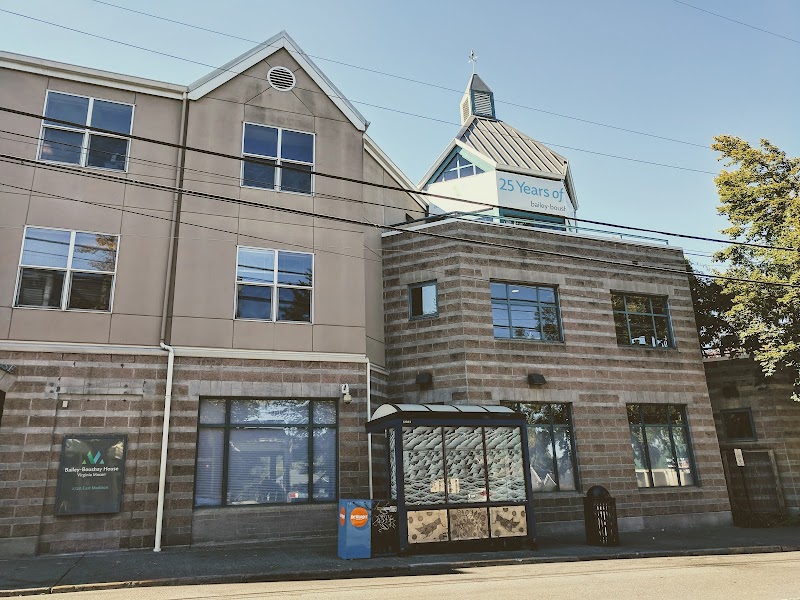
How is Bailey-Boushay House Staffed?

CMS rates BAILEY-BOUSHAY HOUSE's staffing level at 5 out of 5 stars, which is much above average compared to other nursing homes. Staff turnover is 37%, compared to the Washington average of 46%. This relatively stable workforce can support continuity of care.

What Have Inspectors Found at Bailey-Boushay House?

State health inspectors documented 46 deficiencies at BAILEY-BOUSHAY HOUSE during 2023 to 2025. These included: 46 with potential for harm.
Who Owns and Operates Bailey-Boushay House?

BAILEY-BOUSHAY HOUSE is owned by a non-profit organization. Non-profit facilities reinvest revenue into operations rather than distributing to shareholders. The facility is operated by COMMONSPIRIT HEALTH, a chain that manages multiple nursing homes. With 35 certified beds and approximately 30 residents (about 86% occupancy), it is a smaller facility located in SEATTLE, Washington.

How Does Bailey-Boushay House Compare to Other Washington Nursing Homes?

Compared to the 100 nursing homes in Washington, BAILEY-BOUSHAY HOUSE's overall rating (4 stars) is above the state average of 3.2, staff turnover (37%) is near the state average of 46%, and health inspection rating (3 stars) is at the national benchmark.

What Should Families Ask When Visiting Bailey-Boushay House?

Based on this facility's data, families visiting should ask: "Can I visit during a mealtime to observe dining assistance and food quality?" "How do you handle medical emergencies, and what is your hospital transfer rate?" "Can I speak with family members of current residents about their experience?"

Is Bailey-Boushay House Safe?

Based on CMS inspection data, BAILEY-BOUSHAY HOUSE has a clean safety record: no substantiated abuse findings (meaning no confirmed cases of resident harm), no Immediate Jeopardy citations (the most serious violation level indicating risk of serious injury or death), and is not on the Special Focus Facility watch list (a federal program monitoring the lowest-performing 1% of nursing homes). The facility has a 4-star overall rating and ranks #1 of 100 nursing homes in Washington. While no facility is perfect, families should still ask about staff-to-resident ratios and recent inspection results during their visit.

Do Nurses at Bailey-Boushay House Stick Around?

BAILEY-BOUSHAY HOUSE has a staff turnover rate of 37%, which is about average for Washington nursing homes (state average: 46%). Moderate turnover is common in nursing homes, but families should still ask about staff tenure and how the facility maintains care continuity when employees leave.

Was Bailey-Boushay House Ever Fined?

BAILEY-BOUSHAY HOUSE has no federal fines on record. CMS issues fines when nursing homes fail to meet care standards or don't correct problems found during inspections. The absence of fines suggests the facility has either maintained compliance or corrected any issues before penalties were assessed. This is a positive indicator, though families should still review recent inspection reports for the full picture.

Is Bailey-Boushay House on Any Federal Watch List?

BAILEY-BOUSHAY HOUSE is not on any federal watch list. The most significant is the Special Focus Facility (SFF) program, which identifies the bottom 1% of nursing homes nationally based on persistent, serious quality problems. Not being on this list means the facility has avoided the pattern of deficiencies that triggers enhanced federal oversight. This is a positive indicator, though families should still review the facility's inspection history directly.