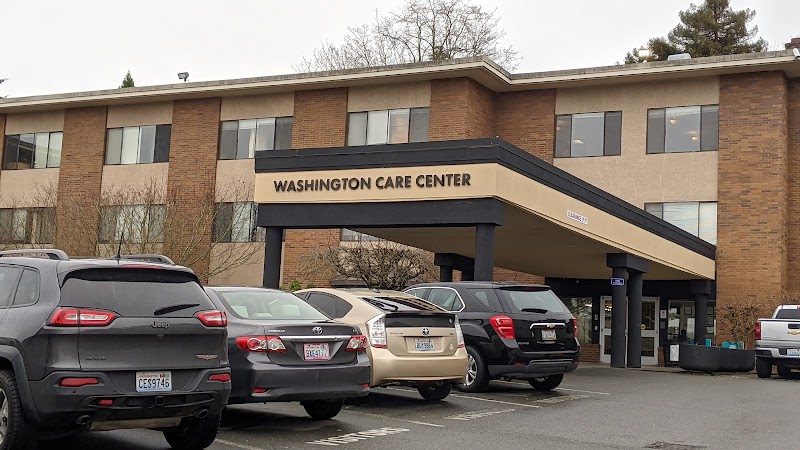
WASHINGTON CARE CENTER

2821 SOUTH WALDEN STREET, SEATTLE, WA 98144 (206) 725-2800
For profit - Limited Liability company 165 Beds Independent Data: November 2025 2 Immediate Jeopardy citations
Trust Grade
0/100
#159 of 190 in WA
Last Inspection: August 2024

Within standard 12-15 month inspection cycle. Federal law requires annual inspections.

Overview

Washington Care Center has received a Trust Grade of F, indicating significant concerns about the quality of care provided, which places it in the bottom tier of facilities. Ranking #159 out of 190 in Washington means it is in the lower half of nursing homes in the state, and at #41 out of 46 in King County, the options for better local care are quite limited. Although the facility's trend is improving, with a reduction in reported issues from 30 in 2023 to 18 in 2024, the overall situation remains concerning due to the high number of deficiencies found. Staffing is a relative strength with a rating of 4 out of 5 stars, but a turnover rate of 47% is average and does not inspire confidence. Notably, the facility faced serious incidents, including failures to protect residents from abuse, leading to critical concerns about safety and well-being. In addition, fines totaling $105,089 indicate a history of compliance issues that families should carefully consider.

Trust Score
F
0/100
In Washington
#159/190
Bottom 17%
Safety Record
High Risk
Review needed
Inspections
Getting Better
30 → 18 violations
Staff Stability
⚠ Watch
47% turnover. Above average. Higher turnover means staff may not know residents' routines.
Penalties
✓ Good
$105,089 in fines. Lower than most Washington facilities. Relatively clean record.
Skilled Nurses
✓ Good
Each resident gets 50 minutes of Registered Nurse (RN) attention daily — more than average for Washington. RNs are trained to catch health problems early.
Violations
⚠ Watch
68 deficiencies on record. Higher than average. Multiple issues found across inspections.
★★☆☆☆
2.0
Overall Rating
★★★★☆
4.0
Staff Levels
★★★★☆
4.0
Care Quality
★★☆☆☆
2.0
Inspection Score
Stable
2023: 30 issues
2024: 18 issues

The Good

  • 4-Star Staffing Rating · Above-average nurse staffing levels
  • 4-Star Quality Measures · Strong clinical quality outcomes
  • Full Sprinkler Coverage · Fire safety systems throughout facility
  • No fines on record

Facility shows strength in staffing levels, quality measures, fire safety.

The Bad

2-Star Overall Rating

Below Washington average (3.2)

Below average - review inspection findings carefully

Staff Turnover: 47%

Near Washington avg (46%)

Higher turnover may affect care consistency

Federal Fines: $105,089

Well above median ($33,413)

Significant penalties indicating serious issues

The Ugly 68 deficiencies on record

2 life-threatening 3 actual harm
Nov 2024 1 deficiency
CONCERN (E) 📢 Someone Reported This

A family member, employee, or ombudsman was alarmed enough to file a formal complaint

Potential for Harm - no one hurt, but risky conditions existed

Infection Control (Tag F0880)

Could have caused harm · This affected multiple residents

Based on observation, interview, and record review, the facility failed to establish and maintain infection control practices necessary to provide a safe and sanitary environment and prevent transmiss...

Read full inspector narrative →
Based on observation, interview, and record review, the facility failed to establish and maintain infection control practices necessary to provide a safe and sanitary environment and prevent transmission of communicable diseases by having Personal Protective Equipment (PPE) available to staff for 12 of 19 residents (Residents 1, 2, 3, 4, 5, 6, 7, 8, 9, 10,11, &12) observed requiring Enhanced Barrier Precautions (EBP) with specific diagnoses including wounds and indwelling medical devices. The facility failed to ensure alcohol-based hand sanitizer dispensers were properly functioning for 25 of 46 rooms (Rooms 202, 203, 204, 209,211, 208, 215, 216, & 218; and outside rooms 219, 250, 251, 252, 255, 256, 257, 263, 264, 265, 266, 267, 268,270, 273, & 274) observed inside and along the hallway outside occupied resident rooms. These failures placed residents at risk for acquiring and developing communicable diseases, medical complications from infection, and a decreased quality of life. Findings included . <Facility Policy> According to the Enhanced Barrier Precautions-F880, facility policy, revised March 2024, EBP was used as an infection prevention and control intervention to reduce the transmission of Multi-Drug-Resistant Organisms (MDROs) to residents. The EBPs were indicated for residents infected or colonized with a Centers for Disease Control and Prevention (CDC) targeted diagnoses, wounds and/or indwelling catheters. The policy showed PPEs would be available outside of the resident rooms. <Unit 2 East And 2 West> During multiple observations of units 2 East and 2 [NAME] on 11/08/2024 from 10:35 AM to 3:00 PM, 25 hand sanitizer dispensers were observed faulty and unable to dispense hand sanitizer when tested. Observations on 11/08/2024 from 10:35 AM to 3:00 PM of multiple isolation carts posted outside resident rooms designated as EBP showed they were not stocked with proper PPE for staff to provide safe care to residents. During an interview on 1/08/2024 at 11:04 AM, Staff C (Certified Nursing Assistant - CNA) stated the aids should have access to PPE but the supply was not always consistent, .sometimes we [staff] do, sometimes not .have to go look for them. In an interview on 11/08/2024 at 11:08 AM, Staff D (CNA) stated they disregard the isolation sign when providing resident care such as brief changes or linen changes, they did not have an Infection Preventionist (IP) Nurse to ask, and they did not know where to get the PPE supplies from. In an interview on 11/08/2024 at 11:15 AM, Staff E (CNA) stated there was not a lot the staff could do about PPE supply and accessibility, and they were not sure the isolation sign should be posted on the door. In an interview on 11/08/2024 at 11:20 AM, Staff F (CNA) stated they work three days a week on the 2nd floor, and it had been a while since the isolation carts were stocked with PPE. Staff F stated they had not been stocked since the Infection Preventionist Nurse (IP) nurse left. In an interview on 11/08/2024 at 12:05 PM, Staff B (Director of Nursing) stated they would expect the isolation signs to be accurate and that staff would follow the directions provided on the signs and restock PPE as needed. Staff B stated the signs were there to protect staff and other residents, and to reduce the transmission of infections to high-risk individuals. Staff B stated the IP nurse left on 10/28/2024 and the position had not been filled. On 11/08/2024 at 12:10 PM, Staff A (Regional Administrator) stated all staff should know where supplies were kept, should be able to re-stock isolation carts and rooms, and that all hand sanitizer dispensers should function properly to prevent the spread of infection. In an interview on 11/08/2024 at 3:07 PM, Resident 1 stated the staff did not wear a gown and gloves at times when they changed their wound dressing or provided care for their urinary catheter. In an interview on 11/08/2024 at 3:10 PM, Resident 2 stated staff did not wear a gown to change their bed linens, and it was not unusual for the hand sanitizer dispenser to malfunction. Resident 2 stated they brought up the malfunctioning dispenser to the staff's attention, but it did not get fixed or filled. REFERENCE: WAC 388-97-1320 (1)(a), -1320 (2)(b), -1320 (1)(c).
Aug 2024 16 deficiencies
CONCERN (D)

Potential for Harm - no one hurt, but risky conditions existed

Deficiency F0625 (Tag F0625)

Could have caused harm · This affected 1 resident

**NOTE- TERMS IN BRACKETS HAVE BEEN EDITED TO PROTECT CONFIDENTIALITY** <Resident 55> Review of Resident 55's 03/05/2024 Discharge - Return Anticipated MDS showed Resident 55 discharged to an ac...

Read full inspector narrative →
**NOTE- TERMS IN BRACKETS HAVE BEEN EDITED TO PROTECT CONFIDENTIALITY** <Resident 55> Review of Resident 55's 03/05/2024 Discharge - Return Anticipated MDS showed Resident 55 discharged to an acute care hospital on [DATE]. Review of Resident 55's census documents showed Resident 55 was sent to the hospital on [DATE] and readmitted to the facility on [DATE]. Review of Resident 55's record showed no documentation indicating a bed hold was offered to Resident 55 and/or their representative when Resident 55 was discharged to the hospital on [DATE] as required. In an interview on 08/19/2024 at 11:21 AM, Staff E stated the facility did not have a specific form for bed hold. Staff E stated staff should have documented in Resident 55's record under progress notes and if it was not there, it was not done. Staff E stated staff should have offered bed hold to the resident as required. <Resident 96> Review of Resident 96's 12/11/2023 Discharge Return Anticipated MDS showed Resident 96 discharged to an acute care hospital on [DATE]. Review of Resident 96's census documents showed Resident 96 was sent to the hospital on [DATE] and readmitted to the facility on [DATE]. Review of Resident 96's records showed no documentation indicating a bed hold notification was provided to Resident 96 when they discharged on 12/11/2023 as required. In an interview on 08/20/2024 at 12:09 PM, Staff E stated bed hold notification should be documented in Resident 96's record under progress notes but was not. REFERENCE: WAC 388-97-0120(4). . Based on interview and record review, the facility failed to provide the resident and/or the resident's representative a written notice of the facility's bed-hold policy, at the time of transfer or within 24 hours, for 4 of 7 sample residents (Resident 127, 34, 55, & 96) reviewed for hospitalization. This failure placed the residents and/or their representatives at risk of not being informed of their right to, or the cost of, holding the resident's bed while hospitalized that was necessary for decision-making. Findings included . <Resident 127 > In an interview on 08/15/2024 at 1:57 PM, Resident 127 stated they were previously sent to the hospital for stomach issues and blood loss. Review of Resident 127's 06/18/2024 Discharge Minimum Data Set (MDS - an assessment tool) showed the resident was transferred to an acute care hospital on [DATE], with their return anticipated. Record review showed no documentation or other indication the facility provided Resident 127 or their resident representative written information regarding the facility's bed-hold policy as required. <Resident 34> Review of Resident 34's 08/14/2024 Discharge MDS showed the resident was transferred to an acute care hospital on [DATE], with their return anticipated. Record review showed no documentation or other indication the facility provided Resident 34 or their resident representative written information regarding the facility's bed-hold policy as required. In an interview on 08/20/2024 at 12:09 PM, Staff E (Social Services Director) stated bed holds were documented in the progress notes and completed by the admissions department. In an interview on 08/21/2024 at 12:01 PM, Staff W (Admissions Coordinator) stated bed holds were completed by the nursing department. In an interview on 08/21/2024 at 12:29 PM, Staff C (Regional Director of Clinical Operations) stated bed holds were documented on the eINTERACT Transfer Form nursing staff completed when transferring a resident to the hospital. Staff C stated the forms were recently updated to include the bed hold information and indicated it was their expectation if staff were unable to address the bed hold prior to transferring a resident to the hospital, the facility should have documented and followed up promptly. Review of Resident 127 and Resident 34 records showed no eINTERACT Transfer Form was completed by staff when they were sent out to the hospital and no progress note was made by staff to indicate a bed hold was offered as required.
CONCERN (D)

Potential for Harm - no one hurt, but risky conditions existed

Deficiency F0658 (Tag F0658)

Could have caused harm · This affected 1 resident

<Signing For Tasks Not Completed> <Resident 10> Observations on 08/15/2024 at 8:58 AM showed Resident 10 with a pain medication patch on the top of their right ankle. This patch had a hand...

Read full inspector narrative →
<Signing For Tasks Not Completed> <Resident 10> Observations on 08/15/2024 at 8:58 AM showed Resident 10 with a pain medication patch on the top of their right ankle. This patch had a handwritten date of, 8/14. On 08/16/2024 at 8:42 AM, this same patch remained on Resident 10's right ankle. Review of August 2024 MAR showed orders for a pain medication patch to be applied to Resident 10 two times a day and gave an area for staff to document the patch was put on at 8:00 AM and removed each night at 8:00 PM. This MAR showed staff documented the patch was applied on 08/14/2024 and removed on 08/14/2024 but was still observed on Resident 10 two days later. In an interview and observation on 08/16/2024 at 9:01 AM, Staff Z (Licensed Practical Nurse) confirmed the pain medication patch was from two days prior, removed the patch, and stated, we should not have missed removing the patch. <Resident 85> According to the 07/04/2024 Quarterly MDS, Resident 85 had clear speech, intact memory, and had diagnoses including hypertension, history of pressure ulcers, chronic pain, and muscle weakness. The MDS showed Resident 85 was dependent on staff for lower body dressing and putting on and taking off footwear. Review of a 05/10/2024 physician's order showed compression wraps/stockings were to be applied to both Resident 85's lower legs every morning and removed at bedtime for edema (swelling from fluid retention). Review of the August 2024 Treatment Administration Record (TAR) showed a 05/10/2024 order instructing staff to apply compression stocking to Resident 85's lower legs every morning and remove them at bedtime for edema. The TAR showed staff documented the compression stockings were applied in the AM and removed at bedtime from 08/01/2024 through 08/20/2024. Observations on 08/15/2024 and 08/19/2024 showed Resident 85 had edema on both lower legs and feet and no compression hose on legs. Observation and interview on 8/19/2024 at 11:10 AM showed Resident 85 was not wearing the compression stockings on their swollen ankles and legs as ordered by the physician. Resident 85 stated the facility never provided compression stockings to them, the nurses talked about it, but never followed through. In an interview on 08/19/2024 at 11:10 AM Staff T (Certified Nursing Assistant), stated they knew the resident needed compression stockings, the resident had compression stockings put on daily, and that Resident 85 did not refuse care. In an interview on 08/19/2024 at 11:19 AM, Staff P (Registered Nurse), stated they were aware of the resident's swollen feet. Staff P confirmed Resident 85 did not have compression stockings on their legs and stated compression stockings would help to bring down the swelling. Staff P stated they would go find compression hose for the resident as Staff T was not able to find compression hose in the resident's room. In an interview on 08/19/2024 at 11:27 AM, Staff F (Unit Manager - Licensed Practical Nurse) stated there was an order directing staff to apply the compression stockings for Resident 85. Staff F stated staff should have completed the task, as it was very important treatment for Resident 85 due to edema and fluid retention. <Clarification of Orders> <Resident 10> According to a 06/21/2024 admission MDS, Resident 10 had multiple medically complex diagnoses including low back pain. Review of Resident 10's PO showed a 06/17/2024 order for a pain medication patch to be applied to the affected area twice daily for pain. This order did not identify where Resident 10's affected areas were located in order to assure correct placement and did not indicate if staff should apply a new patch twice a day or put on one patch and then remove it in the evening. In an interview on 08/16/2024 at 9:01 AM, Staff Z stated Resident 10 tells the staff where to apply the pain medication patch. In an interview on 08/21/2024 at 12:29 PM, Staff C (Regional Director of Clinical Operations) stated the PO should direct staff where to apply the pain medication patch and needed to be clarified. <Resident 107> According to the 07/19/2024 Quarterly MDS, Resident 107 had intact memory. The MDS showed Resident 107 had a diagnosis of kidney failure and required dialysis (a lifelong outpatient procedure that filters waste from the blood). Review of Resident 107's 03/08/2024 dialysis Care Plan (CP) showed the resident received their dialysis treatments every Monday, Wednesday, and Friday. The CP showed the resident was picked up from the facility at 5:30 AM and the treatment lasted until 11:00 AM. Review of Resident 107's Self-Medication Assessment showed the resident was not a candidate for the self-medication program. Review of Resident 107's August 2024 MAR showed the resident had 11 POs for medications that were due at 8:00 AM. This MAR showed on Mondays, Wednesdays, and Fridays staff documented the resident was absent from the facility or other/see nurse's notes. There were no POs instructing staff to hold or send Resident 107's medications with them when they left for dialysis. Review of Resident 107's nurse progress notes showed on 08/19/2024, 08/16/2024, 08/12/2024, 08/09/2024, 08/07/2024, 08/05/2024, and 08/02/2024 the resident was at dialysis for their morning medications. In an interview on 08/21/2024 at 12:29 PM, Staff C confirmed there were no POs to hold Resident 107's medications on dialysis days. Staff C stated it was their expectation staff clarified the orders, but staff did not. <Medications Given Outside of Parameters> <Resident 34> Review of a 07/30/2024 admission MDS showed Resident 34 had multiple medically complex diagnoses including fractures, had frequent pain, and required the use of narcotic pain medications during the assessment period. Review of Resident 34's August 2024 MAR showed a 07/24/2024 PO for staff to administer a half tablet of a narcotic pain medication for a pain scale of 5-7 on a one-to-10 pain scale. A second 07/24/2024 PO showed staff were to administer one tablet of the narcotic pain medication for a pain scale of 8-10 on a one-to-10 pain scale. On 08/10/2024 Resident 34 received only a half tablet of the narcotic pain medication for a pain documented of nine out of 10, rather than the full tablet as directed in the orders. In an interview on 08/21/2024 at 12:29 PM, Staff C stated it was their expectation staff follow the POs as directed and administer pain medications as instructed in the parameters. <Unlabeled Tube Feeding Bag> <Resident 150> Observations on 08/19/2024 at 5:17 AM showed a bag of a nutritional supplement hanging on a pole and being administered to Resident 150 via a feeding tube. There was no label identifying the residents name, the rate of administration, or the date and time of when the supplement was started. In an interview on 08/19/2024 at 6:56 AM, Staff Z stated the nutritional supplement bag should have, but was not labeled by staff with the required information when the administration started for Resident 150. REFERENCE: WAC 388-97-1620(2)(b)(i)(ii), (6)(b)(i). .Based on observation, interview, and record review the facility failed to ensure Physician's Orders (POs) were followed for 1 (Residents 1) of 27 sample residents reviewed, nurses signed only for tasks completed for 2 (Residents 10 & 85) of 27 sample residents, POs were clarified for 2 (Residents 10 & 107) of 27 sample residents reviewed, ensure medications were given within parameters for 1 (Resident 34) of 27 sample residents, and ensure tube feeding supplies were labeled as required for 1 of 3 residents (resident 150) reviewed for tube feeding. These failures left residents at risk for unmet care needs, unnecessary treatment, inaccurate records, and other negative health outcomes. <Resident 1> According to the 06/20/2024 Quarterly Minimum Data Set (MDS - an assessment tool) Resident 1 had diagnoses including a history of stroke, loss of speech, one sided paralysis, difficulty swallowing, and the presence of a feeding tube (tubing to deliver artificial nutrition to the stomach). Review of the August 2024 Medication Administration Record (MAR) showed an 08/07/2024 PO to flush Resident 1's feeding tube with 160 Cubic Centimeters (CC) of water every 4 hours for 16 hours, for a total of 640 CC daily. This MAR showed on 08/07/2024 staff documented they flushed Resident 1's feeding tube with 360 CC of water, with 700 CC on 08/09/2024, 440 CC on 08/11/2024 and 08/12/2024, 180 CC on 08/13/2024 and 08/14/2024, 540 CC on 08/15/2024, 800 CC on 08/16/2024, and 280 CC on 08/17/2024. Observation on 08/15/2024 at 8:19 AM, on 08/16/2024 at 8:03 AM, 9:18 AM, and 1:35 PM, and on 08/19/2024 at 5:17 AM at 10:52 AM showed Resident 1's tube feeding pump was set to flush at 160 CC every four hours as ordered. In an interview on 08/21/2024 at 12:29 PM Staff C (Regional Director of Clinical Operations) stated it was important to for facility nursing staff to follow orders.
CONCERN (D)

Potential for Harm - no one hurt, but risky conditions existed

Deficiency F0679 (Tag F0679)

Could have caused harm · This affected 1 resident

**NOTE- TERMS IN BRACKETS HAVE BEEN EDITED TO PROTECT CONFIDENTIALITY** <Resident 150> According to a 08/01/2024 admission MDS, Resident 150 had multiple medically complex diagnoses including a ...

Read full inspector narrative →
**NOTE- TERMS IN BRACKETS HAVE BEEN EDITED TO PROTECT CONFIDENTIALITY** <Resident 150> According to a 08/01/2024 admission MDS, Resident 150 had multiple medically complex diagnoses including a stroke and paralysis or weakness of one side of the body, had an impairment to the upper arm on one side, and required substantial assistance to roll from side to side in bed. This MDS showed, according to family, it was very important to Resident 150 to do their favorite activities, go outside to get fresh air, and participate in religious services. Observations on 08/14/2024 at 2:04 PM, 08/15/2024 at 9:11 AM and 2:00 PM, and on 08/19/2024 at 9:20 AM showed Resident 150 lying in bed in a hospital gown, with no television on, and not participating in activities. Resident 150 only had a daily pamphlet at their bedside. Observations on 08/19/2024 at 8:48 AM showed Staff BB (Life Enrichment Assistant) on the first floor with an activity cart going door to door. Staff BB was passing out the daily pamphlet. In an interview at this time, Staff BB stated they were on vacation, out of the country, and just returned to work. When asked where activity attendance documentation could be found, Staff BB stated they documented activities in the resident's electronic records. Review of a 07/29/2024 psychosocial well-being Care Area Assessment (CAA) showed staff should provide Resident 150 social interactions that were meaningful/purposeful to reduce isolation, promote friendships to aid in sharing emotions, alleviate stress, and grieving the sense of loss. A 08/06/2024 activities CAA showed Resident 150 liked to read craft magazines, crocheted in the past, listened to music, and wanted to be on the Communion list on Sundays. Review of revised 08/05/2024 life enrichment CP showed staff identified goals for Resident 150 to attend at least one to three life enrichment activities per month and engage in independent leisure pursuit of choice. This CP gave directions to staff invite Resident 150 to activities daily and to provide activity cart materials for independent leisure pursuit of choice craft material, crochet, quilting items, books, magazines, and wordsearch puzzles. Review of Resident 150's 30-day look back activity documentation on 08/18/2024 showed no activities were documented for the previous 30 days. In an interview on 08/20/2024 at 4:11 PM, Staff AA (Activity Director) stated activities were important to help take people's minds off problems, gives residents meaning for life, and to give them something to look forward to. Staff AA stated it was their expectation activities began when a resident admitted to the facility. Staff AA indicated they had lots of supplies including, books, magazines, tablets, and radios, and encouraged group activities to residents. Staff AA stated they document in a resident's electronic records when activities were provided. When asked about Resident 150's activities, Staff AA stated they had a hard time understanding the resident when they spoke with them, so they reached out to the family regarding activities the resident enjoyed. Staff AA stated they brought Resident 150 a daily pamphlet but stated the resident did not go to group activities. REFERENCE: WAC 388-97- 0940(1). Based on observation, interview, and record review the facility failed to ensure residents were provided with a program of individualized activities for 2 of 5 (Residents 95 & 150) residents reviewed for activities. These failures left residents at risk for boredom and a diminished quality of life. Findings included . <Facility Policy> According to the facility's revised June 2018 Activity Programs policy, the purpose of the activity program was to support residents' wellbeing with independent and group activities. The policy showed activity programs were designed for maximum individual participation. <Resident 95> According to the 06/06/2024 Quarterly Minimum Data Set (MDS - an assessment tool) Resident 95 was assessed with a slightly impaired mood and diagnoses including anxiety and depression. The MDS showed all activity preferences were very important to Resident 95. The MDS showed Resident 95 was dependent on staff to get out of bed. Record review showed a 09/19/2023 Activities Care Plan (CP) developed for Resident 95. This CP included goals for Resident 95 to engage in independent activities of their choice and attend a group activity weekly. Review of the progress notes showed two progress notes completed by Activities from Resident 95's admission on [DATE] through 08/14/2024: a 03/18/2024 quarterly activity note showing Resident 95's preferred name, and describing Resident 95's enjoyment of [NAME] novels, watching news and sports on the television, listening to rock music, and doing word searches and crossword puzzles; a 06/05/2024 note listing the same interests. Review of the activities charting from 08/01/2024 through 08/20/2024 showed Resident 95 was provided leisure checks on 08/01/2024, 08/06/2024, 08/07/2024, and 08/09/2024 which were coded as independent. The documentation showed Resident 95 actively participated with the library cart program on 08/01/2024. There were no other documented activities during this time frame until 08/19/2024. There was no documentation of Resident 95 refusing group activity participation or independent activities from 08/01/2024 until 08/19/2024. There was no documentation Resident 95 was offered to participate in group activities weekly, as care planned. In an interview on 08/15/2024 at 11:13 AM Resident 95 stated staff never brought them things to do. Resident 95's television was on. Resident 95 stated staff picked the channel for them. The remote control for Resident 95's television was not available. There was no activity calendar in room, or any other activity materials observed to be available for Resident 95. Observation on 08/19/2024 at 10:55 AM showed Resident 95 in bed with their television on, and no remote control available to the resident.
CONCERN (D)

Potential for Harm - no one hurt, but risky conditions existed

Quality of Care (Tag F0684)

Could have caused harm · This affected 1 resident

**NOTE- TERMS IN BRACKETS HAVE BEEN EDITED TO PROTECT CONFIDENTIALITY** Based on observation, interview, and record review, the facility failed to ensure residents received care and treatment in accor...

Read full inspector narrative →
**NOTE- TERMS IN BRACKETS HAVE BEEN EDITED TO PROTECT CONFIDENTIALITY** Based on observation, interview, and record review, the facility failed to ensure residents received care and treatment in accordance with professional standards of practice to attain or maintain their highest practicable level of well-being for 2 of 5 residents (Resident 60 & 85) reviewed. The facility failed to ensure Resident 60 was provided pain management, services for loose stools, or follow the Care Plan (CP) for 1 of 1 residents for edema (swelling caused by too much fluid trapped in the body tissue). These failures placed the residents at increased risk of worsening conditions, discomfort, and a decreased quality of life. Findings included . <Pain Management> <Facility Policy> Review of the facility's undated Wound Care policy showed the policy included guidelines for preparation of wound care, reviewing the resident's CP to determine any special needs of the resident including administering pain medication prior to wound care. Review of the facility's Skin Breakdown-Clinical Protocol policy revised April 2018 showed the nurse should describe, document, and assess the wound for pain. <Resident 60> Review of the Significant Change Minimum Data Set (MDS - a required assessment tool) dated 07/16/2024, showed Resident 60 was admitted to the facility on [DATE] with multiple chronic conditions including chronic kidney disease, diabetes, dementia (loss of memory) and a venous (pertaining to the vein) skin ulcer (open wound) on their left lower leg. The MDS showed Resident 60 had clear speech and was usually understood in expressing ideas and wants. Review of the MDS pain assessment completed 06/26/2024, showed Resident 60 had moderate pain during the prior five days and their pain almost constantly interfered with day-to-day activities. The assessment showed staff should listen to the resident's vocal complaints and observe facial expressions to assess for pain. Review of an 08/13/2024 outside wound team note showed the provider recommended Resident 60 receive pain medication 30 minutes prior to wound treatment and to administer as needed pain medications. Review of the August 2024 Treatment Administration Record (TAR) showed a treatment order for wound care dated 07/23/2024. The order showed wound care should be provided to the left lateral (side) ankle twice a day and as needed. Review of the 06/19/2024 Medication Administration Record (MAR) showed Resident 60 had a physician's order (PO) for pain medication every four hours as needed for general discomfort and showed staff did not administer any pain medications to Resident 60 from 08/01/2024 to 08/20/2024. In an interview on 08/14/2024 at 9:47 AM, Resident 60 stated My feet are starting to hurt and that isn't good. In an interview on 08/15/2024 at 11:10 AM, Resident 60 stated they had pain in their left heel. In an observation and interview on 08/16/2024 at 10:43 AM, Resident 60 complained of pain in their heel when Staff M (Licensed Practical Nurse - LPN) provided treatment to the wound. Staff M stated the floor nurse already gave Resident 60 two pain pills just before wound care treatment to decrease pain. In an interview on 08/21/2024 at 9:51 AM, Staff F (Unit Manager - LPN) stated they were working with the family to determine if hospice services were appropriate for Resident 60, which would include pain management. Staff Stated they only heard Resident 60 complain of pain during wound care. Staff F stated they expected the staff to provide repositioning, distraction techniques, and pain medications before wound care or for general pain. <Bowel Monitoring> <Facility Policy> According to the facility's undated Bowel Clinical Protocol the nurse should assess and document a quantitative (how much/how often) and qualitative (color/shape/odor) description of diarrhea (loose watery stools) when present. The policy showed the assessment should include how many episodes, at what time, amount, onset, all current medications, and a review of vital signs and signs of dehydration. On 08/14/2024 at 9:39 AM, Resident 60 stated I have frequent diarrhea a lot in my room, you would not believe the number of pads I go through in a day. The staff clean my legs as bowel movement was running down my legs today. On 08/15/2024 at 11:17 AM Resident 60 stated they had a lot of diarrhea lately. Observation on 08/16/2024 at 10:40 AM showed Resident 60's room had a strong smell of bowel incontinence. At that time, Resident 60 was observed asking Staff C (Regional Director of Clinical Services) why do I keep pooping everywhere? I can never make it to the bathroom. Review of the Significant Change MDS, dated [DATE], showed Resident 60 was dependent on care staff for toileting hygiene and was always incontinent. Review of the 07/13/2024 change of condition CP showed the resident was at risk for constipation for fecal impaction related to decreased mobility and a history of constipation. The CP did not identify Resident 60 could be at risk for diarrhea due to multiple chronic conditions or treatments for fecal impaction. Review of the 05/24/2024 Baseline CP showed a Bladder and Bowel assessment should be completed on admit, quarterly, and as indicated. Review of the August 2024 care record showed bowel movement monitoring should be completed every shift. Record review of the care staff task documentation for August 2024 showed diarrhea was noted by care staff on 16 occasions. Review of Resident 60's progress notes from 07/30/2024 to 08/18/2024 showed staff did not document the resident's episodes of diarrhea or notify the provider of the frequent diarrhea. In an interview on 08/21/2024 at 9:57 AM, Staff F stated when care staff observed diarrhea, they should have informed the nurse. Staff F stated there was a failure in the facility's diarrhea management system. Staff F stated, We could miss a lot of things, a patient could have C-DIFF (Clostridioides difficile a bacterial infection that causes severe diarrhea) or different things, our nursing staff must evaluate. Staff F stated they relied on care staff to inform the nurses right away, but this did not occur. Staff F stated their expectation was for the information to be passed from the care staff to the nurses so serious health issues could be addressed. <Edema> <Resident 85> According to the 07/04/2024 Quarterly MDS, Resident 85 had clear speech, intact memory, and had diagnoses including hypertension, history of pressure ulcers, chronic pain, and muscle weakness. The MDS showed Resident 85 was dependent on staff for lower body dressing and putting on and taking off footwear. Review of a 05/10/2024 physician's order showed compression wraps/stockings were to be applied to both Resident 85's lower legs every morning and removed at bedtime for edema. Review of Resident 85's 07/07/2024 quarterly revised CP showed the resident had an edema diagnosis listed on their CP. There were no instructions provided, to staff, in the CP addressing compression hose for edema for Resident 85. Review of the [NAME] (task sheet for care staff) on 08/15/2024, showed no instructions for staff directing them to applying the compression stockings to Resident 85's legs for edema. Review of the August 2024 TAR showed a 05/10/2024 order instructing staff to apply compression stocking to Resident 85's lower legs every morning and remove at bedtime for edema. The TAR showed staff documented the compression stockings were applied in the AM and removed at bedtime from 08/01/2024 through 08/20/2024. Observations on 08/15/2024 and 08/19/2024 showed Resident 85 had edema on both lower legs and feet and no compression hose on either leg. Observation and interview on 8/19/2024 at 11:10 AM showed Resident 85 was not wearing the compression stockings on their swollen ankles and legs as ordered by the physician. Resident 85 stated the facility never provided compression stockings to them; the nurses talked about it, but they never followed through on it. In an interview on 08/19/2024 at 11:10 AM Staff T (Certified Nursing Assistant), stated they knew the resident needed compression stockings, the resident had compression stockings put on daily and that Resident 85 did not refuse care. In an interview on 08/19/2024 at 11: 19 AM, Staff P (Registered Nurse), stated they were aware of the resident's swollen feet. Staff P confirmed Resident 85 was not wearing the compression stockings on their legs and stated compression stockings would help to bring down the swelling. Staff P stated they would go find compression hose for the resident as Staff T was not able to find compression hose in the resident's room. In an interview on 08/19/2024 at 11:27 AM, Staff F stated there was an order directing staff to apply the compression stockings for Resident 85 and it was a very important treatment for a resident with edema and fluid retention. Staff F was unable to locate instructions on Resident 85's CP regarding applying compression stockings to Resident 85's legs. REFERENCE: WAC 388-97-1060(3)(4)(viii). .
CONCERN (D)

Potential for Harm - no one hurt, but risky conditions existed

Incontinence Care (Tag F0690)

Could have caused harm · This affected 1 resident

Based on observation, interview, and record review the facility failed to ensure 2 of 4 residents (Residents 21 & 71) reviewed for bowel and bladder incontinence, received the care and services necess...

Read full inspector narrative →
Based on observation, interview, and record review the facility failed to ensure 2 of 4 residents (Residents 21 & 71) reviewed for bowel and bladder incontinence, received the care and services necessary to maintain and avoid loss of bowel and bladder functions. This failure placed the residents at risk for continued decline in bowel and bladder function, skin issues, and feelings of frustration and embarrassment. Findings included . <Resident 21> According to the 05/14/2024 Quarterly Minimum Data Set (MDS - an assessment tool), Resident 21 had impaired memory. The MDS showed Resident 21 required one person assistance with personal hygiene and had no rejection of care behavior during the assessment period. The MDS showed Resident 21 was occasionally incontinent of bowel and bladder. Observations on 08/15/2024 at 11:29 AM showed Resident 21 was lying in bed. Resident 21's room had a strong urine odor. Observation on 08/16/2024 at 10:24 AM showed Resident 21 out of their bed with their clothes wet with urine. Resident 21 went to the bathroom, changed their clothes and sat in a chair in their room. Resident 21's room had strong urine odor. In an interview on 08/16/2024 at 10:30 AM Staff U (Certified Nursing Assistant - CNA) stated Resident 21 was able to get to the bathroom in their room independently. Staff U stated Resident 21 used the bathroom during daytime but was incontinent of bladder at night. Review of the 02/17/2022 Bowel and Bladder Care Plan (CP) showed Resident 21 had frequent episodes of bladder incontinence and included directions to staff to complete a bowel and bladder assessment on admission, quarterly, and as indicated. Record review showed a bowel and bladder assessment was started for Resident 21 on 02/27/2024, but never completed. None of the questions in this assessment were answered. In an interview on 08/19/2024 at 11:00 AM, Staff I (Registered Nurse) stated Resident 21 was aware of their bladder needs and could get to the bathroom independently during the day and used briefs at night. Staff I stated Resident 21 did not want to get out of bed to use the bathroom at night. Staff I was unable to provide documentation showing staff assessed Resident 21's bladder needs at night or documentation showing staff offered assistance to the resident to use a bed side commode or the bathroom at night. Staff I stated Resident 21 would be a candidate for bladder training, but the facility did not assess the resident for bladder needs.<Resident 71> According to a 07/01/2024 admission MDS, Resident 71 had clear speech, was understood, and usually able to understand others. This MDS showed staff assessed Resident 71 to require moderate assistance to roll side to side in bed, required substantial assistance from staff for sitting to standing and chair transfers, and was dependent on staff for toileting hygiene. Resident 71 had no rejection of care during the assessment period. In an interview on 08/15/2024 at 12:35 PM, Resident 71 stated they had a fall with fractures prior to admission to the facility. Resident 71 stated when they first got to the facility, they would ask staff for a bed pan for toileting. Resident 71 stated they got frustrated and stopped asking staff because staff would not bring it to them, and reported they just use briefs now. Review of the 06/25/2024 incontinent of bladder and bowel CP showed directions to staff to assist Resident 71 to the toilet, bedside commode, or bedpan as needed. The CP had interventions including completing a bladder and bowel assessment on admit, quarterly, and as indicted. The revised 07/02/2024 ADL function CP included an intervention to offer and assist Resident 71 to the toilet. Review of a 06/26/2024 Skilled Evaluation Assessment showed staff identified Resident 71 had urinary incontinence, but no further information was found on the form regarding incontinence frequency, if the incontinence was of new onset, or if the resident used briefs, toilet, bedpan, urinal, or a bedside commode for toileting. In an interview on 08/21/2024 at 9:40 AM, when asked what the process was for assessing a resident's incontinence and toileting needs, Staff S (Unit Manager) stated they did not complete an assessment for Resident 71. Staff S was unable to locate a bladder assessment for Resident 71. In an interview on 08/21/2024 at 12:29 PM, Staff C (Regional Director of Clinical Operations) stated their expectation was for bladder assessments to be completed on admission, quarterly, and as needed. Staff C stated the assessment should include the reason a resident was incontinent and what care equipment/supplies they required if they were incontinent. Staff C stated bladder assessments were important to evaluate a resident's function and maintain them at their highest level. REFERENCE: WAC 388-97-1060 (2)(a)(iii). .
CONCERN (D)

Potential for Harm - no one hurt, but risky conditions existed

Deficiency F0761 (Tag F0761)

Could have caused harm · This affected 1 resident

Based on observation and interview, the facility failed to ensure medications were stored, labeled, and dated when opened and/or discarded when expired for 4 of 4 medication carts (100 Hall Cart 1, 20...

Read full inspector narrative →
Based on observation and interview, the facility failed to ensure medications were stored, labeled, and dated when opened and/or discarded when expired for 4 of 4 medication carts (100 Hall Cart 1, 200 Hall Cart 1, 200 Hall Cart 2, & 300 Hall Cart 1) and 2 of 2 medication rooms (Unit 200 East & Unit 200 West) observed. The failure to ensure unneeded medications and medical supplies were returned to the pharmacy or discarded when expired, medication refrigerators were monitored for appropriate temperatures, and medications were labeled for individual use placed residents at risk for ineffective treatment, expired medications, and contaminated medications Findings included . <Facility Policy> According to the facility's revised November 2020 Storage of Medications Policy, drugs and biologicals must be appropriately stored, including being locked and kept at the correct temperature. This policy showed nursing staff were responsible to ensure medication storage areas were clean. The policy showed discontinued, outdated, and deteriorated medications should be disposed of or returned to the pharmacy. The facility's August 2018 Storage of Medications Policy showed refrigerated medications should be stored between 36 - 46 Fahrenheit (F). <Medication Rooms> <200 East Medication Room> Observation of the 200 East Medication Room on 08/14/2024 at 9:10 AM showed an opened vial of a Tuberculosis skin testing agent that was labeled as opened on 07/08/2024, over 30 days prior. <200 [NAME] Medication Room> Observation of the 200 [NAME] Medication Room on 08/14/2024 at 10:30 AM showed the medication fridge had a temperature log. This log showed staff did not record the temperature from 08/05/2024 until 08/12/2024, for a total of seven days with no temperature recorded/monitored. <Medication Carts> <100 Hall Medication Cart 1> Observation of the 100 Hall Medication Cart 1 on 08/14/2024 at 11:15 AM showed the cart contained: a loose green pill at the bottom of a drawer; 29 pieces of nicotine gum that expired 02/2024; 141 25 Gauge (G) 1-inch needles that expired 05/01/2024; four 18 G 1.5-inch needles that expired on 07/01/2023; one 23 G 1-inch needle that expired on 02/01/2024; an open, undated tube of a pain/inflammation relieving gel, three containers of opened barrier cream that did not have resident names on them; six assorted opened skin ointments with no resident names; In an interview at that time, Staff CC stated all expired medications and supplies and/or unlabeled treatments should be removed from carts and discarded. <200 Hall Medication Cart 1> Observation of the 200 Hall Medication Cart 1 on 08/20/2024 at 11:00 AM showed: an opened bottle of stool softener with an expiration date of 03/11/2024; an opened, undated inhaler used to prevent/treat difficulty breathing for Resident 50; and a tube of antibacterial ointment that expired 07/2024. <200 Hall Medication Cart 2> Observation of the 200 Hall Medication Cart 2 on 08/14/2024 at 12:15 PM showed: five 18 G 1.5-inch needles that expired on 07/01/2023; 106 25 G 1-inch needles that expired on 05/01/2024; three 23 G 1-inch needles that expired on 02/01/2024. <300 Hall Medication Cart 1> Observation of the 300 Hall Medication Cart 1 on 08/14/2024 at 2:15 PM showed: 13 23 G 1-inch needles that expired on 02/2024; four 18 G 1.5-inch needles that expired on 07/01/2023; four 25 G 1-inch needles that expired on 05/01/2024; and 40 21 G 1-inch needles that expired on 04/02/2024. In an an interview on 08/14/2024 at 1:23 PM Staff B (Assistant Director of Nursing) stated expired medications, treatments, and supplies should be removed from medication rooms and carts. Staff B stated they expected medication refrigerator temperatures to be monitored nightly by staff. REFERENCE: WAC 388-97-1300(1)(b)(ii). .
CONCERN (E)

Potential for Harm - no one hurt, but risky conditions existed

Deficiency F0552 (Tag F0552)

Could have caused harm · This affected multiple residents

<Resident 17> According to the 06/13/2024 Significant Change MDS, Resident 17 had a diagnosis of depression with suicidal ideation. The MDS showed Resident 17 received antidepressant and antips...

Read full inspector narrative →
<Resident 17> According to the 06/13/2024 Significant Change MDS, Resident 17 had a diagnosis of depression with suicidal ideation. The MDS showed Resident 17 received antidepressant and antipsychotic medications during the assessment period. Review of Resident 17's record showed no consent was obtained for the antidepressant medication prior to implementing the medications. In an interview on 08/20/2024 at 3:35 PM, Staff C stated they did not see an informed consent was provided to Resident 17 prior to treatment. Staff C stated there should be a consent signed prior to starting an antidepressant medication. <Resident 21> According to the 05/14/2024 Quarterly MDS, Resident 21 had diagnoses including depression, anxiety, and a psychotic disorder. The MDS showed Resident 21 received antipsychotic and antidepressant medications during the assessment period. Review of Resident 21's record showed the consent form for the antipsychotic medications was signed in 2016 and no diagnosis was checked for Resident 21 to know why they were receiving the medication. Another consent form for the antidepressant medication was signed on 02/08/2022 but no diagnosis was checked. In an interview on 08/20/2024 at 3:35 PM, Staff C stated staff should have explained the reason and diagnosis to the resident or their representative prior to starting any psychotropic medications. REFERENCE: WAC 388-97-0260(1)(a)(b)(i)(ii)(iii). Based on interview and record review, the facility failed to ensure residents were provided informed consent for treatments (ensuring an explanation of the risks and benefits was provided) for 3 of 5 (Residents 113, 21, & 17) residents whose medication regimen was reviewed. The failure to provide informed consent placed residents at risk for unwanted adverse side effects, unwanted treatment, and loss of autonomy. Findings included . <Resident 113> According to the 07/18/2024 Quarterly Minimum Data Set (MDS - an assessment tool) Resident 113 had diagnoses including depression and anxiety. The MDS showed Resident 113 received antidepressant and antianxiety medications. Review of the physician's orders showed a 04/26/2024 order for an antidepressant to be administered to Resident 113 at bedtime for insomnia. Record review showed no evidence the risks and benefits of the antidepressant medication were explained to Resident 113. There was no evidence Resident 113 consented to the medication prior to treatment. In an interview on 08/20/2024 at 4:50 PM Staff C (Regional Director of Clinical Operations) stated they did not see an informed consent was provided to Resident 113 prior to treatment. Staff C stated they would expect a consent for a psychotropic medication.
CONCERN (E)

Potential for Harm - no one hurt, but risky conditions existed

Safe Environment (Tag F0584)

Could have caused harm · This affected multiple residents

**NOTE- TERMS IN BRACKETS HAVE BEEN EDITED TO PROTECT CONFIDENTIALITY** Based on observation and interview, the facility failed to ensure the facility maintained a homelike environment for 2 of 4 unit...

Read full inspector narrative →
**NOTE- TERMS IN BRACKETS HAVE BEEN EDITED TO PROTECT CONFIDENTIALITY** Based on observation and interview, the facility failed to ensure the facility maintained a homelike environment for 2 of 4 units, and 1 of 1 entry way. The failure to ensure resident rooms were free of wall scrapes, stained doors and walls, damaged flooring, damaged closet doors, missing/damaged ceiling tiles, and dirty privacy curtains, and the failure to ensure the entry way was in good condition, placed residents at risk for a less than homelike environment, frustration, and a diminished sense of self-worth. Findings included . <100 Unit > Observations of the first-floor shower room door on 08/14/2024 at 1:27 PM showed multiple tan colored smears and marks on the outside visible from the hallway. In an interview on 08/21/2024 at 11:27 AM, Staff X (Maintenance Director) looked at the shower room door, stated it looked dirty and should be cleaned up and painted. Observations of the shared bathroom in room [ROOM NUMBER] on 08/15/2024 at 8:52 AM showed dried brown raised debris areas on the wall to the right of the toilet, the wall across from the toilet, and on the floor next to the toilet. The same brown debris areas were still observed four days later, on 08/19/2024 at 7:34 AM. In an interview and observation on 08/21/2024 at 11:27 AM, Staff X confirmed the debris areas were still present, six days after the original observation was made, and stated the areas should have, but were not cleaned by housekeeping staff. Observations on 08/19/2024 at 6:26 AM showed the supply closet doors across from room [ROOM NUMBER] were misaligned and unable to be closed. The doors remained partly open and were visible in the hallway. In an interview and observation on 08/21/2024 at 11:27 AM, Staff X checked the supply room doors and confirmed they were not functioning correctly. Staff X stated their expectation was for staff to report issues found so they can be fixed promptly. Observations on 08/14/2024 at 9:17 AM and on 08/19/2024 at 6:30 AM, five days later, showed the ceiling tiles inside room [ROOM NUMBER] were hanging vertically down, and only being held by the corners of the tile against the frame. In an interview on 08/21/2024 at 11:27 AM, Staff X stated they had just fixed the ceiling tiles and expected any concerns to be fixed promptly for safety and to provide a homelike environment for residents. Observations on 08/19/2024 at 7:34 AM showed a box fan sitting on the floor of room [ROOM NUMBER] that was full of dust debris on the entire front grill. The debris was blowing and moving with the flow of air in the room during observations. In an interview and observation on 08/21/2024 at 11:27 AM, Staff X confirmed the fan in room [ROOM NUMBER] was full of dust debris and stated the fans should be cleaned regularly by the housekeeping staff to prevent build up. Staff X stated it was important and was their expectation that staff provide residents a clean and homelike environment to promote their quality of life. <200 East Unit> Observation on 08/14/2024 at 9:02 AM showed room [ROOM NUMBER] had a wheelchair parked in the bathroom and dirty bedside commode bucket in the wheelchair. Behind the resident's bed in room [ROOM NUMBER], big deep scratches were observed on the wall. The closet in room [ROOM NUMBER] had multiple wood chunks missing and metal hardware was exposed. Observations on 08/14/2024 at 10:11 AM and on 08/19/2024 at 11:00 AM showed room [ROOM NUMBER] had a broken floor tile next to the resident's bed. Observations on 08/14/2024 at 12:26 PM and on 08/19/2024 at 9:22 AM showed the closets in room [ROOM NUMBER] and room [ROOM NUMBER] were very worn with large chunks of wood was missing. The closet in room [ROOM NUMBER]'s was supported with adhesive tape. Observations on 08/15/2024 at 8:45 AM and on 08/19/2024 at 10:21 AM in room [ROOM NUMBER] showed the wall behind the resident's bed had multiple big deep scratches and the baseboard was broken. Observation on 08/19/2024 at 8:22 AM in room [ROOM NUMBER] showed the privacy curtain was dirty with brown stains on it. In an interview on 08/21/2024 at 11:00 AM, Staff X observed the rooms were not clean, gauges in walls, and broken closets and stated the rooms were not homelike. Staff X stated the facility was waiting for an order to be approved for the backing behind the beds. <Facility Entrance> Observations on 08/16/2024 at 2:07 PM showed broken and missing cement tiles at the entrance to the facility on the pathway staff, residents, and visitors walked on to enter the facility. In an interview and observation on 08/21/2024 at 11:27 AM, Staff X confirmed the cement tiles at the facility entrance were broken and stated they needed to be replaced to decrease the risk of injury. REFERENCE: WAC 388-97-0880(1)(2). .
CONCERN (E)

Potential for Harm - no one hurt, but risky conditions existed

Transfer Notice (Tag F0623)

Could have caused harm · This affected multiple residents

**NOTE- TERMS IN BRACKETS HAVE BEEN EDITED TO PROTECT CONFIDENTIALITY** Based on interview and record review, the facility failed to ensure a system by which residents received required written notice...

Read full inspector narrative →
**NOTE- TERMS IN BRACKETS HAVE BEEN EDITED TO PROTECT CONFIDENTIALITY** Based on interview and record review, the facility failed to ensure a system by which residents received required written notices at the time of transfer/discharge, or as soon as practicable for 5 (Residents 127, 34, 113, 55, & 96) of 7 residents reviewed for hospitalizations. Failure to provide written notification to the resident and/or the resident's representative of the reasons for the discharge in writing and in a language and manner they understood, placed residents at risk for a discharge that was not in alignment with the resident's stated goals for care and preferences. Findings included . <Resident 127> Review of Resident 127's 06/18/2024 Discharge Minimum Data Set (MDS - an assessment tool) showed the resident was transferred to an acute care hospital on [DATE], with their return anticipated. Record review showed no documentation staff provided written notification to Resident 127 and/or the resident's representative regarding their discharge as required. <Resident 34> Review of Resident 34's 08/14/2024 MDS showed the resident was transferred to an acute care hospital on [DATE], with their return anticipated. Record review showed no documentation staff provided written notification to Resident 34 and/or the resident's representative regarding their discharge as required. <Resident 113> According to the 07/18/24 Quarterly MDS Resident 113 readmitted to the facility from the hospital on [DATE]. The MDS showed Resident 113 had medically complex conditions including an infection with a Multi Drug Resistant Organism (MDRO - a germ not effectively treated by many common antibiotics) and muscle weakness. According to a 04/19/2024 progress note Resident 113 was sent to the hospital for further evaluation after a follow up appointment. Record review showed no documentation staff provided written notification to Resident 113 regarding their discharge as required. In an interview on 08/20/2024 at 12:09 PM, Staff E (Social Services Director) stated they did not complete a written notice of transfer when a resident is transferred to the hospital. When asked if there was any documentation the residents and/or representatives were notified of the transfers to the hospital in writing, Staff E stated they were not aware of any documentation. Staff E stated they only complete the notice of transfer when a resident was being discharged from the facility, not transferred to the hospital as required. Staff E confirmed they did not have a written notice of transfer for Resident 127, Resident 34, or Resident 113. <Resident 55> Review of the 03/05/2024 Discharge Return Anticipated MDS showed Resident 55 discharged to an acute care hospital on [DATE]. Review of Resident 55's record on 08/19/2024 showed no documentation staff provided the required written notification to Resident 55 and/or their representative regarding their discharge on [DATE]. <Resident 96> Review of the 12/11/2023 Discharge Return Anticipated MDS showed Resident 96 discharged to an acute care hospital on [DATE]. Review of Resident 96's record on 08/19/2024 showed no documentation staff provided the required written notification to Resident 96 and/or their representative regarding their discharge on [DATE]. In an interview on 08/20/2024 at 12:09 PM, Staff E stated they were not aware of the requirement for written notification to residents/their representatives regarding discharges and they did not provide any written notification to residents/their representatives upon discharges. REFERENCE: WAC 388-97-0120 (2)(a-d). .
CONCERN (E)

Potential for Harm - no one hurt, but risky conditions existed

PASARR Coordination (Tag F0644)

Could have caused harm · This affected multiple residents

**NOTE- TERMS IN BRACKETS HAVE BEEN EDITED TO PROTECT CONFIDENTIALITY** <Resident 85> According to the 07/04/2024 Quarterly MDS, Resident 85 admitted to the facility on [DATE]. The MDS showed Re...

Read full inspector narrative →
**NOTE- TERMS IN BRACKETS HAVE BEEN EDITED TO PROTECT CONFIDENTIALITY** <Resident 85> According to the 07/04/2024 Quarterly MDS, Resident 85 admitted to the facility on [DATE]. The MDS showed Resident 85 had diagnoses of anxiety, depression, psychoactive substance abuse, and bipolar disorder. Review of the 03/07/2023 Level I PASRR showed Resident 85 had serious mental illness (SMI) indicators for mood and anxiety disorders. A level two evaluation referral was indicated on the PASSR form due to SMI. Review of Resident 85's medical records did not show a Level II PASRR with recommendations for the resident's behaviors was completed. In an interview on 08/15/2024 at 1:26 PM, Staff E stated the Level II PASRR follow-up should have been completed but was not able to find a PASSR II evaluation for Resident 85. Staff E stated that a PASSR II was important to determine the level of care needed for the resident and would help with interventions to help care for the resident. Based on interview and record review, the facility failed to ensure the Pre-admission Screening and Resident Review (PASRR) Level II comprehensive evaluations were obtained for 3 (Residents 134, 85, & 113) of 7 sampled residents reviewed for PASRR evaluations. This failure placed residents at risk for not receiving necessary mental health care and services. Findings included . <Facility Policy> Review of the undated PASRR Completion facility policy showed the designated staff would make sure the PASRR was completed on all potential residents. This policy showed if the referral indicated the resident had a serious mental illness or intellectual disability, the PASRR would be completed prior to admission. <Resident 134> According to the 07/07/2024 admission Minimum Data Set (MDS - an assessment tool), Resident 134 had no cognitive impairment and had diagnoses of anxiety disorder and a chronic mental illness that caused extreme mood swings. This MDS showed Resident 134 was not considered by the state level II PASRR process to have a Serious Mental Illness (SMI). Review of Resident 134's 07/16/2024 Level I PASRR showed the resident had diagnoses of a mood disorder and anxiety. This PASRR showed staff indicated a referral for a Level II PASRR was needed due to the resident showing indicators of a SMI. Review of Resident 134's record showed no documentation a referral for a Level II PASRR was sent. In an interview on 08/20/2024 at 12:09 PM, Staff E (Social Services Director) reviewed Resident 134's record and confirmed the resident should be referred for a Level II evaluation but was not. Staff E confirmed staff should have followed up on the referral for the Level II but staff did not. <Resident 113> According to the 07/18/2024 Quarterly MDS, Resident 113 had medically complex conditions including anxiety, depression, and opioid dependence. The MDS showed Resident 113 took antipsychotic and antidepressant medications. Review of the 03/13/2024 Level I PASRR showed Resident 113 exhibited serious functional limitations in the past six months prior to completion of the form related to a serious mental illness. The form showed Resident 113 required a Level II PASRR evaluation for SMI. Record review showed no Level II PASRR evaluation in place for Resident 113. In an interview on 08/20/2024 at 3:51 PM Staff E stated Level II services were not in place for Resident 113 but their expectation was Level II services should have been followed up on to reflect the Level I PASRR but weren't. REFERENCE: WAC 388-97-1915(2)(4). .
CONCERN (E)

Potential for Harm - no one hurt, but risky conditions existed

Deficiency F0645 (Tag F0645)

Could have caused harm · This affected multiple residents

<Resident 17> According to the 06/13/2024 Significant Change MDS, Resident 17 had moderately impaired cognition (impaired memory and problem solving) and diagnoses of schizophrenia (a disorder a...

Read full inspector narrative →
<Resident 17> According to the 06/13/2024 Significant Change MDS, Resident 17 had moderately impaired cognition (impaired memory and problem solving) and diagnoses of schizophrenia (a disorder affecting a person's ability to think and behave clearly) and depression. The MDS showed Resident 17 regularly used antipsychotic, and antidepressant medications during the assessment period. The MDS showed Resident 17 had Level II PASRR services related to a Severe Mental Illness (SMI). Review of the 07/11/2024 psychiatric progress notes showed Resident 17 had diagnoses of schizophrenia and depression and received antipsychotic and antidepressant medications. The psychiatrist recommended staff continue administering antipsychotic and antidepressant medications as ordered and continue monitoring behaviors. Review of the 09/08/2023 Level 1 PASRR showed Resident 17 was identified with SMI indicators for schizophrenia and depression, and a Level II PASRR evaluation was not required. This PASRR showed Resident 17's primary language was English. Staff documented on Resident 17's PASRR Level I, a request for invalidation (denial of Level II services) on 09/08/2023. Record review showed no documentation the facility obtained Resident 17's invalidation report. In an interview on 08/20/2024 at 12:09 PM, Staff E stated Resident 17's Level I PASRR was updated on 09/08/2023 and a Level II PASRR was not indicated. Staff E reviewed Resident 17's Level I PASRR and stated the form was inaccurate for language and should be referred for a Level II evaluation. REFERENCE: WAC 388-97-1915 (1). .Based on interview and record review, the facility failed to ensure a Pre-admission Screening and Resident Review (PASRR - a process to determine if a potential nursing home resident had mental health/intellectual disability needs which required further assessment/treatment) assessment accurately reflected residents' mental health conditions for 3 of 5 (Resident 34, 113, & 17) residents reviewed for PASRR. This failure placed residents at risk for inappropriate nursing home placement and/or not receiving timely and necessary services to meet their mental health needs. Findings included . <Facility Policy> According to the facility's undated PASRR policy, all residents would have a Level I PASRR screening completed prior to admission. <Resident 34> According to a 07/30/2024 admission Minimum Data Set (MDS - an assessment tool), Resident 34 had multiple medically complex diagnoses including depression and Post Traumatic Stress Disorder (PTSD - a mental health condition caused by an extremely stressful or terrifying event) and required the use of antidepressant and antianxiety medications during the assessment period. Review of a 07/23/2024 Level 1 PASRR showed Resident 34 had no Serious Mental Illness (SMI) indicators. Staff did not identify Resident 34 had depression or PTSD, and required the use of medications. In an interview on 08/20/2024 at 12:09 PM, Staff E (Social Services Director) stated they check a resident's records upon admission to the facility to assure the PASRR Level 1 was accurate from the hospital. Staff E stated it was important for a PASRR Level 1 to be accurate in order to determine the level of care a resident required. Staff E reviewed Resident 34's PASRR Level 1 and stated it was inaccurate and needed to be updated.<Resident 113> According to the 07/18/2024 Quarterly MDS, Resident 113 had medically complex conditions including anxiety, depression, and opioid dependence. The MDS showed Resident 113 took antipsychotic, and antidepressant medications. Review of the physician's orders showed Resident 113 currently took two antidepressant medications and an antipsychotic medication from 03/28/2024 until discontinued on 07/25/2024. The indication for the antipsychotic medication was for auditory hallucinations. Review of the comprehensive Care Plan (CP) showed Resident 113 had a Target Behavior due to Psychosis CP. This CP included a goal for staff to assist Resident 113 with daily episodes of psychosis. Review of the 03/13/2024 Level I PASRR indicated Resident 113 had a mood disorder and an anxiety disorder. This Level I PASRR did not show Resident 113 had a psychosis diagnosis, or otherwise address Resident 113's auditory hallucinations. The form showed Resident 113 exhibited serious functional limitations in the past six months prior to completion of the form related to a serious mental illness. In an interview on 08/21/2024 at 11:11 AM Staff E stated the Level I PASRR did not but should reflect Resident 113's psychosis diagnosis and treatment.
CONCERN (E)

Potential for Harm - no one hurt, but risky conditions existed

Deficiency F0657 (Tag F0657)

Could have caused harm · This affected multiple residents

**NOTE- TERMS IN BRACKETS HAVE BEEN EDITED TO PROTECT CONFIDENTIALITY** < Resident 55> According to the 06/21/2024 Quarterly MDS, Resident 55 had significant weight loss in the last six months a...

Read full inspector narrative →
**NOTE- TERMS IN BRACKETS HAVE BEEN EDITED TO PROTECT CONFIDENTIALITY** < Resident 55> According to the 06/21/2024 Quarterly MDS, Resident 55 had significant weight loss in the last six months and was not on prescribed weight loss regimen. The MDS showed Resident 55 required maximal assistance from staff with oral hygiene, eating, and toileting needs. Review of Resident 55's record showed Resident 55's weight on 01/04/2024 was 260 pounds and on 05/28/2024 was down to 221 pounds, representing a weight loss of 39 pounds in four months. Review of Resident 55's CP showed no documentation related to weight loss or any interventions for staff to follow. In an interview on 08/20/2024 at 2:17 PM, Staff H (Dietitian) stated they were aware of Resident 55's significant weight loss. Staff H stated Resident 55's CP should be updated accordingly. <Resident 99> According to the 07/01/2024 Quarterly MDS, Resident 99 readmitted to the facility on [DATE] and had no memory impairment. Review of Resident 99's August 2024 Medication Administration Record (MAR) showed Resident 99 received an antibiotic medication for bladder infection. Review of Resident 99's CPs showed no instructions for staff to follow related to the antibiotic medication use for Resident 99's bladder infection. In an interview on 08/21/2024 at 9:40 AM, Staff S stated CPs should be updated with any changes in resident's condition with new goals and interventions. <Resident 85> According to the 07/04/2024 Quarterly MDS, Resident 85 had clear speech, intact memory, and diagnoses including hypertension, history of pressure ulcers, chronic pain, and muscle weakness. The MDS showed Resident 85 was dependent on staff for lower body dressing and putting on and taking off footwear. Observations on 08/15/2024 at 11:29 AM and 08/19/2024 at 11:01 AM showed Resident 85 had edema (swelling caused by too much fluid retained in the body's tissues) on both lower legs and feet. Observation and interview on 08/19/2024 at 11:10 AM showed Resident 85 did not have compression hose on swollen ankles and legs. Resident 85 stated the facility never provided compression hose. The nurses talked about it, but they never followed through on it. Review of physician's order dated 05/10/2024 showed compression stockings should be applied to both lower legs every morning and at bedtime for edema. Review of 07/07/2024 Nutrition/Hydration CP showed Resident 85 had an edema diagnosis listed on CP. There were no instructions provided in the CP addressing compression hose for edema for Resident 85. Review of [NAME] on 08/15/2024 showed there were no instructions for applying compression hose to Resident 85's legs for edema. In an interview on 08/19/2024 at 11:27 AM, Staff F (Unit Manager - Licensed Practical Nurse) stated there was a physician's order for applying compression hose for Resident 85 and it was very important treatment for a resident with edema and fluid retention. Staff F was unable to locate instructions on Resident 85's CP regarding applying compression hose to Resident 85's legs. REFERENCE: WAC 388-97-1020(5)(b). .<Resident 10> According to a 06/21/2024 admission MDS, Resident 10 had multiple medically complex diagnoses including kidney disease and malnutrition. This MDS showed staff assessed Resident 10 was dependent on staff to roll from side to side in bed and to require supervision with eating. Observations on 08/16/2024 at 8:02 AM showed Resident 10 leaning over to reach their meal tray which was set off to the side of their bed. Resident 10 struggled to pick up some food to get the food to reach their mouth. In an interview at this time, Resident 10 stated they sometimes had trouble eating. Review of a revised 08/05/2024 nutrition CP showed an intervention for Assistance Needed (set-up, supervised/touch, partial/moderate, substantial/maximal, dependent.) The CP intervention was not updated to direct staff what level of assistance Resident 10 required. In an interview on 08/21/2024 at 9:40 AM, Staff S stated Resident 10's CP need to be updated and revised to reflect the actual assistance the resident required. <Resident 150> According to an 08/01/2024 admission MDS, Resident 150 had multiple medically complex diagnoses including malnutrition and required the use of a feeding tube (a tube that delivers a nutritional formula from outside of the body directly into the digestive system). In an interview on 08/16/2024 at 12:22 PM, Staff Y (Certified Nursing Assistant) stated they had access to a residents' [NAME] (directions to staff regarding how to provide care), and reviewed that to find out what care a resident required. Review of Resident 150's [NAME] on 08/16/2024 showed directions to staff for TF [Tube Feeding] as ordered. There were no directions to staff regarding any TF precautions or safety measures during administration of the TF. In an interview on 08/21/2024 at 9:40 AM, Staff S stated Resident 150's CP (including the [NAME]) should be but was not updated to include directions to staff to keep the head of the bed elevated during TF administration due to the risk of aspiration (when food or liquid enters the airway instead of the esophagus, a clinical concern for residents receiving TF). Based on observation, interview, and record review, the facility failed to ensure Care Plans (CP) were accurate, regularly reviewed and revised to reflect current resident status and needs as required for 7 (Residents 48, 113, 10, 150, 55, 99, & 85) of 27 residents reviewed for CP's. This failure left residents at risk for unmet care needs and a diminished quality of life. Findings included . <Resident 48> According to the 07/12/2024 Quarterly Minimum Data Set (MDS - an assessment tool) Resident 48 had disorganized thinking and diagnoses including non-traumatic brain dysfunction and a condition that cause urine to accumulate in the kidneys. The MDS showed Resident 48 was occasionally incontinent of bladder. Review of the comprehensive CP showed the facility developed two CPs addressing bladder continence for Resident 48. The first was a 01/09/2023 Resident is Continent of bladder . CP. The second was a 02/09/2024 Resident is incontinent of bladder . CP. In an interview on 08/21/2024 at 9:40 AM, Staff S (Unit Manager) stated CPs should be updated to reflect the resident's current condition and care needs. <Resident 113> According to the 07/18/2024 Quarterly MDS Resident 113 had medically complex conditions including anxiety and depression. The MDS showed Resident 113 received an antipsychotic medication during the assessment's look back period. Review of the physician's orders showed Resident 113 did not currently receive an antipsychotic medication. Resident 113's antipsychotic medication was discontinued on 07/25/2024. Record review showed a 05/05/2024 at risk for side effects due to antipsychotic drug use . CP still active. This CP included interventions for staff to assess/monitor behaviors and adverse side effects including involuntary movements, and report concerns to the physician or nurse practitioner. In an interview on 08/21/2024 at 9:40 AM, Staff S stated CPs should be accurate and updated to reflect all changes in the resident's condition.
CONCERN (E)

Potential for Harm - no one hurt, but risky conditions existed

ADL Care (Tag F0677)

Could have caused harm · This affected multiple residents

**NOTE- TERMS IN BRACKETS HAVE BEEN EDITED TO PROTECT CONFIDENTIALITY** <Resident 134> According to the 07/07/2024 admission MDS, Resident 134 had no cognitive impairment, was understood, and c...

Read full inspector narrative →
**NOTE- TERMS IN BRACKETS HAVE BEEN EDITED TO PROTECT CONFIDENTIALITY** <Resident 134> According to the 07/07/2024 admission MDS, Resident 134 had no cognitive impairment, was understood, and could understand others in conversation. This MDS showed choosing between a bed bath and a shower was very important to Resident 134 and that Resident 134 was dependent on staff for assistance with showers/baths. In an interview on 08/14/2024 at 10:37 AM, Resident 134 stated they received only one shower since their admission to the facility the month prior. Resident 134 stated the rest of their bathing was bed baths which I hate. Review of the 07/01/2024 Decreased ADL Function CP showed Resident 134 preferred to have a shower with assistance from staff. Review on 08/21/2024 of Resident 134's bathing records showed for the 30 days prior showed the resident received bathing twice. Resident 134 received a shower on 07/27/2024 and a bed bath on 07/31/2024. No other showers or bathing assistance were documented as provided to the resident. In an interview on 08/21/2024 at 9:40 AM, Staff S stated staff should provide all necessary ADL care including oral care, dressing residents, showers and nail care, and document any refusals.Based on observation, interview, and record review the facility failed to provide assistance with Activities of Daily Living (ADL), related to cleanliness and grooming for 7 (Residents 21,55, 99, 134, 10, 150, & 71) of 10 sample residents reviewed for ADLs. Facility failure to provide residents who were dependent on staff for assistance with oral care, showers, getting out of bed, dressing, shaving, and nail care, placed the residents at risk for poor hygiene, greasy hair, long facial hair, embarrassment and diminished quality of life. Findings included . <Facility Policy> According to the facility's revised March 2018 ADLs policy, residents would be provided with the care, treatment, and services needed to ensure they maintain or improve their ability to carry out their own ADLs. Residents unable to carry out their own ADLs, would be provided the necessary services to maintain good nutrition, grooming, and personal and oral hygiene. <Resident 21> According to the 05/14/2024 Quarterly Minimum Data Set (MDS - an assessment tool), Resident 21 had impaired memory. The MDS showed Resident 21 required one person assistance with personal hygiene and had no rejection of care during the assessment period. The MDS showed Resident 21 was occasionally incontinent of bowel and bladder. Observations on 08/15/2024 at 11:29 AM and 08/16/2024 at 12:42 PM showed Resident 21 with long, broken fingernails, greasy hair, and a strong urine odor. According to the 07/06/2023 ADLs Care Plan (CP), Resident 21 required assistance from staff with personal hygiene, including bathing and dressing, due to physical weakness. The CP instructed staff to provide showers to the resident twice a week and provide nail care on shower days. Review of Resident 21's record on 08/16/2024 showed Resident 21 received three showers in the prior 30 days. In an interview on 08/19/2024 at 11:02 AM, Staff I (Registered Nurse) stated Resident 21 needed assistance from staff with personal hygiene including showers, nail care, and dressing. Staff I confirmed Resident 21 had long fingernails that needed trimming. Staff I stated there was a urine odor in Resident 21's room because the resident urinated in their bed at nighttime. <Resident 55> According to the 06/21/2024 Quarterly MDS, Resident 55 readmitted to the facility on [DATE] with left side weakness and required maximal assistance from staff with oral care, personal hygiene, toileting needs, and bed mobility. In an observation and interview on 08/14/2024 at 1:52 PM, and 08/15/2024 at 10:37 AM, Resident 55 was lying in bed in a hospital gown with long, broken fingernails, and greasy hair. Resident 55 stated they did not get a shower because they could not walk to the shower room. In an interview on 08/16/2024 at 12:36 PM, Staff L (Certified Nursing Assistant - CNA) stated the facility did not have an assigned shower aide. Each CNA had to provide showers to their residents. Staff L stated they provided bed baths to most of their residents. Staff L stated they provided showers only to the residents who could walk to the shower rooms. In an observation and interview on 08/19/2024 at 10:24 AM Resident 55 was lying in bed wearing a hospital gown. Resident 55 had greasy hair, long fingernails, and their teeth were not clean. Resident 55 stated they did not get help to brush their teeth that morning. According to the 09/30/2022 ADL CP, Resident 55 required two-person total assistance to maintain personal hygiene every shift and assistance with showers/bed bath twice weekly, and toileting as needed. According to the 10/13/2022 Oral/Dental health CP, Resident 55 had broken and missing teeth. Staff were instructed to assist with brushing Resident 55's teeth with a soft toothbrush two to three times daily. In an interview on 08/19/2024 at 10:39 AM, Staff J (CNA) stated they did not provide the morning care to Resident 55. Staff J stated they were new to the facility and learning the routine. <Resident 99> According to the 07/01/2024 Quarterly MDS, Resident 99 readmitted to the facility on [DATE] and required two-person total assistance from staff with oral care, personal hygiene, toilet hygiene, and showers. In an observations and interview on 08/15/2024 at 9:25 AM and 08/16/2024 at 12:32 PM, Resident 99 was lying in bed in a hospital gown. Resident 99 had long broken fingernails and greasy hair. Resident 99 stated they did not receive a shower for a long time because they could not walk to the shower room. Resident 99 stated staff never washed their hair since their admission. Resident 99 stated they needed assistance from staff to trim their nails. According to the 11/11/2023 ADL CP, Resident 99 required one-to-two-person assist with showers twice weekly, and one person assist with dressing and maintaining good personal hygiene every shift and as needed daily. In an interview on 08/16/2024 at 12:36 PM, Staff L (CNA) stated the facility did not have an assigned shower aide. Each CNA had to provide showers to their residents. Staff L stated they provided bed baths to most of their residents. Staff L stated they provided showers only to the residents who could walk to the shower rooms. Staff L stated staff were responsible to trim resident's nails on shower days. In an interview on 08/21/2024 at 9:40 AM, Staff S (Unit Manager) stated staff should follow up with resident's needs and all scheduled ADLs including oral care and dressing residents in the morning, showers and nail care. Staff S stated if residents refused care, it should be documented. <Resident 10> According to a 06/21/2024 admission MDS, Resident 10 had clear speech, was understood, and usually able to understand others. This MDS showed staff assessed Resident 10 to require substantial assistance for upper body dressing, personal hygiene, was dependent on staff for lower body dressing, and had no rejection of care. Observations on 08/15/2024 at 8:58 AM, showed Resident 10 lying in bed wearing a hospital gown, with multiple long white curly chin hairs. In an interview at this time, Resident 10 stated, I have asked, but I have not gotten anyone to shave my chin hairs. Resident 10 stated they had clothes and liked to get dressed every day. In an interview on 08/16/2024 at 8:02 AM, Resident 10 stated they liked to get up out of bed to eat their meals and stated of staff, they are always so busy. Observations at this time showed Resident 10 wearing a gown and lying in bed with their chin hairs unshaven. In an interview on 08/16/2024 at 9:01 AM, Staff Z (Licensed Practical Nurse) confirmed Resident 10 had long unshaven chin hairs and stated staff should have but did not provide shaving care. Observations on 08/16/2024 at 12:07 PM showed Resident 10 still lying in bed wearing a hospital gown. In an interview at this time, Resident 10 stated they preferred to get up before lunch and stated it would be easier to eat sitting upright in a chair. In an interview on 08/16/2024 at 12:17 PM, Staff Y (CNA) stated they usually dressed Resident 10 if they transferred them to a chair. Staff Y stated Resident 10 sometimes got up but stated they did not offer to assist the resident to get up yet that shift. Observations on 08/19/2024 at 9:22 AM showed Resident 10 asleep in their bed with the room dark and no television on. Resident 10 wore a hospital gown at that time. In an interview on 08/19/2024 at 10:39 AM, Resident 10 stated they were unsure if they were going to get out of bed today, and stated, I don't know, they [staff] came in and changed me, but did not offer to get me up. Resident 10 was in a clean hospital gown. When asked if Resident 10 preferred to be up in the wheelchair at times, the resident stated, yes, I think they are just busy cleaning everyone up. Review of a 06/15/2024 ADL CP showed Resident 10 required assistance with dressing and personal hygiene. This CP gave directions to staff to assist with maintaining good personal hygiene every shift and as needed and to encourage resident to pick out own clothes daily. A 06/26/2024 altered respiratory CP showed directions to staff to encourage Resident 10 to be up out of bed daily and participate in activity and exercise. In an interview on 08/21/2024 at 9:40 AM, Staff S reviewed Resident 10's records and stated the resident was dependent on staff and needed assistance with ADLs. Staff S stated they did not see anything in Resident 10's records to indicate they were unable to get up out of bed. <Resident 150> According to a 08/01/2024 admission MDS, Resident 150 had multiple medically complex diagnoses including a stroke and hemiplegia (paralysis or weakness of one side of the body). This MDS showed staff assessed Resident 150 with an impairment on one side of the upper body and required substantial assistance for upper body dressing and personal hygiene, and was dependent on staff for lower body dressing. The MDS showed Resident 150 had no rejection of care. Observation on 08/14/2024 at 2:04 PM showed Resident 150 lying in bed wearing a hospital gown with multiple long chin hairs. Similar observations were made on 08/15/2024 at 9:11 AM. In an interview on 08/16/2024 at 9:01 AM, Staff Z confirmed Resident 150 had unshaven chin hairs and stated staff should have but did not provide shaving care. On 08/16/2024 at 12:08 PM, observation showed Resident 150 wearing a hospital gown, lying in bed, with staff at their bedside assisting the resident with eating. Observation on 08/19/2024 at 9:20 AM showed Resident 150 lying awake in bed wearing a hospital gown, with no television or other stimulus, in a dark room. In an interview on 08/16/2024 at 12:14 PM, Staff J (CNA) stated they were unsure if Resident 150 got up during the day as this was their first time working with the resident. In an interview on 08/16/2024 at 12:22 PM, Staff Y (CNA) stated Resident 150 did not get up and stated, I have not seen her up. Staff Y stated they were unsure why Resident 150 did not get up during the day. Review of a 07/26/2024 ADL CP showed Resident 150 required assistance with dressing and personal hygiene. This CP gave directions to staff to assist with maintaining good personal hygiene every shift and as needed and to encourage resident to pick out their own clothes daily. In an interview on 08/21/2024 at 9:40 AM, Staff S reviewed Resident 150's records and stated the resident was dependent on staff and needed assistance with ADLs. Staff S stated they did not see anything in Resident 150's records to indicate they were unable to get up out of bed. <Resident 71> According to a 07/01/2024 admission MDS, Resident 71 had clear speech, was understood, and usually able to understand others. This MDS showed staff assessed Resident 71 to require moderate assistance to roll side to side in bed and from lying to sitting, and required substantial assistance from staff for sitting to standing and chair transfers. Resident 71 had no rejection of care during the assessment period. In an interview on 08/15/2024 at 12:35 PM, Resident 71 stated they were not helped to get out of their bed since the previous week. Resident 71 stated staff did not offer assistance to get out of bed yet that day, I would like to get out of bed every day. Observation at this time showed Resident 71 lying in bed. Observation on 08/16/2024 at 7:54 AM showed Resident 71 lying in bed with staff at their bedside assisting them with breakfast. Resident 71 was not seated in a chair for their meal. Similar observations of Resident 71 lying in bed were noted on 08/20/2024 at 8:34 AM. Review of a 06/25/2024 risk for falls CP showed Resident 71 required one-person assistance for transfers. In an interview on 08/21/2024 at 9:40 AM, Staff S stated it was their expectation staff assist residents to get up, get dressed, and provide personal hygiene daily and as needed. Staff S stated it was important to get resident's up and dressed to give them a routine, keep them motivated, improve circulation, and stated, lying in bed could be depressing for them. REFERENCE: WAC 388-97-1060(2)(c). .
CONCERN (E)

Potential for Harm - no one hurt, but risky conditions existed

Pressure Ulcer Prevention (Tag F0686)

Could have caused harm · This affected multiple residents

Based on observation, interview, and record review, the facility failed to ensure 1 (Resident 55) of 5 residents reviewed for Pressure Ulcers (PU's) received the necessary treatment and services, cons...

Read full inspector narrative →
Based on observation, interview, and record review, the facility failed to ensure 1 (Resident 55) of 5 residents reviewed for Pressure Ulcers (PU's) received the necessary treatment and services, consistent with professional standards of practice, to promote healing, and prevent new ulcers from developing. Failure of the facility to consistently complete weekly skin assessments, assess skin integrity to identify PUs timely, ensure air mattress settings were appropriate according to resident's weight, repositioning in bed, update the Care Plan (CP) with Resident 55's refusals, and to follow the CP, placed Resident 55 at risk to develop a new PU, and diminished quality of life Findings included . <Facility Policy> According to the facility's revised April 2018 Pressure Ulcer/Skin Breakdown protocol, the facility would assess residents upon admission and thereafter, to identify if the residents had existing PU's or other skin conditions and would document the risk factors for developing PUs in resident's record. The protocol showed the provider would assess and order wound treatments, including pressure reduction surfaces and would guide the appropriate CP for wound healing and to prevent new PU development. <Resident 55> According to the 06/20/2024 Quarterly Minimum Data Set (MDS - an assessment tool) Resident 55 admitted to the facility with weakness to the left side of their body. The MDS showed Resident 55 developed PUs in the facility and was at risk for developing more PUs. The MDS showed Resident 55 required maximal assistance for bed mobility, rolling from back to left and right side in bed, toileting, and showering. Resident 55 had no behavior of rejection of care during the assessment period. The 02/13/2024 PU CP showed Resident 55 had a PU on their right upper back and was at risk for PU development related to decreased bed mobility. Nursing interventions included instructions for staff to administer treatments as ordered, encourage and assist to turn and reposition to side lying to relieve pressure to wound, encourage to be up out of bed daily, heel/elbow protectors, offloading with pillows, and weekly skin checks, and to notify the provider for any changes in skin status. Review of Resident 55's July and August 2024 weekly skin checks record showed the facility completed the skin check task on 07/19/2024 for the month of July. The documentation showed no skin checks were completed in August 2024. The facility failed to complete the weekly skin check assessments as ordered and documented in Resident 55's record. Observations on 08/14/2024 at 1:50 PM and on 08/15/2024 at 9:02 AM showed Resident 55 was lying on their back in bed and had no heel/elbow protectors on. Resident 55's right lower leg had a dressing and their back had a wound vacuum applied as ordered. Resident 55 had an air mattress in bed with the settings set to 270 pounds. Resident 55's current weight was 221 pounds. Observation on 08/16/2024 at 9:32 AM of the wound care nurse providing care to Resident 55's right lower leg chronic wound with no signs of infection. During the treatment of the right lower leg wound, Resident 55 complained of pain in their right foot. The observation showed Resident 55 had a new, small dark purple spot on the right small toe surrounded with redness. In an interview on 08/16/2024 at 9:48 AM, Staff M (Wound Care Nurse) stated Resident did not like heel floaters in bed and they offered heel boots to relieve pressure off the heels. Observation on 08/19/2024 at 10:24 AM and 12:02 PM showed Resident 55 was lying in bed on their back and the air mattress was set up on 540 pounds weight. In an interview on 08/19/2024 at 10:26 AM, Staff J (Certified Nursing Assistant) stated they did not know anything about the air mattress setting and they did not change the setting. In an interview on 08/19/2024 at 10:30 AM, Resident 55 stated they always stayed in bed because they had wounds on their back and buttock areas. Resident 55 stated they were lying on their back in bed all the time because lying on their side hurt their leg. Resident 55 stated they did not want to use a pillow under their heels because that was painful for their legs. Review of the 08/20/2024 contracted wound care provider's progress note showed that all of Resident 55's wounds had deteriorated. In an interview on 08/20/2024 at 11:45 AM, Staff C (Regional Director of Clinical Operations) stated staff should follow the physician orders, CPs, and facility policies but they did not. REFERENCE: WAC 388-97-1060(3)(b). .
CONCERN (E)

Potential for Harm - no one hurt, but risky conditions existed

Accident Prevention (Tag F0689)

Could have caused harm · This affected multiple residents

<Unsecured Chemicals> Observations on 08/14/2024 at 9:13 AM showed the janitor room on the first floor was unlocked. Inside the unlocked room was multiple bottles of chemicals sitting on top of ...

Read full inspector narrative →
<Unsecured Chemicals> Observations on 08/14/2024 at 9:13 AM showed the janitor room on the first floor was unlocked. Inside the unlocked room was multiple bottles of chemicals sitting on top of a cabinet just inside the door. Two bottles of a disinfectant and one bottle of a glass cleaner were labeled, CAUTION, keep out of the reach of children. There was also a bottle of rubbing alcohol, a gallon of floor cleaner, an unlabeled spray bottle with 275 milliliters of a clear liquid, and a bottle of glass cleaner labeled, keep out of reach of children. On 08/14/2024 at 10:16 AM, observations showed a housekeeping staff enter the unlocked janitor room, put something inside, and then exit with the door remaining unlocked. In an interview on 08/14/2024 at 10:19 AM, Staff S (Unit Manager) confirmed the unlocked janitor door and chemicals and stated the door should be locked and secured for safety. Observation on 08/14/2024 at 9:26 AM showed the Second Floor-West clean utility room was unlocked. Within the clean utility room was a storage closet labeled emergency supplies that was also unlocked. On the top shelf of the emergency supply closet a bottle filled to the top with blue liquid had a labeled . Super Blue Mild Acid Bowl Cleaner dated 02/16/2024. The warning label printed on the back of the bottle showed Danger, could cause skin irritation and cause serious eye damage. A sign posted on the wall outside of the second-floor clean utility room that read eye wash station. Observation of the counter and sink area in the clean utility room showed there was no eye wash signs or solutions inside of the clean utility room. <Unsecured Sharps> Observations on 08/14/2024 at 9:50 AM showed the clean utility room on the first floor was unlocked. Inside the unlocked room was bins of supplies. One of the bins was full of shaving razors. In an interview on 08/14/2024 at 10:19 AM, Staff S (Unit Manager) confirmed the unlocked clean utility room door and the razors inside. Staff S stated there was supposed to be a code to unlock the door, but it had not worked since they were hired, almost two months earlier. Observations on 08/15/2024 at 8:16 AM and 08/19/2024 at 5:11 AM showed the clean utility room on the first floor was unlocked. Inside the unlocked room was the same bin full of shaving razors. In an interview on 08/21/2024 at 12:29 PM, Staff C (Regional Director of Clinical Operations) stated chemicals and razors should not be left unsecured as it could be a safety risk. REFERENCE: WAC 388-97-1060(3)(g). Based on observation, interview, and record review facility failed to maintain and environment that was free from accident hazards. The failure to: ensure appropriate supervision and storage of smoking materials for 1 of 2 sample residents (Resident 113) and 5 supplemental (Residents 135, 117, 54, 43, & 22) residents who smoked; failed to secure chemicals in 2 of 4 clean utility rooms; and failed to secure sharps in 1 of 4 clean utility rooms, placed residents at risk for smoking related injuries, accident hazards, and diminished safety. Findings included . <Smoking> <Facility Policy> Review of the facility's Smoking Policy revised June 2023 showed residents would be evaluated on admission to determine if they were a smoker or non-smoker. The evaluation would determine the resident's ability to smoke safely with or without supervision. This policy showed both independent smokers and residents assessed to require smoking supervision would not be permitted to keep cigarettes or other smoking materials in their possession. All smoking materials were to be locked with the activities department and after-hours nursing departments. <Resident 135> Review of the 07/11/2024 admission Minimum Data Set (MDS - an assessment tool) showed Resident 135 did not have cognitive impairment, was understood, and could understand others in conversation. This MDS showed Resident 135 did not use tobacco products. Observation on 08/14/2024 at 10:19 AM showed Resident 135 lying in bed. A pack of cigarettes was observed at the foot of the bed. Observation on 08/16/2024 at 12:58 PM of the designated smoke break showed Resident 135 arrive to the smoke break. Resident 135 had their own cigarettes and lighter with them that they brought to the smoke break. Staff D (Smoking Aide) offered Resident 135 a smoking apron, Resident 135 refused the smoking apron stating they were not a baby and did not need a bib. At that time, Staff D stated Resident 135 always gave them a hard time stating one time, the resident threw the smoking apron over the fence. At the end of the smoke break, Resident 135 took their cigarettes and lighter with them, they were not collected by Staff D. Review of Resident 135's 08/05/2024 Smoking and Safety evaluation showed the resident used tobacco products, had balance problems while sitting or standing, and was an independent smoker. Review of Resident 135's 08/05/2024 Risk vs. Benefit document showed the area of concern was for Resident 135 smoking off the facility property. This form showed the resident was aware they were responsible for any injuries sustained while smoking off property. This form showed the care plan needs section was left blank, and the form was not signed or dated by the resident. Review of the 08/09/2024 Center Smoking Policy Acknowledgement showed per the facility's smoking policy, tobacco products and fire materials were not allowed in resident rooms. Residents were to store tobacco products and fire materials at the nurse's station. This document was signed by Resident 135. <Resident 117> Review of the 05/14/2024 admission MDS showed Resident 117 did not have cognitive impairment, was understood, and could understand others in conversation. Observation on 08/15/2024 at 8:58 AM showed Resident 117 in their room, sitting in their wheelchair. Resident 117 had a pack of cigarettes in their lap. Review of Resident 117's 08/16/2024 Smoking and Safety evaluation showed the resident used tobacco products. This assessment showed Resident 117 had balance problems while sitting or standing, limited or no range of motion in arms or hands, dropped ashes on themselves, and the resident followed the facility's policy on location and time of smoking. <Resident 54> Review of Resident 54's 07/17/2024 Quarterly MDS showed the resident did not have impaired cognition, was understood, and able to understand others in conversation. Observation on 08/14/2024 at 2:37 PM showed Resident 54 sitting in their wheelchair in their room. A pack of cigarettes was observed on Resident 54's lap. Resident 54 stated they smoked once per day and kept their cigarettes with them. Resident 54 stated staff kept the lighters. Review of Resident 54's 08/16/2024 Smoking and Safety evaluation (completed two days after Resident 54 was observed with cigarettes) showed the resident used tobacco products, had limited or no range of motion in arms or hands, dropped ashes on themselves, and the resident followed the facility's policy on location and time of smoking. Review of Resident 54's 08/16/2024 Risk vs. Benefits document showed the resident had associated risks for smoking on the facility's property. The document showed the facility would provide a smoking aide to assist the resident with smoking needs and if the resident was found smoking in their room, the facility would issue a 30-day discharge notice to Resident 54. This document was not signed or dated by the resident. Review of Resident 54's 08/14/2024 Risk vs. Benefits document identified risks if the resident smoked off the facility property. This document showed the resident was aware they could burn themselves and would take responsibility for damage to clothes or wheelchair. The document showed the resident was aware to return smoking items to the nurse or smoking aid. This document was not signed or dated by the resident. Review of a 04/24/2024 Center Smoking Policy Acknowledgement showed tobacco products and fire materials were not allowed in resident rooms and residents were to keep their smoking materials at a designated location. This form was signed by Resident 54 on 05/05/2024. <Resident 43> Review of Resident 43's 08/06/2024 admission MDS showed the resident did not have cognitive impairment, was understood, and could understand others in conversation. This MDS showed Resident 43 did not use tobacco products. Review of Resident 43's 08/08/2024 Smoking and Safety evaluation showed Resident 43 follow the facility's policy on location and time of smoking. Review of Resident 43's 07/31/2024 Acknowledgement of Smoking Risks document showed the resident understood and agreed that tobacco products and fire materials were not allowed in resident rooms and those materials were to be stored in a designated area. This agreement was signed by Resident 43. Observation on 08/16/2024 at 12:58 PM showed Resident 43 arrive to the facility smoke break. Resident 43 pulled their own lighter and cigarettes out of their coat pocket. At the end of the smoke break, Resident 43 put their smoking materials back in their coat pocket and left the designated smoking area. <Resident 22> Review of Resident 22's 08/14/2024 Smoking and Safety evaluation, the resident followed the facility's policy on location and time of smoking. Observation on 08/20/2024 at 1:00 PM at the designated smoke break time showed Resident 22 and Resident 54 already in the smoking area, smoking cigarettes, prior to the smoking aid arriving to supervise the smoke break. Resident 22 and Resident 54 had their own smoking supplies on them, and they were not wearing smoking aprons. <Resident 113> According to the 07/18/24 Quarterly MDS Resident 113 had a moderate memory impairment and diagnoses including anxiety, depression, and opioid use. Resident 113's 03/19/2024 admission MDS showed the resident was not assessed to currently use tobacco. Record review showed an 08/14/2024 Tobacco Use Care Plan (CP). This CP had a goal for Resident 113 to adhere to the facility's smoking policy. Review of the 08/14/2024 Smoking and Safety Assessment showed Resident 113 was assessed to smoke tobacco products. The assessment showed Resident 113 had balance problems and would follow the facility's policy on smoking times and locations. The assessment did not indicate if Resident 113 was safe to smoke independently, or what, if any, supervision or assistance the resident needed. Observation on 08/15/2024 at 1:56 PM showed Resident 113 sleeping in their bed. A cigarette lighter was observed on the floor under Resident 113's over-the-bed table. In an interview on 08/20/2024 at 12:05 PM, Staff A (Administrator) stated all smoking supplies were to be kept with the smoking aid. Staff A stated residents were not to keep their smoking supplies on their person.
CONCERN (E)

Potential for Harm - no one hurt, but risky conditions existed

Infection Control (Tag F0880)

Could have caused harm · This affected multiple residents

**NOTE- TERMS IN BRACKETS HAVE BEEN EDITED TO PROTECT CONFIDENTIALITY** Based on observation, interview, and record review the facility failed to establish and maintain infection control practices tha...

Read full inspector narrative →
**NOTE- TERMS IN BRACKETS HAVE BEEN EDITED TO PROTECT CONFIDENTIALITY** Based on observation, interview, and record review the facility failed to establish and maintain infection control practices that provide a safe and sanitary environment to help prevent the transmission of communicable diseases. The facility failed to: 1) perform Hand Hygiene (HH) during resident care and during dining service; 2) ensure staff used Personal Protective Equipment (PPE) for residents reviewed for Transmission Based Precautions (TBP); 3) identify and initiate Enhanced Barrier Precautions (EBP) for residents who required EBP precautions; 4) ensure staff disposed of contaminated gloves before entering the hallway. These failures placed residents at risk for the development and transmission of communicable diseases and related complications. Findings included . <Facility Policies> According to a facility's revised 06/08/2022 Infection Prevention and Control Program (IPCP) policy, the IPCP would utilize a system for prevention, identifying, reporting, investigating, and controlling infections, and communicable disease. The policy showed the program would provide infection surveillance to assist in identification of infections and communicable diseases before they can spread. According to a facility policy titled, Hand Hygiene, revised October 2023, the facility would consider HH the primary means to prevent the spread of healthcare-associated infections. HH would be performed before and after each resident's contact, before and after going to each resident's rooms, and after removing gloves. According to a facility policy titled, Isolation - Categories of TBP, revised September 2022, TBP would be initiated when a resident develops signs and symptoms of a transmissible infection and at risk for transmitting the infection to other residents and staff. This policy showed when a resident had an infection or was potentially infectious, the infection would be tracked, and interventions would be implemented to minimize the additional risks to the residents. The policy showed the facility would monitor for proper HH, use of PPE and TBP, and showed gloves would be removed before leaving resident's rooms. <Hand Hygiene> During an observation and interview on 08/15/2024 at 11:15 AM, Staff L (Certified Nursing Assistant - CNA) entered room [ROOM NUMBER] to bring the resident their lunch. Staff L was observed, without gloves, to move the over-the-bed table to the resident, assist the resident to sit up, and set their meal tray. Staff L exited room [ROOM NUMBER] without performing HH, collected the room [ROOM NUMBER] lunch tray from the meal cart and proceeded to room [ROOM NUMBER]. Staff L setup the lunch tray for the resident in room [ROOM NUMBER], bed 1. Staff L then collected room [ROOM NUMBER]'s lunch tray from the meal cart and brought the tray to room [ROOM NUMBER] without putting on gloves or performing HH, then cleared and moved the over-the-bed table over the resident, and setup their meal tray. Staff L then delivered the trays to the residents in room [ROOM NUMBER] without performing HH. In an interview on 08/15/2024 at 12:04 PM, Staff L stated they were supposed to perform HH before and after going to resident's rooms and providing care, but they did not sanitize or wash their hands because they were very busy. In an interview on 08/20/2024 at 12:00 PM Staff R (Infection Control) stated they expected staff to perform HH before entering a room or exiting a room, before and after resident contact, and between passing meals to residents. < Resident 37> Review of the admission MDS dated [DATE], showed Resident 37 admitted to the facility on [DATE], with diagnoses including obstructive uropathy (a blockage causing Resident 37 trouble urinating). Observation on 08/14/2024 at 2:14 PM showed Resident 37 had a urinary catheter in place with the drainage tube extending from the bladder into a drainage bag. Observation on 08/20/2024 from 1:25 PM to 01:43 PM, showed Resident 37 sitting in a wheelchair while Staff G (CNA) washed their hands. Then Staff G put on gloves and a gown and prepared the supplies needed to assist with catheter care. Staff G then removed their gloves, washed their hands, put on clean gloves, and performed Resident 37's catheter care. Staff G finished catheter care and opened the bathroom door with the back of their hand while wearing the same (now soiled) gloves. Resident 37 entered the bathroom and Staff G assisted them to empty the catheter drainage bag into the toilet. Staff G then touched Resident 37's walker wearing the same soiled gloves. In an interview on 08/20/2024 at 3:57 PM, Staff R stated staff were expected to wash their hands after touching any resident. <Transmission Based Precautions> <room [ROOM NUMBER]> Observation on 08/14/2024 at 8:30 AM showed room [ROOM NUMBER]'s door had Contact Enteric Precautions sign. Contact Enteric Precaution sign was directed staff to wear gown and gloves before entering the room. Observations on 08/19/2024 at 10:46 AM showed Staff K (Registered Nursing Assistant - NAR) went to room [ROOM NUMBER] to provide care to the resident. Staff K was not wearing a gown while inside room [ROOM NUMBER], the door was open, and Staff K pulled the privacy curtain inside the room to assist the resident. In an interview on 08/19/2024 at 10:50 AM, Staff K stated they should have followed the sign posted outside the door to wear gown and gloves before entering the room, but they forgot to do so. In an interview on 08/20/2024 at 12:00 PM, Staff R stated they expected staff to follow the sign posted outside the door and wear gown and gloves prior to entering the room to prevent spreading the infection. <Resident 127> In an interview on 08/15/24 01:54 PM Resident 127 stated they had a stomach infection that was slowly improving. Review of a revised 08/06/2024 actual infection care plan showed Resident 127 was on contact enteric precautions for a contagious bacterial infection that causes nausea and diarrhea. Observations on 08/19/2024 at 7:30 AM showed Staff Y (CNA) delivering meal trays on the first floor. Staff Y carried a meal tray to room [ROOM NUMBER] and entered the room. At the door was a posted sign indicating the resident in the room was on contact enteric precautions (a set of measures used to prevent the spread of germs for infections that can be spread through contact with their fecal matter, vomit, or through contact with contaminated objects in their environment). The sign directed staff to perform hand hygiene and put on a gown and gloves prior to entering the room. The sign gave directions to wash hands with soap and water, rather than hand sanitizer, upon exit of the room. Staff Y did not put on the required personal protection equipment as directed by the sign. Staff Y set down the tray on the resident's overbed table, touched their television remote, and touched and moved their overbed table for the resident. After touching the potentially contaminated objects in the resident's environment, Staff Y left the room, and only used hand sanitizer before continuing to enter other resident rooms. Staff did not wash their hands with soap and water as directed by the posted sign. In an interview on 08/20/2024 at 3:57 PM, Staff R stated their expectation was for staff to follow the TBP precautions listed on the sign posted at the door. Staff R stated staff should always put their gown and gloves on prior to entering a room with contact enteric precautions, even to deliver meal trays. Staff R stated staff should wash their hands upon exit with soap and water, rather than sanitizer, to prevent the spread of infections to other residents. <Enhanced Barrier Precautions> Observation on 08/14/2024 at 10:02 AM showed a resident in room [ROOM NUMBER] bed 2 with a urinary catheter. There was no EBP sign posted on the door to instruct staff about the precautions. Observations on 08/14/2024 at 11:00 AM, on 08/15/2024 at 3:02 PM, and on 08/19/2024 at 9:04 AM showed Resident 96 (who had pressure ulcers - an open wound caused by pressure). There was no EBP sign posted on the door. Observations on 08/14/2024 at 11:05 AM, on 08/15/2024 at 3:05 PM, and on 08/19/2024 at 10:28 AM showed Resident 55 was lying in their bed. Resident 55 had a pressure ulcer. There was no EBP sign posted on the door. Observations on 08/14/2024 at 9:30 AM, on 08/15/2024 at 1:22 PM, and on 08/16/2024 at 11:25 AM showed a resident in room [ROOM NUMBER] bed one with a feeding tube providing liqud nutrition. There was no EBP sign posted on the door to instruct staff about the precautions. In an interview on 08/20/2024 at 10:55 AM, Staff R stated they were supposed to initiate EBP for residents with certain health statuses such as open wounds, feeding tubes, or catheters. Staff R stated EBP was necessary to help prevent the spread of infections. Staff R stated they did not but should have placed EBP signs outside the rooms of residents with conditions requiring EBP. <Staff Wearing Gloves in the Hallways> Observation on 08/15/2024 at 9:36 AM showed Staff L provided care to Resident 55 and walked out from the room with two bags of dirty linens. Staff L was wearing gloves in the hallways while went to the dirty utility to drop the dirty linens. Observation on 08/15/2024 at 10:04 AM showed Staff U (CNA) was walking in the hallways with bag of dirty linens towards the dirty utility room to drop the dirty linens. Staff U was wearing gloves in the hallways. In an interview on 08/15/2024 at 10:08 AM, Staff U stated they would remove the gloves and walked away. In an interview on 08/20/2024 at 12:05 PM, Staff R stated they expected staff not to wear gloves in the hallways. REFERENCE: WAC 388-97-1320 (1)(a), -1320 (2)(b), -1320 (1)(c). .
May 2024 1 deficiency 1 Harm
SERIOUS (G) 📢 Someone Reported This

A family member, employee, or ombudsman was alarmed enough to file a formal complaint

Actual Harm - a resident was hurt due to facility failures

Free from Abuse/Neglect (Tag F0600)

A resident was harmed · This affected 1 resident

**NOTE- TERMS IN BRACKETS HAVE BEEN EDITED TO PROTECT CONFIDENTIALITY** Based on observation, interview, and record review, the facility failed to protect a resident's right to be free from sexual abu...

Read full inspector narrative →
**NOTE- TERMS IN BRACKETS HAVE BEEN EDITED TO PROTECT CONFIDENTIALITY** Based on observation, interview, and record review, the facility failed to protect a resident's right to be free from sexual abuse for 1 of 3 residents (Resident 1) reviewed for sexual assault. This failed practice resulted in psychological harm, applying the reasonable person approach, for Resident 1 who experienced an attempted sexual act by another resident (Resident 2) and resulted in Resident 1 being transferred to a hospital emergency room (ER) for evaluation. This failed practice placed all residents at risk for the potential of sexual abuse, psychological harm, and diminished quality of life. Findings included . Review of the facility policy titled, Abuse and Neglect- Clinical Protocol, revised 03/2018, showed sexual abuse was defined as a nonconsensual sexual contact of any type with a resident. The policy showed the nurse would assess the resident and document related findings, such as; injury and pain assessment, and report findings to the physician. The physician would evaluate or refer the resident for evaluation to rule out sexual assault. The physician's input would be included to investigate alleged abuse or neglect and the physician would order measures required to address the consequences of the abuse situation, such as a psychological evaluation. <Resident 1> Review of a Quarterly Minimum Data Set (MDS), an assessment tool), dated 02/27/2024, showed Resident 1 had severe impairments to their decision-making ability, had no behaviors, could usually understand and be understood by others . The MDS showed Resident 1 had medically complex conditions including heart disease, dementia, and disorientation. The MDS showed Resident 1 used a walker to ambulate, was independent with bed mobility, and required supervision for transfers. Review of an At risk for decline in mood state Care Plan (CP), revised 05/29/2024, showed Resident 1 was at at risk for decline in mood due to feeling down, having a diagnosis of dementia, and a history of emotional disturbances. The CP directed staff to provide assistance with situations that caused distress, anger, and anxiety. Review of a trauma CP, dated 07/28/2022, showed Resident 1 had a history of trauma due to a difficult childhood and serious undiagnosed mental issues. The CP directed staff to inform social services if Resident 1 displayed any new behaviors and monitor for signs and symptoms of residual trauma. Review of a Nursing Progress Note (NPN), dated 05/22/2024, showed Staff C (Assistant Director of Nursing, Licensed Practical Nurse, LPN) documented at 6:30 PM a staff member walked passed Resident 1's room and saw Resident 2 with their pants down and on top of Resident 1 who was exposed from the waist down. The staff member intervened, removed Resident 2 who was placed with a one-on-one caregiver and called the physician who gave orders for Resident 1 to be evaluated at the hospital. Staff C documented police officers arrived at the facility and interviewed Resident 1 who stated they had a visitor in their room, initially said they were playing, and stated yes, they had intercourse. Staff C documented that Resident 1 stated they allowed the intercourse to occur. The NPN showed Staff C documented police officers interviewed Resident 2 who stated yes they were in another resident's room, denied having intercourse with Resident 1 and stated they were just talking. Review of a NPN, dated 05/23/2024, showed the hospital social worker called the facility to inquire if Resident 1 and Resident 2 were boyfriend and girlfriend because Resident 1 told hospital staff that Resident 2 was their boyfriend, they didn't do anything that Resident 1 didn't want them to do. An additional NPN, dated 05/23/2024 showed Resident 1 returned back to the facility and had sexually transmitted infection tests done at the hospital with results still pending. Review of hospital documents, dated 05/22/2024, showed hospital staff documented that Resident 1 reiterated that they engaged in consensual sexual activity of kissing and intercourse with their boyfriend (Resident 2). The hospital documents showed Resident 1 did not want to be seen for sexual assault and Resident 1's Collateral Contact (CC) agreed to not have a Sexual Assault Nurse Examiner (SANE) complete an exam. The hospital documents showed Resident 1 had their urine tested, had a Urinary Tract Infection (UTI) and was given medication to treat the infection. In an interview on 05/24/2024 at 11:50 AM Staff C stated that Resident 1 was diagnosed with a UTI and told hospital staff that Resident 2 was their boyfriend. Staff C stated staff had never observed them together or attempting to follow each other. Staff C stated Resident 1 had no history of sexual behaviors, hospital staff assessed Resident 1 with no physical signs of sexual intercourse, so a rape kit (a kit to collect evidence of a sexual assault) was not done. In an interview on 05/24/2024 at 12:20 PM Staff F (LPN) stated they were not present for the incident between Resident 1 and Resident 2. Staff D stated Resident 1 was confused, would say things that did not make sense and did not have any sexually inappropriate behaviors. In an interview and observation on 05/24/2024 at 12:22 PM, Resident 1 was observed sitting on the edge of the bed eating lunch. When asked about the sexual incident Resident 1 stated no, nothing happened and they had not been touched inappropriately but worried about the older man. Resident 1 stated, I was okay that day and after being at the hospital was worried about the old man and their safety. Resident 1 stated they (the old man) was their friend and I was too close to him, he was suffering. <Resident 2> Review of a Annual MDS, dated [DATE], Showed Resident 2 had some impairments to their decision making, had no behaviors, sometimes was able to understand others, and usually could make themselves understood. The MDS showed Resident 2 had diagnoses including non-traumatic brain dysfunction, dementia, depression, and a psychotic disorder (a mental disorder characterized by disconnection from reality). The MDS showed Resident 2 had no impairments to their upper or lower body, used a walker and a wheelchair to ambulate, and was independent with toileting, personal hygiene, bed mobility and transfers. Review of a Decline in mood state CP, revised 02/01/2023, showed Resident 2 had a decline in mood due to dementia with behavioral disturbances, psychosis and fluctuating levels of confusion. The CP directed staff to provide assistance with situations that caused distress, anger or anxiety. A behavior CP, initiated 07/31/2019 and revised on 05/23/2024, showed Resident 2 had behaviors of sexual encounters with other residents. The CP directed staff to re-direct Resident 2 away from female residents and a one-on-one caregiver to re-direct the resident. Review of a NPN, dated 05/22/2024, showed Staff D Licensed Practical Nurse (LPN) documented Resident 2 was forgetful and oriented to self and was last seen watching television in the day room at 5:40 PM. Staff D documented at 6:40 PM they were notified that Resident 2 was found with their pants and underwear pulled down on top of Resident 1 who was lying on their back with their groin area exposed trying to perform sexual act. Staff D documented they did not observe any skin to skin contact or penile erection. Staff D documented both residents were separated, Resident 1 was assessed for injury to their groin area and no injuries or skin issues were noted. Resident 1 told Staff D that Resident 2 was their friend, this was not their (Resident 2) fault, did not hurt them, and please don't tell anyone. Staff D documented that Resident 2 stated to them that Resident 1 let them touch them, they didn't force anything, did nothing wrong, just touched them. Staff D placed Resident 2 on a one on one caregiver and moved Resident 2's room to a different floor of the facility. Review of a NPN, dated 05/28/2024, showed Resident 2 remained with a one on one caregiver and made multiple attempts to enter another resident's room but was redirected by staff. In an interview on 05/24/2024 at 11:50 AM Staff A (Administrator) stated that staff were not aware of Resident 2's sexual inappropriateness but when reviewing Resident 2's record found in February 2020 Resident 2 was found lying in bed with a female resident, was put on a one-on-one caregiver at that time for 10 days. Staff A stated the one on one caregiver was discontinued and they couldn't determine why the one on one caregiver was discontinued. Staff A stated they were surprised by the incident but staff were not monitoring Resident 2 any sexually inappropriate behaviors. Review of Resident 2's NPN's dated 07/19/2019, showed no documentation on why staff initiated a behavior CP for sexual encounters. Review of NPN, dated 02/2020, showed no documentation of Resident 2's incident of being found lying in another female resident's bed. In an interview and observation on 05/24/2024 at 12:10 PM, Resident 2 was observed sitting in their wheelchair and a one-on-one caregiver was present in the room. Resident 2 stated they did not know anyone at the facility, didn't have a girlfriend at the facility, and didn't remember what happened the other day. Resident 2 stated it was a misunderstanding, they don't want to be the bad guy and was innocent. Resident 2 stated they were getting a lot of attention lately which concerned them, it was freaking them out and they didn't understand what was going on. In an interview on 05/24/2024 at 12:39 PM, Staff D LPN stated they were not present for the incident between Resident 1 and 2 but they were familiar with Resident 2. Staff D stated they used to work with Resident 2 in the past and had not observed any sexually inappropriate behaviors prior to the incident. REFERENCE: WAC 388-97-0640(1) .
Nov 2023 1 deficiency
CONCERN (D) 📢 Someone Reported This

A family member, employee, or ombudsman was alarmed enough to file a formal complaint

Potential for Harm - no one hurt, but risky conditions existed

Pressure Ulcer Prevention (Tag F0686)

Could have caused harm · This affected 1 resident

**NOTE- TERMS IN BRACKETS HAVE BEEN EDITED TO PROTECT CONFIDENTIALITY** Based on observation, interviews, and record review the facility failed to provide cares and services consistent with profession...

Read full inspector narrative →
**NOTE- TERMS IN BRACKETS HAVE BEEN EDITED TO PROTECT CONFIDENTIALITY** Based on observation, interviews, and record review the facility failed to provide cares and services consistent with professional standards of practice to promote the healing of existing pressure ulcers. Failure to provide the dietary supplement, Impact Advanced Recovery Oral Liquid, that 1 (Resident 1) of 8 residents reviewed for dietary supplements as ordered, left Resident 1 at risk for a decline in wound healing and weight loss. Findings included . Resident 1 was admitted to the facility on [DATE] for skilled nursing care related to wound care and infection of the sacrum (lowest 5 bones of the spine). Physician Orders (PO) showed Impact Advanced Recovery Oral Liquid (IAROL- nutritional supplement for wound healing) was ordered on 08/22/2023 and to be given one time a day, for 62 days, to aid in wound healing. Review of the admission Minimum Data Set (MDS-an assessment tool) dated 08/28/2023, showed Resident 1 admitted with bone infections of the lower vertebra (back bones), the tailbone, and an unstageable pressure ulcer (unable to determine the depth of the ulcer due to coverage of the wound bed by dead skin). Review of a Weekly Skin check dated 08/22/2023 showed Resident 1 was admitted with an old, large, sacral wound. Review of the Nutritional assessment dated [DATE] showed interventions listed were to provide diet as ordered, continue Impact Advanced Recovery Oral Liquid every day that would provide extra protein to aid in wound healing. During an interview on 10/26/2023 at 12:16 PM Staff B, Director of Nursing (DON) stated they were not aware the resident did not receive the ordered supplement, and were not aware the nurses had signed they gave it to the resident when they did not. Staff B stated central supply was not notified the supplement was not available to give. During an interview on 10/26/2023 at 1:06 PM, Staff D, Registered Dietician (RD) stated they did their Nutritional Evaluation on 08/29/2023 and based on the nurse's documentation, they believed Resident 1 was receiving the Impact Advanced Recovery Oral Liquid as ordered. When it was identified that the supplement was not available the orders were changed and the ordering RD was notified. During an interview on 10/26/2023 at 1:55 PM Staff J, RCM, stated central supply was notified we did not have the ordered supplement in house. As nurse managers we get notified prior to the resident admission, so Staff J was sure central supply was notified. During an interview on 10/26/2023 at 2:20 PM Staff E, Central Supply Manager, stated if they were notified on admit, they would have put an order in for the dietary supplement. When asked to provide documentation that Impact Advanced Recovery supplement was available in the facility, Staff E provided an Email (Electronic form of communication) that showed a different dietary supplement was requested but unavailable. Staff I did not provide documentation that showed Impact Advance Recovery Oral Liquid was available in the facility, on admit, or during the months of August, September, or October of 2023. During an interview on 11/01/2023 at 11:20 AM, Staff B, stated the nurses were not reading what they are signing. Staff B stated the nurses did not give the Impact Advanced Recovery supplement as ordered and just signed they did. During an interview on 11/01/2023 at 11:32 AM, Staff C, Assistant Director of Nursing (ADON) stated We look at the orders prior to admit, if we need to order anything we would do it then so the supplement would be here when the resident was admitted . I do not recall seeing this, we should have notified the Registered Dietician (RD). During an interview on 11/01/2023 at 11:35 AM Staff A, Administrator, stated I do not recall that we had this supplement available. During an interview on 11/01/2023 at 12:15 PM, Staff G, Registered Nurse (RN) stated I am pretty sure I gave it. When asked to show what they had provided to the resident, they went to the supply room and showed a different supplement drink called Arginate was provided. During an interview on 11/01/2023 at 12:17 PM, Staff H, LPN stated if they did not have that particular supplement they would have offered something else. Staff H stated they might have told someone they didn't have it, usually I would notifiy the RN or RCM. I guess we all made a mistake by signing that we gave it when we didn't. During an interview on 11/01/2023 at 12:26 PM, Staff F, Licensed Practical Nurse (LPN) stated I do not remember if I gave the supplement, did I sign I gave it? If we did not have it I would have called Central Supply, Resident Care Manager (RCM), or the Nurse Practitioner to see if we could give something similar. Review of 08/29/2023 Altered Nutrition Care Plan (CP), showed an intervention to offer nutritional supplements as ordered. Record review of August 2023 Medication Administration Record (MAR), showed seven different nurses documented Resident 1 was provided Impact Advanced Recovery Oral Liquid 08/23-08/31/2023 when the supplement was not available. Record review of September 2023 MAR showed six different nurses documented Resident 1 was provided Impact Advanced Recovery Oral Liquid 09/01-09/30/2023 when the supplement was not available. Record review of October 2023 MAR showed nine different nurses documented Resident 1 was provided Impact Advanced Recovery Oral Liquid 10/01-10/19/2023 when the supplement was not available. REFERENCE: WAC 388-97-1060(3)(b)
Jun 2023 26 deficiencies
CONCERN (D)

Potential for Harm - no one hurt, but risky conditions existed

Deficiency F0561 (Tag F0561)

Could have caused harm · This affected 1 resident

**NOTE- TERMS IN BRACKETS HAVE BEEN EDITED TO PROTECT CONFIDENTIALITY** <Water Pitchers> <Resident 125> According to the 03/23/2023 admission MDS, Resident 125 admitted to the facility on ...

Read full inspector narrative →
**NOTE- TERMS IN BRACKETS HAVE BEEN EDITED TO PROTECT CONFIDENTIALITY** <Water Pitchers> <Resident 125> According to the 03/23/2023 admission MDS, Resident 125 admitted to the facility on [DATE] and had no memory impairment. According to this assessment, Resident 125 had generalized muscle weakness and difficulty walking. In an interview on 06/08/2023 at 11:41 AM, Resident 125 stated they had to get their own water or soda, staff never brought them water. In an interview on 06/11/2023 at 11:47 AM, Staff PP (LPN) stated Certified Nursing Assistants (CNAs) were expected to pass water pitchers on day and evening shift to all residents without fluid restrictions, but they don't supply us with water pitchers. Record review of staff daily assignment sheets for 06/08/2023-06/14/2023 showed CNAs were to pass water pitchers every day and evening shift. In an interview on 06/11/2023 at 12:17 PM, Staff QQ (CNA) stated they passed a cup of water with meal trays and if the resident asked for a water pitcher, they would pass a water pitcher. Staff QQ stated they passed a cup of water on meal trays to the residents that can't ask for a water pitcher. In an interview on 06/12/2023 at 1:23 PM, Resident 125 stated they asked for a water pitcher when they first admitted to the facility because they were used to other facilities bringing them a water pitcher every day. Resident 125 stated the staff member returned with a cup of water and said they don't have water pitchers at this facility. In an interview on 06/14/2023 at 10:28 AM, Staff D (Assistant Director of Nursing) stated they expected the staff to pass water pitchers to all residents on day and evening shift and as needed during night shift. Staff D stated they were unsure of how often staff were expected to change out the water pitchers. REFERENCE: WAC 388-97-0900 (1)-(4). <Community Access> <Resident 66> According to the 04/18/2023 Quarterly MDS, Resident 66 was able to make themselves understood and understood others, had an intact memory, and was independent with their locomotion on and off the unit using their power wheelchair. The MDS showed it was very important for Resident 66 to go outside of the facility. The 03/16/2023 Pre-admission Screen And Resident Review Level II form showed an initial psychiatric evaluation was conducted for Resident 66. The evaluation showed Resident 66 expressed being able to access the outdoors freely at their discretion was important to them. The evaluation recommended for the facility staff to honor Resident 66's preferences to promote independence and self-determination. Review of Resident 66's 12/14/2021 Life Enrichment CP showed Resident 66 spent minimal time with group activities because they preferred to follow their own, leisure pursuit of choice. On 06/09/2023 at 8:56 AM, Resident 66 stated they were not allowed to go out of the facility without going through the hoops. Resident 66 stated they felt like their wings were clipped while living in the facility. Resident 66 stated they were not allowed to go to a store even to buy a candy without first obtaining an authorization from the facility's medical provider. In an interview 06/13/2023 at 2:55 PM, Staff M (Social Services Director) stated staff told Resident 66 they were allowed to go out of the facility after an in-house medical provider assessment was conducted, regardless if they were going out independently or with an escort. Staff M stated Resident 66 needed to sign in and out at the front desk if they were leaving the facility premises. When asked if there was any documentation in the resident's medical records to support the process was discussed with Resident 66 and showed an agreement was reached between the resident and the facility regarding Resident 66's choice to access the community, Staff M stated there was none. <Resident 48> According to the 04/27/2023 admission MDS, Resident 48 admitted to the facility on [DATE], was cognitively intact and had no rejection of care. Baseline CP meeting documentation on 04/21/2023, showed Resident 48 preferred receiving showers over bed baths. In an interview on 06/09/2023 at 9:34 AM, Resident 48 stated they were not given the opportunity to choose between a shower or bed bath. Resident 48 stated staff gave them bed baths two times per week. Resident 48 stated when they told the staff they preferred to have showers, the staff told the resident they could not have a shower because the resident was unable to walk and had to wear oxygen. The 04/21/2023 ADL CP showed Resident 48 required extensive assistance from staff for bathing, dressing, and transfers. The interventions included staff to assist the resident with showers on Wednesday and Saturday evening. Review of Resident 48's bathing records from 05/13/2023 to 06/13/2023 showed the resident received only bed baths on 05/18/2023, 05/25/2023, 05/26/2023, 06/01/2023, 06/10/2023, and 06/11/2023. In an interview on 06/13/2023 at 1:49 PM, Staff U (LPN - Unit Manager) stated they asked residents on admission about their bathing preferences and added them to the resident's CPs. Staff U stated they should have offered showers to the resident and updated the CP but they did not. Based on observation, interview, and record review the facility failed to allow 4 (Residents 68, 48, 66, & 125) of 8 residents reviewed for choices, the right to make choices regarding important daily routines and health care, including accommodating preferences for the frequency and/or type of bathing, ability to access the community at leisure, and have access to water pitchers. The facility's failure to accommodate resident choice placed these residents at risk for a diminished quality of life. Findings included . <Bathing> <Resident 68> According to a 05/18/2023 admission Minimum Data Set (MDS - an assessment tool) Resident 68 was cognitively intact with clear speech, able to make self-understood, and understands others. This MDS showed it was very important for Resident 68 to choose between a tub bath, shower, bed bath, or sponge bath and was assessed to be totally dependent on staff for bathing. According to a 05/11/2023 Activities of Daily Living (ADL) Care Plan (CP) Resident 68 required assistance with bathing, bed mobility, locomotion, personal hygiene, and toilet use. This CP showed Resident 68 required total assistance from staff to be showered every Wednesday and Sunday. Review of the 05/11/2023 Baseline CP form, staff identified Resident 68's preference was to receive showers. In an interview on 06/08/2023 at 12:04 PM Resident 68 stated they would rather have their showers done in the morning. Resident 68 stated they told staff they preferred morning showers because they were too tired in the evening. In an interview on 06/11/2023 at 12:44 PM, Resident 68 stated they did not have a shower for awhile and stated they wanted a shower twice weekly in the morning. On 06/12/2023 at 3:06 PM, Resident 68 told Staff JJ (Registered Nurse) they were frustrated about showers, the resident stated they preferred a shower and was only provided a bed bath the night before. Review of May 2023 ADL documentation showed Resident 68 only received bathing twice out of the six scheduled opportunities for May. The Resident received a bed bath in the evening on 05/14/2023 and a shower in the morning on 05/24/2023. The June 2023 ADL documentation showed Resident 68 only received one out of the three scheduled opportunities for bathing in June and it was a bed bath provided in the evening on 06/11/2023, not a morning shower as preferred by the resident. In an interview on 06/14/2023 at 9:19 AM, Staff UU (Licensed Practical Nurse - LPN - Unit Manager) stated residents should be bathed twice weekly and their preferences should be followed.
CONCERN (D)

Potential for Harm - no one hurt, but risky conditions existed

Deficiency F0625 (Tag F0625)

Could have caused harm · This affected 1 resident

**NOTE- TERMS IN BRACKETS HAVE BEEN EDITED TO PROTECT CONFIDENTIALITY** <Resident 58> According to the 05/25/2023 Significant Change MDS, Resident 58 had multiple medical diagnoses including a b...

Read full inspector narrative →
**NOTE- TERMS IN BRACKETS HAVE BEEN EDITED TO PROTECT CONFIDENTIALITY** <Resident 58> According to the 05/25/2023 Significant Change MDS, Resident 58 had multiple medical diagnoses including a brain disease with resulting impairment in memory and communication skills. Review of Resident 58's medical records showed the resident had delegated a legal representative responsible for their health care decision-making. The facility census showed Resident 58 had multiple emergent hospitalizations on 12/01/2022, 03/03/2023, 03/28/2023, and 05/03/2023. Review of the progress notes showed there were no progress notes showing a bed hold was offered to Resident 58 and/or their representative when the resident discharged to the hospital on [DATE] and 03/03/2023. In an interview on 06/14/2023 at 2:06 PM, Staff M stated bed holds were documented in the resident's progress notes. Staff M stated they did not find a bed hold progress note was completed in Resident 58's for the two hospitalizations on 12/01/2022 and 03/03/2023. REFERENCE: WAC 388-97-0120 (4). Based on interview and record review, the facility failed to ensure residents who were hospitalized emergently were offered a bed hold (the opportunity to pay for the bed the resident currently occupied while out of the facility in order to ensure their bed/room was available when ready to return) for 2 of 7 residents (Resident 121 & 58) reviewed for hospitalization. Failure to offer bed holds placed residents at risk for unwanted, avoidable room changes upon readmission, and frustration. Findings included . <Resident 121> According to the 05/10/2023 Quarterly Minimum Data Set (MDS - an assessment tool) Resident 121 readmitted to the facility on [DATE] from an acute hospital. The MDS showed Resident 121 had medically complex diagnoses including Diabetes Mellitus (difficulty controlling blood sugar), a bone infection, and a chronic ulcer (non-healing skin wound) of the left heel and midfoot. In an interview on 06/08/2023 at 10:18 AM Resident 121 stated they were hospitalized a couple of times since first admitting to the facility. Resident 121 stated they did not recall a bed hold was offered. According to a 03/02/2023 progress note Resident 121 was transferred to the hospital for emergent treatment. The progress note did not show Resident 121 was offered a bed hold. Record review showed no other progress notes were written showing staff offered a bed hold to Resident 121 as required. In an interview on 06/13/2023 at 2:17 PM, Staff M (Social Services Director) stated Resident 121's record did not show they were offered a bed hold when hospitalized on [DATE]. Staff M stated Resident 121 should have been offered a bed hold but was not.
CONCERN (D)

Potential for Harm - no one hurt, but risky conditions existed

Deficiency F0645 (Tag F0645)

Could have caused harm · This affected 1 resident

Based on interview and record review, the facility failed to ensure Pre-admission Screening and Resident Review (PASRR) assessments accurately reflected residents' mental health conditions for 2 of 5 ...

Read full inspector narrative →
Based on interview and record review, the facility failed to ensure Pre-admission Screening and Resident Review (PASRR) assessments accurately reflected residents' mental health conditions for 2 of 5 (Resident 137 & 58) residents reviewed for PASRR. This failure placed residents at risk for inappropriate placement and/or not receiving timely and necessary services to meet their mental health needs. Findings included . <Resident 137> According to the 03/27/2023 admission Minimum Data Set (MDS - an assessment tool), Resident 137 had multiple medically complex diagnoses including anxiety and required the use of an antianxiety and antidepressant medication. Review of March, April, and May 2023 Medication Administration Records showed Resident 137 was receiving a medication for depression. Review of a 05/26/2023 Level 1 PASRR showed staff identified Resident 137's only Serious Mental Illness (SMI) indicator was an anxiety disorder. Staff did not identify Resident 137 had depression and required the use of medications. In an interview on 06/14/2023 at 12:34 PM, Staff M (Social Service Director) stated Level 1 PASRR's should be accurate and updated with changes to reflect the resident's current conditions. Staff M confirmed Resident 137's Level 1 PASRR should have, but did not accurately reflect the resident's mental health condition of depression. <Resident 58> According to the 05/25/2023 Significant Change MDS, Resident 58 had multiple medically complex diagnoses including dementia. Review of a 05/17/2020 Level 1 PASRR showed staff identified Resident 58 did not have a diagnosis of dementia. In an interview on 06/14/2023 at 12:34 PM, Staff M stated Resident 58's dementia diagnosis was added in April 2023 and stated staff should have, but did not update Resident 58's Level 1 PASRR as required to include the diagnosis of dementia. REFERENCE: WAC 388-97-1975 (1)(7). .
CONCERN (D)

Potential for Harm - no one hurt, but risky conditions existed

Comprehensive Care Plan (Tag F0656)

Could have caused harm · This affected 1 resident

REFERENCE: WAC 388-97-1020(1),(2)(a)(b). . <Resident 76> Review of a 05/26/2023 nurse progress note showed Resident 76 was sent to the hospital related to low blood oxygen levels. A 05/29/2023...

Read full inspector narrative →
REFERENCE: WAC 388-97-1020(1),(2)(a)(b). . <Resident 76> Review of a 05/26/2023 nurse progress note showed Resident 76 was sent to the hospital related to low blood oxygen levels. A 05/29/2023 physician progress note showed Resident 76 was admitted to the hospital for respiratory distress and had a tube placed in their airway to help keep their airway open. Review of Resident 76's order summary showed a 06/05/2023 order to check the resident's oxygen level and apply supplemental oxygen as needed. An observation on 06/08/2023 at 2:03 PM showed an oxygen machine at Resident 76's bedside. In an interview at that time, Resident 76 stated they wore the oxygen all the time. Review of Resident 76's 05/10/2023 CP showed no CP was in place regarding the goals or interventions related to Resident 76's respiratory status or use of oxygen. In an interview on 06/13/2023 at 11:19 AM, Staff F confirmed a CP should be in place for residents with altered respiratory status and those who use oxygen. <Resident 98> Review of Resident 98's order summary showed a 12/21/2022 Physician Order (PO) for a blood thinning medication. This order summary showed a second 12/21/2022 PO for an additional blood thinning medication. Review of Resident 98's 05/27/2023 CP showed no CP in place for the two blood thinning medications regarding the goals, interventions, or risks for the blood thinning medications. In an interview on 06/14/2023 at 11:09 AM, Staff D (Assistant Director of Nursing) and Staff F confirmed there was no CP in place regarding the blood thinning medication. Staff D and Staff F stated it was important to have a CP because the medications could cause severe side effects such as internal bleeding. <Resident 58> According to the 05/25/2023 Significant Change MDS, Resident 58 had multiple medical diagnoses including memory impairment, communication deficits with limited ability to make themselves understood and understand others, and had difficulty swallowing. The MDS showed Resident 58 was on hospice (an end-of-life care for the terminally ill) services. The 05/08/2020 Activities of Daily Living (ADL) CP, showed Resident 58 required assistance with their ADLs including eating. The CP instructed staff to provide Resident 58 one-person assistance for eating during their meals. The CP did not show Resident 58 was at risk for aspiration (when food, liquid, or other material enters a person's airway and eventually the lungs by accident) due to their identified swallowing problem. On 06/09/2023 at 10:35 AM, observed a sign posted on the wall by Resident 58's head of the bed. The sign instructed staff to provide Resident 58 with 1:1 person feeding assistance. A continuous observation on 06/10/2023 showed, at 8:56 AM Resident 58 was asleep in bed and their breakfast tray was sitting on top of the overbed table, covered and untouched. At 9:28 AM, Staff N (Registered Nurse - RN) and Staff O (Certified Nursing Assistant - CNA) went in Resident 58's room and provided morning care in bed. At 9:35 AM, Staff O situated the overbed table with the breakfast tray in front of Resident 58 and left the room. Resident 58 was observed attempting to navigate their breakfast tray on their own, their hands were shaking as they peeled the lid off the yogurt cup and took a few bites. At 9:47 AM, Resident 58 turned on their call light. At 9:50 AM, Staff WW (CNA) responded and took the tray out of Resident 58's room. Observation on 06/10/2023 from 1:10 PM until 1:29 PM showed Resident 58 was in their room and eating lunch. Staff O was sitting on a chair at the end of the bed and was watching the resident eat on their own. Staff O did not provide one-person eating assistance during the entire lunch observation as directed by Resident 58's CP. In an interview on 06/10/2023 at 1:29 PM, Staff O was asked how much assistance Resident 58 required for eating, Staff O stated the resident needed set-up and supervision assistance with their meals. In an interview on 06/12/2023 at 2:00 PM, Staff F (RN Unit Manager) stated it was important for staff to follow the CP to ensure resident safety. Staff F stated sitting down and looking at the resident during meals was not the same as providing one-person eating assistance. Staff F stated the staff assigned should have active participation and helped Resident 58 eat their meals, but did not. Based on observation, interview, and record review, the facility failed to develop person-centered comprehensive Care Plans (CPs) for 4 (Residents 68, 58, 76, & 98) of 32 residents whose CPs were reviewed. Facility failure to develop individualized, comprehensive CPs left residents at risk for unmet care needs. Findings included . <Resident 68> According to a 05/18/2023 admission Minimum Data Set (MDS - an assessment tool) Resident 68 had multiple complex medical diagnoses including heart failure. In an interview on 06/08/2023 at 12:17 PM, Resident 68 stated, I have plenty of trouble with my teeth and indicated they had some broken teeth. The resident stated they were not able to hear others very well. On 06/10/2023 at 9:28 AM Resident 68 stated they were unable to read their daily newsletter because their glasses were not too helpful. Review of a 05/16/2023 Care Conference assessment showed staff identified Resident 68 had poor dental status with chipped teeth, poor hearing status, with no hearing aids, and was hard of hearing, A 05/18/2023 Activities admission progress note showed staff documented Resident 68 had a hard time seeing and hearing. Review of Resident 68's comprehensive CP on 06/08/2023 showed no indication or documentation the identified concerns for broken/chipped teeth, poor hearing and vision were in place on CP. In an interview on 06/14/2023 at 9:19 AM, Staff UU (Licensed Practical Nurse - Unit Manager) stated Resident 68's CP should have, but did not include information, goals, and interventions regarding the resident's dental status, hearing, and vision. Observation on 06/10/2023 at 12:45 PM showed a pacemaker machine sitting on Resident 68's bedside table. In an interview at this time, the resident stated they had a pacemaker for some time. Review of a 06/12/2023 provider progress note showed documentation Resident 68 had a permanent pacemaker and gave recommendations for follow up with a heart doctor. Review of Resident 68's comprehensive CP on 06/08/2023 showed no indication or documentation showing Resident 68 had a pacemaker in place. In an interview on 06/14/2023 at 9:19 AM, Staff UU stated Resident 68's CP should have, but did not include information, goals, and interventions for the resident's pacemaker. Review of Resident 68's June 2023 medication administration records showed the resident was receiving antibiotic medications for a respiratory infection and the June 2023 treatment administration records showed Resident 68 was started on oxygen as needed. Observations on 06/10/2023 at 9:28 AM and 06/11/2023 at 12:44 PM showed Resident 68 was using oxygen. In an interview on 06/14/2023 at 9:19 AM, Staff UU stated Resident 68's respiratory infection and use of oxygen should be, but was not included on the residents comprehensive CP with goals and interventions identified.
CONCERN (D)

Potential for Harm - no one hurt, but risky conditions existed

Deficiency F0676 (Tag F0676)

Could have caused harm · This affected 1 resident

<Resident 74> According to the 11/2020 facility policy Translation and/or Interpretation of Facility Services showed interpreters and translators must be appropriately trained in medical termino...

Read full inspector narrative →
<Resident 74> According to the 11/2020 facility policy Translation and/or Interpretation of Facility Services showed interpreters and translators must be appropriately trained in medical terminology, confidentiality of protected health information, and ethical issues that may arise in communicating health-related information. Family members and friends should not be relied upon to provide interpretation services for the resident, unless explicitly requested by the resident. The 05/09/2023 Quarterly MDS showed Resident 74 required an interpreter to communicate with a doctor or health care staff. Resident 74's preferred language was identified to be Chinese. Resident 74 was assessed to not be oriented to time or place and to sometimes be understood and understand others. Observation on 06/08/2023 at 2:00 PM, showed no facility provided means to communicate in Resident 74's room. In an interview on 06/08/2023 at 2:30 PM, Resident 74's spouse stated interpretive services were not offered and they had no option other than to utilize their phone to communicate. Resident 74's spouse denied staff provided materials to assist with translation. Resident 74's spouse stated this often resulted in frustration and unmet care needs. Resident 74's 02/15/2023 communication deficit CP showed the facility would provide language appropriate materials to the resident. Review of Resident 74's medical record on 06/10/2023 showed no documentation that Resident 74 requested to their facility be utilized for interpretive services. In an interview on 06/13/2023 at 10:15 AM, Staff Q (Certified Nursing Assistant) could not explain how to communicate with residents who spoke different languages. In an interview on 06/13/2023 at 11:53 AM, Staff U (Licensed Practical Nurse - Resident Care Manager) stated they expected staff to utilize the interpretive phone service provided by the facility. Staff U stated all staff were trained on how to use the service and the expectation of using the language service to communicate with residents. REFERENCE: WAC 388-97-1060 (2)(a)(v) Based on observation, interview, and record review, the facility failed to ensure communication needs were met for 3 of 11 residents (Residents 91, 13 & 74) reviewed for alternative communication. Failure to ensure care planned communication interventions were implemented left residents at risk for unmet needs, frustration, social isolation, and a diminished sense of well-being. Findings included . <Resident 13> According to the 03/23/2023 quarterly Minimum Data Set (MDS - an assessment tool) Resident 13 was assessed with no speech. Resident 13 was assessed to rarely/never understand or be understood in conversation. The MDS showed Resident 13's vision was highly impaired and they did not use corrective lenses. Resident 13's 11/02/2022 Care Area Assessment (CAA) worksheet showed Resident 13 was at risk for having unmet needs related to their language and speech difficulties. The CAA showed Resident 13 did not understand English. The 07/31/2019 Communication Deficit . Care Plan (CP) showed Resident 13 was able to nod and smile when spoken to. The CP included interventions to maximize existing strengths by using visual cues and assistive devices such as flash cards and communication boards containing common words for resident to point to, pen and paper etc. as recommended by therapist, and to utilize [the] communication book/pad at bedside to enhance communication. Observation in Resident 13's room on 06/12/23 at 11:00 AM showed there was no communication book, or notepad in Resident 13's room as mentioned in the CP. On the wall above Resident 13's dresser staff placed a photocopied sheet with six images including icons of a toilet, a phone, food, and a drink was taped to the wall. The toner on the sheet was very light and the text (in English) was hard to read with intact vision and was unsuitable for a resident with vision impairment. In an interview on 06/12/2023 at 2:55 PM, Staff D (Assistant Director of Nursing) stated there should be a communication book in Resident 13's room. Staff D stated they thought there should be a notebook. In an observation on 06/12/2023 at 2:59 PM, after opening all Resident 13's dresser and bedside table drawers, Staff D stated there was notebook in the room but there should be, per the CP. Staff D looked at the photocopied images on the sheet hung on the wall and stated this would be an ineffective intervention for a resident with highly impaired vision, who didn't speak English, or both. Staff D stated I think the CP needs to be revised. <Resident 91> According to the 04/18/2023 Quarterly MDS, Resident 91 spoke Korean. The MDS showed Resident 91 had moderate difficulty hearing, did not use hearing aids, had unclear speech, and rarely/never understood or was understood by others in conversation. The MDS showed Resident 91's vision was highly impaired and did not use corrective lenses. The 08/25/2022 CAA showed Resident 91 did not speak English. The CAA showed Resident 91 struggled to speak in sentences. The 03/30/2022 Communication Deficit . CP included: a 04/21/2022 intervention to communicate with pen and paper as Resident 91 had hearing difficulties; a 03/30/2022 intervention to use a pocket talker (hearing aid-like device that amplifies sound for hearing-impaired residents); a 04/18/2022 intervention to provide language appropriate materials wherever possible; a 03/30/2022 intervention to utilize the communication board at the bedside. Observation on 06/08/2023 at 9:00 AM showed no pocket talker in Resident 91's room, no paper on which to write, no Korean language reading materials, and no communication board. A sign taped to Resident 91's wall indicated their primary language was Korean and had a phone number for interpretive services. In an interview/observation on 06/13/2023 at 1:10 PM in the resident's room, Staff D stated there was no pocket talker, writing materials, or communication board available for Resident 91 to use.
CONCERN (D)

Potential for Harm - no one hurt, but risky conditions existed

Quality of Care (Tag F0684)

Could have caused harm · This affected 1 resident

Based on observation, interview, and record review the facility failed to: ensure newly identified skin issues, were assessed, and treated as required for 3 of 10 residents reviewed for skin condition...

Read full inspector narrative →
Based on observation, interview, and record review the facility failed to: ensure newly identified skin issues, were assessed, and treated as required for 3 of 10 residents reviewed for skin conditions (Resident 13, 58, & 132); provide treatment residents were assessed to require for 2 of 29 sample residents (Residents 91 & 121); reposition the resident according to the Care Plan (CP) for 1 of 10 residents (Resident 95). These failures placed residents at risk for avoidable or worsening skin issues, and other negative health outcomes. Findings included . <Skin Impairments> <Resident 13> According to the facility's 2018 Pressure Ulcers [PU]/Skin Breakdown - Clinical Protocol for a wound, nurses completed a full assessment of the wound including location, stage (assessment of severity), length, width and depth, presence of exudate (drainage) or necrotic (dead) tissue. The policy showed the physician should help identify the factors that contributed to the wound development, clarify any relevant medical issues, and order pertinent treatments such as pressure reducing approaches, cleansing/debridement (removal of dead tissue), and topical applications. According to the 03/23/2023 Quarterly Minimum Data Set (MDS - an assessment tool) Resident 13 had diagnoses including stroke, left-side hemiplegia (one-sided immobility), loss of speech, and used a wheelchair. The MDS showed Resident 13 was totally dependent on staff assistance for bed mobility and transfers. The MDS showed Resident 13 was at risk for developing a pressure ulcer and required a pressure reducing device for their bed and their wheelchair. Review of a 05/23/2023 Situation Background Assessment Recommendation (SBAR) form showed Staff J (Licensed Practical Nurse - LPN) identified Resident 13 with a 1-centimeter (CM) x 1 CM open area of skin in their gluteal fold (between their buttocks). The SBAR did not include any assessment of the wound bed, depth, or presence or not of exudate or necrotic tissue. Review of the record showed no other assessment of the 05/23/2023 wound for stage, depth, or presence or absence of exudate or necrotic tissue. The 05/26/2023 weekly skin check showed Resident 13 had a open, left gluteal fold wound and the facility was waiting for treatment orders. The 06/02/2023 weekly skin check showed the wound was almost closed but did not otherwise describe the wound. The 06/09/2023 weekly skin check showed the open wound was still present on Resident 13's left gluteal fold. The skin check showed the wound was almost closed but did not include measurements or a description of the wound. The May 2023 Treatment Administration Record (TAR) included a 05/26/2023 Physician's Order (PO) to apply barrier cream to Resident 13's left buttock/gluteal fold pressure injury [ulcer - PU] area every shift until resolved. The 07/31/2019 Skin at Risk . CP showed Resident 13 acquired a pressure injury on 05/23/2023. Review of the facility's May 2023 Reporting Log Form (a document that tracks the investigation and reporting of falls, abuse allegations, injuries of unknown origin and other matters reportable to the State Agency) showed Resident 13's open area was logged on 05/25/2023, the wound was a PU, and the wound was reasonably related to the resident's condition. On 06/12/2023 at 10:30 AM when a request was made for the investigation into the wound, Staff B (Director of Nursing) stated that another nurse examined Resident 13's skin and determined there was no wound. Staff B stated the wound was logged in error. In an interview on 06/12/2023 02:46 PM Staff D (Assistant Director of Nursing) stated the facility did not perform a thorough assessment of the wound. Staff D stated they were the nurse who determined there was no wound after the 05/23/2023 SBAR notified them of the concern. Staff B acknowledged the weekly skin checks conducted after their determination of no wound showed the continued presence of a wound. In an interview on 06/12/2023 Staff B stated they were surprised Staff D failed to identify the presence of the wound other nurses continued to document about. Staff B stated Staff D was certified in wound healing. At this time Staff D entered Staff B's office and joined the conversation. Staff B asked Staff D if they got a good peek? Staff D replied the resident was small. Staff B stated the wound was not thoroughly assessed. In an interview on 06/14/2023 at 8:58 AM Staff B stated the wound was not but should have been investigated to determine the origin but was not. Because the wound's root cause was not investigated by the facility, it cannot be determined whether it was a PU, or a different type of skin impairment. <Resident 58> According to the 05/25/2023 Significant Change MDS, Resident 58 had multiple medical diagnoses including memory impairment with limited ability to make themselves understood and understand others during communication. The MDS showed Resident 58 was on hospice (an end-of-life care for the terminally ill) services. Observation on 06/08/2023 at 9:45 AM, showed Resident 58 was scratching their skin and multiple round, raised rashes on their elbows. Resident 58 stated they did not know when and where the rash came from, and the rash was very itchy. Similar observations were noted regarding Resident 58's elbow rashes on 06/09/2023 at 11:01 AM, 06/10/2023 at 9:21 AM, 06/11/2023 at 8:48 AM, and 06/12/2023 at 1:44 PM. Review of Resident 58's POs showed a 05/11/2023 PO for weekly skin assessment every Thursday on evening shift. There was no PO for treatment of Resident 58's elbow rash. The 06/08/2023 Skin Assessment for the week of 06/04/2023 - 06/10/2023, completed on evening shift showed the nursing staff documented no skin issues present and did not identify the presence of Resident 58's rash to their elbows. In an interview on 06/13/2023 at 10:19 AM, Staff N (Registered Nurse - RN) stated maintaining skin integrity for residents was important for their well-being. Staff N stated open skin was prone to infections and could jeopardize residents' health. In an interview on 06/13/2023 at 10:56 AM, Staff F (RN - Unit Manager) stated the facility expected nursing staff to complete a head-to-toe assessment during weekly skin checks as ordered. Staff F stated the 06/08/2023 skin assessment completed for Resident 58 should have but did not capture the presence of Resident 58's rash. <Resident 132> The facility's 09/2013 Skin Tears - Abrasion and Minor Breaks, Care of policy showed once a skin alteration was identified facility staff would complete an in-house investigation of causation, notify the family and physician, document any complications including refusals. If the resident refused treatment, the reason for refusal and the residents' response to the explanation of the risks of refusing the procedure, the benefits of accepting and available alternatives. According to the 05/23/2023 Quarterly Minimum Data Set (MDS-an assessment tool) Resident 132 was assessed to have memory impairment and to require extensive staff assistance for bed mobility, dressing, toilet use, and personal hygiene. Resident 132 had diagnoses including stroke, difficulty speaking, weakness on one side of the body, and peripheral vascular disease. Review of the 05/13/2023 weekly skin check showed staff identified scabs all over Resident 132's body, including a scab under their nose. Resident 132's POs included a 06/05/2023 PO to treat the scab under the nose. This PO was made 23 days after the wound was identified. No additional information was provided by the facility regarding the other identified wounds. Resident 132's 06/03/2023 weekly skin check identified scattered bruising. No additional documentation was provided by the facility regarding the scattered bruising. In an interview on 06/13/2023 at 11:30 AM, Staff K (LPN) and Staff L (RN) stated when a wound was identified, direct care staff were expected to obtain orders to monitor and treat the wound. In an interview on 06/13/2023 at 11:53 AM, Staff U (LPN - Unit Manager) stated they expected the nurse who identified the skin alteration to follow up with the provider to obtain treatment and monitoring orders, and that treatment orders should be obtained at the time of discovery of a new skin impairment. <Implementing Mattress Orders> <Resident 91> According to the 04/18/20203 quarterly MDS Resident 91 was assessed to have highly impaired memory, and disorganized thinking. The MDS showed Resident 91 was assessed to extensive assistance with bed mobility and transfers. The MDS showed Resident 91 had diagnoses including non-traumatic brain dysfunction, Alzheimer's disease, non-Alzheimer's dementia, and left hip pain. The MDS showed Resident 91 was at risk for pressure ulcers and required a pressure-reducing mattress. Resident 91's POs included an 08/15/2022 order to check the function of the resident's air mattress every shift. The 06/2023 Medication Administration Record (MAR) showed staff signed they checked the air mattress each shift through 06/12/2023. Resident 91's 05/02/2023 At Risk for Fall or Injury . CP included an intervention to apply a rolled blanket to the left side of mattress sheet. Observations on 06/11/2023 at 12:52 PM, 06/10/2023 at 10:43 AM, and 06/11/2023 at 7:47 AM showed Resident 91 asleep in bed. On each occasion, Resident 91's bed was placed with the right side of the bed against the wall. Pillows were observed to be placed underneath the upper left side of the mattress. The pillows raised the upper left corner of the mattress up higher than the rest of the mattress. In an interview on 06/12/2023 at 2:43 PM, Staff D stated residents with air mattresses should not have a pillow placed between their mattress and the bedframe. At 2:55 PM Staff D observed the pillows underneath Resident 91's pillow. Staff D instructed another nurse to remove them. In an interview on 06/12/2023 at 3:19 PM, Staff B stated the pillows should not be placed under the air mattress as doing so could interfere with the mattress function. Staff B stated the facility needed to do some staff education. <Diabetic Footwear> <Resident 121> According to the 05/10/2023 quarterly MDS, Resident 121 had medically complex diagnoses including diabetes (a metabolic disorder that affects the body's ability to regulate blood sugar levels), a bone infection, and left heel and midfoot non-pressure ulcers. In an interview on 06/08/23 at 10:14 AM Resident 121 stated they were supposed to get new diabetic shoes every 6 months from the hospital, but the facility did not assist them to replace their current pair. Observation on Resident 121's shoes at that time showed the shoes were worn and no longer provided the support Resident 121 required. The 12/14/2022 At risk for fall . CP included an intervention for staff to ensure Resident 121 always wore appropriate footwear for safety. According to a 04/03/2023 provider progress note, Resident 121's diabetic shoes were worn out. The note showed Resident 121 had issues especially with one of his feet. The note showed the resident was also concerned the state of their shoes effected their ability to go outside or use the facility's therapy gym. In an interview on 06/13/2023 at 1:07 PM, Staff D stated there was no evidence the facility took action to replace Resident 121's diabetic shoes after the 04/03/2023 progress note identified the need for replacement. Staff D stated the state of the shoes and Resident 121's diabetic foot ulcers meant action was necessary to replace the shoes. In an interview on 06/13/23 at 2:17 PM Staff M (Social Services Director) stated they learned on 05/30/2023 that Resident 121 needed to replace their diabetic shoes. Staff M stated they assisted Resident 121 with completing a grievance form. Staff M stated there was a breakdown between the provider, nursing, and social services. <Repositioning/Pain> <Resident 95> According to the 03/17/2023 Significant Change MDS, Resident 95 had diagnoses including weakness on the right side of their body and required extensive assistance from the staff with bed mobility, toileting, and transferring from their bed to w/c. The MDS showed Resident 95 had not used pain medication during the assessment period. Review of a revised 05/22/2023 At risk for Pain CP showed interventions indicating staff to reposition Resident 95 for comfort and handle gently during care. The CP instructed staff to administer pain medications as ordered and monitor for the effectiveness of the pain medications. Review of Resident 95's POs showed an 11/11/2022 order to administer over the counter pain relief medication every four as needed for pain. Review of the May 2023 and June 2023 MAR showed Resident 95 had not received pain relief medication anytime for pain. Observations and interview on 06/08/2023 at 11:33 AM, 06/09/2023 at 2:05 PM, 06/10/2023 at 9:25 AM, and 06/12/2023 at 9:48 AM showed Resident 95 was in their w/c tilted back. Resident 95 complained of lower back pain during these times. Observations on 06/11/2023 at 7:49 AM, 8:01 AM, 9:25 AM,10:49AM, 12:09 PM, and 2:03 PM showed Resident 95 was up in a tilted w/c on their back in hallways. In an interview on 06/12/2023 at 9:07 AM, Staff Z (CNA) stated they assisted Resident 95 to get up in w/c at 7:00 AM and leave them in the hallway till late evening for more supervision because the resident was at fall risk. In an interview on 06/12/2023 at 10:19 AM, Staff K (LPN) stated Resident 95 had PO for pain medication and Resident 95 did not tell the staff about pain in their lower back. Staff K assessed the resident for pain and Resident 95 complained of lower back pain. Staff K stated they would administer pain medications and staff should follow the CP for non-pharmacological interventions including repositioning the resident in the w/c every two hours as needed to relieve the pain, but they did not. In an interview on 06/13/2023 at 2:21 PM, Staff U stated staff should assessed the resident for pain and follow the CP to reposition the resident in w/c every two hours and they did not reposition the resident in their w/c. REFERENCE: WAC 388-97-1060 (1) .
CONCERN (D)

Potential for Harm - no one hurt, but risky conditions existed

Drug Regimen Review (Tag F0756)

Could have caused harm · This affected 1 resident

**NOTE- TERMS IN BRACKETS HAVE BEEN EDITED TO PROTECT CONFIDENTIALITY** <Resident 76> According to a 05/08/2023 Quarterly MDS, Resident 76 had diagnoses of a blood sugar disorder, a seizure diso...

Read full inspector narrative →
**NOTE- TERMS IN BRACKETS HAVE BEEN EDITED TO PROTECT CONFIDENTIALITY** <Resident 76> According to a 05/08/2023 Quarterly MDS, Resident 76 had diagnoses of a blood sugar disorder, a seizure disorder, anxiety, and a mental health disorder causing psychosis and mood problems. This assessment showed Resident 76 admitted to the facility on [DATE]. Record review showed an MRR was conducted on 03/21/2023 but the physician did not address the recommendation or upload the recommendation into Resident 76's records until 05/18/2023, nearly two months after the review was completed. Record review showed there were no MRRs in Resident 76's record for April 2023. A document showing residents who had MRRs between 04/01/2023 and 04/21/2023 provided by Staff B (Director of Nursing) on 06/14/2023 identified Resident 76 was reviewed. This document did not specify what the recommendations were or if the recommendations were completed. Documentation was requested to show what the recommendation was and if it was implemented. No further documentation was provided by the facility. <Resident 98> According to a 05/30/2023 Quarterly MDS, Resident 98 admitted to the facility on [DATE]. Resident 98 had multiple medically complex diagnoses including a blood sugar disorder, a cognitive disorder, anxiety, and depression. This assessment showed Resident 98 received scheduled pain medications, blood sugar control medication, antianxiety, and antidepressant medication during the assessment period. Record review showed there were no MRRs in Resident 98's records for March 2023 or April 2023. A document showing residents who had MRRs between 03/01/2023 and 03/22/2023 and MRRs between 04/01/2023 and 04/21/2023 provided by Staff B on 06/14/2023 identified Resident 98 was reviewed. This document did not specify what the recommendations were or if the recommendations were completed. Documentation was requested to show what the recommendation was and if it was implemented. No further documentation was provided by the facility. In an interview on 06/12/2023 at 2:30 PM, Staff TT (Medical Records) confirmed there were no MRRs for April 2023 in Resident 76's or March or April 2023 in Resident 98's record. Staff TT stated they were all caught up with scanning and had no back log of paperwork left to scan. In an interview on 06/13/2023 at 11:01 AM, Staff B stated they expect staff to follow up on MRR recommendations immediately and stated the providers are at the facility five days per week. On 06/13/2023 at 2:47 PM, when asked if there should be documentation regarding the pharmacy recommendations in resident records, Staff B confirmed MRRs should be readily available in the resident records. Refer to F758 Free from Unnecessary Psychotropic Meds. REFERENCE: WAC 388-97-1300(1)(c)(iii),(4)(c). Based on interview and record review, the facility failed to ensure a licensed pharmacist's monthly Medication Regimen Reviews (MRRs) were added to resident records and recommendations were reviewed and incorporated for 3 of 5 (Resident 58, 76, & 98) residents reviewed for unnecessary medications. This failure placed residents at risk for delays in necessary medication changes and at risk of receiving medications without required pharmacist oversight. <Facility Policy> According to a January 2023 MRR and Reporting facility policy, the MRR consisted of a review of residents' medical records in order to prevent, identify, report, and resolve medication related problems, medication errors, or other irregularities. This policy indicated the facility's consultant pharmacist would review the medication regimen of each resident at least monthly. MRR recommendations and findings would be documented and acted upon by the nursing care center and/or physician. A record of the consultant pharmacist's observations and recommendations would be made available in an easily retrievable format to nurses, physicians, and the care planning team within 48 hours of MRR completion. The policy stated the recommendations would be acted upon within 30 calendar days. <Resident 58> According to the 05/25/2023 Significant Change Minimum Data Set (MDS - an assessment tool), Resident 58 had multiple medical diagnoses including a mental illness causing unusual shifts in a person's mood, anxiety, and depression. The MDS showed Resident 58 was on hospice (an end-of-life care for the terminally ill) services. Record review showed an MRR was conducted on 03/21/2023 but the mental health physician did not address the recommendation until 06/08/2023, more than two months after the review was completed. Record review showed there were no MRRs in Resident 58's record for May 2023. A document showing residents who had MRRs between 05/01/2023 and 05/12/2023 provided by Staff B (Director of Nursing) on 06/14/2023 did not identify Resident 58 was reviewed. In an interview on 06/13/2023 at 2:42 PM, Staff M (Social Services Director) stated they will follow-up with the facility's pharmacy services provider to determine if they (pharmacy) have the May 2023 MRR recommendation form. No further documentation was provided by the facility.
CONCERN (D)

Potential for Harm - no one hurt, but risky conditions existed

Medication Errors (Tag F0758)

Could have caused harm · This affected 1 resident

**NOTE- TERMS IN BRACKETS HAVE BEEN EDITED TO PROTECT CONFIDENTIALITY** <Resident 58> According to the [DATE] Significant Change MDS, Resident 58 had multiple medical diagnoses including a menta...

Read full inspector narrative →
**NOTE- TERMS IN BRACKETS HAVE BEEN EDITED TO PROTECT CONFIDENTIALITY** <Resident 58> According to the [DATE] Significant Change MDS, Resident 58 had multiple medical diagnoses including a mental illness causing unusual shifts in their mood, anxiety, and depression. The MDS showed Resident 58 was administered AP and AD medications for seven days during the assessment period. The MDS showed Resident 58 was on hospice (an end-of-life care for the terminally ill) services. Record review showed a Medication Regimen Review (MRR) was conducted by the facility pharmacist on [DATE] and recommended a behavioral health evaluation to be done for Resident 58 to complete a GDR review of the resident's AP use. In an interview on [DATE] at 3:27 PM, Staff M (Social Services Director) stated a timely behavioral health referral was important to allow for better understanding of the resident's serious mental illnesses and behaviors in conjunction with their psychotropic medication use. Staff M stated, based on the MRR conducted on [DATE], Resident 58 should have, but did not have a GDR review. On [DATE] at 2:42 PM, Staff M provided an electronic mail communication from the mental health provider with their recommendations for Resident 58's AP use dated [DATE] at 9:11 PM, more than two months after the MRR on [DATE] was completed. Review of the [DATE] MAR on [DATE] showed a [DATE] Physician Order (PO) for a PRN AA medication. The PO did not indicate the duration of the PRN order and was beyond the allowed 14 days ([DATE]). The MAR showed the PRN AA was administered to Resident 58 on [DATE], five days after the PRN order expired. Review of Resident 58's records from [DATE] to [DATE] did not show the medical provider documented the rationale for Resident 58's extended PRN AA use. There was no consent form found in the medical records that indicated Resident 58 or their representative agreed with the use of the AA medication. In a joint interview on [DATE] at 9:59 AM, Staff B and Staff C validated the PRN AA order in Resident 58's MAR. Staff C stated there was no justification from the medical provider found in Resident 58's medical records at the time, for the extended use of the PRN AA that exceeded 14 days. No further documentation was provided by the facility. REFERENCE: WAC 388-97-1060(3)(k)(i). Based on observation, interview, and record review the facility failed to ensure residents remained free of unnecessary psychotropic medications for 2 (Residents 48 & 58) of 5 sample residents whose medications were reviewed for unnecessary psychotropic medications. Failure to identify the adequate indications for use/extended use, identify triggers or specific behaviors, document behaviors, attempt Gradual Dose Reductions (GDR) or implement non-pharmaceutical interventions before administering medication, and failure to obtain informed consent prior to administration of Anti-Psychotic (AP) medications placed residents at risk of receiving unnecessary psychotropic medications, experiencing medication-related adverse side effects (ASE), and diminished quality of life. Findings included . <Facility Policy> The revised [DATE] Antipsychotic Medication Use facility policy showed the need to continue PRN (as needed) orders for psychotropic medications beyond 14 days required the practitioner to document the rationale for the extended order and to indicate the duration of the PRN order. The policy instructed staff to capture behavioral symptoms, and to observe, document, and report to the attending physician information regarding the effectiveness of any interventions provided. <Resident 48> According to the [DATE] admission Minimum Data Set (MDS - an assessment tool), Resident 48 had multiple medical diagnoses including a mental illness that caused unusual shifts in their mood, anxiety, and a seizure disorder. The MDS showed Resident 48 was administered an AP, Antianxiety (AA), and Antidepressant (AD) medication for six to seven days during the assessment period. The MDS did not show a GDR was attempted for Resident 48's use of the AP medication. Review of the [DATE] Medication Administration Record (MAR) showed Resident 48 received an AP medication and an AD medication daily. Record review showed Resident 48 signed the consent form for the AP medication. There was no date indicating when the consent was signed. Review of Resident 48's [DATE] and [DATE] MAR indicated staff were to monitor Resident 48's Target Behaviors (TB) for the use of the AA, AD, and AP medication every shift and document the number of behaviors exhibited by the resident. No documentation was found showing staff identified, monitored, or documented specific TBs for the psychotropic medications Resident 48 received. Review of the [DATE] and [DATE] MAR showed Resident 48 had a [DATE] order to receive an additional AA medication every eight hours PRN. Resident 48 received the AA medication 19 times from [DATE] to [DATE] and eight times from [DATE] to [DATE]. Review of Resident 48's record showed no documentation the medical provider assessed Resident 48's need to extend the PRN AA medication for more than 14 days. In an interview on [DATE] at 1:51 PM, Staff U (Licensed Practical Nurse - Unit Manager) stated prior to starting any psychotropic medication, staff should explain the potential risks and benefits of the medication to the resident and should complete the consent form with date of the signature, but they did not. Staff U stated PRN psychotropic medications should be prescribed no more than 14 days. The provider should assess the resident after 14 days and document the rationale if there was a need to extend the PRN psychotropic medication for another 14 days, but they did not. Staff U stated they should identify individualized TBs for each medication and document in the MAR for staff to monitor and document the behaviors, but they did not. In an interview on [DATE] at 11:35 AM, Staff B (Director Of Nursing) and Staff C (Regional Director of Clinical Operations) stated the PRN AA medication should be prescribed only for 14 days and then reevaluated after 14 days. The rationale should be documented in Resident 48's record but it was not. Staff B stated they expected residents on psychotropic medications to have individualized TBs and the staff were expected to document the behaviors daily to assess the effectiveness of psychotropic medication.
CONCERN (D)

Potential for Harm - no one hurt, but risky conditions existed

Deficiency F0761 (Tag F0761)

Could have caused harm · This affected 1 resident

Based on observation and interview, the facility failed to ensure: (1) medications were labeled with pharmacy labels to include the resident's name, cautionary instructions, and expiration dates when ...

Read full inspector narrative →
Based on observation and interview, the facility failed to ensure: (1) medications were labeled with pharmacy labels to include the resident's name, cautionary instructions, and expiration dates when applicable, (2) expired medications were disposed of timely for 2 of 4 (2 [NAME] Medication Cart A and B) medication carts and 1 of 2 (2 [NAME] Medication Room) medication rooms reviewed for medication labelling and storage, and (3) medications were secured for 1 of 1 (Resident 68) residents observed with medications at bedside. These failures placed residents at risk for medication errors, receiving compromised medications with decreased or no potency, and inadvertent self-administration of medications by residents. Findings included . <Facility Policy> The 2007 Medication Storage facility policy showed medications should be stored properly, and staff should follow manufacturer's or pharmacist's recommendations to support safe and effective drug administration. The policy instructed the pharmacist to dispense medications in containers that met state and federal labeling requirements. The policy instructed nursing staff to note the open date on the label for injectable diabetes (a metabolic disorder that affects the body's ability to regulate blood sugar levels) medication pens when first used. The policy showed outdated and expired medications should be immediately removed from the stock and disposed of according to medication disposal procedures. < Facility Guide> According to the facility's undated Abridged List of Medications with Shortened Expiration Dates guide, when certain products/medications were opened and in use, they must be used within a specific timeframe to avoid reduced stability, sterility, and potentially reduced efficacy. The facility guidance showed staff should note the date opened on the label for medications identified on the list with shortened expiration dates. The guide showed injectable diabetes medication and respiratory inhalers (a portable device used for administering a medication which was to be breathed in) required a beyond use date (BUD - shortened date after opening). <2 [NAME] Medication Cart A> Observation of the medication cart on 06/08/2023 at 10:38 AM with Staff KK (Registered Nurse - RN) showed Resident 118's injectable diabetes medication pen was past the BUD. The open date was 05/04/2023 and the BUD was 05/12/2023, indicating 27 days passed since the allowed 28 days from opening. Residents 42 and 66's respiratory inhalers did not have either open dates or discard dates. A respiratory inhaler was observed without a pharmacy label attached, and Resident 113's name was hand-written on it. In an interview on 06/08/2023 at 11:02 AM, Staff D (Assistant Director of Nursing) stated nursing staff were expected to follow the instructions from the abridged list of medications with shortened expiration dates. Staff D stated medications past their BUD should be discarded for resident safety. Staff D stated all resident medications should have the provider pharmacy labels so staff could safely perform the five rights of medication administration (the right patient, right drug, right time, right dose, and right route). <2 [NAME] Medication Cart B> Observation of the medication cart on 06/08/2023 at 11:25 AM with Staff II (Licensed Practical Nurse) showed two injectable diabetes medication pens without a pharmacy label attached to the medication. One injectable diabetes medication pen had Resident 98's name, and the other one had Resident 43's name; both were hand-written on the medication. In an interview on 06/08/23 at 11:32 AM, Staff II stated the two injectable diabetes medication pens should but did not have the provider pharmacy labels needed for safe medication administration. <2West Medication Room> Observation of the 2West Medication Room on 06/08/2023 at 11:37 AM showed five fast-acting injectable diabetes medication pens in a box without a pharmacy provider label. Another five long-acting injectable diabetes medication pens were in observed to be in a box without a pharmacy provider label, and with expiration dates of 09/30/2022. In an interview on 06/08/23 at 12:13 PM, Staff D observed the unlabeled and expired injectable diabetes medication pens, and stated the nursing staff would not be able to determine who the medications were for. Staff D stated the expired injectable diabetes medication pens should have been disposed of immediately for resident safety but were not. <Medications At Bedside> Observations on 06/10/2023 at 8:51 AM and on 06/12/2023 at 3:05 PM showed a clear pill holder with a white pill, a blue pill, and a gel-filled capsule visible on a table in Resident 68's room. Review of Resident 68's records showed no physician orders or assessments for safety with medications at bedside for the resident. On 06/12/2023 at 3:06 PM, Staff JJ (RN) confirmed medications were unsecured at Resident 68's bedside and stated, those should not be there. REFERENCE: WAC 388-97-1300(1)(b)(ii). .
CONCERN (D)

Potential for Harm - no one hurt, but risky conditions existed

Dental Services (Tag F0791)

Could have caused harm · This affected 1 resident

**NOTE- TERMS IN BRACKETS HAVE BEEN EDITED TO PROTECT CONFIDENTIALITY** Based on observation, interview, and record review, the facility failed to ensure prompt dental services were provided for 1 of ...

Read full inspector narrative →
**NOTE- TERMS IN BRACKETS HAVE BEEN EDITED TO PROTECT CONFIDENTIALITY** Based on observation, interview, and record review, the facility failed to ensure prompt dental services were provided for 1 of 9 (Resident 113) residents reviewed for dental care. This failure placed Resident 113 and all other residents at risk for unmet dental needs, and a diminished quality of life. Findings included . <Facility Policy> The revised 12/2013 Dental Examination/Assessment facility policy showed each resident would undergo a dental assessment prior to or within 90 days of admission. The policy showed dental examinations were conducted either by the resident's personal dentist or by the facility consultant dentist. The policy outlined, upon completion of dental examination, residents in need of dental care services would be promptly referred to a dentist, and records of dental care provided were made part of the resident's medical records. <Resident 113> According to the 10/30/2022 admission Minimum Data Set (MDS - an assessment tool), Resident 113 was admitted to the facility on [DATE] and was able to make themselves understood and understand others during communication. Resident 113's oral status was assessed to have broken/carious teeth, had problems with chewing regular textured diet, and was missing several teeth due to poor dentition. The MDS showed Resident 113 had mouth or facial pain. A 10/24/2022 physician order showed Resident 113 may have consultant care by the dentist as needed with justification of dental concerns. According to the 11/04/2023 Dental care plan, Resident 113 was at risk for a decline in their oral/dental health. Interventions listed included, refer to facility dentist/hygienist as needed and report .any complaints of mouth pain .dental changes to licensed nurse immediately. On 06/08/2023 at 1:26 PM, Resident 113 was observed with multiple broken, heavily discolored and decayed native teeth. There were several missing teeth, teeth roots exposed, and the resident's oral/facial bite was not aligned. At the same date and time, Resident 113 stated they had issues with grinding their teeth and would often bite the inner lining of their right cheek. Resident 113 stated they did not see a dentist since their facility admission. Resident 113 stated they told staff of their need to see a dentist. Record review showed that a Dental Services Consent form was signed by Resident 113 dated 10/24/2022. The form was incomplete and did not identify the resident's preference. There were no progress notes documented a dental follow-up was done for Resident 113. Review of the facility provided 06/12/2023 Dental Appointment and Hygiene Care lists did not show Resident 113 was scheduled to be seen by the dentist. In an interview on 06/12/2023 at 3:41 PM, Staff M (Social Services Director) stated dental care was important for the residents' nutritional status; to ensure chewing, pain, and unwanted weight loss were prevented and/or addressed. Staff M stated Resident 113 was not seen by the facility dentist since the resident's admission on [DATE]. REFERENCE: WAC 388-97-1060(3)(j)(vii). .
CONCERN (D)

Potential for Harm - no one hurt, but risky conditions existed

Antibiotic Stewardship (Tag F0881)

Could have caused harm · This affected 1 resident

**NOTE- TERMS IN BRACKETS HAVE BEEN EDITED TO PROTECT CONFIDENTIALITY** Based on interview and record review, the facility failed to establish an infection prevention and control program that included...

Read full inspector narrative →
**NOTE- TERMS IN BRACKETS HAVE BEEN EDITED TO PROTECT CONFIDENTIALITY** Based on interview and record review, the facility failed to establish an infection prevention and control program that included developing an antibiotic stewardship program to promote appropriate use of Antibiotics (ABO's) and reduce the risk of unnecessary ABO use for 2 of 3 (Residents 452 & 58) residents reviewed for unnecessary ABO's.This failure placed residents at risk for potential adverse outcomes, associated with the inappropriate / unnecessary use of ABO's. Finding included . <Facility Policy> The facility's 12/2016 Antibiotic Stewardship policy showed the purpose for their ABO stewardship program was to monitor the use of ABOs in their residents. This policy showed the facility expected, when a Culture and Sensitivity (C&S) was ordered, that those results and current clinical situation would be communicated with the facility provider as soon as available to determine if ABO therapy should be continued, modified, or discontinued. <Resident 452> Review of Resident 452's physician orders showed that an ABO for a urinary tract infection was prescribed on 05/05/2023 to take twice daily for seven days. Record review showed no documentation facility staff obtained the C&S report from the hospital to review ABO appropriateness or necessity. <Resident 58> Review of medical records showed Resident 58 was sent to the hospital on [DATE] and returned to facility on 04/02/2023 with new a prescription for ABO twice daily for a urinary tract infection for a total of six more doses to complete course. Record review showed no documentation facility staff obtained the C&S report from the hospital to review ABO appropriateness or necessity. In an interview on 06/13/2023 11:12 AM, Staff X (Infection Control Nurse - Licensed Practical Nurse) stated that facility reviewed the medications at admission and readmission. If a resident was on an ABO, staff checked the C&S to ensure the proper ABO was prescribed for the bacteria causing the infection, they reviewed and analyzed the necessity of ABO. Staff X stated they checked all new ABO orders prescribed at the facility to ensure they met the McGeer's criteria (a standardized guidance for infection surveillance in nursing homes). The PO's were discussed with the facility provider every morning in the facility morning management meeting. During this interview Staff X was asked to review 3 random residents that had been on ABO therapy to assess for proper treatment. Staff X was unable to provide C&S reports, documentation of assessment, or evidence that staff reviewed the ABOs with the provider for 2 of 3 residents (Resident 452 & 58). Staff X stated they did not obtain the C&S reports for Resident 452 or Resident 58, Staff X stated should had not contacted the hospital to obtain the C&S report for both residents. Staff X stated they did not document conversations with the provider about Resident 452 and Resident 58, but they should have. REFERENCE: WAC 388-97-1320 (1)(a) .
CONCERN (D)

Potential for Harm - no one hurt, but risky conditions existed

Deficiency F0883 (Tag F0883)

Could have caused harm · This affected 1 resident

**NOTE- TERMS IN BRACKETS HAVE BEEN EDITED TO PROTECT CONFIDENTIALITY** Based on interview and record review, the facility failed to ensure one (Resident 48) of five residents reviewed for unnecessary...

Read full inspector narrative →
**NOTE- TERMS IN BRACKETS HAVE BEEN EDITED TO PROTECT CONFIDENTIALITY** Based on interview and record review, the facility failed to ensure one (Resident 48) of five residents reviewed for unnecessary medications reviewed for vaccinations, received information on the current recommendations from the Center for Disease and Control and Prevention (CDC) related to Influenza and Pneumococcal vaccinations, and failed to ensure residents were offered the recommended vaccinations. This failure placed residents at risk for contracting Influenza and pneumonia, with its associated complications of infection. Findings included . According to the revised October 2019 Pneumococcal Vaccine policy, prior to or upon admission, residents would be assessed for eligibility to receive the pneumococcal vaccine series, and when indicated, would be offered the vaccine series within 30 days of admission to the facility unless medically contraindicated or the resident had already been vaccinated. Assessments of pneumococcal vaccination status would be conducted within 5 working days of the resident's admission if not conducted prior to admission. If residents refused, staff would document the date of refusal in resident's record. According to the revised August 2020 Influenza, Prevention and Control of Seasonal showed the facility followed current guidelines and recommendations for the prevention and control of seasonal influenza. The facility offered the vaccine prior to the onset of the influenza season. <Resident 48> According to the 04/27/2023 admission Minimum Data Set (MDS - an assessment tool), Resident 48 admitted to the facility on [DATE] and had no memory impairment. The assessment showed Resident 48 was not offered the Influenza and Pneumococcal vaccines. In an interview on 06/09/2023 at 11:21 AM, Resident 48 stated no one offered them a flu shot or Pneumonia shot since they were admitted here. Resident 48 stated they had their flu shot last year in 2022 outside the facility but were not sure if they had the Pneumonia shot. Review of Resident 48's clinical record showed no evidence an Influenza vaccine, or Pneumonia vaccine were offered to the resident. In an interview on 06/12/2023 at 1:22 PM, Staff X (Infection Control Nurse- Licensed Practical Nurse) reviewed Resident 48's record and confirmed the Influenza and Pneumonia vaccine were not offered to the resident. Staff X stated staff should have offered the Flu and Pneumonia vaccine to the resident at admission time and had the consents signed in their record, but they did not offer or document. REFERENCE: WAC 388-97-1340(2). .
CONCERN (D)

Potential for Harm - no one hurt, but risky conditions existed

Deficiency F0909 (Tag F0909)

Could have caused harm · This affected 1 resident

Based on observation, interview, and record review the facility failed to: (1) assess the compatibility of the mattress used and/or purchased separately from the bed frame for unsafe gaps, and (2) con...

Read full inspector narrative →
Based on observation, interview, and record review the facility failed to: (1) assess the compatibility of the mattress used and/or purchased separately from the bed frame for unsafe gaps, and (2) conduct routine inspections of all bed frames and mattresses as part of a regular maintenance program for 2 of 2 (Resident 113 & 66) resident beds reviewed for accident hazards. These failures placed residents at risk for injury, entrapment, or death. Findings included . <Food and Drug Administration (FDA) Document> The 03/10/2006 FDA document entitled, Hospital Bed System Dimensional and Assessment Guidance to Reduce Entrapment, identified seven potential zones of entrapment: Zone 1- Within the Rail, Zone 2- Under the Rail, Between the Rail Supports or Next to a Single Rail Support, Zone 3- Between the Rail and the Mattress, Zone 4- Under the Rail at the Ends of the Rail, Zone 5- Between Split Bed Rails, Zone 6- Between the End of the Rail and the Side Edge of the Head or Foot Board, and Zone 7- Between the Head or Foot Board and the End of the Mattress. The document showed facilities should determine the proper dimensions and distances apart of various parts of the bed such as the distance between bed frames and mattresses to prevent entrapment by users of the bed. The document suggested facilities determine the level of risk for entrapment and take steps to mitigate and reduce potential life-threatening entrapments associated with the use of hospital bed systems. <Manufacturer Recommendations> The November 2013 Owner's Manual for Resident 113's bed system and the 2021 User-Service Manual for Resident 66's bed system outlined the use of a properly sized mattress (the length should match the mattress support platform) in order to minimize the gap between the sides of the mattress. Both manufacturers recommended the gap must be small enough to prevent residents from getting their head or neck caught in these locations as excessive gaps could result in injury or death. <Resident 113> According to the 04/06/2023 Significant Change Minimum Data Set (MDS - an assessment tool), Resident 113 had multiple medical diagnoses including a medical condition characterized by elevated levels of blood sugar in the body, dizziness when getting up, high blood pressure, and muscle weakness with loss of function on the left side of the body. The MDS showed Resident 113 had functional limitations with their range of motion, and needed staff assistance with their activities of daily living (ADLs). On 06/08/2023 at 1:34 PM, Resident 113 stated their bed mattress was not secured and would slide out when they got out of the bed. Resident 113 stated their bed did not feel safe. Observation on the same date and time showed the gap between the resident's mattress and headboard measured five inches. Observation on 06/09/2023 at 11:31 AM showed the bed frame and the mattress Resident 113 was using were not compatible and were sourced from different manufacturers. Review of Resident 113's medical records did not show an entrapment risk assessment was completed. In an interview on 06/09/2023 at 1:48 PM, Staff N (Registered Nurse) and Staff P (Certified Nursing Assistant) stated the gap observed between the mattress and headboard posed an entrapment risk for Resident 113. <Resident 66> According to the 04/18/2023 Quarterly MDS, Resident 66 had multiple medical diagnoses including failure to thrive, sudden, uncontrolled body movements due to abnormal electrical activity in the brain, muscle spasms, generalized weakness and vision impairment. The MDS showed Resident 66 was not steady during transfers and needed staff assistance with their ADLs. On 06/09/2023 at 9:41 AM, Resident 66 stated they transferred from the bed to their wheelchair by positioning the wheelchair next to the edge of their bed and sliding into it. Resident 66 stated they felt unsafe transferring because the mattress would move with them in the process. Observation on the same date and time showed Resident 66's bed mattress was not secured and the gap between the mattress and headboard measured four inches. Observation on 06/09/2023 at 9:44 AM showed the bed frame and mattress Resident 66 was using were not compatible and were sourced from different manufacturers. Review of Resident 663's medical records did not show an entrapment risk assessment was completed. The May 2023 Monthly Electrical Equipment Maintenance Log showed resident's electrical beds were routinely assessed but the log did not specify what areas of concern related to the seven potential zones of entrapment maintenance staff should assess to ensure resident safety. In an interview on 06/12/2023 at 3:20 PM, Staff G (Maintenance Director) stated providing a safe environment for residents was important. Staff G stated the mattress should fit the bed frame and should be without unsafe gaps in between attachments. Staff G stated their monthly maintenance audit should have, but did not include monitoring and/or safety checks for entrapment risks. Refer to F689 Free of Accident Hazards. REFERENCE: WAC 388-97-2100. .
CONCERN (E)

Potential for Harm - no one hurt, but risky conditions existed

Deficiency F0569 (Tag F0569)

Could have caused harm · This affected multiple residents

**NOTE- TERMS IN BRACKETS HAVE BEEN EDITED TO PROTECT CONFIDENTIALITY** Based on interview and record review, the facility failed to ensure conveyance (the act of legally transferring property from on...

Read full inspector narrative →
**NOTE- TERMS IN BRACKETS HAVE BEEN EDITED TO PROTECT CONFIDENTIALITY** Based on interview and record review, the facility failed to ensure conveyance (the act of legally transferring property from one entity to another) of a resident's trust funds, including a final accounting of those funds within 30 days of discharge for 2 of 2 discharged residents (Residents 602 & 603) reviewed for trust accounts. This failure prevented the residents from having access to their funds after leaving the facility. Findings included . Review of the 06/07/2023 facility trust fund balance sheet showed Resident 602 had a balance of $75.39. Resident 603 had a balance of $600.59. In an interview on 06/09/2023 at 2:28 PM, Staff BBB (Business Office Assistant) stated Resident 602 discharged [DATE] and Resident 603 discharged on 05/06/2022. In an interview on 06/09/2023 at 2:32 PM, Staff AAA (Business Office Manager) confirmed Resident 602 and Resident 603 discharged and both had money in their trust fund. Staff AAA stated it was important to refund money because it belongs to the resident to use for whatever they want and when they leave, they should get their money back. Staff AAA stated the money should have been returned to Resident 602 and 603 within 30 days of leaving the facility. Staff AAA stated the money was not returned within 30 days to Resident 602 or Resident 603. REFERENCE: WAC 388-97-0340(5). .
CONCERN (E)

Potential for Harm - no one hurt, but risky conditions existed

Safe Environment (Tag F0584)

Could have caused harm · This affected multiple residents

**NOTE- TERMS IN BRACKETS HAVE BEEN EDITED TO PROTECT CONFIDENTIALITY** <Missing Items> <Resident 113> According to the 04/06/2023 Significant Change Minimum Data Set (MDS - an assessment ...

Read full inspector narrative →
**NOTE- TERMS IN BRACKETS HAVE BEEN EDITED TO PROTECT CONFIDENTIALITY** <Missing Items> <Resident 113> According to the 04/06/2023 Significant Change Minimum Data Set (MDS - an assessment tool), Resident 113 was able to make themselves understand and understood others during communication. On 06/08/2023 at 2:14 PM, Resident 113 stated they had missing clothes including a thermal top, t-shirts, and socks after they were laundered, they [clothing items] never came back. Resident 113 stated they filed a grievance to notify the staff about the incident. Resident 113 stated the missing items have not yet been found or replaced. Record review showed a 05/17/2023 Grievance Form completed for Resident 113 regarding their missing clothes. The form showed that, per the facility's investigation, the clothing items were labeled with Resident 113's name but were not located in the laundry. In an interview on 06/12/2023 at 3:38 PM, Staff M (Social Services Director) stated the facility policy regarding missing items was to either replace the item with a new one of similar make/brand or reimburse the amount of the item if the facility was provided a receipt as proof of purchase. Staff E stated there was a miscommunication between Resident 113 and social services, and Resident 113's missing clothes have not yet been replaced or reimbursed. REFERENCE: WAC 388-97-0880. Based on observation, interview, and record review the facility failed to ensure a safe, clean, and comfortable environment was provided. Facility failure to: maintain a clean and homelike environment on 3 of 4 units (the 2 East Unit & the 100 Unit); ensure handrails were secure for 2 of 4 units (the 100 Unit & the 300 Unit); ensure residents were able to secure their property for 1 of 29 sample residents (Resident 113), left residents at risk for a less then homelike environment, and missing property. Findings included . <Resident Rooms> Observation on 06/08/2023 at 8:58 AM showed 2 boxes of incontinence supplies left on the floor on the bed 2 side of room [ROOM NUMBER]. The top dresser drawer on the bed 2 side was crooked and did not close fully. Observation on 06/08/2023 at 2:17 PM showed Resident 23's half of room [ROOM NUMBER] was cluttered and un-homelike. The wall behind Resident 23's bed was observed with 18 spots where the drywall was repaired but not repainted, including an 18-inch-high patch of wall repair running the width of the bed. Old pasta was dried to the frame of Resident 23's over-bed table, a tissue box was noted under the head of the bed. There were two carboard boxes by the wall between Resident 23's bed and the bathroom, and the surfaces of the bedside, and over-bed tables were filled with unopened water bottles, food packages, and other clutter. A clear plastic garbage liner was tied to the light cord over Resident 23's bed to extend the cord. The edge of the over-bed table was worn, and particle board was visible where the laminate wore off. Resident 23 stated staff never offered to clean up their room or organize their possessions. Resident 23 expressed frustration no staff offered to help organize their possessions or provide plastic containers or other methods of storage. Observation on 06/08/2023 at 9:25 AM in room [ROOM NUMBER] showed there were several brown/red splash marks above the window bed's dresser. The splash marks were up to an inch in size. The dresser was missing handles. Observation on 06/13/2023 at 8:45 AM showed the splash marks remained on the wall, and the dresser continued to be missing handles. In an interview and observation on 06/14/2023 at 9:13 AM Staff A (Administrator) stated room [ROOM NUMBER] (which now had a pizza box on the floor) was not homelike and Resident 23 needed assistance from staff to organize their items and maintain a clean room. Staff A stated all departments including nursing, social services, housekeeping, and maintenance all shared the responsibility, depending on the particular needs of the resident, and the condition of their room. <Window/Screens> Observation on 06/08/2023 at 10:12 AM showed no screen placed in the window of room [ROOM NUMBER]. The window was open and there was nothing to prevent insects or other pest from entering the building. Observation on 06/14/2023 10:21 AM on the 2 East unit showed the duct from a floor-standing air conditioner connected to the window between room [ROOM NUMBER] and a stairwell. The duct was connected haphazardly using duct tape, cardboard, and plastic. The set up was not flush, leaving gaps on either side up to 3/4 inches in width, and looked un-homelike. There was no fly screen. The way the duct connected to the window did not prevent bugs from entering the building. The windowsill was stained and dusty. In an interview on 06/14/23 09:13 AM Staff A stated the window did not appear homelike, and the way the air conditioner duct was placed created a risk for insects to enter the facility. In an interview on 06/14/2023 at 11:20 AM, Staff G (Maintenance Director) stated they could see how the way the duct connected to the window did not prevent bugs from entering the facility and was not homelike in appearance. <Halls> Observation on 06/11/2023 at 8:22 AM showed dried pink splashes of an unidentified fluid on the corner wall near 2 East Unit nurse's station between storage room and restroom. Observation on 06/14/2023 at 10:21 AM showed a comma-shaped, olive green paint brush mark on the stairway door, opposite room [ROOM NUMBER]. The rest of the door was off white, and the green paint brush mark matched the paint on the trim. In an interview on 06/14/2023 at 11:20 AM, Staff G stated the cleanliness of walls and resident rooms was the responsibility of the housekeeping department. Staff G stated whoever left the brush mark in green paint on the stairwell door on the 100 unit should not have, and stated the door needed to be painted. <2 East Hallway Doors> Observation 06/08/2023 at 8:52 AM showed the double doors to the 2 East unit were very worn, so that the edges of the two doors were no longer even, and exposed wood could be seen where paint had worn. The doors were covered in dark, blackish smudges and horizontal scrapes consistent with the height of the facility's dietary carts. In an interview on 06/14/2023 at 9:12 AM, Staff A stated the doors needed attention as they were so worn and discolored. <Handrails> Observation on 06/14/2023 at 10:21 AM showed the handrail opposite the restroom near the main elevators on the first floor was not fastened securely to the wall and moved off one bracket freely when handled. The handrail between the shower room and the soiled linen closet on the 100 Hall was missing, leaving exposed brackets with sharp plastic edges and screws. The handrail between the eye station and employee restroom on the 100 Unit was missing. The handrail by the shower room and the charting room of the 2 East unit was loose. On 06/14/2023 at 10:25 AM a section of handrail missing on the 300 Hall. The handrail was located by the bathing room opposite room [ROOM NUMBER]. In an interview at 06/14/2023 at 11:20 AM, Staff G stated the rails needed to be repaired or replaced.
CONCERN (E)

Potential for Harm - no one hurt, but risky conditions existed

Assessment Accuracy (Tag F0641)

Could have caused harm · This affected multiple residents

<Resident 76> Review of a 05/08/2023 Quarterly MDS showed Resident 76 had diagnoses including a mental health disorder and difficulty swallowing. This MDS showed Resident 76 received an altered ...

Read full inspector narrative →
<Resident 76> Review of a 05/08/2023 Quarterly MDS showed Resident 76 had diagnoses including a mental health disorder and difficulty swallowing. This MDS showed Resident 76 received an altered texture diet and did not have weight loss of five percent or more in one month or ten percent or more in the last six months from the assessment date. Review of a 05/04/2023 nutrition progress note showed Resident 76 lost 26.2 pounds, meaning a 14.8 percent loss in the six months prior to the date of the nutrition note (the thresholds for significant weight loss). This note showed Resident 76 depended on staff to feed them and showed the resident's dietary intake decreased. In an interview on 06/14/2023 at 8:39 AM, Staff E confirmed the MDS was coded incorrectly and should have captured Resident 76's significant weight loss. Staff E stated it was important to capture weight loss correctly to allow staff to provide necessary interventions to prevent further weight loss. <Resident 98> Review of a 05/30/2023 Quarterly MDS, Resident 98 had diagnoses of depression and abnormal weight loss. This MDS showed Resident 98 did not have weight loss of five percent or more in one month or ten percent or more in six months from the assessment date. Review of Resident 98's weight records showed on 12/05/2022 Resident 98 weighed 175 pounds. On 06/01/2023, Resident 98 weighed 134.2 pounds. This record showed Resident 98 had a loss of 23.31 percent in six months. In an interview on 06/09/2023 at 8:57 AM, Staff EE (Licensed Practical Nurse - Assessment Coordinator) calculated and confirmed Resident 98 had a significant weight loss of greater than ten percent in six months. Staff EE confirmed the weight loss should be captured on the MDS but was not. REFERENCE: WAC 388-97-1000(1)(b). <Resident 58> According to the 05/25/2023 Significant Change MDS, Resident 58 had multiple medical diagnoses including Bipolar (a mental illness that causes unusual shifts in a person's mood) disorder, anxiety, and depression. The MDS showed Resident 58 was administered an antipsychotic (AP) medication for seven days during the assessment period. The MDS did not show a Gradual Dose Reduction (GDR) was attempted for Resident 58's use of an antipsychotic medication. The 02/27/2023 pharmacy Medication Regimen Review (MRR) form showed the pharmacist recommended a GDR for Resident 58's AP medication use. The form showed on 02/28/2023, the medical provider agreed with the pharmacist recommendation and discontinued the AP's morning dose and to keep the afternoon dose. In an interview on 06/14/2023 at 12:21 PM, Staff E stated the MDS should be completed accurately in order to effectively plan care for residents. Staff E stated the GDR date should have been but was not captured in Resident 58's MDS. Staff E stated the 05/25/2023 MDS was inaccurate. <Resident 42> According to the 03/21/2023 admission MDS, Resident 42 was assessed as severely cognitive impaired. The MDS showed Resident 42 was able to make themselves understand and understood others during communication, contradictory with Resident 42's assessed cognitive level. On 06/10/2023 at 1:01 PM, Resident 42 was observed with intact cognitive responses after conducting a BIMS. Observation on 06/12/2023 11:22 AM showed Resident 58 was talking to one of the dietary staff and discussing their request of food alternatives for lunch. In an interview on 06/14/2023 at 12:21 PM, Staff E stated the cognitive and communication assessments completed for Resident 42 as shown in the MDS was inconsistent. Staff E stated the 03/21/2023 MDS was inaccurate. <Resident 137> According to a 03/27/2023 admission MDS, Resident 137 had multiple medically complex diagnoses and required the use of antidepressant medications. This MDS did not identify Resident 137 with a diagnosis of depression. Review of March 2023 Medication Administration Records showed Resident 137 had a 03/20/2023 physician order to administer an antidepressant medication daily for depression. Staff documented Resident 137 received this medication every day during the assessment period. In an interview on 06/14/2023 at 12:47 PM, Staff E stated Resident 137's active diagnosis of depression should have been but was not captured on the 03/27/2023 MDS. Staff E stated the MDS was inaccurate and needed to be modified.<Resident 10> According to a 05/30/2023 Quarterly MDS, Resident 10 was assessed to require extensive physical assistance from staff for bed mobility and was totally dependent on staff for bathing. This MDS indicated Resident 10 had no rejection of care during the assessment period. Review of Resident 10's progress notes showed on 05/26/2023 at 8:20 PM staff documented the resident refused to take a shower. According to the May 2023 ADL documentation records staff documented Resident 10 refused bathing on 05/26/2023 and 05/30/2023. In an interview on 06/14/2023 at 12:25 PM, Staff E stated the rejection of care was inaccurately coded for Resident 10 and should have but did not capture Resident 10 refused bathing during the assessment period. <Resident 68> According to a 05/18/2023 admission MDS, Resident 68 was assessed with adequate hearing, adequate vision with corrective lenses, and no dental concerns. In an interview on 06/08/2023 at 12:17 PM, Resident 68 stated, I have plenty of trouble with my teeth and indicated they had some broken teeth. The resident stated they were not able to hear others very well. On 06/10/2023 at 9:28 AM Resident 68 stated they were unable to read their daily newsletter because their glasses were not too helpful. Review of a 05/16/2023 Care Conference assessment showed staff identified Resident 68 had poor dental status with chipped teeth, poor hearing status, with no hearing aids, and was hard of hearing, A 05/18/2023 Activities admission progress note showed staff documented Resident 68 had a hard time seeing and hearing. In an interview on 06/14/2023 at 12:25 PM, Staff E stated capturing the correct data was important for appropriate care planning for residents. Staff E stated the vision, hearing, and dental sections on Resident 68's MDS were coded inaccurately and needed to be modified. Based on observations, interview, and record review the facility failed to ensure 9 (Residents 13, 91, 10, 68, 137, 58, 42, 76 & 98) of 29 residents' Minimum Data Sets (MDS- an assessment tool) were completed accurately to reflect the residents' condition. This failure placed residents at risk for unidentified and/or unmet needs. Findings included . <Resident 13> According to the 03/23/2023 quarterly MDS, Resident 13's primary language was Cantonese. The MDS showed Resident 13 completed a Brief Interview for Mental Status Assessment (BIMS - an assessment of memory and orientation to time) and was unable to answer any of the questions. In an interview on 06/13/2023 at 12:09 PM, Staff CC (Social Services) stated they were unable to determine from the assessment if Resident 13 answered the BIMS questions with the assistance of an interpreter or not. Staff CC stated it was noted in the record as of July 2022 that Resident 13 was unable to complete a BIMS assessment and that instead staff should assess Resident 13's memory/time orientation status. Staff CC stated they were unaware of any positive change in condition that would better allow Resident 13 to answer the BIMS questions. <Resident 91> The 04/18/2023 quarterly MDS showed Resident 91 wandered daily, and their wandering behavior placed them at risk for getting themselves into a potentially dangerous part of the facility. The MDS showed Resident 91 used a wheelchair for mobility. The MDS showed Resident 91 did not walk in their room or in the corridor during the assessment period and ambulated in their wheelchair on or off unit only once or twice during the assessment period. In an interview on 06/14/2023 at 11:04 AM Staff E (Licensed Practical Nurse Assessment Coordinator- LPNAC) stated the facility's Social Services department entered the MDS data related to behavior, including wandering. Staff E stated the assessment of daily wandering could not be accurate as it did not correspond with the data on walking and ambulation.
CONCERN (E)

Potential for Harm - no one hurt, but risky conditions existed

Deficiency F0657 (Tag F0657)

Could have caused harm · This affected multiple residents

**NOTE- TERMS IN BRACKETS HAVE BEEN EDITED TO PROTECT CONFIDENTIALITY** <Resident 74> According to the 05/09/2023 Quarterly MDS showed Resident 74 used Oxygen (O2) for support after Covid-19 (a ...

Read full inspector narrative →
**NOTE- TERMS IN BRACKETS HAVE BEEN EDITED TO PROTECT CONFIDENTIALITY** <Resident 74> According to the 05/09/2023 Quarterly MDS showed Resident 74 used Oxygen (O2) for support after Covid-19 (a respiratory infection) on 02/14/2023. Resident 74 required extensive assistance with ADLs and had memory impairment. Observations on 06/09/2023 at 9:50 AM and 06/10/2023 at 10:08 AM showed Resident 74 wearing their O2 via nasal tubing. Review of the 02/15/2023 comprehensive CP, showed the O2 CP was resolved on 06/09/2023. The CP was not updated to reflect Resident 74's continued O2 use. In an interview on 06/08/2023 at 1:38 PM, Resident 74's family member stated Resident 74 wore the O2 daily and the staff assisted the resident in placement of the tubing. In an interview on 06/13/2023 at 11:53 AM, Staff U stated the CP should be updated to reflect the use of O2 to ensure staff instruction on the resident's needs was provided. <Resident 132> The 05/23/2023 Quarterly MDS, showed Resident 132 had memory impairment. Resident 132 required extensive assistance from staff for ADLs. An observation on 06/08/2023 at 1:38 PM, showed Resident 132 had a impaired skin on their right ankle and scattered scabs on their shins. The 05/13/2023 Weekly Skin Checks showed Resident 132 was assessed to have scattered scabs on their legs. The 06/03/2023 Weekly Skin Check showed Resident 132 was assessed to have a black scab to the left shin. Review of the 03/01/2023 CP, showed Resident 132 had impaired skin on their nose and to the right side of their right foot. The CP did not identify Resident 74's skin impairment to their shins or right ankle. In an interview on 06/13/2023 at 11:53 AM, Staff U stated the CP should be updated when changes occurred to ensure staff have the direction they need to care for the residents. REFERENCE: WAC 388-97-1020(2)(c)(d)(f), (4)(b). <Resident 58> According to the 05/25/2023 Significant Change MDS, Resident 58 had multiple medical diagnoses including memory impairment, communication deficits, and muscle weakness. The MDS showed Resident 58 was on hospice (an end-of-life care for the terminally ill) services and had Moisture Associated Skin Damage (MASD). The MDS showed Resident 58 did not have Pressure Ulcers (PUs). The 05/25/2023 Weekly Skin Check showed Resident 58 had MASD to their buttocks and tail bone areas, and had a skin rash in their groin area and abdominal folds. The skin check did not identify the presence of any PUs. The 04/15/2023 Skin CP showed Resident 58 had altered skin integrity and listed the following skin issues: 04/15/2023- actual pressure ulcer at right gluteal [the horizontal skin crease separating the upper thigh from the buttocks] fold . and 04/14/2023 -at left gluteal redness, soft, non-blanchable . On 06/10/2023 at 9:08 AM, Staff N (RN) and Staff O (Certified Nursing Assistant) were observed providing incontinence (insufficient or loss of voluntary control with urination or bowel movement) care for Resident 58. There was MASD noted on Resident 58's tail bone and buttocks area but there were no PUs observed. In an interview on 06/14/2023 at 12:25 PM, Staff E (LPN Assessment Coordinator) stated the MDS reflected the accurate representation of residents. Staff E stated the expectation was CPs were updated/revised based on the outcome of the completed assessment because it [CP] will determine the care staff were expected to provide. <Resident 113> According to the 04/06/2023 Significant Change MDS, Resident 113 had multiple medical diagnoses including a medical condition characterized by elevated levels of blood sugar in the body, dizziness when getting up, and muscle weakness with loss of function on the left side of the body. The MDS showed Resident 113 had functional limitations with their range of motion, and needed staff assistance with their Activities of Daily Living (ADLs). The 04/06/2023 Fall Risk Assessment showed Resident 113 was at risk for falls, had a balance impairment, and used an assistive device when walking. The 11/28/2022 Fall CP showed Resident 113 was at risk for falls and injury. The CP listed a 11/24/2022 intervention to Check proper placement of bilateral floor mattress while resident in bed during shift . Observation on 06/08/2023 at 1:34 PM showed there were no floor mats in Resident 113's room. Resident 113 stated there used to be floor mats next to their bed but felt they were more of a tripping hazard so they asked the staff to remove them a while back. In an interview on 06/09/2023 at 1:48 PM, Staff N (RN) validated the floor mats were removed but could not recall the exact time and date. Staff N stated the CP should be, but was not revised. <Resident 48> According to the 04/27/2023 admission MDS, Resident 48 admitted to the facility on [DATE], was cognitively intact and had diagnosis including a mental disorder that caused unusual shifts in a person's mood and an anxiety disorder. Resident 48's 05/04/2023 Pre-admission Screening and Resident Review (PASRR) CP showed no Serious Mental Illness (SMI) and a level 2 PASRR was not required. Review of Resident 48's PASRR documentation completed by the Social Services Director (SSD) on 05/11/2023 showed Resident 48 had a SMI and level 2 PASRR was required. Review of Resident 48's record showed a Notice of Determination was completed by a PASRR evaluator on 05/22/2023 and an approved Level 2 PASRR was required. In an interview on 06/12/2023 at 2:10 PM, Staff M (SSD) stated Resident 48 required a level 2 PASRR. Staff M stated the CP was inaccurate and they should have updated the CP but they did not. <Resident 84> According to the 05/12/2023 Quarterly MDS, Resident 84 had no memory impairment, and demonstrated no behaviors or rejection of care. Resident 84 required extensive assistance from staff for bed mobility, transfers, and was at risk for pressure ulcers. Resident 84's 05/14/2023 revised CP directed staff to reposition and turn the resident every two hours with two-person assistance. Observations on 06/08/2023 at 8:28 AM and 12:22 PM, 06/09/2023 at 11:22 AM and 1:59 PM, 06/10/2023 at 8:50 AM, 10:34 AM, and 12:20 PM showed Resident 84 was lying in bed on their back. In an interview on 06/12/2023 at 12:23 PM, Staff U (LPN - Unit Manager) stated Resident 84 always refused to get up in their wheelchair (W/C) and refused to be repositioned in bed. Review of Resident 84's Restorative Nursing Program (RNP) documentation showed staff were to provide Active Range of Motion (AROM) to both arms and legs three to six times per week. This documentation showed Resident 84 refused to participate in the RNP on 06/04/2023, 06/05/2023, 06/06/2023, 06/10/2023, 06/11/2023, and 06/12/2023. Review of Resident 84's CPs showed no documentation of Resident 84's refusal of care. In an interview on 06/13/2023 at 11:06 AM, Staff U confirmed the CP should be, but was not revised and updated to reflect Resident 84's current condition. <Resident 95> According to the 03/17/2023 Significant Change MDS, Resident 95 had diagnoses including weakness on their right side of the body, a brain injury, and alcohol abuse. Resident 95 required extensive assistance from staff with bed mobility, toileting, and transfers from the bed to the W/C. Review of the 05/17/2023 Risk for Fall CP instructed staff to offer toileting before and after every meal, upon awakening, at bedtime, and as needed. Observations on 06/09/2023 at 10:13 AM and 1:02 PM, 06/10/2023 at 8:44 AM, 8:57 AM, 9:25 AM, and 9:59 AM, and 06/11/2023 at 7:49 AM, 10:49 AM, and 12:09 PM showed Resident 94 was up in their W/C in the hallway. Staff did not offer to assist Resident 95 to use the bathroom or offer assistance into bed. In an interview on 06/13/2023 at 2:20 PM, Staff U stated staff should follow the CPs and toilet the resident before and after meals but they did not.<Resident 137> According to the 03/27/2023 admission MDS, Resident 137 had diagnoses including septicemia (sepsis - a blood infection) and an anxiety disorder. The MDS showed Resident 137 took antianxiety and antibiotic medications daily during the assessment period. The 03/30/2023 At Risk for side effects due to use of Anti-Anxiety medication CP showed Resident 137 was at risk adverse side effects from the antianxiety medication. The 03/30/2023 Actual Infection: Sepsis . CP showed Resident 137 received antibiotic medications Intravenously (IV - directly into the blood through a vein) through a mid-line catheter (tubing to allow medication to pass directly to the blood). Review of the POs showed Resident 137's antianxiety medication was discontinued on 04/09/2023. Resident 137's IV antibiotic treatment was discontinued on 04/20/2023, and the mid-line catheter was discontinued on 04/24/2023. In an interview on 06/14/2023 at 1:00 PM, Staff UU stated the CP should have been revised and updated when Resident 137's antianxiety medication was discontinued. Staff UU stated the CP should be updated to reflect Resident 137 no longer required IV antibiotic treatment.<Care Plans> <Resident 10> According to a 03/15/2023 admission MDS, Resident 10 had a diagnosis of a Pneumonia (a lung infection) and required the use of antibiotic medications. Review of Resident 10's comprehensive CP on 06/09/2023 showed the resident had a 03/09/2023 Actual respiratory infection CP and was taking antibiotic medications. According to Resident 10's Physician Orders (POs), the antibiotic medication was discontinued on 03/24/2023, over two months previously. In an interview on 06/14/2023 at 1:00 PM, Staff UU (Licensed Practical Nurse - LPN- Unit Manager) stated Resident 10 was no longer on antibiotics and the CP should be, but was not revised and updated. <Resident 136> According to a 05/16/2023 admission MDS, Resident 136 had end-stage kidney disease and required hemodialysis. Review of Resident 136's 05/02/2023 Hemodialysis Status CP showed directions to staff to have the resident ready for their dialysis pickup at 4:30 PM every Monday, Wednesday, and Friday. According to Resident 136's POs, Resident 136 was to attend dialysis in the morning at 12:30 PM every Monday, Wednesday, and Friday. In an interview on 06/14/2023 at 9:19 AM, Staff UU confirmed Resident 136 went to dialysis in the mornings and the CP should be updated and revised when the schedule changed. Based on interview and record review, the facility failed to ensure: Care Plans (CPs) were implemented and revised as needed for 10 of 32 sample residents (Residents 10, 136, 137, 48, 84, 95, 58, 113, 74, & 132 ) and care planning conferences were conducted as required for 1 of 8 sample residents (Resident 23). These failures placed residents at risk for unmet care needs and negative health outcomes. Findings included . <Care Planning Conferences> <Resident 23> The 05/23/2023 Quarterly Minimum Data Set (MDS - an assessment tool) showed Resident 23's preferences for choice of clothing, taking care of their belongings, choosing between a bath and shower, bed time, private phone use, and having a place to secure their things were very important to them. The MDS showed Resident 23 had medically complex diagnoses including dementia, malnutrition, anxiety, and kidney issues requiring hemodialysis (a treatment to filter wastes and water from the blood). In an interview on 06/08/2023 at 2:16 PM, Resident 23 stated they did not recall participating in a care conference lately. Record review showed Resident 23's most recent care conference was on 03/02/2023. Review of the 03/02/2023 care conference documentation showed the participation of only one staff member, Staff DD (Registered Nurse- RN). The care conference documentation included no input from Resident 23. The social services, therapy, dietary, and activities sections of the care conference documentation were blank. In an interview on 06/12/2023 at 2:24 PM, Staff M (Social Services Director) stated typically social services coordinated care conferences. Staff M stated representatives of the nursing and social services departments, as well as the resident and/or their resident representative participated, and the input of the activities and dietary departments was sought as part of the care planning process. Staff M stated the 03/02/2023 care conference was necessary because Resident 23 readmitted after hospitalization. Staff M stated it appeared Staff DD initiated but did not complete the care conference.
CONCERN (E)

Potential for Harm - no one hurt, but risky conditions existed

Deficiency F0658 (Tag F0658)

Could have caused harm · This affected multiple residents

**NOTE- TERMS IN BRACKETS HAVE BEEN EDITED TO PROTECT CONFIDENTIALITY** Based on observation, interview, and record review, the facility failed to rotate injection sites for 1 (Resident 76) of 32 samp...

Read full inspector narrative →
**NOTE- TERMS IN BRACKETS HAVE BEEN EDITED TO PROTECT CONFIDENTIALITY** Based on observation, interview, and record review, the facility failed to rotate injection sites for 1 (Resident 76) of 32 sampled residents, monitor for adverse side effects for 1 (Resident 98) of 32 sampled residents, follow Physician Orders (POs) for 2 (Residents 68 & 41) of 32 sampled Residents, clarifying POs for 3 (Residents 68, 48 & 42) of 32 sampled residents, signing for tasks not completed for 1 (Resident 68) of 32 sampled residents, and providing treatment without a PO for 1 (Resident 58) of 32 sampled residents. These failures placed residents at risk for unmet care needs, adverse side effects of medications going unnoticed by nursing staff, and other negative health outcomes. Findings included . <Injection Sites> <Resident 76> Review of a 05/08/2023 Quarterly Minimum Data Set (MDS - an assessment tool) showed Resident 76 had a diagnosis of diabetes (a blood sugar disorder). Review of Resident 76's June 2023 Medication Administration Record (MAR) showed Resident 76 received an injection of a diabetic medication four times daily. This MAR showed staff did not document where they injected Resident 76 with the diabetic medication four times daily. In an interview on 06/14/2023 at 11:07 AM, Staff D (Assistant Director of Nursing) confirmed the staff did not document the rotation of injection sites for the diabetic medication. Staff D stated it was important for staff to document this, so the injections were not given in the same place on Resident 76's body each time. Staff D stated giving an injection in the same location could cause injury to the skin tissue. <Adverse Side Effect Monitoring> <Resident 98> Review of a 05/30/2023 Quarterly MDS showed Resident 98 had conditions that placed them at risk for blood clots. Review of Resident 98's POs showed a 12/21/2022 PO for a blood thinning medication. The POs showed a 12/21/2022 PO for an additional blood thinning medication. The POs did not include monitoring of Resident 98 by nursing staff for adverse side effects of the two blood thinning medications. In an interview on 06/14/2023 at 11:09 AM, Staff F (Registered Nurse - RN - Unit Manager) and Staff D confirmed Resident 98 was taking two blood thinning medications. Staff F and Staff D confirmed there was no monitoring in place for adverse side effects of these medications. Staff D stated it was important to monitor residents when on these medications for signs of internal bleeding. <Following POs> <Resident 68> According to June 2023 MAR, Resident 68 began an antibiotic medication on 06/06/2023 for a respiratory infection. Observations on 06/10/2023 at 9:28 AM and 06/11/2023 at 12:44 PM showed Resident 68 was using oxygen with the level set to 1.5 Liters Per Minute (lpm). Review of Resident 68's June 2023 Treatment Administration Record (TAR) on 06/14/2023 showed the resident had an PO for oxygen to be administered at 2 lpm when in use. There was no documentation by staff showing any oxygen was administered on 06/10/2023 or 06/11/2023. In an interview on 06/14/2023 at 9:30 AM, Staff UU (Licensed Practical Nurse - LPN - Unit Manager) verified the oxygen machine was set at 1.5 lpm rather than the 2 lpm as ordered by the physician and stated their expectation was staff should document on the TAR when they administered oxygen to a resident. <Resident 41> A 03/24/2023 Quarterly MDS showed Resident 41 had diagnoses including a lung condition that caused constriction of the airways and difficulty breathing and required the use of oxygen therapy. Review of Resident 41's POs showed a 05/10/2023 PO instructing staff to provide oxygen at two lpm via nasal tubing to keep their oxygen saturation (a measure of oxygen level in blood) above 90%. Observations on 06/08/2023 at 8:27 AM and 12:02 PM, 06/09/2023 at 9:05 AM, 06/11/2023 at 7:56 AM, and on 06/12/2023 at 10:19 AM showed the oxygen concentrator was set to three and a half liters. In an interview on 06/12/2023 at 10:19 AM, Staff K (LPN) confirmed Resident 41's oxygen concentrator was running on 3.5 liters and the PO was to run oxygen at two liters. Staff M stated they should have followed the PO, but they did not. <Clarification of POs> <Resident 68> Review of Resident 68's June 2023 MAR showed the resident had two separate POs for the same cough medication. One PO gave directions to give one tablet every 12 hours for cough as needed and the second PO gave directions to give two tablets every 12 hours for cough as needed. There were no identified parameters to indicate which dose should be given over the other. On 06/06/2023 at 8:03 AM staff administered one tablet, and on 06/07/2023 at 6:33 PM staff administered two tablets. In an interview on 06/14/2023 at 9:19 AM, Staff UU stated duplicate POs should be clarified to avoid a resident from receiving both POs by mistake and should include parameters if there was more than one PO for a medication. <Resident 48> According to the 04/27/2023 admission MDS, Resident 48 admitted with multiple medical diagnoses including a mental illness that causes unusual shifts in a person's mood, anxiety disorder, left above the knee amputation, and pain. The MDS showed Resident 48 received pain medications during the assessment period. A 05/09/2023 PO directed nursing staff to administer one to six lpm of oxygen, starting at two lpm, and to keep Resident 48's oxygen saturation (a measure of oxygen level in the blood) above 92 percent. The PO did not capture how much oxygen was being administered to Resident 48 by the nursing staff during day, evening, and night shift. In an interview on 06/13/2023 at 11:21 AM, Staff K stated oxygen therapy was important for residents for their breathing. Staff K stated the PO required clarification due to the wide range (one to six liters) without more specific parameters. Staff K stated it was difficult to establish if the oxygen therapy was effective for Resident 48 or not. Staff K stated the PO should have been clarified with the medical provider for better respiratory assessment and intervention but was not. Additional review of Resident 48's POs showed a 04/21/2023 PO instructing staff to administer over the counter pain relief medication every six hours as needed for pain. Administer 5 milligram for a narcotic pain relief medication every six hours as needed for pain. There was no instructions or parameters for staff to know when to administer the medications. In an interview on 06/13/2023 at 2:46 PM, Staff U (LPN - Unit Manager) stated there should be pain scale parameters about when to administer over the counter and narcotic medication for pain. Staff U stated it was difficult to know which medication was effective for their pain. Staff should have clarified with the provider about pain scale parameters for better pain assessment and interventions, but they did not. In an interview on 06/14/2023 at 11:35 AM, Staff B (Director of Nursing) stated following the PO was very important and their expectation was for the nursing staff to clarify POs when they were incomplete. Staff B stated these POs should be but were not clarified as expected. <Resident 42> According to the 03/21/2023 admission MDS, Resident 42 had multiple medical diagnoses including heart failure, acute (a sudden onset) swelling of the lungs, and low oxygen (the life-supporting component of the air) levels in the blood. The MDS showed Resident 42 was administered oxygen therapy during the assessment period. The 03/15/2023 Respiratory care plan directed staff to monitor Resident 42 for shortness of breath and to evaluate their respiratory rate and effort. A 05/09/2023 PO showed Resident 42 was administered continuous oxygen therapy via a nasal cannula. The PO directed nursing staff to administer one to six lpm of oxygen, starting at two lpm, and to keep Resident 42's oxygen saturation (a measure of oxygen level in the blood) above 92 percent. The PO did not capture how much oxygen was being administered to Resident 42 by the nursing staff during day, evening, and night shift. In an interview on 06/14/2023 at 7:47 AM, Staff II (LPN) stated oxygen therapy was important for residents with respiratory problems because the oxygen administered supported their breathing. Staff II stated the PO was very conflicting due to the wide variation of amount to be administered (one to six lpm) without a specific parameter range. Staff II stated, because the PO lacked documentation from the nursing staff of how much, if any, were being administered to Resident 42 every shift, it was difficult to establish if the oxygen therapy was effective for Resident 42 or not. Staff II stated the PO should have been clarified with the medical provider for better respiratory assessment and intervention but was not. <Signing for Tasks Not Completed> <Resident 68> According to a 05/18/2023 admission MDS, Resident 68 was assessed to require physical assistance from staff for personal hygiene and was totally dependent on staff for bathing. This MDS showed Resident 68 had no rejection of care during the assessment period. Observations on 06/08/2023 at 11:57 AM showed Resident 68 with long jagged fingernails that extended past their fingertips. In an interview at this time, Resident 68 stated they were not provided with nail care since admission on [DATE]. Similar observations of untrimmed nails were noted on 06/09/2023 at 2:33 PM, 06/10/2023 at 9:28 AM, and 06/11/2023 at 12:44 PM. On 06/12/2023 at 3:06 PM, Staff JJ (Registered Nurse) confirmed Resident 68 had long jagged untrimmed nails. Review of Resident 68's June 2023 TAR showed the resident had POs that directed staff to perform fingernail cleaning and trimming every week on Saturday. This TAR showed nursing staff signed the nailcare as completed on 06/03/2023 and 06/10/2023. In an interview on 06/13/2023 at 11:01 AM, Staff B stated their expectation was nursing staff should follow POs, clarify POs as needed, and only sign for tasks they completed. <Treatment Without a PO> <Resident 58> According to the 05/25/2023 Significant Change Minimum Data Set (MDS - an assessment tool), Resident 58 had multiple medical diagnoses including memory impairment with limited ability to make themselves understood and understand others during communication. The MDS showed Resident 58 was on hospice (end-of-life care for the terminally ill) services and had Moisture Associated Skin Damage (MASD). On 06/10/2023 at 9:21 AM, Staff N (RN) and Staff O (Certified Nursing Assistant) were observed providing Resident 58 incontinence care in bed. Staff N applied two treatments on Resident 58, one was a cream obtained from a sealed and labeled package, and the other one was an unlabeled white, powdery substance in a 30-milliliter (ml) clear medicine cup. When asked what the powdery substance was, Staff N stated it was an antifungal powder. Review of Resident 58's POs showed a 05/11/2023 PO for barrier cream to be applied to the resident's buttocks area every shift. The PO directed nursing staff to notify the medical provider if Resident 58's MASD worsened. There was no treatment PO found for an anti-fungal powder. In an interview on 06/10/2023 at 9:28 AM, Staff N stated they applied the antifungal powder on Resident 58 for moisture prevention. Staff N stated there was no PO for the anti-fungal powder. Staff N stated they should not but did administer a treatment medication without a PO. REFERENCE: WAC 388-97-1620(2)(b)(i)(ii), (6)(b)(i). .
CONCERN (E)

Potential for Harm - no one hurt, but risky conditions existed

ADL Care (Tag F0677)

Could have caused harm · This affected multiple residents

**NOTE- TERMS IN BRACKETS HAVE BEEN EDITED TO PROTECT CONFIDENTIALITY** <Resident 11> According to the 04/19/2023 Significant Change MDS, Resident 11 was assessed to not be oriented to place and...

Read full inspector narrative →
**NOTE- TERMS IN BRACKETS HAVE BEEN EDITED TO PROTECT CONFIDENTIALITY** <Resident 11> According to the 04/19/2023 Significant Change MDS, Resident 11 was assessed to not be oriented to place and time. Resident 11 was assessed to require extensive assistance from staff to meet their daily care needs. Review of the 08/23/2022 ADL CP showed Resident 11 required extensive assistance with maintaining good personal hygiene every shift and as needed. Resident 11's showers were scheduled on Wednesday and Sunday evening. Review of the shower documentation from 05/14/2023 to 06/09/2023 showed Resident 11 was not provided assistance with showering as scheduled. Observation and interview on 06/08/2023 at 8:36 AM, showed Resident 11 had facial hair, matted hair, a visibly soiled gown, and dirty fingernails. Resident 11 stated they had concerns of their appearance but required assistance to meet their needs. An interview on 06/13/2023 at 11:53 AM, Staff U (LPN - RCM) stated staff were expected to provide assistance consistent with the shower schedule and CP for those residents who require the aid. <Resident 132> According to the 05/23/2023 Quarterly MDS Resident 132 was assessed to not be oriented to place and time. Resident 132 required extensive assistance with personal hygiene, toilet use, and dressing. Review of the 03/01/2023 ADL CP showed staff should provide assistance with maintaining good personal hygiene every shift and as needed. Staff should notify the licensed nurse and social services department when Resident 132 refused care. Review from 05/17/2023 to 06/10/2023, the facility shower schedule showed Resident 132 refused bathing 5 of 8 offered opportunities. In an observation and interview on 06/08/2023 at 1:38 PM, Resident 132 was lying on visibly soiled sheets. The substance on the sheets appeared to be drainage from resident 132's lower extremity. Resident 132 gown was soiled, their fingernails long and dirty, and their hair disheveled. Resident 132's family was present at the time and stated they expected Resident 132 to be dressed in clean clothing and have clean sheets. In an interview on 06/14/2023 at 11:30AM, Staff LL (Social Services Assistant) stated when refusals were identified, social services worked to identify root cause and put an intervention in place to prevent future refusals. No additional documentation regarding Resident 132's interventions regarding refusals was provided by the facility. REFERENCE: WAC 388-97-1060(2)(c). <Resident 76> Review of a 05/08/2023 Quarterly MDS showed Resident 76 had mild memory impairment, muscle weakness, and required assistance with personal care. This MDS showed Resident 76 did not get out of bed during the assessment period. Review of Resident 76's 05/10/2023 care plan showed the resident required two staff to assist them out of the bed. Review of the 06/08/2023 [NAME] (directions to direct care staff) showed staff were to assist Resident 76 out of bed two times daily. In observations on 06/08/2023 at 2:02 PM and 06/09/2023 at 2:24 PM, Resident 76 was observed lying in bed. In an observation and interview on 06/10/2023 at 11:57 AM, Resident 76 was lying in bed awake. Resident 76 stated they liked to get out of bed. Similar observations were made of Resident 76 lying in bed on 06/11/2023 at 7:58 AM, 06/12/2023 at 9:58 AM and 11:44 AM, 06/13/2023 at 11:15 AM, and 06/14/2023 at 8:27 AM. There were no observations made of Resident 76 out of their bed. In an observation on 06/10/2023 at 12:25 PM, Staff MM (CNA) and Staff NN (CNA) provided care to Resident 76. Staff MM and Staff NN assisted Resident 76 to sit up in the bed for lunch. Staff MM and Staff NN did not offer Resident 76 the opportunity to get out of their bed for lunch. In an interview at that time, Staff MM stated they reviewed the [NAME] and CP to know what kind of care to provide to a resident. Staff NN stated Resident 76 did not get out of bed because they were bed bound. In an observation on 06/14/2023 at 8:27 AM, Staff OO (CNA) informed Resident 76 they were going to help boost them up in bed for breakfast. Staff OO did not offer Resident 76 the opportunity to get out of bed. In an interview at that time, Staff OO stated Resident 76 did not get out of bed because they were recently in the hospital. In an interview on 06/14/2023 at 10:52 AM, Staff F (RN - Unit Manager) and Staff D (Assistant Director of Nursing) stated it was their expectation CNAs offered residents the opportunity to get out of bed. Staff F and Staff D stated CNAs should utilize the [NAME] to stay informed of the care residents require. Staff F and Staff D stated they informed CNAs about updates to the [NAME] and hoped the CNAs passed the information along to the next shift. <Resident 42> According to the 03/21/2023 admission MDS, Resident 42 had multiple medical diagnoses including heart failure, depression, muscle weakness, and adult failure to thrive. The MDS showed Resident 42 needed assistance with personal care and was provided one-person extensive assistance with their personal hygiene during the assessment period. The 03/14/2023 ADL CP showed Resident 42 required assistance with their ADLs including personal hygiene and included an intervention for staff to provide 1 person assist with maintaining good personal hygiene every shift and as needed . On 06/08/2023 at 2: 49 PM, Resident 42 was observed with overgrown facial hair. Their eyebrow hair was long and poked in their eyes. Resident 42 repeatedly squinted and rubbed their eyes during conversation due to their irritation from the hair. Resident 42 stated they would like staff to help them shave and trim their facial hair. Similar observations were noted on 06/09/2023 at 11:03 AM and 06/10/2023 at 12:02 PM. In an interview on 06/10/2023 at 12:10 PM, Staff O (Certified Nursing Assistant - CNA) stated personal hygiene was a part of the daily care they provide. Staff O confirmed the presence of Resident 42's long facial hair and stated the resident was dependent on staff for shaving their facial hair and trimming their eyebrows. In an interview on 06/10/2023 at 12:31 PM, Staff F (RN - Unit Manager) stated staff should ensure residents who required personal hygiene assistance were helped according to their CP. Staff F stated good grooming had a direct impact on a resident's dignity and mental health . since the resident feels better for the day. <Resident 84> According to the 05/12/2023 Quarterly MDS, Resident 84 demonstrated no behaviors or rejection of care, and required extensive assistance from staff for bed mobility, transfers, dressing, toileting, eating, personal hygiene, and bathing. In an interview on 06/08/2023 at 10:53 AM, Resident 84 stated they did not receive a shower since they admitted to the facility. Resident 84 stated no one assisted them with brushing their teeth. A review of a revised 05/31/2023 ADL CP showed Resident 84 required 2-person extensive assistance for personal hygiene, bathing, dressing, and toileting. The interventions directed staff to reposition the resident in bed every two hours and provide bathing twice a week. Observations on 06/08/2023 at 10:53 AM, 06/09/2023 at 11:22 AM, 06/10/2023 at 8:40 AM, and on 06/12/2023 at 9:33 AM showed Resident 84 was lying in bed on their back in a hospital gown with greasy hair, with visible food particles on their teeth, facial hair, and long broken fingernails. Resident 84's bed linens were soiled with food stains. The resident's toothbrush was still wrapped in plastic in a washbasin on the bedside table. In an interview on 06/14/2023 at 10:51 AM, Staff K (LPN) confirmed Resident 84 was lying in bed on their back in a hospital gown, had long facial hair, long fingernails, and long, greasy hair. Staff K stated their expectation was for staff to provide oral care and personal hygiene daily, and they expected staff to provide bathing and nail care weekly and as needed but did not. In an interview on 06/14/2023 at 11:32 AM, Staff B (Director of Nursing) stated their expectations was for staff to provide daily personal hygiene to residents including shaving, nail care and changing their clothes and bedding but they did not. Staff B stated staff should wash Resident 84's hair weekly and as needed according to their preferences. <Resident 41> The 03/24/2023 Quarterly MDS showed Resident 41 required extensive assistance with bed mobility, transfers, personal hygiene, dressing and toileting. The revised 03/24/2023 ADL CP, included interventions showing Resident 41 required extensive assistance with personal hygiene and directed staff to provide bathing twice a week. This CP instructed staff to provide nail care to the resident weekly and shave them as needed. Observations on 06/08/2023 at 8:10 AM and 2:36 PM, 06/09/2023 at 2:26 PM, 06/10/2023 at 10:35 AM, and on 06/12/2023 at 9:45 AM showed Resident 41 was lying in bed in a hospital gown with coffee stains and dry food attached. Resident 41's bed had dirty bed sheets with food spilled on them. Resident 41's hair was long and greasy, and their facial hair was not shaved. Resident 41 had very dry skin on their face. Resident 41's nails were long and dark debris was noted under their fingernails. In an interview on 06/14/2023 at 10:44 AM, Staff K (LPN) confirmed Resident 41 was not shaved, had a dirty gown and long fingernails. Staff K stated staff should provide personal hygiene every shift, shave the resident daily as needed and trim fingernails weekly but they did not. In an interview on 06/14/2023 at 11:32 AM, Staff B stated their expectation from staff was to provide daily personal hygiene to residents including shaving, nail care and changing their clothes and beddings. Based on observation, interview, and record review the facility failed to ensure residents who were dependent on staff to meet their Activities of Daily Living (ADLs) needs, were consistently provided necessary assistance for 7 (Residents 68, 84, 41, 42, 76, 11 & 132) of 12 sample residents reviewed. Failure to provide assistance to residents who were dependent on staff for bathing, oral care, nail care, assistance to get out of bed, and dressing placed residents at risk for unmet needs, poor hygiene, embarrassment, and a diminished quality of life. Findings included . <Resident 68> According to a 05/18/2023 admission Minimum Data Set (MDS - an assessment tool) Resident 68 had multiple medically complex diagnoses including a stroke and required physical assistance from staff for bed mobility, transfers, and personal hygiene, and was totally dependent on staff for bathing. This MDS showed staff assessed Resident 68 to be cognitively intact and had no rejection of care during the assessment period. According to a 05/11/2023 ADL Care Plan (CP) Resident 68 required assistance with bathing, bed mobility, locomotion, personal hygiene, and toilet use. This CP gave directions to staff that Resident 68 required assistance with maintaining good personal hygiene every shift, and as needed, and required total assistance from staff for showers every Wednesday and Sunday. Review of the facility-provided shower schedule showed Resident 68 was scheduled for twice weekly bathing on Wednesday and Sunday evening. A revised 05/23/2023 dental health CP gave directions to staff to brush natural teeth with a soft toothbrush two to three times a day. Observations on 06/08/2023 at 11:57 AM showed Resident 68 with multiple long chin hairs, long jagged fingernails that extended past their fingertips, yellow build up on their teeth, and no toothbrush available in the resident's room. In an interview at this time, Resident 68 stated they only received bathing, about one time a week and were not shaved or provided with nail care since their admission on [DATE]. Similar observations of unshaven, untrimmed nails, and no toothbrush in the room were noted on 06/09/2023 at 2:33 PM, 06/10/2023 at 9:28 AM, and 06/11/2023 at 12:44 PM. On 06/12/2023 at 3:06 PM, Staff JJ (Registered Nurse - RN) confirmed Resident 68 was still unshaven, had long jagged nails, and had no toothbrush available in room. Review of May and June 2023 ADL documentation showed Resident 68 only received bathing twice out of the six scheduled opportunities in May and only once out of the three scheduled opportunities in June. No documentation was found in Resident 68's records to show the resident received assistance with oral care or refused bathing, shaving, or nail care offered by staff. In an interview on 06/14/2023 at 9:19 AM, Staff UU (Licensed Practical Nurse - LPN - Unit Manager) stated staff were expected to provide bathing twice weekly as scheduled, including assistance with shaving and nail care on bathing days or as needed and provide oral care at least daily. Staff UU stated staff were expected to document in the resident's records any refusals or care provided by staff.
CONCERN (E)

Potential for Harm - no one hurt, but risky conditions existed

Deficiency F0679 (Tag F0679)

Could have caused harm · This affected multiple residents

**NOTE- TERMS IN BRACKETS HAVE BEEN EDITED TO PROTECT CONFIDENTIALITY** <Resident 74> According to the 05/05/2023 Activity Participation Review Resident 74 was assessed and preferred not to part...

Read full inspector narrative →
**NOTE- TERMS IN BRACKETS HAVE BEEN EDITED TO PROTECT CONFIDENTIALITY** <Resident 74> According to the 05/05/2023 Activity Participation Review Resident 74 was assessed and preferred not to participate in group activities. The assessment showed Resident 74 would be offered activities from the leisure cart and items would be offered when available. An observation on 06/08/2023 at 8:50 AM, Resident 74 was noted to have no materials of entertainment. Similar observations were made on 06/09/2023 at 09:49 AM , 06/10/2023 at 11:20 AM, 06/11/2023 at 11:26 AM, 06/12/2023 at 10:50 AM. In an interview on 06/08/2023 at 2:40 PM, Resident 74s' spouse stated they stayed at the facility with Resident 74 for six days a week. The spouse of Resident 74 stated staff never offered activity materials. <Resident 132> According to the 05/23/2023 Activity Participation Review, Resident 132 was assessed and preferred not to participate in group activities. The assessment showed Resident 132 would be offered activities from the leisure cart and items would be offered when available. Resident 132 was assessed to enjoy TV, movies, books, magazines, jazz music, and crossword puzzles. An observation on 06/08/2023 at 8:30 AM, of Resident 132's room and immediate area showed no items of leisure available. Similar observations were made on 06/09/2023 at 8:24 AM , 06/10/2023 at 8:41 AM, 06/12/2023 at 9:29 AM, 06/13/2023 at 10:59 AM. An interview on 06/08/2023 at 3:30 PM, Resident 132 stated they were bored and staff did not offer items such as crossword puzzles for entertainment. The family was present and confirmed Resident 132 was not offered activity materials. <Resident 61> According to the 12/11/2022 Life Enrichment Assessment Resident 61 was assessed and preferred to not participate in group activities. The assessment showed Resident 61 enjoys listening and watching Vietnamese music and TV. An observation on 06/08/2023 at 8:40 AM, showed Resident 61 sitting in a wheelchair against the wall outside their room. No activities were observed available for Resident 61 to participate with. Similar observations were made on 06/09/2023 at 09:00 AM , 06/10/2023 at 08:54 AM, 06/12/2023 at 11:05 AM, 06/13/2023 at 09:52 AM. An interview on 06/13/2023 at 11:30 AM, Staff Q (Certified Nursing Assistant) stated they hadn't seen the leisure cart consistently for 2 years. An interview on 06/14/2023 at 10:30 AM, Staff W stated they expected residents with identified activities to be provided with materials of their preference. REFERENCE: WAC 388-97- 0940(1). <Resident 48> According to the 04/27/2023 admission MDS, Resident 48 admitted to the facility on [DATE], had no memory impairment, and required two-person extensive assistance with bed mobility and transfers from the bed to the wheelchair. The MDS showed it was somewhat important for Resident 48 to do their favorite activities and very important to keep up with the news. In an interview on 06/09/2023 at 9:27 AM, Resident 48 stated they were not satisfied with the facility activity programs. Resident 48 stated they do not offer any activities in the room or outside. Review of the Activity participation documentation showed Resident 48 was not available on 05/16/2023, 05/17/2023, 05/19/2023, 05/22/2023, 05/23/2023, 05/24/2023 and the resident refused to participate in activities on 06/05/2023. In an interview on 06/12/2023 at 11:36 AM, Resident 48 stated they always stayed in bed, and no one offered any games or activities in the room. Resident 48 stated they would love to play Bingo. In an interview on 06/13/2023 at 2:17 PM, Staff W stated not available in the documentation meant the resident was sleeping when activities offered. In an interview on 06/14/2023 at 10:30 AM, Staff W stated they expected the resident's activity needs to be met.Based on observation, interview, and record review the facility failed to ensure activity programs met the needs of each resident for 5 of 8 residents (Residents 23, 48, 74, 132 & 61) reviewed for activities. Failure to provide residents with meaningful activities left residents at risk for boredom, frustration, and a diminished quality of life. Findings included . <Facility Policy> According to the facility's 06/2018 Activity Evaluation policy, activities were assessed in order to promote the physical, mental, and psychosocial well-being of residents. Assessments were conducted at least quarterly and with any change that could affect resident participation. <Resident 23> The 05/15/2023 Activity Participation Review showed Resident 23's favorite activities, special accomplishments, and/or new interests included reading a lot of books, watching TV/Movies, Coloring, Crochet[ing], and utilizing [their electronic] tablet . According to the 05/23/2023 quarterly Minimum Data Set (MDS - an assessment tool) Resident 23 had medically complex diagnoses including kidney disease, high cholesterol, arthritis, and dementia. The MDS showed Resident 23 required extensive assistance to transfer from surface to surface (i.e., get out of bed). The MDS showed it was extremely important for Resident 23 to do their favorite activities, to have reading materials available to read, and to go outside for fresh air when the weather was good. The MDS showed it was not at all important to Resident 23 to participate in religious services. In an interview on 06/08/23 at 2:08 PM Resident stated they were dissatisfied with the activities program provided by the facility. Resident 23 stated they don't do anything here, in or out. They do nothing. In an interview on 06/10/2023 at 11:00 AM Resident 23 stated they would love an outing to a museum. Review of the activity program documentation showed the facility set up 42 different activity logs for Resident 23, including 4 logs to document religious participation. The 42 logs included reading program documentation that included no evidence Resident 23 was offered, provided, or refused reading materials for the last 30 days. The Patio/Outdoors documentation included no evidence Resident 23 was offered or refused an opportunity to enjoy the outdoors in the 30 days from 05/16/2023 to 06/14/2023. The arts and crafts documentation included no evidence Resident 23 was offered, provided, or refused arts and crafts activities (including coloring) or noted the resident was doing so independently. The Knit/Crochet documentation included no evidence Resident 23 was offered, provided, or refused crocheting materials, or observed to be crocheting independently. The Knit/Crochet documentation noted Resident 23 was unavailable on 05/30/2023 at 2:17 PM. The Tablet/Smartphone documentation included no evidence Resident 23 was offered or refused an opportunity to use their tablet or observed to be using their tablet independently. In an interview on 06/14/2023 at 8:38 AM, Staff W (Activities Director) stated they thought Resident 23 refused a lot of activities. Staff W stated they became Activities Director in April 2023 and were not used to charting activities electronically as done at the facility. Staff W stated they would have to investigate if Resident 23's activity needs were being addressed adequately.
CONCERN (E)

Potential for Harm - no one hurt, but risky conditions existed

Deficiency F0688 (Tag F0688)

Could have caused harm · This affected multiple residents

**NOTE- TERMS IN BRACKETS HAVE BEEN EDITED TO PROTECT CONFIDENTIALITY** <Resident 42> According to the 03/21/2023 admission MDS, Resident 42 had multiple medical diagnoses including adult failur...

Read full inspector narrative →
**NOTE- TERMS IN BRACKETS HAVE BEEN EDITED TO PROTECT CONFIDENTIALITY** <Resident 42> According to the 03/21/2023 admission MDS, Resident 42 had multiple medical diagnoses including adult failure to thrive, heart failure, depression, muscle weakness, unsteadiness on their feet, gait and mobility abnormalities. The MDS showed Resident 42 had clear speech and was able to make themselves understood and understood others. The MDS showed Resident 42 was provided with two-person extensive assistance with bed mobility, dressing, and toileting, and one-person extensive assistance for transfers and personal hygiene. The 03/14/2023 ADL CP showed Resident 42 required ADL assistance with bathing, bed mobility, dressing, locomotion, personal hygiene, toilet use, transfers, and walking. Resident 42's [NAME] reviewed on 06/12/2023 listed ambulation and AROM exercises under their RNP. On 06/08/2023 at 2:55 PM, Resident 42 stated their therapy services ended a week ago and they did not walk with their walker or were out of their bed since then. Resident 42 stated staff were not providing them with any exercises following therapy services. Resident 42 stated they needed to regain their strength after their hospitalization so they could go home. Review of Resident 42's rehabilitation records showed the 05/25/2023 occupational therapy discharge summary recommending a RNP to improve and/or maintain Resident 42's ROM and functional mobility. A 06/05/2023 Therapy Referral Form showed Resident 42's restorative nursing plan included two RNPs: (1) Ambulation program- walking 100 feet using the walker three to six times a week, and (2) BUE and BLE AROM/strengthening exercises- lifting one to five pound weights, three to six times a week. The form showed Staff F (Registered Nurse Unit Manager) acknowledged receipt of the therapy referral form and signed the document on 06/07/2023. Review of the restorative task documentation from 06/07/2023 to 06/12/2023 showed there were no RNPs provided for Resident 42. In an interview on 06/12/2023 at 9:57 AM, Staff II (LPN) stated RNPs were important for residents to maintain their mobility and to keep them active. In an interview on 06/12/2023 at 10:02 AM, Staff T (CNA - Restorative Aide) stated they did not provided any RNP for Resident 42 and was unaware RNPs were recommended by the rehabilitation department for the resident. In an interview on 06/12/2023 at 11:13 AM, Staff F stated RNPs were expected to be implemented as soon as an order or recommendation from therapy was given. Staff F stated an acceptable timeframe for RNP implementation was about a week. Staff F stated RNP exercises added a layer of support when residents' skilled therapy services ended for continued quality of life and self-worth. <Resident 113> According to the 04/06/2023 Significant Change MDS, Resident 113 had multiple medical diagnoses including depression, dizziness when getting up, muscle weakness, and loss of function on the left side of their body following a brain injury. The MDS stated Resident 113 was able to make themselves understood and understood others during communication. The MDS showed Resident 113 had functional limitations with their ROM, was unsteady when moving from a seated to a standing position, and needed staff assistance with their ADLs. The 10/24/2022 ADL CP showed Resident 113 required ADL assistance with bathing, bed mobility, dressing, locomotion, personal hygiene, toilet use, transfers, and walking. The 12/22/2022 CP intervention instructed staff to provide restorative nursing as ordered. Observation on 06/08/2023 at 1:15 PM showed Resident 113's left hand and arm were weak and they had a hard time putting on their socks. Resident 113 was not able to raise their arm beyond the waist level. At 2:18 PM, Resident 113 stated their skilled therapy services ended and no formal exercise program was recommended or prescribed to them. Resident 113 stated, they just gave me a rubber band that I pull on my own to make my arms stronger. At that time, an elastic strap/band was observed wrapped around the handrails of Resident 113's wheelchair. A 05/10/2023 Therapy Referral Form showed Resident 113's restorative nursing plan included two RNPs: (1) Ambulation program- walking at least 250 feet using the walker six times a week, and (2) Strengthening program- AROM with one to five pound weights to BUE and BLE six times a week. Resident 113's [NAME] reviewed on 06/13/2023 showed staff would offer the ambulation and AROM RNPs three to six times a week and did not match the six times a week recommendation from therapy services. Review of the restorative task documentation for Resident 113's AROM (BUE and BLE) RNP from 05/14/2023 until 06/10/2023 showed the resident was not provided AROM RNP six times a week as planned: (1) only seen twice on 05/16/2023 and 05/17/2023 during the week of 05/14/2023 - 05/20/2023; (2) only seen four times on 05/22/2023, 05/23/2023, 05/24/2023, and 05/25/2023 during the week of 05/21/2023 - 05/27/2023; (3) only seen four times on 05/29/2023, 05/30/2023, 05/31/2023, and 06/01/2023 during the week of 05/28/2023 - 06/03/2023; and (4) only seen four times on 06/04/2023, 06/06/2023, 06/07/2023, and 06/08/2023 during the week of 06/04/2023 - 06/10/2023. Review of the restorative task documentation for Resident 113's ambulation RNP from 05/14/2023 until 06/10/2023 showed the resident was not provided ambulation RNP six times a week as planned: (1) only seen twice on 05/16/2023 and 05/17/2023 during the week of 05/14/2023 - 05/20/2023; (2) only seen four times on 05/22/2023, 05/23/2023, 05/24/2023, and 05/25/2023 during the week of 05/21/2023 - 05/27/2023; (3) only seen four times on 05/29/2023, 05/30/2023, 05/31/2023, and 06/01/2023 during the week of 05/28/2023 - 06/03/2023; and (4) only seen four times on 06/04/2023, 06/06/2023, 06/07/2023, and 06/08/2023 during the week of 06/04/2023 - 06/10/2023. 10 out of 16 opportunities ambulation RNP was provided, Resident 113 only walked 200 feet and was below therapy services' recommendation of at least 250 feet. In an interview on 06/12/2023 at 11:13 AM, Staff F stated RNP exercises added a layer of support when residents' skilled therapy services ended to ensure continued improvement, quality of life, and self-worth. REFERENCE: WAC 388-97-1060 (3)(d), (j)(ix). <Resident 48> According to the 04/27/2023 admission MDS, Resident 48 admitted to the facility on [DATE], had diagnoses including an above the knee amputation and pain. The MDS showed Resident 48 was provided two-person extensive assistance with bed mobility, dressing, transfers, and toileting. The MDS showed Resident 48 did not have memory impairment. In an interview on 06/09/2023 at 9:39 AM, Resident 48 stated they admitted to the facility for rehabilitation services. Resident 48 stated therapy did not work with them for almost a month because their insurance benefits ended. According to a 05/23/2023 progress note, the rehabilitation staff documented Resident 48's therapy status was pending due to an insurance issue and they placed Resident 48 on a Restorative Nursing Program (RNP). Documentation on 06/02/2023 showed Resident 48's continued concern for not receiving therapy services. Review of a revised 06/07/2023 decline in ROM and bed mobility due to left leg amputation CP showed interventions directing staff to provide Active ROM (AROM) to the residents's Bilateral Upper Extremities (BUEs) and Bilateral Lower Extremities (BLEs) three to six times per week. An additional intervention showed bed mobility exercise including sitting at the edge of the bed should be provided three to six times per week. In an interview on 06/12/2023 at 2:41 PM, Resident 48 stated no one offered them therapy since 05/04/2023. Review of the June 2023 restorative documentation showed Resident 48 was offered AROM on 06/10/2023 and 06/11/2023 with resident participation as care planned. The bed mobility exercise program was offered on 06/10/2023 and 06/11/2023 as care planned and the resident refused both days. In an interview on 06/13/2023 at 11:41 AM, Staff Y (Certified Nursing Assistant - CNA - Restorative Aide) stated they worked with Resident 48 on 06/10/2023 and 06/11/2023 for both programs. Resident 48 participated in AROM but refused bed mobility exercises on both days. Staff Y stated they did not report to their supervisor about Resident 48's refusals. In an interview on 06/13/2023 at 1:23 PM, Resident 48 stated staff did not offer them the RNP at any time. Resident 48 was unhappy related to the RNP not being offered as care planned. In an interview on 06/13/2023 at 1:30 PM, Staff U (Licensed Practical Nurse - LPN - Unit Manager) stated their expectation from the restorative staff was to provide the RNPs to the resident as ordered and care planned. Staff U was provided the restorative documentation completed by the restorative staff showing the two days of participation in the RNP and the two refused opportunities. Staff U was informed of Resident 48's statement that they were never offered or provided the RNPs. In an interview on 06/13/2023 at 1:40 PM, Staff Y confirmed to Staff U they did not offer or provide the RNP to Resident 48. Staff Y confirmed they were not supposed to document the programs if they did not provide them to the resident. In an interview on 06/14/2023 at 11:35 AM, Staff B stated their expectations from the staff was to provide the RNPs as care planned. If a resident refused the RNP, staff should report to the restorative coordinator and document in the resident's record. The restorative coordinator should reassess the resident about the reason for the refusals and refer to the therapy department as needed. Staff B stated staff should never document care they did not provide. <Resident 84> According to the 05/12/2023 Quarterly MDS, Resident 84 had diagnoses including weakness on one side of their body and required extensive assistance from staff for bed mobility, transfers, and toileting. The MDS showed Resident 84 had one side impairment to their upper extremity and BLE impairment. Resident 84 demonstrated no behaviors or rejection of care. In an interview on 06/08/2023 at 11:13 AM, Resident 84 stated they had therapy before, but they were not offered therapy for the last month. Resident 84 stated they did not know why therapy was not being provided to them. Review of Resident 84's record showed the therapy department assessed Resident 84 on 05/23/2023 and referred the resident for a RNP. Review of a revised 05/25/2023 decline in ROM and bed mobility due to weakness of one side of the body CP showed an intervention directing staff to provide AROM to both upper extremities and BLEs three to six times per week. An additional intervention showed staff were to provide bed mobility exercises, including sitting on the edge of the bed three to six times per week. Review of the restorative documentation from 05/25/2023 to 06/12/2023 showed Resident 84 was offered AROM and bed mobility exercise programs six times on 06/04/2023, 06/05/2023, 06/06/2023, 06/10/2023, 06/11/2023, and 06/12/2023. This documentation showed Resident 84 refused both programs on all opportunities. In an interview on 06/13/2023 at 11:50 AM, Staff Y stated they offered both programs to Resident 84 as care planned and the resident declined the programs every time. Staff Y stated they did not report Resident 84's refusals to their supervisor. In an interview on 06/14/2023 at 11:35 AM, Staff B stated they expected staff to complete the RNPs as care planned. If a resident refused the RNP, staff should report the refusal to the restorative coordinator and document in the resident's record. The restorative coordinator should reassess the resident about the reason for the refusals and refer to the therapy department as needed. Based on observation, interview, record review the facility failed to ensure 4 of 5 (Residents 13, 48, 42, & 113) residents reviewed for positioning, Range of Motion (ROM), and mobility, and 1 supplemental resident (Resident 84) received the care and services they were assessed to require. These failures placed residents at risk for decline in ROM, increased dependence on staff, and a decreased quality of life. Findings included . <Resident 13> According to the 03/23/2023 Quarterly Minimum Data Set (MDS - an assessment tool) Resident 13 had diagnoses including stroke, left-sided immobility, loss of speech, and used a wheelchair. The MDS showed Resident 13 was totally dependent on staff assistance for bed mobility and transfers. The 07/31/2019 Requires assistance with ADLs [Activities of Daily Living] . Care Plan (CP) included a 07/31/2023 intervention for left arm trough (a scooped arm rest that provided additional support for a person whose arm was immobilized). The 11/06/2020 Limited Physical Mobility . CP included an 11/06/2020 intervention for nurse's aides to assist in maintaining proper positioning using the left arm trough. Resident 13's [NAME] (care instructions to nurse's aides) obtained on 06/08/2023 showed aides should assist positioning the resident's left arm in the trough. Review of the Device Assessment documentation showed Resident 13 was first assessed by the facility for appropriateness of the arm trough on 03/23/2023. Observations on 06/08/2023 at 9:27 AM and 06/11/2023 at 8:27 AM, and showed Resident 13 out of bed, in their wheelchair. On both occasions Resident 13's left arm was not placed in the trough as required. In an interview and observation on 06/12/2023 at 2:59 PM with Staff D (Assistant Director of Nursing) Resident 13's left elbow was touching the trough, but their arm was not placed in the trough as the CP directed. Staff D commented on the cleanliness of the trough but failed to identify Resident 13's left arm was incorrectly positioned. In an interview on 06/13/2023 at 1:07 PM, Staff D confirmed Resident 13's left-side was immobile and the arm trough was to assist with proper positioning for the resident's left arm. Staff D stated they did not identify the improper placement of Resident 13's left arm when commenting on the cleanliness of the trough on 06/12/2023. On 06/13/2023 at 1:15 PM, Staff D reapproached a surveyor to clarify they spoke with another staff member who explained Resident 13 often moved their immobilized left hand with their functioning hand and that was the reason for the improper placement. In an interview on 06/14/2023 at 12:22 PM, Staff B (Director of Nursing) stated they expected nurses to identify the improper positioning of Resident 13's left arm and offer to assist with placement. Staff B stated because Resident 13 repositioned their left arm with their right hand, the arm trough should be reassessed for appropriateness.
CONCERN (E)

Potential for Harm - no one hurt, but risky conditions existed

Accident Prevention (Tag F0689)

Could have caused harm · This affected multiple residents

Based on observation, interview, and record review the facility failed to ensure the facility was free of accident hazards for 4 of 9 residents (Residents 91, 95, 113 & 66) reviewed for accidents and ...

Read full inspector narrative →
Based on observation, interview, and record review the facility failed to ensure the facility was free of accident hazards for 4 of 9 residents (Residents 91, 95, 113 & 66) reviewed for accidents and 3 supplemental residents (553, 74 & 61). The failure to ensure mattresses were installed correctly (Residents 91, 113 & 66), wheelchair brakes were not used when not required by the resident (Residents 553, 95 & 61), and resident bedsides were free of hazards (Resident 74) left residents at risk for accidents, injuries, and other negative health outcomes. Findings included . <Resident Beds and Mattresses> <Resident 91> According to the 04/18/2023 quarterly Minimum Data Set (MDS - an assessment tool) Resident 91 had severe memory/time orientation impairment, required extensive assistance with bed mobility and transfers. The MDS showed Resident 91 had diagnoses including non-traumatic brain dysfunction, dementia, and left hip pain. The 05/01/2023 Falls Risk Assessment showed Resident 91 fell while a resident and took medications that increased their risk of falls. The assessment showed Resident was at high risk for falls. The 05/02/2023 At risk for fall or injury . Care Plan (CP) showed Resident 91 fell while a resident including an 08/11/2022 fall that led to left hip fracture, a 12/4/22 fall, and 05/01/2023 fall in the elevator. The CP included interventions to keep the bed low and against the wall, and to apply a rolled blanket to the left side of the mattress sheet. Observations on 06/11/2023 at 12:52 PM, 06/10/2023 at 10:43 AM, and 06/11/2023 at 7:47 AM showed Resident 91 asleep in bed with pillows placed under the mattress rather than the rolled sheet on the left side, as specified in their Falls CP. The pillows made the surface of the mattress uneven and raised the upper left corner of the mattress higher than the rest of the mattress. In an interview on 06/12/2023 at 2:43 PM, Staff D (Assistant Director of Nursing) the pillows should not be placed between the mattress and the bedframe. At 2:55 PM Staff D observed the pillows underneath Resident 91's pillow and requested another nurse remove the pillows. In an interview on 06/12/2023 at 3:19 PM, Staff B (Director of Nursing) stated pillows should not be placed between the mattress and the bedframe, and doing so could interfere with the safe functioning of the mattress. Staff B stated the facility needed to do some staff education. <Resident 113> The November 2013 manufacturer owner's manual for Resident 113's bed system showed installation of mattress stops were designed to help keep the mattress from sliding laterally or longitudinally on the mattress support platform. According to the 04/06/2023 Significant Change MDS, Resident 113 had multiple medical diagnoses including a medical condition characterized by elevated levels of blood sugar in the body, dizziness when getting up, high blood pressure, and muscle weakness with loss of function on the left side of the body. The MDS showed Resident 113 had functional limitations with their range of motion, was unsteady when moving from a seated to a standing position and needed staff assistance with their ADLs. The 04/06/2023 Fall Assessment showed Resident 113 was at risk for falls due to their history of prior falls, pain, and use of medications with fall predisposition as side effects. A 11/23/2022 fall progress note showed Resident 113 was found on the floor, lying on their back at the right side of their bed. The revised 11/28/2022 Fall CP showed the resident was at risk for fall and/or injury and described the 11/23/2022 fall incident as the resident slid from bed. On 06/08/2023 at 1:34 PM, Resident 113 stated their bed mattress was not secured and slid when they got out of the bed. Resident 113 stated they suffered from left-sided weakness and had mobility limitations which made them feel their bed was not safe. Observation on 06/09/2023 at 11:31 AM showed Resident 113's bed frame and mattress were not compatible with one another and were sourced from different manufacturers. The mattress moved freely when pushed and was not secured to the bed frame's mattress support platform. In an observation and interview on 06/09/2023 at 1:48 PM, Staff P (Certified Nursing Assistant - CNA) lifted the mattress and observed there was nothing that held or secured the mattress in place. Staff N (Registered Nurse) stated the unsecured mattress was not safe for Resident 113. In an interview on 06/09/2023 at 1:56 PM, Staff G (Maintenance Director) stated the facility was expected to follow the bed system's manufacturer recommendations. Staff G stated the mattress should fit the bedframe and must be secured to the mattress support platform. At the same date and time, Staff G observed the mattress on Resident 113's bed was not secured and stated, Oh no, we can't have that .this is not safe for residents .I will take care of it immediately because Resident 113 can fall from the bed at any time. <Resident 66> The 2021 User-Service Manual for Resident 66's bed system showed a mattress retainer kit (included mattress stops) was an accessory/option facilities could obtain to secure the mattress on the mattress support platform that would prevent possible injury if mattresses were left unsecured. According to the 04/18/2023 Quarterly MDS, Resident 66 had multiple medical diagnoses including failure to thrive, sudden, uncontrolled body movements due to abnormal electrical activity in the brain, muscle spasms, generalized weakness and vision impairment. The MDS showed Resident 66 was not steady during transfers and needed staff assistance with their ADLs. The 04/19/2023 Fall Assessment showed Resident 66 was at risk for falls due to their pain, memory and recall impairment, and mobility limitations. The 12/13/2021 Fall CP showed Resident 66 was at risk for fall and/or injury because of impaired safety awareness, impulsive behaviors, history of prior falls, and weakness. An intervention listed directed staff to remind the resident when rising from a lying position to sit on the side of the bed before transferring/standing. On 06/09/2023 at 9:41 AM, Resident 66 stated they were concerned at the possibility they could fall forward if their mattress slipped when they were using their urinal (a portable receptacle into which male residents can urinate). Observation on 06/09/2023 at 9:44 AM showed the bed frame and mattress Resident 66 used were not compatible and were sourced from different manufacturers. The mattress was freely moving when pushed and was not secured to the bed frame's mattress support platform. In an interview on 06/09/2023 at 1:56 PM, when asked how the facility ensured the mattress was secured to the bed frame, Staff G stated, there should be mattress clips, but not every bed came with it [mattress clips]. Staff G stated Resident 66's mattress should have but was not secured according to the manufacturer's recommendations for safety. <Wheelchair Brakes> <Resident 553> On 06/10/2023 at 9:18 AM, Resident 553 was observed in their wheelchair (WC) at the nurse's station. Resident 553 used both their feet on the floor, and their hands on the wheels to try to ambulate. The wheelchair only turned to the right toward the wall because the right brake was in the locked position. Resident 553 pulled on the handrail attached to the wall to try to move their wheelchair. At 09:25 AM Resident 553 reached for the brake but was unable to unlock it. Staff GG (CNA) unlocked Resident 553's wheelchair brake and helped them up and down the hallway. At 09:37 Staff GG placed Resident 553 in the hallway by the nurse's station and relocked the right brake of the wheelchair. Resident 553 again attempted to move themselves in the wheelchair which would only turn to the right. Resident 553 began yelling out. In an interview on 06/14/2023 at 09:08 AM Staff UU (Licensed Practical Nurse - LPN - Unit Manager) stated staff should not lock a resident's wheelchair brake because that is considered a restraint and stated staff should know better than to do that. <Resident 95> According to the 03/17/2023 Significant Change MDS, Resident 95 had right sided weakness and required extensive assistance from staff to meet their daily needs. The MDS showed Resident 95 used a WC for mobility and had falls. The 06/01/2023 Fall assessment showed Resident 95 was at high risk for falls due to their history of prior falls. Review of a revised 05/22/2023 Fall CP showed Resident 95 had multiple falls from their WC in the hallway. Interventions included staff providing a WC and monitoring its use. The CP directed staff to offer Resident 95 assistance with toileting before and after every meal, upon awakening and as needed. Observations on 06/10/2023 at 8:44 AM, 9:25 AM, and 9:59AM, 06/11/2023 at 7:49 AM, 10:40 AM, and 12:09 PM showed Resident 95 up in their WC in the hallway. Resident 95's WC brakes were locked during these observations. Resident 95 attempted to move their WC but was unable to because the brakes were locked. In an interview on 06/11/2023 at 10:25 AM, Staff Z (CNA) stated Resident 95 was confused and at risk for falls. Staff Z stated they assisted the resident up in their WC every morning and parked them in the hallway for more supervision. In an interview on 06/12/2023 at 10:21 AM, Staff K (LPN) stated Resident 95 was at risk for falls and tried to get out of their WC by themselves sometimes. Staff K stated staff assisted Resident 95 into their WC in the morning and kept them in hallway for more supervision to prevent falls. Staff K stated staff should not lock Resident 95's WC. In an interview on 06/13/2023 at 2:20 PM, Staff U (LPN - Unit Manager) stated their expectation from staff was to get the resident up in their WC in the morning, and toilet them as care planned. Staff U stated staff should not lock the WC. Staff U stated locking the WC increased the risk for falls. <Resident 61> The 05/16/2023 Quarterly MDS showed Resident 61 was assessed to not be oriented to place or time. Resident 61 required extensive assistance from facility staff to meet daily needs. Resident 61 was diagnosed with a brain disorder that caused involuntary movements, and a brain disorder that resulted in confusion. Observation on 06/08/2023 at 9:30 AM, showed Resident 61 standing independently next to their WC. An unknown staff member walked by and assisted Resident 61 into their WC and positioned them, then proceeded to tilt the WC into the lying position. The WC was in the hallway next to the nurses' station against the wall. Observation on 06/08/2023 at 10:52 AM, showed Resident 61 against the wall in the hallway attempting to get out of a tiltable WC. The WC was tilted back, placing Resident 61 in a lying position. Resident 61 attempted to pull themselves up by reaching forward and using the doorframe of the neighboring room for leverage. Staff members walked by as Resident 61 attempted to get out of the WC without offering intervention. Review of the 03/01/2023 facility device assessment showed Resident 61 was assessed to require the tilt and space wheelchair to decrease risk of injury and risk of falls. In an interview on 06/13/2023 at 11:30 AM, Staff K and Staff L (RN) stated Resident 61 had the ability to get themselves up independently from the wheelchair. In an interview on 06/13/2023 at 11:53 AM, Staff U stated staff were expected to provide supervision, conduct safety checks, and remove obstacles. <Bedside Hazards> <Resident 74> According to the 05/09/2023 Quarterly MDS Resident 74 was assessed to not be oriented to place or time. Resident 74 was assessed to require extensive assistance from facility staff to meet daily needs. Resident 74 was diagnosed with a brain disorder that caused involuntary movement, and a progressive brain disorder affecting memory and thinking skills. Review of the 02/15/2023 CP showed Resident 74 required staff assistance to keep their environment free of hazards to prevent falls. Observation on 06/08/2023 at 9:26 AM, showed Resident 74 was lying in bed, with the left side of the bed was positioned against the wall. There were two office-like chairs next to the right side of the bed. Resident 74 was observed to attempt to get out of their bed but was unable to do so due to the placement of the chairs. Observation on 06/08/2023 at 9:30 AM, showed Staff Q (CNA) entered Resident 74's room, adjusted the bed linens, and left the room. The two office chairs remained against the bed. In an interview on 06/08/2023 at 3:23 PM, Resident 74's spouse stated they stayed at the facility six days per week to assist in the supervision of their spouse. Resident 74's spouse stated they just returned to the facility after spending one night at their own home. Resident 74's spouse stated the facility staff supervised their spouse while they are away. In an interview on 06/13/2023 at 11:53 AM, Staff U stated they expected staff to intervene when a resident's path of travel was obscured by equipment. Staff U stated not intervening could result in injury or harm to the residents. Refer to F684 Quality of Care. Refer to F909 Resident Bed. REFERENCE: WAC 388-97-1060(3)(g) .
CONCERN (E)

Potential for Harm - no one hurt, but risky conditions existed

Deficiency F0804 (Tag F0804)

Could have caused harm · This affected multiple residents

<Food is Palatable, Appetizing and Appropriate Temperature> <Facility Policy> The facility revised 10/2017 Food and Nutrition Services policy showed food and nutrition services staff would...

Read full inspector narrative →
<Food is Palatable, Appetizing and Appropriate Temperature> <Facility Policy> The facility revised 10/2017 Food and Nutrition Services policy showed food and nutrition services staff would inspect food trays to ensure the correct meal was provided to each resident, meals would be provided within 45 minutes of mealtime, the food would appear palatable and attractive, and it would be served at a safe and appetizing temperature. This policy showed if a meal did not appear palatable, nursing staff would report it to the food service manager so a new food tray would be issued. <Resident 125> In an interview on 06/08/2023 at 8:19 AM, Resident 125 stated their meals were cold and hard to chew. Resident 125 stated the meal tray tickets did not list what the facility was serving and sometimes they could not tell what the meal was. Resident 125 stated they did not receive a copy of the facility menu. In an interview on 06/08/2023 at 11:20 AM, Resident 125 stated breakfast was bad, they had cold toast, a dry, poached egg, and some oatmeal. In an interview and observation on 06/09/2023 at 10:00 AM, Resident 125 was upset, stating they did not eat breakfast because they could not tell what it was. Resident 125 told Staff FF (Certified Nursing Assistant) their breakfast looked horrible and it was cold. Resident 125 asked Staff FF what it was, and Staff FF replied they were not sure what it was. Staff FF stated they were not told what the meals being served were. Resident 125 stated they were not going to eat the meal. Staff FF removed the tray from the room and did not offer Resident 125 an alternate meal. Observation 06/12/2023 at 11:03 AM, Resident 125 was sitting at the edge of their bed waiting for the lunch tray to be served. Resident 125 had a cup of juice on the tray table in front of them. In an interview on 06/12/2023 11:24 AM, Resident 125 stated they didn't know what they were getting for lunch, and they didn't know what the alternate meal choice was. An observation on 06/12/2023 at 1:07 PM showed the lunch cart arriving on the unit, one hour and 37 minutes after the scheduled mealtime. In an interview on 06/14/2023 at 8:27 AM, Resident 125 stated they had a cold egg sandwich and bacon for breakfast. Observation on 06/14/2023 at 9:12 AM, showed a weekly menu and mealtimes (breakfast 7:30 AM, lunch 11:30 AM, and dinner 5:30 PM) posted on the wall outside the elevator off the unit. <Resident 66> According to the 04/18/2023 Quarterly Minimum Data Set (MDS - an assessment tool), Resident 66 had multiple medical diagnoses including adult failure to thrive, was able to understand and understood others, had an intact memory, and was independent with eating after set-up help from staff. The MDS showed it was very important for Resident 66 to have snacks available between meals. The 11/25/2022 Care Plan (CP) showed Resident 66 had altered nutrition as evidenced by decreased meal intake. The CP showed Resident 66 had a history of malnutrition. On 06/08/2023 at 8:13 AM, Resident 66 stated the food served was generally ok and rated the food 3/10, where a rating of 10 meant the food was great, and zero meant the food was bad. Observation on 06/09/2023 at 8:49 AM showed Resident 66 was served a scoop of corned beef hash, one strawberry muffin, and a bowl of cream of wheat for breakfast. Resident 66 stated the food was pale, did not look appetizing, and the cream of wheat was served cold. Resident 66 got a plastic spoon and attempted to cut into the cereal but the spoon bounced off the top of the cold and hardened cereal. Observation on 06/10/2023 at 1:02 PM showed Resident 66 was served a corned beef and Swiss cheese sandwich, French fries, Caesar salad, and a slice of cream pie. Resident 66 stated the food was greasy but humanly decent. On 06/14/2023 at 8:41 AM, observed Resident 66's breakfast tray was served by staff in their room. The bowl of grits was left uncovered and had solidified. Resident 66 agreed to have the food temperature taken and it measured 62.8 degrees Fahrenheit (F). Resident 66 stated they preferred their hot cereal to be at least 75 degrees F minimum. Resident 66 stuck their finger into the bowl of grits and showed the grits clumped up with a glue-like consistency underneath the hardened surface. In an interview on 06/12/2023 at 11:28 AM, Staff F (Registered Nurse - Unit Manager) stated it was important for the residents' food to look appetizing, taste palatable, and served at the appropriate temperature. Staff F stated the residents would not eat if the food was not visually pleasing, taste good, or if hot food was served cold. Staff F stated a resident's food temperature preference should be considered. REFERENCE: WAC 388-97-1100(1)(2). Based on observation, interview, and record review the facility failed to ensure proper consistency and nutritional value was maintained to meet the nutritional needs for 21 residents prescribed a ground (crushed/ minced) and/or pureed (pudding-like) textured diet. The failure to follow the written recipe did not ensure the proper consistency or flavor of food served and placed the residents at risk for a diminished dining experience, and inadequate nutritional intake potentially leading to malnutrition and weight loss. Additionally, the facility failed to provide food that was palatable, attractive, and an appetizing temperature for 2 of 10 resident (Residents 125 & 66) reviewed for food and nutrition services. This failure placed residents at risk for a diminished dining experience, less than adequate nutritional intake, and potential weight loss. Findings included . <Food Meets Nutritional Needs> Review of the 06/08/2023 Diet Type Report showed seven residents were prescribed a pureed texture diet. The report showed 14 residents were prescribed a ground texture diet. A total of 21 residents required mechanically altered food textures (by food processor) of nutrient balanced food. Review of the 06/13/2023 daily menu showed residents requiring the puree textured diet should receive pureed roast turkey and pureed carrots. The residents requiring the ground diet should receive ground roast turkey and carrots. Observation of the 06/13/2023 prepared foods in the steam table ready for 11:30 tray service for resident lunch, showed pureed and ground textured Turkey [NAME] (hot dogs) and pureed and ground carrots. <Carrots> An observation and interview on 06/12/2023 at 11:00 AM showed Staff CCC (Cook) dumped a pan of hot cooked sliced carrots with breadcrumbs and margarine into a food processor. Staff CCC stated there were four bags of carrots and did not know how many servings. Staff CCC blended the carrots, took off the processor lid, put some water from the faucet in the lid, without measuring the amount of water, and dumped it into the carrots. Staff CCC took two scoops of powered food thickener, with a half cup measuring cup, dumped the powder into the food processor and mixed the ingredients. Staff CCC removed 22 scoops of carrots and placed them in a warming pan. Staff CCC used the processor lid and obtained more water from the faucet, did not measure the water, and pureed the carrots. Staff CCC stated there was not a recipe to follow to ground or puree the carrots. Staff CCC stated they use a little bit of water, a lot of vegetables, and two scoops of thickener powder. If there is more food, then they add more water and thickener; if less food, then add less water and thickener. Staff CCC stated they just look for the right consistency. Staff CCC stated they made the carrots from memory and that is how they always make them. Review of the 06/13/2023 pureed carrots recipe showed a serving of carrots was one half cup, the recipe directed five servings of carrots used two and a half cups of carrots, two and a half slices of bread and two and a half teaspoons of margarine. The recipe directed staff to drain the regular prepared carrots well, place in a food processor, add the bread and margarine, blend until a smooth texture, and gradually add one third cup of hot water until a smooth consistency was achieved. The recipe did not direct the use of thickener in the altering of the carrots. The facility was asked to provide a recipe for ground carrots. No recipe was provided. <Turkey Hot Dogs> Observation and interview on 06/13/2023 at 10:39 AM Staff CCC stated 32 hot dogs were needed for mechanically altered diets, 22 for ground and 10 for puree. Staff CCC stated 32 hot dogs were placed in the food processor with a little bit of hot dog juice from the pan. Staff CCC stated the juice was about two cups but was not measured. Staff CCC put in two scoops of powdered thickener, stated it was one half cup scoops. Staff CCC blended the hot dogs with the liquid and thickener then removed 22 hot dogs for the ground texture diet. With 10 hot dogs left ground in the processor, Staff CCC added one cup of water and one-half cup of powdered thickener. Staff CCC stated there are no directions how to make ground or pureed foods and the staff must taste the food. Staff CCC stated ground should be moist and puree should be like baby food. Observation on 06/13/2023 at 11:02 AM showed Staff CCC place the mechanically altered hot dogs and mechanically altered carrots from the hot holding oven to the steam table for plating of resident lunch meal trays. Review of the 06/13/2023 ground turkey hot dog recipe directed staff to place hot dogs in a food processor and process to a fine consistency. The recipe did not direct staff to add powdered thickener to the ground texture. Review of the 06/13/2023 pureed turkey hot dog recipe directed staff to place 10 hot dogs in a food processor, and process to a fine consistency. Separately combine one half teaspoon of soup base, one cup of water and 2.996 tablespoons of food thickener, mix well and gradually add the thickened liquid to the fine consistency of hot dogs while the processor was running, scraping sides until the consistency was smooth. In an interview on 06/13/2023 at 10:34 AM, Staff DDD (Dietary Director) stated the ground and pureed texture recipes were located on a computer program in the dietary office. Staff DDD stated Staff CCC did not use the recipes when mechanically altering the carrots or turkey hot dogs. Staff DDD stated it was important to measure ingredients according to the recipe to ensure adequate nutrient value of foods.
CONCERN (E)

Potential for Harm - no one hurt, but risky conditions existed

Deficiency F0806 (Tag F0806)

Could have caused harm · This affected multiple residents

<Resident 11> According to the 04/25/2023 Nutritional Assessment, Resident 11 was assessed to require food and fluids for comfort and nutrition. Resident 11 was assessed to require hospice care ...

Read full inspector narrative →
<Resident 11> According to the 04/25/2023 Nutritional Assessment, Resident 11 was assessed to require food and fluids for comfort and nutrition. Resident 11 was assessed to require hospice care and coordination for a terminal diagnosis. An observation and interview on 06/10/2023 at 8:49 AM, Resident 11 requested an alternate breakfast item from Staff V (CNA). Staff V acknowledged Resident 11's request, picked up the breakfast tray, left the room, and placed the tray on the cart for used trays. Resident 11s' tray was observed to have uneaten eggs. Staff V stated Resident 11 was picky and often made comments about the food. In an interview on 06/10/2023 at 9:51 AM, Resident 11 stated at breakfast they received eggs at a consistency they didn't like. Resident 11 stated they asked the staff for different eggs, but no eggs were provided. In an interview on 06/13/2023 at 11:53 AM, Staff U stated they expected staff to obtain alternate foods from the kitchen upon a resident's request. <Resident 67> The 05/04/2023 Quarterly MDS showed Resident 67 spoke Spanish and required an interpreter to communicate. The MDS showed Resident 67 was dependent on staff for eating. During an interview and observation on 06/10/2023 at 12:09 PM, Staff QQ (Certified Nursing Assistant - CNA) delivered a lunch tray to Resident 67 and attempted to provide a bite of the meat and cheese sandwich. Resident 67 turned their head away from the food and held their hand up stating, that is s**t, no, no. Staff QQ attempted to give Resident 67 a French fry, again Resident 67 repeated that is s**t, no. Staff QQ stated that is not s**t and Resident 67 stated that is s**t pushing Staff QQ's hand with the fork in it away from them. Staff QQ told Resident 67 they would come back and try again. Observation on 06/10/2023 at 12:34 PM, Staff QQ returned to Resident 67's room, assisted Resident 67's roommate, and exited room. Resident 67's tray was still on table out of reach. Staff QQ did not offer or provide an alternate meal, 25 minutes after Resident 67 refused lunch. Observation on 06/10/2023 at 1:41 PM, Staff RR (CNA) entered Resident 67 room, looked at the lunch tray, turned and exited room. Staff RR did not offer to provide an alternate meal or supplement to Resident 67. An observation on 06/10/2023 at 1:45 PM, Staff PP (Licensed Practical Nurse) and Staff SS (CNA) entered Resident 67's room to assist the roommate. Staff PP told Staff SS to remove Resident 67's lunch tray because .they're not going to eat it, we've offered several times and they do not want it, so take it away. Neither staff PP or Staff SS offered an alternate meal, supplement, or snack to Resident 67. Observation on 06/10/2023 at 2:01 PM, showed day shift staff leave and evening shift arrived. Resident 67 was not provided a replacement meal or a snack after refusing lunch, two hours before the end of shift. In an interview on 06/11/2023 at 12:17 PM, Staff QQ stated if a resident refused a meal, they would notify the nurse, the nurse would attempt to feed the resident. Staff QQ stated if a resident refused their meal because they did not like it, they offered the alternate meal. Staff QQ stated they forgot to offer Resident 67 an alternate or meal replacement for lunch on 06/10/2023 and they should have. <Resident 48> The 04/27/2023 admission MDS showed Resident 48 was cognitively intact and able to make decisions about their preferences. The MDS showed it was important to Resident 48 to make choices regarding their care. The 05/25/2023 Care Plan (CP) showed Resident 48 was at risk for malnutrition related to refusal of meals. The CP showed Resident 48 would be encouraged to participate in meal planning. The CP showed Resident 48 ordered food from outside the facility. In an interview on 06/09/2023 9:34 AM, Resident 48 stated they did not receive a menu and was not provided an opportunity to choose what they wanted to eat. Resident 48 stated there were no substitute choices for meals. In an interview on 06/12/2023 at 11:03 AM, just before lunch, Resident 48 stated they never got a menu to choose what they wanted for lunch. Resident 48 stated they had not been offered a substitute meal. In an interview on 06/13/20233 at 1:49 PM, Staff U (Licensed Practical Nurse - Unit Manager) stated the dietary manager collected the resident's food preferences and documents in record. Staff U stated nursing staff provides residents with menus every week, residents circle what they want, staff collects the menus and provide menus to the kitchen. In an interview on 06/13/2023 at 2:12 PM, Resident 48 stated they never saw the menu and there was no use of talking about it because the facility did not have substitute if someone asked for different food. Resident 48 stated I do not eat here. <Resident 137> In an interview on 06/09/2023 at 8:37 AM, Resident 137 stated they didn't get to make choices about the food they received and juice and coffee was offered at mealtimes only. Resident 137 stated they would like to have access to juice/coffee throughout the day. Resident 137 stated it didn't matter what they selected on the menu because the staff brought whatever they wanted or had available. Resident 137 provided an example, the prior day's dinner menu included salad, but they didn't receive a salad. In an interview on 06/11/2023 at 9:30 AM, Resident 137 stated they didn't get enough food for breakfast and did not ask for more. Resident 137 stated they gave up because asking was ineffective. In an interview on 06/11/2023 at 12:41 PM, Resident 137 stated they received a double (because they receive double portions) burger with lettuce, tomato, and a few pieces of watermelon. Resident 137 stated they were served no dessert or other side dish besides the watermelon. In an interview on 06/12/23 at 11:06 AM, Resident 137 stated for the last two weeks they gave up making specific meal requests because they were either told by staff the facility was out of their choice or they just simply didn't receive their choice. Based on observation, interview, and record review, the facility failed to provide food that accommodated residents' food preferences and/or intolerances, provide options of similar nutrient value or provide opportunity to residents to request a different meal choice for 5 of 16 sampled residents (Residents 68, 137, 48, 11 & 23) and 1 supplemental resident (Resident 67) reviewed for food choices. The failure to 1) offer residents choices of foods served to them at meals, 2) provide food that followed the residents' personal likes/dislikes, 3) offer substitutions when residents were served foods they did not like and/or 4) offer replacements or supplements when meals were not eaten, placed residents at risk for malnutrition, weight loss and diminished quality of life. Findings included . <Facility Policies> The revised 7/2017 Resident Food Preference facility policy showed the food services department would 1) identify resident food preferences within 24 hours of admission, 2) interview the resident directly to determine current food preferences, 3) document food and eating preferences, 4) identify issues in conflict with the resident's food preferences, and 5) offer a variety of foods at each scheduled meal. The revised 10/2017 Food and Nutrition Services facility policy showed 1) residents would have a resident-centered diet based on assessment of needs, 2) meals would be provided within 45 minutes of either resident request or scheduled mealtime, 3) reasonable efforts would be made to accommodate resident choices and preferences, 4) food services staff would inspect food trays to ensure the correct meal was provided to each resident, the food would be palatable, attractive, and would be served at a safe and appetizing temperature, 5) if a meal does not appear palatable, nursing staff would report it to the food service manager so a new meal could be provided, and 6) nourishing snacks would be available to residents 24 hours per day. <Resident 68> According to a 05/18/2023 admission Minimum Data Set (MDS - an assessment tool) Resident 68 was cognitively intact with clear speech, able to make self-understood, and understood others. Review of a 05/17/2023 Dietary Preference form showed staff interviewed Resident 68 and identified they disliked broccoli and rice. In an interview and observation on 06/08/2023 at 11:57 AM, Resident 68 stated they did not like broccoli. Resident 68 had a scoop of untouched broccoli on their lunch plate. The tray ticket identified Resident 68 did not like rice. Broccoli was not identified on the tray ticket as a dislike. On 06/08/2023 at 12:25 PM Resident 68 stated the staff asked about their preferences on admission. Resident 68 stated they were served food they stated they did not like. Resident 68 stated they did not get a menu and did not know about alternate meals available. Resident 68 stated, If I do not like it, I just don't eat. In an interview on 06/10/2023 at 9:28 AM, Resident 68 stated they did not know what was coming for lunch. Resident 68 stated, I have no idea, I just wait until they give it to me. <Resident 23> According to the 05/23/2023 Quarterly MDS, Resident 23 had no memory impairment. The MDS showed it was very important to Resident 23 to have snacks available between meals. The MDS showed Resident 23 needed set up assistance for eating and had a diagnosis of malnutrition. In an interview on 06/08/2023 at 2:07 PM, Resident 23 stated they were unable to get snacks or substitutions for meals they did not like. Resident 23 stated they were unable to make choices about their meals, they just bring you whatever. In an interview on 06/12/2023 at 10:50 AM, Staff DDD (Dietary Director) stated the weekly menu is printed and provided to the nurse's station each week, the nursing staff gives it to the resident to make meal choices, return the marked menus to the kitchen, and the information is entered into the tray card system. Staff DDD showed a menu example and identified the main menu item or the alternate and stated the resident could choose. Staff DDD stated when a resident is served food they do not want, the nursing staff could request alternate food from the kitchen. In an interview on 06/14/2023 at 9:55 AM, Staff DDD (Dietary Director) stated the resident's food preferences were collected by the Dietary Director at the time of admission and on readmission and by the Dietician after admission as needed. Staff DDD stated nursing staff could also communicate resident preferences to the Dietary Manager as needed. Staff DDD stated food preferences are listed on the tray ticket and should be followed. Staff DDD stated if a food is listed on the dislikes part of the tray ticket, it should not be put on the resident's plate. Staff DDD stated it was important to follow the resident's food preferences. In an interview on 06/14/2023 at 10:31 AM, Staff D (Assistant Director of Nursing) stated if a resident did not like the meal being served, they expected the nursing staff to offer and obtain an alternate meal. REFERENCE: WAC 388-97-1100(1), -1120(3)(a), -1140(6). .
CONCERN (E)

Potential for Harm - no one hurt, but risky conditions existed

Infection Control (Tag F0880)

Could have caused harm · This affected multiple residents

**NOTE- TERMS IN BRACKETS HAVE BEEN EDITED TO PROTECT CONFIDENTIALITY** Based on observation and interview, the facility failed to consistently implement hand hygiene during care for 4 of 4 units (2 E...

Read full inspector narrative →
**NOTE- TERMS IN BRACKETS HAVE BEEN EDITED TO PROTECT CONFIDENTIALITY** Based on observation and interview, the facility failed to consistently implement hand hygiene during care for 4 of 4 units (2 East, 2 West, and 3rd Floor), ensure staff used required Personal Protective Equipment (PPE - gowns, gloves, or masks) appropriately while providing care for a resident under isolation precautions for 1 of 1 resident(Resident 55) requiring isolation and ensure shared resident equipment was clean on 1 of 4 units (2 West). These failures placed the residents at risk for exposure to infectious diseases. Finding included . <Hand Hygiene> The facility's 08/2019 Hand Hygiene policy showed staff were expected to perform hand hygiene before and after direct contact with residents, after contact with objects in the immediate vicinity of the residents, before and after handling food, and before and after assisting a resident with meals. Observation on 06/08/2023 at 11:54 AM showed Staff FF (Certified Nursing Assistant - CNA) entered room [ROOM NUMBER] and moved the over-bed table in front of the resident without gloves. Staff FF removed lids from the dishes of the resident's tray and did not perform hand hygiene before or after the interaction. Staff GG (CNA) entered room [ROOM NUMBER], moved the over-bed table in front of the resident without gloves, set tray up for the resident without hand hygiene before or after the interaction. Staff FF and Staff GG continued to pass lunch trays to rooms 213 to 222 without performing hand hygiene between resident interactions. Observation on 06/08/2023 at 12:05 PM, showed Staff Q (CNA) took a meal tray to room [ROOM NUMBER] and placed it on the resident's bedside table, and adjusted the resident's personal belongings to prepare the resident for the meal. Staff Q left the room and collected another tray without performing hand hygiene. Similar observations of Staff Q were made on the same date and time in rooms 304, 306, 308, and 310. Observation on 06/09/2023 at 9:50 AM showed Staff BB (CNA) provided incontinence care to Resident 48. Staff MM removed a soiled brief and provided incontinence care. With the same gloves, Staff BB took a clean brief and assisted the resident to put on the clean brief, then fixed the bed linens with the same contaminated gloves. Resident 48's hand mirror fell on the floor while the bed linens were being adjusted. Staff BB picked up the hand mirror from the floor and put it on the resident's drawer, then touched the bed control, and fixed pillows with the same contaminated gloves. Staff BB removed the gloves, washed their hands, and left the room. Staff BB confirmed they did not perform hand hygiene or change their gloves between dirty to clean care, but they should have. Observation on 06/10/2023 at 10:23 AM showed Resident 95 sitting in a tilted wheelchair in the hallway asking staff for help to use the bathroom. Staff AA (CNA) took Resident 95 to their room, put gloves on and assisted them to use the urinal. After the resident urinated, Staff AA removed the full urinal, placed it on the floor, took a clean blanket from the resident's bed, and gave it to the resident. Staff AA did not change their gloves in between touching the dirty urinal and the clean blanket and continued to wear the same gloves. Staff AA stated they should have changed their gloves and performed hand hygiene in between tasks but they forgot. Observation on 06/13/2023 at 1:47 PM showed Staff F (Registered Nurse - Unit Manager) was providing wound care to Resident 98's lower legs. While wearing gloves, Staff F removed an old, soiled bandage from Resident 98's lower right leg and foot. With the same gloves, Staff F applied wound cleansing solution to a gauze pad and wiped Resident 98's leg wounds. Staff F removed their gloves and put on a clean pair of gloves. Staff F did not wash their hands or use hand sanitizer between removing the soiled gloves and applying the clean gloves. Staff F proceeded to cleanse Resident 98's right foot with an additional type of cleansing solution. Staff F measured the wounds and applied two different creams to the leg and foot wounds. Staff F removed their gloves and applied a new pair of gloves without performing hand hygiene. Staff F applied a clean dressing to Resident 98's right leg and foot. In an interview on 06/13/2023 at 2:09 PM, Staff F confirmed they did not perform hand hygiene between changing gloves, but they should have. In an interview on 06/12/2023 at 2:12 PM, Staff X (Infection Control Nurse - Licensed Practical Nurse - LPN) stated it was expected that staff perform hand hygiene before and after passing each meal tray, before and after any contact with residents, upon entering and exiting residents' room, and after touching anything in the resident's rooms. At 2:16 PM, Staff X stated it was their expectation staff removed gloves and washed their hands when the gloves were soiled and change their gloves in between peri care or wound care, after touching dirty areas including briefs and wound dressing, and before touching the clean areas. In an interview on 06/13/2023 at 11:53 AM, Staff U (LPN - Unit Manager) stated passing meal trays to resident rooms involved touching surfaces that met the resident's mouth such as the lips of plates, cups, and lids. This placed the resident at risk of cross contamination. <Transmissions Based Precautions - TBP> <Resident 55> According to the facility's revised August 2019 Isolation - Initiating Transmission-Based Precautions policy, TBP were initiated when a resident developed signs and symptoms of a transmissible infection, admitted with symptoms of an infection, or had a laboratory confirmed infection, and was at risk of transmitting the infection to other residents. Resident 55's Physician Orders (PO) dated 06/12/2023 showed, they were assessed to require Aerosol Contact Precautions for a contagious lung infection. Observation on 06/11/2023 at 08:19 AM, showed Resident 55's room (room [ROOM NUMBER]) had a sign on the door providing instruction to staff entering the room. The sign showed staff were to wear a gown, face shield, a fitted respirator, and gloves. Observations on 06/12/2023 at 10:09 AM, showed Staff Q wearing only a surgical mask and gown. Staff Q did not put on a fitted respirator, eye protection, or gloves as directed by the posted sign. On the same date and time Staff I (Registered Nurse - RN) was observed in Resident 55's room providing direct care wearing a gown, face shield, two surgical masks, and gloves. In an interview on 06/12/2023 at 10:12 AM, when asked why the resident was on precautions, Staff Q stated, I have no idea and indicated they did not work on this unit previously. Staff Q then entered room [ROOM NUMBER] wearing the same surgical mask previously worn in the isolation precaution room. In an interview on 06/12/2023 at 11:12 AM, Staff X stated the resident in room [ROOM NUMBER] was on aerosol precautions for an infection and stated their expectation was for staff to put on a fitted respirator, gown, gloves, and eye protection at the door prior to entering the room and remove or change PPE upon exiting the room. In an interview on 06/13/2023 at 11:30 AM, Staff K (LPN) and Staff L (RN) stated infection control signage should be followed to prevent staff and resident contamination from potentially infectious organisms. In interview on 06/13/2023 at 11:12 AM, Staff X stated staff were required to wear an N95 respirator mask as part of the PPE for Resident 55's Care. <Linen Carts - 2 West> Observation on 06/10/23 at 1:12 PM showed two linen carts parked along the hall of the 2 West, one tall cart and the other cart was halfway shorter than the other. The tall cart's front covering was covered with dirt and observed to have several holes. The tall cart's frame was observed with multiple brownish spots and splatters, and the cart's left frame had a four-inch long, raised blackish smear. The shorter cart's cover had a net-like, see-through covering and was observed to have the same dirt and brownish spots and splatters on the cart's handles and frame. On 06/10/2023 at 1:24 PM, Staff Q stated the two linen carts were permanently stationed at the identified location along the 2 [NAME] hallway. Staff Q stated the laundry staff came daily to stock both linen carts. Staff Q validated the dirty condition of both linen carts and stated the linen carts should be clean for resident safety. In an interview on 06/12/2023 at 11:58 AM, Staff R (Housekeeping Director) stated their department was responsible for maintaining the cleanliness of linen carts. Staff R stated linen carts were expected to be clean at all times because it was where resident's clean gowns and linens were kept. Staff R stated the linen carts should have been but were not clean. REFERENCE: WAC 388-97-1320 (2)(b), 1320 (1)(c), -1320 (3) .
CONCERN (F)

Potential for Harm - no one hurt, but risky conditions existed

Food Safety (Tag F0812)

Could have caused harm · This affected most or all residents

Based on observation, interview, and record review the facility failed to maintain clean, sanitary surfaces and equipment in the kitchen and care floor utility rooms in accordance with standards for f...

Read full inspector narrative →
Based on observation, interview, and record review the facility failed to maintain clean, sanitary surfaces and equipment in the kitchen and care floor utility rooms in accordance with standards for food service safety. The failure to 1) maintain a clean/sanitized kitchen, 2) maintain clean/sanitized ice machines, 3) maintain clean/sanitized microwaves, and 4) monitor/maintain resident refrigerator temperatures, placed residents at risk for cross-contamination, food-borne illnesses, and diminished quality of life. Findings included . <Kitchen Sanitation> Initial kitchen observation on 06/08/2023 at 8:50 AM showed four metal kitchen racks holding clean pots, pans, bowls, and warming pans. The racks had multiple areas of rust and were layered with dust and had dust webs hanging from the upper shelves over the clean cookware. The dust on the underside of the rack was removed with a swipe of a bare hand. The ledge on the wall behind the racks of clean cookware had a thick layer of dark dust that could be removed with a finger swipe. The corners of the floors had food debris and crumbs along the walls, under the prep tables and storage racks. The wheels and legs of the food prep tables, oven carts, steam cart, grill, food processor cart, and mixer cart were observed to have a thick layer of a sticky black substance. The ceiling light covers over the food prep area had dead flies and other unidentified dark debris. The microwave had food debris on the outside surfaces, handle, inside fan, vent and in the corners of the inside box. There was a burn hole on the inside of the door. The ice maker had a layer of dust on the vent of air circulation. In a kitchen walkthrough and interview on 06/08/2023 at 9:53 AM with Staff DDD (Dietary Director) the racks, ledge of wall, floors, wheels and legs of carts and tables, ice maker, microwave, and ceiling lights were identified and acknowledged by Staff DDD as unsanitary and needed to be cleaned. A cleaning schedule was posted on the outside of the walk-in refrigerator with identified kitchen tasks and items to be cleaned, frequency of cleaning and assigned staff. The cleaning schedule was not dated, there were many blanks on the schedule where staff did not sign for task completion. Staff DDD stated the cleaning schedule should be followed to keep the kitchen clean. Staff DDD stated staff did not complete cleaning on the schedule as assigned. <2 [NAME] (2W) Utility Room> Observation and interviews on 06/08/2023 at 11:45 AM showed the ice machine on 2W with dust in the vent, white and brown debris that could be scraped off on the ice dump tray, and sticky debris along the opening of the ice bin that was easily scratched off. The refrigerator temperature monitoring log for June 2023 was not available. A temperature log for April 2023 was present with only one temperature recorded on 04/03/2023. A March 2023 temperature log was present and showed six days of temperature checks. The inside and outside of the microwave was observed with food splatters and debris. Staff KK (Registered Nurse) observed the unclean ice machine and stated it needed to be cleaned. Staff KK was unable to locate the June 2023 Temperature log and stated they did not know who was supposed to check the refrigerator temperatures. Staff EEE (Housekeeping Aide) stated housekeeping cleans the microwave and stated it was dirty and should be cleaned. <3rd Floor Utility Room> Observation and interview on 06/08/2023 at 11:58 AM showed the ice machine on 3rd floor was left open to air in the utility room, had dust in the outside vent, had wet towels on the floor below the ice machine which was absorbing water on the floor, and showed sticky debris along the opening of the ice bin that was able to be scratched off. Staff K (Licensed Practical Nurse) observed the ice machine issues and stated it should be kept closed, clean and should not be leaking on the floor. In an interview on 06/09/2023 at 11:24 AM, Staff DDD stated refrigerators should be monitored for adequate temperatures. Staff DDD did not have a temperature log for care floor refrigerators. Staff DDD stated the ice machines and microwaves on the care floors should be cleaned and maintained. Staff DDD did not have a cleaning schedule of how often the ice machines on the care floors were cleaned. Staff DDD stated the ice machine servicer cleaned and sanitized every six months. REFERENCE: WAC 388-97-1100(3). .
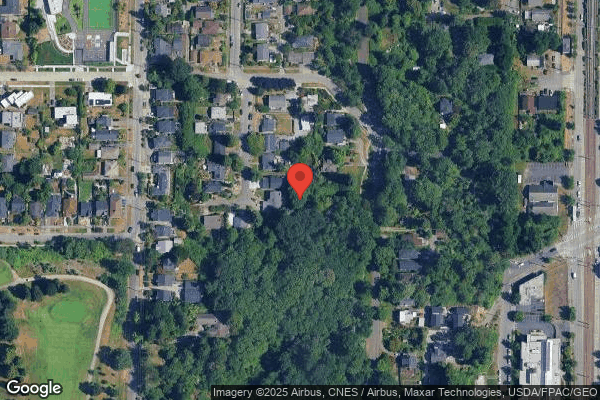
May 2023 2 deficiencies 1 Harm
SERIOUS (G) 📢 Someone Reported This

A family member, employee, or ombudsman was alarmed enough to file a formal complaint

Actual Harm - a resident was hurt due to facility failures

Accident Prevention (Tag F0689)

A resident was harmed · This affected 1 resident

Based on observation, interview, and record review, the facility failed to provide supervision for 1 (Resident 1) of 3 sample residents at risk for elopements who eloped from the facility and was miss...

Read full inspector narrative →
Based on observation, interview, and record review, the facility failed to provide supervision for 1 (Resident 1) of 3 sample residents at risk for elopements who eloped from the facility and was missing for at least eight hours unbeknownst to staff. Resident 1 experienced harm when they left the building unsupervised, for several hours, and sustained a fall with multiple injuries that required further evaluation at the hospital. Findings included . According to the 04/13/2023 admission Minimum Data Set (MDS-an assessment tool) Resident 1 admitted to the facility with diagnoses of non-traumatic brain dysfunction, traumatic brain injury (TBI), disorientation, history of falling, and muscle weakness. Resident 1 had severe cognitive and daily decision-making impairments, needed supervision on and off the unit, was not steady when walking, and had a history of falls and wandering. The 04/14/2023 Wandering Risk Assessment showed Resident 1 needed assistance with mobility and had a history of wandering. The 04/14/2023 At Risk for Elopement Care Plan (CP) showed Resident 1 was at risk for elopement and documented a goal for the resident not to wander out of the facility. The CP showed interventions to have a WanderGuard bracelet (a device used to alert staff to a resident leaving the facility or unit) in place. Review of a late entry nursing note dated 04/15/2023 at 2:14 PM showed Resident 1 eloped from the building around 6:30 AM, was found in the facility parking lot, and brought back into the building. The CP had been updated for Resident 1 to wear a WanderGuard to prevent Resident 1 from wandering out of the facility. The 04/27/2023 Facility Incident Report Investigation showed Resident 1 left the facility at 09:01 AM and was not identified as missing from the building until 5:00 PM. During an interview and observation on 05/03/2023 at 11:30 AM, Resident 1 was found wandering the halls on the third floor, alone. Resident 1 was observed with bruising around both eyes, had abrasions to their right forehead and nose, and complained about pain in their knees. When asked if they had a fall, Resident 1 stated, Yes, I hit my head. During an interview on 05/03/2023 at 1:00 PM, Staff B, Director of Nursing, stated Resident 1 had a TBI and was wearing a WanderGuard bracelet because Resident 1 was at risk for elopement. Staff B stated the facility administrative staff reviewed the video that showed Resident 1 walked out the front door, the alarm went off and a nurse came out and reset the alarm without going outside to see if a resident had left the facility. During an interview on 05/03/2023 at 1:10 PM Staff C, Central Supply Director, stated the video footage showed someone, a nurse or an aide, went out the front door and Resident 1 followed the staff member out the door. The alarm went off and Staff D, Licensed Practical Nurse, came out of Unit 1, turned off the alarm, looked around the inside of the lobby, did not go outside to look for a resident. Staff C stated the receptionist was not at the desk. During an interview on 05/03/2023 at 1:30 PM, Staff D stated they were unaware anyone had gone out the front door, did not know what the alarm was sounding for, and turned off the alarm. Staff D stated they assumed another resident in the lobby had tugged on the door. When asked what time the alarm sounded and what time Staff D turned off the alarm, Staff D stated they could not recall what time it was, but thought it was in the morning. During an interview on 05/03/2023 at 1:55 PM Staff A, Administrator, stated they could not recall or provide any information or documentation when the facility staff realized Resident 1 eloped from the facility. Staff A stated according to the video Resident 1 eloped from the facility at 9:01 AM. When asked what time the staff were aware that Resident 1 was missing, Staff A stated around 5:00 PM. When asked what time Resident 1 was found by the police, Staff A stated it was about 6:30 PM, but then Resident 1 was transported to the hospital for evaluation. During a phone interview on 05/03/2023 at 2:58 PM Staff E, Licensed Practical Nurse, stated they started their shift at 2:00 PM on 04/27/2023, did not see Resident 1 throughout their shift. About dinner time they were notified by the Staff J, (Resident Care Manager), that Resident 1 was missing from the facility. Review of the 04/27/2023 at 8:35 PM Nurse Progress Note showed Resident 1 was not in their room around 5:00 PM, staff looked in every room but were unable to find Resident 1 and activated a code yellow (missing person) drill. Review of the 04/27/2023 at 7:28 PM emergency room Provider notes showed Resident 1 was seen for a fall with a head injury, altered mental status, pain in both thighs and knees, and had been missing from the facility since the morning of 04/27/2023. Injuries noted were a moderate sized right frontal (forehead) scalp hematoma (a solid swelling of clotted blood under the skin surface) and swelling of both knees. REFERENCE: WAC 388-97-1060(3)(g)
CONCERN (E) 📢 Someone Reported This

A family member, employee, or ombudsman was alarmed enough to file a formal complaint

Potential for Harm - no one hurt, but risky conditions existed

Room Equipment (Tag F0908)

Could have caused harm · This affected multiple residents

Based on observation, interview, and record review the facility failed to maintain the hot water heaters in safe operating condition. This failure caused 3 (Residents 4, 7, and 8) of 6 residents to be...

Read full inspector narrative →
Based on observation, interview, and record review the facility failed to maintain the hot water heaters in safe operating condition. This failure caused 3 (Residents 4, 7, and 8) of 6 residents to be unable to shower with hot water Findings included . <Resident 4> According to the 04/10/2023 Quarterly Minimum Data Set (MDS-an assessment tool) Resident 4 was assessed to require total dependence of one staff member for bathing, transfers, and personal hygiene. The MDS also showed it was very important to Resident 4 to be able to choose between a shower or a bed bath. Resident 4 stated they prefered a shower. The revised 04/10/2023 Activities of Daily Living (ADL) Care Plan (CP) showed Resident 4's goal was to maintain/improve grooming and personal hygiene. The CP showed Resident 4 was scheduled to have bed baths two times weekly and as needed. During an interview on 04/25/2023 at 11:15 AM Resident 4 stated the third floor did not have any hot water for the last two and a half weeks, and they received bed baths but not with hot water. The staff had to go to a different floor to get hot water and bring it up to the 3rd floor. Resident 4 stated they had a rash that was not clearing and wondered if it was related to not having hot water to wash it with. An observation at 11:10 AM on 04/25/2023 the hot water nob was turned on in Resident 4's room and left running during interview. At 11:15 AM the hot water was still cold to touch. <Resident 7> According to the 03/13/2023 Quarterly MDS Resident 7 was assessed to require partial/moderate assistance with showers and bathing. The 09/23/2022 ADL CP showed Resident 7's goal was clean, dry and odor free daily. The CP interventions showed one person assist with showers two times weekly. During an interview on 04/25/2023 at 11:36 AM Resident 7 stated the staff told Resident 7 they would have to have bed baths because there was no hot water on the third floor. An observation at 11:36AM on 04/25/2023 showed the hot water nob was turned on in Resident 7's room and left running during interview. At 11:40 AM the hot water was cold to touch. <Resident 8> According to the 03/10/2023 Annual MDS Resident 8 was assessed to require supervision and set up for bathing and it was very important to decide between showers and bed baths. The revised 10/24/2022 ADL CP showed Resident 8's goal was to be clean, dry and odor free daily. The CP interventions showed one-person limited assist for shower, three times weekly. The CP showed Resident 8 preferred to shower themself after shower set up. During an interview on 04/25/2023 at 12:10 PM Resident 8 stated multiple staff stated there was not hot water available on the third floor, staff do not know how to reset the water system, and the breaker needs repaired. Resident 8 stated the lack of hot water bothered them because they must go down to a different floor to shower. They can no longer do that due to COVID on that unit, so now it had been over a week since they had a hot shower. At 12:10 PM on 04/25/2023 the hot water nob was turned on in Resident 8's room and left running during the interview. At 12:15 the water running was cold to touch, 5 minutes later. Additional observations on 04/25/2023 between 11:20 AM and 11:53 AM showed Rooms 112, 321, 200 hall dining room, and 1st floor bathroom with cold water after faucets left running for 2-4 minutes. During an interview on 04/25/2023 at 11:15AM Staff H, Registered Nurse, stated maintenance staff said they keep fixing the hot water issue. The unit 2 [NAME] has hot water for sure, we have been taking residents to 2 [NAME] unit until the COVID (define) outbreak started, now we cannot take residents down to the 2nd floor. During an interview on 04/25/2023 at 11:32 AM Staff F, Certified Nursing Assistant, stated unit 2 [NAME] had hot water. Staff F stated 2 [NAME] was the only unit with hot water and the other units had been bringing residents to their unit for showers. During an interview on 04/25/2023 at 11:37 AM Staff G, Maintenance Director, stated the facility received three bids on the hot water heater, all three companies stated there was something wrong with system. Staff G stated they do not believe the water heater received service properly, and now they system needed to be re-set every 30-45 minutes for hot water to be available in all areas of the facility. The facility was waiting for corporate approval to sign a contract and get the issue fixed. Staff G stated they trained multiple staff members on how to reset the hot water. When asked who the staff members were or was there an education sheet, Staff G stated no. During an interview on 04/25/2023 at 11:40 AM Staff A, Administrator, stated the hot water was working intermittently on the 1st and 3rd floors, there would be hot water available when the re-set button was pushed. Staff A stated we signed a contract with a company to fix it. When asked to see the contract Staff A could not find one. When asked, a second time, if there was a signed contract to fix the hot water Staff A stated there was not a signed contract. Documents showing education of staff on how to re-set the hot water heater, documents on the maintenance of the hot water heater, and the policy regarding hot water in the facility were requested but not provided when asked. During an interview on 04/25/2023 at 12:30 PM Staff A stated the issue with the hot water started 3-4 weeks ago, sometimes it goes days without being reset. Staff A stated the facility did not check water temperatures for hot water. When asked if the hot water issue had been reported to the State as required, Staff A stated no. During an interview on 04/25/2023 at 12:38 PM Staff G stated they do water temperature checks quarterly. When asked if the they had performed daily water temperature checks since the hot water heaters were not functioning properly, Staff G stated they had only done a couple water checks, Staff G provided logs for 4 days of water temperature checks out of 3-4 weeks without hot water in the month of April. During an interview on 04/25/2023 at 12:45 PM Staff A stated why would we check for water temperatures and need the Emergency policy for hot water, we have hot water. During a phone interview on 04/25/2023 at 3:37 PM Staff I, Regional Administrator, stated the hot water heater is working when it is re-set, sometimes they have an issue with the hot water heater, it needs some repairs, and it is not functioning perfectly. WAC 388-97-2100
Apr 2023 1 deficiency 1 Harm
SERIOUS (G) 📢 Someone Reported This

A family member, employee, or ombudsman was alarmed enough to file a formal complaint

Actual Harm - a resident was hurt due to facility failures

Pressure Ulcer Prevention (Tag F0686)

A resident was harmed · This affected 1 resident

**NOTE- TERMS IN BRACKETS HAVE BEEN EDITED TO PROTECT CONFIDENTIALITY** Based on observation, interview, and record review, the facility failed to ensure 2 (Resident 1 & 2) of 3 residents reviewed for...

Read full inspector narrative →
**NOTE- TERMS IN BRACKETS HAVE BEEN EDITED TO PROTECT CONFIDENTIALITY** Based on observation, interview, and record review, the facility failed to ensure 2 (Resident 1 & 2) of 3 residents reviewed for pressure ulcers (PUs) received the necessary treatment and services, consistent with professional standards of practice, to promote healing, and prevent new ulcers from developing. Failure to complete weekly skin assessment as ordered, document wound progress and update the Care Plans (CP) placed residents at risk for deterioration in skin condition, and diminished quality of life. Failure of the facility to assess skin integrity to identify PUs timely, and implement interventions to include updating the CP, caused harm to Resident 1 who developed a facility acquired right heel PU, which deteriorated and resulted in hospitalization where identification of multiple untreated, facility acquired PUs on left side of the resident's body were discovered. Failure of the facility to identify PUs timely, and implement a preventative measure timely caused the harm to Resident 2 who experienced worsening of a sacral (lower back bone area) PU from intact skin to open wound and developed two facility acquired bilateral heel PUs. Findings included . According to the National Pressure Injury Advisory Panel (NPIAP) PU/PI staging definitions include: a Stage 4 PU is a wound with full thickness skin and tissue loss with exposed fascia (connective tissue), muscle, tendon, ligaments, cartilage, or bone; a Stage 3 PU with full thickness loss of skin, in which fat is visible on the ulcer and rolled wound edges is present; an Unstageable PU is defined as a full thickness skin and tissue loss where the base of the wound is obscured by slough (dead skin cells) and/or eschar (dead tissue) where until sufficient slough and/or eschar can be removed to expose the base of the wound, the true depth, and therefore stage, cannot be determined; Deep Tissue injury (DTI) is intact or non-intact skin with localized area of persistent non blanchable deep red, maroon or purple discoloration. Pain and temperature change often precede skin color changes. Resident 1 According to the 09/24/2022 Admission/5 day MDS, Resident 1 admitted to the facility on [DATE], cognitively intact and had diagnoses including Asthma, Malnutrition, and immune thrombocytopenic purpura (bleeding disorder when blood does not clot properly). According to this assessment, Resident 1 was at risk for developing pressure ulcers and had no unhealed PU, Resident 1 required two-person extensive assistance for bed mobility and toileting. According to the 09/20/2022 nursing admission skin assessment, Resident 1 admitted with no PUs. A review of Resident 1's December 2022 assessments showed facility failed to complete the weekly skin assessments on 12/13/2022 and 12/20/2022. A review of Resident 1's 12/21/2022 nursing progress note showed the resident had open area on left hip and DTI PU on right heel. This note showed Resident 1 preferred to lay in bed on their left side due to often pain in their right lower body. A 12/27/2022 physician note showed Resident 1 had a stage two PU on left hip and the resident complained of pain nine out of 10 on pain scale and went down to seven out of 10 after pain medication provided. Physician note showed no documentation about Resident 1's right heel PU. Review of a 01/03/2023 wound care provider's progress note showed Resident 1's PU deteriorated to a stage three PU on left hip which measured 1centimeter (cm) X 2 cm X 0 cm with moderate drainage and Unstageable PU on right heel which measured 6 cm X 6 cm X 0 cm with moderate drainage. Wound care provider documentation showed Resident 1's both lower extremities were warm and well perfused (sufficient blood flow to the extremities). A review of Resident 1's record showed the facility was aware Resident 1 was at risk for developing PUs but failed to evaluate the need for and implement additional pressure relief such as an air mattress until 01/05/2023 to prevent PUs. The 01/06/2023 revised skin CP showed Resident 1 was at risk for skin issues related to decreased mobility, incontinent of bowel and bladder, use of anticoagulant medications and refusal of repositioning. Nursing interventions included instructions to staff to provide diet as ordered, incontinence care, to use pressure reducing devises and for nurses to do weekly skin assessment, document, and report to the provider any changes. Review of a 01/10/2023 wound care provider's progress note showed the left hip wound was resolved and the right heel wound was surgically debrided and continued to assess the wound on weekly wound round. The 02/27/2023 revised skin CP showed Resident 1 had a right heel wound. Nursing interventions included instructions for staff to avoid pressure, perform treatment as ordered, provide positioning devices as pillows or wedges and conduct weekly skin assessments The weekly skin assessments dated 02/28/2023, 03/07/2023, and 03/15/2023 addressed the right heel PU. There were no weekly skin assessments completed on 03/22/2023 and 03/29/2023 as the physician ordered. Review of a 03/28/2023 wound care provider's progress note showed Resident 1's stage four PU on right heel had deteriorated with increased necrotic tissues and heavy bloody drainage with strong odor, and measured 6 cm X 5 cm X 1.5 cm with undermining (when wound edges separated from the surrounding healthy tissue under the wound) 2cm from 12 to 1 o' clock. A 03/28/2023 Nursing progress note showed Resident 1 was scheduled to go for CT scan for right heel on 03/27/2023 and the resident refused to go in the wheelchair related to pain in their back. Resident 1 was sent to the hospital for right heel CT scan on 03/29/2023 around 4:30 PM in a stretcher. According to hospital record, on 03/29/2023 at 5:31 PM Resident 1 was admitted in the emergency department for right heel wound evaluation. The hospital record showed Resident 1 admitted with six PUs not previously identified by the facility. According to the hospital records, Resident 1 had multiple wounds on their left side of the body including left sacrum with DTI PU which measured 4 cm X 7.5 cm, left lower back with DTI PU which measured 2 cm X 1 cm, Stage three PU on Left buttock which measured 4.5 cm X 6cm, DTI PU on left trochanter which measured 0.5 cm X 2cm, Stage two PU on left upper spine which measured 5 cm X 2cm, DTI PU on left lower/lateral spine which measured 0.5 cm X 1.5cm. Observation and interview on 03/31/2023 at 3:07 PM, while Resident 1 was at the hospital, showed Resident 1 was lying in bed, alert and able to make their needs known. Resident 1's right heel was wrapped with dressing, left buttock with purple color DTI, left sacrum with dark purple color DTI, left upper and lower spine wounds were covered with dressing. When the resident was asked about their wounds, Resident 1 stated they had two wounds that they knew of: One on their right heel and one on left hip. Resident 1 stated they had those two wounds for a while, unable to remember exact date. Resident 1 stated they needed help to turn on their side in bed, but they liked to stay on their left side due to pain on their right side of the body. Resident stated they had chronic pain which was managed with pain medications. In an interview on 03/31/2023 at 10:54 AM, staff I (Licensed Practical Nurse- LPN) stated Resident 1 had an open wound on right heel, which was not improving and the wound doctor sent the resident out to the hospital for evaluation. When staff I was asked about the facility process for sending any resident out to the hospital, Staff I stated the nursing staff completed the resident's head to toe skin assessment, pain assessment and copy of physician orders and sent with the resident to the hospital. When staff I was asked for Resident 1's skin assessment or pain assessment documentation, Staff I was unable to locate the documentation and said that they did not check the resident's skin. Staff I said that they should have completed the skin check before Resident 1 left the facility. In an interview on 03/31/2023 at 11:08 AM, Staff C (Resident Care Manager- RCM) stated Resident 1 admitted to the facility in September 2022 with no PU. The resident had COVID 19 (a contagious disease caused by a virus, the severe acute respiratory syndrome) in December 2022 and they developed PU on their right heel. Staff C stated Resident 1 did not show severe symptoms but was moved to COVID unit. Resident 1 preferred to stay on their left side in bed, and was at high risk for developing PU. The facility provided an air mattress in their bed to relieve pressure after they developed the PU on their heel. Staff C stated nursing staff was doing weekly skin assessment and documented in the resident's record. A wound team with a wound care provider had been doing weekly wound assessment. When staff C was asked about the difference between the weekly skin assessment and wound assessment, staff C stated weekly skin assessment was completed by nursing staff and documented in the resident's record, and weekly wound assessment was completed by wound care provider with wound team only for the residents with open wounds. Staff C stated Resident 1 had only one PU on their right heel. Staff C was unable to locate the skin assessment or pain assessment for Resident 1 completed on 03/29/2023 in their record. In an interview on 04/04/2023 at 1:45 PM, Staff K (Wound Care provider) stated Resident 1 was assessed by wound team on 03/28/2023 for a right heel wound. Staff K stated the right heel wound was the only wound on their list to assess, the facility staff did not notify them of any other wound for Resident 1 that needed to be assessed. In an interview on 04/04/2023 at 4:04 PM, Staff J (Certified Nursing Assistant- CNA) stated they took care of Resident 1 on 03/28/2023 and the resident stayed in bed all shift on their left side. Staff J stated they emptied the resident's urinal once and they did not have to provide incontinence care because the resident did not have bowel movement on that day. Staff J stated they did not look at their skin. In an interview on 04/04/2023 at 2:34 PM, Staff C stated Resident 1 was at risk for developing PUs. Staff C stated Resident 1 had behavior of refusing care, repositioning, and staying on their left side in bed. Staff C confirmed they did not update the CP about the resident preference to be on their left side to instruct the staff to offer other options and implement other devices or interventions. Staff C stated they should have placed the interventions like air mattress or heel floaters in bed earlier to prevent the PUs but they did not. In an interview on 04/04/2022 at 4:30 PM, Staff B (Director of Nursing) stated they were aware of Resident 1's wound history and stated that staff missed weekly skin assessments and head to toe skin check prior to sending the resident out to the hospital and staff should have done. Staff B stated weekly skin assessment, early identification of skin impairments and implementing PU prevention timely were important to maintain skin integrity and to prevent new PU from developing. Resident 2 According to the 12/06/2022 Admission/5 day Minimum Data Set (MDS- an assessment tool), Resident 2 admitted to the facility on [DATE] with complex medical diagnoses including respiratory failure (a serious condition that makes it difficult to breathe on its own), Asthma (a condition in which airways get swollen and makes hard to breathe), and Cognitive communication deficit (difficulty with thinking and how someone uses language). The skin assessment showed Resident 2 had two stage one PUs (non-blanchable redness) (skin color stays red when pressed with fingertip and when pressure removed) on buttocks (lower back area) and was at risk for developing pressure ulcers. This assessment showed Resident 2 required two-person extensive assistance with bed mobility and toileting. According to the 11/29/2022 nursing admission note, Resident 2 admitted with blanchable redness (skin turns white when pressed with fingertip and then turns red when pressure removed) to sacrum that measured 9.5 cm X 11.5 cm, and blanchable redness to right upper buttock that measured 4.0 cm X 4.0 cm and no open wound. The 11/29/2022 Skin CP showed Resident 2 had alteration in skin integrity. On 02/13/2023 the CP was revised to include moist associated skin damage (MASD) open area to the scrotum. On 02/21/2023 the CP was updated to reflect the stage one sacral PU had deteriorated to a stage three PU. Nursing interventions included instructions to staff to do treatment as ordered, notify physician and family for any skin change, and for nurses to do weekly skin assessments. Review of a 03/07/2023 wound provider notes showed Resident 2 was assessed with a stage three sacral wound that measured 0.5 cm X0.5 cm X 0.1cm with minimal drainage. A review of Resident 2's medical record showed a 03/09/2023 nursing progress note documentation for suspected deep tissue injury (DTI) versus open area to coccyx/left buttock area and redness to midback area. A 03/11/2023 progress note showed Resident 2 was sent to hospital for evaluation related to respiratory issues. According to the 03/11/2023 Discharge return anticipated MDS, Resident 2 had one stage three PU, and two unstageable/DTIs PUs, none of which were present at admission. A review of the 03/24/2023 readmission assessment showed Resident 2 readmitted with three PUs; two stage three PUs on right buttock which measured 4 cm X 4 cm and 5 cm X 5 cm, and a stage one PU on middle spine which measured 6 cm X 3 cm X 0 cm. The assessment failed to identify the depth of the wounds on right buttock. A review of Resident 2's CP showed CPs were not updated or revised upon readmission on [DATE]. Further review of the resident record showed no weekly assessments for the other two PUs documented on readmission assessments on 03/24/2023. Review of a 03/28/2023 wound care provider's progress note showed Resident 2 had one unstageable PU on sacrum which measured 3.5 cm X 7 cm X 0.3 cm with moderate drainage. Observation on 03/31/2023 at 1:23 PM showed Resident 2 was sleeping on their right side on a regular mattress in their bed A 04/02/2023 nursing progress note showed Resident 2's guardian came to visit the resident and noticed Resident 2 complained of pain in their feet. The guardian informed staff about the concern. At that time, staff looked at Resident 2's feet and noted new PU on their right heel. Further review of Resident 2's record showed no pain assessment was completed after staff was notified regarding the resident's complained of pain. A review of Resident 2's pain assessment record showed last pain assessment was completed on 03/24/2023 on readmission. Review of Resident 2's March 2023 and April 2023 MARs showed nursing staff failed to complete the weekly skin assessments as ordered by the physician on 03/27/2023 and 04/03/2023. On 04/04/2023 at 12:42 PM, Resident 2 was observed lying in bed with their both heels resting on the mattress and at 1:45 PM, Resident 2 was sleeping on their back in bed with pillows under their right side and heels. The wound team with the wound care provider assessed the resident's wounds and provided the treatment in their room. In an interview on 04/05/2023 at 12:45 PM, Resident 2's representative (RR) stated they visited the resident on 04/02/2023, Resident 2 was lying in bed and complained of severe pain in their feet. RR stated they notified the nursing staff that Resident 2 was in pain. RR stated the nursing staff looked at the resident's feet and noted the PU which caused the pain. RR stated they had to ask the staff multiple times to place air mattress in Resident 2's bed to relieve the pressure. In an interview on 04/04/2023 at 1:50 PM, Staff G (Licensed Practical Nurse) stated they were Resident 2's regular nurse and worked there since November 2022. Staff G stated Resident 2 liked to stay in bed and needed extensive assistance with feeding and bed mobility. Staff G stated Resident 2 had sacral open wound and two days ago, another new wound developed on their right heel. Staff G stated nurses provided weekly skin assessment and documented in the resident's records as ordered. When Staff G was asked about Resident 2's last skin assessment record, Staff G could not find weekly skin assessment since readmission [DATE] in the record. Staff G stated they missed Resident 2's weekly skin assessment. In an interview on 04/04/2023 at 2:00 PM, Staff K stated Resident 2 was seen for sacral wound for few weeks and today Resident 2 's two new PUs; a stage 3 on the right heel and a DTI on the left heel, were assessed. In an interview on 04/04/2023 at 2:16 PM, Staff D (Resident Care Manager) stated Resident 2 was admitted to the facility in November 2022 with no open wounds. Resident 2 developed sacral open wound in the facility in December 2022 and this week they developed two new PUs on their heels. Staff D stated the wound care provider assessed the wounds every week and recommended the treatments. Floor nurses provided weekly skin assessment and documented in the resident's records. Staff D was unable to locate any weekly skin assessment for Resident 2 in their record after 03/24/2023. Staff D stated they missed the weekly skin assessments as ordered by the physician for Resident 2. In an interview on 04/04/2023 at 3:52 PM, Staff B stated weekly skin assessment, monitoring, early identification of skin impairments and implementing PU prevention timely were important to maintain skin integrity and to prevent new PU from developing. Staff B stated they were aware of Resident 2's wound history and confirmed staff missed weekly skin assessments as ordered. Staff B stated staff should have done weekly skin assessment as ordered. REFERENCE: WAC 388-97-1060(3)(b) .
Dec 2022 1 deficiency
CONCERN (E) 📢 Someone Reported This

A family member, employee, or ombudsman was alarmed enough to file a formal complaint

Potential for Harm - no one hurt, but risky conditions existed

Safe Environment (Tag F0921)

Could have caused harm · This affected multiple residents

Based on observation and interview the facility failed to maintain a safe and functional environment when it did not maintain a functioning fire alarm system. Failure of the fire alarm system to funct...

Read full inspector narrative →
Based on observation and interview the facility failed to maintain a safe and functional environment when it did not maintain a functioning fire alarm system. Failure of the fire alarm system to function when activated, placed all occupants at risk of delayed notification, fire suppression and/or evacuation in the event of a fire. Findings included . On 12/27/2022 during an unannounced Complaint Investigation, the fire alarm system was activated and the the alarm did not sound on 2-West, the magnetic hold doors did not release and the elevator did not recall to the main level. On 12/27/2022 at 2:44 PM the Deputy State Fire Marshal (DSFM) explained to Staff A and Staff B that the system was not functioning properly as evidenced by the magnetic doors not releasing, the doors not closing (including resident doors, exit doors and stairwell doors) and the elevator not returning to the lower floor. On the unit 2-West the staff were not responding to the fire alarm because the alarm was not audible in that section of the facility. On 12/27/2022 at 2:55 PM, the DSFM directed the facility to implement fire watch (person(s) dedicated to an area for expressed purpose of notifying the fire department, facility occupants and putting out a fire) on 2-West until the system was repaired. On 12/27/2022 at 3:00 PM Staff B was observed to call staff and alert Managers they were on fire watch for the system failure. On 12/27/2022 at 3:14 PM the system was activated in the common area by the sprinkler room and no alarm was heard or strobe lights visible. Walking up to the second floor the stairwell door did not release, and required a code to open. No horn alert was heard and no strobe lights were visible in the hallways of 46 resident occupied beds on 2-West (numbers 250s, 260's, and 270s). All resident room doors were observed still open and the fire doors in the hallways did not release. On 12/27/2022 at 3:55PM Staff A (Administrator) notified the DSFM and Residental Care Services (RCS) Complaint Investigator the facility contacted Fire Alarm System contractor and the electrician of the fire suppression system failiure. In an interview on 12/28/2022 the DSFM stated that emergency repairs on the fire alarm system were made. REFERENCE: WAC 388-97-2080 .
Mar 2022 19 deficiencies 2 IJ (1 affecting multiple)
CRITICAL (J)

Immediate Jeopardy (IJ) - the most serious Medicare violation

Free from Abuse/Neglect (Tag F0600)

Someone could have died · This affected 1 resident

**NOTE- TERMS IN BRACKETS HAVE BEEN EDITED TO PROTECT CONFIDENTIALITY** Based on interview and record review, the facility failed to ensure one supplemental resident (Resident 176) reviewed for abuse ...

Read full inspector narrative →
**NOTE- TERMS IN BRACKETS HAVE BEEN EDITED TO PROTECT CONFIDENTIALITY** Based on interview and record review, the facility failed to ensure one supplemental resident (Resident 176) reviewed for abuse was free from abuse related to the facility's failure to susupend staff when Resident 176 accused staff of abuse. This failure increased the likelihood of ongoing abuse and psychosocial harm. An Immediate Jeopardy (IJ) was called on 03/03/2022 at 6:30 PM related to CFR 483.12 F-600, Freedom from Abuse, Neglect and Exploitation. The IJ was removed on 03/08/2022 with a validation date of 03/08/2022 at 12:23 PM when an on-site inspection confirmed the facility implemented their removal plan by providing training to staff, interviewing all residents and suspending staff of concern. Refer to: F607, Develop and Implement Abuse and Neglect Policies. Findings included . The facility's 4/14/2020 Abuse and Neglect Policy defined intimidation or punishment with resulting [ .] psychological harm, pain or mental anguish. The policy showed: any accused staff members will be immediately removed from the resident suspected of being abused and the resident's safety will be protected; the Administrator and the DNS [Director of Nursing Services] will investigate; the Administrator or DNS will report all allegations of abuse [ .] to the State Agency. The policy defined any act that makes a resident fearful, [or] feel belittled as mental abuse. Resident 176 According to the 08/25/2021 Admissions MDS (Minimum Data Set - an assessment tool) Resident 176 admitted to the facility on [DATE] and was cognitively intact. The MDS showed Resident 176 had moderate hearing impairment and adequate vision, and had no behaviors. The MDS showed Resident 176 required extensive assistance for most care needs. Review of the facility's September 2021 Grievance Log (a document maintained by nursing homes were all grievances from residents and/or their representatives are logged, processed and tracked) revealed an entry logged on 09/08/2021 that stated A nurse covered a resident's mouth. The log had a Resolution Description column. The entry under this column for the 09/08/2021 stated resident's story inconsistent. Care plan updated to cares and [sic] pairs. Review of the facility's September 2021 Incident Log (a document maintained by nursing homes were all incidents, accidents, and abuse allegations from residents, their representatives or staff are logged, invstigated and tracked) revealed no entry logged for the potentially abusive incident involving Resident 176. The 09/08/2021 Grievance Form associated with this grievance was completed by Staff B (Director of Nursing - DNS) who signed the form on 09/09/2021. The form showed Resident 176's Resident Representative (RR) called Staff B on 09/08/2021 to complain that Staff ZZ (Licensed Practical Nurse - LPN) was rude to the resident and Staff ZZ put their hand up to the resident's face similar to a 'stop' hand sign. The form also included a section called Grievance Officer Review that was signed by Staff B on 09/10/2021, indicating completion. The form included an Investigation and follow up action section that instructed staff to include all relevant documentation (i.e. staff inservice [sic]). This section was completed by Staff B, dated 09/10/2021 and showed that Staff ZZ denied the allegation made by Resident 176's RR. Staff B further wrote that when the facility interviewed Resident 176, the resident clarified that Staff ZZ shook their finger at Resident 176. In an interview on 03/03/2022 at 05:01 PM, Resident 176's RR stated they recalled discussing the potential abuse with Staff B and stated they received no follow up from Staff B after the initial discussion. The RR stated the incident with Staff ZZ traumatized Resident 176, and added it affected [Resident 176] and we all were traumatized. The RR stated they told the head nurse if it happened again, they would call the police and expressed concern for the facility's nonverbal residents. In an interview on 03/15/2022 at 10:37 AM, the RR stated the first time they visited Resident 176 after 09/08/2021, Resident 176 talked at length about Staff ZZ's treatment of them and that the resident relived the incident whenever they visited after that occasion. The RR stated Resident 176 was angry and upset that a male staff member treated them the way they did. The RR expressed frustration that the facility never followed up with the RR after the initial phone call. In an interview on 03/03/2022 at 03:25 PM, Staff B stated that staff putting an open hand up to a resident's face was potential abuse and should be investigated to rule out abuse. Staff B stated that staff wagging their finger (in a scolding gesture) was also potentially abuse and should be investigated. Staff B stated when a resident or their representative made an allegation of abuse, the facility suspended the member until abuse is ruled out by investigation, and the incident of potential abuse is reported to the department. Staff B reviewed the Incident Log and verified that the allegation was not logged and not reported to the state, as required. Staff B stated that Staff ZZ was not suspended until abuse was ruled out and continued to work without interruption. Staff B stated they did not know if the allegation was investigated and would provide a copy of the facility's investigation if completed. No incident investigation was provided, indicating the facility did not follow their policy's direction to identify, report, and investigate all allegations of abuse and that the facility did not protect the resident from the alleged staff. Reference: WAC 388-97-0640 (1) .
CRITICAL (K)

Immediate Jeopardy (IJ) - the most serious Medicare violation

Abuse Prevention Policies (Tag F0607)

Someone could have died · This affected multiple residents

**NOTE- TERMS IN BRACKETS HAVE BEEN EDITED TO PROTECT CONFIDENTIALITY** Based on interview and record review, the facility failed to implement their abuse and neglect policies. Facility failure to ide...

Read full inspector narrative →
**NOTE- TERMS IN BRACKETS HAVE BEEN EDITED TO PROTECT CONFIDENTIALITY** Based on interview and record review, the facility failed to implement their abuse and neglect policies. Facility failure to identify, investigate, suspend suspected staff, rule out allegations of abuse, and effectively train staff on abuse prevention left all residents at risk for abuse, and psychosocial harm. An Immediate Jeopardy (IJ) was called on 03/04/2022 at 10:00 AM related to CFR 483.12 F-607, Develop/Implement Abuse/Neglect Policies. The IJ was removed on 03/08/2022 with a validation date of 03/08/2022 at 12:23 PM when an on-site inspection confirmed the facility implemented their removal plan by providing training to staff, interviewing all residents and suspending staff of concern. Refer to: F-600 Findings included . The Code of Federal Regulation (CFR) defines abuse as, the willful infliction of injury, unreasonable confinement, intimidation, or punishment with resulting physical harm, pain or mental anguish . Instances of abuse of all residents, irrespective of any mental or physical condition, cause physical harm, pain or mental anguish. It includes verbal abuse, sexual abuse, physical abuse, and mental abuse including abuse facilitated or enabled through the use of technology. Facility Policy The facility's 4/14/2020 Abuse and Neglect Policy's defined abuse to include intimidation or punishment with resulting physical, emotional or psychological harm, pain or mental anguish. The policy defined any act that makes a resident fearful, [or] feel belittled as mental abuse. The policy showed any accused staff members will be immediately removed from the resident suspected of being abused and the resident's safety will be protected and that the Administrator and the DNS [Director of Nursing Services] will investigate and report all allegations of abuse to the State Agency. The policy stated all employees must attend abuse prevention training on hire and annually, and that the training must include definitions of abuse and neglect. The 4/14/2020 policy included a Prevention section. This section showed all reports whether from family, residents or staff will be reported immediately to the DNS, after which, an incident report is completed. The policy's Investigation section showed all accused staff must be removed from contact with the resident suspected of being abused to protect the resident's safety. The Investigation section showed: The Administrator and DNS should separately interview all concerned parties; the investigation should conclude with fact-finding, root-cause analysis and comparison of information; the results of the investigation should be provided to the proper authorities and alleged violations and substantiated incidents to the appropriate state agency. The policy's Mandated Reporting of Incidents section showed any employee who observed an incident or was informed by a resident, Resident Representative (RR), volunteer or visitor of potential abuse must report what they saw or heard. Failure To Identify/Log/Investigate According to the 08/25/2021 Admissions MDS (Minimum Data Set - an assessment tool) Resident 176 admitted to the facility on [DATE] and was cognitively intact. The MDS showed Resident 176 had moderate hearing impairment and adequate vision, and had no behaviors. The MDS showed Resident 176 required extensive assistance for most care needs. Review of the facility's September 2021 Grievance Log (a document maintained by nursing homes were all grievances from residents and/or their representatives are logged, processed, and tracked) revealed a 09/08/2021 showing A nurse covered a resident's mouth. The log had a Resolution Description column that showed resident's story inconsistent. Care plan updated to cares and [sic] pairs. The associated 09/08/2021 Grievance Form was completed by Staff B (Director of Nursing - DNS) who signed the form on 09/09/2021. The form showed Resident 176's RR called on 09/08/2021 to express that Staff ZZ (Licensed Practical Nurse - LPN) was rude to the resident and Staff ZZ put their hand up to their resident's face similar to a 'stop' hand sign. The Grievance Officer Review section of the Grievance Form was signed by Staff B on 09/10/2021, indicating completion of the process. The form's Investigation and follow up action section instructed staff to include all relevant documentation and gave staff in-services as an example of relevant information. This section was completed by Staff B, dated 09/10/2021, and stated that Staff ZZ denied the allegation. Staff B wrote that when the facility interviewed Resident 176, they clarified that Staff ZZ shook their finger at Resident 176. Review of the facility's September 2021 Incident Log revealed no entry for the potentially abusive incident. In an interview on 03/03/2022 at 03:25 PM, Staff B stated that both placing a hand up to a resident's face and shaking a finger at a resident were potentially abusive and should be investigated. Staff B stated when a resident or their representative made an allegation of abuse, the facility suspended the identified staff member until abuse was ruled out by investigation, and the incident of potential abuse must be reported to the department. Staff B reviewed the Incident Log and stated the allegation was not logged and not reported to the state. Staff B stated Staff ZZ was not suspended until abuse was ruled out and continued to work without interruption. Staff B stated they did not know if the allegation was investigated and would provide a copy of the facility's investigation, if completed. No incident investigation was later provided. Training Provision and Effectiveness During an interview on 03/04/2022 at 8:45 AM Staff GGG (certified Nursing Assistant - CNA) stated that if they witnessed abuse they would Report to my nurse. When asked further, and provided cues, Staff GGG did not include any measures to protect the resident, nor indicate a need to report to the abuse hotline as a mandated reporter. During an interview on 03/04/2022 at 9:00 AM Staff HHH (Housekeeper) stated that abuse was fighting, hitting, and that's all I know. Staff HHH stated that if they witnessed abuse, they would tell them to stop and go report to the nurse immediately. Staff HHH did not know they were to report to the abuse hotline as a mandated reporter and when asked if they had received abuse training, Staff HHH, stated, No, not that I know. During an interview on 03/04/2022 at 9:15 AM Staff III (CNA) stated that forcing a resident to do something they did not want, or taking advantage of a resident was abuse. If they witnessed abuse, Staff III stated they would talk to the person (abuser), tell them not to do that and report to the nurse in charge at the time. Staff III stated they had not had abuse training at the facility as they were new and had only been in the facility two days. During an interview on 03/04/2022 at 9:16 AM, when asked to list the types of abuse, Staff JJJ (LPN) stated neglect, verbal, and physical. When asked for others, Staff JJJ stated, I can't think of those. During an interview on 03/04/2022 at 8:46 AM Staff GG stated that there was physical and mental abuse and requested to go to their office to obtain a paper on Abuse and Neglect. Reading from the paper Staff GG stated that other types of abuse included lack of care, psychosocial, assault, battery, mental, and physical. During an interview on 03/04/2022 at 8:54 AM when the surveyor attempted to conduct an abuse interview, Staff LLL, Housekeeper, stated, I don't understand English. The surveyor attempted verbal and visual cues and Staff LLL just smiled and stated, Sorry. Review of Abuse and Neglect Training documents showed Staff AAA received training on 10/11/2021 and 10/14/2021, Staff HHH received training on 10/14/2021, Staff DDD received training on 10/12/2021. There was no documented training for Staff III or Staff LLL. Staff ZZ was not listed as in attendance at the 10/11/2021 Abuse in-service, and was noted to be on vacation on the 10/14/2021 in-service attendance records. During an interview on 03/04/2022 at 9:35 AM Staff EE (Staffing Coordinator) stated that it was Staff CCC's first day at the facility as agency and they did not receive facility abuse training prior to being placed on the floor. During an interview on 03/04/2022 at 9:30 AM staff II (Staff Development) stated that the facility had the capability of virtual/computer training and they planned to sign staff up for abuse and neglect training the following week. In an interview on 03/04/2022 at 12:19 PM, Staff II stated the facility did not, but should, have a system to ensure that staff who are not available at the time receive required in-service training. Reference: WAC 388-97-0640(2)(a)(b) .
CONCERN (D)

Potential for Harm - no one hurt, but risky conditions existed

Deficiency F0582 (Tag F0582)

Could have caused harm · This affected 1 resident

**NOTE- TERMS IN BRACKETS HAVE BEEN EDITED TO PROTECT CONFIDENTIALITY** Based on interview and record review, the facility failed to provide Skilled Nursing Facility Advanced Beneficiary Notices (SNF ...

Read full inspector narrative →
**NOTE- TERMS IN BRACKETS HAVE BEEN EDITED TO PROTECT CONFIDENTIALITY** Based on interview and record review, the facility failed to provide Skilled Nursing Facility Advanced Beneficiary Notices (SNF ABN: a notification that provides an estimated cost of continuing services which may no longer be covered by Medicare. Beneficiaries may choose to continue the services but may be financially liable.) as required for one (Resident 72) of three residents, reviewed for SNF ABN, whose Medicare stay ended. This failure placed the resident and/or the resident's representative at risk for not having adequate information with which to make financial decisions regarding the resident's care. Findings included . Resident 72 According to the 01/17/2022 Medicare - 5 Day /End of PPS Part A Stay MDS (Minimum Data Set an assessment and tracking tool) Resident 72 admitted to the facility on [DATE], began their most recent Medicare coverage on 01/11/2022, and had a last covered day of 01/18/2022. In an interview on 03/04/2022 at 1:23 PM, Staff F (Business Office Manager) stated they could not locate ABN paperwork for Resident 72, and that it was possible the facility's social worker had not yet uploaded the form to Resident 72's electronic record. In an email on 03/07/2022, Staff EEE stated that ABN paperwork was not provided to Resident 72 when they were convert[ed] to Hospice. REFERENCE: WAC 388-97-0300(1). .
CONCERN (D)

Potential for Harm - no one hurt, but risky conditions existed

Deficiency F0655 (Tag F0655)

Could have caused harm · This affected 1 resident

**NOTE- TERMS IN BRACKETS HAVE BEEN EDITED TO PROTECT CONFIDENTIALITY** Based on record review, and interviews the facility failed to ensure three of three residents (Residents 125, 430, and 123) revi...

Read full inspector narrative →
**NOTE- TERMS IN BRACKETS HAVE BEEN EDITED TO PROTECT CONFIDENTIALITY** Based on record review, and interviews the facility failed to ensure three of three residents (Residents 125, 430, and 123) reviewed for baseline Care Plans had person-centered baseline CPs, that met professional standards of practice, developed within 48 hours of admission. This failure placed newly admitted residents at risk for receiving less than required care and services from staff who were unaware of the residents' care needs. Findings included . Resident 125 Review of Resident 125's undated admission Record indicated Resident 125 was admitted to the facility on [DATE] with diagnoses including a history of falls, recent diagnosis of Coronavirus (COVID-19), and generalized weakness. Review of Resident 125's 02/20/2022 admission Minimum Data Set (MDS, a comprehensive assessment) showed that Resident 125 required extensive help with Activities of Daily Living (ADL) that included bed mobility, transfers, dressing, and toileting, and had a limited range of motion in the bilateral lower extremities. The MDS showed a Brief Interview for Mental Status (BIMS) score of 10 of 15 indicating Resident 125 cognition was moderately impaired. Review of Resident 125's 02/16/2022 New Admit Note showed . [Resident 125] has been non-ambulatory for ~ [approximately] 6 weeks and needing 2-3 person assist . with [admitting diagnosis] Admin. Dx: FTT [failure to thrive] and generalized weakness . Review of a Progress Note dated 02/16/2022, showed Resident 125 required extensive assistance with incontinence care and dressing. Review of Resident 125's 02/17/2022 Care Plan (CP) showed no individualized resident-centered goals and/or interventions in the area of ADLs for Resident 125 that meet the resident's immediate care needs. During an interview on 03/01/2022 at 10:59 AM, Resident 125 stated that they had a decline in their ability to perform ADL care for themselves and they were at the facility for strengthening so they could move in with their family. During an interview on 03/04/2022 at 3:51 PM, Registered Nurse Unit Manager on the first floor (Staff WW) stated that Resident 125's baseline CP did not include ADL individualized resident-centered goals and interventions. Resident 430 Review of Resident 430's undated admission Record, showed Resident 430 was admitted to the facility on [DATE] with diagnoses that included Coronavirus (COVID), pneumonia, acute (sudden) respiratory failure, and chronic kidney disease. Review of Resident 430's 02/23/2022 admission MDS showed the assessment was still, in progress. During an interview on 03/01/2022 at 4:00 PM, Resident 430's Resident Representative (RR A) stated that the facility used an interpreter to communicate with Resident 430. During an interview on 03/02/2022 at 09:56 AM, Registered Nurse (Staff UU) stated that Resident 430 did not speak any English and required an interpreter for anything more than basic things such as water, drink, coffee, yes and no. Staff UU stated the facility called Resident 430's family to interpret when needed. Staff UU stated that the resident's communication needs should be addressed in a resident's CP upon admission. During an interview on 03/04/2022 at 3:51 PM, Staff WW indicated the facility utilized an interpreter service line and when needed and the family was called to translate as well. Staff WW stated that Resident 430's communication needs were not addressed in the resident's baseline CP. Resident 123 Review of the admission Record showed Resident 123 was admitted on [DATE] with diagnoses including type 2 diabetes without complications. Review of Resident 123's 02/16/2022 admission MDS revealed a BIMS score of 15 out of 15, which indicated Resident 123 was cognitively intact. The MDS also indicated Resident 123 had diabetes mellitus. Review of Resident 123's physician's order dated 02/11/2020, revealed an order for Glipizide 5mg (2 tabs by mouth twice daily for diabetes). Review of Resident 123's Baseline Care Plan dated 02/11/2022, revealed the care plan did not address type 2 diabetes. During an interview on 03/01/2022 at 11:40 AM, Resident 123 confirmed they had diabetes with fluctuating blood sugar readings. Interview with Registered Nurse (Staff CCC) on 03/04/2022 at 12:37 PM confirmed Resident 123 care plan did not address diabetes. During an interview on 03/03/2022 at 3:09 PM, the MDS coordinator indicated that the admission nurse created the base line care plan, and the Resident Care Coordinator (RCM) verified that the base line care plan is developed and reflected the needs of the resident upon admission. During an interview on 03/03/2022 8:43 PM, the Interim Director of Nursing (Staff C) indicated their expectation was that baseline care plans are completed within 48 hours to reflect the immediate needs of the resident in order to provide appropriate care. Staff C indicated at this time that the facility does not have a baseline care plan policy. During an interview on 03/04/22 at 12:26 PM, the (Staff A) Administrator indicated that it is his expectation that base line care plans are completed upon admission by the admission nurse as the staff need to use it to direct care given to the resident. REFERENCE: WAC 388- 97 - 1020 (3). .
CONCERN (D)

Potential for Harm - no one hurt, but risky conditions existed

Comprehensive Care Plan (Tag F0656)

Could have caused harm · This affected 1 resident

**NOTE- TERMS IN BRACKETS HAVE BEEN EDITED TO PROTECT CONFIDENTIALITY** Based on interview and record review, the facility failed to develop a person-centered comprehensive care plan (CP) that include...

Read full inspector narrative →
**NOTE- TERMS IN BRACKETS HAVE BEEN EDITED TO PROTECT CONFIDENTIALITY** Based on interview and record review, the facility failed to develop a person-centered comprehensive care plan (CP) that included measurable objectives and timeframe's to meet one of one resident (Resident 13) reviewed for hospice in a total sample of 28 residents, medical, nursing, mental and psychosocial needs to maintain the resident's highest practicable level of well-being. This failure placed Resident 13 at risk for receiving less than required supportive care and services. Findings included . Review of the facility's Comprehensive Assessment and Care Delivery Process policy, revised December 2016, showed, comprehensive assessments, care planning, and the care delivery process involve collecting and analyzing information, choosing and initiating interventions, and then monitoring results and adjusting interventions . 4. Decision making leading to a person-centered plan of care includes a. selecting and implementing interventions, based on the results of the above. Resident 13 Review of Resident 13's undated admission Record showed Resident 13 was admitted to the facility on [DATE] with diagnoses including senile degeneration of brain, encounter for palliative (supportive) care, and adult failure to thrive. Review of Resident 13's 12/06/2021 Physician's Orders showed Resident 13 was on hospice services for senile degeneration of brain. Review of Resident 13's 12/12/2021 admission Minimum Data Set (MDS, a comprehensive assessment) showed a Brief Interview for Mental Status (BIMS) score of 99, which indicated Resident 13 was unable to complete the interview due to cognitive deficits. Facility staff assessed Resident 13 as severely cognitively impaired. This MDS showed Resident 13 received hospice care while in the facility. Review of Resident 13's 12/06/2021 CP listed the focus as End of Life Care/Hospice Care due to terminal diagnosis 1. Senile degeneration of the brain. The CP did not show how to contact the hospice service 24 hours a day, or how the coordination between the hospice and the nursing home would occur. Review of Resident 13's 12/06/2021 Progress notes showed, .Res [Resident] is on Hospice service with Admit Dx [diagnosis] as follows (which is the Hospice terminal Dx): Senile degeneration of brain, other Hospice Dx [diagnosis] to include but not limited to: Dementia without behavioral disturbance, Severe protein cal [calorie] malnutrition, AFF [adult failure to thrive], Pneumonitis [lung inflammation] due to inhalation of food and vomit, AKI [acute kidney injury], Essential HTN [hypertension] and acute pulmonary edema and Acute metabolic encephalopathy . This LN [licensed nurse] also requested that Hospice RN [registered nurse] come out tomorrow to meet staff and RCM [resident care manager] in order to establish Hospice plan of care . During an interview on 03/03/2022 at 1:50 PM, First Floor Unit Manager (Staff WW) stated the admitting nurse was responsible for developing the baseline CP and making updates to CP. During an interview on 03/03/2022 at 3:09 PM, Licensed Practical Nurse (Staff DD) stated the Residential Care Manager completed the comprehensive CP and should have added the coordination of care with the hospice provider including the name and phone number of the hospice provider. During an interview on 03/03/2022 at 3:35 PM, LPN (Staff EE) stated the RCM should have updated the comprehensive CP when the hospice CP was provided by the hospice nurse. REFERENCE: WAC 388-97-1020(1)(2)(a)(b) .
CONCERN (D)

Potential for Harm - no one hurt, but risky conditions existed

Deficiency F0657 (Tag F0657)

Could have caused harm · This affected 1 resident

**NOTE- TERMS IN BRACKETS HAVE BEEN EDITED TO PROTECT CONFIDENTIALITY** REFERENCE: WAC 388-97-1020 (2) (c) (d). Resident 19 According to the 12/23/2021 Admission/Medicare 5 Day MDS, Resident 19 had mu...

Read full inspector narrative →
**NOTE- TERMS IN BRACKETS HAVE BEEN EDITED TO PROTECT CONFIDENTIALITY** REFERENCE: WAC 388-97-1020 (2) (c) (d). Resident 19 According to the 12/23/2021 Admission/Medicare 5 Day MDS, Resident 19 had multiple medically complex diagnoses including Heart Failure, Hypertension, Diabetes Mellitus and Depression. Review of Resident 19's 02/08/2022 progress notes showed the resident had a fall on 02/08/2022 that required the resident to go to the hospital on [DATE]. Review of Resident 19's February 2022 PO's showed Resident 19 received Citalopram (an Antidepressant medication) and Melatonin for sleeping. Review of Resident 19's CPs showed no CP was developed to address falls, Depression, Antidepressant medication or the Melatonin for sleeping. Review of Resident 19's comprehensive CP showed a CP revised on 12/17/2021 that showed Resident 19 was receiving an Intravenous (IV-in the vein) Antibiotic. Review of Resident 19's current Physician's Orders showed no order for IV Antibiotic medications. In an interview on 03/04/2022 at 10:35 AM, Staff DD (Nurse Manager) stated that Resident 19's CP should have but were not revised and updated by staff to reflect Resident 19's current status regarding depression/antidepressant use, Melatonin/sleep issues, the history of falls, and that the IV antibiotic should have been discontinued. Based on record review and interview the facility failed to revise care plans (CPs) for 1 (Resident 108) of 3 residents reviewed for care plans and 1 supplemental resident (Resident 19). The failure to revise and update CPs to reflect changing care needs left residents at risk for unmet care needs. Findings included . Resident 108 Review of an undated admission Record found in Resident 108's showed Resident 108 was admitted on [DATE]. Review of Resident 108's hard copy chart, revealed a 09/08/2020 admission Nursing Evaluation that showed Resident 108 has own lower teeth and full upper dentures. Review of Resident 108's 06/09/2021 physician orders (PO) showed an order for dental consult for new upper denture and hygienist. Review of Resident 108's 02/10/2022 quarterly Minimum Data Set (MDS, a comprehensive assessment) a Brief Interview for Mental Status (BIMS) score of 13 out of 15, which indicated Resident 108 was cognitively intact and able to make their own decisions. During an interview on 03/01/2022 at 2:24 PM, Resident 108 stated they had no top teeth and that after they were admitted to the facility their dentures were lost. Review of Resident 108's CP initiated on 09/08/2020 showed the resident had full upper dentures with lower natural teeth. Instruction to staff initiated on 11/11/2020 was to, remove denture, clean, and soak overnight. The facility's CP revision on 07/09/2021 showed staff failed to update the resident's oral/dental status. Licensed Practical Nurse Unit Manager 1 (Staff GG), interviewed on 03/03/2022 at 12:25 PM stated, Resident 108 had no top teeth and lost her dentures last year. Staff GG stated the dental/oral status on the CP should have been updated but was not.
CONCERN (D)

Potential for Harm - no one hurt, but risky conditions existed

Deficiency F0660 (Tag F0660)

Could have caused harm · This affected 1 resident

**NOTE- TERMS IN BRACKETS HAVE BEEN EDITED TO PROTECT CONFIDENTIALITY** Based on record review and interview the facility failed to establish a discharge plan to include goals and interventions for di...

Read full inspector narrative →
**NOTE- TERMS IN BRACKETS HAVE BEEN EDITED TO PROTECT CONFIDENTIALITY** Based on record review and interview the facility failed to establish a discharge plan to include goals and interventions for discharge upon admission for one of one resident (Resident 127) reviewed for discharge out of a total sample of 27 residents. This failure had the potential to prevent a successful continuation of the resident's care and treatment plans. Findings included . Review of Resident 127's undated admission Record showed Resident 127 was originally admitted to the facility on [DATE] for rehabilitation after knee surgery. Review of the admission Record showed Resident 127 was transferred to another facility on 12/09/2021. Review of Resident 127's admission [DATE] Minimum Data Set (MDS, a comprehensive assessment) showed a Brief Interview for Mental Status (BIMS) score of 0 out of 15 indicating that Resident 127 was severely cognitively impaired and unable to make their own decisions. Review of Resident 127's 12/04/2021 Care Plan (CP) found in the EMR under the Care Plan did not show a discharge plan to include goals and interventions. Review of Resident 127's 12/09/2021 Progress Note showed: This LN [Licensed Nurse] was told by SW [Social Worker] that resident would possibly transfer to [Facility] SNF [Skilled Nursing Facility] today. This is an unplanned discharge from PEP [transportation company]. [Facility] require a Rapid Covid test prior to leaving. Floor nurse has done the test and result was negative. This LN was waiting for PEP to call for pick-up time. At 1600, PEP transportation came and picked up resident with all her belonging. Nurse to nurse report was given by evening nurse. During an interview on 03/04/2022 at 02:54 PM, Social Services Director (Staff H) stated that they were in communication with Resident 127's social worker from [outside agency] and indicated that (the resident) was being transferred to [facility]. Staff H stated that they usually make a discharge plan on admission, it should be in the resident's care plan, but they did not make a discharge plan. Staff H stated that they do not have any documentation of the conversation with the social worker from the outside agency. During an interview on 03/04/2022 at 03:30 PM, RN Unit Manager First Floor (Staff WW) stated that Resident 127 should have a discharge plan in place upon admission and it is the Social Worker's responsibility to complete the discharge CP. Staff WW stated that Resident 127 did not have a discharge CP developed upon admission after review of the resident's clinical record. During an interview on 03/04/2022 on 04:41 PM, the Administrator (Staff A) indicated that it was their expectation that the discharge CP was completed upon admission. Staff A stated that development and documentation of the discharge CP was the responsibility of the Social Worker. REFERENCE: WAC 388-97-0080(7)(a)(b) .
CONCERN (D)

Potential for Harm - no one hurt, but risky conditions existed

ADL Care (Tag F0677)

Could have caused harm · This affected 1 resident

**NOTE- TERMS IN BRACKETS HAVE BEEN EDITED TO PROTECT CONFIDENTIALITY** Based on observation, interview, and record review the facility failed to provide bathing assistance to two Residents (Resident ...

Read full inspector narrative →
**NOTE- TERMS IN BRACKETS HAVE BEEN EDITED TO PROTECT CONFIDENTIALITY** Based on observation, interview, and record review the facility failed to provide bathing assistance to two Residents (Resident 25 and 108) of 26 residents reviewed for Activities of Daily Living (ADL) care. This failure had the potential to affect resident's comfort, self/body image, and increased the risk for infections. Findings included . Review of the facility's 03/2018 Activities of Daily Living (ADL), Supporting policy showed, Resident will be provided with care, treatment and services as appropriate to maintain or improve their ability to carry out activities of daily living (ADLs). Residents who are unable to carry out activities of daily living independently will receive the services necessary to maintain good nutrition, grooming and personal and oral hygiene . Appropriate care and services will be provided for residents who are unable to carry out ADLs independently, with the consent of the resident and in accordance with the plan of care, including appropriate support and assistance with: . hygiene (bathing, dressing, grooming, and oral care) . Resident 25 Review of Resident 25's admission Record showed Resident 25 was originally admitted on [DATE] with diagnoses including displaced comminuted fracture of shaft of right tibia (shinbone). Review of Resident 25's 12/15/2021 admission Minimum Data Set (MDS, a comprehensive assessment) showed a Brief Interview for Mental Status (BIMS) score of 15 out of 15, which indicated Resident 25 was cognitively intact and able to make their own decisions. The MDS showed Resident 25 required one-person physical assist with part of bathing and extensive two-person physical assistance with dressing. Review of Resident 25's 12/12/2021 Care Plan, showed Resident 25 required assistance with ADLs in the following areas: bathing, dressing, personal hygiene . 1 person assist with dressing . 1-2 person assist with bed bath (res preference) 2xs weekly . Review of the facility's Third Floor Shower Schedule revised on 02/11/2022, showed Resident 25 was to be bathed on Wednesday and Saturday afternoons. Review of Resident 25's February 2022 Treatment Administration Record (TAR) showed Resident 25 was bathed on 02/01/2022, 02/08/2022, 02/17/2022, and 02/26/2022. During an interview on 03/01/2022 at 4:19 PM, Resident 25 stated they had not had a shower since they were admitted to the facility and that their last bed bath was last 02/26/2022. The LPN (Licensed Practical Nurse) Unit Manager 1 (Staff GG) interviewed on 03/04/2022 at 2:01 PM stated Resident 25 should be bathed on Wednesday and Saturday afternoons. Staff GG wasn't aware that Resident 25 was not being bathed twice weekly but should have been. Resident 108 Review of Resident 108's admission Record showed the resident was admitted on [DATE] with diagnoses including hypertensive heart and chronic kidney disease. Review of Resident 108's 02/10/2022 quarterly MDS showed the resident had a BIMS score of 13 out of 15, which indicated Resident 108 was cognitively intact and able to make their own decisions. The MDS indicated Resident 108 required one-person physical assist with bathing and extensive one person assistance with dressing. Review of Resident 108's Care Plan, revised on 01/12/2022 showed the resident required, assistance with ADLs in the following areas: bathing, dressing . and 1 person limited to extensive assist with dressing and as needed . 1-person extensive assist with bed bath/shower twice a week. Prefer bed bath. Review of Resident 108's February 2022 Treatment Administration Record (TAR) showed Resident 108 was not bathed on 02/01/2022, 02/06/2022, 02/12/2022, 02/15/2022, 02/19/2022, and 02/26/2022. The January TAR showed 2022 Resident 108 was bathed on 01/09/2022, 01/11/2022, 01/16/2022, 01/18/2022, 01/23/2022, 01/25/2022 and 01/30/2022. Review of the Third Floor Shower Schedule, revised on 02/11/2022, showed Resident 108 was to be bathed on Tuesday and Saturday afternoons. During an interview on 03/01/2022 at 2:22 PM, Resident 108 stated they were bathed approximately once weekly and that they would prefer to be showered. Interviewed on 03/04/2022 at 2:01 PM Staff GG stated Resident 108 should be bathed on Tuesday and Saturday afternoons. Staff GG stated they were unaware that Resident 108 was not being bathed twice weekly but should have been. REFERENCE: WAC 388-97-1060(2)(c) .
CONCERN (D)

Potential for Harm - no one hurt, but risky conditions existed

Deficiency F0688 (Tag F0688)

Could have caused harm · This affected 1 resident

**NOTE- TERMS IN BRACKETS HAVE BEEN EDITED TO PROTECT CONFIDENTIALITY** Based on observation, interview, and record review the facility failed to provide restorative services as ordered for one of one...

Read full inspector narrative →
**NOTE- TERMS IN BRACKETS HAVE BEEN EDITED TO PROTECT CONFIDENTIALITY** Based on observation, interview, and record review the facility failed to provide restorative services as ordered for one of one resident (Resident 108) reviewed for restorative nursing services. This failure had the potential to decrease Resident 108's physical functioning, quality of life, and independence. Findings include: Review of the facility's Restorative Nursing Services policy revised 07/2017 showed, Residents will receive restorative nursing care as needed to help promote optimal safety and independence . 2. Residents may be started on a restorative nursing program upon admission, during the course of stay, or when discharged from rehabilitative care . Review of an admission Record found in Resident 108's showed Resident 108 was admitted on [DATE] with diagnoses including hypertensive heart and chronic kidney disease with heart failure Review of Resident 108's 02/10/2022 quarterly Minimum Data Set (MDS, a comprehensive assessment) showed a Brief Interview for Mental Status (BIMS) score of 13 out of 15, which indicated Resident 108 was cognitively intact and able to make their own decisions. The MDS showed that the resident required extensive assistance with bed mobility, dressing, toilet use, personal hygiene, and bathing and received restorative nursing. Review of Resident 108's Care Plan (CP) last revised 02/04/2022 showed, Resident 108 had limited impaired physical mobility due to weakness/deconditioning/chronic pain and included the interventions; active range of motion to BUE (bilateral upper extremities)/BLE (bilateral upper extremities), all joints, all planes x5-10 reps (repetitions) with 1-3# (pounds) of added resistance's on (the residents) UE (upper extremities) encourage SLR (strait leg raise) BLE, to tolerance 1-2# of added resistance on the LE's (lower extremities) for ROM (range of motion) (6x/week, 15 minutes) initiated 09/25/2020, revised 11/19/2021. Review of Resident 108's 09/08/2020 physician's order included an order for restorative nursing program. Review of the Restorative Aide tasks showed Resident 108 did not receive restorative services in February 2022 on 02/05/2022, 02/08/2022, 02/12/2022, 02/13/2022, 02/16/2022, 02/17/22, 02/19/22, 02/22/22, 02/23/22, and 02/26/22. In January 2022 Resident 108 did not receive services on 01/01/2022 through 01/06/2022, 01/08/2022, 01/09/2022, 01/12/2022,01/13/2022, 01/15/222, 01/19/2022,01/20/2022, 01/22/2022, and 01/24/2022. Review of Resident 108's restorative nursing schedule document provided by Certified Nursing Assist (CNA) 1 (Staff KK) confirmed Resident 108 was to receive restorative services daily x 15 minutes, except on Fridays. Resident 108 interviewed on 03/01/2022 at 2:06 PM stated they thought they were supposed to be getting restorative nursing services, but it wasn't happening. Licensed Practical Nurse Unit Manager 1 (Staff GG) interviewed on 03/03/2022 at 12:36 PM stated Resident 108 had 11/19/2021 orders for restorative range of motion six times per week. Staff GG stated currently the facility had one restorative aide, CNA Lead Restorative Aide (Staff PP). Staff PP was not available for interview on 03/03/2022 or 03/04/2022. Interview with Staff KK on 03/04/2022 at 1:37 PM confirmed Resident 108 was scheduled to receive restorative nursing services 6 days a week (daily except for Fridays) x 15 minutes. Staff KK confirmed that if services were not documented, services were not provided. Staff KK stated they did not know why services were not provided as prescribed. Staff KK stated that if the resident refused services, staff were to document that in the medical record. REFERENCE: WAC 388-97-1060(3)(d) .
CONCERN (D)

Potential for Harm - no one hurt, but risky conditions existed

Deficiency F0692 (Tag F0692)

Could have caused harm · This affected 1 resident

**NOTE- TERMS IN BRACKETS HAVE BEEN EDITED TO PROTECT CONFIDENTIALITY** Based on observation, interview, and record review the facility failed to ensure dietary orders were implemented for one (Reside...

Read full inspector narrative →
**NOTE- TERMS IN BRACKETS HAVE BEEN EDITED TO PROTECT CONFIDENTIALITY** Based on observation, interview, and record review the facility failed to ensure dietary orders were implemented for one (Resident 84) of 26 residents reviewed for nutritional status and therapeutic diets. This failure caused Resident 84 to receive a meal with added sodium and had the potential to adversely affect the resident's prescribed treatment regimen. Findings include: Review of the facility's undated Job Description- Dietary Service Manager policy showed the Dietary Service Manager Supervises and enforces strict quality assurance compliance to assure customer food preferences and prescribed diet compliance [ .] Regularly updates and records diet orders and changes in the computerized tray card system . Review of the facility's 11/2015 Resident Nutrition Services policy showed, The multidisciplinary staff, including nursing staff, the Attending Physician and the Dietitian will assess each resident's nutritional needs, food likes, dislikes and eating habits. They will develop a resident care plan based on this assessment. Nursing personnel will ensure that residents are served the correct food tray. If an incorrect meal has been delivered, nursing staff will report it to the Food Service Manager so that a new food tray can be issued . Review of the facility's 09/2012 admission Notes showed, When a resident is admitted to the nursing unit, the admitting nurse must document the following information (as each may apply) in the nurses' notes, admission form, or other appropriate place, as designated by facility protocol . The time the dietary department was notified of the diet order . Review of Resident 84's admission Record showed Resident 84 was originally admitted on [DATE] with diagnoses including hepatic (liver) failure. Review of Resident 84's 01/20/2022 annual Minimum Data Set (MDS, a comprehensive assessment) showed a Brief Interview for Mental Status (BIMS) score of 15 out of 15, which indicated Resident 84 was cognitively intact and able to make their own decisions and had diagnoses of heart failure and kidney disease. This MDS showed Resident 84 required a, therapeutic diet while a resident. Review of Resident 84's 08/05/2021 physician's orders showed Resident 84 was to have a no added salt diet regular texture with thin liquid consistency. Review of Resident 84's 02/10/2022 Dietician Quarterly Review dated 02/10/2022 showed Resident 84 should have no added salt, regular texture, with thin liquids and to continue current care plan. Observation on 03/02/2022 at 12:40 PM, confirmed Resident 84 received a regular diet that was not low sodium. Interview on 03/03/2022 at 10:41 AM, with Dietary Director (Staff G), confirmed Resident 84 received a regular diet. Review of dietary records with Staff G showed the records did not include the updated 08/10/2021 order for no added salt diet. Unit Manager 1 Licensed Practical Nurse (Staff GG) interviewed on 03/03/2022 at 3:52 PM stated nurses are supposed to fill out a dietary form indicating proper diet orders. Staff GG stated they were not aware that Resident 84 was not receiving a no added salt diet. The Interim Director of Nursing (Staff C) interviewed on 03/03/2022 at 4:54 PM stated the facility did not have a specific policy regarding dietary changes. Interview on 03/03/2022 at 6:30 PM with Doctor (Staff S) confirmed Resident 84 had orders for a no added salt diet related to ascites (fluid buildup in the abdomen) and cirrhosis of the liver. Staff S was not aware the dietary orders were not implemented. REFERENCE: WAC 388-97-1060(3)(h) .
CONCERN (D)

Potential for Harm - no one hurt, but risky conditions existed

Medication Errors (Tag F0758)

Could have caused harm · This affected 1 resident

**NOTE- TERMS IN BRACKETS HAVE BEEN EDITED TO PROTECT CONFIDENTIALITY** Based on observations, interview, and record review the facility failed to ensure 1 (Resident 19) of 5 residents reviewed for un...

Read full inspector narrative →
**NOTE- TERMS IN BRACKETS HAVE BEEN EDITED TO PROTECT CONFIDENTIALITY** Based on observations, interview, and record review the facility failed to ensure 1 (Resident 19) of 5 residents reviewed for unnecessary medications, were free from unnecessary psychotropic drugs related to the failure to: identify and monitor individualized Target Behaviors (TBs), develop individualized personal care plans, and review the effectiveness of the medications which deterred the facility from initiating a gradual dose reduction (GDR). These failures placed residents at risk for receiving unnecessary psychotropic medications, unnecessary psychotropic medication side effects, and a diminished quality of life. Findings included . Review of the facility's Antipsychotic Medication Use policy revised on December 2016 showed, Antipsychotic medications will be prescribed at the lowest possible dosage for the shortest period of time and are subject to gradual dose reduction and re-review. The staff will observe, document, and report to the attending physician information regarding the effectiveness of any interventions, including antipsychotic medications. Resident 19 According to the 12/23/2021 Admission/Medicare 5 Day Minimum Data Set (MDS a comprehensive assessment tool), Resident 19 originally admitted to the facility on [DATE] and readmitted on [DATE] with multiple medically complex conditions including Depression, which required the use of antidepressant medications. Review of the 07/19/2021 Physician Orders (POs) showed Resident 19 received Citalopram daily for depression. Review of the July 2021 Medication Administration Records (MAR) showed no behavior monitoring related to depression. Review of the June and July, 2021 records including progress notes, showed no documentation that showed the reason for starting the antidepressant medication. According to the 02/18/2022 PO, staff must monitor and document the number of episodes of TB; tearfulness/sadness and lack of interest/withdrawal. According to 02/24/2022 MDS, Resident 19 denied depression when asked if he felt depressed in last 2 weeks. Review of the January, February and March 2022 MARs showed Resident 19 demonstrated no TBs but received Antidepressant medication from July 2021 through March 4, 2022. There was no documentation to support the facility attempted a GDR during this period. Observations of Resident 19 were made on 03/01/2022 at 12:50 PM and at 3:15 PM, 03/02/2022 at 09:00 AM and at 5:10 PM, and on 03/04/2022 at 12:40 PM. The resident demonstrated no symptoms of depression. In an interview on 03/04/2022 at 12:40 PM, Resident 19 denied being depressed. In an Interview on 03/04/2022 at 10:55 AM, Staff DD (Nurse Manager) stated Resident 19 did not show any symptoms of depression. In an interview on 03/04/2022 at 04:33 PM, Staff H (Social Services Director) stated the Interdisciplinary Team (IDT) met monthly to review the effectiveness of the psychotropic medications and if no TBs were noted for a resident, they would try a GDR but they did not for Resident 19. REFERENCE: WAC 388-97- 1060 (3) (k) (i) .
CONCERN (D)

Potential for Harm - no one hurt, but risky conditions existed

Deficiency F0760 (Tag F0760)

Could have caused harm · This affected 1 resident

**NOTE- TERMS IN BRACKETS HAVE BEEN EDITED TO PROTECT CONFIDENTIALITY** Based on interview and record review the facility failed to administer medications as ordered by the physician to one (Resident ...

Read full inspector narrative →
**NOTE- TERMS IN BRACKETS HAVE BEEN EDITED TO PROTECT CONFIDENTIALITY** Based on interview and record review the facility failed to administer medications as ordered by the physician to one (Resident 37) of 26 residents reviewed for medication administration. This failure had the potential for Resident 37 to experience adverse symptoms related to being untreated and placed all residents at risk for receiving less than required medical treatment. Findings include: Review of facility's Documentation of Medication Administration policy revised in April 2007 showed, The facility shall maintain a medication administration record to document medications administered. A nurse shall document all medications administered to each resident on the resident's medication administration record. Administration of medication must be documented immediately after it is given. Resident 37 Review of Resident 37's admission Record, showed Resident 37 was admitted to the facility on [DATE] with diagnoses that included congestive heart failure, hyperlipidemia (an abnormally high concentration of fats or lipids in the blood), glaucoma (a condition of increased pressure within the eyeball, causing gradual loss of sight), opioid dependence, and atrial fibrillation (heart palpitations, shortness of breath, and fatigue the treatment of which can include the use of blood thinners), and dry-irritated eyes. Review of Resident 37's 12/19/2021 quarterly Minimum Data Set (MDS, a comprehensive assessment) showed the Brief interview for Mental Status (BIMS) score was 15 out of 15, indicating Resident 37 was cognitively intact and able to make their own decisions. Review of Resident 37's 03/01/2022 Order Summary Report showed Spironolactone tablet 50 milligrams (mg) give one tablet by mouth two times daily for CHF [congestive heart failure], Atorvastatin calcium tablet give 10 mg by mouth in the evening related to hyperlipidemia, Latanoprost solution 0.005 percent instill one drop in both eyes one time daily for glaucoma, oxycodone HCL tablet 7.5 mg by mouth in the evening for chronic back pain, Eliquis tablet give 5 mg by mouth two times a day for A Fib [atrial fibrillation] and artificial tears solution instill one drop in both eyes four times a day for dry/irritated eyes. During an interview on 03/01/2022 at 10:00 AM, Resident 37 stated they did not receive their evening medications on 02/25/2022. Resident 37 stated, There are lots of agency staff and they didn't know what meds I take. I left a note for the Director of Nursing, Staff B, and left it in their mailbox. Review of Resident 37's February 2022 Medication Administration Record (MAR) showed five medications were not documented by Licensed Practical Nurse LPN (Staff JJ) as having been administered on the evening of 02/25/2022. The medications staff did not sign for included; 1. Atorvastatin Calcium tablet give 10 mg by mouth in the evening related to hyperlipidemia. 2. Latanoprost solution 0.005 percent instill one drop in both eyes one time daily for glaucoma. 3. Oxycodone HCL tablet 7.5 mg by mouth in the evening for chronic back pain. 4. Eliquis tablet give 5 mg by mouth two times a day for A Fib [atrial fibrillation]. 5. Artificial tears solution instill one drop in both eyes four times a day for dry/irritated eyes. During an interview on 03/02/2022 at 9:35 AM, Resident 37 stated, The Director of Nursing talked to me last night and said they would try to take care of it. I haven't seen that agency nurse since Friday night [02/25/2022]. I don't think I had any adverse effects from not getting my meds, I just don't want it to happen again. During an interview on 03/02/22 at 10:19 AM, the Director of Nursing DON (Staff B) stated, I saw (Resident 37's) MAR and there were medications that were not signed for. REFERENCE: WAC 388-97-1060(3)(k)(iii) .
CONCERN (D)

Potential for Harm - no one hurt, but risky conditions existed

Dental Services (Tag F0791)

Could have caused harm · This affected 1 resident

**NOTE- TERMS IN BRACKETS HAVE BEEN EDITED TO PROTECT CONFIDENTIALITY** Based on observation, interview, and record review the facility failed to provide one (Resident 108) of 26 residents, reviewed f...

Read full inspector narrative →
**NOTE- TERMS IN BRACKETS HAVE BEEN EDITED TO PROTECT CONFIDENTIALITY** Based on observation, interview, and record review the facility failed to provide one (Resident 108) of 26 residents, reviewed for dental services, routine or emergency dental services in a timely manner. The failure to assist Resident 108 in replacing their upper dentures in a timely manner placed the resident at risk for weight loss and dissatisfaction with their dining experience. Findings include: Review of the facility's Dental Services policy revised 12/2016, stated Routine and emergency dental services are available to meet the resident's oral health services in accordance with the resident's assessment and plan of care. 1. Routine and 24-hour emergency dental services are provided to our residents through: a. a contract agreement with a licensed dentist that comes to the facility monthly; b. referral to the resident's personal dentist; c. referral to community dentists; or d. referral to other health care organizations that provide dental services .6. Social services representatives will assist residents with appointments, transportation arrangements, and for reimbursement of dental services under the state plan, if eligible .8. Dentures will be protected from loss or damage to the extent practicable, while being stored. 9. Lost or damaged dentures will be replaced at the resident's expense unless an employee or contractor of the facility is responsible for accidentally or intentionally damaging the dentures. 10. If dentures are damaged or lost, residents will be referred for dental services within 3 days. If the referral is not made within 3 days, documentation will be provided regarding what is being done to ensure that the resident is able to eat and drink adequately while awaiting the dental services; and the reason for the delay . Resident 108 Review of Resident 108's undated admission Record showed the resident was admitted on [DATE] with diagnoses that included hypertensive heart and chronic kidney disease. Review of Resident 108's 02/10/2022 quarterly Minimum Data Set (MDS, a comprehensive assessment) showed a Brief Interview for Mental Status (BIMS) score of 13 out of 15, which indicated Resident 108 was cognitively intact and able to make their own decisions. Review of Resident 108's 09/08/2020 admission Nursing Evaluation showed that the resident, has own lower teeth and full upper dentures. Review of Resident 108's 06/09/2021 physician orders (PO) showed a PO for dental consult for new upper denture and hygienist. Record review of Resident 108's 09/16/2021 Progress Note showed a unit secretary spoke with Resident 108 about a dental appointment for new dentures. Resident 108 told staff they were trying to get implants and they would handle making the appointment themselves. Resident 108 later decided implants were too expensive and they would like to obtain a denture evaluation. Record review of Resident 108's 10/12/2021 Progress Note showed Resident 108 went to a dental appointment at Clear choice Dental Implant Centers at 1:20 PM and was to return at approximately 3:30 PM. Transportation provided by Hope link. Review of a document from Smile Seattle Dentures dated 11/02/2021 showed a dentist assessed Resident 108 and recommended new upper dentures. Review of Resident 108's progress notes showed the Social Services Director (Staff H) documented on 03/03/2022: Spoke to resident to clarify rather she wants dentures as RCM [resident care manager] alerted SW [Social Worker] that resident has indicated she wants dentures. Reminded resident regarding her wishes to get teeth implants back in [DATE]. They wanted $33,000; I did not know they were so expensive. I still need teeth so I will go for the dentures. Will refer resident to Appointment's coordinator so appointment for denture fitting can be made. Observation on 03/01/2022 at 2:24 PM revealed Resident 108 had no upper teeth and had natural bottom jaw teeth intact. Interview on 03/01/2022 at 2:24 PM with Resident 108 revealed they had no top teeth and that after they were admitted to the facility their dentures were lost. Interview on 03/03/2022 at 12:25 PM with Licensed Practical Nurse, Unit Manager 1 (Staff GG) stated Resident 108 had no top teeth and lost her dentures last year. Staff GG stated Resident 108 originally told staff they wanted implants. The facility provided a community dental visit and Resident 108 decided dental implants were too expensive, so they decided they wanted dentures sometime last year. Staff GG confirmed the original referral date was 09/16/2021. Resident 108 was seen by a community dentist on 10/13/2021 for a dental implant assessment; Resident 108 declined implants due to cost. Then on 11/02/2021 Resident 108 was seen by a dentist in the facility who recommended dentures. Staff GG confirmed that a follow-up appointment was not made at the of time of survey but should have been. Interview on 03/03/2022 at 1:45 PM with Staff R, Secretary, stated Staff GG asked Staff R to schedule a dental appointment for Resident 108. Staff R stated Resident 108 was seen by Smile Seattle Dentures on 11/02/2021 and the dentist indicated Resident 108's gum tissues were red and irritated, had medium plaque build-up, calculus, bone loss and missing all upper teeth. The Dentist recommended new upper dentures. Interview on 03/04/2022 at 8:12 AM with Staff R confirmed Resident 108 needed denture replacement. REFERENCE WAC: 388-97-1060 (1)(3)(j)(vii) .
CONCERN (E)

Potential for Harm - no one hurt, but risky conditions existed

Deficiency F0554 (Tag F0554)

Could have caused harm · This affected multiple residents

**NOTE- TERMS IN BRACKETS HAVE BEEN EDITED TO PROTECT CONFIDENTIALITY** Based on observation, interview, and record review the facility failed to assess and care plan 3 (Residents 16, 85, and 37) of 2...

Read full inspector narrative →
**NOTE- TERMS IN BRACKETS HAVE BEEN EDITED TO PROTECT CONFIDENTIALITY** Based on observation, interview, and record review the facility failed to assess and care plan 3 (Residents 16, 85, and 37) of 26 residents, reviewed for medication at the bedside, self-administration of medications. Failure to assess residents' ability to self-administer medication increased the risk for medications to be administered incorrectly and placed residents at risk for receiving less than necessary treatment benefits. Findings included . Review of the facility's Self-Administration of Medications policy revised in December 2016 showed, As part of their overall evaluation, the staff and practitioner will assess each resident's mental and physical abilities to determine whether self-administering medications is clinically appropriate for the resident [ .] the staff and practitioner will document their findings and the choices of residents who are able to self-administer medications. Resident 16 Review of Resident 16's admission Record showed Resident 16 was originally admitted on [DATE] with diagnoses including cerebral palsy and diffuse traumatic brain injury. Review of Resident 16's 12/09/2021 Quarterly Minimum Data Set (MDS - an assessment tool) revealed a Brief Interview for Mental Status (BIMS) score of 15 out of 15, which indicated Resident 16 was cognitively intact and able to make their own decisions. Record review revealed a 02/22/2022 Behavior Care Plan (CP) addressing Resident 16's history of behaviors including refusals to take medications and requests for the nurse to leave medications at the bedside. This CP's interventions included: one-to-one support for the resident PRN [as needed]; encourage the resident to discuss their feelings and acknowledge them; and provide information, emotional support, and reassurance as appropriate. The Refusals of Care intervention, revised 02/22/2022, directed staff to: approach Resident 16 calmly; explain necessary task(s); take time during care; encourage the resident to participate to the extent able; assess the reasons for refusal and accommodate as able; reapproach/come back later if they refused their medication or became agitated; redirect and reorient the importance of taking the medication and explain that LN should not leave any medication. Review of Resident 16's comprehensive clinical record assessments revealed no self-administration of medication screening was performed. Review of the Physician's Orders (POs) revealed a 02/24/2022 order for Hydrocortisone Lotion 2% apply to right hand palm and fingers [sic] topically three times a day for Contact dermatitis for 14 days. Review of Resident 16's March 2022 Medication Administration Record (MAR)/ Treatment Administration Record (TAR) revealed Staff FFF (Licensed Practical Nurse - LPN) charted that hydrocortisone lotion was administered on the morning of 03/01/2022. Observation on 03/01/2022 at 1:01 PM revealed a medication cup with white cream sitting on the windowsill. During an interview on 03/01/22 at 1:01 PM, Resident 16 stated the nurse did not put the medication on their hand this morning and the white cream on the windowsill was Cortisone 10 that was ordered for their right hand because of suspected ringworm infection. During an interview on 03/01/2022 at 1:15 PM, Staff FFF confirmed they did not know who left the topical medication in the resident's room but that they held the dose this morning because Resident 16 was having an episode. Staff FFF further stated that sometimes the resident had behaviors and this morning was yelling at staff while a nursing assistant attempted to weigh them. Staff FFF threw the medication in the trash at end of interview. Resident 85 Review of the admission Record indicated Resident 85 originally admitted on [DATE] with diagnoses including type 2 diabetes mellitus. Review of Resident 85's 01/24/2022 Quarterly MDS revealed a BIMS score of 15 out of 15, indicating Resident 85 was cognitively intact and able to make their own decisions. Review of Resident 85's CP revealed a 12/12/2021 Behavioral Symptoms CP that addressed refusal of care including medication refusals and included interventions for staff to approach calmly, explain task(s), take time during care, encourage resident to participate to the extent able. Assess reasons for refusal and accommodate as able. Review of the resident's clinical record revealed no evidence staff completed a self-administration of medication assessment for Resident 85. Review of Resident 85's March 2022 MAR showed on 03/01/2022, Staff FFF administered Aspirin 81 mg (for risk for stroke), Cyanocobalamin (for anemia) 1000 mcg, Glipizide (for diabetes) ER 5mg, Acidophilus (for overgrowth of bacteria) (no dosage included), Famotidine (for gastric reflux) 20mg, Lactulose (for constipation) 10 gm/15ml, Metformin (for diabetes) 1000 mg, Quetiapine Fumarate (for dementia) 25mg, Tylenol extra strength (for pain) 500mg, and Simethicone (for indigestion) 80mg at 8:00 am. Observation and interview on 03/01/2022 at 10:08 AM showed Resident 85 had eight pills left at their bedside in a medication cup. Resident 85 stated they did not know why the medications were left there but acknowledged they were theirs. Staff FFF stated in an interview on 03/01/2022 at 1:13 PM, they left Resident 85's medications at the bedside that morning per the resident's preference. Staff FFF spoke with Resident 85, and they agreed to take all medications except Simethicone that were left at the bedside. During an interview on 03/03/2022 at 12:09 PM, Staff GG (Licensed Practical Nurse/Unit Manager) stated all residents that would like to administer their own medications required self-administration screening, must be A&O (alert and oriented) x 4 (person, place, time, situation) in order to be approved for medication self-administration and currently there were no residents on the 3rd floor who self-administer medications. Staff GG stated the policy regarding medication administration did not permit leaving medication at the bedside without an assessment and directed nurses to observe the resident taking their medication before leaving the room. Staff GG stated nurses should not document medication as administered until they observe resident take the medication. Resident 37 Review of Resident 37's admission Record revealed Resident 37 admitted to the facility on [DATE] with diagnoses including congestive heart failure. Review of Resident 37's 12/19/2021 Quarterly MDS revealed a BIMS score was 15 out of 15, indicating Resident 37 was cognitively intact and able to make their own decisions. Review of Resident 37's POs revealed a 03/01/2022 order for Spironolactone [a diuretic] tablet 50 milligrams (mg) give one tablet by mouth two times a day for CHF [congestive heart failure]. Review of Resident 37's March 2022 MAR revealed administration of Spironolactone was scheduled for 11:00 AM and 4:00 PM daily. On 03/01/2022 at 10:00 AM, a round yellow tablet in a white paper cup was observed on the table next to Resident 37's bed. Resident 37 stated the agency nurse brought it to them at 8:00 AM with their morning medications. Resident 37 stated, I am not supposed to take it until 11:00 AM because I take my other water pill at 8:00 AM. I told her to leave it and I would take it at 11:00 AM. Review of the March 2022 MAR showed on 03/01/2022 the Spironolactone was signed by Staff BBB (LPN) as administered at 11:00 AM. Review of Resident 37's comprehensive clinical medical record and CP revealed no self-administration of medication objective was documented. During an interview on 03/03/2022 at 10:00 AM, Staff C (Interim Director of Nursing) stated the facility was unable to provide evidence Resident 37 was evaluated for self-administration of medication. REFERENCE WAC: 3888-97-0440 .
CONCERN (E)

Potential for Harm - no one hurt, but risky conditions existed

Deficiency F0578 (Tag F0578)

Could have caused harm · This affected multiple residents

**NOTE- TERMS IN BRACKETS HAVE BEEN EDITED TO PROTECT CONFIDENTIALITY** Based on record review and interview, the facility failed to ensure a resident's right to formulate or refuse an Advanced Direct...

Read full inspector narrative →
**NOTE- TERMS IN BRACKETS HAVE BEEN EDITED TO PROTECT CONFIDENTIALITY** Based on record review and interview, the facility failed to ensure a resident's right to formulate or refuse an Advanced Directive upon admission relating to healthcare in the event that the resident became incapacitated for 15 of 26 residents (Residents 97, 428, 430, 16, 25, 60, 70, 84, 85, 108, 123, 13, 30, 41, and 74) reviewed for advanced directives. This failure detracted from the resident's ability to make an informed decision regarding formulation of an AD and placed residents at risk for losing the right to have their preferences and choices honored regarding emergent and end-of-life care. Findings included . Review of the 12/2016 Advanced Directives policy showed, Upon admission, the resident will be provided with written information concerning the right to refuse or accept medical or surgical treatment and to formulate an advance directive if he or she chooses to do so . Prior to or upon admission of a resident, the social services director or designee will inquire of the resident, his/her family members and/or his or her legal representative, about the existence of any written advanced directives. Information about whether the resident has executed an advance directive shall be displayed prominently in the medical record. If the resident indicates that he or she has not established advance directives, the facility staff will offer assistance in establishing advance directives. The resident will be given the option to accept or decline the assistance, and care will not be contingent on either decision. Nursing staff will document in the medical record the offer to assist and the resident's decision to accept or decline assistance . Review of Important Documents Needed Upon admission for the Patient undated, found in admission Packet has the following questions: Durable Power of Attorney Papers: yes/ no; Do you need [assistance formulate] advance directive: yes/no Resident 97 Review of Resident 97's undated admission Record showed Resident 97 originally admitted to the facility on [DATE] with a diagnosis of dementia. Review of Resident 97's [DATE] quarterly Minimum Data Set (MDS, an assessment tool) showed a Brief Interview for Mental Status (BIMS) score of 14 out of 15 indicating Resident 97 was cognitively intact and able to make their own decisions. Review of Resident 97's Care Plans (CP) initiated on [DATE], showed no Advanced Directives (AD) to include what interventions the resident or resident representative wanted to have in place if Resident 97 was unable to make their decisions. Review of Resident 97's clinical record revealed no AD was included. Review of Resident 97's comprehensive clinical record showed that an admission packet was not completed and there was no proof a discussion regarding an advance directive occurred. During an interview on [DATE] at 1:14 PM, Resident 97 did not remember anyone asking if the resident had an AD or offering assistance in formulating one. Resident 428 Review of Resident 428's undated admission Record, showed Resident 28 admitted to the facility on [DATE] with diagnoses that included dementia and chronic kidney disease. Review of Resident 428's entire clinical record showed the record lacked evidence that an admission packet was completed along with proof a discussion regarding an advance directive occurred. Review of Resident 428's [DATE] admission MDS, indicated a BIMS score of 9 out of 15 indicating that Resident 428 was moderately impaired cognitively. During an interview on [DATE] at 10:19 AM, Registered Nurse (Staff UU) stated that Resident 428 should have an AD that came with them from the hospital on their admission. At this time Staff UU confirmed Resident 428 did not have an AD in place. Resident 430 Review of Resident 430's undated admission Record, indicated Resident 430 admitted to the facility on [DATE] with diagnoses including Coronavirus, pneumonia, acute (sudden) respiratory failure, and chronic kidney disease. Review of Resident 430's clinical record revealed no evidence that Resident 430 and/or their representative were asked if they had an AD or was offered and declined assistance to formulate one upon admission. During an interview on [DATE] 10:20 AM, Staff UU indicated that Resident 430 should have an AD that came with them from the hospital on admission and confirmed Resident 430 did not have an AD in place and there was no evidence that they were offered assistance in formulating one. Resident 16 Review of the admission Record showed Resident 16 originally admitted on [DATE] with diagnoses including cerebral palsy and diffuse traumatic brain injury with a loss of consciousness of unspecified duration. Review of Resident 16's [DATE] quarterly MDS showed a BIMS score of 15 out of 15, which indicated Resident 16 was cognitively intact and able to make their own decisions. The MDS also showed Resident 16 had diagnoses of cerebral palsy and traumatic brain injury. Review of Resident 16's hard chart revealed a Portable Medical Orders (POLST) form signed on [DATE] which indicated Resident 16 was to receive life sustaining treatment in case of an emergency. Review of Resident 16's clinical record showed no advanced directive on file. Review of Resident 16's clinical record revealed no evidence that Resident 16 and/or the resident representative were asked if Resident 16 had an AD or was offered and declined assistance to formulate an AD. During an interview on [DATE] at 1:29 PM, Resident 16 revealed they did not know what an AD was but if their heart stopped or if she stopped breathing, they would want cardiopulmonary resuscitation (CPR). Resident 25 Review of the admission Record found Resident 25 originally admitted on [DATE] with diagnoses including displaced comminuted fracture of shaft of right tibia (shin bone). Review of Resident 25's [DATE] admission MDS showed a BIMS score of 15 out of 15, which indicated Resident 25 was cognitively intact and able to make their own decisions. The MDS also indicated Resident 25 had fractures and other multiple traumas. Review of Resident 25's hard chart revealed a POLST form signed on [DATE] which indicated Resident 25 was to receive life sustaining treatment in case of an emergency, but no AD was on file. Review of Resident 25's clinical record lacked evidence that Resident 25 and/or their representative were asked if they had an AD or were offered and declined assistance to formulate one. Resident 60 Review of the admission Record found Resident 60 originally admitted on [DATE] with diagnoses including diabetes mellitus with diabetic neuropathy. Review of Resident 60's [DATE] quarterly MDS showed a BIMS score of 15 out of 15, which indicated Resident 60 was cognitively intact and able to make their own decisions. The MDS also indicated Resident 60 had diabetes mellitus with renal (kidney) failure. Review of Resident 60's hard chart revealed a POLST form signed on [DATE] which indicated Resident 60 was to receive life sustaining treatment in case of an emergency, but no AD was on file. Review of Resident 60's clinical record lacked evidence that Resident 60 and/or their representative were asked if they had an AD or were offered and declined assistance to formulate an AD. Resident 70 Review of the admission Record found Resident 70 originally admitted on [DATE] with diagnoses including encephalopathy (brain dysfunction). Review of Resident 70's [DATE]quarterly MDS showed a BIMS score of nine out of 15, which indicated Resident 70 was moderately cognitively impaired. The MDS showed Resident 70 had dementia, aphasia (difficulty speaking), and history of stroke. Review of Resident 70's hard chart revealed a POLST form signed on [DATE] which indicated Resident 70 was not to receive life sustaining treatment in case of an emergency, but no AD was on file. Review of Resident 70's clinical record lacked evidence that Resident 70 and/or their representative were asked if they had an AD or were offered and declined assistance to formulate one. During an interview on [DATE] at 12:03 PM, with Resident 70 revealed they did not know what an advanced directive was but if their heart stopped or if they stopped breathing, they would want CPR. Resident 84 Review of an admission Record found Resident 84 was originally admitted on [DATE] with diagnoses including hepatic (liver) failure, unspecified without coma. Review of Resident 84's [DATE] annual MDS showed a BIMS score of 15 out of 15, which indicated Resident 84 was cognitively intact and able to make their own decisions. The MDS also indicated Resident 84 had viral hepatitis (inflammation of the liver caused by a virus) and cirrhosis of the liver. Review of Resident 84's hard chart revealed a POLST form signed on [DATE] which indicated Resident 84 was not to receive life sustaining treatment in case of an emergency, but no AD was on file. Record review showed Resident 84's clinical record lacked evidence that Resident 84 and/or their representative were asked if they had an Advanced Directive or were offered and declined assistance to formulate one. Resident 85 Review of the admission Record found Resident 85 admitted on [DATE] with diagnoses including type 2 diabetes mellitus with foot ulcer. Review of Resident 85's [DATE] quarterly MDS revealed a BIMS score of 15 out of 15, which indicated Resident 85 was cognitively intact. The MDS also indicated Resident 85 had diabetes mellitus and peripheral vascular disease (poor circulation) Review of Resident 85's hard chart revealed a POLST form signed on [DATE] which indicated Resident 85 was to receive life sustaining treatment in case of an emergency. Record review showed Resident 85's clinical record lacked evidence of an AD on file. Record review showed Resident 85's clinical record included no evidence Resident 85 and/or their representative were asked if they had an Advanced Directive or were offered and declined assistance to formulate one. Resident 108 Review of the admission Record showed Resident 108 admitted on [DATE] with diagnoses including hypertensive heart disease, chronic kidney disease with heart failure, and stage 1 through stage 4 chronic kidney disease or unspecified chronic kidney disease. Review of Resident 108's [DATE] quarterly MDS revealed a BIMS score of 13 out of 15, which indicated Resident 108 was cognitively intact. The MDS also indicated Resident 108 had heart failure, hypertension, and renal failure. Review of Resident 108's hard chart revealed a POLST form signed on [DATE] which indicated Resident 108 was not to receive life sustaining treatment in case of an emergency. Record review showed Resident 108's clinical record lacked evidence of an AD on file. During an interview on [DATE] at 12:31 PM, Resident 108 revealed in the past they told the hospital they did not want CPR, but since they had been at the facility, they would like CPR. Record review showed Resident 108's clinical record lacked evidence that Resident 108 and/or their representative were asked if they had an Advanced Directive or were offered and declined assistance to formulate one. Resident 123 Review of the admission Record found Resident 123 admitted on [DATE] with diagnoses including spinal stenosis, lumbar region without neurogenic claudication (compression of spinal nerves without leg pain or difficulty walking). Review of Resident 123's [DATE] admission MDS revealed a BIMS score of 15 out of 15, which indicated Resident 123 was cognitively intact. The MDS also indicated Resident 123 had non-traumatic spinal cord dysfunction. Review of Resident 123's hard chart revealed a POLST form signed on [DATE] which indicated Resident 123 was to receive life sustaining treatment in case of an emergency. Record review showed Resident 123's clinical record lacked evidence of an AD on file. Record review showed Resident 123's clinical record lacked evidence that Resident 123 and/or their representative were asked if they had an Advanced Directive or were offered and declined assistance to formulate one. During an interview on [DATE] at 11:40 AM Resident 123 revealed they chose to be resuscitated if their heart were to stop or they stopped breathing. Resident 123 stated they were not sure if anyone discussed this with them during admission to the facility or if they had an AD on file. Resident 13 Review of the admission Record showed Resident 13 admitted to the facility on [DATE] with diagnoses including senile degeneration of brain, encounter for palliative care, and adult failure to thrive. Review of the [DATE] admission MDS revealed a BIMS score of 99, which indicated Resident 13 was unable to complete the interview due to cognitive deficits. Facility staff assessed Resident 13 as severely cognitively impaired. Review of the [DATE] POLST revealed Resident 13 selected do not attempt resuscitation (DNAR)/allow natural death. Record review showed Resident 13's clinical record lacked evidence of an AD on file and included no documented evidence that the facility assisted Resident 13 or their representative in formulating an AD. Resident 30 Review of the admission Record showed Resident 30 admitted to the facility on [DATE] with diagnoses including type II diabetes mellitus with hyperglycemia, acquired absence of right toe, and chronic kidney disease, stage II. Review of the [DATE] quarterly MDS revealed a BIMS score of 15 out of 15 which indicated Resident 13 was cognitively intact. Review of the [DATE] POLST revealed Resident 30 selected attempt resuscitation/CPR. Record review showed Resident 30's clinical record lacked evidence of an AD on file and included no evidence that the facility assisted Resident 30 in formulating an AD. Resident 41 Review of the admission Record showed Resident 41 admitted on [DATE] with diagnoses including unspecified dementia without behavioral disturbance and adult failure to thrive. Review of the [DATE] quarterly MDS revealed a BIMS score of three out of 15 which indicated Resident 41 was severely cognitively impaired. Review of the [DATE] POLST revealed Resident 41selected DNAR/do not attempt resuscitation (allow natural death). Record review showed Resident 41's clinical record lacked evidence of an AD on file and included no evidence that the facility assisted Resident 41 in formulating an AD. Resident 74 Review the admission Record showed Resident 74 admitted to the facility on [DATE] with diagnoses including Alzheimer's disease and adult failure to thrive. Review of the [DATE] quarterly MDS revealed a BIMS score of 99, which indicated Resident 74 was unable to complete the interview due to cognitive deficits. Facility staff assessed Resident 74 was severely cognitively impaired. Review of the [DATE] POLST revealed Resident 74 selected do not attempt resuscitation/DNAR (allow natural death). Record review showed Resident 74's clinical record lacked evidence of an AD on file and included no evidence that the facility assisted Resident 74 in formulating an AD. During an interview on [DATE] at 4:29 PM, the Social Services Director (Staff H) stated the admission Coordinator was responsible for inquiring about ADs upon admission, and that the Social Worker followed up during initial care conference to confirm AD status and preferences. Staff H stated Ads were located under the misc. [miscellaneous] tab of residents' electronic records, and confirmed that Residents 16, 25, 60, 70, 84, 85, 97, 108, and 123 did not have an AD in place. During an interview on [DATE] at 1:42 PM, Admissions Coordinator (Staff VV) indicated that they were responsible to ask the resident or the resident representative if they had an AD and if not if they required assistance to formulate one upon admission. Staff VV stated the AD should be scanned into the medical record. Staff VV stated that Residents 97, 428, and 430 were not asked if they had an AD or were given the opportunity for assistance in developing one. During an interview on [DATE] on 3:57 PM, the First Floor Unit Manager (Staff WW) stated the Admissions Coordinator should ask all residents or their responsible party about whether an AD was formulated or if they desired help to complete an AD on admission. Staff WW stated that Residents 97, 428, and 430's clinical record lacked evidence that an AD was obtained or offered. During an interview on [DATE] at 4:11 PM, the physician for Residents 97, 428, 430, 25, 84, 123, 30, 41 and 74 (Staff S) stated that each resident or their responsible party should be asked if an AD was in place and if not then given the opportunity to create one on admission. Staff S stated that it was important to review the AD and document resident wishes for care in case of an acute change in status. REFERENCE: WAC 388-97- 0280(3)(c)(i-ii), -0300(1)(b), (3)(a-c). .
CONCERN (E)

Potential for Harm - no one hurt, but risky conditions existed

Safe Environment (Tag F0584)

Could have caused harm · This affected multiple residents

**NOTE- TERMS IN BRACKETS HAVE BEEN EDITED TO PROTECT CONFIDENTIALITY** Based on observation and interview, the facility failed to provide a homelike environment for 5 rooms housing residents (307, 31...

Read full inspector narrative →
**NOTE- TERMS IN BRACKETS HAVE BEEN EDITED TO PROTECT CONFIDENTIALITY** Based on observation and interview, the facility failed to provide a homelike environment for 5 rooms housing residents (307, 314, 264, 310, and 317) out of 26 sampled resident rooms. Failure to provide a homelike environment placed residents at risk for receiving unsafe care and being dissatisfied with their environment. Findings included . Review of facility's undated policy titled, Resident Rights stated, You have a right to: 1) Be treated with dignity and respect: Enjoying surroundings which are safe, clean, and comfortable . Review of facility's undated policy titled, Maintenance Log stated, Any staff who identifies needed repairs to include in maintenance log; maintenance logs are checked daily Monday-Friday, by out maintenance department; please inform Administrator with major concerns; maintenance logs are located in each nursing station. Observation of room [ROOM NUMBER] on 03/01/2022 at 11:40 AM revealed the baseboard behind the bed was loose and peeling off the wall. Observation and interview on 03/01/2022 at 2:18 PM in room [ROOM NUMBER] revealed the heating unit mounted below the bedroom window was pulling away from the wall with wires exposed. The window was open to cool the room. Observations of room [ROOM NUMBER] on 03/01/2022 at 2:36 PM revealed soiled linens and dirty clothing on the floor. Observation on 03/01/2022 at 4:58 PM room [ROOM NUMBER] was noted to be very warm, tape was over the thermostat. Observation of room [ROOM NUMBER] on 03/04/2022 at 9:10 AM revealed power and cable cords across the wall, paint chipped throughout the room, and tape on the wall. Observation on 03/01/2022 at 2:54 PM in room [ROOM NUMBER] revealed the heating unit was mounted below the bedroom window and was pulled away from and falling of from the wall. Maintenance Assistant (Staff DDD), interviewed on 03/04/2022 at 10:00 AM, stated there was not a maintenance schedule of which they were aware. Staff DDD stated they were not aware of the heating unit in room [ROOM NUMBER] not securely attached to the wall. Maintenance (Staff L) stated, in an interview on 03/04/2022 at 10:10 AM, they mostly worked outside and was not aware of the heater issues in room [ROOM NUMBER]. Staff L stated they do not know when work was scheduled. Staff L stated that they got a list from the Maintenance Director (Staff K). Administrator (Staff A) stated, in an interview on 03/04/2022 at 10:20 AM, there was one room that was identified with the heating unit not properly attached to the wall while the fire marshal was in the building earlier that day. Staff A stated they missed the problem in room [ROOM NUMBER]. Staff A stated there was not a plan for remodeling the facility, as they were still doing major repairs with the 1st floor recently remodeled, but there was not a timeframe for the rest of the building yet. Maintenance Director (Staff K) stated, in an interview on 03/04/2022 at 10:35 AM, stated the maintenance staff know repairs are needed by looking at the maintenance logs at the nurses' stations. We all see them and take care of them. We make rounds daily. When asked about the heater in room [ROOM NUMBER], Staff K stated they missed it, but the maintenance assistant was fixing it right then. When asked about general repairs to paint, plaster, chair rails, wainscoting, etc. Staff K stated, the reason it's a little rough is we had COVID, and we did damage to the walls putting up barriers. The large patch areas, and holes, on the wall are from that. REFERENCE: WAC 388-97-0880. .
CONCERN (E)

Potential for Harm - no one hurt, but risky conditions existed

Incontinence Care (Tag F0690)

Could have caused harm · This affected multiple residents

**NOTE- TERMS IN BRACKETS HAVE BEEN EDITED TO PROTECT CONFIDENTIALITY** Based on observation, interview, record review, the facility failed to provide appropriate care and services for three of nine R...

Read full inspector narrative →
**NOTE- TERMS IN BRACKETS HAVE BEEN EDITED TO PROTECT CONFIDENTIALITY** Based on observation, interview, record review, the facility failed to provide appropriate care and services for three of nine Residents (376, 7, and 90) reviewed for indwelling urinary catheters. The failure of the facility to secure catheters to prevent tension on the urethral opening, position catheters to facilitate the flow of urine, positioned catheters off of the floor to prevent infection and/or provide appropriate catheter care placed residents at risk for complications such as urethral tears, catheters being dislodged, and urinary tract infections. Findings included . Review of the facility's Catheter Care Urinary policy revised in September 2014 showed The purpose of this procedure is to prevent catheter-associated urinary tract infections . check the resident frequently to be sure he or she is not lying on the catheter and to keep the catheter and tubing free of kinks . be sure the catheter tubing and drainage bag are kept off the floor . ensure the catheter remains secured with a leg strap to reduce friction and movement at the insertion site. Resident 376 Review of Resident 376's admission Record showed Resident 376 was admitted to the facility on [DATE]. admission diagnoses included acute kidney failure, kidney calculus (kidney stones), retention of urine, and hematuria (blood in the urine). Review of Resident 376's 12/20/2021 admission Minimum Data Set (MDS, a comprehensive assessment) showed Resident 376 required extensive assistance of two persons for bed mobility, toileting, and personal hygiene. Resident 376's Brief Interview for Mental Status (BIMS) score was 15 out of 15, indicating Resident 376 was cognitively intact and able to make their own decisions. This MDS revealed Resident 376 was incontinent of urine and feces. Review of Resident 376's 03/01/2022 Order Summary Report showed Resident 376 was Currently utilizing a 3-way IFC [Indwelling Foley Catheter] for continuous irrigation due to hematuria and chronic IFC use due to urinary retention. Check leg strap placement every shift, check for proper catheter placement that encourages proper drainage. On 03/02/2022 at 10:03 AM, Resident 376 was observed lying on their back in bed. A catheter drainage bag was on the floor under the left side of the bed. Dark red blood was in the catheter drainage tubing and the drainage bag. The bladder irrigation bag was infusing the irrigation solution (Sodium Chloride-salt water) by way of gravity on an IV (Intravenous) pole. The tubing from the bladder irrigation bag was connected to the three-way IFC. Observation revealed Resident 376 was lying on the catheter drainage tubing and the bladder irrigation tubing. Both tubing's were under the resident's left thigh and were kinked where the disposable brief was around the resident's left leg. There was no catheter leg strap in place to secure the catheter to prevent tension on the urethral opening. During the observation on 03/02/2022 at 10:03 AM, Resident 376 stated, I told them yesterday that my catheter was leaking, and I was lying in a puddle of urine. At first they had a strap on my thigh but when it came off, they didn't put it back on. On 03/02/2022 at 2:40 PM, Resident 376 was lying on her back in bed. The catheter tubing and the irrigation tubing were under the resident's right thigh and kinked where the incontinent brief was placed. There was no leg strap to prevent the tubing from pulling against the urethral opening or to prevent the catheter from dislodging from the bladder. On 03/03/2022 at 10:57 AM, Resident 376 was lying on their back in bed. The tubing from the Sodium Chloride infusion to the bladder was placed under the resident's right thigh. The catheter drainage bag was on the right side of the bed and clipped to the bed frame. The IV pole with the irrigation saline solution was on the left side of the bed. Resident 376 was lying on the catheter tubing and there was no leg strap to prevent the catheter from pulling against the urethral opening or to prevent the catheter from dislodging from the bladder. Registered Nurse (Staff Y) moved the IV pole to the right side of the bed, repositioned the catheter and infusion tubing over the right thigh and stated, She should not be lying on the tubing and she needs a leg strap. I will get one. On 03/04/2022 at 9:27 AM Certified Nursing Assistant (Staff OO) stated, Yesterday [03/03/2022] I changed (resident's) brief [referring to Resident 376] and I didn't know she was lying on her tubing. Yesterday the nurse told me I should always use a leg strap and make sure (the resident) is not laying on the tubing. Resident 7 Review of Resident 7's admission Record showed Resident 7 was admitted to the facility on [DATE]. admission diagnoses included neuromuscular dysfunction of bladder, retention of urine, and chronic kidney disease. Review of Resident 7's 12/02/2021 admission MDS showed Resident 7 required extensive assistance of two persons for bed mobility, toileting, and personal hygiene. The BIMS score was 15 out of 15 indicating Resident 7 was cognitively intact and able to make their own decisions. This MDS showed Resident 7 was incontinent of urine and feces. Review of Resident 7's 03/01/2021 Order Summary Report showed the resident was, Currently utilizing IFC due to urinary retention, check leg strap placement every shift, check for proper catheter placement every shift. On 03/02/2022 at 11:43 AM, Resident 7 was observed lying on their back in bed. The catheter bag was clipped to the left side of the bed frame and the catheter tubing was under their left thigh. There was no leg strap to prevent tension on the urethral opening On 03/03/2022 at 10:46 AM, Resident 7 was observed lying on their back in bed. The catheter bag was clipped to the left side of the bedrail. The catheter tubing was placed over their left thigh. There was no leg strap to prevent tension on the urethral opening or to prevent dislodgment of the catheter from the bladder. Resident 90 Review of Resident 90's admission Record showed Resident 90 was admitted to the facility on [DATE]. admission diagnoses included chronic kidney disease, retention of urine, and acute kidney failure. Review of Resident 90's quarterly MDS with an ARD of 01/31/2022 revealed Resident 90 required extensive assistance of two persons for bed mobility, toileting, and personal hygiene. The BIMS score was 15 out of 15, indicating Resident 90 was cognitively intact and able to make their own decisions. The MDS showed Resident 90 was incontinent of urine and feces. Review of Resident 90's 03/01/2022 Order Summary Report showed the resident was, Currently utilizing a 3-way IFC [Indwelling Foley Catheter] for continuous irrigation due to hematuria and chronic IFC use due to urinary retention. Check leg strap placement every shift, check for proper catheter placement that encourages proper drainage. On 03/02/2022 at 2:16 PM, Resident 90 was lying on their back in bed. The catheter drainage bag was attached to the right side of the bed frame and the catheter tubing was over the right thigh. The catheter tubing was not secured with a leg strap to prevent tension on the urethral opening. On 03/03/2022 at 11:31 AM, Resident 90 was on their back in bed. The catheter drainage bag was clipped to the bed frame. The catheter tubing was over the resident's right thigh and there was no leg strap to prevent tension on the urethral opening. During an interview on 03/04/2022 at 3:01 PM, the Medical Director (Staff D) was informed of the issues with resident's urinary catheter management. Staff D stated they were disappointed as they always write an order for each resident with a catheter to include the use of a leg strap, and catheter placement to allow proper drainage. Staff D stated that they expected staff to ensure the tubing was free of kinks and residents were not lying on tubing. Staff D stated the drainage bag should be covered and kept off the floor. REFERENCE: WAC 388-97-1060(3)(c) .
CONCERN (E)

Potential for Harm - no one hurt, but risky conditions existed

Deficiency F0725 (Tag F0725)

Could have caused harm · This affected multiple residents

**NOTE- TERMS IN BRACKETS HAVE BEEN EDITED TO PROTECT CONFIDENTIALITY** Based on observation, interview, and record review the facility failed to ensure sufficient staff to ensure supervision and prov...

Read full inspector narrative →
**NOTE- TERMS IN BRACKETS HAVE BEEN EDITED TO PROTECT CONFIDENTIALITY** Based on observation, interview, and record review the facility failed to ensure sufficient staff to ensure supervision and provision of care, in accordance with established clinical standards, resident care plans, and identified preferences as evidenced by the responses of 6 residents (Residents 7, 123, 48, 108, 24, and 25) of 25 Residents interviewed. Failure to have sufficient staff detracted from the facility's ability to promptly respond to call lights and provide bathing assistance. Facility failure to provide timely assistance to call lights and provide bathing as needed left residents at risk for unmet care needs and frustration. Findings included . Call Lights On 03/01/2022 at 12:20 PM, the call light for room [ROOM NUMBER] was observed to be on. No staff were observed to respond to the light. On 03/01/2022 at 12:40 PM an unidentified CNA (Certified Nursing Assistant) entered the room to provide care. In an interview at that time, Resident 7 stated they pressed the call light to receive assistance with toileting and that the twenty-minute wait was typical. In an interview on 03/01/2022 at 11:40 AM, Resident 123 stated the facility was understaffed, that staff are rushed and that they have waited as long as 26 minutes for assistance, and added sometimes they don't even answer the red button [the call light]. In an interview on 03/01/2022 at 03:33 PM Resident 48 stated staff treat her well when there is enough staff: and explained they waited as long as three hours for assistance after using their call light. In an interview on 03/01/2022 at 02:06 PM, Resident 108 stated staff didn't answer call lights timely, and sometimes didn't come at all. In an interview on 03/04/2022 at 02:17 PM, Resident 24 stated the facility was understaffed and stated the facility's Shower Aides were recently converted to regular CNAs. On 03/01/22 at 02:58 PM the call light for room [ROOM NUMBER] was observed to be on. Continuous observation from 02:58 PM to 03:15 PM revealed no staff answered the light and assisted the resident. Review of the facility's Resident Council meeting minutes showed concerns with call light response times were identified during the two last meetings held. According to the 10/21/2021 Resident Council minutes in the New Business section, an unidentified resident stated it took 30-60 minutes to get assistance after using a call light, that sometimes they needed to yell for help and that they heard other residents yelling for help. According to the 11/18/2021 Resident Council minutes, in the Old Business section, an audit of call lights was conducted and staff were in-serviced on call light responses. According to the 11/18/2021 Resident Council minutes New Business section, staff were still answering call lights too slowly and should be responding more quickly. In an interview on 03/03/2022 12:09 PM Staff GG (Resident Care Manager - RCM/Licensed Practical Nurse - LPN) stated they were aware of resident concerns about call light response times. In an interview on 03/04/2022 at 03:12 PM, Staff A (Administrator) stated the facility policy directed staff to answer call lights as soon as possible. Showers Resident 25 In an interview on 03/01/2022 at 04:19 PM, Resident 25 stated they did not receive a shower since admission and had not received a bed bath since 02/26/2022. Review of Resident 25's 12/12/2021 ADL Assistance Care Plan showed Resident 25 required 1-2 person assistance with bathing, and the facility's Third Floor Shower Schedule showed Resident 25 was schedule for bathing on Wednesday and Saturday afternoons. Review of Resident 25's February 2022 Treatment Administration Record (TAR) showed Resident 25 was bathed on 02/01/2022, 02/08/2022, 02/17/2022, and 02/26/2022. In an interview on 03/03/2022 12:09 PM Staff GG stated that until recently the facility employed dedicated Shower Aides but that this changed in February 2022 when the Shower Aide positions were merged with the CNA workforce. In an interview on 03/04/2022 at 02:47 PM Staff GG stated the Shower Aides were moved to the floor to assist with the CNA workload and to minimize the facility's reliance on agency nurse staffing. In an interview on 03/04/2022 at 03:12 PM, Staff A (Administrator) stated that the facility had merged the Shower Aide positions into the CNA workforce. Staff A stated that this was done for administrative reasons rather than staffing reasons and that nursing staffing is always a struggle and was not more difficult than usual at that time. REFERENCE: WAC 388-97-1080 (1), -1090 (1) .
CONCERN (F)

Potential for Harm - no one hurt, but risky conditions existed

Food Safety (Tag F0812)

Could have caused harm · This affected most or all residents

**NOTE- TERMS IN BRACKETS HAVE BEEN EDITED TO PROTECT CONFIDENTIALITY** Resident 107 According to the 02/10/2022 Quarterly MDS (Minimum Data Set - an assessment tool) Resident 107 admitted to the faci...

Read full inspector narrative →
**NOTE- TERMS IN BRACKETS HAVE BEEN EDITED TO PROTECT CONFIDENTIALITY** Resident 107 According to the 02/10/2022 Quarterly MDS (Minimum Data Set - an assessment tool) Resident 107 admitted to the facility on [DATE] with multiple complex conditions including Non-Alzheimer's Dementia, Malnutrition, Heart Failure, Depression and Anxiety. This MDS showed Resident 107 was assessed to be cognitively intact. On 03/01/2022 at 12:27 PM and 03/02/2022 at 11:07 AM, sandwiches dated 02/05/2022, 02/06/2022 were observed on Resident 107's over-the-bed table. During an interview on 03/02/2022 at 11:10 AM, Resident 107 stated they kept the sandwiches to eat later when they got hungry. In an interview on 03/02/2022 at 11:15 AM, Staff CC stated the staff should have removed the old sandwiches from the resident's rooms and give fresh if they need. During in interview on 03/04/2022 at 10:45 AM, Staff DD stated the staff should have checked resident's room every day and removed any old, spoiled, or unpalatable food. REFERENCE: WAC 388-97-60(i)(1)(2) Based on observation, interview, and record review the facility failed to properly label food, remove expired food, and did not properly cover prepared/left over foods in the refrigerator. These failures had the potential to increase the risk of food borne illnesses and affect 129 of 136 residents who relied on the facility's dietary department for meal provision. Findings include: Review of the facility's 07/14 Food Receiving and Storage policy showed [ .] Dry foods that are stored in bins will be removed from original packaging, labeled and dated (use by date). Such foods will be rotated using a first in- first out system [ .] 7. All foods stored in the refrigerator or freezer will be covered, labeled, and dated (use by date) [ .] 13.d. Beverages must be dated when opened and discarded after twenty-four (24) hours [ .] E. Other opened containers must be dated and sealed or covered during storage [ .] Review of the facility's 12/14 Refrigerators and Freezers policy showed, [ .] 7. All food shall be appropriately dated to ensure proper rotation by expiration dates. Received dates (dates of delivery) will be marked on cases and on individual items removed from cases for storage. Use by dates will be completed with expiration dates on all prepared food in refrigerators. Expiration dates on unopened food will be observed and use by dates indicated once food is opened. 8. Supervisors will be responsible for ensuring food items in pantry, refrigerators, and freezers are not expired or past perish dates. Supervisors should contact vendors or manufacturer guidelines will be scheduled and followed . During the initial tour of the kitchen conducted on 03/01/2022 at 9:10 AM, Dietary Director (Staff G) provided initial tour of the kitchen. Observations on 03/01/2022 at 9:10 AM revealed the following opened, undated food items in the walk-in refrigerator: 1. thickened cranberry cocktail, opened container, almost full, no opened date on container, no delivery date on container, manufacturer use by date 08/04/2022 2. thickened apple juice, opened container, ¾ full, delivery date 02/10/2022, no delivery date or opened date on container 3. apple juice, opened container, 1/2 full, no delivery date or opened date on container 4. thickened orange juice from concentrate, 1/2 full container, no delivery date or opened date on container 5. thickened orange juice from concentrate, ½ full, delivered 02/28/2022, no delivery date or opened date on container 6. metal pan with shredded lettuce, covered with plastic wrap, undated 7. metal pan with lettuce leaves, covered with plastic wrap, undated 8. scrambled eggs in a metal pan, uncovered and undated 9. x2 metal pans with baked chocolate cake, covered with plastic wrap, undated 10. teriyaki sauce, ½ full, opened 08/23/2021, manufacturer use by date on container 02/23/2022, no delivery date 11. sweet and sour sauce container, 1/8 full, no opened date, no manufacturer use by date, no delivery date 12. coleslaw dressing, 1/8 full, no opened date Observations on 03/02/2022 11:18 AM-11:28 AM revealed the following opened and undated dry food items stored above food preparation area: 1. garlic powder, ½ full, manufacturer use by date of 10/03/2023 2. parsley flakes, ¾ full, manufacturer use by date of 10/22/2022 3. basil leaves, almost empty, manufacturer use by date of 03/06/2023 4. cinnamon, ½ full, manufacturer use by date of 10/23/2024 5. ground white pepper, ¾ full, manufacturer use by date of 8/4/2023 6. cayenne pepper, ¾ full, manufacturer use by date of 05/25/2023 Observations on 03/02/2022 at 11:28 AM in the walk-in refrigerator revealed: 1. thickened lemon-flavored water was opened and undated with manufacturer use by date of 07/12/2022. 2. container with ham dated 02/26/2022 was not closed all the way 3. cheese slices dated 02/22/2022 was not closed all the way 4. tuna salad dated 02/26/2022 was not closed all the way 5. stuffed green peppers on cart defrosting, lid not closed properly, foil wrapper not on properly Interview on 03/01/2022 at 9:10 AM with Licensed Practical Nurse Unit Manager 1 (Staff GG) stated all opened food containers must have opened date listed on container, along with date of delivery. Staff GG confirmed that food items observed during initial tour of the kitchen were opened, undated, and without delivery date as required. Staff GG stated they did not know if the expired teriyaki sauce was served to residents or if the scrambled eggs were cooked that morning. Interview on 03/02/2022 at 11:22 AM with Staff G, Dietary Director, stated all staff were trained for food handling and all food items should be dated; if food is expired and served to any residents there would be a potential for food poisoning the patients, which would be very dangerous. Interview on 03/02/2022 at 11:30 AM with Staff GG confirmed items in refrigerator were not stored properly and additionally, all food items should be properly covered.
Understanding Severity Codes (click to expand)
Life-Threatening (Immediate Jeopardy)
J - Isolated K - Pattern L - Widespread
Actual Harm
G - Isolated H - Pattern I - Widespread
Potential for Harm
D - Isolated E - Pattern F - Widespread
No Harm (Minor)
A - Isolated B - Pattern C - Widespread

Questions to Ask on Your Visit

  • "What changes have you made since the serious inspection findings?"
  • "Can I speak with families of current residents?"
  • "What's your RN coverage like on weekends and overnight?"

Our Honest Assessment

Strengths
  • • Licensed and certified facility. Meets minimum state requirements.
Concerns
  • • Multiple safety concerns identified: 2 life-threatening violation(s), 3 harm violation(s), $105,089 in fines. Review inspection reports carefully.
  • • 68 deficiencies on record, including 2 critical (life-threatening) violations. These warrant careful review before choosing this facility.
  • • $105,089 in fines. Extremely high, among the most fined facilities in Washington. Major compliance failures.
  • • Grade F (0/100). Below average facility with significant concerns.
Bottom line: Trust Score of 0/100 indicates significant concerns. Thoroughly evaluate alternatives.

About This Facility

What is Washington's CMS Rating?

CMS assigns WASHINGTON CARE CENTER an overall rating of 2 out of 5 stars, which is considered below average nationally. Within Washington, this rating places the facility higher than 0% of the state's 100 nursing homes. A rating at this level reflects concerns identified through health inspections, staffing assessments, or quality measures that families should carefully consider.

How is Washington Staffed?

CMS rates WASHINGTON CARE CENTER's staffing level at 4 out of 5 stars, which is above average compared to other nursing homes. Staff turnover is 47%, compared to the Washington average of 46%.

What Have Inspectors Found at Washington?

State health inspectors documented 68 deficiencies at WASHINGTON CARE CENTER during 2022 to 2024. These included: 2 Immediate Jeopardy (the most serious level, indicating potential for serious harm or death), 3 that caused actual resident harm, and 63 with potential for harm. Immediate Jeopardy findings are rare and represent the most serious regulatory concerns. They require immediate corrective action.

Who Owns and Operates Washington?

WASHINGTON CARE CENTER is owned by a for-profit company. For-profit facilities operate as businesses with obligations to shareholders or private owners. The facility operates independently rather than as part of a larger chain. With 165 certified beds and approximately 129 residents (about 78% occupancy), it is a mid-sized facility located in SEATTLE, Washington.

How Does Washington Compare to Other Washington Nursing Homes?

Compared to the 100 nursing homes in Washington, WASHINGTON CARE CENTER's overall rating (2 stars) is below the state average of 3.2, staff turnover (47%) is near the state average of 46%, and health inspection rating (2 stars) is below the national benchmark.

What Should Families Ask When Visiting Washington?

Based on this facility's data, families visiting should ask: "What changes have been made since the serious inspection findings, and how are you preventing similar issues?" "Can I visit during a mealtime to observe dining assistance and food quality?" "How do you handle medical emergencies, and what is your hospital transfer rate?" "Can I speak with family members of current residents about their experience?" These questions are particularly relevant given the facility's Immediate Jeopardy citations.

Is Washington Safe?

Based on CMS inspection data, WASHINGTON CARE CENTER has documented safety concerns. Inspectors have issued 2 Immediate Jeopardy citations (the most serious violation level indicating risk of serious injury or death). The facility has a 2-star overall rating and ranks #100 of 100 nursing homes in Washington. Families considering this facility should ask detailed questions about what corrective actions have been taken since these incidents.

Do Nurses at Washington Stick Around?

WASHINGTON CARE CENTER has a staff turnover rate of 47%, which is about average for Washington nursing homes (state average: 46%). Moderate turnover is common in nursing homes, but families should still ask about staff tenure and how the facility maintains care continuity when employees leave.

Was Washington Ever Fined?

WASHINGTON CARE CENTER has been fined $105,089 across 4 penalty actions. This is 3.1x the Washington average of $34,130. Fines at this level are uncommon and typically indicate a pattern of serious deficiencies, repeated violations, or failure to correct problems promptly. CMS reserves penalties of this magnitude for facilities that pose significant, documented risk to resident health or safety. Families should request specific documentation of what issues led to these fines and what systemic changes have been implemented.

Is Washington on Any Federal Watch List?

WASHINGTON CARE CENTER is not on any federal watch list. The most significant is the Special Focus Facility (SFF) program, which identifies the bottom 1% of nursing homes nationally based on persistent, serious quality problems. Not being on this list means the facility has avoided the pattern of deficiencies that triggers enhanced federal oversight. This is a positive indicator, though families should still review the facility's inspection history directly.