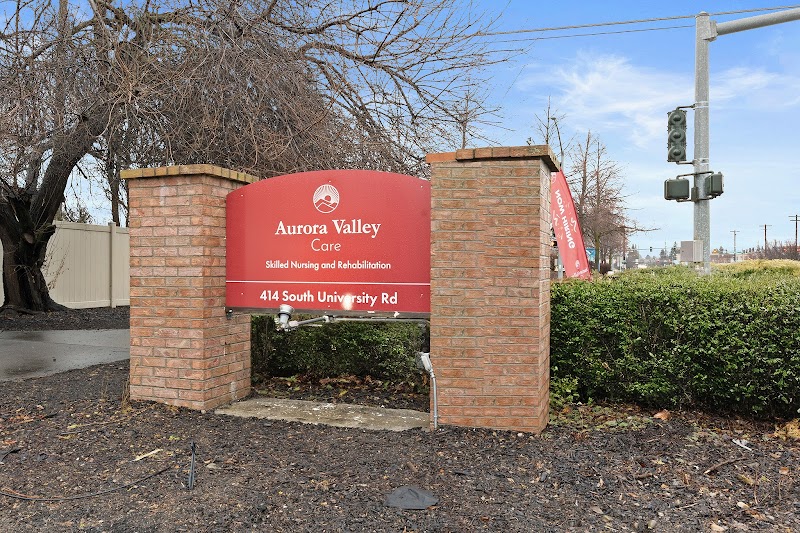
AURORA VALLEY CARE

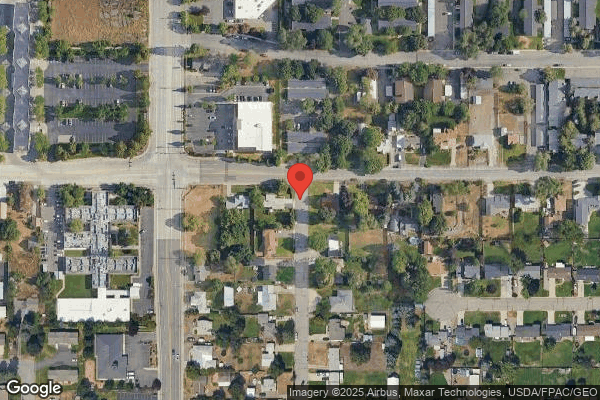
414 S UNIVERSITY RD, SPOKANE, WA 99206 (509) 924-4650
For profit - Limited Liability company 124 Beds CALDERA CARE Data: November 2025
Trust Grade
0/100
#163 of 190 in WA
Last Inspection: June 2024

Within standard 12-15 month inspection cycle. Federal law requires annual inspections.

Overview

Aurora Valley Care has received a Trust Grade of F, which indicates significant concerns and poor performance overall. It ranks #163 out of 190 facilities in Washington, placing it in the bottom half of state options and #13 out of 17 in Spokane County, meaning only a few local facilities are worse. While the trend is improving, with a drop in reported issues from 42 in 2024 to just 5 in 2025, the facility still faces serious challenges, including 106 total issues identified during inspections, with five being serious and potentially harmful. Staffing is a concern, as it has a below-average rating of 2 out of 5 stars, with a high turnover rate of 62%, compared to the state average of 46%. Additionally, the facility has accumulated $162,237 in fines, indicating compliance issues, and there is less RN coverage than 94% of Washington facilities, which is a critical concern for resident care. Specific incidents include a failure to schedule timely dental care for a resident suffering from ongoing mouth pain and a case of verbal abuse that left another resident feeling unsafe and anxious. Overall, while there are some positive trends, the facility's serious deficiencies and troubling performance metrics warrant careful consideration by families.

Trust Score
F
0/100
In Washington
#163/190
Bottom 15%
Safety Record
High Risk
Review needed
Inspections
Getting Better
42 → 5 violations
Staff Stability
⚠ Watch
62% turnover. Above average. Higher turnover means staff may not know residents' routines.
Penalties
✓ Good
$162,237 in fines. Lower than most Washington facilities. Relatively clean record.
Skilled Nurses
⚠ Watch
Each resident gets only 24 minutes of Registered Nurse (RN) attention daily — below average for Washington. Fewer RN minutes means fewer trained eyes watching for problems.
Violations
⚠ Watch
106 deficiencies on record. Higher than average. Multiple issues found across inspections.
★☆☆☆☆
1.0
Overall Rating
★★☆☆☆
2.0
Staff Levels
★★★★☆
4.0
Care Quality
★☆☆☆☆
1.0
Inspection Score
Stable
2024: 42 issues
2025: 5 issues

The Good

  • 4-Star Quality Measures · Strong clinical quality outcomes
  • Full Sprinkler Coverage · Fire safety systems throughout facility
  • No fines on record

Facility shows strength in quality measures, fire safety.

The Bad

1-Star Overall Rating

Below Washington average (3.2)

Significant quality concerns identified by CMS

Staff Turnover: 62%

16pts above Washington avg (46%)

Frequent staff changes - ask about care continuity

Federal Fines: $162,237

Well above median ($33,413)

Significant penalties indicating serious issues

Chain: CALDERA CARE

Part of a multi-facility chain

Ask about local staffing decisions and management

Staff turnover is elevated (62%)

14 points above Washington average of 48%

The Ugly 106 deficiencies on record

5 actual harm
Sept 2025 2 deficiencies
CONCERN (E) 📢 Someone Reported This

A family member, employee, or ombudsman was alarmed enough to file a formal complaint

Potential for Harm - no one hurt, but risky conditions existed

ADL Care (Tag F0677)

Could have caused harm · This affected multiple residents

**NOTE- TERMS IN BRACKETS HAVE BEEN EDITED TO PROTECT CONFIDENTIALITY** Based on observation, interview, and record review, the facility failed to consistently provide assistance with bathing, nail ca...

Read full inspector narrative →
**NOTE- TERMS IN BRACKETS HAVE BEEN EDITED TO PROTECT CONFIDENTIALITY** Based on observation, interview, and record review, the facility failed to consistently provide assistance with bathing, nail care, and eating for 7 of 9 sampled residents (Residents 5, 7, 17, 19, 29, 43 and 48) reviewed for activities of daily living (ADLs) for dependent residents. Those failures placed the residents at risk for diminished quality of life and unmet care needs. Findings included… <Resident 29> The 09/03/2025 quarterly assessment documented Resident 29 was cognitively intact to make decisions regarding their care, and had diagnoses which included stroke and diabetes. In addition, the assessment documented the resident needed assistance from nursing staff to complete ADLs for personal hygiene tasks such as nail care. On 09/03/2025 at 3:49 PM, Resident 29 was observed lying in bed watching television and eating a chocolate snack cake with their left hand. The fingernails of both hands were observed to be long with black debris underneath them. On 09/05/2025 at 8:56 AM, 10:53 AM, and 1:55 PM, Resident 29 was again observed with long fingernails with black debris underneath them. Additional observations of Resident 29 with long, dirty fingernails were made on 09/08/2025 at 9:05 AM and 11:15 AM. Review of the 03/05/2025 ADL care plan documented Resident 29 was dependent on staff to complete personal hygiene, and interventions informed nursing staff to the resident's nails were to be cleaned as needed on their bath day and trimmed by the nurse. In addition, the skin care plan had interventions implemented on 04/19/2024 that informed the nursing staff that Resident 29 had dry skin and to reduce the risk of injury from scratching, Resident 29's nails were to be kept clean and short. Review of the Treatment Administration Records (TARS) from June 2025 through September 2025 documented diabetic nail care was done weekly, and all nail care during the four-month period reviewed was documented as being refused by Resident 29. On 09/10/2025 at 9:25 AM, Resident 29 was observed lying in bed watching television, the fingernails of both hands were still long with black debris underneath. When asked about the condition of their fingernails being long and dirty, Resident 29 looked at the fingernails on their right hand and stated, “I like manicures, they are nice.” When asked if they ever refused to have their nails cleaned or trimmed, Resident 29 stated, they did not refuse, they liked their nails short, but long enough to be able to open their soda cans. Resident 29 then again stated manicures were nice. In an interview on 09/11/2025 at 10:55 AM, Staff R, Licensed Practical Nurse, stated Resident 29 consistently refused nail care. When asked if other interventions are done when resident refuses nail care, Staff R stated, they try and soak the resident's hands to get them clean, and they inform the provider of the refusals by writing in the communication book. Review of the provider communication books from 06/30/2025 through 09/11/2025 found entries related to Resident 29 refusal of nail care were made on 09/03/2025 and 09/10/2025, no other entries were made. <Resident 48> The 08/11/2025 quarterly assessment documented Resident 48 was cognitively intact to make decisions regarding their care, had diagnoses which included stroke, and needed moderate assistance from nursing staff to complete ADLS for personal hygiene. On 09/03/2025 at 11:47 AM, Resident 48 was observed lying in bed eating pie with their hands. The fingernails of both hands were observed to be long with brown matter underneath them. Subsequent observations of Resident 48 with long, dirty fingernails were made on 09/04/2025 at 10:36 AM, and 1:30 PM, 09/05/2025 at 8:54 AM and 10:51 AM, and 09/08/2025 at 8:59 AM. Review of the ADL care plan, last revised 08/22/2025, found interventions that informed nursing staff of Resident 48's personal hygiene care needs related to bathing, oral care and dressing, but no interventions or instructions related to nail care were included. Review of the nail care record from 08/12/2025 through 09/10/2025 documented no nail care was provided to Resident 48 and during the 30-day time frame, no documentation was found that showed Resident 48 had refused to have nail care done. In an interview on 09/11/2025 at 10:42 AM, Staff I, Nursing Assistant, stated nail care was done on a resident's bath day, or as needed, unless they were diabetic, and then the nurses did the nail care. In an interview on 09/11/2025 at 10:59 AM, Staff R, Licensed Practical Nurse, stated Resident 48 had recently transferred to the unit from the short stay unit, would refuse cares at times, and refusals should be documented when it occurred. In an interview on 09/11/2025 at 12:27 PM, when informed of the concern related to nail care not being provided consistently for Residents 29 and 48, Staff E, Resident Care Manager, stated they were not aware there was an issue. In an interview on 09/12/2025 at 11:21, Staff B, Director of Nursing, stated the facility expectation was that nail care was completed and documented and when a resident refused, then it was reoffered and followed up on. <Resident 17> The 08/25/2025 comprehensive assessment documented Resident 17 had diagnoses that included paralysis on one side of the body from a stroke and contractures (shortening or hardening of muscles that led to joint immobility). The resident was cognitively intact and required partial staff assistance for personal hygiene and substantial assistance for showering/bathing. The 08/19/2025 care plan documented Resident 17 had a self-care deficit; required extensive assistance of 1 staff for bathing twice weekly and set-up assistance for personal hygiene. The active KARDEX (Nursing Assistant, NAC, care instructions) documented Resident 17 was to be showered twice weekly. The care plan and the KARDEX did not have instructions or interventions for nail care for the resident. A provider progress note dated 08/20/2025 documented Resident 17 was slumped over in bed, was disheveled and withdrawn with minimal eye contact. The resident's left upper extremity was contracted with overgrown fingernails. They noted they were going to request nursing to trim. The resident was moderately uncooperative. A review of the NAC nail care task from 08/19/2025 through 09/04/2025 showed Resident 17 had no nail care. There were no refusals documented. The NAC shower task documentation showed Resident 17 was showered on 08/28/2025, and on 09/04/2025. The resident refused showers on 09/01/2025 and 09/08/2025. On 09/03/2025 at 9:50 AM, Resident 17 was observed in their room in their wheelchair. Their hair was uncombed, and their fingernails were long, jagged, and had dark brown/black material under them. Additional observations of the resident's jagged fingernails with dark matter under them were made on 09/05/2025 at 8:15 AM and 12:12 PM, 09/08/2025 at 9:10 AM, 09/10/2025 at 9:57 AM, and 09/11/2025 at 10:26 AM. On 09/05/2025 until the survey exit, Resident 17 was supervised by a NAC 1 to 1 for the resident's safety. On 09/11/2025 at 10:26, Staff T, NAC, stated they had not offered to clean Resident 17's nails on 09/10/2025 or 09/11/2025 when they sat with the resident 1 to 1. They stated they noticed the nails were dirty. Staff T stated they were going to give Resident 17 a shower and would provide nail care at that time. Resident 17 requested to have their beard shaved off during their shower as well; they stated they'd like it shaved once more before they grew it out for the winter. On 09/12/2025 at 1:10 PM, Resident 17 was observed; their fingernails had been clipped. There continued to be dark matter under the nails. They had been shaved as requested. On 09/12/2025 at 1:15 PM, Staff U, NAC, stated they were aware Resident 17 needed their nail care done since the resident first came to the facility. They stated nail care was done on shower days or if needed. They were unsure why the resident's nails had been clipped but not cleaned underneath. If a resident refused care, the refusal was documented in the NAC tasks. <Resident 5> The 08/16/2025 quarterly assessment documented Resident 5 had diagnoses that included a stroke, diabetes and seizures. The resident was able to make their needs known and required total assistance for bathing. In an interview on 09/03/2025 at 11:52 AM, Resident 5 stated they were not getting their showers twice a week. The 02/07/2024 care plan documented Resident 5 required extensive assistance for bathing twice weekly and as needed. The shower task documentation reviewed from 07/01/2025 through 09/04/2025 showed Resident 5 was showered on 07/02/2025, 07/05/2025, 07/12/2025, 07/16/2025, 07/26/2025, 07/30/2025, 08/02/2025, 08/09/2025, 08/24/2025, 08/27/2024 and 09/04/2025, not consistently twice weekly as care planned. <Resident 43> The 08/21/2025 quarterly assessment documented Resident 43 had diagnoses that included heart failure, dementia, and diabetes. The resident was able to make their needs known and required partial to moderate assistance for bathing and extensive assistance with nail care. In an observation 09/03/2025 at 12:05 PM, Resident 43 was sitting in their wheelchair in the doorway of their room. The resident's shirt was soiled and they only had a brief on. Resident 43's nails were very long. In an observation on 09/04/2025 at 11:21 AM, Resident 43 was sitting on the edge of their bed with a strong body odor. The resident's nails remained long, and they stated they did not like their nails that way. When Resident 43 was asked if they would allow staff to cut their nails, they stated they would. In an observation on 09/05/2025 at 9:38 AM, Resident 43 was sitting in their wheelchair. The resident was wearing the same shirt from the prior day, their nails were long, and their hair was unclean. Similar observations of Resident 43 with long nails were made on 09/08/2025 at 8:51 AM and 09/09/2025 at 9:33 AM. The 11/11/2024 care plan had a goal of the resident would be neat, clean and well groomed daily. The care plan instructed nursing staff to assist with bathing and personal hygiene. The shower task documentation reviewed from 07/01/2025 through 09/04/2025 showed Resident 43 was showered twice weekly in July with exception of 07/06/2025 to 07/13/2025, 07/16/2025 said refused and the next shower was given on 07/20/2025. In August the resident was showered on 08/02/2025, 08/09/2025, 08/13/2025, 08/20/2025 said non applicable, 08/24/2025, 08/27/2024 stated resident refused, and the next shower was on 09/04/2025, not consistently twice weekly as care planned. The nail care documentation in the Medication Administration Record showed Resident 43 had nail care completed weekly. In an observation on 09/12/2025 at 2:23 PM, Resident 43 held out their hands and showed their nails were trimmed and stated they were happy about it. <Resident 7> The 07/17/2025 quarterly assessment documented Resident 7 had diagnoses that included Multiple Sclerosis (a disease that damaged nerves and disrupted the communication between the brain and body) and anxiety. The resident was able to make their needs known and required substantial to maximum assistance for bathing. In an observation and interview on 09/11/2025 at 8:59 AM, Resident 7 was lying in bed and their hair was greasy. The resident stated it had been a while since they had a shower and said they had body odor and smelled. The resident stated they were told there were no towels or washcloths. The resident added they bathed themselves and all the staff had to do was supervise, so there was no reason they should not be able to shower. The 12/16/2025 care plan instructed nursing staff to assist the resident with bathing. The shower task documentation reviewed from 07/01/2025 through 09/04/2025 showed Resident 5 was showered on 07/02/2025, 07/05/2025, refused 07/09/2025, 07/16/2025 and 07/19/2025 stated non applicable, res was given a shower on 07/20/2025, 07/23/2025, 07/26/2025, 07/30/2025 stated resident refused, resident had a shower on 08/02/2025, refused on 08/06/2025, had a shower on 08/09/2025, 08/13/2025, shower on 08/16/2025 said refused, had a shower on 08/20/2025, 08/23/2025, refused on 08/27/2025, 08/30/2025 said non applicable and the next shower on 09/09/2025 said refused. In an interview on 09/08/2025 at 11:52 AM, Staff U, Nursing Assistant, stated they tried to complete nail care when they could and if the resident was diabetic they notified the nurse. Staff U stated ideally the residents got two showers per week, but showers did not happen near as often as they needed to be and this was related to inadequate staffing. Staff U stated occasionally they had a shower aide and would benefit from a permanent shower aide. Staff U stated it was important to provide nail care and showers for infection control, hygiene and dignity. In an interview on 09/08/2025 at 12:00 PM, Staff D [NAME], Registered Nurse, stated they thought showers were given three times per week and the nurse did diabetic nail care. In an interview on 09/08/2025 at 12:30 PM, Staff B, Director of Nursing, stated showers were given per the resident's preference, generally twice per week and nail care was done with weekly skin checks or during their shower. Staff B stated it was important to do routine bathing and nail care for cleanliness and dignity. Staff B added if the resident refused cares it was documented and a refusal sheet was filled out and placed in the medical record. <Resident 19> The 07/23/2025 quarterly assessment documented Resident 19 had diagnoses that included dementia and failure to thrive. The resident had severe cognitive impairments and required partial to moderate assistance for bathing and set up and clean up assistance with eating. In an observation on 09/03/2025 at 10:22 AM, Resident 19 was sitting in their wheelchair in their room with a glass of juice. The juice had spilled on the tray table, and the resident was wiping it with a paper towel and was confused. In an observation on 09/05/2025 at 12:08 PM, Resident 19 was sitting in the dining room with a bowl of soup in front of them. The resident held the spoon in the same position, was not moving their hand and no staff assisted them to eat. In an observation on 09/10/2025 at 8:45 AM, Resident 19 was sitting in the dining room eating breakfast. The resident used their fingers to feel around the plate for food and when they found food they placed it on their fork, no staff member was assisting the resident to eat. At 9:06 AM, Resident 19 sat at the table with another resident and Staff Z, Nursing Assistant. The resident had nasal drainage that hung approximately two inches out of their nose over their plate of food. Staff Z got up and assisted the other resident away from the table but did not assist Resident 19 with their nose. In an observation on 09/11/2025 at 8:35 AM to 8:42 AM, Resident 19 sat at a dining room table consuming breakfast. The resident's nose was dripping, and they continued eating and consuming fluids and the nasal drainage came in contact with their cup and spoon. The staff did not assist the resident until 8:43 AM with the nasal drainage. Resident 19 used their fingers to feel around their plate for food and placed the food into their mouth when they found it and was not assisted by staff. At 8:52 AM, the resident was trying to scoop food off the tablecloth. In an observation on 09/11/2025 at 12:52 PM, Resident 19 was sitting in the dining room and was taking small bites of food. The resident then tried to scoop some food and rubbed their butter knife against their fork and was unable to put the food onto the utensils. Resident 19 then lifted an empty spoon to their mouth, no staff assisted the resident. At 12:59 PM, Staff I, Nursing Assistant, walked over to the resident, looked at them and walked away. At 1:01 PM, Staff GG, Restorative Aide, asked Staff I to tell Resident 19 to take a bite because they were not getting anything on their spoon. Staff I told the resident not to use their hands and to use the spoon. In an interview on 09/11/2025 at 2:04 PM, Staff NN, Nursing Assistant, stated they looked at the care plan to know what care the residents needed. Staff NN stated if a resident was feeling around their plate with their fingers they should have been assisted to eat. Staff NN stated if they saw a resident with nasal drainage they would immediately assist them. In an interview on 09/11/2025 at 2:16 PM, Staff OO, Licensed Practical Nurse, stated residents required assistance with eating when they could not feed themselves, had poor coordination or problems with swallowing. Staff OO stated residents who feel around their plate for food may have vision problems and needed assistance with eating. Staff OO stated staff needed to intervene when a resident had nasal drainage during the meal service. In an interview on 09/11/2025 at 2:20 PM, Staff A, Administrator, stated residents required assistance with eating if they showed a change in their abilities. Staff A stated the staff needed to intervene when a resident put their fingers in their plate and felt around for food and had nasal drainage as they had assisted the resident multiple times with this and it was a dignity issue. Staff A added Resident 19 needed someone sitting with them or near them to assist them with meals. Reference: WAC 388-97-1060 (2)(c)
CONCERN (F) 📢 Someone Reported This

A family member, employee, or ombudsman was alarmed enough to file a formal complaint

Potential for Harm - no one hurt, but risky conditions existed

Safe Environment (Tag F0584)

Could have caused harm · This affected most or all residents

**NOTE- TERMS IN BRACKETS HAVE BEEN EDITED TO PROTECT CONFIDENTIALITY** Based on observation, interview, and record review, the facility failed to provide an adequate supply of bed linens, gowns, towe...

Read full inspector narrative →
**NOTE- TERMS IN BRACKETS HAVE BEEN EDITED TO PROTECT CONFIDENTIALITY** Based on observation, interview, and record review, the facility failed to provide an adequate supply of bed linens, gowns, towels and washcloths to ensure residents were maintained in a clean, comfortable, dignified manner for 15 of 15 sampled residents (Residents 4, 12, 63, 72, 77, 29, 48, 21, 31, 34, 38, 46, 19, 27, and 43 ) reviewed for safe, clean, homelike environment. In addition, the facility failure to ensure room temperatures for rooms 29 through 39 on the Southeast unit were at safe and comfortable levels. In addition, Resident 19 and 43's wheelchairs were not maintained in a clean manner. Those failures placed residents for potential decreased quality of life and care. <Resident Council> During a Resident Council meeting on 09/05/2025 at 10:58 AM to 12:08 PM when informed the previous three months of Resident Council minutes had been reviewed, attendees were asked if shortage of linen and/or missing clothing continued to be an issue, all residents (Resident 38, 21, 31, 34, and 46) replied in unison, “yes”. Resident 21 stated clothes don't come back from the laundry and Resident 46 stated there were afraid to sent a pillow and blanket to laundry for fear it would not be returned. Resident 38 stated it usually took a couple days for laundry to return, and they asked for linen when it first came back in order to have clean sheets. In an interview on 09/10/2025 at 9:20 AM, Staff AA, Nursing Assistant, stated there had been issues with linen running out and they did their best with what they had available. Staff AA stated the facility had changed to a new laundry service provider on 09/02/2025 and they were hoping it fixed the issues. When asked about missing personal clothing, Staff AA stated they were aware of this being an issue in the past, it was part of the problem with the other facility doing the laundry, but was not aware of any recent issues. In an observation and interview on 09/10/2025 at 3:59 PM, Staff J, Nursing Assistant, was observed at the linen supply cabinet on the Northwest Unit. Staff J stated there was no linen, nothing, and walked down the hall. <Resident 4> During an interview on 09/10/2025 at 9:29 AM, Resident 4 stated that the facility did not have enough bed linens. They reported at times they did not have a bottom sheet, or they had to use ones that were “slightly soiled”. Resident 4 stated that one time staff couldn't find a top sheet, so ended up using three pillowcases instead, one covering each leg and another across their front. They stated the facility started using a new laundry service, but they had not seen any improvement. <Resident 12> On 09/10/2025 at 9:28 AM, Resident 12 was observed lying in their bed, watching TV. Resident 12 stated they were still in bed because staff couldn't find a sling (fabric sling used with a mechanical lift) to get them up. Resident 12 further stated they liked being up in their wheelchair and were not happy about still being in bed. During an interview on 09/10/2025 at 10:33 AM, Staff Z, Nursing Assistant (NA) confirmed that the reason Resident 12 was still in bed was because they couldn't find a sling to get them up. Staff Z further reported that only few draw sheets and blankets were delivered, and low linen supply was an ongoing issue. Resident 12 was not observed out of their room on 09/10/2025 while the survey team was in the facility. <Resident 72> During a resident representative telephone interview on 09/09/2025 at 2:53 PM, Resident 72's representative stated that there were not enough linens. They stated that several days after the Resident's admission, Resident 72 went to the shower room to bathe. They requested towels so they could dry off and was given two hand towels. Resident 72's representative stated after that, they had to bring in bath-sized towels from their home for Resident 72 to use while they resided at the facility. <Resident 77> During an observation and interview on 09/03/2025 at 3:32 PM, Resident 77 was observed resting in their bed. They stated that for whatever reason, the facility frequently ran out of linens and gowns. Resident 77 stated the previous night at around midnight they accidentally spilled water on their bed and all there was to replace the fitted sheet was a flat sheet. The resident's mattress was observed to be uncovered from the waist up, and the flat sheet was loose, wrinkled and bunched up underneath them. Resident 77 stated that all the staff were able to find during the night and there were no sheets yet to replace the flat sheet. On 09/08/2025 at 11:37 AM, two men were observed distributing clean linens from a large rolling cart. The linen was wrapped in cellophane clear wrap in small bundles and included towels, washcloths, and bath blankets and sheets. They stated the facility just started laundry service with their company about one week prior and laundry was delivered to the facility twice weekly. They stated on their first delivery the par levels were too low and had to be increased for the next delivery. They noted that the supplier had been in discussions with the facility as it is estimated the facility needed three times the number of linens than they were currently allocated, which was part of why the facility ran out. They were unsure what services their company would be providing going forward. In an interview and observation on 09/08/2025 at 3:43 PM, Resident 77 was lying in bed. The resident stated they had no clothes and were told they were sent out to be washed. The resident stated they were kept in briefs because they had no gowns, no sheets and did not have a pillowcase for the pillow that was between their knees. In an observation and interview on 09/09/2025 at 11:44 AM, Resident 77 was lying in bed. Resident 77 stated they still did not have any clothes and were wearing a brief. In an interview and observation on 09/10/2025 at 9:35 AM, Resident 77 stated they still did not have any clothes and were wearing a brief. The resident stated they spoke to the nursing supervisor, and they were going to check on it, but they never heard back from them. In an interview on 09/11/2025 at 3:17 PM, Staff A, Administrator, stated they were aware there was a shortage of linens, and it had been a consistent issue. Staff A stated their sister facility had been doing their laundry for the past 25 years. Staff A stated they had complaint investigations due to lack of linen, and it had been subpar service. Staff A stated they have worked with corporate over the past two months to outsource their linen to alleviate concerns and stated it was a work in progress. Staff A stated the only way they would be sustainable was to bring laundry in house. When Staff A was asked how the lack of linens impacted the residents, they stated it posed a barrier for showers, a homelike environment and it was a dignity issue. On 09/04/2025, a review of the Resident Council minutes showed the following concerns were expressed: - on 07/28/2025, towels were dirty and other laundry that returned from being washed did not smell clean. Resident 34 reported missing her personal big towel, 3 washcloths and a white bandana. -on 08/25/2025, bedsheets were not changed for two weeks due to low linen supply and there were a lot of missing clothes. <Resident 38> In an interview on 09/04/2025 at 9:30 AM, when asked if they had any concerns about their cares, Resident 38 stated the facility run out of linen, you need to time your bathing, so you get clean sheets. Resident 38 further the laundry was done at their sister facility and that was why they often ran out of linen. In an observation of the activity room on 09/04/2025 at 2:01 PM, a bingo activity had just ended and Staff QQ, Life Enrichment Assistant, stated there was urine on the floor and they were trying to locate towels, they didn't have any. <Resident 29> On 09/05/2025 at 8:56 AM, Resident 29 was observed lying in bed eating breakfast. The top sheet covering the resident was observed to have several large brown stains surrounded by brown circles. Similar observations of the top sheet being soiled were made that same day at 9:59 AM and 10:53 AM. On 09/08/2025 at 9:05 AM and 11:15 AM, Resident 29 was observed sleeping in bed covered by a grey and white blanket, no top sheet was in place. <Resident 48> On 09/05/2025 at 8:54 AM, Resident 48 was observed lying in bed talking on the phone. The top sheet covering the resident was observed to have several brown stains. At 1:52 AM that same day, Resident 48 was observed sleeping in bed, the top sheet continued to have brown stains. On 09/08/2025 at 8:59 AM, Resident 48 was observed lying in bed covered only with a black and white blanket, no top sheet or facility blanket was present. When complimented on the blanket, Resident 48 stated, it isn't mine, they brought it because I was cold. When asked if there were sheets or blankets available, Resident 48 stated they didn't know, the staff just brought the blanket belonging to another resident after telling them it was cold. <Resident 63> During a resident representative telephone interview on 09/11/2025 at 9:58 AM, Resident 63's representative stated they informed the Administrator that staff had not been putting a sheet on their family member's bed and were informed they had a shortage of sheets. The resident representative stated the aides told them the linen was not sent out and all they had was pillowcases. They are putting something under my family member now but still do not have sheets all the time for their bed. <Safe and comfortable temperatures> During an observation of the Southeast unit on 09/03/2025 at 11:29, rooms [ROOM NUMBER] were observed to have the doors closed and the entryway blocked off with caution tape across the doors. In an interview on 09/03/2025 at 11:33 AM, Resident 48 stated the room was too hot at times and it made it difficult to sleep. A fan was present on the floor across from the bed. On 09/03/2025 at 11:57 AM, an outside pest control provider was observed standing by room [ROOM NUMBER]. When asked why the rooms were taped off, the pest control provider stated room [ROOM NUMBER] was found to have bed bugs and the adjacent rooms [ROOM NUMBERS] would be heat treated as preventive measures. When asked what the process was, the provider stated the rooms would be heated to 150 degrees from 9:45 AM until 2:45 PM and then a chemical treatment would be applied, and afterwards, residents could return to their rooms. Observation showed there were 13 residents residing on the unit from rooms 29 through 39 that would potentially be affected by the increased in room temperatures caused by the heat treatment. In a follow-up interaction with Resident 48 on 09/03/2025 at 2:18 PM, the room temperature was observed to be very warm and uncomfortable. Observation of the Southeast unit on 09/03/2025 at 2:19 PM showed multiple fans placed in the hallways, the hallway was very hot and uncomfortable. Review of the resident census roster on 09/03/2025 showed there were 19 empty rooms on the Northeast unit. On 09/03/2025 at 2:21 PM, Staff O, Maintenance Director, was informed the temperature in the hallway and resident rooms on the Southeast unit felt very hot. Staff O confirmed the rooms [ROOM NUMBER] were being heat treated due to bed bugs. Staff O walked down the hallway, acknowledged that temperature was hot, and at request of surveyor, temperatures were taken. Temperatures in Fahrenheit were as follows: - room [ROOM NUMBER] entry was 86.6 degrees - room [ROOM NUMBER] entry was 86.4 degrees - hallway by room [ROOM NUMBER] was 96 degrees, inside room [ROOM NUMBER] it was 94.2 degrees - hallway by room [ROOM NUMBER] was 85.7 degrees - room [ROOM NUMBER] entry was 85.6 degrees - hallway by room [ROOM NUMBER] was 89.4 degrees The temperature outside on 09/03/2025 was recorded at 103 degrees per the local weather station. In a follow-up interview at 2:56 PM, Staff O informed the survey team that the last heat treatment was completed, and the chemical treatment would start. Staff O stated the temperatures should start to decrease to more normal levels. In an observation of the Southeast unit hallway on 09/03/2025 at 3:44 PM, the temperature felt cooler and was more comfortable. In an interview on 09/12/2025 at 1:41 PM, Staff A, Administrator, was informed of the concern with the high temperatures on the Southeast unit during the heat treatment for the bed bugs and was asked if there were any discussions about moving residents to the Northeast unit. Staff A stated there was room on the Northeast unit to accommodate the residents, but there were no discussions about moving them since the treatment was short in duration and hydration rounds and fans were implemented. <Wheelchairs> <Resident 19> In an observation on 09/03/2025 at 10:22 AM, Resident 19 was sitting in their wheelchair, and it was unclean with food debris on the legs, foot pedals, and cushion. In an observation on 09/04/2024 at 11:27 AM, Resident 19 was sitting in their wheelchair across from the nurse's station. The wheelchair was unclean with food debris and there was blue foam affixed to the left wheelchair leg with cloth tape, not a cleanable surface. Similar observations of Resident 19's wheelchair being unclean with the blue foam padding were made on 09/05/2025 at 11:09 AM and 12:58 AM, 09/08/2025 at 8:43 AM, 10:21 AM and 3:39 PM, 09/09/2025 at 11:51 AM and 1:48 PM, and 09/10/2025 at 9:24 AM. <Resident 43> In an observation on 09/03/2025 at 12:05 PM, Resident 43 was sitting in their wheelchair, and it was unclean with debris on the legs and wheels. Similar observations of Resident 43's wheelchair with debris on the legs and wheels were made on 09/04/2025 at 11:21 AM, and on this day the cushion was unclean with white splatter, 09/11/2025 at 9:02 AM, 09/12/2025 at 9:00 AM and on this day there was brown matter on the cushion, and 09/15/2025 at 9:27 AM and the cushion remained with brown matter. In an interview on 09/11/2025 at 11:32 AM, Staff I, Nursing Assistant, stated the Nursing Assistants were in charge of cleaning the wheelchairs and thought they were cleaned after showers or on night shift. Staff I stated it was important to clean the wheelchairs for dignity. Staff I entered the room and observed Resident 19's wheelchair and stated it needed to be put in the shower and cleaned. In an interview on 09/11/2025 at 11:36 AM, Staff D, Registered Nurse, stated the Nursing Assistants were responsible for cleaning the wheelchairs. In an interview on 09/11/2025 at 11:56 AM, Staff A, Administrator, stated night shift cleaned the wheelchairs nightly and it was important to keep the wheelchairs clean for dignity and infection control. <Drywall> In an observation on 09/03/2025 at 10:52 AM, Resident 27 was lying in bed. There were multiple gauges out of the wall to the left of the resident's bed when you entered the room. Similar observations of Resident 27's drywall in disrepair were made on 09/03/2025 at 2:57 PM, 09/04/2025 at 11:18 AM, 09/08/2025 at 12:15 PM, 09/09/2025 at 1:44 PM, and 09/10/2025 at 9:26 AM. In an interview on 09/10/2025 at 3:08 PM, Staff O, Maintenance Director, stated they noticed when they came to the facility there were no bumpers on the walls to stop the beds from being pushed up against the walls and rubbing the paint. At 3:24 PM that same day, Staff O stated they were notified through the computer or verbally for the needed repairs and were not notified the room needed repaired. Staff O stated the room needed to be painted and it was important to maintain the rooms because this was the resident's home. In an interview on 09/11/2025 at 3:17 PM, Staff A stated a room that had peeling paint was not a homelike environment. Staff A stated their expectation was for the paint to remain intact on the walls and patch work completed in a timely manner. Staff A stated it was a potential dignity issue for the residents. <Malodorous Smell> On 08/28/2025 at 8:21 AM, the State Reporting Agency received an intake from a public complainant that the upkeep of the facility was not maintained as it smelled of urine. On 09/03/2025 at 8:30 AM, the facility was entered for the recertification survey. When going down the hall by resident room [ROOM NUMBER], 43, and 45, there was a faint smell of urine and a sour musty smell noted. During a telephone interview on 09/09/25 at 2:53 PM, a family representative for Resident 72 stated they smelled urine when they entered the facility to visit. The smells in the hall by rooms [ROOM NUMBER] were present during the entire recertification survey, more pronounced in the mornings. In an observation on 09/03/2025 at 10:52 AM, Resident 27 was lying in bed and their hair was greasy. In an observation on 09/08/2025 at 8:48 AM, Resident 27 was lying in bed and there was a strong body odor smell in the room. At 3:41 PM, the odor was notable from the hallway. Similar observations of the strong odor were made on 09/09/2025 at 1:44 PM, 09/10/2025 at 9:26 AM, and 09/11/2025 at 9:10 AM. In an interview on 09/10/2025 at 3:27 PM, Staff N, Housekeeping Director, stated the rooms were cleaned daily and if they noticed a foul odor in a room, they would inspect the room for feces or urine and would have the Nursing Assistants clean it. When asked how often the mattresses were changed out, Staff N stated maintenance oversaw that. Staff N stated they had not had any reports of Resident 27's room having a foul smell but sometimes the hall smelled, and they sprayed a deodorizer. In an interview on 09/10/2025 at 3:42 PM, Staff LL, Housekeeper, stated Resident 27's room had a smell and thought it was urine and the bedding. Staff LL stated they wiped the bed down when the resident was not in bed. In an interview on 09/10/2025 at 3:44 PM, Staff MM, Nursing Assistant, stated if they noticed a strong odor in a resident's room they would check to see if the resident needed care and if they could not figure out the odor, they notified housekeeping and maintenance. In an interview on 09/10/2025 at 3:48 PM, Staff B, Director of Nursing, stated mattresses could be changed out anytime and were not sure how often they were wiped down. Staff B stated they had not noticed an odor in Resident 27's room. Staff B added Resident 27 occasionally refused to be changed and showered. At 4:06 PM, Staff B stated anyone that saw the mattress unclean was responsible for wiping it down. Staff B stated the Resident Care Manager went into the room and sanitized the mattress and they were going to get the resident a new mattress. Reference: WAC 388-97-3220 (1)
Feb 2025 3 deficiencies
CONCERN (D) 📢 Someone Reported This

A family member, employee, or ombudsman was alarmed enough to file a formal complaint

Potential for Harm - no one hurt, but risky conditions existed

Comprehensive Care Plan (Tag F0656)

Could have caused harm · This affected 1 resident

**NOTE- TERMS IN BRACKETS HAVE BEEN EDITED TO PROTECT CONFIDENTIALITY** Based on interviews and record review, the facility failed to revise and implement a comprehensive plan of care to included resi...

Read full inspector narrative →
**NOTE- TERMS IN BRACKETS HAVE BEEN EDITED TO PROTECT CONFIDENTIALITY** Based on interviews and record review, the facility failed to revise and implement a comprehensive plan of care to included resident specific information for 1 of 3 residents (Resident 1). The failure to establish and implement a care plan that was individualized, accurately reflected assessed care needs related to their ability and need for assistance to eat and provided direction to staff on this topic, placed the resident at risk to receive inappropriate and inadequate care to meet their individualized needs and preferences. Findings included . Review of Resident 1's electronic medical record showed that they admitted to the facility on [DATE] with diagnoses of right sided hemiplegia (almost complete paralysis of one side of body) and hemiparesis (weakness on one side of body) following a stroke, malnutrition and wounds on their left foot. Review of Resident 1's care plan dated 12/06/2024 showed they ate independently (did not need any assistance to eat). Review of progress notes showed that nurses who worked with Resident 1 wrote that the resident had a hard time or was unable to feed themselves while in bed and required assistance. This was noted in progress notes on: 12/07/2024 at 4:15 PM needs to be fed. 12/08/2024 at 3;32 AM requires assistance with meals . 12/08/2024 at 6:16 PM Is fed puree diet . 12/12/2024 at 5:27 PM Will feed self when up, wants to be fed when in bed. 12/17/2024 at 10:37 PM Wants to be fed pm meal while in bed. 12/18/2024 at 9:42 PM Is requesting/requiring to be fed by staff although [they] are quite capable to do this task. 12/21/2024 at 1:43 PM Resident requires to be fed. 12/22/2024 at 9:43 AM Resident requires to be fed. 12/23/2024 at 10:31 AM Resident requires to be fed. 12/27/2024 at 9:40 PM Wants to be fed when in bed. 12/28/2024 at 12:28 PM Requests to be fed while in bed but otherwise is able to feed [themselves] when upright in chair. 12/29/2024 at 10:11 AM Requests to be fed while in bed but otherwise is able to feed [themselves] when upright in chair. During an interview with Collateral Contact 1 (CC 1) on 02/21/2025 at 8:04 AM, they stated that when they had visited Resident 1 on several occasions the staff would sit them up in bed and put their food on the bedside table pulled over them and then leave. CC 1 stated that they thought the staff were under the impression Resident 1 could feed themselves when in bed. CC 1 thought the staff was not aware that Resident 1couldn't raise their left arm high enough and lower their head low enough to get food in their mouth without it causing pain when they ate in bed. CC 1 further related that Resident 1 had severe osteoarthritis (a long-term degenerative condition where parts of the joint and surrounding tissues gradually deteriorate causing pain and stiffness) in their left shoulder and a torn rotator cuff (a rip in the group of four muscles that stabilize the shoulder joint and let you lift and rotate your arm) in their left shoulder which made it painful to raise their left arm and their right arm was paralyzed. They further stated that when the resident was positioned upright in a chair, they could lower their head enough to get food in their mouth without it causing too much pain in their left shoulder. Review of Resident 1's hospital history and physical dated 11/27/2024 at 5:14 PM showed the list of diagnosis included injury of left rotator cuff and Osteoarthritis of left shoulder, severe per MRI (magnetic resonance imaging). Review of Resident 1's facility medical record and care plan did not include the above diagnoses. During an interview on 02/21/2025 at 12:14 PM Staff F, Occupational Therapist, stated that they had written an Occupational Therapy goal for Resident 1 to eat independently after setup shortly after they admitted . They further stated that Resident 1 had told them that they needed full assistance to eat when in bed but were able to eat when seated upright in a chair at a table. Staff F further stated that therapy would verbally tell the Resident Care Manager who worked with the specific resident or write a therapy to nursing communication in the resident electronic medical record progress notes with recommendations for positioning. They thought that in this case the communication was verbal as there were not any progress notes in Resident 1's electronic medical record related to this. During an interview on 02/21/2025 at 12:52 PM Staff C, Resident Care Manager, stated that Occupational Therapy would make recommendations for residents they worked with, and the nursing department would put them on the resident care plan. They further stated that Occupational Therapy had come to them and told them to have Resident 1 get out of bed for at least one meal per day and Staff C was aware Resident 1 ate better seated upright at a table. They stated that it was in Resident 1's care plan to get them up for at least one meal a day. Staff C stated that they were not aware of a diagnosis for Resident 1 of left shoulder osteoarthritis or a left rotator cuff tear. Further review of Resident 1's comprehensive care plan, with all revisions included, did not show direction for the best position for Resident 1 to eat, their need for assistance with eating when in bed or any occupational therapy recommendations. Reference WAC 388-97-1020 (1), (2)(a)(b) Refer to F740 and F791 for additional information.
CONCERN (D) 📢 Someone Reported This

A family member, employee, or ombudsman was alarmed enough to file a formal complaint

Potential for Harm - no one hurt, but risky conditions existed

Deficiency F0740 (Tag F0740)

Could have caused harm · This affected 1 resident

**NOTE- TERMS IN BRACKETS HAVE BEEN EDITED TO PROTECT CONFIDENTIALITY** Based on interview and record review, the facility failed to ensure behavioral health needs were met for 1 of 3 residents (Resid...

Read full inspector narrative →
**NOTE- TERMS IN BRACKETS HAVE BEEN EDITED TO PROTECT CONFIDENTIALITY** Based on interview and record review, the facility failed to ensure behavioral health needs were met for 1 of 3 residents (Resident 1) reviewed for behavioral-emotional health. Failure to seek mental health services after the resident was identified in a facility assessment as having symptoms of moderate depression, failure to seek mental health services in a timely manner after the medical provider ordered mental health services to occur, failure to identify behavioral health needs and utilize person-centered interventions developed by an interdisciplinary team (IDT). This failure placed at risk for potential skin injury and decreased quality of life. Findings included . Review of Resident 1's electronic medical record showed that they admitted to the facility on [DATE] with diagnoses of right sided hemiplegia (almost complete paralysis of one side of body) and hemiparesis (weakness on one side of body) following a stroke, mild dementia, anxiety, malnutrition and infected wounds in the bone (osteomyelitis) of their left foot. Review of assessments completed for Resident 1 showed that on 12/09/2025 a depression screen was completed (PHQ-9) by Staff M, Social Services Assistant, with a score of 17, indicating the resident had moderately severe depression symptoms. Further review showed an assessment for cognition (BIMS) on the same day with a score of 13, indicating the resident's cognition was intact. Further review of assessments completed for Resident 1 showed that on 12/06/2024 Staff F, Occupational Therapist, completed a more thorough cognition assessment (SLUMS) which indicated the resident had a mild neurocognitive disorder (mild dementia). The same assessment was completed after the resident was noted to have refusals of care and participation with therapy on 01/13/2025 with a score that indicated dementia, a decline in cognition from the previous assessment. Review of an admit skin assessment dated [DATE] showed the following wounds: 1) Dry, scabbed areas to both inner/upper buttock cheeks. 2) Open area on the left heel. 3) Scabbed over (eschar) wound to left 2nd toe. Review of nursing progress notes from admit 12/05/2024 through 12/11/2024 indicated Resident 1 had some preferences for care but no concerns for refusals of care were noted. Further review of nursing progress notes showed that on: 12/16/2024 at 10:30 AM, Staff N, Licensed Practical Nurse, wrote Resident 1 refuses meds intermittently. 12/16/2024 at 10:39 PM, Staff K, Registered Nurse, wrote, refused to take cipro (antibiotic prescribed to treat bone infection in left foot) and hydralazine (medication to control blood pressure) at bedtime. 12/17/2024 at 10:37 pm, Staff K, wrote, .does not have a good understanding about the need to take [their] antibiotic. Often refuses meds. 12/18/2024 at 9:42 PM, Staff O, Registered Nurse, wrote, .refusing [their] antibiotics on pm shift states [they] can tolerate on days but can't on evenings. They further wrote that the resident was argumentative, it has become a behavior [they are] doing regarding everything staff does for [them] and with [them]. 12/21/2024 at 1:43 PM, Staff P, Licensed Practical Nurse, wrote, .repositioned as much as [they] will allow. 12/22/2024 at 9:43 AM, Staff P, wrote, Resident is non-compliant with repositioning at times. 12/23/2024 at 10:31 AM, Staff P, wrote, .repositioned as much as [they] will allow. 12/27/2024 at 9:40 PM, Staff K, wrote, Will refuse meds at times. 12/28/2024 at 11:53 PM, Staff Q, Registered Nurse, wrote, Writer called to [patient's] room by aide due to [patient] requesting to not be repositioned. [Patient] was educated on the importance of repositioning and [patient] verbalized understanding and refused to be turned at the moment and requested we do not come back in to try to reposition for the rest of the night . 12/29/2024 at 05:56 AM, Staff Q, wrote .did continue to refuse being repositioned. 12/29/2024 at 12:01 PM, Staff C, Resident Care Manager, wrote, becomes very theatrical, waves left arm in air, becomes argumentative [and] irrational, is not receptive to instructions or directions. 12/29/2024 at 1:00 PM, Staff C, wrote, Assistance aborted as [they] are non-compliant and argumentative. 12/29/2024 at 3:38 PM, Staff C, wrote that the residents family came to visit and was concerned about the resident's orientation and behaviors and requested they be sent to the hospital for evaluation. 12/30/2024 at 12:20 PM, Staff P, wrote that the resident had been evaluated at the hospital, was diagnosed with a urinary tract infection. 12/30/2024 at 2:10 AM, Staff P wrote that the resident was refusing care and refusing to turn on their side to take pressure off the wounds on their bottom and foot. Staff P wrote that Resident 1 stated, I can't do anything for myself, and I can't eat anymore. 12/31/2024 at 10:39 AM, Staff R, Licensed Practical Nurse, wrote, .resident refused all medications .resident non-compliant with [Physical Therapy]. 12/31/2024 at 10:14 PM, Staff K, wrote, Resident very angry today, refusing cares .some bleeding noted on [right buttock]. 01/04/2025 at 10:44 PM, Staff K, wrote, 'Has not been eating well of meals today. Will not attempt to feed [themselves], refuses when staff tried to assist [them]. 01/05/2025 at 10:02 AM, Staff P, wrote, Resident refused to eat breakfast then pushed [their] tray of food and drinks onto the floor .[they] are non-cooperative with staff and refuses to let the staff help [them]. 01/07/2025 at 10:32 AM, Staff R, wrote, resident refused breakfast and verbalized [I'm] too disabled to eat encouraged attempt x3. 01/08/2025 at 1:03 PM, Staff R, wrote, resident refuses to consume and drink food on my shift today, attempt x3 . 01/08/2025 at 10:32 PM, Staff K, wrote, Has refused all medications this shift, refusing to eat .family members present part of evening, aware of [their] behaviors, refusals. 01/09/2025 at 10:22 AM, Staff R, wrote, resident refuses to eat, attempt x3 . 01/10/2025 at 10:22 AM, Staff R, wrote, resident refuses to eat, attempt x3 . 01/11/2025 at 9:38 AM, Staff C, wrote, Caregiver and this writer attempted to feed resident, and [they] would turn [their] head away and state, not now. Then ask for a bite or drink, and when selection was offered to [them], [they] again would turn [their] head away and state, not now. 01/12/2025 at 9:26 PM, Staff C, wrote, When in bed resident is encouraged to allow repositioning every [two] hours but [they] have been non-compliant with this .Coccyx (tailbone area) is abraded and sore and wound team will evaluate .Eating/fluid intake is poor and resident states [they] do not have an appetite. 01/12/2025 at 9:39 PM, Staff C, wrote, Coccyx with large area of excoriation [related to] non-compliance with position changes. 01/15/2025 at 5:32 PM, Staff K, wrote, 'Has been refusing to eat, may take 1-2 bites only . 01/16/2025 at 10:33 AM, Staff R, wrote, .resident refused to eat breakfast attempt x3 . 01/16/2025 at 10:13 PM, Staff K, wrote, .has new area of concern on [their] right heel. Review of Resident 1's medication administration record (MAR) for December 2024 showed that they refused antibiotic medications prescribed to treat their left foot bone infection on 10 of 46 administrations. The same MAR also showed refusals to be repositioned 11 of 80 shifts. Review of Resident 1's January 2025 MAR showed all antibiotics to treat the urinary tract infection (can cause confusion in elderly) were administered, with end date of 01/06/2025. Review of Resident 1's physician orders showed on 12/04/2024 an order written, may have psych consult and treatment as needed. On 01/06/2025, Staff I, Advanced Registered Nurse Practitioner (ARNP), wrote an order for Behavioral Health Consult for behaviors; trying to fall out of bed; refusing meals; combative with staff; pulling on [foley catheter]; refusing care one time only for Behavioral disturbances. Review of Medical Provider notes showed that on 12/24/2024, Staff H, ARNP wrote that Resident 1 was refusing medications, had been advised of the need to continue the prescribed medications with risks of not taking the medications being increased blood pressure, stroke, death. It was noted that the resident told the ARNP that [they] don't need anything. The resident was noted to sign a resident choice of medication, treatment, and/or dietary restriction form on 12/25/2024 related to refusal to take one blood pressure medication which was then discontinued. Further review of medical provider notes showed that on 01/06/2025, Staff I, ARNP wrote, behavioral health evaluation ordered due to ongoing staff concerns with patient's labile (unpredictable, uncontrollable and rapid shifts in emotion) behaviors. Further review of medical provider notes showed that on 01/09/2025, Staff I, wrote, Inadequate [by mouth] intake with subsequent 12-pound weight loss since admit. Staff I further wrote, Poor insight and significantly impaired judgement with presence of delusional thinking. Staff I further wrote, Monitor closely for any mood/behavioral changes that may increase patient's risk for unintentional or intentional self-injury. Review of wound care notes from 12/26/2024, 01/02/2025, 01/09/2025 and 01/16/2025 , all written by Staff E, Wound Care Physician Assistant, showed that the resident's heel wound had started to improve but then stalled related to poor food intake and refusals of care, they further noted that the wound on Resident 1's left 2nd toe had declined significantly to the point where there was bone and tendon exposed. They further wrote that on 01/16/2025 they evaluated a new pressure sore on Resident 1's right heel, Patient's left heel is stalled. Left second toe joint and bone exposed. Increase in maceration to the peri (edge) wound. Patient has a high probability of osteomyelitis (bone infection), [they] now [have] a new wound to [their] right heel has a fluid filled blister that is open and unstable .I think it is a good time to discuss with family how they would like to proceed with care. Review of recorded weights for Resident 1 showed that there was a steady decline, with the Dietician and nursing staff aware of the weight loss and adding supplements and a medication to possibly increase appetite on 01/09/2025. Review of weights showed admit weight of 135.8 pounds, low of 120 pounds on 01/10/2025, which rebounded to 127 pounds on 01/30/2025. Review of Resident 1's care plan, dated 12/06/2024, showed the resident ate independently, on 12/23/2024 a focus was added that Resident 1 was resistive to care (with refusals to take medications, eat meals and leave boots on feet to protect their wounds) without personalized interventions to address the resistance. On 01/08/2025 a new focus was added for Resident 1 for experiencing hallucinations, delusions, and/or paranoia that was related to their urinary tract infection (per January MAR a full course of antibiotics was completed on 01/06/2025 and no further treatment or signs or symptoms of a urinary tract infection were mentioned after this), no focus or interventions were present related to the resident's behabior issues, diagnosis of mild dementia, positive depression screen or order for a mental health evaluation (ARNP order on 01/06/2025). During an interview with the resident's Power of Attorney on 02/21/2025 at 8:04 AM, they stated that they were concerned because of Resident 1's dramatic decline physically and mentally. They stated that Resident 1 had a history of anxiety and very mild dementia, but had never had symptoms of depression and had never refused to eat. They stated at the end of the interview that their main concern during Resident 1's stay was their mental decline, [they] seemed to get so much worse. They further stated that their concerns for the residnt's decline had led them and other family members to request the resident be sent to the local hospital on [DATE] and that the resident was still there and did not plan to return to the facility. During an interview with Staff D, Social Services Director, with Staff A, Administrator present, on 02/21/2025 at 12:25 PM, Staff D stated that they did not administer the depression screen for Resident 1, that their assistant, Staff M had completed the assessment. They further stated that when a resident had a score on the assessment indicating they had symptoms of depression the facility process was to ask the resident or their family if they would like behavioral health services. They stated that this would be documented in the resident's electronic health record. They further stated that they had not had this conversation with the resident or their family and if it had occurred it would be documented in a note in the resident's electronic health record. During the same interview Staff D stated that they were not aware of the order on 01/06/2025 for a behavioral health evaluation for Resident 1 and that the provider should tell them or the facility Administrator if such an order was placed. Both the Administrator and Staff D indicated that they had not been notified of the order or the need for Resident 1 to have a behavioral health evaluation. During an interview on 02/21/2025 at 12:52 PM, Staff C, stated that they were not aware of the order for the behavioral health evaluation written on 01/06/2025. They further stated that Resident 1's refusals to eat, take medication, reposition in bed and accept other care seemed to be behavioral. During an interview with Staff A, Administrator on 02/21/2025 at 1:34 PM they stated that they were not aware of the need for Resident 1 to have a behavioral health evaluation, that they had not been notified of the medical provider order and that the behavioral health assessment had not occurred, nor had the referral to behavioral health occurred after the positive depression screen on 12/09/2024. Reference (WAC) 388-97-0960(1) See SOD for 656 and 791.
CONCERN (D) 📢 Someone Reported This

A family member, employee, or ombudsman was alarmed enough to file a formal complaint

Potential for Harm - no one hurt, but risky conditions existed

Dental Services (Tag F0791)

Could have caused harm · This affected 1 resident

**NOTE- TERMS IN BRACKETS HAVE BEEN EDITED TO PROTECT CONFIDENTIALITY** Based on interview and record review, the facility failed to follow-up on necessary dental services for 1 of 3 residents (Reside...

Read full inspector narrative →
**NOTE- TERMS IN BRACKETS HAVE BEEN EDITED TO PROTECT CONFIDENTIALITY** Based on interview and record review, the facility failed to follow-up on necessary dental services for 1 of 3 residents (Resident 1). Failure to follow-up on a referral to a denturist for ill-fitting dentures, that had caused an open sore, placed the resident at increased risk for continued dental problems, difficulty chewing, associated health complications, and diminished quality of life. Findings included . Resident 1 admitted to the facility on [DATE], with diagnoses including right sided weakness and paralysis after a stroke, severe malnutrition, dysphagia (difficulty swallowing) and chronic ulcers of their left foot and heel. Record review showed on 12/08/2024 at 6:16 PM, Staff K, Registered Nurse wrote in a progress note, c/o (complaint of) mouth pain, refuses to take upper denture out. Record review showed on 12/09/2024 10:49 AM Staff L, Transportation Assistant, wrote in a progress note that the first available dental appointment had been made for Resident 1 on 12/13/2024. Record review showed on 12/13/2024 at 8:34 AM Staff L wrote in a progress note that Resident 1's dental appointment was canceled by the dental provider and was re-scheduled for 12/17/2024. Record review showed on 12/17/2024 a dental exam was completed by Staff J, Dentist. They noted the resident reported pain and swelling under their upper denture for more than four weeks. The dentist noted an open sore present at the area where the upper denture fits against the back of the jaw and meets the cheek (buccal vestibule around site #6) and noted that the resident needed their upper denture adjusted. Record review showed on 12/18/2024 at 1:44 PM, Staff C, Resident Care Manager wrote in a progress note that Resident 1 needs to see a Denturist to adjust [their] dentures. No further documentation was found related to the denture adjustment or the mouth sore. In an interview with Staff C on 02/21/2025 at 12:52 PM they stated that they had put in for a denturist appointment and transportation but that they could see from reviewing progress notes that Staff L had not followed up on the request. They further stated that there was no documentation of staff having monitored the sore in the resident's mouth caused by the poorly fitted denture. Staff C stated that Resident 1 had discharged to the hospital from the facility on 01/30/2025. In an interview with Staff B, Director of Nursing, on 02/21/2025 at 1:18 PM they stated that Staff C had requested an appointment be made for Resident 1 but that they could not see any indication that [Staff L] followed up. In an interview with Staff A, Administrator, on 02/21/2025 at 1:34 PM, they stated that the denture appointment for Resident 1 was not followed up on and that Staff L was no longer employed at the facility. Refer to WAC 388-97-1060(1)(3)(j)(vii)
Dec 2024 1 deficiency
CONCERN (D) 📢 Someone Reported This

A family member, employee, or ombudsman was alarmed enough to file a formal complaint

Potential for Harm - no one hurt, but risky conditions existed

Accident Prevention (Tag F0689)

Could have caused harm · This affected 1 resident

**NOTE- TERMS IN BRACKETS HAVE BEEN EDITED TO PROTECT CONFIDENTIALITY** Based on interview and record review the facility failed to identify, evaluate and analyze risks, and implement safety intervent...

Read full inspector narrative →
**NOTE- TERMS IN BRACKETS HAVE BEEN EDITED TO PROTECT CONFIDENTIALITY** Based on interview and record review the facility failed to identify, evaluate and analyze risks, and implement safety interventions to reduce risks and hazards for 2 of 3 sampled residents (Resident 1 and 2), reviewed for accidents related to substance use disorder. This failure placed residents at risk of potentially avoidable accidents, and diminished quality of life. Findings included . Review of the facility policy titled, Substance Abuse-Residents dated 08/2022, defined substance abuse as recurrent use of alcohol and/or drugs that cause clinically and functionally significant impairment, such as health problems or disability. Signs and/or symptoms of substance abuse may include intoxication, decreased inhibition, combative behavior, belligerence, nausea/vomiting, involuntary eye movements, slurred speech, slow movements or poor coordination, tremors, falls, and dizziness. The policy instructed staff to assess residents upon admission and as needed for actual substance abuse and/or history of substance abuse using the Social Services Admission/Discharge Evaluation. A care plan would be initiated which could include interventions of offering and providing resources for counseling and support, monitoring for symptoms of relapse, provided 1:1 for safety if resident was at risk of harming self or others, assure resident had access to community substance use services, assess and develop person centered care plan related to the resident's stressors and triggers to reduce risk of relapse. <Resident 1> Review of Resident 1's electronic medical record showed that they admitted to the facility on [DATE] with diagnoses of COVID-19 and Alcohol use, with an unspecified alcohol-induced disorder. Review of the Resident's facility care plan did not include interventions for substance use disorder. Further review did not show that the resident was identified by the facility as having this type of disorder, and no evaluation and analysis of risks, nor any safety interventions to reduce risks and hazards was found. Review of a facility incident report, generated 11/20/2024, showed that Resident 1 was found to have been intoxicated after experiencing a fall, with an altered level of consciousness and the smell of alcohol present on the resident. The resident was sent to the emergency room for evaluation and was found to have a blood alcohol level of 297 mg/dL, with above 50 mg/dL indicating alcohol ingestion, and a level above 300 mg/dL indicating a critical level of intoxication. Resident 1 stayed at the hospital for observation until 11/22/2024 after which they returned to the facility. <Resident 2> Review of Resident 2's electronic medical record showed that they admitted to the facility on [DATE] with diagnoses of Ankylosing Spondylitis (a type of arthritis characterized by long-term inflammation of the joints of the spine) and opioid dependence. Review of the Resident's care plan did not show interventions for substance use disorder. Further review did not show that the resident was identified by the facility as having this type of disorder, and no evaluation and analysis of risks, nor any safety interventions to reduce risks and hazards was found. During an Interview with Staff A, Administrator, on 12/30/2024 at 1:17 PM, they stated that residents who admit with substance use disorder diagnosis are care planned for their stressors and triggers for relapse. They further stated that residents with these diagnoses also need to be monitored for signs and symptoms of possible intoxication and/or overdose. Reference WAC 388-97-1060 (3)(g)
Dec 2024 2 deficiencies
CONCERN (D) 📢 Someone Reported This

A family member, employee, or ombudsman was alarmed enough to file a formal complaint

Potential for Harm - no one hurt, but risky conditions existed

Free from Abuse/Neglect (Tag F0600)

Could have caused harm · This affected 1 resident

**NOTE- TERMS IN BRACKETS HAVE BEEN EDITED TO PROTECT CONFIDENTIALITY** Based on interview and record review, the facility failed to protect the residents' right to be free from neglect for 1 of 3 res...

Read full inspector narrative →
**NOTE- TERMS IN BRACKETS HAVE BEEN EDITED TO PROTECT CONFIDENTIALITY** Based on interview and record review, the facility failed to protect the residents' right to be free from neglect for 1 of 3 residents (Resident 1) reviewed for neglect. The failure of the facility to address identified concerns for incontinence and personal hygiene resulted in a diminished quality of life and led to Resident 1 being removed, by family, from the facility Against Medical Advice (AMA) (occurs when a person decides to leave a medical facility before the medical team recommends discharge). Findings included . Record review showed Resident 1 had admitted to the facility on [DATE], with diagnoses of Wernicke's Encephalopathy (a neurological disorder caused by thiamine deficiency with mental confusion and unsteady gait), and adult failure to thrive (an individual experiences a substantial decline in overall health and functional abilities). Further review showed Resident 1 was removed from the facility, by family members, AMA, on 11/10/2024. Review of Resident 1's care plan, dated 10/31/2024, and revised on 11/11/2024 (one day after discharge AMA), showed that Resident 1 was independent with toileting and required supervision for personal hygiene. The care plan also showed an intervention to provide incontinence care after each incontinent episode. Further review of Resident 1's medical records did not show progress notes with any indication that any concerns related to resident care were discussed with the Interdisciplinary Team or with the medical provider. Documentation of a bowel evaluation on 11/05/2024 showed Resident 1 was occasionally incontinent of bowel, needed assistance with clean up afterwards and required a toileting schedule. No further documentation of a toileting schedule was found. Documentation of a care conference occuring on 11/06/2024 did not record any family concerns for care or increased need for assistance with toileting. During an interview with a Collateral Contact (CC), on 12/16/2024 at 8:25 AM, they stated that they stayed at the facility, each day, with their family member from 9:00 AM until 3:00 PM. They stated that each day, starting 11/01/2024, they came to the facility they found Resident 1 naked, with just a sheet wrapped around them, they were often wet with urine, there was usually urine on the floor and the bed, the floor was sticky with urine and smelled strongly of urine. They further stated that on two occasions, there were discarded wet incontinence briefs on the floor next to Resident 1's bed. They stated that they brought Staff C, Resident Care Manager, into the room to witness the situation on at least two occasions and called after their visit on at least four occasions to share concerns. The CC further stated they brought Staff D, Social Services Director, into the room to witness the situation on several occasions (more than two but could not remember exact number) including the date they removed their family member from the facility. Both staff indicated to them with each complaint that there would be interventions put in place to remedy the situation. According to the collateral contact, nothing was done and the situation continued to happen, all but one day they were at the facility, until finally they chose to remove their family member from the facility, AMA, because they were worried something bad might happen. The CC further stated that on 11/10/2024 about 10:00 AM, they brought another family member with them and told the nursing staff and Staff D, that they wanted a medication list for Resident 1 and were taking them out of the facility related to the facility neglect of the resident. They reported they were told by the nursing staff and Staff D that the resident would not have home health services, any prescriptions for medications and no other arranged support as they were leaving AMA. Staff C was interviewed on 12/16/2024 at 12:38 PM with Staff D also present for the same interview. Staff C stated that the first time they knew about the family concerns related to possible neglect of Resident 1 was during the first care conference, shortly after admit. They stated that the family concerns included urine on the floor and the resident not being dressed. They further stated that they witnessed, on at least two occasions, urine on the floor of Resident 1's room. They stated that the Resident was confused and would urinate on the floor or try and urinate into the provided urinal but because of their unsteadiness would often bump or knock the urinal onto the floor, spilling urine.They further stated that Resident 1's family would frequently call with the same concerns of the resident being naked, wet with urine, urine on the floor and the strong urine odor instead of just coming to talk with them. Staff C further stated that nursing staff had reported to them that Resident 1 would remove their brief if it was wet and leave it on the floor. Staff C reported that they had verbally shared the family concerns with the facility Director of Nursing, Staff B, on at least one occasion and thought something would happen. They further stated that they had not created any kind of documentation surrounding the family concerns and they did not think it had been discussed in the daily Interdisciplinary Team meeting. Staff D was interviewed on 12/16/2024 at 12:38 PM, with Staff C also present. Staff D stated that they had been made aware of the family concerns during the first care conference, on a date they could not recall, but shortly after Resident 1 admitted . They further stated that they were aware of the family concerns for possible neglect and had spoken with Staff C but had not shared their concerns with the facility Administrator, who was next in their chain of command. Staff D further stated that in retrospect there should have been a larger discussion with the Interdisciplinary Team present to determine interventions to help Resident 1. They further stated that they had not created any documentation during the Resident's stay, related to the family concerns, other than reporting the Resident leaving AMA because the family reported [they were] always naked, not dressed and urine everywhere. Staff A, Administrator, was interviewed on 12/16/2024 at 2:02 PM. They stated that they were not aware of the family concerns for Resident 1, and that the concerns had not been discussed in their daily meeting or at any other time with them present. They further stated that they had spoken with Staff B, Director of Nursing, earlier that day and Staff B had stated that the Resident Care Manager, Staff C, had shared the family concerns related to possible neglect on at least one occasion. They further stated that Staff B had been working with Resident 1, as their primary nurse, on 11/10/2024 and that they had asked a nursing assistant at the begining of their shift, around 7:00 AM, to help Resident 1 get cleaned up before the family got to the facility. According to Staff B, another nurse took over the post about 10:00 AM, before the resident left AMA that day, and by that time Resident 1 was again in need of incontinence care and cleanup. Reference (WAC) 388-97-0640(1) Refer to F 609 with date of 12/16/2024. Repeat deficency with date of 06/12/2024.
CONCERN (D) 📢 Someone Reported This

A family member, employee, or ombudsman was alarmed enough to file a formal complaint

Potential for Harm - no one hurt, but risky conditions existed

Report Alleged Abuse (Tag F0609)

Could have caused harm · This affected 1 resident

Based on interview and record review, the facility failed to ensure allegations of potential neglect were reported immediately to the State Agency as required, for 1 of 3 sampled residents (Resident 1...

Read full inspector narrative →
Based on interview and record review, the facility failed to ensure allegations of potential neglect were reported immediately to the State Agency as required, for 1 of 3 sampled residents (Resident 1) reviewed for neglect. This failure placed residents at risk for possible neglect. Findings included . Record review showed that on 11/11/2024 at 12:26 PM Staff D, Social Services Director, reported to the required State Survey Agency that Resident 1 had left the facility Against Medical Advice (AMA) because their family claimed that [they were] always naked, not dressed and urine everywhere. In an interview at 12:28 PM on 12/16/2024, Staff D, stated that they had first been made aware of Resident 1's family concerns for neglect on 11/06/2024 during a care conference. They stated that they had not reported the concerns to their Administrator, nor made a report to the required State Agency. In an interview at 12:28 PM on 12/16/2204, Staff C, Resident Care Manager, stated that they had been made aware of concerns for neglect related to Resident 1 on several occasions, including during a care conference on 11/06/2024. They stated that they had shared the concerns with their Director of Nursing, Staff B, but had made no report to the required State Agency. Record review did not show any report for possible neglect having been submitted by the facility related to the care of Resident 1. Reference: (WAC) 388-97-0640 (5)(a) Refer to F 600 with date of 12/16/2024.
Oct 2024 2 deficiencies
CONCERN (D) 📢 Someone Reported This

A family member, employee, or ombudsman was alarmed enough to file a formal complaint

Potential for Harm - no one hurt, but risky conditions existed

Quality of Care (Tag F0684)

Could have caused harm · This affected 1 resident

**NOTE- TERMS IN BRACKETS HAVE BEEN EDITED TO PROTECT CONFIDENTIALITY** Based on interview and record review the facility failed to assess a change in condition, respond to the change of condition and...

Read full inspector narrative →
**NOTE- TERMS IN BRACKETS HAVE BEEN EDITED TO PROTECT CONFIDENTIALITY** Based on interview and record review the facility failed to assess a change in condition, respond to the change of condition and notify the medical provider in a timely manner for 1 of 5 residents (Resident 5) reviewed for quality of care. This failure placed the resident at risk for medical complications, unmet care needs and diminished quality of life. Findings included . Record review showed Resident 1 admitted to the facility on [DATE] with diagnoses of end stage renal disease, diabetes and seizures. Further review found that the resident took a medication to prevent seizure activity every 12 hours and had tested positive for a COVID-19 infection on 10/24/2024. During an interview on 10/30/2024 at 9:30 AM, Staff E, Resident Care Manager, stated that during the morning of 10/28/2024 they had gone in to give Resident 5 their diabetes medication and could tell that they were not feeling well. A few minutes later a nursing assistant had come and gotten them and told them Resident 5 was vomiting and was having a seizure. They further stated that after Resident 5 was transported to the hospital they found that they had also vomited the day before and had not taken their seizure medication for, what they thought, had been two days. They stated that when a resident vomits, especially when they have a COVID-19 infection and take a seizure medication, the medical provider should be notified. They stated they could not tell if the medical provider had been notified of Resident 5's change in condition. During an interview on 10/30/2024 at 11:07 AM, Staff D, Resident Care Manager, stated that they had taken over the section that Resident 5 was residing in on the morning of 10/28/2024. They stated that they had not received a report from the off going nurse that the resident had vomited the night before, nor that they had not received a dose of seizure medication. They further stated that Resident 5 had not been able to take their seizure medication, or any by mouth medication the morning of 10/28/2024 because they were nauseous. They stated that if they had known Resident 5 had vomited the night before or that they had missed a dose, and now a second dose, of seizure medication they would have notified the medical provider, but they did not talk to the medical provider until Resident 5 had vomited and had a seizure later that morning. Record review of the provider medical book where nurses can write concerns they would like followed up on by the medical providers did not find any entries for Resident 5 for 10/26/2024 through 10/28/2024. During an interview on 10/30/2024 at 9:50 AM, Staff C, Nurse Practitioner, stated that they had not seen Resident 5 on 10/27/2024 and had not been notified of any concerns with the resident. They reviewed their notes and confirmed this was true. They also confirmed that they had not been notified, in any way, of Resident 5 vomiting and not taking their seizure medication on 10/27/2024. They further stated that they, or one of the other medical providers, should have been notified that Resident 5 had nausea, vomiting and had missed their seizure medication. Reference WAC 388-97-1060(1)
CONCERN (E) 📢 Someone Reported This

A family member, employee, or ombudsman was alarmed enough to file a formal complaint

Potential for Harm - no one hurt, but risky conditions existed

Infection Control (Tag F0880)

Could have caused harm · This affected multiple residents

Based on observation and interview, the facility failed to ensure quarantine and isolation precautions were followed for 4 of 5 Residents (Residents 1, 2, 3 and 4) and proper personal protection equip...

Read full inspector narrative →
Based on observation and interview, the facility failed to ensure quarantine and isolation precautions were followed for 4 of 5 Residents (Residents 1, 2, 3 and 4) and proper personal protection equipment (PPE's) was used by 1 of 5 staff (Staff H), during a COVID outbreak, in accordance with Centers for Disease Control (CDC) guidelines. This failure placed residents and staff at risk for contracting COVID-19, a respiratory disease caused by a virus. Findings included . On 10/30/2024 record review showed that the facility had nine residents with a current COVID-19 infection in the facility. According to the June 2024 Center for Disease Control Infection Control Guidance: SARS-CoV-2 showed residents exposed to COVID-19 should be maintained in Transmission-Based Precautions for 7 to 10 days depending on the testing strategy of the facility. The publication further states that residents who test positive for COVID-19 should have their room door closed if it is safe to do so. On 10/30/2024 at 8:58 AM Resident 1 was observed to be lying in bed next to the door with their room door wide open. At 9:00 AM Resident 2 was observed to be seated in their wheelchair in front of their TV with their room door wide open. Both residents had Aerosol Precaution signs outside their doors, indicating they had a current COVID-19 infection. The signs indicated that the room doors should be closed. Record review for Residents 1 and 2 did not indicate there were any safety reasons that their room doors could not be closed. On 10/30/2024 at 9:05 AM Staff H, Physical Therapy Assistant, was observed to be in a double occupancy room with a Quarantine Precaution sign outside the door wearing a surgical mask on and no other PPE. The sign outside the door indicated that all staff and visitors should wear an N95 respirator, eye protection, gown and gloves. Staff H was observed to speak with Resident 4 for about five minutes and help them move to the edge of the bed. Resident 4 was not wearing a mask or any kind of PPE. The other side of the room was observed to have the privacy curtain pulled with a gap between the floor and the curtain of about 18 inches, the same gap was observed near the ceiling. During an interview with Staff H on 10/30/2024 at 9:10 AM they stated that Resident 4 was not in Quarantine Precautions but their roommate, Resident 3 was, and they didn't think they had to wear PPE when working with Resident 4. Record review showed that Resident 3's roommate had tested positive for a COVID-19 infection on 10/24/2024. Resident 3's roommate was then moved to another room and Resident 3 was left in the original room. Resident 4 admitted several days later and was placed in the Quarantine room, although they were not in quarantine for COVID-19, but now had been potentially exposed to the virus. Further record review did not reveal a care plan, or any orders related to Quarantine precautions for Resident 3 or 4. During an interview on 10/30/2024 at 9:15 AM, Staff F, Registered Nurse stated that five residents in their section were positive for COVID-19. They stated that they did not have anything on their report sheet indicating if Residents 3 and 4 were in any kind of precautions and stated that there were not orders in the electronic medical record of either resident indicating they were in any kind of precautions. They further stated that residents who had tested positive for a COVID-19 infection should have their door closed to prevent the spread of the virus. During an interview on 10/30/2024 at 10:00 AM, Staff A, Administrator confirmed by phone with Staff I, Corporate Infection Control Nurse, that residents who were in Quarantine Precautions, related to exposure to COVID-19, should have orders in their electronic health record, should have a care plan focus and interventions and staff should be wearing N95 respirator, eye protection, gown and gloves when caring for any resident in the room. During an interview at 12:15 AM with Staff B, Director of Nursing, they stated that residents who test positive for a COVID-19 infection should have their room door closed, if it was safe to do so. Reference: WAC 388-97-1320(2)(b)
Sept 2024 3 deficiencies
CONCERN (D) 📢 Someone Reported This

A family member, employee, or ombudsman was alarmed enough to file a formal complaint

Potential for Harm - no one hurt, but risky conditions existed

Incontinence Care (Tag F0690)

Could have caused harm · This affected 1 resident

**NOTE- TERMS IN BRACKETS HAVE BEEN EDITED TO PROTECT CONFIDENTIALITY** Based on interview and record review the facility failed to accurately assess urinary status, follow provider orders, provide ap...

Read full inspector narrative →
**NOTE- TERMS IN BRACKETS HAVE BEEN EDITED TO PROTECT CONFIDENTIALITY** Based on interview and record review the facility failed to accurately assess urinary status, follow provider orders, provide appropriate care and services to restore or improve normal bladder function, and provide indwelling urinary catheter (flexible tube inserted into the bladder to drain urine) care according to standards of practice for 1 of 3 sampled residents (Resident 4), reviewed for urinary catheter management. These failures placed residents at risk of medical complications, unmet care needs, and diminished quality of life. Findings included . Review of the facility policy titled, Indwelling Catheters revised 07/2023, showed all residents with indwelling catheters required a medical justification for initiation and continued use. A comprehensive assessment that included underlying factors supporting medical justification, determination of which factors could be reversed and development of a plan for appropriate indications for continued use of an indwelling catheter would be completed. The policy identified urinary retention that could not be treated or corrected medically or surgically, for which alternative therapy is not feasible, and characterized by: documented post void residual (PVR- scans of the bladder showing the amount of urine retained in the bladder after voluntary urination) volumes of over 200 milliliters (mls), inability to manage the retention with intermittent catheterization, and persistent overflow incontinence, symptomatic infections, and/or renal (kidney) dysfunction as potential factors supporting medical justification. A catheter care plan was to be initiated upon admission and updated quarterly, and for changes of condition. The use of a Bladder Data Collection Evaluation and/or the Catheter Justification Evaluation was required for all residents with an indwelling catheter, findings reviewed, appropriateness of catheter removal discussed with the provider and the interdisciplinary team. Staff were to evaluate the appropriateness of catheter removal placed for untreatable blockages, history of being unable to void after catheter removal in the past, and inability to manage retention with intermittent catheterization. A provider order was to be obtained for catheter discontinuation. The website nih.gov - in which nih refers to national institute of health - with regard to the urinary tract showed the urinary tract is the body's drainage system for removing urine, which is made up of wastes and extra fluid. For normal urination to occur, all body parts in the urinary tract need to work together, and in the correct order. The urinary tract includes two kidneys, two ureters, a bladder, and a urethra. Kidney: two bean- shaped organs, each about the size of a fist. They are located just below your rib cage, one on each side of your spine [back bones] Ureters: thin tubes of muscle that connect your kidneys to your bladder and carry urine to the bladder Bladder: a hollow, muscular, balloon-shaped organ that expands as it filles with urine. The bladder sits in your pelvis [area in lower abdomen] between your hip bones. A normal bladder acts like a reservoir. It can hold 1.5 to 2 cups [360mls - 480mls] of urine . Urethra: a tube located at the bottom of the bladder that allows urine to exit the body during urination Review of the modified admission assessment, dated 07/26/2024, showed Resident 4 admitted to the facility on [DATE] with diagnoses including urinary tract infection (UTI) within the last 30 days, acute cystitis (inflammation of the bladder) with hematuria (blood in the urine), and urinary retention. The assessment further showed Resident 4 had an indwelling urinary catheter and a urinary toileting program was not attempted. Resident 4 was able to perform most of their activities of daily living independently including toileting hygiene. Review of the 07/14/2024 hospital history and physical showed Resident 4 presented in the emergency department (ER) after being found on the floor with a distended lower abdomen and concerns for urinary retention. A urinary catheter was placed in the ER with 3.5 liters (3,500 mls) of dark urine output. Review of the 07/16/2024 hospital case management notes showed Resident 4 could not return to their previous home because the facility did not accept or care for residents with indwelling catheters. Review of the 07/17/2024 hospital Registered Nurse (RN) progress notes showed Resident 4 had the urinary catheter removed on 07/14/2024 evening but was unable to void (urinate) and a new indwelling catheter was inserted on 07/16/2024 for urinary retention. On 07/17/2024 Resident 4 was tearful they had to keep the indwelling catheter in place. Review of 07/19/2024 hospital discharge orders showed Resident 4 was to continue with the indwelling catheter until seen by a urologist (doctor that specializes in the urinary system) for urinary retention, voiding trials, and catheter discontinuation. Review of the 07/19/2024 admission assessment showed Resident 4 admitted related to encephalopathy (brain dysfunction that could appear as confusion and memory loss) and a UTI. The assessment further showed Resident 4 had recurrent UTIs, had an indwelling catheter in place related to acute urinary retention or bladder outlet obstruction (blockage at the neck of the bladder), and estimated duration of catheter use was to be determined by a urologist. Review of the 07/19/2024 baseline care plan showed Resident 4 was to receive catheter care and needed a urologist appointment. Review of facility provider orders showed 07/19/2024 orders for Resident 4 to have catheter care completed each shift, urine collection bag was to be changed as needed, catheter placement checked, and catheter system changed as needed for blockages, leaks, or encrustation. All catheter related orders were discontinued on 07/25/2024. Review of the July 2024 medication administration record (MAR) showed Resident 4 had catheter care orders 07/19/2024 through 07/24/2024. The MAR showed Resident 4 refused catheter care on 07/19/2024, omissions in catheter care documentation on 07/20/2024 and 07/22/2024. Review of July 2024 bladder activity documentation showed Resident 4's bladder continence was not rated on 07/20/2024 due to Resident 4 having a full-time indwelling catheter. Review of the 07/22/2024 catheter justification evaluation showed Resident 4 had an indwelling catheter placed in the hospital for acute urinary retention and a urologist appointment was being scheduled to determine the need for the catheter. Review of the 07/23/2024 provider progress note showed Resident 4 admitted related to acute urinary retention with a UTI, a urinary catheter was placed, Resident 4 failed catheter removal voiding trial and had the catheter reinserted. Resident 4 was unable to return to their previous living setting related to catheter management issues. Review of the 07/27/2024 bladder data collection evaluation showed Resident 4 was frequently incontinent of urine and most of the assessment was left blank. The assessment did not identify Resident 4 had an indwelling catheter or history of recent urinary retention. Review of July 2024 through August 2024 nursing progress notes showed Resident 4 was forgetful. On 07/19/2024 Resident 4 admitted to the facility with a new indwelling urinary catheter related to urinary retention and needed a follow up appointment with urology. On 07/22/2024 staff attempted to schedule a urologist appointment. On 07/23/2024 Resident 4's catheter drained dark urine and Resident 4 voiced their goal was to return to their previous living setting once reconditioned. On 07/25/2024 nursing staff cancelled the urologist consult. Resident 4 was scheduled to discharge back to their previous living setting on 08/06/2024. On 08/06/2024 at 8:29 AM Resident 4 reported feeling feverish, their face was flushed, refused breakfast, and staff would monitor for signs and/or symptoms of infection. Resident 4 discharged back to their previous living setting five hours later. No documentation was found showing Resident 4 had their indwelling urinary catheter removed or discontinue, urologist consult was scheduled or discontinued by the provider, was monitored for urinary retention, or received routine urinary catheter care. Further review of provider orders July 2024 through August 2024 showed no provider order for Resident 4 to have their urinary catheter or urologist consult discontinue. In an interview on 08/27/2024 at 10:07 AM, Resident 4 acknowledged having a catheter in place, but they were trying to have it removed. Resident 4 stated they did not have a catheter in July 2024 prior to admission to the facility and denied having urinary difficulties or issues. In an interview on 09/12/2024 at 9:49 AM, Staff C, Nursing Assistant, stated when a resident had a catheter in place staff were to provide catheter care by cleansing the tubing entering the body and emptying the urine collection bag. In an interview on 09/12/2024 at 10:13 AM, Staff D, Licensed Practical Nurse, stated resident's urinary status was assessed based on information received from the hospital. Staff D stated residents should void at least once a shift if they did not a bladder scan was completed, and they were assessed for abdominal discomfort. Staff D further stated if a resident had a urinary catheter staff were to provide routine catheter care, ensure proper urine drainage, urine collection bag emptied, and urine output monitored. Staff D reviewed Resident 4's medical record. Staff D stated Resident 4 originally admitted to the facility on [DATE] related to urinary retention, new urinary catheter placement, and needed to follow up with urology. Staff D further stated Resident 4's previous living setting was unable to manage urinary catheters. Staff D was unable to locate a provider order to discontinue Resident 4's urinary catheter or the urologist consult. Staff D acknowledged Resident 4's urinary catheter was not discontinued in the facility because they required a urology follow-up and Resident 4 discharge back to their previous setting with the indwelling urinary catheter in place. In an interview on 09/12/2024 at 11:37 AM, Staff B, Director of Nursing, reviewed Resident 4's medical record. Staff B stated Resident 4 admitted because their previous living setting was unable to manage urinary catheters but Resident 4 did not admit to the facility with a urinary catheter. Staff B acknowledged Resident 4 was not monitored for urinary retention, did not see a urologist, and Resident 4 returned back to their previous living setting on 08/06/2024. In a follow-up interview on 09/12/2024 at 12:13 AM, Staff B, stated Resident 4's urology consult was cancelled by nursing staff because Resident 4 did not have a urinary catheter, the provider was notified Resident 4 did not have a catheter in place, and no new provider orders were received. Staff B was unable to locate documentation the provider was informed Resident 4 had no urinary catheter or that the urology consult had been cancelled by nursing staff. Staff B expected staff to accurately assess a resident's urinary status, follow-up and monitor urinary retention per provider orders. Reference WAC 388-97-1060 (3)(c ) This is a repeat citation from 06/27/2024. Refer to F660 for additional information.
CONCERN (E) 📢 Someone Reported This

A family member, employee, or ombudsman was alarmed enough to file a formal complaint

Potential for Harm - no one hurt, but risky conditions existed

Deficiency F0660 (Tag F0660)

Could have caused harm · This affected multiple residents

**NOTE- TERMS IN BRACKETS HAVE BEEN EDITED TO PROTECT CONFIDENTIALITY** Based on interview and record review the facility failed to repeatedly implement an effective discharge planning process, evalua...

Read full inspector narrative →
**NOTE- TERMS IN BRACKETS HAVE BEEN EDITED TO PROTECT CONFIDENTIALITY** Based on interview and record review the facility failed to repeatedly implement an effective discharge planning process, evaluate and document resident's discharge needs and discharge plan to avoid unnecessary delays in discharge, and document who determined why discharge to the community was not feasible for 3 of 3 sampled residents (Resident 4, 1, and 5), reviewed for discharge planning. This failure placed residents at risk of unsafe discharges, unmet care needs, and diminished quality of life. Findings included . Review of the facility policy titled, Discharge Management revised 05/2023, showed residents were referred, transferred or discharged based on their assessed needs and by order of their attending physician. Discharges would be based on the resident's clinical condition and would occur as soon as reasonably possible following the physician's discharge order. The policy further showed the initial discharge plan and projected discharge date would be formulated based on diagnosis, level of function, rehabilitation progress, clinical goals during the baseline care plan development and review process. The interdisciplinary team (IDT) would communicate resident goals and status on the plan of care through care conferences, 1:1 meetings, and as needed per resident request. The policy showed staff would counsel the resident and/or caregiver about community reintegration services, centers and support systems available in the community to meet their physical, mental, and psychosocial needs. Staff were to make arrangements in advance for anticipated discharges during non-business hours such as evenings or weekends. The policy instructed the IDT to prepare written discharge instruction with all pertinent information to provide a safe discharge for the resident. Review of the facility policy titled, Against Medical Advice [AMA] Discharge revised 05/2023, showed a discharge AMA form must be completed on all cases when a cognitively intact resident insisted on leaving the facility AMA of their attending physician or failed to return to the center by midnight on the date of the expected return without bed-hold arrangements made. Failure to return by midnight on the date of expected return would constitute a voluntary discharge from the facility AMA. The policy instructed staff to read and carefully explain the waiver on discharge AMA to the resident prior to witnessing the signature. If the resident and/or legal representative refused to sign the form, the form would be filled out, read to the resident and/or their representative, witnessed, and the statement signature refused written on the resident signature line. The completed AMA form was to be placed in the resident's medical record. The policy instructed staff to complete a detailed progress note including reason for discharging AMA given by the resident and/or their representative, resident condition upon leaving, transportation method used, persons accompanying the resident, and items removed from the facility. The policy further showed the attending physician, Executive Director, and Director of Nursing (DNS) must be notified immediately following each AMA discharge. <Resident 4> Review of the modified admission assessment, dated 07/26/2024, showed Resident 4 admitted to the facility on [DATE] with diagnoses including urinary tract infection (UTI) within the last 30 days, acute cystitis (inflammation of the bladder) with hematuria (blood in the urine), and urinary retention. The assessment further showed Resident 4 had an indwelling urinary catheter (flexible tube inserted into the bladder to drain urine). Review of the 07/14/2024 hospital history and physical showed Resident 4 presented in the emergency department (ER) after being found on the floor with a distended lower abdomen and concerns for urinary retention. A urinary catheter was placed in the ER with 3.5 liters of dark urine output. Review of the 07/16/2024 hospital case management notes showed Resident 4 could not return to their previous home because the facility did not accept or care for residents with indwelling catheters. Review of the 07/17/2024 hospital Registered Nurse RN progress notes showed Resident 4 had the urinary catheter removed on 07/14/2024 evening but was unable to void (urinate) and a new indwelling catheter was inserted on 07/16/2024 for urinary retention. On 07/17/2024 Resident 4 was tearful they had to keep the indwelling catheter in place. Review of 07/19/2024 hospital discharge orders showed Resident 4 was to continue with the indwelling catheter until seen by a urologist (doctor that specializes in the urinary system) for urinary retention, voiding trials, and catheter discontinuation. Review of the 07/19/2024 admission assessment showed Resident 4 admitted related to encephalopathy (brain dysfunction that could appear as confusion and memory loss) and a UTI. The assessment further showed Resident 4 had recurrent UTIs, had an indwelling catheter in place related to acute urinary retention or bladder outlet obstruction (blockage at the neck of the bladder), and estimated duration of catheter use was to be determined by a urologist. Review of the 07/19/2024 baseline care plan showed Resident 4 was to receive catheter care and needed a urologist appointment. Review of the 07/22/2024 catheter justification evaluation showed Resident 4 had an indwelling catheter placed in the hospital for acute urinary retention and a urologist appointment was being scheduled to determine the need for the catheter. Review of the 07/23/2024 provider progress note showed Resident 4 admitted related to acute urinary retention with a UTI, a urinary catheter was placed, Resident 4 failed catheter removal voiding trial and had the catheter reinserted. Resident 4 was unable to return to their previous living setting related to catheter management issues. Review of July 2024 through August 2024 nursing progress notes showed Resident 4 was forgetful and refused catheter care occassionally. On 07/19/2024 Resident 4 admitted to the facility with a new indwelling urinary catheter related to urinary retention and needed a follow up appointment with urology. On 07/22/2024 staff attempted to schedule a urologist appointment. On 07/23/2024 Resident 4's catheter drained dark urine and Resident 4 voiced their goal was to return to their previous living setting once reconditioned. Resident 4 was scheduled to discharge back to their previous living setting on 08/06/2024. On 08/06/2024 at 8:29 AM Resident 4 reported feeling feverish, their face was flushed, refused breakfast, and staff would monitor for signs and/or symptoms of infection. Resident 4 discharged back to their previous living setting five hours later at 1:30 PM on 08/06/2024. The notes showed no documentation Resident 4's reports of feeling feverish was communicated to the discharge facility. Review of Resident 4's discharge packet included a face sheet, 07/25/2024 and 08/05/2024 provider progress notes, a home health referral for therapy related to Resident 4 being unable to transport self to appointments, a transfer or discharge notice that documented Resident 4's was to discharge back to their previous living setting because their health had improved sufficiently and no longer required services provided by the facility. The recapitulation of stay included a brief summary of course of stay that documented Resident 4 admitted for therapy after hospitalization for encephalopathy, the summary did not address Resident 4's indwelling catheter status, urinary retention, voiding trials, urologist consults, or reports of Resident 4 feeling feverish the day of discharge. Resident discharge summary instructions did not address indwelling catheter status, urinary retention, voiding trials, or urologist consults. The order summary included active medication orders but no provider order for Resident 4 to discharge. Review of provider orders July 2024 through August 2024 showed no provider orders for Resident 4 to have their urinary catheter removed, urologist consult discontinued, or for Resident 4 to discharge the facility on 08/06/2024. In an interview on 09/12/2024 at 10:13 AM, Staff D, Licensed Practical Nurse (LPN), stated social services assessed the resident for their discharge goals and needs. Staff D was unsure how the facility determined if the discharge destination was able to meet a resident's needs. Staff D was unsure what criteria determined if a discharge was considered AMA, but paperwork should be reviewed with the resident representative if the resident had cognitive impairment. Staff D reviewed Resident 4's medical record. Staff D stated Resident 4 admitted with urinary retention, urinary catheter in place, needed urologist follow-up, and their previous living facility could not provide indwelling catheter management. Staff D further stated Resident 4's catheter was not discontinued at the facility because they needed a urologist follow-up to determine removal and Resident 4 discharged back to their previous living setting with the catheter in place. In an interview on 09/12/2024 at 11:37 AM, Staff B, Director of Nursing, reviewed Resident 4's medical record. Staff B stated Resident 4 admitted because their previous living setting was unable to manage urinary catheters but Resident 4 did not admit to the facility with a urinary catheter. Staff B acknowledged Resident 4 was not monitored for urinary retention, did not see a urologist, and Resident 4 returned back to their previous living setting on 08/06/2024. In a follow-up interview on 09/12/2024 at 12:13 AM, Staff B, stated Resident 4's urology consult was cancelled by nursing staff because Resident 4 did not have a urinary catheter, the provider was notified Resident 4 did not have a catheter in place, and no new provider orders were received. Staff B was unable to locate documentation the provider was informed Resident 4 had no urinary catheter or that the urology consult had been cancelled by nursing staff. Staff B expected staff to accurately assess a resident's urinary status, follow-up and monitor urinary retention per provider orders. <Resident 1> Review of the admission assessment, dated 07/26/2024, showed Resident 1 admitted to the facility on [DATE] with diagnoses including malnutrition, encephalopathy, and stimulant (class of drugs that speed up messages traveling between the brain and body) abuse. The assessment further showed Resident 1 had severe cognitive impairment without evidence of acute changes in mental status. Review of the 07/19/2024 hospital discharge summary showed Resident 1's active comorbid (medical conditions in addition to primary diagnosis) conditions included substance abuse with methamphetamine (meth, a powerful and highly addictive stimulant) and fentanyl (potent synthetic narcotic drug typically used to treat pain) use identified. The summary included 06/18/2024 urine drug screen results positive for amphetamine (synthetic stimulant) and fentanyl. Review of the 07/21/2024 nursing to social services referral communication showed Resident 1 needed a mental health referral and had lack of access to affordable housing. Review of July 2024 through August 2024 nursing progress notes showed Resident 1 admitted on [DATE] wanted a meal immediately, began to hit the nurse with their mobile phone and attempted to ram their wheelchair (WC) into staff, staff called law enforcement for assistance, Resident 1 left the building screaming and cursing. On 07/20/2024 Resident 1 was educated on the importance of adhering to their plan of care, it was explained if they chose to leave the facility it would be considered AMA, Resident 1 signed the AMA form but then chose to return to the facility. On 07/22/2024 Resident 1 was assessed for cognitive impairment and was identified as moderate to severe cognitive impairment. On 07/29/2024 Resident 1 made poor health decisions such as overeating to the point of vomiting. Resident 1 was verbally and physically aggressive towards others, accusatory, refused medications and care, had moderate cognitive impairment, made numerous and frequent requests for food, had poor impulse control, wandered inside and outside the facility. On 08/12/2024 around 7:15 PM Resident 1 was observed resting in bed watching television, at 8:05 PM staff was unable to locate Resident 1 inside the facility or on the outside patio, staff implemented their missing person process, Resident 1 was located at the local grocery store two blocks away by staff, Resident 1 was assisted back to the facility, a wanderguard (a wandering system that consist of a bracelet placed on an individual that would sound an alarm when near an exit) bracelet was not placed on the resident related to Resident 1 not showing elopement behaviors, with recent destinations in mind, and immediate return to the facility after being outdoors. Resident 1 was educated on signing out of the facility and communicating with staff when they chose to leave the facility. On 08/13/2024 Resident 1 was assessed by therapy for operation of motorized WC inside and outside the facility, Resident 1 was educated on ensuring they had a charged battery prior to outings, signed out of the facility, notified staff if leaving the building, and Resident 1 was deemed independent with motorized WC mobility. On 08/14/2024 Resident 1 smoked a cigarette in their room and was again educated the facility was a non-smoking campus. On 08/15/2024 at 5:20 AM, Resident 1 was exit seeking all night and attempted to go out the front doors several times, Resident 1 left the facility at 2 PM without signing out and had not returned to the facility by 9:12 PM. On 08/16/2024 at 4:47 AM, Resident 1 did not have any behaviors, had not slept all night, Resident 1 stated they were not tired and sat in the same position on the edge of their bed with their feet on the ground the entire shift. At 12:20 PM Resident 1 appeared off, had sporadic arm movement, and continued licking their lips from side to side. At 2:50 PM Resident 1 left the facility stating they were going downtown, returned to the facility at 9 PM, and showed awkward arm twisting. At 9:24 PM Resident 1 was drowsy and slept in the WC at their bedside. On 08/17/2024 morning staff found 2 meth pipes and pieces of meth in Resident 1's drawer which was confiscated. At 6:08 PM Resident 1 had bouts of anger outburst throwing most of their dinner across the room, slurred incomprehensible speech, uncontrolled spastic upper body movements of the arms, neck, head, and torso while seated in their WC. At 8:16 PM Resident 1 left the facility to buy cigarettes and the administrator was called related to Resident 1 was actively coming down from suspected meth use with paraphernalia found in their room. At 9:02 PM law enforcement arrived at the facility to inform staff they were unable to locate Resident 1, drug paraphernalia and several crystal-clear glass appearing nuggets lying under a small zip lock bag was collected by law enforcement. On 08/18/2024 Resident 1 returned to the facility after staff saw them sitting across the street at the bus depot station and assisted Resident 1 back to the facility. Resident 1 appeared to be under the influence with slurred incomprehensive speech, spastic uncontrolled upper body movements, unsteady gait and balance, Resident 1 voiced being upset staff found their crystal meth, wanted to leave facility grounds, staff attempted to educate Resident 1 on leaving AMA, at 1:30 AM Resident 1 agreed to return to the facility and was escorted back to their room by law enforcement. Staff were unable to locate Resident 1 or their motorized WC at dinner time, Resident 1 had not signed out of the facility, 08/19/2024 at 00:52 AM staff informed the administrator Resident 1 had not returned, their status was changed to being on a leave of absence, and no further action was required at that time. Review of the 08/20/2024 AMA form showed Resident 1 left the facility without notice related to drug use and had unable to sign written in the section for resident/responsible party signature. In an interview on 09/12/2024 at 10:13 AM, Staff D, LPN, reviewed Resident 1's medical record. Staff D acknowledged Resident 1 was cognitive impairment and discharge the facility AMA after staff was unable to locate them. <Resident 5> Review of the admission assessment, dated 08/16/2024, showed Resident 5 admitted to the facility on [DATE] with diagnoses including heart attack, ventricular tachycardia (type of irregular heartbeat that occurs when the lower chambers of the heartbeat too fast), fibromyalgia (chronic condition that causes widespread pain in the body), and ankylosing spondylitis (chronic arthritis that causes inflammation in the back bones) of the spine (back bones). Resident 5 was cognitively intact and able to verbalize their needs. The assessment further showed Resident 5 was able to perform most of their activities of daily living (ADL) independently. Review of the 08/09/2024 hospital discharge summary showed Resident 5 admitted to the hospital after being found down pulseless and emergency cardiopulmonary resuscitation performed. Resident 5 was to discharge to the skilled nursing facility for continued rehabilitation. Review of the 08/09/2024 admission assessment showed Resident 5 admitted after sustaining a heart attack and being revived. The assessment further showed Resident 5 was assessed as independent with all of their ADLs and a therapy referral was not needed. The assessment documented Resident 5 voice anxiousness over their upcoming surgery for their ankylosing spondylitis. Review of the 08/09/2024 baseline care plan showed Resident 5's goal was to return to their independent home once reconditioned and needed therapy services. Review of the 08/12/2024 provider progress note showed Resident 5 was cognitively intact and their goal was to return home with their parent. Resident 5's tachycardia was stable, and therapy was to evaluate and treat Resident 5's ankylosing spondylitis. Review of the 08/12/2024 social services admission/discharge evaluation showed Resident 5 was identified as long-term stay, the discharge evaluation and discharge plan sections of the assessment were left blank. The assessment included documentation that Resident 5 continued to adjust to skilled nursing facility SNF placement, was pleasant and cooperative, wished to return home once reconditioned, and social services had no concerns. Review of the 08/12/2024 resident discharge plan showed Resident 5's projected discharge date was 09/09/2024 to an identified address with assistance at discharge location, barrier to discharge, plan to remove barriers, and alternative or back-up discharge plans listed as TBD [to be determined]. Review of the self-care deficit care plan revised 08/12/2024 showed Resident 5 was able to perform their ADLs independently including bathing. A 08/12/2024 discharge care plan showed Resident 5 wished to return home and instructed staff to ask the resident about their preferences for outside services post-discharge, assess the need for medical equipment needs, discuss discharge goals with the resident and/or family, plan family meetings, schedule follow-up appointments, and link the resident to community resources as needed to be successful in the discharge environment. Review of the 08/16/2024 resident discharge plan showed Resident 5's projected discharge date was 09/13/2024 to an identified address. Assistance at the discharge location and alternative or back-up discharge plan listed as TBD. The assessment documented little support in the home was a discharge barrier with the plan to remove the barrier listed as home health services after discharge. Review of the 08/19/2024 provider progress notes showed Resident 5 continued to work with therapy and was making good progress. Review of the 08/22/2024 provider progress notes showed Resident 5 continued to work with therapy, was making good progress, and hoped to discharge back home next week. The provider did not document any concerns related to Resident 5 discharging the following week. Review of the 08/22/2024 cardiologist (doctor that specializes in the heart and blood vessels) progress notes showed Resident 5 denied concerns and planned to discharge home within the next week. The cardiologist did not document any concerns related to Resident 5 discharging the following week. Review of the 08/26/2024 provider progress notes showed Resident 5 would like to discharge to their sibling's house tomorrow and would have social services speak with Resident 5. The provider did not document any concerns related to Resident 5 discharging the following day. Review of the 08/26/2024 resident discharge plan showed Resident 5's projected discharge date was 09/02/2024 to an identified address. The assessment showed Resident 5 would live with their sibling for a while upon discharge, barrier plan to remove barriers and alternative or back-up discharge plan were listed as TBD. Review of the 08/27/2024 provider progress note showed Resident 5 felt they would not benefit from staying in the facility for another week of therapy and would be discharging the facility AMA that morning. Resident 5 reported they would discharge to their sibling's house for a couple of weeks prior to returning to their own home. The provider did not document any concerns related to Resident 5 discharging that day. Review of August 2024 nursing progress notes showed Resident 5 was cognitive intact, able to perform their ADLs independently, was becoming bored and restless, and Resident 5 wished to return back home once reconditioned. On 08/16/2024 therapy projected one more week of therapy for Resident 5 and social services would facilitate discharge when appropriate. On 08/22/2024 therapy again projected one more week of therapy for Resident 5 and social services would facilitate discharge when appropriate. On 08/26/2024 Resident 5 informed nursing staff that they had discussed discharging with social services, Resident 5's sibling would pick them up tomorrow, and requested their medication be prepared for discharge on [DATE]. On 08/27/2024 Resident 5 walked to the front of the facility with their personal effects, sister at side, and AMA form signed. The discharge progress note did identify why the discharge was considered AMA, did not document the AMA form was read and carefully explained the waiver on discharge AMA to the resident prior to witnessing the signature, items removed from the facility, Resident 5's condition upon leaving, transportation method used, or administration notification of AMA discharge. Review of the 08/27/2024 discharge AMA showed Resident 5's signature but the form did not include any risks and/or potential complications related to discharging the facility AMA and released the facility from liability for any adverse results caused by leaving the facility prematurely. In an interview on 09/12/2024 at 10:13 AM, Staff D, LPN, reviewed Resident 5's medical record. Staff D acknowledged Resident 5 discharged to their sibling's home on [DATE], no discharge barriers were identified, Resident 5 was independent with cares, and the discharge was considered AMA because Resident 5 would not wait to discharge when the facility chose. In an interview on 09/12/2024 at 11:37 AM, Staff E, Social Service Director, stated discharge planning began at admission, weekly notes were written on discharge progress, resident needs were determined by conversations with the resident, family, and/or resident representative. Staff E reviewed Resident 5's medical record. Staff E stated Resident 5 discharged on 08/27/2024 to their sibling's house AMA. Staff E explained Resident 5's discharge was considered AMA because Resident 5 could have benefited from additional therapy because Resident 5's insurance continued to approve therapy week to week. Staff E further stated education on risks versus benefits of discharging AMA should be documented in the progress notes. In an interview on 09/12/2024 at 12:13 PM, Staff A, Administrator, stated a discharge was considered AMA if the resident was adamant about discharging without appropriate services necessary to be safe and successful at home. Staff A further stated Resident 5's discharge was considered AMA because Resident 5 wanted to discharge as soon as possible which did not give the facility time to set up home health services, initiate a discharge appointment, or ensure there was adequate support at home. Staff A further stated Resident 5 could have benefited from an in-home care giver because Resident 5's insurance continued to approve therapy week to week. Staff A acknowledged the incorrect AMA form was reviewed and signed by Resident 5 because it did not include any risks and/or potential complications related to discharging the facility AMA. Reference WAC 388-97-0080 This is a repeat citation from 06/27/2024. Refer to F690 and F689 for additional information.
CONCERN (E) 📢 Someone Reported This

A family member, employee, or ombudsman was alarmed enough to file a formal complaint

Potential for Harm - no one hurt, but risky conditions existed

Accident Prevention (Tag F0689)

Could have caused harm · This affected multiple residents

**NOTE- TERMS IN BRACKETS HAVE BEEN EDITED TO PROTECT CONFIDENTIALITY** Based on interview and record review the facility failed to repeatedly identify, evaluate and analyze risks, and implement safet...

Read full inspector narrative →
**NOTE- TERMS IN BRACKETS HAVE BEEN EDITED TO PROTECT CONFIDENTIALITY** Based on interview and record review the facility failed to repeatedly identify, evaluate and analyze risks, and implement safety interventions to reduce risks and hazards for 3 of 3 sampled residents (Resident 1, 2, and 3), reviewed for substance use disorder. This failure placed residents at risk of leaving the facility without staff knowledge, potentially avoidable accidents, and diminished quality of life. Findings included . Review of the facility policy titled, Substance Abuse-Residents dated 08/2022, defined substance abuse as recurrent use of alcohol and/or drugs that cause clinically and functionally significant impairment, such as health problems or disability. Signs and/or symptoms of substance abuse may include intoxication, decreased inhibition, combative behavior, belligerence, nausea/vomiting, involuntary eye movements, slurred speech, slow movements or poor coordination, tremors, falls, and dizziness. In care of an overdose staff was to notify the physician immediately and provide increased monitoring, administer opioid reversal medication with a physician's order, initiate cardiopulmonary resuscitation as needed, and contact emergency medical services. The policy instructed staff to assess residents upon admission and as needed for actual substance abuse and/or history of substance abuse using the Social Services Admission/Discharge Evaluation. A care plan would be initiated which could include interventions of offering and providing resources for counseling and support, monitoring for symptoms of relapse, provided 1:1 for safety if resident was at risk of harming self or others, assure resident had access to community substance use services, assess and develop person centered care plan related to the resident's stressors and triggers to reduce risk of relapse. The policy further showed the care plan and interventions would be re-evaluated quarterly and modified as needed. Review of the facility policy titled, Elopement Prevention dated 11/2022, showed the facility strived to provide an environment that was free from hazards over which the facility had control and provide supervision to each resident to prevent avoidable accidents. The policy defined elopement as when a resident who needs supervision leaves a safe area without the knowledge of the supervising staff. Adequate supervision was based on identifiable hazards according to individual resident needs. Residents would be assessed for elopement risk upon admission, quarterly, and with a change in condition. If elopement risk was identified an elopement care plan with interventions would be implemented to address the specific potential risk factors for elopement. The policy further showed identified risks and interventions would be communicated to the caregiving team including the provider. The policy instructed staff to monitor whereabouts of at-risk residents during care rounds. Review of the facility policy titled, Against Medical Advice [AMA] Discharge revised 05/2023, showed a discharge AMA form must be completed on all cases when a cognitively intact resident insisted on leaving the facility AMA of their attending physician or failed to return to the center by midnight on the date of the expected return without bed-hold arrangements made. Failure to return by midnight on the date of expected return would constitute a voluntary discharge from the facility AMA. The policy instructed staff to read and carefully explain the waiver on discharge AMA to the resident prior to witnessing the signature. If the resident and/or legal representative refused to sign the form, the form would be filled out, read to the resident and/or their representative, witnessed, and the statement signature refused written on the resident signature line. The completed AMA form was to be placed in the resident's medical record. The policy instructed staff to complete a detailed progress note including reason for discharging AMA given by the resident and/or their representative, resident condition upon leaving, transportation method used, persons accompanying the resident, and items removed from the facility. The policy further showed the attending physician, Executive Director, and Director of Nursing (DNS) must be notified immediately following each AMA discharge. The website nih.gov - in which nih refers to national institute of health - with regard to Brief Interview for Mental Status (BIMS) showed - the BIMS performance-based screener includes five items in total: three questions measure temporal orientation and two questions assess recall. The response option allow for differential scoring for answers to temporal orientation questions that are 'close' to correct and partial credit when a resident can recall an item after being prompted or cued. The scores from each item are summed to create a total BIMS score ranging from 15 (all items correct) to 0 (no items correct). The BIMS has displayed high levels of sensitivity and specificity in identifying cognitive impairment and has been categorized into 3 levels: 13-15 intact/borderline cognition, 8-12 moderate cognitive impairment, 0-7 severe cognitive impairment. <Resident 1> Review of the admission assessment, dated 07/26/2024, showed Resident 1 admitted to the facility on [DATE] with diagnoses including malnutrition, encephalopathy (brain dysfunction that could appear as confusion and memory loss), and stimulant (class of drugs that speed up messages traveling between the brain and body) abuse. The assessment further showed Resident 1 had severe cognitive impairment without evidence of acute changes in mental status. Review of the 07/19/2024 hospital discharge summary showed Resident 1's active comorbid (medical conditions in addition to primary diagnosis) conditions included substance abuse with methamphetamine (meth, a powerful and highly addictive stimulant) and fentanyl (potent synthetic narcotic drug typically used to treat pain) use identified. The summary included 06/18/2024 urine drug screen results positive for amphetamine (synthetic stimulant) and fentanyl. Review of the 07/19/2024 admission assessment showed Resident 1 expressed desire to leave the facility, had a history of wandering, demonstrated exit seeking behavior, attempted to elope the facility four times on day of admission, had impaired cognition, was independent in wheelchair, had a history of alcohol or drug abuse, stated desire to return home upon arrival, yelled, was impulsive, aggressive, irritable, restless, and angry. Resident 1 was identified at risk for elopement and the assessment instructed staff to implement plan of care for unsafe wandering and exit seeking behavior. The assessment included staff rationale may leave AMA to apartment. Review of the 07/19/2024 baseline care plan did not address Resident 1's risk for leaving the facility without staff notification, elopement risk, substance use disorder, or risk for substance use while in the facility. Review of the 07/21/2024 nursing to social services referral communication showed Resident 1 needed a mental health referral and had lack of access to affordable housing. Review of the 07/22/2024 provider progress note showed Resident 1 had a recent hospitalization with a history of methamphetamine and fentanyl use, had agitated and combative behaviors that required physical restraints while hospitalized , consult was requested for assistance with finding a medical decision maker with recommendation to purse guardianship related to Resident 1's cognitive impairment, being estranged from their siblings and an identified friend did not have the ability to act as a trusted decision maker. Review of the 07/23/2024 social service admission/discharge evaluation showed Resident 1 was considered long term care and was only oriented to self. The assessment further showed most of the assessment was left blank including sections for memory, mood and behavior, drug/alcohol abuse, psychiatric conditions, discharge evaluation, and discharge plan. The assessment included documentation that Resident 1 continued to adjust to skilled nursing facility (SNF) placement, was combative, wished to return to their previous home environment, and social services had no concerns. The assessment did not address Resident 1's risk for leaving the facility without staff notification, elopement risk, substance use disorder, or risk for substance use while in the facility. Review of Resident 1's risk for elopement care plan that was both initiated and resolved on 07/22/2024, identified Resident 1 as a risk for elopement/wandering related to a history of attempts to leave the facility unattended, impaired decision-making skills, impaired safety awareness, and feeling their dog needed to be checked on. Elopement care planned interventions instructed staff to assess for fall risk and pain, document wandering behaviors and attempted diversional interventions, reassure Resident 1 their dog was well cared for by their neighbor, and identify a pattern of wandering were also initiated and resolved on 07/22/2024. A risk for elopement care plan implemented on 07/23/2024 and resolved on 08/05/2024 showed Resident 1 was at risk for elopement related to desire to return to their apartment to see their pet and instructed staff to allow for safe wandering, offer conversation, redirect, reassure and remind the resident they were at the right place, and distract from wandering by offering pleasant diversions, structures activities, food, television or book. A 08/05/2024 impaired cognitive function care plan showed Resident 1 had impaired decision making and instructed staff to ask yes or no question, monitor and report changes in cognitive function, orient the resident to time, place, and person. A 08/05/2024 history of substance abuse care plan instructed staff to establish resident goals, refer the resident to drug and/or alcohol counselling as resident would allow, use a calm and empathetic approach, educate the resident on potential interactions between ordered medications and substance abuse, and notify the provider if the resident appeared impaired. Review of July 2024 through August 2024 nursing progress notes showed Resident 1 admitted on [DATE] wanted a meal immediately, began to hit the nurse with their mobile phone and attempted to ram their wheelchair (WC) into staff, staff called law enforcement for assistance, Resident 1 left the building screaming and cursing. On 07/20/2024 Resident 1 was educated on the importance of adhering to their plan of care, it was explained if they chose to leave the facility it would be considered AMA, Resident 1 signed the AMA form but then chose to return to the facility. On 07/22/2024 Resident 1 was assessed for cognitive impairment and was identified as moderate to severe cognitive impairment. On 07/29/2024 Resident 1 made poor health decisions such as overeating to the point of vomiting. Resident 1 was verbally and physically aggressive towards others, accusatory, refused medications and care, had moderate cognitive impairment, made numerous and frequent requests for food, had poor impulse control, wandered inside and outside the facility. On 08/12/2024 around 7:15 PM Resident 1 was observed resting in bed watching television, at 8:05 PM staff was unable to locate Resident 1 inside the facility or on the outside patio, staff implemented their missing person process, Resident 1 was located at the local grocery store two blocks away by staff, Resident 1 was assisted back to the facility, a wanderguard (a wandering system that consist of a bracelet placed on an individual that would sound an alarm when near an exit) bracelet was not placed on the resident related to Resident 1 not showing elopement behaviors, with recent destinations in mind, and immediate return to the facility after being outdoors. Resident 1 was educated on signing out of the facility and communicating with staff when they chose to leave the facility. On 08/13/2024 Resident 1 was assessed by therapy for operation of motorized WC inside and outside the facility, Resident 1 was educated on ensuring they had a charged battery prior to outings, signed out of the facility, notified staff if leaving the building, and Resident 1 was deemed independent with motorized WC mobility. On 08/14/2024 Resident 1 smoked a cigarette in their room and was again educated the facility was a non-smoking campus. On 08/15/2024 at 5:20 AM, Resident 1 was exit seeking all night and attempted to go out the front doors several times, Resident 1 left the facility at 2 PM without signing out and had not returned to the facility by 9:12 PM. On 08/16/2024 at 4:47 AM, Resident 1 did not have any behaviors, had not slept all night, Resident 1 stated they were not tired and sat in the same position on the edge of their bed with their feet on the ground the entire shift. At 12:20 PM Resident 1 appeared off, had sporadic arm movement, and continued licking their lips from side to side. At 2:50 PM Resident 1 left the facility stating they were going downtown, returned to the facility at 9 PM, and showed awkward arm twisting. At 9:24 PM Resident 1 was drowsy and slept in the WC at their bedside. On 08/17/2024 morning staff found 2 meth pipes and pieces of meth in Resident 1's drawer which was confiscated. At 6:08 PM Resident 1 had bouts of anger outburst throwing most of their dinner across the room, slurred incomprehensible speech, uncontrolled spastic upper body movements of the arms, neck, head, and torso while seated in their WC. At 8:16 PM Resident 1 left the facility to buy cigarettes and the administrator was called related to Resident 1 was actively coming down from suspected meth use with paraphernalia found in their room. At 9:02 PM law enforcement arrived at the facility to inform staff they were unable to locate Resident 1, drug paraphernalia and several crystal-clear glass appearing nuggets lying under a small zip lock bag was collected by law enforcement. On 08/18/2024 Resident 1 returned to the facility after staff saw them sitting across the street at the bus depot station and assisted Resident 1 back to the facility. Resident 1 appeared to be under the influence with slurred incomprehensive speech, spastic uncontrolled upper body movements, unsteady gait and balance, Resident 1 voiced being upset staff found their crystal meth, wanted to leave facility grounds, staff attempted to educate Resident 1 on leaving AMA, at 1:30 AM Resident 1 agreed to return to the facility and was escorted back to their room by law enforcement. Staff were unable to locate Resident 1 or their motorized WC at dinner time, Resident 1 had not signed out of the facility, 08/19/2024 at 00:52 AM staff informed the administrator Resident 1 had not returned, their status was changed to being on a leave of absence, and no further action was required at that time. Review of the 08/20/2024 AMA form showed Resident 1 left the facility without notice related to drug use and had unable to sign written in the section for resident/responsible party signature. In an interview on 09/12/2024 at 9:49 AM, Staff C, Nursing Assistant, stated there were numerous potential signs and/or symptoms of substance use. Staff C was unsure of the facility process for dealing with potential emergencies related to substance use, which facility staff were trained to recognize signs and/or symptoms of substance use, how safety was maintained or how to monitor a resident with a substance use disorder to ensure they do not use substance during their stay. Staff C stated direct care staff was not always informed when residents had a history of substance abuse. Staff C acknowledged staff found meth and drug paraphernalia in Resident 1's nightstand. Staff C further stated two days prior, Resident 1 experienced slurred speech, abnormal arm movements, and refused meals when they previously had a good appetite. In an interview on 09/12/2024 at 10:13 AM, Staff D, Licensed Practical Nurse, was able to state potential signs and/or symptoms of substance abuse but was unsure which facility staff were trained to recognize potential signs and/or symptoms of substance use or if the facility completed an assessment for substance use disorders. Staff D stated if a resident had specific interventions for substance use, they would be listed in their care plan, but a history of substance abuse was not always communicated to direct care staff unless the history directly affected the residents' care. Staff D further stated the facility cared for numerous residents with histories of substance use and some received medications to help treat detoxing (the process where addictive toxins leave the body) and/or withdrawals (the process of cutting back on or stopping an addictive substance). Staff D reviewed Resident 1's medical record. Staff D acknowledged Resident 1 admitted for encephalopathy with current history of stimulant drug abuse, had a positive hospital urine drug screen for amphetamine and fentanyl, and had severe cognitive impairment. Staff D stated Resident 1 had a changed in behaviors, was going out of the facility on personal outing more frequently, experienced abnormal arm movements, then staff found paraphernalia in Resident 1's room. Staff D further stated Resident 1 did not want to be at the facility, attempted to leave the facility on different occasions, and ended up discharging AMA. Staff D acknowledged Resident 1 was at risk for elopement but did not use a wanderguard bracelet and according to Resident 1's 08/05/2024 substance use care plan interventions included education, goal establishment, and a referral to counseling. In an interview on 09/12/2024 at 11:37 AM, Staff E Social Service Director, stated they did not receive training on how to recognize potential signs and/or symptoms of substance use and was unsure which facility staff were trained. Staff E acknowledged they did not assess residents for risk of substance use while in the facility, safety was maintained by potentially offering drug counseling meetings if not already attending, and any substance use interventions implemented would be on the care plan. Staff E reviewed Resident 1's medical record. Staff E acknowledged Resident 1 had a known history of substance use upon admission, had moderate cognitive impairment, was assessed and cleared by therapy to be ok to leave the facility without supervision. <Resident 2> Review of the modified quarterly assessment, dated 08/05/2024, showed Resident 2 admitted to the facility on [DATE] with diagnoses including psychoactive (substances that affect the brain) substance abuse, seizure disorder (abnormal electrical activity in the brain that temporarily affects a person's consciousness, muscle control and behavior), stroke (blood flow to the brain is stopped or there is bleeding in the brain), hydrocephalus (when too much fluid builds up in the brain and spinal cord, causing the brain to push against the skull), and cerebral (brain) cryptococcosis (potentially fatal fungal infection). Resident 2 was cognitively intact and able to perform most activities of daily living (ADL) independently. Review of 04/24/2024 hospital progress notes showed Resident 2 had a polysubstance abuse disorder, presented to the ER after experiencing 4-5 seizures over the last week, Resident 2 had used fentanyl 40 minutes prior to hospital arrival, had witnessed seizure like activity, acute toxic encephalopathy and bradycardia (low heart rate) in the waiting room. Resident 2 was found to have hydrocephalus possibly related to drug use. The notes further showed Resident 2's hospital urine drug screen was positive for methamphetamine and fentanyl. Review of the 04/28/2024 elopement risk assessment identified Resident 2 as not at risk for elopement related to being confined to bed. Review of the 04/29/2024 admission assessment showed Resident 2 admitted related to fentanyl substance abuse and hydrocephalus. Resident 2 was unresponsive and dependent on staff for ADLs. Review of the 04/29/2024 baseline care plan showed Resident 2 received nutrition via a feeding tube (flexible plastic tube that delivers nutrition and fluids directly into the stomach or small intestines when a person is unable to eat or drink safely by mouth) and was to have nothing by mouth, the rest of the assessment was left blank. The baseline care plan did not address Resident 2's risk for leaving the facility without staff notification, elopement risk, substance use disorder, or risk for substance use while in the facility. Review of the 04/29/2024 social service admission/discharge evaluation showed Resident 2 was considered long term care. The assessment further showed most of the assessment was left blank including sections for memory, mood and behavior, drug/alcohol abuse, psychiatric conditions, discharge evaluation, and discharge plan. The assessment did not address Resident 2's risk for leaving the facility without staff notification, elopement risk, substance use disorder, or risk for substance use while in the facility. Review of the 04/28/2024 ADL deficit care plan showed Resident 2 was able to perform most of their ADLs independently. The 04/30/2024 care plan showed Resident 2 had a history methamphetamine and fentanyl substance abuse and instructed staff to refer Resident 2 to social services for emotional support, notify the provider if Resident 2 appeared impaired, use a calm and empathetic approach for communication. The care plan did not address Resident 2's risk for leaving the facility without staff notification, elopement risk, or risk for substance use while in the facility. Review of the 08/02/2024 social services quarterly evaluation showed Resident 2 did not have a change in cognitive status since the last review, made themselves understood, understood others, and was scheduled to discharge on [DATE]. The assessment did not address risk for leaving the facility without staff notification, elopement risk, substance use disorder, or risk for substance use while in the facility. Review of the 08/08/2024 quarterly nursing evaluation showed Resident 2 was independent with all ADLS, had their feeding tube removed, no skin issues identified. The assessment further showed most of the assessment was left blank including sections for elopement risk, mobility and safety. <Resident 3> Review of the quarterly assessment, date 05/22/2024, showed Resident 3 admitted to the facility on [DATE] with diagnoses including non-traumatic brain dysfunction (brain damage caused by internal factors rather than an external force to the head), malnutrition, alcohol abuse with alcohol-induced disorder, and Wernicke's encephalopathy (neurological condition characterized by loss of muscle coordination or control, confusion, and paralysis or weakness in eye muscles). Resident 3 had moderate cognitive impairment and was able to do perform their ADLs independently. Review of the 01/24/2024 hospital history and physical showed Resident 3 was a poor historian, experienced alcoholism but it was unclear when Resident 3 had their last drink and was considered at moderately high risk for alcohol withdrawals. The notes included 01/24/2024 magnetic resonance imaging (MRI, non-invasive imaging that uses radio waves and a powerful magnet to create detailed images of the inside of the body) results highly suspicious for acute Wernicke's encephalopathy. Review of the 02/13/2024 admission assessment showed Resident 3 admitted to the facility related to alcohol induced encephalopathy. Resident 3 was extremely confused only oriented to self, wandered around, and a wanderguard bracelet was placed to discourage elopement. Review of the 02/13/2024 baseline care plan showed Resident 3 required medication management, assist with ADLs, and therapy for strengthening. The baseline care plan did not address Resident 3's risk for leaving the facility without staff notification, elopement risk, substance use disorder, or risk for substance use while in the facility. Review of the 02/14/2024 elopement risk evaluation showed Resident 3 expressed desire to leave, was independent with WC mobility, was identified as a risk for elopement, and a wanderguard bracelet was placed to Resident 3's left ankle. Review of the 02/16/2024 social service admission/discharge evaluation showed Resident 3 was considered long term care, alert and oriented x 3, understood others, and was understood. The assessment further showed most of the assessment was left blank including sections for memory, mood and behavior, drug/alcohol abuse, discharge evaluation, and discharge plan. The assessment included documentation that Resident 3 continued to adjust to SNF placement, was pleasant and cooperative without behaviors, wished to return home, and social services had no concerns. The evaluation did not address Resident 3's risk for leaving the facility without staff notification, elopement risk, substance use disorder, or risk for substance use while in the facility. Review of the care plan implemented on 02/14/2024 showed Resident 3 was at risk for elopement related to impaired cognitive function and instructed staff to allow for safe wandering, complete the elopement assessment when indicated, offer reassurance and redirection, and distract Resident 3 from wandering by offering pleasant diversion and structured activities. A 02/21/2024 care plan showed Resident 3 had impaired cognitive function related to Wernicke's encephalopathy and instructed staff to ask yes or no questions, call Resident 3 by their preferred name, orient as needed, break tasks into one step at a time, monitor and report changes in cognitive function. The 05/20/2024 ADL deficit care plan showed Resident 3 was able to perform their ADLs independently. The care plan did not address Resident 3's substance use disorder or risk for substance use while in the facility. In an interview on 09/12/2024 at 12:13 PM, with Staff A, Administrator, and Staff B, Director of Nursing, Staff B stated a substance use disorder was when a person abused drugs, alcohol, or mind-altering substances and signs and/or symptoms varied depending on the substance consumed. Both staff stated the facility dealt with potential emergencies related to substance use by notifying the provider and holding medications that could cause issues when combined with substance abuse. Staff A stated nursing staff was trained to recognize signs and/or symptoms of substance use. Both staff stated the facility reviewed a residents' medical history to determine if there was a history of substance abuse, but the facility did not complete a formal assessment to determine a residents' risk for using substances while in the facility and ensured safety of a resident with a substance use disorder by monitoring them similarly to other residents, and any interventions implemented would be documented in their care plan. Staff A acknowledged a resident with a substance use disorder was at higher risk of obtaining and using substances compared to an individual without a history of substance use because of their addiction. Reference WAC 388-97-1060 (3)(g) This is a repeat citation from 06/12/2024, 02/16/2024, and 10/12/2023. Refer to F660 for additional information.
Jun 2024 24 deficiencies 1 Harm
SERIOUS (G)

Actual Harm - a resident was hurt due to facility failures

Dental Services (Tag F0791)

A resident was harmed · This affected 1 resident

Based on interview, and record review, the facility failed to schedule a dental appointment for 1 of 1 sampled resident (Resident 59), reviewed for dental services. Resident experienced on-going mouth...

Read full inspector narrative →
Based on interview, and record review, the facility failed to schedule a dental appointment for 1 of 1 sampled resident (Resident 59), reviewed for dental services. Resident experienced on-going mouth pain when there was a delay in coordination of a dental extractions appointment. This failed practice placed residents at risk of diminished quality of life. Findings included . Review of 03/20/2024 quarterly assessment, Resident 59 was cognitively intact, able to make decisions regarding their care, and had diagnoses which included cavities. Review of dental care plan, dated 01/02/2024, documented Resident 59 had broken teeth and instructed nursing staff to coordinate arrangements for dental care. Review of a dental visit note, dated 05/15/2024, documented Resident 59 requested to have all their teeth extracted because they experienced pain. In addition, the dentist documented the resident had several teeth extracted during that visit due to the pain and a referral was made to have the remaining teeth extracted. Further review of the resident's record found no documentation that the referral had been done, nor was there any documentation to show the resident's remaining teeth had been extracted. Review of a progress note, dated 06/05/2024 at 4:18 PM, documented Resident 59's bottom row of their teeth were breaking and causing pain. During an interview on 06/18/2024 at 2:15 PM, Resident 59 stated they had mentioned to Staff I, Resident Care Manager, and Staff J, Transportation Staff, about a month ago they needed a dental appointment set up to have their teeth extracted by a surgeon. During a follow up interview on 06/20/2024 at 9:41 AM, Resident 59 stated their teeth caused them constant pain. The resident rated their pain a 10 on a scale of 1-10 (1 being mild and 10 being severe pain). During an interview on 06/21/2024 at 9:48 AM, Resident 59 stated their pain was a 10 the night before and was currently a 6. In a subsequent interview at 1:53 PM, Resident 59 stated their pain remained a six and a dental appointment still had not been made. In an interview on 06/25/2024 at 2:20 PM, Staff J stated they were responsible to make appointments and arrange the transportation when a resident had an outside provider appointment. When asked if an appointment had been made for Resident 59 to have their teeth extracted, Staff J stated they had been notified by Staff I that the resident had dental pain and an appointment needed to be made, but it appeared to have been missed. In an interview on 06/25/2024 at 2:26 PM, Staff I stated if an appointment had been made for Resident 59 to have had their teeth extracted, they would not have had the mouth pain and Staff I acknowledged that Resident 59 the pain. During an interview on 06/25/2024 at 2:37 PM, Staff B, Director of Nursing, confirmed Resident 59 should have had a dental appointment made. Reference: WAC 388-97-1060 (3)(j)(vii)
CONCERN (D)

Potential for Harm - no one hurt, but risky conditions existed

Resident Rights (Tag F0550)

Could have caused harm · This affected 1 resident

**NOTE- TERMS IN BRACKETS HAVE BEEN EDITED TO PROTECT CONFIDENTIALITY** Based on observation, interview and record review, the facility failed to ensure a dignified dining experience for 4 of 6 sample...

Read full inspector narrative →
**NOTE- TERMS IN BRACKETS HAVE BEEN EDITED TO PROTECT CONFIDENTIALITY** Based on observation, interview and record review, the facility failed to ensure a dignified dining experience for 4 of 6 sampled residents (Resident 1, 6, 9, 45) reviewed for dining. The failure to provide clothing protectors per the residents' preferences during meal service placed the residents at risk for embarrassment, humiliation, and an undignified dining experience. Findings included . Review of the facility policy titled, Resident Rights, dated 08/2022, showed each resident would be treated with respect and dignity, and care for each resident would be provided in a manner and in an environment that promoted maintenance or enhancement of their self-esteem and self-worth. <Resident 1> Review of the medical record documented Resident 1 was admitted to the facility on [DATE] with diagnoses including rheumatoid arthritis (a chronic inflammatory disorder usually affecting small joints in the hands and feet), fibromyalgia (a long-term condition that involves widespread body pain and fatigue), and depression. The 06/14/2024 comprehensive assessment showed Resident 1 was cognitively intact and required no assistance with eating. During an interview on 06/26/2024 at 10:20 AM, Resident 1 stated Staff A, Executive Director (ED), took away all of the clothing protectors for the residents and there was no dignity in the dining experience. Resident 1 stated the clothing protectors were brand new as of a few weeks ago but the staff were using bath towels to protect the residents clothing instead of the clothing protectors. Resident 1 stated no one spoke to the residents about removing the clothing protectors. <Resident 6> Review of the medical record documented Resident 6 was admitted to the facility on [DATE] with diagnoses including hemiparesis (weakness or the inability to move on one side of the body), contracture (a shortening and stiffening of a joint that prevents normal movement) of the left hand and anxiety. The 06/14/2024 comprehensive assessment showed Resident 6 was cognitively intact and required setup/clean-up assistance of one staff member for eating. A concurrent observation and interview on 06/27/2024 at 8:45 AM, showed Resident 6 sitting in a chair at a table in the main dining room, with food spilled on their shirt and pants. Resident 6 stated the facility discontinued servicing the clothing protectors .no one had asked me about not having one and now I have spots on my clothes. There was a dime sized stain on the front of their shirt. Resident 6 stated I make messes for sure, and I know with the shirt protector, I could look forward to keeping away from making messes. They stated the clothing protectors used to be stored in the cabinet in the dining room, but they weren't there anymore. Resident 6 stated they had an old shirt that they wore over their good shirts to keep them clean. Resident 6 stated I think people would be happier with clean clothes; I know I would be. <Resident 9> Review of the medical record documented Resident 9 was readmitted to the facility on [DATE] with diagnoses including Parkinsonism (a movement disorder that can occur as a side effect of certain types of medication), chronic pain, and anxiety. The 04/09/2024 comprehensive assessment showed Resident 9 was cognitively intact and required setup/clean-up assistance of one staff member for eating. During a concurrent observation and interview on 06/27/2024 at 8:20 AM, showed Resident 9 in bed in a hospital gown, their breakfast tray on the bed table, and food spilled on their chest and abdomen. Resident 9 stated they used to have clothing protectors for spills but did not know what happened to them. They stated they had not had one for several weeks. Resident 9 stated they liked having the clothing protectors, it kept their clothes clean, and now they have stains on their clothing from not having one. Resident 9 stated they had asked Staff A if they could have a clothing protector but was told the clothing protectors did not go along with the nice dining area. Resident 9 stated they liked to eat soup, but I spill it on my clothing now and have to wait for staff to change me. <Resident 45> Review of the medical record documented Resident 45 was admitted to the facility on [DATE] with diagnoses including dyskinesia (uncontrollable movements caused by prolonged use of certain medications), gastro-esophageal reflux disease (GERD, a condition in which the stomach contents move up into the esophagus), and depression. The 3/18/2024 comprehensive assessment showed Resident 45 was cognitively intact and required setup/clean-up assistance of one staff member for eating. During an observation on 06/27/2024 at 9:09 AM, Resident 45 was at the South nurse's station. Resident 45 was wearing a purple zip up sweatshirt that had food debris and stains on the right side of the sweatshirt. Resident 45 stated, that is my breakfast on my shirt. During an interview on 06/27/2024 at 8:43 AM, Staff Q, Nursing Assistant, stated Staff A had gone into the dining room a few weeks ago and took all of the clothing protectors. They stated the residents preferred to have them. Staff Q stated they gave the residents a little red cloth napkin or towel if they wanted a clothing protector because that was all that was available. During an interview on 06/27/2024 at 9:15 AM, Staff S, Licensed Practical Nurse/Resident Care Manager, stated the residents used to have clothing protectors but they were told it was a dignity issue and they were removed. Staff S stated, I think they need the clothing protectors. People have nice clothes, and they are getting messed up. During an interview on 06/26/2024 at 2:23 PM, Staff A stated they did not have clothing protectors in the dining room because it was a dignity issue. Staff A stated they were transitioning to a fine dining experience that included using cloth napkins. During a follow up interview on 06/27/2024 at 9:20 AM, Staff A stated they informed the residents that they would no longer use the clothing protectors when they were in the dining room. Staff A stated, the way I presented it - it was not perceived that they could continue to have them. Reference: WAC 388-97-0180(1-4)
CONCERN (D)

Potential for Harm - no one hurt, but risky conditions existed

Deficiency F0552 (Tag F0552)

Could have caused harm · This affected 1 resident

**NOTE- TERMS IN BRACKETS HAVE BEEN EDITED TO PROTECT CONFIDENTIALITY** Based on interview and record review, the facility failed to obtain consent for psychotropic medications prior to administration...

Read full inspector narrative →
**NOTE- TERMS IN BRACKETS HAVE BEEN EDITED TO PROTECT CONFIDENTIALITY** Based on interview and record review, the facility failed to obtain consent for psychotropic medications prior to administration of the first dose, as required, for 3 of 5 sampled residents (Resident 19, 21, 333) reviewed for unnecessary medications. This failure placed the resident and representative at risk of not being fully informed of the risks and benefits of medications and making a fully informed choice about their medical care. Findings included . <Resident 21> According to a quarterly assessment dated [DATE], Resident 21 had moderate cognitive impairment and diagnoses which included diabetes, brain dysfunction and depression. A current physician order for daily Seroquel (an antidepressant) was written on 06/13/2024. A review of Resident 21's May 2024 Medication Administration Record (MAR) showed that the resident had been on Seroquel previously and it had been discontinued on 05/08/2024, and then was resumed on 06/13/2024. No consent was completed prior to the Seroquel being restarted on 06/13/2024. <Resident 19> According to a quarterly assessment dated [DATE], Resident 19 was alert, able to make their needs known and had diagnoses which included diabetes, anxiety and bipolar depression. A physician order for Effexor XR (an extended-release antidepressant) was written and started on 10/06/2024 and the dose increased 1 week later. Resident 19's EMR documented a consent for Effexor was completed on 10/25/2024, nineteen days after the first dose was administered. During an interview on 06/27/2024 at 8:45 AM, Staff X, Licensed Practical Nurse (LPN) stated that medication consents must be done before the first dose was given and when the dose changed. They further stated that even if the resident was on the medication in the past, they must have another consent done before the medication was restarted. During an interview on 07/27/2024 at 9:59 AM, Staff S, LPN, Resident Care Manager (RCM) stated that antidepressants required a consent before the medication was started or restarted. <Resident 333> A 06/21/2024 admission assessment documented Resident 333 had diagnoses including traumatic brain injury and depression and received psychotropic medications daily. Resident 333 was severely cognitively impaired. A review of the Order Summary Report documented on 06/14/2024, Resident 333 was prescribed psychotropic medication (Effexor and Seroquel) to treat depression. Review of the June 2024 MAR documented Resident 333 received the first dose of Seroquel and Effexor on 06/14/2024. The consent for Seroquel was signed on 06/17/2024, three days after the medication was started. There was no consent for the Effexor. In an interview on 06/25/2024 at 11:09 AM, Staff T, Registered Nurse, stated consents for psychotropic medications were to be obtained when the medication was ordered. In an interview on 06/25/2024 at 11:14 AM, Staff B, Director of Nursing, stated the psychotropic informed consent should have been signed prior to the first dose and Staff B verified there was no consent for the Effexor and there should have been. Reference: WAC 388-97-0260
CONCERN (D)

Potential for Harm - no one hurt, but risky conditions existed

Deficiency F0582 (Tag F0582)

Could have caused harm · This affected 1 resident

**NOTE- TERMS IN BRACKETS HAVE BEEN EDITED TO PROTECT CONFIDENTIALITY** Based on interview and record review, the facility failed to provide a Skilled Nursing Facility Advance Beneficiary Notice (SNFA...

Read full inspector narrative →
**NOTE- TERMS IN BRACKETS HAVE BEEN EDITED TO PROTECT CONFIDENTIALITY** Based on interview and record review, the facility failed to provide a Skilled Nursing Facility Advance Beneficiary Notice (SNFABN, a notification that provides an estimated cost of continuing services which may no longer be covered by Medicare Part A.) for 2 of 3 sampled residents (46, 62) reviewed for beneficiary notice requirements. This failure placed the residents at risk for the inability to make informed financial and care decisions related to their continued stay. Findings included . <Resident 46> Review of the medical record showed Resident 46 was admitted to the facility on [DATE] with diagnoses including chronic obstructive pulmonary disease (COPD, a group of lung diseases that block airflow and make it difficult to breathe), peripheral vascular disease (PVD, reduced blood flow to the extremities) and heart failure. The 05/30/2024 comprehensive assessment showed Resident 46 was cognitively intact and required partial to moderate assistance of one staff member for most activities of daily living (ADLs). Review of the medical record showed Resident 46's Medicare Part A skilled services started on 04/15/2024 and their last covered day was 05/30/2024. A SNFABN was issued to Resident 46 on 06/18/2024, 19 days after their last covered day. <Resident 62> Review of the medical record showed Resident 62 was admitted to the facility on [DATE] with diagnoses including psychotic/mood disturbance and anxiety. The 05/07/2024 comprehensive assessment showed Resident 62 was independent with ADLs and had a severely impaired cognition. Review of the medical record showed Resident 62's Medicare Part A skilled services started on 01/29/2024 and their last covered day was 02/22/2024. A SNFABN was not issued to Resident 62 as required. During an interview on 06/20/2024 at 3:39 PM, Staff N, Business Office Manager (BOM), stated they were responsible for issuing the SNFABN. Staff N stated they had a process of checking their email every morning and evening to identify those residents that were ending their Medicare Part A benefits so they could issue the SNFABN. Staff N stated Resident 62 was missed and did not receive a SNFABN. During an interview on 06/26/2024 at 2:08 PM, Staff A, Executive Director, stated they were aware of the failures for SNFABNs. They stated Staff N was responsible for issuing the SNFABNs the day after the resident's Medicare Part A coverage ended. Staff A stated the process had not been followed. Reference: WAC 388-97-0300(1)(e)(5)(6)
CONCERN (D)

Potential for Harm - no one hurt, but risky conditions existed

Deficiency F0583 (Tag F0583)

Could have caused harm · This affected 1 resident

Based on interview and record review, the facility failed to ensure the right to receive unopened mail for 6 of 6 sampled residents (Resident 1,19,29, 42, 45, 47) reviewed for privacy. This failure re...

Read full inspector narrative →
Based on interview and record review, the facility failed to ensure the right to receive unopened mail for 6 of 6 sampled residents (Resident 1,19,29, 42, 45, 47) reviewed for privacy. This failure resulted in a lack of privacy and potential diminished quality of life. Findings included . A review of the 03/14/2024 comprehensive assessment, Resident 1 was cognitively intact and able to direct their care. During an interview in Resident Council on 06/25/2024 at 2:00 PM, Resident 1 stated their mail was always opened before it was delivered to them. Residents 29, 42, 45, and 47 all verbally agreed with Resident 1's remark and stated their mail had also been opened when delivered to them. During an interview on 06/26/2024 at 3:00 PM, Resident 1 stated they were told by Staff N, Business Office Manager, all resident mail from the State was opened before being delivered to the residents. During an interview on 06/17/2024 at 1:56 PM, Resident 19 stated the facility opened their mail from Department of Social and Health Services (DSHS), mail from behavioral health and from welfare. Resident 19 stated they discussed this with Staff N. During an interview on 06/26/2024 at 3:43 PM, Staff P, Receptionist, stated they gave the mail to Staff N who sorted it and then gave it back to them for delivery. Staff P confirmed that the mail from DSHS addressed to residents had been opened. Staff N was on leave during this investigation and unavailable for interview. During an interview on 06/27/2024 at 9:13 AM, Staff A, Executive Director, stated mail was given to Staff P for distribution to the residents. When asked if the mail was delivered to residents unopened, Staff A stated it should be but letters from DSHS had been opened by Staff N because there had been some confusion about which mail was for residents and which mail was for the facility. Staff A stated residents had a right to privacy with their mail and the facility needed their permission to open their mail. Reference: WAC 388-97-0360, -0500(1)
CONCERN (D)

Potential for Harm - no one hurt, but risky conditions existed

Safe Environment (Tag F0584)

Could have caused harm · This affected 1 resident

**NOTE- TERMS IN BRACKETS HAVE BEEN EDITED TO PROTECT CONFIDENTIALITY** Based on interview and record review, the facility failed to exercise reasonable care for the protection of the resident's prope...

Read full inspector narrative →
**NOTE- TERMS IN BRACKETS HAVE BEEN EDITED TO PROTECT CONFIDENTIALITY** Based on interview and record review, the facility failed to exercise reasonable care for the protection of the resident's property from loss, and to reimburse the resident timely for the loss of a cell phone for 1 of 3 sampled residents (Resident19) investigated for personal property. This failure caused the resident to replace their cell phone from their own funds. Findings included . According to a quarterly assessment dated [DATE], Resident 19 had diagnoses that included diabetes and quadriplegia (paralysis that affects all four limbs) and was cognitively intact. During an interview on 06/17/2024 at 1:58 PM, Resident 19 stated that someone stole their cell phone in November 2023, and they had not received their reimbursement check yet and was told by Staff A, Executive Director, that it was in process. They further stated that since they needed a cell phone, they had bought another with their own funds. A review of the previous six months of missing property logs and grievance logs documented no entries for the resident about their cell phone. During an interview on 06/27/2024 at 10:51 AM, Staff L, Director of Social Services, stated that when a resident's property went missing, they filled out a form and gave it to Staff A. During an interview on 06/27/2024 at 12:57 PM, Staff A stated missing property forms were directed to them when completed. They considered replacing the item or reimbursing the cost, depending on what was found. Staff A stated that Resident 19's missing cell phone was brought to their attention several months ago, and they had not yet submitted the request for reimbursement. Staff A further stated that the check should have been given to the resident within five business days. Staff A acknowledged that the situation was not resolved timely. Reference: WAC 388-97-0880
CONCERN (D)

Potential for Harm - no one hurt, but risky conditions existed

PASARR Coordination (Tag F0644)

Could have caused harm · This affected 1 resident

**NOTE- TERMS IN BRACKETS HAVE BEEN EDITED TO PROTECT CONFIDENTIALITY** Based on observation, interview and record review, the facility failed to ensure Preadmission Screening and Resident Reviews (PA...

Read full inspector narrative →
**NOTE- TERMS IN BRACKETS HAVE BEEN EDITED TO PROTECT CONFIDENTIALITY** Based on observation, interview and record review, the facility failed to ensure Preadmission Screening and Resident Reviews (PASARR) were completed or implemented as required for 2 of 6 sampled residents (Resident 12, 21) reviewed. Resident 21 did not have a PASARR completed prior to admission to the facility, and Resident 12 had Level II behavioral health recommendations that were not implemented. This failure placed the residents at risk for a decline in their mental health and a decrease in their quality of life. Findings included . <Resident 12> Resident 12 was admitted on [DATE] and had diagnoses including depression. A review of the 03/31/2024 hospital discharge summary documented Resident 12 had been found at home wielding a knife and intended to harm themself. The resident was placed on a 72-hour psychiatric hold, and the hold was discontinued after the resident was assessed by the psychiatrist. A PASARR Level I screen completed on 03/27/2024, documented Resident 12 had mental illness indicators and exhibited functional limitations because of this. A Level II review was indicated based on the initial screening. A Washington State Health Care Authority Level II Notice of Determination completed on 03/29/2024 documented Resident 12 met requirements for nursing facility level of care and required specialized behavioral health services while they resided at a nursing facility. The 04/03/2024 Social Service admission Evaluation by Staff L, Director of Social Services, documented in the section Psychiatric Diagnosis listed in the Medical Record that Resident 12 had depression and that a PASARR Level I screen was completed. The next questions regarding if specialized services were indicated on the PASARR, the date of the last psychiatric visit and need for a psychiatric evaluation were left blank. Behavioral health provider progress notes and documentation of visits were unable to be located during further review of Resident 12's record and these were requested on 06/24/2024 at 10:03 AM, 2:40 PM, and on 06/25/2024 at 8:48 AM. None were provided. During an interview on 06/21/2024 at 9:17 AM, Resident 12 stated they remembered not feeling well mentally during 04/2024 and being taken to the hospital. The resident stated when their pain was bad, it caused them to feel more depressed. Resident 12 stated they had not seen a counselor or anyone from behavioral health since they had entered the facility that they remembered. During an interview on 06/25/2024 at 3:09 PM, Staff J, Transportation/Central Supply, stated they were asked on 06/24/2024 to make a behavioral health appointment for Resident 12. The appointment date was 07/30/2024 at 7:30 AM. During an interview on 06/26/2024 at 10:13 AM with Staff A, Executive Director, and Staff L, Staff A stated Social Services was responsible for reviewing PASARRs for any recommendations when residents were admitted . Staff A stated it was important for residents to receive behavioral health services when recommended in order to provide quality care. Staff A stated Resident 12's behavioral health appointment and care got missed. <Resident 21> Resident 21 was admitted to the facility on [DATE] from a local hospital. According to a comprehensive admission assessment dated [DATE], Resident 21 had moderate cognitive impairment and diagnoses which included depression and encephalopathy syndrome (brain disease, damage or malfunction). A review of the resident's Electronic Medical Record (EMR) documented a PASARR Level 1, completed by the facility social services staff. This form was dated 01/29/2024, 5 days after the resident was admitted . No earlier PASARR form was found in Resident 21's EMR. During an interview on 06/27/2024 at 10:51 AM, Staff L, Director of Social Services, stated the PASARR should be completed by the hospital that sent the resident. The facility social worker reviewed them, and filled out the form if the hospital did not. Staff L stated the resident was admitted before they were in that position, so were not sure why it was not done prior to admission. Reference: WAC 388-97-1915(4)
CONCERN (D)

Potential for Harm - no one hurt, but risky conditions existed

Comprehensive Care Plan (Tag F0656)

Could have caused harm · This affected 1 resident

Based on observation, interview and record review, the facility failed to ensure care plan interventions were followed for 3 of 4 sampled residents (Resident 39, 54, 67) reviewed for care planning. Fa...

Read full inspector narrative →
Based on observation, interview and record review, the facility failed to ensure care plan interventions were followed for 3 of 4 sampled residents (Resident 39, 54, 67) reviewed for care planning. Failure to follow the care planned interventions regarding positioning, mobility, and displays of affection placed residents at risk for unmet care needs and decreased quality of life and caused other residents to be uncomfortable. Findings included: <Resident 54> Per the 05/15/2024 comprehensive assessment, Resident 54 had diagnoses including stroke and paralysis on one side, was mildly cognitively impaired and participated in decisions regarding their care. Resident 54 required substantial assistance with most activities of daily living (ADLs). The 04/24/2024 care plan documented Resident 54 had a self-care deficit and was totally dependent on staff for bed mobility and transfers and required a mechanical lift device for transfers. Staff were instructed to get Resident 54 up in their wheelchair for breakfast until after lunch. A physical therapy (PT) progress note dated 04/23/2024 recommended Resident 54 be up in their wheelchair daily after breakfast until after lunch. Further record review showed no documentation of attempts to get resident up in their wheelchair, or resident refusals to get up in their wheelchair. On 06/17/2024 at 2:45 PM, Resident 54 was observed lying in bed. A sign on the wall over their bed read I like to get in my wheelchair. Resident 54 stated they were not assisted to their wheelchair and did not go to any activities because they did not get help getting up. On 06/24/2024 at 1:46 PM, Resident 54 was observed lying in bed awake, and stated they had been awake most of the day, but staff had not assisted them to their wheelchair. Additional observations of Resident 54 lying in bed were made on 06/20/2024 at 3:11 PM, 06/21/2024 at 9:15 AM, 06/24/2024 at 10:20 AM, 06/25/2024 at 9:24 AM, 06/25/2024 at 10:27AM, and 06/26/2024 at 11:26 AM. During an interview on 06/25/2024 at 11:03AM, Staff BB, Nursing Assistant, stated they had been working with Resident 54 since their admission. Staff BB stated Resident 54 required a mechanical lift and extensive assistance of two staff to get them out of bed. Staff BB stated the plan was to have Resident 54 get out of bed, and increase their tolerance, but they often refused. Staff BB stated they did not report or document the resident's refusals. During an interview on 06/26/2024 at 2:31 PM, Staff CC, Medication Technician, stated Resident 54 required two staff to move in bed. Staff CC stated Resident 54 did not refuse to get up and was assisted out of bed to their chair that day. Staff CC was unsure why Resident 54 had not been assisted to their chair at other times. <Residents 39 and 67> A 04/12/2024 comprehensive assessment documented Resident 39 had diagnoses including dementia and anxiety and was severely cognitively impaired. Resident 39 had wandering behaviors and rejected care at times. The 05/28/2024 care plan documented Resident 39 demonstrated a need for companionship/affection with other residents by hand holding, kissing and touching another resident. Resident 39 was romantically involved with Resident 67, and their guardian was aware of the relationship and gave approval. Staff were instructed to ensure public displays of affection were appropriate, and neither resident was allowed to go into the other's room. A 03/26/2024 comprehensive assessment documented Resident 67 had diagnoses including seizures and depression and had severe cognitive impairment. Resident 67 wandered and rejected care at times. The 05/28/2024 care plan documented Resident 67 demonstrated a need for companionship/affection that included kissing, touching and holding hands with another resident. Resident 67 expressed romantic feelings toward Resident 39, their guardian was aware and approved. Staff were instructed to interrupt and redirect both residents if public display of affection became inappropriate and neither resident was allowed to go into the other's room. On 06/25/2024 at 3:15 PM Resident 39 was observed walking down the hall and Resident 67 asked where they were going. Resident 39 stated they were going to their room. Resident 67 replied I'm coming with you. The two residents entered Resident 39's room. Resident 39 stated that Resident 67 was their spouse, then shut the door. During an interview with Resident Council members on 06/25/2024 at 2:00 PM, Residents 47, 1 and 42 expressed that Resident 39 and Resident 67 groped each other and made out in the hallway and dining room and having to watch this concerned them. During an interview on 06/27/2024 at 3:26 PM, Staff DD, Nursing Assistant, stated Resident 39 and Resident 67 were care planned regarding their affection for each other. Staff DD stated if observed, they were to direct the residents to go to somewhere private and stated they could be in the same room resident together. Staff DD stated there had been complaints from other residents regarding them showing affection to one another in the dining room and there had been a meeting about it. Staff were directed to notify the nurse if needed. During an interview on 06/27/2024 at 3:16 PM Staff G, Licensed Practical Nurse, stated Residents 39 and 67 were not supposed to go in each other's rooms. Staff G stated they tried to stay near Resident 67's room to ensure it did not happen. During an interview on 06/27/2024 at 3:36 PM Staff A, Executive Director, stated they tried to discourage Resident 39 and Resident 67 from going into one another's rooms as care planned and they expected staff to supervise Residents 39 and 67. Reference: WAC 388-97-1020(1), (2)(a)(b)
CONCERN (D) 📢 Someone Reported This

A family member, employee, or ombudsman was alarmed enough to file a formal complaint

Potential for Harm - no one hurt, but risky conditions existed

Deficiency F0660 (Tag F0660)

Could have caused harm · This affected 1 resident

**NOTE- TERMS IN BRACKETS HAVE BEEN EDITED TO PROTECT CONFIDENTIALITY** <Resident 79> Per record review, Resident 79 admitted to the facility on [DATE] with diagnoses which included heart failur...

Read full inspector narrative →
**NOTE- TERMS IN BRACKETS HAVE BEEN EDITED TO PROTECT CONFIDENTIALITY** <Resident 79> Per record review, Resident 79 admitted to the facility on [DATE] with diagnoses which included heart failure, anxiety and depression. Per the 06/05/2024 admission assessment, Resident 79 required assistance with activities of daily living and was able to make their needs known. Per the 05/29/2024 care plan, Resident 79 desired to discharge back home to another state. The care plan documented potential for concern because the resident had no support there. During an interview on 06/18/2024 at 11:01 AM, Resident 79 stated they had requested to move to the facility where their family member worked. Resident 79 stated that it was taking a long time to be moved. A progress note dated 06/20/2024 at 10:16 AM documented discharge paperwork had been faxed to the facility for discharge. In an interview on 06/25/2024 at 8:48 AM, Staff L, Social Service Director, stated discharge planning was assessed upon admission to the facility. Staff L stated Resident 79 mentioned they wanted to discharge within the first few days of being in the facility. Staff L added the discharge could have occurred sooner than it did. In an interview on 06/25/2024 at 8:55 AM, Staff A, Administrator, stated the discharge process started upon admission and within a few days of the resident's request to discharge. Staff A confirmed discharge planning should have occurred earlier than it did. Reference: WAC 388-97-0080 Based on interview and record review, the facility failed to ensure a safe discharge for 1 of 2 residents (Resident 56) and failed to honor discharge preferences for 1 of 2 residents (79) reviewed for discharge planning processes. These failures placed the residents at risk for lack of necessary care and services, an unsafe living environment, and dissatisfaction with their living situation. Findings included . Review of a facility policy titled Against Medical Advice (AMA) Discharge, revised 05/11/2023, documented that if a resident wanted to be discharged to a setting that appeared unsafe, the facility must determine if a referral to Adult Protective Services (APS) or other state entity charged with investigating abuse and neglect, was necessary. The referral would be made at the time of discharge. <Resident 56> Review of the medical record showed Resident 56 was admitted to the facility on [DATE] with diagnoses including encephalopathy (a condition that affects brain function), bipolar disorder (a mental illness characterized by periods of depression and abnormally elevated mood), and adult maltreatment (abuse and/or exploitation of an adult). The 06/15/2024 comprehensive assessment showed Resident 56 was cognitively intact and required supervision of one staff member for activities of daily living (ADLs.) A social services progress note dated 03/11/2024, documented the resident wanted to discharge to home with their spouse, however there was an open APS investigation and restraining order in place against the spouse. A nursing progress note dated 06/15/2024, documented that Resident 56 and their representative (a different family member, not the spouse) had verbalized that Resident 56 wanted to discharge from the facility. A nursing progress note dated 06/16/2024, documented that Resident 56 was alert and orientated, pleasant, and cooperative, and planned to discharge tomorrow to the care of their representative. A nursing progress note dated 06/17/2024, documented Resident 56 signed the AMA paperwork and left the facility with their representative. During an interview on 06/25/2024 at 9:17 AM, Staff I, Resident Care Manager, stated Resident 56's discharge was unplanned, AMA . Staff I stated the resident representative picked up Resident 56, Staff I stated they did not know where they were going to live after discharge. Staff I stated social services was aware of the AMA discharge but was not sure if APS was notified. During an interview on 06/25/2024 at 9:23 AM, Staff M, Social Services Assistant, stated the facility staff were notified of their desire to discharge, by the resident at a care conference on 06/17/2024 (the day they left AMA). Staff M stated they met with Resident 56's representative later that same day to discuss options related to their discharge. Staff M stated they were aware of the safety concerns with Resident 56's spouse. Staff M further stated that they did not call APS to report the discharge. Staff M stated they did not call APS when a resident left AMA, and were not sure if that was the process. During an interview on 06/26/2024 at 2:10 PM, Staff A, Executive Director, stated the process for AMA discharges included notifying APS. Staff A stated social services did not follow the process.
CONCERN (D)

Potential for Harm - no one hurt, but risky conditions existed

ADL Care (Tag F0677)

Could have caused harm · This affected 1 resident

**NOTE- TERMS IN BRACKETS HAVE BEEN EDITED TO PROTECT CONFIDENTIALITY** Based on observation, interview and record review, the facility failed to provide residents with assistance completing their act...

Read full inspector narrative →
**NOTE- TERMS IN BRACKETS HAVE BEEN EDITED TO PROTECT CONFIDENTIALITY** Based on observation, interview and record review, the facility failed to provide residents with assistance completing their activities of daily living (ADLs) for 2 of 4 sampled residents (Resident 60, 75) reviewed. Specifically, Resident 60 was not provided showers and assistance, cueing, supplements and referrals necessary to promote their nutrition, and Resident 75 was not provided showers. This failure put residents at risk for skin breakdown, unintended weight loss and decreased quality of life. Findings included . <Resident 60> According to a 04/20/2024 quarterly assessment, Resident 60 had diagnoses including adult failure to thrive, osteoporosis (weak bones) and hypothyroidism (low levels of thyroid hormone.) Resident 60 was mildly cognitively impaired and did not reject care. The assessment further documented they required set-up/clean-up assistance for eating, maximum assistance with showering/bathing, and toileting hygiene. Resident 60 was incontinent of both bowel and bladder. The 01/22/2024 comprehensive care plan instructed staff to provide extensive assistance for personal hygiene and toileting, check the resident every two hours and assist with toileting as needed, and provide peri care after each incontinent episode. Staff were to provide nutritional supplements as ordered, monitor and record food and fluid intake, monitor weights per order, and report to the nurse any signs of difficulty swallowing or refusing to eat. The resident was to be up in their wheelchair for all meals and could eat independently. The care plan did not specify how often Resident 60 was to be bathed or showered. A 30-day look back review of the Nursing Assistant (NAC) bathing task completed on 06/25/2024 showed Resident 60 received one shower during that period, on 05/30/2024. The following weights were recorded for Resident 60: -01/14/2024 200.0 pounds (lbs.) when admitted , -03/08/2024 184.0 lbs., -04/15/2024 171.0 lbs., -05/13/2024 168.0 lbs., and -06/04/2024 177.0 lbs., an 11.5% loss since admission. On 04/25/2024, an order was given for Resident 60 to receive a high protein/high calorie drink four times a day for a supplement; they met criteria for being at risk for malnutrition. The resident had orders for supplemental vitamins and on 05/20/2024, mirtazapine was added for an appetite stimulant. On 06/11/2024, Resident 60's diet was changed to include softer textures for dysphagia (difficulty swallowing). The orders did not include how often Resident 60 was to be weighed. Review of the June 2024 Medication Administration Record (MAR) through 06/25/2024, there were 100 opportunities for the high protein/high calorie drink (4x's a day for 25 days). The MAR showed 11 entries were signed by the nurse with a code 8 on 06/05/2024, 06/06/2024, 06/13/2024, 06/17/2024, 06/18/2024, and 06/25/2024. The key to the codes documented that Code 8 instructed one to see the progress notes. A review of corresponding progress notes documented the high protein/high calorie drink was on order, or out of stock. Further review of nursing progress notes documented on 06/10/2024, nursing requested the Speech Therapist (ST) to see Resident 60 for decreased food intake and for stating when they ate it was hard to swallow. On 06/11/2024, Staff U, ST, documented they downgraded Resident 60's diet, not related to their ability to swallow. The Resident presented with jaw pain that had been present for a number of months and preferred softer textures. Therapy was not indicated, but Staff U recommended a referral to dental or an Ear-Nose-Throat (ENT) provider. On 06/17/2024 at 10:12 AM, Resident 60 was observed lying in their bed. They had covers pulled up around their chin and stared when asked simple yes or no questions. There was a strong smell of urine in the room, especially when near the resident. On 06/18/2024 at 9:02 AM, Resident 60 was lying in bed, flat on their back. There was a strong smell of urine present. The resident's breakfast tray was on their overbed table, still covered and uneaten. There were no staff present to assist the resident or cue them. The NAC meal intake task documented the resident ate 26-50%. On 06/20/2024 at 9:21 AM, Resident 60 was in bed and the room smelled strongly of urine. Their breakfast tray was unopened on their overbed table, uneaten. At 1:58 PM, the resident was asleep, lying flat on their back in bed. Their lunch tray was on their overbed table uneaten; the sandwich was still wrapped in plastic, the drinks were full, only bites of watermelon were consumed from a small bowl. No staff were present to assist or cue the resident. The NAC meal intake task documented the resident refused both breakfast and lunch. On 06/21/24 at 8:51 AM, Resident 60 was asleep in bed. When the door was opened, there was a strong smell of urine. At 12:56 PM, Resident 60 was sitting upright in bed, their lunch was in front of them, but they were dozing. One drink of three had been consumed, and only bites of taco salad were eaten. There was no staff present to assist the resident. The NAC meal intake task documented Resident 60 ate 76-100% of their lunch. On 06/24/2024 at 9:37 AM, Resident 60 was asleep in their bed, a strong urine smell was present. On 06/25/24 at 11:32 AM, lunch trays were delivered to the nursing unit. At 12:13 PM, Resident 60 was provided their lunch and was assisted to sit up on the edge of their bed. At 12:18 PM, Resident 60 had returned to lying down in their bed. They had taken bites of a cucumber salad. When asked if they were going to eat, they shrugged their shoulders. At 12:40 PM, no staff had been in to cue or assist Resident 60 and they had not been offered an alternative meal. The NAC meal intake task documented Resident 60 ate 76-100% of their lunch. During an interview on 06/26/2024 at 09:13 AM, Staff J, Transportation/Central Supply, stated they were responsible for making out-of-facility appointments for residents and had never been asked to make a dental or ENT appointment for Resident 60 since 06/11/2024 or ever. In a follow-up interview on 06/27/2024 at 10:07 AM, Staff J stated they ordered 4 cases of the high protein/high calorie drinks every Tuesday. Staff J had not been told there were times the drinks were out of stock. They stated had they known, they had means to replace them such as getting them from a sister facility, or just ensuring there were not more in the back storage room that the staff were unaware of. During an interview on 06/27/24 at 11:33 AM, Staff W, Licensed Practical Nurse (LPN), stated Resident 60 needed to be pushed to eat and required constant verbal reminding. Staff W stated the resident lost their concentration but did much better when they were out of bed in their wheelchair. Staff W was unaware the care plan instructed staff to get Resident 60 up for every meal. Staff W was unsure if Resident 60 had lost weight but assumed they had because they had nutritional drinks ordered, however, they ran out of the shakes from time to time. Staff W was aware the resident smelled like urine and stated the resident needed to be checked and changed and was to be toileted every 2 hours. Staff W stated the nurses and the Resident Care Managers (RCMs) were responsible for ensuring resident care was completed. During an interview on 06/27/2024 at 1:11 PM, Staff U, Speech Therapist (ST) stated they had received a referral from nursing because of possible difficult swallowing and decreased intake. Staff U stated Resident 60 reported pain in their jaw and pointed to the right side of their mouth towards their teeth. Because the resident was unable to be more specific about the pain, Staff U stated that was the reason they recommended both dental and ENT referrals. Staff U had changed the resident's diet texture in case the chewing was causing the pain. Staff U stated it was not a problem with their ability to swallow. They were unaware if the referrals had been made. During an interview on 06/27/2024 at 1:44 PM, Staff K, Registered Dietician (RD), stated they had recommended that Resident 60 get the high protein/high calorie shakes four times a day. They stated the resident's weight loss had stabilized, but the nutritional risk was a combination of factors. The resident could be offered a later breakfast if they preferred to sleep, or if made aware the resident was refusing meals or not getting their shakes, Staff K could make changes to their plan of care if they are notified of this. Staff K stated a resident's nutrition consisted of two parts; providing enough calories, and also providing the correct amount of assistance to eat the calories. Staff K stated they would have expected the dental or ENT referrals to have been made as jaw or dental pain could impact their nutritional status. During an interview on 06/27/2024 at 2:39 PM, Staff V, NAC, stated they did smell urine on Resident 60 and they encouraged the resident to change their clothes. If the resident preferred to wear the same clothes, they did not fight them. At this time, the shower binder at the desk was reviewed, and there were none entered for Resident 60. Staff V stated Resident 60 was to receive their showers on the evening shift and was due for one that evening. During an interview on 06/27/2024 at 3:04 PM, Staff I, LPN, RCM, reviewed saved documents from the shower binder and stated the last shower Resident 60 received was on 05/30/2024. Staff I stated Resident 60 was scheduled for showers on Mondays and Thursdays and did not see on the documents where Resident 60 had refused or received any showers in June. They stated if showers were not given, it would contribute to the smell of urine and could contribute to skin breakdown. Staff I stated Resident 60 only got out of bed for lunch; they were unsure how the resident ate if in their bed and were unsure if staff got the resident out of bed for supper. They had not discussed changing mealtimes later in the morning if Resident 60 slept late. Staff I stated Resident 60 would benefit from cueing during their meals and they expected the staff to assist the residents with showers and eating when they needed it. <Resident 75> According to an admission assessment dated [DATE], Resident 75 had diagnoses including necrosis/gangrene (tissue death) of the left and right fingers and amputation of both legs below the knees, due to frostbite injury. Resident 75 was alert, made their needs known and required staff assistance with activities of daily living (ADLs) such as bathing and grooming. A review of Resident 75's Electronic Medical Record (EMR) documented no bathing restrictions were ordered, had no data recorded on the bathing task record, and no bathing refusals were documented. A review of Resident 75's care plan instructed staff to provide Resident 75 with a sponge bath when a full bath or shower could not be tolerated but did not contain what days or how frequently the resident was to receive a shower. A schedule in the North Hall shower binder documented that Resident 75 was to receive a shower on Tuesdays and Fridays, on evening shift. A review of the shower log from 05/03/2024 through 06/24/2024 showed no showers were given or refused for Resident 75. During an interview on 06/17/2024 at 10:10 AM, Resident 75 was resting in bed. All their fingers were black and curled toward their hand, with very restricted movement. Resident 75 stated their main complaint was that they only had one shower since their admission to the facility 45 days ago. Resident 75 stated that when they asked for a shower, staff responded that they would check the bathing schedule, but the resident did not hear anything back. On 06/20/2024 at 9:02 AM, Resident 75 was observed wearing the same shirt as 2 days earlier. They had an open area on their hand that had some yellowish drainage. There were numerous spots of blood and yellow stains on their blanket and sheets. On 06/24/2024 at 9:25 AM, there were yellow stains observed on the bottom of Resident 75's blanket. During a follow-up interview on 06/25/2024 at 12:02 PM, Resident 75 stated they did not remember what day or who showered them, but it was about a week ago. When asked if they had ever refused a shower, they laughed and said they would never refuse a shower. During an interview on 06/25/2024 at 10:18 AM, Staff Q, Nursing Assistant (NAC) stated that showers were documented in the EMR and on a paper shower log, in a binder at the nurse station. They further stated the paper shower log would be the most complete and bed linens were changed on shower days and as needed. During an interview on 06/27/2024 at 8:57 AM, Staff R, NAC, stated that Resident 75 got their showers on evening shift, but staff should have seen the hall shower schedule, even if it was not in the computer. During an interview on 06/26/2024 at 2:41 PM, Staff S, Licensed Practical Nurse (LPN), Resident Care Manager (RCM) reviewed the schedule for Resident 75's showers and verified there were no showers and no refusals documented for Resident 75. Staff S reviewed the bathing order for Resident 75 in the EMR and found that it had been put in the computer to occur as needed, not on a set schedule. Staff S stated that it was unacceptable that Resident 75 had gone so long without a shower, and facility staff should have caught it. During an interview on 06/27/2024 at 3:19 PM, Staff B, Director of Nursing, stated that facility protocol for bathing frequency went according to the resident preference, but their usual practice was twice a week. Staff B stated Resident 75 should have been receiving their showers. Reference: WAC 388-97-1060(2)(c)
CONCERN (D)

Potential for Harm - no one hurt, but risky conditions existed

Deficiency F0679 (Tag F0679)

Could have caused harm · This affected 1 resident

Based on observation, interview and record review, the facility failed to ensure a resident received an ongoing program of activities that met their interests for 1 of 2 sampled residents (Resident 54...

Read full inspector narrative →
Based on observation, interview and record review, the facility failed to ensure a resident received an ongoing program of activities that met their interests for 1 of 2 sampled residents (Resident 54) reviewed for activities. This failure placed the residents at risk for social isolation, mental decline, and diminished quality of life. Findings included . A 05/15/2024 comprehensive assessment documented Resident 54 had diagnoses including stroke and hemiplegia (paralysis or loss of strength on one side of the body). Resident 54 was severely cognitively impaired, used a manual wheelchair, and required maximum assistance from staff for mobility in their wheelchair. It was very important to Resident 54 to be involved in activities that included: reading, listening to music, being around animals, being outdoors, practicing religion, and doing their favorite activities. Review of the 06/03/2024 care plan documented Resident 54 would engage in independent leisure activities such as watching television (TV) and spending time with visitors and would accept 1 to 1 visits with activity staff. Staff were instructed to ensure activities were compatible with the resident's known interests and preferences and were to escort/transport Resident 54 to activities as needed. Review of the 05/14/2024 Life Enrichment Review documented Resident 54 had attended no activity programs over the prior quarter. On 06/17/2024 at 2:45 PM, Resident 54 was observed lying in bed and stated they did not attend any activities because they did not receive help getting up into their wheelchair. They stated the only thing to do was watch TV. Activities programs were observed in process in the Activities room and main dining room on 06/20/2024 at 1:27 PM, a summer party on 06/21/2024 at 2:00 PM, coloring on 06/24/2024 at 2:33 PM, and bean bag toss on 06/26/2024 at 10:06 AM. Resident 54 was not in attendance. Resident 54 was observed lying in bed watching TV or napping on 06/24/2024 at 10:20 AM and 1:46 PM, 06/25/2024 at 9:37 AM and 10:27 AM, and on 06/26/2024 at 11:26 AM. At that time, Resident 54 stated they liked to read but had no reading material. They stated large print was nice, but they had not been offered any reading material or audio books. During an interview on 06/26/2024 at 3:35 PM, Staff O, Life Enrichment Director, stated activities for Resident 54 consisted mainly of in room visits. Staff O stated they no longer offered pet visits, and they were unsure if Resident 54 listened to music in their room. Staff O stated they had not provided or attempted to obtain any reading material or audiobooks for Resident 54, the resident slept most of the time. They stated when Resident 54 was first admitted they were invited to activities and refused, so staff no longer invited them to activities. Staff O acknowledged that Resident 54 should be invited to activities-a person could change their mind over time or get bored. Reference: WAC 388-97-0940(1)
CONCERN (D)

Potential for Harm - no one hurt, but risky conditions existed

Quality of Care (Tag F0684)

Could have caused harm · This affected 1 resident

**NOTE- TERMS IN BRACKETS HAVE BEEN EDITED TO PROTECT CONFIDENTIALITY** Based on interview and record review, the facility failed to implement a bowel management protocol when indicated for 2 of 3 res...

Read full inspector narrative →
**NOTE- TERMS IN BRACKETS HAVE BEEN EDITED TO PROTECT CONFIDENTIALITY** Based on interview and record review, the facility failed to implement a bowel management protocol when indicated for 2 of 3 residents (Resident 21, 75) reviewed for constipation. This failure placed residents at risk for worsening conditions, and unintended health consequences when unable to have bowel movements. Findings included . <Resident 21> A quarterly assessment dated [DATE] documented Resident 21 had diagnoses which included diabetes, brain dysfunction and a history of stroke. Resident 21 was cognitively impaired and required staff assistance with activities of daily living, including toileting. The June 2024 medication administration record (MAR) documented Resident 21 had the following orders: -Milk of Magnesia (MOM, a liquid laxative) as needed for constipation, if no bowel movement (BM) on the 3rd day. -Bisacodyl suppository (laxative) rectally every 24 hours, as needed for constipation, if no results from MOM after 12 hours -Fleet enema (liquid laxative) instilled rectally every 24 hours as needed for constipation, if no results from suppository in 4-6 hrs. The Nursing Assistant bowel task documentation in the electronic medical record (EMR) showed Resident 21 did not have a BM from 06/11/2024 until late on 06/16/2024, a period of 6 days. The June 2024 MAR showed that from 06/11/2024 until 06/16/2024, Resident 21 had been given no MOM when indicated. The Bisacodyl suppository was administered on 06/16/2024 at 10:45 PM, the sixth day without a BM, and was effective. There were no corresponding entries in the EMR that documented Resident 21 was offered laxatives, or the the resident refused them. <Resident 75> An admission assessment dated [DATE] documented Resident 75 had diagnoses including necrosis/gangrene (tissue death) of the left and right fingers and amputation of both legs below the knees, due to frostbite injury. Resident 75 was cognitively intact and required staff assistance with activities of daily living including toileting. Resident 75 received opioid pain medication, medications that could potentially cause constipation. The May and June 2024 MARs documented Resident 75 had the following orders: - Miralax (a powdered laxative, to be mixed with water) every 12 hours as needed for constipation, -Senna (laxative in pill form) every 12 hours as needed for constipation, -MOM as needed, if no BM on the 3rd day, -Dulcolax (laxative suppository, to be given rectally) as needed on day 4, if no results from MOM after 12 hours. -Fleets enema if no results from Dulcolax in 4-6 hours. The Nursing Assistant bowel task documentation documented Resident 75 did not have a BM from 05/29/2024 to 05/31/2023, a period of 3 days, from 06/09/2024 to 06/12/2024, a period of 4 days, and from 06/17/2024 to 06/21/2024, a period of 5 days. A review of the MARs from 05/29/2024 through 06/20/2024, showed Resident 75 received none of their as needed medications for relief of constipation when indicated. There were no corresponding entries in the EMR that Resident 75 was offered the medications and refused During an interview on 06/25/2024 at 10:18 AM, Staff Q, Nursing Assistant (NAC) stated that the NACs kept track of resident BMs in the task portion of the EMR. They stated nurses notified them if a resident was due for a BM. During an interview on 06/27/2024 at 9:59 AM, Staff S, Licensed Practical Nurse (LPN), Resident Care Manager (RCM) stated that they checked the bowel list on the EMR every day. A resident showed on that list if no BM was documented for 64 hours, and they notified the floor nurse to follow up. The floor nurse should have given the as needed medications as ordered, and if not given or offered and refused, that should be documented. Staff S stated they expected staff to follow the medication orders and give them when indicated. Reference: WAC 388-97-1060(1)
CONCERN (D)

Potential for Harm - no one hurt, but risky conditions existed

Deficiency F0685 (Tag F0685)

Could have caused harm · This affected 1 resident

Based on observation, interview, and record review, the facility failed to schedule a vision appointment for 1 of 1 sample residents (Resident 59), reviewed for vision services. This failure placed th...

Read full inspector narrative →
Based on observation, interview, and record review, the facility failed to schedule a vision appointment for 1 of 1 sample residents (Resident 59), reviewed for vision services. This failure placed the resident at risk for worsening vision and decreased quality of life. Findings included . According to the 3/20/2024 quarterly assessment, Resident 59 was cognitively intact and able to make their needs known. In an interview on 06/18/2024 at 2:15 PM, Resident 59 stated they had mentioned to Staff I, Resident Care Manager, and Staff T, Transportation about a month ago they needed a vision appointment set up. During an observation on 06/20/2024 at 9:41 AM, Resident 59 stated their eye caused them intermittent pain. In an interview on 06/25/2024 at 2:09 PM, Staff I, Resident Care Manager, stated Staff T was responsible for making all needed appointments for the residents. During an interview on 06/25/2024 at 2:20 PM, Staff T, Transportation, stated they were not aware that Resident 59 had vision pain, but was aware they had blurry vision. Staff T stated Resident 59 had an eye exam on 04/11/2024 and needed retinal surgery. Staff T added the eye clinic had phoned the resident's old cell phone number on 04/17/2024 and 04/20/2024 and after two phone calls they had closed the referral. Staff T stated an appointment should have been made sooner. In an interview on 06/25/2024 at 2:37 PM, Staff B, Director of Nursing, stated Staff T was responsible for making appointments and they could have done better. In an interview on 06/27/2024 at 9:50 AM, Staff T stated if a resident returned from an appointment without paperwork, the resident care manager would have myself or medical records follow up with the clinic and that never happened. Staff T stated that's why Resident 59 missed her appointment. Reference: WAC 388-97-1060(3)(a)
CONCERN (D)

Potential for Harm - no one hurt, but risky conditions existed

Incontinence Care (Tag F0690)

Could have caused harm · This affected 1 resident

Based on observations, interviews and record review, the facility failed to remove a urinary catheter (a small flexible tube inserted into the bladder to drain urine) and provide bladder training as o...

Read full inspector narrative →
Based on observations, interviews and record review, the facility failed to remove a urinary catheter (a small flexible tube inserted into the bladder to drain urine) and provide bladder training as ordered for 1 of 1 sampled residents (Resident 2), reviewed for catheter use. This failure placed the resident at increased risk of acquiring potentially preventable catheter associated urinary tract infections and a diminished quality of life. Findings included . A 04/30/2024 admission assessment documented Resident 2 had diagnoses including obstructive uropathy (a condition in which the flow of urine is blocked, and the urine retained in the bladder) and had an indwelling urinary catheter. The assessment also documented Resident 2 was cognitively intact and able to make their needs known. A progress note dated 04/13/2024 at 10:30 AM documented Resident 2 had complained of abdominal pain and a bladder scan (a way of measuring urine in the bladder using ultrasound waves) was completed. The bladder scan revealed 1 liter of urine was retained in the bladder. A urinary catheter was placed, and the pain had resolved. A 04/21/2024 hospital progress note documented the resident's urinary catheter had been placed weeks ago when the resident was unable to void and needed to be removed for bladder training (techniques to restore bladder control after use of a urinary catheter.) The 04/22/2024 transition of care orders from the hospital documented Resident 2 had a urinary catheter and needed bladder training. In an interview on 06/17/2024 at 9:51 AM, Resident 2 stated they were going home that day, and the urinary catheter was going to be removed. Resident 2 stated they did not have a urinary catheter prior to going to the hospital. On 06/17/2024 at 3:14 PM, Resident 2 was observed yelling at the nurse when told their urinary catheter would not be removed prior to discharge. On 06/17/2024 at 3:27 PM, Resident 2's family member stated orders had been given for the catheter to have been removed and nobody followed up on it. In an interview on 06/24/2024 at 3:47 PM, Staff AA, Licensed Practical Nurse, verified the order on 04/22/2024 and stated the urinary catheter should have been removed and bladder training attempted. During an interview on 06/25/2024 at 9:45 AM, Staff B, Director of Nursing confirmed the urinary catheter should have been removed and bladder training attempted. Reference: WAC 388-97-1060 (3)(c)
CONCERN (D)

Potential for Harm - no one hurt, but risky conditions existed

Deficiency F0740 (Tag F0740)

Could have caused harm · This affected 1 resident

Based on observation, interview, and record review, the facility failed to provide behavioral health care services for 1 of 1 sampled residents (Resident 80), reviewed for behavioral health. This fail...

Read full inspector narrative →
Based on observation, interview, and record review, the facility failed to provide behavioral health care services for 1 of 1 sampled residents (Resident 80), reviewed for behavioral health. This failure placed the resident at risk for unmet care needs and diminished quality of life. Findings included . According to the 06/06/2024 admission assessment, Resident 80 had diagnoses including bipolar disorder (where moods range from depressive lows to manic highs) and substance abuse in remission. Resident 80 was cognitively intact and able to make decisions regarding their care. During an interview on 06/17/2024 at 10:43 AM, Resident 80 became tearful and began to cry. They stated they had been notified 15 minutes prior to their behavioral health appointment that the facility was unable to provide transportation. Resident 80 stated they were a recovering drug addict, had severe, and they had made the appointment so their medications could be reviewed. Resident 80 stated the appointment had been scheduled for a month and a half and they had no other means to get to there. The resident continued to cry and said they did not know what they were going to do as they really needed counseling. At 2:50 PM, Resident 80 stated they were still upset about missing the appointment because they did not think they would get a new appointment as the clinic was probably booked out for a while. During an interview on 06/20/2024 at 9:04 AM, Resident 80 stated they phoned the behavioral health clinic and were unable to make a new appointment due to being charged a late fee for missing their earlier appointment. Resident 80 repeated that missing the appointment was very upsetting as their medications were supposed to be reviewed and adjusted. During a telephone interview on 06/26/2024 at 9:24 AM, the behavioral health clinic stated Resident 80 had an appointment on 06/17/2024 that was missed, and a no-show fee was charged. The clinic stated the appointment was for medication management; any needed changes to the resident's medications would have been made at that time. During an interview on 06/26/2024 at 10:44 AM, Staff AA, Licensed Practical Nurse, stated Resident 80 had missed an appointment to see their psychiatrist and that they were upset. Staff AA stated Resident 80 was down and out about missing the appointment and it was an appointment they really needed to go to. During an interview on 06/26/2024 at 11:47 AM, Staff L, Social Service Director, stated Resident 80 was depressed upon admission. Staff L stated Resident 80 had missed an appointment for their mental health and sobriety and was not happy about it. Staff A, Administrator was present for the interview and stated the appointment was not placed on the calendar until 06/14/2024 and that would not have allowed the facility enough time to set up transportation. In an interview on 06/26/2024 at 1:30 PM, Resident 80 stated that a week before the 06/17/2024 appointment they told Staff L about the appointment and was reassured the facility would provide transportation. In a follow up interview on 06/26/2023 at 2:37 PM, Staff L stated they did not remember being informed about the appointment but did not dispute Resident 80's assertion that they were notified. Reference: WAC 388-97-1060 (3)(e)
CONCERN (D)

Potential for Harm - no one hurt, but risky conditions existed

Unnecessary Medications (Tag F0759)

Could have caused harm · This affected 1 resident

**NOTE- TERMS IN BRACKETS HAVE BEEN EDITED TO PROTECT CONFIDENTIALITY** Based on observation, interview, and record review, the facility failed to ensure a medication error rate of less than five perc...

Read full inspector narrative →
**NOTE- TERMS IN BRACKETS HAVE BEEN EDITED TO PROTECT CONFIDENTIALITY** Based on observation, interview, and record review, the facility failed to ensure a medication error rate of less than five percent. Three medication errors were identified for 2 of 5 sampled residents (Resident 9, 78) observed during 32 medication opportunities, that resulted in an error rate of 9.38 percent. The failure to administer medications correctly placed the residents at risk for receiving subtherapeutic effects of their medications and possible adverse side effects. Findings included . Review of a facility policy titled, Medication Administration, revised 12/2022, documented that the facility strived to provide safe administration of all medications, the licensed nurse would administer medications according to State specific regulation, and to document refused or omitted doses. Review of the instructions for use document titled, How to use your Lantus SoloStar pen, (a method of delivery for insulin injections,) dated 08/2022, included the following instructions: 1) Wipe the pen tip (rubber seal) with an alcohol swab, before attaching the needle. 2) Dial up a test dose of two units, press the injection button and check that insulin comes out of the needle. 3) Dial up the ordered amount of medication and insert the needle into the skin. press the injection button until the number in the dose window returns to zero. Slowly count to ten before removing the needle to ensure the full insulin dose was delivered. Review of a document titled, Humalog U-100 KwikPen Instructions for Use, revised 08/2023, documented the same process, but instructed to slowly count to five before removing the needle from the resident's skin. <Resident 9> Review of the medical record showed Resident 9 was readmitted to the facility on [DATE] with diagnoses including diabetes, chronic pain, and anxiety. The 04/09/2024 comprehensive assessment documented that Resident 9 was cognitively intact. During an observation on 06/21/2024 at 8:36 AM, Staff Z, Licensed Practical Nurse, obtained Resident 9's Lantus insulin pen from the medication cart and screwed a disposable needle onto the tip (rubber seal) of the pen. Staff Z did not clean the tip of the pen prior to screwing on the disposable needle. Staff Z dialed up the ordered dose of 32 Units on the insulin pen without performing a test dose. Staff Z brought the residents insulin pen, their Flovent inhaler (an inhaled steroid medication) and their pills to Resident 9's bedside. Staff Z administered the ordered injection, (had not wasted a 2 Unit test dose) and waited three seconds before removing the needle from the skin, not the required ten seconds. Staff Z then handed the Flovent HFA inhaler to Resident 9 to use. Staff Z left the inhaler with the resident, turned their back to the resident, and put trash in the trash can, changed the trash bag, and returned to the bedside. Resident 9 handed the inhaler back to Staff Z without using it. During an interview on 06/21/2024 at 9:52 AM, Staff Z stated they were not aware of and had never been trained to perform the safety dose prior to injecting insulin with the insulin pen. They stated they did not wait the right amount of time before removing the needle from the skin. Staff Z stated they did not see Resident 9 use their inhaler. They stated, I usually watch the residents; I thought they took the two puffs. Review of Resident 9's June 2024 Medication Administration Record documented that Resident 9 had received two puffs of the Flovent HFA inhaler, despite Resident 9 not using the inhaler. <Resident 78> Review of the medical record showed Resident 78 was admitted to the facility on [DATE] with diagnoses including a broken right upper arm, diabetes and heart disease. The 05/31/2024 comprehensive assessment documented that Resident 78 was cognitively intact. Review of Resident 78's physician's orders, showed the resident was to receive Lispro (also called Humalog) insulin based on their blood glucose levels. Resident 78's blood glucose level indicated three units of insulin should be administered. During a concurrent observation and interview on 06/21/2024 at 11:33 AM, Staff F, Registered Nurse, obtained Resident 78's Lispro insulin pen and disposable needle from the medication cart and proceeded to the resident's room. They attached the disposable need to the pen tip, without cleaning the tip with alcohol, dialed up the ordered dose of three units of insulin, and administered the dose. Staff F stated they did not know they had to prime the insulin pen before use. During an interview on 06/21/2024 at 11:43 AM, Staff B, Director of Nursing Services, stated the process for using an insulin pen included scrubbing the hub (rubber seal) of the pen with an alcohol swab, attaching the disposable needle to the hub, and priming the pen with two units of insulin. Staff B agreed that Staff Z and Staff F did not follow the proper process for administration of insulin using an insulin pen. Reference: WAC 388-97-1060(3)(k)(ii)
CONCERN (D)

Potential for Harm - no one hurt, but risky conditions existed

Deficiency F0761 (Tag F0761)

Could have caused harm · This affected 1 resident

Based on observation and interview, the facility failed to ensure controlled medications were properly stored in 1 of 2 medication storage rooms (North Medication Room), and expired medications were r...

Read full inspector narrative →
Based on observation and interview, the facility failed to ensure controlled medications were properly stored in 1 of 2 medication storage rooms (North Medication Room), and expired medications were removed from 1 of 2 medication rooms (South Medication Room) and 1 of 2 medication carts (North Medication Cart), reviewed for medication storage. These failures placed the residents at risk for receiving medications with decreased efficacy and increased the risk for diversion of controlled substances. Findings included . Review of a facility policy titled, Controlled Medication Storage, dated 01/2023, showed that medications included in the Drug Enforcement Administration classification as controlled substances are subject to special handling, storage, disposal, and record keeping in the facility in accordance with federal, state, and other applicable laws and regulations. Only authorized licensed nursing and pharmacy personnel have access to controlled medications. Controlled medication requiring refrigeration are stored within a locked, permanently affixed box within the refrigerator. During an observation on 06/21/2024 at 8:05 AM, the South Medication Room medication storage refrigerator contained a Levemir (long acting) Flex Touch insulin pen that had a yellow pharmacy label with an expiration date of 03/08/2025. The manufacturer label showed an expiration date of 11/2023. During an observation on 06/21/2024 at 10:59 AM, the medication refrigerator in the North Medication Room had a lock that was not engaged. There was an emergency kit in the refrigerator that had a red tag lock that had been broken and was partially removed. The emergency kit contained four vials of Lorazepam (a schedule IV-controlled substance used to treat anxiety and seizure disorders), and two 30 milliliter bottles of Lorazepam oral solution. The schedule IV-controlled substances were not secured as required. During an observation on 06/21/2024 at 11:08 AM, the North Medication Cart contained a bottle of Acetaminophen (a pain reliever and fever reducer) Rapid Release Gel capsules that contained half of the capsules and had an expiration date of 04/2024. There was a bottle of Vitamin B-12 tablets, two thirds full, that had an expiration dated of 05/2024. There was an oblong, white tablet in an unlabeled medication cup in the top drawer of the medication cart, and a round, white tablet in the bottom of the drawer of the medication cart. During an interview on 06/21/2024 at 11:06 AM, Staff Z, Licensed Practical Nurse, stated the emergency kit was normally locked with the red tag and the refrigerator was also normally locked. They stated staff checked expiration dates on the insulin in the emergency kit on 06/20/2024 and probably didn't put a lock back on. Staff Z stated all of the medication nurses were responsible for looking at expiration dates on the medications and removing them from the cart when they were expired. During an interview on 06/21/2024 at 11:47 AM, Staff B, Director of Nursing Services, stated if the staff broke into the emergency kit, either the red tag lock should have been replaced or the refrigerator should have been locked to properly secure the controlled substances. Staff B stated the process was to ensure the emergency kit was double locked. Additionally, Staff B stated the expired medications should have been taken off the medication cart. Reference: WAC 388-97-1300(2), 388-97-2340
CONCERN (D)

Potential for Harm - no one hurt, but risky conditions existed

Deficiency F0801 (Tag F0801)

Could have caused harm · This affected 1 resident

Based on interview and record review, the facility failed to ensure the Dietary Manager had the required credentials. This failure placed all resident at risk for receiving dietary services that did n...

Read full inspector narrative →
Based on interview and record review, the facility failed to ensure the Dietary Manager had the required credentials. This failure placed all resident at risk for receiving dietary services that did not provide the necesary nutritional requirements and foods prepared according to industry standards. Findings included . During an interview on 06/26/2024 at 3:42 PM, Staff H, Dietary Manager, stated that they did not have a Food Service Manager certification, and had planned to take the class. During an interview on 06/27/2024 at 10:00 AM, Staff K, Registered Dietician (RD), stated that they were at this facility only part-time. During an interview on 06 27/2024 at 3:19 PM, Staff A, Executive Director and Staff B, Director of Nursing acknowledged that since the RD was not full-time, Staff H did not have the required certification to meet the regulation. Reference: WAC 388-97-1160(1)
CONCERN (D)

Potential for Harm - no one hurt, but risky conditions existed

Deficiency F0804 (Tag F0804)

Could have caused harm · This affected 1 resident

Based on observation, interview, and record review, the facility failed to provide palatable, attractive meals at a safe and appetizing temperature for 6 of 8 sampled residents (1, 9, 26, 42, 47, 338)...

Read full inspector narrative →
Based on observation, interview, and record review, the facility failed to provide palatable, attractive meals at a safe and appetizing temperature for 6 of 8 sampled residents (1, 9, 26, 42, 47, 338) reviewed for food. These failures placed the residents at risk for unplanned weight loss and dissatisfaction with their dining experiences. Findings included . Review of a policy titled, Food Preferences, dated 08/2023, showed upon admission, quarterly and as needed, the food and nutrition services manager, or designee, will interview the resident for the following information using a Food Preferences Interview form: • Likes/dislikes, intolerances, food allergies; • Cultural and/or religious preferences; • Preferred dining location; • Preferred mealtime; • Beverage preferences. The food preferences information would be kept on file in the food and nutrition department for six months and would be used to ensure each resident's needs and desires for food were met. <Resident 1> Review of the medical record showed Resident 1 had diagnoses including rheumatoid arthritis (inflammation affecting small joints in the hands and feet), fibromyalgia (involves widespread body pain and fatigue), and depression. The 06/14/2024 comprehensive assessment showed Resident 1 was cognitively intact and required no assistance with eating. <Resident 9> Review of the medical record showed Resident 9 had diagnoses including Parkinsonism (a movement disorder that can occur as a side effect of certain types of medication), chronic pain, and anxiety. The 04/09/2024 comprehensive assessment showed Resident 9 was cognitively intact and required setup/clean-up assistance of one staff member for eating. <Resident 26> Review of the medical record showed Resident 26 had diagnoses including peripheral vascular disease (PVD, narrowed blood vessels that reduce blood flow to the extremities), diabetes and depression. The 04/08/2024 comprehensive assessment showed Resident 26 was cognitively intact and required maximum assistance/dependent on one to two staff members for activities of daily living (ADLs); setup/clean-up assistance for eating. <Resident 42> Review of the medical record showed Resident 42 had diagnoses including end stage renal disease (loss of kidney function), diabetes, and heart disease. The 06/09/2024 comprehensive assessment showed Resident 42 was cognitively intact and required no staff assistance for ADLs. <Resident 47> Review of the medical record showed Resident 47 had diagnoses including Crohn's disease (inflammatory bowel disease that affects the lining of the digestive tract) and adult failure to thrive. The 04/12/2024 comprehensive assessment showed Resident 47 was cognitively intact and was independent with ADLs. <Resident 338> Review of the medical record showed Resident 338 had diagnoses including kidney failure and adult failure to thrive. The 06/19/2024 comprehensive assessment showed Resident 338 was cognitively intact and required supervision of one staff member for ADLs. During an interview on 06/18/2024 at 10:05 AM, Resident 26 stated fresh fruits and vegetables were rare, canned fruits and vegetables were all they were served, and the food was lukewarm. Resident 26 stated the kitchen no longer served bananas. During an interview on 06/18/2024 at 9:47 AM, Resident 47 stated they were not happy with their meals. They stated the menu did not always reflect what was served and the food was not hot. During a Resident Council (a group of residents that met regularly to improve the quality of life and care in the nursing home) meeting on 06/25/2024 from 2:00 PM until 3:00 PM, the residents voiced the following concerns in regard to the food at the facility: • Resident 1 stated the food was cold. They stated the plate warmer was broken. • Resident 42 stated they did not get regularly scheduled dinner meals and the facility would not hold a tray for them. They stated the food was always cold. • Resident 47 stated the kitchen served cold food and would not reheat it. • Resident 338 stated they were served a cold hamburger on 06/24/2024, had asked for spaghetti and was told they ran out and was offered a peanut butter and jelly sandwich for dinner. They stated the food was served cold. During an interview on 06/26/2024 at 10:16 AM, Resident 9 stated the facility served the same food all the time and the food was not always hot. During an interview on 06/25/2024 at 3:40 PM, Resident 42 stated they were recently served a burger that was congealed grease. They stated the facility would not heat up food for the residents. Resident 42 stated they were told reheating food was against the law. During an interview on 06/26/2024 at 10:20 AM, Resident 1 stated the food had been served cold since May when the plate warmer broke. They stated the kitchen staff would not reheat the food, the residents just have to eat the cold food and that makes me not very happy. Resident 1 stated they did not have substitutions for meals unless the substitution was requested the day before. They stated there was no flavor to the food and they had been eating a peanut butter and jelly sandwich for every lunch and dinner meal since the plate warmer broke. Resident 1 stated they had to practically beg for fresh fruit. They stated they attended monthly food committee meetings, made suggestions on what they would like to have, but no changes were made. They stated they were rarely served salads, the last salad had slimy lettuce with vegetables on top. Resident 1 stated they were gaining weight because of all of the sandwiches they were eating. During an interview on 06/24/2024 at 10:35 AM, Staff H, Dietary Manager, stated the plate warmer broke, and they were having issues getting the pellets for the new warmer from the supplier. Staff H stated they were not allowed to reheat food for the residents. They stated once food left the kitchen, they could not reheat it due to cross contamination issues. Staff H stated they were unable to order all of the ingredients necessary to make the recipes on the menus. They stated they were locked out of ordering some of food items on the supplier's website for budgetary reasons. During an interview on 06/25/2024 at 2:28 PM, Staff A, Executive Director, stated they were not aware of the resident's food concerns. They stated they had a few complaints that the food was cold and that was because the pellet warmer was no longer working. Staff A stated the menus were based off the food supplier rotation and they made edits to the menu here and there. They stated they did have the ability to buy local and could get fresh fruits in an emergency. During a follow up interview on 06/26/2024 at 2:21 PM, Staff A stated they had fruit now and would get it weekly. Reference: WAC 388-97-1100(1)(2)
CONCERN (D)

Potential for Harm - no one hurt, but risky conditions existed

Deficiency F0809 (Tag F0809)

Could have caused harm · This affected 1 resident

Based on interview and record review, the facility failed to provide at least three meals daily for 1 of 1 sampled residents (42), reviewed for frequency of meals. Specifically, Resident 42 attended o...

Read full inspector narrative →
Based on interview and record review, the facility failed to provide at least three meals daily for 1 of 1 sampled residents (42), reviewed for frequency of meals. Specifically, Resident 42 attended outside medical appointments every Monday, Wednesday and Friday and did not return to the facility for the regularly scheduled evening meal. This failure placed the resident at risk for unplanned weight loss, and nutritional deficits. Findings included . <Resident 42> Review of the medical record showed Resident 42 had diagnoses including end stage renal disease (loss of kidneys function), diabetes, and heart disease. The 06/09/2024 comprehensive assessment showed Resident 42 was cognitively intact and required no staff assistance for ADLs. During an interview on 06/25/2024 at 3:40 PM, Resident 42 stated they had repeatedly asked the facility to hold their evening meal on Mondays, Wednesdays and Fridays because they did not return from their dialysis (a procedure to remove waste products and excess fluid from the blood when the kidneys stop working properly) appointments until 6:45 to 7:00 PM. Resident 42 stated since their admission to the facility, the kitchen staff had only held their meal one time. Resident 42 stated that if there was no food waiting for them when they returned from dialysis I just go hungry. Resident 42 stated the facility sent a sack lunch with them to their dialysis appointments that consisted of a cheese sandwich, a graham cracker, and a small container of juice. They stated they did not always get to eat a hot lunch before leaving for dialysis at 12:00 PM (on their dialysis days) and usually ate the sack lunch when they got to the dialysis center. They stated once they ate the sack lunch, they did not receive another meal until breakfast the next morning. During an interview on 06/26/2024 at 10:35 AM, Staff H, Dietary Manager, stated the process for meals when a resident was going to be out of the building at normal mealtimes included sending a sack lunch with the resident. They stated for Resident 42, they typically returned to the facility at 7:00 PM on Mondays, Wednesdays and Fridays. Staff H stated they sent a sack lunch with Resident 42 on their dialysis days and were not holding an evening meal for them as they should. Staff H stated, I think it was my fault, I didn't communicate with the kitchen staff to hold a meal (for Resident 42). During an interview on 06/27/2024 at 9:27 AM, Staff A, Executive Director, stated Resident 42 usually took a meal with them to dialysis. They stated they were unsure if the kitchen staff were holding a meal for Resident 42, but the process would be that the kitchen staff held a hot meal for residents that were not in the facility at the regularly scheduled mealtimes. Reference: WAC 388-97-1120(1)
CONCERN (D)

Potential for Harm - no one hurt, but risky conditions existed

Deficiency F0849 (Tag F0849)

Could have caused harm · This affected 1 resident

**NOTE- TERMS IN BRACKETS HAVE BEEN EDITED TO PROTECT CONFIDENTIALITY** Based on observation, interview and record review, the facility failed to communicate with the hospice provider about bathing se...

Read full inspector narrative →
**NOTE- TERMS IN BRACKETS HAVE BEEN EDITED TO PROTECT CONFIDENTIALITY** Based on observation, interview and record review, the facility failed to communicate with the hospice provider about bathing services for 1 of 1 sampled residents (Resident 15), reviewed for Hospice services. Specifically, Resident 15 did not receive a shower or sponge bath from either the Hospice or facility staff for over 7 weeks, due to a scheduling error. This failed practice placed the resident at risk for skin breakdown and decreased quality of life. Findings included . According to a quarterly assessment dated [DATE], Resident 15 had diagnoses that included dementia, failure to thrive (a syndrome of overall decline) and had severe cognitive impairment. The resident required maximum assistance with repositioning and personal hygiene and was was totally dependent on staff for bathing and toileting. Brief observations of the resident in bed were made on 06/17/2024 at 3:17 PM, 06/18/2024 at 2:38 PM and 06/20/2024 at 8:44 AM and 3:36 PM. Resident 15 was resting quietly without distress and/or odor. According to the Electronic Medical Record (EMR), Resident 15 was discharged on 06/21/2024. A review of the residents record showed that a change of condition assessment was completed on 03/18/2024, when hospice services were added. The undated North Hall Shower book documented the resident was scheduled for showers on Tuesdays and Fridays by hospice. According to Hospice Interdisciplinary Team Meeting Notes, dated 04/04/2024, 05/16/2024 and 05/30/2024, the Hospice Nursing Assistant (HNA) was scheduled for bathing assistance twice a week. The most recent bathing note from the hospice was dated 05/06/2024. According to the facility (paper) shower log from 04/06/2024 through 06/21/2022, Resident 15 did not have a shower documented. According to the EMR, from 04/26/2024 to 05/25/2024 there were no showers documented. During an interview on 06/25/2024 at 10:18 AM, Staff Q, Nursing Assistant (NA), stated that resident showers were documented in the computer and in the shower book. They further stated that if there were gaps in the computer, the paper shower log would be the most complete. During an interview on 06/26/2024 at 1:58 PM, Staff R, NA, stated that hospice was giving Resident 15 their bath. A progress note from hospice, dated 06/26/2024, documented that they had mistakenly cancelled Resident 15's bath aide, due to another resident with a similar name. The note confirmed that the last bath from hospice staff was given on 05/06/2024. During an interview on 06/26/2024 at 2:41 PM, Staff S, Resident Care Manager, stated they had confirmed with hospice that the resident's last visit for a bath was on 05/06/2024, over 7 weeks earlier, and that the facility had not bathed the resident during that time either. Staff S further stated that the failure was on the facility because they were ultimately responsible for Resident 15's care. During an interview on 06/27/20 at 3:19 PM, Staff A, Executive Director and Staff B, Director of Nursing, acknowledged that the facility had not ensured that Resident 15 received adequate bathing and grooming. No associated WAC
CONCERN (E)

Potential for Harm - no one hurt, but risky conditions existed

Deficiency F0712 (Tag F0712)

Could have caused harm · This affected multiple residents

**NOTE- TERMS IN BRACKETS HAVE BEEN EDITED TO PROTECT CONFIDENTIALITY** Based on interview and record review, the facility failed to ensure physician visits were completed every 30 days, for the first...

Read full inspector narrative →
**NOTE- TERMS IN BRACKETS HAVE BEEN EDITED TO PROTECT CONFIDENTIALITY** Based on interview and record review, the facility failed to ensure physician visits were completed every 30 days, for the first three months after admission, then every 60 days, as required, for 8 of 14 sample residents (Resident 12, 15, 21, 24, 39, 42, 52, 60) reviewed for physician visits. This failure placed the residents at risk for delayed identification and treatment of medical needs. Findings included . <Resident 12> Resident 12 was admitted on [DATE] and had diagnoses including depression and stroke. There were no physician visits documented in Resident 12's Electronic Medical Record (EMR). <Resident 15> Resident 15 was admitted to the facility on [DATE] with diagnoses of dementia, malnutrition and failure to thrive (a syndrome of overall decline.) A review of Resident 15's EMR documented physician visits on 08/09/2023, 11/07/2023 (90 days later), 02/05/2024 (90 days later) and 06/04/2024 (120 days later). <Resident 21> Resident 21 was admitted to the facility on [DATE] with diagnoses including diabetes, depression and encephalopathy syndrome (brain disease, damage or malfunction). A review of Resident 21's EMR showed no physician visit notes during their five months in the facility. <Resident 24> Resident 24 was admitted on [DATE] and had diagnoses including stroke and morbid obesity. Resident 24's EMR documented Resident 24 was not seen by the physician from 01/2023 until 08/30/2024, or from 02/01/2024 until 05/30/2024. <Resident 39> Resident 39 was admitted into the facility on [DATE] with diagnoses including diabetes, heart failure and dementia. According to the Resident 39's EMR, no physician visit documentation was found since 03/12/2024, over three months prior. <Resident 42> Resident 42 was admitted on [DATE] and had diagnoses including end stage kidney disease dependent on dialysis. A review of the EMR documented the Resident was seen by the physician on 02/01/2024 and greater than 90 days later on 05/08/2024. <Resident #52> Resident 52 was admitted on [DATE] and had diagnoses including diabetes and chronic kidney disease. A review of the EMR documented Resident 52 was seen 3 times by the physician since their admission-on 10/19/2023, 01/18/2024, and on 04/19/2024. <Resident 60> Resident 60 was admitted on [DATE] and had diagnoses including adult failure to thrive and low thyroid function. A record review documented an admission History and Physical had not been completed by the physician. Resident 60 was seen by the physician on 02/22/2024 but had no other physician visits documented. During an interview on 06/25/2024 at 1:13 PM, Staff A, Executive Director, stated they were not able to locate any other physician visits documentation for the sampled residents. Staff A stated it was their understanding that the physician was responsible for the History and Physical on admission, then was to see the residents at least every 60 days. Staff A stated Staff JJ, Medical Records, sent the provider group a calendar of those residents due for a visit but was unsure what follow-up was done if a resident was not seen. During an interview on 06/26/2024 at 9:19 AM, Staff JJ stated the facility recently switched to a new provider group and they provided the providers with a paper calendar of those residents who were due for a visit. They printed one for the Nurse Practitioners and another for the doctors. Staff JJ stated the new provider group uploaded their own visit documentation into the EMRs, so Staff JJ looked at each resident's record at the end of the month to see what was uploaded. The previous providers crossed the residents off the calendar and initialed that they had seen. Staff JJ stated they had not determined a way to track provider visits with the new provider group yet. Reference: WAC 388-97-1260(4)(c)
CONCERN (E)

Potential for Harm - no one hurt, but risky conditions existed

Deficiency F0760 (Tag F0760)

Could have caused harm · This affected multiple residents

Based on observation, interview and record review, the facility failed to ensure residents were given their medications as ordered for 3 of 9 sampled residents (Residents 36, 42 and 80) reviewed for m...

Read full inspector narrative →
Based on observation, interview and record review, the facility failed to ensure residents were given their medications as ordered for 3 of 9 sampled residents (Residents 36, 42 and 80) reviewed for medication management. This failure placed residents at risk of exacerbations of their chronic health conditions, and unintended consequences when doses of their medications were omitted. Findings included . <Resident 42> A06/09/2024 quarterly assessment documented Resident 42 had diagnoses including end-stage kidney disease, seizures (sudden, uncontrolled electrical disturbance in the brain which can cause changes in behavior, movements, feelings, and consciousness), and diabetes (a group of diseases that result in too much sugar in the blood). Resident 42 was cognitively intact and required dialysis (a way of ridding the body of waste when the kidneys do not function.) The 12/01/2023 care plan documented Resident 42 received dialysis every Monday, Wednesday and Friday at 2:00 PM. Staff were instructed to administer medications according to the dialysis center recommendations, coordinate care with the dialysis center and physician, and ensure medication and eating times were adjusted to accommodate dialysis sessions. A review of the June 2024 Medication Administration Record (MAR) documented medication orders and omissions: -Levetiracetam 250 milligrams (mg) in the morning for seizures. Entries on the MAR on 06/04/2024, 06/10/2024, and 06/13/2024 had a code 8 entered. The code key documented a code 8 instructed one to see progress notes. The corresponding progress notes showed the levetiracetam was waiting for delivery, or unavailable. -Levetiracetam 250mg by mouth in the evening every Monday, Wednesday and Friday for seizures, give after dialysis. The entries on the MAR for 06/03/2024, 06/10/2024, 06/12/2024, 06/14/2024, 06/17/2024, 06/21/2024, and 06/24/2024 were not given and had a code 3 entered. The code key documented a code 3 indicated the resident was absent from the facility without their medications. The dates and times of the omissions corresponded with times Resident 42 was at their dialysis appointment. -On 06/20/2024, a new order was entered to change the levetiracetam administration times to every 12 hours, at 9:00 AM and 9:00 PM. On 06/21/2024, 06/22/2024, 06/23/2024 for the PM dose, and the 06/23/2024 AM dose, a code 8 was entered on the MAR. The corresponding progress notes documented the medication was on order from the pharmacy and not available. -Advair discus 500-50 micrograms (mcg) per dose, one puff inhaled twice a day for asthma. On 06/12/2024, 06/13/2024 and 06/26/2024, the morning doses had a code 8 entered; the medication was unavailable. On 06/12/2024, 06/14/2024, and 06/21/2024, the evening doses had code 3, out of facility without medications. These doses corresponded with the dates and times Resident 42 was their dialysis treatment. -Erythromycin 250mg twice a day at 12:00 PM and 5:00 PM before meals for gastroparesis (delayed stomach emptying). Resident 42 missed the 5:00 PM doses 06/03/2024, 06/10/2024, 06/12/2024, 06/14/2024, 06/17/2024, and 06/21/2024. A code 3 was entered on the MAR. The missed doses corresponded with dates and times Resident 42 was at their dialysis appointment. -Guaifenesin extended release 600mg (helps clear chest congestion) twice daily at 6:00 AM and 4:00 PM. Resident 42 missed 4:00 PM doses on 06/03/2024, 06/05/2024, 06/10/2024, 06/12/2024, 06/14/2024, 06/17/2024, 06/19/2024, 06/21/2024, and 06/24/2024. A code 3 was entered on the MAR. The missed doses corresponded with dates and times Resident 42 was at their dialysis appointment. On the same dates, 06/03/2024, 06/05/2024, 06/10/2024, 06/12/2024, 06/14/2024, 06/17/2024, 06/19/2024, 06/21/2024, and 06/24/2024, Resident 42 missed evening doses of the following medications: -Probiotic supplement, one capsule at dinner, -hydralazine 25mg for high blood pressure, -sevelamer 1600mg to prevent phosphorous build-up in the blood, and -calcium carbonate 1000mg for indigestion. A code 3 was entered on the MAR. The missed doses corresponded with dates and times Resident 42 was at their dialysis appointment. During an interview on 06/26/2024 at 2:08 PM, Staff CC, Medication Technician, stated when a resident's medications were not present in the resident's section of the medication cart, Staff CC checked the bottom drawer of the cart. This drawer contained overflow of medications. If not in the overflow, they notified the nurse and the nurse checked to see if the medication was in the pyxis (a locked cart in the medication room that contained extra doses of commonly prescribed medications). If not in the pyxis, they checked to see if the medicine had been ordered from the pharmacy. At times, they would have to order the medication three times before it was received, or they would attempt to call the pharmacy, but the pharmacy did not answer. On 06/26/2024 at 2:26 PM, the pyxis was observed with Staff I, Resident Care Manager. A list of medications contained in the pyxis was also observed. The list was undated, and Staff I stated they were not certain when the pyxis inventory had been reviewed and updated by the pharmacy. The levetiracetam was on the list of medications contained in the pyxis. Staff I stated it was possible the pyxis had run out of the levetiracetam for Resident 42. The pharmacy was called almost daily regarding the resident's levetiracetam. Staff I also stated when residents were gone to dialysis, medications were not sent with them. They just missed a dose. Staff I stated they had never thought about talking with the providers about changing the administration times. Staff I stated if residents missed doses of their medications, they could possibly have a bad outcome. <Resident 36> A 06/15/2024 quarterly assessment documented Resident 36 had diagnoses including end-stage kidney disease, high blood pressure and diabetes. Resident 36 was cognitively intact and required dialysis. The 03/11/2024 care plan documented Resident 36 received dialysis every Tuesday, Thursday and Saturday at 4:30 PM. Staff were instructed to administer medications according to the dialysis center recommendations, coordinate care with the dialysis center and physician, and ensure medication and eating times were adjusted to accommodate dialysis sessions. A review of the June 2024 MAR showed Resident 36 missed evening doses of the following medications on 06/01/2024, 06/04/2024, 06/06/2024, 06/11/2024, 06/15/2024, and 06/25/2025: -Acetaminophen 650mg for pain -atorvastatin 60mg for high cholesterol -apixaban 2.5mg for a blood thinner -ferrous gluconate 324mg for iron supplement -gabapentin 300mg for amputation pain -sevelamer 1600mg to prevent phosphorous build-up in the blood, and -hydralazine 75mg for high blood pressure. Additional doses of hydralazine were also missed on 06/08/2024, 06/13/2024, 06/18/2024, 06/20/2024 and 06/22/2024. A code 3 was entered on the MAR: the resident was out of the facility without their medications. The missed doses corresponded to dates and times Resident 36 was at their dialysis appointment. <Resident 80> A 05/30/2024 admission assessment documented Resident 80 had diagnoses including low back pain and bipolar depression (mental health condition that causes extreme mood swings). Resident 80 was cognitively intact. A review of the June 2024 nursing progress notes documented that on 06/04/2024 at 4:21 PM, Resident 80 returned from an appointment with an oral surgeon after having all of their teeth removed. The Resident Care Manager (RCM) called the oral surgeon's clinic and requested any follow-up instructions and that the clinic physician order any medications through the facility's pharmacy. On 06/07/2024 at 9:22 AM, the facility had not received amoxicillin, an antibiotic to prevent infection, ordered after the teeth were removed. At 10:04 AM, the order for amoxicillin was received and the initial dose was obtained from the facility's emergency kit while waiting for the remaining tablets to be delivered from the pharmacy. A review of the June 2024 MAR documented Resident 80 received the first dose of amoxicillin on 06/07/2024 at 3:00 PM, three days after the oral surgery was completed. During an interview on 06/17/2024 at 10:43 AM, Resident 80 stated they had recently been to the dentist and had all their teeth pulled. They were supposed to start an antibiotic after, and it took the facility 3-4 days to get the antibiotic. The procedure was painful according to Resident 80. During an interview on 06/26/2024 at 10:44 AM, Staff AA, Licensed Practical Nurse, stated if a resident came back from an appointment outside of the facility and had printed, signed orders, they would enter the orders to the electronic medical record to be carried out. If none were returned from the appointment, the RCM called the clinic to obtain the orders or a visit summary. If the providers did not return calls, they would continue to reach out to get the orders. Staff AA stated they played phone tag with Resident 80's oral surgeon office, and the antibiotic was eventually prescribed. Staff AA stated the antibiotics should have been started immediately after the teeth were extracted to prevent an infection and they could have reached out to the facility's provider for an order. During an interview on 06/26/2024 at 12:16 PM, Staff B, Director of Nursing, stated it was important for Resident 80's antibiotic to be started right away to prevent infection. Staff B stated staff had attempted to get the necessary paperwork from the dental clinic but were also able to reach out to the facility providers if orders were needed right away. Reference: WAC 388-97-1060(3)(k)(iii)
CONCERN (E)

Potential for Harm - no one hurt, but risky conditions existed

Infection Control (Tag F0880)

Could have caused harm · This affected multiple residents

**NOTE- TERMS IN BRACKETS HAVE BEEN EDITED TO PROTECT CONFIDENTIALITY** <Resident 17> Per the assessment dated [DATE], Resident 17 was cognitively impaired, was dependent on staff for all activi...

Read full inspector narrative →
**NOTE- TERMS IN BRACKETS HAVE BEEN EDITED TO PROTECT CONFIDENTIALITY** <Resident 17> Per the assessment dated [DATE], Resident 17 was cognitively impaired, was dependent on staff for all activities of daily living such as positioning and personal care, and had diagnoses including pressure sores (injuries to the skin and the tissue below the skin that are due to pressure on the skin for a long time), and dementia. Review of Resident 17's record, documented the resident was on enhanced barrier precautions related to having wounds. Enhanced barrier precautions (EBP) required staff to wear PPE (personal protective equipment, such as gowns and gloves) when providing cares such as positioning, personal care, and wound care for the resident. On the wall beside the door going into the resident's room, an enhanced barrier precaution sign was present that instructed staff what PPE was required. During an observation and interview on 06/27/2024 at 11:01AM, Staff EE, Registered Nurse and Staff FF, nursing assistant (NA), provided personal care for Resident 17 including perineal care (cleaning of the area of the body that surrounds a person's genitals and anal area), wound care, and repositioned the resident multiple times in the bed. Neither Staff EE nor Staff FF were wearing the required PPE as instructed on the sign. When asked if the resident was on EBP Staff FF stated they were not aware of the resident's EBP status. When asked when EBP are needed, Staff EE stated when a resident had a urinary catheter, IV, or had bacterial infection resistant to many antibiotics. Staff EE stated Resident 17 didn't have any of those things and didn't need to be on EBP. In an interview on 06/27/2024 at 11:38AM when asked why Resident 17 had an EBP sign outside their room door, Staff GG and Staff FF, NAs, both stated they were not sure. When asked if EBP were supposed to be followed during wound care, Staff FF stated probably. In an interview on 06/27/2024 at 11:40AM Staff I, Resident Care Manager, stated the EBP sign was because of Resident 17's wounds and staff should have been using PPE during personal care and wound care for Resident 17, and they had received previous training regarding when to use EBP. <WaterManagement Plan> A review of the facility's undated Water Management Plan (in a white binder) had a signature page that was signed by an Administrator, Director of Nursing and Maintenance Assistant that were no longer employed at the facility. The plan documented the facility used a water test kit to test different parts of the building monthly. Water temperatures were logged, but the specific rooms, pipes, and locations the temperatures were monitored were not listed. During an interview on 06/26/2024 at 3:32 PM, Staff HH, Director of Maintenance, was asked for the monthly water testing results. Staff HH pointed to boxes of test kits on a shelf. He was unable to locate the test results log and asked Staff II, Maintenance Assistant to join the interview. When asked who was on their Water Management team, Staff HH stated it used to be him, the Administrator, Staff II, the Food Service Manager and the Housekeeping Manager. Staff HH stated the plan was about to be reviewed and was uncertain when it had been reviewed last. When asked how they would know if a resident was ill with Legionella, Staff HH stated, Believe me, it would be known. But it will never happen. This is all just a bunch of [NAME] anyhow. During an interview on 06/26/2024 at 3:40 PM, Staff II stated they did not keep a log of their water test results. They stated they kept the actual test in the test kit box and dated the box. Staff II stated one would not be able to tell what the results of the test were because they were not valid after sitting for 24 hours. They stated if they had a positive result, they were to notify the Administrator. Staff II stated if there was a positive water test result, they would just give the local health department (LHD) the actual positive test kit. When observed, the water test kit boxes that were saved did not list where in the facility the water test sample was collected. The water test kit manufacturer's instruction/information insert reviewed on 06/26/2024 at 4:00 PM documented in the first paragraph that the kit was a convenient screening test but did not replace water testing through an accredited laboratory. During an interview on 06/27/2024 at 5:07 PM, Staff A, Administrator, stated Staff HH was responsible for maintaining the facility's Water Management Plan, and expected them to manage that plan according to the guidelines. Reference: WAC 388-97-1320 (2)(a) <Resident 12> A 04/08/2024 comprehensive admission assessment documented Resident 12 had diagnoses including prediabetes and stroke. The resident was mildly impaired cognitively, required partial assistance with most activities of daily living (ADLs), and had no diagnosis of having a multi-drug resistant organism (MDRO, bacteria that no longer respond to antibiotics.) The 04/01/2024 care plan documented Resident 12 was colonized with MRSA (methicillin-resistant Staphylococcus aureus, a staph infection not killed by many commonly used antibiotics. When colonized, one has MRSA on their skin or mucous membranes, but no active infection.) Staff were instructed to educate regarding importance of handwashing, wash hands immediately after ADLs, care tasks and activities, and monitor/report/notify the provider of signs of infection-inflammation around wound, or drainage. A skin assessment completed on 04/01/2024 on admission documented Resident 12 had areas on both upper arms and lower legs described as red and dry with self-scratching. A 04/02/2024 Nurse Practitioner progress note documented that the skin on both lower legs had wounds and scratches that appeared to be caused by the resident scratching with their nails and these appeared to be healing well. The skin had mild swelling and redness and the resident stated they had MRSA on both lower legs. During an interview on 06/17/2024 at 2:11 PM, Resident 12 stated they had MRSA and wondered what was being done for it. They stated they were going to have surgery in the future on their hip but were told they would not have the surgery until the MRSA was gone. The entrance to the resident's room did not have any signage to indicate the resident required enhanced barrier precautions to be implemented, nor a bin that contained personal protective equipment such as disposable gowns or gloves to don. On 06/20/2024 at 3:19 PM, Resident 12 was observed lying nude on their bed, which was their preference. Their midsection was covered with the corner of their sheet and their lower legs were exposed. Resident 12 was wearing two pairs of stockings. The first pair was white and went to the knee. Over those was a second pair of yellow non-skid socks that went up to the ankles. Both pairs were soiled and the white socks had rings of dried brownish/pink stains and other rings that were a straw yellow color. Resident 12 asked again about the status of their MRSA and stated their legs bled from it. The resident appeared to be wearing the same stockings or similar stockings that were also stained with drainage on 06/21/2024 at 9:19 AM and on 06/24/2024 at 9:44 AM. During an interview on 06/25/24 at 3:09 PM, Staff J, Transportation/Central Supply, stated Resident 12 had an appointment with the Infectious Disease provider on 05/03/2024. A copy of the visit progress note was requested. On 06/26/2024 at 8:46 AM, Staff B, Director of Nursing, stated there was no Infectious Disease progress note. Resident 12 had not gone to the appointment on 05/03/2024, and Staff B was uncertain why. During an interview on 06/27/2024 at 4:54 PM, Staff B stated the Infection Control nurse determined which residents were to be placed on enhanced barrier precautions. Resident 12 had draining wounds so should have been on EBP. Based on observation, interview and record review, the facility failed to ensure hand hygiene was performed when indicated for 1 of 1 residents (Resident 78) during a medication pass observation, and enhanced barrier precautions (EBP) were implemented for 2 of 4 sampled residents (Residents 12 and 17) reviewed for infection control. Specifically, Resident 12 had a history of antibiotic resistance and had weeping leg wounds and was not on EBP, and staff did not implement EBP during wound care of a pressure ulcer for Resident 17. Also, the facility failed to develop, implement and review a water management plan. These failures placed residents at risk for transmission of disease, antibiotic resistance, water-borne infections, and unintended health consequences. Findings included . Per the CDC (Center for Disease Control), Enhanced Barrier Precautions are an infection control intervention designed to reduce transmission of multidrug-resistant organisms (MDROs) in nursing homes. Enhanced Barrier Precautions involve gown and glove use during high-contact resident care activities for residents known to be colonized or infected with a MDRO as well as those at increased risk of MDRO acquisition (e.g., residents with wounds or indwelling medical devices). Review of the policy titled, Handwashing/Hand Hygiene, revised 08/2019, showed staff would follow the handwashing/hand hygiene procedures to help prevent the spread of infections to other personnel, residents, and visitors. Staff would perform hand hygiene before preparing or handling medications and after contact with a resident's skin. Further review showed staff would wear single-use disposable gloves when anticipating contact with blood or bodily fluids. <Resident 78> Review of the 05/31/2024 comprehensive admission assessment showed Resident 78 had a diagnosis of diabetes (a group of diseases that result in too much sugar in the blood) and required moderate to substantial assistance of one staff member for ADLs. During an observation on 06/21/2024 at 11:33 AM, Staff F, Infection Preventionist/Registered Nurse approached the South Medication cart. Staff F, without performing hand hygiene, obtained an insulin pen, alcohol swab, and disposable needle from the medication cart. They placed the disposable needle on the tip of the insulin pen. They proceeded to Resident 78's room, and without performing hand hygiene or putting on gloves, raised Resident 78's shirt to expose their abdomen, wiped the injection site with the alcohol swab, injected the insulin into their abdomen, and pulled their shirt back down. Staff F removed the disposable needle from the insulin pen and carried it to the South Nurse's station. Staff F stated there was no place to dispose of the sharps in the resident room, then crossed the hall and disposed of the needle in the sharp's container on the South Medication cart. Staff F used hand sanitizer at the medication cart. During an interview on 06/26/2024 at 2:12 PM, Staff B, Director of Nursing Services, stated they expected staff to wear gloves and perform hand hygiene when administering insulin to a resident.
Jun 2024 4 deficiencies 1 Harm
SERIOUS (G) 📢 Someone Reported This

A family member, employee, or ombudsman was alarmed enough to file a formal complaint

Actual Harm - a resident was hurt due to facility failures

Free from Abuse/Neglect (Tag F0600)

A resident was harmed · This affected 1 resident

**NOTE- TERMS IN BRACKETS HAVE BEEN EDITED TO PROTECT CONFIDENTIALITY** Based on interview and record review the facility failed to act timely after altercations between Resident 1 with a roommate (Re...

Read full inspector narrative →
**NOTE- TERMS IN BRACKETS HAVE BEEN EDITED TO PROTECT CONFIDENTIALITY** Based on interview and record review the facility failed to act timely after altercations between Resident 1 with a roommate (Resident 2) for 1 of 4 sampled residents (Resident 1), reviewed for abuse. Resident 1 experienced verbal abuse and psychosocial harm evidenced by anxiety, tearfulness, lack of sleep, and expressed fear and not feeling safe in the facility because of their roommates' behaviors. This failure placed residents at risk of verbal and mental abuse, psychosocial harm, and diminished quality of life. Findings included . Review of the facility policy titled, Prevention and Reporting: Resident Mistreatment, Neglect, Abuse . dated 08/2022, defined verbal abuse as oral, written, or gestured language that included disparaging and derogatory terms to the resident or within their hearing distance that would demean or humiliate. Mental abuse could be verbal or non-verbal and included humiliation, harassment, and threats of punishment. Neglect was defined as disregard for resident care, comfort or safety that resulted in or could have resulted in physical harm, pain, mental anguish, or emotional distress. The policy further showed the facility would implement prevention techniques which included ongoing supervision of residents and staff, observation, and recognition of signs of resident-to-resident frustration or stress. Staff were to identify, intervene, and correct situations where abuse, neglect, and/or mistreatment were likely to occur such as resident with needs and behaviors that might lead to abuse. The policy instructed staff to provide for the immediate safety of the resident upon identification of potential abuse, neglect, or mistreatment by moving the resident to another room or unit. <Resident 1> Review of the admission assessment, dated 04/16/2024, showed Resident 1 admitted to the facility on [DATE] with diagnoses including liver cirrhosis with ascites (scarred and damaged liver that causes fluid to build up in the abdomen), and malnutrition (serious condition where the body has a nutrient deficit). Resident 1 was cognitively intact and able to make their needs known. Review of the 04/09/2024 hospital discharge summary showed Resident 1 had a complex medical history and was discharged to the facility for ongoing therapy and medical management. Review of Resident 1's May 2024 nursing progress notes showed Resident 1 had a room change on 05/06/2024. On 05/07/2024 Resident 1 reported to staff they got no sleep because of their new roommate (Resident 2) yelled all night. Resident 1 was noted to be anxious on 05/09/2024, and 05/10/2024. On 05/13/2024 at 4:44 AM, Resident 1 was distressed by Resident 2 and requested staff to take them out of the room to the nurses' station so they could be in peace. Resident 1 sat at the nurses' station silently and then slept for two hours. On 05/14/2024 at 10:49 PM, Resident 1 was upset and cried because Resident 2 screamed F**k you b***h, I will kill you! You devil. Resident 1 requested a different roommate. Resident 1 was moved to a different room on 05/15/2024, the following day. No documentation for monitoring potential psychological harm was found. Review of the May 2024 facility incident log showed a resident-to-resident altercation between Resident 1 and Resident 2 occurred on 05/14/2024 at 10 PM with the action taken listed as a room move. A second entry for a resident-to-resident altercation between Resident 1 and Resident 2 that occurred on 05/15/2024 at 12:27 PM with the action taken listed as a care plan revision. In an interview on 06/07/2024 at 2:54 PM, Resident 1's spouse stated Resident 2 yelled and was belligerent. Resident 2's behavior bothered their spouse, and they had to be moved out of the room. In an interview on 06/07/2024 at 2:59 PM, Resident 1 stated they feared Resident 2 because they yelled aggressively. Resident 2 called Resident 1 the devil then told Resident 1 they were going to kill them and everyone else. Resident 1 stated Resident 2 yelled like that every night, staff was aware of the situation, but it took staff a few days to move Resident 1 out of that room. Resident 1 further stated staff did not check on them after the incident occurred, they did not feel safe in the building, and decided to discharge the facility against medical advice (AMA). Resident 1 stated the incident still bothered them, but they felt safe at home with their spouse. Review of Resident 1's June nursing progress notes showed Resident 1 planned to discharge AMA on 06/04/2024 after they attended an appointment they had that day. The notes did not specify the details of why Resident 1 chose to discharge AMA. Resident 1 discharged the facility AMA on 06/04/2024 at 12:44 PM. Review of the 06/04/2024 AMA form showed Resident 1 was informed of the medical risks versus benefits of discharge from the facility AMA. The AMA form was signed by Resident 1 and their spouse. <Resident 2> Review of the quarterly assessment, dated 04/07/2024, showed Resident 2 had diagnoses that included stroke (blocked blood flow to the brain which can lead to permanent damage and cause confusion and problems with talking or understanding language), and dementia (impaired ability to remember, think, or make decisions that interferes with everyday activities). Resident 2 had moderate cognitive impairment and exhibited no behaviors which were unchanged from the previous assessment. Review of Resident 2's April 2024 and May 2024 nursing progress notes showed Resident 2 yelled, and cursed when cares were provided, which had increased in frequency. Resident 2 experienced hallucinations (false perceptions of things that were not there but seem real to the person that experienced them), delusions (abnormal thought process with false beliefs that someone holds firmly even when presented with evidence to contrary), and verbal outbursts. On 05/14/2024 at 7 PM, Resident 2 began to yell F**k you, I will kill you! You devil when staff assisted them to bed with the mechanical lift. Resident 2 did not calm down until 9:10 PM, (2 hours and 10 minutes later). On 05/15/2024 at 7:06 AM, Resident 2 had an anger outburst, yelled out, called staff demons, and yelled at staff to get away from them, when staff provided AM cares. At 12:32 PM that same day, staff heard Resident 2 yell at their roommate (Resident 1). Review of the care plan initiated 04/18/2024 showed Resident 2 had a history of demonstrating verbally abusive behaviors of cursing at staff and/or other residents related to poor impulse control, pain, and cognitive impairment. The 04/18/2024 care plan showed Resident 2 became verbally aggressive towards staff when care was provided and would become verbally aggressive towards other residents when their spouse left. Resident 2 was unable to understand the effect of their cursing or give an explanation as to why they said certain things. Interventions dated 04/18/2024, instructed staff to document Resident 2's behaviors, assess and anticipate their needs for food, thirst, toileting, comfort, body positioning, and pain. Interventions dated 04/18/2024, instructed staff to intervene before agitation escalated, guide the resident away from the source of distress, engage calmly and if Resident 2 responded aggressively staff were to walk away calmly and approach later. No new interventions were added to Resident 2's care plan after the 05/14/2024 or 05/15/2024 incidents with Resident 1. Review of the 05/14/2024 and 05/15/2024 facility incident investigation showed Resident 2 had severe cognitive impairment and had been at the facility for two and a half years. Resident 2 had behaviors that were triggered when staff provided care or when Resident 2 saw others in their room. On 05/14/2024 around 7 PM staff assisted Resident 2 to bed which caused Resident 2 to yell and curse at staff. Resident 1 was upset, afraid, cried, and slept in the hall for a couple of hours related to hearing Resident 2 yell and curse because Resident 1 thought the yelling was directed towards them. The investigation summary showed Resident 1 was moved on 05/15/2024, Resident 2's care plan was revised to include potential for verbally aggressive behaviors and interventions to help manage and de-escalate behaviors, details of interventions added were not listed. The summary further showed staff were educated on the care plan revisions. Resident 1 had no long-lasting psychosocial harm related to the incident and abuse was unsubstantiated. In an interview on 06/12/2024 at 12:40 PM, Staff C, Lead Nursing Assistant, stated Resident 2 screamed a lot and would call staff offensive, derogatory, and vulgar names when care was provided. Resident 2 could be a sweet and nice person but could also quickly flip and become very mean and aggressive without warning. Resident 2 had verbal behaviors several times per week. Staff C further stated Resident 2 had issues with roommates because the roommates felt uncomfortable and threatened by Resident 2's verbal behaviors. Staff C acknowledged Resident 1 was distressed by Resident 2's behaviors and stayed up in their wheelchair all night one night because Resident 1 did not want to go back in the room with Resident 2. In an interview on 06/12/2024 at 1:11 PM, Staff D, Registered Nurse, stated Resident 2 has had behaviors for some time that included waking up at night screaming, shouting for people to get out of their room, and yelling profanities. Staff D acknowledged Resident 2 sounded aggressive when they yelled because they would yell lots of profanities and things like I am going to kill you! Staff D stated Resident 2's yelling upset Resident 1, and Resident 1 was moved out. In an interview on 06/12/2024 at 1:57 PM, Staff E, Resident Care Manager, stated Resident 2 had lots of verbal behaviors, almost daily. Staff E acknowledged Resident 2 would yell at their roommates and Resident 2's roommates would be afraid of the yelling because it was very verbally aggressive. In an interview on 06/12/2024 at 2:37 PM, Staff F, Social Services Director, stated Resident 2 had been at the facility for over years and frequently experienced verbally aggressive behaviors directed towards others. Staff F stated Resident 2's behaviors were unpredictable. Staff F reviewed Resident 2's medical record. Staff F stated Resident 2 required frequent redirection but was unable to state what behavioral interventions Resident 2 had in place. Staff F reviewed Resident 1's medical record. Staff F acknowledged Resident 1 was distressed on 05/13/2024 because their roommate (Resident 2) yelled out F**k you, I will kill you! Resident 1 requested to be taken to the nurses' station and slept in their wheelchair for two hours. Resident 1 was moved rooms on 05/15/2024. Staff F further stated Resident 1 discharged home AMA shortly after the incident with Resident 2. In an interview on 06/12/2024 at 3:19 PM, Staff H, Resident Care Manager, reviewed Resident 2's medical record. Staff H acknowledged Resident 2 liked to yell out and curse at others, almost daily. Resident 2 yelled out and said things like get the f**k out of my room and I am going to kill you! Staff H reviewed Resident 1's medical record. Staff F acknowledged Resident 2 yelled I am going to kill you! one night and Resident 1 was worried Resident 2 (their roommate) was talking to them and would do something to them. In a phone interview on 06/12/2024 at 4:14 PM, with Staff A, Administrator and Staff B, Director of Nursing, they acknowledged Resident 2 had verbal behaviors directed towards others for at least six months that were triggered when care was provided. Staff A stated interventions included guiding Resident 2 away from the source of agitation and try to figure out if they had any unmet needs such as thirst, pain, or hunger. Staff A stated Resident 2 had a history of issues with roommates because they did not understand the room was a shared space. Both Staff A and Staff B acknowledged Resident 1 was distressed by Resident 2 because Resident 2 yelled out and Resident 1 could not get sleep which ultimately resulted in Resident 1 being moved out of the shared room. Reference WAC: 388-97-0640 (1) See F744 for additional information.
CONCERN (D) 📢 Someone Reported This

A family member, employee, or ombudsman was alarmed enough to file a formal complaint

Potential for Harm - no one hurt, but risky conditions existed

Deficiency F0699 (Tag F0699)

Could have caused harm · This affected 1 resident

**NOTE- TERMS IN BRACKETS HAVE BEEN EDITED TO PROTECT CONFIDENTIALITY** Based on observation, interview, and record review the facility failed to provide trauma informed care by ensuring trauma surviv...

Read full inspector narrative →
**NOTE- TERMS IN BRACKETS HAVE BEEN EDITED TO PROTECT CONFIDENTIALITY** Based on observation, interview, and record review the facility failed to provide trauma informed care by ensuring trauma survivors were appropriately assessed, implement trauma care plans with potential triggers identified to prevent potential re-traumatization, and limit a resident's exposure to potential trauma triggers for 1 of 1 sampled residents (Resident 3), reviewed for trauma informed care. This failure placed residents at risk of becoming retraumatized, unmet care needs, and diminished quality of life. Findings included . Review of the facility policy titled, Trauma-Informed Care and Screening revised 04/2023, showed a resident's experiences were accounted for in the development of a plan to eliminate or mitigate triggers that may cause re-traumatization. The policy listed examples of potential trauma which included experiencing or witnessing physical abuse or domestic violence. The policy showed all residents would be universally screened for trauma to determine if additional evaluations were indicated, if so a referral for additional evaluations by a mental health provider and additional care planning was implemented. Review of the admission assessment, dated 03/28/2024, showed Resident 3 admitted on [DATE] with diagnoses that included anxiety, depression, and Post Traumatic Stress Disorder (PTSD- mental health disorder that can develop after a person experience traumatic events). Resident 3 had moderate cognitive impairment and could verbalize their needs. Review of 03/20/2024 hospital care management notes showed Resident 3 previously lived with their spouse but Resident 3 did not want to return to an emotionally abusive and unkept environment. The notes further showed a recent report was made to an outside agency related to domestic violence concerns. Review of 03/21/2024 hospital discharge summary showed Resident 3 had a history of verbal abuse from their spouse and may require alternative living arrangements upon discharge. Review of the 03/22/2024 social service admission and discharge evaluation showed most of the assessment was left blank. The assessment showed Resident 3 had PTSD but had not experienced or witnessed any traumatic events. Resident 3 was married but separated. Review of the 03/22/2024 care plan showed Resident 3 used medications to treat PTSD. Care planned interventions included monitoring for common medication side effects, medication related cognitive impairment, and to complete a medication information sheet. When behaviors occurred the care plan instructed staff to document the number of occurrences, provided privacy, ask the resident what might make them feel better, and report observations to nursing and social service staff. The 03/27/2024 care plan showed Resident 3 had a psychosocial well-being problem related to numerous diagnoses and instructed staff to remove Resident 3 to a calm safe environment when conflict arose, allow Resident 3 to vent and share their feelings, and provide cares in pairs related to multiple accusatory statements. The care plan did not specify Resident 3 had a history of domestic violence or identify potential triggers for staff to avoid to prevent or mitigate re-traumatization. Review of Resident 3's March 2024 through April 2024 nursing progress notes showed on 03/22/2024 at 4:30 PM (the day after Resident 3 admitted to the facility) Resident 3 was aggressively grabbed by the arm by their roommate when the roommate experienced an episode of agitation. Resident 3's roommate was aggressive, screamed, and struck out. Resident 3 was confused by the roommate's aggressive behaviors and was moved out of the room. On 04/02/2024 a care conference meeting was held to discuss Resident 3's progress and goals, Resident 3's spouse was listed as one of the meeting member attendees. In an interview on 06/06/2024 at 9:41 AM, Resident 3's child stated Resident 3 had experienced verbal, physical, mental, and financial abuse from their spouse for years. Resident 3's child notified the facility of the domestic violence history the week after Resident 3 admitted to the facility, the last week of March 2024. During observation and interview on 06/12/2024 at 12:25 PM, Staff I, Receptionist, had a sign with Resident 3's spouses picture posted at the receptionist desk. The sign stated Resident 3's spouse was not to have contact with Resident 3 and instructed staff to contact law enforcement if they were seen on the premises. Staff I stated Resident 3 admitted to the facility 03/21/2024, but administration posted the sign in May 2024. Staff I was unsure if the issues between Resident 3 and their spouse existed when Resident 3 admitted to the facility. In an interview on 06/12/2024 at 12:40 PM, Staff C, Lead Nursing Assistant, stated potentially traumatic events could be different for every resident but a potential trigger could include to hear yelling if a resident had PTSD. Staff C stated trauma and potential triggers to avoid should be listed in a resident's care plan so direct care staff were aware of what triggers to avoid and what interventions to implement. Staff C acknowledged Resident 3 had a history of domestic violence and staff were to call law enforcement if Resident 3's spouse was on the premises. In an interview on 06/12/2024 at 1:11 PM, Staff D, Registered Nurse, acknowledged Resident 3's child informed them of the domestic violence history between Resident 3 and their spouse, at the end of March 2024 but stated the hospital relayed information regarding Resident 3's history of domestic violence to the facility prior to Resident 3's admission to the facility. Staff D was unsure how the facility determined if a resident had a history of trauma or how potential triggers were identified but those things should be found in the care plan. Staff D acknowledged when Resident 3 admitted to the facility they were placed in with a roommate who was known to have verbally aggressive behaviors; Resident 3 was in that room for a few weeks prior to being moved out because the roommates' verbally aggressive behaviors bothered Resident 3. In an interview on 06/12/2024 at 2:37 PM with Staff F, Social Service Director and Staff G, Social Service Assistant, stated the facility determined if a resident had previously experienced trauma by reading the previous settings progress notes, reviewing the medical history, and speaking to the resident and/or their family to obtain additional information. Staff G further stated in order to provide a safe environment and prevent re-traumatization it would depend on what the experienced trauma was in order to identify potential triggers. Both Staff F and Staff G acknowledged Resident 3 had a history of experiencing domestic violence which included verbal and physical abuse. Staff F reviewed Resident 3's medical record. Staff F acknowledged Resident 3 had no trauma interventions or potential triggers listed on their care plan. Staff F further stated upon admission, Resident 3 was originally placed with a roommate that was known to yell out verbally aggressive statements which could have affected Resident 3 because of their history of verbal abuse. In a phone interview on 06/12/2024 at 4:14 PM, Staff A, Administrator, stated trauma fell into two categories; acute trauma which Staff A defined as trauma that occurred once like a natural disaster and complex trauma which Staff A defined as trauma that reoccurred such as a history of abuse or emotional distress. Staff A stated the facility would review a resident's medical history to see if they had experienced any previous trauma. If trauma was experienced, then it should be care planned with interventions customized to the trauma experienced to prevent re-traumatization. Staff A acknowledged Resident 1 had a history of experiencing physical and emotional abuse from their spouse. Staff A was unsure if Resident 1 had any triggers identified. No associated WAC
CONCERN (D) 📢 Someone Reported This

A family member, employee, or ombudsman was alarmed enough to file a formal complaint

Potential for Harm - no one hurt, but risky conditions existed

Deficiency F0744 (Tag F0744)

Could have caused harm · This affected 1 resident

**NOTE- TERMS IN BRACKETS HAVE BEEN EDITED TO PROTECT CONFIDENTIALITY** Based on interview and record review the facility failed to develop and implement person-centered care plans with individualized...

Read full inspector narrative →
**NOTE- TERMS IN BRACKETS HAVE BEEN EDITED TO PROTECT CONFIDENTIALITY** Based on interview and record review the facility failed to develop and implement person-centered care plans with individualized interventions to address behaviors for 1 of 2 sampled residents (Resident 2), reviewed for dementia care. This failure placed residents at risk of increased behaviors, unmet needs, and diminished quality of life. Findings included . Review of the facility policy titled, Dementia Care: Addressing Behaviors and Preventing Unnecessary Antipsychotic Use revised 06/2023, showed residents with dementia may exhibit behaviors as a way to communicate underlying and unresolved medical, physical, emotional, psychiatric, or environmental issues. The facility was to develop an individualized care plan focused on non-pharmacological approaches. The goal was to use person-centered approaches to reduce potentially distressing or harmful behaviors and promote quality of life. The policy instructed staff to assess new or worsening behaviors for possible underlying causes and gave a list of potential causes to consider. After medical issues were ruled out, staff was to develop a person-centered plan with non-pharmacological interventions. The policy instructed staff to document the effectiveness of non-drug interventions, review and revise interventions based on their effectiveness and/or adverse consequences. The policy further showed that after investigating potential causes of behavior, and non-drug interventions fail, and medical work-up does not reveal another cause, and behaviors pose a risk or danger to the resident or others, or the resident experienced inconsolable or persistent distress or substantial difficulty receiving care, and the benefits outweigh the risk of potential adverse effects, the interdisciplinary team would evaluate and may consider use of psychoactive drug therapy targeted at behaviors. Review of the quarterly assessment, dated 04/07/2024, showed Resident 2 admitted to the facility on [DATE] and had diagnoses that included stroke (blocked blood flow to the brain which can lead to permanent damage and cause confusion and problems with talking or understanding language), and dementia (impaired ability to remember, think, or make decisions that interferes with everyday activities). The assessment further showed Resident 2 had moderate cognitive impairment and exhibited no behaviors which was unchanged from the previous assessment. Review of the 01/17/2024 social service quarterly evaluation showed Resident 2's care plan was not reviewed or updated and did not have psychiatric services involved in care. Resident 2 did not use antianxiety medication. The assessment showed Resident 2's behaviors for November 2023 through January 2024 were reviewed and Resident 2 had increased agitation and combativeness. The assessment further showed Resident 2 did not experience a change in their mood from the previous assessment. The assessment section for effective interventions was left blank and the section for behavioral symptoms was marked to indicate no behaviors were experienced. The assessment included a summary which stated Resident 2 continued to adjust to facility placement and experienced a fluctuating mood that varied from quiet and pleasant to agitated but social services had no concerns. Review of the 04/08/2024 social service quarterly evaluation showed Resident 2's care plan was not reviewed or updated, did not have psychiatric services involved in care, and used antianxiety medication. Resident 2 had a room change without adjustment issues identified. The assessment showed Resident 2's behaviors for January 2024 through March 2024 were reviewed and Resident 2 had increased agitation and combativeness. The assessment further showed Resident 2 did not experience a change in their mood from the previous assessment. The assessment section for effective interventions was marked as not applicable and the section for behavioral symptoms was marked to indicate no behaviors were experienced. The assessment included a summary which stated Resident 2 continued to adjust to facility placement and experienced a fluctuating mood that varied from quiet and pleasant to agitated but social services had no concerns. Review of March 2024 through June 2024 nursing progress notes showed Resident 2 frequently experienced behaviors which included, crying out, panic attacks, anxiety, waking up in fear from potential dreams, decreased sleep, visual and auditory hallucinations (false perceptions of things that were not there but seem real to the person that experienced them), delusions (abnormal thought process with false beliefs that someone holds firmly even when presented with evidence to contrary), and verbal outburst. The notes showed Resident 2's verbal outbursts consisted of Resident 2 screaming obscenities and statements like get away from me!, F**k you! I will kill you! You devil!, Don't kill me!, Die b***h!, get the f***k out!, Go to hell you sons of b***h**, and you are dead to me! The notes show on numerous occasions Resident 2's behaviors were triggered when care was provided or there was a peer in Resident 2's room. The notes showed Resident 2 was inconsolable and screamed out for two and a half hours on 05/14/2024, one hour on 05/17/2024 and on 05/18/2024. The notes further showed that when Resident 2 yelled for excessive amounts of time, staff would close the door to muffle the noise, and eventually Resident 2 would fall asleep. Review of the care plan initiated 04/18/2024 showed Resident 2 had a history of demonstrating verbally abusive behaviors of cursing at staff and/or other residents related to poor impulse control, pain, and cognitive impairment. The 04/18/2024 care plan showed Resident 2 became verbally aggressive towards staff when care was provided and would become verbally aggressive towards other residents when their spouse left. Resident 2 was unable to understand the effect of their cursing or give an explanation as to why they said certain things. Interventions dated 04/18/2024, instructed staff to document Resident 2's behaviors, assess and anticipate their needs for food, thirst, toileting, comfort, body positioning, and pain. Interventions dated 04/18/2024, instructed staff to intervene before agitation escalated, guide the resident away from the source of distress, engage calmly and if Resident 2 responded aggressively staff were to walk away calmly and approach at a later time. The care plan did not include individualized non-pharmacological approaches to care. In an interview on 06/12/2024 at 12:40 PM, Staff C, Lead Nursing Assistant, stated Resident 2 screamed a lot and would call staff offensive, derogatory, and vulgar names when care was provided. Resident 2 could be a sweet and nice person but could also quickly flip and become very mean and aggressive without warning. Staff C acknowledged Resident 2 experienced verbal behaviors since their admission, but they had increased in frequency to now occurring several times per week, but staff had no known behavioral interventions to attempt. Staff C stated Resident 2 potentially showed signs and/or symptoms of pain but was unable to verbalize it. In an interview on 06/12/2024 at 1:11 PM, Staff D, Registered Nurse, stated Resident 2 experienced behaviors since their admission which included waking up screaming from potential nightmares, yelling out offensive profanities, and sometimes worried about caring for a baby. Staff D further stated Resident 2's behaviors would decrease when they informed Resident 2 they would care for the baby. In an interview on 06/12/2024 at 1:57 PM, Staff E, Resident Care Manager, stated Resident 2 had advanced dementia with lots of daily behaviors that included yelling out and cursing. Staff E stated they observed Resident 2's behaviors increased when they could not see out of their room because the privacy curtain blocked their view but Resident 2's behaviors stopped when the curtain was opened up. In an interview on 06/12/2024 at 2:37 PM, Staff F, Director of Social Services, stated Resident 2 experienced frequent verbal behaviors which included yelling out and cursing since their admission. Staff F stated Resident 2's behaviors could be signs and/or symptoms of potential pain. Staff F reviewed Resident 2's medical record. Staff F acknowledged Resident 2 required frequent redirection but was unable to find resident specific behavioral interventions. In an interview on 06/12/2024 at 3:19 PM, Staff H, Resident Care Manager, stated Resident 2 experienced verbal behaviors during cares first thing in the morning, at night during their bedtime routine, during showers, and when staff provided cares because Resident 2 was in pain. Staff H reviewed Resident 2's medical record. Staff H acknowledged Resident 2's pain interventions including medications had not been adjusted and alternative bathing options had not been attempted. In a phone interview on 06/12/2024 at 4:14 PM, Staff A, Administrator, stated Resident 2 had verbal behaviors directed towards others for the last six months. Staff A reviewed Resident 2's medical record. Staff A stated care planned interventions included to take Resident 2 away from the source of agitation and try to figure out if they had any unmet care needs such as hunger, thirst, or pain. Staff A acknowledged Resident 2's behaviors were triggered when staff provided care. Reference WAC 388-97-1040 (1)(a-c) See F600 for additional information.
CONCERN (E) 📢 Someone Reported This

A family member, employee, or ombudsman was alarmed enough to file a formal complaint

Potential for Harm - no one hurt, but risky conditions existed

Accident Prevention (Tag F0689)

Could have caused harm · This affected multiple residents

**NOTE- TERMS IN BRACKETS HAVE BEEN EDITED TO PROTECT CONFIDENTIALITY** Based on interview and record review the facility failed to consistently implement interventions to reduce fall hazards, monitor...

Read full inspector narrative →
**NOTE- TERMS IN BRACKETS HAVE BEEN EDITED TO PROTECT CONFIDENTIALITY** Based on interview and record review the facility failed to consistently implement interventions to reduce fall hazards, monitor for intervention effectiveness, and modify interventions when necessary for 1 of 3 sampled residents (Resident 4), reviewed for falls. This failure resulted in Resident 4 sustaining repeat falls and placed residents at risk for avoidable accidents, significant injury, and diminished quality of life. Findings included . Review of the facility policy titled, Fall and Injury Prevention and Management Care Plan revised 01/2023, showed the facility would revise a resident's care plan and/or center practices to attempt to determine casual factors that may have led to a fall, to prevent future occurrences and reduce the likelihood of another fall. The facility was to assess risk factors and hazards to identify potential interventions to implement. Review of the facility policy titled, Fall Injury Management- Post Fall or Injury revised 01/2023, showed proper action following a fall included: assessing for injury, determining potential cause, or contributing factors, addressing potential contributing factors, revising the care plan and/or center practices to reduce the likelihood of another fall, and communicating a fall to the physician and the resident representative in a timely manner. The policy instructed staff to initiate and complete a fall incident report, complete a fall risk assessment, determine potential causes to the fall, review and revise fall interventions, and communicate changes and/or interventions to staff. Review of the quarterly assessment, dated 05/03/2024, showed Resident 4 admitted to the facility on [DATE] with diagnoses including non-traumatic brain dysfunction (complex medical condition that occurs when internal factors damage the brain), transient ischemic attach (TIA- temporary stoke like symptoms), and reversible encephalopathy (condition that affects the brain with mental changes, confusion, vision problems that may resolve when the underlying cause is fixed). The assessment showed Resident 4 sustained two or more non injury falls, and one injury fall since their admission to the facility. Resident 4 had severe cognitive impairment which was a change in mental status from their baseline cognition. Review of the 04/24/2024 fall risk assessment showed Resident 4 was at high risk for falls because they had a history of falling and overestimated/forgot their limitations. Review of April 2024 through June 2024 nursing progress notes showed Resident 4 sustained 13 falls in 44 days between 04/23/2024 through 06/06/2024. Resident 4 had falls on: 04/23/2024 at 10:48 AM, 05/01/2024 at 11:45 PM, 05/07/2024 at 2:54 PM, 05/10/2024 at 3:29 PM, 05/17/2024 at 2 AM, 05/23/2024 at 8:20 AM, 05/24/2024 at 3:15 AM, 05/28/2024 at 9:50 PM, 05/30/2024 at 10:14 AM and 7:50 PM, 06/02/2024 at 10:13 PM, 06/05/2024 at 8:16 PM, and 06/06/2024 at 9:24 PM. All 13 fall incident reports for Resident 4 were requested from Staff A, Administrator on 06/07/2024 at 8:18 AM, only 8 out of 13 fall incident reports were provided. The remaining 5 fall incident reports were requested on 06/11/2024 at 1:49 PM from both Staff A and Staff B, Director of Nursing. No documentation was provided for the fall that occurred on 06/02/2024 at 10:13 PM. Review of the facility incident report for the fall that occurred on 05/07/2024 at 1:05 PM showed Resident 4 was found on the floor next to their bed. The incident report summary dated 05/11/2024 showed Resident 4's care plan was reviewed but no new interventions were added. A medication review was requested from the physician and pharmacist. Review of a pharmacy interim medication regimen review form showed the pharmacist completed a review of Resident 4's record on 05/13/2024, six days after they sustained the fall. The physician did not review the pharmacy recommendations until 06/07/2024, 31 days after Resident 4 sustained their fall. Review of the facility incident report for the fall that occurred on 05/28/2024 at 9:50 PM showed the incident report had numerous question marks, missing information, and was mostly left blank. Review of the facility incident report for the fall that occurred on 05/30/2024 at 10:14 AM showed Resident 4 was found on the floor in the dining room. The incident report summary dated 06/04/2024 showed Resident 4's care plan was reviewed, and Resident 4 was placed on 1:1 monitoring (one staff to one resident supervision) to prevent continued falls. Resident 4 sustained another fall the same day, at 7:50 PM. Review of the facility incident report for the fall that occurred on 05/30/2024 at 7:50 PM showed Resident 4 had an unwitnessed fall in their room. The incident report showed there were no witnesses to the fall and no documentation was found to indicate if Resident 4 had 1:1 monitoring in place, which had been implemented earlier that day. The incident report summary dated 06/03/2024 showed Resident 4's care plan was reviewed and updated to keep Resident 4 in areas of high visibility when they were out of bed. Review of the care plan showed no documentation this intervention was added. Review of risk for fall care plan initiated 01/29/2024 showed Resident 4 was at risk for falls related to being unaware of safety needs and cognitive impairment. The care plan included 01/29/2024 interventions to ensure the call light was within reach, ensure frequently needed items such as water were kept within reach and provide a safe environment without spills and/or clutter. Care plan interventions dated 01/30/2024 instructed staff to involve Resident 4 in activities that provide diversion and distraction, complete neurologic checks per facility protocol and monitor for signs and symptoms of latent injuries for 72 hours a fall. Care plan intervention dated 04/23/2024 instructed staff to offer toileting before and after meals, and before and after lying down. Care plan intervention dated 05/02/2024 involved hanging visual cues to remind Resident 4 to use their call light and wait for staff assist. A care plan intervention dated 05/10/2024 involved hanging a sign on the bathroom door reminding Resident 4 to call for assistance. Care planned interventions dated 05/28/2024 instructed staff to wake Resident 4 up between midnight and 2 AM and offer toileting, and not to leave Resident 4's wheelchair at the bedside. A 05/29/2024 intervention added a fall mat next to the bed while Resident 4 was in bed. A 05/31/2024 intervention showed Resident 4 should have a pancake shaped call light at the bedside. On 06/04/2024 a care plan intervention for 1:1 supervision to be provided when staffing allowed, if staffing did not allow for 1:1 supervision then visual check should be conducted every 15 minutes. Review of the facility incident report for the fall that occurred on 06/05/2024 at 8:15 PM showed Resident 4 was found on the floor in their room alone and unattended. The incident report showed there were no witnesses to the fall and no documentation found indicating Resident 4 had 1:1 monitoring in place that had been implemented on 05/30/2024. The incident report summary dated 06/10/2024 showed Resident 4 was placed on 24 hour 1:1 monitoring, bowel medications were reduced, medications for insomnia were discontinued, was moved closer to the nurses' station, walker was removed from the room, blood and urine testing was being done. Review of the facility incident report for the fall that occurred on 06/06/2024 at 7 PM showed Resident 4 was again found on the floor in their room alone and unattended. The incident report showed there were no witnesses to the fall and no documentation found indicating Resident 4 had 1:1 monitoring in place that had been implemented on 05/30/2024. The incident report summary dated 06/10/2024 showed the same note with the same interventions added as the fall that occurred the previous day, 06/05/2024. Resident 4's physician orders were reviewed on 06/07/2024. Three different active orders dated 01/25/2024 for bowel medications and two different active orders dated 01/25/2024 for medications to help with insomnia were found. No changes in medication dose or frequency were found as documented on the 06/05/2024 and 06/06/2024 fall incident report summaries. In an interview on 06/12/2024 at 12:40 PM, Staff C, Lead Nursing Assistant, stated any unintended change in elevation was considered a fall that required a fall incident report to be completed. Staff C stated a new fall intervention should be implemented right away because if it was not then the resident could fall again. Staff C further stated Resident 4 had significant cognitive impairment and had sustained repeat falls. Staff C acknowledged Resident 4 had 1:1 monitoring in place for some time for safety because they kept falling. In an interview on 06/12/2024 at 1:11 PM, Staff D, Registered Nurse, stated an unintended change in elevation was considered a fall. Staff D stated a new fall intervention should be implemented after a fall occurred because a resident could have more potential falls or get injured if interventions were not implemented timely. Staff D acknowledged Resident 4 had significant cognitive impairment and sustained numerous falls. Staff D further stated Resident 4 had numerous fall interventions in place including 1:1 staff monitoring. In an interview on 06/12/2024 at 1:57 PM, Staff E, Resident Care Manager, stated a new fall intervention needed to be implemented each time a fall occurred because the resident could sustain repeat falls if a new intervention was not implemented. Staff E further stated Resident 4 had severe cognitive impairment and sustained numerous falls. Staff E acknowledged Resident 4 was placed on 1:1 monitoring the week prior. In an interview on 06/12/2024 at 3:19 PM, Staff H, Resident Care Manager, stated a new fall intervention should be implemented as soon as a fall occurred because a resident could sustain another fall or get injured if not. Staff H further stated Resident 4 had severe cognitive impairment and sustained frequent falls, sometimes every other day or multiple times in a day. Staff H acknowledged Resident 4 had visual cues placed in their room to remind them to call for assistance but Resident 4 was not cognitive enough to read the signs. Staff H stated Resident 4 was currently on 1:1 monitoring to try to prevent falls. In a phone interview on 06/12/2024 at 4:14 PM, with Staff A and Staff B, they stated a fall was an unplanned change in elevation that required the resident to be assessed, assisted up, fall incident report completed, provider and family notifications made, and resident placed on alert for monitoring. Staff B stated a new fall intervention should be added within the first 48 hours after a fall had occurred, sooner if possible. Staff B stated another fall could occur if an intervention was not implemented immediately, but sometimes it took time to find appropriate interventions. Both Staff A and Staff B acknowledged Resident 4 had severe cognitive impairment and started falling more frequently at the end of April 2024. Staff A stated Resident 4 had a fall intervention implemented every time they fell and had various fall interventions in place including current 1:1 monitoring. Reference WAC: 388-97-1060 (3)(g) This is a repeat citation from 02/16/2024 and 10/12/2023.
May 2024 2 deficiencies
CONCERN (D) 📢 Someone Reported This

A family member, employee, or ombudsman was alarmed enough to file a formal complaint

Potential for Harm - no one hurt, but risky conditions existed

Report Alleged Abuse (Tag F0609)

Could have caused harm · This affected 1 resident

**NOTE- TERMS IN BRACKETS HAVE BEEN EDITED TO PROTECT CONFIDENTIALITY** Based on interview and record review the facility failed to identify verbally and physically aggressive resident to resident inc...

Read full inspector narrative →
**NOTE- TERMS IN BRACKETS HAVE BEEN EDITED TO PROTECT CONFIDENTIALITY** Based on interview and record review the facility failed to identify verbally and physically aggressive resident to resident incidents as potential abuse, and report incidents to the State Survey Agency as required for 4 of 6 sampled residents (Resident 3, 4, 5, and 6), reviewed for abuse. In addition, the facility failed to identify a missing wallet with contents as potential misappropriation of resident property, and report the incident to the State Survey Agency as required for 1 of 6 sampled residents (Resident 2), reviewed for abuse. These failures placed residents at risk of potential abuse, unmet care needs, and diminished quality of life. Findings included . Review of the facility policy titled, Prevention and Reporting: Resident Mistreatment, Neglect, Abuse . and Misappropriation of Resident Property dated 08/2022, showed when the facility received an allegation that met the definition of abuse, neglect, exploitation, mistreatment, and misappropriation of resident property the facility would report the allegation immediately to the State Survey Agency. The policy defined verbal abuse as oral, written, or gestured language that included disparaging and derogatory terms to the resident or within their hearing distance that would demean or humiliate. The policy defined misappropriation of resident property as the deliberate misplacement, exploitation, or wrongful, temporary, or permanent use of a resident's belongings or money without the resident's consent. <Resident 4> Review of the quarterly assessment, dated 03/18/2024, showed Resident 4 had minimal difficulty hearing, had clear speech, was understood, and understood others. The assessment further showed Resident 4 had verbal behaviors directed towards others that occurred one to three days with the behavior status marked as the same on the previous assessment. Resident 4 was cognitively intact and able to verbalize their needs. Review of the care plan revised 12/27/2023 showed Resident 4 had socially inappropriate behavior and listed Resident 4's target behaviors as being inappropriate with female staff. The care plan instructed staff to remind the resident they were there to assist them and inform the resident when their behavior was inappropriate. The depression care plan revised 12/27/2023 listed Resident 4's target behaviors as sadness, negative statements, and social isolation. The care plan instructed staff to ensure the resident needs/wishes were addressed, rule out pain/infection, and validate their feelings. The sensory/communication care plan revised 12/27/2023 showed Resident 4 had a diagnosis of hearing loss but was able to hear adequately. The care plan instructed staff to approach the resident from the front, face the resident when speaking to them, and turn the TV/radio off as needed to reduce environmental noise. A 02/28/2023 care plan intervention showed Resident 4 was able to hear staff adequately without staff adjusting the volume of their voice. Review of Resident 4's February 2024 through April 2024 nursing progress notes showed Resident 4 had TV volume issues with roommates prior to Resident 3. On 04/07/2024 at 2 AM Resident 4's roommate (Resident 3) reported Resident 4's TV was too loud at night. Resident 4 began to curse at Resident 3 and turned the TV louder. Resident 3 reported they had constantly asked Resident 4 to lower their TV volume. The Nursing Assistant (NA) asked Resident 4 if they could lower the TV volume, Resident 4 then began to curse at the NA. The NA reported the incident to the nurse. The nurse requested Resident 4 to lower the TV volume, Resident 4 started cursing at and calling Resident 3 names. The nurse attempted to explain to Resident 4 that residents were attempting to sleep, Resident 4 stated they did not give a s**t, as they did not like Resident 3. Resident 4 could not be redirected and did not calm down until 4:00 AM. Staff would continue to monitor the room and roommates. No documentation found to show the incident was identified as potential abuse and reported to the State Survey Agency as required. Review of the 03/15/2024 social service quarterly assessment showed Resident 4 had a conflict and/or was unhappy with their roommate. Resident 4 had a roommate briefly but now has their own room again. The assessment further showed Resident 4's moods were at baseline, was well adjusted, and social services had no concerns. Review of Resident 4's March 2024 through May 2024 behavior monitor showed one entry on 03/24/2024 where Resident 4 yelled and screamed. During observation and interview on 05/09/2024 at 9:41 AM, Resident 4 stated they had experienced TV volume issues with two previous roommates. Resident 4 stated TV headphones had not been attempted and the problem was ongoing while they pointed to their current roommates TV. Both TVs in the room were on with the volume on, both roommates attempted to watch and listen to the TVs mounted on the wall on their side of the room. <Resident 3> Review of the admission assessment, dated 04/08/2024, showed Resident 3 admitted to the facility on [DATE]. Resident 3 had adequate hearing and understood others. The assessment further showed Resident 3 had moderate cognitive impairment and was able to verbalize their needs. Review of the 04/01/2024 care plan showed Resident 3 had serious mental illness related to depression with history of suicidal ideation and instructed staff to provide emotional support, provide reassurance, listen, and allow resident to express their emotions and fears. The 04/02/2024 depression care plan listed Resident 3's target behaviors as irritability and social isolation. The care plan instructed staff to not take the irritability personally, monitor for safety of other residents, do not argue or become defensive. Review of Resident 3's April 2024 nursing progress notes showed Resident 3 argued with Resident 4 on several occasions regarding the volume of Resident 4's TV. On 04/09/2024 at 5:57 AM, the NA reported Resident 4 had been verbally abusive towards Resident 3 throughout the night. Resident 4 had been calling Resident 3 a f*****g baby and telling them to get out of their room. Resident 3 turned their call light on at 3:00 AM to notify staff they were unable to sleep because of Resident 4's TV volume. Resident 4 was hard of hearing and liked to keep their TV volume high. Staff encouraged the residents to make a reasonable compromise and were informed verbal abuse was not tolerated in the facility. No documentation found to show the incident was identified as potential abuse and reported to the State Survey Agency as required. Review of the facility April 2024 incident log showed no entries for the 04/09/2024 verbal abuse resident-to-resident incident between Resident 3 and Resident 4. In an interview on 05/09/2024 at 9:28 AM, Resident 3 stated they had a roommate (Resident 4) that would yell at them and call them names which upset Resident 3, so they tried to ignore Resident 4. Resident 3 stated Resident 4 liked to keep their TV on full blast all night and always yelled. Resident 3 stated they were roommates with Resident 4 for about a week before staff moved Resident 3 per their request because they could no longer deal with the situation. In an interview on 05/09/2024 at 10:43 AM, Staff A acknowledged there was no facility action taken at the time of the incident and the incident was being reported to the State Survey Agency at that time (30 days after the incident occurred). In an interview on 05/09/2024 at 12:02 PM, Staff E, Medication Tech, stated verbally and physically aggressive resident to resident interactions would be considered potential incidents of abuse that needed to be reported to the State Survey Agency and investigated. Staff E further added that residents involved in potential incidents of abuse should be monitored for potential mental anguish following an incident. Staff E was unaware of issues between Resident 3 and Resident 4. In an interview on 05/09/2024 at 12:28 PM, Staff D, Registered Nurse, stated verbally and physically aggressive resident to resident interactions would be considered potential incidents of abuse that needed to be reported to the State Survey Agency, and residents involved monitored for potential mental anguish after an incident. Staff D was unsure of how roommate compatibility was determined but acknowledged new roommates were typically placed on alert to monitor the two and if there were issues or concerns one roommate was usually moved. Staff D was unaware of issues between Resident 3 and Resident 4. In an interview on 05/09/2024 at 12:46 PM, with Staff B, Resident Care Manager and Staff C, Social Service Director, stated resident behaviors were monitored through the Treatment Administration Record (TAR) and by reviewing nursing progress notes. Both Staff B and Staff C stated resident specific behaviors and interventions should be care planned, once care planned direct care staff could see the information via the [NAME]. Both staff stated roommate compatibility was discussed in the morning clinical meeting, new roommates placed on alert to monitor residents, and if there were roommate concerns one was typically moved. Staff B further added they had attempted to talk to Resident 4 about lowering the TV volume after 10:00 PM but they continued to hear complaints about the TV volume. Staff B stated Resident 3 was placed in with Resident 4, but the room was too loud for Resident 3. Both Staff B and Staff C Reviewed Resident 3 and Resident 4's medical record. After reading the nursing progress notes both staff agreed the incident should have been reported to the State Survey Agency as a potential incident of abuse. In an interview on 05/09/2024 at 2:21 PM, Staff A, Administrator, stated verbally and physically aggressive resident to resident interactions were considered potential incident of abuse, reported to the State Survey Agency, investigated, and residents should be placed on alert to monitor for potential mental anguish. Staff A stated Resident 3 and Resident 4 had a verbal altercation on 04/09/2024 related to the volume of TV Resident 4's TV because Resident 4 liked to keep their TV up at max volume. Staff A acknowledged no interventions had been attempted yet because the incident between Resident 3 and Resident 4 was the first TV volume conflict. The surveyor read the progress notes to Staff A about previous TV volume issues with Resident 4 and informed Staff A Resident 4 stated the issue was ongoing including their current roommate. <Resident 6> Review of the quarterly assessment, dated 03/03/2024, showed Resident 6 admitted to the building on 06/13/2022 and had diagnoses including dementia (loss of cognitive function-thinking, remembering, and reasoning that interferes with activities of daily living), bipolar disorder (mental illness that causes unusual shifts in a person's mood, energy, activity, and concentration), and non-traumatic brain dysfunction (brain injuries caused by internal factors such as physiological problems rather than trauma). Resident 6 had severe cognitive impairment. Review of the 06/28/2022 care plan showed Resident 6 experienced hallucinations, delusions, and/or paranoia. The care plan instructed staff to listen to the resident, take them to a less stimulating environment, separate resident from others, and understand the resident cannot control these sensory perceptions. The potential for psychosocial well-being problem care plan revised 12/15/2023 showed Resident 6 had inability to problem solve and lack of impulse control. The care plan instructed staff to set realistic goals, remove resident to a calm safe environment when conflict rises, and allow the resident to vent or share their feelings. Review of the 03/01/2024 Social Service quarterly evaluation showed Resident 6 had no recurrent behaviors during the last quarter, their mood was pleasant, resident was at baseline, and social services had no concerns. Review of Resident 6's March 2024 nursing progress notes showed Resident 6 had been experiencing increased behaviors prior to having a roommate placed in their room. On 03/22/2024 at 4:44 PM, Resident 6 became agitated with their new roommate (Resident 5), grabbed Resident 5's right arm angrily while being verbally aggressive. Resident 5 was moved to another room. No documentation was found to show the incident was identified as potential abuse and reported to the State Survey Agency as required. Review of the 04/22/2024 provider progress note showed Resident 6 had moderate dementia with occasional behaviors for the last several weeks. Resident was assessed, urine was tested which was positive for bacteria, and was treated for a bladder infection. In an interview on 05/06/2024 at 1:59 PM, Resident 6 denied having any issues with any peers. <Resident 5> Review of the admission assessment, dated 03/28/2024, showed Resident 5 admitted to the facility on [DATE] with diagnoses including anxiety, depression, and Post Traumatic Stress Disorder (PTSD- anxiety disorder that develops after someone experiences, witnesses, or hears about a traumatic event). Resident 5 had moderate cognitive impairment and was able to make their needs known. Review of the 03/22/2024 care plan showed Resident 5 had depression and PTSD with target behaviors listed as confusion and crying. The care plan instructed staff to provide privacy, ask the resident what might make them feel better, provide support, be patient with changes in behaviors, and report behavior to nursing staff and social services. The 03/27/2024 psychosocial care plan instructed staff to provide cares in pairs (cares with two staff) related to multiple accusatory statements. Review of Resident 5's March 2024 nursing progress notes showed: - On 03/22/2024 at 4:48 PM, Resident 5's right arm was grabbed by their roommate (Resident 6) when Resident 6 experienced an episode of agitation, both residents were separated. Resident 5 was confused regarding Resident 6's behavior. Resident 5 was moved to another room. - On 03/22/2024 at 5:22 PM, Resident 5 was moved after an incident where Resident 6 was aggressive and struck out towards Resident 5. - On 03/23/2024 at 2:14 AM, Resident 5 was moved after Resident 6 screamed at them and attempted to strike them. No documentation found to show the incident was identified as potential abuse and reported to the State Survey Agency as required. Review of the facility March 2024 incident log showed an entry for a resident-to-resident altercation between Resident 5 and Resident 6 on 03/22/2024, with notification to the hotline marked as no. Review of the 03/22/2024 facility incident report showed Resident 5 stated Resident 6 became verbally and physically aggressive towards them. admission within the last 72 hours, recent room change, and Resident 6 becoming confused and agitated without obvious cause were listed as predisposing factors. The incident report showed the incident was witnessed by staff, but the investigation contained no staff or resident interviews. The investigation summary did not rule out abuse or neglect. In an interview on 05/09/2024 at 8:56 AM, Resident 5 stated their previous roommate (Resident 6) yelled at them and grabbed their arm. Resident 5 stated staff was not present when the incident occurred, but a room move was made quickly. Resident 5 stated Resident 6 had dementia and did not know what they were doing. In an interview on 05/09/2024 at 12:02 PM, Staff E, Medication Tech, stated Resident 6 had behaviors of shouting at other residents or staff, accusing other residents of stealing their belongings or being in Resident 6's house. Staff E was unaware of an incident between Resident 5 and Resident 6. In an interview on 05/09/2024 at 12:28 PM, Staff D, Registered Nurse, stated Resident 6 had behaviors of yelling and being disruptive in the dining room. Staff D was unaware of an incident between Resident 5 and Resident 6. In an interview on 05/09/2024 at 12:46 PM, with Staff B, Resident Care Manager and Staff C, Social Service Director, stated Resident 6 had behaviors of wanting to leave the building to take care of their sister's baby, thinking their spouse was going to pick them up, and watching TV loudly. Staff B stated Resident 6 did not want a roommate. Both Staff B and Staff C reviewed Resident 5 and Resident 6's medical records. Both staff agreed the documentation sounded like a resident-to-resident incident, but they were unsure if it was reported to the State Survey Agency as required. In an interview on 05/09/2024 at 2:21 PM, Staff A, Administrator, stated Resident 6 had behaviors and delusions. Staff A stated that on 03/22/2024 Resident 6 became upset they were sharing their room and started yelling at their roommate (Resident 5) then Resident 6 threw their water at Resident 5. Staff A further added the incident was not witnessed by staff but Resident 5 was moved out of the room immediately. Staff A acknowledged the incident between Resident 5 and Resident 6 was not reported to the State Survey Agency because it was not considered potential abuse or neglect. <Resident 2> Review of the admission assessment, dated 02/15/2024, showed Resident 2 admitted to the facility on [DATE] with diagnoses including stroke (blood flow to the brain is interrupted or blocked that can cause brain damage, long term disability or death) with left dominant side hemiplegia (paralysis that affects one side of the body) and hemiparesis (weakness on one side of the body). Resident 2 had moderate cognitive impairment and was able to make their needs known. Review of the 02/08/2024 admission inventory sheet showed Resident 2 admitted to the facility with one brown wallet, contents of wallet were not listed. The form was signed by Resident 2 and staff member on 02/09/2024. Review of February 2024 through April 2024 nursing progress notes showed Resident 2 had a wallet in the top bedside drawer on 02/10/2024. Review of 04/16/2024 e-mails correspondences between Staff A, Administrator, and a Social Worker for Home and Community Services, showed the facility was informed Resident 2 reported their wallet was missing. Review of the 04/17/2024 missing personal items report showed one brown leather wallet was missing with contents listed as one Veteran Identification Card, one Drivers License, one Social Security Card, two insurance cards, one bus pass, one Debit Card, and $77 cash. The missing item report showed the last time the brown wallet with contents was seen was on 04/15/2024 night when Resident 2 placed the wallet in their pants pocket prior to going to bed. The report showed Resident 2 routinely placed their wallet in their pants pocket nightly or on occasion placed it in the top drawer of the nightstand next to their bed. Review of the April 2024 facility grievance log showed no entries for Resident 2's report of a missing wallet. Review of the April 2024 facility incident log showed no entries for Resident 2's report of a missing wallet. In an interview on 05/09/2024 at 11:26 AM, Resident 2's spouse stated they had spoken to management at the facility and reported Resident 2 was missing their wallet with the contents of Veteran Identification Card, Driver's License, Social Security Card, Debit Card, and $77 cash. Resident 2's spouse also informed the facility Resident 2 always had their wallet in their pocket or in the top drawer of the nightstand next to their bed. In an interview on 05/09/2024 at 12:02 PM, Staff E, Medication Tech, stated Resident 2 always had their wallet with them but they were unaware of the wallet contents. In an interview on 05/09/2024 at 12:28, Staff D, Registered Nurse, stated a missing wallet would typically be reported to management so an investigation could be done. Staff D was unaware of Resident 2's missing wallet. In an interview on 05/09/2024 at 12:46 PM, Staff B, Resident Care Manager, stated they were aware Resident 2 reported their wallet was missing, a missing item report had been filled out, and turned into management. Staff B was unsure of the contents of the wallet. Staff B acknowledged Resident 2's spouse did not sign the discharge inventory sheet when Resident 2 discharged the facility. In an interview on 05/09/2024 at 2:21 PM, Staff A, Administrator, stated a resident inventory sheet was completed on admission that should be updated as new items were brought into the facility. Staff A acknowledged they received a missing item report on 04/17/2024 for Resident 2 that included a wallet, and contents were listed as one Veteran Identification Card, one Driver's License, one Social Security Card, two insurance cards, one bus pass, one Debit Card, and $77 cash. Staff A stated family visited one evening, family saw Resident 2 had the wallet in the pocket of the pants they were wearing but could not find the wallet the following day. Staff A acknowledged the missing wallet had not been reported to the State Survey Agency as potential misappropriation because the Resident 2's spouse did not state or indicate the wallet had been stolen or give specific staff names. Reference WAC 388-97-0640 (5)(a)
CONCERN (D) 📢 Someone Reported This

A family member, employee, or ombudsman was alarmed enough to file a formal complaint

Potential for Harm - no one hurt, but risky conditions existed

Transfer Requirements (Tag F0622)

Could have caused harm · This affected 1 resident

**NOTE- TERMS IN BRACKETS HAVE BEEN EDITED TO PROTECT CONFIDENTIALITY** Based on interview and record review the facility failed to ensure facility-initiated discharges had a valid basis for discharge...

Read full inspector narrative →
**NOTE- TERMS IN BRACKETS HAVE BEEN EDITED TO PROTECT CONFIDENTIALITY** Based on interview and record review the facility failed to ensure facility-initiated discharges had a valid basis for discharge, and the discharge documentation included the required components 2 of 3 sampled residents (Resident 1 and 2), reviewed for facility-initiated discharge. These failures placed residents at risk of discontinuation of medical services, untreated conditions, unsafe living conditions, and diminished quality of life. Findings included . Review of the facility policy titled, Discharge Management revised 05/2023, showed discharges would be based on the resident's clinical condition and would occur as soon as reasonably possible following the physician's discharge order. The interdisciplinary team (IDT) would assist in planning and coordination of needed outside services and prepare written discharge instructions with pertinent information to provide a safe discharge. Review of the facility policy titled, Against Medical Advice Discharge dated 08/2022, showed a discharge against medical advice (AMA) form must be read and carefully explained to the resident prior to it being signed when a resident insisted on leaving the facility against medical advice of their attending physician or failed to return to the facility by midnight without bed hold arrangements made. The completed AMA form was to be placed in the resident's medical record. The policy instructed staff to complete a detailed progress note including reason for discharging AMA given by the resident and/or their representative, resident condition upon leaving, transportation method used, persons accompanying the resident, and items removed from the facility. The policy further showed the attending physician, Executive Director, and Director of Nursing must be notified immediately following each AMA discharge. Review of the pharmacy policy and procedure manual titled, Infusion Therapy dated 08/2021, showed an intravenous catheter would be removed when ordered by the provider when the infusion therapy was completed, when clinically indicated or when deemed no longer necessary for the plan of care. The manual instructed licensed staff to verify the provider discontinuation order for removal of the catheter. <Resident 1> Review of the admission assessment, dated 08/04/2023, showed Resident 1 admitted to the facility on [DATE]. Resident 1 had diagnoses of osteomyelitis (a serious bone infection that can spread via the blood stream) and diabetes (one's body does not make enough or cannot use insulin properly leading to decreased sensation in extremities and decreased wound healing). Resident 1 received intravenous (IV) medications prior to being at the facility and while a resident at the facility. The assessment further showed Resident 1 had diabetic foot ulcers and surgical wounds with application of dressings to their feet. Resident 1 was cognitively intact and able to make their needs known. Review of the 07/28/2023 hospital discharge summary showed Resident 1 had diabetic foot ulcers on both feet and underwent a partial left forefoot amputation on 07/24/2023 related to osteomyelitis. Resident 1 was recently diagnosed with diabetes, was on insulin (injectable hormone that lowers blood glucose) that would be continued upon hospital discharge with recommendations to transition to oral diabetic medications. Resident 1 had a peripherally inserted central catheter (PICC) for administration of IV antibiotics. Resident 1 was discharged to the facility for wound care, and completion of six weeks of both IV and oral antibiotics for osteomyelitis. Review of provider orders showed 07/28/2023 orders indicating Resident 1 could go out of the facility for individual activities and take a leave of absence with medications. Provider orders dated, 08/01/2023 showed Resident 1 was to be administered IV antibiotic three times daily for 34 days until 09/04/2023 for osteomyelitis, and oral antibiotics three times daily for 38 days until 09/08/2023 for osteomyelitis. Review of the 08/01/2023 provider progress note showed Resident 1 was admitted to the facility to complete six weeks of IV antibiotics for osteomyelitis after undergoing a partial left foot amputation as a result of osteomyelitis. The note showed Resident 1 was informed they were diabetic at the hospital and had decreased sensation to their feet with diabetic wounds. Review of the 08/10/2023 care plan showed Resident 1 had diabetic wounds, a partial foot amputation related to uncontrolled diabetes, and osteomyelitis with IV antibiotics until September 2023. The care plan instructed staff to provide IV care per provider orders or pharmacy protocol, monitor for adverse side effects from antibiotics, and notify the provider of signs or symptoms of a new or worsening infection. Review of Resident 1's July 2023 through September 2023 nursing progress notes showed Resident 1 often left the facility for personal outings and the following documentation: -On 08/16/2023 at 9:42 AM, Resident 1 was informed if they did not return to the facility before 10 PM from their personal outing they would be discharged from the facility without help of a safe discharge. -On 08/30/2023 at 10:45 PM, Resident 1 was out of the facility with family until almost 10 PM. - On 09/02/2023 at 1:58 PM, Resident 1's PICC line was discontinued, and Resident 1 was discharged AMA for not complying with the facility rules of returning to the facility timely and safely for proper medical treatment. Further review of Resident 1's medical record showed no documentation a discharge AMA form had been read to the resident, carefully explained, or completed. The discharge progress note did not document the resident's condition upon leaving the facility, transportation method used, persons accompanying the resident, items removed from the facility or notifications to the physician, Executive Director, or Director of Nursing as per facility policy. No provider order was found to discontinue the PICC line. When Resident 1 was discharged from the facility on 09/02/2023, they were to be administered 20 units of insulin at bedtime daily for diabetes, had not completed the ordered course of IV or oral antibiotics with seven doses of IV antibiotics and 19 doses of oral antibiotics left to be administered. On 05/09/2024 at 10:13 AM, the resident facility sign out sheets for 07/2023 through 09/2023 were requested from Staff A, Administrator. No documentation was provided. In an interview on 05/09/2024 at 10:43 AM, Staff A, stated residents could leave the facility and staff encouraged them to sign out of the building each time but staff did not monitor the resident sign out book to ensure residents signed out consistently. In an interview on 05/09/2024 at 12:02 PM, Staff E, Medication Tech, stated facility residents had the right to leave the facility for personal outings but they were encouraged to notify staff, sign out of the building, and return before 11 PM because the front doors locked. Staff E stated if a resident chose to discharge AMA, staff would attempt to discourage it by educating them, complete the AMA paperwork and place it in their medical record. In an interview on 05/09/2024 at 12:28 PM, Staff D, Registered Nurse, stated facility residents could leave the facility for personal outings but were encouraged to sign out of the building, and notify staff ahead of time to ensure they were ready, and medications sent with them if needed. Staff D stated they had not had to deal with AMA discharges, so they were unsure of the facility process. Staff D acknowledged a provider order was required to discontinue IV or PICC access. In an interview on 05/09/2024 at 12:46 PM, with Staff B, Resident Care Manager and Staff C, Social Service Director, they acknowledged residents could go out of the facility on personal outings but had to return before midnight because certain insurances had stipulations for leave days and medication administration had to be considered. They stated residents were encouraged to notify staff and sign out of the building when leaving the building. Staff B acknowledged a provider order was required for discontinuation of IV access. Both Staff B and Staff C stated if a resident chose to discharge AMA, they would try to educate them on the risks vs benefits and if they continue to choose to discharge AMA then there was AMA paperwork that needed to be filled out. Staff B and Staff C reviewed Resident 1's medical record. Staff B acknowledged there was no provider order to discontinue Resident 1's PICC and there should have been. Staff B stated Resident 1 was diabetic but medications were not sent with Resident 1 when they were discharge from the facility. Staff B further acknowledged Resident 1 still had over two days of IV antibiotics and over six days of oral antibiotics left to be administered for osteomyelitis when Resident 1 was discharged from the facility. Staff B stated potential complications from untreated osteomyelitis could include the spread of infection resulting in further amputations. Both Staff B and Staff C were unable to locate the discharge AMA paperwork for Resident 1. Both staff acknowledged the facility was able to meet Resident 1's needs and provided similar care to other residents in the facility. In a follow up interview on 05/09/2024 at 2:21 PM, Staff A, Administrator, stated residents were allowed to go out of the facility for personal outings but were encouraged to return before midnight because certain insurances required the facility to take additional steps if residents were out after midnight. Staff A stated a discharge would be considered AMA if there was a lack of support at home, if they required home health but live in a rural area where it was not available, or they were not willing to wait for services to be set up. Staff A stated if a discharge was considered AMA, then the facility would inform the resident they would not receive facility help with the discharge process. Staff A reviewed Resident 1's medical record. Staff A acknowledged Resident 1 admitted to the facility to complete six weeks of IV antibiotics to treat osteomyelitis. Staff A stated Resident 1 discharged on 09/02/2024 because they were not willing to cooperate with IV antibiotic administration times and was found to be out of the facility. Staff A acknowledged residents had the right to refuse medical treatment. Staff A stated a provider order was needed to discontinue IV access but was unable to locate one for Resident 1. Staff A further stated Resident 1 had at least 2 days of IV antibiotics left to be administered when they were discharged from the facility, but no medications were sent with them. Staff A further stated potential complications of untreated osteomyelitis could include loss of an extremity, sepsis (life threatening medical emergency that occurs when the body has an extreme response to an infection), or death. Staff A acknowledged the facility was able to meet Resident 1's needs and provided similar care to other residents in the facility. <Resident 2> Review of the admission assessment, dated 02/15/2024, showed Resident 2 had diagnoses including stroke (blood flow to the brain is interrupted or blocked that can cause brain damage, long term disability or death) with left dominant side hemiplegia (paralysis that affects one side of the body) and hemiparesis (weakness on one side of the body), anxiety, depression, and intentional self-harm by salicylates (Aspirin- over the counter medication that reduces pain, fever, inflammation, and blood clotting) poisoning. Resident 2 had moderate cognitive impairment and was able to make their needs known. Review of the 01/23/2024 hospital history and physical summary notes showed Resident 2 was hospitalized on [DATE] for an intentional salicylate overdose after they ingested about 50 tablets of Aspirin secondary to being dissatisfied/upset with their current living arrangements and their quality of life. Review of the 02/08/2024 hospital discharge summary showed Resident 2 was evaluated by psychiatry and started on an antipsychotic three times daily to be continued upon hospital discharge. Review of the 02/15/2024 care plan showed Resident 2 used mood stabilizing medications and antidepressants with resident specific target behaviors listed as irritability and fatigue. The care plan instructed staff to report signs of worsening depression and/or suicidal behavior or thinking. Review of the 02/18/2024 recapitulation of stay evaluation showed Resident 2 was planned to discharge home on [DATE] at 10 AM with a home health referral to be sent to the specified home health company. Review of Resident 2's February 2024 through April 2024 nursing progress notes showed: - On 02/13/2024 at 4:23 PM, Resident 2 wished to return home with services - On 02/19/2024 at 3:04 PM, Resident 2 attended a care conference. Facility staff informed Resident 2 the hospital documentation showed they took a bunch of Aspirin and asked Resident 2 if their situation had changed. Resident 2 informed facility staff they were unaware of what could occur if they took too much Aspirin but were now aware and had a hold of their emotions. Facility staff recommended counseling or therapy through an outside provider. - On 04/04/2024 at 1:28 PM, discharge planned for next week per nursing. - On 04/09/2024 at 11:56 AM, Resident 2 refused wound care related to I will be leaving soon [referring to discharging], won't make a difference. - On 04/18/2024 at 10:49 AM, Resident 2 was out of the facility with their spouse and Resident 2 would return to the facility in a couple of hours only in anticipation of discharge today. - On 04/18/2024 at 1:24 PM, facility spoke to Resident 2's spouse via phone Resident 2 had chosen not to come back to the facility from their personal outing. Social services explained AMA to Resident 2's spouse. Review of 04/15/2024 through 04/16/2024 e-mails correspondences from Staff A, Administrator, and an outside provider social worker, showed if Resident 2 discharged home on [DATE] as scheduled it would be without home caregiver support, facility staff were to inform Resident 2. Facility staff chose to move the discharge to the following week. Further Review of Resident 2's medical record showed no documentation Resident 2 was informed their scheduled 04/18/2024 discharged was postponed until the following week or details of why the 04/18/2024 discharge would be considered AMA. Resident 2's medical record showed no documentation a discharge AMA form had been read to the resident and/or their representative, carefully explained, or completed. The discharge progress note did not document the resident's condition upon leaving the facility, transportation method used, persons accompanying the resident, items removed from the facility or notifications to the physician, Executive Director, or Director of Nursing as per facility policy. In an interview on 05/09/2024 at 11:26 AM, with Resident 2's spouse, stated they had gone out for a personal outing with Resident 2 back in April 2024 but Resident 2 refused to return to the facility. The spouse informed the facility, requested Resident 2's medications but was told it was AMA and the facility refused to give them any medications including the antipsychotic medication Resident 2 had been started on when recently hospitalized . In an interview on 05/09/2024 at 12:02 PM, Staff E, Medication Tech, stated Resident 2's discharge was planned and went home with their spouse. In an interview on 05/09/2024 at 12:46 PM with Staff B, Resident Care Manager and Staff C, Social Service Director, stated Resident 2 previously lived alone and admitted to the facility after a hospitalization for an attempted overdose. Both Staff B and Staff C were unsure of where Resident 2 discharged to. Staff B acknowledged medications were not sent with Resident 2 because they had initially gone out of the facility on a day outing with their spouse and intended to return to the facility that day. Staff B and Staff C reviewed Resident 2's medical record. Both Staff B and Staff C acknowledged there was no discharge AMA paperwork completed for Resident 2, the facility was able to meet Resident 2's needs and provided similar care to other residents in the facility. In an interview on 05/09/2024 at 2:21 PM, Staff A, Administrator, stated Resident 2 admitted to the facility after an attempted overdose. Resident 2 was originally scheduled to discharge in February 2024 but that was postponed because there were no caregivers in the home. Staff A further stated the discharge was then changed to 04/17/2024 because that is when they would have met their mobility therapy goals, but that discharge was also postponed because Resident 2 still had no home caregivers. Staff A stated Resident 2 discharged AMA because they did not want to wait for care givers to be set up. Medications were not sent with Resident 2 because they originally went on an outing and then did not want to return. Staff A acknowledged there was no documentation in Resident 2's medical record of reasons for postponing their planned discharges, details of why the discharge was considered AMA, or that Resident 2 had been kept informed. Staff A was unable to locate discharge summary paperwork or AMA paperwork for Resident 2. Staff A acknowledged the facility was able to meet Resident 2's needs and provided similar care to other residents in the facility. Reference WAC 388-97-0120 (1)
Apr 2024 2 deficiencies
CONCERN (D) 📢 Someone Reported This

A family member, employee, or ombudsman was alarmed enough to file a formal complaint

Potential for Harm - no one hurt, but risky conditions existed

Deficiency F0698 (Tag F0698)

Could have caused harm · This affected 1 resident

**NOTE- TERMS IN BRACKETS HAVE BEEN EDITED TO PROTECT CONFIDENTIALITY** Based on interview and record review the facility failed to consistently monitor tolerance to dialysis (procedure to remove flui...

Read full inspector narrative →
**NOTE- TERMS IN BRACKETS HAVE BEEN EDITED TO PROTECT CONFIDENTIALITY** Based on interview and record review the facility failed to consistently monitor tolerance to dialysis (procedure to remove fluid and waste from the body when the kidneys stop working properly) treatments and collaborate care with the dialysis center for 1 of 3 sampled residents (Resident 1), reviewed for dialysis care. These failures placed residents at risk of unrecognized complications, unmet care needs and diminished quality of life. Findings included . According to the 03/09/2024 quarterly assessment, Resident 1 had a diagnosis of end stage renal disease (kidneys stop working and are not able to remove waste or extra water from the blood) and was dependent on dialysis to survive. Resident 1 was cognitively intact and able to make their needs known. Review of Resident 1's facility census information showed that they re-admitted on [DATE], were admitted to the hospital on [DATE] and were re-admitted to the facility on [DATE]. They were again admitted to the hospital on [DATE] and readmitted to the facility on [DATE]. Throughout the resident's facility stay they were scheduled for dialysis treatments on Monday, Wednesday, and Friday weekly. Review of Resident 1's care plan, dated 12/01/2023, documented they required dialysis at an off-site dialysis center three days per week. The care plan instructed staff to check the dialysis access port post-dialysis for bleeding, drainage, infection, pain and dislocation; to coordinate care with the dialysis center and the physician; to monitor post-dialysis for any possible complications of dialysis including: bleeding, fatigue, leg cramps, signs or symptoms of infection, seizures, nausea, pulmonary edema (swelling in lungs), pleural effusion (fluid in lungs), chest pain, cardiac arrhythmias (abnormal heartbeat), headache, unsteady gait, electrolyte imbalance, fluid imbalance. Review of dialysis communication forms found in Resident 1's medical record showed that the communication forms had two sections. The first section of the form, completed by the facility, included the date, time, facility nurse, any additional information (post treatment complications, medications sent with the resident to the dialysis center, etc.), who was to administer any medications sent with the resident, and any changes in condition or additional information. The second section was to be completed by the dialysis center with the resident's pre-dialysis and post-dialysis vital signs (blood pressure, temperature, pulse, respirations, and weight), medications given during dialysis, any access site problems, dialysis tolerance and events that occurred during dialysis treatment. Review of the dialysis communication forms from February through April 10, 2024 (excluding dates resident was shown to have been in the hospital) showed: - February 2024: 4 of 10 dialysis communication forms were found. - March 2024: 2 of 7 dialysis communication forms were found. - April 2024: 0 of 3 dialysis communication forms were found. Review of Resident 1's February 2024 Medication Administration Record (MAR) showed that from February 1, 2024 through February 19, 2024 Resident 1 had dialysis sessions on Mondays, Wednesdays and Fridays and there were standard dialysis physician orders in place to obtain and record post-dialysis dry weight upon return from dialysis; to obtain and record post-dialysis vital signs (blood pressure, temperature, pulse, respirations, oxygen saturations) upon returning from dialysis; to record pre-dialysis vital signs prior to dialysis (blood pressure, temperature, pulse, respirations, oxygen saturations); to send vital signs, medication administration record and the time Resident 1 last ate to the dialysis center on dialysis days and if there were any changes in the resident's condition to notify the dialysis center as well as the physician; and lastly to monitor for: signs or symptoms of bleeding at the dialysis port (tubing attached to the body used for exchanging a persons blood during dialysis treatments), hypotension (low blood pressure), nausea, chest pain, unsteady gait, fatigue, seizures, leg cramps, fluid imbalance, headache, and/or infection (all possible side effects of dialysis) and notify the physician of any abnormalities every shift (24 hours per day/7 days per week). On February 20th through February 29th no monitoring was found. Review of Resident 1's March MAR showed from March 01, 2024, until March 14, 2024 no standard dialysis physician orders were found. On March 15, 2024 through March 25, 2024 (resident was admitted to the hospital March 25, 2024 -March 31, 2024) standard physician dialysis orders are present, however on March 15, 2024 the MAR indicates Resident 1 refused dialysis and no weight or blood pressure was recorded. Review of Resident 1's April MAR showed they re-admitted to the facility on [DATE] and from then until April 10, 2024 (date of investigation) no standard dialysis physician orders were present. Review of Resident 1's vital sign records, including weights and blood pressures, show sporadic recording of this data. February 2024 shows 6 of 10 weights recorded and 8 of 20 blood pressures recorded. March 2024 shows 2 of 11 weights recorded and 2 of 22 blood pressures recorded. April 2024 shows two weights taken on non-dialysis days, with April 10, 2024 having a post-dialysis weight (dry weight) recorded and blood pressures taken without regard to when dialysis had occurred, with one blood pressure on 04/07/2024 appearing to be after dialysis. Review of the February, March and April 2024 progress notes showed Resident 1's dialysis tolerance was infrequently and inconsistently monitored. In an interview on 04/10/2024 at 12:58 PM, Staff B, Director of Nursing, stated that there is a standard physician order set for residents who are dependent on dialysis. They further stated that monitoring a dialysis resident consisted of an assessment of the dialysis access site, monitoring if the resident is experiencing any side effects related to their dialysis treatments and obtaining the resident's vital signs (including weight and blood pressure) prior to and after each dialysis treatment. Staff B further stated that the facility communicated with the dialysis center via a communication form that went with a resident to their dialysis treatments and their expectation was for staff to complete the dialysis communication form each time the resident went to dialysis. Upon reviewing Resident 1's MARs for February, March and April, Staff B stated that the required dialysis physician orders were only there sporadically and thus it was hard to tell if the resident was being monitored and/or tolerating dialysis treatments. Reference WAC 388-97-1900 (1), (6)(a-c)
MINOR (C) 📢 Someone Reported This

A family member, employee, or ombudsman was alarmed enough to file a formal complaint

Minor Issue - procedural, no safety impact

Staffing Data (Tag F0851)

Minor procedural issue · This affected most or all residents

Based on interview and record review, the facility failed to ensure that direct care staffing information, including information for agency and contract staff, was correctly electronically submitted t...

Read full inspector narrative →
Based on interview and record review, the facility failed to ensure that direct care staffing information, including information for agency and contract staff, was correctly electronically submitted to the Centers for Medicare and Medicaid Services (CMS), for Quarter 3 of 2023, reviewed for Payroll Based Journal (PBJ - mandatory reporting of staffing information based on payroll data) submission. This failure caused the CMS to have inaccurate data related to nursing home staffing levels and had the potential to impact resident care and services. Findings included . Review of the Certification and Survey Provider Enhanced Reports (CASPER) Payroll-Based Journal Staffing Data Report showed the facility reported data for the period of July 1, 2023, through September 31, 2023, at a level lower than required by mandated staffing levels. During an interview on 03/19/2024 at 9:53 AM, Staff A, Administrator, stated that their Human Resources Manager, since terminated from employment, was responsible for reporting the PBJ data and that the Administrator was responsible for checking the data for accuracy before it was submitted. Staff A stated that the PBJ data had been incorrectly submitted at a lower staffing level for Quarter 3, 2023, because the facility Human Resources Director had not added Agency staff to the numbers, as well as, incorrectly calculating nurse hours. During an interview on 04/10/2024 at 11:16 AM, Staff A, Administrator, stated they had trusted the former Human Resources Director to correctly submit PBJ hours. Staff A stated that during the time Quarter 3, 2023 PBJ data was submitted they had been the Administrator in Training and were not sure if the Interim Administrator had reviewed the data before it had been submitted. Reference: WAC 388-97-1090(1)(2)(3)
Feb 2024 1 deficiency
CONCERN (E) 📢 Someone Reported This

A family member, employee, or ombudsman was alarmed enough to file a formal complaint

Potential for Harm - no one hurt, but risky conditions existed

Accident Prevention (Tag F0689)

Could have caused harm · This affected multiple residents

**NOTE- TERMS IN BRACKETS HAVE BEEN EDITED TO PROTECT CONFIDENTIALITY** Based on interview and record review the facility failed to consistently assess fall risk, timely initiate fall care plans and i...

Read full inspector narrative →
**NOTE- TERMS IN BRACKETS HAVE BEEN EDITED TO PROTECT CONFIDENTIALITY** Based on interview and record review the facility failed to consistently assess fall risk, timely initiate fall care plans and implement new safety interventions for 2 of 4 sampled residents (Resident 1 and 2), reviewed for falls. Resident 1 sustained repeat falls when safety interventions were not initiated timely. This failure placed residents at risk for potentially avoidable accidents, injuries, and diminished quality of life. Findings included . Review of the facility policy titled, Fall and Injury Prevention and Management, revised 01/2023, showed residents would be assessed for fall risks on admission, quarterly, after a fall, and with a change of condition. The facility was to include the resident and/or their representative in determining a history of falls and their causative factors. A fall care plan was to be initiated at the time of admission with appropriate interventions implemented to address identified fall risk factors. The policy further showed the facility would revise the resident's care plan after a fall occurred to reduce the likelihood of another fall. <Resident 1> According to the 01/23/2024 admission assessment, Resident 1 admitted to the facility on [DATE] with diagnoses including encephalopathy (damage or disease that affects brain function causing possible confusion, loss of memory, and agitation), seizure disorder (unusual brain activity that may cause unusual behaviors, feelings, movements, and loss of awareness), and fibromyalgia (widespread chronic pain and fatigue with memory and mood issues). Resident 1 required moderate to maximal assist of staff to perform most activities of daily living. In addition, the assessment showed Resident 1 had a history of falls prior to admission with a fracture sustained related to falls in the 6 months prior to their admission. Review of the 01/12/2024 pre-admission hospital notes showed Resident 1 suffered from chronic encephalopathy ongoing from months to years and had been seen in the emergency department multiple times for falls/weakness. The notes further showed Resident 1 had near complete falls multiple times in the emergency department when trying to transfer when nobody was in the room and required fall precautions. Review of the 01/16/2024 admission fall risk assessment showed Resident 1 had a history of falls and was identified as a high risk for falls but did not require safety interventions. Review of the 01/16/2024 baseline care plan showed no documentation of the identified falls risk or fall interventions implemented. Review of the 01/16/2024 progress note written by Staff C, Advanced Registered Nurse Practitioner, showed Resident 1 had been having increased falls at home and their spouse was no longer able to care for them. Review of the comprehensive care plan showed a fall care plan initiated on 01/17/2024 with interventions that included ensuring the call light was within reach, appropriate footwear was used, frequently used items were kept within reach, and to maintain a safe environment. On 01/19/2024 interventions were added to involved Resident 1 in diversion or distraction activities and use pillows for right lateral supports related to poor trunk control. Review of Resident 1's progress notes showed they attempted to self-transfer multiple times a day and sustained falls on: - 01/20/2024 at 2:20 PM, Resident 1 had a fall out of their wheelchair while attempting to self-toilet. The call light had not been activated and Resident 1 was holding their nonskid socks in their hand. The notes further showed Resident 1's spouse informed facility staff that Resident 1 fell several times at home. - 01/21/2024 at 11:20 AM, Resident 1 had a fall out of bed. The call light was within reach but had not been activated. The notes further showed Resident 1's spouse informed facility staff that Resident 1 fell multiple times a day when at home. - 01/21/2024 at 2:25 PM, Resident 1 had very poor safety awareness and had another fall this afternoon. Resident 1 continued to attempt to self-transfer and ambulate without assistive devices or staff assistance despite the call light being within reach. Review of the 01/20/2024 2:20 PM facility fall incident report showed the root cause of the fall was identified as Resident 1 attempting to toilet self without needed assistance from staff. The care plan was reviewed and no new interventions deemed necessary. Facility fall incident reports for both falls that occurred on 01/21/2024 were requested on 02/08/2024 at 2:24 PM, 02/13/2024 at 2:34 PM, and 02/16/2024 at 11:10 AM. No documentation was provided for the fall that occurred on 01/21/2024 at 2:25 PM. Review of the 01/21/2024 11:20 AM facility fall incident report showed the root cause of the fall was identified as Resident 1 attempting to self-transfer without using their call light. According to the 01/25/2024 incident report summary note, no new fall interventions were put into place related to Resident 1 discharged on 1/23/2024. Further review of Resident 1's care plan showed no documentation new fall interventions were initiated after they sustained a fall on 01/20/2024 or 2 falls on 01/21/2024. Review of Resident 1's medical record showed a 01/22/2024 fall risk assessment that continued to identify them as a high risk for falls. <Resident 2> According to the 02/01/2024 admission assessment, Resident 2 admitted to the facility on [DATE] with diagnoses including encephalopathy and transient ischemic attack (brief blockage of blood flow to brain that causes short periods of stroke like symptoms). Resident 2 required supervision to moderate assist of staff to perform most activities of daily living. In addition, the assessment showed Resident 2 had a history of falls prior to admission. Review of the 01/24/2024 pre-admission rehabilitation center notes showed Resident 2 had falls on 12/22/2023 and 01/02/2024. Resident 2 required minimum to moderate staff assist for bed mobility, transfers, and walking depending on their level of alertness, cognition, and behaviors which could be highly variable day to day and hour to hour. The notes showed Resident 2 had difficulty with following direction, reasoning, remembering, orientation, and agitation. Review of the 01/25/2024 admission fall risk assessment showed Resident 2 had a history of falls, was identified as a high risk for falls and required safety interventions. Review of the 01/26/2024 baseline care plan showed no documentation of the identified falls risk or fall interventions implemented. Review of Resident 2 progress notes showed they were very confused, had difficulty sleeping, wandered, experienced hallucinations, and required redirection multiple times. Resident 2 sustained a fall on 01/26/2024, the day after they admitted . Review of the comprehensive care plan showed a fall care plan initiated on 01/29/2024 (4 days after admission and 3 days after they sustained a fall) with interventions that included ensuring the call light was within reach, appropriate footwear was used, frequently used items were kept within reach, and to maintain a safe environment. On 01/30/2024 interventions were added to involved Resident 2 in diversion or distraction activities and monitoring for injuries after a fall occurs. Review of the 01/26/2024 facility fall incident report showed Resident 2 fell when they did not utilize their call light and self-transferred. According to the 01/30/2024 incident report summary note, the care plan was reviewed, and interventions were being followed at the time the fall occurred (the fall care plan was not initiated until 3 days after the fall occurred). Review of Resident 2's medical record showed a 01/29/2024 fall risk assessment that continued to identify them as a high risk for falls. In an interview on 02/16/2024 at 12:47 PM, Staff D, Nursing Assistant, stated staff should find a resident's required level of assist and any safety interventions in their care plan but that information was typically missing for new admissions. Staff D stated a fall was when any body part other than the feet touched the floor unless a resident was cognitively intact, independent with mobility and intentionally put themselves on the floor. Staff D acknowledged Resident 2 had falls upon admission because of their behaviors. In an interview on 02/16/2024 at 1:45 PM, Staff E, Resident Care Manger, stated staff could find a resident's required level of assistance or any safety interventions in the care plan and staff should go to the nurse or therapy if the information was missing. Staff E stated a new fall incident report should be filled out each time there was a new fall because the mechanism of action could be different each time. Staff E acknowledged a new safety intervention should be initiated immediately each time a new incident occurred because a resident could have repeat falls if safety interventions were not initiated timely. Staff E stated they were unsure how often residents should be assessed for fall risk. Staff E reviewed Resident 2's pre-admission progress notes, baseline, and comprehensive care plans. Staff E acknowledged Resident 2 was at high risk for falls, but the baseline care plan did not address falls and safety interventions were not initiated on the comprehensive care plan until 01/29/2024 (4 days after admission and 3 days after they sustained a fall). Staff E reviewed Resident 1's pre-admission progress notes, baseline, and comprehensive care plans. Staff E stated Resident 1 admitted related to frequent falls at home and their spouse was no longer able to care for them. Staff E acknowledged Resident 1's baseline care plan did not address falls and new safety interventions were not initiated after Resident 1 sustained a fall on 01/20/2024 or 2 falls on 01/21/2024. In an interview on 02/16/2024 at 2:31 PM, Staff B, Director of Nursing, stated residents were assessed for fall risk upon admission, quarterly, when a fall occurred, and when there was a change of condition. Staff could find a resident's required level of assist and safety interventions in the care plan. Staff B stated the facility goal was to initiate a fall intervention within 72 hours of an incident, but safety interventions were not always needed. Staff B reviewed Resident 2's medical records. Staff B acknowledged Resident 2's fall care plan was not initiated timely and should have been initiated within 48 hours of admission. Staff B reviewed Resident 1's medical record. Staff B acknowledged the progress notes showed Resident 1 had 2 falls on 01/21/2024 but they could only locate one incident report for that day, and Resident 1 discharged prior to additional safety interventions being initiated. Staff B stated they expected an incident reported to be filled each time there was a fall. In an interview on 02/16/2024 at 3:00 PM, Staff A, Administrator, stated a fall was an unintended change in plane. Staff A stated that ideally floor staff would immediately initiate a new fall safety intervention each time a new incident occurred which was then reviewed by the nurse manager and the interdisciplinary team to verify it was appropriate. Staff A further stated that residents should be assessed for fall risk upon admission, quarterly, when there is a fall, or a change of condition and the fall care plan should be initiated upon admission based on the risk factors identified in the assessment. Staff A reviewed Resident 2's medical records. Staff A acknowledged Resident 2 had a fall upon admission and the fall care plan was not initiated until 3 days after their admission but should have been initiated upon admission. Staff A reviewed Resident 1's medical record. Staff A acknowledged Resident 1 had 2 falls on 01/21/2024 but they could only locate one incident report for that day. Staff A expected staff to complete an incident report and initiate a new safety intervention each time a new fall occurred. Reference WAC: 388-97-1060 (3)(g) This is a repeat citation from complaint investigations dated 10/12/2023.
Jan 2024 1 deficiency
CONCERN (E) 📢 Someone Reported This

A family member, employee, or ombudsman was alarmed enough to file a formal complaint

Potential for Harm - no one hurt, but risky conditions existed

Quality of Care (Tag F0684)

Could have caused harm · This affected multiple residents

**NOTE- TERMS IN BRACKETS HAVE BEEN EDITED TO PROTECT CONFIDENTIALITY** Based on interview and record review, the facility failed to monitor for a potential injury, for 4 of 6 residents (1, 2, 3 and 4...

Read full inspector narrative →
**NOTE- TERMS IN BRACKETS HAVE BEEN EDITED TO PROTECT CONFIDENTIALITY** Based on interview and record review, the facility failed to monitor for a potential injury, for 4 of 6 residents (1, 2, 3 and 4), who experienced falls at the facility. Failure to monitor for the development of injuries after a fall, placed the residents at risk for a delay in treatment and possible decreased quality of life. Findings included . <Resident 1> According to a quarterly assessment dated [DATE], Resident 1 had diagnoses including heart disease, diabetes, and decreased function of one side of their body. The resident required extensive to total assistance to perform their activities of daily living. Additional record review showed the resident had a fall on 12/27/2023 while being transferred from their wheelchair to their bed in a mechanical lift. An initial fall evaluation was completed but no record of monitoring for injuries after this fall was found. <Resident 2> According to a quarterly assessment dated [DATE], Resident 2 had diagnoses including spinal cord dysfunction with impairment of both arms and legs. The resident required extensive assistance to perform their activities of daily living. Additional record review showed the resident had a fall on 01/03/2024 and was found on the floor next to their bed. An initial fall evaluation was completed but no record of monitoring for injuries after this fall was found. <Resident 3> According to an admission assessment dated [DATE], Resident 3 had diagnoses including decreased blood flow to their lower extremities, diabetes and osteoarthritis. The resident required extensive assistance to perform their activities of daily living. Additional record review showed the resident had a fall on 01/09/2024. No monitoring for injuries for 01/10/2024 was found. The resident was found to have been placed on alert charting to monitor for latent injuries beginning 01/11/2024. <Resident 4> According to an admission assessment dated [DATE], Resident 4 had diagnoses including cognitive impairment. The resident required supervision to extensive assistance to perform their activities of daily living. Additional record review showed the resident fell on [DATE] and was found on the floor in their bathroom. A record of monitoring for injuries after this fall was found on 01/01/2024. No further monitoring documentation was found. During an interview on 01/11/2024 at 2:12 PM Staff A, Administrator and Staff B, Rirector of Nursing, both stated that it is standard practice to monitor a resident after a fall for 72 hours (three days), and longer if an injury is found. The practice of monitoring after a fall it to make sure a resident has not sustained injuries after a fall and receives prompt treatment if they have. Staff A further stated during this interview that they did not see any or a portion of the expected documentation showing monitoring occurred for injuries for the residents listed above. Reference (WAC) 388-97-1060(1)
Oct 2023 1 deficiency
CONCERN (D) 📢 Someone Reported This

A family member, employee, or ombudsman was alarmed enough to file a formal complaint

Potential for Harm - no one hurt, but risky conditions existed

Accident Prevention (Tag F0689)

Could have caused harm · This affected 1 resident

**NOTE- TERMS IN BRACKETS HAVE BEEN EDITED TO PROTECT CONFIDENTIALITY** Based on observation, interview, and record review, the facility failed to implement identified safety interventions and consist...

Read full inspector narrative →
**NOTE- TERMS IN BRACKETS HAVE BEEN EDITED TO PROTECT CONFIDENTIALITY** Based on observation, interview, and record review, the facility failed to implement identified safety interventions and consistently provide adequate supervision to ensure resident safety for one of three sample residents (Resident 1) reviewed for accidents. This failure placed Resident 1, as well as other residents at risk for avoidable injury. Findings included: According to a quarterly assessment dated [DATE] Resident 1 had diagnoses including dementia with behaviors and experienced significant cognitive impairment. Record review of a facility investigation dated 10/01/2023 described a verbal and physical altercation between Resident 1 and Resident 4. Resident 4 was passing Resident 1 in their electric wheelchair when Resident 1 was first verbally aggressive and then stood up from their wheelchair and grabbed Resident 4's neck, scratching them. The facility decided to move the two residents to different areas of the facility and described further interventions to prevent reoccurrence of such events to include keeping Resident 1 in line of sight of staff and keeping others out of close proximity to them. Review of Resident 1's care plan showed a focus for a history of verbal aggression toward staff and residents, dated 09/26/2022. It also showed a focus for history and a potential to demonstrate physical behaviors (lurching out toward others, hitting/scratching). Neither focus included interventions to keep Resident 1 in the line of sight of staff or to keep others out of close proximity. During an observation on 10/12/2023 at 2:15 PM Resident 1 was observed sitting in their wheelchair at the corner of a four-way hallway intersection. Resident 3 was observed to be partially reclined in their wheelchair, covered with blankets, and resting with eyes closed at the edge of the hallway intersection about 10 feet from Resident 1. At 2:16 PM Resident 2 was observed to come down the hallway, self-propelling in their wheelchair, and turn the corner, passing slowly by Resident 1, well within their reach. During this interaction one staff was observed behind nurses' station about 15 feet away and was not observed to watch interaction or intervene. This staff member left the area at 2:20 PM with Resident 3 in same location, resting in their partially reclined wheelchair. From 2:20 PM until 2:23 PM no staff were observed in the area. During an interview on 10/12/2023 at 2:29 PM Staff B, Registered Nurse, stated that they were familiar with Resident 1, but they did not know why they had moved rooms on 10/01/2023. They said they knew that Resident 1 could be verbally abusive at times but had not seen her be physically aggressive. Staff B stated that they did not know Resident 1 should not be in close proximity to other residents but did know that they could be unpredictable. Staff B stated that a residents care plan would show safety interventions for residents who were physically or verbally aggressive. At 2:33 PM Resident 1 was observed to be conversing with Staff B and then followed them down the hall, self-propelling in their wheelchair. During an interview on 10/12/2023 at 2:39 PM, Staff C, Nursing Assistant, stated that they worked with Resident 1 a lot and knew they could be mean sometimes. They stated that they did not know why Resident 1 had moved rooms or that they had a physical altercation with another resident. Staff C stated that residents care plans showed how to work with residents who were verbally or physically aggressive. During an interview on 10/12/2023 at 2:53 PM Staff A, Administrator, stated that after the physical altercation between Resident 1 and Resident 4 they had reviewed the incident and determined interventions to include Resident 1 not being in close proximity to other residents and to be in the line of sight of staff. They explained that close proximity meant within arms-reach. They further stated that a care plan focus was added to Resident 1's care plan on 10/03/2023 to address any future potential for physical aggression toward other residents. At the time of the interview the care plan was reviewed, and Staff A stated that interventions to keep Resident 1 within staff line of sight and to keep other residents out of close proximity, and what that meant, to Resident 1 had not been added. Reference: WAC 388-97-1060(3)(g) This is a repeat citation from complaint investigations dated 06/13/2023 and 03/27/2023. This is a repeat citation from recertification survey dated 01/20/2023.
Sept 2023 1 deficiency
CONCERN (D) 📢 Someone Reported This

A family member, employee, or ombudsman was alarmed enough to file a formal complaint

Potential for Harm - no one hurt, but risky conditions existed

Deficiency F0697 (Tag F0697)

Could have caused harm · This affected 1 resident

**NOTE- TERMS IN BRACKETS HAVE BEEN EDITED TO PROTECT CONFIDENTIALITY** Based on interview, and record review, the facility failed to provide pain medication timely for one of three sampled residents ...

Read full inspector narrative →
**NOTE- TERMS IN BRACKETS HAVE BEEN EDITED TO PROTECT CONFIDENTIALITY** Based on interview, and record review, the facility failed to provide pain medication timely for one of three sampled residents (1), reviewed for pain. This failure placed the resident at risk for inadequate pain control and a diminished quality of life. Findings included . Resident 1's hospital wound nursing note dated 08/16/2023 described Resident 1 as having a procedure called incision and drainage (a surgical procedure to release pus or pressure that has built up under the skin) on 08/08/2023 related to a diagnosis of necrotizing soft tissue infection (a rare and severe type of life-threatening bacterial infection causing destruction of skin, muscle, and soft tissue). The note further describes the resident's wounds as 10 centimeters (cm) long, 4 cm wide and 1 cm deep on the back of their left arm and another wound 22 cm long, by 8 cm wide by 2 cm deep on the front of their left lower arm. Both wounds were requiring the use of a wound vacuum-assisted closure (VAC) device (a device that decreases air pressure around a wound to assist in healing) to help heal the large wounds. The wound care nurse described the dressing changes scheduled three days per week as difficult for the resident related to the amount of pain they experienced. Review of hospital medication administration record for Resident 1 dated 08/16/2023 showed Resident 1 was being given two different strong narcotic pain medications, hydromorphone every four hours as needed, and hydrocodone-acetaminophen every six hours to manage their pain. Review of resident 1's hospital discharge orders dated 08/18/2023 gave physician orders for wound VAC management per nursing protocol for necrotizing soft tissue infection of the left elbow. Physician orders for medications included hydromorphone, to be used for dressing changes, and hydrocodone-acetaminophen to be given every six hours as needed to manage pain. Record review of a 08/18/2023 health status progress note written by the facility wound care nurse (Staff B), stated that when the resident arrived to the facility on [DATE] it was discovered that the facility wound VAC system and the dressing, with tubing to connect to the wound VAC system from the hospital, were not compatible and that the dressing on the resident's left arm would need to be changed in order to continue the ordered wound VAC therapy. Per the nursing note, Resident 1 would not allow the dressing to be changed without being given pain medication first. The wound care nurse then offered to return as late as midnight to change the dressing, after arrival of pain meds. When the resident's ordered pain medication did not arrive, Staff B wrote that they agreed with the resident to return about lunch time the next day to change the dressing. On 08/19/2023 at 1:58 PM Staff C, Registered Nurse, wrote that the resident was complaining of increased pain and swelling in their left arm and at 9:30 AM was given hydrocodone for left arm pain. When the resident requested the hydromorphone pain medication Staff B wrote that medication has not arrived from pharmacy. Resident 1 then requested to be sent back to the hospital and was taken by ambulance on 08/19/2023 at 1:50 PM. Record review of the facility medication administration record for Resident 1 showed no hydromorphone was administered on 08/18/2023 or 08/19/2023, and hydrocodone was administered one time on 08/19/2023 at 9:30 AM. On 09/05/2023 at 3:40 PM Staff A, Director of Nursing, stated that Resident 1 arrived late in the day, after 3:00 PM, on 08/18/2023 and that the resident had Tylenol (over the counter medication for treating mild to moderate pain) available for pain management. They further stated that the resident did not have a correctly filled out order from the hospital for their ordered narcotic pain medications and that the facility medical provider needed to be contacted to obtain an order for the pharmacy. Staff A stated that the provider was not comfortable with prescribing the hospital ordered hydromorphone until they saw the resident, therefore no order was obtained for that medication. Staff A further stated that they were aware the resident's wound vac dressing was not compatible with the facility wound vac and that Resident 1's dressing had to be changed and that the resident had ordered narcotic pain medication to take prior to the dressing change to manage pain. Staff A stated that an attempt was made to obtain the hydromorphone before the resident returned to the hospital, but that no order was obtained. Staff A stated that there had been no formal discussion among the facility staff to manage obtaining pain medication for residents when they arrived late in the day or on a Friday and that no formal discussion had occurred on how to better communicate with the hospital about wound VAC dressings prior to the arrival of a new resident requiring that type of wound therapy. Reference: WAC 388-97-1060 (1)
Jul 2023 3 deficiencies
CONCERN (D) 📢 Someone Reported This

A family member, employee, or ombudsman was alarmed enough to file a formal complaint

Potential for Harm - no one hurt, but risky conditions existed

Investigate Abuse (Tag F0610)

Could have caused harm · This affected 1 resident

**NOTE- TERMS IN BRACKETS HAVE BEEN EDITED TO PROTECT CONFIDENTIALITY** Based on interview and record review, the facility failed to thoroughly investigate a significant injury of unknown origin for 1...

Read full inspector narrative →
**NOTE- TERMS IN BRACKETS HAVE BEEN EDITED TO PROTECT CONFIDENTIALITY** Based on interview and record review, the facility failed to thoroughly investigate a significant injury of unknown origin for 1 of 4 sampled residents (Resident 2), reviewed for quality of care. This failure placed the resident at risk of abuse/neglect, injury, and a diminished quality of life. Findings included . According to the 05/24/2023 admission assessment, Resident 2 was admitted to the facility on [DATE] and required supervision up to limited assistance of one staff to perform most activities of daily living (ADL). Per the assessment, Resident 2 was able to make their needs known. In an interview on 06/22/2023 at 1:04 PM, Resident 2 stated that they had experienced right hand pain and the facility found a fracture in that hand. Resident 2 further stated that they had not had broken bones suddenly appear in the past and were unsure of how they sustained the fracture. Review of the facility investigation, dated 06/01/2023, included x-ray results, dated 05/31/2023, that showed Resident 2 had a right-hand fracture, but had not experienced any falls since admission. The facility investigation concluded that abuse and neglect were ruled out based on Resident 2's statement. No documentation of resident or staff interviews were included in the investigation. Review of the facility policy titled, Prevention and Reporting: Resident Mistreatment, Neglect, Abuse, Including Injuries of Unknown Source, and Misappropriation of Resident Property, dated 08/2022, showed the facility was to thoroughly investigate allegations and retain documents that showed allegations were thoroughly investigated, which included staff and other resident interviews. In an interview on 07/06/2023 at 2:32 PM, Staff B, Director of Nursing Services, stated that Resident 2 did not get out of bed or participate in therapies. Staff B acknowledged that they did not have documentation of resident or staff interviews. Staff B further stated they thought the fracture was related to having a fall prior to admission, because Resident 2 was inebriated (under the influence of alcohol). Record review of hospital documentation, dated 05/13/2023, showed Resident 2 was previously at a skilled nursing facility, discharged home on [DATE], and was taken to the hospital by friends on the morning of 05/13/2023 for weakness. Resident 2's alcohol level was negative, which showed they did not consume alcohol from 05/12/2023 through 5/13/2023. Record review of May through June 2023 provider notes showed that Resident 2 did not recall sustaining trauma to their hands at the current facility, or during their limited time at home after being discharged from the previous skilled nursing facility on 05/12/2023. In an interview on 07/06/2023 at 1:00 PM Staff D, Social Services Director, stated that Resident 2's right hand pain began two weeks after admission to the facility, and the cause of the fracture was unknown. Staff D confirmed they did not interview staff or residents about this incident, per their policy to rule out abuse and/or neglect. Reference WAC: 388-97-0640 (6)(a)(b)
CONCERN (D) 📢 Someone Reported This

A family member, employee, or ombudsman was alarmed enough to file a formal complaint

Potential for Harm - no one hurt, but risky conditions existed

Incontinence Care (Tag F0690)

Could have caused harm · This affected 1 resident

**NOTE- TERMS IN BRACKETS HAVE BEEN EDITED TO PROTECT CONFIDENTIALITY** Based on interview and record review, the facility failed to ensure that a resident admitted with an indwelling urinary catheter...

Read full inspector narrative →
**NOTE- TERMS IN BRACKETS HAVE BEEN EDITED TO PROTECT CONFIDENTIALITY** Based on interview and record review, the facility failed to ensure that a resident admitted with an indwelling urinary catheter (a small flexible tube inserted into the bladder to drain urine) was assessed for the appropriateness of use, had a valid medical justification, provider order, and that it was removed in a timely manner, which potentially contributed to urinary tract infections (UTIs) for 1 of 3 sampled residents (Resident 1), reviewed for catheter use. This failure placed the resident at increased risk of acquiring potentially preventable catheter associated urinary tract infections and a diminished quality of life. Findings included . According to the 04/13/2023 admission assessment, Resident 1 admitted to the facility on [DATE]. Per review of the record, Resident 1 had an indwelling urinary catheter. The assessment showed Resident 1 was cognitively intact and able to make their needs known. In an interview on 06/22/2023 at 1:29 PM, Resident 1 stated that they had an indwelling catheter for some time, but they were unsure of the reason for its use. Resident 1 stated they experienced bladder spasms and pain from the catheter. Review of the facility policy titled, Indwelling Catheter, revised 07/2023, showed that a resident who admitted to the facility with an indwelling catheter needed a provider order and medical justification for the catheter to remain in place beyond 14 days. The policy further showed that a bladder data collection evaluation and/or catheter justification evaluation was required, and a catheter care plan was to be initiated upon admission. Review of Resident 1's records showed no documentation of a catheter justification evaluation and an incomplete bladder data collection evaluation, dated 04/06/2023, without medical justification for use of the indwelling catheter. Further review of Resident 1's records showed no provider orders for the indwelling catheter's use. Review of Resident 1's electronic medical records showed they acquired and were treated with antibiotics for UTIs on 04/13/2023 and 05/28/2023. Review of Resident 1's care plan showed catheter use was not addressed until 05/31/2023, three days after the second UTI, and 56 days after admission. During an interview on 07/06/2023 at 2:32 PM Staff B, Director of Nursing, stated that when residents admitted with a urinary catheter, nursing staff looked for an appropriate diagnosis for its use and if one was not found, nursing staff would communicate with the provider within 48 hours of admission to discontinue use of the device. Staff B further stated they were unsure why Resident 1 had an indwelling catheter in place and confirmed the resident had been treated for UTIs since admission. Reference: WAC 388-97-1060 (3)(c)
CONCERN (E) 📢 Someone Reported This

A family member, employee, or ombudsman was alarmed enough to file a formal complaint

Potential for Harm - no one hurt, but risky conditions existed

Safe Environment (Tag F0921)

Could have caused harm · This affected multiple residents

**NOTE- TERMS IN BRACKETS HAVE BEEN EDITED TO PROTECT CONFIDENTIALITY** Based on observation and interview, the facility failed to provide a clean and sanitary environment for 3 of 12 resident rooms (...

Read full inspector narrative →
**NOTE- TERMS IN BRACKETS HAVE BEEN EDITED TO PROTECT CONFIDENTIALITY** Based on observation and interview, the facility failed to provide a clean and sanitary environment for 3 of 12 resident rooms (Rooms 31, 36, & 49), and 7 of 7 resident bathrooms (Bathrooms between resident rooms 29-30, 31-32, 35-36, 39 47-48, 49-50, and 53-54), reviewed for environment. This failed practice placed residents at risk for injury, a diminished quality of life, and potential illness related to unclean conditions. Findings included . <Bathrooms> Observation on 07/06/2023 at 12:20 PM of the environment in the shared bathroom between resident occupied rooms [ROOM NUMBERS] showed a crack in the flooring in front of the toilet (about 12 inches long), with the wooden subfloor exposed. When weight was placed on the crack, the flooring and floor underneath flexed downward and was spongy (soft with the consistency of a sponge). The baseboard trim in the same bathroom was visualized to be pulling away from the wall, wood underneath was visible, was dark brown, and appeared wet. The bathroom had a strong urine odor, and the floor was sticky. The floor at the base of the toilet was stained dark red and appeared wet. Observation on 07/06/2023 at 12:28 PM of the shared bathroom between resident occupied rooms [ROOM NUMBERS] showed the baseboard pulling away from the walls with dark brown, wet appearing wood underneath. The bathroom smelled strongly of urine and the floor was sticky. The floor at the base of the toilet was stained dark red and appeared wet. Both doors to the bathroom had large areas of chipped paint. Observation on 07/06/2023 at 12:30 PM of the shared bathroom between resident occupied rooms [ROOM NUMBERS] showed both door jams with large areas of chipped paint with wood exposed. The bathroom smelled strongly of urine and the floor was sticky. The floor at the base of the toilet was stained dark red and appeared wet. Observation on 07/06/2023 at 12:35 PM of the bathroom in resident occupied room [ROOM NUMBER] showed a dark red stain around the base of the toilet with water visible where the toilet connected to the floor. The flooring was visualized to be cracked, the door jams had chipped paint with the wood exposed, the walls had chipped paint, and there was a strong smell of urine present with a sticky floor. Observation on 07/06/2023 at 12:38 PM of the shared bathroom between resident occupied rooms [ROOM NUMBERS] showed cracked flooring with the wood subfloor exposed. The floor was visualized to be dirty with brown/black substance along the edge of the floor near the baseboard. The bathroom smelled strongly of urine. The floor at the base of the toilet was stained dark red and appeared wet. Observation on 07/06/2023 at 12:42 PM of the shared bathroom between resident occupied rooms [ROOM NUMBERS] showed dried feces on the toilet seat, with a strong smell of feces present in the bathroom. The base of the toilet was visualized to be dark red and wet. The edges of the flooring where the flooring met the wall was black with dirt. Observation on 07/06/2023 at 12:45 PM of the shared bathroom between resident occupied rooms [ROOM NUMBERS] showed the baseboard pulling away from the wall with dark brown, wet appearing wood visible underneath. The door jam had large areas of chipped paint with wood visible. The bathroom smelled strongly of urine. The floor at the base of the toilet was stained dark red and appeared wet. <Resident Rooms> Observation on 07/06/2023 at 12:23 PM of the flooring in resident occupied room [ROOM NUMBER] showed multiple chips and two holes in the flooring near the center of the room between the resident occupied beds, with the wooden subfloor visible. The flooring underneath the bed closest to the door had a dried brown/black substance between the floor tiles. Observation on 07/06/2023 at 12:28 PM of the flooring in resident occupied room [ROOM NUMBER] showed multiple chips in the flooring with the wooden subfloor visible. Observation on 07/06/2023 at 12:45 PM of resident occupied room [ROOM NUMBER] showed cracks in the flooring with the wood subfloor exposed and large patches of yellow stains on the flooring. During an interview on 07/06/2023 at 12:49 PM, Staff E, Housekeeping Manager, stated that many of the bathrooms and resident rooms needed some tender loving care and that it was hard to get the bathrooms and rooms with cracks/chips in the flooring clean. They further stated that in many of the bathrooms the caulking (sealant to keep water and urine from entering flooring between the toilet and the wooden subfloor) at the base of the toilets had been removed some time ago, more than six months ago, in preparation to repair the floors and had not been replaced. During an interview on 07/06/2023 at 2:04 PM, Staff A, Administrator, stated the above-mentioned bathrooms and resident rooms with chipped/holes and dirty areas on the flooring, were visualized. Staff A stated that they were not aware of any set dates for repairs to bathrooms and resident rooms in that area of the facility, or that caulking had been removed from the base of the toilets. Staff A stated that there was the presence of a strong urine odor in the bathrooms, sticky flooring, and dirty areas in bathrooms and resident rooms. Staff A stated that the chips, holes, dirty areas, urine odor and wet appearing wood was a sanitation issue that needed to be resolved. Reference (WAC) 388-97-3220(1)
Jun 2023 1 deficiency
CONCERN (D) 📢 Someone Reported This

A family member, employee, or ombudsman was alarmed enough to file a formal complaint

Potential for Harm - no one hurt, but risky conditions existed

Accident Prevention (Tag F0689)

Could have caused harm · This affected 1 resident

**NOTE- TERMS IN BRACKETS HAVE BEEN EDITED TO PROTECT CONFIDENTIALITY** Based on observation, interview, and record review, the facility failed to follow up on wandering assessments, and put safety in...

Read full inspector narrative →
**NOTE- TERMS IN BRACKETS HAVE BEEN EDITED TO PROTECT CONFIDENTIALITY** Based on observation, interview, and record review, the facility failed to follow up on wandering assessments, and put safety interventions in place related to wandering behavior for 2 of 3 sampled residents (Residents 1 and 2), reviewed for elopement (leaving the premises unaccompanied, when assessed not to be safe to do so). These failures placed the residents at increased risk for accidents and potential injury. Findings included . <Resident 1> According to a quarterly assessment dated [DATE], Resident 1 admitted to the facility on [DATE], had diagnoses including dementia, psychosis (loss of contact with reality) with mood disturbance (fluctuations in mood), weakness, and showed the resident did not wander. Resident 1's cognition was determined to be moderately impaired at the time of the admission assessment on 01/04/2023. Per review of an admission Elopement Risk Evaluation dated 12/28/2022, the resident had expressed a desire to leave the facility, had impaired cognition, and was independently mobile. The result of the assessment showed that the resident was at risk for elopement. Per the form, the option for a wanderguard (a device that is worn around a person's wrist or ankle that alerts staff when the person tries to leave the facility) was checked as being indicated, to ensure resident safety. Per review of an Elopement Risk Evaluation dated 04/12/2023, the resident had expressed a desire to leave the facility, had impaired cognition, and was independently mobile. The document again showed that the resident was at risk for elopement, with direction to implement a plan of care for unsafe wandering and exit-seeking behavior. As an intervention, the option for a wanderguard was not checked as being indicated, to ensure resident safety. Per review of an Elopement Risk Evaluation dated 05/23/2023, the resident had left the faciity on [DATE] to go to the grocery store. The result of the assessment again identified that the resident was at risk for elopement, with direction to implement a plan of care for unsafe wandering and exit-seeking behavior. As an intervention, the option for a wanderguard was checked as being indicated, to ensure resident safety. Review of the facility investigation dated 05/18/2023 showed the resident was found walking on the sidewalk of a busy city street at about 1:00 PM. When staff asked where they were going, Resident 1 stated that they were going to the grocery store, which was in the opposite direction of where they were found to be walking. Further investigation found that the resident frequently sat near the front desk of the facility and when the receptionist had left to assist another resident, Resident 1 had left the building. A wanderguard was placed on the resident upon return to the building that day (approximately five months after it was initially recommended as an intervention to prevent the resident from eloping (leaving the facility). At 9:32 AM on 06/08/2023, a loud alarm was heard, and continued to alarm loudly. Staff D, Nursing Assistant (NA), was observed to go to the entrance door to the facility and type a code into a pad on the wall, and the alarm stopped. Per interview with Staff D at 9:35 AM on 06/08/2023, they stated they heard the alarm sounding when returning from a break and turned it off. When asked what the alarm was for, Staff D said that the alarm sounded when a resident wearing a wanderguard got to close to an exit door. When asked how they knew if someone wearing a wanderguard had left the building or was trying to leave the building, they said they could not tell where in the building someone might have tried to leave but pointed toward the dining room and said they thought it might be someone in there too close to the door and then left down the hallway. At 9:45 AM on 06/08/2023 Staff B, Director of Nursing (DON), was asked about the alarm going off at 9:32 AM at the front entrance, and they stated that a resident wearing a wanderguard had left for an appointment about 9:20 AM and the alarm had been from that. When asked if another resident wearing a wanderguard could have left the building unknown to staff while the alarm was sounding, from about 9:20 AM until 9:35 AM, they stated that it was possible. Staff were then observed to locate all residents in the building wearing wanderguards, to determine they had not left the building. Staff B stated that Resident 1 had a wanderguard placed on their ankle after they eloped on 05/18/2023, and they did not have one before that because it was not needed. In an interview on 06/08/2023 at 10:35 AM, Staff E, Medication Assistant, stated that Resident 1 was very impulsive and was a fall risk because of the way they walked (leaning over with their body weight against their walker). They further stated that Resident 1 liked to go outside but needed to be watched, even in the fenced courtyard because they were such a high fall risk. When asked about wanderguard alarms, Staff E stated that when staff heard an alarm they would stop and go to the nearest exit, but that they could not hear the alarm if they were in a resident room. <Resident 2> According to an admission assessment dated [DATE], Resident 2 admitted to the facility on [DATE], had diagnoses including cognitive deficits following a stroke, dementia with behavioral disturbances (such as agitation, including verbal and physical aggression, wandering, and hoarding), was severely cognitively impaired, and had episodes of wandering behavior 1 to 3 times during the 7-day assessment period. The assessment showed the resident's wandering behavior placed them at significant risk of getting to a potentially dangerous place (i.e., stairs, outside of the facility). Review of an Elopement Risk Evaluation dated 04/10/2023 showed that the resident had no exit-seeking behavior. Review of an Elopement Risk Evaluation completed on 05/15/2023 at 8:03 AM showed that the resident was now having a wanderguard placed because they had a history of elopement at a previous facility, and had another elopement at the current facility. Review of the facility investigation after Resident 2 eloped was unclear as to how or when Resident 2 left the building. Staff F, Registered Nurse, completed the initial incident report and indicated the resident left the building on 05/14/2023 at 6:30 PM, and was brought back in through the southeast exit and placed in their wheelchair by a nursing assistant who did not notify the nurse. The resident again was observed to leave the building at 8:00 PM the same evening through the same exit door, when it was noted the alarm did not sound. Review of the online incident report related to the facility report of Resident 2's elopement, completed on 05/14/2023 at 9:50 PM, showed that Resident 2 was located 10 minutes after they were last seen. In an interview on 06/13/2023 at 12:39 PM, Staff C, Assistant Director of Nursing, stated that the reports related to Resident 2's elopement were confusing, and it was hard to tell through which exit they left the building, when or how many times the resident left the building, or for how long they were gone. They further stated that the resident had started a dose reduction of a medication that had been making them very sleepy about 04/21/2023, and had been noted to be wandering more since the dose reduction had occurred. They thought that the resident had only left the building one time about 6:30 PM on 05/14/2023, and had left through the southeast automatic sliding doors that had recently been reopened after that area of the building had finished a construction project. Staff C further stated that the facility had locked the doors after the resident had left through them. In an interview on 06/13/2023 at 1:16 PM, Staff G, Maintenance Director, stated that Resident 2 had to have left through the southeast sliding doors the evening of 05/14/2023, because all the other exits were alarmed after 4:00 PM in the afternoon, or had fire door alarms and would have alarmed very loudly if the resident had left through one of those doors. They further stated that on the morning of 05/15/2023 about 8:30 AM, Staff G checked all the exits on the building and determined that the alarms were functioning, but that the automatic sliding glass doors on the southeast side of the building only had a wanderguard alarm, and did not notify staff in any way if anyone entered or exited the building at any time of day. They further stated that nursing staff should have locked the automatic opening portion of the door at 4:00 PM for security purposes, but obviously had not. At 1:39 PM on 06/13/2023, it was observed that the glass automatic sliding doors on the southeast side of the building were locked and could not be opened. In an interview on 06/13/2023 at 3:00 PM, Staff A, Interim Administrator, stated that the sliding glass doors had been opened for several days after residents had been moved back into that area of the building, and had been locked after residents had eloped through those doors. When asked if it was safe to lock exit doors in the building Staff A checked with the local fire marshal and was told to unlock the doors. When asked how they would know if a resident left the building, they stated that all the residents have elopement risk assessments completed, and have wanderguards if they might leave the building. When it was pointed out that Resident 1 had an elopement assessment indicating they tried to leave the building and did not have on a wanderguard, and that Resident 2 had an assessment on admission showing they had wandering behavior, Staff A stated they needed to reevaluate and have closer monitoring of people who were having dose reductions of sedating medications and wandering behaviors. Reference: WAC 388-87-1060 (3)(g)
Jan 2023 19 deficiencies 1 Harm
SERIOUS (G)

Actual Harm - a resident was hurt due to facility failures

Quality of Care (Tag F0684)

A resident was harmed · This affected 1 resident

Based on observation, interview, and record review, the facility failed to monitor and intervene timely for 2 of 2 sample residents (9, 17), who experienced changes related to medication management. T...

Read full inspector narrative →
Based on observation, interview, and record review, the facility failed to monitor and intervene timely for 2 of 2 sample residents (9, 17), who experienced changes related to medication management. These failures caused actual harm to Resident 9, a resident with mental health diagnoses, who did not receive necessary medication secondary to required lab work not being completed and experienced anxiety, inadequately controlled insomnia, and a diminished quality of life, and placed Resident 17 at risk for worsening symptoms of heart failure. Findings included . Resident 9 Per the 12/08/2022 comprehensive assessment Resident 9 had diagnosis of anxiety, schizophrenia (a mental health condition in which people interpret reality abnormally), and Chronic Obstructive Pulmonary Disease (COPD - a lung disease that makes it difficult to breathe). Resident 9 was cognitively intact and able to make their needs known. Per the January 2023 Order Summary Report Resident 9 had medication orders to receive Clozaril (an antipsychotic requiring monthly lab draws prior to refills), to be given in the morning, and bedtime for schizophrenia (see above definition). Per the January 2023 Medication Administration Record (MAR), Resident 9 did not receive Clozaril on the evening of 01/06/2023, or on 01/07/2023, 01/08/2023, or 01/09/2023. The website PDR.net - in which PDR refers to Prescriber's Digital Reference - with regard to the medication Clozaril showed, Abrupt discontinuation of Clozapine [Clozaril] is not recommended (due to the rebound and recurrence of psychotic symptoms) . A nursing progress note on 01/07/2023 showed the medication was not available. There was no documentation related to an assessment of the resident's condition after not being able to obtain the medication. Per a 01/09/2023 1:06 AM progress note, Staff BB, Registered Nurse (RN), documented Resident 9 complained of 9/10 heart pain, and was transported to the hospital for further evaluation per resident request. Per interview on 01/09/2023 at 11:18 AM, Resident 9 acknowledged they went to the hospital the previous night, and stated they had not received Clozaril since 01/05/2023, and they should have received it twice daily. The resident's record was reviewed during the time the resident was not receiving the medication, and nursing staff were not monitoring the resident's reaction to having the medication stopped abruptly. Per interview on 01/09/2023 at 2:46 PM, Resident 9 reported they sustained two falls the previous night and one fall that morning, indicating two falls occurred outside in the smoking area. Resident 9 further stated they fell because they were too exhausted, as they couldn't sleep after not receiving the medication. There was no documentation of the falls. Per a 01/09/2023 note Staff U, Physician Assistant (PA), confirmed Resident 9 had not had a provider managing their lab work for the Clozaril since prior to admission. The PA note showed the previous night Resident 9 had some anxiety with chest pain, and was sent out to the hospital for further evaluation. Per a 01/09/2023 note Staff V, PA, wrote Resident 9 stopped receiving Clozaril on 01/5/2023. Staff V wrote in the note that Resident 9 reported increased anxiety and depression since stopping the Clozaril. The note also showed the resident told Staff V they had a decreased appetite, lack of energy, and poor sleep since stopping Clozaril. Resident 9 felt Clonazepam (another medication used to help reduce anxiety) was not sufficient for their anxiety. Staff V, PA, ordered immediate labs to restart the Clozaril. A provider note by Staff U, PA, on 01/10/2023 showed the medication (Clozaril) had still not been sent, and the resident was pacing the halls, reported increased anxiety, and was inquiring about the medication. A nursing progress note on 1/10/2023 showed the resident was not sleeping, and drinking coffee. Per interview on 01/11/2023 at 3:09 PM, Staff D, Social Services Director (SSD), confirmed the provider was aware the resident's Clozaril supply was running low the week prior, and the medication ran out on 01/09/2023. Staff D acknowledged the facility had previous experience managing this drug in the past, confirming Clozaril had strict guidelines requiring lab draws prior to sending refills. Per interview on 01/11/2023 at 3:31 PM, Staff C, Assistant Director of Nursing, stated they were unaware that Resident 9 did not have Clozaril for several days and was unsure of the refill process. Per interview on 01/12/2023 at 2:27 PM, Staff B, Director of Nursing Services (DNS), denied knowing why the resident ran out of Clozaril but confirmed that the medication was filled, with future follow up needed. Per observation and interview on 01/13/2023 11:47 AM, Resident 9 had disorganized thinking and was hyperverbal (talking excessively). Resident 9 spoke rapidly and changed subjects quickly, requiring the surveyor to redirect conversation numerous times. Resident 9 confirmed trouble sleeping stating that not having Clozaril is distressing causing their heart to beat really fast. Resident 9 stating they were self-medicating with marijuana to try to calm down when their heart pounded. Per inteview on 01/13/2023 at 1:04 PM Staff B, DNS, denied knowing about Resident 9's reported falls from 01/09/2023 but stated they would look into it. The DNS spoke to the resident on 01/17/2023 about the falls, and wrote a nursing communication note to therapy related the resident having had multiple unreported falls, with all but one being unwittnessed. Staff B also completed an incident report related to the falls. Further review of Resident 9 records showed the resident started receiving Clozaril again on 01/10/2023. Per interview on 01/13/2023 at 6:44 PM, Staff B, DNS, confirmed Resident 9 had not been on alert monitoring for a while, but would be placed on alert monitoring for marijuana use. Resident 17 According to a 12/07/2022 admission assessment, Resident 17 was cognitively intact and made their own decisions. The resident had diagnoses which included congestive heart failure (a condition where the heart weakens and doesn't pump blood as well as it should. Symptoms included shortness of breath, swelling of the legs/feet and weight gain from fluid buildup). A facility Weight Monitoring policy, dated 12/2019 and revised 11/14/2022, showed that the nursing assistant (NA) was to obtain the resident's weight at admission, weekly for four weeks, and monthly after that, and report results to the nurse. The policy also showed the licensed nurse was to monitor weights for any changes. A review of the resident's admission orders showed that they were on two different diuretics (medications to reduce swelling and manage heart failure), and the resident's weight was 190.4 pounds on 11/30/2022, the day of admission. A progress note from the admitting physician, dated 12/02/2022, showed that the resident had swelling of both their arms and legs. A 12/15/2022 provider progress note showed that the resident had swelling of both legs. TED hose (a type of compression stockings to treat leg swelling) were ordered on 12/20/2022. The order instructed staff to put them on in the morning and remove them at bedtime. A review of the December 2022 and January 2023 Medication Administration Record (MAR), showed the order for TED hose was signed off by the nurse as done twice daily (on in the morning and off at bedtime) from 12/22/2023 through 01/13/2023, except for one day (12/31/2022.) There were no notations that the resident had declined or refused. According to the resident record, their next weight was 201 pounds on 12/22/2022, an increase of 11 pounds. This second weight was done 3 weeks later, not one week later, as the policy directed. On 12/23/2022, Resident 17's Torsemide dose was doubled (one of the diuretics to treat swelling and heart failure.) A 12/27/2022 nutrition progress note showed that the interdisciplinary team had noted the weight gain, discussed the resident, ordered daily weights for 10 days, and planned to follow up the following week. A review of the December 2022 and January 2023 Treatment Administration Record (TAR) showed that daily weights were ordered from 12/28/2022 through 01/06/2023. The weight on 12/31/2022 and 01/01/2023 were both 201 pounds. The other 8 days were missing/blank. Neither the MAR or TAR showed any monitors for edema of the legs by nursing staff. A review of Resident 17's progress notes showed the following: - Provider notes that showed leg swelling were made on 12/2/2022, 12/15/2022, 12/27/2022, 12/28/2022, 01/03/2023, 01/04/2023, 01/05/2023, 01/06/2023, 01/09/2023, 01/10/2023, 01/12/2023, 01/13/2023 and 01/16/2023. - Provider notes that showed the resident was not wearing compression hose at the time of the assessment on 12/27/2022, 12/28/2022, 01/06/2023, 01/09/2023 and 01/10/2023. Per record review, there were no notes to show the resident was wearing the compression hose on any of the times the resident was seen by the provider (after they were ordered to be worn). - Provider notes that showed reminders to staff of compression stockings and/or to encourage their use were made on 12/28/2022, 01/05/2023, 01/06/2023 and 01/09/2023. - Nursing progress notes from the same time frame showed no assessments of the legs for swelling, or use/refusal of compression stockings. A 01/09/2023 provider progress note showed that a therapist questioned the provider about the compression stockings, as there were none in the room. The note also showed the provider then discussed the concern with the nurse, who was going to obtain a pair and have resident try them to see if it would manage the swelling they had. As noted above, the TED hose were ordered on 12/20/2023. During an observation on 01/19/2023 at 1:38 PM, the resident was not wearing compression stockings. During an interview on 01/18/2023 at 9:29 AM, Staff O, Nursing Assistant, stated that weights were routinely done on shower days, or at the request of the nurse or assistant director of nursing, and the nurse would document it. During an interview on 01/18/2023 at 9:30 AM, Staff K, NA, stated that the NA's filled out a sheet with resident weights, kept in a binder in the shower room. During an interview on 01/18/2023 at 2:12 PM, Staff G, RN (Registered Nurse), stated that the nurses let the NA's know who needed a weight. They further reported that they primarily monitored edema by monitoring the resident's weight. When shown Resident 17's TAR, with daily weights for ordered for 10 days, and weights for 8 of the 10 days were missing, they stated they were not sure how that would have been missed since the floor nurse and Staff B, Director of Nursing (DON), would both have gotten an alert about it. Staff G stated they weren't sure if Resident 17 was wearing their compression stockings, and they would have to check. During an interview on 01/18/2023 at 3:08 PM, Staff B, DON, stated that if ordered weights were not done, it showed up on the computer dashboard, and they would follow up with the floor nurse and NA's to ensure they were complete. When Staff B was notified of issues about Resident 17's edema monitoring and missing weights, they acknowledged that should have been caught, and it was not. Reference WAC 388-97-1060(1)
CONCERN (D)

Potential for Harm - no one hurt, but risky conditions existed

Deficiency F0578 (Tag F0578)

Could have caused harm · This affected 1 resident

**NOTE- TERMS IN BRACKETS HAVE BEEN EDITED TO PROTECT CONFIDENTIALITY** Resident 17 Resident 17 was admitted to the facility on [DATE]. According to a [DATE] admission assessment, Resident 17 was cogn...

Read full inspector narrative →
**NOTE- TERMS IN BRACKETS HAVE BEEN EDITED TO PROTECT CONFIDENTIALITY** Resident 17 Resident 17 was admitted to the facility on [DATE]. According to a [DATE] admission assessment, Resident 17 was cognitively intact and made their own decisions. The document further showed that the resident often needed an interpreter as they spoke little English, and that the family was very involved in their care. A POLST form (Physician's Order for Life-Sustaining Treatment - a form which instructed medical staff what treatment the resident wished to have done in the event they were seriously ill or their heart stopped beating), was completed and signed by the provider and the resident's family member, on [DATE], six weeks after the resident was admitted . A further review of the medical record showed no other advance directives. A care plan focus, initiated on [DATE], showed that the resident did not have an advance directive . The care plan did not show that the resident or their representative had been offered assistance with an advance directive, or that the facility had requested a copy of their Power of Attorney (POA). On [DATE] at 2:07 PM, Staff D, Social Services Director (SSD) and Staff N, Medical Records, were interviewed. Staff D stated that upon admission, the POLST and any other advance directives were scanned into the chart, and that they would make a care plan entry if the resident had an advance directive or not. Staff N reported that the facility had requested the documents from Resident 17's family, but had not documented that request. Both Staff D and Staff N acknowledged that the facility did not have documentation to show that the POA papers were requested or discussed , and the POLST was not completed upon admission, as required. No further documents were provided by the facility. Reference: WAC 388-97-300(3)(a) Based on interview and record review, the facility failed to ensure there was a completed Physician's Order for Life-Sustaining Treatment [POLST] (a form which instructed medical staff what treatment the resident wished to have done in the event they were seriously ill or their heart stopped beating), for two of three sample residents (32, 17), reviewed for advance directives. This failure placed the residents at risk for not having their wishes and choices regarding end-of life care honored. Findings included . Resident 32 Per the [DATE] quarterly assessment, Resident 32 admitted to the facility on [DATE], and was cognitively intact to make decisions regarding their care. Record review showed a POLST form was signed by the physician on [DATE], and showed the resident did not wish to have cardiopulmonary resuscitation (CPR) performed in the event their heart stopped beating. Further review of the form showed it was not signed by Resident 32 until [DATE], almost six months after they had been admitted to the facility. In an interview on [DATE] at 3:26 PM, Staff B, Director of Nursing, stated POLST forms should be completed at admission or as soon as possible. After review of Resident 32's POLST form, Staff B confirmed it had not been completed timely.
CONCERN (D)

Potential for Harm - no one hurt, but risky conditions existed

Deficiency F0582 (Tag F0582)

Could have caused harm · This affected 1 resident

Based on interview and record review, the facility failed to inform 2 of 3 sample residents (6, 18), reviewed for beneficiary notification, of their potential liability for payment related to Medicare...

Read full inspector narrative →
Based on interview and record review, the facility failed to inform 2 of 3 sample residents (6, 18), reviewed for beneficiary notification, of their potential liability for payment related to Medicare services ending. This failure placed the residents at risk of not having adequate information to make financial decisions regarding their continued stay at the facility. Findings included . Review of Resident 6's records showed a Notice of Medicare Non-Coverage (NOMNC, a required form), dated 09/08/2022, informing the resident their skilled nursing services would end on a date given on the notice. The NOMNC was designed to inform the resident that their Medicare coverage would probably no longer cover skilled services and the resident may have to pay for any services received after the given date. It did not include any information about how much the resident would be responsible to pay. Review of Resident 18's records revealed a NOMNC was issued and signed by the resident's representative on 10/21/2022, informing the resident their skilled nursing services would end on 10/24/2022. Per the notice, Medicare would probably no longer cover skilled services and the resident may have to pay for any services received after 10/24/2022. It did not include any information about how much the resident would be responsible to pay. A Skilled Nursing Facility Advanced Beneficiary Notice (SNFABN, a required form) was not found in either resident's record. This form would have explained the amount the resident would be liable for if they remained in the facility and/or opted to receive skilled services after 09/10/2022 and 10/24/2022, respectively. In an interview on 01/17/2023 at 9:30 AM Staff D, Social Services, stated that the business office and social services worked together to provide SNFABN's to residents. Documentation that a SNFABN notice was provided to Resident 6 and 18 was requested from Staff D. None were provided. Reference: WAC 388-97-0300 (e)
CONCERN (D)

Potential for Harm - no one hurt, but risky conditions existed

Deficiency F0685 (Tag F0685)

Could have caused harm · This affected 1 resident

**NOTE- TERMS IN BRACKETS HAVE BEEN EDITED TO PROTECT CONFIDENTIALITY** Based on observation, interview, and record review, the facility failed to ensure that residents received proper treatment and a...

Read full inspector narrative →
**NOTE- TERMS IN BRACKETS HAVE BEEN EDITED TO PROTECT CONFIDENTIALITY** Based on observation, interview, and record review, the facility failed to ensure that residents received proper treatment and assistive devices to maintain hearing abilities for 1 of 1 sample residents (11), reviewed for communication. This failure had the potential to compromise Resident 11's ability to reach the highest practical well-being, meet their hearing needs, and dimish their quality of life. Findings included . Review of the admission record showed that Resident 11 was re-admitted to the facility on [DATE]. Review of the assessment dated [DATE] showed Resident 11 had no diagnosis of hearing deficits. The assessment also showed that Resident 11 had highly impaired vision with no corrective lenses and adequate hearing, with no difficulty in normal conversation and no hearing aids. The assessment showed the resident was cognitively intact and able to make their needs known. Review of care plan dated 11/28/2022 showed that Resident 11 was care planned for hearing loss and blindness. In addition, it also showed staff were to assist the resident with placing a hearing aid, cleaning the hearing aid, and to speak into the resident's left ear. During interview and observations on 01/09/2023 at 9:46 AM and 01/10/2023 at 9:43 AM, the surveyor attempted communication with the resident by speaking into their left ear. Resident 11 was unable to hear what was being said. On 01/11/2023 at 11:03 AM the surveyor used a computer with magnified writing to communicate with Resident 11. Resident 11 was able to read questions typed on the computer screen, and stated that their hearing problem could be due to ear wax. On 01/11/2023 at 11:58 AM during an interview and observation with Staff O, Nursing Assistant, they were assisting and setting up lunch for Resident 11. Staff O tried communicating with the resident, and asked the surveyor to ask the resident if they wanted sour cream on the food or not. Staff O explained that they were having trouble communicating with the resident. Staff O explained that Resident 11 had no hearing aid or glasses. Similar observations were made between 01/10/2023 and 01/11/2023, of several staff trying to communicate unsuccessfully with Resident 11. On 01/11/2023 at 2:10 PM during an interview with Staff EE, Licensed Practical Nurse, they stated they had a strong voice, and because of that, Resident 11 could hear them when they spoke loudly in their left ear. Staff EE also stated that Resident 11 didn't hear other staff easily. Staff EE explained they communicated to the nurse manager that Resident 11 needed a hearing aid. On 01/11/2023 at 2:17 PM during an interview with Staff BB, Registered Nurse, they stated that was the first time they had worked with Resident 11. Staff BB stated that during shift exchange, the nurse explained to them that Resident 11 was hard of hearing. On 01/11/2023 at 2:28 PM during an interview with Staff J, Nursing Assistant, they stated that they had to repeat things to Resident 11 more, and had noticed the hearing decline gradually over the last year. On 01/11/2023 at 3:17 PM during interview with Staff D, Social Services Director, they acknowledged that the hearing aid in the care plan was not accurate. On 01/12/2023 at 8:48 AM during an interview with Staff E, Minimum Data Set/Registered Nurse (the person who completed the resident assessments), they acknowledged that Resident 11's hearing assessment was not accurate. On 01/12/2023 at 9:04 AM during a follow-up interview with Resident 11, they stated that they had a hearing aid in the past. Resident 11 stated that staff would try to speak in their ears and that they couldn't hear them. In addition, Resident 11 gave permission to the surveyor to communicate their hearing aid needs to the facility. On 01/13/2023 at 1:31 PM during a follow-up interview with Staff D, they stated an audiology appointment was being scheduled for a hearing assessment and to obtain a hearing aid. Reference WAC 388-97-1060(3)(a)
CONCERN (D) 📢 Someone Reported This

A family member, employee, or ombudsman was alarmed enough to file a formal complaint

Potential for Harm - no one hurt, but risky conditions existed

Accident Prevention (Tag F0689)

Could have caused harm · This affected 1 resident

**NOTE- TERMS IN BRACKETS HAVE BEEN EDITED TO PROTECT CONFIDENTIALITY** Resident 36 According to a 12/17/2022 quarterly assessment, Resident 36 admitted to the facility on [DATE] and had diagnoses inc...

Read full inspector narrative →
**NOTE- TERMS IN BRACKETS HAVE BEEN EDITED TO PROTECT CONFIDENTIALITY** Resident 36 According to a 12/17/2022 quarterly assessment, Resident 36 admitted to the facility on [DATE] and had diagnoses including paranoid schizophrenia (a debilitating mental illness where sufferers become lost in psychosis of varying intensity, causing them to lose touch with reality) and severe protein-calorie malnutrition (an imbalance between the nutrients your body needs to function and the nutrients it gets). A secondary diagnosis of dysphagia during the oropharyngeal phase of swallowing (a swallowing problem occurring in the mouth and/or the throat causing difficulty swallowing food and/or liquid) was added to the resident's diagnosis list on 05/20/2021. Review of Resident 36's care plan showed that starting 06/17/2022, the resident required supervision by staff during meals and an additional restorative program was put in place on 09/14/2022 for the resident to eat in the dining room under direct supervision of staff to give the resident verbal cues to promote successful self-feeding. Review of the resident's record showed the resident participated in Speech Therapy services from 07/03/2022 until 08/01/2022. Treatment per the therapy notes was for swallowing dysfunction and feeding with the goal to improve swallowing function. At that time the resident was on a mechanical soft diet (a diet designed for people who have trouble chewing and swallowing. Chopped, ground and pureed foods are included in this diet, as well as foods that break apart without a knife) and nectar thick liquids (thickened liquids are a medical dietary adjustment that thickens the consistency of fluids in order to prevent choking. Thickened liquids are recommended for individuals who have difficulty swallowing [dysphagia] to keep food or liquid from entering their airway). Resident 36 was discharged from speech therapy on 07/27/2022 with a recommendation that the resident needed cueing for pacing while eating and drinking. Review of the resident's record on 01/09/2023 showed an active diet for dysphagia mechanically altered food (dysphagia mechanically altered food is a cohesive, moist, semi-solid diet which requires some chewing ability. It includes moist, ground, soft textured, minced, or can be mashed easily, simple to chew foods), with liquids to be thickened to a nectar consistency. On 01/09/2023 at 12:20 PM the resident was observed sitting up in bed with the head of the bed at about 80 degrees, with the lunch meal on a tray on the bedside table across their lap. The resident was eating with a quick pace with a standard spoon, and frequently coughing while eating. No staff were observed in the southeast hallway while the resident was eating. During an interview with Resident 36 on 01/11/2023 at 2:11 PM, the resident stated that they had noticed they had been coughing more while eating but had not told anyone. In an interview on 01/11/2023 at 2:30 PM Staff P, Nursing Assistant (NA) stated that the resident did pretty good eating, I don't think they are supposed to be watched to eat. Staff P further stated they had not noticed the resident coughing during meals, but that they had been up in their wheelchair eating in the dining room with staff present before a wound had made it hard to sit up. On 01/12/2023 at 11:47 AM Resident 36 was observed sitting up in bed with the head of the bed at about 75 degrees. The resident's lunch meal was delivered to the resident by Staff M, NA, and placed on the bedside table across the resident's lap and the cover removed, after which Staff M left the room. At 11:50 AM the resident was observed coughing and was visualized to repeatedly swallow while coughing; no staff were in the hallway at that time. In an interview 01/12/2023 at 12:11 PM Staff M stated that they had not noticed an increase in cough with Resident 36, and that the resident needed help with setup of their meal and then ate independently. On 01/13/2023 at 11:52 AM the resident was observed to be sitting up in bed eating lunch. No staff were observed in the southeast hallway while the resident was eating On 01/13/2023 at 12:29 PM Staff CC, Nutritionist, stated that they had been in their position for five weeks, and had not visualized Resident 36 eat or drink. They said that they were monitoring the resident related to their nutritional status for a wound and weight loss. They further stated they were not aware if the resident should be supervised while eating or when a swallow evaluation had last been completed. They stated that normally they would watch a resident with a diagnosis of dysphasia during mealtimes or talk to nursing to see if anything was going on, but that they had just started the position and were still trying to get to know the residents. In an interview on 01/18/2023 at 8:48 AM, Staff B, Director of Nursing, stated that the residents had been eating more in their rooms since recent cases of COVID-19 (an acute disease in humans caused by a coronavirus, which is characterized mainly by fever and cough and can progress to severe symptoms and in some cases death, especially in older people and those with underlying health conditions) in the facility. They further stated that if a resident had a care plan to be supervised while eating, they should have staff with them in their room while eating or eat in the dining room. Staff B had reviewed Resident 36's care plan and stated that the facility was not following this resident's care plan for supervision during meals. Reference: WAC 388-87-1060 (3)(g) Based on interview and record review, the facility failed to report a resident fall to other staff, monitor the resident for injury, complete a thorough and timely investigation, and implement interventions to prevent additional falls for 1 of 3 sample residents (17), investigated for accidents. This failure placed the resident at risk for continued falls. Findings included . Resident 17 According to a 12/07/2022 admission assessment, Resident 17 was cognitively intact and made their own decisions. The document further showed that the resident often needed an interpreter as they spoke little English. The resident had diagnoses which included congestive heart failure (a condition where the heart weakens and doesn't pump blood as well as it should. Symptoms included shortness of breath, fatigue and weakness). The assessment further showed that the resident required extensive, 2-person staff assistance with transfers and used a wheelchair. A 12/14/2022 progress note at 6:30 PM showed that the nurse noted bruising of the resident's face around their right eye. When the resident's family visited, through their interpretation, the resident stated that the previous evening shift (on 12/13/2022), they had slipped off the chair and hit their head on the chair arm. A fall investigation, dated 12/14/2022, showed the same information. In addition, the resident had reported that the fall happened during a transfer by two staff members. The investigation further showed that the incident was not reported at the time it occurred, no incident report was started, no documentation of neurological checks (a basic evaluation of a persons mental status, motor function, and pupil response, typically done after a head injury), vital signs, or notification of the physician were done. A witness statement, dated 12/14/2022 from Staff Y, NA (Nursing Assistant) showed that they were called by another NA to the resident's room to assist them from the floor on 12/13/2022 around 4:00 PM. Their statement further showed that the floor nurse on duty assessed the resident and helped them get the resident back into their wheelchair. The investigation did not name the staff members who were transferring the resident when the fall occurred. It did name Staff R, RN, (Registered Nurse) as an employee who was involved. The investigation showed that the action taken to prevent recurrence was that education was provided to employees about proper resident care. It also showed that a gait belt (a safety device to help a caregiver securely hold a resident) should always be used when assisting the resident to transfer. Per review of the 12/10/2022 care plan, this intervention was not added. There were no witness statements from Staff R, or the unnamed staff member(s) who assisted the resident to transfer. A further review of the medical record showed that there were no progress notes, nor any assessments, vital signs or neuro checks on 12/13/2022 about this incident. During an interview on 01/17/2023 at 11:21 AM, Staff O, NA, stated that if a resident falls, first get the nurse to assess for injuries and plan on how to get them up. They further stated that there is a fall packet with the incident report and documents to fill out and usually need vital signs every 15 minutes at first. During an interview on 01/18/2023 at 9:30 AM, Staff K, NA, stated that if a resident falls, they would call for another NA and a nurse. If the resident hit their head, they would do neuro checks as well as vital signs every 15 minutes. They would report to the nurse or Staff B, DON (Director of Nursing) and give a statement about what happened. During an interview on 01/18/2023 at 10:00 AM, Staff P, NA, stated that if a resident fell, they should notify the nurse and go by their instructions. If the resident hit their head, vital signs and neuro checks were done on paper, then the nurse put the results in the computer. During an interview on 01/18/2023 at 2:12 PM, Staff G, RN, stated that after a resident fall, the nurse did a full assessment for injuries, a skin assessment, neuro checks and started an incident report. The incident report was in the facility fall packet, which was then sent to Risk Management to do the investigation. During an interview on 01/18/2023 at 3:08 PM, Staff B, DON, stated that they were out of town when the incident with Resident 17 occurred. After they reviewed the investigation documents, they stated that the staff who were aware of the fall at the time should have documented their assessments including vital signs and neuro checks, filled out an incident report, made appropriate notifications and given witness statements, and placed the resident on alert charting. They also acknowledged that care plan interventions developed after the fall should have been added to the care plan. Reference: WAC 388-97-1060(3)(g)
CONCERN (D)

Potential for Harm - no one hurt, but risky conditions existed

Drug Regimen Review (Tag F0756)

Could have caused harm · This affected 1 resident

Based on interview and record review, the facility failed to develop and implement policies and procedures with required timelines for monthly drug regimen reviews for 1 of 5 sample residents (9), rev...

Read full inspector narrative →
Based on interview and record review, the facility failed to develop and implement policies and procedures with required timelines for monthly drug regimen reviews for 1 of 5 sample residents (9), reviewed for unnecessary medications. This failure placed the resident at risk for receiving unnecessary medications, adverse side effects and a diminished quality of life. Findings included . Per the 12/08/2022 comprehensive assessment Resident 9 had diagnosis of anxiety and schizophrenia (a mental health condition in which people interpret reality abnormally). Resident 9 was cognitively intact and able to make their needs know. Review of the consultant pharmacist report for medication regimen review from 12/01/2022 through 12/31/2022 showed an as needed order for Clonazepam (a medication used to help reduce anxiety) without a stop date, and duplicate antidepressant therapy for Resident 9. In addition, medication regimen reports failed to address the need for monthly blood work for Clozaril (an antipsychotic) medication refills. Review of the January 2023 Order Summary Report showed an active order for Clonazepam 0.5 milligrams as needed every 8 hours for anxiety, initiated on 12/01/2022 without an end date. Review of an undated Pharmacy Services policy and procedure showed: 3) Take action on monthly reports of drug regimen reviews when irregularities are reported by the consultant 5) Monitor services, timeliness, and quality through the Quality Assurance and Performance Improvement Process Per interview on 01/12/2023 at 2:27 PM, Staff B, Director of Nursing (DNS), stated the most recent report of pharmacy irregularities was received on 01/05/2023. Staff B was unable to specify a specific timeline required for the provider to respond to irregularities found. Refer to F758 and F684 for additional information Reference WAC 483.45 (c)(1)(2)(4)(5)-1780 (1)
CONCERN (D)

Potential for Harm - no one hurt, but risky conditions existed

Deficiency F0761 (Tag F0761)

Could have caused harm · This affected 1 resident

Based on observation, interview, and record review, the facility failed to store refrigerated medication under proper temperature controls for 3 of 3 refrigerators containing medications. This failure...

Read full inspector narrative →
Based on observation, interview, and record review, the facility failed to store refrigerated medication under proper temperature controls for 3 of 3 refrigerators containing medications. This failure placed residents at risk for receiving compromised or ineffective medication. Findings included . Per observation of the south medication room on 01/19/2023 at 3:34 PM, the thermometer in medication refrigerator read 53 degrees Fahrenheit (F) - that temperature was verified by Staff T, Registered Nurse. Review of the 01/2021 Storage of Medication policy stated: 11) Medications requiring refrigeration or temperatures between 36 degrees F and 46 degrees F are kept in a refrigerator with a thermometer to allow temperature monitoring. A temperature log or tracking mechanism is maintained to verify that temperature has remained within accepted limits. The temperature of any refrigerator that stores vaccines should be monitored and recorded twice daily. Review of the January 2023 medication refrigerator temperature logs showed: - The north medication room only showed 38 degrees F documented for 01/09/2023 AM and 36 degrees F documented for 01/09/2023 PM. - The south medication room log only showed 36 degrees F documented on 01/17/2023 PM. - The Vaccine Fridge for infection control only, showed documented temperatures for 01/13/2023 through 01/19/2023. Per interview on 01/20/2023 at 8:36 AM, Staff B, Director of Nursing (DNS), acknowledged the south medication refrigerator temperature was out of range, and stated they had maintenance check the refrigerator. Per interview on 01/20/2023 at 10: 48 AM, Staff B, DNS, stated they would dispose of all medication from the south refrigerator because it was unknown how long medication had been stored at an altered temperature Refer to F755 for additional information Reference WAC 483.450(g)(h)(1)(2)-1300 (2)
CONCERN (D)

Potential for Harm - no one hurt, but risky conditions existed

Menu Adequacy (Tag F0803)

Could have caused harm · This affected 1 resident

Resident 21 An 11/30/2022 quarterly assessment showed Resident 21 had diagnoses including stroke with resulting hemiplegia affecting their left dominant side (damage to the brain that leads to paralys...

Read full inspector narrative →
Resident 21 An 11/30/2022 quarterly assessment showed Resident 21 had diagnoses including stroke with resulting hemiplegia affecting their left dominant side (damage to the brain that leads to paralysis on one side of the body and causes weakness, problems with muscle control, and muscle stiffness), and diabetes. The same assessment showed the resident's cognition as intact. On 01/13/2023 at 5:08 PM Resident 21 stated during an interview that they do not receive menus all the time, and that sometimes they got them on Sunday. They further stated that if you want something other than the food on the menu you have to turn in a slip the night before for breakfast and by 9:00 AM the same day for lunch or dinner - at the time of the meal you cannot ask for something else. I have my own snacks I eat if I don't like the food. In an interview on 01/11/2023 at 3:18 PM, when asked if the menus were handed out to the residents, Staff P stated the menus were kept at the nurse's station and the menu board, but were not handed out to the residents that they were aware of. Staff P further stated that a lot of the residents often ordered take out, like pizza and Chinese food. On 01/17/2023 at 2:26 PM, Staff CC, Dietician, stated the menus for the week and the alternative menu (Bistro Menu) were printed off and placed on the menu boards and kept at the nurse's stations for the residents. When asked if the menus were handed out to the residents who were non-ambulatory or who didn't leave their rooms, Staff CC stated they were not sure. Reference: (WAC) 388-97-1160(1)(a)(b) Based on observation and interview, the facility failed to ensure the daily menu and alternative menu were provided for 4 of 7 sample residents (16, 6, 28, 21), reviewed for meals. This failure denied the residents the right to choose their meal preference, and had the potential to negatively affect their nutritional needs and create a diminished quality of life. Findings included . Resident 16 Per the 10/04/2022 quarterly assessment, Resident 16 was cognitively intact to make decisions regarding care, and needed assistance from staff to utilize their wheelchair for mobility around the facility. On 01/10/2023 at 10:59 AM, Resident 16 was observed lying in bed watching television. When asked about the food, the resident stated the meat was like chewing a cable. When asked if the facility offered an alternative if they didn't want the main meal, the resident stated an alternative was offered, but they don't give out the menus. Review of the care plan showed an intervention that was implemented 01/31/2019 which instructed nursing staff to allow choice in mealtime, menu selection, dining location, and to offer alternative food choices when refusing items. Resident 6 Per the 11/17/2022 quarterly assessment, Resident 6 was able to make decisions regarding care. On 01/09/23 at 3:09 PM, Resident 6 was observed lying in bed watching television. When asked if there were any concerns about care, the resident stated the food was graded a D at best, and they bought a lot of their food from Walmart. When asked if menus were handed out, the resident stated they hadn't seen one. Review of the 08/12/2022 nutrition care plan showed interventions which instructed nursing staff to allow the resident choices in mealtimes, menu selection and dining location, and to offer alternative food choices. Resident 28 The 11/04/2022 quarterly assessment showed Resident 28 was able to make decisions regarding their care and was independent with mobility using either a front-wheeled walker or wheelchair. On 01/09/2023 at 11:26 AM, Resident 28 was observed lying in bed watching television and talking to their roommate. When asked how the food tasted, the resident stated the food was do-able, but there was not an alternative offered, stating whatever we get, we get. When asked if menus were provided, the resident stated no.
CONCERN (D)

Potential for Harm - no one hurt, but risky conditions existed

Deficiency F0883 (Tag F0883)

Could have caused harm · This affected 1 resident

**NOTE- TERMS IN BRACKETS HAVE BEEN EDITED TO PROTECT CONFIDENTIALITY** Based on interview and record review, the facility failed to ensure each resident was offered an influenza and/or pneumococcal i...

Read full inspector narrative →
**NOTE- TERMS IN BRACKETS HAVE BEEN EDITED TO PROTECT CONFIDENTIALITY** Based on interview and record review, the facility failed to ensure each resident was offered an influenza and/or pneumococcal immunization as required for 3 of 5 sample residents (17, 18, 45), reviewed for immunizations. This failure prevented the residents from making decisions about their care, and placed the residents at risk for illness, and possible health complications. Findings included . The Center for Disease Control (CDC) has different guidelines for the schedule of pneumococcal vaccinations depending on age, medical conditions, and previous vaccination history. Per 02/17/2022 guidelines: Anyone ages 19-[AGE] years of age with certain underlying medical conditions, other risk factors, or those who have not previously received a pneumococcal conjugate vaccine, or who have an unknown vaccination history; 1 dose PCV15 or 1 dose of PCV20 should be given. If PCV15 was used, a dose of PPSV23 should be given at least one year later. For those who are 65 years or older who have not received a pneumococcal conjugate vaccine or who have an unknown vaccination history, 1 dose of PCV15 or 1 dose PCV20 should be given. If PCV15 is given, a dose of PPSV23 should be given at least one year later. Per the 02/17/2022 guidelines, the CDC recommended anyone aged 19 years or older receive an influenza vaccine annually, based on their age and health status. According to the facility's 11/16/2022 Influenza Vaccine policy, residents would be offered the influenza vaccine between October 1st and March 31st each year unless medically contraindicated, or if the resident had already been immunized. The facility's 11/16/2022 Pneumococcal Vaccine policy showed assessment of pneumococcal vaccination status would occur within five days of admission, and the vaccine would be offered within 30 days of admission unless medically contraindicated, or if the resident had received prior immunizations. Resident 17 The 12/07/2022 admission assessment showed Resident 17 was able to make decisions regarding their care. Review of the resident's record, which included immunization records, showed no documentation that the resident had been offered the influenza vaccine for the 2022-2023 flu season. Resident 18 Per the 12/29/2022 quarterly assessment, Resident 18 was able to make their needs known to staff and able to make decisions regarding their care. Review of the immunization record showed the resident had received the PCV13 pneumococcal vaccine on 10/06/2017, and would currently be eligible to receive either the PCV15 or the PCV20 vaccine. No documentation was found to show that the resident had been offered either vaccine. In addition, no documentation was found to show the resident had been offered the influenza vaccine for the 2022-2023 flu season. Resident 45 According to the 12/02/2022 quarterly assessment, Resident 45 was able to make decisions regarding their care. Review of the resident's record showed both the pneumococcal and influenza vaccines were offered and declined by the resident on 06/02/2022, (a few days after admission to the facility), but no documentation was found to show either vaccine had been reoffered. During an interview with Staff NN, Infection Preventionist, on 01/13/2023 at 1:44 PM, findings from the immunization review for Residents 17, 18 and 45 were discussed. Staff NN stated they tracked resident immunizations and after reviewing the tracking sheet and resident records, confirmed Residents 17 and 18 should have been offered the influenza vaccine, and both the influenza and pneumococcal vaccines should have been reoffered to Resident 45. Staff NN also confirmed that Resident 18 was eligible for the PCV20 vaccine, and no documentation showed it had been offered. Reference (WAC) 388-97-1340 (1), (2), (3)
CONCERN (E)

Potential for Harm - no one hurt, but risky conditions existed

Report Alleged Abuse (Tag F0609)

Could have caused harm · This affected multiple residents

Resident 12 Per the 12/14/2022 quarterly assessment Resident 12 required limited to extensive assistance to perform activities of daily living. Resident 12 was cognitively intact and able to make thei...

Read full inspector narrative →
Resident 12 Per the 12/14/2022 quarterly assessment Resident 12 required limited to extensive assistance to perform activities of daily living. Resident 12 was cognitively intact and able to make their needs known. Review of an 11/09/2022 grievance for Resident 12 showed Staff J, Nursing Assistant, told Resident 12 the more they yelled out the more likely they wouldn't get help. Review of the facility incident log and reporting log from November 2022 through December 2022 did not show any allegations of verbal or mental abuse were reported to the State Survey Agency, as required. Per interview on 01/19/2023 at 11:32 AM Staff B, Director of Nursing (DNS), confirmed Resident 12's concern was written up as a grievance, and not reported or investigated as an allegation. Staff B was unable to locate an incident report related to the allegation. Refer to F610 and F943 for additional information Reference: (WAC) 388-97-0640 (5)(a) Based on interview and record review, the facility failed to ensure allegations of misappropriation for 2 of 5 sample residents (8, 6), and potential physical abuse for 2 of 5 sample residents (21, 15), were reported immediately to administration and the State Survey Agency as required, and that allegations of neglect were reported within 24 hours to the State Survey Agency for 1 of 5 sample residents (12). These failures placed the residents at risk for potential additional abuse, neglect, and misappropriation. Findings included . Resident 8 During an interview on 01/09/2023 at 3:43 PM, Resident 8 described the loss of their wedding ring in July of 2022. Resident 8 stated that they thought it had been stolen when they had been in a different room, quarantined with a COVID-19 infection (an acute disease in humans caused by a coronavirus, which is characterized mainly by fever and cough and can progress to severe symptoms and in some cases death, especially in older people and those with underlying health conditions). The resident stated they had reported it to Staff D, Social Services Director, as soon as they realized their wedding ring was gone. The resident stated that it had been more than six months since they had lost their wedding ring, and it had not been replaced. Record review showed the facility missing property log had a description of Resident 8's missing ring dated 07/14/2022, lost ring - happened during covid isolation, SS looked everywhere in residents' room and could not find it, unable to locate - value assessed as $2200. In an interview on 01/13/2023 at 1:27 PM Staff D, Social Services Director, stated that they misunderstood what the situation was, and when they found out it was the resident's wedding ring that was missing, they had filled out a missing item report almost a month later. Staff D stated the lost wedding ring had been treated like a resident grievance, and had not been reported as possible misappropriation to the State Survey Agency or the local police department, despite the fact the resident stated the ring was possibly stolen. Resident 21 During an interview on 01/09/2023 at 12:55 PM, Resident 21 described an incident where a nurse had administered a shot in the right side of the resident's abdomen in a rough manner after the resident had questioned the nurse on their technique. Resident 21 stated they had told the nursing assistants that were working with them that day, another nurse who had given them a grievance form to fill out, and the physician assistant who worked in the facility. Per the resident, they were not aware if the incident had been reported to anyone, but knew that the nurse who had administered the rough shot did not work in the facility anymore. Record review of the facility mandatory reporting log and the facility grievance log on 01/11/2023 at 11:15 AM showed no such incident had been recorded or reported to the State Survey Agency. A facility progress note written by Staff U, Physician Assistant, on 12/13/2022 was found, showing that the resident had reported receiving a forceful shot from a nurse. In an interview on 01/11/2023 at 3:08 PM Staff DD, Nursing Assistant, stated that Resident 21 had said something about a nurse who gave [them] a shot, [they] were upset about it, [they] told us twice the same thing twice about a nurse who gave a shot, both me and my partner asked the nurse about it and [they] said it didn't happen that way, but I didn't tell anybody else. Further review of the facility grievance log showed an incident logged on 12/04/2022 which involved Resident 21 being left on a wet shower sling when they went out of the facility for the day. When the investigation was requested, Staff B, Director of Nursing Services (DNS), confirmed the incident had been reported to the State Survey Agency as possible neglect, but that the incident had occurred on 11/24/2022, and had not been reported until 10 days after the event had occurred. In an interview on 01/19/2023 at 10:02 AM Staff A, Administrator, confirmed that all staff were mandatory reporters, and they expected any allegations of abuse, neglect, or misappropriation to be reported to the State Survey Agency, the DNS, and themselves immediately. Resident 6 The 11/17/2022 quarterly assessment showed Resident 6 was cognitively intact and able to make decisions regarding their care. During an interview on 01/09/2023 at 3:07 PM, the resident stated they woke up during the night and an aide was going through their dresser and when asked what they were looking for, they stated a cord, and then left the room. Resident 6 stated a couple days after that, they realized a hundred dollars that was kept in the dresser was missing. The resident stated they reported it to staff, but nothing had been done. In an interview on 01/11/2023 at 3:24 PM, Staff P, Nursing Assistant, stated that they were informed that a hundred dollars of the resident's grocery money was missing, and the resident had reported it to Staff II, Nursing Assistant. In an interview on 01/13/2023 at 6:31 PM, Staff II confirmed that Resident 6 had told them that a hundred dollars was missing. When asked if the incident should have been reported to the State Survey Agency, Staff II stated they were not sure what to do, so they reported it to the nurse on duty, but that nurse was no longer working at the facility. Review of the facility's grievance log and the mandated reporting log from 12/01/2022 through 01/19/2023 showed no entries were made regarding the resident's report of missing money. In an interview on 01/19/2023 at 10:02 AM Staff A, Administrator, stated there was a list at the nurse's station of incidents/events that were to be reported to the State Survey Agency, and if staff were unsure, they needed to make a report and notify the administrator and the director of nursing. Staff A was informed of Resident 6's report of missing money and stated they would follow-up. In a follow-up interview the same day at 11:41 AM, Staff A confirmed the State Survey Agency had not been notified of the potential theft/misappropriation, and a report had now been made. Resident 15 Per the 11/18/2022 admission assessment, Resident 15 was able to make decisions regarding their care, and needed assistance from one to two staff to complete activities of daily living, such as toileting and turning in bed. Review of a grievance form dated 12/16/2022 at 1:23 PM showed Resident 15 had reported to Staff GG, Occupational Therapist, that a male staff (unnamed) that worked night shift was not respectful when assisting them with care. Review of the facility's mandatory reporting log for December 2022 showed no entry related to Resident 15's allegation of abuse had been made. In an interview on 01/20/2023 at 12:03 PM, Staff HH, Director of Rehabilitation, stated Staff GG was not at work currently, but they had discussed the concern, and directed Staff HH to fill out the grievance form. Staff HH stated allegations of abuse/neglect must be reported and staff received yearly training. At 12:05 PM, after discussing and reviewing the grievance form, Staff HH stated the incident should have been reported.
CONCERN (E) 📢 Someone Reported This

A family member, employee, or ombudsman was alarmed enough to file a formal complaint

Potential for Harm - no one hurt, but risky conditions existed

Investigate Abuse (Tag F0610)

Could have caused harm · This affected multiple residents

Resident 46 Per the 12/16/2022 quarterly assessment, Resident 46 required extensive assistance of two staff for toileting, and extensive assistance of one staff for personal hygiene. Resident 46 was c...

Read full inspector narrative →
Resident 46 Per the 12/16/2022 quarterly assessment, Resident 46 required extensive assistance of two staff for toileting, and extensive assistance of one staff for personal hygiene. Resident 46 was cognitively intact and able to verbalize their needs. Per interview on 01/09/2023 at 9:54 AM, Resident 46 stated that they felt shocked and humiliated when a staff member assisted to change their incontinenece brief, and roughly placed their wet brief on the exposed skin of their abdomen while they assisted in the placement of a new incontinence brief. Record review of the 12/19/2022 facility investigation included a grievance form dated 12/19/2022, a statement from a staff member (dated 12/19/2022), who had allegedly placed the soiled incontinence brief on the resident, and seven resident interviews. No documentation was found to show other staff interviews were conducted. During an interview on 01/13/2023 at 12:37 PM, Staff D, Social Services Director (SSD), stated that the alleged staff member was suspended pending an investigation. Staff D further stated that interviews were conducted with other staff and residents to assess for further knowledge of the incident. Staff D stated that it was the responsibility of Staff B, Director of Nursing Services (DNS), or Staff A, Administrator, to clear or discipline the staff named as responsible for an incident. Further review of the facility investigation showed the facility identified Staff Z, Nursing Assistant, as the staff member involved in the incident with Resident 46, and Staff Z was suspended while the investigation continued. The facility allowed Staff Z to return to work after they determined the physical description Resident 46 gave of the staff member did not match the physical description of Staff Z. Per interview on 01/19/2023 at 11:32 AM, Staff B, DNS, stated that the facility practice was to interview the resident who made an allegation to try and determine who the person was involved in an incident. The DNS would then look at the staff schedule to determine the staff who had worked who might fit the description given by the resident. Staff B further stated that they did not recall how the staff involved in this incident was identified. Record review showed an agency staff member had worked with the resident who made the abuse accusation on the date and shift given by the resident. During an interview on 01/19/2023 at 12:21 PM, Staff B confirmed care documentation on the date of the incident was not Staff Z and appeared to be an agency staff person who had not been interviewed related to the incident. Refer to F609 and F943 for additional information Reference: WAC 88-97-0640 (6)(a)(b) Based on observation, interview and record review, the facility failed to thoroughly investigate an incident to rule out misappropriation of property for 1 sample resident (8), and to rule out physical abuse for 3 of 5 sample residents (15, 21, 46), reviewed for abuse, neglect and misappropriation. Failure to interview all individuals involved, and make a determination regarding the missing items or potential abuse, placed the residents at risk for a diminished quality of life, and continued abuse and possible misappropriation of property. Findings included . Resident 8 An 12/11/2022 quarterly assessment showed Resident 8 had diagnoses including left sided hemiplegia (paralysis on one side of the body which causes weakness, problems with muscle control, and muscle stiffness), diabetes (a chronic (long-lasting) health condition that affects how your body turns food into energy) and heart failure (a condition in which the heart is not able to pump blood efficiently). The same assessment showed the resident's cognition as intact. During an observation and interview on 01/09/2023 at 3:43, PM Resident 8 stated they thought their wedding ring had been stolen in July of 2022, and valued the ring at $2200. They further stated that as of the date of the interview they had not had the ring replaced or been reimbursed for their ring. The resident stated the facility had tried to replace their wedding ring with a ring of lesser value, and they were not happy with the situation. During the interview the resident cried openly, and stated that the wedding ring was the only thing of value their deceased spouse had been able to give to them during their marriage of 40 years. During an interview on 01/13/2023 at 1:27 PM Staff D, Social Services Director, stated that they had not been aware of the incident of Resident 8's lost wedding ring until about a week after it happened in July of 2022 and at that time, they had treated the incident as a grievance instead of possible misappropriation. They further stated that the facility had tried to replace the wedding ring with a similar ring the facility had purchased for $71.00, and that the resident had been alright with the difference in value. Review of the facility grievance log showed that the incident had been logged as a grievance on 07/14/2022 and had not been investigated as an allegation of possible misappropriation. During an interview with Staff A, Administrator, on 01/19/2023 at 10:35 AM, they stated that the missing wedding ring should have been reported to the State Survey Agency and investigated by the facility as possible misappropriation. Resident 21 An 11/30/2022 quarterly assessment showed Resident 21 had diagnoses including stroke with resulting hemiplegia affecting their left dominant side (damage to the brain that leads to paralysis on one side of the body and causes weakness, problems with muscle control, and muscle stiffness), and diabetes. The same assessment showed the resident's cognition as intact. During an interview on 01/09/2023 at 12:55 PM, Resident 21 stated that they had received a rough shot in the right side of their abdomen from a nurse, when they had questioned the nurse's technique. The resident did not think the incident had been investigated because no one ever came to talk with them about it. The resident stated that they felt safe in the facility and that the nurse who had performed the rough shot no longer worked at the facility. Review of the facility mandated reporter log and grievance log showed no such incident had been reported or investigated. On 01/12/2023 at 2:58 PM Resident 21's report of perceived abuse was relayed to Staff A, Administrator, and Staff B, Director of Nursing Services; they both stated they had no awareness of the incident described by the resident and would look into it. On 01/17/2023 at 10:10 AM Staff A was asked for the investigation into the possible abuse reported by Resident 21. Staff A brought a facility grievance form which described the incident, with a cursory investigation. No witness statements, resident interviews, or State Survey Agency report number were included with the grievance report. During an interview with Staff A, on 01/19/2023 at 10:03 AM, they stated that a thorough investigation of an incident included documented statements from witnesses and documented interviews with the resident who reported the incident and other residents to determine if an incident was abuse, as well as the facility plan to prevent further similar instances and education provided to staff. Staff A confirmed that this did not occur with Resident 21's allegation. Resident 15 Per the 11/18/2022 admission assessment, Resident 15 was able to make decisions regarding their care, and needed assistance from one to two staff to complete activities of daily living, such as toileting and turning in bed. Review of a grievance form dated 12/16/2022 at 1:23 PM showed Resident 15 had reported to Staff GG, Occupational Therapist, that a male staff (unnamed) that worked night shift was not respectful when assisting them with care. In addition, the form stated the staff member had been suspended pending an investigation, and education had been provided on how to treat residents. Review of the facility's mandatory reporting log showed that no entry related to Resident 15's allegation of abuse had been made, and no documentation was found or provided to show the facility had investigated the allegation of potential abuse. During an interview on 01/19/2023 at 10:11 AM Staff A, Administrator, stated the facility process was to fill out a grievance form for all allegations, the form was reviewed to determine the nature of the complaint, and if it was determined to be an allegation of abuse/neglect, it needed to be investigated. After review of the grievance form for Resident 15, Staff A confirmed an investigation should have been completed to rule out abuse.
CONCERN (E)

Potential for Harm - no one hurt, but risky conditions existed

Assessment Accuracy (Tag F0641)

Could have caused harm · This affected multiple residents

**NOTE- TERMS IN BRACKETS HAVE BEEN EDITED TO PROTECT CONFIDENTIALITY** Based on observation, interview, and record review, the facility failed to ensure the accuracy of a comprehensive assessment (an...

Read full inspector narrative →
**NOTE- TERMS IN BRACKETS HAVE BEEN EDITED TO PROTECT CONFIDENTIALITY** Based on observation, interview, and record review, the facility failed to ensure the accuracy of a comprehensive assessment (an assessment tool used to identify a resident's specific care needs), for 1 of 1 sample residents (11), reviewed for hearing deficits. Failure to accurately assess the resident's hearing needs placed them at risk for unmet care needs. Findings included . Review of the admission record showed that Resident 11 was re-admitted to the facility on [DATE]. Review of the most recent assessment dated [DATE] showed Resident 11 with no diagnosis of hearing deficits. The assessment also showed that Resident 11 had highly impaired vision with no corrective lenses, and adequate hearing with no difficulty in normal conversation and no hearing aid. Per the same assessment, Resident 11 was cognitively intact and able to make their needs known. Review of the assessment dated [DATE] showed Resident 11 with minimal hearing impairment with no difficulty in normal conversation and no hearing aid. Review of the assessments dated 05/14/2022, 02/11/2022, 11/14/2021, and 08/11/2021 (a previous admission), showed Resident 11 with adequate hearing, with no difficulty in normal conversation and no hearing aid. Review of the care plan dated 11/28/2022 showed that Resident 11 had a care plan for hearing deficits. The care plan included assisting the resident with placing the hearing aid, cleaning the hearing aid, and to speak in Resident 11's left ear. Observations from 01/09/2023 to 01/11/2023, showed that staff had difficulties communicating with the resident. On 01/11/2023 at 11:58 AM during an interview and observation with Staff O, Nursing Assistant, they stated that Resident 11 was hard of hearing. On 01/11/2023 at 2:10 PM during an interview with Staff EE, Licensed Practical Nurse, they stated that Resident 11 needed a hearing aid, and that information was communicated to the nurse manager. On 01/11/2023 at 2:28 PM during an interview with Staff J, Nursing Assistant, they stated having noticed Resident 11's hearing decline gradually over the last year. On 01/12/2023 at 8:48 AM during an interview with Staff E, Minimum Data Set/Registered Nurse (the person responsible for completion of the above referenced assessments), they acknowledged that Resident 11's hearing assessment was not accurate. Staff E explained that they were going to interview Resident 11 and the staff about their hearing. In addition, Staff E stated that there would be a correction process to the assessment. On 01/13/2023 at 1:31 PM during a follow-up interview with Staff D, Social Services Director, they stated that Staff E was following up with Resident 11, and that an audiology appointment (to test hearing) was being scheduled for a hearing assessment and to obtain a hearing aid. Reference (WAC) 388-97-1000(4)(a)
CONCERN (E)

Potential for Harm - no one hurt, but risky conditions existed

Comprehensive Care Plan (Tag F0656)

Could have caused harm · This affected multiple residents

**NOTE- TERMS IN BRACKETS HAVE BEEN EDITED TO PROTECT CONFIDENTIALITY** Per the 12/08/2022 comprehensive assessment, Resident 9 had diagnosis of anxiety and schizophrenia (a mental health condition in...

Read full inspector narrative →
**NOTE- TERMS IN BRACKETS HAVE BEEN EDITED TO PROTECT CONFIDENTIALITY** Per the 12/08/2022 comprehensive assessment, Resident 9 had diagnosis of anxiety and schizophrenia (a mental health condition in which people interpret reality abnormally). Resident 9 was cognitively intact and able to make their needs know. Per the January 2023 Order Summary Report Resident 9 had active orders for antianxiety, antidepressants, and antipsychotic medications (for treatment of schizophrenia). The 12/08/2022 care plan showed Resident 9 took antianxiety, antipsychotic, and antidepressant medication for anxiety, paranoid schizophrenia, and depression. The care plan did not provide guidance to staff on what behaviors to look for related to those conditions, or what non-medication interventions to attempt if behaviors were observed. Per interview on 01/11/2023 at 2:51 PM, Staff D, Social Services Director, stated that target behaviors were placed in the care plan and a provider order. Review of Resident 9's December 2022 and January 2023 medication administration record did not show what behaviors to observe for, or what resident specific interventions for staff to attempt. Resident 9's record also showed they smoked. Per the 01/04/2023 care plan, Resident 9 chose to smoke cigarettes, and was non-compliant with the facility smoking rules. Care plan interventions included: education on facility rules related to smoking and to lock up smoking materials either in their room or at nurses station, when not in use. Per observation and interview on 01/09/2023 at 11:09 AM, Resident 9 stated that they have kept their tobacco in the bottom drawer of an unlocked nightstand and kept matches in a storage compartment under the seat of their walker since admission. Per observation and interview on 01/11/2023 at 2:09 PM, Resident 9 stated that the only smoking rule staff informed them of was to smoke at the designated smoking awning on the patio. Resident 9 verified that they have never locked up their smoking materials and showed surveyor a dozen used cigarette butts and used matches they had stored in their walker storage compartment. Per interview on 01/11/2023 at 2:30 PM, Staff G, Registered Nurse, stated that residents usually kept smoking materials on them, and that the only smoking rule they were aware of was that residents had to smoke on the patio. The surveyor showed Staff G spilled loose tobacco leaves in Resident 9's room on the floor and nightstand. Staff G confirmed tobacco should not be kept that way and needed to be cleaned up. After the observation, Staff G did not attempt to educate Resident 9 about smoking rules, to include locking up smoking materials when not in use (as per their care plan). Per interview on 01/12/2023 at 2:27 PM, Staff B, Director of Nursing (DNS), stated that the facility was transitioning to non-smoking but currently had two residents who smoked. Staff B confirmed the smoking area was on the north side of the building. Staff B stated that their expectation was that care plans were resident specific and then followed by staff because the care plan guides resident care. Per interview on 01/13/2023 at 1:04 PM, Staff B, DNS, stated Resident 9 refused to give up their smoking materials and they were unsure of how Resident 9 stored their smoking materials. Resident 457 Per the 12/18/2023 comprehensive assessment, Resident 457 required extensive assistance of two staff for bed mobility. Resident 457 had severe cognitive impairment and was unable to communicate with staff. Review of the 12/16/2022 baseline care plan listed wound care as services and treatments to be administered by the facility, with a goal of wound healing in order to return home with their spouse. Per interview on 01/09/2023 at 12:41 PM, Resident 457's spouse stated that Resident 457 had a worsening pressure wound prior to admission that required daily treatments. Per observation on 01/10/2023 at 9:28 AM, Resident 457 had a white bordered foam bandage on left upper buttock and thick barrier paste on both buttocks. Per interview on 01/18/2023 at 9:06 AM, Staff AA, Nursing Assistant (NA), stated that they had assisted with wound care and observed Resident 457 with a pretty deep sore on coccyx area. Staff AA further stated Resident 457 was to be changed and repositioned every 2 hours Per interview on 01/18/2023 at 9:29 AM, Staff G, Registered Nurse, confirmed Resident 457 admitted with a wound to buttock but it was healing. Per interview on 01/18/2023 at 9:41 AM, Staff K, NA, confirmed Resident 457 had a wound and required barrier cream and turning every 2-3 hours. Per interview on 01/18/2023 at 10:35 AM, Staff B, Director of Nursing, confirmed Resident 457 admitted with a wound. Review of a wound progress note from 01/09/2023 showed Resident 457 with a stage IV (the most severe pressure wound with depth reaching muscle, ligaments or bones) stalled wound to the left sacrum. Review of the 12/16/2022 care plan failed to identify Resident 457 had a pressure ulcer or what interventions were needed. Reference WAC 483.21(b)(1)-1020(1), (2)(a)(b) Review of the admission record showed that Resident 11 was re-admitted to the facility on [DATE]. Review of the care plan dated 11/28/2022 showed that Resident 11 had hearing loss. In addition, it also showed staff were to assist the resident with placing a hearing aid, cleaning the hearing aid, and speaking into the left ear. During multiple observations on 01/09/2023 and 01/10/2023, staff had difficulty communicating with Resident 11, due to the resident's hearing difficulty. On 01/09/2023 at 9:46 AM, the surveyor attempted communication with the resident by speaking into their left ear, but the resident couldn't hear them. There was no hearing aid in place at that time. On 01/11/2023 at 11:03 AM the surveyor successfully conducted an interview with Resident 11, using a computer with magnified writing. Resident 11 stated that they did not have a hearing aid. On 01/11/2023 at 11:58 AM during an interview and observation with Staff O, Nursing Assistant, they stated that Resident 11 had no hearing aid. On 01/11/2023 at 2:10 PM during an interview with Staff EE, Licensed Practical Nurse, they stated that staff was having trouble communicating with Resident 11, due to the resident's hard of hearing condition. Staff EE stated that they communicated to the nurse manager that Resident 11 needed a hearing aid. On 01/11/2023 at 2:17 PM during an interview with BB, Registered Nurse, they stated that it was their first time working with Resident 11. Staff BB also stated that the only note written showed that Resident 11 was hard of hearing. On 01/11/2023 at 2:28 PM during an interview with Staff J, Nursing Assistant, they stated having trouble with communicating with Resident 11 and confirmed that the resident had no hearing aid (contrary to what was shown on the care plan). On 01/11/2023 at 3:17 PM during an interview with Staff D, Social Services Director, they stated that Resident 11 had a hearing aid. On 1/11/2023 at 3:36 PM during an interview with Staff FF, Activities Director, they stated that Resident 11 had no hearing aid. On 1/12/2023 at 8:43 AM during a follow-up interview, Staff D stated that the hearing aid in the care plan was a mistake, and that Resident 11 had no hearing aid. Based on observation, interview, and record review, the facility failed to develop and implement a comprehensive person-centered care plan that included measurable objectives and timeframes to meet resident's medical, nursing, mental and psychosocial needs for 5 of 9 sample residents (21, 39, 9, 457, 11), reviewed for care plans. Failure to have resident specific interventions for mood, behavior, skin, and smoking placed the residents at risk for accidents, worsening wounds, unmet care needs, and a diminished quality of life. Findings included . Resident 39 admitted to the facility on [DATE] with diagnosis of depression (a common mental disorder characterized by persistent sadness and a lack of interest or pleasure in previously rewarding or enjoyable activities), seizure disorder (a disorder characterized by sudden, uncontrolled electrical disturbance in the brain which can cause changes in behavior, movements, feelings, and consciousness) and history of malignant neoplasm of the brain (a mass of abnormal cells in the brain that can cause frequent and severe headaches, nausea, vision problems, gradual loss of sensation, hearing problems, and seizures). Their last quarterly assessment, dated 11/20/2022, documented a mood scale indicating the resident had moderate depression and took antidepressant medication daily. Record review showed Resident 39 had a care plan focus for a psychosocial well-being problem related to depression with interventions for staff to assist the resident with support to identify stressors, provide time for the resident and family to participate in care and remove the resident to a safe environment when conflict arose. The measurable goal was for the resident to have no psychosocial well-being problems through the review date which began on 05/27/2022, was revised to continue through 08/25/2022 and then again revised to continue through 02/27/2023. On 01/09/2023 at 3:35 PM Resident 39 was observed lying in bed wearing a hospital gown with their hair disheveled and the fingernails on both hands long and ragged. The resident said they had a bowel movement in bed because they did not want to get up. On 01/11/2023 at 2:16 PM Resident 39 was observed lying in bed wearing a hospital gown with their hair disheveled and the fingernails on both hands long and ragged. The resident said they had been staying in bed and not getting up to use the bathroom because they felt anxious and thought the staff and their roommate were upset with them and no one wanted to help them. On 01/11/2023 at 2:38 PM Staff P, Nursing Assistant (NA), said that they had worked with the resident at another facility in the past and it seemed like they were more depressed and had stopped participating in activities. They also said the resident had not been getting out of bed to use the bathroom and been having bowel movements in bed. Staff P said it worked well to talk to the resident in an encouraging way about the things they liked and their plans for the future. Staff P said not everybody talked much to the resident and used encouragement and the resident really needed that. When asked if the Staff P had relayed this information to the nursing staff, they stated that the nursing staff don't listen. On 01/12/2023 at 9:07 AM the resident was observed in their wheelchair in their room looking for a pair of pants and stated that they needed assistance. Staff M, NA, came and talked to the resident for less than a minute and then came out of the room and closed the door. Staff M stated that the resident needed to do things without assistance and that they wanted more help than they needed. During record review a therapy to nursing communication, dated 01/06/2022, suggested a room change related to a decline in Resident 36's ability to perform activities of daily living. The note stated that the decision by the resident to stay in bed to urinate and have bowel movements seemed to be behavioral in nature and the resident said they felt judged by their roommate when they got up to use the bathroom. On 01/12/23 at 10:27 AM Staff C, Social Services Director, said that they were responsible for developing the mood and behavior care plan for Resident 36 and that they were aware of Resident 36's issues with their roommate but there had not been an available room to move them to. They stated that they were also aware of the increasing incontinence and that it seemed to be behavioral in nature but that they had not added interventions to the resident care plan to address the issues with the roommate or the increasing incontinence. Resident 21 admitted to the facility on [DATE] with diagnosis of stroke with hemiplegia affecting Left dominant side (damage to the brain that leads to paralysis on one side of the body. It causes weakness, problems with muscle control, and muscle stiffness), morbid obesity (a complex chronic disease in which a person has a body mass index (BMI) of 40 or higher or a BMI of 35 or higher and is experiencing obesity-related health conditions) and diabetes (a chronic (long-lasting) health condition that affects how your body turns food into energy). Their last quarterly assessment, dated 11/30/2022, did not document a diagnosis or treatment for edema (swelling caused due to excess fluid accumulation in the body tissues). Record review of Resident 21's physician orders showed medication administered to the resident for the treatment of edema and weight monitoring by the physician related to edema. The resident care plan did not have a focus or intervention for edema. On 01/09/2023 at 4:04 PM Resident 21 was observed lying in bed with lower legs and feet exposed, both legs were elevated on pillows and swollen. On 01/11/2023 at 10:53 AM the resident was observed lying in bed with legs elevated on pillows. A sheet was covered the resident's lower legs with feet visible. Both feet were visibly swollen, and the resident said they elevated their legs because they would swell. On 01/11/23 at 3:08 PM Staff DD, NA, said they put pillows under Resident 21's legs when they were swollen. When asked how they knew to do this, Staff DD stated that they had worked in the facility for a while so they knew the resident, but it would be in the resident's care plan for people who didn't know the resident. On 01/11/23 at 4:28 PM Staff Q, Registered Nurse said that Resident 21 has edema in both legs and the nursing staff elevated them and they gave the resident medication for it. Staff Q said that normally a medical issue like edema was in the resident care plan, so the direct care staff knew how to care for the resident. Per the care plan, this information was not included.
CONCERN (E)

Potential for Harm - no one hurt, but risky conditions existed

Deficiency F0657 (Tag F0657)

Could have caused harm · This affected multiple residents

Resident 46 Per the 12/16/2022 quarterly assessment, Resident 46 was cognitively intact and able to verbalize their needs. Per interview on 01/13/2023 at 6:30 PM, Staff D, Social Service Director, ca...

Read full inspector narrative →
Resident 46 Per the 12/16/2022 quarterly assessment, Resident 46 was cognitively intact and able to verbalize their needs. Per interview on 01/13/2023 at 6:30 PM, Staff D, Social Service Director, care conferences were held upon admission, quarterly, and upon request. Staff D further stated care conferences were documented in progress notes under a care conference titled note. Per interview on 01/17/2023 at 9:47 AM, Staff G, Registered Nurse (RN), stated that they do not participate in care planning meetings. Staff G further stated that residents participated in their care by letting staff know what they wanted or needed. Per interview on 01/17/2023 at 10:00 AM, Staff O, Nursing Assistant (NA), stated they do not participate in meetings about resident care Per interview on 01/17/2023 at 10:43 AM, Staff X, NA, stated they personally don't attend care conference meetings, but confirmed they were held with social services, and the resident and/or the resident representative. Per interview on 01/17/2023 at 3:10 PM, Staff Y, NA, stated they had worked in the building for three months and do not attend meetings with residents about their care. Per interview on 01/18/2023 at 10:12 AM, Staff B, Director of Nursing (DNS), stated care conferences were held upon admission, with a significant change, or upon request. Staff B, DNS, further stated that it was expected for social services, therapy, the resident care manager, the resident and/or resident representative, and nursing to attend the meetings if possible. Staff B, DNS, was unaware of how care conferences were documented. Review of progress notes from 01/16/2022 through 01/17/2023, failed to show documentation that care conferences were held. Reference: WAC 388-97-1020(2)(c)(d) Resident 17 According to a 12/07/2022 admission assessment, Resident 17 was cognitively intact and made their own decisions. The resident had diagnoses which included congestive heart failure (CHF - a condition where the heart weakens and doesn't pump blood as well as it should. Symptoms included shortness of breath, swelling of the legs/feet, weight gain from fluid buildup, fatigue and weakness), and that the resident had a pacemaker (a small device implanted in the chest to help control the heartbeat.) The resident's care plan showed a focus of Pacemaker related to Congestive Heart Failure, initiated on 12/01/2022. The goals on the care plan showed that the resident would maintain a heart rate within acceptable limits, and would remain free from signs and symptoms of pacemaker malfunction or failure. Interventions included to monitor for any signs and symptoms such as dizziness, fainting, difficulty breathing, low heart rate, low blood pressure, pain or fatigue. It did not include to monitor for swelling of the legs. Since the resident's admission to the facility, they had continued issues with leg swelling and weight gain. These issues prompted the provider to order TED hose (a type of compression stocking to treat leg swelling) on 12/20/2022, in addition to doubling the dose for one of their medications to treat the swelling and CHF on 12/22/2022, and ordered daily weights for 10 days to monitor fluid retention on 12/27/2022. None of these interventions were added to the care plan. A further review of the resident's care plan showed that the resident was at risk for falls, initiated on 12/01/2022. The goal was that the resident would be free of falls, and would not sustain serious injuries. The interventions included to be sure the call light and needed items were within reach, and that the resident was to wear appropriate, non-skid footwear, and staff were to make sure the oxygen tubing was coiled, to minimize the risk of tripping. The resident had a fall with bruising to the face on 12/13/2022, and another fall on 12/15/2022. In the investigation report from the fall on 12/13/2022, an intervention that a gait belt (a safety device to help a caregiver securely hold a resident) should always be used when assisting the resident to transfer, was recommended. This intervention was not added to the care plan. Based on observation, interview, and record review, the facility failed to provide residents and/or their representatives the opportunity to participate in the development of their care plan for 4 of 5 sample residents (16, 28, 6, 46), reviewed for care planning. In addition, the facility failed to ensure care plan interventions were implemented for 1 of 2 sample residents (17) reviewed for edema. These failures placed the residents at risk for unmet care needs, and a diminished quality of life. Findings included CARE PLANNING Resident 16 Per the 10/04/2022 quarterly assessment, Resident 16 was cognitively intact to make decisions regarding care, and felt it was very important to have family, or a close friend, involved in discussions about their care. In an interview on 01/10/2023 at 10:46 AM, when asked if the facility included them in care planning meetings, the resident stated there had not been any discussions or care planning meetings recently that they were aware of, and they could not recall when the last care meeting had been. A review of the resident's record showed care plan review notes were made on 01/10/2022 at 4:05 PM and 04/12/2022 at 5:19 PM. The notes showed the care plan was reviewed, continued with no changes, and listed the facility staff who attended. No documentation was found that showed Resident 16 had been invited or asked to participate in the review. A care conference note dated 06/30/2022 at 12:57 PM showed Resident 16 was asked if they would like a care conference (care planning meeting), and the resident had declined. Care plan review notes on 07/13/2022 at 5:20 PM and 10/13/2022 at 2:49 PM, again showed the care plan had been reviewed and continued with no changes, and included the facility staff who attended, but did not document whether the resident had been invited or asked to participate in the care plan review, or if any other care conference meetings had been held. Resident 28 According to the 11/04/2022 quarterly assessment, Resident 28 was cognitively intact to make decisions regarding care. In an interview on 01/09/2023 at 11:30 AM, Resident 28 stated there had not been any care planning meetings, when asked if they were allowed to participate in meetings to discuss their care. Review of the resident's record found no documentation that any care conference meetings had occurred. Care plan review notes on 09/20/2022 4:36 PM, and 11/16/2022 at 11:24 AM showed Resident 28's care plan had been reviewed, but did not show that the resident had been asked or offered to attend a meeting to discuss the plan. Resident 6 The 11/17/2022 quarterly assessment showed Resident 6 was cognitively intact and able to make decisions regarding their care. On 01/09/2023 during an interview, Resident 6 stated they had not had a care planning meeting, when asked if the facility included them in care plan meetings to discuss their care and treatment goals. Record review showed care plan review notes were made on 09/06/2022 at 4:39 PM and 11/29/2022 at 1:31 PM, which showed the resident's care plan had been reviewed and listed the facility staff who attended, but did not show that Resident 6 had attended or whether they had been invited to attend. Further record review found no other documentation to show that care planning/care conference meetings that included the resident had occurred. On 01/18/2023 at 10:01 AM, Staff D, Social Services Director, stated care plan meetings were held upon admission, quarterly, and on an as needed basis when concerns were identified, or if the resident and/or family requested one to be held. After discussion and review of the documentation for Residents 16, 28, and 6, Staff D confirmed that care plan meetings were not regularly occurring.
CONCERN (E)

Potential for Harm - no one hurt, but risky conditions existed

ADL Care (Tag F0677)

Could have caused harm · This affected multiple residents

**NOTE- TERMS IN BRACKETS HAVE BEEN EDITED TO PROTECT CONFIDENTIALITY** Based on interview and record review, the facility failed to consistently provide showers for 5 of 5 sample residents (39, 21, 3...

Read full inspector narrative →
**NOTE- TERMS IN BRACKETS HAVE BEEN EDITED TO PROTECT CONFIDENTIALITY** Based on interview and record review, the facility failed to consistently provide showers for 5 of 5 sample residents (39, 21, 36, 37, 6), nail care for 3 of 5 sample residents (39, 21, 36), and shaving for 1 of 5 sample residents (37), reviewed for dependent residents requiring assistance with activities of daily living (ADL). These failures placed the residents at risk for poor hygiene and a diminished quality of life. Findings included . Resident 39 According to the most recent quarterly assessment dated [DATE], Resident 39 required limited assistance with personal hygiene, and required supervision with setup for bathing. In an interview on 01/09/2023 at 3:35 PM Resident 39 stated that they preferred two showers a week, but had not had a shower for a couple of weeks. According to Resident 39's care plan, the resident was to receive two showers per week, with a preference for showers in the morning. Review of the resident's shower record for the period of 12/14/2022 through 01/14/2023 showed the resident received no showers, and no refusals were documented. Nail care for the same period showed nail care was completed 12/20/2022, 12/31/2022 and 01/14/2023, with three refusals documented. No care plan interventions for refusal of ADL care were found. On 01/09/2023 at 3:35 PM Resident 39 was observed lying in bed wearing a hospital gown with their hair disheveled and the fingernails on both hands long and ragged. On 01/11/2023 at 2:16 PM Resident 39 was observed lying in bed wearing a hospital gown with their hair disheveled and the fingernails on both hands long and ragged. On 01/13/2023 at 12:09 PM Resident 39 was observed lying in bed with the fingernails on both hands long and ragged. Resident 21 According to the most recent quarterly assessment dated [DATE], Resident 21 required limited assistance with personal hygiene, and required total assistance for bathing. In an interview on 01/11/2023 at 10:28 AM Resident 21 stated that they preferred two showers a week and had a shower most weeks. According Resident 21's care plan, the resident was to receive two showers per week, with a preference for showers in the morning. Review of the resident's shower record for the period of 12/14/2022 through 01/14/2023 showed the resident received one shower, and one refusal was documented. Nail care for the same period showed diabetic nail care was completed 01/02/2023 and 01/16/2023, with one refusal documented on 01/09/2023. No care plan interventions for refusal of ADL care were found. On 01/09/2023 at 12:58 PM Resident 21 was observed lying in bed with their fingernails on both hands long and dirty. On 01/11/2023 at 10:28 AM Resident 21 was observed lying in bed with their fingernails on both hands long (1-2 centimeters above the fingertip) and dirty, with a brown substance under the nails. On 01/12/2023 at 8:47 AM Resident 21 was observed lying in bed asleep with both hands visible on top of the blanket; the fingernails on both hands were the same length as the day prior, with a brown substance under them. On 01/13/2023 at 11:56 AM Resident 21 was observed eating lunch with their fingernails again long and dirty, with a brown substance under them. Resident 36 According to the most recent quarterly assessment dated [DATE], Resident 36 required limited assistance with personal hygiene, and bathing was not evaluated as the activity did not occur during the 7 days prior to 12/17/2022. In an interview on 01/09/2023 at 11:20 AM Resident 36's fingernails were long with several broken, jagged nails. Resident 36 stated that the nursing staff used to trim their fingernails two times per week but hadn't done it in a while. The resident was not sure when their last shower had occurred On 01/11/2023 at 10:56 AM Resident 36 was observed lying in bed; both hands were visible with long fingernails that remained broken and jagged. On 01/12/2023 at 8:49 AM Resident 36 was observed lying in bed with the same long broken/jagged fingernails on both hands. On 01/13/2023 at 12:05 PM Resident 36 was observed sitting in bed eating lunch. Their fingernails were the same as the days prior (long and jagged on both hands). According to Resident 36's care plan, the resident was to receive two showers per week, with a preference for showers. Review of the resident's shower record for the period of 12/14/2022 through 01/14/2023 showed the resident received two showers, and no refusals were documented. Nail care for the same period showed nail care was completed one time, with no refusals documented. Resident 37 According to the most recent quarterly assessment dated [DATE], Resident 37 required extensive assistance with personal hygiene, shaving, and bathing. In an interview on 01/10/2023 at 9:30 AM Resident 37's family member stated that the resident would prefer to have any facial hair shaved. On 01/09/2023 at 12:01 PM Resident 37 was observed lying in bed with facial hair visible on their chin, and at the corners of their mouth and neck. The resident stated they preferred to have their facial hair shaved. During observations over the next four days (01/10/2023 at 1:18 PM, 01/11/2023 at 10:31 AM, 01/12/2023 at 8:38 AM and 01/13/2023 at 12:16 PM), the resident had visible facial hair present at the corners of their mouth, on their chin, and on their neck. Resident 37's care plan showed that the resident was to receive two showers per week, with a preference for showers. Review of the resident's shower record for the period of 12/14/2022 through 01/14/2023 showed the resident received five showers, and no refusals were documented. Shaving for the same period was charted by nursing staff as completed zero times with zero refusals charted. During an interview on 01/11/2023 at 2:38 PM Staff P, Nursing Assistant (NA), stated that Resident 37 was usually pretty good about ADL's, if [they] refused, the staff would usually just go back later. Staff P further stated that the resident was usually shaved during their shower, and they thought the resident preferred to be shaved. During an interview on 01/12/2023 at 10:51 AM Staff L, NA, stated that they were scheduled for that day to work bathing residents. They further stated that the facility usually doesn't have enough staff to get all the baths done. During an interview on 01/12/2023 at 9:04 AM Staff EE, Licensed Practical Nurse, stated that there was often not enough staff and showers get missed at times and if they were missed, they tried to make them up the following day. During an interview on 01/19/2023 at 11:56 AM Staff J, NA, stated that it had been a challenge to get showers done at times and it depended on the day if there was a NA assigned to assist with showers for residents. They further stated that if there was not a NA assigned to assist with showers, the other NA staff would try and complete the showers for the residents they were assigned to that day. Staff J stated that when the individual NA's are doing showers and no shower aide, then is a challenge since there is only one shower room, there is second room, but is too small to get wheelchairs and walkers in, so we are fighting over the shower room. Staff J further stated that baths were documented in the facility online medical record, and the documentation included any refusals. The staff often documented on a daily shower sheet, and then whoever gave the shower should document in the facility online medical record. On 01/19/2023 at 4:23 PM Staff B, Director of Nursing Services, stated that they had been working on a new system to make sure bathing, shaving, and nail care were completed. Resident 6 Per the 11/17/2022 quarterly assessment, Resident 6 was able to make decisions regarding care and needed assistance from staff to complete activities of daily living (ADLS) such as bathing. On 01/09/2023 at 3:38 PM, Resident 6 was lying on their bed in their room listening to a podcast. When asked if they had any concerns about their care, the resident stated they didn't always get bathed. Review of the 08/10/2022 care plan showed the resident required assistance with bathing, and was to be bathed twice a week and as needed. In addition, nursing staff were to provide a sponge bath when the resident could not tolerate a full bath or shower. Review of the bathing records from 11/01/2022 through 01/19/2023 showed Resident 6 was bathed as follows: in November four out of 10 times; December three out of 10 times, and January four out of seven times as of 01/19/2023. In an interview on 01/19/2023 at 11:56 AM, Staff J, Nursing Assistant, stated it was a challenge to complete resident showers/baths at times if the bath aide was pulled to work the floor. Per Staff J, the bathing was documented in the resident's record and if they refused, it should be noted, and Resident 6 had never refused to bathe that they were aware of. On 01/19/2023 at 4:23 PM, Staff B, Director of Nursing, stated residents should be bathed per their preferences/assigned bath day and if they refused or were unavailable, the resident care manager was notified and another attempt to bath the resident should be made. Reference: WAC 388-97-1060 (2)(c)
CONCERN (E)

Potential for Harm - no one hurt, but risky conditions existed

Pharmacy Services (Tag F0755)

Could have caused harm · This affected multiple residents

Based on observation, interview, and record review, the facility failed to implement a system to maintain records for controlled drug reconciliation for 1 of 2 medication rooms. This system failure pl...

Read full inspector narrative →
Based on observation, interview, and record review, the facility failed to implement a system to maintain records for controlled drug reconciliation for 1 of 2 medication rooms. This system failure placed the facility at risk of untimely identification of drug diversion from the facility's emergency medication kit (E-kit). Findings included . Per observation of the south medication room on 01/19/2023 at 3:34 PM, the unlocked refrigerator contained two removable clear plastic containers labeled as E-kit box #304 and #305. Each contained two sealed vials of injectable Ativan (a class IV controlled medication used to treat anxiety, requiring refrigeration in injectable or liquid form), and two sealed 30 milliliter bottles of liquid Ativan. Review of the 11/2017 Controlled Medication Storage policy showed: 4) Controlled medications requiring refrigeration are stored within a locked, permanently affixed box within the refrigerator. 5) Accountability record necessity for scheduled III-V medications will depend on state regulations or a decision of the nursing care center 6) The nursing center may elect to count all controlled medications at shift change. Current controlled medication accountability records are kept in the medication administration record or narcotic book. 11) The nursing care center may store some controlled medications in an emergency medication supply in accordance with state requirements Per interview on 01/19/2023 at 3:34 PM, Staff T, Registered Nurse (RN), stated that they were unaware if the Ativan in the refrigerator was tracked or logged in a narcotic book. Staff T, RN, further stated they had not counted the Ativan before, and was unsure if someone was responsible for tracking the refrigerated Ativan. Per interview on 01/19/2023 at 4:10 PM, Staff B, Director of Nursing (DNS), stated that they were unaware there was Ativan in that refrigerator, and unsure if it was tracked in a narcotic book. Review of the pharmacy delivery packing slip showed that the emergency kits containing controlled medications were delivered and signed for by facility staff on 07/05/2022 and 08/15/2022 Per interview on 01/20/2023 at 8:36 AM, Staff B, DNS, verified that the facility policy showed the Ativan should be counted and confirmed staff had not been counting it. Refer to F761 for additional information Reference WAC 483.45 (a)(b)(1)-(3)-2340
CONCERN (E)

Potential for Harm - no one hurt, but risky conditions existed

Infection Control (Tag F0880)

Could have caused harm · This affected multiple residents

Based on observation, interview, and record review, the facility failed to ensure personal protective equipment (PPE) was used in accordance with the Centers for Disease Control (CDC) guidelines by 6 ...

Read full inspector narrative →
Based on observation, interview, and record review, the facility failed to ensure personal protective equipment (PPE) was used in accordance with the Centers for Disease Control (CDC) guidelines by 6 staff (M, Y, JJ, KK, LL, MM), when reviewing infection control practices. This failure placed residents and staff at risk for contracting COVID-19, a respiratory disease caused by a virus which is characterized mainly by a fever and cough, and is capable of progressing to severe symptoms and in some cases death). In addition, the facility failed to ensure fit testing (a test done to ensure an N-95 mask formed a tight seal) was completed for 4 of 6 staff (M, JJ, KK, NN), reviewed for fit testing, which also placed residents and staff at risk for contracting COVID-19. Findings included According to the 03/16/2022 CDC publication, How to use Your N95 Respirator, N95 respirators/masks (a special type of tight-fitting mask that filters particles) must form a seal to the face to work properly. The document showed the mask should be placed under the chin, with the nose piece bar at the top, with the top strap pulled over the head and placed near the crown, and the bottom strap at the back of the neck, below the ears. The straps should lay flat, be untwisted, and not be crisscrossed. The Facial Hairstyles and Filtering Facepiece Respirators guide published by the CDC in 2017 showed a beard does not allow for a tight-fitting seal for a respirator type mask (such as an N95). At the time of the survey, no residents had tested positive for COVID-19; one staff member had tested positive for COVID-19 on 01/14/2023. On 01/09/2023 at 11:59 AM, Staff M, Nursing Assistant, was observed wearing an N95 mask with the mask straps placed behind their neck. Staff M had a visible beard with facial hair present on both sides of the face around the edges of the mask and under the chin and neck. Similar observations of Staff M wearing an N95 over their beard with the mask straps placed behind their neck were made on 01/10/2023 at 9:34 AM and 01/11/2023 at 10:54 AM. On 01/11/2023 at 2:11 PM, Staff Y, Nursing Assistant, was observed wearing an N95 with the mask straps placed behind their neck. At 2:29 PM, Staff Y was again observed with the mask straps placed behind the neck. When asked about the placement of the mask straps, Staff Y reached up and checked the straps, confirmed the straps were not placed correctly, and placed the top strap on the crown of their head. On 01/12/2023 at 8:55 AM, Staff LL, Housekeeping, was observed wearing an N95 over a visible beard with facial hair present on both sides of the face around the edges of the mask. When asked if they had been fit tested for the N95 and if any education had been provided regarding the use of an N95 while wearing a beard, Staff LL stated they had been fit tested about a year ago, and had not received any education regarding facial hair. In an interview on 01/13/2023 at 12:49 PM, Staff NN, Infection Preventionist, was asked if staff had been fit tested for N95s, and if education had been provided to staff regarding the use of masks and facial hair. Staff NN stated they had only been employed since October 2022, and would need to follow-up with human resources to inquire about the fit testing, and was not sure if any education was provided regarding mask use with facial hair. When asked if they had been N95 fit tested, Staff NN stated no. At 2:53 PM, Staff NN stated the facility was behind on getting everyone fit tested and was currently in the process of getting staff tested/re-tested. On 01/13/2023 at 4:37 PM, Staff JJ, Cook, and Staff KK, dietary aide, were observed in the kitchen wearing N95 masks with the top strap placed behind their necks; there was no bottom strap present. During an interview at 4:58 PM, Staff JJ confirmed a bottom strap should be present and was able to state the correct placement for the straps. On 01/13/2023 at 5:36 PM, Staff MM, Nursing Assistant, walked into the kitchen to request food for a resident. Staff MM was observed to have a beard and wearing an N95. At 6:10 PM, Staff MM stated they were not sure if any education had been given on the use of N95s and facial hair, but could see how a beard may interfere with a seal. Review of the N95 fit testing binder found no documentation that Staff M, JJ, KK and NN had been fit tested yearly as required. In a follow-up interview on 01/20/2023 at 10:51 AM, Staff NN provided the N95 fit testing list and again confirmed the facility was in the process of getting staff tested/retested. Reference (WAC): 388-97-1320 (1)(a)
CONCERN (E)

Potential for Harm - no one hurt, but risky conditions existed

Antibiotic Stewardship (Tag F0881)

Could have caused harm · This affected multiple residents

Based on observation, interview, and record review, the facility failed to ensure a comprehensive antibiotic stewardship program was developed and implemented, to prevent 1 of 3 sample residents (8), ...

Read full inspector narrative →
Based on observation, interview, and record review, the facility failed to ensure a comprehensive antibiotic stewardship program was developed and implemented, to prevent 1 of 3 sample residents (8), reviewed for antibiotic use, from receiving inappropriate antibiotics. This failure placed the resident at risk to receive unnecessary antibiotics with potential adverse side effects. Findings included . Review of the 11/16/2022 Antibiotic Stewardship policy showed the purpose of the antibiotic stewardship program was to monitor the use of antibiotics and provide training and education of staff on how the inappropriate use of antibiotics affected residents. The policy described the process for reviewing antibiotic orders upon admission and discharge, and when prescribed, but was generic in nature and not specific to how the facility assessed and evaluated antibiotic use to ensure it was appropriate. Per the 12/11/2022 quarterly assessment, Resident 8 was cognitively intact to make decisions regarding care, and was able to make needs known to staff. A progress note made on 01/04/2023 at 1:00 PM documented the resident had a laceration on the bottom of the left foot and the area was cleaned with normal saline, a dressing was applied, and monitoring for signs of infection would occur. A progress note made 01/05/2023 at 6:13 PM by Staff U, Physician Assistant, showed the laceration was assessed and despite no signs and symptoms of infection, an antibiotic would be ordered prophylactically (to help prevent infection). A physician's order dated 01/05/2023 showed the resident had been prescribed an antibiotic for the left foot laceration to be taken twice a day for five days. Additionally record review of progress notes from 01/06/2023 through 01/12/2023 showed the resident was on antibiotics and no signs of symptoms of infection to the left foot laceration had developed. During an interview on 01/13/2023 at 1:13 PM, Staff NN, Infection Preventionist, stated the facility used McGreer's criteria (an assessment tool used to determine if an event met the definition of an infection) and Loeb's criteria (an assessment tool used to determine if an infection met criteria for the use of antibiotics) to assess antibiotic usage. When informed the facility's antibiotic stewardship policy was generic and didn't clearly state the processes the facility utilized, Staff NN stated they were not sure how often the policies were reviewed, but would follow-up with the corporate management. In a continuation of the conversation, Staff NN stated when an antibiotic was prescribed, an infection screening evaluation was filled out by the nurse, then the evaluation was reviewed. Per Staff NN, the evaluation form was located in the facility cloud site and utilized the Loeb's criteria. When asked if the evaluation form was completed prior to the antibiotic being prescribed to ensure antibiotic use was necessary, Staff NN stated the evaluation was completed after the antibiotic was ordered by the physician. At 1:32 PM, after reviewing and discussing concerns with Resident 8 being prescribed an antibiotic prophylactically without signs and symptoms of infection present, Staff NN stated before an antibiotic was prescribed, they would expect there to be signs and symptoms of an infection present. No Associated WAC
CONCERN (F)

Potential for Harm - no one hurt, but risky conditions existed

Deficiency F0943 (Tag F0943)

Could have caused harm · This affected most or all residents

Based on interview and record review, the facility failed to provide annual abuse training for 6 of 7 staff (G, H, I, J, K and L), reviewed for abuse training. These failures placed residents at risk ...

Read full inspector narrative →
Based on interview and record review, the facility failed to provide annual abuse training for 6 of 7 staff (G, H, I, J, K and L), reviewed for abuse training. These failures placed residents at risk for potential abuse and neglect related to untrained staff. Findings included . Record review of the facility's policy titled Prevention and Reporting: Resident Mistreatment, Neglect, Abuse, Including Injures of Unknown Source, and Misappropriation of Resident Property dated August 2022 showed employees would receive training on abuse upon hire and at least annually. The yearly training included instruction for mandatory reporting requirements. Review of Staff L's employee file showed they were a Nursing Assistant (NA) hired 03/12/2019, and their last yearly Abuse and Neglect Training was completed 05/05/2021. Review of Staff K's employee file showed they were a NA hired 10/22/2018, and their last yearly Abuse and Neglect Training was completed 04/12/2020. Review of Staff H's employee file showed they were a Licensed Practical Nurse hired 07/13/2006, and their last yearly Abuse and Neglect Training was completed 07/28/2020. Review of Staff G's employee file showed they were a Registered Nurse hired 05/07/2020, and their last yearly Abuse and Neglect Training was completed 05/08/2020. Review of Staff I's employee file showed they were a NA hired 09/03/2019, and their last yearly Abuse and Neglect Training was completed 03/05/2021. Review of Staff J's employee file showed they were a NA hired 08/06/2019, and their last yearly Abuse and Neglect Training was completed 11/21/2020. In an interview on 01/18/2023 at 9:30 AM, Staff F, Human Resources Manager, stated that they had been responsible since June of 2022 for providing abuse and neglect trainings during orientation for new facility employees. They further explained that staff who had worked in the facility for longer than one year completed their yearly abuse and neglect training on a computer-based training program where required trainings were assigned to each staff member. During the review of staff training records, a computer printout was requested from Staff F, detailing abuse and neglect training for all staff currently employed by the facility. The printout showed 31 current staff employed by the facility were up to date with their yearly abuse and neglect training. The accuracy of the printout was confirmed with Staff F on 01/20/23 at 9:20 AM. During an interview on 01/19/2023 at 10:14 AM Staff A, Administrator, stated that every employee was expected to check their computer-based training record monthly to see if their trainings were up to date. Staff A further stated that each month they, and Staff F, reviewed staff training and a message was sent to individual staff if they were not up to date on their required training. Staff A did not explain why the other currently employed staff had not completed their yearly abuse and neglect training. Reference: WAC 388-97-0640(2)
Dec 2022 2 deficiencies
CONCERN (D) 📢 Someone Reported This

A family member, employee, or ombudsman was alarmed enough to file a formal complaint

Potential for Harm - no one hurt, but risky conditions existed

Quality of Care (Tag F0684)

Could have caused harm · This affected 1 resident

Based on interview and record review, the facility failed to monitor residents' neurological status (evaluation of brain and nervous system functioning) for changes after a fall, for 2 of 3 sampled re...

Read full inspector narrative →
Based on interview and record review, the facility failed to monitor residents' neurological status (evaluation of brain and nervous system functioning) for changes after a fall, for 2 of 3 sampled residents (4, 5), reviewed for falls. The failure to monitor for stability or deterioration of the residents' neurological status placed them at risk of a decline in health and/or unrecognized brain trauma. Findings included . On 11/26/2022 at 8:47 PM a representative for Resident 5 stated they had concerns about the resident falling in the facility and having associated head injuries. Review of a facility investigation dated 11/07/2022 showed Resident 5 had a witnessed fall walking in the hallway, and bumped their head on the floor. Per the investigation, an initial neurological status check was done, and was normal. No further documentation of continued neurological checks were included. Per a facility investigation dated 11/14/2022, Resident 5 had two witnessed falls that day. At 7:30 AM, the resident fell and hit the right side of their head on the floor in the dining room. At 1:00 PM, the resident was walking in the hallway and was witnessed to fall backwards, hitting the back of their head on the wall. The investigation documented the resident did not appear to have any injuries, and neurological checks were not initiated. Review of a facility investigation dated 11/16/2022 showed Resident 5 fell in the dining room and was found to have a raised bump on the right side of the forehead around the hairline when Staff E, Nurse Technician (a nursing student preparing to get a registered nurse or licensed practical nurse license), arrived in the dining room. The investigation showed the resident's pupils were normal, and neurological status checks were not initiated. In an interview on 12/08/2022 at 1:30 PM, Staff E stated they had not been trained in what their responsibility was when responding to a resident's fall. Staff E stated neurological status checks should be done when a resident fell and hit their head, but they had not been taught about neurological checks at the time of Resident 5's falls. The staff member further stated some nursing duties needed to be deferred to a registered nurse or licensed practical nurse, as a nurse technician was not able to perform all nursing duties. When asked about Resident 5's falls in November 2022, Staff E stated they did not receive direction from the nurse on duty those days, however they received phone calls from a staff member several days later with questions about the documentation of the falls, at which time the facility was notified that Staff E was not aware of the after-fall procedures. At 1:25 PM the same day, Staff B, Director of Nursing was asked about missing documentation of neurological status checks for Resident 5. Staff B stated they were new to the facility, and had identified issues with completeness of facility investigations, including completion of neurological status checks, and would look for the missing documentation. No additional documents were provided. Review of a facility investigation dated 11/13/2022 showed Resident 4 was found on the floor of the dining room after lunch. The resident was confused and had a poor memory, and was unable to tell staff whether or not they hit their head. Per the report, neurological status checks were started. There was no additional information about continued neurological status checks for Resident 4. In an interview on 12/08/2022 at 12:15 PM, Staff B, Director of Nursing, stated documented results of the neurological status checks should be included with the facility's investigation. Staff B acknowledged they were not included in the report for Resident 4, and stated they could not be located after a search of the resident records. At 1:50 PM on the same day, Staff C, Assistant Director of Nursing, stated being one of the staff responsible for completing facility investigations, and would review documentation to ensure it was complete. Staff C stated direct care staff were to check on the resident's neurological status every 15 minutes for one hour following a fall with potential head injury, and for continued intervals for a few days afterwards. Staff C acknowledged the lack of documented neurological checks for Resident 4, and stated they were new to the facility and had received training on appropriate follow-up within the last three days. Reference: (WAC) 388-97-1060 (1)
CONCERN (D) 📢 Someone Reported This

A family member, employee, or ombudsman was alarmed enough to file a formal complaint

Potential for Harm - no one hurt, but risky conditions existed

Accident Prevention (Tag F0689)

Could have caused harm · This affected 1 resident

Based on observation, interview, and record review, the facility failed to prevent falls for 1 of 3 sampled residents (5), reviewed for falls. This failure placed the resident at risk of injury and fu...

Read full inspector narrative →
Based on observation, interview, and record review, the facility failed to prevent falls for 1 of 3 sampled residents (5), reviewed for falls. This failure placed the resident at risk of injury and further falls. Findings included . Per the annual assessment, dated 09/10/2022, Resident 5 required extensive assistance of one staff for locomotion on the unit with their wheelchair. Per the assessment, Resident 5's walking ability was not assessed. Additionally, the assessment showed the resident had a seizure disorder (sudden, uncontrolled electrical disturbance in the brain which can cause changes in behavior, movements, feelings, and consciousness). Review of the care plan reviewed by facility staff on 09/20/2022 showed the resident was dependent on staff due to a high risk for falls. The care plan showed the resident required standby assistance of one staff, and needed their wheelchair and walker when transferring or walking. Review of the November 2022 Mandated Reporting Log and associated facility investigations showed the resident had eight falls that month: 11/02/2022 at 6:30 PM, 11/03/2022 at 2:45 PM and 3:30 PM, 11/07/2022 at 2:15 PM, 11/14/2022 at 7:30 AM and 1:00 PM, 11/16/2022 at 12:37 PM, and 11/27/2022 at 1:13 PM. Seven of the investigations showed staff were within eyesight of the resident while they were walking. A therapy to nursing communication dated 11/08/2022 showed therapy was not indicated, but therapy would recommend a staff member stay near the resident while they were transferring and walking. Observation on 11/28/2022 at 12:40 PM showed Resident 5 was walking alone in the hallway with their walker, and passed by the nurse's station with unidentified staff present. The resident said hello to staff and visitors as they passed. No staff went to assist the resident while they were walking, or reminded the resident of the need to have staff nearby while walking for their safety. In an interview on 12/08/2022 at 11:45 AM, Staff F, Nursing Assistant, stated Resident 5 walked independently with their walker, but due to their history of seizures, staff should watch out for signs the resident was going to fall and get a chair for them if needed. At 1:50 PM on the same day, Staff C, Assistant Director of Nursing, stated they were one of the staff responsible for completing facility investigations, and had reviewed some of Resident 5's falls, but had not noticed a pattern. When asked about interventions identified after a fall to prevent further falls, Staff C stated the resident had been assessed by therapy, but did not know the outcome or recommendation. Staff C stated being new to the facility, and had received training on appropriate investigation methods within the last three days. On 12/08/2022 at 2:05 PM Resident 5 was observed walking in the hallway near the nurse's station with their walker. Many staff members, including Staff F and G, Nursing Assistants, and Staff D, Licensed Practical Nurse, were present at the nurse's station, or in the hallways within eyesight of Resident 5, but none offered to walk with the resident, or reminded them of the need to wait for staff assistance while walking. Reference: (WAC) 388-97-1060 (3)(g)
Sept 2019 32 deficiencies 2 Harm
SERIOUS (G)

Actual Harm - a resident was hurt due to facility failures

Deficiency F0688 (Tag F0688)

A resident was harmed · This affected 1 resident

**NOTE- TERMS IN BRACKETS HAVE BEEN EDITED TO PROTECT CONFIDENTIALITY** 2. Per the 11/11/18 annual assesssment, Resident #58 was admitted to the facility in 2017 with diagnoses which included dementia...

Read full inspector narrative →
**NOTE- TERMS IN BRACKETS HAVE BEEN EDITED TO PROTECT CONFIDENTIALITY** 2. Per the 11/11/18 annual assesssment, Resident #58 was admitted to the facility in 2017 with diagnoses which included dementia, arthritis, and a contraction (a permanent shortening of a muscle or joint, often leading to deformity and rigidity of joints) of the right hand. The assessment also showed the resident was severely impaired in cognition, and required extensive assistance with all activities of daily living. According to the assessment, the resident received restorative therapy (therapy to restore function when there is an expectation that the condition will improve) with passive range of motion (the therapist provides movement of the joints with no effort from the resident) and a splint/brace (rigid material used to support an extremity) assistance, three to four times per week According to the record, the resident was referred to the restorative program on 10/25/18, after meeting all of her planned goals with occupational therapy. Staff were to provide the resident with splint/brace assistance and passive range of motion. A limited mobility care plan showed the goal of the restorative program was to increase her range of motion and flexibility. Interventions, last revised on 03/20/19, included: floor staff were to perform passive range of motion to her right wrist/hand/fingers, and to apply the splint to her right hand, for three hours in the morning and three hours in the evening, six days per week. A Practitioner visit note, dated 04/02/19, showed the resident had a contracture to her right hand, and had sustained a non-healing skin tear, due to not having had her fingernails cut down. Per the note, the plan was for the staff continue to provide support to her right hand (by using the splint/brace), and to continue to monitor. The resident was to continue with occupational therapy until the splint fitted appropriately. A review of the September 2019 restorative services documentation, from 09/11/19 to 09/25/19, showed that out of 12 opportunities to receive restorative therapy, she received therapy only nine times. In an interview on 09/25/19 at 3:54 PM, Staff C, Resident Care Manager, stated that there was no restorative aide to provide therapy to Resident #58 on Wednesdays, Thursdays, and Fridays. In an interview on 09/26/19 at 9:43 AM, Staff D, Restorative Nurse, stated there currently was not a good process for assessing range of motion progress. Staff D stated the facility used a periodic summary evaluation to track progress (to be done quarterly), however, the last time the evaluation was completed on Resident #58, was in March 2019 (six months earlier). (For more information, refer to F-686: Treatment/services to prevent/heal pressure ulcers.) 4. Per the 08/20/19 quarterly assessment, Resident #68 had a below the knee amputation of the right leg, and needed assistance with activities of daily living such as transfers. On 09/17/19 at 9:03 AM, Resident #68 was observed sitting on the edge of his bed watching television. When asked about his care, the resident stated he was supposed to get therapy so he could walk with his right foot prosthesis (artificial limb). A review of the progress notes showed on 06/04/19 during a care conference, the resident had stated he wanted to start therapy again, so he could build up strength, and be able to use his walker and move around more. No documentation was found to show there was any follow up on the resident's request to have therapy. A nursing to therapy communication progress note, on 09/04/19 at 3:26 PM, requested the resident be re-screened for transfers. On 09/06/19 at 3:57 PM, therapy responded and instructed the nursing staff to get the resident up in his wheelchair as much as he allowed, and once the resident had consistently built up tolerance with sitting in the wheelchair, therapy would reassess. A review of the physical mobility care plan, did not show that it was revised to include getting the resident up in his wheelchair, as directed by therapy. On 09/19/19 at 8:51 AM, Resident #68 stated he had requested therapy last June, but it was only recently that it was mentioned again and he was still waiting, stating nothing had happened yet. In an interview on 09/23/19 at 2:43 PM, Staff D, Restorative Nurse, stated the communication from therapy to nursing on 09/06/19 should have triggered the care plan to be revised, to instruct staff to get the resident up in his wheelchair and once implemented, then it would be reviewed to determine how the resident tolerated it, and whether therapy should screen (to see if their services were needed), or if restorative services should be implemented. On 09/25/19 at 11:22 AM, Staff B, Director of Nursing, confirmed the resident's care plan should have been revised, and residents should be evaluated for restorative services when there was a suspected decline, or when services were requested by the resident or family. Staff B stated Resident #68 should have been evaluated for restorative services, as the restorative aide would be assessing the resident's tolerance for sitting in the wheelchair, and providing feedback to therapy. Reference (WAC) 388-97-1060 (3)(d) 3. According to a 08/18/19 significant change assessment, Resident #64 was severely cognitively impaired, had left sided paralysis due to a stroke, and required extensive assistance from one to two staff for most activities of daily living. According to a 07/25/19 occupational therapy initial assessment, the resident had been referred to therapy due to a decline in range of motion (ROM), and left hand contracture. Per the note, the resident was fitted with a left hand splint, and staff were instructed on its use, with the goal for the resident to wear it two hours off and two hours on, during the day. An 08/17/19 occupational therapy note showed the resident had been discharged from therapy, and a restorative nursing program was initiated for ROM exercises and splint application to preserve, and potentially increase, the resident's current level of function. Per the note, nursing staff were instructed on the resident's splint schedule. Review of the resident's physical mobility care plan, last revised on 08/26/19, showed no mention of a restorative program, ROM exercises, or the application of the resident's splint. No documentation of staff providing ROM exercises, or splint management, was found in the paper record or electronic record. Observations were made of the resident with a splint in place on her left hand during the survey, including 09/16/19 at 3:59 PM, 09/19/19 at 11:28 AM, and 09/23/19 at 3:06 PM. In an interview on 09/25/19 at 11:21 AM, Staff CC, Nursing Assistant, stated she had worked at the facility for three months, and usually was assigned to Resident #64's hall. Staff CC stated she had never seen the resident wear her splint, and thought the resident normally refused. Staff CC added that restorative staff was responsible for the splint. In an interview on 09/25/19 at 11:23 AM, Staff D, Resident Care Manager/Restorative Nurse, stated that the resident had recently been discharged from therapy, and did not have a restorative program in place. In an interview on 09/25/19 at 1:18 PM, Staff P, Rehab Director, confirmed the resident was to have been put on a restorative program for ROM exercises and splint management related to her left hand contracture, but that it had never been initiated. Based on observation, interview, and record review, the facility failed to ensure that appropriate and timely services were provided to maintain, increase, and/or prevent decreases in range of motion for four of six sample residents (#58, 39, 64, 68), reviewed for range of motion. This failure resulted in harm for Resident #39, who required additional physical therapy treatments to regain lost mobility, and placed the other residents at risk for further decline in range of motion, and a decreased quality of life. Findings included . 1. According to the 07/23/19 quarterly assessment, Resident #39 had moderate cognitive impairment, required staff supervision for ambulating in her room, and limited assistance with ambulation in the hallway. In an interview on 09/18/19 at 11:33 AM, the resident stated when she finished physical therapy services, she was supposed to have exercises, but she was not receiving them. The resident stated the progress she made during physical therapy was gone, she could barely stand by herself, and could not walk. In an interview on 09/24/19 at 2:58 PM, Staff D, Acting Resident Care Manager, stated he and Staff F, Registered Nurse, were managing the facility's restorative services. When asked, he stated the resident was not receiving restorative services. Staff D then checked his electronic mail, and stated the physical therapy director had sent him a referral (he did not give date or time), but he had not followed up, and had not started the resident on a restorative program. In an interview on 09/25/19 at 8:30 AM, the surveyor informed Staff P, Rehab Director, that the resident's restorative services were not started timely. Staff P stated physical therapy would now screen the resident, to determine if physical therapy services were needed again. Record review of the physical therapy Discharge summary, dated [DATE], showed, at discharge, the resident ambulated 125 feet 85% of the time. Record review of the document titled, Therapy Recommendation for Restorative Program, dated 08/28/19, showed therapy recommended a walking program consisting of two to three attempts at 75-125 feet for each attempt, with stand-by assistance each way. Record review of the physical therapy evaluation dated 09/25/19 showed the resident was referred to physical therapy following a decline in functional mobility with transfers and gait, secondary to a restorative program never being entered into the system, and thus never initiated. Review of the summary of previous treatment showed one month ago, the resident was ambulating 125-175 feet with a four-wheeled walker and stand-by assistance. Additionally, she was to tolerate three-five minutes standing. On 09/25/19, the resident stood with staff support for 30-60 seconds, and ambulated 20 feet, with contact guard assistance. Record review of the physical therapy treatment notes, dated 09/26/19, showed the resident could transfer with stand-by assistance, and walked 52 feet, 57 feet, and 58 feet, with prolonged and seated rest breaks. In an observation on 09/26/19 at 11:30 AM, the resident was in the hallway with the physical therapist. She had been walking a short distance, and was currently resting, with mild shortness of breath. She pointed to the surveyor and thanked her stating, You are the one responsible for this, and the reason I won't be in a wheelchair. The facility failed to timely initiate restorative services after completion of therapy, and failed to detect the omission, until informed by the surveyor on 09/24/19. As a result, the resident required physicial therapy treatment to regain lost mobility.
SERIOUS (G)

Actual Harm - a resident was hurt due to facility failures

Deficiency F0692 (Tag F0692)

A resident was harmed · This affected 1 resident

**NOTE- TERMS IN BRACKETS HAVE BEEN EDITED TO PROTECT CONFIDENTIALITY** 3. According to the 08/18/19 significant change assessment, Resident #64 was cognitively impaired, required assistance from staf...

Read full inspector narrative →
**NOTE- TERMS IN BRACKETS HAVE BEEN EDITED TO PROTECT CONFIDENTIALITY** 3. According to the 08/18/19 significant change assessment, Resident #64 was cognitively impaired, required assistance from staff for eating, and had experienced weight loss. A nutrition care plan, initiated 08/31/17, instructed staff to monitor and record food intake at each meal. A 07/23/19 provider note showed the resident was experiencing a change in condition and decreased appetite. Per the note, weight loss related to advancing dementia was to be anticipated. Review of weights for July 2019 - August 2019 showed an 11% weight loss from 07/25/19 - 08/01/19, after which her weight stabilized. Review of physician orders showed a nutritional supplement was added on 08/01/19, and enhanced meals (meals with additional calories added) two weeks after that. Meal monitors for 08/23/19 - 09/23/19 showed intake for all three meals was documented only six of 32 days, and there were no entries for any meals on seven days. An assessment of the resident's weight loss, or any follow up by the dietician was not found in the record. In an interview on 09/24/19 at 8:46 AM, Staff X, Registered Dietician, confirmed there was no documentation of an assessment, or follow up related to the resident's recent weight loss, in the record. Staff X added that she had been aware of the loss, which was unplanned but unavoidable, and had recommended the supplement and enhanced diet. The resident's meal monitor was reviewed with Staff B, Director of Nursing, and Staff D, Resident Care Manager, on 09/26/19 at 2:06 PM. Staff D confirmed the meal monitor should be completed for each meal daily. Reference: WAC 388-97-1060 (3)(h) Based on observation, interview, and record review, the facility failed to timely evaluate and consistently monitor three of nine sample residents (#20, 89, 64), reviewed for nutrition. This failure resulted in actual harm to Resident #20, who experienced severe weight loss of 19.6 pounds (14.4% of his body weight) in approximately two months. Findings included . The Center for Medicare and Medicaid Services defines severe weight loss as losing more than 5% of body weight in one month, more that 7.5% of body weight over three months, and more than 10% of body weight over six months. Record review of the undated facility policy titled, Weight Monitoring, showed nursing assistants were directed to weigh each resident within 24 hours of admission, and readmission, then weekly for four weeks, and/or until the weight was determined to be stable by the interdisciplinary team (following admission and readmission). Each resident was then weighed monthly to monitor stability, and reviewed by the licensed nurse for accuracy. 1. According to the 09/18/19 quarterly assessment, Resident #20 had no cognitive impairment, clear speech, was able to make himself understood, and understood others. The resident had a colostomy (a section of the large bowel diverted to an artificial opening in the abdominal wall), a right hip Stage IV pressure ulcer (full thickness tissue loss with exposed bone, tendon, or muscle), and a left buttock surgical wound. Additionally, the resident had weight loss that was not due to a physician prescribed regimen (i.e. planned). The resident's record review showed he was admitted from the hospital on [DATE] after surgery, including a colostomy for treatment of infection in his lower pelvis. Per the recored, his diagnoses included severe protein calorie malnutrition. No admission weight was documented, either in the electronic record, or the admission assessment dated [DATE]. Further hospitalizations, facility re-admissions, and weight history included: -On 01/29/19, he was re-admitted to the hospital for treatment of sepsis (severe infection), and re-admitted to the facility on [DATE]. His weight on 02/06/19 was 136.6 pounds (lbs.), which was the first documented facility weight. -Between 02/06/19 at 07/08/19, the resident was weighed periodically. His weight on 07/08/19 was 136 lbs. -Record review of a 07/08/19 note by Staff X, Registered Dietitian, showed she evaluated the resident. and that he stated he understood the need to include protein portions in meals, plus two cartons of milk with each meal. -On 07/10/19, the resident was admitted to the hospital with a penile laceration and sepsis. He was re-admitted on [DATE]. There was no documented re-admission weight, and no documented dietitian re-evaluation. -There were no recorded weights between 07/08/19 and 09/12/19, when the resident's weight was 116.4 lbs. The weight calculation included in the electronic record showed the weight loss between 136 lbs. and 116.4 lbs. as 19.6 lbs. (14.4% of his body weight) in two months. -Record review of Staff X's 09/19/19 note showed the resident's weight was down 20 lbs. to 116 lbs. Nutritional supplements were started on 09/19/19, to increase the resident's intake. Review of the resident's nutrition care plan, revised 07/22/19, showed goals including: not having weight loss or complications related to refusing food, and consuming at least 75% of meals and snacks. Interventions included allowing choice in meal time, menu selection, and dining location, monitoring and recording food intake at each meal, and monitoring weight per policy. In an interview on 09/17/19 at 2:51 PM, the resident stated he had lost weight. Additionally, the resident stated his pressure ulcer pain was bad, and he didn't eat when it hurt. Record review of the 09/17/19 nurse practitioner note showed the focus of the resident's care as palliative (to relieve the problem without addressing the underlying cause). Per the note, the pressure ulcer and surgical wound showed poor healing, he reported increased pain with high pain medication doses, and surgical intervention was not an option. Additionally, the resident stated he did not want to stop any treatments. On 09/19/19 at lunch, and on 09/23/19 at breakfast, the resident was observed eating double portion meals in his room. In an interview on 09/24/19 at 8:46 AM, Staff X was asked how the facility monitored weights. Staff X stated weight monitoring varied by unit. The north unit staff (where the resident resided) generally weighed residents monthly, or more often. Staff X stated every week she reviewed available weights for all residents. Regarding newly admitted and re-admitted residents, she completed evaluations, and the dietary manager reviewed and documented food preferences. Additionally, Staff X was asked about the resident's re-admission on [DATE]. She confirmed the resident should have been weighed, and she should have received a referral for re-evaluation. She stated she heard the resident was back, but she was waiting for a weight, which was not done. When asked, Staff X confirmed the resident's weight loss was significant and unplanned. Record review showed the resident's weight on 09/24/19 was 114.6 lbs., a loss of an additional 1.8 lbs. In a follow-up interview on 09/26/19 at 9:50 AM, Staff X stated the nurse practitioner documented the focus of care was palliative. Additionally, Staff X confirmed that even though the focus of care was palliative, more frequent weight monitoring would have possibly allowed her to intervene, before the severe weight loss occurred. 2. According to the 08/31/19 quarterly assessment, Resident #89 had moderate cognitive impairment, unclear speech, was sometimes able to make herself understood, sometimes understood others, and required extensive assistance of one staff with eating. Additionally, the resident had no swallowing problems, had weight loss, and was not on a physician-prescribed weight-loss regimen. Record review of the 02/28/19 nutritional risk care plan, revised on 09/19/19, showed goals of weight stability, and eating at least 50% of meals, two to three times daily. Interventions included monitoring weekly weights, and daily nutritional supplements. Weight monitoring record review showed a weight of 235.6 lbs. on 05/28/19, a weight gain of 19.6 lbs. The facility weighed the resident weekly until 06/26/19, when her weight was 234.6 lb. Record review of the nurse practitioner note dated 06/18/19 showed a recommendation for the resident to lose 5% of her baseline weight by 06/30/20, a time period of one year. Weight monitoring record review showed a weight of 192 lbs. on 07/22/19, a weight loss of 18.2 lbs. (a significant loss of 5% of total body weight), in approximately one month. The next recorded weight was 184.4 lbs. on 08/29/19, an additional weight loss of 7.2 lbs., and a significant weight loss of 10% since 02/19. Record review of the 08/29/19 quarterly nutritional evaluation by Staff X, Registered Dietitian, showed the resident had a slow weight loss, consumed 50% average at meals with snacks, and ate in her room. New care plan interventions included having the resident up in her chair for meals. A plan for more frequent weight monitoring was not documented. On 09/18/19 at breakfast, the resident was observed in bed with a breakfast tray on the table in front of her. She was served scrambled eggs, toast, and hot cereal, each in separate bowls. She had taken a bite of toast. She took a bite of hot cereal, and said she did not like it. On 09/23/19 at breakfast, the resident was observed in the dining room. She was served a plate of food, rather than each food item in a separate bowl. She stated loudly that it was not her food, and did not eat. Review of the resident's tray card showed her food should be served in bowls. In an interview on 09/24/19 at 8:46 AM, Staff X was asked about weight monitoring. She stated residents on the north hall (where the resident resided) were weighed once a month or more often. Additionally Staff X stated weights were the most important marker for how residents were doing nutritionally. When asked about the resident's weight loss, she stated it was unplanned, but the resident's overall nutritional status was stable. When asked about weight frequency, she stated the resident should be weighed more frequently. In an interview on 09/26/19 at 11:00 AM, Staff B, Director of Nursing, provided additional information related to the resident's Physician Orders For Life Sustaining Treatment (POLST) showed the resident's code status was Do Not Resuscitate (DNR) with comfort measures. In an interview on 09/26/19 at 2:37 PM with Staff A, Administrator, Staff B, Director of Nursing, Staff D, Acting Resident Care Manager, and Staff HH, Regional Director of Clinical Operation, additional information related to the facility policy for provision of Comfort Care was requested; none was provided.
CONCERN (D)

Potential for Harm - no one hurt, but risky conditions existed

Deficiency F0552 (Tag F0552)

Could have caused harm · This affected 1 resident

Based on observation, interview, and record review, the facility failed to ensure two of five sample residents (#23, 28), and/or their representatives, reviewed for medication management, were informe...

Read full inspector narrative →
Based on observation, interview, and record review, the facility failed to ensure two of five sample residents (#23, 28), and/or their representatives, reviewed for medication management, were informed of the potential risks associated with the use of psychotropic medication (medications used to treat mental and emotional conditions), prior to their administration. This failure disallowed the resident and/or their representative the opportunity to make informed decisions regarding treatment options. Findings included . 1. Per the 07/05/19 admission assessment, Resident #23 had diagnoses which included dementia. The assessment also showed she was severely impaired in cognition, had no behaviors, and was administered psychotropic medications on a daily basis. A Psychopharmacologic Medication Information Sheet, (used to inform the resident and/or representative of the medication, the reason for needing it, and the risks and benefits), dated 07/01/19, showed the resident was prescribed Seroquel (an antipsychotic) for a diagnosis of psychosis and Cymbalta (an antidepressant). The information sheet showed the resident was told about the risks vs benefits, including information regarding side effects and a copy of this informed consent was given to the resident, despite the resident being assessed as severely cognitively impaired. In an initial observation and interview on 09/16/19 at 12:08 PM, Resident #23 was well-groomed, alert, and was seated on the side of her bed. She had a flat affect, and stated she did not remember most things said to her. When asked if she was on medications for her mood and behaviors, she stated she was put on some medications recently, but did not remember what the medications were for, or why she was taking them. In an interview on 09/25/19 at 3:05 PM, Staff B, Director of Nursing and Staff C, Resident Care Manager, stated that there had been an issue related to the Power of Attorney status, however, the resident should not have signed for her own medication as she was cognitively impaired, and therefore could not have given consent. 2. A 07/14/19 quarterly assessment showed Resident #28 was admitted with diagnoses which included dementia and depression. In addition, the assessment showed the resident was moderately impaired in cognition, was able to understand others, make her needs known, and was administered psychotropic medications on a daily basis. The record showed the resident was also prescribed an antidepressant (Effexor), on 01/04/19, and two antipsychotic medications, one on 05/20/19 (Abilify), and one on 06/12/19 (Zyprexa). A review of the Psychopharmacologic Medication Information Sheet showed Resident #28 was informed about the antidepressant on 01/09/19, five days after it was first given. On 07/16/19, the resident was informed about the Abilify and Zyprexa, which was two months after she initially started taking the Abilify, and one month after starting the Zyprexa. In an interview on 09/25/19 at 9:56 AM, Staff T, Social Service Director, confirmed the resident had not been informed about her medications prior to receiving them, as required. Reference; WAC 388-97-0300 (3)(a)
CONCERN (D)

Potential for Harm - no one hurt, but risky conditions existed

Deficiency F0559 (Tag F0559)

Could have caused harm · This affected 1 resident

Based on interview and record review, the facility failed to ensure a written room change notice was provided for one of three sample residents (#89), reviewed for room changes. This failure placed th...

Read full inspector narrative →
Based on interview and record review, the facility failed to ensure a written room change notice was provided for one of three sample residents (#89), reviewed for room changes. This failure placed the resident/resident representative at risk for not being informed of room changes. Findings included . According to the 08/31/19 quarterly assessment, Resident #89 had moderate cognitive impairment, unclear speech, was sometimes able to make herself understood, and sometimes understood others. Record review showed the resident was moved twice in August 2019. On 08/05/19, the resident was moved from one room to another room, on the same hall. On 08/14/19, the resident was moved again, from one room to another room, on the same hall, where the resident currently resided. Additional record review did not show evidence a written notice of a room change was provided to the resident and/or resident representative, or monitoring for adjustment to either of the rooms and new roommates. In an interview on 09/23/19 at 9:51 AM, Staff T, Social Services Director, stated she was not aware that residents required written notice for facility-initiated room moves. Additionally, Staff T stated she did notify residents and/or their representatives prior to room moves, but was not issuing written notice, as required. In an interview on 9/23/19 at 10:30 AM, Staff D, Resident Care Manager, stated the resident's room moves in August 2019, were initiated to accommodate issues between other residents, which did not involve Resident #89. Reference: WAC 388-97-0580(b)(i)(ii)
CONCERN (D)

Potential for Harm - no one hurt, but risky conditions existed

Deficiency F0578 (Tag F0578)

Could have caused harm · This affected 1 resident

2. According to the 06/23/19 quarterly assessment, Resident #12 had diagnoses which included a stroke. The assessment showed the resident was moderately impaired in cogntition, usually understood, and...

Read full inspector narrative →
2. According to the 06/23/19 quarterly assessment, Resident #12 had diagnoses which included a stroke. The assessment showed the resident was moderately impaired in cogntition, usually understood, and usually was able to understand others. A review of the record showed that the resident had an activated POA as of 07/07/17. The record did not contain a copy of the POA paperwork. On 09/23/19 at 9:53 AM, Staff E, Medical Records, could not produce POA paperwork for Resident #12. Reference WAC 388-97--0300 (1)(b), (3)(a-c) Based on interview and record review, the facility failed to ensure Power of Attorney (POA, legal decision-maker) designation was obtained for two of five sample residents (#23, 12), reviewed for Advanced Directive. This failure placed the residents at risk of losing their right to have their stated preferences/decisions regarding care followed, when they were deemed to be incapacitated. Findings included . 1. Per the 07/05/19 admission assessment, Resident #23 had diagnoses which included dementia and anxiety. The assessment also showed the resident was severely impaired in memory. A review of the the record on 09/17/19 at 8:32 AM showed no Advanced Directive or POA papers, on file. A review of the resident's Physician's Order for Life-Sustaining Treatment (POLST) showed the resident's daughter signed the form, indicating she was the resident's POA. In an interview on 09/23/19 at 1:01 PM, Staff S, Market Development Manager, stated that most of the time, she asked the representatives if they had POA, and whether or not they had paperwork to support this. Staff S was unable to provide Resident #23's POA document, to show her daughter was in fact her Power of Attorney.
CONCERN (D)

Potential for Harm - no one hurt, but risky conditions existed

Transfer Notice (Tag F0623)

Could have caused harm · This affected 1 resident

**NOTE- TERMS IN BRACKETS HAVE BEEN EDITED TO PROTECT CONFIDENTIALITY** Based on interview and record review, the facility failed to provide residents and/or their representatives, required notices at...

Read full inspector narrative →
**NOTE- TERMS IN BRACKETS HAVE BEEN EDITED TO PROTECT CONFIDENTIALITY** Based on interview and record review, the facility failed to provide residents and/or their representatives, required notices at the time of transfer, or as soon as practicable, for two of three sample residents (#15, 20), reviewed for hospitalization. Failure to provide a written notice that included the reason for the transfer, and pertinent resident advocacy information, placed the residents, or their representatives, at risk for not knowing the reason for the transfer, and any associated resident rights. Findings included . 1. A physician's order, dated 09/18/19, showed Resident #15 was transferred to the hospital related to chest pain and shortness of breath. At the time of the survey, the resident was still in the hospital. A review of the resident's record showed the resident, and/or her representative, were not informed in writing of the reason for the transfer, and the associated resident rights, related to the transfer. In an interview on 9/23/19 at 9:45 AM, Staff E, Medical Records, confirmed the facility had not provided a transfer notice at the time of the hospitalization, as required. 2. A physician's order, dated 07/10/19, showed Resident #20 was transferred to the hospital related to symptoms of a severe infection. The resident was re-admitted to the facility on [DATE]. A review of the resident's record showed the resident, and/or her representative, were not informed in writing of the reason for the transfer, and the associated resident rights, related to the transfer. In an interview on 9/23/19 at 9:45 AM, Staff E, Medical Records, confirmed the facility had not provided a notice at the time of the hospitalization, as required. In a follow-up interview on 09/26/2019 at 9:23 AM, Staff E stated Staff T, Social Services, was responsible for generating the letter, but nursing staff did not always timely inform Staff T. In the future, Staff E stated she would inform Staff T of transfers daily. Reference WAC 388-97-0120(2)(a-d),-0140 (1)(a)(b)(c)(i-iii)
CONCERN (D)

Potential for Harm - no one hurt, but risky conditions existed

Deficiency F0655 (Tag F0655)

Could have caused harm · This affected 1 resident

Based on interview and record review, the facility failed to ensure a written summary of the baseline care plan was provided as required, for two of three sample residents (#18, 78), reviewed for base...

Read full inspector narrative →
Based on interview and record review, the facility failed to ensure a written summary of the baseline care plan was provided as required, for two of three sample residents (#18, 78), reviewed for baseline care plans. This failure placed the resident and/or their representative at risk of not being informed of the medications, services, and treatments the residents were receiving, as well as the initial care goals. Findings included . 1. According to a 02/14/19 assessment, Resident #18 admitted to the facility in January 2019. Review of the resident's electronic record and paper chart from admission through 09/23/19 showed no documentation that the facility provided the resident, or his representative, a written summary of his baseline care plan, including initial goals, medications, dietary instructions, and services/treatments being provided. 2. A 07/09/19 admission assessment showed Resident #78 admitted to the facility the previous week. Review of the resident's electronic record and paper chart from admission through 09/23/19 showed no documentation that the facility provided the resident, or his representative, a written summary of his baseline care plan, including all required elements. In an interview on 09/26/19 at 3:35 PM, Staff T, Social Services Director, stated that it was the facility's process for the social services department to provide the resident and/or their representative with a summary of the baseline care plan. Staff T added that a partial list of medications was also provided. Staff T stated the process was not consistently followed, and confirmed both Resident #18 and Resident #78 did not receive copies of all required elements of the baseline care plan summary. Reference: WAC 388-97-1020 (3)
CONCERN (D)

Potential for Harm - no one hurt, but risky conditions existed

Comprehensive Care Plan (Tag F0656)

Could have caused harm · This affected 1 resident

**NOTE- TERMS IN BRACKETS HAVE BEEN EDITED TO PROTECT CONFIDENTIALITY** 4. Resident #52 was admitted to the facility on [DATE] with multiple diagnoses. A 07/30/19 quarterly assessment documented the r...

Read full inspector narrative →
**NOTE- TERMS IN BRACKETS HAVE BEEN EDITED TO PROTECT CONFIDENTIALITY** 4. Resident #52 was admitted to the facility on [DATE] with multiple diagnoses. A 07/30/19 quarterly assessment documented the resident was cognitively intact, and able to make needs known. On 09/25/19 at 9:40 AM, Resident #52 said she was big so she used a smaller brief that was cut down, and added to a larger brief for more protection against urine leaking. Resident #52 said the extra padding was her idea. Resident #52 stated if she did not have the extra brief in place, she would not feel secure with just the one brief. A review of the comprehensive care plan showed no documentation of the brief preference. At 11:16 AM, Staff C, Residential Care Manager, stated she did not think there was anything specific in the resident's care plan, related to brief use. Staff C stated there should be a resident preference care plan, and confirmed she could see this resident's care plan was lacking. Reference: WAC 388-97-1020 (1),(2)(a)(b) 3. Per the 07/09/19 admission assessment, Resident #90 had diagnoses which included diabetes, and prostate enlargement. According to the assessment, he was moderately impaired in memory and had an indwelling urinary catheter (a tube inserted into the bladder to drain urine). The Care Area Assessment (CAA), a tool used to develop the comprehensive care plan, showed a care plan for an indwelling urinary catheter would be developed. A review of the comprehensive care plan did not show a focus, goal, or interventions for the use of an indwelling urinary catheter. In an interview on 09/25/19 at 2:19 PM, Staff C, Resident Care Manager, confirmed there was no care plan developed for the use of a catheter. 2. Per the 08/12/19 annual assessment, Resident #59 had respiratory failure and utilized oxygen. Review of the oxygen care plan, dated 12/16/18, showed no interventions regarding the amount/rate of oxygen the resident needed, or the care and maintenance of the oxygen tubing and equipment. In an interview on 09/26/19 at 10:05 AM, Staff C, Resident Care Manager, confirmed the oxygen care plan needed to include interventions related the care of the oxygen equipment and the resident's specific oxygen needs. (See F-695: Respiratory Care, for additional information) Based on interview and record review, the facility failed to develop and implement comprehensive, resident-centered care plans related to oxygen therapy, catheter use, incontinence care, and/or range of motion for four of 34 sample residents (#64, 59, 90, 52), whose care plans were reviewed. This failure placed the residents at risk for unmet care needs, and worsening of condition. Findings included . 1. According to a 08/17/19 occupational therapy discharge summary, Resident #64 was to wear a splint on her left hand for two hours at a time during the day, and receive range of motion (ROM) exercises. Per the summary, instructions were given to the restorative staff (staff who assist residents in maintaining or improving their activity of daily living abilities) regarding the resident's splinting schedule, and range of motion (ROM) exercises. A care plan related to the resident's splint use and ROM program was not found. In an interview on 09/25/19 at 11:23 AM, Staff D, Resident Care Manager/Restorative Nurse, stated that the resident had recently been discharged from occupational therapy, but a restorative program had not been initiated for the resident. Staff D confirmed that the resident did have a hand splint in place. Staff D added that a care plan regarding splint use should have been initiated, but might have been overlooked. See F688 for additional information.
CONCERN (D)

Potential for Harm - no one hurt, but risky conditions existed

Quality of Care (Tag F0684)

Could have caused harm · This affected 1 resident

**NOTE- TERMS IN BRACKETS HAVE BEEN EDITED TO PROTECT CONFIDENTIALITY** Based on observation, interview, and record review, the facility failed to ensure one of six sample residents, reviewed for mobi...

Read full inspector narrative →
**NOTE- TERMS IN BRACKETS HAVE BEEN EDITED TO PROTECT CONFIDENTIALITY** Based on observation, interview, and record review, the facility failed to ensure one of six sample residents, reviewed for mobility concerns (#64), was positioned properly in her wheelchair. This failure placed the resident at risk for a diminished quality of life, and a decline in condition. Findings included . According to an 08/18/19 significant change assessment, Resident #64 was severely cognitively impaired, had left sided paralysis due to a stroke, and required extensive assistance from one to two staff for most activities of daily living. Review of a 07/25/19 physical therapy evaluation showed the resident was referred for therapy by nursing staff, due to a change in mobility status. Review of therapy documentation, from 07/25/19 - 09/17/19, showed the resident had continuing issues with wheelchair positioning, often leaning forward and to the right. Per the notes, the therapy department was working with the resident, and had tried several different wheelchairs. A nursing to therapy communication note, dated 08/06/19, showed the resident had a physical decline, was hunching over in her wheelchair, and staff was concerned how this could affect her health and safety. Per a communication note from therapy on the same day, the resident had been changed to a tilting wheelchair. The note instructed staff to use pillows at the resident's side for positioning, as the resident leaned to the right when she was fatigued. Per the note, the resident's wheelchair should not substitute for lying her down during the day when fatigued. A 08/13/19 therapy to nursing communication note, directed staff to monitor the resident's positioning in her wheelchair, every 10-15 minutes, due to the resident's lack of motor control and safety awareness. According to a therapy summary note, dated 08/29/19, therapy staff repositioned the resident in her wheelchair three times as floor staff had not adequately [or] appropriately positioned her, after transferring her into the wheelchair. Despite the documented difficulties the resident had with regard to wheelchair positioning, review of the resident's mobility and falls/safety care plan, last updated on 08/26/19, showed no interventions related to wheelchair positioning. The following observations were made on 09/24/19: 1:34 PM - The resident was seated in her wheelchair across from the nursing station, her head was leaning forward with her chin down on her chest, attempting to prop her head up with her fist. 2:23 PM - The resident remained in her wheelchair across from the nursing station, with her head leaning forward, halfway to her lap. 2:43 PM - The resident was in her wheelchair tilted all the way up in the assisted dining room, with her head leaning forward and bobbing up and down. 2:49 PM - Staff AA, Activities Assistant, attempted to engage the resident in a card game. The resident did not respond, and her head continued to hang forward and [NAME]. 2:55 PM - Staff AA took the resident across the hall to the main dining room for a music activity. The resident's positioning remained unchanged. The following observations were made on 09/25/19: 11:15 AM - The resident was in hallway near her room. Her wheelchair was tilted thirty degrees back. Her head was bent forward, with her chin on her chest, and her upper body leaned to the right side, with her head partially supported by her right fist. 11:20 AM - Staff BB, Nursing Assistant, and Staff CC, Nursing Assistant, walked down the hallway by the resident and do not stop. Staff W, Registered Nurse, stood at medication cart a short distance away. 11:45 AM - The resident remained in the hallway with her upper body bent forward, leaning to the right, across the arm of the wheelchair, with her head resting on the hallway wall next to her. Staff CC passed lunch trays nearby, and Staff W was at medication cart a short distance away. 11:50 AM - The resident remained in the same position. Staff W walked by resident on his way to deliver medication to a resident down the hallway. 11:51 AM - Staff DD, Human Resources, walked down the hallway and stopped to talk to the resident. Staff DD stopped Staff W, who repositioned the resident more upright in her wheelchair, but resident's head remained leaning forward, supported by her fist. 11:59 AM - Staff BB took the the resident to her room, and transferred her to bed. In an interview on 09/24/19 at 2:28 PM, Staff EE, Nursing Assistant, stated there were no special positioning concerns for the resident, other than the resident liked to be on her back when lying in bed. In an interview on 09/25/19 at 11:21 AM, Staff CC, Nursing Assistant, stated she was not aware of any positioning concerns/interventions for the resident. In an interview on 09/25/19 at 11:23 AM, Staff D, Resident Care Manager, stated the resident had a significant decline in function recently, and was referred to therapy. Staff D added the resident was switched to a tilting wheelchair, due to her habit of leaning forward and to the side. Observations of the resident continuing to lean in her tilting wheelchair were shared with Staff D. Staff D stated that staff should be ensuring the resident was not leaning forward. Staff D confirmed wheelchair positioning interventions should have been included on the resident's care plan, but stated they may have been overlooked. Reference: WAC 388-87-1060 (1)
CONCERN (D)

Potential for Harm - no one hurt, but risky conditions existed

Pressure Ulcer Prevention (Tag F0686)

Could have caused harm · This affected 1 resident

Based on observation, interview, and record review, the facility failed to prevent one of two sample residents (#58), reviewed for pressure ulcers, from developing one. Failure to establish and initia...

Read full inspector narrative →
Based on observation, interview, and record review, the facility failed to prevent one of two sample residents (#58), reviewed for pressure ulcers, from developing one. Failure to establish and initiate appropriate, timely interventions to prevent and/or promote prompt healing of a pressure ulcer resulted in #58 developing a pressure ulcer. Findings included . A review of the quarterly assessment, dated 05/14/19, showed the resident had diagnoses which included dementia and a contracture (a permanent shortening of a muscle or joint, often leading to deformity and rigidity of joints), of the right hand. The assessment further showed the resident was severely impaired in cognition, required extensive assistance to total dependence with activities of daily living (ADLs), and had no skin issues or pressure ulcers. A review of the May 2019 weekly Skin/Wound Care Notes showed no documentation the resident had any pressure ulcers, or other skin issues. On 06/04/19, a weekly Skin/Wound Care Note showed the resident now had a Stage IV pressure ulcer on the right palm, and on 06/11/19, staff identified a Stage IV pressure ulcer to her right thumb. A 06/18/19 provider note, showed Staff RR, Advanced Practice Registered Nurse, had assessed the right hand contracture, and current splinting order. The note showed staff should continue to use the splint on her hand, and to monitor it for proper fit. Staff RR indicated that a referral to an outside wound care provider would be made, to assess an abrasion to her right hand. A pressure ulcer care plan, initiated 06/27/19, showed the resident had a pressure ulcer on her right hand, due to the contraction. Interventions included to: Assess/monitor/record wound healing weekly and as needed, measure, assess, and document the status of the wound bed and healing progress. In addition, staff were to report improvement and/or decline of the wound to the physician. A review of the July and August 2019, Weekly Skin/Wound Notes continued to show the Stage IV pressure ulcer to her palm and thumb, with no change in the measurements of the wounds. According to the weekly Wound/Skin Care Note, dated 09/11/19, both the right palm and right thumb showed both wounds had resolved, and were no longer open. The remainder of the weekly skin assessments for September 2019 continued to show no new wounds. In an interview on 09/25/19 at 3:32 pm, Staff C, Resident Care Manager, was asked about the wounds on the resident's right hand. She stated she was not sure when the wounds were first identitified, but believed it was around 06/04/19. Staff C further stated that Staff H, Registered Nurse/Wound Care Nurse, did an assessment of the wounds about that time (06/04/19), but was not sure. Staff C confirmed, during the interview, the only intervention to prevent pressure ulcers for Resident #58's right hand was to wear and monitor the use of the splint and her hand, even after the Stage IV pressure ulcer developed. On 09/26/19 at 9:15 AM, Resident #58's right hand and thumb were observed. Staff R, Registered Nurse, removed the white hand splint from her right hand. Underneath the splint, the palm was covered in a gauze dressing with a date of 09/22/19 (four days earlier). Staff R peeled back the corner of the bandage, and the wound was observed to be approximately 0.5 centimeters (cm) in diameter on the resident's palm. The wound was partially through the top layer of skin but not any further below the skin layers. Staff R stated the wound had been an issue for at least a couple of months, and the resident was still being treated by the wound care nurse. No wounds were observed on the resident's thumb. In an interview on 09/26/19 at 10:18 AM, Staff H stated the resident's wound had first been identified in May or June 2019, and had been caused by her contracted fingers. Staff H added the last time she had seen the wound was about a week ago, and it was resolved at that time. In an interview on 09/26/19 at 11:13 AM, Staff C was asked if the resident had been referred to the outside wound care provider. She stated she could not find any paperwork showing the resident was being treated by the outside provider, or if a referral had been made. A wound care note, dated 09/26/19 at 12:12 PM, showed a Stage II (a superficial open sore in the upper layer of skin) pressure ulcer. In a follow-up interview on 09/26/19 at 1:04 PM, Staff H confirmed there was a wound on the resident's right hand. Staff H stated that the dressing had last been changed by another staff member on 09/22/19, and that she had not been notified of any new breakdown. Reference WAC 388-97--1060 (3)(b)
CONCERN (D)

Potential for Harm - no one hurt, but risky conditions existed

Accident Prevention (Tag F0689)

Could have caused harm · This affected 1 resident

2. According to the 06/23/19 quarterly assessment, Resident #12 was moderately impaired in cognition, required only supervision with transfers, and used a wheelchair for mobility. An elopement risk as...

Read full inspector narrative →
2. According to the 06/23/19 quarterly assessment, Resident #12 was moderately impaired in cognition, required only supervision with transfers, and used a wheelchair for mobility. An elopement risk assessment, dated 04/22/18, showed the resident was an elopement risk, due to being restless and irritable. It was determined that a care plan would be developed due to his unsafe wandering, and exit-seeking behavior. An elopement risk care plan, revised on 04/26/18, showed the resident was at risk for elopement related to his impaired cognition, risk of agitation and aggression, and the ability to propel himself in the wheelchair. The sole intervention was: Wander guard exp (expires) 05/21/19 #901138, attached to resident's wheelchair. Remains appropriate at this time. In an interview on 09/23/19 at 2:54 PM, Staff F, Resident Assessment Nurse, stated that a resident's elopement risk should be evaluated quarterly. Staff F stated the last assessement for Resident #12 was in April 2018. Additionally, Staff F stated that staff should monitor the Wander Guard on the TAR to ensure it was working, however, he did not see documentation that the Wander Guard was on the TAR. In an interview on 09/23/19 at 3:28 PM, Staff C, Resident Care Manager, stated she made an error as the wander guard should have been on the TAR for staff to monitor. Staff C further stated that wander guards were evaluated periodically but they were not on any set schedule. Reference WAC 388-97-1060 (3)(g) Based on observation, interview, and record review, the facility failed to ensure Wander Guards (a device worn by the resident, that alarms when close to an exit) functioned properly and were consistently in place, for two of two sample residents (#78,12), reviewed for accidents. In addition, the facility failed to routinely evaluate for the continued need for a Wander Guard for one of two sample residents (#12). These failures placed both residents at risk for injury from wandering behavior, and resulted in Resident #78 leaving the facility unsupervised. Findings included . 1. According to a 07/09/19 admission assessment, Resident #78 was severely cognitively impaired, and required assistance from one staff member to move about the facility in his wheelchair. Per the assessment, the resident did not display any wandering behavior during the assessment period. An elopement risk evaluation (an evaluation to determine if a resident could leave the premises, unaccompanied), dated 07/19/19, showed the resident was at risk for elopement, due to the resident's cognitive impairment and independent mobility in his wheelchair. Per the evaluation, the resident did not exhibit exit-seeking behavior. An elopement care plan was initiated on 07/19/19, and included the intervention to place a Wander Guard on the resident's wheelchair. Review of a 08/24/19 progress note showed the resident had been found lying on the ground outside the facility's main entrance. Per the note, a Wander Guard was found in place on the resident's wheelchair. Per an investigation into the incident, the resident was unable to open the front door independently, and it was assumed a visitor or other resident must have inadvertently let the resident out. The investigation included a witness statement that a Wander Guard was not found on the resident, or his wheelchair, at the time of the incident. The investigation concluded, however, that a Wander Guard was indeed in place on the resident's wheelchair, but the Wander Guard alarm on the front door was not functioning properly, and did not alarm loudly. Review of Treatment Administration Record (TAR) for August 2019 showed the resident's Wander Guard was monitored for function weekly, and placement daily, including the day of the incident. On 09/16/19 at 10:45 AM, Resident #78 was observed attempting to exit a door on the transitional care unit. The door alarm sounded, and staff responded appropriately. On 09/23/19 at 8:55 AM, the resident was observed self-propelling his wheelchair out of the assisted dining room. A Wander Guard device was visible on the resident's wheelchair. In an interview on 09/24/19 at 11:08 AM, Staff W, Registered Nurse, stated that the resident occasionally wandered and had gone near the facility doors, but did not try and go out. In an interview on 09/25/19 at 2:53 PM, Staff J, Maintenance Director, stated that he checked the Wander Guard system weekly. Staff J stated just prior to the incident with Resident #78, the facility had technicians out working on the system and replacing parts. Per Staff J, the weekend the resident was found outside, the front door did not alarm loud enough to be heard in other parts of the facility. Staff J added the technicians returned, and replaced the system's amplifier to remedy the problem. In an interview on 09/26/19 at 2:06 PM with Staff A, Administrator, Staff B, Director of Nursing, Staff D, Resident Care Manager, and Staff HH, Regional Director of Clinical Operations, Staff D stated that the day the resident was found outside, he had been inadvertently put in the wrong wheelchair, one without a Wander Guard in place. Staff B added the facility had a problem with the Wander Guard alarm system not working correctly that day, as well.
CONCERN (D)

Potential for Harm - no one hurt, but risky conditions existed

Respiratory Care (Tag F0695)

Could have caused harm · This affected 1 resident

2. Per the 09/07/19 quarterly assessment, Resident #94 had chronic lung disease, and used oxygen. Per the September 2019 TAR, an order showed that staff were to wash the oxygen concentrator filter, ch...

Read full inspector narrative →
2. Per the 09/07/19 quarterly assessment, Resident #94 had chronic lung disease, and used oxygen. Per the September 2019 TAR, an order showed that staff were to wash the oxygen concentrator filter, change, label, and date the oxygen tubing every Sunday, on the night shift. According to the TAR, the tubing and filters were replaced/cleaned on 09/01/19, 09/08/19 and 09/15/19. On 09/16/19 at 9:47 AM, Resident #94 was observed to have a face mask on that was connected by tubing to his oxygen concentrator. The mask was dated, 08/25/19 (22 days earlier). There was noticeable debris on the inside of the mask. The oxygen concentrator was running, however, the humidifier bottle (which holds water to prevent drying the nasal passages with oxygen use), did not have any water in it. The tubing, which was plugged into the running oxygen concentrator, was dated 02/25/19 (6 months and three weeks earlier). A review of the oxygen concentrator filter showed that it was dirty with several long hairs and dust, trapped in the filter. In an interview on 09/19/19 at 12:35 PM, Staff C, stated that oxygen masks and tubing were to be replaced on the night shift every Sunday. She was shown the date on the mask and tubing and stated, That's not OK. Staff C was shown the debris in the mask and agreed that it was filthy. Additionally, Staff C was directed to the filter on the back of the concentrator. She stated that it looked like it could use a cleaning, and confirmed that the filter did not appear to have been cleaned last week, per the documentation. Based on observation, interview and record review, the facility failed to ensure oxygen tubing was changed in a timely manner, for three of five sample residents (#59, 94, 27), reviewed for respiratory care. In addition, the facility failed to ensure a physician order was in place for oxygen for Residents #59 and #27. These failures placed the residents at risk for respiratory complications and infection. Findings included . 1. Per the 08/12/19 annual assessment, Resident #59 had respiratory failure and utilized oxygen. On 09/17/19 at 11:49 AM, Resident #59 was observed lying in bed, wearing oxygen. The oxygen tubing was dated 09/05/19 (12 days earlier), and the resident stated there had been times when the tubing had not been changed in months. The September 2019 physician orders showed nursing staff were to change the oxygen tubing, and label and date when it was done, which was to be every Sunday on night shift. There was no physician order for the administration of oxygen found in the record. A review of the Treatment Administration Record (TAR) showed the instructions for the changing of the oxygen tubing; the documentation showed the tubing was changed on 09/08/19 and 09/15/19, however, the observation of the oxygen tubing on 09/17/19 showed it was last changed on 09/05/19. On 09/19/19 at 2:34 PM, Resident #59 was observed wearing oxygen, lying in bed, watching television. The oxygen tubing was now dated 09/19/19. In an interview on 09/25/19 at 9:39 AM, Staff C, Resident Care Manager, stated the expectation was that oxygen tubing was changed weekly, or as ordered. In a follow-up interview on 09/26/19 at 10:05 AM, Staff C was asked if the resident had an order for oxygen. After reviewing the resident record, she confirmed there was not a current order for oxygen. 3. Per the 04/12/19, and 07/31/19 quarterly assessments, Resident #27 had a chronic lung disease, and utilized oxygen. According to the record, the resident was admitted to the hospital and re-admitted to the facility, on 08/22/19. There were no hospital discharge orders for oxygen, including flow rate (liters per minute), and whether oxygen should be used continuously or intermittently. Additionally, there were no re-admission orders for oxygen services. Review of the August and September 2019 TARs showed no directive to staff, for oxygen tubing changes, checking oxygen saturations, or oxygen flow rate. Record review of the resident's care plan showed the resident had oxygen therapy since 10/03/18. Interventions included: monitoring shortness of breath, administering inhaled medication treatments as ordered, monitoring vital signs, lung sounds, evaluating medication effectiveness, and reporting abnormalities to the physician. September 2019 vital signs documentation and progress notes showed licensed nurses monitored the resident's oxygen saturation on 09/01/19 at 96%, and 09/03/19 at 95%, with no documentation in either note to indicate the oxygen flow rate. During observation on 09/17/19 at 8:52 AM, 09/21/19 at 7:35 PM, and 09/23/19 at 1:05 PM, the resident had oxygen supplied via a concentrator beside the bed. The tubing was not dated to show when staff last supplied new tubing. In an interview on 09/23/19 at 10:30 AM with Staff D, Acting Resident Care Manager, and Staff F, Registered Nurse, the surveyor informed them of the lack of physician orders for oxygen, and lack of documentation of respiratory care, including oxygen tubing changes. Staff F stated the resident should have had a physician order, and oxygen administration and care should have been monitored and documented on the monthly TAR. Reference: (WAC) 388-97-1060(3)(j)(vi)
CONCERN (D)

Potential for Harm - no one hurt, but risky conditions existed

Deficiency F0697 (Tag F0697)

Could have caused harm · This affected 1 resident

Based on observation, interview, and record review, the facility failed to ensure nursing staff provided an effective pain management program for two of seven sample residents (#10, 39), reviewed for ...

Read full inspector narrative →
Based on observation, interview, and record review, the facility failed to ensure nursing staff provided an effective pain management program for two of seven sample residents (#10, 39), reviewed for pain. Failure to provide adequate pain medication before and after wound care, and follow through with pain clinic appointments, placed both residents at risk for decreased quality of life. Findings included . An undated facility policy on pain management, showed that a resident's response to pain was subjective and individual. In addition, per the policy, pain could also be expressed through behaviors in both verbal and non-verbal residents, and that the pain experience was whatever the resident says it is. According to the online publication, Nursing in Practice, Dealing with Pain at Wound Dressing, dated March 1, 2006, Chronic, constant wound pain will need 24-hour analgesia (pain relief), but pain that is principally experienced at wound change will be reduced if oral analgesia is given up to an hour before. 1. Per the 06/21/19 admission assessment, Resident #10 had diagnoses which included chronic kidney disease, diabetes, and heart failure. In addition, the assessment showed the resident was cognitively intact for daily decision-making, exhibited almost constant pain, and had received opioid medication for one out of seven days, during the observation period. A pain care plan was developed on 06/14/19, which showed the resident had a potential for acute (pain for less than 6 months) and chronic pain (pain for greater than 6 months), related to her complex medical issues. Interventions, which were revised on 08/06/19, showed she was able to call for assistance when she was in pain, was able to reposition herself, ask for medication, tell you how much pain was experienced, and tell staff what increased or alleviated her pain. In an initial observation and interview on 09/16/19 at 10:02 AM, Resident #10 had ankle to knee dressings on both legs. When asked if she had pain in her legs, she stated the pain was constant, due to the wounds on her legs. When asked if she received her pain medication timely, she stated, It takes awhile to get me my medication. Resident #10 further stated that the nurse had just worked on her legs, and she had not received her pain medication until afterwards. She stated she felt terrible, as it was a most painful experience. Resident #10 started to cry as she talked about the pain. In an observation on 09/19/19 at 8:24 AM, Staff H, Registered Nurse/Wound Care Nurse, was at the treatment cart outside the resident's room. She stated she was going to change the dressings on Resident #10's legs. When asked what type of wounds the resident had on her legs, she stated the wounds were arterial ulcers (caused by poor delivery of blood to the lower extremities, which caused open wounds). Staff H further stated that the Physician Assistant (PA) had recently debrided (removed dead tissue) from the wounds, and that the resident was a little nervous about having the dressings changed. As Staff H entered the room, the resident was observed seated in her wheelchair by the window, and did not show any signs and/or symptoms of pain indicators, which included crying, prior to the wound care. As Staff H prepared to perform the wound care, she stated to Resident #10 that she had a concerned look on her face. Resident #10 stated, I'm so afraid, as she did not like the pain. Staff H told Resident #10 that she had received pain medication yesterday (at 6:58 AM), and that she did not hurt her that much. Resident #10 then nodded her head, yes. After the soiled dressings were removed from the right leg and cleansed, Staff H then started to re-wrap her leg with the iodine soaked guaze, per the order. Resident #10 then asked Staff H for a pain pill. Staff H stated to her that as soon as she was finished, she would tell the nurse, and get Resident #10 her pain medication. After the right leg dressing change was finished, Staff H started undressing and cleansing the wounds on the left leg. Resident #10 was heard to say, hurry and ouch, make it not hurt. Staff H continued on with the wound care, and did not stop. After the dressing change was finished, the resident stated again that she wanted a pain pill. Staff H stated that after she was finished with the wound care, she would let Staff C, Resident Care Manager, know, and she would get her a pain pill. The resident then verbalized, could I please, please, please have a pain pill? Staff H asked the resident what her pain level was on a scale of 0 (no pain at all) to 10 (worst pain ever); the resident stated it was an 8. At 8:54 AM, Staff H finished the wound care to both legs. She told the resident that she would go now and tell the nurse about getting her pain medication. The resident then stated, oh, well. Staff H then stated, you don't want a pain pill now? The resident became angry at Staff H and stated, Don't play games with me, just get me the damn pill! Staff H went and told Staff C. At 9:07 AM, Staff H brought the resident from her room out to Staff C at the medication cart. Staff C, asked the resident what her pain level was. Resident #10 stated it was an 11. Staff C stated that if her pain was an 11, then she would have to send her out to the hospital for pain managment, and asked, did she really feel her pain was an 11? The resident put her head in her hands and told Staff C that she wanted the edge taken off. Staff C gave the resident her pain medication, and then took her into the dining room for the breakfast meal. A review of the Medication Administration Record (MAR) for September 2019, showed Staff C had documented that the resident's pain level was a 7, prior to giving the pain medication the resident had requested. Per the MAR, this was the first time that day the resident had received pain medication. There was no physician's order instructing staff to give pain medication, prior to wound care, only every six hours, as needed, for pain. In an interview on 09/20/19 at 8:59 AM, Staff I, Nursing Assistant, was asked if the resident experienced a lot of pain issues with her legs. Staff I stated that she knew the resident very well, and that she did not have much pain in her legs prior to going to the hospital at the beginning of the month, but when she came back, she experienced a lot of pain. Staff I stated that it even hurt when she took a shower, as the water running over her legs caused pain. In an interview on 09/20/19 at 10:30 AM, Staff B, Director of Nursing and Staff Z, Physician Assistant (PA) were asked if they were aware of the resident's pain during wound care, and what was being done about it. Staff B stated the physician had been contacted regarding the pain, and due to the resident having significant medical diagnoses, giving her narcotic pain medication was not an option. Staff B stated, We really try and give her only minimal amounts of pain medication. The physician agreed to try the Tramadol (pain medication), but had been uncomfortable about giving it to her, due to the kidney issues. Staff Z stated that she had talked with both the resident and her daughters about hospice care, as she had refused dialysis (treatment for her kidney disease). They would say yes, then change their mind. A Palliative Care (care focused on providing relief from the symptoms and stress of serious illnesses) Provider had been consulted, regarding her medical issues, but had not been consulted about pain managment. Both staff were asked, given the resident's medical issues and the extent of the wounds, did they expect the wounds to heal; both stated no. In an interview on 09/24/19 at 12:55 PM, Staff H, Registered Nurse/Wound Care Nurse, stated that the resident seemed to always have pain, but if you asked the resident about her pain, no matter when, she would talk about her legs and say she was in pain. Staff H further stated that the resident seemed to have high anxiety related to her legs. Staff H was asked why she did not stop wound care and let Staff C know the resident was in pain. She stated that the resident was a high risk for infection, and she wanted to make sure that her legs were covered before informing Staff C. Staff H was asked why the resident was not administered pain medication, prior to the wound care, knowing that the resident had pain with the treatment. She stated because the resident was not in pain, prior to starting the procedure, so she did not feel it was necessary. 2. According to the 07/23/19 quarterly assessment, Resident #39 had moderate cognitive impairment, clear speech, was able to make herself understood, and understood others. The resident stated she experienced almost constant moderate pain (7), which made it hard to sleep, and limited day-to-day activities. Record review of the August 2019 Medication Administration Record (MAR) showed the resident received two opiod pain medications routinely. According to the facility investigation, revised 09/04/19, the resident attended periodic out-patient pain clinic appointments, who issued her pain medication prescriptions. The resident gave her prescriptions and appointment times for the next visit to nursing staff. Nursing staff forwarded the prescriptions to the facility pharmacy, and the appointment information to medical records staff, who scheduled transportation. Additional facility investigation review showed the following information. -Upon return from the 07/24/19 pain clinic appointment, the resident gave the August appointment information to an unidentified licensed nurse, who did not forward the information to medical records. As a result, the resident missed the next scheduled appointment on 08/21/19. -Neither facility staff or the resident was aware of the missed appointment until Friday 08/23/19, when the last dose of one the resident's opiod medications was administered. The last dose of the second opiod medication was administered Saturday, 08/24/19. Staff G, Registered Nurse, notified the on-call physician, who was not ordering pain medications, due to the pain clinic services, and the pain clinic was not open on weekends. -On 08/26/19, medical records staff notified the pain clinic, who was unable to fill the prescriptions without seeing the resident, because she had missed two previous pain clinic appointments. The resident was seen at the pain clinic on 08/28/19. -Facility staff offered an emergency room visit, which the resident declined because she didn't think the emergency room would provide opiod medications. -The facility investigation identified an as needed order for Morphine, which the resident did not request. Record review of the August 2019 Medication Administration Record (MAR) showed the resident reported variable pain levels (3-9) with the opiod pain medications. Additionally, she received two as needed over the counter pain relief medications between 08/23 and 08/28/19, and reported her pain level as moderate (7-8). In an interview on 09/24/19 at 8:10 AM, the resident stated she was not responsible for tracking her monthly pain clinic appointments, and relied on the facility to arrange transportation, and ensure she had her pain medications. The resident stated she did not know she missed her August 2019 appointment until she was informed she was almost out of medications. In an interview on 09/24/19 at 2:35 PM, Staff D, Acting Resident Care Manager, was asked how licensed nurses tracked resident opiod refills. Staff D stated licensed nurses were to estimate refill needs prior to a weekend, to ensure a continuous medication supply. Staff D stated all the licensed nurses knew the resident went to the pain clinic, and needed a pain clinic visit to obtain medication refills. He also confirmed it was not the resident's responsibility to track those appointments. When asked about the as needed Morphine order, Staff D reviewed the orders, and stated it was not valid wasdated April 2019 before the resident started with the pain clinic, and should have been discontinued. During interviews on 09/24/19 at 1:20 and 1:40 PM, Staff E, Medical Records, stated the resident missed pain clinic appointments on 06/11, 06/18, and 08/21/19. Staff E stated she knew about the 06/18 appointment, but not about the 06/11 appointment. Staff E stated the pain clinic probably gave the resident the appointments, and the information did not get passed on. When asked, Staff E confirmed the resident was not responsible for coordinating pain clinic appointments. Reference (WAC) 388-97-1060(1)
CONCERN (D)

Potential for Harm - no one hurt, but risky conditions existed

Deficiency F0745 (Tag F0745)

Could have caused harm · This affected 1 resident

Based on interview and record review, the facility failed to provide medically-related social services for two of two sample residents (#40, 41), reviewed for social services. Failure to follow up on ...

Read full inspector narrative →
Based on interview and record review, the facility failed to provide medically-related social services for two of two sample residents (#40, 41), reviewed for social services. Failure to follow up on a resident's transfer/discharge request, and/or failure to intervene timely in a roommate compatibility concern, put the residents at risk for a diminished quality of life. Findings included . 1. In an interview on 09/17/19 at 1:52 PM, Resident #41 stated that she wanted to move to a different area of the state, to be closer to a family member. The resident added that she did not think the facility was working on her request. Per a 07/08/19 social services progress note, the resident had expressed the desire to discharge to another skilled nursing facility in another county to be closer to a family member, and the facility was looking for an available facility. No documentation of any attempts to locate a facility for the resident, or any communication with the resident regarding attempts, was found in the record. In an interview on 09/20/19 at 9:05 AM, Staff T, Social Services, stated she was aware of the resident's desire to transfer to another facility closer to her family. Staff T added that she had contacted several facilities, but had not heard anything definite back. In a follow-up interview on 09/25/19 at 1:32 PM, Staff T confirmed there was no documentation of any attempts to locate another facility for the resident, or communication with the resident about it, since 07/08/19, regarding the process. 2. According to the 07/24/19 annual assessment, Resident #40 had no cognitive impairments, had clear speech, was able to make herself understood, understood others, and had mood symptoms, including feeling down. Record review of the comprehensive care plan, revised 07/30/19, showed the resident had problems with psychosocial well-being, and aggressive behavior toward roommates. Interventions included: - Explaining to the resident to refrain from being verbally aggressive towards others, as she was putting their safety at risk. - Allow the resident to vent. If the resident stated she felt unsafe, she would have to be moved immediately, to take her out of a harmful situation. - Ask the resident when she last called the housing case worker, to help with frustration and anxiety. - Allow time to answer questions and to verbalize feelings, perceptions, and fears. According to the record, on 05/24/19, the resident was moved to a different room, due to a disagreement with a previous roommate. On 08/05/19, she moved to her current room. In an interview on 09/18/19 at 8:57 AM, the resident stated her new roommate (on 05/24/19) did not want her in the room, and she told staff right away she was afraid. The resident stated the roommate went through her belongings, and she had to stay in her room to protect her belongings. She stated she was not moved for six weeks. Additionally, the resident stated she had a bad experience when she was homeless, and the roommate's behavior really frightened her at times. She stated there were no issues with the current roommate. Record review of a 06/28/19 progress note by Staff SS, Registered Nurse, showed the resident demanded staff inform the roommate to stop calling her names and stealing from her. The resident informed staff she did not want to be in the same room any longer. Staff S attempted to educate the resident related to the roommate's cognitive abilities, but the resident stated she wanted to move. Record review of a 07/24/19 progress note by Staff SS showed a nursing assistant reported the resident and the roommate were not a good fit. Staff SS notified administrative nursing staff, and ensured the residents felt safe in their environment. In an interview on 09/23/19 at 10:30 AM, Staff D, Acting Resident Care Manager, stated there was a problem between the resident and the roommate. The resident placed her chair in front of the closet doors. When the roommate approached the closet, they had verbal altercations. During interviews on 09/24/19 at 8:07 AM, and 09/26/19 at 8:50 AM, Staff T, Social Services, stated the roommate had never shown symptoms of aggression, but did watch the resident sleep, and did go through her things. Staff T stated the roommate's behavior probably triggered the resident's anxiety and past fears. When asked, Staff T stated the room move did not occur before August 2019, because they had to move several other residents, to place Resident #40 with a compatible roommate.
CONCERN (D)

Potential for Harm - no one hurt, but risky conditions existed

Medication Errors (Tag F0758)

Could have caused harm · This affected 1 resident

Based on observation, interview, and record review, the facility failed to ensure an antipsychotic medication (which affects brain activities associated with mental processes and behavior), was given ...

Read full inspector narrative →
Based on observation, interview, and record review, the facility failed to ensure an antipsychotic medication (which affects brain activities associated with mental processes and behavior), was given only when necessary, and with appropriate monitoring, for one of seven sample residents (#61), reviewed for unnecessary psychotropic medications. This failure placed the resident at risk to receive an unnecessary medication. Findings included . Per the 08/15/19 admission assessment, Resident #61 had diagnoses which included bipolar disorder (a disorder associated with episodes of mood swings, ranging from depressive lows to manic highs). The assessment further showed the resident was moderately impaired in cognition, and had been administered an antipsychotic medication on a daily basis. A review of the admission Abnormal Involuntary Movement Scale (AIMS- a test used to detect abnormal, involuntary movements, and determine their severity, for residents prescribed antipsychotic medications), dated 08/01/19, showed the resident exhibited minimal abnormal facial and oral movements. A care plan for the use of antipsychotic medications, related to her bipolar disorder, was initiated on 08/08/19. The goal was that the resident would have no negative outcomes resulting from the use of antipsychotic medications. Interventions included: Administer medications as ordered by the physician, monitor for drug-related cognitive/behavioral impairment, monitor/document side effects and effectiveness. The care plan included the resident's target behavior as delusions/paranoia (the resident consistently believed that someone had stolen her belongings at her apartment, and the resident also confused her son's location and his involvment in her care). Staff were instructed to enter a numerical value for each intervention attempted, and whether/not it was successful. A review of the September 2019 Medication Administration Record showed the resident was being administered Seroquel (an antipsychotic), 150 milligrams (mg.) every morning for restlessness, and 150 mg. at bedtime, for her diagnosis of bipolar disorder. In addition, she was also administered, Lamictal 100 mg. (an anticonvulsant medication used to treat bipolar disorder), and Trazadone 25 mg. (for sleeplessness), every night at bedtime. A review of the behavior tracking report from August 2019 to September 2019 showed that on 09/02/19, the resident had exhibited repetitive statements, saying, we stole a word book, paperwork, and 2 cups. The intervention listed was refusing showers. According to the nursing progress notes, on 09/03/19, a urinary tract infection was ruled out, and the resident was started on Seroquel 50 mg. every morning for restlessness (another antipsychotic medication). From 09/04/19 to 09/10/19, there were no documented behaviors, either on the behavior tracking log or in nursing progress notes. A 09/10/19 progress note at 10:34 AM showed that the current status of the resident was no change in condition reported/observed. A nursing progress note, dated 09/11/19 at 9:00 AM, showed the Seroquel was increased to 150 mg. every morning for restlessness. There was no documentation in the progress note, as to why this was done. A Mood and Behavior progress note, dated 09/15/19 at 6:50 AM, showed the resident was, asking who was out here today, wondering if any men were. Aide told her no men, nurses or aides- resident replied she wasn't into orgies. Aide repeated there were no men around and if resident needs anything to use call light. This was marked as a new behavior by social services. During an initial observation and interview on 09/16/19 at 9:40 AM, Resident #61 was alert, oriented to self, very talkative, pleasant, but confused. Her movements were rapid, and she made frequent position changes, during the interview. She had a pen and paper, and was making lists of things she needed. The resident stated she was worried that her possessions were missing, but when she opened the dresser drawer, she acknowledged she had clothes and purses that had been put away. In an interview on 09/23/19 at 9:11 AM, Staff GG, Nursing Assistant, stated the resident was sleepy during the morning and becomes a busy person and fully awake from 2:00 PM on. She stated that the resident was very confused, and on some days the staff could not make sense of what she was saying. In an interview on 09/23/19 at 9:16 AM, Staff FF, Registered Nurse, was asked why the morning dose of Seroquel was added. She stated the resident was very anxious and was not resting. In an interview on 09/25/19 at 10:46 AM, Resident #61 was observed in bed. She easily awakened when her name was called and stated she was so tired. She was asked if she knew why she was given an extra dose of Seroquel each day. She stated it was because she was so nervous and was worrying about her personal items. She ended the conversation by stating again, I am so tired. In an interview on 09/25/19 at 2:42 PM, Staff B, Director of Nursing, stated the Seroquel was added without documentation and assessment, to justify the appropriate need. Staff B also stated that the AIMs test should have been done after the additional dose of Seroquel was added, to determine any increase in adverse side effects. Staff B stated that the resident was admitted to the facility with delirium tremens (DT's) from alcohol withdrawal, and she (Staff B) had been called many times during the night, as the resident had experienced delusional thoughts, but they were much better now. Staff B stated that the morning dose of Seroquel was still in the review stage, but agreed that there needed to be better documentation to ensure the right medication was being used. Reference (WAC): 388-97-1060(3)(k)(i)
CONCERN (D)

Potential for Harm - no one hurt, but risky conditions existed

Dental Services (Tag F0791)

Could have caused harm · This affected 1 resident

Based on observation, interview, and record review, the facility failed to ensure one of three sample residents (#89), reviewed for dental care, received timely assistance to coordinate appropriate de...

Read full inspector narrative →
Based on observation, interview, and record review, the facility failed to ensure one of three sample residents (#89), reviewed for dental care, received timely assistance to coordinate appropriate dental services. This failure placed the resident at risk for weight loss and loss of dignity. Findings included . According to the 08/31/19 quarterly assessment, Resident #89 was admitted in February 2019, had moderate cognitive impairment, required extensive assistance of one staff with eating, and had no natural teeth. Additionally, the resident had no swallowing problems, had weight loss, and was not on a physician-prescribed weight-loss regimen. Record review of the updated 09/09/19 dental health care plan, showed interventions to coordinate arrangements for dental care, as needed. In a telephone interview on 09/17/19 at 10:48 AM, an interested party stated the resident lost her dentures before she was admitted to the facility in February 2019. The interested party thought the resident would like to have dentures. During observation of care on 09/17/19 at 12:00 PM, the resident did not have natural teeth, or dentures. In an interview on 09/19/19 at 10:05 AM, Staff T, Social Services, was informed of the interested party's concerns. Staff T stated the resident could be evaluated by the mobile dentist, and stated she would add the resident to the dental list. Reference (WAC) 388-97-1060 (3)(j)(vii)
CONCERN (E)

Potential for Harm - no one hurt, but risky conditions existed

Resident Rights (Tag F0550)

Could have caused harm · This affected multiple residents

ASSISTANCE WITH DINING: According to an 08/18/19 significant change assessment, Resident #64 was cognitively impaired, and required staff assistance with eating. On 09/23/19 at 8:42 AM, the resident w...

Read full inspector narrative →
ASSISTANCE WITH DINING: According to an 08/18/19 significant change assessment, Resident #64 was cognitively impaired, and required staff assistance with eating. On 09/23/19 at 8:42 AM, the resident was observed seated in the assisted dining room, with her breakfast uncovered and uneaten in front of her. At 8:47 AM, the meal remained untouched in front of the resident. Two other residents seated at the same table were eating independently. Three staff members were observed assisting residents at other tables. From 8:47 AM - 9:06 AM, the resident continued to sit, occasionally looking around the room, with her uneaten breakfast in front of her, while her tablemates ate. No staff were observed to interact with the resident. At 9:07 AM Staff Q, Restorative Aide, sat down next to the resident, and began to assist her with her breakfast. The resident had been sitting and watching others at the table eat for 25 minutes, while her food sat uncovered in front of her. In an interview on 09/26/19 at 2:06 PM, Staff B, Director of Nursing, stated the facility was working on rearranging the dining process in the assisted dining room. Reference: (WAC) 388-97-0180 (1-4) Based on observation, interview, and record review, the facility failed to provide residents in one of three dining rooms, and residents who received hall trays, with elements of a dignified life-style, related to dining. Periodic use of disposable silverware, waits for meal delivery, and waits for assistance with eating did not support that staff consistently provided dining services in a dignified manner. Those issues placed residents at risk for feelings of diminished self-worth and/or embarrassment. Findings included . DISPOSABLE DISHWARE: During initial kitchen observation on 09/16/19 at 9:00 AM, Staff LL, Dietary Aide, was unpacking boxes of new silverware to be washed, and ready for service at the lunch meal. Staff LL stated the facility was short on silverware, so they used disposable silverware as needed, until the new shipment arrived. In an interview on 09/17/19 at 1:46 PM, Resident #41 stated that she was sick and tired of having paper plates and silverware. Record review of the 09/20/19 Resident Council Meeting showed nine residents attended. When asked, all residents expressed complaints about food services, including use of disposable dishes/silverware, and cold food. In an interview on 09/25/19 at 2:35 PM with Staff KK, Dietary Manager, and Staff OO, District Manager, Staff OO stated his management company had been in place for three months, and he had ordered silverware four times. When asked, Staff KK stated he had raised this issue with residents during a recent resident council meeting. Additionally, Staff KK stated residents in the meeting informed him paper plates were being utilized, as well. Staff OO stated he and Staff KK were monitoring for the use of disposable dishware on evening and weekend meals. Other than use of disposable plates while the dish machine was under repair on 09/17, 09/18, and 09/18/19, Staff OO stated he had not seen disposable plates used. MEAL TIMES: On 09/16/19 at 1:00 PM, facility meal times were posted in the hall near the dining room and lounge. The dining room breakfast time was 7:50 AM, and lunch time was 12:30 PM. During interviews on 09/16/19 at 9:58 AM, 09/16/19 at 3:46 PM, 09/17/19 at 9:32 AM, and 09/18/19 at 11:25 AM, four residents who did not wish to be identified, all stated the kitchen was not well run, and kitchen staff needed training. Observation of late meals were as follows: -On 09/16/19, lunch in the dining room was served at 1:05 PM (45 minutes late); -On 09/19/19, breakfast in the lounge was served at 8:40 AM, (scheduled for 8:00 AM). The first activity in the lounge was scheduled for 9:00 AM. In an interview on 09/19/19 at 11:15 AM, Staff PP, Life Enrichment Assistant, stated breakfast was late, but she sat at a different area in the lounge, and conducted the activity; -On 09/23/19, breakfast in the dining room was served at 8:34 AM, (approximately 40 minutes late) and; -On 09/24/19, breakfast in the dining room was served at 8:23 AM, (approximately 30 minutes late). In an interview on 09/25/19 at 2:35 PM with Staff KK, Dietary Manager, and Staff OO, District Manager, Staff OO acknowledged there had been some late meals, but stated meal preparation and timing were improving, and he was training current staff.
CONCERN (E)

Potential for Harm - no one hurt, but risky conditions existed

Deficiency F0561 (Tag F0561)

Could have caused harm · This affected multiple residents

MALE CAREGIVER PREFERENCE According to the Activities of Daily Living care plan, dated 11/29/18, Resident #94 required one person, extensive assistance with showers two times weekly, and as needed. Th...

Read full inspector narrative →
MALE CAREGIVER PREFERENCE According to the Activities of Daily Living care plan, dated 11/29/18, Resident #94 required one person, extensive assistance with showers two times weekly, and as needed. The care plan also showed if the resident refused a shower, a bed bath should be offered, and he preferred male caregivers. A 06/01/19 nursing progress note showed the resident refused female caregivers, and preferred males only. In an interview on 09/16/19 at 9:53 AM, Resident #94 stated he was supposed to be getting a bed bath instead of showers, and his preference was a male aide to administer the bed bath, every four days or so. In a follow-up interview on 09/19/19 at 11:07 AM, Resident #94 stated he had received a bed bath the previous day by a male aide, however, it had been 18 days since his last bed bath. On 09/19/19 at 11:17 AM, Staff R, Registered Nurse, stated that she was aware that Resident #94 had a preference for male caregivers and had missed bed baths, as there were no male caregivers on staff. On 09/19/19 at 11:43 AM, Staff L stated that as a female, she could only do tasks that did not involve personal care for Resident #94. If he required personal care, she would get a male staff member, and had never had an issue finding a male staff person to help the resident. Review of Resident #94's bath record, from 08/22/19 to 09/23/19, showed three bed baths had been given, and two refusals were documented, in the 30-day period. On 09/23/19 at 1:32 PM, Staff C, Resident Care Manager, stated the goal was for him to have two showers or bed baths per week. Per review of Resident #94's bath record, that goal was not met. Staff C stated that all of the shower aides were female, so it was harder to get the staff working on the floor to do bed baths, when they were busy doing resident care. Reference WAC 388-97--0900(1)-(4) AMENDED 10/22/19 Based on observation, interview, and record review, the facility failed to honor food preferences for residents served meals in one of three dining rooms, and those receiving hall trays. This failure placed residents at risk for decreased dietary intake, feeling disregarded, and not being able to consistently make choices considered important by residents. In addition the facility failed to honor one of one sample resident's request for male caregivers (#94), for personal cares. Findings included . RESIDENT OBSERVATION/INTERVIEWS FOR LUNCH AND DINNER MEALS: During observation of lunch in the dining room and hall trays on 09/16/19 to 09/23/19, the following was noted: On 09/16/19 at 10:19 AM, Resident #94 stated he had an issue with not getting a cheeseburger for lunch every day, which was his preference. Resident #94 said the temperature of his food was sometimes lukewarm, or even cold. On 09/16/19 at 12:11 PM, Resident #52 stated the food was probably the worst thing at the facility, that the quality was not good, and there was not a lot of fresh fruits and vegetables, which she preferred. During observation and interview on 09/16/19 at 12:30 PM, Resident #30 was served lunch in her room. She was served meatloaf, potatoes, and a vegetable. She stated the nursing assistant submitted her order that morning for fish. Review of the resident's lunch menu showed a pre-printed menu. The resident stated that was not the menu she filled out. Additionally, she stated she frequently did not receive the meals she ordered. - Resident #50 stated he had ordered a cheeseburger, but received meatloaf instead. When offered, the resident declined a cheeseburger, and ate the meal served. - During an interview at 1:14 PM, Staff QQ, Nursing Assistant, stated she had ordered a cheeseburger for Resident #6 however, he was not served what was ordered. - Resident #57 ordered meatloaf, and was served fish. - At 1:37 PM, three residents had lunch trays delivered to the dining room, but they had not yet come to the dining room. Staff C, Resident Care Manager, directed the staff to request new lunch trays, and deliver them to the residents. The residents (#87, 31, 54), all had pre-printed lunch menus, with no preferences listed. In an observation on 09/16/19 at 1:06 PM, Resident #93 was seated in her wheelchair, in the dining room. She stated out loud, I ordered a small salad and I didn't get it. Staff I, Nursing Assistant, who was supervising the dining room, did not get the resident a salad, or notify the kitchen the resident wanted a salad. The resident continued to eat her meal, and did not mention it further. During observation of dinner on 09/21/19 at 6:08 PM, Residents' #77 and #36 stated they ordered tater tots, but were informed the kitchen had run out, so they had to make other menu selections. In an interview on 09/21/19 at 6:22 PM, Resident #93 stated she constantly asked the kitchen for no starches, dessert, and milk, but continued to get them on her tray. She further stated that she received a chef salad at dinner when she had asked for a cucumber and onion salad. The resident stated, they run out of food all the time. Resident #93 stated that she asks for a small salad with no dressing, with each meal, and rarely received it. Per the resident, the fish she had recently was barely one ounce instead of three ounces, as shown on her dietary card. On 09/23/19 at 12:37 PM, Resident #52 stated the salad she ordered for dinner was given to her at lunch, despite having ordered ham. On 09/26/19 at 9:13 AM, Resident #94 stated, They are still messing up my dinner. I wanted a cheeseburger, last night I got a burrito. I took a couple bites of it and threw it away. RESIDENT COUNCIL: Record review of the 09/20/19 resident council meeting showed nine residents attended the meeting. When asked, all the residents stated food choices were a problem. Concerns included the following: - Lack of choices for breakfast. - Staff filled out their lunch/dinner/menu choices daily, and they were not served what they ordered. - Condiments used to be on the dining room tables and food trays, and were not available now, without asking. - There was a lack of choices for residents on physician-ordered diets. - Residents stated it was wearing on them to submit their food choices, only to find out they really didn't have a choice. STAFF INTERVIEWS: On 09/19/19 at 11:14 AM, Staff R, Registered Nurse, stated portion sizes and not getting what the resident ordered were the biggest food complaints she heard. On 09/26/19 at 11:44 AM, Staff L, Nursing Assistant, stated that Resident #94 will eat a cheeseburger with two slices of onions, tortilla chips, and milk for lunch and dinner. She stated he constantly got the wrong meal. When this happened, she would go to the kitchen and get him the right meal. Staff L stated that residents not getting what was written on their meal ticket was the biggest complaint she heard about food. During an interview on 9/25/19 at 2:35 PM with Staff KK, Dietary Manager, and Staff OO, District Manager, the surveyor informed them that several residents were not served the meal they ordered. Staff KK stated he had not been informed of this. Additionally, he stated the dietary aides were supposed to write the residents' daily choices on the lunch/dinner tray cards. Related to running out of tater tots during dinner on 09/21/19, Staff KK stated he was in the building, and asked the cook to inform the residents in person. Staff OO stated the cook ran out because menu requests came after he had already estimated the quantity he needed. Refer to F812 for additional findings.
CONCERN (E)

Potential for Harm - no one hurt, but risky conditions existed

Safe Environment (Tag F0584)

Could have caused harm · This affected multiple residents

**NOTE- TERMS IN BRACKETS HAVE BEEN EDITED TO PROTECT CONFIDENTIALITY** Based on observation, interview, and record review, the facility failed to provide housekeeping, bed linen, and maintenance serv...

Read full inspector narrative →
**NOTE- TERMS IN BRACKETS HAVE BEEN EDITED TO PROTECT CONFIDENTIALITY** Based on observation, interview, and record review, the facility failed to provide housekeeping, bed linen, and maintenance services, necessary to maintain a sanitary and comfortable environment, on four of four units (northwest, northeast, southwest, and southeast). This failure placed the residents at risk for not having a homelike environment, the spread of disease-causing illnesses, and a diminished quality of life. Findings included . HOUSEKEEPING: Observations made on 09/16/19: At 9:59 AM, the floor next to Resident #94's bed, on the southwest unit, showed cracker crumbs and dried spills. At 10:20 AM, the bathroom door and door knob in Resident #78's room (on the northeast unit), showed a smeared brown substance. At 4:15 PM, a second observation of Resident #78's bathroom door and door knob, approximately six hours after the initial observation, showed the same smeared brown substance. During an interview with Resident #52, on 09/16/19 at 12:05 PM, the ceiling ventilation fan in the resident's room was covered with dirt and lint. Surrounding the ventilation fan, about 12 inches in circumference, was an area of dirt. The floor by the doorway showed an accumulation of dirt, debris, and a brown streak near the sink. The resident stated the brown streak was fecal matter. Per record review, Resident #52 had a diagnosis of chronic respiratory failure, and was on continuous oxygen. Observations made on 09/17/19: At 11:05 AM, Resident #47's room showed a floor fan with heavy dust, blowing toward the resident. Further observation of the resident's room showed a dusty nightstand, an unidentified pill on the base of the floor fan, dust hanging from the ceiling, urine stains around the outside of the toilet bowl, and the bedside table with dried white stains. At 11:46 AM, two fans in Resident #59's room were blowing air toward the resident. The fans were dirty with a build-up of dirt and lint, on the fan blades and fan blade guards. Per record review, Resident #59 had a primary diagnosis of chronic respiratory failure and was on oxygen. At 1:55 PM, when interviewed on the northeast unit, Resident #41 stated that her floors and bathroom were disgusting. When asked for clarification, she stated, dirty and unpainted. At 2:00 PM, a third observation was made in Resident #78's room with Staff D, Resident Care Manager. Staff D confirmed the bathroom door and door knob contained smears of a brown substance (the same noted the previous day), and stated the substance resembled either poop or pudding. Staff D donned gloves and used wipes to clean the bathroom door knob. Staff D completed the cleaning with a washcloth, because the wipes alone did not remove the substance. At 2:49 PM, Resident #20's bathroom (on the northwest unit) had dirty walls, dirty linoleum molding, and a dirty floor. Observations made on 09/18/19: At 8:42 AM, Resident #22's room showed stains on the floor behind the bed. The ceiling ventilation fan had dirt and lint accumulation. The ceiling surrounding the ventilation fan showed an area of dirt. At 2:38 PM, a second observation of Resident #59's room showed a blowing floor fan with clumps of dust (the same noted the previous day). Observations made on 09/19/19: At 2:40 PM, a hallway fan on the southwest unit, had clumps of dust on the fan blade guards; it was blowing air while Resident #9 sat under the fan. In an interview at 2:49 PM, Resident #9 stated he had occasional breathing problems. At 3:11 PM, a hall fan mounted in the hallway on the north unit had clumps of dust on the front and back of the fan blade guards. The fan was blowing air into the hallway. On 09/20/19 at 8:20 AM, a third observation was made in Resident #59's room. The resident had a fan blowing directly on her, per her request. There were dust clumps on the fan (the same noted the previous days). During an interview at the same time, Resident #59 stated that the dirty fans could cause her to get sick. In an interview on 09/20/19 at 11:20 AM, Staff J, Maintenance Supervisor, stated that the facility outsources cleaning services, with exception to the six hall fans. Staff J stated that maintenance was responsible for the monthly cleaning of the fan blades, and the fan blade guards. He stated that he asked housekeeping to wipe off the outside of the fans yesterday (09/19/19), when he noticed the survey team looking at them. Staff J stated that he was unsure of when the fans blade guards were last cleaned, and did not have a cleaning or maintenance log. Staff J was unsure of who cleaned or maintained the fans in the resident rooms. In an interview on 09/20/19 at 11:43 AM, Staff N, Assistant Housekeeping Manager, stated there was housekeeping services in the facility, seven days a week. The daily housekeeping services provided to each resident included: cleaning bathrooms, emptying trash, dusting surfaces, wiping bedside tables, and sweeping/mopping floors. When asked about the cleanliness of the facility, Staff N was unable to comment and stated that, his responsibility was vacuuming/spot cleaning the carpet, and buffing/waxing the floors. BED LINEN: During an interview with Resident #94 on 09/16/19 at 9:59 AM, linens (a top sheet and a pillowcase) were missing from the resident's bed. The resident stated that he would like pillowcases, but would have to buy them himself. Observations made on 09/19/19: On 09/19/19 at 2:57 PM, Resident #94 was in bed with his eyes closed. Three days after the initial observation, the resident continued missing a top sheet and a pillowcase. At 2:58 PM, Resident #12 was in bed with his eyes closed. The resident's bed was missing a top sheet and a pillowcase. At 3:01 PM, an observation of Resident #94 and Resident #12s' rooms were made with Staff L, Nursing Assistant. Staff L acknowledged the two residents were missing linens on their bed, and stated that the linens don't fit the pillows or beds correctly. Staff L stated that the linens were also worn and stained, but the facility would not replace them. At 3:16 PM, Resident #37 was sitting in her wheelchair by her unmade bed, on the northwest unit. The resident's pillowcase was missing, and the fitted sheet showed a dried yellow substance, approximately the circumference of a soccer ball. A similar dried yellow substance was observed on the top sheet. Per record review, Resident #37 had multiple medical diagnoses and severe cognitive impairment. The facility assessment, dated 07/20/19, showed she was unable to communicate her needs and required assistance for all activities of daily living, that included maintenance of her living environment. At 3:22 PM, an observation of Resident #37's bed linen was made with Staff M, Nursing Assistant. Staff M was unable to identify the substance on the linens but stated, it was not normal, and proceeded to change the linens. During the linen change, approximately 15 packets of individual serving sizes of hot cocoa were found in the resident's bed, along with a dusting of hot cocoa powder on the fitted sheet. Staff M stated that the nursing staff were taught to change the linens when they were dirty. On 09/20/19 at 8:15 AM, a poorly fitted sheet and pillowcase were observed in room [ROOM NUMBER]. At 8:17 AM, a pillowcase too small to cover a pillow was observed in room [ROOM NUMBER]. In an interview on 09/20/19 at 11:55 AM, Staff O, District Housekeeping Training Manager, stated that the facility purchased the wrong linens. Staff O explained that the fitted sheets needed a deeper pocket to accommodate the mattresses, and the pillowcases were too small. Staff O stated that new bed linens would be included in the next order and in the meantime, we are doing the best we can with what we have. MAINTENANCE SERVICES: During initial observations of the environment on 09/16/19 at 9:20 AM, Resident #24's room had gouges and chipped paint, on the wall beside her bed. In an interview with Resident #24 at 9:31 AM, the resident stated that the paint was chipped, and it would bother her if she stayed long-term. On 09/17/19 at 10:43 AM, Resident #89's room had multiple wall gouges and black marks on the wall. In an interview with Resident #41 on 09/17/19 at 1:55 PM, the resident commented on the environment and stated, It all looks old and tired. During an observation on 09/18/19 at 8:42 AM in Resident #22's room, the track that held the curtain was separating from the wall, and there was a large hole behind the bed with crumbling drywall exposed. Observations made on 09/19/19: At 2:31 PM, there were chipped moldings around doorways, missing paint, and worn carpet, on the southwest and southeast unit hallways. At 2:58 PM, window blind slats were observed missing in room [ROOM NUMBER], on the southwest unit. Observations made on 09/20/19: At 8:29 AM, chipped moldings around doorways, missing paint, and a baseboard with dark marks in the hallway was observed between the large dining and lounge areas. At 8:32 AM, baseboard with black marks and torn areas were observed on the northwest and northeast unit hallways. Review of the undated Dry Wall Repair document, showed 11 of 13 resident rooms on the northwest unit were listed for repair. In an interview on 09/20/19 at 11:30 AM, Staff K, Maintenance Assistant, hired in February, 2019, stated that the facility was old and needed repair. Staff K stated he started a list for dry wall repair on one of the north units, but has not created a resident room maintenance work list for other areas in the facility. Reference: WAC 388-97-0880
CONCERN (E)

Potential for Harm - no one hurt, but risky conditions existed

Deficiency F0625 (Tag F0625)

Could have caused harm · This affected multiple residents

**NOTE- TERMS IN BRACKETS HAVE BEEN EDITED TO PROTECT CONFIDENTIALITY** Based on interview and record review, the facility failed to notify residents and/or their representatives, at the time of trans...

Read full inspector narrative →
**NOTE- TERMS IN BRACKETS HAVE BEEN EDITED TO PROTECT CONFIDENTIALITY** Based on interview and record review, the facility failed to notify residents and/or their representatives, at the time of transfer/discharge to the hospital, of the facility's written bed-hold policy, for three of five sample residents (#15, 20, 22), reviewed for hospitalization. This failure placed the residents at risk for a lack of knowledge, regarding the right to hold their bed, while they were out of the facility. Findings included . Record review of the July 2015 facility procedure titled, Bed-Hold: Notification of Transfer to Hospital and Therapeutic Leave, showed the facility would provide written notice at the time of hospital transfer, to residents/family members/responsible parties. 1. Resident #15's record review showed she was transferred to the hospital 09/18/19. At the time of the survey, the resident was still in the hospital. A review of the resident's record showed the resident was not informed in writing, of the bed-hold notice, at the time of the transfer. In an interview on 09/23/19 at 9:45 AM, Staff E, Medical Records, confirmed the facility had not provided a bed-hold notice at the time of the hospitalization, and staff were taking the bed-hold notice to the resident at the hospital. 2. Resident #20's record review showed he was transferred to the hospital 07/10/19, and re-admitted on [DATE]. A review of the resident's record showed the resident was not informed in writing, of the bed-hold notice, at the time of the transfer. 3. Resident #22's medical record review showed she was transferred to the hospital 05/18/19, and re-admitted on [DATE]. A review of the resident's record showed the resident, or her legal representative, were not informed in writing of the bed-hold notice, at the time of the transfer. In an interview on 09/23/19 at 9:45 AM, Staff E, Medical Records, confirmed the facility had not provided bed-hold notices to Residents' #20 and #22, at the time of hospitalization. Reference (WAC) 388-97-0120 (4)
CONCERN (E)

Potential for Harm - no one hurt, but risky conditions existed

Assessment Accuracy (Tag F0641)

Could have caused harm · This affected multiple residents

Based on interview and record review, the facility failed to ensure the accuracy of the resident assessment (a tool used to identify resident care needs), for three of seven sample residents (#61,90,9...

Read full inspector narrative →
Based on interview and record review, the facility failed to ensure the accuracy of the resident assessment (a tool used to identify resident care needs), for three of seven sample residents (#61,90,97), whose comprehensive assessments were reviewed. This failure to accurately assess the Pre-admission Screening and Resident Review (PASARR- an assessment used to identify people referred to nursing facilities with mental illness, intellectual disabilities, or related conditions), placed the residents at risk for unmet mental health needs. Findings included . 1. Review of Resident #61's admission assessment, dated 08/15/19, showed the resident was not coded for a Level II PASARR (a higher level of assessment). A review of the Level I PASARR, dated 08/08/19, showed the resident was referred for a Level II evaluation, due to her serious mental illness indicators. 2. Review of Resident #90's admission assessment, dated 07/09/19, showed the resident was not coded for a Level II PASARR. A review of the Level I PASARR, dated 07/01/19, showed the resident required a Level II PASARR, due to serious mental illness indicators. 3. Review of Resident #97's admission assessment, dated 06/20/19, showed the section for PASARR Level II was coded as not assessed. Per a review of the May 2019 PASARR Level I, the resident required Level II services, but that evaluation was invalidated. The facility re-evaluated the resident on 07/15/19, and determined he met the criteria for a Level II evaluation, due to his serious mental illness indicators. In an interview on 09/23/19 at 12:39 PM, Staff F, Registered Nurse, stated that the PASARR section was not coded, as most likely the information was not clear or incomplete, so it could no be determined whether the resident had a Level II or not. Reference: (WAC) 388-97-1000 (1) (b)
CONCERN (E)

Potential for Harm - no one hurt, but risky conditions existed

PASARR Coordination (Tag F0644)

Could have caused harm · This affected multiple residents

**NOTE- TERMS IN BRACKETS HAVE BEEN EDITED TO PROTECT CONFIDENTIALITY** Based on interview and record review, the facility failed to follow established procedural guidelines, for six of seven sample r...

Read full inspector narrative →
**NOTE- TERMS IN BRACKETS HAVE BEEN EDITED TO PROTECT CONFIDENTIALITY** Based on interview and record review, the facility failed to follow established procedural guidelines, for six of seven sample residents (#23, 61, 70, 83, 90, 97), reviewed for Pre-admission Screening and Resident Review (an assessment used to identify people referred to nursing facilities with mental illness, intellectual disabilities, or related conditions). This failure placed the residents at risk for not receiving necessary mental health care and services. Findings included . 1. Per the 07/05/19 admission assessment, Resident #23 was admitted with diagnoses which included dementia and anxiety disorder. The resident was assessed to be severely impaired in memory, however, was able to make herself understood, and had the ability to understand others. Per review of the Level I PASARR, dated 03/25/19, showed the resident had serious mental illness indicators of a mood disorder. The assessment showed that no Level II was indicated (a higher level of assessment), however, a Level II evaluation was completed on 03/26/19. The Level II evaluation showed the resident needed follow-up with mental health counseling, as needed, and that she should be referred to a counselor for 1:1 psychotherapy (talk therapy to help people with mental and emotional difficulties). A review of the record did not show any documentation that the resident was referred for mental health counseling. On 07/30/19, the facility re-evaluated the resident's PASARR Level I, determined that she no longer had any mental illness indicators, and that no Level II evaluation was necessary. In an interview on 09/23/19 at 10:16 AM, Staff T, Social Services, was asked if the mental health counselor had met with the resident, per the Level II evaluator's recommendation, prior to admission. She stated no. She was asked how the determination was made, when she re-evaluated the resident in July 2019, that the resident no longer had serious mental health indicators. She stated when she reviewed the resident's record, she only looked at the diagnoses list in the facility record, and did not go any further into the record, or she would have found the diagnosis of a mood disorder. 2. According to the 08/15/19 admission assessment, Resident #61 had diagnoses which included bipolar disorder (a disorder associated with mood swings from depressive lows to manic highs). The assessment also showed the resident was moderately impaired in cognition. Review of the Level I PASARR, dated 07/17/19, showed the resident had serious mental illness indicators of bipolar disorder, and was on medication for that disorder. The evaluation further showed that a Level II referral was required due to her bipolar disorder, possible underlying dementia, and confusion. A re-evaluation of the Level I PASARR, dated 09/02/19, done by facility staff, showed the resident had serious mental illness indicators of bipolar disorder, and that a Level II evaluation was required. A review of the record showed no documentation that the Level II evaluation was done, as required. In an interview on 09/23/19 at 10:02 AM, Staff T stated that the Level II evaluation was not done. 3. Per the admission assessment completed on 08/17/18, Resident #70 entered the facility on 08/10/18 with a Level 1 PASARR that indicated no serious mental illness. A review of Resident #70's record showed a progress note from a medical provider, dated 08/13/18, that listed mood disorder with paranoia (a false belief that someone wants to harm you) as a diagnosis, and a plan to treat with an antipsychotic (mood altering) medication. Further review of Resident #70's record showed a medical provider's order, dated 01/01/19, for an antipsychotic medication to treat the diagnosis of schizophrenia (a severe mental disorder). No additional information was found in Resident #70's record that showed a Level 1 PASARR was corrected, as the result of newly evident mental illness, as required. On 09/20/19, during the facility's annual survey, a Level 1 PASARR was found in Resident #70's record. It was dated 09/20/19, and signed by Staff T, Social Services Director. On the form, Resident #70 was identified with mental illness indicators, and recommended for a Level II PASARR. 4. According to the 08/28/19 admission assessment, Resident #83 admitted with diagnoses which included major depressive disorder and anxiety. The assessment further showed the resident was cognitively intact for decision-making. A Level I PASARR, dated 08/16/19, showed she did not have serious mental illness indicators, despite having a mood disorder marked on the form. The PASARR showed that no level II evaluation was indicated, and reported that her depression was stable. A re-evaluation of the Level I PASARR by the facility on 09/02/19 showed that a Level II evaluation referral was required, due to the resident's serious mental illness. A review of the record did not show that the resident was referred for a Level II evaluation, as required. In an interview on 09/23/19 at 9:21 AM, Staff T stated that the resident did admit to the facility with major depression and anxiety, that the Level I evaluation she admitted with was incorrect, and no Level II had been done. 5. Per the 07/09/19 admission assessment, Resident #90 had diagnoses which included major depressive disorder. The assessment showed the resident was moderately impaired in memory. A Level I PASARR, dated 07/01/19, showed the resident had serious mental illness indicators of a mood disorder, and that a Level II evaluation was required. A referral to a mental health counselor was advised. The facility re-evaluated the resident's Level I PASARR on 07/30/19, and showed that no Level II evaluation was required. A review of the record did not show any mental health follow-up. In an interview on 09/23/19 at 9:18 AM, Staff T stated that there had been confusion on her part, and she realized she had not been submitting the correct paperwork. Staff T stated that the resident did have mental illness indicators, and did require a Level II PASARR, but it had not been done. 6. According to the 06/20/19 admission assessment, Resident #97 admitted to the facility on [DATE] with diagnoses which included schizoaffective disorder (a mental health condition with cycles of delusions, hallucinations, depressive/manic episodes followed by periods of improvement), and major depressive disorder. A Level II PASARR, dated May 2019, showed the resident required follow-up with mental health services. The facility re-evaluated the Level I PASARR on 07/15/19, which showed that a Level II evaluation was required. A review of the record did not show that a follow-up with mental health services was done after admission to the facility, nor was the new Level II PASARR evaluation done, as required. In an interview on 09/23/19 at 10:56 AM, Staff T stated she missed the request for mental health services, and none were provided to Resident #97. Reference: (WAC) 388-97-1915(4)
CONCERN (E)

Potential for Harm - no one hurt, but risky conditions existed

Deficiency F0657 (Tag F0657)

Could have caused harm · This affected multiple residents

**NOTE- TERMS IN BRACKETS HAVE BEEN EDITED TO PROTECT CONFIDENTIALITY** 8. Per the 06/23/19 quarterly assessment, Resident #12 was moderately impaired in cognition, was usually understood, and able to...

Read full inspector narrative →
**NOTE- TERMS IN BRACKETS HAVE BEEN EDITED TO PROTECT CONFIDENTIALITY** 8. Per the 06/23/19 quarterly assessment, Resident #12 was moderately impaired in cognition, was usually understood, and able to understand others. Review of Resident #12's progress notes showed a late-entry care conference note dated 09/05/19. No other care conference notes were in the record, between 05/01/19 to 09/24/19. 9. Per the 08/16/19 quarterly assessment, Resident #62 was cognitively intact, and was able to make her needs known In an interview on 09/16/19 at 11:17 AM, Resident #62 stated that she wanted to attend her care conferences, but she forgot about them, and did not get a reminder from staff. Review of Resident #62's progress notes showed no documentation of a care conference. In an interview on 09/20/19 at 9:48 AM, Staff T, Social Services Director, stated it did not look like Resident #62 had a care conference note, and Staff T did not know if the resident ever had one. Staff T stated Resident #62 seemed to have admitted at the beginning of last year, and she did not see any evidence of care conferences having been done for the resident. 10. Resident #67 admitted to the facility in March 2019 with multiple medical diagnoses including diabetes. The 08/18/19 quarterly assessment showed the resident was cognitively intact, was able to make needs known, as well as understand others. In an interview on 09/17/19 at 10:21 AM, Resident #67 stated he did not remember attending care plan conferences or being invited. Review of Resident #67's progress notes showed no documentation of a care conference. In an interview on 09/20/19 at 9:48 AM, Staff T stated if a stable resident did not request a care conference, the facility did not necessarily do one. In an interview on 09/26/19 at 2:37 PM with Staff A, Administrator; Staff B, Director of Nursing; Staff D, Resident Care Manager; and Staff HH, Regional Director of Clinical Operations, Staff B stated that resident's should be having quarterly care conferences. Staff B added the facility's system for involving resident's in care planning needed to be refined. CARE PLAN REVISION: 1. Per the 08/28/19 admission assessment, Resident #83 had diagnoses which included diabetes and arthritis. According to the assessment, she was cognitively intact for daily decision-making, had almost constant pain, and was administered opioid medication on a daily basis. A potential for pain care plan related to the resident's arthritis, diabetes, and other significant health issues, was developed on 08/22/19. The Interventions listed included: to observe for side effects of pain medication, and provide alternative comfort measures. There were no other resident-specific interventions listed. In an interview on 09/17/19 at 8:58 AM, Resident #83 stated that in order to help relieve her pain at night, she would take a pain pill before going to bed, and did this almost nightly. She further stated that she had been having increased hip pain due to her neuropathy (weakness, numbness, pain from nerve damage), and had a recent x-ray of the hip, with changes to her pain medication. In an interview on 09/25/19 at 2:34 PM, Staff B, Director of Nursing stated that the care plan was not updated/revised to be resident-specific. 2. Per the 07/09/19 admission assessment, Resident #90 admitted to the facility with diagnoses of diabetes, and a right below-the-knee amputation. A review of the nursing progress notes, and facility investigations, showed the resident had sustained three non-injury falls since admission. A fall/injury care plan related to the resident's amputation, pressure ulcer on the heel of his left foot, and diabetes, was developed on 07/02/19. Interventions included: To make sure the call light was within reach and encourage the resident to use it, and to remind the resident to call for assistance, to help prevent falls. The care plan was not updated/revised to include the non-injury falls, and any resident-specific interventions that would keep the resident safe. In an interview on 09/25/19 at 2:19 PM, Staff B, Director of Nursing, confirmed that the care plan was not updated, to include the falls or resident-specific interventions. Reference: (WAC) 388-97-1020(1) (2)(a-d)(f),(4)(b) 3. Per the 09/07/19 quarterly assessment, Resident #91 was cognitively intact, and able to make decisions regarding her care. On 09/17/19 at 10:51 AM, Resident #91 was lying in bed watching television. When asked if the facility included her in the care planning meetings, the resident stated she didn't remember when the last care plan meeting had occurred. Review of the Comprehensive Care Plan Review Evaluation form showed care plan meetings occurred on 04/11/19, 07/03/19 and 08/23/19, but did not show the resident had participated or been invited to attend. A review of the resident's record, which included progress notes and care conference notes, found no documentation that showed the resident had been invited or asked to participate in the care plan meetings. 4. The 07/07/19 quarterly assessment showed Resident #24 was cognitively intact to make decisions regarding her care, and had participated in the assessment. On 09/17/19 at 9:29 AM, Resident #24 was sitting on the edge of her bed, using her tablet computer. When asked if she participated in the care plan meetings, the resident stated they come and do the assessments, but there hadn't been a care plan meeting in a long time. The Comprehensive Care Plan Review Evaluation showed a care plan meeting occurred on 07/17/19, but did not show the resident had been invited to attend, or given the opportunity to provide any input. Review of the resident's record found no further documentation to show that the resident had been asked to participate in the meeting. 5. The 08/12/19 annual assessment showed Resident #59 was cognitively intact, and able to make decisions regarding her care. On 09/17/19 at 12:08 PM, when asked if she attended care plan meetings, Resident #59 stated she had not been asked to participate, but would have liked to. The Comprehensive Care Plan Review Evaluation form, dated 05/06/19, showed the resident was invited to attend the care plan meeting, however, it did not show she accepted or declined (or whether she was able to provide any information for the meeting). Another care plan meeting occurred on 08/06/19, but did not show the resident was invited to attend. No documentation was found in the resident's record to show that she had been asked to participate/attend the care plan meeting. 6. The 08/20/19 quarterly assessment showed Resident #68 was cognitively intact, and able to make decisions regarding his care. On 09/17/19 at 8:46 AM, Resident #68 stated he could not remember the last time there was a care plan meeting. The 08/30/19 Comprehensive Care Plan Review Evaluation showed a care plan meeting occurred, but did not show the resident had been invited or given the opportunity to provide any information regarding his care. In an interview on 09/24/19 at 1:23 PM, Staff T, Social Services, was asked how often care plan meetings were done. Staff T stated the meetings were done when there was a change in condition, or if the resident or family had requested one. She confirmed that care plan meetings were not regularly occurring. 7. According to the 07/23/19 quarterly assessment, Resident #39 had moderate cognitive impairment, clear speech, was able to make herself understood, and understood others. Progress note record review showed the facility conducted a care conference on 06/19/18 with facility staff, the resident, and a family member. Discharge goals were identified during the meeting. No other care conferences were documented in the record. During interviews on 09/18/19 at 11:24 AM, and 09/25/19 at 9:10 AM, the resident was asked about participation in her care. She stated she would like a care conference, as she would like to plan for discharge to a lesser care facility. In an interview on 09/26/19 at 8:50 AM, Staff T, Social Services, confirmed the resident had not had a care conference since June 2018. Based on interview and record review, the facility failed to provide residents and/or their representatives the opportunity to participate in the development of their care plan, and/or ensure care plans were revised as needed, for 12 of 34 residents (#18, 41, 91, 24, 59, 68, 39, 83, 90, 12, 62, 67), whose care plans were reviewed. This failure disallowed the residents the right to participate in goal setting and planning their care, as well putting them at risk for unmet care needs. Findings included PARTICIPATION IN CARE PLANNING: 1. According to a 06/30/19 quarterly assessment, Resident #18 admitted to the facility on [DATE], was cognitively intact, and felt it was very important to have family, or a close friend, involved in discussions about his care. In an interview on 09/24/19 at 1:43 PM, the resident stated he did not remember having any meetings or discussions about his care plan or goals, since he was admitted to the facility. Per a 02/06/19 comprehensive care plan review summary, the resident and his representative had accepted an invitation to a care conference. No documentation was in the resident's electronic record that he attended one. Review of the resident's electronic and paper record from 01/28/19 - 09/23/19 showed no documentation of a care conference involving the resident and/or his representative. 2. According to a 07/24/19 annual assessment, Resident #41 admitted to the facility on [DATE], and was cognitively intact. In an interview on 09/24/19 at 1:41 PM, the resident stated she had not attended a care conference or any meeting to review her care plan. The resident added, if they do meet, it's without me there. Review of the resident's record, from 10/10/18 - 09/23/19, showed comprehensive care plan reviews were completed on 10/10/18, 01/24/19, 05/06/19, and 07/30/19. No documentation was found in the electronic or paper record that the resident attended the reviews, or had any care conferences during that time period.
CONCERN (E)

Potential for Harm - no one hurt, but risky conditions existed

ADL Care (Tag F0677)

Could have caused harm · This affected multiple residents

URINARY INCONTINENCE: 5. According to the 06/23/19 quarterly assessment, Resident #12 was moderately impaired in cognition, and was frequently incontinent of urine. An incontinence care plan, initiate...

Read full inspector narrative →
URINARY INCONTINENCE: 5. According to the 06/23/19 quarterly assessment, Resident #12 was moderately impaired in cognition, and was frequently incontinent of urine. An incontinence care plan, initiated on 01/01/18, showed the goal for the resident was that he would cooperate with assisted toileting. Interventions included: use disposable briefs, and to check and change the resident every two hours and as needed, for incontinent care. A provider order, dated 07/22/19 showed staff were to apply a condom catheter (a urine storage device that can be used to treat incontinence in men), until a care conference was held, and the order discussed with the resident had his family. A provider note, dated 08/12/19, showed that the resident was not using the condom catheter, was frequently incontinent of urine, and often did not use a brief. Per the note, the resident refused to be changed or cleaned up. Observations on 09/19/19 at 11:11AM; 09/23/19 at 8:29 AM; and 09/24/19 at 7:59 AM showed the resident seated in the hallway, near the nurses station with wet pants on, and an obvious urine odor surrounding the resident. In an interview on 09/23/19 at 1:18 PM, Staff C, Resident Care Manager, stated that Resident #12 was a very proud man, and did not want to wear briefs. She stated staff would attempt to get the resident to change clothes or shower, but he would often refuse. Staff C was asked about the condom catheter. She stated this was a suggestion that had been discussed, however, the resident had not had one due to supply issues. Per Staff C, another barrier was the resident may refuse it, but he had not been approached about possibly trying one. She further stated this was not discussed at the last care conference. DIABETIC NAIL CARE: 6. According to the 08/18/19 quarterly assessment, Resident #67 had diagnoses which included diabetes. The assessment showed he was cognitively intact, and was independent with activities of daily living. Review of the record showed an order, dated 03/22/19, to provide diabetic nail care every Friday. A nursing progress note, dated 08/24/19, showed the resident had requested the licensed nurse trim his toenails. Per the note, the nurse placed the resident's name on the house podiatry list (podiatry is the treatment of feet and their ailments), on the next visit. On 09/17/19 at 10:31 AM, Resident #67's toenails were observed to extend approximately 1/4 inch over his toes. According to the September 2019 Treatment Administration Record (TAR), staff had documented (by intitialing) that diabetic nail care had been done on 09/06/19, 09/13/19, and 09/20/19. In an interview on 09/24/19 at 1:40 PM, Resident #67 stated that it had been awhile since his toenails were trimmed. He stated it had been done only one time since his admission to the facility, and that his toenails tended to grow very quickly. On 09/25/19 at 11:04 AM, Staff C, Resident Care Manager, stated that she did not think that the resident was being followed by a podiatrist, but staff were documenting, in the TAR, that nail care was done on Fridays. Staff C examined Resident #67's toenails, and stated they were a little long. When asked if the toenails were trimmed on 09/20/19, per the TAR, she stated, More than likely, they were not. Reference: (WAC) 388-97-1060(2)(c) SHOWERS: 4. According to a 07/24/19 annual assessment, Resident #41 was cognitively intact, and was totally dependent on staff for bathing. Per a 09/26/17 activities of daily living care plan, the resident required extensive assistance of one staff member for her twice weekly showers. In an interview on 09/17/19 at 1:22 PM, Resident #41 stated that she was supposed to get two showers a week, but had not had tthat schedule for some time. The resident added that the hallway she resided on did not have a regular shower aide, and she had recently gone three weeks without a shower. Review of shower documentation provided by the facility, from 07/22/19 - 09/22/19 (two month period), showed the resident received a shower on 07/30/19, and then not again until a week later on 08/06/19, with one refusal documented on 08/02/19. The resident did not receive another shower until 08/27/19 (a three week gap), with one refusal documented on 08/16/19. The next documented shower was not until 09/13/19 (over two week gap), with refusals on 08/30/19 and 08/31/19. A shower had not been documented since 09/13/19, at least a 9 day gap. In an interview on 09/23/19 at 10:15 AM, Staff V, Nursing Assistant, stated that there should be two shower aides on both of the north halls, but she was the only one for the south hall for the past three months, and was not sure if the north hall had any shower aides. Staff V added there were usually 20 showers scheduled a day, but she could only get to 10 at most. Staff V stated that she tried to prioritize showers, so residents got at least one a week. In an interview on 09/23/19 at 10:21 AM, Staff W, Registered Nurse, stated that there was no shower aide that day on the north hall. Staff W added that happened several times a week, resulting in residents not getting their scheduled showers. On 09/26/19 at 2:06 PM, Staff B, Director of Nursing, stated if residents refused their shower, staff was expected to re-approach them twice, with continuing refusals reported to the nurse, who would then document the refusal and notify the Resident Care Manager. Based on observation, interview, and record review, the facility failed to provide necessary services related to ostomy care, grooming, showers, urinary incontinence, and diabetic nail care for six of 11 sample residents (#12, 20, 41, 67, 89, 94), reviewed for activities of daily living (ADLs). These failures placed the residents at risk for poor personal hygiene, and a diminished quality of life. Findings included . OSTOMY CARE: 1. According to the 09/18/19 quarterly assessment, Resident #20 had no cognitive impairment, required extensive assistance of one staff for most activities of daily living, and had a colostomy (a section of large bowel diverted to an artificial opening in the abdomen, as to bypass a damaged part of the large bowel). Record review of the resident's colostomy care plan, dated 01/10/19, showed staff were to change the colostomy appliance (a pouch/bag attached to the abdomen with a wafer, to collect stool draining through the stoma, or artificial opening in the abdomen) immediately for: imminent leakage, itching, burning, or if the wafer was dislodged. Record review of the September 2019 Treatment Administration Record (TAR) showed colostomy care was to be provide weekly or as needed, at 7:00 PM/bedtime. Additionally, the TAR showed that colostomy care was last provided on 09/16/19. In an interview on 09/17/19 at 2:52 PM, Resident #20 stated his colostomy wafer wasn't sealed, and leaked stool, and it should have been changed, but it wasn't. In an observation of ostomy care on 09/17/19 at 3:03 PM with Staff G, Registered Nurse, the stoma wafer was not visibly leaking, but had been reinforced with white paper tape. When Staff G removed the wafer, stool seeped between the stoma and the skin. There was no visible skin irritation, but this placed the wafer at risk for being dislodged, and leaking onto the skin. In an interview on 9/24/19 at 2:59 PM, Staff D, Acting Resident Care Manager, stated he would review the colostomy care plan, and make it sure it was clear to staff what the resident needed assistance with. Additional information was requested, and none was provided. GROOMING: 2. According to the 08/31/19 quarterly assessment, Resident #89 had moderate cognitive impairment, required extensive assistance of two staff with bathing and personal hygiene. Record review of the Activities of Daily Living (ADL) care plan, dated 02/21/19, showed the resident required one person, extensive assistance with bathing two times per week, and was dependent on staff assistance with personal hygiene. During observations on 09/16/19 at 10:30 AM, 09/17/19 at 9:27 AM, and 09/23/19 at 9:06 AM, the resident had uncombed hair and long chin hairs. In an interview on 09/26/19 at 9:19 AM, Staff Y, Nursing Assistant, stated she worked as the bath aide, three times a week, on the north unit. She stated she offered to shave residents at each shower. When asked about Resident #89'S, facial hair, Staff Y stated she had not bathed her recently. Staff Y reviewed the shower records and confirmed the last documented shower was on 09/11/19. In an interview on 09/26/19 at 02:37 PM with Staff A, Administrator, Staff B, Director of Nursing, and Staff D, Resident Care Manager, additional information related to the resident's showers and personal care was requested; none was provided. 3. Per the 09/07/19 quarterly assessment, Resident #94 was cognitively intact, and required one person physical assistance with bathing and personal hygiene. On 09/16/19 10:19 AM Resident #94 was seen with a long, untrimmed beard. The resident stated he could use a shave. On 09/16/19 at 12:20 PM, Staff C, Resident Care Manager, stated the facility activities person assessed resident preferences, but was unsure if beard preference was asked. Staff C stated that the resident could go to the facility beautician, if he preferred, or get the beard shaved by the shower aide. In a follow-up interview on 09/20/19 at 8:38 AM, Resident #94 stated that he had never been offered a beard trim, but would have to ask staff when he wanted one. He further stated he had asked for a trim during his last bed bath, but did not get one. The resident stated they told him they would try and get to it, but they never did. On 09/20/19 at 10:43 AM, Staff DD, Life Enrichment Director, stated that beard preferences were not one of the questions asked when residents admitted to the facility, and thought that it was assessed during the resident's shower.
CONCERN (E)

Potential for Harm - no one hurt, but risky conditions existed

Deficiency F0725 (Tag F0725)

Could have caused harm · This affected multiple residents

**NOTE- TERMS IN BRACKETS HAVE BEEN EDITED TO PROTECT CONFIDENTIALITY** Based on observation, interview, and record review, the facility failed to ensure sufficient qualified staff were available to m...

Read full inspector narrative →
**NOTE- TERMS IN BRACKETS HAVE BEEN EDITED TO PROTECT CONFIDENTIALITY** Based on observation, interview, and record review, the facility failed to ensure sufficient qualified staff were available to meet resident needs. Failure to provide adequate staff to ensure resident care needs were attended to timely, placed the residents at risk for potential health risks, unmet care needs, and a diminished quality of life. Findings included . GRIEVANCE LOG: On 05/15/19 a Grievance Report was filled out on behalf of the Resident Council who stated, There are not enough aides When asked if there were certain days or times the council stated, All shifts, all days. Per the Grievance Report, Staff B, Director of Nursing, investigated the grievance, and stated that staffing concerns were reviewed through the schedule and hourly clock-in reports. Per the investigation Staff B stated staffing was within State expectations. In addition, Staff B stated that she had explained to the residents that staffing was always a challenge, however, the amount of staff was within guidelines and staff had been educated on time management. The grievance was not confirmed. RESIDENT COUNCIL MEETING: During a meeting of the Resident Council on 09/20/19 at 11:40 AM, the residents were asked if they got the help and care they needed without having to wait a long time. Resident #75 stated no, and it depended on how many staff were on duty. He stated one time recently, he was sitting on the commode, and had to wait an hour to get anyone to help him. He further stated that he had to yell down the hall to get help. Resident #52 confirmed that she has had to wait up to two hours for staff assistance. Resident #52 also stated that at times the hospitality aide was the only person on the hallway, and she could not do resident cares. She stated that shift change was a challenge to get help, and if the staffing was was short that day, then shift change made it worse, as there was not anyone on the floor to provide help. Resident #22 stated that at times there was only one nursing assistant for whole hallway. She stated that the nurses were not able to help, and if a nursing assistant needed help, there was nobody else around to help them out. STAFFING RECORDS: Review of staffing records for 08/17/19 - 09/15/19 (30 day period) showed the facility was short licensed nurses eight times, nursing assistants 15 times, and bath aides 10 times. RESIDENT INTERVIEWS: On 09/16/19 at 9:20 AM, Resident #24 stated she did not feel there was enough help. She stated there were not enough aides, and she had to wait up to an hour for assistance. Resident #24 stated that weekends were bad, and so were evenings, but things seem to have gone downhill. On 09/17/19 at 8:46 AM, Resident #68 stated there was not enough staff. He stated he had needed assistance to use the bathroom, and has had to wait up to two hours. The resident stated weekends and nights were particulary bad, with only one aide on the entire hallway at times. On 09/17/19 at 10:12 AM, Resident #72 stated there was not enough staff working at times. The resident stated that she has had to wait 30 minutes or more to use the toilet, and has had accidents due to this delay. She stated it occurred mostly at shift change. On 09/17/19 at 1:39 PM, Resident #41 stated there was not enough staff, and rarely is. She further stated that you have wait for assistance with a bed pan, to get fresh water, pain medications etc .I have had to wait an hour and half or sometimes longer, and for pain medication, I have had to wait four hours. Resident #41 went on to say that weekends were the worst for staffing. On 09/17/19 at 3:01 PM, Resident #18 stated that he would be on his call light for 20-40 minutes, waiting for assistance with positioning, some water, and things I can't do for myself. Resident #18 further stated that the worst times were evening until the night shift came one, and the problem occurred almost daily. On 09/21/19 at 6:22 PM, Resident #93 stated that the aides on the floor were spending a lot of time going back and forth to the kitchen, to correct the mistakes the kitchen makes with resident meals. Per the resident, this took time away from being on the floor, caring for residents. Resident #93 further stated that it was not the aides job to fix the mistakes with the food. OBSERVATIONS: 1. On 09/16/19 at 11:16 AM, Resident #79 stated that he had been waiting to use the bathroom, and his call light was pressed. A female nursing assistant entered the room and turned off the call light. She stated that another resident down the hallway was trying to get out of his wheelchair, and told Resident #79 he would have to wait. At 11:21 AM, the surveyor asked Resident #79 if he wanted his call light pressed again; he stated yes. At 11:28 AM, the aide asked the resident how he was doing. The resident stated he needed to use the toilet. The aide told the resident that as soon as someone was available to help her, she would take him to the toilet. She then turned off the call light and left the room. At 11:29 AM, the aides obtained the lift and entered the room to assist the resident to the toilet. 2. On 09/17/19 at 11:04 AM, Resident #20 was at the nurses station, upset staff were not available to assist him to lay down. He told the unidentified licensed nurse he was upset and if he wasn't in his room, staff could find him waiting outside in the smoking area. The licensed nurse told him that staff would not go looking for him, if he wasn't in his room. Resident #20 stated they had better come get him, after he had waited so long. Resident #20 left the area and went outside. At 11:06 AM, and unidentified aide walked past the licensed nurse and talked about laying Resident #20 down. The nurse told her if he wasn't in his room, he would be outside. The aide stated they would not go looking for him. The aide was seen taking the full body lift down the hall, checked to see if the resident was in his room, and moved on to a different task, and did not go look for the resident. As the aide walked back down the hallway with the lift, the licensed nurse stated, Well, he missed the boat. 3. On 09/19/19 at 11:14 AM, Resident #50 was observed in the hallway near the nurses station. He told Staff W, Registered Nurse, that he wanted to go to bed. Staff W told the resident that he should stay up because lunch was coming soon, however, the resident stated he wanted to go to bed. Staff W told Resident #50 that he would have to wait for the aide to finish getting everyone up for lunch, then they could lay him down. He was offered repositioning but the resident declined. At 11:19 AM, Resident #50 stopped Staff J, Maintanence Supervisor, as he was walking by, and asked him to put him to bed. Staff J stated he could not do that, but would let someone know. Staff J told Staff W about Resident #50's request, with Staff W telling him that he already knew about it. Staff W told Resident #50 someone would help in five minutes. At 11:21 AM, Resident #50 asked an unidentified aide who was in the hallway, to put him to bed. The aide told him that she needed to get help first. At 11:23 AM, Resident #50 was taken to his room and laid down in bed. 4. On 09/21/19 at 6:38 PM, the call light was on in room [ROOM NUMBER] for Resident #35. At 6:39 PM, the aide told the resident it would be a few minutes before she could get him into bed. At 6:46 PM, Resident #35 was observed in his wheelchair, eyes closed, head to one side. At 7:33 PM, Resident #35 was still observed in his wheelchair, eyes closed, chin down to chest. At 7:35 PM (almost an hour later), Resident #35 was put into bed. STAFF INTERVIEWS: On 09/21/19 at 7:06 PM, Staff M, Nursing Assistant, was asked about evening staffing on her hallway. She stated there were three aides, however, one aide would be coming on at 7:30 PM. After that, there would be four aides. She was asked if this was sufficient to meet the residents needs. Staff M stated it was hit-and-miss, because there were call-offs all the time. She stated that they try and get to the residents needs timely, but it was difficult. On 09/25/19 at 10:06 AM, Staff W, was asked about staffing. He stated there were always problems, and everyday there were call offs with the nursing assistants. He stated on his hallway alone, there were 15 residents that required a full-body lift, so he did not blame them. Staff W stated that when there were call-offs, the shower aide would get pulled to work the floor. He was asked if they were able to cover showers, if they were working on the floor; he stated only sometimes. Staff W further stated that he ususally ended up with three aides instead of four on his hallway, which happened about twice a week, and it affected resident care. On 09/23/19 at 2:57 PM, Staff D, Restorative Nurse, when asked about sufficient staff for restorative services stated there was only one restorative aide, and they were currently short a restorative aide, to meet resident needs (related to maintaining and/or improving activity of daily living abilities). On 09/26/19 at 2:37 PM, Staff A, Administrator, Staff B, Director of Nursing, and Staff HH, Regional Director of Clinical Operations, were interviewed. Staff B stated the facility had a float pool (extra people to cover when staff called in), and had been recruiting for additional staff. Staff A was asked how many open positions for nursing assistants did the facility currently have; he stated 12. Staff A further stated that staffing agencies were also used, when they thought there would be staffing issues affecting patient care. For more information regarding Sufficient Staffing, refer to F-677: ADL Care for Dependent Residents and; F-688: Restorative Services. Reference: (WAC) 388-97-1080 (1), 1090 (1)
CONCERN (E)

Potential for Harm - no one hurt, but risky conditions existed

Drug Regimen Review (Tag F0756)

Could have caused harm · This affected multiple residents

Based on interview and record review, the facility failed to ensure recommendations from the pharmacist were addressed in a timely manner, for one of eight sample residents (#28), reviewed for unneces...

Read full inspector narrative →
Based on interview and record review, the facility failed to ensure recommendations from the pharmacist were addressed in a timely manner, for one of eight sample residents (#28), reviewed for unnecessary medications. Findings included . The physician orders for September 2019 for Resident #28, showed an order dated 03/20/19 for Nystatin-Triamcinolone, an ointment used to treat yeast infections, to be applied twice a day. The Consultant Pharmacy Report, dated 05/21/19, showed the pharmacist requested clarification for the ointment, related to the order not including a stop date. A review of Resident #28's record did not show a response from the physician regarding the recommendation, and the Treatment Administration Record for August and September 2019 showed the ointment did not include a stop date. In an interview on 09/23/19 at 1:26 PM, Staff JJ, Consultant Pharmacist, confirmed that a stop date was requested for the Nystatin-Triamcinolone ointment on the May 2019 monthly medication review, and no response had been received. On 09/26/19 at 1:25 AM, Staff B, Director of Nursing, stated the expectation was any recommendation from the pharmacist should be completed, prior to the next monthly review. Staff B further stated the facility was working on getting the recommendations completed more timely. Reference (WAC) 388-97-1300 (4)(c)
CONCERN (E)

Potential for Harm - no one hurt, but risky conditions existed

Deficiency F0804 (Tag F0804)

Could have caused harm · This affected multiple residents

**NOTE- TERMS IN BRACKETS HAVE BEEN EDITED TO PROTECT CONFIDENTIALITY** 4. On 09/16/19 at 11:18 AM, Resident #62 stated she got the same thing every week, and the food usually arrived cold to her room...

Read full inspector narrative →
**NOTE- TERMS IN BRACKETS HAVE BEEN EDITED TO PROTECT CONFIDENTIALITY** 4. On 09/16/19 at 11:18 AM, Resident #62 stated she got the same thing every week, and the food usually arrived cold to her room. At 11:45 AM, Staff L, Nursing Assistant, stated she heard from residents that the food was disgusting, and that residents were not getting what was on their meal tickets. In a follow-up interview on 09/26/19 at 10:27 AM, Resident #62 stated the food was still coming cold. She further stated she did not think the food issues were going to change, and she was tired of the same thing every week. Reference WAC 388-97- -1100 (1), (2) 3. In an interview on 09/16/19 at 3:46 PM, Resident #90 was asked about the food. He stated the food was not good. He further stated that it was not hot when served to him, and tasted bland. He stated that he had lost weight because the food did not taste good. Observation of breakfast on 09/19/19 at 9:00 AM showed the resident ate his meals in his room, while watching television. The plate consisted of one hard boiled egg, two sausage patties, and an english muffin. When asked about the food, he stated it was awful and cold. He further stated for breakfast, there was no choices in what they were served, but at lunch and dinner there were. At 9:18 AM the same day, an aide removed his tray from his room. The only things on his plate that were eaten was 1/2 of the egg, and the carton of milk. The aide did not offer to get the resident an alternate meal or health shake. 2. On 09/16/19 at 9:58 AM, Resident #28 was sitting in her room watching television. When asked about the food, the resident stated the food was obnoxious, was burnt a lot of times, and the concoctions they served together were weird and taste terrible. On 09/17/19 at 8:55 AM, Resident #68 was sitting on the edge of his bed watching television. When asked if he liked the food, the resident stated the food was usually cold, and did not taste good. At 9:32 AM on the same day, Resident #24 stated the food was often cold and tasted horrible, and at 10:52 AM, when asked about the food, Resident #91 also stated a lot of times the food was cold. In an interview on 09/25/19 at 2:06 AM, Staff KK stated he was aware there were issues that needed to be fixed, and the residents had concerns with the food being cold and not tasting good. RESIDENT OBSERVATION AND INTERVIEWS: 1. On 09/17/19 at 1:20 PM, Resident #70 was observed lying in bed, with his lunch on a tray in front of him, telling an unidentified staff member that his hamburger was cold. The resident then asked the staff member if she would heat it up for him. The staff member told the resident she could not heat it up, and did not offer the resident any alternate food, other than the pudding and chips that were on his tray. In an interview at 2:36 PM that same day, the resident stated the facility did bring him a replacement hamburger, but it wasn't warm either. In an interview on 09/17/19 at 3:06 PM, Resident #18 stated the facility's hamburgers were terrible, and tasted almost raw. Based on observation, interview, and record review, the facility failed to provide appetizing, palatable, and warm food for four of 15 sample residents (#70,28,90,62), reviewed for food concerns. This failure placed the residents at risk for decreased nutritional intake, and a diminished quality of life. Findings included . TEST TRAY: During observation of food preparation on 09/25/19 at 12:00 PM, Staff OO, District Manager, and Staff KK, Dietary Manager, were informed a testing a tray for temperature and palatability would be conducted. The following was observed: The surveyor chose a resident hallway at random, from which to choose a test tray. The insulated South East (SE) meal cart left the kitchen at 12:04 PM, and was delivered to the SE hall at 12:05 PM. Available staff started serving food to residents at 12:06 PM. All meal trays were delivered by 12:10 PM. The meal tray of a resident who declined his lunch (because he had other food available) was transported to room [ROOM NUMBER], where two surveyors conducted temperature testing, and tasted the food. The pork chop was 106 degrees Fahrenheit (F), the asparagus 108.8 degrees F, and the rice temperature could not be accurately temperature tested. The pork chops were flavorful, but tough to chew; the rice tasted room temperature; and the asparagus was cool to taste. The food was overall not palatable, due to temperature. In an interview on 09/25/19 at 2:35 PM with Staff OO, and Staff KK, the surveyor shared the results of the test tray. Staff OO stated the meat in the steam table was 158 degrees F during lunch service. Staff OO stated he thought food was not hot enough during meal service, due to the plates not being warm enough. Staff OO stated he would evaluate equipment needs to keep the plates warm. RESIDENT COUNCIL: Record review of the 09/20/19 resident council meeting showed nine residents attended. All the residents stated the food was cold. Refer to F-812; Food preparation, storage and sevice, for additional findings.
CONCERN (F)

Potential for Harm - no one hurt, but risky conditions existed

Food Safety (Tag F0812)

Could have caused harm · This affected most or all residents

Based on observation, interview, and record review, the facility failed to ensure food was prepared, distributed, and served in accordance with professional standards for food service safety. The kitc...

Read full inspector narrative →
Based on observation, interview, and record review, the facility failed to ensure food was prepared, distributed, and served in accordance with professional standards for food service safety. The kitchen environment was dirty, refrigerated food items were undated and not properly stored, food items were improperly thawed, food items were not timely prepared for meal service, the floor drain under the dish machine leaked, and was in a state of poor repair. This failure placed residents at risk for food-borne illness, and being served food of poor quality. Findings included . During the initial kitchen observation on 09/16/19 at 9:00 AM, the following was observed. Upon entrance, Staff MM, Cook, Staff LL, Dietary Aide, and Staff NN, Dietary Aide, were on break. There were four packages of ground beef thawing under running water in the food prep sink. Two thawed ground beef packages were on the counter, along with three larger packages of thawed ground pork. Staff MM entered the kitchen. After introductions, Staff MM stated last night's kitchen staff did not take out the ground beef to thaw, and he needed it for lunch today, so he was thawing it. Related to the ground pork, he was unable to explain when it was thawed, and how long it had been on the counter. He stated it was not needed for a meal today, and returned the ground pork to a container on the bottom shelf in the walk-in refrigerator. At 9:10 AM, Staff LL entered the kitchen. There were no sanitizing buckets in use. Staff LL wiped the counter under the coffee pot with a visibly soiled cloth, then filled a sanitizing bucket with solution, and clean cloths. Observation of the three part pot sink area showed the area was filled with dirty pots/pans, glassware, and plates. The next room, containing the juice boxes and a compressor, had a visibly dirty floor and shelving. An opened juice box that appeared to have leaked at the hose connection was on the floor, and not disposed of. The meat slicer was visibly soiled, and was on a visibly soiled cart, down the hallway, in front of the walk-in refrigerator and freezer, both of which had visibly soiled handles and doors. The housekeeping closet had two pressure washers in front of the sink area. Two soiled, wet mopheads were left on the floor. At 9:30 AM, Staff NN, Dietary Aide, entered the kitchen. In an interview, Staff NN stated the meat slicer was not in use, and did not have a designated place in the kitchen. Additionally, she stated the juice box on the floor leaked, and she was waiting to ask Staff KK, Dietary Manager, about it. During observation of the walk-in refrigerator with Staff MM, there was a container of cherry pie filling dated 09/15/19, five undated half meat sandwiches, and undated containers of pudding and fruit. Additionally, an eight pound ham in the original packaging, was on a shelf on top of a box. The packaging was opened, a portion had been removed, and the ham placed back in the refrigerator without being sealed, or dated. Staff MM discarded all the food items, except the meat sandwiches and ham. He stated the sandwiches were prepared 09/14, just not dated. Staff MM stated he would not use the food items, but would call Staff KK for direction. Additionally, Staff MM stated they all worked this weekend to pressure wash the dish machine area, and one wall, and the kitchen had not been put back together yet. During an additional kitchen observation on 9/25/19 at 11:40 AM, the ceilings in the kitchen food preparation area and the dish machine area had visible gray dirt. The ultraviolet light covers in the kitchen and the ceiling vents were visibly dirty. In the kitchen, dry storage, and walk-in freezer, the floor spaces under heavy shelving were covered with visible debris. In an interview on 09/25/19 at 2:35 PM with Staff KK and Staff OO, Staff OO stated his staff could not clean where they could not reach, and could not move shelving that was not easily moved, and he had informed facility administrative staff. MEAL PREPARATION: On 09/16/19 at 12:00 PM, the surveyor conducted an observation of meal preparation. During interview, Staff LL stated lunch was late, and Staff KK had arrived. Staff KK was observed frying pieces of meat on the grill, and putting them onto lunch plates. In an interview about the lunch menu, Staff KK stated they made meatloaf from the hamburger that was thawed that morning, and partially cooked it in the oven. As he could see it was not going to be done in time for lunch, Staff KK stated he sliced the food into pieces, and was cooking individual pieces of meat on the grill. When asked how he had determined the proper portion size (three ounces), Staff KK stated he had estimated the portion size. At the request of the surveyor, Staff KK weighed a serving, which weighed three ounces. Additionally, Staff KK confirmed the ham and sandwiches were properly disposed of. Present in the kitchen at 12:00 PM was Staff OO, District Manager. Staff OO stated 90 days ago, the facility contracted with his company for kitchen/housekeeping services. He stated he had pressure-washed the dish machine area and another wall, because those areas were soiled. He stated his staff could not climb ladders, and move heavy items, to clean kitchen areas that still needed cleaning. During a follow-up observation on 09/16/19 at 3:40 PM with Staff OO, Staff KK, and Staff A, Administrator, the surveyor shared observations about the pork sausage packages, and Staff OO stated they would be discarded. Staff KK stated he had been out of the facility in training earlier in the day. FLOOR DRAIN UNDER THE DISH MACHINE: During observation of the basement central supply room on 09/16/19 at 4:00 PM, water was dripping into a 55 gallon plastic garbage container, filled with approximately 12 inches of water. The ceiling was covered with drywall, with visible wet water stains. There were visible dry water stains on the wall. Several ceiling pipe wraps were open and unsealed in places, from exposure to water. In an interview on 09/16/19 at 4:10 PM, Staff J, Maintenance Supervisor, stated a part on the dish machine needed to be replaced, and water was pooling on the dish machine floor, and was leaking around the floor drain, under the dish machine. Staff J stated the area had been leaking for several weeks. Staff J stated he had not replaced pipe coverings or worked on the floor previously, because there was probably asbestos present. Staff J stated he had the part, and planned on working on the dish machine that evening. In an interview on 09/17/19 at 12: 05 PM, Staff J stated he replaced the dish machine part, the dish machine was not working, and he had called for repairs. In a follow-up interview on 09/17/19 at 1:20 PM, Staff J stated he had contacted the Corporate Maintenance Representative, who had advised him to have the water-damaged areas tested for asbestos. If there was not asbestos, he would then allow the floor to dry, cut out the areas with water damage, replace them, and re-seal the floor drain. In a follow-up interview on 9/23/19 at 8:20 AM, Staff J stated the asbestos tests were negative. Maintenance staff resealed the floor drain. He stated he would let the area dry, and re-test for leaks. During observation on 09/26/19 at 8:45 AM, the dish machine was no longer leaking into the basement. The garbage container was removed, the floor was dry, and visible water stains remained on the ceiling drywall. The pipe wraps remained unsealed. In an interview on 09/26/19 at 1:35 PM, Staff J was asked why he did not replace the water-stained ceiling areas. He stated sealing the floor drain stopped the leak, and the wet sub-floor and dry wall would dry, and did not need to be replaced. Refer to F804 and F908 for additional findings. Reference WAC 388-97-1100(3),-2980
CONCERN (F)

Potential for Harm - no one hurt, but risky conditions existed

Administration (Tag F0835)

Could have caused harm · This affected most or all residents

Based on interview and record review, the facility failed to effectively manage its resources to maintain the facility's compliance with Federal regulatory requirements. Failure to thoroughly implemen...

Read full inspector narrative →
Based on interview and record review, the facility failed to effectively manage its resources to maintain the facility's compliance with Federal regulatory requirements. Failure to thoroughly implement and maintain plans of correction for previously identified failed practice, to provide supervisory and nursing oversight to ensure care and services related to activities of daily living, bed hold notifications, mental health screenings, pressure ulcers, nutrition, range of motion, and resident involvement in care planning, to provide sufficient nursing staff to meet resident needs, to ensure food was palatable, and to ensure housekeeping, maintenance and linen services were maintained, placed all residents at risk for not attaining and maintaining their highest practicable physical, mental and psychosocial well-being. These failures represented pattern, widespread, or harm level deficiencies. Findings included . FAILURE TO IMPLEMENT AND SUSTAIN PLANS OF CORRECTION Review of the facility's last two survey cycles revealed patterns of non-compliance with federal regulatory requirements as follows: -Repeat citations for F655, F656, F686, F688, F689, F692, F725 current and last two annual surveys -Repeat citations for F677 current and last two annual surveys, as well as abbreviated surveys dated 06/14/19, and 08/13/18. -Repeat citations for F623 current and last annual survey, as well as an abbreviated survey dated 02/22/19 -Repeat citations for F695, F804 current and last annual survey RESIDENT CARE & SERVICES See F625 Notice of Bed Hold Policy Before/Upon Transfer See F644 Coordination of PASARR and Assessments See F657 Care Plan Timing and Revision See F677 ADL Care Provided for Dependent Residents See F686 Treatment/Services to Prevent/Heal Pressure Ulcers See F688 Increase/Prevent Decrease in ROM/Mobility See F692 Nutrition/Hydration Status Maintenance SUFFICIENT STAFFING See F725 Sufficient Nursing Staff FOOD See F804 Nutritive Value/Appear, Palatable/Prefer Temperature PROVISION OF HOUSEKEEPING, MAINTENANCE, LINEN SERVICE: See F584 Safe/Clean/Comfortable/Homelike Environment In an interview on 09/26/19 at 3:38 PM, repeat deficiencies were reviewed with Staff A, Administrator. Staff A stated he had been at the facility for two months. Staff A added he had not been made aware of any quality concerns when he started working at the facility, but he had reviewed the previous annual survey after he started. Staff A stated the facility had experienced frequent turnover in administrative staff, particularly the Director of Nursing, having had five different Directors in one year. The current Director of Nursing had been in the role for just over a year. He stated that the facility could only realistically focus on a handful of issues at a time, and that he had prioritized staffing, safety and reporting concerns. In an interview on 09/26/19 at 3:59 PM, Staff HH, Regional Director of Clinical Operations, stated she oversaw the Quality Assurance (QA) process for the facility, and was generally at the facility several times a month to perform audits in areas including smoking, falls, and elopement, as well as reviewing the facility's systems. Staff HH stated she was aware of the facility's history of repeated non-compliance. Staff HH added, correction plans had been implemented but not followed up on the way they needed to be, due to changes in administrators and social services. Reference: WAC 388-97-1620 (1)
CONCERN (F)

Potential for Harm - no one hurt, but risky conditions existed

QAPI Program (Tag F0867)

Could have caused harm · This affected most or all residents

Based on interview and record review, the facility failed to develop a Quality Assessment and Performance Improvement (QAPI) program that identified quality deficiencies and developed, implemented, an...

Read full inspector narrative →
Based on interview and record review, the facility failed to develop a Quality Assessment and Performance Improvement (QAPI) program that identified quality deficiencies and developed, implemented, and maintained corrective actions that ensured ongoing compliance with federal regulations. These failures caused actual harm to Resident #20 and Resident #39, and placed all other residents at risk for not receiving the care and services for optimal resident outcomes. Findings included . On 09/26/19 at 3:26 PM, the surveyor conducted an interview with Staff A, Administrator, regarding the facility's quality assurance (QAPI) activities. Staff A stated that he had only been at the facility for two months, and had reviewed the facility's QAPI activities. He stated he thought the facility had made an attempt to maintain corrective actions, but that the previous leadership had a lot to do with that not happening. Staff A added that the facility had only been following up identified deficiencies for three months, which was not long enough. The following areas of repeated deficiency were identified by the survey team and reviewed with Staff A: -Notice Requirements Before Transfer/Discharge See F623 for additional information. Similar deficiencies were cited during the annual recertification survey dated 11/19/18, and an abbreviated survey dated 04/22/19. -Baseline Care Plans See F655 for additional information. Similar deficiencies were cited during annual recertification surveys dated 11/19/18 and 1/17/19. -Development/Implement Comprehensive Care Plan See F656 for additional information. Similar deficiencies were cited during annual recertification surveys dated 11/19/18 and 01/17/19. -ADL Care Provided to Dependent Residents See F677 for additional information. Similar deficiencies were cited during annual recertification surveys dated 11/19/18 and 01/17/19, and abbreviated surveys dated 06/14/19 and 08/13/18. -Treatment/Services to Prevent/Heal Pressure Ulcers See F686 for additional information. Similar deficiencies were cited during annual recertification surveys dated 11/19/18 and 01/17/18. -Increase/Prevent Decrease in ROM/Mobility See F688 for additional information. Similar deficiencies were cited during annual recertification surveys dated 11/19/18 and 01/17/18, and abbreviated surveys dated 06/19/18 and 08/13/18. -Free of Accident Hazards/Supervision/Devices See F689 for additional information. Similar deficiencies were cited during annual recertification surveys dated 11/19/18 and 01/17/18. -Nutrition/Hydration Status Maintenance See F692 for additional information. Similar deficiencies were cited during annual recertification surveys dated 11/19/18 and 01/17/18. -Respiratory/Tracheostomy Care and Suctioning See F695 for additional information. Similar deficiencies were cited during the annual recertification survey dated 11/19/18. -Sufficient Nursing Staff See F725 for additional information. Similar deficiencies were cited during annual recertification surveys dated 11/19/18 and 01/17/18. -Nutritive Value/Appearance, Palatable/Preferable Temperature See F804 for additional information. Similar deficiencies were cited during the annual recertification survey dated 11/19/18. In an interview on 09/26/19 at 3:49 PM Staff HH, Regional Director of Clinical Operations, stated that she oversaw the facility's QAPI program. Staff HH stated she was aware of the issues with baseline care plans, updating care plans, and transfer and discharge notices. Staff HH added, we get something going, and then it falls down again. Staff HH stated she knew the facility was having a difficult time keeping their restorative program staffed, but was not aware that restorative programs for residents were not being initiated. After reviewing the repeat citations with Staff HH, she stated she understood why the facility's QAPI program was being cited. Reference: WAC 388-97-1760 (1)(2)
CONCERN (F)

Potential for Harm - no one hurt, but risky conditions existed

Room Equipment (Tag F0908)

Could have caused harm · This affected most or all residents

Based on observation and interview, the facility failed to ensure the kitchen ovens were in working condition, to properly cook food that was palatable. This failure placed residents at risk for being...

Read full inspector narrative →
Based on observation and interview, the facility failed to ensure the kitchen ovens were in working condition, to properly cook food that was palatable. This failure placed residents at risk for being served food that was improperly cooked, and not palatable. Findings included . RESIDENT INTERVIEWS: During interviews on 09/16/19 at 9:58 AM, and 09/17/19 at 10:05 AM, Residents #28 and #72 complained of burnt food. MEAL PREPARATIONS: During observation of meal preparation on 09/16/19 at 12:00 PM, Staff KK, Dietary Manager, was observed frying pieces of meat on the grill, and placing them onto lunch plates. In an interview about the lunch menu, Staff KK stated they made meatloaf from the hamburger that was thawed that morning, and partially cooked it in the oven. As it was not going to be done in time for lunch, Staff KK stated he sliced the food into pieces, and was cooking individual pieces on the grill. In an observation of tray line on 09/25/19 at 11:40 AM, there were pans of baked goods that had been baked, but could not be served, due to a lack of proper baking. The dinner rolls baked in the oven were dark in appearance. In an interview on 09/25/19 at 2:35 PM with Staff KK and Staff OO, District Manager, Staff OO stated the ovens did not properly cook and bake food. The dinner roll pans had to be rotated frequently during baking, and still did not turn out properly. Staff OO stated he had requested replacement ovens. Refer to F804 and F812 for additional findings. Reference WAC 388-97-1120(1)
MINOR (C)

Minor Issue - procedural, no safety impact

Deficiency F0577 (Tag F0577)

Minor procedural issue · This affected most or all residents

Based on observation, interview, and record review, the facility failed to ensure survey results were accessible to residents and vistors, and included information from the last four complaint surveys...

Read full inspector narrative →
Based on observation, interview, and record review, the facility failed to ensure survey results were accessible to residents and vistors, and included information from the last four complaint surveys, that had resulted in citations. This failure disallowed residents and visitors the right to readily access the survey results. Findings included . An observation of the facility lobby area on 09/17/19 at 9:05 AM showed a framed sign, on the top shelf of the reception desk area that stated, The Survey Results Book is located at the Administration entrance near the main hallway. When the surveyor went to that area, the survey book was not found. On 09/26/19 at 1:16 PM, Staff DD, Human Resources, was at the reception desk, and readily provided the survey results book when asked. When asked if the book was accessible, without having to be requested, Staff DD stated no, the book was provided when asked for. A review of the survey results book showed it contained the previous annual survey dated 11/19/18, and the results from a complaint survey dated 04/22/19. The book did not contain the reports from the complaint surveys dated 05/02/19, 06/14/19, 07/26/19 and 08/15/19, all of which had citations. On 09/26/19 at 1:22 PM, Staff A, Administrator, acknowledged the survey results book had not been updated, and confirmed the book was kept at the reception desk and was provided for, only upon request. Reference (WAC) 388-97-0480
Understanding Severity Codes (click to expand)
Life-Threatening (Immediate Jeopardy)
J - Isolated K - Pattern L - Widespread
Actual Harm
G - Isolated H - Pattern I - Widespread
Potential for Harm
D - Isolated E - Pattern F - Widespread
No Harm (Minor)
A - Isolated B - Pattern C - Widespread

Questions to Ask on Your Visit

  • "What safeguards are in place to prevent abuse and neglect?"
  • "Why is there high staff turnover? How do you retain staff?"
  • "Can I speak with families of current residents?"
  • "What's your RN coverage like on weekends and overnight?"

Our Honest Assessment

Strengths
  • • Licensed and certified facility. Meets minimum state requirements.
Concerns
  • • Multiple safety concerns identified: Federal abuse finding, 5 harm violation(s), $162,237 in fines, Payment denial on record. Review inspection reports carefully.
  • • 106 deficiencies on record, including 5 serious (caused harm) violations. Ask about corrective actions taken.
  • • $162,237 in fines. Extremely high, among the most fined facilities in Washington. Major compliance failures.
  • • Grade F (0/100). Below average facility with significant concerns.
Bottom line: This facility has a substantiated abuse finding. Extreme caution advised. Explore alternatives.

About This Facility

What is Aurora Valley Care's CMS Rating?

CMS assigns AURORA VALLEY CARE an overall rating of 1 out of 5 stars, which is considered much below average nationally. Within Washington, this rating places the facility higher than 0% of the state's 100 nursing homes. A rating at this level reflects concerns identified through health inspections, staffing assessments, or quality measures that families should carefully consider.

How is Aurora Valley Care Staffed?

CMS rates AURORA VALLEY CARE's staffing level at 2 out of 5 stars, which is below average compared to other nursing homes. Staff turnover is 62%, which is 16 percentage points above the Washington average of 46%. High turnover can affect care consistency as new staff learn residents' individual needs. RN turnover specifically is 58%, which is notably high. RNs provide skilled clinical oversight, so turnover in this role can affect medical care quality.

What Have Inspectors Found at Aurora Valley Care?

State health inspectors documented 106 deficiencies at AURORA VALLEY CARE during 2019 to 2025. These included: 5 that caused actual resident harm, 99 with potential for harm, and 2 minor or isolated issues. Deficiencies causing actual harm indicate documented cases where residents experienced negative health consequences.

Who Owns and Operates Aurora Valley Care?

AURORA VALLEY CARE is owned by a for-profit company. For-profit facilities operate as businesses with obligations to shareholders or private owners. The facility is operated by CALDERA CARE, a chain that manages multiple nursing homes. With 124 certified beds and approximately 80 residents (about 65% occupancy), it is a mid-sized facility located in SPOKANE, Washington.

How Does Aurora Valley Care Compare to Other Washington Nursing Homes?

Compared to the 100 nursing homes in Washington, AURORA VALLEY CARE's overall rating (1 stars) is below the state average of 3.2, staff turnover (62%) is significantly higher than the state average of 46%, and health inspection rating (1 stars) is much below the national benchmark.

What Should Families Ask When Visiting Aurora Valley Care?

Based on this facility's data, families visiting should ask: "What safeguards and monitoring systems are in place to protect residents from abuse or neglect?" "How do you ensure continuity of care given staff turnover, and what is your staff retention strategy?" "Can you walk me through typical staffing levels on day, evening, and night shifts?" "Can I visit during a mealtime to observe dining assistance and food quality?" These questions are particularly relevant given the substantiated abuse finding on record, the facility's high staff turnover rate, and the below-average staffing rating.

Is Aurora Valley Care Safe?

Based on CMS inspection data, AURORA VALLEY CARE has documented safety concerns. The facility has 1 substantiated abuse finding (meaning confirmed case of resident harm by staff or other residents). The facility has a 1-star overall rating and ranks #100 of 100 nursing homes in Washington. Families considering this facility should ask detailed questions about what corrective actions have been taken since these incidents.

Do Nurses at Aurora Valley Care Stick Around?

Staff turnover at AURORA VALLEY CARE is high. At 62%, the facility is 16 percentage points above the Washington average of 46%. Registered Nurse turnover is particularly concerning at 58%. RNs handle complex medical decisions and coordinate care — frequent RN changes can directly impact care quality. High turnover means new staff may not know residents' individual needs, medications, or preferences. It can also be disorienting for residents, especially those with dementia who rely on familiar faces. Families should ask: What is causing the turnover? What retention programs are in place? How do you ensure care continuity during staff transitions?

Was Aurora Valley Care Ever Fined?

AURORA VALLEY CARE has been fined $162,237 across 3 penalty actions. This is 4.7x the Washington average of $34,701. Fines at this level are uncommon and typically indicate a pattern of serious deficiencies, repeated violations, or failure to correct problems promptly. CMS reserves penalties of this magnitude for facilities that pose significant, documented risk to resident health or safety. Families should request specific documentation of what issues led to these fines and what systemic changes have been implemented.

Is Aurora Valley Care on Any Federal Watch List?

AURORA VALLEY CARE is not on any federal watch list. The most significant is the Special Focus Facility (SFF) program, which identifies the bottom 1% of nursing homes nationally based on persistent, serious quality problems. Not being on this list means the facility has avoided the pattern of deficiencies that triggers enhanced federal oversight. This is a positive indicator, though families should still review the facility's inspection history directly.