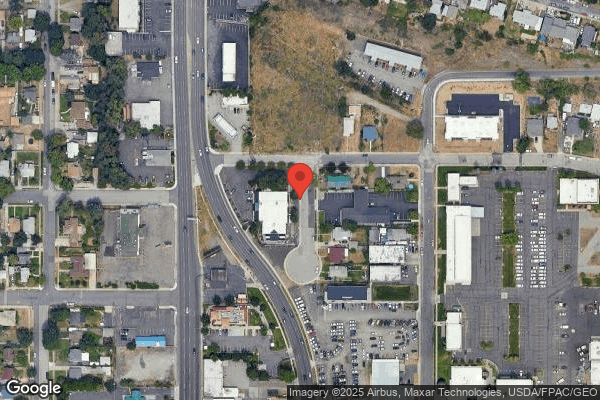




ROCKWOOD SOUTH HILL

EAST 2903 25TH AVENUE, SPOKANE, WA 99223 (509) 536-6650
Non profit - Church related 45 Beds Independent Data: November 2025
Trust Grade
60/100
#117 of 190 in WA
Last Inspection: December 2024

Within standard 12-15 month inspection cycle. Federal law requires annual inspections.

Overview

Rockwood South Hill in Spokane, Washington, has a Trust Grade of C+, indicating it is slightly above average but not exceptional in quality. It ranks #117 out of 190 facilities in the state, placing it in the bottom half, and #8 out of 17 in Spokane County, meaning there are only a few better local options available. The facility is experiencing a worsening trend, increasing from 12 issues in 2023 to 21 in 2024, which raises some concerns about its overall care quality. Staffing is a relative strength, with a 4/5 star rating and a 0% turnover rate, showing that staff are stable and likely familiar with the residents' needs. However, there have been specific concerns, such as instances of improper food storage that could risk residents’ health, and failures to maintain a solid Quality Assessment and Performance Improvement program, which could lead to exposure to preventable diseases. While the facility has no fines and good RN coverage, families should weigh these strengths against the recent increase in reported issues.

Trust Score
C+
60/100
In Washington
#117/190
Bottom 39%
Safety Record
Low Risk
No red flags
Inspections
Getting Worse
12 → 21 violations
Staff Stability
○ Average
Turnover data not reported for this facility.
Penalties
✓ Good
No fines on record. Clean compliance history, better than most Washington facilities.
Skilled Nurses
✓ Good
Each resident gets 96 minutes of Registered Nurse (RN) attention daily — more than 97% of Washington nursing homes. RNs are the most trained staff who catch health problems before they become serious.
Violations
⚠ Watch
48 deficiencies on record. Higher than average. Multiple issues found across inspections.
★★★☆☆
3.0
Overall Rating
★★★★☆
4.0
Staff Levels
★★★☆☆
3.0
Care Quality
★★★☆☆
3.0
Inspection Score
Stable
2023: 12 issues
2024: 21 issues

The Good

  • 4-Star Staffing Rating · Above-average nurse staffing levels
  • Full Sprinkler Coverage · Fire safety systems throughout facility
  • No fines on record

Facility shows strength in staffing levels, fire safety.

The Bad

3-Star Overall Rating

Near Washington average (3.2)

Meets federal standards, typical of most facilities

The Ugly 48 deficiencies on record

Dec 2024 21 deficiencies
CONCERN (D)

Potential for Harm - no one hurt, but risky conditions existed

Notification of Changes (Tag F0580)

Could have caused harm · This affected 1 resident

**NOTE- TERMS IN BRACKETS HAVE BEEN EDITED TO PROTECT CONFIDENTIALITY** Based on interview and record review, the facility failed to notify the physician and the resident representative of a change in...

Read full inspector narrative →
**NOTE- TERMS IN BRACKETS HAVE BEEN EDITED TO PROTECT CONFIDENTIALITY** Based on interview and record review, the facility failed to notify the physician and the resident representative of a change in condition experienced by 1 of 5 sampled residents (Resident 15) reviewed for unnecessary medications. This failure placed the resident at risk for delayed decisions for treatment by the legal representative and the physician/practitioner. Findings included . Review of an 08/08/2024 quarterly assessment showed Resident 15 admitted to the facility on [DATE] with medically complex conditions, to include high blood pressure (BP) and arrhythmia (an irregular heartbeat). This assessment showed Resident 15 had severe cognitive impairment. The medical record showed Resident 15 had an appointed power of attorney (POA) for healthcare. According to the National Heart, Lung and Blood Institute (NIH), a normal BP is less than 120 systolic (the top number in a BP reading) pressure and less than 80 diastolic (the lower number in a BP reading) pressure. The NIH defined a hypertensive crisis (a medical emergency) as a higher than 180 systolic pressure or higher than 120 diastolic pressure and to, Contact your provider immediately. A hypertensive crisis can lead to life-threatening health problems, like a heart attack or stroke. Review of the November 2024 Medication Administration Record (MAR) showed an as needed order for Hydralazine every 6 hours since 02/28/2024, if the staff assessed Resident 15's systolic BP was greater than 160. Review of a 10/23/2024 2:56 PM progress note showed that after the staff showered Resident 15, the resident, stopped engaging with staff and other residents and Right side of bottom lip was slightly drooped. Resident was able to answer questions but took some time to respond and seemed to stare off into the distance. The staff assessed the resident, Appeared lethargic throughout shift. A subsequent 7:14 PM progress note showed Resident 15 was sleeping on afternoon shift and it was difficult for the staff to rouse the resident. When the bedtime medication pass arrived, the nurse documented the resident took a small amount of medication but spat them out again and that, This is concerning because res [resident] BP is elevated at 194/95. The staff documented they notified Staff C and D (both Resident Care Manager, RCM). Review of the October 2024 MAR showed the staff administered the as needed Hydralazine order at 7:36 PM. In a subsequent 10/23/2024 9:04 PM note, the nurse documented that after Resident 15 was in bed, the resident took only one medication from the nurse, the as needed Hydralazine, as their BP remains high. The nurse showed they assessed Resident 15's BP slightly lower at 189/89. Record review showed no documentation the staff notified the provider or the resident's representative of the ineffective Hydralazine dose, or the continued elevated BP. Record review showed no additional progress notes that supported the staff monitored Resident 15's status to ensure no adverse effects from the elevated blood pressures, until 10/24/2024 at 9:59 AM, 12 hours later. The above findings were shared with Staff C on 12/09/2024 at 9:25 AM. Staff C acknowledged the lack of physician and POA notification and stated that if the nurse identified the as needed Hydralazine was ineffective, they expected the nurse to, call the doctor and see what else we can do and let them know of all the interventions attempted and notify the POA. Reference WAC 388-97-0320. .
CONCERN (D)

Potential for Harm - no one hurt, but risky conditions existed

Deficiency F0582 (Tag F0582)

Could have caused harm · This affected 1 resident

Based on interview and record review, the facility failed to provide the required beneficiary notices for 2 of 3 sampled residents (Resident 1 and 83) reviewed for required notices and associated choi...

Read full inspector narrative →
Based on interview and record review, the facility failed to provide the required beneficiary notices for 2 of 3 sampled residents (Resident 1 and 83) reviewed for required notices and associated choices related to Medicare services ending. This failure placed the residents at risk of not being fully informed of the potential cost of continued services. Findings included . Review of the Skilled Nursing Facility (SNF) Advanced Beneficiary Notice (ABN) form showed it provided information to Medicare beneficiaries so that they could decide if they wished to continue receiving the skilled services that might not be paid for by Medicare and assume financial responsibility. The form was required when a resident had skilled benefit days remaining, was being discharged from Medicare Part A services, and continued living in the facility. <Resident 83> Review of a Notice of Medicare Non-Coverage (NOMNC) form showed Resident 83's last day of Medicare Part A services ended on 08/22/2024. The resident discharged from the facility on 09/04/2024. Record review showed no documentation the facility provided a SNF ABN to Resident 83. The facility explained on a SNF Beneficiary Notification Review Form the reason for no provision of the SNF ABN Form to Resident 83 was because the resident, utilized [their] ten free contract days then discharged . <Resident 1> Review of a NOMNC form showed Resident 1's last day of Medicare Part A services ended on 06/07/2024. Record review showed Resident 1 currently resided in the facility. Record review showed no documentation the facility provided a SNF ABN to Resident 1. The facility explained on a SNF Beneficiary Notification Review Form the reason for no provision of the SNF ABN Form to Resident 1 was because the resident utilized [their] 10 free days contract SNF agreement with cost. On 12/09/2024 at 3:36 PM, the SNF Beneficiary Notification Review forms were reviewed with Staff B, Director of Nursing. Staff B stated that the SNF ABN were not given to Residents 1 and 83, because of this contract with the retirement community of 10 free days that is in their SNF agreement with cost. They know very well what their costs are. No further information was provided. Reference WAC 388-97-0300(1)(e), (5), (6). .
CONCERN (D)

Potential for Harm - no one hurt, but risky conditions existed

Abuse Prevention Policies (Tag F0607)

Could have caused harm · This affected 1 resident

**NOTE- TERMS IN BRACKETS HAVE BEEN EDITED TO PROTECT CONFIDENTIALITY** Based on interview and record review, the facility failed to implement their Abuse and Neglect Prohibition Policies and Procedur...

Read full inspector narrative →
**NOTE- TERMS IN BRACKETS HAVE BEEN EDITED TO PROTECT CONFIDENTIALITY** Based on interview and record review, the facility failed to implement their Abuse and Neglect Prohibition Policies and Procedures to include, not reporting or investigating elopement episodes and the discovery of a skin injury for 1 of 2 sampled residents (Resident 30) reviewed for accident hazards. This failure placed the resident at risk for repeated elopement and precluded the state agency (SA) from being aware of and investigating the circumstances surrounding the resident's elopements and skin injury. Findings included . Review of a 2019 facility policy titled Abuse, Neglect and Exploitation showed, the facility provided protections for the health, welfare and rights of each resident by developing and implementing written policies and procedures that prohibited and prevented abuse, neglect, exploitation and misappropriation of resident property. The policy showed the facility completed an immediate investigation when suspicion of or actual abuse, neglect or exploitation occurred. The policy showed the facility identified and interviewed all involved persons, including the alleged victim, alleged perpetrator, witnesses, and others who might have knowledge of the allegations and focused the investigation on determining if abuse, neglect, exploitation, and/or mistreatment occurred, the extent, and cause. The policy instructed the staff to provide a complete and thorough documentation of the investigation. The reporting time frame of all alleged violations to the Administrator, state agency (SA), and to all other required agencies was immediately, but not later than 2 hours after the allegation was made, if the events that caused the allegation involved abuse or resulted in serious bodily injury, or not later than 24 hours if the events that caused the allegation did not involve abuse and did not result in serious bodily injury. The policy instructed the facility Administrator to follow up with government agencies to confirm the initial report was received and report the results of the investigation within five working days of the incident as required by SA. Review of Appendix D in the October 2015 Nursing Home Guidelines (The Purple Book) showed, it instructed the facility to log elopements or a missing resident in the SA Log within five days of event discovery. Review of a 10/31/2024 comprehensive admission assessment showed Resident 30 admitted to the facility on [DATE] with a traumatic brain injury, restlessness and agitation, and Parkinson's disease (a progressive neurological disorder). This assessment showed the staff assessed Resident 30 had severe cognitive impairment. Review of a 10/29/2024 progress note showed that after the staff got res [resident] up to chair, the resident disappeared, and that Resident 30 was supposed to have wonder guard [sic] in place but may have removed it and was able to go all the way to [their] apartment on the 4th floor [an independent living area not associated with the skilled nursing unit]. The note showed the staff placed a new wonder guard [sic] on the resident's wheelchair to prevent wandering outside the unit. A WanderGuard system relied on a bracelet worn by the resident, sensors that monitored doors, and a technology platform that sent safety alerts to the staff in real time. When a resident with a bracelet approached a monitored door, the system alerted the staff. Review of the facility October 2024 SA Reporting Log showed no documentation the facility reported the event to the SA or investigated the circumstances of Resident 30's disappearance from the unit to determine the extent and cause of the elopement and if abuse or neglect contributed to the event. Review of a 10/31/2024 progress note showed the staff observed Resident 30 packed their belongings, looked for an exit, and used their walker for mobility. This note showed the staff identified, an open skin tear on the side of the resident's elbow approximately half a centimeter (a measurement) in diameter, not currently bleeding. Review of the facility SA Reporting Log showed no documentation the facility reported the event to the SA, investigated the circumstances and cause of Resident 30's skin tear, or determined if abuse or neglect contributed to the event. Review of an 11/18/2024 progress note showed the staff observed Resident 30 exit seeking most of shift. managed to get off unit via fireside door and was found wandering around at Rocky's [a café inside the building but separate from the unit] and returned to unit with friend who came to visit and was able to find [the resident]. Staff added that Resident 30, again escaped and was found by the dumpster downstairs near maintenance office. Review of the facility November 2024 SA Reporting Log showed no documentation the facility reported the event to the SA or investigated the circumstances of Resident 30's elopement from the unit twice on 11/18/2024, determine the extent and cause of the elopements, or if abuse or neglect contributed to the events. The above findings were shared with Staff B, Director of Nursing, on 12/09/2024 at 11:51 AM. Staff B acknowledged the elopement events and skin injury were not investigated or reported to the SA. No further information was provided. Reference WAC 388-97-0640(2). .
CONCERN (D)

Potential for Harm - no one hurt, but risky conditions existed

Transfer Requirements (Tag F0622)

Could have caused harm · This affected 1 resident

**NOTE- TERMS IN BRACKETS HAVE BEEN EDITED TO PROTECT CONFIDENTIALITY** <Resident 22> Per the 08/22/2024 discharge assessment, Resident 22 had diagnoses which included sepsis (a life-threatening...

Read full inspector narrative →
**NOTE- TERMS IN BRACKETS HAVE BEEN EDITED TO PROTECT CONFIDENTIALITY** <Resident 22> Per the 08/22/2024 discharge assessment, Resident 22 had diagnoses which included sepsis (a life-threatening complication of infection) and Dementia. An 08/22/2024 progress note showed Resident 22 had vomited a moderate amount of undigested food throughout the day and complained of abdominal pain. The resident's oxygen level was at 79-85% on room air afterwards. Resident 22's family was notified, and the resident was sent to the hospital with no physician orders. A review of Resident 22's record showed no order was obtained to send the resident to the hospital on [DATE] or that information had been communicated to the receiving hospital. In an interview on 12/09/2024 at 11:14 AM, Staff D, RCM, stated that a transfer form should have been sent with Resident 22 to the hospital. Staff D confirmed there was no documentation that showed the receiving hospital had been informed of the resident's condition. Reference WAC 388-97-0120. Based on interview and record review, the facility failed to ensure a resident's medical record contained documentation of a transfer to the hospital, or that the receiving hospital had received information of the resident's condition, for 2 of 2 sampled residents (Residents 24 and 22), reviewed for hospitalization. This failure placed the resident at risk for a delay in treatment and unmet care needs. Findings included . Per the 10/31/2024 admission assessment, Resident 24 had diagnoses which included high blood pressure, heart failure and thrombocytopenia (abnormally low platelets in the blood). A 11/26/2024 progress note showed the resident was assessed, due to complaints of pain. Resident 24 was weak, lethargic and had a blood pressure of 76/52. The resident's family member was notified, and the resident was sent to the hospital. A review of Resident 24's record showed no order was obtained to send the resident to the hospital or that information had been communicated to the receiving hospital. A 12/04/2024 progress note showed the resident was assessed, due to complaints of pain. Resident 24 had chest and upper abdominal pain. The resident and their family member had decided Resident 24 needed to go to the hospital. A review of Resident 24's record showed no order was obtained to send the resident to the hospital or that information had been communicated to the receiving hospital. In an interview on 12/09/2024, Staff C, Resident Care Manager (RCM), stated a transfer form was completed when a resident was transferred to the hospital, and it was a part of their medical record. During an interview on 12/09/2024 at 8:33 AM, Staff B, Director of Nursing, stated the expectation was for nursing staff to call the hospital and give report on the resident's condition. Staff B confirmed there was no documentation to show that the hospital had been informed of Resident 24's condition.
CONCERN (D)

Potential for Harm - no one hurt, but risky conditions existed

Transfer Notice (Tag F0623)

Could have caused harm · This affected 1 resident

<Resident 22> Per the 08/22/2024 discharge assessment, Resident 22 was not cognitively intact to make decisions regarding their care and had diagnoses which included sepsis (a life-threatening c...

Read full inspector narrative →
<Resident 22> Per the 08/22/2024 discharge assessment, Resident 22 was not cognitively intact to make decisions regarding their care and had diagnoses which included sepsis (a life-threatening complication of infection) and Dementia. Review of Resident 22's record showed an 08/22/2024 progress note documented the resident had experienced vomiting, abdominal pain and below normal oxygen levels. Additional record review found no documentation that showed the State Long-Term Care Ombudsman had been notified of the resident's transfer to the hospital. Reference WAC 388-97--0120 (2)(a-d) -0140 (1)(a)(b)(c)(i-iii). Based on interview and record review, the facility failed to ensure the Office of the State Long-Term Care Ombudsman received written notification of a hospital transfer, for 2 of 2 sampled residents (Resident 24 and 22), reviewed for hospitalization/discharge. This failure placed the resident at risk of not having access to additional advocacy services from the State Long-Term Care Ombudsman. Findings included . The 11/26/2024 discharge assessment documented Resident 24 was cognitively intact to make decisions regarding their care and had diagnoses which included heart failure, pneumonia (an infection that inflames air sacs in one or both lungs) and thrombocytopenia (abnormally low platelets in the blood). Review of Resident 24's record showed an 11/26/2024 nursing progress note which documented the resident had experienced pain, was lethargic and had a low blood pressure. Additional record review found no documentation that showed the State Long-Term Care Ombudsman had been notified of the resident's transfer to the hospital. A 12/04/2024 progress note showed the resident had chest and abdominal pain and was sent to the hospital. Additional record review found no documentation that showed the State Long-Term Care Ombudsman had been notified of the resident's transfer to the hospital. In an interview on 12/09/2024 at 9:59 AM, Staff J, Medical Records, stated the nurses kept a log of residents who discharged and notified the Ombudsman. During an interview on 12/09/2024 at 10:02 AM, Staff C, Resident Care Manager, stated they were sure Medical Records notified the Ombudsman of resident discharges. In an interview on 12/09/2024 at 10:06 AM, Staff B, Director of Nursing, stated the Ombudsman should have been notified of the resident's discharges to the hospital.
CONCERN (D)

Potential for Harm - no one hurt, but risky conditions existed

Deficiency F0625 (Tag F0625)

Could have caused harm · This affected 1 resident

<Resident 22> Per the 08/22/2024 discharge assessment, Resident 22 had diagnoses which included sepsis (a life-threatening complication of infection) and Dementia. Review of Resident 22's record...

Read full inspector narrative →
<Resident 22> Per the 08/22/2024 discharge assessment, Resident 22 had diagnoses which included sepsis (a life-threatening complication of infection) and Dementia. Review of Resident 22's record showed an 08/22/2024 progress note documented the resident had experienced vomiting, abdominal pain and below normal oxygen levels. The resident was assessed and sent to the hospital for evaluation. Additional record review found no documentation that showed the resident had been provided a bed-hold notice as required. Reference WAC 388-97-0120 (4). Based on interview and record review, the facility failed to provide a bed-hold notice, a notice that informed the resident of their right to pay the facility to hold their room/bed while they were hospitalized , to the resident and/or their representative at the time of discharge, or within 24 hours of transfer to the hospital, for 2 of 2 sampled residents (Resident 24 and 22), reviewed for hospitalization. This failure placed the residents at risk for a lack of knowledge regarding the right to a bed-hold, while they were hospitalized . Findings included Per the 10/31/2024 admission assessment, Resident 24 had diagnoses which included high blood pressure, heart failure, thrombocytopenia (abnormally low platelets in the blood), was cognitively intact and able to make decisions regarding their care. Review of Resident 24's record showed an 11/26/2024 nursing progress note which documented the resident had experienced pain, was lethargic and had a low blood pressure. The resident was assessed and was sent to the hospital for evaluation. Additional record review found no documentation that showed the resident had been provided a bed-hold notice as required. A 12/04/2024 progress note showed the resident had chest and abdominal pain and was sent to the hospital. Additional record review found no documentation that showed the resident had been provided a bed-hold notice as required. In an interview on 12/09/2024 at 8:33 AM, Staff B, Director of Nursing, stated bed holds were offered upon admission in the admission agreement. Staff B stated the form was not offered every time a resident was sent to the hospital, as required.
CONCERN (D)

Potential for Harm - no one hurt, but risky conditions existed

Comprehensive Care Plan (Tag F0656)

Could have caused harm · This affected 1 resident

**NOTE- TERMS IN BRACKETS HAVE BEEN EDITED TO PROTECT CONFIDENTIALITY** <Resident 8> Per the 10/01/2024 quarterly assessment, Resident 8, had diagnoses which included Alzheimer's Disease and bil...

Read full inspector narrative →
**NOTE- TERMS IN BRACKETS HAVE BEEN EDITED TO PROTECT CONFIDENTIALITY** <Resident 8> Per the 10/01/2024 quarterly assessment, Resident 8, had diagnoses which included Alzheimer's Disease and bilateral hearing loss. The resident was moderately cognitively impaired, had moderate difficulty with hearing and understood others when wearing their hearing aids. A review of the 03/25/2024 comprehensive care plan showed no documentation related to Resident 8's hearing loss. In an observation on 12/04/2024 at 11:18 AM, Resident 8 was in the dining room and did not wear their hearing aids. Staff G, Nursing Assistant, loudly spoke directly into the resident's ear, asking them to order food options for lunch. Resident 8 looked perplexed and did not answer. Staff G then decided to choose the resident's food options for them. Staff G did not inquire about Resident 8's hearing aids and no visual aid i.e. menu was provided. Subsequent observations were made of Resident 8 without their hearing aids being worn were made on: 12/05/24 at 07:33 AM and 11:05 AM. On 12/06/2024 at 12:08 PM, the resident was only wearing their right hearing aid. In an interview on 12/09/2024 at 9:15 AM, Resident 8 stated that it was important for both of their hearing aids to work because they wore them daily and cannot hear without them. The resident stated that their hearing aids do not work properly when they do not remember to charge them. Resident 8 stated the nursing staff does not help with managing their hearing aids daily. During an interview on 12/09/2024 at 02:19 PM, Staff N, Nursing Assistant, confirmed via review of the individual service plan that there were no interventions in place related to Resident 8's hearing aids. In an interview on 12/09/2024 at 2:39 PM, Staff D, Resident Care Manager, confirmed that Resident 8's care plan showed no documentation addressing their hearing device. Staff D stated that it was important for the resident to have interventions in place for their hearing loss due to maintaining their communication skills and quality of life. Reference WAC 388-97-1020(1), (2)(a)(b). <Resident 24> Per the 10/31/2024 admission assessment, Resident 24 had diagnoses which included high blood pressure, heart failure and thrombocytopenia (abnormally low platelets in the blood, increasing risk of bruising and bleeding). The resident was cognitively intact and needed supervision to touching assist with transfers and ambulation. In an observation on 12/03/2024 at 8:10 AM, Resident 24 was sitting in their wheelchair, and wore a short-sleeved shirt and had significant bruising on bilateral arms. Resident stated the bruising was related to their low platelet count. A review of the 12/03/2024 comprehensive care plan showed there was no care plan interventions for Resident 24's fragile skin related to their diagnosis of thrombocytopenia. In an interview on 12/09/2024 at 8:01 AM, Staff K, Licensed Practical Nurse, stated residents that were high risk for bruising and bleeding were given protective sleeves to wear, lambs wool for their wheelchairs, pads on the floor, and instruction to the staff would be found in the care plan. When Staff K was asked if Resident 24 had any interventions in place to protect their arms, they stated they did not think so. In an interview on 12/09/2024 at 8:27 AM, Staff C, RCM, stated interventions for residents that were high risk for bruising and bleeding included gentle care and protective or long sleeves. When asked if Resident 24 had interventions in place to protect them, they stated no they do not. During an interview on 12/09/2024 at 8:33 AM, Staff B, Director of Nursing, stated residents with fragile skin were monitored, and wore protective or long sleeves. Staff B stated there should have been interventions in the care plan to address Resident 24's skin and need for gentle care. Based on observation, interview and record review, the facility failed to develop comprehensive person-centered care plans to address all aspects of care for 4 of 16 sampled residents (Resident 15, 19, 24 and 8) whose care plans were reviewed. Failure to address the individualized needs of each resident placed them at risk for inadequate care and a diminished quality of life. Findings included . <Resident 15> Review of an 08/08/2024 quarterly assessment showed Resident 15 admitted to the facility on [DATE] with medically complex conditions, to include high blood pressure (BP) and arrhythmia (an irregular heartbeat). Review of the November 2024 Medication Administration Record (MAR) showed the staff administered the medications amlodipine for high BP since 05/15/2024, hydrochlorothiazide for both high BP and edema (fluid retention) since 10/23/2024, and an as needed order for Hydralazine every six hours since 02/28/2024, if the staff assessed Resident 15's systolic (the top number in a BP reading) BP was greater than 160. Review of Resident 15's BP showed the staff obtained multiple readings with a systolic BP above 160 (10/04/2024, 10/06/2024, 10/08/2024, 10/25/2024, 10/26/2024, 11/05/2024, 11/09/2024, 11/12/2024, 11/24/2024, and 11/30/2024). Review of Resident 15's medical record showed no documentation the facility developed a care plan to include the active diagnoses of high BP and arrhythmia. In an interview on 12/09/2024 at 9:27 AM, Staff C, Resident Care Manager (RCM), acknowledged a care plan for active and currently treated diagnoses of high BP and arrhythmia was not but should have been developed. <Resident 19> Review of an 08/30/2024 quarterly assessment showed Resident 19 admitted to the facility on [DATE] with medically complex conditions to include Alzheimer's disease. The staff assessed Resident 19 had severe cognitive impairment. Review of the November 2024 MAR showed the staff administered Melatonin Oral Tablet daily as a supplement. Review of the expanded physician orders showed the Melatonin was for sleep aid since 07/11/2024. In an interview on 12/09/2024 at 8:34 AM, Staff D, RCM, stated that if a resident is on a medication for sleep, It probably needs to have a care plan for it. Staff D acknowledged Resident 19's comprehensive care plan did not but should have included a resident-centered care plan for sleep disturbance.
CONCERN (D)

Potential for Harm - no one hurt, but risky conditions existed

Deficiency F0658 (Tag F0658)

Could have caused harm · This affected 1 resident

**NOTE- TERMS IN BRACKETS HAVE BEEN EDITED TO PROTECT CONFIDENTIALITY** Based on interview and record review, the facility failed to implement a physician order for the treatment of elevated blood pre...

Read full inspector narrative →
**NOTE- TERMS IN BRACKETS HAVE BEEN EDITED TO PROTECT CONFIDENTIALITY** Based on interview and record review, the facility failed to implement a physician order for the treatment of elevated blood pressures for 1 of 5 sampled residents (Resident 15) reviewed for unnecessary medications. This failure placed the resident at risk for a negative outcome from a high blood pressure. Findings included . Review of an 08/08/2024 quarterly assessment showed Resident 15 admitted to the facility on [DATE] with medically complex conditions, to include high blood pressure (BP) and arrhythmia (an irregular heartbeat). Review of the November 2024 Medication Administration Record (MAR) showed an as needed order for Hydralazine every 6 hours since 02/28/2024, if the staff assessed Resident 15's systolic (the top number in a BP reading) BP was greater than 160. Review of Resident 15's medical record showed the staff obtained multiple readings with a systolic BP above 160 (10/04/2024, 10/06/2024, 10/08/2024, 10/24/2024, 10/25/2024, 10/26/2024, 11/05/2024, 11/09/2024, 11/12/2024, 11/24/2024, and 11/30/2024). Review of the October and November 2024 MAR showed no documentation the staff implemented the physician order to administer the as needed Hydralazine for a systolic BP over 160. The above findings were shared with Staff C, Resident Care Manager, on 12/09/2024 at 9:25 AM. Staff C confirmed there was no documentation to show the staff implemented the physician order for the as needed Hydralazine and stated that the staff should have administered the as needed Hydralazine because [the BPs] are all over 160. Staff C acknowledged the medical record showed no instruction that cued the staff if or when Resident 15 required an as needed dose of hydralazine every six hours and that the order required clarification. Reference WAC 388-97-1620(2)(b)(i)(ii),(6)(b)(i). .
CONCERN (D)

Potential for Harm - no one hurt, but risky conditions existed

ADL Care (Tag F0677)

Could have caused harm · This affected 1 resident

Based on observation, interview, and record review, the facility failed to consistently provide grooming for 1 of 2 sampled residents (Resident 25), reviewed for activities of daily living (ADL's). Th...

Read full inspector narrative →
Based on observation, interview, and record review, the facility failed to consistently provide grooming for 1 of 2 sampled residents (Resident 25), reviewed for activities of daily living (ADL's). This failure placed the resident at risk for not being groomed according to their preferences, and a diminished quality of life. Findings included . According to the 10/18/2024 quarterly assessment, Resident 25 was cognitively impaired and needed partial to moderate assistance from staff for ADL's, such as personal hygiene. Per the 04/11/2024 care plan, Resident 25 needed assistance with personal hygiene. Review of the personal hygiene task from 11/10/2024 through 12/13/2024 documented Resident 30 had their facial hair removed on 11/10/2024, 11/17/2024, 11/22/2024 and 12/08/2024 and had not refused cares. In an observation on 12/03/2024 at 9:11 AM, Resident 25 was sitting in their wheelchair and had hair on their chin that was approximately a centimeter long. Subsequent observations of Resident 25 with hair on their chin were made on 12/04/2024 at 07:38 AM, 10:25 AM, and 2:33 PM, 12/05/2024 at 7:31 AM, and 12/06/2024 at 7:05 AM. In an interview on 12/09/2024 at 9:03 AM, Staff L, Nursing Assistant, stated shaving was completed when needed. During an interview on 12/09/2024 at 10:10 AM, Staff B, Director of Nursing, stated facial hair was removed during bathing and it was a dignity issue if it was not completed. Reference: WAC 388-97-1060 (2)(c)
CONCERN (D)

Potential for Harm - no one hurt, but risky conditions existed

Deficiency F0678 (Tag F0678)

Could have caused harm · This affected 1 resident

**NOTE- TERMS IN BRACKETS HAVE BEEN EDITED TO PROTECT CONFIDENTIALITY** Based on interview and record review, the facility failed to follow up on a resident's request to change their code status (leve...

Read full inspector narrative →
**NOTE- TERMS IN BRACKETS HAVE BEEN EDITED TO PROTECT CONFIDENTIALITY** Based on interview and record review, the facility failed to follow up on a resident's request to change their code status (level of intervention a resident chooses if their heart or breathing stops) for 1 of 1 sampled resident (Resident 17) reviewed for Cardiopulmonary Resuscitation (CPR, the act of performing chest compressions and providing breaths to mimic heartbeat and breathing). This failure placed Resident 17 at risk to have CPR initiated when their legal representative requested to change their code status to No CPR. Findings included . Review of a [DATE] quarterly assessment showed Resident 17 admitted to the facility on [DATE] with medically complex conditions. This assessment showed Resident 17 had severe cognitive impairment and the family participated in the completion of this assessment. Review of a [DATE] progress note showed the facility held a care conference for Resident 17. Present in the care conference were several members of the facility and the resident's family, to include their Power of Attorney (POA, legal representative). In this care conference, the facility discussed the resident's POLST form (Physician Order for Life-Sustaining Treatment, an order for the specific treatments desired during a medical emergency). The note showed the facility changed Resident 17's code status from CPR/Full treatment to Do Not Resuscitate/Selective Treatment. The note said the new POLST form was signed by the POA and selections marked. The progress note showed the facility faxed the POLST form to the provider for their signature. Review of the medical record showed a [DATE] POLST form scanned in the electronic medical record. This POLST form showed the code status was full CPR and full treatment, contrary to the [DATE] decision made by the POA for a Do Not Resuscitate/Selective Treatment choice. Additionally, the resident identifier section of the electronic medical record (EMR) directed the staff that Resident 17's code status was CPR. On [DATE] at 8:08 AM, Staff M, Registered Nurse, was asked to explain how they identified a resident's code status. Staff M stated that, We put the code status on a piece of paper, on the roster. When Staff M showed the surveyor the resident roster, it showed no code status of any resident and Staff M stated, Most everybody is a DNR [Do Not Resuscitate] here but I would start rescue breathing and CPR until confirmed with the [CPR] book. Staff M stated that the CPR book was located at the Nurses Station and a resident's code status could also be confirmed in the EMR. Staff M located Resident 17's POLST, dated [DATE], in the CPR book which directed the staff to start CPR in the event the staff found Resident 17 without a pulse and not breathing, contrary to the choice made by the POA on [DATE]. Staff M confirmed the EMR also instructed the staff to start CPR. The above findings were shared with Staff C, Resident Care Manager, on [DATE] at 9:44 AM. Staff C acknowledged the code status in the electronic medical record and POLST did not reflect the choice made on [DATE] by Resident 17's POA. Reference WAC 388-97-1060 (1). .
CONCERN (D)

Potential for Harm - no one hurt, but risky conditions existed

Quality of Care (Tag F0684)

Could have caused harm · This affected 1 resident

According to the Bowel Protocol policy, dated 04/22/2019 (reviewed on 12/06/2024, staff was to initiate the following procedures on a regular basis for the resident to ensure adequate function and/or ...

Read full inspector narrative →
According to the Bowel Protocol policy, dated 04/22/2019 (reviewed on 12/06/2024, staff was to initiate the following procedures on a regular basis for the resident to ensure adequate function and/or need for intervention: 1. Give Lax Loaf (type of laxative given by mouth) daily as needed 2. Give Milk of Magnesia (MOM, type of laxative given by mouth) on the evening of the second day if no bowel movement (BM). 3. Administer Dulcolax (Bisacodyl, a suppository laxative inserted rectally) on the night shift of the third day if no BM. <Resident 14> Per the 08/27/2024 quarterly assessment, Resident 14 had diagnoses including neurogenic bladder (a condition that causes bladder control issues due to nerve, spinal cord or brain problems) and Dementia. The resident was frequently incontinent of bowel and bladder and required maximum assistance with toileting. Review of the November 2024 Medication Administration Record (MAR) documented on 05/21/2024, the physician had ordered a laxative (Lax Loaf) to be offered daily for constipation and an additional laxative (Milk of Magnesia) to be given on evening shift of the second day if the resident had not had a BM. There was no physician's order documented for medication to be given on the third day if the resident did not have a BM. Review of the bowel records from 11/06/2024 through 12/05/2024, showed Resident 14 had no BM's from 11/10/2024 through 11/12/2024 (3 days), 11/20/2024 through 11/21/2024 (2 days) and 11/23/2024 through 11/24/2024 (2 days). Additional review of the November 2024 MAR showed no documentation that Resident 14 received bowel medications as ordered during the above time frames and no documentation was found in their record that stated the reason for omission of the medications listed in the bowel protocol. In an interview on 12/09/2024 at 1:37 PM, Staff D, Resident Care Manager (RCM), confirmed Resident 14 did not have a BM on the above dates and the bowel protocol should have been followed. <Resident 28> Per the 10/09/2024 admission assessment, Resident 28 had diagnoses including urinary tract infection and Dementia. The resident was dependent with toileting and occasionally incontinent of bowel and bladder. Review of the November to December 2024 Medication Administration Records (MARs) documented on 10/03/2024, the physician had ordered a laxative (Lax Loaf) to be offered daily for constipation, an additional laxative (Milk of Magnesia) to be given on evening shift of the second day if the resident had not had a BM and a suppository laxative (Dulcolax) to be given on the night shift of the third day if the resident had not had a BM. Review of the bowel records from 11/07/2024 through 12/05/2024, showed Resident 28 had no BM's from 11/10/2024 through 11/13/2024 (4 days), 11/25/2024 through 11/27/2024 (3 days),11/29/2024 through 12/01/2024 (3 days) and 12/03/2024 through 12/05/2024 (3 days). Additional review of the November to December 2024 MARs showed no documentation that Resident 28 received laxatives as ordered during the required time frames. In an interview on 12/09/2024 at 11:26 AM, Staff D confirmed Resident 28 did not have a BM on the above dates and the bowel protocol should have been followed. Staff D stated that this was important so that residents do not get constipated, or develop associated complications. bowel blockages and/or further medical complications. <Resident 30> Review of Bowel Records between 11/04/2024 to 12/05/2024 showed the staff did not identify Resident 30 experienced a BM on 11/10/2024, 11/11/2024, and 11/12/2024. Review of the November 2024 MAR showed a physician order that instructed the staff to administer Magnesium Hydroxide Suspension (MOM) orally as needed for constipation on evening shift of 2nd [second] day no BM. The orders also instructed the staff to administer a Dulcolax as needed for constipation, on night shift of 3rd [third] day no BM. Review of the November 2024 MAR showed no documentation the staff implemented the orders to address Resident 30's absence of bowel movements on day two (11/11/2024) and three (11/12/2024). The above findings were shared with Staff C, RCM, on 12/09/2024 at 9:38 AM. Staff C acknowledged the staff did not implement the orders to address the absence of bowel movements on days two and three. Staff C stated that they expected the nurses to offer the laxative to Resident 30 and, I don't see anything in [their] notes to show the staff implemented the bowel protocol as ordered. <Monitoring After a Fall and Skin Injury> Review of a 10/31/2024 progress note showed the staff observed Resident 30 packed their belongings, and is looking for an exit. The note showed the staff assessed Resident 30 had, an open skin tear on the side of their right elbow, that measured approximately .5 cm [centimeter, a unit of measurement] in diameter, not currently bleeding. Review of the medical record showed no additional documentation the staff monitored the status of the skin tear. Review of a November 2024 facility reporting log showed Resident 30 sustained a fall with injury on 11/17/2024. Review of an 11/17/2024 associated investigation showed the 11/17/2024 fall was witnessed. The investigation showed the staff assessed Resident 30 had an abrasion up [their] back. No measurement or description of the abrasion were included. Review of the progress notes showed no documentation the fall occurred, the type and extent of the abrasion, or subsequent monitoring of the fall for any latent effects or the abrasion. The above findings were shared with Staff B, Director of Nursing, on 12/09/2024 at 11:43 AM. Staff B confirmed the staff failed to show documentation they monitored Resident 30 when they identified a skin tear and witnessed a fall with injury. Staff B stated that they expected the staff to show documentation in the medical record they monitored the resident after the fall with injury or identification of the skin tear for at least 72 hours after the incident discovery. Reference WAC 388-97-1060 (1). Based on interview and record review, the facility failed to ensure the staff implemented the bowel protocol for the management of constipation for 3 of 5 sampled residents (Resident 14, 28, and 30) reviewed for unnecessary medications and monitor non-pressure injury and a fall with injury for 1 of 2 sampled residents (Resident 30) reviewed for accidents. These failures placed the residents at risk for unmet needs and complications from constipation and injuries. Findings included .
CONCERN (D)

Potential for Harm - no one hurt, but risky conditions existed

Deficiency F0688 (Tag F0688)

Could have caused harm · This affected 1 resident

**NOTE- TERMS IN BRACKETS HAVE BEEN EDITED TO PROTECT CONFIDENTIALITY** Based on observation, interview, and record review, the facility failed to assess the need for restorative services (a program a...

Read full inspector narrative →
**NOTE- TERMS IN BRACKETS HAVE BEEN EDITED TO PROTECT CONFIDENTIALITY** Based on observation, interview, and record review, the facility failed to assess the need for restorative services (a program available in nursing homes that helps residents maintain any progress they've made during therapy treatments or enables them to function at their highest capacity), for 1 of 1 sampled residents (Resident 7), reviewed for range of motion. This failure placed the resident at risk for a further decline in range of motion, due to limitations in their lower extremities and unmet care needs. Findings included . A 10/20/2024 significant change assessment documented Resident 7 had diagnoses including dementia and abnormalities of gait and mobility (the way a person walks and moves around). Per the assessment, the resident had impaired range of motion to their lower extremities, needed substantial to total assistance to complete activities of daily living (ADL), and received physical and occupational therapy. A 10/15/2024 physical therapy evaluation showed Resident 7 was hospitalized from [DATE] through 10/14/2024 and needed therapy related to new or worsened neuromuscular impairments (a range of motion disease that affected the peripheral nervous system which controls muscles and sensory information), high tone (a condition in which there is too much muscle tone so that arms or legs are stiff and difficult to move) in bilateral lower extremities, and limitations to their knees, hips and ankles. An 11/01/2024 discharge therapy note stated Resident 7 had range of motion impairments to their bilateral ankles and feet. Further record review did not show the resident had been assessed or referred for restorative services, to determine if the range of motion in their bilateral lower extremities could prevent further decline, despite the physical therapy evaluation identifying Resident 7 having impairments. A review of Resident 7's current care plan did not show interventions related to the limitations of their lower extremities, or directions for the provision of range of motion/restorative exercises. On 12/04/2024 at 10:27 AM, Resident 7 was observed sitting in their wheelchair in the dining room. The resident had their legs stretched out under the table and their left foot was pointing upward. Similar observations of the resident's legs stretched out and foot pointing upward were made on 12/04/2024 at 12:12 PM and 2:28 PM, 12/05/2024 at 11:09 AM and 3:37 PM. In an interview on 12/09/2024 at 9:30 AM, Staff R, Nursing Assistant, stated residents were placed on restorative programs to restore movement and Resident 7 had limitations to their lower extremities. During an interview on 12/09/2024 at 9:49 AM, Staff S, Licensed Practical Nurse/Restorative Nurse, stated Resident 7 was not on a restorative program. In an interview on 12/09/2024 at 10:12 AM, Staff S stated Resident 7 worked with therapy in October and they had not received a referral for a restorative program. During an interview on 12/09/2024 at 10:13 AM, Staff T, Physical Therapy Assistant, stated if a resident was high risk for a contracture they would be put on a restorative program after completion of therapy. Staff T added the resident should have been placed on a restorative program. Staff S stated the resident was on a restorative program three times per week prior to their hospitalization in October 2024. Staff S added they would coordinate with Staff T to put the resident back on an appropriate restorative program. In an interview on 12/09/2024 at 1:09 PM, Staff B, Director of Nursing, stated restorative programs should be resumed for residents with impairments to prevent contractures and restorative was important to maintain their current level of functioning. Reference: WAC 388-97-1060 (3)(d). .
CONCERN (D)

Potential for Harm - no one hurt, but risky conditions existed

Accident Prevention (Tag F0689)

Could have caused harm · This affected 1 resident

Based on observation, interview, and record review, the facility failed to provide supervision during a coughing episode for 1 of 2 residents (Resident 183) reviewed for supervision. This failure plac...

Read full inspector narrative →
Based on observation, interview, and record review, the facility failed to provide supervision during a coughing episode for 1 of 2 residents (Resident 183) reviewed for supervision. This failure placed Resident 183 at risk for choking and a diminished quality of life. Findings included . Per the 11/26/2024 admission assessment, Resident 183 had diagnoses including dementia and a stroke. The resident had severe cognitive impairments and needed total assistance with eating. The 11/20/2024 physician's order prescribed Resident 183 a mechanical soft diet (soft, easily chewable foods designed for people who have difficulty swallowing or chewing) with nectar thick liquids. The 12/03/2024 care plan documented Resident 183 had difficulties swallowing and received an altered textured diet and required one to one feeding assistance. The resident needed to sit upright to consume food and fluids and required small sips and to swallow between bites. The staff were instructed to remind the resident to tuck their chin to swallow. During an observation on 12/05/2024 at 11:20 AM, Staff U, Nursing Assistant, assisted Resident 183 to eat and fed them a bite of salad and the resident coughed. In an observation on 12/05/2024 at 11:41 AM, Staff V, Nursing Assistant, assisted the resident to eat a sandwich, after a couple of bites Staff V left the table. During an observation on 12/05/2024 at 11:47 AM, Staff V assisted the resident to consume fluids and they coughed continuously. Staff H, Nursing Assistant, entered the dining room at 11:49 AM and patted the resident on the back and told them to lean forward. Staff H asked Staff V to get the nurse. On 12/05/2024 at 11:53 AM, Staff H removed the resident from the dining room and met the nurse in the hallway and stated Resident 183 had been coughing on nectar thick liquids. Staff W, Registered Nurse, stated they were going to talk to the resident care manager to get a swallow evaluation. On 12/05/2024 at 11:54 AM, Staff H left the resident in their room alone sitting in their wheelchair. Resident 183 coughed and tried to clear their throat and stopped coughing at 11:56 AM. Staff H returned to the resident's room at 11:57 AM. Review of Resident 183's record for 12/05/2024 showed no documentation in regard to the coughing episode they had and the resident was not assessed by Speech Therapy. During an observation on 12/06/2024 at 8:06 AM, Staff K, Licensed Practical Nurse, gave Resident 183 a bite of oatmeal and they coughed. The resident was given a drink, and they coughed. Staff K asked the resident if they could clear their throat, and they continued coughing. Staff K removed the oatmeal and fluid and notified the resident care manager. Staff K stated they had gotten in report that Resident 183 was starting to cough more. Staff K requested the resident be evaluated by Speech Therapy. A 12/06/2024 progress note at 12:41 PM, documented Speech Therapy assessed the resident, and they needed a modified barium swallow (a test used to evaluate safe swallowing). A 12/06/2024 progress note at 3:19 PM by Speech Therapy, documented they were approached by Staff K regarding Resident 183's cough, swallowing difficulties and an increased runny nose and had requested an emergent swallow evaluation. An order was received for a barium swallow and the resident was assessed, a day after their initial coughing episode. During an interview on 12/09/2024 at 9:42 AM, Staff L, Nursing Assistant, stated a resident that had been coughing should not be left alone in their room. Staff L stated the resident should have been monitored. In an interview on 12/09/2024 at 11:47 AM, Staff K stated a change in condition such as coughing on fluids needed to be communicated to therapy and the providers as soon as possible. Staff K added the resident needed to be assessed and a progress note should have been written. When Staff K was asked if Resident 183 should have been left in their room alone when continuing to cough, they stated no. During an interview on 12/09/2024 at 12:23 PM, Staff B, Director of Nursing, stated coughing on thickened liquids needed to be reported to therapy and the providers after it occurred, and a progress note should have been written. Staff B stated Speech Therapy needed to evaluate the resident for possible changes to their diet. Reference: WAC 388-97-1060 (3)(g)
CONCERN (D)

Potential for Harm - no one hurt, but risky conditions existed

Deficiency F0710 (Tag F0710)

Could have caused harm · This affected 1 resident

**NOTE- TERMS IN BRACKETS HAVE BEEN EDITED TO PROTECT CONFIDENTIALITY** Based on interview and record review, the facility failed to establish a system to ensure the availability of a physician to tim...

Read full inspector narrative →
**NOTE- TERMS IN BRACKETS HAVE BEEN EDITED TO PROTECT CONFIDENTIALITY** Based on interview and record review, the facility failed to establish a system to ensure the availability of a physician to timely coordinate the procurement of controlled substances during afterhours for 1 of 3 sampled residents (Resident 31) reviewed for closed records. This failure placed the resident at risk for unmet needs at end of life. Findings included . Review of a 01/21/2021 contract between a physician services group and the facility showed that if the designated physician was unable to provide services due to illness, disability, vacation or any other reason, then the group designated a replacement group physician to provide the services. This policy also showed the Medical Director aided in arranging for continuous physician coverage for medical emergencies, developed procedures for emergency treatment of residents, and became the primary physician in the absence of the resident's primary physician unless the resident or physician designated the responsibility to other physicians. Review of the medical record showed Resident 31 re-admitted to the facility on [DATE] from the hospital. An 11/14/2024 progress note showed the goal of Resident 31's re-admission was comfort care related to the resident's recent rapid decline in health. The staff described Resident 31 as, alert and talkative but very confused and speech is mostly incoherent. Review of an 11/14/2024 8:50 PM note showed, Resident not eating and only few sips of water after Medication given. Resident restless and somewhat agitated medicated with MS [morphine] as ordered and is effective. Morphine is a controlled substance used to ease a resident's shortness of breath, pain and discomfort when actively dying. An 11/16/2024 8:03 AM note showed, the staff witnessed Resident 31, awake and trying to get out of bed. Very anxious pulling at covers. Legs out of bed. The staff administered morphine as ordered. Record review showed the staff administered morphine at 10:35 AM when they observed Resident 31, starting to get anxious again, trying to get out of bed . has lower legs out of the bed. The staff described that they attempted to get Resident 31 back in bed, but the resident was still trying to get out. Review of Medication Administration Record (MAR) progress notes showed the staff administered morphine at 2:45 PM on 11/16/2024. Review of an 11/16/2024 progress note showed Staff F, Registered Nurse, assessed Resident 31 developed a diffuse rash to their back and Morphine was not working to control [their] symptoms. Staff F described Resident 31, remained anxious and agitated even though Morphine given approx [approximately] every 1.5 hrs [hours] per family request. Staff F wrote that they called Staff I, who was Resident 31's primary physician and the Medical Director of the facility, and left Staff I a message with the physician answering service at approximately 4:00 PM. Review of MAR progress notes showed the staff administered Resident 31 morphine at 4:16 PM. Review of the 11/16/2024 progress notes showed that because Staff F did not receive a call back from Staff I, they called again at 5:00 PM. The answering service for Staff I informed Staff F that Staff I, was no longer on duty and a nurse practitioner (NP) was covering for the provider. Staff F explained to the answering service that they, really needed to speak to Staff I and not the NP as Staff F wanted to request a change to the medications, from Morphine to Dilaudid [another controlled substance]. Staff F reported to the answering service that the resident was allergic to a medication prescribed for anxiety (Ativan). Despite Staff F's specific instructions to the answering service that they required to speak to Staff I to request the change in the controlled substance, the NP called back instead and Staff F had to explain again that they really needed to speak with Staff I. At 5:30 PM, Staff I called the facility and told Staff F that they were not in a position to, call order in to pharmacy for an hour to an hour and a half. Staff I instructed Staff F to continue to, use the Morphine until we were able to get the Dilauded [sic] ordered and delivered. Review of MAR progress notes showed the staff administered Resident 31 morphine at 5:37 PM and 6:34 PM. The above findings were shared with Staff B, Director of Nursing, on 12/09/2024 around 12:05 PM. Staff B stated that they were unaware of the concern with delayed physician response. Staff B stated, I've just never had that problem and that they expected their nurses to firmly tell the provider that they needed the order, Now. When asked if the facility had any kind of process the nurses used to facilitate prompt physician response, Staff B stated that none was in place. On 12/09/2024 at 12:07 PM, Staff I was asked about the delayed response to staff's request for changes to controlled substances used for Resident 31's end-of-life needs. Staff I stated, I recall getting the phone call and was not in the spot to take care of it at the moment. Staff I stated, The NPs will not call the pharmacy for any controlled substances. I generally return the calls in 20 or 30 minutes. There's no other back-up provider. [The physician services group] has other providers but the NPs are the ones on-call and do not [manage orders for] controlled substances. Reference WAC 388-97-1260 (3)(b).
CONCERN (D)

Potential for Harm - no one hurt, but risky conditions existed

Deficiency F0757 (Tag F0757)

Could have caused harm · This affected 1 resident

Based on interview and record review, the facility failed to ensure sleep medications were consistently monitored for 1 of 5 sampled resident (Resident 183) reviewed for unnecessary medications. This ...

Read full inspector narrative →
Based on interview and record review, the facility failed to ensure sleep medications were consistently monitored for 1 of 5 sampled resident (Resident 183) reviewed for unnecessary medications. This failure placed the residents at risk for potential adverse side effects and medical conditions. Findings included . Per the 11/26/2024 admission assessment, Resident 183 had diagnoses which included dementia and weakness. Review of the Active Order Report documented the physician prescribed a medication for sleep (Melatonin) on 11/20/2024 to be given every day at bedtime. The November 2024 and December 2024 medication administration records documented the resident received the Melatonin every night at bedtime. In an interview on 12/09/2024 at 11:47 AM, Staff K, Licensed Practical Nurse, stated residents who received Melatonin needed a sleep monitor to ensure the medication was effective. During an interview on 12/09/2024 at 12:23 PM, Staff B, Director of Nursing, confirmed the resident should have had a sleep monitor in place to ensure the medication was effective. Reference (WAC): 388-97-1060 (3)(k)(i)
CONCERN (D)

Potential for Harm - no one hurt, but risky conditions existed

Deficiency F0761 (Tag F0761)

Could have caused harm · This affected 1 resident

Based on observation, interview, and record review, the facility failed to maintain temperatures to ensure medications were properly stored. This failure placed residents at risk for receiving comprom...

Read full inspector narrative →
Based on observation, interview, and record review, the facility failed to maintain temperatures to ensure medications were properly stored. This failure placed residents at risk for receiving compromised or ineffective medication. Findings included . During an observation of the medication room on 12/06/2024 at 10:40 AM, with Staff D, Registered Nurse, the refrigerator in the medication room contained a vial of Tubersol (medication injected under the skin to determine exposure to Tuberculosis) and respiratory synticial virus vaccines (vaccine used to treat a severe respiratory infection). Review of the refrigerator temperature logs for September 2024, October 2024 and November 2024 showed the temperatures were not monitored consistently as required. The temperatures were monitored 14 days in September, 16 days in October and 16 days in November. The medication room did not have a thermometer to monitor the temperature the medications were stored at. In an interview on 12/06/2024 at 11:03 AM, Staff B, Director of Nursing, stated the temperature of the refrigerator should have been monitored to ensure the efficacy of the medications and maintenance had been notified about the temperature gauge for the medication room. Reference: WAC 388-97-1300 (2)
CONCERN (D)

Potential for Harm - no one hurt, but risky conditions existed

Deficiency F0802 (Tag F0802)

Could have caused harm · This affected 1 resident

Based on observation, interview, and record review, the facility failed to ensure nursing staff had the required qualifications (current Washington State Food Worker Cards) for 3 nursing staff (Staff ...

Read full inspector narrative →
Based on observation, interview, and record review, the facility failed to ensure nursing staff had the required qualifications (current Washington State Food Worker Cards) for 3 nursing staff (Staff N, AA, BB). This failed practice had the potential risk for unsafe food handling practices and placed all residents at risk for developing foodborne illness. Findings included . During an observation on 12/03/2024 at 11:14 AM, Staff G, Nursing Assistant, served meals from the steam table in the north dining room. Staff G wore no hair covering throughout the entire meal service observation. In an interview on 12/06/2024 at 10:54 AM, Staff Z, Cook, stated nursing assistants served food from the steam table when the dietary staff was unavailable. On 12/06/2024, a copy of dietary and nursing staff's current Washington State Food Worker cards were requested, and none were provided. Review of dietary cards on 12/09/2024 at 4:32 PM showed the following nursing assistants: Staff N (expired on 11/22/2024), Staff BB (expired on 10/09/2024), and Staff CC (no information). Reference WAC 388-97-1160. .
CONCERN (D)

Potential for Harm - no one hurt, but risky conditions existed

Deficiency F0883 (Tag F0883)

Could have caused harm · This affected 1 resident

**NOTE- TERMS IN BRACKETS HAVE BEEN EDITED TO PROTECT CONFIDENTIALITY** Based on interview and record review, the facility failed to ensure 1 of 5 sampled residents (Resident 183) reviewed for unneces...

Read full inspector narrative →
**NOTE- TERMS IN BRACKETS HAVE BEEN EDITED TO PROTECT CONFIDENTIALITY** Based on interview and record review, the facility failed to ensure 1 of 5 sampled residents (Resident 183) reviewed for unnecessary medications, received information on and were offered the recommended vaccinations for pneumonia based on the current recommendations from the Centers for Disease and Control Prevention.This failure placed the resident at risk for contracting pneumonia with its associated complications of infection. Findings included . Review of a 10/19/2022 facility policy titled Immunizations showed the facility offered the pneumococcal (a bacteria) series vaccines unless medically contraindicated, to all residents upon admission. The pneumococcal vaccine protected against the bacteria which could cause many illnesses, including pneumonia, meningitis (a serious infection that causes inflammation of the membranes that protect the brain and spinal cord), sepsis (a life-threatening medical emergency that occurs when the body has an extreme response to an infection), and ear and sinus infections. The staff assessed the residents for eligibility to receive the vaccine upon admission and annually, and counseled them on the benefits and adverse effects of the vaccine. The policy showed a consent would be obtained and if the resident refused the vaccination, it would be documented in the consent form as a refusal. The consent would be uploaded in the Miscellaneous section of the electronic medical record (EMR). Review of an 11/26/2024 comprehensive admission assessment showed Resident 183 admitted to the facility on [DATE]. This assessment asked the staff, Is the resident's Pneumococcal vaccination up to date? and If Pneumococcal vaccine not received, state reason. No answer was given. Review of the Immunizations sections in the EMR showed no documentation Resident 183 was up to date or received an immunization for pneumonia. Review of the Miscellaneous section for uploaded files showed no documentation the staff assessed Resident 183's eligibility to receive the pneumonia vaccine or offered it to the resident. The above information was shared with Staff E, Infection Preventionist, on 12/09/2024 at 10:35 AM. No further information was provided. Reference WAC 388-97-1340 (1), (2), (3). .
CONCERN (E)

Potential for Harm - no one hurt, but risky conditions existed

Medical Records (Tag F0842)

Could have caused harm · This affected multiple residents

Based on interview and record review, the facility failed to maintain complete and accurate records for 2 of 5 sampled residents (Resident 15 and 19) reviewed for unnecessary medications and 1 supplem...

Read full inspector narrative →
Based on interview and record review, the facility failed to maintain complete and accurate records for 2 of 5 sampled residents (Resident 15 and 19) reviewed for unnecessary medications and 1 supplemental resident (Resident 17). Failure to ensure complete informed consents for psychotropics (drugs that affect a person's mental state), placed the residents at risk of not having their needs met. Findings included . <Resident 15> Review of Resident 15's November 2024 Medication Administration Record (MAR) showed the staff administered Nuplazid (an antipsychotic) daily, Trazodone (an antidepressant) at bedtime, and citalopram (an antidepressant) daily. Review of 05/02/2023 consents for Trazodone and Nuplazid showed the staff did not identify the drug class categories the psychotropics belonged to. Additionally, the consent for Nuplazid did not show the symptoms the medication was prescribed for and instead showed, of psychosis. <Resident 17> Review of Resident 17's November 2024 MAR showed the staff administered citalopram daily, Nuplazid daily, buspirone (an antianxiety agent) twice a day, and quetiapine (an antipsychotic) twice a day. Review of the 01/23/2024 citalopram and buspirone consents showed the staff did not identify the drug class categories the psychotropics belonged to. The above findings were shared with Staff C, Resident Care Manager (RCM), on 12/09/2024 at 8:58 AM. Staff C acknowledged the drug class categories and symptoms did not show but should be indicated in the psychotropic consents. Staff C stated, I do not see it. It hasn't been getting done. <Resident 19> Review of Resident 19's November 2024 MAR showed the staff administered quetiapine, sertraline (an antidepressant), Trazodone daily, and Valium (a sedative/hypnotic) three times a week. Record review showed 11/22/2023 consents for sertraline, quetiapine, and Trazodone with no indication of the drug class category they belonged to. Additionally, the sertraline and quetiapine consents showed no symptoms the medications were being used for. In an interview on 12/09/2024 at 9:03 AM, Staff D, RCM, acknowledged the consents should have but did not include the drug class categories of the medications to show a complete consent. Staff D stated that the consent for Nuplazid should show, delusions and hallucinations and helps with sleep. It should be listed there. Reference WAC 388-97-1720 (1)(a)(i-iv)(b). .
CONCERN (E)

Potential for Harm - no one hurt, but risky conditions existed

Antibiotic Stewardship (Tag F0881)

Could have caused harm · This affected multiple residents

**NOTE- TERMS IN BRACKETS HAVE BEEN EDITED TO PROTECT CONFIDENTIALITY** Based on interview and record review, the facility failed to follow an established Antibiotic Stewardship Program (ASP) to promo...

Read full inspector narrative →
**NOTE- TERMS IN BRACKETS HAVE BEEN EDITED TO PROTECT CONFIDENTIALITY** Based on interview and record review, the facility failed to follow an established Antibiotic Stewardship Program (ASP) to promote the appropriate use of antibiotics (ABX) and reduce the risk of unnecessary ABX use for 2 of 2 months of infection control records reviewed. This failure increased resident risk for development of multidrug organisms (germs that are resistant to many ABX) and adverse outcomes associated with the inappropriate/unnecessary use of ABX. Findings included . Review of a 09/01/2024 policy titled Antibiotic Stewardship Policy showed its purpose was to develop ABX use protocols and a system to monitor their use. The policy showed the facility would assess residents for infections using the McGeer Criteria (a nationally recognized standard for defining infections), Centers for Disease Control and Prevention guidelines, and their local health jurisdiction. The policy showed that when residents were placed on ABX empirically (the initial antibiotic selected in the absence of definitive identification and testing), the facility would reassess its appropriateness and necessity, factoring in diagnostics tests, laboratory reports and/or changes in the clinical status of the resident. The policy showed the system to monitor ABX use also included a review of ABX prescribed to residents upon their admission or transfer to the facility and those during the course of evaluation by a prescribing practitioner who was not part of the facility staff. Review of an Order Listing Report, generated on 12/03/2024 by the facility for the months of October and November 2024, showed the name of the residents, the ABX prescribed, and the reason the ABX were prescribed. Review of the report showed: <Resident 12> Review of the medical record showed Resident 12 was prescribed Augmentin (an ABX) twice a day for pneumonia for 10 days on 10/16/2024. Review of a 10/17/2024 ABX note showed the Infection Type: Augmentin and Z Pak (an ABX). This note showed no answer to the duration of the ABX therapy, the type of testing completed to support the use of the ABX, or if the signs and symptoms (s/sx) met the surveillance definition for pneumonia according to the McGeer Criteria. A subsequent ABX note dated 10/24/2024 showed the infection type was pneumonia but again showed no documentation the facility reviewed if the s/sx met the surveillance definition for pneumonia according to the McGeer Criteria to support the use of the ABX. <Resident 28> Review of the medical record showed Resident 28 admitted to the facility on [DATE] with a prescription for Bactrim (an ABX) twice a day for 2 days for cystitis (a common, painful inflammation of the bladder that's usually caused by a bacterial infection). Review of a 10/05/2024 progress note showed Resident 28 admitted to the facility for therapy services secondary to weakness and for a UTI [urinary tract infection] without symptoms. On 10/06/2024, a prescription for Macrobid (an ABX) was issued twice a day for a UTI. Record review showed no documentation the facility reviewed if Resident 28's s/sx met the surveillance definition for a UTI according to the McGeer Criteria to support the use of the ABX. <Resident 17> Review of the medical record showed Resident 17 was prescribed nitrofurantoin (an ABX) twice daily for a UTI for 5 days on 10/26/2024. Review of a 10/26/2024 ABX note showed, Infection Type: uti, the s/sx were behaviors, anxiety, agitation, urinary incontinent. Review of the progress notes showed no documentation whether the urinary incontinence was increased, a requirement for consideration of a UTI definition according to the McGeer criteria. Behaviors, anxiety, agitation did not meet the definition of a UTI according to the McGeer Criteria. <Resident 2> Review of the medical record showed Resident 2 was prescribed azithromycin (an ABX) on 10/08/2024 daily until 10/15/2024 and Levaquin (an ABX) daily for 10 days on 10/16/2024 for pneumonia. Review of a 10/11/2024 ABX note for azithromycin showed, Infection Type: preventive measures to prevent pneumonia. The s/sx included coughing. The Testing Completed/Follow-up: was left unanswered. The facility gave no answer to McGeers +/-:, to show whether Resident 2's s/sx met the McGeer surveillance definition for pneumonia. Review of a 10/17/2024 ABX note for Levaquin showed, the infection type was pneumonia, the s/sx were cough. Both the Testing Completed/Follow-up: and McGeers +/-: sections were left unanswered. The facility showed no documentation it adequately evaluated whether Resident 2's s/sx met the surveillance definition for pneumonia according to the McGeer Criteria. <Resident 29> Review of the medical record showed Resident 29 admitted on [DATE] with a prescription for cefuroxime (an ABX) twice a day for pneumonia for four days. Review of the medical record showed no documentation the facility reviewed the ABX prescribed upon the resident's admission to the facility and evaluated whether Resident 29 met the McGeer Criteria surveillance definition for pneumonia. <Resident 7> Review of the medical record showed Resident 7 was started on Macrodantin (an ABX) four times a day for a UTI on 10/14/2024, after their return from the emergency room. Record review showed no documentation the facility evaluated whether Resident 7's s/sx met the McGeer Criteria surveillance definition for a UTI. <Resident 21> Review of the medical record showed Resident 21 admitted to the facility from the hospital with a prescription for Augmentin (an ABX) twice a day for sinus on 10/08/2024. A 10/08/2024 progress note showed the resident was, on sinus precautions. Record review showed no documentation the facility evaluated whether Resident 21's s/sx met surveillance definition for the use of an ABX. <Resident 24> Review of the medical record showed Resident 24 was started on Nystatin (an antifungal) Mouth wash for thrush (a yeast infection that occurs in the mouth) four times a day on 10/30/2024. Review of the McGeer Criteria showed the staff must confirm the presence of both raised white patches on inflamed mucosa (moist, inner lining of the mouth) or plaques on oral mucosa and a medical or dental diagnosis. Record review showed no documentation the staff identified raised white patches or plaques to Resident 24's oral cavity preceding, during, or after treatment with the Nystatin mouthwash. Record review showed no documentation the facility evaluated whether Resident 24 met the surveillance definition for the treatment of thrush. Review of an 11/26/2024 progress note showed Resident 24 experienced a change in condition and was transferred to the hospital. An 11/29/2024 progress note showed the resident returned from the hospital with an order for Bactrim (an ABX) for three days for a UTI. Record review showed no documentation the facility evaluated whether Resident 24 s/sx met the McGeer Criteria surveillance definition for the treatment of a UTI. The above findings were shared with Staff E, Infection Preventionist, on 12/09/2024 at 10:35 AM. Staff E acknowledged the lack of documentation to support the facility reviewed each resident for clinical s/sx and laboratory reports to determine if they met the McGeer Criteria surveillance definition of an infection and appropriate use of the ABX, or if adjustments to therapy should be made, to include residents who returned or were transferred from a hospital. No further information was provided. No Associated WAC.
CONCERN (F)

Potential for Harm - no one hurt, but risky conditions existed

Food Safety (Tag F0812)

Could have caused harm · This affected most or all residents

**NOTE- TERMS IN BRACKETS HAVE BEEN EDITED TO PROTECT CONFIDENTIALITY** <Food temperatures> Review of the undated facility policy titled, Health Center Daily Temperature Procedures showed the di...

Read full inspector narrative →
**NOTE- TERMS IN BRACKETS HAVE BEEN EDITED TO PROTECT CONFIDENTIALITY** <Food temperatures> Review of the undated facility policy titled, Health Center Daily Temperature Procedures showed the dietary department would check food temperatures on all items prepared by the dietary department, hot foods should be held at 135 degrees Fahrenheit (F) or above, and potentially hazardous cold food kept at or below 41 degrees F. The policy instructed staff to measure and record food temperatures on a temperature log for every meal. The policy instructed staff to clean, sanitize and calibrate the food thermometer used to verify food temperatures. Hot food temperatures should be checked when placed on the steam table. Food that did not meet the food code standard temperatures were not to be served. During an observation of tray line service held in the south dining room on 12/06/2024 at 11:09 AM, Staff Q, Dietary Aide, began using a digital thermometer to check the temperatures of the food items resting on the steam table. Staff Q checked the food temperatures for the regular textured food items which included hot dogs, vegetable soup, and clam chowder. Staff Q did not check the food temperatures for the mechanical soft and pureed food items (grounded up hot dog on a bun, mashed potatoes with gravy) located in the holding compartment drawer of the steam table, prior to serving. Staff Q did not check the temperatures of the mechanical soft and pureed food items when prompted by this surveyor and continued to serve. In an interview on 12/06/2024 at 11:16 AM, Staff Q stated the facility did not normally check temperatures for mechanical soft and pureed food items. Staff Q stated that it was important to check temperatures for all food items to make sure food is edible and not in the danger zone for bacterial growth. Per record review on 12/06/2024 of the temperature logs from 12/02/2024 through 12/06/2024 in both dining rooms (north and south), showed no documentation of temperatures for mechanical soft and pureed food items. During an interview on 12/06/2024 at 11:55 AM, Staff O, Food Services Director, stated temperatures for all food items on the steam table are checked before serving in the dining rooms. Staff O stated that the temperatures for the mechanical soft and pureed food items should have been checked and not have been served until completed. Staff O stated this was important so residents do not become ill. <Food Storage> Review of the U.S. Food and Drug Administration (FDA) Food Code 2022 revised 01/18/2023, showed that food must be labeled with the date the food was prepared, the package opened, and the date the food must be discarded as directed by the food manufacturer's use-by-date. During a kitchen observation and interview on 12/03/2024 at 8:03 AM, the walk-in refrigerator contained an extra-large, uncovered pan of rice pilaf labeled with a date of 12/02. The rice pilaf was sitting on a top shelf near the entrance of the refrigerator door. Staff O acknowledged that the rice pilaf was from last night's dinner and held there uncovered. In an observation and interview on 12/03/2024 at 8:13 AM, the walk-in refrigerator had a bag of Italian style 5-cheese blend that was opened with no date. Staff O stated the cheese should have been labeled. In an observation and interview on 12/03/2024 at 8:16 AM, the walk-in freezer had the following items labeled with a date on a holding cart near the entrance of the refrigerator door, each uncovered on separate metal sheets: approximately 5 pieces of raw tuna, shrimp, two medium sized cooked turkeys split in half lying flat. Staff O acknowledged the food items were uncovered. Staff O stated it was important to cover food to prevent contamination. During an observation and interview on 12/03/2024 at 8:41 AM, the kitchen dry storage room contained two boxes of wheat crackers individually packaged with an expiration date of 03/23/2023 and 07/12/2023. Staff CC, Kitchen Supply Manager, acknowledged the expiration dates on the wheat crackers and was unsure of the shelf life. Staff CC tasted a cracker and decided to discard them. Staff CC stated that this was important so that the food quality is maintained and does not cause illness. In an observation on 12/03/2024 at 10:05 AM, the north nourishment refrigerator and freezer contained the following items: 1 carton (46 fluid ounces) of thickened cranberry juice, with no open date 1 carton (46 fluid ounces) of thickened water, with no open date 1 carton (32 fluid ounces) of soy milk, with no open date 1 carton (quart) of half and half, with no open date 1 Ziploc bag of individual butter - with no expiration date 1 Ziploc bag of individual cream cheese -with no expiration date 2 cream cheeses in small cup with a lid, labeled with an expiration date of 11/19 1 applesauce in small cup with a lid, labeled with an expiration date 11/24-11/30 1 pitcher bottle of Lax Loaf labeled with an open date of 11/29 1 opened package of frozen waffles, with no expiration date 1 opened package of frozen wontons, with no expiration date In an observation and interview on 12/03/2024, Staff DD acknowledged that the food and drink items should have been labeled, dated and discarded by the expiration date so that items did not spoil and residents do not become ill. In an observation on 12/05/2024 at 9:24 AM, the south nourishment refrigerator and freezer contained the following items with no open date: 1 gallon of Whole Milk, 1 gallon of Reduced Fat Milk, and 3 opened packages of frozen waffles. There was a container of opened powdered thickener (thickening agent used for thickening liquids) on top of the refrigerator with an expiration date of 09/14/2024. During an observation and interview on 12/06/2024 at 12:05 PM, Staff O acknowledged the food and drink items in the nourishment refrigerators and freezers should have been labeled, dated and discarded by the expiration date. <Thickened Liquids> In an interview on 12/06/2024 at 11:35 AM, Staff X, NA, stated the nursing assistants used thickener for residents when making thickened liquids and added it to food items, such as soups when needed. In an interview on 12/06/2024 at 12:05 PM, Staff O stated the nursing staff served and prepared thickened liquids for residents, the kitchen only supplied pre-thickened liquids (commercially packaged thickened liquids already made to the desired consistency) and powdered thickener. In an interview on 12/06/24 at 12:31 PM, Staff N, NA, stated it takes time to thicken liquids using thickener and it was difficult to determine the thickness level with the directions on the thickener container. In an observation and interview on 12/06/2024 at 12:33 PM, Staff N began to demonstrate how to make honey thick liquids using the thickener that was in the north dining room. Staff N added an unknown amount of water to a tall drinking glass and used a portion cup to add an unknown amount of thickener to the water. Staff N continued to stir the mixture with a spoon and add thickener in increments. Staff N did not use the measuring scoop provided in the thickener container. Staff N stated they were unable to determine if the results were a honey thick liquid consistency, and stated, I haven't really looked at the directions. The fork drip test method (a method used for measuring the thickness and cohesiveness of thickened liquids) was performed. Staff N was still unable to determine if the honey thick liquid consistency was accurate. In an observation and interview on 12/06/2024 at 12:52 PM, Staff N was prompted by the surveyor to compare pre-thickened nectar thick liquids poured into a glass with the outcome of the honey thick liquids they prepared in a glass. Staff N compared both liquids and determined that there was no difference in the level of consistency amongst the two glasses of thickened liquids. Staff N stated their mixture of honey thick liquids was a nectar thick liquid consistency, comparable to the pre-thickened nectar thick liquids. In an interview on 12/06/2024 at 1:16 PM, Staff B stated the facility had thickener for the nursing staff to use when needed, based on the resident's prescribed diet. Staff B stated that thickener was added to thicken liquids according to the resident's preference of flavor or if the level of consistency of pre-thickened liquids was unavailable. During an interview on 12/06/2024 at 1:28 PM, Staff P, Registered Dietician, stated they were unsure of the procedures the nursing staff used to accurately measure the thickener resulting in the level of consistency required. Staff P confirmed that all employees have not been educated on thickening liquids. Per record review on 12/06/2024, the Altered Diet menu (updated on 11/29/2024), showed no resident received honey thick liquids. Reference WAC 388-97-1100 (3), -2980. <South Dining Room> In an observation of the meal service in the south dining room on 12/03/2024 at 11:10 AM, Staff X, Nursing Assistant, touched a resident's sweater with their gloves, then touched another resident's clothing protector, gave residents napkins and served their plates. Staff X's gloves were not changed and no hand hygiene was performed. On 12/03/2024 at 11:12 AM, Staff W touched a resident's arm with their gloves, then opened a package of crackers, and crushed them and put them into another resident's bowl. Staff W's gloves were not changed, and no hand hygiene was performed. On 12/03/2024 at 11:19 AM, Staff W patted a resident on the arm with their gloves, then served a resident their plate and opened their napkin, picked up their cornbread to cut it, rubbed the resident's arm, and touched the cornbread to put butter on it. Staff W's glovers were not changed, and no hand hygiene was performed. During an observation on 12/03/2024 at 11:20 AM, Staff R, Nursing Assistant, put on a pair of gloves, placed chips and a sandwich onto a plate, served the plate and removed their gloves. Staff W continued to serve plates, and no hand hygiene was performed. In an observation on 12/03/2024 at 11:29 AM, Staff U, Nursing Assistant, put on a pair of gloves, touched a resident's shoulder, fed them some soup, pushed their wheelchair up to the table, gloves were not removed and hand hygiene was not performed. During an observation on 12/03/2024 at 11:34 AM, Staff R sat at a table with a resident and wore gloves. Staff R got up and put soup in a bowl from the steam table, served the soup to a resident, removed the bowl of soup that a resident had eaten, removed their gloves and hand hygiene was not performed. Staff R placed another pair of gloves on and sat down with a resident and fed them soup. In an observation on 12/03/2024 at 11:39 AM, Staff Y, Dietary Aide, wore gloves, plated desserts, with the same pair of gloves opened the refrigerator, touched the tip of the whip cream can and placed the whipped cream on the dessert, no hand hygiene was performed. During an interview on 12/03/2024 at 11:57 AM, Staff Y stated they should have changed their gloves after they opened the refrigerator, and this was important to prevent cross contamination. In an interview on 12/03/2024 at 11:58 AM, Staff U stated gloves should have been changed when switching between residents, removing dirty plates, touching things like wheelchairs and clothing and prior to the resident's being fed. Staff U added hand hygiene needed to be performed after their gloves were removed. During an interview on 12/03/2024 at 1:25 PM, Staff X stated they should have changed their gloves after the resident was touched, prior to the crackers being crushed and placed in a bowl. Staff X stated this was important to prevent cross contamination. During an observation on 12/05/2024 at 11:08 AM, Staff V filled a bowl of soup from the steam table and did not wear a hair net. In an observation on 12/05/2024 at 11:08 AM, Staff U filled a bowl of soup from the steam table and did not wear a hair net. During an observation on 12/05/2024 at 11:23 AM, Staff U wore gloves and prepared a drink. Staff U with the same gloves opened the refrigerator, got a straw and placed it in the resident's drink, gloves were not removed and no hand hygiene was performed. In an observation on 12/05/2024 at 11:33 AM, Staff V asked a resident if they wanted a straw, and they said, yes. Staff V opened the cabinet with gloves on, obtained a straw, opened the straw and placed it in the cup, no hand hygiene was performed. During an interview on 12/05/2024 at 11:58 AM, Staff V stated they were not required to wear a hairnet when they served from the steam table. Staff V added gloves needed to be changed after touching cabinet doors because other people touched them and that left germs. During an observation in the north dining room on 12/05/2024 at 11:28 AM, Staff G, NA, wore gloves while serving a resident a brownie on a plate. Still wearing the same gloves, Staff G went to the freezer, retrieved an ice cream cone and served it to a different resident. Staff G proceeded to return to the freezer, retrieved an additional ice cream cone and served it to another resident. At 11:29 AM, Staff G walked out of the dining room, removed their gloves and disposed of them in the hallway. In an observation on 12/05/2024 at 11:31 AM, Staff G returned to the dining room, touched their pants and went to the refrigerator. Staff G retrieved a mayonnaise jar and threw it in the garbage. Staff G put on gloves and began bussing dishes without their hands washed. In an observation on 12/05/2024 at 11:37 AM, Staff G walked over to assist a resident with their meal while wearing the same gloved hands they used to bus dishes. Staff G began to feed the resident with their fork, wiped their mouth with their shirt protector and continued to feed the resident bites of food. At 11:39 AM, Staff G stopped feeding the resident and removed their gloves. Staff G proceeded to wheel another resident out of the dining room. During an interview on 12/09/2024 at 3:28 PM, Staff O stated that all staff (dietary and nursing) was required to wear a hair net and beard net when prepping and serving food from the steam table. Staff O stated that this should have been done and is important to prevent cross contamination. During an interview on 12/09/2024 at 5:06 PM, Staff B, Director of Nursing, stated nursing staff had been trained on proper hand hygiene. Staff B stated hand hygiene should have been done and this was important for infection control. Staff B stated they were unaware of the regulations for wearing hairnets and this was important to keep hair out of the food. Staff B stated they were unaware that temperatures were not being measured for all food items served from the steam table. Staff B stated that this should have been done and was important for infection control and prevention of illness. Based on observation, interview and record review, the facility failed to ensure the staff performed the required hand hygiene and wore hair coverings during food preparation and meal service for 2 of 2 dining rooms observed. Additionally, the facility failed to ensure the staff discarded expired foods, labeled food items, monitored the temperatures of foods being served, and were competent on preparation of thickened liquids. This failure placed the residents at risk for foodborne illnesses and aspiration (accidental inhalation of liquid into the lungs). Findings included . <North Dining Room> An observation of meal services in the North Dining Room on 12/03/2024 at 11:14 AM showed, Staff G, Nursing Assistant (NA), serving meals from the steam table for other staff to deliver to the residents in the North Dining Room. Staff G wore no hair covering throughout the entire meal service period observation. An unidentified aide was observed to touch the table where Resident 27 was seated at.The aide brought a spoonful of food to the resident's mouth with gloved hands, then went to the steam table, picked up a bowl of soup, and [NAME] it to Resident 27. No removal of gloves and hand hygiene were observed prior to going to the steam table and picking up a food item. Staff H, NA, observed with gloved hands, delivered two covered food items from the steam table to a table with residents. Staff H then took an order slip and went to another table with the same gloved hands to take a meal order. Staff H then went to a family member at another table with an order slip on hand, then went to the cupboard in proximity to the steam table, took a plate out, and Staff G placed a muffin on the plate. With the same gloved hands, Staff H set down the plate on the countertop and took a tong and a spoon out. Staff H then moved to prepare sandwiches on the same countertop with the same gloves on and added meat, condiments, lettuce, and tomatoes to the bread. No hairnets were observed in use. Staff H went to another table, then walked to the steam table where they got a bowl of soup with the same gloves on, delivered the soup, then went to the countertop area to pick up prepped meal plates, dropped them off at a table, still with the same gloves on. Staff H then went to another table with the same gloved hands, touched the table and a resident's wheelchair arm rest, moved to another table and with same gloved hands, touched the table surface and another resident's wheelchair arm rest. Staff H removed their gloves and washed their hands at 11:25 AM Staff H then put gloves back on, picked up a sandwich plate, went to and set the plate on the steam table, then opened the cupboard, grabbed a bag of chips, then delivered the plate and the chips to a resident. Staff H moved to another table where they placed their gloved hands on the table surface while they took a meal order, walked to the steam table with same gloved hands, then to the cupboard where they took out plates. Staff H then picked up bread slices with same gloved hands, put on condiments and made a sandwich with cheese, tomato, lettuce, and meat at 11:30 AM. Staff H then went to the steam table, dropped off the sandwich plate there, and walked away with soup and the plate of sandwich and dropped it off at a table with residents. With the same gloved hands, Staff H went to dispense fluids and delivered it to a table with residents at 11:32 AM. With the same gloved hands, Staff H went to prepare another sandwich after getting a plate out of the cupboard. Then, after prepping the sandwich, took the plate of sandwich to the steam table, then delivered it to a family member seated at the same table as other residents. Staff H then walked to a male resident at 11:35 AM, asked them what they wanted for lunch, then with the same gloved hands, went to the cupboard, took a plate out, dispensed iced water, and took the water to the male resident. Staff H then walked away, gloves still on, went back to the cupboard, took another plate out, placed a sandwich on it, took the sandwich to a female resident and removed gloves at 11:37 AM. Staff H removed their apron, hung it up on the door, dropped off gloves in the trash can, washed their hands, and left the dining room. Staff H returned to the dining room at 11:44 AM with gloved hands, dropped off a covered plate on the countertop, put on an apron, and with the same gloved hands took a plate out of the cupboard, then turned to the steam table where Staff G placed a muffin and soup on the plate. Staff H added a sandwich and took the plate to a table with residents. At 11:45 AM, Staff H removed their gloves, took the apron off, and washed their hands. In an interview on 12/03/2024 at 11:50 AM, Staff G stated that when the kitchen staff was not available, Nursing Assistants served meals from the steam table. Staff G stated that the training they received related to food safety involved getting a food handlers card. Staff G stated that they kept food safe during meal services by making sure food was covered in transit to the resident, making sure gloves are on, and I try and wash hands in between serving [the resident]. When asked if they were educated to wear a hair covering when serving meals from the steam table, Staff G stated that the dietary staff usually wears a hair net, and that they did not receive instruction to wear hair covering when they served food from the steam table in the dining room. In an interview on 12/03/2024 at 1:24 PM, Staff H stated that handwashing should occur when entering and leaving the dining room and in between preparing a course meal. Staff H stated that gloves should be worn after washing hands when entering the dining room, that they are changed or removed before they leave the dining room. Staff H stated that hand hygiene should occur, between feeding and serving residents. Staff H was asked at what point staff removed their gloves and washed their hands when serving food to the residents. Staff H stated, Umm . wait 'til done serving and then wash hands at the end . I hope so. Staff H was asked what they would do if they touched the table surface and the wheelchair during the serving of meals between residents, and they replied, Take off gloves and wash hands then put new ones on.
Oct 2023 1 deficiency
CONCERN (D) 📢 Someone Reported This

A family member, employee, or ombudsman was alarmed enough to file a formal complaint

Potential for Harm - no one hurt, but risky conditions existed

Report Alleged Abuse (Tag F0609)

Could have caused harm · This affected 1 resident

**NOTE- TERMS IN BRACKETS HAVE BEEN EDITED TO PROTECT CONFIDENTIALITY** Based on observations, interview and record review, the facility failed to ensure an allegation of neglect was reported to the S...

Read full inspector narrative →
**NOTE- TERMS IN BRACKETS HAVE BEEN EDITED TO PROTECT CONFIDENTIALITY** Based on observations, interview and record review, the facility failed to ensure an allegation of neglect was reported to the State Survey Agency, as required, for residents residing on the South Hall (Resident 1, 2, 3, 4, 5). Failure to report an allegation of neglect placed all residents at risk for mistreatment and poor quality of life. Findings included . Per the facility policy titled Abuse, Neglect and Exploitation dated 2019, Section V11. Reporting/Response states the facility was to report all alleged violations to the Administrator, State Agency, Adult Protective Services and all other required agencies within specified timeframe: Immediately, but not later than 2 hours after the allegation is made, if the events that cause the allegation involve abuse. The Administrator will follow up with government agencies, during business hours, to confirm the initial report was received. A report from a collateral contact dated 10/02/2023 documented neglect had occurred for residents 1, 2, 3, 4, and 5 on the South Hall. The residents were found with urine soaked briefs and sitting in feces. The collateral contact stated they informed the facility of the concerns of neglect. <Resident 1> A facility assessment dated [DATE] showed Resident 1 had difficulty making their needs known. The resident was dependent on staff for toileting. On 10/16/2023 at 10:20 AM, Resident 1 was sitting in their room in a wheel chair. The resident was able to answer some questions but was very confused during the interaction. <Resident 2> A facility assessment dated [DATE] showed Resident 2 was unable to make their needs known. The resident required maximum assistance with toileting. On 10/16/2023 at 11:00 AM, Resident 2 was observed in the dining room in their wheel chair looking out the window. The resident was not able to answer any questions other than their name. <Resident 3> A facility assessment dated [DATE] showed Resident 3 was unable to make their needs known. The resident was dependent on staff for toileting. On 10/16/2023 at 11:05 AM, Resident 3 was observed in the common area in their wheel chair. The resident was unable to say their name or answer any questions coherently. <Resident 4> A facility assessment dated [DATE] showed Resident 4 was unable to make their needs known. The resident was dependent on staff for toileting. On 10/16/2023 at 11:05 AM, Resident 4 was in the common area in their wheel chair. The resident was unable to respond to questions and was not able to say what their name was. <Resident 5> A facility assessment dated [DATE] showed Resident 5 was alert and oriented and able to make their needs known. The resident required minimal assistance with toileting. On 10/16/2023 at 12:05 PM, Resident 5 was in their room eating lunch. The resident stated they had no concerns with care or toileting. Review of a facility investigation, initiated on 10/02/2023, showed Staff C, Registered Nurse, was approached at the nurses station by Staff A, Nursing Assistant, at 10:20 PM on 10/01/2023. Staff A reported the residents on South Hall were wet, had not been checked on since being put in bed by Staff B, Nursing Assistant, and Staff A alleged abuse and neglect. A statement from Staff D, Registered Nurse, showed Staff A reported residents were wet, soaked and you could smell the feces with some of the residents. Staff D instructed Staff A to make a list of the residents that were not clean to give to Staff E, Resident Care Manager. There was no documentation to show the Administrator was called or a report to the State Survey Agency, as required, after an allegation of abuse and neglect was made. On 10/16/2023 at 12:45 PM, Staff G, Registered Nurse, stated if it was reported to them residents were wet and not cared for, Staff G would let the manager know who could then guide Staff G on the facility protocol. Staff G stated they had never ran into a situation of residents not being cared for so was unfamiliar with the protocol. Staff G responded it would probably be a reportable allegation to the State Survey Agency. On 10/16/2023 at 12:12 PM, Staff E stated they had received a report about Staff B leaving residents wet and not being checked on. Staff E confirmed Staff A made an allegation of abuse and neglect. Staff E stated an investigation was done by Staff F, Director of Nursing. On 10/16/2023 at 01:25 PM, Staff F stated they had a note from Staff A on their desk the morning of 10/02/2023. Staff F stated the incident had occurred the night before, 10/01/2023. Staff A alleged residents on South Hall were wet and not checked on by Staff B from the previous shift which was neglect. Staff F stated they did an investigation but did not report the allegation of neglect to the State Survey Agency, as required. Staff F was asked if Staff C, D, or E had reported the allegation of neglect to the State Agency, Staff F confirmed they had not. Reference: WAC 388-97-0640 (5) (a)
Aug 2023 11 deficiencies
CONCERN (D)

Potential for Harm - no one hurt, but risky conditions existed

Safe Environment (Tag F0584)

Could have caused harm · This affected 1 resident

Based on observation, interview, and record review, the facility failed to provide a clean, comfortable, homelike environment for 1 of 2 sampled residents (Reisdent 23), reviewed for environment. This...

Read full inspector narrative →
Based on observation, interview, and record review, the facility failed to provide a clean, comfortable, homelike environment for 1 of 2 sampled residents (Reisdent 23), reviewed for environment. This failure placed Resident 23 at risk for possible illness from unclean equipment, a lack of dignity, and a decreased quality of life. Findings included . Resident 23 had diagnoses including Alzheimer's disease (a progressive disease that destroys memory and other important mental functions). A 07/13/2023 assessment showed Resident 23 was severely cognitively impaired, and required extensive to total assistance for activities of daily living. Review of a 05/04/2023 comprehensive care plan showed Resident 23 received finger foods to help maintain independence with eating, preferred to eat their meals in their room, and was at risk for falls. Care plan interventions were to use an air mattress with bolsters (a soft cushion that surrounded the edge of the bed to promote safety). On 07/27/2023 at 8:47 AM, Resident 23 was observed in their room lying on an air mattress. The air mattress was unclean with brown and white matter smeared throughout the bed. The blanket covering Resident 23 had a brown substance on it that appeared to be the chocolate shake that they were consuming. On 07/27/2023 at 10:11 AM, Resident 23 was in the dining room eating lunch. An observation was made of the air mattress; it had brown and white matter covering the entire mattress, with crumbs on the velcro. The same observations were made on 07/27/2023 at 11:33 AM, 07/27/2023 at 1:27 PM, 07/27/2023 at 2:57 PM, 07/28/2023 at 9:00 AM, and on 08/01/2023 at 11:33 AM. The resident was not able to be interviewed related to their disease progression, but was alert, and moved about on the mattress. During an interview on 07/28/2023 at 9:04 AM, Staff C, Nursing Assistant, stated housekeeping was to clean the air mattresses. During an interview on 07/28/2023 at 9:11 AM, Staff D, Resident Care Manager, stated the nursing assistants were to clean the air mattress when sheets were changed. Staff D added that anyone who noticed the mattress was unclean, should have wiped it down. During an interview on 07/31/2023 at 10:08 AM, Staff E, Housekeeping Manager, stated the air mattresses were cleaned weekly and if they were not available to do so, then the nursing assistants were responsible. Reference: WAC 388-97-0880
CONCERN (D)

Potential for Harm - no one hurt, but risky conditions existed

Deficiency F0637 (Tag F0637)

Could have caused harm · This affected 1 resident

**NOTE- TERMS IN BRACKETS HAVE BEEN EDITED TO PROTECT CONFIDENTIALITY** Based on interview and record review, the facility failed to complete a comprehensive assessment for a significant change in con...

Read full inspector narrative →
**NOTE- TERMS IN BRACKETS HAVE BEEN EDITED TO PROTECT CONFIDENTIALITY** Based on interview and record review, the facility failed to complete a comprehensive assessment for a significant change in condition within 14 days as required for 1 of 2 sampled residents (Resident 1), reviewed for Hospice Services. This failure placed the resident at risk for decreased quality of care and implementing standard disease-related clinical interventions. Findings included . A review of the records showed Resident 1 was admitted on [DATE]. Further review showed comprehensive admission assessment was completed on 04/21/2023 with diagnoses including dementia and frequent pain. Resident 1 was placed on Hospice Services on 07/13/2023 which required the completion of a comprehensive assessment related to the significant change of Hospice Services placement. As of 08/02/2023 (day 20 after Hospice Services placement), the following three comprehensive assessments were noted in the record review: an entry assessment dated [DATE], an admission assessment dated [DATE], and an in progress comprehensive assessment dated [DATE]. On 08/02/2023 at 1:23 PM, during an interview with Staff B, Director of Nursing, they stated a significant change assessment should be completed when there is a significant change, or the resident is placed on Hospice Service. The DON stated the significant change assessment was on their list, but they were on vacation. REFERENCE: WAC 388-97-1000(3)(b).
CONCERN (D)

Potential for Harm - no one hurt, but risky conditions existed

Quality of Care (Tag F0684)

Could have caused harm · This affected 1 resident

**NOTE- TERMS IN BRACKETS HAVE BEEN EDITED TO PROTECT CONFIDENTIALITY** AMENDED Based on observations, interview, and record review, the facility failed to provide the necessary care and services for ...

Read full inspector narrative →
**NOTE- TERMS IN BRACKETS HAVE BEEN EDITED TO PROTECT CONFIDENTIALITY** AMENDED Based on observations, interview, and record review, the facility failed to provide the necessary care and services for 1 of 2 Sampled residents (Resident 34) reviewed for urinary tract care. This failure placed the resident at risk for delayed identification and interventions for changes in the medical conditions. Findings included . Review of Minimum Data Set (MDS - an assessment tool) records showed Resident 34 admitted to the facility on [DATE]. Review of medical records showed Resident 34's diagnoses included Sepsis due to Enterococcus (the body's extreme response to an infection), Urinary tract infection, and retention of urine. Review of providers orders showed on 06/10/2023 an order by a urologist (medical doctor specializing in conditions that affect the urinary tract) to change the urine catheter every month. Review of the medication administration records and treatment administration records for July 2023 showed that the catheter was changed on 07/09/2023 and 07/10/2023. On 07/28/2023 at 10:48 AM during an interview with Collateral Contact, paid companion, they explained that Resident 34's urine collection bag was empty this morning. They also explained that Resident 34's catheter was leaking, and adult briefs were soaked. Collateral Contact, paid companion, stated that Staff J, Nursing Assistant, and Staff F, Registered Nurse, were informed. Collateral Contact, paid companion, showed a paper chart used to document the amount of urine in Resident 34's urine collection bag. During a follow up interview with Staff I on 07/28/2023 at 11:59 AM, they explained that they spoke with Staff J and Staff F, Registered Nurse, about the soaked brief and that Resident 34's urine collection bag color was purple. On 07/28/2023 at 1:41 PM during an interview with Staff J, they explained that Resident 34's catheter was leaking the week before. During an interview and observation on 07/28/2023 at 2:40 PM with Staff K, Registered Nurse, and Staff J, Staff K explained that there was an order to flush the catheter, but there was no order to monitor fluid input and output for Resident 34. Staff J went to Resident 34's room to check the urine collection bag. Staff J confirmed that the inside of the urine collection bag was purple, and the catheter was tinted the purple color. Staff J added that the urine color was dark yellow. Review of nurses and provider communication book from 07/08/2023 to 07/28/2023 showed no documentation regarding Resident 34. During an interview and observation on 07/28/2023 at 3:35 PM with Staff B, Director of Nursing, they explained that they were not aware of the urine collection bag color change for Resident 34 nor that staff were documenting the urine output for Resident 34. Staff B added that their expectation was that staff would notify them and the provider, and to document any changes. Review of the urine output monitor documentation in Resident 34's room showed documentation of catheter leakage on 07/15/2023. Review of progress notes showed no documentation from 07/12/2023 through 07/18/2023. On 07/31/2023 at 7:17 AM during an interview with Staff F, they explained that there was no order to monitor Resident 34's urine output. They also explained that they were not aware or notified that the urine collection bag color changed or that the catheter was leaking urine. Staff F explained that if they were aware, they would have contacted the provider and flushed the catheter and changed the urine collection bag. On 07/31/2023 at 9:52 AM during a follow up interview with Staff J, they explained that they first noticed the change of the urine collection bag the week before and that they informed Staff F. On 08/01/2023 at 2:01 PM during a follow up interview with Staff B, they explained that they were not expecting the staff to monitor the urine output for Resident 34 and that the bladder scan was more effective. They also confirmed that there was no documentation of the urine collection bag changing color, nor the catheter leaking urine. On 08/02/2023 at 11:00 AM during an interview with Staff G, Physician Assistant, they explained that they ordered fluid input and output monitoring once they were notified. They confirmed that they were not aware that the staff were monitoring urine output for the resident nor that they were aware of the urine collection bag changing color to purple. Reference WAC 388-97-1060 (3)(C)
CONCERN (D)

Potential for Harm - no one hurt, but risky conditions existed

Accident Prevention (Tag F0689)

Could have caused harm · This affected 1 resident

Based on observation, interview, and record review, the facility failed to ensure residents consistently received interventions to prevent further falls for 1 of 3 sample residents (Resident 22), revi...

Read full inspector narrative →
Based on observation, interview, and record review, the facility failed to ensure residents consistently received interventions to prevent further falls for 1 of 3 sample residents (Resident 22), reviewed for falls. These failures placed the residents at risk for injury from falling. Findings included . According to the 05/06/2023 admission assessment, Resident 22 had cognitive impairment and anxiety. The assessment also showed they required physical assistance for activities of daily living such as transferring, bed mobility, and toilet use. Per the assessment, the resident was not steady to move from a seated to standing position, transfer between surfaces, or move on and off of the toilet, and was only able to stabilize during those activities with assistance. According to Resident 22's care plan, interventions dated 11/04/2022 included: bed in lowest position, call light within reach, pharmacy consult to evaluate medications, provide one-on-one activity if bedbound, therapy consult for strength and mobility, and an alarm on bed and chair. Intervention dated 05/03/2023: encourage me to wear hip protectors when up. Review of the facility's incident investigations from 05/01/2023 through 06/13/2023 showed Resident 22 had the following falls: 05/29/2023, Resident 22 was witnessed sliding out of their wheelchair. 06/12/2023, Resident 22 was assisted to the ground as they were sliding out of their wheelchair. 06/13/2023, Resident 22 was found on the floor in another resident's room. The investigations showed no new fall prevention strategies initiated after the update to the care plan on 05/03/2023, although the resident experienced three additional falls. During an interview on 08/03/2023 at 11:00 AM, Staff B, Director of Nursing, was asked what interventions were placed for Resident 22's falls as two of three falls were related to falling out of their wheelchair. Staff B stated the resident leaned forward and dycem (a non-slip material used to help stabilize objects, hold objects firmly in place or to provide a better grip) could have been added to their wheelchair to help assist them from sliding and they would have restorative assess their wheelchair cushion. No interventions were added after the falls. Reference: WAC 388-97-1060(3)(g)
CONCERN (D)

Potential for Harm - no one hurt, but risky conditions existed

Deficiency F0698 (Tag F0698)

Could have caused harm · This affected 1 resident

Based on observation, interview, and record review, the facility failed to provide dialysis services consistent with professional standards related to not monitoring fluid restriction, bruit and thril...

Read full inspector narrative →
Based on observation, interview, and record review, the facility failed to provide dialysis services consistent with professional standards related to not monitoring fluid restriction, bruit and thrill (bruit is a sound which indicates flow of blood through the vessels, thrill is felt on the overlying skin as a vibration and also indicates blood flow) and no direction to staff on which arm was needed to obtain a blood pressure for 1 of 1 sampled residents (Resident 5), reviewed for dialysis (a procedure that removes waste products and excess fluid from the blood when the kidneys stopped working properly) services. This failure placed the residents for risk of medical condition complications and diminsihed quality of care. Findings included . The 06/26/2023 admission assessment showed Resident 5 had cognitive impairments, but was able to make their needs known, had medically complex conditions, and diagnoses which included kidney disease. In addition, the assessment showed the resident received dialysis. Review of the physician's orders showed Resident 5 went to dialysis on Tuesdays, Thursdays, and Saturdays. A progress note dated 07/03/2023 at 3:30 PM, stated Resident 5's diet was changed to a high protein diet, and they were on a 1000 milliliter (ml) fluid restriction related to fluid retention. Review of the dialysis care plan showed interventions were implemented on 06/26/2023, but did not include monitoring fluid restriction, bruit and thrill or which arm was needed to obtain a blood pressure. During an interview on 08/01/2023 at 8:46 AM, Staff P, Nursing Assistant, stated the information to obtain a blood pressure would be listed in the computer and on a sign above the resident's bed. When Staff P was asked to show the surveyor the information, they could not find it in either place. During an interview on 08/01/2023 at 8:54 AM, Staff Q, Registered Nurse, stated there was no specific area to document the bruit and thrill had been checked. Staff Q stated that Resident 5 was on a fluid restriction, but the computer did not have a good system in place to monitor fluid intake. Staff Q added that Resident 5's fluid intake was monitored on a piece of paper in their room. Review of the paper used for documenting the fluid intake monitor, showed on 06/21/2023 Resident 5 consumed two ounces (oz) of fluid, 06/22/2023 four oz of fluid, 06/26/2023 12 oz of fluid, and 06/28/2023 had numbers written down without the measurement. There were no other dates written on the piece of paper. Staff Q stated it was difficult to track Resident 5's fluids accurately because they received fluids from different people to include dietary, personal care giver, and nursing. During an interview on 08/01/2023 at 10:19 AM, Staff O, Registered Dietician, stated Resident 5 was on a 1000 ml fluid restriction and the dialysis clinic was extracting a lot of fluid from them. Staff O stated the nurses monitored fluid intake and that they gave direction to give 250 mls of fluid with meals and adjusted their fluids to include medications. When asked how Resident 5's personal care giver and new or agency nurses would know how much fluid to give, Staff Q replied they did not know. Staff Q added that it would be beneficial to monitor the amount of fluids Resident 5 was given so that everyone was aware. During an interview on 08/01/2023 at 9:32 AM, a staff member from the dialysis clinic stated their expectation would be that the facility would monitor fluid intake for the resident. During an interview on 08/01/2023 at 10:36 AM, Staff B, Director of Nursing, stated nursing should have monitored Resident 5's fluid intake on the Medication Administration Record or the Treatment Administration Record. Staff B stated the arm used for a dialysis resident should be listed on the care plan and a sign hung above their bed. Staff B stated it would be important to monitor fluid intake to avoid fluid overload (a condition that can cause shortness of breath and cardiac complications). Reference: WAC 388-97-1900 (1)(6)(a-c)
CONCERN (D)

Potential for Harm - no one hurt, but risky conditions existed

Deficiency F0710 (Tag F0710)

Could have caused harm · This affected 1 resident

**NOTE- TERMS IN BRACKETS HAVE BEEN EDITED TO PROTECT CONFIDENTIALITY** Based on interview, and record review, the facility failed to ensure a physician personally approved, in writing, a recommendati...

Read full inspector narrative →
**NOTE- TERMS IN BRACKETS HAVE BEEN EDITED TO PROTECT CONFIDENTIALITY** Based on interview, and record review, the facility failed to ensure a physician personally approved, in writing, a recommendation that an individual be admitted to the facility, for 2 of 3 (Residents 34 and 22) sampled residents reviewed for physician services. This failure placed the resident at risk for unmet care needs. Findings included . <RESIDENT 34> Review of Minimum Data Set (MDS - an assessment tool) records showed Resident 34 admitted to the facility on [DATE]. Review of medical records and documents provided by the facility showed no indication that any physician approved, in writing, Resident 34's admission orders. In an interview on 08/02/2023 at 3:24 PM, Staff B, Director of Nursing, confirmed that there was no written physician approval for Resident 34. <Resident 22> Review of MDS records showed Resident 22 admitted to the facility on [DATE]. Review of medical records and documents provided by the facility showed no indication that any physician approved, in writing, Resident 22's admission orders. In an interview on 08/02/2023 at 3:24 PM, Staff B, Director of Nursing, confirmed that there was no written physician approval for Resident 22. Reference: WAC: 388-97-1260(2).
CONCERN (D)

Potential for Harm - no one hurt, but risky conditions existed

Deficiency F0712 (Tag F0712)

Could have caused harm · This affected 1 resident

**NOTE- TERMS IN BRACKETS HAVE BEEN EDITED TO PROTECT CONFIDENTIALITY** Based on interview and record review, the facility failed to ensure an initial comprehensive visit was done by physician after a...

Read full inspector narrative →
**NOTE- TERMS IN BRACKETS HAVE BEEN EDITED TO PROTECT CONFIDENTIALITY** Based on interview and record review, the facility failed to ensure an initial comprehensive visit was done by physician after admission as required, for 1 of 3 sampled residents (Resident 34), reviewed for physician visits. This failure placed the resident at risk for delayed identification and treatment of medical needs. Findings included . Review of Minimum Data Set (MDS - an assessment tool) records revealed Resident 34 admitted to the facility on [DATE]. Review of provider visit showed that Resident 34 was seen on 04/24/2023 and 05/03/2023 by Staff G, Physician Assistant. Further review showed that the first visit by Staff H, Physician, was done on 06/01/2023. In an interview on 08/02/2023 at 11:00 AM, Staff G confirmed that there was no documentation that Staff H, Physician, visited Resident 34 before 06/01/2023 in the medical records. Reference: (WAC) 388-97-1260 (6)
CONCERN (D)

Potential for Harm - no one hurt, but risky conditions existed

Deficiency F0761 (Tag F0761)

Could have caused harm · This affected 1 resident

Based on observation, the facility failed to ensure 1 of 1 medication rooms had the narcotic box affixed that was placed in the refrigerator, as required. This failure placed unintended access by othe...

Read full inspector narrative →
Based on observation, the facility failed to ensure 1 of 1 medication rooms had the narcotic box affixed that was placed in the refrigerator, as required. This failure placed unintended access by others to drugs because they were not locked up and/or unmovable. Findings included . In an observation on 07/31/2023 at 8:12 AM, Staff F, Registered Nurse, provided access to the medication room to the surveyor. The refrigerator was locked, and there was no locked box that was permanently affixed inside the refrigerator as to prevent drug diversion. The refrigerator contained Ativan (medication used to treat anxiety), Haldol (medication used to treat agitation), Hydromorphone (medication used to treat pain), and Ativan/haloperidol suppositories (medication used to treat agitation). During an interview on 08/03/2023 at 1:28 PM Staff B, Director of Nursing, stated they were unaware they needed to have a locked narcotic box that was permanently affixed inside the refrigerator. Reference WAC: 388-97-1300(2), 2340
CONCERN (D)

Potential for Harm - no one hurt, but risky conditions existed

Infection Control (Tag F0880)

Could have caused harm · This affected 1 resident

**NOTE- TERMS IN BRACKETS HAVE BEEN EDITED TO PROTECT CONFIDENTIALITY** Based on observation, interview, and record review, the facility failed to ensure hand hygiene and glove changes were performed ...

Read full inspector narrative →
**NOTE- TERMS IN BRACKETS HAVE BEEN EDITED TO PROTECT CONFIDENTIALITY** Based on observation, interview, and record review, the facility failed to ensure hand hygiene and glove changes were performed when providing care, for 1 of 2 (Resident 15) sampled residents for infection prevention and control. These failures placed the residents at risk for infections and a diminished quality of life. Findings included Review of Minimum Data Set (MDS - an assessment tool) records showed Resident 15 admitted to the facility on [DATE]. Review of Resident 15's medical records showed that Resident 15 had four urinary tract infections (12/14/2022, 03/02/2023, 04/21/2023, and 07/21/2023). Further review showed that bacteria causing the urinary tract infection included Enterococcus Faecalis and Escherichia coli (most common tested fecal bacteria) During an observation on 07/28/2023 at 10:47 AM, staff L, Nursing Assistant (NA) and staff M, NA, provided peri care (cleaning the private areas of a patient) to Resident 15. Resident 15 was standing during the care. Staff M did not change gloves and perform hand hygiene after removing the soiled briefs, as well as not performing hand hygiene after finishing the care and leaving Resident 15's room. On 07/28/2023 at 1:16 PM during an interview with staff L and staff M, staff M acknowledged that they should have removed the gloves prior to leaving the Resident 15's room and that they should have not touched the door handles without performing hand hygiene first.Staff L also explained that the resident should have been lying in bed for better view to provide the care. On 08/01/2023 at 2:01 PM during an interview with Staff B, Director of nursing, they acknowledged that removing gloves and performing hand hygiene should have been done after providing pericare and before Staff M left Resident 15's room. Staff B added that Resident 15 should have been moved to the bed for better visualization. Reference WAC 388-97-1320 (1)(c)
CONCERN (E)

Potential for Harm - no one hurt, but risky conditions existed

Medication Errors (Tag F0758)

Could have caused harm · This affected multiple residents

**NOTE- TERMS IN BRACKETS HAVE BEEN EDITED TO PROTECT CONFIDENTIALITY** <Resident 1> A review of the medical record showed Resident 1 was admitted to the facility on [DATE] with a diagnosis of d...

Read full inspector narrative →
**NOTE- TERMS IN BRACKETS HAVE BEEN EDITED TO PROTECT CONFIDENTIALITY** <Resident 1> A review of the medical record showed Resident 1 was admitted to the facility on [DATE] with a diagnosis of dementia. A review of the physician's orders showed two different psychotropic medication. The resident's care plan showed an intervention to monitor for side effects and effectiveness every shift. A review of the MAR and care plan from 04/2023 through 07/2023 showed no monitoring of side effects for psychotropic medications. A further review of Resident 1 medical record did not show documented monitoring for side effects of every shift, as directed on the care plan. On 07/31/23 at 07:17 AM during interview with Staff F, Registered Nurse, they showed that the system they were using for medication administration and treatment administration documentation has no place to document psychotropic medication side effects. On 07/31/23 at 10:24 AM during an interview with Staff B, Director of Nursing, they acknowledged that there was no documentation for monitoring psychotropic medication side effects. On 08/02/23 at 11:00 AM during interview with Staff G, physician Assistant, the explained that they expect the side effects of psychotropic to be monitored. Reference: WAC 388-97-1060 (4) <Resident 29> Review of Minimum Data Set (MDS - an assessment tool) records showed Resident 29 admitted to the facility on [DATE]. Review of provider's orders showed Resident 29 started psychotropic medication on 03/03/23. Review of medical records showed Resident 29's diagnoses included dementia, generalized anxiety disorder, and panic disorder. Review of MAR and Treatment administration record (TAR) from 03/2023 through 07/2023 showed no monitoring for the side effects of psychotropic medication. Review of progress note form 03/2023 through 07/2023 showed no monitoring for the side effects of psychotropic medication. <Resident 15> Review of MDS records showed Resident 15 admitted to the facility on [DATE]. Review of provider's orders showed Resident 15 started one psychotropic medication on 12/09/2022 and started a diffrent psychotropic medication on 12/26/22. Review of electronic medical records showed Resident 15's diagnoses included Anxiety/depression/insomnia. Review of MAR and TAR for, 12/2022 through 07/2023 showed no monitoring for the side effects of any psychotropic medications. Review of progress note form 12/2022 through 07/2023 showed no monitoring for the side effects of any psychotropic medications. Review of Monthly Medication Review for Resident 15 showed that pharmacy recommended in April, May, June, and July of 2023 to change the diagnosis of Anxiety/depression/insomnia to more appropriate diagnosis. Further review showed that Staff H, physician, signed and dated two different diagnoses for the same medication dated 07/07/2023 and 07/11/2023. <Resident 12> Review of MDS records showed Resident 12 admitted to the facility on [DATE]. Review of provider's orders showed Resident 12 started psychotropic medication on 12/24/2022. Review of electronic medical records showed Resident 12's diagnoses included Cerebral infarction (disruption to blood supply that is severe enough and long enough in duration to result in tissue death in the brain) and dementia. Review of MAR and TAR from 12/2022 through 07/2023 showed no monitoring for the side effects of psychotropic medication. Review of progress note from 12/2022 through 07/2023 showed no monitoring for the side effects of psychotropic medication. <Resident 18> Review of MDS records showed Resident 18 admitted to the facility on [DATE]. Review of provider's orders showed Resident 18 started psychotropic medication on 03/29/2023. Review of electronic medical records showed Resident 18's diagnoses included anxiety. Review of MAR and TAR from 03/2023 through 07/2023 showed no monitoring for the side effects of psychotropic medication. Review of progress note from 03/2023 through 07/2023 showed no monitoring for the side effects of psychotropic medication. Based on interview and record review, the facility failed to ensure monitoring of potential side effects related to the use of psychotropic medication (drug taken to exert an effect on the chemical makeup of the brain and nervous system) for 7 of 7 sampled residents (Residents 22, 31, 29, 15, 12, 18, and 1) reviewed for unnecessary medication use. The facility's failure to monitor side effects related to use of psychotropic medication placed the residents at risk for adverse side effects and medical complications. Findings included . <Resident 22> Review of 05/06/2023 admission assessment showed Resident 22 admitted to the facility in November of 2022, and had diagnoses which included anxiety and insomnia. Per review of the physician's orders, Resident 22 had orders for three different psychotropic medications used to treat anxiety, psychosis and insomnia Resident 22's care plan showed interventions were implemented on 11/15/2022 related to the use of psychotropic medications, and due to the risk for changes in mood (related to psychosis and insomnia). The interventions instructed nursing staff to evaluate the effectiveness and side effects of medications, however, it did not state what those side effects were. A review of the Medication Administration Record (MAR) from 11/2022 through 07/2023, showed no monitoring of side effects for the psychotropic medications. <Resident 31> Review of 05/29/2023 quarterly assessment, Resident 31 had anxiety and depression, and received psychotropic medications daily. Per review of the physician's orders, Resident 31 had orders for three different psychotropic medications used to treat anxiety and depression (i.e. medications which affect brain activities associated with mental processes and behavior). Resident 31's care plan showed interventions were implemented on 02/23/2023 related to the use of psychotropic medications, and due to the risk for changes in mood (related to anxiety and depression). The interventions instructed nursing staff to evaluate the effectiveness and side effects of medications, however, it did not state what those side effects were. A review of the MAR from 02/2023 through 07/2023 showed no monitoring of side effects for the psychotropic medications. During an interview on 07/31/2023 at 8:32 AM, Staff B, Director of Nursing stated that behaviors are monitored. Staff B added that side effects of psychotropic medications should also be monitored and found that they were not.
CONCERN (F)

Potential for Harm - no one hurt, but risky conditions existed

Food Safety (Tag F0812)

Could have caused harm · This affected most or all residents

Based on observation and interview, the facility failed to store food in accordance with professional standards for food service safety for 1 of 1 kitchen and 1 of 2 dining rooms (South dining room). ...

Read full inspector narrative →
Based on observation and interview, the facility failed to store food in accordance with professional standards for food service safety for 1 of 1 kitchen and 1 of 2 dining rooms (South dining room). Failure to securely close opened bags of food to protect from exposure to contaminants, label foods with dates they were opened or discard dates, and discard expired food, placed all residents at risk for food-borne illness. Findings included . On 07/25/2023 at 9:00 AM, during a tour of the kitchen with Staff N, Executive Chef, the following observations were made: Produce Refrigerator: An opened gallon of Asian Sesame Dressing was nearly empty. There was no date that showed when it was opened or should have been discarded. It was past the labeled manufacturer expiration date. Dairy Refrigerator: An opened bag of Pizza Blend shredded cheese. There was no date that showed when it was opened or should have been discarded. The top was unsecured and was gaping open. Dry Storage Room: 1. One opened large bulk bag of dry milk. The top was rolled down and not secured with a clamp. There was no date showing it was opened or when it should be discarded. There was some dried, brown, thick substance that had dripped down the side of the bag. 2. Large bulk bags of yellow corn meal, lentils, navy beans, pearl barley and split peas. All had been opened with the tops rolled partially down and no clamps to keep the bags closed. There were no dates that showed when they were opened or when they should have been discarded. 3. One clear plastic bag of small, round, tan grain, closed with a zip tie. There was no label to show what the item was or when it was opened. 4. One opened package of hard taco shells in a gallon ziplock. There were no dates that showed when they were opened and when they should have been discarded. 5. Bags of pecans and slivered almonds in clear bags. There were no dates that showed when they were opened and when they should have been discarded. 6. An opened bottle of Worcestershire sauce. There was no date that showed when it was opened or when it should be discarded. During the kitchen tour, Staff N stated once a package of food was opened, it was dated with a sharpie or a label, and the unused portion was discarded after seven days. Staff N further explained that there were new employees in the kitchen and they were not labeling when the food was opened, as was noted in the observations of the food storage areas. They acknowledged that without the date, they did not know when the remainder should be discarded. Staff N stated that any expired, unlabeled food should be thrown out. On 07/28/2023 at 9:57 AM, in the South Dining Room refrigerator, observed an undated container of creamy fruit salad, covered with plastic wrap. During a concurrent interview, Staff L, Nursing Assistant, stated that refrigerated food should be labeled and thrown out after three days. Staff L removed the fruit salad to discard it. During a meeting on 08/03/2023 at 2:25 PM, Staff A, Administrator, and Staff B, Director of Nursing, were informed of the missing labels and dates on opened food in the kitchen storage areas. They acknowledged that should not happen. Reference: WAC 388-97-1100(3)
Jul 2021 15 deficiencies
CONCERN (D)

Potential for Harm - no one hurt, but risky conditions existed

Resident Rights (Tag F0550)

Could have caused harm · This affected 1 resident

**NOTE- TERMS IN BRACKETS HAVE BEEN EDITED TO PROTECT CONFIDENTIALITY** Based on observation, interview, and record review, the facility failed to provide 1 of 1 sample residents (1) reviewed for dign...

Read full inspector narrative →
**NOTE- TERMS IN BRACKETS HAVE BEEN EDITED TO PROTECT CONFIDENTIALITY** Based on observation, interview, and record review, the facility failed to provide 1 of 1 sample residents (1) reviewed for dignity, with elements of a dignified life-style, related to dining. The failure to provide the resident with eating utensils and only serve them finger foods, placed the resident at risk for feelings of diminished self-worth and/or embarrassment. Findings included . Per the admission assessment dated [DATE], Resident 1 had multiple diagnoses which included Alzheimer's disease, anxiety, and depression. Additionally, the resident required supervision, which included set-up assistance and cueing for eating. During observations on 07/14/2021 at 11:02 AM, 07/15/2021 at 11:04 AM, and 07/21/2021 at 9:30 AM, Resident 1 had a meal tray resting on the tray table in their room. There were no eating utensils given to the resident with any of the meals served, and the resident ate the served foods with their fingers. A review of the resident's dietary orders dated 04/09/2021, documented the resident received a regular diet with thin liquids, with no mention of the resident requiring only finger foods. In an interview on 07/21/2021 at 10:00 AM, Staff I, Nursing Assistant, stated that they were unsure why the resident received finger foods only, and stated, It's been that way for a while. I don't think they started off that way, but I think the resident can be violent so they took them [utensils] away. On 07/21/2021 at 10:09 AM Staff H, Nursing Assistant, stated that they were not sure when the resident started receiving finger foods, but thought the resident had always gotten that type of meal, and it was related to positioning. In an interview on 07/21/2021 at 10:17 AM, Staff J, Registered Dietician, stated that they were unaware the resident received finger foods only. Staff J confirmed the resident's dietary orders were for a regular diet, and there were no resident food preferences (that might indicate a preference for finger foods) listed on the initial dietary assessment. Staff J was unable to locate any additional dietary orders for the resident. In a follow-up interview on 07/21/2021 at 11:09 AM, Staff G, Unit Manager, stated that they were not aware the resident was receiving finger foods only with no eating utensils offered, and there were no progress notes in Resident 1's record that addressed this type of intervention. Reference: (WAC) 388-97- 0180 (1-4)
CONCERN (D)

Potential for Harm - no one hurt, but risky conditions existed

Deficiency F0552 (Tag F0552)

Could have caused harm · This affected 1 resident

Based on interview and record review, the facility failed to ensure 1 of 5 sample residents (29), reviewed for unnecessary medications, was fully informed of the potential risks associated with use of...

Read full inspector narrative →
Based on interview and record review, the facility failed to ensure 1 of 5 sample residents (29), reviewed for unnecessary medications, was fully informed of the potential risks associated with use of psychotropic medications (medication that can affect the mind, emotions, and behaviors), prior to the medication being administered. This failure placed the resident at risk to make decisions about medications, while lacking relevant information, related to potential serious side effects. Findings included: The 06/25/2021 admission assessment showed Resident 29 was severely cognitively impaired, and had received a psychotropic medication (Remeron) for one day during the assessment period. Per the physician orders, Remeron was prescribed on 06/25/2021 to treat the resident's depression, and review of the July 2021 Medication Administration Record (MAR) showed the resident received the medication daily. A progress note dated 06/25/2021 at 1:56 PM, documented the physician had seen the resident and spoke to the resident representative about some medication changes, but did not specify which medications or what those changes were. Further record review showed documentation of changes to other medications that were made on 06/25/2021, but did not show documentation, either verbal or written, related to the risks and benefits of Remeron having been discussed with the resident or the resident's representative, prior to the resident receiving the medication. A review of the Consent for Use of Psychoactive Medication form for Remeron showed it had been completed and signed by the resident's representative on 07/07/2021, 12 days after Resident 29 began taking the medication. In an interview on 07/23/2021 at 11:24 AM, Staff K, Registered Nurse, stated informed consents for psychotropic medications should be obtained when the medication was ordered, and before the first dose of the medication was given. On 07/23/2021 at 1:37 PM, Staff B, Director of Nursing, confirmed that informed consents for psychotropic medications needed to be completed prior to the medication being given. Reference (WAC): 388-97-0260
CONCERN (D)

Potential for Harm - no one hurt, but risky conditions existed

Comprehensive Care Plan (Tag F0656)

Could have caused harm · This affected 1 resident

**NOTE- TERMS IN BRACKETS HAVE BEEN EDITED TO PROTECT CONFIDENTIALITY** Based on observation, interview, and record review, the facility failed to develop a comprehensive person-centered care plan for...

Read full inspector narrative →
**NOTE- TERMS IN BRACKETS HAVE BEEN EDITED TO PROTECT CONFIDENTIALITY** Based on observation, interview, and record review, the facility failed to develop a comprehensive person-centered care plan for 2 of 17 sample residents (1, 130), whose care plans were reviewed. Failure to develop care plans for mood and behavior and dignity with dining, placed the residents at risk for unmet care needs, and a reduced quality of life. Findings included . Resident 1 Per the admission assessment dated [DATE], Resident 1 had multiple diagnoses which included Alzheimer's disease, anxiety, and depression. Additionally, the resident required supervision, which included set-up assistance and cueing, for eating. During observations on 07/14/2021 at 11:02 AM, 07/15/2021 at 11:04 AM, and 07/21/2021 at 9:30 AM, Resident 1 had a meal tray on the tray table in their room. There were no eating utensils given to the resident, with any of the meals served. The resident ate foods with their fingers. A review of the resident's record showed no care plan in place to address why the resident was not given eating utensils at meals. Additionally, the care plan didn't include the resident's preferred foods, or provide information to show the resident would only be served finger foods. In a follow-up interview on 07/21/2021 at 11:09 AM, Staff G, Unit Manager, confirmed there was no care plan in place related to the resident receiving finger-foods only. Resident 130 Per the admission assessment dated [DATE], Resident 130 admitted to the facility on [DATE] with diagnoses which included anxiety and dementia, and required extensive assistance with most activities of daily living. Additionally, the assessment showed the resident had verbal outbursts (tearfulness, crying out for help etc.) between four to six days per week. The assessment also documented the resident rejected care from staff between one to three days per week. The following observations were made during the survey: On 07/14/2021 at 10:23 AM, the resident was frequently calling out help me, help me and telling staff they needed to use the bathroom, even though they had just been toileted. On 07/16/2021 at 2:39 PM, the resident was in bed and reported feeling ill. A bedpan was beside the resident, and the call light in their hand. On 07/16/2021 at 4:04 PM, the resident was tearful and the nursing staff was speaking with them, trying to reassure them. On 07/19/2021 at 9:45 AM, the resident's call light was on and resident was calling out somebody help me. On 07/20/2021 at 8:30 AM, the resident was very tearful, and was crying out, help me, while self-propelling in a wheelchair around the nurses cart in the hallway. On 07/21/2021 at 9:34 AM, the resident was tearful and calling out help me from their room. A progress note dated 07/19/2021 at 8:39 PM documented, Resident is disoriented this afternoon, and is now calling out for her mother. Had to be comforted and calmed down. A review of the comprehensive care plan dated 07/01/2021 showed no care plan was in place related to the resident's diagnosed and observed mood and/or behaviors, which included crying out and rejection of care. During a follow-up interview on 07/21/2021 at 11:09 AM, Staff G, Unit Manager, confirmed a care plan had not been developed or implemented for the resident, related to behaviors and rejection of care. Reference (WAC); 388-97-1020 (1), 2 (a) (b)
CONCERN (D)

Potential for Harm - no one hurt, but risky conditions existed

Deficiency F0657 (Tag F0657)

Could have caused harm · This affected 1 resident

Based on interview and record review, the facility failed to ensure the care plan was revised to prevent falls for 1 of 2 sample residents (19), reviewed for accidents. Failure to update the fall inte...

Read full inspector narrative →
Based on interview and record review, the facility failed to ensure the care plan was revised to prevent falls for 1 of 2 sample residents (19), reviewed for accidents. Failure to update the fall interventions in the care plan placed the resident at risk for additional falls and injury. In addition, the facility failed to develop a dialysis care plan that included interventions specific to the resident's care needs for 1 of 1 sample residents (3), reviewed for dialysis. This failure placed the resident at risk for unmet care needs and complications. Findings included . Per the 06/09/2021 admission assessment, Resident 19 was moderately cognitively impaired, would reject care at times, and had diagnoses which included dementia and Parkinson's disease (a disorder of the central nervous system that affects movement). In addition, the assessment showed the resident had fallen prior to admission to the facility, needed assistance from staff for bed mobility and transfers, and used a wheelchair or front-wheeled walker for mobility. Review of the facility incident log showed Resident 19 had falls on 07/08/2021, 07/09/2021, and 07/13/2021. A review of the facility investigations showed the following: On 07/08/2021 at 3:00 PM, while being assisted to ambulate with the front-wheeled walker, the resident leaned backwards, and nursing staff assisted them to a sitting position on the floor. No documentation was found to show the fall care plan had been reviewed, to determine if any changes were needed. On 07/09/2021 at 7:30 PM, the resident fell while ambulating in his room unassisted. During the assessment to determine if the resident had sustained any injuries, Resident 19 complained of right hip pain, and was sent to the hospital for evaluation. No evidence of fracture or injury was found, and the resident returned to the facility. The facility investigation stated the resident was impulsive and refused care at times, and the care plan interventions were updated. On 07/13/2021 at 9:30 PM, the resident got out of bed unassisted to adjust the bed covers and fell. Staff responded to the fall alarm and found Resident 19 lying on the floor at the foot of the bed. The facility investigation showed the care plan would be updated, but did not state what additional interventions would be added. The 06/15/2021 fall care plan showed Resident 19 was identified to be at high risk for falls on admission, and interventions implemented included: anticipate the resident's needs, ensure the call light was within reach, encourage the resident to request assistance, place the bed in the low position when in bed, ensure bed alarm was in place, and provide activities that minimize the potential for falls. An update on 06/21/2021 informed the staff that a transfer pole was being utilized. Further review showed the fall care plan was not updated until 07/19/2021, and no additional interventions had been made on 07/09/2021 and 07/13/2021, as shown were to be done, in revewing the facility investigations of those falls. In addition, the care plan did not include any information to notify staff that Resident 19 often rejected care, and did not include any interventions directing staff when care refusals occurred. In an interview on 07/23/2021 at 11:39 AM, Staff N, Nursing Assistant, stated resident care needs were in the care plans, and that was where staff looked first to get information about the specific care needs for each individual resident. On 07/23/2021 at 1:29 PM, Staff B, Director of Nursing, stated care plans should be reviewed after a fall, and updated to include any additional interventions to prevent additional falls. The 04/15/2021 admission assessment showed Resident 3 had diagnosis which included kidney disease and diabetes. In addition, the assessment showed the resident received dialysis (a procedure that removes excess water and toxins from the blood in people whose kidneys no longer work properly). Review of the 04/29/2021 dialysis care plan showed the resident received dialysis three times a week. The dialysis care plan did not include any interventions that instructed the nursing staff as to what type of monitoring/care the resident needed after receiving dialysis, and did not include the contact information for the dialysis center where the resident received treatments, and who to contact in the event of an emergency or if there were concerns. Nursing staff were instructed to monitor the access site for sign and symptoms of infection, but the information for the access site was under the pain care plan. In an interview on 07/21/2021 at 9:59 AM, Staff L, Registered Nurse, stated Resident 3 received dialysis and was monitored after returning, to ensure there were no complications. Staff L stated the dialysis center did all the care for the chest port (a device to use for the dialysis procedure), and the nurses monitor to ensure the dressing was clean and intact. When asked how staff know what the care needs were for the resident with regard to dialysis, Staff L stated the resident's care plan should have interventions that were specific to the care needs. On 07/23/2021 at 1:38 PM, Staff B, Director of Nursing, confirmed the resident's care plan should include the contact information for the dialysis center, and interventions that were specific to the resident's care needs related to dialysis. Reference (WAC): 388-97-1020 (2)(c)(d)
CONCERN (D)

Potential for Harm - no one hurt, but risky conditions existed

Quality of Care (Tag F0684)

Could have caused harm · This affected 1 resident

**NOTE- TERMS IN BRACKETS HAVE BEEN EDITED TO PROTECT CONFIDENTIALITY** Based on interview and record review, the facility failed to adequately monitor resident responses to treatment/antibiotics for ...

Read full inspector narrative →
**NOTE- TERMS IN BRACKETS HAVE BEEN EDITED TO PROTECT CONFIDENTIALITY** Based on interview and record review, the facility failed to adequately monitor resident responses to treatment/antibiotics for 3 of 5 sample residents (5, 15, 230), reviewed for infections. The failure to consistently monitor for improvement or deterioration of specific symptoms placed the residents at risk of worsening infection and a decline in health. Findings included . Resident 15 Per quarterly assessments on 02/25/2021 and 05/28/2021, Resident 15 had diagnoses which included dementia with moderate cognitive impairment. The resident was able to verbalize some of their needs, but was confused at times. Progress notes on 04/11/2021 showed that the resident had symptoms of sleepiness, shakiness, and poor appetite, and needed assistance with eating. Additionally, the resident had a temperature of 100.4 on that day. A progress note from the PA, (Physician Assistant), dated 04/13/2021, showed that the resident reported some increased urinary frequency. The note also showed the urine had a strong odor. Review of the April 2021 MAR (Medication Administration Record) showed antibiotics were given on 04/15/2021 through 04/21/2021 for a UTI (urinary tract infection). Per a review of progress notes from 04/11/2021 through 04/23/2021, there were some notations about the resident's appetite and sleepiness. There was no documentation to show the nursing staff were monitoring the resident for continued urinary frequency, if the urine odor was still strong, or whether the resident's original symptoms had resolved after the antibiotic was finished. Per a progress note dated 06/06/2021, the resident developed symptoms of increased confusion, weakness, and decreased appetite. Review of the June 2021 MAR showed that antibiotics were started on 06/08/2021 for 5 days for another UTI. A review of progress notes from 06/05/2021 through 06/15/2021 showed some statements about the resident's appetite, confusion or weakness, but not on every shift. A progress note dated 06/12/2021, showed the nurse contacted the pharmacy because the last dose of the antibiotics was supposed to be given, but there was none available. The resident received only 4 of the 5 ordered doses. No further follow-up documentation was found. Resident 5 Per an annual assessment dated [DATE], Resident 5 had advanced dementia, was unable to communicate verbally, but would moan or groan if in pain. The resident was incontinent of urine, and dependent on staff to provide incontinent care. A progress note dated 04/29/2021 showed that a urine sample was collected, because the resident had some yellow discharge (which could indicate an infection). Per the note, the urine was described as concentrated and cloudy with some odor. Review of the May 2021 MAR showed the resident was placed on antibiotics on 05/07/2021 through 05/14/2021 for a UTI, and received all of the ordered doses. When the progress notes from 04/29/2021 through 05/14/2021 were reviewed, there were only 4 entries that showed there was no urinary drainage, and no entries that mentioned either urine odor or concentration, in order to determine the status of the infection, and/or effectiveness of the antibiotic. Resident 230 Per progress notes dated 05/20/2021, Resident 230 was admitted to the nursing facility with increased weakness due to a UTI, which had not improved after the first course of antibiotics was given at home. Additionally, the resident reported shaking to both arms (since the UTI started), weakness, nausea, and discomfort when urinating. Review of the May 2021 MAR showed that the resident was placed on a different antibiotic beginning on 05/21/2021 for a UTI. Per progress notes dated 05/22/2021 through 05/25/2021, there was no mention of the arm shaking, nausea, or any complaints of discomfort when urinating, only some notations about a decreased appetite and weakness. The overall monitoring related to the UTI was not in the record, or the resident's response to the antibiotic. In an interview on 07/15/2021 at 11:31 AM, Staff C, Infection Control Preventionist, stated that any residents with an infection should have their symptoms documented in the progress notes, or a note to indicate there were no symptoms present. In an interview on 07/20/2021 at 10:47 AM, Staff D, Registered Nurse, stated that if a resident was suspected of having a UTI, they were put on alert, which meant that staff would monitor vital signs and symptoms such as burning (discomfort), odor of urine, and frequency of urination. Staff D stated that monitoring should be done every shift, and documented in the progress notes. In an interview on 07/20/2021 at 1:59 PM, Staff G, Unit Manager, stated that for residents who had a UTI, the staff were to put the resident on alert, monitor vital signs, temperature, how the urine looked, and any other relevant data, every shift. When asked about how staff monitored whether/not the antibiotics were effective, Staff G stated that they would go by the notes in the chart. In an interview with Staff A, Administrator, and Staff C on 07/23/2021 at 10:01 AM , Staff C stated that for monitoring residents with a UTI, the expectation was to document their symptoms and any antibiotic side effects. Reference: (WAC) 388-97-1060 (1)
CONCERN (D)

Potential for Harm - no one hurt, but risky conditions existed

Deficiency F0692 (Tag F0692)

Could have caused harm · This affected 1 resident

**NOTE- TERMS IN BRACKETS HAVE BEEN EDITED TO PROTECT CONFIDENTIALITY** Based on observation, interview, and record review, the facility failed to ensure staff obtained accurate and timely weights for...

Read full inspector narrative →
**NOTE- TERMS IN BRACKETS HAVE BEEN EDITED TO PROTECT CONFIDENTIALITY** Based on observation, interview, and record review, the facility failed to ensure staff obtained accurate and timely weights for 1 of 3 sample residents (29), reviewed for nutrition. This failure placed the resident at risk for unrecognized, unplanned, significant weight loss, and nutritional complications. Findings included . Per the 06/25/2021 admission assessment, Resident 29 had diagnoses which included stroke, was able to eat independently, and weighed 144 pounds. In addition, the assessment showed the resident had weight loss prior to admission. The admission dietary assessment dated [DATE] identified the resident was a high nutritional risk, due to an unintended weight loss of 23 pounds in the past three months, prior to admission. A 06/24/2021 nutrition/dietary note written by Staff J, Dietician, showed a care conference was held with the resident and family, and the resident's significant weight loss was discussed. It was agreed that the nutrition plan would be for three meals and nutritional supplements, and snacks would be offered three times a day and as needed to help maintain/gain weight. Additional interventions agreed upon included monitoring the resident's weight weekly. The physician orders showed on 06/26/2021, the staff were instructed to weigh the resident weekly (on Mondays). On 06/29/2021, a nutrition/dietary note written by Staff J showed there was not a current weight in the resident's electronic record, and nursing staff were asked to weight the resident. On 06/30/2021, a second nutrition/dietary note from Staff J again stated there was no new weight documented. Review of the weight summary showed Resident 29 was not weighed until 07/05/2021, 13 days after the admission weight was taken, and 9 days after the physician order for the resident to be weighed weekly. The resident's weight at that time was 149.5 pounds. Further review showed following the weight on 07/05/2021, the resident was being weighed weekly as ordered. On 07/19/2021 at 11:19 AM, Resident 29 was observed in the recliner in their room eating lunch. When asked if the food was good, the resident shook their head, yes. In an interview on 07/21/2021 at 9:45 AM, Staff O, Nursing Assistant, stated all residents were to be weighed weekly, unless there was a physician order that was different. On the same day at 10:32 AM, Staff J confirmed that weights were not being taken consistently, and the concern had been discussed in the last weekly nutritional meeting. Reference (WAC) 388-97-1060 (3)(h)
CONCERN (D)

Potential for Harm - no one hurt, but risky conditions existed

Deficiency F0712 (Tag F0712)

Could have caused harm · This affected 1 resident

**NOTE- TERMS IN BRACKETS HAVE BEEN EDITED TO PROTECT CONFIDENTIALITY** Based on interview and record review, the facility failed to ensure physician visits were completed every 30 days, for the first...

Read full inspector narrative →
**NOTE- TERMS IN BRACKETS HAVE BEEN EDITED TO PROTECT CONFIDENTIALITY** Based on interview and record review, the facility failed to ensure physician visits were completed every 30 days, for the first three months after admission as required, for 1 of 17 sample residents (1), reviewed for physician visits. This failure placed the resident at risk for delayed identification and treatment of medical needs. Findings included . According to an admission assessment dated [DATE], Resident 1 admitted to the facility on [DATE]. The resident had multiple medical diagnoses which included Alzheimer's disease, anxiety, depression, psychotic disorder, arthritis, and a thyroid disorder. A review of the physician notes showed the physician had seen the resident on 04/08/2021 and 05/24/2021. There was no record of a physician visit in June 2021, or through 07/23/2021. In an interview on 07/23/2021 at 9:48 AM, Staff B, Director of Nursing, confirmed the required physician visits had not occurred as required. Staff B contacted Staff M, Medical Director, during the interview. Staff M confirmed they had not seen the resident since May 2021, and stated that Resident 1 was not on the schedule for July 2021. Reference: (WAC) [PHONE NUMBER]60 (4)(c)
CONCERN (D)

Potential for Harm - no one hurt, but risky conditions existed

Drug Regimen Review (Tag F0756)

Could have caused harm · This affected 1 resident

Based on interview and record review, the facility failed to ensure pharmacy recommendations were followed up on timely for 1 of 5 sample residents (8), reviewed for unnecessary medications. This fail...

Read full inspector narrative →
Based on interview and record review, the facility failed to ensure pharmacy recommendations were followed up on timely for 1 of 5 sample residents (8), reviewed for unnecessary medications. This failure placed the resident at risk for experiencing adverse side effects from receiving the wrong dose of a medication. Findings included Per an undated Timeliness of Medication Regimen Review (MRR) Reports policy, pharmacy recommendations were to be responded to within 7 days, with follow up by the Director of Nursing and/or Medical Director at 14 days, and 30 days, if needed. Review of Resident 8's Medication Administration Record (MAR) for February 2021 showed an order for one to two tablets of a diuretic (medication to remove excess fluid from the body), to be given daily. A 03/08/2021 pharmacy consult report recommended the diuretic order be clarified, to include parameters for when one or two tablets should be given, along with documentation that showed how many tablets were actually given each time. Review of the resident's March 2021 MAR showed no changes were made to the order or documentation. A 04/12/2021 pharmacy consult report again recommended the diuretic order be clarified, and noted it was a repeat recommendation from the previous month. Review of the resident's April - May 2021 MAR's showed the order was not clarified until 05/11/2021, nine weeks after the original recommendation request. In an interview on 07/23/2021 at 8:22 AM, Staff B, Director of Nursing, confirmed the pharmacy recommendation regarding Resident 8's diuretic was not addressed timely. Reference: WAC 388-97-1300 (4)(c)
CONCERN (D)

Potential for Harm - no one hurt, but risky conditions existed

Deficiency F0883 (Tag F0883)

Could have caused harm · This affected 1 resident

**NOTE- TERMS IN BRACKETS HAVE BEEN EDITED TO PROTECT CONFIDENTIALITY** Based on interview and record review, the facility failed to implement a policy to ensure one of five sample residents (8), revi...

Read full inspector narrative →
**NOTE- TERMS IN BRACKETS HAVE BEEN EDITED TO PROTECT CONFIDENTIALITY** Based on interview and record review, the facility failed to implement a policy to ensure one of five sample residents (8), reviewed for immunizations, received pneumococcal vaccinations in accordance with current Center for Disease Control (CDC) recommendations. This failure placed the resident at risk for lack of protection from a communicable disease. Findings included . Per the facility's Immunizations - Influenza and Pneumococcal Vaccines policy, dated 01/01/2020, all residents were to be assessed by the nursing staff upon admission and yearly for the pneumococcal 2 dose vaccine series status. According to CDC guidelines (Pneumococcal Vaccine Timing in Adults, 2015), adults [AGE] years of age or older who have not received any pneumococcal vaccines, or whose vaccination history was unknown, should receive one dose of the pneumococcal conjugate vaccine (PCV13), followed by one dose of the pneumococcal polysaccharide vaccine (PPSV23) one year later. If the person had previously received the PPSV23, then the PCV13 should be given one year later. Review of Resident 8's Medication Administration Record for February 2018 showed the resident received the PPSV23 vaccine on 02/15/2018. No documentation of the resident receiving the PCV13 vaccine, either while at the facility or prior to admission, was found in the resident's record. In an interview on 07/20/2021, Staff C, Infection Control Preventionist, stated residents were asked about their pneumonia vaccination status upon admission, and offered the appropriate vaccines if needed. Staff C confirmed Resident 8 received the PPSV23 vaccine, but was unable to confirm if the resident had ever received, or was offered and refused, the PCV13 vaccine. Reference: WAC 388-97-1340
CONCERN (E)

Potential for Harm - no one hurt, but risky conditions existed

Pharmacy Services (Tag F0755)

Could have caused harm · This affected multiple residents

**NOTE- TERMS IN BRACKETS HAVE BEEN EDITED TO PROTECT CONFIDENTIALITY** Based on observation, interview, and record review, the facility failed to ensure that bottles of eye drops were labeled with th...

Read full inspector narrative →
**NOTE- TERMS IN BRACKETS HAVE BEEN EDITED TO PROTECT CONFIDENTIALITY** Based on observation, interview, and record review, the facility failed to ensure that bottles of eye drops were labeled with the date opened, so they would be discarded when expired, and failed to have a system to ensure that THC products (a substance in marijuana that produces the altered state of consciousness) were counted and tracked on 2 of 2 medication carts. This failure placed residents at risk of potential adverse effects or ineffective drug therapy, and placed the facility at risk of medication diversion. Findings included . Per a document dated [DATE] from the U. S. Department of Justice, Drug Enforcement Administration, Diversion Control Division titled Lists of: Scheduling Actions, Controlled Substances and Regulated Chemicals, showed THC (Tetrahydrocannabinol, Cannabis, Marijuana) was on the list of controlled substances. On [DATE] at 1:14 PM, while conducting the medication storage facility task with Staff P, Licensed Practical Nurse, on the south hallway medication cart, the following observations/interviews were made: A bottle of eye drops, labeled with Resident 17's name, did not have the date that it was opened written on it. Staff P confirmed that there was no date, and stated that they would discard the bottle and open a new one. Per Staff P, the eye drops could be used for 30 days after opened. The locked drawer with scheduled medications contained THC products (chocolates and mints), labeled with Resident 131's name. Per Staff P, the THC products did not need to be counted, and stated there was no way to count liquids (tinctures, oil) because the bottle was too dark to visualize the remaining amount left, and there were no markings on the bottle. On [DATE] at 10:57 AM, while conducting the medication storage facility task with Staff D, Registered Nurse, on the north hallway medication cart, the following observations/interviews were made: One bottle of eye drops for Resident 3 was partially used; it was not dated when it was opened. Two bottles of eye drops for Resident 16 were partially used; neither were dated as to when they were opened. Per Staff D, all eye drops were currently in use, and when opened, they were supposed to be labeled with the date. In the locked drawer, an opened bottle of CBD/THC tincture (a solution of a medicinal substance in an alcoholic solvent) was present for Resident 2, and CBD/THC capsules for Resident 5, were in the cart. Per Staff D, they did not need to count or reconcile THC products. In an interview on [DATE] at 11:16 AM Staff B, Director of Nursing, stated that eye drops should be dated when opened, and could be used for 30 days after opening, depending on the medication. In an interview on [DATE] at 8:22 AM, Staff B stated that a policy for the use and monitoring on THC products could not be located, and the facility would have to write one. Reference: (WAC) 388-97-1300 (2)
CONCERN (E)

Potential for Harm - no one hurt, but risky conditions existed

Infection Control (Tag F0880)

Could have caused harm · This affected multiple residents

**NOTE- TERMS IN BRACKETS HAVE BEEN EDITED TO PROTECT CONFIDENTIALITY** USE OF SURGICAL MASKS According to the Center for Disease Control (CDC) Interim Infection Prevention and Control Recommendations...

Read full inspector narrative →
**NOTE- TERMS IN BRACKETS HAVE BEEN EDITED TO PROTECT CONFIDENTIALITY** USE OF SURGICAL MASKS According to the Center for Disease Control (CDC) Interim Infection Prevention and Control Recommendations to Prevent SARS-CoV-2 Spread in Nursing Homes, updated on 03/29/2021, all healthcare workers should wear well-fitting source control (masks) that cover the mouth and nose at all times, while they are in the healthcare facility. During observations on 07/14/2021 at 10:45 AM and 1:32 PM, Staff H, Nursing Assistant, wore a surgical mask. The mask covered the staff's mouth, but not the nose. On 07/15/2021 at 8:38 AM, Staff H entered a resident room to complete resident care, and wore a surgical mask that was not covering the nose. During a separate observation on 07/15/2021 at 9:05 AM, Staff H was in the dining room making up a food tray for a resident. Again, the surgical mask was covering the staff member's mouth, but not their nose. In an interview on 07/15/2021 at 9:11 AM, Staff H confirmed they had received infection control training related to the correct way to wear PPE, and stated awareness that the surgical mask was being worn incorrectly. Reference: WAC 388-97-1320(1)(a)(2)(a)(b) Based on observation, interview, and record review, the facility failed to ensure infection control interventions intended to mitigate the risk for spread of communicable diseases, including COVID-19 (an infectious disease causing respiratory illness with symptoms including cough, fever, new or worsening malaise, headache, nausea, vomiting, diarrhea, loss of taste or smell, and in severe cases difficulty breathing that could result in severe impairment or death), were consistently implemented for 1 of 1 sample residents (13), receiving aerosol generating procedures (AGPs), and 1 of 4 staff members (H) observed for personal protective equipment (PPE) use. Failure to follow guidance related to the use of personal protective equipment (PPE) with residents receiving AGPs, and failure to ensure surgical masks were worn properly while in the facility placed residents at risk for exposure to an infectious disease. Findings included . Upon entry to the facility on [DATE], Staff A, Administrator, and Staff B, Director of Nursing, stated that there were no residents or staff members that were COVID-19 positive, and all 31 residents had been vaccinated for COVID-19. PPE USE DURING AGP'S Per review of Washington State Department of Labor and Industries and the Washington State Department of Health guidance L&I and DOH Respirator and PPE Guidance for Longer Term Care: Employer responsibilities for respiratory protection program and provision of personal protective equipment (PPE), dated 03/30/2021, staff were to wear a gown, gloves, eye protection and a respirator (a device worn on the face to reduce the risk of inhaling hazardous airborne particles including infectious agents) when providing care that required getting closer than three feet to any resident while receiving an AGP. On 07/15/2021 at 10:57 AM, Staff D, Registered Nurse, was observed in Resident 13's room preparing to start a nebulizer treatment (a device for administering a medication by spraying a fine mist that is inhaled into the lungs), which is considered to be an AGP. Staff D had a surgical mask (not a respirator) and eye protection on, and no gown. After starting the treatment, Staff D exited the room, and was not observed to change PPE. When asked about the PPE required while administering AGP's, Staff D stated that no PPE, beyond the mask and eye protection worn throughout the day was used, with the exception of gloves that were donned while setting up the nebulizer treatment. Review of Resident 13's Medication Administration Record showed the resident received nebulizer treatments 13 times in July 2021, two times in June 2021, and four times in May 2021. In an interview on 07/15/2021 with Staff A, Staff B, and Staff C, Infection Control Preventionist, the Department Of Health guidance in relation to AGP's and PPE use was reviewed. Staff C stated that the guidance was newer, and the facility was working on implementing it. Staff B added that there were no other residents in the facility receiving AGP's.
CONCERN (E)

Potential for Harm - no one hurt, but risky conditions existed

Antibiotic Stewardship (Tag F0881)

Could have caused harm · This affected multiple residents

**NOTE- TERMS IN BRACKETS HAVE BEEN EDITED TO PROTECT CONFIDENTIALITY** Based on interview and record review, the facility failed to consistently implement an effective antibiotic stewardship program ...

Read full inspector narrative →
**NOTE- TERMS IN BRACKETS HAVE BEEN EDITED TO PROTECT CONFIDENTIALITY** Based on interview and record review, the facility failed to consistently implement an effective antibiotic stewardship program which promoted appropriate use of antibiotics, for 3 of 5 sample residents (5, 15, 230), reviewed for infections. Failure to ensure residents were prescribed the correct antibiotic, and failure to monitor their effectiveness, placed the residents at risk for potential adverse outcomes associated with inappropriate and/or unnecessary antibiotic use. Findings included . Review of the facility's undated Antibiotic Stewardship Program, showed the providers would use the McGeer Criteria (a tool/checklist to guide treatment of infections) when antibiotics were considered, and encouraged use of the standardized Suspected UTI (urinary tract infection) SBAR form (a documentation tool) to communicate essential information to providers. Furthermore, the document showed an antibiotic time-out was to occur 24-48 hours after culture results were received, to review and evaluate if the antibiotic was appropriate to treat the infection Per the document, completion of the time-out was to be recorded in the resident's record. Resident 15 Per quarterly assessments on 02/25/2021 and 05/28/2021, Resident 15 had diagnoses which included dementia with moderate cognitive impairment. The resident was able to verbalize some of their needs but was confused at times. Review of April 2021 MAR (Medication Administration Record) showed that antibiotics for a UTI were given on 04/15/2021 through 04/21/2021. A review of the resident record from 04/11/2021 through 04/23/2021, found no documentation that showed the McGeer Criteria, the Suspected UTI SBAR form, or an antibiotic time out was completed. Per a progress note dated 06/06/2021, the resident again developed symptoms of a UTI. Review of the June 2021 MAR showed that antibiotics were started for a UTI on 06/08/2021, and were to be given for 5 days. Review of the urinalysis results done on 06/07/2021 showed only the preliminary results (indicative of a UTI), and that a lab culture was done. The final results of the culture (which would show any specific bacterial growth and effective antibiotic recommendations) were not found in the resident record. A review of the resident record from 06/06/2021 through 06/15/2021, showed no documentation that the McGeer Criteria, the Suspected UTI SBAR form, and the antibiotic time out had been completed. Resident 5 Review of the May 2021 MAR showed Resident 5 was prescribed antibiotics on 05/07/2021 through 05/14/2021 for a UTI. Per a review of the resident record from 04/23/2021 through 05/17/2021, showed no documentation that the McGeer Criteria, or Suspected UTI SBAR form had been completed. A nursing progress note dated 05/12/2021 showed an antibiotic time out was completed five days after the antibiotic was started, and not within the 24-48 hours as instructed in the facility policy. Resident 230 Per progress notes dated 05/20/2021, Resident 230 had been started on antibiotics and was being treated for a UTI prior to admission to the facility, and the UTI had not improved on the first course of antibiotics. Review of the May 2021 MAR showed that the resident was placed on a different antibiotic to treat the UTI on 05/21/2021. Per a review of the resident record from 05/20/2021 until their discharge on [DATE], there was no documentation found that showed the McGeer Criteria, Suspected UTI SBAR form, or antibiotic time-out had been completed. In addition, no urine labs results were found in the resident record. In an interview with Staff A, Administrator, Staff B, Director of Nursing, and Staff C, Infection Control Preventionist, on 07/15/2021 at 11:31 AM, Staff C stated that much of the focus in infection control had been on COVID-19. When asked how they monitored residents with infections, Staff C stated that they discussed anyone with an infection in their meetings (huddles), and their symptoms were documented in their progress notes. When asked about who followed up on lab cultures, Staff C stated that the unit managers watched for them, and would ask if there were any questions. Staff B stated that they would also look at the final culture and make sure the current antibiotic was appropriate. In a review of the documents provided by the facility, including inservice reports with attendance sheets and huddle notes, dated from 01/21/2021 to 04/08/2021, there was no documentation or assessment of infection control related to UTI's, only COVID-19. In an interview with Staff A and Staff C on 07/23/2021 at 10:01 AM, Staff C stated that they had seen some Suspected UTI SBAR form drafts around, but Staff C was not sure if they got scanned into the chart. In addition, the facility was in the process of changing from the McGeer Criteria to Loeb (another tool to guide treatment of infection). Staff C stated the current process was to look at clinical symptoms, discuss them with the physician, and wait for the cultures to get back. No associated WAC references.
CONCERN (F)

Potential for Harm - no one hurt, but risky conditions existed

QAPI Program (Tag F0867)

Could have caused harm · This affected most or all residents

Based on interview and record review, the facility failed to implement a Quality Assessment and Performance Improvement (QAPI) program that maintained corrective actions to ensure ongoing compliance w...

Read full inspector narrative →
Based on interview and record review, the facility failed to implement a Quality Assessment and Performance Improvement (QAPI) program that maintained corrective actions to ensure ongoing compliance with federal regulations. Failure to sustain plans of correction for previous deficiencies related to antibiotic stewardship and immunizations placed all residents at risk for exposure to preventable, communicable diseases and/or receving inappropriate antibiotics. Findings included Review of the facility's QAPI Plan, dated 2019, showed the QAPI Committee was to analyze data gathered through a variety of sources, including annual surveys, to look for trends and negative outcomes. The committee would then establish benchmarks or targets to achieve through the implementation of performance improvement plans, and monitor to ensure the plans were effective. The following areas of repeated deficiency were identified by the survey team: -Antibiotic Stewardship Program See F881 for additional information. Similar deficiencies were cited during the annual recertification survey dated 01/28/2020. -Influenza and Pneumococcal Immunizations See F883 for additional information. Similar deficiencies were cited during the annual recertification surveys dated 01/28/2020 and 03/21/2019 On 07/23/2021 at 2:15 PM, Staff A, Administrator, and Staff B, Director of Nursing, were interviewed regarding the facility's QAPI program. Current findings related the facility's antibiotic stewardship program and immunization program, and the fact that the facility had been cited for failed practice related to both issues on previous surveys were discussed with Staff A and Staff B. When asked if the issues were being addressed through the facility's QAPI program, Staff A stated that the issues had been on the QAPI agenda. Staff A was unable to give any specifics related to the work the QAPI program had done related to antibiotic stewardship and immunizations. Staff A added the previous Director of Nursing had worked on the issues and had kept a book. Any documentation related to the facility's efforts to monitor and ensure compliance related to antibiotic stewardship and immunizations was requested. None was provided. Reference: WAC 388-97-1760 (1)(2)
CONCERN (F)

Potential for Harm - no one hurt, but risky conditions existed

Deficiency F0868 (Tag F0868)

Could have caused harm · This affected most or all residents

Based on interview and record review, the facility failed to ensure the Quality Assessment and Assurance (QA&A) committee met at least quarterly as required, to monitor and ensure corrective actions w...

Read full inspector narrative →
Based on interview and record review, the facility failed to ensure the Quality Assessment and Assurance (QA&A) committee met at least quarterly as required, to monitor and ensure corrective actions were implemented and performance goals were achieved. This failure put residents at risk for unmet care needs due to ongoing non-compliance with federal regulations. Findings included . Per review of the facility's Quality Assurance and Performance Plan (QAPI) dated 2019, the QAPI committee was to meet quarterly. In an interview on 07/23/2021 at 2:15 PM, Staff A, Administrator, and Staff B, Director of Nursing, Staff A stated that the facility had recently re-started their QA&A/QAPI committee meetings. Per Staff A, the committee generally met monthly, and had met each of the last two months. When asked when the committee had last met prior to that, Staff B confirmed it was July 2020 (nearly a year earlier). See F867 for additional information. Reference: WAC 388-97-1760(1)(2)
MINOR (B)

Minor Issue - procedural, no safety impact

Staffing Information (Tag F0732)

Minor procedural issue · This affected multiple residents

Based on observation, interview, and record review, the facility failed to ensure the required staffing sheets, posted at the facility entrance, reflected the correct number of staff working each day....

Read full inspector narrative →
Based on observation, interview, and record review, the facility failed to ensure the required staffing sheets, posted at the facility entrance, reflected the correct number of staff working each day. This failure prevented residents and visitors from being fully informed of current nursing staff levels. Findings included . An observation on 07/14/2021 at 10:04 AM showed the daily staffing sheet for that day was taped in the window to the nurses station/reception area, at the entrance to the nursing facility. The sheet showed the numbers of NA's (nursing assistants), RN's (registered nurses) and LPN's (licensed practical nurses) working for each shift. The daily staffing sheets were compared to the actual staff assignment sheets from July 1, 2021 through July 14, 2021. The number of NA's and/or RN's and LPN's was not the same for 10 of the 14 days reviewed. In an interview on 07/23/2021 at 2:40 PM, the surveyor informed Staff B, Director of Nursing, of the errors on numerous postings reviewed. Staff B stated that there may be a glitch in the computer system. No further documentation or explanation was provided about the discrepancies. No associated WAC reference.
Understanding Severity Codes (click to expand)
Life-Threatening (Immediate Jeopardy)
J - Isolated K - Pattern L - Widespread
Actual Harm
G - Isolated H - Pattern I - Widespread
Potential for Harm
D - Isolated E - Pattern F - Widespread
No Harm (Minor)
A - Isolated B - Pattern C - Widespread

Questions to Ask on Your Visit

  • "Can I speak with families of current residents?"
  • "What's your RN coverage like on weekends and overnight?"

Our Honest Assessment

Strengths
  • • No major safety red flags. No abuse findings, life-threatening violations, or SFF status.
  • • No fines on record. Clean compliance history, better than most Washington facilities.
Concerns
  • • 48 deficiencies on record. Higher than average. Multiple issues found across inspections.
Bottom line: Mixed indicators with Trust Score of 60/100. Visit in person and ask pointed questions.

About This Facility

What is Rockwood South Hill's CMS Rating?

CMS assigns ROCKWOOD SOUTH HILL an overall rating of 3 out of 5 stars, which is considered average nationally. Within Washington, this rating places the facility higher than 0% of the state's 100 nursing homes. This mid-range rating indicates the facility meets federal standards but may have areas for improvement.

How is Rockwood South Hill Staffed?

CMS rates ROCKWOOD SOUTH HILL's staffing level at 4 out of 5 stars, which is above average compared to other nursing homes.

What Have Inspectors Found at Rockwood South Hill?

State health inspectors documented 48 deficiencies at ROCKWOOD SOUTH HILL during 2021 to 2024. These included: 47 with potential for harm and 1 minor or isolated issues.

Who Owns and Operates Rockwood South Hill?

ROCKWOOD SOUTH HILL is owned by a non-profit organization. Non-profit facilities reinvest revenue into operations rather than distributing to shareholders. The facility operates independently rather than as part of a larger chain. With 45 certified beds and approximately 33 residents (about 73% occupancy), it is a smaller facility located in SPOKANE, Washington.

How Does Rockwood South Hill Compare to Other Washington Nursing Homes?

Compared to the 100 nursing homes in Washington, ROCKWOOD SOUTH HILL's overall rating (3 stars) is below the state average of 3.2 and health inspection rating (3 stars) is at the national benchmark.

What Should Families Ask When Visiting Rockwood South Hill?

Based on this facility's data, families visiting should ask: "Can I visit during a mealtime to observe dining assistance and food quality?" "How do you handle medical emergencies, and what is your hospital transfer rate?" "Can I speak with family members of current residents about their experience?"

Is Rockwood South Hill Safe?

Based on CMS inspection data, ROCKWOOD SOUTH HILL has a clean safety record: no substantiated abuse findings (meaning no confirmed cases of resident harm), no Immediate Jeopardy citations (the most serious violation level indicating risk of serious injury or death), and is not on the Special Focus Facility watch list (a federal program monitoring the lowest-performing 1% of nursing homes). The facility has a 3-star overall rating and ranks #100 of 100 nursing homes in Washington. While no facility is perfect, families should still ask about staff-to-resident ratios and recent inspection results during their visit.

Do Nurses at Rockwood South Hill Stick Around?

ROCKWOOD SOUTH HILL has not reported staff turnover data to CMS. Staff turnover matters because consistent caregivers learn residents' individual needs, medications, and preferences. When staff frequently change, this institutional knowledge is lost. Families should ask the facility directly about their staff retention rates and average employee tenure.

Was Rockwood South Hill Ever Fined?

ROCKWOOD SOUTH HILL has no federal fines on record. CMS issues fines when nursing homes fail to meet care standards or don't correct problems found during inspections. The absence of fines suggests the facility has either maintained compliance or corrected any issues before penalties were assessed. This is a positive indicator, though families should still review recent inspection reports for the full picture.

Is Rockwood South Hill on Any Federal Watch List?

ROCKWOOD SOUTH HILL is not on any federal watch list. The most significant is the Special Focus Facility (SFF) program, which identifies the bottom 1% of nursing homes nationally based on persistent, serious quality problems. Not being on this list means the facility has avoided the pattern of deficiencies that triggers enhanced federal oversight. This is a positive indicator, though families should still review the facility's inspection history directly.