LANDMARK CARE AND REHABILITATION
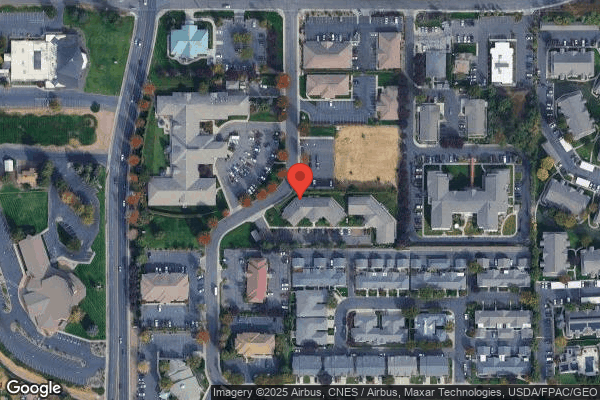
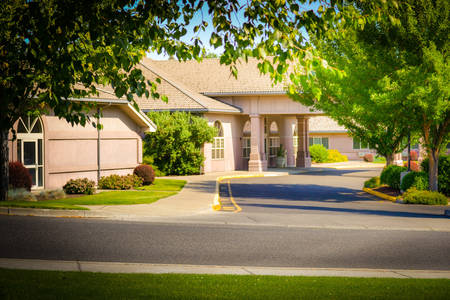
710 NORTH 39TH AVENUE, YAKIMA, WA 98902 (509) 248-4102
For profit - Corporation 93 Beds HYATT FAMILY FACILITIES Data: November 2025 1 Immediate Jeopardy citation
Trust Grade
0/100
#142 of 190 in WA
Last Inspection: June 2025

Inspected within the last 6 months. Data reflects current conditions.

Overview

Landmark Care and Rehabilitation has received a Trust Grade of F, indicating significant concerns about the quality of care and safety at the facility. Ranking #142 out of 190 in Washington places it in the bottom half of nursing homes, and #9 out of 11 in Yakima County suggests only two local options are worse. The facility is showing a trend of improvement, reducing its issues from 34 in 2024 to 16 in 2025, but it still has a concerning history with 65 issues found during inspections, including critical failures in wound care that led to serious infections for residents. Staffing is a relative strength with a 4 out of 5 rating and a turnover rate of 44%, which is lower than the state average, but the facility has incurred $132,702 in fines, indicating ongoing compliance problems. Specific incidents include a resident developing a severe pressure injury due to inadequate treatment and multiple falls experienced by residents due to lack of supervision and poor care planning. While there are strengths in staffing, the serious health risks highlighted in inspections raise red flags for families considering this facility.

Trust Score
F
0/100
In Washington
#142/190
Bottom 26%
Safety Record
High Risk
Review needed
Inspections
Getting Better
34 → 16 violations
Staff Stability
○ Average
44% turnover. Near Washington's 48% average. Typical for the industry.
Penalties
✓ Good
$132,702 in fines. Lower than most Washington facilities. Relatively clean record.
Skilled Nurses
✓ Good
Each resident gets 50 minutes of Registered Nurse (RN) attention daily — more than average for Washington. RNs are trained to catch health problems early.
Violations
⚠ Watch
65 deficiencies on record. Higher than average. Multiple issues found across inspections.
★★☆☆☆
2.0
Overall Rating
★★★★☆
4.0
Staff Levels
★★★★★
5.0
Care Quality
★☆☆☆☆
1.0
Inspection Score
Stable
2024: 34 issues
2025: 16 issues

The Good

  • 4-Star Staffing Rating · Above-average nurse staffing levels
  • 5-Star Quality Measures · Strong clinical quality outcomes
  • Full Sprinkler Coverage · Fire safety systems throughout facility
  • No fines on record
  • Staff turnover below average (44%)

    4 points below Washington average of 48%

Facility shows strength in staffing levels, quality measures, fire safety.

The Bad

2-Star Overall Rating

Below Washington average (3.2)

Below average - review inspection findings carefully

Staff Turnover: 44%

Near Washington avg (46%)

Typical for the industry

Federal Fines: $132,702

Well above median ($33,413)

Significant penalties indicating serious issues

Chain: HYATT FAMILY FACILITIES

Part of a multi-facility chain

Ask about local staffing decisions and management

The Ugly 65 deficiencies on record

1 life-threatening 5 actual harm
Jun 2025 15 deficiencies 2 Harm
SERIOUS (G)

Actual Harm - a resident was hurt due to facility failures

Pressure Ulcer Prevention (Tag F0686)

A resident was harmed · This affected 1 resident

**NOTE- TERMS IN BRACKETS HAVE BEEN EDITED TO PROTECT CONFIDENTIALITY** Based on observation, interview, and record review, the facility failed to provide the necessary care and services to prevent th...

Read full inspector narrative →
**NOTE- TERMS IN BRACKETS HAVE BEEN EDITED TO PROTECT CONFIDENTIALITY** Based on observation, interview, and record review, the facility failed to provide the necessary care and services to prevent the development of pressure injuries and to implement wound treatment measures consistently to avoid worsening of pressure injuries for 1 of 3 residents, (Resident 46) reviewed for pressure injuries. Resident 46 experienced harm when they developed a pressure related fluid filled blister to the left heel and a pressure injury to their right lateral malleolus (the bony prominence on the outside of the ankle joint) that had both slough and eschar present in the wound. These failures also placed the resident at risk for pain, infection, and other medical complications. Findings included . Review of the National Pressure Injury Advisory Panel (leading expert in pressure injuries/wounds), September 2016, defined pressure injury stages as follows: Stage 2 Pressure Injury is a partial thickness skin loss with exposed dermis (the top inner layers of skin) and may be present as an open ulcer with a red or pink wound bed or as an intact or ruptured blister. Stage 3 Pressure Injury is a full thickness loss of skin, in which adipose (fat) tissue is visible in the ulcer. Slough (dead tissue) and or eschar (dried blood and tissue) may be visible, granulation tissue and epibole (rolled or curled under edges) may include with undermining (a pocket of dead space under the visible wound edges) and tunneling (a passageway under the wounds surface which may be shallow or deep and impairs wound closure). Review of an undated facility policy titled, Skin Integrity, showed the facility would provide care consistent with professional standards of practice to prevent pressure injuries, promote healing, and prevent infection. <Resident 46> Review of the medical record showed Resident 46 admitted to the facility on [DATE] with diagnoses of a right femur (thigh bone) fracture, severe dementia (an umbrella term for loss of memory and thinking skills that has various causes), severe protein calorie malnutrition ( a condition where there is an insufficient intake of both protein and calories to meet the body's needs), reduced mobility (difficulty or inability to move around freely, easily, and without pain), and heart disease. The comprehensive assessment dated [DATE] showed Resident 46 required maximum assistance of one to two caregivers for bed mobility and transfers and had severe cognitive impairments. An observation of Resident 46 on 06/09/2025 at 8:24 AM, showed a small frail-appearing person lying on their back in their bed with no observable pressure relieving mattress, devices, or footwear to assist with pressure relief in place. Resident 46's eyes were open, though they did not speak or respond when spoken to. Review of Resident 46's facility admission notes dated 05/21/2025 showed the resident had no pressure injuries present on admission to the facility. Review of a nursing note in Resident 46's electronic medical record dated 06/03/2025 at 7:53 AM, showed a licensed nurse (LN) noted a new pressure related blister to Resident 46's left heel. The note further stated the resident was placed on alert charting, to monitor the area, and to float the heels (elevate the heels off the bed surface) when in bed. An additional nursing note dated 06/03/2025 at 7:57 AM stated in part, LN spoke with the resident's representative to notify of the pressure related blister to the left heel, who asked that facility staff monitor Resident 46 closely for any open areas on their lower extremities, as they had issues in the past of not healing well. Review of a nursing note dated 06/05/2025 at 1:18 PM, an LN wrote, while providing wound care LN noted new wound on the right lateral malleolus (ankle), wound care provided, new wound care orders are in place. Review of skin and wound assessment notes showed on 06/03/2025 a blister to the left heel was measured as 5.1 centimeters (cm) (a unit of measure) in length by 4.6 cm in width and described as a fluid filled blister taking up the majority of the left heel. Further review of skin and wound assessment notes showed on 06/05/2025 a right malleolus pressure injury was measured as 1.6 cm in length by 0.7 cm in width and described as having both slough and eschar present in the wound. Review of a Braden Scale assessment (an assessment tool used to assess a patient's risk for developing pressure injuries) completed on the admission date of 05/21/2025 showed a score of 11, indicating Resident 46 was at a high risk for developing pressure injuries. Review of Resident 46's Treatment Administration Records (TARs) for May 2025 and June 2025, showed beginning 05/26/2025 an order was written for LNs to do a complete skin assessment with a narrative (a written assessment of the skin's condition) every day shift on Mondays for skin monitoring. There were no LN initials that showed these assessments were completed on 05/26/2025, 06/02/2025 or 06/09/2025. Further review of Resident 46's TARs showed beginning 06/03/2025, the LN staff were to monitor the pressure related blister to the left heel, to float the heels when in bed, and to apply a heel protector to the left foot when up in their wheelchair every shift. Observations of Resident 46 on 06/10/2025 at 8:16 AM showed them being assisted with breakfast in the dining room. There was no heel protecter in place on the left foot. Observations of Resident 46 sitting at the north nurse's station in a wheelchair on 06/11/2025 at 11:08 AM and 06/12/2025 at 8:47 AM showed there was no heel protector in place on the left foot. Observations of Resident 46 lying on their back in bed on 06/12/2025 at 11:33 AM and 2:05 PM showed the heels were not floated and both heels were pressed into the mattress. Observation of dressing wound changes on 06/12/2025 at 2:26 PM with Staff Q, Registered Nurse (RN), showed the left heel blister was reddish/orange in color, had opened and drained of fluid and measured 5.0 cm by 4.8 cm. The wound to the right ankle showed a pinkish white wound bed with red tissue surrounding the wound and measured at 1.2 cm by 0.7 cm. During an observation and interview with Staff B, the Director of Nursing (DON), on 06/13/2025 at 6:11 AM showed Resident 46 lying on their back in bed with a foam wedge placed under the resident's knees to raise the heels, though both heels were pressed into the mattress. The DON stated the staff did not place the wedge correctly so the heels would float off the mattress and needed more education on how to do so. The DON also pressed on Resident 46's right heel and stated it felt mushy (a feeling of softness or sponginess indicating a potentially early sign of pressure injury development). An observation of Resident 46 on 06/13/2025 at 8:21 AM, showed them sitting in their wheelchair at a dining room table with regular shoes on their feet. Review of Resident 46's care plan on 06/13/2025 showed there was no problem opened for the development of the pressure injuries to the heel and ankle, or that any interventions were put into place to prevent new pressure injuries from occurring or to prevent the current pressure injuries from getting worse. Reference: WAC 388-97-1060(3)(b) This is a repeat citation from Statement of Deficiencies dated 03/12/2024 and 05/22/2024.
SERIOUS (H)

Actual Harm - a resident was hurt due to facility failures

Accident Prevention (Tag F0689)

A resident was harmed · This affected multiple residents

**NOTE- TERMS IN BRACKETS HAVE BEEN EDITED TO PROTECT CONFIDENTIALITY** Based on observation, interview, and record review, the facility failed to provide adequate supervision, assess, monitor, and re...

Read full inspector narrative →
**NOTE- TERMS IN BRACKETS HAVE BEEN EDITED TO PROTECT CONFIDENTIALITY** Based on observation, interview, and record review, the facility failed to provide adequate supervision, assess, monitor, and revise care plan interventions for efficacy, and ensure care planned interventions were consistently followed to prevent avoidable repeated falls for 4 of 5 residents (Residents 21,19, 41, and 29) reviewed for falls. Resident 21 who had 14 falls between 04/13/2025 and 05/23/2025, experienced harm when they had an unwitnessed fall, was found on the floor lying on their left side at the end of their bed, required transfer to the hospital, and was diagnosed with a fracture of the L1 vertebra (the first top bone in the lower back) and required a back brace that supports and stabilizes the spine. Resident 19 fell while unsupervised and experienced harm when they sustained a laceration on their forehead, required transfer to the emergency room (ER) and sutures. Resident 41 fell 17 times in the facility since admission, 12 unwitnessed, from either their wheelchair or bed, and experienced harm when they sustained head trauma, bruising and/or skin tears. Resident 29 experienced harm when they fractured their left fifth toe when they were left unattended in the bathroom, staff were unavailable to provide transfer assistance, they attempted to self-transfer from the toilet and fell. Findings included . Review of the 09/21/2022 Fall Assessment and Management policy showed the facility would identify and document residents' risk factors for falls and establish individualize resident centered fall prevention plans .by identifying underlying medical conditions that may increase injuries from falls .a link between increasing episodes of falls and recent changes in medication regime pharmacy review of medications that could relate to fall risk as well as medication side effects. Care plan individualized interventions will be monitored for effectiveness and modified to increase effectiveness. Review of the Facility's Policy titled, Accident Hazards/Supervision/Device dated 06/2023 showed the facility will provide an environment that is free of accident hazards as is possible and provide supervision and assistant devices, [drop seat wheel chairs(the back seat of the wheelchair tilts back while the front of the wheelchair seat tilts up), Front wheel walkers, manual wheel chairs and nonskid foot wear] to residents to avoid preventable accidents. <Resident 21> Review of the medical record showed the resident admitted to the facility 04/05/2025 with diagnoses including end stage renal disease (when your kidneys have permanently stopped working), muscle weakness and repeated falls with fractures. The 05/16/2025 comprehensive assessment showed Resident 21's cognition was moderately impaired and required assistance of one to two staff members for ADL's. Further review showed Resident 21 had a history of falls prior to admission that resulted in fractures and had two falls resulting in minor injury and no falls with major injury after admission to the facility. Observations on 06/09/2025 at 11:53 AM, 1:40 PM, 2:19 PM, showed Resident 21 lying in bed with his door open and curtain closed. Resident 21 was not visible from the hallway. Review of the care plan dated 04/05/2025 showed that Resident 21 had no care plan in place for being a fall risk and had no interventions to prevent falls. Record review of the fall investigations for Resident 21 showed Resident 21 had a fall on 04/13/2025 with no care plan in place for interventions to prevent falls. Additionally Resident 21 did not have a fall care plan put into place until 04/17/2025 (four days after the first fall). Review of the care plan dated 04/17/2025 showed Resident 21 was at high risk for falls related to deconditioning, gait/balance problems and self-transferring without asking for assistance. Further review showed interventions which included the call light to be within reach and to have appropriate footwear/non skids socks on when transferring. Additionally, there was no intervention for self-transferring in Resident 21's care plan. Review of the facilities reporting log showed Resident 21 had 14 falls between 04/13/2025 and 05/23/2025, nine of which resulted in injuries to Resident 21. Record review of a facility investigation dated 05/04/2025, showed Resident 21 had an unwitnessed fall and was found on the floor lying on their left side at the end of their bed. Resident 21 was able to move all extremities without pain. Resident 21 stated they had pain in their back and neck. When turning Resident 21 to their back to assist them to a sitting position, Resident 21 yelled out in pain and stated their left hip and ankle hurt. Resident 21 agreed to go to the hospital for evaluation. Further review showed the conclusion for Resident 21 was the resident was attempting to self-transfer, care plan reviewed and updated. Review of the care plan showed no updates or interventions were made from the fall on 05/04/2025 that resulted in a major injury. Review of the hospital Discharge summary dated [DATE] showed Resident 21 sustained a fracture of the L1 vertebra (the first top bone in the lower back) and required a TLSO (a back brace that supports and stabilizes the spine) brace with specific instructions to wear when out of bed with instructions on how to apply the brace. Review of the May 2025 orders showed there was no order placed for the nurses to monitor or to place the TSLO brace for Resident 21. During an interview on 06/12/2025 at 1:51 PM Staff P, Registered Nurse, stated they had found Resident 21 on the floor on 05/04/2025 and had sent them to the ER for evaluation. Staff P further stated they should have witness statements written by the staff but were unsure if that happened. Staff P stated they received the TSLO orders from the hospital. Staff P further stated they did not write an order for the brace or collect any witness statements for the fall. During an interview on 06/12/2025 at 11:20 AM, Staff B, Director of Nursing Services (DNS), stated the process for unwitnessed falls with injuries was to call the state hotline and to update the care plan with new interventions. Staff B stated they were aware there were not any witness statements or care plan updates completed for Resident 21's fall on 05/04/2025 and they recognized they have issues with investigations. Staff B stated the process for transcribing orders from the ER was the nurse receiving them were to place them on the Medication Administration Record (MAR) and Treatment Administration Record if necessary. Staff B stated the process was not followed for Resident 21. <Resident 19> Review of the medical record showed the resident admitted to the facility on [DATE] with diagnoses including Dementia (decline in mental ability), osteoporosis (brittle bones which increase bone fracture risk), thrombocytopenia (low blood platelets which lead to increase bleeding and bruising), Myeloproliferative disease (blood cancer) and history of falls. The 04/16/2025 quarterly nursing assessment showed Resident 19 was cognitively impaired with ability to respond yes or no to questions and required substantial assistance of one person to stand and transfer to and from their wheelchair. Review of the 01/31/2025 fall incident report showed Resident 19 had an unwitnessed fall at 2:45 PM in their room which showed Resident 19 sitting against the wall on their buttocks. The conclusion was that Resident 19 fell asleep and slid out of their wheelchair and should be laid down after meals or stay at the nurse's station for supervision. Review of the 05/19/2025 fall incident report showed the resident had an unwitnessed fall at 8:40 AM. Resident 19 was on their right side on the floor with their left eye closed shut and bleeding from the back of their head. The paramedics (emergency medical assistance) arrived and placed a cervical collar around Resident 19's neck to keep the neck in one position. Resident 19 sustained a laceration (jagged wound caused by trauma) on their upper forehead by their scalp which required six sutures. There was no additional information about how long the resident was on the floor. Additionally, there was no conclusion or updates to the care plan completed. Review of the June 2025 MAR showed the resident was on an anticoagulant (blood thinner). Review of the 06/23/2021 care plan showed the Resident 19 was at high risk for falls due to deconditioning, gait/balance issues and unawareness of their boundaries. The care plan interventions included laying the resident down after meals, keeping the bed in a low position, reviewing information on past falls, attempting to determine cause of falls, and keep the resident at the nurse's station. During an observation on 06/09/2025 at 8:00 AM, Resident 19 was seated in their wheelchair at a table in the assisted dining room for breakfast and was being fed by a Nursing Assistant (NA). Resident 19 was unable to move their arms up a to hold their utensils . During an observation and concurrent interview on 06/09/2025 at 9:37 AM, after breakfast the resident was seated in their wheelchair alone in their room parked by their bed. The skin on their upper forehead close to their scalp and hair line had a four-inch scar line with scattered small pinpoint black/brown scabbed areas to the scar line. Resident 19 was very soft-spoken when asked questions about their care and could not verbalize events that led up to their last fall on 05/19/2025. Resident 19 had asked to go to bed but was unable to transfer without assistance. The resident's bed was not in a low position. Resident 19 had a bruise on their lower right forearm. During an observation on 06/10/2025 at 8:45 AM, Resident 19 was seated in their wheelchair in front of nurse's station against the front wall. During an observation on 06/10/2025 at 9:10 AM, Resident 19 was still in their wheelchair against the front wall, there were no staff at the nurse's station. Resident 19 stated they were tired and started to tilt, leaning to the right of their wheelchair. During an observation on 06/10/2025 at 10:30 AM, Resident 19 was still seated in their wheelchair against the wall and leaning to their right side. During an observation and a concurrent interview on 06/11/2025 at 10:57 AM, Staff T, Restorative NA, stated Resident 19 gets tired easily and cannot sit up for long. Staff T stated Resident 19's falls were due to sitting in their wheelchair in their room for too long. During an interview on 06/12/2025 at 7:53 AM, Staff B stated Resident 19's incident report was incomplete. Staff B stated staff did not follow the care plan for Resident 19 <Resident 41> Review of the medical record showed the resident admitted to the facility on [DATE] with diagnoses including Parkinson's Disease (neurodegenerative disease with brain deterioration that affects body movements by slowing movements and causes tremors and balance issues), reduced mobility, and frequent falls. The 05/10/2025 comprehensive assessment showed the resident was cognitively impaired but able to make their needs known, required substantial assistance with transfers to and from wheelchair and toileting. Resident 41 used a manual wheelchair with a drop seat for mobility. The comprehensive assessment showed Resident 41 wandered around the facility in their wheelchair and had multiple falls. During an observation and concurrent interview on 06/09/2025 at 9:00 AM, Resident 41 was in their room seated in their wheelchair by their bed. The call light cord and button was under the resident's bed where they were unable to reach it. The wheelchair was stuck between their bedside table and the resident was unable to move themselves. During an interview Resident 41's stated that they wanted to go home and felt that staff did not listen to them. Resident 41's right hand had dark purple and green bruises between the thumb and index finger. The resident's right wrist on the top of the forearm to mid upper arm showed bruising brown and light green in color. Resident 41's left hand showed scattered green-yellow bruising from the top of their hand to the elbow. The resident raised their pant leg on the right leg and there was light blue green bruising from the outer lateral side of the mid-calf area to the left knee to mid-thigh. Resident 41's left leg had bruising blue green in color over their knee to mid-thigh area. When asked how they got the bruising Resident 41 stated they had fallen many times. Review of the 01/31/2025 care plan showed Resident 41 was at high risk for falls related to confusion, deconditioning, gait and balance problems, Parkinson's, psychoactive (medications that affect mood and behavior) drug use, and history of falls. Interventions included call light in place within reach, bed in low position, [NAME] wheelchair (tilt in space wheelchair) for positioning and body alignment, do not leave the resident alone in the bathroom, bed against the wall, fall mat by bed and review past falls and review root cause and effectiveness of interventions. The last update on fall interventions was 02/04/2025. During an observation on 06/09/2025 at 10:30 AM, Resident 41 was seated in front of the nurse's station by the right side of the wall. The resident was seated in their low wheelchair with the drop seat and using the woodened hand rail to pull themselves along the wall. from behind the south nurse's station Resident 41 was unable to be visualized due to their low-profile wheelchair. During an observation on 06/10/2025 at 9:45 AM, Resident 41 was in their wheelchair with drop seat leaning forward and using their feet to mobilize the wheelchair. Resident 41 was in and out of other resident's rooms and holding on to the handrail in the hallway standing up. There were no staff observed to be supervising the resident. During an observation on 06/10/2025 at 3:07 PM, Resident 41's wheelchair showed the back side of the wheelchair was loose and uneven. The left armrest was completely down and the armrest and side panel on the right was in the upright position. The resident was leaning forward and started to fall forward but caught themselves in the doorway of the south dining room. There were no staff observed to be supervising the resident. During an interview on 06/10/2025 at 1:49 PM, Staff V, Registered Nurse (RN) stated they were at the nurse's station on 06/03/2025 when Resident 41 was seated in front of the South Nurses station. Resident 41 was seated in their wheelchair for about 20 minutes and slipped out of the wheelchair onto the floor and hit their right elbow and sustained a skin tear. Staff V stated they picked Resident 41 up with assistance and put them back in the wheelchair. Staff V was unaware that Resident 41 was in a drop seat wheelchair or if the resident was positioned correctly. Staff V stated Resident 41 falls frequently and there is nothing else they can do to update the interventions of the care plan. During an observation on 06/11/2025 at 4:10 PM, Resident 41 was yelling from their room help, help in a loud tone and repeatedly asked staff to get them out of bed. Staff observed near Resident 41's room, did not respond to the residents' call for assistance. The surveyor entered Resident 41's room, and observed the resident seated close to the edge of the bed with the bottom part of their body out of the bed. During an interview on 06/11/2025 at 4:30 PM, Staff Z, NA, stated they requested a one on one (one person assigned to supervise a resident) for Resident 41 in the evening related to the resident having increased behaviors with falls and not enough staff to provide supervision. Staff Z stated if Resident 41 was assisted in bed too early they would fall out of bed. During an interview on 06/11/2025 at 4:45 PM, Staff N, RCM, RN, stated Resident 41 becomes restless and wanders around the hallway in the late afternoon. Staff N stated after they leave in the afternoon there were not enough staff to supervise Resident 41. During an interview on 06/13/2025 at 1:00 PM, Resident 41's Resident Representative (RR) stated they were very concerned about the care Resident 41 had received at the facility and the number of falls with bruises and skin tears. The RR stated they had given many interventions that would help Resident 41 such as snacks, quiet areas, conversation, music and phone call to the RR to speak to Resident 41. The RR stated they felt the facility was resistant to any suggestions they offered. Review of Resident 41 fall incident reports from 02/03/2025 through 06/03/2025 showed Resident 41 had sustained 17 falls from either the wheelchair or their bed and had sustained either head trauma, bruising and/or skin tears. Review of the incident reports showed 12 falls were unwitnessed. During an interview on 06/12/2025 at 7:53 AM, Staff B, DNS, stated Resident 19's incident reports were not complete and did not meet the requirements. Staff B stated staff did not follow the care plan for Resident 19 and did not thoroughly investigate to determine if interventions were effective. <Resident 29> Review of Resident 29's medical record showed the resident was admitted to the facility on [DATE] diagnoses to include polyneuropathy (a disease affecting the peripheral nerves in the body, causing weakness, numbness and burning pain), muscle weakness, unsteadiness on feet and repeated falls. The 06/07/2025 comprehensive assessment showed the residents' cognition was intact and required one staff assistance with transfers and toileting and had falls since admission. Review of the care plan dated 06/09/2025 showed Resident 29 was at risk for falls related to weakness and an unsteady balance. Further review showed interventions which included a toileting schedule, evaluate for proper attention to safety, have the call light within reach and reinforce use of the call light. Additionally, to reinforce the use of appropriate footwear for safety with transfers. An observation and concurrent interview on 06/09/2025 at 8:51 AM, Resident 29 was in their night gown, no shoes or socks on sitting in their wheelchair. Resident 29 stated the call lights will stay on forever and they needed help with getting dressed but were told they could do this themselves. The resident stated they could not stand on their own and their hands nor their knees worked. Resident 29 stated I would not be here if I didn't need the help. The resident stated the staff helped them on the toilet and never came back, so they tried to transfer themselves into their wheelchair after waiting a long time and had a fall. They stated the incident happened a month ago in their restroom and they had to yell for help. Additionally, they broke their left fifth toe in the fall. Review of the facilities incident reporting log dated 04/23/2025 showed Resident 29 was found in the bathroom lying on their stomach after a fall in their restroom that resulted in a fracture to their left fifth toe. During an interview on 06/12/2025 at 3:38 PM, Staff Z, NA, stated there were many residents who were a high risk for falls. Staff Z stated they had informed the administration and the nurses about the need for more staff supervision to decrease the falls, but they have not seen any results and the residents continue to fall. Staff Z stated they keep certain residents at the nurse's station to keep a close eye on them but sometimes that doesn't work. During an interview on 06/10/2025 at 2:54 PM, Staff N, RCM, stated when they were coming into work the morning of 04/23/2025 they were walking down the hall and heard someone yell help me. Staff N stated upon entering Resident 29's room, they found the resident lying on their stomach in the residents bathroom. Staff N stated they assisted the resident up, started an incident report, and placed resident on alert charting. Staff N stated there was bruising noted to Resident 29's left lateral ankle and left toes, and the resident had complained of pain to their left fifth toe. Staff N stated an x-ray was taken on 04/28/2025 (five days after the incident) and showed Resident 29 had a latent injury of a fractured left fifth toe. During an interview on 06/12/2025 at 10:35 AM, Staff B stated that their expectation was for staff to follow the care plan and ensure resident safety. Reference: WAC 388-97-1060 (3)(g) Cross reference F725 Sufficient Nurse Staffing; and F610 Investigate Alleged Violations This is a recurring citation from the Statement of Deficiencies dated May 22, 2024
CONCERN (D)

Potential for Harm - no one hurt, but risky conditions existed

Resident Rights (Tag F0550)

Could have caused harm · This affected 1 resident

Based on observation, interview and record review, the facility failed to ensure care and services were provided in a respectful and dignified manner for1of 3 residents (Resident 25) reviewed for dign...

Read full inspector narrative →
Based on observation, interview and record review, the facility failed to ensure care and services were provided in a respectful and dignified manner for1of 3 residents (Resident 25) reviewed for dignity. This failure placed residents at risk for being treated with a lack of dignity, respect and embarrassment. Findings included . Review of the 06/2023 Activities of Daily Living (ADLs) policy showed residents will be provided with care, treatment, and services to ensure their ADLs are maintained and do not diminish. Appropriate care and services will be provided for residents who are unable to carry out ADL's independently in accordance with the care plan including appropriate support with assistance with elimination (toileting). <Resident 25> Review of the medical record showed the resident admitted to the facility with diagnoses including stroke (when blood stops flowing to part of your brain) and right shoulder joint replacement. The 04/10/2025 comprehensive assessment showed Resident 2's cognition was intact and required staff assistance of one person for ADL's including toileting. During an interview on 06/09/2025 at 2:02 PM, Resident 25 stated before they came to the facility, they used the bathroom and were continent of their bowel and bladder. Resident 25 stated they had to wait such a long time for help to use the restroom, they became incontinent in their adult brief even though they were continent and it made them feel embarrassed. Record review of a document titled Admissions Bowel and Bladder Screening, dated 05/27/2025, showed Resident 25 was continent of bowel. Review of Resident 25's care plan, dated 05/27/2025, showed that the resident was continent of bowel and to toilet on awakening and as needed. Review of the June 2025 Nursing Assistant Task report showed Resident 25 was incontinent of their bowels on 06/05/2025 and 06/07/2025. During an interview on 06/13/2025 at 10:17 AM, Staff B, Director of Nursing Services, stated it was their expectation that staff followed the residents' care plan. REFERENCE: WAC 388-97-0180(1-4).
CONCERN (D)

Potential for Harm - no one hurt, but risky conditions existed

Deficiency F0552 (Tag F0552)

Could have caused harm · This affected 1 resident

**NOTE- TERMS IN BRACKETS HAVE BEEN EDITED TO PROTECT CONFIDENTIALITY** Based on interview and record review, the facility failed to obtain informed consents regarding the potential risks associated w...

Read full inspector narrative →
**NOTE- TERMS IN BRACKETS HAVE BEEN EDITED TO PROTECT CONFIDENTIALITY** Based on interview and record review, the facility failed to obtain informed consents regarding the potential risks associated with the use of psychotropic medications (medications that alter thought processes) for 2 of 5 residents (Residents 33 and 64) reviewed for unnecessary medication. This failure placed the residents and/or the legal representatives at risk of not being fully informed about the medications prior to administration. Findings included . <Resident 33> Review of the electronic medical record showed Resident 33 was admitted to the facility on [DATE] with diagnoses including depression (a mental health condition where a person experiences persistent sadness, loss of interest in activities, and difficulty functioning in daily life), anxiety ( a feeling of worry, nervousness, or unease, typically about an event or something with an uncertain outcome) and insomnia ( when you have trouble falling asleep, stating asleep, or both, even when you have the chance to get enough rest). The comprehensive assessment dated [DATE] showed Resident 33 required moderate assistance of one to two caregivers for activities of daily living (ADLs) and was cognitively intact. Review of Resident 33's 05/13/2025 physician orders showed they were admitted to the facility on the antipsychotic medication Seroquel. Review of Resident 33's medical record showed there were no records of the resident or of their representative being informed of being placed on the medication or of a consent signed for its use. <Resident 64> Review of the electronic medical record showed Resident 64 was admitted to the facility on [DATE] with a diagnosis of chronic Post Traumatic Stress Disorder (PTSD) (an anxiety disorder that develops in some people who have experienced a shocking, scary, or dangerous event), bipolar disorder (a disorder causing extreme shifts between high and low moods), and depression. The comprehensive assessment dated [DATE] showed Resident 64 required limited assistance of one caregiver for ADLs and was cognitively intact. Review of Resident 64's physician orders showed they were admitted to the facility on two antidepressant medications, sertraline and duloxetine. Review of Resident 64's medical record showed there were no records of the resident or of their representative being informed of being placed on the medications or of consents signed for their use. During an interview on 06/11/2025 at 2:02 PM with Staff B, Director of Nursing Services (DNS), they stated the admission nurses were responsible for getting the consents signed on admission or the floor nurses if a new order came in. The DNS stated she did not know why the consents were not signed for Residents 33 and 64 ' s psychotropic medications when they were admitted to the facility, stating it must have been missed by the admitting nurses. Reference (WAC) 388-97-0260(2)(d)
CONCERN (D) 📢 Someone Reported This

A family member, employee, or ombudsman was alarmed enough to file a formal complaint

Potential for Harm - no one hurt, but risky conditions existed

Deficiency F0569 (Tag F0569)

Could have caused harm · This affected 1 resident

**NOTE- TERMS IN BRACKETS HAVE BEEN EDITED TO PROTECT CONFIDENTIALITY** Based on interview and record review, the facility failed to ensure resident funds were transferred to the Resident's Representa...

Read full inspector narrative →
**NOTE- TERMS IN BRACKETS HAVE BEEN EDITED TO PROTECT CONFIDENTIALITY** Based on interview and record review, the facility failed to ensure resident funds were transferred to the Resident's Representative (RR) within 30 days of death, for 1 of 2 discharged residents (Resident 120) reviewed for conveyance of funds to the RR after death of Resident. This failure placed the RR at risk for loss of funds. Findings included . <Resident 120> Review of the medical record showed the resident was readmitted to the facility on [DATE] from the hospital on private pay hospice care. The resident passed away on 11/09/2024. The RR was asked to pay a full month of room and board at the facility which was $11,800.00. During an interview on 06/09/2025 at 11:35 AM, Staff GG, Business Office Manager, stated they had a conversation with the RR on 11/08/2024 and stated the money would be refunded the money that was not used for Resident 120's care. Review of the06/10/2025 Transaction Report for November 1, 2024, through June 30, 2025, showed the RR was owed a $11,800.00 refund. During an interview on 06/11/2025 at 4:28 PM, the RR stated they were concerned about their refund and that seven months had passed, and nothing had happened with the facility. Reference WAC 388-97-3040(4)(5)
CONCERN (D)

Potential for Harm - no one hurt, but risky conditions existed

Deficiency F0645 (Tag F0645)

Could have caused harm · This affected 1 resident

**NOTE- TERMS IN BRACKETS HAVE BEEN EDITED TO PROTECT CONFIDENTIALITY** Based on interview and record review the facility failed to ensure the Pre-admission Screening and Resident Review, (PASARR) Lev...

Read full inspector narrative →
**NOTE- TERMS IN BRACKETS HAVE BEEN EDITED TO PROTECT CONFIDENTIALITY** Based on interview and record review the facility failed to ensure the Pre-admission Screening and Resident Review, (PASARR) Level 1 were accurately completed upon or prior to admission and requirements for 1of 5 residents (Resident 41) reviewed for the PASARR process. This failure had the potential to place the resident at risk for inappropriate placement and/or not receiving timely and necessary services to meet their mental health care needs. Findings included . Review of the medical record showed the resident admitted to the facility on [DATE] with diagnoses including Parkinson's Disease (neurodegenerative disease with brain deterioration that affects body movements by slowing movements and causes tremors and balance issues), depression and anxiety. The 05/10/2025 comprehensive assessment showed the resident was cognitively impaired but able to make their needs known. Review of a PASARR Level 1(Preadmission Screening and Resident Review) dated 01/29/2025 was incorrect in designation of Resident 41 diagnosis of Dementia (symptoms that affect memory, thinking and social abilities). Resident 41 was admitted to the facility on [DATE] and the facility failed to identify the error since the diagnosis of dementia was not designated at that time. During an interview on 06/12/2025 at 4:00 PM, Staff I, Social Services stated they were unaware that the resident did not have a dementia diagnosis and that the PASARR Level 1 indicated mental health issues of anxiety and depression. During an interview on 06/13/2025 at 8:50 AM, Staff I stated Resident 41 did not have a dementia diagnosis and a PASARR Level 1 with a request for a Level 2 evaluation was not requested. Reference WAC 388-97-1915(1),(2)(a-c)
CONCERN (D)

Potential for Harm - no one hurt, but risky conditions existed

ADL Care (Tag F0677)

Could have caused harm · This affected 1 resident

**NOTE- TERMS IN BRACKETS HAVE BEEN EDITED TO PROTECT CONFIDENTIALITY** Based on observation, interview, and record review, the facility failed to ensure 3 of 5 residents (Residents 2, 25, and 10), re...

Read full inspector narrative →
**NOTE- TERMS IN BRACKETS HAVE BEEN EDITED TO PROTECT CONFIDENTIALITY** Based on observation, interview, and record review, the facility failed to ensure 3 of 5 residents (Residents 2, 25, and 10), reviewed for activities of daily living (ADLs), received adequate grooming, transferring assistance and nail care according to the residents' care plans. This failure placed the residents at risk for unmet care needs. Findings included . <Resident 2> Review of the medical record showed the resident admitted to the facility with diagnoses including stroke (when blood stops flowing to part of your brain), muscle weakness and chronic kidney disease (where your kidneys are damaged and they cannot filter blood as well as they should) and diabetes (a disease where your body has trouble regulating blood sugar levels). The 04/10/2025 comprehensive assessment showed Resident 2's cognition was intact and required set- up and supervision with personal hygiene. Review of Resident 2's care plan, dated 02/16/2024, showed that the resident had an ADL self-care performance deficit and required set-up assistance with all personal hygiene. During an observation and concurrent interview on 06/10/2025 at 8:25 AM, Resident 2 had six to ten millimeter (mm) sized strands of hair, Resident 2 stated they wanted their goatee but did not want the strands of hair and would like to be shaved. The resident's fingernails were 1/4 inch long past the tip of their finger and had dark brown debris under the nail tips on both hands. During an observation on 06/12/2025 at 8:57 AM, Resident 2 was sitting up in their wheelchair. The resident continued to be unshaven and fingernails unkept. During an interview on 06/12/2025 at 11:48 AM, Staff EE, Nursing Assistant (NA), stated they offered nail care most of the time if they were doing showers. Staff E stated the shower NAs were supposed to do all nail care on shower days unless the resident was diabetic, then the nurses were responsible. Staff EE stated they would chart any refusals in the resident's nursing assistant task record. Review of the May and June 2025 nursing assistant task record showed no refusals of care for Resident 2. Review of the May and June 2025 Medication Administration Record showed the licensed nurses were doing nail checks every Friday and had no documentation of refusals. <Resident 25> Review of the medical record showed the resident admitted to the facility with diagnoses including stroke (when blood stops flowing to part of your brain) and right shoulder joint replacement. The 04/10/2025 comprehensive assessment showed Resident 25's cognition was intact and required staff assistance of one person for personal hygiene. An interview and concurrent observation on 06/09/2025 at 2:90 PM, showed Resident 25 lying in their bed, the resident shirt had stains and food particles on the front of it. Resident 25 was unshaven with four to six mm sized facial hairs on the resident's face and neck. The resident's fingernails were ¼ long and past the fingertips with brownish debris under the tips on both hands. Resident 25 stated it really drives me crazy that they do not help me enough. Review of the May and June 2025 task record showed Resident 25 was to have a shower Mondays and Thursdays. Further review showed no documentation on 05/29/2025, 06/02/2025, 06/05/2025 that a shower was given or refused. <Resident 10> Review of Resident 10's medical record showed the resident was admitted to the facility on [DATE] with diagnoses to include diabetes (a disease in which the body does not control glucose (a type of sugar) in the blood), dementia (the loss of thinking, remembering, and reasoning- to the extent that in interferes with ADLs), muscle weakness and history of falls. The comprehensive assessment dated [DATE] showed Resident 10's cognition was severely impaired and was dependent on staff for grooming, personal hygiene, bed mobility and transfer assistance. The assessment confirmed that Resident 10 had no prior instances of rejecting care. During an interview on 06/09/2025 at 10:52 AM, Staff DD Nursing Assistant, NA, stated their tasks with showers were to do the weights and skin checks when a resident shower was done. Staff DD stated they were also to do nail care if the resident was not a diabetic. Staff DD stated once done with their tasks they give all information about what they had seen during a resident shower with the Resident Care Manger. Staff DD stated they had given Resident 10 their shower and within the last two months they had been working with the resident that they had not had Resident 10 refuse the care. An observation on 06/09/2025 at 11:01 AM, showed Resident 10 lying in bed, dressed in a purple-colored night gown. The resident's hair uncombed, both hands on their chest and the nails long, jagged with dark substance noted underneath. In an interview on 06/10/2025 at 9:39 AM, Collateral Contact, expressed their disappointment with Resident 10's care, noting that during their visit three weeks ago, the resident appeared in bed with disheveled hair and wearing the same nightgown for days. The Collateral Contact stated that they had called the facility to notify them of their disappointment with care and requested that Resident 10 get up at least three times a day, at least for their meals. The Collateral Contact stated that Resident 10 would be very upset if they were of sound mind as they used to always be up for their day and looked presentable. During an observation on 06/10/2025 at 4:18 PM, Resident 10 was lying in their bed, their hair uncombed, covered with a blanket and sleeping. During an observation on 06/11/2025 at 9:01 AM, Resident 10 was lying in their bed, and they stated they were doing good, while eating a muffin with their right hand. The resident's right hand with contractures of the middle and fourth fingers, the resident's nails were long and jagged and had food particles and a dark brown substance underneath them. During an observation and concurrent interview on 06/11/2025 at 1:03 PM, Resident 10 was in bed with their head of bed elevated, a bedside table over them. The resident was wearing a purple top, and their legs were covered with a blanket. The resident answered no when asked if they had got out of bed for the day. During an interview and concurrent observation on 06/11/2025 at 4:24 PM, showed the resident was lying in their bed covered with a blanket from their chest to their knees while Staff BB, Licensed Practical Nurse, assessed their feet. Staff BB stated the resident's skin was looking better and that nurses were to do the residents' skin and nails if they were diabetic every week depending on the orders. Staff BB stated that Resident 10 tended to refuse care. An observation on 06/12/2025 at 9:05 AM, showed Resident 10 sitting up in their wheelchair fully dressed. The resident's hair was uncombed, their nails long, jagged with a dark substance underneath. Resident 10 had complained that their bottom hurt sitting in the wheelchair. During an interview on 06/12/2025 at 1:22 PM, Staff CC, NA, stated today the nurse on shift explained to the resident that family had called and wanted them out of bed, so we got her up. Staff CC stated the resident did not stay up very long because they had complained about their bottom hurting, During an interview on 06/13/2025 at 10:17 AM, Staff B, Director of Nursing, stated the resident care information would be in PCC (a system in which nursing staff write out information for each resident's daily care). Staff B further stated that the expectation would be that staff followed the care plan and or orders and documented any refusals. Reference: WAC 388-97-1060(2)(c)
CONCERN (D)

Potential for Harm - no one hurt, but risky conditions existed

Deficiency F0678 (Tag F0678)

Could have caused harm · This affected 1 resident

**NOTE- TERMS IN BRACKETS HAVE BEEN EDITED TO PROTECT CONFIDENTIALITY** Based on interview and record review the facility failed to ensure staff responsible for providing cardiopulmonary resuscitation...

Read full inspector narrative →
**NOTE- TERMS IN BRACKETS HAVE BEEN EDITED TO PROTECT CONFIDENTIALITY** Based on interview and record review the facility failed to ensure staff responsible for providing cardiopulmonary resuscitation (CPR - an emergency procedure consisting of chest compressions combined with giving breaths of air) had current CPR certification for 1 of 5 licensed nursing staff (Staff S) reviewed for CPR certification status. This failure had the potential risk of the facility having a lack of staff who were properly trained in CPR readily available to respond in an emergency. Findings included . Record review of the facility's policy titled, Cardiopulmonary Resuscitation (CPR) Policy, dated 06/2023, showed personnel have completed training on the initiation of cardiopulmonary resuscitation (CPR) and or basic life support (BLS), including defibrillation (the use of an electric current to stop any irregular and dangerous activity in the heart muscles), for victims of sudden cardiac arrest (when the heart stops beating suddenly). The facility policy further guided licensed staff to initiate CPR/BLS if an individual was found unresponsive unless the individual had orders that prohibited CPR. <Staff S, Medication Assistant Certified, (MA-C)> Review of Staff S's personnel file showed their CPR certification expired on 02/2025 (four months ago). During an interview on [DATE] at 11:32 AM, Staff G, Staff Development, stated they were unaware of the expired CPR certification for Staff S. Staff G stated they were told that the Nursing Assistants did not require a CPR certification, that the Director of Nursing Services (DNS) keeps track of the certifications. During an interview on [DATE] at 10:35 AM, Staff B, DNS, stated they were aware of the expired CPR certifications for Staff S and would be working on getting staff up to date with their certifications. Reference (WAC) 388-97-1060(1)
CONCERN (D)

Potential for Harm - no one hurt, but risky conditions existed

Quality of Care (Tag F0684)

Could have caused harm · This affected 1 resident

**NOTE- TERMS IN BRACKETS HAVE BEEN EDITED TO PROTECT CONFIDENTIALITY** Based on observation, interview, and record review, the facility failed to ensure care, services and documentation that addresse...

Read full inspector narrative →
**NOTE- TERMS IN BRACKETS HAVE BEEN EDITED TO PROTECT CONFIDENTIALITY** Based on observation, interview, and record review, the facility failed to ensure care, services and documentation that addressed skin integrity issues were provided in accordance with professional standards of practice for 2 of 3 residents (Residents 33 and 27), reviewed for quality of care. This failure placed the residents at risk for unmet care needs and negative health outcomes. Findings included . <Resident 33> Review of the electronic medical record showed Resident 33 was admitted to the facility on [DATE] with diagnoses including a fracture to the right wrist, end stage renal disease (ESRD) with dialysis three times a week, diabetes, depression and heart disease. The comprehensive assessment dated [DATE] showed Resident 33 required moderate assistance of one to two caregivers for activities of daily living (ADLs) and was cognitively intact. During an observation and interview with Resident 33 on 06/10/2025 at 9:10 AM, showed them lying on their back in bed. A skin tear was noted on the top of their right forearm measuring approximately six millimeters (mm) (a unit of measure) in length by four mm in width that was open with the skin folded back to the base of the tear and actively bleeding. A second skin tear was noted on the top back of the left hand, measuring approximately two mm by two mm that had dried blood on the top of it. Resident 33 stated they did not know how they got the skin tears, stating their skin would both tear and bleed easily and they had probably bumped their arm and hand on something on their bed, wheelchair, or bedside table. During the same interview Resident 33 stated they had the skin tear on the top of their left hand for several days and it kept opening back up and bleeding daily. They stated they had just noticed the one on their right forearm last evening and showed where their bedsheet had blood on it from bleeding through the night. Resident 33 stated that no one from nursing had come to clean up or put dressings on the skin tears since they had first noticed them, though a nursing assistant had wiped the blood off them last evening with a piece of tissue before bed. During an observation and interview with Resident 33 on 06/11/2025 at 8:45 AM, showed the skin tears to the right forearm and left hand with dried blood on them and no dressings in place. Resident 33 stated no one in the facility had yet come to look at them or dress them. They stated the skin tears were bothersome because they were on a medication that made them bleed easily, and whenever they bumped them or moved the wrong way in bed, they would start bleeding again. Review of Resident 33's Medication Administration Records (MARs) for the months of May 2025 and June 2025 showed an order for the medication Plavix (a medication used to prevent blood clots which increases the risk of serious bleeding because it reduces the blood's ability to clot) to be given every morning beginning 05/15/2025. Review of Resident 33's Treatment Administration Records (TARs) for May 2025 and June 2025, showed beginning 05/13/2025 an order was written for licensed nurses (LNs) to do a complete skin assessment with a narrative (a written assessment of the skin's condition) every day shift on Mondays for skin monitoring. There were no LN initials that showed these assessments were completed on 05/26/2025, 06/02/2025 or 06/09/2025. Further review of Resident 33's TARs for the month of June 2025 showed there were no orders to monitor and/or treat the skin tears to right forearm or left hand. During an interview with Staff B, Director of Nursing Services (DNS) on 06/11/2025 at 2:02 PM, they stated the nursing staff should follow up with an incident report anytime a skin tear was observed and should notify the resident's family and physician of any new skin impairment and obtain orders to monitor and treat the area. Staff B stated they did not know Resident 33 had recent skin tears to both their hand and forearm and had not received any incident reports about the skin tears. Review of nursing progress notes for the month of June 2025 on 06/12/2025 showed no progress notes that either Resident 33's family or physician were notified of the skin tears observed on the right forearm or left hand. Review of Resident 33's care plan showed a problem was opened on 05/21/2025 for potential impairment to skin integrity with interventions that included to follow the facility protocols for the treatment of injury and to use caution during transfers and bed mobility to prevent striking arms, legs, and hands against any sharp or hard surface. Further review of Resident 33's care plan showed that that a problem was opened on 05/212025 for being on an antiplatelet medication with interventions that included to monitor/document/report to MD as needed for signs/symptoms of complications, blood tinged or frank blood in urine or stool and bruising. <Resident 27> Review of the medical record showed the resident admitted to the facility on [DATE] with diagnoses of contractures (a permanent tightening of the muscles, tendons, skin and nearby tissues that causes the joints to shorten and become very stiff) of the hands and shoulders, dry skin, fibromyalgia (long-term widespread pain and fatigue), and torticollis (shortening and stiffness of the neck muscles). Review of the 04/27/2025 quarterly assessment showed Resident 27 required substantial assistance with ADL's due to bilateral (affecting both sides) impairment of upper and lower body movement. Resident 27 was able to make their needs known. During an observation and concurrent interview on 06/09/2025 at 2:37 PM, Staff Z, Nursing Assistant (NA), stated the resident could make their needs known. Resident 27 was in bed with the head of the bed at 45 degrees. The resident was positioned leaning to the left side of the bed with their head on their chest. Resident 27's right hand had blood on the top of their right hand. The resident stated they were in pain and uncomfortable. Staff Z stated Resident 27's position was always leaning to the left of the bed and required re-positioning maintained with pillows. Resident 27's top of their right hand had a four by five mm patch of skin that had been removed or injured and actively bleeding. Staff S, Medication Assistant, was notified and stated they would take care of it. During an observation on 06/10/2025 at 10:00 AM, Resident 27 was lying in bed with fresh blood spots on their white top sheet. Resident 27 moved their contracted right hand and hit the top of the right hand under the overbed table. Staff S was notified of the incident. During an observation on 06/11/2025 at 2:00 PM, Resident 27's right top of their hand was reddened with open red spots on the top of their hand. Review of the 02/10/2021 care plan showed Resident 27 was at moderate risk for skin alteration due to resident's diagnoses and dry skin. There were no interventions related to prevent or care of skin impairments. Review of the 02/27/2025 incident report showed Resident 27 was seen by the physician for dermatitis (inflamation of the skin) of the right top of their right hand. The skin incident report showed that the physician requested that nursing staff notified them if the skin to the right hand changed. Review of the June 2025 TAR showed no treatment for Resident 27's right top of their hand. During an interview on 06/12/2025 at 8:20 AM, Staff B stated that nursing staff were to document skin issues and provide some intervention to care for bleeding of the right hand. Reference (WAC) 388-97-1060(1)
CONCERN (D)

Potential for Harm - no one hurt, but risky conditions existed

Deficiency F0688 (Tag F0688)

Could have caused harm · This affected 1 resident

**NOTE- TERMS IN BRACKETS HAVE BEEN EDITED TO PROTECT CONFIDENTIALITY** Based on observation, interview and record review the facility failed to ensure 3 of 6 sampled residents (Residents 19, 27, and ...

Read full inspector narrative →
**NOTE- TERMS IN BRACKETS HAVE BEEN EDITED TO PROTECT CONFIDENTIALITY** Based on observation, interview and record review the facility failed to ensure 3 of 6 sampled residents (Residents 19, 27, and 10) reviewed in a Restorative Nursing Program (RNP) for positioning, range of motion (ROM), and hand splinting, received consistent services to prevent further decrease in range of motion and hand contracture (a permanent tightening of the muscles, tendons, skin and nearby tissues that causes the joints to shorten and become very stiff) through use of consistently following documented care plans and providing services to identified residents. This failure of not following the restorative care plans on a consistent basis increased the residents at risk of being unable to maintain their current level of functioning. Findings included . A review of the 11/15/2023 Restorative Nursing Plan policy showed residents will receive restorative nursing care as needed to promote safety and independence. Restorative nursing care consists of nursing interventions .goals and objectives are resident centered and outlined in the resident's care plan. The facility will be responsible for a monthly recap note performed by a licensed nurse. <Resident 19> Review of the medical record showed the resident admitted to the facility on [DATE] with diagnoses including dementia (decline in mental ability), osteoporosis (brittle bones which increase bone fracture risk), thrombocytopenia (low blood platelets which lead to increase bleeding and bruising), and history of falls. The 04/16/2025 quarterly nursing assessment showed Resident 19 was cognitively impaired with ability to respond yes or no to questions and required substantial assistance of one person to eat their meals, brush their teeth, and to stand and transfer to and from their wheelchair. Review of the 08/05/2021 RNP for Resident 19 showed they were to have transfer training from their wheelchair to bed or recliner back to wheelchair six to seven times a week for 15 minutes. Additionally, there was a grooming program for Resident 19 for brushing their teeth seven days a week for 15 minutes. Additionally, there was a nursing program for Resident 19 to ambulate 10 feet after standing in their room, corridor or similar place. During an observation on 06/09/2025 at 11:20 AM, showed the Resident 19 was quickly fed by the NA and wheeled out to a place by the nurse's station. During an observation on 06/10/2025 at 8:20 AM, Resident 19 was wheeled out of the dining room into the area by the nurse's station, at 1:00 PM and 2:00 PM the Resident 19 was lying in bed. During an observation on 06/11/2025 at 7:55 AM, Resident 19 was up in their room and wheeled to the dining room for breakfast. During an interview on 06/11/2025 at 10:57 AM, Staff T, NA Restorative Aide, stated Resident 19's RNP had no real goals or instruction to residents on how to do their programs. Staff T stated they do not do the transfer RNP for Resident 19 from the wheelchair to a recliner or transfers to the bathroom. Staff T stated they brought Resident 19 either to the hallway handrail or bathroom handrail and have them stand up with assistance of the handrail to pull themselves up from the wheelchair and then they can sit down. Staff T stated that was hard to measure if the activity is working or not. Staff T stated they had so much staff turnover at the facility in the last two years with resident care managers who use to do restorative nursing programs. <Resident 27> Review of the medical record showed the resident admitted to the facility on [DATE] with diagnoses of contractures (a permanent tightening of the muscles, tendons, skin and nearby tissues that causes the joints to shorten and become very stiff) of the hands and shoulders, dry skin, fibromyalgia (long-term widespread pain and fatigue), and torticollis (shortening and stiffness of the neck muscles). Review of the 04/27/2025 quarterly assessment showed Resident 27 required substantial assistance with activities of daily living due to bilateral (both sides) impairment of upper and lower body movement. Resident 27 was able to make their needs known. Review of the RNP dated 05/14/2021 showed a goal of maintain the resident's current ROM of total body, neck, hands and bilateral lower extremities for Passive Range of Motion (PROM) and to maintain bed mobility for pressure relief. Interventions included six times weekly PROM to Resident 27's neck, hands, upper and lower body for 10 repetitions at least for 15 minutes six times a week. A RNP dining plan dated 03/21/2025 for Resident 27 showed they were to participate in set up assistance, simulate a feeding motion while wearing a half pound weigh around their wrist with a two-finger help assist with cueing and assist where needed two repetitions times 10 for 15 minutes six times a week. A 03/21/2025 Therapy restorative nursing referral form showed to optimize Active Range of Motion (AROM) for neck, hands, upper and lower body, (hold for five seconds, 10 times, and repeat) six times a week. During an observation on 06/09/2025 at 8:00 AM, Resident 27 was in bed leaning to the left side of their bed with chin bent to chest. The resident's breakfast food tray was uneaten and located on the countertop by the resident's sink. During an observation on 06/09/2025 at 11:50 AM, Resident 27 was lying in their bed their lunch tray for the resident sat on the resident's bedside table uneaten. During an observation on 06/09/2025 at 2:43 PM, Resident 27 had a small plastic cup with a handle with one third of a cup water in the cup. Resident 27 was unable to lift the plastic cup until Staff Z, poured some of the water out of the cup. Resident 27 could then lift the plastic cup to drink from a straw. There was no assessment as to functional ability for resident to maintain the daily living activities. No summation from the licensed nurse or restorative nurse to determine if the RNP was successful or needed to be revised for Resident 27. During an observation and concurrent interview on 06/10/2025 at 8:15 AM, Resident 27 were lying in their bed, and their breakfast tray was not in their room. During an interview on 06/09/2025 Staff CC, NA, stated Resident 27 rarely ate much and that they had not seen a Restorative Aide (RA) help the resident with eating or ROM. Staff CC stated Resident 27 could only use their right hand but could not use utensils or any weighted items to eat with. Review of the 05/14/2025 through 06/10/2025 showed Resident 27 the RNP dining and range of motion programs were not completed for a period of six days and a total of 12 meals for the dining RNP. During an interview on 06/10/2025 at 11:15 AM, Staff T, Restorative Aide, stated the RNP are not very easy to do, and they had residents that need to be evaluated for a program but there had not been enough licensed nurses or a speech therapist to evaluate residents for dining programs. Staff T stated they did not always follow the RNP and would make modifications without notifying the restorative nurse. There were no identified licensed nursing monthly assessments as to result of improvement functional ability for residents or to maintain their daily living activities. During an interview on 06/12/2025 at 8:57 AM, Staff B Director of Nursing (DNS) stated they were responsible for the RNP and understood that there were concerned about the residents' programs and if they were effective or not. Staff B was unaware that residents' RNP were not being done correctly. <Resident 10> Review of Resident 10's medical record showed the resident was admitted to the facility on [DATE] with diagnoses to include dementia (the loss of thinking, remembering, and reasoning- to the extent that in interferes with ADLs), muscle weakness and history of falls. The comprehensive assessment dated [DATE] showed Resident 10's cognition was severely impaired and was dependent on staff for bed mobility and transfers. Review of Resident 10's care plan dated 12/05/2024 showed the resident had started a restorative program due to general weakness and their program scheduled at least 15 minutes six to seven times a week. Additionally, the care plan showed the resident was to have a splint/brace on in AM off in PM related to trigger fingers (a condition in which a finger bends, gets stuck and then snaps straight). During an observation on 06/11/2025 at 9:01 AM, showed Resident 10 lying in their bed, stated they were doing good. The resident's right hand was noted to have their middle and fourth fingers in a bent position, and they were unable to straighten them. The resident stated no they could not straighten their fingers. Resident 10 stated their fingers had been like that for a while, then stated that they did not wear a splint or a hand roll. During an interview on 06/11/2025 at 10:09 AM, Staff L, Director of Rehab, stated Resident 10 had worked with Occupational Therapy (OT) for their trigger fingers. Staff L stated Resident 10 was no longer in the OT program, that the resident was now participating in the restorative program that the nurses were responsible for. During observations on 06/11/2025 at 1:03 PM, and at 4:24 PM, Resident 10 was lying in their bed with their head of bed elevated and their bed side table over their lap. The resident's hands were on top of the table looking at a paper, they had no splint/hand roll to their right hand. During an observation on 06/12/2025 at 9:05 AM, Resident 10 was sitting in their wheelchair and did not have a splint/hand roll to their right hand. During an interview on 06/12/2025 at 1:03 PM, Staff L, stated therapy staff had been doing finger splinting for Resident 10's trigger fingers. Staff FF, Occupational Therapist, stated staff (nurses and nursing assistants) were trained in placement of Resident 10's splint/hand roll. Staff L stated staff should be at least attempting to place the splints for the resident daily. During an interview 06/12/2025 at 1:22 PM, Staff CC, NA, stated they had received teaching on how to place the finger splints and a hand roll for Resident 10. Staff CC stated that the restorative aides were the staff that would take care of the splint. Staff CC stated they were unaware if staff had been placing the finger splint, that they had not worked with Resident 10 in over a week. Review of the June 2025 Treatment Administration Record showed Resident 10's right hand splint/hand roll had not been placed 06/01/2025 through 06/12/2025. During an interview on 06/12/2025 at 1:37 PM, Staff N, Resident Care Manager, stated the placement of the splint/hand roll should be documented whether they placed it on the resident and/or if the resident refused the placement. Staff N stated the last known was small finger splint, and the expectation was that staff at least attempted to place the fingers splint/ hand roll. During an interview on 06/12/2025 at 1:49 PM, Staff B, stated they attended the Medicaid meetings and discussed the facility's Restorative Program. Staff B stated that their expectation for the staff (both nursing staff and restorative staff) was for them to at least attempt to place splint and hand roll after Resident 10's Range of Motion exercises and document the progress and/or any refusals from the resident. WAC: 388-97-1060 (3)(d), (j)(ix)
CONCERN (D)

Potential for Harm - no one hurt, but risky conditions existed

Deficiency F0699 (Tag F0699)

Could have caused harm · This affected 1 resident

Based on observation, interview, and record review, the facility failed to ensure that residents who were trauma survivors received trauma-informed care in accordance with professional standards of pr...

Read full inspector narrative →
Based on observation, interview, and record review, the facility failed to ensure that residents who were trauma survivors received trauma-informed care in accordance with professional standards of practice by not assessing or monitoring past experiences of Post Traumatic Stress Disorder [(PTSD) an anxiety disorder (develops in some people who have experienced a shocking, scary, or dangerous event) for 1of 2 residents (Resident 64) reviewed for mood and behavior. This failure placed the resident at risk for unidentified triggers, re-traumatization, and a decreased quality of life. Findings included . During an observation and interview with Resident 64 on 06/10/2025 at 9:24 AM, showed them sitting in their wheelchair at the sink in their room combing their hair. A bandage was placed on the stump of Resident 64's lower left leg, which they stated was due for a dressing change that day. Resident 46 stated they were feeling depressed due to their recent amputation and still did not understand what had happened to cause the amputation. They stated the stump wound was not healing well, and they were fearful another amputation was in the future. In addition, Resident 46 stated they had also recently lost their spouse, and it seemed as if their whole world had suddenly changed for the worst possible outcomes. Resident 46 stated they feared being in a care center for the rest of their life and was the only thing the future held for them. During the same interview, Resident 46 stated they had PTSD from being in the Vietnam war, and stated they did and saw things over there that no one should ever experience. They stated they did have flashbacks of the war frequently, had horrible dreams about it and often woke up frightened and could not get back to sleep. Resident 46 stated they had experienced some of those dreams since they had been in the facility but had not shared this or any of their PTSD symptoms with anyone else since they had been in the facility. Resident 46 stated I think someone came to my room and asked me if I had PTSD, but I do not remember who it was, and I did not go into any detail about it. During an interview on 06/11/2025 at 2:10 PM, Staff B, Director of Nursing Services (DNS) stated that Social Services were responsible for doing the PTSD screening and would call in behavioral health if needed for a resident. Staff B stated Social Services were also responsible to assure a care plan with interventions specific to the resident for the diagnosis of PTSD and/or any other mood disorder or behavior problem was completed. During an interview with Staff H, Social Services Director (SSD), on 06/12/2025 at 11:16 AM, they stated they were aware of Resident 46's diagnoses of PTSD, bipolar disorder and depression and did complete a general care plan for their mood disorder. The SSD further stated they did not go into detail about the PTSD or define any triggers Resident 46 may have that the staff should be aware of. The SSD stated they provided weekly visits with Resident 46 to discuss any issues they may have and had called and requested services from the Veteran ' s Administration as they knew Resident 46 was a Vietnam Veteran but had not yet heard back from them. Review of an assessment titled Trauma Screening Questionnaire, completed by the SSD on 05/09/2025 showed, reported PTSD from Vietnam war and a car accident in the 70's. There was no other information concerning possible triggers for the PTSD or interventions to lessen the resident's distress if behaviors were identified. Review of Resident 46's care plan showed a problem was developed on 05/08/2025 showing the resident had a mood problem related to unspecified bi-polar disorder (a brain disorder that causes changes in a person ' s mood, energy, or ability to function). The goal was to maintain an even mood while in the facility and the interventions were to observe for signs and symptoms of mania or hypomania(periods of over-active and high energy behavior that can significantly impact day to day life), racing thoughts or euphoria(a feeling or state of intense excitement and happiness), increased irritability, frequent mood changes, pressured speech, flight of ideas, marked change in need for sleep, agitation or hyperactivity, and to encourage the resident to express their feelings in weekly meetings. There was no resident specific care planning addressing Resident 46's PTSD, current depression from the recent loss of their spouse and lower leg, or about their fears of being placed in a long-term care facility. WAC Reference: 388-97-0020
CONCERN (D)

Potential for Harm - no one hurt, but risky conditions existed

Deficiency F0849 (Tag F0849)

Could have caused harm · This affected 1 resident

Based on interview and record review, the facility failed to develop and maintain a current hospice (a type of care that focuses on comfort and quality of life for people who were terminally ill or ne...

Read full inspector narrative →
Based on interview and record review, the facility failed to develop and maintain a current hospice (a type of care that focuses on comfort and quality of life for people who were terminally ill or near the end of their life) care plan in collaboration with contracted hospice services, that identified the provider responsible for performing each or any specific services/functions for 2 of 3 sampled residents (Residents 21 and 43) reviewed for hospice services. This failure placed residents at risk for not receiving necessary care and services. Findings included . Review of a policy titled Hospice, dated 03/2024, showed each resident's care plan would include both the most recent hospice car plan and the facility's care plan to attain or maintain the resident's highest practicable physical, mental, and psychosocial wellbeing. <Resident 21> Review of the medical record showed the resident admitted to the facility with diagnoses including end stage renal disease (when your kidneys have permanently stopped working). The 05/16/2025 comprehensive assessment showed Resident 21's cognition was moderately impaired and required assistance of one to two staff members for activities of daily living (ADLs). Further review showed Resident 21 was receiving hospice services. Review of Resident 21's care plan dated 05/14/2025, showed the resident was placed on hospice services on 05/14/2025 related to end stage renal disease. Resident 21's care plan was not unique to the needs of the resident's hospice care and lacked documentation of the hospice orders/input. Review of Resident 21's electronic health record (EHR) on 06/10/2025 showed Resident 21 had no hospice care plan. <Resident 43> Review of the medical record showed the resident admitted to the facility with diagnoses including stroke (a loss of blood flow to part of the brain, which damages brain tissue) and dementia (a decline in mental ability, specifically affecting thinking, memory, and reasoning, severe enough to interfere with daily life). The 05/27/2025 comprehensive assessment showed Resident 43's cognition was intact and required assistance of two staff members for ADLs. Further review showed Resident 43 was receiving hospice services. Review of Resident 43's care plan dated 05/20/2025, showed the resident was placed on hospice services 05/20/2025 related to a terminal prognosis (less than six months to live). Resident 43's care plan was not unique to the needs of the resident's hospice care and lacked documentation of the hospice orders/input. During an interview on 06/13/2025 at 10:03 AM, Staff B, Director of Nursing Services, stated the process for hospice services was for the hospice care plan to be integrated into the facility's care plan. Staff B stated the hospice care plan should have been uploaded into Resident 21's EHR and it was probably still waiting to be scanned in. Staff B further stated the process was not followed for Resident 43 and 21. Reference WAC 388-97-1060(1)
CONCERN (E)

Potential for Harm - no one hurt, but risky conditions existed

Report Alleged Abuse (Tag F0609)

Could have caused harm · This affected multiple residents

**NOTE- TERMS IN BRACKETS HAVE BEEN EDITED TO PROTECT CONFIDENTIALITY** Based on interview and record review, the facility failed to report allegations of potential abuse and/or neglect in a timely ma...

Read full inspector narrative →
**NOTE- TERMS IN BRACKETS HAVE BEEN EDITED TO PROTECT CONFIDENTIALITY** Based on interview and record review, the facility failed to report allegations of potential abuse and/or neglect in a timely manner, for 3 of 5 sample residents (Residents 19, 21, and 29), reviewed for incidents of significant falls with injury. Failure to report an allegation of significant injuries due to unwitnessed falls to the State Survey Agency, as required. This deficient practice placed residents at risk of harm related to potential unrecognized abuse/neglect and disallowed the ability to recognize patterns of repeated incidents and injuries. Findings included . Review of the Washington State Department of Social and Health Services (DSHS) Nursing Home Guidelines 'The Purple Book', dated October 2015, showed Appendix D, titled Reporting Guidelines for Nursing Homes, listing substantial injuries of unknown sources and resident-to-resident altercations with physical abuse, as incidents that required reporting to the DSHS Hotline. An annotation to Appendix D showed that .repeated injuries, even when related to condition, may become abuse or neglect if preventative measures are not taken . Further review of The Purple Book, Appendix K, titled Definitions, defined: Injuries of Unknown Source-any injury sustained by a resident where the source of the injury was not observed directly by a staff person and may be either superficial or substantial in nature. Substantial Injuries-require more than first aid, may require close assessment and monitoring by nursing or medical staff, and include any injury (superficial or substantial) occurring in areas not generally vulnerable to trauma. All injuries occurring in non-vulnerable areas of the body will be considered substantial injuries. Areas Not Generally Vulnerable to Trauma-back, face, head, neck, chest, breasts, groin, inner thigh, buttock, genital or anal areas. Review of the facility policy titled, Abuse, Neglect, Mistreatment and Misappropriation of Resident Property dated 09/21/2022, showed if the allegation involves injury of unknown source will be promptly reported to the local, state, and federal agencies and thoroughly investigated by facility management. <Resident 19> Review of the medical record showed the resident admitted to the facility on [DATE] with diagnoses including Dementia (decline in mental ability), osteoporosis (brittle bones which increase bone fracture risk), and repeated falls. The 04/16/2025 quarterly nursing assessment showed Resident 19 was cognitively impaired with ability to respond yes or no to questions and required substantial assistance of one person to stand and transfer to and from their wheelchair. Review of the 05/19/2025 Fall incident report showed Resident 19 had an unwitnessed fall in their room and was found on their right side on the floor at 8:40 PM. Resident 19's left eye was swollen shut and they were bleeding from the back of their head. Resident 19 was transported to the emergency room (ER), and it was determined the resident sustained a laceration (a jagged cut caused by trauma to her upper forehead and sutures were applied. Review of the Incident Report log for 05/19/2025 showed Resident 19 had an unwitnessed fall with substantial injuries to areas for the face and head not generally vulnerable to trauma. The incident was not reported to the state agency. <Resident 21> Review of the medical record showed the resident admitted to the facility 04/05/2025 with diagnoses including end stage renal disease (when your kidneys have permanently stopped working), muscle weakness and repeated falls with fractures. The 05/16/2025 comprehensive assessment showed Resident 21's cognition was moderately impaired and required assistance of one to two staff members for ADLs. Review of the 05/04/2025 incident report showed Resident 21 had an unwitnessed fall, was found on the floor lying on their left side at the end of their bed, required transfer to the hospital, and was diagnosed with a fracture of the L1 vertebra (the first top bone in the lower back) and required a back brace that supports and stabilizes the spine. Review of the Incident Report log for 05/04/2025 showed Resident 21 had an unwitnessed fall with injury. The incident was not reported to the state agency. During an interview on 06/12/2025 at 11:20 AM, Staff B, Director of Nursing Services (DNS), stated the process for unwitnessed falls with injuries was to call the state hotline. Staff B stated they recognized they have issues with investigations, and the process was not followed for Resident 21. <Resident 29> Review of the medical record showed Resident 29 was admitted to the facility on [DATE] diagnosis to include polyneuropathy (a disease affecting the peripheral nerves in the body, causing weakness, numbness and burning pain), and repeated falls. Review of the comprehensive care plan dated 04/08/2025 showed Resident 29's cognition was intact. Review of Resident 29's plan of care dated 06/07/2025 showed the resident required contact guard assist (one staff to assist) with transfers and toileting. The resident ' s care plan further showed to ensure Resident 29 had proper footwear in place due to the potential of self-transferring. Review of a facility investigation report, dated 04/23/2025 at 6:10 AM, showed Resident 29 had an unwitnessed fall where they were found on their stomach in their restroom by a nurse coming onto shift the morning of the incident. An additional review showed that the resident had reported to the nurse that they had to use their toes to pull the call light for help. Resident 29 had bruising to their left ankle and left toes. Review of an x-ray done five days after the fall showed the resident had sustained a broken left fifth toe. During an interview on 06/1/2025 at 3:08 PM, Staff B stated the incident involving Resident 29 was not reported to the state agency as they did not see it as a reportable incident. Reference (WAC) 388-97-0640(6)(c)
CONCERN (E)

Potential for Harm - no one hurt, but risky conditions existed

Investigate Abuse (Tag F0610)

Could have caused harm · This affected multiple residents

**NOTE- TERMS IN BRACKETS HAVE BEEN EDITED TO PROTECT CONFIDENTIALITY** Based on interview and record review, the facility failed to ensure thorough investigations were completed for 5 of 5 residents ...

Read full inspector narrative →
**NOTE- TERMS IN BRACKETS HAVE BEEN EDITED TO PROTECT CONFIDENTIALITY** Based on interview and record review, the facility failed to ensure thorough investigations were completed for 5 of 5 residents (Residents 33, 19, 41, 21, and 29) reviewed for falls, skin impairments, and injuries of unknown source. Failure to initiate incident reports and conduct thorough investigations to identify root cause(s) and all contributing factors placed the residents at risk for unidentified abuse or neglect, unidentified corrective actions, risk for injury, and unmet care needs. Findings included . Review of the Washington State Department of Social and Health Services (DSHS) Nursing Home Guidelines 'The Purple Book', dated October 2015, showed Chapter 2, titled The Investigation Process, listed substantial injuries of unknown source as incidents that must be thoroughly investigated. Chapter 2 highlights that the key elements of any investigation were its prompt initiation and thoroughness. A comprehensive investigation aims to establish whether abuse or neglect occurred and how to prevent further occurrences. Further review of The Purple Book, Appendix K, titled Definitions, defined: Injuries of Unknown Source-any injury sustained by a resident where the source of the injury was not observed directly by a staff person and may be either superficial or substantial in nature. <Resident 33> Review of the medical record showed Resident 33 was admitted to the facility on [DATE] with diagnoses including end stage renal disease (ESRD), diabetes, depression ( a mental health condition characterized by persistant sadness, loss of interest in activities, and difficulty functioning in daily life) and heart disease. The comprehensive assessment dated [DATE] showed Resident 33 required moderate assistance of one to two caregivers for activities of daily living (ADLs) and was cognitively intact. During an observation and interview with Resident 33 on 06/10/2025 at 9:10 AM, showed two skin tears, one to the top of the right forearm that was actively bleeding and one to the top back of the right hand that had dried blood present. Resident 33 stated they did not know how they had gotten the skin tears, but the one on the top of the right hand had been there a couple of days and they had just noticed the one on the right forearm the previous evening. During an observation and interview with Resident 33 on 06/11/2025 at 8:45 AM, showed skin tears to the right forearm and left hand with dried blood on them and no dressings in place. Review of Resident 33's Treatment Administration Records (TARs) for the month of June 2025 showed there were no orders to monitor and/or treat the skin tears to right forearm or left hand. During an interview with Staff B, Director of Nursing (DNS) on 06/11/2025 at 2:02 PM, they stated they did not know Resident 33 had recent skin tears to both their hand and forearm and had not received any incident reports about the skin tears. The DNS stated the nursing s should have followed up with an incident report when the injuries were first noted and would ensure incident reports were completed for the skin tears on Resident 33's forearm and hand and investigated to rule out abuse or neglect. <Resident 19> Review of the medical record showed the resident admitted to the facility on [DATE] with diagnoses including Dementia (decline in mental ability), osteoporosis (brittle bones which increase bone fracture risk), and repeated falls. The 04/16/2025 quarterly nursing assessment showed Resident 19 was cognitively impaired with the ability to respond yes or no to questions and required substantial assistance of one person to stand and transfer to and from their wheelchair. Review of the 05/19/2025 Fall incident report showed Resident 19 had an unwitnessed fall in their room and was found on their right side on the floor at 8:40 PM. Resident 19's left eye was swollen shut and they were bleeding from the back of their head. Resident 19 was transported to the emergency room (ER), and it was determined the resident sustained a laceration (a jagged cut caused by trauma) to their upper forehead and sutures were applied. There was no other investigative information for the reason the resident was left alone in their room, how long the resident was in their wheelchair in their room unsupervised. There was minimal information as to what Resident 19's activities were before the fall or witness statements. During an interview on 06/11/2025 at 8:00 AM, Staff B, DNS, stated they were aware of the lack of information from the nursing staff to obtain investigation documents to determine if abuse/neglect occurred. <Resident 41> Review of the medical record showed the resident admitted to the facility on [DATE] with diagnoses including Parkinson's Disease (neurodegenerative disease with brain deterioration that affects body movements by slowing movements and causes tremors and balance issues), reduced mobility, and frequent falls. The 05/10/2025 comprehensive assessment showed the resident was cognitively impaired but able to make their needs known, required substantial assistance with transfers to and from wheelchair and toileting. Review of Resident 41's fall incident reports from 02/03/2025 through 06/03/2025 showed Resident 41 had sustained 17 falls from either the wheelchair or their bed and had sustained either head trauma, bruising and/or skin tears. Review of the incident reports showed 12 falls were unwitnessed and reoccurrences of falls were not thoroughly investigated as to determine if abuse/neglect were ruled out. During an interview on 06/11/2025 at 7:53 AM, Staff B,DNS, stated there was not sufficient informational evidence to determine if abuse/neglect was ruled out. Staff B stated the nursing staff did not determine the root cause of why the falls occurred nor thoroughly investigated the cause of the falls. <Resident 21> Review of the medical record showed the resident admitted to the facility 04/05/2025 with diagnoses including ESRD (when your kidneys have permanently stopped working), muscle weakness and repeated falls with fractures. The 05/16/2025 comprehensive assessment showed Resident 21's cognition was moderately impaired and required assistance of one to two staff members for ADL's. Review of the 05/04/2025 incident report showed Resident 21 had an unwitnessed fall, was found on the floor lying on their left side at the end of their bed, required transfer to the hospital, and was diagnosed with a fracture of the L1 vertebra (the first top bone in the lower back/lumbar) and required a back brace that supports and stabilizes the spine. Further review showed there was no witness statements obtained, and a thorough investigation was not completed. During an interview on 06/12/2025 at 11:20 AM, Staff B stated they were aware there were not any witness statements completed for Resident 21's fall on 05/04/2025 and they recognized they had issues with investigations, and the correct process was not followed for Resident 21's fall investigation. <Resident 29> Review of the medical records for Resident 29 showed the resident was admitted to the facility on [DATE] with diagnoses including difficulty walking, muscle weakness and repeated falls. The comprehensive assessment dated [DATE] showed the resident's cognition was intact able to make their needs known. Review of Resident 29's fall incident report dated 04/23/2025 showed Resident 29 had a fall with injury in their bathroom, the resident had sustained a broken left fifth toe. Review of the incident reports showed the fall had been unwitnessed and the fall had not been thoroughly investigated as to determine if abuse/neglect were ruled out. During an interview on 06/10/2025 at 1:39 PM, Staff B, DNS, stated there were no witness statements to determine if abuse/neglect was ruled out. Staff B acknowledged that Resident 29's fall had not been thoroughly investigated. Reference: WAC 388-97-0640 (6)(a)(b)
CONCERN (F)

Potential for Harm - no one hurt, but risky conditions existed

Deficiency F0725 (Tag F0725)

Could have caused harm · This affected most or all residents

Based on observation, interview, and record review, the facility failed to ensure there were sufficient numbers of competent nursing staff to provide care and services for 16 of 16 residents (Resident...

Read full inspector narrative →
Based on observation, interview, and record review, the facility failed to ensure there were sufficient numbers of competent nursing staff to provide care and services for 16 of 16 residents (Residents 2, 5, 10, 19, 21, 23, 25, 27, 29, 33, 34, 39, 41, 43, 46, and 64)reviewed for Resident Rights, Resident Mobility, Activities of Daily Living (ADLs) for dependent residents, Quality of Care, Pressure Injuries, and Accident Prevention. Additionally, reports in the facility grievance logbook, resident council meeting interviews, and staff interviews provided evidence of insufficient staffing without resolution. This failed practice placed residents at risk of not having their needs met and potential negative outcomes to their physical and mental health. Findings included . <F-550 Resident Rights> The facility failed to provide an environment that enhanced and prompted a dignified lifestyle related to maintaining a prior level of bowel and bladder continence. <Resident 25> During an interview on 06/09/2025 at 2:02 PM, Resident 25 reported that, initially they were continent of bowel and bladder while using the bathroom, they became incontinent due to a lengthy wait for help, which left them feeling embarrassed. <F-688 Prevent/Decrease in Range of Motion (ROM)/Mobility> The facility failed to ensure staff provided care and services to maintain ROM and prevent contractures. <Resident 19> During an interview on 06/11/2025 at 10:57 AM, Staff T, Restorative Aid (RA), reported that Resident 19's Restorative Nursing Programs (RNP) lacked clear goals and guidance. Staff T stated the past two years there had been such a turnover with the Resident Care Managers, and they were no longer involved in the RNP to ensure programs were accurate and followed through. <Resident 27> During an interview on 06/10/2025 at 8:15 AM, Staff CC, Nursing Assistant (NA), stated they had not seen an RA help Resident 27 with eating or perform any ROM. Staff CC stated Resident 27 could only use their right hand but could not use utensils or any weighted items to eat with. Review of the 05/14/2025 through 06/10/2025, showed Resident 27 the RNP dining and range of motion programs were not completed for a period of six days and a total of 12 meals for the dining RNP. During an interview on 06/10/2025 at 11:15 AM, Staff T, RA, stated they had residents that need to be evaluated for a RNP that had not been completed yet. Staff T stated they did not always follow the RNP and would make modifications without the direction of a Licensed Nurse or Therapist. <Resident 10> During an observation on 06/11/2025 at 9:01 AM, showed Resident 10's right hand was noted to have their middle and fourth fingers in a bent position, and they were unable to straighten them. Resident 10 stated their fingers had been like that for a while, then stated that they did not wear a splint or a hand roll. During an interview on 06/11/2025 at 10:09 AM, Staff L, Director of Rehab, stated Resident 10 was no longer in the Occupational Therapy program, the resident was now on an RNP that the nurses were responsible for. <F-677 ADL Care Provided for Dependent Residents> The facility failed to consistently provide assistance with transfers, grooming and nail care for dependent residents. <Resident 2> During an observation on 06/10/2025 at 8:25 AM, Resident 2 had six to ten millimeter (mm) sized strands of facial hair. The resident's fingernails were 1/4 inch long past the tip of their finger and had dark brown debris under the nail tips of both hands. <Resident 25> An observation on 06/09/2025 at 2:90 PM, showed Resident 25's shirt had stains and food particles on the front of it. Resident 25 was unshaven with four to six mm sized facial hairs on the resident's face and neck. The resident's fingernails were ¼ long and past the fingertips with brownish debris underneath the tips on both hands. Resident 25 stated it really drives me crazy that they do not help me enough. <Resident 10> During an observation on 06/11/2025 at 9:01 AM, Resident 10's right hand with contractures of the middle and fourth finger, the resident's nails were long and jagged and had food particles and a dark brown substance underneath them. During an observation and concurrent interview on 06/11/2025 at 1:03 PM, Resident 10 was in bed and answered no when asked if they had got out of bed for the day. <F-684 Quality of Care> The facility failed to ensure care, services and documentation that addressed skin integrity issues were provided in accordance with professional standards of practice. <Resident 33> During an observation on 06/11/2025 at 8:45 AM, Resident 33 had skin tears to the right forearm and left hand with dried blood on them and no dressings in place. During an interview on 06/11/2025 at 2:02 PM, Staff B, Director of Nursing Services, (DNS), stated they did not know Resident 33 had recent skin tears to both their hand and forearm and had not received any incident reports about skin tears. <Resident 27> During an observation on 06/09/2025 at 2:37 PM, Resident 27's right hand had blood on the top of their right hand. Resident 27's top of their right hand had a four by five-mm patch of skin that had been removed or injured and actively bleeding. <F-686 Prevent/Heal Pressure Injuries> The facility failed to ensure pressure injuries did not develop or worsen in the facility. <Resident 46> Review of a nursing note in Resident 46's electronic medical record dated 06/03/2025 at 7:53 AM, showed a new pressure related blister to Resident 46's left heel. An additional nursing note dated 06/03/2025 at 7:57 AM stated in part, LN spoke with the resident's representative to notify of the pressure related blister to the left heel, who asked that facility staff monitor Resident 46 closely for any open areas on their lower extremities, as they had issues in the past of not healing well. Review of Resident 46's Treatment Administration Records (TARs) for May 2025 and June 2025, showed beginning 05/26/2025 an order was written for LNs to do a complete skin assessment with a narrative (a written assessment of the skin's condition) every day shift on Mondays for skin monitoring. There were no LN initials that showed these assessments were completed on 05/26/2025, 06/02/2025 or 06/09/2025. Resident 46 experienced harm related to the lack of monitoring. <F-689 Free of Accidents> The facility failed to provide adequate supervision to prevent accidents for four of four residents in which Residents 21, 19, 41, and 46 experienced harm. Resident 21 had 14 falls between 04/13/2025 and 05/23/2025 (nine resulted in injuries), experienced harm when they had an unwitnessed fall. Resident 19 fell while unsupervised and experienced harm when they sustained a laceration on their forehead, required transfer to the emergency room (ER) and sutures. Resident 41 fell 17 times in the facility since admission, 12 unwitnessed, from either their wheelchair or bed, and experienced harm when they sustained head trauma, bruising and/or skin tears. Resident 29 experienced harm when they fractured their left fifth toe when they were left unattended in the bathroom, staff were unavailable to provide transfer assistance. <Grievance Logbook> Record review of the facility grievance logbook from 02/02/2025 to 06/09/2025 showed grievances filed by residents and families related to care concerns. Additionally, there were five grievances filed by residents and families for not receiving timely assistance (including long call light wait times) to meet their basic care needs. <Staff Interviews> During an interview on 06/10/2025 at 1:23 PM, Staff AA, Staffing Coordinator, stated they completed the facility schedule for nursing staff. Staff AA stated they were unaware of the need to have 16 hours per day of RN coverage. Staff AA stated they had utilized agency nurses due to being short of licensed nurses. During an interview on 06/12/2025 at 10:35 AM Staff B, DNS, stated the facility has had staff turnover and that they have done outreach to obtain new staff, offered bonuses, and started using agency for licensed nurses and care staff coverage. Reference WAC 388-97-1080 (1), -1090 (1) This is a repeat citation from Statement of Deficiencies dated 05/22/2024.
Jan 2025 1 deficiency
CONCERN (E) 📢 Someone Reported This

A family member, employee, or ombudsman was alarmed enough to file a formal complaint

Potential for Harm - no one hurt, but risky conditions existed

Deficiency F0655 (Tag F0655)

Could have caused harm · This affected multiple residents

**NOTE- TERMS IN BRACKETS HAVE BEEN EDITED TO PROTECT CONFIDENTIALITY** Based on interview and record review, the facility failed to develop a baseline care plan within 48 hours of admission that docu...

Read full inspector narrative →
**NOTE- TERMS IN BRACKETS HAVE BEEN EDITED TO PROTECT CONFIDENTIALITY** Based on interview and record review, the facility failed to develop a baseline care plan within 48 hours of admission that documented resident specific goals, physician orders, treatment plans and social services needs for 5 of 5 residents (Residents 1, 2, 3, 4 and 5) reviewed for baseline care plan. This failure place residents at risk of not receiving necessary care and services and continuity of care. Findings included . <Resident 1> Review of the medical record showed Resident 1 was admitted to the facility on [DATE] with diagnoses including paralytic syndrome (loss of muscle function/feeling), bleeding around the brain and chronic pain. The 01/15/2025 comprehensive assessment showed Resident 1 required maximal assistance of one to two staff for activities of daily living (ADLs) and was able to make their needs known. Review of Resident 1's admission nursing assessment dated [DATE], showed they had identified a sacral (relating to the sacrum [a triangular shaped bone at the base of the spine, forming the posterior wall of the pelvis]) pressure wound described as a suspected deep tissue injury. Review of Resident 1's baseline care plan dated 01/09/2025, showed no focus areas, initial goals or interventions for Resident 1's specific care needs related to physician orders, treatments, and social services. <Resident 2> Review of the medical record showed Resident 2 was admitted to the facility on [DATE] with diagnoses including nontraumatic ischemic infarction of right lower leg muscle (decreased blood flow that causes death to a muscle) and nutritional anemia (low oxygenated red bloods caused by lack of nutrients). The 12/30/2024 comprehensive assessment showed Resident 2 was independent/partial assistance with ADLs and had an intact cognition. Review of Resident 2's baseline care plan dated 12/23/2024, showed no focus areas, initial goals or interventions for Resident 2's specific care needs related to physician orders, treatments, and social services. <Resident 3> Review of the medical record showed Resident 3 was admitted to the facility on [DATE] with diagnoses including heart failure, obstructive sleep apnea (sleep disorder that causes a pause of breathing during sleep), and depression. Resident 3 required assistance of one to two staff for ADLs and mobility and was able to make their needs known. Review of Resident 3's baseline care plan dated 01/22/2025, showed no documentation of initial goals, focus area or interventions for admission orders, therapy and social services. Additionally, there was no pre-admission screening and resident review [(PASARR) - a federally required form that is used to help ensure individuals were not inappropriately placed in nursing homes for long term care] recommendations, behavioral health goals, or interventions. <Resident 4> Review of the medical record showed Resident 4 was admitted to the facility on [DATE] with diagnoses including stroke, diabetes (a group of diseases that result in too much sugar in the blood), dysphagia (difficulty swallowing) and depression. The medical record also showed Resident 4 had a feeding tube (a tube inserted into the stomach to provide nutrition). The 01/09/2025 comprehensive assessment showed Resident 4 required supervision/substantial assistance of one to two staff for ADLs and a moderately impaired cognition. Review of Resident 4's baseline care plan dated 01/02/2025, showed no documentation of initial goals, focus areas or interventions for admission orders, therapy and social services. <Resident 5> Review of the medical record showed Resident 5 was admitted to the facility on [DATE] with diagnoses including chronic obstructive pulmonary disease (COPD, a group of lung diseases that block airflow and make it difficult to breathe), metabolic encephalopathy (a chemical imbalance in the blood that affects the brain function), and anxiety. The medical record showed Resident 5 required limited assistance of one staff member for ADLs and was able to make their needs known. Review of Resident 5's baseline care plan dated 01/20/2025, showed no documentation of initial goals, focus areas or interventions for admission orders, physician orders or social services. During an interview on 01/29/2025 at 2:53 PM, Staff A, Resident Care Manager, stated they performed nursing admission assessments on new resident admissions. Staff A stated they reviewed the resident's history and prior functional needs with the resident and/or resident representative. Staff A stated they developed a baseline care plan on the resident's admission and the baseline care plan included ADLs, pain and fall risks. During an interview on 01/29/2025 at 3:55 PM, Staff B, Director of Nursing, stated the process of developing a 48-hour baseline care plan should have five areas necessary for resident care needs that included ADL's, pain, fall risks, skin integrity and bowel and bladder continence. Repeat deficiency from Statement of Deficiencies dated 05/22/2024. Reference WAC: 388-97-1020(3)
Aug 2024 4 deficiencies
CONCERN (D) 📢 Someone Reported This

A family member, employee, or ombudsman was alarmed enough to file a formal complaint

Potential for Harm - no one hurt, but risky conditions existed

Deficiency F0583 (Tag F0583)

Could have caused harm · This affected 1 resident

**NOTE- TERMS IN BRACKETS HAVE BEEN EDITED TO PROTECT CONFIDENTIALITY** Based on interview and record review, the facility failed to ensure a resident's right to privacy, security, and confidentiality...

Read full inspector narrative →
**NOTE- TERMS IN BRACKETS HAVE BEEN EDITED TO PROTECT CONFIDENTIALITY** Based on interview and record review, the facility failed to ensure a resident's right to privacy, security, and confidentiality when a staff member relayed confidential information to a visiting family member for 1 of 1 resident (Resident 2) reviewed for personal privacy/confidentiality of records. This failed practice placed residents at risk for the loss of confidentiality and privacy and the right to have their preferences honored. Findings included . <Resident 2> Review of the resident's medical record showed the resident admitted to the facility on [DATE] with diagnoses to include an infection in their digestive system. The 06/21/2024 comprehensive assessment showed the resident's cognition was intact. During an interview on 08/23/2024 at 12:25 PM, the Resident's Representative (RR) stated Resident 2 discharged from the facility to the hospital on [DATE]. The RR stated Resident 2 had a urine infection that had gone into their blood stream and required hospitalization. The RR stated the infection had made Resident 2 incontinent of their bladder and caused some confusion at times and was embarrassed to be seen that way. The RR reported Resident 2's brother and sister-in-law arrived at the facility to visit Resident 2 and were told by an unidentified staff member that Resident 2 had been sent to the hospital. The staff member informed the family that Resident 2 had a urine infection and disclosed to them what hospital the resident had been admitted to. The RR stated the staff member was identified as a male, taller than the average male, and had facial hair and stated the family members were not listed as a contact for the resident, so should have never been given that information. The RR was unable to give a name of the staff member, only a description. The RR further stated they were angry when the family showed up at the hospital to see Resident 2 and called the facility and reported the incident to Staff A, Administrator. A review of a document titled, Grievance/Complaint Report dated 06/24/2024, showed Staff A had received a complaint by Resident 2's RR that showed Resident 2's son had been given Resident 2's hospital location and diagnosis without identifying and securing Health Insurance Portability and Accountability Act, (HIPPA, a Privacy Rule that protects the Personal Health Information and medical records of individuals, with limits and conditions on the various uses and disclosures that can and cannot be made without patient authorization) guidelines to protect Resident 2's privacy. The document showed the complaint had been assigned to Staff D, Director of Rehab. Staff D documented their follow-up with the RR showed the staff member was described as a tall male with a beard and they did not have staff that fit the description given so could not identify the staff member. Staff D documented the RR informed them Resident 2 would be going to another facility once discharged from the hospital. Staff D further documented they would review the HIPPA Policy with the team on 07/01/2024. During an interview on 08/23/2024 at 1:55 PM, Staff D stated they received a complaint from Staff A that Staff C, Occupational Therapist (OT, a specialist that performs a treatment that helps people improve their ability to perform daily tasks) was accused of giving a resident's information to a family member that was not supposed to have it. Staff D stated at that time they felt the leadership decided the staff member was Staff C, but Staff C did not fit the description that the RR described. Staff D stated they provided HIPPA education to the therapy staff despite not believing it was a therapy staff member. Staff D could not provide any documentation to show the HIPPA education had been completed. During an interview on 08/23/2024 at 5:03 PM, Staff A stated when the RR called and reported the HIPPA issue they wanted Staff A to write up the staff member, but I can't write up someone that doesn't fit that description. When asked if education had been provided to staff, Staff A stated they could not be sure it was a staff member that told the family that information. Staff A stated Staff D provided education to their staff but was not aware that Staff D could not provide documentation that education had been done. Reference: WAC 388-97-0360
CONCERN (D) 📢 Someone Reported This

A family member, employee, or ombudsman was alarmed enough to file a formal complaint

Potential for Harm - no one hurt, but risky conditions existed

Grievances (Tag F0585)

Could have caused harm · This affected 1 resident

Based on interview and record review, the facility failed to ensure residents received care and services according to standards of practice when they failed to timely implement their grievance process...

Read full inspector narrative →
Based on interview and record review, the facility failed to ensure residents received care and services according to standards of practice when they failed to timely implement their grievance process for 3 of 3 residents (Residents 3, 4, and 5) reviewed for grievances. This failed practice placed residents at risk for unmet care needs. Findings included . Review of a policy titled Grievances/Concerns dated 09/26/2022, showed the Grievance Officer (GO) was responsible for ensuring the grievance process was followed through with from beginning to completion. Once the grievance was resolved by the department manager assigned to the grievance and the resident was provided a follow-up, the department manager was to provide a written report of the findings to the Administrator and the GO within five working days. <Resident 3> Review of the resident's medical record showed the resident admitted with diagnoses to include a fracture of their left knee and muscle weakness. The 07/05/2024 comprehensive assessment showed the resident's cognition was intact. Review of a written grievance document dated 07/06/2024, showed a concern had been reported regarding inadequate pain management. Resident 3 reported they had a pain level of ten (on a pain scale of zero to ten, with ten being the worst pain possible and zero being no pain) at 12:37 AM and had to wait until 3:40 AM before they received pain medication. The document showed the grievance was not assigned to the nursing manager until 07/17/2024 (11 days after grievance was received). The resident discharged from the facility on 07/11/2024 without their grievance being resolved. <Resident 4> Review of the resident's medical record showed the resident admitted with diagnoses to include Multiple Sclerosis ((MS), a potentially disabling disease of the brain and spinal cord (central nervous system) and muscle weakness. The 06/08/2024 comprehensive assessment showed Resident 4's cognition was intact. Review of a written grievance document dated 08/13/2024, showed a concern had been reported by Resident 4 and they had not received a shower since 07/26/2024. The concern was written by Staff E, Social Services. The document showed no investigation, no follow-up and no resolution as of 08/23/2024 (ten days after grievance was received). <Resident 5> Review of the resident's medical record showed the resident admitted with diagnoses to include dementia (group of diseases and conditions that affect your thinking, memory, reasoning, personality, mood and behavior). The 08/09/2024 comprehensive assessment showed Resident 5's cognition was moderately impaired. Review of a written grievance document dated 08/13/2024, showed a concern had been reported by Resident 5 that when they used their call light to request assistance it took awhile to get assistance. The concern was written by Staff E and the document showed no investigation, no follow-up, and no resolution as of 08/23/2024 (10 days after grievance was received). During an interview on 08/23/2024 at 3:35 PM, Staff B, Assistant Director of Nursing Services, stated their responsibility in the grievance process was to investigate the concern (interview residents, staff, determine shifts if a certain one) then figure out how to fix the issue (audits, care plan updates), and then complete the bottom portion of the grievance document and notify the resident of the outcome or resolution. Staff B stated they did not know why Resident 3's grievance took so long to be assigned but they had one Social Services staff that was training and one that was currently off. Staff B stated Resident 4 and 5's grievances had not been given to them until 08/22/2024 and they had not had a chance to start the investigation and would be addressing those on Monday, 08/26/2024 (13 days after the grievance was received). During an interview on 08/23/2024 at 3:42 PM, Staff E stated they were one of the GOs and they were in training and the other GO was currently off. Staff E stated they received the grievances, then forwarded them to the Administrator to review and then assigned to the department manager. The department manager was then to come up with a plan to ensure the issue did not continue, completed the bottom portion of the grievance form, informed the resident of the resolution, and returned the form to the GO. The GO then followed up with the resident to ensure the issue had not continued. Staff E further stated during morning meetings with the administrative staff they reviewed all grievances until they were completed. Staff E stated Residents 4 and 5's grievances were originally given to Staff B and were misplaced in their office and were recently given to Staff B again on 08/22/2024. During an interview on 08/23/2024 at 5:03 PM, Staff A, Administrator, stated they had issues with the timeliness of the grievance process. Staff A stated the grievances were to come to Staff A, then to the manager of that department. The managers were to initiate the investigation, talk to the residents and families, decide a plan for a resolution, and then follow-up with the resident to ensure there were not any other issues. Staff A stated they instructed Staff B to complete the two grievances for Residents 4 and 5 before they had left for the weekend and that had not been done. Reference: WAC 388-97-0460 (2)
CONCERN (D) 📢 Someone Reported This

A family member, employee, or ombudsman was alarmed enough to file a formal complaint

Potential for Harm - no one hurt, but risky conditions existed

Report Alleged Abuse (Tag F0609)

Could have caused harm · This affected 1 resident

Based on observation, interview, and record review, the facility failed to report suspected allegations of abuse and/or neglect to the State Agency for 1 of 1 resident (Resident 1) reviewed for abuse/...

Read full inspector narrative →
Based on observation, interview, and record review, the facility failed to report suspected allegations of abuse and/or neglect to the State Agency for 1 of 1 resident (Resident 1) reviewed for abuse/neglect. This failed practice placed the residents at risk for unidentified and ongoing abuse and/or neglect. Findings included . <Resident 1> Review of the resident's medical record showed the resident admitted to the facility with diagnoses to include dementia (a group of diseases and conditions that affect your thinking, memory, reasoning, personality, mood and behavior), depression (a mood disorder that causes a persistent feeling of sadness and loss of interest), and anxiety (a feeling of worry, nervousness, or unease). The 05/21/2024 comprehensive assessment showed Resident 1's cognition was severely impaired. During an interview on 08/23/2024 at 12:25 PM, a collateral contact (CC) discussed an allegation of abuse involving a resident, later identified to be Resident 1 and the alleged perpetrator (AP) Staff C, Occupational Therapist (OT, a specialist that performs a treatment that helps people improve their ability to perform daily tasks). The CC stated Resident 1 carried a baby doll with them when they were out of their room and treated the baby doll as if it were their own child. The CC stated Staff C had been talking with other staff at the front desk of the nurse's station, when they asked Resident 1 if they could see their baby. Staff C then took the baby doll, held it up and deliberately threw the baby doll to the floor and smiled about it. The CC stated the look on Resident 1's face, was horrible, as if someone had just killed [Resident 1's] child. The CC stated they called the facility on 06/24/2024) and spoke to Staff D, Director of Rehab, and informed them of the incident that took place between Resident 1 and Staff C. Review of the June 2024 State Reporting Log showed no incident had been logged or reported to the State Agency involving the allegation reported on 06/24/2024. During an interview on 08/23/2024 at 1:55 PM, Staff D stated they recalled receiving a report of an allegation regarding Staff C and an unnamed resident but after speaking with Staff C and other unidentified staff that were involved, they thought the [CCs] interpretation of the situation was wrong. Staff D stated they did not report the allegation to the administration staff because they believed it was not in Staff C's character to do what they were being accused of and after talking to Staff C, they believed them. During an interview on 08/23/2024 at 2:16 PM, Staff A, Administrator, stated the CC's allegation should have been reported and they would have expected Staff D to report the allegation to Staff A and the State Agency. Reference: WAC 388-97-0640 (6)(c)
CONCERN (D) 📢 Someone Reported This

A family member, employee, or ombudsman was alarmed enough to file a formal complaint

Potential for Harm - no one hurt, but risky conditions existed

Investigate Abuse (Tag F0610)

Could have caused harm · This affected 1 resident

Based on observation, interview, and record review, the facility failed to conduct a thorough investigation into an allegation of abuse and did not protect the resident from further potential abuse wh...

Read full inspector narrative →
Based on observation, interview, and record review, the facility failed to conduct a thorough investigation into an allegation of abuse and did not protect the resident from further potential abuse when the Alleged Perpetrator (AP) was not removed for 1 of 1 resident (Resident1) reviewed for abuse. This failed practice placed residents at risk for unidentified abuse, unmet emotional needs, and the continued exposure to abuse and/or neglect. Findings included . <Resident 1> Review of the resident's medical record showed the resident admitted to the facility with diagnoses to include dementia (a group of diseases and conditions that affect your thinking, memory, reasoning, personality, mood and behavior). The 05/21/2024 comprehensive assessment showed the resident's cognition was severely impaired. During an interview on 08/23/2024 at 12:25 PM, the Collateral Contact (CC) reported an allegation to the facility involving Staff C, Occupational Therapist (OT, a specialist that performs a treatment that helps people improve their ability to perform daily tasks) and Resident 1, on 06/24/2024. The CC stated Resident 1 carried a baby doll with them around the facility and the staff would tell the resident how precious the baby doll was, and Resident 1 would dote (excessive love or admiration) over the baby doll. The CC reported that Staff C asked Resident 1 if they could see the baby doll and when Staff C was handed the baby doll, Staff C smiled and deliberately threw the baby doll to the floor. The CC stated Resident 1 looked horrible as if someone had just killed their child. During an interview on 08/23/2024 at 1:55 PM, Staff D, Director of Rehab, stated they had received an allegation regarding Staff C and an unidentified resident, later identified as Resident 1. Staff D stated they talked to Staff C and other staff that were involved and felt the CC was upset and projecting over other issues they had reported that same day (Staff D could not recall who the other staff were that they talked to and did not obtain written statements). Staff D stated when they questioned Staff C, they stated Resident 1 had dropped the baby doll and Staff C had picked the baby doll up and handed it to Resident 1. Staff D stated they believed what Staff C reported because it was not in their character to do what they were being accused of. Staff D further stated they did not conduct an investigation because the CC reported an array of things and that wasn't one of the things I focused on. Staff D additionally stated they did not think the allegation was harmful, and it was such a vague thing. Staff D stated looking back on it now, there should have been an investigation started. Staff D stated their process for abuse/neglect allegations was to protect the resident and report and they did not follow that process. During an interview on 08/23/2024 at 2:16 PM, Staff A, Administrator, stated when the CC reported the allegation to Staff D an investigation should have been started. Staff A stated Staff D did not follow the correct process. Reference: WAC 388-97-0640 (6)(a)(b)(c)
Aug 2024 1 deficiency
CONCERN (D) 📢 Someone Reported This

A family member, employee, or ombudsman was alarmed enough to file a formal complaint

Potential for Harm - no one hurt, but risky conditions existed

Deficiency F0578 (Tag F0578)

Could have caused harm · This affected 1 resident

**NOTE- TERMS IN BRACKETS HAVE BEEN EDITED TO PROTECT CONFIDENTIALITY** Based on interview and record review, the facility failed to document in the medical record any discussions regarding Advanced D...

Read full inspector narrative →
**NOTE- TERMS IN BRACKETS HAVE BEEN EDITED TO PROTECT CONFIDENTIALITY** Based on interview and record review, the facility failed to document in the medical record any discussions regarding Advanced Directives (AD), including incorporation into the care planning process, for 2 of 3 residents (Residents 1 and 2) reviewed for AD. This failure placed the residents at risk of losing their right to have their preferences/decisions followed regarding end-of-life care. Findings included . Review of the facility policy titled Advance Directives, dated 10/29/2023, showed the facility would help residents, who did not have an AD in place, to establish one, and nursing staff would document the resident's decision to accept or decline assistance in the medical record. <Resident 1> Review of the medical record showed Resident 1 admitted to the facility on [DATE] with diagnoses of surgical after care for abscess and injury to urinary bladder, muscle weakness, and mild cognitive impairment. Review of the comprehensive assessment, dated 06/25/2024, showed Resident 1 required the assistance of one person for all personal cares and had severe cognitive impairment. During an interview, on 08/08/2024 at 11:15 AM, Resident 1 stated they were unsure of who made decisions for them when they were unable to. Review of the medical record, on 08/08/2024 at 12:45 PM, showed Resident 1 did not have any AD documents on file. During an interview, on 08/08/2024 at 1:40 PM, Staff D, Social Services Director, stated Resident 1 verbally designated a Resident Representative (RR) to be their decision maker and all residents receive a copy of the Five Wishes (a booklet that summarizes important aspects of a resident's right to make their own decisions for medical treatments) upon admission. Staff D stated they did not document this in the medical record. <Resident 2> Review of the medical record showed Resident 2 admitted to the facility on [DATE] with diagnoses including right hip replacement, dementia (condition that affect the brain and impairs a person's ability to think, remember, and reason), and muscle weakness. Review of the comprehensive assessment, dated 08/05/2024, showed Resident 2 required the assistance of one person for all personal cares and had severe cognitive impairment. During an interview, on 08/08/2024 at 11:25 AM, Resident 2 was unable to name who their decision maker was. Review of the medical record, on 08/08/2024 at 12:45 PM, showed Resident 2 did not have any AD documents on file. During an interview, on 08/08/2024 at 1:10 PM, Staff C, Resident Care Manager (RCM), stated they refer to the person listed as Responsible Party on the resident's face sheet for decision making when an AD was not available. Staff C stated it was not a part of their process to discuss or help in developing ADs, or document decisions regarding AD development in the medical record. During an interview, on 08/08/2024 at 1:40 PM, Staff D stated they requested copies of AD during the 72-hour care conference (a meeting held three days after admission to discuss goals, needs and care plan), and referred residents who did not have an AD to the Five Wishes booklet from the admission packet. Staff D stated they did not routinely document the discussions or decisions made regarding ADs in the medical record. During an interview, on 08/08/2024 at 2:35 PM, Staff B, Director of Nursing, stated the expectation was ADs were reviewed upon admission, quarterly, and documented in the care plan. Staff B stated the facility had not been following their process. Reference: WAC 388-97-0280 (3)(c)(i-ii)
May 2024 24 deficiencies 1 Harm
SERIOUS (G)

Actual Harm - a resident was hurt due to facility failures

Pressure Ulcer Prevention (Tag F0686)

A resident was harmed · This affected 1 resident

**NOTE- TERMS IN BRACKETS HAVE BEEN EDITED TO PROTECT CONFIDENTIALITY** Based on observation, interview, and record review, the facility failed to provide the necessary treatment and services to preve...

Read full inspector narrative →
**NOTE- TERMS IN BRACKETS HAVE BEEN EDITED TO PROTECT CONFIDENTIALITY** Based on observation, interview, and record review, the facility failed to provide the necessary treatment and services to prevent the occurrence of an avoidable pressure ulcer/pressure injury (PU/PI) and to implement wound treatments timely to avoid worsening of a PU/PI for 3 of 3 residents (Residents 20, 41, and 60), who had multiple co-morbidities with an increased risk for PU/PI, reviewed for PU/PI. Resident 20 experienced harm when they developed a Stage II PI (partial thickness skin loss with exposed top inner layers of skin) to their right buttock and an unstageable (a pressure injury that is a full thickness skin and tissue loss to which the extent of the tissue damage cannot be seen) wound to their left buttock, and expressed significant pain and discomfort. These failures placed the residents at risk for development or worsening of PU/PI, pain, infection, and a decreased quality of life. Findings included . Review of the National Pressure Injury Advisory Panel (leading expert in pressure injuries/wounds), September 2016, defined pressure injury stages as follows: • Stage 1 Pressure Injury has intact skin with a localized area of non-blanchable erythema (redness). • Stage 2 Pressure Injury is a partial thickness skin loss with exposed dermis (the top inner layers of skin). • Stage 3 Pressure Injury is a full thickness loss of skin, in which adipose (fat) tissue is visible in the ulcer. Slough (dead tissue) and or eschar (dried blood and tissue) may be visible, granulation tissue and epibole (rolled or curled under edges) may include with undermining (a pocket of dead space under the visible wound edges) and tunneling (a passageway under the wounds surface which may be shallow or deep and impairs wound closure). • Stage 4 Pressure Injury is a full thickness loss of skin and tissue with exposed or directly palpable fascia (a layer of connective tissue), muscle, tendon, ligament, cartilage, or bone in the ulcer. Epibole undermining and tunneling often occur. • Unstageable Pressure Injury is a full thickness skin and tissue loss to which the extent of the tissue damage cannot be seen. Review of an undated facility policy titled, Skin Integrity, showed the facility would provide care consistent with professional standards of practice to prevent pressure injuries, promote healing, and prevent infection. <Resident 20> Review of the medical record showed Resident 20 admitted to the facility on [DATE] with diagnoses including respiratory disease, obesity, diabetes (a long-term condition in which the body has trouble controlling blood sugar level in the body), and hemiplegia (a condition that causes a severe loss of strength or paralysis on one side of the body). The most recent comprehensive assessment, dated 05/01/2024, showed Resident 20 required total assistance of two staff members for bed mobility, transfers, bathing, dressing and toileting, and was cognitively intact. Review of an admission nursing assessment dated [DATE], showed Resident 20 was admitted to the facility with no skin breakdown noted. Review of a nursing progress note dated 05/04/2024, showed a skin assessment was completed on Resident 20 and no skin issues were found. Review of a nursing progress note dated 05/07/2024 showed, shearing (skin abrasions) was noted on both the left and right buttock, each measuring two centimeters (cm, a unit of measure) round. The areas were cleansed and covered with a foam dressing. A new order had been received to change the dressings every other day (QOD) and as needed (PRN). Review of Resident 20's physician orders and Treatment Administration Records (TAR's) for the month of May 2024, showed on 05/09/2024 an order was received to change the dressings to the left and right buttocks pressure wounds QOD and PRN by cleansing the wounds and applying a thin layer of 50/50 Anasept/collagen powder (a specialized absorbent wound filler) to the wounds and then covering with a foam dressing. A concurrent observation and interview on 05/13/2024 at 11:10 AM, showed Resident 20 sitting in a wheelchair in their room. The resident stated their bottom hurt real bad from sores (pressure injuries) on it and asked to be put back to bed for relief from the pain. The resident stated they got the sores after they admitted to the facility and had not had any previous skin breakdown. Observation of the wounds during a dressing change on 05/16/2024 at 10:26 AM by Staff E, Assistant Director of Nursing (ADON), showed two distinct wounds on the right and left buttocks and a darkened area on Resident 20's coccyx (tailbone) area. The removed dressing showed a moderate amount of yellow colored drainage and the wound bed on the right buttock had partial thickness skin loss and was red in color. The wound on the left buttock was larger in size and had whitish colored slough covering the center of the wound with red partial thickness skin loss surrounding the center of the wound. Staff E took photos and measurements of the wounds for weekly wound assessment documentation and stated they would place the document for review in Resident 20's medical record when completed. During the same observation, Resident 20 stated the wounds were always very painful and especially during the dressing changes. The resident made moaning sounds indicating the areas were painful when touched during the dressing change process. During an interview with Staff E on 05/17/2024 at 2:37 PM, while reviewing the wound assessment record and pictures completed on 05/16/2024, showed a wound on the right buttock measured and defined as a 1.0 centimeter (cm, a unit of measure) by 1.0 cm Stage 2 open pressure injury, and a wound on the left buttock measured and defined as a 3.98 cm by 3.1 cm open unstageable area, as a portion of the wound was covered by yellow/whitish slough and the extent of tissue damage could not be observed. A closed deep colored area measuring 2.0 cm by 0.5 cm at the top of the coccyx was also noted on the wound assessment record. Review of Resident 20's care plan showed a problem was opened on 05/08/2024, showing the resident had Stage 2 pressure injuries to both buttocks with the goal to be healed by the next review date. <Resident 41> Review of Resident 41's medical record showed they were re-admitted to the facility on [DATE] with diagnoses that included type 2 diabetes (a long-term condition in which the body has trouble controlling blood sugar and turning it into energy) and a Stage 4 pressure injury on their sacrum (located at the base of the spine) and osteomyelitis (an infection in the bone). Review of the most recent comprehensive assessment dated [DATE] showed Resident 41 was cognitively intact and required no assistance with decision making. During an observation and interview on 05/16/2024 at 9:16 AM, Resident 41 stated their air mattress (a specialized mattress that contains air cells or tubes which alternates to prevent pressure) was malfunctioning for a while and they could not get anyone to fix it. The resident pointed to the right side of the bed where a hard hyper inflated area was observed directly under their sacral wound and caused pain. Resident 41 stated that if the bed was not over inflated to 300 pounds it went flat and they would be sitting on the metal bed frame. It really needs to get fixed because the hardness pushes on my sore. Review of an outside wound care consultant (OWC) assessment note dated 04/25/2024 showed Resident 41's air mattress was malfunctioning and a referral to maintenance had been made to repair or replace the bed. Review of a OWC assessment note dated 05/05/2024 showed the OWC had again requested an air mattress replacement or removal of Resident 41's malfunctioning air mattress. The note stated the air mattress was putting inappropriate firmness under Resident 41's Stage 4 sacral pressure injury. During multiple observations on 05/14/2024 at 10:10 AM, 05/15/2024 at 2:10 PM, 05/16/2024 at 9:10 AM, 05/17/2024 at 3:30 PM, showed Resident 41 was using the same malfunctioning air mattress with the over inflated area putting pressure on their Stage 4 sacral wound set at 300 pounds to prevent it from going flat. An observation and interview on 05/19/2024 at 8:13 AM, showed Resident 41 laying on a non-air mattress (Sedona Medium Risk). The mattress did not include alternating air cells for pressure relief. Resident 41 stated I know it's not an air bed but at least it is not pushing on my sore. During an interview on 05/19/2024 at 9:00 AM, with a staff who requested to remain anonymous stated the malfunctioning air mattress had been reported for weeks, and nothing had been done about it until yesterday (05/18/2024). During an interview on 05/22/2024 at 11:12 AM, Staff B, Director of Nursing, stated they put Resident 41 on a non-air mattress on 05/18/2024. Staff B stated they were aware that the new mattress for Resident 41 was not an alternating air pressure relief mattress and would change the physicians order to discontinue the air mattress. The request for intervention of Resident 41's malfunctioning air mattress replacement took 23 days from the first noted documentation of the mattress malfunction on 04/25/2024. <Resident 60> Review of the medical record showed Resident 60 was admitted to the facility on [DATE] with diagnoses including surgical removal of left leg (below the knee) and peripheral vascular disease (a circulatory condition in which narrowed blood vessels reduce blood flow to the limbs). The 03/20/2024 comprehensive assessment showed Resident 60 required maximum assistance of one staff member for activities of daily living: set up assistance of one staff member for eating, oral, and personal hygiene. The assessment also showed Resident 60 had an intact cognition. Review of a nursing progress note dated 03/13/2024, showed Resident 60 was admitted with a deep tissue injury (a serious form of pressure injury that rapidly progresses to full thickness skin and soft tissue loss)/pressure injury to their right heel. Review of a progress note dated 04/18/2024 at 5:46 AM, by OWC, showed Resident 60's wound was improving with delayed wound closure. Non peeling eschar (dead tissue that forms over healthy skin, then over time, falls off) present. Keep clean and covered. Review of a progress note on 04/25/2024 at 5:30AM, showed OWC had assessed Resident 60's right heel wound and determined that surgical debridement (removal of damaged tissue from a wound) was necessary and had performed the debridement that day. The wound was then classified as a Stage 4 pressure injury. The OWC documented that the wound had a strong odor with purulent (thick fluid caused by infection) drainage. A wound swab was obtained to guide treatment options including antibiotics. Review of a PN on 05/02/2024 at 5:18 AM, showed the OWC had assessed Resident 60's right heel wound. The assessment showed the wound was deteriorating with severe exacerbation (an increase in the severity of the illness) and recommended labs and imaging to ensure no bone involvement was present. The OWC also documented that they and Resident 60's provider needed results of the wound swab to help guide treatment options including antibiotics. Additionally, the OWC had placed additional lab recommendations due to concerns of osteomyelitis, along with magnetic resonance imaging [(MRI) an imaging technique that is used in radiology to form pictures of the anatomy and physiological process inside the body] or x-ray. Review of the medical record showed the lab results for the wound swab were resulted on 04/26/2024 at 7:49 PM, and a report was generated on 04/27/2024 at 3:18 AM. Review of a nursing PN dated 05/08/2024 at 9:25 AM, showed Resident 60's right heel wound swab results were received and reviewed by the facility provider and antibiotics were prescribed, 11 days after the results were reported. Review of a progress note on 05/16/2024 at 5:18 AM, showed the OWC was unable to locate the wound swab results, inflammation labs, and imaging updates per their last progress note dated 05/02/2024. The OWC documented Please provide update on the following previous recommendations ., referencing the inflammation labs and imaging. During an interview on 05/20/2024 at 1:42 PM, Staff J, Resident Care Manger (RCM), stated they managed Resident 60's care. Staff J stated the results of the wound swab should have been in the record but could not find them. Staff J stated they were not aware of the 05/02/2024 recommendations from the OWC. They stated there was a nurse that had followed the wounds with the OWC during wound rounds, but since they left, they were not sure who followed those residents/wounds. During an interview on 05/20/2024 at 3:12 PM, the facility's Medical Director stated the facility should have followed up on the 05/02/2024 orders by the OWC. They stated they (the orders) were absolutely indicated for this resident. During an interview on 05/21/2024 at 4:29 PM, Staff B, Director of Nursing, stated they were unsure why the antibiotics were not ordered timely. Staff B stated they expected the nursing staff to contact the provider the same day the results were received to get a medication started. Staff B stated when the OWC made recommendations, the facility did not recognize them as orders. Staff B stated the nursing staff should have been reviewing the OWC's recommendations and forwarding them to the facility provider to create the orders. Staff B stated that process was not being followed. During an interview on 05/22/2024 at 11:15 AM, Staff C, [NAME] President of Clinical Operations, stated the OWC recommendations for additional labs and imaging should have been given to the facility provider for follow up. Reference: WAC 388-97-1060(3)(b) This is a repeat citation from Statement of Deficiencies dated 08/28/2023, 11/29/2023, and 03/12/2024.
CONCERN (D)

Potential for Harm - no one hurt, but risky conditions existed

Resident Rights (Tag F0550)

Could have caused harm · This affected 1 resident

**NOTE- TERMS IN BRACKETS HAVE BEEN EDITED TO PROTECT CONFIDENTIALITY** Based on observation, interview, and record review, the facility failed to provide care in a manner that promoted resident respe...

Read full inspector narrative →
**NOTE- TERMS IN BRACKETS HAVE BEEN EDITED TO PROTECT CONFIDENTIALITY** Based on observation, interview, and record review, the facility failed to provide care in a manner that promoted resident respect and dignity for 3 of 3 residents (Residents 54, 10, and 5) reviewed for dignity. The failure to shower residents on a regular basis placed the residents at risk for distress, embarrassment, and an undignified existence. Findings included . Review of the facility admission agreement titled, Welcome to Landmark Care and Rehabilitation, dated 07/12/2021, showed the facility must promote care for residents in a manner and in an environment that maintains or enhances each resident's dignity and respect in full recognition of his or her individuality. <Resident 54> Review of the resident's medical record showed they were admitted to the facility on [DATE] with diagnoses to include Polymyalgia Rheumatica (an inflammatory disease causing inflammation, muscle pain, and stiffness around the shoulders and hips), osteoarthritis (a type of arthritis that occurs when tissue at the ends of the bones wears down) and Type 2 diabetes (a long term condition in which the body has trouble controlling blood sugar). Review of Resident 54's comprehensive assessment dated [DATE], showed the resident was cognitively intact. Review of the [NAME] (care plan used to summarize resident care with directives) dated 05/21/2024 showed the resident required assistance with bathing and was scheduled for showers twice weekly on Wednesday and Saturday. During a concurrent observation and interview on 05/20/2024 at 9:30 AM, Resident 54 stated they had not received their shower on Saturday 05/18/2024 even though they had asked three to four times that day. The resident stated when they asked about getting a shower on Sunday 05/19/2024, they were informed that there was not enough staff. Resident 54 stated they had a skin condition which caused odor if they were not bathed enough. I can smell myself and it's even offensive to me and I am embarrassed. During the conversation Resident 54 it was noted there was a foul musty smell coming from the resident when in close proximity. <Resident 10> Review of the medical record showed Resident 10 was admitted to the facility on [DATE] with diagnoses including metabolic encephalopathy (a problem with the metabolism that causes brain dysfunction) and need for assistance with personal cares. The 04/24/2024 comprehensive assessment showed Resident 10 was dependent on one to two staff members for activities of daily living (ADLs), including showering. The assessment also showed Resident 10 was cognitively intact. During a concurrent observation and interview on 05/15/2024 at 8:39 AM, showed Resident 10 lying in a semi-reclined position in bed with their breakfast eggs spilled on their chest. Resident 10 was not wearing a shirt. The room smelled of body odor. Resident 10 stated they had missed their shower earlier that week and had not had one since last week. During a concurrent observation and interview on 05/17/2024 at 8:45 AM, showed Resident 10 lying in bed. Their hair was unkempt, and they had several days growth of facial hair. There was a pungent smell of body odor noted upon entering the room. Resident 10 stated I'm sorry, I am getting kind of rank (a slang word for something that is horrible, in bad taste, or actually smells unpleasant). They stated they usually had their showers on Monday's but did not have one since the Friday before last. Resident 10 stated they used to shave everyday but had not been shaved in a long time. Review of Resident 10's [NAME] dated 05/21/2024, showed the resident was to receive showers on Wednesday's and Saturday's. The record showed they had received a shower on Wednesday 05/01/2024 and Saturday 05/11/2024. There was no documentation that Resident 10 received their showers on Saturday 05/04/2024, Wednesday 05/08/2024, Wednesday 05/15/2024, or Saturday 05/18/2024. <Resident 5> Review of the medical record showed Resident 5 was admitted to the facility on [DATE] with diagnoses including heart disease, liver disease and depression. The 03/24/2024 comprehensive assessment showed Resident 5 was cognitively intact and was dependent on one to two staff members for ADLs including showering. During a concurrent observation and interview on 05/20/2024 at 2:09 PM, showed Resident 5 sitting in their room in their wheelchair. Observation of the resident's fingernails and toenails showed both were long and jagged with an observable brown substance under the fingernails. Resident 5 stated they were supposed to get their nails cut and cleaned on their shower days but that had not been done in months, and their biggest concern was not getting their showers as assigned. Resident 5 stated they were supposed to get showers every Tuesday and Friday but lately they were lucky to get one a week. They stated, I'm fed up about it, I shouldn't have to beg to get a shower on my assigned days. I am a large person and I get sore under my skin folds if not cleaned and it burns like fire. Resident 5 further stated in addition to the pain, they easily get a yeast infection under their folds when they are not clean, and they knew they smelled bad. They stated, I can smell myself, that stinky yeast smell and it's so embarrassing I don't want to go around other people, so I just stay in my room most of the time. Review of Resident 5's [NAME] dated 05/20/2024, showed the resident was to receive showers on Tuesdays and Fridays for the month of May 2024. The record showed they had received a shower on Tuesday 05/07/2024 and Tuesday 05/14/2024. There was no documentation that Resident 5 received their showers on Friday 05/10/2024 or Friday 05/17/2024. Reference: WAC 388-97-0180(1-4)
CONCERN (D)

Potential for Harm - no one hurt, but risky conditions existed

Transfer Notice (Tag F0623)

Could have caused harm · This affected 1 resident

**NOTE- TERMS IN BRACKETS HAVE BEEN EDITED TO PROTECT CONFIDENTIALITY** Based on interview and record review, the facility failed to provide a written notice to the resident and their representative o...

Read full inspector narrative →
**NOTE- TERMS IN BRACKETS HAVE BEEN EDITED TO PROTECT CONFIDENTIALITY** Based on interview and record review, the facility failed to provide a written notice to the resident and their representative of the facility's intention and justification for the discharge of 4 of 4 residents (Resident 50, 4, Unidentified Resident 1, and Unidentified Resident 2) reviewed for facility-initiated discharges. Additionally, the facility failed to send a legible copy of the notice of transfer or discharge to the representative of the Office of the State Long Term Care (LTC) Ombudsman (a person that advocates for residents in nursing homes). This failed practice disallowed the resident and/or their representative an opportunity to fully understand the rationale and resident rights associated with the discharge. This failure also placed the resident at risk for diminished protection, lack of access to an advocate that could inform them of their options and rights, and to ensure the resident advocacy agency was aware of the facility practices and activities related to a transfer or discharge. Findings included . Review of the policy titled, Admission, transfer and Discharge - Notice Requirements Before Transfer/Discharge, dated 06/2023, showed before the facility transferred or discharged a resident, the facility would notify the resident and/or their representative of the transfer/discharge and the reasons for the move in writing. The reason for the transfer/discharge would be recorded in the resident's medical records. The facility would provide notification to the Office of the State LTC Ombudsman before or as close as possible to the actual time of the facility-initiated transfer/discharge. <Resident 50> Review of the medical record showed Resident 50 was admitted to the facility on [DATE] with diagnoses including respiratory failure and dependence on renal dialysis (the process of removing excess water and toxins from the blood in people whose kidneys can no longer perform these functions naturally). The 05/02/2024 comprehensive assessment showed Resident 50 required supervision/touch assistance of one staff member for activities of daily living. The assessment also showed Resident 50 had an intact cognition. Review of Resident 50's medical record showed the resident was transferred to the hospital on [DATE] due to fluid overload (a condition in which the liquid portion of the blood is too high). There was no notice of transfer/discharge issued to the resident and/or their representative in the medical record. Further review showed no notice of transfer/discharge to the LTC Ombudsman. <Resident 4> Review of the medical record showed Resident 4 was admitted to the facility on [DATE] with diagnoses including heart failure, diabetes (a group of diseases that result in too much sugar in the blood), and end stage renal disease (the last stage of kidney disease where the kidneys can no longer support the body's needs). The 05/03/2024 comprehensive assessment showed Resident 4 required supervision/minimal assistance of one staff member for dressing and oral hygiene and was dependent on one to two staff members for toileting and showering needs. The assessment also showed Resident 4 was cognitively intact. Review of the medical record showed Resident 4 was transferred to the emergency department on 04/10/2024 at 9:00 AM due to shortness of breath and chest pain. There was no notice of transfer/discharge to either the resident and/or their representative or the LTC Ombudsman in the medical record. <Unidentified Resident 1> Review of a document titled, Nursing Home Transfer or Discharge Notice, showed an undated notification of transfer/discharge was provided to the LTC Ombudsman for a resident. The form listed the resident's first name only and had no date that the notice was given or the effective date of the transfer/discharge. <Unidentified Resident 2> Review of a document titled, Nursing Home Transfer or Discharge Notice, showed a resident's name that was illegible (impossible or hard to read because of poor handwriting). The date the notice was given was 02/07/2023 (the date of the fax completion was 02/07/2024). There was no effective date of the transfer/discharge. During an interview on 05/16/2024 at 4:36 PM, Staff F, Social Services Director, stated they were responsible for issuing and sending the notification to the LTC Ombudsman. Staff F stated they sent the form as soon as possible after the resident transferred/discharged . During an interview on 05/21/2024 at 4:05 PM, Staff B, Director of Nursing, stated social services was responsible for notifying the LTC Ombudsman. Staff B stated the process was not working; the forms were not timely, complete, or legible. Reference: WAC 388-97-0120(2)(a-d), 388-97-0140(1)(a)(b)(c)(i-iii)
CONCERN (D)

Potential for Harm - no one hurt, but risky conditions existed

Deficiency F0625 (Tag F0625)

Could have caused harm · This affected 1 resident

**NOTE- TERMS IN BRACKETS HAVE BEEN EDITED TO PROTECT CONFIDENTIALITY** Based on interview and record review, the facility failed to issue a written notice of bed hold (holding or reserving a resident...

Read full inspector narrative →
**NOTE- TERMS IN BRACKETS HAVE BEEN EDITED TO PROTECT CONFIDENTIALITY** Based on interview and record review, the facility failed to issue a written notice of bed hold (holding or reserving a resident's bed while the resident was absent from the facility) at the time of hospital transfer for 1 of 2 residents (Resident 50) reviewed for hospital transfers. This failure placed the resident at risk for lack of knowledge regarding their right to hold their bed and any monetary charges associated with the bed hold while in the hospital. Findings included . Review of the policy titled, Bed Hold Policy Notification 2024, updated 01/11/2024, showed residents were able to retain their bed when they were discharged to the hospital or on a therapeutic leave. The resident and/or their representative must sign and return the Bed Hold Policy Notification 2024 form to the business within 24 hours of receipt of the form if they chose to retain their bed. <Resident 50> Review of the medical record showed Resident 50 was admitted to the facility on [DATE], readmission on [DATE], with diagnoses including respiratory failure and dependence on renal dialysis (the process of removing excess water and toxins from the blood in people whose kidneys can no longer perform these functions naturally). The 05/02/2024 comprehensive assessment showed Resident 50 required supervision/touch assistance of one staff member for activities of daily living. The assessment also showed Resident 50 had an intact cognition. Review of the medical record showed Resident 50 was transferred to the hospital on [DATE]. There was no notice of bed hold in the medical record. During an interview on 05/20/2024 at 4:17 PM, Staff F, Social Services Director, stated they were responsible for issuing bed hold notices to the residents or their representative. Staff F stated there should have been a notice of bed hold issued for this resident at the time of their transfer to the hospital. During an interview on 05/21/2024 at 4:11 PM, Staff B, Director of Nursing, stated that residents were usually transferred emergently, and bed hold should be done by the next day. During an interview on 05/22/2024 at 11:04 AM, Staff C, [NAME] President of Clinical Operations, stated that bed hold needed to be offered to the resident and/or their representative when they were transferred. Staff C stated the process for bed hold notification was not followed. Reference: WAC 388-97-0120(4)
CONCERN (D)

Potential for Harm - no one hurt, but risky conditions existed

Deficiency F0645 (Tag F0645)

Could have caused harm · This affected 1 resident

**NOTE- TERMS IN BRACKETS HAVE BEEN EDITED TO PROTECT CONFIDENTIALITY** Based on interview and record review, the facility failed to ensure the accuracy and completion of a Preadmission Screening and ...

Read full inspector narrative →
**NOTE- TERMS IN BRACKETS HAVE BEEN EDITED TO PROTECT CONFIDENTIALITY** Based on interview and record review, the facility failed to ensure the accuracy and completion of a Preadmission Screening and Resident Review (PASARR) for 2 of 7 residents (Residents 10 and 36) reviewed for PASARR Level 1. This failed practice placed the residents at risk for inappropriate placement and/or not receiving timely and necessary services to meet mental health care needs. Findings included . <Resident 10> Review of the medical record showed Resident 10 was admitted to the facility on [DATE] with diagnoses including dementia (impaired ability to remember, think, or make decisions that interferes with doing everyday activities), Post Traumatic Stress Disorder [(PTSD) an anxiety disorder that develops in some people who have experienced a shocking, scary, or dangerous event], and heart failure. The 05/24/2024 comprehensive assessment showed Resident 10 required substantial/maximal assistance of one staff member for activities of daily living; dependent on one to two staff members for toileting, showering, and dressing. The assessment also showed the resident was cognitively intact. Review of a document titled Level 1 Pre-admission Screening and Resident Review (PASARR), dated 04/22/2024, showed Resident 10 was a current nursing facility resident. There was no documentation that an initial PASARR had been completed. The PASARR form did not include the diagnosis of PTSD. Additionally, the resident had a diagnosis of bipolar affective disorder (a mental illness that causes unusual shifts in a person's mood, energy, activity levels, and concentration) listed in their providers admission note that was not listed on their diagnosis list or PASARR. During an interview on 05/21/2024 at 4:11 PM, Staff B, Director of Nursing, stated the admissions nurse was responsible for obtaining the initial PASARR form. Staff B stated when a resident received a new diagnosis, the PASARR would need to be re-done. Staff B stated Resident 10 needed to have a new PASARR completed due to the addition of the bipolar affective disorder diagnosis. <Resident 36> Review of the medical record showed Resident 36 was admitted to the facility on [DATE] with diagnosis including anxiety (a feeling of worry, nervousness, or unease), insomnia (a sleep disorder that makes it hard to fall asleep, stay asleep, or get quality sleep), and major depressive disorder (a mood disorder that causes a persistent feeling of sadness and loss of interest). The medical record showed that the resident had been receiving ciltaopram medication for the treatment of the depression. The resident's most recent comprehensive assessment dated [DATE], showed they required supervision with personal hygiene, transfers, and were severely cognitively impaired to make decisions regarding their daily care needs. Review of the residents Level 1 PASARR, dated 09/21/2023, showed no documentation of Resident 36's diagnoses of anxiety and depression. During an interview on 05/22/2024 at 10:15 AM, Staff B, Director of Nursing, stated PASARR's were reviewed by Social Services. Staff B stated their expectation was they were to be reviewed on admission, which included the residents' diagnoses, and with any new diagnosis or change. During an interview on 05/22/2024 at 11:05 AM, Staff C, [NAME] President of Clinical Operations, stated the PASARR process needed to be updated. Staff C stated nursing staff needed to review the provider notes to ensure all diagnoses were listed on the resident's diagnosis list and on the PASARR if applicable. Reference: WAC 388-97-1915(1)(2)(a-c) This is a repeated citation from Statement of Deficiencies dated 04/12/2023.
CONCERN (D)

Potential for Harm - no one hurt, but risky conditions existed

Deficiency F0655 (Tag F0655)

Could have caused harm · This affected 1 resident

**NOTE- TERMS IN BRACKETS HAVE BEEN EDITED TO PROTECT CONFIDENTIALITY** Based on interview and record review, the facility failed to develop and provide to the resident and/or resident representative,...

Read full inspector narrative →
**NOTE- TERMS IN BRACKETS HAVE BEEN EDITED TO PROTECT CONFIDENTIALITY** Based on interview and record review, the facility failed to develop and provide to the resident and/or resident representative, a baseline care plan within 48 hours of admission that documented resident specific initial goals, physician orders, and treatment plans for 2 of 2 newly admitted residents (Residents 20 and 59) reviewed for baseline careplans. This failure placed the residents at risk of not receiving continuity of care and resident centered care needs. Findings included . Per the F-655 Federal requirement effective date 11/28/2017: The facility must provide the resident and their representative with a summary of the baseline care plan that includes but is not limited to: (i) The initial goals of the resident. (ii) A summary of the resident's medications and dietary instructions. (iii) Any services and treatments to be administered by the facility and personnel acting on behalf of the facility. (iv) Any updated information based on the details of the comprehensive care plan, as necessary. <Resident 20> Review of the medical record showed Resident 20 was admitted to the facility on [DATE] with diagnoses including respiratory disease, congestive heart failure, (a chronic condition in which the heart doesn't pump blood as well as it should) and diabetes (a long-term condition in which the body has trouble controlling blood sugar levels). The comprehensive assessment dated [DATE], showed Resident 20 was cognitively intact and required extensive assistance of one to two staff members with activities of daily living (ADLs). Review of a care plan meeting titled, Post admission 72-Hour Care Plan, dated 04/26/2024, showed the nursing needs were to monitor medication management and pain management, though no specific medications or treatments were listed. Dietary information listed Resident 20 as able to eat independently with a soft carbohydrate-controlled diet, though review of a nursing admission progress note dated 04/24/2024, showed Resident 20 required a moist, minced diet and assistance of a one-to-one staff member for meal supervision. The attendees listed in the care plan meeting were the Resident, the Resident Care Manager, (RCM), the Rehab Director, the Dietary Manager, and the Social Services Director. There was no information found to show that Resident 20 had received a copy of a baseline care plan within 48 hours of admission. During an interview on 05/14/2024 at 12:10 PM, Resident 20 stated there was a meeting a couple of days after they were admitted , and someone had discussed some information about the therapies they would get in the facility, but they could not recall that a copy of a care plan was given to them. <Resident 59> Review of the medical record showed Resident 59 was readmitted to the facility on [DATE] with diagnoses including malnutrition, dysphagia (difficulty swallowing), repeated falls, and chronic pain. The comprehensive assessment dated [DATE], showed Resident 59 required moderate assistance of one staff member for ADLs and had impaired cognition for daily decision making. Review of a care plan meeting titled, Post admission 72-hour Care Plan dated 04/12/2024, showed the nursing needs were to monitor medication management and pain management though no specific medications or treatments were listed. Dietary information listed Resident 59 as able to eat independently with a soft carbohydrate-controlled diet and thin liquids. Review of a nursing admission progress note for Resident 59 dated 04/09/2024, showed the resident had a diagnosis of dysphagia and required supervision when eating a soft textured diet with thickened liquids related to a high risk of aspiration (the accidental breathing in of food and fluids into the lungs). The attendees listed in the care plan meeting on 04/12/2024 were the Resident, the Social Services Director, and a Physical Therapist. There was no information found to show that Resident 59 had received a copy of a baseline care plan within 48 hours of admission. During an interview with Resident 59 and their representative on 05/16/2024 at 1:35 PM, both stated they had not received a copy of a baseline care plan that listed the resident's medications, treatments, dietary needs, therapy, and discharge goals from a care conference held on 04/12/2024. During an interview on 05/21/2024 at 3:40 PM, Staff E, Licensed Practical Nurse/Assistant Director of Nursing, stated the social services department was responsible for initiating the baseline care plan and assuring that the resident and/or their representative received a copy of the plan after the interdisciplinary team had all added their input at the admission care plan meeting. Staff E stated there had been staffing changes in social services and nursing management in the past several months, so it was probable some systems had been missed in the baseline care plan process. Reference WAC 388-97-1020(3)
CONCERN (D)

Potential for Harm - no one hurt, but risky conditions existed

Deficiency F0657 (Tag F0657)

Could have caused harm · This affected 1 resident

**NOTE- TERMS IN BRACKETS HAVE BEEN EDITED TO PROTECT CONFIDENTIALITY** Based on interview and record review, the facility failed to ensure the ongoing review, coordination of care conferences, and re...

Read full inspector narrative →
**NOTE- TERMS IN BRACKETS HAVE BEEN EDITED TO PROTECT CONFIDENTIALITY** Based on interview and record review, the facility failed to ensure the ongoing review, coordination of care conferences, and revisions to care plans were implemented for 4 of 4 residents (Resident 28, 35, 54 and 55) reviewed for care planning. This failure placed the residents at risk for unmet care needs and decreased quality of life. Findings including . <Resident 28> Review of the resident's medical records showed they were admitted to the facility on [DATE] with diagnoses including Alzheimer's disease (a brain disorder that slowly destroys memory), anxiety (a feeling of worry, nervousness, or unease), and depression (a mood disorder that causes a persistent feeling of sadness and loss of interest). The comprehensive assessment dated [DATE] showed Resident 28 required maximal assistance for activities of daily living (ADLs) and had moderate cognitive impairment. Review of Resident 28's medical record showed the last quarterly care conference held was dated 04/20/2023, and showed the resident, their representative, social services, dietary and the Resident Care Manger (RCM) were in attendance. Further review of the medical records showed no further quarterly care conferences were completed since 04/20/2023. During an interview with Resident 28 on 05/13/2024 at 11:50 AM, they stated they could not recall when they last participated in a care conference. <Resident 35> Review of the resident's medical record showed they were admitted to the facility on [DATE] with diagnoses including anxiety, depression, bipolar disorder(a chronic mood disorder that causes intense shifts in mood, energy levels and behavior), and post-traumatic stress disorder [(PTSD) a disorder that develops when a person has experienced or witnessed a scary, shocking, terrifying or dangerous event]. Review of the comprehensive assessment dated [DATE], showed the resident had moderate cognitive impairment and required maximal assistance of one staff member with ADL's. Review of Resident 35's medical record showed the last quarterly care conference held was dated 01/30/2024 and showed those in attendance were social services and dietary. Further review of the medical records showed no quarterly care conference was held within 90 days of the 01/30/2024 care conference. During an interview on 05/13/2024 at 2:45 PM, Resident 35 stated they were unable to recall when they had last attended a care conference or had been invited to attend a care conference. During an interview on 05/17/2024 at 12:39 PM, Staff F, Social Services Director (SSD), stated Resident 35's behavior therapist and representative had been involved in their care conference on 01/30/2024 and acknowledged there was no documentation of their attendance. During an interview on 05/21/2024 10:13 AM, Staff F, stated their process for assuring care conferences were completed timely was when a resident's comprehensive assessment was coming due, they would notify the resident and resident representative of the date and time of the care conference and would schedule a reminder call seven days prior to the conference. Staff F stated resident care conferences were scheduled for 72-hours after admission, quarterly, significant change, readmission, and for discharge if requested. During an interview on 05/21/2024 at 10:36 AM, Staff B, Director of Nursing, stated they attended resident care conferences if the nurses (RCM or floor nurse) were unable to attend. Staff B stated their expectations were that care conferences were to be done quarterly, for a significant change in status, 72-hours after admission and for a discharge conference. <Resident 54> Review of the resident's medical record showed they were admitted to the facility on [DATE] with diagnoses to include Polymyalgia Rheumatica (an inflammatory disease-causing swelling, muscle pain and stiffness around the shoulders and hips), osteoarthritis (a type of arthritis that occurs when tissue at the ends of the bones wears down) and Type 2 diabetes. Review of Resident 54's most recent comprehensive assessment dated [DATE] showed the resident was cognitively intact. During a concurrent interview, and observation on 05/08/2024 at 1:40 PM, showed Resident 54 up in their wheelchair in the north family room. A long clear tube was at the resident's feet attached to a bag which was covered in a secondary dark blue bag. The tube was noted to have yellow liquid draining downward into the bag which was consistent with urine. The resident stated, I had a urinary catheter(a flexible tube inserted into the bladder through the urethra to drain urine) recently placed. Review of a progress note dated 04/26/2024 showed the resident had seen a medical provider and a retention catheter had been ordered on 04/24/2024. Review of Resident 54's care plan with a revised date of 03/28/2024, showed no updates to the care plan related to the newly placed catheter such as required information including the size and frequency of changes. The care plan showed the resident was using the bathroom for bladder elimination. Review of the resident's [NAME] (a care plan for nursing assistants that provides specific directions for resident activities of daily living needs) dated 05/02/2024 showed the resident used a bedside commode or toilet for bladder elimination. The [NAME] had not been updated to reflect that the resident now had a retention catheter which required specific care and monitoring. <Resident 55> Review of Resident 55's medical records showed they were admitted to the facility on [DATE] with diagnoses including left side hemiplegia (the loss of the ability to move a part of the body), dysphagia ( difficulty swallowing), cerebral infarction (damage to tissues in the brain due to the loss of oxygen to the area), muscle weakness, and a need or assistance with personal care. Review of Resident 55's most recent comprehensive assessment dated [DATE], showed the resident had moderate cognitive impairment. During a concurrent observation and interview on 05/14/2024 at 11:31 AM, Resident 55 had a brace to their left hand, the resident stated that they wore the brace all day. Further that they were unsure who placed the brace on their hand, family came in the evening and removed the brace to wash it. Review of the resident's care plan dated 04/22/2024 showed no updates to the care plan related to the resident's use of a left-hand brace including the checking of the skin underneath, a schedule of an on/off use of the brace, and who was to do the task. Review of the resident's [NAME] dated 05/15/2024, showed the resident had an active range of motion task of the left upper extremity during cares to prevent new contractures. The [NAME] had not been updated to reflect the resident's left-hand brace. During a concurrent observation and interview on 05/16/2024 at 1:51 PM, Staff E, Assistant Director of Nursing (ADON) had removed Resident 55's left hand brace, their skin was reddened and intact. Staff E stated that the brace was removed every night, and the nursing assistants replaced it in the mornings. Staff E acknowledged that the resident did not have a Physician order for the brace or that it was care planned. Reference WAC 388-97-1020 (2)(d)(f)(4)(b)(c)(i-ii)(5)(b)
CONCERN (D)

Potential for Harm - no one hurt, but risky conditions existed

Quality of Care (Tag F0684)

Could have caused harm · This affected 1 resident

**NOTE- TERMS IN BRACKETS HAVE BEEN EDITED TO PROTECT CONFIDENTIALITY** Based on interview and record review, the facility failed to provide goods and services that met professional standards of care ...

Read full inspector narrative →
**NOTE- TERMS IN BRACKETS HAVE BEEN EDITED TO PROTECT CONFIDENTIALITY** Based on interview and record review, the facility failed to provide goods and services that met professional standards of care for 1 of 1 resident (Resident 41) reviewed for quality of care. Resident 41 had referrals for follow up with specialized physicians (a group of physicians who focus on specific illnesses or diseases) related to their complicated medical condition. The facility failed to follow through with the referrals which placed the resident at risk for a decline in their health status. Findings included . <Resident 41> Review of Resident 41's medical record showed they were admitted to the facility on [DATE] with diagnoses including Paget's disease (a disease that disrupts the replacement of old bone tissue with new bone tissue), Type 2 Diabetes (a long-term condition in which the body has trouble controlling blood sugar and using it for energy) and a Stage 4 sacral pressure injury (a deep wound at the tail bone that involves muscle, tendon and exposed bone). The resident had an additional diagnosis of chronic osteomyelitis (inflammation of bone caused by infection) in their sacral wound. Review of Resident 41's comprehensive assessment dated [DATE], showed the resident was cognitively intact and had a Stage 4 pressure injury on their sacral area. Review of the care plan dated 03/25/2024 showed the resident was at a high risk to develop additional skin breakdown. <Infectious Disease> Record review of the outside wound care consultant's (OWC) assessment notes dated 03/28/2024, showed a referral was made for an urgent Infectious Disease (ID a physician that has advanced training in treating infections) as soon as possible related to Resident 41's sacral wound osteomyelitis. Further review of the OWC's assessment notes, showed on 04/11/2024 another referral for follow up with ID was made as it had not been scheduled. Record review of an ID visit note dated 04/24/2024 (27 days after the urgent referral), showed Resident 41went to the ID appointment and did not have their sacral wound reviewed. The resident had not given details about their sacral wound infection or the deterioration of the wound, therefore it was not assessed by the ID physician. Review of OWC's assessment notes dated 04/25/2024, 05/02/2024, and 05/16/2024, showed additional requests for a new appointment with ID for follow up on the resident's sacral wound osteomyelitis. The referrals requested a staff attendant to accompany Resident 41 for accurate reporting of the condition of the sacral wound. <Rheumatology> Additional review of OWC's assessment note dated 04/25/2023, showed Resident 41 had requested to see a Rheumatologist (a physician who specializes in treating diseases that cause inflammation of the joints muscles and bone) related to a new diagnosis of Paget's disease . A referral was made by the provider for Resident 41 to see a Rheumatologist. Review of additional OWC's assessment notes dated 05/03/2024 and 05/16/2024, showed additional requests had been made for a Rheumatology consult as there had been no follow up from the original requests. <Urology> Review of an OWC's assessment note dated 05/02/2024, showed Resident 41 had developed a new wound on their penis. The wound was described as pressure from a urinary catheter (a small flexible tube which is placed in the bladder to drain urine) which had caused erosion and a split on the urethral opening (the opening where urine exits the body). The urinary catheter was immediately removed and a referral was made to have Resident 41 see a Urologist (a physician that treats disorders of the urinary system) as there was suspected urethral damage. Record review of an OWC's assessment note dated 05/16/2024, showed an additional request for an appointment with Urology as the referral from 05/02/2024 had not been followed up on. During an interview on 05/22/2024 at 10:12 AM, Staff H, Charge Nurse, was asked if resident 41's referrals had been obtained. Staff H checked the resident appointment calendar and Resident 41's medical record, and stated they could not find any referrals for Resident 41 to Rheumatology, Urology, or a re-scheduled ID appointment. Staff H stated the process for referrals was licensed nurses write an order and then forward the request to medical records who was responsible to schedule the appointments. During an interview on 05/22/2024 at 10:40 AM, Staff K, Health Information Manager, stated they had not received any orders from nursing to schedule Resident 41's referrals to Rheumatology, Urology, or to re-schedule an ID appointment with an attendant, therefore the appointments had not been made. Staff K stated the only way they knew that a resident needed a referral was when they received the written order from nursing. Reference WAC 388-97-1060(1)
CONCERN (D)

Potential for Harm - no one hurt, but risky conditions existed

Deficiency F0688 (Tag F0688)

Could have caused harm · This affected 1 resident

**NOTE- TERMS IN BRACKETS HAVE BEEN EDITED TO PROTECT CONFIDENTIALITY** on 5/14/2024, 0505/15/2024, Based on observation, interview, and record review, the facility failed to provide services to prev...

Read full inspector narrative →
**NOTE- TERMS IN BRACKETS HAVE BEEN EDITED TO PROTECT CONFIDENTIALITY** on 5/14/2024, 0505/15/2024, Based on observation, interview, and record review, the facility failed to provide services to prevent a potential reduction in range of motion for 2 of 2 residents (Residents 55 and 25) reviewed for range of motion and/or use of splints. This failure placed the residents at risk for decreased mobility and loss of independence. Findings included . <Resident 55> Review of Resident 55's medical records showed they were admitted to the facility on [DATE] with diagnoses including left side hemiplegia (the loss of the ability to move in part of the body), muscle weakness, and a need or assistance with personal care. Review of Resident 55's comprehensive assessment dated [DATE], showed the resident had moderate cognitive impairment. During a concurrent observation and interview on 05/14/2024 at 11:31 AM, Resident 55 had a brace on their left hand, the resident stated that they wore the brace daily. Review of the resident's care plan dated 04/22/2024, showed no updates to the care plan related to the resident's use of a left-hand brace, including the checking of the skin underneath, a schedule of an on/off use of the brace, and who was to do the task. Review of the resident's [NAME] (an information system that is used as a quick reference for nursing staff) dated 05/15/2024, showed the resident had an active range of motion task of the left upper extremity during cares to prevent new contractures. The [NAME] had not been updated to reflect the resident's left-hand brace. During multiple observations on 05/14/2024 at 10:21 AM, 05/15/2024 at 9:03 AM, 05/16/2024 at 2:54 PM and 05/19/2024 at 8:26 AM, showed Resident 55 wearing a left-hand brace. During an interview on 05/16/2024 at 1:51 PM, Staff E, Assistant Director of Nursing (ADON), stated Resident 55's brace was removed every night, and the nursing assistants replaced it in the mornings. Staff E acknowledged that the resident did not have a Physician order for the brace or that it was in the resident's care plan. During an interview on 05/20/2024 at 2:25 PM, Staff L, Director of Rehab, stated Resident 55's restorative nursing program was opened 10/07/2023 and closed on 11/22/2023, and that they had met their goals. The resident's brace would have been the responsibility of nursing for donning (putting on) and doffing (taking off) it, typically the resident care manager (RCM). I can't speak to the brace, there is nothing in their initial evaluation about the brace. <Resident 25> Review of Resident 25's medical record showed they were admitted to the facility on [DATE] with diagnoses including diabetes type 2 (a disease in which the body is unable to process sugar and turn it into energy) and a stroke with a left-hand contracture (a permanent tightening of muscle, bone, and skin). Review of the comprehensive assessment dated [DATE], showed the resident was cognitively intact and had decreased range of motion to their left hand. During a concurrent interview and observation on 05/14/2024 at 10:21 AM, Resident 25 stated their left hand doesn't work very well. Observation of the resident's left hand showed their hand was closed in a fist. Resident 25 attempted to open their left hand with their right hand but it remained in a tight, fixed position and was unable to open. Resident 25 further stated I used to have a splint which helped keep my hand open, but those things are hard to keep track of. I haven't seen it in months. Review of Resident 25's care plan dated 03/30/2024, showed Resident 25 required daily placement of a left-hand roll (a device to keep the hand in position to prevent deformities) to be placed in the morning and removed at night. The intervention specified the thumb was to be placed on the indentation in the foam. Additionally, the fingers were to be straight, separate, and secured with a strap over the back of the hand. During an interview on 05/17/2024 at 9:20 AM, Staff U, Nursing Assistant (NA), stated they had not seen Resident 25's splint in a long time so they would roll up a washcloth and place in the palm of the resident's left hand to give them some relief of their contracture. During multiple observations on 05/14/2024 at 10:21 AM, 05/15/2024 at 8:48 AM, 05/16/2024 at 3:16 PM, 05/17/2024 at 8:18 AM, and 05/19/2024 at 8:01 AM, showed the resident did not have their splint on or any other intervention such as a rolled-up wash cloth on or in their left hand. During an interview on 05/20/2024 at 9:48 AM, Staff L, stated they had worked with Resident 25 related to their left-hand contracture. Staff L stated the resident had re-gained some mobility in their left hand and should have been wearing a splint with a finger spreader to help manage their contracture . Reference WAC-388-1097-1060(3)(d)
CONCERN (D)

Potential for Harm - no one hurt, but risky conditions existed

Accident Prevention (Tag F0689)

Could have caused harm · This affected 1 resident

**NOTE- TERMS IN BRACKETS HAVE BEEN EDITED TO PROTECT CONFIDENTIALITY** Based on observation, interview, and record review, the facility failed to ensure adequate staff supervision during dining for 2...

Read full inspector narrative →
**NOTE- TERMS IN BRACKETS HAVE BEEN EDITED TO PROTECT CONFIDENTIALITY** Based on observation, interview, and record review, the facility failed to ensure adequate staff supervision during dining for 2 of 2 residents (Residents 20 and 59), and to provide a safe, functional environment for 5 of 5 shower rooms (South Hall shower room [ROOM NUMBER], shower room [ROOM NUMBER], North Hall shower room [ROOM NUMBER], shower room [ROOM NUMBER], and shower room [ROOM NUMBER]) reviewed for accidents. These failures placed the residents at risk of choking episodes, aspiration (when food or liquid enters the airways or lungs), access to toxic (a substance that can be poisonous or cause adverse health effects) chemicals, and dissatisfaction with their shower experiences. Findings included . <Dining Supervision> <Resident 20> Review of the medical record showed Resident 20 was admitted to the facility on [DATE] with diagnoses including pneumonia (a lung infection), dysphagia (difficulty swallowing), pleural effusion, (a buildup of fluid between the tissues that line the lungs and the chest), and diabetes (a long-term condition in which the body has trouble controlling blood sugar levels in the body). The comprehensive assessment dated [DATE] showed Resident 20 required extensive assistance of one to two caregivers with activities of daily living (ADL's) and was cognitively intact. Review of Resident 20's diet orders dated 04/24/2024, showed an advanced dysphagia (soft and bite size texture) carbohydrate-controlled diet with thin liquids. Review of an admission nursing progress note dated 04/24/2024 at 6:12 PM, showed Resident 20 had dysphagia, was on a moist, minced diet, and required one on one assistance to eat. On 05/13/2024 at 12:22 PM, Resident 20 was observed sitting at a table in the independent dining room by themselves. They were having difficulty swallowing their food and were coughing, gagging, and spitting out food onto their plate. Resident 20 stated in a soft distressed voice I can't eat this, it's too hard to chew and I can't breathe. By 12:39 PM, all staff and other residents had left the dining room leaving the resident alone with their food in front of them. On 05/14/2024 between 12:05 PM and 12:36 PM, Resident 20 was observed sitting at a table with two other residents in the independent dining room. The resident was having difficulty eating and was seen coughing, gagging, and spitting out pieces of chicken onto their plate. Resident 20 stated I can't eat, it's too hard to swallow and breathe. All the other residents and staff had left the dining room leaving Resident 20 sitting alone with their food in front of them. On 05/15/2024 at 12:09 PM, Resident 20 was observed eating in the south hall assisted dining room with a nursing assistant (NA) helping them eat. Staff V, NA, stated the resident had just eaten 100% of a soft minced meat diet with minimal difficulty or coughing. Staff V stated they didn't know why Resident 20 was placed in the independent dining room as they needed supervision because they choked easily due to having a difficult time swallowing and had respiratory problems. During an interview on 05/13/2024 at 12:48 PM, Staff Q, Registered Nurse (RN), stated that no staff were needed to monitor the independent dining room because all of the residents assigned there could eat independently. Staff Q stated once the staff were done serving out the trays in the independent dining room, they moved on to help in another dining room or the hall trays where residents needed assistance with their meals. During an interview, on 05/15/2024 at 9:09 AM, Staff U, NA, stated no staff stay in the independent dining room and they were told not to go in there after the residents were served. I'm very concerned about the resident's safety with no one in there to monitor them in case they choke or need something. During a concurrent observation and interview on 05/19/2024 at 8:20 AM, Staff Z, NA, was observed sitting at a table with the residents eating in the independent dining room. Staff Z stated, I'm not supposed to stay in here and watch them eat but I'm afraid someone may have problems or choke and there won't be anyone to help them, so I just stay when I serve this dining room, even if it gets me in trouble. During an interview on 05/21/2024 at 4:14 PM, Staff E, Assistant Director of Nursing (ADON) stated it was a team decision about who was placed into which dining room. They stated to be placed in the independent dining room, a resident had to be on a regular diet, be independent in eating, and not require any staff supervision. They stated Resident 20 should never have been put into the independent dining room with a diagnosis of dysphagia and requiring assistance to eat. In addition, Staff E stated a lot of the staff don't think any of the resident's should be left unsupervised while they are eating. They are all vulnerable medically or they wouldn't be here. <Resident 59> Review of the medical record showed Resident 59 was admitted to the facility on [DATE] with diagnoses including dysphagia, pseudobulbar affect (a medical condition that causes uncontrollable and inappropriate crying and/or laughing that happens suddenly and frequently), and chronic pain. The comprehensive assessment dated [DATE] showed Resident 59 required extensive assistance of one to two caregivers for ADL's, was moderately impaired cognitively, and had difficulty making decisions concerning daily care needs. Review of Resident 59's diet order dated 04/09/2024, showed a diabetic carbohydrate-controlled diet, chopped texture, nectar (mildly thick) consistency with nectar thick fluids. Aspiration precautions, oral care before every meal, upright for meals in chair or wheelchair only during meal and 45 minutes after. Resident to take a small sip/small bite/alternate food and fluids, chin tuck with liquid. Eats with supervision only. During an interview with Resident 59's representative on 05/13/2024 at 11:32 AM, they stated the resident had been eating poorly since they came to the facility and had a lot of difficulty swallowing. The representative stated the resident went to the hospital a few weeks ago because they aspirated some food or fluid into their lungs causing pneumonia and needed to be put on antibiotics to clear the infection. An observation of Resident 59 on 05/17/2024 at 12:35 PM, showed them sitting in front of a tray of food at a tray table in their room by themselves, stating, I don't like this stuff. No one else was in the room supervising or assisting them with eating. An observation on 05/19/2024 at 8:36 AM, showed Resident 59 sitting in their room at a tray table eating breakfast alone. A concurrent interview with Staff U, NA, who was leaving the room after serving the meal, stated, The resident gets upset with us when we watch them eat so we just check on them once in a while and make sure they are doing ok. During an interview on 05/20/2024 at 2:20 PM, Staff AA, Speech Language Pathologist (SLP), stated they had worked with Resident 59 in the past on eating and drinking, as they were at a high risk for both choking and aspiration. Staff AA stated they had gone as far as they could working with Resident 59 as they frequently either did not want to or did not remember the steps they needed to take to eat and drink safely. Staff AA stated the resident should be supervised at all times while eating and drinking and encouraged to follow the steps for eating and drinking safely even though they would frequently refuse the assistance. <Shower Rooms> <South Hall Shower room [ROOM NUMBER]> Observation on 05/12/2024 at 8:30 AM, showed South Hall shower room [ROOM NUMBER] with an unlocked open door. On the sink adjacent to the shower stall was a container of Micro Kill wipes (a disinfectant wipe that is toxic if consumed) and a bottled of Bleach 360 cleaning solution (also toxic if consumed). The cleaning items were not secured from residents that had cognitive impairment. During the same observation on the other side of the room by the bathtub showed two unlocked closets. In the first closet were two opened bottles of vitamins, and a coffee maker. In the second closet were several purses, shoes, coats, cup of noodles and a box of cereal. <South Hall Shower room [ROOM NUMBER]> During an observation on 05/14/2024 at 9:28 AM, shower room [ROOM NUMBER] was open to the hallway. The sink behind the shower stall was observed to have Micro Kill wipes sitting on the counter. Observation of the shower stall showed two bottles of disinfectant sprays hanging on the shower bars. The first bottle was labeled as Micro Kill spray and Bleach 360 spray. All the disinfectant items were unsecured and within reach of cognitively impaired residents. <North Hall Shower room [ROOM NUMBER]> An observation on 05/13/2024 at 1:30 PM, showed the North Hall shower room [ROOM NUMBER] next to resident room [ROOM NUMBER], had an unlocked, open door. There were two unlocked cabinets under the sink, the cabinet to the right contained a bottle of Bleach 360 cleaning solution (toxic if consumed). The cleaning items were not secured from cognitively impaired residents. <North Hall Shower room [ROOM NUMBER]> An observation on 05/13/2024 at 2:15 PM, showed the North Hall bath/spa shower room [ROOM NUMBER] next to resident room [ROOM NUMBER], had a door that was open to the hallway. There was a bladed razor lying on the countertop. There was a partition wall in the shower room that separated the shower area from the spa tub area. The spa tub had headboards stored in the spa tub. There was an office area set up next to the spa tub that contained a small desk, a laptop computer, coffee thermos container, file cabinet, and paperwork. <North Hall Shower room [ROOM NUMBER]> An observation on 05/15/2024 at 12:58 PM, showed the North Hall shower room [ROOM NUMBER], next to resident room [ROOM NUMBER], had two unlocked cabinets under the sink. There was a spray bottle of Bleach 360 cleaning solution in each cabinet. During multiple observations of South Hall shower rooms [ROOM NUMBERS] showed the doors remained open to the hallway with the unsecured toxic cleaning items on 05/14/2024 at 10:57 AM, 05/15/2024 at 9:30 AM and 05/15/2024 at 2:11 PM. During a concurrent observation and interview on 05/16/2024 at 8:11 AM, Staff E was asked to observe South Hall shower rooms [ROOM NUMBERS]. Staff E stated the cleaning solutions should be behind a locked door so that cognitively impaired residents did not have access to them. Reference WAC 388-97-1060(3)(g), 388-97-3220(1) This is a repeated citation from Statement of Deficiencies dated 04/12/2023.
CONCERN (D)

Potential for Harm - no one hurt, but risky conditions existed

Incontinence Care (Tag F0690)

Could have caused harm · This affected 1 resident

**NOTE- TERMS IN BRACKETS HAVE BEEN EDITED TO PROTECT CONFIDENTIALITY** Based on observation, interview, and record review, the facility failed to provide adequate justification for the placement of a...

Read full inspector narrative →
**NOTE- TERMS IN BRACKETS HAVE BEEN EDITED TO PROTECT CONFIDENTIALITY** Based on observation, interview, and record review, the facility failed to provide adequate justification for the placement of a urinary catheter (a flexible tube inserted into the bladder through the urethra to allow urine to drain from the bladder for collection) for 1 of 1 resident (Resident 54) reviewed for placement of a urinary catheter. Additionally, the facility failed to ensure the appropriate care and use of a urinary catheter for 1 of 1 resident (Resident 3) by positioning the catheter drainage bag below the level of the bladder to prevent infection during a transfer with the mechanical lift. This failure placed the residents at risk for urinary tract infections (UTIs) and serious medical complications. Findings included . Review of the Centers for Disease Control and Prevention Guidelines titled, Prevention of Catheter-Associated Urinary Tract Infections 2009, dated 06/06/2019, showed the Proper Techniques for Urinary Catheter Maintenance, included the catheter drainage bag must be kept below the level of the bladder. Review of an undated facility policy titled, Catheter Care, Urinary, showed the drainage bag should be positioned lower than the bladder at all times to prevent urine from flowing back into the bladder. <Resident 54> Review of the medical record showed Resident 54 admitted to the facility on [DATE] with diagnoses including Polymyalgia Rheumatica (an inflammatory disease causing muscle pain and stiffness around the shoulders and hips), type 2 diabetes (a chronic disease in which the body has trouble controlling blood sugar and turning it into energy), and osteoarthritis (a type of arthritis that occurs when tissues at the ends of the bone wears down). Review of the most recent comprehensive assessment dated [DATE] showed Resident 54 was cognitively intact. Review of Resident 54's care plan dated 05/21/2024 showed the resident required two staff members to assist them with toileting needs and frequently used a bedside commode. During an observation on 05/13/2024 at 1:40 PM, Resident 41 was observed in their electric wheelchair in the library during a Resident Council meeting. A long plastic tube draining yellow liquid consistent with urine was in a covered bag at their feet. Resident 41 stated to the other residents participating in the meeting I got a new catheter because I asked for one. I was getting so tired of waiting too long for help to get me to the bathroom. Resident 41 further stated they had no more episodes of urinary incontinence and felt their new urinary catheter was convenient for the staff as they required two people for transfer assistance on and off the commode (a portable toilet use at the bedside). Record review of a progress note dated 04/26/2024 showed a provider had requested that the resident have a urinary retention catheter placed. The note did not show a rationale, assessment, or specific diagnosis to support the placement of the urinary catheter. Record review of Resident 54's physician orders from 04/26/2024 to 05/20/2024 showed no documentation of an appropriate diagnosis to justify the use of a urinary retention catheter or specific orders for the size, frequency of changes, or follow up care and monitoring that met professional standards of care for use of a urinary retention catheter. During an interview on 05/21/2024 at 11:40 AM, Staff B, Director of Nursing (DON), stated they had reviewed Resident 54's orders and medical record and were not able to find justification for the placement of the urinary catheter. Staff B further stated they would contact the provider and request follow up for the urinary catheter placement. <Resident 3> Review of the medical record showed Resident 3 was admitted to the facility on [DATE] with diagnoses including muscle weakness, and palliative care (caregiving aimed at optimizing the quality of life and mitigating suffering among people with serious, complex, and often terminal illnesses). The 02/29/2024 comprehensive assessment showed Resident 3 required partial to maximum assistance of one to two caregivers for activities of daily living (ADLs), was dependent on two staff members for transfers with a mechanical lift, had a urinary catheter, and was cognitively intact. An observation on 05/13/2024 at 1:37 PM, showed Staff M, Nursing Assistant (NA) and Staff N, NA, transferring Resident 3 with a mechanical lift. Staff M and Staff N positioned a lift sling under the resident and connected the sling to the lift. Staff N, using the remote control for the lift began lifting Resident 3 in the sling and Staff M hung the catheter bag on the mechanical lift at the same height as Resident 3's head. Staff M and Staff N positioned Resident 3 over their wheelchair and lowered them into the wheelchair. Staff M then removed the catheter bag from the mechanical lift and placed it into the resident's lap. Staff M and Staff N disconnected the sling from the mechanical lift and both Staff M and Staff N hung the catheter bag under the resident's wheelchair. During an interview on 05/17/2024 at 9:22 AM, Staff M stated they knew the catheter bag was not supposed to be above the resident's bladder. They stated they did not know where to hang it. Staff M stated they knew the catheter bag should not have been placed in Resident 3's lap. During an interview on 05/21/2024 at 4:39 PM, Staff B, Director of Nursing, stated the catheter bag needed to remain below the level of the bladder. Staff B stated the correct process for transferring a resident on a mechanical lift with a urinary catheter was not followed. Reference: WAC 388-97-1060(3)(c)
CONCERN (D)

Potential for Harm - no one hurt, but risky conditions existed

Respiratory Care (Tag F0695)

Could have caused harm · This affected 1 resident

**NOTE- TERMS IN BRACKETS HAVE BEEN EDITED TO PROTECT CONFIDENTIALITY** Based on observation, interview, and record review, the facility failed to provide respiratory care consistent with accepted sta...

Read full inspector narrative →
**NOTE- TERMS IN BRACKETS HAVE BEEN EDITED TO PROTECT CONFIDENTIALITY** Based on observation, interview, and record review, the facility failed to provide respiratory care consistent with accepted standards of practice for 1 of 1 resident (Resident 2) reviewed for respiratory care and treatment. This deficient practice placed the resident at an increased risk of respiratory and tracheostomy (a surgical procedure that creates an opening in the neck into the windpipe to help a person breathe.) status complications, including infection and injury. Findings included . Review of an undated facility policy titled, Laryngectomy/Tracheostomy Stoma Care stated the purpose of this procedure is to guide Laryngectomy/Tracheostomy care and the cleaning of reusable cannulas, which did not apply to Resident 2. <Resident 2> Review of the medical record showed Resident 2 was admitted to the facility on [DATE] with diagnoses including a total laryngectomy in 2016 (removal of the larynx, the part of the throat containing the vocal cords), tracheostomy care with a permanent laryngectomy stoma (a permanent stoma that is intended to remain open even without a cannula or tube in place), dysphagia, (difficulty swallowing) and diabetes (a long-term condition in which the body has trouble controlling blood sugar levels). During a concurrent observation and interview on 05/14/2024 at 1:17 PM, showed Resident 2 sitting in their room in a wheelchair. The resident was noted to have a tracheostomy stoma (hole in the neck) without any inner cannula or tube in place. Resident 2 would mouth yes and no words without sound and use hand gestures to answer questions and communicate. There was a crusty ring of a brown, thick substance surrounding the stoma. During the same observation, a suction machine (a medical device used to remove excess fluids, secretions, and/or foreign materials from a patient's airway) half full of a yellow-colored fluid, was noted on Resident 2's bedside table. Review of Resident 2's physician orders and medication administration records (MARs) dated 02/17/2024, showed care of the tracheostomy opening read as follows: Resident able to self-manage, area requires no wound care. Leave open to air. Staff should just monitor daily and chart and report changes. PRN (as needed) External Suctioning ONLY (external suctioning is a procedure that removes mucus and secretions from the outside of the tracheostomy). Any deep or internal suction (deep tracheal suctioning is a procedure that involves passing a catheter tube past the end of the tracheostomy and into the trachea or its branches and is usually only used in emergencies as it can damage the airway) by family/daughter only. Call POA (Power of Attorney) for assistance if resident is requesting suctioning. Further review of Resident 2's MARs for the months of 02/2024, 03/2024, 04/2023, and 05/2024 showed this order was signed on the MAR daily by the licensed nursing (LN) staff from 02/17/2024 through 05/14/2024. On 05/14/2024 the order was discontinued from the MAR without explanation in the nursing progress notes or physician visit notes. Further review of Resident 2's medical record showed the resident had a physician visit concerning their tracheostomy care on 05/08/2024 and returned to the facility with new orders to provide saline irrigated tracheal suctioning twice a day (saline is commonly instilled into a tracheostomy before suctioning to help loosen and clear mucus and secretions.) Review of Resident 2's MAR from 05/01/2024 through 05/15/2024, showed the physician order read as saline irrigated tracheal suctioning twice a day and was signed as completed by the LNs on day shift on 05/09/2024, 05/11/2024, 05/14/2024 and 05/15/2024, left blank on 05/10/2024 and 05/12/2024 and refused on 05/13/2024. On evening shift the MAR showed Resident 2 refused the procedure on 05/09/2024, 05/10/2024, 05/11/2024, 05/13/2024 and 05/14/2024 and was completed on 05/12/2024. Review of a nursing progress note for Resident 2 by Staff BB, Registered Nurse (RN), on 04/30/2024 at 4:26 PM, showed Late entry for 04/29/2024 1400-2300 (2:00PM -11:00PM). Deep tracheal suctioning x 2 done. Large green/gray mucous plugs (a buildup of thick secretions that blocks the airflow in the tracheostomy tube) returned, blocking the catheter at times. Copious (large quantity) amount expectorated (matter discharged from the throat or lungs). Review of a nursing progress note for Resident 2 by Staff P, RN, on 05/03/2024 at 4:25 PM, showed, at 1145 hrs (11:45PM), suctioned via trach and able to remove large mucus plug, green in color, thick. Some crusting around top of stoma, able to gently remove most of that. Review of Resident 2's care plan showed a problem for tracheostomy/stoma care was opened on 02/16/2024 with the goal being to have no abnormal drainage around the trach site through the review date. Care plan interventions included: *Monitor/document for restlessness, agitation, confusion, and increased or decreased heart rate. *Provide good oral care daily and PRN * Provide means of communication and procedural information. Reassure that help is available immediately. *Reassure Resident to decrease anxiety. There were no further individualized care planning problems or interventions regarding the resident's tracheostomy care or suctioning procedures for safety. During an interview on 05/15/24 at 4:00 PM, Staff BB stated they had deep suctioned Resident 2 on several occasions when they would get thick mucus plugs in their tracheostomy opening and couldn't breathe. Staff S stated there were no physician orders written for them to do the deep suctioning but felt competent with the skill in knowing how to perform the procedure from working in the intensive care unit (ICU) at a hospital for many years. Staff BB stated they felt it was an emergent situation when they did deep suction Resident 2 and notified the resident's physician that they had done so. Staff BB stated they did not know if any of the other nurses had been trained on how to perform deep tracheal suctioning in the facility but stated they themselves had not received any training and no one had ever asked if they had been trained or had any certifications in tracheostomy care and suctioning. Staff BB stated from their knowledge as an emergency and ICU nurse, RN's required advanced training to deep suction and Licensed Practical Nurses (LPN's) were not allowed to do so. Staff BB further stated they had seen the order to call Resident 2's daughter on the MAR if they required deep suctioning and had seen one of the daughters' suction Resident 2 in the past but had never themselves called a family member to suction the resident. Staff BB stated they did not know why the order stated nursing staff were to do external suctioning only and to call the POA if deep suctioning was needed was discontinued on 05/14/2024. In addition, Staff BB stated they had seen the order dated 05/08/2024 to use saline to suction the resident twice daily and also felt comfortable performing this procedure, however the resident had consistently refused to have this done on their shift. Staff BB stated they did not know which nurses had documented they had performed the procedure or if they had any training on how to do the procedure correctly. During an interview on 05/16/2024 at 12:05 PM, Staff P, RN, stated they had deep suctioned Resident 2 when they were having difficulty breathing in the past and felt with the years of nursing experience they had, they were comfortable and confident on how to deep suction a resident. Staff P stated they had a discussion with Resident 2's physician about writing an order to deep suction Resident 2 when needed and thought they had written the order to do so but could not find the order in the resident's medical record. In addition, Staff P stated they did not know anything about the MAR saying to call the daughter to deep suction if Resident 2 needed it and for the nurses to only do external suctioning. Staff P stated they had never been formally trained in the facility on how to perform deep suctioning on a resident and did not know if any of the other nurses had been suctioning Resident 2, or if they had ever been trained on tracheostomy care and suctioning but stated they themselves had not. During an interview on 05/19/2024 at 11:30 AM, Staff Q, RN, stated they had suctioned Resident 2 in the past and felt competent to do so with their nurses training. They stated they had not had any formal training in the facility on tracheostomy care or on the different types of suctioning that Resident 2 may require per their physician orders. During an interview on 05/21/2024 at 4:00 PM, Staff E, Assistant Director of Nursing, stated they were in charge of training the staff if they had the knowledge of the procedure to do so. Staff E stated they had never suctioned Resident 2 or trained any staff on how to perform the procedure because as an LPN, it was not within their scope of practice to do so and one of the trained RNs in the facility would need to do so. Staff E stated to their knowledge the facility nurses had not had any training on tracheostomy care and/or suctioning and did not know which nurses in the facility had done suctioning on Resident 2. During an interview on 05/16/2024 at 1:45 PM, Staff R, LPN, stated they had seen the order to suction Resident 2 but had never done so because they had not been trained on how to do it and did not believe it was within their scope of practice to do so. During an interview on 05/22/2024 at 4:45 PM, Resident 2's Representative and POA stated they had cared for Resident 2 for many years at home prior to them coming to the facility and had been trained in tracheostomy care and deep suctioning. The POA stated they had no idea a physician's order had been written to call them if Resident 2 needed deep suctioning and for the facility nurses to only perform external suctioning as they were assured, when the resident was admitted , that the nurses were all trained and competent in suctioning and tracheostomy care. Resident 2's POA stated they had never been called to suction the resident but they had been in the facility numerus times when Resident 2 was in obvious respiratory distress from mucus plugs and had suctioned them at that time. They stated they had recently written a grievance form because they were upset about how frequently the resident was in respiratory distress when they visited and wanted to know why. The POA stated they were the one who made an appointment on 05/08/2024 for Resident 2 to see their tracheostomy physician as they were concerned about the lack of quality respiratory care the resident was receiving in the facility. During an interview on 05/21/2024 at 2:20 PM, Staff B, Director of Nursing, stated the facility did not have a physician order to deep suction Resident 2 and acknowledged that the procedures to deep suction and saline suction a patient required competency training in tracheostomy care and suctioning for RN's prior to performing the procedures. Reference WAC 388-97-1060 (3)(i)(vi)
CONCERN (D)

Potential for Harm - no one hurt, but risky conditions existed

Deficiency F0698 (Tag F0698)

Could have caused harm · This affected 1 resident

**NOTE- TERMS IN BRACKETS HAVE BEEN EDITED TO PROTECT CONFIDENTIALITY** Based on interview and record review, the facility failed to ensure dialysis services were consistent with professional standar...

Read full inspector narrative →
**NOTE- TERMS IN BRACKETS HAVE BEEN EDITED TO PROTECT CONFIDENTIALITY** Based on interview and record review, the facility failed to ensure dialysis services were consistent with professional standards of practice for 1 of 1 resident (Resident 4) reviewed for dialysis services. The failure to monitor Resident 4's condition before and after dialysis treatments, complete a comprehensive care plan, adhere to a fluid restriction, provide ongoing communication, and collaboration with the dialysis facility, ensure a current written agreement was in effect between the facility and the dialysis facility, and ensure policies and procedures were developed and implemented placed the resident at risk for complications and adverse medical conditions. Findings included . <Resident 4> Review of the medical record showed Resident 4 was admitted to the facility on [DATE] with diagnoses including heart failure, diabetes (a group of diseases that result in too much sugar in the blood), and end stage renal disease (the last stage of kidney disease where the kidneys can no longer support the body's needs). The 05/03/2024 comprehensive assessment showed Resident 4 required supervision/minimal assistance of one staff member for dressing and oral hygiene and was dependent on one to two staff members for toileting and showering needs. The assessment also showed Resident 4 was dependent on renal dialysis (the process of removing excess water, solutes, and toxins from the blood in people whose kidneys can no longer perform these functions naturally) and was cognitively intact. <Monitoring> Review of a physician order dated 04/04/2024, showed Pre and Post Dialysis in Assessments (an analysis of the resident's medical condition before and after dialysis treatments) to be completed on Dialysis days. Tuesday, Thursday, Saturday. Nursing documentation on the April 2024 Medication Administration Record (MAR), showed seven of 10 pre dialysis assessments were not completed; five of 10 post dialysis assessments were not completed. Nursing documentation on the May 2024 MAR showed three of six pre dialysis assessments and two of six post dialysis assessments were not completed. During an interview on 05/17/2024 at 12:43 PM, Staff J, Resident Care Manager, stated they expected the floor nurses to complete a pre and post dialysis form in the computer with each dialysis visit. Staff J stated, it looks like it has not been done each time. During an interview on 05/21/2024 at 11:12 AM, Staff O, Registered Dietician, stated they typically asked for a before and after dialysis weight to monitor with each visit, but stated I am not going to say it happens every time. <Fluid Restriction> During a concurrent observation and interview on 05/14/2024 at 8:43 AM, Resident 4 was lying in a semi reclined position in bed with their breakfast tray on the over the bed table. The breakfast tray had a 120 milliliter [(ml) a unit of measure] glass of orange juice, a brown coffee mug (empty) and a 120 ml glass of milk (empty). Resident 4 stated the facility did not monitor their fluid intake. They stated they try to monitor their own intake and pointed to the 120 ml glass of orange juice. They stated I figure that glass (orange juice) is about 8 ounces (a unit of measure), and the coffee is probably 8 ounces . There was a 600 ml plastic water tumbler on the over the bed table. Resident 4 stated staff filled that (plastic tumbler) several times a day. Resident 4 stated they thought they were restricted to 32 ounces of fluid per day but were not sure if that was the correct amount. Review of a provider order dated 04/05/2024, showed Resident 4 had a fluid restriction of 32 ounces per day. Review of the April 2024 and May 2024 MARs showed no order for the fluid restriction and no monitoring of Resident 4's fluid intake. Review of the April 2024 nursing assistant (NA) task record showed the task Fluid consumption - monitor fluids - patient is on a fluid restriction. There was no documentation as to what the restriction amount was. Resident 4's fluid intake was inconsistently documented with missing documentation of their intake for at least one shift daily with exception of April 5th and April 6th, 2024. Review of the May 2024 NA task record showed Resident 4's fluid intake was consistently monitored on the evening shift; day shift and night shift were not consistently monitored. During an interview on 05/17/2024 at 12:43 PM, Staff J stated that they did not see a fluid restriction in Resident 4's record but would have expected a resident on dialysis to have a restriction. During an interview on 05/21/2024 at 11:12 AM, Staff O, stated they did not have contact with the dialysis center dietician. They stated they did not order fluid restrictions, they leave that up to the dialysis center dietician or the resident's provider. During an interview on 05/21/2024 at 11:23 AM, Collateral Contact 1 (CC1), dialysis center Registered Dietician, stated they did not have any communication with the facility dietician. CC1 stated Resident 4 absolutely should be on a fluid restriction. During an interview on 05/21/2024 at 11:30 AM, Collateral Contact 2 (CC2), dialysis center Registered Nurse, stated Resident 4 should have been on a fluid restriction of 32 ounces or less. <Comprehensive Care Plan> Review of Resident 4's care plan dated 05/14/2024, showed a dialysis care plan with interventions that included assessing for general edema, monitor and review dialysis notes from dialysis, monitor compliance to dietary and fluid restrictions, and monitor vital signs post dialysis. There was no intervention that showed how much fluid was permitted daily. Additionally, the care plan did not address how often to weigh Resident 4, how lab results would be monitored and who to notify regarding concerns with the labs, transportation to and from the dialysis center, goals of dialysis, where Resident 4's fistula (a connection made between an artery and a vein for dialysis access) was located, who their nephrologist (a medical doctor that specializes in kidney care and treating diseases of the kidney) was and how to contact them, and how the fistula site would be monitored. <Communication> During an interview on 05/14/2024 at 8:41 AM, Resident 4 stated the facility did not send any paperwork with them to their dialysis sessions. Resident 4 stated they used to take a paper with them each time but that hasn't happened for a while. Resident 4 stated the dialysis facility did not send any information or paperwork back to the facility after their dialysis sessions. During an interview on 05/16/2024 at 2:49 PM, the facility's Advanced Registered Nurse Practitioner stated lab work from the dialysis facility was not available in Resident 4's medical record. They stated, I struggle with that, and it makes it hard to manage the resident's care. During an interview on 05/21/2024 at 11:37 AM, Staff P, Registered Nurse (RN), stated they normally did Resident 4's pre dialysis assessment and print the form so the resident could take it with them to dialysis. The goal was to complete it each time, both pre and post dialysis. Staff P stated some mornings were rough and it did not always get done. They stated dialysis was supposed to send information back but had not seen any post dialysis documentation from the dialysis facility. During an interview on 05/17/2024 at 12:43 PM, Staff J, , stated they expected the floor nurses to complete a pre and post dialysis form in the computer with each dialysis visit. Staff J stated, it looks like it has not been done each time. Review of the medical record showed the dialysis facility provided patient summary report as communication on a weekly basis, not after each dialysis session. During a follow-up interview on 05/22/2024 at 11:24 AM, Resident 4 stated the other day was the first day they gave me a paper to take to dialysis . During an interview on 05/21/2024 at 4:57 PM, Staff B, Director of Nursing, stated the process for dialysis was not followed. They expected the nursing staff to complete the pre and post dialysis assessments with each dialysis visit. Staff B stated the care plan needed to include all appropriate interventions related to Resident 4's dialysis. <Written Agreement> Review of the document titled, Nursing Home Dialysis Transfer Agreement, dated 2018, showed a written agreement that described how resident care was to be managed between the facility and the dialysis facility. The term of the agreement showed the term of this agreement shall commence on the last date of execution of this Agreement as indicated on the signature page (Effective Date) and shall continue for one (1) year, unless sooner terminated .this agreement shall be automatically renewed for successive one (1) year terms after the end of the initial term, unless sooner terminated .; provided, however the parties agree to review this agreement annually. The agreement was signed by the facility Administrator on January 8, 2019, and the dialysis facility Regional Operations Director on January 8, 2019. There was no documentation that the agreement had been reviewed annually. During an interview on 05/17/2024 at 1:01 PM, Staff C, [NAME] President of Clinical Operations, stated there was no documentation that the contract was signed or reviewed annually. <Policies and Procedures> During an interview on 05/21/2024 at 8:59 AM, Staff C stated there were no policies or procedures for dialysis services other than the written agreement. During an interview on 05/22/2024 at 11:52 AM, Staff B, stated they were aware of the issues with dialysis services and had not put a process in place to correct those issues. Reference: WAC 388-97-1900(1)(5)(6)(a-c)
CONCERN (D)

Potential for Harm - no one hurt, but risky conditions existed

Deficiency F0699 (Tag F0699)

Could have caused harm · This affected 1 resident

**NOTE- TERMS IN BRACKETS HAVE BEEN EDITED TO PROTECT CONFIDENTIALITY** Based on observation, interview, and record review, the facility failed to ensure that residents who were trauma survivors recei...

Read full inspector narrative →
**NOTE- TERMS IN BRACKETS HAVE BEEN EDITED TO PROTECT CONFIDENTIALITY** Based on observation, interview, and record review, the facility failed to ensure that residents who were trauma survivors received trauma-informed care in accordance with professional standards of practice by not assessing, monitoring, or treating past experiences of Post Traumatic Stress Disorder [(PTSD) an anxiety disorder that develops in some people who have experienced a shocking, scary, or dangerous event] for 1 of 2 residents (Resident 10) reviewed for mood and behavior. This failure placed the resident at risk for unidentified triggers and re-traumatization. Findings included . Review of an undated policy titled, Trauma Informed Care Purpose, showed the trauma informed assessment would identify a history of trauma or interpersonal violence, when possible. <Resident 10> Review of the medical record showed Resident 10 was admitted to the facility on [DATE] with a diagnosis of PTSD. The 05/24/2024 comprehensive assessment showed Resident 10 required substantial/maximal assistance of one staff member for activities of daily living; dependent on one to two staff members for toileting, showering, and dressing. The assessment also showed the resident was cognitively intact and had the PTSD diagnosis. Review of a document titled Trauma Screening Questionnaire, dated 04/24/2024, showed the assessor had determined Resident 10 did not have a notable probability to experience trauma related symptoms that may influence care, despite their diagnosis of PTSD. During a concurrent observation and interview on 05/15/2024 at 8:30 AM, Resident 10 stated they had several traumas in their life including the suicide of a close family member and military service during the Vietnam War. As the resident spoke of the trauma in their life, they were visibly upset and sobbing. Resident 10 verbalized triggers (stimulus that prompts involuntary recall of a previous traumatic event) associated with their PTSD diagnosis. Review of Resident 10's care plan, dated 05/08/2024, showed no focus area or identified triggers associated with Resident 10's diagnosis of PTSD. During an interview on 05/16/2024 at 4:28 PM, Staff F, Social Services Director, stated all residents received a trauma screening questionnaire. Based on the information gathered, they determined triggers related to the trauma. Staff F stated they would formulate a care plan with interventions to cope with their triggers and concerns. They stated if the resident declined to answer the assessment questions, the process would be to do another screen at another time. Staff F stated the Social Services Assistant (SSA) had done Resident 10's screening. During an interview on 05/20/2024 at 2:23 PM, Staff G, SSA, stated they had been trained to trauma assessments. They stated Resident 10 did not express any concerns with their history. Staff G stated they did not reach out to family or ask any additional questions to determine triggers. Staff G stated they would do a repeat trauma assessment if they found out a resident had a history of trauma. During an interview on 05/21/2024 at 4:41 PM, Staff B, Director of Nursing, stated social services was responsible for completing the trauma assessment and creating the care plan. Staff B stated the staff were educated on trauma informed care and care planning appropriately for their triggers. They stated the correct process would have been for social services staff to do a second screening and reach out to family with further questioning to identify triggers and concerns related to the PTSD diagnosis. During an interview on 05/22/2024 at 11:19 AM, Staff C, [NAME] President of Clinical Services, stated social services staff never went any further with those negative responses on the assessment form. They stated the process would have been to reach out to family and continue with the process of identifying triggers and care planning appropriately. Staff C stated the staff did not follow the correct process. Reference: WAC 388-97-1060(3)(e)
CONCERN (D)

Potential for Harm - no one hurt, but risky conditions existed

Deficiency F0726 (Tag F0726)

Could have caused harm · This affected 1 resident

**NOTE- TERMS IN BRACKETS HAVE BEEN EDITED TO PROTECT CONFIDENTIALITY** Based on observation, interview, and record review, the facility failed to ensure licensed nurses had the specific competencies ...

Read full inspector narrative →
**NOTE- TERMS IN BRACKETS HAVE BEEN EDITED TO PROTECT CONFIDENTIALITY** Based on observation, interview, and record review, the facility failed to ensure licensed nurses had the specific competencies and skill sets, which included documented demonstration, necessary to safely and efficiently perform care for residents' needs in the area of Peripherally Inserted Central Catheter [(PICC) - a thin, soft tube that is inserted into a vein in the arm, leg, or neck for long-term administration of antibiotics, medications, nutrition, and blood draws] line for 2 of 2 nursing staff (Staff Q and R) reviewed for staff competencies. This failure placed residents at risk for adverse outcomes related to PICC lines and unmet care needs. Findings included . Review of the [NAME] Manual of Nursing Practice, 11th edition, Unit 1, Chapter 6, titled, Intravenous[(IV) a needle inserted directly into a vein to deliver liquids to the blood stream) Therapy; Standards of Care Guidelines, dated 2024, showed the resident should be monitored frequently for signs of infiltration (the accidental leakage of IV solution into the surrounding tissue instead of flowing into the vein) or sluggish flow, phlebitis (inflammation that causes a blood clot to form in a vein), infection, the condition of the catheter dressing, and frequency of dressing changes. Flush the vascular access device with normal saline and aspirate blood prior to each infusion to assess catheter function. Monitor for swelling and pain in the area of the catheter or insertion site. Washington State Board of Nursing (an entity that regulates the competency and quality of nurses to protect the health and safety of the public) defined nurse competency in reference to [NAME] Administrative Code 246-840-210(5) titled, Continuing Competency .the ongoing ability of a nurse to maintain, updated, and demonstrate sufficient knowledge, skills, judgement, and qualifications to practice safely and ethically . During an interview on 05/15/2024 at 3:27 PM, Staff Q, Registered Nurse, stated they were responsible for PICC line medication administration and care for one resident that shift. Staff Q stated they monitored the resident's PICC line for infection and displacement - if it (the PICC line) looks like it is coming out, I would note displacement. Staff Q did not verbalize monitoring the PICC line for function, signs of infiltration, phlebitis, or the dressing. Staff Q stated they had not received training for PICC line medication administration and care from the facility, just general nursing training. They stated they completed a self-assessment when they were hired but did not do a return demonstration of the skill. Record review of a document titled, Licensed Nurse Skills Inventory, dated 07/04/2023, showed Staff Q completed their self-assessment and had rated their competency for administration of Intravenous (IV) medications and care of an IV site as competent; performs on daily or weekly basis; proficient. The document was reviewed by Staff B, Director of Nursing, signed and dated on 07/04/2023. During an interview on 05/16/2024 at 8:03 AM, Staff R, Licensed Practical Nurse, stated they monitored the PICC line insertion site for inflammation or infection. Staff R stated they did not have PICC line training at the facility but if they had training, I would go to it. Staff R did not verbalize monitoring for displacement, infiltration, phlebitis, or the dressing. Staff R stated they had not done a return demonstration of the administration of medications and care of a PICC line. Record review of a document titled, Licensed Nurse Skills Inventory, dated 01/13/2023, showed Staff R rated their self-assessment competency for IV medication administration and care of IV site as competent; performs on daily or weekly basis; proficient. The document was reviewed, signed, and dated by Staff B on 01/13/2023. During an interview on 05/16/2024 at 2:37 PM, the facility's Advanced Registered Nurse Practitioner stated nursing staff should monitor the PICC line for both internal and external complications, including the function of the line, displacement, and the insertion site for signs/symptoms of infection. During an interview on 05/21/2024 at 4:45 PM, Staff B, Director of Nursing, stated I usually have the nurses walk me through the process to verify competencies. During an interview on 05/22/2024 at 11:22 AM, Staff C, [NAME] President of Clinical Operations, stated nursing staff should perform a return demonstration to verify competencies, but that would be up to the Director of Nursing's discretion. Reference: WAC 388-97-1080(10)(c)
CONCERN (D)

Potential for Harm - no one hurt, but risky conditions existed

Deficiency F0740 (Tag F0740)

Could have caused harm · This affected 1 resident

**NOTE- TERMS IN BRACKETS HAVE BEEN EDITED TO PROTECT CONFIDENTIALITY** Based on observation, interview, and record review, the facility failed to ensure mental and psychosocial health needs were iden...

Read full inspector narrative →
**NOTE- TERMS IN BRACKETS HAVE BEEN EDITED TO PROTECT CONFIDENTIALITY** Based on observation, interview, and record review, the facility failed to ensure mental and psychosocial health needs were identified and met for 1 of 1 resident (Resident 10) reviewed for behavioral health. Failure to identify and utilize person-centered interventions placed the resident at risk for unmet care needs. Findings included . <Resident 10> Review of the medical record showed Resident 10 was admitted to the facility on [DATE] with diagnoses including Post Traumatic Stress Disorder [(PTSD) an anxiety disorder that develops in some people who have experienced a shocking, scary, or dangerous event] and depression. The 05/24/2024 comprehensive assessment showed Resident 10 required substantial/maximal assistance of one staff member for activities of daily living; dependent on one to two staff members for toileting, showering, and dressing. The assessment also showed the resident was cognitively intact. Additional review of the comprehensive assessment showed Resident 10 expressed little interest/pleasure in doing things, felt down and depressed, had trouble sleeping, was having little energy, and had a poor appetite for more than half of the days of the previous two weeks. Resident 10 sometimes felt lonely or isolated from others. They had no behaviors, rejection of cares, or wandering in the facility. Review of Resident 10's care plan dated 05/08/2024, showed the resident had a diagnosis of depression and received an antidepressant (a drug used to help treat depression) medication. The care plan showed Resident 10 would be educated regarding the risks and benefits of the medication, monitored for side effects and effectiveness, and monitored for ongoing signs and symptoms of depression. During an interview on 05/21/2024 at 9:18 AM, Resident 10 stated they used to attend group therapy for war veterans and would like to restart therapy with a group. Resident 10 stated they had counseling services before living at the facility but no one at the facility had addressed my issues' or mentioned that services were available. Resident 10 stated please tell someone I would like to have services and support. During an interview on 05/16/2024 at 4:28 PM, Staff F, Social Services Director, stated that the facility offered behavioral health services that included a provider that came to the facility weekly to meet with residents. During a follow-up interview on 05/21/2024 at 10:04 AM, Staff F stated they were aware of the possible issues Resident 10 may have and had related to PTSD and had added the issues to their care plan. They stated they managed Resident 10's behaviors with medications and family reassurance. During an interview on 05/21/2024 at 4:49 PM, Staff B, Director of Nursing , stated the correct process for identifying residents that needed behavioral health services included looking at a behavior history and using a screening tool to identify concerns. Staff B stated with Resident 10's history of trauma, they should have been referred to behavioral health services. During an interview on 05/22/2024 at 11:26 AM, Staff C, [NAME] President of Clinical Operations, stated with Resident 10's known diagnoses, the process would have included staff asking the resident if they would like behavioral health services. Staff C stated facility staff should have made a community referral for services. Reference: WAC 388-97-1060(3)(e)
CONCERN (D)

Potential for Harm - no one hurt, but risky conditions existed

Deficiency F0760 (Tag F0760)

Could have caused harm · This affected 1 resident

**NOTE- TERMS IN BRACKETS HAVE BEEN EDITED TO PROTECT CONFIDENTIALITY** Based on observation, interview, and record review the facility failed to ensure a resident's physician order of heparin (a subs...

Read full inspector narrative →
**NOTE- TERMS IN BRACKETS HAVE BEEN EDITED TO PROTECT CONFIDENTIALITY** Based on observation, interview, and record review the facility failed to ensure a resident's physician order of heparin (a substance that slows the formation of blood clots) was not implemented as observed during the medication administration observation, resulting in a significant medication error for 1 of 3 residents (Resident 276) was free from significant medication errors. This failure placed the resident at risk for adverse complications from the significant medication error and an unmet care needs. Findings including . Review of the policy titled, Administering Medications, dated June 2023, showed that all medications would be passed according to physician orders and medication guidelines. The licensed nurse were to follow general guidelines for safe and accurate medication administration. Review of the Nursing 2023 Drug Handbook, 43rd edition, page 29, showed heparin had the following adverse reactions; commonly caused bleeding and could cause hypersensitivity or hemorrhage. Contraindicated in patients with severe high blood pressure and diabetes. <Resident 276> Review of the resident's electronic medical record showed they were admitted to the facility on [DATE] with diagnoses including left knee infection, high blood pressure, and diabetes (a disease in which the body does not control glucose (a type of sugar) in the blood.) Resident 276's most recent comprehensive assessment, dated 05/17/2024, showed they required supervision/touching assistance of one staff member with activities of daily living and was cognitively intact. Review of Resident 276's physician's order dated 05/10/2024, showed: • Cefazolin (a type of antibiotic medication) was to be given every eight hours by way of the residents Peripherally Inserted Central Catheter (PICC) line (a thin long tube that is inserted into a resident's arm, leg or neck that carries medication to the heart), for a septic (a serious condition in which the body responds improperly to an infection) left knee. • to flush (the action of pushing a solution and/or a medication through a catheter line to clean it/keep it patent/open) the PICC line with five milliliters (ml, a units of measure) of normal saline (NS, a solution used as a solution to flush the PICC line), prior to administering the antibiotic medication. After the antibiotic was administered the nurse was to flush the PICC line again with 5ml of NS, and then flush with three ml of a Heparin solution. During an observation on 05/14/2024 at 9:22 AM, Staff R, License Practical Nurse (LPN), accessed and cleaned the PICC line ports with an alcohol pad, allowed the ports to dry, and began treatment. Staff R accessed the purple port of the PICC line and administered the five ml flush of NS, then administered a three ml flush of heparin, another five ml NS flush before starting the antibiotic medication on the infusion pump at 200 mls per hour. During an interview on 05/17/2024 at 12:22 PM, Staff R, LPN, stated their process was to review Resident 276 orders prior to administering the antibiotic medication and gather the supplies necessary to administer the medication. Staff R stated once the antibiotic medication was complete, they would use the same process of 5ml of ns, 3 ml of heparin and then 5ml of ns. After reviewing Resident 276's antibiotic and flush orders Staff R stated they did not follow the physician's orders correctly. During an interview on 05/19/2024 at 11:07 AM, Staff B, Director of Nursing, stated the expectation for medication administration was for the nurse to follow the physician orders and professional standards of practice. Reference WAC 388-97-1060 (3)(k)(iii)
CONCERN (E)

Potential for Harm - no one hurt, but risky conditions existed

Deficiency F0582 (Tag F0582)

Could have caused harm · This affected multiple residents

**NOTE- TERMS IN BRACKETS HAVE BEEN EDITED TO PROTECT CONFIDENTIALITY** Based on interview and record review, the facility failed to issue a Notice of Medicare Non-Coverage [(NOMNC) a notice that indi...

Read full inspector narrative →
**NOTE- TERMS IN BRACKETS HAVE BEEN EDITED TO PROTECT CONFIDENTIALITY** Based on interview and record review, the facility failed to issue a Notice of Medicare Non-Coverage [(NOMNC) a notice that indicates when your care is set to end from a skilled nursing facility] as required for 3 of 3 residents (Resident 280, 281, and 67) reviewed for beneficiary notification. Additionally, the facility failed to provide a Skilled Nursing Facility (SNF) Advance Beneficiary Notice [(ABN) a notification that provides an estimated cost of continuing services which may no longer be covered by Medicare; beneficiaries may choose to continue services but may be financially liable] for 1 of 1 resident (Resident 67) reviewed for ABN requirements. These failures placed the residents at risk for the inability to make informed financial and care decisions related to their continued stay. Findings included . Review of a policy titled, Issuing a Notice of Medicare Non-Coverage (NOMNC) and Advance Beneficiary Notice of Non-Coverage (ABN), dated 10/29/2023, showed a NOMNC would be issued two calendar days before the Medicare covered services, and an ABN would be issued with the NOMNC. The NOMNC and ABN would be signed and dated by the resident and/or their representative; if the resident representative was not present, the representative would be notified by telephone, fax, or email. Social workers or designee would be responsible for issuing the NOMNC and ABN. <Resident 280> Review of the medical record showed Resident 280 was admitted to the facility on [DATE] with diagnoses including diabetes (a group of diseases that results in too much sugar in the blood) and repeated falls. The 02/01/2024 comprehensive assessment showed Resident 280 was independent with activities of daily living (ADLs). The assessment also showed the resident had an intact cognition. Review of the medical showed Resident 280's Medicare Part A skilled services began on 01/18/2024 and their last covered day was 02/02/2024. Resident 280 had not exhausted their Medicare Part A benefits and was discharged from the facility on 02/01/2024. A NOMNC was issued, signed, and dated by Resident 280 on 02/01/2014; less than the required two days' notice prior to the end of their Medicare Part A stay. <Resident 281> Review of the medical record showed Resident 281 was admitted to the facility on [DATE] with diagnoses including heart failure and pneumonia. The 02/22/2024 comprehensive assessment showed Resident 281 required moderate to maximum assistance of one staff member for ADLs. The assessment also showed Resident 281 had an intact cognition. Review of the medical record showed Resident 281's Medicare Part A skilled services began on 02/15/2024 and their last covered day was 03/14/2024. Resident 281 had not exhausted their Medicare Part A benefits and was discharged from the facility on 03/14/2024. A NOMNC was issued to Resident 281 on 03/13/2024; providing the resident with less than the required two days' notice prior to the end of their Medicare Part A stay. <Resident 67> Review of the medical record showed Resident 67 was admitted to the facility on with diagnoses including heart failure and muscle weakness. The 04/30/2024 comprehensive assessment showed Resident 67 was independent with ADLs. Resident 67 had an intact cognition. Review of Resident 67's medical record showed their Medicare Part A skilled services began on 04/14/2024 and their last covered day was 04/29/2024. Resident 67 had not exhausted their Medicare Part A benefits and had discharged from the facility on 04/30/2024. A NOMNC was issued Resident 67 on 04/29/2024, signed by the resident, but not dated. They did not receive the required two-day notice for issuance of the NOMNC. Additionally, Resident 67 was issued an ABN that was incomplete; the form did not show the option the resident desired for continued care. The form was signed by the resident but not dated. During an interview on 05/15/2024 at 7:55 AM, Staff A, Administrator, stated social services was responsible for issuing ABN's and NOMNC's. Staff A stated they expected a team effort for issuing and ensuring the notifications were issued on time. Staff A stated there should be a system of checks and balances by staff to ensure they were issued on time. During an interview on 05/21/2024 at 4:03 PM, Staff B, Director of Nursing, stated the NOMNC was issued 72 hours prior to coming off of Medicare, and the ABN should go along with the NOMNC. During an interview on 05/22/2024 at 11:00 AM, Staff C, [NAME] President of Clinical Operations, stated social services were responsible for issuing ABNs and NOMNCs. They stated social services did not follow the process for issuance of the required forms. Reference: WAC 388-97-0300(1)(e)(5)(6)
CONCERN (E)

Potential for Harm - no one hurt, but risky conditions existed

Comprehensive Care Plan (Tag F0656)

Could have caused harm · This affected multiple residents

**NOTE- TERMS IN BRACKETS HAVE BEEN EDITED TO PROTECT CONFIDENTIALITY** Based on observation, interview and record review, the facility failed to develop and implement comprehensive resident-centered ...

Read full inspector narrative →
**NOTE- TERMS IN BRACKETS HAVE BEEN EDITED TO PROTECT CONFIDENTIALITY** Based on observation, interview and record review, the facility failed to develop and implement comprehensive resident-centered care plans consistent with the residents identified care needs for 2 of 6 residents (Resident's 4, and 60) reviewed for accuracy of care plans. This failure placed residents at risk for not receiving appropriate goods and services consistent with their identified care needs. Findings included . <Resident 4> Review of the medical record showed Resident 4 was admitted to the facility on [DATE] with diagnoses including heart failure, obstructive sleep apnea (a sleep disorder that keeps you from breathing normally while you sleep), diabetes (a group of diseases that result in too much sugar in the blood), and end stage renal disease (the last stage of kidney disease where the kidneys can no longer support the body's needs). The 05/03/2024 comprehensive assessment showed Resident 4 required supervision/minimal assistance of one staff member for dressing and oral hygiene and was dependent on one to two staff members for toileting and showering needs. The assessment also showed Resident 4 used a continuous positive airway pressure [(CPAP) a machine that uses mild air pressure to keep breathing airways open while sleeping] machine, intermittent oxygen therapy, and was cognitively intact. During a concurrent observation and interview on 05/14/2024 at 8:45 AM, showed Resident 4 in bed, in a semi-reclined position. Resident 4 stated their CPAP machine had been broken for a week. They stated it was hard to turn on and would occasionally shut off at night. Resident 4 stated it was their own personal CPAP machine and they had an upcoming appointment for a sleep study to evaluate their CPAP needs and a new machine. There was an oxygen concentrator with a nasal cannula (tubing used to deliver oxygen) next to the resident's bed. Resident 4 stated they used the oxygen as needed. Review of Resident 4's care plan dated 05/14/2024 had no focus area or interventions related to the use of oxygen or the CPAP machine. <Resident 60> Review of the medical record showed Resident 60 was admitted to the facility on [DATE] with diagnoses including surgical removal of left leg (below the knee) and peripheral vascular disease (a circulatory condition in which narrowed blood vessels reduce blood flow to the limbs), and chronic kidney disease (longstanding disease of the kidneys leading to kidney failure). The 03/20/2024 comprehensive assessment showed Resident 60 required maximum assistance of one staff member for activities of daily living: set up assistance of one staff member for eating, oral and personal hygiene. The assessment also showed Resident 60 had an intact cognition. During a concurrent observation and interview on 05/13/2024 at 3:43 PM, Resident 60 was observed sitting in their wheelchair with their bedside table to their left. There was a plastic tumbler that contained 550 ml of water. Resident 60 stated they were not aware that they had a fluid restriction but had been on one at the hospital. They stated they drink as much as they want, that staff refill their plastic tumbler several times a day, more if they ask. They stated they get beverages with their meals and had not been told they had any type of fluid restriction. Review of the May 2024 Medication Administration Record showed Resident 60 had a 1500 milliliter [(ml) a unit of liquid measurement] daily fluid restriction; 1080 ml from dietary and 210 ml from nursing every day shift and 210 ml every evening shift. Review of Resident 60's care plan dated 04/01/2024 showed no focus area, goals, or interventions related to Resident 60's chronic kidney disease and fluid restriction. During an interview on 05/21/2024 at 4:16 PM, Staff B, Director of Nursing, stated comprehensive care plans were completed within 14 days of admission and reviewed quarterly. Staff B stated care plans were personalized for each resident and expected that the respiratory concerns and fluid restriction should have been on the care plans. During an interview on 05/2/2024 at 11:07 AM, Staff C, [NAME] President of Clinical Operations, stated that care plans should be comprehensive and updated as needed. Staff C stated the care plans were not comprehensive and should have included the CPAP, oxygen, and fluid restriction. Reference: WAC 388-97-1020(2)(c)(d)
CONCERN (E)

Potential for Harm - no one hurt, but risky conditions existed

ADL Care (Tag F0677)

Could have caused harm · This affected multiple residents

**NOTE- TERMS IN BRACKETS HAVE BEEN EDITED TO PROTECT CONFIDENTIALITY** Based on observation, interview, and record review the facility failed to provide the necessary care and services to ensure res...

Read full inspector narrative →
**NOTE- TERMS IN BRACKETS HAVE BEEN EDITED TO PROTECT CONFIDENTIALITY** Based on observation, interview, and record review the facility failed to provide the necessary care and services to ensure residents dependent on staff received consistent showers for 5 of 11 residents (Residents 5, 28, 54, 55, and 10) reviewed for activities of daily living (ADLs). The failure to receive adequate showering and grooming care according to the residents' care plan placed the residents at risk for unmet care needs, impaired skin integrity, and embarrassment. Findings included . Review of a facility policy titled, Activities of Daily Living (ADLs), dated 06/2023, showed residents would be provided with care, treatment, and services as appropriate to maintain or improve their ability to carry out ADLs. In addition, the policy showed residents that were unable to carry out ADLs independently would receive the necessary services to maintain good nutrition, grooming, personal care, and oral hygiene. <Resident 5> Review of the medical record showed Resident 5 was admitted to the facility on [DATE] with diagnoses including heart disease, obesity, and depression (a mood disorder that causes a persistent feeling of sadness and loss of interest in daily activities). The 03/24/2024 comprehensive assessment showed Resident 5 was cognitively intact and was dependent on one to two staff members for ADLs, including bathing and grooming. In a concurrent observation and interview with Resident 5 on 05/20/2024 at 2:09 PM, the resident stated that they had not been getting their showers as they were supposed to for the past several months and had filled out grievance forms about it at least three times in recent months, including one last week for missing their showers. They stated the staff keep telling them they were short staffed and were doing their best, but stated they must be showered at least twice a week, or their skin broke down from yeast infections and they became very reddened and sore in their skin folds. Resident 5's fingernails and toenails were observed to be long and jagged, with a brown substance under the fingernails and they stated they were to be trimmed and cleaned on their shower days, but that had not been done for months. In addition, Resident 5 stated they thought they were to be cleaned every evening under their skin folds to prevent yeast infections and for odor control, but it rarely happened. Review of the facility's grievance logbook showed Resident 5 filled out a grievance form on 02/22/2024 and on 03/12/2024, stating they were not receiving their showers as assigned and were sore in their skin folds from not receiving their showers. Review of Resident 5's care plan showed they required maximal assistance of one staff member for bathing and was to have showers on Tuesdays and Fridays, and a sponge bath to clean under the abdominal and breast folds every evening before bed. In addition, the care plan showed to trim and file nails on the shower days. Review of the nursing assistant (NA) task flow sheets for May 2024 showed the NAs were signing that Resident 5's skin folds were being cleaned each evening before bed and showed they were last showered on 05/14/2024. In an interview on 05/21/2024 at 3:34 PM, Staff E, Assistant Director of Nursing (ADON), stated the bath team members were put back on the floor a few months ago because every time a NA on an assigned section called in, the bath team member was pulled to work as a NA anyway. Staff E stated the NAs now did their own showers for the residents on their section, which worked well if everyone showed up, but if they were short of staff on the floor, the showers were missed. We know it's a problem and are trying to figure out a system that works so residents don't miss their showers. <Resident 28> Review of the resident's medical record showed they were admitted to the facility on [DATE] with diagnoses including Alzheimer's disease (a brain disorder that slowly destroys memory), anxiety (a feeling of worry, nervousness, or unease), and depression. The most recent comprehensive assessment dated [DATE], showed Resident 28 was moderately impaired cognitively and required maximal assistance with bathing, dressing and personal hygiene. An observation on 05/16/2024 at 9:17 AM, showed Resident 28 in their wheelchair sitting at the nursing station, wearing blue pants and a striped shirt. The resident's hair was oily, and their nails were long, with dark matter noted underneath the nails. Review of Resident 28's NA task flow sheets for April 2024 and May 2024, showed the resident preferred to have showers on Wednesdays and Sundays. The Task sheet for April 2024 showed the resident went seven days without a shower and the May 2024 task sheets showed the resident went 13 days without a shower. During an interview on 05/17/2024 at 8:59 AM, Staff I, NA, stated we have on average 10 to 12 residents in a shift to provide all care for including showers. I'm going to be honest with you, yesterday we did not get showers done. The showers hardly get done as assigned, the proper care doesn't get done like it should, there just isn't enough time in one shift. <Resident 54> Review of the medical record showed they were admitted to the facility on [DATE] with diagnoses including Polymyalgia Rheumatica (an inflammatory disease which causing swelling, muscle pain and stiffness around the shoulders and hips), osteoarthritis (a type of arthritis that occurs when tissue at the ends of the bones wears down) and diabetes. Review of Resident 54's most recent comprehensive assessment dated [DATE], showed the resident was cognitively intact and required substantial assistance for showers. A concurrent observation and interview on 05/20/2024 at 10:00 AM, showed Resident 54 in their room, sitting up in their electric wheelchair. The resident stated they had not received their shower on Saturday 05/18/2024. Resident 54 stated I asked several times, to at least three or four aides, if I was going to get my shower and I was told there was not enough staff, so I had to wait until tomorrow. Resident 54 stated they stayed in bed on Sunday 05/19/2024, waiting for someone to get them up for a shower, as they had missed their shower on the previous day. The resident stated, I waited and waited and realized when no one got them up they were not going to get a shower that day either. I just stayed in bed the rest of the day. <Resident 55> Review of Resident 55's medical records showed they were admitted to the facility on [DATE] with diagnoses including difficulty in walking, muscle weakness, and a need for assistance with personal care. The most recent comprehensive assessment dated [DATE], showed the resident had moderate cognitive impairment, and had an ADL self-care performance deficit that required substantial/maximal assistance of one staff member with showering, upper and lower body dressing, and transfers. During an observation on 05/14/2024 at 1:46 PM, Resident 55 was lying in bed. The resident had food particles on their shirt and bedding from their lunch meal. The resident's face had long whiskers, and their nails were long with a dark substance underneath the nails. During an interview on 05/15/2024 at 9:03 AM, Resident 55 stated it had been eight days since they had a shower. The resident was in a white t-shirt and stated their spouse visited and changed it last night. Their whiskers continued to be long, though their nails were trimmed and clean. Resident 55 stated their spouse had trimmed their nails last night. In an interview on 05/16/2024 at 2:54 PM, Resident 55's Representative (RR), stated the resident's last shower was two weeks ago and stated they believed the problem was with the staffing, stating, if the facility had all hands-on deck the care would be getting done. During an interview on 05/16/2024 at 4:44 PM, the RR stated Resident 55's skin was breaking down from the lack of showering. The RR stated they come to the facility daily and the resident was usually wet, so they changed them, and they felt as if the staff waited for them to come in to change the resident. Review of Resident 55's NA task flow sheets showed the resident preferred to have showers on Mondays and Thursdays. The NA task sheet for March 2024 showed the resident went 24 days without a shower, the April 2024 task sheets showed the resident went six days, twice within the month, without a shower, and for May 2024 the task sheets showed the resident went 16 days without a shower. <Resident 10> Review of the medical record showed Resident 10 was admitted to the facility on [DATE] with diagnoses including dementia (impaired ability to remember, think, or make decisions that interferes with doing everyday activities), Post Traumatic Stress Disorder [(PTSD) an anxiety disorder that develops in some people who have experienced a shocking, scary, or dangerous event], and heart failure. The 05/24/2024 comprehensive assessment showed Resident 10 was cognitively intact and required substantial/maximal assistance of one to two staff member for toileting, showering, and dressing. An observation on 05/15/2024 at 8:39 AM, showed Resident 10 lying in bed in a semi-reclined position. They had scrambled egg debris on their shirt and bedding from their breakfast meal. The room smelled of sweat and body odor. During a concurrent observation and interview on 05/17/2024 at 8:45 AM, showed Resident 10 lying in bed, no shirt on, long, patchy facial hair, and unkempt hair. They stated they hadn't had a shower since the Friday before last. Review of the NA task flow record dated April 2024, showed Resident 10's shower days were Wednesday's and Saturday's, with their last shower on April 27, 2024. The May 2024 NA task record showed Resident 10 refused their shower on May 1, 2024, and had received a shower on May 11, 2024, 14 days after their last shower. During an interview on 05/21/2024 at 4:23 PM, Staff B, Director of Nursing, stated they had recognized concerns related to residents getting their showers as scheduled and had changed the shower schedule. Staff B stated they believed they were improving in their ability to provide showers, but most definitely, the process needs more improvement. During an interview on 05/22/2024 at 11:13 AM, Staff C, [NAME] President of Clinical Operations, stated they were not aware of the issues with residents receiving showers. They stated the shower schedule should have been followed and any resident refusals need to be followed up on to ensure residents were receiving their showers. Reference: WAC 388-97-1060(2)(c)
CONCERN (E)

Potential for Harm - no one hurt, but risky conditions existed

Medication Errors (Tag F0758)

Could have caused harm · This affected multiple residents

**NOTE- TERMS IN BRACKETS HAVE BEEN EDITED TO PROTECT CONFIDENTIALITY** Based on observation, interview, and record review, the facility failed to ensure 2 of 4 residents (Resident's 7 and 26), review...

Read full inspector narrative →
**NOTE- TERMS IN BRACKETS HAVE BEEN EDITED TO PROTECT CONFIDENTIALITY** Based on observation, interview, and record review, the facility failed to ensure 2 of 4 residents (Resident's 7 and 26), reviewed for unnecessary medications, had adequate monitoring and assessment for the use of psychotropic medications (medications that alter brain activity of mental functioning and behavior). The facility did not ensure as needed psychotropic medications had stop dates as required or consistently perform assessments for abnormal voluntary movement (AIMS) testing with the use of antipsychotic medications [a class psychotropic medication that has a high risk for serious adverse side effects (ASE)]. Additionally, the facility failed to conduct quarterly Interdisciplinary Team [(IDT) a group of healthcare professionals that bring together knowledge from different health care disciplines to help people receive the care they need] reviews to ensure the psychotropic medications were appropriate or if a gradual dose reduction (GDR) could be attempted. These failures placed residents at risk for ASE's related to psychotropic medication use and a deterioration in their mental and physical health status. Findings included . Record review of an Alzheimer's Society August 2021 article titled, Antipsychotics and Other Drug Approaches in Dementia Care, showed .the decision to use an antipsychotic drug for dementia care should be taken very seriously, benefits may impact the person's health and quality of life .Antipsychotic drug use can also cause serious side effects including . * Drowsiness and confusion * Shaking, unsteadiness * Worse than usual dementia symptoms * Higher risk of infections such as chest or urinary * Higher risk of falls and fractures * Higher risk of stroke * Higher risk of death. <Resident 7> Review of Resident 7's medical record showed they were admitted to the facility on [DATE] with diagnoses including, type 2 diabetes (a chronic disease in which the body has trouble controlling blood sugar and converting it to energy), dementia (a disease which causes loss of memory and thinking skills) and depression. Review of Resident 7's most recent comprehensive assessment dated [DATE] showed the resident had minimal cognitive impairment and required substantial assistance from staff members for activities of daily living (ADLs) to include dressing, grooming, transfers, and mobility. Review of Resident 7's physician orders from 01/01/2024 to 05/20/2024, showed Resident 7 had an order for an as needed (non-routine) antianxiety medication which was started on 12/23/2023 without a stop date. During an interview on 05/20/2024 at 11:10 AM, Staff B, Director of Nursing, stated they were aware that an as needed antianxiety medicationrequired a stop date. Staff B reviewed the residents record and confirmed there was no assessment or stop date for Resident 7's as needed antianxiety medication. Staff B stated they would need to contact the physician to correct it. <Resident 26> Review of Resident 26's medical record showed they were admitted to the facility on [DATE] with diagnoses including, dementia, type 2 diabetes, and general anxiety. Review of the most recent comprehensive assessment dated [DATE], showed the resident had severe cognitive impairment and required substantial assistance from staff for transfers, mobility, grooming, and personal hygiene. Review of Resident 26's 05/2024 physician orders showed the resident was taking an antipsychotic medication since their admission to the facility. Further review showed there was no AIMS assessment or IDT reviews completed related to the resident's antipsychotic medication use. During an interview on 05/22/2024 at 11:15 AM, Staff B stated the IDT met quarterly with the pharmacy to review psychotropic medications, however, Resident 26 had changed rooms and was missed for the reviews. Additionally, Staff B stated there was not a good system in place to ensure AIMS testing was completed for the use of antipsychotic medications, therefore it had also been missed. Reference WAC: 388-97-1060 (3)(k)(i)
CONCERN (E)

Potential for Harm - no one hurt, but risky conditions existed

Infection Control (Tag F0880)

Could have caused harm · This affected multiple residents

**NOTE- TERMS IN BRACKETS HAVE BEEN EDITED TO PROTECT CONFIDENTIALITY** Based on observation, interview, and record review, the facility failed to ensure enhanced barrier precautions [(EBPs) an approa...

Read full inspector narrative →
**NOTE- TERMS IN BRACKETS HAVE BEEN EDITED TO PROTECT CONFIDENTIALITY** Based on observation, interview, and record review, the facility failed to ensure enhanced barrier precautions [(EBPs) an approach to the use of personal protective equipment (PPE) to reduce transmission of Multidrug-Resistant Organisms (MDROs) between residents in skilled nursing facilities] were implemented for 7 of 7 Residents (2, 3, 20, 26, 41, 60, and 276) reviewed for infection control practices. The failure to identify, provide appropriate signage, and educate residents and staff on the need for EBPs placed all residents at risk for exposure, transmission of MDRO's, and serious medical complications. Findings included . According to the Centers for Medicare and Medicaid Services document titled Enhanced Barrier Precautions in Nursing Homes, dated 03/20/2024, showed EBPs were used along with standard precautions and expanded the use of PPE to donning (put on) of gown and gloves during high-contact resident care activities that provided opportunities for transmission of Centers for Disease Control and Prevention targeted MDROs to staff hands and clothing. EBPs were indicated for residents that were infected or colonized with an MDRO when Contact Precautions did not apply or when a resident had a wound and/or indwelling medical device even if the resident was not infected or colonized with an MDRO. <Resident 2> Review of the medical record showed Resident 2 was admitted to the facility on [DATE] with diagnoses including cancer and removal of larynx (the voice box), and a tracheostomy (a procedure to help air and oxygen reach the lungs by creating an opening into the trachea from outside the neck). The 04/18/2024 comprehensive assessment showed Resident 2 required setup/supervision of one staff member for activities of daily living (ADLs). The assessment also showed the resident had an intact cognition. <Resident 3> Review of the medical record showed Resident 3 was admitted to the facility on [DATE] with a diagnosis of palliative care (specialized medical care that focuses on providing relief from pain and other symptoms of a serious illness). The 02/21/2024 comprehensive assessment showed Resident 3 required substantial/maximal assistance for ADLs. The assessment also showed Resident 3 had an indwelling catheter (a tube inserted into the bladder to drain urine) and an intact cognition. <Resident 20> Review of the medical record showed Resident 20 was admitted to the facility on [DATE] with diagnoses including respiratory and heart failure. The 05/01/2024 comprehensive assessment showed Resident 20 required maximum assistance of one to two staff members for ADLs. The assessment also showed Resident 20 had an intact cognition. Review of a nursing progress note dated 05/08/2024 showed Resident 20 had open wounds on their buttocks and coccyx (a small triangular bone at the base of the spinal column). <Resident 26> Review of the medical record showed Resident 26 was admitted to the facility on [DATE] with diagnoses including open wounds on their sacrum (coccyx). The 04/27/2024 comprehensive assessment showed Resident 26 required substantial/maximum assistance of one staff member for ADLs. The assessment also showed Resident 26 had a severely impaired cognition. <Resident 41> Review of the medical record showed Resident 41 was admitted to the facility on [DATE] with a diagnosis of a stage 4 pressure injury (a full thickness loss of skin and tissue with exposed connective tissue, muscle, tendon, ligament, cartilage, or bone) on their sacrum. The 03/25/2024 comprehensive assessment showed Resident 41 required substantial/ maximum assistance of one to two staff members for ADLS. The assessment also showed Resident 41 had an intact cognition. <Resident 60> Review of the medical record showed Resident 60 was admitted to the facility on [DATE] with diagnoses including diabetes (a condition where there is too much sugar in the blood) and peripheral vascular disease (a circulatory condition in which narrowed blood vessels reduce blood flow to the limbs). The 03/20/2024 comprehensive assessment showed Resident 60 required maximum assistance of one staff member for ADLs. The assessment also showed Resident 60 had an intact cognition. Resident 60 had an open wound on their right heel. <Resident 276> Review of the medical record showed Resident 276 was admitted to the facility on [DATE] with diagnoses including bacterial infection of the left knee. Resident 276 had an intact cognition and required antibiotics through a Peripherally Inserted Central Catheter [(PICC) - a thin, soft tube that is inserted into a vein in the arm, leg, or neck for long-term administration of antibiotics, medications, nutrition, and blood draws]. Observations on 05/19/2024 from 7:14 AM through 7:34 AM, showed no EBP signage outside of Resident's 2, 3, 20, 26, 41, 60, and 276's room, indicating the need for additional PPE during high-contact resident care. During an interview on 05/13/2024 at 1:35 PM, Staff N, Nursing Assistant, stated there were no residents on their hall that required PPE for cares, unless Resident 60's wound was exposed. Staff N was assigned to Resident 3, 6, and 276. During an interview on 05/21/2024 at 4:51 PM, Staff B, Director of Nursing, stated they were aware of the requirement to initiate EBPs for residents with open wounds and indwelling medical devices. Staff B stated they did not have a full-time infection preventionist in place and they were having trouble creating a policy and educating staff on the process. During an interview on 05/22/2024 at 11:34 AM, Staff C, [NAME] President of Clinical Operations stated there should have been recognition for need to use EBPs for the indicated residents. Reference: WAC 388-97-1320(2)(b) This is a repeated citation from Statement of Deficiencies dated 05/04/2023.
CONCERN (E)

Potential for Harm - no one hurt, but risky conditions existed

Room Equipment (Tag F0908)

Could have caused harm · This affected multiple residents

**NOTE- TERMS IN BRACKETS HAVE BEEN EDITED TO PROTECT CONFIDENTIALITY** Based on observation, interview and record review, the facility failed to maintain resident care equipment in a fully functional...

Read full inspector narrative →
**NOTE- TERMS IN BRACKETS HAVE BEEN EDITED TO PROTECT CONFIDENTIALITY** Based on observation, interview and record review, the facility failed to maintain resident care equipment in a fully functional manner, for 3 of 3 mechanical lifts (Lift's 1, 2, and 3) reviewed for safety. This failure placed residents who were dependent for transfers at risk for injuries and potential harm. Findings included . <Lift 1> Observation on 05/17/2024 at 10:15 AM showed Lift 1 stored outside of the South Hall Dining Room. On the arm of the lift was a red emergency manual safety feature for lowering the mechanical lift arm in the event it malfunctioned. The emergency feature was loose, stripped and was no longer working. The motor box located at the base of the lift was broken with wires hanging down. It was also noted that the remote control did not match the make and model of the lift. <Lift 2> During an observation on 05/17/2024 at 10:30 AM showed Lift 2 stored on the South hall outside of room [ROOM NUMBER]. Lift 2 was observed to have the same red emergency feature for the manual lowering the lift was also loose, stripped and no longer working. The motor covering was open with exposed wires hanging down. The lever used to open and close the legs of the lift during transfers no longer worked to keep the legs secured when transporting residents between surfaces. <Lift 3> Observation on 05/17/2024 at 10:56 AM, showed lift 3 stored by the nurses station on the North hall. Lift 3's red emergency feature for manually lowering the lift was loose, stripped and not working as observed on Lift's 1 and 2. The motor covering was open with wires hanging down. During an observation on 05/17/2024 at 1:03 PM, Staff U, Nursing Assistant (NA) and Staff W, NA used Lift 1 to transfer Resident 61 (who required a mechanical lift to transfer) from their wheel chair to their bed). The NA staff hooked the sling under the resident to the arms of Lift 1. Resident 61 was six inches above their wheel chair and Lift 1 malfunctioned and stalled. Staff U pointed to the red emergency lowering device and indicated it did not work. After two minutes of Resident 61 suspended in the air Lift 1 started working again and Resident 61 was placed safely on their bed. During an interview on 05/17/2024 at 1:10 PM, Staff U stated Lift 1 had also malfunctioned in the am during a transfer with Resident 61. Staff U had reported the malfunction and Lift 1 was sent to maintenance to fix it. Lift 1 was returned to the floor after it had been repaired and they thought it was fixed and ready for use. Record review of the manual for Invacare 600-1 lift (the brand of the mechanical lifts currently used by the facility) showed the primary way to manually lower the mechanical lift during a malfunction was to place a pen tip in a designated hole on the arm of the lift and push down. This action would cause the arm to lower so that a resident could be safely transferred to a stable surface in the event the lift malfunctioned. The manual noted the red emergency feature was the secondary option to lower the mechanical lift arm in an emergency. During concurrent interviews on 05/17/2024 at 1:20 PM, Staff Y, NA, Staff V, NA, Staff U and I NA, stated they were unaware of the primary way to lower the arm of the mechanical lift and were only aware of the red emergency feature which was visible on the lift. During an interview on 05/17/2024 at 1:25 PM, with a staff who requested to be un-named stated We have been reporting to management that these lifts are malfunctioning for several months and nothing has been done about it. During an interview on 05/17/2024 at 3:23 PM, Staff B, Director of Nursing, stated the lifts are not safe and that Lift 2 had been removed from the floor and replaced with a rental lift. Staff B further stated Lift 1 had been repaired and acknowledged that they had been unaware of the primary safety feature to lower the arm lift manually by placing a pen tip in the designated hole to lower the [NAME] lift in the event there was a malfunction. Reference WAC 388-97-2100
CONCERN (F)

Potential for Harm - no one hurt, but risky conditions existed

Deficiency F0725 (Tag F0725)

Could have caused harm · This affected most or all residents

**NOTE- TERMS IN BRACKETS HAVE BEEN EDITED TO PROTECT CONFIDENTIALITY** Based on observation, interview, and record review, the facility failed to ensure there were sufficient numbers of competent nur...

Read full inspector narrative →
**NOTE- TERMS IN BRACKETS HAVE BEEN EDITED TO PROTECT CONFIDENTIALITY** Based on observation, interview, and record review, the facility failed to ensure there were sufficient numbers of competent nursing staff to provide care and services for 14 of 14 residents (Residents 54, 10, 5, 28, 55, 25, 41, 20, 60, 59, 2, 3, 26, and 276) as evidenced by failures related to Resident Rights, Resident Mobility, Activities of Daily Living (ADLs), Quality of Care, Urinary Catheters, Pressure Injuries, Accident Prevention, Infection Control Practices, and Competent Staff. Additionally, reports in the facility grievance logbook, resident council meeting interviews, and staff interviews provided evidence of insufficient staff. These failures placed residents at risk of not having their needs met and potential negative outcomes to their physical and mental health. Findings included . <F-550 Resident Rights> The facility failed to provide an environment that enhanced and prompted a dignified lifestyle. <Resident 54> On 05/20/2024 at 9:30 AM Resident 54 stated they had not had a shower on Saturday 05/18/2024 even though they had asked multiple times and were told there is not enough staff. Resident 54 stated they had a skin condition which caused odor if they were not bathed enough. I can smell myself and it's even offensive to me and I am embarrassed. <Resident 10> A concurrent observation and interview on 05/17/2024 at 8:45 AM, showed Resident 10 lying in bed. Their hair was unkempt, and they had several days growth of facial hair. There was a pungent smell of body odor noted upon entering the room. Resident 10 stated I'm sorry, I am getting kind of rank (a slang word for something that is horrible, in bad taste, or actually smells unpleasant). They stated they usually had their showers on Monday's but did not have one since the Friday before last. Resident 10 stated they used to shave everyday but had not been shaved in a long time. <Resident 5> During a concurrent observation and interview on 05/20/2024 at 2:09 PM, Resident 5 stated they were supposed to get showers every Tuesday and Friday but lately they were lucky to get one a week. They stated they easily get a yeast infection under their folds when they are not clean, and they knew they smelled bad. Resident 5 stated I can smell myself, that stinky yeast smell and it's so embarrassing I don't want to go around other people, so I just stay in my room most of the time. <F-688 Prevent/Decrease in Range of Motion (ROM)/Mobility The facility failed to ensure staff provided care and services to maintain ROM and prevent contractures. <Resident 55> During a concurrent observation and interview on 05/14/2024 at 11:31 AM, Resident 55 had a brace on their left hand, the resident stated that they wore the brace daily. During multiple observations on 05/14/2024 at 10:21 AM, 05/15/2024 at 9:03 AM, 05/16/2024 at 2:54 PM and 05/19/2024 at 8:26 AM, showed Resident 55 wearing a left-hand brace. Review of the resident's care plan dated 04/22/2024, showed no care plan related to the resident's use of a left-hand brace, including the checking of the skin underneath, a schedule of an on/off use of the brace, and who was to do the task. During an interview on 05/16/2024 at 1:51 PM, Staff E, Assistant Director of Nursing (ADON), acknowledged that the resident did not have a Physician order for the brace or that it was in the resident's care plan. <Resident 25> Observation on 05/14/2024 at 10:21 AM, showed the resident sitting in their wheelchair. Their left hand was tight and closed and the resident was unable to open it. Review of the care plan showed the resident required a daily splint to the left hand. During multiple observations on 05/14/2024 at 10:21 AM, 05/15/2024 at 8:48 AM, 05/16/2024 at 3:16 PM, 05/17/2024 at 8:18 AM, and 05/19/2024 at 8:01 AM Resident 25 did not have their splint on. <F-677 ADL Care Provided for Dependent Residents> The facility failed to consistently provide assistance with bathing and grooming for dependent residents. <Resident 10> A concurrent observation and interview on 05/17/2024 at 8:45 AM, showed Resident 10 lying in bed, no shirt on, long, patchy facial hair, and unkempt hair. They stated they hadn't had a shower since the Friday before last. Review of the Nursing Assistant (NA) task flow record dated April 2024, showed Resident 10's shower days were Wednesday's and Saturday's, with their last shower on April 27, 2024. The May 2024 NA task record showed Resident 10 refused their shower on May 1, 2024, and had received a shower on May 11, 2024, 14 days after their last shower. During an interview on 05/21/2024 at 4:23 PM, Staff B, Director of Nursing, stated they had recognized concerns related to residents getting their showers as scheduled and had changed the shower schedule. Staff B stated they believed they were improving in their ability to provide showers, but most definitely, the process needs more improvement. <Resident 5> Observation of Resident 5's fingernails and toenails on 05/20/2024 at 2:09 PM showed they were long and jagged with a brown substance under the fingernails. In an interview with Resident 5 on 05/20/2024 at 2:09 PM the resident stated they were not getting their showers as scheduled twice a week for the past several months and it was causing skin breakdown. Resident 5 stated staff told them it was because they were short of staff and were doing their best. Review of the facility's grievance logbook showed Resident 5 filled out a grievance form on 02/22/2024 and on 03/12/2024, stating they were not receiving their showers as assigned and were sore in their skin folds from not receiving their showers. Review of Resident 5's NA task record dated 05/20/2024, showed the resident was to receive showers on Tuesdays and Fridays for the month of May 2024. The record showed they had received a shower on Tuesday 05/07/2024 and Tuesday 05/14/2024. There was no documentation that Resident 5 received their showers on Friday 05/10/2024 or Friday 05/17/2024. <Resident 55> During an interview on 05/15/2024 at 9:03 AM, Resident 55 stated it had been eight days since they had a shower. Review of Resident 55's NA task flow sheets showed for March 2024 showed the resident went 24 days without a shower, the April 2024 task sheets showed the resident went six days, twice within the month, without a shower, and for May 2024 the task sheets showed the resident went 16 days without a shower. In an interview on 05/16/2024 at 2:54 PM, Resident 55's Representative (RR), stated the resident's last shower was two weeks ago and stated they believed the problem was with the staffing, stating, if the facility had all hands-on deck the care would be getting done. During an interview on 05/16/2024 at 4:44 PM, the RR stated Resident 55's skin was breaking down from the lack of showering. The RR stated they come to the facility daily and the resident was usually wet. <Resident 54> A concurrent observation and interview on 05/20/2024 at 10:00 AM, showed Resident 54 in their room, sitting up in their electric wheelchair. The resident stated they had not received their shower on Saturday 05/18/2024. Resident 54 stated I asked several times, at least three or four times, if I was going to get my shower and I was told there was not enough staff, so I had to wait until tomorrow. <F-684 Quality of Care> The facility failed to ensure facility staff scheduled follow up appointments to specialist physicians. < Resident 41> Record review of the outside wound care consultant's (OWC) assessment notes dated 03/28/2024, showed a referral was made for an urgent Infectious Disease (ID a physician that has advanced training in treating infections) as soon as possible related to Resident 41's sacral (region by the tail bone) wound osteomyelitis (infection in the bone). Further review of the OWC's assessment notes, showed on 04/11/2024 another referral for follow up with ID was made as it had not been scheduled. Record review of an ID visit note dated 04/24/2024 (27 days after the urgent referral), showed Resident 41 went to the ID appointment (unaccompanied) and did not have their sacral wound reviewed. The resident had not given details about their sacral wound infection or the deterioration of the wound, therefore it was not assessed by the ID physician. Review of OWC's assessment notes dated 04/25/2024, 05/02/2024, and 05/16/2024, showed additional requests for a new appointment with ID for follow up on the resident's sacral wound osteomyelitis. The referrals requested a staff attendant to accompany Resident 41 for accurate reporting of the condition of the sacral wound. <F-690 Urinary Catheters> The facility failed to ensure urinary catheters were justified with appropriate diagnoses and follow up care. <Resident 54> The resident had a urinary retention catheter placed without justification for use or specific orders. During and interview on 05/13/2024 at 1:40 PM, Resident 54 stated to other residents that the urinary catheter had been placed to helped with the long wait times they had experienced when needing to urinate. <F-686 Prevent/Heal Pressure Injuries> The facility failed to ensure pressure injuries did not develop or worsen in the facility. <Resident 20> Review of an admission nursing assessment dated [DATE], showed Resident 20 was admitted to the facility with no skin breakdown noted. Review of a nursing progress note dated 05/04/2024, showed a skin assessment was completed on Resident 20 and no skin issues were found. Review of a nursing progress note dated 05/07/2024 showed, shearing (skin abrasions) was noted on both the left and right buttock, each measuring two centimeters. In an interview with Resident 20 on 05/16/2024 at 10:26 AM, they stated the wounds were always very painful and especially during the dressing changes. During an interview with Staff E, Assistant Director of Nursing (ADON), on 05/17/2024 at 2:37 PM, while reviewing the wound assessment record and pictures completed on 05/16/2024, showed a wound on the right buttock measured and defined as a 1.0 centimeter (cm, a unit of measure) by 1.0 cm Stage 2 open pressure injury, and a wound on the left buttock measured and defined as a 3.98 cm by 3.1 cm open unstageable area, as a portion of the wound was covered by yellow/whitish slough (dead tissue that covers the base of a wound) and the extent of tissue damage could not be observed. <Resident 60> Review of a progress note on 05/16/2024 at 5:18 AM, showed the OWC was unable to locate wound swab results, inflammation labs, and imaging updates per their last progress note dated 05/02/2024. The OWC documented Please provide update on the following previous recommendations ., referencing the inflammation labs and imaging. During an interview on 05/20/2024 at 1:42 PM, Staff J, Resident Care Manger (RCM), stated they managed Resident 60's care. Staff J stated the results of the wound swab should have been in the record but could not find them. Staff J stated they were not aware of the 05/02/2024 recommendations from the OWC. They stated there was a nurse that had followed the wounds with the OWC during wound rounds, but since they left, they were not sure who followed those residents with wounds. <Resident 41> During an interview on 05/16/2024 at 9:16 AM, Resident 41 stated they had a Stage 4 pressure injury which required an air mattress. The mattress malfunctioned and was not replaced for several weeks which put them at risk for a worsening of their pressure injury. Resident 41 stated the malfunctioning mattress placed pressure on their Stage 4 sacral wound and caused pain. <F-689 Free of Accidents> The facility failed to provide adequate supervision to prevent accidents. <Resident 20> Review of an admission nursing progress note dated 04/24/2024 at 6:12 PM, showed Resident 20 had dysphagia (difficulty swallowing), was on a moist, minced diet, and required one on one assistance to eat. On 05/13/2024 at 12:22 PM, Resident 20 was observed sitting at a table in the independent dining room by themselves. They were having difficulty swallowing their food and were coughing, gagging, and spitting out food onto their plate. Resident 20 stated in a soft distressed voice I can't eat this, it's too hard to chew and I can't breathe. By 12:39 PM, all staff and other residents had left the dining room leaving the resident alone with their food in front of them. On 05/14/2024 between 12:05 PM and 12:36 PM, Resident 20 was observed sitting at a table with two other residents in the independent dining room. The resident was having difficulty eating and was seen coughing, gagging, and spitting out pieces of chicken onto their plate. Resident 20 stated I can't eat, it's too hard to swallow and breathe. All the other residents and staff had left the dining room leaving Resident 20 sitting alone with their food in front of them. During an interview on 05/13/2024 at 12:48 PM, Staff Q, Registered Nurse (RN), stated that no staff were needed to monitor the independent dining room because all of the residents assigned there could eat independently. During an interview, on 05/15/2024 at 9:09 AM, Staff U, NA, stated no staff stay in the independent dining room and they were told not to go in there after the residents were served. I'm very concerned about the resident's safety with no one in there to monitor them in case they choke or need something. During an interview on 05/21/2024 at 4:14 PM, Staff E, ADON, stated it was a team decision about who was placed into which dining room. They stated to be placed in the independent dining room, a resident had to be on a regular diet, be independent in eating, and not require any staff supervision. They stated Resident 20 should never have been put into the independent dining room with a diagnosis of dysphagia and requiring assistance to eat. In addition, Staff E stated a lot of the staff don't think any of the resident's should be left unsupervised while they are eating. They are all vulnerable medically or they wouldn't be here. <Resident 59> Review of Resident 59's diet order dated 04/09/2024, showed a diabetic carbohydrate-controlled diet, chopped texture, nectar (mildly thick) consistency with nectar thick fluids. Aspiration precautions, oral care before every meal, upright for meals in chair or wheelchair only during meal and 45 minutes after. Resident to take a small sip/small bite/alternate food and fluids, chin tuck with liquid. Eats with supervision only. An observation of Resident 59 on 05/17/2024 at 12:35 PM, showed them sitting in front of a tray of food at a tray table in their room by themselves, stating, I don't like this stuff. No one else was in the room supervising or assisting them with eating. An observation on 05/19/2024 at 8:36 AM, showed Resident 59 sitting in their room at a tray table eating breakfast alone. A concurrent interview with Staff U, NA, who was leaving the room after serving the meal, stated, The resident gets upset with us when we watch them eat so we just check on them once in a while and make sure they are doing ok. During an interview on 05/20/2024 at 2:20 PM, Staff AA, Speech Language Pathologist (SLP), they stated the resident should be supervised at all times while eating and drinking and encouraged to follow the steps for eating and drinking safely even though they would frequently refuse the assistance. <F-880 Infection Prevention and Control> The facility failed to ensure enhanced barrier precautions (EBP) were implemented. Observations on 05/19/2024 from 7:14 AM through 7:34 AM, showed no EBP signage outside of Resident's 2, 3, 20, 26, 41, 60, and 276's room, indicating the need for additional personal protective equipment (PPE) during high-contact resident care. During an interview on 05/21/2024 at 4:51 PM, Staff B, Director of Nursing, stated they were aware of the requirement to initiate EBPs for residents with open wounds and indwelling medical devices. Staff B stated they did not have a full-time infection preventionist in place and they were having trouble creating a policy and educating staff on the process. <Competent Staff> During an interview on 05/13/2024 at 2:59 PM, Resident 276 stated not all nurses at the facility were familiar with how administer medications through their Peripherally Inserted Central Catheter (PICC, a thin, soft tube that is inserted into a vein in the arm, leg, or neck for long-term administration of antibiotics, medications, nutrition, and blood draws) line. Record review of a document titled, Licensed Nurse Skills Inventory, dated 07/04/2023, showed Staff Q, Registered Nurse, completed a self-assessment of their nursing skills and had rated their competency for administration of Intravenous (IV) medications and care of an IV site as competent; performs on daily or weekly basis; proficient. The document was reviewed by Staff B, Director of Nursing, signed and dated on 07/04/2023. Record review of a document titled, Licensed Nurse Skills Inventory, dated 01/13/2023, showed Staff R, Licensed Practical Nurse, completed a self-assessment of their nursing skills for IV medication administration and care of IV site as competent; performs on daily or weekly basis; proficient. The document was reviewed, signed, and dated by Staff B on 01/13/2023. During an interview on 05/21/2024 at 4:45 PM, Staff B, Director of Nursing, stated I usually have the nurses walk me through the process to verify competencies. During an interview on 05/22/2024 at 11:22 AM, Staff C, [NAME] President of Clinical Operations, stated nursing staff should perform a return demonstration to verify competencies. <Resident Council Meeting> During a resident council meeting on 05/15/2024 at 1:34 PM, Resident 33 stated, there is just not enough staff and reported they did not consistently get showers and had to wait a long time for their call light to be answered. I dread having to use the bathroom. Resident 54 stated when they were put on the toilet, they take a whistle with them to blow because no one will come and assist me off the toilet unless I start blowing my whistle. In addition, Resident 54 stated they did not get their twice weekly showers as the staff were often shorthanded. Resident 9 stated when the staff was shorthanded they had to sit up in their chair all day until about 3:00 PM when someone can finally lay them down. <Grievance Logbook> Record review of the facility grievance logbook from 01/02/2024 to 05/10/2024 showed 27 grievances filed by residents and families related to not receiving showers. Additionally, there were 15 grievances filed by residents and families for not receiving timely assistance (including long call light wait times) to meet their basic care needs. The facility provided follow up to the grievances, however the issues continued to reoccur. <Staff Interviews> During a concurrent interview on 05/15/2024 at 9:09 AM with four full time nursing assistants (NAs) who wished to remain anonymous , Staff 1, Staff 2, Staff 3, and Staff 4. The all stated they often worked short-staffed and were unable to complete their showers consistently. Staff 2 stated it was difficult to answer all the call lights in a timely manner or consistently meet resident's basic care needs when working short-staffed. In addition, Staff 2 stated they reported complaints from the residents related to short staffing to facility management however, nothing gets done about it, so we tell them (the residents) to fill out a grievance form. During the same interview, Staff 3 stated the residents did not get their showers because we work short (staffed) so much. Additionally, Staff 3 stated it was very challenging. during mealtimes to assist all the residents that needed help and have to hurry through their meals. Staff 4 stated the facility had shower aides (NA's whose tasks were to focus on showers) until last November 2023 when they were taken away. Staff 3 stated there was not an appropriate follow up plan on how to incorporate the new shower duties into their already very busy day and showers were getting missed because of that. During an interview on 05/20/2024 at 11:14 AM, Staff B, Director of Nurses, stated they were aware of the concerns with showers and had been working on resolving the shower issue. Staff B stated they felt there was adequate staff to meet resident care needs. Reference WAC 388-97-1080 (1), -1090 (1)
Mar 2024 3 deficiencies 1 IJ
CRITICAL (J) 📢 Someone Reported This

A family member, employee, or ombudsman was alarmed enough to file a formal complaint

Immediate Jeopardy (IJ) - the most serious Medicare violation

Pressure Ulcer Prevention (Tag F0686)

Someone could have died · This affected 1 resident

**NOTE- TERMS IN BRACKETS HAVE BEEN EDITED TO PROTECT CONFIDENTIALITY** Based on observation, interview and record review the facility failed to provide the vital services needed for wound healing and...

Read full inspector narrative →
**NOTE- TERMS IN BRACKETS HAVE BEEN EDITED TO PROTECT CONFIDENTIALITY** Based on observation, interview and record review the facility failed to provide the vital services needed for wound healing and treatment of serious infection by consistently providing dressing changes and initiating antibiotics timely for 3 of 3 residents (Resident's 1, 2 and 8) reviewed for pressure injuries (wounds over a bone caused by pressure). Resident 1 experienced harm when the Stage 4 pressure injury (a wound with full tissue loss and exposed bone, tendon and muscle) that was acquired at the facility worsened, they experienced pain and the osteomelitis (a high risk infection in the bone that can lead to full body system wide infection) was not treated timely. The facility's lack of ensuring residents received the treatment needed for healing placed residents at serious risk for worsening of pressure injuries, pain, infection and a significant decline in health status and was determined to be an emergent situation. On 03/07/2024 at 4:20 PM the facility was notified of an Immediate Jeopardy (IJ) at CFR 483.2(b)(1), F686 Treatment/Services to Prevent/Heal Pressure Injuries related to the failure to provide wound care consistent with professional standards of care for pressure injury wounds. This included a pattern of missed dressing changes occurring on the weekends and a failure to timely start an oral antibiotic for a resident with a wound infection. It was determined that the IJ began on 03/01/2024 and the immediacy was removed on 03/08/2024 with an onsite verification from investigators. The facility removed the immediacy by implementing education for licensed nurses to be completed prior to their next scheduled shift. The facility initiated a supervisory plan to ensure weekend dressing changes were completed. The oral antibiotic was started for the resident with the wound infection on 03/07/2024. The measures put in place by the facility ensured that wound care for pressure injuries would be completed according to physician ordered treatments. Findings included . Review of the National Pressure Injury Advisory Panel (leading expert in pressure injuries/wounds), September 2016 defines pressure injury stages as follows; • Stage 1 Pressure Injury has intact skin with a localized area of non-blanchable erythema (redness). • Stage 2 Pressure Injury is a partial thickness skin loss with exposed dermis (the top inner layers of skin). • Stage 3 Pressure Injury is a full thickness loss of skin, in which adipose (fat) tissue is visible in the ulcer. Slough (dead tissue) and or eschar (dried blood and tissue) may be visible, granulation tissue and epibole (rolled or curled under edges) may include with undermining (a pocket of dead space under the visible wound edges) and tunneling (a passage way under the wounds surface which may be shallow or deep and impairs wound closure). • Stage 4 Pressure Injury is a full thickness loss of skin and tissue with exposed or directly palpable fascia (a layer of connective tissue), muscle, tendon, ligament, cartilage, or bone in the ulcer. Epibole undermining and tunneling often occur. • Unstageable Pressure Injury is a full thickness skin and tissue loss to which the extent of the tissue damage cannot be seen. Review of an undated facility policy titled, Skin Integrity showed the facility will provide care consistent with professional standards of practice to prevent pressure ulcers and promote healing and prevent infection. <Resident 1> Review of Resident 1's medical record showed they were admitted to the facility on [DATE] with diagnoses including peripheral vascular disease (narrowing of the blood vessels related to a buildup of plaque) and Type 2 Diabetes (a long-term condition in which the body has trouble controlling blood sugar and using it for energy). Record review of Resident 1's most recent comprehensive assessment dated [DATE] showed the resident was cognitively intact. Review of the care plan dated 02/28/2024 showed the resident required extensive assistance from staff for dressing, bed mobility and used a wheelchair for mobility needs. Record review of Resident 1's February 2024 and March 2024 physician orders showed Resident 1 had a facility acquired Stage 4 pressure injury (not present on admission to the facility) on their sacrum (a bony structure located at the base of the spine) which required wound care twice daily and included application of an antibiotic ointment to the base of the wound to prevent infection. Record review of a recent hospital Discharge summary dated [DATE] showed Resident 1 was hospitalized from [DATE] to 02/27/2024 for surgery on their right leg with an above the knee amputation. The record showed while in the hospital Resident 1 had received intravenous (IV, a medication given directly into the blood stream by a tube inserted into a blood vessel) antibiotics for osteomyelitis in their Stage 4 sacral pressure injury. The discharge summary showed Resident 1 continued to require aggressive wound treatment to their sacral wound as their bone was exposed. Additional recommendations included to re-start an oral antibiotic related to the resident's sacral wound infection. During a concurrent observation and interview on 03/06/2024 at 11:26 AM, Staff C, Registered Nurse (RN), completed wound care on Resident 1's Stage 4 sacral pressure injury. The wound was noted to be a deep crater the size of a 50 cent piece coin that was observed to have a larger area of tissue loss under the wound opening which was undermining. The wound had a foul smell with brownish colored drainage on the soiled, removed bandage. Staff C placed a cotton swab into a tunnel in the wound and removed it which showed a three centimeter (cm, a unit of measure) depth to the pressure injuries tunneling. Staff C completed wound care per orders and finished with placing a clean dressing over the wound and securing it. Resident 1 stated the wound was painful and sore. During the same interview, Staff C stated they had concerns about Resident 1's wound care over the past weekend and had notified the provider on 03/05/2024 as the resident had not received their twice daily wound care as ordered. Staff C explained the dressing that had been removed on Monday 03/04/2024, still showed a date of 03/01/2024 written on the dressing which demonstrated the twice daily wound care had not been completed on Saturday 03/02/2024, or Sunday 03/03/2024. Record review of a provider notification document, dated 02/19/2024, showed a pattern of Resident 1's wound care not being completed as ordered on the weekend. The provider had been notified that Resident 1 had not received twice daily wound care to their sacral pressure injury on the weekend. The dressing removed on Monday, 02/19/2024 still showed a date of 02/16/2024 written on the dressing which demonstrated that no wound care had been provided for the resident on Saturday 02/17/2024, or Sunday 02/18/2024 as ordered. During an interview on 03/06/2024 at 11:40 AM, Resident 1 stated the weekend nurse hardly ever changes my dressings. It sure was not done this past weekend. It really only gets done during the week. Review of a wound consultant progress note, dated 02/29/2024, showed Resident 1 had been assessed with a plan to continue providing twice daily wound care. The plan also recommended to re-start a course of oral antibiotics for three weeks. The recommendations were received by the facility on 03/01/2024. Review of Resident 1's March 2024 medication administration record showed the ordered oral antibiotic had not been initiated until 03/07/2024 at 8:00 PM (six days later). During an interview on 03/07/2024 at 11:55 AM, Staff C, stated that the oral antibiotic order for Resident 1 had not been started until 03/07/2024 and should have been started on 03/01/2024. Record review of Resident 1's sacral pressure injury measurement documents showed the worsening of the wound over a two-week period. • 02/28/2024 length 2.17 cm and 2 cm in depth. • 03/07/2024 length 2.33 cm (which showed an eight percent increase), depth 4.4 cm (which showed a 110% increase). <Resident 2> Review of Resident 2's medical record showed the resident was admitted to the facility on [DATE] with diagnoses including atrial fibrillation (an irregular heart rate that often causes poor blood flow) and weakness. Review of Resident 2's most recent comprehensive assessment, dated 02/07/2024, showed the resident was cognitively intact. Review of the resident's care plan, dated 01/15/2024, showed the resident required extensive assistance for dressing, grooming and bed mobility. Review of the Resident 2's March 2024 physician orders showed Resident 2 required daily wound care to an unstageable coccyx (tailbone) pressure injury. During an interview on 03/06/2024 at 1:40 PM, Staff C stated they had notified the provider as Resident 2 had also not received their daily wound care over the weekend. The dressing which had been removed on 03/04/2024 was dated 03/01/2024 which showed that no wound care had been completed on Saturday 03/02/2024, and Sunday 03/03/2024 as ordered. During an interview on 03/11/2024 at 11:20 AM, Resident 2's representative (RR) stated they had been contacted by the facility to inform them that Resident 2 had not received wound care for the entire weekend on 03/02/2024 and 03/03/2024. RR stated they had concerns about Resident 2's wound care because it was not the first [NAME] they received a report that the wound care had not been completed on the weekend. During an interview on 03/11/2024 at 2:10 PM, Resident 2 stated they did not remember if the wound care to their coccyx pressure injury was completed on the weekend. Resident 2 stated they were resting and did not want to have their wound care observed or treated at this time, I'm too tired and want to rest. Record review of the licensed nursing weekend schedule for 02/17/2024, 02/18/2024, 03/02/2024 and 03/03/2024 showed Staff D, Licensed Practical Nurse (LPN), was the nurse who worked on the above weekends. Staff D was the licensed nurse assigned for Residents 1 and 2 on the South Hall and was responsible for their pressure injury dressing changes. During an interview on 03/07/2024 at 2:45 PM, Staff D, stated they worked double weekend shifts at the facility on the South Hall where Resident 1 and 2 resided, which included day and evenings on Saturdays and Sundays. Staff D stated they changed Resident 1's dressing usually daily during their shifts and only twice daily if the dressing was soiled. Staff D further stated that Resident 2 did not have daily wound care orders for dressing changes to their coccyx wound therefore they just checked it and provided pressure injury care only if the dressing was visibly soiled. <Resident 8> Review of Resident 8's medical record showed the resident admitted to the facility on [DATE] with diagnoses including epilepsy (a brain condition that causes repeated seizures) and Type 2 Diabetes. Review of the most recent comprehensive assessment dated [DATE] showed Resident 8 was cognitively impaired. Review of the care plan dated 03/01/2024 showed the resident required extensive assistance for dressing, transfers and mobility. Record review of March 2024 physician orders showed Resident 8 required daily wound care to their Stage 2 left lateral knee pressure injury. Record review of a provider notification document dated 03/05/2024 showed Resident 8 had not received wound care to their left lateral knee pressure injury as ordered on Saturday 03/02/2024, and Sunday 03/03/2024. During an interview on 03/11/2024 at 3:45 PM, Staff B, Director of Nursing stated their expectation for pressure injury wound care was that the provider orders were to be followed and if wound care was ordered daily, that would include the weekend shifts. Reference: WAC 388-97-1060(3)(b) This is a repeat citation from the statement of deficiency dated 11/29/2023 and 08/28/2023
CONCERN (D) 📢 Someone Reported This

A family member, employee, or ombudsman was alarmed enough to file a formal complaint

Potential for Harm - no one hurt, but risky conditions existed

Deficiency F0552 (Tag F0552)

Could have caused harm · This affected 1 resident

**NOTE- TERMS IN BRACKETS HAVE BEEN EDITED TO PROTECT CONFIDENTIALITY** Based on interview and record review, the facility failed to ensure residents and/or their resident representatives (RR) provide...

Read full inspector narrative →
**NOTE- TERMS IN BRACKETS HAVE BEEN EDITED TO PROTECT CONFIDENTIALITY** Based on interview and record review, the facility failed to ensure residents and/or their resident representatives (RR) provided an informed consent (the process in which a health care staff educates a resident and/or their RR about the risks, benefits, and alternatives treatment of a given procedure, intervention, or medication therapy and obtains the resident consent), in advance of implementing psychotropic (a type of drug [like antidepressants, anti-anxiety, and antipsychotics] that affects brain activities associated with mental processes and behaviors) medications for 2 of 3 residents (Residents 3 and 4) reviewed for psychotropic medications. This failure placed the resident and/or their RR at risk of not being fully informed, a lack of knowledge regarding the risks/benefits of psychotropic medications and prevented them from exercising their right to participate in treatment options. Finding included . Review of the facility's policy titled, Antipsychotic and Psychotropic Medication Use, dated 10/28/2023, showed that a resident or their power of attorney (POA, a written and authorized documented that states that another person is legally able to act on a resident's behalf) .must sign the psychotropic consent form prior to starting the medications, this includes reviewing the risks and benefits with that person. <Resident 3> Review of the resident's medical records showed they were admitted to the facility on [DATE] with diagnoses including urinary tract infection, partial blindness, altered mental status and repeated falls. The comprehensive assessment, dated 01/09/2024, showed the resident had a moderately impaired cognition, was assessed to no physical or verbal behaviors, and was not talking any psychotropic medications. Review of Resident 3's February 2024 medication administration record (MAR) showed that Quetiapine (an antipsychotic medication used to treat mental/mood disorders) was started on 02/27/2024. Review of Resident 3's medical record showed that a psychotropic medication consent form had not been completed for the resident. During an interview on 03/06/2024 at 10:38 AM, when asked if they had been informed/educated on the psychotropic medication that was started on 02/27/2024, Resident 2's RR/POA stated they had not been informed about the Quetiapine medications risk benefits, alternative therapies or that the facility had started Resident 3 on the psychotropic medication. RR stated they had visited the resident in the facility on 03/01/2024 and was informed the medication was started after they asked why Resident 2 was out of it. <Resident 4> Review of the resident's medical records showed they were admitted to the facility on [DATE] with diagnoses including malnutrition, anxiety, and fracture of the left arm bone. The comprehensive assessment, dated 01/24/2024, showed the resident was cognitively intact and able to make their needs known. Review of Resident 4's February 2024 MAR showed Duloxetine (an antidepressant medication) was started on 01/18/2024 and Quetiapine was started on 01/18/2024. Review of Resident 4's medical record showed that a psychotropic medication consent form had not been completed for the resident. During an interview on 03/07/2024 at 10:56 AM, Staff E, Licensed Practical Nurse/Resident Care Manager, stated that part of the process for new orders of psychotropic medications were to obtain an informed consent from the resident and/or the RR. Staff E reviewed Resident 3 and Resident 4's records and stated that neither of the residents and/or their RR had completed informed consents regarding their psychotropic medications. During an interview on 03/07/2024 at 12:05 PM, Staff B, Director of Nursing, stated that psychotropic medication consents were not obtained for Resident 3 nor Resident 4 and that they did not follow their normal process. Reference: WAC 388-97-0260
CONCERN (D) 📢 Someone Reported This

A family member, employee, or ombudsman was alarmed enough to file a formal complaint

Potential for Harm - no one hurt, but risky conditions existed

QAPI Program (Tag F0867)

Could have caused harm · This affected 1 resident

Based on interview and record review the facility failed to implement an effective Quality Assurance Performance Improvement (QAPI) program that identified or corrected deficiencies related to the fac...

Read full inspector narrative →
Based on interview and record review the facility failed to implement an effective Quality Assurance Performance Improvement (QAPI) program that identified or corrected deficiencies related to the facility's skin program that did not meet professional standards for pressure injury care for 3 of 3 residents (Resident's 1, 2 and 8) reviewed for pressure injuries. This failure resulted in an emergent situation and placed other residents at risk to receive poor quality of care. Findings included . Refer to CFR 483.2 (b)(1) F 686 Treatment/Services to Prevent/Heal Pressure Ulcers During an interview on 03/12/2024 at 10:20 AM, Staff A, Administrator stated their QAPI process had not identified or corrected the deficient practice related to management and treatment of pressure injuries that resulted in resident harm. Reference WAC 388-97-1760(1)(2)
Feb 2024 2 deficiencies 2 Harm
SERIOUS (G) 📢 Someone Reported This

A family member, employee, or ombudsman was alarmed enough to file a formal complaint

Actual Harm - a resident was hurt due to facility failures

Free from Abuse/Neglect (Tag F0600)

A resident was harmed · This affected 1 resident

**NOTE- TERMS IN BRACKETS HAVE BEEN EDITED TO PROTECT CONFIDENTIALITY** Based on observation, interview, and record review the facility failed to ensure goods and services were provided to avoid a dec...

Read full inspector narrative →
**NOTE- TERMS IN BRACKETS HAVE BEEN EDITED TO PROTECT CONFIDENTIALITY** Based on observation, interview, and record review the facility failed to ensure goods and services were provided to avoid a decline in condition for 1 of 1 resident (Resident 1), reviewed for neglect. The facility did not follow through with a physician referral in a timely manner for a diagnostic test magnetic resonance imaging (MRI, an imaging examination to determine an extent of an injury) and a referral to a neurologist (a physician that specializes in the function and treatment of the neurological system). Resident 1 experienced harm when they had a decline in some of their fine motor skills, had increased pain, and anxiety. These failures placed other residents at risk for unmet care services. Findings included . <Resident 1> Review of Resident 1's medical record showed the resident was admitted to the facility on [DATE] with diagnoses to include type 2 diabetes (a long-term condition in which the body has a hard time controlling blood sugar and using it for energy), osteoarthritis (a type of arthritis that occurs when the tissue on the ends of the bone wears down), and muscle weakness. Record review of Resident 1's most recent comprehensive assessment, dated 12/31/2023, showed the resident was cognitively intact. Review of Resident 1's care plan, dated 02/15/2024, showed the resident was independent with eating. Record review of a cervical spine (neck region) x-ray, completed on 07/14/2023, showed Resident 1 had changes in their cervical spine with moderate to severe degenerative disc disease (a condition of the discs/joints in the spine wearing out). Review of Resident 1's provider progress notes, dated 07/18/2023, showed the physician ordered an MRI of their neck and cervical spine related to the changes shown on the x-ray dated 07/14/2023. The provider documented changes in Resident 1's hands and arms, weakness, and increased pain. The provider notes also showed a referral was made to have a follow up appointment scheduled with a neurologist. Further record review of medical provider progress notes showed the following: • 07/20/2023 .Seen for neck pain and dizziness .MRI previously ordered . • 09/25/2023 .A recent cervical spine x-ray showed stenosis (a narrowing of the spinal cord with compression) .an MRI has been ordered but has not been done .The patient is having difficulty holding on to the implements (spoons and forks) to feed themselves .At this point it is important that we finish the work-up . • 10/03/2023 .The patient complains of cervical neck pain and muscle spasms that radiate into shoulders and arms .An MRI has been ordered which has not been done . • 10/19/2023 .The operating diagnosis is that the patient has a cervical spine compression fracture which should show up on an MRI .An MRI of the cervical spine has been ordered again with no results in chart .The patient states they have still not had an MRI and has not been seen by a neurologist. Patient states current anxiety is related to not knowing why they are getting weaker . • 01/08/2024 .MRI of cervical spine and neurology referral ordered need to be executed as they were ordered and never done. • 02/09/2024 .Patient reports pain everywhere .The MRI was not performed .the patient has not seen a neurologist . During an interview on 02/14/2024 at 11:10 AM, Resident 1 stated they had been having anxiety as the physician had ordered an MRI of their neck related to numbness, pain, and loss of function in their hands. I've been waiting months, and it still has not happened, I feel like I am getting worse each day. I dropped my fork this morning because I could not hold onto it. During an interview on 02/14/2024 at 11:45 AM, Staff C, Registered Nurse (RN)/Resident Care Manager (RCM), stated they were recently moved to the South hall where Resident 1 resided to assist with follow up as there was currently no RCM for the unit. During the same interview, Staff C stated they were aware of Resident 1's referral for an MRI and a neurologist consult which had been ordered months ago. Staff C further stated they had obtained a new order as the other order was no longer current and would set up the MRI and consult with a neurologist. Staff C stated they were informed that the MRI was not set up because the resident's insurance had denied it; however, the resident's current insurance did not require a pre-authorization and the MRI had not been denied. During an interview on 02/15/2024 at 11:50 AM, Advanced Registered Nurse Practitioner (ARNP) Consultant, stated they had been asked by Resident 1's Primary Care Provider (PCP) to assess Resident 1's neurological status. They stated they completed a neurological examination earlier in the day of Resident 1 and noted that the resident did have abnormal reflexes and weakness of their cervical area. The ARNP Consultant stated that an MRI and a follow up with a neurologist was definitely needed so that a plan could be developed for the resident's declining condition. In an interview on 02/15/2024 at 12:22 PM, Resident 1's PCP stated they had spoken to the facility nursing management numerous times about scheduling Resident 1 for an MRI and a neurology consult. The PCP stated they had concerns about the resident having permanent damage related to the lack of timely follow up by the facility. During a follow-up interview and concurrent observation on 02/15/2024 at 1:45 PM, Resident 1 stated they had been assessed by the ARNP Consultant earlier in the day and had been informed, It's been too long, and I might have damage to my neck which is probably not reversible. The resident demonstrated that they could not make a fist with their hands. I no longer enjoy playing cards, I can't pick up a penny or write my name. My hands just don't work anymore. During an interview on 02/15/2024 at 2:15 PM, Staff B, Director of Nursing Services, stated they were aware that Resident 1 had a referral for an MRI and neurology consult but they had been struggling with the resident's insurance company denying the test. We have been attempting to get the resident in, but it all has to do with their insurance company. Record review of facility's documented communication efforts provided by Staff B showed a lack of coordination regarding attempts to obtain Resident 1's MRI or neurology consult. Additionally, the documents showed the resident had a new insurance provider as of 11/01/2023. Record review of a progress note, dated 02/15/2024 at 6:40 PM, showed Staff C, RCM, had obtained new orders and had contacted outside centers to schedule Resident 1's MRI and neurology consult. The test imaging center for the MRI indicated they had been contacted once in January by the facility but could not schedule the MRI related to missing information. The imaging test center stated they would call the next day to schedule the MRI as a pre-authorization was not needed from the resident's current insurance company (which had been in effect since 11/2023). A neurology center was contacted and stated they would accommodate the resident in one to two weeks for a consult. Review of a follow up fax received by Staff B, which showed Resident 1 was scheduled for an MRI on 02/22/2024 and had a neurology consult on 02/29/2024. The follow up to the physician's original orders dated 07/18/2023 had taken over seven months to obtain. Reference: WAC 388-97-0640 (2)(a)
SERIOUS (G) 📢 Someone Reported This

A family member, employee, or ombudsman was alarmed enough to file a formal complaint

Actual Harm - a resident was hurt due to facility failures

Quality of Care (Tag F0684)

A resident was harmed · This affected 1 resident

**NOTE- TERMS IN BRACKETS HAVE BEEN EDITED TO PROTECT CONFIDENTIALITY** Based on interview and record review, the facility failed to ensure a resident was adequately assessed/monitored after an unwitn...

Read full inspector narrative →
**NOTE- TERMS IN BRACKETS HAVE BEEN EDITED TO PROTECT CONFIDENTIALITY** Based on interview and record review, the facility failed to ensure a resident was adequately assessed/monitored after an unwitnessed fall which resulted in a lack of timely diagnosis/treatment for a major injury and the resident experiencing unnecessary pain for four days, before they were hospitalized for their right hip pain, for 1 of 3 residents (Resident 2), reviewed for falls. Resident 2 was harmed when they experienced unrelieved pain and distress after the fall on 02/08/2024, required hospitalization on 02/12/2024, and was diagnosed with a right femur (thigh bone) fracture. These failures placed all residents at an increased risk for delay in care, poor health outcomes, and a worsening of their medical condition. Findings included . Review of the facility policy titled, Fall Assessment and Management, dated 09/21/2022, showed that after a resident fall, the assigned nurse would complete an incident assessment/evaluation and place it in the resident medical records. Additionally, the assessment would include the initial bedside intervention implemented at the time of the fall. < Resident 2> Review of the Resident 2's medical records showed they were admitted to the facility on [DATE] with diagnoses including chronic obstructive pulmonary disease (COPD, a group of diseases that cause airflow blockage and breathing-related problems), dysphagia (difficulty swallowing food or liquids) following a stroke, depression, and dementia (an impairment of brain function, which causes memory loss, forgetfulness, and impaired thinking abilities). The comprehensive assessment, dated 12/31/2023 showed the resident had a severely impaired cognition, required supervision with rolling left/right in bed, and sitting/lying when in bed. The comprehensive assessment also showed Resident 2 had no presence of pain. Review of Resident 2's care plan, last updated 01/05/2024, showed the resident had an impaired cognitive thought process related to their dementia and .needs assistance with all decision making. The care plan documented the resident's risk for pain and showed, a goal for the resident to not have an interruption in normal activities due to pain ., with the following interventions; monitoring changes in the resident's usual routine, sleep patterns, decrease in functional abilities, decrease in range of motion, withdrawal or resistance to care .report to nurse any change in usual activity attendance patterns or refusal to attend activities related to signs/symptoms or complaints of pain or discomfort .monitor/record pain characteristics every shift and PRN [as needed]: Quality (e.g. sharp, burning; Severity (0 to 10 scale) [a verbal way for residents to communicate pain intensity]; Anatomical [specific orientation/part of the human body] location; Onset; Duration (e.g. continuous, intermittent); Aggravating [things that might make the pain worse] factors; Relieving factors . Resident 2 was assessed to require one staff assistance for bed mobility, one staff extensive assistance for upper/lower body dressing, one staff assistance for toilet use, and documented that the resident took a bath/shower two times a week on Mondays and Thursdays. Review of the facility's incident log for February 2024 showed that on Thursday 02/08/2024 at 10:32 PM, Resident 2 had a fall in their room which was logged and reported to the state on Monday 02/12/2024 (four days later). Review of the fall investigation, dated 02/12/2024, completed by Staff B, Director of Nursing Services (DNS), showed that on 02/12/2024 Resident 2 was in bed and has pain in Rt (right) hip with a possible recent fall. Resident foot is rotated out. The resident was noted to be alert but confused with severe cognitive impairment and was sent to the hospital after it was assessed that they had right hip pain and external rotation of their right leg (an assessment of the position of the affected leg, that is observed to be rotated outwards away from the body and can be an indication of a hip fracture). Staff B documented that .a report was made to (state agency) for injury of unknown source as no record of a fall was found in risk management (a comprehensive assessment completed after a fall) or documentation by nurses .on speaking with nurses on unit for Thursday (02/08/2024) it was found that resident had a fall in (Resident 2's) room during hand off of keys from evening shift to night shift with both nursing (Registered Nurses) stating the other (nurse) was to complete the incident report. Additionally, the investigation showed .fall occurred on 02/08/2024 with no reports of pain per staff even with turning and positioning throughout the time from the fall to the report the AM of 02/12/2024 .injury reasonably related to fall . Review of Resident 2's hospital emergency department note, dated 02/12/2024, showed the resident was brought into the hospital after a fall but that it was unclear when the fall happened .no report in the chart a fall but apparently oncoming crew (nursing home staff) was told that (Resident 2) did fall .no clear report regarding the fall. The physical assessment showed a shortened externally rotated right leg (when one leg on the body is observed to be shorter than the other and rotated outwards away from the body which can be an indication of a hip fracture) with pain at the right hip. Additionally, an x-ray of Resident 2's right hip showed a femur fracture. During an interview on 02/15/2024 at 12:27 PM, Staff D, Nursing Assistant (NA), stated they worked the day shift on 02/09/2024 (the day following Resident 2's fall), and was informed by Staff F, NA that Resident 2 was not getting up out of bed because they had a fall. Staff D stated they were helping Staff F, NA, with providing care to Resident 2 and normally the resident was moving around in their wheelchair, talking a lot, and required one staff for mobility in bed, but on the morning of 02/09/2024 the resident was not talking or moving around. Staff D stated, You could tell (Resident 2) was in a lot of pain, when they were assisting with turning/changing the resident while they were in bed, and that it was conveyed to the nurse on shift. Additionally, Staff D stated they also worked the day shift on 02/12/2024 and Resident 2 was the same as on Friday 02/09/2024, in pain, lying in bed and not talking like (Resident 2's) normal self. During an interview on 02/15/2024 at 12:47 PM, Staff E, Registered Nurse (RN), stated they had received report from the night shift nurse on the morning of 02/12/2024 that Resident 2 was acting out of (their) normal and that they must have broken their right hip because the resident was in pain and their right leg was shortened/externally rotated. Staff E stated that there was no report of the resident having a fall or a post fall assessment in the resident records. Staff E stated that Resident 2 was in a lot of pain when they attempted to lift the resident's right heel off the bed, while the resident yelled No, no, no, no. During an interview on 02/15/2024 at 12:55 PM, Staff F, NA, worked the day shift with Staff D on 02/09/2024, stated they were notified in a verbal report that Resident 2 fell and was in pain. Staff F stated that when they went into the resident's room to help with cares, the resident did not want to move at all and refused to get up, go to the bathroom, take a shower or to be changed in bed. Staff F stated that normally they were able to talk with the resident and get them out of bed and go to the bathroom. Staff F stated that at the end of their shift they needed to change the resident's brief and it was the first time that they had to change the resident's brief in bed. During the changing of the resident's brief, the resident was groaning, somewhat loud but did not ask the resident if they were in pain or communicate that with the nurse, because they assumed the fall was already being charted on by the nurse in the resident's medical record. During an interview on 02/15/2024 at 2:47 PM, Resident 2's Representative (RR) stated the facility informed them on 02/12/2024 that at some point (Resident 2) fell and was in a lot of pain. The RR stated the facility staff did not know when the resident fell, but that the resident was in pain and that they might have broken their hip in a fall. RR stated that Resident 2 was hospitalized and was found to have a right femur fracture. During an interview on 02/15/2024 at 2:56 PM, Staff I, RN, worked day shift on 02/08/2024 and 02/09/2024, stated they were completing handoff (a report from the off-going nursing to the on-coming nurse) with Staff G, RN, when Resident 2 had an unwitnessed fall in their room and was found on the floor, on their right side. Staff I stated the process after a resident had an unwitnessed fall was to complete a risk management report, full head to toe assessment of the resident, monitor neurological checks (a series of tests that assesses mental status, reflexes, movement and more, done to identify signs of disorders affecting your brain, spinal cord, and nervous system)/vital signs, notify the primary care provider (PCP)/DNS/RR and place the resident on alert charting (special documentation procedures/precautions that are initiated for a specific time period) for seven days. Staff I stated they did not complete a post fall assessment/risk management report for Resident 2, nor did they notify the PCP /DNS/RR, complete neurological checks, or initiate alert charting on the resident. Staff I stated they were not aware of Resident 2 having any pain on 02/09/2024, but that the resident did stay in bed all day, which was not the resident's normal daily routine. During an interview on 02/15/2024 at 3:16 PM, Staff B, DNS, stated that Resident 2's post fall assessment/risk management report was not documented, it was missed. Staff B stated that both Staff I and Staff G thought the other staff member would have completed the assessment, notify the PCP/DNS/RR, and have placed the resident on alerting/monitoring; so it was not done. Staff B stated they thought that Resident 2's femur fracture was related to their fall on 02/08/2024 or that Resident 2's fracture developed with turning and repositioning the resident in their bed, because not all nursing staff were aware of the resident's recent fall. Additionally, Staff B stated that the resident did not get up out of bed throughout the weekend (02/10/2024 and 02/11/2024) and was not assessed to be in any pain or discomfort until 02/12/2024. During an interview on 02/15/2024 at 6:24 PM, Staff J, NA, worked day shift on 02/11/2024, stated that Resident 2 was out of it and was not their normal self. Staff J stated that the resident would usually get up and out of bed on their own, and if the resident needed to have their brief changed in bed the resident would help and that Staff J was able to change their brief without another staff members help. Staff J stated that on 02/11/2024 they had to ask Staff K, Licensed Practical Nurse (LPN), to help turn and change the resident in bed because I couldn't even roll (Resident 2) by myself because he was in so much pain, and the resident kept saying ouch, ouch. Staff J stated they informed Staff K of Resident 2's pain with turning and changing them. Additionally, Staff J stated the resident was more confused than normal, refused to get up out of bed that day, and did not know that Resident 2 had a fall on 02/08/2024. During an interview on 02/15/2024 at 7:42 PM, Staff K, LPN, stated they did help Staff J with turning Resident 2 on 02/11/2024 but did not remember that the resident was in any pain. Staff K stated they were not aware that Resident 2 had a fall on 02/08/2024. Staff K stated the resident was not on alert charting, neurological checks, or other monitoring, which was what they would see for a resident with a recent fall. Staff K stated that Resident 2's fall was not passed on to them during handoff report nor did the staff see anything in the resident's medical records that indicated they had a fall. During an interview on 02/15/2024 at 8:48 PM, Staff H, NA, stated they worked on 02/08/2024 and assisted Staff L, NA, with turning and changing the resident during the night, because they were refusing to move after they fell. Staff H stated that Resident 2 reported pain in their right hip/leg area when changing the resident with Staff L, which was reported to Staff G, RN. Staff H stated that towards the end of their shift, when they were changing Resident 2's brief, the resident informed the staff member that it hurt when they moved. Staff H stated that Resident 2 usually transferred/moved around themselves and did not require two staff to help change the resident's briefs in bed, out of the ordinary for the resident and something was wrong. Review of Resident 2's February 2024 medication administration record showed the resident was ordered acetaminophen (a type of medication that can be used for mild pain) two tablets by mouth every four hours as needed for mild pain/discomfort. On 02/09/2024 Resident 2 was administered pain medication at 3:14 AM with documentation of a two out of ten on the resident pain scale, no documentation of pain characteristics (quality, location, onset, duration, aggravating or relieving factors) were noted. Review of a progress note, dated 02/09/2024 at 7:09 AM, showed Resident 2 was administered a gout (a type of arthritis that can cause inflammation, pain and swelling at joints on the body) medication, as needed for reported pain in right knee area. During an interview on 02/15/2024 at 11:36 PM, Staff G, stated they arrived early for their night shift on 02/08/2024 and assisted Staff I with responding to Resident 2's unwitnessed fall before their shift had started. Staff G stated, I did my own assessment of the resident (after Resident 2 fell) .I didn't document the fall assessment because I was not on duty yet and (Staff I) was the nurse that was on duty and suppose to document it. Staff G stated they did not remember Staff H or Staff L informing them that the resident was in pain when changing Resident 2. When Staff G was reminded of pain medication that was administered to the resident the morning of 02/09/2024, Staff G stated the pain medication was administered because the resident reported a headache and they forgot to document it. Staff G stated they did not notify the PCP or the RR of the resident's unwitnessed fall, nor did they monitor neurological checks or initiate alert charting on Resident 2. Additionally, Staff G stated that they observed the resident two times on each shift (02/08/2024 and 02/09/2024) and no others (licensed nurses that had taken care of Resident 2) reported anything to me about the resident having further pain or complications, so they were not concerned with further assessment of the resident. During an interview on 02/16/2024 at 8:09 AM, Staff M, NA, worked the night shift on 02/09/2024, 02/10/2024 and 02/11/2024 with Resident 2, stated that the resident remained in bed during those shifts. Staff M stated that Resident 2 was in so much pain they could not move in bed on their own and that Staff M had to perform all of the resident's cares, it was so painful that (Resident 2) would not move. Staff M stated that normally the resident would be up out of bed or have gotten into their wheelchair or would get up to go to the bathroom. Staff M stated they informed Staff K, who was the nurse on 02/09/2024, that it was out of the ordinary for the resident, to be lying in bed all day, not getting up or talking, and that Resident 2 was in pain when turning them in bed for cares. When performing care Staff M stated Resident 2 would cringe (to draw in or contract one's muscles involuntarily, as from cold or pain) every time when turned. Additionally, Staff M stated that Resident 2 was usually confused at times and not always able to state that they were in pain. During an interview on 02/16/2024 at 9:07 AM, when asked if they were aware of Resident 2's fall, the PCP stated, you mean the resident that had been there all weekend with a hip fracture lying in bed, yes. PCP stated they were made aware by nursing staff of Resident 2's condition on 02/12/2024, but that the original fall/incident had not been communicated on 02/08/2024. PCP stated they were informed by a nursing staff member that was paying attention, to Resident 2 on the morning of 02/12/2024 and assessed the external rotation of the resident's leg. PCP stated the nurse that reported Resident 2's condition did not know what had happened, or that the resident had a fall, whatever happened over the weekend, there was no documentation. Additionally, PCP stated they would have wanted to know the post fall assessment after Resident 2 had fallen so that a determination could have been made on whether the resident needed to go to the hospital right away. Reference: WAC 388-97-1060(1)(3)(g)
Nov 2023 2 deficiencies
CONCERN (D) 📢 Someone Reported This

A family member, employee, or ombudsman was alarmed enough to file a formal complaint

Potential for Harm - no one hurt, but risky conditions existed

Employment Screening (Tag F0606)

Could have caused harm · This affected 1 resident

**NOTE- TERMS IN BRACKETS HAVE BEEN EDITED TO PROTECT CONFIDENTIALITY** Based on interview and record review, the facility failed to ensure they did not employ staff with negative disqualifying crimes...

Read full inspector narrative →
**NOTE- TERMS IN BRACKETS HAVE BEEN EDITED TO PROTECT CONFIDENTIALITY** Based on interview and record review, the facility failed to ensure they did not employ staff with negative disqualifying crimes for 1 of 5 staff sampled, (Staff E) with a negative disqualifying finding on a background check for work with vulnerable adults. This failure placed residents at risk for possible abuse. Findings included . Record review of [NAME] Administrative Code (WAC) 388-97-1820 (1) showed (1) The nursing home must not employ directly or by contract, or accept as a volunteer or student, any individual: (a) Who has a criminal conviction or pending charge for a crime, which is automatically disqualifying under chapter 388-113 WAC; (b) Who has one or more of the following disqualifying negative actions. Record review of current Staff E's, Nursing Assistant (NA), personnel file showed they were hired on 03/27/2023 and had a background check dated 03/23/2023 which disqualified them from working with vulnerable adults. Review of the Residential Care Services (RCS) Character, Competence, and Suitability (CCS) Determination for Unsupervised Access to Minors and Vulnerable Adults form dated 03/23/2023 for Staff E showed Staff A, Administrator, completed the form and determined the staff may have unsupervised access to vulnerable adults. The Administrator documented the basis for making the decision as employee has continued to work as a nursing assistant certified over the last 30 years, has a current license that is unencumbered. Review of the October 2023 and November 2023 showed Staff E worked full time as a direct care nursing assistant on day shift. During a telephone interview on 11/29/2023 at 4:40 p.m., Staff A, stated they did not remember Staff E's background check coming back as disqualified. They stated that Staff E worked at the facility through a staffing agency prior to being hired and recalled reviewing previous background checks with the result review required and recalled completing the CCS review. Staff A stated it was their error and were responsible. Reference: WAC 388-97-0640(9)
CONCERN (D) 📢 Someone Reported This

A family member, employee, or ombudsman was alarmed enough to file a formal complaint

Potential for Harm - no one hurt, but risky conditions existed

Pressure Ulcer Prevention (Tag F0686)

Could have caused harm · This affected 1 resident

**NOTE- TERMS IN BRACKETS HAVE BEEN EDITED TO PROTECT CONFIDENTIALITY** Based on interview and record review the facility failed to timely identify and initiate medical treatment for a pressure ulcer ...

Read full inspector narrative →
**NOTE- TERMS IN BRACKETS HAVE BEEN EDITED TO PROTECT CONFIDENTIALITY** Based on interview and record review the facility failed to timely identify and initiate medical treatment for a pressure ulcer (PU, localized damage to the skin and underlying soft tissue usually over a bony prominence. The injury can present as intact skin or an open ulcer and may be painful) present on admission for 1 of 3 residents (Resident 2) reviewed for pressure ulcers. This failure placed the resident at risk for worsening of the wound, increased discomfort, and a diminished quality of life. Findings included . Review of The National Pressure Ulcer Advisory Panel (NPUAP) April 2016, showed Pressure Ulcer Stages as follows: - Stage 2 pressure ulcer is partial-thickness skin loss with exposed dermis. The wound bed is viable, pink or red, moist, and may also present as an intact or ruptured serum-filled blister. Fat and deeper tissues are not visible. These injuries commonly result from pressure and an adverse microclimate such as moisture associated skin damage (MASD, a term used to describe skin inflammation or erosion cause by prolonged exposure to moisture such as urine or feces.) - Stage 3 pressure ulcer is full-thickness loss of skin, in which fat is visible in the ulcer - Stage 4 pressure ulcer is full-thickness skin and tissue loss with exposed muscle, tendon, ligament, cartilage or bone in the ulcer - Unstageable pressure ulcer is obscured full-thickness skin and tissue loss in which the extent of tissue damage within the ulcer cannot be confirmed because it is obscured by slough (dead skin tissue that appears yellow or white and can cover parts or the entire wound bed) or eschar (dead tissue that falls from healthy skin). If slough or eschar is removed, a Stage 3 or Stage 4 pressure ulcer will be revealed. Record review of the facility's policy titled, Skin Integrity, dated 06/2023, showed that the facility will assess residents upon admission for the presence of pressure ulcers and will stage pressure ulcers according to professional standards of practice. The facility will provide treatment and interventions to promote healing and development of new pressure ulcers. <Resident 2> Review of Resident 2's medical record showed the resident was admitted to the facility on [DATE] with diagnoses to include stroke (when the blood supply to part of the brain is interrupted or reduced, preventing brain tissue from getting oxygen and nutrients), heart failure, hemiplegia (paralysis to one side of the body), dementia (a loss of mental ability severe enough to interfere with normal activities of daily living) and malnutrition. Review of the 10/14/2023 comprehensive assessment showed the resident had mild cognitive impairment, required extensive assistance from two staff to change position in bed, and had a gastrostomy tube (a tube inserted through the belly that brings nutrition directly to the stomach.) Review of an undated, handwritten, and unsigned facility admit report form showed Resident 2 had a red buttock and a blister to the buttock (location not specified). Review of a 10/07/2023 clinical admission evaluation by Staff C, Licensed Practical Nurse, (LPN) /Assistant Director of Nursing, showed the resident's skin was warm, dry, and skin color was with in normal limits. The resident's mucous membranes were moist and their skin turgor (degree of elasticity of skin used clinically to determine the extent of dehydration) were normal. Review of a progress noted dated 10/11/2023 at 4:31 p.m. by Staff D, Registered Nurse (RN), showed Resident 2 had a small open area over their tailbone. (There were no descriptions or measurements.) Review of a progress note dated 10/12/2023 at 4:24 p.m. by Staff D showed the resident's small open area on their tailbone had a gauze dressing in place. Review of the first skin and wound assessment dated [DATE] showed a Stage 2 pressure ulcer was identified on the resident's sacrum (tailbone) measuring 5.8 centimeters (cm) long by 4.0 cm wide with moderate non-odorous drainage (odor would be a sign of infection.) Review of the October 2023 Treatment Record showed orders dated 10/13/2023 to clean and dress the wound on the resident's sacrum (area located at the bottom of the spine and ends at the tailbone) three times a week and as needed. On 10/23/2023 lidocaine (a topical numbing agent) was added to the order to apply to the wound bed to minimize the resident's discomfort. (Treatment orders were initiated six days after admission.) Review of a 10/25/2023 contracted wound specialist assessment showed the resident's sacral wound was an unstageable pressure ulcer due to slough (dead skin tissue that appears yellow or white and can cover parts or the entire wound bed) in the wound bed and measured 2.4 cm long by 1.8 cm wide. There was moderate non-odorous drainage from the wound. Resident 2 expressed pain during the dressing change. During an interview on 11/27/2023 at 3:40 p.m., Resident 2's Representative (RR 2) stated they saw a small, fluid filled blister on Resident 2's tailbone the day of discharge from the hospital (10/07/2023). RR 2 stated it was several days after admission to the facility until Resident 2's wound was treated. RR 2 stated that they had to nag the nurses at the nursing station to get Resident 2's tailbone looked at by a nurse and by that time the blister had opened. The RR 2 stated it was Staff D who first looked at the resident's tailbone wound. During a telephone interview on 11/29/2023 at 1:30 p.m., Staff C stated they were one of the nurses who did the admission nursing assessments. They stated they would do a full skin assessment within hours of a resident's arrival. Staff C stated they would immediately document the skin assessment right after completion. They stated they could not recall doing a skin assessment for Resident 2. They recalled there being many family members present during the admission and if they did not document the assessment, then they did not do one. During an interview on 11/29/2023 at 2:45 p.m., Staff B, Director of Nursing, acknowledged Staff D was the admitting nurse and did not complete Resident 2's skin assessment, although review of the new admit report sheet in Staff C's handwriting showed there was a blister on Resident 2's buttocks. Reference: WAC 388-97-1060 (3)(b) This is a repeat citation from the Statement of Deficiencies dated 08/28/2023.
Aug 2023 1 deficiency
CONCERN (D) 📢 Someone Reported This

A family member, employee, or ombudsman was alarmed enough to file a formal complaint

Potential for Harm - no one hurt, but risky conditions existed

Pressure Ulcer Prevention (Tag F0686)

Could have caused harm · This affected 1 resident

**NOTE- TERMS IN BRACKETS HAVE BEEN EDITED TO PROTECT CONFIDENTIALITY** Based on observation, interview and record review the facility failed to identify a pressure ulcer (PU, localized damage to the ...

Read full inspector narrative →
**NOTE- TERMS IN BRACKETS HAVE BEEN EDITED TO PROTECT CONFIDENTIALITY** Based on observation, interview and record review the facility failed to identify a pressure ulcer (PU, localized damage to the skin and underlying soft tissue usually over a bony prominence. The injury can present as intact skin or an open ulcer and may be painful) present on admission, consistently document, and provide an off-loading mattress for 1 of 3 residents (Resident 3) reviewed for pressure ulcers. These failures placed residents at potential risk for development and/or worsening of pressure ulcers. Findings included . Review of The National Pressure Ulcer Advisory Panel (NPUAP) April 2016, showed Pressure Ulcer Stages as follows: - Stage 2 pressure ulcer is partial-thickness skin loss with exposed dermis. The wound bed is viable, pink or red, moist, and may also present as an intact or ruptured serum-filled blister. Fat and deeper tissues are not visible. These injuries commonly result from pressure and an adverse microclimate such as moisture associated skin damage (MASD, a term used to describe skin inflammation or erosion cause by prolonged exposure to moisture such as urine or feces.) - Stage 3 pressure ulcer is full-thickness loss of skin, in which fat is visible in the ulcer - Stage 4 pressure ulcer is full-thickness skin and tissue loss with exposed muscle, tendon, ligament, cartilage or bone in the ulcer - Unstageable pressure ulcer is obscured full-thickness skin and tissue loss in which the extent of tissue damage within the ulcer cannot be confirmed because it is obscured by slough (dead skin tissue that appears yellow or white and can cover parts or the entire wound bed) or eschar (dead tissue that falls off of healthy skin). If slough or eschar is removed, a Stage 3 or Stage 4 pressure ulcer will be revealed. Record review of the facility's policy titled, Prevention of Pressure Ulcers, dated 09/21/2022, showed that PUs usually form when a resident remains in the same position for an extended period causing decrease of flood flow to the area .If PUs are not treated when discovered they quickly get larger and become very painful for the resident. Immobile residents should have their position changed at least every two hours, determine if the resident needs a special mattress and raise the head of the bed as little and for as short a time as possible. Report any signs of a developing pressure ulcer to the physician. <Resident 3> Review of Resident 3's medical record showed the resident was admitted to the facility on [DATE] with diagnoses to include a hip fracture, malnutrition and muscle weakness. Review of the 05/25/2023 comprehensive assessment showed the resident had moderate cognitive impairment, required extensive assistance from two staff to change position in bed, was at risk for developing pressure ulcers and no pressure ulcers documented; however, the resident had moisture associated skin damage (MASD) coded on the assessment. Review of a 05/12/2023 hospital wound assessment showed Resident 3 had a Stage 2 pressure ulcer on their sacrum (area located at the bottom of the spine and ends at the tailbone) that measured 1.0 centimeter (cm) long by 1.0 cm wide and 0.1 cm deep. An air mattress was placed on the bed and heels were floated off of the bed while in the hospital. The report was faxed to the facility on [DATE]. Review of a 05/18/2023 at 6:22 PM progress note showed the resident had a small open area present to their right buttock (no measurements were provided). Review of a 05/19/2023 at 5:00 PM wound evaluation showed a photo of Resident 3's sacrum with an area of red skin on right buttocks with a small area of superficial layer of skin missing. There were no measurements of the open area, and the sacrum was documented as MASD. Review of Resident 3's 05/22/2023 care plan showed no focus problem with interventions for potential skin alteration or actual pressure ulcers. Review of the May and June 2023 point of care documentation (the area in the resident's medical health record for documenting care plan interventions) showed no interventions to change Resident 3's position in bed for pressure relief. Review of the 05/25/2023 at 11:59 AM facility wound evaluation showed Resident 3's MASD continued on their sacrum. Review of a progress note from the same date at 4:53 PM showed the resident presents with small open area present to [their] right buttock. Review showed no measurements of the open area. Review of a 05/31/2023 at 1:29 PM progress note showed Resident 3 complained of a sore buttock when in their chair. Review of a 06/01/2023 at 12:34 PM progress note showed Resident 3 complained of increased pain in their buttocks when sitting in the wheelchair. Review of a 06/01/2023 (no time provided) Post Admit Acute medical exam showed that during the exam Resident 3 was alert and pleasant, up in their wheelchair at the bedside and appeared weak and frail. Under review of systems for skin, no reported rashes or skin breakdown was documented by the nurse practitioner. Review of a 06/02/2023 at 9:12 PM progress note showed Resident 3 complained of increased buttock pain and received an as needed (PRN) opioid (a class of drugs used to treat moderate to severe pain) pain medication. Review of the June 2023 electronic Treatment Administration Record (e-TAR) showed an order dated 06/12/2023 for a treatment to the MASD on Resident 3's buttocks that included covering a wound bed with a dressing. Review of progress notes on 06/11/2023 and 06/12/2023 showed no assessment or measurements of the wound covered by the dressing. Review of a wound care consultation report dated 06/15/2023 at 6:21 AM showed a wound specialist examined Resident 3's sacral/coccyx (tailbone) wound that morning. They documented the resident had an unstageable coccyx pressure ulcer that measured 2.1 cm long by 1.9 cm wide with moderate drainage. The wound specialist recommended a treatment with dressing and highly recommended a low air loss mattress (These mattresses utilize air bladders throughout the mattress that constantly inflate and deflate, which helps to reduce pressure on the skin and promote blood flow) be placed on the resident's bed due to the frail state [of the resident] and full thickness of the wound. Review of a 06/22/2023 at 7:54 AM wound specialist report showed the unstageable coccyx pressure ulcer measured 1.6 cm long by 1.7 cm wide with moderate drainage. Current treatment and offloading in place. Unknown when alternating air mattress had been implemented. Review of a 06/25/2023 at 9:51 AM progress note showed Resident 3 tested positive for COVID-19 (infectious disease by a new virus causing respiratory illness with symptoms including cough, fever, new or worsening malaise, headache, or new dizziness, nausea, vomiting, diarrhea, loss of taste or smell, and in severe cases difficulty breathing that could result in severe impairment or death.) Review of a 06/29/2023 at 9:43 AM wound care report showed Resident 3's unstageable coccyx pressure ulcer measured 2.51 cm long by 1.45 cm wide and a new acute bilateral sacrum rash was present. Wound healing potential was guarded and may be delayed related to their ongoing steady decline in health, mobility and food intake. During a telephone interview on 08/11/2023 at 2:30 PM, Resident 3's Representative (RR3), stated they were upset that when Resident 3 was admitted to the facility they were told [Resident 3] had a pink buttock, then one month later they tell me [Resident 3] had a large, unstageable pressure ulcer in that area. Now [Resident 3] had to have a retention catheter (a hollow, partially flexible tube that collects urine from the bladder and leads to a drainage bag) to keep urine off of the skin. During an interview on 08/28/2023 at 9:45 AM, Staff B, Director of Nursing, provided a list of current residents with pressure ulcers. The list, dated 08/10/2023, included Resident 3 for an unstageable sacrum pressure ulcer that measured at 2.4 cm long and 1.4 cm wide and had 2.5 cm tunneling (a wound that had progressed to form passageways underneath the surface of the skin; a wound that has channels extending from the pressure ulcer into the surrounding tissue, such as muscle and skin) into the wound. During an observation on 08/28/2023 at 10:05 AM, Resident 3 was observed lying on their right side with head of the bed down and their eyes closed. The resident had an alternating air mattress on their bed. Staff C, Registered Nurse (RN), entered the room and woke up Resident 3 to give them their medication. During an interview on 08/28/2023 at 10:13 AM, Staff C, while looking at Resident 3's August 2023 e-TAR orders, stated that the treatment for Resident 3's pressure ulcer was ordered for every other day and the dressing was last changed the prior evening. During an interview on 08/28/2023 at 10:20 AM, Resident 3 stated they had a hole on their butt about the size of a 50-cent piece. They stated they did not know how it happened. The resident declined to have another dressing change today, to observe the wound, because it hurt to have done. During an interview on 08/28/2023 at 11:00 AM, Staff B, stated that at the time of Resident 3's admit, Staff D, Licensed Practical Nurse (LPN), was the treatment nurse and not certified to stage wounds. The LPN was to contact them for any skin issues during the admission assessments. Staff B stated [Staff D] did not contact me when [Resident 3] was admitted and they staged the resident's skin as MASD. Staff B stated I know [Resident 3] was on a regular facility mattress for about one month and I do recall when I finally got an alternating air mattress on their bed. The date when placed should be in the care plan. During an interview on 08/28/2023 at 12:42 PM, Staff E, LPN/ Minimum Data Set (MDS, an assessment) nurse, stated they coded Resident 3's 05/25/2023 comprehensive assessment for skin integrity from information available in the resident's record as MASD. Staff E stated Resident 3 should have had a care plan for potential skin impairment. I must have missed opening that one, because there was no skin care plan until a few days ago. During an interview on 08/28/2023 at 12:45 PM, Staff B, stated they could not find the date when the alternating air mattress was added to Resident 3's bed and stated it was probably between 06/15/2023 and 06/22/2023 according to the skin assessments. Staff B stated while looking at the skin assessment photo from 05/19/2023, I can see a superficial wound and would probably have staged it as a Stage 2 PU and would have had the wound specialist assess them and would have gotten an air mattress sooner. During a telephone interview on 09/06/2023 at 8:45 AM, RR3, stated that they observed Resident 3 on their back in bed, sometimes with the head of the bed up about 30 degrees during their first month at the facility. They stated Resident 3 was not on an air mattress during that time. Reference: WAC 388-97-1060 (3)(b)
Jun 2023 1 deficiency
CONCERN (D) 📢 Someone Reported This

A family member, employee, or ombudsman was alarmed enough to file a formal complaint

Potential for Harm - no one hurt, but risky conditions existed

Quality of Care (Tag F0684)

Could have caused harm · This affected 1 resident

**NOTE- TERMS IN BRACKETS HAVE BEEN EDITED TO PROTECT CONFIDENTIALITY** Based on observation, interview and record review the facility failed to implement physician orders for a preoperative antibioti...

Read full inspector narrative →
**NOTE- TERMS IN BRACKETS HAVE BEEN EDITED TO PROTECT CONFIDENTIALITY** Based on observation, interview and record review the facility failed to implement physician orders for a preoperative antibiotic (administering antibiotics before performing surgery to help decrease the risk of postoperative infections) for 1 of 1 resident (Resident 1) reviewed for care provided before heart valve surgery (a procedure to treat heart valve disease. Heart valve disease involves at least one of the four heart valves not working properly. Heart valves keep blood flowing in the correct direction through the heart). Additionally, the facility failed to care plan, assess and document the after surgical puncture site according to standards of nursing practice. These failures put the resident at risk for post-operative wound infections and diminished quality of life. Findings included . Resident 1. Review of Resident 1's medical record showed they were admitted to the facility on [DATE] with diagnoses to include atrial fibrillation (an irregular and often very rapid heart rhythm that can lead to blood clots in the heart) and anxiety disorder. Review of a 04/16/2023 comprehensive assessment showed Resident 1 had no cognitive impairment, and required staff assistance with bed mobility and transfers. Resident 1 had oxygen administered through a nasal cannula (a device used to deliver supplemental oxygen to a person in need of respiratory help. It consists of a lightweight tube that splits into two prongs that are placed in the nostrils. The prongs are connected to an oxygen source and deliver a mixture of air and oxygen) for dyspnea (shortness of breath). Concurrent observation and interview on 06/05/2023 at 12:10 PM, Resident 1 was observed seated next to their bed, in an electric wheelchair without supplemental oxygen. They stated they felt so much better since their heart surgery and does not feel short of breath anymore. Resident 1 stated that they were upset and frustrated on the morning they left for their heart valve surgery as staff did not have their medications ready. Resident 1 stated that there was no nose treatment to take with us. I was supposed to put the ointment up my nose two times a day for three days before my surgery and I only had one dose at the facility. Review of a 05/12/2023 at 8:11 AM nursing progress note showed that pre-operative orders were received from the structural heart and valve department at [hospital name]. Resident 1 was to have a heart valve replacement surgery on 05/16/2023 and the orders included when to hold certain medications before surgery. In addition to these orders, there was an order for Mupirocin (an antibiotic ointment sometimes used before surgery for prevention of post-operative wound infections with Staphylococcus aureus [a type of germ that about 30% of people carry in their noses]) ointment to place a thin layer in their nose twice a day for three days prior to the surgery. Review of a 05/23/2023 facility grievance form completed by Resident 1's Representative (RR1) showed that on Sunday 05/14/2023 they arrived at the facility to transport Resident 1 to a hotel, two hours away, to prepare for their surgery on 05/16/2023, and there was no Mupirocin ointment with the resident's medication. RR1 wrote that Staff C, Certified Medication Aide Technician (C-MAT), stated they could not find a tube of Mupirocin, nor could they apply the medication that morning. During a telephone interview on 06/14/2023 at 3:15 PM, Staff C stated that they looked everywhere and could not find Resident 1's antibiotic ointment; however, the medication was signed as given the previous evening on 05/13/2023. During a telephone interview on 06/14/2023 at 3:30 PM, Staff D, Registered Nurse (RN), stated that they also could not find a tube of Mupirocin for Resident 1; however, they found one single-use foil packet of the ointment in the treatment cart, so the treatment was applied in the evening of 05/13/2023 (12 days prior to the surgery). Review of the Pre-admission Instructions for TAVR (transcatheter aortic valve replacement- a minimally invasive surgery that inserts the new valve using a tiny catheter tube using the femoral artery (a blood vessel in the groin or thigh) Procedure: [Resident 1], showed the facility received the orders from the hospital by fax on 05/04/2023. Review of Resident 1's May 2023 medication administration record (MAR) showed the order for Mupirocin was entered into the electronic health record on 05/13/2023 and set to start that evening (however, there should have been two doses scheduled for 05/13/2023). One application was documented as applied in the evening on 05/13/2023 and not found in the morning of 05/14/2023. Resident 1 received one of three applications of the preventative antibiotic ointment at the facility prior to leaving for surgery on 05/16/2023. During an interview on 06/14/2023 at 3:45 PM, Staff B, RN/Director of Nursing (DON), stated they were not aware of Resident 1's Representative's complaint from 05/23/2023. While reviewing the pre-operative order fax and May 2023 MAR, they stated the order should have been in the computer sooner and the ointment delivered by the pharmacy. Review of a 05/18/2023 at 3:18 PM progress note showed that Resident 1 returned from their TAVR surgery for aortic stenosis (a narrowing of the aortic valve opening that restricts the blood flow in the heart) with their representative. The resident was observed without shortness of breath and without supplemental oxygen. Review of the May and June 2023 treatment administration records (TAR) for Resident 1 showed an order on 05/19/2023 for the left groin (a fold or depression marking the juncture of the lower abdomen and the inner part of the thigh) puncture site for TAVR no creams/powders over non-intact skin, [place] wicking cloth or gauze to prevent wound contamination. Change daily and as needed one time a day for left groin. The order was documented as completed between 05/20/2023 and 06/14/2023 on the TARs. Review of Resident 1's medical record did not show an assessment or description of the post TAVR puncture site in their left groin. Review of the resident's medical record also did not show a plan of care for after their heart valve surgery. During an interview on 06/14/2023 at 3:50 PM, Staff E, RN, stated they saw Resident 1's left groin puncture site the day prior and stated it almost all healed. They stated that they did not document on the site, only initialed for the treatment. During an interview on 06/14/2023 at 4:00 PM, Staff B stated that they reviewed Resident 1's medical record and could not find any documentation on the TVAR puncture site and there should have been monitoring with documentation, I'm sure it is healed by now. Reference: WAC 388-97-1060(1)
May 2023 2 deficiencies
CONCERN (D) 📢 Someone Reported This

A family member, employee, or ombudsman was alarmed enough to file a formal complaint

Potential for Harm - no one hurt, but risky conditions existed

Deficiency F0760 (Tag F0760)

Could have caused harm · This affected 1 resident

**NOTE- TERMS IN BRACKETS HAVE BEEN EDITED TO PROTECT CONFIDENTIALITY** Based on record review and interview, the facility failed to ensure 2 of 3 sampled residents (17 and 18) reviewed for as needed ...

Read full inspector narrative →
**NOTE- TERMS IN BRACKETS HAVE BEEN EDITED TO PROTECT CONFIDENTIALITY** Based on record review and interview, the facility failed to ensure 2 of 3 sampled residents (17 and 18) reviewed for as needed pain medication were free of significant medication errors. Failure to administer Resident 17 and Resident 18's medication as ordered placed the residents at risk for complications and/or a potential negative health outcome. Findings included . Record review of the facility's policy titled, Administering Medications, dated 04/2019, showed that licensed staff are to administer medications according with the prescriber orders, including any required time frames. Resident 17. Review of the resident's record showed they were admitted to the facility on [DATE] with diagnoses to include multiple sclerosis (a potentially disabling disease of the brain and spinal cord), aphasia (a condition characterized by either partial or total loss of the ability to communicate verbally or using written words), and stroke (when the blood supply to part of the brain is interrupted or reduced, preventing brain tissue from getting oxygen and nutrients) with hemiparesis (weakness on one side of the body). Review of the 02/14/2023 comprehensive assessment showed Resident 17 had moderate cognitive impairment and received routine and as needed (prn) pain medication for chronic pain. Review of an 04/27/2023 incident investigation showed that on 04/26/2023, Resident 17 was transferred to the hospital due to an altered mental status where the resident was found non-responsive and hypoxic (a deficiency in the amount of oxygen reaching the tissues.) Resident 17 was administered Narcan (a medication designed to rapidly reverse an opioid overdose) in the ambulance with improvement in respiratory status, however, the altered mental status and sedation symptoms remained. Record review of the 04/26/2023 hospital history and physical report showed that Resident 17 was diagnosed in the emergency department with encephalopathy (permanent or temporary brain damage, disorder, or disease), urinary tract infection (UTI), acute kidney injury (AKI, a condition when an abrupt reduction in kidneys' ability to filter waste products occurs within a few hours or a few days), dehydration (the loss of water and salts essential for normal body function) and unintentional opioid overdose. Review of Resident 17's April 2023 Electronic Medication Administration Record (eMAR) showed the resident had a routine fentanyl (a synthetic opioid medicine used to treat moderate to severe pain, it is up to 100 times stronger than other opioids like morphine or heroin) patch of 12 micrograms per hour (changed every 72 hours) was placed at 4:18 PM on 04/25/2023 for chronic pain. The resident also received a prn oxycodone (an opioid pain medication) 5 milligram (mg) on 04/24/2023 at 6:45 PM for pain. The order limited the medication to one tablet every eight hours. Review of the controlled/scheduled (categories of drugs regulated by the U.S. government and classified based on their potential for abuse, potential to cause dependence and their accepted medical use) medication log and corresponding medication bingo card (a method of packaging medications in which a blister pack is enclosed in a folded-over card where medications are packaged in a seven day, 14 day, 30 dose or 60 dose card) for Resident 17 showed on Page 16 for Oxycodone 5 mg tab on 04/24/2023 at 1845 (6:45 PM) one tablet was signed out by Staff D, Licensed Practical Nurse, leaving a balance of 21 tablets. This corresponded with the eMAR on 04/24/2023 at 1845 documentation the resident received for pain. Review of Page 90 in the controlled/scheduled medication log showed Oxycodone 5 mg tab for Resident 17 with an entry dated 04/24/2023 at 1910 (7:10 PM), one tablet was signed out by Staff D leaving a balance of 26 tablets. There was no documentation of the second dose of oxycodone given to the resident 25 minutes later. Review of Page 16 in the controlled/substance medication log for Resident 17 ' s Oxycodone 5 mg showed the last dose signed out was on 04/25/2023 at 1420 (2:20 PM) by Staff D leaving a balance of 20 tablets. This was not documented in the eMAR. Review of a 05/01/2023 written statement by Staff D showed that they gave the initial dose of oxycodone to Resident 17 in response to the resident's crying and stated their pain was seven out of 10 (10 being highest) on the pain scale. After checking on the resident, they were still in pain so this LN then gave [the] resident another oxycodone 5 mg tab PO (by mouth) to rescue [their] tearfulness and the pain exerted on [their] body. During a telephone interview on 05/02/2023 at 4:28 PM, Staff F, Attending Physician and Medical Director, stated that he doubted Resident 17's altered mental status was due to an opioid overdose due to there was no significant change after they were administered Narcan. Staff F stated the resident's altered mental status was most likely caused from encephalopathy secondary to the UTI and AKI. During a telephone interview on 05/04/2023 at 11:40 AM, Staff D stated they gave Resident 17 a second dose of oxycodone on 04/24/2023 without appropriate physician orders. Staff D stated they had no explanation why they did not document the second oxycodone dose on 04/24/2023 or document the dose given on 04/25/2023, other than they were very busy. On 05/01/2023 at 2:10 PM Staff D and Staff E, Registered Nurse, were observed to count the controlled/scheduled medications at the South medication cart. Staff E would call out the page number from the log book, then Staff D and Staff E would verify the number of medications left on the bingo card matched with the medication sign-out log. Upon completion, they stated the count was correct. During the count, Resident 17's two oxycodone 5 mg bingo cards were observed. Staff D and Staff E stated a few residents had double controlled medication cards (a supply of two different bingo cards of the same medication/dose). Resident 18 had two cards of Tramadol 50 mg given three times a day. Resident 18. Review of the resident's record showed they were admitted to the facility on [DATE] with diagnoses to include cancer, anxiety and chronic pain related to a right hip dislocation. Review of the 04/20/2023 showed the resident was cognitively intact and took routine and prn pain medication. During an observation on 05/01/2023 at 2:30 PM, two bingo cards of tramadol (an opioid medication used to treat moderate to severe pain) 50 mg tablets, for Resident 18, were reviewed with the corresponding pages from the controlled/scheduled medication log. Page 17 for tramadol 50 mg showed on 05/01/2023 at 8:30 AM one dose was signed out by Staff E, leaving a balance of 16 tablets. Review of the corresponding bingo medication card showed there were 16 Tramadol tables left. Review of Page 5 also had tramadol 50 mg for Resident 18 signed out on 05/01/2023 at 8:35 AM (five minutes after the previous dose) by Staff E, with a balance of 11 doses left. The corresponding medication card had 11 doses of tramadol 50 mg left. At 2:40 PM after review of the two doses of Tramadol signed out for Resident 18 five minutes apart, Staff E stated they cannot figure out how that happened and I must have given the resident two doses of Tramadol 50 mg this morning. During an observation on 05/01/2023 at 2:50 PM, Resident 18 was seated in their wheelchair and stated they felt fine at the moment but did have a period of anxiety earlier in the day. The resident stated they had not been unusually tired during the day. During an interview on 05/01/2023 at 3:10 PM, Staff B, Registered Nurse and Director of Nursing, stated they would start an investigation into the medication error for Resident 18 and would be making required notifications. During a telephone interview on 05/03/2023 at 1:22 PM, Resident 18's Representative stated they were notified of the medication error and was concerned the double dose of pain medications may have caused Resident 18's anxiety that day. They stated, these errors should not be happening. Reference: WAC 388-97-1060 (3)(k)(iii)
CONCERN (E) 📢 Someone Reported This

A family member, employee, or ombudsman was alarmed enough to file a formal complaint

Potential for Harm - no one hurt, but risky conditions existed

Infection Control (Tag F0880)

Could have caused harm · This affected multiple residents

**NOTE- TERMS IN BRACKETS HAVE BEEN EDITED TO PROTECT CONFIDENTIALITY** Based on interview and record review the facility failed to notify the local health jurisdiction and the State of a communicable...

Read full inspector narrative →
**NOTE- TERMS IN BRACKETS HAVE BEEN EDITED TO PROTECT CONFIDENTIALITY** Based on interview and record review the facility failed to notify the local health jurisdiction and the State of a communicable disease outbreak within required time frames for 6 of 6 residents (Residents 12,5,6,7, 8, and 1) with symptoms of a highly contagious gastro-intestinal illness starting on 04/18/2023; additionally, the facility failed to notify the receiving health care facility of Resident 1 who discharged on 04/21/2023 during the communicable disease outbreak. These failures placed residents at risk for a diminished quality of life, unmet care needs and placed residents at risk for the spread of infection. Findings included . Record review of the facility's undated policy titled, Outbreak of Communicable Diseases, showed that an outbreak was defined as one case of an infection that is highly communicable and the administrator was responsible for communicating data about reportable diseases to the health department. Record review of WAC 246-101-101 Notifiable Conditions, showed that health care facilities were required to report to the local health jurisdiction of outbreaks and suspected outbreaks immediately. Record review of Nursing Home Guidelines, AKA The Purple Book, dated October 2015, Appendix D, showed nursing homes are required to report communicable disease outbreaks to the State hotline, logged on State reporting log within five days and reported to the local health department. Record review of the facility outbreak line list, provided on 04/27/2023 by Staff C, Registered Nurse / Infection Preventionist, showed a communicable disease was identified as norovirus (an infection that can cause severe vomiting and diarrhea, starts suddenly and is highly contagious) located on the south unit beginning on 04/18/22023 with five residents and added three more on 04/19/2023. Resident 12. Review of the resident's medical record showed they were admitted to the facility on [DATE] with diagnoses to include stroke (when the blood supply to part of the brain is interrupted or reduced, preventing brain tissue from getting oxygen and nutrients) and aphasia (a condition characterized by either partial or total loss of the ability to communicate verbally or using written words.) Review of a 03/26/2023 comprehensive assessment showed Resident 12 had severe cognitive impairment and required extensive staff assistance for activities of daily living. Review of the facility outbreak line list showed Resident 12 had nausea, vomiting and diarrhea starting on 04/18/2023. Review of a 04/17/2023 at 10:47 PM nursing progress note showed Resident 12 vomited in the dining room around 5:00 PM. Review of a 04/18/2023 at 2:24 PM nursing progress note showed the resident's representative was notified that Resident 12 had nausea, vomiting and diarrhea during the day. Resident 5. Review of the resident's medical record showed they were admitted to the facility on [DATE] with diagnoses to include dementia (a loss of mental ability severe enough to interfere with normal activities of daily living.) Review of the 03/02/2023 comprehensive assessment showed Resident 5 required limited assistance with activities of daily living and was cognitively intact. Review of nursing progress notes dated 04/18/2023 showed Resident 5 had nausea, vomiting, and diarrhea during the day and their representative was notified of the symptoms by 2:00 PM. Review of a 04/19/2023 evaluation and examination by the facility practitioner, showed that they suspected norovirus as the cause of the recent symptoms. Resident 6. Review of the resident's medical record showed they admitted to the facility on [DATE] with diagnoses to include depression and developmental delay. Review of the 04/15/2023 comprehensive assessment showed Resident 6 had severe cognitive impairment and was dependent on staff for all activities of daily living. Review of a 04/18/2023 at 1:26 PM nursing progress note showed Staff F, Attending Physician / Medical Director, was notified that Resident 6 had nausea, vomiting and diarrhea that day. Staff F ordered a stool sample be obtained and sent to the lab to test for norovirus. Review of Resident 6's stool sample collected on 04/18/2023 showed that a high amount of norovirus was detected. During an interview on 04/27/2023 at 10:15 AM, Staff C stated Resident 6's lab result was no available until 04/24/2023. Resident 7. Review of the resident's medical record showed they were admitted to the facility on [DATE] with diagnoses to include dementia. Review of the 02/10/2023 comprehensive assessment showed Resident 7 had severe cognitive impairment and required extensive assistance from staff for activities of daily living. Review of a 04/18/2023 at 2:06 PM nursing progress note showed Resident 7 had nausea, vomiting and diarrhea during the day. Resident 8. Review of the resident's medical record showed they admitted to the facility on [DATE] with diagnoses to include heart failure and respiratory failure. Review of a 03/11/2023 comprehensive assessment showed Resident 8 was cognitively intact and required limited staff assistant with activities of daily living. Review of a 04/18/2023 at 2:16 PM nursing progress note showed Resident 8 had nausea, vomiting and diarrhea the previous night and during the day. Resident 1. Review of the resident's medical record showed they were admitted to the facility on [DATE] with diagnoses to include stroke and dementia. Review of the 04/16/2023 comprehensive assessment showed Resident 1 had severe cognitive impairment and required extensive staff assistance for activities of daily living. Review of a 04/18/2023 at 9:52 PM nursing progress note showed Resident 1 vomited once around 7:30 PM. Review of a 04/19/2023 at 9:52 PM nursing progress note showed Resident 1 vomited again that morning. Review of the facility outbreak line list showed Resident 1 had nausea, diarrhea and abdominal cramping that stared on 04/19/2023. Review of a 04/21/2023 at 1:43 PM progress note showed that Resident 1 had discharged to another nursing home and the resident left in stable condition. During an interview on 04/27/2023 at 9:45 AM, Staff B, Registered Nurse / Director of Nursing, stated they had a norovirus outbreak that started on 04/18/2023. Staff B recalled reminding Staff C that they needed to notify the state and health department. During an interview on 04/27/2023 at 10:10 AM, Staff C stated they did not know they had to report the outbreak when it started and that they were planning on sending the report after most of the sick residents had finished their symptoms. Staff C stated they notified both the State and local health jurisdiction on 04/24/2023 of the outbreak that included a total of 14 residents. Staff C stated that norovirus was confirmed with positive results for Resident 6 and Resident 1 on 04/24/2023. Staff C stated they did not notify Resident 1's discharge facility that they currently had an outbreak, Resident 1 had a pending stool sample and probably had recovered from norovirus. During an interview on 04/27/2023 at 10:30 AM, Staff G, Licensed Practical Nurse / Resident Care Manager, stated they facilitated Resident 1's discharge on [DATE]. Staff G stated that they did not notify Resident 1's discharge facility that they had a pending stool sample for a suspected norovirus outbreak that started three days prior. During a telephone interview on 04/27/2023 at 11:20 AM, a collateral contact (CC) from Resident 1's discharge facility stated they received resident discharge documents on 04/10/2023 and we received the transfer/admit orders on 04/21/2023 prior to Resident 1's arrival. The CC stated they were not aware the discharging facility had a norovirus outbreak, that Resident 1 had symptoms two days prior or had a pending stool sample. During an interview on 05/04/2023 at 10:15 AM, Staff C, stated there were a total of 14 residents with norovirus symptoms and the last three residents started symptoms on 04/24/2024. On 05/04/2023 at 1:00 PM, Staff A, Administrator, acknowledged the outbreak notifications were made late. Reference: WAC 388-97-1640 (7)
Apr 2023 9 deficiencies
CONCERN (D)

Potential for Harm - no one hurt, but risky conditions existed

Investigate Abuse (Tag F0610)

Could have caused harm · This affected 1 resident

**NOTE- TERMS IN BRACKETS HAVE BEEN EDITED TO PROTECT CONFIDENTIALITY** Based on observation, interview, and record review, the facility failed to thoroughly investigate neglect for one of two residen...

Read full inspector narrative →
**NOTE- TERMS IN BRACKETS HAVE BEEN EDITED TO PROTECT CONFIDENTIALITY** Based on observation, interview, and record review, the facility failed to thoroughly investigate neglect for one of two residents (38) reviewed for abuse and/or neglect. This failure prevented the facility from identifying the extent and nature of the occurrence and placed the resident at risk for unidentified neglect. Findings included . Record review of the facility's 09/12/2022 policy titled, Abuse, Neglect, Mistreatment and Misappropriation of Resident Property, showed the facility would identify and assess all possible incidents of abuse .Investigate and report any allegations of abuse within timeframes as required by federal requirements .Protect residents during abuse investigations. The policy further showed .Signs of Actual Physical Neglect .Improper use or administration of medication Resident 38. Review of the resident's admission record showed the resident admitted to the facility on [DATE] with diagnoses to include a chronic lung disease, respiratory failure, and anxiety (the sense of uneasiness, distress, or dread you feel before a significant event). The comprehensive assessment, dated 02/19/2023, showed the resident's cognition was intact, and required one-person physical assistance with bed mobility, transfers, and dressing. The resident further required assistance with setting up their meals. During an interview on 04/04/2023 at 10:11 AM, Resident 38 stated they had made a complaint to Social Services (SS) regarding an issue with a staff member the previous weekend. The resident would not identify the staff member but stated they had hoped that SS took care of it because they didn't trust this person any longer. During an interview on 04/04/2023 at 12:19 PM, Staff G, Social Services Director (SSD), stated they were responsible for grievances/concerns, along with Staff H, Administration Assistant. Staff G stated they each had a binder with completed grievances and logs. When asked about Resident 38's complaint, neither Staff G or H could find any grievance form completed for the concern, nor was it logged in either of their binders. Staff G then suddenly recalled a conversation they had with Resident 38 regarding their nebulizer (A nebulizer turns liquid medicine into a very fine mist that a person can inhale through a face mask or mouthpiece and assists with opening the airways to make breathing easier) medication treatment. Staff G could not recall the exact date but remembered it had been on a Monday and the incident happened on the weekend. Staff G stated the resident felt they needed a nebulizer treatment but when asked, Staff DD, Registered Nurse (RN), refused to give the resident a treatment because there was still medication in the nebulizer cup. Staff DD then told the resident they needed to finish the medication that was already in the cup. Staff G stated they were not aware Resident 38 no longer wanted care provided to them by Staff DD. Staff G and Staff H both understood that Resident 38 did not want Staff DD providing care to them. During an interview on 04/05/2023 at 8:39 AM, Resident 38 stated that Staff DD had worked the night shift the previous night and provided care to them. Resident 38 further stated they just laid there and prayed that they wouldn't need anything through the night. The resident stated they no longer trusted Staff DD because last weekend they experienced wheezing and difficulty breathing and Staff DD wouldn't give the resident a nebulizer treatment. [Staff DD] wanted me to use old medicine that was left over in the medicine cup from the day before and I wasn't going to use old medicine. Additionally, the resident stated they had spoken with two other nurses (Staff I, Licensed Practical Nurse and Staff J, Nurse Tech) regarding this situation and that's what prompted the resident to report the issue to SS. When the Surveyor asked the resident if any staff from the facility had been in to talk to them about Staff DD, the resident stated no. During an interview on 04/05/2023 at 9:43 AM, Staff B, Director of Nursing Services (DNS), stated they were made aware of Resident 38's concern on 03/27/2023. Staff B stated at that time the resident had been interviewed and educated on proper procedures for finishing their medication before asking for more, and I had already done education with (Staff DD). Staff B stated they didn't believe this was an allegation of abuse or neglect because the resident still had medication in their cup to use and the nurse was only explaining to the resident that they couldn't give them more. Staff B stated they had not established whether Staff DD assessed the resident's complaints of wheezing and shortness of breath or ensured that Staff DD assisted the resident with making sure they received the medication or possibly other interventions. Staff B stated other nurses were giving vials of nebulizer medication to the resident to self-administer without an order, assessment of symptoms, or a self-medication administration assessment completed and this nurse refused to do that. Staff B stated Resident 38 didn't feel like Staff DD liked them and they didn't want Staff DD working with them, but the resident knew that was pretty much the only person they had to work with them at night so thought [Resident 38] was okay with that. Staff B further stated neither Staff G nor Staff H reported to them on 04/04/2023 that the resident did not want Staff DD providing them care so therefore did not reassign Staff DD on 04/04/2023. During an interview on 04/06/2023 at 10:02 AM, Resident 38 was sitting up in their w/c, smiling, and stated they had an excellent night and had no idea who the nurse was, but they did not see the one they didn't want. WAC Reference: 388-97-0640 (6)(a)(b)(c)
CONCERN (D)

Potential for Harm - no one hurt, but risky conditions existed

Deficiency F0645 (Tag F0645)

Could have caused harm · This affected 1 resident

**NOTE- TERMS IN BRACKETS HAVE BEEN EDITED TO PROTECT CONFIDENTIALITY** Based on interview and record review, the facility failed to ensure Pre-Admissions Screening and Resident Review (PASARR) assess...

Read full inspector narrative →
**NOTE- TERMS IN BRACKETS HAVE BEEN EDITED TO PROTECT CONFIDENTIALITY** Based on interview and record review, the facility failed to ensure Pre-Admissions Screening and Resident Review (PASARR) assessment was accurately completed upon or prior to admission to the facility or updated during a change in condition for three of six residents (8,16, and 21) reviewed for PASARR. This failure placed residents at risk for inappropriate placement and/or not receiving timely and necessary services to meet their mental health (MH) and/or developmentally disability (DD) care needs. Findings included . Resident 8. Review of the resident's medical record showed the resident admitted to the facility on [DATE] with diagnoses to include dementia (a group of symptoms affecting memory, thinking and social abilities severely enough to interfere with your daily life), Post Traumatic Stress Disorder (PTSD, a mental health condition that's triggered by a terrifying event by either experiencing it or witnessing it), depression (a mood disorder that causes a persistent feeling of sadness and loss of interest), and hallucinations (false perceptions of sensory experiences that appear real but are created by your mind). The comprehensive assessment, dated 02/03/2023, showed the resident's cognition was moderately impaired. Review of the resident's 07/23/2022 PASARR completed by the hospital, showed the resident had no serious mental illness for dementia, PTSD, depression, or hallucinations. Review of the resident's April 2023 Physician orders, showed the resident received an order on 08/02/2022 for Duloxetine (a medication to treat depression), monitoring every shift for behaviors of delusions, agitation, calling out, and accusations. Resident 16. Review of the resident's medical record showed the resident admitted to the facility on [DATE] with diagnoses to include depression and a new diagnosis on 10/02/2022 of dementia with agitation. The comprehensive assessment, dated 03/19/2023, showed the resident's cognition was severely impaired. Review of the resident's 04/02/2021 PASARR completed by the hospital, showed the resident had no serious mental illness for depression nor had the PASARR been updated to reflect the new diagnosis. Review of the resident's April 2023 Physician orders, showed on 08/02/2022 the resident received an order for Celexa (a medication to treat depression) and on 02/13/2023 the resident received an order for Seroquel (an anti-psychotic medication, primarily used to manage psychosis including delusions, hallucinations, paranoia or disordered thoughts) for their diagnosis of dementia with agitation. Resident 21. Review of the resident's medical record showed the resident admitted to the facility on [DATE] with diagnoses to include a lung disease and new diagnosis of dementia on 07/05/2021 and depression on 08/09/2021. The comprehensive assessment, dated 02/14/2023, showed the resident's cognition was moderately impaired. Review of the resident's 01/06/2020 PASARR completed by a primary care office, showed the resident had no diagnosis of dementia or depression, nor had the PASARR been updated to reflect the new diagnoses. Review of the resident's April 2023 physician orders, showed the resident recieved an order on 01/25/2023 for Memantine (used to treat moderate to severe confusion (dementia) related to Alzheimer's disease) twice daily for the diagnosis of dementia. During an interview on 04/06/2023 at 3:16 PM, Staff G, Social Services Director (SSD), stated they had no idea who was responsible for reviewing or updating the PASARRs and explained they had not reviewed them. I probably am responsible but don't know that for sure. During a follow-up interview on 04/10/2023 at 10:04 AM, Staff G stated they were responsible for reviewing/changing the PASARRs. I would say our system is completely broken. During an interview on 04/12/2023 at 10:46 AM, Staff D, Resident Care Manager/Licensed Practical Nurse (RCM/LPN), stated nursing ensured there was a PASARR in the admission packet and checked to see if they require an additional assessment, they do not review for accuracy, that is up to Social Services. During an interview on 04/10/2023 at 10:53 AM, Staff B, Director of Nursing Services (DNS), stated reviewing/changing of the PASARRs was solely on Social Services to review. During an interview on 04/12/2023 at 11:35 AM, Staff A, Administrator, stated the Social Services department was responsible for reviewing and updating the PASARRs on admission and when there was a diagnosis change. Reference WAC: 388-97-1915 (1)
CONCERN (D)

Potential for Harm - no one hurt, but risky conditions existed

Deficiency F0676 (Tag F0676)

Could have caused harm · This affected 1 resident

**NOTE- TERMS IN BRACKETS HAVE BEEN EDITED TO PROTECT CONFIDENTIALITY** Based on observation, interview, and record review, the facility failed to provide care and services to maintain effective commu...

Read full inspector narrative →
**NOTE- TERMS IN BRACKETS HAVE BEEN EDITED TO PROTECT CONFIDENTIALITY** Based on observation, interview, and record review, the facility failed to provide care and services to maintain effective communication, hearing, and vision methods to carry out the activities of daily living for one of three residents (8), reviewed for communication and sensory. This failed practice put the resident at risk for unmet care needs, decreased independence, and a decreased quality of life. Findings included . Resident 8. Review of the resident's admission record showed the resident admitted to the facility on [DATE] with diagnoses to include legally blind, unsteady on their feet, and the need for assistance with personal care. The comprehensive assessment, dated 02/03/02023, showed the resident had moderate cognitive impairment, adequate hearing with the use of hearing aids, and highly impaired vision. The assessment further showed the resident required one person assistance for moving from location to location in their wheelchair (w/c) while in their room. A concurrent observation and interview on 04/03/2023, at 10:53 AM, the resident was sitting in their w/c at the end of the right side of the bed, the Resident's Representative (RR) was sitting at the edge of the bed beside the resident. The resident was facing the sink and had the bathroom wall to the right of them. The bedside table was around the corner against the front of the bathroom wall, with a clear cup of fluids to the far-right end of the table. Both the table and cup were out of the resident's reach and the cup was full to the top with clear fluids. The RR stated the resident wore hearing aids in both ears but were currently both missing, and the facility was in the process of locating them. The RR further stated they were told one of the hearing aids had been located but the nurse had it. The resident had to keep asking the RR and the Surveyor to repeat what they were saying due to their difficulty hearing what was being asked or said. A concurrent observation and interview on 04/03/2023 at 12:04 PM, when the resident was asked if they knew where their water was located if they wanted a drink of water, the resident waved their arms out in the air in front of them and stated, I guess I don't. A concurrent observation and interview on 04/05/2023 at 1:40 PM, showed the resident sitting in their w/c at the end of the right side of their bed and the bathroom wall to their right side, the call light was wrapped around the right-side quarter rail at the head of the bed. The bedside table was placed around the corner, against the front wall of the bathroom, with a clear cup of fluids at the far-right end of the table. The cup had 450 milliliters (mls) of clear liquid in it. One hearing aid was observed on the charger, on a shelf above the sink, out of the resident's reach and no hearing aid observed in the resident's ears. The resident explained how they would request assistance if needed, I would yell my head off and the staff would come .that works faster than anything else. The resident could not demonstrate where the call light was or how to access their water. An observation on 04/06/2023 at 9:29 AM showed the resident was observed sitting in their w/c, facing the sink, at the bottom right of their bed. Resident 8's bedside table, cup of fluids, call light, and hearing aid were all in the same places as observed on 04/05/2023. The clear cup still had 450 mls of clear fluid. An observation on 04/06/2023 at 11:06 AM, showed the resident, the bedside table, the clear cup of fluids, the call light, and the hearing aid were all in the same place as previously seen at 9:29 AM that same day. The clear cup of fluids still had 450 mls of clear fluid. The resident was yelling from their room hey, can you hear me? An observation on 04/06/2023 at 2:41 PM, showed the clear cup, hearing aid, and call light were all in the same places as previously seen at 9:29 AM that same day. The clear cup still had 450 mls of fluid in the cup. An observation on 04/07/2023 at 8:47 AM, showed the resident in front of the nurse's station with no hearing aids. Review of the Electronic Medication Administration Record (EMAR), dated April 2023, showed an order on 08/16/2022 for the Licensed Nurses (LNs) to ensure the hearing aids were placed in the resident's ears every day in the morning. The record further showed documentation the hearing aids were placed in the resident's ears on 04/03/2023, 04/05/2023 and again on 04/06/2023. Review of the resident's care plan (an outline of how the staff will help the resident with their medical and non-medical needs), dated 02/09/2023, showed the resident had Activities of Daily Living (ADL, a term used to collectively describe fundamental skills required to independently care for oneself) deficits due to their hard of hearing and being legally blind. The care plan further showed interventions entered on 07/22/2022 for staff to make sure the resident's hearing aids were worn, and to orient the resident to their room, meals, and activities. The care plan further showed the resident's call light was to be within reach and encourage the resident to use it for assistance as needed. During an interview on 10/07/2023, at 10:21 AM, Staff L, Medical Assistant Certified-Endorsed (MAC-E), stated they do not visually or physically ensure the residents had their hearing aids in. The Nursing Assistants (NAs) put them in and then notify us and we document it. Staff L was unaware the resident did not have their hearing aid in. During an interview on 10/07/2023, at 10:25 AM, Staff N, NA, stated the NA's put the hearing aids in and they took them out. Staff N stated they had not been putting Resident 8's hearing aid in because the resident was missing one, I guess one would be better than none. Staff N acknowledged the resident would independently have access to their water if they put their bedside table in front of them and told them it was there, but we don't trust them to not knock everything off of the table, so we leave it there and give them water every 10-15 minutes. Additionally, Staff N stated they didn't give Resident 8 their call light because they played with it too much. When asked how the resident requested help when needed, Staff N stated [Resident 8] yells a lot. During an interview on 04/12/2023 at 12:42 PM, Staff B, Director of Nursing (DNS), stated their expectation would be for staff to follow the interventions on the care plan that were put in place on 07/22/2022. Staff B was unaware Resident 8 did not have access to their water, hearing aid, or call light. WAC Reference: 388-97-1060 (2)(b)
CONCERN (D)

Potential for Harm - no one hurt, but risky conditions existed

Accident Prevention (Tag F0689)

Could have caused harm · This affected 1 resident

**NOTE- TERMS IN BRACKETS HAVE BEEN EDITED TO PROTECT CONFIDENTIALITY** Resident 17. Review of the resident's electronic medical record showed the resident was admitted to the facility on [DATE]. Diag...

Read full inspector narrative →
**NOTE- TERMS IN BRACKETS HAVE BEEN EDITED TO PROTECT CONFIDENTIALITY** Resident 17. Review of the resident's electronic medical record showed the resident was admitted to the facility on [DATE]. Diagnosis included Alzheimer's dementia, dysphagia (difficulty swallowing), anxiety, and major depression. Review of the quarterly assessment, dated 02/21/2023, showed that Resident 17 had severe cognitive impairment and required one person assistance from staff for activities of daily living (ADLs). Review of the care plan, dated 02/27/2023, showed the resident required assistance with eating and had not identified risks related to a hot beverage being served to the resident. Further review showed that there were no assessments to identify if the resident was safe to drink hot liquids unsupervised without a lid. During an observation on 04/06/2023 at 8:42 AM, Resident 17 was seated up at the nurse's station in their wheelchair, drinking a cup of hot cocoa. The resident spilled their drink onto their lap, and the cup had no lid. Staff N, Nursing Assistant (NA), used a towel and wiped the liquid from the resident's lap. The staff member left the resident with the towel on their lap and proceeded to walk down the hall. During additional observations on 04/06/2023 at 11:22 AM, and at 2:34 PM, Resident 17 was seated at the north nurse's station in their wheelchair and still had on their pants with the spilled hot cocoa. During an observation on 04/06/2023 at 3:02 PM, Resident 17 was receiving incontinent care from Staff CC, NA. Staff CC stated that they would be sure to change the cocoa stained pants and verified that the resident had no abnormal skin issues to their legs. During an interview on 04/07/2023 at 8:27 AM, Staff AA, NA, stated that for the residents they used the lids for hot drinks and did not use them for juices. Staff AA further stated that for any accident that involved a hot liquid they would report to the nurse. During an interview on 04/07/2023 at 10:00 AM, Staff D, RCM/LPN, stated that they were unaware of Resident 17 spilling their hot beverage. Staff D reviewed alert charting during the interview and stated there were no notes documented. Additionally, Staff D stated the hot beverages were served at a hot temperature, cups should be given to residents with lids, and staff should have immediately reported the incident to a Licensed Nurse. Reference WAC 388-97-1060(3)(g) Based on observation, interview, and record review the facility failed to ensure two of two residents (55 and 17) reviewed for accidents, were free from hot liquid spills. The residents were served hot beverages without placing lids on the cups which resulted in spills and put them at risk for burns. Additionally, Resident 55 did not have their skin assessed after the incident which placed them at further risk for unidentified injury and pain. Findings included . Resident 55. Review of the resident's electronic medical record showed the resident had diagnoses including dementia, cognitive communication disorder and muscle weakness. The most recent assessment, dated 03/23/2023, showed the resident had severe cognitive impairment and required assistance from staff for eating and other activities of daily living (ADLs). Review of the care plan, dated 12/29/2022, did not identify any risks related to serving the resident a hot beverage. Additionally, there was no assessment to identify if the resident was safe to drink hot liquids unsupervised, without a lid. During an observation on 04/08/2023 at 7:15 AM, Resident 55 was sitting by the south nurse's station with a cup of coffee. The resident was observed to spill the contents of the cup in their lap, the cup did not have a lid on it. Staff R, Nursing Technician (NT), walked over to the resident and stated are you okay? Staff R obtained a towel and placed it on the resident's lap and went back to their duties passing medications. Staff R stated that the resident should have had a lid on their coffee cup to avoid a spill. Staff R did not report the possible burn incident to the charge nurse for follow up assessment of Resident 55's skin. In an interview on 04/10/2023 at 7:20 AM, Staff B, Director of Nursing Services (DNS), stated Resident 55 had not been assessed for hot beverage safety and should have had a lid on their cup before serving them hot liquids. Staff B stated they would expect staff to immediately perform an assessment of a resident's skin if they had spilled hot liquid on their lap. In an interview on 04/12/2023 at 11:37 AM, Staff D, Resident Care Manager (RCM), with the responsibility to coordinate the resident's care, stated that Resident 55 should of had a lid on their cup for hot beverages.
CONCERN (D)

Potential for Harm - no one hurt, but risky conditions existed

Deficiency F0699 (Tag F0699)

Could have caused harm · This affected 1 resident

**NOTE- TERMS IN BRACKETS HAVE BEEN EDITED TO PROTECT CONFIDENTIALITY** Based on interview and record review, the facility failed to ensure that a resident who was a trauma survivor received culturall...

Read full inspector narrative →
**NOTE- TERMS IN BRACKETS HAVE BEEN EDITED TO PROTECT CONFIDENTIALITY** Based on interview and record review, the facility failed to ensure that a resident who was a trauma survivor received culturally competent, trauma-informed care in accordance with professional standards of practice for one of two residents (8) reviewed for trauma-informed care. This failure placed the resident at risk for unidentified triggers, re-traumatization, and a decreased quality of life. Findings included . Resident 8. Review of the resident's medical record showed the resident admitted to the facility on [DATE] with diagnoses to include lung disease, and Post Traumatic Stress Disorder (PTSD, a mental health condition that's triggered by a terrifying event by either experiencing it or witnessing it). The comprehensive assessment dated [DATE] showed the resident had moderately impaired cognition. Review of the resident's Trauma Screening assessment, dated 10/20/2022, showed the resident suffered from trauma while the served in military service. The resident stated they were in a war zone and would be shot at and the shells would hit their jeep and the ground around them. The assessment further showed the resident also suffered trauma when someone attempted to sexually assault them. Additionally, the questionnaire showed the resident had experienced upsetting thoughts/memories that were against their will, upsetting dreams, experienced fast heartbeats/stomach churning, and had been jumpy or startled at something unexpected. Finally, the assessor determined the resident could experience trauma related symptoms that could influence their care, and the facility would implement interventions that consisted of a psychological evaluation (consists of tests and other assessment tools to evaluate a person's behavior, personality, cognition, and other aspects). Further review of the resident's medical record showed no psychological evaluation had been completed. During an interview on 04/12/2023 at 11:35 AM, Staff A, Administrator, stated that Social Services was responsible for the trauma assessments and obtaining the psychological evaluations. During an interview on 04/12/2023 at 11:52 AM, Staff G, Social Services Director (SSD), stated they were not aware that Resident 8 suffered from trauma and did not know if there had been a psychological evaluation completed. The SSD stated the assessment must have been completed by the previous SSD. After the SSD finished looking through their file folders, they stated I will add [Resident 8] to the list for behavioral health. WAC Reference: 388-97-0020
CONCERN (D)

Potential for Harm - no one hurt, but risky conditions existed

Pharmacy Services (Tag F0755)

Could have caused harm · This affected 1 resident

Based on interview and record review the facility failed to ensure staff followed Washington State law for the disposition (the process of destroying unused medications) of Controlled Substance/Schedu...

Read full inspector narrative →
Based on interview and record review the facility failed to ensure staff followed Washington State law for the disposition (the process of destroying unused medications) of Controlled Substance/Schedule Drugs (categories of drugs regulated by the U.S. government and classified based on their potential for abuse, potential to cause dependence and their accepted medical use) for two of three medication carts (North Cart 2 and South Cart 1) reviewed for destruction of controlled medications, by not having the controlled medications destroyed by two of the following individuals: A licensed pharmacist, the director of nursing or a registered nurse designee, and a registered nurse employee of the facility. Findings Included . Review of the facility's policy titled, Disposal of Medications and Medication-Related Supplies, revised January 2018, showed direction for the facility staff to destroy controlled medications ot in the presence of [two licensed nurses] and the disposal was documented on the accountability record/book. Review of the Individual Patient's Narcotics Record Book 5, for the facilities North Cart 2, on page 26 showed, Oxycodone (a controlled substance/schedule II drug used to treat moderate to severe pain) was destroyed by Staff V, Licensed Practical Nurse (LPN) and Staff U, Registered Nurse (RN). Further review of Book 120, for the facilities South Cart 1, page 20, showed, Morphine sulfate (a controlled substance/schedule II drug) medication destroyed by Staff D, LPN and Staff K, RN. During an interview on 04/10/2023 at 11:32 AM, Staff V, stated they were the night shift LPN at the time. Staff V stated they destroyed schedule II drugs in the medication room and placed the destroyed medications in the drug buster (a drug disposal solution). Staff V explained they always destroyed with a Registered Nurse. During an interview on 04/10/2023 at 11:35 AM, Staff U, RN stated they destroyed the scheduled drugs with Staff V in the medication room by placing the schedule II drugs in the drug buster. During an interview on 04/10/2023 at 10:57 AM, Staff C, Assistant Director of Nursing Services (ADNS) / LPN, stated destruction of controlled substance/scheduled drug medications require two licensed nurses. Staff C further stated that the two nurses were to document the name and dose of the drug destroyed, date and their signatures in the accountability record/book. During a telephone interview on 04/12/2023 at 9:48 AM, Staff W, Contracted Pharmacist, stated, that Quality Assurance audits/ comprehensive review of resident medications were done quarterly and was unsure of the date of the last medication administration audit. Staff W stated they were unsure of the facility's policy guidance on destruction of the controlled substance/scheduled drugs. During an interview on 04/12/2023 at 10:26 AM Staff B, RN / Director of Nursing Services, (DNS) stated the facility had a contracted pharmacy and had quarterly medication audits. Additionally, Staff B was unaware of the requirement of two RNs for destruction of Schedule II medications. During an interview on 04/12/2023 at 10:31 AM Staff A, Administrator, stated that they were unaware of the requirement of two RNs for destruction of Schedule II medications and were going to contact the pharmacy. During an interview on 04/12/2023 at 12:14 PM, Staff W verified the facility had the current policy that the destruction of controlled substance/scheduled drugs required two licensed nurses. Staff W stated that they were not aware the Washington State law specified a controlled/ scheduled II drugs were to be destroyed by two of the following, a pharmacist, the DNS, or a Registered Nurse. Reference: WAC 388-97-1300(1)(b)(i)(3)(a)(b)
CONCERN (D)

Potential for Harm - no one hurt, but risky conditions existed

Unnecessary Medications (Tag F0759)

Could have caused harm · This affected 1 resident

**NOTE- TERMS IN BRACKETS HAVE BEEN EDITED TO PROTECT CONFIDENTIALITY** Based on observation, interview and record review the facility failed to ensure a medication error rate was less than 5 percent ...

Read full inspector narrative →
**NOTE- TERMS IN BRACKETS HAVE BEEN EDITED TO PROTECT CONFIDENTIALITY** Based on observation, interview and record review the facility failed to ensure a medication error rate was less than 5 percent (%). During the medication administration observation task. Staff L, Medication Assistant Certified-Endorsed (MAC-E) made two medication errors, an error rate of 6.45%. This failure placed residents at risk for not receiving medications according to the physician orders and a diminished quality of life. Findings included . Review of facility policy titled Preparation and General Guidelines-Medication Administration, revised December 2019, showed that crushing tablets may require a physician's order. Orders to crush medications should not be applied to medications which, if crushed, present a risk to the resident. Such as long-acting or enteric-coated dosage forms should not be crushed . Review of the Nursing 2023 Drug Handbook, Showed that before crushing a drug, always check with the pharmacist and established references, such as the Institute for Safe Medical Practices (ISMP's) list of Oral Dosage Forms That Should Not Be Crushed. Further review showed, Do Not Crush extended-release forms. Resident 5. Review of the residents medical record showed that the resident admitted to the facility on [DATE]. Diagnoses to include Alzheimer's disease, depression and weakness. The comprehensive assessment dated [DATE] showed the resident had moderately impaired cognition. During a medication pass observation on 04/07/2023 at 9:07 AM, Staff L had administered a total of nine medications to Resident 5, two of which they were unable to swallow. Staff L removed the medications from the resident's hand and placed the medications back into the medication cup.The medications were a Potassium Chloride ER tablet (a medication for blood pressure) and Docusate Sodium Capsule (a bowel medication). During an observation on 04/07/2023 at 9:13 AM, Staff L had asked Staff D Licensed Practical Nurse/ Resident Care Manager (LPN/RCM), for permission to crush the medications resident 5 could not swallow. Without verification of the medications Staff D gave permission to crush the medications. Staff L proceeded to crush the Potassium chloride Extended Release tablet and swiched the Docusate sodium capsule for a Docusate sodium Tablet and then crushed it. During an interview on 04/12/2023 at 10:20 AM, Staff D stated, their expectation of the licensed nurses was to check any medications that needed to be crushed. During an interview 04/12/2023 at 10:26 AM, Staff B, Director of Nursing Services (DNS), stated that the expectation for medication administration was there were no medication errors. Especially when they use the five rights for medication adminstration. During an interview on 04/12/2023 at 10:31 AM, Staff A, Administrator stated the expectation was that the medication administration errors were reviewed in the facility's Quality Assurance and Performance Improvement (QAPI) meetings. Reference: WAC 388-97-1060(3)(k)(ii)
CONCERN (D)

Potential for Harm - no one hurt, but risky conditions existed

Deficiency F0804 (Tag F0804)

Could have caused harm · This affected 1 resident

**NOTE- TERMS IN BRACKETS HAVE BEEN EDITED TO PROTECT CONFIDENTIALITY** Based on observation, interview and, record review the facility failed to serve meals that were at an appetizing temperature and...

Read full inspector narrative →
**NOTE- TERMS IN BRACKETS HAVE BEEN EDITED TO PROTECT CONFIDENTIALITY** Based on observation, interview and, record review the facility failed to serve meals that were at an appetizing temperature and palatable for 3 of 7 residents (4, 25, and 10) reviewed for meal satisfaction. Failure to serve food at the proper temperature, placed all residents at risk for decreased nutritional intake and food borne illness. Findings included . Resident 4. Review of the resident's medical record showed the resident had diagnoses including atrial fibrillation (a disorder in the hearts normal rhythm) and muscle weakness. Review of the most recent comprehensive assessment, dated 01/18/2023, showed the resident was cognitively intact and required extensive assistance for activities of daily living, except ate independently after it was set up. During an observation and interview on 04/05/2023 at 12:49 PM, Resident 4 was in bed with their lunch tray on the over bed table. The resident stated, I did not like the lunch, so I decided to ask for something else. The resident's lunch consisted of a bowl of chicken noodle soup and a sandwich with the contents in the middle gone. The bread was not consumed and was noted to be dry and hard. Resident 4 stated I would eat the bread, but it is so dry. Tonight, I don't like what is being served so I will get another bowl of soup and a sandwich with dry, hard bread. There is not much variety. The resident's food was noted to be the same color with no variety, and did not look appetizing. Resident 25. Review of the medical record showed the resident was admitted to the facility on [DATE] with diagnoses to include Chronic Obstructive Pulmonary Disease (a chronic inflammatory lung disease that causes obstructed airflow from the lungs), anxiety and a new colostomy (an opening in the belly that is made during surgery in which a portion of the large intestine is brought through the abdominal wall.) Review of the 02/22/2023 comprehensive assessment showed the resident was cognitively intact. During an interview on 04/03/2023 at 8:50 AM, Resident 25 stated that they ate all their meals in their room. When the tray comes, most of the food was just warm and I cannot eat it. During a concurrent observation and interview on 04/05/2023 at 8:55 AM, Resident 25 had their breakfast tray in front of them. There were scrambled eggs, diced potatoes, and ground sausage, Resident 25 pointed at the tray and stated, I cannot eat any of that, it is all too cold. An observation on 04/10/2023 at 11:45 AM, Staff Z, Cook, began to plate the food on trays for residents who preferred to eat their meals in their rooms for the North side of the building. The food plate was covered with a plastic lid and Resident 25's tray and an identical tray request for the Surveyor to check the temperature and palatability left the kitchen at 11:55 AM to Resident 25 and served to the resident. Resident 25's lunch tray was observed served up in the kitchen on 04/10/2023 at 11:57 AM. An identical tray was set up for temperature testing. The tray was placed in a non-heated/insulated transport cart and delivered to the resident at 12:03 PM (six minutes later). On 04/10/2023 at 12:05 PM a test tray similar to Resident 25 was checked for temperatures by the Food Manager with the following results: - chicken cordon blue, chopped was 124.7 degrees Fahrenheit (F) - plain penne noodles (temperature not checked) - cup of cubed beets were 153 degrees F - glass of milk was 43 degrees F On 04/10/2023 at 12:13 PM, Resident 25 was observed with their lunch tray on the over-bed table. All the penne noodles were gone and half of the cup of beets. The chopped chicken dish was still on the plate. Resident 25 stated the food was again lukewarm, and they ate the noodles because they were soft and chewable. They stated The beets were nice and hot, and the chicken was just warm. I tried one piece of chicken but could not chew it. During an observation on 04/10/2023 at 11:39 AM, Staff Z prepared to serve the lunch meal. The tray line was setup and the food for the meal had been checked with a thermometer and measured at 170 degrees F (appropriate temperature) for a holding temperature on the steam table. The food included Cordon Bleu Chicken (chicken wrapped around ham and cheese topped with breadcrumbs), cooked beets, Penne pasta with a garlic cheese mix, dessert (cake with topping) and various drinks to include milk. Staff Z then removed eleven plates from the plate warmer. The resident's trays were placed in a covered non-insulated cart to transport to the North side of the building. Additionally, the door to the cart was hard to close without forcibly closing the door. During an observation on 04/10/2023 at 11:59 AM dietary staff had to push and lift up the cart door to securely fasten the cart door. An observation on 04/10/2023 at 12:04 PM, Staff Z began to plate the food on trays for residents on the South Side of the building. The food plate was covered with a plastic lid and drinks were covered with plastic during transport. Resident 10. Review of the medical record showed the resident admitted to the facility on [DATE] with diagnoses to include arthritis, heart, and kidney disease. The resident was able to make their needs known and required assistance with meal set-up. During an interview and concurrent observation on 04/03/2023 at 9:08 AM, the resident stated the food was not perfect and would like to eat a hashbrown patty, sausage patty, one piece of toast, juice, and coffee which was cold. During an observation and concurrent interview on 04/05/2023 at 1:50 PM, the resident stated the spaghetti meat was horrible and the noodles were cold with no flavor. Resident 10 stated the toast that morning at breakfast was wet and the coffee was cold. During an observation on 04/10/2023 12:04 PM, Resident 10's tray and an identical second tray was placed on a non-enclosed cart. The cart left the kitchen at12:07 PM to the South side of the building and was served to Resident 10 at 12:21 PM (14 minutes later) the food was lukewarm and not palatable to the resident. During an interview on 04/10/2023 at 12:30 PM, Staff Y, Dietary Manager, stated that the food did not stay warm due to the type of delivery cart for the North side. Staff Y stated the carts did not maintain a hot temperature level to keep food warm and the food trays on the South side was delivered on an open cart due to the fact the closed carts could not accommodate all meal trays requested for room service (due to the number of resident requests). Reference: WAC 388-97-1100 (3)
CONCERN (E)

Potential for Harm - no one hurt, but risky conditions existed

Deficiency F0569 (Tag F0569)

Could have caused harm · This affected multiple residents

**NOTE- TERMS IN BRACKETS HAVE BEEN EDITED TO PROTECT CONFIDENTIALITY** Based on interview and record review, the facility failed to ensure the conveyance of the trust funds and a final accounting of ...

Read full inspector narrative →
**NOTE- TERMS IN BRACKETS HAVE BEEN EDITED TO PROTECT CONFIDENTIALITY** Based on interview and record review, the facility failed to ensure the conveyance of the trust funds and a final accounting of the trust funds for two of two residents (12 and 15) reviewed for final accounting of the trust funds, were returned within thirty days of discharge. This failure placed the residents and /or their representatives at increased risk for financial loss. Findings included . Review of the facility policy titled [Corporation] Trust Policy revised on [DATE], showed that all trust balances must be refunded to the resident within 14 days of discharge and 30 days of death. Resident 12. Review of the medical record showed that the resident was admitted to the facility on [DATE]. Diagnosis including high blood pressure, Atrial fibrillation ( an irregular, often rapid heart rate). The most recent quarterly assessment, dated [DATE], showed the resident was cognitively intact and required extensive assistance of two staff members for activities of daily living (ADLs), except for eating. The [DATE] trust fund record showed that Resident 12 had expired on [DATE], and a check in the amount of $46.53 was sent to the Office of Financial Recovery (OFR) on [DATE] (34 days later). Resident 15. Review of the medical record showed that the resident was admitted to the facility on [DATE] with diagnoses including Alzheimer's dementia, stroke, and seizure disorder. The most recent quarterly assessment, dated [DATE], showed that the resident had severe cognitive impairment and required extensive assistance with all ADLs. The [DATE] trust fund record showed that Resident 15 had expired on [DATE] and a check in the amount of $83.09 was sent to OFR on [DATE] (four months later). During an interview on [DATE] at 9:52 AM, Staff S, Business Office Manager stated, that they were not aware of the process for the conveyance of funds for a discharged resident within 30 days. Reference WAC 388-97-0340(4)(5)
Understanding Severity Codes (click to expand)
Life-Threatening (Immediate Jeopardy)
J - Isolated K - Pattern L - Widespread
Actual Harm
G - Isolated H - Pattern I - Widespread
Potential for Harm
D - Isolated E - Pattern F - Widespread
No Harm (Minor)
A - Isolated B - Pattern C - Widespread

Questions to Ask on Your Visit

  • "What changes have you made since the serious inspection findings?"
  • "Can I speak with families of current residents?"
  • "What's your RN coverage like on weekends and overnight?"

Our Honest Assessment

Strengths
  • • 44% turnover. Below Washington's 48% average. Good staff retention means consistent care.
Concerns
  • • Multiple safety concerns identified: 1 life-threatening violation(s), 5 harm violation(s), $132,702 in fines. Review inspection reports carefully.
  • • 65 deficiencies on record, including 1 critical (life-threatening) violation. These warrant careful review before choosing this facility.
  • • $132,702 in fines. Extremely high, among the most fined facilities in Washington. Major compliance failures.
  • • Grade F (0/100). Below average facility with significant concerns.
Bottom line: Trust Score of 0/100 indicates significant concerns. Thoroughly evaluate alternatives.

About This Facility

What is Landmark Care And Rehabilitation's CMS Rating?

CMS assigns LANDMARK CARE AND REHABILITATION an overall rating of 2 out of 5 stars, which is considered below average nationally. Within Washington, this rating places the facility higher than 0% of the state's 100 nursing homes. A rating at this level reflects concerns identified through health inspections, staffing assessments, or quality measures that families should carefully consider.
How is Landmark Care And Rehabilitation Staffed?

CMS rates LANDMARK CARE AND REHABILITATION's staffing level at 4 out of 5 stars, which is above average compared to other nursing homes. Staff turnover is 44%, compared to the Washington average of 46%. This relatively stable workforce can support continuity of care.

What Have Inspectors Found at Landmark Care And Rehabilitation?

State health inspectors documented 65 deficiencies at LANDMARK CARE AND REHABILITATION during 2023 to 2025. These included: 1 Immediate Jeopardy (the most serious level, indicating potential for serious harm or death), 5 that caused actual resident harm, and 59 with potential for harm. Immediate Jeopardy findings are rare and represent the most serious regulatory concerns. They require immediate corrective action.
Who Owns and Operates Landmark Care And Rehabilitation?

LANDMARK CARE AND REHABILITATION is owned by a for-profit company. For-profit facilities operate as businesses with obligations to shareholders or private owners. The facility is operated by HYATT FAMILY FACILITIES, a chain that manages multiple nursing homes. With 93 certified beds and approximately 68 residents (about 73% occupancy), it is a smaller facility located in YAKIMA, Washington.
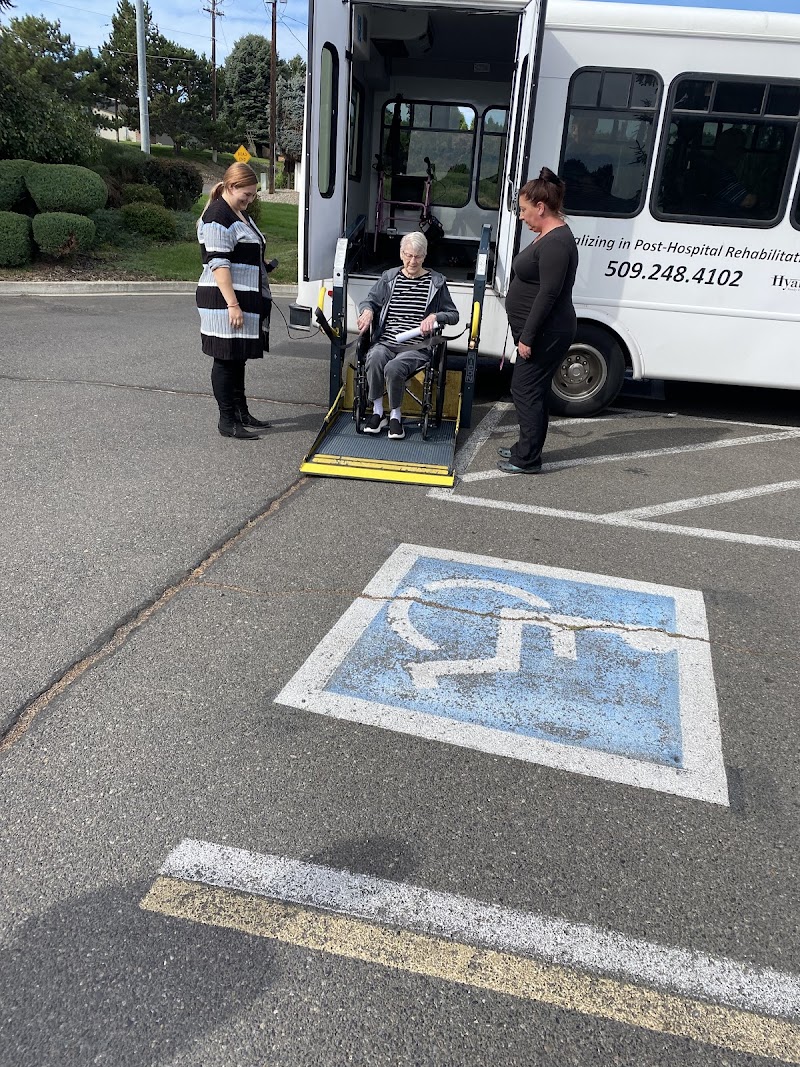
How Does Landmark Care And Rehabilitation Compare to Other Washington Nursing Homes?

Compared to the 100 nursing homes in Washington, LANDMARK CARE AND REHABILITATION's overall rating (2 stars) is below the state average of 3.2, staff turnover (44%) is near the state average of 46%, and health inspection rating (1 stars) is much below the national benchmark.

What Should Families Ask When Visiting Landmark Care And Rehabilitation?

Based on this facility's data, families visiting should ask: "What changes have been made since the serious inspection findings, and how are you preventing similar issues?" "Can I visit during a mealtime to observe dining assistance and food quality?" "How do you handle medical emergencies, and what is your hospital transfer rate?" "Can I speak with family members of current residents about their experience?" These questions are particularly relevant given the facility's Immediate Jeopardy citations.

Is Landmark Care And Rehabilitation Safe?

Based on CMS inspection data, LANDMARK CARE AND REHABILITATION has documented safety concerns. Inspectors have issued 1 Immediate Jeopardy citation (the most serious violation level indicating risk of serious injury or death). The facility has a 2-star overall rating and ranks #100 of 100 nursing homes in Washington. Families considering this facility should ask detailed questions about what corrective actions have been taken since these incidents.

Do Nurses at Landmark Care And Rehabilitation Stick Around?

LANDMARK CARE AND REHABILITATION has a staff turnover rate of 44%, which is about average for Washington nursing homes (state average: 46%). Moderate turnover is common in nursing homes, but families should still ask about staff tenure and how the facility maintains care continuity when employees leave.

Was Landmark Care And Rehabilitation Ever Fined?

LANDMARK CARE AND REHABILITATION has been fined $132,702 across 2 penalty actions. This is 3.9x the Washington average of $34,406. Fines at this level are uncommon and typically indicate a pattern of serious deficiencies, repeated violations, or failure to correct problems promptly. CMS reserves penalties of this magnitude for facilities that pose significant, documented risk to resident health or safety. Families should request specific documentation of what issues led to these fines and what systemic changes have been implemented.

Is Landmark Care And Rehabilitation on Any Federal Watch List?

LANDMARK CARE AND REHABILITATION is not on any federal watch list. The most significant is the Special Focus Facility (SFF) program, which identifies the bottom 1% of nursing homes nationally based on persistent, serious quality problems. Not being on this list means the facility has avoided the pattern of deficiencies that triggers enhanced federal oversight. This is a positive indicator, though families should still review the facility's inspection history directly.