HUNTINGTON HEALTH AND REHABILITATION CENTER
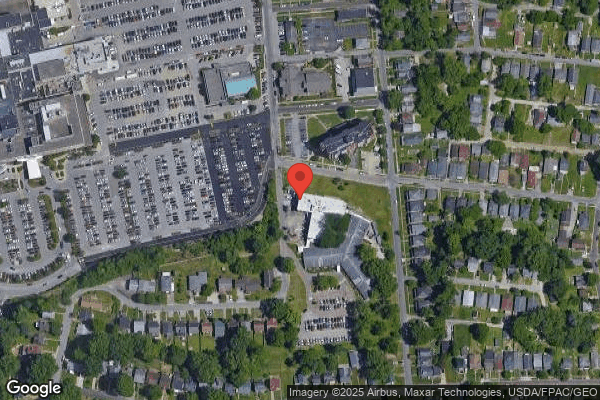
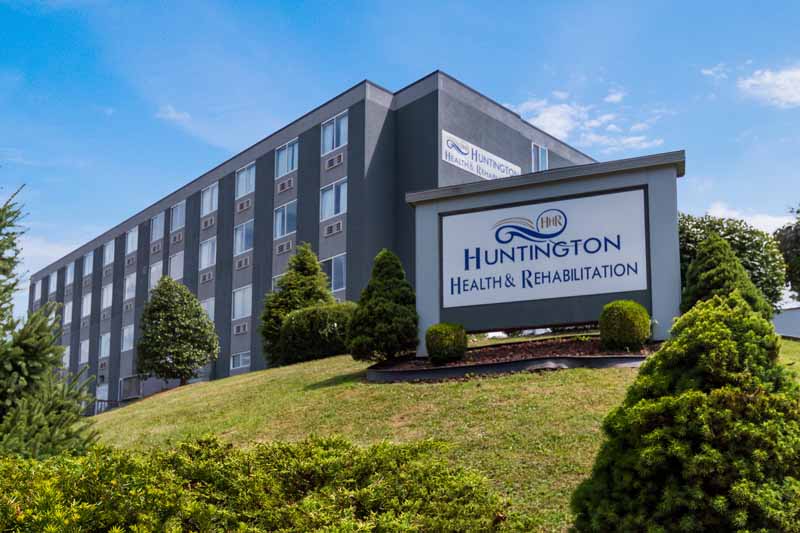
1720 17TH STREET, HUNTINGTON, WV 25701 (304) 529-6031
For profit - Limited Liability company 186 Beds HILL VALLEY HEALTHCARE Data: November 2025
Trust Grade
50/100
#71 of 122 in WV
Last Inspection: March 2025

Within standard 12-15 month inspection cycle. Federal law requires annual inspections.

Overview

Huntington Health and Rehabilitation Center has a Trust Grade of C, indicating it is average and in the middle of the pack among nursing homes. It ranks #71 out of 122 in West Virginia, placing it in the bottom half, and #4 out of 5 in Cabell County, meaning that there is only one local option rated higher. The facility's performance is worsening, with issues increasing from 17 in 2023 to 19 in 2025. Staffing is a concern, rated at 2 out of 5 stars with a turnover rate of 54%, which is higher than the state average of 44%. While the facility has no fines, indicating compliance with regulations, it does have less RN coverage than 86% of other West Virginia facilities, which could impact patient care. Specific incidents of concern include reports of pests like roaches and mice, highlighting issues with pest control, as well as call lights being out of reach for residents, creating safety risks. Additionally, there were failures to notify residents or their representatives about changes in their medical conditions, which could lead to lapses in care. While there are some strengths, such as no fines recorded, families should weigh these issues carefully when considering this facility for their loved ones.

Trust Score
C
50/100
In West Virginia
#71/122
Bottom 42%
Safety Record
Low Risk
No red flags
Inspections
Getting Worse
17 → 19 violations
Staff Stability
⚠ Watch
54% turnover. Above average. Higher turnover means staff may not know residents' routines.
Penalties
✓ Good
No fines on record. Clean compliance history, better than most West Virginia facilities.
Skilled Nurses
⚠ Watch
Each resident gets only 26 minutes of Registered Nurse (RN) attention daily — below average for West Virginia. Fewer RN minutes means fewer trained eyes watching for problems.
Violations
⚠ Watch
63 deficiencies on record. Higher than average. Multiple issues found across inspections.
★★☆☆☆
2.0
Overall Rating
★★☆☆☆
2.0
Staff Levels
★★★★☆
4.0
Care Quality
★★☆☆☆
2.0
Inspection Score
Stable
2023: 17 issues
2025: 19 issues

The Good

  • 4-Star Quality Measures · Strong clinical quality outcomes
  • Full Sprinkler Coverage · Fire safety systems throughout facility
  • No fines on record

Facility shows strength in quality measures, fire safety.

The Bad

2-Star Overall Rating

Below West Virginia average (2.7)

Below average - review inspection findings carefully

Staff Turnover: 54%

Near West Virginia avg (46%)

Higher turnover may affect care consistency

Chain: HILL VALLEY HEALTHCARE

Part of a multi-facility chain

Ask about local staffing decisions and management

The Ugly 63 deficiencies on record

Mar 2025 19 deficiencies
CONCERN (D)

Potential for Harm - no one hurt, but risky conditions existed

Resident Rights (Tag F0550)

Could have caused harm · This affected 1 resident

Based on Observation and Record Review, the facility failed to provide a home-like dining environment and to serve residents in the Third Floor Assisted Dining Room at the same time in order. This was...

Read full inspector narrative →
Based on Observation and Record Review, the facility failed to provide a home-like dining environment and to serve residents in the Third Floor Assisted Dining Room at the same time in order. This was a random opportunity for discovery. This failed practice had the potenital to affect more than a limited number of residents. Resident Identifer: #7. Facility Census: 184. Findings included: a) The facility's Dining Experience policy and procedure stated, Design the meal serving tray delivery to ensure residents seated at the same table are served at the same time, similar to a restaurant with table service. b) On 03/19/25 at 12:52 PM, the surveyor observed the Third Floor Assisted Dining Room. Residents were not served at the same table at the same time or in order. Resident #7 waited twelve (12) minutes after all the other residents in the dining room were served to receive the lunch tray.
CONCERN (D)

Potential for Harm - no one hurt, but risky conditions existed

Deficiency F0578 (Tag F0578)

Could have caused harm · This affected 1 resident

Based upon Record Review and Staff Interview, the facility failed to ensure a resident with capacity was given the right to participate in the development and sign advance directives and a signature w...

Read full inspector narrative →
Based upon Record Review and Staff Interview, the facility failed to ensure a resident with capacity was given the right to participate in the development and sign advance directives and a signature was not obtained in a timely manner by the Resident's Health Care Surrogate. This was true for two (2) of fifty (50) advanced directives reviewed. Resident identifiers: #487 and #75. Facility Census: 184. Findings included: a) Resident #487 The resident's Portable Orders for Scope of Treatment (POST) form was reviewed. The capacitated resident's POST form was signed by the Power of Attorney and not the capacitated resident. This was confirmed by Corporate Registered Nurse #223 on 03/18/25 at 5:00 PM. b) Resident #75 On 03/20/25 at 10:06 AM , the State Surveyor interviewed Social Worker #1 concerning Resident #75's Advanced Directive/POST form being signed in a timely manner. Social Worker #1 confirmed there were no documented attempts to obtain the Power of Attorney's signature. Resident #75's Power of Attorney had given verbal consent on 09/18/23.
CONCERN (D)

Potential for Harm - no one hurt, but risky conditions existed

Deficiency F0645 (Tag F0645)

Could have caused harm · This affected 1 resident

Based on record review and staff interview, the facility failed to ensure a complete and accurate Preadmission Screening and Resident Review (PASRR) had been completed for one (1) of four (4) resident...

Read full inspector narrative →
Based on record review and staff interview, the facility failed to ensure a complete and accurate Preadmission Screening and Resident Review (PASRR) had been completed for one (1) of four (4) residents reviewed for the care area of PASRR. Resident identifier: #179. Facility census: 184. Findings included: a) Resident #179 Review of the facility's policy titled, Antipsychotic Medication Use, with no approval or implementation date given, stated that Preadmission Screening and Resident Review (PASRR) would be reviewed for residents transferred from a hospital who were already receiving antipsychotic medications. Review of Resident #179's medical record showed a PASRR completed on 02/11/25, before the resident's admission to the facility. The PASRR documented the resident had no major mental illness or suspected mental illness. Review of Resident #179's medical records showed she had a diagnosis of schizophrenia. She had been admitted to the facility from the hospital. The hospital recommended the facility continued the antipsychotic medication Loxapine, which the resident had been taking in the hospital. On 03/24/25 at 9:24 AM, Business Manager #6 confirmed Resident #179's admission PASSR dated 02/11/25 was incorrect in that it did not identify the resident had a diagnosis of schizophrenia. The business manager stated PASSRs are usually reviewed for residents newly admitted to the facility to ensure accuracy. She stated Resident #179 would have a new PASSR completed soon. No further information was provided through the completion of the survey.
CONCERN (D)

Potential for Harm - no one hurt, but risky conditions existed

Comprehensive Care Plan (Tag F0656)

Could have caused harm · This affected 1 resident

Based on record review and staff interview, the facility failed to develop and implement care plans This was true for two (2) of five (5) residents reviewed. Resident identifiers: #144 and #24. Facili...

Read full inspector narrative →
Based on record review and staff interview, the facility failed to develop and implement care plans This was true for two (2) of five (5) residents reviewed. Resident identifiers: #144 and #24. Facility Census: 184. Findings Include: a) Resident #144 On 03/18/25 at 1:00 PM, a record review was completed for Resident #144. The review found the care plan focus area of (Name of Resident) may decline to attend dialysis, at times. She may refuse hygiene care, including showers and bed baths. May report contradictory information at time (Typed as written.) These areas had no interventions or goals noted. In addition, the focus area of risk for falls had an intervention stating, no description provided. (Typed as written.) Lastly, a focus area of risk for pain, listed an intervention of administer medication as ordered. (Typed as written.) The resident did not currently have a physician's order for any type of pain medication. On 03/19/25 at 10:04 AM, Registered Nurse (RN) #44 confirmed the errors on the care plan. RN #44 stated, We have some errors .we will get these fixed. b) Resident #24 On 03/18/25 at 1:00 PM, a record review was completed for Resident #144. The review found a physician's order dated 11/24/24 for Enhanced Barrier Precautions every shift for a history of Extended Spectrum Beta Lactamase (ESBL) resistance. The care plan was reviewed; and there was no indication the resident was on EBP. On 03/18/25 at 3:00 PM, Registered Nurse (RN) 44 was interviewed regarding Resident #44. RN #44 confirmed the resident was on enhanced-barrier precautions due to having the MDRO, ESBL.
CONCERN (D)

Potential for Harm - no one hurt, but risky conditions existed

Deficiency F0692 (Tag F0692)

Could have caused harm · This affected 1 resident

Based on record review and staff interview, the facility failed to document the amount of nutritional supplement consumed for one (1) of 10 residents reviewed for the care area of nutrition. Resident ...

Read full inspector narrative →
Based on record review and staff interview, the facility failed to document the amount of nutritional supplement consumed for one (1) of 10 residents reviewed for the care area of nutrition. Resident Identifier: #14. Facility census: 184. Findings included: a) Resident #14 Review of Resident #14's physician's orders showed an order written on 02/22/24 for Fortified pudding three times a day for weight loss. The resident's Medication Administration Record (MAR) showed the resident received fortified pudding three (3) times a day. However, the amount eaten by the resident was not recorded. On 03/20/25 at 10:38 AM, the Director of Nursing confirmed Resident #14's consumption of fortified pudding was not recorded. No further information was provided through the completion of the survey.
CONCERN (D)

Potential for Harm - no one hurt, but risky conditions existed

Unnecessary Medications (Tag F0759)

Could have caused harm · This affected 1 resident

Based on observation, record review, and staff interview, the facility failed to ensure the medication error rate during the facility task of Medication Administration was less than 5%. The medication...

Read full inspector narrative →
Based on observation, record review, and staff interview, the facility failed to ensure the medication error rate during the facility task of Medication Administration was less than 5%. The medication error rate was 7%. Resident identifier: #17. Facility Census: 184. Findings included: a) Resident #17 On 03/19/25 at 7:10 AM, Licensed Practical Nurse (LPN) #76 was observed administering morning medications to Resident #17. The medications were in blister packaging, where tablets were individually pushed through the sealed foil into the medication administration cup by LPN #76. LPN #76 dispensed a buspirone 10 mg tablet from the blister package into the medication administration cup. She placed the buspirone blister package back into the medication cart drawer. She pulled the buspirone blister package back out of the medication cart and pushed another buspirone 10 mg from the blister packaging into the medication administration cup. The other medications LPN #76 dispensed from blister packets into the medication administration cup for Resident #17 were amlodipine, baclofen, fluoxetine, and lisinopril. LPN #76 also dispensed a multivitamin and an aspirin tablet from multi-use floor stock bottles. LPN #76 picked up the medication administration cup to take the cup into Resident #17's room to dispense the medication. She was stopped by the surveyor and asked to retrieve the buspirone blister packet from the medication cart. The buspirone 10 mg tablets were found to be white, round tablets with HP/24 printed on them. The medication cup was found to have two white, round tablets with HP/24 printed on them. LPN #76 confirmed Resident #17 was prescribed buspirone 10 mg. She removed one of the buspirone 10 mg tablets from the medication cup and then administered the medications to Resident #17. Review of Resident #17's medication orders showed on 03/07/25 the resident was ordered buspirone 10 mg, two (2) times a day for restlessness related to unspecified anxiety disorder. Review of Resident #17's medication orders also showed on 02/27/25 the resident was ordered famotidine 20 mg, two (2) times a day related to gastro-esophageal reflux disease without esophagitis. The resident did not receive famotidine during the medication administration on 03/19/25 at 7:10 AM. According to the buspirone package insert, available on-line on the Food and Drug Administration Website, buspirone side effects included dizziness, drowsiness, nervousness, and lightheadedness. On 03/19/25 at 10:57 AM, the Administrator and Director of Nursing were informed that LPN #76 had been stopped by the surveyor from giving two (2) buspirone 10 mg tablets to Resident #17. They were also informed that Resident #17 did not receive famotidine that morning. Two (2) errors were found out of 28 medications observed during the Medication Administration facility task observation. No further information was provided through the completion of the survey process.
CONCERN (D)

Potential for Harm - no one hurt, but risky conditions existed

Deficiency F0810 (Tag F0810)

Could have caused harm · This affected 1 resident

Based on Observation, Policy and Procedure and Staff Interview, the facility failed to provide a resident with adaptive equipment per order. This was a random opportunity for discovery. Resident ident...

Read full inspector narrative →
Based on Observation, Policy and Procedure and Staff Interview, the facility failed to provide a resident with adaptive equipment per order. This was a random opportunity for discovery. Resident identifier: #146. Facility Census: 184. Findings included: a) Resident #146 Resident #146 was ordered a divided plate on 11/28/23. On 03/19/2025 at 01:02 PM, Resident #146 was served the lunch meal on a regular plate. Tray card for a divided plate was reviewed and confirmed with Licensed Practical Nurse (LPN) #76 on 03/19/25 at 01:02 PM. Resident #146's care plan stated, Diet as ordered-built up utensils, divided plate. Policy and Procedure reviewed stated, Adaptive devices (special eating equipment and utensils) will be provided for residents who need or request them.
CONCERN (E)

Potential for Harm - no one hurt, but risky conditions existed

Deficiency F0558 (Tag F0558)

Could have caused harm · This affected multiple residents

Based on observation and resident and staff interview, the facility failed to ensure call lights were within reach and accessible to Residents #166, 487, 184, 38. This was a random opportunity for dis...

Read full inspector narrative →
Based on observation and resident and staff interview, the facility failed to ensure call lights were within reach and accessible to Residents #166, 487, 184, 38. This was a random opportunity for discovery. Resident identifiers: 166, 487, 184, 38. Facility census: 184. Findings include: A) Resident #166 At approximately 2:25 PM on 3/17/2025, during an interview with Resident #166, she stated she was unable to ring her call light for help because she did not know where it was. Upon further inspection, Resident #166 ' s call light was found to be lying on the floor to the left side of her bed. At approximately 2:37 PM on 3/17/2025, the call light was confirmed to be in the floor and out of reach of Resident #166 by Licensed Practical Nurse (LPN) #75. B)Resident #487 At approximately 2:55 PM on 3/20/2025, during observation of the lunch meal pass, Resident #487 stated to the surveyor, I need to go to the bathroom but I can ' t find my button (call light). Upon further inspection, Resident #487 ' s call light was found to be on the floor, to the left side of her bed. At approximately 2:58 PM on 3/20/2025, the call light was confirmed to be lying on the floor by LPN #108. C) Resident #184 At approximately 2:55 PM on 3/20/2025, following the discovery of Resident #487 ' s call light on the floor next to her bed, the status of Resident #184 ' s call light was checked, in the same room. Resident #184 ' s call light was found to be wrapped around the arm of a chair, to the left side of the resident ' s bed, with the button itself lying on the floor, out of reach of the resident. At approximately 2:58 PM, on 3/20/2025, the call light was confirmed to be out of reach of the resident by LPN #108. d) On 03/17/25 at 12:30 PM, during the initial resident interview process, Resident #38 reported she was wet and needed changed. The resident stated, Can you please get my bottom dry? The resident's call light was lying in the floor out of reach. Registered Nurse #30 confirmed the Resident #38's call light was in the floor on the left side of the bed and the resident's water pitcher had been knocked over and into the floor on the right side of the bed. .
CONCERN (E)

Potential for Harm - no one hurt, but risky conditions existed

Notification of Changes (Tag F0580)

Could have caused harm · This affected multiple residents

Based on Record Review and Staff Interview, the facility failed to ensure the Resident and/or Power of Attorney (POA) was notified of a change in condition/order. This was a random opportunity for dis...

Read full inspector narrative →
Based on Record Review and Staff Interview, the facility failed to ensure the Resident and/or Power of Attorney (POA) was notified of a change in condition/order. This was a random opportunity for discovery that had the potential to affect more than a limited number of residents. Resident Identifiers: #7, #151, #169, #48, #8, #80, #97, #59, #34, #58, #111, #152, #124, #116, and #33. Facility Census: 184 Findings included: -The Facility's Policy and Procedure for Change in a Residents Condition stated, The facility will promptly notify the resident, his or her physician/practitioner, and representative of changes in the resident's medical/mental condition and/or status. a) Resident #7's Resident #7's order was revised on 03/19/25. Aspiration Precautions were removed from the resident's dietary order. b) Resident #151 Resident #151's order was revised on 03/19/25. Double portions of protein with lunch and dinner, Full upright position with PO, Alternate bites and drinks were removed from the resident's dietary order. c) Resident #169 Resident #169's order was revised on 03/19/25. Resident prefers plastic water bottle provided by family, filled 1/4 full or approximately 4 oz. to assist with rate and bolus control were removed from the resident's diet order. A two-handled mug was added. d) Resident #48 Resident #48's order was revised on 03/19/25. Resident straw with all liquids was removed from the dietary order. e) Resident #80 Resident #80 order was revised on 03/19/25. Three (3) second hold with ALL drinks, small bites. sips, alternate bites/sips and aspiration precautions were removed from the resident's diet order. g) Resident #97 Resident #97's order was revised on 03/19/25. Set up assistance, Alternate solids and liquids, small bites/drinks, make sure the resident is upright during all PO intake and for 30 minutes following PO intake were removed from the resident's dietary order. h) Resident #59's order was revised on 03/19/25. Aspiration precautions were removed from the resident's dietary order. i) Resident #34's order was revised on 03/19/25. Strict aspiration precautions were removed from the resident's diet order. j) Resident #58's order was revised on 03/20/25. No straws was removed from the resident's diet order. K) Resident #111 Resident #111's order was revised on 03/19/25. Fill upright position for all PO intake, no talking while food is in mouth, Chew food thoroughly before swallowing, alternate bites/drinks (every 1-3 bites) were removed from the resident's diet order. l) Resident #152 Resident #152's order was revised on 03/20/25. No straws and set-up with meals were removed from the resident's dietary order. m) Resident #124 Resident #124's order was revised on 03/19/25. Ground meat was removed from her diet order. n) Resident #116 Resident #116's diet order was revised on 03/19/25. Aspiration precautions were removed from the resident's diet order. o) Resident #33 Resident #33's diet order was revised on 03/19/25. NO STRAWS was removed from the resident's diet order. Additional documentation was requested by the State Surveyor for documentation of the notifications regarding the change in condition/order. No additional information was provided. On 03/24/25, Corporate Life Enrichment Staff #224 confirmed there was no additional documentation.
CONCERN (E)

Potential for Harm - no one hurt, but risky conditions existed

Assessment Accuracy (Tag F0641)

Could have caused harm · This affected multiple residents

**NOTE- TERMS IN BRACKETS HAVE BEEN EDITED TO PROTECT CONFIDENTIALITY** Based on record review and staff interview, the facility failed to ensure complete and accurate Minimum Data Set (MDS) assessmen...

Read full inspector narrative →
**NOTE- TERMS IN BRACKETS HAVE BEEN EDITED TO PROTECT CONFIDENTIALITY** Based on record review and staff interview, the facility failed to ensure complete and accurate Minimum Data Set (MDS) assessments for two (2) of 50 residents reviewed in the long-term care survey sample and one (1) of three (3) closed record reviews. Resident identifiers: #9, #21, and #183. Facility census: 184. Findings included: a) Resident #9 Review of Resident #9's medical records showed a weekly wound evaluation completed on 01/08/25. A suspected deep tissue injury to the left heel was noted. This was a new skin issue that had been present when the resident returned to the facility from the hospital that day. An order was entered to apply sureprep to the wound and monitor the skin surrounding the wound. Resident #9's Minimum Data Set (MDS) assessment with Assessment Reference Date (ARD) 01/10/25 documented that the resident had no unhealed pressure ulcers or injuries. On 03/20/25 at 4:13 PM, the Regional MDS Coordinator confirmed Resident #9's MDS with ARD 01/10/25 should have documented the resident had a pressure ulcer/injury. He stated the MDS had been corrected. b) Resident #21 Review of Resident #21's medical records showed the resident was discharged from the hospital on [DATE]. The admission and discharge diagnoses were urinary tract infection with chronic suprapubic catheter, vomiting, mild hypokalemia, constipation, atrial fibrillation, type 2 insulin dependent diabetes mellitus, and history of cerebrovascular accident. The resident's urinalysis showed extremely turbid urine with a large amount of occult blood, large leukocyte esterase, white blood cell count, and mucus. The resident received intravenous antibiotics before transitioning to oral antibiotics. Oral antibiotics continued upon the resident's return to the nursing facility. Resident #21's Minimum Data Set (MDS) assessment with Assessment Reference Date (ARD) 01/27/25 documented the resident had not had a urinary tract infection in the last 30 days. On 03/18/25 at 4:34 PM, the Regional MDS Coordinator confirmed Resident #21's MDS with ARD 01/07/25 should have documented the resident had a urinary tract infection in the last 30 days. He stated the MDS will be corrected.
CONCERN (E)

Potential for Harm - no one hurt, but risky conditions existed

Deficiency F0657 (Tag F0657)

Could have caused harm · This affected multiple residents

Based on record review and staff interview, the facility failed to revise care plans for three (3) of 50 reisdents. Resident #31's care plan was not revised regarding safety checks. Resident #109 di...

Read full inspector narrative →
Based on record review and staff interview, the facility failed to revise care plans for three (3) of 50 reisdents. Resident #31's care plan was not revised regarding safety checks. Resident #109 did not have a care plan revised with the discontinuation of dialysis and comfort care in place. Resident #67 did not have a care plane revision for the discontinuation of opiate. Resident #24 did not have a care plan for Enhanced-Barrier Precautions (EBP) and a multidrug resistant organism (MDRO). Resident identifiers: #31, #109, #67. Facility Census: 184. Findings include: a) Resident #31 On 03/24/24 at 1:00 PM, a record review was completed for Resident #31. The review found the resident had a physician's order dated 09/05/24 for safety checks every 30 minutes document on paper. The safety checks were added for a history of multiple falls and family request. The care plan listed a focus area of (Name of Resident) has experienced an actual fall, continues to be at risk for falls related to weakness, impaired mobility and left femur fracture, muscle wasting, Atrial Fibrillation, lymphedema, fibromyalgia, coronary artery disease and anemia. The interventions were reviewed, the safety checks every 30 minutes were not added to the care plan. On 03/24/25 at 2:48 PM, the Director of Nursing (DON) confirmed the intervention had not been added to the care plan. b) Resident #109 On 03/17/25 at 2:15 PM, a record review was completed for Resident #109. The review found the resident had made the decision to discontinue dialysis and begin comfort care only. The decision was discussed with the resident's Medical Power of Attorney (MPOA). The MPOA agreed with the resident's wishes to be on comfort care only. The Physician Orders for Scope of Treatment (POST) was changed to Do Not Resuscitate (DNR) comfort care, no weights, no dialysis, no emergency room visits and no tube feeding. An interview was held with Registered Nurse (RN) #44 on 03/17/25 at 3:30 PM. RN #44 stated, For the longest time (Name of Resident) would refuse to go to dialysis and then go to the hospital, get dialysis and change his mind again .but he finally decided to stop dialysis and be comfort care. RN #44 confirmed the care plan was not revised to indicate the resident had stopped dialysis and was currently under comfort care. Also, RN #44 was asked about the focus area of diuretics on the care plan. The focus area included the resident is at risk for complications secondary to diuretic use due to a diagnosis of _______ (blank). RN #44 confirmed the care plan was incorrect under this focus area. On 03/21/25 at approximately 9:30 a.m., an attempt was made to interview Resident #109. However, the resident was sleeping. Licensed Practical Nurse (LPN) #77 approached the resident's door. An interview was held with LPN #77 at this time. LPN #77 stated, He is not doing good this morning. LPN #77 continued to state, About a week or two ago, he was made a DNR with comfort measures by his Medical Power of Attorney (MPOA) . He didn't want to do dialysis treatments anymore. In the past, he just wanted to go to the hospital and let them fix him up each time. LPN #77 was asked, How involved is the resident in decisions regarding his care? LPN #77 stated, His MPOA always included him in the decisions. She really cares about him. c) Resident #67 On 03/17/25 at 9:30 AM, a record review was completed for Resident #67. The review found the care plan listed a focus area of opioids with an intervention of administer medications as ordered. The review, also, found no current physician's order for opioids. On 03/19/25 at 10:50 AM, the DON confirmed the resident was not taking any opioid for pain. .
CONCERN (E) 📢 Someone Reported This

A family member, employee, or ombudsman was alarmed enough to file a formal complaint

Potential for Harm - no one hurt, but risky conditions existed

ADL Care (Tag F0677)

Could have caused harm · This affected multiple residents

**NOTE- TERMS IN BRACKETS HAVE BEEN EDITED TO PROTECT CONFIDENTIALITY** d) Resident #179 On 03/17/25 at 3:28 PM, Resident #179 was interviewed in her room. She was tearful. She stated she was supposed...

Read full inspector narrative →
**NOTE- TERMS IN BRACKETS HAVE BEEN EDITED TO PROTECT CONFIDENTIALITY** d) Resident #179 On 03/17/25 at 3:28 PM, Resident #179 was interviewed in her room. She was tearful. She stated she was supposed to have a shower today, but she hadn't had one yet. She stated she wanted her hair washed today. Her hair looked greasy. Review of the facility's shower schedule showed the resident was scheduled to receive showers on Mondays and Thursdays. Resident #179's bathing/showering task report for the last 30 days was reviewed on 03/18/25. The only shower documented in the last 30 days was on 03/17/25. The resident was documented as receiving bed or towel baths on 02/19/25, 02/20/25, 02/21/25, 02/22/25, and 02/24/25. The resident was out of the facility from 02/24/25 through 03/07/25. The resident was documented as receiving bed or towel baths on 03/07/25, 03/08/25, 03/09/25, 03/10/25, 03/13/25, 03/15/25, and 03/16/25. Resident #179's Minimum Data Set (MDS) assessment with Assessment Reference Date (ARD) 03/06/25 gave the resident's Brief Interview for Mental Status (BIMS) score as 9, indicating moderately impaired cognition. The resident was determined not to have the capacity to make her own medical decisions. The resident's comprehensive care plan for preferences stated as follows: At times, resident prefers not to take showers. Prefers to follow facility shower schedule for twice weekly, has no individual preference for days, times or etc. Resident will decline both shower and bedbath at times. [Typed as written.] On 03/19/25 at 5:06 PM, the Director of Nursing confirmed Resident #179's bathing/showering task report only showed a shower on 03/17/25. She stated Resident #179 may prefer bed baths to showers. She stated she would look for documentation regarding the resident's preferences for bed baths and documentation of any showers the resident refused. No new documentation was provided through the completion of the survey. Based on Record Review, Observation and Staff and Resident Interview, the facility failed to provide care for residents requiring assistance with Activities of Daily Living (ADLs) for shaving and showers for 4 of 10 residents. This failed practice had the potential to affect more than a limited number of residents. Resident Identifiers: #123, #174, #484 and #179. Census: 184. Findings included: a) On 03/17/25, Resident #123 stated, I usually keep it shaved. When the resident was asked about a shower, Resident #123 stated, I need one or at least a bed bath. Record review, documented the resident had been receiving regular bed baths, but no showers. On 03/20/25 at 01:00 PM, the resident was observed to still have facial hair. When the resident was asked if he had been shaved, the resident stated, No, it needs it. Nursing Assistant (NA) #114, confirmed the patient had facial hair and wanted to be shaved. b) On 03/17/25, during the initial interview in the resident's room, Resident #174 reported he had been a resident of the facility for about 4 months. The resident reported he had not been able to get a shower, only bed baths. He stated he would like to have showers. He reported he didn't mind using a special device to have a shower due to his physical limitations. On 03/19/25 at 05:06 PM, no showers were confirmed by Director of Nursing (DON). The DON reported she was going to look for additional refusal documentation. No additional documentation was provided. The residents care plan stated, At times, [NAME] prefers not to take showers. Prefers to follow facility shower schedule for twice weekly showers, has no individual preference for days, times, or etc. Offer bed baths per facility schedule twice weekly if resident declines shower. Resident will decline both a shower and a bath at times. c) 03/17/25 01:50 PM, Resident #484 and her daughter reported she had not had a shower since admission. Review of the ADL Task Log for Bathing/Showering, confirmed Resident #484 had not had a shower or bed bath from 03/10/25-03/15/25. The patient received a bed bath on 03/16/25 per documentation. The resident's shower days were scheduled for Thursdays and Sundays. On 03/19/25 at 05:06 PM, no showers were confirmed by Director of Nursing (DON). The DON reported she was going to look for additional refusal documentation. No additional documentation was provided. The resident's Care Plan initiated on 03/20/2025 stated, refuses showers and baths at times.
CONCERN (E)

Potential for Harm - no one hurt, but risky conditions existed

Quality of Care (Tag F0684)

Could have caused harm · This affected multiple residents

**NOTE- TERMS IN BRACKETS HAVE BEEN EDITED TO PROTECT CONFIDENTIALITY** Based on record review and staff interview, the facility failed to follow physician's orders for Resident #144's arm restriction...

Read full inspector narrative →
**NOTE- TERMS IN BRACKETS HAVE BEEN EDITED TO PROTECT CONFIDENTIALITY** Based on record review and staff interview, the facility failed to follow physician's orders for Resident #144's arm restrictions, the amount of assistance needed for transfers for Resident #31, Resident #31's safety checks, and Resident #7's aspiration precautions. This was true for three (3) of 50 residents reviewed during the survey process. Resident Identifiers: #144, #31 and #7. Facility Census: 184. Findings Include: a) Resident #144 On 03/19/25 at 9:00 AM, a record review was completed for Resident #144. The review found a physician's order dated 11/19/24 stating, Dialysis: No BP (blood pressure) or lab draw in right arm due to permacath every shift for ESRD (end stage renal disease). The review, for 03/2025, found multiple dates and times the blood pressure was taken in the right arm. The following are the dates and times: --03/18/25 at 9:19 AM --03/17/25 at 8:51 PM --03/17/25 at 5:18 AM --03/16/25 at 8:51 PM --03/14/25 at 5:25 AM --03/12/25 at 8:04 PM --03/08/25 at 8:45 PM --03/07/25 at 8:27 PM --03/05/25 at 8:24 PM --03/04/25 at 8:32 PM --03/04/25 at 8:41 AM --03/03/25 at 10:03 PM --03/03/25 at 1:26 PM --03/03/25 at 8:17 AM --03/03/25 at 6:53 AM --03/02/25 at 9:02 PM --03/01/25 at 10:15 PM An additional review of 02/2024 found the following dates and times: --02/28/25 at 5:25 AM --02/27/25 at 10:11 PM --02/26/25 at 5:16 AM --02/25/25 at 8:40 AM --02/24/25 at 6:03 PM --02/24/25 at 1:31 PM --02/23/25 at 8:44 PM --02/23/25 at 8:31 AM --02/22/25 at 9:20 PM --02/21/25 at 8:51 PM --02/19/25 at 9:57 AM --02/18/25 at 8:49 AM --02/18/25 at 8:37 AM --02/14/25 at 10:43 PM --02/14/25 at 12:00 PM --02/12/25 at 8:53 AM --02/11/25 at 9:09 AM --02/10/25 at 8:18 PM --02/09/25 at 9:08 PM --02/06/25 at 7:39 AM --02/05/25 at 12:32 PM --02/05/25 at 5:18 AM --02/03/25 at 11:29 PM --02/03/25 at 7:16 AM --02/01/25 at 7:19 AM Upon further review of 01/2025, found the following dates and times: --01/31/25 at 1:45 PM --01/31/25 at 8:40 AM --01/30/25 at 10:29 PM --01/30/25 at 8:34 AM --01/26/25 at 7:32 AM --01/25/25 at 8:51 PM --01/25/25 at 9:39 AM --01/24/25 at 8:03 PM --01/23/25 at 12:32 PM --01/23/25 at 8:18 AM --01/22/25 at 9:22 PM --01/22/25 at 1:30 PM --01/17/25 at 12:07 PM --01/16/25 at 9:12 AM --01/13/25 at 3:29 PM --01/12/25 at 12:26 PM --01/10/25 at 3:33 PM --01/06/25 at 9:28 AM --01/03/25 at 12:05 PM --01/03/25 at 11:37 AM --01/03/25 at 7:02 AM --01/02/25 at 3:49 PM On 03/19/25 at approximately 1:45 PM, the Director of Nursing (DON) confirmed the blood pressures were obtained from the restricted right arm. b) Resident #31 On 03/24/25 at 12:34 PM, a record review was completed for Resident #31. The review found the resident was having multiple falls due to the resident trying to transfer herself to go to the bathroom. A progress note dated 09/10/24 at 4:33 PM, stated, Spoke to (Name of the facility nurse practitioner) about resident's transfer order and family request. She said to put her 2-person extensive assist non-wight bearing to LLE (left lower extremity) during the morning until bedtime and at bedtime to have her order for 3-person extensive assist with non-weight bearing to LLE (left lower extremity). (Typed as written.) Upon further review, the documentation under the tasks tab for transferring dated 09/2024 was reviewed. The following dates and times in 09/24 did not follow the approved assistance needed for transfers: --09/14/24 at 9:44 PM limited assistance, one person physical assist --09/15/24 at 6:25 PM extensive assistance, one person physical assist --09/19/24 at 6:59 AM limited assistance, one person physical assist --09/23/24 at 6:59 AM supervision, set up help only --09/25/24 at 3:47 AM supervision, set up help only --09/26/24 at 5:02 PM extensive assistance, one person physical assist --09/29/24 at 6:51 AM supervision, set up help only Lastly, the documentation under the tasks tab for transferring dated 10/2024 was reviewed. The following dates and times in 10/2024 did not follow the approved assistance needed for transfers: --10/03/24 at 1:00 AM extensive assistance, one person physical assist --10/08/24 at 3:07 AM supervision, set up help only --10/09/24 at 4:50 AM supervision, set up help only --10/16/24 at 4:17 AM limited assistance, one person physical assist --10/17/24 at 5:36 AM supervision, set up help only --10/18/24 at 6:59 AM limited assistance, one person physical assist --10/26/24 at 6:59 AM limited assistance, one person physical assist On 03/24/25 at 2:48 PM, the Director of Nursing (DON) confirmed the documentation did not reflect the approved assistance needed for transfers. c) Resident #31 On 03/24/25 at 1:00 PM, a record review was completed for Resident #31. The review found the resident had a physician's order dated 09/05/24 for safety checks every 30 minutes document on paper. The safety checks were added for a history of multiple falls and family request. The following dates and times were incomplete and did not have documentation: --02/20/25 6:00 AM --02/20/25 6:30 AM --02/23/25 6:00 AM --02/23/25 6:30 AM On 03/24/25 at 2:48 PM, the Director of Nursing (DON) confirmed the documentation was incomplete for the safety checks. c) Resident #7 On 03/19/25 at 1:12 PM, Nursing Assistant (NA) #156 was observed feeding Resident #7 in the third-floor dining room. The resident required full assistance. Resident #7's meal tray card gave the diet order as NAS (no added salt) chopped meat aspiration precautions. The tray card also gave the following instructions: upright @ 90 degrees, sm. Bites, alt. liquids/solids, add sauce tableside as needed, liquids by straw only. The resident had chopped lasagna, green beans, garlic bread, and chocolate pudding. The resident was placed in a gerichair positioned at a 45-degree angle. NA #156 did not alternate solids and liquids. Five (5) bites were consumed by the resident with no liquids presented. The surveyor intervened at 1:22 PM and reviewed the meal tray card instructions with NA #156. NA #156 stated Resident #7 usually ate in bed, and not in the gerichair. Resident #7's orders were reviewed. The resident had a diet order written on 03/14/25, CCD[consistent carbohydrate diet] chopped texture, regular/thin consistency, liquids by straw only, serve liquids in a Kennedy cup, Full assist, use pillow behind head for chin down position while eating drinking, cue [resident] to take small sips, aspiration precautions, upright @ 90 degrees. On 03/19/25 at 1:36 PM, Resident #7 was observed again. NA #156 continued to feed the resident. The resident's neck was slightly extended back with no chin tuck. The resident did not have a pillow behind her head. When asked about the resident's positioning, NA #156 stated, I didn't know. The NA stated she usually worked on a different hallway. Further review of Resident #156's records showed until this diet change on 03/14/25, the resident was receiving a mechanical soft mechanical diet with honey thickened liquids. A Speech Therapy evaluation dated 03/04/25 gave the following swallow strategies/positions: To facilitate safety and efficiency, it is recommended the patient use the following strategies and/or maneuvers during oral intake: general swallow techniques/precautions. Resident #7 had a Fiberoptic Endoscopic Evaluation of Swallowing (FEES) performed on 03/14/25. The FEES report concluded, Pharyngeal phase: Penetration of thin liquids via spoon on 2 nd presentation secondary to loss of bolus control. Patient was able to clean material with consecutive swallows. Once head positioning was adjusted due to chin-down posture, penetration diminished. No aspiration observed. Patient with complete but mistimed laryngeal squeeze. Trace residue due to slightly reduced pharyngeal squeeze. Overall: Patient with mild oral dysphagia characterized by inconsistent loss of bolus control. Based on observation, current medical status, and mobility, patient is a mild risk for aspiration and potential development of nosocomial pneumonia. With implementation of compensatory strategies of small sips via straw and optimal positioning at 90 degrees with chin tuck as tolerated, risk reduces to minimal .Compensatory Strategies: 1. Small sips via straw 2. Upright at 90 degrees as tolerated. 3. [NAME] tuck to improve oral control. The resident had been discharged from the hospital on [DATE] after being admitted on 02/18/25 for coronavirus. The discharge documentation stated, Hospitalization was complicated by worsening hypoxia despite appropriate treatment. It was associated with worsening dysphagia .Currently her diet is a mechanical soft diet with honey thickened liquids. The patient has to have a no straws and be fully upright for all p.o. [oral] intake during and for 30 minutes after eating . Review of resident diets for the entire resident population showed 44 residents had diet orders recommending safe swallowing strategies/precautions. c) Resident #7 On 03/19/25 at 1:12 PM, Nursing Assistant (NA) #156 was observed feeding Resident #7 in the third-floor dining room. The resident required full assistance. Resident #7's meal tray card gave the diet order as NAS (no added salt) chopped meat aspiration precautions. The tray card also gave the following instructions: upright @ 90 degrees, sm. Bites, alt. liquids/solids, add sauce tableside as needed, liquids by straw only. The resident had chopped lasagna, green beans, garlic bread, and chocolate pudding. The resident was placed in a gerichair positioned at a 45-degree angle. NA #156 did not alternate solids and liquids. Five (5) bites were consumed by the resident with no liquids presented. The surveyor intervened at 1:22 PM and reviewed the meal tray card instructions with NA #156. NA #156 stated Resident #7 usually ate in bed, and not in the gerichair. Resident #7's orders were reviewed. The resident had a diet order written on 03/14/25, CCD[consistent carbohydrate diet] chopped texture, regular/thin consistency, liquids by straw only, serve liquids in a Kennedy cup, Full assist, use pillow behind head for chin down position while eating drinking, cue [resident] to take small sips, aspiration precautions, upright @ 90 degrees. On 03/19/25 at 1:36 PM, Resident #7 was observed again. NA #156 continued to feed the resident. The resident's neck was slightly extended back with no chin tuck. The resident did not have a pillow behind her head. When asked about the resident's positioning, NA #156 stated, I didn't know. The NA stated she usually worked on a different hallway. Further review of Resident #156's records showed until this diet change on 03/14/25, the resident was receiving a mechanical soft mechanical diet with honey thickened liquids. A Speech Therapy evaluation dated 03/04/25 gave the following swallow strategies/positions: To facilitate safety and efficiency, it is recommended the patient use the following strategies and/or maneuvers during oral intake: general swallow techniques/precautions. Resident #7 had a Fiberoptic Endoscopic Evaluation of Swallowing (FEES) performed on 03/14/25. The FEES report concluded, Pharyngeal phase: Penetration of thin liquids via spoon on 2 nd presentation secondary to loss of bolus control. Patient was able to clean material with consecutive swallows. Once head positioning was adjusted due to chin-down posture, penetration diminished. No aspiration observed. Patient with complete but mistimed laryngeal squeeze. Trace residue due to slightly reduced pharyngeal squeeze. Overall: Patient with mild oral dysphagia characterized by inconsistent loss of bolus control. Based on observation, current medical status, and mobility, patient is a mild risk for aspiration and potential development of nosocomial pneumonia. With implementation of compensatory strategies of small sips via straw and optimal positioning at 90 degrees with chin tuck as tolerated, risk reduces to minimal .Compensatory Strategies: 1. Small sips via straw 2. Upright at 90 degrees as tolerated. 3. [NAME] tuck to improve oral control. The resident had been discharged from the hospital on [DATE] after being admitted on 02/18/25 for coronavirus. The discharge documentation stated, Hospitalization was complicated by worsening hypoxia despite appropriate treatment. It was associated with worsening dysphagia .Currently her diet is a mechanical soft diet with honey thickened liquids. The patient has to have a no straws and be fully upright for all p.o. [oral] intake during and for 30 minutes after eating . Review of resident diets for the entire resident population showed 44 residents had diet orders recommending safe swallowing strategies/precautions.
CONCERN (E) 📢 Someone Reported This

A family member, employee, or ombudsman was alarmed enough to file a formal complaint

Potential for Harm - no one hurt, but risky conditions existed

Menu Adequacy (Tag F0803)

Could have caused harm · This affected multiple residents

Based on observation and resident and staff interview, the facility failed to ensure proper portions were served to residents during mealtimes. This was a random opportunity for discovery. This has th...

Read full inspector narrative →
Based on observation and resident and staff interview, the facility failed to ensure proper portions were served to residents during mealtimes. This was a random opportunity for discovery. This has the potential to affect more than a limited number of residents. Facility census: 184. Findings include: a) Resident #101 During an interview on 03/17/25 at 12:01 PM, Resident #101 stated the food portions at the facility were too small. At approximately 12:45 PM on 03/19/25, an observation was conducted during lunch service in the facility kitchen. The diet spreadsheet for the meal called for the following portion sizes to be served, six (6) ounces of homestyle lasagna; one (1) dinner roll; four (4) ounces of Italian green beans; four (4) ounces of chocolate pudding; four (4) ounces of milk; eight (8) ounces of coffee or hot tea. During service, Dietary Aide (DA) #176 was observed serving regular lasagna with a number ten scoop, ground lasagna with a number ten scoop, ground chicken (main dish for the alternate meal) with a number ten scoop. Size ten scoops will serve approximately three (3) ounce portions. DA #176 was asked how he knew if correct scoop sizes were being used and if correct portions were being served, to which he replied, Usually they just put the scoops in here and I use them, that's all I know, they usually set things up for me and I just serve it. When asked if he knew if a size ten scoop would serve six (6) ounces of lasagna, he stated, We couldn't find a six (6) for the lasagna, so we used a ten. Furthermore, there was no scoop size guide posted in the kitchen and no dietary employee was able to point out where they received guidance on correct portion sizes. The facility provided a scoop size chart, and it revealed the number ten scoop serves 3.2 ounces, roughly half the size of the six (6) ounce portion size the menu stated was to be served.
CONCERN (E) 📢 Someone Reported This

A family member, employee, or ombudsman was alarmed enough to file a formal complaint

Potential for Harm - no one hurt, but risky conditions existed

Deficiency F0804 (Tag F0804)

Could have caused harm · This affected multiple residents

Based on observation and resident and staff interview, the facility failed to provide appetizing and palatable meals to residents of the facility. This was a random opportunity for discovery. This has...

Read full inspector narrative →
Based on observation and resident and staff interview, the facility failed to provide appetizing and palatable meals to residents of the facility. This was a random opportunity for discovery. This has the potential to affect more than a limited number of residents residing in the facility. Resident identifiers: #116, #166. Facility census: 184 Findings include: a) At approximately 1:05 PM on 03/17/25, during an interview with Resident #116, the resident stated the food at the facility was awful. At approximately 2:31 PM on 3/17/2025, during an interview with Resident #166, the resident stated The food is horrible. It tastes awful and it's cold. At approximately 12:00 PM on 3/19/2025, the dietary department presented surveyors with test trays. The meal was tested by five (5) of five (5) surveyors in the facility at the time. The meal consisted of chicken strips, broccoli, and parsley noodles. Upon examination of the meal, the broccoli appeared gray in color as opposed to green. Upon tasting the broccoli, it was non-cohesive and formed a mush-type substance when picked up with a fork or fingers and had little to no taste. The noodles were plain with no taste. The chicken strips were cold. Five (5) out of five (5) surveyors testing the meal agreed that the meal was not palatable or appetizing. At approximately 2:25 PM on 3/19/2025, after service concluded on the parkway hallway, the temperature of the last tray remaining on the cart was taken to test food temperatures. Temperatures were taken by Dietary Aide (DA) #177. The food temperatures were: Chicken: 101.8 Green Beans: 113 Bread was served at room temperature
CONCERN (E) 📢 Someone Reported This

A family member, employee, or ombudsman was alarmed enough to file a formal complaint

Potential for Harm - no one hurt, but risky conditions existed

Deficiency F0809 (Tag F0809)

Could have caused harm · This affected multiple residents

Based on observations, record review, and staff interview, the facility failed to ensure meals were delivered in a timely manner and failed to ensure snacks were delivered to residents, as ordered. Th...

Read full inspector narrative →
Based on observations, record review, and staff interview, the facility failed to ensure meals were delivered in a timely manner and failed to ensure snacks were delivered to residents, as ordered. This was a random opportunity for discovery. This has the potential to affect more than a limited number of residents residing in the facility. Resident identifiers: #65, #135, #76, #134, #1, #155, #149, #87, #54, #30, #19. Findings include: a) Mealtimes Upon entrance to the facility on 3/17/2025, the survey team was provided with a document titled Meal Service and Tray Cart Delivery Times. According to the schedule, lunch service was as follows: Third Floor- 11:30 AM to 11:50 AM Third Floor Assists- 11:50 AM to 11:55 AM Fourth Floor- 11:55 AM to 12:10 PM West 12:10 PM to 12:25 PM South 12:25 PM to 12:40 PM Fourth Floor Assists 12:40 PM to 12:55 PM Parkway 12:55 PM to 1:10 PM During an interview conducted with Dietary Aide (DA) #147 at approximately 11:00 AM on 3/17/2025, he was asked when the kitchen started meal service, he stated, We try to start between 12:15 PM and 12:30 PM if we can. Sometimes we can, sometimes we can't. Service started at approximately 12:35 PM. Prior to service beginning, dietary staff were observed to continue to wash dishes up until the point of service beginning. Staff would remove dishware from the dishwasher and immediately place it on the tray line to get started with service. It was noted during observation that most plates, silverware, cups, etc. being placed on the line for service were still wet and were not allowed to dry prior to use due to the department seemingly running behind schedule. On 3/19/2025, trays were delivered to the third floor at approximately 1:00 PM. The last trays were delivered to the parkway hall at approximately 2:10 PM, and a temperature was received from a test tray on that cart immediately following service. DA #177 acknowledged the tray cart was recently delivered. On 3/20/2025, trays were delivered to the third floor at approximately 1:20 PM. Trays arrived at the parkway hall, and service began at approximately 2:35 PM. Licensed Practical Nurse Unit Manager (LPNUM) #49 acknowledged the time of the trays being delivered and confirmed the trays were late. Multiple residents during the survey process were observed stating they were hungry, with several staff stating Lunch will be ready soon after the scheduled arrival time for the trays. At approximately 10:45 AM on 3/20/2025 during observation of the fourth-floor nourishment room, bedtime snacks from 3/19/2025 for Residents #65, 135, 76, 1, 155, 149, 87, 54, 30, and 19 were discovered on a tray in the refrigerator, unopened, with the labels still attached to them. This was confirmed by Registered Nurse Unit Manager (RNUM) #83. Tasks lists were reviewed for all 10 residents from 03/19/25. All task list stated the residents accepted their snacks despite them being in the refrigerator of the nourishment room, unopened. This was confirmed by the Administrator and Director of Nursing (DON) in an interview at approximately 1:45 PM on 03/24/25. c) Resident #134 Resident #134's snack was found dated and labeled for 03/19/25 in the refrigerator on 03/20/25 at 10:20 AM. However, the evening/bedtime snack was documented on the Nutrition Task Log as A snack was offered and accepted on 03/19/25 at 20:00 PM.
CONCERN (E)

Potential for Harm - no one hurt, but risky conditions existed

Food Safety (Tag F0812)

Could have caused harm · This affected multiple residents

Based on observation, record review, and staff interview, the facility failed to ensure complete temperature logs for food, the chemical test log for the three (3) compartment sink, and to reheat resi...

Read full inspector narrative →
Based on observation, record review, and staff interview, the facility failed to ensure complete temperature logs for food, the chemical test log for the three (3) compartment sink, and to reheat resident food to appropriate temperatures before consumption. This was a random opportunity for discovery. This had the potential to affect more than a limited number of residents. Findings include: a) Temperature log On 3/20/2025, temperature logs from the dietary department were reviewed. During the review, it was determined a number of logs in the range of 03/01/25 through 03/19/25 had not been completed. 3/4/2025- None completed 3/5/2025- Dinner not completed 3/6/2025- Dinner not completed 3/7/2025- Breakfast and lunch not completed 3/8/2025- Breakfast and lunch not completed 3/9/2025- None completed 3/10/2025- None completed 3/11/2025- None completed 3/12/2025-Dinner not completed 3/13/2025- Dinner not completed 3/16/2025- Dinner not completed 3/17/2025- Dinner not completed 3/19/2025- Lunch and dinner not completed These were confirmed as incomplete in an interview with the Administrator and Director of Nursing (DON) on 3/24/2025 at approximately 1:45 PM. b) Three (3) Compartment Sink On 3/24/2025, a review of the Three (3) compartment sink chemical test log revealed it to be incomplete. The log is to be completed three (3) times a day at breakfast, lunch, and dinner. The following were times it was not complete: 3/3/2025- Dinner 3/4/2025- None completed 3/5/2025- Dinner 3/6/2025- Dinner 3/7/2025- Breakfast and lunch 3/8/2025- Breakfast and lunch 3/9/2025- None completed 3/10/2025- None completed 3/11/2025- None completed 3/12/2025- Lunch and dinner 3/13/2025- None completed 3/14/2025- None completed 3/15/2025- None completed 3/16/2025- None completed 3/17/2025- None completed 3/18/2025- None completed 3/19/2025- None completed 3/20/2025- None completed 3/21/2025- None completed 3/22/2025- None completed 3/23/2025- None completed 3/24/2025- Breakfast and lunch incomplete at this time These were confirmed as incomplete in an interview with the Administrator and Director of Nursing (DON) on 3/24/2025 at approximately 1:45 PM. C) Reheated food During an observation of the south nourishment room at approximately 10:30 AM on 3/20/2025, it was noted the facility was not reheating food to appropriate temperatures before the food was being consumed by residents, as evidenced by a document titled Reheated Food/Beverage Log. Furthermore, review of the facility's policy on food service stated food was to be reheated to 165 degrees for 15 seconds before being consumed and ready to eat food will be heated to 135 degrees. Dated 02/28/25, a biscuit was reheated for a resident and the temperature recorded was 95 degrees. Dated 03/12/25, macaroni and cheese and dumplings were reheated for a resident with a recorded temperature of 112 degrees. Dated 03/17/25, a roasted turkey meal was reheated for a resident with a record temperature of 104 degrees. These were confirmed as incomplete in an interview with the Administrator and Director of Nursing (DON) on 3/24/25 at approximately 1:45 PM. The temperatures were confirmed as being too low for consumption.
CONCERN (E)

Potential for Harm - no one hurt, but risky conditions existed

Medical Records (Tag F0842)

Could have caused harm · This affected multiple residents

**NOTE- TERMS IN BRACKETS HAVE BEEN EDITED TO PROTECT CONFIDENTIALITY** d) Resident #14 Review of Resident #14's diagnoses list showed the resident had diagnoses of multiple sclerosis and dysphagia. T...

Read full inspector narrative →
**NOTE- TERMS IN BRACKETS HAVE BEEN EDITED TO PROTECT CONFIDENTIALITY** d) Resident #14 Review of Resident #14's diagnoses list showed the resident had diagnoses of multiple sclerosis and dysphagia. The resident did not have the capacity to make medical decisions. Review of the resident's medical records showed a [NAME] Virginia Physician's Orders for Scope of Treatment (POST) form dated [DATE], signed by the resident's Medical Power of Attorney (MPOA). A POST form indicates end-of-life instructions. The section titled, Medically Assisted Nutrition, was not completed to convey the resident's or resident's representative's wishes. This section contained the following options: - Provide feeding through new or existing surgically-placed tubes -Time-limited trial of ____ days but no surgically placed tubes - No artificial means of nutrition desired - Discussed but no decision made None of these options had been checked. On [DATE] at 4:32 PM, the Director of Nursing confirmed the medically assisted nutrition section of Resident #14's POST form dated [DATE] was not completed. No further information was provided through the completion of the survey. Based on record review and staff interview, the facility failed to ensure an accurate and complete record for five (5) of 50 residents. For Resident #144 the diagnosis for a medication was incorrect. The date of transfer and diagnosis of a medication for Resident #24 was incourrect. Resident #14's choice for medically assisted nutrition was incorrect and Resident #487's code status and documentation of a fracture for Resident #69 were incorrect. Resident Identifiers: #144, #24, #14 #487 and #69. Facility Census: 184. FindingsiInclude: a) Resident #144 On [DATE] at 12:15 PM, a record review was completed for Resident #144. The review found a physician's order for Eliquis 5mg (milligram) by mouth two times daily for essential (primary) hypertension. However, the primary use for Eliquis, a blood thinner, is prevention and/or treatment of blood clots. The resident had a diagnosis of thrombosis and embolism. On [DATE] at 2:00 PM, Registered Nurse (RN) #44 confirmed the diagnosis for the Eliquis was incorrect. b) Resident #24 On [DATE] at 12:40 PM, a record review was completed for Resident #24. The review found an incorrect date on a transfer form to an acute care facility. The date found on the transfer form was [DATE]; however, the correct date was [DATE]. On [DATE] at 3:00 PM, Corporate Life Enrichment #224 was notified and confirmed the date on the transfer form was incorrect. On [DATE] at 12:40 PM, a record review was completed for Resident #24. The review found a physician's order for Melatonin 1mg by mouth one time daily for insomnia. The diagnosis of insomnia was incorrect. The diagnosis for Melatonin should have been listed as a supplement. On [DATE] at 2:00 PM, Registered Nurse (RN) #44 confirmed the diagnosis for Melatonin was incorrect. e) Resident #487 On [DATE], Resident #487's Advanced Directive was reviewed. The resident's order stated, Full Code. The Resident's Advanced Directive was marked, No CPR: Do Not Attempt Resuscitation. and Full Treatments. This was confirmed by Corporate Registered Nurse #223 on [DATE] at 5:00 PM. f) Resident #69 A review of Resident #69's medical record at 12:29 PM on [DATE] found a progress note stating, Patient has a fx (fracture) to right great toe. All other documentation stated patient had a fracture to the left great toe. During an interview with the Corporate Life Enrichment, Employee #224, at approximately 1:37 PM on [DATE], it was agreed upon the error in documentation for Resident #69.
CONCERN (E)

Potential for Harm - no one hurt, but risky conditions existed

Infection Control (Tag F0880)

Could have caused harm · This affected multiple residents

Based on observation and resident and staff interview, the facility failed to maintain proper infection control standards by failing to complete hand hygiene with residents before meals. This was a ra...

Read full inspector narrative →
Based on observation and resident and staff interview, the facility failed to maintain proper infection control standards by failing to complete hand hygiene with residents before meals. This was a random opportunity for discovery. This had the potential to affect more than a limited number of residents residing in the facility. Resident identifiers: #97, #106. Facility census: 184. Findings include: a) At approximately 12:45 PM on 3/20/2025, the survey team was present in the 300 hallway to observe lunch. At approximately 1:20 PM, lunch service started on the hallway. From approximately 12:45 PM through the time service began, no hand hygiene was seen being performed for the residents who wished to receive it before their meals were delivered. Facility staff had a bottle of hand sanitizer sitting on top of the delivery carts; however, it was being used for staff hand hygiene. Lunch service was completed and no residents on the hallway were observed by the survey team receiving hand hygiene. At approximately 1:29 PM on 3/20/2025, an interview was conducted with Resident #106 regarding hand hygiene. The resident was asked if any staff member came through to offer hand hygiene before his meal was served. The resident stated, no. At approximately 1:40 PM on 3/20/2025, an interview was conducted with Resident #97 regarding hand hygiene. The resident was asked if any staff member came through to offer hand hygiene before his meal was served. The resident stated no. The survey team relocated to the South/Parkway side of the facility to wait for the lunch service to begin at approximately 1:50 PM. Service started on the hallway at approximately 2:40 PM. No hand hygiene was observed taking place during that time or during tray pass. At this point, an interview was conducted with Licensed Practical Nurse Unit Manager (LPNUM) #49 regarding hand hygiene taking place. LPNUM #49 stated, We went around with hand sanitizer at 12:30 PM. Some residents accepted it and some didn't. LPNUM #49 acknowledged hand sanitizer was offered over two (2) hours prior to meal service beginning and not when meal service was happening. Upon reviewing the facility's policy titled Assistance with Meals, the policy states Facility staff will assist the resident as needed with appropriate positioning and hygiene before serving the meal.
Sept 2023 2 deficiencies
CONCERN (E) 📢 Someone Reported This

A family member, employee, or ombudsman was alarmed enough to file a formal complaint

Potential for Harm - no one hurt, but risky conditions existed

Menu Adequacy (Tag F0803)

Could have caused harm · This affected multiple residents

Based on observations and staff interviews the facility failed to post the correct menus. The lunch menus posted on the third and fourth floors of the initial tour for the complaint survey were incorr...

Read full inspector narrative →
Based on observations and staff interviews the facility failed to post the correct menus. The lunch menus posted on the third and fourth floors of the initial tour for the complaint survey were incorrect. This deficient practice had the potential to affect all residents receiving nourishment from the kitchen. Facility census: 173. Findings included: a) Menu postings Observations on 09/11/23 at 10:45 at 10:45 AM, revealed the lunch menus posted on the third and fourth floor were incorrect. The menu had hamburgers with tater tots as the entree. Observations during the kitchen tour on 09/11/23 at 11:50 AM, found the steam table had marinated chicken thighs, sugar snap peas, oven roasted potatoes as the entree. In an interview with the Certified Dietary Manager (CDM) on 09/11/23 at 11:55 AM, the CDM verified the wrong menus had been posted on the third and fourth floors.
CONCERN (E) 📢 Someone Reported This

A family member, employee, or ombudsman was alarmed enough to file a formal complaint

Potential for Harm - no one hurt, but risky conditions existed

Food Safety (Tag F0812)

Could have caused harm · This affected multiple residents

Based on observations and staff interview the facility failed to prepare and serve food in accordance with professional standards for food service safety. During the tour of the kitchen for the compla...

Read full inspector narrative →
Based on observations and staff interview the facility failed to prepare and serve food in accordance with professional standards for food service safety. During the tour of the kitchen for the complaint survey it was discovered a dietary aide was not wearing a beard guard. The deficient practice had the potential to affect all residents receiving nourishment from the kitchen. Facility census: 173. Findings included: a) Kitchen tour During the kitchen tour on 09/12/23 at 11:50 AM, it was discovered a dietary aide (DA) #12 had no beard guard on. Also, a review of the temperature log book indicated the last meal to have temperatures recorded was for the dinner meal on 09/07/23. An interview with the Certified Dietary Manager (CDM) on 09/12/23 at 11:55 AM, verified DA #12 was not wearing a beard guard and no temperatures had been recorded after the dinner meal on 09/07/23.
Aug 2023 15 deficiencies
CONCERN (D)

Potential for Harm - no one hurt, but risky conditions existed

Resident Rights (Tag F0550)

Could have caused harm · This affected 1 resident

. Based on observation and staff interview, the facility failed to ensure residents were provided care in a dignified manner for one (1) of two (2) residents reviewed for the care area of dignity. Res...

Read full inspector narrative →
. Based on observation and staff interview, the facility failed to ensure residents were provided care in a dignified manner for one (1) of two (2) residents reviewed for the care area of dignity. Resident #84 was assisted with meals by staff who stood over the resident while assisting during the meal. This failed practice had the potential to affect a limited number of residents. Resident identifier: Resident #94. Facility census: 185. Findings included: a) Resident #94 An observation, on 08/01/23 at 1:19 PM, revealed Nursing Assistant (NA) #99 was standing in front of Resident #94 while assisting with the noon meal. NA #99 was assisting with bites of food and wiping the resident's mouth while standing up. An interview with NA #99, at 08/01/23 at 1:19 PM, confirmed she was standing over the resident while assisting the resident to eat the noon meal. When questioned, NA #99 stated I forgot, it did not pop in my head to sit down and I knew to do that. An interview with the Administrator, on 08/01/23 at 1:40 PM, confirmed it was facility policy for staff to seat themselves to assist residents during meals. The Administrator provided a procedure: Assisting Clients with a Meal Tray, no date, under item 8, showed staff were to seat themselves at the resident's eye level. .
CONCERN (D)

Potential for Harm - no one hurt, but risky conditions existed

Assessment Accuracy (Tag F0641)

Could have caused harm · This affected 1 resident

. Based on medical records and staff interview, the facility failed to complete a Minimum Data Set (MDS) in the area of skin conditions for one (1) of one (1) residents reviewed for skin conditions. T...

Read full inspector narrative →
. Based on medical records and staff interview, the facility failed to complete a Minimum Data Set (MDS) in the area of skin conditions for one (1) of one (1) residents reviewed for skin conditions. This failed practice had the potential to affect a limited number of residents. Resident identifier: #60. Facility census: 185. Findings included: a) Resident #600 A review of Resident #60's medical records showed the resident had a blood-filled blister on her left ankle caused by a walking boot on her left ankle due to a fracture of the left lower leg (tibia and fibula). This blister was noted on 05/19/23. A review of Resident #60's MDS with an Assessment Reference Date (ARD) of 05/29/23, under Section S indicated the resident had no pressure ulcers. According to the National Pressure Ulcer Advisory Panel's (NPUAP) a Medical Device Related Pressure Ulcer/Injury: Medical device related PU/PIs result from the use of devices designed and applied for diagnostic or therapeutic purposes. The resultant pressure injury generally conforms to the pattern or shape of the device. The injury should be staged using the staging system. Stage 2 Pressure Ulcer: Partial-thickness skin loss with exposed dermis. Partial-thickness loss of skin with exposed dermis, presenting as a shallow open ulcer. The wound bed is viable, pink, or red, moist, and may also present as an intact or open/ruptured blister. An interview with the Director of Nursing (DON) on 08/01/23 at 1:15 PM, the DON verified the MDS with ARD of 05/29/23 was inaccurate in the area of pressure ulcers. .
CONCERN (D)

Potential for Harm - no one hurt, but risky conditions existed

Deficiency F0642 (Tag F0642)

Could have caused harm · This affected 1 resident

. Based on record review and staff interview, the facility failed to ensure an accurate discharge Minimum Data Set (MDS) assessment for one (1) of five (5) closed records reviewed during the long-term...

Read full inspector narrative →
. Based on record review and staff interview, the facility failed to ensure an accurate discharge Minimum Data Set (MDS) assessment for one (1) of five (5) closed records reviewed during the long-term care survey. Resident identifier: #182. Facility census: 185. Findings included: a) Resident #182 A review of Resident #182's medical records showed the resident was discharged to the community on 06/15/23. Per the resident's choice, he was discharged to a homeless shelter, accompanied by his brother. The discharge Minimum Data Set (MDS) assessment with Assessment Reference Date (ARD) of 06/15/23 indicated the resident was discharged to an acute care hospital. During an interview on 08/01/23 at 4:15 PM, the MDS Coordinator #94 confirmed Resident #182's MDS assessment with ARD 06/15/23 was incorrect. .
CONCERN (D)

Potential for Harm - no one hurt, but risky conditions existed

Deficiency F0645 (Tag F0645)

Could have caused harm · This affected 1 resident

**NOTE- TERMS IN BRACKETS HAVE BEEN EDITED TO PROTECT CONFIDENTIALITY** . Based on record review and staff interviews, the facility failed to ensure that the resident's Pre-admission Screening (PAS) r...

Read full inspector narrative →
**NOTE- TERMS IN BRACKETS HAVE BEEN EDITED TO PROTECT CONFIDENTIALITY** . Based on record review and staff interviews, the facility failed to ensure that the resident's Pre-admission Screening (PAS) reflected pre-admission diagnoses for two (2) of three (3) residents reviewed for the category of Preadmission Screening and Resident Review (PASARR), during the long-term care survey. This failed practice had the potential to affect a limited number of residents. Resident identifiers: #53 and #1. Facility census: 185. Findings included: a) Resident #53 On 08/02/23, a record review of the resident's electronic medical record (EMR), the resident's admission PASARR, dated 08/03/22, indicated no Level II was needed. Section lll #30 MI/MR Assessment indicated None. A continued record also revealed the resident received a psychiatric diagnosis of bipolar disorder on the diagnosis listed on admission [DATE] but did not receive a new PAS to address whether or not specialized services were needed. On 08/02/23 at 12:32 PM, an interview with admission Director and Social Work Director confirmed the PAS did not indicate Bipolar Disorder and was missed on admission. b) Resident #1 A review of Resident #1's (PASARR) dated 06/07/21, found the initial screening is referred to as Level I Identification of individuals with Mental Disease or Intellectual Disabilities was not completed accurately prior to admission to a nursing facility. The purpose of the Level I pre-admission screening is to identity individuals who have or may have MD/ID or a related condition, who would then require PASARR Level II evaluation and determination prior to admission to the facility. The Level I did not include the diagnoses of paranoid schizophrenia, use of Clozapine, and behaviors of withdrawn depression, hallucinations, and self-harm. An interview with the Director of Nursing (DON) on 08/01/23 at 2:00 PM the DON confirmed the PASARR was because of a previous admission to a psychiatric facility due to severe paranoid schizophrenia. She further clarified this was not communicated to the facility until after admission. .
CONCERN (D)

Potential for Harm - no one hurt, but risky conditions existed

Deficiency F0655 (Tag F0655)

Could have caused harm · This affected 1 resident

. Based on record review and staff interview, the facility failed to ensure a baseline care plan was completed for one (1) of one (1) newly admitted residents reviewed. The facility failed to complete...

Read full inspector narrative →
. Based on record review and staff interview, the facility failed to ensure a baseline care plan was completed for one (1) of one (1) newly admitted residents reviewed. The facility failed to complete a baseline care plan for Resident #235 for the area of Activities of Daily Living (ADLs). Resident identifier: Resident #235. Facility census: 185. Findings included: a) Resident #235 A review of the baseline care plan, dated 07/26/23, showed a focus area noting Resident #235 had been identified to have an Activities of Daily (ADL) self-care performance deficit as evidenced by (the sentence was left blank and not completed to provide specific limitations ). The goal for this focus area of ADL deficit noted The resident will improve current level of function in (SPECIFY ADLS) through the review date. Resident will be able to: (SPECIFY), however, there was no evidence the care plan had been completed to reflect a specific resident centered problem or goal. Additionally, the care plan interventions did not indicate how many staff members were required to assist the resident or the frequency the staff were to turn and position. These areas both required a specific response, however, the care plan indicated Specify what assistance by X staff, however, the template was not individualized to reflect a resident centered individualized care plan. The focus area for limited physical mobility was not resident specific and under the intervention, the task was written the resident requires (SPECIFY: assistance by X staff to walk) dated 07/22/23. An interview, with Licensed Practical Nurse (LPN) #22 on 08/02/23 at 1:35 PM, verified the baseline care plan should have been individualized for Resident #235 and was not complete for the areas of ADL self-care performance deficits. .
CONCERN (D)

Potential for Harm - no one hurt, but risky conditions existed

Comprehensive Care Plan (Tag F0656)

Could have caused harm · This affected 1 resident

. Based on record review, and staff interview, the facility failed to develop a person-centered care plan. This was true for three (3) of 41 residents reviewed for care plans. This failed practice had...

Read full inspector narrative →
. Based on record review, and staff interview, the facility failed to develop a person-centered care plan. This was true for three (3) of 41 residents reviewed for care plans. This failed practice had the potential to affect a limited number of residents. Resident identifiers: #58, #163, and #60. Facility census 185. Findings included: a) Resident # 58 During an interview on 07/31/23 at 12:12 PM, Resident #58 stated that she does not get showers most of the time. I have to wash off in a pan of water. A review of the care plan for Resident #58 found the care plan did not include the following: * What Resident #58 preferred showers or Bed baths. *When Resident #58 would prefer to have shower or bed bath in the AM or PM. *How often Resident #58 would like to have showers and/or bed baths. During an interview on 08/01/23 at 3:12 PM with Director of Nursing (DON) agreed the care plan was not person centered. b) Resident #162 Review of Resident #162's comprehensive care plan for behavioral/emotional and communications were incomplete. Care plan as follows: --Focus: The resident has impaired cognitive function/impaired thought processes AEB (as exhibited by) (this was blank) Date Initiated: 03/07/23. Revision on: 08/02/23. --Goal: The resident will remain oriented to (SPECIFY: person, place, situation, time) through the review date. Date Initiated: 03/07/23. Target Date: 09/30/23 --Focus: The resident has a communication problem related to (left Blank). Date Initiated: 01/03/23. Revision on: 08/02/23. --Goal: · The resident will be able to make basic needs known by (SPECIFY) daily through the review date. Date Initiated: 01/03/23. Target Date: 09/30/23. Date Initiated: 01/03/23. An interview with the DON on 08/01/23 at 2:30 PM confirmed the care plan for Resident # 162 was incomplete and had not been developed around communication and behavior/emotional status. c) Resident #60 A review of Resident #60's comprehensive care plan for skin conditions/pressure ulcer/injuries. Revision on: 08/02/23. A review of the Resident's medical records found the resident had a blood-filled blister to the left ankle due to an appliance on 5/18/23. No care plan found for skin conditions/pressure ulcers/injuries. A interview with the DON on 08/01/23 at 2:00 PM confirmed the care plan for Resident #60, did not have a care plan for skin conditions/pressure ulcers/injuries. .
CONCERN (D)

Potential for Harm - no one hurt, but risky conditions existed

Quality of Care (Tag F0684)

Could have caused harm · This affected 1 resident

. Based on medical record review and staff interview, the facility failed to assess pressure ulcers when first identified to receive appropriate care and treatment for one (1) of three (3) residents r...

Read full inspector narrative →
. Based on medical record review and staff interview, the facility failed to assess pressure ulcers when first identified to receive appropriate care and treatment for one (1) of three (3) residents reviewed for pressure ulcers. This failed practice had the potential to affect a limited number of residents. Resident identifier: #60 Facility census: 185. Findings included: a) Resident #60 A review of Resident #60's medical records showed the resident had a blood-filled blister on left ankle caused by a walking boot on the left ankle due to a fracture of the left lower leg (tibia and fibula). The blister was noted on 05/19/23. A review of the skin and wound evaluation completed on 05/19/23 at 6:01 AM by Licensed Practical Nurse (LPN) #60 marked this area as a diabetic ulcer. According to the National Pressure Ulcer Advisory Panel's (NPUAP) a Medical Device Related Pressure Ulcer/Injury: Medical device related PU/PIs result from the use of devices designed and applied for diagnostic or therapeutic purposes. The resultant pressure injury generally conforms to the pattern or shape of the device. The injury should be staged using the staging system. Stage 2 Pressure Ulcer: Partial-thickness skin loss with exposed dermis. Partial-thickness loss of skin with exposed dermis, presenting as a shallow open ulcer. The wound bed is viable, pink, or red, moist, and may also present as an intact or open/ruptured blister. An interview with the Director of Nursing (DON) on 08/01/23 at 1:15 PM verified the skin and wound evaluation completed on 05/19/23 was inaccurate. .
CONCERN (D)

Potential for Harm - no one hurt, but risky conditions existed

Accident Prevention (Tag F0689)

Could have caused harm · This affected 1 resident

. Based on observation, resident interview and staff interview, the facility failed to ensure resident environment remains as free of accident hazards as is possible. This was a random opportunity for...

Read full inspector narrative →
. Based on observation, resident interview and staff interview, the facility failed to ensure resident environment remains as free of accident hazards as is possible. This was a random opportunity for discovery and had the potential to affect a limited number of residents. Resident Identifiers: Resident # 58. Facility census 185. Findings included: a) Resident #58 During an interview with Resident #58 on 07/31/23 at 12:21 PM, an observation found a white bottle of prescription medication sitting on the shelf over the sink in the room of Resident # 58 . Resident # 58 said it was from when she went to the hospital. Wrote on the white bottle was as written below: CPO-Aquaphor-Bacitracin-Nystatin Ointment. In Red it had warning EXTERNAL USE ONLY On 07/31/23 at 12:29 PM, Licensed Practical Nurse (LPN) #43 witnessed the medication over the sink and removed the medication and said it should not have been in there. .
CONCERN (E)

Potential for Harm - no one hurt, but risky conditions existed

Deficiency F0657 (Tag F0657)

Could have caused harm · This affected multiple residents

**NOTE- TERMS IN BRACKETS HAVE BEEN EDITED TO PROTECT CONFIDENTIALITY** . Based on record review, staff interview, and Resident Council meeting, the facility failed to invite residents to care plan me...

Read full inspector narrative →
**NOTE- TERMS IN BRACKETS HAVE BEEN EDITED TO PROTECT CONFIDENTIALITY** . Based on record review, staff interview, and Resident Council meeting, the facility failed to invite residents to care plan meetings, and to revise a care plan. This was true for five (5) out of 41 residents reviewed during the long-term survey process. This failed practice had the potential to affect more than a limited number of residents. Resident identifiers: #163, #61, #22, #185, and #1. Facility Census: 185. Findings Included: a) Resident #163 During the Resident Council meeting on 08/01/23 at 3:18 PM, Resident #163 said she has never been asked to attend a care plan meeting regarding her care. Resident #163 was admitted to the facility on [DATE]. Resident #163 has capacity. Notes in chart found there were two (2) care conference notes on 04/11/23 and 05/30/23. These notes stated, care conference help on this date. All care plans were reviewed, goals appropriate and will proceed. Responsible party invited and did not attend. On 08/01/23 at 4:35 PM, the Administrator and Director of Nursing (DON) were informed of the findings from the Resident Council meeting. On 08/02/23 at 1:22 PM, the DON provided two (2) notes dated the same as the above but did not have a letter to show Resident #163 was invited to either meeting. No additional information was provided by the end of the survey. b) Resident #61 During the Resident Council meeting on 08/01/23 at 3:18 PM, Resident #61 said she has never been asked to attend a care plan meeting regarding her care. Resident #61 said, they invited my brother, but not me. Resident #61 was admitted on [DATE]. On 08/01/23 at 4:35 PM, the Administrator and DON were informed of the findings from the Resident Council meeting. During a review the medical records found that on 08/01/23 at 7:30 PM there was a note made in the chart belonging to Resident #61. The note talked about arranging a care plan meeting with Resident #61. An interview on 08/03/23 at 9:31 AM, with DON was conducted. The DON said Resident #61 had not been invited to her own care plan meetings and could not find any records of a care plan meeting. No additional information was provided by the end of the survey. c) Resident #22 A record review, for Resident #22, showed a Minimal Data Set (MDS), with an assessment reference date of 07/08/23, indicating Resident #33 was assessed to have a Brief Interview for Mental Status (BIMS) of 14. A BIMS of 14 indicated Resident #22 had an intact cognitive response to the assessment. A review of the care plan notes, 08/01/23 at 1:14 PM, showed the Interdisciplinary team (IDT) held a care conference with all care plans being reviewed and goals appropriate to proceed. The note indicated the responsible party was invited and did not attend but failed to provide evidence the resident was invited and/or attended the meeting. An interview, with the DON, on 08/02/23 at 11:32 AM, confirmed the resident should have been invited and would be indicated in the progress note as to whether they attended or not. Further review of the care plan meeting progress notes, written on 12/06/22, showed no evidence the resident was invited or attended the care plan meeting. An interview with Licensed Practical Nurse (LPN) #104 on 08/02/23 at 1:15 PM, verified there was no evidence Resident #22 was invited to care plan conferences. An interview with Resident #22 in the presence of LPN #31, on 08/02/23 at 1:15 PM, verified Resident #22 had not been invited to the care plan meeting. An additional interview with LPN #31, on 08/02/23 at 1:30 PM, indicated the resident should have been invited to care plan meetings and she would inform the IDT of the need to invite the residents. d) Resident #185 On 08/02/23 at 10:30 AM, the care plan was reviewed for Resident #185. The care plan was found to have blank areas throughout. The focus area of pain did not list a goal, the focus area of ADL (activities of daily living) self-care performance deficit did not list a goal, and the focus area of limited physical mobility did not list as evidenced by (AEB) or specific interventions regarding the limited physical mobility. The care plan was written as follows: --The resident has limited physical mobility AEB. (Typed as written.) --(Name of resident) has pain. (Typed as written.) --(Name of resident) has an ADL self-care performance deficit AEB CVA (cerebral vascular accident), AMS (altered mental status), encephalopathy, FTT (failure to thrive). (Typed as written.) On 08/03/23 at 11:24 AM, the Director of Nursing (DON) confirmed the care plan had blank areas. The DON stated, those areas were from the base line care plan .they should have been completed. e) Resident #1 A review of Resident #1's care plan continued to have a care plan for tracheostomy and care. A review of the medical records showed Resident #1 removed the tracheostomy cannula twice in March 2023 and did not want it. A interview with the Director of Nursing (DON) on 08/01/23 at 1:00 PM confirmed the resident didn't currently have a tracheostomy tube. .
CONCERN (E) 📢 Someone Reported This

A family member, employee, or ombudsman was alarmed enough to file a formal complaint

Potential for Harm - no one hurt, but risky conditions existed

ADL Care (Tag F0677)

Could have caused harm · This affected multiple residents

. Based on observation, record review, resident interview, staff interview, and facility policy review, the facility failed to assist dependent Residents with activities of daily living (ADL's) in acc...

Read full inspector narrative →
. Based on observation, record review, resident interview, staff interview, and facility policy review, the facility failed to assist dependent Residents with activities of daily living (ADL's) in accordance with the Residents assessed needs for care. This is true for four (4) of eight (8) residents reviewed for ADL care. This failed practice had the potential affect more than a limited number of residents. Resident identifiers: #58, #91, #87, and #1. Facility census 185. Findings included: a) Resident #58 During an interview on 07/31/23 at 12:12 PM, Resident #58 said she does not get showers most of the time she has to wash off in a pan of water. Resident #58 had a white cap on her head that looked like a shower cap unable to see if her hair was clean or not. A review of orders from the Attending Physician found the order below: Residents receive a bed bath five (5) times weekly and a shower two (2) times a weekly on Tuesday and Friday. If a resident refuses a bed bath or shower, a progress note must be completed. A review of the facility form called the POC Response History, dated 07/03/23 through 08/01/23. Found Resident #58 did not receive a shower during the time span mentioned above and had five (5) bed baths. There were no progress notes during the dates mentioned above to explain why the services were not provided. On 08/03/23 at 10:03 AM the Director of Nursing (DON) was informed and agreed the order was not followed. No other information was provided before the end of this survey. b) Resident #91 During an observation and interview with Resident #91 on 08/01/23 at 9:34 AM, she had matted hair. She stated that she does not get all her showers per schedule. Medical record review on 08/02/23 revealed, Resident #91's shower schedule and preference are two (2) times weekly on Wednesday and Saturday evening and five (5) Bed Baths on Monday,Tuesday, Thursday, Friday and Sunday. A continued review of Resident #91's ADL documentation found: One (1) shower documented given on 07/05/23 for the month of July 2023. Five (5) bed baths noted given in the month of July 2023. One (1) Refusal noted 07/21/23. On 08/03/22 at 10:04 AM the DON verified Resident #91 does not have evidence of receiving showers or bed baths as scheduled. c) Resident #87 On 07/31/23 at 11:40 AM, Resident #87 stated, I get a shower maybe once monthly. On 08/01/23 at 2:53 PM, a physician's order was found stating: Resident is to receive a bed bath 5 x (five times) weekly and a shower 2 x (two times) weekly on Monday and Thursday. If resident refuses a bed bath or shower, a progress note must be completed. (Typed as written.) The care plan does identify the resident's need for assistance with bathing due to multiple medical conditions. After reviewing the July 2023 Treatment Administration Record (TAR), showed the resident was receiving bed baths and showers as ordered. The TAR is documented on by the nurse not the nurse aide (NA) who actually provides the resident with the assistance for bathing. The nursing documentation was completed by six (6) different nurses. However, the activities of daily living documentation which is documented by the NA had different documentation than the TAR. The NA documentation was completed by three (3) different NA's. The following dates were documented by the nurse regarding showers: --07/03/23 --07/06/23 --07/10/23 --07/13/23 --07/17/23 --07/20/23 --07/24/23 --07/27/23 --07/31/23 The following dates were documented by the NA regarding showers: --07/03/23 --07/08/23 --07/10/23 --07/13/23 --07/17/23 The resident only received five (5) showers in 30 days. In addition, the following dates were documented by the nurse regarding bed baths: --07/01-02/23 --07/04-05/23 --07/07-09/23 --07/11-12/23 --07/14-16/23 --07/18-18/23 --07/19/23 --07/21-23/23 --07/25-26/23 --07/28-30/23 The following dates were documented by the NA regarding bed baths: --07/08/23 --07/11/23 --07/21/23 --07/24/23 --07/31/23 The resident received bed baths five (5) times within 30 days. On 08/03/23 at approximately 3:00 PM, the DON confirmed the documentation should be the same from the nurse as well as the NA. No further information was obtained during the survey process. d) Resident #1 Resident #1's family complained of the resident being unkempt and at times had offense odors. A review of Resident #1's orders for showers and bed baths read: Showers on Tuesdays and Friday on evening shift and Bed baths 5 x a week. Review of the documented shower and bed bath on the task report showed in the last 30-day report from 07/03/23 through 08/01/23 found Resident # 1 did not get showers as directed on Friday 07/14/23, 07/21/23 and 07/28/23. No evidence was found of refusals. Resident #1 only received a bed bath on four (4) occasions which were on 07/16/23, 07/21/23, 07/27/23 and 07/28/23. An interview with the DON on 08/01/23 at 2:45 PM. She could find no further evidence of showers or bed baths being given or refused. .
CONCERN (E) 📢 Someone Reported This

A family member, employee, or ombudsman was alarmed enough to file a formal complaint

Potential for Harm - no one hurt, but risky conditions existed

Deficiency F0809 (Tag F0809)

Could have caused harm · This affected multiple residents

. Based on observation and staff interview, the facility failed to provide meals at the scheduled time to ensure no more than 14 hours were between the evening and the morning meal and to ensure resid...

Read full inspector narrative →
. Based on observation and staff interview, the facility failed to provide meals at the scheduled time to ensure no more than 14 hours were between the evening and the morning meal and to ensure resident evening scheduled snacks were provided. This had the potential to affect all residents that get their nutrition from the kitchen. Facility census: 185. Findings included: a) Scheduled Snacks During the initial tour of the fourth-floor pantry on 07/31/23 at 12:15 PM seven (7) Scheduled Evening snacks were found dated 07/30/23. During an interview on 07/31/23 at 12:17 AM, the Dietary Manager confirmed the scheduled evening snacks should have been delivered to the Residents. b) Dining Observation A dining observation on 08/02/23 at 11:13 AM found the meal delivery cart was not being delivered as the posted delivery schedule. The food carts arrived on the halls an hour late. The third floor Scheduled Delivery time is 8:30 AM - 8:45 AM, the arrival of the cart was 10:08 AM. The last evening cart for the 3rd floor was between 6:45 PM - 7:00 PM . These residents went more than 14 hours between the evening meal and the fist meal in the morning. During an interview on 08/02/23 at 12:45 PM with the Dietary Manager (DM) verified the meal trays were not on time due to staff call offs. She stated that they do get behind on meal delivery if they have call offs. Continued observation on 08/02/23 revealed the [NAME] hall's scheduled delivery time is 12:00 PM - 12:15 PM. The delivered meal cart arrived at 1:40 PM on this date. .
CONCERN (E)

Potential for Harm - no one hurt, but risky conditions existed

Food Safety (Tag F0812)

Could have caused harm · This affected multiple residents

. Based on observation and staff interview, the facility failed to complete the refrigerator temperature log on the refrigerator on the third floor and fourth floor pantries and completed the PM shift...

Read full inspector narrative →
. Based on observation and staff interview, the facility failed to complete the refrigerator temperature log on the refrigerator on the third floor and fourth floor pantries and completed the PM shift temperature on the reach in freezer prior to the shift. This has the potential to affect all Residents that get their nutrition from the kitchen and pantries. Facility census: 185. Findings included: a) Kitchen During the initial kitchen tour with the Dietary Manager on 07/31/23 at 11:21 AM an observation of the reach-in temperature log found that the 07/31/21 the evening temperature was completed on the log at this time. A continued tour on 07/31/23 at 12:04 PM on the third-floor pantry found the temperature log was not completed 12 times in the free-standing refrigerator for the month of July 2023. A continued tour on 07/31/23 at 12:17 PM on the fourth- floor pantry found the temperature log was not completed 23 times in the free-standing refrigerator in the month of July 2023. On 07/31/23 during tour the Dietary Manager (DM) verified that the pantry refrigerator temperatures should have been completed and the Freezer temperature log should not been completed until the evening shift. .
CONCERN (E) 📢 Someone Reported This

A family member, employee, or ombudsman was alarmed enough to file a formal complaint

Potential for Harm - no one hurt, but risky conditions existed

Garbage Disposal (Tag F0814)

Could have caused harm · This affected multiple residents

. Based on observation and staff interview, the facility failed to store garbage and refuse in a proper manner to prevent rodents and pests. This has the potential to affect more than a limited number...

Read full inspector narrative →
. Based on observation and staff interview, the facility failed to store garbage and refuse in a proper manner to prevent rodents and pests. This has the potential to affect more than a limited number of residents that reside in the facility. Facility census: 185. Findings included: a) Dumpsters An observation of two (2) dumpsters on 08/01/23 at 11:26 AM found one (1) dumpster did not have a lid and both dumpsters were left open. During an interview on 08/01/23 the Maintenance Director verified the dumpsters should be closed and have lids to prevent rodents. .
CONCERN (E)

Potential for Harm - no one hurt, but risky conditions existed

Medical Records (Tag F0842)

Could have caused harm · This affected multiple residents

**NOTE- TERMS IN BRACKETS HAVE BEEN EDITED TO PROTECT CONFIDENTIALITY** . Based on medical record review and staff interview, the facility failed to maintain an accurate and complete medical records. ...

Read full inspector narrative →
**NOTE- TERMS IN BRACKETS HAVE BEEN EDITED TO PROTECT CONFIDENTIALITY** . Based on medical record review and staff interview, the facility failed to maintain an accurate and complete medical records. This was true for four (4) of 41 medical records reviewed. This practice had the potential to affect more than a limited number of residents. Resident identifiers: #162, #66, #185, and #84. Facility census: 185. Findings included: a) Resident #162 A review of Resident #162's care plan which had the following focus: decisions regarding suggested or recommended interventions and has specific preferences related to: POST: Full Code, .prefers to receive haircuts from the facility beautician as needed/requested. Prefers to have facial hair/beard, declines assistance with shaving. (Resident's name) has sexual relationships with female staff. He hugs and kisses female residents also. Date Initiated: 12/28/22. Revision on: 08/01/23. An interview with the Director of Nursing (DON) on 08/01/23 at 10:00 AM confirmed the above-mentioned statement that the resident has sexual relationships with female staff was inaccurate. b) Resident #66 A review of Resident #66's advance directives Physician Order for Scope of Treatment (POST) form had verbal consent effective 10/04/22. The POST remains unsigned by the Health Care Surrogate (HCS). An interview with the DON on 08/01/23 at 10:00 AM confirmed the advance directive/POST form remains unsigned by the HCS. c) Resident #185 On 08/01/23 at 11:36 AM, the POST form for Resident #185 was reviewed. The POST form was signed by the Health Care Surrogate (HCS) on 08/20/22. However, the POST form was not signed by the Nurse Practitioner (NP) #184 until 01/05/23. On 08/02/23 at 11:21 AM, the DON confirmed the POST form was incorrect. The DON stated that I'm not sure what happened with the POST form. No further information was obtained during the survey process. d) Resident #84 A review of Resident #84's medical records showed the resident was diagnosed with pediculosis (lice infestation) on 07/14/23. The physician wrote an order on 07/14/23 to Apply [NAME] lice shampoo through hair per directions. The [NAME] lice shampoo application was not documented on the resident's Medication Administration Record (MAR). The Nurse Practitioner assessed the resident on 07/18/23. The progress note stated, She has been treated with [NAME] treatment x 1 but there are still may live lice and eggs present. An additional treatment was ordered. During an interview on 08/02/23 at 2:50 PM, the Infection Preventionist provided a handwritten shift report dated 07/14/23 that stated lice treatment done next to Resident #84's name. The Infection Preventionist acknowledged the shift report was not part of the medical record. She stated Resident #84's lice treatment should have been on the resident's MAR. She stated the lice treatment had not appeared on the resident's MAR because the order had been entered as other rather than as a medication. .
CONCERN (F) 📢 Someone Reported This

A family member, employee, or ombudsman was alarmed enough to file a formal complaint

Potential for Harm - no one hurt, but risky conditions existed

Deficiency F0925 (Tag F0925)

Could have caused harm · This affected most or all residents

**NOTE- TERMS IN BRACKETS HAVE BEEN EDITED TO PROTECT CONFIDENTIALITY** . Based on record review, observation, resident interview and staff interview, the facility failed to maintain an effective pest...

Read full inspector narrative →
**NOTE- TERMS IN BRACKETS HAVE BEEN EDITED TO PROTECT CONFIDENTIALITY** . Based on record review, observation, resident interview and staff interview, the facility failed to maintain an effective pest control program so the facility would remain free of pests and rodents. These were random opportunities for discovery. This faileed practice had the potential to affect all residents residing in the facility. Facility census: 185. Findings included: a) Pest Control Documentation On 08/02/23 at 11:15 AM, throughout the initial interviews with residents, multiple statements were made regarding seeing roaches and mice throughout the facility. On 08/03/23 at 10:00 AM, a grievance dated 06/08/23 was reviewed with a concern mentioning pests (mice) in the facility. The follow-up action dated 08/01/23 stated that pest control is on going. The pest control invoices were reviewed on 08/03/23 at 2:00 PM. The invoice dated 05/02/23 identified multiple open conditions, including a door sweep which was noted to be inadequate at the 3rd (third) floor courtyard doors which aren't rodent proof. The responsibility to correct the conditions is the facility. The original schedule for pest control was once monthly. However, the schedule was changed to weekly visits when the pest control issue became worse. The following dates show when the pest control company visited the facility: --06/06/23 --06/13/23 --06/20/23 --06/27/23 --07/28/23 The facility has an in-house reporting system in place for the staff to notify of any pest issues arising. The following dates are reports from the staff: --06/07/23 Original Building A Hall --07/12/23 3rd floor C Hall --07/12/23 3rd floor Shower room --07/18/23 4th floor B Hall --07/18/23 3rd floor C Hall --07/20/23 3rd floor B Hall --07/20/23 4th floor B Hall --07/26/23 3rd floor B Hall b) Pest Control Documentation On 08/02/23 at 11:15 AM, throughout the initial interviews with residents, multiple statements were made regarding seeing roaches and mice throughout the facility. On 08/03/23 at 10:00 AM, a grievance dated 06/08/23 was reviewed with a concern. c) Resident Council During a meeting with the Resident Council on 08/01/23 at 3:10 PM, Residents spoke about seeing roaches in their rooms, and hallways. Two (2) residents stated there were three (3) mice running around along the baseboards in their rooms and going in a hole behind the baseboard. They said now there is only two (2) mice. One (1) mouse got stuck in a sticky trap. d) Interviews with residents Interviews with residents in room [ROOM NUMBER] on 07/31/23 at 11:49 AM, stated that they saw mice in their room at night. They said they run along the bottom of the wall. The Resident in room [ROOM NUMBER] on 07/31/23 at 12:10 PM, stated that he saw mice at night and bugs coming in the windows (the window is open with a makeshift vent for a portable air-conditioner with layers of tape. It was noted there were many dead insects between the two (2) windows about an inch to an inch and half deep with insects. The Resident in room [ROOM NUMBER] on 07/31/23 at 12:22 PM, stated that they see mice at night, but they are just babies because they are so small. e) Observations of monitor traps On 08/01/23 at 11:40 AM Nurse Aide (NA) #61 observed a monitor sticky trap in rooms [ROOM NUMBERS] and found many long reddish-brown insects inside. NA #61 said, these roaches have been an ongoing problem. On 08/01/23 at 12:16 PM, Licensed Practical Nurse (LPN) #38 witnessed the same type of insects in the monitor trap in room [ROOM NUMBER]. NA #59 showed this surveyor monitor traps from rooms [ROOM NUMBERS] on 08/01/23 at 12:22 PM. The traps had many of the same kind of insects as in the other monitor traps with live wriggling insects in them. During an interview with the Administrator on 08/01/23 at 4:32 PM was informed of the sighting of insects and reports of mice. On 08/03/23 at 3:10 PM, the Administrator stated that the weekly visits declined to monthly visits after the facility saw an improvement in pest control .however, since the activity has increased we will have the pest control come out today. .
Jun 2022 27 deficiencies
CONCERN (D)

Potential for Harm - no one hurt, but risky conditions existed

Deficiency F0558 (Tag F0558)

Could have caused harm · This affected 1 resident

**NOTE- TERMS IN BRACKETS HAVE BEEN EDITED TO PROTECT CONFIDENTIALITY** . Based on observation, record review, staff and resident interview, the facility failed to provide Resident #164 with a trapeze...

Read full inspector narrative →
**NOTE- TERMS IN BRACKETS HAVE BEEN EDITED TO PROTECT CONFIDENTIALITY** . Based on observation, record review, staff and resident interview, the facility failed to provide Resident #164 with a trapeze bar in order for the Resident to maintain and achieve independent functioning. This failed practice was a random opportunity for discovery. Resident identifier: #164. Facility census: 164. Findings included: a) Resident #164 During an interview on 06/21/22 at 10:00 AM, Resident #164 was very upset and tearful. The Resident stated that they sent her back to this new room [room [ROOM NUMBER]-B] in the middle of the night when she came back from the hospital without any of her things. Resident stated, I need my personal items from my old room, room [ROOM NUMBER]. My cell phone is dead and I have no way charge it, but most of all I need my trap bar [Trapeze bar] (Trapeze Bar is positioned above the patient near the head of the bed allows the patient to grasp and reposition themselves or to help with re-positioning) so I can pull myself up in bed, I use it all the time. On 06/21/22 at 10:34 AM, Licensed Practical Nurse (LPN) #33 stated that Resident was re-admitted from the hospital late last night to room [ROOM NUMBER]-B and they probably had not had a chance to get all her stuff moved. LPN #33 stated she would have someone try to get her things and check on a trapeze bar. Review of Resident #164's electronic medical record showed the Resident was re-admitted from a local hospital at 10:45 PM on 06/20/21 to room [ROOM NUMBER]-B. The Resident left facility on 06/17/22 for an acute illness. At the time of departure, Resident was residing in room [ROOM NUMBER]. Record review showed an order for a Trapeze Bar to aid in bed mobility every shift that was initiated on 05/31/22. Record review of the Residents care plan showed a focus area for ADL (activities of daily living) self-care performance deficit related to muscle weakness, impaired mobility, spina bifida, and multiple sclerosis. An intervention for the focus area was a Trapeze bar to aide in bed mobility to improve and maintain current function. Record review of the Resident's Physician's Determination of Capacity showed that Resident #164 demonstrated capacity to make medial decisions. The capacity form was signed and dated 05/26/22. On 06/21/22 at 4:20 PM, observation was made of hospital bed with attached Trapeze bar being moved into Resident's current room. Nurse Aide (NA) #23 approached surveyor in the hallway and stated, We are getting [Resident's first name] fixed up, this is her bed from her old room with the trapeze bar on it she likes. .
CONCERN (D)

Potential for Harm - no one hurt, but risky conditions existed

Investigate Abuse (Tag F0610)

Could have caused harm · This affected 1 resident

**NOTE- TERMS IN BRACKETS HAVE BEEN EDITED TO PROTECT CONFIDENTIALITY** . Based on review of concerns/grievance reports, medical record review and staff interview, the facility failed to investigate a...

Read full inspector narrative →
**NOTE- TERMS IN BRACKETS HAVE BEEN EDITED TO PROTECT CONFIDENTIALITY** . Based on review of concerns/grievance reports, medical record review and staff interview, the facility failed to investigate allegations of abuse and/or neglect. This was true for one (1) of six (6) complaints/concerns completed by the facility for the month of March 2022. This was a random opportunity of discovery and had the potential to affect more than a limited number of residents. Resident identifier: #170. Facility census:164. Findings include: a) Resident #170 A review of the complaints and concerns found a concern form dated 03/25/22 which identified Resident #170 as the resident involved. Under the section titled, Description of Concern the following was hand written: (typed as written) Resident's sister expressed the following concerns: Upon admission [DATE] the resident felt that pain medication was not administered timely, dissatisfaction with the food, C-pap in room but not given to the resident, states not getting therapy, dietary concerns (preferences and meal delivery), menu outside the door incorrect and visitors having to wait to enter and/or exit the building. A typed written report in which the Resident 170's sister provided to the Social Worker (SW) on 03/25/22 regarding concerns (typed as written). Issues to be addressed with (Name of Nursing Home) regarding Patient (Resident #170's name) admitted at 1:00 am on Tuesday, March 22,2022. 1. When patient was brought to the facility on March 22,2022, pain medication was due at 2 am. (Patient had been receiving pain meds every 4 hours due to amputation). Patient did not receive 2am, 6am or 10 am pain meds. Patient was unable to sleep or rest and was in a lot of pain. Finally at 12 noon he received his pain medication. 2. Cpap is supposed to be worn when sleeping at night. There appears to be one sitting on the floor by his bed wrapped in plastic. He had asked several people, but no one knew whose equipment it was. I went to the nurse's station on Thursday, March 24 and asked and was told, oh yes that his. When he's ready to use it just call and we will hook him up. When bedtime came was told again it was told again it wasn't his. Next night again asked again and no one seemed to know. Still has not been used. 3. Physical therapy came on Tuesday, March 22 before noon and before pain meds and asked if he wanted to do therapy. He was in too much pain he declined. They did come on Wednesday and Thursday, and he was satisfied with their help and care. A wheelchair was delivered after their visit on Thursday, and he was told they would help him get from bed to chair the following day. PT did not come on Friday or the weekend. He was told that Therapist had 15 patients on Friday and that he wasn't on the list on Saturday. 4. Nurse call light didn't work when patient arrived and although several work orders were sent in a light bulb wasn't installed till late on Wednesday. 5. Food is not being delivered to patient's room on a timely manner, almost every time the hot food is cold. Friday, March 25 arrived after 7:30 pm. Saturday, March 26 dinner arrived at 7:10 pm, food was cold and there was a long line at microwave that helpers were to warm the food for patients. Ice cream had melted and there was not one chunk of frozen cream. Sunday, March 27, patient received tuna and cold peas even though he does not eat tuna and was supposed to have a ham sandwich and tater tots per checking with personnel and being told what he was getting. They took his tray back and said they would get him something else but at * pm he still didn't have anything and said he was going to sleep. 6. Menus are placed outside the door which doesn't do a patient any good if they can't get out of bed. Took 4 days to find this out. 7. Visitors must ring in but 2 out of 4 days a week no one was at the desk to ring in. Saturday and Sunday no one was at the desk had to wait outside for a while until someone walked down the hall and saw me at the door. Also, couldn't get out of the building after signing out until I bothered someone to open the door. We realize this isn't a resort and there are some shortages, but we feel that you should be able to do better than this. This certainly isn't everything that we have issues with, but we only want our brother to get well enough to be able to go home ASAP. Note this report was given to the Social Worker (SW) on 03/29/22 by the Resident's sister. Review of the reportable incidents for the month of March 2022, found no reportable incident related to concern voiced by Resident #170 and his sister. Review of Resident #170's medical records found he was admitted to the facility at 12:10 am on 03/22/22. He arrived from a hospital after receiving treatment from 02/17/22 through 03/22/22. His diagnosis included, acute hypoxia and hypercapnia respiratory failure, acute exacerbation of congestive heart failure, right lower leg cellulitis, abscess, and osteomyelitis of a right above the knee amputation done on 03/08/22, hyperglycemia and type 2 diabetes mellitus, obstructive sleep apnea. His physician orders on admission were for Percocet 7.5/325 milligrams (mg) every four (4) hours as needed. Resident #170's discharge records revealed an addendum to discharge summary stated, The patient's respiratory status is stable, and he remains on four (4) liters of oxygen via nasal cannula and requires a c-pap machine at night (mode CPAP with FIO2 of 40 and CPAP at 8). Review of Medication Administration Record (MAR) for Resident #170 for March 2022 found the resident's first Percocet 7.5/325 mg one tablet at 12:04 PM on 03/22/22. He had requested pain medication from 12:00 AM until 12:04 PM (11 hours). Additionally, Cpap 8cm/H2O at bedtime for obstructive sleep apnea was not administered on 03/23/22, 03/24/22, 03/25/22, 03/26/22, and 03/27/22. Review of the Facility's Omni Inventory (an emergency cart with medications available for emergency supplies). This inventory reads there are eight (8) Percocet (Oxycodone-Acetaminophen) 7.5-325 mg tablets available. Review of the admission Minimum Data Set (MDS) with a Reference Date (ARD) of 03/29/22, found he had a Brief Interview for Mental Status (BIMS) score of 15, which indicates cognitively intact. A capacity statement completed by the attending physician on 03/23/22, the resident had capacity to make his own medical decisions. An interview with the Social Worker (SW) at 9:47 a.m. on 03/23/22, confirmed she was the person who handled this concern for Resident #170. When asked if this concern had been reported as an allegation of neglect she stated, no because after doing further interviews she did not feel like it was a reportable incident. She did agree after reviewing the concerns again, it should have been reported as neglect. The Nursing Home Administrator (NHA) and the Director of Nursing (DON) both were informed on 03/23/22 at 12:00 PM of the above allegation of neglect. No further information was provided. .
CONCERN (D)

Potential for Harm - no one hurt, but risky conditions existed

Comprehensive Care Plan (Tag F0656)

Could have caused harm · This affected 1 resident

. Based on resident interview, record review and staff interview the facility failed to develop a person-centered comprehensive care plan developed and implemented to meet his/her goals and address th...

Read full inspector narrative →
. Based on resident interview, record review and staff interview the facility failed to develop a person-centered comprehensive care plan developed and implemented to meet his/her goals and address the resident's medical, physical, daily, mental and psychosocial needs. The facility failed to maintain a system for Residents to obtain hair cuts and the facility did not give AM care to a Resident. This was true for two (2) of thirty five residents reviewed during the long term care process. Resident Identifiers # 68 and # 69. Facility Census 164. Findings Included: a) Resident # 68 A review of Resident #68's medical records found a care plan with no activities of daily living (ADL) as a focus/goal/intervention. The following ADL interventions were not found Resident # 68 care plan to guide staff : Activity Level: OOB (out of bed) daily with mechanical lift and assist of two as tolerated. Consistent Carbohydrate diet, Dysphagia Advanced (Mech Soft) texture,Regular/Thin consistency Physical assist as needed PT/OT (physical therapy/ occupational therapy) evaluation and treatment as per MD (medical doctor) orders. Encourage the resident to participate to the fullest extent possible with each interaction. Encourage the resident to use bell to call for assistance. Provide supervision and cuing as needed Dressing: Allow sufficient time for dressing and undressing. Dressing: Assist the resident to choose simple comfortable clothing that enhances the resident's ability to dress self. Dressing: Make sure shoes are comfortable and not slippery. Bathing/Showering: Avoid scrubbing & pat dry sensitive skin. Bathing/Showering: Check nail length and trim and clean on bath day and as necessary. Report any changes to the nurse. Bathing/Showering: Provide sponge bath when a full bath or shower cannot be tolerated. Bathing/Showering: Use short, simple instructions such as hold your washcloth in your hand; Put soap on your washcloth; Wash your face; to promote 06/22/22 at 1:30 PM, the Director of Nursing confirmed there was not an ADL focus/goal/interventions on Resident #68's care plan. b) Resident #69 On 06/21/22 at 9:40 AM when Surveyor entered Resident #69's room the Resident's wife stated, You just missed it, I just got done cleaning him up. The Resident's wife stated that she stays with him to make sure he gets help, they don't have enough help. Resident #69's wife further stated that the unit charge nurse was his nurse last night and she didn't have time to come back there [resident's room] much so she stayed all night. On 06/23/22 at 8:30 AM, the facility provided a written statement from the Resident's wife that stated: I [Resident's Wife first and last name] give my husband a bed bath everyday according to my preferences. The statement was signed by the Resident's wife on 06/22/22 and witnessed by two (2) staff members. Record review of Resident's care plan showed no intervention to indicate the Resident's wife was to provide or participate in daily bathing for the Resident. During an interview in 06/23/22 at 2:10 PM the Director of Nursing (DON) confirmed a care plan was not developed to reflect that the Resident's bathing was being provided by his wife. .
CONCERN (D)

Potential for Harm - no one hurt, but risky conditions existed

ADL Care (Tag F0677)

Could have caused harm · This affected 1 resident

**NOTE- TERMS IN BRACKETS HAVE BEEN EDITED TO PROTECT CONFIDENTIALITY** . Based on resident interview and staff interview the facility failed to ensure residents who are unable to carry out activities...

Read full inspector narrative →
**NOTE- TERMS IN BRACKETS HAVE BEEN EDITED TO PROTECT CONFIDENTIALITY** . Based on resident interview and staff interview the facility failed to ensure residents who are unable to carry out activities of daily living receive the necessary services to maintain good nutrition, grooming, and personal and oral hygiene. The Facility failed to provide Residents with consist and routine hair cuts and consistant oral hygiene. Resident Identifier # 68 and # 69 Facility Census 164 Findings Included: a) Resident # 68 On 06/21/22 at 9:55 AM, this surveyor observed Resident # 68's hair to be disheveled and hanging over his ears during the long term care survey process. When Resident # 68 was asked if he needed anything. Resident # 68 stated I need a hair cut. I look very shaggy. When asked if he had asked for a hair cut. Resident # 68 stated. Yes, I asked them all the time. On 06/22/22 at 12:14 PM, When asked if there was a system for Residents to get a regular hair cut. The Administrator stated The beautician is not coming back, we are looking for a new one. Activities helps them get hair cuts. On 06/22/22 at 12:18 PM, when asked about how Residents are able to get hair cuts. The Activity Director (AD) #152 stated the beautician has been gone for several months. We make hair appointments when asked. When asked if there is any system to maintain Residents on a regular schedule or for Residents or sign up for a hair cut. AD# 152 stated no On 06/22/22 at 3:30 PM, the Administrator acknowledged the facility had no system in place for Residents to get hair cuts on a regular basis. b) Resident #69 On 06/21/22 at 9:40 AM when the Surveyor entered Resident #69's room the Resident's wife stated, You just missed it, I just got done cleaning him up. The Resident's wife stated she stays with him to make sure he gets help; they don't have enough help. Resident #69's wife further stated that the unit charge nurse was his nurse last night and she didn't have time to come back there [resident's room] much so she stayed all night. The Resident was noted to have pieces of dry curled up skin peeling from his lips. The Resident's mouth and was dry and crusty with dried skin flaking from his upper lip. Registered Nurse (RN) #46 suggested the wife may be able to get that off with some chap stick. RN #46 made no attempt to assist the Resident's wife with oral care. RN #46 agreed the Resident needed better oral care performed. Record review of Residents orders showed an order for (NPO) nothing by mouth and may have a safety pop if alert with head at midline given by trained caregivers. Record review of the Resident's care plan found a focus for oral health and dental problems. An intervention in place was to observe and report any signs and symptoms of oral/dental problems needing attention such as gum abscess, debris in mouth, and Lips cracked or bleeding. Date Initiated: 04/29/2022. Record review of the Residents [NAME] showed an order to provide oral care daily and as needed with specified times of in the AM (morning) and night. .
CONCERN (D)

Potential for Harm - no one hurt, but risky conditions existed

Incontinence Care (Tag F0690)

Could have caused harm · This affected 1 resident

. Based on observation and staff interview, the facility failed to provide incontinence care in accordance with the professional standards of practice. This failed practice was true for one (1) out of...

Read full inspector narrative →
. Based on observation and staff interview, the facility failed to provide incontinence care in accordance with the professional standards of practice. This failed practice was true for one (1) out of two (2) reviewed for catheter/ incontinence care for dependent residents. Facility census 164. Findings included: Observation on 06/23/22 at 9:50 AM, for Resident # 84's incontinence care, Nurse Aide (NA) #32 removed the brief and revealed Resident #84 had a bowel movement. NA #32 acknowledged the presence of the feces. Then continued to turn Resident #84 back on her back and wiped the genital area. NA #32 did not open the labia to clean the inside of the vagina, nor did NA #32 address the bowel movement before continuing to provide incontinence care. On 06/23/22 at 11:00 AM, Administrator was informed of the above observation. .
CONCERN (D)

Potential for Harm - no one hurt, but risky conditions existed

Deficiency F0692 (Tag F0692)

Could have caused harm · This affected 1 resident

. Based on medical record review, staff interview and review of the Centers for Medicare and Medicaid Services (CMS) State Operations Manual (SOM) Appendix PP interpretive guidelines for F692, the fac...

Read full inspector narrative →
. Based on medical record review, staff interview and review of the Centers for Medicare and Medicaid Services (CMS) State Operations Manual (SOM) Appendix PP interpretive guidelines for F692, the facility failed to maintain acceptable parameters of nutrition for all residents to the extent possible. This deficient practice affected two (2) of thirteen (13) residents reviewed for the care area of nutrition. Resident identifiers: #57 and #143. Facility census: 164. Findings included: a) Resident #57 A review of Resident #57's weights in the electronic records found the following weights since January 1st, 2022: --01/03/22 at 8:19 am- - 177 pounds (lbs.) --01/13/22 at 7:34 am- 177 lbs. --02/07/22 at 9:17 am- 173.2 lbs. --04/01/22 at 9:39 am- 159.8 lbs.- A 7.5 % change, Comparison weight 01/13/22, 177 lbs. loss of 12.1% or 17.2 lbs. loss --04/08/22 at 9:44 am- 155.6 lbs.- A 7.5 % change, Comparison weight 01/03/22, 177 lbs. loss of 9.7% or 24.4 lbs. loss. --05/05/22 at 10:27 am- 157 lbs. --05/19/22 at 2:58 pm- 152.4 lbs. --05/27/22 at 9:36 am- 154.4 lbs. MDS- A 10.0 % change over 180 days, Comparison weight 12/01/21, 171.6 lbs. loss of 10.0% or 17.2 lbs. loss. --06/07/22 at 8:54 am- 156.6 lbs. --06/10/22 at 3:15 pm- 156.0 lbs. --06/17/22 at 3:07 pm- 152.2 lbs.- A 10.0 % change, Comparison weight 01/03/22, 177 lbs. loss of 14.0% or 24.8 lbs. loss. Review of Resident #57's last nutritional assessment completed by the Registered Dietician (RN) dated 04/04/22 at 2:31 pm which was an annual review found the following: Nutritional needs based on adjusted body weight (ABW) 1650 to 1980 calories per day. Protein estimated needs 66-79 grams per day. Fluids estimated needs of 1650 to 1980 milliliters per day. No nutritional diagnosis. Provide and serve diet as ordered. Encourage fluids by mouth. Monitor wights, labs, skin integrity, and intakes. Physician orders for Resident #57 include the following diet and supplement and weight orders: --Regular diet, regular texture, regular /thin consistently fluids. --House supplement once a day; Magic cup with lunch and document the percentage consumed. (Order date was 04/15/22). --Full Code-May have IV fluids for trial period, discuss feeding tube with Provider upon need. --No weight order found. Care plan reviewed found the following related for nutrition: Focus: (Resident name) has a potential nutritional problem related to dysphagia, history of acute respiratory failure, depression, schizophrenia, increase risk for dehydration, history of an ideal body weight (IBW) less than 25 and history of triggering for significant weight changes. Noted diuretic use can cause weight fluctuations. Date initiated 09/28/18 and revised on 04/04/22. Goals: (Residents name) will maintain adequate nutritional status as evidenced by maintaining a stable weight trend, no signs/symptoms of malnutrition, and consuming at least 50% average of at least two (2) meals daily through review date of 09/15/2022. Date initiated 09/28/2018. Revised on 04/26/22. Interventions/Tasks: 1. Determine individual likes and dislikes. 2. Interdisciplinary team (IDT) referral as needed: i.e., dentist, speech, other therapies. 3. Observe/document/report as needed of signs/symptoms of dysphagia: pocketing, choking, coughing, drooling, holding food in mouth. Several attempts at swallowing, refusing to eat, and appears concerned during meals. 4. Observe/record/report to MD as needed for signs/symptoms of malnutrition: emaciation (Cachexia), muscle wasting, and significant weight loss. 5. Obtain and observe lab/diagnostic work as ordered. Report results to MD and follow-up as indicated. 6. Occupational therapy (OT) to screen and provide adaptive equipment for feeding as needed. 7. Provide and serve supplement as ordered: magic cup with lunch. 8. Provide, serve regular diet, regular texture/consistency, no rice, or loose consistency as ordered. Observe intake and record each meal. 9. RD to evaluate and make diet change recommendations as needed. 10. Weigh monthly or as ordered. Review of the Centers for Medicare and Medicaid (CMS) State Operations Manual (SOM) Appendix PP interpretive guidelines for F692 found the following regarding weight loss parameters: --1 month interval - significant weight loss = 5% and severe weight loss = greater than 5% --3-month interval - significant weight loss = 7.5% and severe weight loss = greater than 7.5% --6-month interval - significant weight loss = 10% and severe weight loss = greater than 10%. Resident #57 had a 10.0 % change, Comparison weight 01/03/22, 177 lbs. loss of 14.0% or 24.8 lbs. loss. Further review of the medical record found no documentation to indicated the physician, the dietician, and/or the responsible party had been notified of Resident #57's severe weight loss prior to surveyor identifying the issue. The Director of Nusing (DON) agreed on 06/23/22 at 11:42 am. b) Resident #143 A review of Resident #143's weights in the electronic records found the following weights since January 1st, 2022: --01/05/22 - 161.4 pounds (lbs.) --01/17/22 - 162.8 lbs. A 7.5 % change, Comparison weight 10/19/21, 180.6 lbs. loss of 9.9% or 17.8 lbs. loss. --02/07/22 - 163.6 lbs. --02/09/22- 163.2 lbs.- MDS- A 10.0 % change over 180 days, Comparison weight 08/16/21, 181.6 lbs. loss of 10.1% or 18.4 lbs. loss. --02/18/22- 164 lbs. --03/02/22 - 164.4 lbs.- --04/01/22- 167 lbs. --05/02/22- 167.2 lbs. --06/07/22- 159.8 lbs. - MDS- A 10.0 % change over 180 days, Comparison weight 12/02/21, 181.4 lbs. loss of 11.9 % or 21.6 lbs. loss. Review of Resident #143's last nutritional assessment completed by the Registered Dietician (RN) dated 04/22/22 at 11:44 am and was an annual review read: Height was 70 inches. Weight was 167 lbs. on 04/01/21. UBW is 160's. Weigh loss noted He takes food by mouth and receives tube feedings. Regular diet dysphagia advanced/regular consistently. Average meal intake mostly 51-100 percent per Activities of Daily Living (ADL) records. House supplement once daily- intake mostly 100 percent according to MAR. Summary/Plan/Progress Notes: 237 milliliters of Jevity 1.5 calories per cc- If meal intake is less than 50%, Plus 237 ml at night. Enteral flush with 30-60 cc water before and after meds, before initiating feeding or when there is an interruption of feeding to maintain tube patency. Resident is no longer triggering significant weight loss. No recommendations currently Physician orders for Resident #143 included the following diet and supplement orders: --Regular diet, dysphagia advanced texture, regular /thin consistently, chopped meat with gravy. --House supplement once a day; 4 ounces mighty shake by mouth and document the percentage consumed. (Order date was 07/01/21). --Jevity 1.5 per peg tube via pump at rate of 60 ml per hour from 6 pm through 6 am every day to provide 1080 calories, 46 grams protein, 547 ml free water for supplemental nutrition. --No weight order found. Care plan was reviewed and found the following related to nutrition: Focus: (Resident name) has a potential nutritional problem related to history of requiring enteral support to meet nutritional needs related to dysphagia, history of hemiplegia/hemiparesis affecting non-dominant side, diagnosis of protein-calorie malnutrition, colitis, COPD and status post tracheostomy and tube feeding and GERD. Date initiated 04/21/21 and revised on 10/19/21. Goals: (Residents name) will maintain adequate nutritional status as evidenced by maintaining weight within 5# of admission baseline weight. No signs/symptoms of malnutrition through review date of 08/16/2022. Date initiated 04/21/2021. Revised on 05/19/22. Interventions/Tasks: 1. Meal assistance as needed 2. Interdisciplinary team (IDT) referral as needed: i.e., dentist, speech, other therapies. 3. Provide and serve regular diet/dysphagia advanced texture chopped with gravy and enteral feeding :237 ml of Jevity 1.5 if meal intake is less than 50%. Give 237 ml 1.5 ml/Cal at night 4. Obtain and observe lab/diagnostic work as ordered. Report results to MD and follow-up as indicated. 5. Provide and serve supplement as ordered: 4 ounces frozen nutritional treatment daily 6. RD to evaluate and make diet change recommendations as needed. 7. Weigh monthly or as ordered. Care Plan for enteral feeding: Focus- (Resident's name) has a g-tube but can take in fluids and food by mouth. Date initiated 04/15/21 and revised on 12/09/21. Goals: 1. Resident will maintain a stabilized weight plus or minus 5% of weight through review date of 08/16/22. 2. Resident will maintain adequate nutritional status as evidence by weight stable and no signs/symptoms of malnutrition or dehydration through review date of 08/16/2022. Date initiated 04/21/2021. Revised on 05/19/22. 3. Resident's insertion site will be free of signs/symptoms of infection through review date of 08/16/2022. Date initiated 04/21/2021. Revised on 05/19/22. 4. Resident will remain free of side effects or complications related to tube feeding through review date of 08/16/2022. Date initiated 04/21/2021. Revised on 05/19/22. Interventions: 1. Check for tube placement and gastric contents/residual volume per facility protocol 2. Listen to lung sounds every shift. 3. Observe/document/report as needed any signs/symptoms of aspiration; fever, shortness of breath, tube dislodged, infection at tube site, self-extubation, tube dysfunction, abnormal breath/lung sounds, abnormal labs, abdominal pain, distension, tenderness, tenderness, constipation or fecal impaction, diarrhea, nausea/vomiting, and dehydration. 4. Obtain and observe lab/diagnostic work as ordered. Report results to MD and follow-up as indicated. 5. Provide local care to g-tube site as ordered and observe for signs/symptoms of infection. 6. Speech therapy evaluate and treat as needed. 7. Suction machine to be always at bedside. Review of the Centers for Medicare and Medicaid (CMS) State Operations Manual (SOM) Appendix PP interpretive guidelines for F692 found the following regarding weight loss parameters: --1 month interval - significant weight loss = 5% and severe weight loss = greater than 5% --3-month interval - significant weight loss = 7.5% and severe weight loss = greater than 7.5% --6-month interval - significant weight loss = 10% and severe weight loss = greater than 10%. Resident 143 had a 10.0 % change over 180 days, Comparison weight 12/02/21, 181.4 lbs. loss of 11.9 % or 21.6 lbs. loss. Further review of the medical record found no documentation to indicate the physician, the dietician, and/or the responsible party had been notified of Resident #143's severe weight loss prior to surveyor identifying the issue. .
CONCERN (D)

Potential for Harm - no one hurt, but risky conditions existed

Respiratory Care (Tag F0695)

Could have caused harm · This affected 1 resident

. Based on observation and staff interview the facility failed to properly maintain suction equipment for Resident #69. This failed practice was a random opportunity for discovery. Resident identifier...

Read full inspector narrative →
. Based on observation and staff interview the facility failed to properly maintain suction equipment for Resident #69. This failed practice was a random opportunity for discovery. Resident identifier: #69. Facility census: 164. Findings included: A) Resident #69 Record Review Review of Resident #69's orders showed an order for suction machine at bedside. Suction tracheostomy tube as needed to clear airway. Date initiated: 01/25/22. Observation On 06/21/22 at 9:42 AM observation was made of Resident #69's suction canister to be completely full . to the lid with thick chunky gel like substance white and green in color. The canister also contained possible solidifier (material made of sodium polyacrylate superabsorbent polymerin used to solidify contents of suction canisters). The suction canister was just used about an hour prior that morning for tracheostomy care and was still assembled for use. Interview During an interview on 06/21/22 at 1:40 PM Unit Charge Registered Nurse (RN) # 106 confirmed the suction canister should have been emptied when it was half full. RN #106 observed the suction canister and stated she would have Respiratory Therapy come up and put a new one [suctions canister] on. RN #106 agreed the Suction canister was poorly maintained and should have never gotten to that point. .
CONCERN (D)

Potential for Harm - no one hurt, but risky conditions existed

Staffing Information (Tag F0732)

Could have caused harm · This affected 1 resident

. Based on record review and staff interview, the facility failed to have an accurate staff posting. This failed practice was true for four (4) postings out of 14 reviewed. This had the potential to a...

Read full inspector narrative →
. Based on record review and staff interview, the facility failed to have an accurate staff posting. This failed practice was true for four (4) postings out of 14 reviewed. This had the potential to affect a limited number of residents who currently reside at the facility. Facility census 164. Findings included: During a review of the facility postings for the last four weeks the following postings were not corrected to reflect the actual hours worked of direct nursing staff: -06/12/22 posting was 2.5 and the hand written report provided by Administrator had 2.4 Hours Per Patient Day (HPPD). -06/18/22 posting was 2.72, the hand written report provided by Administrator had 2.4 Hours Per Patient Day (HPPD). -06/20/22 posting was 3.45, the hand written report provided by Administrator had 3.3 Hours Per Patient Day (HPPD). -06/21/22 posting was 3.73, the hand written report provided by Administrator had 3.0 Hours Per Patient Day (HPPD). On 06/23/22 at 3:15 PM, the Administrator was informed of the above findings. .
CONCERN (D)

Potential for Harm - no one hurt, but risky conditions existed

Pharmacy Services (Tag F0755)

Could have caused harm · This affected 1 resident

. Based on resident interview, staff interview, observation, and record review the facility failed to establish an accurate system of disposition to account for the administration of controlled drugs ...

Read full inspector narrative →
. Based on resident interview, staff interview, observation, and record review the facility failed to establish an accurate system of disposition to account for the administration of controlled drugs for Resident #324. This was a random opportunity for discovery. Resident identifier: #324. Facility census: 164. Findings included: a) Resident #324 On 06/21/22 at 10:10 AM Resident stated I'm not doing very good; my rear end is burning. I hurt all over. They [facility staff] have treated me bad since I got back from the hospital. The Resident was noted to be grimacing and talking in fragmented sentences. Resident #324 further stated that he needed to call his wife and file a complaint with [local state office name]. Record review indicated the Resident was ordered pain medication Percocet Tablet 5-325 mg (Oxycodone APAP)every six (6) hours as needed for pain. During an interview on 06/21/22 at 12:30 PM, the Unit Charge Nurse, Licensed Practical Nurse (LPN) #33 stated, Yea I just gave [Resident first name] an extra one-time dose of pain medicine, he was complaining about hurting all over to you all [State Surveyors]. Review of the Residents Medication Administration Record (MAR) for 06/21/22 indicated a onetime dose of Percocet Tablet 5-325 mg (Oxycodone APAP) was given at 12:09 PM for a pain level of 10. Start date of order was 06/08/22. Review of the Resident's MAR for 06/08/22 - 06/22/22 indicated the Resident only received 23 of the 34 doses of Percocet Tablet 5-325 mg (Oxycodone APAP) that were signed out of inventory. The following occurrences indicate the date/time the pain medication was signed out of the medication cart with no documentation of medication ever being administered: --06/14/22 at (illegible time written on controlled substance log) --06/16/22 at 1:00 AM --06/17/22 at 8:00 AM --06/17/22 at 2:00 PM --06/17/22 at 9:00 PM --06/18/22 at 9:00 PM --06/19/22 at 8:30 AM --06/19/22 at 1:30 PM --06/19/22 at 6:30 PM --06/19/22 at 8:00 PM --06/20/22 at 12:00 PM Record review indicated an order for Alprazolam Tablet (Xanax) 0.25mg, Give 1 tablet by mouth every 8 hours as needed for anxiety related to Post Traumatic Stress Disorder. Alprazolam Tablet (Xanax) is a controlled substance in the drug class of Benzodiazepines uses to treat anxiety and panic disorders. Date order initiated: 06/08/22. Review of the Resident's MAR for 06/08/22 - 06/22/22 indicated the Resident only received 12 of the 26 doses of Alprazolam Tablet (Xanax) 0.25mg that were signed out of inventory. The following occurrences indicate the date/time the benzodiazepine medication was signed out of the medication cart with no documentation of ever being administered: --06/14/22 at 1:00 AM --06/14/22 at (illegible time) --06/14/22 at 9:00 PM --06/15/22 at 1:00 AM --06/15/22 at 2:00 AM --06/16/22 at 9:00 AM --06/16/22 at 5:00 PM --06/17/22 at 9:00 AM --06/17/22 at 9:00 PM --06/18/22 at 9:00 PM --06/19/22 at 8:30 AM --06/19/22 at 9:00 AM --06/20/22 at 7:00 PM --06/21/22 at 7:00 PM --06/22/22 at (illegible time) Record review also found a discrepancy on the controlled substance count sheet for the Alprazolam Tablet (Xanax) 0.25mg. On 06/16/22 number of tablets left was a total of 23, then dropped to 19 on 06/17/22 with only 1 tablet singed out. During an interview on 06/23/22 at 8:16 AM, the Director of Nursing (DON) stated she had interviewed one of the Nurses that didn't sign the MAR after signing the pain medication out of the medication cart. She [the nurse] acknowledged there was a documentation issue. We are going to change the as needed order to a scheduled order. The DON further stated, I know we have a narcotics issue here; we are working on it and even have a QA (quality assurance) plan for it. .
CONCERN (D)

Potential for Harm - no one hurt, but risky conditions existed

Dental Services (Tag F0791)

Could have caused harm · This affected 1 resident

. Based on observation, record review, resident and staff interview, the facility failed to refer Resident #144, within three (3) days after the lost or damaged dentures for dental services. The facil...

Read full inspector narrative →
. Based on observation, record review, resident and staff interview, the facility failed to refer Resident #144, within three (3) days after the lost or damaged dentures for dental services. The facility failed to provide documentation of what they did to ensure the resident could still eat and drink adequately while awaiting dental services and the extenuating circumstances that led to the delay. Resident identifier: #144. Facility census: 164. Findings include: a) Resident #144 During an interview with Resident #144 on 06/21/22 at 10:12 am, he indicated the facility had lost his top dentures. He further explained they took them to clean them and never returned them. He additionally, stated he was having trouble eating due to not having his dentures. He said they have given him chopped up food, but it was dry. An observation on 06/21/22 at 10:12 am found Resident #144 had no natural teeth on the upper gum and on the lower gum he had several discolored and decayed teeth. The concern of missing dentures was discussed with the Nursing Home Administrator (NHA), Director of Nursing (DON) and Social Service Worker (SSD) on 04/05/17 at 11:00 a.m. On 06/22/22 at 12:30 pm, the Social Worker (SW) provided this surveyor with a concern form noting his top denture was missing and staff was unable to locate the denture. Resident #144's family confirmed he had an upper denture. A referral to replace the denture was scheduled for 07/25/22 at 1:00 pm. No further information was provided. .
CONCERN (D)

Potential for Harm - no one hurt, but risky conditions existed

Deficiency F0809 (Tag F0809)

Could have caused harm · This affected 1 resident

**NOTE- TERMS IN BRACKETS HAVE BEEN EDITED TO PROTECT CONFIDENTIALITY** . Based on observation, record review, staff and resident interview the facility failed to provide Resident #164 with an evening...

Read full inspector narrative →
**NOTE- TERMS IN BRACKETS HAVE BEEN EDITED TO PROTECT CONFIDENTIALITY** . Based on observation, record review, staff and resident interview the facility failed to provide Resident #164 with an evening snack or breakfast meal at the regularly scheduled mealtime. This failed practice was a random opportunity for discovery. Resident identifier: #164. Facility census: 164. Findings included: a) Resident #164 During an interview on 06/21/22 at 10:00 AM, Resident #164 stated, It's 10am and I have not had my breakfast tray yet. The Resident further stated that she knew they probably sent her tray to her old room (room [ROOM NUMBER]) instead of the room they admitted her to last night. Nurse Aide (NA) #32 verified the resident had not received a breakfast tray, and it was sent to her old room. NA #32 said to the Resident, Awe, why didn't you say something, now I feel bad. Let me go get you a tray ordered. On 06/21/22 at 10:34 AM, Licensed Practical Nurse (LPN) #33 stated the Resident was re-admitted from the hospital late last night (06/20/22) to room [ROOM NUMBER]-B and they had probably forgot to let the kitchen know she didn't go back to her old room. Review of Resident #164's electronic medical record showed the Resident was re-admitted from a local hospital at 10:45 PM on 06/20/21 to room [ROOM NUMBER]-B. The Resident had left facility on 06/17/22 for an acute illness. At the time of departure, Resident was residing in room [ROOM NUMBER]. During an interview on 6/22/22 at 11:47 AM, Resident #164 stated that she did not get her breakfast tray until 10:30 AM yesterday (06/21/22) because of the room move. The Resident further stated the last time she had something eat was at the hospital on [DATE] around 5 PM when they served dinner. Resident #164 stated, I was getting pretty hungry. Resident #164 was asked if she was offered any nourishment when she was admitted to the facility that night, and the Resident answered, No they just put in here and forgot about me. Record review of the Resident's Physician's Determination of Capacity showed that Resident #164 demonstrated capacity to make medical decisions. The capacity form was signed and dated 05/26/22. During an interview on 06/22/22 11:59 AM, the Dietary Manager stated Nursing is supposed to send a communication slip to kitchen if a Resident room changes, and dietary staff know to draw a line through the room number on the meal ticket and correct it. If a room change is done on the weekends, the dietary aides have access to meal tracker system to the fix dietary meal cards. On 06/23/22, the Director of Nursing (DON) verified during an interview the Resident was re-admitted to facility at 10:45 PM on 06/20/22. The DON stated the Resident was re-admitted well past the time evening/night nourishments were provided. The DON confirmed Resident #164 was not provided with any nourishment until 10:30 AM on 06/21/22, seventeen and half (17.5) hours past the last meal consumed at the hospital. .
CONCERN (D)

Potential for Harm - no one hurt, but risky conditions existed

Deficiency F0919 (Tag F0919)

Could have caused harm · This affected 1 resident

. Based on observation, resident interview and staff interview that facility failed to adequately maintain the call light for Resident #82, to allow him to call for staff assistance through a communic...

Read full inspector narrative →
. Based on observation, resident interview and staff interview that facility failed to adequately maintain the call light for Resident #82, to allow him to call for staff assistance through a communication system which relays the call directly to a staff member or to a centralized staff work area. This was a random opportunity of discovery. Resident Identifier: #82. Facility Census: 164 Findings included: a) Resident #182 On 6/21/22 at 9:20 AM during the initial survey process Resident # 82 informed the surveyor that his call light was not and had not been working for some time. He stated he just waits for staff to come in if he needs assistance. After pressing the call light, it was observed that the light above his door was not coming on. This was confirmed with the Assistant Director of Nursing #149 on 6/21/22 at 9:45 AM. .
CONCERN (D)

Potential for Harm - no one hurt, but risky conditions existed

Safe Environment (Tag F0921)

Could have caused harm · This affected 1 resident

. Based on observation, record review, interview, the facility failed to provide Resident #164 with a trapeze bar that was well maintained and in a good, sanitary working order. This failed practice w...

Read full inspector narrative →
. Based on observation, record review, interview, the facility failed to provide Resident #164 with a trapeze bar that was well maintained and in a good, sanitary working order. This failed practice was a random opportunity for discovery and was true for Resident #164. Resident identifier: #164. Facility census: 164. Findings included: a) Resident #164 Record review showed an order for a Trapeze Bar to aid in bed mobility every shift that was initiated on 05/31/22. Record review of the Residents care plan showed a focus area for ADL (activities of daily living) self-care performance deficit related to muscle weakness, impaired mobility, spina bifida, and multiple sclerosis. An intervention for the focus area was a Trapeze bar to aide in bed mobility to improve and maintain current function. (A Trapeze Bar is positioned above the patient near the head of the bed allows the patient to grasp and reposition themselves or to help with re-positioning) On 06/22/22 at 11:36 AM, observation was made of an over the bed trapeze bar at the head of Resident #164's bed. The trapeze bar had several layers of black, sticky, gooey, tape that was pealing and hanging off the bottom portion of the bar. The trapeze bar (where the resident would grab onto the bar at) could not be properly cleaned and Resident #164 stated it was sticky to the touch. Licensed Practical Nurse (LPN) #33 agreed the equipment was in poor repair and it needed replaced. LPN #33 stated, Well it's her germs she is the only one that uses it. I will have to get ahold of therapy to come look at it and get something else in place. Maybe we can change out the tape or something. .
CONCERN (E)

Potential for Harm - no one hurt, but risky conditions existed

Resident Rights (Tag F0550)

Could have caused harm · This affected multiple residents

. Based on observation, record review, and staff interview the facility failed to ensure each resident had the right to a dignified existence, by providing a privacy cover on their indwelling urinary ...

Read full inspector narrative →
. Based on observation, record review, and staff interview the facility failed to ensure each resident had the right to a dignified existence, by providing a privacy cover on their indwelling urinary Foley catheter collection bags. This was a random opportunity for discovery and was true for four (4) of four (4) Residents reviewed for urinary catheter care. Resident Identifiers: #66, #108, #164 and #90. Facility Census: 164. Findings included: a) Resident #66 On 06/21/22 at 11:39 AM, upon observation it was noted Resident #66 has a urinary catheter bag hanging on the bedside. It was not covered with a privacy bag allowing the collection bag to be viewed from the hallway. This was confirmed with the Assistant Director of Nursing #149 at 11:42 AM on 06/21/22. b) Resident #108 On 06/21/22 at 10:41 AM, upon observation it was noted Resident #108 has a urinary catheter bag hanging on the bedside. It was not covered with a privacy bag allowing the collection bag to be viewed from the hallway. This was confirmed with the Assistant Director of Nursing #149 at 10:43 AM on 06/21/22. c) Resident #164 On 06/22/22 a 11:36 AM, observation was made of Resident's bed side drainage bag for the urinary Foley catheter laying in the floor. The drainage bag did not have any type of privacy cover for dignity. Licensed Practical Nurse (LPN) #33 stated, I thought I already put one [privacy cover] on there, let me go get one now. Record review of the Resident's care plan showed an intervention in place for a dignity bag to cover drainage bag contents initiated on 06/21/22. d) Resident #90 During an observation on 06/21/22 at 9:40 AM, it was noted Resident #90 did not have a privacy cover on the Foley collection bag. This was reported to Licensed Practical Nurse (LPN) #97. LPN #97 then placed a privacy cover on the Foley collection bag. .
CONCERN (E)

Potential for Harm - no one hurt, but risky conditions existed

Deficiency F0577 (Tag F0577)

Could have caused harm · This affected multiple residents

. Based on Resident Council meeting and observation, the facility failed to ensure the survey results were readily accessible to all residents and visitors. The Residents were unaware of where the sur...

Read full inspector narrative →
. Based on Resident Council meeting and observation, the facility failed to ensure the survey results were readily accessible to all residents and visitors. The Residents were unaware of where the survey results were kept in the facility. This had the potential the effect more than random number of Residents residing at the facility. Facility census 164. Finding included: a) Survey results On 06/22/22 at 2:20 PM, during the Resident Council meeting, this surveyor asked if the Residents knew where survey results were located. No Resident in attendance was able to give the location of the survey book. On 06/22/22 at 3:14 PM, Licensed Practical Nurse (LPN) # 89, unit manager on third floor, was asked where the state survey result book was kept. LPN #89 stated I don't know. LPN # 89 after looking for several minutes was unable to find the survey book. On 06/22/22 at 3:13 PM, this surveyor went with Activity Director (AD) # 152 to find the survey result books on each Resident's floor. AD # 15 found only two survey books one (1) at the main entrance and one (1) book at the administrative entrance. No survey result books were found on any nursing units. On 06/22/22 at 3:21 PM, when asked about the accessibly of the state survey books for the Residents the Administrator stated They can come down on the elevator if they wanted to read it. I am sure it has been here for 20 years or more. When asked about Resident with mobility issues or Residents on the locked fourth floor, the Administrator stated, are you going to give me a tag for this? On 06/22/22 at 4:35 PM, the Administrator acknowledged the state surveyor result books were not kept on the nursing units where Residents could access them. .
CONCERN (E)

Potential for Harm - no one hurt, but risky conditions existed

Deficiency F0578 (Tag F0578)

Could have caused harm · This affected multiple residents

. e) Resident #69 Review of Resident #69's POST (Physician Orders for Scope of Treatment) form showed in the Patient/Patient MPOA representative signature box to contain verbal consent by [First and l...

Read full inspector narrative →
. e) Resident #69 Review of Resident #69's POST (Physician Orders for Scope of Treatment) form showed in the Patient/Patient MPOA representative signature box to contain verbal consent by [First and last name of Resident's wife] via phone. No signature from the Resident's wife, and no witness signature. The Resident's wife was noted to be the Medical Power of Attorney (MPOA). Review of Resident #69's Care Conference Notes indicates the Resident's wife attended a care conference on 02/15/22. The POST form was not signed during that opportunity. During an interview on 06/21/22 at 9:50 AM, the Resident's wife stated she is at facility almost every day to help take care of her husband. The Resident's wife stated she has never been asked to sign the POST form. This was confirmed with the Director of Nursing on 6/21/22 at 2:22 PM. Based on record review and staff interview the Physicians Orders for Scope of Treatment (POST) form was not completed appropriately when the facility failed to have a physical signature on the POST form. Resident identifiers: #57, #110, #56, #36 and #69. Facility census: 164. Findings included: a) Resident #57 Review of Resident #57's POST form was found to have a verbal consent dated 09/07/21, with no physical signature. This resident's daughter is her responsible party. Resident #57's daughter had been in the facility on 02/14/22 at 8:18 am, 03/20/22 at 3:53 pm and 05/08/22 at 7:02 pm according to the Covid-19 screening log and the center failed to obtain a signature. This was confirmed with the Director of Nursing (DON) on 6/23/22 at 11:22 am. b) Resident #110 Review of Resident #110's POST form was found to have a verbal consent dated 02/19/21, with no physical signature. This residents responsible party is Department of Health and Human Resources. Resident #110's case worker from Department of Health and Human Resources (DHHR) had been in the facility on 05/13/22 and 06/14/22 according to the Covid-19 screening log and the center failed to obtain a signature. This was confirmed with the Director of Nursing (DON) on 6/23/22 at 11:22 am. c) Resident #56 Review of Resident #56's POST form was found to have a verbal consent dated 09/13/21, with no physical signature. This resident responsible party is DHHR. Resident #56's case worker from Department of Health and Human Resources (DHHR) had been in the facility on 05/13/22 and 06/14/22 according to the Covid-19 screening log and the center failed to obtain a signature. This was confirmed with the Director of Nursing (DON) on 6/23/22 at 11:22 am. d) Resident #36 On 6/21/22 at 11:29 AM, during record review the Physicians Orders for Scope of Treatment (POST) form for Resident # 36 was found to have a verbal signature obtained on 11/15/19 with no physical signature. The DHHR is the Residents responsible party. The DHHR case worker was at the facility on 06/14/22, according to the visitor COVID screening log at the facility. This was confirmed with the Director of Nursing on 6/21/22 at 2:22 PM. .
CONCERN (E)

Potential for Harm - no one hurt, but risky conditions existed

Safe Environment (Tag F0584)

Could have caused harm · This affected multiple residents

**NOTE- TERMS IN BRACKETS HAVE BEEN EDITED TO PROTECT CONFIDENTIALITY** . Based on observation and staff interview, the facility failed to provide maintenance and/or housekeeping services necessary to...

Read full inspector narrative →
**NOTE- TERMS IN BRACKETS HAVE BEEN EDITED TO PROTECT CONFIDENTIALITY** . Based on observation and staff interview, the facility failed to provide maintenance and/or housekeeping services necessary to maintain a comfortable and sanitary interior. This was evident for twenty-nine (29) of twenty-nine (29) rooms on Unit 4 observed during annual Long-term Care Survey Process (LTCSP). Affected rooms included all rooms on the fourth floor and resident identifiers: #40, #33, #110, #128, #158, #78, #127, #57, #422, #27 and #141. Facility census: 164. Findings include: Observation on 06/21/22 at 8:15 am through 10:45 am, twenty-nine (29) resident rooms were observed as follows: -- Twenty- nine (29) of twenty-nine (29) rooms on 4th floor air/heating units were full of lint and dirt particles and outside the units are stained and scrapped. --All rooms on fourth floor underneath the sink's pipes are covered white handy shield masks which are dirty, torn and some missing or coming off. --Walls in rooms 414 through 432 are scrapped and the dry wall missing and stained. --Bases boards are scrapped and coming loose and in areas missing baseboards. --Over the bed tables are dirty and stained with sticky substance, mostly on the legs of the table. --room [ROOM NUMBER]- Floor tile broken and missing. --Fall mats were dirty and the floor area under fall mats were stained and discolored on the following residents: Residents #40, #33, #110, #128, #158, #78, and #141. --Resident #110-The padded side rails and over the bed table padded with black foam material was torn and taped in multiple areas. --Resident #127- The wall behind the head of bed was scrapped with deep gouges noted in the wall. The floor tile on the left side of his bed was missing. --Resident #57- A black substance was found on the tile leading into the shower stall. The bedside cabinet was broken with a missing handle on one of the drawers. room [ROOM NUMBER]- The shower room had no drain cover in the shower and a large hole was noted. These concerns were discussed with the Nursing Home Administrator (NHA), Director of Nursing (DON) and Social Service Worker (SSD) on 04/05/17 at 11:00 a.m. No further information was provided. .
CONCERN (E)

Potential for Harm - no one hurt, but risky conditions existed

Deficiency F0603 (Tag F0603)

Could have caused harm · This affected multiple residents

**NOTE- TERMS IN BRACKETS HAVE BEEN EDITED TO PROTECT CONFIDENTIALITY** . Based on observation, resident interview, record review, and staff interview the facility failed to ensure all residents were ...

Read full inspector narrative →
**NOTE- TERMS IN BRACKETS HAVE BEEN EDITED TO PROTECT CONFIDENTIALITY** . Based on observation, resident interview, record review, and staff interview the facility failed to ensure all residents were free from involuntary seclusion. This was true for 44 out of 52 residents that currently resident on the Old Building (OB) unit, that are in Transmission Based Precaution (TBP) isolation. This failed practice included the 44 vaccinated residents who reside on this unit, that may have had exposure to COVID-19. Resident identifiers: #164, #22, #326, #131, #164, #130, #58, #41, #148, #54, #112, #88, #16, #168, #39, #80, #17, #324, #118, #63, #166, #44, #111, #86, #53, #38, #322, #142, #113, #106, #321, #270, #43, #71, #107, #101, #59, #94, #91, #24, #72, #114, #84, #125, and #269. Facility census 164. Findings included: 1. OB Unit On 06/21/22 at 8:05 AM it was noted that all of the doors on the OB unit had signage of isolation, droplet precautions: wear gown, gloves, N95, and face shields. The following are Residents residing on this unit, who are in isolation: a) Resident #164 On 6/22/22 at 11:47 AM, Resident #164 stated, This is bullshit, they sent me back here in the middle of the night to this room [room [ROOM NUMBER]-B] and not my own, I didn't have my bed with trapeze bar or nothing' The Resident further stated, I've been vaccinated and I just had COVID and was cleared at the hospital, this is just a bunch of bullshit. Licensed Practical Nurse (LPN) #33 was present in the Resident's room and stated, Yes, I agree, this is what we were told to do by the new owners because of the outbreak [COVID outbreak]. Resident was tearful and raised her voice and stated, This is impeding on my healing, and I don't need this since being in the hospital I just want to be back in my own room. The Resident stated she did not get her breakfast tray until 10:30 AM yesterday (06/21/22) because of the room move and she is so tired of being treated like this couped up in the room with the door shut. Record reviewed showed the Resident was vaccinated for COVID-19 on 05/26/22 with the single dose Johnson and Johnson vaccine. The Resident was diagnosed with COVID-19 on 06/03/22 and cleared from isolation at the facility on 06/14/22. Prior to returning to the facility on [DATE], the Resident tested Negative for COVID-19 at the local hospital. During an interview on 06/23/22 at 8:03 AM, the DON verified the Resident to be fully vaccinated and up to date with COVID-19 vaccines. The DON stated the Resident will receive a booster dose 2 months after the initial dose that was administered on 05/26/22. The DON also stated that the Resident had just gotten over COVID-19 and was deemed to be Negative for COVID-19 by the local hospital prior to readmission. Record review of the facility's undated policy titled, Admitting/Re-admitting Residents During Covid 19 Pandemic, showed: --Fully vaccinated refers to a person who is greater than 2 weeks following receipt of one dose of a single dose vaccine per the CDC (Centers Disease Control) public health recommendations for vaccinated persons. --Room placement - Residents are who are fully vaccinated will be admitted to room of choice based on availability. The facility will maintain standard infection control precautions. Record review of the Resident's Physician's Determination of Capacity showed that Resident #164 demonstrated capacity to make medial decisions. The capacity form was signed and dated 05/26/22. b) Resident #22 Review of medical records revealed Resident #22 had two (2) vaccines for COVID-19 and it was not time for a booster. On 06/23/22 at 9:45 AM, Resident #22 stated, that she is praying for this COVID thing needs to end, because last week when her pastor came to visitor her, he said he saw a sign on her door that said she had COVID, so he turned around and left. Resident #22 stated, she told him she did not have COVID, but he was afraid he would get it, so he did not come to visit. Resident #22 was upset that he did not come to see her and that someone had that sign on her door. Resident #22 has capacity. c) Resident #326 Review of medical records revealed Resident #326 has received two (2) COVID-19 vaccines. d) Resident #131 Review of medical records found Resident #131 had received two (2) vaccines and one booster vaccine for COVID-19. Review of the facility line listing revealed Resident #131 tested positive for COVID-19 on 06/01/22 and isolation to end on 06/11/22, however, the signage on the door remained until 06/23/11. e) Resident #164 Medical record review found Resident #164 had received one (1) COVID -19 vaccine. Review of the facility line listing revealed Resident #164 tested positive for COVID-19 on 06/03/22 and isolation to end on 06/14/22, however, the signage on the door remained until 06/23/11. f) Resident #130 Review of medical records revealed Resident #130 had received two (2) COVID-19 vaccines and one (1) boost vaccine. Review of the facility line listing revealed Resident #130 tested positive for COVID-19 on 06/01/22 and isolation to end on 06/11/22, however, the signage on the door remained until 06/23/11. g) Resident #58 Review of medical records revealed Resident #58 had received two (2) COVID-19 vaccines and one (1) boost vaccine. h) Resident #41 Review of medical records revealed Resident #41 had received two (2) COVID-19 vaccines and one (1) boost vaccine. Review of the facility line listing revealed Resident #41 tested positive for COVID-19 on 06/02/22 and isolation to end on 06/13/22, however, the signage on the door remained until 06/23/11. i) Resident #148 Review of medical records revealed Resident #148 had received two (2) COVID-19 vaccines and one (1) boost vaccine. Review of the facility line listing revealed Resident #148 tested positive for COVID-19 on 06/01/22 and isolation to end on 06/11/22, however, the signage on the door remained until 06/23/11. j) Resident #54 Review of medical records revealed Resident #54 had received two (2) COVID-19 vaccines and one (1) booster vaccine. k) Resident #112 Review of medical records revealed Resident #112 had received three (3) COVID-19 vaccines and one (1) booster vaccine. l) Resident #88 Review of medical records revealed Resident #88 had received three (3) COVID-19 vaccines and one (1) booster vaccine. m) Resident #16 Review of medical records revealed Resident #16 had received two (2) COVID-19 vaccines. n) Resident #168 Review of medical records revealed Resident #168 had received two (2) COVID-19 vaccines and one (1) booster vaccine. o) Resident #39 Review of medical records revealed Resident #39 had received two (2) COVID-19 vaccines and one (1) booster vaccine. p) Resident #80 Review of medical records revealed Resident #80 had received two (2) COVID-19 vaccines and one (1) booster vaccine. q) Resident #17 Review of medical records revealed Resident #17 had received two (2) COVID-19 vaccines and one (1) booster vaccine. r) Resident #324 Review of medical records revealed Resident #324 had received two (2) COVID-19 vaccines and one (1) booster vaccine. s) Resident #118 Review of medical records revealed Resident #118 had received two (2) COVID-19 vaccines and one (1) booster vaccine. t) Resident #63 Review of medical records revealed Resident #63 had received three (3) COVID-19 vaccines and one (1) booster vaccine. u) Resident #166 Review of medical records revealed Resident #166 had received two (2) COVID-19 vaccines and one (1) booster vaccine. v) Resident #44 Review of medical records revealed Resident #44 had received two (2) COVID-19 vaccines. w) Resident #111 Review of medical records revealed Resident #111 had received three (3) COVID-19 vaccines and one (1) booster vaccine. x) Resident #86 Review of medical records revealed Resident #86 had received three (3) COVID-19 vaccines and one (1) booster vaccine. y) Resident #53 Review of medical records revealed Resident #53 had received two (2) COVID-19 vaccines and one (1) booster vaccine. z) Resident #38 Review of medical records revealed Resident #38 had received two (2) COVID-19 vaccines and one (1) booster vaccine. aa) Resident #322 Review of medical records revealed Resident #322 had received two (2) COVID-19 vaccines and one (1) booster vaccine. bb) Resident #142 Review of medical records revealed Resident #142 had received two (2) COVID-19 vaccines and one (1) booster vaccine. cc) Resident #113 Review of medical records revealed Resident #113 had received two (2) COVID-19 vaccines and one (1) boost vaccine. Review of the facility line listing revealed Resident #113 tested positive for COVID-19 on 06/05/22 and isolation to end on 06/14/22, however, the signage on the door remained until 06/23/11. dd) Resident #106 Review of medical records revealed Resident #106 had received two (2) COVID-19 vaccines and one (1) boost vaccine. Review of the facility line listing revealed Resident #106 tested positive for COVID-19 on 06/01/22 and isolation to end on 06/11/22, however, the signage on the door remained until 06/23/11. ee) Resident #321 Review of medical records revealed Resident #321 had received two (2) COVID-19 vaccines and one (1) boost vaccine. ff) Resident #270 Review of medical records revealed Resident #270 had received two (2) COVID-19 vaccines and one (1) boost vaccine. gg) Resident #43 Review of medical records revealed Resident #43 had received three (3) COVID-19 vaccines. Review of the facility line listing revealed Resident #43 tested positive for COVID-19 on 06/01/22 and isolation to end on 06/11/22, however, the signage on the door remained until 06/23/11. hh) Resident #71 Review of medical records revealed Resident #71 had received three (3) COVID-19 vaccines. Review of the facility line listing revealed Resident #71 tested positive for COVID-19 on 05/26/22 and isolation to end on 06/08/22, however, the signage on the door remained until 06/23/11. jj) Resident #107 Review of medical records revealed Resident #107 had received two (2) COVID-19 vaccines. kk) Resident #101 Review of medical records revealed Resident #101 had received three (3) COVID-19 vaccines. Review of the facility line listing revealed Resident #101 tested positive for COVID-19 on 05/31/22 and isolation to end on 06/11/22, however, the signage on the door remained until 06/23/11. ll) Resident #59 Review of medical records revealed Resident #59 had received three (3) COVID-19 vaccines. mm) Resident #94 Review of medical records revealed Resident #94 had received three (3) COVID-19 vaccines. nn) Resident #91 Review of medical records revealed Resident #91 had received two (2) COVID-19 vaccines. oo) Resident #24 Review of medical records revealed Resident #24 had received three (3) COVID-19 vaccines. pp) Resident #72 Review of medical records revealed Resident #72 had received three (3) COVID-19 vaccines. qq) Resident #114 Review of medical records revealed Resident #114 had received two (2) COVID-19 vaccines. Review of the facility line listing revealed Resident #114 tested positive for COVID-19 on 06/01/22 and isolation to end on 06/11/22; however, the signage on the door remained until 06/23/11. rr) Resident #84 Review of medical records revealed Resident #84 had received three (3) COVID-19 vaccines. ss) Resident #125 Review of medical records revealed Resident #125 had received three (3) COVID-19 vaccines. tt) Resident #269 Review of medical records revealed Resident #269 had received three (3) COVID-19 vaccines and one (1) booster vaccine. uu) Interviews During an interview on 06/21/22 at 12:35 PM, the Assistant Director of Nursing (ADON) was asked why was everyone on the OB unit was in transmission based precautions (TBP) and have the signs on the doors. The ADON said, the residents were placed in TBP on 05/26/22, and the facility was directed by the local health department to place everyone on the unit in TBP, to try to isolate and stop the spread of COVID-19. The ADON was asked if everyone on this unit was unvaccinated? The ADON stated most of the residents are vaccinated. On 06/22/22 at 1:30 PM, Unit Manager #106 stated the COVID-19 unit has it's own hallway. This is B- hall and is separated from the main unit by four (4) zipper doors, and the staff that are assigned to the COVID-19 do not come out of the unit, they must exit out of the back door. UM #106 said, If I go in the COVID-19 unit, I will have to go home. I will not able allowed to care for the other residents. On 06/22/22 at 1:00 PM, Director of Nursing DON stated it was determined by the facility after having many meetings about the new COVID-19 outbreak, and with the help of the local health department it was decided to just place the whole unit in droplet isolation. The DON was asked if she had followed the guidance of the Centers for Disease Control (CDC)? The DON stated that the rules change so much it is hard to keep up with. CDC guidance for quarantining Residents in Long-term Care, dated 02/02/22. Due to concerns about increased transmissibility of the SARS-CoV-2 Omicron variant, this guidance is being updated to enhance protection for healthcare personnel, residents, and visitors and to address concerns about potential impacts on the healthcare system given a surge in SARS-CoV-2 infections. These updates will be refined as additional information becomes available to inform recommended actions. Empiric use of Transmission-Based Precautions (quarantine) is recommended for residents who are newly admitted to the facility and for residents who have had close contact with someone with SARS-CoV-2 infection if they are not up to date with all recommended COVID-19 vaccine doses. In general, quarantine is not needed for asymptomatic residents who are up to date with all COVID-19 vaccine doses or who have recovered from SARS-CoV-2 infection in the prior 90 days; potential exceptions are described in the guidance. However, some of these residents should still be tested as described in the testing section of the guidance. On 06/23/22 at 1:10 PM, Administrator asked if the facility attending Physician could ask about the involuntary seclusion? On 06/23/22 at 2:15 PM, the Administrator, Facility Attending Physician (FAP), and DON were present. The FAP stated the facility was trying to follow the direction of the state-run local health department, and now you a state worker are using that against us to say the residents were placed in involuntary seclusion. Attempts were made to explain the CDC guidance as of now is that a vaccinated resident without signs or symptoms of COVID-19 should be tested per guidelines and monitored for symptoms of COVID-19. In addition, if a resident had tested positive for COVID-19 in the last 90 days quarantine is not needed. The FAP stated, you state people and federal rules need to get on the same page, because you are causing confusion. It was stated by the surveyor the guidance that is used is taken from the newest CDC guidance. In addition, the residents have been in TBP for 29 days. .
CONCERN (E)

Potential for Harm - no one hurt, but risky conditions existed

Abuse Prevention Policies (Tag F0607)

Could have caused harm · This affected multiple residents

**NOTE- TERMS IN BRACKETS HAVE BEEN EDITED TO PROTECT CONFIDENTIALITY** . Based on record review and staff interviews the facility failed to implement their policy regarding abuse, neglect, and exploi...

Read full inspector narrative →
**NOTE- TERMS IN BRACKETS HAVE BEEN EDITED TO PROTECT CONFIDENTIALITY** . Based on record review and staff interviews the facility failed to implement their policy regarding abuse, neglect, and exploitation of residents and misappropriation of resident property. Resident #170 and his sister made allegations of neglect which were not reported within the appropriate time frames and to the appropriate state agencies. This failed practices to implement their abuse policy had the potential to affect more than a limited number of residents. Resident Identifier: #170. Facility Census: 164. Findings include: a) Resident #170 A review of the complaints and concerns found a concern form dated 03/25/22 which identified Resident #170 as the resident involved. Under the section titled, Description of Concern the following was hand written: (typed as written) Resident's sister expressed the following concerns: Upon admission [DATE] the resident felt that pain medication was not administered timely, dissatisfaction with the food, C-pap in room but not given to the resident, states not getting therapy, dietary concerns (preferences and meal delivery), menu outside the door incorrect and visitors having to wait to enter and/or exit the building. A typed written report in which the Resident 170's sister provided to the Social Worker (SW) on 03/25/22 regarding concerns (typed as written). Issues to be addressed with (Name of Nursing Home) regarding Patient (Resident #170's name) admitted at 1:00 am on Tuesday, March 22,2022. 1. When patient was brought to the facility on March 22,2022, pain medication was due at 2am. (Patient had been receiving pain meds every 4 hours due to amputation). Patient did not receive 2am, 6am or 10 am pain meds. Patient was unable to sleep or rest and was in a lot of pain. Finally at 12 noon he received his pain medication. 2. Cpap is supposed to be worn when sleeping at night. There appears to be one sitting on the floor by his bed wrapped in plastic. He had asked several people, but no one knew whose equipment it was. I went to the nurse's station on Thursday, March 24 and asked and was told, oh yes that his. When he's ready to use it just call and we will hook him up. When bedtime came was told again it was told again it wasn't his. Next night again asked again and no one seemed to know. Still has not been used. 3. Physical therapy came on Tuesday, March 22 before noon and before pain meds and asked if he wanted to do therapy. He was in too much pain he declined. They did come on Wednesday and Thursday, and he was satisfied with their help and care. A wheelchair was delivered after their visit on Thursday, and he was told they would help him get from bed to chair the following day. PT did not come on Friday or the weekend. He was told that Therapist had 15 patients on Friday and that he wasn't on the list on Saturday. 4. Nurse call light didn't work when patient arrived and although several work orders were sent in a light bulb wasn't installed till late on Wednesday. 5. Food is not being delivered to patient's room on a timely manner, almost every time the hot food is cold. Friday, March 25 arrived after 7:30 pm. Saturday, March 26 dinner arrived at 7:10 pm, food was cold and there was a long line at microwave that helpers were to warm the food for patients. Ice cream had melted and there was not one chunk of frozen cream. Sunday, March 27, patient received tuna and cold peas even though he does not eat tuna and was supposed to have a ham sandwich and tater tots per checking with personnel and being told what he was getting. They took his tray back and said they would get him something else but at * pm he still didn't have anything and said he was going to sleep. 6. Menus are placed outside the door which doesn't do a patient any good if they can't get out of bed. Took 4 days to find this out. 7. Visitors must ring in but 2 out of 4 days a week no one was at the desk to ring in. Saturday and Sunday no one was at the desk had to wait outside for a while until someone walked down the hall and saw me at the door. Also, couldn't get out of the building after signing out until I bothered someone to open the door. We realize this isn't a resort and there are some shortages, but we feel that you should be able to do better than this. This certainly isn't everything that we have issues with, but we only want our brother to get well enough to be able to go home ASAP. Note this report was given to the Social Worker (SW) on 03/29/22 by the Resident's sister. Review of the reportable incidents for the month of March 2022, found no reportable incident related to concern voiced by Resident #170 and his sister. Review of Resident #170's medical records found he was admitted to the facility at 12:10 am on 03/22/22. He arrived from a hospital after receiving treatment from 02/17/22 through 03/22/22. His diagnosis included, acute hypoxia and hypercapnia respiratory failure, acute exacerbation of congestive heart failure, right lower leg cellulitis, abscess, and osteomyelitis of a right above the knee amputation done on 03/08/22, hyperglycemia and type 2 diabetes mellitus, obstructive sleep apnea. His physician orders on admission were for Percocet 7.5/325 milligrams (mg) every four (4) hours as needed. Resident #170's discharge records revealed an addendum to discharge summary stated, The patient's respiratory status is stable, and he remains on four (4) liters of oxygen via nasal cannula and requires a c-pap machine at night (mode CPAP with FIO2 of 40 and CPAP at 8). Review of Medication Administration Record (MAR) for Resident #170 for March 2022 found the resident's first Percocet 7.5/325 mg one tablet at 12:04 pm on 03/22/22. He had requested pain medication on 03/22/22 from 12:00 AM to 12:04 PM (11 hours). Additionally, Cpap 8cm/H2O at bedtime for obstructive sleep apnea was not administered on 03/23/22, 03/24/22, 03/25/22, 03/26/22, and 03/27/22. Review of the Facility's Omni Inventory (an emergency cart with medications available for emergency supplies). This inventory reads there are eight (8) Percocet (Oxycodone-Acetaminophen) 7.5-325 mg tablets available. Review of the admission Minimum Data Set (MDS) with a Reference Date (ARD) of 03/29/22, found he had a Brief Interview for Mental Status (BIMS) score of 15, which indicates cognitively intact. A capacity statement completed by the attending physician on 03/23/22, the resident had capacity to make his own medical decisions. An interview with the Social Worker (SW) at 9:47 AM on 03/23/22, confirmed she was the person who handled this concern for Resident #170. When asked if this concern had been reported as an allegation of neglect she stated, no, because after doing further interviews she did not feel like it was a reportable incident. She did agree after reviewing the concerns again, it should have been reported as neglect. The Nursing Home Administrator (NHA) and the Director of Nursing (DON) both were informed on 03/23/22 at 12:00 pm of the above allegation of neglect. No further information was provided. b) Policy Review A review of the facility's policy titled: Abuse Prohibition, found the following related to the definition of neglect: Neglect is the failure of the facility, its employees or service providers to provide goods and services to a resident that are necessary to avoid physical harm, pain, mental anguish, or emotional distress .
CONCERN (E)

Potential for Harm - no one hurt, but risky conditions existed

Report Alleged Abuse (Tag F0609)

Could have caused harm · This affected multiple residents

**NOTE- TERMS IN BRACKETS HAVE BEEN EDITED TO PROTECT CONFIDENTIALITY** . Based on record review and staff interview the facility failed to ensure that all alleged violations involving abuse, neglect,...

Read full inspector narrative →
**NOTE- TERMS IN BRACKETS HAVE BEEN EDITED TO PROTECT CONFIDENTIALITY** . Based on record review and staff interview the facility failed to ensure that all alleged violations involving abuse, neglect, exploitation or mistreatment, including injuries of unknown source are reported immediately. This is true for four (4) of seven (7) reportable's reviewed and 20 grievances reviewed. Resident identifiers #151, #122, #29 and #170. Facility Census 164. Findings included: a) Resident #151 On 6/21/22 at 4 PM, review of residents medical records found the resident fell in her room on 5/10/22 at 7:30 PM. Staff heard noise coming from the residents room and found the resident on the floor. The fall was unwitnessed. At the time of the incident the right trochanter (hip) was affected. The physician and responsible party were notified and wanted resident sent to emergency room. Resident had a fracture of right hip and had surgery. On 6/22/22 at 10:00 AM, the administrator stated we do not do reportable's when the facility knows how the incident occurred. Therefore we do not have a reportable. We do our own assessment - SBAR Communication Form. b) Resident #122 On 6/21/22 at 9:30 AM, the resident was observed being pushed in the wheelchair into the wall at nurses station by another resident. Resident #122 had lacerations to legs. When the administrator, Director of Nursing, Assistant Director of Nursing and Social Services were informed of the incident that occurred 6/21/22, administrator stated, we will assess the situation. An investigation was completed by the facility on 06/21/22 at 11:14 AM. The only state agency the incident was reported to was the ombudsman. An 11:45 AM on 06/21/22, the administrator stated, per the guide lines that is all I needed to report it to. c) Resident #29 06/22/22 10 AM, review of residents medical records found Resident #29 had a fall on 5/27/22. The Resident was in the day room when a nurse entered the room and found the resident was face down on the floor. The Resident was bleeding heavily from her nose and forehead. The Resident presented with a large laceration to her forehead. This fall was unwitnessed. 911 was called and responsible party was notified. The Resident was sent to the hospital. Resident #29 had a broken nose. On 06/22/22 at 3:15 PM, the DON confirmed the incident was not reported to the proper State authorities. d) Resident #170 A review of the complaints and concerns found a concern form dated 03/25/22 which identified Resident #170 as the resident involved. Under the section titled, Description of Concern the following was hand written: (typed as written) Resident's sister expressed the following concerns: Upon admission [DATE] the resident felt that pain medication was not administered timely, dissatisfaction with the food, C-pap in room but not given to the resident, states not getting therapy, dietary concerns (preferences and meal delivery), menu outside the door incorrect and visitors having to wait to enter and/or exit the building. A typed written report in which the Resident 170's sister provided to the Social Worker (SW) on 03/25/22 regarding concerns (typed as written). Issues to be addressed with (Name of Nursing Home) regarding Patient (Resident #170's name) admitted at 1:00 am on Tuesday, March 22,2022. 1.When patient was brought to the facility on March 22,2022, pain medication was due at 2am. (Patient had been receiving pain meds every 4 hours due to amputation). Patient did not receive 2am, 6am or 10 am pain meds. Patient was unable to sleep or rest and was in a lot of pain. Finally at 12 noon he received his pain medication. 2. Cpap is supposed to be worn when sleeping at night. There appears to be one sitting on the floor by his bed wrapped in plastic. He had asked several people, but no one knew whose equipment it was. I went to the nurse's station on Thursday, March 24 and asked and was told, oh yes that his. When he's ready to use it just call and we will hook him up. When bedtime came was told again it was told again it wasn't his. Next night again asked again and no one seemed to know. Still has not been used. 3. Physical therapy came on Tuesday, March 22 before noon and before pain meds and asked if he wanted to do therapy. He was in too much pain he declined. They did come on Wednesday and Thursday, and he was satisfied with their help and care. A wheelchair was delivered after their visit on Thursday, and he was told they would help him get from bed to chair the following day. PT did not come on Friday or the weekend. He was told that Therapist had 15 patients on Friday and that he wasn't on the list on Saturday. 4. Nurse call light didn't work when patient arrived and although several work orders were sent in a light bulb wasn't installed till late on Wednesday. 5. Food is not being delivered to patient's room on a timely manner, almost every time the hot food is cold. Friday, March 25 arrived after 7:30 pm. Saturday, March 26 dinner arrived at 7:10 pm, food was cold and there was a long line at microwave that helpers were to warm the food for patients. Ice cream had melted and there was not one chunk of frozen cream. Sunday, March 27, patient received tuna and cold peas even though he does not eat tuna and was supposed to have a ham sandwich and tater tots per checking with personnel and being told what he was getting. They took his tray back and said they would get him something else but at * pm he still didn't have anything and said he was going to sleep. 6. Menus are placed outside the door which doesn't do a patient any good if they can't get out of bed. Took 4 days to find this out. 7. Visitors must ring in but 2 out of 4 days a week no one was at the desk to ring in. Saturday and Sunday no one was at the desk had to wait outside for a while until someone walked down the hall and saw me at the door. Also, couldn't get out of the building after signing out until I bothered someone to open the door. We realize this isn't a resort and there are some shortages, but we feel that you should be able to do better than this. This certainly isn't everything that we have issues with, but we only want our brother to get well enough to be able to go home ASAP. Note this report was given to the Social Worker (SW) on 03/29/22 by the Resident's sister. Review of the reportable incidents for the month of March 2022, found no reportable incident related to concern voiced by Resident #170 and his sister. Review of Resident #170's medical records found he was admitted to the facility at 12:10 am on 03/22/22. He arrived from a hospital after receiving treatment from 02/17/22 through 03/22/22. His diagnosis included, acute hypoxia and hypercapnia respiratory failure, acute exacerbation of congestive heart failure, right lower leg cellulitis, abscess, and osteomyelitis of a right above the knee amputation done on 03/08/22, hyperglycemia and type 2 diabetes mellitus, obstructive sleep apnea. His physician orders on admission were for Percocet 7.5/325 milligrams (mg) every four (4) hours as needed. Resident #170's discharge records revealed an addendum to discharge summary stated, The patient's respiratory status is stable, and he remains on four (4) liters of oxygen via nasal cannula and requires a c-pap machine at night (mode CPAP with FIO2 of 40 and CPAP at 8). Review of Medication Administration Record (MAR) for Resident #170 for March 2022 found the resident's first Percocet 7.5/325 mg one tablet at 12:04 pm on 03/22/22. He had requested pain medication from 12:00 till 12:04 pm (11 hours). Additionally, Cpap 8cm/H2O at bedtime for obstructive sleep apnea was not administered on 03/23/22, 03/24/22, 03/25/22, 03/26/22, and 03/27/22. Review of the Facility's Omni Inventory (an emergency cart with medications available for emergency supplies). This inventory reads there are eight (8) Percocet (Oxycodone-Acetaminophen) 7.5-325 mg tablets available. Review of the admission Minimum Data Set (MDS) with a Reference Date (ARD) of 03/29/22, found he had a Brief Interview for Mental Status (BIMS) score of 15, which indicates cognitively intact. A capacity statement completed by the attending physician on 03/23/22, the resident had capacity to make his own medical decisions. An interview with the Social Worker (SW) at 9:47 a.m. on 03/23/22, confirmed she was the person who handled this concern for Resident #170. When asked if this concern had been reported as an allegation of neglect she stated, no because after doing further interviews she did not feel like it was a reportable incident. She did agree after reviewing the concerns again, it should have been reported as neglect. The Nursing Home Administrator (NHA) and the Director of Nursing (DON) both were informed on 03/23/22 at 12 pm of the above allegation of neglect. No further information was provided. .
CONCERN (E)

Potential for Harm - no one hurt, but risky conditions existed

Assessment Accuracy (Tag F0641)

Could have caused harm · This affected multiple residents

**NOTE- TERMS IN BRACKETS HAVE BEEN EDITED TO PROTECT CONFIDENTIALITY** . Based on record review and staff interview, the facility failed to ensure five (5) of forty-four (44) residents reviewed had a...

Read full inspector narrative →
**NOTE- TERMS IN BRACKETS HAVE BEEN EDITED TO PROTECT CONFIDENTIALITY** . Based on record review and staff interview, the facility failed to ensure five (5) of forty-four (44) residents reviewed had accurate Minimum Data Sets (MDS's) in the care area of nutrition (weights and heights). Resident identifiers: #40, #45, #110, #33 and #143. Facility census: 164. Findings included: a) Residents #40 A record review found the Resident was admitted to the facility on [DATE]. Review of the quarterly Minimum Data Set (MDS) with an assessment reference date (ARD) of 03/28/22, found section K, entitled Swallowing/Nutritional Status height was coded with dashes indicating no height available. Review of the electronic vital signs found Resident #40 had a height recorded as 66 inches obtained on 05/14/20. Steps for Assessment for Height: -- Base height on the most recent height since the most recent admission/entry or reentry. Measure and record height in inches. --For subsequent assessments, check the medical record. If the last height recorded was more than one year ago, measure and record the resident ' s height again. The Director of Nursing (DON) agreed on 06/22/22 at 2:18 pm the MDS with the ARD of 03/28/22 was inaccurately coded. b) Residents #45 A record review found the Resident was admitted to the facility on [DATE]. Review of the quarterly Minimum Data Set (MDS) with an assessment reference date (ARD) of 03/29/22, found section K, entitled Swallowing/Nutritional Status height was coded with dashes indicating no height available. Review of the electronic vital signs found Resident #45 had a height recorded as 68 inches obtained on 01/31/21. Steps for Assessment for Height: -- Base height on the most recent height since the most recent admission/entry or reentry. Measure and record height in inches. --For subsequent assessments, check the medical record. If the last height recorded was more than one year ago, measure and record the resident ' s height again. The Director of Nursing (DON) agreed on 06/22/22 at 2:18 pm the MDS with the ARD of 03/29/22 was inaccurately coded. c) Residents #110 A record review found the Resident was admitted to the facility on [DATE]. Review of the quarterly Minimum Data Set (MDS) with an assessment reference date (ARD) of 05/09/22, found section K, entitled Swallowing/Nutritional Status weight was coded with dashes indicating no weight available. Review of the electronic vital signs found Resident #110 had a weight recorded as 109.6 pounds obtained on 05/05/22. The Director of Nursing (DON) agreed on 06/22/22 at 2:18 pm the MDS with the ARD of 05/09/22 was inaccurately coded. d) Residents #33 A record review found the Resident was admitted to the facility on [DATE]. Review of the quarterly Minimum Data Set (MDS) with an assessment reference date (ARD) of 03/21/22, found section K, entitled Swallowing/Nutritional Status height was coded with dashes indicating no height available. Review of the electronic vital signs found Resident #33 had a height recorded as 64 inches obtained on 03/04/20. Steps for Assessment for Height: -- Base height on the most recent height since the most recent admission/entry or reentry. Measure and record height in inches. --For subsequent assessments, check the medical record. If the last height recorded was more than one year ago, measure and record the resident ' s height again. The Director of Nursing (DON) agreed on 06/22/22 at 2:18 pm the MDS with the ARD of 03/21/22 was inaccurately coded. e) Residents #143 A record review found the Resident was admitted to the facility on [DATE]. Review of the quarterly Minimum Data Set (MDS) with an assessment reference date (ARD) of 05/18/22, found section K, entitled Swallowing/Nutritional Status, the Residents weight was coded 167 pounds and height recorded as 70 inches obtained on 04/21/21. Steps for Assessment for Height: -- Base height on the most recent height since the most recent admission/entry or reentry. Measure and record height in inches. --For subsequent assessments, check the medical record. If the last height recorded was more than one year ago, measure and record the resident's height again. The Director of Nursing (DON) agreed on 06/22/22 at 2:18 pm the MDS with the ARD of 05/18/22 was inaccurately coded. .
CONCERN (E)

Potential for Harm - no one hurt, but risky conditions existed

Accident Prevention (Tag F0689)

Could have caused harm · This affected multiple residents

**NOTE- TERMS IN BRACKETS HAVE BEEN EDITED TO PROTECT CONFIDENTIALITY** . Based on observation, and staff interview the facility failed to ensure the resident environment remains as free of accident h...

Read full inspector narrative →
**NOTE- TERMS IN BRACKETS HAVE BEEN EDITED TO PROTECT CONFIDENTIALITY** . Based on observation, and staff interview the facility failed to ensure the resident environment remains as free of accident hazards as is possible. The issues included an unlocked soiled utility room, medications left at bedside unattended, and a fan in the hallway. This failed practice had the potential to affect more than a limited number of wandering residents that currently reside at the facility. Facility Census: 164. Findings included: a) unlocked soiled utility room On 06/21/22 at 9:10 AM, Licensed Practical Nurse (LPN) #97 was asked where to dispose of the gown used to go into a Resident room. LPN #97 said, just put it in the soiled utility room. The door had the type of lock that to open one must enter a code. LPN #97 said the door is unlocked just push on it and it was unlocked. Inside was 16 spray bottles of cleaning material. The Material Safety Data Sheets revealed the following: Hydrogen Peroxide, 50% Hazards identification -Potential Acute Health Effects: Very Hazardous in case of skin contact (irritant), of eye contact (irritant). Hazardous in case of skin contact (corrosive, permeator), of eye contact (corrosive), of ingestion, slightly hazardous in case of inhalation (lung sensitizer). Liquid or spray mist may produce tissue damage particularly on mucous membranes of the eyes, mouth and respiratory tract, Skin contact may produce burns. Inhalation of the spray mist may produce severe irritation of the respiratory tract, characterized by coughing, choking, or shortness of breath. Prolonged exposure may result in skin burns and ulcerations. Over-exposure by inhalation may cause respiratory irritation. Inflammation of the eye is characterized by redness, watering, and itching, Isopropyl Rubbing Alcohol USP 70% Hazards identification -Flammable liquid and vapor -Causes serious eye irritation - May cause drowsiness and dizziness -Keep cool -Take precautionary measures against static discharge. -Avoid breathing fumes or vapors -Use only outdoors or in well-ventilated area -wear protectives gloves and eye protection -Store locked up On 06/21/22 at 1:19 PM it was noted the soiled utility door was open again and Nurse Aide #27 verified the door was open. NA #27 stated, they (staff) leave it ajar so they can go in and out easier. On 06/21/22 at 4:00 PM, the soiled utility room door was open again. Assistant Director of Nursing verified the door was not locked and anyone had access to this room. ADON provided a list of wandering residents on this unit and there was 15 wandering residents in this area. b) Resident #159 On 06/21/22 at 10:10 AM, this surveyor observed an albuterol inhaler, refresh eye drops and a tube of triple antibiotic ointment to be lying on Resident #159's bedside table. Resident # 159 stated I received the inhaler from the hospital. A review of a facility provided policy titled Self-Administration of Medication and Treatments with no approved by date found the following: .7. If the resident is able and willing to take responsibility for documenting their self-administration of medications/treatments the resident will be instructed on how to compete a record indicating the administration of the medication. 8. Self-administered medications and/or treatment supplies will be stored in a safe and secure place, which is not accessible by other residents On 06/21/22 at 10:17 AM, The Assistant Director of Nursing (ADON) when asked if Resident # 159 was able to have medications at bedside. The ADON stated not that I know of. When asked why Resident # 159 had an Albuterol inhaler, refresh eye drops and triple antibiotic ointment at bedside. ADON states I will go and take them away. On 06/22/22 at 1:30 PM, the Director of Nursing confirmed medication are not to be left at Residents bedside. c) Resident 102 On 06/21/22 at 9:50 PM, this surveyor observed apple sauce in a medicine cup sitting on Resident # 102's bedside table. This surveyor went and got the Assistant Director of Nursing (ADON). The ADON retrieved the medication cup with the apple sauce and found it to be sitting in another medication cup. The bottom medication cup had a blue in color pill in it. Upon the ADON investigation it was determined to be Resident #102's 6:00 AM Levothyroxine. A review of Resident # 102 medical record found the following dated entry: 6/21/2022 10:00 AM, Nurse Note: Resident did not received 0600 dose of Synthroid. Dr [NAME] notified, states to give Synthroid now. Order placed on e-mar for one time dose of Synthroid now. A review of a facility provided policy titled Self-Administration of Medication and Treatments with no approved by date found the following: .7. If the resident is able and willing to take responsibility for documenting their self-administration of medications/treatments the resident will be instructed on how to compete a record indicating the administration of the medication. 8. Self-administered medications and/or treatment supplies will be stored in a safe and secure place, which is not accessible by other residents On 06/22/22 at 1:30 PM, the Director of Nursing confirmed medication are not to be left at Residents bedside. d) Resident #324 On 06/21/22 at 10:10 AM observation was made of a tube of Desitin Maximum Strength Diaper Rash Paste laying on Resident #324 bedside table. The warning label on the tube of paste stated: For external use only. When using this product: do not get into eyes. Keep out of reach children. If swallowed, get medical help, or contact a Poison Control Center right away. Licensed Practical Nurse (LPN) #120 was asked if there was an order to leave paste in room or for self-administration and he stated, No I don't think so, I don't even think he has an order for it. LPN #120 removed the paste from the room. On 6/22/22 at 10:01 AM, the Director of Nursing (DON) provided the following list of Residents that are known to wander on the 3rd floor and could have had potential access to the Desitin Cream: Resident #66, #133, #155, #138, #82, #93, #136, #123, #146, #116, #139, #67, #70, #121, #123. Review of the Material Safety Data Sheet (MSDS) for the Desitin Maximum Strength Paste indicated to avoid contact with eyes, and in the case of contact to rinse immediately for 15 minutes and seek medical attention immediately. The MSDS sheet also stated if the paste is ingested seek medical attention immediately and shoe the label. Record review showed no order to leave the Desitin paste at the bedside, or for the paste to be self-administered. e) Fourth floor accident hazards On 06/21/22 at 09:17 AM the following accident hazards were observed: --A black standup fan in hallway outside of room [ROOM NUMBER] --Tubes of Renew skin repair cream was found lying in Resident # 57, #110, and #127's room. Review of the Safety Data Sheet (SDS) for the Renew skin repair cream found the following instructions: Keep out of reach of children. Health hazards: Irritating if placed in the eyes, or if ingested. Emergency and first aid procedure: Flush eyes with water for 15 minutes. If ingested drink large amount of water. Call physician. --room [ROOM NUMBER] The bed electrical cord goes from right side of her bed and runs down the middle of bed A and bed B's fall mats. There is noted to be twenty (20) of fifty-four (54) wandering residents on the fourth floor as follows: Residents #57, #2, #78, #28, #110, #122, #29, #128, #157, #143, #56, #14, #46, #87, #12, #126, #109, #42, #73, and #127. These concerns were discussed with the Nursing Home Administrator (NHA), Director of Nursing (DON) and Social Service Worker (SSD) on 04/05/17 at 11:00 a.m. No further information provided. .
CONCERN (E)

Potential for Harm - no one hurt, but risky conditions existed

Tube Feeding (Tag F0693)

Could have caused harm · This affected multiple residents

. Based on observation, record review, and staff interview the facility failed to provide Enteral Nutrition in accordance with the standard care of practice. The facility failed to label and/or date f...

Read full inspector narrative →
. Based on observation, record review, and staff interview the facility failed to provide Enteral Nutrition in accordance with the standard care of practice. The facility failed to label and/or date feeding information on the tube feedings and/or supplies. This was true for three (3) of three (3) residents reviewed for tube feeding. Resident Identifiers: #85, #69, #143. Facility Census: 164 Findings included: a)Resident #85 On 6/21/22 at 10:04 AM while interviewing Resident #85, it was observed the tube feeding via a continuous feeding pump, water and supplies for the tube feeding was not dated or marked with the name of the feeding or the flow rate according to the Physician's order. This was confirmed with the Assistant Director of Nursing #149 at 10:07 AM. According to current professional standards of care all supplies (tubing, syringes, 1 liter bags of water) and the feeding itself should all be changed out every 24 hours and dated when changed. All tube feeding containers should be marked with the name of the feeding, flow rates as Physician's order along with the Residents name and date and time the feeding was started. b) Resident #69 On 06/21/22 at 9:40 PM, observation was made of a 1500 ml. bottle Glucerna 1.5 nutrition for enteral feeding. The Glucerna was hanging on an IV pole and was approximately half full. The bottle of Glucerna 1.5 was plugged into enteral feeding pump that was turned off. The bottle of Glucerna was not dated or labeled. Registered Nurse #46 stated Yea I Turned that off when I gave meds, he was full. And you are right it should be dated; I'll get a new one. The RN agreed there was no way to tell when the bottle was accessed and hung for administration. Review of Resident #69's medical record showed an order for Glucerna 1.5 at 65 ml per hour for a total of 2340 kcal and 25 ml of free water every hour. c) Resident 143 Observation on 06/21/22 at 10:05 am, Resident #143 had an unlabeled syringe used for tube feeding laying on his nightstand. Another syringe was hanging on the tube feeding infusion machine and it was labeled as 06/16/22. Additionally, the water and tube feeding were hanging and infusing; was not labelled with the date and time, residents name, type and rate of tube feeding provided. Licensed Practical Nurse (LPN) #114 was notified at 10:15 am and Unit Manager Registered Nurse (UM RN) was notified, and all equipment was removed and replaced at 10:20 am on 06/21/22. According to current professional standards of practice all supplies (tubing, syringes, 1-liter bags of water and the feeding itself) should all be changed out every 24 hours and dated when changed. All tube feeding containers should be marked with the name of the feeding, flow rates as Physician's order along with the Residents name and date and time the feeding was started. The Director of Nursing (DON) was informed of the above-mentioned situation. .
CONCERN (E)

Potential for Harm - no one hurt, but risky conditions existed

Deficiency F0697 (Tag F0697)

Could have caused harm · This affected multiple residents

**NOTE- TERMS IN BRACKETS HAVE BEEN EDITED TO PROTECT CONFIDENTIALITY** . Based on record review and staff interview the facility failed to properly identify and treat three (3) reisdents pain in acco...

Read full inspector narrative →
**NOTE- TERMS IN BRACKETS HAVE BEEN EDITED TO PROTECT CONFIDENTIALITY** . Based on record review and staff interview the facility failed to properly identify and treat three (3) reisdents pain in accordance with the treatment plan and residents' choice of pain management. Residents #324's pain was not controlled. Resident #155's pain level was not assessed. Resident #144's choice for pain control was not honored. This failed practice was true for three (3) of three (3) Residents reviewed in the care area of pain. Resident Identifiers: #324, #155, and #144. Facility Census 164. Findings included: a) Resident #324 On 06/21/22 at 10:10 AM Resident stated I'm not doing very good; my rear end is burning. I hurt all over. They [facility staff] have treated me bad since I got back from the hospital. The Resident was noted to be grimacing and talking in fragmented sentences. Resident #324 further stated that he needed to call his wife and have file a complaint with [local state office name]. Record review indicated the Resident was ordered pain medication Percocet Tablet 5-325 mg (Oxycodone APAP)every six (6) hours as needed for pain. During an interview on 06/21/22 at 12:30 PM, the Unit Charge Nurse, Licensed Practical Nurse (LPN) #33 stated, Yea I just gave [Resident first name] an extra one-time dose of pain medicine, he was complaining about hurting all over to you all [State Surveyors]. Review of the Residents Medication Administration Record (MAR) for 06/21/22 indicated a onetime dose of Percocet Tablet 5-325 mg (Oxycodone APAP) was given at 12:09 PM for a pain level of 10. Review of the Resident's MAR for 06/01/22 - 06/22/22 indicated the Resident only received 23 of the 34 doses of Percocet Tablet 5-325 mg (Oxycodone APAP) that were signed out of inventory. The following occurrences indicate the date/time the pain medication was signed out of the medication cart with no documentation of ever being administered: --06/14/22 at (illegible time written on controlled substance log) --06/16/22 at 1:00 AM --06/17/22 at 8:00 AM --06/17/22 at 2:00 PM --06/17/22 at 9:00 PM --06/18/22 at 9:00 PM --06/19/22 at 8:30 AM --06/19/22 at 1:30 PM --06/19/22 at 6:30 PM --06/19/22 at 8:00 PM --06/20/22 at 12:00 PM During an interview on 06/23/22 at 8:16 AM, the Director of Nursing (DON) stated she had interviewed one of the Nurses that didn't sign the MAR after signing the pain medication out of the medication cart. She [the nurse] acknowledged there was a documentation issue. We are going to change the as needed order to a scheduled order. The DON further stated, I know we have a narcotics issue here; we are working on it and even have a QA (quality assurance) plan for it. b) Resident # 155 On 06/21/22 at 9:52 AM, During the long term care interview process Resident # 155 stated there is no pain medications available. When asked if she has asked for pain medications Resident # 155 stated I ask all the time. A review of Resident # 155 Care Plan found the following : --(first name of Resident) Resident # 155 has potential pain r/t (related to) CVA (cerebral vascular accident) with hemiplegia impaired mobility. --Observe for signs/symptoms of verbal and non-verbal indicators of pain at each medication pass, and periodically --(first name of Resident ) Resident # 155 receives pain medication therapy (Tylenol) A further review of the medical records found the following order Tylenol Extra Strength Tablet 500 MG (Acetaminophen) Give 1 tablet by mouth every 8 hours as needed for c/o (complaints of) pain A review of the Medication Administration Record (MAR) for May 2022 and June 2022 showed Tylenol was given on 05/27/22 with a pain rating of 4 out of 10. A further review of the MAR shows no other pain observation. On 06/22/22 at 8:50 AM, The Director of Nursing (DON) confirmed there had been no pain observation or pain management for Resident # 155 . c) Resident #144 During an interview with Resident #144 on 06/21/22 at 10:12 am. He stated both of his lower legs and feet were hurting him, especially his left. He stated it is like pins and needles. Employee # 110, Registered Nurse (RN) Unit manager (UM) was informed of his complaints of pain on 06/21/22 at 10:22 am. These concerns were discussed with the Nursing Home Administrator (NHA), Director of Nursing (DON) and Social Service Worker (SSD) on 04/05/17 at 11:00 a.m. No further information was provided. Review of Resident #144's medical records found a Pain assessment dated [DATE] at 8:05 pm by RN UM #110. This pain assessment reflects the resident's acceptable level of pain is 0 (on a system of 0-10; 0 meaning no pain and 10 meaning the worst pain). He rates his pain as a 4. He states cream makes it better. Resident offered standing order for Tylenol, and he refused. No indication the physician and/or Nurse Practitioner (NP) was notified of resident's pain. On 06/23/22 at 9:45 am, an interview with the NP was conducted to express Resident #144's complaint of pain in his lower legs and feet especially left one. She confirmed he does have diabetic neuropathy. Further record review finds Resident #144 was seen by the NP on 06/23/22 at 1:58 pm. It states as follow (typed as typed: .Neuropathy- Patient reports pain in his foot. This pain is a new complaint to staff and me. I have seen him many times and he has never reported foot pain before. Today he told one staff member it was his right foot and one it was his left. He shows me his left foot and reports burning pain on the lateral edge of foot. He described it as an electrical wire broken oof and getting my foot. He does not take any medications long-term. He chronically refused all po medications, so they were stopped. He has asked for Tylenol several times today and has taken it. He states it doesn't help much. I discussed different creams options, but he wasn't sure they would help. He has agreed to taking Gabapentin to see if it will help .Assessment/Plan: .Polyneuropathy- will order Gabapentin 100 milligrams (mg) twice daily and monitor for any improvement. Continue to adjust dose as needed. .
CONCERN (E)

Potential for Harm - no one hurt, but risky conditions existed

Deficiency F0741 (Tag F0741)

Could have caused harm · This affected multiple residents

. Based on observation, resident interviews, family interviews record reviews, policy reviews, and staff interviews, the facility failed to ensure all staff had skills sets to provide nursing and rela...

Read full inspector narrative →
. Based on observation, resident interviews, family interviews record reviews, policy reviews, and staff interviews, the facility failed to ensure all staff had skills sets to provide nursing and related services to assure resident safety and to attain or maintain the highest practicable physical, mental, and psychosocial well-being of each resident. These failed practices included the following: -Failed to preserve residents' dignity by providing privacy covers on all Foley collection bags. -Failed to provide reasonable accommodations, a trapeze bar for mobility. -Failed to ensure Advance directives were signed and completed. -Failed to ensure all residents were free from involuntary seclusion. -Failed to ensure all reportable events are reported. -Failed to dispense medication in accordance with professional standards. -Failed to ensure all residents are free from hazards. -Failed to provide incontinence care in accordance with professional standards. -Failed to maintain acceptable parameters of nutritional status, to prevent weight loss. -Failed to provide enteral nutrition in accordance with professional standards -Failed to address and manage pain in accordance with professional standards. -Failed to establish a system for accurate records for controlled drugs. -Failed to prevent the spread of COVID-19, initiate the use of Personal Protection Equipment (PPE), Implement the use of PPE while attending to contaminated wastewater and hand hygiene to prevent spread to diseases and infections. -Failed to test in accordance with standards for facility testing for COVID-19 when the first positive test of COVID-19 is present. These failed practices have the potential affect more than an isolated number of residents. Facility Census: 164. Findings Included: a) Cross Reference tag 550 b) Cross Reference tag 578 c) Cross Reference tag 603 d) Cross Reference tag 609 e) Cross Reference tag 690 f) Cross Reference tag 692 g) Cross Reference tag 693 h) Cross Reference tag 689 i) Cross Reference tag 697 j) Cross Reference tag 755 k) Cross Reference tag 880 l) Cross Reference tag 886 .
CONCERN (E)

Potential for Harm - no one hurt, but risky conditions existed

QAPI Program (Tag F0867)

Could have caused harm · This affected multiple residents

. Based on staff interview and record review, the facility failed to provide evidence to ensure all required attendees were present and the quarterly quality assessment and assurance committee meeting...

Read full inspector narrative →
. Based on staff interview and record review, the facility failed to provide evidence to ensure all required attendees were present and the quarterly quality assessment and assurance committee meetings had occurred. This failed practice had the potential to affect all residents residing at the facility. Facility census: 164. Findings included: During an interview on 06/23/22 at 2:30 PM the Administrator stated they [New Owners] took the sign in sheets and binders prior to January with them to their corporate location in [State of Location]. The Administrator stated we meet monthly, but unfortunately, I have no way to prove it prior to January of 2022. Review of the quality assessment and assurance sign-in sheets showed no evidence of a meeting prior to January 2022. On 06/23/22 at 5:00 PM during the close of survey, the Administrator stated he had requested the information be faxed and nothing had been recieved. .
CONCERN (E)

Potential for Harm - no one hurt, but risky conditions existed

Infection Control (Tag F0880)

Could have caused harm · This affected multiple residents

**NOTE- TERMS IN BRACKETS HAVE BEEN EDITED TO PROTECT CONFIDENTIALITY** . Based on observation, record review, and staff interview the facility failed to properly prevent and/or contain COVID-19 by es...

Read full inspector narrative →
**NOTE- TERMS IN BRACKETS HAVE BEEN EDITED TO PROTECT CONFIDENTIALITY** . Based on observation, record review, and staff interview the facility failed to properly prevent and/or contain COVID-19 by establishing and maintaining an infection prevention and control program designed to provide a safe, sanitary, and comfortable environment and to help prevent the development and transmission of communicable diseases and infections. The facility continued to wear surgical mask for three days when they had Covid-19 positive staff, allowed staff to work when experiencing symptoms of COVID - 19 while only wearing a surgical mask. There was a total of 28 residents who contracted COVID-19, two (2) were hospitalized , and one (1) died. There was toilet water leak from the ceiling and maintenance failed to wear gloves and wash hands when cleaning up the leaked water, and a Foley catheter collection bag was on the floor. These were random opportunity for discoveries and had the potential to affect more than a limited number of residents currently residing in the facility. Resident identifier: #164. Facility census 164. Findings included: a) COVID-19 failures A review of the facility's line listing for COVID - 19 two staff had worked while symptomatic, wearing only a surgical mask. The facility wide testing started on [DATE] found there were two staff that were symptomatic and were documented as wearing only a surgical mask. Staff did not began wearing N95s until [DATE], which was a total of four (4) days from when the first case of COVID- 19 was identified. -- Nurse Aide (NA) #27 worked on [DATE] they were symptomatic and wore only a surgical mask. -- Occupational Therapist (OPT) #138 worked on [DATE] wearing only a surgical mask. On [DATE] at 2:30 PM, the Director of Nursing (DON) stated, the facility was in outbreak when there was one (1) positive staff on [DATE], and therefore did not start wearing the appropriate Personal Protection Equipment (PPE) timely. b) Leaking wastewater On [DATE] at 4:00 PM, it was noted the ceiling in the education/training room had brownish water dripping from the floor above. The room above was identified as 317 which had an overflowing toilet. The leaking toilet water dripped from the ceiling and hit a surveyor on the top of the head. On [DATE] at 4:15 PM, the Maintenance Technician (MT) #168 came into the room went up a ladder and removed the ceiling tile without any gloves on on her hands. She had the toilet water running down her elbows. MT#168 was using a phone to talk to another MT #171. MT#168 left the room without washing their hands and was seen touching the doors and door handle. On [DATE] at 4:25 PM, Maintenance Technician (MT) #171 came in the room went up the ladder and did not wear gloves. Brownish water continued to drip from the ceiling. MT #171 picked up the white towel that was being used to catch the leaking substance. MT #171 began using the towel to wipe the brownish water substance and brown particles around, causing the substance and brown particles to be spread all over the table, bottles of water and cans of soda, and the floor. MT #171 left the soiled towel on the floor and left the room without washing his hands, he also touched the door and doorknob, and left a trail of wet shoe prints down the hallway. On [DATE] at 5:30 PM, before leaving the facility Administrator was shown the brown water and particles on the floor and towel that was left there. On [DATE] at 4:30 PM, the Administrator stated that many residents come to the second floor when ever they want to. The door to the education/training room is not a locked door. The leaking of toilet water from room [ROOM NUMBER] happened again on [DATE] at 8:00 AM, MT #168 again used a ladder and inspected the leak and told her co-worker over a phone ,yes it's piss and a trash can was placed under the leak. Once again no one came to clean up the large puddle of brown liquid on the floor, until requested by surveyors. Centers for Disease Control guidance for handling sewage or wastewater Personal Protective Equipment (PPE) Workers handling human waste or sewage should have proper PPE, training on how to use it, and facilities for handwashing. Workers should wash hands with soap and water immediately after removing PPE. The PPE requirements may vary based on assessment of the facility and specific job duties of workers handling human waste or sewage, but they generally include the following: Goggles to protect eyes from splashes of human waste or sewage. Protective face mask or splash-proof face shield to protect nose and mouth from splashes of human waste or sewage. Liquid-repellent coveralls to keep human waste or sewage off clothing. Waterproof gloves to prevent exposure to human waste or sewage. Rubber boots to prevent exposure to human waste or sewage. c) Resident #164 Urinary Foley Catheter Drainage Bag On [DATE] a 11:36 AM, observation was made of Resident's bed side drainage bag for the urinary Foley catheter laying in the floor at the bottom of bed. Licensed Practical Nurse (LPN) #33 stated, Oh yea, that's because the bed is in the lowest position, let me raise it. LPN #33 agreed the bed side drain bag should not be touching the floor, and it was an infection control issue. .
Understanding Severity Codes (click to expand)
Life-Threatening (Immediate Jeopardy)
J - Isolated K - Pattern L - Widespread
Actual Harm
G - Isolated H - Pattern I - Widespread
Potential for Harm
D - Isolated E - Pattern F - Widespread
No Harm (Minor)
A - Isolated B - Pattern C - Widespread

Questions to Ask on Your Visit

  • "Can I speak with families of current residents?"
  • "What's your RN coverage like on weekends and overnight?"

Our Honest Assessment

Strengths
  • • No major safety red flags. No abuse findings, life-threatening violations, or SFF status.
  • • No fines on record. Clean compliance history, better than most West Virginia facilities.
Concerns
  • • 63 deficiencies on record. Higher than average. Multiple issues found across inspections.
  • • Grade C (50/100). Below average facility with significant concerns.
Bottom line: Mixed indicators with Trust Score of 50/100. Visit in person and ask pointed questions.

About This Facility

What is Huntington Center's CMS Rating?

CMS assigns HUNTINGTON HEALTH AND REHABILITATION CENTER an overall rating of 2 out of 5 stars, which is considered below average nationally. Within West Virginia, this rating places the facility higher than 0% of the state's 100 nursing homes. A rating at this level reflects concerns identified through health inspections, staffing assessments, or quality measures that families should carefully consider.
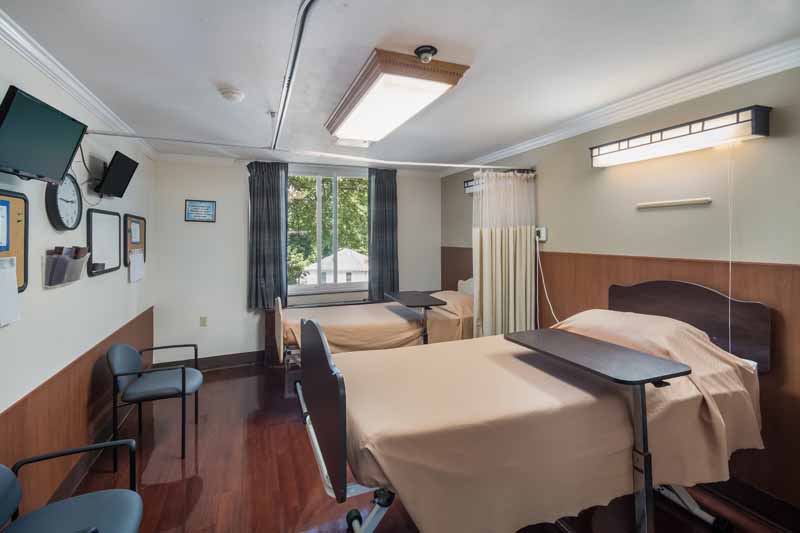
How is Huntington Center Staffed?

CMS rates HUNTINGTON HEALTH AND REHABILITATION CENTER's staffing level at 2 out of 5 stars, which is below average compared to other nursing homes. Staff turnover is 54%, compared to the West Virginia average of 46%.

What Have Inspectors Found at Huntington Center?

State health inspectors documented 63 deficiencies at HUNTINGTON HEALTH AND REHABILITATION CENTER during 2022 to 2025. These included: 63 with potential for harm. While no single deficiency reached the most serious levels, the total volume warrants attention from prospective families.
Who Owns and Operates Huntington Center?

HUNTINGTON HEALTH AND REHABILITATION CENTER is owned by a for-profit company. For-profit facilities operate as businesses with obligations to shareholders or private owners. The facility is operated by HILL VALLEY HEALTHCARE, a chain that manages multiple nursing homes. With 186 certified beds and approximately 179 residents (about 96% occupancy), it is a mid-sized facility located in HUNTINGTON, West Virginia.
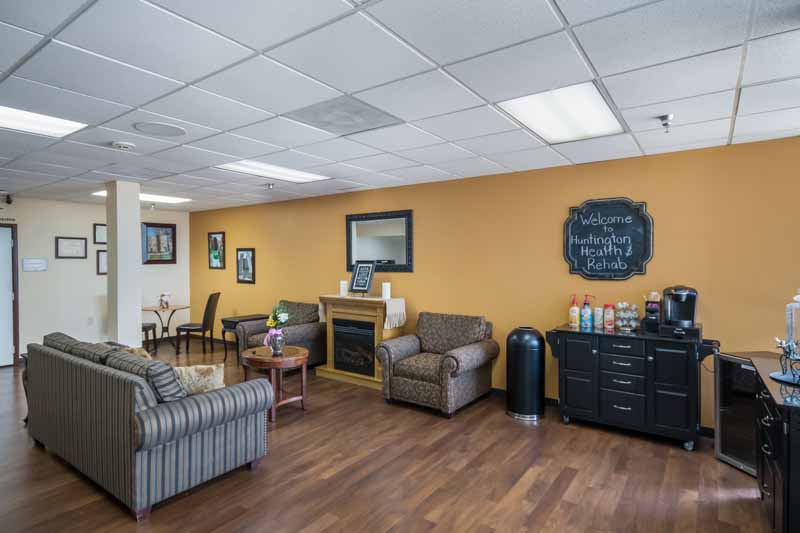
How Does Huntington Center Compare to Other West Virginia Nursing Homes?

Compared to the 100 nursing homes in West Virginia, HUNTINGTON HEALTH AND REHABILITATION CENTER's overall rating (2 stars) is below the state average of 2.7, staff turnover (54%) is near the state average of 46%, and health inspection rating (2 stars) is below the national benchmark.

What Should Families Ask When Visiting Huntington Center?

Based on this facility's data, families visiting should ask: "Can you walk me through typical staffing levels on day, evening, and night shifts?" "Can I visit during a mealtime to observe dining assistance and food quality?" "How do you handle medical emergencies, and what is your hospital transfer rate?" "Can I speak with family members of current residents about their experience?" These questions are particularly relevant given the below-average staffing rating.

Is Huntington Center Safe?

Based on CMS inspection data, HUNTINGTON HEALTH AND REHABILITATION CENTER has a clean safety record: no substantiated abuse findings (meaning no confirmed cases of resident harm), no Immediate Jeopardy citations (the most serious violation level indicating risk of serious injury or death), and is not on the Special Focus Facility watch list (a federal program monitoring the lowest-performing 1% of nursing homes). The facility has a 2-star overall rating and ranks #100 of 100 nursing homes in West Virginia. While no facility is perfect, families should still ask about staff-to-resident ratios and recent inspection results during their visit.

Do Nurses at Huntington Center Stick Around?

HUNTINGTON HEALTH AND REHABILITATION CENTER has a staff turnover rate of 54%, which is 8 percentage points above the West Virginia average of 46%. Moderate turnover is common in nursing homes, but families should still ask about staff tenure and how the facility maintains care continuity when employees leave.

Was Huntington Center Ever Fined?

HUNTINGTON HEALTH AND REHABILITATION CENTER has no federal fines on record. CMS issues fines when nursing homes fail to meet care standards or don't correct problems found during inspections. The absence of fines suggests the facility has either maintained compliance or corrected any issues before penalties were assessed. This is a positive indicator, though families should still review recent inspection reports for the full picture.

Is Huntington Center on Any Federal Watch List?

HUNTINGTON HEALTH AND REHABILITATION CENTER is not on any federal watch list. The most significant is the Special Focus Facility (SFF) program, which identifies the bottom 1% of nursing homes nationally based on persistent, serious quality problems. Not being on this list means the facility has avoided the pattern of deficiencies that triggers enhanced federal oversight. This is a positive indicator, though families should still review the facility's inspection history directly.