GRACE LUTHERAN COMMUNITIES - RIVER PINES
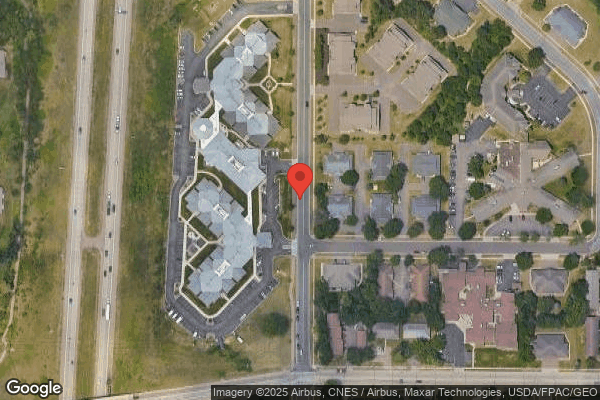
206 N WILLSON DR, ALTOONA, WI 54720 (715) 598-7800
Non profit - Corporation 50 Beds Independent Data: November 2025
Trust Grade
80/100
#92 of 321 in WI
Last Inspection: February 2025

Within standard 12-15 month inspection cycle. Federal law requires annual inspections.

Overview

Grace Lutheran Communities - River Pines in Altoona, Wisconsin has a Trust Grade of B+, which means it is recommended and performs above average compared to other facilities. It ranks #92 out of 321 in the state, placing it in the top half, and #3 out of 5 in Eau Claire County, indicating only two local options are better. The facility has recently undergone its first inspection and has not shown improvement or decline in its ratings yet, with a staffing rating of 4 out of 5 stars, though the turnover rate is average at 53%. Notably, there have been no fines recorded, which is a positive sign, and the facility has adequate RN coverage. However, there are some concerns, such as a lack of a qualified dietary manager and issues with monitoring dishwashing sanitization, which could pose health risks. Additionally, a resident with limited mobility did not receive the necessary care to maintain their range of motion as per their restorative care plan. Overall, while there are strengths in staffing and no fines, the facility needs to address these specific care and management issues.

Trust Score
B+
80/100
In Wisconsin
#92/321
Top 28%
Safety Record
Low Risk
No red flags
Inspections
Too New
0 → 5 violations
Staff Stability
⚠ Watch
53% turnover. Above average. Higher turnover means staff may not know residents' routines.
Penalties
✓ Good
No fines on record. Clean compliance history, better than most Wisconsin facilities.
Skilled Nurses
✓ Good
Each resident gets 64 minutes of Registered Nurse (RN) attention daily — more than 97% of Wisconsin nursing homes. RNs are the most trained staff who catch health problems before they become serious.
Violations
✓ Good
Only 5 deficiencies on record. Cleaner than most facilities. Minor issues only.
★★★★☆
4.0
Overall Rating
★★★★☆
4.0
Staff Levels
★★☆☆☆
2.0
Care Quality
★★★★☆
4.0
Inspection Score
Stable
: 0 issues
2025: 5 issues

The Good

  • 4-Star Staffing Rating · Above-average nurse staffing levels
  • Full Sprinkler Coverage · Fire safety systems throughout facility
  • No fines on record

Facility shows strength in staffing levels, fire safety.

The Bad

Staff Turnover: 53%

Near Wisconsin avg (46%)

Higher turnover may affect care consistency

The Ugly 5 deficiencies on record

Feb 2025 5 deficiencies
CONCERN (D)

Potential for Harm - no one hurt, but risky conditions existed

Deficiency F0688 (Tag F0688)

Could have caused harm · This affected 1 resident

**NOTE- TERMS IN BRACKETS HAVE BEEN EDITED TO PROTECT CONFIDENTIALITY** Based on interviews and record review, the facility did not ensure residents with limited range of motion (ROM) received service...

Read full inspector narrative →
**NOTE- TERMS IN BRACKETS HAVE BEEN EDITED TO PROTECT CONFIDENTIALITY** Based on interviews and record review, the facility did not ensure residents with limited range of motion (ROM) received services to maintain or prevent further reduction in ROM for 1 out of 2 residents (R) (R30). R30's restorative care plan from therapy on 1/24/2025 was not implemented. R30's restorative care plan from therapy on 7/1/2024 was not being followed. Findings include: R30 admitted to the facility on [DATE] with diagnoses to include post polio syndrome, osteoarthritis, and pain in right shoulder. R30's quarterly Minimum Data Set (MDS) assessment dated , 2/7/2025, indicated R30 had no impairment in ROM in both upper extremities and impairment on both lower extremities. R30 needed maximum assist in multiple areas of mobility. R30 had therapy services that were discontinued on 1/21/2025, and a restorative program was ordered on 01/24/2025. Physical therapy orders stated, Patient will benefit from daily seated lower extremity and core home exercise program. Patient needs minimum assist for bilateral lower extremities range of motion especially left lower extremity. Please see handout set up in his room (closet door) per patient's consent. R30's care plan, dated 7/1/2024, did not include the 1/24/2025 restorative order. Related section of the care plan was last updated 7/1/2024. Care plan stated the restorative order from 7/1/24. The order stated, Patient will benefit from bilateral LE AAROM (active assisted range of motion) program on both lower extremities incorporated for AM cares as tolerated (daily) to prevent joint contractures and includes a sheet of exercises. R30's restorative order was not listed in the Treatment Administration Record (TAR) report dated January 2025 and February 2025. No documentation was provided that exercises were being completed. On 2/24/2025, at 9:58 AM, R30 stated that he did not have therapy or a restorative program. R30 stated that facility staff did not do exercises with R30. R30 indicated that R30 did not need them. R30 denied a decline in ADLs. R30 reported he had polio when he was 5 and that he was not going to get any stronger. On 2/25/2025, at 1:01 PM, Surveyor observed the [NAME] (CNA plan of care) hanging inside the closet door for R30. The order for LE exercises from 7/1/2024 was under the Resident Care section of the [NAME]. On 2/25/2025, at 2:51 PM, Surveyor observed Director of Nursing (DON) B attempt to find documentation of exercises being performed with R30. DON B stated she was unable to find documentation and she would have to get some help to find things. DON B stated that the process is that, when a new order comes in, she transcribes it to the care plan and actions go on the [NAME] so CNAs know what to do. DON B stated two copies are printed. One copy is put in the CNA binder and one copy is put on the door of resident's closet. On 2/25/2025, at 3:41 PM, DON B stated she was unable to find documentation. DON B stated it was not being done and she took full responsibility. On 2/26/25, at 11:50 AM, Surveyor interviewed CNA D who stated that CNAs know what to do with each resident because it is on the [NAME]. CNA D stated that the [NAME] is posted inside the door of each patient room and in the binder at the CNA desk. CNA D stated CNAs do the restorative program. CNA D stated that R30 does not sleep in bed and that it is difficult to do the exercises when R30 is not in bed. When asked if DON B talked to them about doing R30 exercises or if she knew he had them. CNA D said no.
CONCERN (D)

Potential for Harm - no one hurt, but risky conditions existed

Accident Prevention (Tag F0689)

Could have caused harm · This affected 1 resident

Based on observation, interview, and record review, the facility did not provide assistive devices with meals to prevent accidents for 1 of 6 residents (R)(R2) reviewed for accidents. R2 was assessed...

Read full inspector narrative →
Based on observation, interview, and record review, the facility did not provide assistive devices with meals to prevent accidents for 1 of 6 residents (R)(R2) reviewed for accidents. R2 was assessed and care planned as requiring lids on cups during meals in order to prevent spills. This was not provided for 2 of 2 observed meals. Findings include: R2 admitted to the facility in February of 2024 with diagnoses to include multiple sclerosis, hypertension, paraplegia, and weakness. R2's Minimum Data Set (MDS) assessment, dated 01/10/25, indicated that R2 had limited range of motion on one side of his upper extremities, and required set up assistance for meals. R2's Care Plan, dated 02/24/24, stated Handled cups with lids at meals. R2's Nutrition/dietary note, dated 01/05/25, stated in part, Handled cups with lids and divided plate are provided at meals to support independent eating. Nursing is providing meal set up. On 02/25/25 at 9:00 AM, Surveyor observed R2 having breakfast. R2 had a divided plate and 3 coffee cups with liquids. Surveyor observed that none of the cups had lids on them. Surveyor observed R2's shaking movements while eating independently. On 02/25/25 at 9:29 AM, Surveyor observed R2 eating when he spilled liquids on himself. R2 spilled liquids on R2's right arm and right pant leg. Staff were observed to wipe up the spill and asked R2 if R2 would like to have pants changed. R2 refused and stated that he was okay. Surveyor observed no change in coloration where R2 spilled the coffee on R2's arm. At 9:33 AM, staff refilled R2's coffee cup with coffee per R2's request. The cup did not have a lid. On 02/25/25 at 9:50 AM, Surveyor interviewed R2 and asked about using cups with lids. R2 responded that sometimes R2 used cups with lids. When asked if R2 was okay after spilling coffee, R2 indicated R2 was okay. On 02/25/25 at 12:43 PM, Surveyor observed R2 receive two coffee cups with fluids in at lunch, neither of the cups had lids on them. On 02/25/25 at 12:53 PM, Surveyor interviewed Life Enrichment (LE) G who confirmed that there were no lids on R2's cups. On 02/25/25 at 4:00 PM, Surveyor interviewed Director of Nursing (DON) B who confirmed R2's care plan indicated R2 should utilize handled cups with lids. Surveyor told DON B about the observations above. DON B responded that should not have happened. R2 needed the lid in place to keep from spilling coffee or other fluids on self.
CONCERN (D)

Potential for Harm - no one hurt, but risky conditions existed

Pharmacy Services (Tag F0755)

Could have caused harm · This affected 1 resident

**NOTE- TERMS IN BRACKETS HAVE BEEN EDITED TO PROTECT CONFIDENTIALITY** Based on observation, interview, and record review, the facility did not provide pharmaceutical services, including procedures t...

Read full inspector narrative →
**NOTE- TERMS IN BRACKETS HAVE BEEN EDITED TO PROTECT CONFIDENTIALITY** Based on observation, interview, and record review, the facility did not provide pharmaceutical services, including procedures that ensured the accurate acquiring, dispensing, and administering of drugs and biologicals, for 1 of 6 residents (R)(R11) reviewed for medication administration. The staff did not correctly administer an Advair inhaler for R11. Findings include: Surveyor reviewed instructions from the Michigan Medicine Care Guide titled, How to use your Advair HFA (fluticasone/salmeterol) inhaler last revised 10/2017 which stated, in part: .How to use your Advair HFA: .8. If your doctor has prescribed more than one dose (puff), wait 30 seconds and repeat above . R11 admitted to the facility on [DATE] with a Brief Interview for Mental Status (BIMS) score of 15 out of 15, which indicated R11 was cognitively intact. R11 had diagnoses of gangliosidosis (a genetic disorder that progressively destroys nerve cells in the brain and spinal cord) and quadriplegia (paralysis that affects all four limbs). On 02/25/25 at 7:42 AM, Surveyor observed Licensed Practical Nurse (LPN) D administer Advair inhaler to R11. LPN D gave R11 one puff of the inhaler and within 10 seconds gave a second puff of the inhaler. Surveyor asked LPN D, Should there be a longer wait time in between puffs? LPN D replied, Yes, but this resident breathes fast. On 02/25/25 at 9:30 AM, Surveyor informed Director of Nursing (DON) B of the observation of LPN D with the Advair inhaler. DON B replied, She (LPN D) should have waited at least 30 seconds before giving the second puff. On 02/26/25 at 7:48 AM, DON B informed Surveyor that it is a 30 second wait time between puffs of the Advair inhaler and provided surveyor with the instructions from Michigan Medicine.
CONCERN (F)

Potential for Harm - no one hurt, but risky conditions existed

Deficiency F0801 (Tag F0801)

Could have caused harm · This affected most or all residents

Based on interview and record review, the facility did not designate a person to serve as the director of food and nutrition services who had completed the minimum qualification requirements for the p...

Read full inspector narrative →
Based on interview and record review, the facility did not designate a person to serve as the director of food and nutrition services who had completed the minimum qualification requirements for the position. This practice has potential to affect all 46 residents residing in the facility. The facility's Dietary Manager (DM) has been in the position for over 2 years, had enrolled in a course in 8/2022, but did not complete the steps to become certified. The facility does not have a full-time Registered Dietician (RD) at the facility. Findings include: On 2/25/25, at 7:57 AM, Surveyor interviewed Dietary Manager (DM) E. DM E reported that she became the Dietary Manager 2 years ago. When DM E was asked about her qualifications, she stated she was not a certified dietary manager, certified food service manager, nor did she have a related associates degree. DM E stated she was done with the class and took the test last October but had failed. DM E indicated her 90-day wait was about up and she would be rescheduling the exam. DM E stated Registered Dietician (RD) services are contracted and she did not know if the RD was at the facility at least 35 hours per week. DM E did not know if the facility had a waiver for Dietary Management. On 2/25/25, at 3:20 PM Surveyor interviewed Nursing Home Administrator (NHA) A about DM E. NHA A stated that DM E started her position as Dietary Manager a couple years ago. NHA A stated DM E is not certified. NHA A stated that DM E started the course almost right away upon starting as Dietary Manager. NHA A stated she was not sure why the lapse, but DM E had taken the exam in October (2024) and failed. NHA A stated that DM E will be rescheduling the test because DM E's 90-day retake waiting period was up last week or coming up soon. NHA A stated that RD services are contracted. NHA A does not know if RD services are 35 hours per week just for the facility as the RD covers a number of buildings. When asked, NHA A stated the facility did not have a waiver for dietary management. On 2/26/25, at 7:15 AM, NHA A stated the facility did not have 35 hours per week of RD services. NHA A confirmed that DM E started her job as Dietary Manager on 8/15/2022 and has been in her role for almost 2 ½ years.
CONCERN (F)

Potential for Harm - no one hurt, but risky conditions existed

Food Safety (Tag F0812)

Could have caused harm · This affected most or all residents

Based on interview, record review, and observation, the facility failed to implement correct monitoring of the dish washer for sanitization purposes. This has the potential to affect all 46 residents ...

Read full inspector narrative →
Based on interview, record review, and observation, the facility failed to implement correct monitoring of the dish washer for sanitization purposes. This has the potential to affect all 46 residents residing in the facility. The facility did not ensure facility protocol was followed to ensure safe sanitization of dishware via their dishwasher. Findings include: The facility protocol on log sheet: Report if wash Temperature is Less than 110 Report if rinse temp is 120 Report if test strip does not reach between 50-100ppm (parts per million) The Association of Nutrition and Foodservice Professional titled, Know Your Sanitizer states, .If PPM sanitizer solution is too high, it can be considered unsafe and ineffective, potentially leaving harmful chemical residues on surfaces and posing a health risk due to excessive chemical exposures. On 02/26/25, at 10:43 AM, Surveyor interviewed, Culinary Aide (CA) F asking how dishes were cleaned and how temperatures were taken. CA F stated that staff check wash and rinse temps as well as the test strip. CA F demonstrated where test strips are kept, demonstrated how to use test strips, and showed Surveyor the log where staff record results. 0n 02/26/25, at 10:52 AM, Surveyor reviewed the logs for sanitizer ppm and sanitizations levels of the dishwasher in dining area kitchen. The log showed 7 out of 31 days in January and 9 out of our 26 days in February tested out of range with ratings of 150ppm. The range for safe sanitization levels is between 50-100ppm. On 02/26/25, at 10:54 AM, Surveyor interviewed Dietary Manager (DM) E, who stated temperatures and test strips are done every 2 hours while the machine is in use. DM E demonstrated proper use of the test strip during a wash cycle. It tested 150 ppm. DM E was not aware it was testing out of range. Surveyor asked what steps have been taken related to these out-of-range results. DM E stated that she did not know and that she would call the company today and get the situation figured out. Surveyor asked if there were any other steps needed. On 02/26/25, at 11:03 AM, DM E sought out surveyor. DM E stated that she called the company about the dishwasher, and they identified facility staff were not using the right test strips to check sanitizer levels. Surveyor and DM E went back to kitchen where DM E demonstrated proper use of test strips during a wash cycle. The new test result was 50ppm. Chlorine test strips had been switched out to Iodine test strips. Surveyor clarified with DM E that staff were completing the sanitizer level test strips per protocol, but they were using the incorrect strips. The out-of-range levels of sanitizer should have been reported and acted upon.
Understanding Severity Codes (click to expand)
Life-Threatening (Immediate Jeopardy)
J - Isolated K - Pattern L - Widespread
Actual Harm
G - Isolated H - Pattern I - Widespread
Potential for Harm
D - Isolated E - Pattern F - Widespread
No Harm (Minor)
A - Isolated B - Pattern C - Widespread

Questions to Ask on Your Visit

  • "Can I speak with families of current residents?"
  • "What's your RN coverage like on weekends and overnight?"

Our Honest Assessment

Strengths
  • • Grade B+ (80/100). Above average facility, better than most options in Wisconsin.
  • • No major safety red flags. No abuse findings, life-threatening violations, or SFF status.
  • • No fines on record. Clean compliance history, better than most Wisconsin facilities.
  • • Only 5 deficiencies on record. Cleaner than most facilities. Minor issues only.
Concerns
  • • No significant concerns identified. This facility shows no red flags across CMS ratings, staff turnover, or federal penalties.
Bottom line: Generally positive indicators. Standard due diligence and a personal visit recommended.

About This Facility

What is Grace Lutheran Communities - River Pines's CMS Rating?

CMS assigns GRACE LUTHERAN COMMUNITIES - RIVER PINES an overall rating of 4 out of 5 stars, which is considered above average nationally. Within Wisconsin, this rating places the facility higher than 99% of the state's 100 nursing homes. This rating reflects solid performance across the metrics CMS uses to evaluate nursing home quality.
How is Grace Lutheran Communities - River Pines Staffed?

CMS rates GRACE LUTHERAN COMMUNITIES - RIVER PINES's staffing level at 4 out of 5 stars, which is above average compared to other nursing homes. Staff turnover is 53%, compared to the Wisconsin average of 46%.

What Have Inspectors Found at Grace Lutheran Communities - River Pines?

State health inspectors documented 5 deficiencies at GRACE LUTHERAN COMMUNITIES - RIVER PINES during 2025. These included: 5 with potential for harm.
Who Owns and Operates Grace Lutheran Communities - River Pines?

GRACE LUTHERAN COMMUNITIES - RIVER PINES is owned by a non-profit organization. Non-profit facilities reinvest revenue into operations rather than distributing to shareholders. The facility operates independently rather than as part of a larger chain. With 50 certified beds and approximately 45 residents (about 90% occupancy), it is a smaller facility located in ALTOONA, Wisconsin.
How Does Grace Lutheran Communities - River Pines Compare to Other Wisconsin Nursing Homes?

Compared to the 100 nursing homes in Wisconsin, GRACE LUTHERAN COMMUNITIES - RIVER PINES's overall rating (4 stars) is above the state average of 3.0, staff turnover (53%) is near the state average of 46%, and health inspection rating (4 stars) is above the national benchmark.

What Should Families Ask When Visiting Grace Lutheran Communities - River Pines?

Based on this facility's data, families visiting should ask: "Can I visit during a mealtime to observe dining assistance and food quality?" "How do you handle medical emergencies, and what is your hospital transfer rate?" "Can I speak with family members of current residents about their experience?"

Is Grace Lutheran Communities - River Pines Safe?

Based on CMS inspection data, GRACE LUTHERAN COMMUNITIES - RIVER PINES has a clean safety record: no substantiated abuse findings (meaning no confirmed cases of resident harm), no Immediate Jeopardy citations (the most serious violation level indicating risk of serious injury or death), and is not on the Special Focus Facility watch list (a federal program monitoring the lowest-performing 1% of nursing homes). The facility has a 4-star overall rating and ranks #1 of 100 nursing homes in Wisconsin. While no facility is perfect, families should still ask about staff-to-resident ratios and recent inspection results during their visit.

Do Nurses at Grace Lutheran Communities - River Pines Stick Around?

GRACE LUTHERAN COMMUNITIES - RIVER PINES has a staff turnover rate of 53%, which is 7 percentage points above the Wisconsin average of 46%. Moderate turnover is common in nursing homes, but families should still ask about staff tenure and how the facility maintains care continuity when employees leave.

Was Grace Lutheran Communities - River Pines Ever Fined?

GRACE LUTHERAN COMMUNITIES - RIVER PINES has no federal fines on record. CMS issues fines when nursing homes fail to meet care standards or don't correct problems found during inspections. The absence of fines suggests the facility has either maintained compliance or corrected any issues before penalties were assessed. This is a positive indicator, though families should still review recent inspection reports for the full picture.

Is Grace Lutheran Communities - River Pines on Any Federal Watch List?

GRACE LUTHERAN COMMUNITIES - RIVER PINES is not on any federal watch list. The most significant is the Special Focus Facility (SFF) program, which identifies the bottom 1% of nursing homes nationally based on persistent, serious quality problems. Not being on this list means the facility has avoided the pattern of deficiencies that triggers enhanced federal oversight. This is a positive indicator, though families should still review the facility's inspection history directly.