WILLOW RIDGE HEALTHCARE
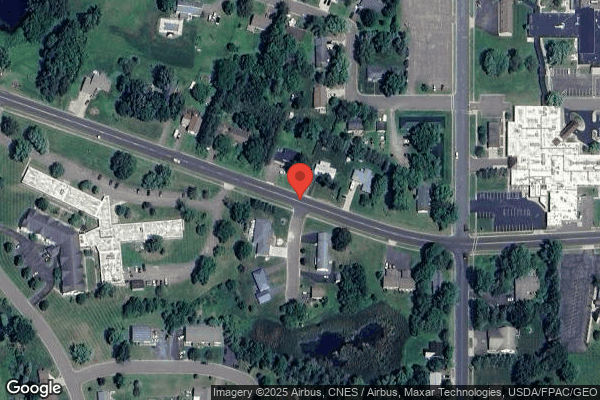
400 DERONDA ST, AMERY, WI 54001 (715) 268-8171
For profit - Corporation 83 Beds REAL PROPERTY HEALTH FACILITIES Data: November 2025
Trust Grade
55/100
#183 of 321 in WI
Last Inspection: May 2024

Within standard 12-15 month inspection cycle. Federal law requires annual inspections.

Overview

Willow Ridge Healthcare has a Trust Grade of C, which means it is average and sits in the middle of the pack for nursing homes. It ranks #183 out of 321 facilities in Wisconsin, placing it in the bottom half, but it is #3 out of 6 in Polk County, indicating only two local options are better. The facility shows an improving trend, with issues decreasing from 7 in 2024 to just 1 in 2025. Staffing is a strength, rated 4 out of 5 stars, with a turnover rate of 45%, which is slightly below the state average. While there have been no fines, which is a positive sign, there were serious incidents, such as a failure to notify a resident's physician promptly after a fall, resulting in a delayed diagnosis of a fractured hip, and concerns regarding food safety standards that could impact resident health. Overall, while there are strengths in staffing and a lack of fines, families should be aware of the serious incidents and average trust grade when considering this facility.

Trust Score
C
55/100
In Wisconsin
#183/321
Bottom 43%
Safety Record
Moderate
Needs review
Inspections
Getting Better
7 → 1 violations
Staff Stability
⚠ Watch
45% turnover. Above average. Higher turnover means staff may not know residents' routines.
Penalties
✓ Good
No fines on record. Clean compliance history, better than most Wisconsin facilities.
Skilled Nurses
✓ Good
Each resident gets 43 minutes of Registered Nurse (RN) attention daily — more than average for Wisconsin. RNs are trained to catch health problems early.
Violations
⚠ Watch
18 deficiencies on record. Higher than average. Multiple issues found across inspections.
★★★☆☆
3.0
Overall Rating
★★★★☆
4.0
Staff Levels
★★★★☆
4.0
Care Quality
★★★☆☆
3.0
Inspection Score
Stable
2024: 7 issues
2025: 1 issues

The Good

  • 4-Star Staffing Rating · Above-average nurse staffing levels
  • 4-Star Quality Measures · Strong clinical quality outcomes
  • Full Sprinkler Coverage · Fire safety systems throughout facility
  • No fines on record

Facility shows strength in staffing levels, quality measures, fire safety.

The Bad

3-Star Overall Rating

Near Wisconsin average (3.0)

Meets federal standards, typical of most facilities

Staff Turnover: 45%

Near Wisconsin avg (46%)

Higher turnover may affect care consistency

Chain: REAL PROPERTY HEALTH FACILITIES

Part of a multi-facility chain

Ask about local staffing decisions and management

The Ugly 18 deficiencies on record

2 actual harm
Jun 2025 1 deficiency
CONCERN (D) 📢 Someone Reported This

A family member, employee, or ombudsman was alarmed enough to file a formal complaint

Potential for Harm - no one hurt, but risky conditions existed

Report Alleged Abuse (Tag F0609)

Could have caused harm · This affected 1 resident

**NOTE- TERMS IN BRACKETS HAVE BEEN EDITED TO PROTECT CONFIDENTIALITY** Based on record review and interview, the facility did not implement policies and procedures for ensuring the reporting of physi...

Read full inspector narrative →
**NOTE- TERMS IN BRACKETS HAVE BEEN EDITED TO PROTECT CONFIDENTIALITY** Based on record review and interview, the facility did not implement policies and procedures for ensuring the reporting of physical abuse in accordance with section 1150B of the Act when an allegation of physical abuse was not reported immediately, but no later than 2 hours to the administrator and local law enforcement in accordance with state law through established procedures for 1 of 3 residents (R) reviewed (R1). This is evidenced by: Facility's policy titled, Resident Safety Abuse Policy, revised date 02/2022, read in part: 8. Reporting Suspected Violations: a. the supervisor on duty shall IMMEDIATELY safeguard the resident(s) and immediately report all alleged violations involving abuse, neglect, mistreatment, exploitation, including injuries of unknown source and misappropriation of resident property to the facility administrator. The Administrator will notify the DON (Director of Nursing) and/or others as appropriate. b. The administrator will report a reasonable suspicion of a crime against any individual who is a resident of, or is receiving care from the facility, to the State Agency and one or more law enforcement entities for the political subdivision in which the facility is located. c. The administrator shall report immediately, but not later than 2 hours after forming the suspicion . R1 was admitted to the facility on [DATE]. R1's current diagnoses include athetoid cerebral palsy, dementia with moderate agitation, pain in right arm, mild cognitive impairment, restlessness and agitation, anxiety disorder, major depressive disorder, and cerebral infarction. On 03/02/25, Certified Nursing Assistant (CNA) C was assisting R1 in the bathroom and R1 became very agitated and was yelling at CNA C. CNA C reported to a nurse that R1 was upset when CNA C was providing cares. At 4:00 PM, Licensed Practical Nurse (LPN) D went to R1's room and R1 stated, The aide slammed me against the wall. On 03/03/25, Nursing Home Administrator (NHA) A completed an investigation. The Facility's Reported Incident (FRI) initial report was sent late to the State Agency (SA) on 03/13/25 at 4:05 PM and the final report was sent on 03/14/25 at 4:29 PM. The FRI report documented law enforcement was not contacted. The FRI did not document when NHA A was contacted to report the allegation of abuse. On 06/24/25 at 11:42 AM, Surveyor interviewed NHA A about when the allegation of abuse was reported to NHA A, SA, and law enforcement. NHA A stated NHA A was called right away and can't remember the time. Surveyor asked if CNA C was suspended during the investigation. NHA A stated when NHA A received the call from the facility, NHA A informed the staff CNA C should not be working with resident (R1) and needed to go home. Surveyor asked when CNA C clocked out at 8:00 PM, if this was the time NHA A was called about the incident. NHA A responded, yes. Surveyor asked if the incident occurred at 3:45 PM, if this was immediate reporting to NHA A. NHA A stated this was not timely reporting. Surveyor asked why the initial FRI was sent to the SA on 03/13/25 at 4:05 PM. NHA A stated NHA A thought it was sent in immediately. NHA A did not know why the report was not sent in timely. Surveyor asked when the allegation should be reported to NHA A and SA. NHA A stated within 2 hours. Surveyor asked if the police were called immediately. NHA A stated the police were not called because didn't feel it was necessary and could not prove abuse occurred.
May 2024 5 deficiencies
CONCERN (D)

Potential for Harm - no one hurt, but risky conditions existed

Abuse Prevention Policies (Tag F0607)

Could have caused harm · This affected 1 resident

Based on record review and interview, the facility did not implement policy and procedures related to screening employees for a prior history of abuse, neglect, exploitation of residents, or misapprop...

Read full inspector narrative →
Based on record review and interview, the facility did not implement policy and procedures related to screening employees for a prior history of abuse, neglect, exploitation of residents, or misappropriation of resident property for 3 of 8 staff reviewed. Findings include: Facility policy entitled, Resident Safety and Abuse Policy, last reviewed 3/24, states in part: Employee Screening: .All employees shall have a criminal background check. 1. Initial and any required future background checks will be conducted in accordance with applicable state and federal laws. Checks may include criminal history, state caregiver registry, OIG [Office of Inspector General], and exclusion lists. The type, frequency, and timing of checks will be in accordance with applicable state and federal law . On 05/28/24 at 3:48 PM, Surveyor reviewed caregiver background checks for 8 randomly selected staff members and found the following information: Registered Nurse (RN) G was hired on 02/29/24. Surveyor received a Background Information Disclosure (BID) dated 02/29/24 but did not receive a Department of Justice (DOJ) response or Integrated Background Information System (IBIS) letter for RN G's caregiver background check at the time of hire. On 05/28/24 at 4:30 PM, Surveyor interviewed Business Office Manager (BOM) C and asked why there was no DOJ response or IBIS letter for RN G's caregiver background check. BOM C stated RN G was a new hire, and they don't run the caregiver background check until 45 days after hire if there was nothing disclosed on the BID. On 05/28/24 at 4:45 PM, Surveyor interviewed Corporate Nursing Home Administrator (CNHA) D and asked why there was no caregiver background check for RN G. CNHA D stated they have 60 days by law to run the caregiver background check for new hires, and their company did not usually run it until 45 days after hire. Surveyor asked if it had been greater than 60 days since RN G was hired. CNHA D confirmed it was greater than 60 days since RN G's date of hire and the background check was overdue. Surveyor clarified RN G's background check was 29 days overdue. Surveyor did not find evidence of supervision of staff prior to background checks being completed. Surveyor reviewed Housekeeper (HK) E's records provided and found a BID dated 04/24/20, and the DOJ response and IBIS letter were both dated 04/27/24. This was greater than 4 years ago. Surveyor reviewed Certified Nursing Assistant (CNA) F's records provided and found a BID, DOJ response and IBIS letter all dated 02/18/20. This was greater than 4 years ago. On 05/28/24 at 4:30 PM, Surveyor interviewed BOM C who confirmed both HK E and CNA F's caregiver background checks appeared to be overdue. BOM C would look to see if they were done more recently. On 05/29/24 at 10:39 AM, Surveyor interviewed Nursing Home Administrator (NHA) A who confirmed they did identify a problem with late caregiver background checks on the three employees listed above. NHA A stated they have already started a Performance Improvement Process to correct this problem and better identify when all staff are due for the background check to be run.
CONCERN (D)

Potential for Harm - no one hurt, but risky conditions existed

Comprehensive Assessments (Tag F0636)

Could have caused harm · This affected 1 resident

**NOTE- TERMS IN BRACKETS HAVE BEEN EDITED TO PROTECT CONFIDENTIALITY** Based on record review and interview, the facility did not conduct a comprehensive and accurate assessment for 1 of 13 residents...

Read full inspector narrative →
**NOTE- TERMS IN BRACKETS HAVE BEEN EDITED TO PROTECT CONFIDENTIALITY** Based on record review and interview, the facility did not conduct a comprehensive and accurate assessment for 1 of 13 residents (R) reviewed for Minimum Data Set (MDS) assessments. (R5) Findings: R5 was admitted on [DATE] with a Brief Interview of Mental Status (BIMS) of 08 (cognition is moderately impaired). Diagnoses of Alzheimer's, dementia, and congestive heart failure (a long-term condition in which the heart can't pump blood well enough to meet your body's needs). R5's MDS dated [DATE] under section I indicated that R5 had an active diagnosis in the major disease category of infection to a wound. On 05/28/24 at 11:00 AM, Surveyor asked Nursing Home Administrator (NHA) A about this resident's wound infection indicated on the MDS under the major disease category. NHA A replied, I will get that information for you. On 05/28/24 at 2:00 PM, Surveyor interviewed NHA A about the MDS. NHA A replied, The MDS was coded incorrectly on 05/01/24 the quarterly 180 day assessment, 01/30/24 for the quarterly 90 day assessment and 10/30/23 the annual MDSs as there is no major wound infection. On 05/30/24 at 9:43 AM, Licensed Practical Nurse (LPN) I provided Surveyor with the corrections submitted for the I section on the MDS for 01/20/23, 04/22/23, 07/23/23, 10/30/23, 01/30/24 and 05/01/24.
CONCERN (D)

Potential for Harm - no one hurt, but risky conditions existed

Infection Control (Tag F0880)

Could have caused harm · This affected 1 resident

**NOTE- TERMS IN BRACKETS HAVE BEEN EDITED TO PROTECT CONFIDENTIALITY** Based on observation, interview and record review, the facility did not provide a safe, sanitary, and comfortable environment to...

Read full inspector narrative →
**NOTE- TERMS IN BRACKETS HAVE BEEN EDITED TO PROTECT CONFIDENTIALITY** Based on observation, interview and record review, the facility did not provide a safe, sanitary, and comfortable environment to help prevent the development and transmission of communicable diseases and infections. The facility did not ensure proper hand hygiene practices were followed during resident care and wound care observations. This occurred for 2 of 7 residents (R) 31 and R15. Findings include: Example 1: The facility policy, entitled, Infection Prevention and Control Program, revised in February of 2024, stated, The World Health Organization (WHO) guidelines for hand hygiene are followed for all employees state in part: Hand hygiene and medical glove use . the use of gloves does not replace the need for cleaning your hands. Hand hygiene must be performed when appropriate regardless of indications of glove use. Remove gloves to perform hand hygiene, when indication occurs while wearing gloves. Discard gloves after each task and clean your hands - gloves may carry germs .Examination gloves indicated in clinical situations .Indirect patient exposure: emptying emesis basin; handling/cleaning instrument; handling waste; cleaning up spills of bodily fluids .2 Before clean. Clean your hands immediately before accessing a critical site with infectious risk for the patient .b) Before dressing a wound with or without instrument. On 05/29/24 at 7:26 AM, Surveyor observed cares for R31 performed by Certified Nursing Assistant (CNA) H. During cares, CNA H performed peri care for R31 who was incontinent of bowel. After cleaning the resident's bowel movement (BM), CNA H used gloved hands to throw out the dirty brief, cloths, incontinence pads, and dirty linens in a plastic bag. CNA H then removed their gloves and put them in the trash bag. CNA H did not perform hand hygiene. CNA H proceeded to grab a clean brief and clean pad, put them on the resident, and completed cares. CNA H did not don new gloves and used bare hands for the rest of cares for R31. On 05/29/24 at 7:47 AM, Surveyor interviewed CNA H asking why they did not perform hand hygiene or don new gloves after touching dirty items. CNA H said they did not have more gloves for them to use in the room, and once they were started, they were too nervous and just continued with care. Surveyor then asked if they would normally have stopped and got the materials needed to perform cares. CNA H said yes, they normally would have stocked them before cares were started and today, they were just nervous. On 05/30/24 at 1:19 PM, Surveyor interviewed Director of Nursing (DON) B regarding hand hygiene during cares. DON B said they would expect staff to have stocked the needed items before performing cares and the use of gloves and hand hygiene throughout the entire cares process. DON B would have expected the CNA to use hand hygiene and then donned gloves after the handling of dirty items. R15 was admitted on [DATE] with diagnoses of diabetes, osteomyelitis (bone infection that can result from fungi or bacteria), severe sepsis with shock (a serious medical condition that can occur when an infection in your body causes extremely low blood pressure and organ failure due to sepsis). On 05/30/24 at 7:14 AM, Surveyor observed DON B perform a dressing change on R15. DON B put on proper personal protective equipment (PPE) following hand hygiene with Alcohol Based Hand Rub (ABHR). DON B removed wound dressing then changed gloves without performing hand hygiene. DON B sprayed the wound with wound cleanser. DON B changed gloves but did not perform hand hygiene in between. Surveyor interviewed DON B and asked, What is the facility policy regarding hand hygiene with glove changes? DON B replied, You are making me nervous; I am supposed to perform hand hygiene. DON B then removed gloves and performed hand hygiene.
CONCERN (E)

Potential for Harm - no one hurt, but risky conditions existed

Deficiency F0688 (Tag F0688)

Could have caused harm · This affected multiple residents

**NOTE- TERMS IN BRACKETS HAVE BEEN EDITED TO PROTECT CONFIDENTIALITY** Example 4 Resident (R) 7 was admitted to the facility on [DATE] and has a diagnosis that includes Alzheimer's/dementia. R7 could...

Read full inspector narrative →
**NOTE- TERMS IN BRACKETS HAVE BEEN EDITED TO PROTECT CONFIDENTIALITY** Example 4 Resident (R) 7 was admitted to the facility on [DATE] and has a diagnosis that includes Alzheimer's/dementia. R7 could not complete a BIMS due to not being able to understand or be understood. Review of MDS quarterly assessment, dated 04/04/24, documented R7 having functional limitations of range of motion to one side of the upper and lower extremities and is dependent on staff to provide activities of daily living. R7 does not receive therapy services or restorative nursing services. On 05/29/24 at 9:15 AM, Surveyor observed R7 in the activity room listening to a book being read. No restorative activities were being completed by R7 at this time. On 05/29/24 at 10:20 AM, Surveyor observed R7 being moved to a room for repositioning and care. R7 was wheeled from the activity room to their own room. On 05/29/24 at 12:27 PM, Surveyor interviewed contracted occupational therapy staff regarding restorative programs. Surveyor confirmed that R7 was not on any restorative plan that occupational therapy knew of. On 05/29/24 at 3:56 PM, Surveyor interviewed NHA A regarding R7's restorative plan. NHA A confirmed that R7 did not have any kind of restorative plan, and they were planning on looking into starting a restorative plan in the very near future. Based on observation, record review and interview, the facility did not implement a restorative program in attempt to improve or maintain residents' functional abilities for 5 of 7 residents (R21, R15, R12, R29 and R7) reviewed for limited Range of Motion (ROM). Findings: R21 was admitted on [DATE] with a Brief Interview of Mental Status (BIMS) of 08 which indicated moderate cognitive impairment. Diagnoses of sepsis right knee prosthetic, diabetes, and disruption of wound. R21 had no changes in mobility status from Minimum Data Set (MDS) dated [DATE] to 03/24/24. On 05/29/24 at 2:00 PM, Surveyor interviewed Nursing Home Administrator (NHA) A asking for any information the facility would have on a restorative program for R21's limited ROM. NHA A replied, I'm sorry but we do not have a restorative program here. On 05/30/24 11:04 AM, Surveyor interviewed Certified Nursing Assistant (CNA) K, What type of position/mobility areas does this resident require your help with? CNA K replied, Needs repositioned every 2 hours at least. Surveyor asked CNA K, Has this resident's mobility improved or worsened? CNA K replied, Stayed about the same. Example 2: R15 was admitted on [DATE] with a BIMS unable to complete. Diagnoses of cerebral infarction (is a life-threatening medical condition that happens when there's a lack of blood flow to a part of your brain), and muscle weakness. Review of MDS quarterly assessment, dated 02/07/24, documented R15 having functional limitation of range of motion to both lower extremities and does not receive therapy services or restorative nursing services. On 05/29/24 at 2:00 PM, Surveyor asked NHA A for any information the facility would have on a restorative program for R15's limited ROM. NHA A replied, I'm sorry but we do not have a restorative program here. On 05/30/24 10:29 AM, Surveyor asked CNA K, What kind of things do you help this resident with regarding mobility/positioning? CNA K replied, Washing, catheter care, and easy stand. Example 3: R12 was admitted on [DATE] with a BIMS of 10 indicating moderate cognitive impairment. Diagnoses of above the knee amputation of the right leg in 2019, cerebral infarct with no residual deficits, dementia, and Huntington's (the disease affects a person's movements, thinking ability and mental health). Review of MDS quarterly assessment, dated 04/13/24, documented R12 having functional limitation of range of motion to one side of the lower extremities and does not receive therapy services or restorative nursing services. On 05/29/24 at 2:00 PM, Surveyor asked NHA A for any information the facility would have on a restorative program for R12's limited ROM. NHA A replied, I'm sorry but we do not have a restorative program here. On 05/30/24 9:57 AM, Surveyor interviewed Licensed Practical Nurse (LPN) I regarding ADL decline. LPN I replied, We assess for changes for ADL and look for ways to help either maintain or improve a resident's ADL involvement if they are able to. On 05/30/24 at 10:23 AM, Surveyor interviewed CNA K about R12's limited ROM. Surveyor asked CNA K, What kind of things do you help this resident with regarding mobility/positioning? CNA K replied, Shower, changing resident, resident eats in bed which requires a lot of bed changes. Example 5: R29 was admitted to the facility on [DATE] and has diagnoses that include morbid obesity, failure to thrive, post thrombotic syndrome with ulcer of bilateral lower extremity, pain in both knees, and abdominal hernia. R29's admission MDS, dated [DATE], indicated there are limits in range of motion in both upper extremities and lower extremities. These impairments affect both sides of R29's body. On 05/28-29/24, Surveyor reviewed R29's medical record and could not find information related to any exercises or programs that were being used to assist R29 in maintaining or increasing their range of motion. On 05/29/24 at 11:52 AM, Surveyor requested further information in relation to R29's range of motion program. On 05/29/24 at 4:58 PM, Surveyor interviewed NHA A asking about R29's restorative program. NHA A stated they did not find a range of motion program for R29. Currently there is not a restorative program.
CONCERN (F)

Potential for Harm - no one hurt, but risky conditions existed

Food Safety (Tag F0812)

Could have caused harm · This affected most or all residents

Based on observation and staff interview, the facility did not ensure food was stored and served under sanitary conditions. This practice had the potential to affect 32 residents. Foods opened withou...

Read full inspector narrative →
Based on observation and staff interview, the facility did not ensure food was stored and served under sanitary conditions. This practice had the potential to affect 32 residents. Foods opened without a date. Dry storage items found on the floor. Temperature documentation missing for temping foods. Temperature/Chlorine documentation for dishwasher missing. Findings: The FDA Food Code 2022 documents at 3-501.17 Ready-to-Eat, Time/Temperature Control for Safety Food, Date Marking: (A) Except when packaging food using a reduced oxygen packaging method as specified under § 3-502.12, and except as specified in (E) and (F) of this section, refrigerated, ready-to-eat, time/temperature control for safety food prepared and held in a food establishment for more than 24 hours shall be clearly marked to indicate the date or day by which the food shall be consumed on the premises, sold, or discarded when held at a temperature of 5º C (Celsius) (41º F) (Fahrenheit) or less for a maximum of 7 days. The day of preparation shall be counted as day 1. The FDA Food Code 2022 documents at 3-501.18 Ready-to-Eat, Time/Temperature Control for Safety Food, Disposition: (A) A food specified in 3-501.17 (A) or (B) shall be discarded if it: (1) Exceeds the temperature and time combination specified in 3-501.17 (A), except time that the product is frozen; (2) Is in a container or package that does not bear a date or day; or (3) Is inappropriately marked with a date or day that exceeds a temperature and time combination as specified in 3-501.17 (A). The FDA Food Code 2022 documents at 3-305.11 Food Storage. (A) Food shall be protected from contamination by storing the food: (1) In a clean, dry location. (2) Where it is not exposed to splash, dust, or other contamination; and (3) At least 15 cm (6 inches) above the floor. The FDA Food Code 2022 documents at 3-501.16 Time/temperature Control for Safety Food, hot and cold holding. (A) .time/temperature control for safety food shall be maintained: (1) At 57°C (135°F) or above .or (2) At 5°C (41°F) or less. Foods opened no date/Dry storage on floor: On 05/28/24 at 9:20 AM, Surveyor conducted an initial tour of the kitchen with [NAME] J. Surveyor found an open package of frozen chicken and fish fillets without a date opened. [NAME] J replied, I will throw that away. We are just so short staffed. Surveyor observed a gallon of milk opened and not dated in the refrigerator. [NAME] J replied, I will get rid of that. Surveyor observed a 50lb box of Idaho potatoes sitting on the floor in the dry storage as well as 'Quick Oats' in a five-gallon pail with about an inch of oats at the bottom of the pail. Temperature/Documentation missing: On 05/28/24 at 9:32 AM, Surveyor reviewed temperature logs for temping foods and noted missing temperatures on the PM shift on May 3, 7, 11, 23, 24, 25, 26. Surveyor asked [NAME] J for March and April. March log was missing supper food temperatures on March 17, 18, 30 and 31. April log was missing supper food temperature on the 31st. Surveyor noted missing temperature/chlorine Parts Per Million (PPM) in May on 1, 3, 6, 8, 12, 13, 15, 17, 19 and 20. Surveyor asked for March and April documentation. [NAME] J was unable to find where March documentation is kept. April log missing PM rinse and PPM for 3, 9, 20, 11, 17, 19, 22, 24, and 27.
Jan 2024 2 deficiencies
CONCERN (D) 📢 Someone Reported This

A family member, employee, or ombudsman was alarmed enough to file a formal complaint

Potential for Harm - no one hurt, but risky conditions existed

Accident Prevention (Tag F0689)

Could have caused harm · This affected 1 resident

**NOTE- TERMS IN BRACKETS HAVE BEEN EDITED TO PROTECT CONFIDENTIALITY** Based on observation, interview and record review, the facility did not ensure that 1 of 3 residents (R2) reviewed for falls had...

Read full inspector narrative →
**NOTE- TERMS IN BRACKETS HAVE BEEN EDITED TO PROTECT CONFIDENTIALITY** Based on observation, interview and record review, the facility did not ensure that 1 of 3 residents (R2) reviewed for falls had adequate supervision and assistance to prevent accidents. R2's care plan indicated the use of an alarm while in wheelchair. R2's alarm was not in the 'ON' position. Findings: R2 was admitted to the facility on [DATE] with a diagnosis of Parkinson's disease. R2's care plan includes the following: grab bars, pressure alarm in wheelchair and bed. R2's physician orders include the following: haloperidol 1 mg twice daily for behavioral problems and anxiety. Seroquel 50 mg twice daily for agitation. Lorazepam 0.5 mg as needed for anxiety, restlessness, or nausea. Supportive device: motion sensor at all times when in bed for safety due to falls. R2's falls: -10/13/23, fall in room, no injury. Intervention: Ensure alarm is on. -11/07/23, fall from wheelchair, no injury. Pressure alarm not functioning due to not being plugged in. Intervention: check alarm function when in wheelchair. -12/30/23, fall during attempt to ambulate, no injury. Alarm was not turned in the 'ON' position. Intervention: demonstrated to all CNAs how to turn new alarm on. On 01/24/24 at 8:26 AM, Surveyor observed R2 eating breakfast in the dining room. Surveyor observed R2's chair alarm to be in the off position. On 01/24/24 at 9:07 AM, Surveyor observed Certified Nursing Assistant (CNA) C transfer R2 from her wheelchair to her bed. CNA C attempted to turn the chair alarm off prior to transfer. CNA C stated the alarm was in the off position. CNA C stated R2's alarm should always be on due to R2 trying to get out of her chair, but unfortunately it was not on. On 01/24/24 at 2:41 PM, Surveyor interviewed Licensed Practical Nurse (LPN) E. LPN E reported only R2 has a chair alarm that can be turned on/off, as this is a new alarm and recently ordered. All other alarms used by facility are always on, as there is not an on/off switch. CNAs have been educated on ensuring R2's alarm is turned on.
CONCERN (D) 📢 Someone Reported This

A family member, employee, or ombudsman was alarmed enough to file a formal complaint

Potential for Harm - no one hurt, but risky conditions existed

Medication Errors (Tag F0758)

Could have caused harm · This affected 1 resident

**NOTE- TERMS IN BRACKETS HAVE BEEN EDITED TO PROTECT CONFIDENTIALITY** Based on observation, interview and record review, the facility did not have behavior monitoring for targeted behaviors, and non...

Read full inspector narrative →
**NOTE- TERMS IN BRACKETS HAVE BEEN EDITED TO PROTECT CONFIDENTIALITY** Based on observation, interview and record review, the facility did not have behavior monitoring for targeted behaviors, and non-pharmacological interventions for behaviors prior to the use of psychotropic medications. The facility did not have an appropriate indication for use for the psychotropic medication. This occurred for 2 of 3 residents (R) reviewed for unnecessary medications. (R1, R2) -R1 and R2 received anti-anxiety medications that did not include adequate indication for use of this medication. -The facility does not have a system for monitoring and documenting behaviors, and effectiveness of medications, or non-pharmacological interventions implemented prior to the use of psychotropic medication. Findings: R1 was admitted to the facility on [DATE]. Diagnoses included dementia, panic disorder, depression, and insomnia. R1 was not present in the facility during the survey. R1's physician orders included the following: haloperidol 0.5 mg twice daily for agitation/delirium. Lorazepam 1 mg three times daily for anxiety, restlessness, or nausea at 6:00 AM, 4:00 PM and at bedtime. Lorazepam 1 mg every two hours as needed for anxiety, restlessness, or nausea. Morphine 5 mg every two hours as needed for pain or shortness of breath. Pharmacy review on 07/25/23 for as needed (PRN) lorazepam requesting clinical rationale for use and duration of use. Physician response to continue for six months related to aggressive behaviors. Aggressive behaviors is not a medical symptom for continued use. Pharmacy review on 10/24/23 recommended a gradual dose reduction (GDR) of haloperidol. Physician response indicated R1 has had significant anxiety that has put R1 at risk of care delivery and risk/benefits have been discussed. Continue current medication for the next six months. Diagnosis: End stage Alzheimer's disease. Alzheimer's disease is not an indication of use for psychotropic medication. R1's minimum data set (MDS) assessment completed on 10/20/23 confirmed Brief Interview for Mental Status (BIMS) was not completed due to severe impairment. PHQ 9 score was 4 indicating mild depression. Behaviors exhibited: hallucinations and delusions. No physical or verbal behaviors, no rejection of care, and no wandering. Surveyor was unable to locate any documented hallucinations or delusions. R1 does not have a care plan indicating hallucinations or delusions. R1's care plan included: -Alteration in thought processes, forgetfulness, and confusion related to loss of memory, cognitive impairment, dementia, and sensorineural hearing loss. Manifested by difficulty with decision making, dementia, fluctuating awareness, restlessness, confusion, and disorientation. Nurses to assess change in level of consciousness, reorient/re-direct, observe for signs and symptoms of disease administer medications as ordered, observe for side effects and effectiveness, offer verbal cues, offer non-verbal cues. -Disruptive verbally related to dementia. Defiant behaviors and arguing with staff and other residents. Manifested by verbal outbursts, verbal intimidation, yelling at staff. Arguing about having a roommate and disagreeing with skilled nursing facility expectations. Becoming angry with implemented all interventions and calling staff liars when reminded of frequent falls. Nurses to administer medications as ordered. Provide calm environment. 1:1 conversation. Offer activity. Document behaviors exhibited. Surveyor unable to locate non-pharmacological interventions attempted prior to administration of medication. Surveyor unable to locate behavior monitoring documentation. R1 sustained seven falls in the previous 90 days. Review of medication administration record: -07/03/23 at 1:18 AM, Morphine for agitation, restless, calling out. No straight answer if he is in pain he just continues to ask for [name]. -07/16/23 at 1:08 PM, lorazepam for trying to stand. -07/30/23 at 10:57 AM, Morphine for standing up, calling out. at 11:40 AM, lorazepam for restless, trying to stand, hollering. -08/22/23 at 1:29 PM, lorazepam for yelling, trying to self-transfer. -09/04/23 at 2:19 PM, lorazepam for multiple attempts to get up from his Broda chair. -09/08/23 at 12:19 AM, lorazepam for yelling out attempting to get out of bed. -09/09/23 at 7:33 AM, lorazepam for yelling out, trying to crawl out of his chair. -09/21/23 at 12:50 AM, lorazepam for behavior yelling out. -09/25/23 at 2:40 AM, lorazepam for yelling, setting his motion alarm off. -09/26/23 at 2:36 AM, lorazepam for frequently attempting to get out bed. -09/30/23 at 1:56 AM, Morphine for yelling out. at 11:23 AM, lorazepam for agitated yelling. -10/01/23 at 10:47 AM, lorazepam for restlessness, trying to get up from his Broda chair. -10/14/23 at 4:21 PM, lorazepam for anxiety, still trying to get out of his chair. -10/19/23 at 1:10 PM, lorazepam for restlessness, result pain reduced. -11/19/23 at 2:12 PM, lorazepam for had a fall, restless, getting out from his chair. at 2:13 PM, Morphine restless, getting up from chair, had a fall earlier. -12/25/23 at 1:40 PM, lorazepam for restless in chair, trying to get up, related to falls. -01/09/24 at 6:45 PM, lorazepam for comfort. -10/17/23-01/17/24, lorazepam was administered 32 times with no reason documented. -10/17/23-12/26/23, morphine was administered 8 times with no reason documented. Over a 6 month period, R1 was given antianxiety medication for yelling out. R1 was given antianxiety medication 13 times for attempting to get up out of the chair or bed. The medication was not used for a medical reason, but to prevent R1 from yelling and moving about. Example 2 R2 was admitted to the facility on [DATE]. Diagnoses included vascular parkinsonism, generalized anxiety, and depression. R2's physician orders included haloperidol 1 mg twice daily for behavioral problems and anxiety, Seroquel 50 mg twice daily for agitation, lorazepam 0.5 mg every two hours as needed for anxiety, restlessness, or nausea. R2's MDS completed on 11/28/23 confirmed a score of 10/15 during BIMS, indicating moderate cognitive impairment. R2 scored 1 during PHQ 9, indicating minimal depression. Behaviors: Hallucinations. Physical and verbal aggression 1-3 days. No behaviors of rejection of care or wandering. R2's care plan included: -Wandering related to confusion, manifested by resident leaving room without assistance. Nurses to document any elopement attempts. -Adverse medication side effects related to anti-anxiety and antipsychotic use. Goal no adverse effects, minimize side effects. Resident will receive the lowest possible dose to control symptoms. Surveyor was unable to locate documentation of hallucinations. R2 does not have a care plan indicating hallucinations. Surveyor was unable to locate non-pharmacological interventions attempted prior to administration of medication. Surveyor was unable to locate behavior monitoring documentation. R2 sustained seven falls in the previous 90 days. R2's administration record: -08/23/23 at 6:52 AM, lorazepam, progress note reads, R2 1:1 from 2:00 PM until 7:15 PM. R2 went to sleep after taking HS meds and PRN lorazepam. -08/25/23 at 7:05 PM, lorazepam, for setting off alarm. -08/26/23 at 8:57 AM, lorazepam for self-transferring. at 10:59 AM, lorazepam for self-transferring. -08/28/23 at 3:54 PM, lorazepam for setting alarms off many times. 4:26 PM, lorazepam, Seroquel did not help. Anxious, getting up and down, wants to walk, lay down, very restless and requiring 1:1. -08/29/23 at 11:21 PM, lorazepam, restless. Effective, sleeping. -08/30/23 at 10:11 AM, lorazepam for up and down from chair, wants to go to the bookstore across the street. Is at front desk with staff and has been 1:1 a good part of the morning. at 3:22 PM, lorazepam for pain. -08/31/23 at 2:22 PM, lorazepam for wanting to get up and setting off her alarms and picking at things on the floor that are not there. -09/01/23 at 1:43 PM, lorazepam for up and down from chair, setting off alarms. Has been 1:1 most of the morning. at 7:30 PM, progress note reads: R2 requires constant 1:1. She tries to get up from her chair multiple times, literally minimum of every minute. Chair alarm sounds each time. It took 10 minutes to give her medications. It took two staff to lay her down. It took a good 30 minutes to care for her. Total time with resident, 2 staff for HS cares, 10 minutes to give her meds, 30 minutes for cares=40 minutes. This is in addition to the constant 1:1 and staff keeping an eye on her at sight length. (Surveyor notes staff are administering the antianxiety medication due to the amount of time the resident is taking for cares) -09/02/23 at 2:28 PM, Morphine for no complaints of pain but is still agitated. at 2:49 PM, lorazepam for constantly alarming her alarm, standing up and down, does not comprehend instructions. at 3:16 PM, progress note reads, has been 1:1 ALL DAY, setting off alarms many many times and not sure on what she wanted just wants to go. Has been given magazines, drawing paper, pens, cards, food/drink, phone, taken to the bathroom, refuses to take that damn little white pill. at 7:21 PM, lorazepam for up and down in her chair. -09/03/23 at 2:04 PM, lorazepam for 1:1 for the day and setting off alarms. -09/05/23 at 8:00 PM, lorazepam, result effective is sleeping. -09/08/23 at 10:57 AM, lorazepam for up and down from chair and setting off alarms and not wanting anything. at 8:37 PM, lorazepam for crawling out of chair, pulling on things, standing. -09/09/23 at 1:10 PM, lorazepam for standing, setting off alarm. -09/10/23 at 4:49 PM, lorazepam for self-transfer, upset, wont sit down. -09/16/23 at 3:10 PM, lorazepam for up and down, setting off alarms, not wanting to sit still or be with others. at 3:37 PM, lorazepam getting up and down in her chair, setting off alarms. at 11:44 PM, lorazepam for frequent setting of both bed and chair alarm. -09/20/23, progress note reads, was started on Haldol today. Resident requiring 1:1 entire shift. Continues attempting to get out of wheelchair. -09/23/23 at 6:05 PM, lorazepam for setting off alarm. at 9:22 PM, lorazepam for transferring. -09/25/23 at 2:47 AM, haloperidol, attempting to get up on her own. -10/31/23 at 5:00 PM, lorazepam for standing, arguing. -11/18/23 at 7:27 PM, lorazepam for getting up from chair. -12/28/23 at 7:37 PM, lorazepam for setting off alarm. -08/22/23-01/08/24, lorazepam administered 18 times with no reason documented. On 01/24/24, Surveyor requested behavior monitoring. Surveyor received the following: -11/18/23, R2 was kicking and hitting x5. -12/11/23, R2 was kicking, hitting, biting, and pinching. -08/25/23, R2 was hitting/punching staff. -08/28/23, R2 was pushing/grabbing staff. -09/04/23, R2 was aggressive with staff. -09/13/23, R2 required 1:1 staff assist, getting up from wheelchair. -10/21/23, R2 was tearful. -12/22/23 and 12/23/23, R2 scratched staff. -01/04/24, R2 was pushing and grabbing. Over the past 5 months, R2 has been given an antianxiety medication 25 times for attempting to stand or setting off the alarm on her chair. On 01/24/24 at 8:10 AM, Surveyor observed R2 in Broda chair at nurse's station. R2 was leaning forward in her chair with both hands on the armrests of the chair, attempting to push herself up and out of her chair. Surveyor did not observe staff intervene; however, R2 was unable to exit her chair. On 01/24/24 at 11:11 AM, Surveyor interviewed Certified Nursing Assistant (CNA) C. CNA C stated R2 has a chair alarm because she is up and down. Surveyor observed R2's chair alarm was not turned on. On 01/24/24 at 12:40 PM, Surveyor interviewed Licensed Practical Nurse (LPN) D. LPN D reported PRN lorazepam and scheduled Haldol are given because R2 strikes out. LPN D reported R2 does not hallucinate but is not in touch with reality and makes statements such as, I can't pull it together. LPN D reported R2 always wants to go, for example wants to go upstairs, across the street, or go home. LPN D stated, R2 just wants to be up. On 01/24/24 at 2:42PM, Surveyor interviewed LPN E. LPN E reported behaviors for administering lorazepam include physical aggression, repetitive movements, wandering, elopement, verbal abuse, resisting cares, and attempts to self-transfer. LPN E reported non-pharmacological interventions include ambulating with staff, set-up for cares, television, and 1:1 at the nurse's station. LPN E stated behavior monitoring is documented in electronic record, and stated R2's behaviors are, she is up and down, and she literally does not listen. On 01/24/24 at 2:50 PM, Surveyor interviewed Director of Nursing (DON) B. DON B stated LPN D completes behavior monitoring and referred Surveyor back to LPN D.
Nov 2023 2 deficiencies 2 Harm
SERIOUS (G) 📢 Someone Reported This

A family member, employee, or ombudsman was alarmed enough to file a formal complaint

Actual Harm - a resident was hurt due to facility failures

Notification of Changes (Tag F0580)

A resident was harmed · This affected 1 resident

**NOTE- TERMS IN BRACKETS HAVE BEEN EDITED TO PROTECT CONFIDENTIALITY** Based on record review and interview, the facility did not consult with the resident's physician, consistent with his or her aut...

Read full inspector narrative →
**NOTE- TERMS IN BRACKETS HAVE BEEN EDITED TO PROTECT CONFIDENTIALITY** Based on record review and interview, the facility did not consult with the resident's physician, consistent with his or her authority, and notify the resident's representative when there was a significant change in the resident's physical, mental, or psychosocial status for 1 of 3 sampled residents (R2). The facility did not notify the physician or Power of Attorney (POA) promptly of R2's fall on 10/03/23 or consult with physician timely of increase in pain and change in ambulation status post fall. R2 was sent to the emergency room 4 days after the fall and was diagnosed with a fractured right hip. The delay in consulting with a physician prevented timely diagnosis of the fracture and caused ongoing pain with movement. This is evidenced by: Facility policy titled Incidents and Accidents dated 12/2013, revised 08/2021 states: Purpose: All incidents and accidents occurring on the facility premises must be investigated and reported to the Administrator. Medical Attention: The licensed Nurse will: iii. Notify the victim's personal or attending physician. iv. Notify the resident's family/responsible party. v. If necessary, transfer the injured person to the hospital. Facility policy titled Fall Assessment and Prevention Protocol dated 04/2020, revised 08/2021 states: After a fall or intercepted fall: 2. Notify attending or on-call physician according to the physician notification parameters policy and the change in resident's condition/status. 3. Notify the POA or other legal representative. Facility policy titled Nurse Charting Guidelines dated 2012, revised 07/2019 states: Some common acute conditions and a suggested timeframe of documentation include: 4. Nurse charting general documentation guidelines: e. Falls: Document after every single fall. The nurse should notify the attending physician, complete incident report paperwork, and make the family and/or responsible party aware. The physician or other provider on-call may order x-rays, CT (computerized tomography) scans or pain medications, so be sure to include any new orders in your nurses note. R2 was admitted to the facility on [DATE] with diagnoses including but not limited to violent behavior (combative), lower extremity edema, vascular dementia-unspecified severity with behavioral disturbance, and anxiety. R2's Minimum Data Assessment (MDS) dated [DATE] indicated R2: -required limited assist with transfers, walking, and eating, was dependent with bed mobility and dressing, and extensive assist with toilet use and personal hygiene. -had pain daily using nonverbal sounds, vocal complaints of pain, and facial expressions. -rarely /never understood -receiving antipsychotics -non-steroidal anti-inflammatory drug for pain control Review of the care plan. R2 had a comprehensive care plan. Main issues included: 10/12/22 Problem: Chronic pain related to psychological agents manifested by crying or moaning. Goal: Express feeling of comfort or of pain relief Interventions: Nurses to monitor pain characteristics: Administer pain meds, notify physician as needed. Notice signs/symptoms of increased pain due to poor communication. 09/24/19 Problem: Potential for trauma-falls related to history of falls, confusion, decline in cognitive status, unsteady gait, deconditioning, dementia with behavioral disturbance, use of psychotropic medications, and refusal to use assistive devices. Goals: No injury. Fewer than 5 falls per quarter. Interventions: Observe, record, and report all unsafe conditions and situations, therapy screen and evaluations as needed, encourage to ask for assistance, anticipate fall times, and monitor closely. Review of incident report dated 10/04/23 for R2's incident which occurred on 10/03/23 at 5:27 p.m., Licensed Practical Nurse (LPN) C documented R2 was in the dining room having dinner and stood up to walk back to a chair in the entry way of the facility. R2 was carrying a bowl of soup and slipped and fell into a sitting position on the floor. LPN C assessed R2. Vital signs attempted but R2 was upset and refused. LPN C obtained a temperature. LPN C documented R2's pupils were equal, round and reacted to light. Bilateral hand grasp firm. No apparent injury. No medications given within a couple hours prior to the fall. R2 had no complaints of pain. Steps to prevent reoccurrence: Closer monitoring. Allowing to eat in regular spot in the entry way. Reduce anxiety of multiple other people at table during meals. Cause documented as R2 in a trial eating with other resident in the dining room instead of normal area in the entry way by the nurse's station. LPN C documented Nurse Practitioner (NP) notified on 10/04/23 at 1:30 p.m. and message left for R2's POA to call the facility. LPN C signed the incident report and dated it 10/04/23. Physician and POA notified day after incident, not on the day the incident occurred. Review of R2's medical record: On 10/03/23, R2's medical record has no RN assessments or notes about fall incident or follow-up notes about fall and status of R2 post fall or physician notification. On 10/04/23 at 9:55 a.m., nursing documented acetaminophen 325 mg tab (2 tabs/650mg) given for crying ouch with movement from chair to chair and when at table. On 10/04/23 at 1:36 p.m., LPN C documented R2's fall, which was not the date of the incident. (Incident 10/03/23) On 10/04/23 at 1:53 p.m., nursing documentation states post-fall review: R2 has contributing diagnoses of arthritis, incontinence, and joint pain, receives antipsychotics, vital signs of Blood Pressure (B/P) 164/80, Temperature (T) 98.2, Pulse (P) 84, Respirations (R) 22, and oxygen saturation 98%. Nursing documentation stated R2 was out to dining room for both meals, when standing and moving will say ouch and cry a little, but when asked what is wrong, will complain of being scared. Documentation stated no marks or bruising on body, swelling in lower legs (normal). There is noted pain when standing; the physician was not consulted. On 10/04/23 at 9:42 p.m., nursing documentation states: post fall resident no complaints of pain. A little weaker with transfers. B/P 143/76, P 82, T 97.9, R 18, O2 saturation 97%. On 10/05/23 at 10:59 a.m., nursing documents Acetaminophen 325mg tablet (2 tabs/650mg) given for pain. Resident [R2] will cry out ouch ouch ouch with movement. Nursing noted pain with movement; physician not consulted. On 10/05/23 at 3:08 p.m., nursing documents resident (R2) has been up to the dining room for both meals and complains of pain and says ouch ouch ouch when moved, not wanting to stand on the right leg. No redness, no bruises noted. Note states: Has been reported to RN (Registered Nurse) and RN would be talking to the NP. Did have Tylenol this a.m., does not complain when sitting in the chair. R2 is not wanting to bear weight on the right leg post fall with complaints of pain. Physician not consulted. On 10/06/23 at 1:48 p.m., nursing documents Acetaminophen 325mg tab (2 tabs/650mg) given for pain in am (cries out with any movement) and R2 sleeping at 10:15 a.m. R2 is now crying out with any movement. The physician is not consulted. On 10/06/23 at 6:69 p.m., nursing documents no complaints from recent fall. Unable to get B/P, pulse, or oxygen sats due R2 uncooperative. Temperature was 98.3. On 10/07/23 at 7:22 p.m., nursing documentation states R2 transferred at 6:00 p.m. to acute care hospital by ambulance for evaluation from fall 4 days ago, significant change in ambulation and ongoing pain. POA was notified and agreed to evaluation. On 10/07/23 at 9:30 p.m., nursing documents RN from hospital stated R2 has a fractured right hip from fall 4 days ago and is septic with a UTI (urinary tract infection) and is being transferred to another facility for surgery. On 11/20/23 at 1:10 p.m., Surveyor interviewed LPN C and asked about R2's fall on 10/03/23 and asked why the physician was not notified. LPN C stated R2 did not complain of pain and the shift got busy and LPN C did not realize until 10/04/23 that R2's physician and family were not notified of the fall. LPN C stated LPN C notified them on 10/04/23. On 11/20/23 at 2:10 p.m., Surveyor interviewed Director of Nursing (DON) B and asked about R2's pain and increase in pain. DON B stated R2 will yell out. DON B stated DON B did not think R2's pain was increased from normal, and no staff brought any increased pain concerns to DON B. DON B stated R2 would always call out and say ouch because of the lower extremity edema R2 has. On 11/20/23 at 4:05 p.m., Surveyor interviewed DON B and asked how R2's physician was notified on 10/5/23 of the increased pain since the nursing documentation stated RN would notify the NP. Surveyor checked the schedule for 10/05/23, and the RN on duty was DON B. DON B stated DON B was not notified of this. DON B stated some of the nurses on staff will automatically go to the MDS Coordinator, who is an LPN (LPN F). DON B went to check if LPN F had any documentation. DON B provided Surveyor with an email that LPN F sent to R2's NP. The email states on 10/05/23 at 2:54 p.m. NP was emailed stating R2 was having much pain on left side following the fall. (LPN documented in email to NP the wrong side of the body. Email should have stated right leg). Wondering about an x-ray. NP emailed response to LPN F at 4:11 p.m. and asked where the pain was located. LPN F did not respond to the email until 10/06/23 at 3:31 a.m., 12 hours later to reply about R2's change in condition with increased pain post fall. LPN F documented R2 was favoring the right leg. An email is not consultation with the NP, as there is no way to ensure the message is received and addressed timely. The medical record contains no further information as to when the physician was consulted to determine that R2 should be sent out to the emergency room on [DATE] at 6:00 p.m.
SERIOUS (G) 📢 Someone Reported This

A family member, employee, or ombudsman was alarmed enough to file a formal complaint

Actual Harm - a resident was hurt due to facility failures

Quality of Care (Tag F0684)

A resident was harmed · This affected 1 resident

**NOTE- TERMS IN BRACKETS HAVE BEEN EDITED TO PROTECT CONFIDENTIALITY** Based on record review and interview, the facility did not ensure that 1 out of 3 sampled residents (R) R2 received assessment a...

Read full inspector narrative →
**NOTE- TERMS IN BRACKETS HAVE BEEN EDITED TO PROTECT CONFIDENTIALITY** Based on record review and interview, the facility did not ensure that 1 out of 3 sampled residents (R) R2 received assessment and appropriate medical care with a change in medical condition consistent with professional standards of practice for a licensed practical nurse (LPN) and a registered nurse (RN). R2 was not assessed for increased pain or change in ambulation ability after a fall on 10/03/23 to secure timely treatment for R2. On 10/07/23, four days after the fall, R2 was sent to the emergency room and was diagnosed with a fractured right hip. R2 experienced increased pain, especially with movement during the four days the fracture went undiagnosed. This is evidenced by: Facility policy titled Incidents and Accidents dated 12/2013, revised 08/2021 states: Purpose: All incidents and accidents occurring on the facility premises must be investigated and reported to the Administrator. Medical Attention: The licensed Nurse will: i. Physically assess and make injured person is safe and comfortable. Director of Nursing or RN Designee will i. Complete a physical assessment of the injured person. ii. Review all documentation. xi. Follow-up by observing resident and/or reviewing post-incident documentation each shift for the first three days and at 1 week to evaluate effectiveness of interventions. Facility policy titled Fall Assessment and Prevention Protocol dated 04/2020, revised 08/2021 states: After a fall or intercepted fall: 4. Document the fall in the nursing charting tab. 7. Observe all residents for at least 48 hours after an observed or suspected fall and document relevant post-fall clinical findings in the nursing charting tab. Facility policy titled Nurse Charting Guidelines dated 2012, revised 07/2019 states: Some common acute conditions and a suggested timeframe of documentation include: c. Post-incident follow-up x 72 hours (Neurological checks per policy). According to the Wisconsin Standards of Practice for Licensed Practical Nurses (N6): In the performance of acts in basic patient situations, the L.P.N. shall, under the general supervision of an R.N. or the direction of a provider: (b) Provide basic nursing care . (c) Record nursing care given and report to the appropriate person changes in the condition of a patient . (e) Perform the following other acts when applicable: 1. Assist with the collection of data. According to N6.03(1), an R.N. shall utilize the nursing process in the execution of general nursing procedures in the maintenance of health, prevention of illness or care of the ill.The nursing process consists of the steps of assessment, planning, intervention and evaluation. R2 was admitted to the facility on [DATE] with diagnoses including but not limited to violent behavior (combative), lower extremity edema, vascular dementia-unspecified severity with behavioral disturbance, anxiety, unspecified dementia with psychotic disturbance. R2's Minimum Data Assessment (MDS) dated [DATE]: -required limited assist with transfers, walking, and eating, was dependent with bed mobility and dressing, and extensive assist with toilet use and personal hygiene. -had pain daily using nonverbal sounds, vocal complaints of pain, and facial expressions. -rarely /never understood -receiving antipsychotics -non-steroidal anti-inflammatory drug for pain control Review of R2's comprehensive care plan. Main issues included: 10/12/22 Problem: Chronic pain related to psychological agents manifested by crying or moaning. Goal: Express feeling of comfort or of pain relief Interventions: Notice symptoms of increased pain due to poor communication. 09/24/19 Problem: Impaired physical mobility related to perceptual or cognitive impairment . Goals: Maintain strength and endurance, maintain functional mobility. Interventions: . Aides-Ambulation-independent, bed mobility 1 assist . Review of incident report dated 10/04/23 for R2's incident which occurred on 10/03/23 at 5:27 p.m., LPN C documented R2 was in the dining room having dinner and stood up to walk back to a chair in the entry way of the facility. R2 was carrying a bowl of soup and slipped and fell into a sitting position on the floor. LPN C assessed R2. Vital signs attempted but R2 upset and refused. LPN C obtained a temperature. LPN C documented R2's pupils were equal, round and reacted to light. Bilateral hand grasp firm. No apparent injury. No medications given within a couple hours prior to the fall. R2 had no complaints of pain. Steps to prevent reoccurrence: Closer monitoring. Allowing to eat in regular spot in the entry way. Reduce anxiety of multiple other people at table during meals. Cause documented as R2 in a trial eating with other resident in the dining room instead of normal area in the entry way by the nurse's station. LPN C documented Nurse Practitioner notified on 10/04/23 at 1:30 p.m. and message left for R2's POA (Power of Attorney) to call the facility. LPN C signed the incident report and dated it 10/04/23. Review of R2's medical record: On 10/03/23, R2's medical record has no assessments or notes about the fall incident or follow-up notes about R2's fall and status of R2. There is no RN assessment or verification of LPN data by RN in R2's medical record. On 10/04/23 at 9:55 a.m., nursing documented Acetaminophen 325 mg tab (2 tabs/650mg) given for crying ouch with movement from chair to chair and when at table. On 10/04/23 at 1:36 p.m., LPN C documented R2's fall, which was not the date of the incident. (Incident 10/03/23) On 10/04/23 at 1:53 p.m., nursing documentation states post-fall review: [R2] has contributing diagnoses of arthritis, incontinence, and joint pain, receives antipsychotics, vital signs of Blood Pressure (B/P) 164/80, Temperature (T) 98.2, Pulse (P) 84, Respirations (R) 22, and oxygen saturation 98%. Nursing documentation stated resident (R2) was out to dining room for both meals, when standing and moving will say ouch and cry a little, but when asked what is wrong, will complain of being scared. Documentation stated no marks or bruising on body, swelling in lower legs (normal). On 10/04/23 at 9:42 p.m., nursing documentation states: post fall resident no complaints of pain. A little weaker with transfers. B/P 143/76, P 82, T 97.9, R 18, O2 saturation 97%. Nursing note documented by LPN. Post fall assessment documentation noted only on 10/04/23 at 1:53 p.m. and 9:42 p.m. On 10/05/23 at 10:59 a.m., nursing documents Acetaminophen 325mg tablet (2 tabs/650mg) given for pain. R2 will cry out ouch ouch ouch with movement. Nursing note documented by LPN. No RN assessment of R2 when noted increased crying out in pain with movement. An email from LPN F to the NP on 10/05/23 at 2:54 p.m. states R2 was having much pain on left side following the fall. (LPN documented in email to NP the wrong side of the body. Email should have stated right leg). Wondering about an x-ray. On 10/05/23 at 3:08 p.m., nursing documents R2 has been up to the dining room for both meals and complains of pain and says ouch ouch ouch when moved, not wanting to stand on the right leg. No redness, no bruises noted. Note states: Has been reported to RN (Registered Nurse) and RN would be talking to the NP. Did have Tylenol this a.m., does not complain when sitting in the chair. Nursing note documented by LPN. There is no RN assessment of the right leg for indication of a hip fracture. There was no follow up with the provider on this date. Nurse reported the above findings to LPN F not to an RN. The RN on shift was DON B, who was not informed of the change of condition for R2. On 10/06/23 at 6:39 p.m., nursing documents no complaints from recent fall. Unable to get B/P, pulse, or oxygen sats due to resident R2 uncooperative. Temperature was 98.3. Nursing note documented by RN. There is no post fall assessment. On 10/06/23 at 1:48 p.m., nursing documents Acetaminophen 325mg tab (2 tabs/650mg) given for pain in am (cries out with any movement) and R2 sleeping at 10:15 a.m. Nursing note documented by LPN. No RN assessment with R2 crying out in pain. MayoClinic.org Signs and symptoms of a hip fracture include: Inability to get up from a fall or to walk. Severe pain in the hip or groin. Inability to put weight on the leg on the side of the injured hip. Bruising and swelling in and around the hip area. Shorter leg on the side of the injured hip. Outward turning of the leg on the side of the injured hip. R2's medical record did not contain assessment for one leg shorter than the other, or outward turning of the leg on the injured side in the 4 days following R2's fall. On 10/07/23 at 7:22 p.m., nursing documentation states R2 transferred at 6:00 p.m. to acute care hospital by ambulance for evaluation from fall 4 days ago, significant change in ambulation and ongoing pain. POA was notified and agreed to evaluation. Nursing note documented by RN. No RN assessment for reason for pain or significant change in ambulation or as to why R2 was sent out at this time. There is no documentation or assessment of R2's condition/status between 10/06/23 at 1:48 p.m. and 10/07/23 at 7:22 p.m. when R2 was sent out to the hospital for evaluation. This is a time period of over 29 hours with no assessment of condition when R2 had a recent fall with increased pain and a change in ability to bear weight on the right leg. On 10/07/23 at 9:30 p.m., nursing documents RN from hospital stated resident R2 has a fractured right hip from fall 4 days ago and is septic with a UTI (urinary tract infection) and is being transferred to another facility for surgery. Nursing note documented by RN. On 11/20/23 at 1:04 p.m., Surveyor interviewed RN D. RN D worked on 10/03/23-date of R2's fall incident. Surveyor asked about R2's fall on 10/03/23. RN D stated that it was a while ago. Surveyor asked if RN D assessed R2. RN D stated RN D didn't remember if R2 was assessed. Surveyor asked if R2 required an evaluation for dislocation/fracture. RN D stated RN D had no idea about an evaluation. RN D stated RN D did not work with R2. On 11/20/23 at 1:10 p.m., Surveyor interviewed LPN C and asked about R2's fall on 10/03/23. LPN C stated the facility was trying to integrate R2 in the dining room for meals for closer monitoring, but R2 was used to sitting in a chair in the entry way by the nurse's station. So, at mealtime, R2 stood up, lost balance, and sat on the floor. Surveyor asked what occurred after R2 fell. LPN C stated LPN C assessed resident by taking vital signs, did neuro checks, check range of motion (ROM), rotation of hips/legs and resident did not complain of any pain. LPN C stated the only thing R2 was upset about was spilling R2's soup. Surveyor asked if R2 complained at all at any time on 10/03/23 of any pain in hip or leg. LPN C stated R2 did not complain of any pain. Surveyor asked LPN C if an RN was contacted about what data collection should be obtained. LPN C could not explain why this was not done. On 11/20/23 at 2:10 p.m., Surveyor interviewed Director of Nursing (DON) B and asked about R2's change in ambulation ability and increase in pain after the fall on 10/3/23. DON B stated R2 will yell out. DON B stated DON B did not think R2's pain was increased from normal, and no staff brought any increased pain concerns to DON B. DON B stated R2 would always call out and say ouch because of the lower extremity edema R2 has. DON B acknowledged there had been no comprehensive assessment of R2 when R2 experienced increased pain and increased difficulty standing on the right leg. On 11/20/23 at 4:05 p.m., Surveyor asked DON B what the facility policy for pain assessment is. DON B stated a nurse should assess pain every time they come in contact with the resident. Surveyor asked if that was the facility policy and DON B could not answer the question. Surveyor asked what happens if the nurse on duty is an LPN. DON B stated the LPNs do the assessments. Surveyor asked if there were any RN assessments for R2's status post fall. DON B did not answer the question. DON B did not have any additional information as to why R2 had no assessment for over 29 hours when exhibiting a change of condition post fall prior to being sent to the hospital. R2's history and physical from hospital: Date of admission [DATE] at 12:45 a.m., documents R2 was found to have a subcapital right hip fracture. R2 was febrile at 101.7 degrees Fahrenheit, and urinalysis was suggestive of infection, R2 was given ceftriaxone. WBC normal, hemoglobin 9.3 low, creatinine 0.99 normal, red blood cell count 3.18 low. R2's hospital discharge summary report dated 10/11/23 documents R2 was transferred to another hospital and underwent repair of the right hip fracture.
May 2023 1 deficiency
CONCERN (F)

Potential for Harm - no one hurt, but risky conditions existed

Food Safety (Tag F0812)

Could have caused harm · This affected most or all residents

Based on observation, interviews and record review, the facility did not ensure sanitary conditions while dishwashing. This has the potential to affect 37 of 37 residents in the facility. Kitchen staf...

Read full inspector narrative →
Based on observation, interviews and record review, the facility did not ensure sanitary conditions while dishwashing. This has the potential to affect 37 of 37 residents in the facility. Kitchen staff moved from dirty to clean areas while washing dishes, without a change of gloves or handwashing done in between the tasks. This is evidenced by: On 5/23/23 at approximately 1:20PM, Surveyor observed Dietary Aide (DA) E walk into the dishwashing area wearing gloves with a dirty tray. DA E set the dirty tray down in the dirty side of the kitchen, opened the dishwasher door and moved the clean tray of dishes down the line, then went back and put the dirty tray in the dishwasher and closed the door. DA E did this all without changing gloves or washing hands. DA E was not wearing an apron, nor was there one available observed in the dishwashing area. On 5/23/23 at approximately 1:22PM, Surveyor interviewed DA E regarding what was observed. Surveyor asked DA E if they knew what was wrong with what they had just done. DA E responded that they did not. Surveyor explained to DA E the importance of keeping clean and dirty separate in a dishwashing area, and that DA E needed to wash hands and change gloves before moving from dirty to clean and back again. DA E stated that was something they did not know but that it made sense. DA E stated that they were never told of a need to wear an apron while dealing with dirty dishes. On 5/23/23 at approximately 1:25PM, Surveyor interviewed Dietary Manager (DM) F regarding what was observed in the dishwashing area. Surveyor asked DM F what was the proper procedure for dishwashing. DM F stated that DA E should have changed gloves, and not touched clean dishes with dirty gloves. On 5/23/23, Surveyor reviewed training of DA E. It was noted on the Dietary Aide Job Description form that a DA is to Maintain food service workspace in immaculately clean condition at all times in accord with facility procedures. Cleans workspaces, trays, and dishes according to department procedures. Loads and unloads dishwasher. Always follows infection control procedures. Utilizes personal protective equipment when indicated. This job description is signed by DA E. On 5/23/23, Surveyor reviewed the Dietary Aide Orientation check list for DA E. Under the subtitle of Administrative Functions, a box was checked as reviewed with DA E that stated DA E was trained in Maintenance of safe and clean kitchen/storage/office areas. This was signed by DA E and DM F on 5/5/23.
Apr 2022 7 deficiencies
CONCERN (D)

Potential for Harm - no one hurt, but risky conditions existed

Abuse Prevention Policies (Tag F0607)

Could have caused harm · This affected 1 resident

Based on interview and record review, the facility did not implement abuse prohibition policies for 1 of 8 random staff reviewed for caregiver compliance. The facility did not screen a new employee fo...

Read full inspector narrative →
Based on interview and record review, the facility did not implement abuse prohibition policies for 1 of 8 random staff reviewed for caregiver compliance. The facility did not screen a new employee for abuse allegations or criminal charges prior to or within 60 days of employment. Findings include: On 04/04/22, Surveyor requested the Background Information Disclosure (BID), Integrated Background Information System (IBIS), and Department of Justice (DOJ) abuse screening documents for Resident Helper G. On 04/05/22, Surveyor reviewed the abuse screening documents requested and noted the following: Resident Helper G was hired on 07/17/21, the BID was just ran on 04/04/22, after Surveyor requested the documents. On 04/05/22 at 7:50 am, Surveyor interviewed Nursing Home Administrator (NHA) A and asked for their policy on background checks. NHA A indicated that they do not have any specific policy for running background checks but that they follow state and federal guidelines. On 04/05/22 at 8:05 am, Surveyor interviewed Business Office Assistant E and asked when she runs a background check on employees. Business Office Assistant E indicated she runs it before orientation. Surveyor asked her how often it should be done, she indicated every 2 to 5 years. Surveyor asked her if she has a way of tracking when background checks are done and she indicated she had no system to track when they need to be done. Surveyor told Business Office Assistant E that background checks need to be completed within 60 days of hire and every 4 years thereafter.
CONCERN (E)

Potential for Harm - no one hurt, but risky conditions existed

Deficiency F0657 (Tag F0657)

Could have caused harm · This affected multiple residents

**NOTE- TERMS IN BRACKETS HAVE BEEN EDITED TO PROTECT CONFIDENTIALITY** 4. R4's recent Minimum Data Set (MDS) was dated 12/21/21. R4's cognitive status was indicated with a Brief Interview of Mental S...

Read full inspector narrative →
**NOTE- TERMS IN BRACKETS HAVE BEEN EDITED TO PROTECT CONFIDENTIALITY** 4. R4's recent Minimum Data Set (MDS) was dated 12/21/21. R4's cognitive status was indicated with a Brief Interview of Mental Status (BIMS) score of 7, indicating cognitive impairment. R4's wife is Power of Attorney (POA) to make decisions about health care. In reviewing R4's Medical Record, there was a MDS completed on 12/21/21 in which no care conference was held to allow the resident's or Power of Attorney input and decisions regarding his care. R4 was admitted to the facility on [DATE]. Since being admitted to the facility R4 has had only one care conference dated 06/30/21. 5. R8's last MDS was dated 01/05/22. R8's BIMS is 99, indicating resident is cognitively impaired. R8's niece is POA to make decisions about health care. Review of R8's Record Review of Social Services notes verify that the last Quarterly Review was held on 05/05/2020. On 04/05/22, at 10:10 AM, Surveyor interviewed Social Service Designee about conducting care conferences. Social Service Designee did not realize that when the MDS is due, care conferences needed to be scheduled at the same time. R8 has not had a care conference since 5/05/2020. 3. On 04/03/22, at 2:01 PM, Surveyor interviewed R7's Power of Attorney for Health Care (POA-HC) who stated they hadn't been invited to a care conference for quite awhile. POA-HC stated the care conferences had been more regular in the past, but for the past year or so, they had not been invited to care conferences very often. POA-HC was not sure if the conferences were being held without them, but stated they wanted to participate in the conferences. Record review identified R7 was admitted to the facility on [DATE] with diagnoses including in part, Alzheimer's disease, depression with anxiety, and dementia with behavioral disturbances. R7's Minimum Data Set (MDS) dated [DATE] identified R7 was moderately cognitively impaired. R7 was incapacitated on 10/10/17 with a son listed as POA-HC. Surveyor identified a care conference IDT note dated 10/31/17, and a note dated 3/21/22 that stated IDT meeting on R7's medical record. Surveyor requested documentation of quarterly care conference meetings for R7. Surveyor received one page titled Care Conference Attendance Sheet; the document had one entry dated 11/18/19 with two illegible staff member's signatures, Director of Nursing (DON) signature, and POA-HC's signature. Surveyor also received a copy of a note dated 10/14/21 at 12:51 PM stating in part, Quarterly Review Care Conference attempted for resident. (POA) was called and stated that he is getting over covid and isn't leaving the house right now due to energy level. He would like to be contacted in a couple of weeks when he feels better to reschedule . Review of the medical record did not identify any contacts to POA-HC to reschedule the care conference. Review of R7's medical record identified MDS assessments were completed on 7/8/21, 10/07/21, and 1/5/22, but no documentation of care conferences were identified on the resident's record. On 04/05/22, at 11:40 AM, Surveyor interviewed DON B who stated there was no other documentation of care conferences done for R7. Based on record review and interview, the facility did not include the participation of a resident or family representative at care planning conference. This occurred for 5 of 13 residents, (R) R21, R30, R7, R4, and R8, whose care plans were reviewed. The facility did not conduct and document care planning conferences for R21, R30, R7, R4, and R8. This is evidenced by: Review of the facility's policy titled, Care Conference Protocol, with the reviewed date of 01/20, documented in part: Purpose: To review with and involve the resident (and/or representative) in their current plan of care, discuss progress, and revise goals and courses of treatment, if appropriate. Protocol: 1. The care plan team (or interdisciplinary team, IDT) consists of: a. The Resident and/or the Resident's Family/Legal Guardian b. Care Plan Coordinator/Nurse with input from charge nurses c. Dietary Manager/Dietician with input from dietary staff d. Activity Director with input from activities assistants e. Social Services Director with input from other facility staff f. Primary C.N.A. with input from other C.N.A.s. g. Therapy Representative, if resident is participating in therapy h. Attending Physician .12. All in attendance should sign and date on the Care Plan Attendance Sheet. Those conferences held via phone should be noted as such and include a listing of those involved . 1. Review of R21's medical record documented current admission date of 10/07/19. Review of the Minimum Data Sets (MDS) having been completed with a target date of 10/14/21 a quarterly assessment, 02/10/22 a quarterly assessment, and 03/12/22 a significant change of condition assessment. The last signed care plan conference attendance sheet was dated on 10/21/21. R21's chart did not have documentation of signed attendance sheet for the assessment of 02/10/22 and 03/12/22. Review of R21's charting documentation did not document a completed care planning conference with all facility disciplines, R21 and R21's representative for the dates of 02/10/22 and 03/12/22. On 04/03/22 at 11:58 a.m., Surveyor interviewed R21 asking if care conferences were held about every three months with staff from all discipline areas to talk about his plan of care. R21 indicated not having a care conference in a long time. R21 indicated having signed with hospice in the last month. 04/04/22 at 5:00 p.m., Surveyor interviewed Nursing Home Administrator (NHA) A asking if care conferences have been completed. NHA A indicated a Quality Assurance and Performance Improvement (QAPI) plan was started on 02/28/22 for care conferences not being completed. Review of the QAPI plan documented an implementation date of 02/28/22. 04/05/22 at 8:11 a.m., Surveyor interviewed NHA A asking about QAPI plan for care conferences having been started. NHA A indicated on 02/28/22 the QAPI plan was started for care conferences and checking the timing of the care conferences, conducting audits and to be reviewed in QA quarterly. The audits are completed monthly. The MDS is reviewed with the cycle and the conference is planned. We talk in morning meetings about calendar scheduled and are scheduled throughout the week. Surveyor asked about R21's care conference for the MDS with the target date of 3/12/22. NHA A asked Social Worker (SW) I if there was a care conference on 03/12/22. Surveyor asked if this was a meeting for enrolling with hospice or were all disciplines in attendance to review all care areas. No documentation was provided that all disciplines were in attendance to conduct a care conference. Surveyor asked SW I if the care conferences are completed only on an annual MDS. SW I indicated recently found out it is with each MDS a care conference is to be conducted. 2. Review of R30's medical record documented an admission date of 06/10/13. Review of the MDS identified as being completed with the target date of 03/10/22. Review of R21's charting documentation did not document a completed care planning conference with all facility disciplines, R30 and R30's representative for the dates of 03/10/22. 04/05/22 at 8:19 a.m., Surveyor interviewed NHA A asking about R30's care conference for the MDS with the target date of 3/10/22. NHA A contacted SW I asking when the care conference was completed. SW I indicated the care conference was not completed for the target date of 3/10/22.
CONCERN (E)

Potential for Harm - no one hurt, but risky conditions existed

Deficiency F0700 (Tag F0700)

Could have caused harm · This affected multiple residents

**NOTE- TERMS IN BRACKETS HAVE BEEN EDITED TO PROTECT CONFIDENTIALITY** Example 9: On 04/03/22 during the initial tour of the facility, Surveyor noticed that Resident 4 (R4) had rails/grab bars in pla...

Read full inspector narrative →
**NOTE- TERMS IN BRACKETS HAVE BEEN EDITED TO PROTECT CONFIDENTIALITY** Example 9: On 04/03/22 during the initial tour of the facility, Surveyor noticed that Resident 4 (R4) had rails/grab bars in place, one on each side of bed. R4's quarterly Minimum Data Set (MDS) assessment, dated 12/21/21, showed a brief interview for mental status (BIMS) score of 7 which indicates cognitive impairment. Section G: on the MDS indicates Bed Mobility is extensive assistance and one person physical help from staff. Review of R4's medical record on 04/03-04/05/22 did not reveal any assessment for the risk of entrapment with bedrail use, and did not reveal a review of the risks and benefits or consent for the use of bed rails with the resident's representative. Example 10: On 04/03/22 during the initial tour of the facility, Surveyor noticed that R24 had rails/grab bars in place, one on each side of bed. R24's admission MDS dated [DATE], showed a BIMS score of 14. Review of R24's medical record on 04/03-04/05/22 did not reveal any assessment for the risk of entrapment with bedrail use, and did not reveal a review of the risks and benefits or consent for the use of bed rails with the resident's representative. Based on observation, interview, and record review, the facility did not ensure correct use of a bed rail, by not following manufacturer's recommendations and specifications for 10 of 10 residents (R) utilizing bed rails. (R5, R7, R3, R11, R33, R38, R30, R36, R4, R24) The facility did not attempt to use appropriate alternatives before installing bed rails, or assess residents R5, R7, R3, R11, R33, R38, R30, R36, R4, and R24 for risk of entrapment when utilizing bed rails. Findings include: On 04/05/22, at 7:38 AM, Surveyor interviewed Maintenance Tech (MT) J about bed rails. MT J did not have manufacturer's safety information for beds, bed rails, or air mattresses utilized in the facility. MT J was not aware of Food and Drug Administration (FDA) hospital bed guidance to reduce entrapment. MT J stated they did not utilize manufacturer's safety guidance or the FDA guidance to reduce entrapment when installing or maintaining bed rails. Example 1: On 04/03/22, at 11:42 AM, Surveyor observed an air mattress on R5's bed. Surveyor observed a bed rail on the upper half of bed, on the exit side of the bed. The rail appeared tipped or bent outward away from the mattress. Record review identified R5 was admitted admitted to the facility on [DATE], with diagnoses including in part, Alzheimer's dementia and stage 3 pressure ulcer to right heel. R5's most recent Minimum Data Set (MDS) assessment dated [DATE], indicated R5's Brief Interview for Mental Status (BIMS) score was 03, which indicated R5 had severe cognitive impairment. The medical record also indicated R5 had two recent falls, dated 03/22/22 and 02/28/22. The fall reports for both falls indicated R5 slipped out of bed to the floor. The following physician orders were identified on R5's medical record: 11/20/20 Supportive device: Grab bar to exit side of bed at all times. When in bed to enhance participation with bed mobility continuous use. 12/15/21 air mattress added to bed due to pressure injury to heel. Consent forms for grab bar use were identified on R5's medical record signed by R5's Power of Attorney for Health Care (POA-HC) on 3/28/22 and on 11/20/20. An assessment dated [DATE] was identified on R5's medical record: Purpose of note: Assessment for use, Supportive Device: grab bar to exit side of bed, Benefits/purpose: Enable bed mobility, Actions: checked personal needs repositioned. Plan: Device appropriate Obtain consent Obtain order Resident Responsible party Teaching done: supportive device. The assessment did not identify any trial of alternatives or assessment for risk of entrapment prior to installation of the bed rail. Surveyor did not identify an assessment for bed rail safety, bed rail compatibility with the mattress, or risk for entrapment after the air mattress was added to R5's bed on 12/15/21. On 04/04/22, at 1:54 PM, Surveyor interviewed Director of Nursing (DON) about what was included in the safety assessments for bed rails. DON B stated the assessments did not include assessment for risk for entrapment. Surveyor asked if a new bed rail assessment was completed when the air mattress was added to R5's bed on 12/15/21. DON B stated a new assessment for risk of entrapment was not done at that time, stated but the air mattress was removed from R5's bed after R5 had some falls out of bed. DON B accompanied Surveyor to R5's room, and identified there was still an air mattress on R5's bed. DON B also observed the bed rail which appeared to be bent out away from the bed. DON B stated the bed rail did appear to be bent away from the mattress. DON B stated she would have MT J look at it. DON B stated there should have been a new assessment completed for risk of entrapment when the air mattress was added to R5's bed. On 04/04/22, at 2:07 PM, Surveyor interviewed MT J about the bed rail on R5's bed. MT J stated the bed rail was bent out because the bed frame was bent where the rail attaches. MT J stated he was not able to fix the frame, but felt the bed was still safe and did not want to throw the bed away. Surveyor asked MT J if the bed rail bent out away from the mattress caused an increased risk of entrapment. MT J did not think so. Surveyor asked if MT J did any measurements to assess the risk for entrapment risk with this bent rail. MT J stated no measurements were done. Surveyor asked if R5 might be at risk for entrapment on that bent rail, especially since R5 had a history of falling out bed two times in the recent past. MT J state maybe, and stated they would remove the bent rail from R5's bed. Example 2: On 04/03/22, at 10:12 AM, Surveyor observed a bed rail on the left upper side of R3's bed. Surveyor asked R3 about the bed rail, and R3 replied, I don't like that thing, it gets in my way. Record review identified R3 was admitted to the facility on [DATE], with diagnoses including in part, encephalopathy (damage or disease that affects the brain), weakness, Alzheimer's disease, and disorientation. R3's MDS assessment, dated 12/20/21, indicated R3 was severely cognitively impaired. R3 was assessed to be totally dependent for bed mobility and transfers, and had a history of falls in the past month prior to admission. Record review identified R3 had a fall on 1/30/22. R3 was assessed at risk for falls at that time. An order, dated 12/13/21, indicated grab bar to exit side of bed at all times when in bed for positioning continuous use. A consent for use of the grab bar was signed by resident's representative on 12/13/21. Surveyor did not identify an assessment for risk of entrapment with use of bed rails/grab bars on R3's medical record. On 04/05/22, Surveyor was given a document dated 04/05/22 at 8:58 AM for R3. The document stated in part, Purpose of Note: Assessment for use, Supportive Device: grab bar to exit side of bed . The document did not contain an assessment for risk of entrapment, or identify any trial of alternatives prior to the installation of the bed rail. Example 3: R7 was admitted to the facility on [DATE] with diagnoses including in part, Alzheimer's disease, depression with anxiety, and dementia with behavioral disturbances. R7's MDS dated [DATE] indicated R7 was moderately cognitively impaired. On 04/04/22, at 2:45 PM, Surveyor observed a bed rail on R7's bed. Record review identified order for bed rail use, no assessment for risk of entrapment with bed rail use, or trial of alternatives prior to installation of the bed rail, and no signed consent form discussing the risks and benefits of bed rail use. Surveyor asked DON B for the orders, assessment for entrapment, and consent form for use of bed rails for R7. DON B stated R7 did not have bed rails on the bed. On 04/05/22, at 9:38 AM, Surveyor observed the bed by the window in room [ROOM NUMBER], and observed a grab bar on the exit side of the bed. Surveyor asked a staff member which room and bed was R7's. The staff member confirmed room [ROOM NUMBER] and the bed by the window was R7's. On 04/05/22, 11:40 AM, Surveyor informed DON B a staff member confirmed that there was a bed rail on the bed that R7 used in room [ROOM NUMBER]. DON stated then the assessment, orders, and consent forms were missed for the bed rail for R7. Example 4: On 04/04/22, at 1:08 PM, Surveyor observed a bed rail on R33's bed. Record review identified R33 was admitted to the facility on [DATE] with diagnoses including in part, unspecified dementia with behavioral disturbances and Alzheimer's disease. R33's MDS assessment, dated 3/7/22, indicated R33's BIMS score was 04 which meant R33 has severe cognitive impairment. The MDS assessment indicated R33 was independent with bed mobility, and required limited assistance with transfers. Surveyor identified an order, dated 1/7/21, on R33's medical record which stated: Grab bar to exit side of bed to enhance safety with transfers at all times when in bed. An assessment for use of grab bar to exit side of bed, dated 8/18/20, contained no documentation of assessment for risk of entrapment prior, or alternatives tried prior to the installation of the bed rail. A document titled, Resident Safety and Assistive Device Use Acknowledgement for Grab Bar, contained a verbal consent provided by phone by legal guardian on 8/18/20. Example 5: On 04/03/22, at 11:30 AM, Surveyor observed a bed rail on the upper left side of R38's bed. R38 said they used it to help turn in bed. Record review identified R38 was admitted to the facility on [DATE] with diagnoses including in part, Congestive Obstructive Pulmonary Disease, Abdominal Aortic Aneurysm, and heart failure. R38's MDS assessment, dated 3/17/22, indicated R38 had a BIMS score of 15. R38 was cognitively intact. the MDS assessment also indicated R38 required extensive assistance for bed mobility and transfers, and had a history of falls in the past month prior to admission. Record review identified no order found on chart for use of a bed rail. There was a bed rail consent form signed by R38 on 3/10/22. There was an assessment for use of bed rails dated 3/22/22 found on the medical record. The assessment had no documentation of assessment for risk of entrapment, or alternatives tried before installation of the bed rails. Example 6: Review of R11's medical record documented current diagnoses of dementia without behavioral disturbance, dysphagia, major depressive disorder, chronic pain, DM, anorexia, and delusional disorder. 04/03/22 at 10:28 a.m., Surveyor observed R11 in bed sleeping and the bed having a low air loss mattress and bilateral grab bars. Review of the Minimum Data Set (MDS,) a quarterly assessment dated [DATE] and annual assessment dated [DATE] documented R11 as being total dependent of two staff for bed mobility. Review of the medical record documented a consent signed for bilateral grab bars for the purpose of enhanced participation with bed mobility dated 9/17/2020. Review of the medical record did not have an assessment completed for risk of entrapment, accident hazards, barriers, physical restraint, or negative physical outcomes with use of grab bar. No evaluation of the alternatives to the use of a grab bar that were attempted and how these alternatives failed to meet the resident's assessed needs. No documentation completed for a mechanical function inspection. On 04/04/21 at 9:50 a.m., Surveyor interviewed DON B asking for bedrail assessment completed for R11 for safe use and risk of entrapment with a grab bar. Surveyor was provided Assessment for use dated 04/04/22 with the purpose to enable bed mobility/positioning. This assessment did not address R11 as dependent on two staff for bed mobility and safety or risk of entrapment. Example 7: Review of R30's medical record documented current diagnoses of DM2, major depressive disorder, dementia with Lewy bodies, and delirium due to known physiological condition. Review of the MDS dated [DATE], a quarterly assessment, documented R30 as being independent with bed mobility. Review of the medical record did not have an assessment completed for risk of entrapment, accident hazards, barriers, physical restraint, or negative physical outcomes with use of grab bar. No evaluation of the alternatives to the use of a grab bar that were attempted and how these alternatives failed to meet the resident's assessed needs. No documentation completed for a mechanical function inspection. On 04/03/22 at 1:26 p.m., Surveyor interviewed R30 about the ability to use the grab bar. R30 indicated every morning uses the grab bard to get out of bed. On 04/04/21 at 9:50 a.m., Surveyor interviewed DON B asking for bedrail assessment was completed for R30 for safe use and risk of entrapment with a grab bar. Surveyor was provided Assessment for use dated 01/07/20 with the purpose to enable bed mobility. This assessment did not address R30 safety or risk of entrapment. No further documentation was provided of a current assessment. Example 8: Review of R36's medical record documented current diagnoses of retention of urine, cardiac arrhythmias, anxiety disorder, depressive disorder, chronic pain, heart failure, and schizophrenia. Review of the MDS dated [DATE], a readmission 5-day assessment, documented R36 as being independent with one person physical assist for bed mobility. Review of the medical record did not have an assessment completed for risk of entrapment, accident hazards, barriers, physical restraint, or negative physical outcomes with use of grab bar. No evaluation of the alternatives to the use of a grab bar that were attempted and how these alternatives failed to meet the resident's assessed needs. No documentation completed for a mechanical function inspection. On 04/04/21 at 9:50 a.m., Surveyor interviewed DON B asking for bedrail assessment completed for R36 for safe use and risk of entrapment. Surveyor was provided Assessment for use dated 06/22/21 for purpose to enable bed mobility, and reduction of injury when turning/repositioning in bed. This assessment did not address safety or risk of entrapment.
CONCERN (E)

Potential for Harm - no one hurt, but risky conditions existed

Medication Errors (Tag F0758)

Could have caused harm · This affected multiple residents

**NOTE- TERMS IN BRACKETS HAVE BEEN EDITED TO PROTECT CONFIDENTIALITY** Based on interview and record review, the facility did not ensure residents were free from unnecessary psychotropic medications....

Read full inspector narrative →
**NOTE- TERMS IN BRACKETS HAVE BEEN EDITED TO PROTECT CONFIDENTIALITY** Based on interview and record review, the facility did not ensure residents were free from unnecessary psychotropic medications. There was no rationale explaining why a Gradual Dose Reduction (GDR) was contraindicated for 4 of 5 residents (R) reviewed. (R33, R11, R21, R30) R33 did not have a GDR for Risperidone. R11 did not have a therapeutic goal or evaluation of behaviors to determine the need for a GDR. R21 does not have a stop date for the use of Lorazepam or therapeutic goals for the use of the medication. R30 does not have a care plan goal and does not document episodes of targeted behaviors and if non-pharmacological interventions are effective for the use of antidepressant medications to determine the need for a GDR. Findings include: Facility Policy for Psychoactive Medication Protocol (last revised 8/21) stated the following, in part: .4. There will be a comprehensive interdisciplinary evaluation of the need for medication based on the quantitative documentation from targeted behavior monitoring in ECS [electronic medical record], observation and progress notes. At the time of assessment, staff will count up the occurrences of the identified target behavior by month and enter into the Psychoactive Medication Assessment folder in ECS. Every effort will be made to complete the Psychoactive Medication Assessment folder in ECS and this documentation will be made available (on an ECS-printed form, signed by IDT [Interdisciplinary Team]) to the psychiatrist/attending physician before a psychoactive medication is initiated or changed-the only exception is in an emergency situation after consultation with DON [Director of Nursing] and/or NHA [Nursing Home Administrator.] Once reviewed and signed by physician or psychiatrist, this form will be kept in the medical record. 5. Physician order obtained MUST include an appropriate diagnosis for medication use and the desired therapeutic goal for the medication (i.e. reduction in the frequency or severity of a targeted behavior) for any psychoactive medications Table 1. Type of PRN Order: PRN orders for psychotropic medications .Time Limitation: 14 days. Exception: Order may be extended beyond 14 days-if the attending physician or prescribing practitioner believes it is appropriate to extend the order. Required Actions: Attending physician or prescribing practitioner should document the rationale for the extended time period in the medical record and indicate a specific duration . Example 1: Record review identified R33 was admitted to the facility on [DATE] with diagnoses including in part, major depressive disorder, unspecified dementia with behavioral disturbances, and Alzheimer's disease. R33's Minimum Data Set (MDS) Assessment, dated 3/7/22, indicated a Brief Interview for Mental Status (BIMS) score of 04. This indicated R33 had a severe cognitive deficit. There were no behaviors noted during the assessment period on the MDS. R33 had an order for the following medication: Risperidone (antipsychotic medication) 0.25 milligrams (mg) daily for major depressive disorder; order date 2/26/21. R33's care plan had the following mood and behavior-related problems and goals: Problem: Alteration in thought processes, Cognitive Impairment GOAL: Accepts Reminders Problem: Poor impulse control, Potential for Behavioral outbursts, Potential for Disruptive interaction, Disruptive verbally, potential to be physically aggressive. GOAL: Occurrences minimized A document titled, Note to Attending Physician/Prescriber, dated 3/14/22 stated a GDR was indicated for Risperidone. The physician/prescriber response stated the GDR was contraindicated, with the clinical rationale written as Behavioral. No other documentation was identified with a summary showing an increase in behaviors that would explain why the GDR was contraindicated. On 04/05/22, at 11:20 AM, Surveyor interviewed DON B about the facility process for psychoactive medication review, and the process for GDRs of psychoactive medications. DON B stated the pharmacist fills out a form when a GDR is due, and DON B prints that form and gives it to the provider to review and make the determination if the GDR should be done, or if it is contraindicated. Surveyor asked DON B if any other documentation is given to to the provider, such as a summary of behaviors, to help the provider determine if the GDR is appropriate or not. DON B stated nothing else is given to the provider. Surveyor asked DON B what the provider reviews, or how they make the determination to order the recommended GDR, or how they determine the GDR is contraindicated. DON B did not know what the provider reviewed to make the determination for a GDR. DON B stated they do not do a team review, or discuss resident behaviors/progress toward goals to help determine if medications at current dose are effective or not. DON B stated there was no additional documentation to show the rationale why a GDR for Risperidone was contraindicated for R33. Example 2: Review of R11's medical record documented current diagnoses of dementia without behavioral disturbance, dysphagia, major depressive disorder, chronic pain, DM, anorexia, and delusional disorder. Review of the Minimum Data Set (MDS) dated [DATE], a quarterly assessment, documented a PHQ-9 depression score of 0, indicating no depression. MDS annual assessment dated [DATE] documented PHQ-9 depression score of 7, indicating mild depression severity. On 02/14/22, the pharmacist requested the physician to review for a Gradual Dose Reduction (GDR) for the antidepressant Sertraline. The physician marked Sertraline 25 mg q (once) daily, continued use is in accordance for major depressive disorder. Review of the physician orders Sertraline HCL 25 mg for depression has been given at the same dose since 08/12/19 without a GDR conducted. Review of the care plans dated - 08/13/19 for Dementia, confusion, psychotropic meds use, cognitive impairment. The care plan does not have targeted behaviors to monitor with non-pharmacological interventions. The care plan has a goal for safety maintained. Review of the medical record does not document an evaluation if R11 is meeting the care plan goal and does not document targeted behaviors related to depression and if non-pharmacological interventions are effective. Review of the of the Certified Nursing Assistant (CNA) O assignment sheets do not contain R11's targeted behaviors and non-pharmacological interventions. On 04/04/22 at 1:58 p.m., Surveyor interviewed CNA O about R11's behaviors. CNA O indicated R11 does not really have behaviors, will say things about a person but not directly to the person and sometimes swear. R11 mostly stays in bed and does not engage with staff, and this has been happening for a long time and there has been no change in behaviors. Example 3: Review of R21's medical record documented current admission date of 10/07/19. Current diagnoses of morbid obesity, congestive heart failure, sleep apnea, cerebral infarction, peripheral vascular disease, major depressive disorder, insomnia, and chronic obstructive pulmonary disease Review of the Minimum Data Sets (MDS) having been completed with a target date of 02/10/22, quarterly PHQ-9 depression score 1, indicating none to minimal depression. On 03/12/22 a significant change of condition assessment documented a PHQ-9 depression score of 9, indicating mild depression. Review of behavior notes document R21 as having no behaviors. Review of physician orders document on 02/24/22, Lorazepam 2 mg/ml concentrate dose ordered 0.5 mg by mouth every 4 hours as needed for anxiety. This order does not have a stop date. Review of the medical record does not document a physician's review within 14 days of the order. The facility continued administering the medication past the 14 days. Review of the medical record does not document an evaluation if R21 is meeting the care plan goal and does not document episodes of targeted behaviors related to anxiety and if non-pharmacological interventions are effective. Review of the CNA assignment sheets do not contain R21's targeted behaviors and non-pharmacological interventions. On 04/04/22 at 1:58 p.m., Surveyor interviewed CNA O about R21's behaviors. CNA O indicated R21 has no behaviors and was feeling sad when first starting hospice and now is fine. Example 4: Review of R30's medical record documented current diagnoses of DM2, major depressive disorder, dementia with Lewy bodies, and delirium due to known physiological condition. Review of the MDS dated [DATE], a quarterly assessment, documented PHQ-9 depression score 3, indicating none to minimal depression. On 12/10/21 an annual assessment documented a PHQ-9 depression score of 3, indicating none to minimal depression. On 02/14/22, the pharmacist requested the physician to review for a GDR for the antidepressant Venlafaxine 75 mg twice a day. The physician marked Venlafaxine 75 mg twice a day continued use is in accordance for major depressive disorder. Review of the physician orders: Venlafaxine 75 mg twice a day for major depressive disorder has been given at the same dose since 07/24/13 without a GDR conducted. On 02/16/22, orders to start Trazodone HCL, an antidepressant, 25 mg by mouth daily at bedtime for insomnia and Trazodone HCL 25 mg at bedtime as needed for insomnia secondary to anxiety insomnia secondary to anxious mood. Review of nurse's progress notes document behaviors of pushing/grabbing behavior, negative statements, hopelessness, despair, wandering, and rummaging behavior documented in nurse's notes. The notes do not document the number of episodes that have occurred. Review of the medical record does not document an evaluation if R30 is meeting the care plan goal and does not document episodes of targeted behaviors and if non-pharmacological interventions are effective. Review of the of the CNA assignment sheets do not contain R30's targeted behaviors and non-pharmacological interventions. On 04/04/22 at 1:58 p.m., Surveyor interviewed CNA O about R30's behaviors. CNA O indicated R30 will get agitated when certain resident is in the hallway at the same time and staff will try to get the residents away from each other. On 04/04/22 at 09:50 AM, Surveyor interviewed Director of Nursing (DON) B asking about CNA behavior documentation. DON B indicated the CNAs are to report to the nurse when a resident is having behaviors and the nurse will direct the intervention to conduct or decide what medication to administer. DON B indicated she will review nurse charting daily and bring to report the behaviors and what staff should be monitoring. If there is a new behavior occurring, then will start nurse charting to track the behavior for a time period. Surveyor asked if there was a summary of the behaviors of the number of times a behavior occurred or what interventions were tried and what intervention worked or did not work. DON B indicated there is not. On 04/04/22 at 2:05 p.m., Surveyor interviewed CNA O about how behaviors are documented. CNA O indicated if a resident is having behaviors the nurse is to be told and then they decide if a medication is to be given. Surveyor asked how you know what interventions to try or what the resident likes. CNA O indicated most of the staff know what each resident likes and will redirect them. Surveyor asked if the same staff work all the time or is there agency staff that work. CNA O indicated they do have agency staff and they are told during report of what behaviors a resident is having and what interventions they have done.
CONCERN (E)

Potential for Harm - no one hurt, but risky conditions existed

Infection Control (Tag F0880)

Could have caused harm · This affected multiple residents

Based on observation and interview, the facility did not establish and maintain an infection prevention and control program designed to help prevent the development and transmission of disease and inf...

Read full inspector narrative →
Based on observation and interview, the facility did not establish and maintain an infection prevention and control program designed to help prevent the development and transmission of disease and infection, such as COVID-19. The facility did not ensure staff wore well-fitting facemasks covering the mouth and nose in areas where they could encounter residents. This directly affected Residents (R) R3, R4, R5, and R7, and had the potential to affect other residents in the dining room and common area. A staff member did not perform proper hand hygiene during an observation of personal cares for 1 of 5 observations. (R36) Findings include: According to CDC's Interim Infection Prevention and Control Recommendations for HCP, During the COVID-19 Pandemic, source control is recommended for everyone in a healthcare setting. Source control refers to use of respirators, or well-fitting facemasks to cover a person's mouth and nose to prevent spread of respiratory secretions. On 04/03/22, at 12:16 p.m., Surveyor observed Registered Nurse (RN) K having mask down below nose and passing medications to R3 in the dining room with other residents present. RN K was talking with R3 and encouraging to take medications and to eat the food. On 04/03/22, at 1:05 PM, Surveyor observed Licensed Practical Nurse (LPN) C assisting multiple residents in the common area near the nursing station, and in the dining room while LPN C's was mask not covering the nose. None of the residents observed in the area were wearing face masks. On 04/04/22, at 7:40 AM, Surveyor observed Certified Nursing Assistant (CNA) D providing personal cares for Resident (R) 5 who was reclining in bed. CNA D's face mask was not covering their nose during the cares. R5 was not wearing a face mask during the cares. On 04/04/22, at 10:28 AM, Surveyor observed Business Office Assistant (BOA) E serve coffee to two residents, R7 and R4, at the table in the common area. BOA E's face mask was below the nose the entire time serving the residents. Neither of the residents were wearing a face mask at the time. On 04/05/22, at 8:49 AM, Surveyor observed BOA E talking to another Surveyor while seated at a desk in the business office. BOA E's face mask was below the nose during the conversation. On 04/05/22, at 8:58 AM, Surveyor interviewed BOA E, who reported they had received training on proper use of Personal Protective Equipment (PPE) and how to properly wear a face mask. BOA E pulled the face mask over the nose while talking to Surveyor. On 04/05/22, at 9:32 AM, Surveyor interviewed CNA D about training received on proper use of PPE and how to properly wear a face mask. CNA D stated they had received multiple trainings on this. CNA D was wearing a face mask covering both the nose and mouth during the interview. On 04/05/22, at 11:40 AM, Surveyor interviewed Director of Nursing (DON) B and informed of above observations of staff wearing masks below the nose during resident encounters. DON B stated staff had been educated multiple times about wearing face masks to cover the nose and mouth. DON B stated intermittent audits of PPE use had been done. DON B stated the staff should have been wearing their masks covering both the nose and mouth during the above observations. On 04/05/22, at 11:45 AM, Surveyor observed CNA F pushing R4 in a wheelchair on the west hallway. CNA F's face mask was not covering the nose. R4 was not wearing a face mask. HAND HYGIENE: On 04/04/22 at 12:54 p.m., Surveyor observed Certified Nursing Assistant (CNA) provide catheter care for R36. CNA O applied gloves and gathered supplies of a graduate, paper towel, and alcohol wipes. CNA O placed the paper towel on the floor and placed graduate on the paper towel. CNA O wiped the catheter port with the alcohol wipe and emptied the urine from the catheter bag into the graduate. CNA O wiped the catheter port with a new alcohol wipe. CNA O measured the urine and emptied into the toilet and rinsed the graduate and emptied into the toilet and placed the graduate into a plastic bag. CNA O removed gloves and washed hands and turned the faucet off with clean hands and tapped fingertips on the inside of the sink and dried hands with a paper towel. CNA O then helped R36 cover up with a blanket and left R36's room and sanitized hands. At 1:58 p.m., Surveyor interviewed CNA O about the process for washing hands. CNA O explained process correctly and indicated that is not what she did after emptying R36's catheter. On 04/05/22 at 2:30 p.m., Surveyor reviewed observations with Director of Nursing (DON) B. DON B indicated education will be provided staff.
CONCERN (E)

Potential for Harm - no one hurt, but risky conditions existed

Deficiency F0909 (Tag F0909)

Could have caused harm · This affected multiple residents

**NOTE- TERMS IN BRACKETS HAVE BEEN EDITED TO PROTECT CONFIDENTIALITY** Example 9: On 04/03/22 during the initial tour of the facility, Surveyor noticed that R4 had rails/grab bars in place, one on ea...

Read full inspector narrative →
**NOTE- TERMS IN BRACKETS HAVE BEEN EDITED TO PROTECT CONFIDENTIALITY** Example 9: On 04/03/22 during the initial tour of the facility, Surveyor noticed that R4 had rails/grab bars in place, one on each side of bed. On 04/04/22, at 9:31 AM, Surveyor observed Certified Nursing Assistance (CNA) moving R4 into bed. Once R4 was in bed Surveyor did not notice using the rail/grabs on his bed. Surveyor observed staff moving R4 when in bed. Record review of R4's medical record on 04/03-05/2022 did not reveal any regular maintenance program for R4's bed frame, mattress, and bed rails. Example 10: On 04/03/22 during the initial tour of the facility, Surveyor noticed that R24 had rails/grab bars in place, one on each side of bed. Record review of R24's medical record on 03/14-16/2022 did not reveal any regular maintenance program for R24's bed frame, mattress, or bed rails. There was no documentation completed for routine grab bar and bed mechanical function inspection. On 04/04/21 at 10:50 a.m., Surveyor interviewed DON B asking for bedrail assessments completed as part of a regular maintenance program to identify for possible areas of entrapment. Surveyor was provided assessment for use with the purpose to enable bed mobility/positioning. This assessment did not address any routine inspections. Based on interview and record review, the facility did not perform regular inspections of all bed frames, mattresses, and bed rails as a regular part of maintenance program to identify areas of possible entrapment for 10 of 10 residents (R) with bed rails. (R5, R3, R7, R33, R38, R11, R30, R36, R4, R24) Findings include: Example 1: On 04/03/22, at 11:42 AM, Surveyor observed an air mattress on R5's bed. Surveyor observed a bed rail on the upper half of bed, on the exit side of the bed. The rail appeared tipped or bent outward away from the mattress. Record review identified R5 was admitted to the facility on [DATE], with a diagnosis in part of Alzheimer's dementia. Orders indicated a new air mattress was added to R5's bed on 12/15/21. On 04/04/22, at 1:54 PM, Surveyor interviewed Director of Nursing (DON) B who stated the bed rail did appear to be bent away from the mattress. DON B stated Maintenance Tech (MT) J would look at it. DON B stated there should have been a new assessment completed for risk of entrapment when the air mattress was added to R5's bed. On 04/04/22, at 2:07 PM, Surveyor interviewed MT J about inspections of bed frames, mattresses, and bed rails. MT J stated inspections were done informally as he was walking down the halls, but there was no schedule for routine maintenance or inspections, and nothing was documented. MT J stated no assessment for risk of entrapment was done for R5's bed with the bent side rail, or when the new mattress was placed on the bed. On 04/05/22, at 2:30 PM, Nursing Home Administrator (NHA) A gave Surveyor a document titled, Bed Inspection Form. The form was dated 12/16/22, and had R5's name written on the form. The document had sections not completed, and there was no documentation of measurements to assess for risk of entrapment documented on the form. NHA A stated the facility staff had been instructed by the corporate team to complete the bed inspection forms for all residents and place them on the medical records. NHA A stated they just found a file folder with some of these forms, which had not been attached to the medical records. Example 2: On 04/03/22, at 10:12 AM, Surveyor observed a bed rail on the left upper side of R3's bed. Record review identified R3 was admitted to the facility on [DATE], with diagnoses including in part, encephalopathy (damage or disease that affects the brain), weakness, Alzheimer's disease, and disorientation. R3's MDS assessment, dated 12/20/21, indicated R3 was severely cognitively impaired. Record review of R3's medical record on 04/04/22 did not identify any documentation of regular maintenance or inspection of R3's bed frame, mattress, or bed rails, or assessment for risk of entrapment. On 04/05/22, at 2:30 PM, Nursing Home Administrator (NHA) A gave Surveyor a document titled, Bed Inspection Form. The form was dated 12/13/22, and had R3's name written on the form. The document had sections not completed, and there was no documentation of measurements to assess for risk of entrapment documented on the form. Example 3: On 04/04/22, at 2:45 PM, Surveyor observed a bed rail on R7's bed. R7 was admitted to the facility on [DATE] with diagnoses including in part, Alzheimer's disease, depression with anxiety, and dementia with behavioral disturbances. R7's MDS dated [DATE] indicated R7 was moderately cognitively impaired. Record review of R7's medical record on 04/04/22 did not identify any documentation of regular maintenance or inspection of R7's bed frame, mattress, or bed rails, or assessment for risk of entrapment. Example 4: On 04/04/22, at 1:08 PM, Surveyor observed a bed rail on R33's bed. Record review identified R33 was admitted to the facility on [DATE] with diagnoses including in part, unspecified dementia with behavioral disturbances and Alzheimer's disease. R33's MDS assessment, dated 3/7/22, indicated R33's BIMS score was 04 which meant R33 has severe cognitive impairment. Record review of R33's medical record on 04/04/22 did not identify any documentation of regular maintenance or inspection of R33's bed frame, mattress, or bed rails, or assessment for risk of entrapment. Example 5: On 04/03/22, at 11:30 AM, Surveyor observed a bed rail on the upper left side of R38's bed. Record review identified R38 was admitted to the facility on [DATE] with diagnoses including in part, Congestive Obstructive Pulmonary Disease, Abdominal Aortic Aneurysm, and heart failure. R38's MDS assessment, dated 3/17/22, indicated R38 had a BIMS score of 15. R38 was cognitively intact. the MDS assessment also indicated R38 required extensive assistance for bed mobility and transfers, and had a history of falls in the past month prior to admission. Record review of R38's medical record on 04/04/22 did not identify any documentation of regular maintenance or inspection of R38's bed frame, mattress, or bed rails, or assessment for risk of entrapment. Resident 11: Review of R11's medical record documented current diagnoses of dementia without behavioral disturbance, dysphagia, major depressive disorder, chronic pain, DM, anorexia, and delusional disorder. 04/03/22 at 10:28 a.m., Surveyor observed R 11 in bed sleeping and the bed having a low air loss mattress and bilateral grab bars. Review of the medical record documented a consent signed for bilateral grab bars for the purpose of enhanced participation with bed mobility dated 9/17/2020. Review of the medical record identified the facility did not have an assessment completed for risk of entrapment, accident hazards, barriers, physical restraint, or negative physical outcomes with use of grab bar. No documentation completed for routine grab bar and bed mechanical function inspection. On 04/04/21 at 9:50 a.m., Surveyor interviewed DON B asking for bedrail assessments completed for R11 for safe use and risk of entrapment with a grab bar and regular inspections of the bed. Surveyor was provided assessment for use dated 04/04/22 with the purpose to enable bed mobility/positioning. This assessment did not address any routine inspections. Resident 30: Review of R30's medical record documented current diagnoses of DM2, major depressive disorder, dementia with Lewy bodies, and delirium due to known physiological condition. Review of the medical record did not have an assessment completed for risk of entrapment, accident hazards, barriers, physical restraint, or negative physical outcomes with use of grab bar. No documentation completed for routine grab bar and bed mechanical function inspection. On 04/04/21 at 9:50 a.m., Surveyor interviewed DON B asking for bedrail assessment completed for R30 for safe use and risk of entrapment with a grab bar. Surveyor was provided Assessment for use dated 01/07/20 with the purpose to enable bed mobility. This assessment did not address any routine inspections. Resident 36: Review of R36's medical record documented current diagnoses of retention of urine, cardiac arrhythmias, anxiety disorder, depressive disorder, chronic pain, heart failure, and schizophrenia. Review of the medical record did not have an assessment completed for risk of entrapment, accident hazards, barriers, physical restraint, or negative physical outcomes with use of grab bar. No documentation completed for routine grab bar and bed mechanical function inspection. On 04/04/21 at 9:50 a.m., Surveyor interviewed DON B asking for bedrail assessment completed for R36 for safe use and risk of entrapment. Surveyor was provided Assessment for use dated 06/22/21 for purpose to enable bed mobility, and reduction of injury when turning/repositioning in bed. This assessment did not address safety or risk of entrapment. This assessment did not address any routine inspections.
CONCERN (F)

Potential for Harm - no one hurt, but risky conditions existed

Food Safety (Tag F0812)

Could have caused harm · This affected most or all residents

Based on observation and interview, the facility did not store, prepare, distribute, and serve food in a safe and sanitary manner. The facility staff had dusty fans blowing onto clean dishes in the di...

Read full inspector narrative →
Based on observation and interview, the facility did not store, prepare, distribute, and serve food in a safe and sanitary manner. The facility staff had dusty fans blowing onto clean dishes in the dishwashing room and across the three-compartment sink. This did not ensure clean dishes to remain clean and sanitary. The facility staff did not ensure cups of milk for residents to drink were properly covered when stored in the refrigerator. This is evidenced by: On 04/03/22 at 9:29 a.m., Surveyor conducted initial tour of the kitchen with Dietary [NAME] (DC) L . Surveyor observed in the dishwashing area, two fans mounted to the wall and facing and blowing directly down onto clean dishes. Dietary Aide (DA) M turned off the fans and observed the fan blades containing dust and the fan screen with dust hanging down. Another larger fan was at the entrance of the dishwashing room blowing directly into the dishwashing room. This fan also had dust on the blades and dust on the screen. The direction the fans were blowing onto the clean dishes allowed for cross contamination onto the clean dishes. On 04/05/22 at 7:58 a.m., Surveyor observed DC L washing dishes at the three-compartment sink. A fan on a stand was at the dirty end of the sink blowing directly onto the clean dishes at the end of the sink. On 04/03/22 9:53 a.m., Surveyor observed in the kitchen, a refrigerator with two cups of white milk and two cups of chocolate milk and one cup of pink colored milk that was not covered. Surveyor interviewed DC L asking if the milk should be covered. DC L indicated the milk should be covered with a cloth until it is served to the residents. DC L placed a cloth to cover the milk. On 04/05/22 at 9:27 a.m., Surveyor interviewed Dietary Manager (DM) P asking about the use of the fans. DM P indicated the fans have been there and are cleaned regularly. Surveyor explained the fans being dusty and blowing directly onto the clean dishes allow for cross contamination. Surveyor reviewed with DM P of the observation of the milk being stored in the refrigerator uncovered. DM P indicated the milk should be covered.
Understanding Severity Codes (click to expand)
Life-Threatening (Immediate Jeopardy)
J - Isolated K - Pattern L - Widespread
Actual Harm
G - Isolated H - Pattern I - Widespread
Potential for Harm
D - Isolated E - Pattern F - Widespread
No Harm (Minor)
A - Isolated B - Pattern C - Widespread

Questions to Ask on Your Visit

  • "Can I speak with families of current residents?"
  • "What's your RN coverage like on weekends and overnight?"

Our Honest Assessment

Strengths
  • • No fines on record. Clean compliance history, better than most Wisconsin facilities.
Concerns
  • • 18 deficiencies on record, including 2 serious (caused harm) violations. Ask about corrective actions taken.
  • • Grade C (55/100). Below average facility with significant concerns.
Bottom line: Mixed indicators with Trust Score of 55/100. Visit in person and ask pointed questions.

About This Facility

What is Willow Ridge Healthcare's CMS Rating?

CMS assigns WILLOW RIDGE HEALTHCARE an overall rating of 3 out of 5 stars, which is considered average nationally. Within Wisconsin, this rating places the facility higher than 0% of the state's 100 nursing homes. This mid-range rating indicates the facility meets federal standards but may have areas for improvement.

How is Willow Ridge Healthcare Staffed?

CMS rates WILLOW RIDGE HEALTHCARE's staffing level at 4 out of 5 stars, which is above average compared to other nursing homes. Staff turnover is 45%, compared to the Wisconsin average of 46%. This relatively stable workforce can support continuity of care.

What Have Inspectors Found at Willow Ridge Healthcare?

State health inspectors documented 18 deficiencies at WILLOW RIDGE HEALTHCARE during 2022 to 2025. These included: 2 that caused actual resident harm and 16 with potential for harm. Deficiencies causing actual harm indicate documented cases where residents experienced negative health consequences.

Who Owns and Operates Willow Ridge Healthcare?

WILLOW RIDGE HEALTHCARE is owned by a for-profit company. For-profit facilities operate as businesses with obligations to shareholders or private owners. The facility is operated by REAL PROPERTY HEALTH FACILITIES, a chain that manages multiple nursing homes. With 83 certified beds and approximately 30 residents (about 36% occupancy), it is a smaller facility located in AMERY, Wisconsin.

How Does Willow Ridge Healthcare Compare to Other Wisconsin Nursing Homes?

Compared to the 100 nursing homes in Wisconsin, WILLOW RIDGE HEALTHCARE's overall rating (3 stars) matches the state average, staff turnover (45%) is near the state average of 46%, and health inspection rating (3 stars) is at the national benchmark.

What Should Families Ask When Visiting Willow Ridge Healthcare?

Based on this facility's data, families visiting should ask: "Can I visit during a mealtime to observe dining assistance and food quality?" "How do you handle medical emergencies, and what is your hospital transfer rate?" "Can I speak with family members of current residents about their experience?"

Is Willow Ridge Healthcare Safe?

Based on CMS inspection data, WILLOW RIDGE HEALTHCARE has a clean safety record: no substantiated abuse findings (meaning no confirmed cases of resident harm), no Immediate Jeopardy citations (the most serious violation level indicating risk of serious injury or death), and is not on the Special Focus Facility watch list (a federal program monitoring the lowest-performing 1% of nursing homes). The facility has a 3-star overall rating and ranks #1 of 100 nursing homes in Wisconsin. While no facility is perfect, families should still ask about staff-to-resident ratios and recent inspection results during their visit.

Do Nurses at Willow Ridge Healthcare Stick Around?

WILLOW RIDGE HEALTHCARE has a staff turnover rate of 45%, which is about average for Wisconsin nursing homes (state average: 46%). Moderate turnover is common in nursing homes, but families should still ask about staff tenure and how the facility maintains care continuity when employees leave.

Was Willow Ridge Healthcare Ever Fined?

WILLOW RIDGE HEALTHCARE has no federal fines on record. CMS issues fines when nursing homes fail to meet care standards or don't correct problems found during inspections. The absence of fines suggests the facility has either maintained compliance or corrected any issues before penalties were assessed. This is a positive indicator, though families should still review recent inspection reports for the full picture.

Is Willow Ridge Healthcare on Any Federal Watch List?

WILLOW RIDGE HEALTHCARE is not on any federal watch list. The most significant is the Special Focus Facility (SFF) program, which identifies the bottom 1% of nursing homes nationally based on persistent, serious quality problems. Not being on this list means the facility has avoided the pattern of deficiencies that triggers enhanced federal oversight. This is a positive indicator, though families should still review the facility's inspection history directly.