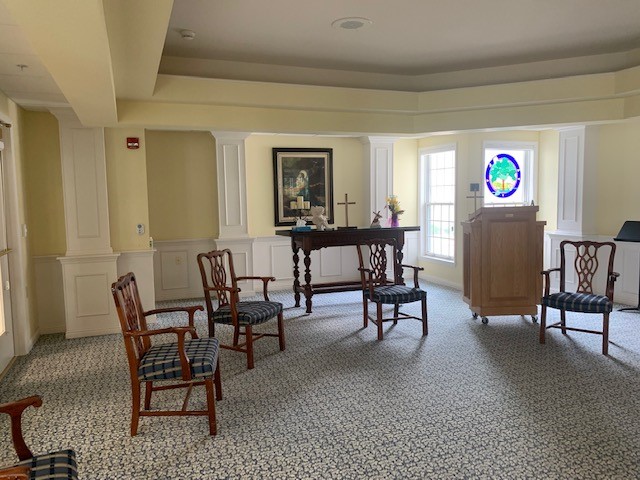
PEABODY MANOR

2600 S HERITAGE WOODS DR, APPLETON, WI 54915 (920) 738-3000
Non profit - Corporation 58 Beds Independent Data: November 2025
Trust Grade
65/100
#115 of 321 in WI
Last Inspection: December 2024

Within standard 12-15 month inspection cycle. Federal law requires annual inspections.

Overview

Peabody Manor in Appleton, Wisconsin, has a Trust Grade of C+, indicating it is slightly above average but not exceptional. It ranks #115 out of 321 facilities in the state, placing it in the top half, and #3 out of 8 in Winnebago County, meaning only two local options are better. The facility is improving, having reduced its issues from 7 in 2024 to 2 in 2025. Staffing is a strong point, with a 5/5 star rating and only a 53% turnover rate, which is in line with the state's average. However, there have been serious incidents, such as a resident who fell during a transfer when the required two staff members were not present, resulting in a fracture. Additionally, there are concerns about food safety practices, including inadequate monitoring of food storage temperatures, which could affect resident health. Overall, while Peabody Manor has strengths in staffing and improvement trends, families should be aware of the specific incidents and food safety concerns.

Trust Score
C+
65/100
In Wisconsin
#115/321
Top 35%
Safety Record
Moderate
Needs review
Inspections
Getting Better
7 → 2 violations
Staff Stability
⚠ Watch
53% turnover. Above average. Higher turnover means staff may not know residents' routines.
Penalties
✓ Good
No fines on record. Clean compliance history, better than most Wisconsin facilities.
Skilled Nurses
✓ Good
Each resident gets 108 minutes of Registered Nurse (RN) attention daily — more than 97% of Wisconsin nursing homes. RNs are the most trained staff who catch health problems before they become serious.
Violations
⚠ Watch
23 deficiencies on record. Higher than average. Multiple issues found across inspections.
★★★★☆
4.0
Overall Rating
★★★★★
5.0
Staff Levels
★★★★☆
4.0
Care Quality
★★★☆☆
3.0
Inspection Score
Stable
2024: 7 issues
2025: 2 issues

The Good

  • 5-Star Staffing Rating · Excellent nurse staffing levels
  • 4-Star Quality Measures · Strong clinical quality outcomes
  • Full Sprinkler Coverage · Fire safety systems throughout facility
  • No fines on record

Facility shows strength in staffing levels, quality measures, fire safety.

The Bad

Staff Turnover: 53%

Near Wisconsin avg (46%)

Higher turnover may affect care consistency

The Ugly 23 deficiencies on record

1 actual harm
Jul 2025 2 deficiencies
CONCERN (D) 📢 Someone Reported This

A family member, employee, or ombudsman was alarmed enough to file a formal complaint

Potential for Harm - no one hurt, but risky conditions existed

Respiratory Care (Tag F0695)

Could have caused harm · This affected 1 resident

**NOTE- TERMS IN BRACKETS HAVE BEEN EDITED TO PROTECT CONFIDENTIALITY** Based on observation, staff interview, and record review, the facility did not provide the necessary respiratory care and servic...

Read full inspector narrative →
**NOTE- TERMS IN BRACKETS HAVE BEEN EDITED TO PROTECT CONFIDENTIALITY** Based on observation, staff interview, and record review, the facility did not provide the necessary respiratory care and services for 1 resident (R) (R1) of 2 sampled residents. The facility did not ensure R1's oxygen orders were consistently followed. R1's plan of care did not indicate R1 received oxygen therapy and did not include respiratory care, goals, or interventions related to respiratory disease. In addition, R1's primary diagnoses list did not include a chronic obstructive pulmonary disorder (COPD). Findings include: The facility's Long Term Care (LTC) Resident Plan of Care policy, revised 6/12/25, indicates: The resident plan of care policy outlines the standards and processes for resident care planning .and applies to all team members in long-term care facilities .LTC facilities must develop and implement a baseline and comprehensive plan of care (POC) for each resident which includes the instructions needed to provide effective person-centered care of the resident and meet professional standards of quality care .The Interdisciplinary Team (IDT) will continue to develop the baseline POC into a comprehensive POC for each resident .Documentation of all POCs will include the following: abilities and needs .goals or desired outcomes, individualized interventions. The IDT will update/document the POC following an incident or event that causes a change in the POC or the resident's condition. On 7/7/25, Surveyor reviewed R1's medical record. R1 was admitted to the facility on [DATE] and had diagnoses including centrilobular emphysema, vascular dementia, and atrial fibrillation. R1's Minimum Data Set (MDS) assessment, dated 12/17/24, had a Brief Interview for Mental Status (BIMS) score of 8 out of 15 which indicated R1 had moderately impaired cognition. R1 had an activated Power of Attorney for Healthcare (POAHC). A history and physical note, dated 10/2/24, indicated R1 had a past medical history diagnosis of COPD. A hospital Discharge summary, dated [DATE], indicated R1 had admitting diagnoses of shortness of breath and hypoxia. R1's hospital course included: 1. Acute hypoxic respiratory failure and rhinovirus COPD exacerbation. Surveyor noted R1's past medical records indicated R1 had a diagnosis of COPD (dated 9/15/17). R1's plan of care, initiated 9/13/24, did not include the use of oxygen or respiratory interventions related to chronic respiratory disease. An Emergency Department (ED) provider note, dated 1/7/25, indicated R1 had a past medical history diagnosis of COPD. R1's chief complaint for the visit was shortness of breath. A physician order, dated 1/7/25, stated: May titrate oxygen up to 6 liters by nasal cannula with a goal of oxygen saturation 90% or greater. A progress note, dated 1/8/25 at 6:58 AM, indicated R1's oxygen saturation was 67% on 10 liters of oxygen. A Hospice Medical Director note, dated 1/8/25, indicated R1 was likely transitioning and the suspected etiology was advanced COPD complicated by R1's advanced age. ~R1's Treatment Administration Record (TAR) contained the following documentation: ~ On 1/9/25 at 2:00 PM: Oxygen saturation: 83%; Oxygen flow rate: 8 liters/minute~ On 1/9/25 at 1:00 PM: Oxygen saturation: 88%; Oxygen flow rate: 8 liters/minute ~ On 1/9/25 at 8:00 AM: Oxygen saturation: 88%; Oxygen flow rate: 8 liters/minute~ On 1/9/25 at 4:00 AM: Oxygen saturation: 88%; Oxygen flow rate: 8 liters/minute~ On 1/9/25 at 12:00 AM: Oxygen saturation: 83%; Oxygen flow rate: 8 liters/minute On 7/7/25 at 2:10 PM, Surveyor interviewed Nursing Home Administrator (NHA)-A and Director of Nursing (DON)-B. DON-B confirmed R1's oxygen concentrator should be set at the level ordered by the physician and confirmed R1's order was not followed on 1/8/25 and 1/9/25 when R1's oxygen was documented at 8-10 liters/minute. DON-B also confirmed oxygen therapy and respiratory care were not included in R1's plan of care and verified COPD was not included in R1's active diagnoses list. DON-B verified documentation of R1's hospital visits on 1/7/25 and 9/30/25 indicated R1 had an exacerbation of COPD. DON-B indicated diagnoses should automatically transfer over in the system from the hospital to the facility. DON-B verified COPD should be on R1's active diagnoses list. On 7/7/25 at 4:55 PM, Surveyor interviewed DON-B who indicated the facility does not have policies related to the administration of oxygen or physician orders.
CONCERN (F) 📢 Someone Reported This

A family member, employee, or ombudsman was alarmed enough to file a formal complaint

Potential for Harm - no one hurt, but risky conditions existed

Food Safety (Tag F0812)

Could have caused harm · This affected most or all residents

Based on observation, staff interview, and record review, the facility did not ensure food was stored and prepared in a safe and sanitary manner. This practice had the potential to affect all 47 resid...

Read full inspector narrative →
Based on observation, staff interview, and record review, the facility did not ensure food was stored and prepared in a safe and sanitary manner. This practice had the potential to affect all 47 residents residing in the facility.The facility did not monitor and document refrigerator and freezer temperatures in units that held food for resident consumption. Findings include:On 7/7/25, Nursing Home Administrator (NHA)-A indicated the facility follows the Wisconsin Food Code.The 2022 Wisconsin Food Code documents at 3-202.11 Temperature: Perishable food items must be stored at appropriate temperatures to prevent spoilage and reduce the risk of foodborne illnesses. Refrigerators should be set below 41° Fahrenheit (F) (5° Celsius (C)) and freezers at or below 0° F (-18° C).The facility's Dining Services Temperature Monitoring Policy, revised 3/8/23, indicates: The purpose of this policy is to outline the standards and processes for required temperatures in refrigerators, freezers, and dishwashers to maintain safety and prevent foodborne illness in long term care (LTC) facilities .Each LTC facility will monitor the temperatures of dishwashers, refrigerators, and freezers on each shift to maintain safety and prevent future foodborne illnesses .Dining Services team members will follow the procedures in the Patient/Resident Food Refrigerator and Freezer Temperature Monitoring Policy .The facility's LTC Food and Beverage Brought in from Outside Resources Policy, revised 10//8/24, indicates: Refrigerators, including those in resident rooms, must be in good repair and keep foods at or below 41° F. Freezers must keep frozen foods frozen solid. Team members will use the following methods to determine the proper working order of the refrigerators and freezers: a. Document the temperature of the external and internal refrigerator gauges. Refrigerators must be 41° or less. Freezers must be 10° or less for reach-in, or 0° or less for walk-in. b. If temperatures are out of range, notify maintenance and supervisor, follow facility policy for food disposal. c. Check for situations where potential for cross-contamination is high (e.g., raw meat stored over ready-to-eat items) .On 7/7/25 at 9:31 AM, Surveyor entered the kitchen for an initial tour with Food Service Specialist (FSS)-C. Surveyor observed a walk-in cooler that contained food. Beyond the walk-in cooler was a walk-in freezer. Surveyor also observed a set of reach-in coolers in the preparation/cooking area. Surveyor also observed two semi-trucks in the parking lot that stored food for resident consumption. One truck contained refrigerated food and the other truck contained frozen food. Surveyor noted there was not a visible thermometer inside the freezer truck.During the initial tour on 7/7/25 at 9:31 AM, Surveyor interviewed FSS-C who indicated a few of the main coolers and freezers were removed approximately six weeks ago and the refrigerator and freezer trucks were implemented. FSS-C indicated staff obtain and document cooler and freezer temperatures daily, including temperatures in the refrigerator and freezer trucks. FSS-C indicated a few weeks ago one of the trucks stopped working and the food was spoiled and discarded. FSS-C did not know if there was a thermometer inside the freezer truck but indicated there should be one.Surveyor reviewed the facility's central kitchen cooler/freezer temperature log that indicated cooler and freezer temperatures should to be taken twice daily. The log contained a spot for one cooler/refrigerator temperature and one freezer temperature, however, the facility had more than one cooler/refrigerator and more than one freezer. In addition, there were no temperatures documented after 6/4/25.On 7/7/25 at 9:47 AM, Surveyor interviewed [NAME] (CK)-D who indicated CK-D did not obtain temperatures inside the semi-truck because CK-D had to climb inside the box to get them which was difficult. CK-D indicated all cooler, refrigerator, and freezer temperatures should be obtained and recorded twice daily. When asked why truck temperatures were not obtained, CK-D indicated staff were not told to obtain truck temperatures. When asked why indoor refrigerator and freezer temperatures were not documented since 6/4/25, CK-D stated, I guess we didn't do them since the other ones were taken out.On 7/7/25 at 9:49 AM, Surveyor interviewed FSS-C who indicated all cooler, refrigerator, and freezer temperatures should be obtained and documented twice daily. FSS-C was not sure why that was not being done.On 7/7/25 at 3:19 PM, Surveyor interviewed NHA-A who indicated staff should monitor, test, and record the temperatures of all coolers, refrigerators, and freezers daily. NHA-A also indicated kitchen staff should be aware of and follow the policy.
Dec 2024 5 deficiencies 1 Harm
SERIOUS (G) 📢 Someone Reported This

A family member, employee, or ombudsman was alarmed enough to file a formal complaint

Actual Harm - a resident was hurt due to facility failures

Accident Prevention (Tag F0689)

A resident was harmed · This affected 1 resident

**NOTE- TERMS IN BRACKETS HAVE BEEN EDITED TO PROTECT CONFIDENTIALITY** Based on staff interview and record review, the facility did not ensure the resident environment remained as free of accident ha...

Read full inspector narrative →
**NOTE- TERMS IN BRACKETS HAVE BEEN EDITED TO PROTECT CONFIDENTIALITY** Based on staff interview and record review, the facility did not ensure the resident environment remained as free of accident hazards as possible for 1 resident (R) (R9) of 1 sampled resident. R9 fell during an EZ Stand transfer on 7/8/24. Following the fall, R9's care plan was updated with an intervention to transfer R9 with the assistance of two staff for all EZ Stand transfers. On 12/8/24, Certified Nursing Assistant (CNA)-G transferred R9 via EZ Stand without a second staff present. R9 fell during the transfer and sustained a right tibial plateau fracture. R9 was assessed by therapy and a recommendation was made to transfer R9 with two staff and a Hoyer lift. R9's care plan was not properly updated. Findings include: The facility's Resident Plan of Care Policy, revised 7/15/24, indicates: The purpose of this policy is to outline the standards and processes for providing high quality, person-centered care to all residents through a plan of care to promote continuity of care, communication among team members, resident safety, and safeguard against an adverse event .The following elements of a resident's plan of care may be kept in the resident's medical record: a. Nursing care (i.e., self-care deficit, restorative, fall prevention, skin injury, elimination, pain, and other specific needs as identified) .Documentation will include the following: .individualized interventions. The Interdisciplinary Team (IDT) will update/document a plan of care following an incident or event that causes a change in the plan of care or resident's condition . The facility's Resident Fall and Injury Prevention Policy, revised 10/22/24, indicates: The purpose of this policy is to outline the standards and processes to monitor long-term care environments and resident safety to prevent resident falls and injuries .Interventions will be assessed and added to the resident plan of care as needed .E. Post Fall Care and Post Fall Huddle: 1. If a resident fall occurs, team members will .d. Review the plan of care and update with new fall interventions . On 12/17/24, Surveyor reviewed R9's medical record. R9 had diagnoses including tibial plateau fracture-right (12/8/24), restless leg syndrome, lymphedema, and primary osteoarthritis of both knees. R9's Minimum Data Set (MDS) assessment, dated 11/15/24, had a Brief Interview for Mental Status (BIMS) score of 15 out of 15 which indicated R9 was not cognitively impaired. R9 was R9's own decision maker. R9's medical record indicated R9 fell on 7/8/24 during an EZ Stand transfer. Nursing staff indicated R9 coughed, appeared to lose consciousness, and slid out of the EZ Stand. R9's care plan was updated with an intervention for the assistance of two staff during all EZ Stand transfers. The facility's EZ Stand slings were replaced to ensure the slings secured properly. R9 did not sustain an injury during the fall. R9's medical record indicated R9 fell on [DATE] during an EZ Stand transfer and sustained a right knee tibial plateau fracture. The facility's investigation indicated CNA-G transferred R9 with an EZ Stand lift without a second staff present. R9 indicated R9's knee buckled and R9 began to fall which caused the EZ Stand to tip over. R9 fell to the floor on R9's left side and the EZ Stand was in contact with R9's right knee. R9 had pain and bruising and was sent to the emergency room (ER). An X-ray identified the fracture. The facility's investigation indicated an intervention was initiated on 12/8/24 to use a Hoyer lift when R9 felt weak. A progress note, dated 12/11/24, indicated R9 was assessed by physical therapy staff for use of a lift. Documentation indicated R9 required a Hoyer lift with the assistance of two staff for all transfers. A Hoyer lift was determined to be the most appropriate and safest transfer technique due to R9's history of falls in the EZ Stand. On 12/17/24, Surveyor reviewed R9's care plan which stated the following, Please don (put on) my air splint on my L (left) ankle when I get up in the morning before using EZ stand lift .I transfer with assist of 2 people and Hoyer lift. I must have air splint on my L ankle to stand with the lift. Bathroom needs met with urinal and bed pan. I must have air splint on my L ankle to stand with the lift. On 12/17/24 at 1:24 PM, Surveyor interviewed Nursing Home Administrator (NHA)-A and Director of Nursing (DON)-B. NHA-A and DON-B indicated a care plan intervention was added for two staff with all EZ Stand transfers following R9's fall on 7/8/24 because R9 had periods of unconsciousness during transfers. NHA-A indicated medical tests were completed to rule out ongoing medical issues and stated the intervention was initiated to ensure safety during transfers. DON-B indicated CNA-G did not follow R9's care plan on 12/8/24 and did not have a second staff present when CNA-G transferred R9 with the EZ Stand. During the investigation, CNA-G confirmed there was not a second staff present during the transfer. Following the fall, DON-B indicated R9's fall prevention care plan was updated on 12/11/24 with an intervention to use a Hoyer lift for all transfers following a physical therapy assessment of R9. DON-B confirmed R9's care plan should not include verbiage about donning a splint for EZ Stand lift use and indicated R9 should only be transferred with a Hoyer lift. DON-B indicated the EZ Stand portion of the care plan was forgotten and should have been removed. DON-B indicated R9's care plan would be revised to remove the verbiage that R9's left leg splint should be applied prior to EZ Stand transfers. On 12/17/24 at 3:00 PM, Surveyor interviewed NHA-A who indicated an investigation was completed following R9's fall on 12/8/24. NHA-A indicated staff were educated on transfers and following care plans and stated the lift manufacturer came to the facility to ensure all lifts were in proper working order. NHA-A indicated the facility provided staff training but possibly should have focused more time on the care plan to ensure R9's care plan was updated properly.
CONCERN (D)

Potential for Harm - no one hurt, but risky conditions existed

Transfer Notice (Tag F0623)

Could have caused harm · This affected 1 resident

**NOTE- TERMS IN BRACKETS HAVE BEEN EDITED TO PROTECT CONFIDENTIALITY** Based on staff interview and record review, the facility did not ensure a written transfer notice was provided for 1 resident (R...

Read full inspector narrative →
**NOTE- TERMS IN BRACKETS HAVE BEEN EDITED TO PROTECT CONFIDENTIALITY** Based on staff interview and record review, the facility did not ensure a written transfer notice was provided for 1 resident (R) (R36) of 2 residents reviewed for hospitalization. The facility did not provide R36's Guardian with a written transfer notice or notify the Ombudsman when R36 was transferred to the hospital on 6/8/24. Findings include: The facility's Long-Term Care Transfer Notice and Bed Hold Policy, last revised 1/15/24, indicates: 1.establishes the standards and processes for residents that transfer to the hospital .2. Prior to the hospital .team members will provide written information to the resident or their legal representative. From 12/16/24 to 12/18/24, Surveyor reviewed R36's medical record. R36 was admitted to the facility on [DATE] and had diagnoses including cerebrovascular accident (CVA) (otherwise known as stroke), dysphagia, cognitive impairment, and gastrojejunostomy (GJ) tube (a tube that provides nutrition directly to the stomach and small intestine). R36 was unable to communicate verbally. R36's Minimum Data Set (MDS) assessment, dated 11/27/24, indicated R36 was rarely/never understood. R36 had a Guardian for healthcare decisions. R36's medical record indicated R36 was sent to the emergency room (ER) on 6/8/24 due to nausea, vomiting, and low blood pressure. R36 was diagnosed with hypotension secondary to nausea and vomiting related to hypovolemia (low blood plasma volume). Documentation on 6/8/24 at 9:41 AM indicated R36's Guardian was notified of R36's hospital transfer. On 12/18/24 at 11:22 AM, Surveyor interviewed Registered Nurse (RN)-E who indicated if a resident has a change in condition and is transferred to the hospital, nursing staff have the resident sign a Bed Hold/Transfer form that is sent to the hospital with the resident (resident gets a copy). If a resident is unable to sign the form, staff call the resident's family, Power of Attorney for Healthcare (POAHC), or Guardian and obtain verbal consent. If the family, POAHC, or Guardian are nearby, they are asked to come to the facility and sign the form. RN-E was uncertain what occurs if they are unable to sign and indicated the facility's Social Worker may email or send a copy of the Bed Hold/Transfer form. On 12/18/24 at 12:41 PM, Surveyor interviewed Social Worker (SW)-F who confirmed the facility did not have a Bed Hold/Transfer form for R36's 6/8/24 hospital transfer. In addition, SW-F indicated the facility did not have proof of Ombudsman notification. SW-F was unsure if a Bed Hold/Transfer form is sent with a resident to the hospital. SW-F indicated SW-F emailed nursing staff on 6/10/24 because SW-F was not able to locate a Bed Hold/Transfer form for R36. SW-F indicated the responsibility to inform, obtain a signature, and provide a copy of the form to a resident or their representative is the responsibility of nursing staff. SW-F was unsure of the process for ensuring a resident's representative receives a written copy of the form and indicated nursing may be the responsible party.
CONCERN (D)

Potential for Harm - no one hurt, but risky conditions existed

Deficiency F0625 (Tag F0625)

Could have caused harm · This affected 1 resident

**NOTE- TERMS IN BRACKETS HAVE BEEN EDITED TO PROTECT CONFIDENTIALITY** Based on staff interview and record review, the facility did not ensure 1 resident (R) (R36) of 2 sampled residents reviewed for...

Read full inspector narrative →
**NOTE- TERMS IN BRACKETS HAVE BEEN EDITED TO PROTECT CONFIDENTIALITY** Based on staff interview and record review, the facility did not ensure 1 resident (R) (R36) of 2 sampled residents reviewed for hospitalization received the required written information of the duration of the bed hold, the reserve bed hold payment rate, and the right of the resident to return to the facility. R36 was transferred to the hospital on 6/8/24. R36's Guardian was not provided a written bed hold notice. Findings include: The facility's Long-Term Care Transfer Notice and Bed Hold Policy, revised 1/15/24, indicates: 1.establishes the standards and processes for residents that transfer to the hospital .2. Prior to transfer to the hospital .team members will provide written information to the resident or their legal representative. b. For Medical Assistance Residents: The bed hold daily rate is automatically paid for by the State of Wisconsin for 15 days. After 15 days, the resident or resident's representative understands it is their responsibility to pay the daily rate to guarantee the bed will be held for their return. If the resident or their representative do not pay the daily rate to have a bed held, they understand that a bed may not be available. If a resident/representative chooses not to pay to have a bed held, the resident may be admitted to the facility to their original room if available or immediately to a semi-private bed as it becomes available if they are eligible for Medicaid nursing facility services or Medicare nursing services. From 12/16/24 to 12/18/24, Surveyor reviewed R36's medical record. R36 was admitted to the facility on [DATE] and had diagnoses including cerebrovascular accident (CVA) (otherwise known as stroke), dysphagia, cognitive impairment, and gastrojejunostomy (GJ) tube (a tube that provides nutrition directly to the stomach and small intestine). R36 was unable to communicate verbally. R36's Minimum Data Set (MDS) assessment, dated 11/27/24, indicated R36 was rarely/never understood. R36 had a Guardian for healthcare decisions. R36's medical record indicated R36 was sent to the emergency room (ER) on 6/8/24 due to nausea, vomiting, and low blood pressure. R36 was diagnosed with hypotension secondary to nausea and vomiting related to hypovolemia (low blood plasma volume). Documentation on 6/8/24 at 9:41 AM indicated R36's Guardian was notified of R36's hospital transfer. R36's medical record did not indicate a written Bed Hold/Transfer notice was provided to R36's Guardian. On 12/18/24 at 11:22 AM, Surveyor interviewed Registered Nurse (RN)-E who indicated if a resident has a change in condition and is transferred to the hospital, nursing staff have the resident sign a Bed Hold/Transfer form that is sent to the hospital with the resident (resident gets a copy). If a resident is unable to sign the form, nursing staff call the resident's family, Power of Attorney for Healthcare (POAHC), or Guardian to obtain verbal consent. If the family, POAHC, or Guardian is nearby, they are asked to come to the facility and sign the form. RN-E was unsure what occurs if a resident's representative is unable to sign the form and indicated the facility's Social Worker may email or send a copy of the Bed Hold/Transfer form. On 12/18/24 at 12:41 PM, Surveyor interviewed Social Worker (SW)-F who confirmed the facility did not have a Bed Hold/Transfer form for R36's 6/8/24 hospital transfer. SW-F was unsure if a Bed Hold/Transfer form is sent with a resident to the hospital. SW-F indicated SW-F emailed nursing staff on 6/10/24 because SW-F was unable to locate a Bed Hold/Transfer form for R36 and did not receive one. SW-F indicated it is nursing staffs' responsibility to inform, obtain a signature, and provide a copy of the Bed Hold/Transfer form to a resident or their representative. SW-F was unsure of the process for ensuring a resident's family, POAHC, or Guardian receives a written copy of the Bed Hold/Transfer form and indicated it may be nursing staffs' responsibility.
CONCERN (D)

Potential for Harm - no one hurt, but risky conditions existed

Deficiency F0698 (Tag F0698)

Could have caused harm · This affected 1 resident

**NOTE- TERMS IN BRACKETS HAVE BEEN EDITED TO PROTECT CONFIDENTIALITY** Based on staff and interview and record review, the facility did not ensure 1 resident (R) (R311) of 1 resident received appropr...

Read full inspector narrative →
**NOTE- TERMS IN BRACKETS HAVE BEEN EDITED TO PROTECT CONFIDENTIALITY** Based on staff and interview and record review, the facility did not ensure 1 resident (R) (R311) of 1 resident received appropriate dialysis care and services. R311 received dialysis services. R311 did not have a dialysis care plan and staff did not complete pre- and post-dialysis assessments. In addition, staff did not assess and monitor R311's fistula site. Findings include: The facility's Long-Term Care Dialysis Collaboration of Care Policy, revised 8/6/24, indicates: Nursing team members will assess residents pre-dialysis, as appropriate, and monitor them post-dialysis, including taking vital signs. From 12/16/24 to 12/18/24, Surveyor reviewed R311's medical record. R311 was admitted to the facility on [DATE] and had diagnoses including end stage renal disease (ESRD) with dependence on renal dialysis. R311's admission Minimum Data Set (MDS) assessment, dated 12/10/24, had a Brief Interview for Mental Status (BIMS) score of 14 out of 15 which indicated R311 was not cognitively impaired. R311 had an order for hemodialysis every Tuesday, Thursday, and Saturday. In addition, R311 received intravenous (IV) antibiotic therapy at dialysis (dated 12/10/24). Surveyor noted R311's medical record did not contain a care plan for dialysis. Surveyor also noted R311's medical record did not contain documentation that R311's fistula site was assessed by nursing staff. On 12/16/24 at 9:33 AM, Surveyor interviewed R311 who indicated R311 received dialysis three times weekly and IV antibiotic therapy at dialysis. R311 indicated there was good communication with the dialysis center. On 12/18/24 at 8:50 AM, Surveyor interviewed Director of Nursing (DON)-B who indicated nursing staff should document daily on R311's fistula, but were not doing so at that time. DON-B indicated there was no paperwork sent with R311 to dialysis appointments. When Surveyor asked if R311 had a dialysis care plan, DON-B indicated R311 did not have a dialysis care plan. On 12/18/24 at 9:23 AM, Surveyor interviewed Registered Nurse (RN)-D who indicated staff did not do pre- or post-dialysis assessments for residents. RN-D indicated vital signs and a fistula assessment should be done after every dialysis procedure. On 12/18/24 at 9:29 AM, Surveyor reviewed the facility's dialysis policy with DON-B who indicated nursing staff were not following the policy and procedure for dialysis patients. DON-B indicated DON-B expects nursing staff to complete a pre- and post-dialysis assessment for all dialysis patients which includes a full set of vital signs and a fistula assessment on the days they receive dialysis.
CONCERN (D)

Potential for Harm - no one hurt, but risky conditions existed

Infection Control (Tag F0880)

Could have caused harm · This affected 1 resident

**NOTE- TERMS IN BRACKETS HAVE BEEN EDITED TO PROTECT CONFIDENTIALITY** 3. On 12/18/24, Surveyor reviewed R30's medical record. R30 had diagnoses including dysphagia and oropharyngeal-increased diffic...

Read full inspector narrative →
**NOTE- TERMS IN BRACKETS HAVE BEEN EDITED TO PROTECT CONFIDENTIALITY** 3. On 12/18/24, Surveyor reviewed R30's medical record. R30 had diagnoses including dysphagia and oropharyngeal-increased difficulties with chewing and swallowing leading to percutaneous endoscopic gastrostomy (PEG) placement (a medical procedure that involves inserting a feeding tube into a patient's stomach through the abdominal wall). R30's MDS assessment, dated 8/22/24, had a BIMS score of 8 out of 15 which indicated R30 had severely impaired cognition. R30 had an activated healthcare decision maker. R30's medical record contained the following tube feeding order: Jevity 1.2 via peg and bolus/syringe goal of 480 (milliliters) (three times daily)-60 ml five times daily. Flush 60 ml before and after. On 12/18/24 at 9:58 AM, Surveyor observed RN-I administer R30's tube feeding. Surveyor noted an EBP sign and a PPE cart outside R30's room. RN-I completed hand hygiene and donned gloves. Surveyor noted RN-I did not don a gown prior to administering the tube feeding. Surveyor observed RN-I administer the tube feeding with gloves and no gown. After RN-I completed the tube feeding and cleansed hands, Surveyor interviewed RN-I who indicated RN-I was not required to wear a gown when administering a tube feeding because there were no bodily fluids involved. On 12/18/24 at 10:10 AM, Surveyor interviewed Director of Nursing (DON)-B who confirmed the facility's policy and indicated DON-B expects staff to don PPE for residents on EBP prior to administering a tube feeding as well as during wound care and care for indwelling medical devices. 2. From 12/16/24 to 12/18/24, Surveyor reviewed R15's medical record. R15 was admitted to the facility on [DATE] and had diagnoses including diabetes, neurogenic bladder, multiple sclerosis, and blindness both eyes. R15's MDS assessment, dated 10/15/24, had a BIMS score of 15 out of 15 which indicated R15 was not cognitively impaired. R15 was R15's own decision maker. R15 was on EBP due to a suprapubic catheter. On 12/17/24 at 11:10 AM, Surveyor observed CNA-C complete peri-rectal care for R15. During the observation, CNA-C removed soiled gloves and donned clean gloves without completing hand hygiene. When Surveyor asked CNA-C if CNA-C had washed or sanitized hands between glove changes, CNA-C verified CNA-C did not do so but was aware CNA-C should complete hand hygiene between glove changes. Based on observation, staff interview, and record review, the facility did not establish and maintain an infection prevention and control program designed to prevent the development and transmission of communicable disease and infection for 3 residents (R) (R22, R15, and R30) of 4 residents observed during the provision of cares. During an observation of wound, incontinence, and catheter care for R22 on 12/17/24, Registered Nurse (RN)-J, Certified Nursing Assistant (CNA)-K, and CNA-L did not wash or sanitize hands between glove changes. During an observation of peri-rectal care for R15 on 12/17/24, CNA-C did not wash or sanitize hands between glove changes. R30 was on enhanced barrier precautions (EBP). During an observation on 12/18/24, RN-I did not don a gown prior to administering R30's tube feeding. Findings include: The facility's Long Term Care Infection Prevention and Control Program Policy, revised 5/17/24, indicates: .to prevent, recognize and control the onset and spread of infection whenever possible .Hand Hygiene: the cleaning of hands by either handwashing (washing hands with soap and water) or antiseptic hand rub (i.e., alcohol-based hand sanitizer) .Team members will use an alcohol-based hand rub (ABHR): .Before and after resident contact .After contact with a resident's surroundings or equipment .Before donning sterile or non-sterile gloves or other personal protective equipment (PPE) .After removing gloves or other PPE .After contact with body fluids or excretions, mucous membranes, non-intact skin, or wound dressings, as long as hands are not visibly soiled .If moving from a contaminated body site to a clean body site during resident care .Enhanced Barrier Precautions (EBP) will be used .for residents with an infection or colonization with a novel or targeted multidrug-resistant organism (MDRO when contact precautions with room isolation do not apply, and for residents with chronic wounds or indwelling medical devices. Team members will use a gown and gloves for close contact activities .EBP will also be used when a resident has an infection with an MDRO that is not included on the list of targeted MDROs and contact precautions with room isolation do not apply .Close contact activities include: .Bathing/showering .Assisting with toileting or changing briefs .Manipulation or care of indwelling devices including central lines, urinary catheters, feeding tubes . 1. From 12/16/24 to 12/18/24, Surveyor reviewed R22's medical record. R22 was admitted to facility on 8/10/23 and had diagnoses including paraplegia, neurogenic bladder, neuralgia, and fecal incontinence. R22's Minimum Data Set (MDS) assessment, dated 10/1/24, had a Brief Interview for Mental Status (BIMS) score of 15 out of 15 which indicated R22 was not cognitively impaired. The MDS also indicated R22 required partial/moderate assistance with hygiene and to roll left and right. R22 was dependent with toileting. On 12/17/24 at 10:16 AM, Surveyor observed RN-J, CNA-K, and CNA-L provide wound, incontinence, and catheter care for R22. RN-J, CNA-K, and CNA-L sanitized hands and donned gloves. CNA-L pulled R22's blanket back and opened R22's soiled brief. CNA-K wiped R22's perineal area from front to back twice with a wash cloth and removed gloves. Without washing or sanitizing hands, CNA-K donned clean gloves and again wiped R22's from front to back with a wash cloth and removed gloves. Without washing or sanitizing hands, CNA-K donned clean gloves and CNA-K and CNA-L rolled R22 on the right side. CNA-K handed R22's catheter bag to CNA-L who hung the catheter bag on the other side of the bed. CNA-K wiped R22's rectal area (which contained visible feces) from front to back and removed gloves. Without washing or sanitizing hands, CNA-K donned clean gloves, cleansed R22's Foley tubing with a wash cloth, and removed gloves. Without washing or sanitizing hands, CNA-K donned clean gloves, again cleansed R22's rectal area with a wash cloth, and removed gloves. Without washing or sanitizing hands, CNA-K donned clean gloves. CNA-K and CNA-L removed R22's soiled brief and placed a clean brief under R22. CNA-K removed gloves, but did not wash or sanitize hands before donning clean gloves. CNA-K then assisted RN-J with wound care. With the same gloved hands, CNA-K opened a 2 x 2 gauze package. RN-J removed R22's soiled dressing and removed gloves. Without washing or sanitizing hands, RN-donned clean gloves. CNA-K opened a container of saline and poured saline on a 2 x 2 gauze pad held by RN-J. RN-J cleansed R22's wound with the saline-soaked gauze. CNA-K again poured saline on a 2 x 2 gauze pad and RN-J continued to cleanse R22's wound. CNA-K then removed gloves. Without washing or sanitizing hands, CNA-K donned clean gloves, opened a 4 x 4 gauze package, and gave the gauze to RN-J. RN-J dried R22's wound with the gauze and removed gloves. Without washing or sanitizing hands, RN-J donned clean gloves, applied barrier cream to R22's reddened wound, and removed gloves. Without washing or sanitizing hands, RN-J donned clean gloves. CNA-K opened an Optifoam dressing and RN-J applied the dressing to R22's wound. RN-J and CNA-K then removed gloves and washed hands. On 12/17/24 at 10:52 AM Surveyor interviewed RN-J and CNA-K who verified they were trained to wash or sanitize hands between glove changes during wound and pericare. RN-J and CNA-K verified they did not wash or sanitize hands between glove changes during wound and pericare for R22. RN-J indicated RN-J knew better and taught infection control to CNAs.
Jun 2024 2 deficiencies
CONCERN (D) 📢 Someone Reported This

A family member, employee, or ombudsman was alarmed enough to file a formal complaint

Potential for Harm - no one hurt, but risky conditions existed

Report Alleged Abuse (Tag F0609)

Could have caused harm · This affected 1 resident

**NOTE- TERMS IN BRACKETS HAVE BEEN EDITED TO PROTECT CONFIDENTIALITY** Based on staff interview and record review, the facility did not ensure an allegation of abuse was reported to the Nursing Home ...

Read full inspector narrative →
**NOTE- TERMS IN BRACKETS HAVE BEEN EDITED TO PROTECT CONFIDENTIALITY** Based on staff interview and record review, the facility did not ensure an allegation of abuse was reported to the Nursing Home Administrator (NHA) and State Agency (SA) for 2 residents (R) (R2 and R3) of 5 sampled residents. On 4/23/24, R3 and R2 had an altercation. Following the altercation, R2 stated to staff that R2 was fearful of R3. Staff did not report the incident to NHA-A or the SA in a timely manner. Findings include: The facility's Resident Abuse Prevention & Reporting Policy, last revised on 1/9/24, indicates: The purpose of this policy is to outline the standards and processes to ensure: (1) Residents live in a safe environment where they are free from abuse and neglect and are treated with respect and dignity, (2) To be in compliance with state and federal laws and regulations .ThedaCare will protect residents from all forms of abuse .All LTC (long-term care) team members will receive education about how to identify signs and symptoms of abuse and to immediately report any suspicions or allegations of abuse or any other defined misconduct to the Administrator .These signs could include: .h. Making comments that someone hurt them, is mean to them, that they are afraid of someone, or making a request that someone in particular not come in their room .The proper method of reporting is in-person or phone call to assure prompt notification is made .the facility must report the allegations to DQA (Division of Quality Assurance) (SA) no later than twenty-four hours in accordance with state law. On 6/5/24, Surveyor reviewed R2's medical record. R2 was admitted to the facility on [DATE] with diagnoses including diabetes mellitus and depression with anxiety. R2's Minimum Data Set (MDS) assessment, dated 5/7/24, stated R2's Brief Interview for Mental Status (BIMS) score was 14 out of 15 which indicated R2 had little cognitive impairment. R2's medical record indicated R2 was responsible for R2's healthcare decisions. On 6/5/24, Surveyor reviewed R3's medical record. R3 was admitted to the facility on [DATE] with diagnoses including cerebrovascular accident (stoke) which resulted in left-sided paralysis, major depressive disorder and anxiety. R3's MDS assessment, dated 3/20/24, stated R3's BIMS score was 13 out of 15 which indicated R3 had little cognitive impairment. R3's medical record indicated R3 was responsible for R3's healthcare decisions. R3's medical record contained a nursing note, dated 4/23/24, that indicated: Writer was notified that while R3 was visiting R2 on a different unit, a Certified Nursing Assistant (CNA) noted R3 was verbally aggressive toward R2. The CNA also reported R3 pushed R2's bed while R2 sat on the side of the bed. R2 reported to the CNA that R3 threw a lighter at R2. Writer spoke to R2 who stated the lighter did not hit R2, but R2 was fearful of R3. The CNA asked R3 to return to R3's unit. R3 complied. R2's medical record did not contain documentation regarding the incident. On 6/5/24, Surveyor reviewed a document provided by the facility that indicated: R2 and R3 had an argument on 4/23. A nurse on the unit notified NHA-A via email: I need to inform you of an aggressive act that happened on R2's unit. R3 came down to R2's room and stated to R2 that R2 was a cheater. I witnessed R3 push on the bed. I told R3 we don't tolerate aggressive behavior and told R3 to go back to R3's unit. I asked R2 if R3 hit R2. R2 stated R3 threw a lighter in anger, but it did not hit R2. On 6/5/24 at 2:16 PM, Surveyor interviewed Director of Nursing (DON)-B who indicated staff should have reported the above incident to NHA-A immediately and stated, Absolutely should have been a phone call. DON-B verified a resident expressing fear of another resident constitutes an allegation of abuse which should be reported to the SA. DON-B verified the email the nurse sent to NHA-A did not mention fear expressed by R2.
CONCERN (D) 📢 Someone Reported This

A family member, employee, or ombudsman was alarmed enough to file a formal complaint

Potential for Harm - no one hurt, but risky conditions existed

Investigate Abuse (Tag F0610)

Could have caused harm · This affected 1 resident

**NOTE- TERMS IN BRACKETS HAVE BEEN EDITED TO PROTECT CONFIDENTIALITY** Based on staff interview and record review, the facility did not ensure an allegation of abuse was thoroughly investigated for 2...

Read full inspector narrative →
**NOTE- TERMS IN BRACKETS HAVE BEEN EDITED TO PROTECT CONFIDENTIALITY** Based on staff interview and record review, the facility did not ensure an allegation of abuse was thoroughly investigated for 2 residents (R) (R2 and R3) of 5 sampled residents. After a resident-to-resident altercation on 4/23/24, R2 expressed to staff that R2 was fearful of R3. The facility did not thoroughly investigate the incident. Findings include: The facility's Resident Abuse Prevention & Reporting Policy, last revised on 1/9/24, indicates: The purpose of this policy is to outline the standards and processes to ensure: (1) Residents live in a safe environment where they are free from abuse and neglect and are treated with respect and dignity; (2) To be in compliance with state and federal laws and regulations .ThedaCare will protect residents from all forms of abuse .All LTC (long-term care) team members will receive education about how to identify signs and symptoms of abuse and to immediately report any suspicions or allegations of abuse or any other defined misconduct to the Administrator .These signs could include: .h. Making comments that someone hurt them, is mean to them, that they are afraid of someone, or making a request that someone in particular not come in their room .When an incident or suspected incident of abuse or any other defined misconduct is reported, the Administrator, or their designee, will promptly and thoroughly investigate the incident. On 6/5/24, Surveyor reviewed R2's medical record. R2 was admitted to the facility on [DATE] with diagnoses including diabetes mellitus and depression with anxiety. R2's Minimum Data Set (MDS) assessment, dated 5/7/24, stated R2's Brief Interview for Mental Status (BIMS) score was 14 out of 15 which indicated R2 had little cognitive impairment. R2's medical record indicated R2 was responsible for R2's healthcare decisions. On 6/5/24, Surveyor reviewed R3's medical record. R3 was admitted to the facility on [DATE] with diagnoses including cerebrovascular accident (commonly known as stoke) which resulted in left-sided paralysis, major depressive disorder, and anxiety. R3's MDS assessment, dated 3/20/24, stated R3's BIMS score was 13 out of 15 which indicated R3 had little cognitive impairment. R3's medical record indicated R3 was responsible for R3's healthcare decisions. R3's medical record contained a nursing note, dated 4/23/24, that indicated: Writer was notified that while R3 visited R2 on a different unit, a Certified Nursing Assistant (CNA) noted R3 was verbally aggressive toward R2. The CNA also reported R3 pushed R2's bed while R2 sat on the side of the bed. R2 reported to the CNA that R3 threw a lighter at R2. Writer spoke to R2 who stated the lighter did not hit R2, but R2 was fearful of R3. The CNA asked R3 to return to R3's unit. R3 complied. R2's medical record did not contain documentation regarding the incident. On 6/5/24, Surveyor reviewed a typed document which indicated: R2 and R3 had an argument on 4/23/24. The nurse on the unit notified NHA-A via email: I need to inform you of an aggressive act that happened on R2's unit. R3 came down to R2's room and stated to R2 that R2 is a cheater. I witnessed R3 push on the bed. I told R3 we don't tolerate aggressive behavior and told R3 to go back to R3's unit. I asked R2 if R3 hit R2. R2 stated R3 threw a lighter in anger, but it did not hit R2. In addition, documents indicated NHA-A interviewed R2 and R3, instructed the Social Worker (SW) to follow up with R2, and updated staff to monitor the situation. The documents did not contain interviews of other residents or staff. On 6/5/24 at 2:16 PM, Surveyor interviewed Director of Nursing (DON)-B who verified a resident expressing fear of another resident constitutes an allegation of abuse which should be thoroughly investigated. DON-B verified a thorough investigation includes interviews of staff and other residents.
Sept 2023 6 deficiencies
CONCERN (D)

Potential for Harm - no one hurt, but risky conditions existed

Deficiency F0552 (Tag F0552)

Could have caused harm · This affected 1 resident

**NOTE- TERMS IN BRACKETS HAVE BEEN EDITED TO PROTECT CONFIDENTIALITY** Based on staff interview and record review, the facility did not ensure a legal representative was informed in advance or provid...

Read full inspector narrative →
**NOTE- TERMS IN BRACKETS HAVE BEEN EDITED TO PROTECT CONFIDENTIALITY** Based on staff interview and record review, the facility did not ensure a legal representative was informed in advance or provided updated consents outlining the risks and benefits of prescribed psychotropic medications for 1 Resident (R) (R10) of 5 sampled residents. R10 was prescribed Seroquel (an antipsychotic medication), Effexor (an antidepressant medication), Wellbutrin (an antidepressant medication), Zyprexa (an antipsychotic medication) and lorazepam (a sedative/benzodiazapine medication). The facility did not obtain consent or updated consent forms for the medications. Findings include: The Food and Drug Administration (FDA) (fda.gov) documents, a boxed warning .is also commonly referred to as a black box warning. It appears on a prescription drug's label and is designed to call attention to serious or life-threatening risks. The Wisconsin Department of Health Services (DHS) (dhs.wisconsin.gov) documents, A boxed warning, also known as a black box warning, or a black label warning is named for the border surrounding the text of the warning that appears on the package insert, label, and other literature describing the medication (e.g., magazine advertising). It is the most serious medication warning required by the FDA. All antipsychotics and antidepressants along with many other psychotropic medications have a black box warning. On 9/12/23, Surveyor reviewed R10's medical record. R10 had diagnoses including late onset Alzheimer's disease with dementia, depression, and anxiety. R10 had an activated Power of Attorney (POA) for healthcare decision making. R10 was admitted to the facility on [DATE] and had physician orders for Wellbutrin (bupropion) XL 150 mg (milligrams) daily, Seroquel (quetiapine) 100 mg at bedtime and 25 mg BID (twice daily), and Effexor (venlafaxine) 100 mg BID and 50 mg at noon. On 5/26/23, R10 was prescribed lorazepam .5 mg twice daily PRN (as needed). On 7/28/23, R10 was prescribed Zyprexa (olanzapine) 5 mg daily. R10's medical record contained informed consent for medication forms for Wellbutrin, Seroquel and Effexor, dated 5/16/23, that documented verbal consent (R10's POA's name). R10's medical record did not contain informed consent for medication forms for lorazepam or Zyprexa. On 9/12/23 at 10:45 AM, Surveyor interviewed Director of Nursing (DON)-B who indicated R10's POA is pretty unresponsive regarding follow through with signing documents and returning calls related to R10's medical care. Surveyor requested informed consent for medication forms for R10's Wellbutrin, Seroquel, Effexor and Zyprexa as well as discontinued medication lorazepam. On 9/13/23, Surveyor reviewed R10's medical record and noted R10's monthly pharmacy reviews documented the following: A Pharmacy review, dated 5/15/23, indicated Informed consent (IC) for three medications. Medications listed on the pharmacy review were Seroquel 50 mg, Effexor 100 mg TID (three times daily), and bupropion XL 150 mg QID (four times daily). The Pharmacy review indicated informed consent was required for lorazepam PRN. A Pharmacy review, dated 7/11/23, indicated IC!! Medications listed on the pharmacy review were Seroquel 50 mg, Effexor 100 mg BID, bupropion XL 150 mg QID, olanzapine every AM, and lorazepam .5 mg BID. A Pharmacy review, dated 8/14/23, indicated IC third time. Medications listed on the pharmacy review were Seroquel 50 mg, Effexor 100 mg BID, bupropion XL 150 mg QID, and olanzapine every AM. A Pharmacy review, dated 9/12/23, indicated IC not complete or signed, Olanzapine missing. Medications listed on the pharmacy review were Seroquel 50 mg, Effexor 100 mg BID, bupropion XL 150 mg QD, and olanzapine every AM. A progress note, dated 6/19/23, indicated: Case review today with medication management team. (R10) has persistent and regular calling out and shouting and great difficulty redirecting this despite current medical regimen of bupropion XL 150 mg daily, venlafaxine three times daily, quetiapine 25 mg daily and scheduled lorazepam .5 mg three times daily .increase lorazepam to 1 mg daily at 2 PM, and .5 mg morning and night. Extend this order for 45 days .Continue current orders for bupropion, quetiapine, and venlafaxine .Next review 11/20/23. On 9/13/23 at 7:42 AM, Surveyor interviewed DON-B regarding informed consent for medication forms for R10. DON-B indicated verbal consents were obtained due to R10's POA being unresponsive at times. DON-B indicated R10's lorazepam and olanzapine were added after admission and DON-B would provide informed consents to Surveyor for all antidepressant and psychotropic medications prescribed to R10 from admission to the present. On 9/13/23 at 12:30 PM, Surveyor received informed consent for medications prescribed to R10 by Clinical Director (CD)-C. Surveyor reviewed the consents and noted informed consent for medication forms for Wellbutrin, Seroquel and Effexor, dated 5/16/23, documented verbal consent (R10's POA's name). Surveyor was not provided informed consent for medication forms for lorazepam or Zyprexa. Surveyor interviewed CD-C who indicated CD-C provided Surveyor with the only informed consents the facility had for R10. CD-C indicated lorazepam was given to R10 for a few months and was discontinued. CD-C verified the facility did not have an informed consent for medication form for lorazepam and did not have signed consent forms for Wellbutrin, Seroquel and Effexor. On 9/13/23 at 12:45 PM, Surveyor interviewed DON-B who verified the informed consents were not obtained for R10 because, despite several attempts, R10's POA was difficult to reach. Surveyor requested documentation of attempts to reach R10's POA regarding education provided on the risks and benefits of the prescribed medications and consent for the medications. On 9/13/23 at 1:15 PM, Surveyor reviewed documentation provided by DON-B regarding attempts to reach R10's POA and noted the following: A progress note, dated 5/11/23, indicated Social Worker (SW)-F called R10's POA regarding activation of R10's POA. The note indicated SW-F was unable to reach R10's POA. A voicemail was left for R10's POA and another relative. A progress note, dated 7/5/23, indicated SW-F spoke with R10's POA regarding clothing. R10's POA was unable to come to the facility due to transportation issues. The note did not indicate R10's POA was educated on the risks and benefits of R10's prescribed medications or asked to sign consent forms. A progress note dated, 7/11/23, indicated SW-F spoke with R10's POA regarding R10's continued behavioral struggles. R10's POA indicated they would visit R10 in the next few days. The note did not indicate R10's POA was educated on the risks and benefits of R10's prescribed medications or asked to sign consent forms. Progress notes, dated 7/4/23, 8/2/23, 8/16/23, 8/31/23, and 9/12/23, indicated voicemails were left for R10's POA regarding updates on behavioral concerns, a fall, discharge plans, and therapy options. The notes did not indicate R10's POA was educated on the risks and benefits of R10's prescribed medications or asked to sign consent forms.
CONCERN (D)

Potential for Harm - no one hurt, but risky conditions existed

Drug Regimen Review (Tag F0756)

Could have caused harm · This affected 1 resident

**NOTE- TERMS IN BRACKETS HAVE BEEN EDITED TO PROTECT CONFIDENTIALITY** Based on staff interview and record review, the facility did not ensure pharmacy recommendations were acted on by a physician fo...

Read full inspector narrative →
**NOTE- TERMS IN BRACKETS HAVE BEEN EDITED TO PROTECT CONFIDENTIALITY** Based on staff interview and record review, the facility did not ensure pharmacy recommendations were acted on by a physician for 1 Resident (R11) of 5 residents reviewed for unnecessary medications. Three pharmacy recommendation reports were not acknowledged by R11's physician. Findings include: On 9/12/13, Surveyor reviewed R11's medical record. R11 was admitted to the facility on [DATE] with diagnoses including depression and diabetes. Surveyor noted the following pharmacy recommendations: On 2/8/23, a pharmacy recommendation for R11 indicated: (R11) is currently receiving the following psychotropic medications: escitalopram 20 mg (milligrams) daily since admission in August of 2022. Within the first year in which a resident is admitted on a psychotropic medication or after the prescribing Practioner has initiated a psychotropic medication, the facility must attempt a Gradual Dose Reduction (GDR) in two separate quarters (with at least one month between the attempts), unless clinically contraindicated. Per CMS (Centers for Medicare and Medicaid Services) guidelines, the 9 month evaluation of (R11's) escitalopram is coming due. If appropriate, please consider a GDR at this time. If not appropriate, please document rationale for contraindication. Surveyor noted there was no rationale or signature by the provider. On 4/11/23, a pharmacy recommendation for R11 indicated: **Third Request** (R11) is currently receiving the following psychotropic medications: escitalopram 20 mg daily since admission in August 2022. Within the first year in which a resident is admitted on a psychotropic medication or after the prescribing practitioner has initiated a medication, the facility must attempt a Gradual Dose Reduction (GDR) in two separate quarters (with at least one month between the attempts), unless clinically contraindicated. Per CMS guidelines, the 9 month evaluation of (R11's) escitalopram is coming due. If appropriate, please consider a GDR at this time. If not appropriate, please document rationale for contraindication. Surveyor noted a handwritten note: Faxed to provider 4/14/23. There was no response from the provider. On 4/11/23, a pharmacy recommendation for R11 indicated: **Second Request** (R11) was changed from Trulicity (a diabetic drug) to Ozempic when there was a drug shortage in January. Facility still has Trulicity on the MAR (Medication Administration Record), but (R11) would not ever receive both. Please verify if Trulicity can be(discontinued) since (R11's) receiving Ozempic. Surveyor noted a handwritten note: Faxed to provider 4/14/23. There was no response from the provider. On 9/12/23 at 12:56 PM, Surveyor interviewed Director of Nursing (DON)-B who indicated DON-B took over medication reviews in April of 2023. DON-B stated when the pharmacy has a recommendation, the recommendation should be faxed or sent to the provider, but sometimes the facility does not receive a response. DON-B indicated the facility must not have received responses for R11 because response and fax confirmations were not found. DON-B confirmed DON-B expects the facility to receive a response from the provider.
CONCERN (D)

Potential for Harm - no one hurt, but risky conditions existed

Deficiency F0757 (Tag F0757)

Could have caused harm · This affected 1 resident

**NOTE- TERMS IN BRACKETS HAVE BEEN EDITED TO PROTECT CONFIDENTIALITY** 3. R10 was admitted to the facility with diagnoses including diabetes, acute deep vein thrombosis of femoral vein of left lower ...

Read full inspector narrative →
**NOTE- TERMS IN BRACKETS HAVE BEEN EDITED TO PROTECT CONFIDENTIALITY** 3. R10 was admitted to the facility with diagnoses including diabetes, acute deep vein thrombosis of femoral vein of left lower extremity (when a blood clot (thrombus) forms in one or more of the deep veins in the body) and permanent atrial fibrillation (a disease of the heart characterized by irregular and often faster heartbeat). On 9/13/23, Surveyor reviewed R10's medical record and noted R10 was prescribed apixaban 5 mg twice daily. R10's medical record did not contain monitoring interventions for adverse reactions related to apixaban. On 9/13/23 at 7:42 AM, Surveyor interviewed DON-B who indicated the facility does not have a specific location in the medical record for monitoring high risk medications, including anticoagulant medications. Based on staff interview and record review, the facility did not ensure 3 Residents (R) (R3, R10, and R11) of 5 sampled residents were monitored for adverse reactions to high-risk medications. R3 was prescribed apixaban (an anticoagulant medication) and was not monitored for adverse reactions to the high-risk medication. R11 was prescribed furosemide (a diuretic medication) and was not monitored for adverse reactions to the high-risk medication. R10 was prescribed apixaban and was not monitored for adverse reactions to the high-risk medication. Findings include: 1. R3 was admitted to the facility on [DATE] with diagnoses including paroxysmal atrial fibrillation (an abnormal heart rhythm characterized by rapid and irregular beating of the atrial chambers of the heart that occurs spontaneously). On 9/13/23, Surveyor reviewed R3's medical record. R3 was prescribed apixaban (Eliquis) 5 mg (milligrams) twice daily. R3's medical record did not contain monitoring for anticoagulant side effects such as bleeding and bruising. On 9/13/23 at 1:42 PM, Surveyor interviewed Director of Nursing (DON)-B who indicated the facility did not have a monitoring list for side effects for anticoagulant medication. DON-B indicated nurses are aware bleeding and bruising are part of the normal assessment and document if they occur. 2. R11 was admitted to the facility on [DATE] with diagnoses including diabetes, morbid obesity, and hypertension. On 9/12/23, Surveyor reviewed R11's medical record. R11 was prescribed furosemide 20 mg daily. R11's medical record did not contain monitoring for adverse reactions to the diuretic medication. On 9/12/23 at 4:28 PM, Surveyor interviewed DON-B who indicated R11's weights are monitored. DON-B indicated R11 was not monitored for adverse reactions to furosemide and did not have a care plan for diuretic use. DON-B confirmed residents on diuretic medication should be monitored for a few more things.
CONCERN (D)

Potential for Harm - no one hurt, but risky conditions existed

Medical Records (Tag F0842)

Could have caused harm · This affected 1 resident

**NOTE- TERMS IN BRACKETS HAVE BEEN EDITED TO PROTECT CONFIDENTIALITY** Based on staff interview and record review, the facility did not ensure the medical record contained complete and accurate docum...

Read full inspector narrative →
**NOTE- TERMS IN BRACKETS HAVE BEEN EDITED TO PROTECT CONFIDENTIALITY** Based on staff interview and record review, the facility did not ensure the medical record contained complete and accurate documentation for 1 Resident (R) (R152) of 19 sampled residents. R152 had a peripherally inserted central catheter (PICC) (vascular access device). R152's medical record did not contain evidence of PICC assessments from 3/18/23 through 3/26/23. Findings include: On 9/11/23, Surveyor reviewed R152's medical record. R152 was admitted to the facility on [DATE] for infected hardware in R152's leg. R152 had a PICC inserted in the right brachial on 3/8/23 prior to admission. The PICC was removed on 3/27/23. R152's medical record included a flow sheet titled IV (intravenous) Site/Lines which contained the following assessments: 3/8/23 at 11:30 AM (day of insertion) 3/14/23 at 8:19 AM (day of admission) 3/15/23 at 7:28 AM 3/16/23 at 6:00 PM 3/17/23 at 10:43 AM 3/17/23 at 11:02 AM 3/27/23 (day of removal and reinsertion of new PICC) 3/28/23 (discharged ) On 9/13/23 at 12:06 PM, Surveyor interviewed Director of Nursing (DON)-B who stated R152's PICC assessment orders were not discontinued, just not documented. DON-B stated the expectation is to assess and chart daily for PICCs. DON-B was unsure if nurses assessed the site during IV administration and indicated the assessments might have been done, but not documented.
CONCERN (D)

Potential for Harm - no one hurt, but risky conditions existed

Infection Control (Tag F0880)

Could have caused harm · This affected 1 resident

Based on observation, staff interview, and record review, the facility did not establish and maintain an infection control program designed to provide a safe and sanitary environment to help prevent t...

Read full inspector narrative →
Based on observation, staff interview, and record review, the facility did not establish and maintain an infection control program designed to provide a safe and sanitary environment to help prevent the development and transmission of disease and infection for 1 Resident (R) (R28) of 3 residents observed during the provision of care. Certified Nursing Assistant (CNA)-G did not appropriately cleanse hands during the provision of perineal care for R28. Findings include: The facility's Hand Hygiene Policy, last revised 3/23/23, contained the following information: Purpose: To reduce the transmission of pathogenic microorganisms to protect residents, team members, non-employee team members, medical staff, and visitors from deadly germs in accordance with recommendations from the Centers for Disease Control and Prevention (CDC), and in alignment with national patient safety goals. Hand Hygiene is the single most effective mechanism for preventing the spread of infection. 1. All team members, non-employee team members, and medical staff with direct resident care/contact must practice hand hygiene with every resident encounter, including but not limited to: a. Before touching a resident, c. After blood or body fluids exposure risk d. After touching a resident e. After touching a resident's surroundings/belongings/environment A. Washing Hands 1. The use of gloves does not replace the requirement of hand hygiene procedures. B. Using Hand Rub d. Before and after resident contact e. After contact with a resident's surroundings or equipment f. Before putting on medical gloves i. After removing gloves j. After contact with body fluids or excretions k. When moving from a contaminated body site to a clean body site during resident care R28's medical record indicated R28 was diagnosed with COVID-19 on 9/6/23. On 9/11/23 at 2:06 PM, Surveyor observed CNA-G don personal protective equipment (PPE) (gown, gloves, and a controlled air-purifying respirator (CAPR)) prior to entering R28's room. Surveyor noted R28 was incontinent of urine and a small amount of soft stool. CNA-G used wipes to cleanse R28's perineal area and buttocks. Without removing gloves and cleansing hands, CNA-G touched R28's clean brief, clothing, and a clean Chux pad. With the same soiled gloves, CNA-G returned a clean Chux pad to a storage cabinet in the bathroom and touched the handles of the cabinet. CNA-G then returned to R28's bedside and touched R28's call light, pillow, bed control, and bedside table with a lunch container that R28 resumed eating after the provision of care. On 9/11/23 at 2:20 PM, Surveyor interviewed CNA-G who verified CNA-G did not remove gloves and cleanse hands after the provision of pericare and prior to touching additional items with soiled gloves. On 9/12/23 at 4:07 PM, Surveyor interviewed Director of Nursing (DON)-B who verified CNA-G should have completed hand hygiene when going from dirty to clean and should have removed soiled gloves, cleansed hands, and donned clean gloves during the provision of care.
CONCERN (F)

Potential for Harm - no one hurt, but risky conditions existed

Food Safety (Tag F0812)

Could have caused harm · This affected most or all residents

Based on observation, staff interview, and record review, the facility did not ensure food was stored and prepared in a sanitary manner. This practice had the potential to affect 49 out of 50 resident...

Read full inspector narrative →
Based on observation, staff interview, and record review, the facility did not ensure food was stored and prepared in a sanitary manner. This practice had the potential to affect 49 out of 50 residents residing in the facility (one resident received nutrition via tube feeding). The facility did not monitor and document food cooling temperatures. The facility did not have a practice to ensure opened time/temperature control foods were labeled with open and use-by dates. The facility did not store food in a manner that protected it from contamination. Findings include: On 9/12/23, Dietary Manager (DM)-D indicated the facility follows the Wisconsin Food Code as their standard of practice. 1. Food Cooling Temperature Requirement The Wisconsin Food Code 2022 documents at section 3-501.14 Cooling. (A) Cooked time/temperature control for safety food shall be cooled: (1) Within 2 hours from 57°Celsius (C) (135°Fahrenheit) (F) to 21°C (70°F); and (2) Within a total of 6 hours from 57°C (135°F) to 5°C (41°F) or less. (B) Time/temperature control for safety food shall be cooled within 4 hours to 5°C (41°F) or less. The Wisconsin Food Code 2022 section 3-501.15 documents Cooling Methods. (A) Cooling shall be accomplished in accordance with the time and temperature criteria specified under § 3-501.14 by using one or more of the following methods based on the type of food being cooled: (1) Placing the food in shallow pans; (2) Separating the food into smaller or thinner portions; (3) Using rapid cooling equipment; (4) Stirring the food in a container placed in an ice water bath; (5) Using containers that facilitate heat transfer; (6) Adding ice as an ingredient; or (7) Other effective methods. During an initial tour of the kitchen on 9/11/23 at 8:30 AM with [NAME] (CK)-E, Surveyor observed the walk-in cooler and freezer which contained several food items that were cooked and labeled with use or use-by dates. Surveyor interviewed CK-E who indicated the facility keeps leftovers. CK-E stated items are pre-made for future meals and stored in the freezer. CK-E indicated the steam table containers in the freezer labeled meatloaf 9-16-23 were made last week, labeled, and stored in the freezer until use on the date indicated on the container. During a continuous kitchen observation on 9/12/23 at 10:15 AM, Surveyor interviewed DM-D who indicated the facility cooks meals a couple of days in advance, cools the food and puts the food in the freezer. DM-D verified the facility also keeps leftovers from meal service in the cooler and freezer. DM-D indicated DM-D would look for a cooling log that documents food pre-made for future meals or food kept from meal service as leftovers. During a continuous kitchen observation on 9/12/23 at 2:21 PM, DM-D provided Surveyor with a document titled Temperature chart central kitchen, dated 9/7/23, that indicated on the bottom cooling to go to freezer product: meatloaf, date: 9/7, starting time 5:00, ending time 6:30, on ice in shotgun pans. DM-D indicated there were no other cooling logs for pre-cooked foods and leftovers and confirmed the start and end temperatures of the meatloaf were not documented to indicate the meatloaf was cooled safely within a 2-hour time frame. DM-D verified the facility does not have a log to monitor and document consistent time and temperatures of foods that are cooked, cooled, and stored for future use. 2. Open/Undated/Expired Food The Wisconsin Food Code 2020 documents at 3-501.17 Ready-to-Eat, Time/Temperature Control for Safety Food, Date Marking. (A) Except when packaging food using a reduced oxygen packaging method as specified under § 3-502.12, and except as specified in (E), (F), and (H) of this section, refrigerated, ready to eat, time/temperature control for safety food prepared and held in a food establishment for more than 24 hours shall be clearly marked to indicate the date or day by which the food shall be consumed on the premises, sold, or discarded when held at a temperature and time combination of 5C (41F) or less for a maximum of 7 days. The day of preparation shall be counted as Day 1 .(2) The day or date marked by the food establishment may not exceed a manufacturer's use-by date if the manufacturer determined the use-by date based on food safety .(D) A date marking system that meets the criteria stated in (A) and (B) of this section may include: .(3) Marking the date or day the original container is opened in a food establishment, with a procedure to discard the food on or before the last date or day by which the food must be consumed on the premises, sold, or discarded as specified under (B) of this section .Disposition. (A) A food specified under 3-501.17 (A) or (B) shall be discarded if it: (1) Exceeds the temperature and time combination specified in 3-501.17 (A) Except time that the product is frozen; (2) Is in a container or package that does not bear a date or day. On 9/11/23 at 11:46 AM and on 9/12/23 at 9:00 AM, Surveyor observed the kitchenette on the Rosewood unit and noted 3 Lyons brand ready care thickened honey consistency water containers. Directions on the containers indicated it was acceptable to use the product for up to seven days after opening. Surveyor observed the following containers: one container of lemonade with an open date of 8/22/23 and a use-by date of 8/29/23, one container of cranberry cocktail with an open date of 8/8/23 and no use-by date, and one open container of lemon-flavored water with a received date of 6/20/23 and no open or use-by dates. On 9/12/23 at 2:21 PM, Surveyor interviewed DM-D who confirmed the kitchenettes contained food and drinks not labeled with open or use-by dates. DM-D indicated the issue was discussed during morning meetings to ensure staff label food in the kitchenettes; however, DM-D acknowledged food and drinks are still not labeled and a system was not put in place to ensure food and drinks that are expired or without open and use-by dates are discarded and not served to residents. 3. Food Storage The Wisconsin Food Code 2022 documents at 3-305.11 Food Storage (A) Except as specified in (B) and (C) of this section, food shall be protected from contamination by storing the food: (1) In a clean, dry location; (2) Where it is not exposed to splash, dust, or other contamination; and (3) At least 15 cm (centimeters) (6 inches) above the floor. (B) Food in packages and working containers may be stored less than 15 cm (6 inches) above the floor on case lot handling equipment as specified under § 4-204.122. During an initial tour of the kitchen with CK-E on 9/11/23, Surveyor observed boxes of frozen foods stored on the floor of the freezer. Surveyor noted the first row of the freezer on the left-hand side contained one box labeled seafood that was opened and on its side. Surveyor observed two other boxes labeled seafood, two boxes labeled cheese pizza and two boxes labeled sliced strawberry on the floor of the freezer. Surveyor also observed fourteen stacked boxes of frozen vegetables and food products on the floor on the left-hand side of the freezer and six boxes of frozen vegetables stacked on top of each other on the floor on the right-hand side of the freezer. CK-E indicated food is delivered to the facility on Tuesdays and Fridays. During a continuous kitchen observation on 9/12/23 at 10:15 AM, Surveyor and DM-D verified the items mentioned above were still on the freezer floor. DM-D indicated the freezer contained more boxes stacked on the floor due to the food delivery on 9/12/23. DM-D verified the boxes Surveyor observed on 9/11/23 were delivered on 9/9/23 and remained on the floor of the freezer since that date. DM-D indicated staff have been on vacation which makes scheduling difficult. DM-D acknowledged food should not be stored on the floor to prevent contamination.
Oct 2022 8 deficiencies
CONCERN (D)

Potential for Harm - no one hurt, but risky conditions existed

Deficiency F0551 (Tag F0551)

Could have caused harm · This affected 1 resident

Based on staff interview and record review, the facility did not ensure a Legal Guardian (LG) of a Resident (R) exercised rights within the limits set by Wisconsin (WI) state statute chapter 55 for 1 ...

Read full inspector narrative →
Based on staff interview and record review, the facility did not ensure a Legal Guardian (LG) of a Resident (R) exercised rights within the limits set by Wisconsin (WI) state statute chapter 55 for 1 (R4) of 2 sampled residents with a LG. The facility did not petition the court for R4's protective placement to be transferred to the facility within 48 hours for an emergent transfer, with 10 days advanced notice for non-emergent transfer, when R4's stay exceeded 60 days allowed for nursing home short-term stay, or when the additional 30 days (90 day total) allowed for active discharge planning passed. Findings include: WI state statute chapter 55.055(1)(b) documented The guardian of an individual who has been adjudicated incompetent may consent to the individual's admission to a nursing home or other facility not specified in par. (a) for which protective placement is otherwise required for a period not to exceed 60 days. In order to be admitted under this paragraph, the individual must be in need of recuperative care or be unable to provide for his or her own care or safety so as to create a serious risk of substantial harm to himself or herself or others. Prior to providing that consent, the guardian shall review the ward's right to the least restrictive residential environment and consent only to admission to a nursing home or other facility that implements that right. Following the 60-day period, the admission may be extended for an additional 60 days if a petition for protective placement under s. 55.075 has been brought, or, if no petition for protective placement under s. 55.075 has been brought, for an additional 30 days for the purpose of allowing the initiation of discharge planning for the individual. WI state statute chapter 55.15(5) documented protective placement transfer procedures included (a) non-emergent transfers required 10 day advanced written notification to the court and (b) emergent transfers require the court to be notified as soon as possible not to exceed 48 hours. From 10/3/22 through 10/5/22, Surveyor reviewed R4's medical record which documented R4 had a court ordered LG at the time of admission to the facility on 3/23/22. R4's protective placement paperwork, dated 11/23/21, documented R4 was protectively placed at a different facility. Surveyor was not able to locate protective placement transfer paperwork. On 10/4/22 at 1:57 PM, Surveyor interviewed Social Worker (SW)-I regarding R4's protective placement. SW-I indicated SW-I was in contact with a guardianship caseworker throughout R4's stay. SW-I explained R4's plan was to transfer back to original placement. SW-I indicated the guardianship caseworker would be contacted to see if protective placement transfer occurred. The facility did not provide further information. Surveyor noted R4 resided at the facility more than six months without a transfer of protective placement notification sent to the court.
CONCERN (D)

Potential for Harm - no one hurt, but risky conditions existed

Deficiency F0582 (Tag F0582)

Could have caused harm · This affected 1 resident

Based on staff interview and record review, the facility did not ensure required written notification of financial liability for 1 Resident (R) (R190) of 2 residents who remained in the facility at th...

Read full inspector narrative →
Based on staff interview and record review, the facility did not ensure required written notification of financial liability for 1 Resident (R) (R190) of 2 residents who remained in the facility at the end of a Medicare Part A stay. The facility did not provide form CMS-10055 Advanced Beneficiary Notice (ABN) (a document which explains financial liability including the facility's daily rate for services provided) to R190 when Medicare Part A ended on 4/7/22 and R190 remained in the facility. Findings include: On 10/5/22, the Surveyor reviewed R190's records as part of a sample of residents whose Medicare Part A coverage ended. For R190, Medicare Part A Skilled Services last covered Medicare day was 4/7/22. R190 remained in the facility until discharged on 4/19/22 to an ALF (Assisted Living Facility.) The Surveyor noted R190's paperwork did not include a required ABN form. On 10/05/22 at 1:14 PM, the Surveyor interviewed DCE-L, who verified with NHA-A R190's ABN could not be located. DCE-L could not give an answer as to a reason why R190's ABN could not be located. On 10/05/22 at 02:12 PM, the Surveyor interviewed SW-M who verified R190's ABN could not be located because completion of the ABN was missed.
CONCERN (D)

Potential for Harm - no one hurt, but risky conditions existed

Report Alleged Abuse (Tag F0609)

Could have caused harm · This affected 1 resident

Based on record review and interview, the facility did not ensure an allegation of misappropriation of personal property was reported in a timely manner for 1 Residents (R) (R3) of 1 residents. R3 re...

Read full inspector narrative →
Based on record review and interview, the facility did not ensure an allegation of misappropriation of personal property was reported in a timely manner for 1 Residents (R) (R3) of 1 residents. R3 reported an allegation of misappropriation of personal property on 10/1/22. The allegation were not submitted to the State Agency in a timely manner. Findings include: On 10/3/22 at 9:49 AM, the Surveyor interviewed R3 who explained they reported to nursing staff around 20-40 dollars missing on 10/1/22. R3 explained they had 100 dollars and spent some and could not find the remaining money. R3 medical record review indicated they were their own decision maker. R3's Brief Interview for Mental Status (BIMS) score was 15 of 15, which indicated R3 had no impaired cognition. On 10/3/22, the Surveyor reviewed the facility provided grievances which showed no evidence of reported allegation. The facility did not provide facility reported incidents from requested dates of 10/1/21 through 10/5/22. On 10/4/22 at 1:04 PM, the Surveyor interviewed Registered Nurse (RN)-H who verified R3 reported missing money on 10/1/22. RN-H explained the process to report missing property is to send an email to the social services department. On 10/4/22 at 12:18 PM, the Surveyor interviewed Social Worker (SW)-I who explained they received the email on 10/3/22 and interviewed R3 regarding the missing money. The SW-I could not determine how much money was missing. On 10/4/22 at 12:43 PM, the Surveyor interviewed the Nursing Home Administrator (NHA)-A, they were informed of the missing money on 10/3/22 by the SW-I. The NHA-A also explained that staff education is required to better communicate regarding timely reporting to the NHA-A. There should have been notification on 10/1/22 to the NHA-A. It was also determined that reporting missing money to the State Agency is necessary within 24hr while investigation is being conducted.
CONCERN (D)

Potential for Harm - no one hurt, but risky conditions existed

Investigate Abuse (Tag F0610)

Could have caused harm · This affected 1 resident

Based on record review and interview, the facility did not initiate or complete a through investigation of allegation of misappropriation of property for 1 Resident (R) (R3) of 1 sampled residents. R...

Read full inspector narrative →
Based on record review and interview, the facility did not initiate or complete a through investigation of allegation of misappropriation of property for 1 Resident (R) (R3) of 1 sampled residents. R3 reported an allegation of misappropriation of personal property on 10/1/22. The allegation were not submitted to the State Agency in a timely manner. Findings include: Facility policy titled: Abuse Prevention, Response and Reporting last reviewed 1/18/21 indicated: Investigation Components: The facility will immediately begin a thorough investigation of any reported incident . .c. investigation regarding misappropriation: complete an active search for mission item(s) including documentation of investigation . On 10/3/22 at 9:49 AM, the Surveyor interviewed R3 who explained they reported to nursing staff around 20-40 dollars missing on 10/1/22. R3 explained they had 100 dollars and spent some of that 100 dollars and could not find the remaining money. On 10/3/22, the Surveyor reviewed the facility provided grievances which showed no evidence of reported allegation. The facility did not provide facility reported incidents from requested dates of 10/1/21 through 10/5/22. On 10/4/22 at 1:04 PM, the Surveyor interviewed Registered Nurse (RN)-H who verified R3 reported missing money on 10/1/22. RN-H explained the process to report missing property is to send an email to the social services department. On 10/4/22 at 12:18 PM, the Surveyor interviewed Social Worker (SW)-I who explained the social service department received the email on 10/3/22 and interviewed R3 regarding the missing money. The SW-I could not determine how much money was missing. R3 was unsure if they wanted to further investigate the missing money and it was determined no further action was needed. The Surveyor requested documentation regarding incident and it was not documented at the time of the interview. On 10/4/22 at 12:43 PM, the Surveyor interviewed the Nursing Home Administrator (NHA)-A they were informed of the missing money on 10/3/22 by the SW-I. The NHA-A also explained that staff education is required to better communicate regarding timely reporting to the NHA-A. There should have been notification on 10/1/22 to the NHA-A. The Surveyor requested the investigation of the incident. An investigation was not initiated by determination that R3's interview indicated they did not want to pursue the missing money.
CONCERN (D)

Potential for Harm - no one hurt, but risky conditions existed

Accident Prevention (Tag F0689)

Could have caused harm · This affected 1 resident

**NOTE- TERMS IN BRACKETS HAVE BEEN EDITED TO PROTECT CONFIDENTIALITY** Based on observation, interview, and record review, the facility did not ensure the resident environment was free of accident ha...

Read full inspector narrative →
**NOTE- TERMS IN BRACKETS HAVE BEEN EDITED TO PROTECT CONFIDENTIALITY** Based on observation, interview, and record review, the facility did not ensure the resident environment was free of accident hazards for 1 Resident (R) (R2) of 1 sampled resident reviewed for smoking safety. R2's medical record did not include a smoking assessment to determine R2's ability to smoke cigarettes independently or include a plan of care including interventions to maintain a safe environment for R2. Findings Include: On 10/03/22 at 12:40 PM, Surveyor was informed the facility is a non-smoking campus, but that one Resident, R2, smoke cigarettes. Surveyor informed R2 goes smoke off campus. R2 was admitted on [DATE] with pertinent diagnoses including infection, lymphedema, type 2 diabetes, major depressive disorder, epilepsy (neurological disorder that causes seizures or unusual sensations and behaviors), attention-deficit hyperactivity disorder, and tobacco dependence. R2's Minimum Data Set (MDS) dated [DATE], section J1300 Current tobacco use as Yes. R2's Brief Interview for Mental Status (BIMS) was a 10/15 indicating R2's cognition was moderately impaired. R2 was R2's own decision maker. On 10/4/22, Surveyor reviewed R2's medical record which included: ~A nursing note by dated 6/16/22 stated, Spoke with resident this date about (R2's) behaviors towards the staff as well as (R2's) smoking/movements outside the building. Resident agrees that (R2) loses (R2's) temper at times with staff and is in agreement to work on this. Writer also re-iterated to resident that we are a non-smoking facility as I spoke with resident regarding this on 6/14 as well. Resident stated to staff on NOC (night) of 6/14 that DON had given (R2) permission to smoke on campus. Discussed resident's current status as well as feeling of depression being noted. Writer discussed that resident should not be smoking while on the nicotine patch. Resident in agreement with this plan. Will update provider in regards to depressive symptoms and smoking cessation. ~A progress note dated 8/24/22 stated, Writer had a conversation with resident today related to smoking policy and the facility's desire to maintain (R2's) safety. A smoking apron was discussed related to the benefits of providing a flame retardant covering for (R2's) protection should (R2) continue to smoke. Resident was able to verbalize understanding of the benefits and the availability of the apron to (R2); (R2) is choosing to not utilize a smoking apron and also expressed that (R2) is at the contemplative stage of considering quitting smoking. Options for assistance with smoking cessation were discussed as well. ~A progress note by NHA-A dated 8/30/22 stated R2 was educated on wearing safety vest for smoking and importance of this safety precaution if R2 chooses to continue to go outside. R2 stated R2 forgot the safety vest. ~An Advanced Practice Nurse Practitioner (APNP) note dated 9/1/22 stated, Tobacco dependence, Assessment: The patient (R2) continues to go outside to smoke often. [R2] has a vest that is flame retardant that [R2] can wear. Plan: Continue to encourage smoking cessation . ~A nursing note dated 9/3/22 stated, Resident would like to stop smoking and is interested in the smoking patch. Begin nicotine patch 14 mg daily. ~R2's care plan did not include smoking. On 10/4/22 at 2:36 PM Surveyor interviewed Certified Nursing Assistant (CNA)-G who stated R2 does go outside and smoke cigarettes. CNA-G stated R2 does keep cigarettes with R2, but does not know where R2 keeps R2's lighter. On 10/4/22 at 3:00 PM, Surveyor interviewed R2 who stated R2 does get the nicotine patch at times. R2 does not smoke on the property. R2 self-propels in R2's wheel chair off campus. R2 stated the staff educate R2 regarding smoking safety, to smoke off campus, and to wear a smoking apron. R2 stated R2 stated R2 does not listen to them (staff) and and that R2 is too young to listen to them (staff). R2 stated R2 does not want to wear the apron, but staff do recommend and is available to R2. R2 stated the staff prefer to keep R2's cigarettes and lighter at the nurses station, but R2 does not listen to staff. R2 would not say if R2 had cigarettes and lighter on R2 or in R2's room. On 10/5/22 at 8:10 AM, the facility provided the smoking policy and procedure and two nursing notes regarding R2's smoking. No smoking evaluation forms were provided, as indicated in the policy and procedure. The facility document titled Policy & Procedure Smoking Policy with date last reviewed and revised of 4/5/2021 stated: Procedure: When a Resident Disregards the No Smoking Policy: 3. If the resident remains non-compliant with the non-smoking policy, the resident may be transferred to a facility that allows smoking. This transfer may be agreeable or may be delivered to the resident as a 30-day involuntary discharge notice. 4. While waiting for resident transfer to a facility that allows smoking the facility will do the following to assure the safety of the resident smoking and of others: .c. Any resident choosing to smoke will be assessed by a licensed nurse utilizing the Smoking Evaluation Form. This assessment will be completed prior to resident smoking and will be repeated as needed and with a change of condition. d. Individualized approaches and directions for safety and assistance will be documented in the resident plan of care and communicated to direct care staff f. All smoking materials including lighters will be stored in the unit locked medication room for safety . On 10/5/22 at 10:04 AM, Surveyor interviewed NHA-A who stated the policy and procedure provided to Surveyor was not current. The previous NHA updated the smoking policy and procedure and the document needs to be updated to reflect current practice. NHA-A stated the facility does not have a formal smoking evaluation form due to this being a non-smoking facility. NHA-A verified R2 does not have a smoking assessment. NHA-A stated when R2 was admitted , R2 was aware the facility was on a non-smoking campus and R2 would smoke outside of the property if R2 wanted to smoke. NHA-A stated R2 then wanted to quit smoking and was prescribed a nicotine patch, but that would only last a couple of hours before R2 began smoking cigarettes again. R2 was re-educated by NHA-A and DON-B, was provided a flag for R2's wheelchair to be more visible when outside smoking cigarettes off campus, and provided a neon vest. NHA-A stated R2 is very independent and is R2's own decision maker. R2's smoking materials should be at the nurses station and not in R2's room. NHA-A stated when R2 needs a lighter, R2 will purchase another lighter. On 10/5/22 at 10:10 AM, NHA-A and Surveyor looked in the medication cart where R2's smoking materials should be locked up. No smoking materials were found. NHA-A stated the smoking policy will be updated to reflect current practice. NHA-A showed Surveyor the smoking area which is located off of the facility's parking lot behind a set of garages. NHA-A entered R2's room to discuss safe keeping of lighter. NHA-A stated the facility staff are doing what they can to keep R2 safe, but R2 makes R2's own decisions regardless of safety risks discussed. NHA-A verified R2 does not have a care plan related to smoking and agreed there should be a care plan related to smoking. NHA-A verified R2 was not formally assessed for smoking safety.
CONCERN (D)

Potential for Harm - no one hurt, but risky conditions existed

Incontinence Care (Tag F0690)

Could have caused harm · This affected 1 resident

**NOTE- TERMS IN BRACKETS HAVE BEEN EDITED TO PROTECT CONFIDENTIALITY** Based on record review and interview, the facility did not provide appropriate care and services for 1 Resident (R) (R15) of 2 s...

Read full inspector narrative →
**NOTE- TERMS IN BRACKETS HAVE BEEN EDITED TO PROTECT CONFIDENTIALITY** Based on record review and interview, the facility did not provide appropriate care and services for 1 Resident (R) (R15) of 2 sampled residents with an indwelling catheter. R15's urology referral was not set up after multiple recommendation by the physician. R15 did not have active orders for the indwelling catheter placed on 2/6/22. Findings include: 1. From 10/3/22 through 10/5/22 the Surveyor reviewed R15's medical record regarding care for the indwelling catheter. [NAME] Manor progress note created by the Nurse Practitioner dated 2/10/22 indicated: .plan Referral placed for Urology consult for urinary retention . Consults: .consult to urology dated 3/16/22 . [NAME] Manor progress note created by the Nurse Practitioner dated 4/19/22 indicated: .A urology consult was ordered last month, but I do not see that this had occurred. I will ask nursing to follow-up on this . Other nursing orders: .Comments dated 6/16/22: The patient has a Urology consult in orders. I do not see that a visit has taken place. Please update our office regarding the current status of this . The Surveyor reviewed R15's nursing notes regarding catheter changes which included: .Removed: 5/1/22 Urine leaking and catheter not draining . .Removed: 5/9/22 Occluded . .Removed: 5/31/22 No urine return . .Removed: 7/22/22 Occluded . On 10/5/22 at 9:30 AM, the Surveyor interviewed Registered Nurse (RN)-D and Interim Director of Nursing (DON)-B regarding R15 ordered referrals to urology. R15 was having trouble with urine retention on admission and continued to have trouble through the stay at the facility which validated the need to set up the urology referral. It was determined that the consult had been sitting in the Epic computer system as a consult and had not been initiated by the facility as a referral for R15 on the four occasion listed above. R15 also needed transportation accommodation which delayed the appointments for R15. The DON confirmed that the facility did not set up the appointments as ordered by the physician. 2. From 10/3/22 through 10/5/22 the Surveyor reviewed R15's medical record regarding care for the indwelling catheter. There was no evidence of a physician order for the indwelling catheter. On 10/4/22 at 2:45 PM, the Surveyor interviewed RN-K on process to initiate catheter changes. RN-K verified that policy indicates as needed and some resident have specific change orders. Those orders will include what size catheter tubing and amount of saline for the balloon to hold the catheter in place. RN-K was unable to locate physician order for R15 for surveyor. 10/5/22 at 10:41 AM, the Surveyor interview RN-J who verified that R15 did not have a written order for the indwelling foley catheter. The RN-J explained they should have an order and it could have been given verbal and not entered into the Epic system.
CONCERN (D)

Potential for Harm - no one hurt, but risky conditions existed

Deficiency F0757 (Tag F0757)

Could have caused harm · This affected 1 resident

Based on staff interview and record review, the facility did not ensure side effect and efficacy monitoring and care planning happened for a Resident (R) prescribed an opioid (narcotic pain medication...

Read full inspector narrative →
Based on staff interview and record review, the facility did not ensure side effect and efficacy monitoring and care planning happened for a Resident (R) prescribed an opioid (narcotic pain medication), which is a high risk medication, for 1 (R12) of 5 residents reviewed for medications. The facility did not initiate monitoring for possible negative side effects related to acetaminophen-codeine (Tylenol and opioid compounded medication) use or create a care plan to manage pain with non-pharmacological interventions to initiate before as needed (PRN) use of opioid medication. Findings include: Drugs.com documents acetaminophen-codeine side effects can include very bad and sometimes deadly breathing problems, sleepiness, dizziness, syncope (fainting), and slowed actions. From 10/3/22 through 10/5/22, Surveyor reviewed R12's medical record which documented R12's prescription for acetaminophen-codeine 300-30 milligrams (mg) every 12 hours PRN. Fifty PRN doses were administered to R12 in 30 days reviewed. Surveyor noted R12 did not have a care plan addressing pain or monitoring for possible negative side effects associated with opioid use. On 10/5/22 at 3:04 PM, Registered Nurse (RN)-D verified to Surveyor that R12 did not have a care plan addressing pain or monitoring in place for possible negative side effects. RN-D confirmed pain care plans typically included non-pharmacological interventions for pain relief.
CONCERN (F)

Potential for Harm - no one hurt, but risky conditions existed

Food Safety (Tag F0812)

Could have caused harm · This affected most or all residents

Based on observation, staff interview, and record review, the facility did not serve foods under sanitary conditions. The practices had the potential to affect all 40 residents. Facility did not monit...

Read full inspector narrative →
Based on observation, staff interview, and record review, the facility did not serve foods under sanitary conditions. The practices had the potential to affect all 40 residents. Facility did not monitor Parts Per Million (PPM) of chemical sanitization warewashing (dishwashing) machine upon installation on 8/19/22 through time of investigation. Dietary Aide (DA)-F did not wear a hair restraint while serving food from steam table. Findings include: On 10/3/22 at 8:50 AM, Dietary Manager (DM)-E indicated the facility used Wisconsin (WI) Food Code as its standard of practice. Dishmachine Monitoring WI Food Code 2020 documents at 4-302.14 Sanitizing Solutions, Testing Devices. A test kit or other device that accurately measures the concentration in mg/L of SANITIZING solutions shall be provided. On 10/3/22, during initial kitchen tour beginning at 8:50 AM, Surveyor interviewed DM-E regarding facility dishwashing machine. DM-E explained the facility got a new chemical sanitization dishwashing machine recently as a replacement for the previous hot water sanitization machine. Surveyor observed facility dishmachine monitoring log and noted the form did not have a location to document PPM of sanitizing solution. DM-E was not able to immediately locate PPM testing strips for dishwashing machine. DM-E entered office and returned with Hydrion QT-10 test strips. Facility provided dishwashing machine installation date 8/19/22. On 10/5/22 at 11:06 AM, Surveyor observed new dishwashing machine log in dishwashing room had column titled PH which was filled with 100 on all dates in October. Surveyor interviewed DM-E who verified someone had backfilled 100 in PH column. At that time, Surveyor checked dishwashing machine sanitizing solution connected to dishwashing machine. Sanitizing solution documented active ingredient at sodium hydrochlorite. Surveyor then observed QT-10 test strip package information which documented the test strips were for n-alkyldimethylbenzyl and/or n-alkyl dimethyl ethyl benzyl ammonium chloride, and Rocall II. Surveyor asked DM-E to verify if test strips were correct to measure dishwashing machine's sanitizing product. On 10/5/22 at 12:57 PM, DM-E communicated to Surveyor that dishwashing machine vendor was contacted and verified the QT-10 test strips were not for chlorine based sanitizing solution, which was used in facility dishwashing machine. Hair Restraint WI Food Code 2020 documents at 2-402.11(A) Except as provided in ¶ (B) of this section, FOOD EMPLOYEES shall wear hair restraints such as hats, hair coverings or nets, beard restraints, and clothing that covers body hair, that are designed and worn to effectively keep their hair from contacting exposed FOOD; clean EQUIPMENT, UTENSILS, and LINENS; and unwrapped SINGLE-SERVICE and SINGLE-USE ARTICLES On 10/03/22 at 12:28 PM, Surveyor entered Birch unit and observed DA-F in kitchenette space scooping food from steam table onto plates. Surveyor could not see a hair restraint and immediately asked DA-F if hair restraint was being worn. DA-F reached up, touched hair, and confirmed hair restraint was not on. DA-F then left the food service area to obtain a hair restraint. On 10/5/22 at 11:06 AM, Surveyor interviewed DM-E regarding hair restraints. DM-E verified DA-F should have had a hair restraint on in Birch kitchenette and explained DA-F forgot to apply new hair restraint after a break.
Understanding Severity Codes (click to expand)
Life-Threatening (Immediate Jeopardy)
J - Isolated K - Pattern L - Widespread
Actual Harm
G - Isolated H - Pattern I - Widespread
Potential for Harm
D - Isolated E - Pattern F - Widespread
No Harm (Minor)
A - Isolated B - Pattern C - Widespread

Questions to Ask on Your Visit

  • "Can I speak with families of current residents?"
  • "What's your RN coverage like on weekends and overnight?"

Our Honest Assessment

Strengths
  • • No fines on record. Clean compliance history, better than most Wisconsin facilities.
Concerns
  • • 23 deficiencies on record, including 1 serious (caused harm) violation. Ask about corrective actions taken.
Bottom line: Mixed indicators with Trust Score of 65/100. Visit in person and ask pointed questions.

About This Facility

What is Peabody Manor's CMS Rating?

CMS assigns PEABODY MANOR an overall rating of 4 out of 5 stars, which is considered above average nationally. Within Wisconsin, this rating places the facility higher than 99% of the state's 100 nursing homes. This rating reflects solid performance across the metrics CMS uses to evaluate nursing home quality.

How is Peabody Manor Staffed?

CMS rates PEABODY MANOR's staffing level at 5 out of 5 stars, which is much above average compared to other nursing homes. Staff turnover is 53%, compared to the Wisconsin average of 46%.

What Have Inspectors Found at Peabody Manor?

State health inspectors documented 23 deficiencies at PEABODY MANOR during 2022 to 2025. These included: 1 that caused actual resident harm and 22 with potential for harm. Deficiencies causing actual harm indicate documented cases where residents experienced negative health consequences.

Who Owns and Operates Peabody Manor?

PEABODY MANOR is owned by a non-profit organization. Non-profit facilities reinvest revenue into operations rather than distributing to shareholders. The facility operates independently rather than as part of a larger chain. With 58 certified beds and approximately 47 residents (about 81% occupancy), it is a smaller facility located in APPLETON, Wisconsin.

How Does Peabody Manor Compare to Other Wisconsin Nursing Homes?

Compared to the 100 nursing homes in Wisconsin, PEABODY MANOR's overall rating (4 stars) is above the state average of 3.0, staff turnover (53%) is near the state average of 46%, and health inspection rating (3 stars) is at the national benchmark.

What Should Families Ask When Visiting Peabody Manor?

Based on this facility's data, families visiting should ask: "Can I visit during a mealtime to observe dining assistance and food quality?" "How do you handle medical emergencies, and what is your hospital transfer rate?" "Can I speak with family members of current residents about their experience?"

Is Peabody Manor Safe?

Based on CMS inspection data, PEABODY MANOR has a clean safety record: no substantiated abuse findings (meaning no confirmed cases of resident harm), no Immediate Jeopardy citations (the most serious violation level indicating risk of serious injury or death), and is not on the Special Focus Facility watch list (a federal program monitoring the lowest-performing 1% of nursing homes). The facility has a 4-star overall rating and ranks #1 of 100 nursing homes in Wisconsin. While no facility is perfect, families should still ask about staff-to-resident ratios and recent inspection results during their visit.

Do Nurses at Peabody Manor Stick Around?

PEABODY MANOR has a staff turnover rate of 53%, which is 7 percentage points above the Wisconsin average of 46%. Moderate turnover is common in nursing homes, but families should still ask about staff tenure and how the facility maintains care continuity when employees leave.

Was Peabody Manor Ever Fined?

PEABODY MANOR has no federal fines on record. CMS issues fines when nursing homes fail to meet care standards or don't correct problems found during inspections. The absence of fines suggests the facility has either maintained compliance or corrected any issues before penalties were assessed. This is a positive indicator, though families should still review recent inspection reports for the full picture.

Is Peabody Manor on Any Federal Watch List?

PEABODY MANOR is not on any federal watch list. The most significant is the Special Focus Facility (SFF) program, which identifies the bottom 1% of nursing homes nationally based on persistent, serious quality problems. Not being on this list means the facility has avoided the pattern of deficiencies that triggers enhanced federal oversight. This is a positive indicator, though families should still review the facility's inspection history directly.