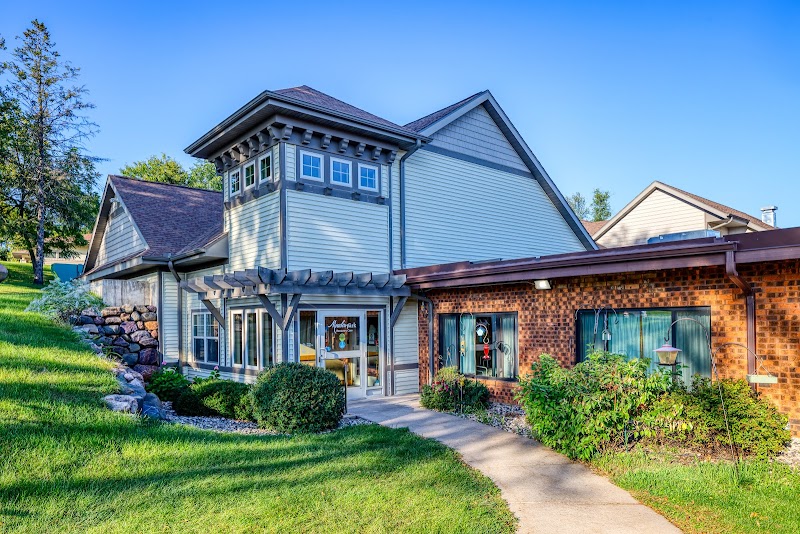
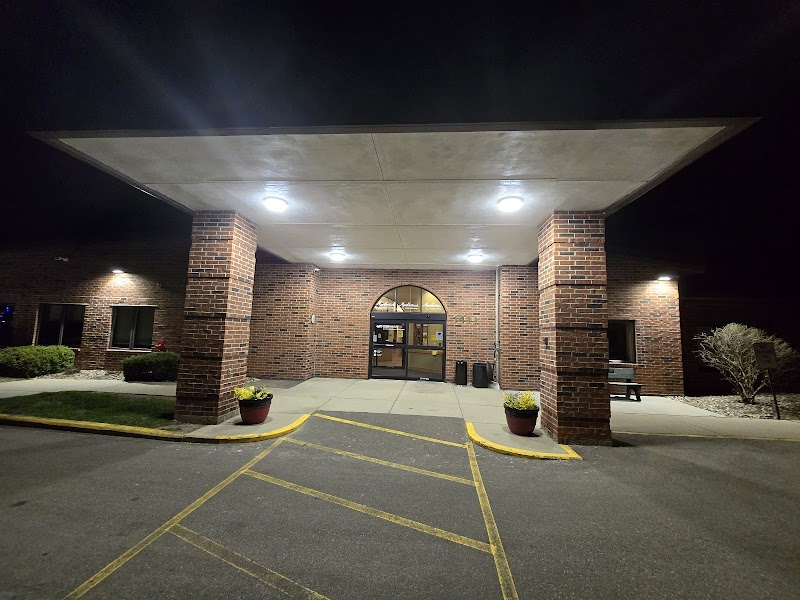
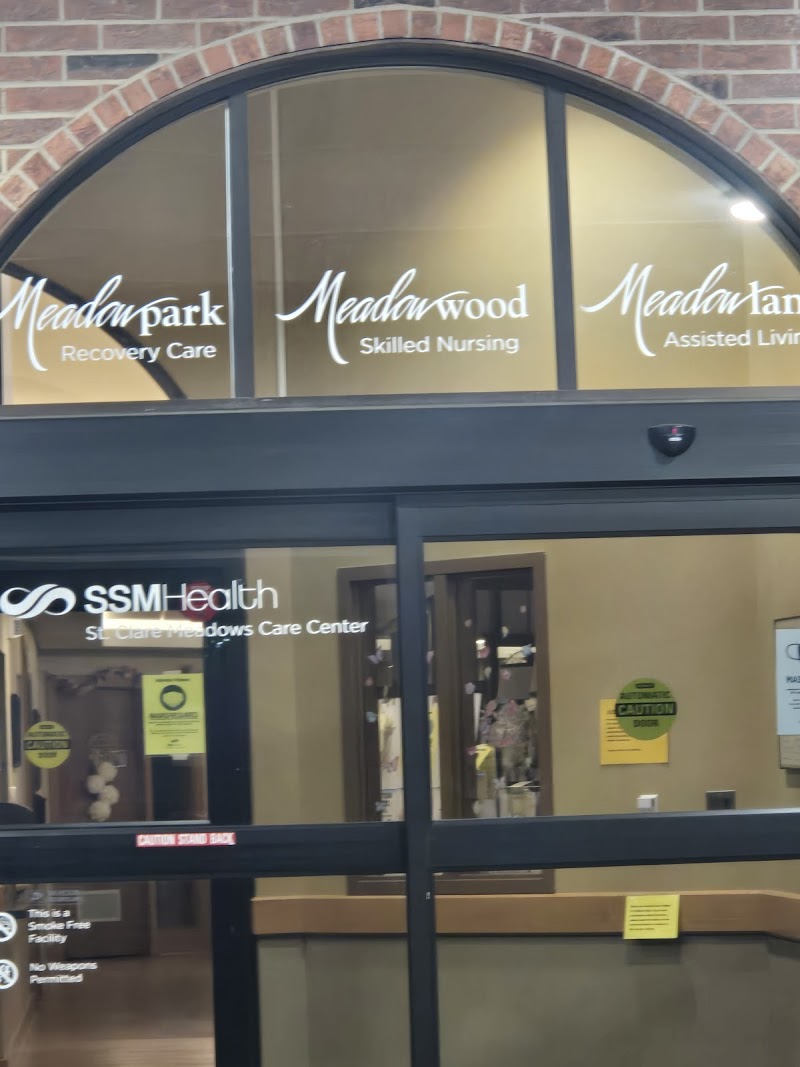
Complete Care at Jefferson Meadows LLC

1414 Jefferson St., Baraboo, WI 53913 (608) 356-4838
For profit - Limited Liability company 102 Beds COMPLETE CARE Data: November 2025 2 Immediate Jeopardy citations
Trust Grade
6/100
#200 of 321 in WI
Last Inspection: May 2025

Inspected within the last 6 months. Data reflects current conditions.

Overview

Complete Care at Jefferson Meadows LLC has received a Trust Grade of F, indicating significant concerns about the care provided. Ranking #200 out of 321 in Wisconsin places it in the bottom half of facilities, and #4 out of 5 in Sauk County suggests limited better options nearby. The facility's performance is worsening, with issues increasing from 7 in 2023 to 15 in 2025. Staffing is a relative strength, with a rating of 4 out of 5 stars and a turnover rate of 46%, which is slightly below the state average. However, the facility has concerning fines totaling $109,565, indicating compliance problems more than 81% of Wisconsin facilities. There is average RN coverage, which is important for catching potential problems. Specific incidents include the failure to safely manage side rails, resulting in a resident becoming entrapped and suffering fractures, as well as inadequate care leading to a resident developing a severe pressure injury due to a lack of timely medical intervention. These findings highlight both critical and serious deficiencies in care, making it essential for families to weigh these issues when considering this home for their loved ones.

Trust Score
F
6/100
In Wisconsin
#200/321
Bottom 38%
Safety Record
High Risk
Review needed
Inspections
Getting Worse
7 → 15 violations
Staff Stability
⚠ Watch
46% turnover. Above average. Higher turnover means staff may not know residents' routines.
Penalties
✓ Good
$109,565 in fines. Lower than most Wisconsin facilities. Relatively clean record.
Skilled Nurses
✓ Good
Each resident gets 61 minutes of Registered Nurse (RN) attention daily — more than 97% of Wisconsin nursing homes. RNs are the most trained staff who catch health problems before they become serious.
Violations
⚠ Watch
22 deficiencies on record. Higher than average. Multiple issues found across inspections.
★★☆☆☆
2.0
Overall Rating
★★★★☆
4.0
Staff Levels
★★★★★
5.0
Care Quality
★☆☆☆☆
1.0
Inspection Score
Stable
2023: 7 issues
2025: 15 issues

The Good

  • 4-Star Staffing Rating · Above-average nurse staffing levels
  • 5-Star Quality Measures · Strong clinical quality outcomes
  • Full Sprinkler Coverage · Fire safety systems throughout facility
  • No fines on record

Facility shows strength in staffing levels, quality measures, fire safety.

The Bad

2-Star Overall Rating

Below Wisconsin average (3.0)

Below average - review inspection findings carefully

Staff Turnover: 46%

Near Wisconsin avg (46%)

Higher turnover may affect care consistency

Federal Fines: $109,565

Well above median ($33,413)

Significant penalties indicating serious issues

Chain: COMPLETE CARE

Part of a multi-facility chain

Ask about local staffing decisions and management

The Ugly 22 deficiencies on record

2 life-threatening 1 actual harm
May 2025 14 deficiencies 1 Harm
SERIOUS (G)

Actual Harm - a resident was hurt due to facility failures

Deficiency F0692 (Tag F0692)

A resident was harmed · This affected 1 resident

**NOTE- TERMS IN BRACKETS HAVE BEEN EDITED TO PROTECT CONFIDENTIALITY** Example 2 The facility policy titled Weight Monitoring dated 2/2025 states in part .1. The facility will utilize a systemic appr...

Read full inspector narrative →
**NOTE- TERMS IN BRACKETS HAVE BEEN EDITED TO PROTECT CONFIDENTIALITY** Example 2 The facility policy titled Weight Monitoring dated 2/2025 states in part .1. The facility will utilize a systemic approach to optimize a resident's nutritional status. This process includes: a. Identifying and assessing each resident's nutritional status and risk factors b. Evaluating/ analyzing the assessment information c. Developing and consistently implementing pertinent approaches d. Monitoring the effectiveness of interventions and revising them as necessary .4. Interventions will be identified, implemented, monitored, and modified (as appropriate), consistent with the resident's assessed needs, choices, preferences, goals, and current professional standards to maintain acceptable parameters of nutritional status .6. Weight Analysis: The newly recorded resident weight should be compared to the previous weight. A significant change in weight is defined as: a. 5% change in weight in 1 month (30 days) b. 7.5% change in weight in 3 months (90 days) c. 10% change in 6 months (180 days) .7. Documentation: a. The physician should be informed of a significant change in weight and may order nutritional interventions. b. The physician should be encouraged to document the diagnosis or clinical conditions that may be contributing to the weight loss . The facility policy titled Nutritional and Dietary Supplements dated 2/2025 states in part . 9. Supplements may be provided by dietician recommendation as allowed by physician standing order. 10. The care plan will be updated with the new or modified nutritional interventions. R26 was admitted to the facility on [DATE] with diagnoses that include history of a stroke, dementia, and polyosteoarthritis (arthritis occurring in 5 or more joints simultaneously). R26's most recent MDS (Minimum Data Set) dated 3/11/25 states R26 has a BIMS (Brief Interview of Mental Status) of 3 out of 15, indicating that R26 is severely cognitively impaired. The MDS also states in Section K: K0300. Weight Loss: Loss of 5% or more in the last month or loss of 10% or more in last 6 months: 2. Yes, not on physician- prescribed weight- loss regimen. R26's care plan revised on 2/21/24 states in part: . Focus: NUTRITION/HYDRATION: Potential for Complications with Nutrition / hydration d/t (due to) Dementia, GERD. Goal: Will eat / drink as desired / accepted / tolerated through next review date. Interventions/ Tasks: Diet: Heart Healthy pureed. Set up meal per resident direction and assist with eating as/if needed. Honor food requests as able. Allow to eat / drink as desired / accepted / tolerated. Adaptive Equipment: All food in small silicone mugs. Two handled spouted cups. Offer fluids between meals . R26 most recent RD Nutritional Risk Tool dated 1/11/24 states in part . 1f. Calories needed 1258- 1363 .2f. ml (milliliters) hydration needed 1500- 1680 . 3g. gms (grams) protein needed 56- 67 . It is important to note that the facility did not have a completed comprehensive dietary assessment for R26 since 1/11/24 that calculates R26's calorie, protein, and hydration needs. R26's weights are as follows: 12/8/24: 152.3 1/8/25: 154 2/8/25: 149 3/8/25: 149.8 4/8/25: 153 5/8/25: 142 From 4/8/25 to 5/8/25 R26 had a weight loss of 7.19 pounds. There is no documentation indicating that the Physician or Nurse Practitioner was updated. Physician's orders: 1/31/25: Mirtazapine Oral Tablet 15 mg (milligram) Give 0.5 tablet by mouth one time a day for BPSD (Behavioral and Psychological Symptoms of Dementia) x 7 days, then 15mg daily. Dietary/ Nutrition Notes state the following: 3/7/2025 3:02 PM Note Text: Weight remains decreased over the past six month and stable over the past month. Current diet is cardiac pureed, Intakes fluctuate does a large breakfast with smaller lunch and supper. Does have special bowls where she can hold and self [sic] as well as cups with spout and two handles. Does take mirtazapine which is also an appetite stimulant. Skin is intact. Will continue to monitor and update as needed. 3/11/2025 11:57 AM Note Text: Resident is here long term. Current diet is cardiac pureed, and intakes fluctuate. Eats . large breakfast and smaller lunch and supper. All food is served in small silicone mugs where she can hold on to and 2 handles spouted cups. CBW (Current Body Weight) is 150# stable over month and decreased over the past six months however BMI (Body Mass Index) remains increased at 29.3. Does take mirtazapine which is also an appetite stimulant. Skin is intact. Will continue to monitor and update as needed. 3/20/2025 10:23 AM Note Text: Weekly weight note: Weight remains decreased over the past six months by 17.2#/10.3. This was related to downgrade in diet and nausea. Is stable over month. Intakes are good. Receives food in small silicone mugs where she can hold and self-feed as well as 2 handled cups with a spout. Does take cups with lids and straws when she is hunched over at meals and cannot use the other cup. Skin is intact. Will continue to monitor and update as needed. 4/10/2025 2:23 PM Weight Change Note: Weight has decreased over the past month by 10#/6.3%. Current diet is pureed, and food is served in cups she can hold and drinks in cups with 2 handles. Takes mirtazapine, which is also an appetite stimulant. Current intakes are 50% which at times is 25% and others 75%. Starting ensure BID. Skin is intact. Will continue to monitor and update as needed. It is important to note that R26 does not have a physician's order for Ensure. Nurse's note with effective date of 1/31/25 and a created date of 4/16/25 states: resident was started on mirtazapine for weight loss. GNP (Gerontologic Nurse Practitioner) in house and updated regarding weight loss. (of note, this note was put in approximately 75 days later.) On 5/7/25 at 9:37 AM, Surveyor interviewed R26. Surveyor asked R26 how she likes the food, R26 stated that she didn't like the food, it's mush. Surveyor asked R26 if she receives any snacks, R26 stated no. On 5/12/25 at 9:34 AM, Surveyor interviewed CNA X (Certified Nursing Assistant). Surveyor asked CNA X how staff knows if a resident is to receive a snack, CNA X reported that it would show up when they are completing documentation. CNA X reported that there is a snack list for PM shift (evening), and a snack cart that is prepared by the dietary staff. Surveyor asked if snacks are provided during the day shift, CNA X stated no, but the kitchen is open, and residents can come in and ask for a snack. Surveyor asked CNA X how staff knows if a resident is to receive Ensure, CNA X stated that it is on the meal ticket and dietary staff gives it during meals. On 5/12/25 at 9:59 AM, Surveyor interviewed DA AA (Dietary Aide). Surveyor asked DA AA how often they are offering R26 Ensure, DA AA stated they offer it every day and that R26 doesn't eat much food. DA AA reported that this morning R26 refused the Ensure. DA AA stated that the thicker Ensure is hard for R26 to drink when she is not feeling well, but she likes the clear, juice like one. Surveyor asked DA AA if the refusals are reported, DA AA stated that they (refusals) are reported to the nurse. On 5/12/25 at 10:15 AM, Surveyor interviewed DM W (Dietary Manager). Surveyor asked DM W if R26 is being seen by the RD (Registered Dietician), DM W stated that the RD only comes in once a week and if a resident has weight changes, they would be referred to the RD. Surveyor asked DM W why the RD hasn't seen R26 for weight loss, DM W stated that she did not know. Surveyor asked DM W how she would know if the RD was seeing a resident, DM W stated that she wouldn't know. Surveyor asked DM W how they would know what a resident's calorie, protein, and hydration needs are, DM W stated that she would calculate that, and it goes into the MDS quarterly and annual assessments. Surveyor asked if it would be documented in a note, DM W stated that she puts in a note about percents eaten. Surveyor asked DM W if she is able to initiate a nutritional supplement without a physician's order, DM W stated yes. Surveyor asked DM W who tracks if R26 is drinking the Ensure, DM W stated that dietary staff writes down the amount of fluids residents drink. Surveyor asked if dietary staff specifically document the amount of the nutritional supplement that is consumed, DM W stated no. Surveyor and DM W reviewed R26's MDS for calorie, protein, and fluid requirements and were unable to locate the calculations in R26's most recent quarterly and annual assessments. Of note, the facility only has a completed comprehensive dietary assessment dated [DATE] that calculates R26's calorie, protein, and hydration needs. On 5/12/25 at 12:34 PM, Surveyor interviewed LPN Y (Licensed Practical Nurse). Surveyor asked LPN Y if dietary staff reports if a resident refuses their nutritional supplement, LPN Y stated that they are supposed to. Surveyor asked where that is documented, LPN Y stated they are documented in the MAR (Medication Administration Record). Surveyor asked LPN Y if R26 has documentation on the MAR regarding the intake of Ensure, LPN Y stated no. On 5/12/25 at 1:14 PM, Surveyor interviewed DON B (Director of Nursing). Surveyor asked DON B who notifies the physician if a resident has weight loss, DON B stated that NS C (Nursing Supervisor) typically does. Surveyor asked DON B if that communication is documented, DON B stated that NS C will send a note in the provider's [electronic health record] inbox and when the provider responds, it will be printed off and placed in the resident's chart. Surveyor asked if R26's 10 lb. (pound) weight loss that was documented on 4/10/25 should have been reported to the provider, DON B stated yes. Surveyor asked if the DM initiates a nutritional supplement on a resident, should the physician be made aware, DON B stated yes. Surveyor asked if there should be an order for a nutritional supplement, DON B stated yes. Surveyor asked DON B if the amount of the supplement consumed should be documented, DON B stated yes. On 5/12/25 at 3:14 PM, Surveyor interviewed NP T (Nurse Practitioner). Surveyor asked NP T if the facility reported that R26 had a weight loss on 4/10/25, NP T reported that there has not been anything in the inbox regarding R26's weights. NP T reported that R26's most recent NP visit was an acute visit for respiratory symptoms, so weights would not have been addressed at that visit. Surveyor asked NP T if they would expect to be updated regarding significant weight changes, NP T stated yes. Surveyor asked NP T if they would expect to be updated when a resident starts Ensure, NP T stated yes, because it is not part of the standing orders. On 5/13/25 at 7:25 AM, Surveyor interviewed NS C (Nursing Supervisor). Surveyor asked NS C what the process is for a resident who has weight loss, NS C stated that the weight loss will trigger in the EHR (Electronic Health Record), the nurses will update her, and she will update the MD/ NP. Surveyor asked NS C if the NP was updated regarding R26's weight loss, NS C stated that she had updated the NP earlier on R26's weight loss. Surveyor asked if R26's weight loss from 4/8/25- 5/8/25 should have been reported to the provider, NS C stated yes. Surveyor asked NS C when the DM starts a resident on a nutritional supplement, should an order be obtained, NS C stated yes, and that the DM would have to communicate that so an order can be obtained. Based on observation, interview and record review, the facility failed to ensure residents received adequate nutrition and fluid intake for 3 (R25, R26, R42) of 4 Residents reviewed for nutrition. R25 is being cited at severity level 3 (actual harm). R26 and R42 are being cited at severity level 2 (potential for more than minimal harm). R25 was admitted to the hospital on [DATE] for weakness, anorexia, and severe hypernatremia (a high concentration of sodium in the blood often caused by dehydration). R25's sodium was 169. The facility failed to ensure R25 received adequate fluid intakes to maintain acceptable parameters of hydration by failing to total and assess daily fluid intake, accurately assess and complete on-going assessments for signs and symptoms of dehydration (e.g., sunken eyes, cool/clammy skin, dry tongue, dark colored urine, and sticky saliva), and failed to update interventions to encourage hydration as necessary. R25 returned to facility on 12/17/24, the facility failed to update R25's nutritional assessments. R26 experienced weight loss. The facility did not update the MD/NP (Medical Doctor/ Nurse Practitioner) appropriately, started R26 on a nutritional supplement without a physician's order, and did not monitor the amount of the supplement R26 was drinking. The facility failed to monitor R42's fluid intake, notify the physician of severe weight loss of 10% over 2 weeks, add R42's favorite beverage to her care plan per facility policy, and conduct a complete nutrition assessment by the Registered Dietician. R42's fluid intake was also not consistently documented and R42 was not consistently offered snacks. Evidenced by: The facility policy, Hydration, dated 2/25, states, in part; .The facility offers each resident sufficient fluid, including water and other liquids, consistent with resident needs and preferences to maintain proper hydration and health .Compliance Guidelines: 1. The facility will utilize a systematic approach to optimize the resident's hydration status: a. Identifying and assessing each resident's hydration status and risk factors b. Evaluating/analyzing the assessment information c. Developing and consistently implementing pertinent approaches d. Monitoring the effectiveness of interventions and revisiting them as necessary. 2. Nursing staff shall assess hydration status upon admission and throughout the resident's stay in accordance with assessment protocols. b. The dietary manager or designee shall obtain the resident's beverage preferences upon admission, significant change in condition, and periodically throughout his or her stay. c. The dietitian will assess hydration as part of the comprehensive nutritional assessment within 72 hours of admission, annually, and upon significant change in condition. Follow-up assessment will be completed as needed .3. Evaluation/analysis: a. The assessment shall clarify the resident's current hydration status and individual risk factors for dehydration or fluid imbalance. b. The dietitian shall use data gathered from the nutritional assessment to the resident's fluid needs and whether intake is adequate to meet those needs .4. Care plan implementation: a. The resident's goals and preferences regarding hydration will be reflected in the resident's plan of care .f. The resident will be monitored for complications associated with interventions. g. The care plan will be updated as needed, such as when a resident's condition changes, goals are met or the resident changes his or her goals, interventions are determined to be ineffective, or as new causes of hydration-related problems are identified .6. Documentation: a. Record observations pertinent to the resident's hydration status in the nurses' notes. b. Record beverage intake in designated locations (meal intake records, MAR (medication administration record) as indicated). c. Record output in designated locations (MAR or output record). d. Record fluid intake via tube or IV on MAR or designated intake record. e. Document physician/family notifications and any responses. f. Document assessments in designated locations (RAI, dietary notes, or nurses' notes) . Per Mayo clinic dehydration occurs when the body uses or loses more fluids than it takes in. Not replacing lost fluids leads to dehydration. Anyone can become dehydrated, but the condition is more serious for older adults .Drinking more fluids usually fixes mild to moderate dehydration, but severe dehydration needs medical treatment right away. Thirst isn't always a good way to tell if the body needs water. Many people, mainly older adults, don't feel thirsty until they're dehydrated .The symptoms of dehydration can differ by age.adults, extreme thirst; urinating less; dark-colored urine; tiredness; dizziness; being confused; skin that doesn't flatten back right away after being pinched, sunken eyes or cheeks. Dehydration can lead to serious complications such as heat injury, urinary and kidney problems, seizures, low blood volume shock. Example 1: R25 was admitted to the facility on [DATE] with a diagnoses including dementia and abnormalities of gait and mobility. R25's most recent MDS (Minimum Data Set) with ARD (Assessment Reference Date) of 3/24/25, indicates R25 has a BIMS (Brief Interview for Mental Status) score of 99 indicating R25 is severely cognitively impaired. R25 has an activated power of attorney. R25's Comprehensive Care Plan, states, in part; .ADL: .EATING: assist of 1; supervise. 11/16/23 .NUTRITION/HYDRATION: Actual/At risk/and/or potential for complications with nutrition/hydration d/t severe dementia, mechanically altered diet and staff dependence to eat. 11/16/23 revision on 4/24/25 .Encourage fluids at and between meals initiated 4/22/25, Diet type: General/standard diet, soft bite sized, ground meat, may have toast, thin liquids .11/16/23, revision 4/22/25, meds/labs/treatments as ordered 11/16/23, record weights a minimum of monthly or per MD/RDN (Registered Dietitian Nutritionist) 11/16/23, set up meal per resident direction and assist with eating as/if needed. Honor food requests as able 2/7/24, Adaptive equipment: provide inner lip dish at all meals. Cups with lids, Partial assistance 2/7/24 . It is important to note, R25's care plan was not updated after being hospitalized on [DATE] for weakness, anorexia (eating disorder, characterized by food restriction), and severe hypernatremia (high sodium) to include interventions to promote hydration. R25's current Kardex, states, in part; .As of 5/13/25 .Eating/Nutrition: Encourage fluids at and between meals .EATING: assist of 1; Supervise .Dining/Eating/Nutrition: Cups with lids, partial assistance . R25's DIET Nutritional Risk Tool, states, in part; .4/25/24 .G. Dining ability: Assistance/cueing needed/slow .meeting needs, skin intact and weight is stable .2. Hydration needs ABW. Adjusted weight yes. Weight adjusted for obesity. Hydration needed: 1325-1590 .Recommendations: BLANK. Meeting needs, skin is intact, and weight is stable. Will continue to monitor and update as needed . It is important to note the facility did not update R25's Nutritional Risk Tool after R25 experienced significant change in condition and was admitted to the hospital on [DATE] for weakness, anorexia, and severe hypernatremia. R25's Mini Nutritional Assessment, states, in part; .Effective Date: 10/25/24 .Score 8 .At risk for malnutrition .screening A. Has food intake declined over the past 3 months due to loss of appetite, digestive problems, chewing or swallowing difficulties? No decrease in food intake. B. Weight loss during the last 3 months: No weight loss. C. Mobility: Bed or chair bound. D. Has suffered psychological stress or acute disease in the past 3 months? Yes. E. Neuropsychological problems: Severe dementia or depression . R25's Dehydration Risk Screening Tool, states, in part; .10/25/24 .mobility: ambulate with 2 assist .fluid intake/eating: extensive physical assist .weight: no weight loss .continence: on bladder management program .risk factor: no risk factor .predisposing factors: 1-2 present .Based on the results of this assessment and your clinical judgment, is this resident at risk for dehydration? .No .Takes adequate fluids at meals and is given fresh water at bedside 3 times per day . R25's fluid intake, states, in part; December 2024 .1st 720ml, 2nd 680ml, 3rd 1200ml, 4th 600ml, 5th 960ml, 6th 720ml, 7th 720ml, 8th 1200ml, 9th 720ml, 10th 720ml, 11th 960ml, 12th 1200ml, 13th 1,020ml, 14th 480ml, and 15th 1200ml . It is important to note, the only documentation the facility provided showing R25's hydration needs was from R25's Nutritional Risk Tool dated 4/25/24, that indicated ,1325-1590ml of fluid daily. R25 does not meet this and there is no documentation of interventions attempted or discussed, no updates to R25's care plan and/or nutritional assessments, and no discussion with the Registered Dietician. On December 14th it is also noted R25 drank significantly less than other days, and there is no documentation of other interventions attempted. R25's NP routine visit note, states, in part; .12/11/24 .Pertinent History: major neurocognitive disorder .Today, R25 is in her room when I see her. She is pleasant and confused. She looks to be comfortable. She does not respond verbally to any of my questions but does nod/shake her head appropriately. She is dependent for most ADL's but is able to feed herself independently. Her weight is stable. She has had no falls since her admission to the facility .labs monitored in 12/2023 and are stable .lips and gums pink, moist .Patient Goal: maintain comfort and restore previous level of functioning . R25's Progress notes from December 2024, states, in part; .12/16/24 .9:01 .resident slid out wheelchair went [sic] attempting to propel wheelchair. No injury noted.12/16/24 .14:23 .we have attempted to place I.V. (intravenous catheter that goes into a vein to provide fluid) for hydration as POA (power of attorney) agreed. We were unsuccessful. Update MD (Medical Doctor). She was going to call family to see wished.[sic] 12/16/24 .14:24 .Talked with family also updated. 12/16/24 .14:26 .Just spoke with GNP (Geriatric Nurse Practitioner) family would [sic] resident sent to ER (emergency room). 12/17/24 .10:11 .In hospital. 12/17/24 .12:01 .Resident is coming back to us from hospital on hospice . NP note from 12/16/24, states, in part; .Regarding hypernatremia found today on routine labs, coupled with resident's recent in past few days of weakness, eating/drinking less, foul smelling urine, it has been discussed earlier with daughter/proxy that she'd favor trying some IV fluids vs heading straight for comfort care (in context of her advanced age/dementia, general decline .) IV 1 L LR (1 liter lactated ringers (sterile IV solution to replace fluids and electrolytes) ordered in SNF (skilled nursing facility). RN (Registered Nurse) tried x 4 to access vein but were unable. Writer then called proxy to discuss options, possible causes/outcomes .it's possible she has an underlying acuity that could be treatable, that further testing may reveal. She talked to her brother and they are favoring trying to treat something if it's there before making peace with an ed of life process. Order given to SNF to send to ED for weakness, hypernatremia, fluid hydration . ED (Emergency Department) note, states, in part; .12/16/24 3:13PM .CHIEF COMPLAINT: Altered mental status (mental decline over the last few days, decreased level of consciousness at the facility. Normally ambulates with a walker. Had blood work done and showed hypernatremia .HISTORY OF PRESENT ILLNESS: R25 history of dementia presents by EMS (emergency medical services) from nursing care facility with decreased mentation and oral intake. She does have a history of dementia. I did review medical packet from the nursing care facility. She is DNR (do not resuscitate) with limited aggressive treatment. Medical history as detailed below .notably she had a sodium of 169 as well as chloride level of 137. [NAME] blood cell count was borderline at 10.8 . Additional documentation provided on 5/23/25 by NHA A related to 12/16/25 hospital visit states in part: .12/17/24 visit . long-standing Alzheimer'sdementia currently hospitalized with dehydration and severe hypernatremia. Her sodium was up to 169, chloride 137 and BUN 51. She was given some free water with modest improvement in values of sodium 163 and chloride 131. Additionally her hemoglobin is 10 (down from recent baseline of 12) despite the fact she is severely dehydrated, meaning if her dehydration was reversed her hemoglobin would be much much lower .She has required feeding assistance recently. She has been having increasing difficulty holding herself upright in her wheelchair and 2 days ago she had a sliding to ground event out of her wheelchair. Patient has had unintended weight loss. Over the past year she has lost 19 lbs which is nearly a 15%weight loss going from 148 to 129 lbs. The patient is dependent in all ADLs .electronically signed by the MD on 12/17/2024 11:51 AM.Final Diagnoses: .1.hypernatremia from dehydration. 2 Advanced dementai. 3. AMS (altered mental status). 4.Hypokalemia 5. Anemia .Presenting history .worsening dementia, and now dehydration and severe hypernatremia .we did discuss that in a SNF this problem is usually the result of the elder declining food and drink due to loss of appetite and thirst due to terminal dementia. And that trying to force-feed people in this condition does not work due to then they aspirate and get pneumonia in addition to the discomfort of it. And that IV fluids will temporarily improve this life-threatening problem but will not change the underlying problem. the risks of treatment are mostly pain from IV starts and q4h lab draws. But the problem will happen again off IV's. the alternative is good comfort care without IVF (intravenous fluids) while offering but not forcing food/fluids . R25's Dehydration Risk Screening Tool, states, in part; .12/17/24 .mobility: bed bound .fluid intake/eating: extensive physical assist .weight: 3lbs weight loss in one month .risk factor: history of refusing liquids .predisposing factors: 1-2 present .Based on the results of this assessment and your clinical judgment, is this resident at risk for dehydration? .Yes .high risk but is hospice . It is important to note, R25's care plan was not updated to include interventions to promote hydration even though R25's dehydration screening tool indicates R25 is at high risk for dehydration. Transition note from NP on 12/18/24, states, in part; .R25 is re-admitted .on 12/17/24 for continued care with change to comfort focus and additional hospice support in context of advancing dementia with new onset weakness, anorexia, and hypernatremia. HOSPITAL COURSE: 12/16/24-12/17/24 presented to ED with weakness, anorexia, and severe hypernatremia. She was in her usual baseline state a few days prior, eating well, self-propelling her wheelchair all around the nursing home, largely nonvocal. Then she had a fall and she was noted to be eating and drinking a lot less. On routine lab work her sodium was noted to be 169 .Response to treatment: .On admission she was placed on IV dextrose fluids and electrolytes were checked q (every) 4 hours, her sodium did slowly improve (from 169-163), this AM when I saw her she wasn't responsive voice, won't open eyes, appeared comfortable, vitals were stable .Review of Systems .urine was noted to be foul smelling before hospitalization, likely in setting of dehydration . It is important to note the facility did not update R25's Mini Nutritional Assessment after R25 experienced a significant change in condition and was admitted to the hospital on [DATE] for weakness, anorexia, and severe hypernatremia. R25's dietary progress note after 12/16/24 hospital admission, states, in part; .1/2/25 .Resident is on a pureed diet with small portions and intakes average 50-80%. CBW (current body weight) is 130 which is stable. Skin is intact. Receives inner lip dish, beverages in cups with lids and straws at all meals. Did flag for at risk for malnutrition d.t. (due to) dementia. Will continue to monitor and update as needed . It is important to note this is the only dietary progress note after being hospitalized on [DATE] for weakness, anorexia, and severe hypernatremia. R25's Mini Nutritional Assessment, states, in part; .Effective Date: 1/2/25 .Score 8 .At risk for malnutrition .screening A. Has food intake declined over the past 3 months due to loss of appetite, digestive problems, chewing or swallowing difficulties? No decrease in food intake. B. Weight loss during the last 3 months: No weight loss. C. Mobility: Bed or chair bound. D. Has suffered psychological stress or acute disease in the past 3 months? Yes. E. Neuropsychological problems: Severe dementia or depression . R25's Mini Nutritional Assessment, states, in part; .Effective Date: 3/17/25 .Score 9 .At risk for malnutrition .screening A. Has food intake declined over the past 3 months due to loss of appetite, digestive problems, chewing or swallowing difficulties? No decrease in food intake. B. Weight loss during the last 3 months: No weight loss. C. Mobility: able to get out of bed/chair but does not go out. D. Has suffered psychological stress or acute disease in the past 3 months? Yes. E. Neuropsychological problems: Severe dementia or depression . R25's Dehydration Risk Screening Tool, states, in part; .3/17/25 .fluid intake/eating: limited physical assist .weight: no weight loss .risk factor: no risk factor .Based on the results of this assessment and your clinical judgment, is this resident at risk for dehydration? .No .Takes adequate fluids at meals and is given fresh water at bedside 3 times per day . It is important to note, R25 has history of dehydration, has a diagnosis of dehydration, and through interview and observation R25 would be unable to adequately meet hydration needs without staff assistance. On 5/7/25 at 11:52 AM, Surveyor observed R25 receive total assistance from staff for all fluids and food. On 5/7/25 at 3:13 PM, Power of Attorney U (POA) indicated R25 had declined in December and had been admitted to the hospital. POA U indicated she felt like the facility didn't catch that R25 was losing the ability to eat and drink on her own and that led to being hospitalized . POA U indicated R25 came back to facility on hospice. POA U indicated R25 is no longer on hospice. On 5/13/25 at 10:18 AM, Registered Nurse O (RN) indicated if a resident is at risk for dehydration there should be an order stating to encourage fluids and the specific amount of fluids should also be on the MAR/TAR. RN O indicated the nurse on the floor should remind the Certified Nursing Assistants (CNA's) to encourage the residents that need extra fluids and reminders. RN O indicated that R25 needs encouragement and reminders to eat and drink. RN O indicated there are times that R25 will eat and drink around mealtimes and not always during the actual mealtime. On 5/13/25 at 10:25 AM, Certified Nursing Assistant P (CNA) indicated for the residents that need reminders and are at risk for dehydration CNA P will offer water every time she walks into the resident bedroom when she is assisting them with freshening, changing, and ADL's. CNA P indicated if someone is at risk for dehydration she will push more fluids. CNA P indicated they don't document the fluids but do document fluids during meals. CNA P indicated R25 needs encouragement and assistance to eat and drink. On 5/13/25 at 11:45 AM, CNA Q indicated if a resident is at risk for dehydration he would offer more fluids. CNA Q indicated he would offer fluids during meals and when going into the resident room. CNA Q indicated R25 very seldom will drink on her own and that she has always needed encouragement and assistance to eat and drink. CNA Q indicated R25 is no longer on hospice and CNA Q remembers in December when R25 had a decline in health. CNA Q indicated R25 always wheels herself up and down the hallways and some time in December she wasn't doing that. CNA Q indicated that was a change for R25 and then she was admitted to the hospital. On 5/13/25 at 1:28 PM, Registered Dietician R (RD) indicated the nutritional assessments should be completed quarterly and/or if a resident has a significant change. Surveyor asked RD R how staff would know R25's specific [TRUNCATED]
CONCERN (D) 📢 Someone Reported This

A family member, employee, or ombudsman was alarmed enough to file a formal complaint

Potential for Harm - no one hurt, but risky conditions existed

Free from Abuse/Neglect (Tag F0600)

Could have caused harm · This affected 1 resident

**NOTE- TERMS IN BRACKETS HAVE BEEN EDITED TO PROTECT CONFIDENTIALITY** Based on interview and record review, the facility failed to protect a residents right to be free from verbal abuse by a visitor...

Read full inspector narrative →
**NOTE- TERMS IN BRACKETS HAVE BEEN EDITED TO PROTECT CONFIDENTIALITY** Based on interview and record review, the facility failed to protect a residents right to be free from verbal abuse by a visitor for 1 of 13 residents (R3) reviewed for abuse. R3 was verbally abused on multiple occasions while at the facility by R3's Activated Power of Attorney (POA). The facility failed to ensure measures were in place to prevent verbal abuse from reoccurring. It was reported that R3's POA was yelling at R3 in December 2024. The facility completed an investigation regarding a possible verbal abuse by R3's POA on 3/27/25 and 4/21/25. The facility did not add appropriate interventions to ensure R3 was free from abuse, did not update R3's care plan with interventions, and staff were not aware of the need for extra support and/or monitoring when R3's POA was in the facility. Evidenced by: The facility policy, Abuse, Neglect and Exploitation, dated 4/8/25, states, in part; .Verbal Abuse means the use of oral, written, or gestured communication or sounds that willfully includes disparaging and derogatory terms to residents or their families, or within their hearing distance regardless of their age, ability to comprehend, or disability .IV. Identification of Abuse, Neglect and Exploitation .5. Verbal abuse of a resident overheard .7. Psychological abuse of a resident . The facility Visitation Policy Summary, states, in part; .Visitation may be restricted or denied under the following circumstances: .If the visitor's behavior is disruptive, aggressive, threatening, or emotionally harmful . R3 was admitted to the facility on [DATE] with a diagnoses including unspecified dementia, abnormalities of gait and mobility, major depressive disorder, chronic pain, unspecified mood, and other specified behavioral and emotional disorders with onset usually occurring in childhood and adolescence. R3's most recent Minimum Data Set (MDS) with Assessment Reference Date (ARD) of 3/18/25, indicates R3 has a Brief Interview for Mental Status (BIMS) score of 11 indicating R3 is moderately cognitively impaired. R3 has an activated power of attorney. R3's Comprehensive Care Plan, states, in part; .Abuse Prevention: At risk and/or potential for abuse vulnerability- areas of vulnerability include: limited family involvement, cognitive impairment .Observe and provide safe environment. It is important to note R3's care plan and [NAME] do not include interventions or increased monitoring for R3 or R3's POA. Facility self report, states, in part; .3/27/25 .staff member reported it sounded like R3's granddaughter was talking loudly to R3. Staff first checked on resident and then reported. NHA went to room for further investigation and ensure resident safety. POA exited the room and was leaving the facility .additional residents were interviewed, and staff statements were collected. Facility completed the following: NHA (Nursing Home Administrator) called the POA on 3/30/25 regarding this incident with the DON present. NHA informed POA that loud talking, yelling, and/or swearing in the facility would not be tolerated. 2. DSS G (Director of Social Services) is working with APS on potential guardianship. 3. A memo was placed at the nurses station to contact the NHA immediately if the POA exhibits any unprofessional conduct during future visits . It is important to note that in the 3/27/25 self report there was a statement, that states in part: . In December of 2024 staff notified writer that POA was by the front doors yelling at R3. By the time I was able to get to the doors, R3 had already left with POA. When R3 returned I asked her about interaction R3 told me that her POA was upset R3 stated that this interaction was not distressing to her . Facility self report, states, in part; .4/21/25 .On 4/21/25, around 8:30AM, Nurse and CNA called the DON to R3's room due to loud yelling and profanity, DON notified Administrator. DON and Administrator immediately entered R3's room. POA was yelling at resident and using profanity saying things such as: You don't know what I am f**king going through, because I don't tell you. I am busting my f**king ass to care for you just like I busted my f**king ass to care for my dad. When Administrator and DON entered room, POA's behavior immediately de-escalated with a visible change in demeanor. She welcomed DON into the room. Administrator followed. POA stated they were talking about R3's shingles. POA was then acting like she was comforting R3 by holding her hand and then hugging her Describe the effect .R3 was crying when the DON and Administrator entered the room. However, she reported she is okay and that is how the POA is. R3 confirmed that she wants to continue having visits with her POA and feels safe around her .Explain what steps the entity took .The incident took place in R3's room, with the door shut. There were no additional residents around. Additional residents were interviewed . Facility incident report, states, in part; .4/21/25 .RN O (Registered Nurse) statement .at approx. 9am POA approached writer at my cart and stated, Were you the one that complained that we were being too loud? Writer replied no I was not the one that set that in motion. POA then asked who was because I want to yell at them because I am so sick of this place. Writer replied, I don't feel comfortable telling you this. POA states, Oh that's okay. I will find out. And walked away. Her demeanor was intimidating .Root cause analysis: Based on thorough investigation and statements obtained, staff reported the observations/hearing loud talking and profanity to administration immediately. It is reasonable to believe that this incident is part of R3 and POA's relationship. R3 has reported that this is just how POA is and that she feels safe with POA. Action taken: Police were notified of this incident. In order to prevent escalation of the incident, the police officer has decided to not talk with POA regarding this situation, however, future situations law enforcement will be notified immediately and will come to the facility to intervene. Facility leadership is consulting with the Ombudsmen as well as sending POA a warning letter that future incidents may result in supervised visits going forward. POA [sic] is being closely monitored by nursing and social services for any negative effects from this interaction CNA GG (Certified Nursing Assistant) written statement, states, in part; .On 4/21/25 I overheard yelling coming from R3's room. Her POA was in there with her. I heard POA yell I don't f**king care. I also heard her loudly say I'm not letting you change the f**king subject. I reported this to the nurse right away and she reported to DON right away . (Of note, based on CNA GG's statement, CNA GG did not intervene or protect R3 from verbal abuse.) On 5/8/25 at 8:50 AM, CNA S indicated she is not aware of any interventions in place or any concerns between R3 and POA. CNA S indicated if she witnessed abuse or possible abuse she would report concerns immediately and intervene. On 5/8/25 at 8:58 AM, CNA I indicated she is not aware of any interventions in place or any concerns between R3 and POA. CNA I indicated if she heard verbal abuse she would intervene and immediately report. On 5/8/25 at 9:00 AM, RN E indicated she would immediately report any allegations of abuse. RN E indicated she is not aware of any interventions in place or anything to be mindful of between R3 and R3's POA. RN E indicated there has been a lot of education on abuse recently. On 5/8/25 at 9:05 AM, RN BB indicated she is not aware of any interventions or anything in place for R3 and POA. RN BB indicated if she witnessed possible abuse she would intervene and report to the DON (Director of Nursing). RN BB indicated if she observed abuse between a POA and resident she would ask the POA to leave. RN BB indicated there has been a lot of education regarding abuse the last couple of months and that she can't remember if it was specific to R3. On 5/8/25 at 9:10 AM, S CC (Scheduler) indicated she has heard R3's POA yelling and swearing at R3 before. S CC indicated this was quite awhile ago and a lot more has been done recently to support R3. Surveyor asked S CC how R3's demeanor seems after POA has been yelling and swearing at her. S CC stated, R3 handles it well for as much as she gets yelled at. Sometimes she's upset, most of the time she just brushes it off. S CC indicated there is a posting at the nurse's station and S CC pointed at a note. S CC indicated if staff hear any yelling by POA they need to report it immediately. Surveyor asked if there are new staff or agency staff how does this get relayed to them? S CC indicated staff should communicate this to any new staff. Surveyor asked if this was care planned and S CC indicated it wouldn't hurt to have it on the care plan. On 5/8/25 at 9:15 AM, AA DD (Administrator Assistant) indicated she has not seen any negative interactions between R3 and POA. AA DD indicated if she witnessed possible abuse she would ensure resident is safe and immediately notify administration. AA DD indicated even if the resident said they were fine she would still react the same way. AA DD indicated she has recently received abuse education. Surveyor inquired about a questionnaire that AA DD completed during 1st self report- it stated that AA DD heard POA raise voice to R3. AA DD indicated this was a long time ago and R3 was going for a ride with POA. POA's dad was very sick and AA DD indicated everyone in the family had been stressed. AA DD indicated R3 indicated she was fine and that R3 and POA left the facility together. On 5/8/25 at 9:51 AM, Housekeeper FF indicated she has heard R3's POA yell at R3. Housekeeper FF indicated this had been reported and the nurse talked with R3. Housekeeper FF indicated she would report abuse concerns immediately and she has recently received abuse education. On 5/8/25 at 10:26 AM, DSS G indicated there has been a couple times where R3's POA has yelled at R3. DSS G indicated she has followed up with R3 regarding her POA. DSS G indicated every time a verbal incident occurs DSS G follows up with R3. DSS G indicated R3 always says that is just how POA is and that's how she talks. Surveyor asked DSS G what is in place now to keep R3 safe? DSS G indicated NHA (Nursing Home Administrator) has sent R3's POA a letter, if staff hear POA yelling they are to immediately call the police, R3 has routine behavior health visits, APS and Ombudsman have been notified, and there is a note posted at the nurse's station. Surveyor asked how do the staff know these interventions? DSS G indicated, I believe this is in her care plan, but I am not certain and would have to look. DSS G indicated staff are to check on R3 and make sure she is safe, but not engage with POA because historically POA can get aggressive. DSS G indicated then staff call the police. It is important to note, through staff interview most were not aware of these interventions in place. The interventions are not in R3's care plan or on R3's [NAME]. On 5/8/25 at 1:37 PM, CNA GG indicated she was the CNA that heard R3's POA yelling at R3 on 4/21/25. CNA GG indicated it was a couple weeks ago. CNA GG indicated R3's bedroom door was closed, and CNA GG could hear R3's POA yelling, and she was being very loud. CNA GG indicated she was in the middle of doing multiple things, assisting a co-worker, a call light went off, and going into another resident's bedroom so she asked the nurse to go do something. CNA GG indicated the nurse went and got the DON. CNA GG indicated she could hear some swear words and R3's POA kept interrupting R3. CNA GG indicated there has been a lot of education on abuse recently and CNA GG indicated she would report any possible abuse concerns to administration immediately. CNA GG indicated she didn't see R3 right after the incident, but during lunch she seemed fine. On 5/8/25 at 4:12 PM, RN O indicated she was the nurse on the floor when the incident occurred on 4/21/25. RN O indicated R3's POA is known to have anger issues and a short fuse. RN O indicated this is R3's POA and R3's unusual dynamic. RN O indicated CNA GG reported to RN O she thought she heard yelling coming from R3's bedroom. RN O indicated RN O was by med cart and went down to R3's bedroom. The door was closed, RN O listened to see if she could hear any yelling, RN O did not hear anything and walked back to med cart. RN O indicated RN O was at med cart and saw DON (Director of Nursing) and NHA (Nursing Home Administrator) walking towards R3's bedroom. RN O indicated shortly after R3's POA came up to RN O asking if RN O was the person that reported her. RN O indicated R3's POA is very intimidating and had that look in her eye. RN O indicated that she has known R3 since R3 was admitted to facility and R3 has never said she is afraid of her POA. RN O indicated this is the way it's always been between these two. She (POA) can get very inappropriate with her words .she's always been this way. Surveyor asked if RN O has ever observed R3 yelling and screaming at POA? RN O stated, No, I have not. Surveyor asked RN O is verbal abuse considered a form of abuse? RN O indicated Yes, absolutely. On 5/12/25 at 8:40 AM, NHA A (Nursing Home Administrator) indicated the first self report investigation occurred on 3/27/25. A staff overheard loud voices coming from R3's bedroom. Staff couldn't make out exactly what was being said. Staff peeked head in bedroom and didn't see anything alarming and then reported to NHA A immediately. DON B and NHA A went down to R3's bedroom and POA was leaving facility. DON B and NHA A asked R3 if she felt safe and had any concerns with POA. R3 indicated she is not scared and values the relationship between the two. DON B and NHA A called POA the next day, interviewed residents and staff. NHA A indicated POA was not pleased with the phone call and NHA A told POA that the police will be notified if further incidents occur. NHA A indicated they reviewed the incident and plan of action in QAPI and felt they handled incident correctly. NHA A indicated DSS G notified APS and all staff were educated on abuse. NHA A indicated it is a fine line promoting R3 and POA's relationship and keeping resident safe. NHA A indicated they made the decision to not put anything in the [NAME] and care plan because they didn't want the POA to see that and cause any issues. NHA A indicated staff are educated on the abuse policy and there is a memo at the nurses station for all staff to notify NHA if they hear POA yelling at R3. The memo is in a central location so all staff should know to be on alert when POA is in facility. NHA A indicated second self report investigation occurred 4/21/25. Staff heard yelling coming from R3's bedroom. CNA GG reported the concern to RN O. NHA A and DON B (Director of Nursing) went to R3's bedroom. NHA A indicated they watched POA exit the facility. NHA A indicated facility contacted the police, contacted Ombudsman, sent POA a letter and resources on guardianship, and provided resources to R3 on Ombudsman information, interviewed staff, interviewed residents, and monitored R3. NHA A indicated they did not put interventions on [NAME] or care plan because POA sees these documents. NHA A indicated all staff are educated and must follow abuse policy. NHA A indicated all staff are to follow if you see a crime you call law enforcement. NHA A indicated R3 is very adamant that this is their relationship and that it's always been this way. NHA A indicated it is not appropriate. NHA A indicated she does not view the incidents as verbal abuse because R3 does not view it that way. NHA A indicated it would be different if she was upset by it or if it was more physical in nature, since R3 doesn't view it as verbal abuse NHA A does not view it that way. Surveyor asked NHA A if she is aware of R3's past trauma? NHA A indicated she does not know specifics of R3's trauma, but that DSS G would be able to speak more on that. On 5/12/25 at 3:39 PM, DSS G indicated APS was visiting R3 tomorrow. DSS G indicated R3 has shared with her that she was abused by her father as a child. DSS G indicated R3 didn't elaborate or share any more information other than that. Surveyor asked is verbal abuse is considered abuse? DSS G shrugged shoulders and nodded yes. Based on interview and record review, the facility failed to protect R3's right to be free from verbal abuse by a visitor.
CONCERN (D) 📢 Someone Reported This

A family member, employee, or ombudsman was alarmed enough to file a formal complaint

Potential for Harm - no one hurt, but risky conditions existed

Investigate Abuse (Tag F0610)

Could have caused harm · This affected 1 resident

**NOTE- TERMS IN BRACKETS HAVE BEEN EDITED TO PROTECT CONFIDENTIALITY** Based on interview and record review, the facility failed to immediately intervene when alleged verbal abuse was observed for 1 ...

Read full inspector narrative →
**NOTE- TERMS IN BRACKETS HAVE BEEN EDITED TO PROTECT CONFIDENTIALITY** Based on interview and record review, the facility failed to immediately intervene when alleged verbal abuse was observed for 1 of 3 Residents (R3) involved in a facility reported incident. Staff heard an alleged verbal abuse altercation and failed to immediately ensure R3's safety. Evidenced by: The facility policy, Abuse, Neglect and Exploitation, dated 4/8/25, states, in part; .VI. Protection of Resident .The facility will make efforts to ensure all residents are protected from physical and psychosocial harm, as well as additional abuse, during and after the investigation. Examples include but are not limited to: A. Responding immediately to protect the alleged victim and integrity of the investigation; B. Examining the alleged victim for any sign of injury, including a physical examination or psychosocial assessment if needed; C. Increased supervision of the alleged victim and residents; D. Room or staffing changes, if necessary, to protect the residents from the alleged perpetrator; E. Protection from retaliation; F. Providing emotional support and counseling to the resident during and after the investigation, as needed; G. Revision of the resident's care plan if the resident's medical, nursing, physical, mental, or psychosocial needs or preferences change as a result of an incident of abuse . R3 was admitted to the facility on [DATE] with a diagnoses including unspecified dementia, abnormalities of gait and mobility, major depressive disorder, chronic pain, unspecified mood, and other specified behavioral and emotional disorders with onset usually occurring in childhood and adolescence. R3's most recent MDS (Minimum Data Set) with ARD (Assessment Reference Date) of 3/18/25, indicates R3 has a BIMS (Brief Interview for Mental Status) score of 11 indicating R3 is moderately cognitively impaired. R3 has an activated power of attorney. R3's Comprehensive Care Plan, states, in part; .Abuse Prevention: At risk and/or potential for abuse vulnerability- areas of vulnerability include: limited family involvement, cognitive impairment .Observe and provide safe environment. Facility self report, states, in part; .4/21/25 .On 4/21/25, around 8:30AM, Nurse and CNA called the DON to R3's room due to loud yelling and profanity, DON notified Administrator. DON and Administrator immediately entered R3's room. POA was yelling at resident and using profanity saying things such as: You don't know what I am f**king going through, because I don't tell you. I am busting my f**king ass to care for you just like I busted my f**king ass to care for my dad. When Administrator and DON entered room, POA's behavior immediately de-escalated with a visible change in demeanor. She welcomed DON into the room. Administrator followed. POA stated they were talking about R3's shingles. POA was then acting like she was comforting R3 by holding her hand and then hugging her Describe the effect .R3 was crying when the DON and Administrator entered the room. However, she reported she is okay and that is how the POA is. R3 confirmed that she wants to continue having visits with her POA and feels safe around her .Explain what steps the entity took .The incident took place in R3's room, with the door shut. There were no additional residents around. Additional residents were interviewed . Facility incident report, states, in part; .4/21/25 .Registered Nurse O (RN) statement .at approx. 9am POA approached writer at my cart and stated, Were you the one that complained that we were being too loud? Writer replied no I was not the one that set that in motion. POA then asked who was because I want to yell at them because I am so sick of this place. Writer replied, I don't feel comfortable telling you this. POA states, Oh that's okay. I will find out. And walked away. Her demeanor was intimidating .Root cause analysis: Based on thorough investigation and statements obtained, staff reported the observations/hearing loud talking and profanity to administration immediately. It is reasonable to believe that this incident is part of R3 and POA's relationship. R3 has reported that this is just how POA is and that she feels safe with POA. Action taken: Police were notified of this incident. In order to prevent escalation of the incident, the police officer has decided to not talk with POA regarding this situation, however, future situations law enforcement will be notified immediately and will come to the facility to intervene. Facility leadership is consulting with the Ombudsmen as well as sending POA a warning letter that future incidents may result in supervised visits going forward. POA is being closely monitored by nursing and social services for any negative effects from this interaction Certified Nursing Assistant GG (CNA) written statement, states, in part; .On 4/21/25 I overheard yelling coming from R3's room. Her POA was in there with her. I heard POA yell I don't f**king care. I also heard her loudly say I'm not letting you change the f**king subject. I reported this to the nurse right away and she reported to DON right away . (of note, CNA GG's statement indicates CNA GG did not intervene and protect R3 when hearing yelling coming from R3's room.) On 5/8/25 at 10:26 AM, Director of Social Services G (DSS) indicated there has been a couple times where POA (Power of Attorney) has yelled at R3. DSS G indicated she has followed up with R3 regarding POA. DSS G indicated every time a verbal incident occurs DSS G follows up with R3. DSS G indicated R3 always says that is just how POA is and that's how she talks. Surveyor asked DSS G what is in place now to keep R3 safe? DSS G indicated NHA (Nursing Home Administrator) has sent POA a letter, if staff hear POA yelling they are to immediately call the police, R3 has routine behavior health visits, APS and Ombudsman has been notified, and there is a note posted at the nurse's station. Surveyor asked how do the staff know these interventions? DSS G indicated, I believe this is in her care plan, but I am not certain and would have to look. DSS G indicated staff are to check on R3 and make sure she is safe, but not engage with POA because historically POA can get aggressive. DSS G indicated then staff call the police. On 5/8/25 at 1:37 PM, CNA GG indicated she was the CNA that heard POA yelling at R3 on 4/21/25. CNA GG indicated it was a couple weeks ago. CNA GG indicated R3's bedroom door was closed, and CNA could hear POA yelling, and she was being very loud. CNA GG indicated she was in the middle of doing multiple things, assisting a co-worker, a call light went off, and going into another resident's bedroom so she asked the nurse to go do something. CNA GG indicated the nurse went and got the DON. CNA GG indicated she could hear some swear words and POA kept interrupting R3. CNA GG indicated there has been a lot of education on abuse recently and CNA GG indicated she would report any possible abuse concerns to administration immediately. CNA GG indicated she didn't see R3 right after the incident, but during lunch she seemed fine. On 5/8/25 at 4:12 PM, RN O indicated she was the nurse on the floor when the incident occurred on 4/21/25. RN O indicated POA is known to have anger issues and a short fuse. RN O indicated this is POA and R3's unusual dynamic. RN O indicated CNA GG reported to RN O she thought she heard yelling coming from R3's bedroom. RN O indicated RN O was by med cart and went down to R3's bedroom. The door was closed, RN O listened to see if she could hear any yelling, RN O did not hear anything and walked back to med cart. RN O indicated RN O was at med cart and saw DON (Director of Nursing) and NHA (Nursing Home Administrator) walking towards R3's bedroom. RN O indicated shortly after POA came up to RN O asking if RN O was the person that reported her. RN O indicated POA is very intimidating and had that look in her eye. RN O indicated that she has known R3 since R3 was admitted to facility and R3 has never said she is afraid of POA. RN O indicated this is the way it's always been between these two. She (POA) can get very inappropriate with her words .she's always been this way. Surveyor asked if RN O has ever observed R3 yelling and screaming at POA? RN O stated, No, I have not. Surveyor asked RN O is verbal abuse considered a form of abuse? RN O indicated Yes, absolutely. It is important to note staff did not immediately intervene when they heard alleged verbal abuse. On 5/12/25 at 8:40 AM, Nursing Home Administrator A (NHA) indicated the self report investigation occurred 4/21/25. Staff heard yelling coming from R3's bedroom. Certified Nursing Assistant GG (CNA) reported the concern to Registered Nurse O (RN). NHA A and Director of Nursing B (DON) went to R3's bedroom. NHA A indicated they watched POA exit the facility. NHA A indicated facility contacted the police, contacted Ombudsman, sent POA letter and resources on guardianship, and provided resources to R3 on Ombudsman information, interviewed staff, interviewed residents, and monitored R3. NHA A indicated they did not put interventions in [NAME] or care plan because POA sees these documents. NHA A indicated all staff are educated and must follow abuse policy. NHA A indicated all staff are to follow if you see a crime you call law enforcement. NHA A indicated staff should immediately intervene if they observe alleged abuse and immediately report. NHA A indicated during investigation it was not discovered the delay in intervening. Based on interview and record review, the facility failed to immediately intervene when alleged abuse was observed for R3.
CONCERN (D)

Potential for Harm - no one hurt, but risky conditions existed

Deficiency F0645 (Tag F0645)

Could have caused harm · This affected 1 resident

**NOTE- TERMS IN BRACKETS HAVE BEEN EDITED TO PROTECT CONFIDENTIALITY** Example 2: R41 was admitted to the facility on [DATE] with diagnoses that include: delusional disorders, and restlessness and ag...

Read full inspector narrative →
**NOTE- TERMS IN BRACKETS HAVE BEEN EDITED TO PROTECT CONFIDENTIALITY** Example 2: R41 was admitted to the facility on [DATE] with diagnoses that include: delusional disorders, and restlessness and agitation. On 5/15/24, R41's PASRR level I was submitted with a documented 30-day exemption. On 5/13/25, Surveyor requested R41's PASRR level II. SW G (Social Worker) was unable to locate the document or provide documentation that a PASRR level II was completed. On 5/13/25 at 3:19 PM, Surveyor interviewed DON B (Director of Nursing). Surveyor asked DON B if she would expect PASRRs to be completed timely. DON B indicated, yes. Surveyor asked DON B if she would expect PASRRs to be kept within the resident's medical record. DON B indicates, yes. Surveyor asked DON B if R41 should have had a PASRR II completed. DON B indicates, yes. Based on interview and record review, the facility did not follow through with the appropriate steps of the Preadmission Screening and Resident Review (PASSR) process for 2 of 5 residents (R23 and R20) reviewed for PASSR screening. R23 did not have a PASSR level I (1) completed. R20 did not have a PASSR level II (2) completed. This is evidenced by: The facility's Resident Assessment-Coordination with PASRR Program, dated 2/2025, states, in part: This facility coordinates assessments with the preadmission screening and resident review program under Medicaid to ensure that individuals with a mental disorder (MD), intellectual disability (ID), or a related condition receives care and services in the most integrated setting appropriate to their needs. Policy Explanation and Compliance Guidelines: 1. All applicants to this facility will be screened for serious mental disorders or intellectual disabilities and related conditions in accordance with the State's Medicaid rules for screening. A. PASRR Level I-initial pre-screening that is completed prior to admission. i. Negative Level I Screen-permits admission to proceed and ends the PASRR process unless a possible serious mental disorder or intellectual disability arises later. ii. Positive Level I Screen-necessitates a PASRR Level II evaluation prior to admission. B. PASRR Level II-a comprehensive evaluation by the appropriate state-designated authority (cannot be completed by the facility) that determines whether the individual has MD, ID, or related condition, determines the appropriate setting for the individual, and recommends any specialized services and/or rehabilitative services the individual needs.3. A record of the pre-screening shall be maintained in the resident's medical record.6. The Social Services Director shall be responsible for keeping track of each resident's PASRR screening status, and referring to the appropriate authority. Example 1 R23 was admitted the facility on 7/26/21 with diagnoses that include dementia, depression, and mood disorder. Surveyor requested PASSR documentation. No PASSR documentation was provided. On 5/13/25 at 2:49 PM, Surveyor interviewed SW G (Social Worker) and asked if R23 had a PASSR completed. SW G stated SW G could not find any documentation of a PASSR being completed. SW G stated that PASSR should have been completed for R23.
CONCERN (D)

Potential for Harm - no one hurt, but risky conditions existed

Deficiency F0679 (Tag F0679)

Could have caused harm · This affected 1 resident

**NOTE- TERMS IN BRACKETS HAVE BEEN EDITED TO PROTECT CONFIDENTIALITY** Based on observation, interview, and record review, the facility did not provide an ongoing program of activities designed to me...

Read full inspector narrative →
**NOTE- TERMS IN BRACKETS HAVE BEEN EDITED TO PROTECT CONFIDENTIALITY** Based on observation, interview, and record review, the facility did not provide an ongoing program of activities designed to meet the interests and the physical, mental, and psychosocial well-being of each resident. This affected 1 of 5 residents (R25) reviewed for activities. Surveyor observed R25 on 5/7/25 and 5/8/25 sitting in the hallway with no meaningful activities. Surveyor observed R25 on 5/7/25 at 9:41 am positioned staring at a wall. Surveyor observed R25 again at 10:46am, 11:20am sitting in same position. R25's daily activity documentation showed R25 napped and roamed the halls most days from January 2025-May 2025. Evidenced by: The facility policy, Activities, dated, 2/25, states, in part; .It is the policy of this facility to provide an ongoing program to support residents in their choice of activities based on their comprehensive assessment, care plan, and preferences. Facility-sponsored group, individual, and independent activities will be designed to meet the interests of each resident, as well as support their physical, mental, and psychosocial well-being. Activities will encourage both independence and interaction within the community 1. Each resident's interest and needs will be assessed on a routine basis. The assessment shall include, but is not limited to: a. RAI (resident assessment instrument) process: MDS (minimum data set)/CAA(care area assessment)/Care Plan. b. Activity assessment to include resident's interest, preferences and needed adaptations. c. Social History. d. Discharge information, when applicable. 2. Activities will be designed with the intent to: a. Enhance the resident's sense of well-being, belonging, and usefulness. b. Create opportunities for each resident to have a meaningful life. c. Promote or enhance physical activity. d. Promote or enhance cognition. e. Promote or enhance emotional health. f. Promote self-esteem, dignity, pleasure, comfort, education, creativity, success and independence. g. Reflect resident's interests and age. h. Reflect cultural and religious interests of the residents. i. Reflect choices of the residents . R25 was admitted to the facility on [DATE] with a diagnoses including dementia and abnormalities of gait and mobility. R25's most recent MDS (Minimum Data Set) with ARD (Assessment Reference Date) of 3/24/25, indicates R25 has a BIMS (Brief Interview of Mental Status) score of 99 indicating R25 is severely cognitively impaired. R25 has an activated power of attorney. R25's care plan, states, in part; .Activities/Life Enrichment: Need for therapeutic recreation for comfort and interaction 11/16/23 .revision 2/15/24. Will actively participate in 2 activities weekly as well as weekly 1:1 visit with an activity facilitator to increase interaction with others, as evidenced by a relaxed demeanor and positive facial expressions or comments at each event .Inform pet volunteers that they can stop by residents room .Offer supplies for independent activities: offer a doll for comfort, she also has some of her own. Offer magazines and picture books. Assist outdoors as weather permits. Assist as needed. Encourage participation in group activities such as social events, happy hour (is motivated by food), music, sensory programming, pet visits, outdoor events, St. John's Lutheran services, games, and cooking/baking events. Provide with baby dolls for comfort (also has her own). Encourage participation in nail painting. Provide with weekly 1:1 visit with an activity facilitator R25's 2025 Activity Participation record, states, in part; .January: 21x (times) naps, 25x roaming hallway, 3x family visit, 1x hobbies, 3x people watching, and 1x cookies. February: 19x roaming hallways, 24x naps, 1x 1:1 visit, 5x people watching, 2x beauty shop, 2x family visits, 1x animal therapy, and 1x group. March: 23x roaming the halls, 22x naps, 6x people watching, 4x family visits, and 2x animal therapy. April: 23x roaming hallways, 18x naps, 3x family visits, 1x musical entertainment, 1x cookie café, and 8x people watching. May: 7x roaming halls, 9x naps, 1x nails, 4x people watching, and 1x children visit . Surveyor observed R25 sitting in wheelchair in the hallway on 5/7/25 and 5/8/25 with no meaningful activities offered. On 5/7/25 Surveyor observed R25 positioned so she was sitting staring at wall. On 5/12/25 at 3:51 PM, Activity Assistant EE (AA) indicated that R25 is not able to structure her own leisure time and needs staff support and encouragement to attend activities. AA EE indicated the documentation does not document how long the activity lasted, participation level, and enjoyment. AA EE indicated some residents are more vocal on their enjoyment on an activity. AA EE indicated if R25 is napping during an activity there isn't another option for an activity for R25. On 5/13/25 at 8:57 AM, Activity Director II (AD) indicated R25 is most happy when she can move freely, she enjoys looking out the window, sunshine, baby dolls, outside, her daughter, dog visits, and loves music. AD II indicated R25 enjoys sensory activities. AD II indicated they are working on updating their activity participation documentation and that they see there is room for improvement. AD II indicated R25 needs staff to assist her to activities and to the activity room. The facility did not provide an ongoing program of activities designed to meet the interests and the physical, mental, and psychosocial well-being for R25.
CONCERN (D)

Potential for Harm - no one hurt, but risky conditions existed

Tube Feeding (Tag F0693)

Could have caused harm · This affected 1 resident

**NOTE- TERMS IN BRACKETS HAVE BEEN EDITED TO PROTECT CONFIDENTIALITY** Based on observation, interview, and record review, the facility did not ensure residents who receiving nutrition and medication...

Read full inspector narrative →
**NOTE- TERMS IN BRACKETS HAVE BEEN EDITED TO PROTECT CONFIDENTIALITY** Based on observation, interview, and record review, the facility did not ensure residents who receiving nutrition and medication by G-tube (Gastrostomy tube, a thin flexible tube inserted through a small incision in the abdomen and into the stomach, used to provide nutrition and fluids) receive the appropriate treatment and services. This affects 1 of 1 residents (R42) reviewed for tube feedings. The facility did not properly check placement of R42's G-tube prior to administering tube feeding. This is evidenced by: The facility's policy entitled, Care and Treatment of Feeding Tubes, dated 4/2/25, states, in part: Policy: It is a policy of this facility to utilize feeding tubes in accordance with current clinical standards of practice, with interventions to prevent complications to the extent possible . 1. Feeding tubes will be utilized according to physician orders . 4. The facility will utilize the Registered Dietitian in estimating and calculating a resident's daily nutritional and hydration needs . 6. In accordance with facility protocol, licensed nurses will monitor and check that the feeding tube is in the right location . a. Tube placement will be verified before beginning a feeding and before administering medications by auscultation and aspiration (use of a syringe to pull out or check content) of stomach contents . R42 was admitted to the facility on [DATE] with diagnoses that include, in part: encephalopathy (disease or disorder that affects the brain's structure or function), unspecified severe protein-calorie malnutrition, adult failure to thrive, and abnormal weight loss. R42's admission Minimum Data Set with Assessment Reference Date of 3/18/25 indicates R42 has a Brief Interview for Mental Status (BIMS) score of 99, indicating that the interview could not be completed. Section C indicates R42 has short term and long-term memory problems and has severely impaired decision-making skills regarding tasks of daily life. Section K indicates R42 has a feeding tube. R42's Physician Orders indicate: Enteral Feed Order four times a day for nutrition. Flush feeding tube with 100 cc (cubic centimeters) of H2O (water) four times a day and 60 cc of water before and after each feeding. Start date: 4/9/25. Order status: Active. R42's Comprehensive Care Plan indicates, in part: Focus: Feeding Tube: Actual/At Risk/ and/or Potential for complications with tube feeding. Date Initiated: 3/13/25. Interventions/Tasks: Check for tube placement & gastric contents/residual volume per facility protocol and record. Hold feeding if more than 200 cc (cubic centimeters) aspirated. Date Initiated: 3/13/25. On 5/12/25 at 9:06 AM, Surveyor observed RN J (Registered Nurse) start a feeding through R42's G-tube. Surveyor observed RN J check the G-tube placement with air, but not by aspiration of stomach contents. (Of note: Facility policy and R42's Comprehensive Care Plan indicate R42 is to have gastric contents aspirated when checking for tube placement and prior to providing feeding.) On 5/12/25 at 10:48 AM, Surveyor interviewed RN J. Surveyor asked RN J if the facility required resident's gastric contents to be aspirated prior to starting a tube feeding. RN J indicated she has tried in the past but that she usually doesn't aspirate any gastric contents. Surveyor asked RN J if she should have aspirated R42's gastric contents prior to starting her tube feeding. RN J indicated yes, but she usually just uses air to test placement. On 5/13/25 at 3:13 PM, Surveyor interviewed NS C (Nursing Supervisor). Surveyor asked NS C what her expectation is for staff when checking for proper G-tube placement. NS C indicates she would expect staff to listen for air flow into the tube and aspirate gastric contents. Surveyor asked NS C if R42 should have had gastric contents aspirated prior to her tube feeding. NS C indicates, yes. On 5/13/25 at 3:19 PM, Surveyor interviewed DON B (Director of Nursing) . Surveyor asked DON B what her expectation is for staff when checking for proper G-tube placement. DON B indicates she would expect staff to flush water and aspirate gastric contents. Surveyor asked DON B if R42 should have had gastric contents aspirated prior to her tube feeding. DON B indicates, yes. On 5/16/25, NHA A (Nursing Home Administrator) provided additional information that included Chapter 17 enteral tube management- Nursing skills, that states in part: REDUCING RISK OF ASPIRATION .Measurement of gastric residual volume (GRV) is performed by using a 60-mL syringe to aspirate stomach contents through the tube. It has traditionally been used to assess aspiration risk with associated interventions such as slowing or stopping the enteral feeding. GRVs in the range of 200-500 mL cause interventions such as slowing or stopping the feeding to reduce risk of aspiration.
CONCERN (D) 📢 Someone Reported This

A family member, employee, or ombudsman was alarmed enough to file a formal complaint

Potential for Harm - no one hurt, but risky conditions existed

Deficiency F0740 (Tag F0740)

Could have caused harm · This affected 1 resident

**NOTE- TERMS IN BRACKETS HAVE BEEN EDITED TO PROTECT CONFIDENTIALITY** Based on observation, interview and record review, the facility did not comprehensively assess or develop a person-centered comp...

Read full inspector narrative →
**NOTE- TERMS IN BRACKETS HAVE BEEN EDITED TO PROTECT CONFIDENTIALITY** Based on observation, interview and record review, the facility did not comprehensively assess or develop a person-centered comprehensive care plan to attain or maintain the highest practicable physical, mental, and psychosocial well-being for 1 of 3 residents (R3) reviewed for behavior management. R3's son passed away and R3 experiences on going grief and sadness. R3 receives behavioral health services, but interventions and recommendations have not been care planned. R3 shared she has past trauma, and this has not been care planned to ensure all staff are aware and offer appropriate interventions and support. Evidenced by: R3 was admitted to the facility on [DATE] with a diagnoses including unspecified dementia, abnormalities of gait and mobility, major depressive disorder, chronic pain, unspecified mood, and other specified behavioral and emotional disorders with onset usually occurring in childhood and adolescence. R3's most recent MDS (Minimum Data Set) with ARD (Assessment Reference Date) of 3/18/25, indicates R3 has a BIMS (Brief Interview for Mental Status) score of 11 indicating R3 is moderately cognitively impaired. R3 has an activated power of attorney. R3's Trauma Screening Assessment, dated 3/28/25, states, in part; . E. Before age [AGE], were you ever physically punished or beaten by a parent, caretaker, or teacher so that: you were frightened; or you thought you would be injured; or you received bruises, cuts, welts, lumps or other injuries? 1. YES .G. Has anyone ever made you or pressured you into having some type of unwanted sexual contact? 1. YES .F. Physical assault (for example, being attacked, hit, slapped, kicked, beaten up) a. Happened to me .G. Assault with a weapon (for example, being shot, stabbed, threatened with a knife, gun, bomb) a. Happened to me .H. Sexual assault (rape, attempted rape, made to perform any type of sexual act through force or threat of harm) a. Happened to me .I. Other unwanted or uncomfortable sexual experience a. Happened to me .L. Life-threatening illness or injury a. Happened to me .M. Severe human suffering a. Happened to me .O. Sudden, unexpected death of someone close to you a. Happened to me . R3's Psychology appointment, dated 12/30/24, states, in part; .Necessity for referral: .Client is exhibiting maladaptive behavioral symptoms that affect functioning, client is experiencing emotional symptoms that affect functioning .Staff report R3 has been socially withdrawn, sleeping a lot more than typical, and has been tearful since the recent passing of her son .Excessive guilt endorsed. Example including feeling as though putting her son's picture in a spot where she does not see him so frequently (Trigger to distress and tearfulness) would be like me forgetting about him.Treatment Recommendations: .2. Writer will focus also on identifying ways to increase positive emotion over time using positive psychological interventions and behavioral modification .4. Writer will integrate faith-based concepts as it relates to comping [sic] and grief/loss whenever appropriate given resident's strong faith. 5. Consider having staff open her blinds daily, especially on sunny days. 6. Continue to encourage and invite resident to attend activities to serve as distraction and to reduce oversleeping during the day. 7. Consider having a roommate for R3 if possible to help increase social contact and reduce isolation. 8. She may benefit from increased spiritual service support whenever available. 9. Recommend staff respond to tearfulness and clear displays of sadness (grief) with Of course you feel this way. It is ok to feel the way you do. With the goal of providing validation and a situation where R3 may feel less inclined to withdraw into her room. 10. Given the recent loss of her son and the closeness of their relationship, R3 will need time to feel less distressed. Writer will coordinate with her PCP (primary care physician) and NP (nurse practitioner) team if her depressive symptoms persist beyond what would be expected or if depressive symptoms intensify further . R3's Comprehensive Care Plan, states, in part; .MOOD/BEHAVIOR: Actual and/or potential for complications with mood/behavior .Encourage/assist to activities of choice. Encourage resident to be out of room . R3's [NAME], states, in part; .Behavior/Mood: Observational Behavior Monitoring . It is important to note R3's care plan does not have recommended interventions from her psychology appointment to support her with her grief from losing her son. On 5/7/25 at 1:10 PM, Surveyor observed R3 laying in bed. R3 indicated her son passed away and he was the only son that lived in Wisconsin. R3 was teary eyed when she talked about her son. R3 indicated she talks to a few nurses about how she is feeling and that has helped. R3 indicated she receives services from behavior health. On 5/12/25 at 8:40 AM, Surveyor interviewed Nursing Home Administrator A (NHA) Surveyor asked NHA A if she is aware of R3's past trauma? NHA A indicated she does not know specifics of R3's trauma, but that DSS G (Director of Social Services) would be able to speak more on that. NHA A indicated R3 receives services with behavior health, and she would expect interventions to be care planned. On 5/12/25 at 3:39 PM, Director of Social Services G (DSS) indicated R3 has shared with her that she was abused by her father as a child. DSS G indicated R3 didn't elaborate or share any more information other than that. DSS G indicated recommendations and interventions made by behavior health should be care planned. DSS G indicated nursing or social services would be responsible for making sure it's care planned. The facility did not comprehensively assess or develop a person-centered comprehensive care plan for R3 to attain or maintain the highest practicable mental and psychosocial well-being regarding her past trauma or the loss of her son.
CONCERN (D)

Potential for Harm - no one hurt, but risky conditions existed

Deficiency F0760 (Tag F0760)

Could have caused harm · This affected 1 resident

**NOTE- TERMS IN BRACKETS HAVE BEEN EDITED TO PROTECT CONFIDENTIALITY** Based on observation, interview, and record review, the facility did not ensure residents are free of significant medication err...

Read full inspector narrative →
**NOTE- TERMS IN BRACKETS HAVE BEEN EDITED TO PROTECT CONFIDENTIALITY** Based on observation, interview, and record review, the facility did not ensure residents are free of significant medication errors, for 1 of 4 residents reviewed in the medication administration task (R32). Surveyor observed RN J (Registered Nurse) crush R32's Levetiracetam ER (Extended Release) (an anticonvulsant medication used to prevent and control seizures for people with epilepsy) and prepare to administer it to R32. Evidenced by: The facility policy, Medication Administration, dated 2/2025, states in part: Policy: Medications are administered by licensed nurses, or other staff who are legally authorized to do so in this state, as ordered by the physician and in accordance with professional standards of practice, in a manner to prevent contamination or infection .10. Ensure that the six rights of medication administration are followed: a. Right resident b. Right drug c. Right dosage d. Right route e. Right time f. Right documentation .17. Administer medications as ordered in accordance with manufacturer specifications .c. Crush medications as ordered. Do not crush medications with do not crush instructions. R32 was admitted to the facility on [DATE] with diagnoses that include generalized idiopathic (unknown cause) epilepsy and epileptic syndromes (seizures). R32's Physician Orders, signed 6/18/24, include, in part, the following medication: Keppra XR oral tablet extended release 24 hour 500 mg (Levetiracetam) Give 2 tablets by mouth every 12 hours related to localization related (focal) (partial) symptomatic epilepsy and epileptic syndromes with complex partial seizures, intractable (difficult to control), with status epilepticus (medical emergency characterized by continuous seizures or multiple seizures without recovery time) On 5/12/25 at 8:04 AM, Surveyors observed RN J crush seven of R32's medications, two of them being Levetiracetam ER 500 mg tablets, and prepare to administer them to R32. It is important to note extended-release medications are not to be crushed. According to the Epilepsy Foundation, Keppra [the brand name for Levetiracetam] XR tablets must be swallowed whole. They should not be chewed, broken, or crushed (https://www.epilepsy.com/tools-resources/seizure-medication-list/levetiracetam-xr). Extended release medications dissolve slowly in the body to ensure a longer therapeutic effect. If the medication is crushed and absorbed quickly, there is a greater chance of a seizure occurring. On 5/12/25 at 8:10 AM, Surveyors stopped RN J before medications were administered to R32. Surveyors asked RN J to verify the uncrushed medication in the separate cup was Metoprolol ER. RN J confirmed the medication was Metoprolol ER. Surveyors asked RN J if the Levetiracetam tablets should have been crushed, since they were an extended release medication. RN J indicated, they shouldn't have been crushed, but she was going to administer them anyway. RN J indicated, R32's chart doesn't specify how to administer his medications, but she had assumed they should be crushed because R32 previously had a stroke and it's difficult for him to take medications. RN J indicated if Surveyors hadn't stopped her, she wouldn't have caught the error.
CONCERN (D)

Potential for Harm - no one hurt, but risky conditions existed

Deficiency F0849 (Tag F0849)

Could have caused harm · This affected 1 resident

**NOTE- TERMS IN BRACKETS HAVE BEEN EDITED TO PROTECT CONFIDENTIALITY** Example 2: R41 was admitted to the facility on [DATE], with diagnoses that include: hemorrhagic stroke (brain bleed), quadripleg...

Read full inspector narrative →
**NOTE- TERMS IN BRACKETS HAVE BEEN EDITED TO PROTECT CONFIDENTIALITY** Example 2: R41 was admitted to the facility on [DATE], with diagnoses that include: hemorrhagic stroke (brain bleed), quadriplegia (paralysis of all four limbs and torso), and vascular dementia. R41's Significant Change in Status Assessment with an Assessment Reference Date (ARD) of 4/11/25, indicates R41 has a Brief Interview for Mental Status (BIMS) score of 99, indicating the interview could not be completed. Section C indicates R41 has short-term and long-term memory problems and is severely cognitively impaired when making decisions regarding tasks of daily life. Section O indicates R41 is receiving hospice care. R41's Physician Orders include: Hospice Provider: [Hospice Provider Name] . Revision Date: 4/15/25. Order Status: Active. R41's Comprehensive Care Plan indicates: Focus: Patient is on Hospice care related to: End of life care. Date Initiated: 4/15/25. Interventions/Tasks: Coordinate Care Plan with Hospice. Date Initiated: 4/15/25. Evaluate effectiveness of medications/interventions to address comfort. Date Initiated: 4/15/25. Keep family informed of change in condition. Date Initiated: 4/15/25. Notify hospice of any change in condition or medication changes. Date Initiated: 4/15/25. Provide for any patient request within reason ie. (in example) Any food (including fast food), flowers, music, special pictures, church on DVD, Pets, etc. Provide religious/spiritual support as needed. Date Initiated: 4/15/25. Respect patient and family wishes. Date Initiated: 4/15/25. On 5/8/25 at 12:51 PM, Surveyor reviewed the hospice binder labeled, Hospice Communication Binder. Included in the binder for R41 is a document titled, Hospice Patient with names of R41's hospice team and a phone number to contact the hospice provider. Additionally, there is a document with columns for date, staff name, type of visit, report given too, and next visit timeframe, with various visits indicated on the document. Surveyor was unable to locate any hospice care plan included in the binder. Surveyor unable to locate a hospice care plan from Hospice within R41's paper chart or electronic medical record. Surveyor requested R41's hospice care plan from facility staff, as they needed to be retrieved from an outside electronic health record. On 5/8/25 at 2:43 PM, Surveyor interviewed DON B (Director of Nursing) and asked if the facility is expected to review a hospice plan of care and ensure the hospice plan matches the facility plan of care. DON B stated yes. Based on interview and record review the facility did not ensure hospice collaboration and communication processes were established to ensure continuity of care between hospice and the facility for 2 of 2 residents (R31 and R41) reviewed for hospice. R31's current hospice plan of care was not available to facility staff. R41's current hospice plan of care was not available to facility staff. This is evidenced by: The facility's Coordination of Hospice Services policy, dated 2/2025, states, in part: When a resident chooses to receive hospice care and services, the facility will coordinate and provide care in cooperation with hospice staff in order to promote the resident's highest practicable physical, mental, and psychosocial well-being.2. The facility and hospice provider will coordinate a plan of care . 4. The facility will communicate with hospice and identify, communicate, follow and document all interventions put in place by hospice and the facility. 5. The facility will monitor and evaluate the resident's response to the hospice care plans. Example 1 R31 admitted to the facility on [DATE] and has diagnoses that include: corticobasal degeneration (a progressive neurological disorder that affects crucial structures in the brain, causing movement and cognitive problems), Alzheimer's Disease (a progressive brain disorder which leads to brain cell death), encounter for Palliative Care (care that focuses on quality of life rather than curative treatments). R31's facility care plan report states, in part: Focus: Hospice SSM Hospice Date 10/4/24 Admitting Dx: Dementia in corticobasal degeneration . Special Requests: comfort Date initated 10/4/24 .Interventions / Tasks . See hospice poc (plan of care) Date initiated 1/23/25 On 5/8/25 at 1:08 PM, Surveyor interviewed RN E (Registered Nurse) and asked about communication with hospice staff. RN E stated facility calls hospice with any concerns and talks with the staff while they are in the building. Surveyor asked if hospice staff share any documentation with the facility. RN E stated there is a binder at the nurse's station that the hospice nurses and CNAs (certified nursing assistants) write in. RN E stated that RN E has never looked in the binder, but believed that there were visit notes with resident vital signs and description of resident's day. Important to note: Surveyor reviewed hospice binder. Binder contained a listing of the hospice care team and a sign in form with hospice staff names and dates of visits. There were no visit notes or hospice plan of care in binder. On 5/8/25 at 1:50 PM, Surveyor interviewed NS C (Nursing Supervisor) and asked about documentation provided by hospice. NS C stated that visit notes are faxed to the facility. Surveyor asked if the hospice provides a plan of care. NS C stated yes, they (hospice) put it in the Care Plan section of the hard chart (paper chart). Surveyor and NS C reviewed R31's hard chart and did not locate a hospice plan of care. Surveyor asked who the facility's liaison for hospice is. NS C stated it is NS C. Surveyor asked who reviews the hospice plan of care. NS C stated that NS C does not. Surveyor asked who is responsible to ensure that the facility plan of care and the hospice plan of care match. NS C stated that whoever make/updates the facility plan of care along with hospice staff would ensure they match. NS C stated that MDS/IP D (Minimum Data Set / Infection Preventionist) updated the facility plan of care. On 5/8/25 at 2:18 PM, Surveyor interviewed MDS/IP D and asked how information if obtained for an update to the care plan. MDS/IP stated through morning report, talking with staff-nurse, CNA, social worker, therapy, and the 24 hour report. Surveyor asked if there was anything different for a hospice resident. MDS/IP D stated no. Surveyor asked if hospice shares a plan of care with the facility. MDS/IP D stated that at one time, MDS/IP D had asked a hospice nurse if they had a care plan to share and MDS/IP D did not receive anything. On 5/8/25 at 2:43 PM, Surveyor interviewed DON B (Director of Nursing) and asked if the facility is expected to review a hospice plan of care and ensure the hospice plan matches the facility plan of care. DON B stated yes.
CONCERN (E)

Potential for Harm - no one hurt, but risky conditions existed

Deficiency F0761 (Tag F0761)

Could have caused harm · This affected multiple residents

**NOTE- TERMS IN BRACKETS HAVE BEEN EDITED TO PROTECT CONFIDENTIALITY** Based on observation, interview, and record review, the facility did not assure drugs and biologicals used in the facility were ...

Read full inspector narrative →
**NOTE- TERMS IN BRACKETS HAVE BEEN EDITED TO PROTECT CONFIDENTIALITY** Based on observation, interview, and record review, the facility did not assure drugs and biologicals used in the facility were stored and labeled in accordance with currently accepted professional practices and include the expiration date when applicable in 1 of 1 medication room. Surveyors observed the following: -6 stock antibiotic ointments were expired, found in the medication room: -3 antibiotic ointments (bacitracin zinc) expired on 12/22, 06/24, and 05/25 -1 triple antibiotic ointment (bacitracin zinc / neomycin sulfate / polymyxin B sulfate) expired on 12/23 and 2 expired on 01/25 Evidenced by: The facility policy, Medication Storage, dated 2/2025, states in part: Policy: It is the policy of this facility to ensure all medications house on our premises will be stored in the pharmacy and/or medication rooms according to the manufacturer's recommendations .8. Unused Medications: The pharmacy and all medication rooms are routinely inspected by the consultant pharmacist for discontinued, outdated, defective, or deteriorated medications with worn, illegible, or missing labels. These medications are destroyed in accordance with our Destruction of Unused Drugs Policy. On [DATE] at 2:21 PM, Surveyors observed the medication storage room with DON B (Director of Nursing). Surveyors found six expired stock antibiotic ointment cream: three antibiotic ointments expired in 12/22, 06/24, and 05/25, one triple antibiotic ointment cream expired in 12/23, and two triple antibiotic creams expired in 01/25. On [DATE] at 2:30 PM, Surveyors interviewed DON B. DON B verified all six antibiotic ointment creams were expired. DON B indicated, the creams should not be in circulation since they are expired. DON B pulled the antibiotic ointment creams for disposal.
CONCERN (E)

Potential for Harm - no one hurt, but risky conditions existed

Medical Records (Tag F0842)

Could have caused harm · This affected multiple residents

**NOTE- TERMS IN BRACKETS HAVE BEEN EDITED TO PROTECT CONFIDENTIALITY** Example 7 R41 was admitted to the facility on [DATE]. R41 did not have any documentation in the facility's EHR or paper chart re...

Read full inspector narrative →
**NOTE- TERMS IN BRACKETS HAVE BEEN EDITED TO PROTECT CONFIDENTIALITY** Example 7 R41 was admitted to the facility on [DATE]. R41 did not have any documentation in the facility's EHR or paper chart regarding any routine or acute MD/ NP visits. Example 8 R21 was admitted to the facility on [DATE]. R21 did not have any documentation in the facility's EHR or paper chart regarding any routine or acute MD/ NP visits. Example 9 R42 was admitted to the facility on [DATE]. R42 did not have any documentation in the facility's EHR or paper chart regarding any routine or acute MD/ NP visits. Example 10 R20 was admitted to the facility on [DATE]. R20 did not have any documentation in the facility's EHR or paper chart regarding any routine or acute MD/ NP visits. Example 11: R3 was admitted to the facility on [DATE]. R3 did not have any documentation in the facility's EHR or paper chart regarding any routine or acute MD/NP visits. Example 12: R25 was admitted to the facility on [DATE]. R25 did not have any documentation in the facility's EHR or paper chart regarding any routine or acute MD/NP visits. Example 13: R5 was admitted to the facility on [DATE]. R5 did not have any documentation in the facility's EHR or paper chart regarding any routine or acute MD/NP visits. On 5/8/25 at 2:29 PM, Surveyor interviewed NS C (Nursing Supervisor). Surveyor asked NS C who is responsible for monitoring the frequency of MD/ NP visits, NS C stated that the clinic monitors the timing of visits. Surveyor asked NS C how the facility would know if a visit was missed, NS C stated that they wouldn't know. Surveyor asked NS C how the facility gets the visit notes and documentation from the visit, NS C stated that she would have to go into the clinic's [EHR]. Surveyor asked NS C if she is doing that, NS C stated that she is not doing it regularly. On 5/12/25 at 7:14 AM, Surveyor interviewed RN J (Registered Nurse). Surveyor asked RN J what the process is for reviewing MD/ NP visit notes, RN J reported that she has access to [EHR], but not everyone does. RN J stated that does not go into the [EHR] every day, but she could if she wanted to. RN J stated that they rely on the supervisors to tell them what they need to know. On 5/12/25 at 7:19 AM, Surveyor interviewed RN O. Surveyor asked RN O how staff can review MD/ NP visit notes, RN O reported that she would ask NS C. Surveyor asked RN O if she had access to [EHR], RN O stated no. On 5/12/25 at 8:03 AM, Surveyor interviewed LPN Y (Licensed Practical Nurse). Surveyor asked LPN Y how staff can review MD/ NP visit notes, LPN Y stated that she does not have access to [EHR] and that she would have to ask NS C or DON B (Director of Nursing). On 5/13/25 at 11:130 AM, Surveyor interviewed NHA A (Nursing Home Administrator). Surveyor asked NHA A who is responsible for obtaining the notes from MD/ NP visits, NHA A stated that the Nursing Supervisor, DON, or Unit Clerk should be getting the documentation. Surveyor asked NHA A who is responsible for tracking MD/ NP visits, NHA A stated that Medical Records tracks the visits. On 5/13/25 at 1:09 PM, Surveyor interviewed MR Z (Medical Records). Surveyor asked MR Z if she is responsible for tracking MD/ NP visits, MR Z stated that in 2024, the facility did a whole house sweep and that a couple of weeks ago they discussed doing it again. MR Z stated that she is currently working on 2025. Surveyor asked MR Z who is responsible for obtaining visit noted from MD/ NP visits, MR Z stated that she will be and that she used to be but hasn't been. The facility did not have readily accessible MD/NP visit notes for R26, R3, R41, R21, R19, R31, R13, R42, R36, R25, R20, R5, and R15 in their health records. Based on interview and record review, the facility did not maintain medical records on each resident that are complete, accurately documented, readily accessible, and systematically organized in accordance with accepted professional standards and practices in 13 of 13 residents reviewed (R26, R3, R41, R21, R19, R31, R13, R42, R36, R25, R20, R5, & R15). The facility did not have readily accessible MD/NP visit notes for R26, R3, R41, R21, R19, R31, R13, R42, R36, R25, R20, R5, and R15. Evidenced by: The facility policy titled Physician Visits and Physician Delegation dated 2/2025 states in part .1. The Licensed Nurse should: a. Track due dates of physician visits .f. Remind the physician to date and sign all order and write a progress note .3. The Director of Nursing or Designee should: a. Conduct monthly audits for timeliness of physician visits . The facility's policy titled Documentation in Medical Record dated 2/2025 states in part Policy: Each resident's medical record shall contain an accurate representation of the actual experiences of the resident and include enough information to provide a picture of the resident's progress through complete, accurate, and timely documentation . 1. Licensed staff and interdisciplinary team members shall document all assessments, observations, and services provided in the resident's medical record in accordance with state law and facility policy . On 5/8/25, Surveyors discovered that residents in the Resident sample chosen did not have visit notes from their MD/ NP in their EHR or in their paper charts. Surveyors requested visit notes since May 2025 to current; all noted were printed off of [EHR] during this survey. Example 1 R26 was admitted to the facility on [DATE]. R26 did not have any documentation in the facility's EHR (Electronic Health Record) or paper chart regarding any routine or acute MD/ NP (Medical Doctor/ Nurse Practitioner) visits. Example 2 R19 was admitted to the facility on [DATE]. R19 did not have any documentation in the facility's EHR or paper chart regarding any routine or acute MD/ NP visits. Example 3 R31 was admitted to the facility on [DATE]. R31 did not have any documentation in the facility's EHR or paper chart regarding any routine or acute MD/ NP visits. Example 4 R13 admitted to the facility on [DATE]. R13 did not have any documentation in the facility's EHR or paper chart regarding any routine or acute MD/ NP visits. Example 5 R36 admitted to the facility on [DATE]. R36 did not have any documentation in the facility's EHR or paper chart regarding any routine or acute MD/ NP visits. Example 6 R15 was admitted to the facility on [DATE]. R15 did not have any documentation in the facility's EHR or paper chart regarding any routine or acute MD/ NP visits.
CONCERN (E) 📢 Someone Reported This

A family member, employee, or ombudsman was alarmed enough to file a formal complaint

Potential for Harm - no one hurt, but risky conditions existed

Antibiotic Stewardship (Tag F0881)

Could have caused harm · This affected multiple residents

**NOTE- TERMS IN BRACKETS HAVE BEEN EDITED TO PROTECT CONFIDENTIALITY** Based on interview and record review the facility failed to ensure they followed standards of practice for an antibiotic steward...

Read full inspector narrative →
**NOTE- TERMS IN BRACKETS HAVE BEEN EDITED TO PROTECT CONFIDENTIALITY** Based on interview and record review the facility failed to ensure they followed standards of practice for an antibiotic stewardship program that includes antibiotic use protocols and a system to monitor antibiotic use for 1 of 17 sampled residents (R42) and 3 of 4 supplemental residents (R300, R16 and R11) reviewed for antibiotic stewardship. R300 had documented urinary symptoms. The facility did not verify that infection criteria was met or monitor symptoms and effectiveness of treatment following the start of an antibiotic. R42 started an antibiotic for urinary tract infection (UTI). The facility did not verify that infection criteria were met, monitor symptoms through time of order for antibiotic treatment, or monitor symptoms and effectiveness of treatment following start of antibiotic. R16 started an antibiotic for UTI. The facility did not verify that infection criteria were met, monitor symptoms through time of order for antibiotic treatment, or monitor symptoms and effectiveness of treatment following start of antibiotic. R11 had change in respiratory status and was started on an antibiotic for pneumonia. The facility did not verify that infection criteria were met or monitor symptoms and effectiveness of treatment following start of antibiotic. Evidenced by: The facility's Antibiotic Stewardship Program policy, dated 4/2025, states, in part: Policy: It is the policy of this facility to implement an Antibiotic Stewardship Program as part of the facility's overall infection prevention and control Program. The purpose of the program is to optimize the treatment of infections while reducing the adverse events associated with antibiotic use.4. The program includes antibiotic use protocols and a system to monitor antibiotic use. a. Antibiotic use protocols: Nursing staff shall assess residents who are suspected to have an infection . b. Monitoring antibiotic use: Monitor response to antibiotics, and laboratory results when available, to determine if the antibiotic is still indicated or adjustments should be made. Antibiotic orders obtained upon admission, whether new admission or readmission to the facility shall be reviewed for appropriateness. Antibiotic orders obtained from consulting, specialty, or emergency providers shall be reviewed for appropriateness . 5. Nursing will monitor the initiation of antibiotics on residents and conduct an antibiotic timeout within 48-72 of antibiotic therapy to monitor response to the antibiotic and review laboratory findings and will consult with the practitioner to determine if the antibiotic is to continue or if adjustmens need to be made based on findings .11. Documentation related to the program is maintained by the IP, including, but not limited to: .Assessment forms .data collection forms for antibiotic use, process, and outcome measures . McGeer revised criteria indicates the following: . Urinary tract infection (UTI) surveillance definitions . UTI without indwelling catheter. Must fulfill both 1 AND 2. 1. At least one of the following signs or symptoms. - Acute dysuria or pain, swelling, or tenderness of testes, epididymis, or prostate. - Fever or leukocytosis, and greater than or equal to 1 of the following: - Acute costovertebral angle pain or tenderness; suprapubic pain; gross hematuria; new or marked increase in incontinence; new of marked increase in urgency; new or marked increase in frequency. - If no fever or leukocytosis, then greater than or equal to 2 of the following: - Suprapubic pain; gross hematuria; new or marked increase in incontinence; new of marked increase in urgency; new or marked increase in frequency. 2. At least one of the following microbiological criteria. - Greater than 10^5 cfu/ml (colony forming unit per milliliter) of no more than 2 species of organisms in a voided urine sample. - Greater than or equal to 10^2 cfu/ml of any organism(s) in a specimen collected by an in-and-out catheter. Pneumonia MUST fulfill 1, 2, AND 3 1. Chest radiograph as demonstrating pneumonia or presence of a new infiltrate 2. At least 1 of the following: 2. At least 1 of the following: - new or increased cough - New or increased sputum production. - O2 saturation <94% on room air or a reduction in O2 saturation of >3% from baseline. - New or changed lung examination abnormalities - Pleuritic chest pain - Respiratory rate >25 breaths/min 3. at least 1 of the constitutional criteria - fever - leukocytosis - Acute change in mental status from baseline - Acute functional decline. Example 1 R300 admitted to the facility on [DATE] and has diagnoses that include: cystitis (an inflammation of the bladder); chronic kidney disease, stage 4 (moderate to severe kidney damage); gross hematuria (visible blood in the urine). P300's Progress Notes include: 4/8/25 9:32 AM Situation: Resident has hematuria, extreme burning with urination, flank pain.May we check a UA and/or labs? P300's Hospital Emergency Provider Note, date of service 4/8/25 6:12 PM, states, in part: R300 has been having dysuria (painful urination) over the past approximate 24 hours .dysuria is really the only symptom at this time .it is reasonable to send her home with outpatient p.o. (by mouth) antibiotics .Temperature 97.5 P300's April 2025 Medication Administration Record (MAR) includes: Cefdinir (antibiotic) oral capsule 300 mg (milligrams) by mouth every 12 hours two for UTI (urinary tract infection) for 6 days until finished. Order date 4/9/25 Surveyor requested progress notes regarding whether or not there are any further urinary symptoms or regarding antibiotic effectiveness through the end of this course of treatment. No progress notes were provided. Progress note was provided regarding a new episode of urinary symptoms beginning 4/25/25. R300's Progress Notes include: *4/25/25: Resident with complaints I have a bladder infection. Reports burning with urination before and after urination. Also c/o nausea before R300 urinates. Reports some frequency and only going in spurts. States s/s (signs and symptoms) for 3-4 days. Denies lower abdominal pain, denies hematuria. Afebrile (without fever). Fluids encouraged. MD to visit this afternoon. *4/28/25: Resident had a UA (urine test) sent off Friday night and resident has burning, blood in urine also. Could we get her started on some treatment? Important to note: there are no progress notes regarding urinary symptoms between 4/25/25 and 4/28/25. R300's April 2025 MAR includes: Cefprozil (antibiotic) Tablet 250 mg Give 1 tablet by mouth every 12 hours for infection for 7 days. Order date: 4/29/25 Surveyor requested facility documentation of infection meeting criteria, documentation regarding urinary symptoms for the time frame of 4/25 and 4/28/25 and documentation of and whether or not there were any further symptoms after start of and through completion of antibiotic treatment. No documentation was provided. On 5/13/25 at 10:10 AM, Surveyor interviewed MDS/IP D (Minimum Data Set / Infection Preventionist) and asked if there was monitoring of R300's urinary symptoms between 4/25/25 and 4/28/25. MDS/IP D stated there is no documentation of this. Surveyor asked how the facility determines infection. MDS/IP D stated McGeer's Criteria. Surveyor asked if this was reviewed for meeting McGeer's. MDS/IP D stated McGeer's was not checked due to the resident being seen at the hospital. MDS/IP D stated if a resident admits on antibiotic or has antibiotic prescribed in the emergency room that McGeer's is not verified by the facility. Surveyor asked if there was monitoring of the resident's symptoms and antibiotic effectiveness following start of antibiotic. MDS/IP D stated no documentation was noted. Example 2 R42 admitted to the facility on [DATE] and has diagnoses that include encephalopathy ( a dysfunction or disease of the brain that alters its function or structure); adult failure to thrive (a state of decline in older adults that manifests as a downward spiral of health and activity); need for assist with personal care. R42's April 2025 MAR includes: Cefdinir oral capsule 300 mg Give 1 capsule by mouth two times a day for uti until 4/12/25. Order date 4/4/25. R42's Provider Telephone Encounter, dated 4/4/25, states, in part: nitrofurantoin (antibiotic) is generally not recommended for complex or complicated UTIs [for example fever, somnolence (drowsiness)], given its poor tissue penetration. I will order cefdinir.fever has improved and R42 became less somnolent with acetaminophen (medication used to reduce fever). So will monitor closely. Surveyor requested facility documentation of infection meeting criteria and documentation related to resident assessment of symptoms of UTI and whether or not there were any further symptoms after starting antibiotic and through completion of antibiotic treatment. No documentation was provided. On 5/13/25 at 10:10 AM, Surveyor interviewed MDS/IP D (Minimum Data Set / Infection Preventionist) and asked if R42 met McGeer's Criteria. MDS/IP D stated that it had been reviewed at time of antibiotic order, but there was no documentation of the review. Surveyor asked if there was monitoring of the resident's symptoms and antibiotic effectiveness following the start of the antibiotic. MDS/IP D stated no documentation was noted. Example 3 R16 admitted to the facility on [DATE] and has diagnoses that include: multiple sclerosis (a chronic, neurological disease, affecting communication between the brain and body, leading to a wide range of symptoms that may include bladder dysfunction), overactive bladder (a condition where the bladder squeezes urine out involuntarily at the wrong time, leading to sudden and strong urge to urinate), urge incontinence (a condition where there is a sudden, strong urge to urinate which is difficult to control, often resulting in leakage). R16's Provider Progress Note dated 3/27/25, states, in part: .noted to be more confused by nursing home staff. R16 denies urinary changes but has been noted to have frequency, incontinence, and foul-smelling urine per staff observation, history of sepsis (a life-threatening condition caused by the body's extreme response to an infection) secondary to UTI in the past. UA with culture reflex (laboratory test that identifies microorganisms, like bacteria, in a urine sample) has been ordered . R16's Provider Telephone Encounter Note dated 3/28/25, states, in part: .urinalysis concerning for UTI. Since afebrile and no systemic symptoms to suggest complicated cystitis, recommend Macrobid 100 mg twice daily for 5 days. R16's Progress Note dated 3/28/25 3:09 PM, states, in part: Situation: with results of lab and urine will start resident on Macrobid (antibiotic) for UTI . R16's March 2025 MAR includes: *Macrobid oral capsule 100 mg give one capsule by mouth two times a day for UTI for 5 days. Order date 3/28/25. D/C (Discontinue) date 3/31/25 *Macrobid oral capsule 100 mg give one capsule by mouth two times a day for UTI until 4/7/25 11:59 PM Take with morning and evening meal. Order date 3/31/25. Surveyor requested facility documentation of infection meeting criteria and documentation related to resident assessment of symptoms of UTI and whether or not there were any further symptoms after the start of and through completion of the antibiotic treatment. No documentation was provided. On 5/13/25 at 10:10 AM, Surveyor interviewed MDS/IP D (Minimum Data Set / Infection Preventionist) and asked if R16 met McGeer's Criteria. MDS/IP D stated that it had been reviewed at time of antibiotic order, but there was no documentation of the review. Surveyor asked if there was facility documentation of symptoms prior to the provider assessment. MDS/IP D stated no documentation was noted. Surveyor asked if there was monitoring of the resident's symptoms and antibiotic effectiveness following the start of the antibiotic. MDS/IP D stated no documentation was noted. Example 4 R11 admitted to the facility on [DATE] and has diagnoses that include chronic obstructive pulmonary disease (an ongoing lung condition caused by damage to the lungs); paroxysmal atrial fibrillation (an irregular heart rhythm which can cause fluttering or pounding in the chest and shortness of breath); dependence on supplemental oxygen. R11's Progress Notes include: *2/11/25 9:26 AM .residents vital signs taken. Oxygen saturation was 99% on 2.5L (liter flow of oxygen); however, her respirations were 38. Lung sounds diminished with some coarse crackles heard in the right base, very shallow breathing. Resident denied SOB (shortness of breath) sitting in her chair at the time. Supervisor updated. *2/11/25 7:30 PM .spoke with daughter regarding chest xray which showed pneumonia and that R11 was started on an antibiotic . R11's Provider Telephone Encounter note, dated 2/11/25, states, in part: .Mobile chest xray completed due to new basilar crackles (abnormal lung sounds) and tachypnea (abnormally rapid breathing), vital signs, no hypoxia, patient denies shortness of breath. Concerning for L (left) pneumonia, recommend treating empirically due to frailty .Levofloxacin (antibiotic) 750 mg po (by mouth) every 48 hours x (for)4 doses . R11's February 2025 MAR (Medication Administration Record) includes: Levofloxacin oral tablet 750 mg give 1 tablet by mouth every 48 hours for pneumonia for 4 administrations. Order date 2/11/25. Surveyor requested facility documentation related to resident assessment of symptoms of pneumonia after starting the antibiotic and through completion of antibiotic treatment. No documentation was provided. On 5/13/25 at 10:10 AM, Surveyor interviewed MDS/IP D (Minimum Data Set / Infection Preventionist) and asked if R11 met McGeer's Criteria. MDS/IP D stated that it had been reviewed at time of antibiotic order, but there was no documentation of the review. Surveyor asked if there was monitoring of the resident's symptoms and antibiotic effectiveness following start of antibiotic. MDS/IP D stated no documentation was noted. On 5/13/25 at 1:16 PM, Surveyor interviewed DON B (Director of Nursing) and asked about facility protocol for resident's with new symptoms. DON B stated staff is expected to monitor for at least 72 hours or through course of antibiotic/wellness. Surveyor asked if this monitoring is documented. DON B stated yes. Surveyor asked how infections are determined. DON B stated through McGeer's Criteria. Surveyor asked if McGeer's Criteria is expected to be documented. DON B stated yes.
CONCERN (F)

Potential for Harm - no one hurt, but risky conditions existed

Food Safety (Tag F0812)

Could have caused harm · This affected most or all residents

Based on observation, interview, and record review, the facility did not ensure food was prepared and served in a safe and sanitary manner. This practice has the potential to affect all 48 residents w...

Read full inspector narrative →
Based on observation, interview, and record review, the facility did not ensure food was prepared and served in a safe and sanitary manner. This practice has the potential to affect all 48 residents who reside at the facility. Surveyor observed dietary staff directly touching food with bare hands. Surveyor observed staff enter kitchen area while food service was taking place, not wearing a hair restraint. Evidenced by: The facility policy, Food Safety Requirements, dated 2/25, states, in part; .7. Staff shall adhere to safe hygienic practices to prevent contamination of foods from hands or physical objects. a. Staff shall not touch food with bare hands, exhibiting appropriate use of gloves, tongs, deli paper, and spatulas .d. Dietary staff must wear hair restraints to prevent hair from contacting food . On 5/12/25 at 7:26AM, Surveyor observed a dietary staff directly touching sausage with their bare hands. Surveyor observed dietary staff touching inside lip of fruit cups directly touching the food. Dietary staff was not wearing any gloves at the time. No hand hygiene was observed. Surveyor observed staff enter the kitchen area while food service was taking place and was not wearing a hair restraint. On 5/13/25 at 9:46AM, Dietary Aide V (DA) indicated it is never acceptable to touch food with bare hands. DA V indicated tongs should be used or wear gloves. DA V indicated hairnets must be worn any time in the kitchen and service area. On 5/13/25 at 10:00AM, Dietary Manager W (DM) indicated staff should never directly touch food with bare hands. DM W indicated staff should wear gloves. DM W indicated all staff should wear hairnets when in the kitchen and food service area. The facility did not ensure food was prepared and served in a safe and sanitary manner.
MINOR (C)

Minor Issue - procedural, no safety impact

Infection Control (Tag F0880)

Minor procedural issue · This affected most or all residents

Based on interview and record review, the facility did not establish and maintain an infection prevention and control program designed to provide a safe, sanitary and comfortable environment and to he...

Read full inspector narrative →
Based on interview and record review, the facility did not establish and maintain an infection prevention and control program designed to provide a safe, sanitary and comfortable environment and to help prevent the development and transmission of communicable diseases and infection. This has the potential to affect all 48 residents who reside at the facility. The facility is not monitoring the temperature of their water heater or hot water storage tank as part of their control measures per their Water Management Program. This is evidenced by: The facility's infection Prevention and Control Program policy, dated 2/25, states, in part: Policy: This facility has established and maintains an infection prevention and control program designed to provide a safe, sanitary, and comfortable environment and to help prevent the development and transmission of communicable diseases and infections as per accepted national standards and guidelines. 3. Surveillance: a. A system of surveillance is utilized for prevention, identifying, reporting, investigating, and controlling infections and communicable diseases for all residents, staff, volunteers, visitors .based upon a facility assessment and accepted national standards. b. The Infection Preventionist (IP) serves as the leader in surveillance activities, maintains documentation of incidents, findings, and any corrective actions made by the facility . c. The RNs (Registered Nurses) and LPNs (Licensed Practical Nurses) participate in surveillance through assessment of residents and reporting changes in condition to the residents' physicians and management staff . 17. Water Management: .b. Control measures and testing protocols are in place to address potential hazards associated with the facility's water systems. The facility's Water Management Program, dated 5/13/25, states, in part: Control Measure Number: DWM38 Category: Domestic Water System Maintenance . Control Measure: Maintain water heater (WH) and hot water storage tank (HWT) outlet temperatures within target range . Monitoring: Either report WH and HWT outlet temperature gauge readings at least once weekly, preferably daily, or use sensors to automatically record readings . Limits: For HWT's and storage WH, the target low must be at least 140 degrees Fahrenheit . According to the State Operations Manual F880 states in part; Water Management . Facilities must be able to demonstrate its measures to minimize the risk of Legionella and other opportunistic pathogens in building water systems such as by having a documented water management program. Water management must be based on nationally accepted standards (e.g., ASHRAE (formerly the American Society of Heating, Refrigerating, and Air Conditioning Engineers), CDC (Center of Disease Control), or U.S. Environmental Protection Agency (EPA) and include: o An assessment to identify where Legionella and other opportunistic waterborne pathogens (e.g., Pseudomonas, Acinetobacter) could grow and spread; and o Measures to prevent the growth of opportunistic waterborne pathogens (also known as control measures), and how to monitor them. According to the CDC Water Management Toolkit . monitor to ensure control measures are performing as designed. Control limits, in which a chemical or physical parameter must be maintained, should include a minimum and a maximum value. Per Centers for Disease Control and Prevention (CDC), 3/15/24 documents, in part: .Cold water guidance: Store and circulate cold water at temperatures below 77°F, although Legionella may grow at temperatures as low as 68°F (20°C). Hot water guidance: Store hot water at temperatures above 140°F (60°C). Ensure hot water in circulation doesn't fall below 120°F (49°C) and recirculate hot water continuously, if possible . Example 1 On 5/13/25 at 7:32 AM, Surveyor interviewed MDir M (Maintenance Director) and MntT N (Maintenance Tech) and asked about how the facility monitors the WH and HWT outlet temperatures. MntT N stated the last maintenance director had done some form of temperature testing, prior to leaving employment about a month ago, but no record logs had been found. MDir M stated there is a work order in the maintenance management computer system assigned for the 15th day of each month which states to check multiple locations for water temperature readings (must be between 110-115 degrees, document finding.). MDir M stated that MDir M has been unable to locate a report of any documented temperature readings. Surveyor asked if there was monitoring of the water temperature at the WH or HWT. MDir M stated no, there are no documented temperatures. Of note, 140 degrees is the temperature required to prevent Legionella. On 5/13/25 at 8:24 AM, Surveyor interviewed NHA A (Nursing Home Administrator) and asked about temperature testing of the water heater outlet. NHA A stated that the past maintenance director had put a robust plan into place and NHA A believed that there had been testing at the boiler. Surveyor asked NHA A if documentation of temperature testing would be expected. NHA stated yes. The facility was not able to provide documentation of monitoring the temperature of the water heater or hot water storage tank to show they're monitoring their control measures per their water management plan.
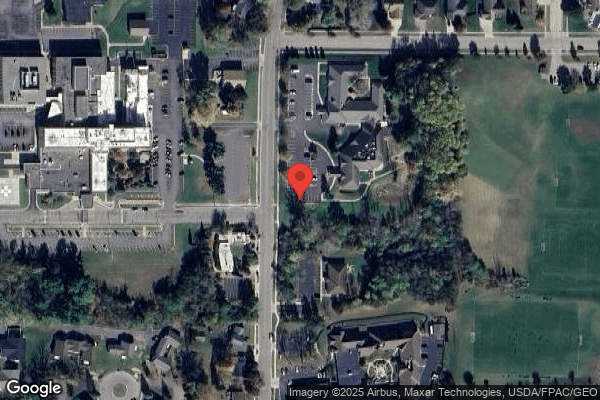
Jan 2025 1 deficiency 1 IJ (1 affecting multiple)
CRITICAL (K) 📢 Someone Reported This

A family member, employee, or ombudsman was alarmed enough to file a formal complaint

Immediate Jeopardy (IJ) - the most serious Medicare violation

Deficiency F0700 (Tag F0700)

Someone could have died · This affected multiple residents

**NOTE- TERMS IN BRACKETS HAVE BEEN EDITED TO PROTECT CONFIDENTIALITY** Based on observation, interview, and record review, the facility failed to ensure other alternatives were tried prior to install...

Read full inspector narrative →
**NOTE- TERMS IN BRACKETS HAVE BEEN EDITED TO PROTECT CONFIDENTIALITY** Based on observation, interview, and record review, the facility failed to ensure other alternatives were tried prior to installing/utilizing side rails. The facility failed to identify and recognize that the use of side rails with an air mattress increases the risk for entrapment for 12 of 12 residents in the facility (R1, R2, R3, R4, R5, R6, R7, R8, R9, R10, R11, R12) who use a side rail and an air mattress. On 9/23/22, the facility implemented the use of a side rail for R1. The facility failed to ensure other alternatives were tried prior to installing/utilizing side rails/enabler device for R1. On 1/8/24, the facility changed R1's mattress to a Panacea Convertible Mattress with powered alternating-pressure therapy (a pump); the facility failed to complete an assessment for entrapment at this time. On 1/7/25, R1 became entrapped in the siderail resulting in the following three (3) fractures: 1. Left proximal humerus fracture (broken arm), 2. Right periprosthetic distal femur fracture (a break in the thigh bone just above the knee) and 3. Left prosthetic distal femur fracture (a break in the thigh bone just above the knee). R1 expired the next day. The facility currently has 11 residents (R2, R3, R4, R5, R6, R7, R8, R9, R10, R11, R12) utilizing a Panacea Convertible Mattress with powered alternating-pressure therapy (a pump) together with side rails/enabler devices. The facility did not evaluate alternatives prior to installing the side rails The facility did not provide new risks and benefits to R2, R4, R5, R8, and R12 or their Health Care Power of Attorney when the facility changed their mattress and added an alternating air mattress to their bed with side rails. The facility's Bed System Measurement Device for measuring gaps caused by the use of bed rails is not recommended to be used with alternating air mattresses for R2, R3, R4, R5, R6, R7, R8, R9, R10, R11, R12 and these forms did not specify a date, a bed identification, or a resident name on them. Director of Maintenance F did not complete quarterly bed/side rail measurement tests per facility policy and procedure. The facility failed to ensure other alternatives were tried prior to installing/utilizing side rails/enabler device. The facility failed to identify that the use of side rails with an air mattress increases the risk of entrapment and failed to ensure a risk and benefit is discussed with the resident or their responsible party when risks/benefits change such as adding an air mattress. The facility failed to properly assess the gaps created by the combination of an air mattress with a side rail. These failures created a finding of immediate jeopardy that began on 1/7/25. Surveyor notified the facility of the finding of immediate jeopardy on 1/27/25 at 2:30 PM. The Immediate jeopardy was removed on 1/27/25; however, the deficient practice continues at a severity/scope of E (potential for more than minimal harm/pattern) as the facility continues to implement its action plan. This is evidenced by The Center for Devices and Radiological Health Guidance for Industry and FDA (Food and Drug Administration) Staff, Hospital Bed System Dimensional and Assessment to Reduce Entrapment, dated 3/10/2006, documents, in part, as follows: Pressure Reduction Therapeutic Products Framed flotation therapy beds, powered air mattress replacements, and similar pressure reduction products that have therapeutic benefits such as reducing pressure on skin are easily compressed by the weight of a patient and may pose an additional risk of entrapment when used with conventional hospital bed systems. When these types of mattresses compress, the space between the mattress and the bedrail may increase and pose an additional risk of entrapment. While entrapments have occurred with the use of framed flotation therapy beds (specialty air beds built into a hospital bed frame) and air mattress replacements, these products are excluded from the dimensional limit recommendations, except for those spaces within the perimeter of the rail. This partial exemption is due to the highly compressible nature of these mattresses, which poses technical difficulties with measuring certain dimensional gaps in these types of products. We will continue to work with the IEC (The International Electrotechnical Commission issues standards for the safety and performance of medical electrical equipment including air mattresses) to develop and refine test methods to address the risk of entrapment in bed systems using these products. Additional caution should be taken when using these products to ensure a tight fit of the mattress to the bed system. If a powered air mattress is replacing a mattress on a bed system that meets the recommendations in the guidance with the original mattress, the resulting bed system with the new air mattress may still pose a risk of entrapment. When these products are used, we recommend that steps are taken to ensure that the therapeutic benefit outweighs the risk of entrapment. NOTE: FDA continues to recommend the dimensional limits in this guidance for bed systems using mattress overlays. We recommend that steps be taken to assess the therapeutic benefit to the patient when applying a mattress overlay to a bed system that does not meet the recommended dimensional limits. The clinical benefit should outweigh the risk of entrapment presented by use of such a system. Potential Zones of Entrapment This guidance describes seven zones in the hospital bed system where there is a potential for patient entrapment. Entrapment may occur in flat or articulated bed positions, with the rails fully raised or in intermediate positions. The seven areas in the bed system where there is a potential for entrapment are . Zone 1: Within the Rail Zone 2: Under the Rail, Between the Rail Supports or Next to a Single Rail Support Zone 3: Between the Rail and the Mattress Zone 4: Under the Rail, at the Ends of the Rail Zone 5: Between Split bedrails Zone 6: Between the End of the Rail and the Side Edge of the Head or Foot Board Zone 7: Between the Head or Foot Board and the Mattress End Entrapment at the Bed Deck or Frame Many of the entrapment event reports FDA received involved entrapment between the rail and the bed ' s frame. It is unclear from the event descriptions whether this refers to the mattress deck, the bed frame, or even the hardware attaching the bedrail to the bed system. While this guidance does not recommend dimensional limits on the space at the deck or frame locations, FDA believes that meeting the other recommended dimensional limits would reduce the possibility of entrapment at the deck or frame locations. The manufacturer guidelines for the Panacea Convertible Mattress with powered alternating-pressure therapy, documents, in part, the following: Alternating-Pressure cycle - provides 10-minute loading and unloading cycles designed to relieve peak interface pressures. Warnings: Failure to comply with all directions and warnings may result in injury or death; use only as directed. Note - This product is designed to assist in the prevention and treatment of pressure ulcers and may require other equipment. This may include but is not limited to bedrails for repositioning and fall prevention. Note - This product is only one element of care in the prevention and treatment of pressure ulcers by medical professionals and skilled caregivers to assist in the treatment and prevention of up to Stage IV (4) decubitus ulcers (pressure injuries) for residents under their care. This product is not designed to and cannot replace good care giving practices and treatment, including but not limited to: .Adequate training for a precaution by staff personnel for bed entrapment. The facility policy, Devices and Device Assessment, reviewed 1/2025, documents, in part, as follows: Due to risk of injury related to the use of physical devices, such devices will only be used after an assessment has been completed to determine the risks and benefits of this use. The resident/responsible party will be educated regarding the risk and benefits of physical devices. Physical devices will be reviewed for safety and used according to manufacturer's recommendations. Continued use of physical devices will be assessed at least every 90 days or with significant change to determine if the device is still needed to enhance the resident's safety and/or bed mobility. Devices will be installed as appropriate for the type of bed: For hospital beds: Device will be installed per FDA (Food and Drug Administration) guidelines. For non-hospital beds: Devices will be installed according to the device manufacturer's instructions. Documentation will be entered in the resident's record to include Results of the assessment; Discussion with resident/responsible party regarding risks and benefits and alternatives considered/recommended; Decision made/outcome of discussion. Information from FDA Regarding Side Rails: In 2006 the Food and Drug Administration (FDA) released its recommendations for reducing entrapments. The FDA identified seven zones of entrapment and recommended maximum dimensions for four of the zones. Zone 1: Within the Rail (4.75); Zone 2: Under the Rail, Between the Rail Supports or Next to a Single Rail Support (4.75); Zone 3: Between the Rail and the Mattress (4.75) 1.R1 was admitted to the facility on [DATE] with diagnoses including, dementia-severe without behavioral disturbance (an advanced stage of cognitive decline where significant impairment in memory, language, reasoning and daily functioning occurs), reduced mobility (reduced ability to move), osteoporosis (a condition in which bones become weak and brittle), cerebrovascular disease (a condition that impacts the brain's blood vessels and blood supply). R1 was incapacitated on 7/5/2020. R1's has an APOAHC (Activated Power of Attorney). On 9/23/22 R1's initial APOAHC signed Half Side Rail/Bed Bar Informed Consent that document as follows: An assessment was conducted to determine the appropriateness and need of either a half side rail or bed bar for you. A half side rail or bed bar is a metal or plastic bar that is attached to the side of the bed. A half side rail is approximately one quarter of the length of the bed and a bed bar is approximately one eighth of the length of the bed. Potential benefits of a half side rail or bed bar includes Facilitates turning and repositioning within the bed; Facilitates access to bed controls and personal care items. In some instances, half side rails or bed bars present an inherent safety risk. Potential risk include: *Strangulation, suffocation, entrapment or death when a resident or part of his/her body is caught between the bedrail or between the bedrails and the mattress and the opening of the rails *Serious bodily injury from falls if a resident climbs over the half side rail or bed bar; *Bruising, abrasions, contusions, skin tears; and *Negative psychological effects and altered resident self-esteem There was no evaluation of alternatives to the use of a side rail at this time. R1's Minimum Data Set with an ARD (Assessment Reference Date) of 11/22/24, documents a BIMS (Brief Interview of Mental Status) score of 3, indicating R1 is severely cognitively impaired. R1 is totally dependent on staff for ambulation, transferring, bathing, dressing, and toileting. Section P, Restraints, documents R1 does not use a bedrail. R1's comprehensive care plan, dated 3/1/24, documents the following: Focus: Devices - Safety/Mobility: At risk for injuries/complications R/T (related to) use of 1/4 Side Enabler Bar on Top; Both sides; to help promote independence with bed mobility and to aid in holding sitting position at side of bed. (Date Initiated: 11/16/23; Date Revised: 1/8/25) Goal: Will be free of serious injuries/complications r/t device use through next review. (Date Initiated: 11/16/23; Revised 1/8/25) Intervention: Device Assessment upon application/admission, quarterly, SCC (Significant Change) and/or PRN (as needed); Monitor/Observe/Document application of device, device use, behavior r/t (related to) device and review observations/concerns with MD (Medical Doctor).; IDT (Interdisciplinary Team) review of Device placement for continued appropriateness per facility protocol. (Date Initiated 3/1/24). The facility has a Resolved Care Plan entry: Uses upper 1/4 rail to enable bed mobility. (Date Initiated: 11/16/23; Revision on: 3/1/24; Resolved Date: 3/1/24). Note, it is unknown why the facility discontinued the comprehensive care plan entry of 1/4 siderails to R1's bed on 3/1/24 when the side rails were still in place at the time of the entrapment. R1's comprehensive care plan, dated 11/16/23, documents as follows: Actual/At Risk/and/or Potential for Complications with OR fall R/T (related to) current medical/physical status. Has med's/[NAME] (medications/diagnosis) that can/may affect fall risk. Resident transfers with EZ lift (Note, staff confirmed EZ Lift is total body lift) (Date Initiated: 11/16/23; Goal: Will be free of falls, but if does, will be free of serious injuries r/t falls through next review date. (Date Initiated: 11/16/23, Target Date: 3/13/25); Interventions: Bed in low position; Call light positioned for easy access; Check for unmet needs: pain, toileting, hunger, thirst, temperature; Ensure environment is free of clutter On 1/8/24 the facility put a Panacea Convertible Mattress with an optional alternating-pressure pump in use for R1. It is important to note, this is the same air mattress and pump the facility puts in place for all residents that require an air mattress. The facility failed to identify that the use of side rails with an air mattress increases the risk of entrapment; subsequently, the facility did not complete a new assessment at the time a powered alternating-pressure air mattress was utilized for R1. The side rail in use since R1's admission is Invacare Model IHCSRLAS. This side rail has three (3) vertical bars and two (2) horizontal bars. On 8/12/24, facility staff (this staff member has since retired) completed Bionix Safety Technologies (Food and Drug Administration Approved) for R1's air mattress and bedrail in use together. On 8/12/24 the inspection documents the air mattress with a pump together with a bedrail Passed safety inspection. It should be noted based on the FDA Staff, Hospital Bed System Dimensional and Assessment to Reduce Entrapment, Pressure Reduction Therapeutic Products Framed flotation therapy beds, powered air mattress replacements, and similar pressure reduction products that have therapeutic benefits such as reducing pressure on skin are easily compressed by the weight of a patient and may pose an additional risk of entrapment when used with conventional hospital bed systems. When these types of mattresses compress, the space between the mattress and the bedrail may increase and pose an additional risk of entrapment. While entrapments have occurred with the use of framed flotation therapy beds (specialty air beds built into a hospital bed frame) and air mattress replacements, these products are excluded from the dimensional limit recommendations, except for those spaces within the perimeter of the rail. This partial exemption is due to the highly compressible nature of these mattresses, which poses technical difficulties with measuring certain dimensional gaps in these types of products. On 11/27/24 R1's Fall Risk Screening documents: R1 is at Slight risk due to intermittent confusion On 11/27/24 R1's Enabler/Safety Device Use Tool documents the following: Reason for review: Quarterly Type of Device: Rails Reason for use: Safety Status -Cognitive Status: Confusion -Behavioral Status: Other -Additional Information: No behaviors -IDT (Interdisciplinary Team) Potential Benefits: Increased feeling of safety Potential Risks: Increased-Falls Device Use - Is the device considered a restraint: No *Device Use - Considered beneficial to individual: No IDT (Interdisciplinary Team) Discussion: Uses the side rail for bed mobility Of note, R1's most recent fall prior to the entrapment (below) was in May 2024. No injuries. On 1/7/25 around 4:07 AM, R1's Progress Notes document the following: CNA C (Certified Nursing Assistant) heard yelling from R1's room. R1 was yelling as she was on the ground. Her roommate was yelling because she heard R1 yelling. Upon entering their room, CNA C found R1 on the floor on her fall mat. R1 was facing the wall. Her right arm was holding onto the assist bar, while her left arm was between the mattress and the assist bar. (Note, R1's left arm that was entrapped sustained a left proximal humerus fracture.) Her legs were under her on the mat. R1 had her foam boots on. Her blankets were on the floor and her arm protectors were off. It was also noted there was blood on the floor near her nightstand. CNA C immediately called for the nurse on duty. LPN D (Licensed Practical Nurse) assessed R1 and noted, that R1 had a large mole on her right upper arm that was ½ off and bleeding. It was also noted that there was bruising on the top of her left hand. LPN D then called for an ambulance to send R1 to the emergency room for further evaluation. R1's family member (name) and NP (Nurse Practitioner name) were notified. X-rays were completed at the hospital indicating a nondisplaced proximal left humerus fracture, a slightly displaced fracture of the right distal femoral metaphysis and a significantly displaced fracture of the left distal femoral metaphysis. R1 reported, I was trying to get up. I've been laying in this bed since 10:00 PM and I want to go home. Immediate Action Taken: Call placed to family member. Resident sent to ER (Emergency Room) for further evaluation and treatment. Resident taken to hospital: Y (Yes) Injuries Observed at Time of Incident Fracture Right thigh (front) Fracture Left thigh (front) Fracture Left Upper Arm Hematoma Left hand (palm) Skin Tear (Right Upper Arm Level of Pain: 1 Level of Consciousness: Alert Mobility: Wheelchair bound Mental Status: Baseline for Individual emergency room Visit/Hospitalization Notes: Has a large mole on her right outer arm that is ½ off and is bleeding. Bruising on the top of her left hand. Resident is unable to tell pain. Injuries Reported Post Incident: Other: Right antecubital Level of Pain: Blank (R1 is unable to voice) Level of Consciousness: Alert Mobility: Wheelchair bound Mental Status: Oriented to Place, Oriented to person Predisposing Environmental Factors: None Predisposing Physiological Factors: Confused, Gait imbalance, Impaired Memory Predisposing Situation Factors: Ambulating with Assist; Side Rails up Other Info: Staff are unaware of why or how she got out of bed as she has not self-ambulated in multiple years. Agencies/People Notified: Family Member and Nurse Practitioner R1's hospital ED (Emergency Department) report documents, in part, as follows: R1 arrived to the hospital at 4:51 AM. Skilled nursing facility resident who sustained an unwitnessed fall at her skilled nursing facility. The patient was found to have rolled out of bed, and she was propped between the bed and her nightstand. (Note, NHA A, stated, per staff interviews, this information is incorrect.) The patient was brought to the ED for evaluation. Imaging studies were obtained, which indicated a right periprosthetic distal femur fracture, a left periprosthetic distal femur fracture (a break in the thigh bone just above the knee), and a left proximal humerus fracture (broken arm). Orthopedic Surgery was consulted for further evaluation and treatment of the patient. The patient is currently noncommunicative due to neurocognitive disorder. No other problems are reported. Assessment: 1. Left proximal humerus fracture 2. Right periprosthetic distal femur fracture 3. Left prosthetic distal femur fracture Plan: R1 is a skilled nursing facility resident who sustained an unwitnessed fall with resultant bilateral periprosthetic distal femur fractures and a nondisplaced left proximal humerus fracture. Per report, the patient is relatively bedbound. In addition, the patient has very significant neurocognitive disability. After discussion with the patient's family member, who is also the patient's power of attorney, the family wishes to pursue nonoperative intervention for the patient's lower extremity fractures and provide comfort measures only. Given the patient's overall medical condition, this is completely acceptable. Both lower extremities will remain in knee immobilizers, and left upper extremity will remain in a sling. Comfort measures will be provided. On 1/7/25 at 11:35 AM, R1 was discharged back to the facility. On 1/7/25 (after the incident), the facility completed Bionix Safety Technologies testing for R1's air mattress and bedrail in use together. On 1/7/25 the inspection documents the air mattress with a pump together with a bedrail Passed safety inspection. However, the facility made the decision to remove the side rail from R1's bed upon her return from the hospital ED. On 1/8/25 at 6:00 AM, LPN D (Licensed Practical Nurse) documented the following Progress Note: CNA had turned her at 4:20 AM. Night CNA asked day to help turn her and they walked in her room. They called nursing to her room as she had no pulse, no BP (blood pressure). On 1/8/25 at 6:30 AM, LPN D (Licensed Practical Nurse) documented the following Progress Note: Situation: Found with no BP or pulse Background: Had a fall 24 hours ago and came back comfort care On 1/8/25 at 6:10 AM, LPN D (Licensed Practical Nurse) documented the following Progress Note: R1's family members were called and told about her passing away. The daughter wants us to hold off calling funeral home until she processes all of this. On 1/14/25, Physician/Medical Director E documented the following information to NHA A (Nursing Home Administrator) via email: Case Review 2025.01 Sources: Epic; references; PCC (Point Click Care/Electronic Health Record) chart inaccessible- *The fracture was pathologic (significantly due to osteoporosis) *The fracture was traumatic (significantly due to a fall from bed height) *The fracture had other causes (there were no signs the resident asked for help) *The fracture was a cause of death (were it not for the fracture .) *The fracture was not the only cause of death (were it not for the dementia and frailty .) *The alarm, mats, and side rail did not clearly contribute to the fracture. *Opinions expressed are to a reasonable degree of medical certainty and subject to revision if additional information becomes available. On 1/23/25 at 11:15 AM, Surveyor spoke with CNA C (Certified Nursing Assistant). CNA C stated she was completing rounds at approximately 4:15-4:20 AM when she heard R1 hollering, and she immediately went to check on R1. CNA C stated, she observed R1 on the red floor mat next to her bed with her legs under her. CNA C added, R1 was facing the wall (in front of her) with one arm stuck (entrapped) in the railing and the other arm was holding onto the railing. CNA C stated, she cannot recall which arm was tangled (entrapped). CNA C stated, she hollered for LPN D (Licensed Practical Nurse). CNA C stated, LPN D came to R1's room right away. CNA C stated, we got a pillow and laid R1 down on the mat. CNA C stated, R1 was crying in pain, stated she was hungry wanted to get up out of bed because she has been in bed since 10:00 PM. CNA C stated, the facility put the fall mat intervention in place in 5/2024 when R1 last fell. Surveyor asked CNA C, is R1 able to make movement on her own. CNA C stated, no, not for a long time since she last fell on 5/2024, and we put the fall mat in place as an intervention. Surveyor asked CNA C if she had noticed R1 acting differently recently over the past week or so. CNA C stated, no. CNA C stated, R1 would use siderails when staff would check and change her. On 1/23/25 at 1:15 PM, Surveyor spoke with LPN D (Licensed Practical Nurse). Surveyor asked LPN D to describe what happened when R1 was found on the floor on 1/7/25. LPN D stated, CNA C (Certified Nursing Assistant) had just finished rounds on 1 wing when LPN D and CNA C both heard R1 start calling out. LPN D stated, CNA C immediately responded to R1 calling out. LPN D stated, it is not uncommon for R1 to yell out that she wants to go home or to go see her mother. LPN D stated, CNA C found R1 on the floor mat on her knees and called out for LPN D. LPN D stated, R1's left arm was stuck down about 1 inch in between the siderail and the mattress with her right arm in front of her holding onto the side rail. LPN D stated the side rail was in the up and correct position. LPN D stated, she needed to move the bed up (as it was in the lowest position) in order to disengage the side rail. Emphasis Intended. LPN D stated, she was then able to get R1's arm out from being entrapped in between the mattress and side rail. LPN D stated, when she asked R1 if she has any pain. R1 pointed to her left shoulder. LPN D stated, R1 looked like she had a little pain. LPN D stated, she and CNA C laid R1 down on the mat to assess. LPN D stated, a different nurse contacted R1's APOAHC (Activated Power of Attorney for Health Care) while she stayed with R1. LPN D stated, R1 was then immediately sent to the hospital ED (emergency department). LPN D stated, she heard R1 yell when the EMT's (Emergency Medical Technicians) put her on the stretcher. LPN D stated, all of R1's care plan interventions were in place at the time of this accident. LPN D stated, she observed R1 to be sleeping when she passed water just a short time before the fall. LPN D was also working at the time R1 passed away on 1/8/25, 24 hours after the entrapment and fall with fractures. LPN D stated, on 1/8/25 R1 was found pulseless and not breathing. LPN D stated, this experience has been very traumatic for her as well. On 1/23/25 at 4:45 PM and 5:00 PM, Surveyor spoke with NHA A (Nursing Home Administrator) and DON B (Director of Nursing). Surveyor asked NHA A, what date was R1's side rails put in place. NHA A stated, R1's side rails were likely in place since admission to the facility. NHA A added, the facility previously did not remove side rails when residents discharged . Therefore, any newly admitted residents automatically have a side rail(s) that was in place for the previous resident. The facility identified this as a deficient practice and is addressing it in QAPI (Quality Assurance Process Improvement). Surveyor asked NHA A and DON B, what alternatives were attempted prior to utilizing a bedrail. NHA A stated, the facility has no prior alternatives documented. NHA A stated, alternatives attempted should have been documented and the facility is working to correct this for other residents via the Therapy Department. NHA A stated the Therapy Department is about 2/3rds of the way through screening all 48 residents. Surveyor asked NHA A and DON B, when the air mattress was put in place on 1/8/24, should an assessment have been completed at that time. (Note, the assessment was not completed until 3/8/24.) NHA A stated, yes. 2. R2 admitted to the facility on [DATE] with the following diagnoses: malignant neoplasm of the prostate, encounter for palliative care, age related osteoporosis, and polyneuropathy. R2's most recent MDS (Minimum Data Set) with ARD (Assessment Reference Date) of 10/17/24 indicates R2's cognition is moderately impaired with a BIMS (Brief Interview for Mental Status) score of 10 out of 15. R2's MDS also indicates he is dependent on staff to meet his needs in toileting, rolling from left to right, going from lying to sitting, going from sitting to lying, and transfer bed to chair or chair to bed. R2's informed consent for bed rails, signed 7/12/23, includes potential benefits of a half side rail . in some instances half side rails or bed bars present an inherent safety risk. Potential risks include strangulation, suffocation, entrapment, or death when a resident or part of his or her body is caught between the bed rail or between the bed rails and the mattress and the opening of the rails . serious bodily injury from falls if a resident climbs over the half side rail or bed bar . Bruising, abrasions, contusions, skin tears, and negative psychological effects . and altered resident self-esteem . (It is important to note the facility did not provide evidence of alternative interventions being tried prior to the installation of the bed rails.) R2's Comprehensive Care Plan, includes revision date 3/1/24 bed mobility- independent, assist of 1 to 2 if weak . R2's Medical Record indicated an alternating air mattress was added to R2's bed on 11/24/24. (It is important to note adding an alternating air mattress to a bed with side rails changes the risks and a new informed consent form describing the new risks and benefits of using the side rails with the alternating air mattress was not given to R2 or his activated Health Care Power of Attorney.) R2's Bed System Measurement Device Test Results Worksheet, undated, includes Bed ID: (blank) . Bed make- (blank) . Model-(blank) . Barcode- (blank) . Mattress make- (blank) . Mattress Model- (blank) . Left zone 4- pass, zone 2 pass, zone 4 pass . Right zone 4 pass, zone 2 pass, zone 4 pass . (It is important to note there is no resident name, no bed identification and no date on this form. It is also important to note this system of testing is not recommended to be used with alternating mattresses as the air in the cells shifts when weight is applied.) On 1/23/25 at 8:43 AM Surveyor observed R2's room including his bed. R2's bed had an alternating air mattress and bedrails that reached ¼ of the way down his bed. 3. R3 admitted to the facility on [DATE] with the following diagnoses: unspecified dementia, abnormality of gait, open wound . R3's informed consent for bed rails, signed 2/21/24, includes potential benefits of a half side rail . in some instances half side rails or bed bars present an inherent safety risk. Potential risks include strangulation, suffocation, entrapment, or death when a resident or part of his or her body is caught between the bed rail or between the bed rails and the mattress and the opening of the rails . serious bodily injury from falls if a resident climbs over the half side rail or bed bar . Bruising, abrasions, contusions, skin tears, and negative psychological effects . and altered resident self-esteem . (It is important to note the facility did not provide evidence of alternative interventions being tried prior to the installation of the bed rails.) R3's Medical Record indicates an alternating air mattress was added to her bed on 2/21/24 (on admission). Bed System Measurement Device Test Results Worksheet, undated, includes Bed ID: 251 . Bed make- (blank) . Model-(blank) . Barcode- (blank) . Mattress make- (blank) . Mattress Model- (blank) . Left zone 4- pass, zone 2 pass, zone 4 pass . Right zone 4 pass, zone 2 pass, zone 4 pass . (It is important to note there is no resident name and no date on this form. It is also important to note this system of testing is not recommended to be used with alternating mattresses as the air in the cells shifts when weight is applied.) R3's most recent MDS with ARD of 11/22/24 indicates R3's cognition is severely impaired with a BIMS score of 7 out of 15. On 1/23/25 at 8:48 AM Surveyor observed R3's room including her bed. R3's bed had an alternating air mattress and bedrails that reached ¼ of the way down her bed. 4. R4 admitted to the facility on [DATE] with the following diagnoses: Type 2 Diabetes Mellitus and unspecified mental disorder. R4's most recent MDS with ARD 10/25/24 indicates R4's cognition is severely impaired, and he never or rarely makes decisions. R4's
Feb 2023 7 deficiencies 1 IJ
CRITICAL (J)

Immediate Jeopardy (IJ) - the most serious Medicare violation

Pressure Ulcer Prevention (Tag F0686)

Someone could have died · This affected 1 resident

**NOTE- TERMS IN BRACKETS HAVE BEEN EDITED TO PROTECT CONFIDENTIALITY** Based on observation, interview, and record review, the facility did not implement professional standards of practice to ensure ...

Read full inspector narrative →
**NOTE- TERMS IN BRACKETS HAVE BEEN EDITED TO PROTECT CONFIDENTIALITY** Based on observation, interview, and record review, the facility did not implement professional standards of practice to ensure that a resident did not develop a pressure injury (PI) and that the resident received necessary treatment and services to promote healing and prevent infection of the pressure injury for 1 of 4 residents sampled for pressure injuries (R2). R2 had a history of pressure injuries and was at risk for PI development. The facility failed to implement aggressive measures upon admission, failed to update R2's MD timely when a new pressure injury developed, failed to re-evaluate interventions that were not working, failed to update the care plan timely, failed to complete diabetic foot checks per current standards of practice, and failed to use R2's offloading boots per manufacturer's guidelines. The facility did not consider changing course of action when 3 of R2's Medical Doctors noted the wound to be caused by pressure. R2 developed an infected stage IV PI. It should be noted thoroughout R2's medical record there is conflicting documentation regarding the causative factor of R2's wounds. R2 had a diagnosis of diabetes and some providers called the heel ulcers diabetic ulcers where others called it pressure ulcers. Interviews suggest there is likely a component of both. Obesrvations and interviews during the survey support a pressure related causative factor thus determining citation under 686. The failure of the facility to prevent the development of a PI for an at-risk resident, failure to conduct diabetic foot checks per current standards of practice, failure to implement R2's offloading boots per manufacturer's guidelines, failure to re-evaluate the use of pillows for offloading when they were not working, failure to update R2's care plan timely, and failure to update R2's MD with a new open wound resulted in R2 developing a Stage 4 PI, which became infected requiring antibiotic therapy and surgical intervention. This created a situation of Immediate Jeopardy which began on 1/3/23 when R2's stage 4 PI became infected. NHA A (Nursing Home Administrator) and DON B (Director of Nursing) were formally notified on 2/22/23 at 4:25 PM that an Immediate Jeopardy situation existed. The immediate jeopardy was removed on 2/21/23. The deficient practice continues at a scope/severity of D (potential for more than minimal harm that is not immediate jeopardy/isolated) as the facility continues to implement its action plan. Evidenced by: The facility policy titled Wound Care Guidelines, dated 2/05, includes, in part: .Each resident will be assessed on admission and will have a personalized skin care plan to address skin care needs including preventative care. Weekly assessments and documentation of all wounds will include: the specific location of the ulcer the stage of the ulcer the presence of exudate or drainage or odor, the length width and depth of wound in centimeters, the frequency of dressing changes and what products are being used to treat the wound, the progress, deterioration, or the development of new problems . for heels: apply topical agent to toughen the skin . goal is to keep skin dry . offload heels with foam boots or pillows under ankles . Stage 2 pressure ulcer / partial thickness / skin tear / blister: loss of skin involving the epidermis and possibly the dermis, May see blistering: protect area from undue stress and or pressure, keep the surrounding skin dry, soft, and supple. For ankle or foot wounds: prompt attending physician for Podiatry consult . If necrotic or covered with 20% or greater slough . stage 3 pressure ulcer/full thickness: tissue loss involving subcutaneous tissue but not muscle or bone . stage 4 pressure ulcer/full thickness: deep tissue destruction involving muscle, bone, and fascia. May see draining and necrosis . . (It is important to note the outdated information found in this policy, including slough under the definition of stage 2 as in current standards slough in wound bed indicates stage 3 wound.) Genesis 111 Mattress Manufacturer's Information, undated, includes: 5 inch-Pressure reducing support surfaces are a type of medical equipment used for the care of pressure sores, also known as pressure ulcers or injuries. Pressure ulcers are lesions caused by constant pressure on areas in contact with the mattress, resulting in damage of skin and deep tissues. Some pressure reducing mattresses are powered by electricity (known as powered pressure-reducing air mattresses) and others are not. They replace a standard hospital or home mattress and are either integrated to or placed on a hospital bed frame. Powered pressure reducing mattresses have a surface designed to reduce friction and shear through technologies know as alternating pressure, low air loss, or powered flotation without low air loss. They have a pump or blower which provides either sequential inflation and deflation of the air cells or a low interface pressure throughout the mattress. They are indicated for persons with deeper pressure ulcers (stage II, III or IV) or after surgery, for persons who received a flap or skin graft to cover a wound. Weight Capacity: 350 Pounds Heel Lift Classic Suspension Boot Manufacturer's Information, undated, includes: . suspends the heel to prevent pressure injuries with superior customizability . Application Instructions - Place the foot inside of boot with the heel resting above the opening . Thread straps through the D-rings and secure straps back together . Test the fit under heel opening. Ensure no straps touch the skin . Heel Lift Classic Suspension Boot Customization Instructions Video includes: .Make sure the heel is positioned directly above the opening . To avoid Achilles tendon irritation: cut a v shape into the fixed pad . Carefully place foot in boot making sure the heel is properly centered above the heel opening. The National Pressure Ulcer Advisory Panel's Pressure Ulcer Prevention Points, updated 2007, include: Use devices that eliminate pressure on the heels. For short-term use with cooperative patients, place pillows under the calf to raise the heels off the bed. Place heel suspension boots for long-term use . Use a written repositioning schedule .Perform a head-to-toe skin assessment at least daily, especially checking pressure points such as sacrum, ischium, trochanters, heels, elbows, and the back of the head . Implement pressure ulcer prevention educational programs that are structured, organized, comprehensive, and directed at all levels of health care providers, patients, family, and caregivers. Include information on use of support surfaces . Ensure that the heels are free from the bed . R2 was admitted to the facility on [DATE] following a 10-day hospital stay that included surgical repair of a displaced spiral fracture of the shaft of R2's left femur. R2's medical diagnoses included Type 2 Diabetes Mellitus with diabetic polyneuropathy and nephropathy, reduced mobility, abnormality of gait and mobility, postprocedural complications and disorders of the circulatory system, and age-related osteoporosis. R2's Hospital Discharge Worksheets, dated 10/19/22, include, in part: R2 lives at home with his wife . uses a walker . He tripped, fell at home, and suffered left distal femur displaced periprosthetic fracture. On 10/11/22 an open reduction and internal fixation of left periprosthetic fracture was performed. Elevate surgical leg while resting . post-operative medical devices to be removed daily for head-to-toe skin assessments . if alterations in skin integrity is found, notify R2's MD, document, clean, and dress per standing wound orders . Offload pressure always. He tolerated procedure well . Gluteal cleft wound . Coccyx has sore dark area, un-blanchable 12cm x 9cm with 1cm x 2cm open area . R2 was found to be medically and orthopedically stable but inappropriate to return home independently, therefore, is being transferred to nursing home for short term care and therapy. R2's Norton Plus Skin Risk Assessment Scale includes, in part, the following: Key - 10 or below is high risk 10/19/22 - R2's Norton Score 5 - at high risk for skin breakdown R2's Closet Care Plan, dated 10/19/22, includes Offload heels with boots or pillows under ankles . Document refusals . Turn/Reposition Schedule: Turn and reposition on night rounds . Naps as needed . float heels . elevate left lower extremity but do not place pillow directly under knee . CNAs Check heels/feet AM and PM . (It is important to note the facility did not provide evidence of diabetic foot checks being completed.) R2's Initial Skin Assessment, dated 10/21/22, includes Skilled Nursing observation completed for entire body with focus over bony prominences. The following skin problems noted: open areas by coccyx, surgical incisions, bruising abdomen, needs panacea mattress in the morning. R2's MD Progress Note, dated 10/25/22, includes, in part: . seen today for follow up for coccyx wound and anal pain . continue offloading and daily wound care until healed . likely pain from pressure on coccyx wounds while seated. Reposition and is using a foam cushion on chair. R2's Norton Plus Skin Risk Assessment Scale includes, in part, the following: Key - 10 or below is high risk 10/26/22 - R2's Norton Score 5 - at high risk for skin breakdown R2's Minimum Data Set (MDS) with an Assessment Reference Date (ARD) of 10/26/22 states R2 is cognitively intact with a Brief Interview for Mental Status (BIMS) score of 15 out of 15. R2's MDS also indicates R2 requires the extensive physical assistance of two or more staff to meet his needs in bed mobility, toileting, dressing, and personal hygiene. R2's MDS indicates he is totally dependent on two or more staff to meet his needs in transfer. In addition, the MDS indicates R2 is frequently incontinent of urine, always incontinent of stool, and is at risk for pressure injury development. R2's MDS indicates he did not have any unhealed pressure injuries, venous, or arterial injuries and needs a pressure reducing device for chair and bed and a turning/repositioning program. (It is important to note the stage 2 pressure injury of the coccyx that R2 admitted with is not captured on this MDS.) R2's Nurse Note, dated 10/27/22, include large clear fluid filled blister . right heel . Blue boot applied. The heels have been floated on the PM shift when nurse checked over the past few days. On 2/20/23 at 2:01 PM, Surveyor interviewed RN L (Registered Nurse) regarding R2's pressure injuries (PI.) RN L stated, R2 had pillows to float heels until 10/27/22, but I put a blue boot on the right heel when I was made aware of the first blister. He was on pressure relieving foam mattress on 10/21/22 and I worked late so I left a note for morning shift and housekeeping to replace it with a low air loss mattress. I did not update R2's Care Plan. I should have. (Of note, RN L only placed the heel lift boot on the right heel. Approximately 2 weeks later R2 developed a PI on the left heel.) On 2/21/23 at 10:19 AM, Surveyor interviewed CNA Q (Certified Nursing Assistant) regarding R2's pressure injuries to the heels. CNA Q stated, We were using pillows at the beginning, but his feet were sliding off onto the mattress and he got heel ulcers. Now we use boots. Surveyor asked CNA Q if he notified anyone the pillows were not effective in offloading the heels. CNA Q stated he was sure nursing staff were aware the pillows were not keeping R2's heels off the mattress. R2's Norton Plus Skin Risk Assessment Scale includes, in part, the following: Key - 10 or below is high risk 11/2/22 - R2's Norton Score 7 - at high risk for skin breakdown R2's Nurses Notes, dated 11/8/22, include fluid filled blister on left heel R2's Nurses Notes, dated 11/9/22, include left heel 2.5cm (centimeters) x 3.0cm, intact serous filled blister on left heel . right heel blister is now fully absorbed. Resident has been wearing boots in bed - unsure of cause of blister . Calvon applied. Boots remain in place at all times . Will monitor . R2's Nurses Notes, dated 11/14/22, include left heel blister 4.7cm x 5.5cm x superficial . roof of blister came off . small amount of serous exudate . MD (Medical Doctor) updated. (It is important to note this is the first time R2's MD is updated regarding new open areas on heels.) R2's MD Progress Note, dated 11/22/22, includes Active problems - gluteal cleft wound present on admission, blister on right heel (R2) has had edema to both lower extremities. (It is important to note, R2's MD does not mention R2's open wound to his left heel in this note.) R2's Nurses Note dated 11/22/22, includes left heel blister 4.3cm x 4.6cm continue same treatment . right heel blister - 4.0cm x 4.9cm, blister is resolving . foam boots to offload heels . (It is important to note the wounds are measured but there is no other description of the wounds.) R2's MD Progress Note dated 11/25/22-11/28/22, includes, in part: .was recently hospitalized [DATE]-[DATE] for a left distal displaced periprosthetic fracture which required surgical intervention. Unfortunately, during his stay, he was found to have an acute on chronic congestive heart failure exacerbation with elevated tropin levels and acute post procedural atrial fibrillation . final diagnosis - . wound on left and right heel, wound on left leg, recent femur fracture with surgical repair . Blister of left and right heel: evidence of delayed healing, with likely component of pressure injury and edema skin break down. No surrounding erythema or evidence of infection. Leg eschar loosened 11/27/22. Wound emphasis . included offloading the area, and keeping it clean and covered with mepilex . R2's MD Progress Note, dated 11/29/22, includes Blister of left and right heel: evidence of delayed healing, with likely component of pressure injury and edema skin breakdown. No surrounding erythema or evidence of infection. Leg eschar loosened on 11/27/22. Wound care emphasis . included offloading the area and keeping it clean and covered with mepilex . Left heel ulcer - not hurting unless handled. He is wearing his offloading boots . Bilateral heel ulcer per wound team Left - 6cm x 4cm dry blister with 2cm x 2cm dark central small bleeding . Right - 2 cm x 2cm blister opened with small bleeding. Wounds dressed with Aquacel Ag and Mepilex and offloaded. Assessment/Plan - blister of left heel subsequent encounter: continue offloading and daily wound care . R2's Nurses Notes, dated 11/29/22, include has dark spot within left heel blister 1.8cm x 1.8cm. R2's Closet Care Plan, dated 12/12/22, includes Offload heels with boots or pillows under ankles . Document refusals . Turn/Reposition Schedule: Turn and reposition on night rounds . Naps as needed . float heels . elevate left lower extremity but do not place pillow directly under knee . Foam boots bilateral when in bed . Foam boots on for protection except with transfers . CNAs Check heels/feet AM and PM . (It is important to note this is the first time R2's boots show up on his Care Plans (12/12/22). Also, important to note the facility did not provide evidence of diabetic foot checks being completed.) Nurses Note dated 12/13/22, includes: .left heel peripheral neuropathic wound . DON B (Director of Nursing), ADON C (Assistant Director of Nursing) and Dietician all present. Left heel 2.6 cm x 3.5 cm, eschar plate 95% . left heel again 3.0cm x 3.5cm eschar plate measures 2.5 cm x 2.0 cm . Updated NP (Nurse Practitioner) R2's MD Progress Note dated 12/14/22, includes: .alert and oriented x 4 . alert, cooperative, and pleasant . open wound of left heel (primary encounter diagnosis) . the eschar plate was about 95% covering the wound. Necrotic odor was noted . I debrided the wound . No pain during procedure and very minimal bleeding was observed. The majority of the plate was removed, and the remaining residual was scored . Change wound orders to apply Santyl, cover with Aquacel, followed by Mepilex. Change wound dressing daily . R2's Nurses Notes dated 12/19/22, include: 4.0cm x 4.8cm eschar necrotic odor noted . Updated NP . R2's MD Progress Note, dated 12/23/22, includes: .seen today for follow up for nonhealing left heel ulcer, for possible debridement and wound culture as reported by staff. Skin: left heel ulcer is approximately 5cm in diameter, is completely covered by dry eschar, surrounded by scale . Procedure: Removal of dry eschar revealed more than ¼ inch of slimy brown slough/necrotic foul-smelling tissue. A 1/4-inch layer was removed, but there remains further depth of this tissue across wound bed. Raw wound is reached at the 2 o'clock position, with scant bleeding. Wound culture is obtained there. Procedure: Secondary confirmation of the site was identified by patient and staff. Verbal consent was obtained by patient. Size 5 cm . Description: necrotic eschar covered ulcer located on left heel . the lesion was anesthetized . Sharp excision was performed of the dry eschar plate and ¼ inch depth of the underlying soft slough/necrotic tissue. Bleeding was largely absent, stopped gauze pressure. Wound was dressed with Santyl, Aquacel, and gauze wrap . Continue offloading, daily wound care . Treat infection if presence noted on culture. Podiatry consultation. R2's Nurses Notes, dated 12/24/22, include: .still necrotic with darker gray area surrounding wound . R2's Nurses Notes, dated12/27/22, include left heel wound: 3.3cm x 4.0cm, eschar plate measuring 2.4cm x 2.9cm . strong odor . Updated MD R2's Nurse Notes, dated12/28/22, include MD added oral antibiotics R2's MD Progress Note, dated 12/28/22, includes: . staff report again that eschar plate has re-covered, and ulcer has had persistent foul odor. No surrounding erythema, no purulent drainage. He agrees to further debridement and wound culture if possible. He is reminded of upcoming evaluation with MRA and podiatry. He denies pain unless deeply handled . Has maintained offloading. Skin: 5-6 cm left heel ulcer, eschar covered, has extended laterally now 2-3 cm open area with slough covering. Foul smelling, slimy brown necrotic tissue remains below eschar plate. ¼ inch depth is excised again, with more attention to wound borders. Minimal tunneling is noted, approximately 2 mm (millimeters) around wound edge, worst superiorly . Secondary confirmation of the site was identified by patient and staff. Verbal consent was obtained by patient. Size 5 cm to 6cm . Description: necrotic eschar covered ulcer located on left heel . the lesion was anesthetized . Sharp excision was performed of the dry eschar plate and ¼ inch depth of the underlying soft slough/necrotic tissue. Bleeding was largely absent, stopped gauze pressure. Wound was washed with Dakins 50%, rinsed, and dressed with Santyl, packed ¼ depth and 2mm surrounding tunnels with Santyl saturated packing gauze, and covered with gauze pad and gauze wrap. Debridement has been conservative in setting of pending vascular imaging. Deeper debridement of necrotic tissue is needed to access healthy tissue and stage wound . Eschar plate will likely continue to re-cover. Imaging for osteomyelitis assessment pushing out 6 weeks from wound opening . Antibiotic therapy is initiated in setting of likely diabetic ulcer, necrotic foul-smelling tissue, and positive culture. Wash with Dakin's and rinse. Continue Santyl gauze for packing and covering. If worsens . he may need escalation to inpatient services with parental antibiotics. Follow up . routinely or sooner if worsening/not improving . R2's Closet Care Plan, dated 1/1/23, includes Offload heels with boots or pillows under ankles . Document refusals . Turn/Reposition Schedule: Turn and reposition on night rounds . Prevalon boots bilateral when in bed. Left femur fracture near knee, elevate left lower extremity but avoid pillow directly under knee. Float heels . foam boots on for protection except with transfers. CNAs check feet . R2's Podiatry Visit Note, dated 1/3/23, includes Examination of his feet reveals nonpalpable dorsalis pedis and posterior tibial pulses bilaterally. Feet are warm to touch. Hair growth is absent. Skin is thinning. Epicritic sensations grossly diminished bilaterally. No [NAME] or clonus present. No paresthesia anesthesia, dysesthesias could be elicited. He has necrotic, full thickness through subcutaneous ulceration to the plantar/posterior left heel measuring approximately 35 mm x 30 mm in dimension with 2-3 cm of periwound erythema to follow odor. There is no purulence. There is an intact, noninfected blister to the plantar/posterior right heel . The ulcer appears infected and likely deep, possibly down to the bone. Concerns for osteomyelitis. Does not appear improved from a few days ago. Recommend admission for IV antibiotics, debridement, and further testing . podiatry consultation: resulting in pressure ulcer left heel, blister of right heel . measurements full thickness to calcaneus 4 cm x 3 cm x 1 cm with anullar base . pressure ulcer left heel stage 4 . osteomyelitis left heel . R2's Closet Care Plan, dated 1/11/23, includes Offload heels with boots or pillows under ankles . Document refusals . Turn/Reposition Schedule: Turn and reposition on night rounds . float heels with foam boots on both feet for protection at all times . left heel wound vac . CNAs check heels/feet am and pm . (It is important to note the facility did not provide evidence of diabetic foot checks being completed.) R2's Nurses Note, dated 1/11/23, includes: . left heel surgical wound 2.3cm x 3.1cm R2's Nurses Note, dated 1/13/23, includes: . left heel wound has exposed tendon . R2's Hospital Note, dated 1/13/23, includes Patient presented for direct admission from Podiatry clinic due to worsening left heel ulcer in setting of type 2 diabetes . It started as a blister on the posterior left heel 4-6 weeks ago and progressively worsened . blister also on the right heel at this time. Exam consistent with suspected necrotic ulcer approximately 3 by 3 cm in size with full thickness penetration and fat layer exposed with surrounding erythema and tender to palpation, nonpalpable dorsal pedal and posterior tibial pulses. Concern for cellulitis with possible osteomyelitis by evaluation by Podiatry, recommended imaging including MRI (a test to view muscle and bone), ABI (a test to check lower extremity circulation), and x ray of left foot. X ray left foot shows subtle cortical irregularity suspicious for possible osteomyelitis. MRI also showed changes consistent with osteomyelitis. Patient previously had wound culture on 12/23/23 that showed =light MRSA, light Citrobacter, freundii, started on oral antibiotic Augmentin and Bactrim. IV antibiotics started on admission. On 1/4/23 had surgical debridement of the wound by Podiatry. Initial culture positive for MRSA. Discussed options going forward with patient, who wants to try antibiotic treatment to save his foot. ABI's completed on 1/6/23 were within normal limits. Infectious Disease saw the patient on 1/5/23 in person, recommended blood cultures and changing antibiotics to Cefepime, Vancomycin, and Metronidazole. PICC placement 1/9/23 . Nutrition consulted given multiple wounds and recommendations were given. Today, he is up in his wheelchair, heels offloaded, wound vac to left heel. He states he is doing ok. He wants to know when he can go home. We discussed how difficult this would be since he currently cannot stand on his feet, and his wife could not transfer him. He verbalized understanding. He says Tramadol is helping his heel pain . Left heel ulcer with wound vac, status post-surgical debridement, right heel blister . He is non weight bearing to left foot . Left heel is bandaged with wound vac . 2.5cm x 3.0 cm intact, reducing/drying blister to right heel without surrounding erythema . acute osteomyelitis of left calcaneus . R2's Nurses Note, dated 1/16/23, includes new wound right inner buttock 1.0cm x 0.5cm . left heel surgical site 2.0cm x 3.0cm . R2's most recent MDS with an ARD of 1/17/23 states R2 is cognitively intact with a BIMS score of 15 out of 15. R2's MDS also indicates R2 requires the extensive physical assistance of two or more staff to meet his needs in bed mobility and R2 requires the extensive physical assistance of one staff to meet his needs in transfer, toilet use, dressing, and personal hygiene. In addition, the MDS indicates R2 is frequently incontinent of urine, always incontinent of stool, and is at risk for pressure injury development. R2's MDS indicates he did not have any unhealed pressure injuries, venous, or arterial injuries and needs a pressure reducing device for chair and bed and a turning/repositioning program. (It is important to note R2's MDS does not capture the heel wounds at all, under any category.) R2's Infectious Disease MD Progress Note, dated 1/19/23, includes asked to see patient for infected left heel . after fracture . he had decreased mobility . developed bilateral heel blisters. These got progressively worse. Was following with wound care, left blister developed necrosis, cultures 12/23/22 MRSA and Citrobacter freundii . underwent debridement on 1/4/23 . Podiatrist felt necrosis was all the way to the periosteum. My exam there was only a small area that was very close to the bone . started on a combination of antibiotics . MRI calcaneal osteomyelitis . antibiotics changed on 1/5/23 . wound vac was placed 1/6/23 . 1/11/23 Patient was discharged to nursing home . Exam done via video, with assistance of nursing staff on patient's bedside, with limitations of not examining patient in person . left heel status post debridement of necrotic heel, reported by nursing staff as significant improvement, no reported exposed bone limited visualization on video, wound vac was removed for exam . right foot poorly visualized, blister reported as superficial by nursing staff . Radiology: MRI left foot 1/4/23- large soft tissue ulcer at the posterior medial aspect of the calcaneus with abnormal marrow edema, marrow replacement, and marrow enhancement of the adjacent posteromedial calcaneus with an overall diameter of about 2.5 cm. Findings are highly suspicious of osteomyelitis. Decreased enhancement of the soft tissue around the ulcer suggesting devitalized soft tissue. Longitudinal splitting of the tibialis posterior tendon as well as the proneus brevis tendon. No drainable soft tissue abscess is evident. Assessment: Pressure Injury to left heel led to necrosis, and underlying osteomyelitis, status post debridement 1/4/23 . Pressure injury to right heel appears superficial. Cultures from left heel MRSA and Citrobacter freundii . intraoperative cultures MRSA and E faecalis. R2 developed a pressure injury to left heel, after being immobile from the left side femoral fracture in October. He also has a pressure injury that appears to be superficial on the right heel . Unfortunately, calcaneal ulcers are very difficult to heal, and the success rate is rather low. We are trying to treat underlying osteomyelitis with antibiotics, along with wound vac. Hopefully wound will eventually granulate . will granulate over. With limited exam on video, it appears wound is improving. Will leave antibiotics open ended minimum of 6 weeks . R2's Podiatry Visit Note, dated 1/20/23, includes: . approximately 2 weeks ago R2 underwent a debridement of the severe diabetic/pressure ulcer to the posterior/plantar left heel. He has been recuperating at hospital. He has been receiving IV antibiotics. They have been changing wound vac. He is accompanied today by his wife and son. Physical exam: . resolving blister to the plantar/posterior right heel without sign of infection. The dressing to the left foot is intact and upon removal the wound measures approximately 30 mm x 25 mm x 5mm in depth. It does appear to be down to the calcaneal periosteum. There is increased granulation tissue. There is no purulence. There is no periwound erythema. There is no odor. Neurovascularly he's unchanged. R2's Nurse Notes, dated 1/23/23, include left heel 1.8cm x 3.0cm R2's Infectious Disease MD Progress Note, dated 1/25/23, includes admitted to skilled nursing facility after hospital stay on 1/11/23 for acute osteomyelitis complicating the previously identified left heel ulcer, with multiple comorbidities. Antibiotics and a negative pressure wound treatment were prescribed with some skepticism the infection could be healed . impaired mobility and activities of daily living due proximately to acute left heel osteomyelitis complicating the facility acquired left heel wound .right heel wound reportedly just a blister, under observation with pressure relief . Visit diagnoses: Pressure wound of left heel 11/22, Pressure Wound of right heel 1/23 . (It is important to note this is the third MD to call these heel wounds pressure injuries. R2's primary MD, R2's Podiatrist, and R2's Infectious Disease MD have diagnosed R2 with heel pressure injuries.) R2's MD Progress Note, dated 1/30/23, includes Patient slid out of bed on 1/28/23 with no injury . a bit more confused than last care . He is transferred to bed via Hoyer for wound team management of heel ulcers, left with wound vac, right stage 1 since this hospitalization. He denies feeling ill or otherwise confused. He is oriented today . frail but alert . left heel ulcer measures 2 cm x 3 cm with 1-2 cm depth, with clean edges and granulation tissue, slough center . Right heel ulcer with 3cm blanchable stage 1 wound, skin is intact but appears fragile. Pressure wound left heel 11/22: continue offloading, wound vac, change 3 times a week and antibiotics course per Infectious Disease. Pressure wound of right heel 1/23: continue protective topical and offloading, close monitoring to prevent breakdown . Visit diagnoses: Pressure wound of left heel 11/22, Pressure Wound of right heel 1/23 . R2's Nurse Note, dated 1/31/23, includes coccyx- slough noted in center of wound . 2.5cm x 1.0cm . R2's Nurse Notes, dated 2/1/23, include left heel1.9 cm x 2.9 cm. R2's Infectious Disease MD Progress Note, dated 2/2/23, includes exam done via video with assistance of nursing staff on patient's bedside, with limitations of not examining the patient in person. Left heel status post debridement of necrotic heel, reported by nursing staff as continues to improve, no reported exposed bone limited visualization on video, wound vac was removed for exam, right heel appears superficial. Right foot, poorly visualized, blister reported as superficial by nursing staff . Radiology: MRI left foot 1/4/23- large soft tissue ulcer at the posterior medial aspect of the calcaneus with abnormal marrow edema, marrow replacement, and marrow enhancement of the adjacent posteromedial calcaneus with an overall diameter of about 2.5 cm. Findings are highly suspicious of osteomyelitis. Decreased enhancement of the soft tissue around the ulcer suggesting devitalized soft tissue. Longitudinal splitting of the tibialis posterior tendon as well as the proneus brevis tendon. No drainable soft tissue abscess is evident. Assessment: Pressure Injury to left heel led to necrosis, and underlying osteomyelitis, status post debridement 1/4/23 . Pressure injury to right heel appears superficial. Cultures from left heel MRSA and Citrobacter freundii . intraoperative cultures MRSA and E faecalis. R2 developed a pressure injury to left heel, after being immobile from the left side femoral fracture in October. He also has a pressure injury that appears to be superficial on the right heel . Unfortunately, calcaneal ulcers are very difficult to heal, and the success rate is rather low. We are trying to treat underlying osteomyelitis with antibiotics, along with wound vac. Hopefully wound will eventually granulate . will granulate over. With limited exam on video, it appears wound is improving. Will [TRUNCATED]
CONCERN (D)

Potential for Harm - no one hurt, but risky conditions existed

Deficiency F0561 (Tag F0561)

Could have caused harm · This affected 1 resident

**NOTE- TERMS IN BRACKETS HAVE BEEN EDITED TO PROTECT CONFIDENTIALITY** Based on observation, interview, and record review the facility did not promote and facilitate resident self-determination throu...

Read full inspector narrative →
**NOTE- TERMS IN BRACKETS HAVE BEEN EDITED TO PROTECT CONFIDENTIALITY** Based on observation, interview, and record review the facility did not promote and facilitate resident self-determination through support of resident choice for 1 of 2 residents (R20) out of a total sample of 19. R20 asked to lie down after breakfast three days and staff told her she needed to wait. Example 1 R20 was admitted to the facility on [DATE]. Her most recent Minimum Data Set (MDS) with Assessment Reference Date (ARD) of 1/12/23, indicates R20's cognition is mildly impaired with a Brief Interview for Mental Status (BIMS) score of 9 out 15. On 2/15/23 at 10:15 AM R20 stated, I want to lie down. They never help me. They tell me I have to wait until after lunch. I need to lie down. I am exhausted. On 2/15/23 at 10:16 AM Surveyor informed CNA R (Certified Nursing Assistant) that R20 was asking to lie down. CNA R stated, She will be going to lunch soon. On 2/15/23 at 11:30 AM Surveyor observed R20 sitting in her wheelchair. R20 indicated she was not assisted to lie down in her bed, because staff told her she was going to lunch soon. On 2/16/23 at 8:40 AM R20 stated, I want to lie down. Surveyor told CNA J that R20 was asking to lie down. On 2/16/23 8:40 AM - 9:33 AM Surveyor continued to observe R20. On 2/16/23 at 9:33 AM Surveyor observed R20 to be visibly shaking in her wheelchair. R20 stated, I am in pain. I need to lie down. Surveyor asked R20 what her pain level was on a scale of 1 to 10. R20 indicated it is a 10. Surveyor again reported to CNA J that R20 wanted to lie down in bed. On 2/16/23 at 9:35 AM CNA J assisted R20 with going to the bathroom and then to lying down in bed. On 2/20/23 at 8:43 AM R20 stated, I want to lie down in bed. Surveyor assisted R20 with putting her call light on. Surveyor was not able to make any more observations at this time. On 2/21/23 at 8:58 AM R20 stated, I went to breakfast with no shoes on and I don't know why. Now I want to lie down in my bed. Surveyor asked R20 if she uses her call light to let staff know. R20 stated, They come in, turn it off, and leave. They won't help me. On 2/21/23 at 9:46 AM Surveyor observed R20 sitting in her wheelchair in her room. R20's call light was not activated. R20 stated, they said I needed to wait. They turned the call light off. On 2/21/23 at 9:53 AM Surveyor observed R20 visibly shaking in her wheelchair. R20 stated, My body has changed so. I am in pain. Surveyor asked R20 to rate her pain on a scale of 1 to 10. R20 stated, 10 out of 10. R10 pointed to her left shoulder and back when Surveyor asked where the pain was located. R20 stated, This has happened before. They help me to the bathroom, but they won't help me to lie down in bed. They say I need to wait. On 2/21/23 at 10:05 AM Surveyor reported to CNA Q that R20 wants to lie down and is having pain that she rates a 10 out of 10. CNA Q indicated he had not noticed her call light was on and CNA J must have helped her. CNA Q continued to chart at the computer. On 2/21/23 at 10:09 AM Surveyor reported to CNA P that R20 wants to lie down, and she is having 10 out of 10 pain to her left shoulder and back. CNA P indicated R20 usually says she is having 10 out of 10 pain from head to toe. CNA P indicated she would assist R20 to lie down in her bed and tell her nurse. On 2/21/23 at 10:36 AM Surveyor observed R20 to be slouched in her wheelchair visibly shaking. R20 stated, I am in pain. I just can't get you to understand. I need to lie down. My body has changed so much. Please. On 2/21/23 at 10:49 AM Surveyor reported to DON B (Director of Nursing) and ADON C (Assistant Director of Nursing) that R20 was visibly shaking and reported to be in 10 out of 10 pain. Surveyor shared observations with DON B. DON B and ADON C indicated R20 can lie down and get up as many times as she wants to, even if a meal is coming. DON B indicated staff can save a meal for R20 if she wants to eat later and lie down. ADON C left the room to check on R20 and came back to say the nurse on the floor gave R20 her as needed pain medication, anti-anxiety medication, and staff were assisting her. On 2/15/23 at 10:15 AM R20 stated, I want to lie down. They never help me. They tell me I have to wait until after lunch. I need to lie down. I am exhausted. On 2/15/23 at 10:16 AM Surveyor informed CNA S (Certified Nursing Assistant) that R20 was asking to lie down. CNA S stated, She will be going to lunch soon. On 2/15/23 at 11:30 AM Surveyor observed R20 sitting in her wheelchair. R20 indicated she was not assisted to lie down in her bed. On 2/16/23 at 8:40 AM R20 stated, I want to lie down. Surveyor told CNA J that R20 was asking to lie down. On 2/16/23 8:40 AM - 9:33 AM Surveyor continued to observe R20. On 2/16/23 at 9:33 AM Surveyor observed R20 to be visibly shaking in her wheelchair. R20 stated, I am in pain. I need to lie down. Surveyor asked R20 what her pain level was on a scale of 1 to 10. R20 indicated it is a 10. Surveyor again reported to CNA J that R20 wanted to lie down in bed. On 2/16/23 at 9:35 AM CNA J assisted R20 with going to the bathroom and then to lying down in bed. On 2/20/23 at 8:43 AM R20 stated, I want to lie down in bed. Surveyor assisted R20 with putting her call light on. Surveyor was not able to make any more observations at this time. On 2/21/23 at 8:58 AM R20 stated, I went to breakfast with no shoes on and I don't know why. Now I want to lie down in my bed. Surveyor asked R20 if she uses her call light to let staff know. R20 stated, They come in, turn it off, and leave. They won't help me. Surveyor assisted R20 with activating her call light. On 2/21/23 at 9:46 AM Surveyor observed R20 sitting in her wheelchair in her room. R20's call light was not activated. R20 stated, They said I needed to wait. They turned call light off. On 2/21/23 at 9:53 AM Surveyor observed R20 visibly shaking in her wheelchair. R20 stated, My body has changed so. I am in pain. Surveyor asked R20 to rate her pain on a scale of 1 to 10. R20 stated, 10 out of 10. R10 pointed to her left shoulder and back when Surveyor asked where the pain was located. R20 stated, This has happened before. They help me to the bathroom, but they won't help me to lie down in bed. They say I need to wait. On 2/21/23 at 10:05 AM Surveyor reported to CNA Q that R20 wants to lie down and is having pain that she rates a 10 out of 10. CNA Q indicated he had not noticed her call light was on and CNA J must have helped her. CNA Q continued to chart at the computer. On 2/21/23 at 10:09 AM Surveyor reported to CNA P that R20 wants to lie down and she is having 10 out of 10 pain to her left shoulder and back. CNA P indicated R20 usually says she is having 10 out of 10 pain from head to toe. CNA P indicated she would assist R20 to lie down in her bed and tell her nurse. On 2/21/23 at 10:36 AM Surveyor observed R20 to be slouched in her wheelchair visibly shaking. R20 stated, I am in pain. I just can't get you to understand. I need to lie down. My body has changed so much. Please. On 2/21/23 at 10:49 AM Surveyor reported to DON B (Director of Nursing) and ADON C (Assistant Director of Nursing) that R20 was visibly shaking and reported to be in 10 out of 10 pain. Surveyor shared observations with DON B. DON B and ADON C indicated R20 can lie down and get up as many times as she wants to, even if a meal is coming. DON B indicated staff can save a meal for R20 if she wants to eat later and lie down. ADON C left the room to check on R20 and came back to say the nurse on the floor gave R20 her as needed pain medication, anti-anxiety medication, and staff were assisting her.
CONCERN (D)

Potential for Harm - no one hurt, but risky conditions existed

Notification of Changes (Tag F0580)

Could have caused harm · This affected 1 resident

**NOTE- TERMS IN BRACKETS HAVE BEEN EDITED TO PROTECT CONFIDENTIALITY** Example 2 R46 was admitted to the facility on [DATE] and has diagnoses including localized edema, essential hypertension, and at...

Read full inspector narrative →
**NOTE- TERMS IN BRACKETS HAVE BEEN EDITED TO PROTECT CONFIDENTIALITY** Example 2 R46 was admitted to the facility on [DATE] and has diagnoses including localized edema, essential hypertension, and atrial fibrillation. R46's Physician Orders, include: start date: 1/9/23 end date: open- check weights once a month around the 5th. R46's Record of Weights, included the following: 12/3/22 134.0 1/2/23 136.0 2/5/23 153.4 2/16/23 150.1 On 2/21/23 at 6:00 PM DON B (Director of Nursing) indicated R46's MD was not notified of R46's weight gain of 17.4 pounds or 12.79% in one month. DON B indicated 17.4 pounds or 12.79% in one month is a significant weight gain and it is her expectation that staff with re-weigh resident if the weight is change is this significant. DON B indicated it is also her expectation staff will notify the facility's Registered Dietician and R46's MD of weight changes this significant. Based on interview and record review the facility did not ensure to consult with the resident's physician when there is a significant change in the residents physical, mental,or psychosocial status for 2 of 19 sampled residents (R22 and R46). R22 experienced a 7.83% weight loss between 11/4/22-1/4/23, R22's physician was not consulted. R46 experienced a 17.4 pound weight gain in one month and staff did not notify R46's Medical Doctor (MD) of this significant weight gain. This is evidenced by the following: The Facilities Policy and Procedure entitled Weight Monitoring Guideline dated 11/2020, documents, in part: I. POLICY: It is the practice of the facility to weigh residents upon admission and monthly to ensure appropriate clinical care .4. If there is a weight loss of 5% or more in one month or 10% or more in 6 months, the physician is updated . Example 1 R22 is a long term resident of the facility. R22 has the following diagnoses: acute on chronic combined systolic (congestive) heart failure, end stage renal disease, dependence on renal dialysis, and type 2 diabetes mellitus without complications. R22 weight documentation: 9/23/22= 220.6 10/4/22= 220 11/4/22= 217 12/4/22= 210 - loss of 7 pounds for 3.23% loss in 30 days 1/4/23= 200 - loss of 10 pounds for 7.83% loss in 60 days R22 experienced a severe weight loss of greater than 7.5% in less than 3 months without any consultation with R22's physician. On 2/20/23 at 1:56 PM, Surveyor interviewed LPN E (Licensed Practical Nurse). Surveyor asked LPN E if she could explain the weight process, LPN E explained that the CNA's (Certified Nursing Assistants) obtain the weights and then give to the nurse on the unit, when the nurse on the unit enters into the computer, they observe the previous weight and if there is a difference, gain or loss they collect data (check for edema, review medications, review intakes, etc) and report to the charge nurse. Surveyor asked LPN E who consults the physician, LPN E stated the charge nurse. On 2/20/23 at 2:09 PM, Surveyor interviewed CN D (Charge Nurse). Surveyor asked CN D when a physician is consulted regarding weight changes, CN D said unless the resident has specific orders, which some do, a gain of 3 pounds or loss of 5 pounds is when we update. Surveyor asked CN D how the contact is made, CN D said they send an in basket message through the hospital computer system. Surveyor asked CN D if this is like a fax but through the computer, CN D said yes. Surveyor asked CN D if she could show Surveyor documentation of when R22's physician was consulted regarding her weights, CN D looked in computer and could not locate a note documenting that the physician was consulted; CN D did say that R22's NP (Nurse Practitioner) rounded on 11/11/23 and 12/16/23. R22's NP note documents the following, in part: .12/16/22- I reviewed the problem list, current medication list, current medication and orders list, pertinent nursing notes and/or concerns, allergies, treatment plans and vital signs since last visit .General: no fever, chills, weight loss or night sweats . It is important to note that as of this date, R22 had lost 17 pounds for a 7.83% weight loss at the time of this particular note. On 2/21/23 at 2:06 PM, Surveyor interviewed CN D. Surveyor asked CN D if R22's physician should have been updated on her weight loss, CN D stated in the computer, it should alert for that weight change, which prompts the nurse to notify the supervisor, and yes someone should capture updating of provider. On 2/21/23 at 3:02 PM, Surveyor interviewed DON B (Director of Nursing). Surveyor asked DON B when should a provider be updated on weight changes; DON B said we would follow our policy to update unless the resident has a specific order. Surveyor explained R22's weight loss to DON B, and asked DON B if R22's provider should have been updated on her weight loss. DON B said R22 is a dialysis patient as well, we would follow our policy to update.
CONCERN (D)

Potential for Harm - no one hurt, but risky conditions existed

Deficiency F0583 (Tag F0583)

Could have caused harm · This affected 1 resident

**NOTE- TERMS IN BRACKETS HAVE BEEN EDITED TO PROTECT CONFIDENTIALITY** Based on observation and interview, the facility did not maintain personal privacy for 1 of 1 resident (R20) reviewed for privac...

Read full inspector narrative →
**NOTE- TERMS IN BRACKETS HAVE BEEN EDITED TO PROTECT CONFIDENTIALITY** Based on observation and interview, the facility did not maintain personal privacy for 1 of 1 resident (R20) reviewed for privacy out of a total sample of 16. R20 voiced concerns regarding the open spaces in the privacy curtain between her and her roommate. Surveyor and R20 reported this to staff who did not follow up on R20's concern. Evidenced by: R20 was admitted to the facility on [DATE]. Her most recent MDS (Minimum Data Set) with ARD (Assessment Reference Date) of 1/12/23, indicates R20's cognition is mildly impaired with a BIMS (Brief Interview for Mental Status) score of 9 out 15. On 2/16/23 at 8:40 AM R20 indicated she had a concern with her privacy curtain. R20 pointed to the curtain as it was pulled to separate the two sides of the room and indicated the curtain gets hung up on the footboard of her bed causing a gap. Surveyor observed the gap in the curtain. The curtain hung in 3 separate four-foot sections that were not connected to each other but did overlap by an inch if they hung without touching anything. R20 stated, I can see her, and she can see me. I don't like that. CNA J and Bed Maker S entered room and observed curtain with Surveyor and R20. Surveyor and R20 pointed out the gapping in the curtain and reported R20's concern. CNA J and Bed Maker S indicated they were unaware of why the curtain would have these slits in it at all. On 2/21/23 at 8:58 AM R20 indicated staff have not fixed her privacy curtain yet and this morning she could see staff assisting her roommate and she suspected her roommate could see staff assisting her too. R20 pointed out the curtain which was hung up on the corner of the footboard on her bed creating a gap. R20 stated, I can see her. She can see me. On 2/21/23 at 10:49 AM DON B (Director of Nursing) and ADON C (Assistant Director of Nursing) indicated R20's privacy curtain should provide privacy and they do not know why the curtain is made up of 3 separate four-foot sections that are not attached to each other. DON B and ADON C indicated staff should have addressed this concern last week and it would be easy to correct. DON B indicated staff can change out the privacy curtain in R20's room with one that is one solid curtain and not made up of sections.
CONCERN (D)

Potential for Harm - no one hurt, but risky conditions existed

Deficiency F0688 (Tag F0688)

Could have caused harm · This affected 1 resident

Based interview and record review the facility did not ensure that a resident with limited range of motion receives appropriate treatment and services to increase range of motion and/or to prevent fur...

Read full inspector narrative →
Based interview and record review the facility did not ensure that a resident with limited range of motion receives appropriate treatment and services to increase range of motion and/or to prevent further decrease in range of motion for 1 of 3 residents (R10) reviewed for limited range of motion (ROM) of 19 sampled residents. R10 is not receiving her restorative care per written program. This is evidenced by: The Facilities Policy and Procedure entitled Restorative Nursing Program dated 4/18/2016, documents, in part: .The facility is dedicated to helping resident attain and maintain their highest level of function and independence .The restorative nursing program is a collaborative effort between rehabilitation therapies and nursing .Restorative Nursing goals include but are not limited to .Restoring abilities to a level that allows the resident to function with fewer supports .To support the resident who is likely to decline to lessen the likelihood of complications .Restorative nursing services are provided by nursing staff who are trained in restorative nursing care. Programs will be provided for those residents who require such services. These services include, but are not limited to: Range of motion exercises .Restorative Nursing programs will be considered when a resident is discharged from formalized physical, occupational, or speech rehabilitation therapy . R10 is a long-term resident of the facility. R10 has the following diagnoses: MS (multiple sclerosis), other muscle spasm (postural spasticity), polyneuropathy (peripheral neuropathy), PVD (peripheral vascular disease), localized edema, contracture right wrist, contracture right elbow, muscle weakness (generalized), contracture unspecified joint, Botox injection (RUE) (right upper extremity), pain in right shoulder, and kyphosis. R10's most recent Minimum Data Set (MDS) documents R10's most recent Brief Interview of Mental Status (BIMS) from 1/25/23 is a 15, which indicates R10 is cognitively intact. R10's care plan documents the following, in part: Potential for Alteration in comfort .O.T.- (Occupational Therapy) Restorative for UE (upper extremity) exercises, ROM . R10's CNA (Certified Nursing Assistant) care card does not indicate that R10 has any restorative programs to complete. R10's restorative programs as written are: 6/22/2021 ROM INTERVENTION: 5x/week (5 times per week), pattern: (A7415A) Hold 1 day, administer 3 days, hold 2 days, administer 4 days, hold 1 day, administer 3 days. 1) Passive stretching to the bilateral LE's (lower extremities). Patient has minimal to moderate extensor tone in the bilateral LE's. Needs slow static stretching in all ranges including hip flexion/extension, hip adduction, knee flexion/extension and ankle dorsiflexion/plantar flexion. Has reflex movements at time but with slow static movements can decrease. PRECAUTIONS: If patient has increased tone or reflex movement, stop stretch momentarily until tone decreases and then resume stretching. Position legs in abducted posited when completed. 7/6/2021 GENERAL EXERCISE INTERVENTION: 5x/week, 7) RUE Shoulder flexion PROM (passive range of motion) with hold in end rage x 5-10 seconds 10x1, 8) shoulder abduction 8x1 holding arm and assisting, 9) shoulder abduction 5x1, 10) elbow flexion/extension with hold in end range of extension x 5-10 seconds 10x1, 11) stretch forearm in pronation then pronation/supination 5x1, 12) hold arm in pronation wrist flexion/extension 5x1 then wrist side to side 5x1, 13) finger flexion holding hand in pronation (palm down) 5x1, 14) thumb flexion/extension and opposition with palm down, 15) Pec stretch with hold for 10 seconds x5, 16) Scapular retraction 10 x 2, support RUE and assist in right scapula retraction, 17) Neck AROM (active range of motion) with stretch in end range 5 seconds x 5 fir rotation R (right) and L (left), lateral flexion R and L, and flexion/extension, have head in as upright vs flexed position as possible. R10's restorative documentation for past 4 months: November: ROM= 4 and GEN= 4 R10 had both of her restorative programs completed 4 times in the month of November 2022, leaving 26 days not completed. December: ROM= 4 and GEN= 4 R10 had both of her restorative programs completed 4 times in the month of December 2022, leaving 27 days not completed. January: ROM= 2 and GEN= 2 R10 had both of her restorative programs completed 2 times in the month of January 2023, leaving 29 days not completed. February: ROM= 0 and GEN= 0 R10 has not had either of her restorative programs completed in the month of February up to 2/20/23, leaving 20 days not completed thus far. On 2/15/23 at 10:44 AM, Surveyor interviewed R10. Surveyor asked R10 if there was anything the facility could do a better job with, R10 stated I used to get restorative 4x/week now I'm lucky if I get it once a week or at all. Surveyor asked R10 when your restorative programs aren't done, what happens, R10 stated I have increased pain to my right shoulder and am very stiff, my neurologist recommended that it be done at least 2-3x/week. On 2/20/23 at 1:50 PM, Surveyor interviewed CNA F (Certified Nursing Assistant). Surveyor asked CNA F who does the restorative programs, CNA F said the restorative aide does if there is one scheduled. Surveyor asked CNA F if there isn't a restorative aide scheduled, are there programs that the CNA's are able to complete CNA F said yes, we assist with walking. Surveyor asked CNA F if the CNAs ever completed the ROM programs, CNA F said no, only the restorative aide. On 2/21/23 at 9:49 AM, Surveyor interviewed OTA G (Occupational Therapy Assistant). Surveyor asked OTA G how restorative programs get developed, OTA G explained that whichever therapist worked with the resident the most typically writes a restorative program for the resident just prior to discharging from therapy. Surveyor asked OTA G what staff complete the restorative programs, OTA G said the RA (restorative aide), the RA reports to therapy if the resident (s) can't meet their goal, then therapy may pick them back up to review. Surveyor asked OTA G if R10's restorative programs are appropriate for her, OTA G stated yes, both restorative programs are appropriate for R10. Surveyor asked OTA G if R10 is not having her restorative programs completed routinely, could she have increased pain; OTA G stated if R10 isn't doing it consistently, because of her MS, she probably will have increased pain. Surveyor asked OTA G if R10 not having her restorative programs completed routinely, could she have increased stiffness; OTA G stated R10's MS will make her stiffer if stretching isn't done on a consistent basis. On 2/21/23 at 2:18 PM, Surveyor interviewed CN D (Charge Nurse). Surveyor asked CN D who is the overseer of the restorative program, CN D said ADON C (Assistant Director of Nursing). Surveyor asked CN D if restorative programs should be completed as written, CN D said yes, they should but I think they are doing some of the ROM with dressing too. Surveyor asked CN D if the RA has been pulled from the restorative program, CN D stated yes, the RA has been pulled to the floor. Surveyor asked CN D if a resident isn't receiving his/her program as written, could they have more pain and/or stiffness, OTA G stated it is fair to say yes. On 2/21/23 at 2:44 PM, Surveyor interviewed ADON C. Surveyor asked ADON C to explain how the restorative programs are set up, ADON C explained that therapy gives the recommendations, DON B (Director of Nursing) and I put into the computer system as a restorative program, we have 1 RA currently, we meet periodically to go over plans, and our therapy department is changing, so we are looking forward for this program to be redefined. Surveyor asked ADON C restorative programs should be completed as written, ADON C said we must prioritize needs, the RA gets pulled to the floor, the CNA's assist with the walking programs of residents, and there is an exercise group twice per week. Surveyor asked ADON C if the restorative programs should be completed as written, ADON C said even without the programs always being completed, we have not seen any functional decline. Surveyor asked ADON C if the restorative programs aren't being completed as written, could there be more pain and/or stiffness; ADON C stated it may happen, but we are very good about addressing pain. Surveyor asked ADON C if R10 had brought her concern over her programs not being completed to her attention, ADON C said no, not to me or DON B. On 2/21/23 at 3:02 PM, Surveyor interviewed DON B. Surveyor asked DON B if restorative programs should be completed as written, DON B stated in a perfect world with no staffing issues, yes. Surveyor asked DON B if the restorative programs aren't being completed as written, could there be more pain and/or stiffness; DON B stated it is possible.
CONCERN (D)

Potential for Harm - no one hurt, but risky conditions existed

Deficiency F0757 (Tag F0757)

Could have caused harm · This affected 1 resident

**NOTE- TERMS IN BRACKETS HAVE BEEN EDITED TO PROTECT CONFIDENTIALITY** Based on interviews and record review, the facility failed to ensure antibiotics were not used for an excessive duration and wit...

Read full inspector narrative →
**NOTE- TERMS IN BRACKETS HAVE BEEN EDITED TO PROTECT CONFIDENTIALITY** Based on interviews and record review, the facility failed to ensure antibiotics were not used for an excessive duration and without adequate monitoring for 1 of 6 residents (R213) reviewed for unnecessary medications in a total sample of 19 residents. R213 was prescribed an antibiotic without meeting criteria for a Urinary Tract Infection (UTI). Findings include: The facility's policy titled, Antibiotic Stewardship Policy last reviewed on 10/2022, states in part, .References for practice are based on current CDC (Center for Disease Control) guidelines, APIC (Association for Professionals in Infection Control and Epidemiology) standards, and McGeer's Criteria .A. Prevention: a. Evaluates clinical signs and symptoms when a resident is first suspected of having ab infection. b. Optimizes use of diagnostic testing. c. Implements an antibiotic review process, also known as an antibiotic time-out. Antibiotic time-out is a formal process designed to prompt a reassessment of the ongoing need for and choice of an antibiotic once more data is available including: the clinical response, additional diagnostic information, and alternate explanations for the status change which prompted the antibiotic to start .B. Overall Program Oversight: .c. The Infection Preventionist/ ADON (Assistant Director of Nursing) is responsible for tracking of when an antibiotic starts, monitoring adherence to evidenced-based published criteria during the evaluation and management of treated infections, reviewing culture data and reviewing antibiotic resistance patterns in the facility to understand which infections are caused by resistant organisms . The facility uses McGeer's Criteria for surveillance and treatment of infections: For UTI - with indwelling catheter, both criteria 1 & 2 MUST be met: 1. At least 1 of the following: a. Fever, rigors, OR new-onset hypotension, with no alternate site of infection b. Leukocytosis AND either acute change in mental status OR acute functional decline with no alternate diagnosis c. New-onset suprapubic pain OR costovertebral angle pain/ tenderness d. Purulent discharge from around the catheter OR acute pain, swelling, or tenderness of the testes, epididymis, or prostate 2. > 105 cfu/mL of any number of organisms from urinary catheter specimen R213 was admitted to the facility on [DATE] with diagnoses that include closed right hip fracture with nailing fixation, Parkinson's disease, wedge compression fractures T9-T10, urinary retention, and Chronic Obstructive Pulmonary Disease (COPD). R213 had an indwelling foley catheter while at the facility. The facility's document titled, November 2022 Infection Control Log Sheet states, regarding R213, in part: .11/17/2022 .Infection type/ Site: Monitor for UTI .Met criteria: yes, Catheter: Y (yes). ATB (Antibiotic): Bactrim DS 800-160mg (milligrams) PO (by mouth) BID (twice a day) x 7 days . On 11/17/22 at 10:52 AM, nurse's notes state, in part: Urinary Findings: Foley catheter. Urinary/ Renal Pain: Pain in back (mild pain) but resident has fx (fracture) also and right hip surgery. Urine Clarity: cloudy, foul odor noted. Urine Pattern: I feel like I had to go all night. Comments: Resident placed on urinary monitor and Supervisor updated. Blood Pressure 136/60 Pulse 76 apical Temperature 99.4 . On 11/18/22 at 2:15 AM, nurse's notes state: Late entry for 11/17/22 uti [sic] monitoring, urine was dark and cloudy, resident was afebrile and orientated. On 11/18/22 at 4:24 AM, nurse's notes state: Urinary Findings: afebrile and asymptomatic. Urine Clarity: amber, concentrated . On 11/18/22 at 11:30 AM, message was sent to R213's physician with an update on her urine and requesting an order for a UA (Urine Analysis). Urine sample was obtained and sent to the lab. On 11/18/22 at 2:54 PM, nurse's notes state: Urinary Findings: Foley catheter. Complained of fullness, like I have to pee Urinary/ Renal Pain: Pain in back Urine Clarity: cloudy, foul odor noted .Blood Pressure: 138/68 Pulse: 75 apical Temperature: 99 . On 11/18/22 at 2:39 PM, R213's UA results were completed. Abnormal findings are as follows: Leukocyte Esterase: 2+, Nitrite Urine: Positive, Ketone Urine: 5 mg/dl, Blood Urine: 3+, RBC (Red Blood Cells) Urine: >50, WBC (White Blood Cells): >50, Bacteria Urine: Positive, WBC Clumps: Present. Urine cultured. On 11/18/22 at 3:51 PM, R213's physician sent a message to the facility: She is a nursing home patient. Would treat with Bactrim DS twice a day for 7 days, await culture . On 11/19/22 at 1:35 AM, nurse's notes state: Urinary Findings: no problems noted T (temperature)- 98.2 On 11/19/22 at 9:43 AM, nurse's notes state: Urinary Findings: no problems noted .Temperature: 98.4. On 11/20/22 at 7:15 AM R213's urine culture resulted. Culture results were as follows: >10,000 CFU/ml Escherichia coli and 1000-9000 CFU/ml mixed Gram- positive flora. Surveyor reviewed R213's nurse's notes and there is no documentation that the facility staff had a conversation with the physician that R213 did not meet the McGeer's criteria for an antibiotic for a UTI. On 2/20/22 at 2:32 PM, Surveyor interviewed DON B (Director of Nursing) and ADON C (Assistant Director of Nursing). Surveyor asked DON B and ADON C how they determine if an infection meets the criteria for antibiotic use, DON B stated that they have sheets that they use and whatever McGeer's uses to define the criteria. Surveyor asked DON B and ADON C if R213 met the criteria for an antibiotic, DON B stated that R213 met the first criteria, but not the second. DON B also stated that R213 had quite a bit of symptoms, but she did not meet criteria. Surveyor asked ADON C what they process was for when a resident did not meet criteria for antibiotic use, ADON C stated that she has conversations with the provider. DON B stated that they missed this one.
CONCERN (E)

Potential for Harm - no one hurt, but risky conditions existed

Deficiency F0604 (Tag F0604)

Could have caused harm · This affected multiple residents

**NOTE- TERMS IN BRACKETS HAVE BEEN EDITED TO PROTECT CONFIDENTIALITY** Based on observation, interview, and record review, the facility did not ensure that 5 (R23, R3, R33, R20, R34) of 5 residents r...

Read full inspector narrative →
**NOTE- TERMS IN BRACKETS HAVE BEEN EDITED TO PROTECT CONFIDENTIALITY** Based on observation, interview, and record review, the facility did not ensure that 5 (R23, R3, R33, R20, R34) of 5 residents reviewed for restraints were free from physical restraints out of a total sample of 19 residents. -Staff physically held down R23's one good hand during the altercation. The facility failed to identify this act as a physical restraint. R3 had a seatbelt she could not remove on demand. The facility did not consider this device a restraint and did not have an appropriate medical symptom for the restraint use. R20 voiced concerns regarding her seatbelt and was unsuccessful in removing her seatbelt on command. The facility did not consider this device a restraint. R33 and R34 were unable to remove seatbelt on command. The facility did not consider this device a restraint. Evidenced by: State Operations Manual Appendix PP, states, in part under F604: The resident has a right to be treated with respect and dignity, including: The right to be free from any physical or chemical restraints imposed for purposes of discipline or convenience, and not required to treat the resident's medical symptoms .a physical restraint is any manual method, physical or mechanical device/equipment or material that limits a resident's freedom of movement and cannot be removed by the resident in the same manner as it was applied by staff Examples of facility practices that meet the definition of a physical restraint include, but are not limited to: Holding down a resident in response to a behavioral symptom or during the provision of care if the resident is resistive or refusing the care. Psychosocial impact related to the use of physical restraints may include one or more of the following: Agitation, aggression, anxiety, or development of delirium; .Loss of dignity, self-respect, and identity; dehumanization; panic, feeling threatened or fearful; and feelings of imprisonment or restriction of freedom of movement Reasons for using restraints for staff convenience or discipline may include: When a resident is confused and becomes combative when care is provided and staff hold the resident's arms and legs down to complete the care .Situations where a facility uses a physical restraint, or device acting as a physical restraint, that is not for treating a medical symptom, whether intentionally or unintentionally by staff, would indicate an action of discipline or convenience .Determination of Use of Restraints for a Period of Imminent Danger to the Safety and Well-Being of the Resident Some facilities have identified that a situation occurred in which the resident(s) is in imminent danger and there was fear for the safety and well-being of the resident(s) due to violent behavior, such as physically attacking others. In these situations, the order from the practitioner and supporting documentation for the use of a restraint must be obtained either during the application of the restraint, or immediately after the restraint has been applied. The failure to immediately obtain an order is viewed as the application of restraint without an order and supporting documentation. Facilities may have a policy specifying who can initiate the application of restraint prior to obtaining an order from the practitioner. If application of a restraint occurs, the facility must: Determine that a physical restraint is a measure of last resort to protect the safety of the resident or others; Provide ongoing direct monitoring and assessment of the resident's condition during use of restraint; Provide assessment by the staff and practitioner to address other interventions that may address the symptoms or cause of the situation; Ensure that the resident and other residents are protected until the resident's behavioral symptoms have subsided, or until the resident is transferred to another setting; Discontinue the use of the restraint as soon as the imminent danger ends; and Immediately notify the resident representative of the symptoms and temporary intervention implemented . R23 was admitted to the facility on [DATE] with diagnoses including hemiplegia and hemiparesis following cerebral infarction affecting left non-dominant side (stroke) and alcohol dependence with withdrawal. Additional diagnoses after admission include, personality disorder, other reduced mobility, adjustment disorder with mixed disturbance of emotions and conduct, unspecified abnormalities of gait and mobility, vascular dementia, unspecified mood disorder, oppositional defiant disorder, unspecified mental disorder due to known physiological condition, unspecified disorder of adult personality and behavior, unspecified dementia with behavioral disturbance, major depressive disorder, and irritability and anger. R23's most recent Minimum Data Set (MDS) with Assessment Reference Date (ARD) of 11/9/22, indicates R23 has a Brief Interview for Mental Status (BIMS) score of 99 indicating severe cognitive impairment. However, a Summary of Care Annual progress note dated 2/15/23, states in part: He is alert and oriented but refuses to do the BIMS. R23 has an Activated Health Care Power of Attorney. R23's functional status with ARD of 11/9/22, indicates R23 requires extensive assist with 2 + persons physical assist for bed mobility, dressing, and personal hygiene. R23 is total dependence with 2 + persons physical assist for transfers, toilet use, and bathing. R23's functional limitation in range of motion, upper and lower extremity impairment on one side of body. Mobility devices, wheelchair. R23's Closet Care Plan, indicates, in part: Behavior Report Behaviors to nurse q shift. Verbal abuse: name calling; swearing; ridicule; threats. Throwing objects. When entering room to knock on door and announce self. Approach calmly, use social greetings. Converse @ areas of interest i.e., outdoors/birds .Avoid poor grammar (Yup or other slang); comply with routine; avoid noise. If swears/ridiculing, leave safe, tell him you will return when he's calmer. Ask nurse to help PRN (as needed). Two CNA assist with direct care. Keep items needed within reach. Talk to supervisor if burned out. Protect others. Redirect wanderers observed near doorway; eye level stop sign to deter wanderers from entering room. Resident prefers PM care between 2:30 and 3pm. R23's Comprehensive Care Plan, indicates, in part: 2/17/23 PROBLEM: Agitated behavior: directed at others. Related to: CVA 2014 that affected the frontal lobe of his brain (emotional control center involved in motor function, problem solving, spontaneity, memory, language, initiation, judgement, impulse control, social and sexual behavior), history of alcoholism. Manifested by: difficulty interpreting feedback from the environment, difficulty controlling emotional processes if he feels he's not being respected doesn't have the filter to stop, bad language, swearing at others, verbally abusive towards others. Tallies staff saying 'yup' or 'like'. Physically and verbally abusive towards staff. Potential for refusal of meds, hoarding them, or throw them away. APPROACH: When resists care: leave safe, tell him you will return when accepts care in a non-threatening manner. Ask him how he wants something done and approach calmly, patiently. Establish routines and stick with routines. Enlist assist of nurse if not able to meet basic needs. For verbal/physical abuse: remind him that you don't want to be talked to in that way, then go on to ask him what you can do to help him. Approach calmly. If swears or has inappropriate touching, hitting or yelling, leave safe, tell him you will return when accepts care in a non-threatening manner. 2-assist with direct care. Offer bed table with items he needs within reach when leaving the room. For spitting: tell resident this is not appropriate, ask if there is something he needs and tell him to stop spitting. Nurses-assess for pain, watch for signs of increasing agitation, if there is a nurse who resident does not object to, ask this nurse to administer medication. When offering medications, if resident begins to berate humiliate, swear, or call names, leave the room after saying that his language is inappropriate and record resident refusal. If resident makes complaints about your person, ask him if he wants to take his pills or not. If resident does not answer with a yes or no, leave room and record resident refusal of medication. Do not return raised voice for raised voice. Do not enter arguments . Nurse Aide - Resident has list of CNAs who he will not accept to provide care for various reasons. When there are two CNAs working who are on the acceptable list, those CNAs shall provide care no matter what wing they are assigned. If there is only one CNA working on the acceptable list, then that one acceptable should offer care with the assistance of another CNA. If there are no CNAs working from the acceptable list, then the two CNAs assigned to should offer their assistance. If resident refuses care from the assigned staff, then update the nurse . Surveyor reviewed Nurses Progress Note from 8/25/22 15:46 (3:46 PM) states in part; which indicates, in part, Behavior: Cause of Behavior Resident was moved to negative pressure room due to resident having COVID symptoms. Resident was negative for COVID by antigen test on 8/21/22 but would not allow a confirmatory PCR and other testing. Explained the reason that he was moving to negative pressure room and resident began to yell and curse calling staff. Resident punched the one nurse in the center of her back with a fist and a full swing x2 when the nurse stood up from unplugging the bed/mattress system. The nurse never saw the punch coming and the other nurse could not intervene in time from the foot of the bed to stop or prevent the punches. Resident was firmly and loudly told that hitting was not acceptable. He was told to stop. Nurse who was punched then held the resident's hand down to the mattress to stop the punching while the resident continued to yell profanity. When nurse let go of the resident's arm to proceed with the transfer, resident grabbed her arm and squeezed tightly, not letting go. Surveyor reviewed progress notes from 8/1/22-2/21/23: R23 has challenging behaviors of verbal outbursts, swearing, belittling, racial/sexual comments directed at staff. R23 has challenging behaviors of taking items that are in his reach and throwing them. It is important to note the incident that occurred on 8/25/22 is the only documented incident in the progress notes of R23 physically touching/hitting a staff in the last 6 and a half months of documentation reviewed. The police report from 8/25/22 indicates in part: 8/25/22 12:57, Initial Narrative I arrived on scene and met with CN D (Charge Nurse). CN D stated that R23 is a resident of their facility and is known by law enforcement from numerous past contacts regarding disorderly conduct. CN D stated that R23 needed to be moved from his current room to room (number), which is a COVID isolation room. CN D stated R23 may have been exposed to COVID and per their protocols, proper precautions must be taken to ensure his safety and the residents safety. CN D stated they were able to move him to room (number). Once in room (number), CN D stated she was near R23's bed and was plugging the necessary items into the outlets. CN D stated R23 was able to reach over to her and struck her two times in the back with a closed fist. CN D stated R23 also struck her in the forehead once with a closed fist. There were no visible injuries; however, CN D stated it did cause her pain. CN D stated she was able to control R23's arm while working on setting up the rest of his medical equipment before leaving the room. CN D also stated R23 was yelling and screaming, which included vulgar language. CN D explained that R23 had suffered from a stroke, which left him with very limited mobility and requires a higher level of care. CN D stated they had contacted law enforcement in the past due to R23's behavior. They also attempted to remove R23 from their care; however, the State of Wisconsin denied this due to no other facility that is capable of caring for R23. CN D stated R23 does not have any diagnosed behavioral issues and does not take medications for any behavioral issues. Additionally, R23 does not have any other cognitive diagnoses that would affect his behavior. CN D stated R23 can differentiate right from wrong . It is important to note R23 diagnoses include in part: -Personality Disorder (10/1/2018) -Adjustment disorder with mixed disturbance of emotions and conduct (2/1/22) -Unspecified mood disorder (2/1/22) -Oppositional defiant disorder (2/1/22) -Alcohol dependence withdrawal (8/30/16) -Alcoholic hepatic failure without coma (2/1/17) -Alcoholic gastritis without bleeding (2/1/17) -Unspecified mental disorder due to known physiological condition (2/1/17) -Unspecified disorder of adult personality and behavior (10/1/18) -Unspecified dementia, with behavioral disturbance (6/1/19) -Other specified disorders of brain lateral ventricle enlargement (9/1/19) It is also important to note R23's care plan states, in part: CVA 2014 that affected the frontal lobe of his brain (emotional control center involved in motor function, problem solving, spontaneity, memory, language, initiation, judgement, impulse control, social and sexual behavior,) history of alcoholism . On 2/21/23 at 10:23AM, Certified Nursing Assistant H (CNA) indicated CNAs are trained that if R23 is verbally yelling, swearing, etc., throwing items, refusing cares, to ensure he is safe, leave room and shut door, and re-approach when he has calmed down. On 2/21/23 at 1:50 PM, Charge Nurse D (CN) indicated she recalled the incident on 8/25/22 with R23. CN D indicated DON B (Director of Nursing) and CN D were the two nurses to move R23 to the negative pressure room. CN D indicated they moved R23 because he was showing symptoms, refusing monitoring, and refusing a second COVID test. CN D indicated, We knocked on his door, three times, announced ourselves, and told him we would like to test you .he refused. CN D indicated they (CN D and DON B) informed R23 they would be taking him to the negative pressure room due to having symptoms. CN D indicated R23 starting yelling and was going to throw an orange juice bottle. CN D indicated DON B announced they were going to move him and that he could stay in his bed. CN D indicated DON B caught the orange juice bottle in her hand. CN D indicated they were getting his equipment ready to go, unlocking bed and unplugging mattress from wall. CN D indicated she bent down to unplug mattress; R23 took his good arm and was slapping CN D's back. CN D indicated I didn't acknowledge that at all. CN D indicated R23 was trying to get her hair. CN D indicated I tried to stay out of his way. CN D indicated they tried to get a face mask on R23, but he threw it off. CN D indicated they started moving R23 to the new room. CN D indicated R23 had his good hand behind him as they were going through doors because he was trying to grab CN D who was at the head of his bed. CN D indicated she did hold R23's good hand/right hand down while they were going through the door to protect him. CN D indicated she held it down just during that time, and she stated, I honestly did hold it down to protect him. CN D indicated they went to room (number). CN D indicated they got R23 and his bed into the room. CN D indicated she was attempting to hook up bed and mattress so he would have his controls for his bed, and as I came up, I didn't see him, I got hit square in the head. CN D indicated, He flipped me around when he hit me. I needed to take a second. CN D indicated they made sure he had everything he needed and that he was safe. CN D indicated they contacted the police and that she filed a police report on the incident. CN D indicated there is currently an open case and that she wrote up something for the courts. Surveyor asked CN D if the facility completed a self-report? CN D indicated she was almost certain they completed a self-report, DON B would know for sure. CN D indicated they had to move R23 because he refused all vaccines, refused to get tested a second time, and he had symptoms. CN D indicated, We had to move him. CN D indicated they talked to him about needing to move and why earlier in the day. CN D indicated we mentioned it to him numerous times. CN D indicated they had nurses that he likes talk to him as well. CN D indicated R23 does get physically aggressive towards staff, he throws stuff at staff, and that he gets very verbally aggressive. Surveyor asked CN D what are staff trained to do if R23 is doing these things? CN D indicated staff are trained to say, Ok, R23 I am going to walk out of the room. CN D indicated staff are trained to make sure R23 is safe, has call light, and then leave the room. CN D indicated staff should then come back and reapproach later or have a different staff attempt to support R23. On 2/21/23 at 2:49 PM, Director of Nursing B (DON) indicated she was one of the nurses to move R23 on 8/25/22. DON B indicated R23 was sick, refusing monitoring, and refusing the second COVID test. DON B indicated they spoke with guardian and guardian understood. DON B indicated R23 was told it is his choice to refuse testing/monitoring, and that they needed to move him to a negative pressure room. DON B indicated they (CN D and DON B) explained to R23 they were moving him, and he started swearing at them. DON B indicated she did not want the staff that R23 really trusted involved in the move because she did not want to ruin those relationships. DON B indicated He doesn't particularly care for CN D. DON B indicated they started to unplug bed/mattress and began moving items. DON B indicated R23 took orange juice and splashed it on all of them. DON B indicated R23 punched CN D in the back twice when she was unplugging bed/mattress from the wall. DON B indicated CN D was at the head of R23's bed and DON B was at the foot of his bed. DON B indicated CN D held down R23's good arm so he wouldn't punch CN D and so he wouldn't knock things over. DON B indicated R23 then grabbed CN D's hand and wouldn't let go. DON B indicated DON B removed R23's hand. DON B indicated they attempted to put a face mask on R23, he moved his head and threw it off. DON B indicated they moved R23 to the negative pressure room. DON B indicated CN D was bent down, plugging in mattress/bed and as she was going up, R23 punched her square in the face. DON B stated, I've never witnessed that level of violence in my life. DON B indicated R23 then threw his bedside table over and that she waited in his room until he had all items he needed and then she left. DON B indicated she asked if there was anything R23 needed, and he made a gesture like he was going to shoot her. DON B indicated they updated the health care power of attorney that R23 had physically assaulted CN D. DON B indicated an assault on a health care worker is considered a felony. Surveyor asked DON B why did the facility feel R23 had to move rooms? DON B indicated he had to move rooms per policy because he declined the second COVID test, monitoring, and had COVID symptoms. DON B stated, We have a right to protect ourselves, it's called self-defense. DON B indicated they could have left and tried to re-approach, but it would have been the same outcome. Surveyor asked DON B if the facility completed a self-report regarding the incident? DON B indicated she did not complete a self-report because it was not resident abuse, it was abuse towards staff. It is important to note, R23's Comprehensive Care Plan was not followed when R23's behavior escalated to hitting. CN D chose to continue to move R23 against his will which only caused R23's behavior to escalate to the point of tossing a bedside table and punching CN D. If CN D and DON B would have followed R23's plan of care by ensuring R23's safety and exiting the room. It is also important to note staff did not identify the physical restraint of holding down R23's one good hand, thus they did not follow the requirements for what needs to occur after an emergency physical hold occurs. Example 2 R3 has a self-release wheelchair alarm belt in place. The facility failed to identify an appropriate medical symptom for its use. The facility failed to identify the use of the device in the Comprehensive Care Plan with directives to staff to provide device-free periods. R3 was admitted to the facility on [DATE] with a diagnoses including Unspecified dementia, severe with other behavioral disturbance, unspecified mood disorder, other reduced mobility and other abnormalities of gait and mobility. R3's most recent MDS (Minimum data set) with ARD (assessment reference date) of 1/3/23, indicates R3's BIMS (Brief interview of mental status) was unable to be completed; should Brief Interview for Mental Status be conducted? 0. No (Resident is rarely/never understood). R3 has an Activated Health Care Power of Attorney. R3's functional status with ARD of 1/3/23, indicates R3 requires extensive assistance with one-person physical assist for bed mobility, transfers, locomotion on and off unit, dressing, eating, toilet use, and personal hygiene. R3 is total dependence with one-person physical assist for bathing. R3 requires assistance for sitting to standing, moving on and off toilet, surface to surface transfers not steady and only able to stabilize with human assistance. Under P, Restraints, indicates R3 has chair alarm, floor mat alarm, wander/elopement alarm, and other alarm used daily. R3's Closet Care Plan dated 2/21/23, indicates, in part: Safety Devices Anti-tippers on wheelchair; Automatic locking brakes on wheelchair, grippy socks; at HS (bedtime), Bed against wall; wander guard; NO CHUX ON WHEELCHAIR SEAT; sticky tape on floor- bedside; sticky tape on floor-bathroom, well-fitting shoes with grip. Encourage to use courtyard when going outside. Self-release w/c (wheelchair) alarm belt; Personal Alarm on bathroom door. Hang alarm box on bathroom door to deter resident from turning off; Alarm Mat; to be on at all times (even when out of bed) Exit side of bed; offer toileting on last rounds on night shift. Extra blanket in bed. R3's Comprehensive Care Plan indicates, in part: 1/13/23 PROBLEM: Potential for Trauma-Falls RELATED TO: Decline in cognitive status, Appliance or device used, unsteady gait, incontinence, decline in functional status, arthritis or joint pain, Alzheimer's dementia, impaired hearing. MANIFESTED BY: history of falls, unsteady gait doesn't always use good judgement or reasoning in regard to safety issues. Decreased endurance and weakness. APPROACH: observe, record, and report all unsafe conditions and situations, encourage to ask for assistance, Evaluate Fall Assessments Quarterly and prn. Update closet care plan as needed. Follow Closet Care Plan with ongoing changes and approaches. P.T.---evaluate, treat as indicated. GOAL: No injury if falls, with safe transfers at all times. R3's Safety and Vulnerability assessment dated [DATE], indicates, in part: Safety Devices in use: Anti tippers on w/c Resident tolerates device(s) in place and does not complain about interventions. Safety Devices in use: Auto lock brakes Resident tolerates device(s) in place and does not complain about interventions. Safety Devices in use: wander guard Resident tolerates device(s) in place and does not complain about interventions. Safety Devices in use: Sticky tape on floor by bed and in bathroom by toilet Resident tolerates device(s) in place and does not complain about interventions. Safety Devices in use: Alarm mat on floor by bed alarm box on hook Resident tolerates device(s) in place and does not complain about interventions. Safety Devices in use: personal alarm on bathroom door Resident tolerates device(s) in place and does not complain about interventions. Safety Devices in use: Self-release belt Resident demonstrates the ability to release the self-release belt with little or no effort. Resident tolerates device(s) in place and does not complain about interventions. No other documentation or assessment for self-release belt was provided to Surveyor. On 2/16/23 at 9:35AM, Surveyor observed R3 in her room sitting in her wheelchair. Surveyor observed R3 to have a seat belt on while sitting in wheelchair. Surveyor asked R3 if she was able to take the seat belt off. R3 did not answer or attempt to take off the seat belt. Surveyor interviewed Registered Nurse I (RN), RN I indicated R3 has a self-release wheelchair alarm belt and that R3 can take belt off by herself. RN I indicated R3 has self-release wheelchair alarm belt because she attempts to self-transfer. At 9:44 AM RN I asked R3 if she could take off the seat belt. R3 was unable to release the seat belt on her own. On 2/21/23 at 10:30 AM, Surveyor observed R3 awake, alert, and propelling herself in her wheelchair around the facility. Surveyor asked CNA H (Certified Nursing Assistant) if R3 can take her seat belt off herself. CNA H indicated R3 can release the seat belt on her own. CNA H asked R3 if she could take off her seat belt. R3 looked at CNA H and did not attempt to release the seat belt. Example 3 R20 was admitted to the facility on [DATE]. Her most recent Minimum Data Set (MDS) with Assessment Reference Date (ARD) of 1/12/23, indicates R20's cognition is mildly impaired with a Brief Interview for Mental Status (BIMS) score of 9 out 15. On 2/16/23 at 4:04 PM R20 stated, Look at this, while pointing at her seatbelt. Surveyor asked R20 if she can undo the belt and R20 stated, No they have to. Then look at this. R20 was pointing at an alarm that was hanging up by the top right corner of bathroom and is attached to bathroom door and the wall. R20 stated, I feel just like an animal here. This is stupid. R20 physically attempted to remove her seatbelt and was unsuccessful. On 2/21/23 at 10:09 AM CNA P (Certified Nursing Assistant) asked R20, Can you take your belt off for me? R20 was unsuccessful in removing her belt. On 2/21/23 at 10:18 AM CNA Q indicated R20 does not take her seatbelt off on command. Example 4 R33 was admitted to the facility on [DATE]. His most recent MDS (minimum data set) with ARD ( assessment reference date) of 12/21/22 indicates R33's cognition is severely impaired with a BIMS (Brief interview of mental status) score of 4 out of 15. On 2/15/23 at 1:43 PM Surveyor observed R33 was wearing a seatbelt. Surveyor asked R33 if he was able to remove his seatbelt. R33 did not understand what Surveyor was asking of him. R33's Family Representative T asked R33 to take off his belt. Family Representative T indicated R33 would not be able to remove his seatbelt on command and R33 is not given time to be without the seatbelt while in his wheelchair. On 2/21/23 at 10:15 AM CNA P (Certified Nursing Assistant) asked R33 to remove his belt. R33 was unsuccessful in removing his seatbelt. On 2/21/23 at 10:16 AM CNA Q indicated R33 is unable to remove his seatbelt on command. On 2/21/23 at 11:57 AM, DON B (Director of Nursing) asked R33 if he can remove his belt for her. R33 stated, I shouldn't. It will make noise. DON B reached behind R33 and stated, I can turn it off. You can just pull the two pieces apart. It will not make noise this time. R33 was able to undo his belt. He then asked that it be put back together right away. DON B fastened the two pieces back together and reactivated R33's alarm before exiting the room. Example 5 R34 was admitted to the facility on [DATE] with diagnoses including neurocognitive disorder, dementia without behaviors, unspecified mood disorder, and abnormality of gait and mobility. R34's MDS (Minimum data set) with ARD (assessment reference date) of 9/20/22, indicates R34's cognition is moderately impaired with a BIMS (Brief interview of mental status) score of 8 out of 15. On 2/15/23 at 9:40 AM Surveyor observed R34 was wearing a Velcro seatbelt while seated in his wheelchair. Surveyor asked R34 if he can remove his belt independently. R34 attempted but was unsuccessful. On 2/21/23 at 9:24 AM Surveyor asked CNA J (Certified Nursing Assistant) to ask R34 to remove his belt. R34 did not seem to understand what was being asked of him and was unsuccessful in removing his belt. CNA J indicated residents with seatbelts do not spend time in their wheelchair free of seatbelts. On 2/21/23 at 10:13 AM Surveyor asked CNA P to ask R34 to remove his belt. CNA P asked R34 to remove belt. R34 was unsuccessful and talking about police belts and horses. CNA P indicated residents who have seatbelt alarms do not spend time in their chairs without the seatbelt. On 2/21/23 at 10:16 AM CNA Q indicated R34 is not able to remove his seatbelt independently on command but does remove it when he is restless or agitated. CNA Q indicated residents are not given restraint free time or time free of seatbelt while in their wheelchair. On 2/21/23 at 11:55 AM, DON B (Director of Nursing) asked R34 to remove his seatbelt. DON B gave R34 verbal cues and hand gestures. R34 stated, I don't think I can do it because it will sound. DON B then reached behind R34's wheelchair and stated, I turned it off. You can take it off. DON B assisted R34 in putting his hands on his belt and then made a motion with her own hands like she was pulling a belt in two opposite directions. R34 eventually opened his belt. The alarm did not sound. DON B reattached the two sides of the belt and turned the alarm back on before exiting the room.
Understanding Severity Codes (click to expand)
Life-Threatening (Immediate Jeopardy)
J - Isolated K - Pattern L - Widespread
Actual Harm
G - Isolated H - Pattern I - Widespread
Potential for Harm
D - Isolated E - Pattern F - Widespread
No Harm (Minor)
A - Isolated B - Pattern C - Widespread

Questions to Ask on Your Visit

  • "What changes have you made since the serious inspection findings?"
  • "Can I speak with families of current residents?"
  • "What's your RN coverage like on weekends and overnight?"

Our Honest Assessment

Strengths
  • • Licensed and certified facility. Meets minimum state requirements.
Concerns
  • • Multiple safety concerns identified: 2 life-threatening violation(s), 1 harm violation(s), $109,565 in fines. Review inspection reports carefully.
  • • 22 deficiencies on record, including 2 critical (life-threatening) violations. These warrant careful review before choosing this facility.
  • • $109,565 in fines. Extremely high, among the most fined facilities in Wisconsin. Major compliance failures.
  • • Grade F (6/100). Below average facility with significant concerns.
Bottom line: Trust Score of 6/100 indicates significant concerns. Thoroughly evaluate alternatives.

About This Facility

What is Complete Care At Jefferson Meadows Llc's CMS Rating?

CMS assigns Complete Care at Jefferson Meadows LLC an overall rating of 2 out of 5 stars, which is considered below average nationally. Within Wisconsin, this rating places the facility higher than 0% of the state's 100 nursing homes. A rating at this level reflects concerns identified through health inspections, staffing assessments, or quality measures that families should carefully consider.

How is Complete Care At Jefferson Meadows Llc Staffed?

CMS rates Complete Care at Jefferson Meadows LLC's staffing level at 4 out of 5 stars, which is above average compared to other nursing homes. Staff turnover is 46%, compared to the Wisconsin average of 46%. This relatively stable workforce can support continuity of care.

What Have Inspectors Found at Complete Care At Jefferson Meadows Llc?

State health inspectors documented 22 deficiencies at Complete Care at Jefferson Meadows LLC during 2023 to 2025. These included: 2 Immediate Jeopardy (the most serious level, indicating potential for serious harm or death), 1 that caused actual resident harm, 18 with potential for harm, and 1 minor or isolated issues. Immediate Jeopardy findings are rare and represent the most serious regulatory concerns. They require immediate corrective action.

Who Owns and Operates Complete Care At Jefferson Meadows Llc?

Complete Care at Jefferson Meadows LLC is owned by a for-profit company. For-profit facilities operate as businesses with obligations to shareholders or private owners. The facility is operated by COMPLETE CARE, a chain that manages multiple nursing homes. With 102 certified beds and approximately 48 residents (about 47% occupancy), it is a mid-sized facility located in Baraboo, Wisconsin.

How Does Complete Care At Jefferson Meadows Llc Compare to Other Wisconsin Nursing Homes?

Compared to the 100 nursing homes in Wisconsin, Complete Care at Jefferson Meadows LLC's overall rating (2 stars) is below the state average of 3.0, staff turnover (46%) is near the state average of 46%, and health inspection rating (1 stars) is much below the national benchmark.

What Should Families Ask When Visiting Complete Care At Jefferson Meadows Llc?

Based on this facility's data, families visiting should ask: "What changes have been made since the serious inspection findings, and how are you preventing similar issues?" "Can I visit during a mealtime to observe dining assistance and food quality?" "How do you handle medical emergencies, and what is your hospital transfer rate?" "Can I speak with family members of current residents about their experience?" These questions are particularly relevant given the facility's Immediate Jeopardy citations.

Is Complete Care At Jefferson Meadows Llc Safe?

Based on CMS inspection data, Complete Care at Jefferson Meadows LLC has documented safety concerns. Inspectors have issued 2 Immediate Jeopardy citations (the most serious violation level indicating risk of serious injury or death). The facility has a 2-star overall rating and ranks #100 of 100 nursing homes in Wisconsin. Families considering this facility should ask detailed questions about what corrective actions have been taken since these incidents.

Do Nurses at Complete Care At Jefferson Meadows Llc Stick Around?

Complete Care at Jefferson Meadows LLC has a staff turnover rate of 46%, which is about average for Wisconsin nursing homes (state average: 46%). Moderate turnover is common in nursing homes, but families should still ask about staff tenure and how the facility maintains care continuity when employees leave.

Was Complete Care At Jefferson Meadows Llc Ever Fined?

Complete Care at Jefferson Meadows LLC has been fined $109,565 across 3 penalty actions. This is 3.2x the Wisconsin average of $34,175. Fines at this level are uncommon and typically indicate a pattern of serious deficiencies, repeated violations, or failure to correct problems promptly. CMS reserves penalties of this magnitude for facilities that pose significant, documented risk to resident health or safety. Families should request specific documentation of what issues led to these fines and what systemic changes have been implemented.

Is Complete Care At Jefferson Meadows Llc on Any Federal Watch List?

Complete Care at Jefferson Meadows LLC is not on any federal watch list. The most significant is the Special Focus Facility (SFF) program, which identifies the bottom 1% of nursing homes nationally based on persistent, serious quality problems. Not being on this list means the facility has avoided the pattern of deficiencies that triggers enhanced federal oversight. This is a positive indicator, though families should still review the facility's inspection history directly.