ST MARYS HOME FOR THE AGED
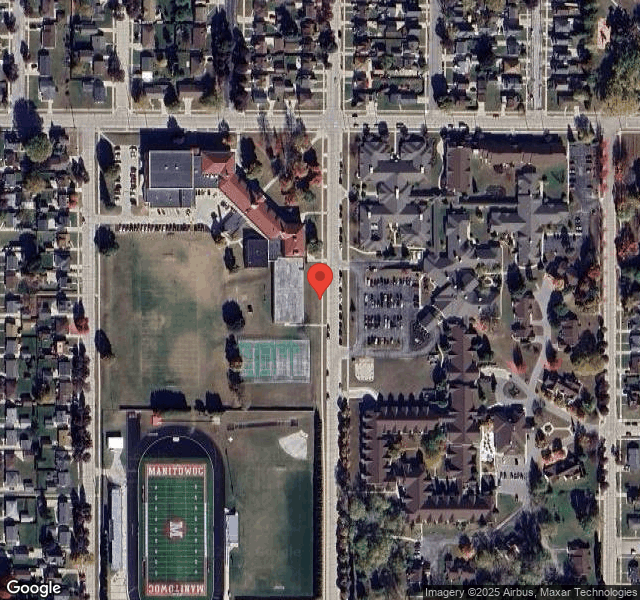
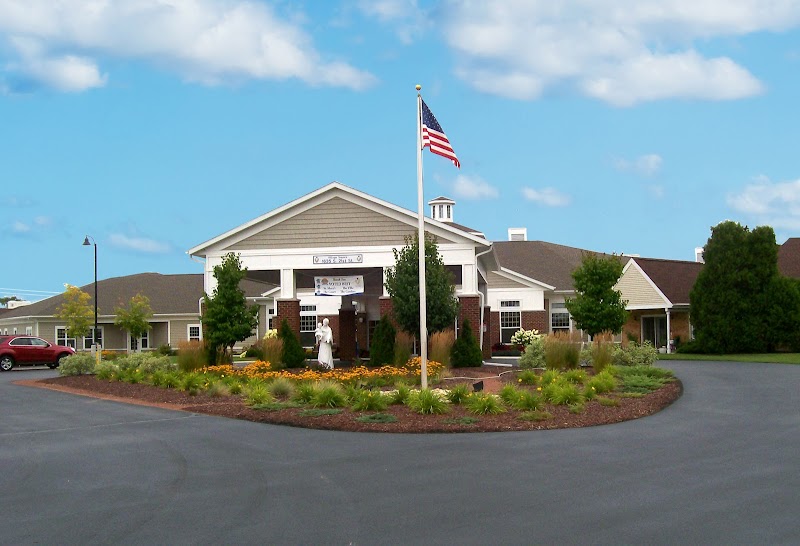
1635 S 21ST STREET, MANITOWOC, WI 54220 (920) 684-7171
Non profit - Church related 84 Beds FELICIAN SERVICES Data: November 2025
Trust Grade
90/100
#71 of 321 in WI
Last Inspection: August 2024

Within standard 12-15 month inspection cycle. Federal law requires annual inspections.

Overview

St. Mary’s Home for the Aged has received an excellent Trust Grade of A, indicating it is highly recommended for families considering care options. It ranks #71 out of 321 facilities in Wisconsin, placing it in the top half, and #2 out of 6 in Manitowoc County, showing that only one local option is better. The facility is stable in terms of quality, with only one issue noted in both 2024 and 2025, which is a positive sign. Staffing is rated at 4 out of 5 stars, but the turnover rate of 50% is average, meaning staff may not stay as long as desired. Notably, the facility has no fines on record, which is reassuring; however, there have been concerns regarding food safety and infection control practices, including improper hand hygiene and failure to store food safely, which could pose risks to residents.

Trust Score
A
90/100
In Wisconsin
#71/321
Top 22%
Safety Record
Low Risk
No red flags
Inspections
Holding Steady
1 → 1 violations
Staff Stability
⚠ Watch
50% turnover. Above average. Higher turnover means staff may not know residents' routines.
Penalties
✓ Good
No fines on record. Clean compliance history, better than most Wisconsin facilities.
Skilled Nurses
✓ Good
Each resident gets 73 minutes of Registered Nurse (RN) attention daily — more than 97% of Wisconsin nursing homes. RNs are the most trained staff who catch health problems before they become serious.
Violations
○ Average
8 deficiencies on record. Average for a facility this size. Mostly minor or procedural issues.
★★★★★
5.0
Overall Rating
★★★★☆
4.0
Staff Levels
★★☆☆☆
2.0
Care Quality
★★★★★
5.0
Inspection Score
Stable
2024: 1 issues
2025: 1 issues

The Good

  • 4-Star Staffing Rating · Above-average nurse staffing levels
  • Full Sprinkler Coverage · Fire safety systems throughout facility
  • No fines on record

Facility shows strength in staffing levels, fire safety.

The Bad

Staff Turnover: 50%

Near Wisconsin avg (46%)

Higher turnover may affect care consistency

Chain: FELICIAN SERVICES

Part of a multi-facility chain

Ask about local staffing decisions and management

The Ugly 8 deficiencies on record

Apr 2025 1 deficiency
CONCERN (D) 📢 Someone Reported This

A family member, employee, or ombudsman was alarmed enough to file a formal complaint

Potential for Harm - no one hurt, but risky conditions existed

Deficiency F0637 (Tag F0637)

Could have caused harm · This affected 1 resident

**NOTE- TERMS IN BRACKETS HAVE BEEN EDITED TO PROTECT CONFIDENTIALITY** Based on staff interview and record review, the facility did not ensure a Significant Change in Status (SCIS) Minimum Data Set (...

Read full inspector narrative →
**NOTE- TERMS IN BRACKETS HAVE BEEN EDITED TO PROTECT CONFIDENTIALITY** Based on staff interview and record review, the facility did not ensure a Significant Change in Status (SCIS) Minimum Data Set (MDS) assessment was completed timely for 1 resident (R) (R1) of 3 sampled residents. R1 met the criteria for a Significant Change in Status MDS assessment on 3/15/25. A SCIS assessment was not completed. Findings include: The Centers for Medicare and Medicaid Services (CMS) Resident Assessment Instrument (RAI) manual 3.0 states a Significant Change in Status MDS must be completed when the Interdisciplinary Team determines a resident meets the significant change guidelines for either a major decline or a major improvement. A significant change is a major decline or improvement in a resident's status that: 1. Will not normally resolve itself without intervention by staff or by implementing standard disease-related clinical interventions; the decline is not considered self-limiting; 2. Impacts more than one area of the resident's health status; and 3. Requires interdisciplinary review and/or revision of the care plan. The facility's Significant Change of Resident's Condition or Status policy, revised 2/21/19, indicates: .2. Significant change of condition related to MDS criteria. a. A significant change (based on MDS guidelines) of condition is a decline or improvement in the resident's status that: .ii. Impacts more than one area of the resident's health status; .7. Significant change assessments: a. If a significant change in the resident's physical or mental condition occurs, a comprehensive assessment of the resident's condition will be conducted as required by current Omnibus Budget Reconciliation Act (OBRA) regulations governing resident assessments and as outlined in the MDS RAI instruction manual. On 4/30/25, Surveyor reviewed R1's medical record. R1 was admitted to the facility on [DATE] and had diagnoses including traumatic subdural hemorrhage, flaccid hemiplegia affecting right dominant side, left subdural hematoma, and history of falls. R1's MDS assessment, dated 2/17/25, had a Brief Interview for Mental Status (BIMS) score of 8 out of 15 which indicated R1 had moderate cognitive impairment. R1 had an activated Power of Attorney for Healthcare ((POAHC)-E). R1's MDS assessment, dated 2/17/25, indicated the following: ~ No impairment in extremities ~ Eating assist - set up ~ Brushing teeth - no assistance ~ Mobility - partial/moderate assist, helper does half the effort ~ Chair to bed transfer - partial/moderate assist, helper does half the effort ~ Walking - walk 10 feet with supervision and touching assistance; walk 50 feet with supervision, touching assistance, and verbal cues ~ Wheelchair - wheel 50 feet with 2 turns - requires verbal cues or touching/steadying assistance ~ Swallowing - no loss of liquids, coughing, or chewing difficulties On 4/30/25, Surveyor reviewed a Certified Nursing Assistant (CNA) care plan, dated 4/9/25, that was posted on the wall in R1's room. The care plan indicated R1 required a medical stand with the assistance of 2 staff for all transfers. The care plan also indicated R1 needed assistance with activities of daily living (ADLs), including eating and thorough hygiene, due to right-sided weakness. R1 had an order for an easy chew diet with soft, bite-sized meat (pureed soup) and mildly thick liquids. On 4/30/25 at 12:37 PM, Surveyor interviewed Registered Nurse (RN)-F who indicated the last MDS assessment RN-F completed was dated 2/17/25. RN-F indicated R1 was discharged from Hospice services in early February. RN-F did not complete a SCIS MDS assessment because RN-F was not sure if R1 met the requirements of a significant change in status. On 4/30/25 at 1:15 PM, Surveyor interviewed Director of Rehab (DOR)-C who reviewed R1's therapy notes and indicated R1 required a sit-to-stand lift with the assistance of 2 staff for transfers. DOR-C indicated R1 was unable to stand at a walker with moderate assistance of 2 staff. DOR-C stated R1 had decreased range of motion (ROM)and strength in the right extremities and indicated R1 required the assistance of 1 staff for eating due to decreased strength and ROM in the right arm. DOR-C indicated R1 coughed with liquids and was changed to mildly thick liquids. R1 was prescribed an easy chew, soft, bite-sized diet. DOR-C indicated R1 had a significant decline in ADL function since 3/15/25. On 4/30/25 at 3:29 PM, Surveyor interviewed CNA-D who indicated R1 required a sit-to-stand lift with the assistance of 2 staff for transfers and was unable to stand at a walker with assistance. CNA-D stated R1 was able to self-propel a wheelchair a few feet, however, staff pushed R1 in wheelchair because propelling a wheelchair was difficult for R1. CNA-D indicated R1 required the assistance of 1 staff for dressing and brushing R1's teeth. CNA-D verified R1 required assistance with eating and was on thickened liquids. On 4/30/25 at 2:26 PM, Surveyor interviewed POAHC-E via telephone who stated R1 had a SCIS on 3/15/25. POAHC -E indicated R1's ADL functional abilities had declined since 3/15/25. On 4/30/25 at 3:14 PM, Surveyor interviewed NHA (Nursing Home Administrator)-A who indicated the facility was aware of R1's change in condition and verified a SCIS MDS assessment was not completed.
Aug 2024 1 deficiency
CONCERN (D)

Potential for Harm - no one hurt, but risky conditions existed

Deficiency F0883 (Tag F0883)

Could have caused harm · This affected 1 resident

**NOTE- TERMS IN BRACKETS HAVE BEEN EDITED TO PROTECT CONFIDENTIALITY** Based on staff interview and record review, the facility did not ensure vaccinations were reviewed, offered, or administered for...

Read full inspector narrative →
**NOTE- TERMS IN BRACKETS HAVE BEEN EDITED TO PROTECT CONFIDENTIALITY** Based on staff interview and record review, the facility did not ensure vaccinations were reviewed, offered, or administered for 1 Resident (R) (R13) of 5 sampled residents. The facility did not offer R13 the PCV20® vaccine. Findings include: Abbreviations (www.cdc.gov): PCV13: 13-valent pneumococcal conjugate vaccine (Prevnar13®) PCV15: 15-valent pneumococcal conjugate vaccine (Vaxneuvance®) PCV20: 20-valent pneumococcal conjugate vaccine (Prevnar 20®) PPSV23: 23-valent pneumococcal polysaccharide vaccine (Pneumovax23®) The most recent Centers for Disease Control and Prevention (CDC) recommendations for pneumococcal vaccinations indicate: For adults 65 years or older who have only received PPSV23, the CDC recommends: Give 1 dose of PCV15 or PCV20. The PCV15 or PCV20 dose should be administered at least 1 year after the most recent PPSV23 vaccination. Regardless of if PCV15 or PCV20 is given, an additional dose of PPSV23 is not recommended since they already received it. For those who have received PCV13 and 1 dose of PPSV23, the CDC recommends you give 1 dose of PCV20 at least 5 years after the last pneumococcal vaccine. For adults 65 years or older who have received PCV13, give 1 dose of PCV20 or PPSV23 at least 1 year after PCV13. Regardless of vaccine used, their vaccines are then complete. The facility's undated Infection Prevention and Control Manual Pneumococcal Vaccine Program indicates: It is the policy of this facility that residents will be offered immunization(s) against pneumococcal disease in accordance with Advisory Committee on Immunization Practices (ACIP) recommendations .Refer to https://www.cdc.gov/vaccines/vpd/pneumo/hcp/recommendations.html for more details. On 8/14/24, Surveyor reviewed R13's medical record. R13 was admitted to the facility on [DATE] and had diagnoses including moderate dementia and chronic obstructive pulmonary disease (COPD). R13 had an activated Power of Attorney (POA) for medical decisions. R13's medical record indicated R13 received a PCV13 vaccine on 11/6/15 and a Pneumococcal vaccine on 6/9/17. R13 was due to receive the PCV20 vaccine as of 6/9/22 (five years after the last vaccine). R13's medical record did not indicate R13 was offered or administered the PCV20 vaccine. On 8/14/24 at 1:49 PM, Surveyor interviewed Director of Nursing (DON)-B who indicated any needed vaccinations should be offered to residents within two weeks of admission to the facility. On 8/14/24 at 2:11 PM, Surveyor again interviewed DON-B who confirmed R13 had not been offered the PCV20 vaccine since R13 was admitted to the facility.
Jun 2023 4 deficiencies
CONCERN (D)

Potential for Harm - no one hurt, but risky conditions existed

Comprehensive Care Plan (Tag F0656)

Could have caused harm · This affected 1 resident

**NOTE- TERMS IN BRACKETS HAVE BEEN EDITED TO PROTECT CONFIDENTIALITY** 3. On 6/21/23, Surveyor reviewed R22's medical record. R22 had diagnoses that included Parkinson's disease and chronic lymphedem...

Read full inspector narrative →
**NOTE- TERMS IN BRACKETS HAVE BEEN EDITED TO PROTECT CONFIDENTIALITY** 3. On 6/21/23, Surveyor reviewed R22's medical record. R22 had diagnoses that included Parkinson's disease and chronic lymphedema left arm following left mastectomy. Documentation of Therapy Recommendations/Occupational Therapy (OT) on 3/2/23 indicated: 1. (Resident) to wear splint throughout daytime and bedtime (through night) take off for meals. After meals, perform washing of hands for food residue and dry when completed. 2. Check for skin integrity. If redness or irritation noted, let therapy department know and take splint off immediately. A physician note, dated 4/27/23, indicated OT provided splinting and compression. R22's medical record did not contain a care plan intervention for a splint to the left arm related to lymphedema. On 6/22/23 at 9:30 AM, Surveyor interviewed DON-B who verified the intervention of splint to the left arm was not included in R22's primary care plan or the CNA care plan (prior to 6/21/23). DON-B verified the following was added to the CNA care plan on 6/21/23: 3. (Left) lymphedema: Monitor skin for redness: Splint to be worn throughout the day and at night: OFF for meal-time, wash hands after meals-when fully dry, reapply. Monitor skin integrity. DON-B also verified the following was added to R22's primary care plan on 6/21/23: Problems/Strengths: Has edema secondary to history of breast cancer and breast removal-lymphedema. Interventions included: monitor feet and hands for edema, warmth and color and monitor for shortness of breath .Monitor skin for redness. OT for lymphedema treatment. Splint to be worn throughout the day and at night: Off for meal time-wash hands after meals-when fully dry reapply. Monitor skin integrity. Based on staff interview and record review, the facility did not ensure comprehensive care plans were developed for 3 Residents (R) (R6, R12, and R22) of 13 sampled residents. The facility did not develop a hospice care plans for R6 and R12 when R6 and R12 started hospice services. The facility did not develop a care plan which included the intervention of a splint to R22's left arm. Findings include: 1. R6 was admitted to the facility on [DATE] and had diagnoses that included encounter for palliative care, Alzheimer's disease with late onset, adult failure to thrive, and vascular dementia. Between 6/20/23 and 6/22/23, Surveyor reviewed R6's medical record and noted R6 started hospice services on 2/27/23. R6's medical record did not contain a plan of care for hospice services. On 6/22/23 at 9:38 AM, Nurse Manager (NM)-C confirmed R6 did not have a care plan related to hospice services and stated one was just added. Surveyor again reviewed R6's medical record and noted a hospice care plan was added on 6/22/23. 2. R12 was admitted to the facility on [DATE] and had diagnoses that included encounter for palliative care, hemiplegia (paralysis on one side of the body) and hemiparesis (muscle weakness or paralysis on one side of the body) following cerebral infarction (stroke), and vascular dementia. Between 6/20/23 and 6/22/23, Surveyor reviewed R12's medical record and noted R12 started hospice services on 4/28/23. R12's medical record did not contain a plan of care related to hospice services. On 6/22/23 at 9:26 AM, NM-C stated the facility used paper care plans for Certified Nursing Assistants (CNAs) that are posted in residents' rooms and updated by hand. NM-C stated care plans were also contained in residents' medical records. NM-C stated it was a team effort to ensure care plans were updated. NM-C confirmed R12 did not have a hospice care plan in place and stated the facility was lacking in care plan updates because staff had to prioritize resident care. NM-C stated a hospice care plan was added to R12's record that morning after Surveyor brought the issue to the facility's attention.
CONCERN (D)

Potential for Harm - no one hurt, but risky conditions existed

Pharmacy Services (Tag F0755)

Could have caused harm · This affected 1 resident

**NOTE- TERMS IN BRACKETS HAVE BEEN EDITED TO PROTECT CONFIDENTIALITY** Based on staff and resident interview, and record review, the facility did not ensure the accurate administration of medication ...

Read full inspector narrative →
**NOTE- TERMS IN BRACKETS HAVE BEEN EDITED TO PROTECT CONFIDENTIALITY** Based on staff and resident interview, and record review, the facility did not ensure the accurate administration of medication for 1 Resident (R) (R4) of 13 sampled residents. R4 did not receive scheduled pain medication timely when the facility ran out of the medication and did not have a current prescription. Findings include: R4 was admitted to the facility on [DATE] with diagnoses that included osteoarthritis, presence of cardiac pacemaker, generalized anxiety disorder, radiculopathy lumbar region (inflammation of a nerve root in the lower back which causes symptoms of pain or irritation in the back and down the legs .commonly referred to as sciatica). R4's most recent Minimum Data Set (MDS), dated [DATE], contained a Brief Interview for Mental Status (BIMS) score of 15 out of 15 which indicated R4 was not cognitively impaired. R4 had a care plan related to pain. On [DATE] at 9:55 AM, Surveyor interviewed R4 who stated R4 did not get R4's scheduled hydrocodone (a narcotic medication used to treat moderate to severe pain) earlier that morning. R4 stated hydrocodone was scheduled 3 times per day (7:00 AM, 3:00 PM, and 11:00 PM) and R4 liked to take the 11:00 PM dose prior to going to bed so staff did not have to wake R4 to take the medication. R4 wondered why staff did not notice R4's hydrocodone was going to run out. R4 stated R4 was stressed and had a pain level of 5 or 6 out of 10. R4 stated R4 had Tylenol available, but did not feel Tylenol touched the pain. R4 stated R4 took hydrocodone due to a severe case of sciatica and the last dose R4 received was at 9:00 PM on [DATE]. R4 stated R4 knew staff were working on getting a new prescription; however, R4 was upset R4's prescription ran out. R4 also stated R4 had therapy shortly. On [DATE], Surveyor reviewed R4's medical record and noted R4 had an order for hydrocodone bitartrate-acetaminophen (325 mg (milligrams)-7.5 mg tablet) three times daily at 8:00 AM, 3:00 PM and 11:00 PM related to pain. Surveyor reviewed R4's Medication Administration Record (MAR) and noted the following: ~On [DATE], hydrocodone was administered at 7:01 AM, 3:55 PM, and 10:17 PM. ~On [DATE] at 11:13 AM, Registered Nurse (RN)-G documented hydrocodone was held-awaiting script. ~On [DATE] at 3:41 PM, documentation indicated hydrocodone was not available ~On [DATE] at 8:26 PM, the MAR indicated hydrocodone was administered and R4's pain level prior to administration was moderate-quality of pain/ache throb. On [DATE] at 9:29 AM, Surveyor interviewed R4 who stated R4 received hydrocodone that morning and at approximately 9:00 PM the previous night. When asked if R4 missed 2 doses of hydrocodone, R4 stated R4's spouse came to the facility and brought R4's medication from home (which was the same prescription), so R4 only missed one dose and took hydrocodone sometime mid-morning. R4 stated R4 was informed when the prescription arrived, but told staff R4 wanted to wait to take the next dose so R4 could get back on schedule and ensure there were 8 hours between doses. On [DATE], Surveyor reviewed R4's medical record and recalled Surveyor interviewed R4 on [DATE] at 9:55 AM. Surveyor noted R4's current hydrocodone prescription was received via fax at 11:09 AM. Surveyor concluded R4 took R4's medication from home sometime between 9:55 AM and the time the fax was received for the new medication. On [DATE] at 12:25 PM, Surveyor interviewed RN-G who worked the AM shift on [DATE] and verified R4 did not receive the 7:00 AM dose of hydrocodone. RN-G stated R4's prescription ran out and because hydrocodone was a narcotic, a new prescription was needed. RN-G stated the previous shift attempted to contact the physician on the evening of [DATE] to obtain a renewal of R4's prescription, but did not receive a response. RN-G stated RN-G notified an Advanced Practice Nurse Prescriber (APNP) and called the APNP's office to request a renewal of the prescription. RN-G stated RN-G refaxed the request and APNP sent the request through. RN-G stated the facility had the prescription available in contingency; however, because R4's prescription expired and the medication was a narcotic, there was no way to access the medication without a new prescription and number. RN-G thought the new prescription came through sometime around noon. RN-G said the situation was not ideal and R4 was upset and highly anxious about it. RN-G was not aware R4 took medication brought from home. On [DATE] at 12:44 PM, Surveyor interviewed Director of Nursing (DON)-B and Nurse Manager (NM)-C who were both unaware R4's hydrocodone ran out and R4 took medication form home. NM-C stated prescriptions should be looked at ahead of time, but R4's must have been missed. NM-C stated a medication error sheet should have been filled out and NM-C would look into the claim R4's spouse brought medication from home. In a follow up interview at 2:00 PM, NM-C stated the facility's Ordering Schedule II Controlled Medications policy indicated: Federal law requires that a pharmacy has a written prescription signed by a licensed prescriber before it may fill a schedule II controlled substance prescription for a resident in a long-term care facility. The policy also stated: When a continuance prescription is about to be exhausted, the pharmacy will send by facsimile or mail, a new prescription request to the physician's office for signature. NM-C stated NM-C would contact the pharmacy because, per policy, the pharmacy should keep track of schedule II medications as well.
CONCERN (D)

Potential for Harm - no one hurt, but risky conditions existed

Deficiency F0757 (Tag F0757)

Could have caused harm · This affected 1 resident

Based on staff interview and record review, the facility did not ensure monitoring of a high-risk medication for 1 Resident (R) (R15) of 5 residents reviewed. R15's medical record did not contain moni...

Read full inspector narrative →
Based on staff interview and record review, the facility did not ensure monitoring of a high-risk medication for 1 Resident (R) (R15) of 5 residents reviewed. R15's medical record did not contain monitoring for the side effects of Lasix (a diuretic medication). Findings include: According to the Davis's Drug Guide for Nurses 18th edition copyright 2023 adverse reactions/side effects of diuretic medication include thirst, dry mouth, lethargy, weakness, hypotension, and oliguria (abnormally small amouts of urine) .Monitor daily weight, intake and output ratios, amount and location of edema, lung sounds, skin turgor, and mucous membranes .Monitor blood pressure and pulse before and during administration. On 6/22/23, Surveyor reviewed R15's medical record and noted R15 had a physician's order for Lasix 20 mg (milligrams) (a loop diuretic (water pill) that prevents the body from absorbing too much salt) daily for a diagnosis of congenital heart failure. Surveyor noted R15's medical record did not include monitoring for side effects or adverse reactions to Lasix. On 6/22/23 at 9:16 AM, Surveyor interviewed Director of Nursing (DON)-B who stated residents prescribed high-risk medications, such as Lasix, should have medication monitoring for side effects and adverse reactions in their plan of care. DON-B confirmed R15 was administered Lasix daily and verified R15's medical record did not contain monitoring for side effects or adverse reactions to Lasix. On 6/22/23 at 9:24 AM, Surveyor interviewed Nurse Manager (NM)-C who stated the plan of care for residents prescribed high-risk medications, such as Lasix, should contain medication monitoring. NM-C verified R15's plan of care did not contain monitoring for side effects or adverse reactions to Lasix.
CONCERN (F)

Potential for Harm - no one hurt, but risky conditions existed

Food Safety (Tag F0812)

Could have caused harm · This affected most or all residents

Based on observation, staff interview, and record review, the facility did not ensure food was stored and prepared in a safe and sanitary manner. This practice had the potential to affect all 30 resid...

Read full inspector narrative →
Based on observation, staff interview, and record review, the facility did not ensure food was stored and prepared in a safe and sanitary manner. This practice had the potential to affect all 30 residents residing in the facility. Cold food items were served outside the temperature safe zone and dessert was not covered appropriately during meal service. Hand hygiene was not completed appropriately during lunch service on 6/20/22. Findings include: On 6/21/23 at 1:20 PM, Certified Dietary Manager (CDM)-E stated the facility follows the Wisconsin Food Code. 1. Cold Temperature Foods/Uncovered Items The Wisconsin Food Code at 3-501.16 Time/Temperature Control for Safety Food, Hot and Cold Holding states: .Time/Temperature control for safety food shall be maintained: .(2) At 5 degrees Celsius (41 degrees Fahrenheit) or less. The Wisconsin Food Code also states at 3-307.11 Miscellaneous Sources of Contamination: Food shall be protected from contamination that may result from a factor or source not specified under Subparts 3-301 and 3-306. The facility's Food Temperature Verification Recording policy, revised 8/22/19, contained the following information: 3.1 Culinary Services Aid will properly take food temperatures of hot and cold foods following the Taking Proper Food Temperature Work Instruction. 3.2 The temperature will be documented in the Food Temperature log and the Culinary Aide will initial that the log has been accurately filled out. 3.4 If cold food is not at the correct temperature, a supervisor will need to verify if the food item is safe to serve based on the allotted two hour timeframe. On 6/20/23 beginning at 11:15 AM, Surveyor observed lunch service in the side 1 dining room. The facility used a main kitchen in the lower level to prepare food which was sent in bulk to the kitchens on the units for meal service. Surveyor observed Dietary Staff (DS)-D place food items in the steam table. Surveyor also observed a banana cream pie on the counter with 5 slices of pie on individual plates. The pie slices were uncovered for the duration of the meal service (until 12:08 PM). Surveyor also noted the regular pie and the pureed pie were not chilled during the meal service. On 6/20/23 at 11:15 AM, Surveyor observed DS-F in the side 2 dining room and noted slices of pie were plated and uncovered on the counter. Surveyor did not observe staff temp the pie for the duration of the meal service. On 6/20/23 at 11:26 AM, Surveyor observed DS-D obtain temperatures of hot food items in the steam table prior to meal service. DS-D documented the temperatures on a Food Temperatures for Hot and Cold Food form. On 6/20/23 at 11:34 AM, Surveyor interviewed DS-D regarding obtaining cold food temperatures prior to meal service. DS-D stated staff who trained DS-D told DS-D not to take temperatures of cold food items. DS-D stated 3 different staff trained DS-D on different days and they all did different things. DS-D stated DS-D obtained hot food temperatures at the start and end of meal service. Surveyor noted the log sheet DS-D filled out had space to record cold food item temperatures. On 6/20/23 at 12:08 PM, Surveyor observed DS-D serve the last piece of pie with the last resident meal. Surveyor asked DS-D to temp the remaining pie on the counter, including the pureed pie. The remaining banana cream pie in the original container was 66 degrees. The pureed banana cream pie located in the last steam well (which was not turned on) was 60 degrees. On 6/21/23, the facility provided meal service temperature logs for breakfast and lunch on 6/20/23 and 6/21/23. The logs did not contain chilled beverage or chilled dessert temperatures; however, hot food temperatures were documented. Surveyor noted there was space designated on the logs for Breakfast: Frozen Items, Cold Beverage, and Hot Beverage; and for Lunch/Dinner: Chilled Dessert, Cold Entrée, Frozen Items, and Cold Beverage. On 6/21/23 at 1:20 PM, Surveyor interviewed CDM-E who stated CDM-E did not expect staff to take cold food/drink temperatures prior to meal service. CDM-E also stated the pie should remain at 40 degrees or below. 2. Hand Hygiene The Wisconsin Food Code at 3-304.15 Gloves, Use Limitation indicates: If used, single-use gloves shall be used for only one task such as working with ready-to-eat food or with raw animal food, used for no other purpose, and discarded when damaged or soiled, or when interruptions occur in the operation. The Wisconsin Food Code at Chapter 2 Personal Cleanliness at 2-301.14 titled When to Wash states: Food employees shall clean their hands and exposed portions of their arms as specified under 2-301.12 immediately before engaging in food preparation including working with exposed food, clean equipment and utensils, and unwrapped single-service and single-use articles and: (A) After touching bare human body parts other than clean hands and clean, exposed portions of arms; .(E) After handling soiled equipment or utensils; (F) During food preparation, as often as necessary to remove soil and contamination and to prevent cross contamination when changing tasks; (G) When switching between working with raw food and working with ready-to-eat food; (H) Before putting on gloves to initiate a task that involves working with food; and (I) After engaging in other activities that contaminate the hands. The facility's Glove Usage in Culinary Services policy, revised 6/19/19, contained the following information: 3.2 If used, single-use gloves shall be used to do only one task such as working with ready-to-eat food or with raw animal food. They should be used for no other purpose, discarded when damaged or soiled or when interruptions occur in the operation, and after four hours if working on the same task. 3.4 Hands must be washed before putting on gloves and after removing gloves. On 6/20/23 at 11:37 AM, Surveyor observed DS-D remove gloves and don clean gloves without cleansing hands. DS-D then touched a resident's meal card and picked up a plate. With the same gloved hands, DS-D opened a bag of buns, removed a bun, and removed the cover from a container of Italian sausage. DS-D picked up a sausage with a gloved hand and placed the sausage in the bun. On 6/20/23 at 11:41 AM, Surveyor observed DS-D remove gloves, wash hands, and don clean gloves. Surveyor observed DS-D touch DS-D's glasses and face. With the same gloved hands, DS-D picked up a board with a lunch menu and carried the board to a resident. The resident told DS-D what the resident wanted for lunch which included chicken and banana cream pie. DS-D then removed gloves and, without cleansing hands, donned clean gloves. DS-D carried a plate to a resident, removed gloves, and without cleansing hands, donned clean gloves. DS-D then picked up a bun with a gloved hand and opened the bun. On 6/20/23 at 12:01 PM, Surveyor observed DS-D don gloves without cleansing hands. DS-D touched the refrigerator door handle with the right gloved hand, removed an item and closed the door. With the same gloved hands, DS-D removed 2 slices of bread from a bag, used a knife to spread an item on the bread, picked up lunch meat and placed the meat on the bread. With the same gloved hands, DS-D opened the refrigerator door and returned items to the refrigerator. DS-D then returned to the food prep area, picked up the sandwich and put the sandwich on a plate. On 6/21/23 at 1:20 PM, CDM-E stated the expectation for hand hygiene is to touch ready-to-eat food with gloved hands only. When Surveyor informed CDM-E of Surveyor's observations during meal service, CDM-E verified DS-D should not have touched other items with a gloved hand before touching ready-to-eat food. CDM-E also verified hand washing should be completed between glove changes.
Jul 2022 2 deficiencies
CONCERN (D)

Potential for Harm - no one hurt, but risky conditions existed

Medication Errors (Tag F0758)

Could have caused harm · This affected 1 resident

**NOTE- TERMS IN BRACKETS HAVE BEEN EDITED TO PROTECT CONFIDENTIALITY** Based on interview and record review, the facility did not provide adequate monitoring for the medication regimen of 2 Residents...

Read full inspector narrative →
**NOTE- TERMS IN BRACKETS HAVE BEEN EDITED TO PROTECT CONFIDENTIALITY** Based on interview and record review, the facility did not provide adequate monitoring for the medication regimen of 2 Residents (R) (R24 and R13) of 5 sampled residents reviewed for unnecessary medications. R24 was receiving psychotropic medications and the facility did not ensure R24 received a gradual dose reduction, unless clinically contraindicated, in an effort to discontinue these medications. R13 had a physician's order for PRN (as needed) Lorazepam (a psychotropic medication used to treat anxiety and restlessness) beyond the 14 day required limit. The facility did not ensure R13's physician reviewed for extension of order as required. 1. R24 was admitted to the facility on [DATE] with diagnosis to include but not limited to: Dementia, Major Depressive disorder, Anxiety, Chronic Kidney Disease, Atrial Fibrillation and was admitted to hospice services on [DATE]. R24's Minimum Data Set (MDS) assessment dated [DATE] stated R24's Brief Interview for Mental Status (BIMS) score was 14/15 which showed no cognitive impairment. On [DATE], the Surveyor reviewed R24's physician orders which included: Lexapro 10 milligrams (MG) tablet oral daily 8:00 AM for Anxiety and depression. Quetiapine Fumarate 25 MG tablet 12.5 MG oral daily 8:00 AM for depression. Quetiapine Fumarate 50 MG tablet 50 MG oral every bedtime 8:00 PM for depression. The medication listed are categorized as psychotropic medications, which under federal regulation require attempts to gradually reduce the dose unless clinically contraindicated. The Surveyor reviewed the Consultant Pharmacist's Medication Regimen Review dated [DATE]. Recommendation was sent to the physician to attempt a gradual dose reduction (GDR) on R24's Quetiapine 12.5 MG, Quetiapine 50 MG and Lexapro 10 MG. On [DATE] hospice reviewed R24's mood, behaviors and other documentation which would indicate any clinical contraindication and documented support of GDR recommendation. On [DATE] the physician signed the Note to Attending Physician/Prescriber that listed recommendation by the pharmacist and hospice for the GDR. No orders were obtained by the facility nor was the GDR started for R24. On [DATE] at 2:00 PM, the Surveyor interviewed the Director of Nursing (DON)-B who explained a call was placed to the physician to obtain order to begin the GDR for R24. 2. On [DATE], Surveyor reviewed R13's medical record. R13 was admitted to the facility on [DATE] with diagnoses to include Bipolar Disorder (a serious mental illness characterized by extreme mood swings) and Unspecified Dementia (a group of symptoms associated with a decline in memory severe enough to reduce a person's ability to perform everyday activities) with Behavioral Disturbance. R13's medical record contained the following physician's order which started [DATE]: ~ Lorazepam 2mg/1ml (milligrams per milliliter) solution give 0.25ml = 0.5mg po (orally) every hour as needed restlessness, anxiety R13's medical record did not contain documentation to indicate required 14 day stop date for the above PRN order. R13's medical record did not contain documentation of physician review to indicate need to extend order beyond required 14 day limit. On [DATE] at 1:01 PM, Surveyor interviewed Director of Nursing (DON)-B when DON-B provided Surveyor with the following documents: ~ Prescription dated [DATE] which included, .Ativan (brand name for lorazepam) 2mg/1ml: Give 0.25ml po/sl (orally or sublingually (under the tongue)) Q (every) 1 HR (hour) for restlessness/PRN anxiety dispense #60, fill 30 ml per fill . ~ Physician Orders for Hospice Patient dated [DATE] which indicated name of nurse receiving verbal order, was unsigned by physician, contained a fax stamp in upper left corner of JUL-13-2022 ([DATE]) 10:58 (10:58 AM) From: [named Hospice company] and stated, Ativan Instructions: 2mg/ml liquid solution. Give 0.25 ml Q 1 hour PRN for anxiety restlessness for duration of life. DON-B verified above Physician Orders for Hospice Patient was not on R13's medical record until faxed to facility on [DATE]. DON-B verified facility did not alert R13's physician of 14 day required limit for PRN psychotropic medications in [DATE] when order was received or when 14 day limit would have expired.
CONCERN (F)

Potential for Harm - no one hurt, but risky conditions existed

Infection Control (Tag F0880)

Could have caused harm · This affected most or all residents

**NOTE- TERMS IN BRACKETS HAVE BEEN EDITED TO PROTECT CONFIDENTIALITY** Based on observations, interviews, and record review, the facility did not maintain an infection prevention and control program ...

Read full inspector narrative →
**NOTE- TERMS IN BRACKETS HAVE BEEN EDITED TO PROTECT CONFIDENTIALITY** Based on observations, interviews, and record review, the facility did not maintain an infection prevention and control program designed to provide a safe and sanitary environment to help prevent or contain the transmission of communicable diseases and infections such as COVID-19. This had the potential to affect all 28 resident residing in the facility. Furthermore, based on record review, observations and interviews, the facility did not ensure staff performed proper hand hygiene for 1 Resident (R) (R9) of 3 residents observed during provision of cares. The facility did not require staff to wear N95 respirator into a resident's room who is in quarantine related to COVID-19 precautions. The facility did not require staff to wear eye protection while in a resident care area unless staff go into a resident's room who is in quarantine or isolation related to COVID-19 precautions. Certified Nursing Assistant (CNA)-C did not perform appropriate hand hygiene during R9's provision of perineal care on 7/12/22. Additionally, CNA-D did not perform appropriate hand hygiene during R9's provision of perineal care on 7/12/22. Findings include: 1. According to the facility policy titled Preparedness for COVID-19 Policy with revision date of 6/24/20 stated: .3.5 .This information complements, but does not replace, the general infection prevention and control recommendations for COVID-19 . (Infection Control: Severe acute respiratory syndrome coronavirus 2 (SARS-CoV-2) | CDC.) According to The Centers for Disease Control and Prevention (CDC) document titled Interim Infection Prevention and Control Recommendations to Prevent SARS-CoV-2 Spread in Nursing Homes | CDC last updated on 2/2/22 stated: .Manage Residents who had Close Contact with Someone with SARS-CoV-2 Infection Residents who are not up to date with all recommended COVID-19 vaccine doses and who have had close contact with someone with SARS-CoV-2 infection should be placed in quarantine after their exposure, even if viral testing is negative. HCP (healthcare provider) caring for them should use full PPE (gowns, gloves, eye protection, and N95 or higher-level respirator) . According to https://covid.cdc.gov/covid-data-tracker, 7/11/22 through 7/13/22, Manitowoc County's COVID-19 community transmission level was high. According to Centers for Medicare and Medicaid Services (CDC), the National Healthcare Safety Network (NHSN) Data Week Ending 6/19/22 for the facility indicated: Recent Percentage of Residents who completed Primary Vaccination: 87.1 Recent Percentage of Staff with Completed Primary Vaccination: 91.0 On 7/12/22 at 9:05 AM, Surveyor observed an isolation cart outside of R77's door. There were no signs indicating what type of personal protective equipment staff must wear to enter R77's room. In the isolation cart were gowns, surgical masks, gloves, and eye protection. There were no other type of facial coverings or N95 respirators available in the cart. On 7/12/22 at 9:14 AM, Surveyor interviewed NI-E who stated NI-E and staff need to use a surgical mask while in the R77's room and that R77 was on quarantine. NI-E stated NI-E will take off surgical mask that NI-E wears in R77's room and places the mask in a paper bag for the duration of the shift. NI-E stated the surgical mask in the paper bag is re-used by NI-E when NI-E needs to re-enter R77's room. NI-E stated the facility does not require staff to wear N95s in a resident's room who is on quarantine. On 7/12/22 at 1:12 PM, Surveyor interviewed DON-B who stated staff need to wear full PPE of surgical mask, eye protection, gown, and gloves. when entering a resident's room on quarantine. DON-B stated the facility does have N95s and employees have been fit tested. On 7/13/22 at 10:29 AM, Surveyor interviewed DON-B who stated staff need to wear a face covering into a newly admitted , asymptomatic, fully vaccinated resident's room DON-B stated if a resident was COVID-19 positive and symptomatic, the facility would require the staff to wear an N95 into that resident's room. 2. According to the facility policy titled Preparedness for COVID-19 Policy with revision date of 6/24/20 stated: .3.5 .This information complements, but does not replace, the general infection prevention and control recommendations for COVID-19 . (hyperlink within document to Infection Control: Severe acute respiratory syndrome coronavirus 2 (SARS-CoV-2) | CDC) .Implement Universal Use of Personal Protective Equipment for HCP: Additionally, HCP working in facilities located in counties with substantial or high transmission should also use PPE as described below: .Eye protection (i.e., goggles or a face shield that covers the front and sides of the face) should be worn during all patient care encounters . On 7/12/22 at 9:02 AM, Surveyor observed multiple staff in the resident dining area not wearing eye protection. Residents were observed in the space. During observations on 7/11/22, 7/12/22, and morning of 7/13/22, Surveyor did not observe staff wearing eye protection, unless staff were in R77's room. On 7/12/22 at 9:14 AM, Surveyor interviewed NI-E who stated staff only need to wear eye protection when staff enter a resident's room who is on transmission based precautions for COVID-19 and not while around residents not on transmission based precautions. NI-E stated staff disinfect eye protection after exiting a resident's room who is on quarantine. Used a bleach wipe to disinfect eye protection. On 7/13/22 at 1:21 PM, Surveyor interviewed DON-B who stated the facility does not require staff to wear eye protection unless staff are entering the room of a resident on quarantine or isolation for COVID-19. 3. Facility provided policy titled Handwashing with revision date of 6/22/20 stated, . Hand hygiene will be performed at a minimum: after removal of gloves, before and after resident care . To prevent and control healthcare acquired infections . On 7/11/22, Surveyor reviewed R9's medical record. R9 was admitted to the facility on [DATE] with diagnoses to include Alzheimer's Disease (a type of brain disorder that causes problems with memory, thinking and behavior). R9's medical record indicated R9 had just completed antibiotic treatment on 7/10/22 for Urinary Tract Infection and that R9 had a chronic history of Clostridium Difficile (a highly contagious bacteria that can cause symptoms ranging from diarrhea to life-threatening inflammation of the colon). On 7/12/22 at 9:59 AM, Surveyor observed CNA-C assist R9 to the toilet and provide perineal care. During the provision of care, Surveyor observed CNA-C transfer R9 to toilet from wheelchair using a mechanical sit-to-stand lift. Surveyor observed CNA-C pull R9's pants down and remove R9's incontinence product. Surveyor observed CNA-C, without performing hand hygiene, put on gloves and continue with the provision of care. Surveyor observed CNA-C provide perineal care using disposable wipes and, without changing gloves and performing hand hygiene, put new incontinence product on R9 and pull R9's pants up. Surveyor observed CNA-C remove CNA-C's gloves then, without performing hand hygiene, maneuver sit-to-stand lift to transfer R9 back to wheelchair, position R9 comfortably in wheelchair, open R9's room door, place sit-to-stand lift in hallway, apply R9's foot pedals to wheelchair, leave R9's room then state, I forgot the garbage. Surveyor observed CNA-C re-enter R9's room, remove filled garbage bag from can in R9's bathroom and place new garbage bag in can. CNA-C then was observed to wash CNA-C's hands. On 7/12/22 at 10:12 AM, Surveyor interviewed CNA-C who verified CNA-C should have performed hand hygiene before and after glove use. On 7/12/22 at 4:12 PM, Surveyor observed CNA-D assist R9 to toilet and provide perineal care. During the provision of care, Surveyor observed CNA-D transfer R9 to toilet from recliner using a mechanical sit-to-stand lift. Surveyor observed CNA-D put on gloves, pull R9's pants down and remove R9's incontinence product which was soiled with urine and stool. Surveyor observed CNA-D, with same gloved hands, open closet door, obtain new incontinence product and wash linen, wet one washcloth and wash R9's face, place new incontinence product around R9's legs, touch lift controller to raise R9 to standing position, and provide perineal care with disposable cloths. Surveyor observed CNA-D remove gloves, perform hand hygiene and put on new gloves. Surveyor observed CNA-D provide perineal care with new disposable cloths then, without changing gloves or performing hand hygiene, provide additional perineal care by washing, rinsing and drying R9's perineal area with wash linen. Surveyor observed CNA-D, with same gloved hands, open drawers looking for barrier cream, pull up and fasten R9's incontinence product and pull up R9's pants. Surveyor observed CNA-D removed CNA-D's gloves and, without performing hand hygiene, use mechanical sit-to-stand lift to transfer R9 to wheelchair, position R9 for comfort, apply foot pedals to wheelchair, place call light within R9's reach, remove filled garbage bag, remove soiled linen bag, place clean bag in garbage can and then wash CNA-D's hand followed by hand hygiene with alcohol based hand rub. On 7/12/22 at 4:31 PM, Surveyor interviewed CNA-D who indicated staff are supposed to wash hands numerous times during perineal care. CNA-D verified CNA-D should have performed hand hygiene before and after glove use and whenever moving from dirty to clean task. CNA-D stated, I didn't do those things. On 7/12/22 at 4:38 PM, Surveyor interviewed Director of Nursing (DON)-B. Following discussion of the above two situations, DON-B indicated facility expectation was that staff were to wash hands before and after glove use, change gloves with hand hygiene between and always hand hygiene when moving from dirty to clean tasks.
Understanding Severity Codes (click to expand)
Life-Threatening (Immediate Jeopardy)
J - Isolated K - Pattern L - Widespread
Actual Harm
G - Isolated H - Pattern I - Widespread
Potential for Harm
D - Isolated E - Pattern F - Widespread
No Harm (Minor)
A - Isolated B - Pattern C - Widespread

Questions to Ask on Your Visit

  • "Can I speak with families of current residents?"
  • "What's your RN coverage like on weekends and overnight?"

Our Honest Assessment

Strengths
  • • Grade A (90/100). Above average facility, better than most options in Wisconsin.
  • • No major safety red flags. No abuse findings, life-threatening violations, or SFF status.
  • • No fines on record. Clean compliance history, better than most Wisconsin facilities.
Concerns
  • • No significant concerns identified. This facility shows no red flags across CMS ratings, staff turnover, or federal penalties.
Bottom line: Generally positive indicators. Standard due diligence and a personal visit recommended.

About This Facility

What is St Marys Home For The Aged's CMS Rating?

CMS assigns ST MARYS HOME FOR THE AGED an overall rating of 5 out of 5 stars, which is considered much above average nationally. Within Wisconsin, this rating places the facility higher than 99% of the state's 100 nursing homes. This rating reflects solid performance across the metrics CMS uses to evaluate nursing home quality.
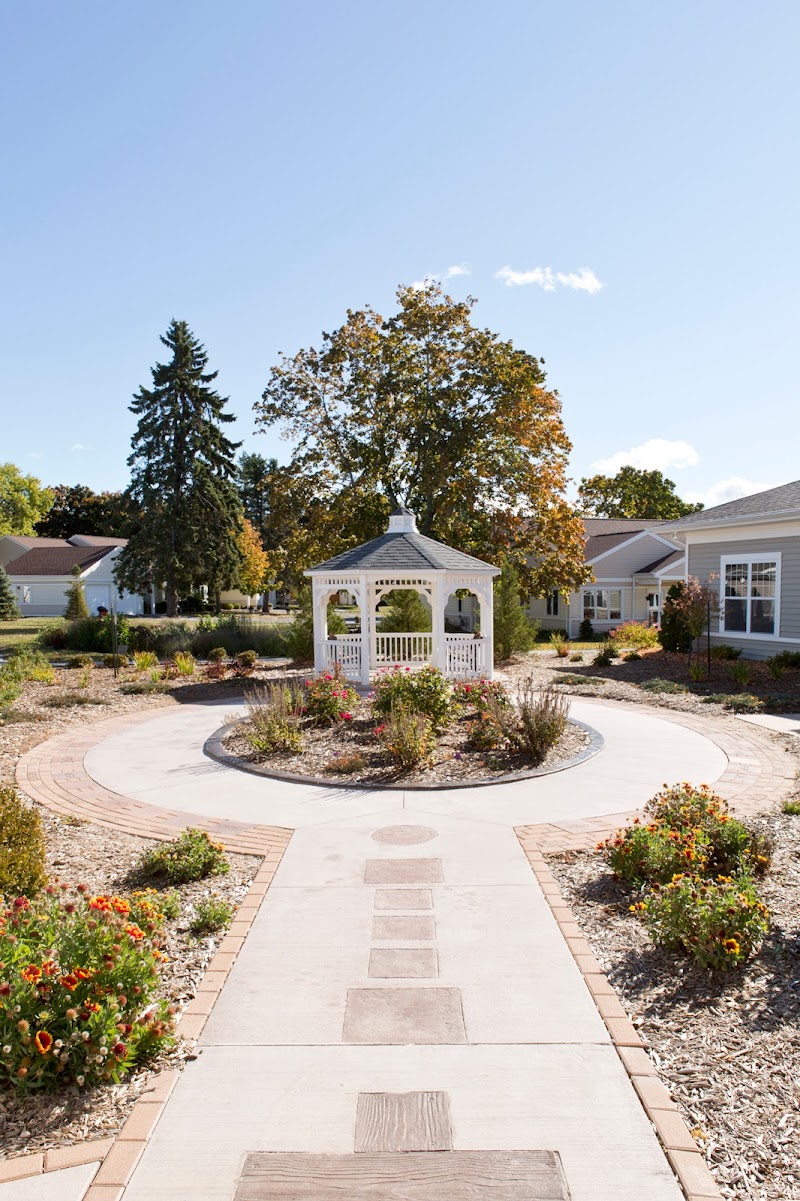
How is St Marys Home For The Aged Staffed?

CMS rates ST MARYS HOME FOR THE AGED's staffing level at 4 out of 5 stars, which is above average compared to other nursing homes. Staff turnover is 50%, compared to the Wisconsin average of 46%.

What Have Inspectors Found at St Marys Home For The Aged?

State health inspectors documented 8 deficiencies at ST MARYS HOME FOR THE AGED during 2022 to 2025. These included: 8 with potential for harm.
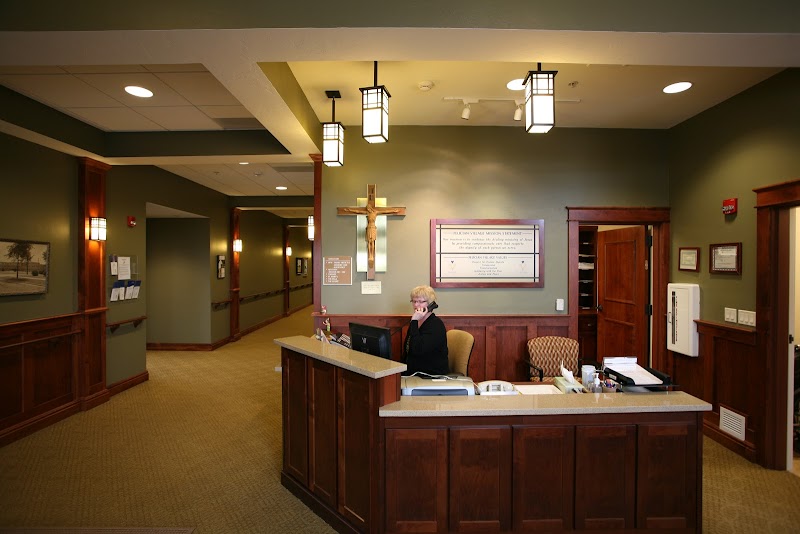
Who Owns and Operates St Marys Home For The Aged?

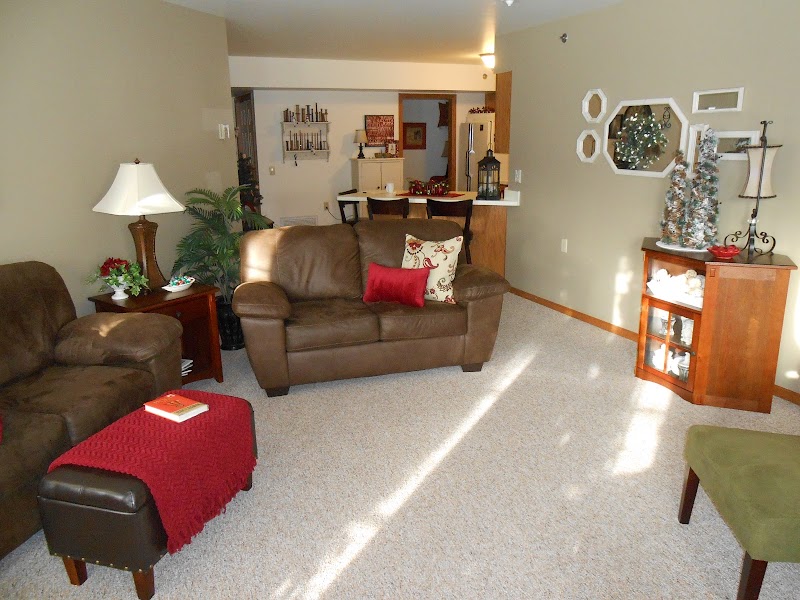
ST MARYS HOME FOR THE AGED is owned by a non-profit organization. Non-profit facilities reinvest revenue into operations rather than distributing to shareholders. The facility is operated by FELICIAN SERVICES, a chain that manages multiple nursing homes. With 84 certified beds and approximately 42 residents (about 50% occupancy), it is a smaller facility located in MANITOWOC, Wisconsin.
How Does St Marys Home For The Aged Compare to Other Wisconsin Nursing Homes?

Compared to the 100 nursing homes in Wisconsin, ST MARYS HOME FOR THE AGED's overall rating (5 stars) is above the state average of 3.0, staff turnover (50%) is near the state average of 46%, and health inspection rating (5 stars) is much above the national benchmark.

What Should Families Ask When Visiting St Marys Home For The Aged?

Based on this facility's data, families visiting should ask: "Can I visit during a mealtime to observe dining assistance and food quality?" "How do you handle medical emergencies, and what is your hospital transfer rate?" "Can I speak with family members of current residents about their experience?"

Is St Marys Home For The Aged Safe?

Based on CMS inspection data, ST MARYS HOME FOR THE AGED has a clean safety record: no substantiated abuse findings (meaning no confirmed cases of resident harm), no Immediate Jeopardy citations (the most serious violation level indicating risk of serious injury or death), and is not on the Special Focus Facility watch list (a federal program monitoring the lowest-performing 1% of nursing homes). The facility has a 5-star overall rating and ranks #1 of 100 nursing homes in Wisconsin. While no facility is perfect, families should still ask about staff-to-resident ratios and recent inspection results during their visit.

Do Nurses at St Marys Home For The Aged Stick Around?

ST MARYS HOME FOR THE AGED has a staff turnover rate of 50%, which is about average for Wisconsin nursing homes (state average: 46%). Moderate turnover is common in nursing homes, but families should still ask about staff tenure and how the facility maintains care continuity when employees leave.

Was St Marys Home For The Aged Ever Fined?

ST MARYS HOME FOR THE AGED has no federal fines on record. CMS issues fines when nursing homes fail to meet care standards or don't correct problems found during inspections. The absence of fines suggests the facility has either maintained compliance or corrected any issues before penalties were assessed. This is a positive indicator, though families should still review recent inspection reports for the full picture.

Is St Marys Home For The Aged on Any Federal Watch List?

ST MARYS HOME FOR THE AGED is not on any federal watch list. The most significant is the Special Focus Facility (SFF) program, which identifies the bottom 1% of nursing homes nationally based on persistent, serious quality problems. Not being on this list means the facility has avoided the pattern of deficiencies that triggers enhanced federal oversight. This is a positive indicator, though families should still review the facility's inspection history directly.